Categories
Central Oregon Hiking Lakeview Oregon Trip report

Petroglyph Lake, Warner Valley Overlook, and DeGarmo Canyon – 07/22/2020

**Note the 2024 Warner Peak Fire burned over the Warner Overlook.**

We took our second outing to the Hart Mountain National Antelope Refuge in three short hikes. The temperatures were still expected to be high and Wednesday also provided the best chance for afternoon thunderstorms so we wanted to be done early for the day.

Our first hike for the day was Petroglyph Lake. As I mentioned in our previous post the Petroglyph Lake Road was closed so we had to decide how we wanted to get there. The easiest choice would have been to walk the closed road for 1.6 miles to visit the lake but Sullivan described a 5 mile off trail loop that not only visited the lake but also a viewpoint along Poker Jim Ridge. We picked the loop and parked along Hart Mountain Road near the signed Hill Top Reservoir Road.
IMG_1257

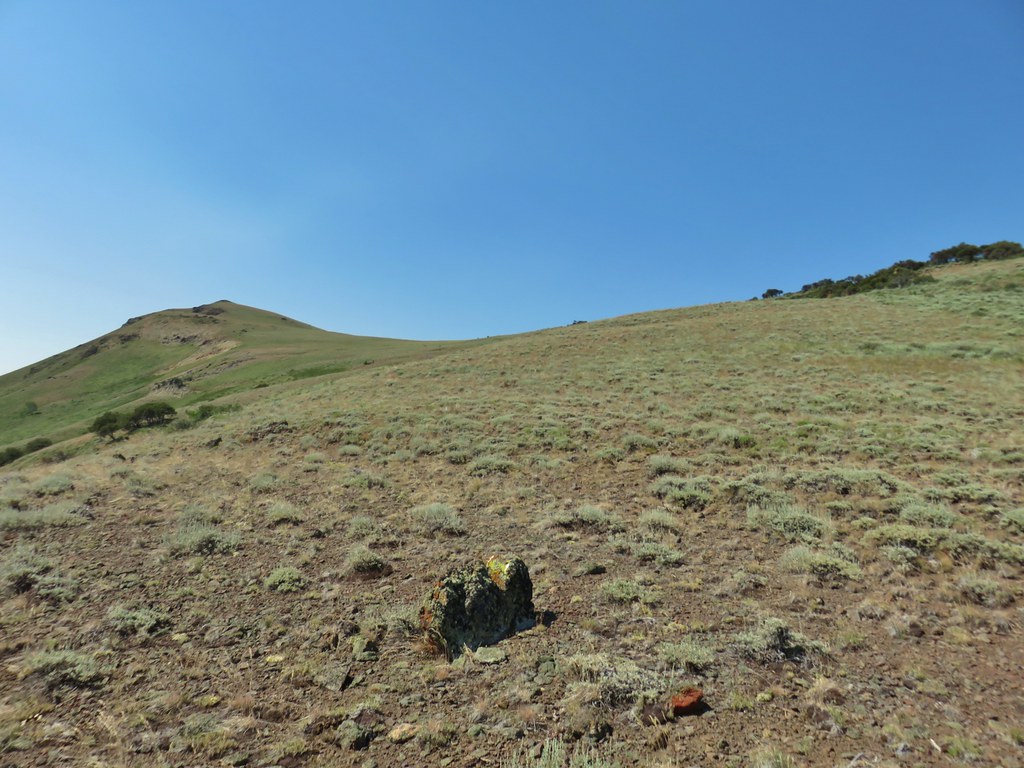
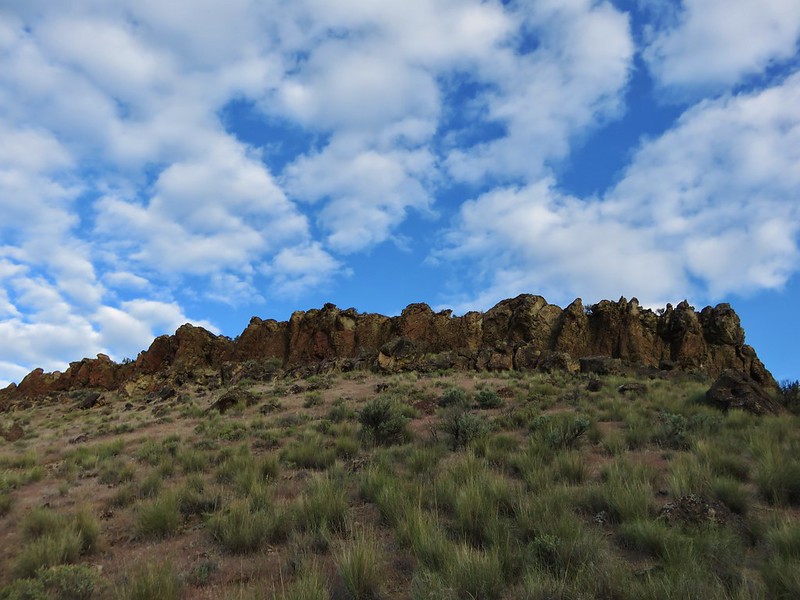
Looking across Hart Mountain Road we could see the small juniper covered knoll along Poker Jim Ridge that we were going to be aiming for.
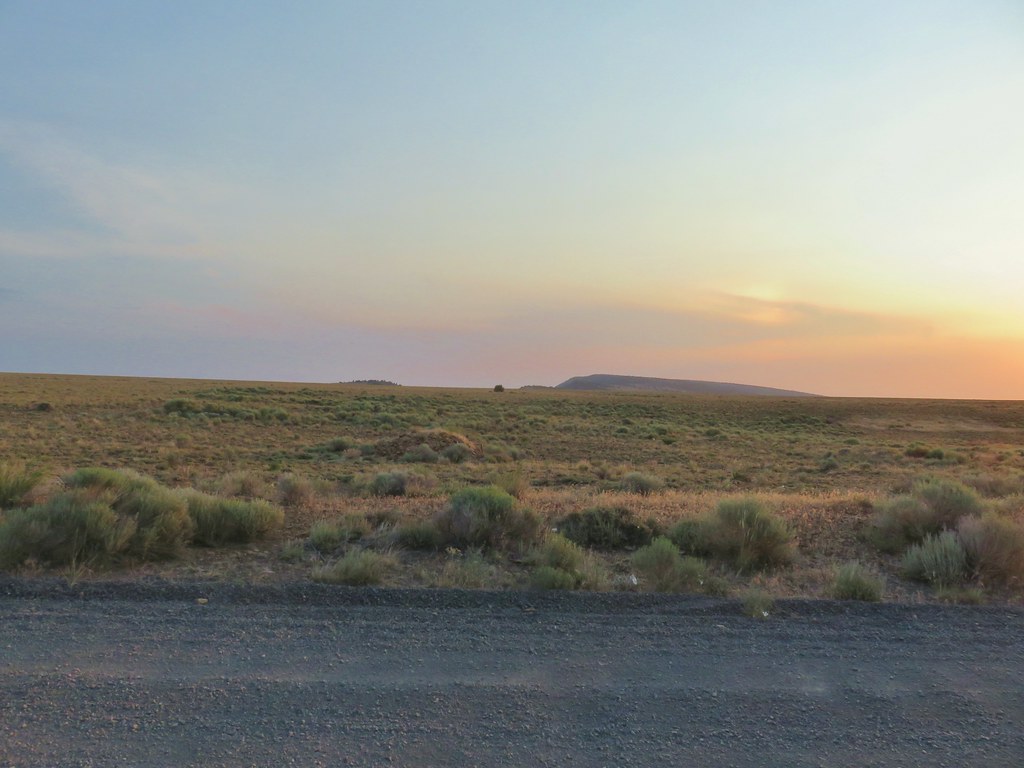
IMG_1258The knoll is the lower rise to the left.

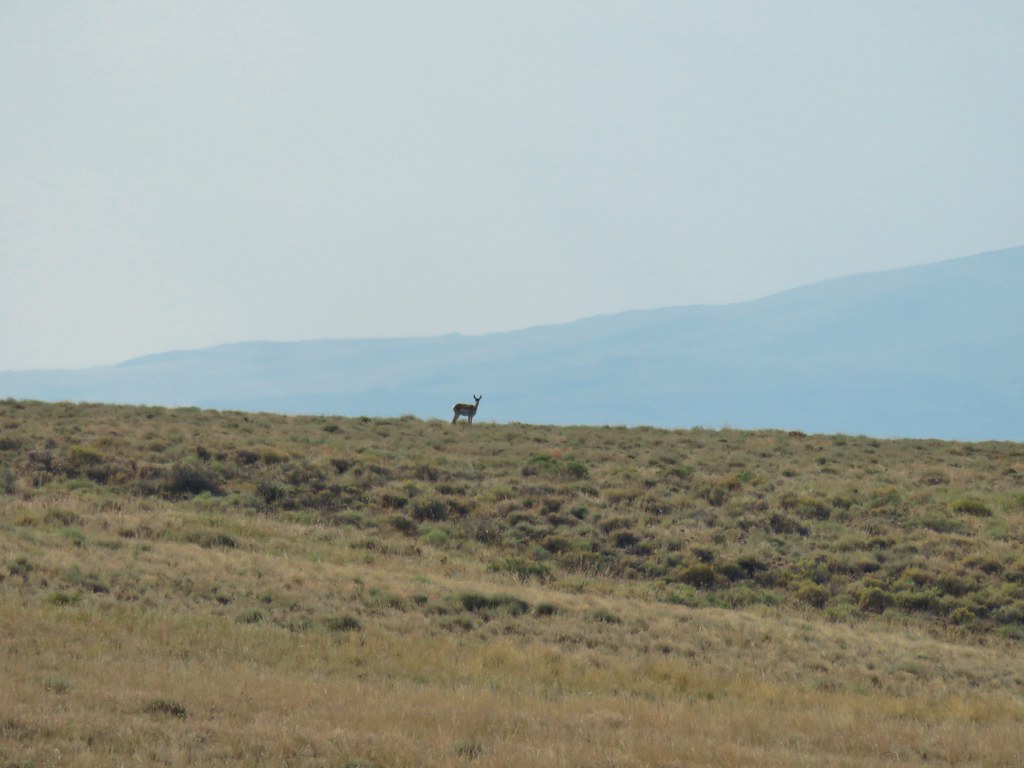
There was a lone pronghorn grazing in the morning light.
IMG_1259

We set off across through the sagebrush angling for the rim.
IMG_1267

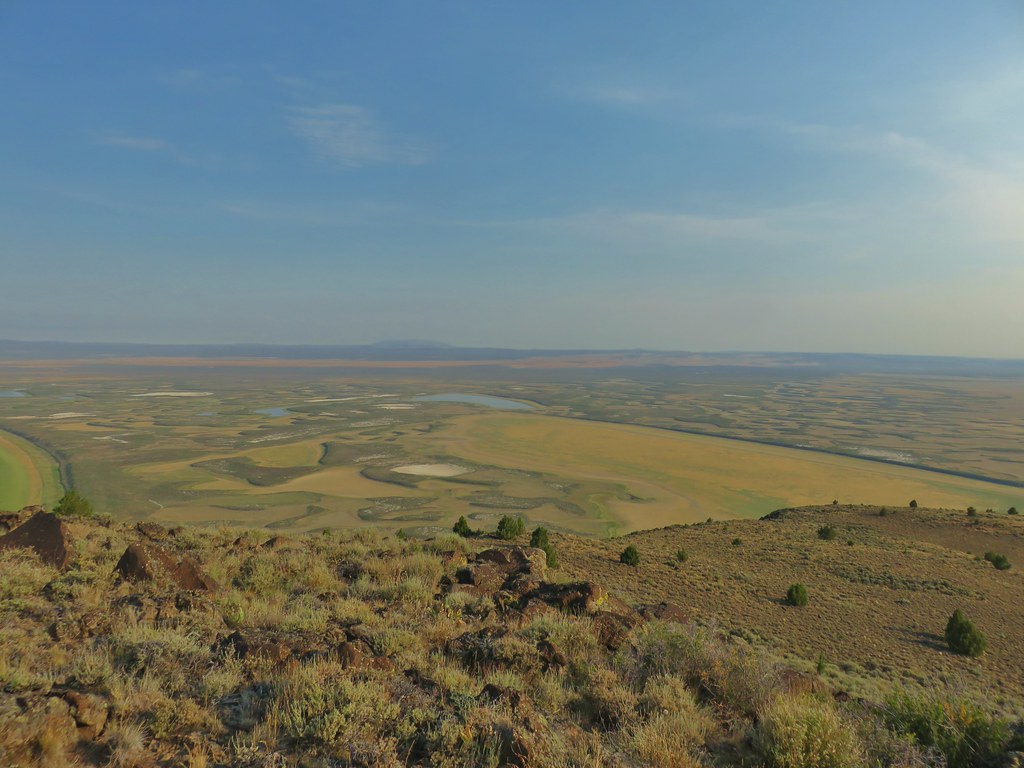
IMG_1268From left to right: Flagstaff Lake, Upper Campbell Lake, and Campbell Lake.

IMG_1271Hart Mountain Road climbing up to the plateau.

IMG_1272

IMG_1273Campbell Lake

We followed the rim north toward the knoll.
IMG_1276

IMG_1277

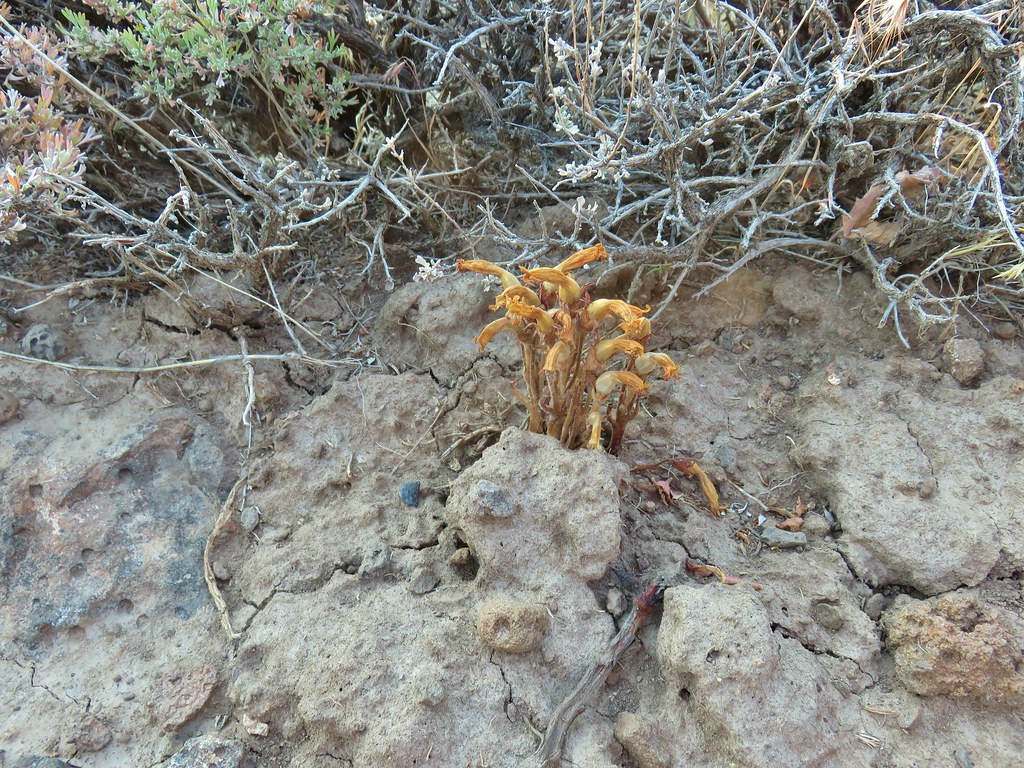
IMG_1282An Orobanche

IMG_1284

IMG_1285

IMG_1287

Petroglyph Lake was not visible at first but it lay to the east and we could make out the basin that it was in.
IMG_1291

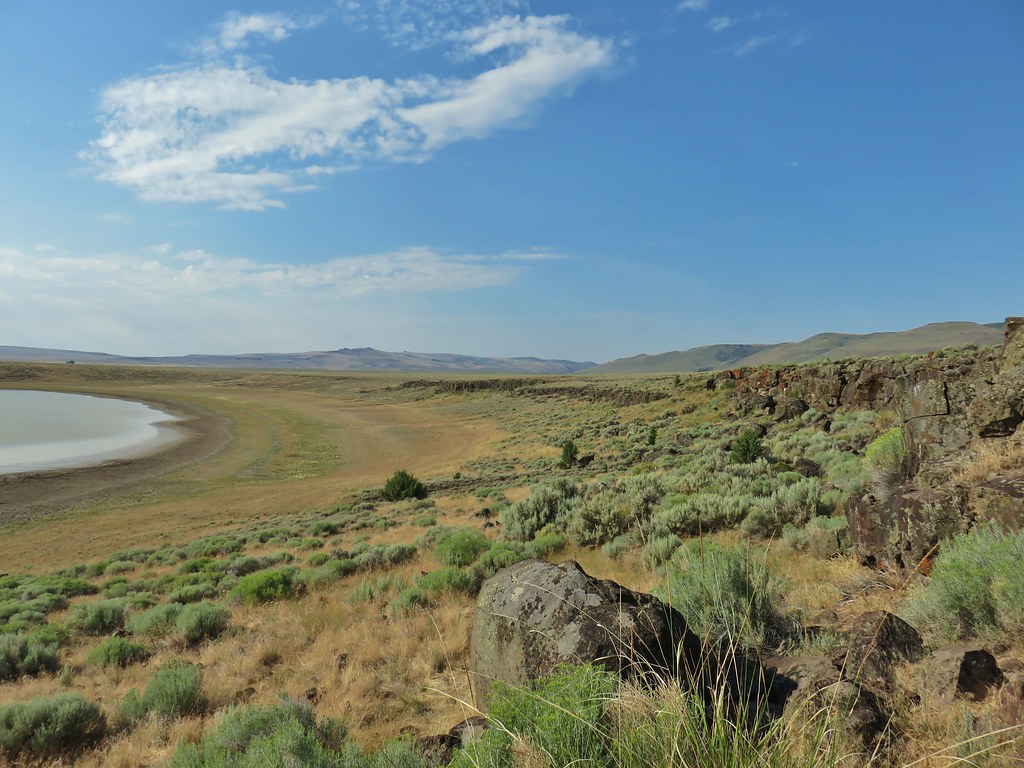
As we gained elevation the further north that we got we finally could see the lake in the basin.
IMG_1294

We arrived at the knoll a little over 2 miles from where we’d parked.
20200722_073355

IMG_1301White pelicans and seagulls on Campbell Lake.
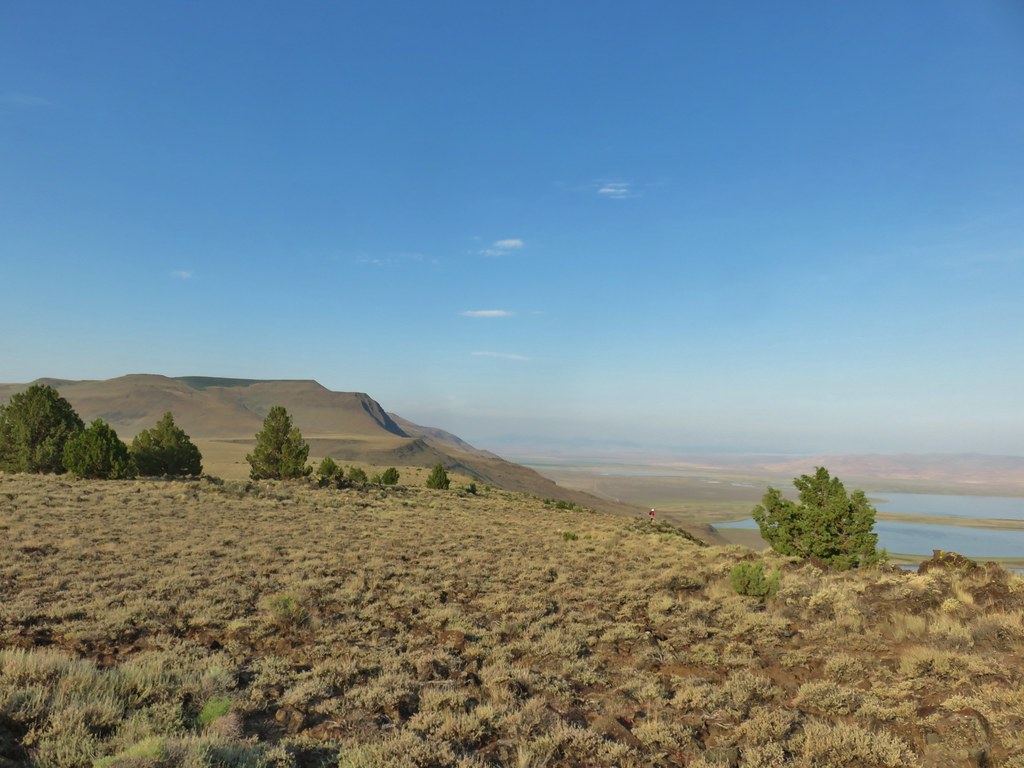
IMG_1305Looking south along Poker Jim Ridge

IMG_1307Looking north along Poker Jim Ridge

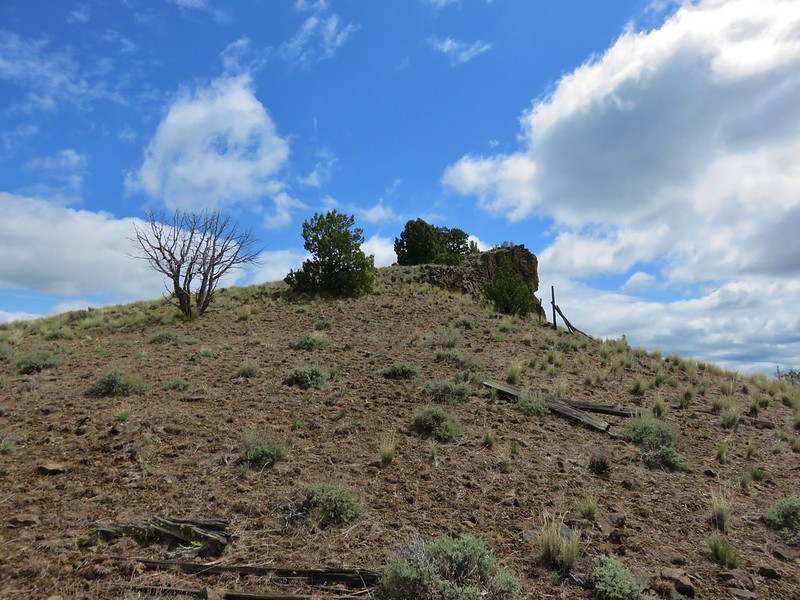
IMG_1308Junipers on the knoll

We made our way to the north end of the knoll to get a better view in that direction.
IMG_1312Bluejoint Lake below the ridge.

IMG_1313Stone Corral Lake

To reach Petroglyph Lake we had to backtrack to the south on the knoll to avoid a rocky descent.
IMG_1320

IMG_1321

When we found a suitable spot to descend we could see the lake clearly but we knew that we would lose sight of it again once we were down off the knoll so we picked out some other features to use as reference points. When we were able to see the lake again we aimed for the left side knowing that a rock ledge rimmed its right side.
IMG_1331

IMG_1338

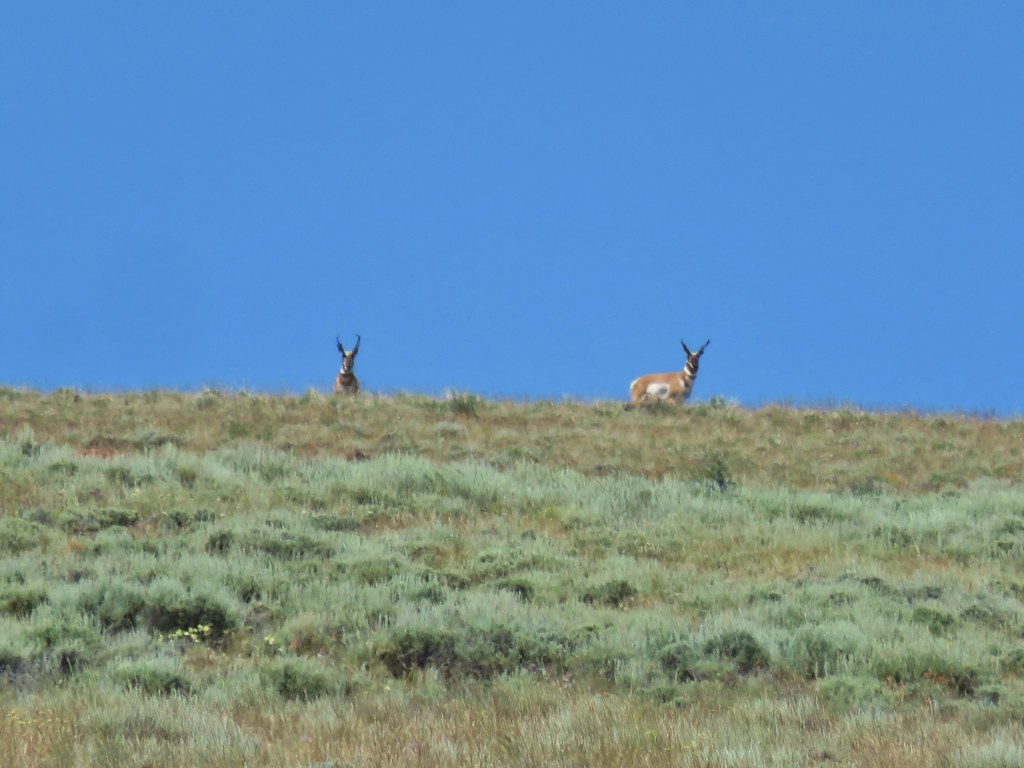
IMG_1345Pronghorn above the lake.

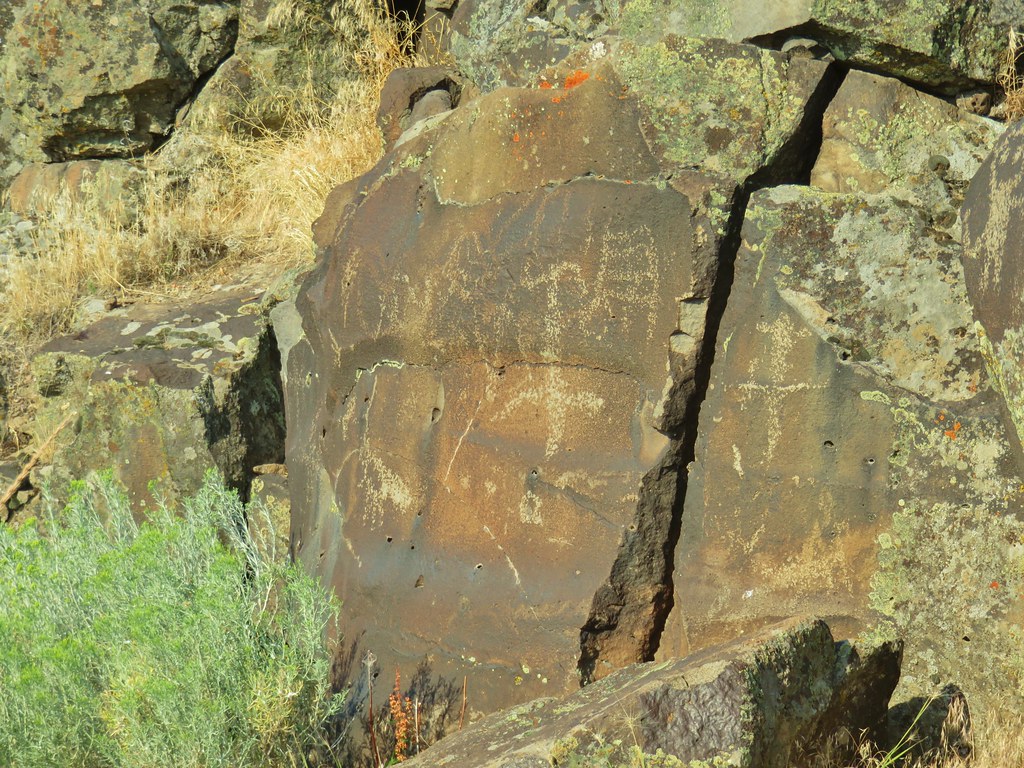
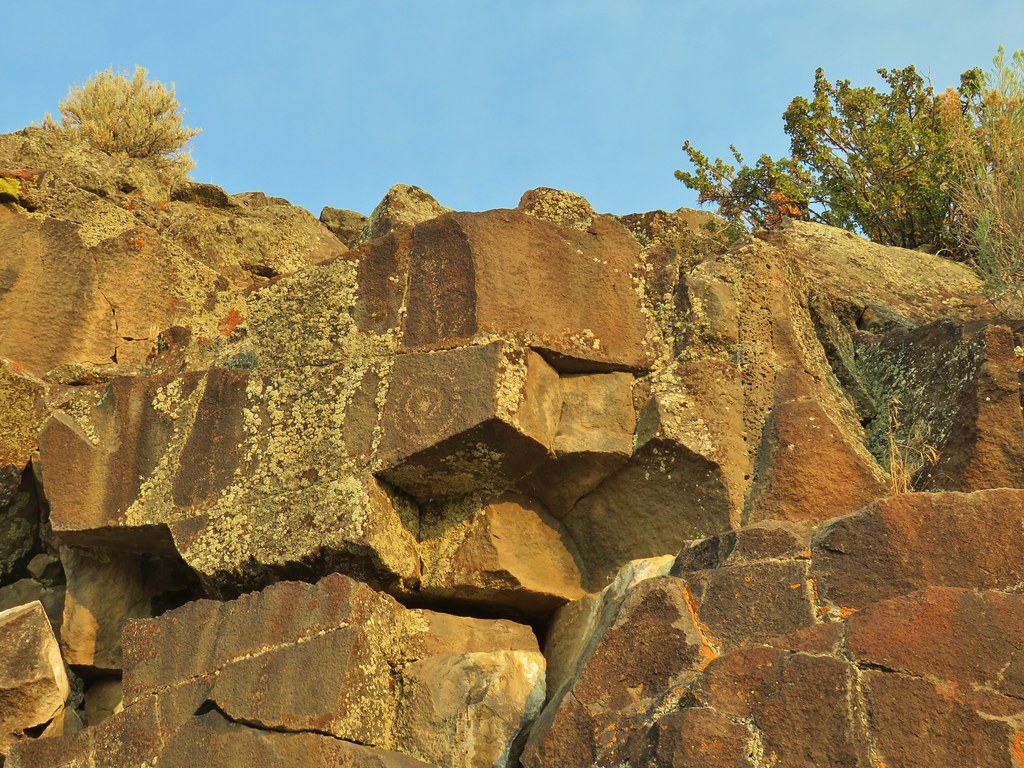
As we neared the lake we got below the rim rock and turned right to explore along it as this is where the petroglyphs are.
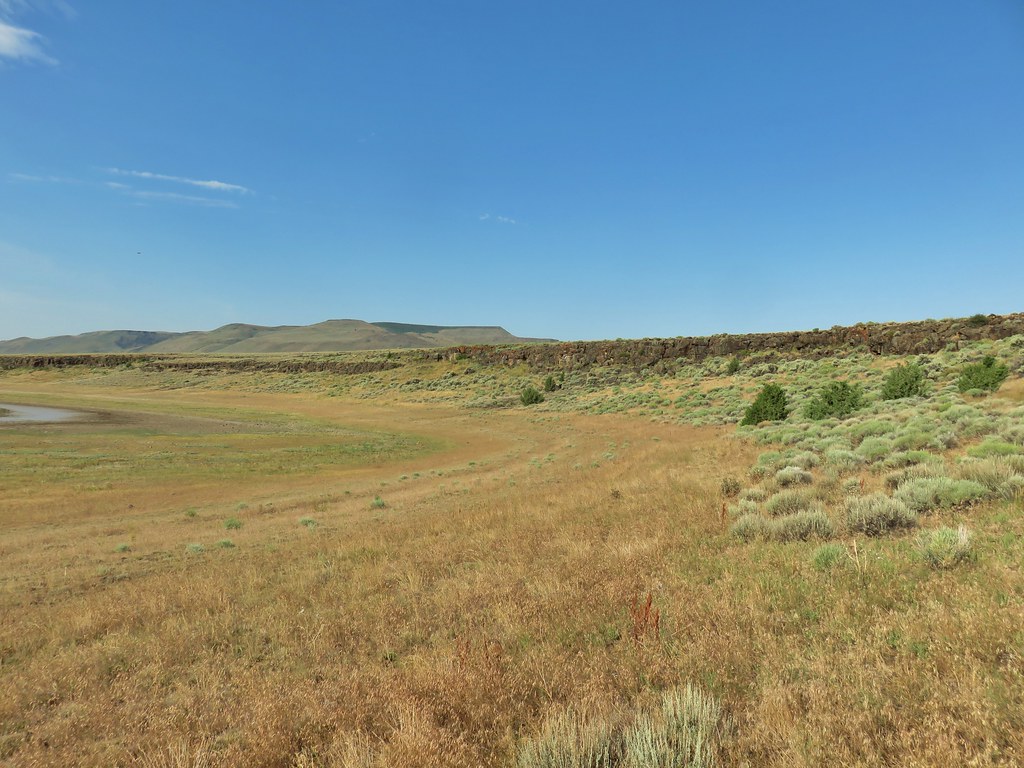
IMG_1352

It was approximately a half mile to Petroglyph Lake Road at the far end of the lake and most of that distance was along the cliffs looking at the petroglyphs.
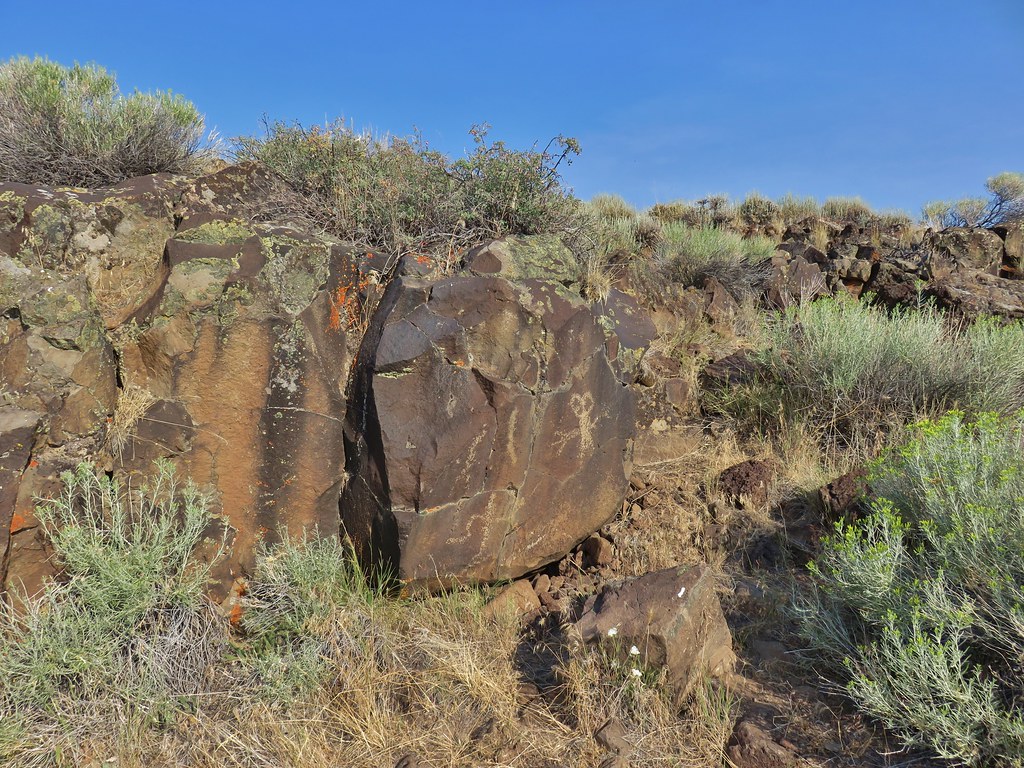
IMG_1363

IMG_1366

IMG_1368

IMG_1369

IMG_1376

IMG_1379

IMG_1390Dragon fly

IMG_1398Western fence lizard

IMG_1410Yellow bellied marmot

IMG_1412

IMG_1414

When the cliffs began to fade we followed a clear path along the lake to the road where we encountered the first other hikers since the previous Saturday (we’d been passed by a single mountain biker the day before).
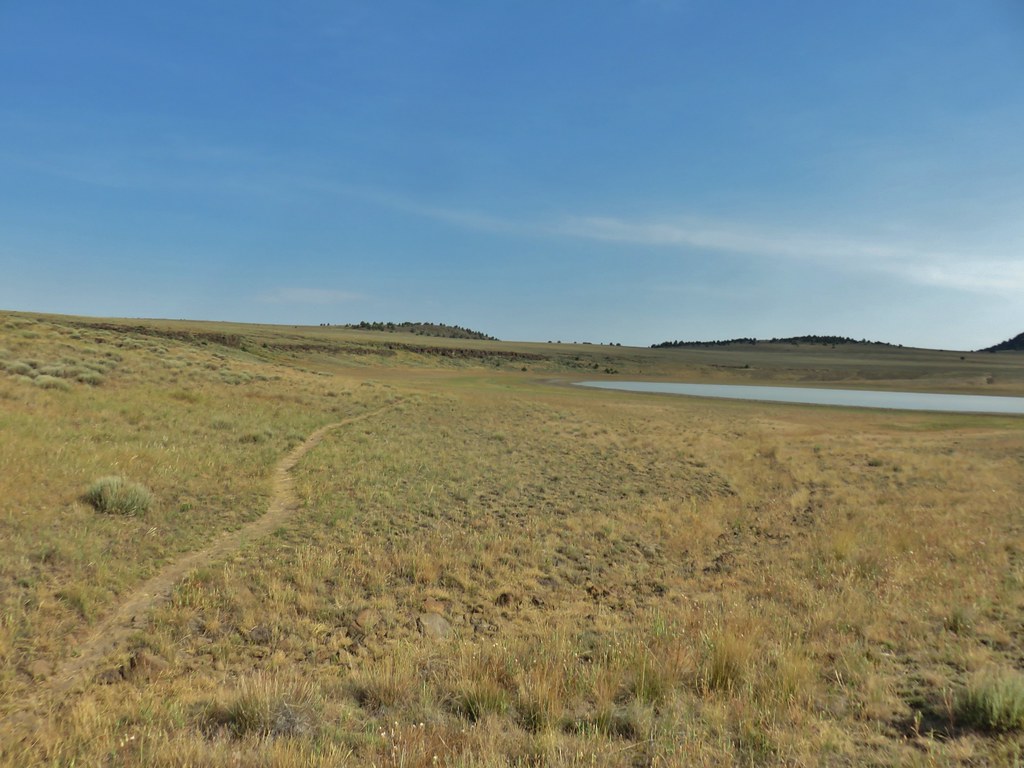
IMG_1421

After a brief (6 foot) conversation with them we were ready to continue on but we faced a choice. Sullivan’s loop would have had us setting of cross country for 1.5 miles back to the hill top where our car was parked. We could also walk Petroglyph Lake Road to Hart Mountain Road and then walk up that road back to the car. This second option doubled the mileage but it also took us to within a mile of the refuge headquarters where we’d seen the bulk of the pronghorn the day before and it was road walking and not bushwhacking which we were both about done with for a while. The road it was.
IMG_1427

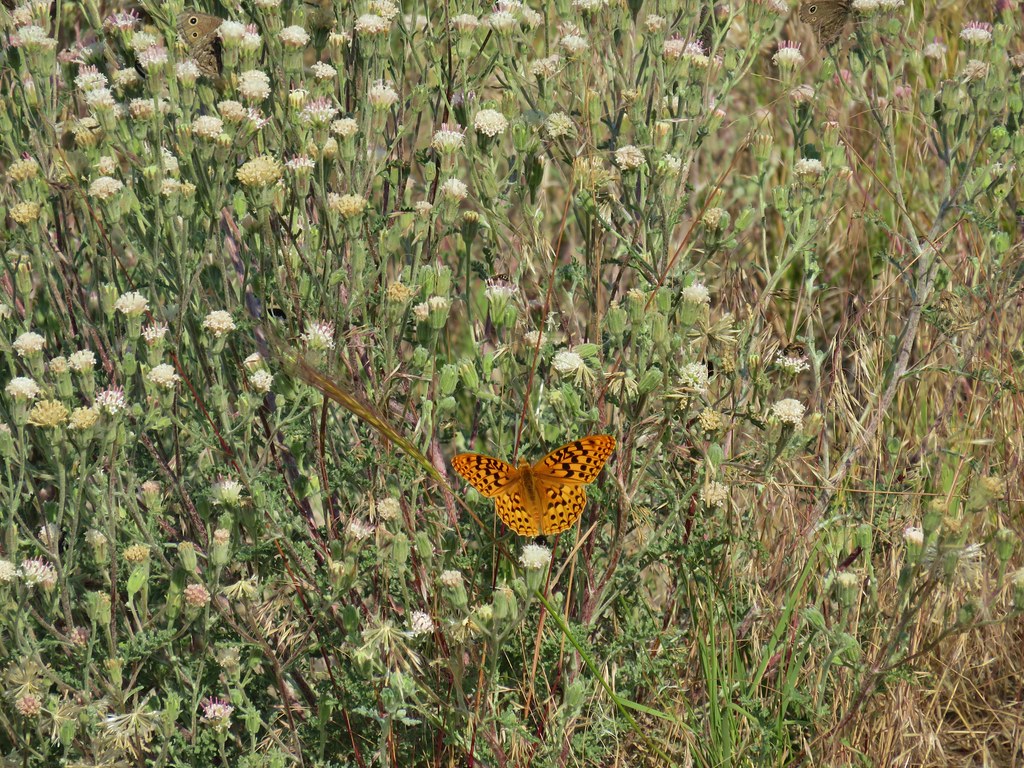
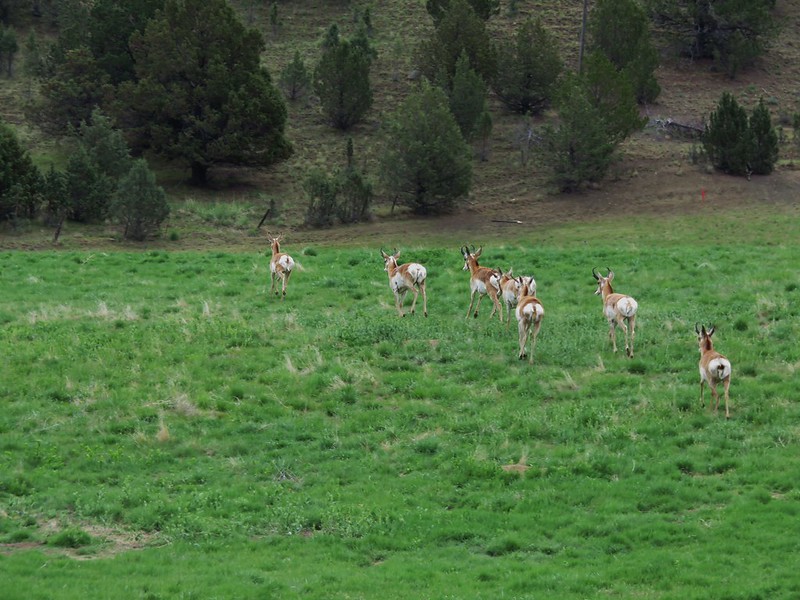
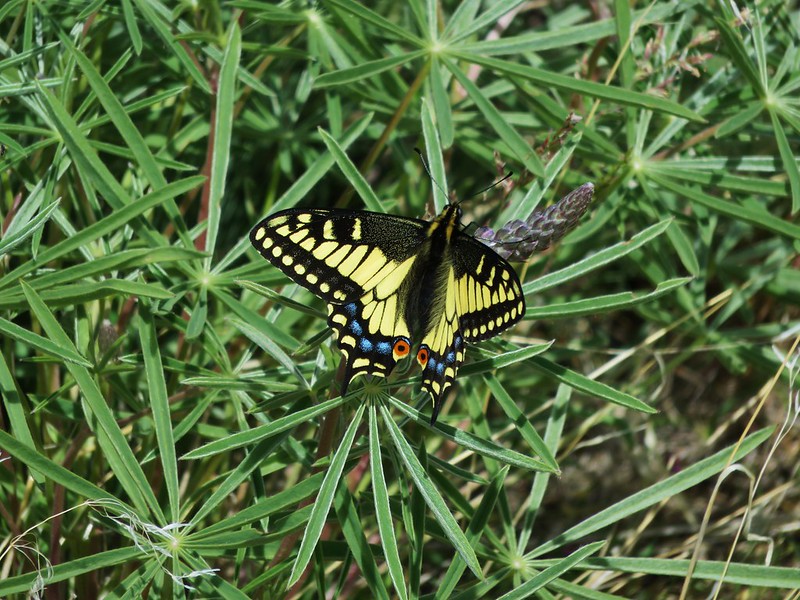
The road walk was fine, there were several flowers, a plethora of butterflies, and we did see a few more pronghorn, albeit at a distance.
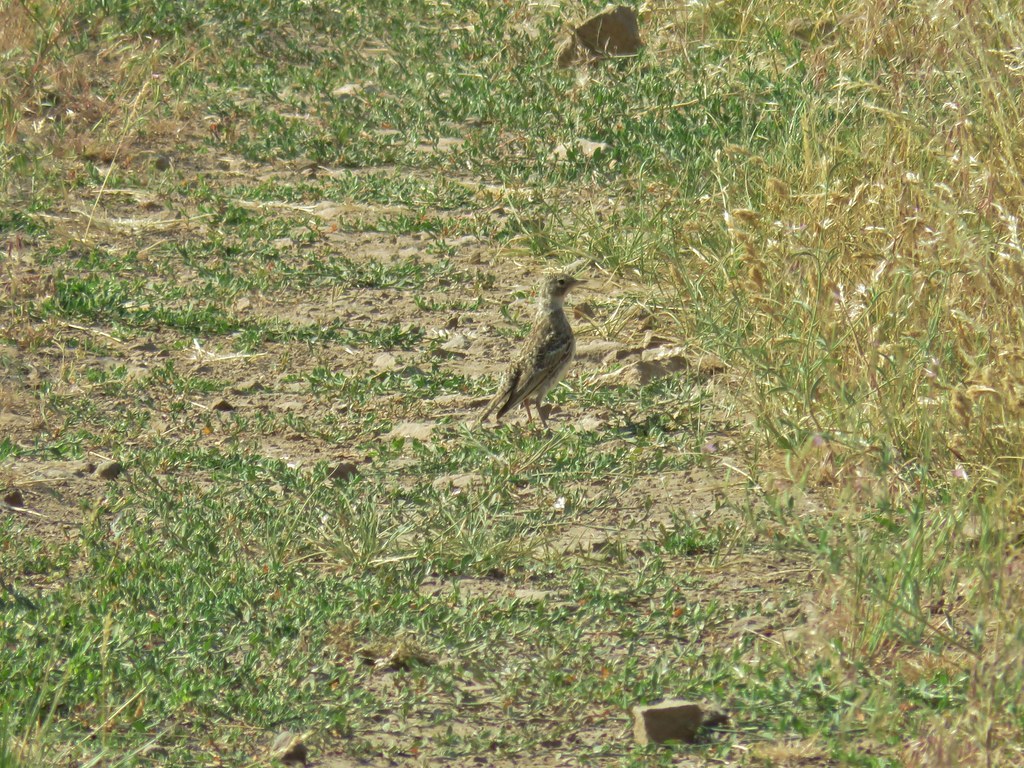
IMG_1431

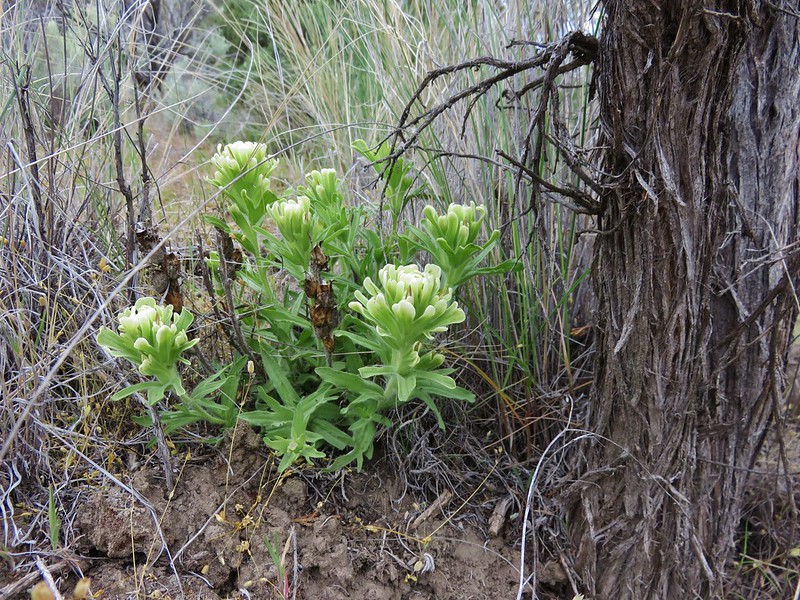
IMG_1433Some type of primrose I think.

IMG_1438

IMG_1441

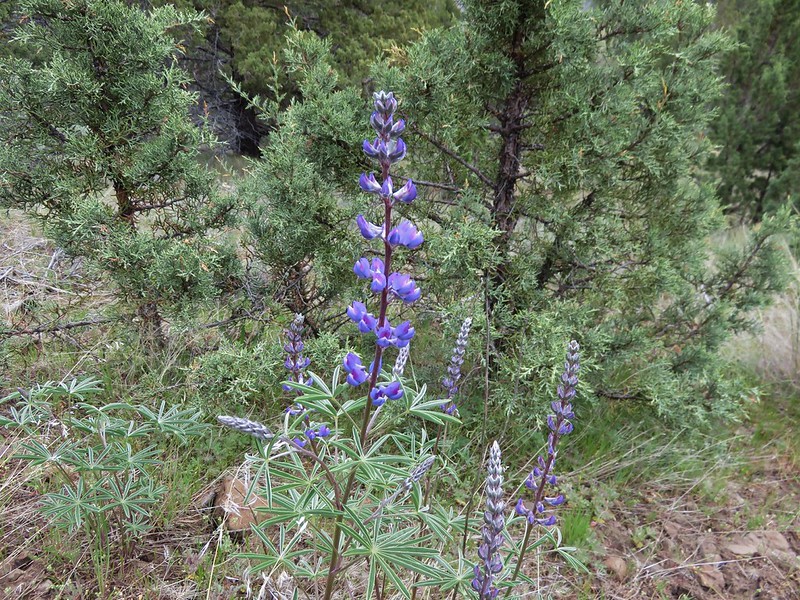
IMG_1445Lupine

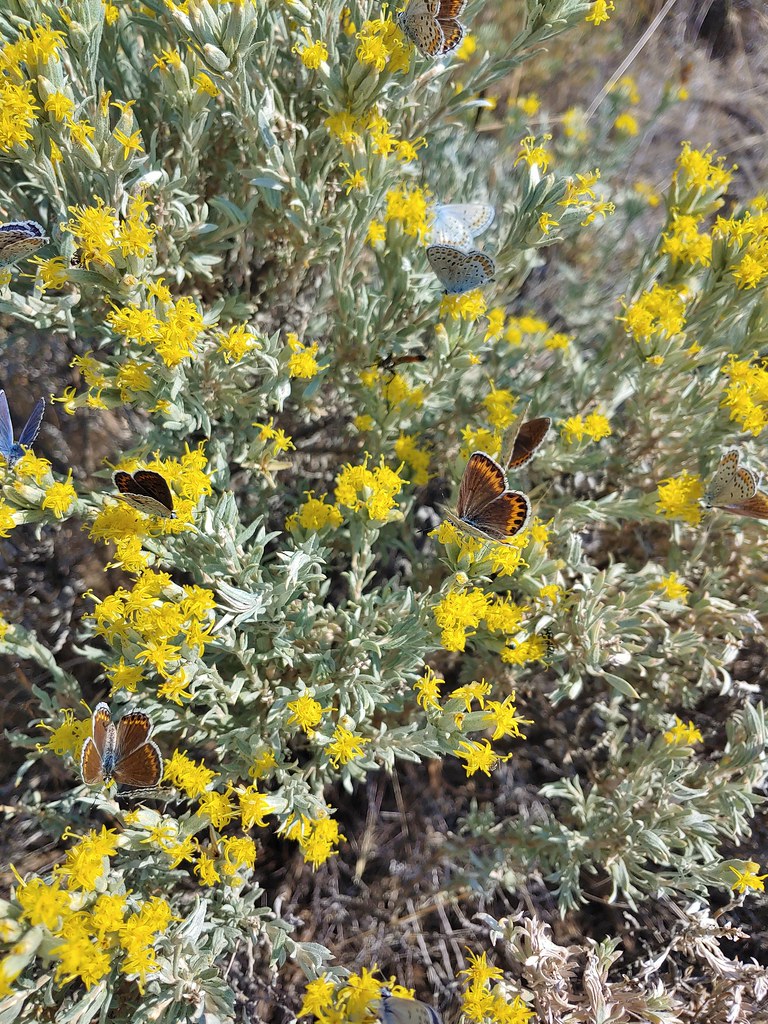
IMG_1460There were dozens of butterflies and other pollinators on this rabbitbrush.
20200722_093355

IMG_1451

IMG_1475

IMG_1483The gate at Petroglyph Lake Road

IMG_1485Hart Mountain Road

IMG_1489The juniper knoll along Poker Jim Ridge and yes there are a few pronghorn out there.

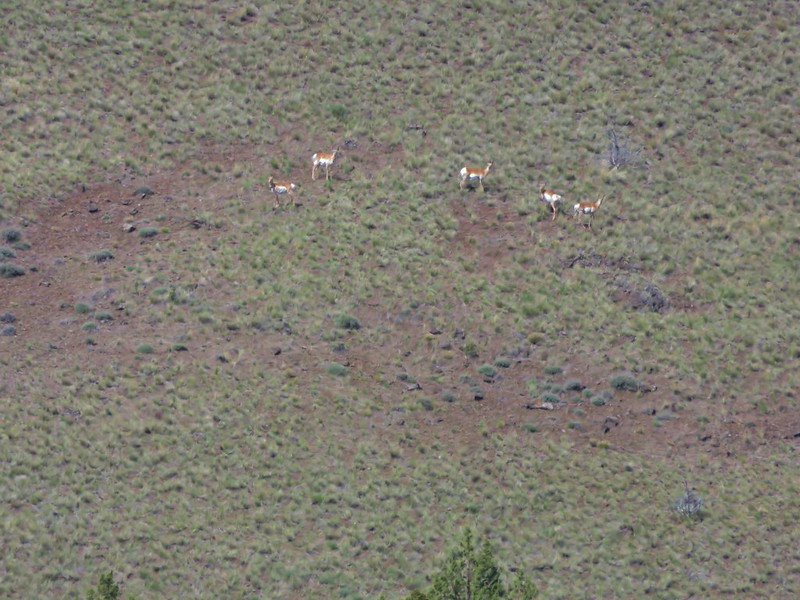
IMG_1498Pronghorn keeping their distance from us.

After making it back to our car we drove just under 2 miles back down Hart Mountain Road to a small pullout with a Warner Mountain Overlook sign and a short (.4 mile) loop trail. We weren’t aware of this little interpretive loop until we drove past it the day before but it looked interesting so we added it to this days itinerary.
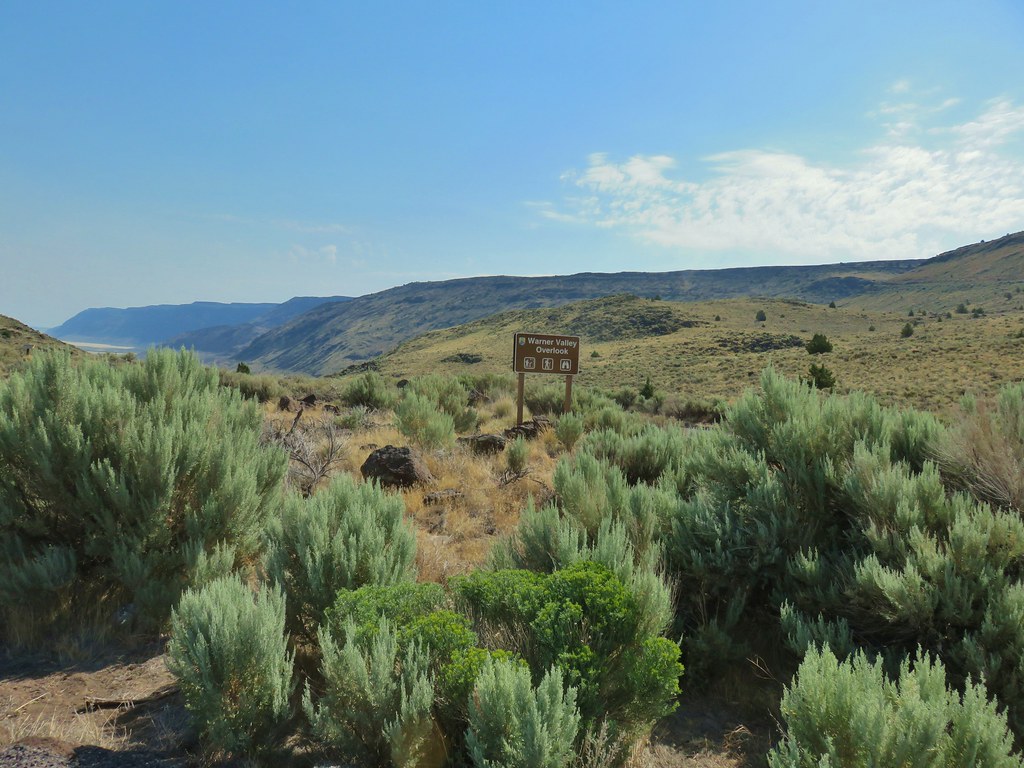
IMG_1505Sign for the overlook.

IMG_1506View from the pullout back up toward Hart Mountain.

IMG_1509The start of the loop trail.

Since we had already been up to the juniper knoll which looked this same direction the views from the overlook were not much different from those, but the half dozen interpretive signs along the route were interesting and worth the quick stop.
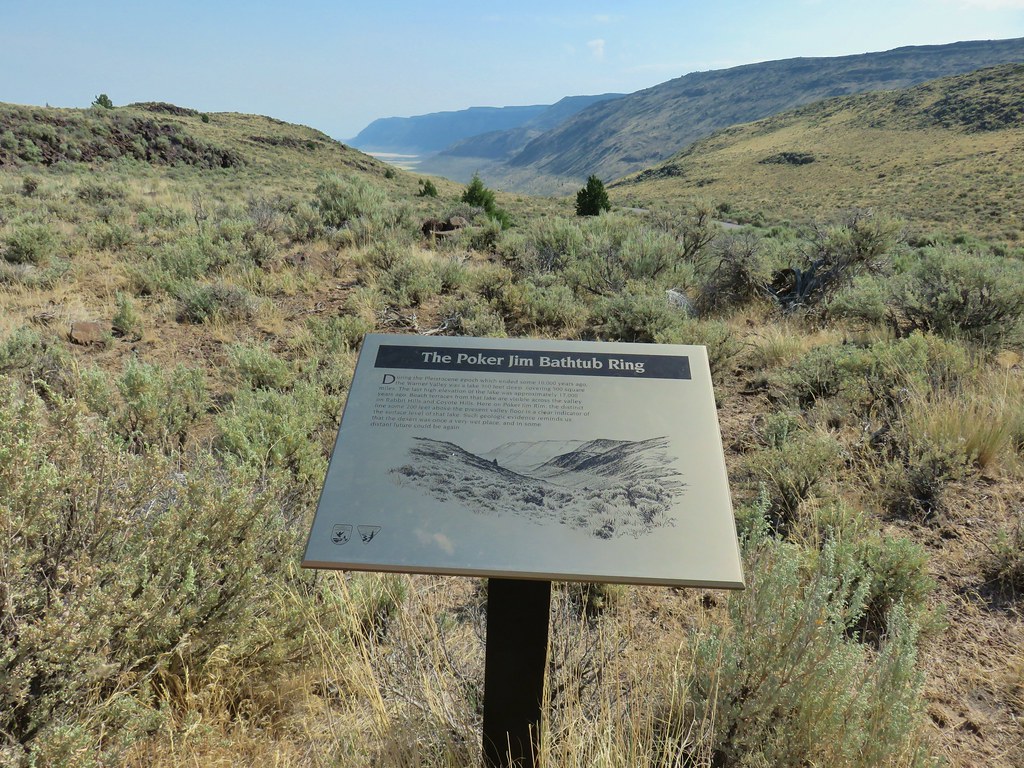
IMG_1511We like interpretive signs like this where we can see with our own eyes what is being described.
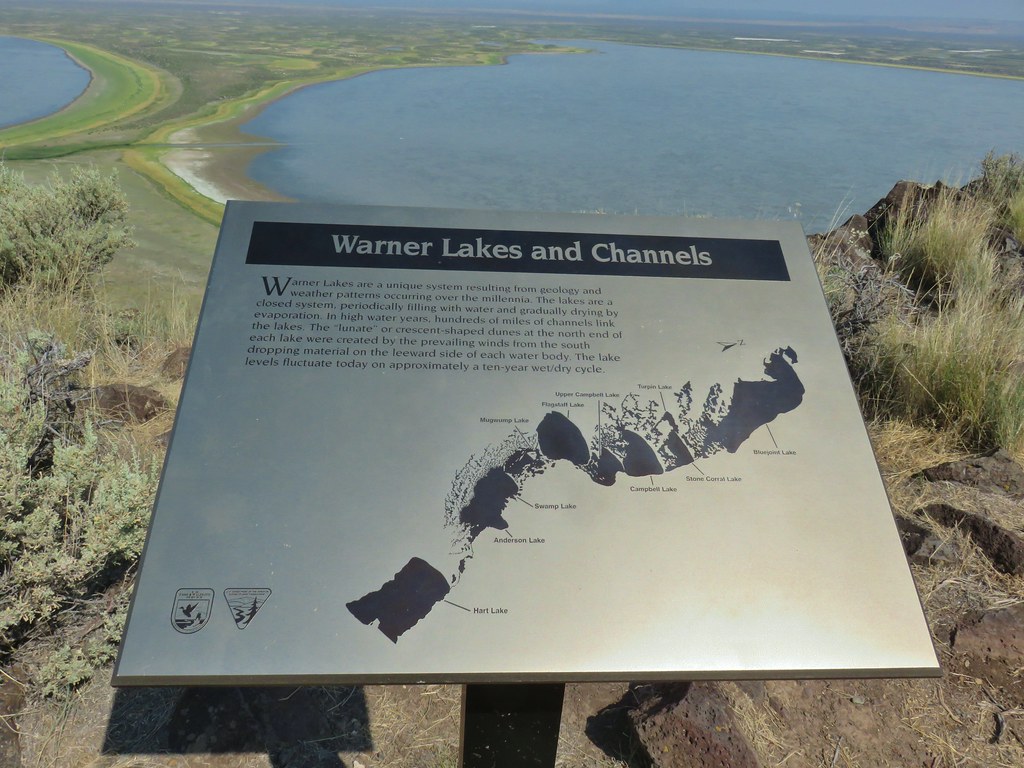
IMG_1518This one helped with identifying the different lakes plus provided the history.

IMG_1524Another of our favorites are the ones that identify the various hills and peaks.
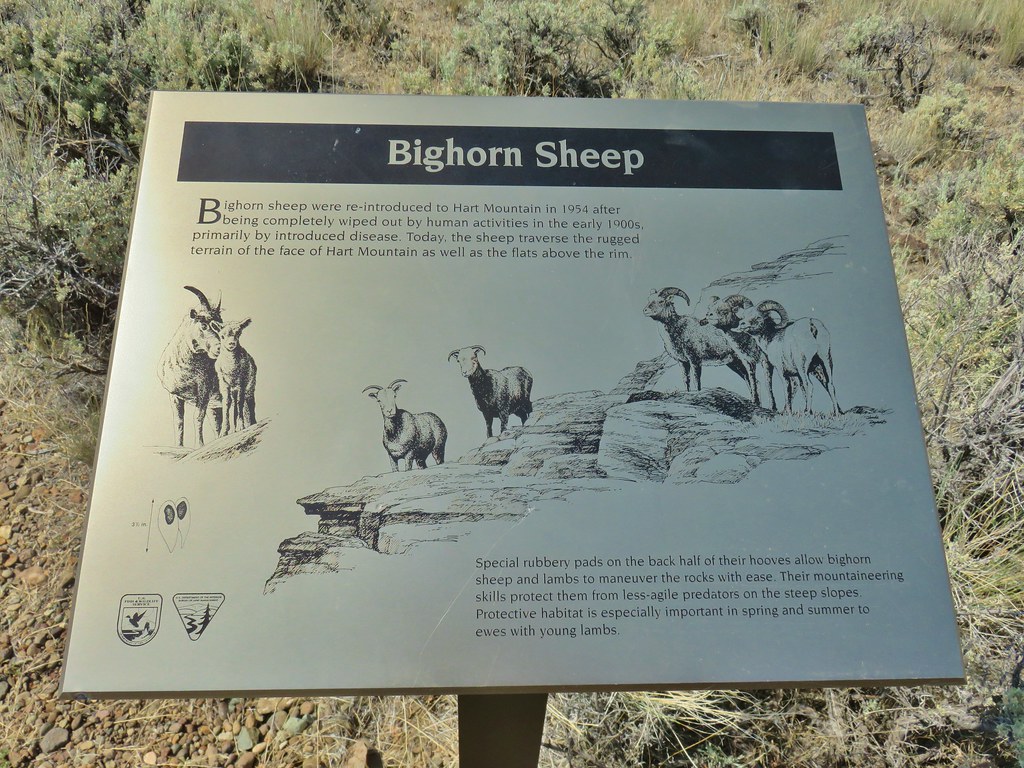
IMG_1527We worked really hard on spotting some big horn sheep on this trip to no avail. There was so much space that they could be in it was like looking for a needle in a haystack.

After completing the loop we continued our drive back toward Lakeview on Hart Mountain Road. We turned off once more at a small pointer for DeGarmo Canyon (4.5 miles after pavement resumed in this direction or 9.4 miles from Plush). Sullivan described the half mile dirt road as very rough and requiring a high clearance vehicle, otherwise he suggested parking along Hart Mountain Road and walking to the trailhead. Typically we heed these warning from him but for some reason I decided to test the road with our Outback. It wasn’t pretty but we did make it to the parking area and I vowed not to make that mistake again.
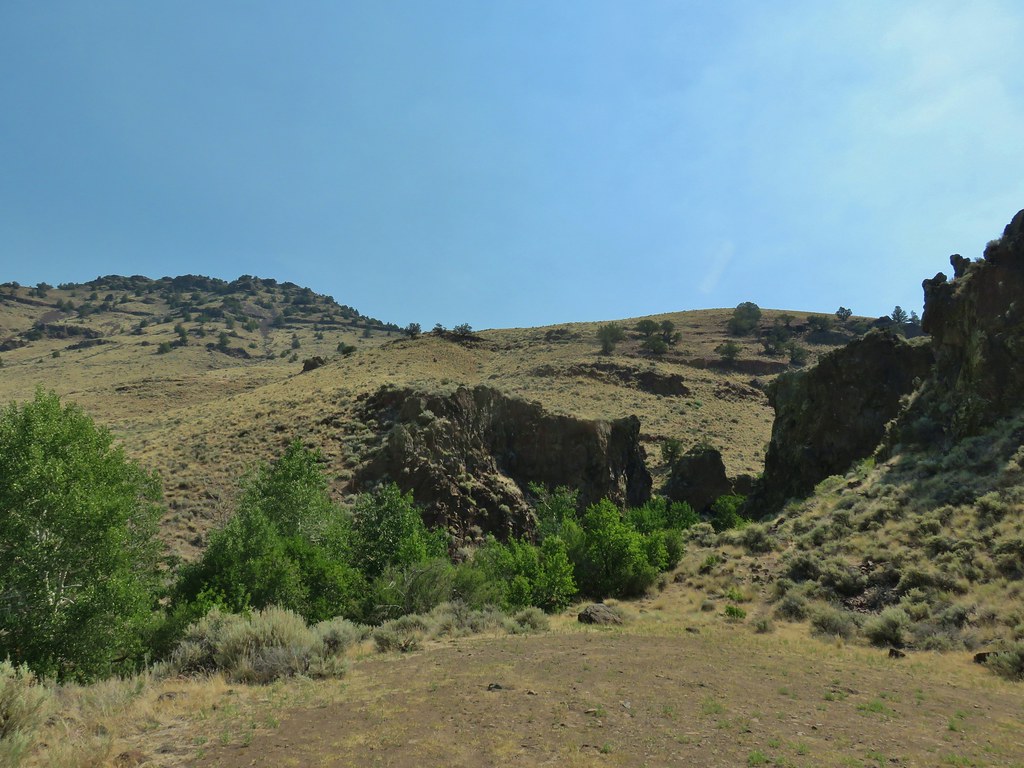
IMG_1531

Sullivan lists three possible hikes with with some additional optional side trips. He has a 1.4 mile out and back to a 35′ waterfall, a 2.6 mile loop, and a 9.4 mile hike to DeGarmo Notch. If you make it to DeGarmo Notch it’s only 2 more miles (4 round trip) to Warner Peak. When our vacation started my plan had been the 9.4 mile hike with the optional trek up Warner Peak. As the week progressed we wound up hiking to Warner Peak the day before from Barnhardi Basin (post) so we didn’t need to do that anymore. We had toyed with the idea of still hiking up to DeGarmo Notch but we had seen that feature the day before as well and we were hot, tired, and a little sick of bushwacking which the 9.4 mile hike had some more of. That left us with the 1.4 mile out and back or 2.6 mile loop, both of which visited the waterfall.

Before we decided which option we would be doing we needed to get across DeGarmo Creek. Sullivan had warned of a dangerous crossing just above a 10′ waterfall and recommended following a rock ledge 50′ upstream to an easier crossing. Given the time of year the creek wasn’t flowing very strongly and vegetation was crowding the rock ledge so we opted to cross above the 10′ waterfall despite the warning.
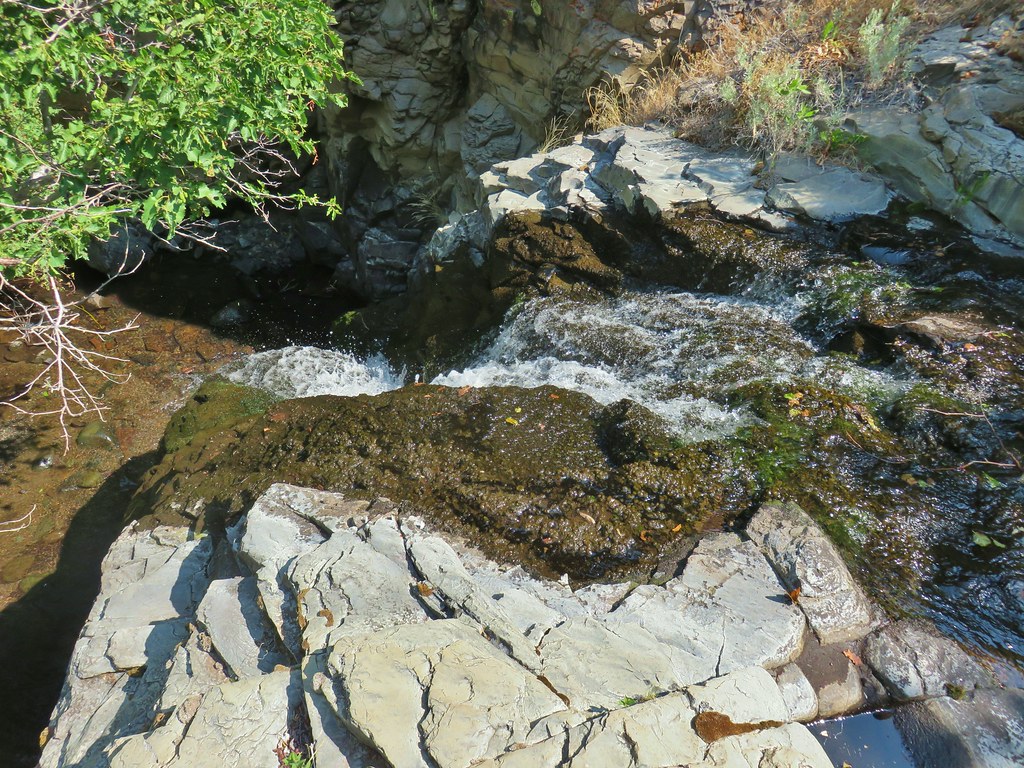
IMG_1533It’s not visible in this photo but there were dry rocks close enough on the far side to simply step over the water onto. The wet rock would have been very slippery and certainly dangerous.

We followed a path upstream and found the location of Sullivan’s recommended crossing.
IMG_1539

A steep trail led up around the vegetation along the creek into a wider canyon that had some very interesting rock formations. It was also extremely warm as it was directly in the sun and there was no breeze.
IMG_1557

IMG_1554

IMG_1559

IMG_1561

We had our eyes out for snakes but only saw a couple of lizards.
IMG_1566

The 35′ waterfall was just .7 miles up the canyon and it came into view well before we arrived at it.
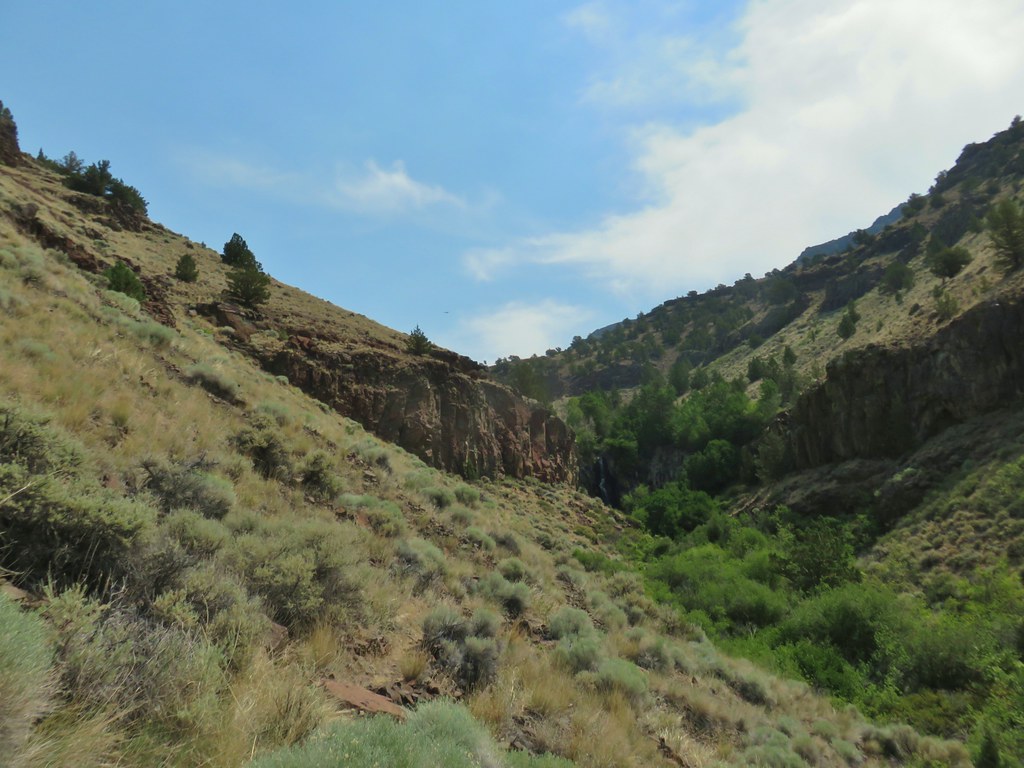
IMG_1572

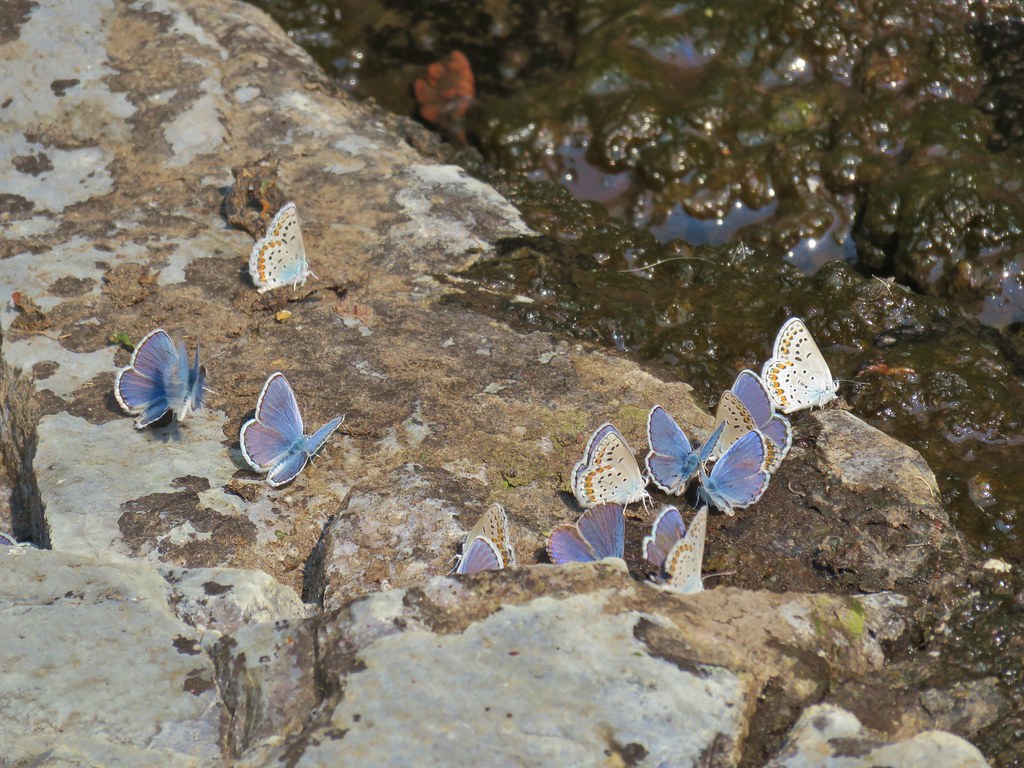
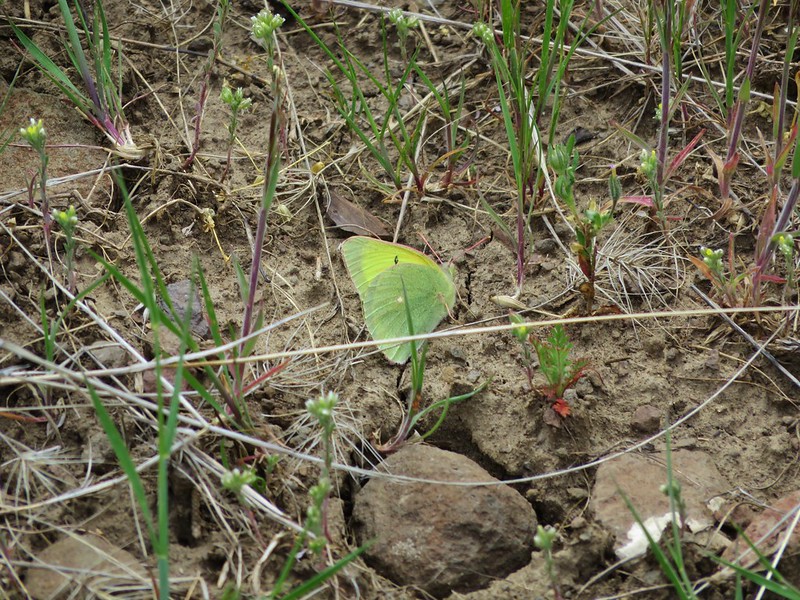
The temperature at the falls was much more pleasant and was a popular spot with the local butterflies.
IMG_1576

IMG_1579

IMG_1581

IMG_1597

IMG_1598

20200722_112717

We took a relaxing break at the falls surrounded by the butterflies. When it was time to continue our hike we both agreed that neither one of us was up for what it would take to do any of the options other than the 1.4 mile out and back. In order to do any of the longer hikes, even the 2.6 mile loop, we would have needed to follow a steep scramble route 200′ before the falls up around some cliffs. We had both spied the route on our way to the falls and both thought “not today”.
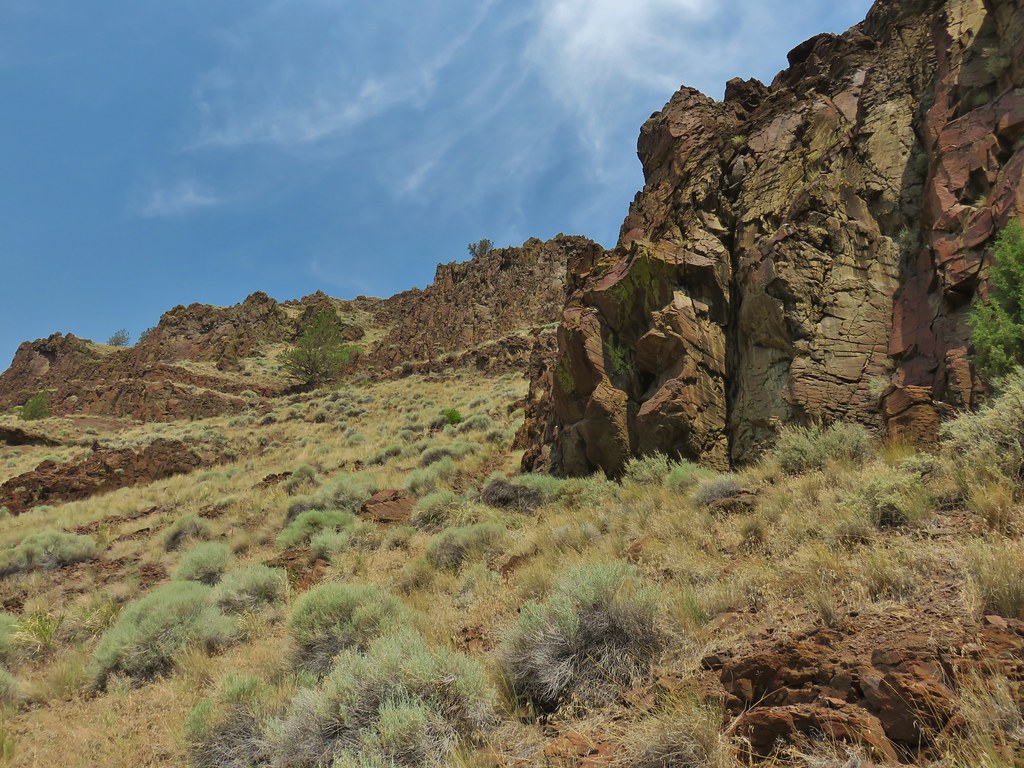
IMG_1619The scramble route is at the base of the cliff to the right.
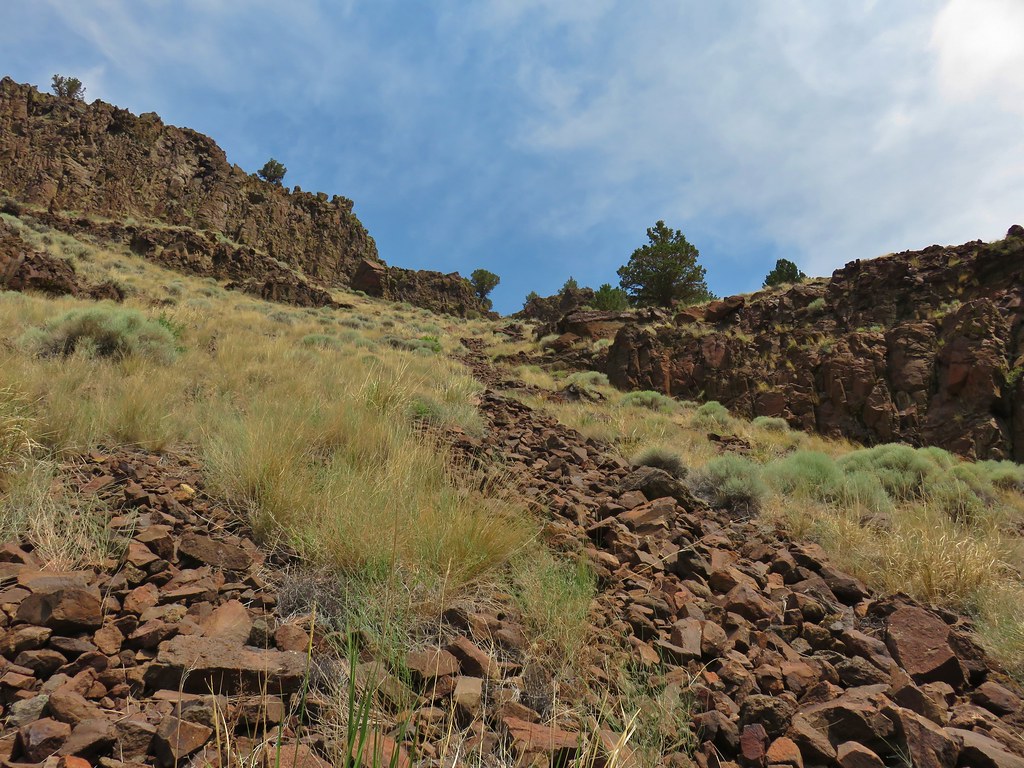
IMG_1620Looking up from the trail at where the scramble route was heading.

We were happy with our choice and ready to get out of the heat so we retraced our steps back to the 10′ water fall.
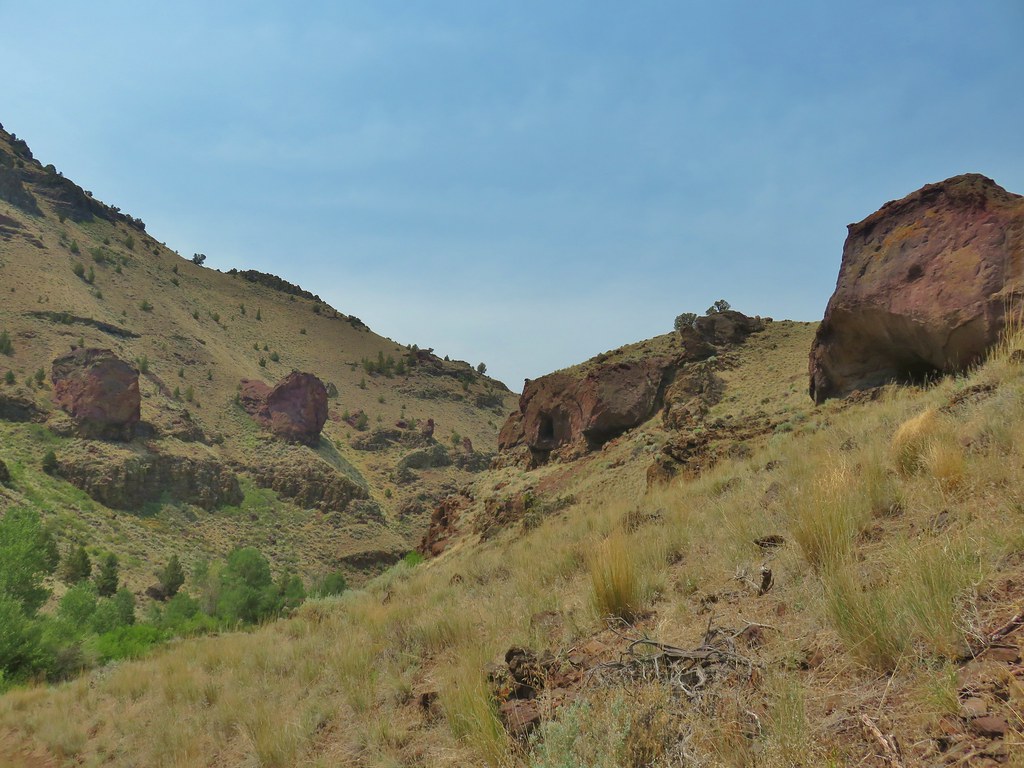
IMG_1623

IMG_1627

The smaller waterfall had been invaded by butterflies too.
IMG_1629

IMG_1632

After carefully driving the wretched half mile to Hart Mountain Road we headed back to Lakeview to treat ourselves to burgers and milkshakes from the Burger Queen drive thru. It was our shortest day so far of the vaction at 8.7 miles (6.8 at Petroglyph Lake, 0.4 at the overlook, and 1.5 at DeGarmo Canyon) but that was plenty. Thursday’s hike had the potential of being the longest of our trip as we were set to visit one of the six remaining wilderness areas in Oregon that we had yet to hike in, the Gearhart Mountain Wilderness. Happy Trails!

Flickr: Petroglyph Lake, Warner Valley Overlook, and DeGarmo Canyon

Categories
Central Oregon Hiking Lakeview Oregon Trip report

Flook Lake and Hart Mountain Hot Springs – 07/21/2020

**Note the 2024 Warner Peak Fire burned much of the Hart Mountain Hot Springs Hike.**

Tuesday marked the start of a short stretch of possible showers and thunder storms but not until Tuesday night so we had decided the night before to start the day at Flook Lake in the Hart Mountain National Antelope Refuge. Originally we had planned on doing hikes at Flook Lake, Petroglyph Lake, and Hart Mountain Hot Springs all in the same day, but that plan had changed. We wanted to do Flook Lake before any possible showers because Flook Lake road can become dangerously muddy when wet. We had also moved a side trip to Warner Peak, the high point in the refuge, to our Hart Mountain Hot Springs stop instead of tacking it onto our DeGarmo Canyon hike. The reason for that move was to avoid being exposed at an elevation over 7000′ if a thunder storm rolled in which looked possible both Wednesday and Thursday afternoons. Finally we believed that the road to Petroglyph Lake had been closed adding at least 3 miles to that hike which would have been a little too much distance for one day. If that road turned out to be open we were still planning on doing it along with Flook Lake and the hot springs, but if it was indeed closed we planned on doing it first thing Wednesday morning before DeGarmo Canyon.

We left Lakeview at 5am and headed northeast to Plush stopping along county road 3-13 to admire the sunrise.
IMG_0804Hart Mountain in the morning.

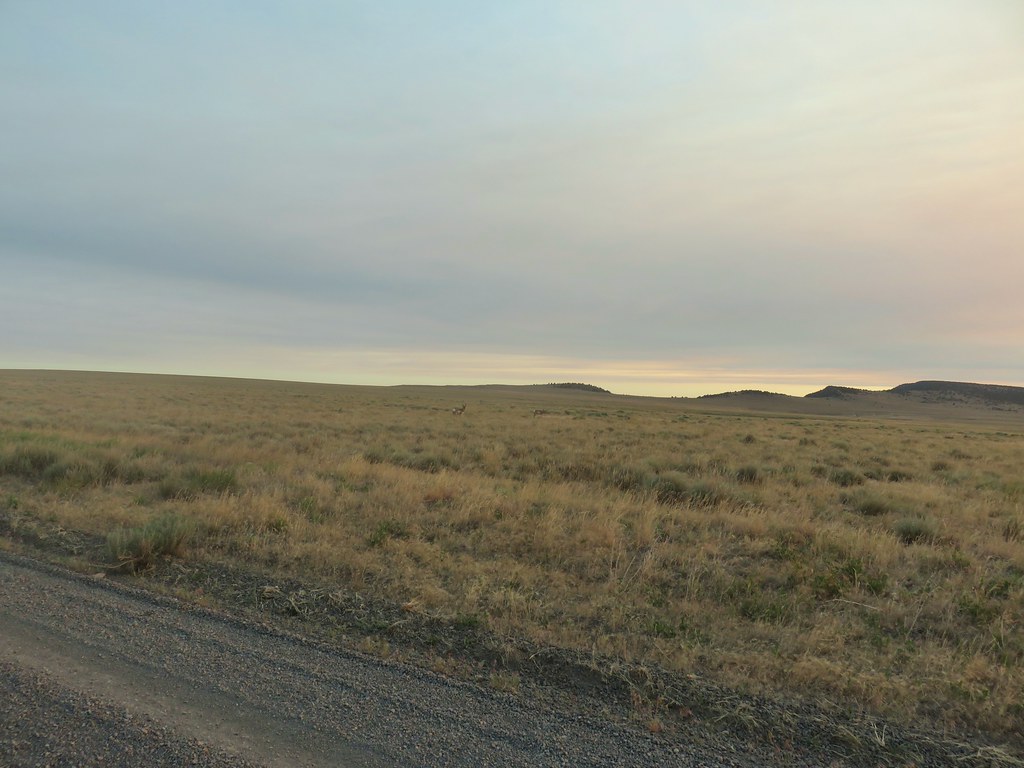
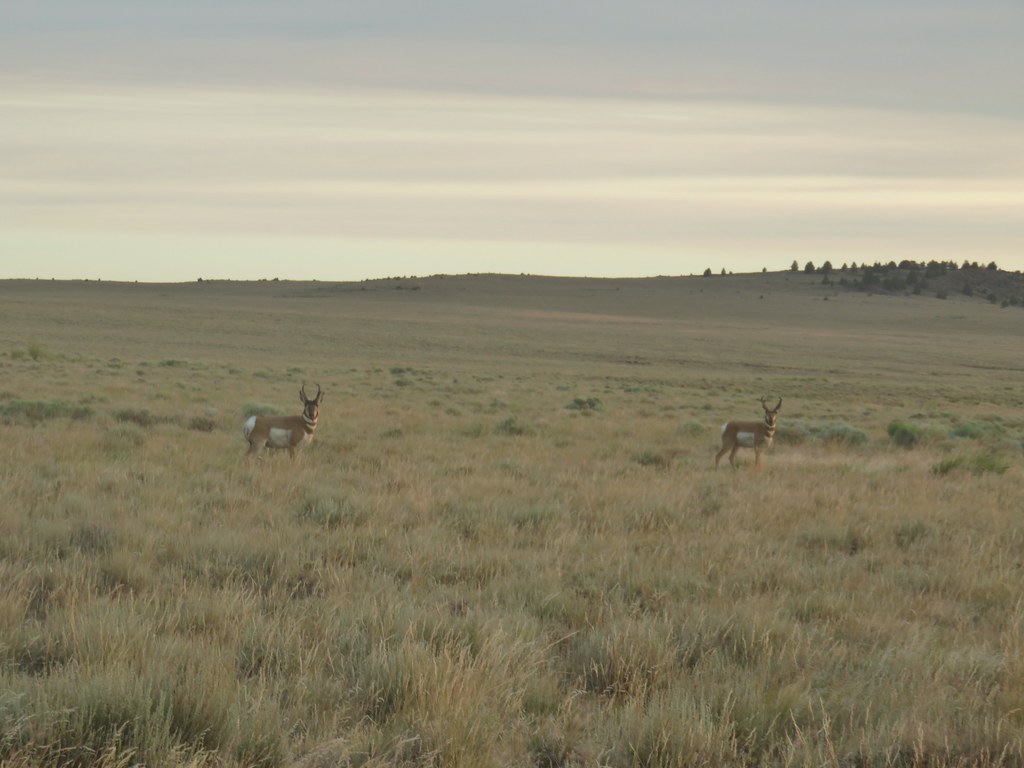
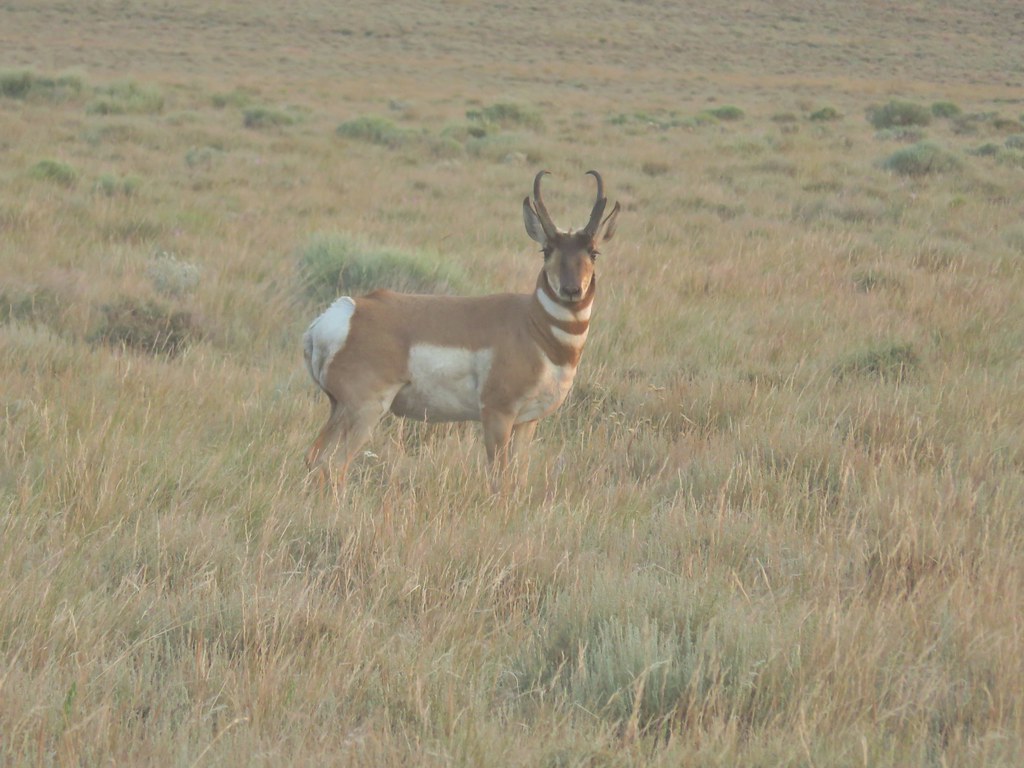
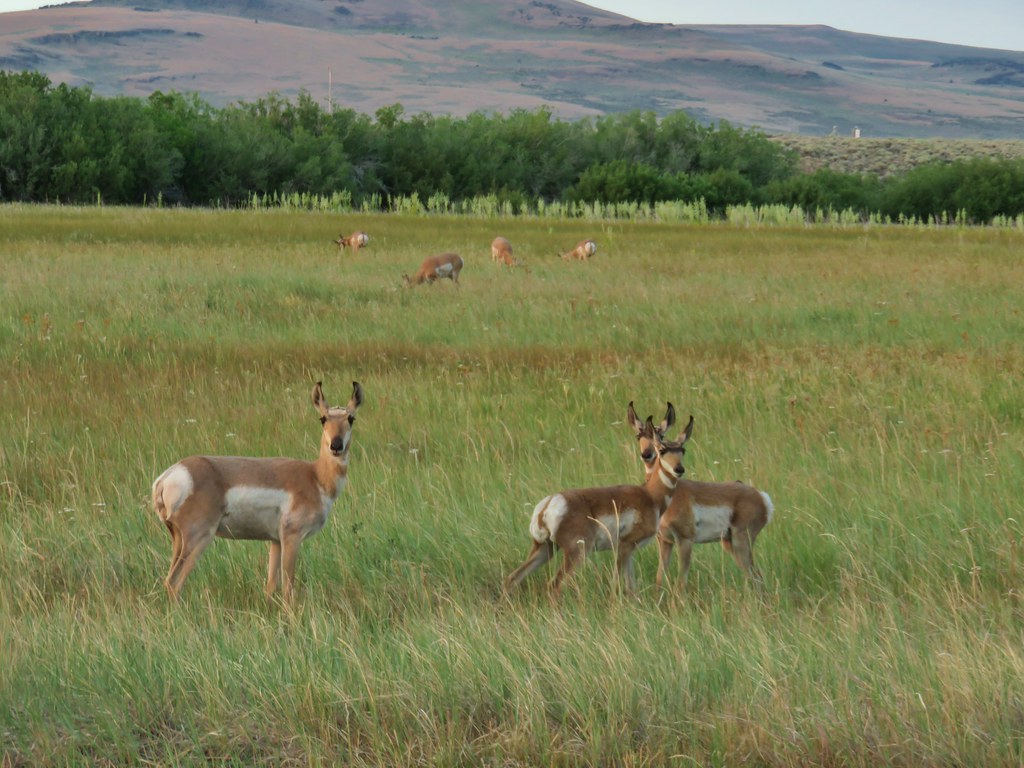
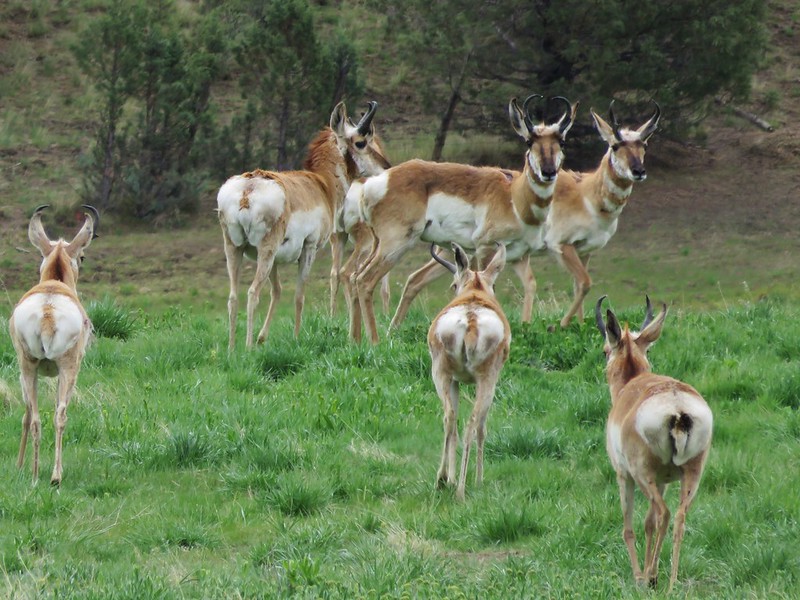
After passing through plush we continued on county road 3-12 (Hart Mountain Road) climbing past the rim of Hart Mountain where we spotted our first pronghorn.
IMG_0809

IMG_0810

IMG_0811

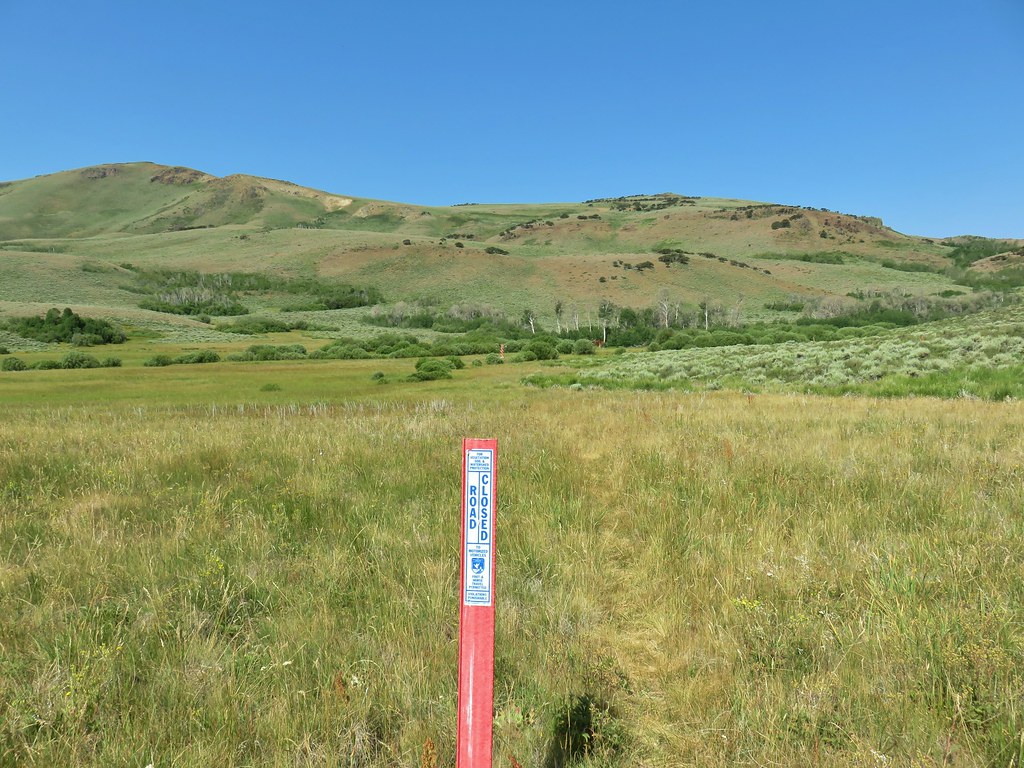
We continued on past Petroglyph Lake Road which was, as we suspected, closed to cars.
IMG_1483(photo from the next day)

A mile past Petroglyph Lake Road (24 miles from Plush) we came to the refuge headquarters which was closed to visitors due to COVID-19. There were numerous pronghorn antelope near the headquarters.
IMG_0822Just a few of the many pronghorn.

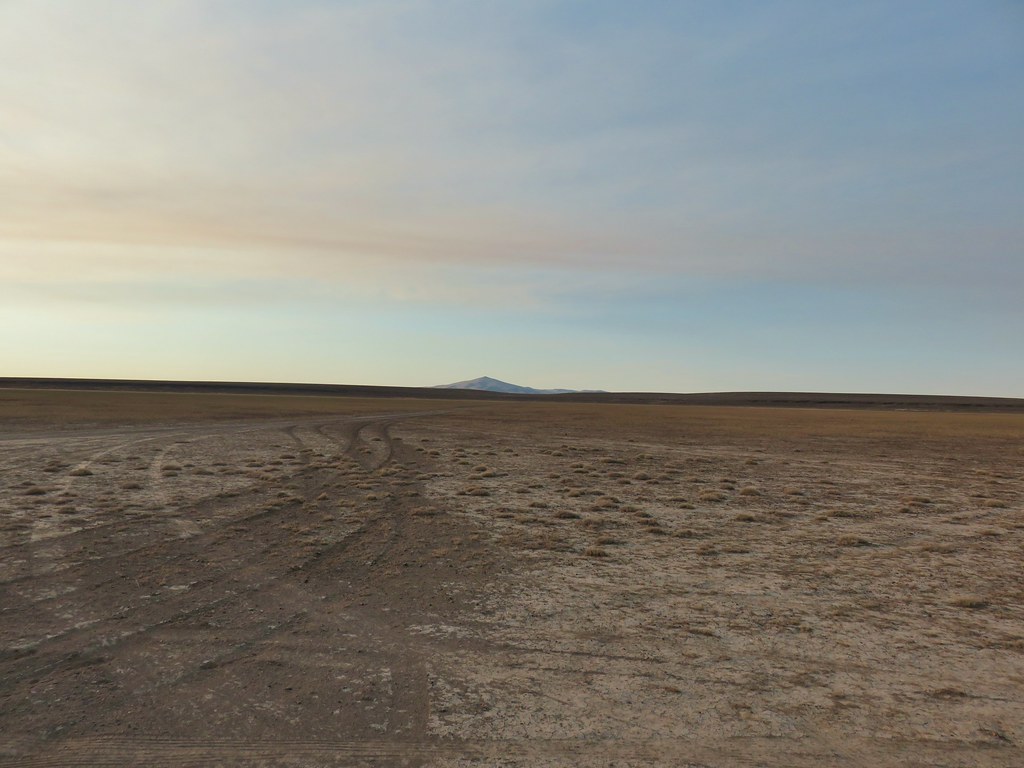
At the far end of the headquarters we veered left following pointers for Frenchglen for 6.7 miles to Flook Lake Road. We turned right onto this rocky dirt track for 1.8 miles (the final 6 on Flook Lake’s former lake bed, now an alkali flat) parking next to a dry reservoir.
IMG_0825Flook Lake Road continuing on with Beatys Butte in the distance.

IMG_0824The reservoir

IMG_0828Steens Mountain on the horizon to the east through smoky skies.
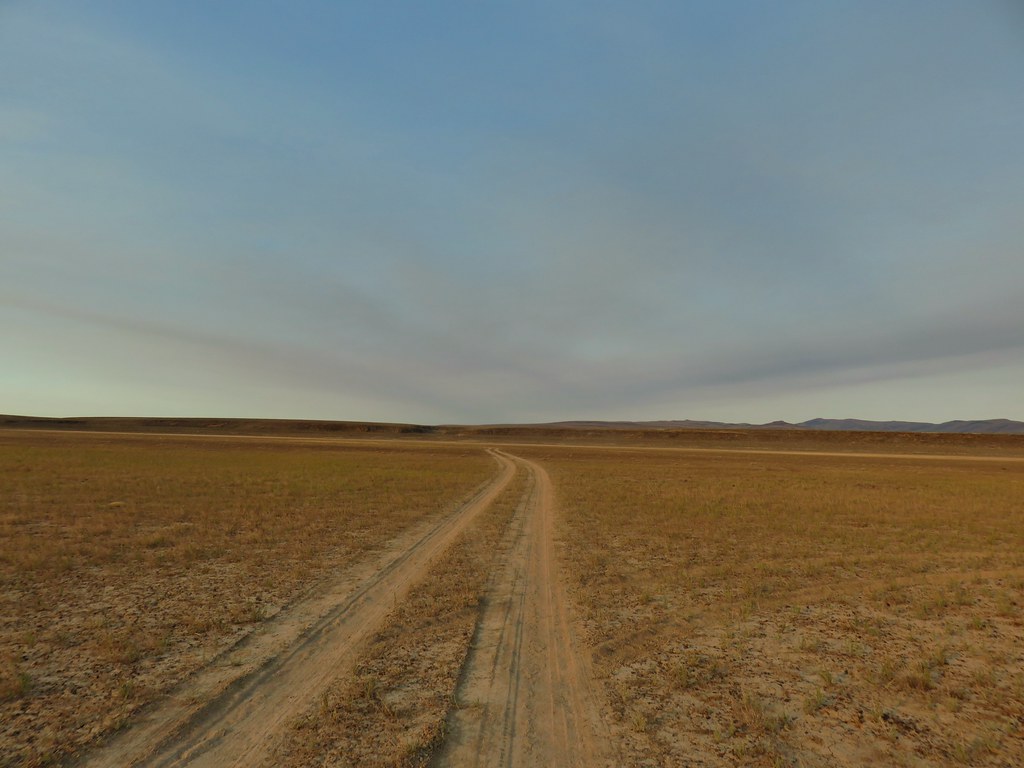
It was going to be another 90 degree day and even with our early start it was already warm as we set off toward a canyon SW of where we had parked. We expected to have to walk cross country for nearly a mile to reach the mouth of the canyon but well worn tire tracks allowed for a little easier walking. (I’m not sure if the road was official or the result of illegal off-road driving which would be very disappointing.)
IMG_0829The canyon we were aiming for from near our car.

IMG_0830Zoomed in a bit.

The track we were following eventually faded out along an outwash channel.
IMG_0833

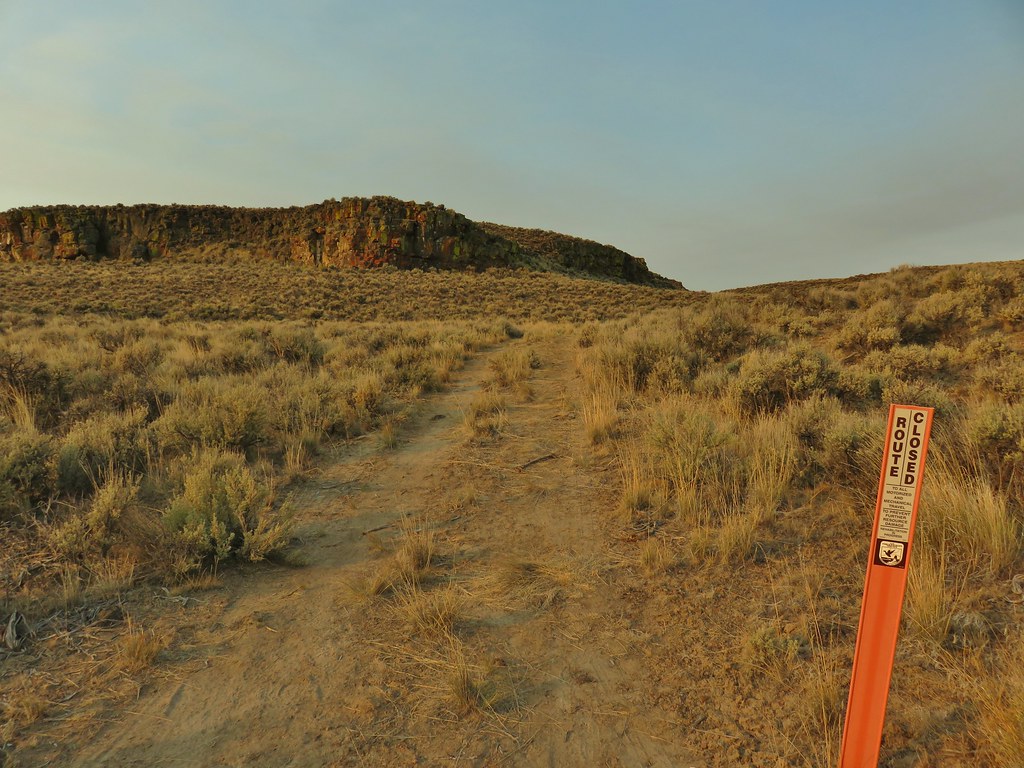
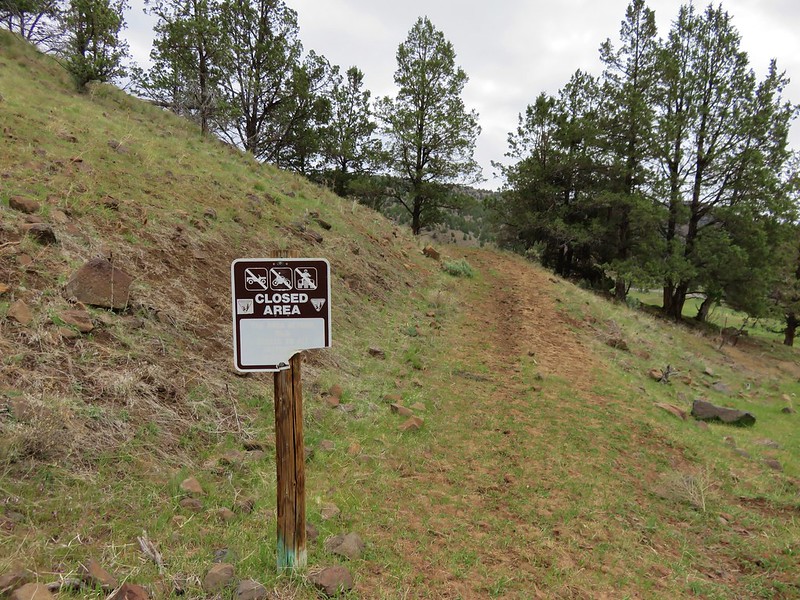
After a short stint walking through sagebrush we picked up another track that went right past a closed to motor vehicles sign.
IMG_0835

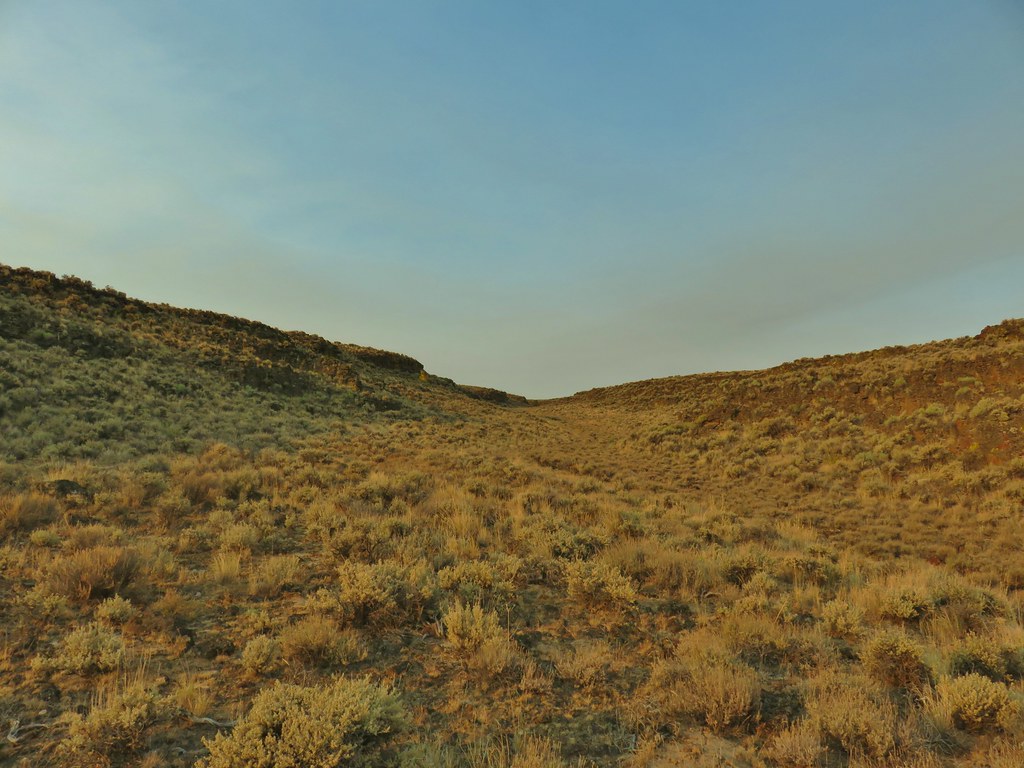
This track didn’t appear to enter the canyon though and it was cross country through the canyon which was busy with wildlife.
IMG_0839

IMG_0838

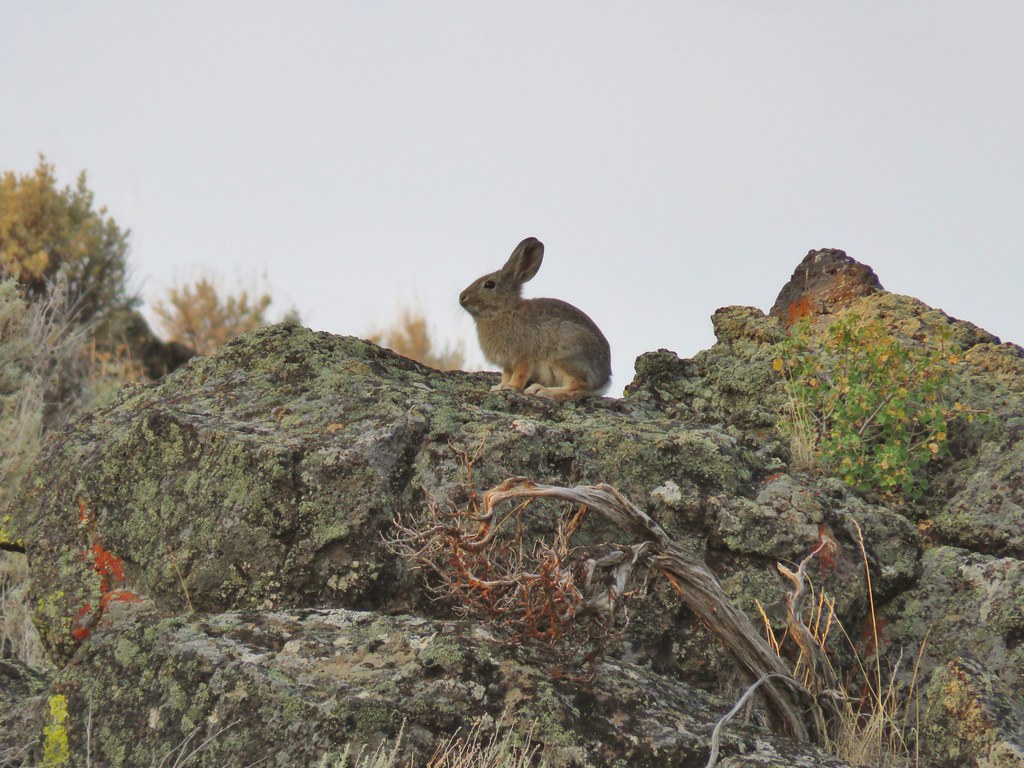
IMG_0843Rabbit #1

IMG_0851Rabbit #2

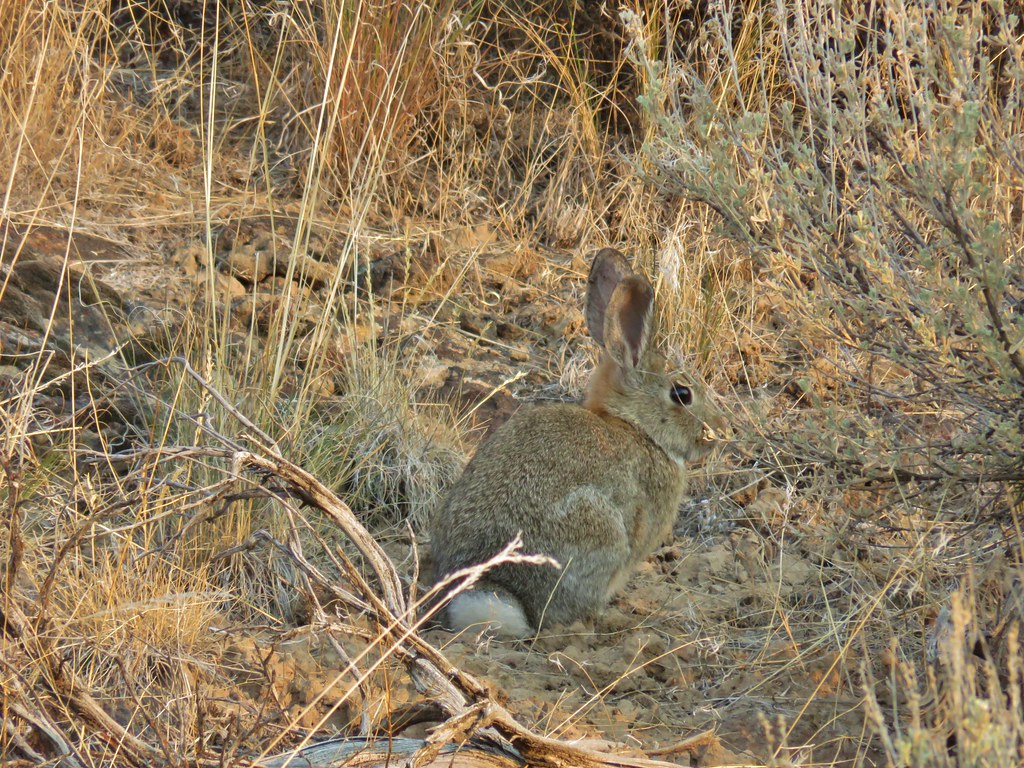
IMG_0855Rabbit #3

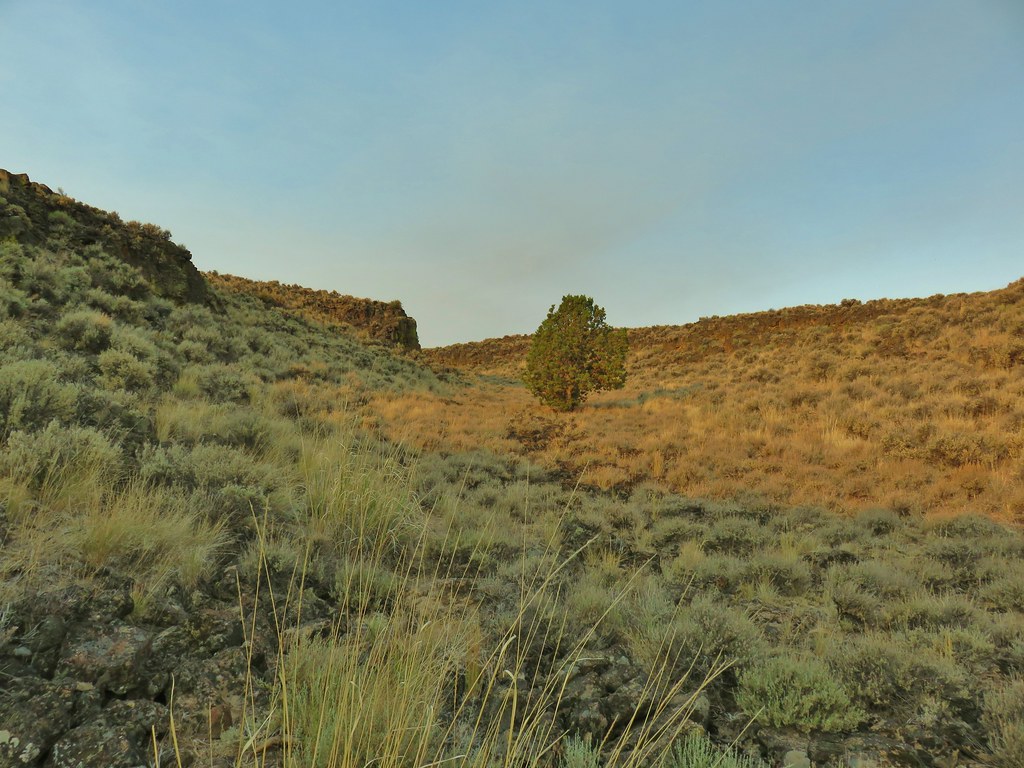
IMG_0857A lone juniper in the canyon.

IMG_0860Rabbit #4

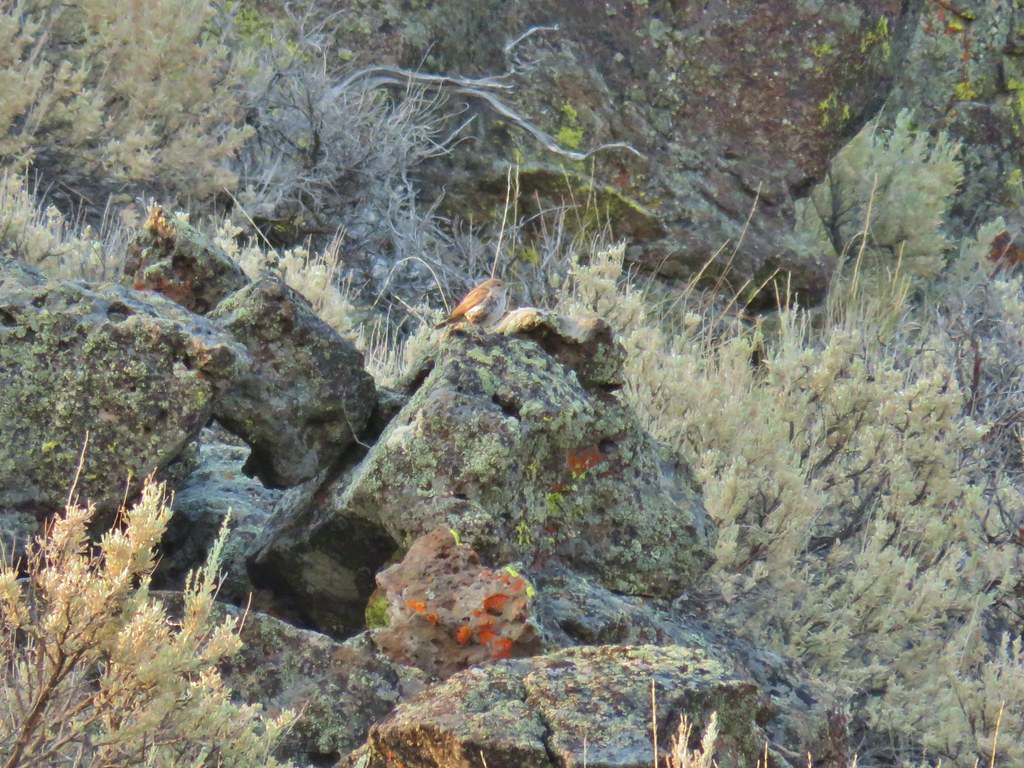
Near the end of this half mile canyon there are some Petroglyphs which are currently being guarded by a yellow bellied marmot.
IMG_0862

IMG_0871

IMG_0879

IMG_0884

After looking at (and NOT TOUCHING) the petroglyphs we continued to the canyon’s end at Antelope Spring.
IMG_0887

IMG_0893

IMG_0892Horned lark near the spring.

We returned the way we’d come commenting on how far way our car still looked from the mouth of the canyon.
20200721_075341

IMG_0906Rabbit #5, this one was a jack rabbit.
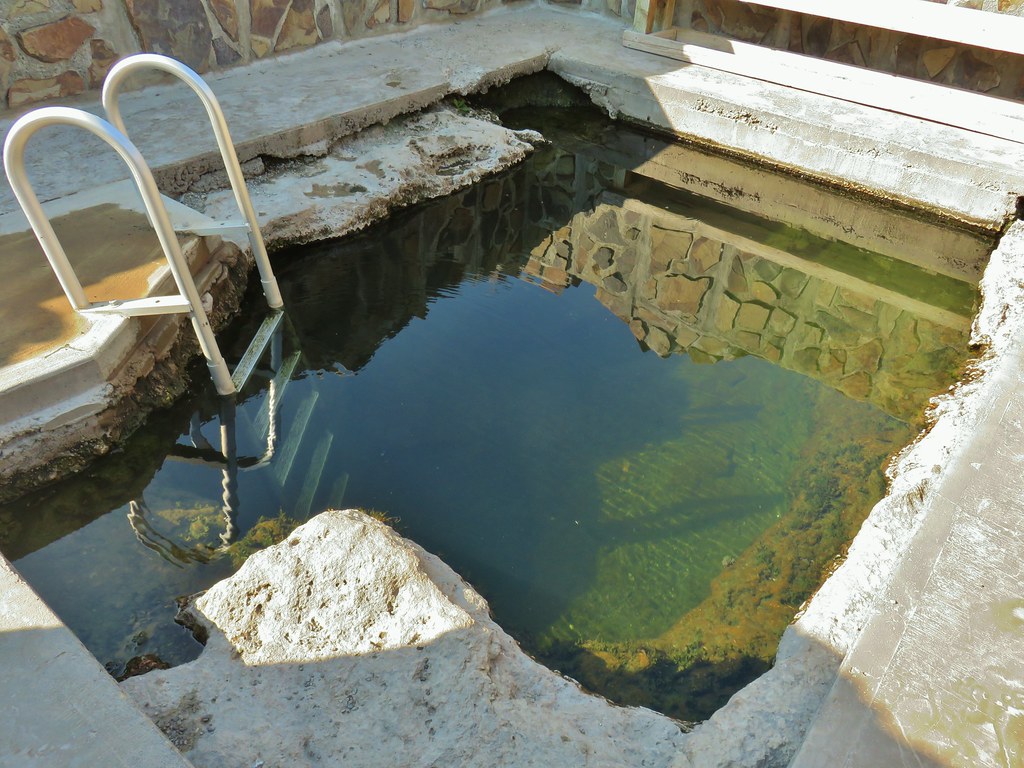
After returning to our car we drove back through the refuge headquarters staying straight following pointers for the hot springs. Keeping right for 4.5 miles brought us to a parking area next to the hot springs.
IMG_0909

IMG_0910

IMG_0911

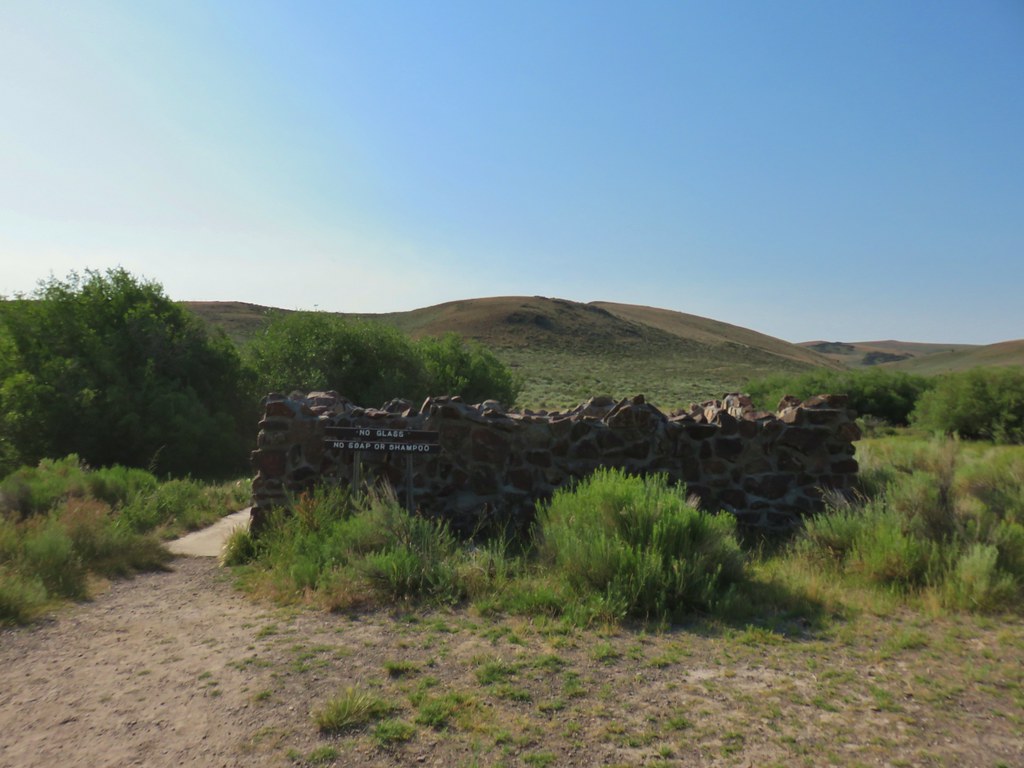
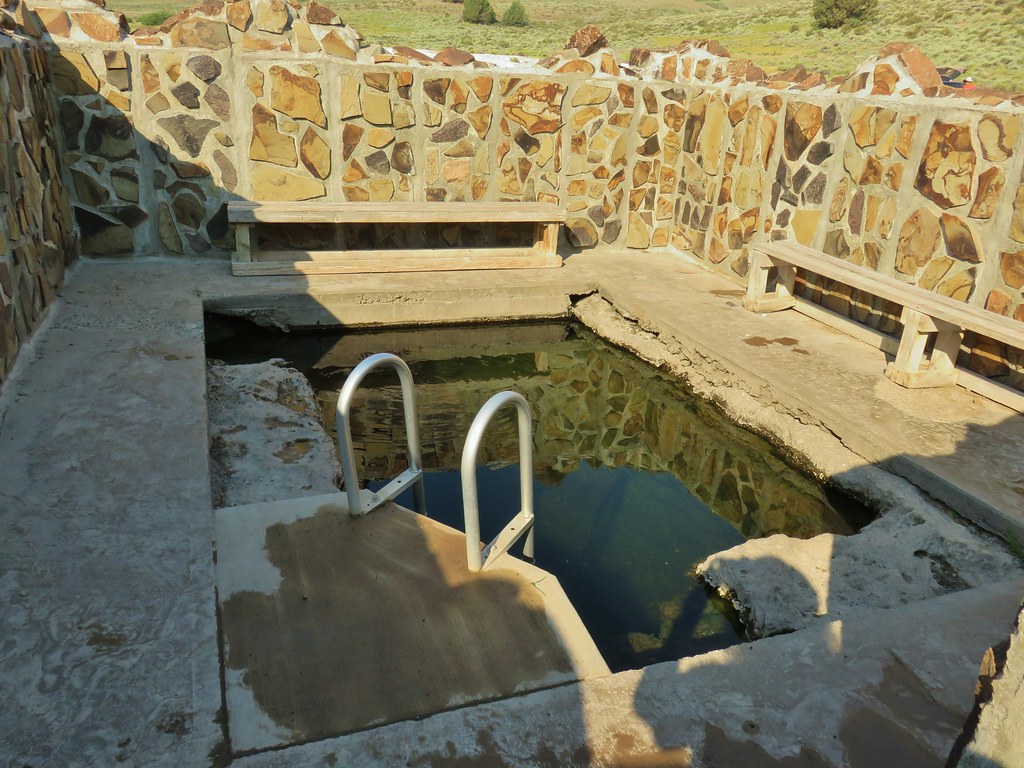
We saved the soak in the 102 degree hot spring for after our hike and set off from the parking lot along a gated road toward the Hot Springs Campground.
IMG_0917

IMG_0918

This road passed another hot spring before arriving at Barnhardi Road in half a mile near the campground.
IMG_0923

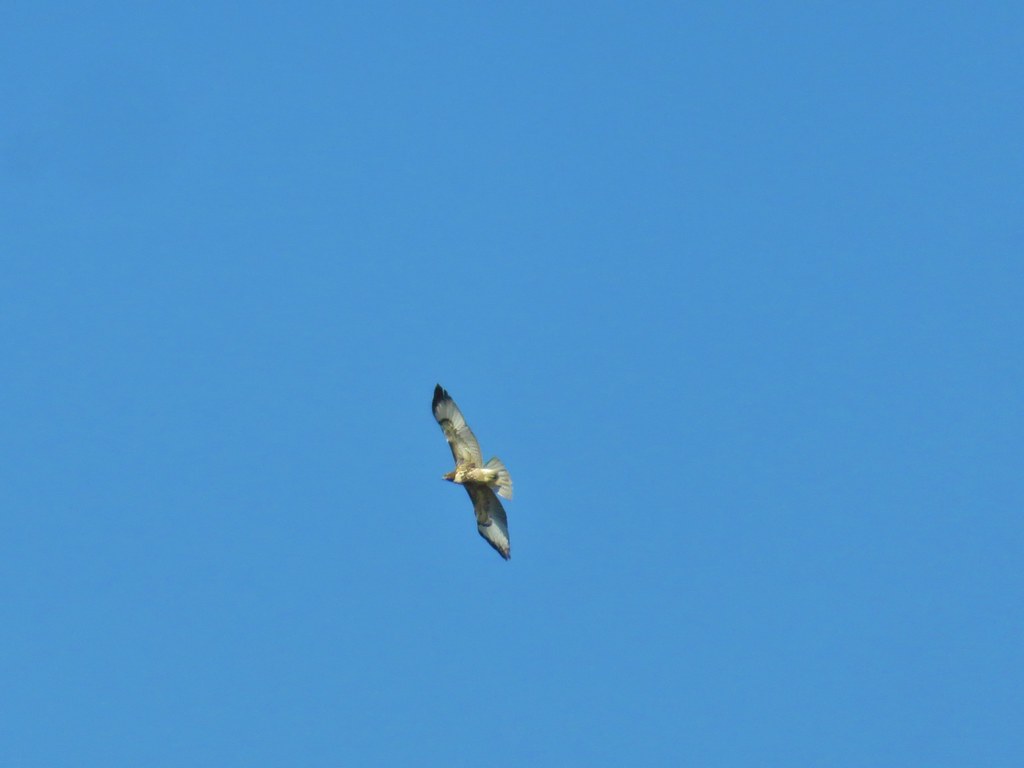
IMG_0927Hawk hanging out near the hot springs.

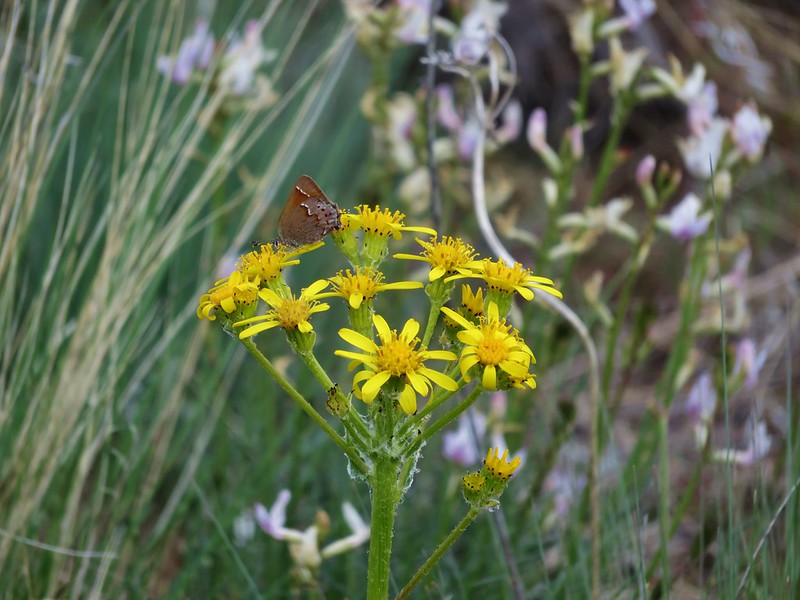
IMG_0930Butterfly on dusty maiden.

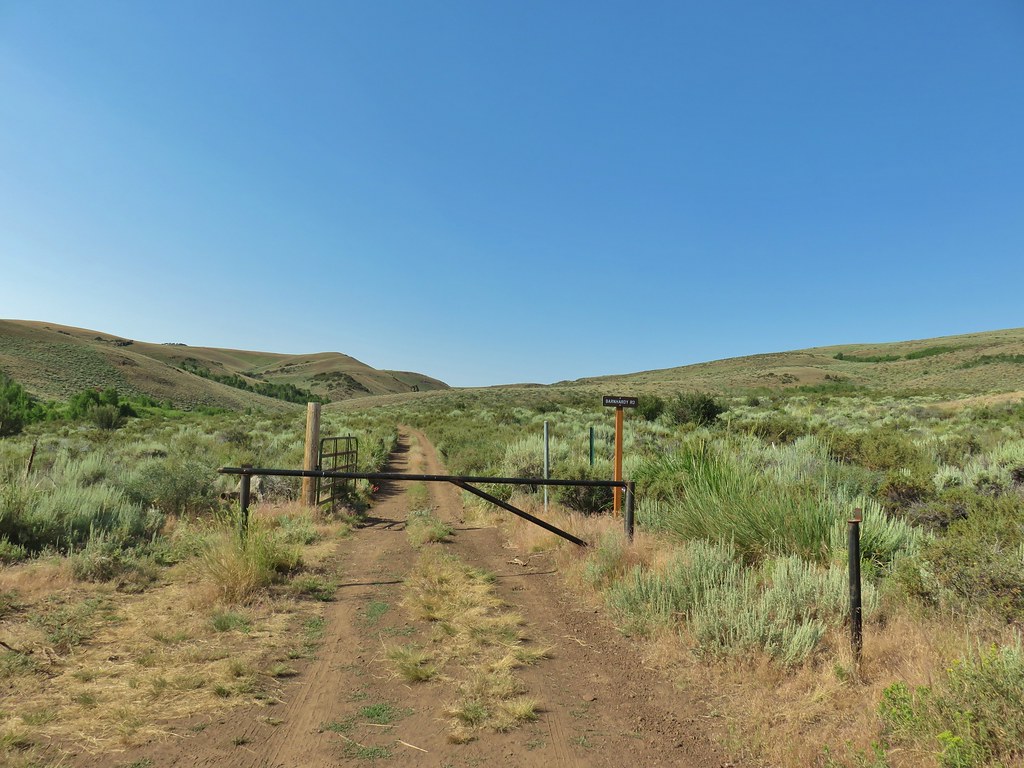
IMG_0942Barnhardi Road

IMG_0943Campground across Rock Creek.

We turned right on Barnhardi Road for .3 miles to a gate.
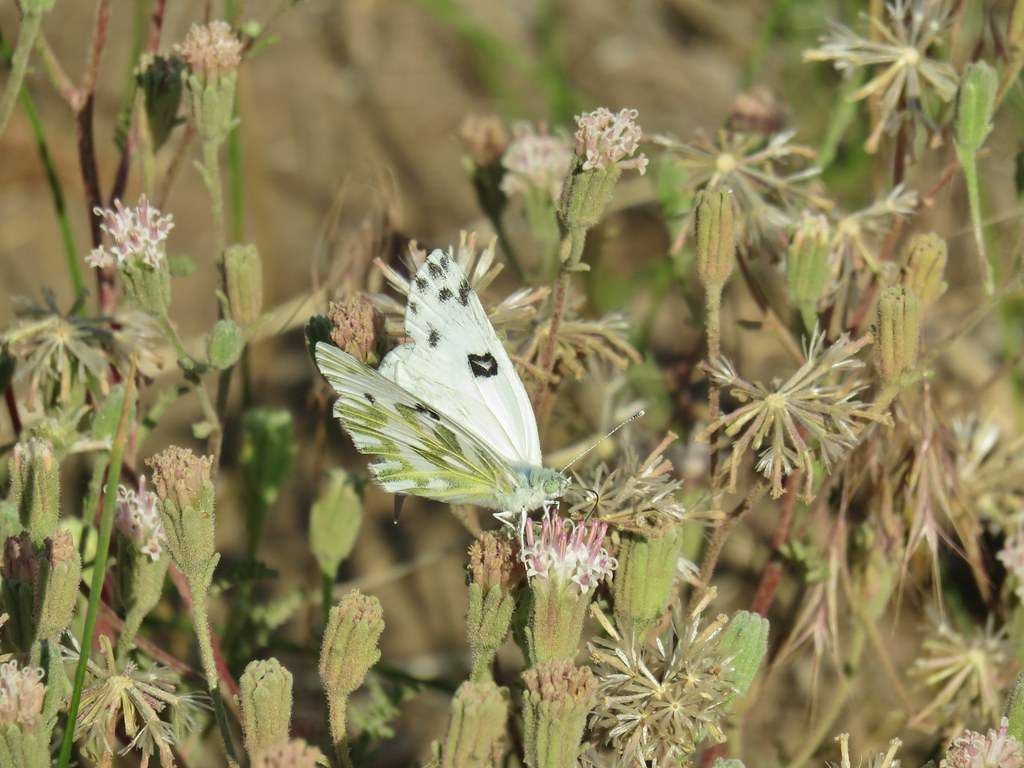
IMG_0944Becker’s white

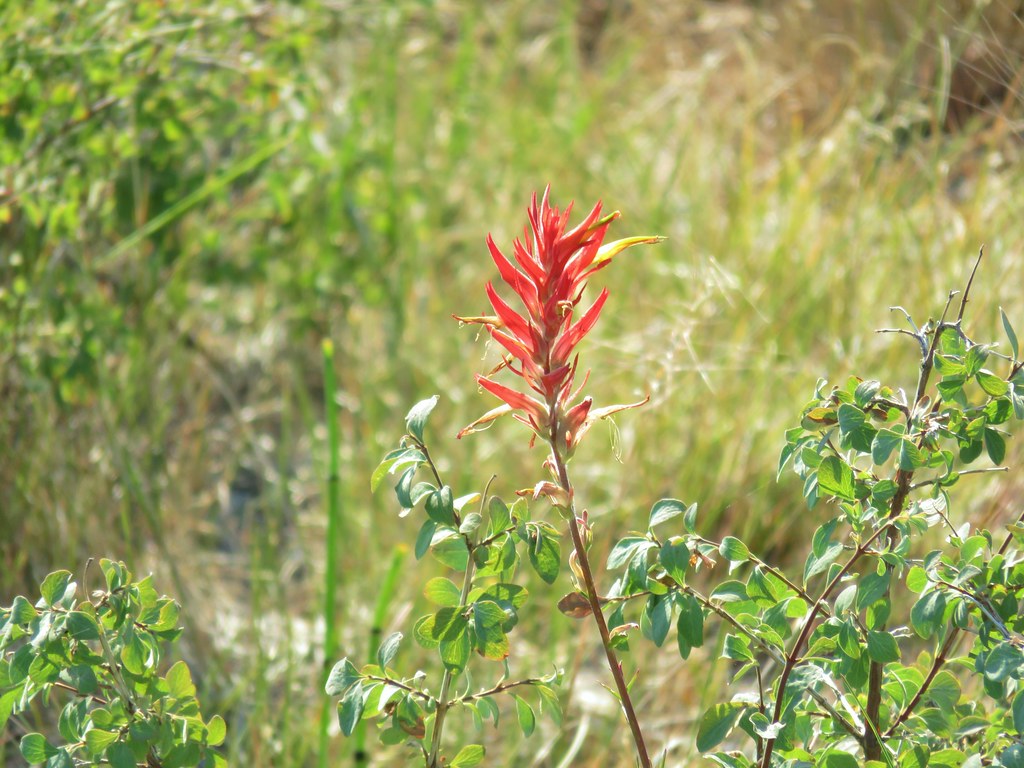
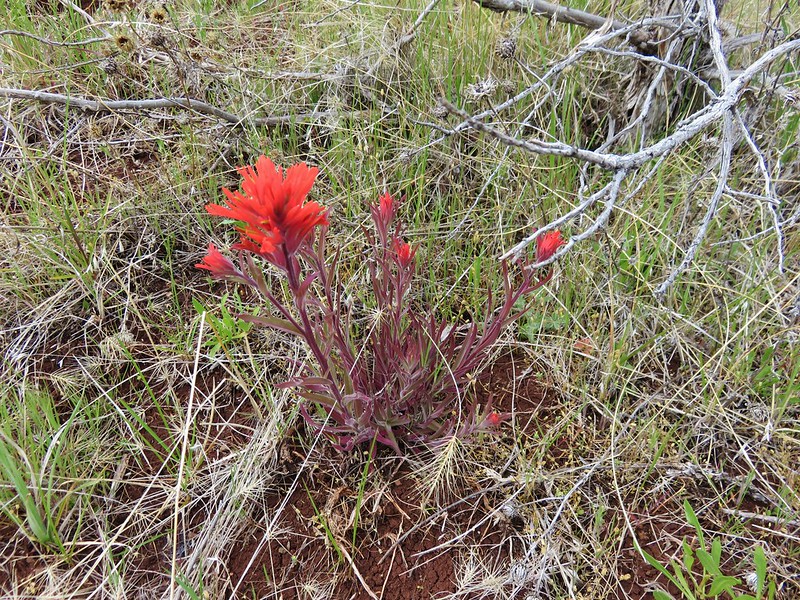
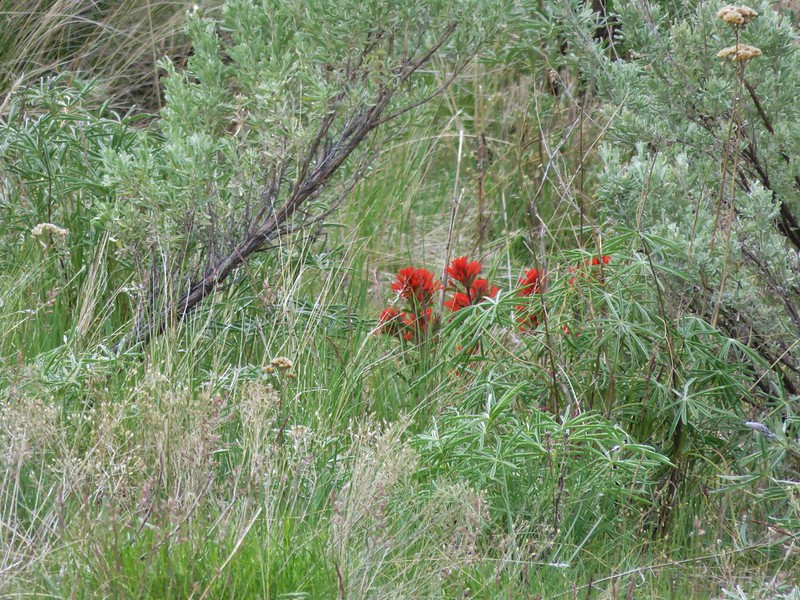
IMG_0947Paintbrush

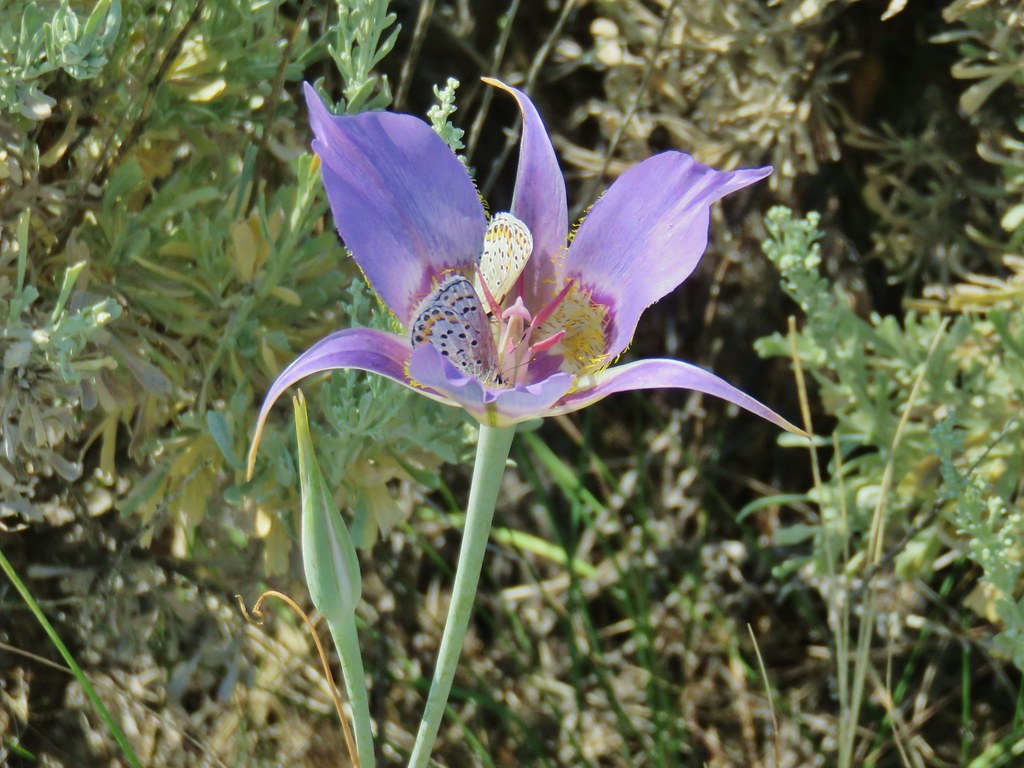
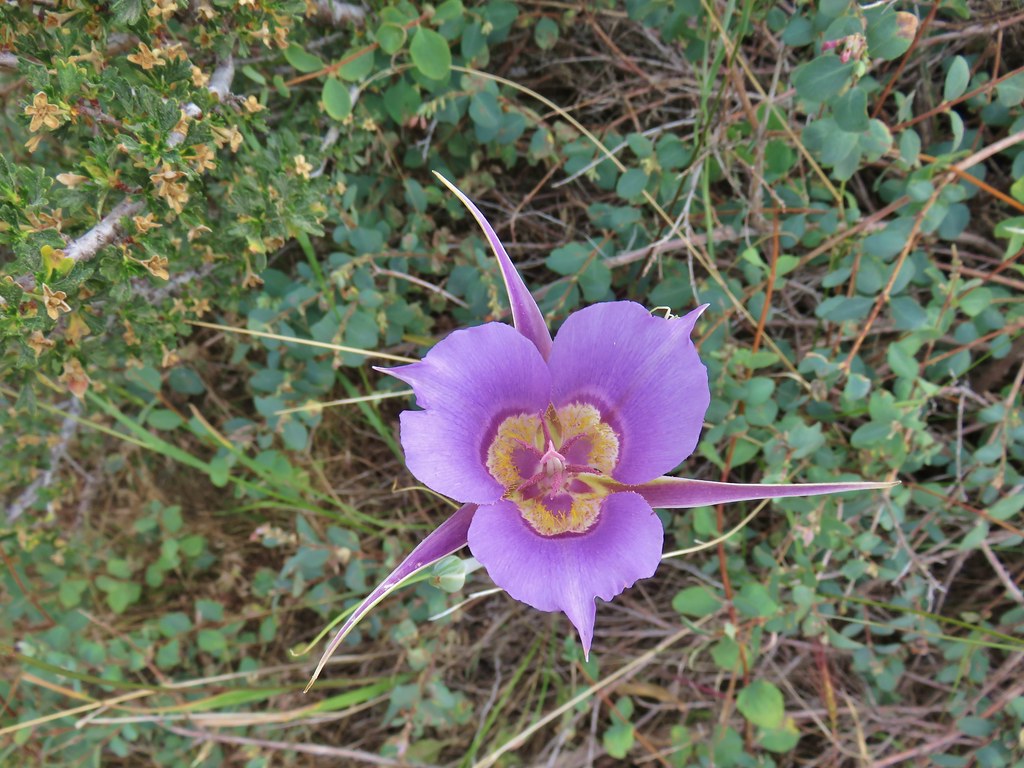
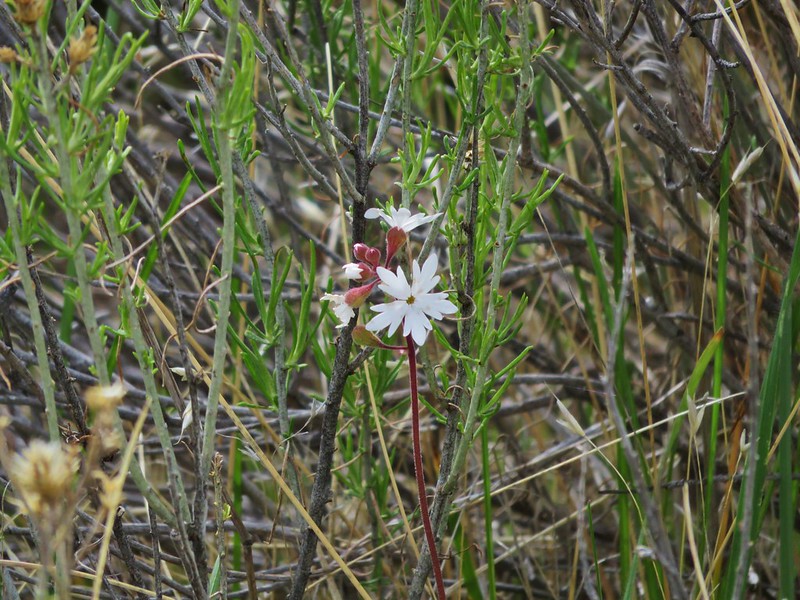
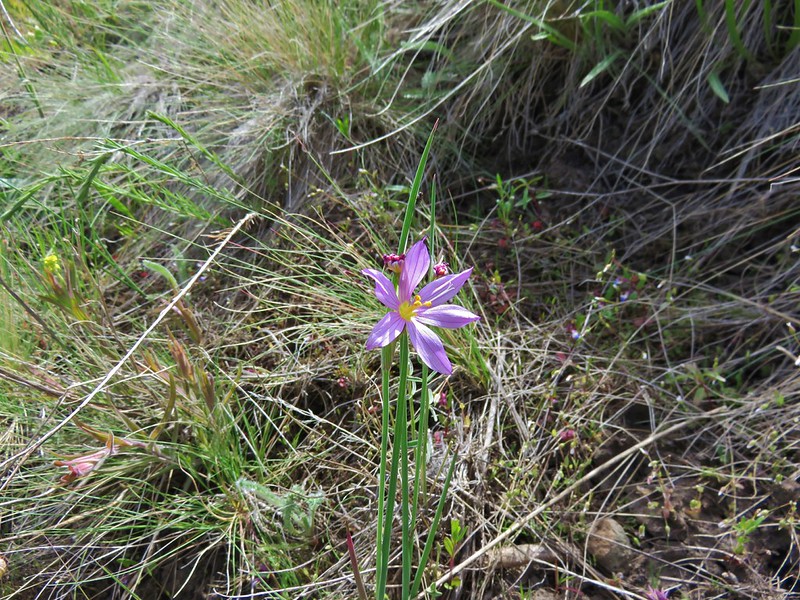
IMG_0950Sagebrush mariposa lily

IMG_0948

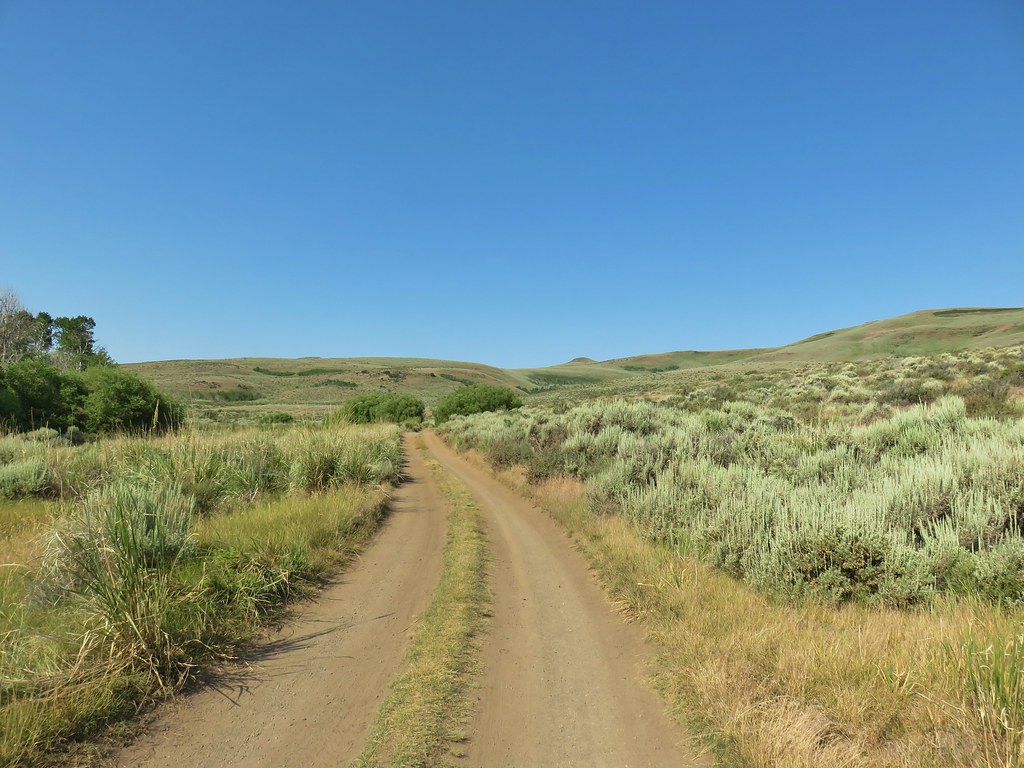
We walked past the gate continuing on the road for almost two miles ignoring a road on the right at the 1 mile mark atop a crest.
IMG_0957Hawk overhead

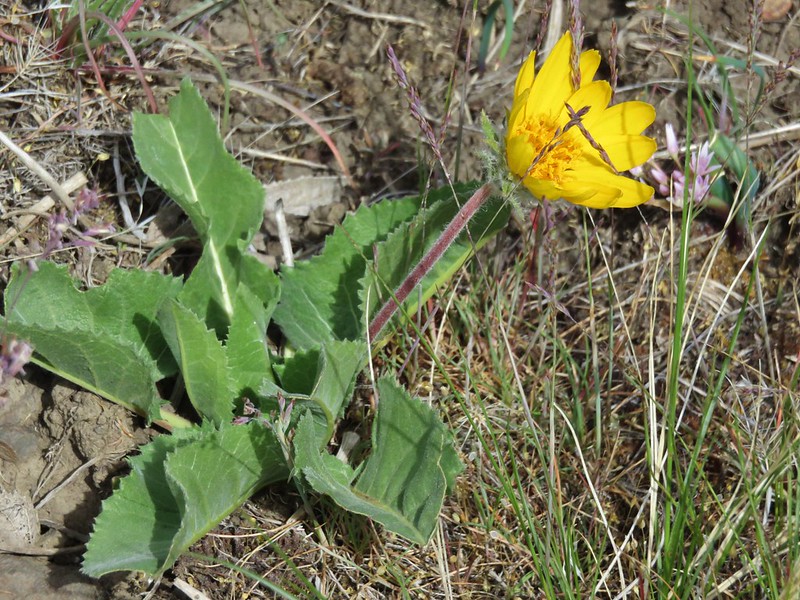
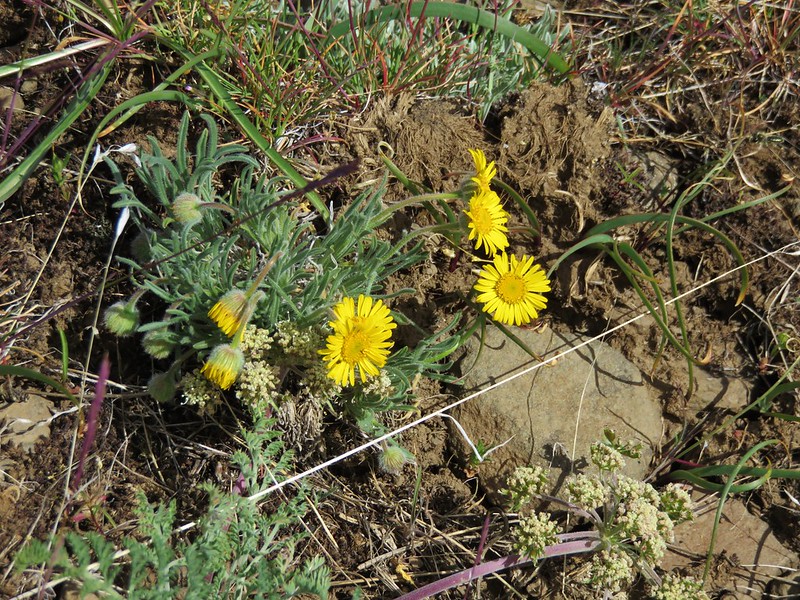
IMG_0973Balsamroot in the sagebrush.

IMG_0983Wild roses in a quaking aspen stand.

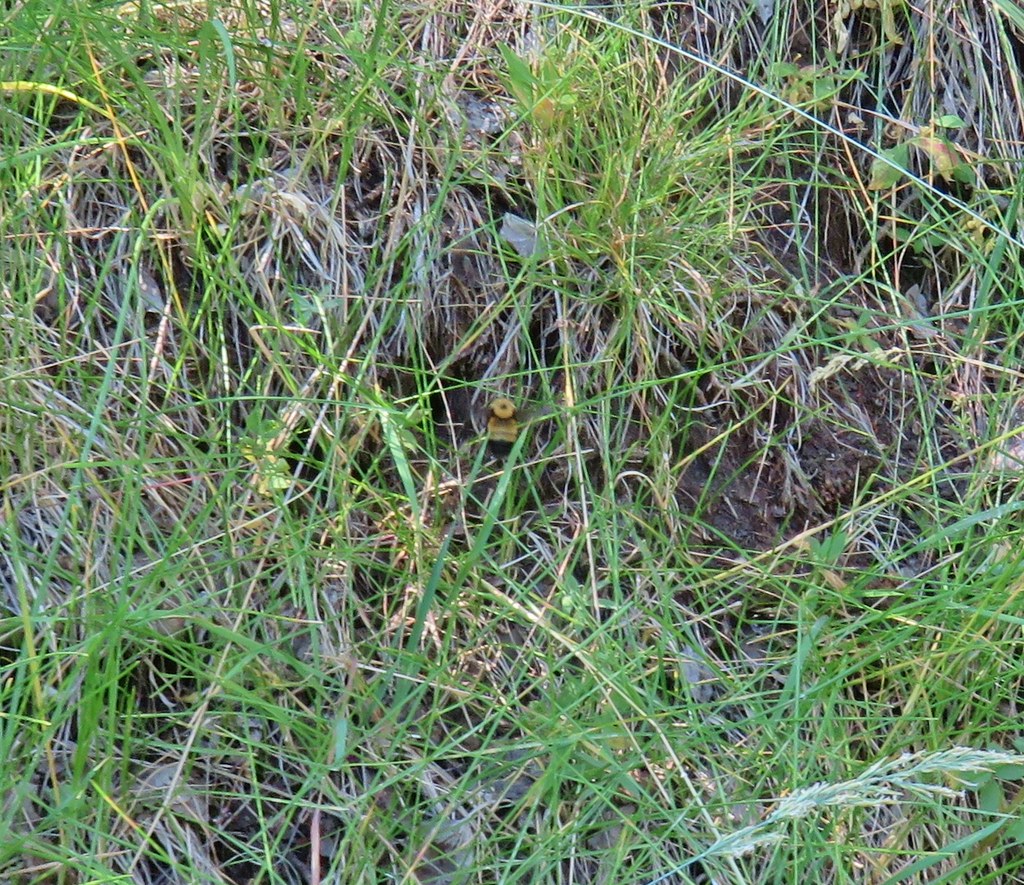
IMG_0985Biggest bumble bee either of us had ever seen.
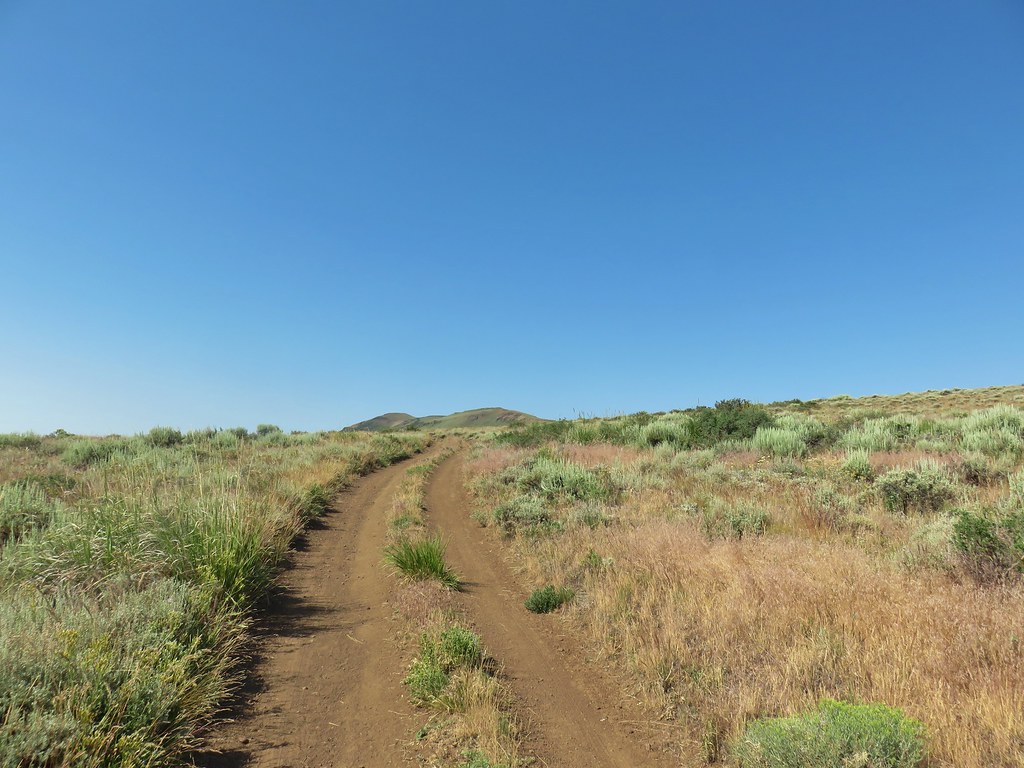
IMG_0997Coming up on the crest at the 1 mile mark.

IMG_0998_stitchView after the crest heading down to Barnhardi Basin.
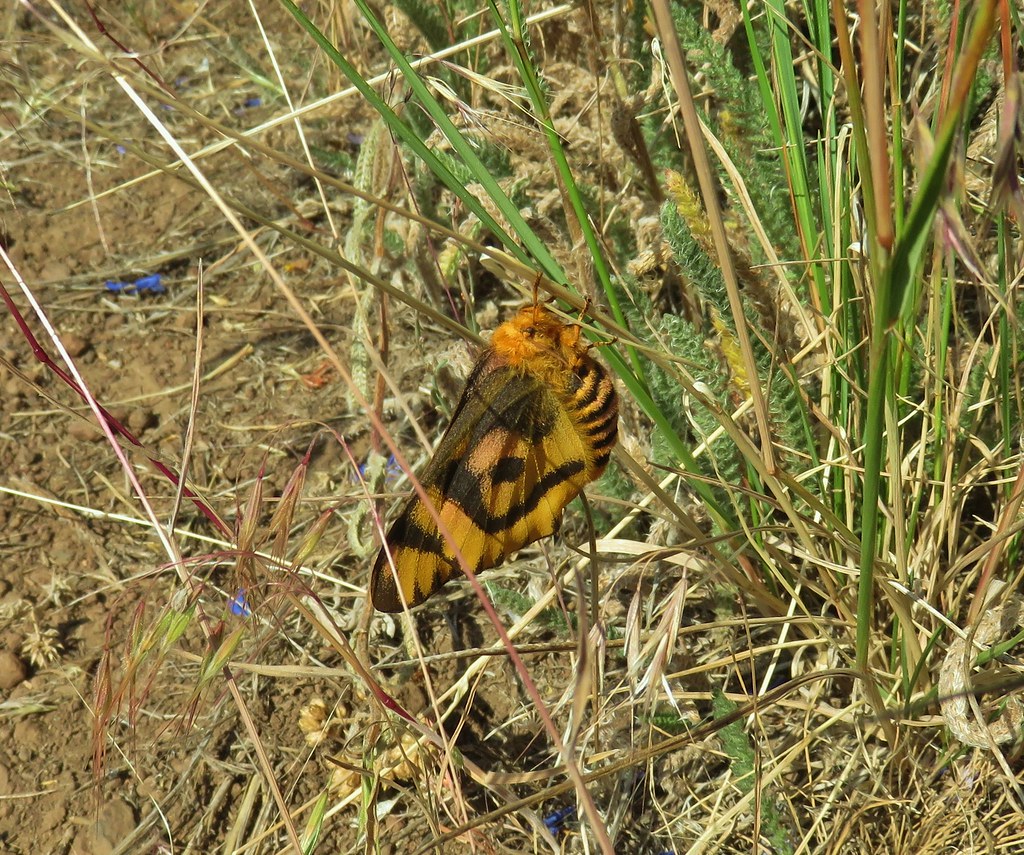
IMG_1010Sheep moth

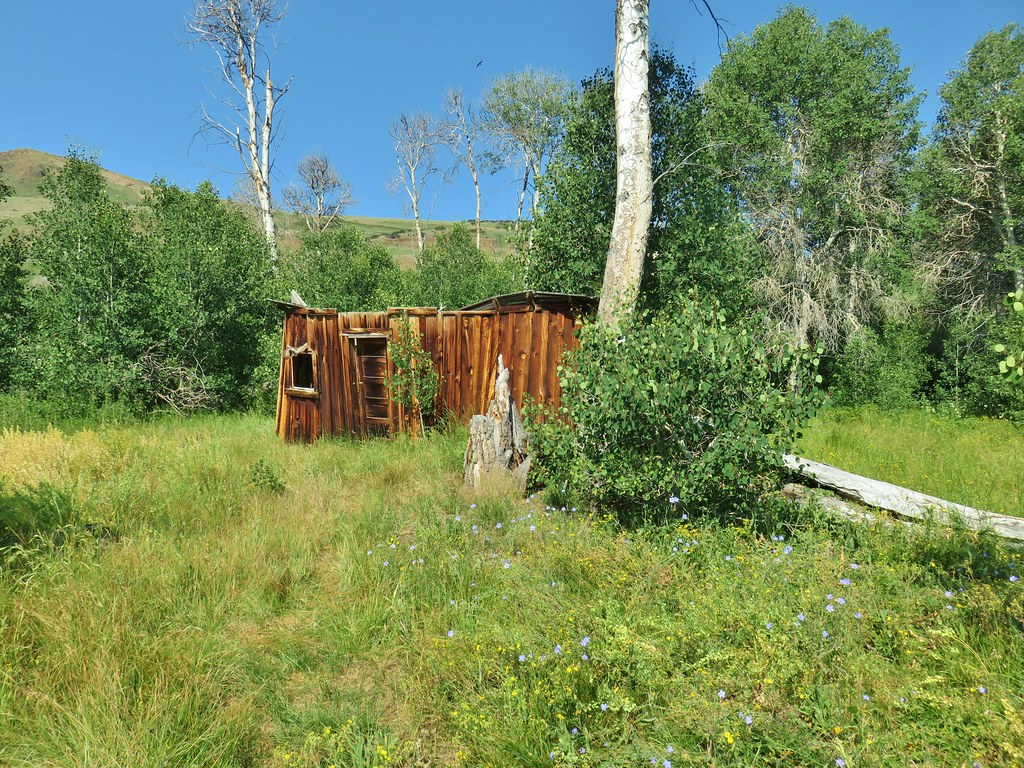
Almost two miles from the gate we arrived at a post marking a trail to the collapsing Barnhardi Cabin.
IMG_1014

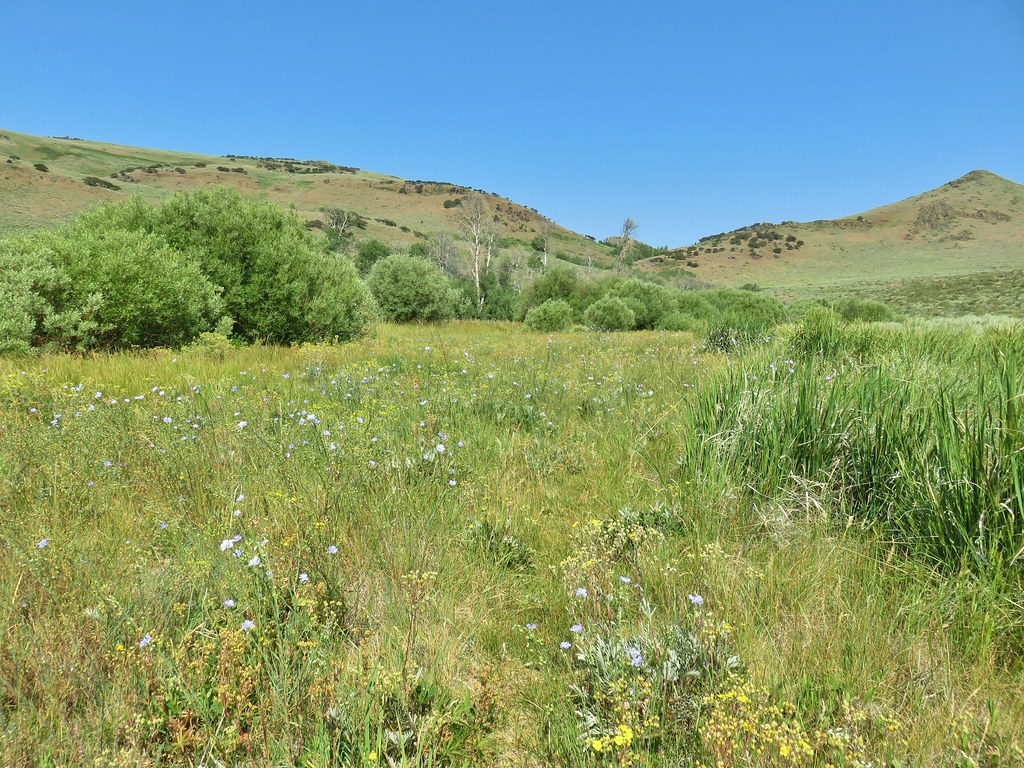
We followed the faint path through a wet meadow filled with mosquitoes to the cabin.
IMG_1016Lewis flax blooming in the meadow.

IMG_1020Barnhardi Cabin

Our plan was to hike up to Warner Peak from the cabin following a route described by Sullivan. Our first misstep was not going back a bit from the cabin and getting well away from the marshy area behind the cabin. Instead we simply angled away from the cabin. This led us through the marshy area where there were some nice flowers but also a ton of mosquitoes.
IMG_1022

IMG_1023

We took a hard right following game trails through the wet area and out a grassy area where a faint path was visible.
IMG_1026

Sullivan’s directions were to follow a little creek up through aspen groves to DeGarmo Notch but after fighting through the vegetation and mosquitoes along the creek behind the cabin we decided to try and skirt the aspen groves in the sagebrush. Growing up in the Bend/Redmond area I was used to walking through sagebrush but here the sagebrush was much taller and thicker than I was used to.
IMG_1028

20200721_101324Another sheep moth

It was tough going but we were making progress and came to a spring with yellow monkeyflowers. Near the spring we both thought we heard a rattle although neither of us saw a snake or were 100% sure that it was really what we’d heard.
IMG_1035The spring.

IMG_1038White triteleia

We headed away form the spring loudly just in case there were snakes about and decided to cross the creek in a gap between aspen groves. Sullivan’s map showed the route crossing to the other side at some point and we felt this was as good a time as any.
IMG_1039

The next obstacle was a rocky knoll to the left of the creek and more aspen. We veered between a bit of a gap in the aspen and sidehilled around the knoll.
IMG_1044

IMG_1045Barnhardi Basin from the side of the knoll.

IMG_1046View across the creek.

IMG_1047The knoll was steeper and brushier than it had appeared from below but we managed to make it around.

IMG_1056Hawk flying around above us.

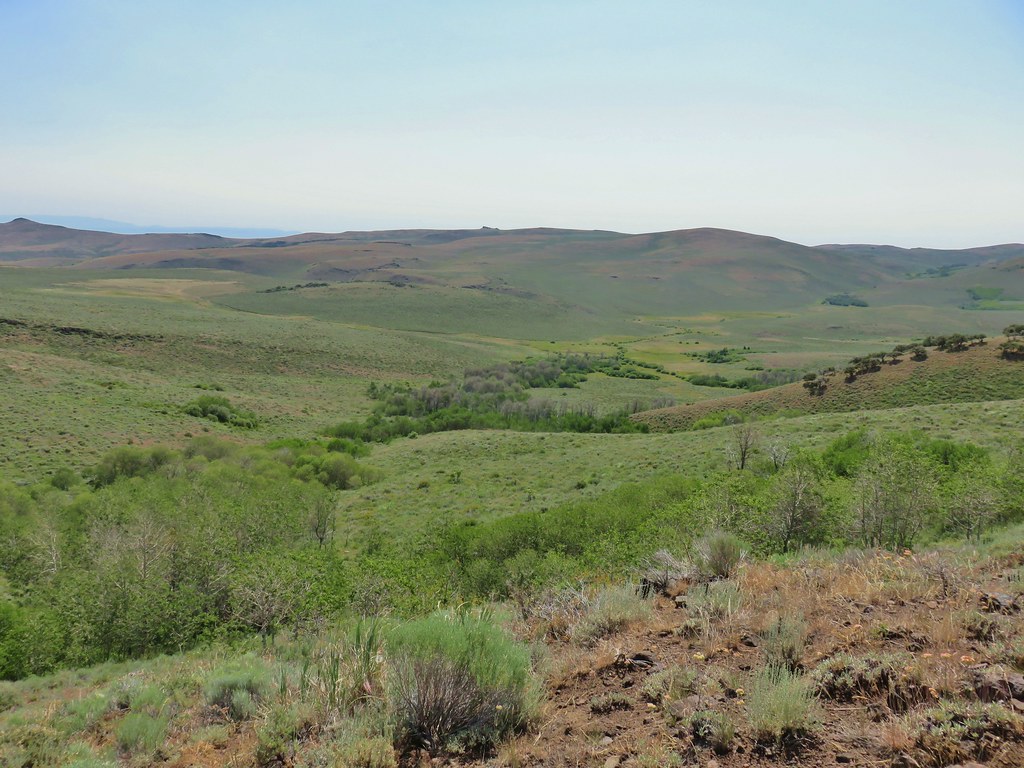
From the other side of the knoll we got a good look at the next leg of our uphill bushwhack.
IMG_1059High Point is the peak ahead.

We were being watched from the hillside above as we tried to figure out are next move.
IMG_1069

IMG_1063

Looking at the map in the guidebook and checking the elevation on our GPS units showed that we were actually above DeGarmo Notch which was shown on the map with an elevation of 6970′ and we were around 7150′ which was fine with us because we would have had to climb up eventually. To get to the notch as shown on the map we would have needed to continue to follow the aspen to their end. From where we were we could see the spot and it would have added needless distance and climbing.
IMG_1198DeGarmo Notch

We were now heading south west toward High Point as we traversed across the hillside above Barnhardi Basin.
IMG_1080Paintbrush

IMG_1084We had to drop under this.

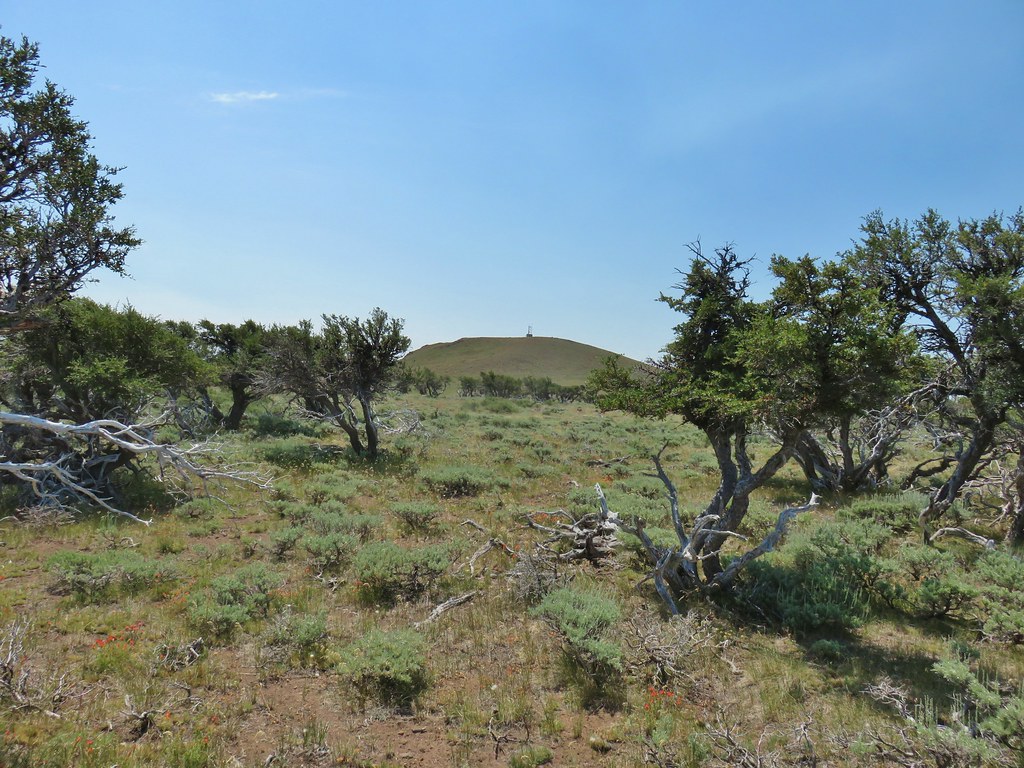
IMG_1088Warner Peak is straight ahead with a tower on top beyond the line of trees in the distance.

IMG_1090Barnhardi Basin getting further away.

IMG_1092Looking back toward DeGarmo Notch.

When we could see beyond High Point we could see that the terrain did some up and down on it’s way to Warner Peak. Our plan was to climb as gradually as possible to avoid having to lose elevation and make it back up later.
IMG_1095We first aimed for the the small rock outcrop beyond High Point then bent to the right to pass the larger rock outcrop before climbing up to the trees in the distance.
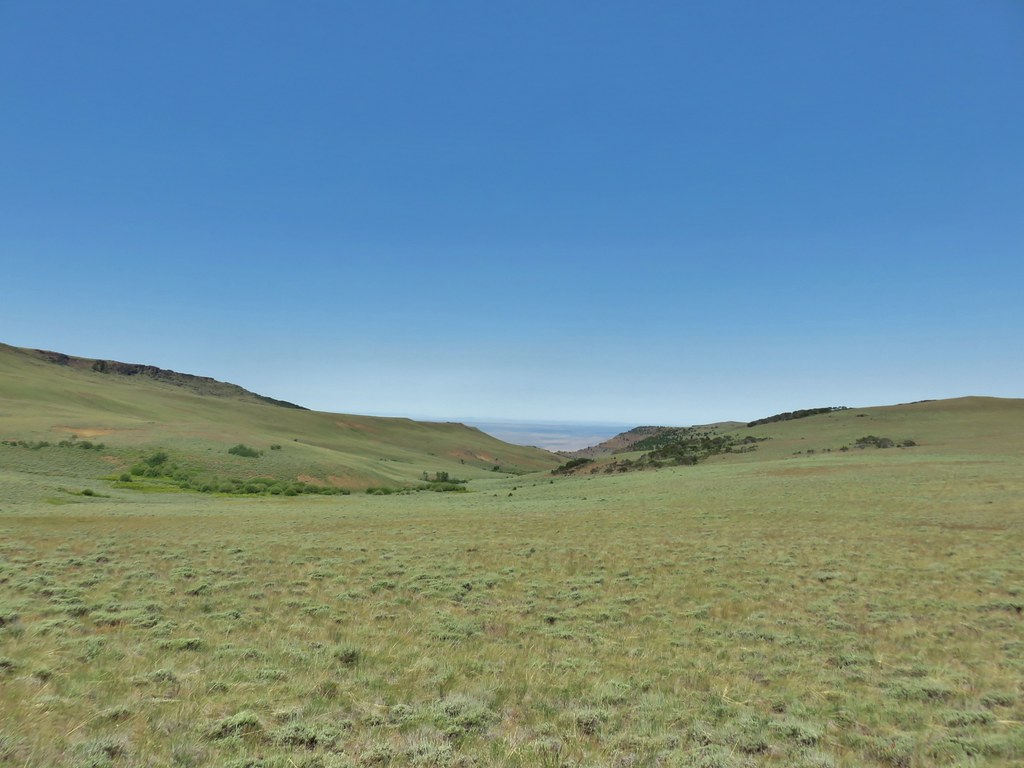
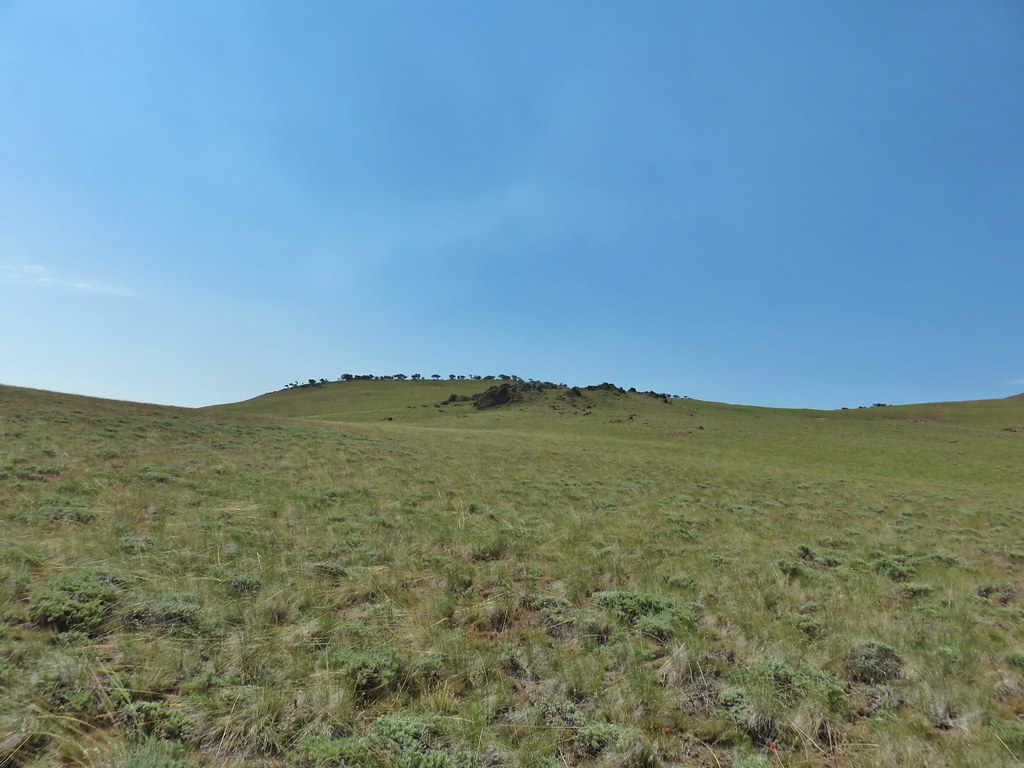
IMG_1101Passing another canyon coming up from the west.

IMG_1106Made it past the first outcrop and heading for the right side of the second.
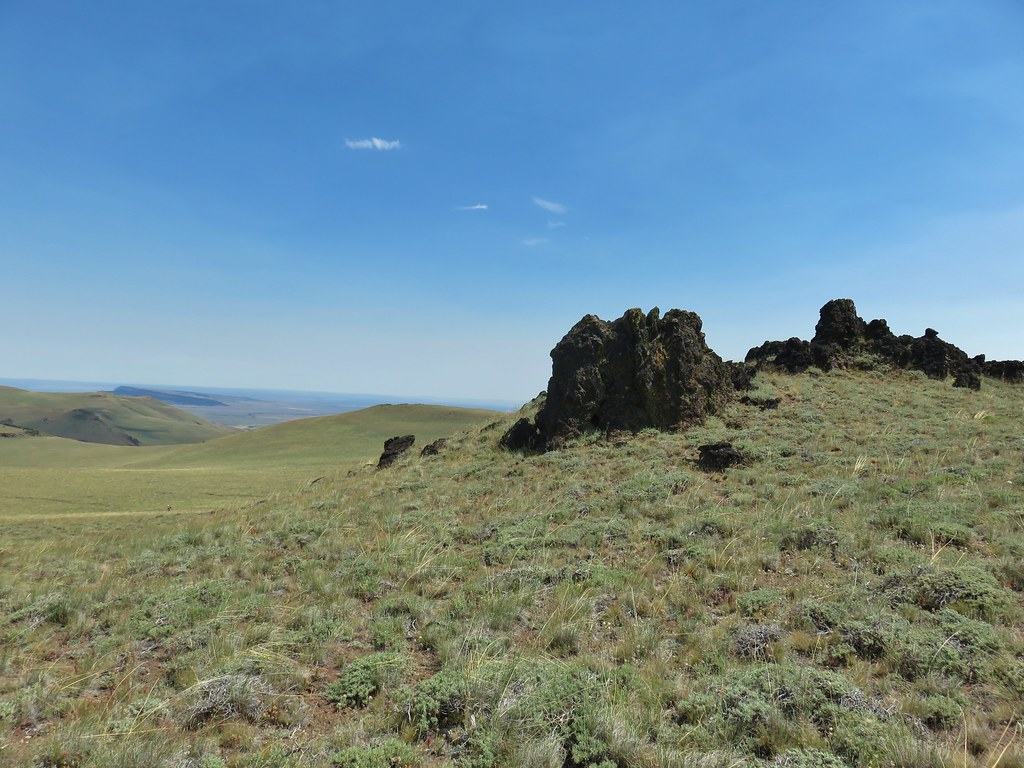
IMG_1107At the second outcrop.

It was a fairly steep climb from the second outcrop to the trees. I arrived first and was greeted by a doe.
IMG_1110

IMG_1113

I waited for Heather here to plot the final climb to Warner Peak which was now fully revealed.
IMG_1117

It was a fairly level walk from the trees to the start of the final steep climb that brought us to Hart Mountain’s highest point.
IMG_1132

From Warner Peak we could see the parking area by the Hot Springs and much of the route we’d taken to get to the summit.
IMG_1143The white patch in the distance to the right just beyond the shadow is the parking area.
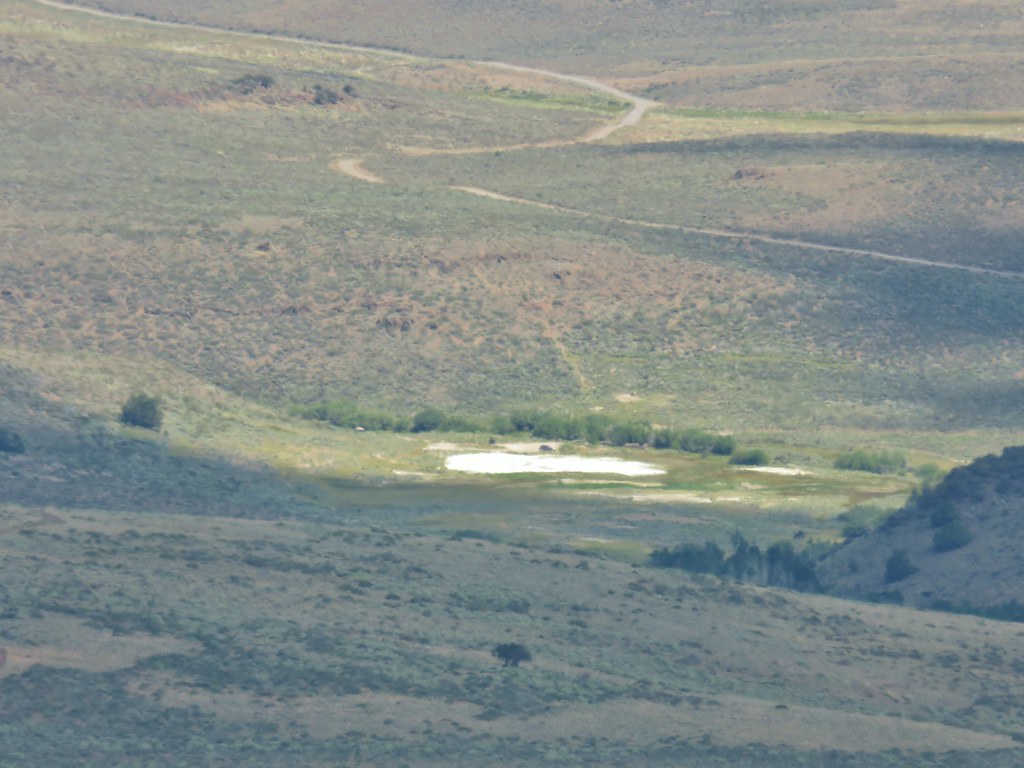
IMG_1147Our car was still there.

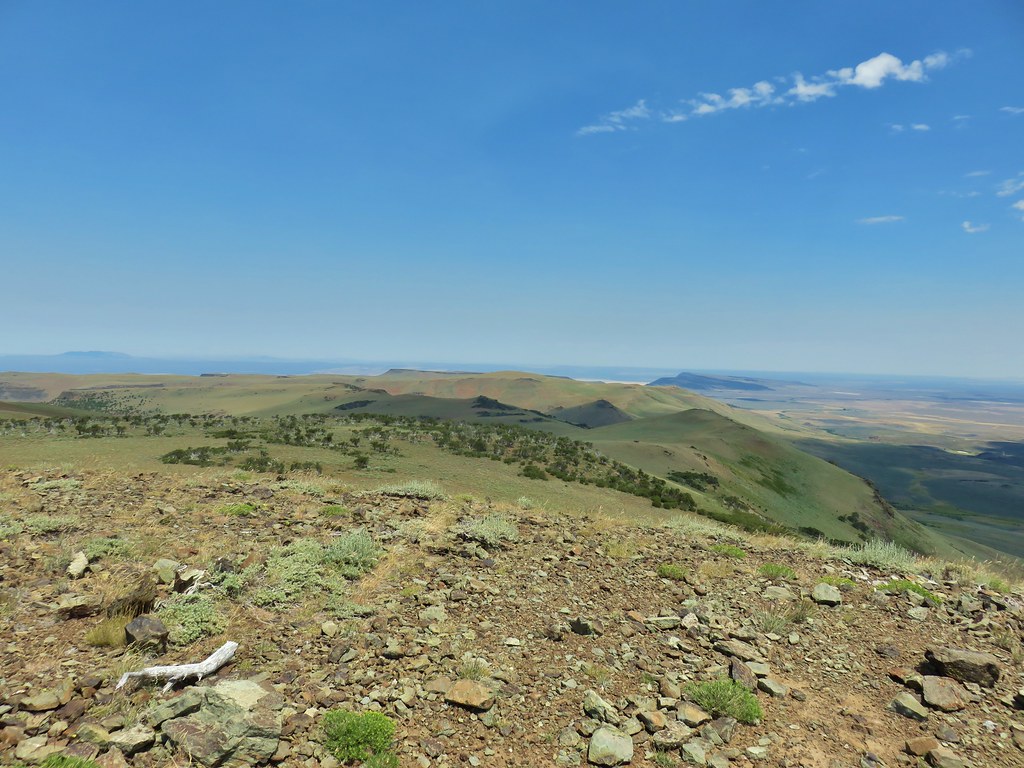
IMG_1137View south over Hart Mountain.

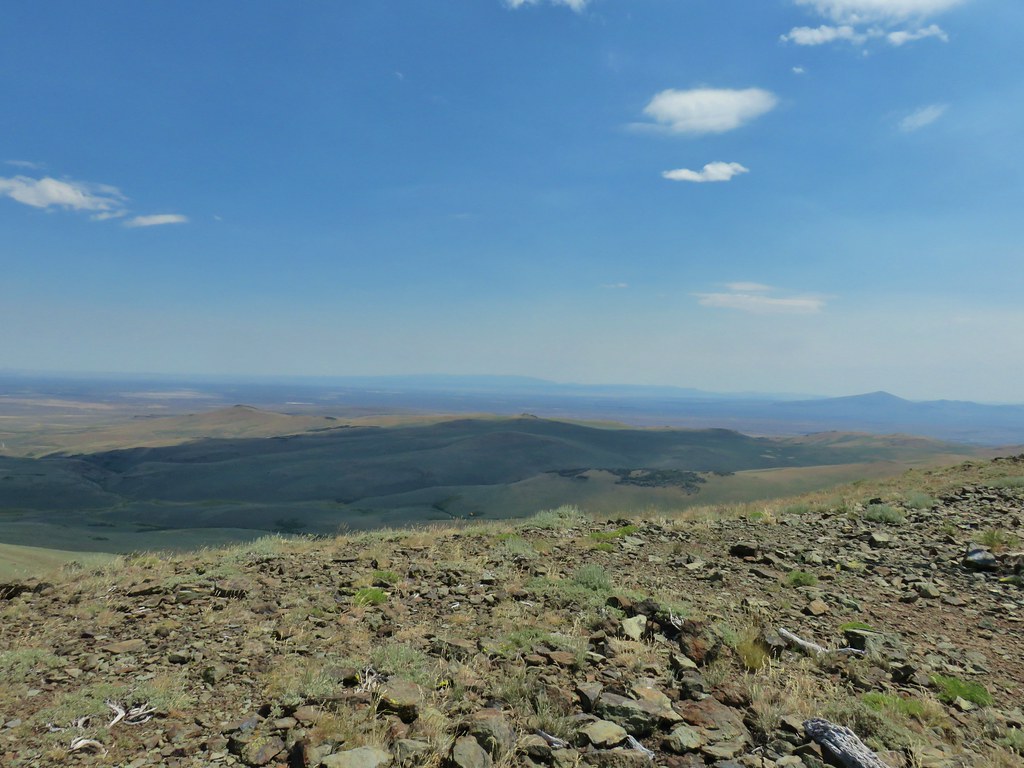
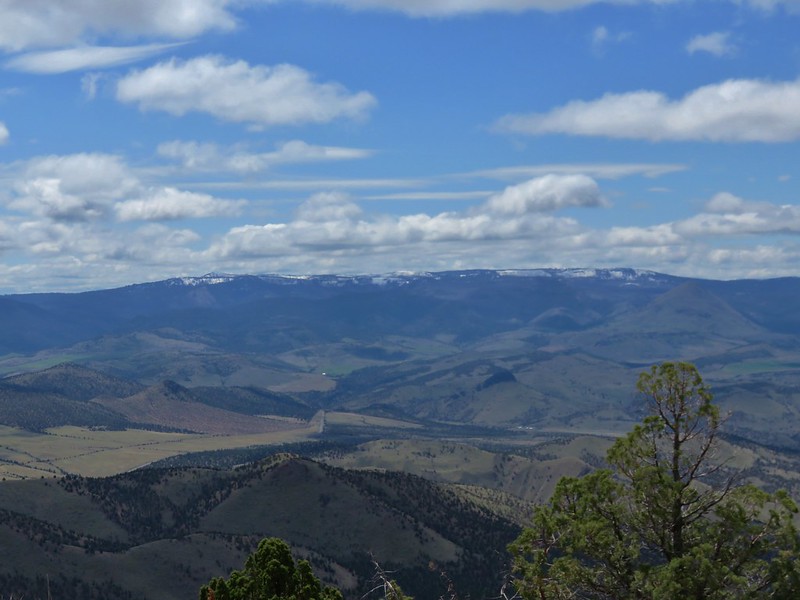
IMG_1158SW to Drake Peak with part of Hart Lake visible below the cliffs.
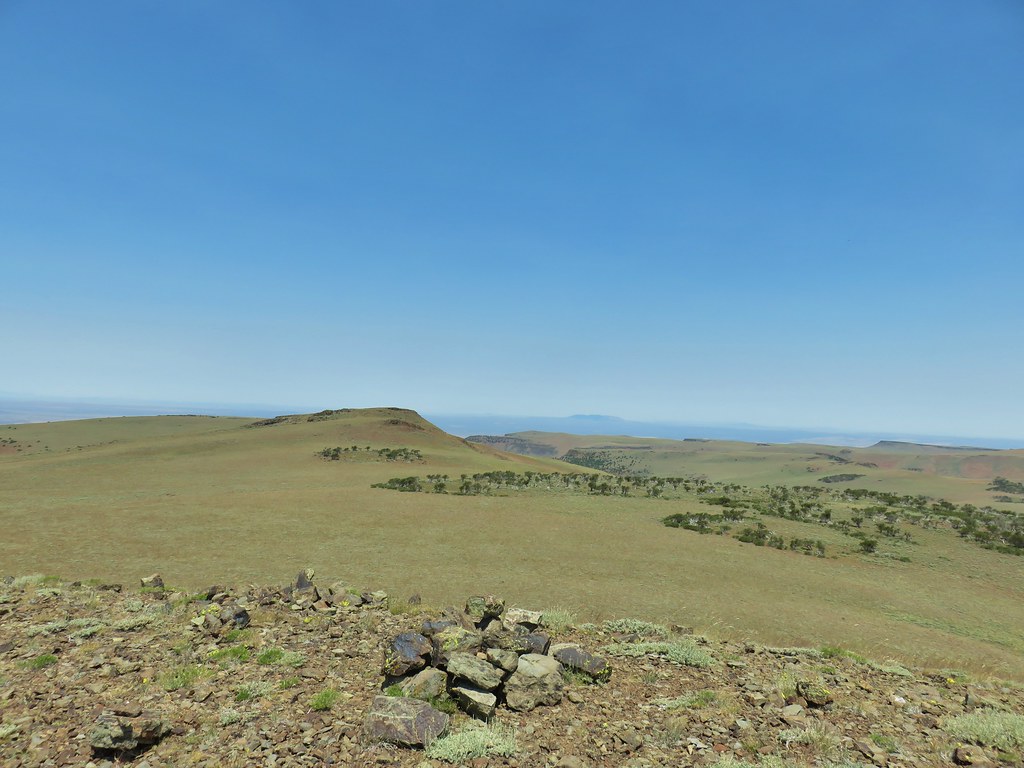
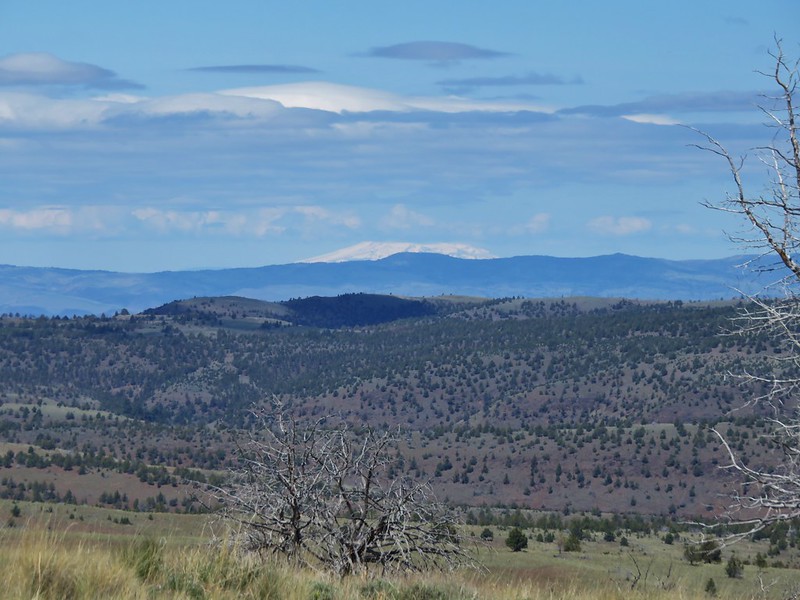
IMG_1134Looking north toward Juniper Mountain.

IMG_1133East toward Steens Mountain

After a nice long break we started back down. It was easier going since we weren’t climbing anymore and we knew that we could follow our track up to get back down. The more relaxed walk back allowed us to better enjoy the flowers that were around.
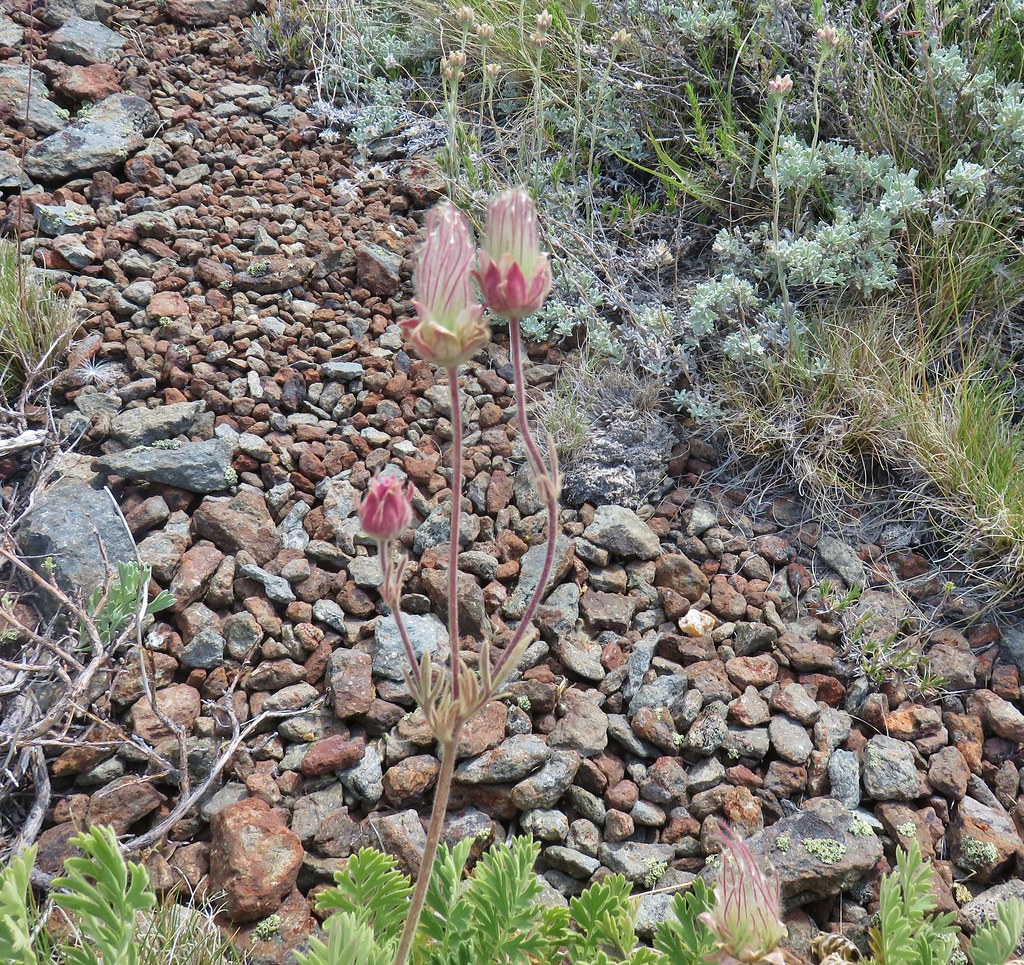
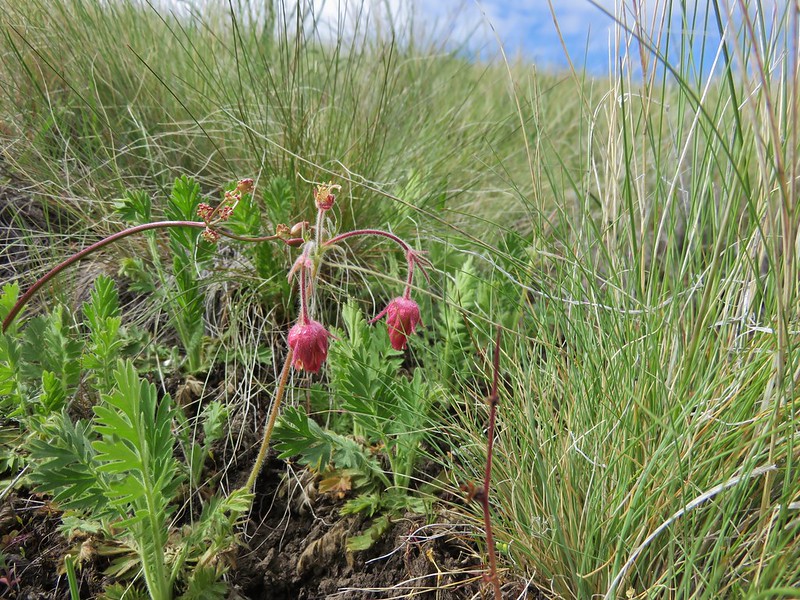
IMG_1162Prairie smoke

20200721_124500Balloon pod milk vetch

IMG_1167Paintbrush

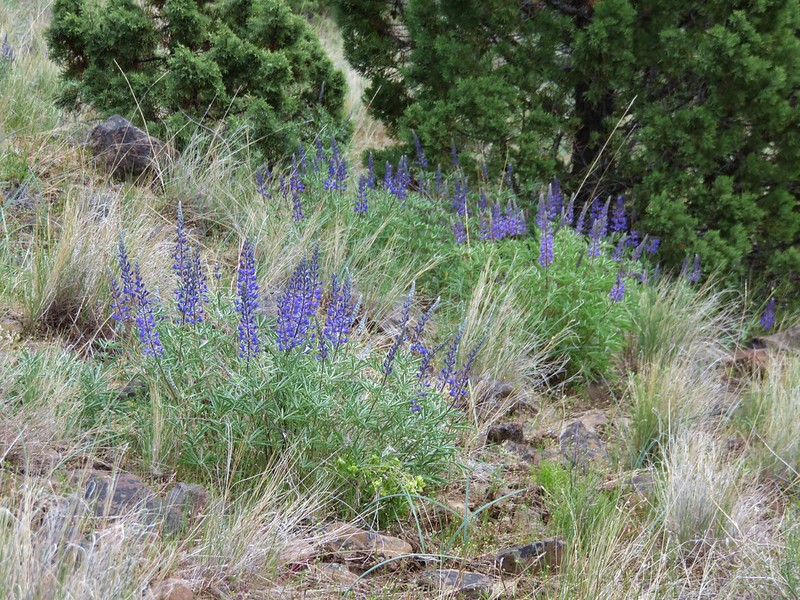
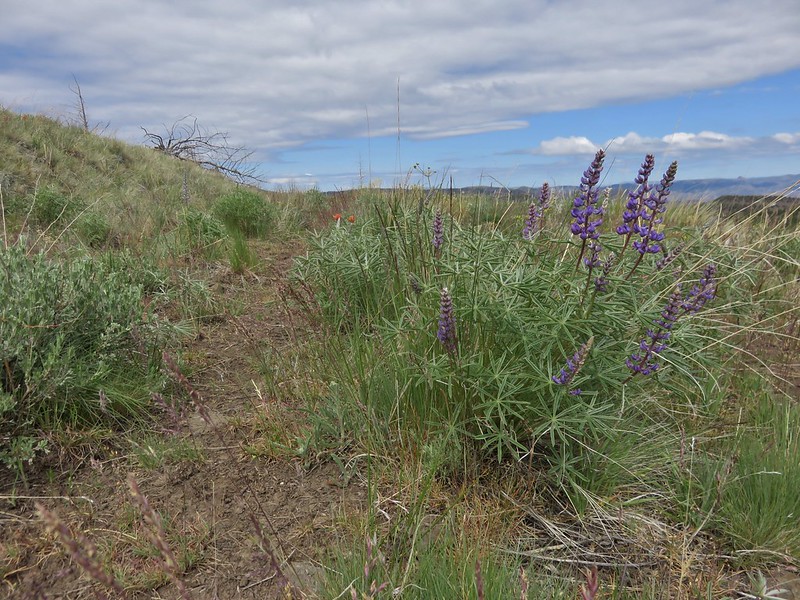
IMG_1171Lupine

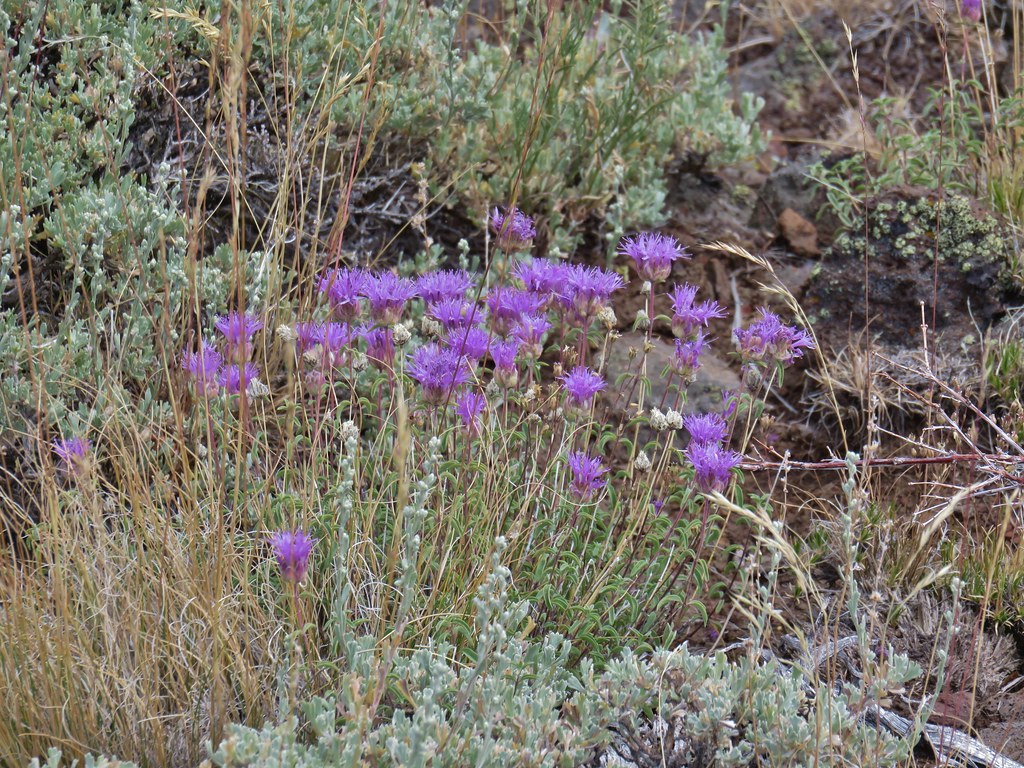
IMG_1190Mountain coyote mint

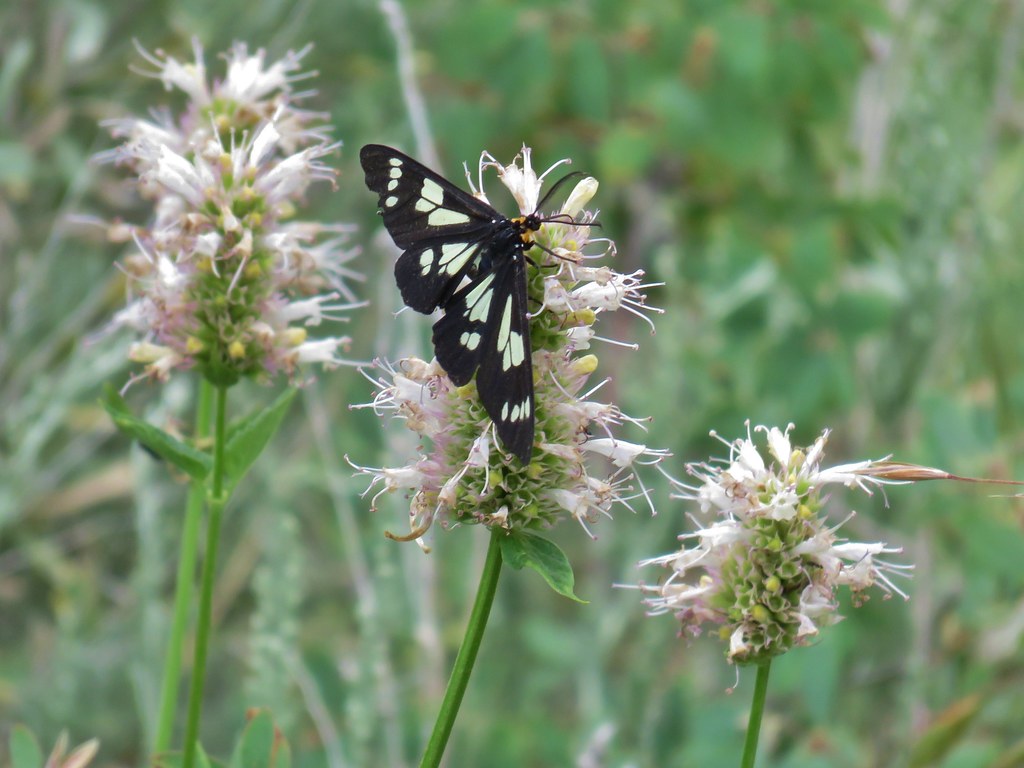
IMG_1200Police car moth on hyssop

We avoided the marshy area around the cabin this time and didn’t hear anything that sounded like a rattle. We did however get a good look at an American kestral.
IMG_1210

We had considered doing a loop from the cabin that Sullivan describes by following Rock Creek back to the Hot Springs Campground. It was only .3 miles longer but much of it was trailless and we were hot and tired of bushwhacking so we opted to just walk back on Barnhardi Road. As we got back to that road the clouds were moving in quickly.
IMG_1222

We shuffled along the road in the heat looking forward to soaking in the Hot Springs before leaving but we still stopped occassionally for photos.
IMG_1227

IMG_1233Butterflies on rabbitbrush

IMG_1238Sagebrush mariposa lily
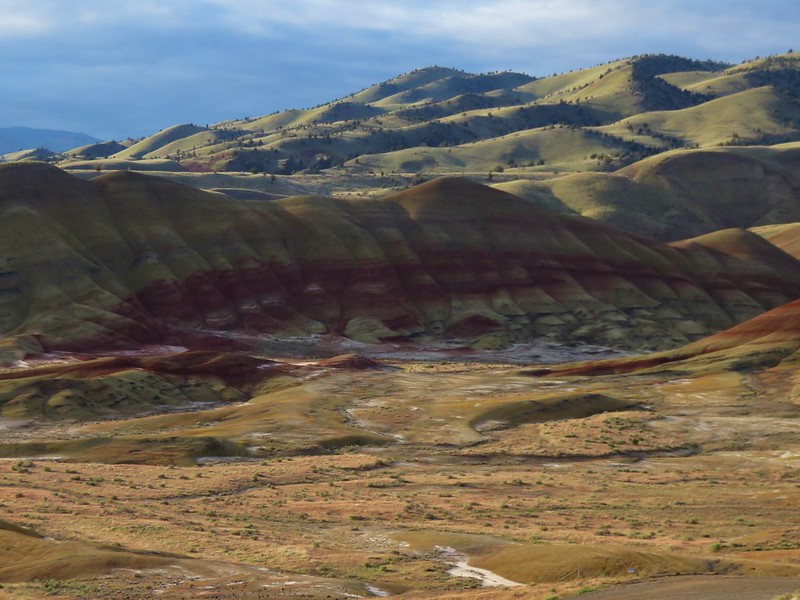
IMG_1243

As we neared the gate on Barnhardi Road two things happened. First we were passed by a mountain biker, the first person we’d encountered since Daly Lake three days earlier and second we finished off our all our water. We were only about a half mile from the car where we had more but we were thankful when we got to the gate and the biker offered us a cold water bottle. We finished that off on our way back to the car and then had our soak before heading back to Lakeview. We never heard any thunder or saw any lightening but a few raindrops hit our windshield on the way back and the wind had picked up so much that there were white caps on Hart Lake as we drove by.
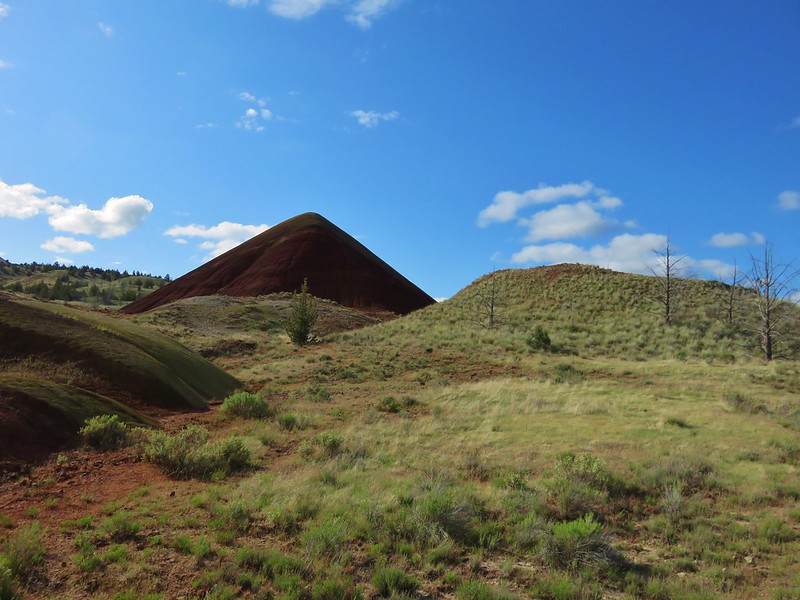
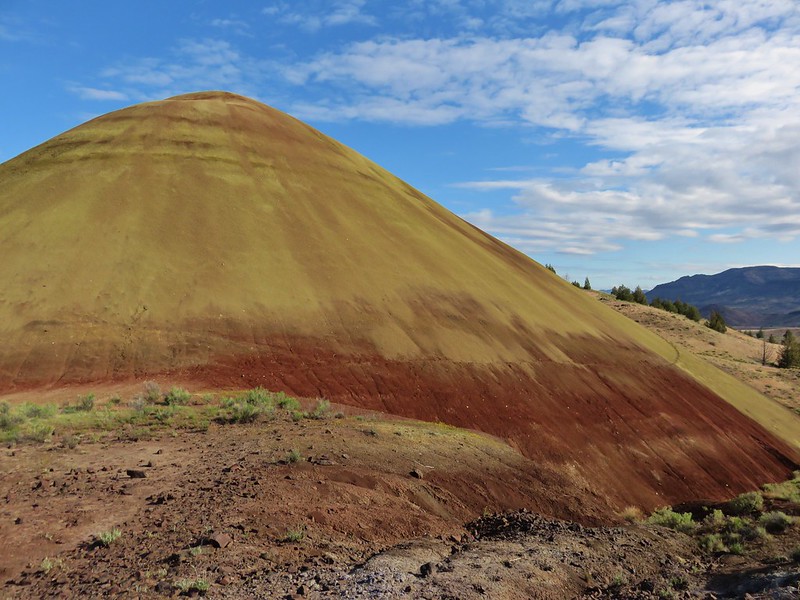
It was another tough day in the heat (although we did get a little chilly on Warner Peak just before heading down). We did 2.7 miles at Flook Lake and another 10.8 to Warner Peak with a combined elevation gain of roughly 2500′.

That night we decided to amend our plan for the next day even further and do the Petroglyph Lake hike followed by the short Warner Valley Overlook Loop that we had passed on our drive to and from the refuge that day. We then would end the day with the shortest option that Sullivan described for DeGarmo Canyon. It would be a shorter day giving us a little more time to rest and an excuse to swing by the Burger Queen in Lakeview and get milk shakes. Happy Trails!

Flickr: Flook Lake and Hart Mountain Hot Springs

Categories
Central Oregon Hiking John Day Oregon Trip report

Painted Hills and Sutton Mountain

We have lived in Oregon all our lives and yet neither of us had ever been to the Painted Hills in the John Day Fossil Beds National Monument. We finally made it there on a weekend trip to Central Oregon. We had headed to Bend after work on Friday and planned on visiting the Painted Hills then checking out a pair of nearby wilderness study areas – Pat’s Cabin and Sutton Mountain.

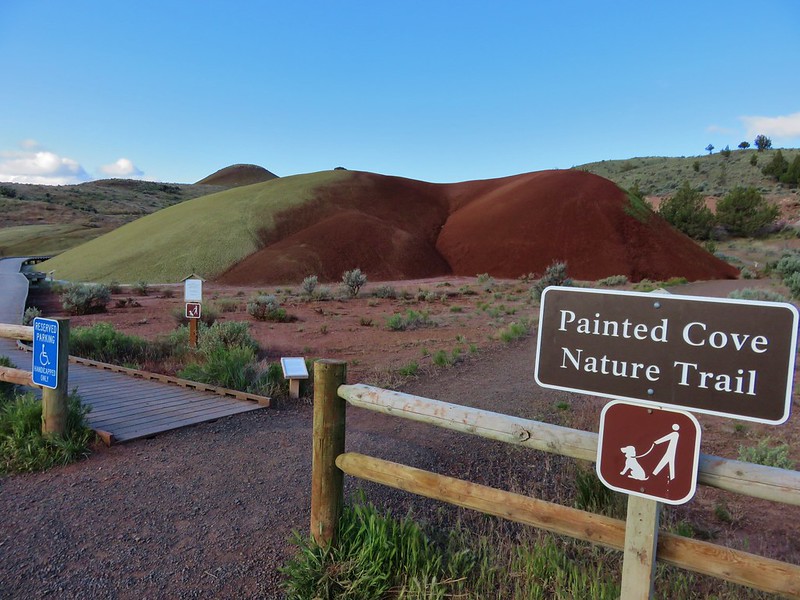
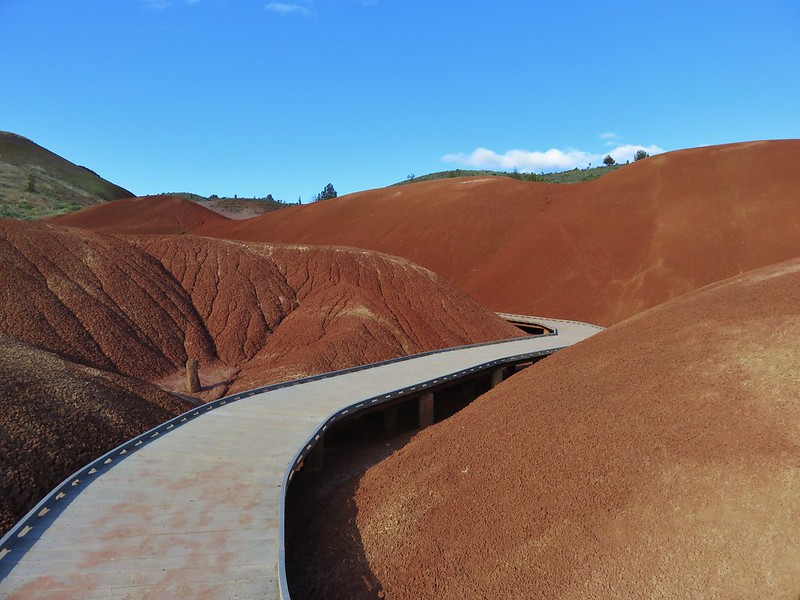
The Painted Hills Unit is one of three units making up the John Day Fossil Beds National Monument. It is located 10 miles NW of Mitchell, OR and contains five short hiking trails ranging from the .2 mile Painted Cove Loop to the 1.6 mile round trip Carroll Rim Trail. We began our visit at the Painted Hills Overlook Trailhead.
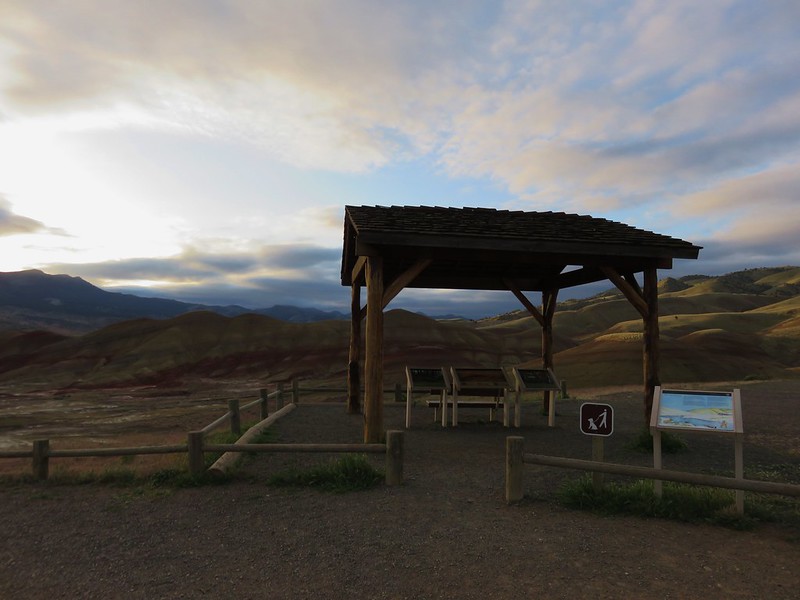
Painted Hills Overlook Trailhead

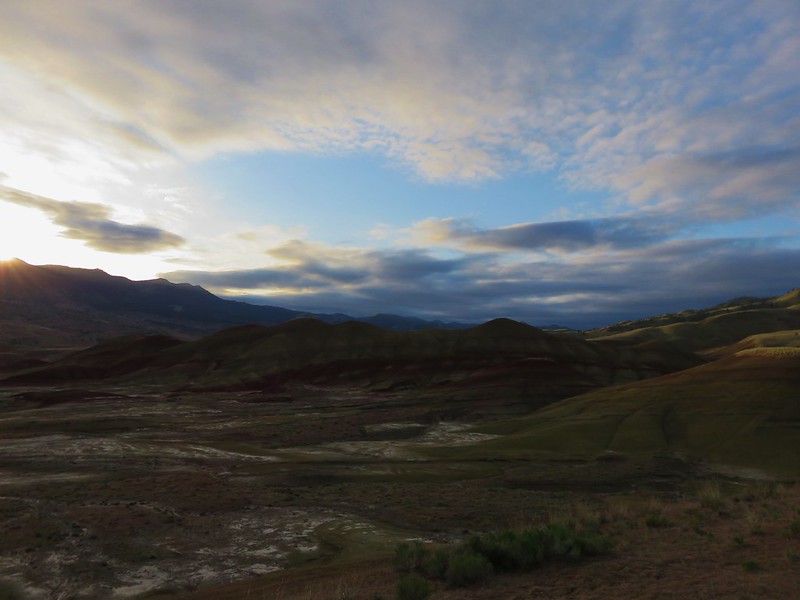
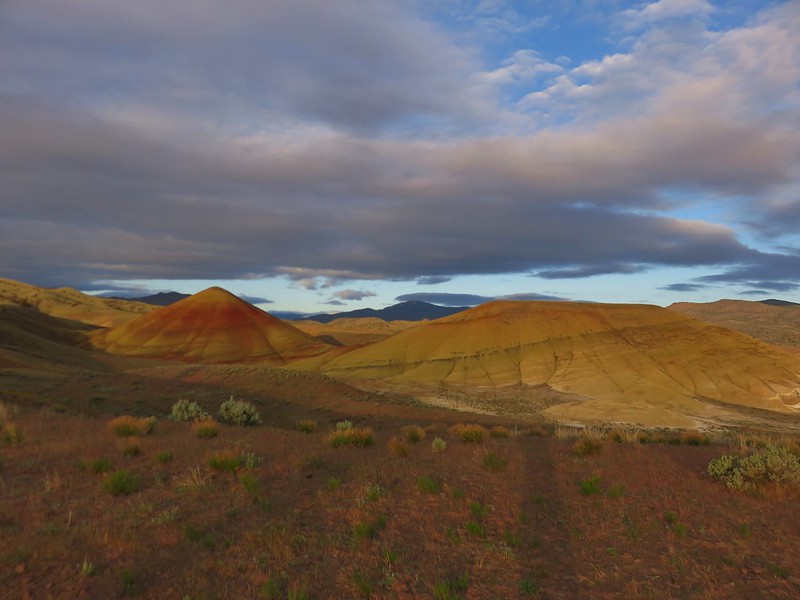
We had gotten our usual early morning start and had arrived a little before 7am. The Sun was just coming up over Sutton Mountain to the east and the sky was partly cloudy creating some interesting lighting.
Sun coming over Sutton Mountain from the Painted HIlls

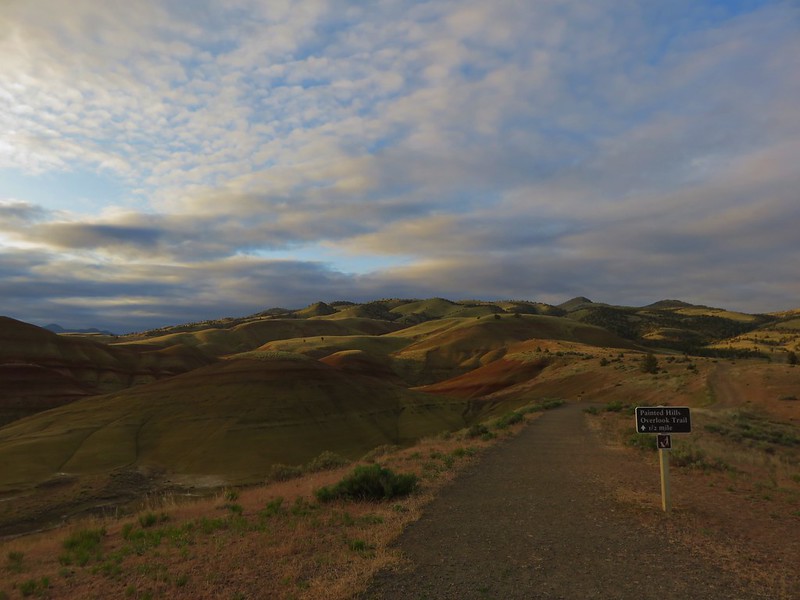
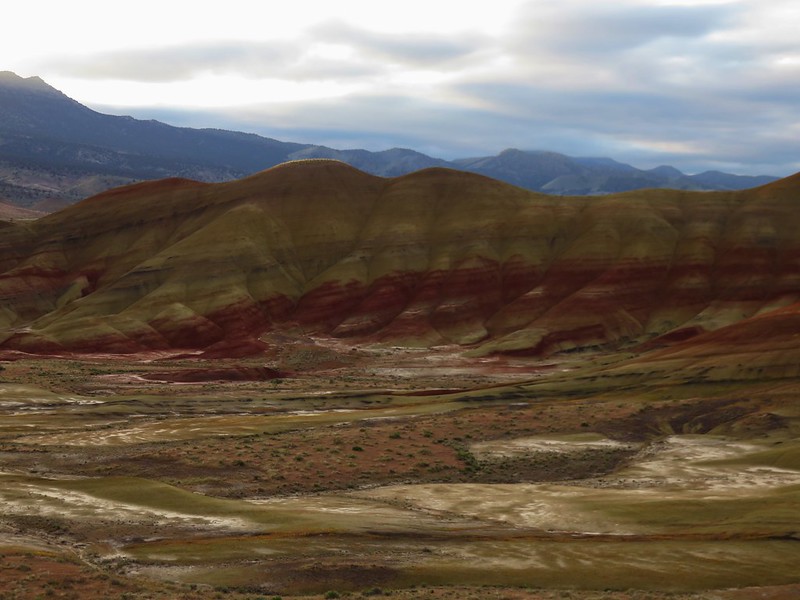
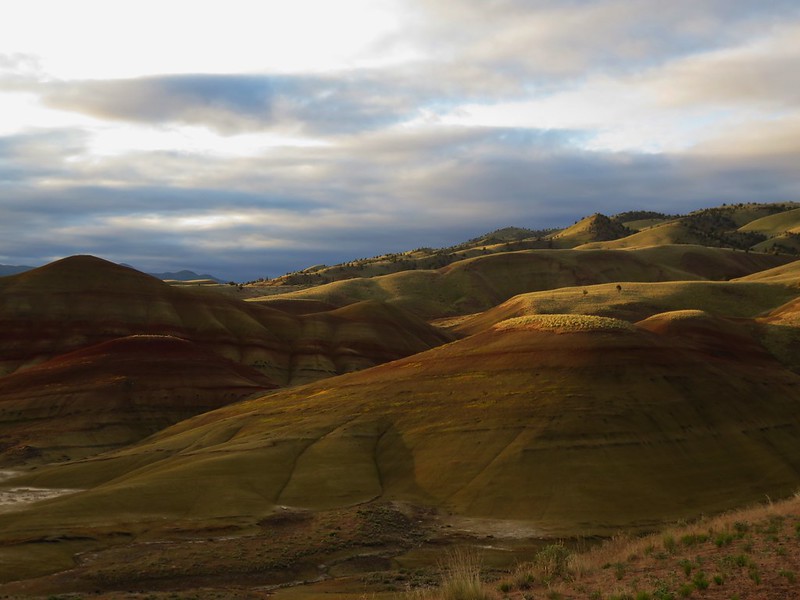
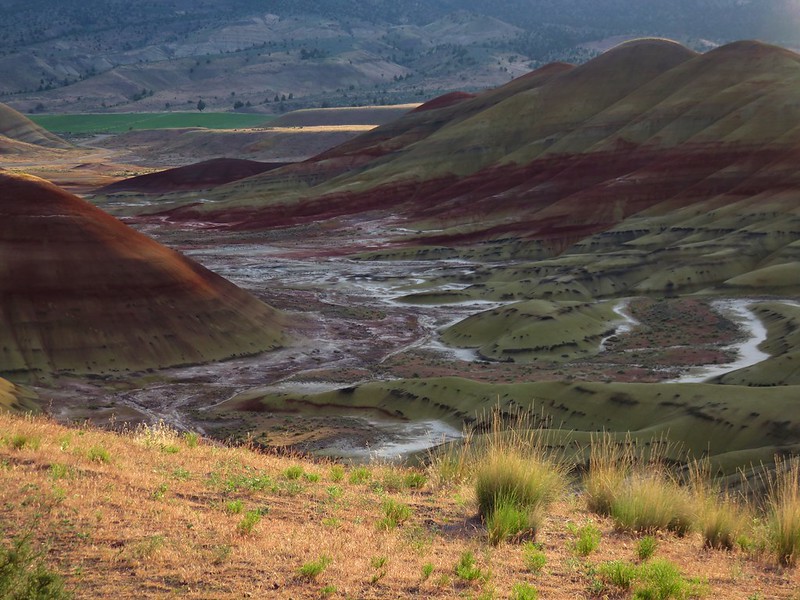
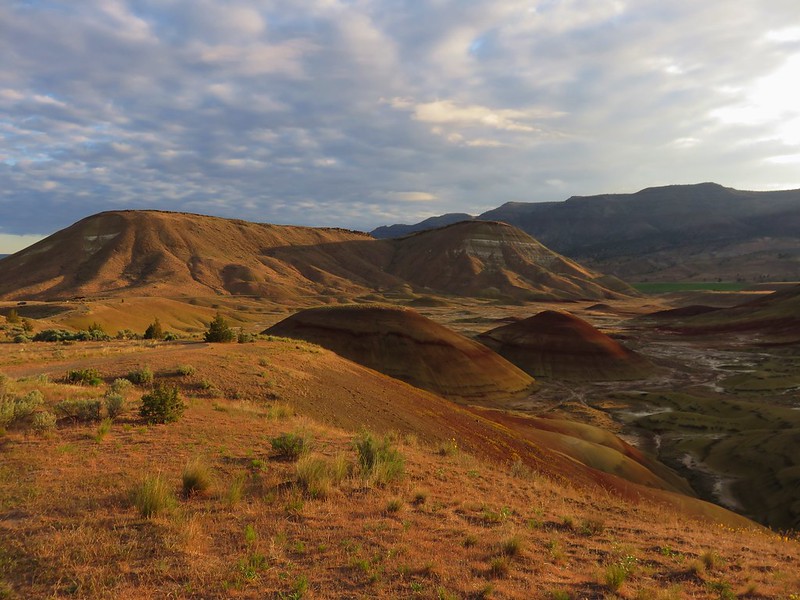
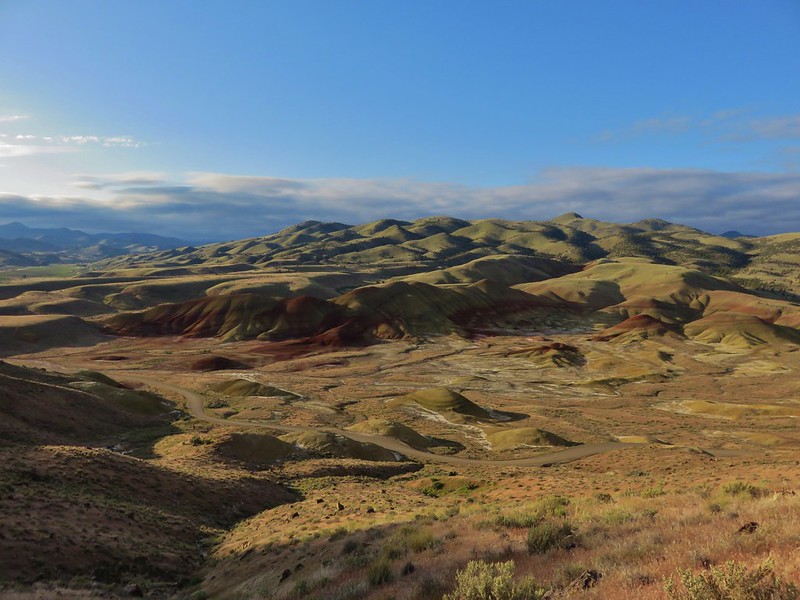
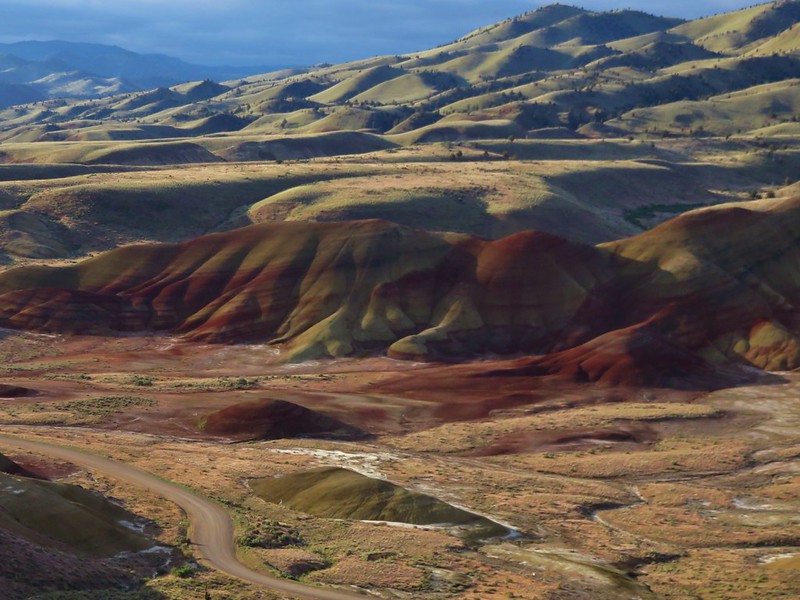
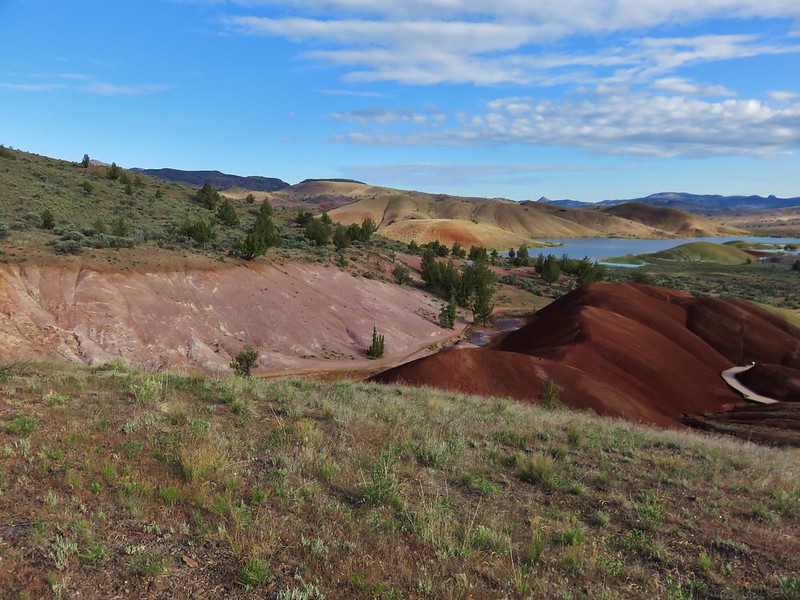
The .3 mile Painted Hills Overlook Trail began at this trailhead and provided some great views of the Painted Hills, Carroll Rim, and Sutton Mountain.
Painted Hills Overlook Trail

Painted Hills

Painted Hills

Painted HIlls

Painted HIlls

Painted HIlls

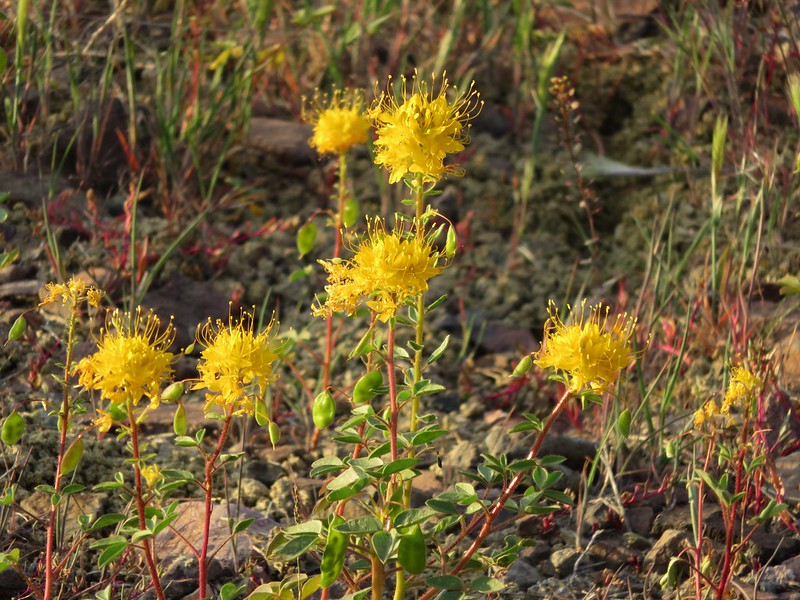
There had been one other car at the trailhead but its occupant never left that area so it was just us on the trail with a host of birds that remained unseen but whose songs filled the air. The wildflowers on the other hand remained silent but stood out with their splashes of color.

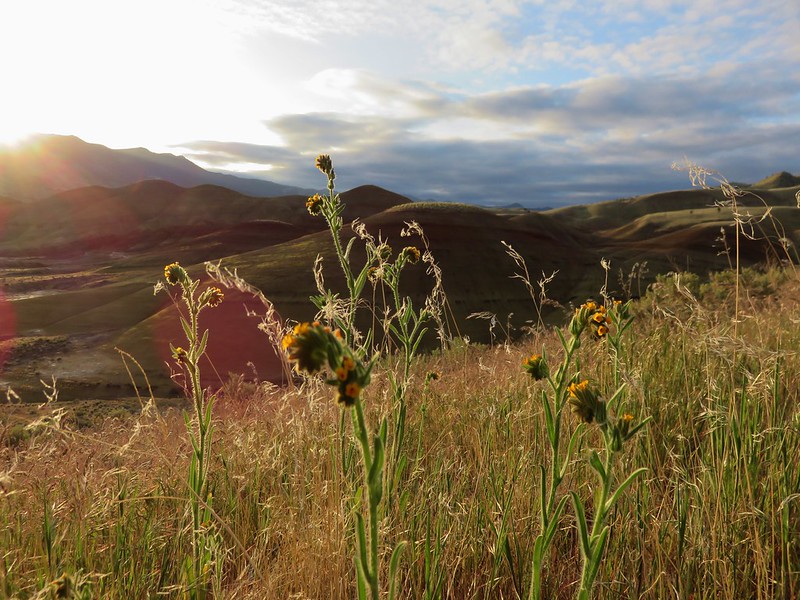
Golden Bee Plant
Golden Bee Plant

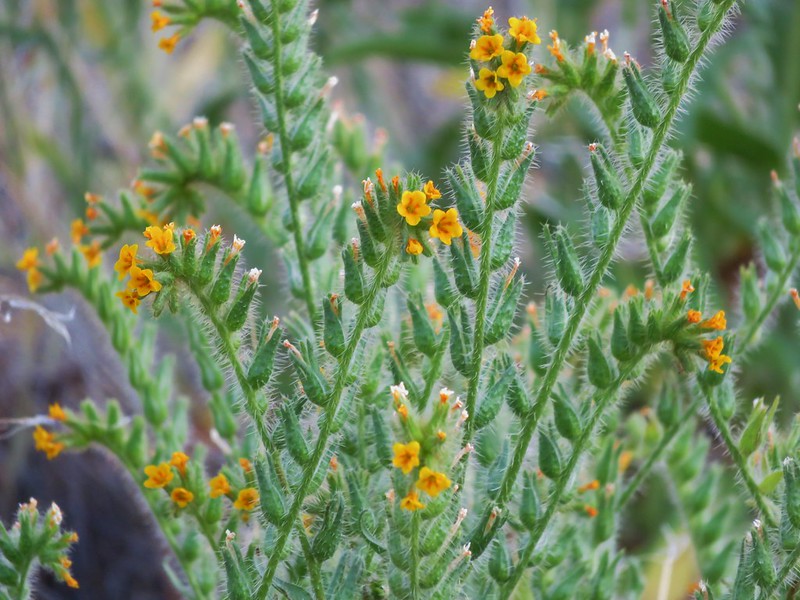
Fiddleneck
Fiddleneck

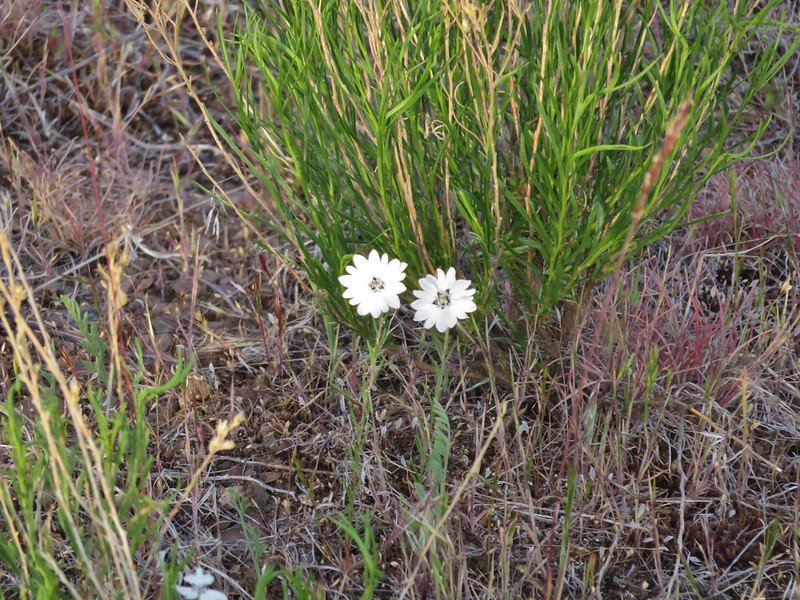
Rough eyelash weed
Rough eyelash weed

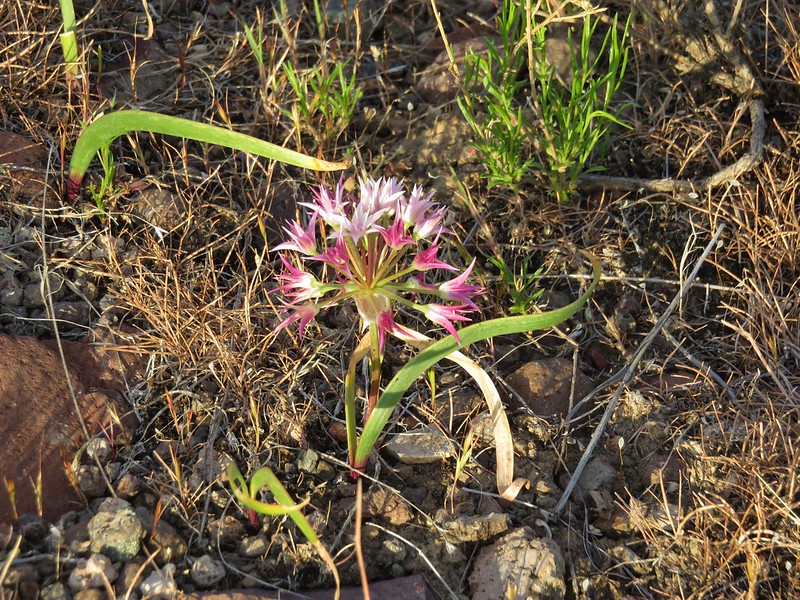
Tolmie’s Onion
Tolmie's Onion

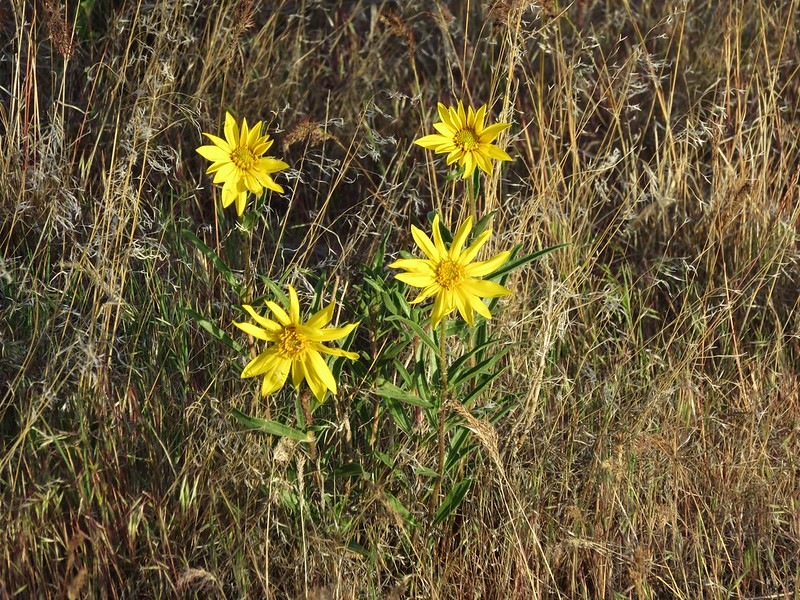
Arnica
Arnica

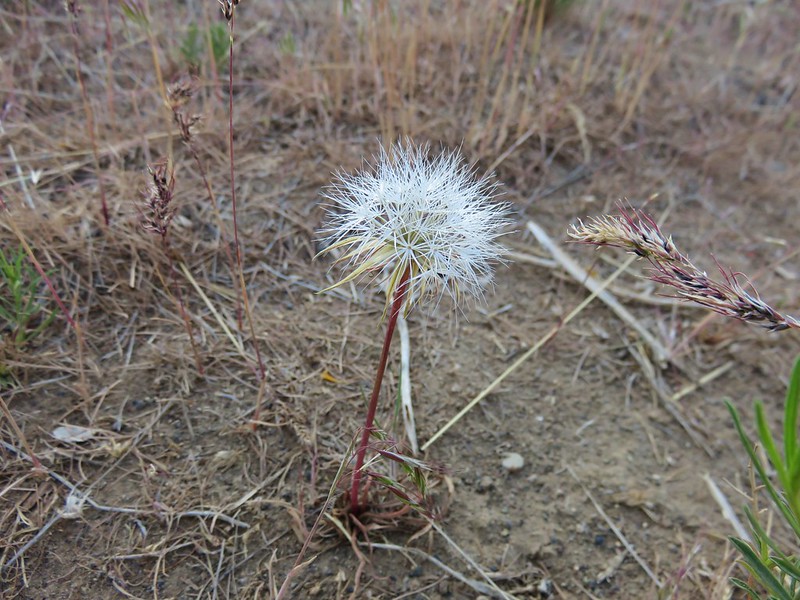
Silverpuff
Uropappus lindleyi; Silverpuffs

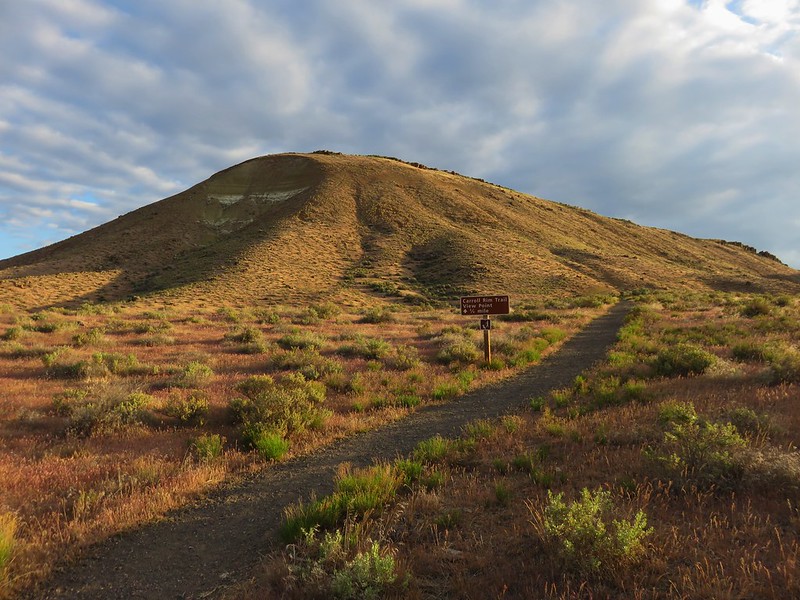
After returning to the trailhead we walked across Bear Creek Road to the Carroll Rim Trail which climbs almost 400′ in .8 miles to a rimrock viewpoint.
Carroll Rim Trail

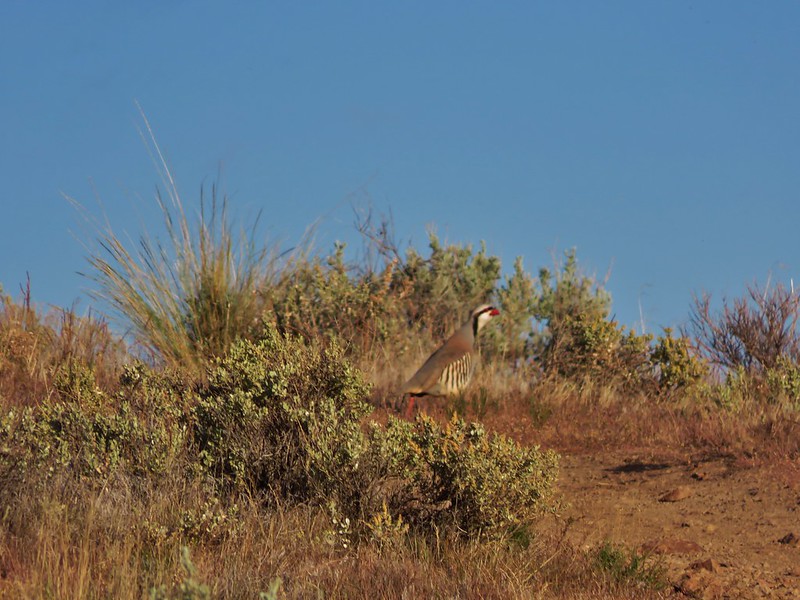
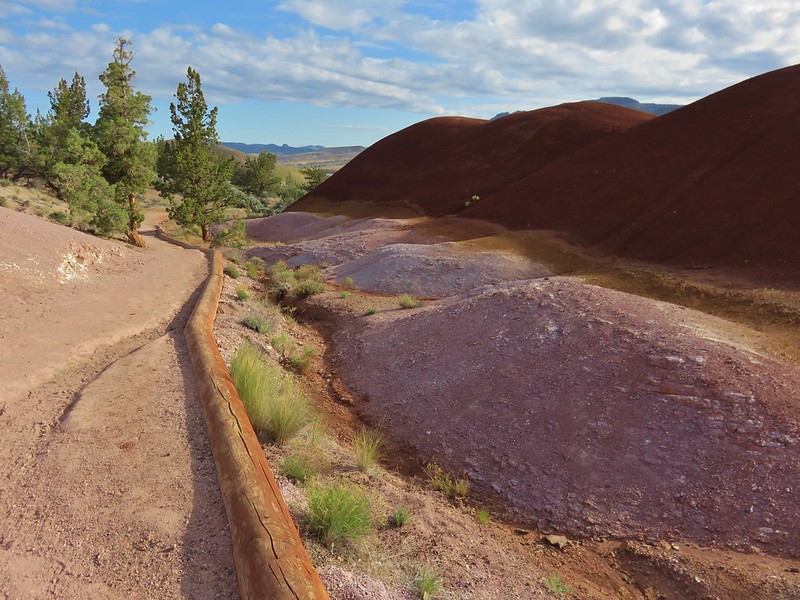
The Painted Hills stole the show, but there were other sights along this trail as well including our fist encounter with chukars.
Painted Hills from the Carroll Rim Trail

Painted Hills from the Carroll Rim Trail

Painted Hills from the Carroll Rim Trail

Carroll Rim
IMG_4382

Chukar
Chukar

Caterpillar
IMG_4372

IMG_4384

Fiddleneck

IMG_4387

IMG_4374

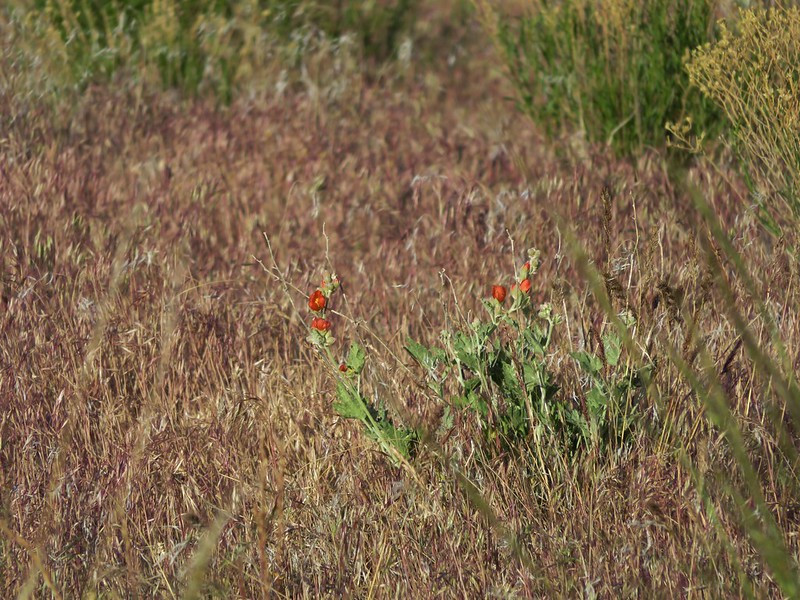
Orange globe mallow
IMG_4390

From the Painted Hills Overlook Trailhead we drove 1.2 miles following signs to the Painted Cove Loop Trailhead. Here a .2 mile loop passes colorful claystone formations.
IMG_4391

IMG_4397

IMG_4427

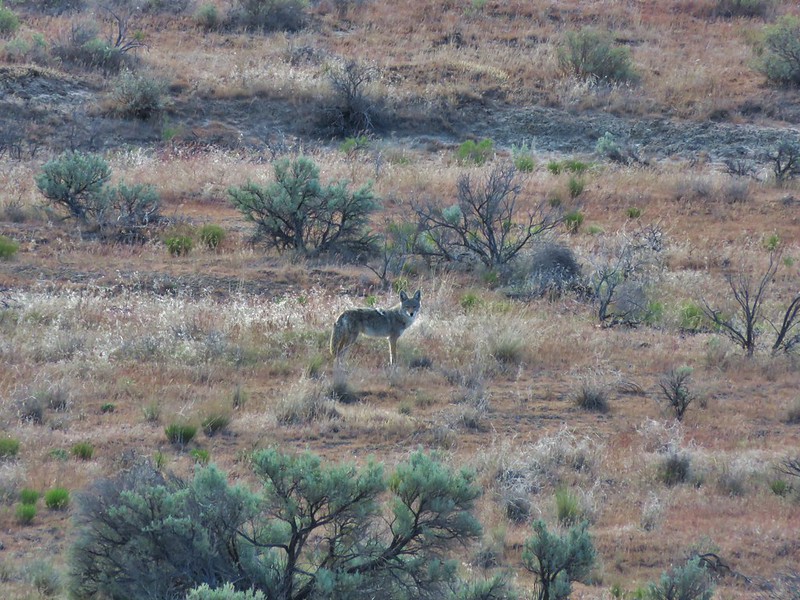
A short side trail forked off to the left leading to a viewpoint above the Painted Cove. While we were at the viewpoint Heather spotted a Coyote across the road.
IMG_4417

IMG_4410

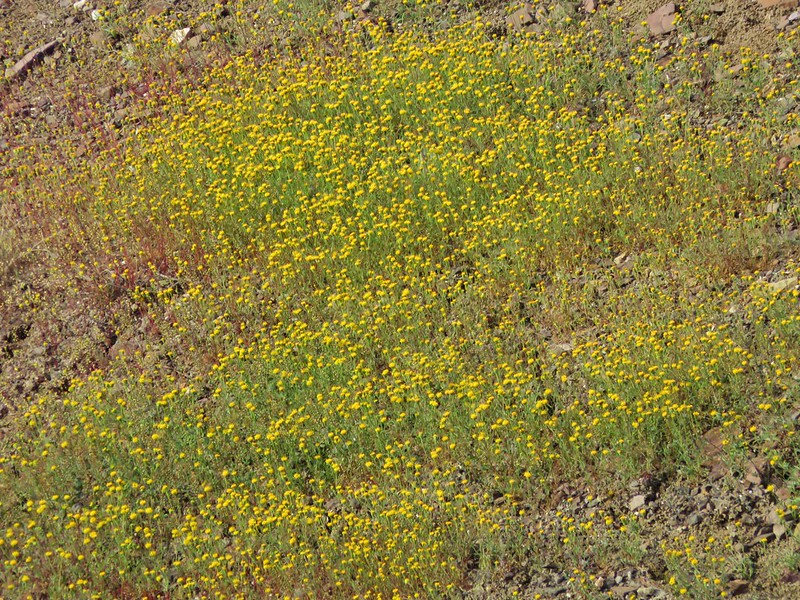
There was also a nice bloom of John Day Pincushion on the hillside.
IMG_4421

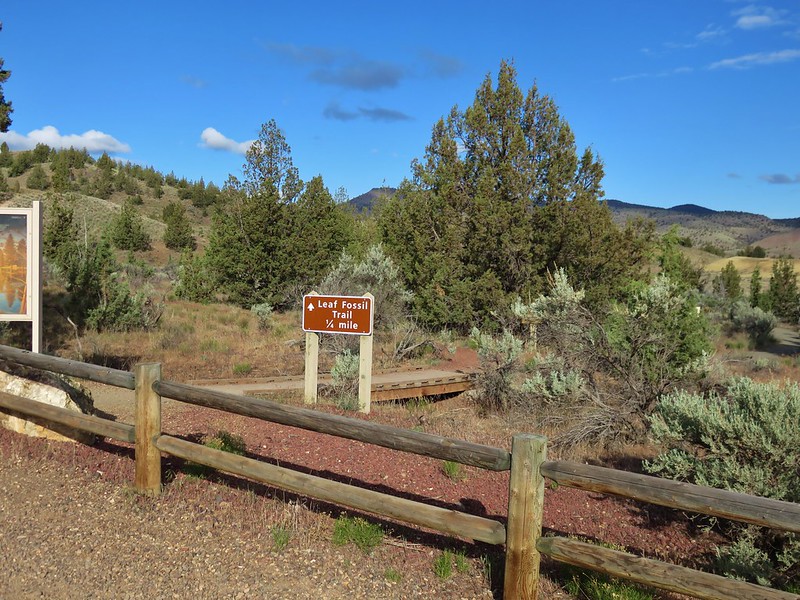
Next we headed to the Leaf Hill Trail traveling back the way we’d come and following signs to the trailhead.
IMG_4430

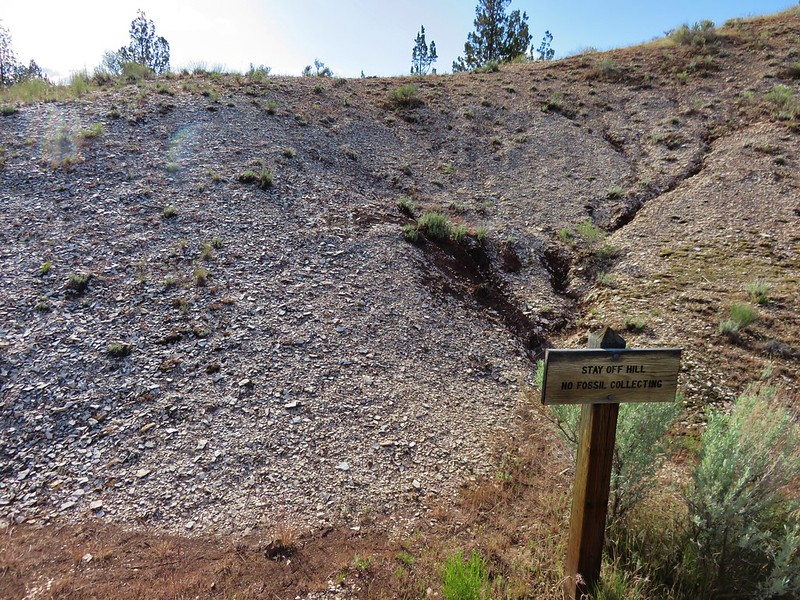
This loop passes around a small hill containing many fossils (we didn’t spot any though).
IMG_4439

IMG_4441

IMG_4445

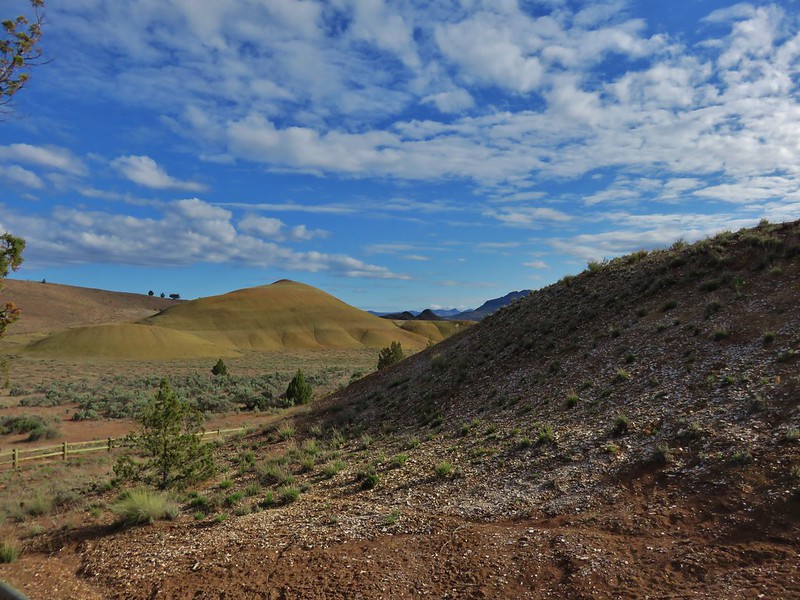
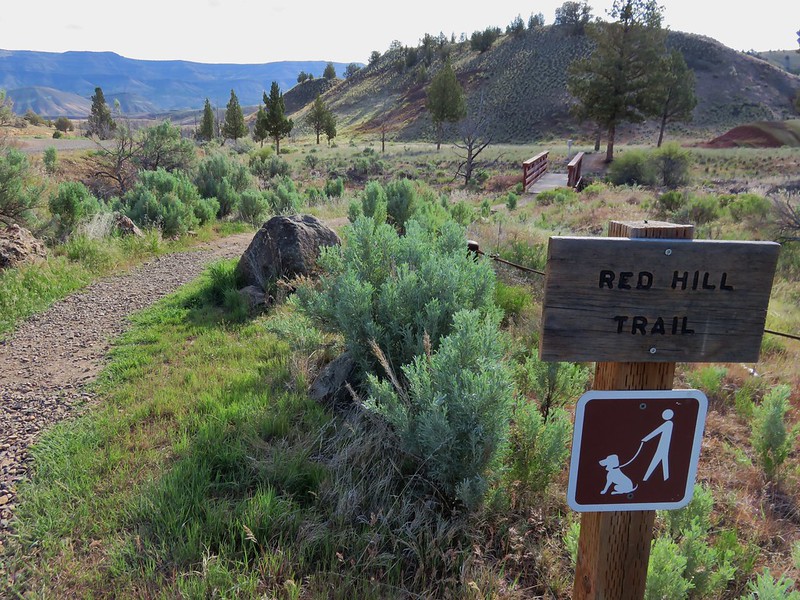
Finally we visited the Red Hill Trail which leads to a close up view of a hill of red and yellow ash.
IMG_4449

IMG_4469

IMG_4459

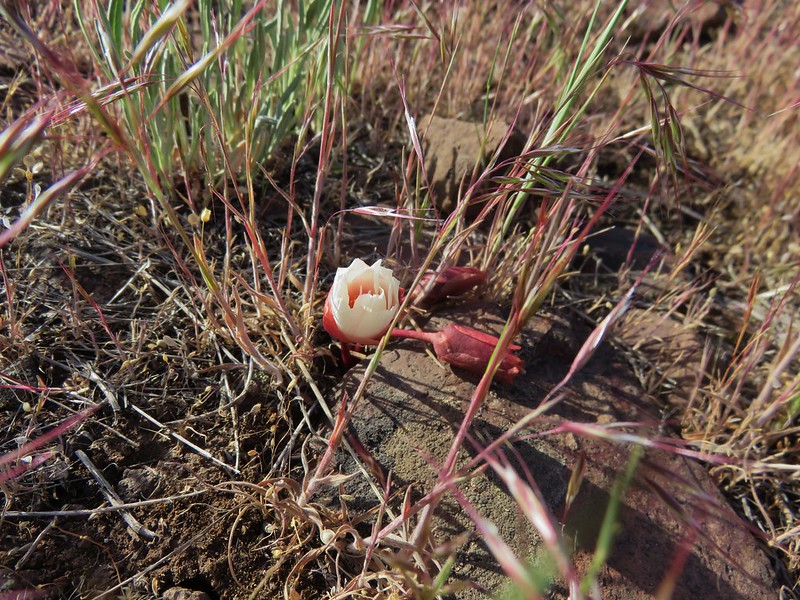
Near the end of the trail we spotted our first ever bitteroot flowers. They were just beginning to open but it was exciting nonetheless given we had looked for these on other hikes and failed to find any.
IMG_4460

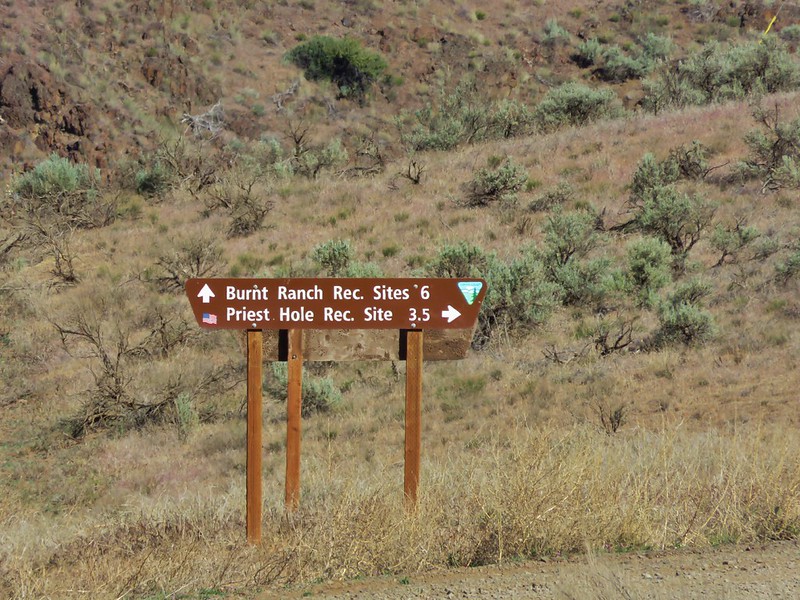
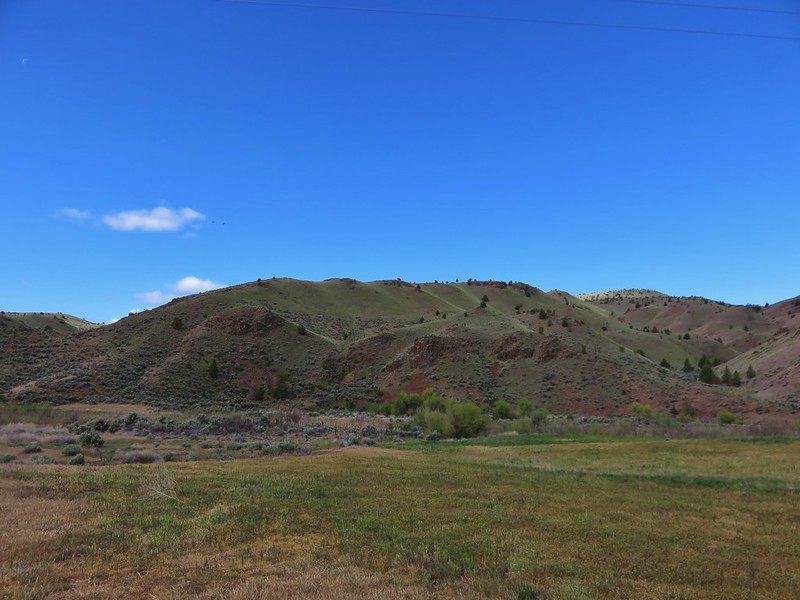
Our next destination for the day was a bit of a wild-card. While I was doing research for the Sutton Mountain hike I had seen references to another nearby wilderness study area calls Pat’s Cabin. i wasn’t able to find much information about it, but I did find a 2011 BLM map of the area showing a trail going up Pat’s Cabin Canyon. Internet searches turned up nothing in regards to the trail so we decided that we would check it out in person. The BLM map showed a parking area along Burnt Ranch Road just before reaching the Twickenham-Bridge Creek Cuttoff Road. We parked in a grassy area next to an old corral near a sign for the Burnt Ranch and Priest Hole Recreation Sites.
IMG_4474

IMG_4483

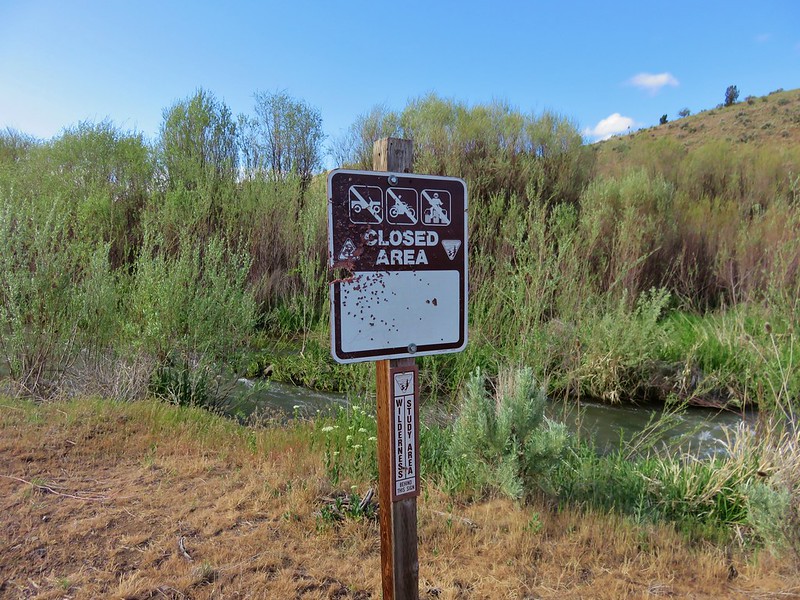
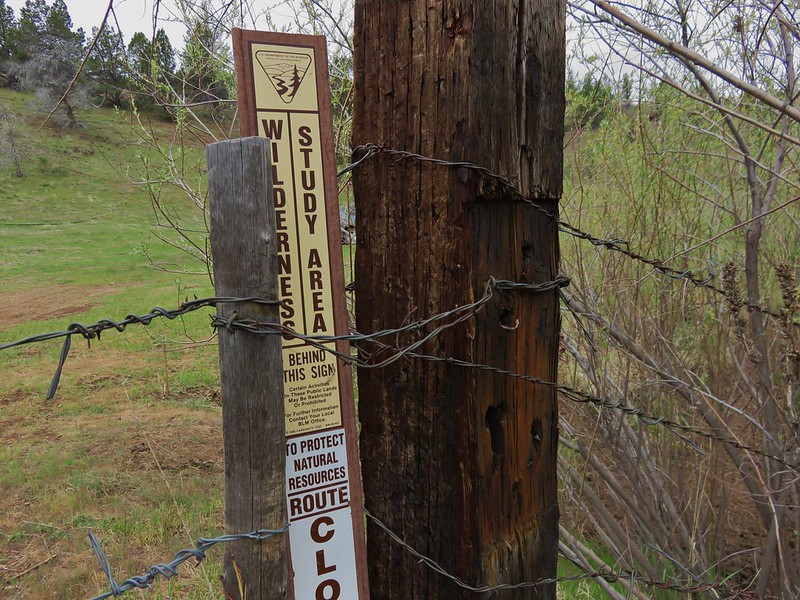
From there we crossed Burnt Ranch Road and passed through a barb wire gate on an old dirt road. After approximately a quarter mile we came to a sign marking the boundary of the wilderness study area.
IMG_4480

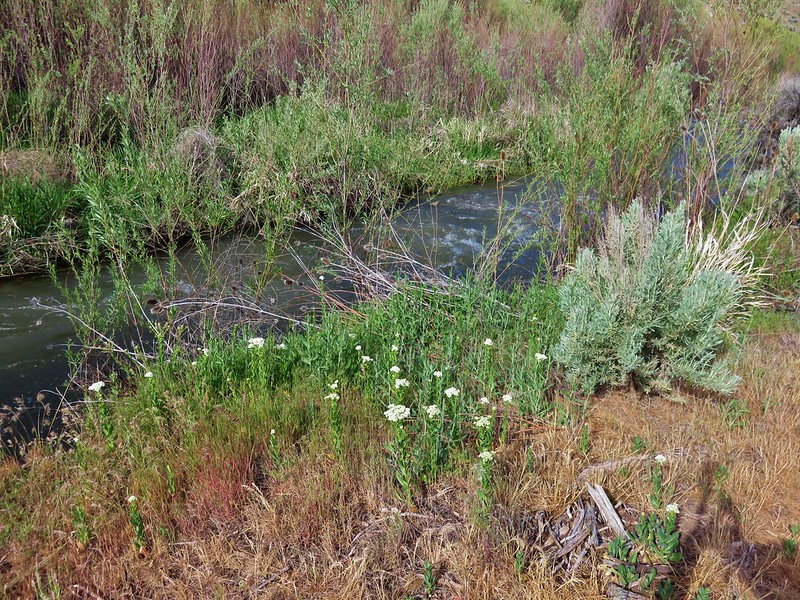
Just on the other side of the sign was Bridge Creek. Bridge Creek lacked a bridge here and the flow was swifter and deeper than we were comfortable with trying to ford. Later in the year it may have been doable but on this day Pat’s Cabin would remain a mystery to us.
IMG_4482

Our final destination for the day was on the other side of Sutton Mountain so we drove to Mitchell and turned north onto Highway 207 for 9.3 miles. We were hoping to spot two things during our Sutton Mountain hike that we had not yet seen during a hike, pronghorns and hedgehog cactus. We spotted some pronghorns in a field before we even made it to the trailhead.
IMG_4487

IMG_4490

That didn’t count since we weren’t on the hike yet, but it was still neat to see them.

The trailhead we were looking for was located just beyond milepost 15 behind a wire gate in a grassy meadow with lots of signs of cattle.
IMG_4497

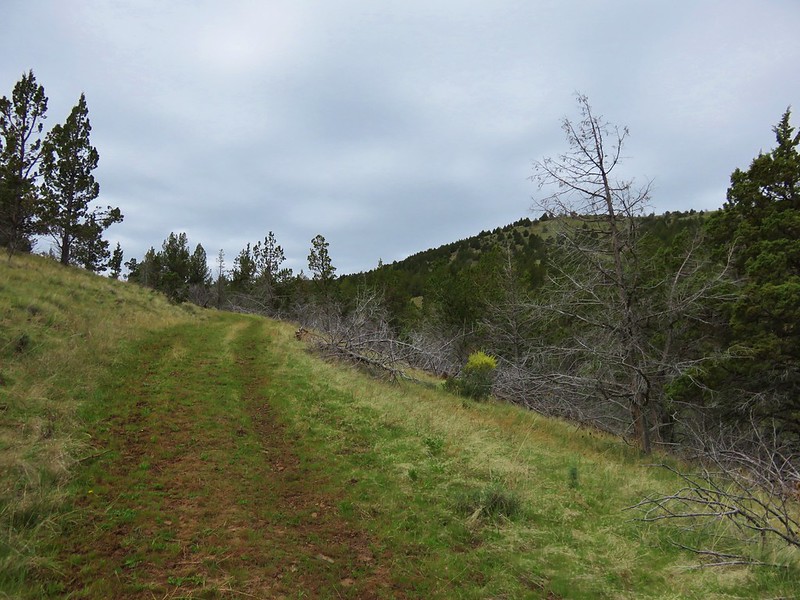
An old roadbed serves as the trail.
IMG_4508

We followed the roadbed along a wire fence to a private barn. There were horses on the other side of the fence and cows on our side. We hesitated for a moment when we realized there was also a bull, but after he gave us a look he headed away toward the barn. The roadbed turned uphill to the left so we began to climb.
IMG_4523

There were a few wildflowers and as we climbed we began seeing more, especially different colors of paintbrush.
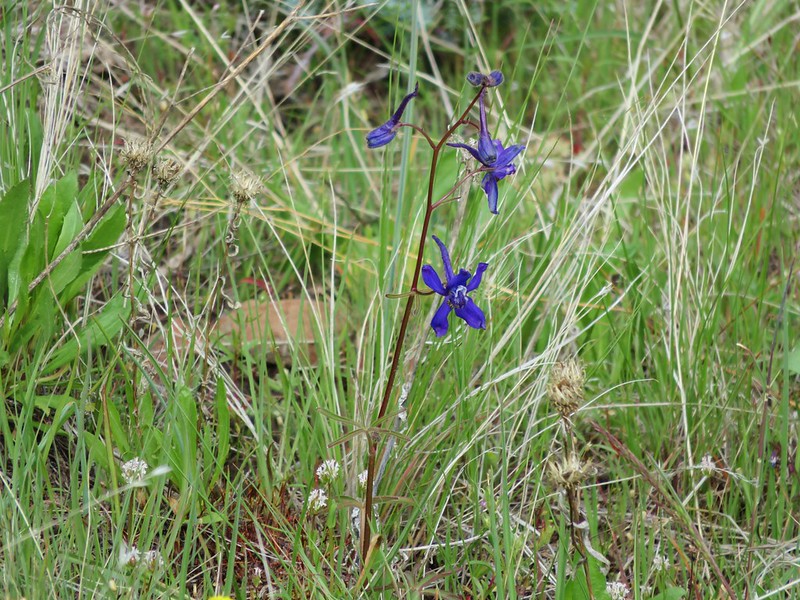
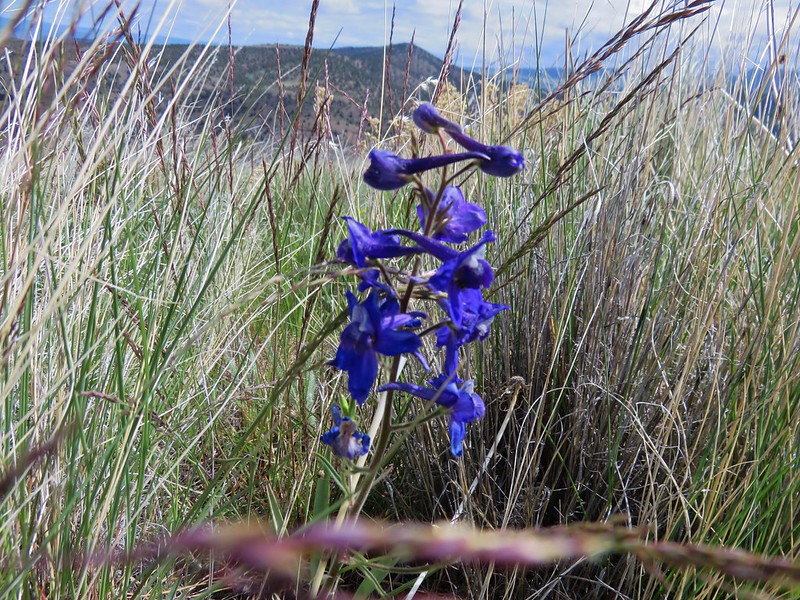
Larkspur
IMG_4526

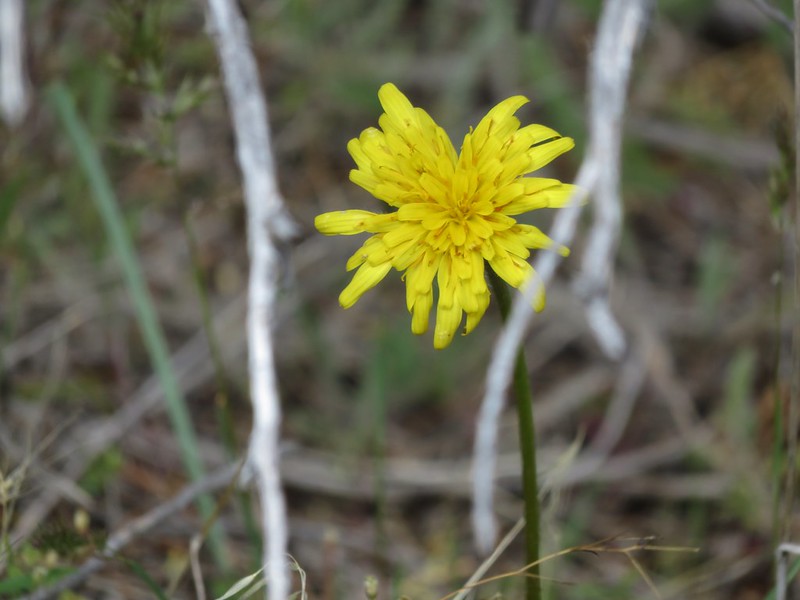
Sagebrush false dandelion
IMG_4528

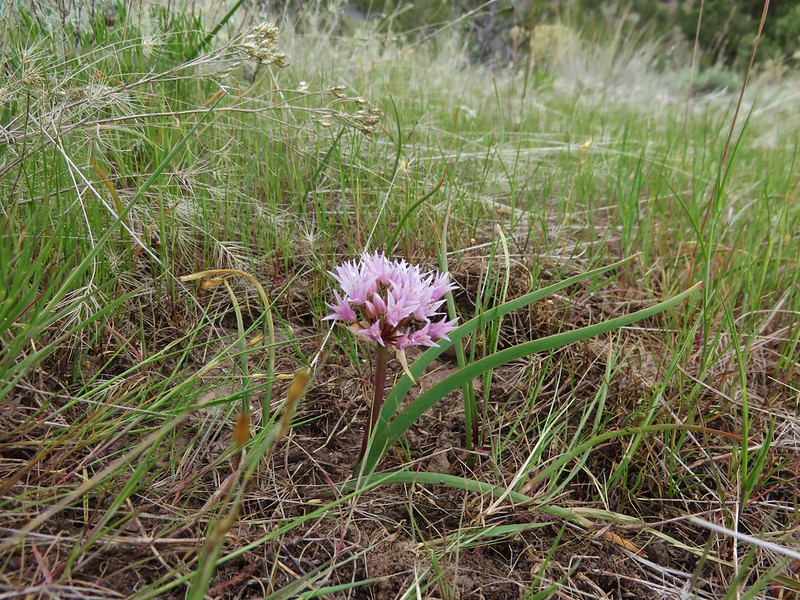
Wild onion
IMG_4533

Prairie star
IMG_4534

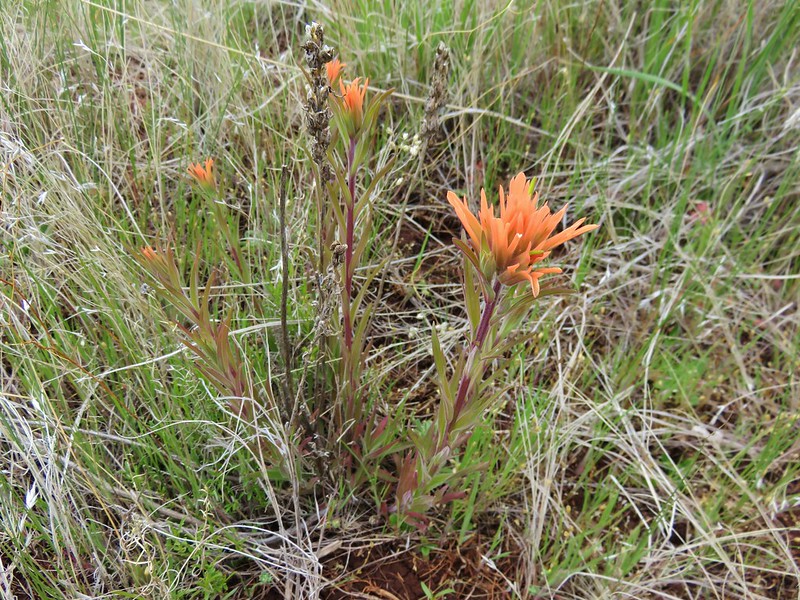
Paintbrush
IMG_4535

IMG_4537

IMG_4540

IMG_4557

IMG_4562

There was also plenty of lupine but much of it had not even started to bloom.
IMG_4560

A mile from the trailhead the roadbed curved to the right across a dry wash. On this side of the wash the lupine was further along and a few more flowers made appearances.
IMG_4571

Stoneseed
IMG_4576

Wallflower
IMG_4577

Milk-vetch
IMG_4573

As we climbed the trees gave way to grassy meadows where wildflowers dotted the ground with color.
IMG_4584

Maybe a grass widow
IMG_4613

Old man’s whiskers
IMG_4607

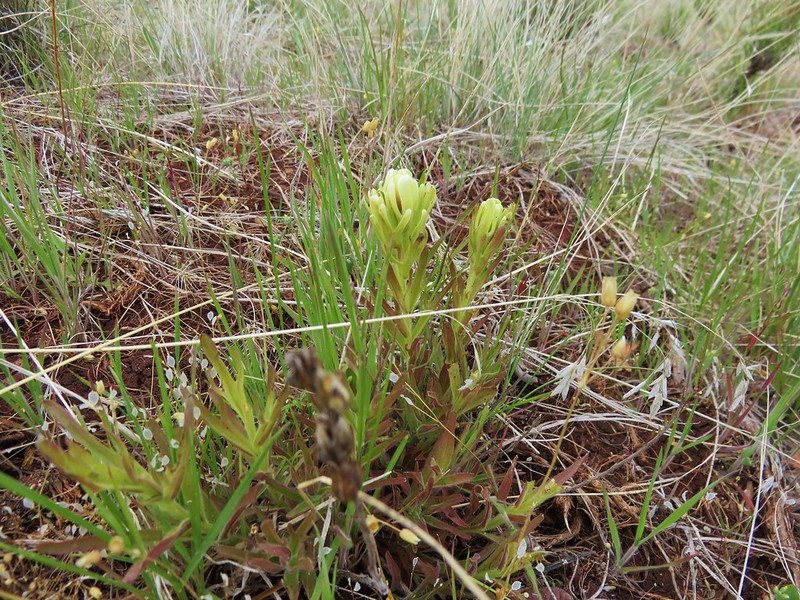
Paintbrush
IMG_4617

An arnica
IMG_4623

Larkspur
IMG_4626

Lupine
IMG_4606

Just over a mile after crossing the dry wash we arrived at an old corral and another barb wire fence. A roadbed continued straight from the corral but the correct route turned left and continued uphill on a fainter old roadbed on the far side of the corral and fence.
IMG_4630

IMG_4639

We spotted additional wildflowers as we continued to climb.
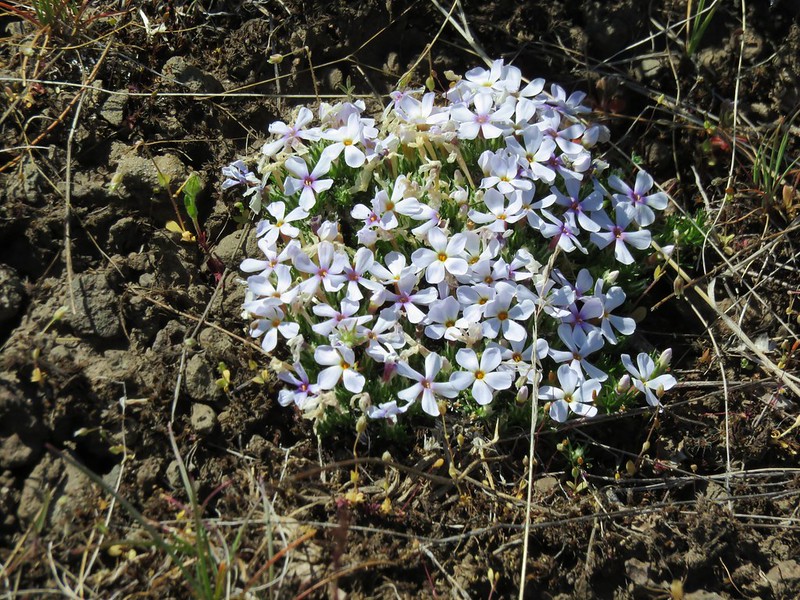
Phlox
IMG_4645

Dwarf yellow fleabane
IMG_4664

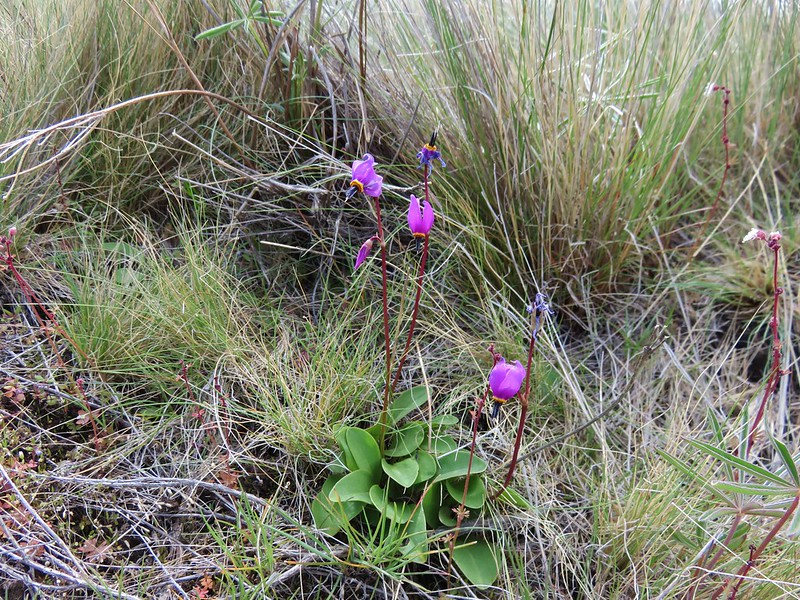
Shooting star
IMG_4680

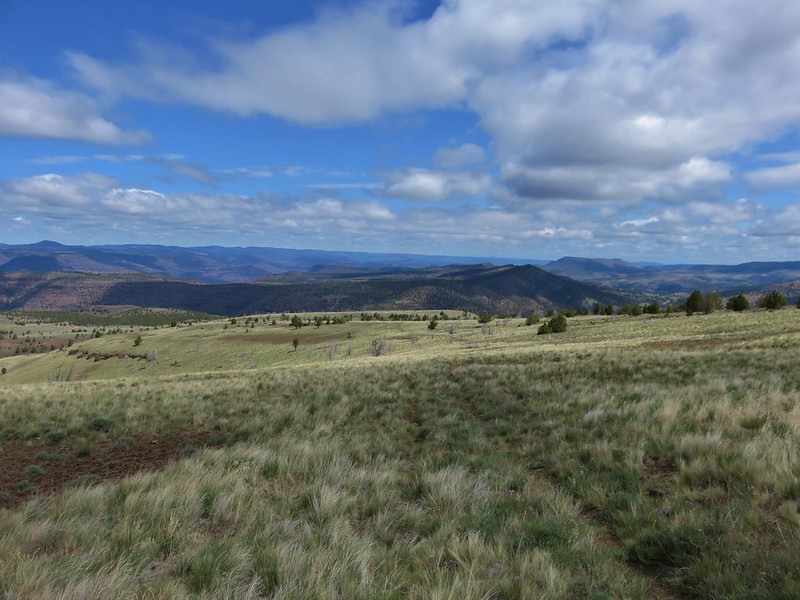
The fence eventually disappeared but we just stuck to the roadbed which was easy enough to follow. The open meadows allowed for some great views including the bottom portion of Mt. Jefferson.
IMG_4667

IMG_4668

IMG_4641

As we were taking in the views we spotted some pronghorns on the opposite hillside.
IMG_4647

IMG_4648

They were a lot further away than those we spotted in the car but at least now we could say we had seen some while hiking.

Just under a mile and a half from the old corral the roadbed came to a pass where it curved to the right and continued to the NW. Our goal, the summit of Sutton Mountain, was to our SE though so we left the roadbed here and headed uphill along the rim cliff.
IMG_4690

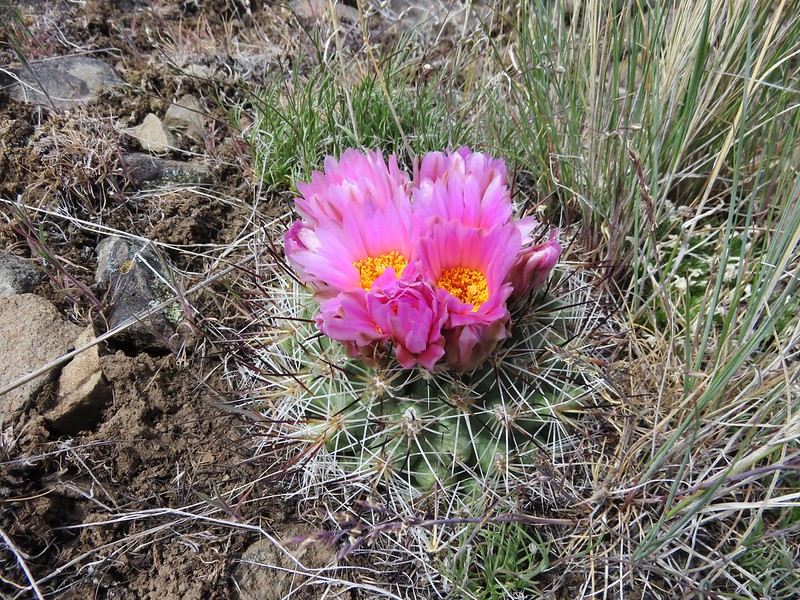
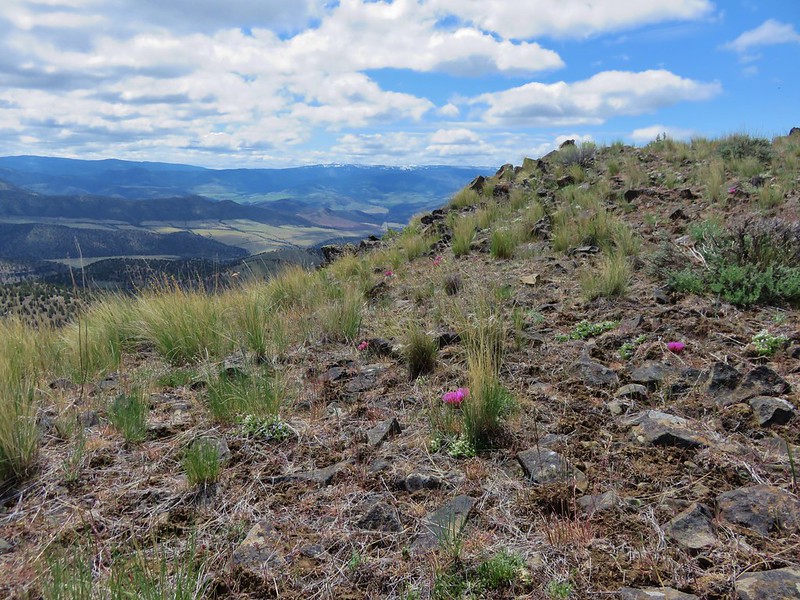
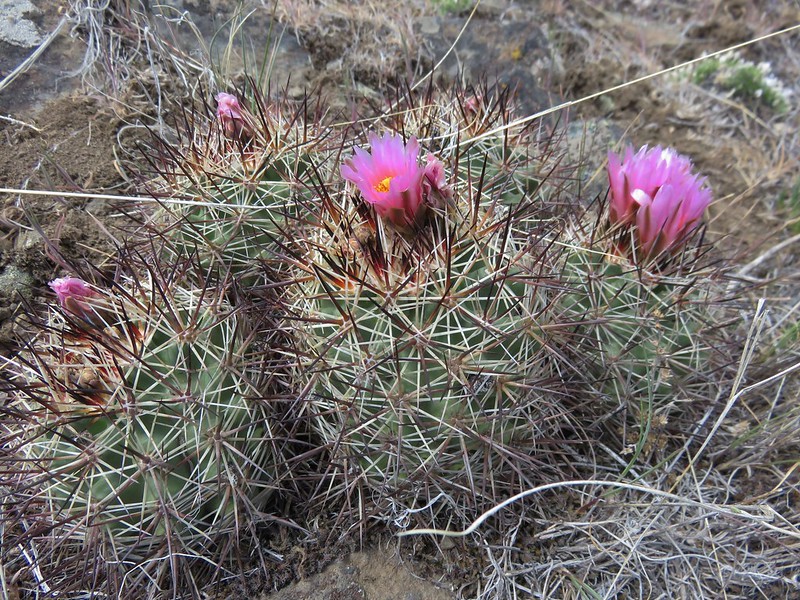
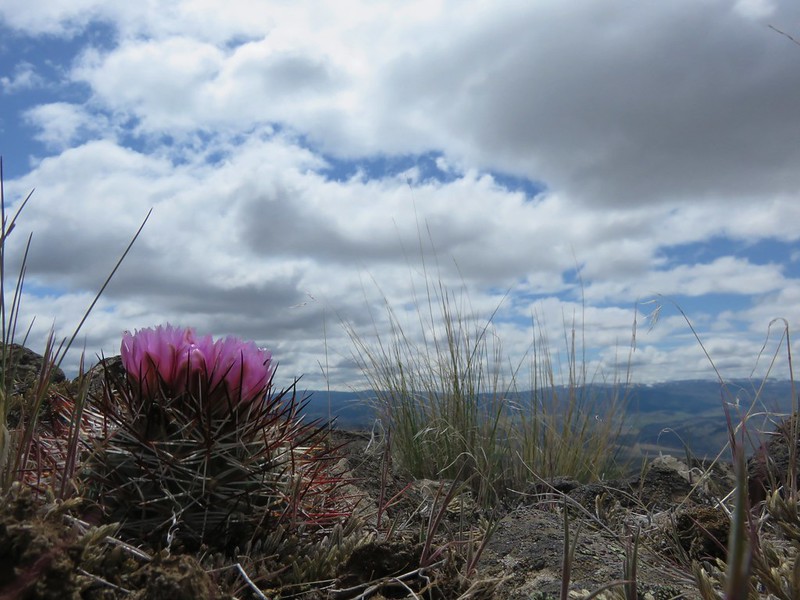
We had seen our pronghorns but not a hedgehog cactus which we knew to bloom in the area in late April or early May. We had nearly given up hope as we neared the summit when Heather spotted the first one.
IMG_4699

They seemed to only be present in a small area along the rim and then only on the SW facing slope.
IMG_4698

IMG_4703

IMG_4707

We spent quite a while studying the different cacti before finally making our way to the official summit where we took a break and admired the view.
IMG_4722

IMG_4723

Mt. Jefferson in the distance and the Painted Hills unit below.
IMG_4694

IMG_4697

Lookout Mountain in the Ochocos.
IMG_4689

Many butterflies were out as we returned the way we’d come.
IMG_4732

IMG_4743

IMG_4749

IMG_4751

We returned the way we’d come and found that the cows had moved from their earlier location and now the trailhead was crowded.
IMG_4755

The cows had thoroughly inspected our car leaving smudges in the dust along the body and drivers side window where they had licked the vehicle.

It was a wonderful day of hiking. It had been warm but not too hot which was nice given the lack of shade on these hikes. There was a great variety of wildflowers and wildlife including several of each that were new to us, and there were birds signing almost everywhere we were. We couldn’t recall another hike with as much birdsong, much of which came from western meadowlarks. For what it’s worth Sutton Mountain made its case to for becoming an officially designated wilderness. Happy Trails!

Flickr:https://www.flickr.com/photos/9319235@N02/albums/72157667625239612