Categories
Coastal Range Hiking Oregon Trip report

Mt. Hebo and Munson Falls

Mt. Hebo was another hike on our list of do-overs. Our previous visit had been on May 30, 2011 which normally would be a good time for a visit to the meadows that dot the top of the mountain. 2011 was not a normal year though and our visit that day turned out to be a cold and foggy trek past patches of lingering snow to a view-less summit. We decided this was the year for the re-hike and we were even able to do it on the same day as before May 30, 2015. This time we threw in a second short stop at Munson Falls State Park to check out 266′ Munson Falls. Both of these hikes are located near Tillamook, OR.

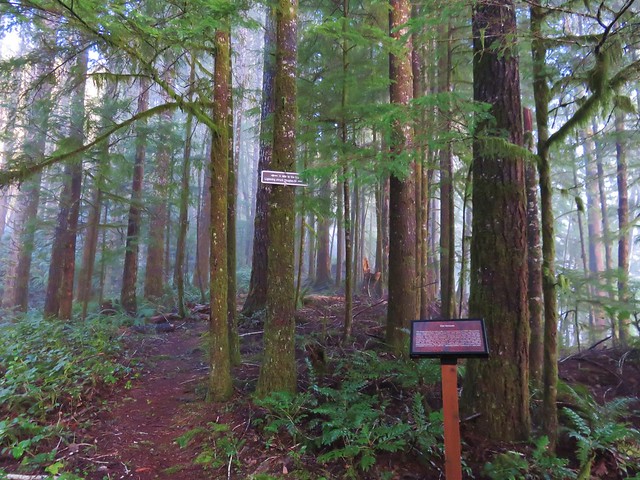
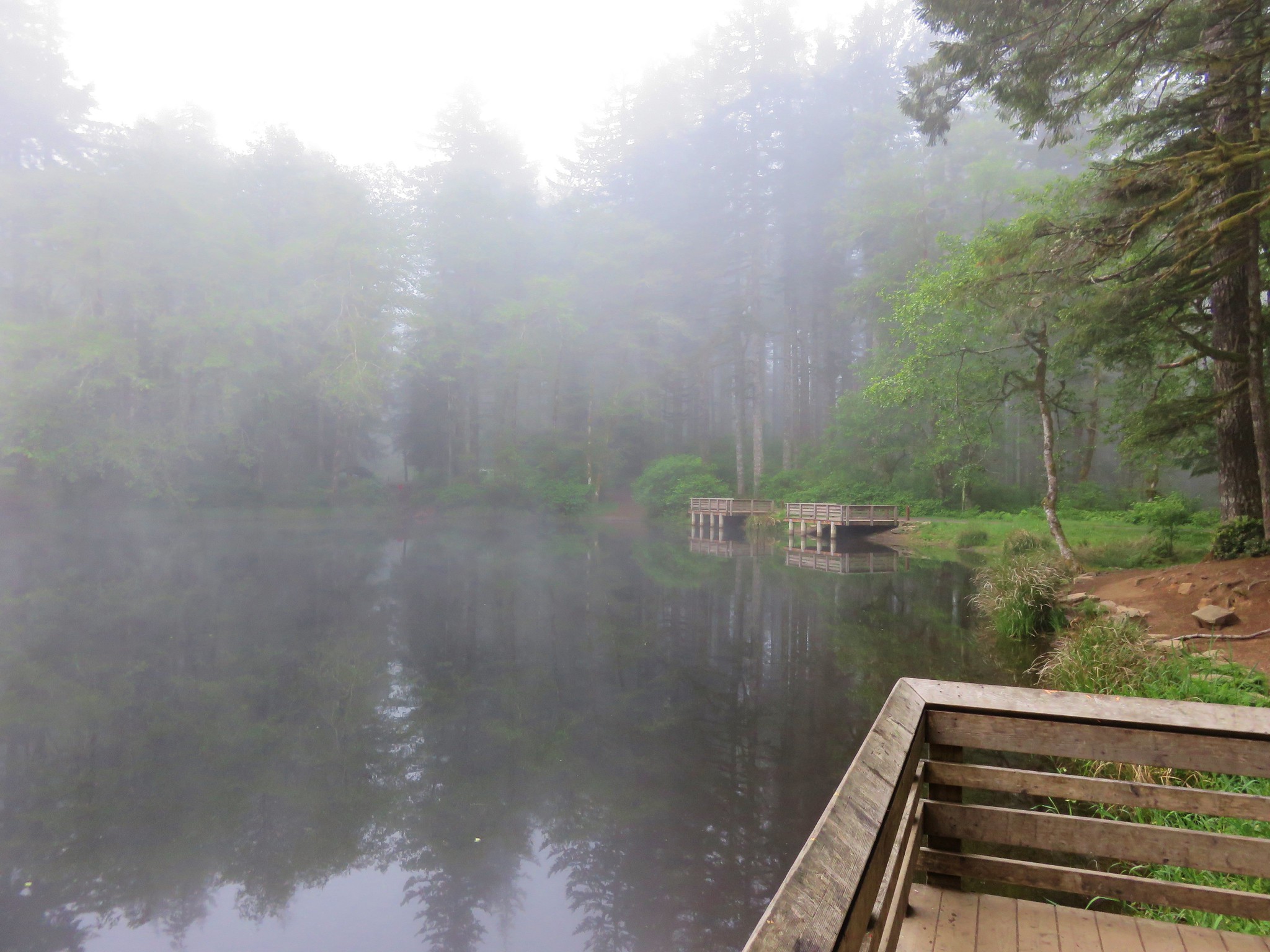
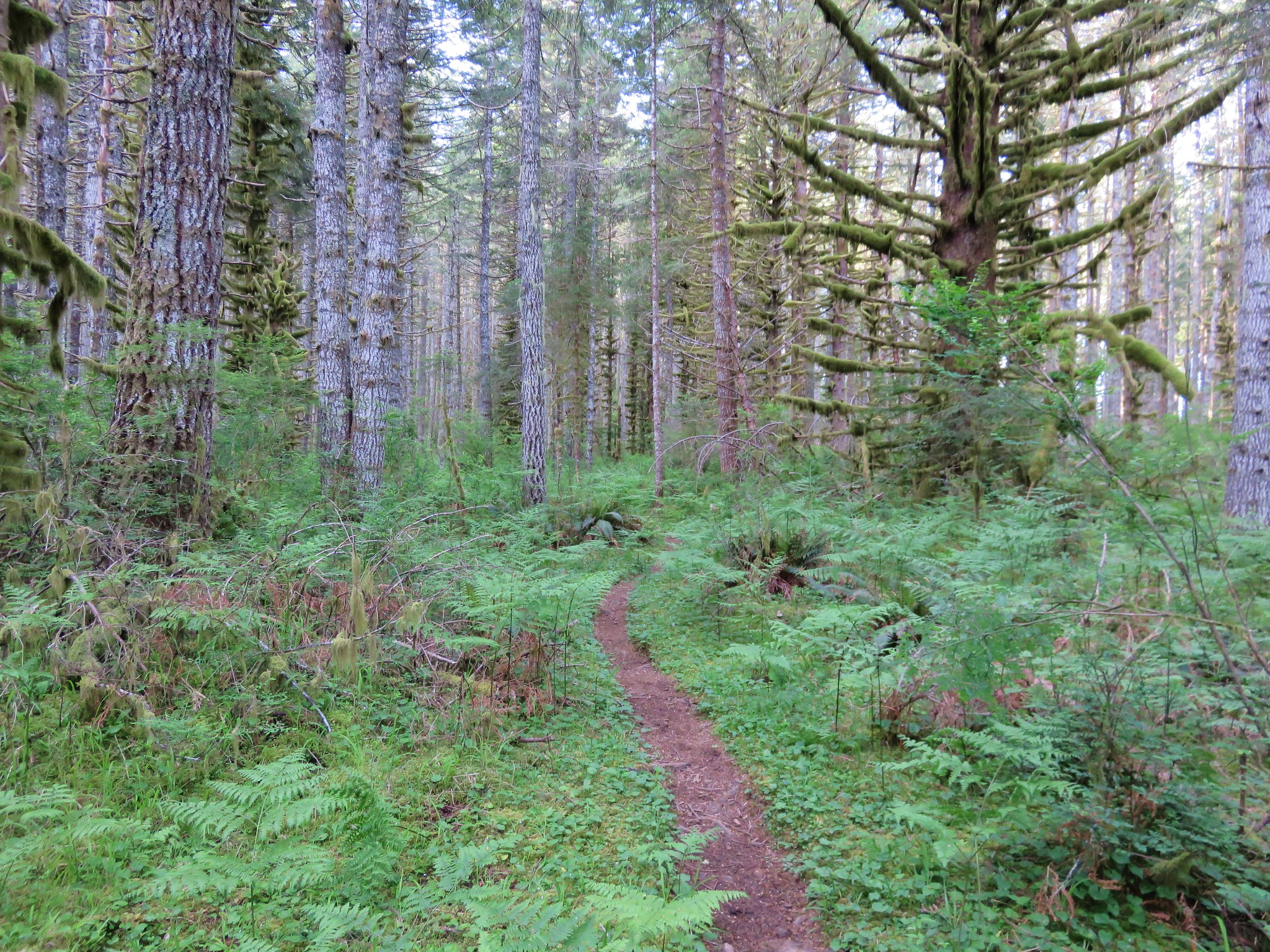
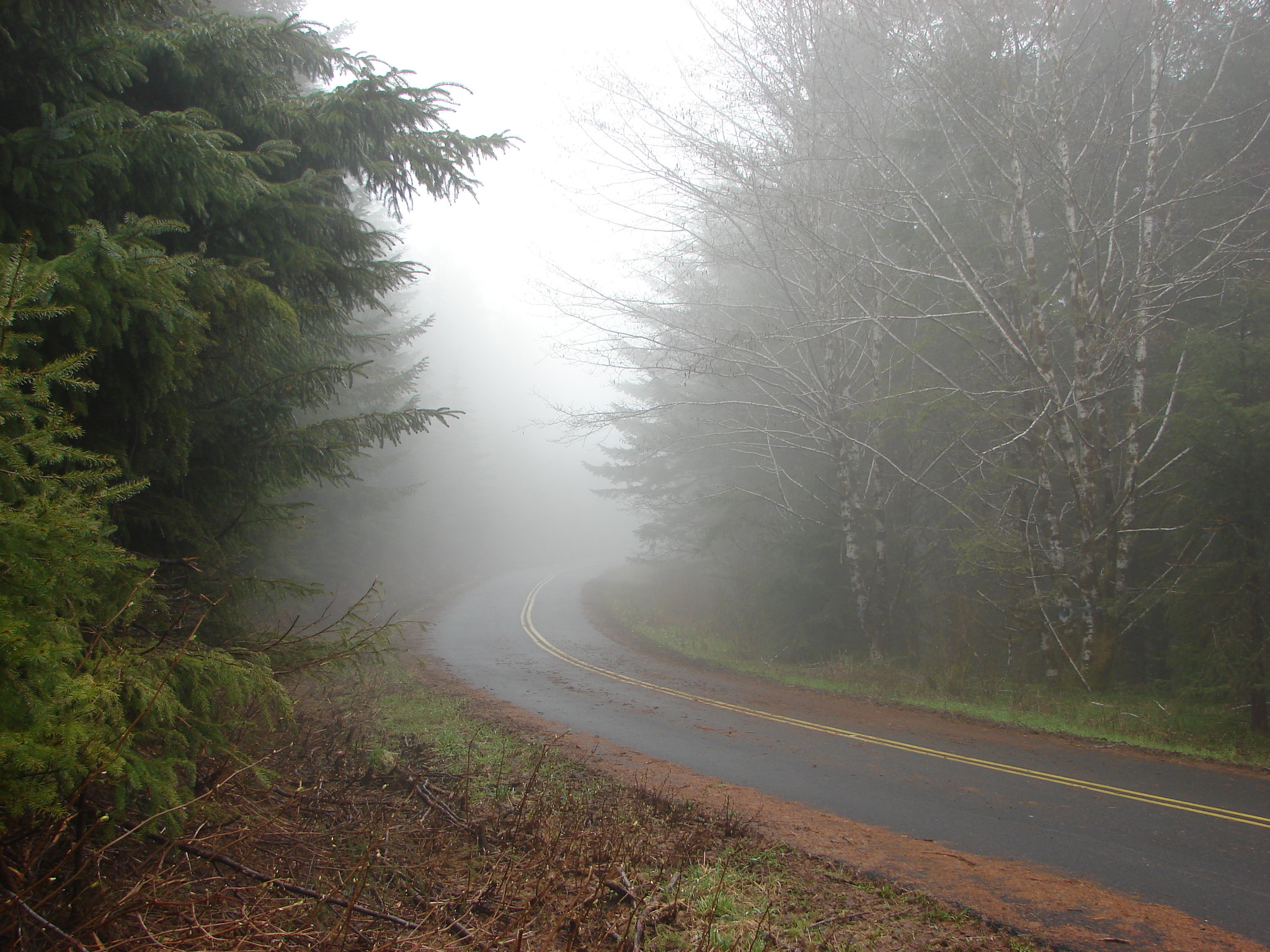
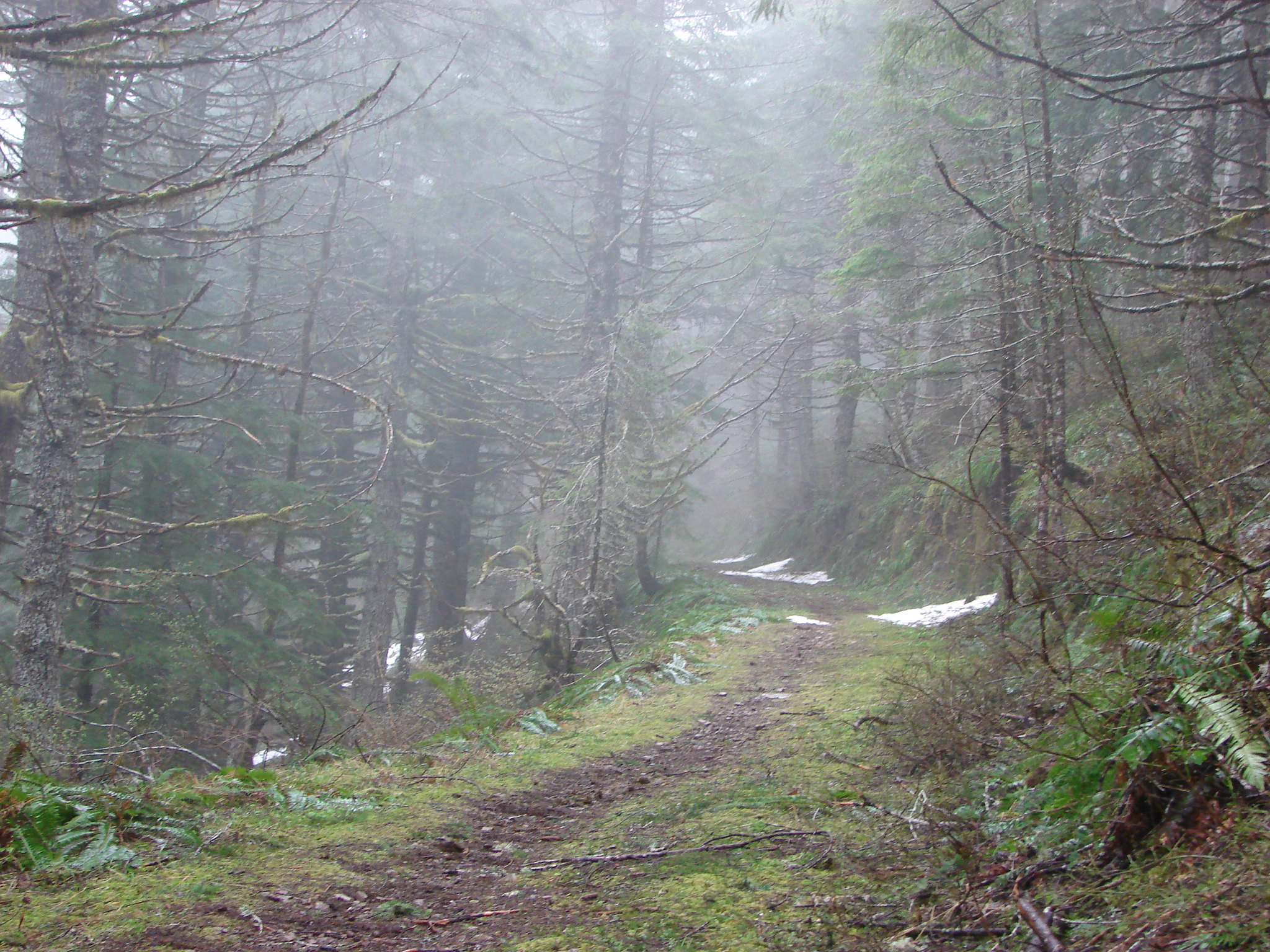
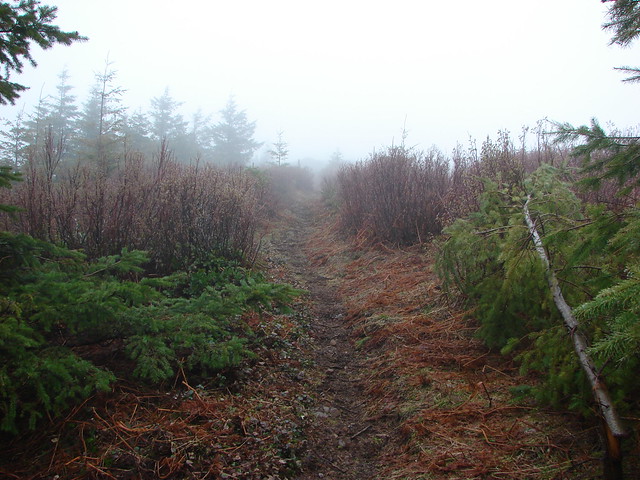
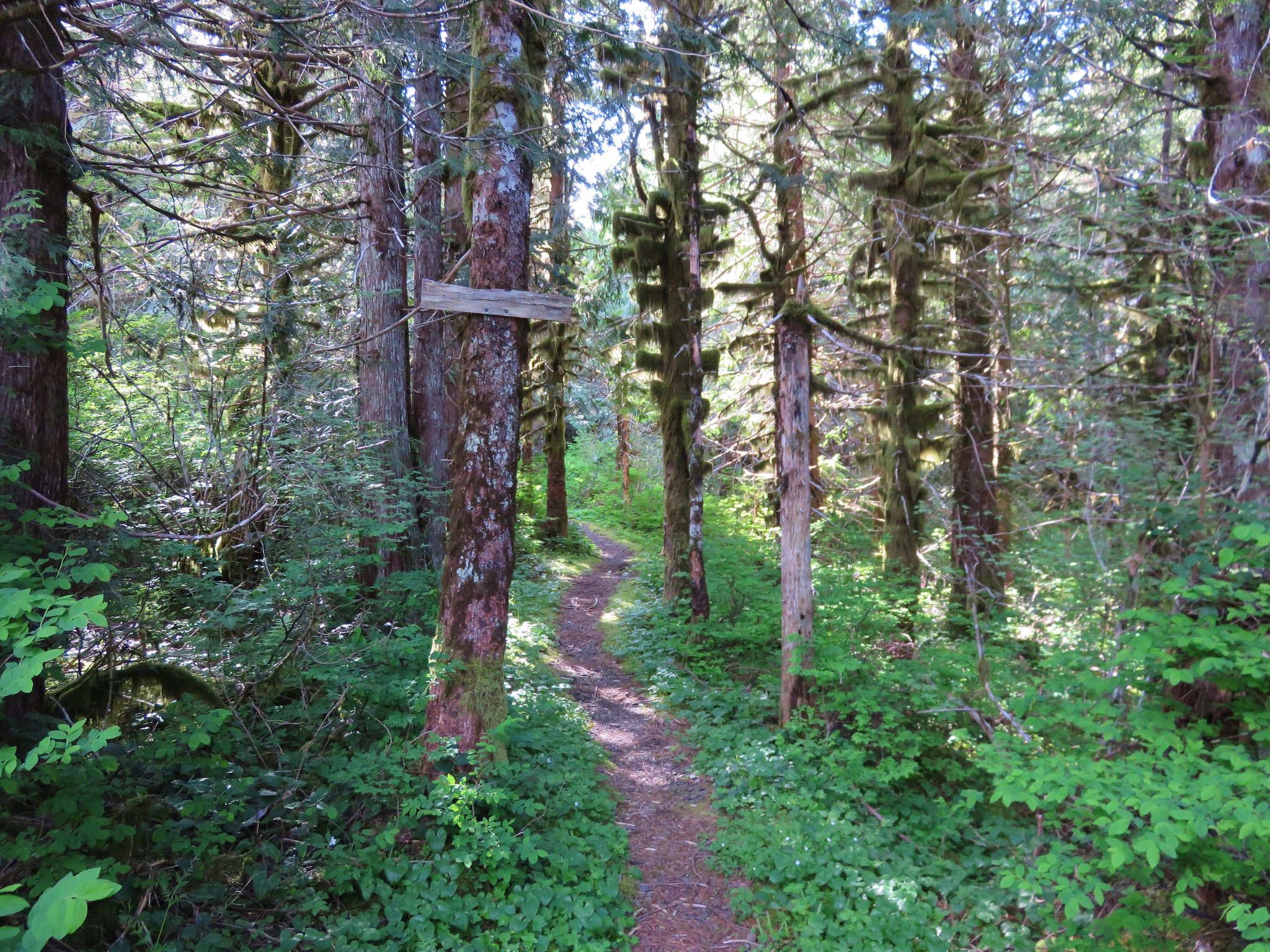
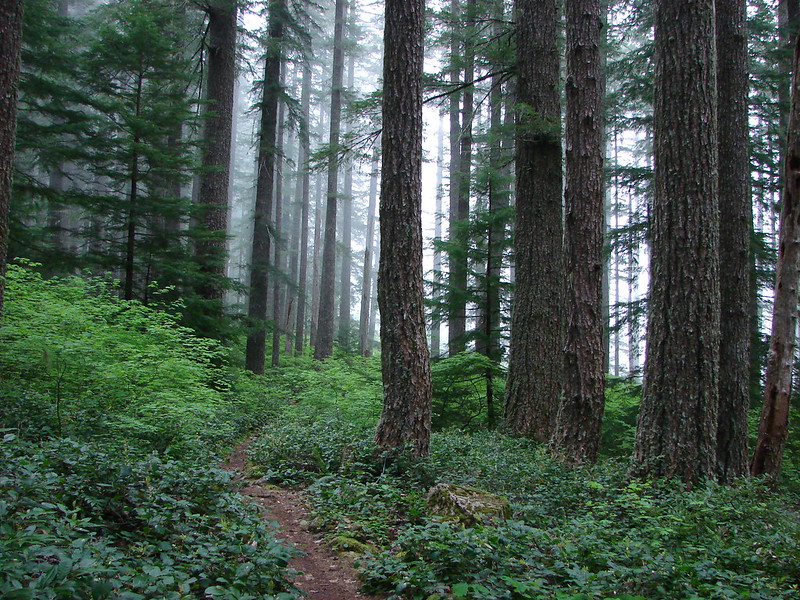
We started the morning at Hebo Lake Camp Ground at the Pioneer Indian Trail trailhead. When we arrived we were having a bit of deja-vu as fog filled the forest much like our first visit. We knew there would be no snow this year, but would we get any views. The trail starts near the far end of the lake and heads into the forest.
IMG_2347

IMG_2348

Not too far along the trail we came to an unsigned junction that neither of us recalled from our first visit. It wasn’t marked on the map in our field guide either and we at first turned left which is incorrect. Luckily Heather spotted a “Trail ->” sign pointing back the way we’d come which caused me to double check with our GPS (which I should have done at the junction anyway) and we realized we needed to go back and take the right had fork.
Unsigned jct.
IMG_2356

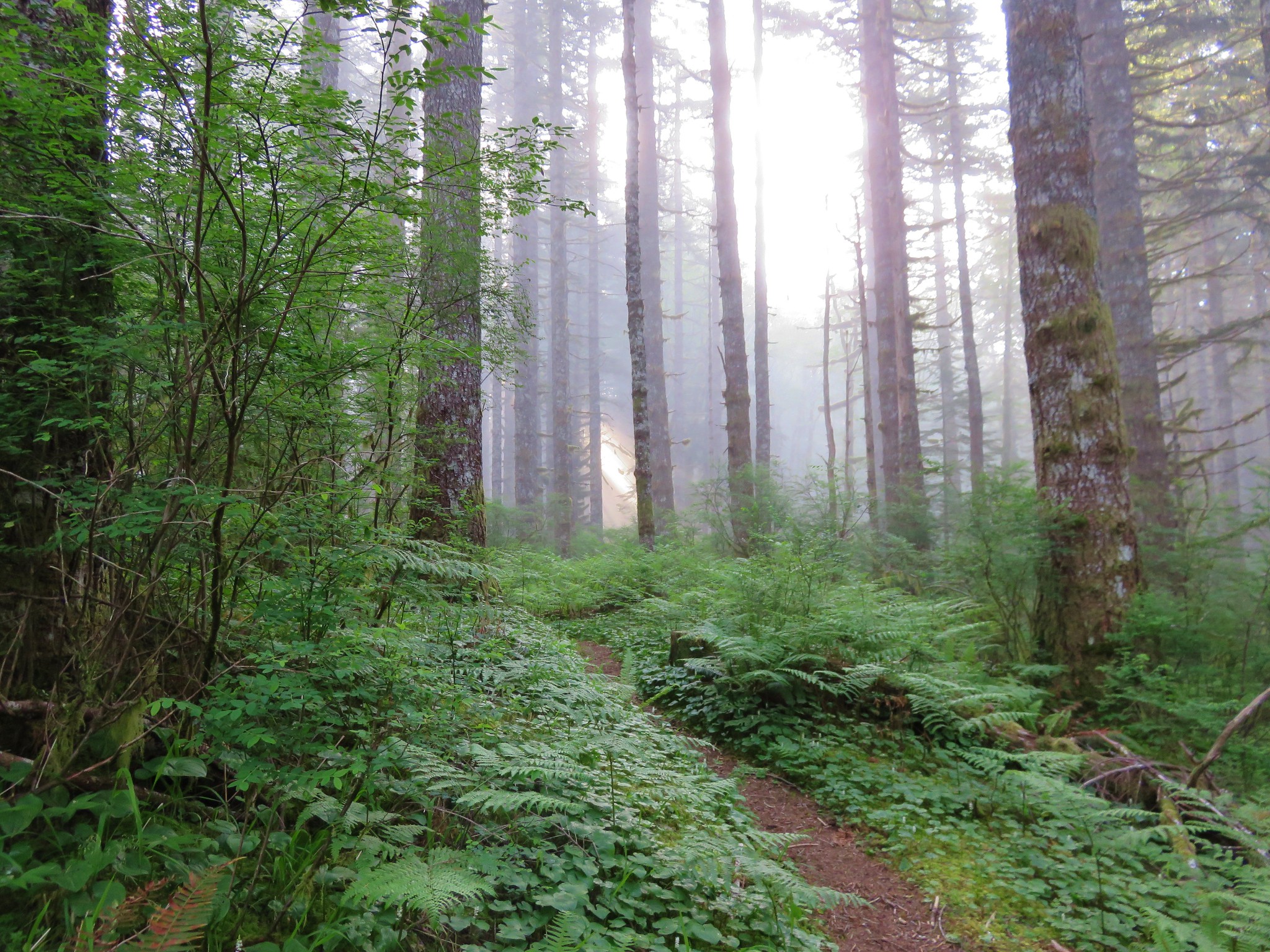
As we continued along the sun began to burn through the clouds which was a welcome sight.
IMG_2357

IMG_2365

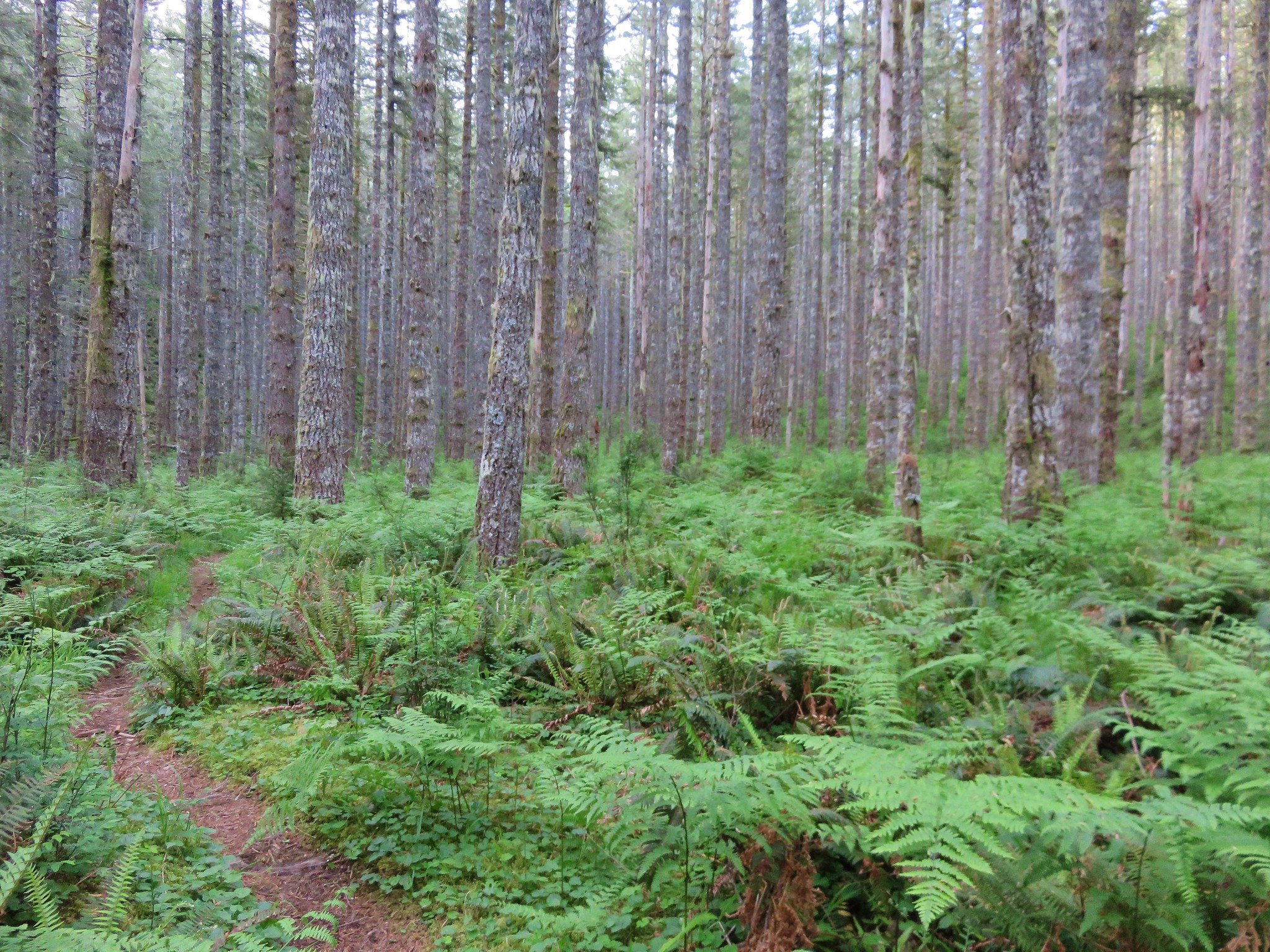
The trail passes several interpretive signs before reaching a plantation of trees which had been planted by the forest service in the early 1900s. The contrast between the two sections of forest is really interesting.
Forest before the plantation.
IMG_2369

Some of the plantation trees.
IMG_2375

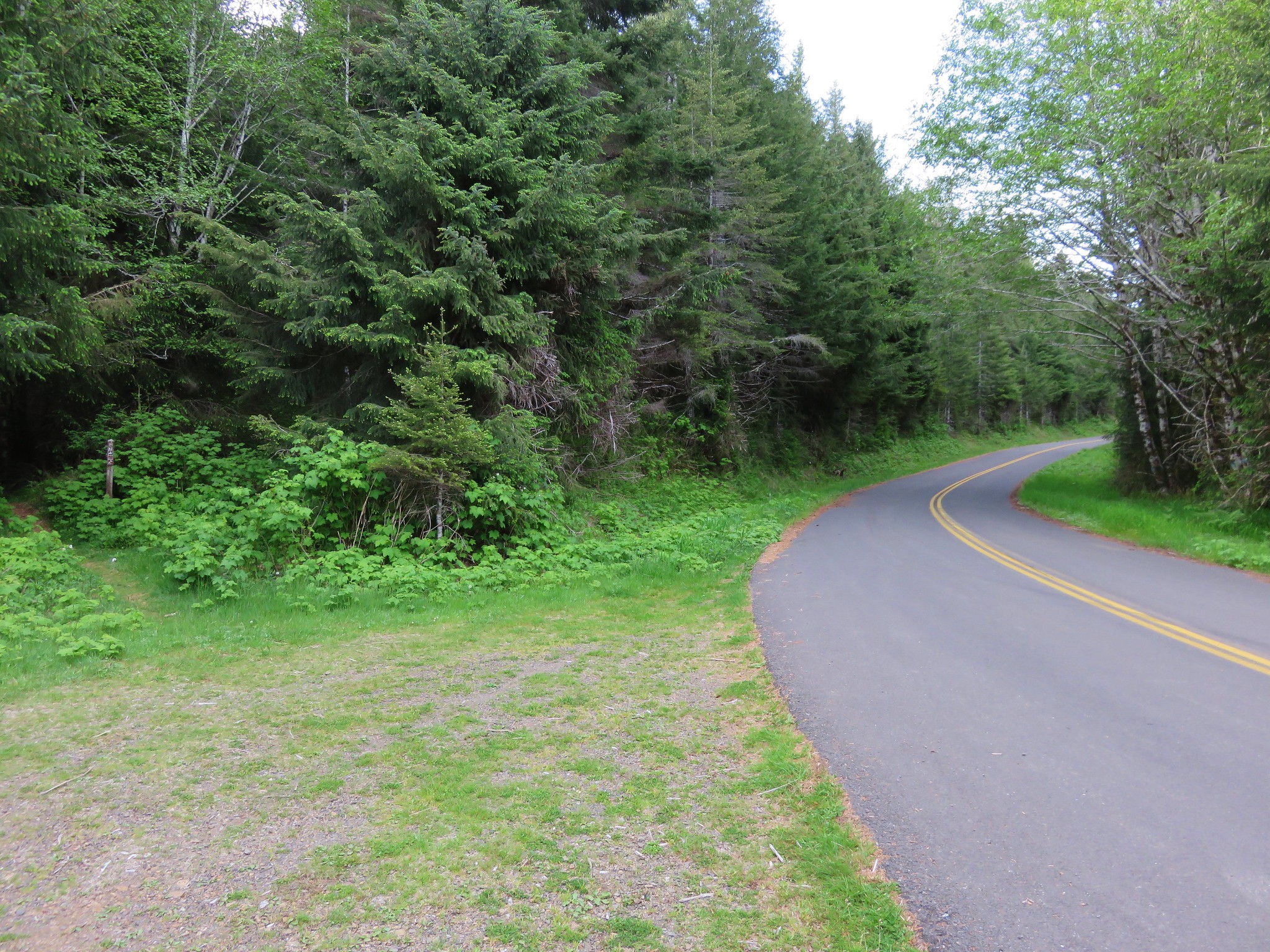
The trail crosses a gravel road then at the 2.9 mile mark after a good climb crosses paved road 14. I had taken a photo at this crossing on our first visit allowing for a good comparison of just how different things were this time around.
2011
029

2015
IMG_2384

After crossing the road the trail follows an old road bed which is where we had encountered the first of the snow in 2011. This time around we encountered flowers instead.
2011
032

2015
IMG_2403

IMG_2393

IMG_2398

IMG_2401

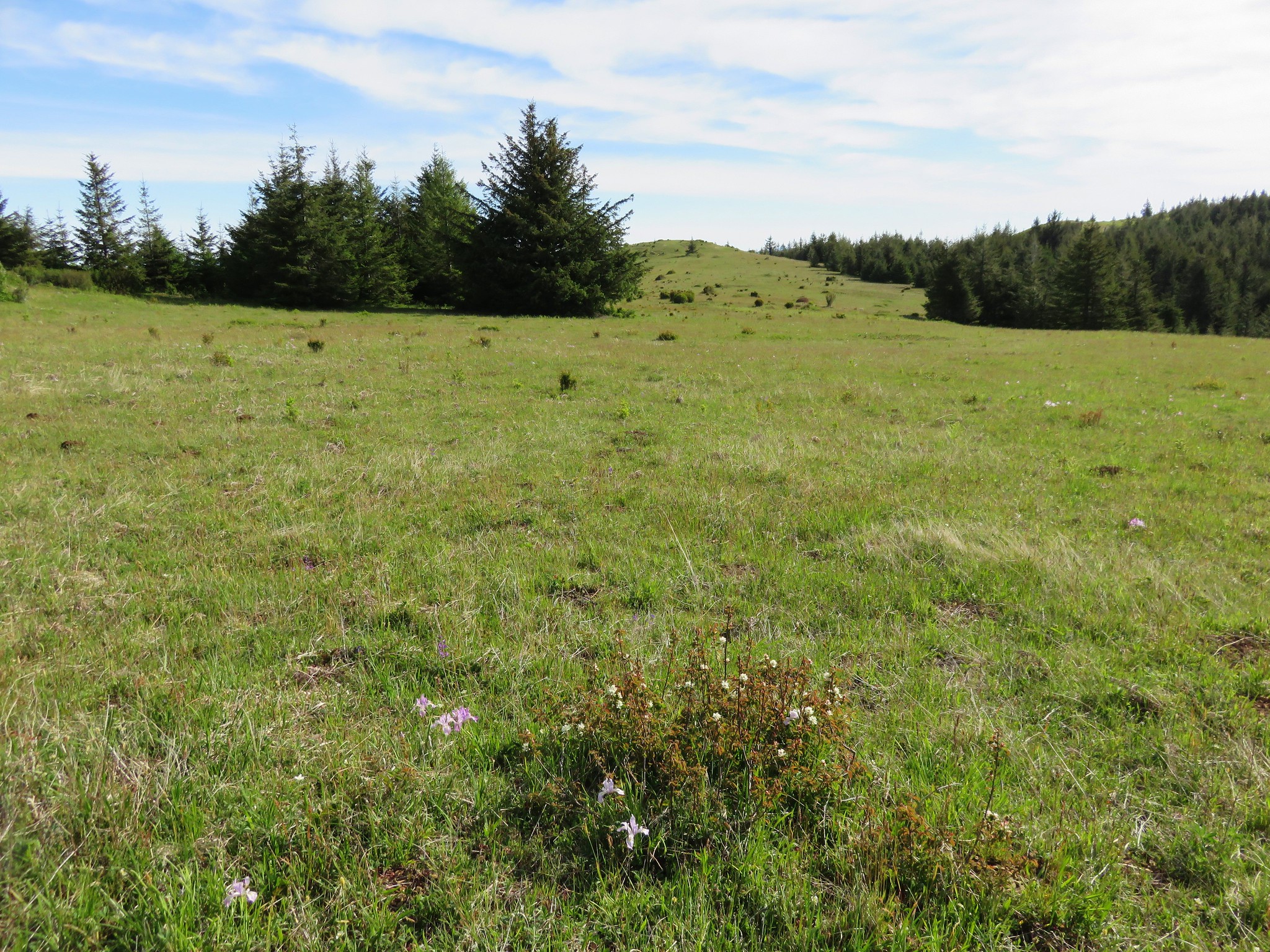
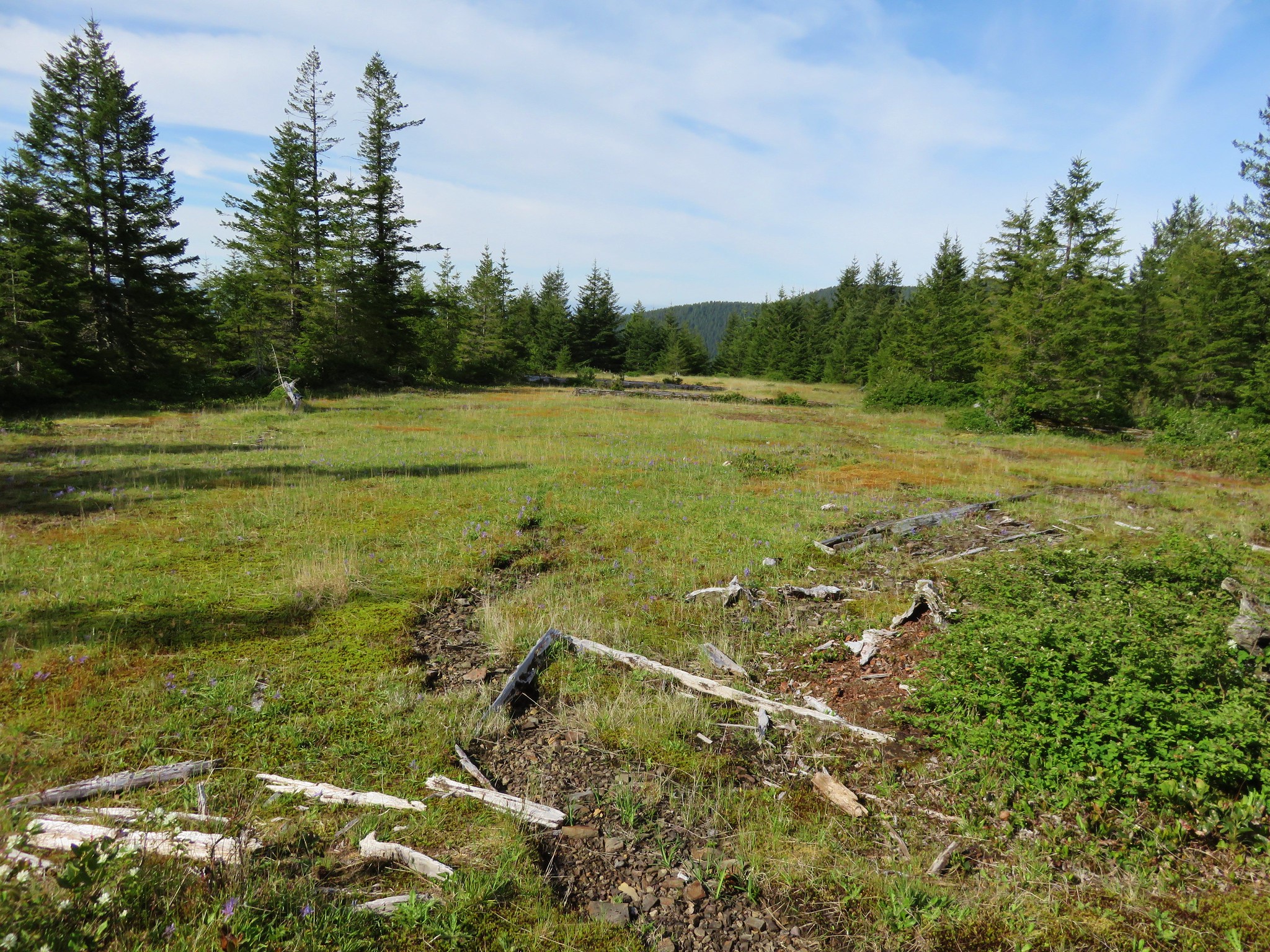
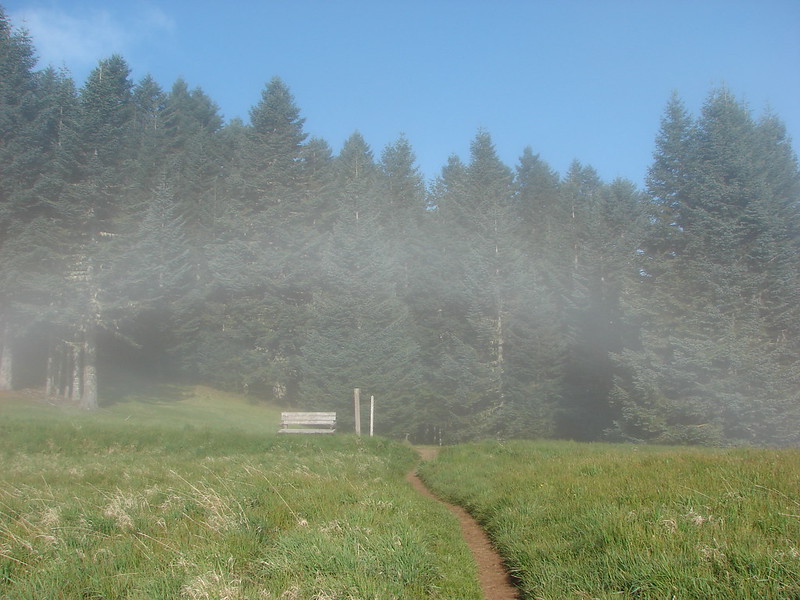
Just over a mile from the road 14 crossing the trail enters the first meadow. Here again we found a vastly different scene than on our previous visit.
2011
035

2015
IMG_2408

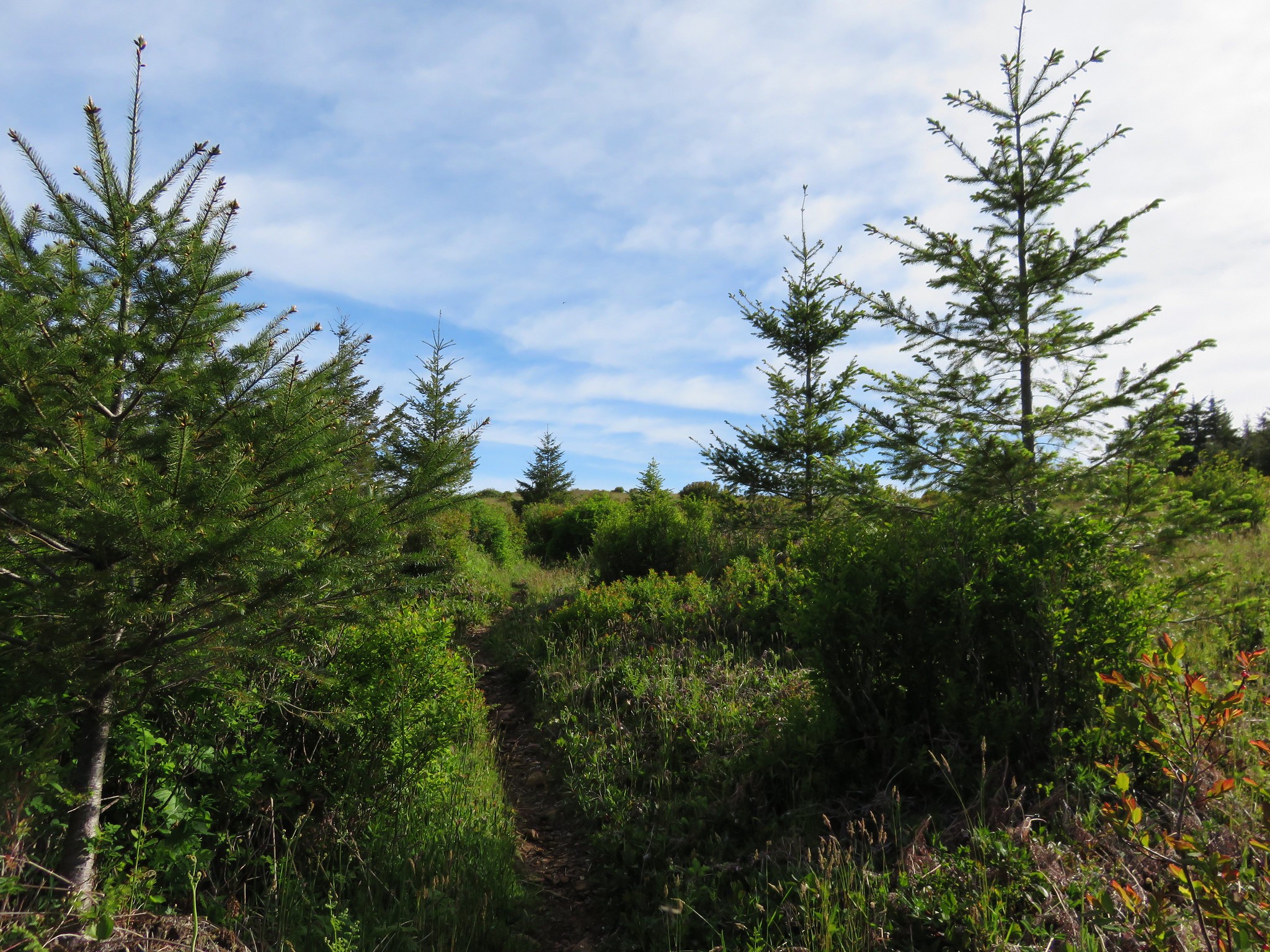
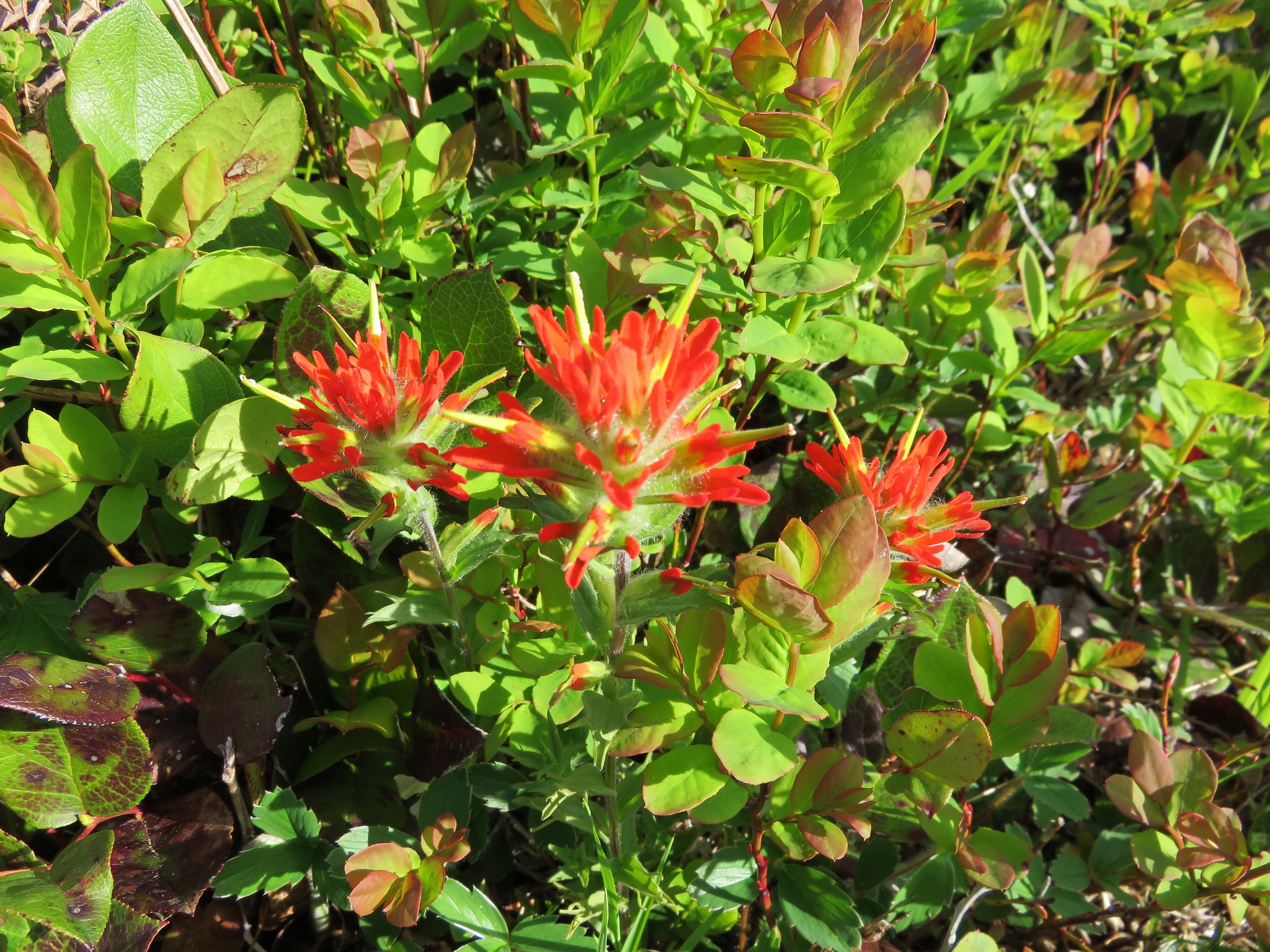
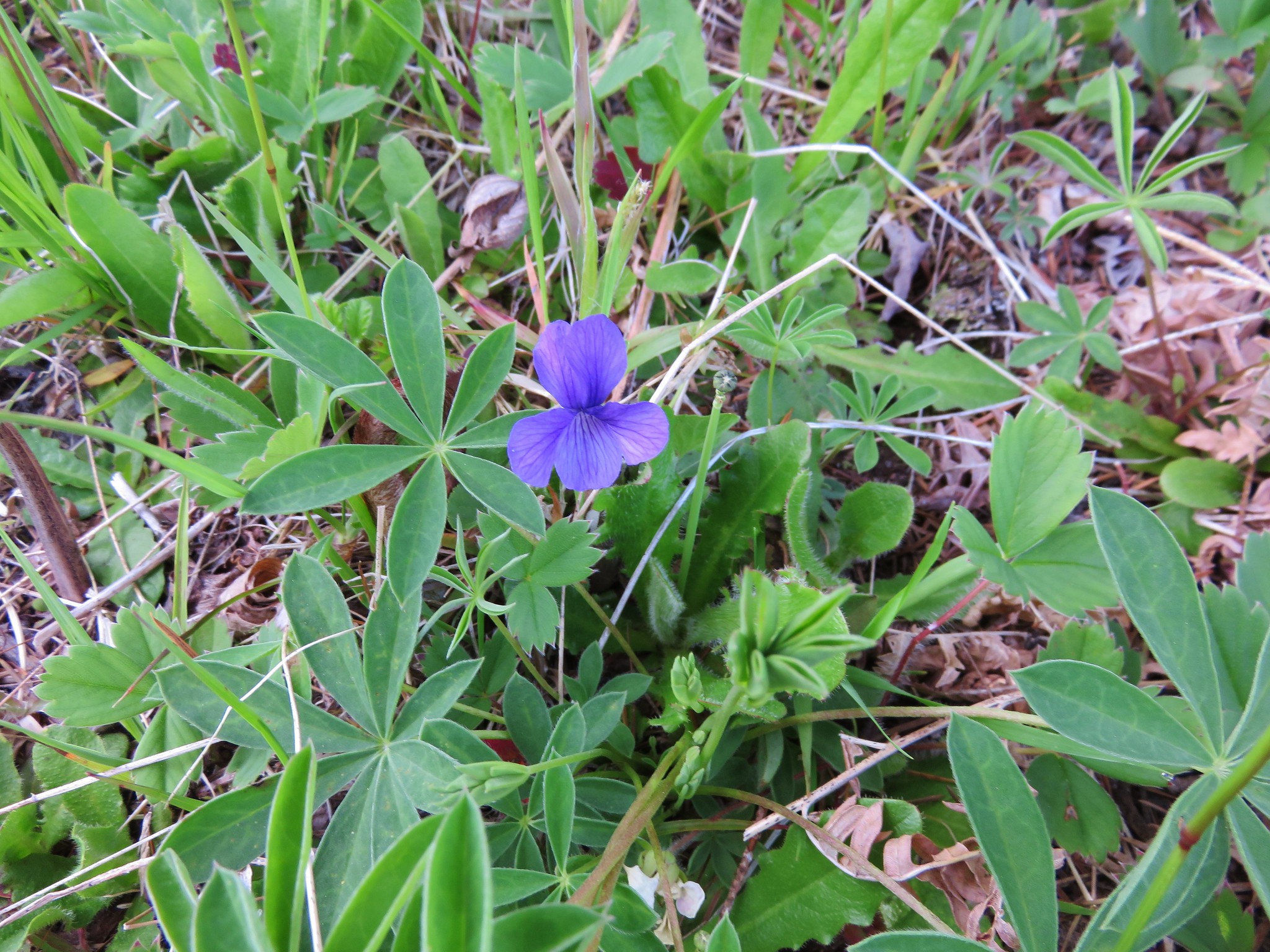
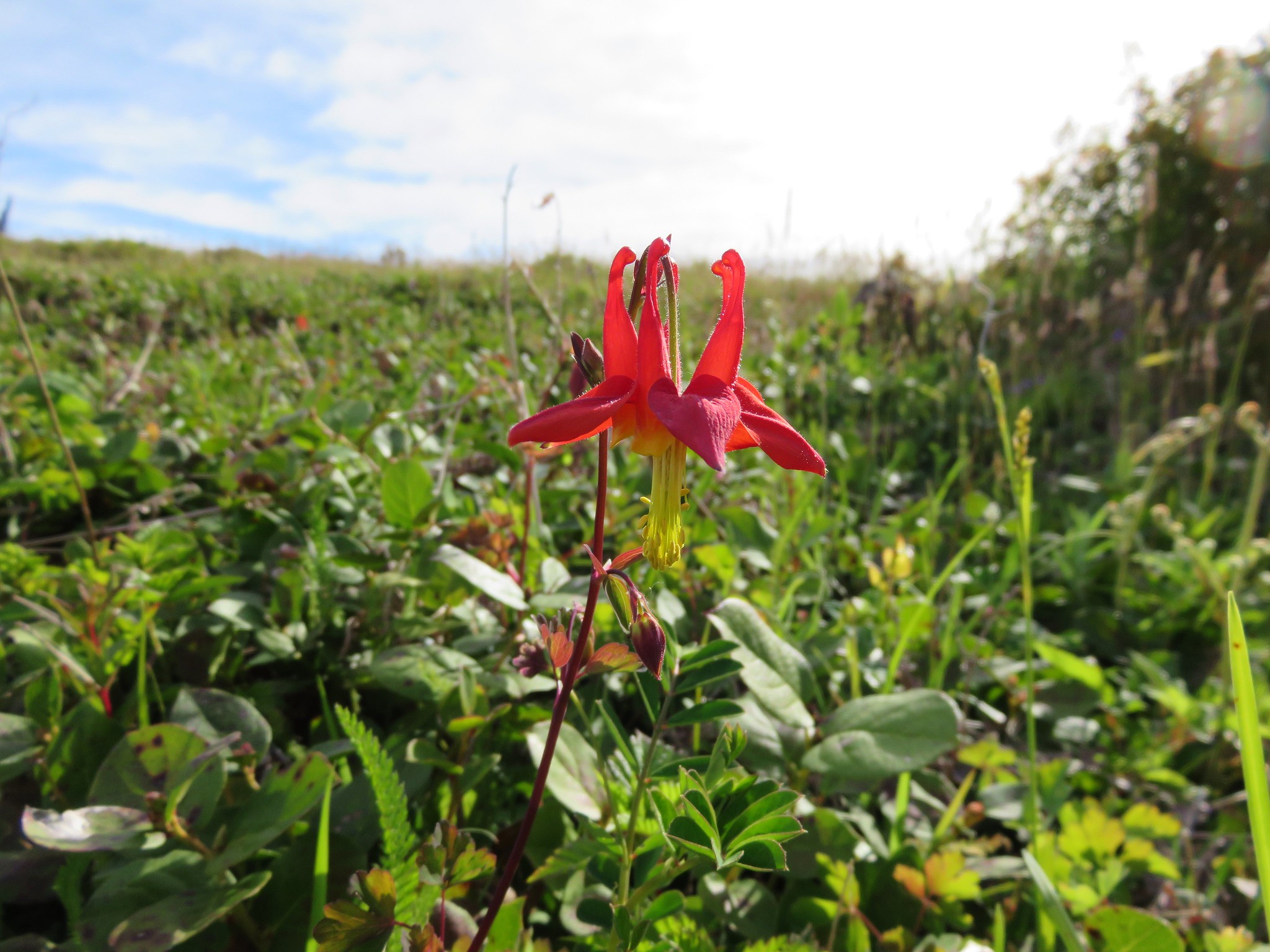
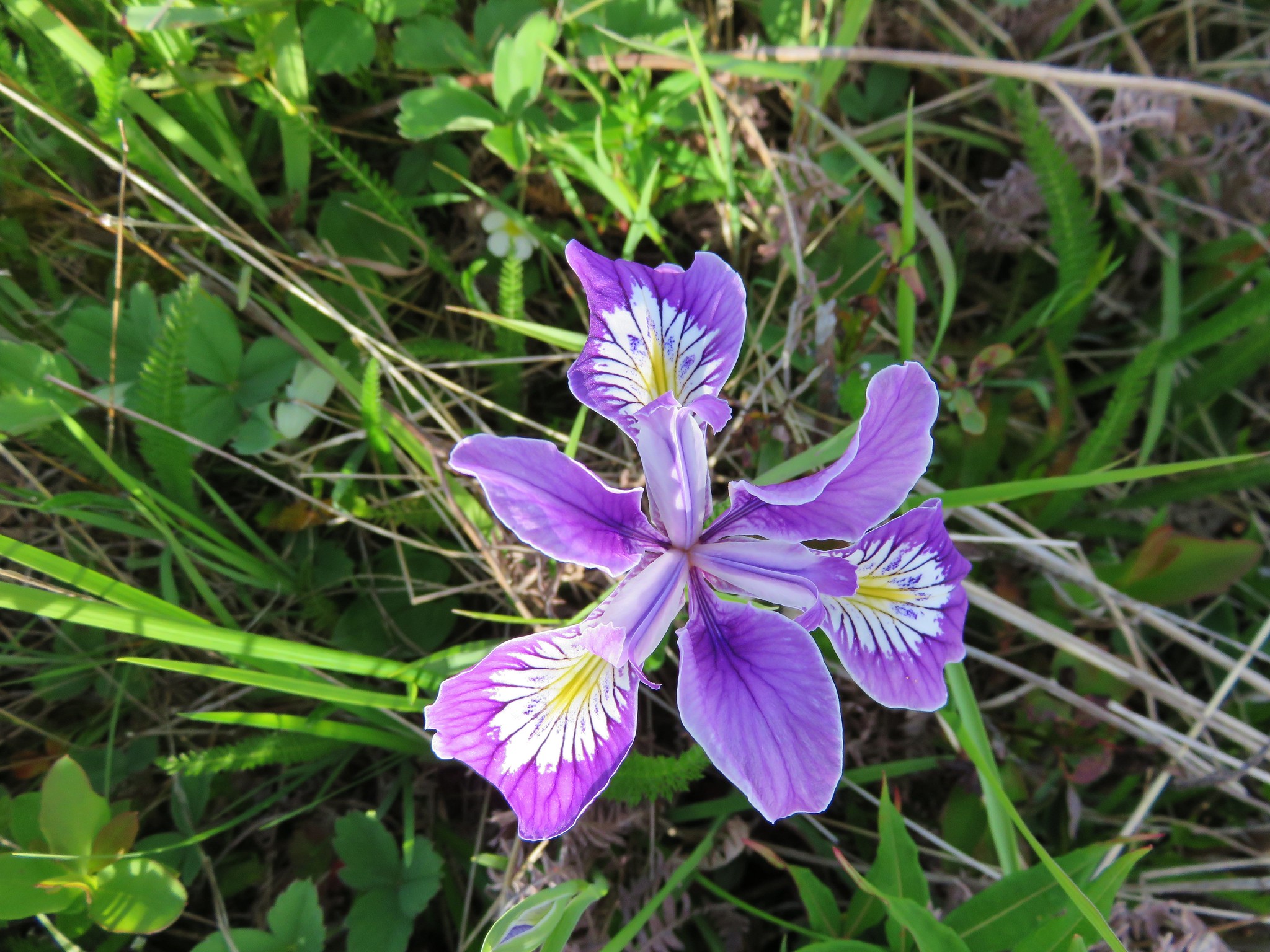
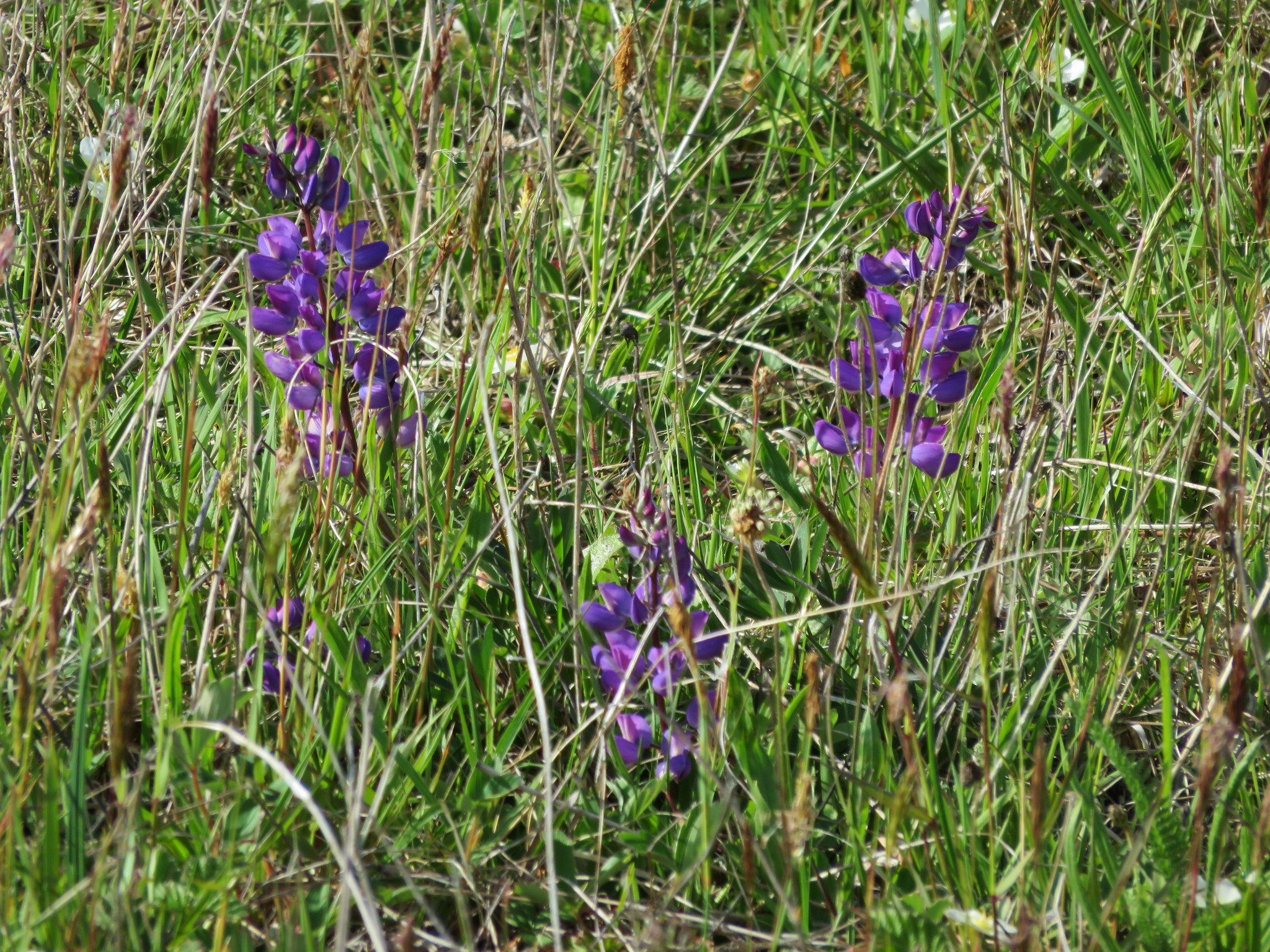
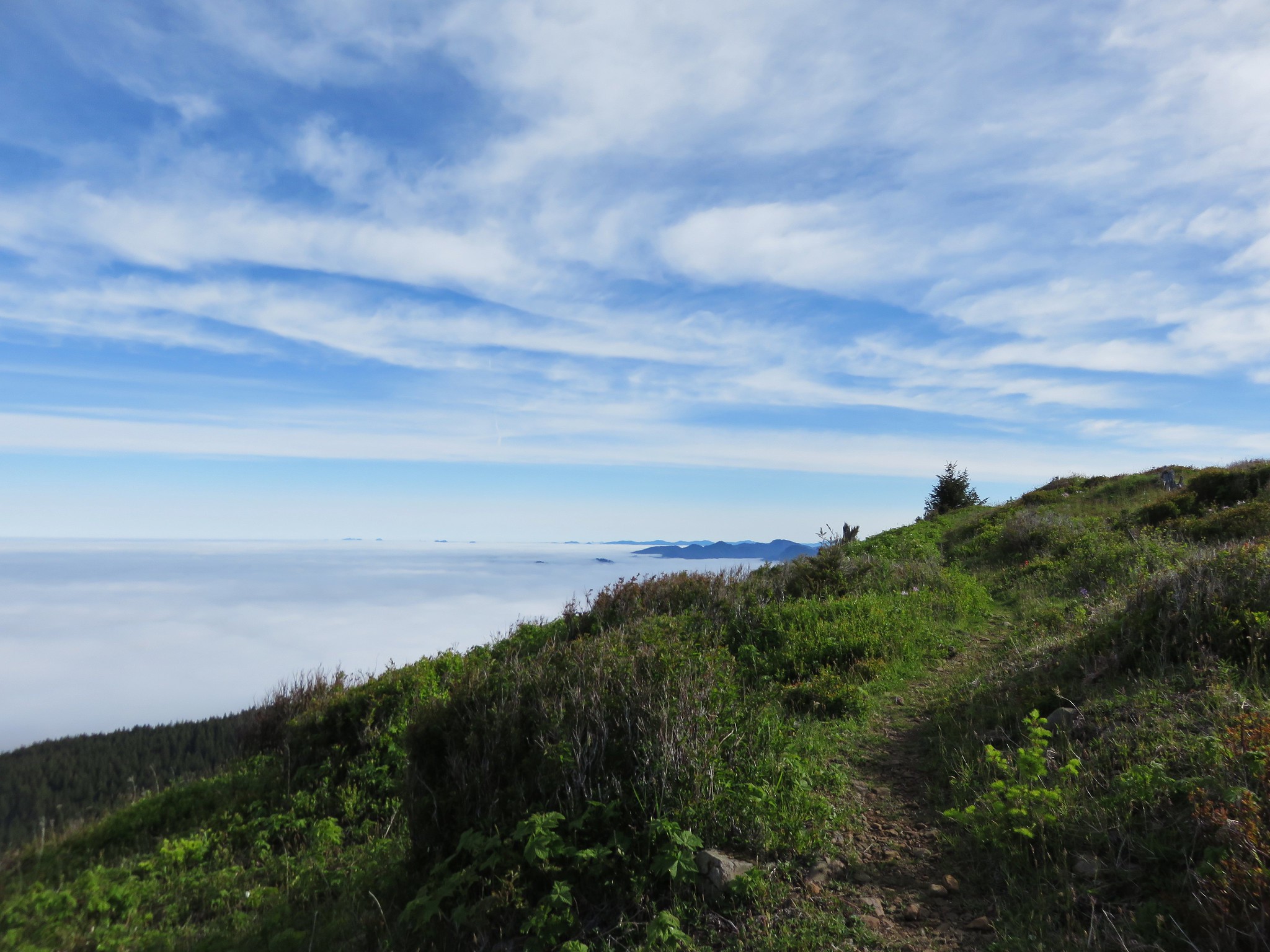
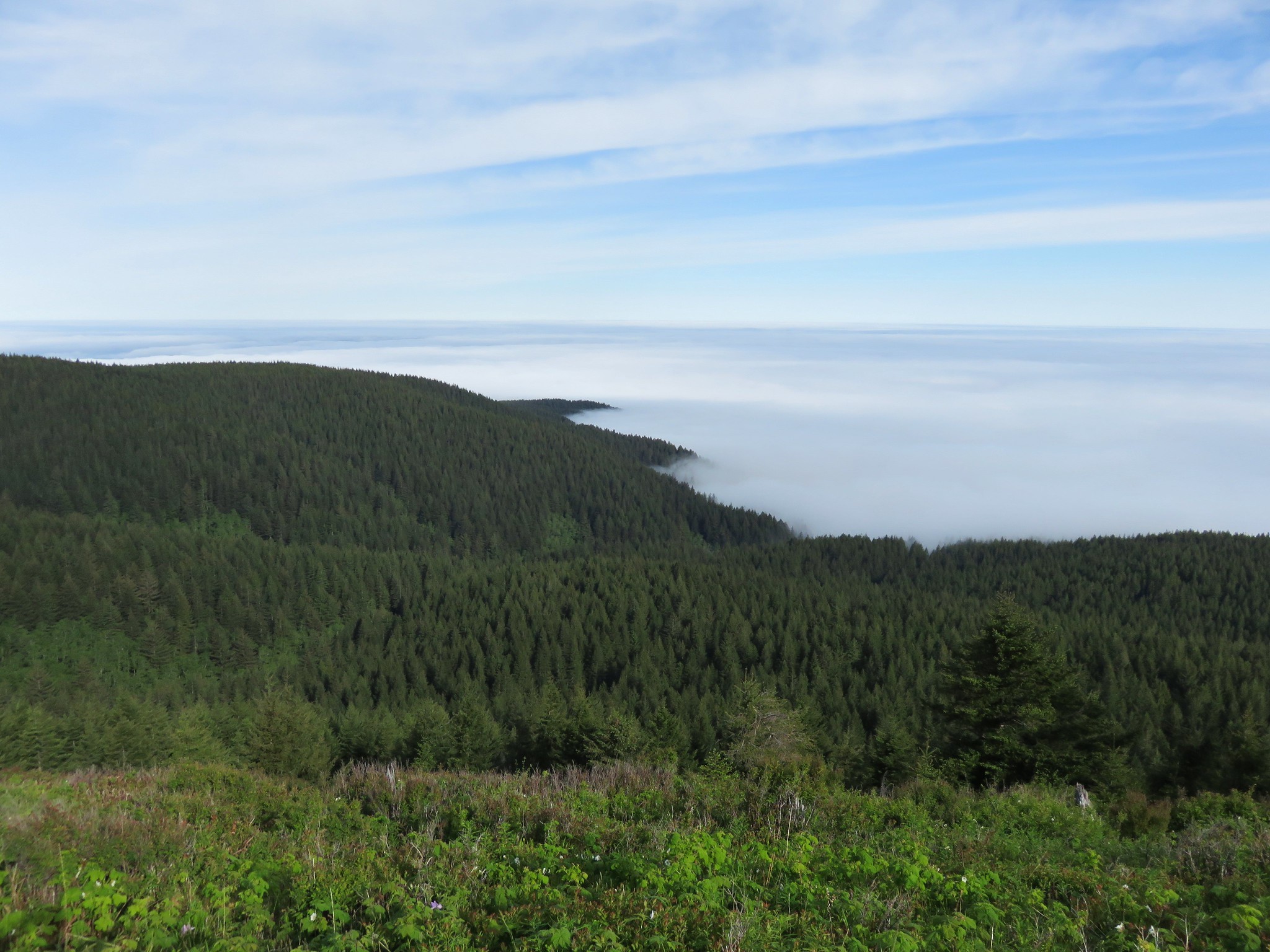
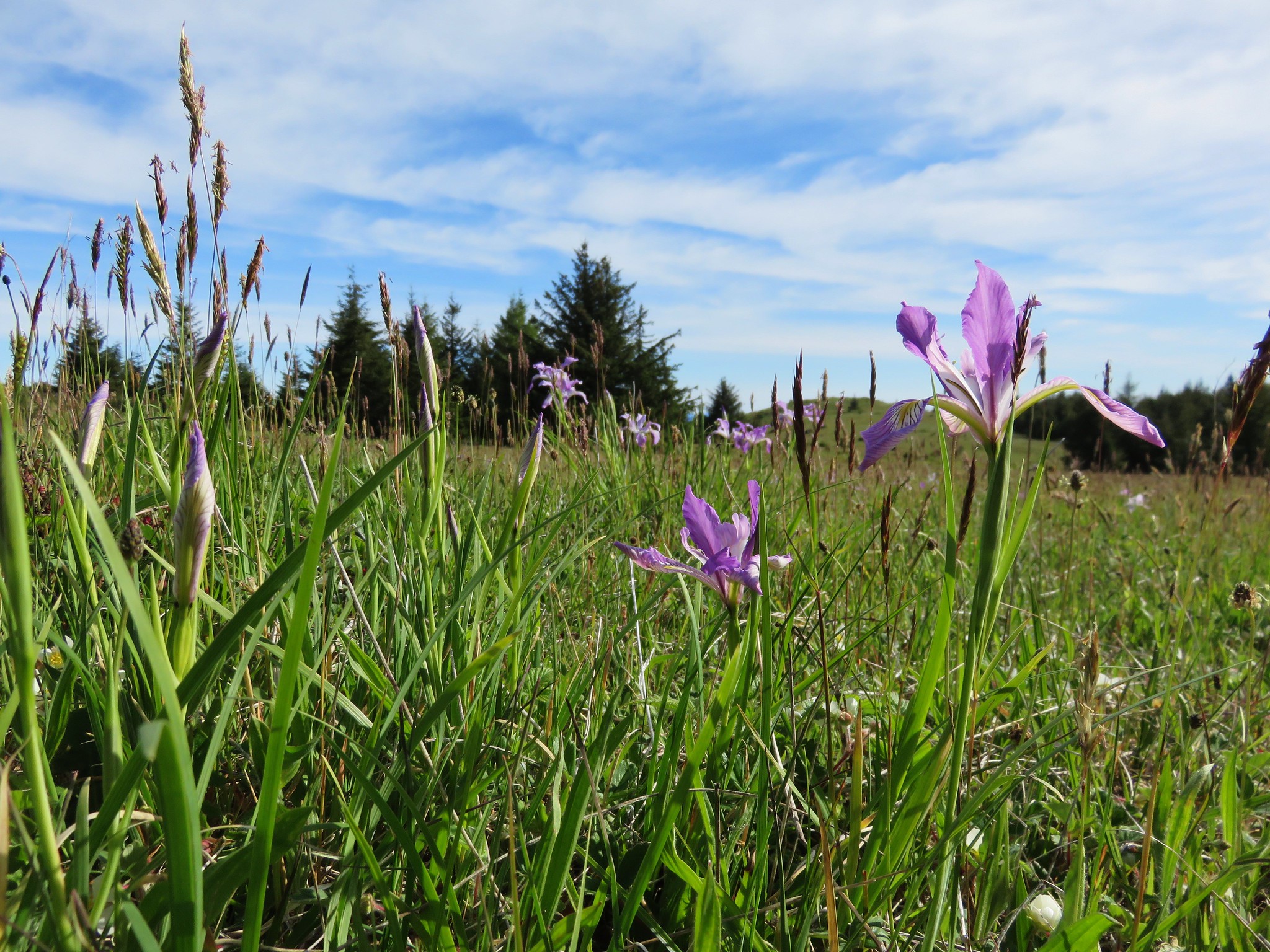
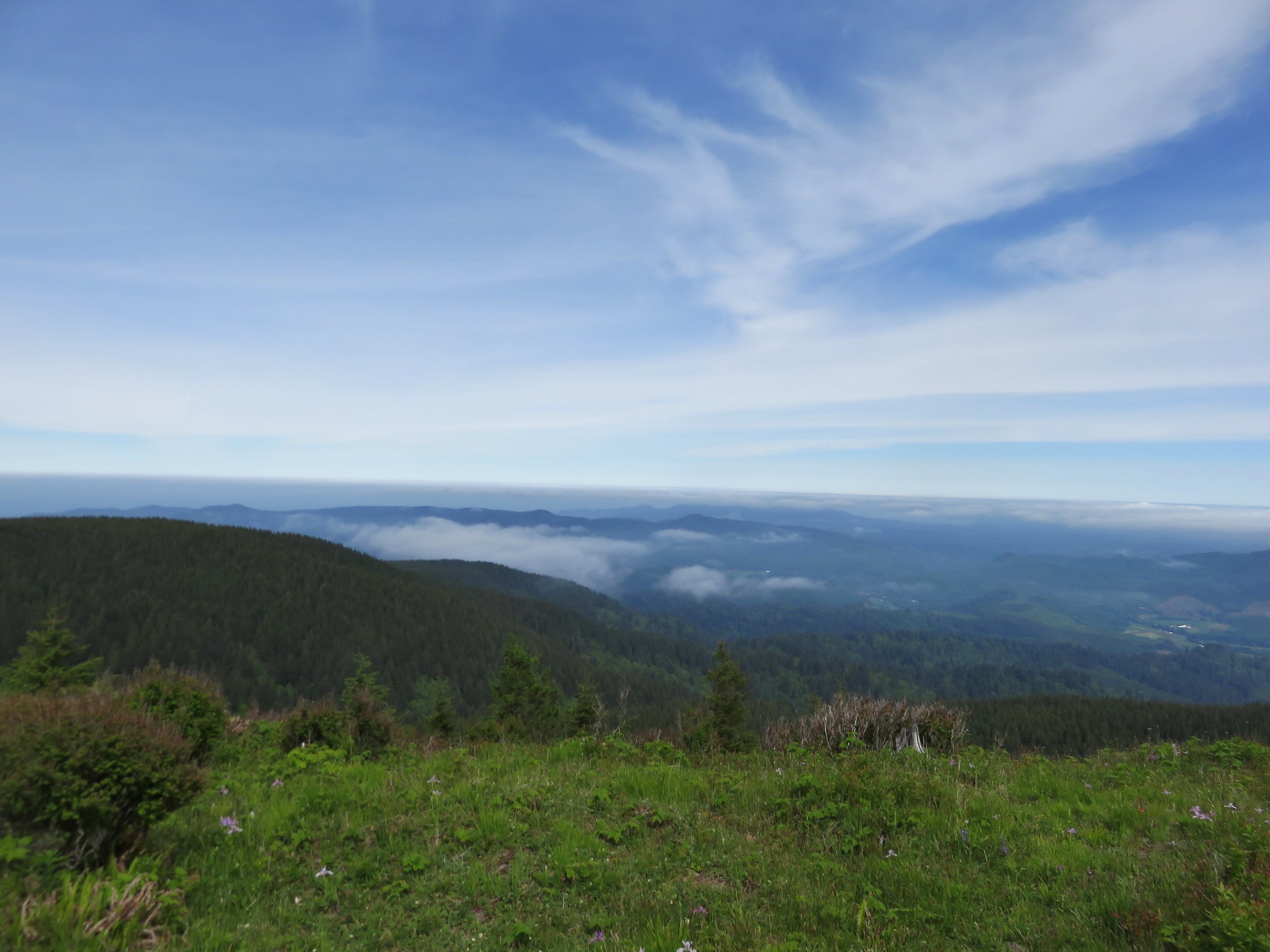
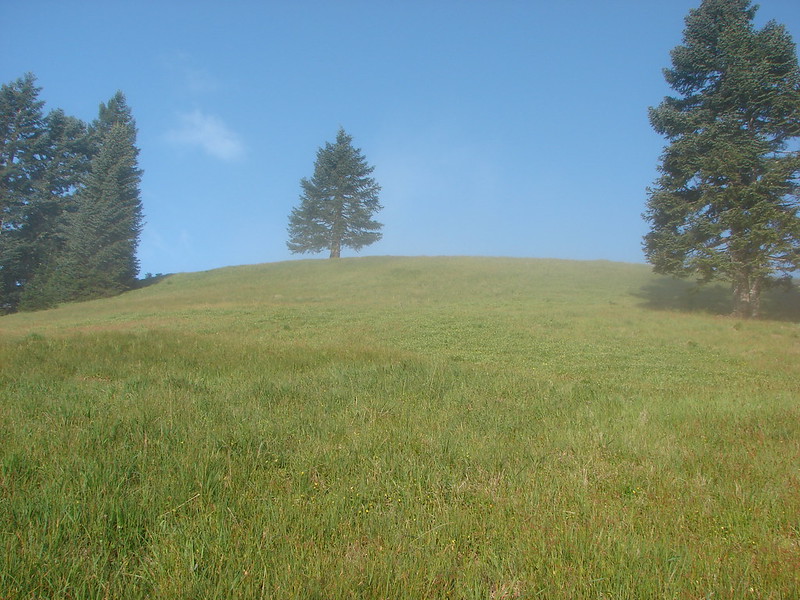
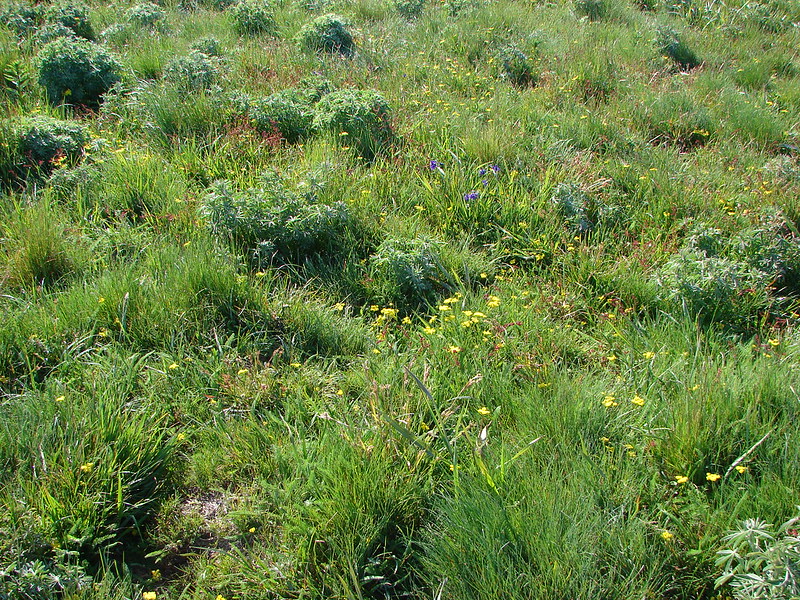
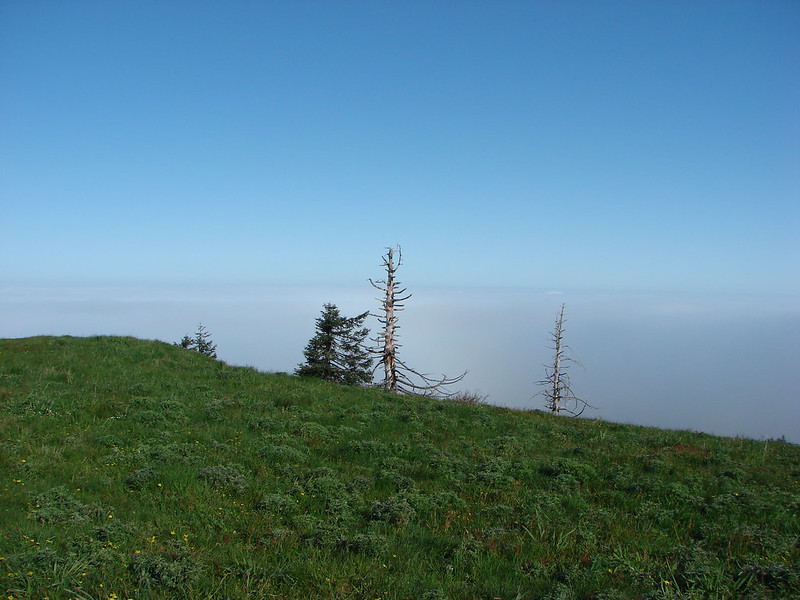
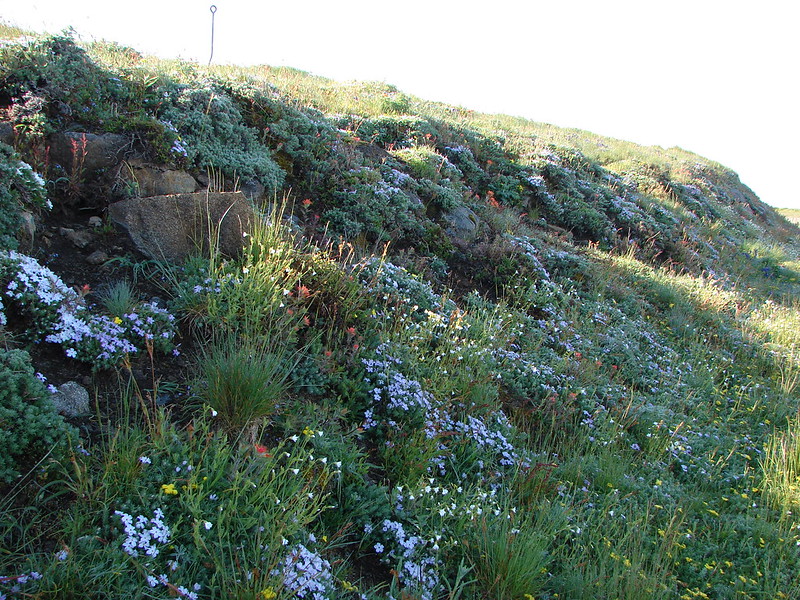
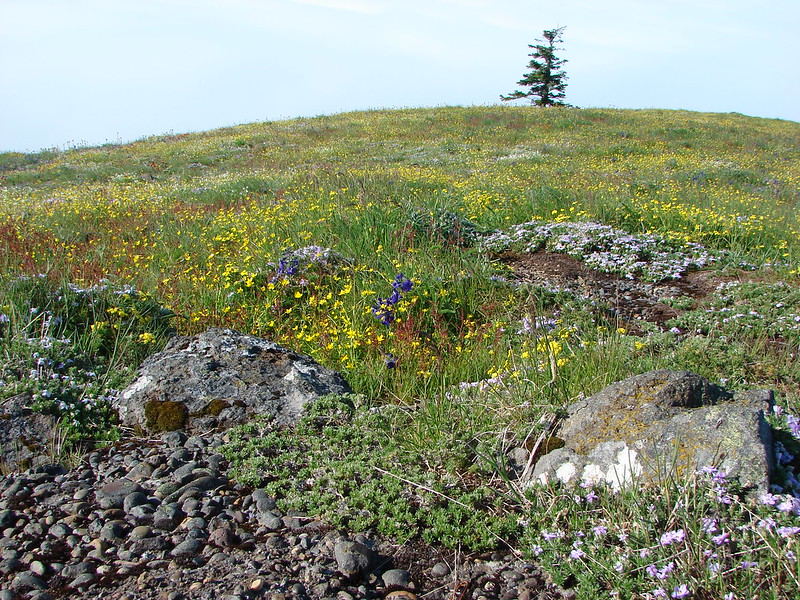
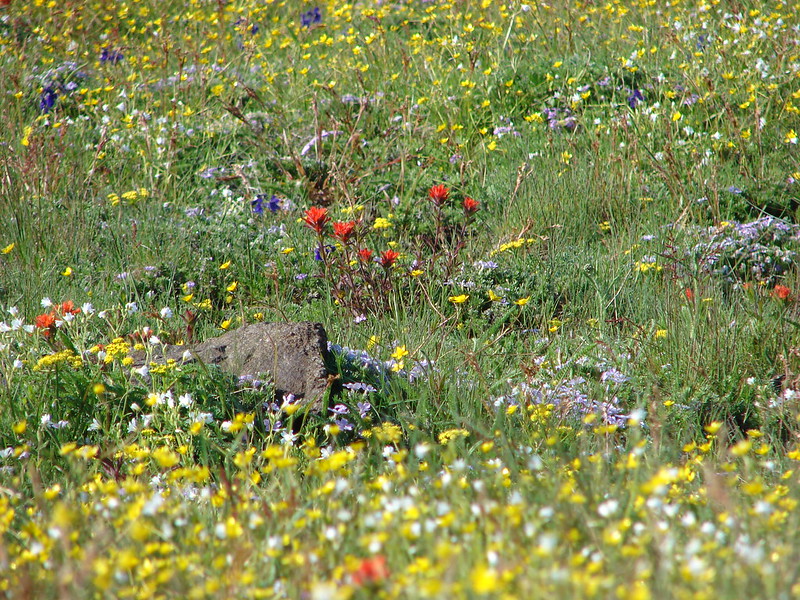
There was a wide variety of flowers dotting the meadow and the view was much improved. We still could not see the ocean or any of the cascade peaks but much of the coast range was visible above the clouds.
Paintbrush
IMG_2409

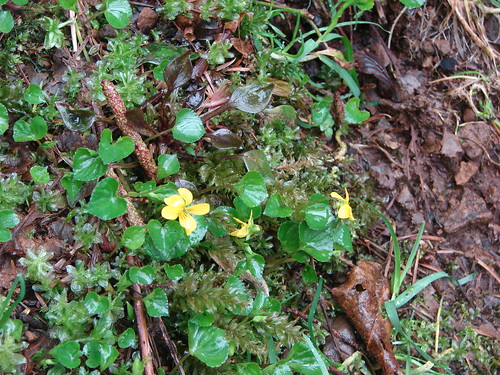
Violet
IMG_2415

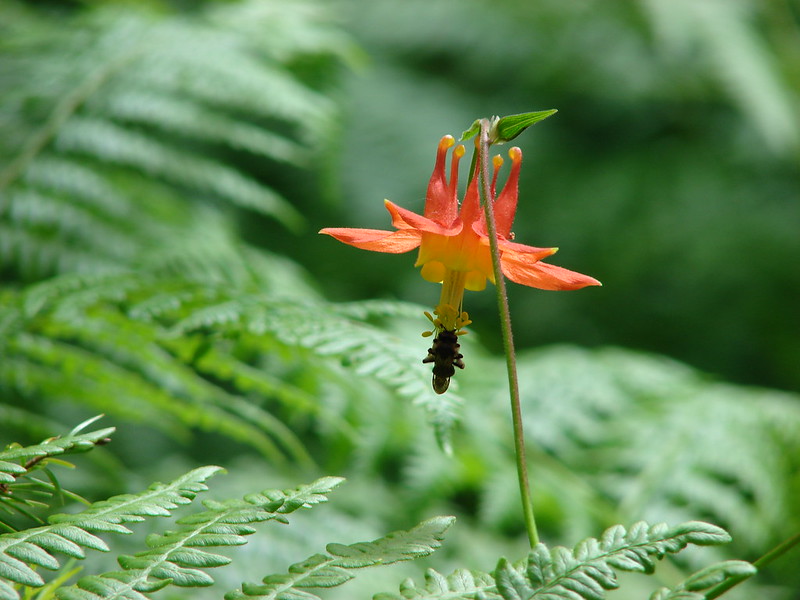
Columbine
IMG_2418

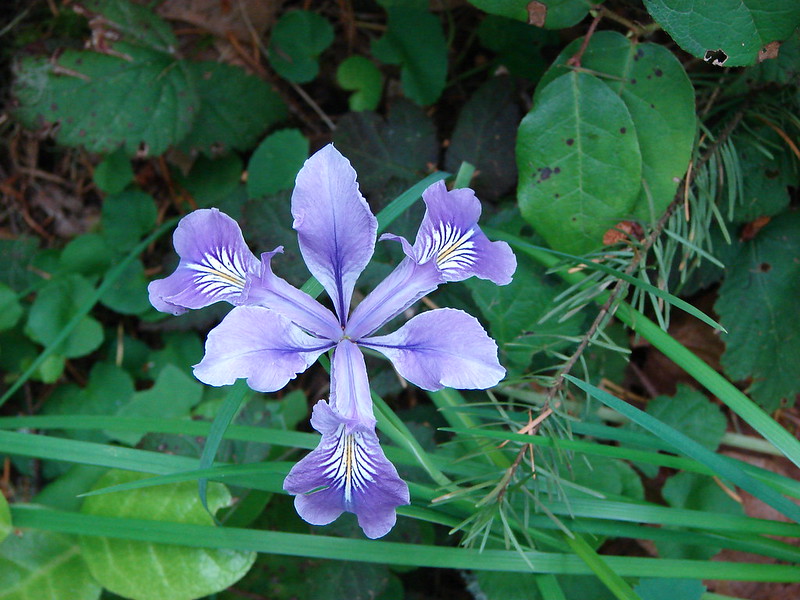
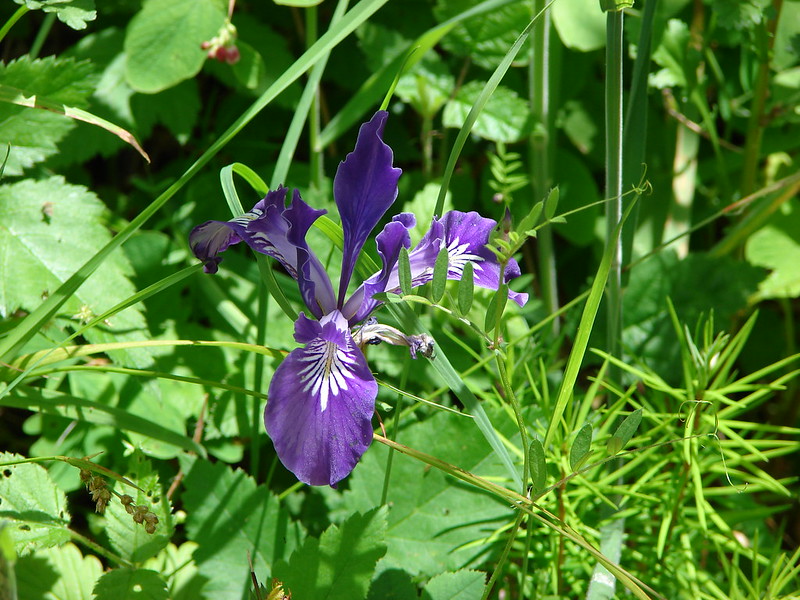
Wild Iris
IMG_2427

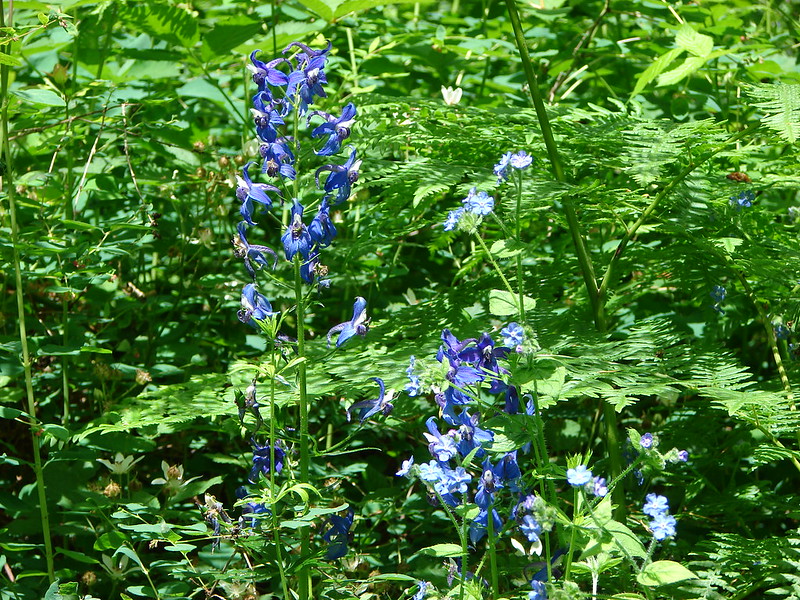
Lupine
IMG_2458

IMG_2428

IMG_2435

IMG_2442

The trail passes through the first meadow then a short section with some trees before emerging in a much larger meadow.
IMG_2448

IMG_2454

IMG_2456

We had turned around in this meadow after being blasted by a cold wet wind in 2011 but on this beautiful day we continued on recrossing road 14 and reentering the forest.
IMG_2461

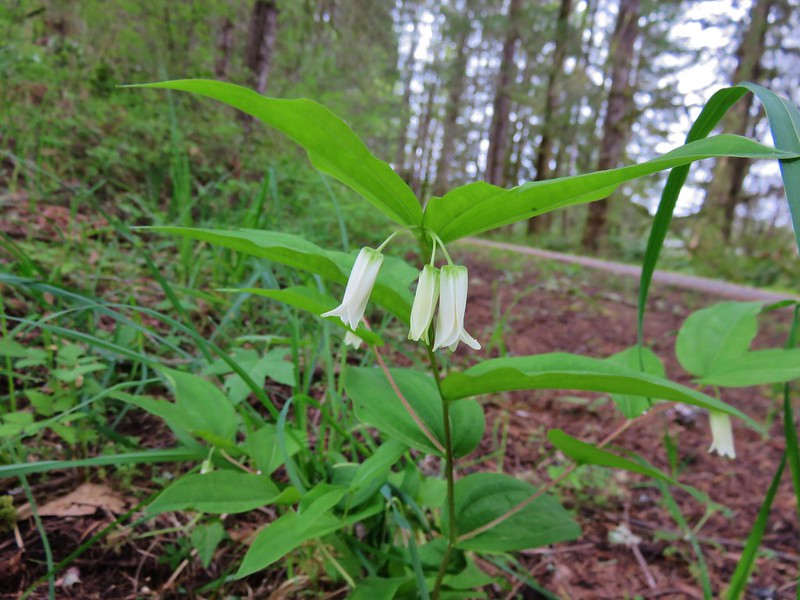
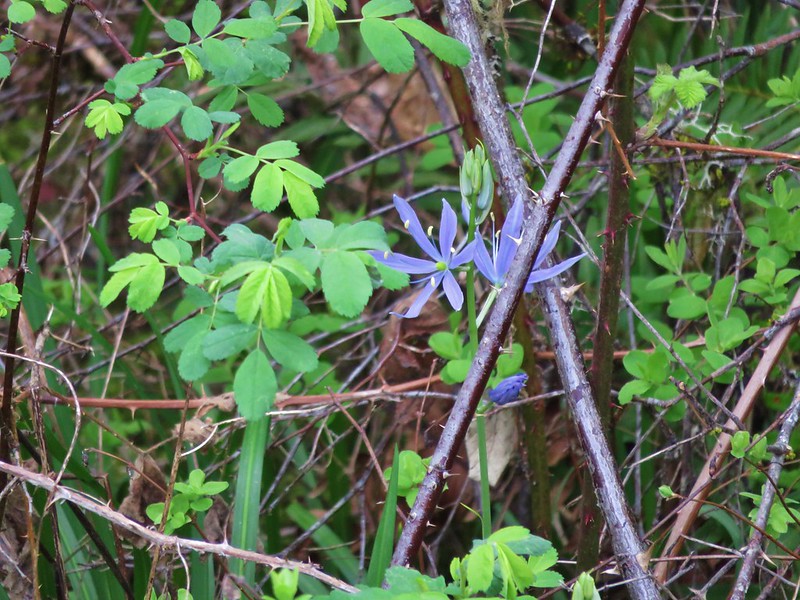
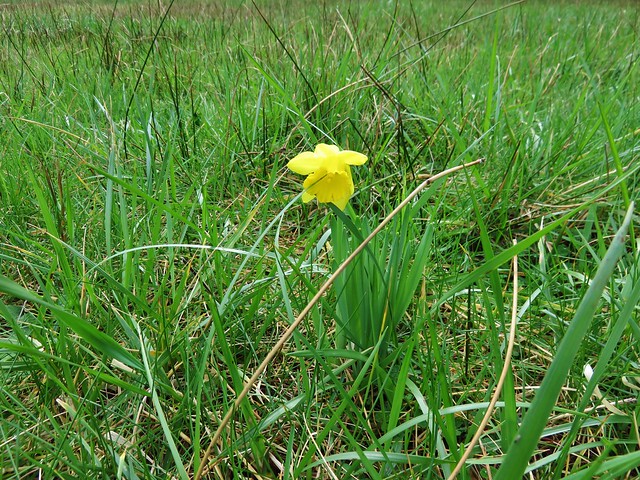
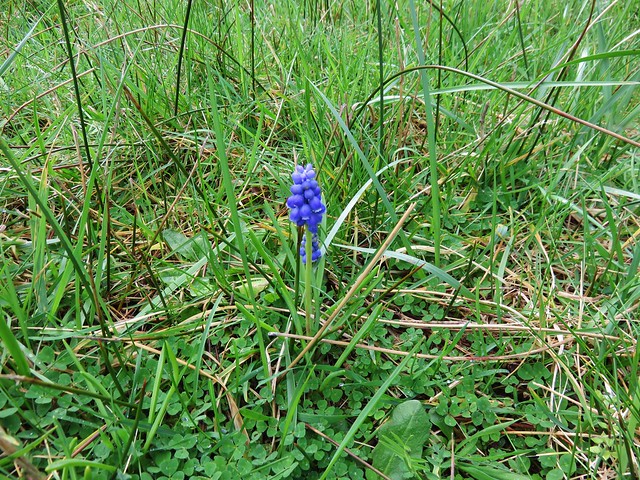
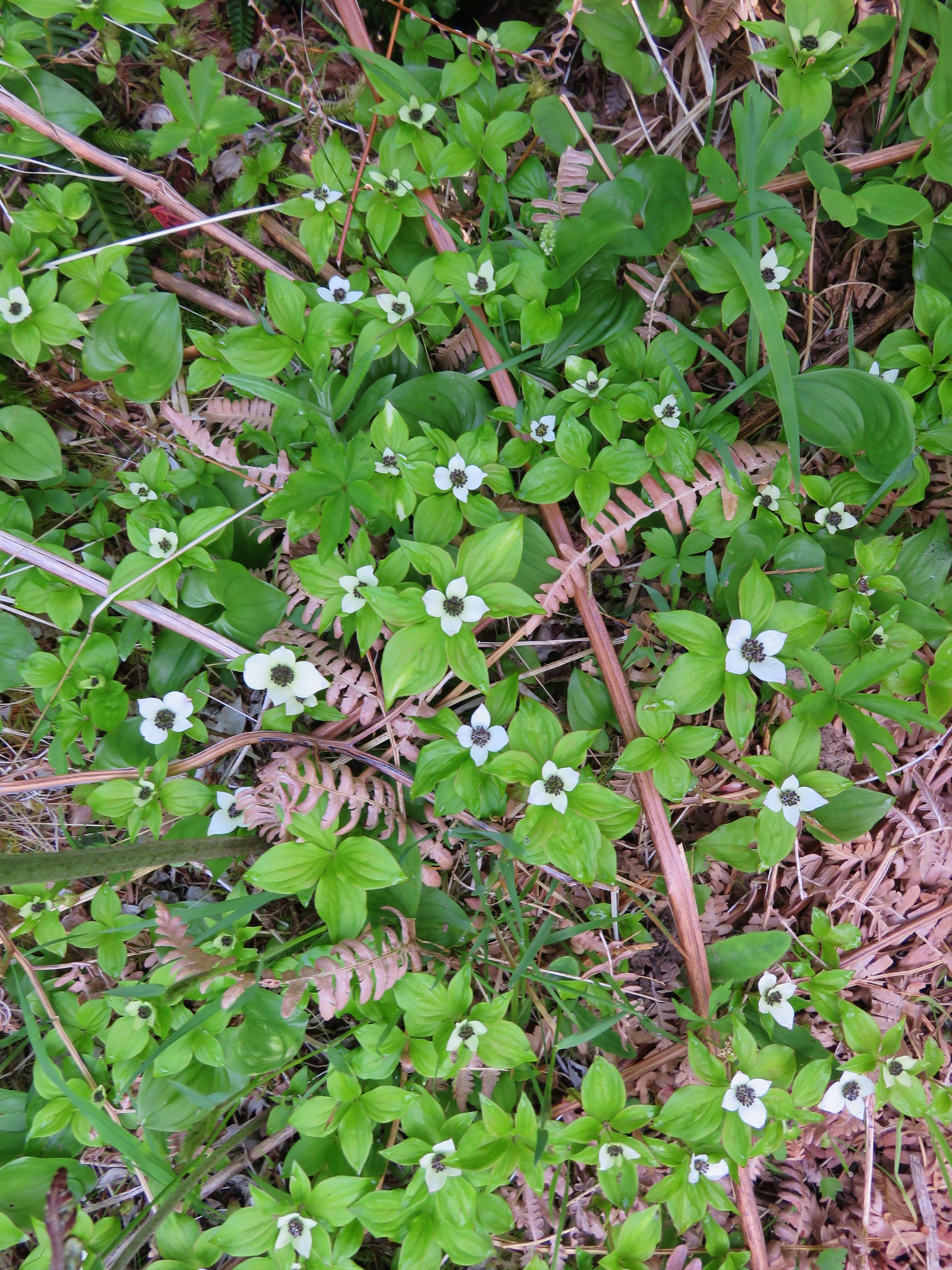
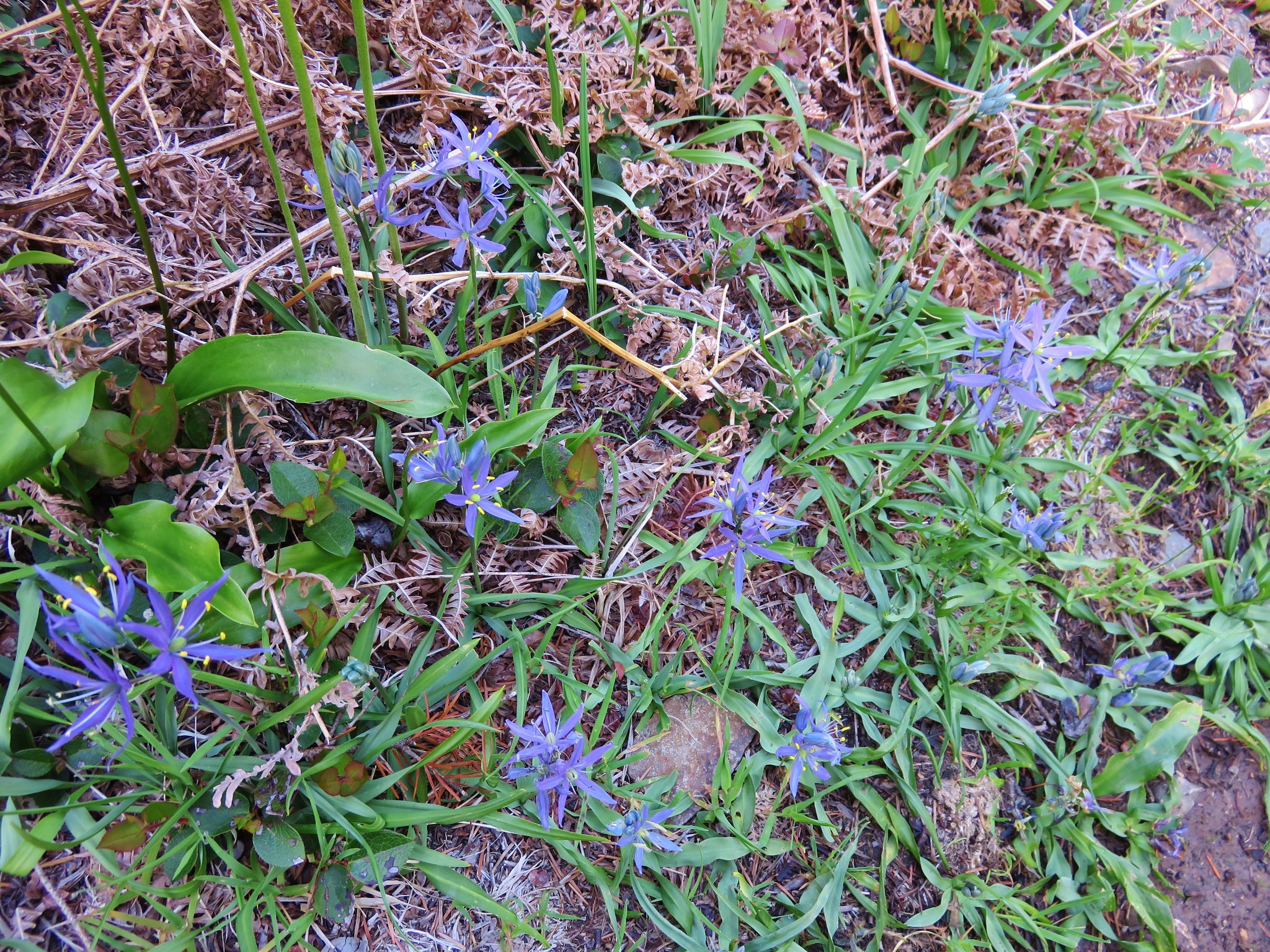
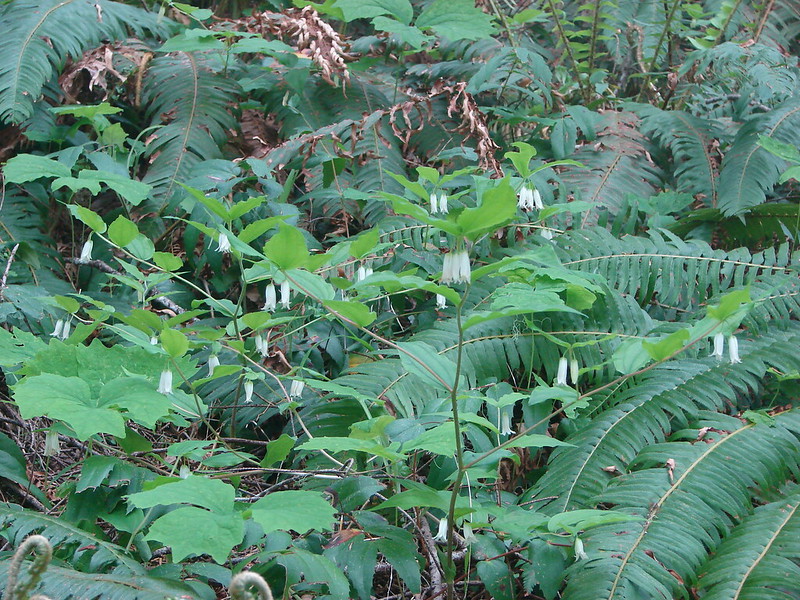
There were new flowers to discover on this section of the trail including bunchberry, anenome, and camas which we were really surprised to see.
IMG_2459

IMG_2460

IMG_2462

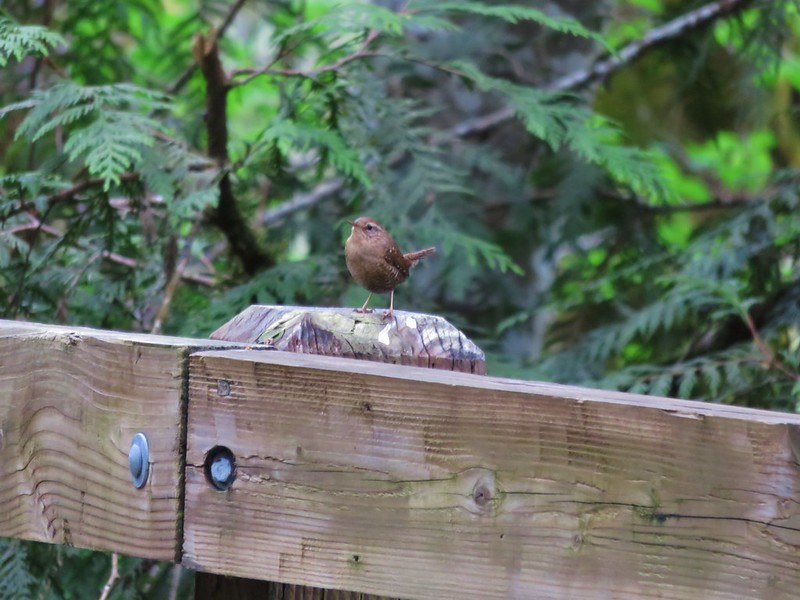
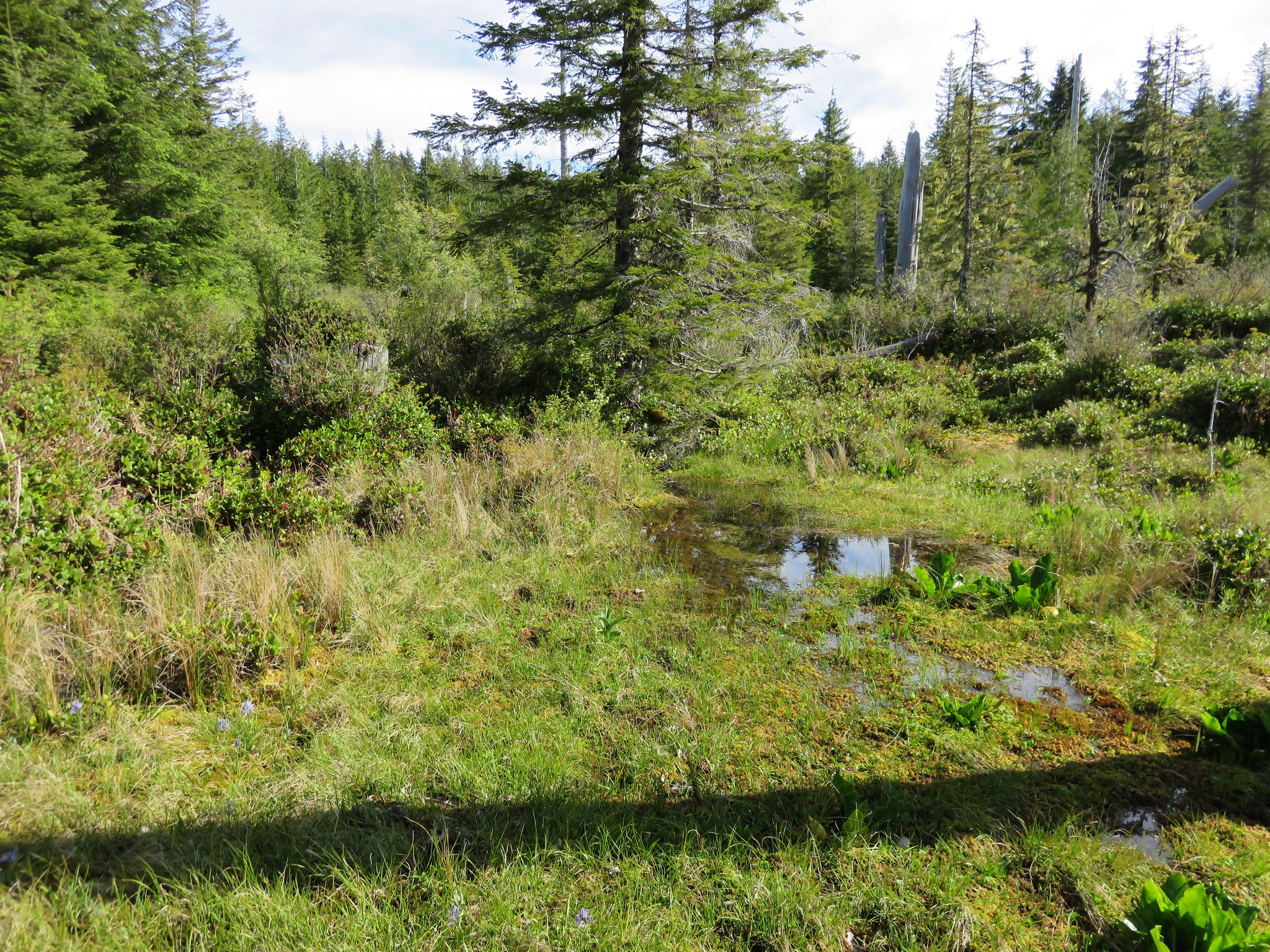
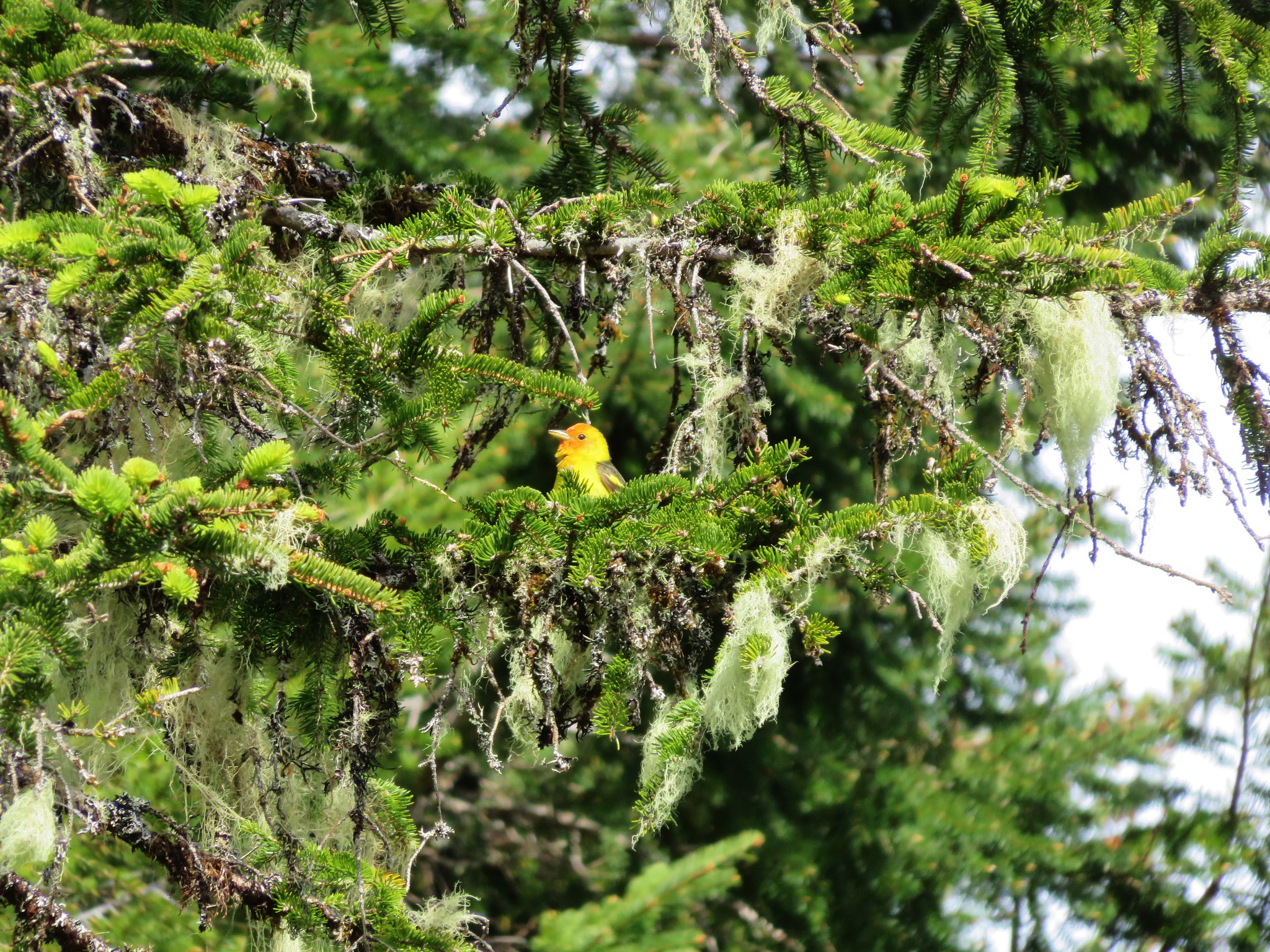
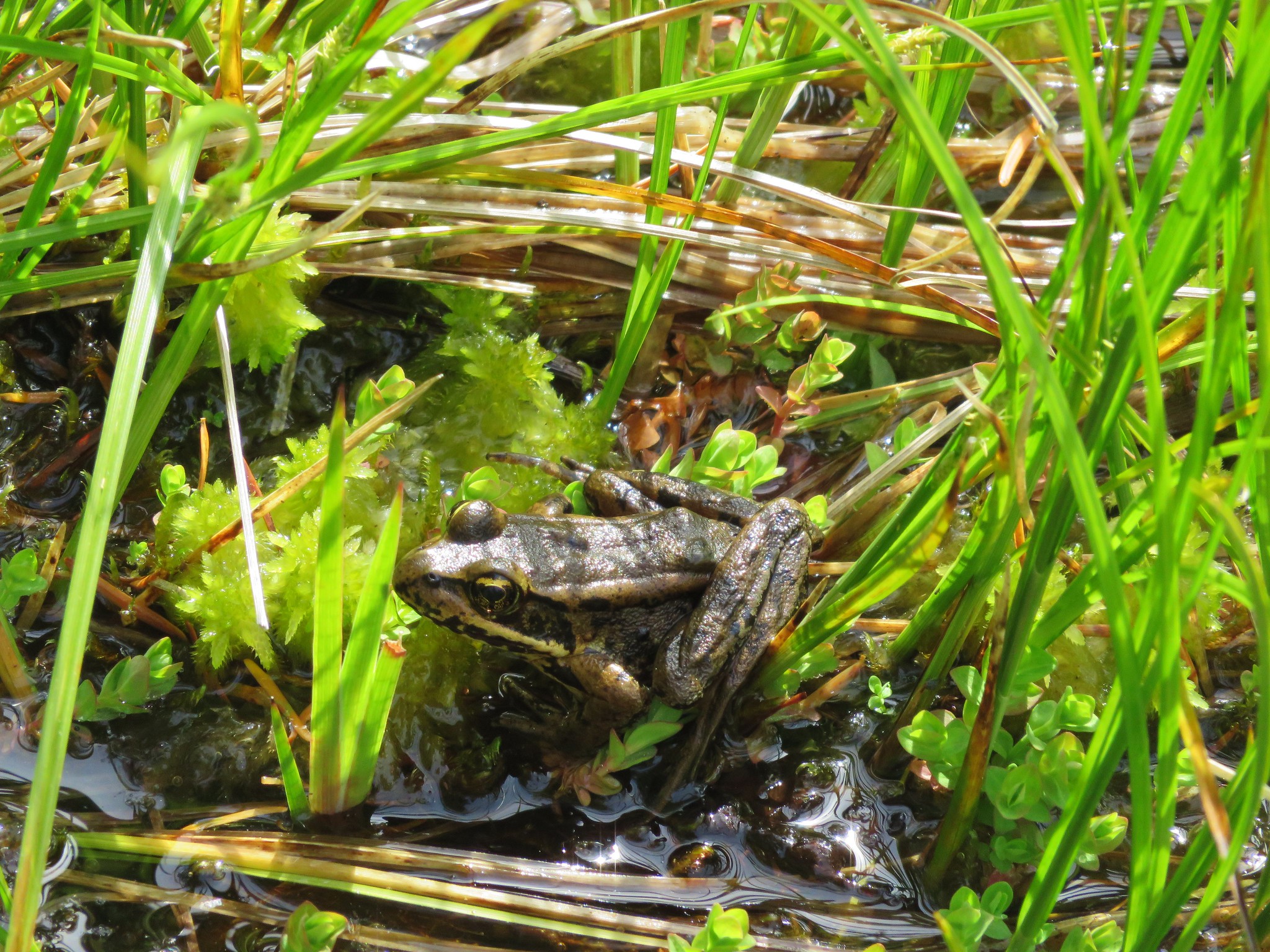
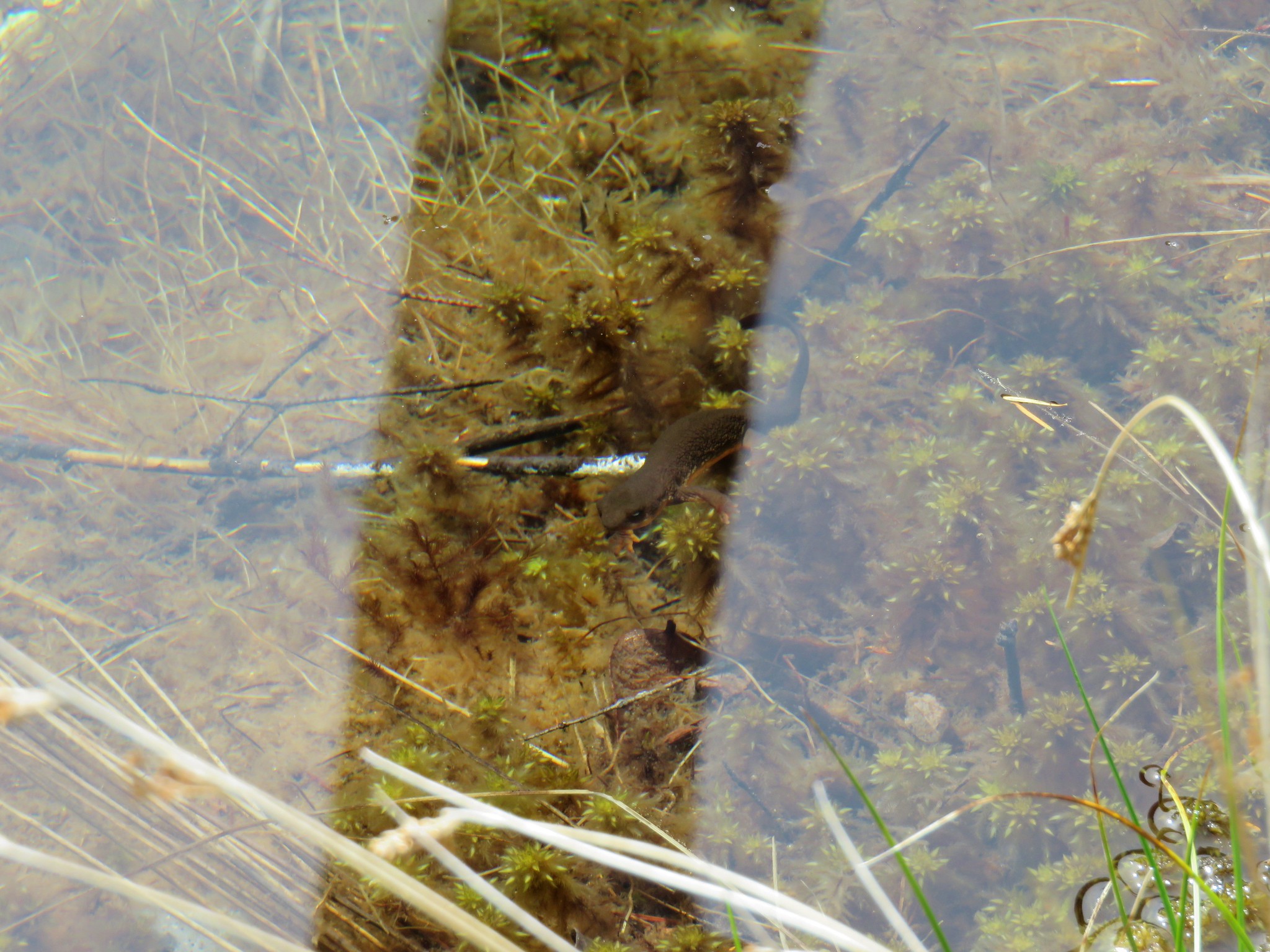
We also crossed a little stream coming from a marshy wetland area. As we took a quick look we noticed some frogs hopping into several pools and a number of birds in the area. We didn’t get any pictures of wildlife on the first pass but on our way back by we were luckier.
IMG_2468

Western Tanager
IMG_2493

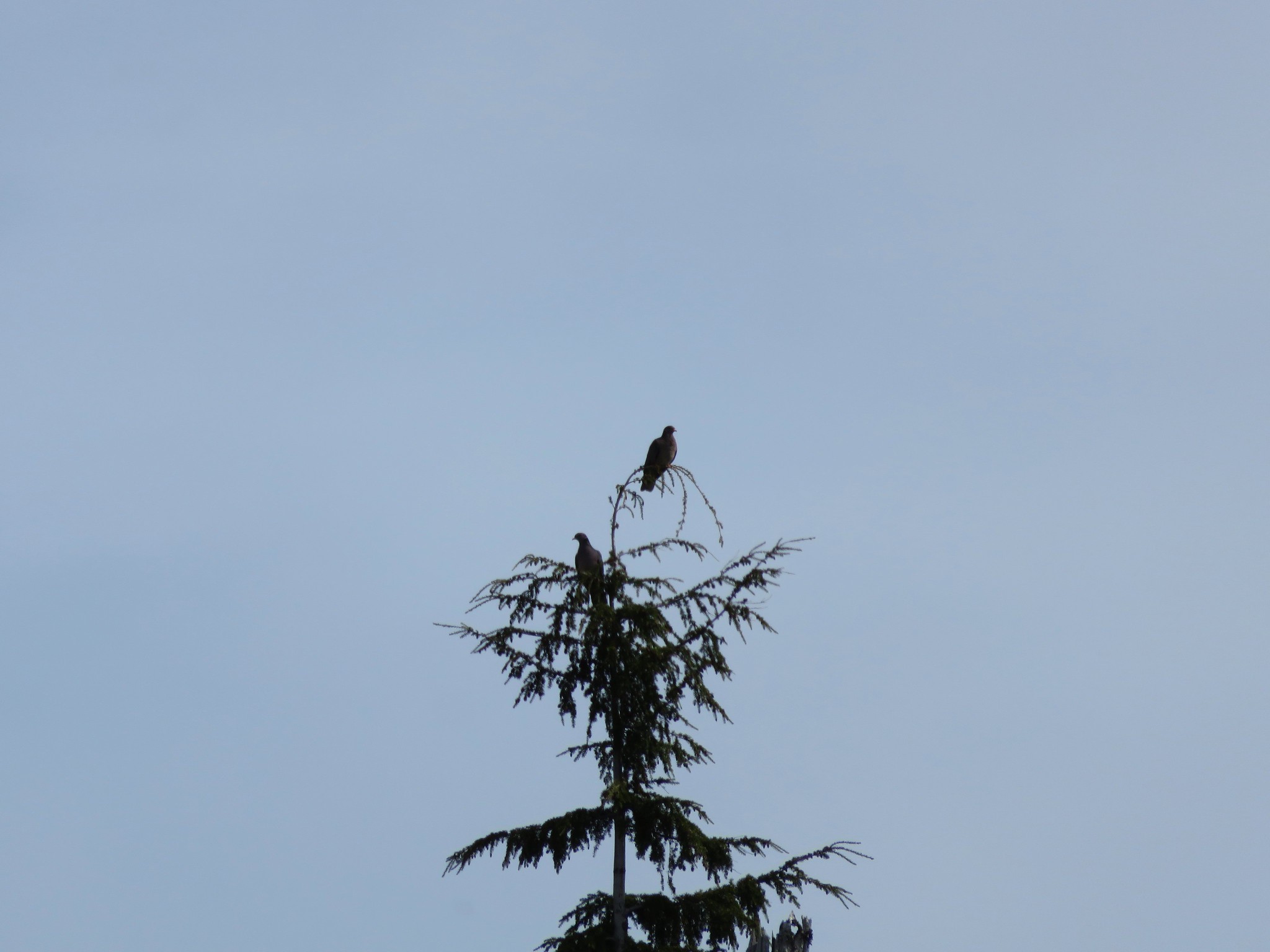
Band-tailed Pigeon
IMG_2499

IMG_2517

IMG_2518

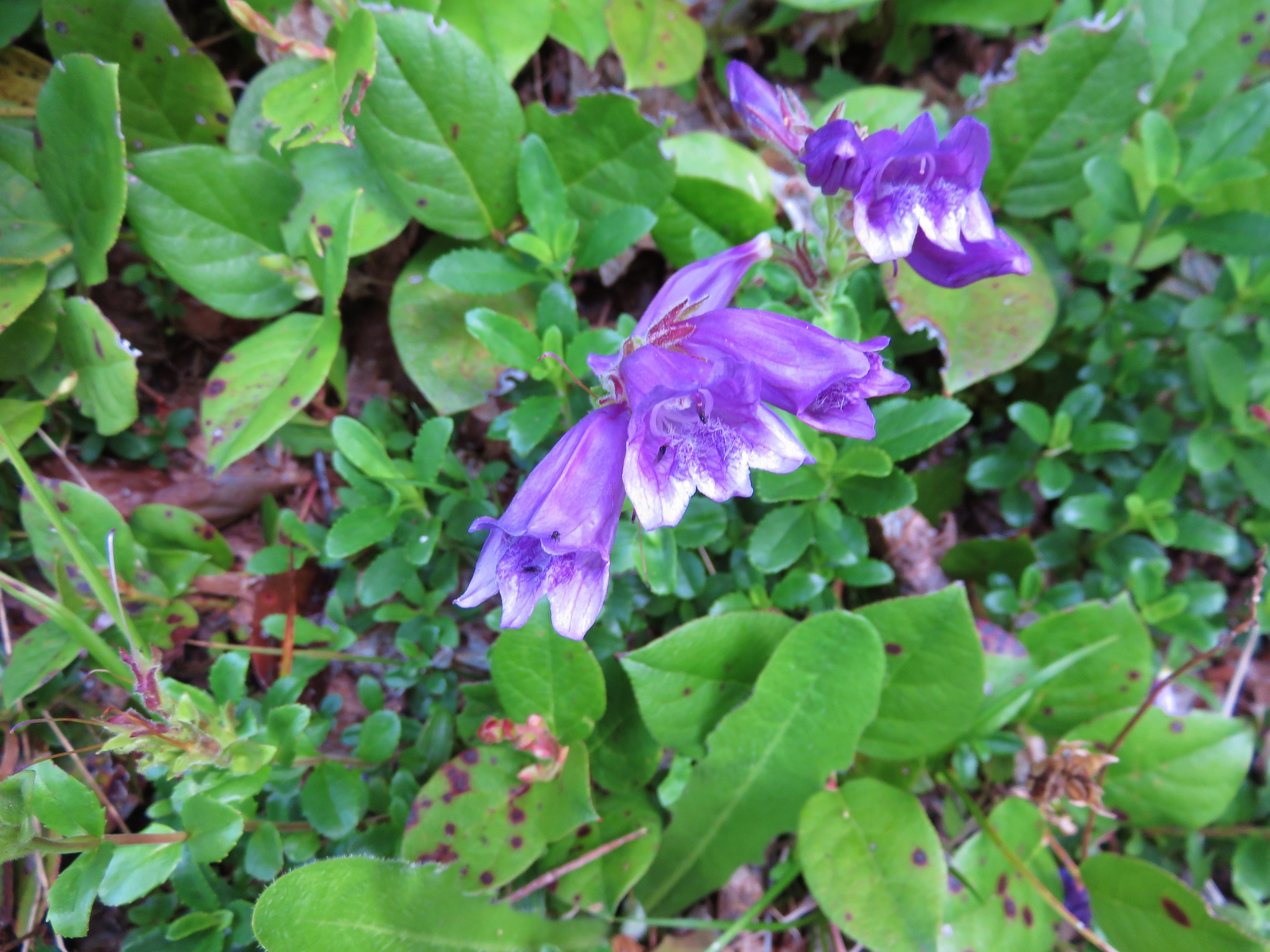
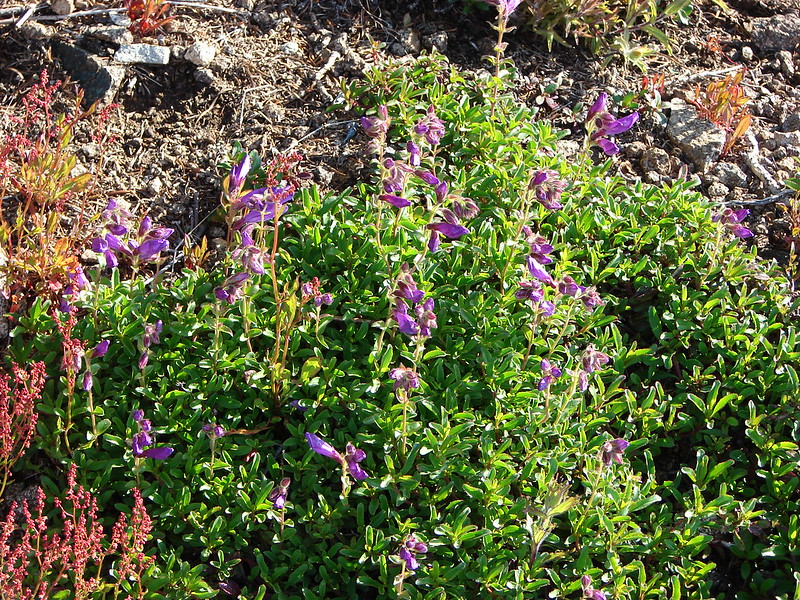
This little area would have made a good turnaround point but we continued on a bit further looking for a viewpoint that was shown in our guide book. We passed a couple of smaller meadows filled with camas and found some nice penstemon in bloom but not a particularly nice viewpoint before the trail began to descend toward North Lake.
IMG_2472

IMG_2473

IMG_2484

IMG_2485

We weren’t interested in having to climb back up from the little lake so we turned around and headed back to the meadows. The clouds to the west had really retreated when we arrived back at the meadows revealing more of the coastal foothills.
IMG_2525

IMG_2529

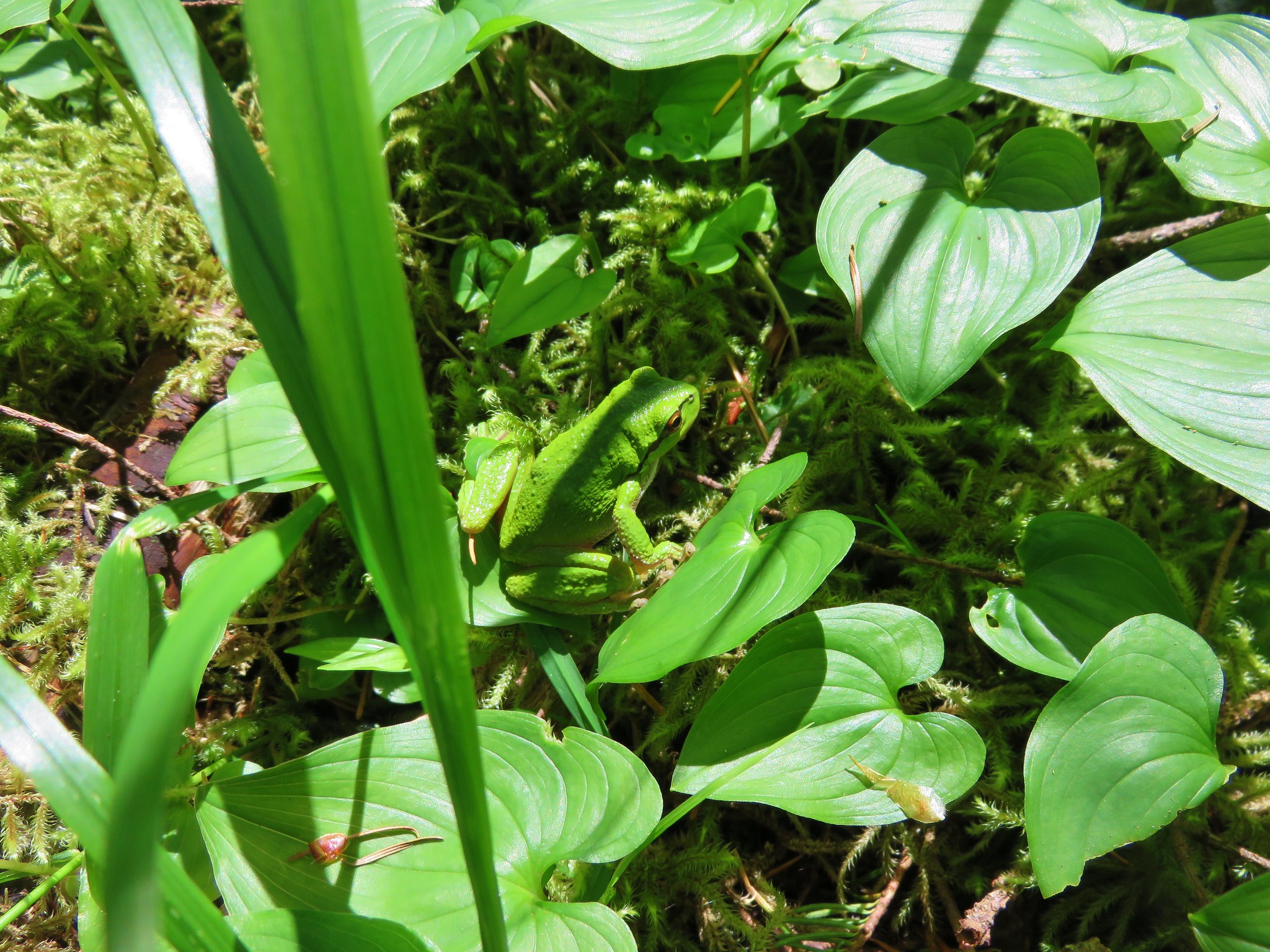
As we were passing back through the forest along the lower portion of the trail Heather spotted a really good sized Pacific-Tree Frog.
IMG_2565

IMG_2556

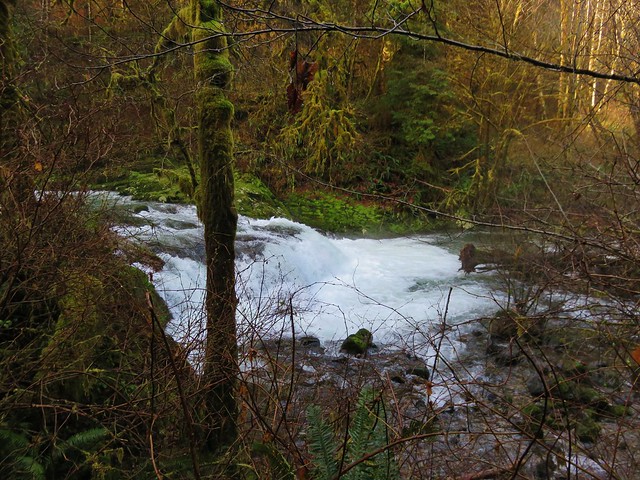
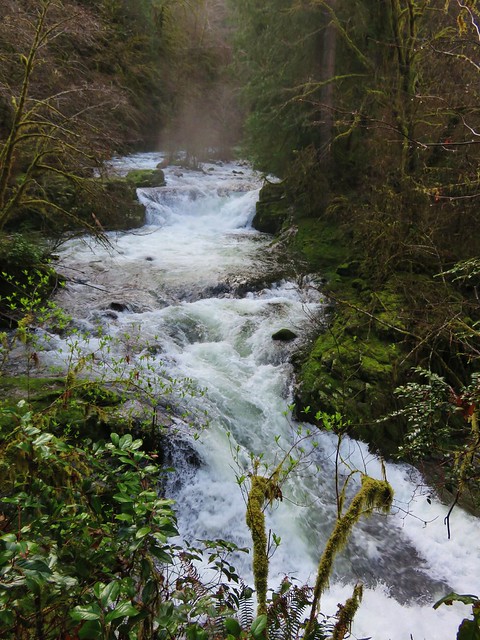
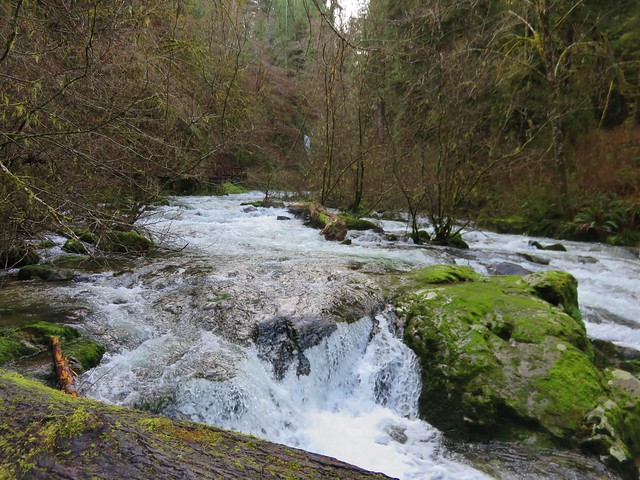
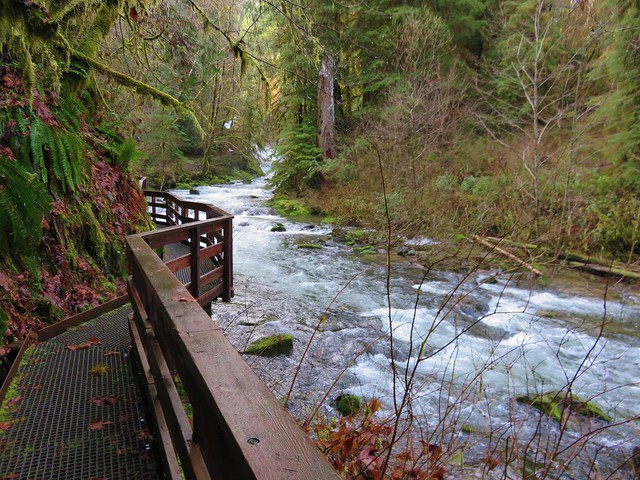
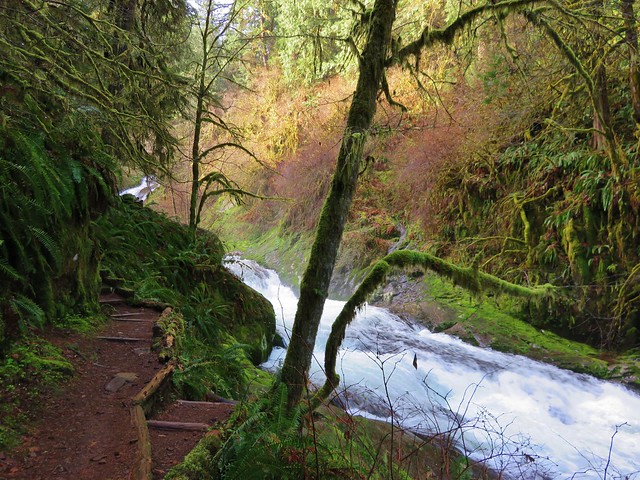
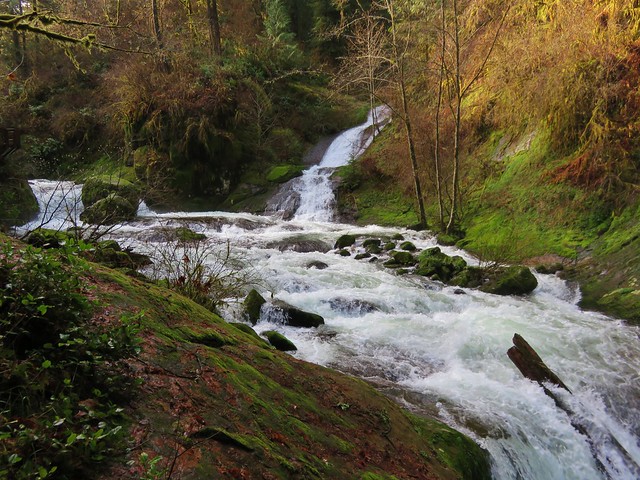
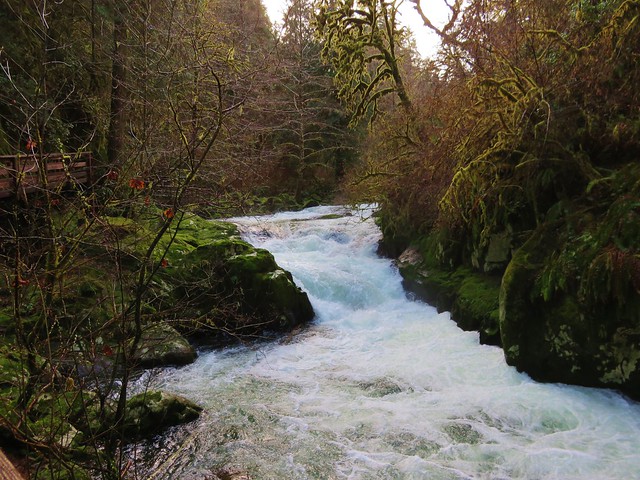
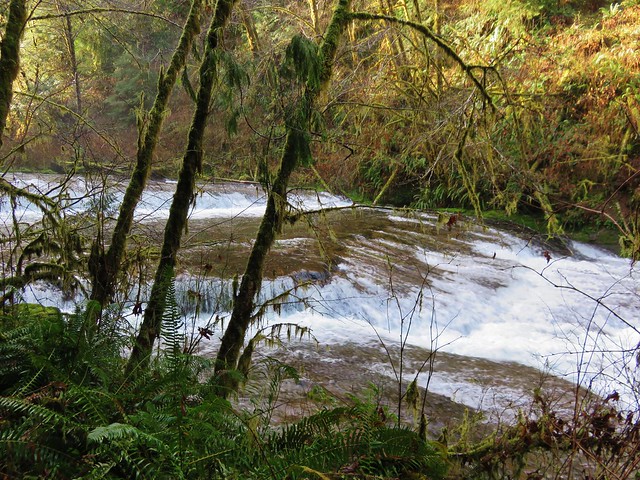
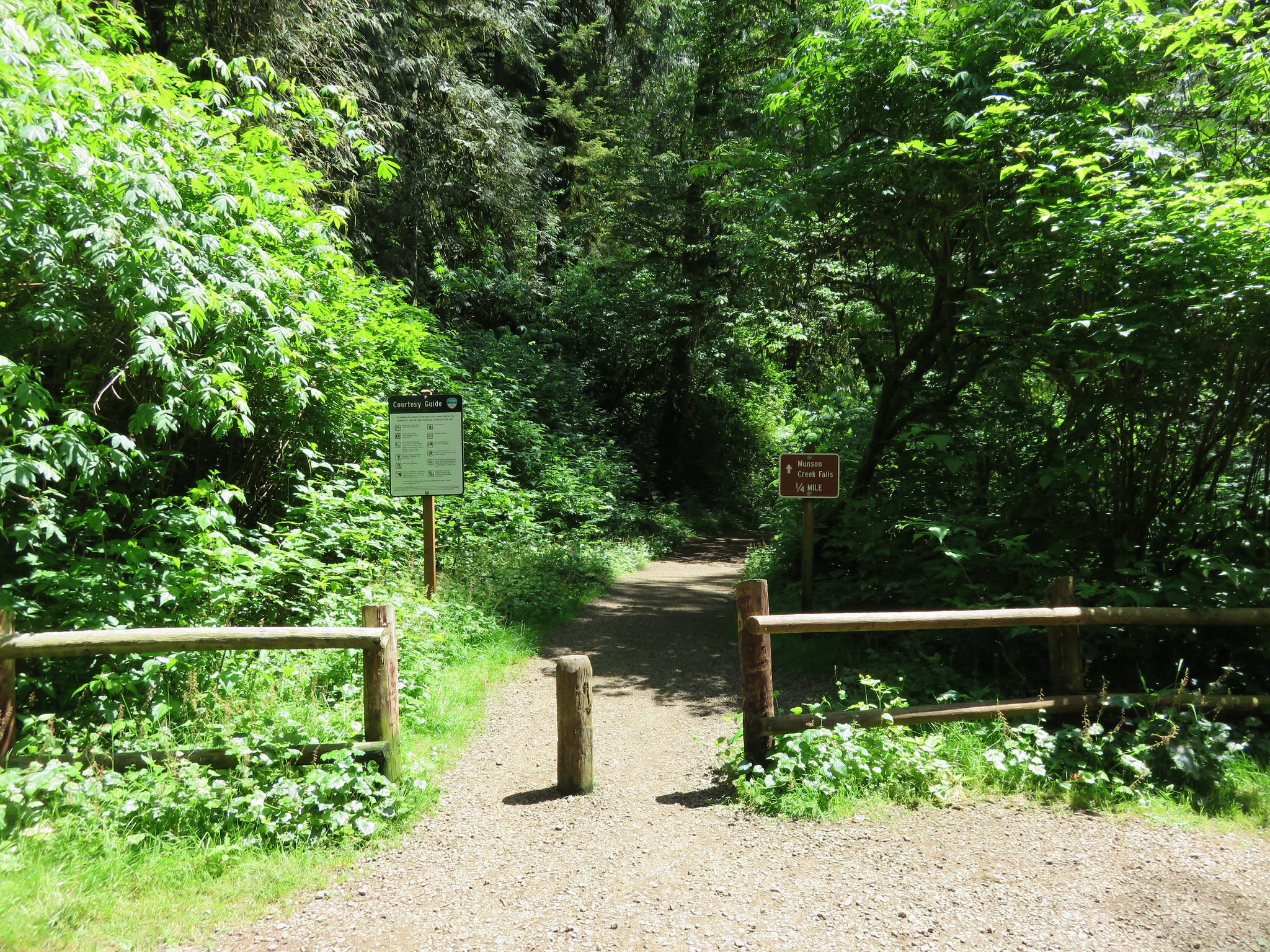
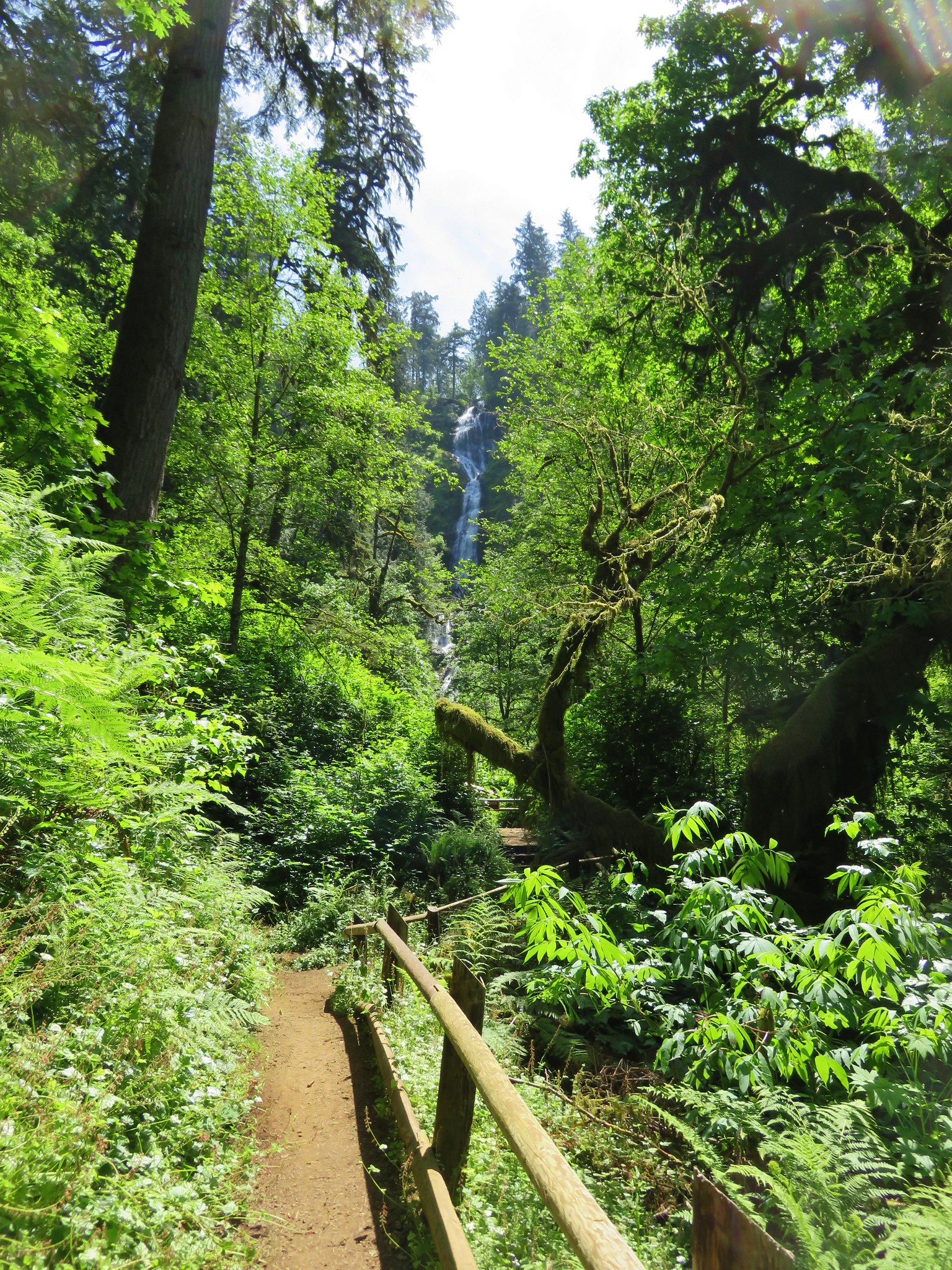
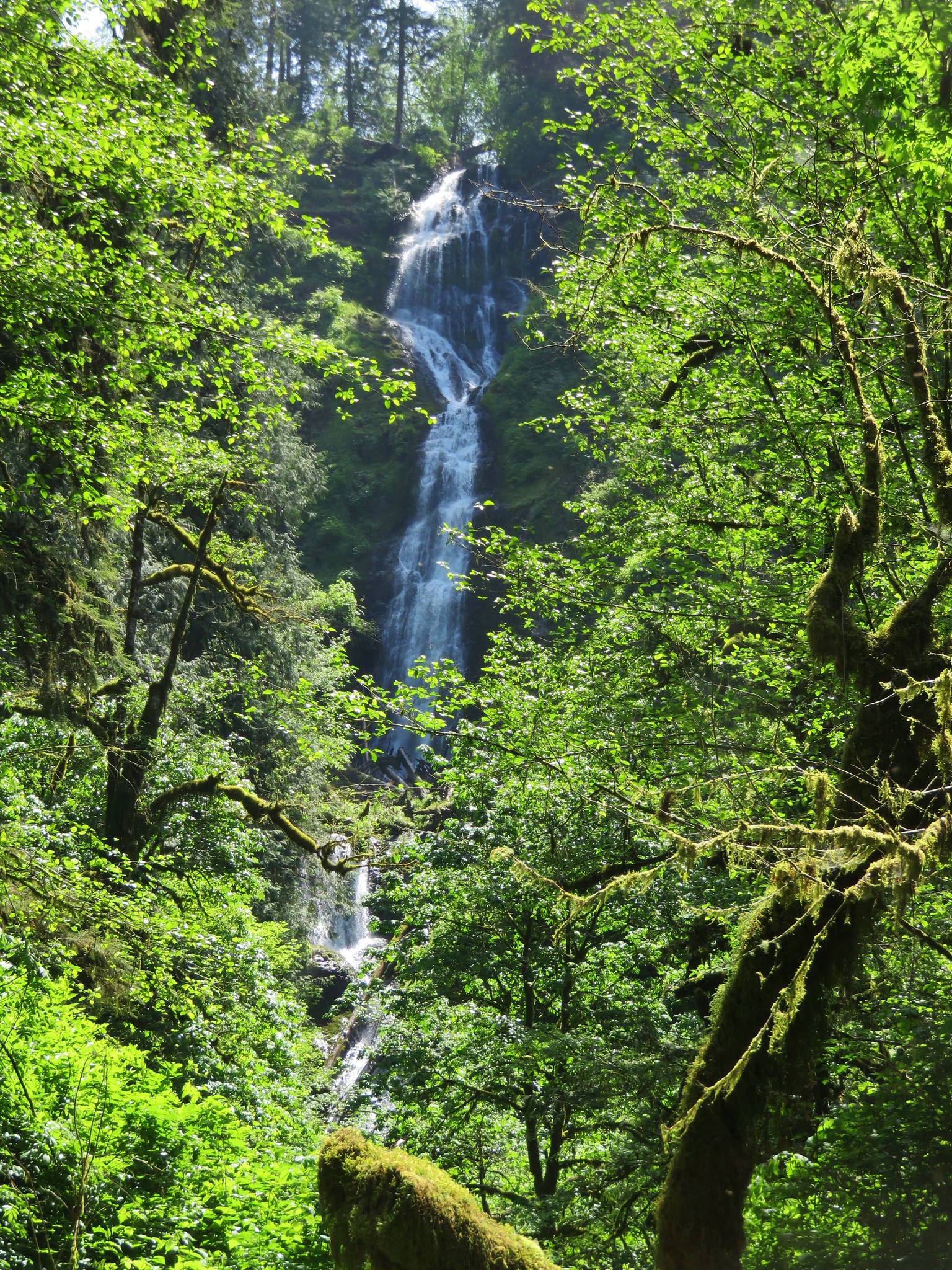
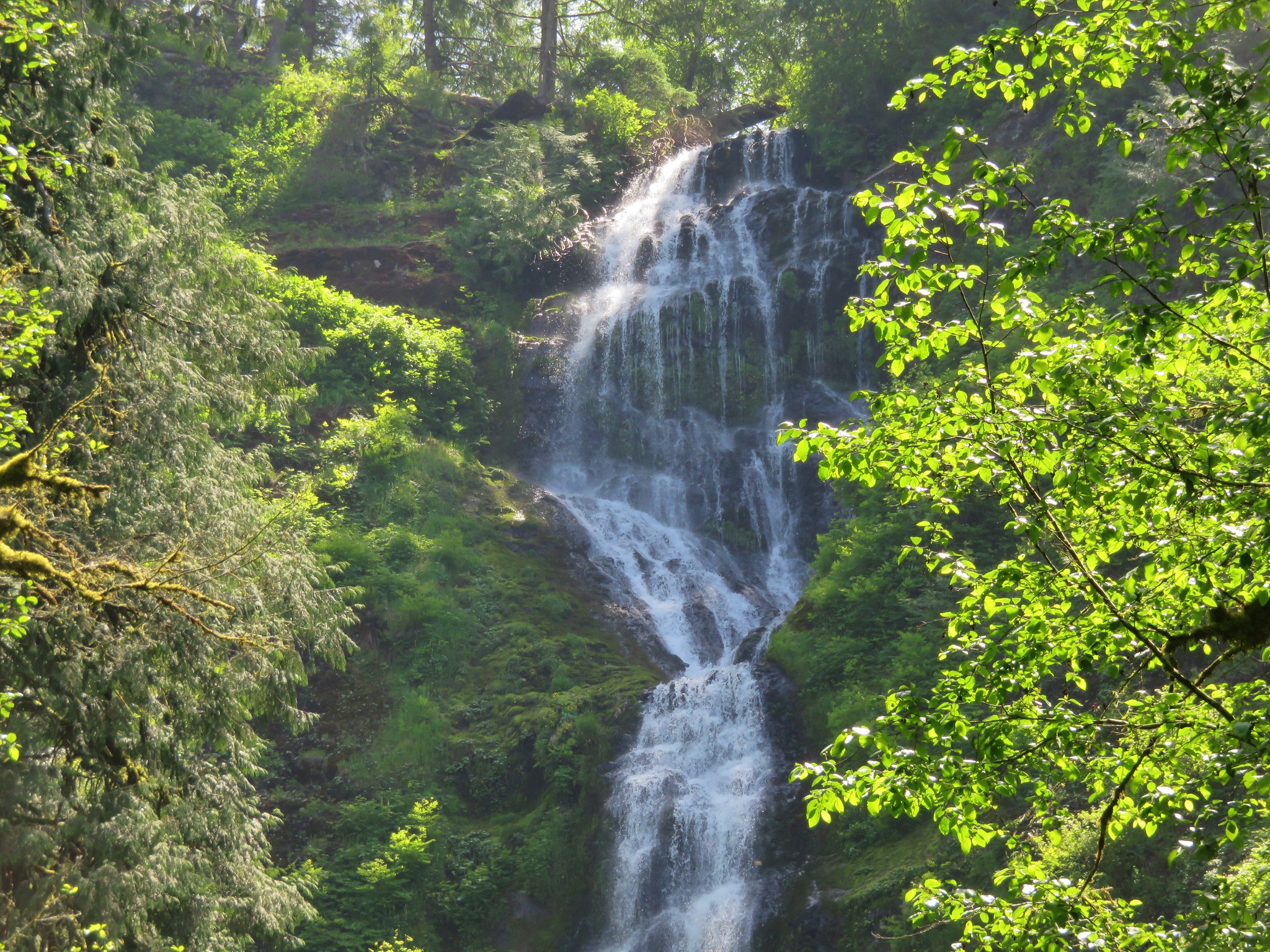
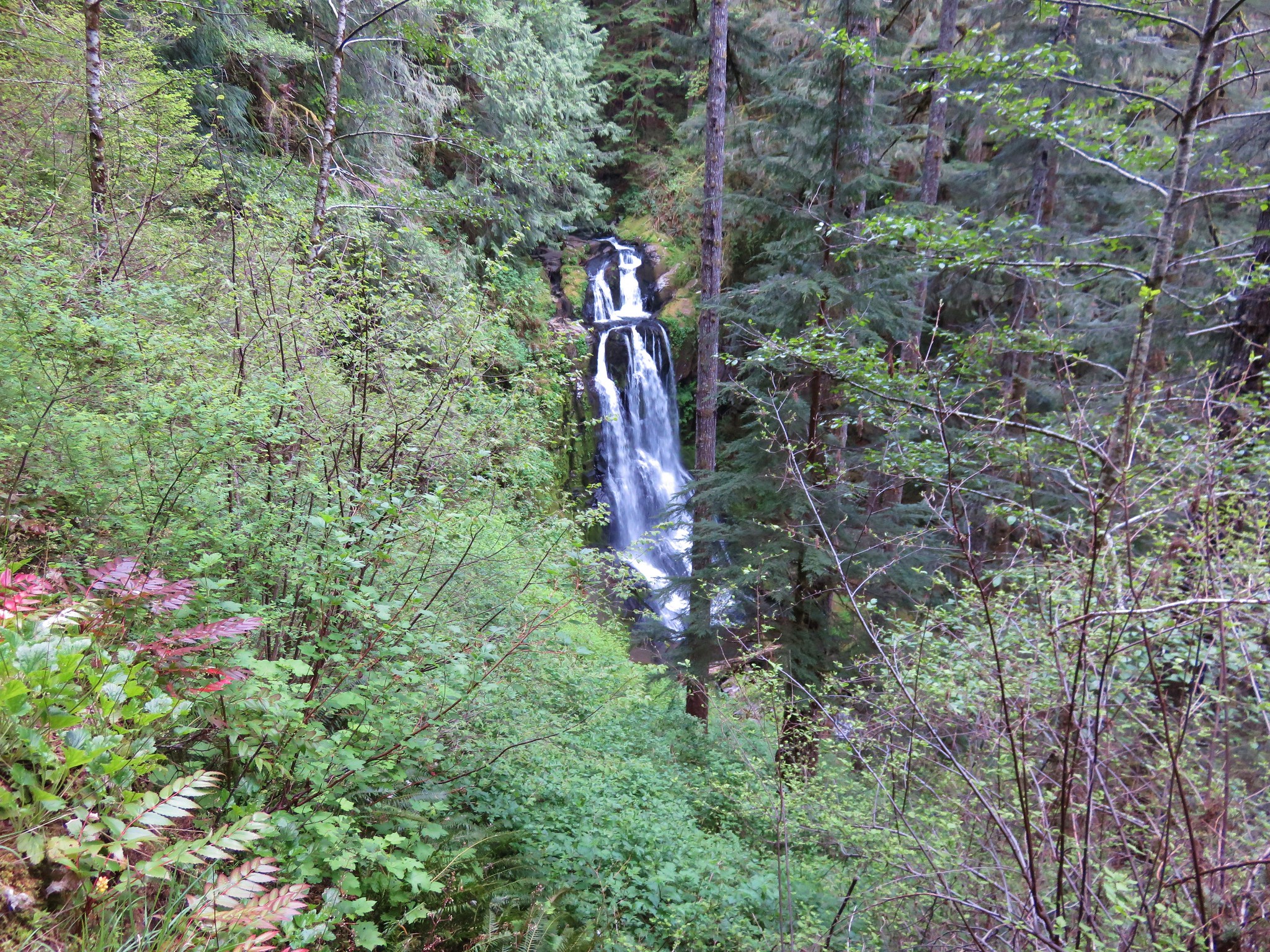
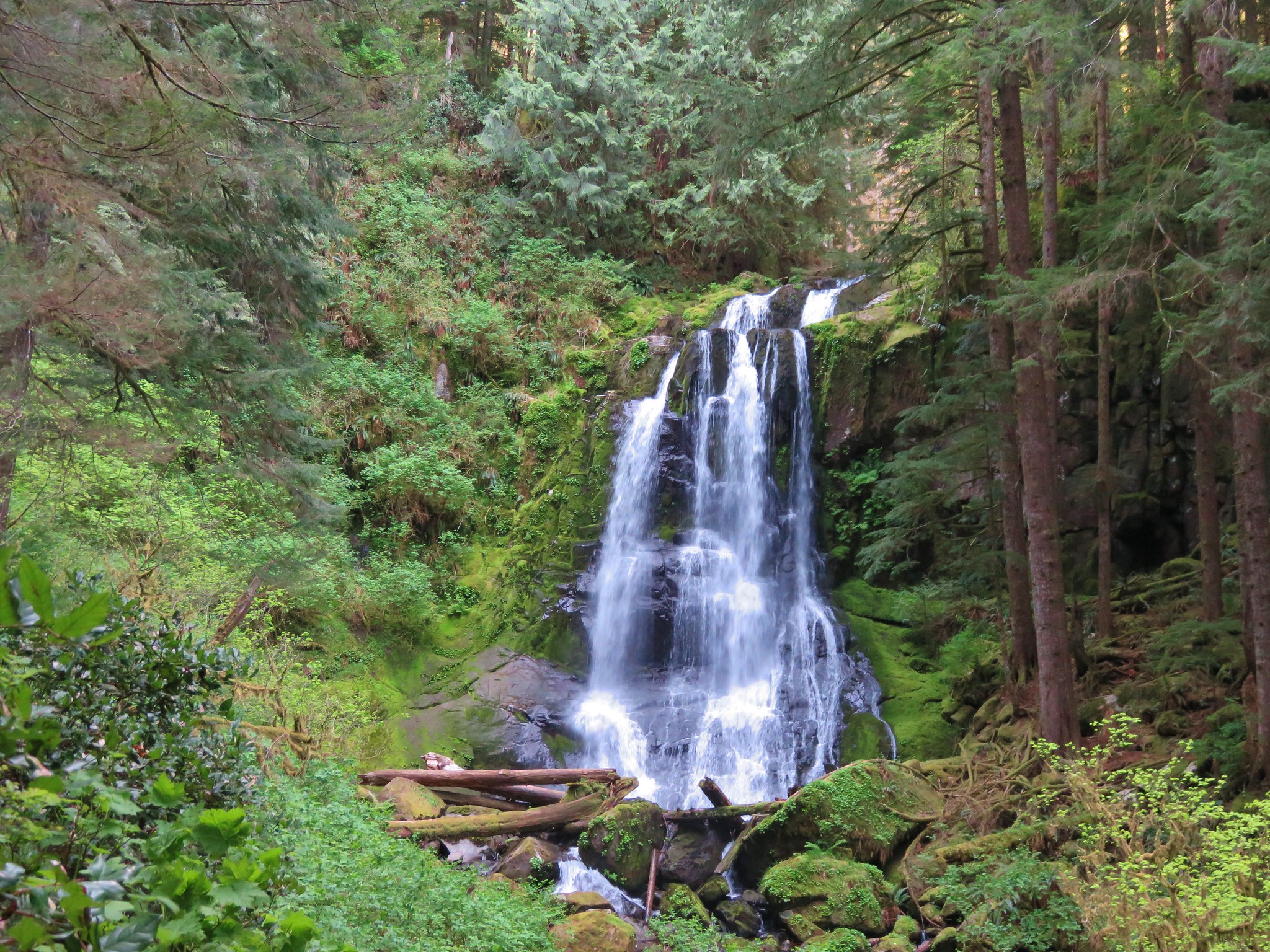
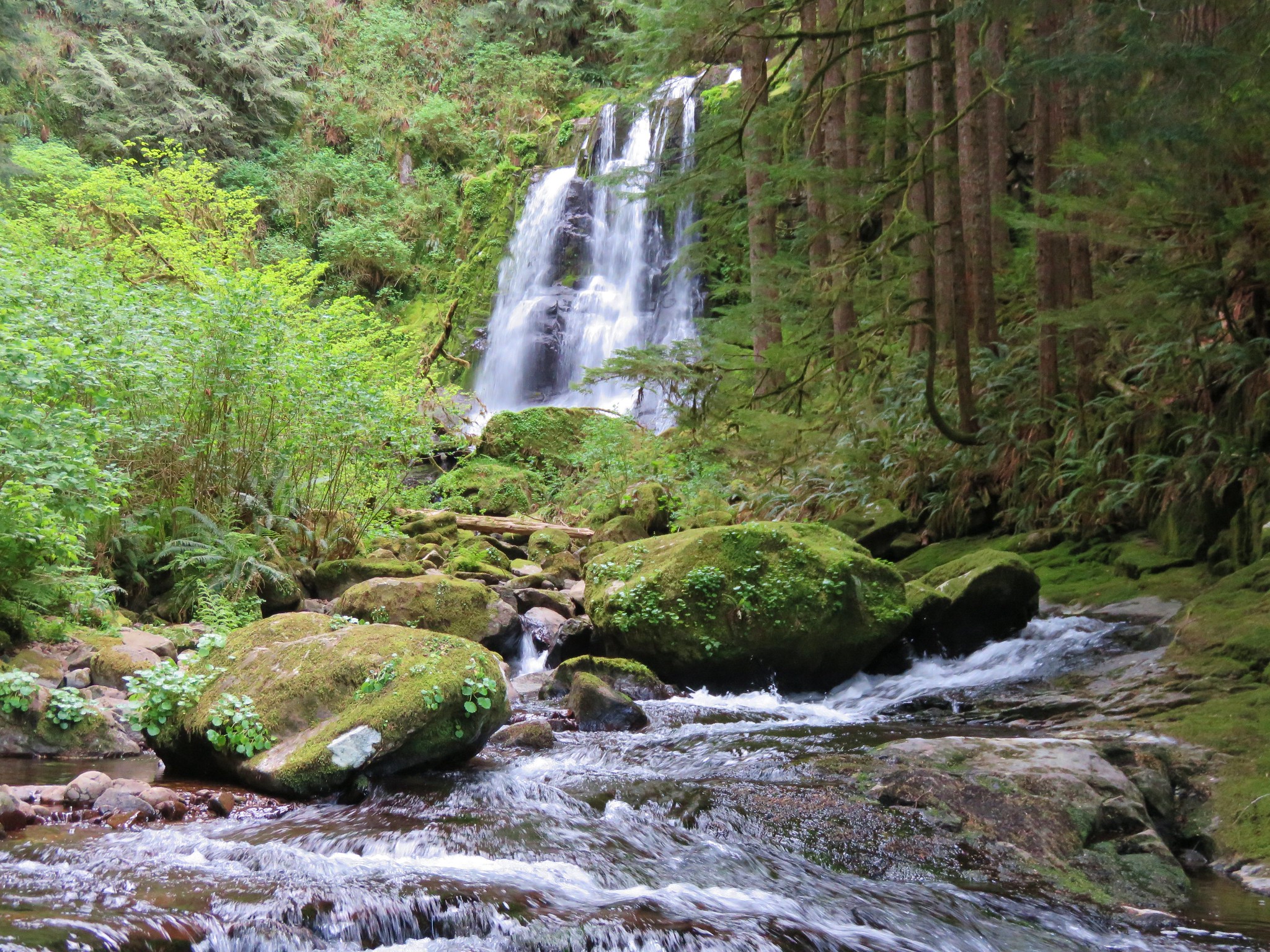
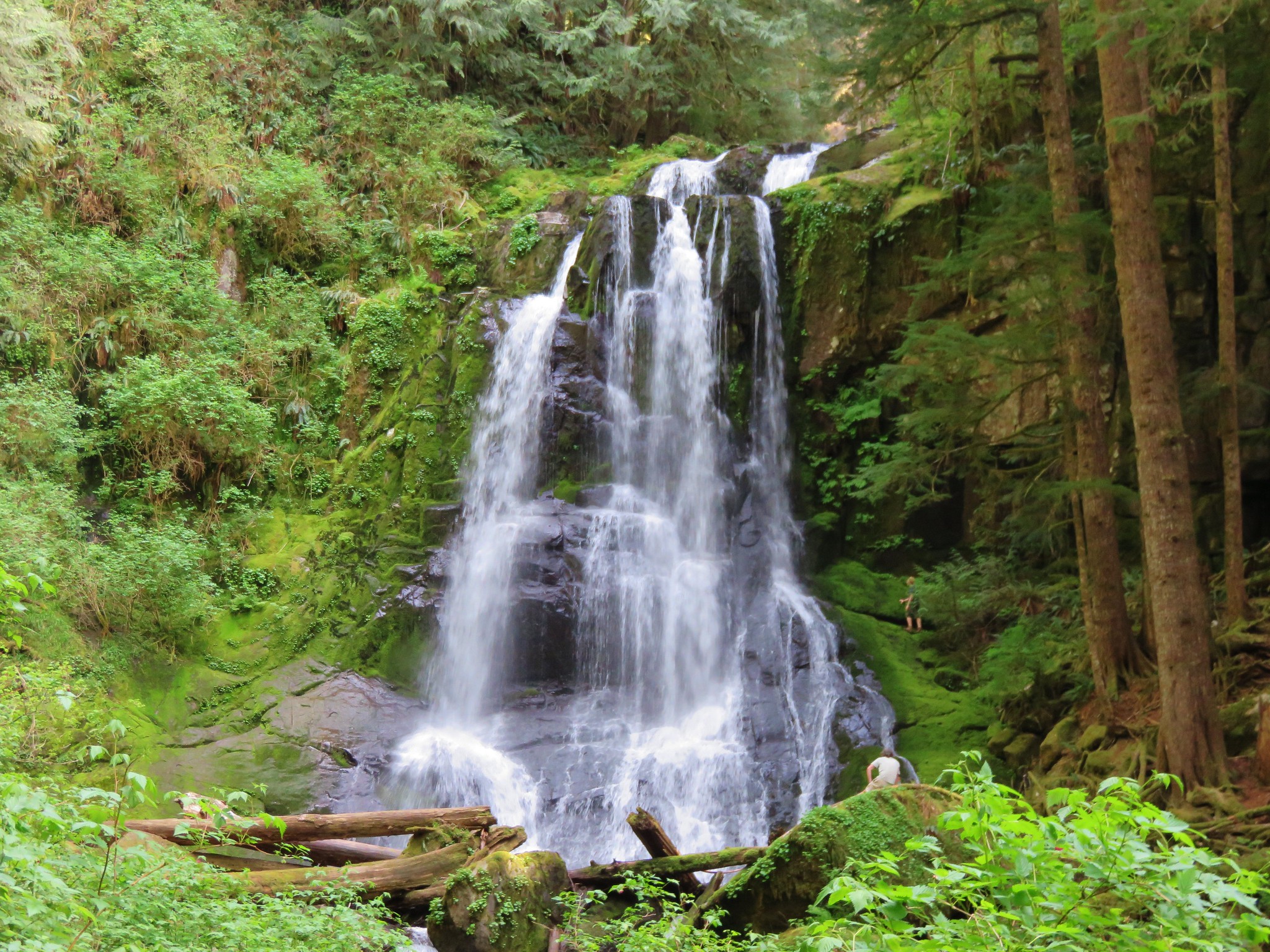
After finishing the Mt. Hebo hike we headed north on Highway 101 toward Tillamook to Munson Falls State Park. Here a quarter-mile path leads to a view of the tallest water fall in the Coast Range. Unfortunately it is virtually impossible to get a clear view of the entire 266′ cascade due to a narrow canyon full of downed logs and thick brush. Still the waterfall was one of the more impressive we’ve seen and well worth the visit.
IMG_2574

IMG_2588

IMG_2591

IMG_2597

After our brief visit to the falls we took a little detour on the way home through Pacific City in order to stop at the Pelican Pub & Brewery which has become on of our favorite post hike places to grab a meal. Happy Trails!

flickr: https://www.flickr.com/photos/9319235@N02/sets/72157653321256339
flickr 2011 visit: https://www.flickr.com/photos/9319235@N02/sets/72157632953522057

Categories
Coastal Range Hiking Oregon Trip report

Kentucky Falls

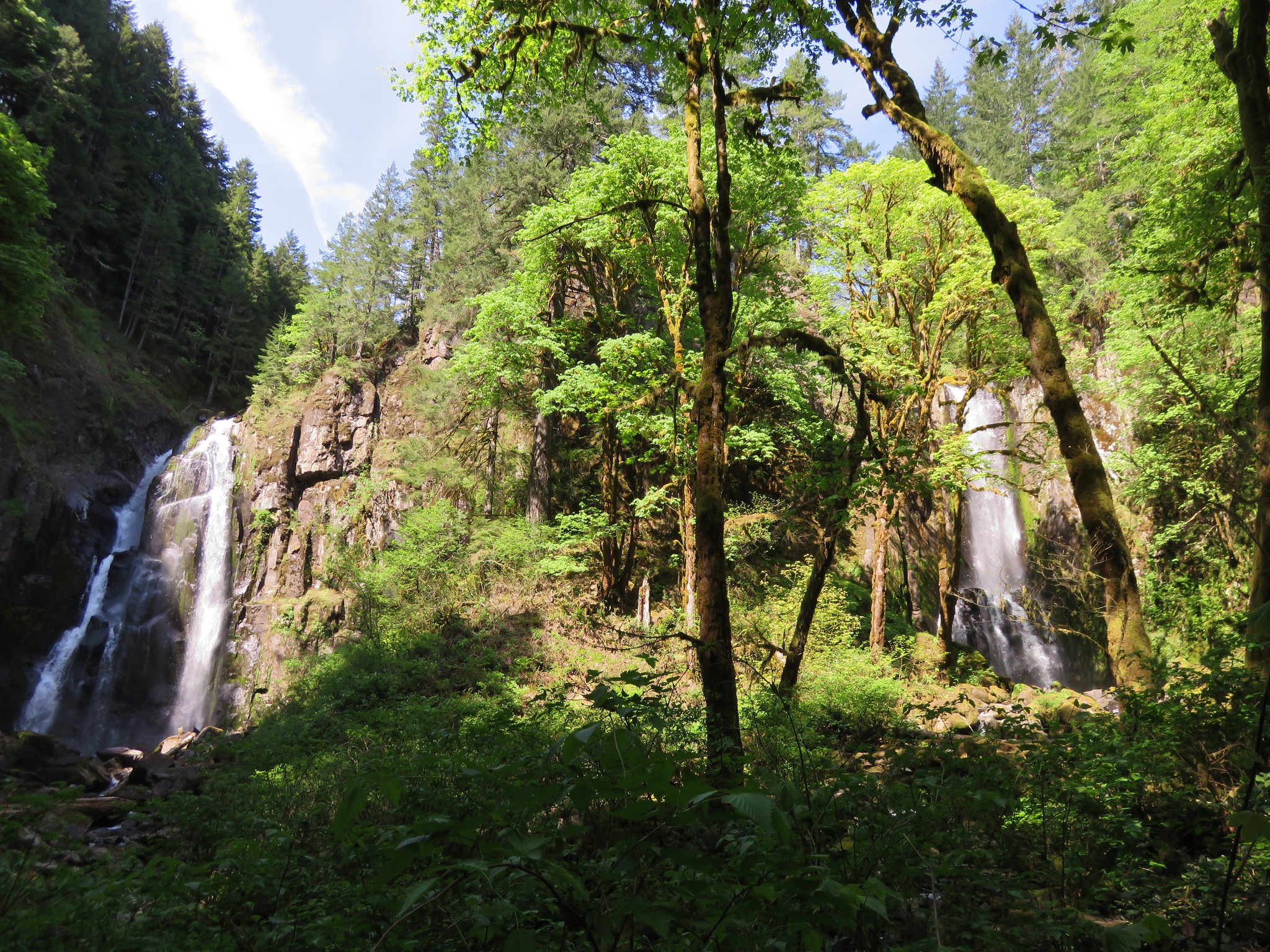
We had originally planned to visit Kentucky Falls a couple of years ago but winter storms damaged the North Fork Smith River Trail causing us to postpone the hike. Much of the trail has since been repaired and we decided that it was finally time for that trip. The North Fork Smith River Trail extends for over 8.5 miles between two trailheads in the Siuslaw National Forest west of Eugene, OR. We chose the Kentucky Falls Trailhead located on National Forest Road 919 as our starting point for a couple of reasons. First of all the three large waterfalls along the trail are closer to this trailhead and secondly the storms that damaged the trail had also damaged the 1 1/2 mile bridge (Named for its distance from the North Fork Smith Trailhead on forest road 23.) making it unsafe to cross and leaving a river ford as the only way to continue past on the trail.

From the Kentucky Falls Trailhead the path gradually descends through the forest to a view above Upper Kentucky Falls.
IMG_1835

The trail then begins a steeper descent as it switchbacks down to Kentucky Creek below the falls.
IMG_1842

IMG_1846

The trail again descends gradually crossing the creek on a footbridge before a second set of swtichbacks brings you to a trail junction at a sharp switchback.
IMG_1856

Sharp switchback
IMG_1893

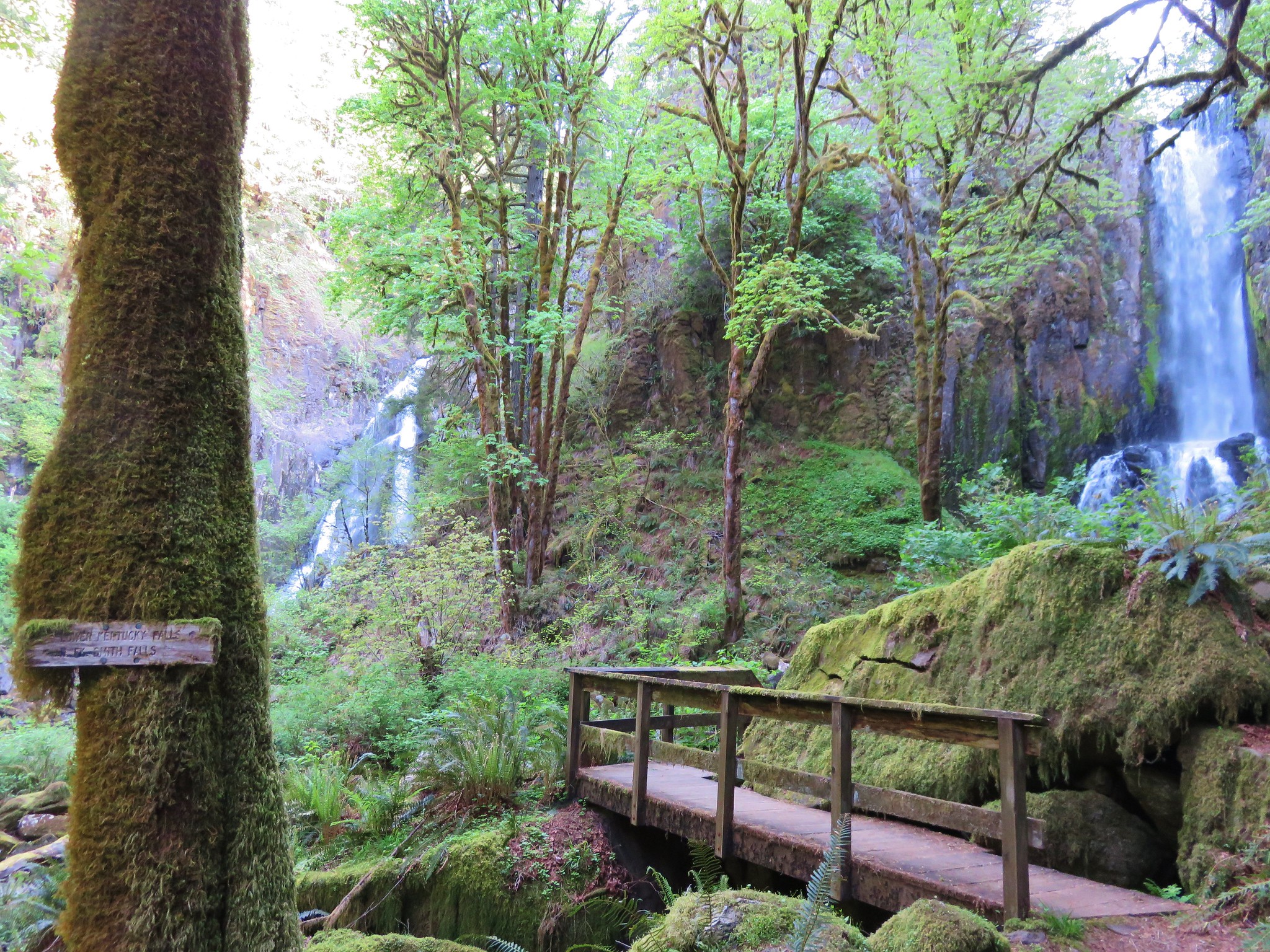
The switchback is the continuation of the North Fork Smith River Trail and the route for a longer hike. A short path leading straight from the switchback junction leads a short distance to two more large falls. Lower Kentucky Falls and North Fork Falls.
IMG_1867

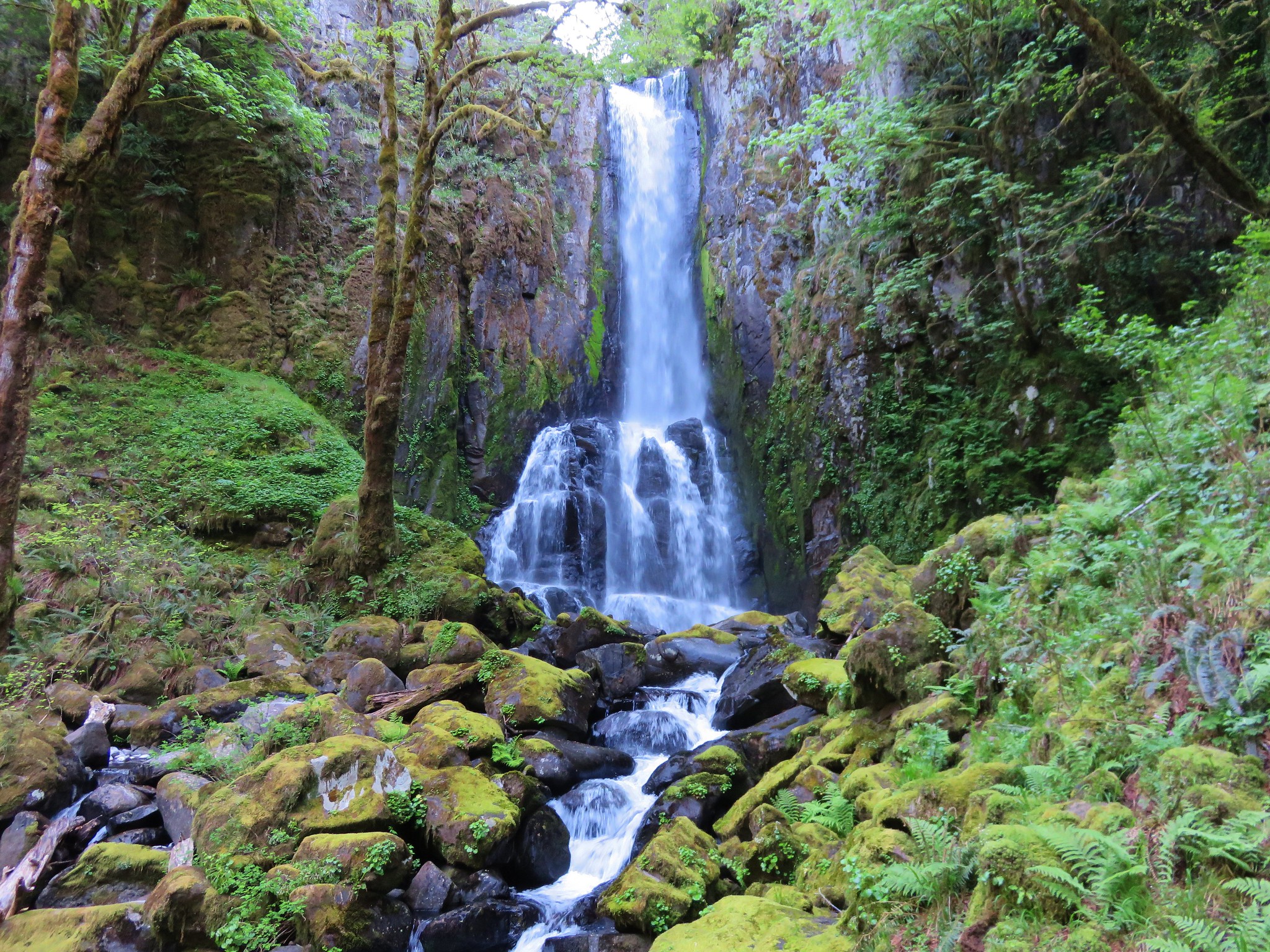
Lower Kentucky Falls
IMG_1870

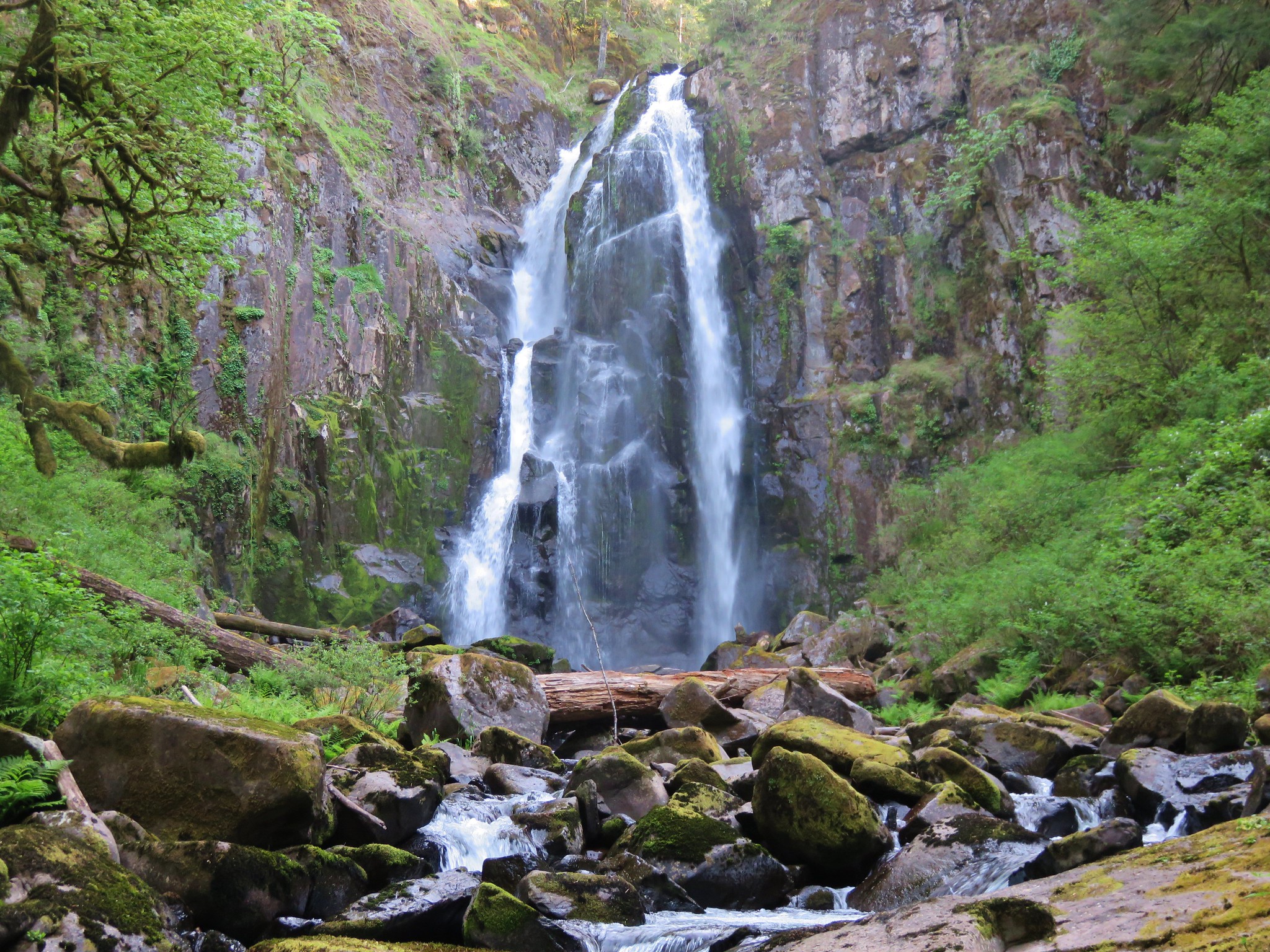
North Fork Falls
IMG_1882

Turning back here would have made the hike approximately 4.5 miles, but we were planning on a longer trek so when we returned to the switchback junction we continued along the North Fork Smith River Trail. Under a mile from the junction we came to Swimming Pool Falls. A much smaller waterfall than the three upstream but scenic none the less.
IMG_1896

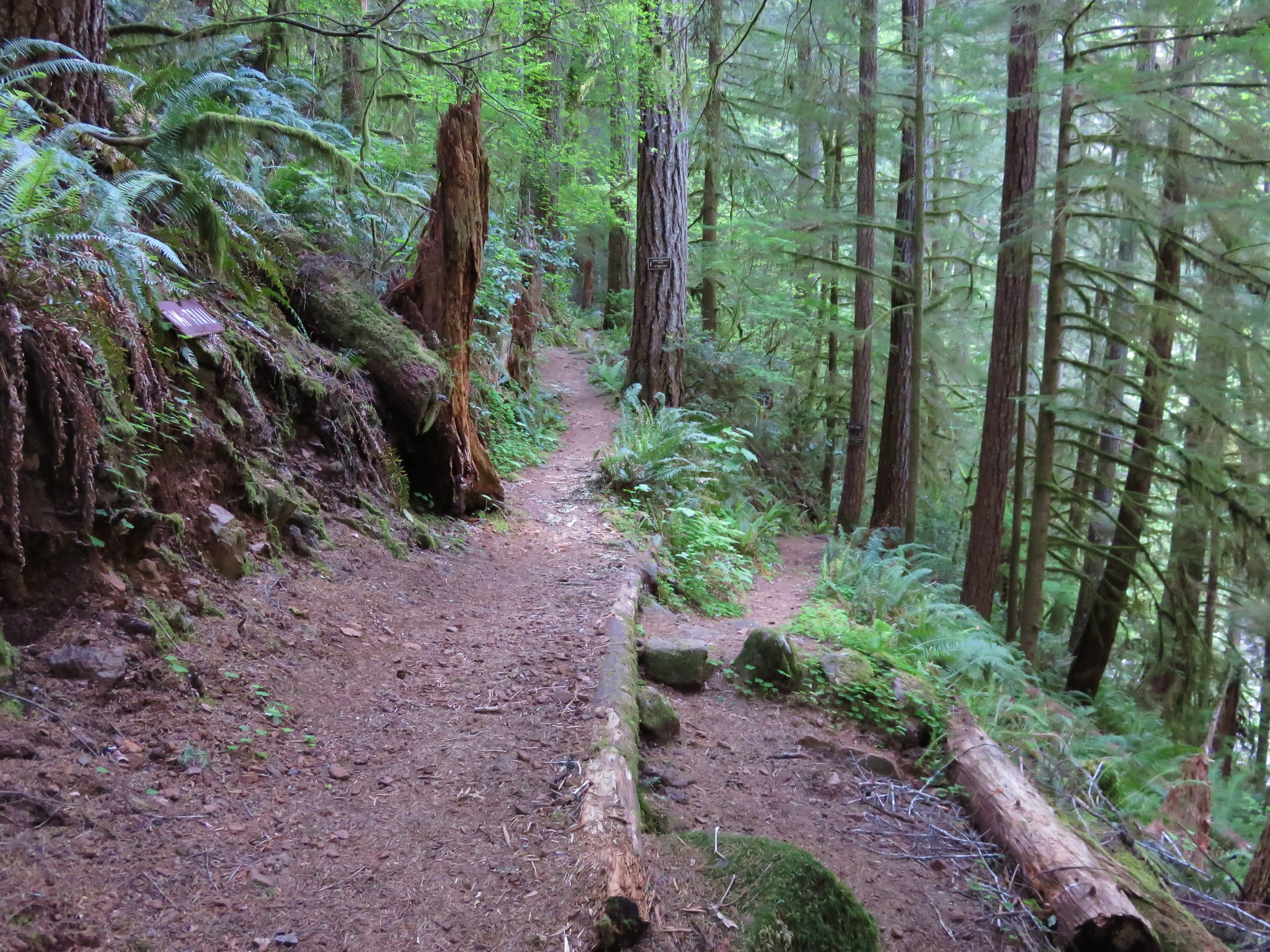
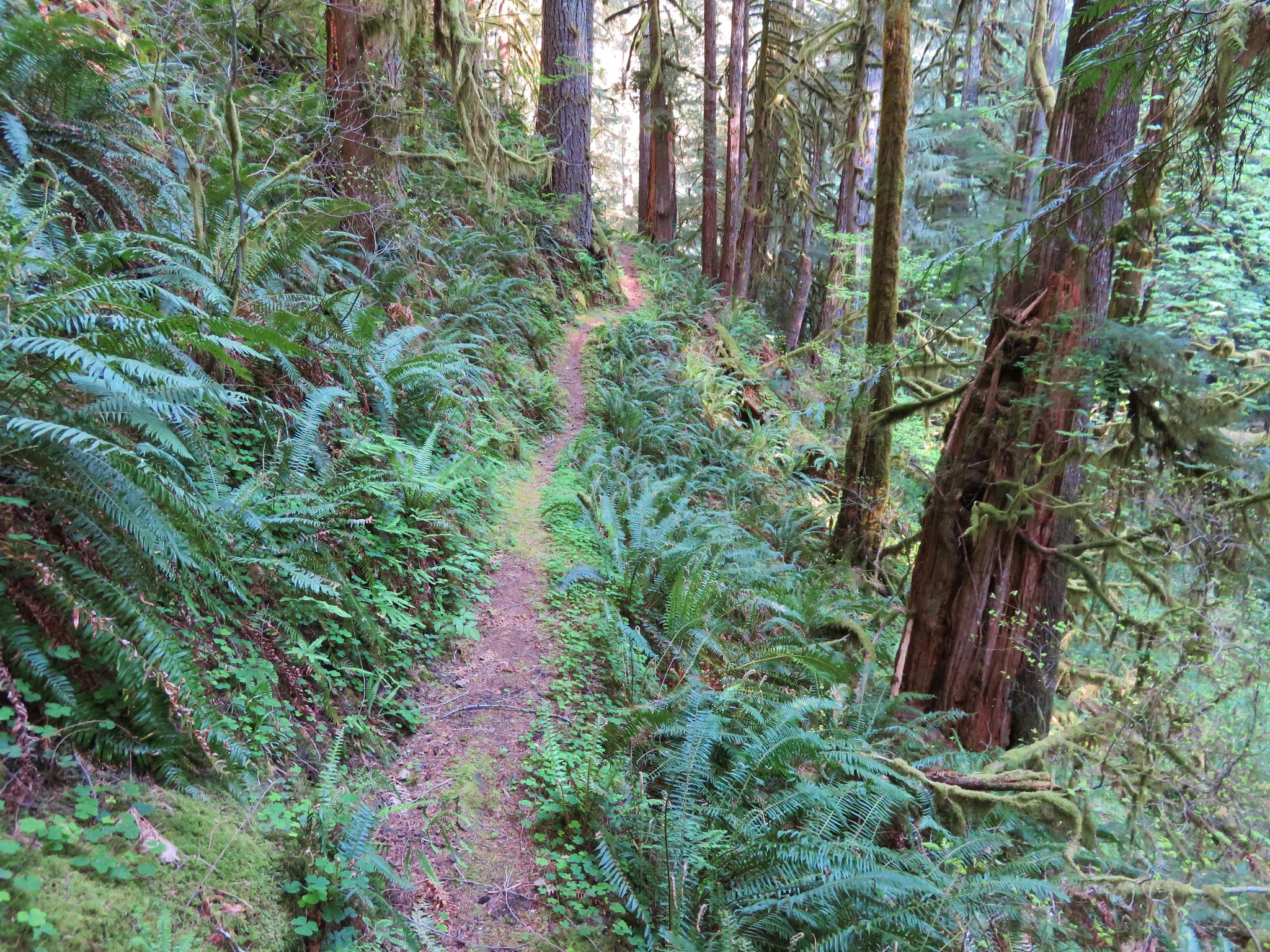
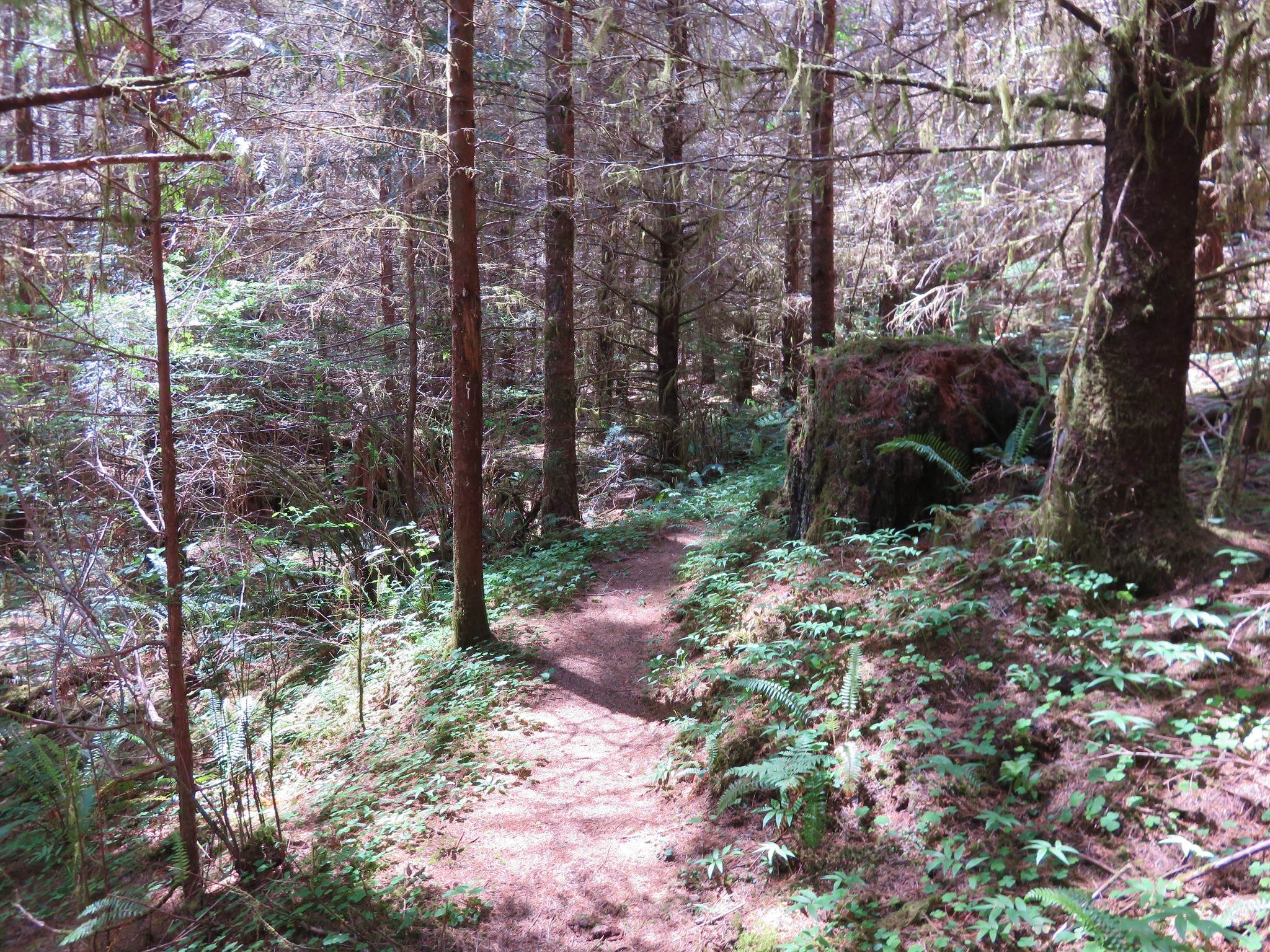
The trail after Swimming Pool Falls began to show signs of little use. The tread became narrower with some small plants and moss growing on the path.
IMG_1910

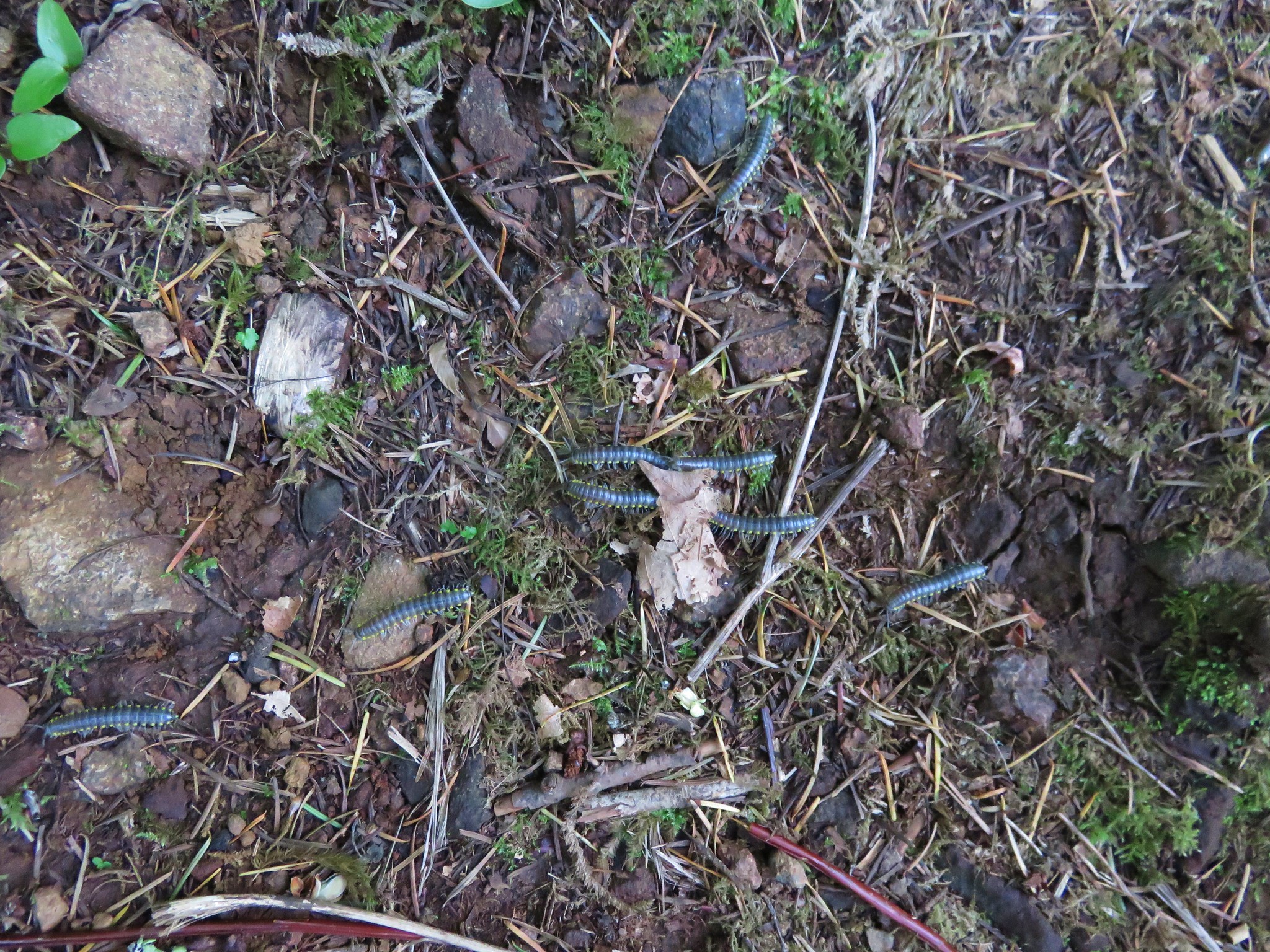
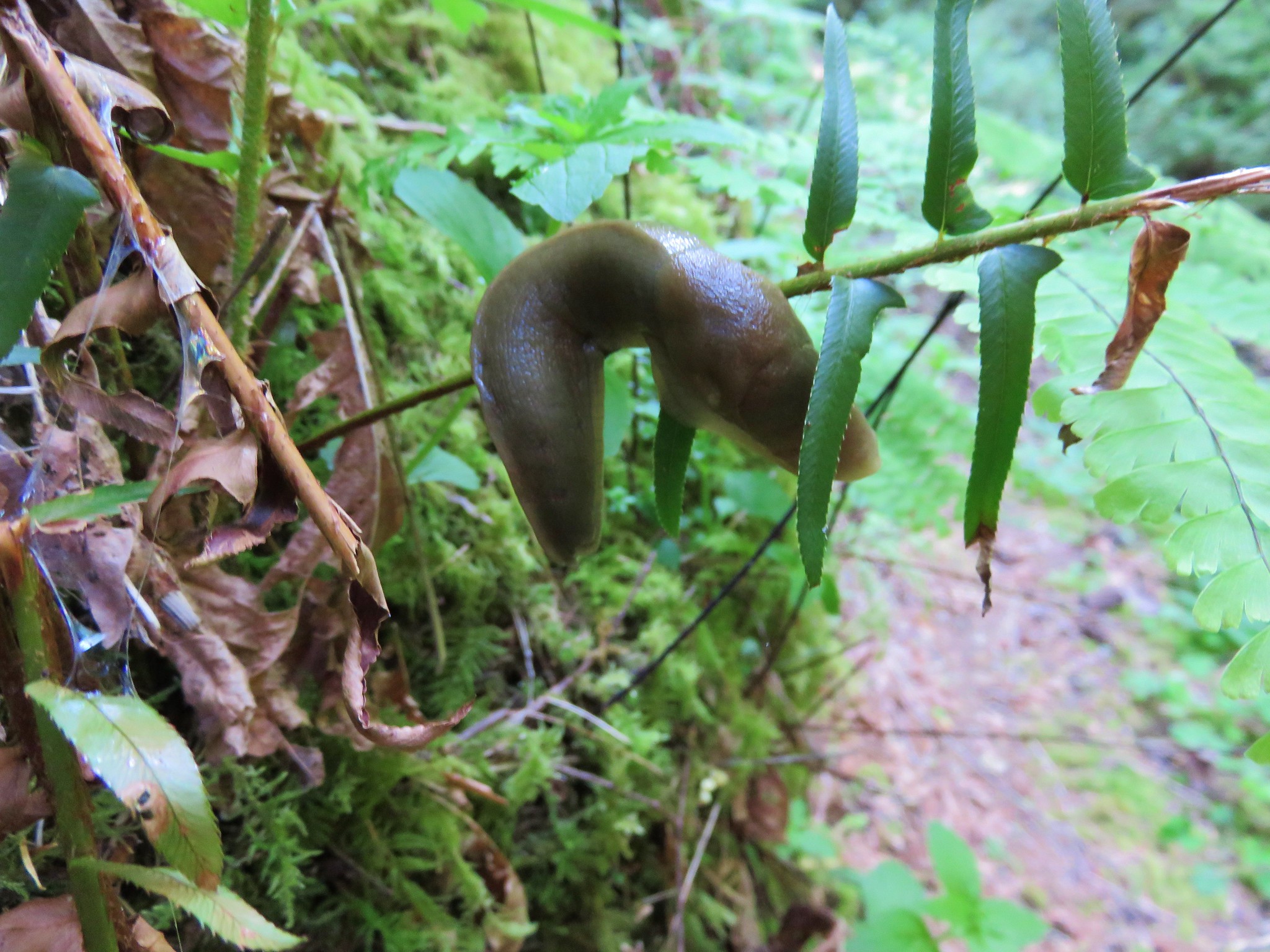
We had to watch our step but not because of the trail condition, we had to watch out for the numerous snails, slugs, millipedes, and other critters that we saw all along the trail.
IMG_1851

IMG_1861

IMG_1911

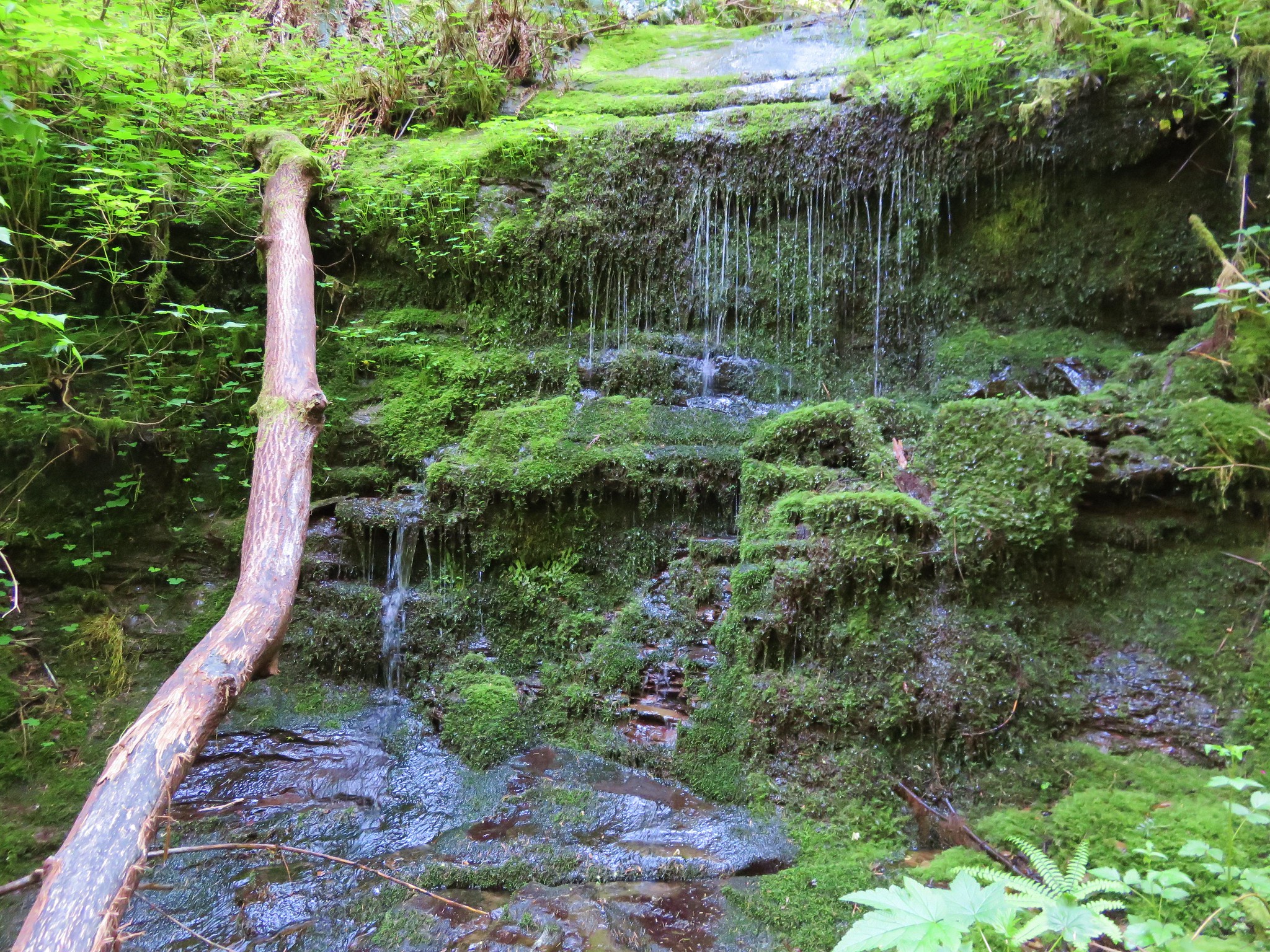
Our map showed that it was approximately 2.7miles from Swimming Pool Falls to the 3 mile bridge. This is the second bridge over the North Fork Smith River coming from the North Fork Smith Trailhead. We were on the lookout for a couple of markers along the way though, a small drippy waterfall and an 11′ Douglas fir. We spotted the drippy waterfall just fine which looked like it would have been very pretty with a higher volume of water.
IMG_1913

Not far after drippy falls there was a large tree trunk across the trail which made for a decent obstacle.
IMG_1986

Then we came to an unsigned trail junction at a switchback. This junction was not on any forest service map of the area we had seen and it wasn’t marked on the map in our field guide. The right hand fork led down a ridge while the left fork switched back along the canyon wall.

This picture is taken from the left hand fork looking back up at the unsigned junction.
IMG_1922

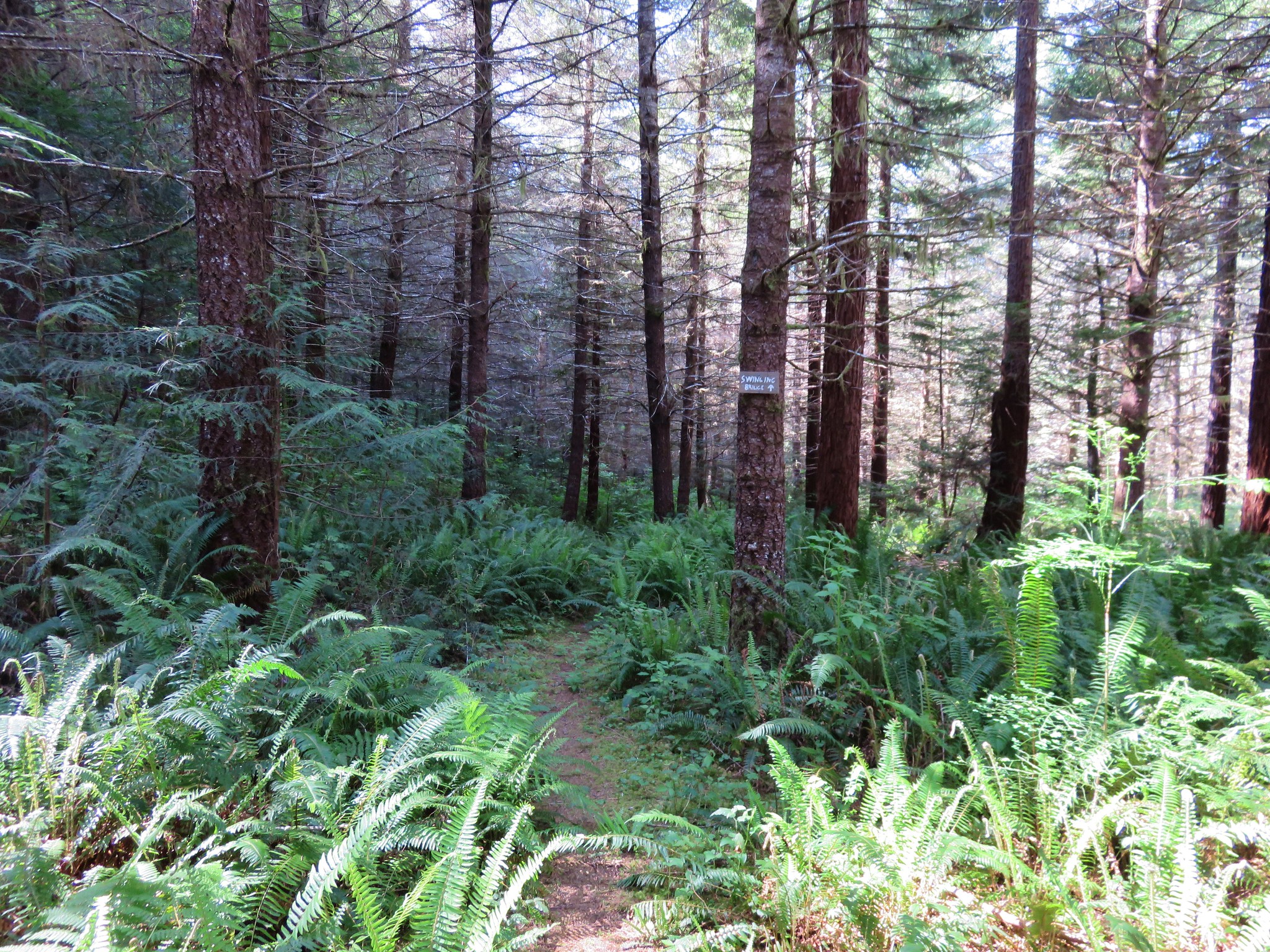
We decided to take the right hand fork to see if led down to the 11′ tree or possibly a campsite out on the ridge. We did pass an old campsite but the trail continued on down toward the river growing a little fainter as it went. We were following a side creek down the hillside which the maps showed the trail doing as it arrives at the 3 mile bridge so we kept going wondering if we had missed the 11′ tree and already arrived at the bridge. The trail crossed the little stream and arrived at another junction. This one had signs. A Kentucky Falls sign pointed right toward a very faint path while a North Fork Smith Trail sign pointed back up the way we’d come. The sign for the left hand fork said Swinging Bridge.
IMG_1914

We were headed for a bridge but it was odd that Sullivan had not mentioned the “Swinging” aspect of the bridge in his book. That is the kind of detail that he does include in his descriptions. Not far from the junction we arrived at the bridge though.
IMG_1916

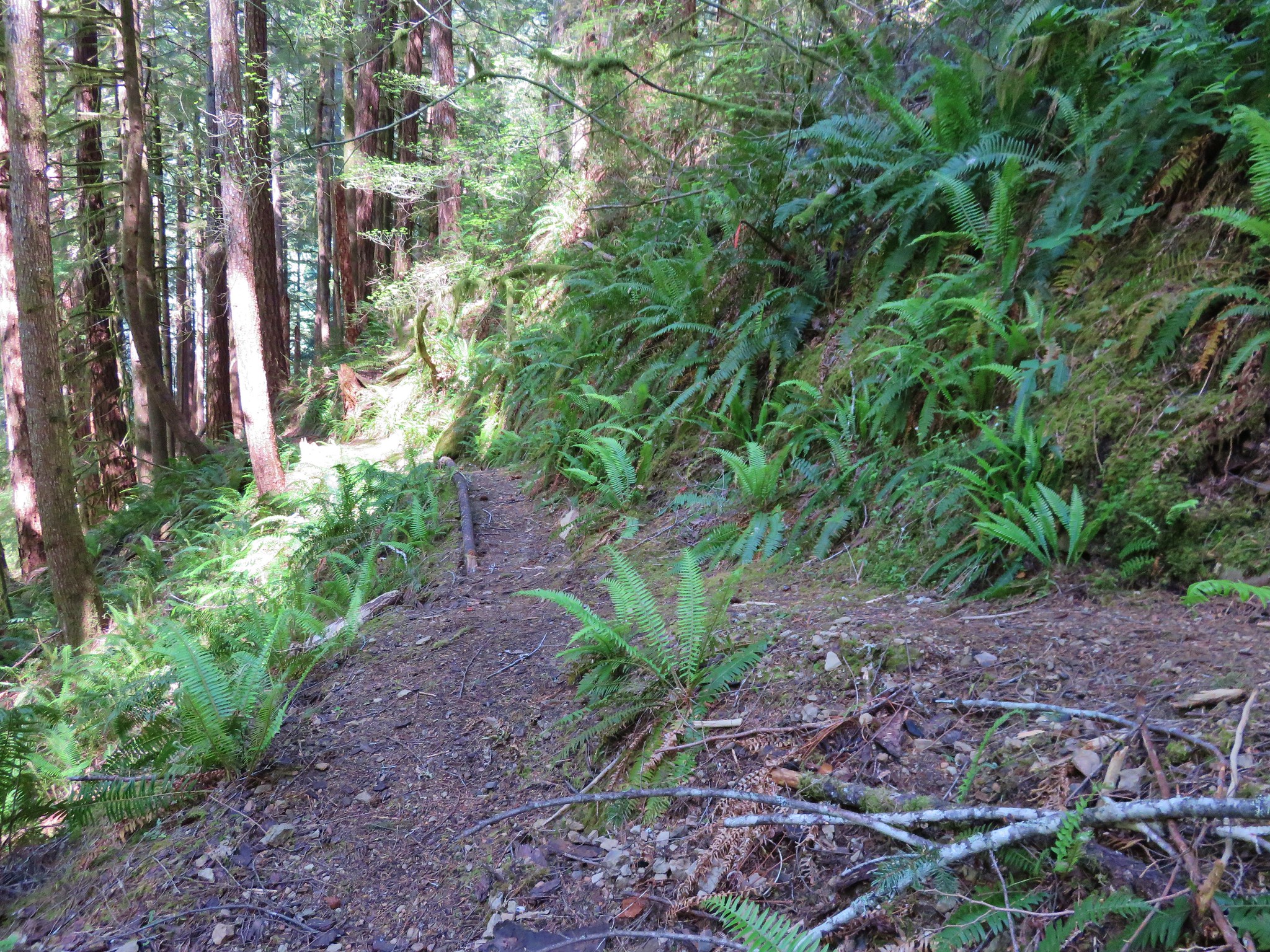
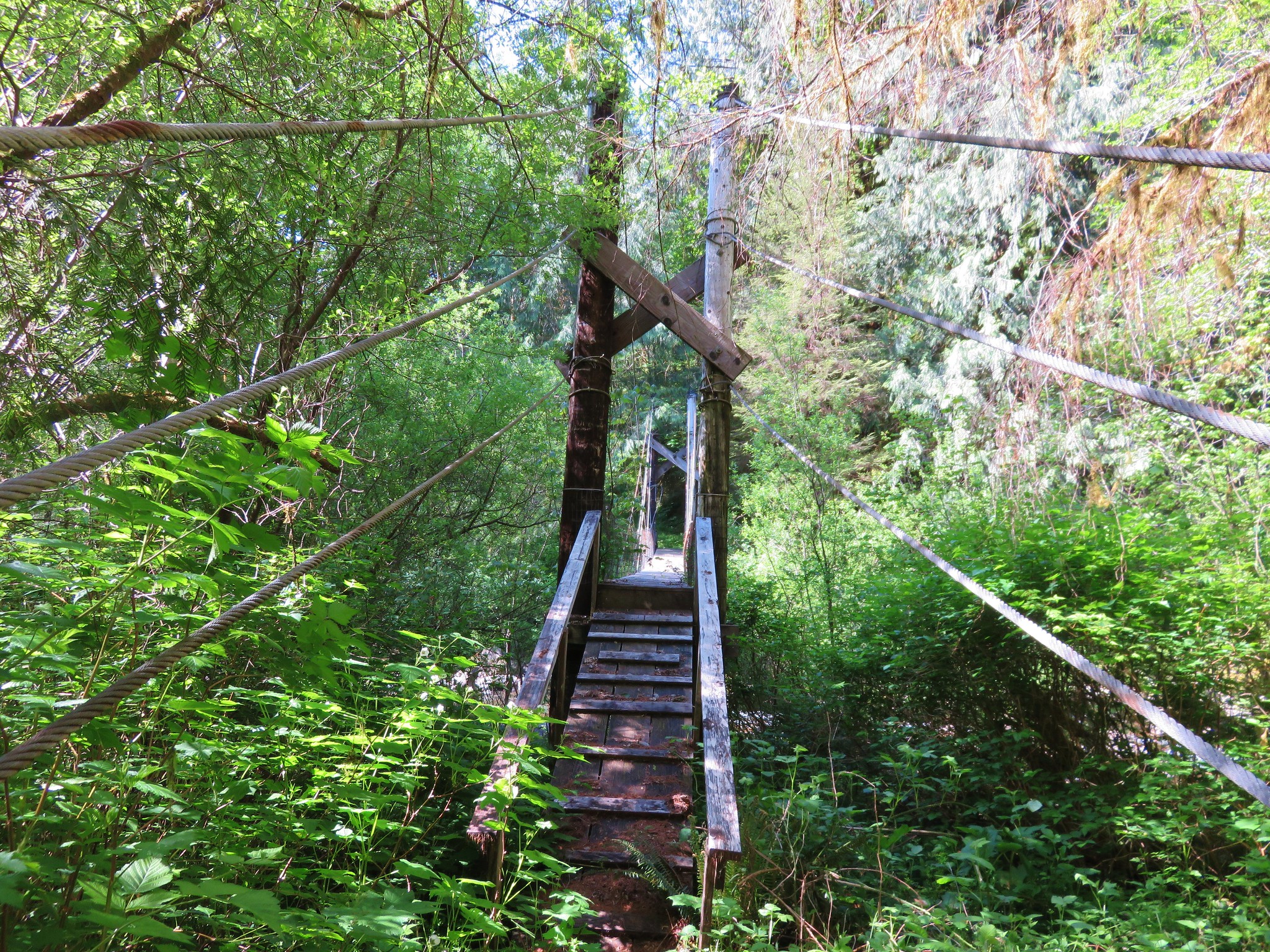
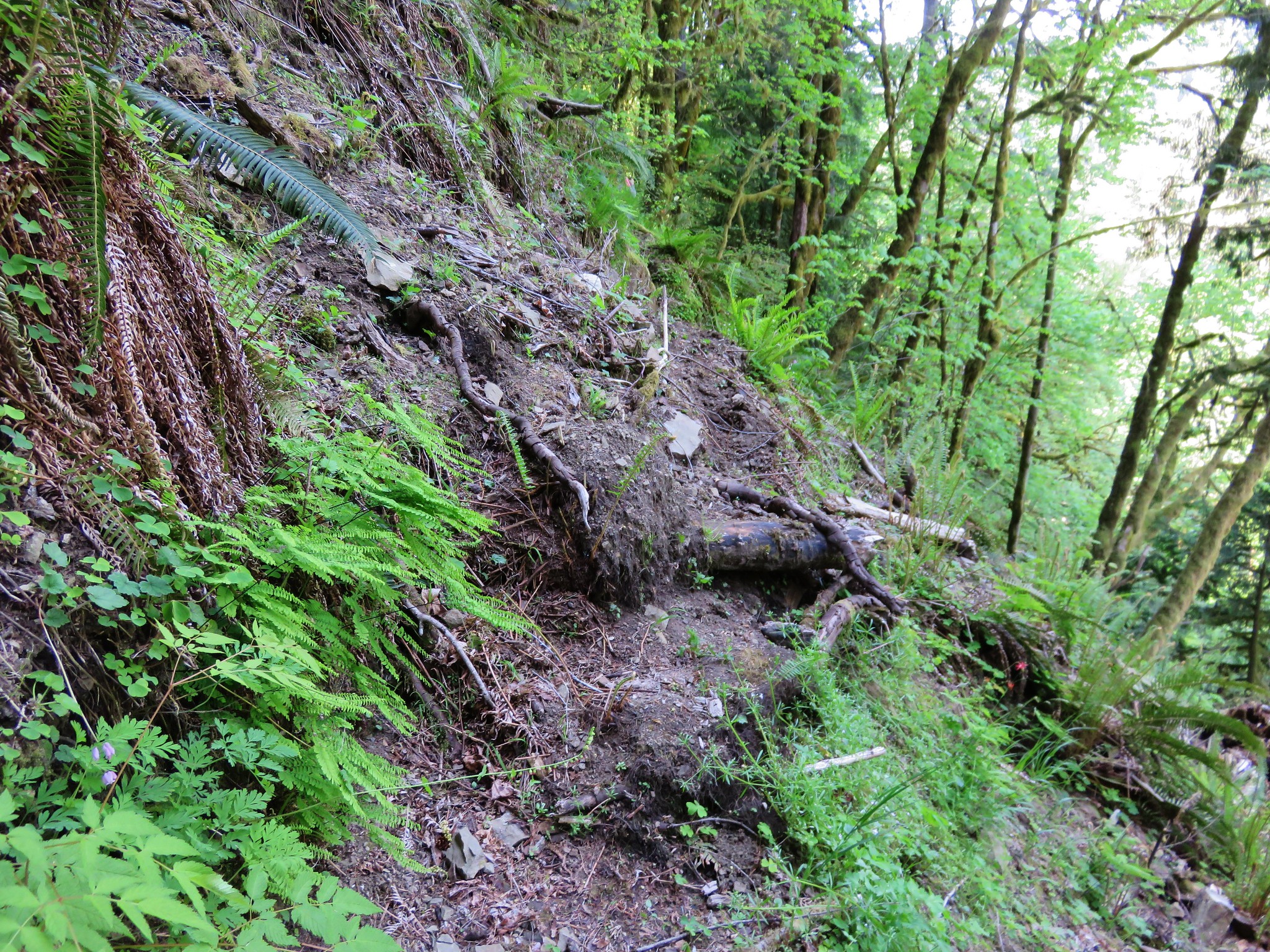
It was a nice suspension bridge which was something else that didn’t fit the field guide description. We ventured out on the bridge and at the far end was a small sign that simply said. “3.5 miles to gated road 4880”. The path leading away from the bridge was an old roadbed that was overgrown with grass. We were able to deduce that the bridge must connect the trail system to some private land on which was shown on the map in our field guide on the opposite side of the river. So back up the hill we went to the unsigned junction to the path we hadn’t taken. This portion of trail had not been maintained for some time, probably since the storms that damaged the bridges, leaving a couple of wash outs that had to be navigated.
IMG_1925

IMG_1930

When the trail began to descend a ridge toward the river we realized that we must have missed the big tree and would have to look for it on our return trip. In the meantime we were busy trying not to miss the trail as it became increasingly overgrown the closer we got to the river.
IMG_1933

We passed as small former campsite near a small stream with a very small fall into a little pool.
IMG_1936

Then we arrived on the bank of the river. Here the trail was almost completely overgrown, but Heather did an excellent job following it through the undergrowth.
IMG_1941

IMG_1943

We struggled through the brush for a couple hundred yards at least before finally popping out at the river with a view of the 3 mile bridge.
IMG_1945

The next obstacle was figuring out the best way to reach the bridge which had been cut off by a new channel of the river after the storms. While we looked for the best route we noticed several little fish in the water.
IMG_1946

In the end we decided to go around to the right of the pool in front of us which worked out well and we were soon across the bridge. The trail then followed the river through a less overgrown wood. Here the sun was shinning and flowers lined the path.
IMG_1950

IMG_1957

Several neat moss covered trees also added to the character of this section.
IMG_1952

IMG_1956

IMG_1961

The scenery changed again when the trail left the more woodsy forest behind and entered a different feeling area where there was very less undergrowth and giant stumps told of a past forest fire.
IMG_1964

We finally arrived at what remains of the 1 1/2 mile bridge.
IMG_1965

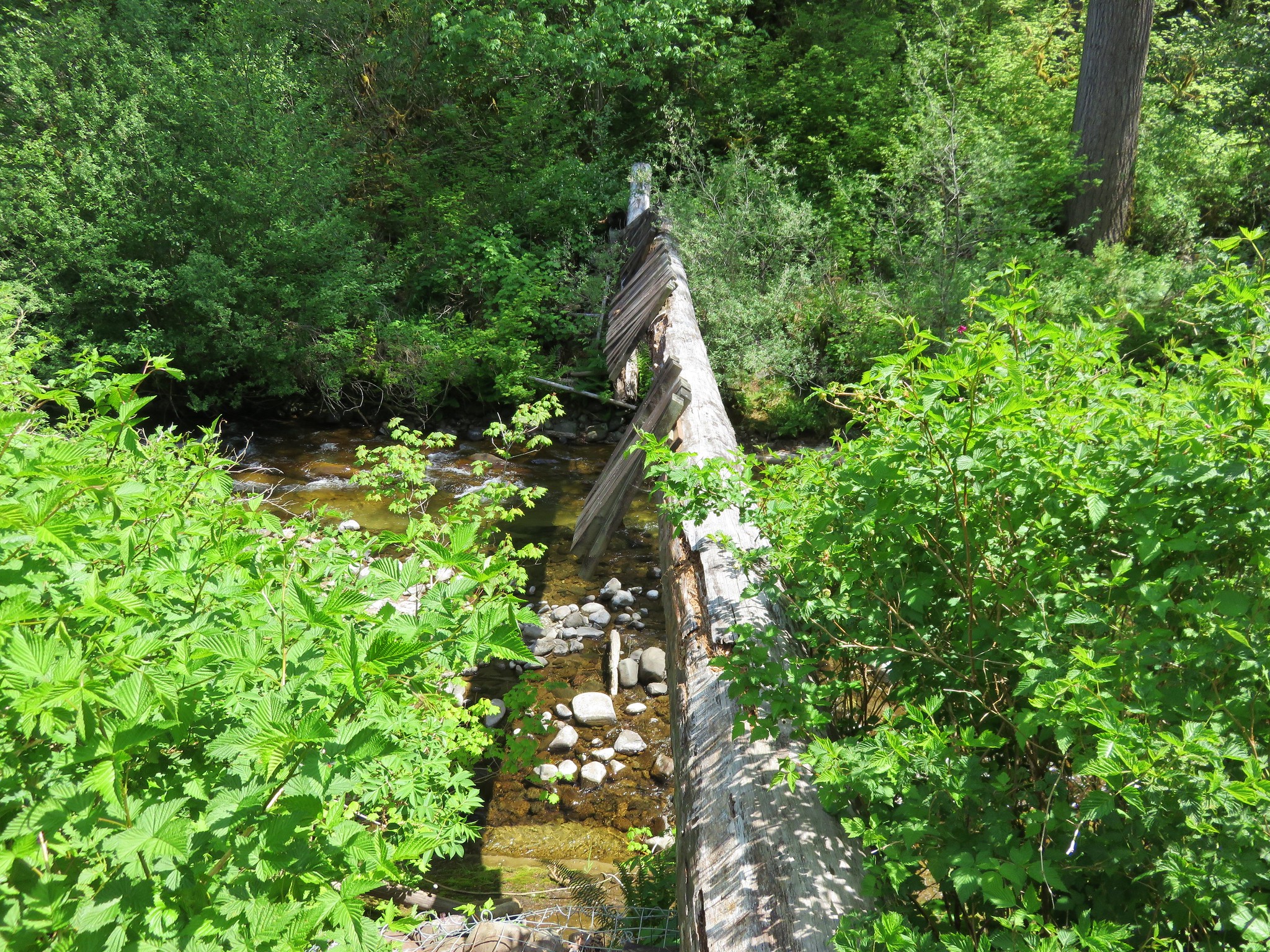
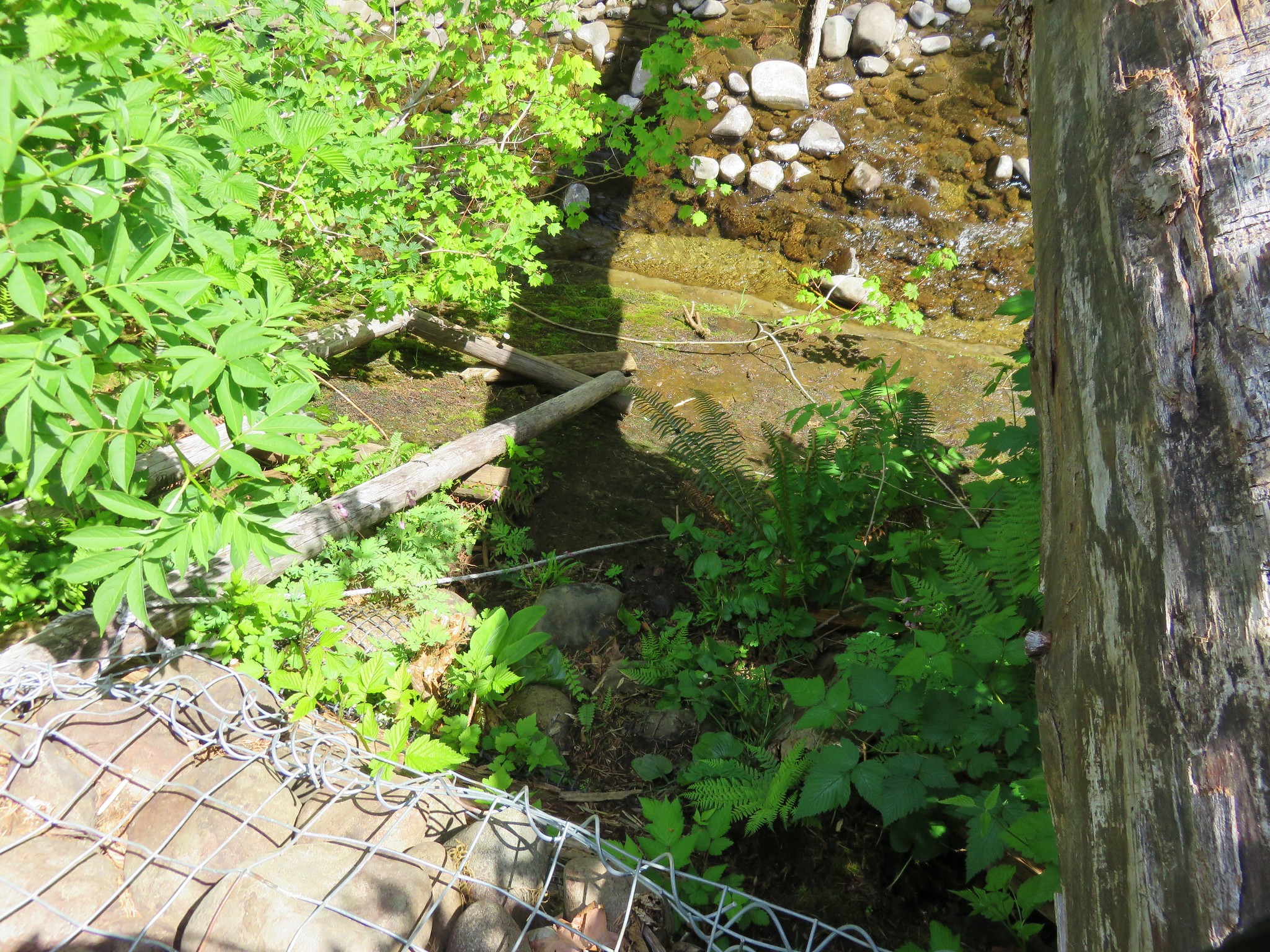
There were visible cracks in the middle of the log and clearly not something anyone should attempt to cross. Determined hikers could look for a place to ford the river and there was a rope that was tied on a log near the bridge to assist in climbing up the embankment, but this may not be an option in high water.
IMG_1967

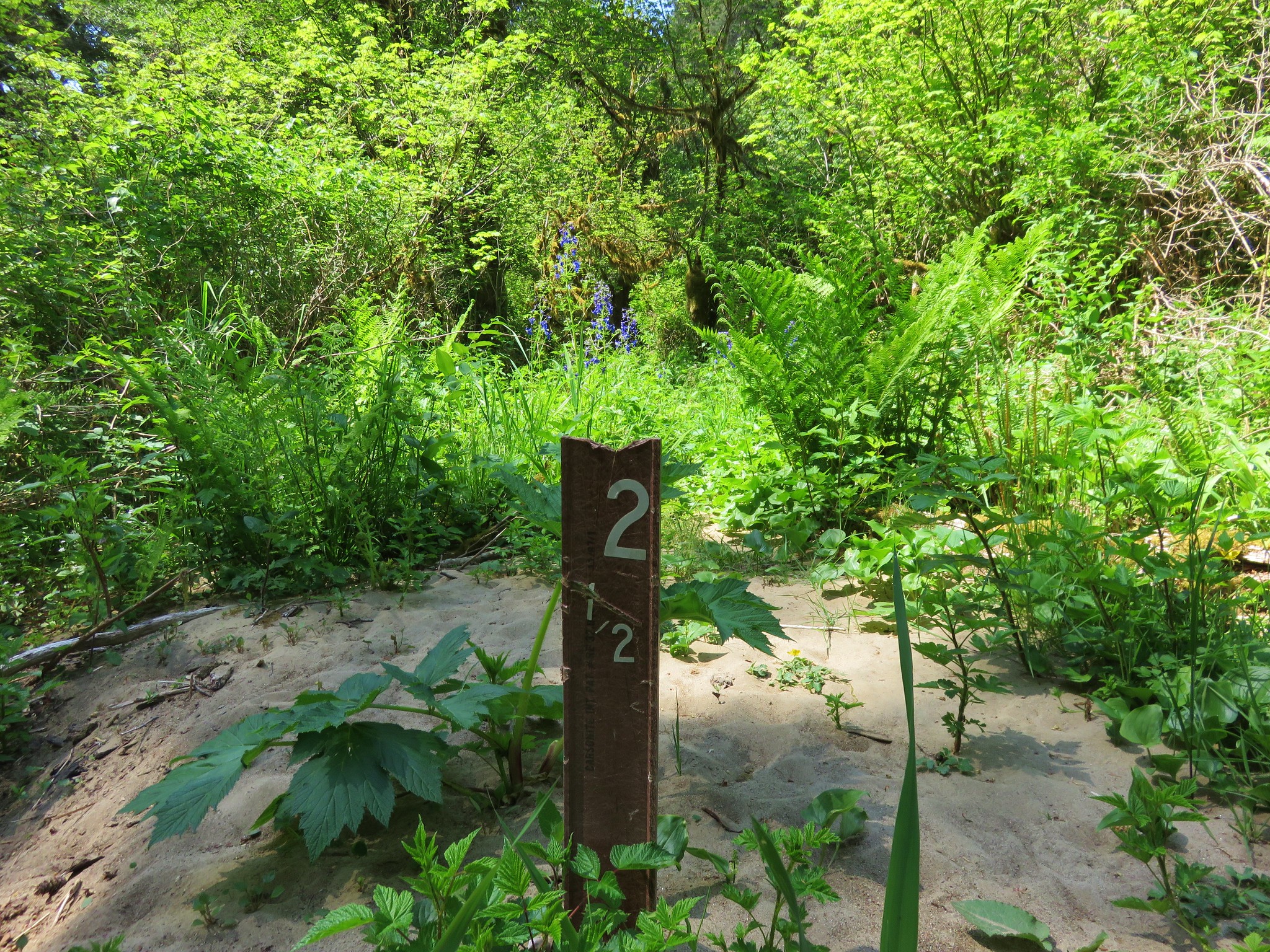
We turned around and began our return trip having decided to stop at a sandy beach we had passed earlier near a 2 1/2 mile post.
IMG_1962

We sat by the creek and cooled our feet off in the cold (really cold) water.
IMG_1969

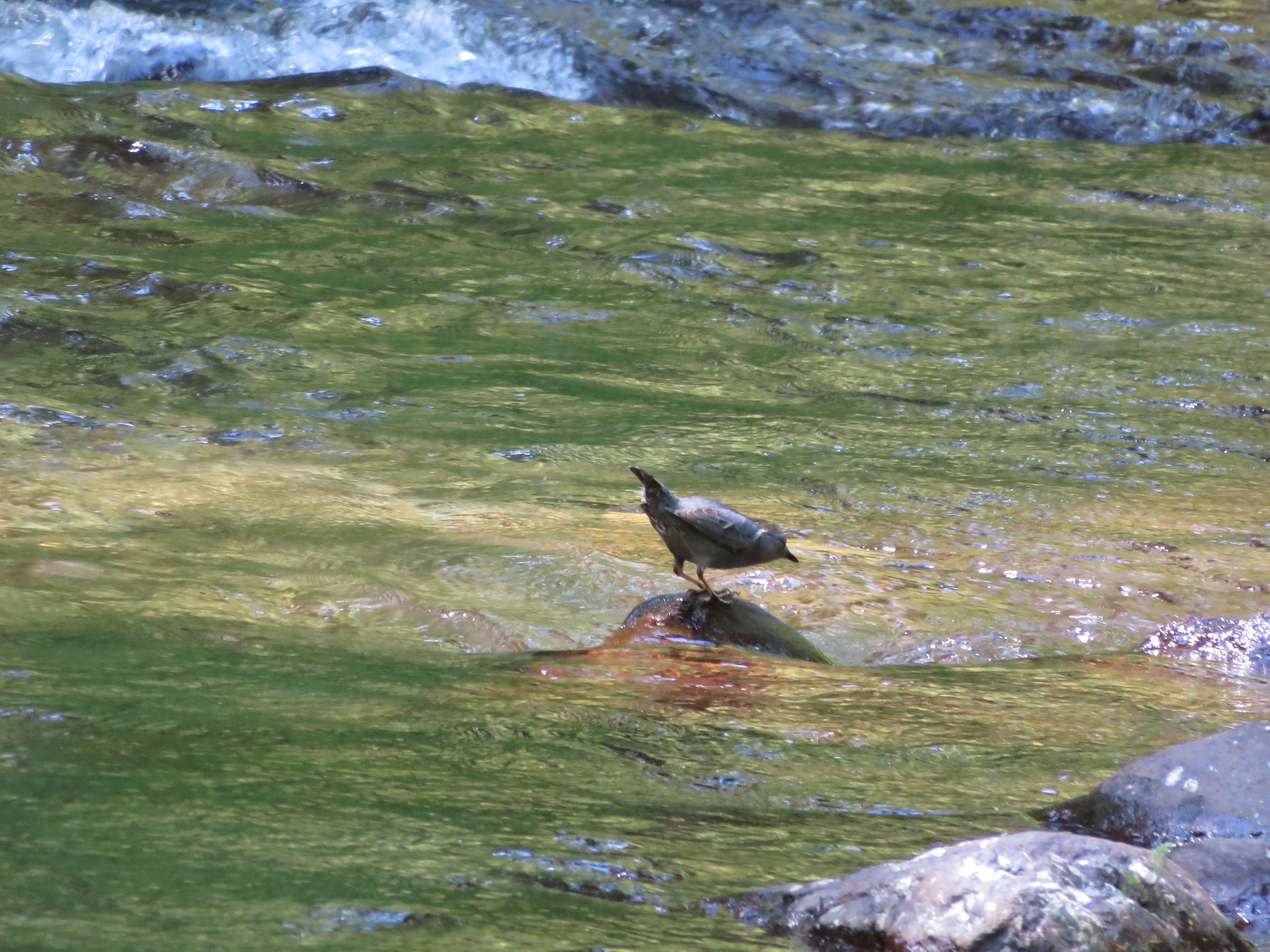
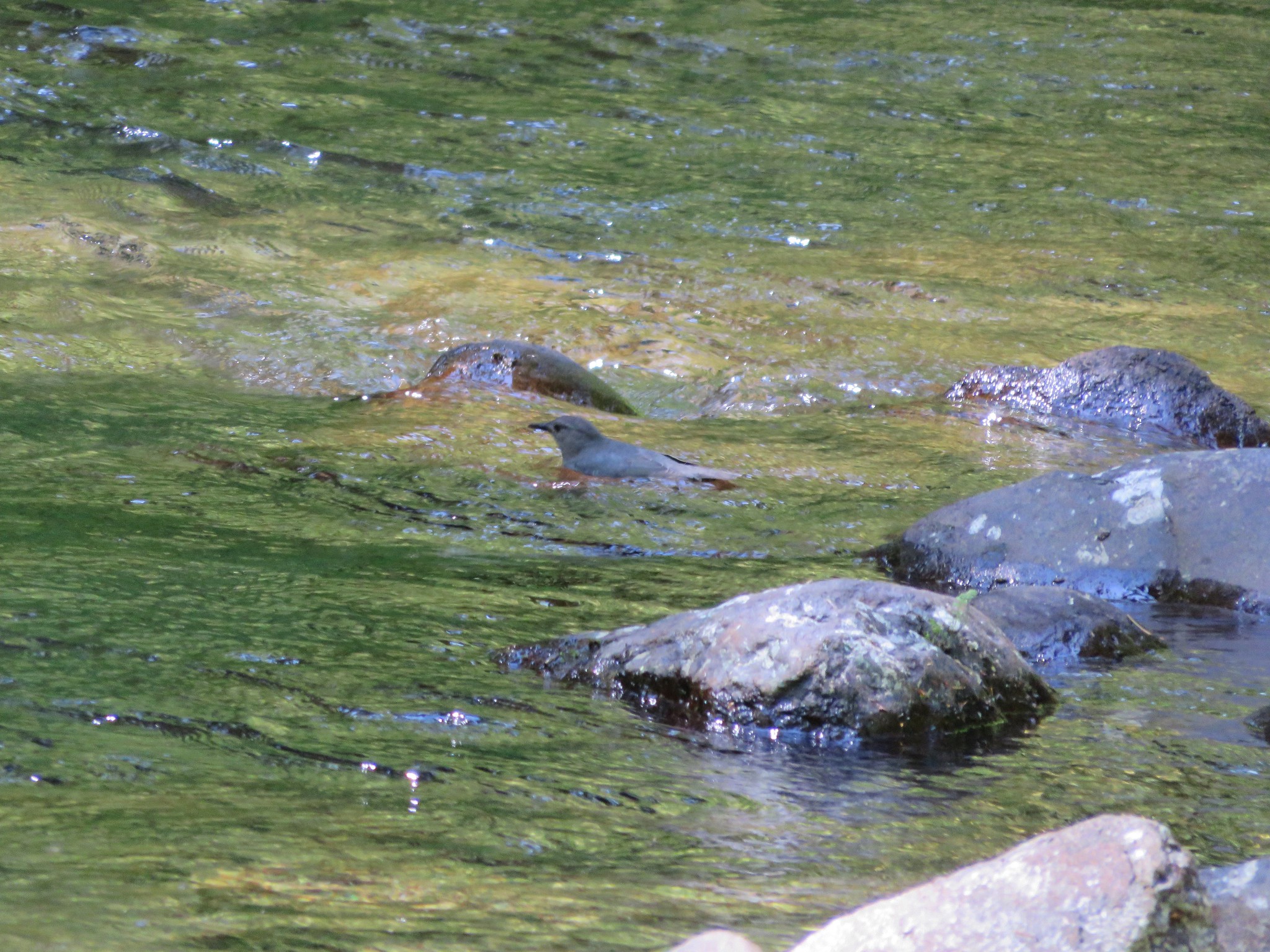
An ouzel was busy hunting for insects in the water just downstream.
IMG_1978

IMG_1976

After resting for a bit we resumed our return hike focused on spotting the 11′ Douglas fir this time. We spotted it this time and also noticed a sign along the trail apparently identifying the tree. What the sign actually said we couldn’t tell but the tree was certainly larger than any of the other trees around.
IMG_1985

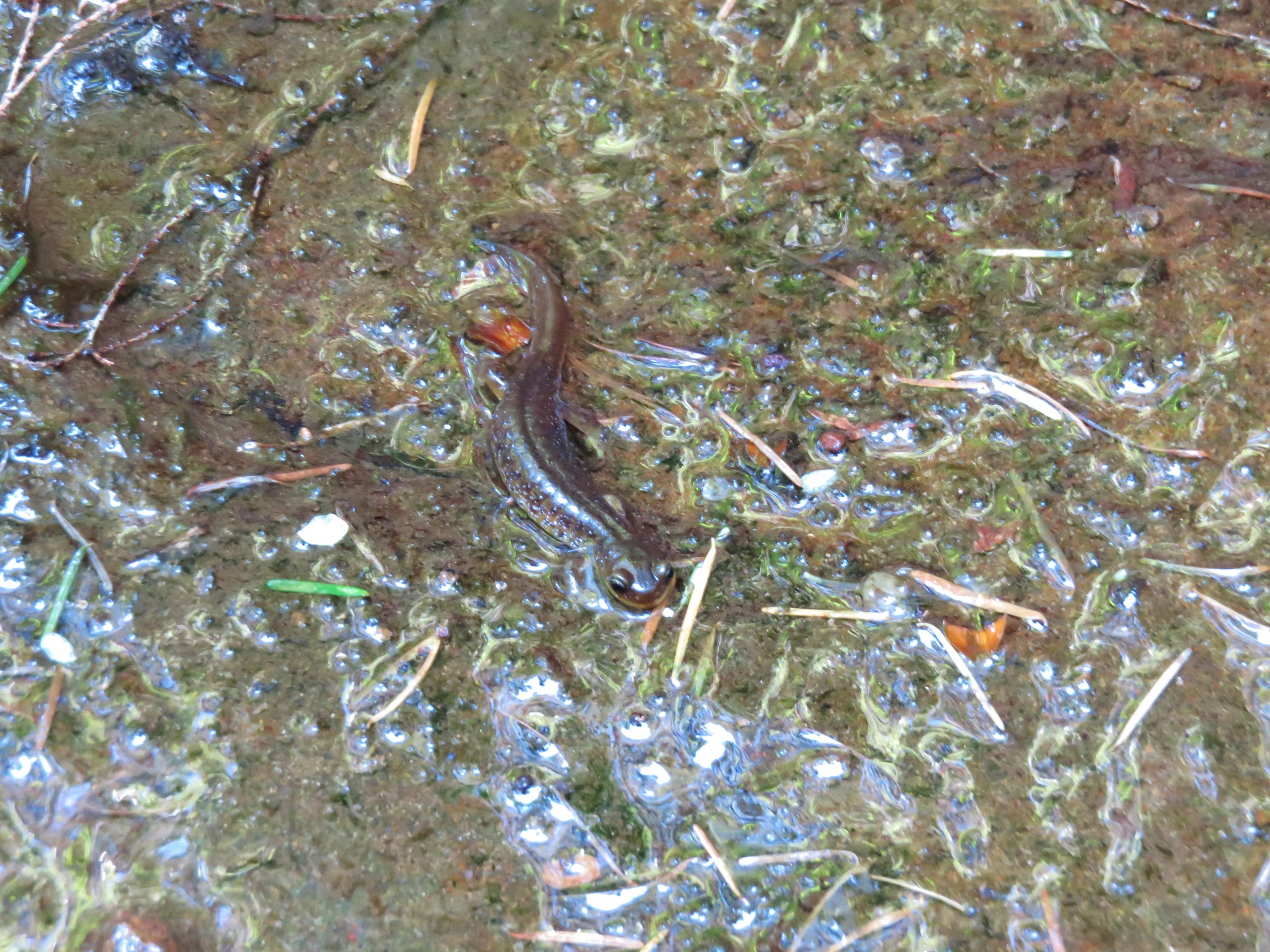
We also spotted a salamander in one of the little streams along the trail. I tried to identify the exact type of salamander this was, as it was the first we’d seen of this type, but all I was able to find out for sure is that it was indeed a salamander.
IMG_1987

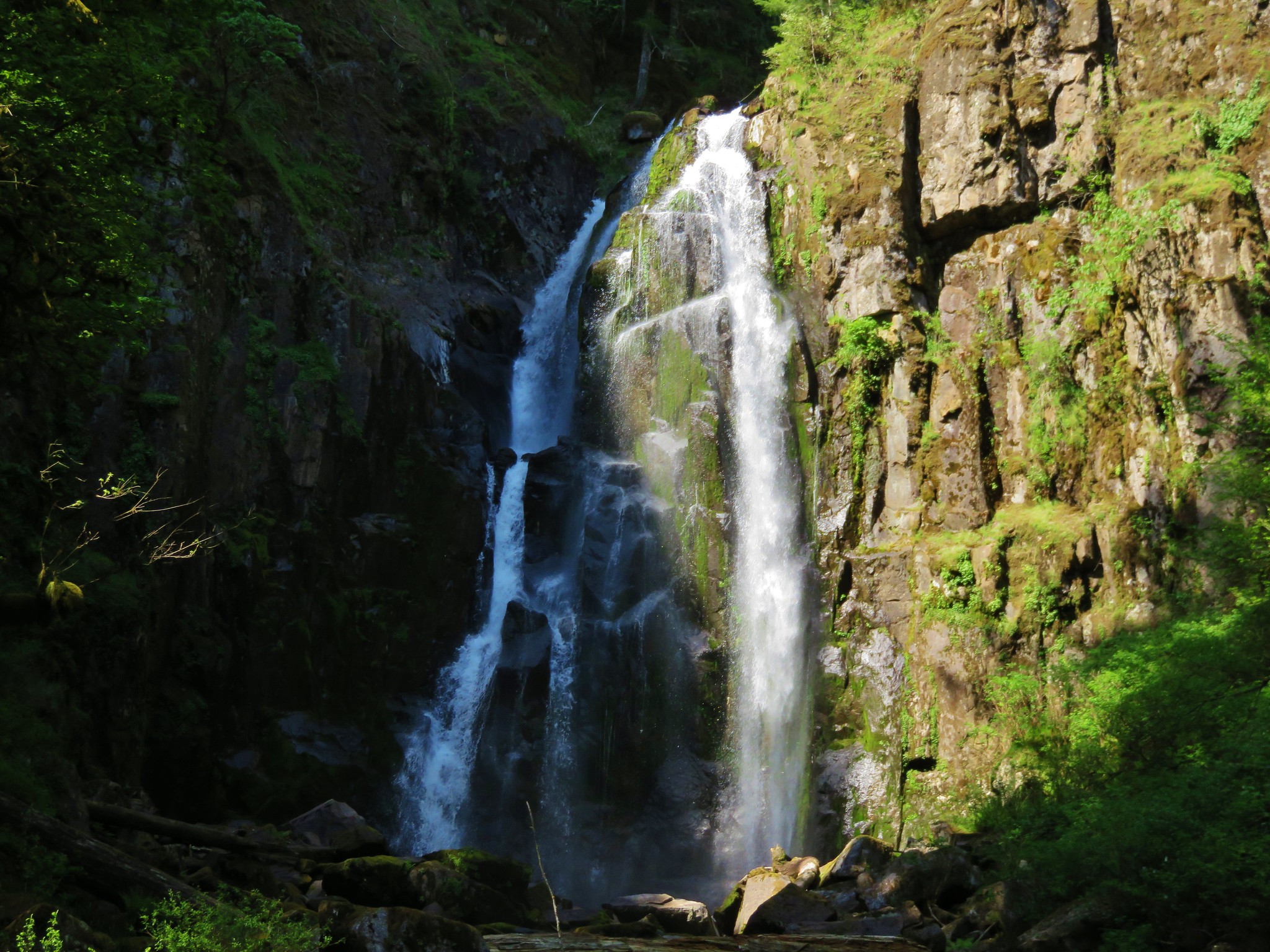
When we arrived at the spur trail to Lower Kentucky and North Fork Falls we took it again wanting to see how the change in the suns position affected the appearance of the falls. They had been impressive in the morning, but now the sun was shining on the cascades and they were even prettier.
IMG_2003

IMG_2008

IMG_2001

We found the same thing at Upper Kentucky Falls.
IMG_2023

We finally arrive back at our car around 5pm after over 9 hours of hiking. The GPS put us at 17.4 miles and our feet agreed, but it had been a great hike full of plenty of surprises and adventure. According to a sign at the trailhead the Forest Service plans to replace the bridges in 2016, but until then the North Fork Smith River Trail should remain a bit on the wilder side. Happy Trails!

Flickr: https://www.flickr.com/photos/9319235@N02/sets/72157650241947594/with/17493753445/

Categories
Coastal Range Hiking Oregon Trip report

Gales Creek and University Falls

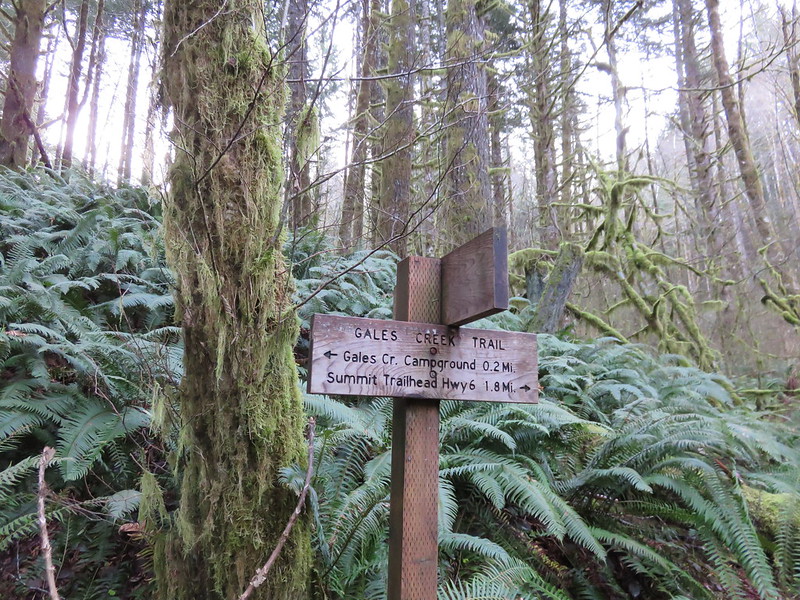
We were back on the trails after a long break following our New Years Day outing. This month we were looking for a hike involving waterfalls to take advantage of the higher water flows of late winter. We wound up heading to the Tillamook State Forest to check out University Falls and the Gales Creek area. There were several options as far as trails went, a half-mile trail beginning above University Falls, a longer loop passing the falls starting at Rogers Camp on the south side of Highway 6, or starting at one of the trailheads along the Gales Creek Loop on the north side of the highway. We chose to start at a small trailhead just before reaching Gales Creek Campground. A small post and footbridge were the only markers for this starting point.
Gales Creek Trailhead

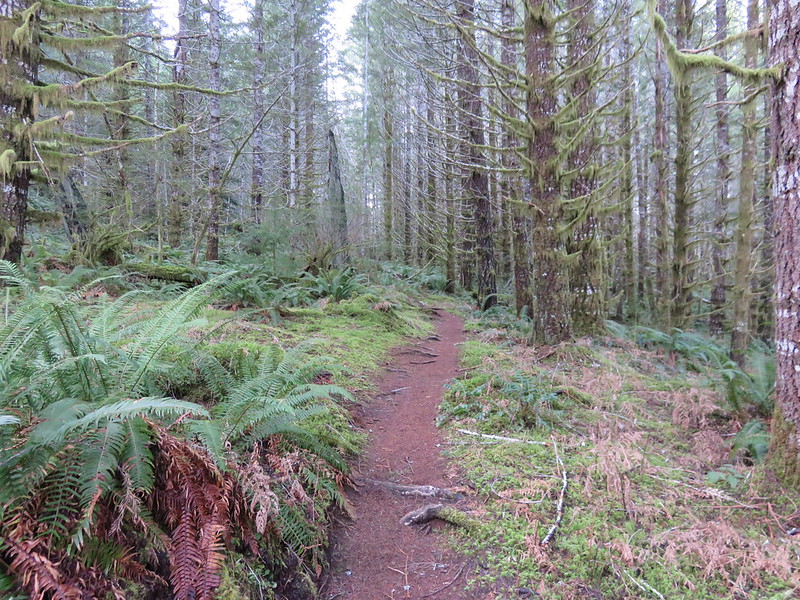
A short distance from this trailhead the path joined the main Gales Creek Loop at a well marked junction.
IMG_0073

Our plan was to take the trail to the highway and then walk up the road a few hundred feet and cross into Rogers Camp, another possible trailhead and staging area for Off-Highway Vehicles which are allowed on the south side of the highway. At the entrance to Rogers Camp we headed for a trail sign positioned between the entrance road and a highway equipment yard. Here the Gravelle Brothers Trail began.
IMG_0081

Following signs for University Falls we stuck to this non-motorized path reaching a footbridge and little bench at the Devils Fork Wilson River.
IMG_0083

After crossing the river the trail turned south and began to climb through the forest toward University Falls.
IMG_0091

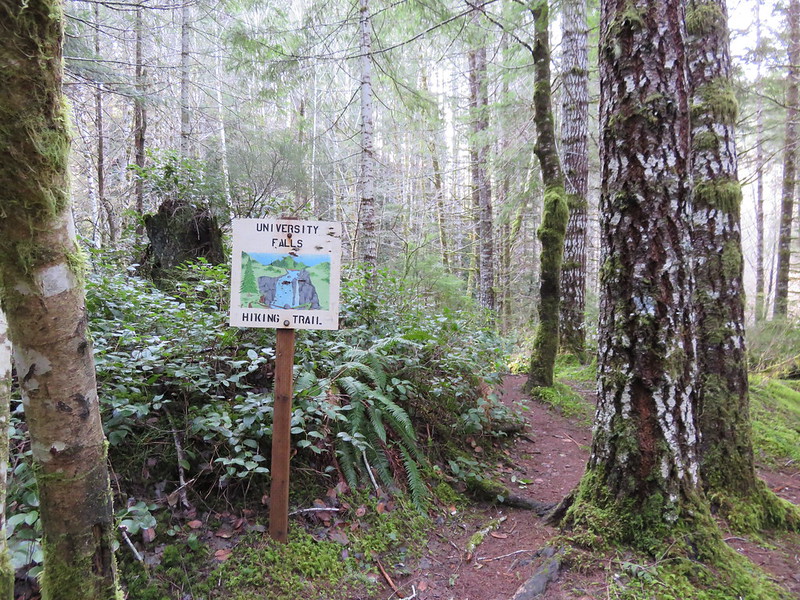
A colorful sign greeted us near University Falls.
IMG_0095

A short trail from the sign to the right led down to Elliot Creek but the falls were almost entirely obscured.
IMG_0098

IMG_0099

To get to the falls we returned to the sign and took the trail directly behind it a short distance to the falls. The falls were going strong making for an impressive show.
IMG_0100

University Falls

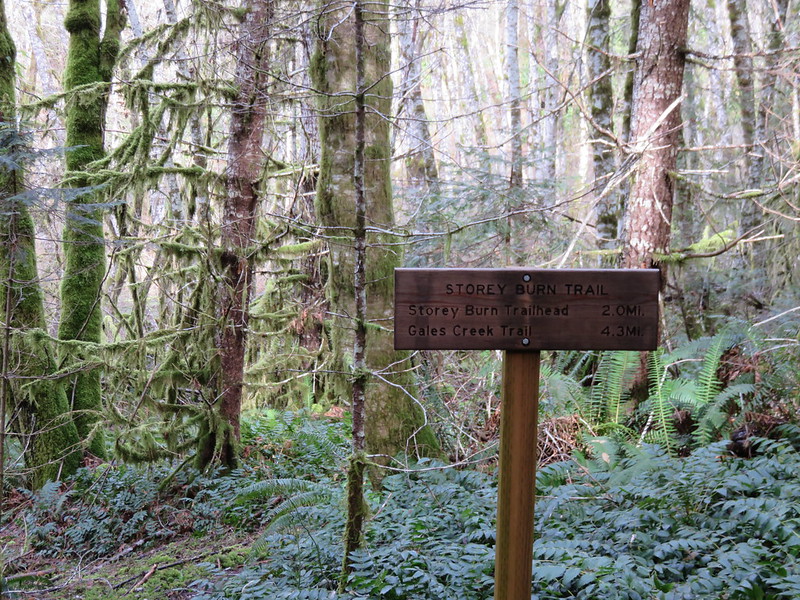
After visiting the falls we returned down the trail and recrossed the river. Not too far from the crossing we arrived at a trail junction we had passed earlier. Here we turned left on the Storey Burn Trail.
IMG_0121

This trail lead us past a marshy area along the river where skunk cabbage was begging to bloom.
IMG_0122

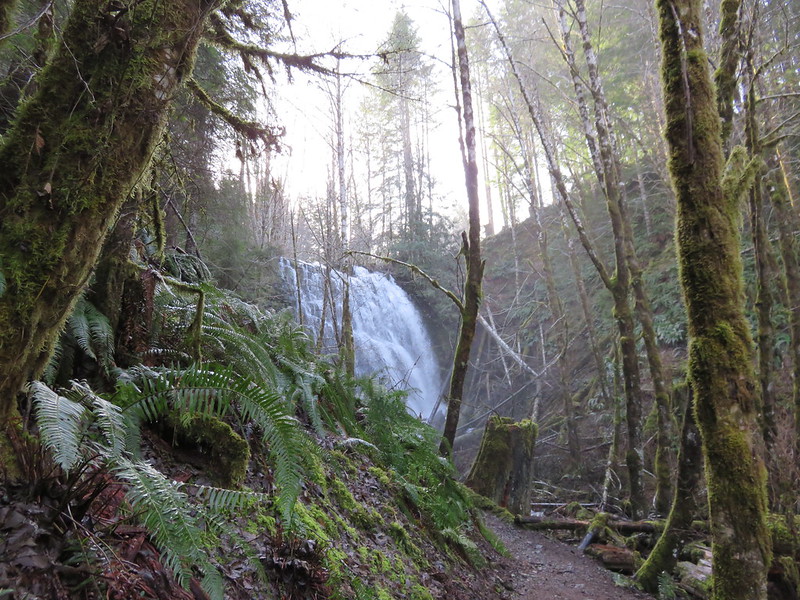
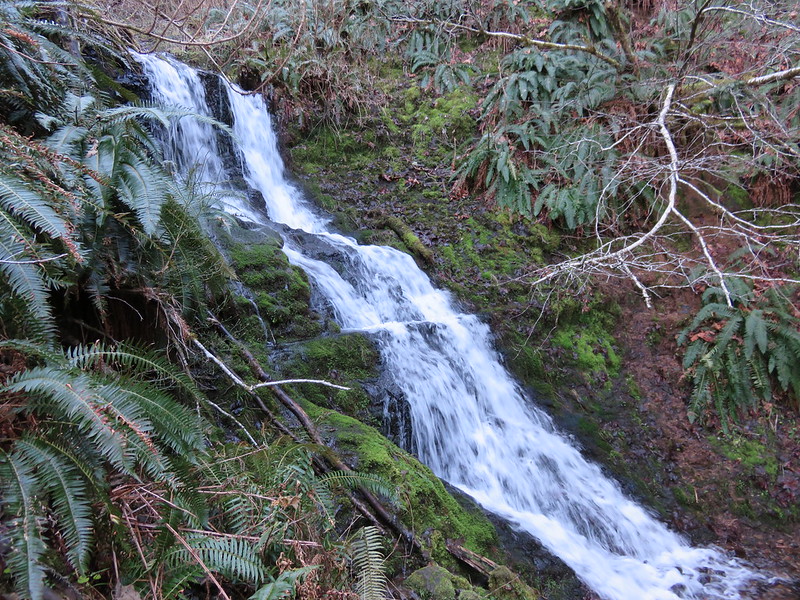
We then climbed away from the river and passed beneath a highway bridge returning to the north side of Highway 6. The Storey Burn Trail climbed steadily along hillsides up to Storey Burn Road, another possible trailhead. We crossed the road and continued on toward Gales Creek Campground. We were mostly going downhill now in a much quieter forest. While on the south side of the highway the sounds of Off-Highway Vehicles and target shooters competed with the water and the birds. Even after returning to the north side of the highway where OHV are banned there was an almost constant barrage of gunfire. Here on the final stretch birdsong and running water became the only sounds making for a pleasant final stretch. The trail also passed by small but scenic Slide Falls.
IMG_0146

IMG_0149

A final trail junction awaited, just .8 miles from Gales Campground.
IMG_0155

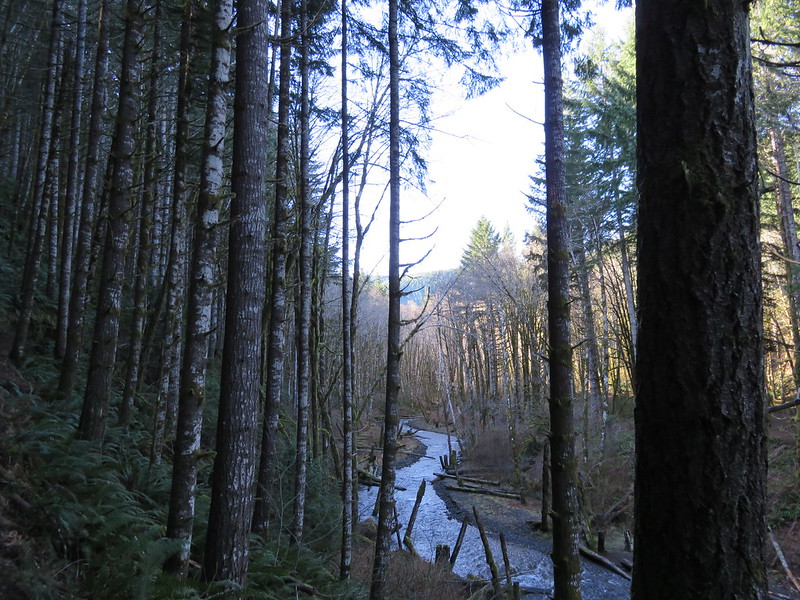
The final portion of the trail paralleled Gales Creek before arriving at the trailhead.
Gales Creek

We could have walked 300 yards up the road to our car and the other smaller trailhead or take a connector trail through the forest. We chose the trail which wound around and gained some unnecessary elevation before dropping us back down to our car. We both agreed that we should have taken the road 🙂 Happy Trails!

flickr: https://www.flickr.com/photos/9319235@N02/sets/72157650431797248/

Categories
Coastal Range Hiking Oregon Trip report

Mary’s Peak, Beazell Memorial Forest & Ft. Hoskins County Park

Every once in a while it can be fun to change things up a bit. For our latest day of hiking we did just that. Instead of one longer hike we decided to knock a few shorter hikes off our to-do list. We had a graduation open-house that we wanted to stop in at that afternoon in Dallas, OR so we headed down to the central coast range for a trail triple header.

We started at Mary’s Peak, the highest peak in the Oregon coast range. We had visited the peak in 2009 when we were just starting to get into hiking. That day we had taken a 2.5 mile route from Conner’s Camp to the 4097′ summit. It was the most challenging hike we’d done up to that point and we felt every bit of the 1530′ climb. Our plan was to redo that hike (at least on the way up) to see how we would fare now that we’ve been hiking for several years.

There are several ways to get to the summit varying in length from just over a mile to almost 11 miles round trip. The East Ridge trail would be our route up from Conner’s Camp. The trail sets off from the parking area in a forest of old-growth Douglas Fir which tower overhead. The forest is very open despite the giant trees due to the lack of lower branches which allows for an abundance of green undergrowth. Vine maple, salal, fern, and many other plants contribute to a lush green understory. Low clouds were hanging in the tree tops while many white woodland flowers dotted the forest floor.

DSC06454
DSC06465

The trail climbs steadily for 1.1 miles to a junction where the East Ridge Tie trail continues on to the North ridge trail making a loop possible. We would be retuning from that direction but in order to recreate our 2009 climb we turned left to continue up the East Ridge trail. The trail steepens after the junction and it was this section that seemed to go on forever the first time we hiked it. It proved to be a stiff climb but we quickly reached a second junction, this time with the North Ridge trail. Forking to the left we continued up a short distance to the lower meadow and blue(ish) skies. 🙂

DSC06487

The trail wraps around a hillside through the meadow, which was yet to really start blooming, before reaching a gravel service road in a saddle. The clouds were lapping up over the hillside from the north creating what can only be described as a “fog rainbow”.

DSC06504

DSC06505

The gravel road winds up to the summit around the south side of Mary’s Peak, but a more direct (and steeper) trail leads up to the upper meadow from the far side of the road. Since that was the way we had gone before we crossed the road and headed up again (and again wondered why). When we emerged from the narrow swath of trees that divides the two meadows we found that the upper meadow was also yet to bloom. Clumps of lupine had yet to even begin to bud and only a few scattered flowers dotted the slope.

DSC06517

The sky was blue though and we had the peak to ourselves so we climbed through the meadow to a picnic table at the summit. We were above the clouds but it appeared that Mary’s Peak was the only peak which had managed to rise above them. Even the 10,000′ Cascade peaks to the east were hidden. To the west the Pacific Ocean blended in so well with the layer of clouds and blue sky that it was difficult to make out where one ended an another began.

The view west:
DSC06518

After setting our stuff down at the table we began exploring the summit. To the west where the road came up from below we began to find flowers. Purple larkspur and yellow biscuit root covered the ground.
DSC06524

We started to head down the road following the flowers and as we rounded a bend we were greeted with a color explosion. We’d found the flowers. They were all on the south side of the peak. Phlox, larkspur, paint, and various yellow wildflowers covered the slopes on this side.
DSC06532
DSC06549
DSC06553
DSC06557

After taking a few pictures (okay lots) we went back to the table to gather our packs and headed back down the road. As we made our way down we found some blooming lupine and penstemon as well.
DSC06577
DSC06578

To get back to the car we took the 1 mile section of the North Ridge trail from the upper junction to the East Ridge Tie trail and turned right on it for 1.2 miles back to the first junction and finally back to Conner’s Camp.

From there we drove back to U.S. Highway 20 and headed west to the Kings Valley Highway Junction. Turning right we continued 4.8 miles on Highway 223 to the Beazell Memorial Forest. The forest consists of 586 acres gifted to Benton County by the former owner, Fred Beazell, as a memorial to his late wife Dolores. Our plan here was to hike a 3.2 mile loop using the South Ridge trail.

The trail begins at a footbridge behind a restored barn which was being readied for a wedding reception on this day. After crossing Plunkett Creek on the bridge the trail joins an old road for half a mile. The forest is dense and scenic in a narrow valley. At the .5 mile mark the trail splits off to the right and recrosses the creek twice before rejoining the road at a junction in another half a mile.

DSC06697
DSC06716

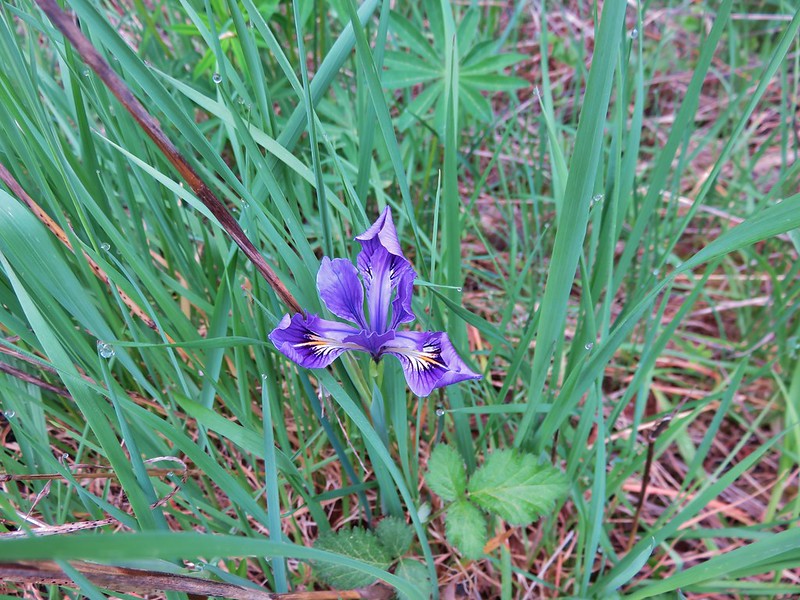
Here the South Ridge trail leads to the right up the side of the valley. A sign was posted warning of a logging operation and trail closure from October 2013 through April 2014. Being that it was June we continued on. The trial switchbacked up 350′ through increasingly open forest with wild iris and some flowers we had not seen before.
DSC06735
DSC06760
DSC06771

At the top of the hill a short spur trail leads to a small meadow with a nice view across the valley.
DSC06792
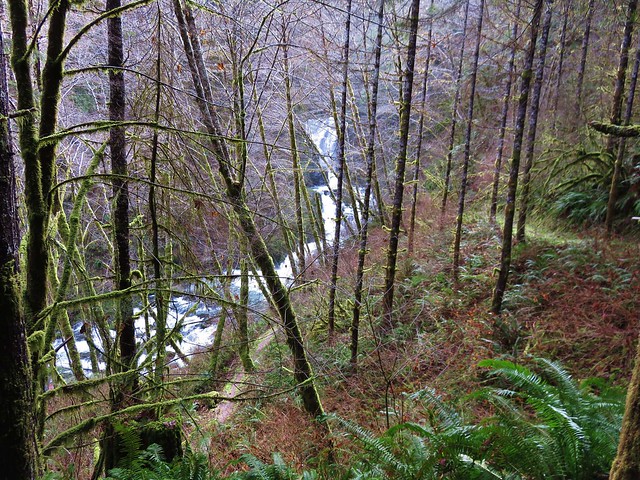
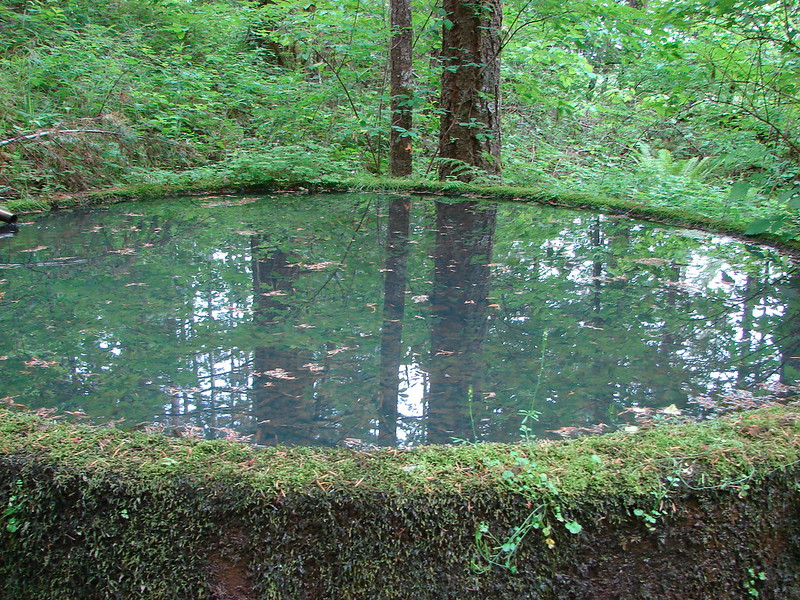
After leaving the meadow the trail drops down over the west side of the hill where signs of the logging operations could be seen. After joining a logging road for a bit the trail again split off to the right, passing an old cistern before returning us to the barn and our car.
DSC06808

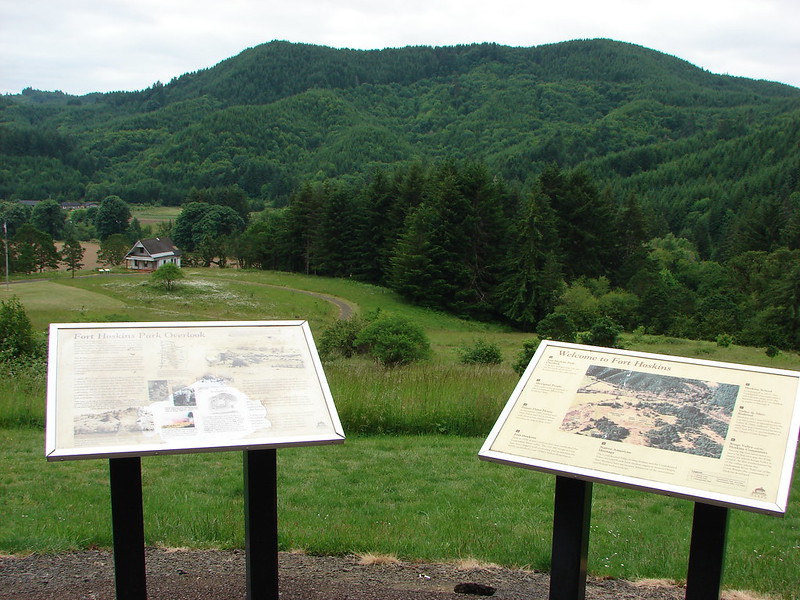
We had one more hike planned for the day so we hopped back into the car and continued another mile and a half north on Hwy 223 to Hoskins Rd. Following signs to the left for Fort Hoskins County Park we drove another 1.8 miles to the park entrance on the right. The park is at the site of an 1856 outpost.
DSC06815

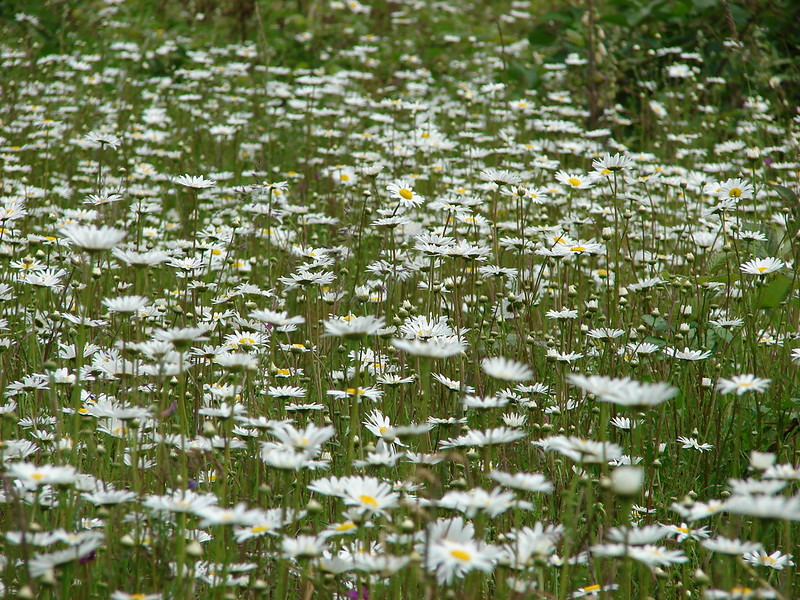
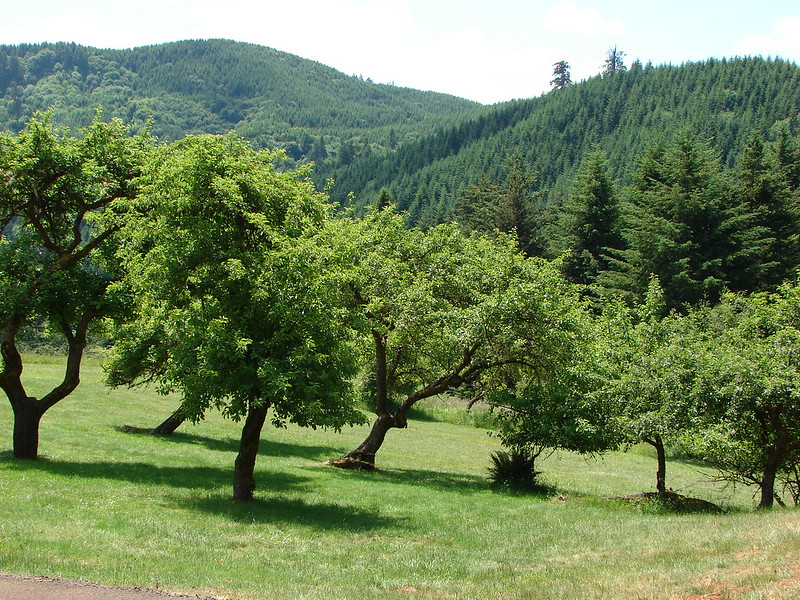
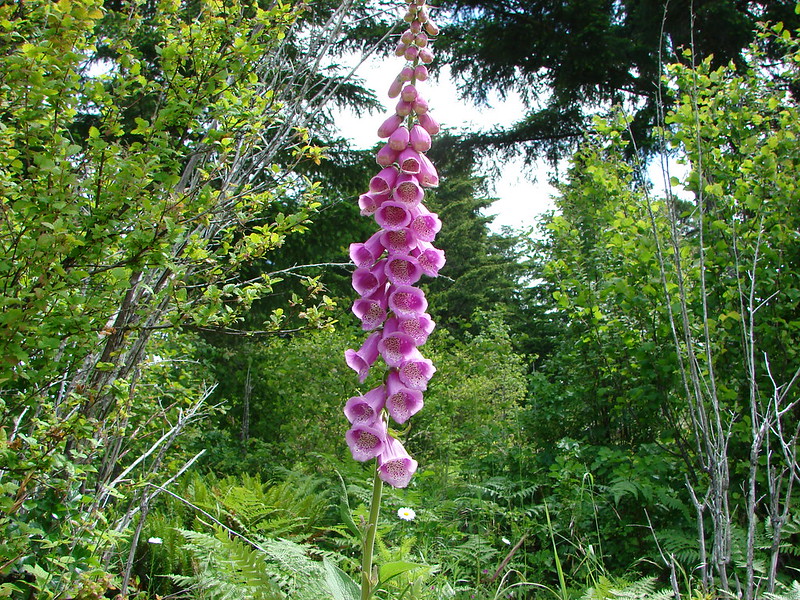
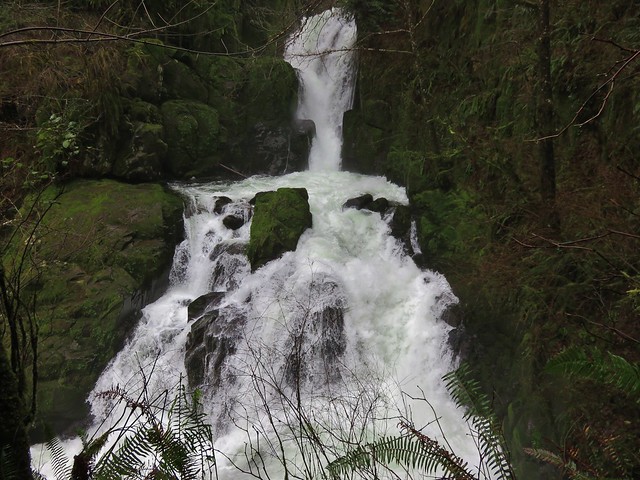
We started our hike here by taking the half mile interpretive loop past the old fort site and historic buildings. This path looped around a lovely meadow where daisies and foxglove bloomed and a few apple trees remained from an old orchard.
DSC06842
DSC06858
DSC06932

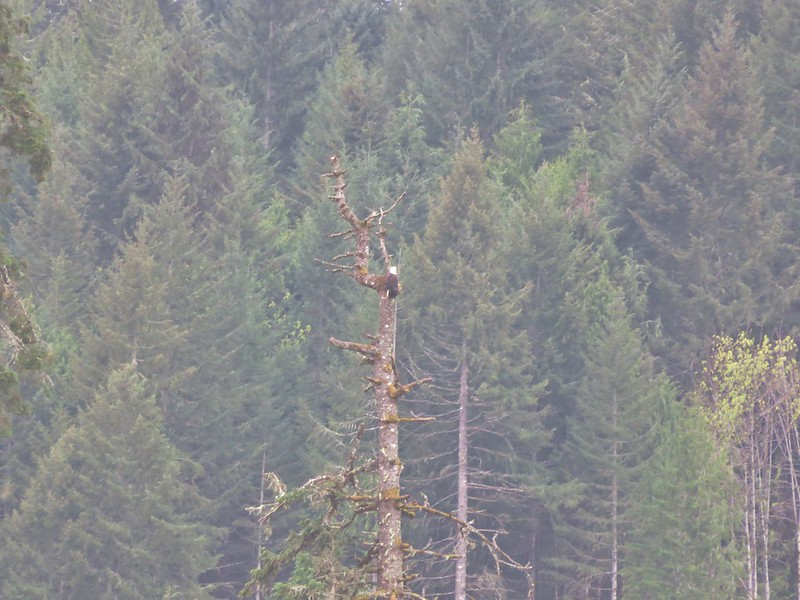
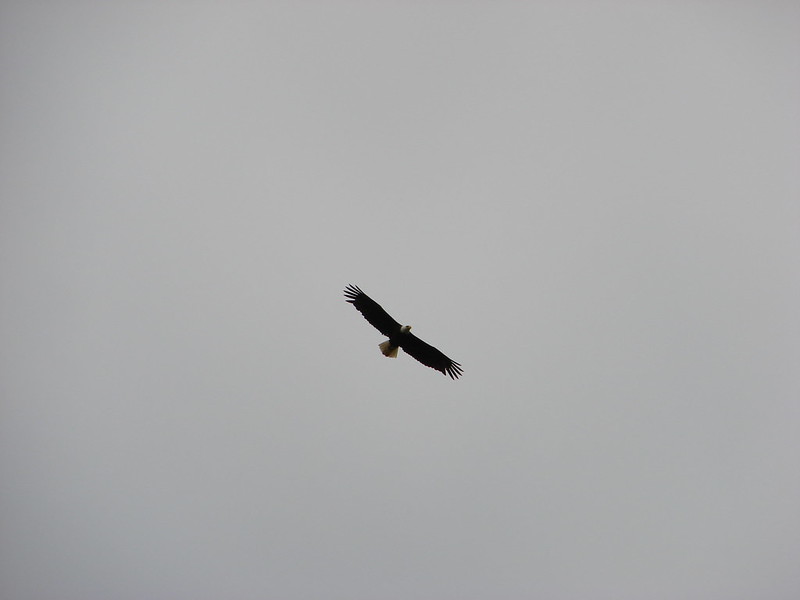
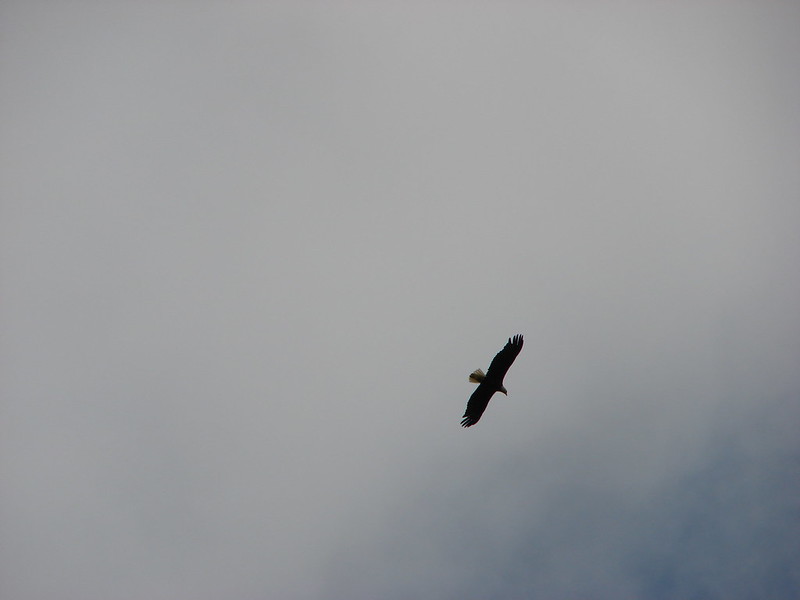
While we were inspecting the Commander’s House a Bald Eagle flew past and began circling overhead.
DSC06841
DSC06849
DSC06856

The path then passed the foundation of the Hoskins School before climbing back to the parking area where a longer loop began on the far side of the road.
DSC06867

The longer 1.3 mile loop climbed over 300′ through a hillside meadow filled with wildflowers.
DSC06874
DSC06876
DSC06879
DSC06893
DSC06910DSC06920
DSC06926
DSC06930

The day turned out better than I had expected. We managed to get 12.3 miles of hiking in while visiting some interesting places and still made it to the graduation party on time. Happy Trails!

flickr photos: https://www.flickr.com/photos/9319235@N02/sets/72157644555553479/
facebook: Mary’s Peak https://www.facebook.com/deryl.yunck/media_set?set=a.10204131646278585.1073741879.1448521051&type=1
Beazell Memorial Forest https://www.facebook.com/media/set/?set=a.10204132717145356.1073741880.1448521051&type=3
Ft. Hoskins County Park https://www.facebook.com/media/set/?set=a.10204132785187057.1073741881.1448521051&type=3

Categories
Coastal Range Hiking Oregon Trip report

Wilson River

So far so good. We managed to get a hike in each month leading up to the marathon in April. Our recent visit to the Wilson River in the Tillamook State Forest was our final hike until after we’ve raced and recovered. We picked this hike because it provided a fairly level 8 miles which seemed like a reasonable outing at this point in our training. We chose Saturday morning for the trip based on a forecast showing no rain until that afternoon versus rain all day on Sunday. Yep, I fell for it again. The drunk monkeys that come up with the weather forecast weren’t even close as the 0% chance of precipitation was more like 95% as it rained or drizzled on us almost the whole time. Fortunately it didn’t rain hard since we hadn’t put our rain gear back into our packs.

The Wilson River trail extends over 26 miles, but for this trip we planned to hike out and back along a 4 mile section from the Jones Creek Day Use area to Bridge Creek Falls. It was great to get back on the trail and especially nice to see some signs of Spring. We set off from the parking area following the river west toward the Tillamook Forestry Center. Since the center opens at 10am the gate on the suspension bridge was still closed so we passed by and headed toward Wilson Falls after taking a quick peak back at Kings Mountain. Heather and I had done a loop hike in 2010 up neighboring Elk Mountain and down Kings Mountain. It remains to this day one of the toughest hikes we’ve tackled.

Kings Mountain
Kings Mt. from the Wilson River Trail

The forest was beginning to transition from Winter to Spring as buds were showing or already opening on many plants and several varieties of early flowers were blooming trailside.

Snow Queen
Snow Queen
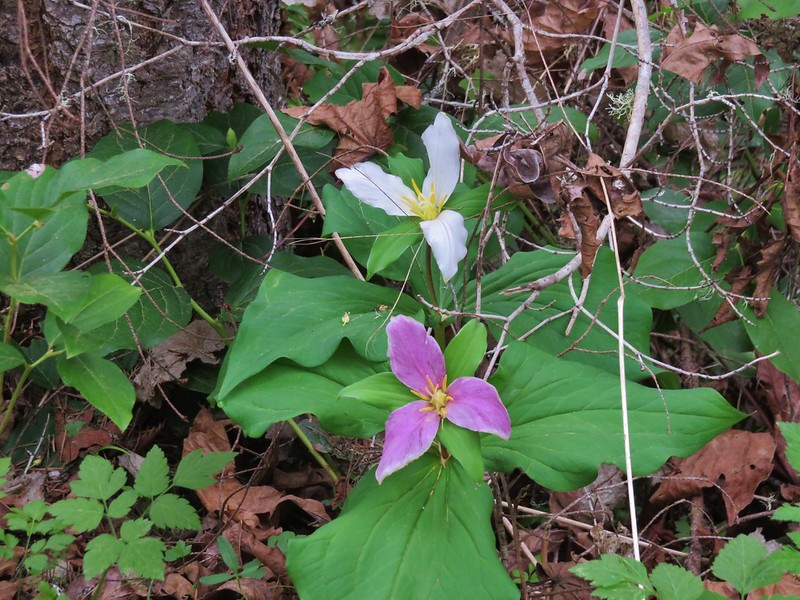
Trillium
Trillium
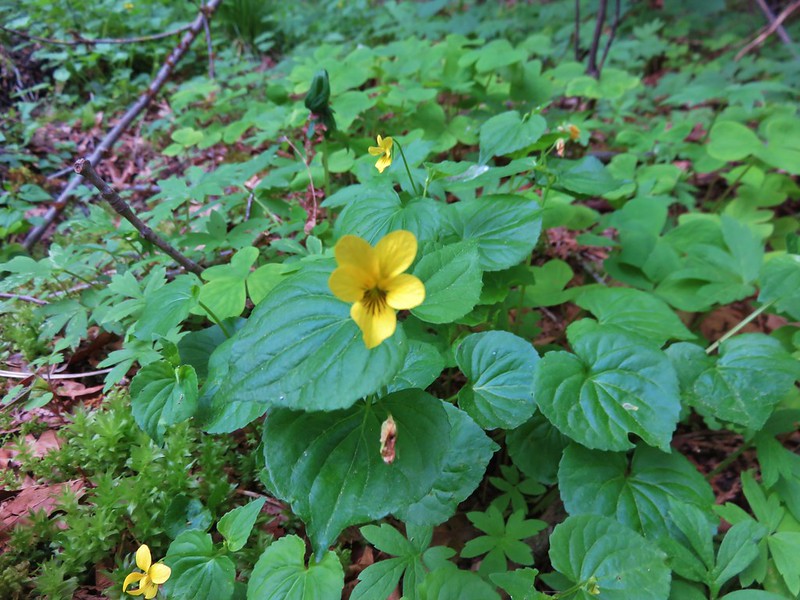
Wood Violets
Violets
Slender Toothwort
Slender Toothwort

The river was running quickly due to heavy recent rain which had also swelled the creeks and runoff streams feeding into the river. Even if it hadn’t been raining there was no way our feet were going to stay dry. 🙂

Wilson River
Wilson River
Cedar Creek
Cedar Creek
Runoff flowing over the trail
Wilson River Trail
Trail crossing below Wilson Falls

We had two waterfalls to visit on this portion of the trail. The first was Wilson Falls which lay hidden right beside the trail until we were almost directly below it.

Nearing Wilson Falls
Wilson River Trail
Wilson Falls
Wilson Falls

The second falls was also our turnaround point. We had to leave the river and cross Highway 6 to find the short trail to Bridge Creek Falls. An impressive fall in a narrow canyon.

Sign for Bridge Creek Falls along Hwy 6
Bridge Creek Falls
Bridge Creek Falls
Bridge Creek Falls
Trying to give an idea of the size of the falls.
Bridge Creek Falls

We hadn’t had any company on the trail and had only seen a handful of fishermen on the way to Bridge Creek Falls, but things got more crowded on the trail on the return trip.
Slow traffic

Slug
Another slowpoke
Rough skinned newt
This one moved to the side to let us pass
Rough Skinned Newt
Finally we came to a standstill
Newt

We didn’t wind up going into the Forestry Center. The rain had picked up and we were wet and muddy when we arrived back so we decided to pass on this trip. We did cross the suspension bridge in an attempt to return to the car from the opposite side of the river but washouts had closed that portion so we backtracked across the bridge and returned the way we had come that morning. The hike worked out just the way we’d hoped. Good scenery, no crowds, and not too taxing physically. Truly a hike that says “Happy Trails”.

Flickr album: http://www.flickr.com/photos/9319235@N02/sets/72157642067822544/
Facebook album: https://www.facebook.com/media/set/?set=a.10203510030938590.1073741869.1448521051&type=1

Categories
Coastal Range Hiking Oregon Trip report

Saddle Mountain

I am not sure we had completely dried out after our Hamilton Mountain hike (I know ours shoes hadn’t) but we were back in the “saddle” yesterday for another hike. Saddle Mountain state park was our destination, located in the NW corner of Oregon just 20 miles from the coastal city of Seaside. Saddle Mountain is known for it’s wildflowers and rare plants as well as being the highest point in northwest Oregon.

Once again we were we greeted at the trail head by a layer of low clouds which made for a damp morning. The good news was that there was no wind or rain this time. The trail started out amid salmon and thimble berry bushes in a forest of alders. The trail climbs 1603 feet in just 2.5 miles so the forest and plants changed often. A quick .2 climb to the Humbug Mountain viewpoint provided a view up toward Saddle Mountain’s cloud covered summit.
024

We returned to the summit trail and headed up through the fog passing multiple meadows full of wildflowers and lush forests. Much like our previous hike, visibility was limited to a couple hundred feet due to the low clouds but the variety of plants and flowers we were encountering kept us entertained. The trail itself was fairly steep and much of it consisted of wire enclosed rocks which looked like it could be slick but we didn’t have any real problems. Several picnic tables were placed along the trail at switchbacks which allowed for breaks from the climb if needed.

As we approached the summit we noticed some very slight breaks in the clouds which gave us hope. We decided to have some lunch and spend some time at the summit hoping that some views would open up. The clouds were actually moving from east to west toward the Ocean which we could now occasionally see through the clouds. We spent over an hour watching the clouds pass by us as better and better views opened up on all sides. Many swallows zoomed about as we waited and a Junco and a crow also stopped by to check us out. As the view opened up to the west was the Pacific, north the city of Astoria, OR and the Columbia River flowing into the Ocean
317
and to the south the coastal mountains. The only disappointment was that on a clear day the Cascade mountains from Mt. Rainier to Mt. Jefferson would have been visible to the East.

We headed back down now able to see the forest below. The wildflowers became even prettier as the increased light made their colors more intense. We took the side trail to the Humbug Mountain viewpoint again to get the cloudless view of Saddle Mountain before returning to the car.
462

If you are a wildflower or plant enthusiast this is a great hike, especially from May-July when the flowers are on display. If you can find a clear day (which isn’t easy near the Oregon Coast) the view is a great bonus. Next up is Mount June and yet another attempt at a view of the Cascades. Until then-Happy Trails.

For more info on Saddle Mountain visit: http://www.oregonstateparks.org/index.cfm?do=parkPage.dsp_parkPage&parkId=140
Photo albums-fb: https://www.facebook.com/media/set/?set=a.10201276380778732.1073741834.1448521051&type=1
flickr: http://www.flickr.com/photos/9319235@N02/sets/72157633845363594/