After double checking the weather forecast for our final two days in Grants Pass we’d decided that making an attempt at doing both of our remaining featured hikes on Monday provided us the best chance at semi-decent weather. Both trailheads were less than 40-miles from our room, but Grayback Mountain was to the SE while Babyfoot Lake was to the SW. A minor inconvenience but the extra driving in between might allow for some better weather in the afternoon at Babyfoot Lake. We’d already decided to stick to the shorter options for both hikes, partly due to the forecasted cloudy conditions and partly because Heather hadn’t been feeling well all weekend and I was feeling pretty spent after the previous two days of hiking. We began our morning under surprisingly dry skies as we left Grants Pass but soon found the rain as we neared the O’Brien Creek Lower Trailhead.


For his featured hikes Sullivan uses the O’Brien Creek Upper Trailhead but mentions a section of sharp rocks that can cause flat tires on the way to that trailhead. Starting at the lower trailhead would add 2-miles round trip but we felt it was worth not risking a flat. What we didn’t count on was how steeply sections of the 1-mile stretch would be as it climbed nearly 650′ to the upper trailhead.
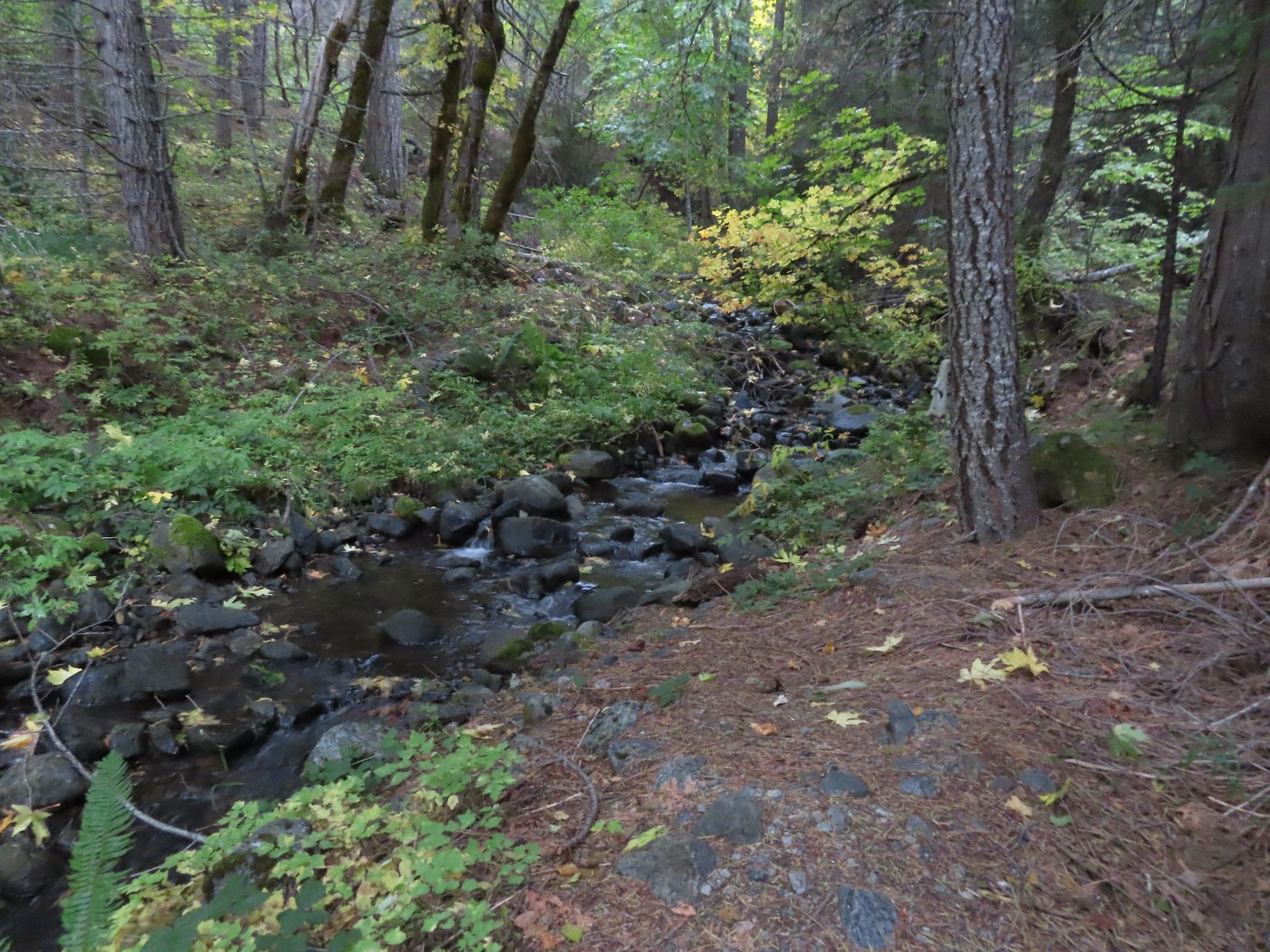 O’Brien Creek near the trailhead.
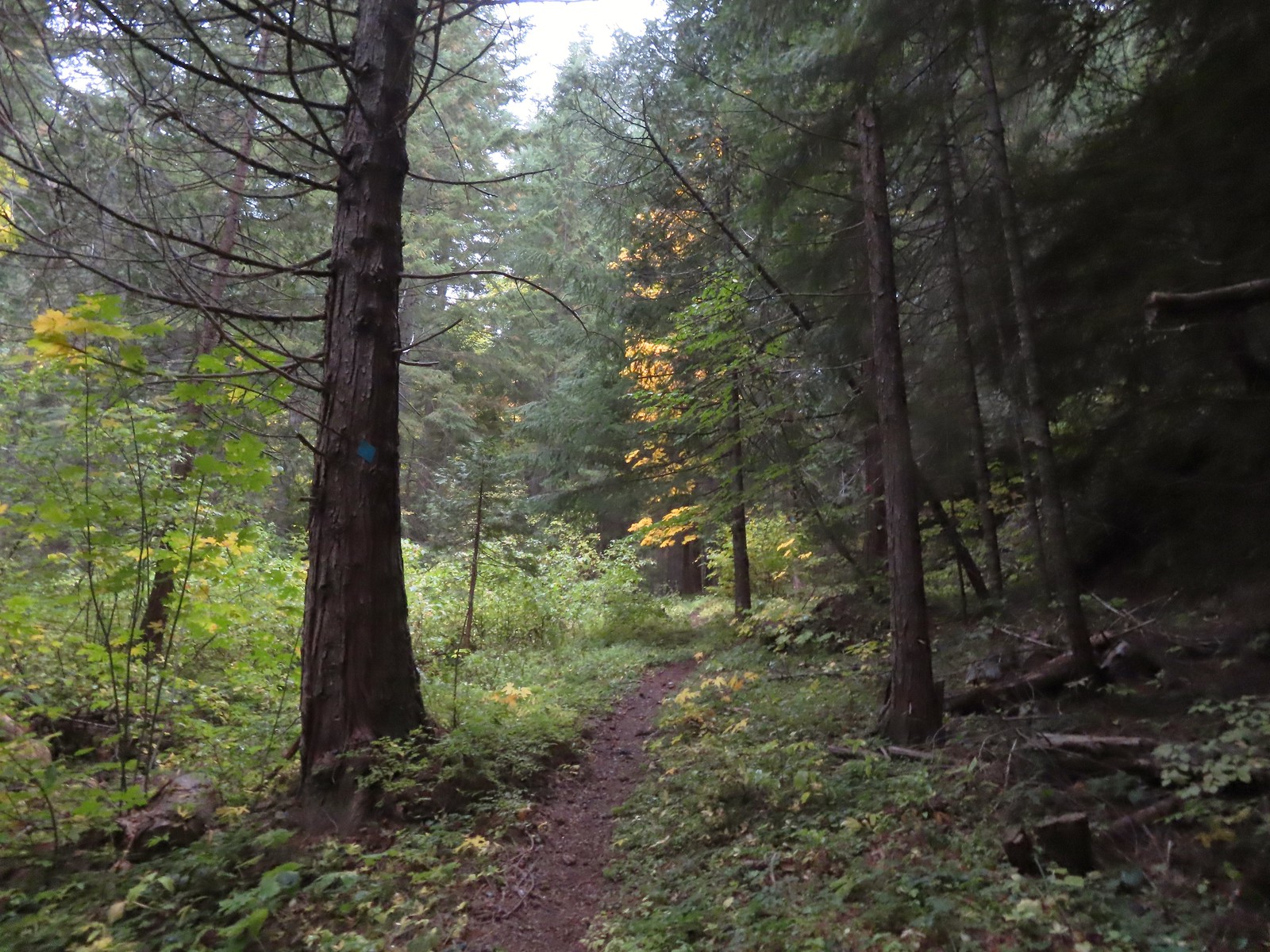
 It seemed like all of the climbs this weekend had been steep.
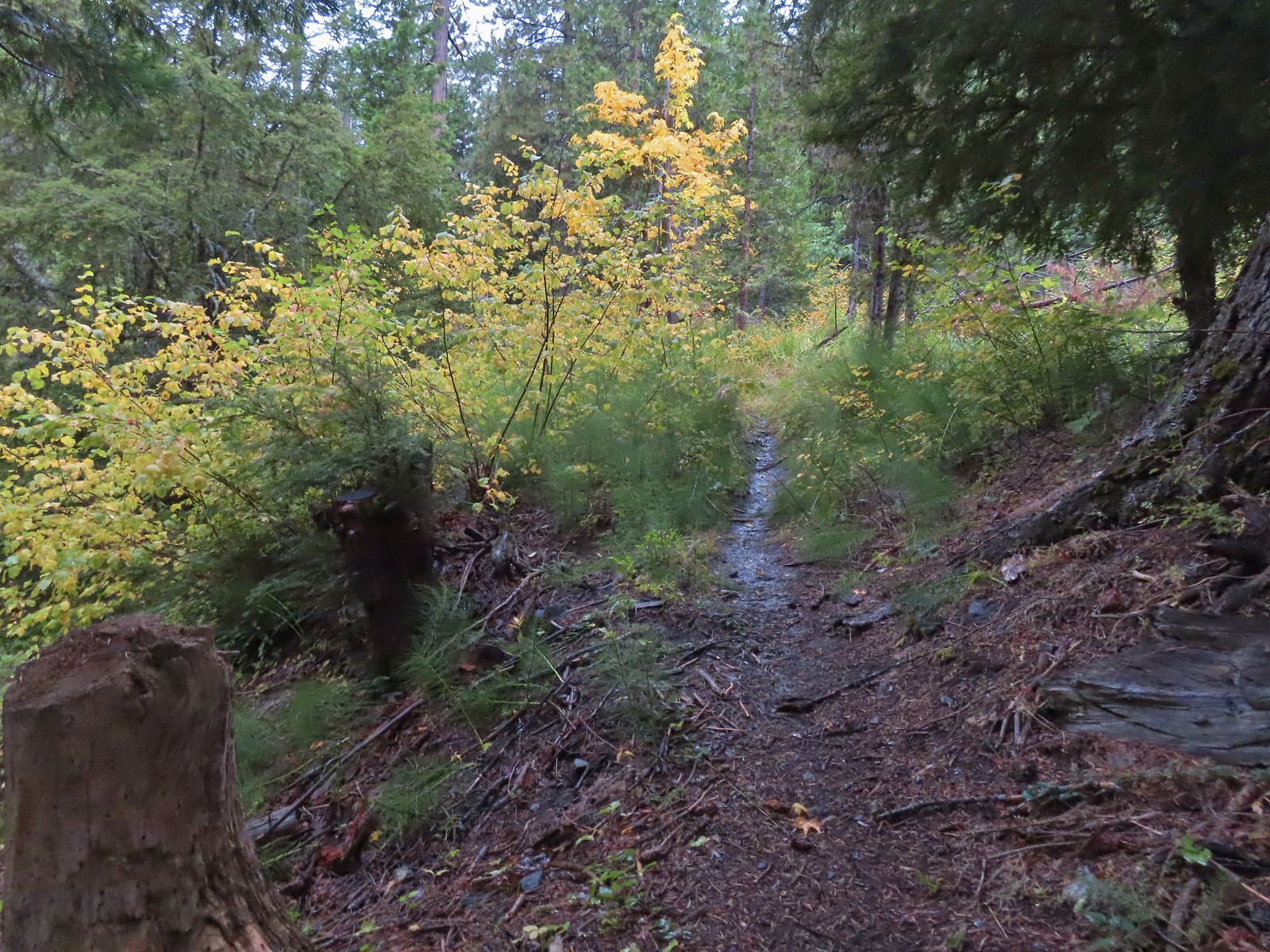 After two warm sunny days this hike finally felt like Fall.
 As I approached this footbridge I noticed a yellow jacket fly into the big hole along the right side of the trail. A quick peak in revealed a busy nest so we wound up bushwacking uphill and around it hopping onto the bridge at the edge of the marsh ahead.
 A nice newer looking sign at the upper trailhead.
At the upper trailhead we gave up on our rain gear. A light mist is all that was falling and our sweat from the climbing was making us wetter than the mist would. From the upper trailhead the trail followed an old roadbed for 0.2-miles.
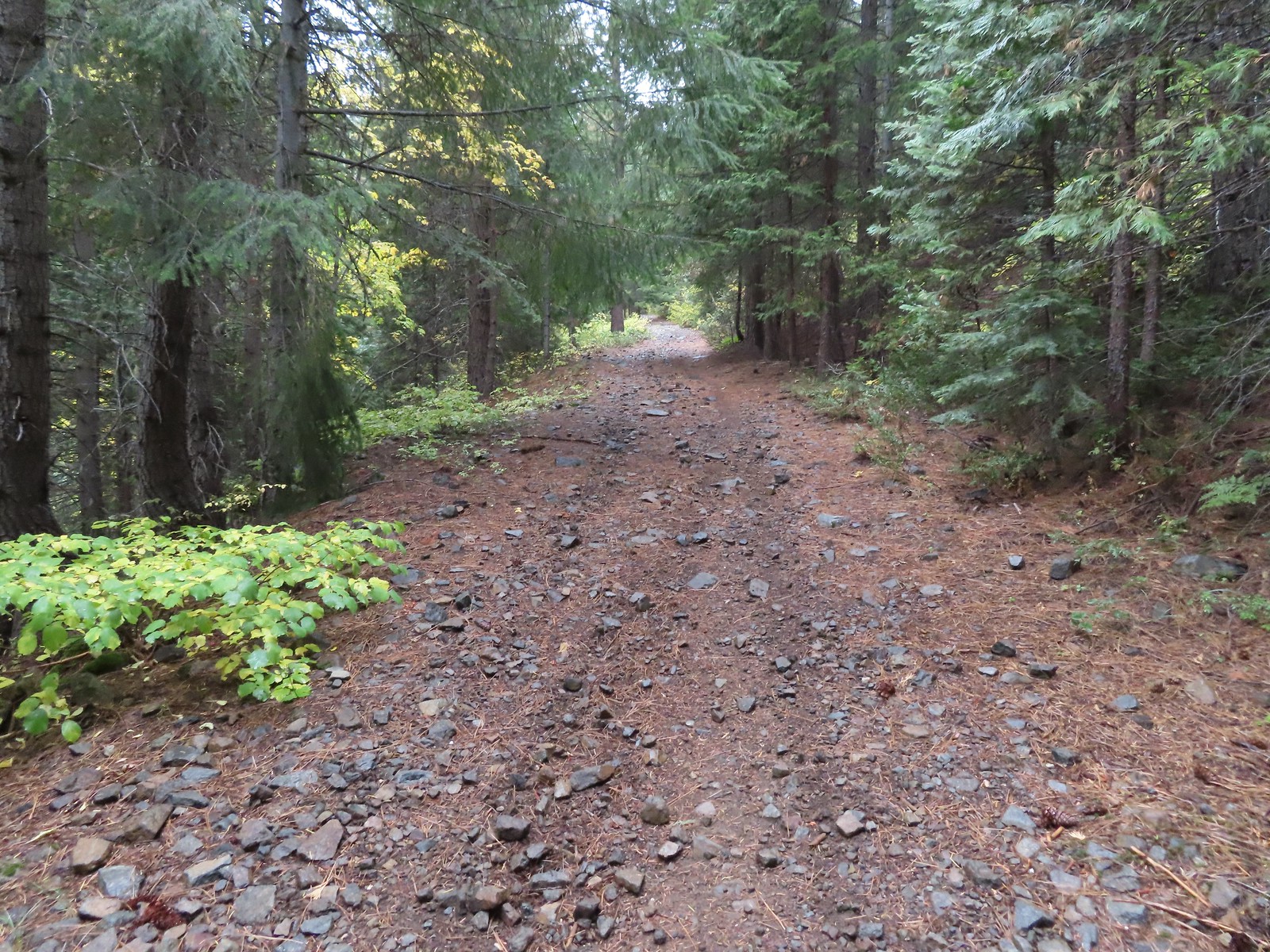

At the end of the old roadbed this trail too decided to steepen greatly gaining approximately 900′ in nearly a mile to a junction with a spur trail to the Grayback Snow Shelter.

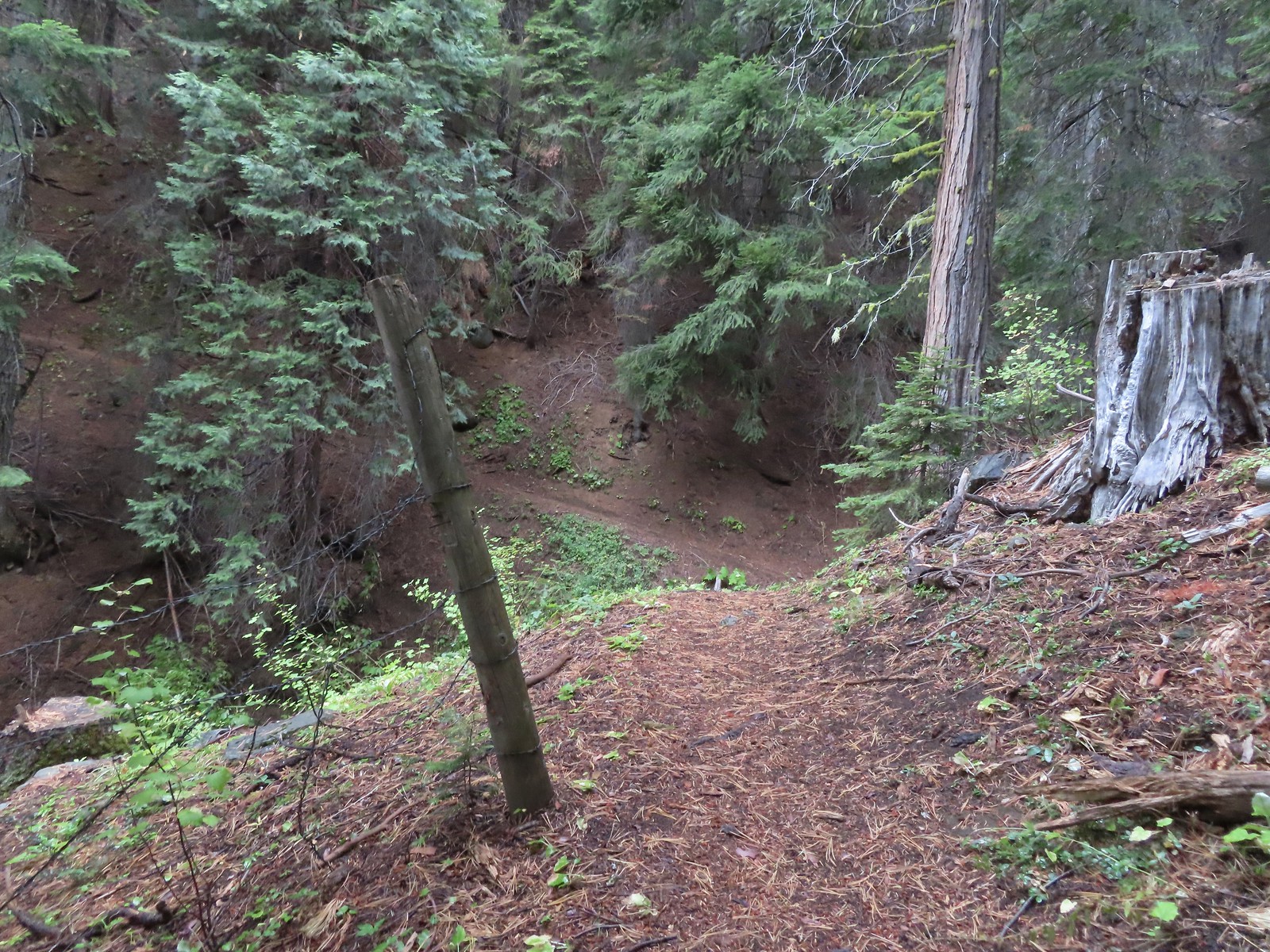
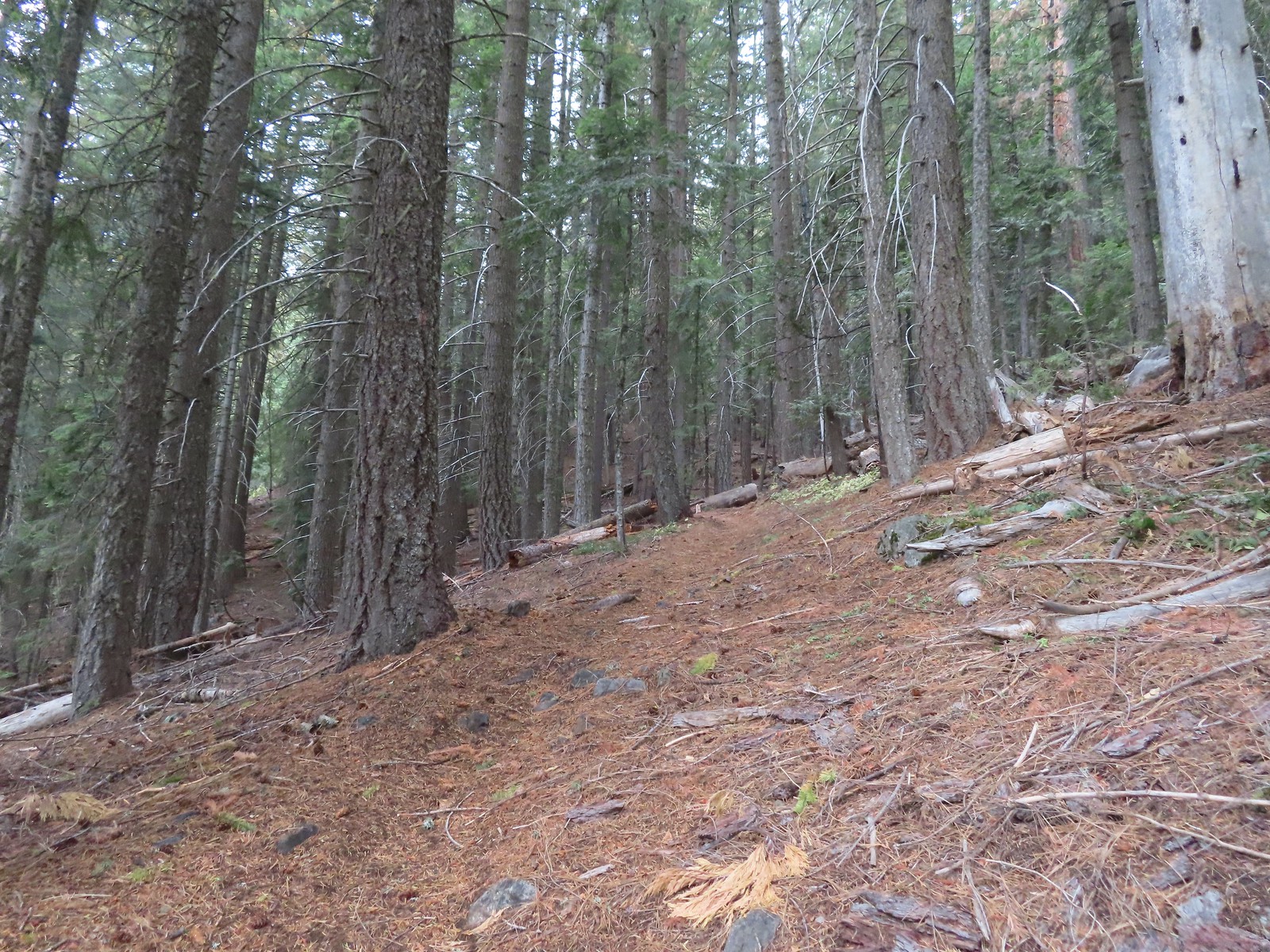
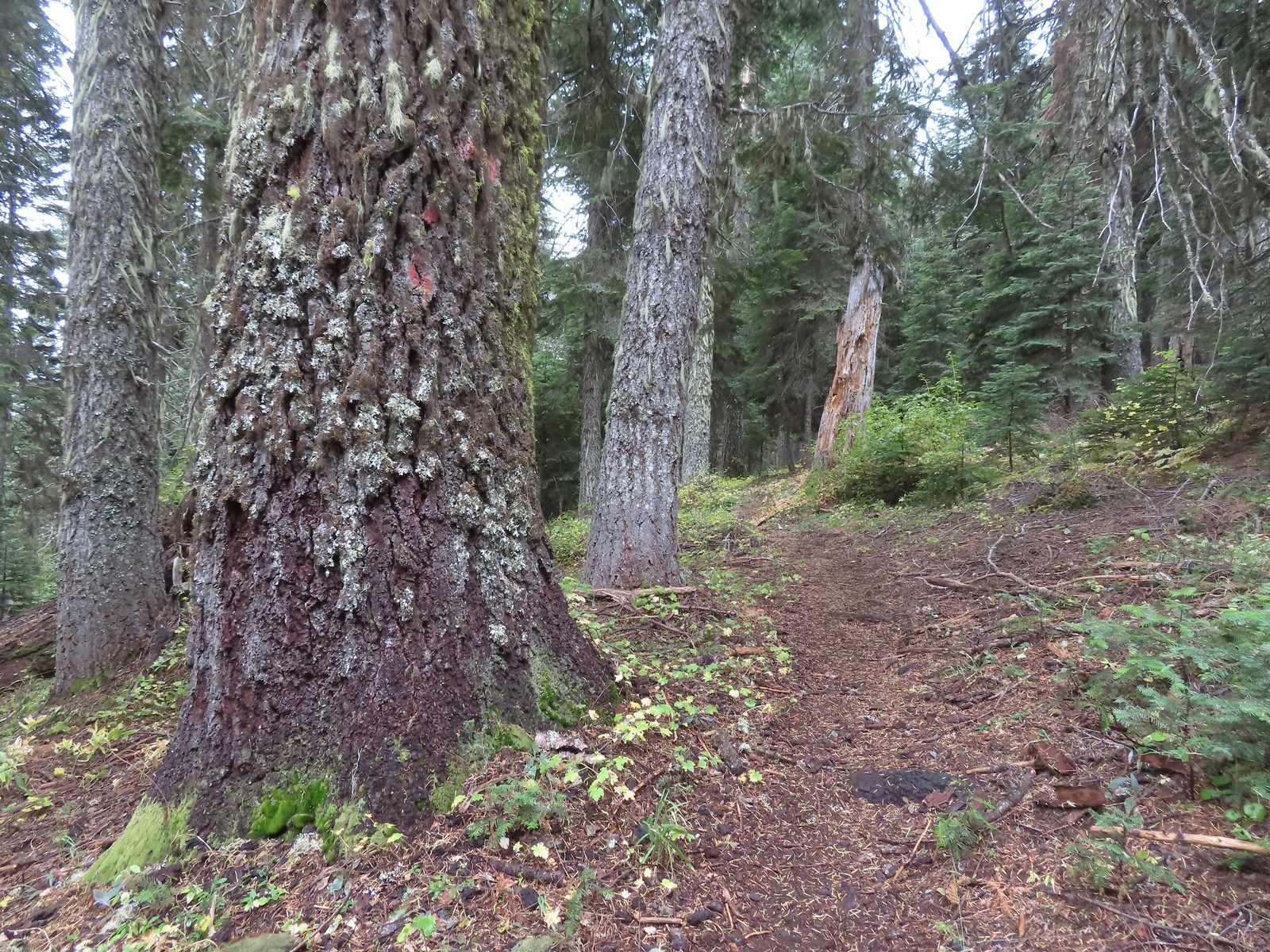
 There were a few really big trees in the forest along the trail.
 Grayback Mountain from the trail.

 The trail crossing O’Brien Creek.
 The junction with the spur trail to the snow shelter. It took me far too long to realize that the sign was upside down. I couldn’t figure out why it thought the Boundary Trail was to the left, after looking at it a few more times it dawned on me that the words were upside down.
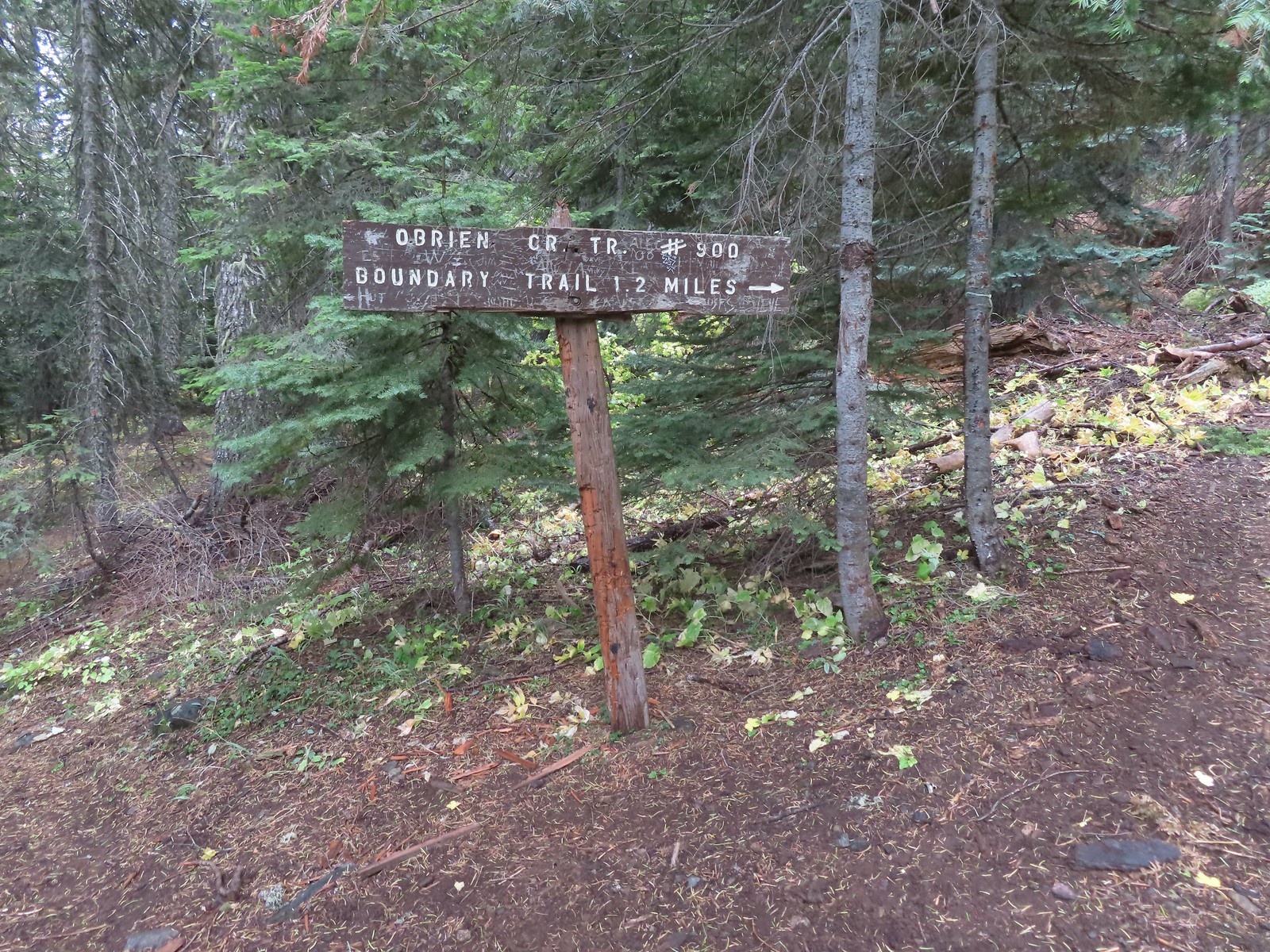 Ah ha! It wouldn’t stay this way but it sure made more sense.
For the longer option to the summit of Grayback Mountain we would have taken the right-hand fork and gained another 1600′ to 1700′ over the 1.8-miles to the summit. Instead we forked left losing a little elevation over the 0.2-miles to the shelter.


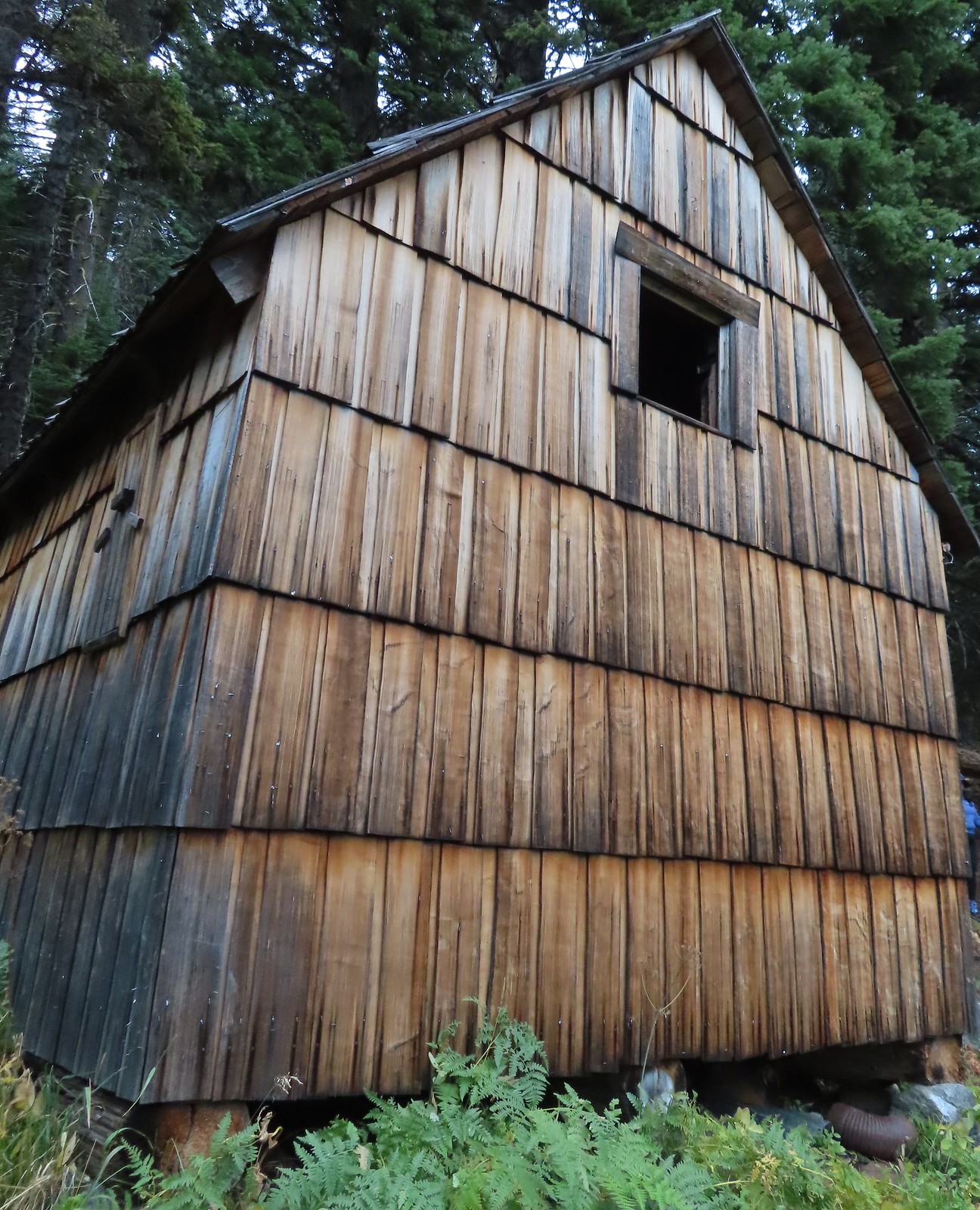
There had been another car at the lower trailhead and we thought that the owner might be staying in the shelter but when we hiked past the shelter into Grayback Meadows we could hear voices in the trees.
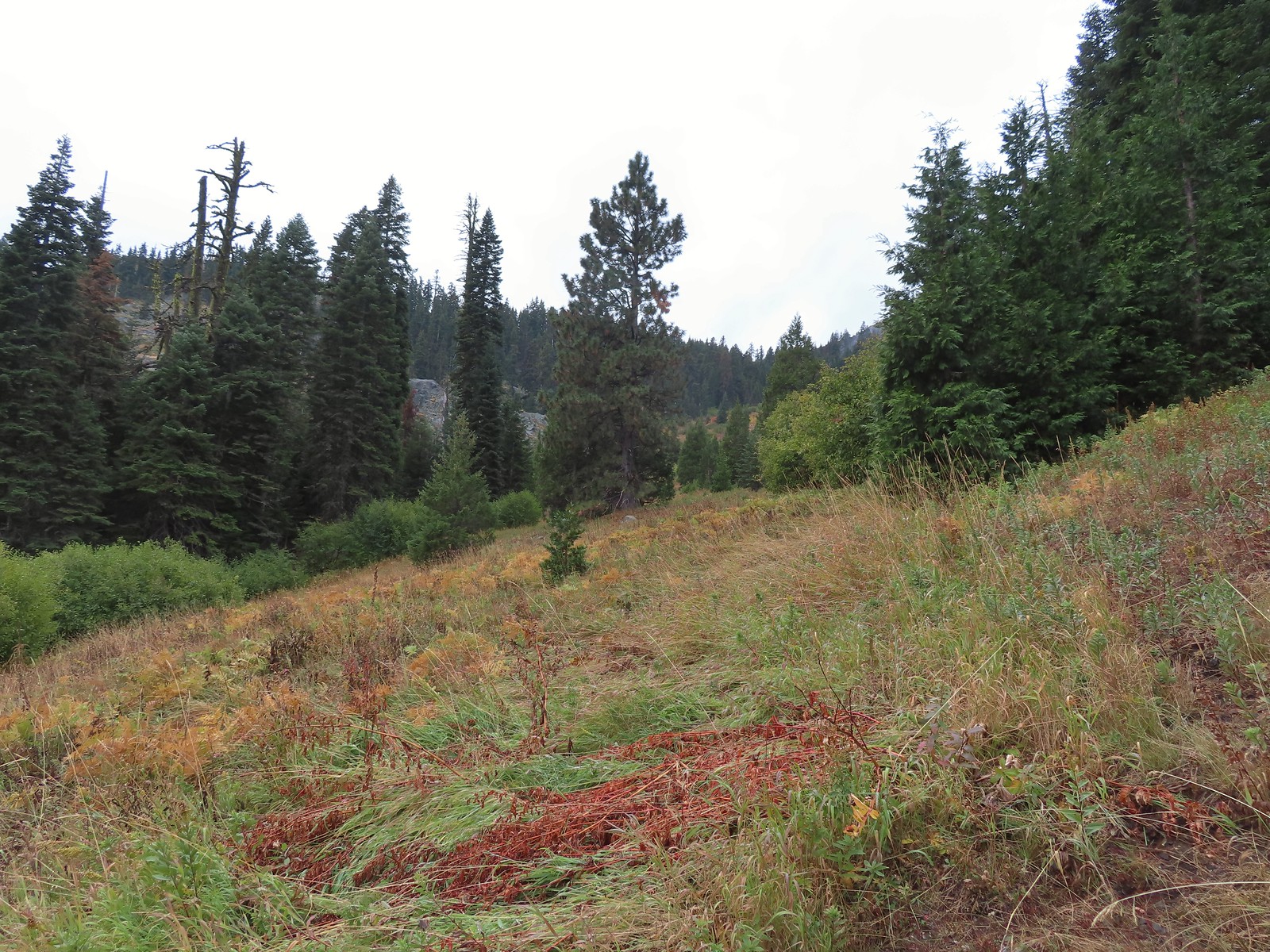

 There used to be a cabin out in the meadows and now there is a snow gauge and a campsite which may be where the voices were coming from.
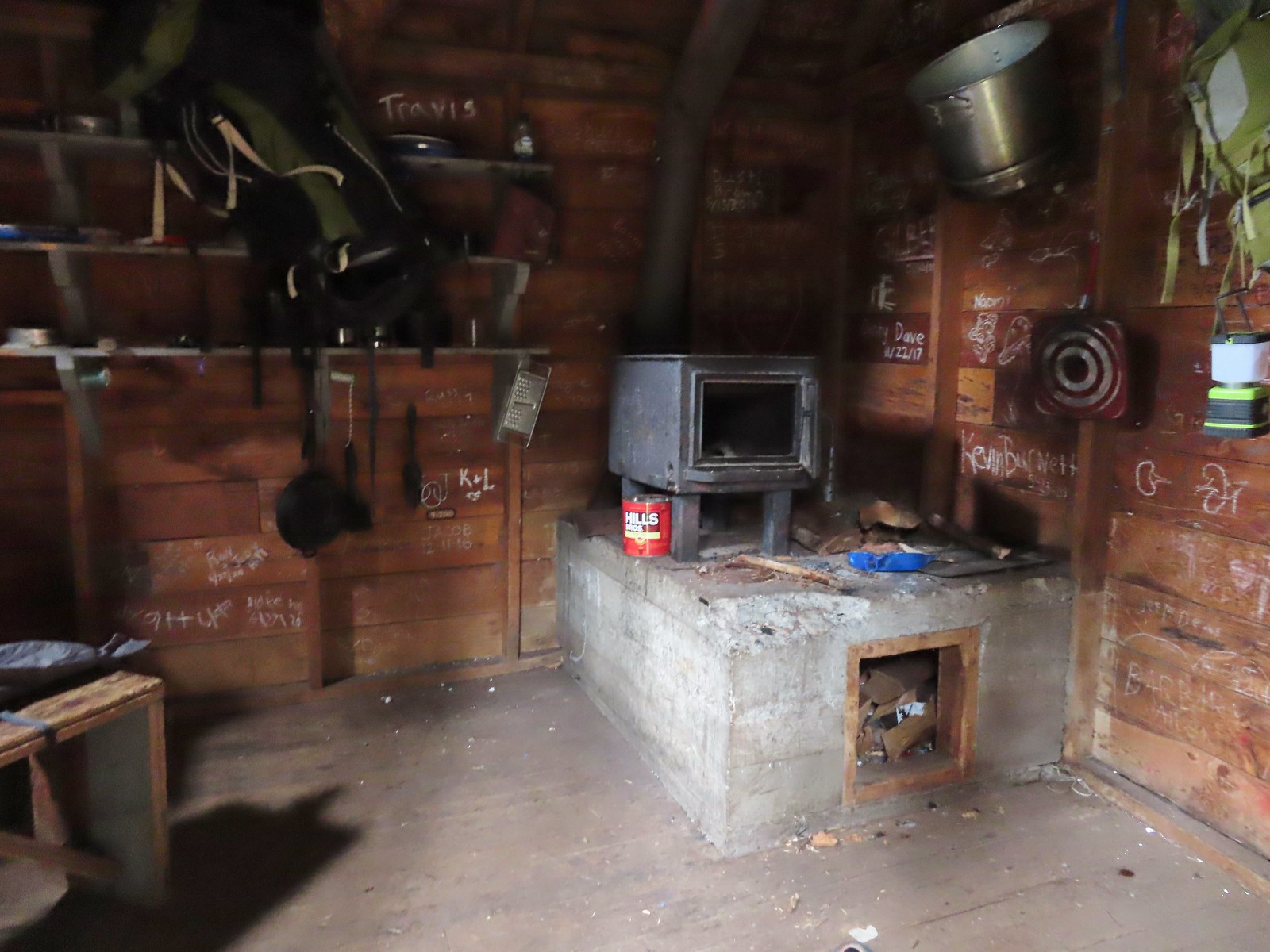 We took a quick peak inside the shelter where some of the backpacker’s stuff was.
After checking out the shelter and meadows we returned the way we’d come.
 It was steep going down too.

 Trail pointer near the upper trailhead marking the continuation of the O’Brien Creek Trail to the lower trailhead.

 We always enjoy seeing madrones on our hikes in Southern Oregon.
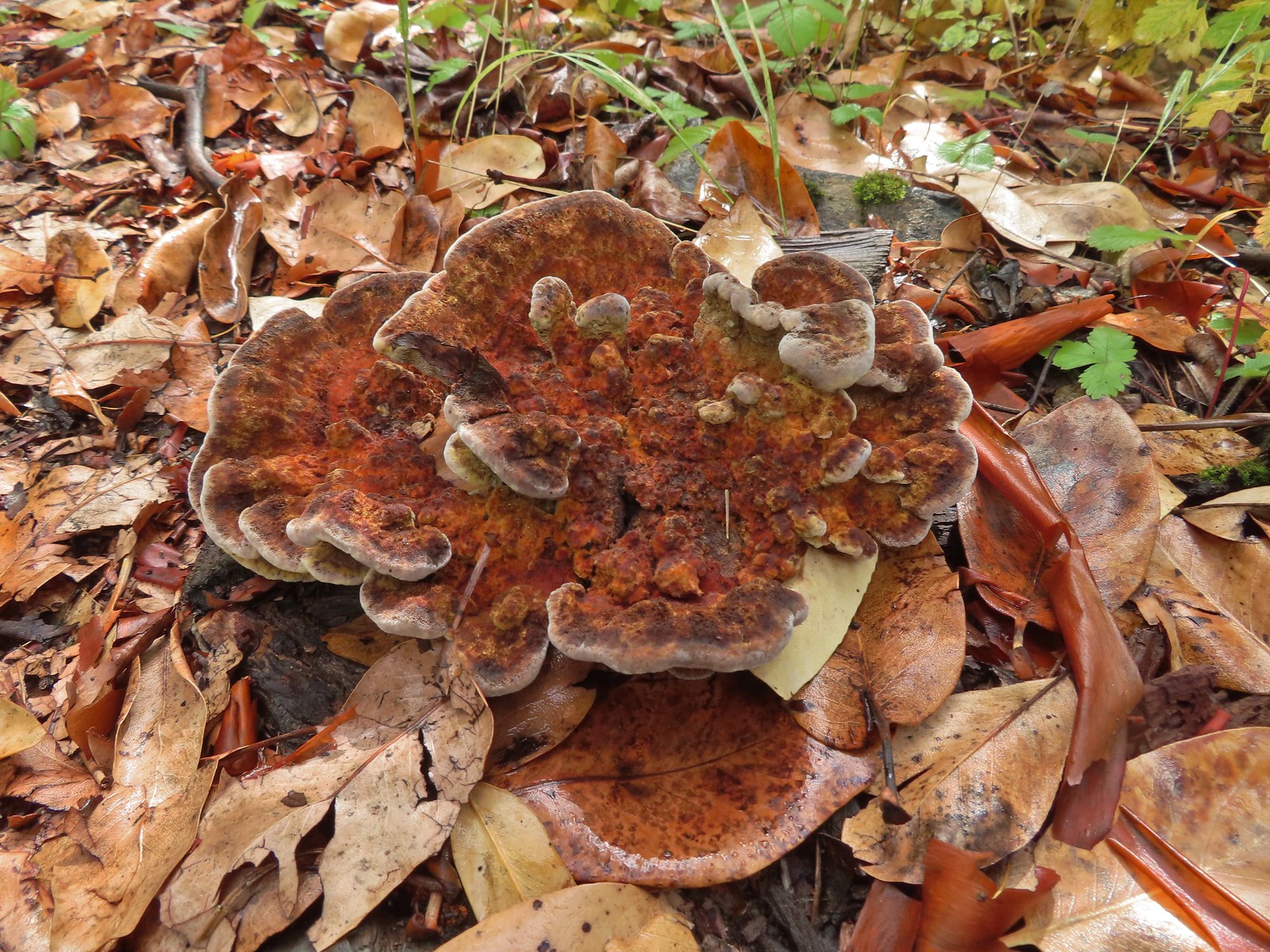

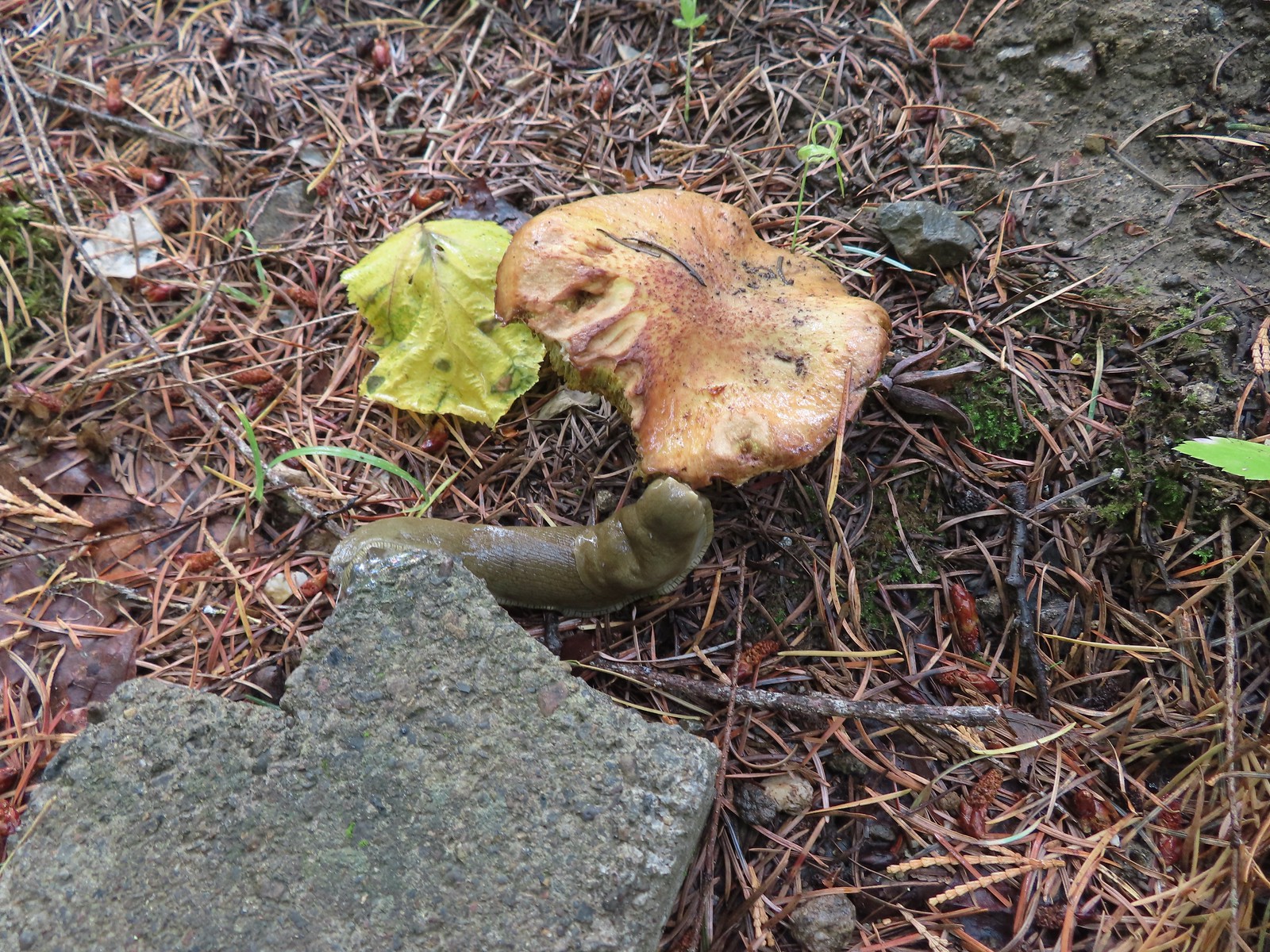 Slug on a shroom.
 Bug on a shroom.

 One more steep drop to the lower trailhead.
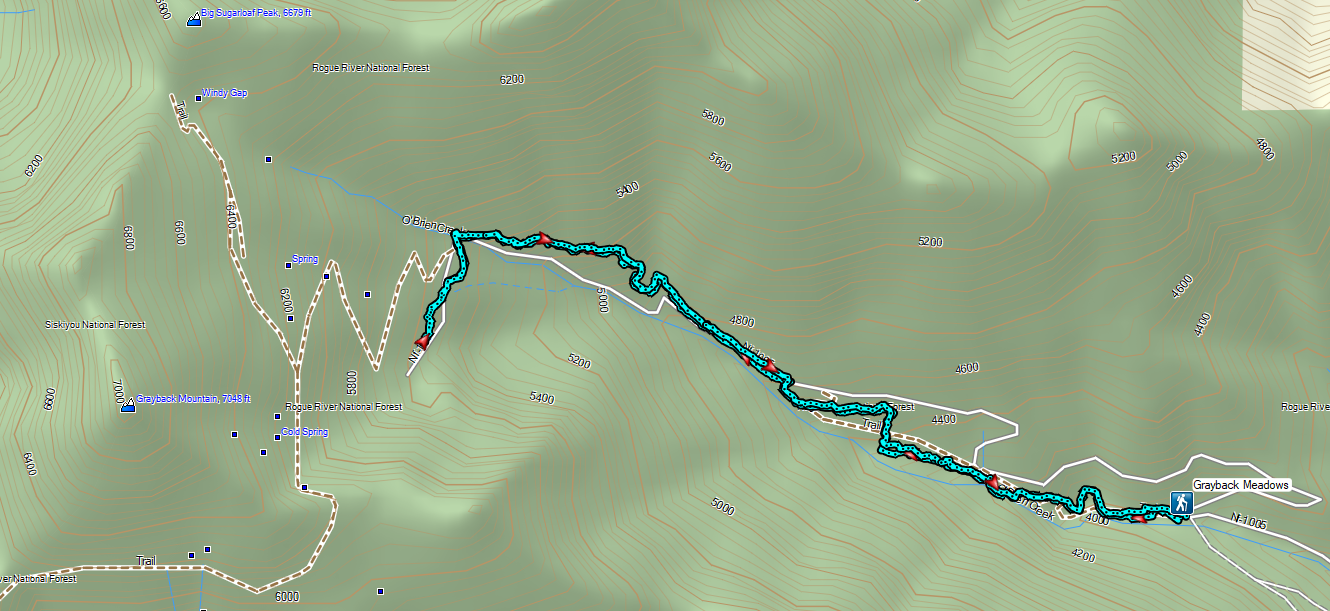
Our hike here came to 4.8-miles and upwards of 1750′ of elevation gain.
From the trailhead we drove North to Murphy then cut over to Highway 199 and headed back South to the Babyfoot Lake Trailhead. While the amount of precipitation during our hike to Grayback Meadows had been far less than we’d expected (we even spotted a small window of blue sky) it was raining steadily as we started up the gravel roads to the Babyfoot Lake Trailhead. Not only that but we quickly found ourselves in the cloud limiting visibility so it was a tedious 12-miles of bumpy roads.
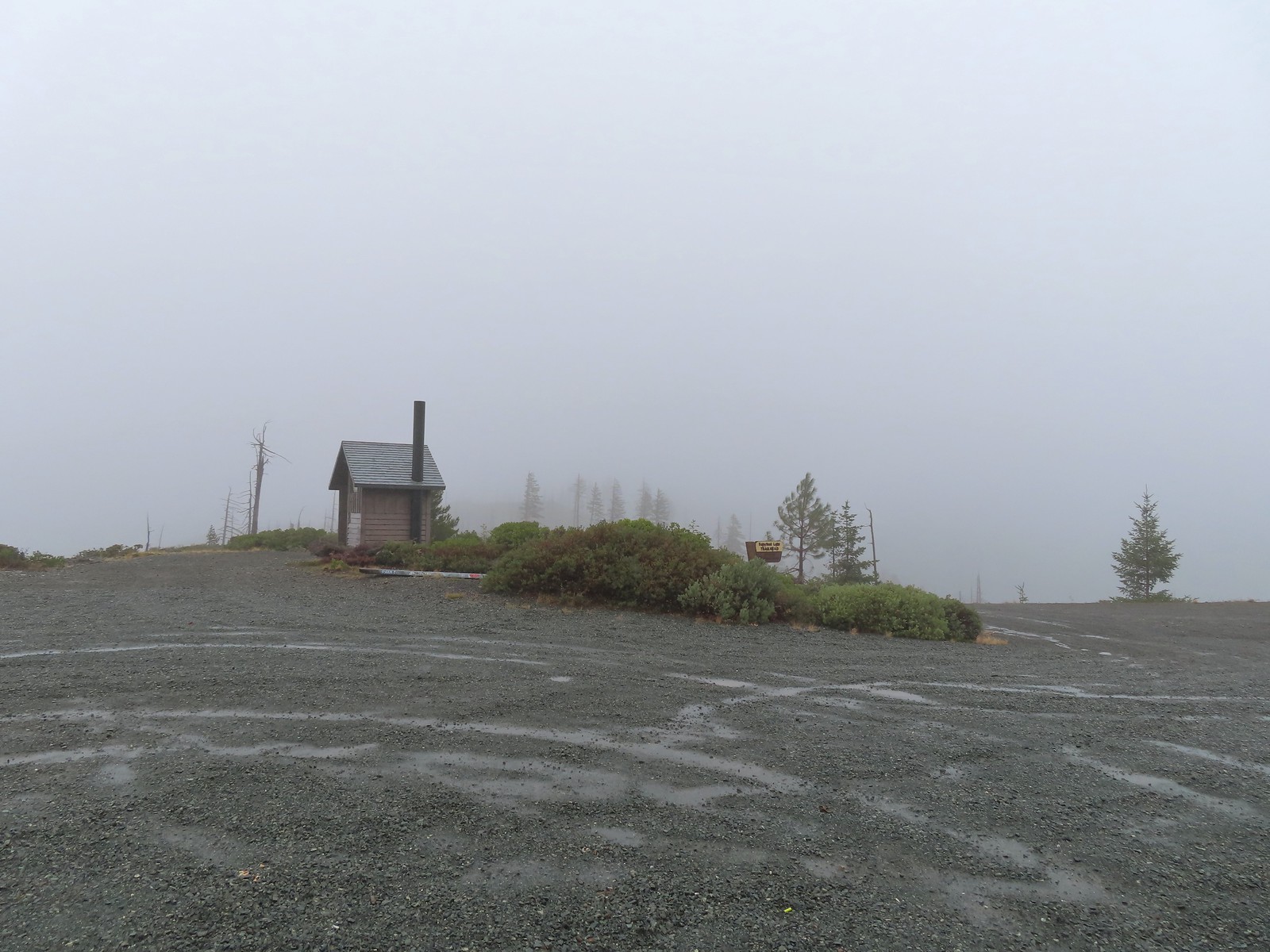
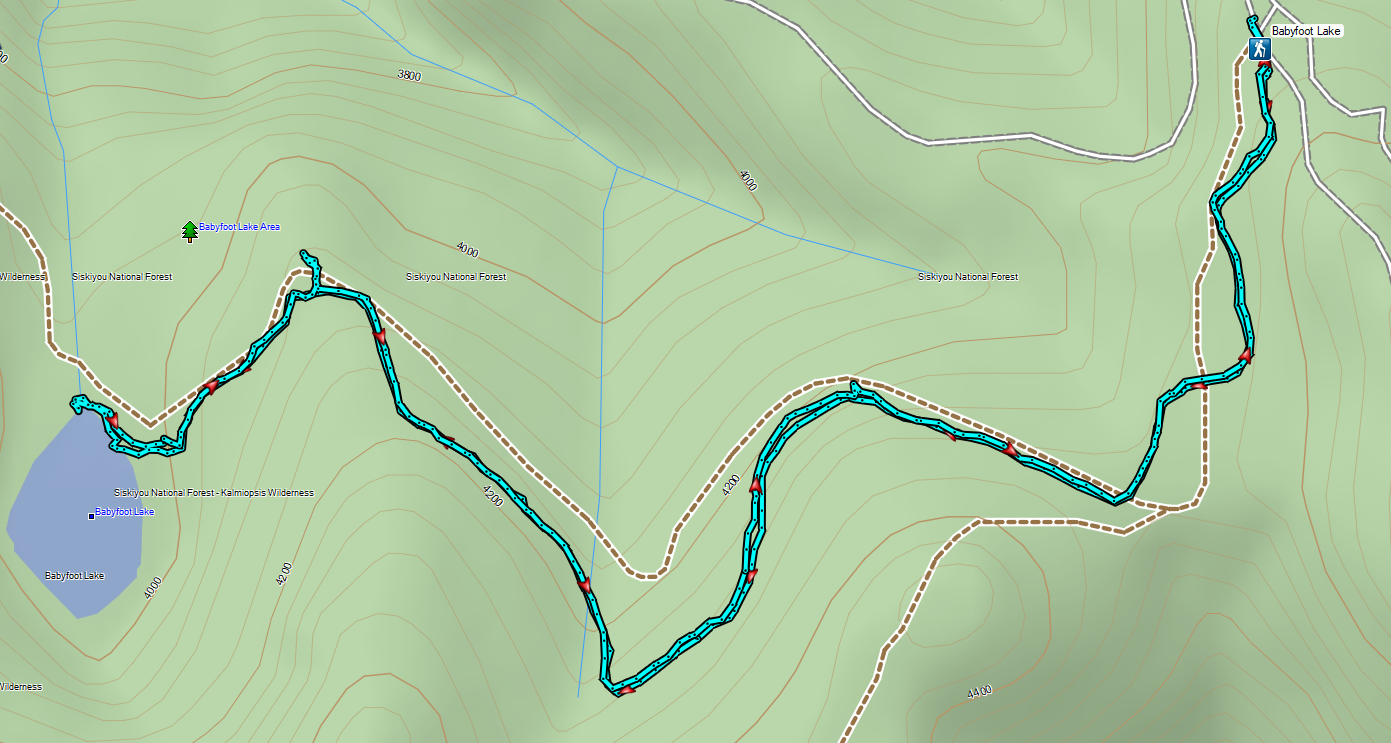
Wind and rain met us at the trailhead and our rain jackets made a second appearance. The trail began at a signboard and traversed a hillside below Hungry Hill for 0.3-miles to a fork.

 The forest is recovering from the 2002 Biscuit Fire.
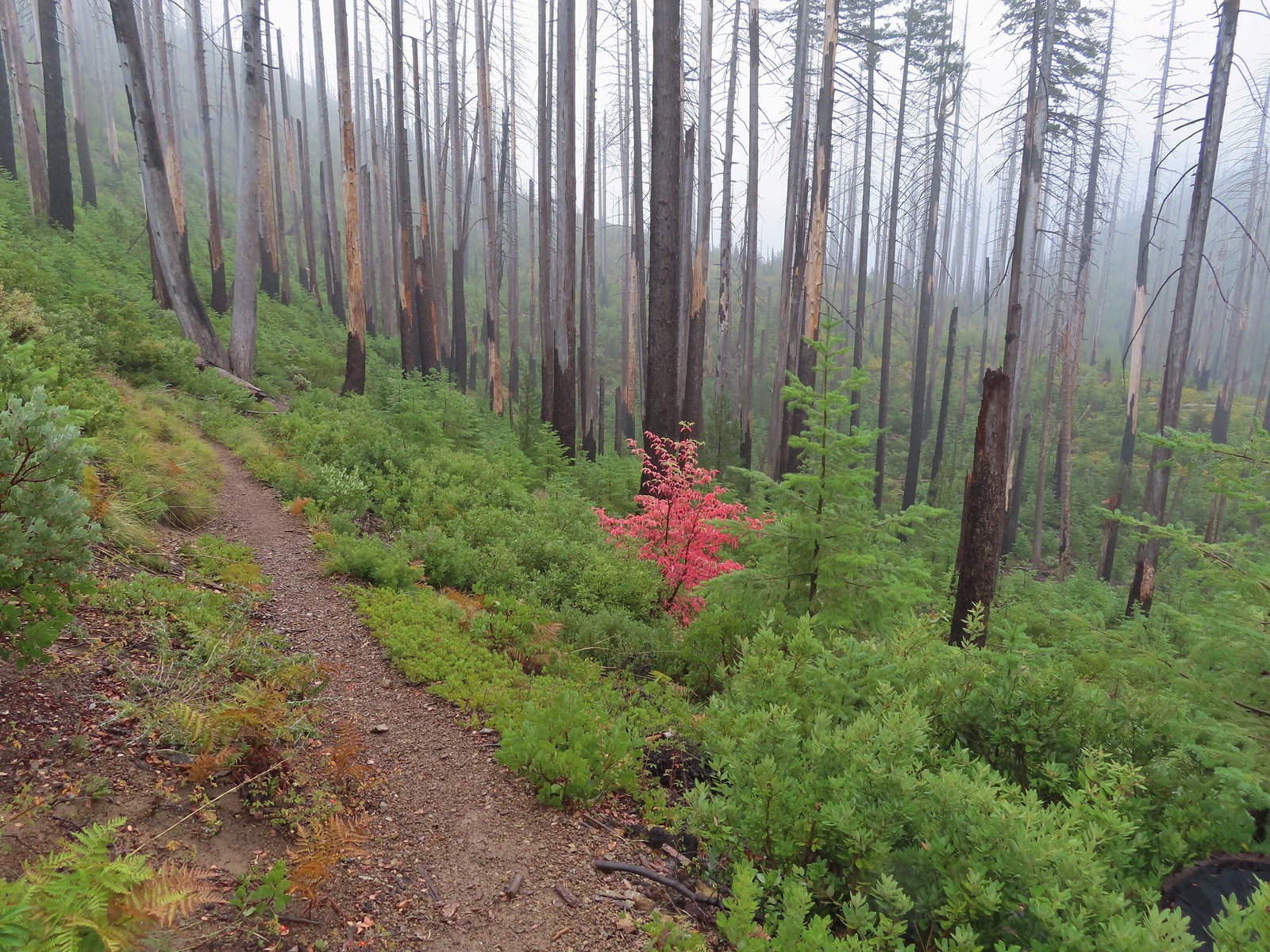
 To the left was the Babyfoot Lake Rim Trail. Sullivan’s longer option here include following this trail 0.9-miles to a viewpoint above the lake. Given the fog that seemed pointless, and it also looked like that trail was in need of some maintenance.
We forked right and continued to descend through the fog for nearly a mile to the lake.
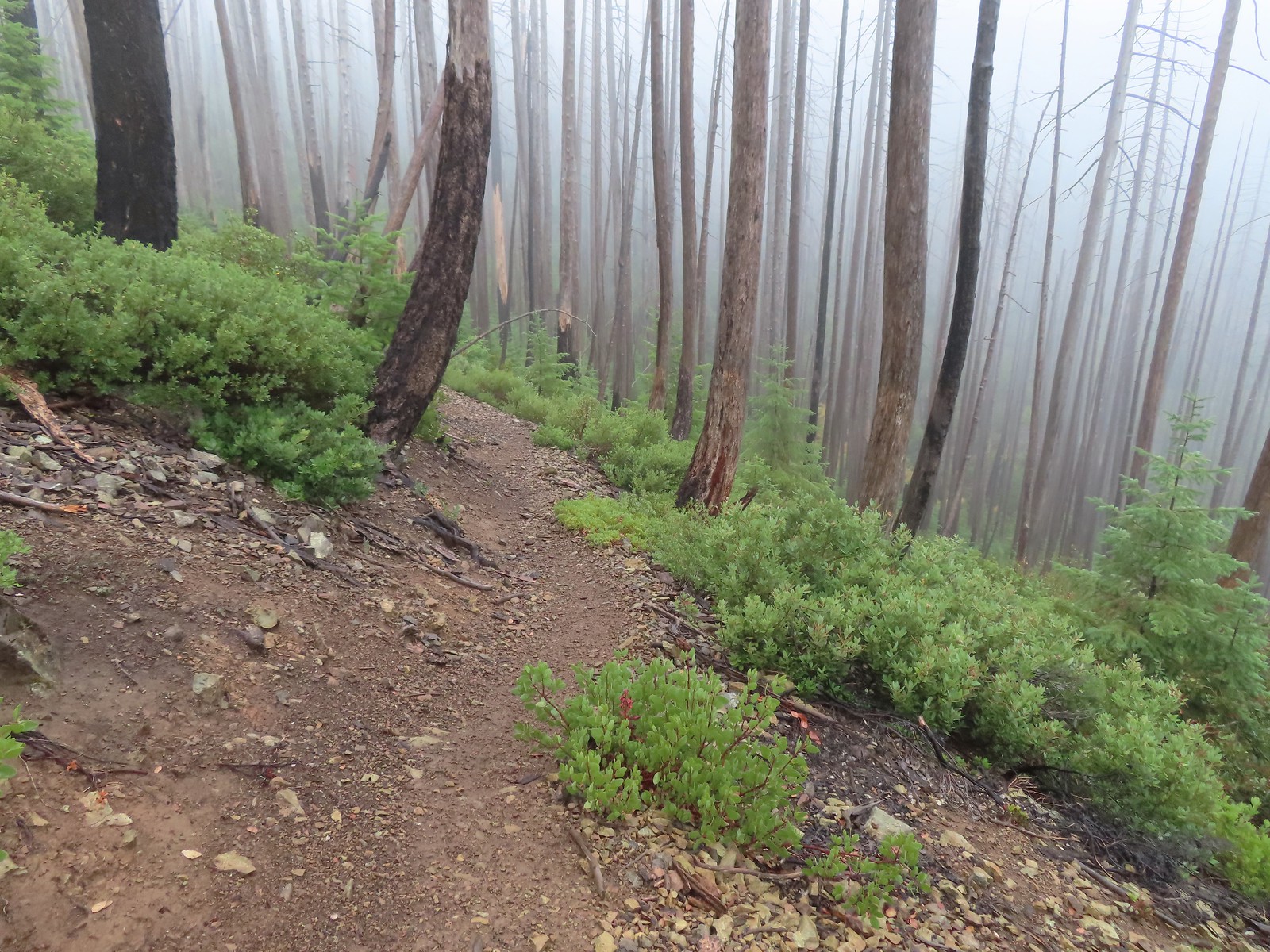
 A small stream with crystal clear water along the trail.
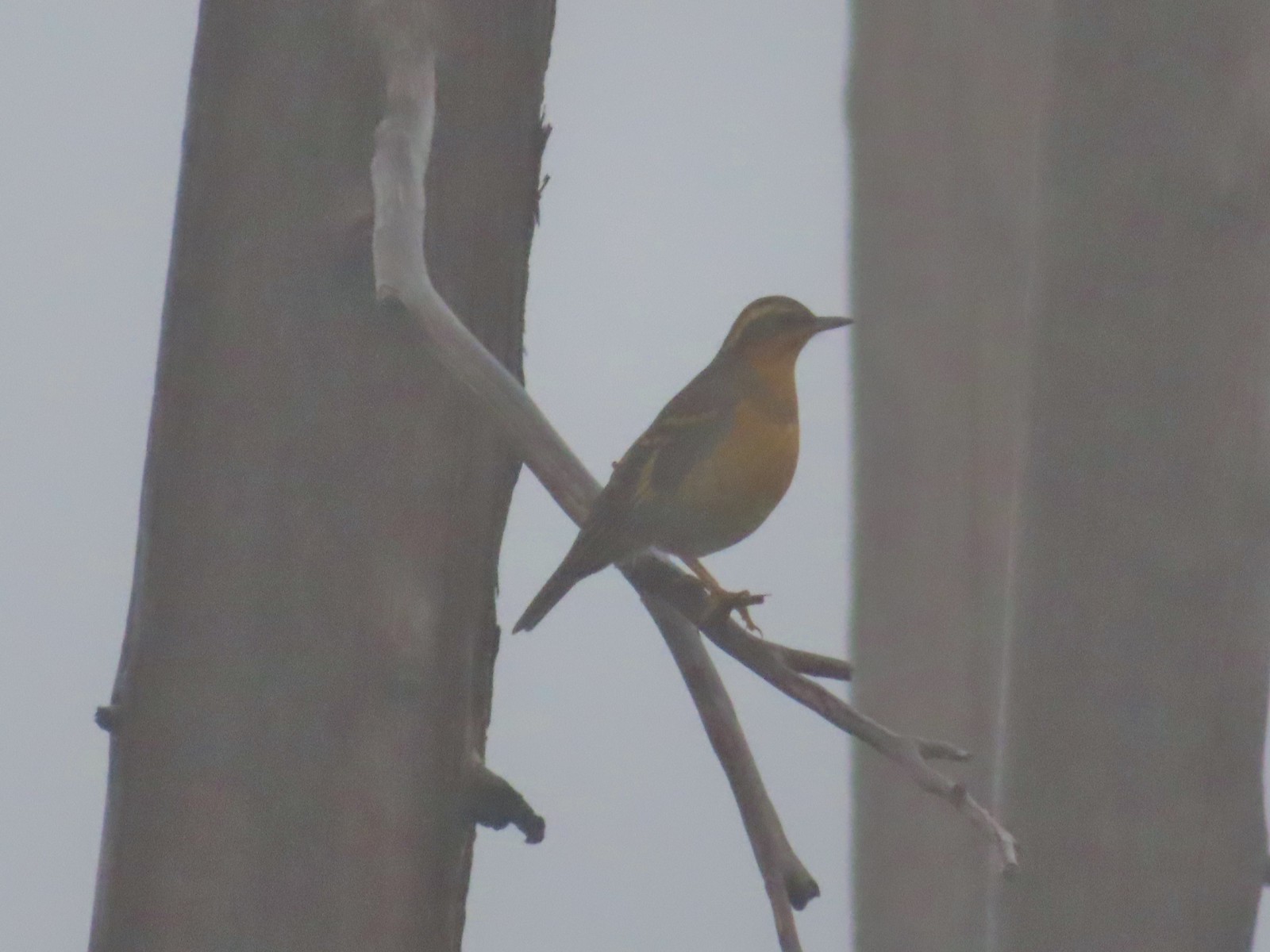 My nemesis, the varied thrush.
 Near the lake the trail passes this rock outcrop which is a viewpoint without the fog.
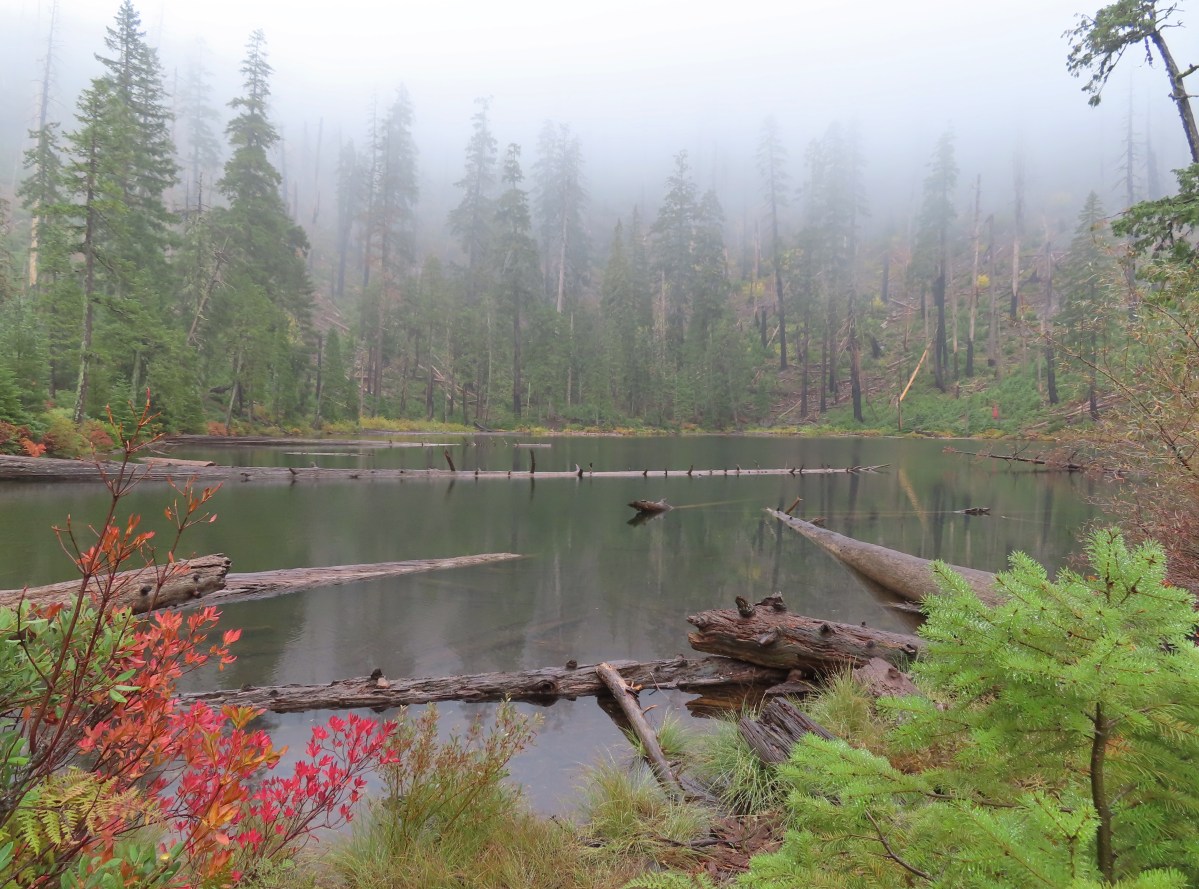
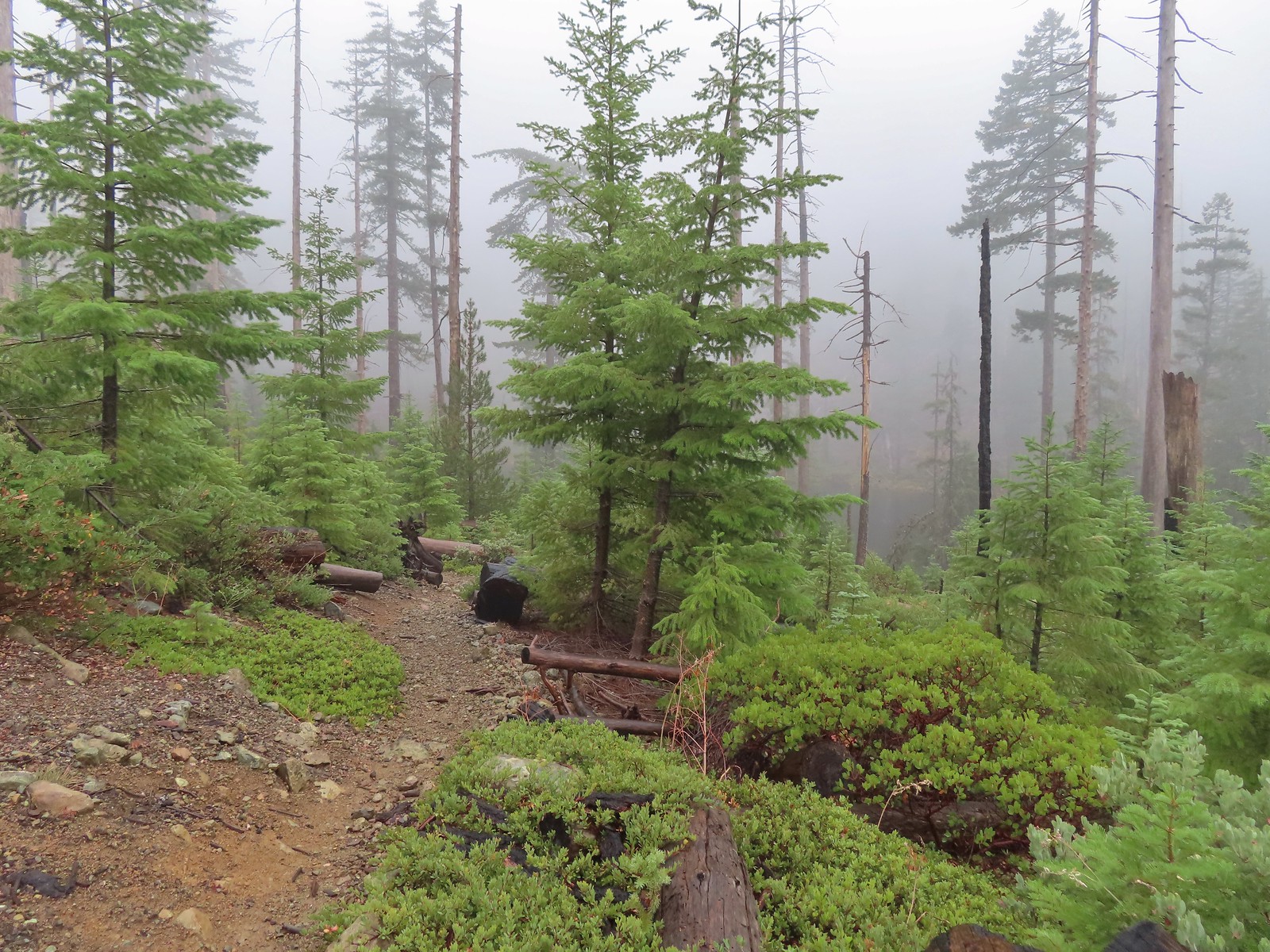 Some of the trees around the lake survived the 2002 fire.
Babyfoot Lake lies just within the Kalmiopsis Wilderness boundary, marking just the second time (post) we’d visited this nearly 180,000-acre wilderness.
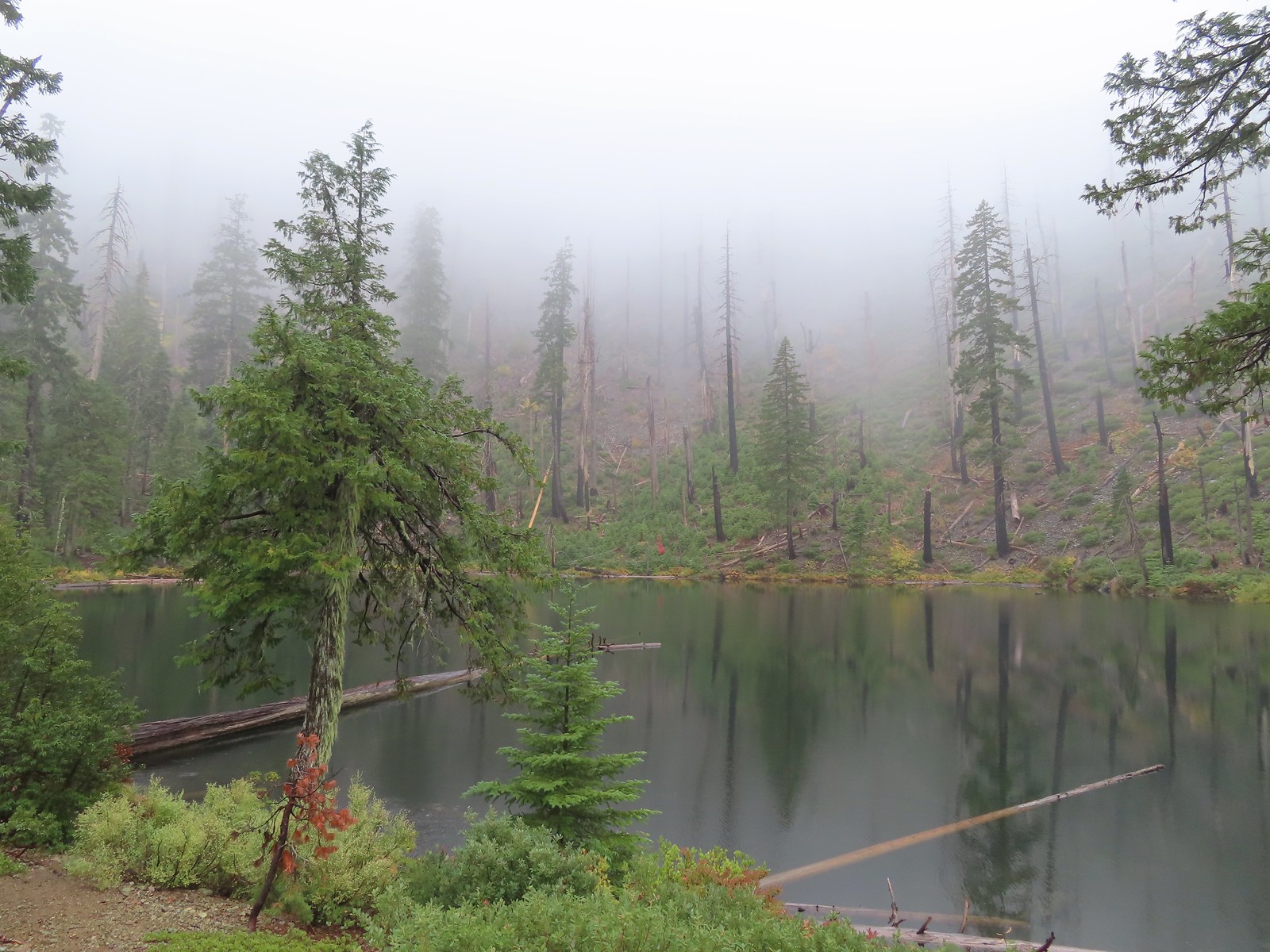
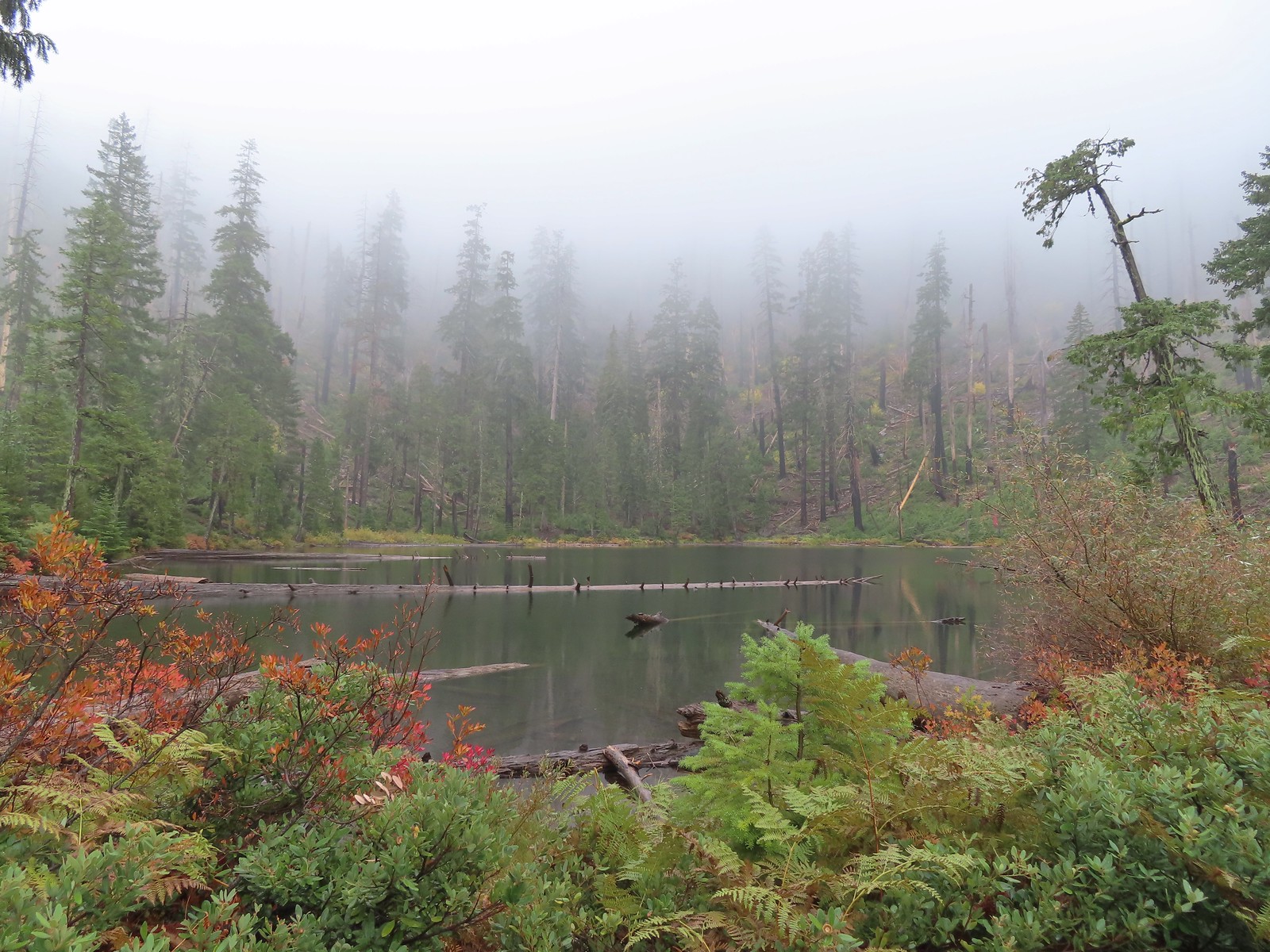
After visiting the lake we headed back up toward the car. Before we’d even made it past the rocky viewpoint the clouds began to break up revealing some patches of sunlight and blue sky.

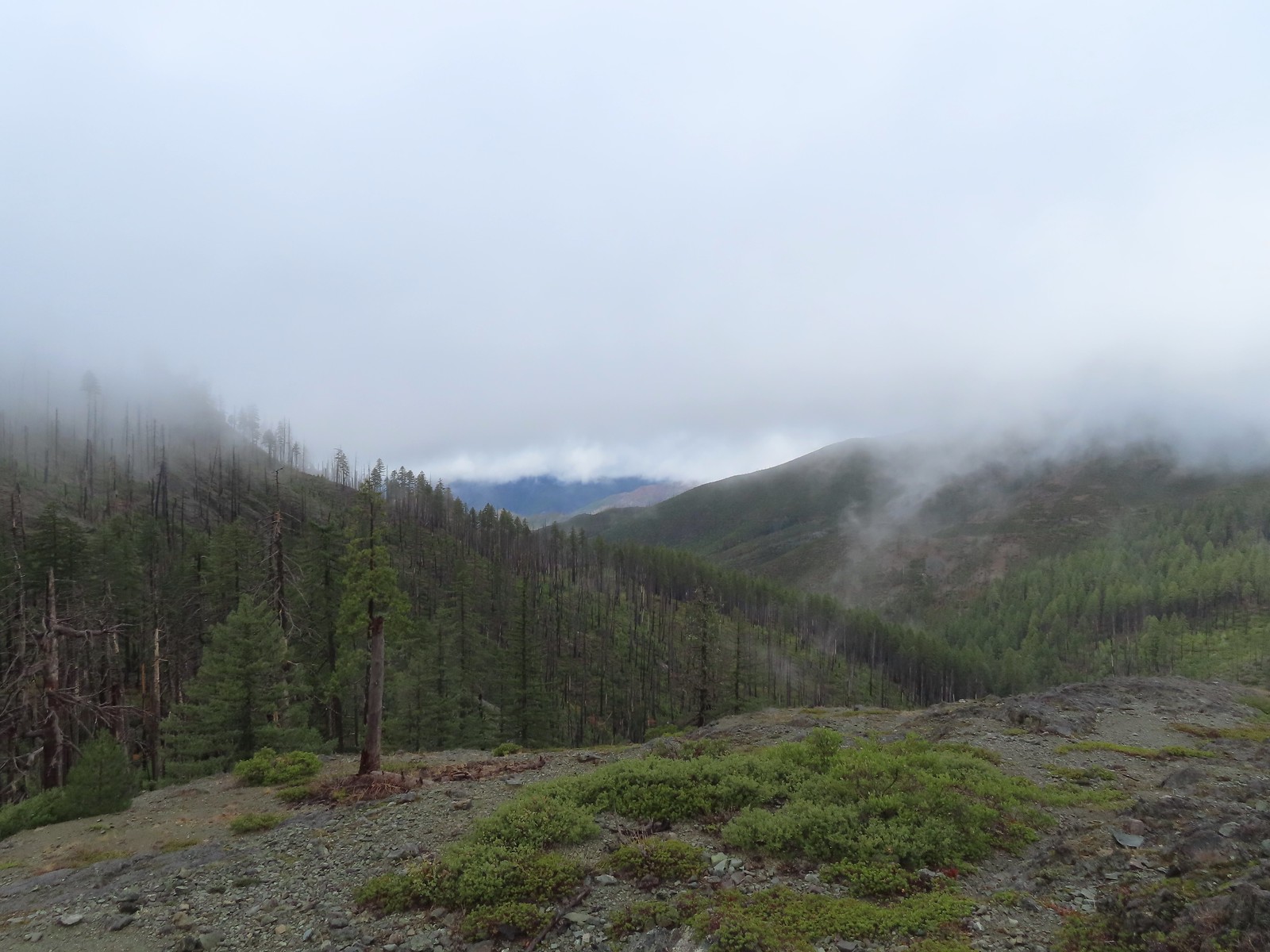 I of course had to head out onto the viewpoint given the rapidly changing conditions.

Conditions continued to improve as we climbed back to the trailhead revealing more of the wilderness and surrounding terrain.
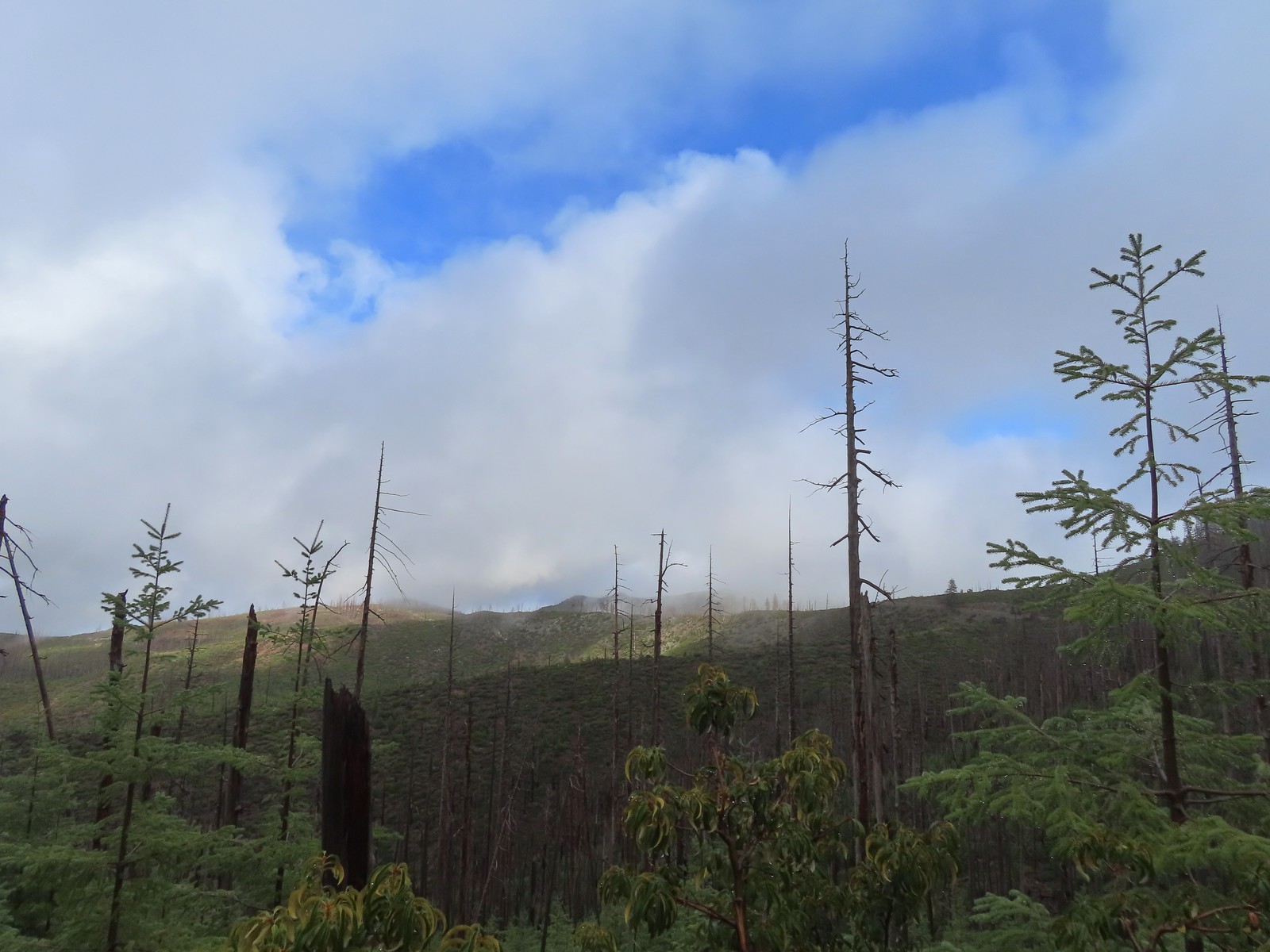
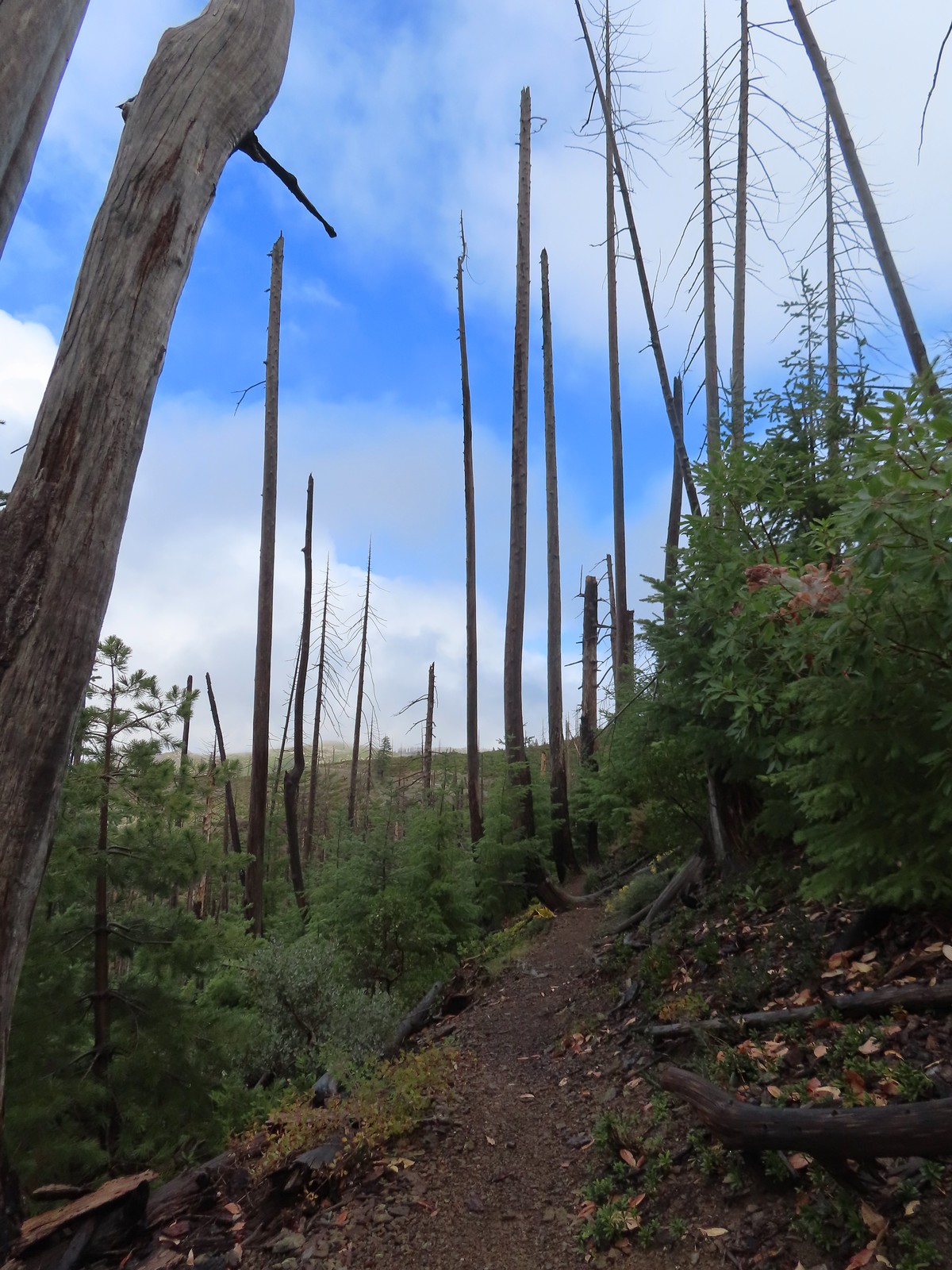
 The patterns on this snag caught my eye.

 The trailhead on the ridge ahead.
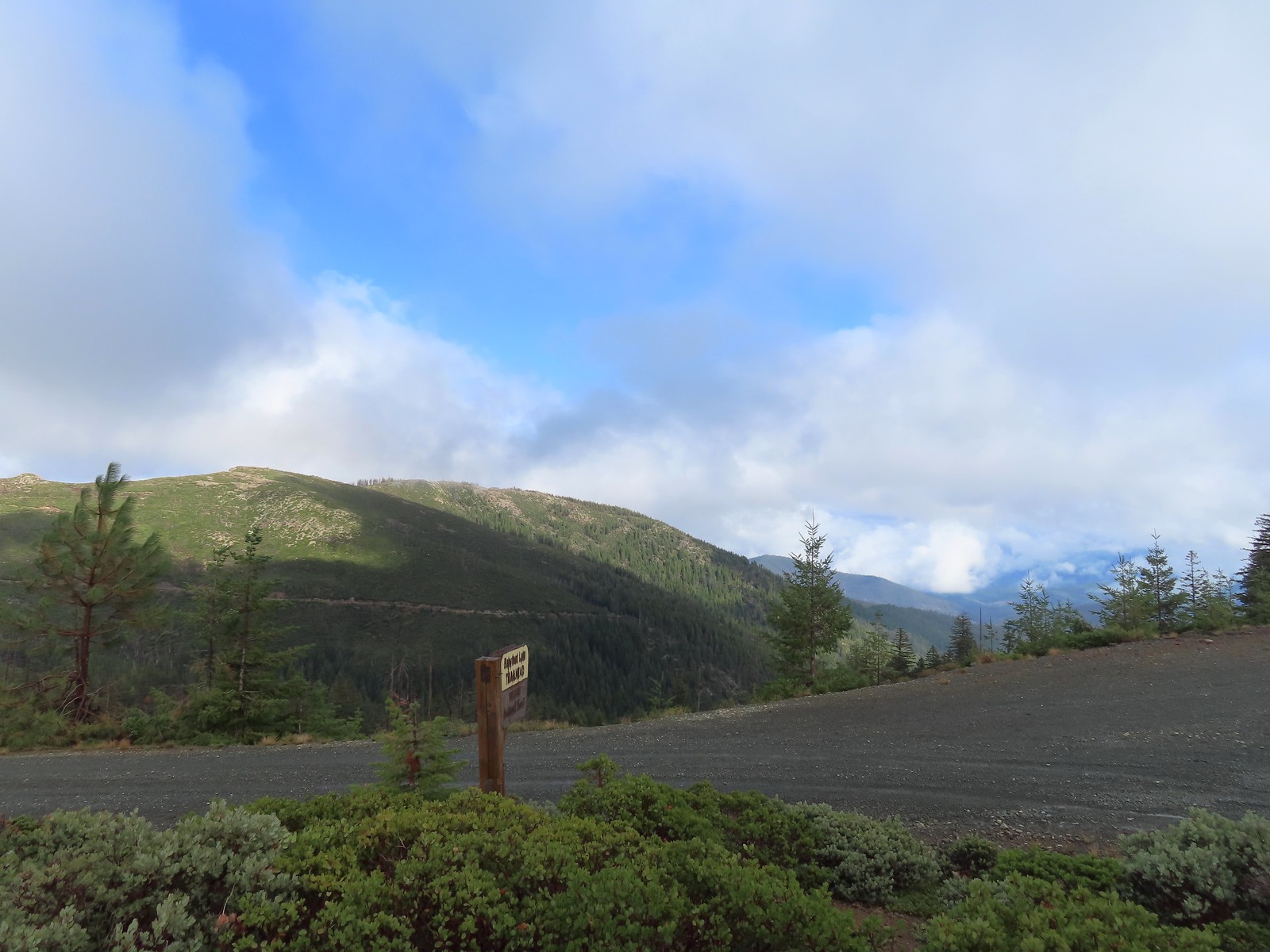
This short hike came to just 2.6-miles and 360′ of elevation gain and marked the completion of our quest to hike at least part of all 100 featured hikes in William L. Sullivan’s “100 Hikes/Travel Guide Southern Oregon & Northern California” edition 4.2 (post).
With Southern Oregon complete, joining the Central Oregon Cascades, Coast & Coast Range, and NW Oregon & SW Washington, we are down to just 16 Eastern Oregon hikes to reach 500. Happy Trails!

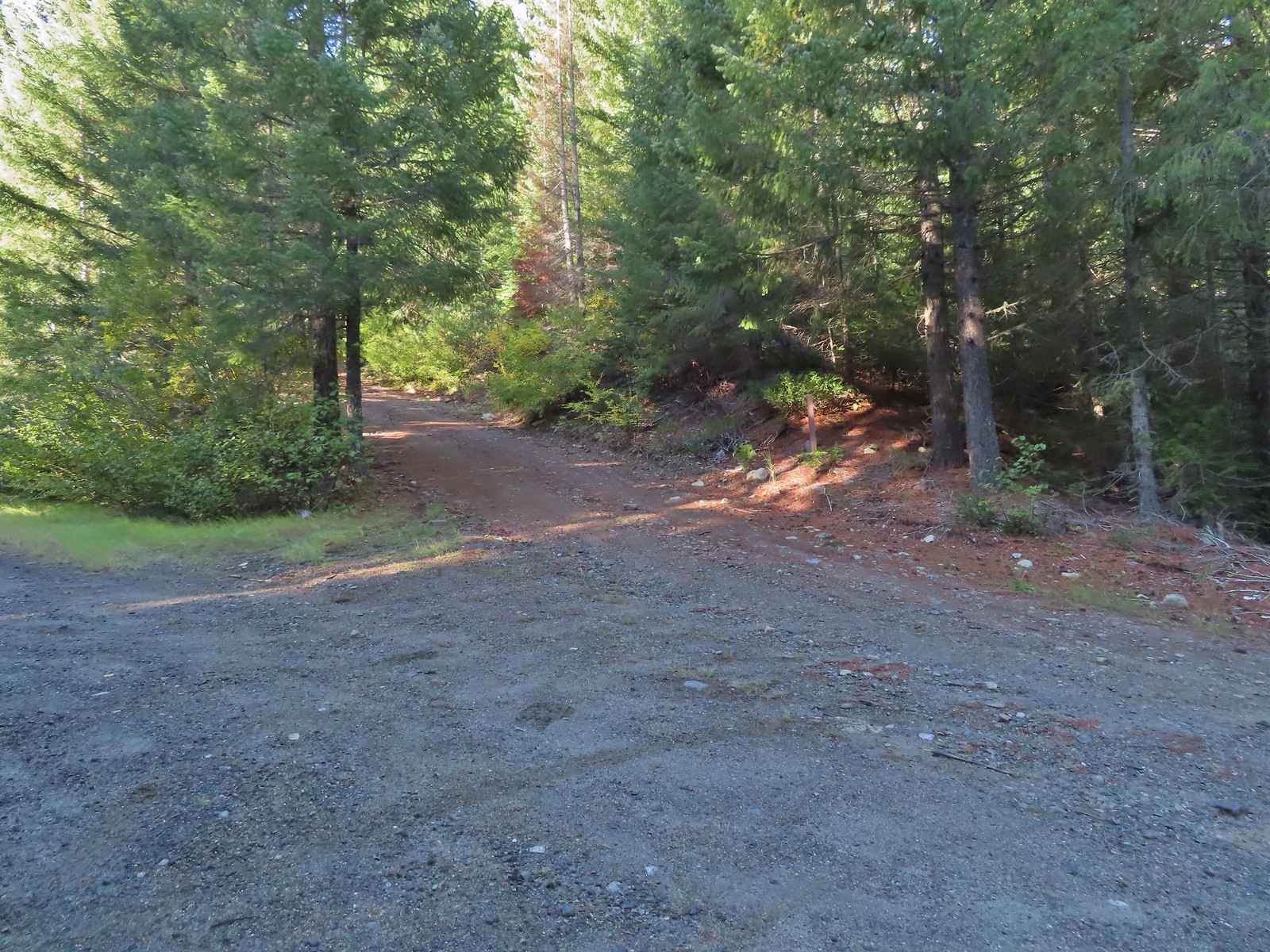 Road 600 heading uphill.
 Crab spider on a fleabane.
 The Sturgis Trailhead on the left.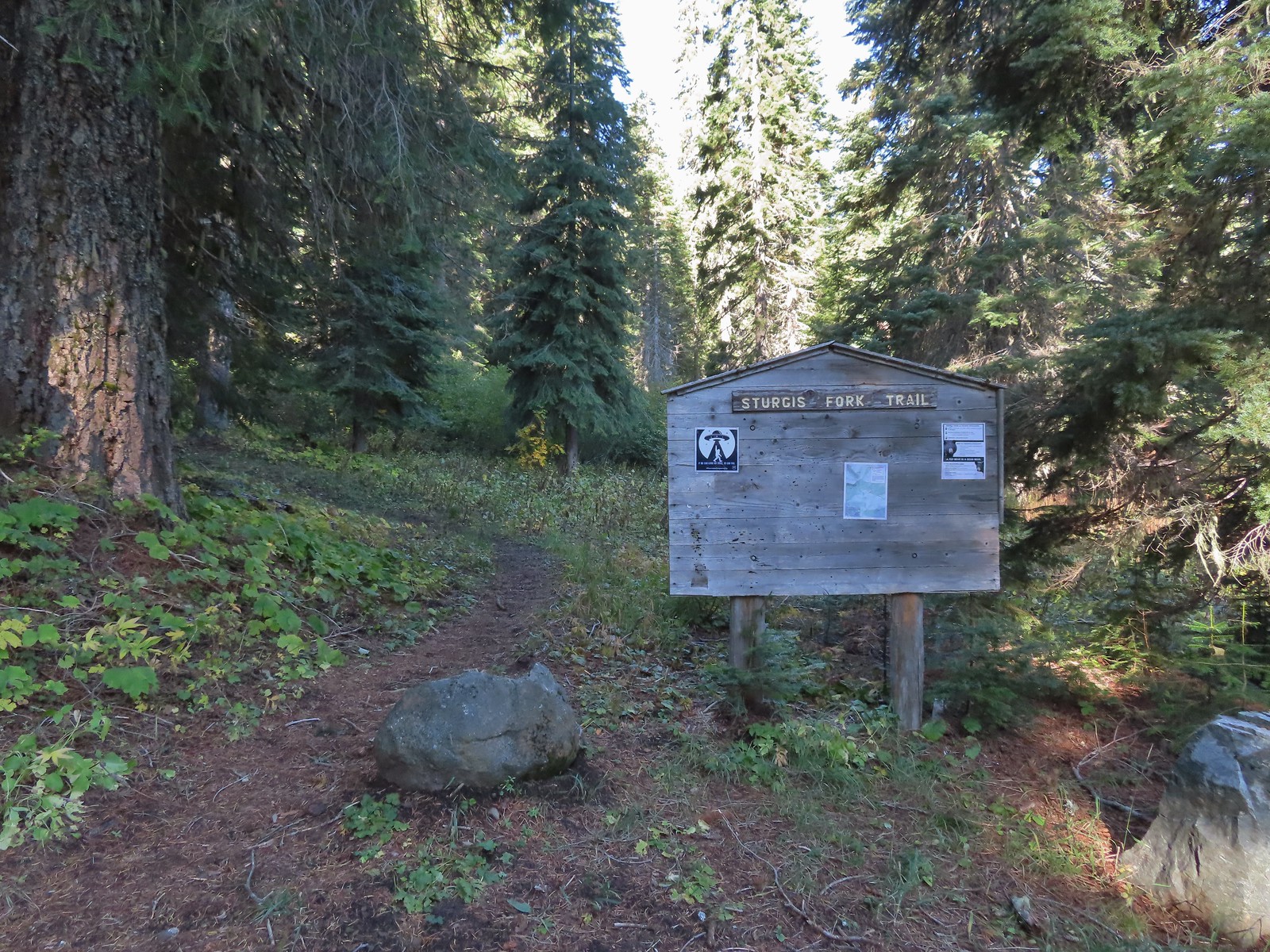
 Trail map of the area.
 Nettle-leaf giant hyssop
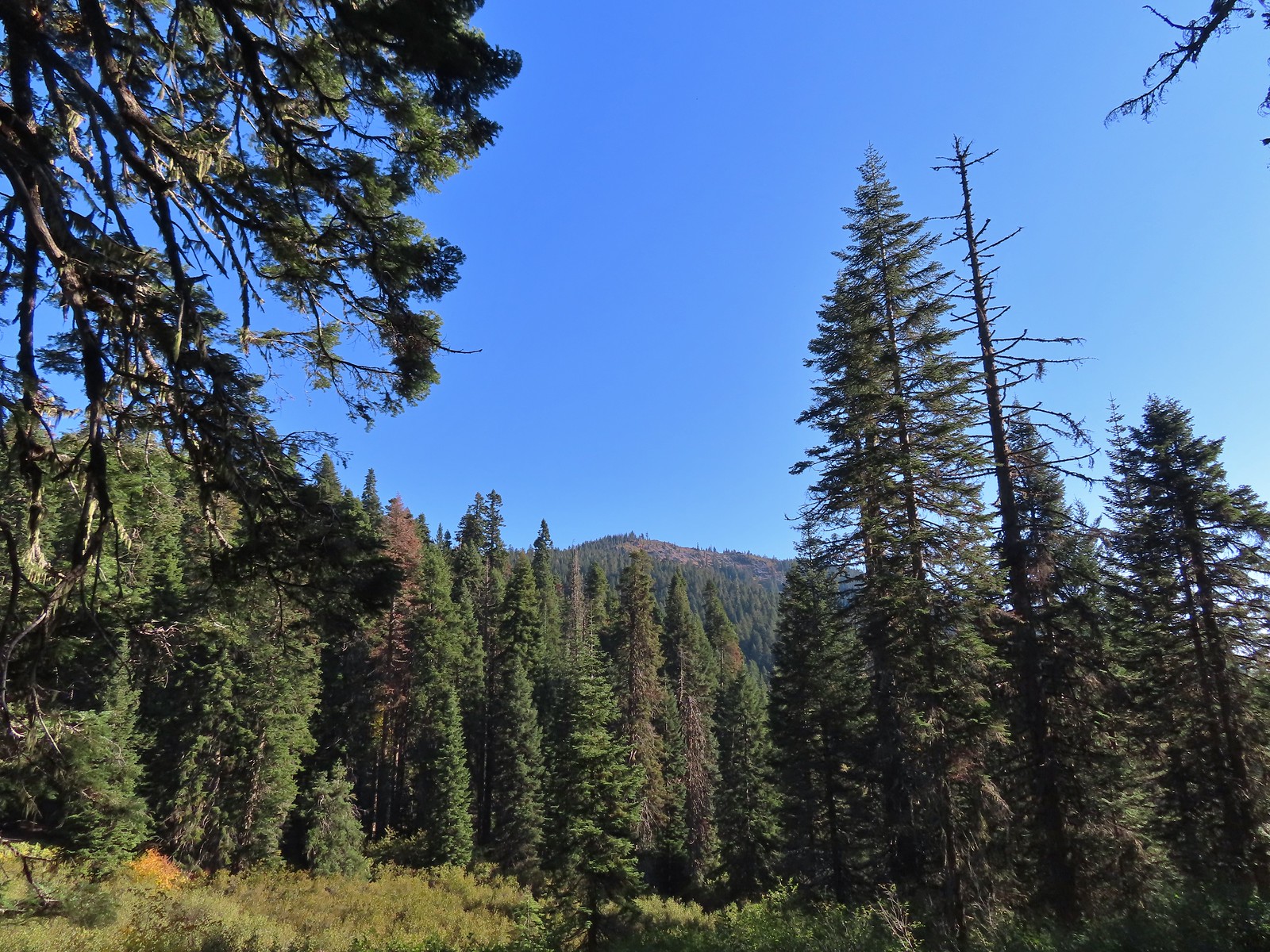 The viewpoint we were headed to.
 All that was left for signage at the Boundary Trail junction.
 The Boundary Trail to the South toward Sucker Creek Gap (
 Coming from this direction all we noticed were a couple of signs on a tree and some pink flagging.
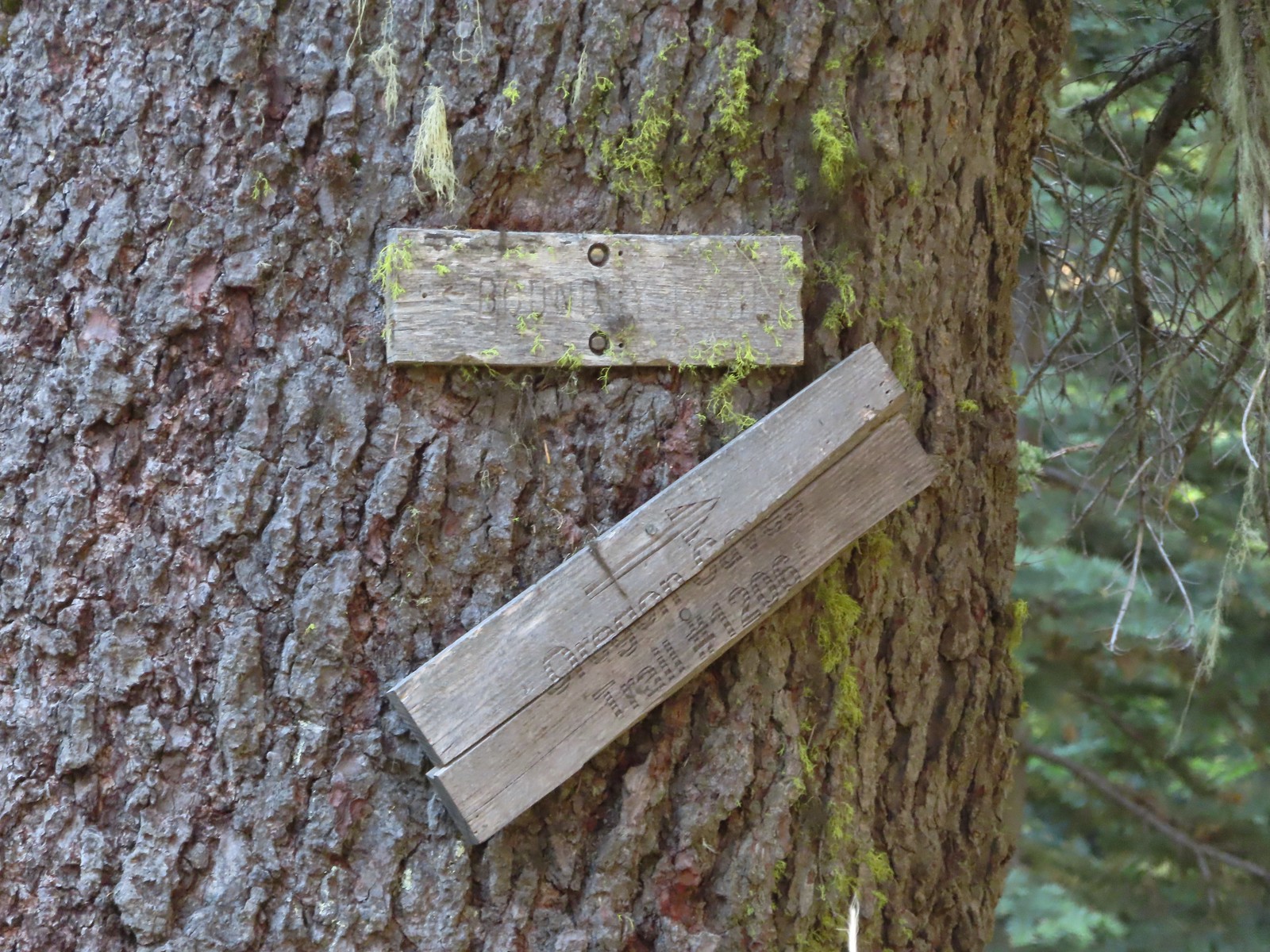 Trail signs for the Boundary Trail and Lake Mountain Trail #1206 to the Oregon Caves (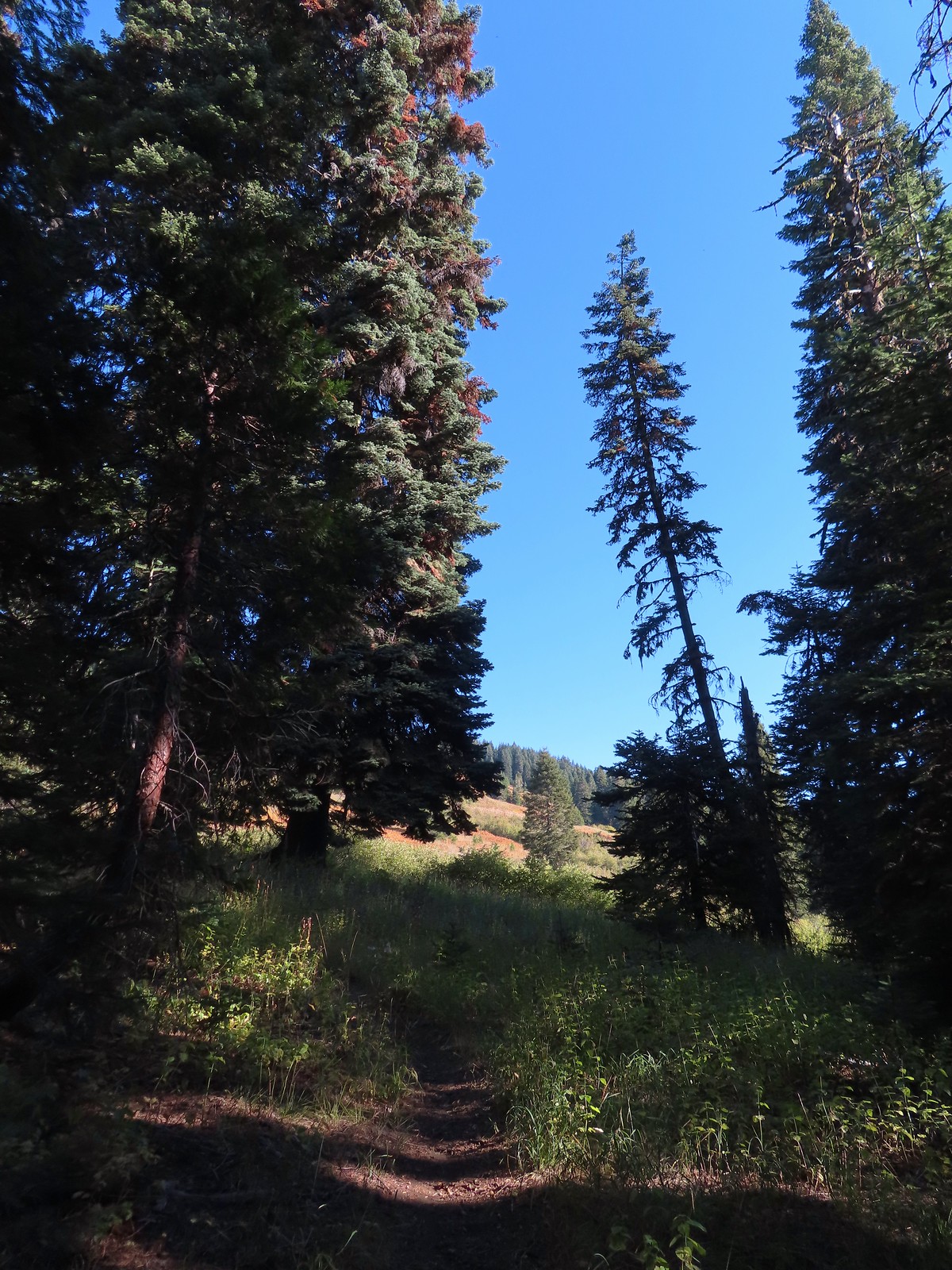
 The trail can be seen in the lower right-hand corner.
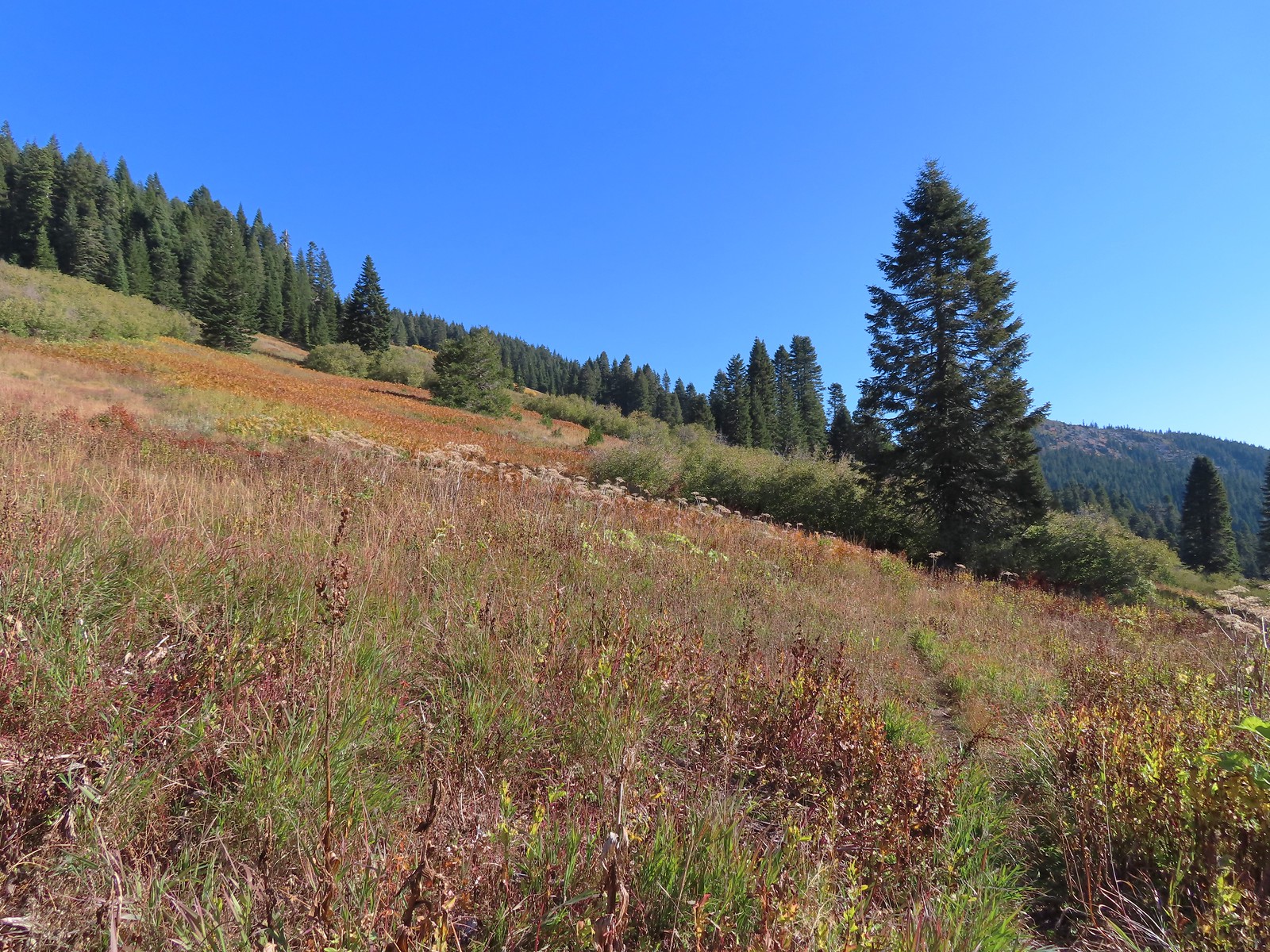 Again the trail is in the lower right corner.
 There was still a small amount of paintbrush in the meadow.
 A clump of fireweed ahead that had gone to seed.
 A small section of trees was located along this gully.
 A little brushy here.
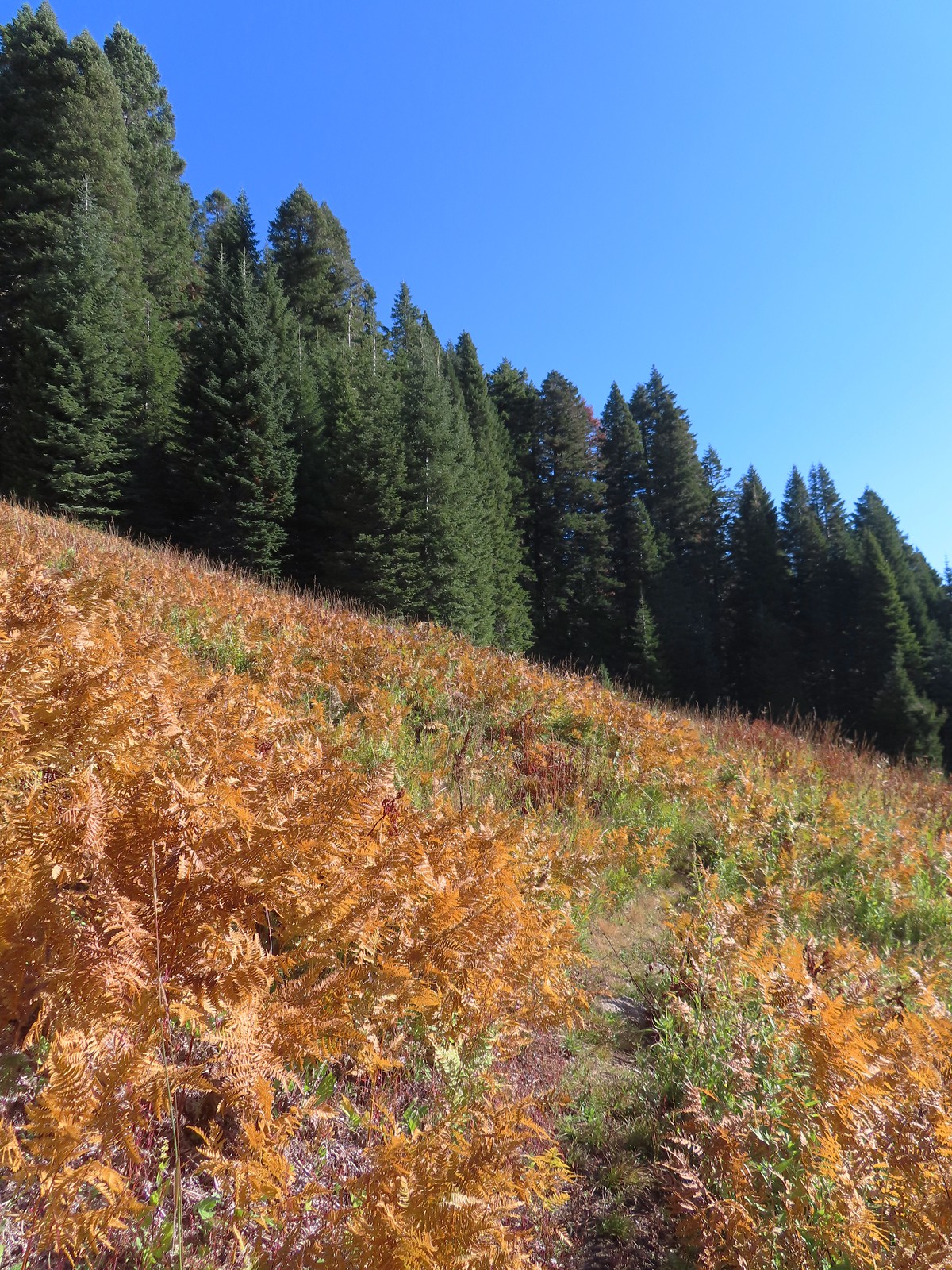 Ferns at the northern end of the meadows.
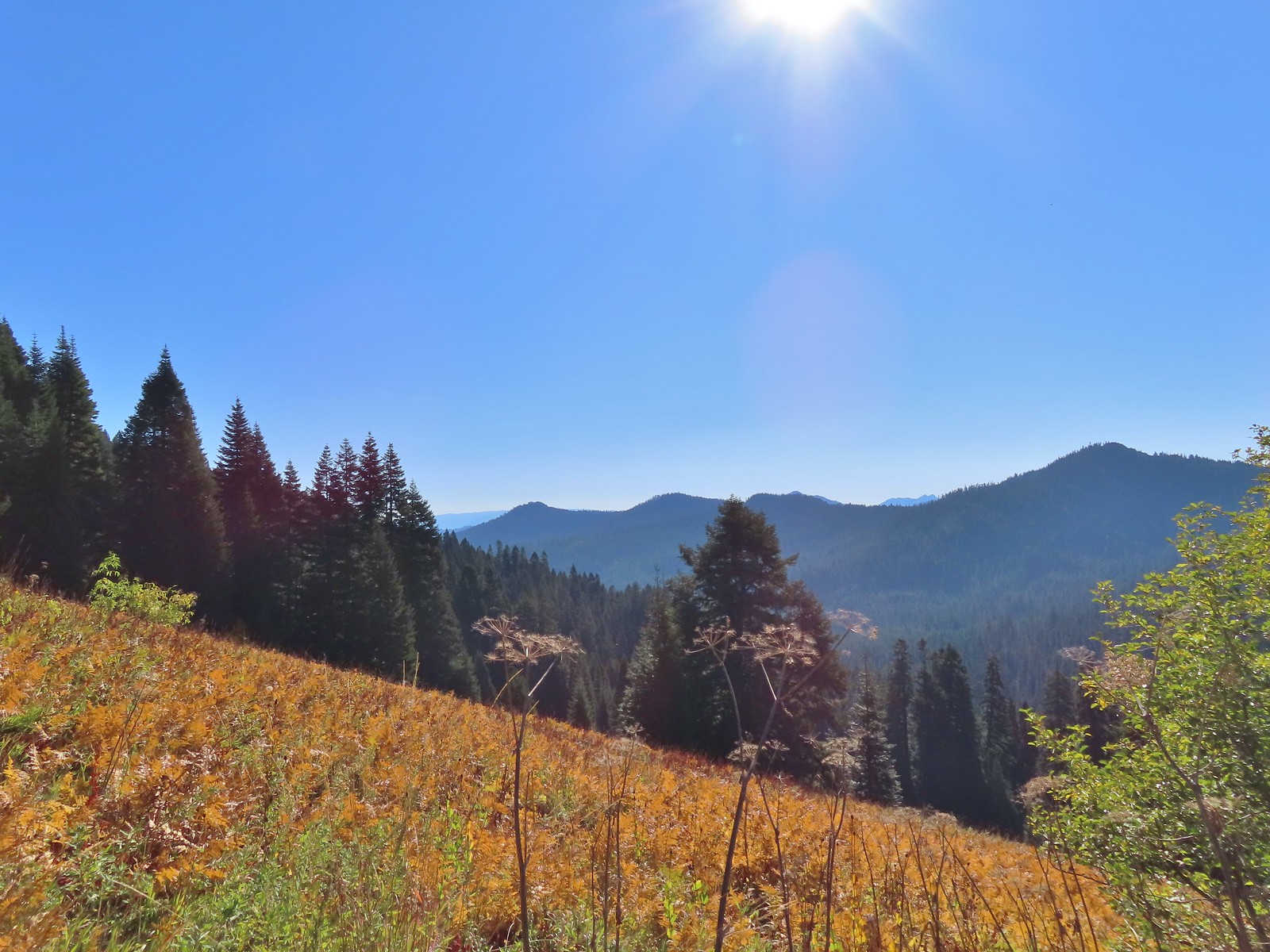 The double humps of the Red Buttes in the distance to the SE.
 Preston Peak in the Siskiyou Wilderness (
 Arriving at the pass.
 This was the only signage that was visible at the junction.
 We could see tread heading East into the trees which was the Sparlin Tie Trail. The Elk Creek Trail wasn’t as obvious, but it dropped down to the right just a little way up the tread seen here.
 Lake Mountain from the Boundary Trail.

 There was a small geocache located at the viewpoint. Smoke from the still smoldering wildfires impacted the views a bit, Mt. Shasta is out there toward the right-hand side.
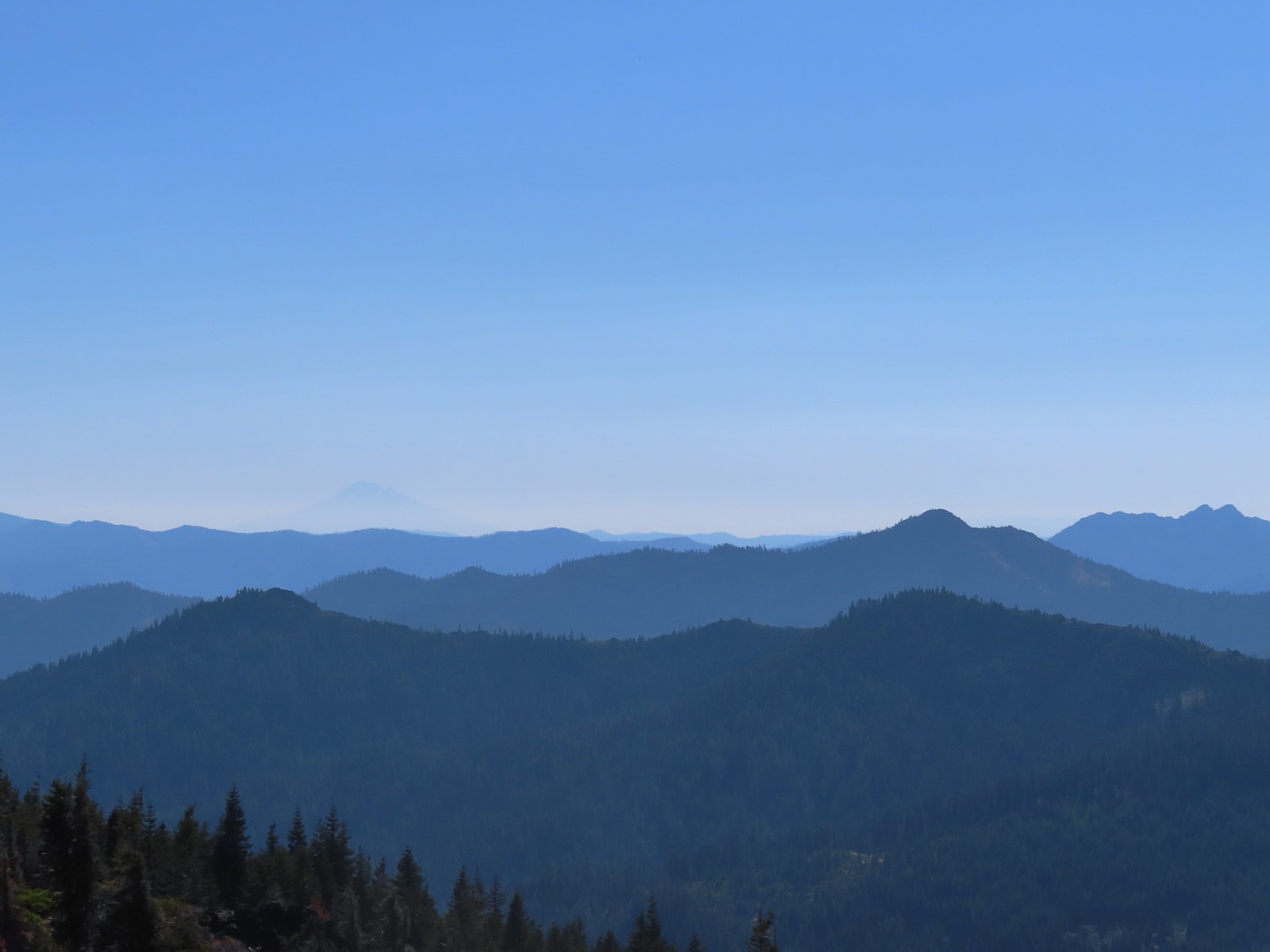 The outline of Mt. Shasta to the left of Red Buttes.
 Preston Peak and other peaks in the
  Closer look at the Siskiyou Wilderness peaks.
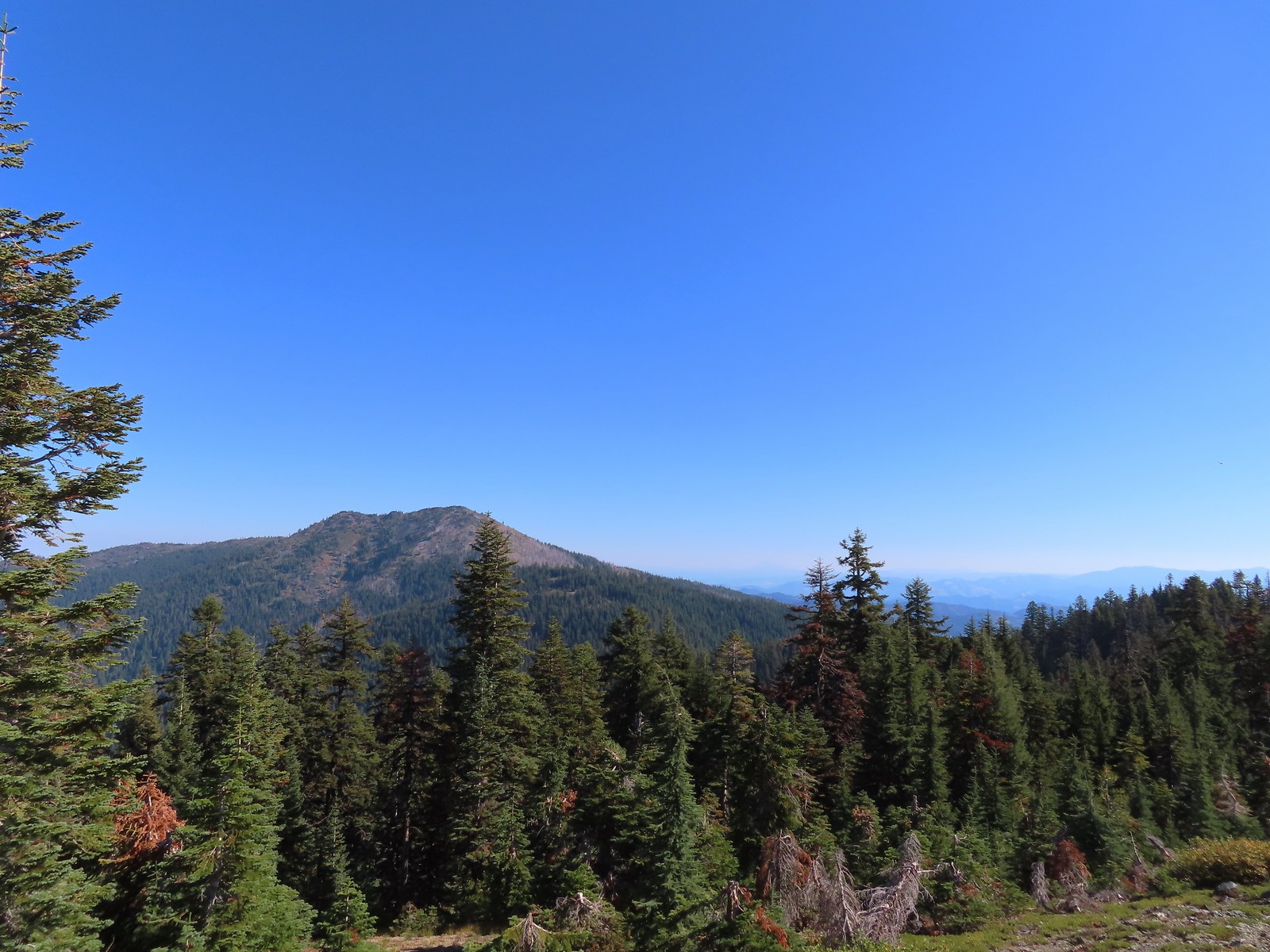 Grayback Mountain to the North. Mt. McLoughlin (
 Mt. McLoughlin
 The remains of a trail sign near the saddle.
 The Sparlin Tie Trail straight ahead and the Elk Creek Trail heading off to the right.
 Homemade? trail sign a short distance up the tie trail. (note Bigelow Lakes is spelled “Biglow”)

 The tread was faint through the meadows but not any more difficult to follow than the Boundary Trail had been.
 Cinquefoil
 Coneflower and fireweed
 Random sign along the trail.
 Crossing through the final meadow.
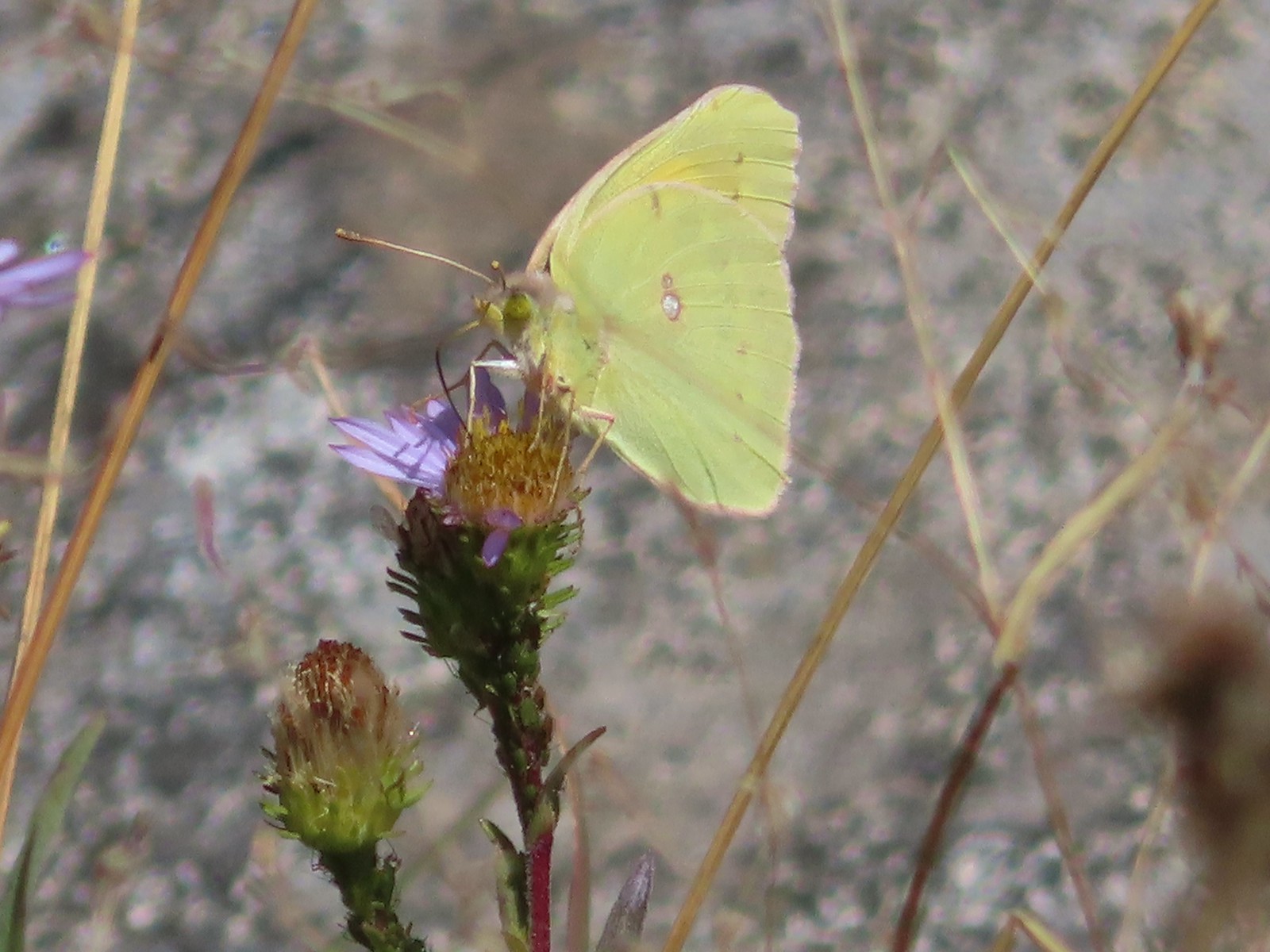 Orange Sulphur butterfly
 Arriving at the 1214 Trail.
 There was actually more blowdown along this trail than there had been along the tie trail, but it was easily navigated.

 Bigelow Lakes from the trail.

 The use trail to the lake.

 While I was at the lake Heather was making friends with this tree frog.
 The old roadbed.
 Trail sign at the roadbed.

 This bunch of blowdown was just before the junction.
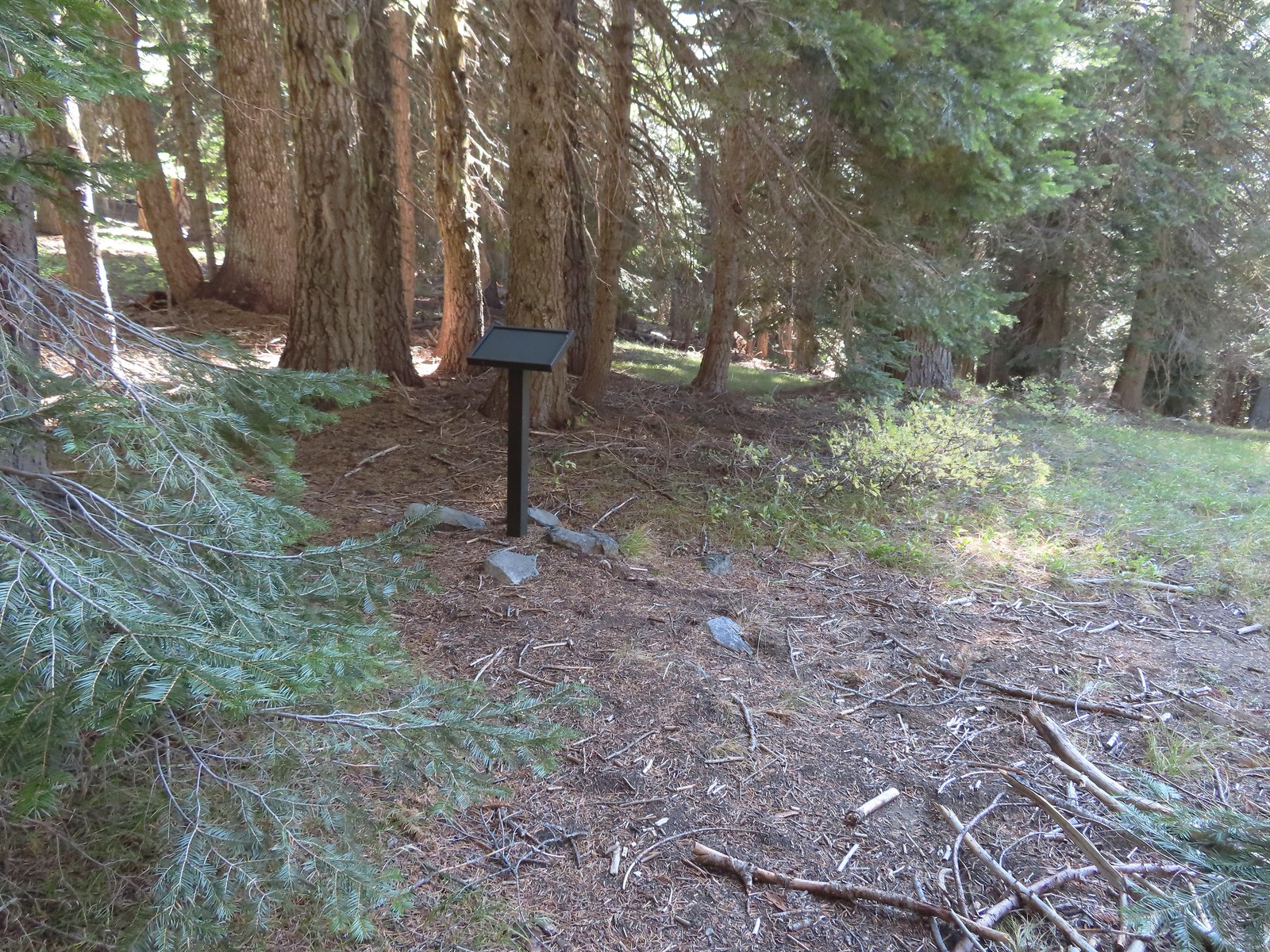 There were several of these stands along the Lake Mountain Trail, all of which were blank.
 The lower portion of the trail passed through a nice forest.
 The trail passed below the 6294′ Mount Elijah (for some reason both peaks along the ridge are named Mount Elijah on some maps) before gaining the ridge crest and climbing to the higher Mount Elijah summit at 6381′.
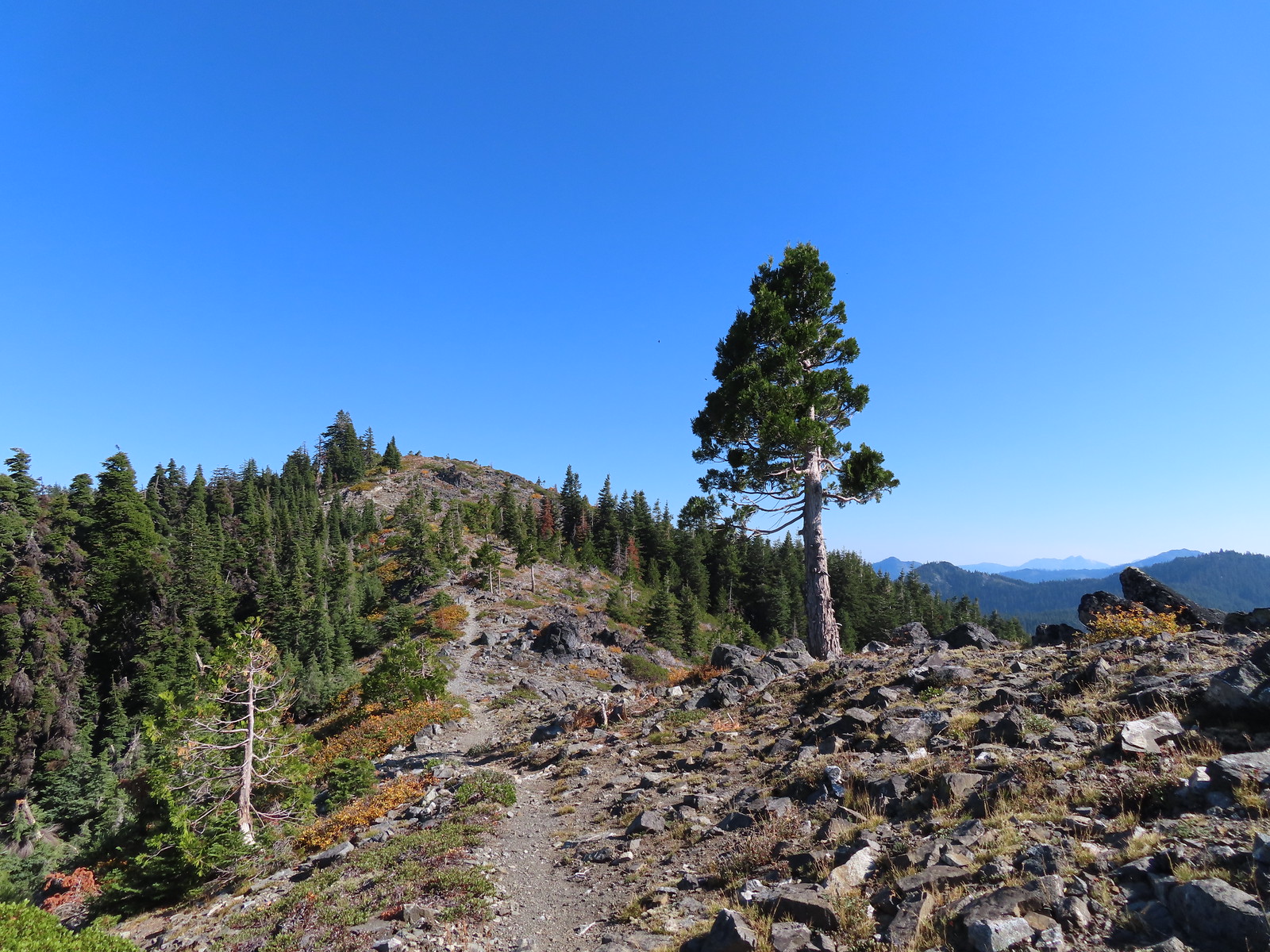
 The taller Mount Elijah.
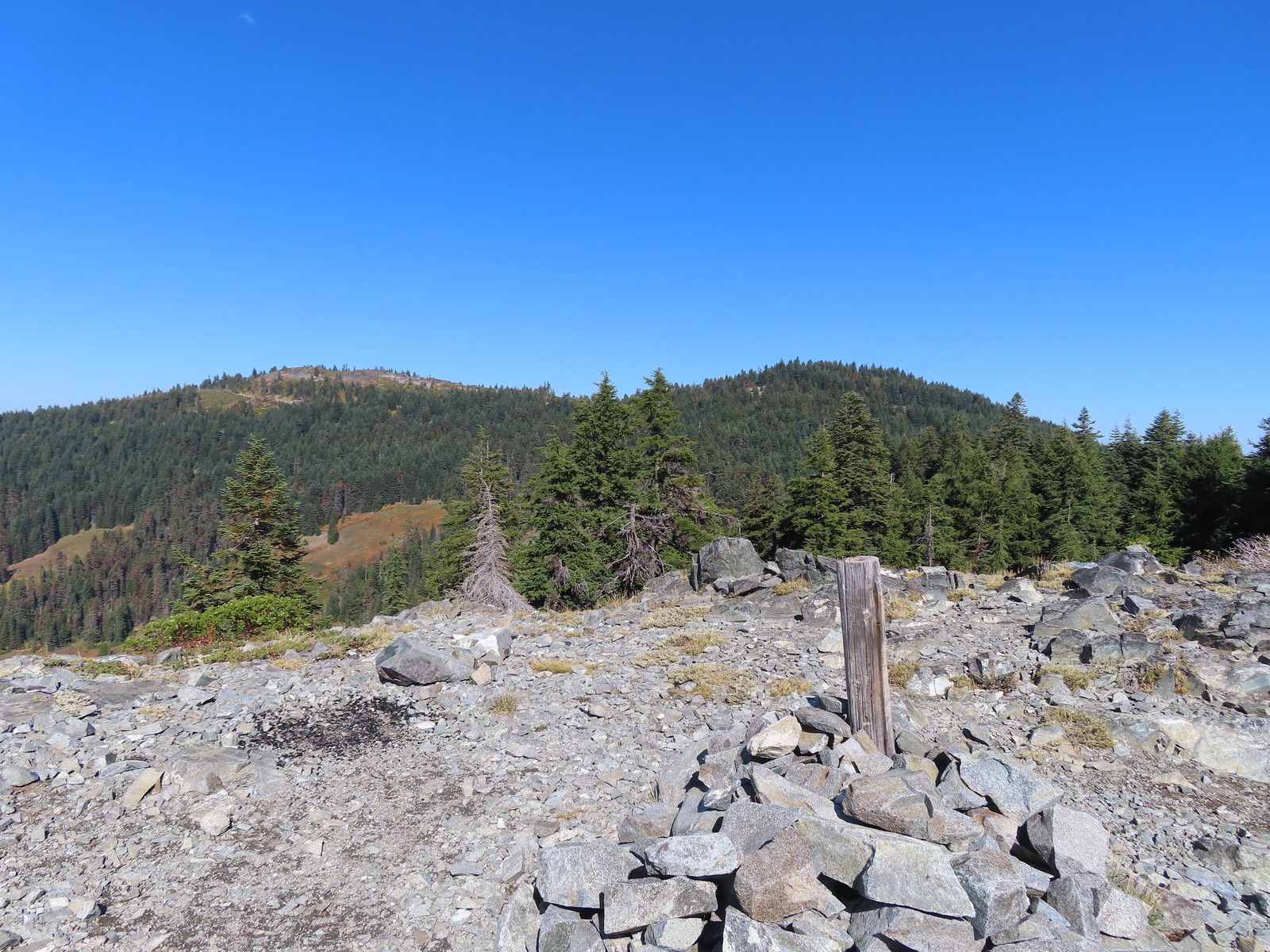 Lake Mountain from Mount Elijah.
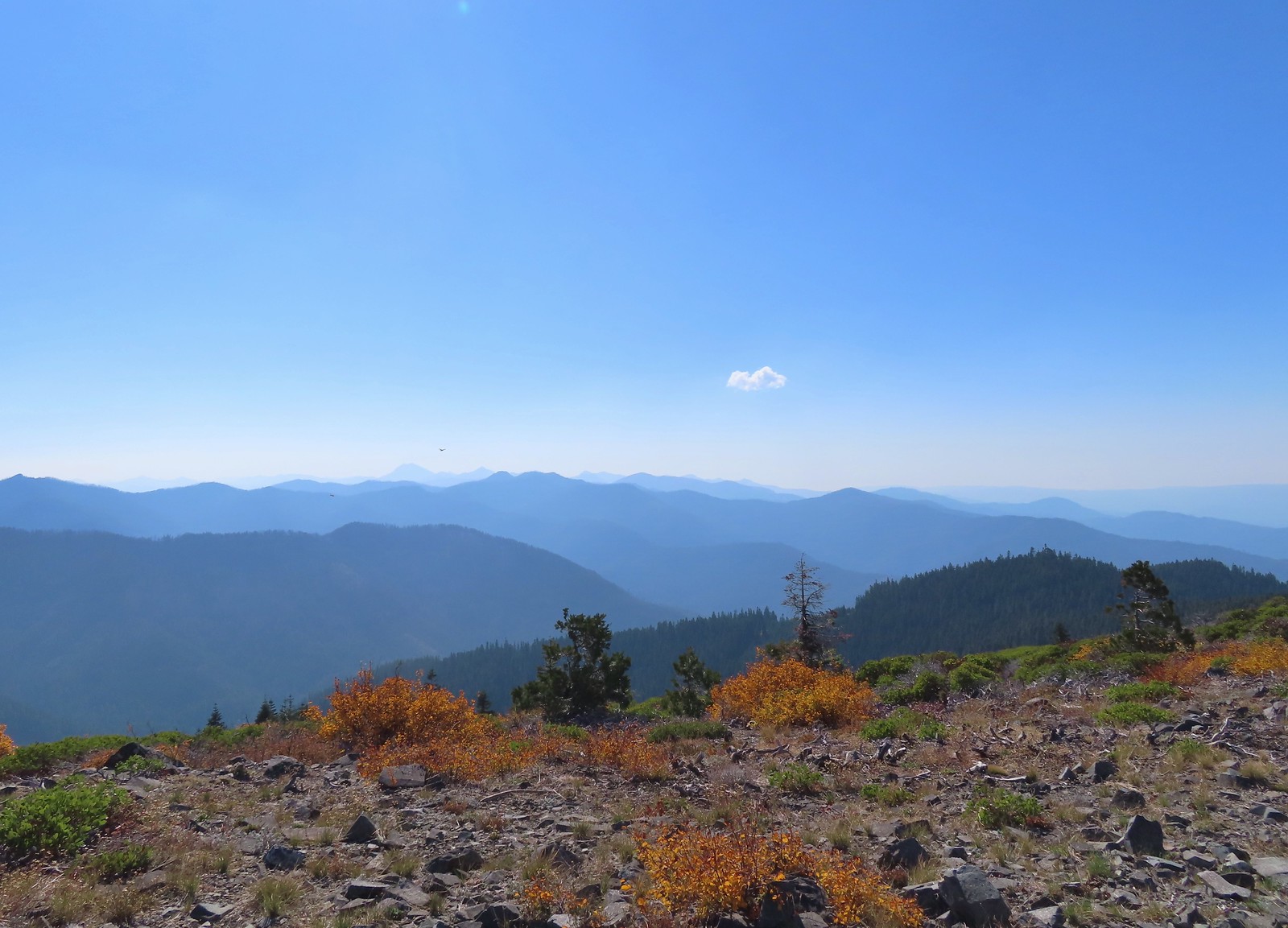 Preston Peak and a cloud from Mount Elijah. Wildfire smoke was a little more of an issue now.
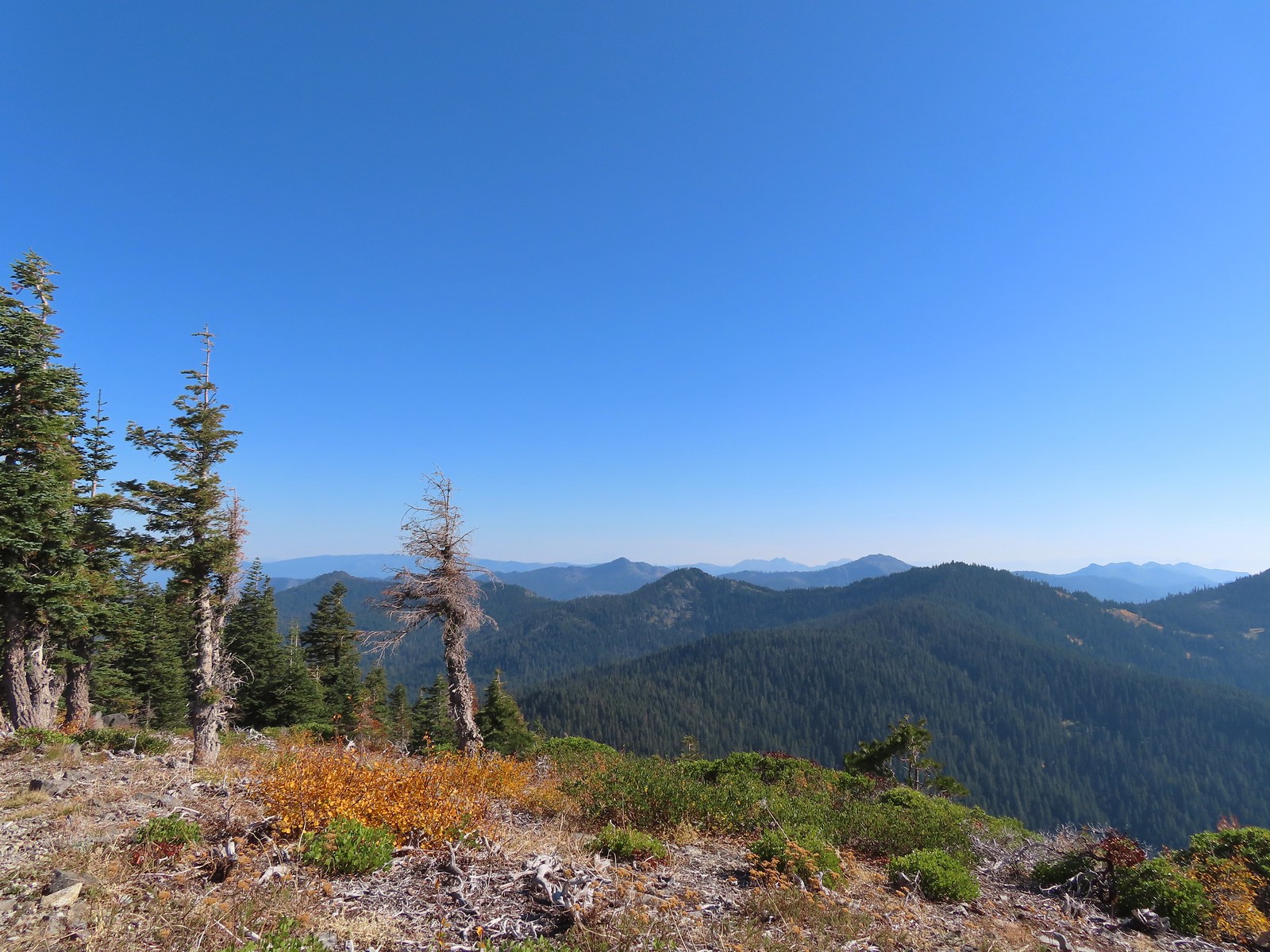 Red Buttes in the distance.
 The other Mount Elijah from Mount Elijah.
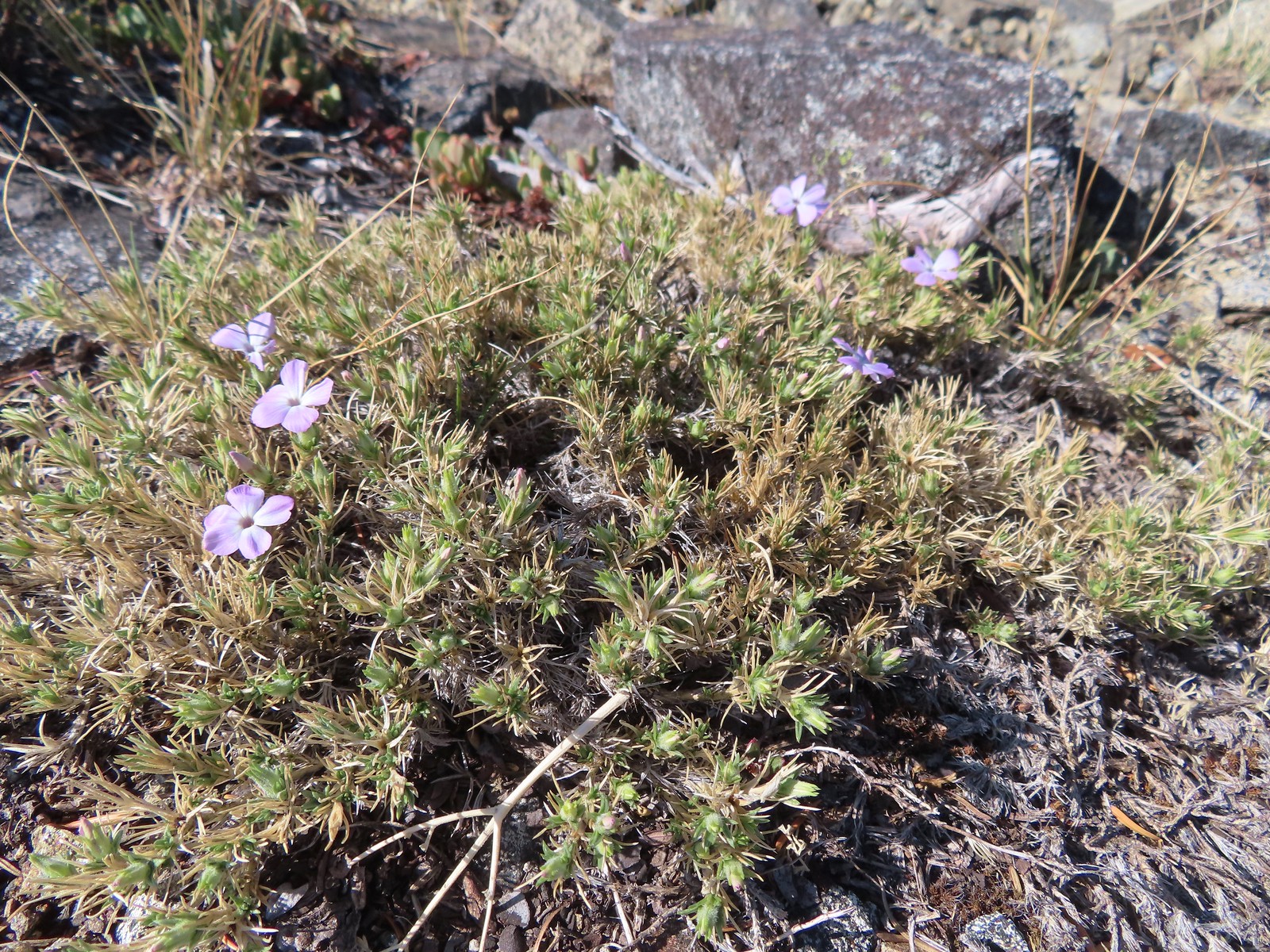 Phlox
Phlox We shared the summit with this little frog.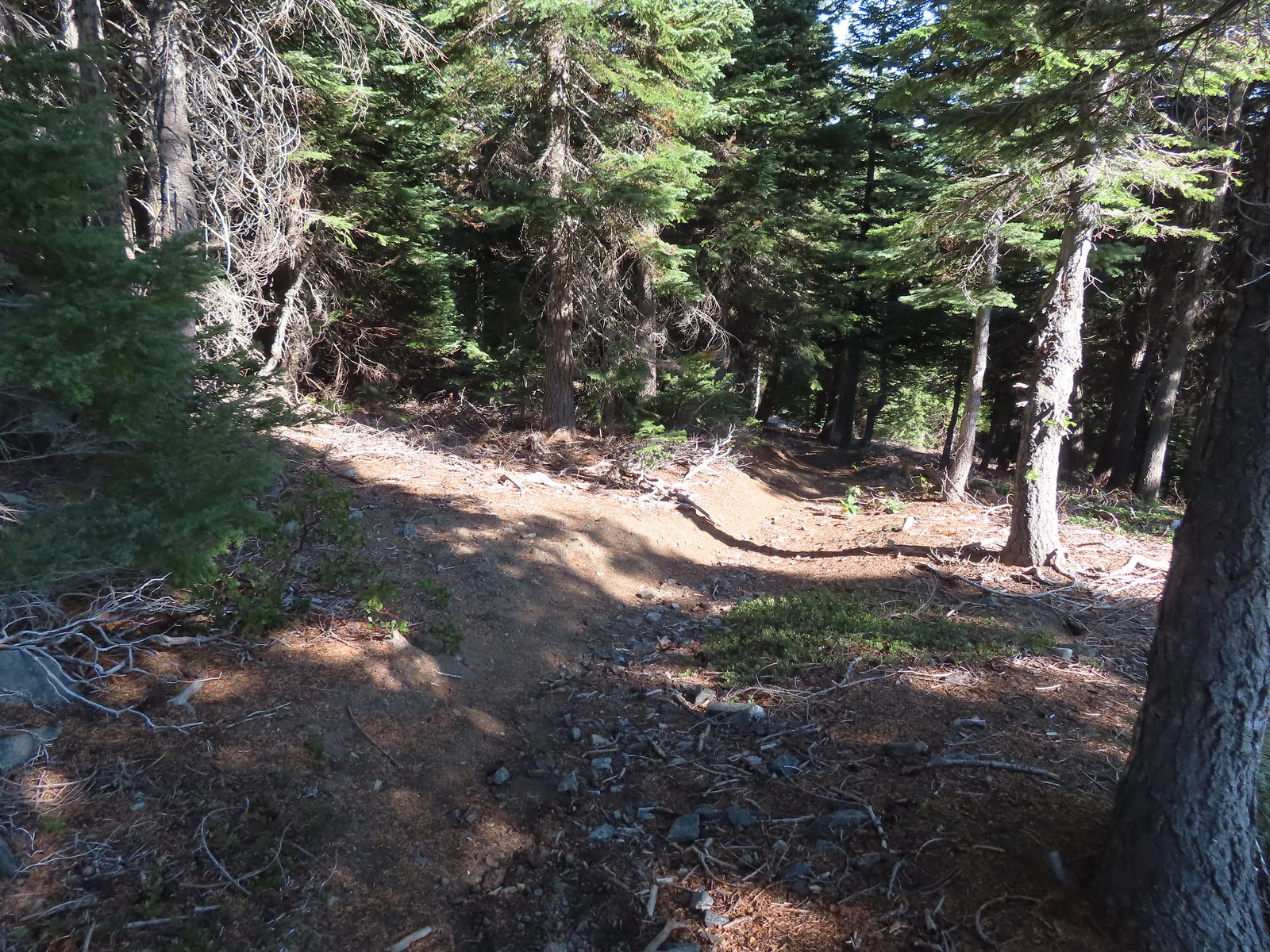
 The junction with the 1214 Trail. Another with missing signage.
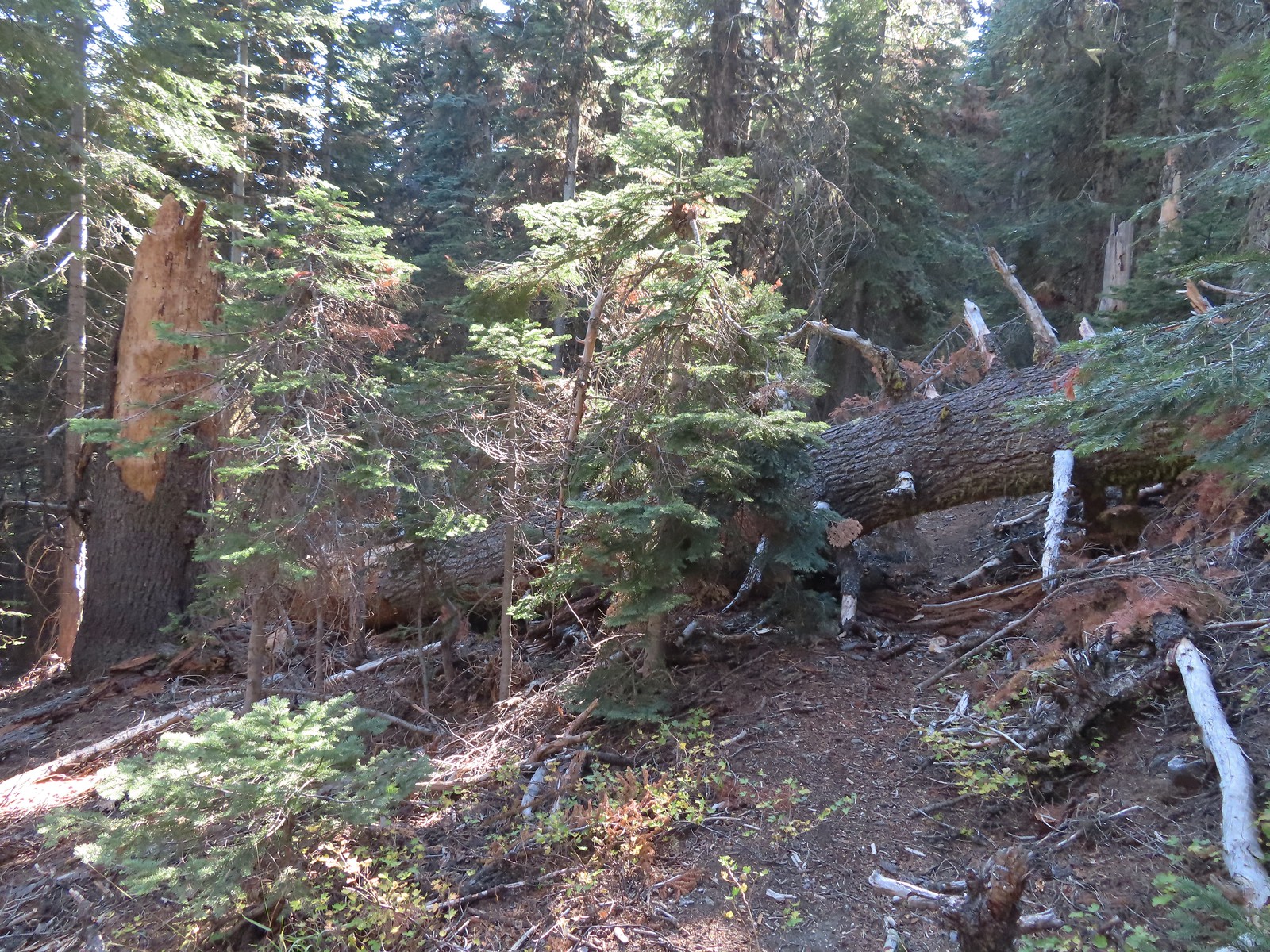 This tree required a detour downhill to get around.
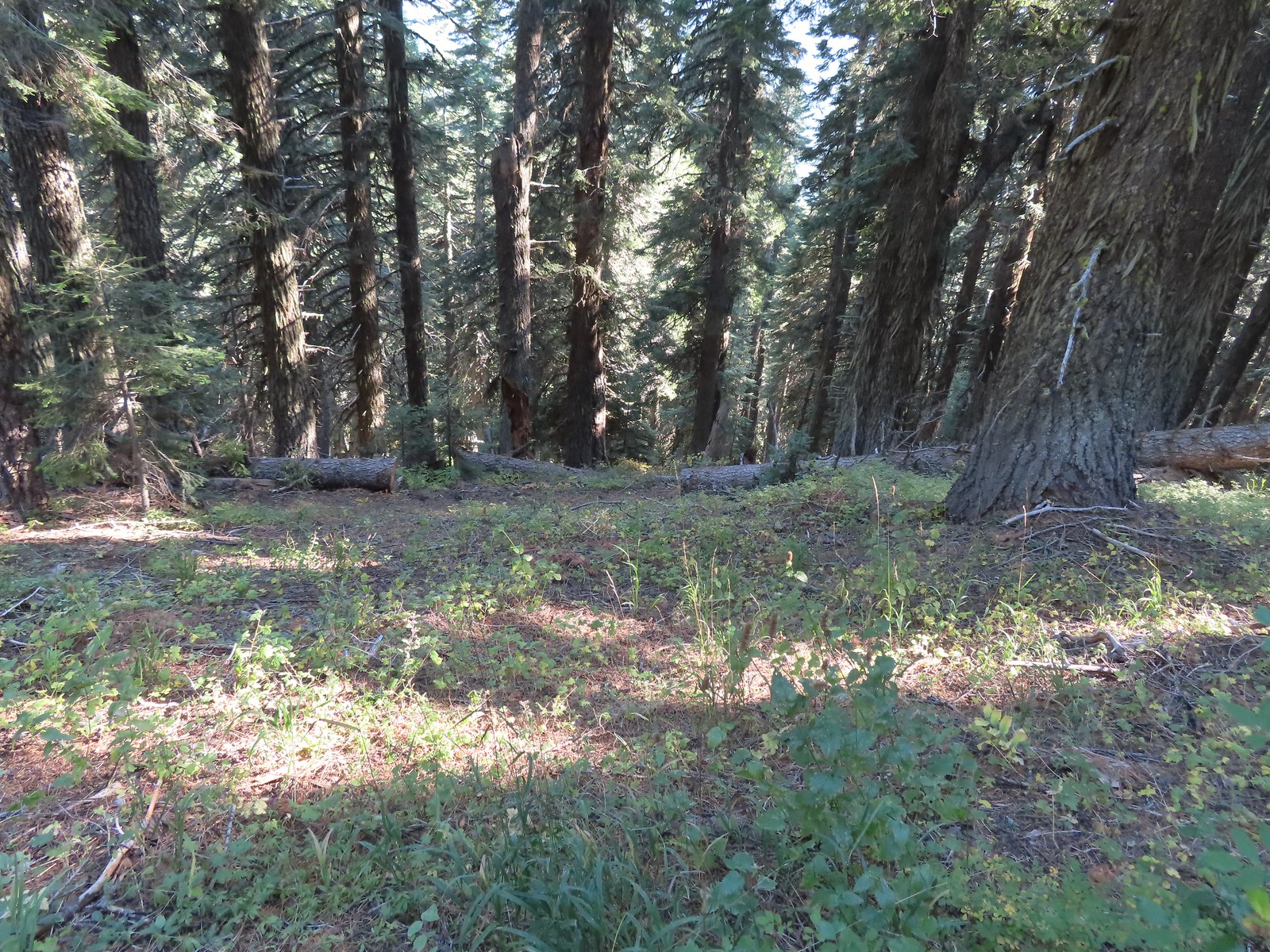 Looking down at the Lake Mountain Trail as it switchbacked downhill.
 The trail was a bit brushy in spots.
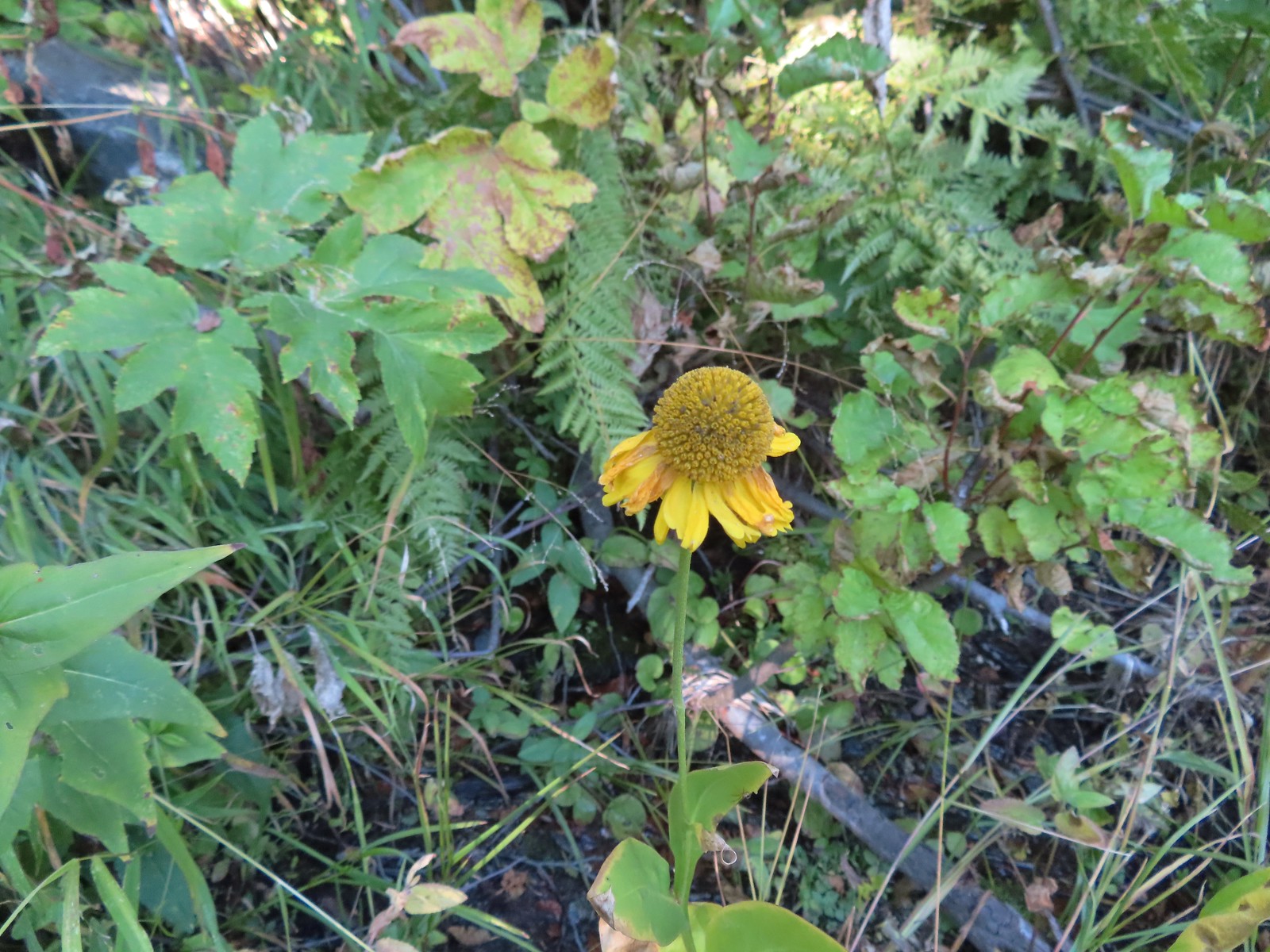 Bigelow’s sneezeweed
 Pink flagging in the little meadow where the trail met the Boundary Trail.
 The Lake Mountain Trail junction with the Boundary Trail.
 We packed out yet another mylar balloon (GRRRR).
 Junction with the Sturgis Fork Trail on the left.
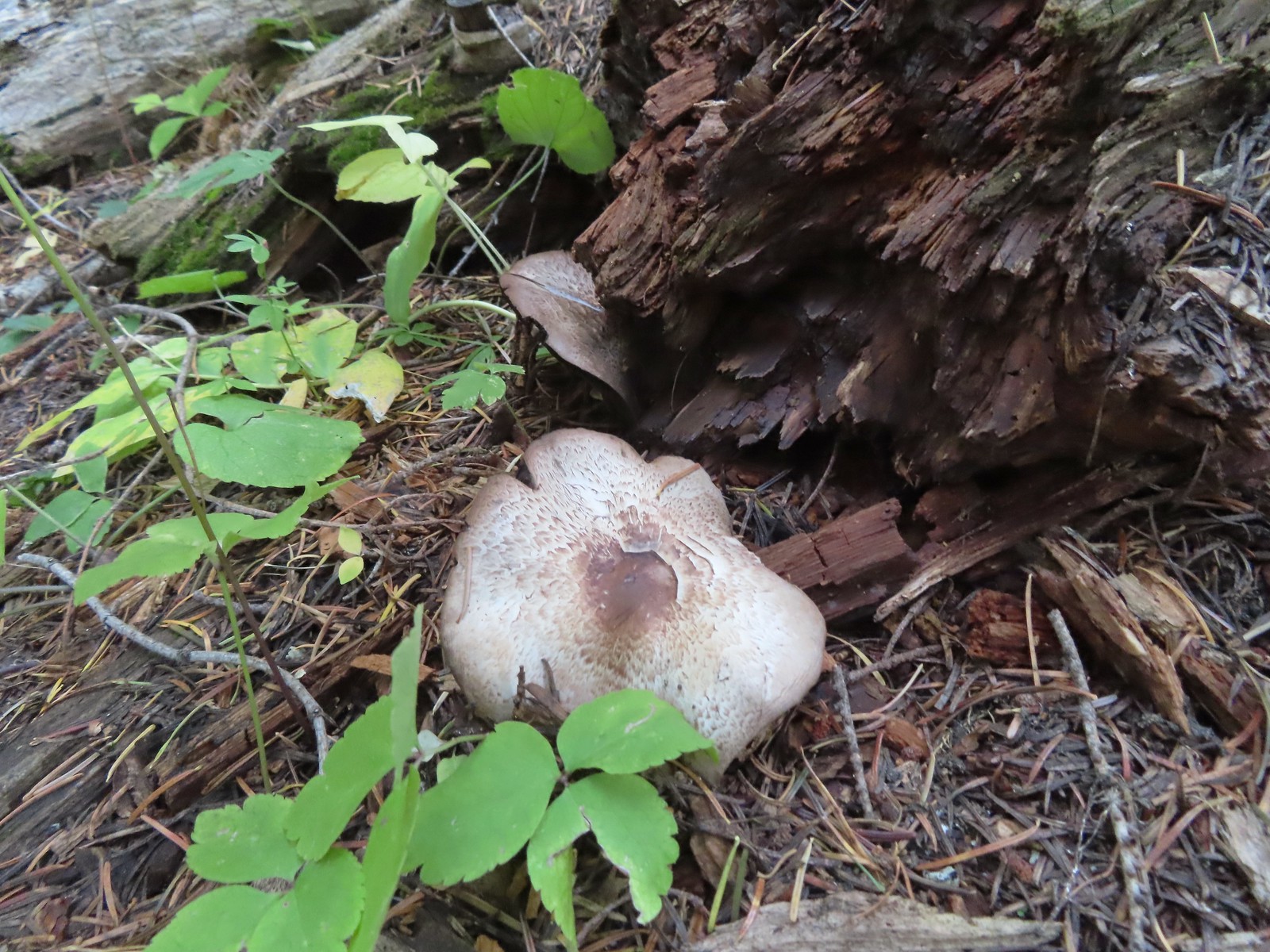

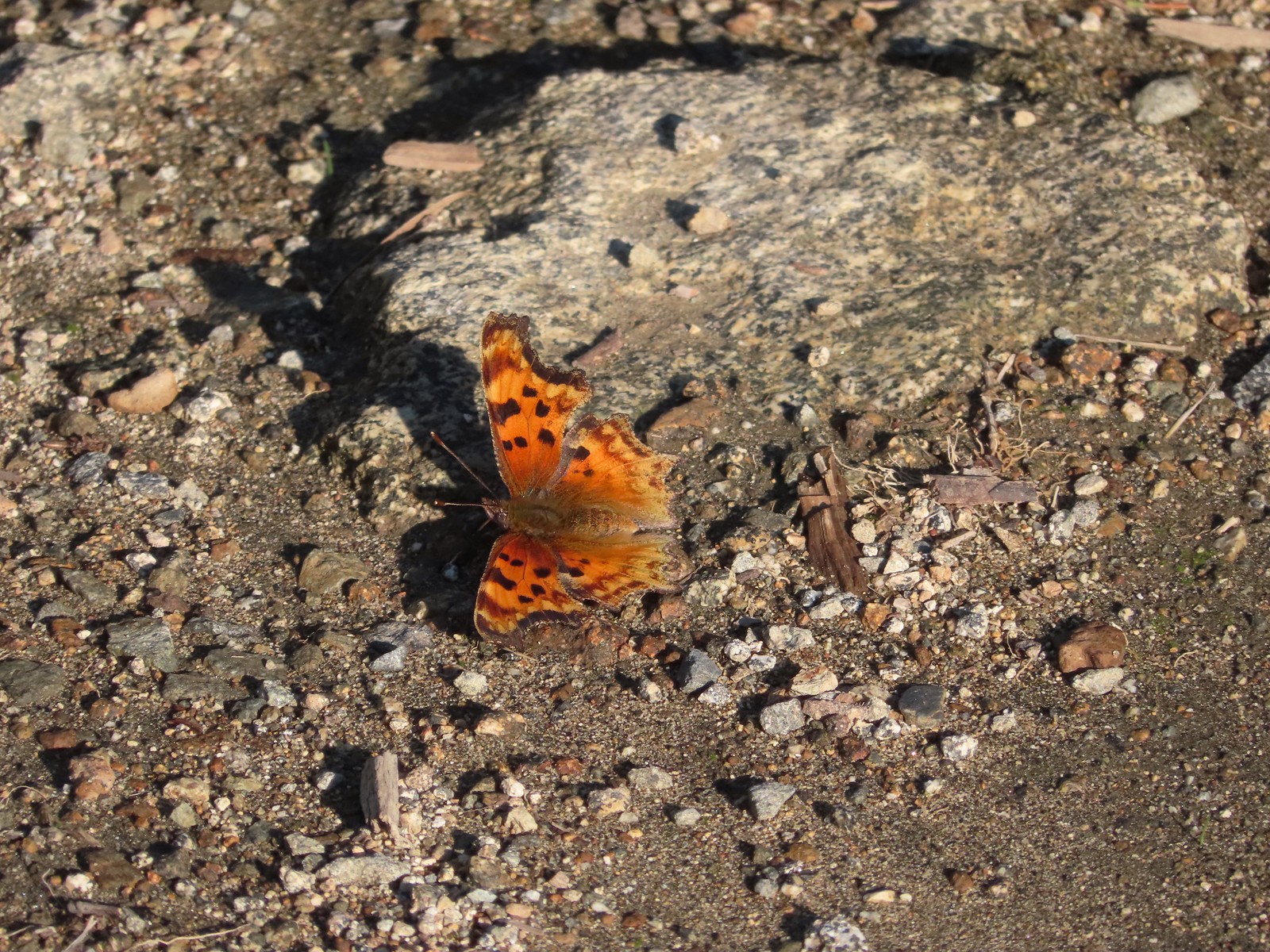 Hoary comma
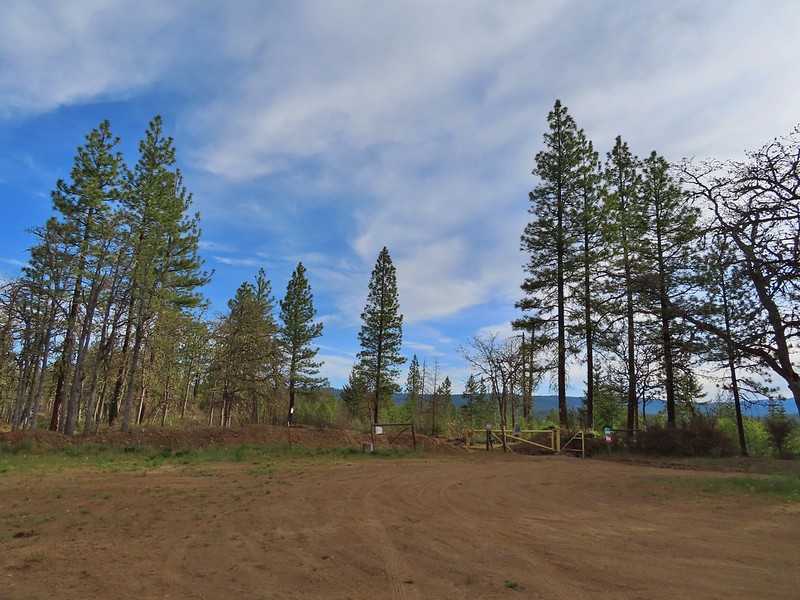
 We were parked just to the right along the road below the hill.
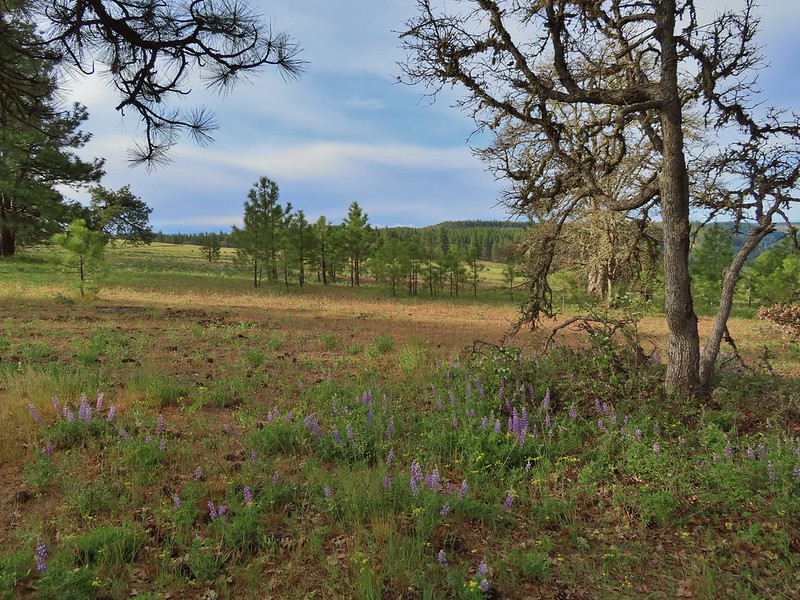 Looking back toward the meadow.
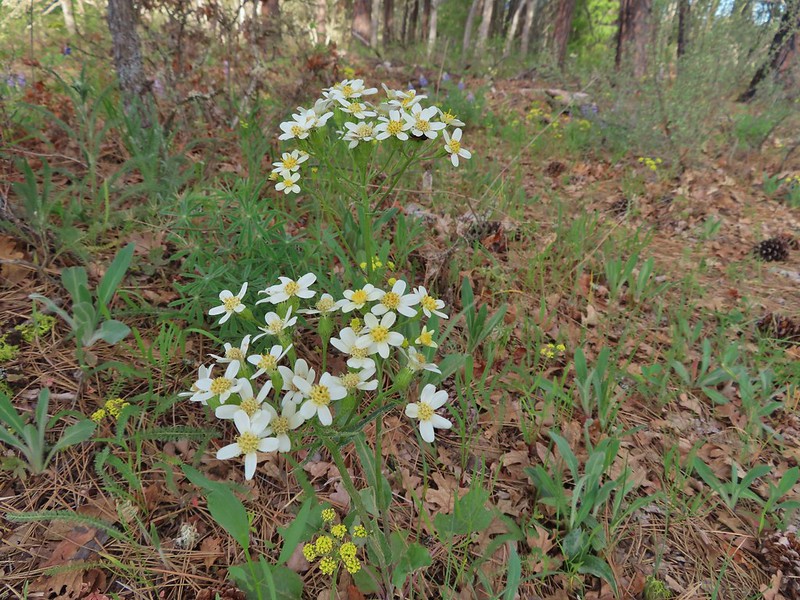 Western white groundsel
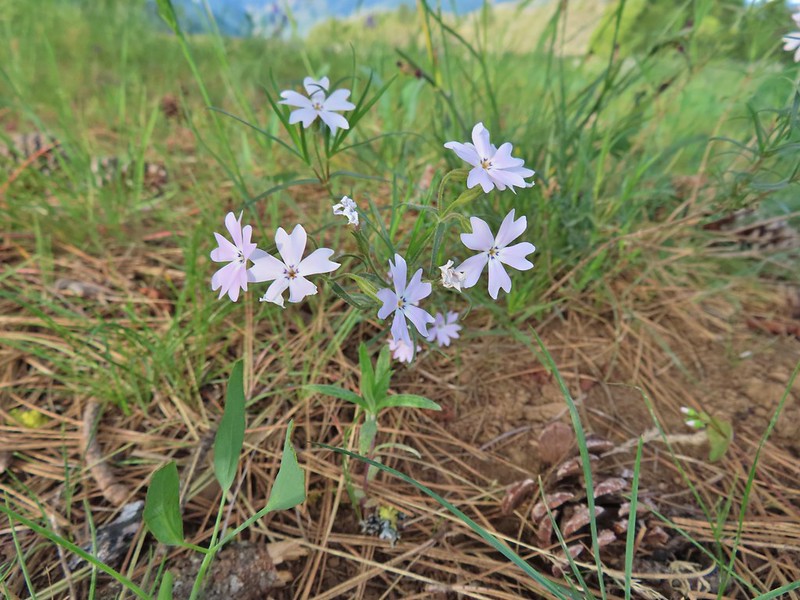 Showy phlox
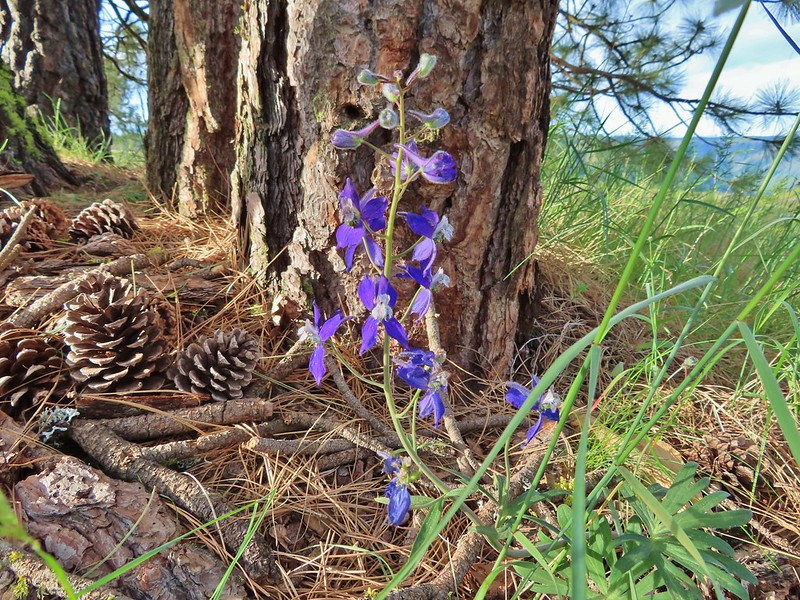 Larkspur
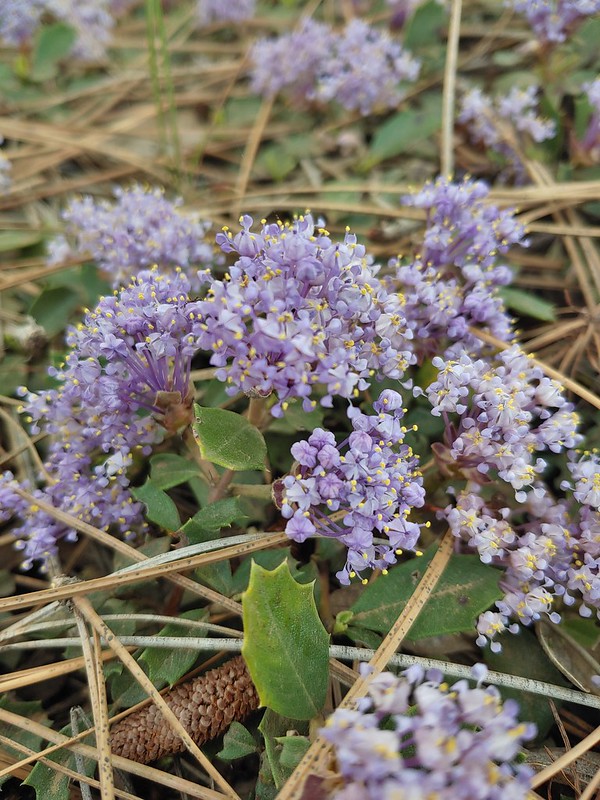 Mahala Mat (Prostrate ceanothus)

 Showy phlox among the oaks.
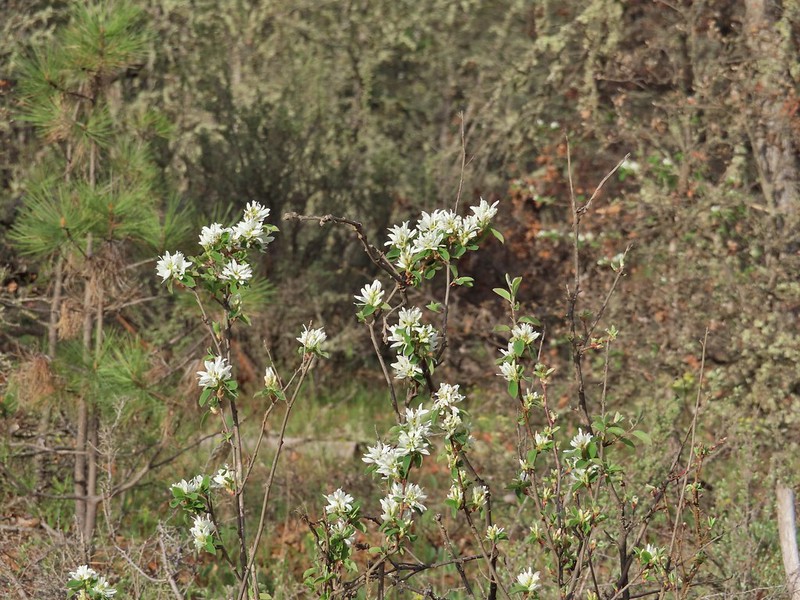 Serviceberry
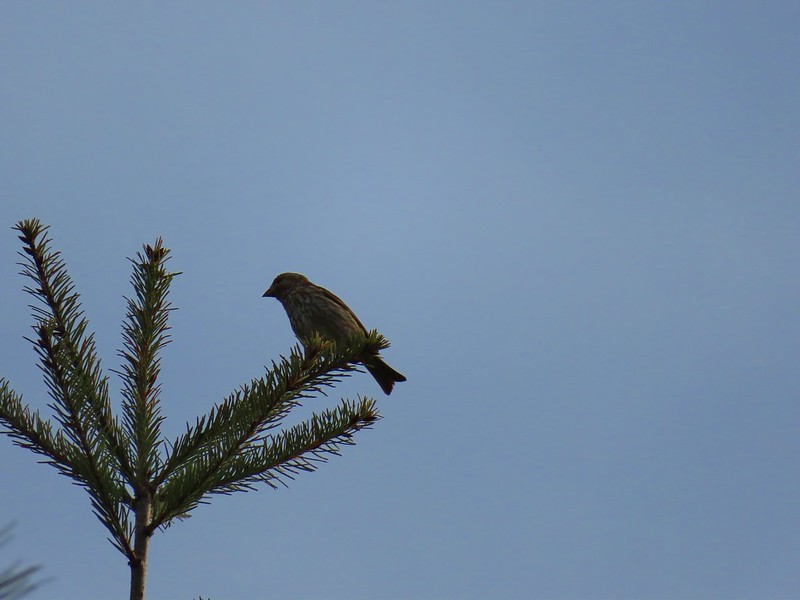 Sparrow
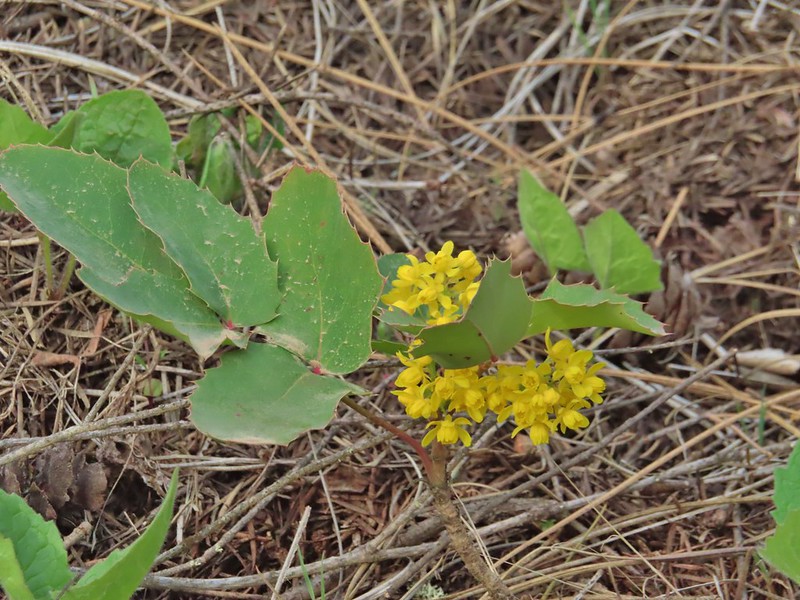 Oregon grape
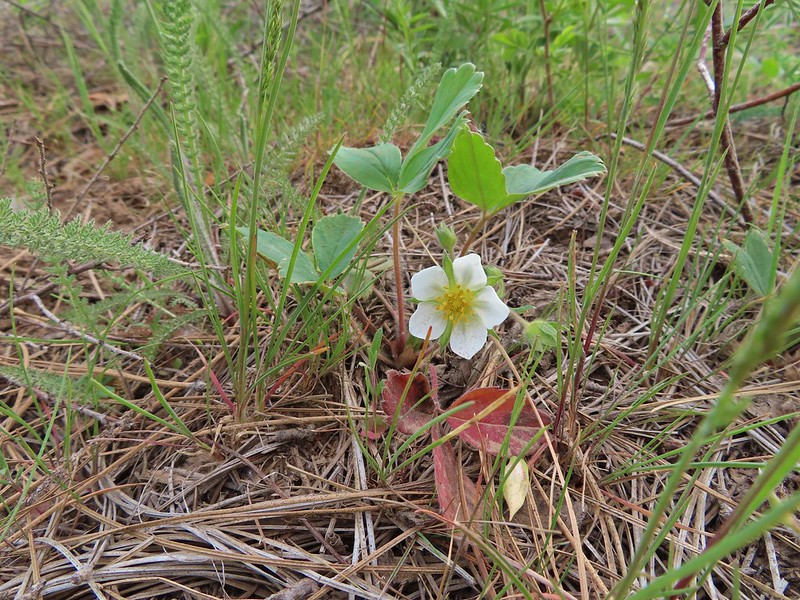 Strawberry
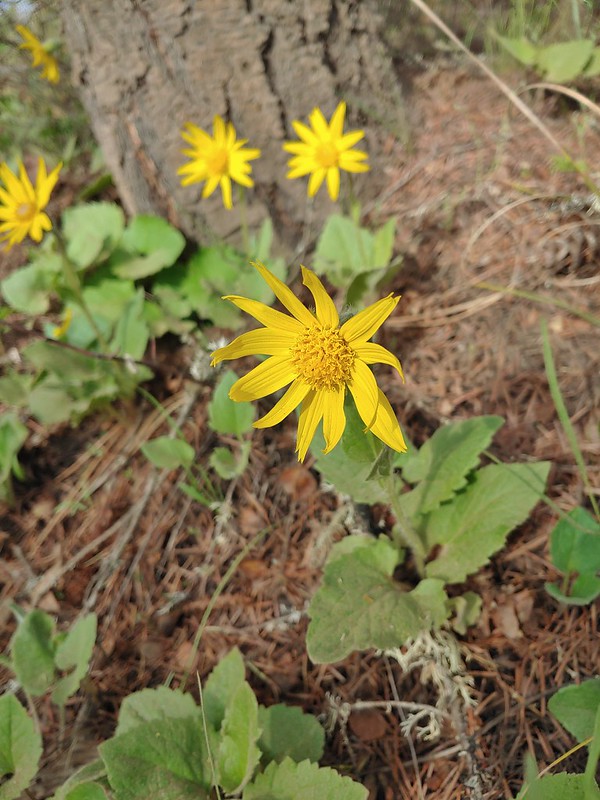 Arnica
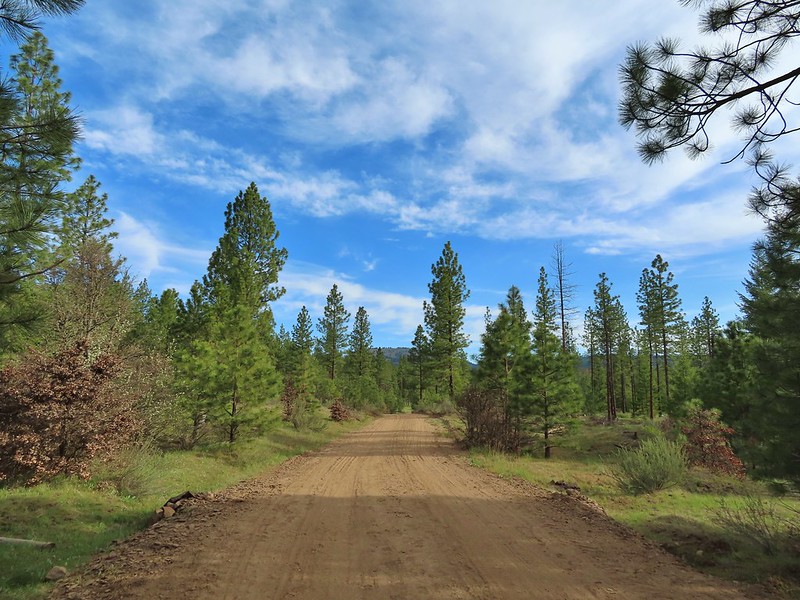 Grayback Mountain from Grayback Road. The first 2.5 miles of the hike only gained 400′ while the next 3.1 gained 1400′.
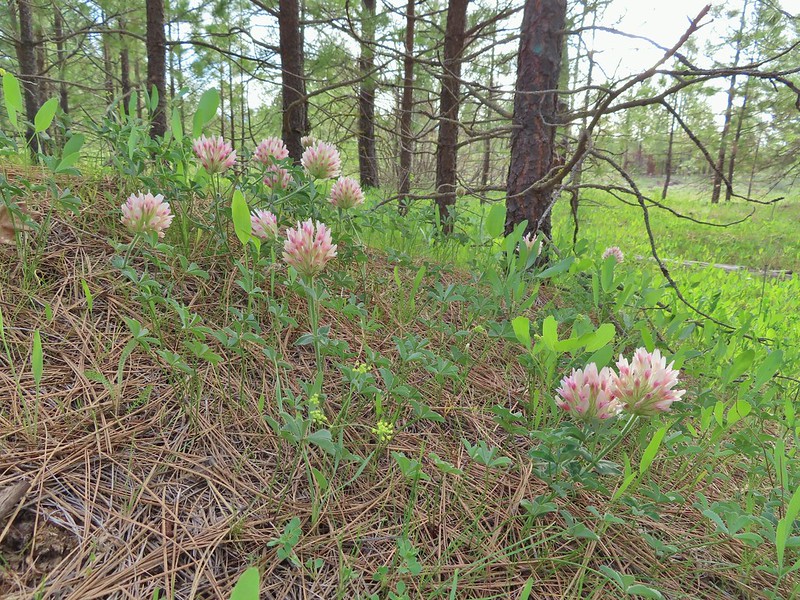 Large head clover
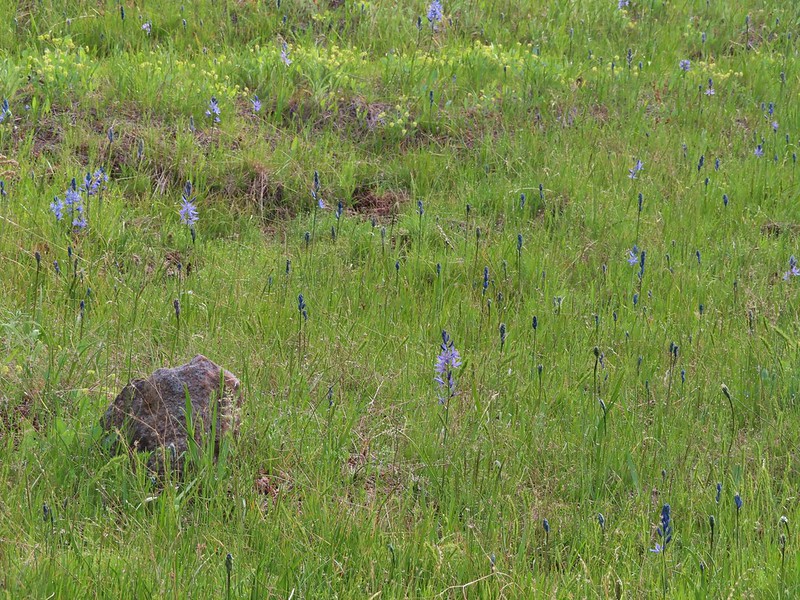 Camas, much of which had yet to bloom.
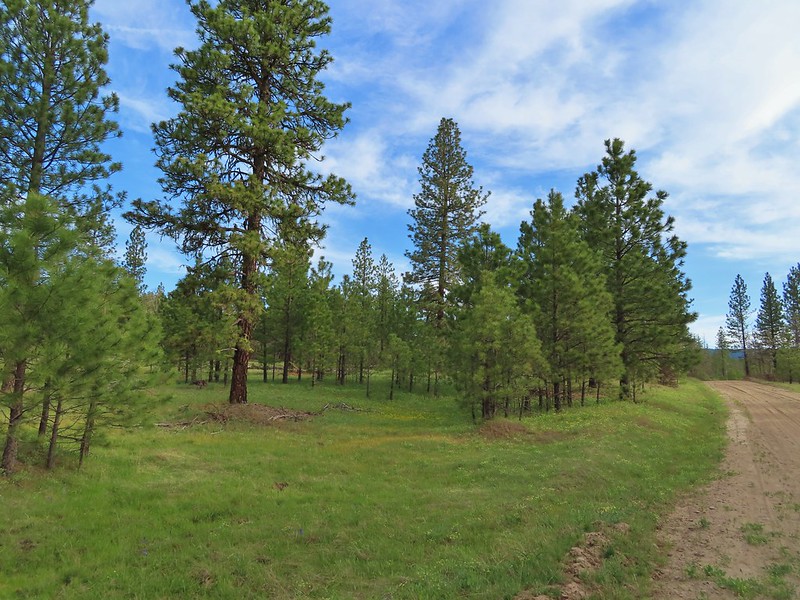 Ponderosa pines along the road.
 Western buttercups
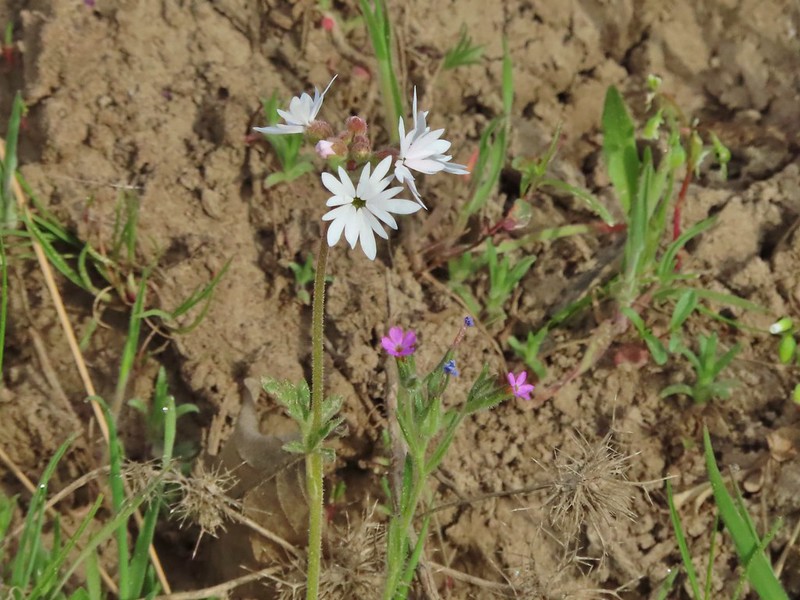 Woodland star and slender phlox
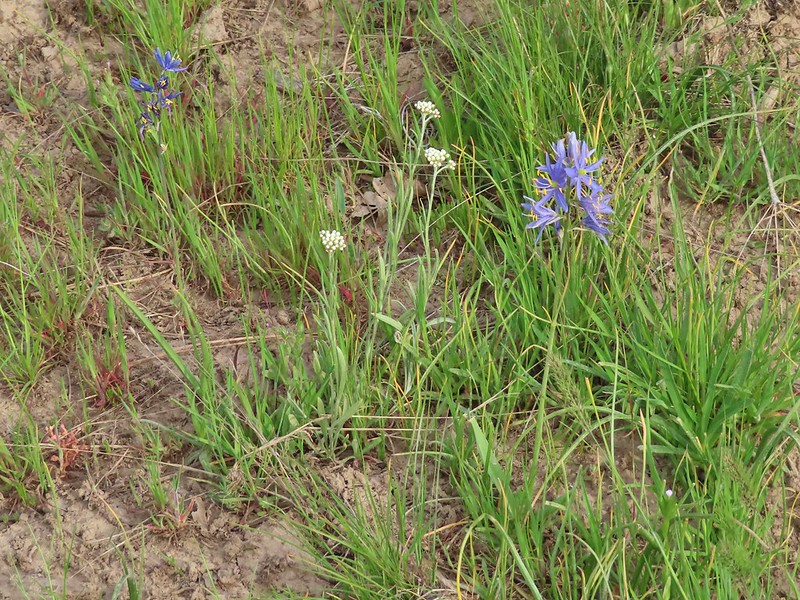 Pussytoes and camas
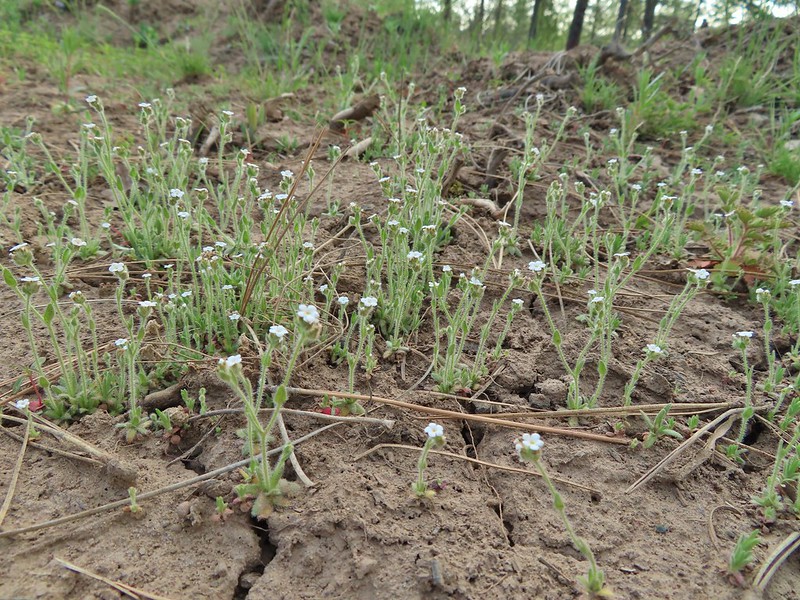 A cryptantha
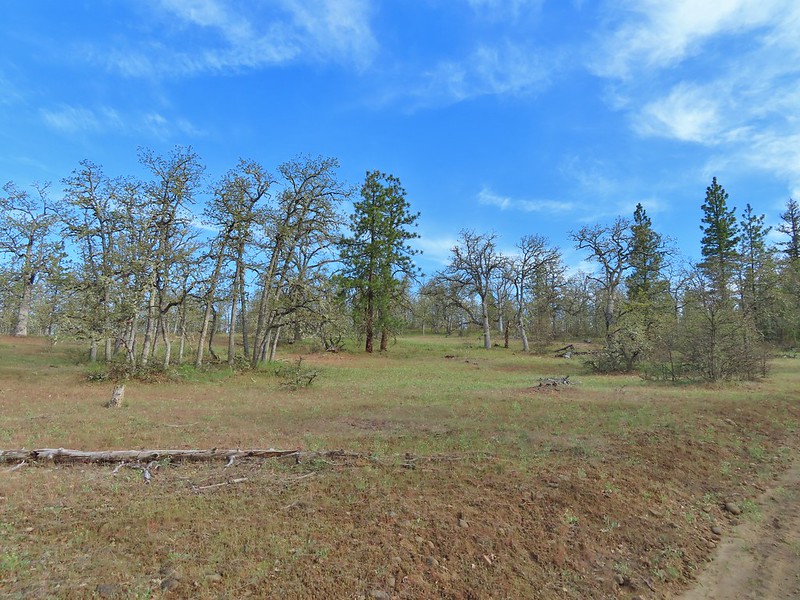 Oaks and ponderosas
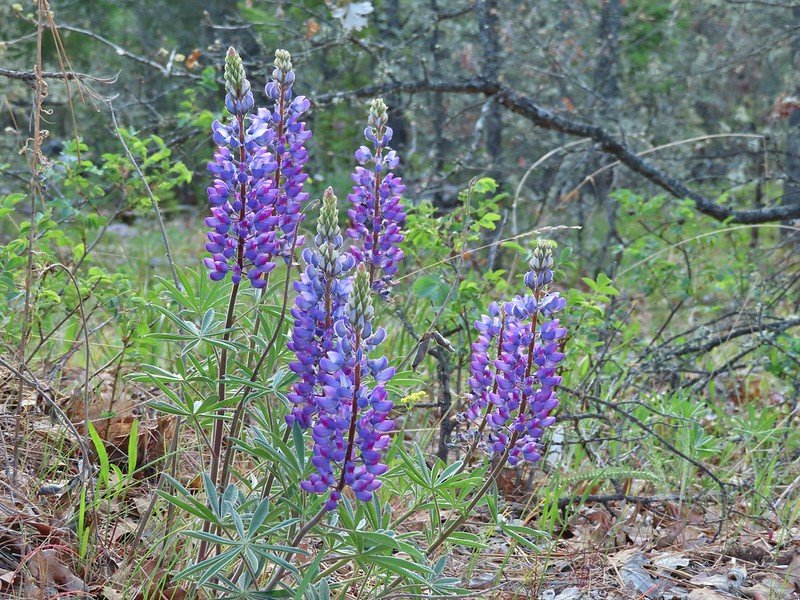 Lupine
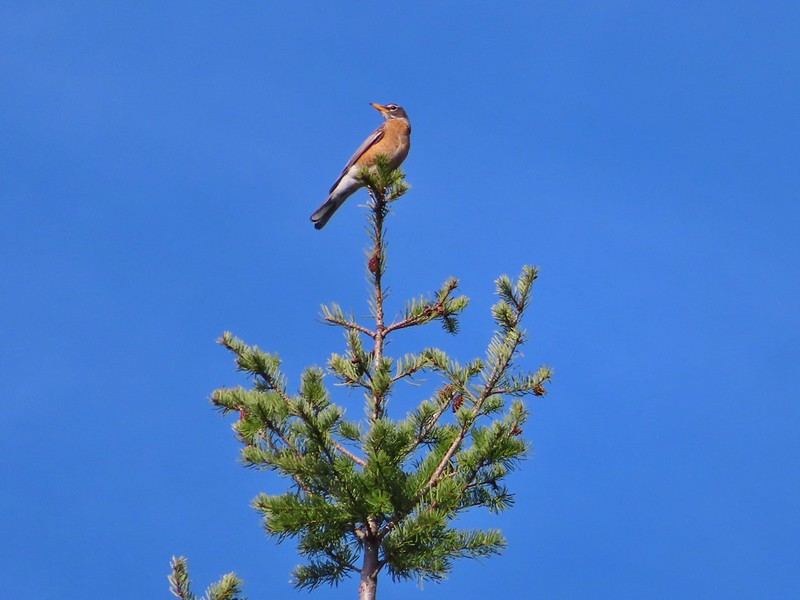 Robin
Robin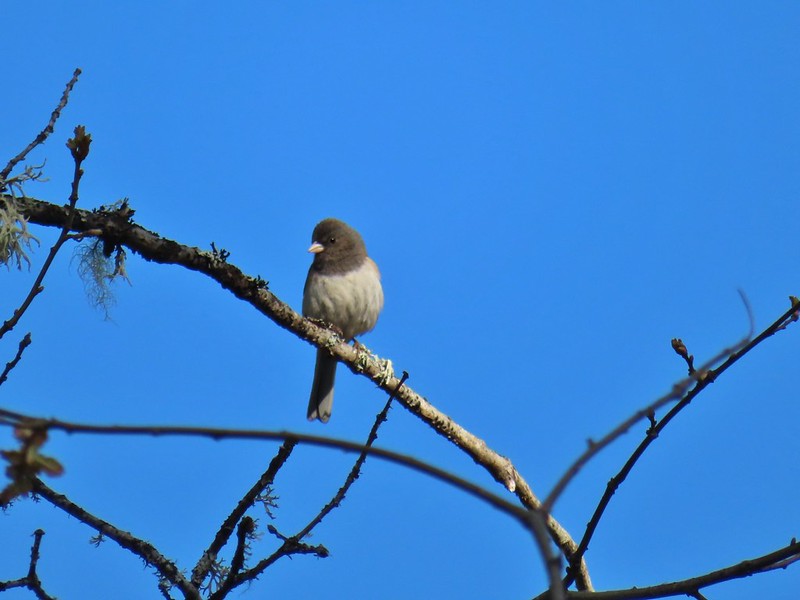 Dark eyed junco
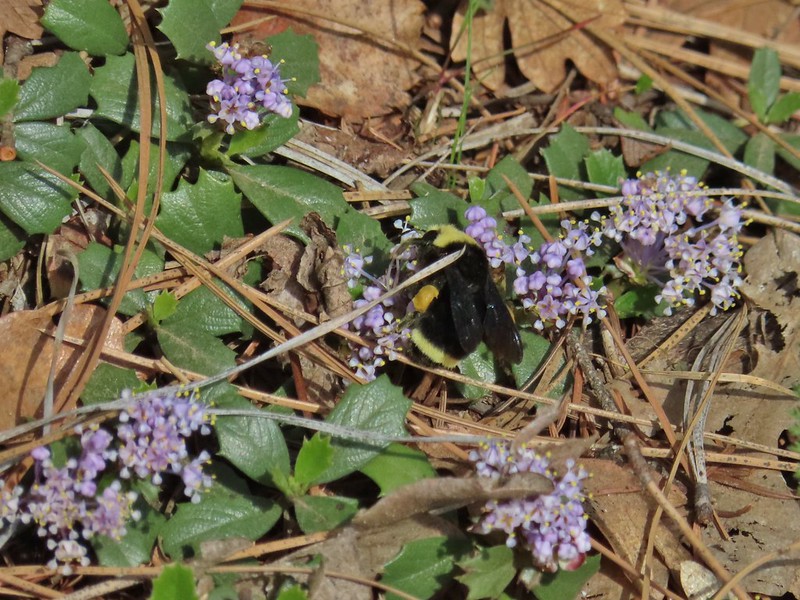 Bumble bee
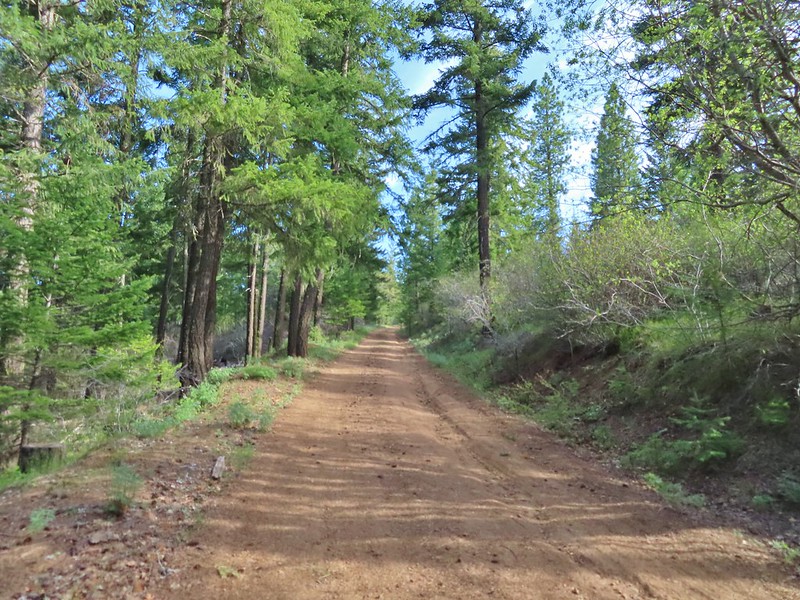 A more forested section of the road.
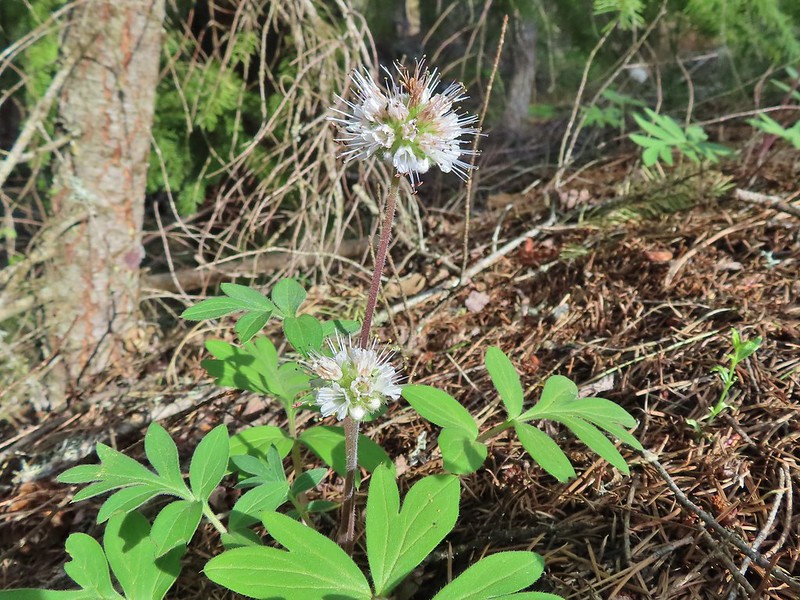 Ball-head waterleaf
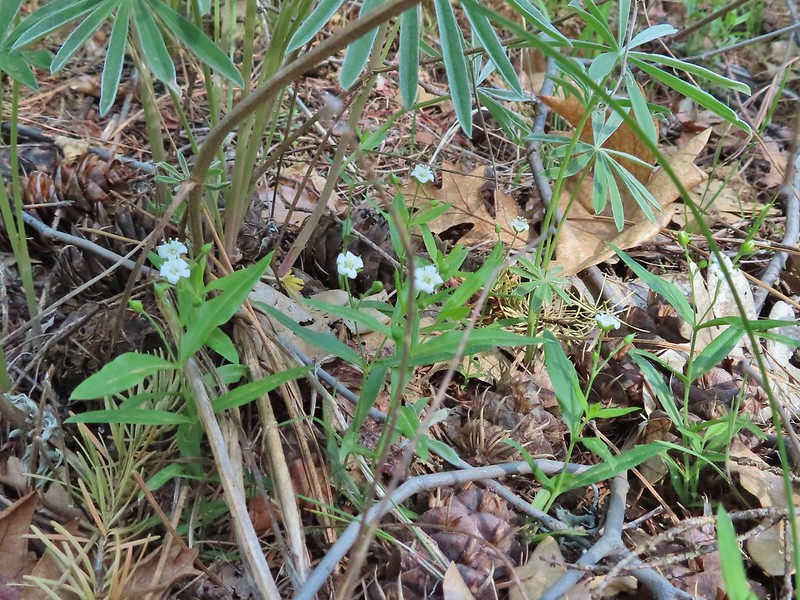 Largeleaf sandwort
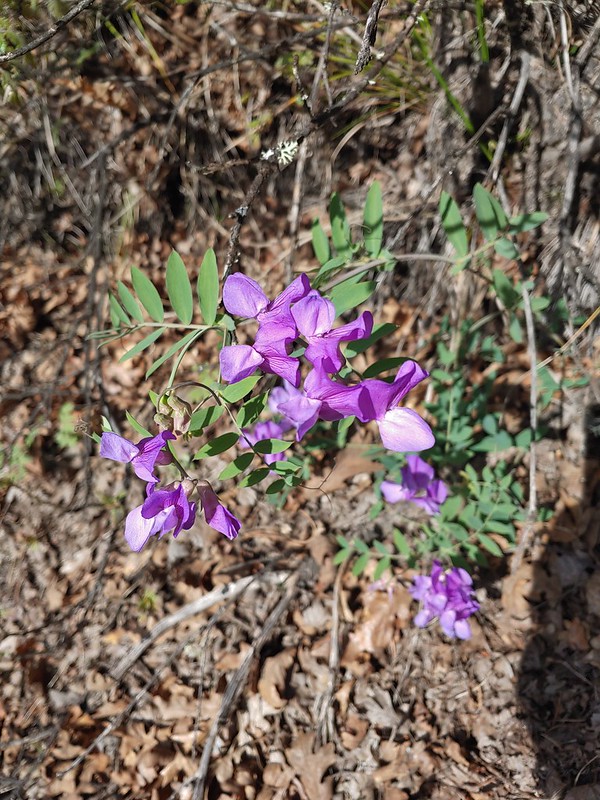 American vetch
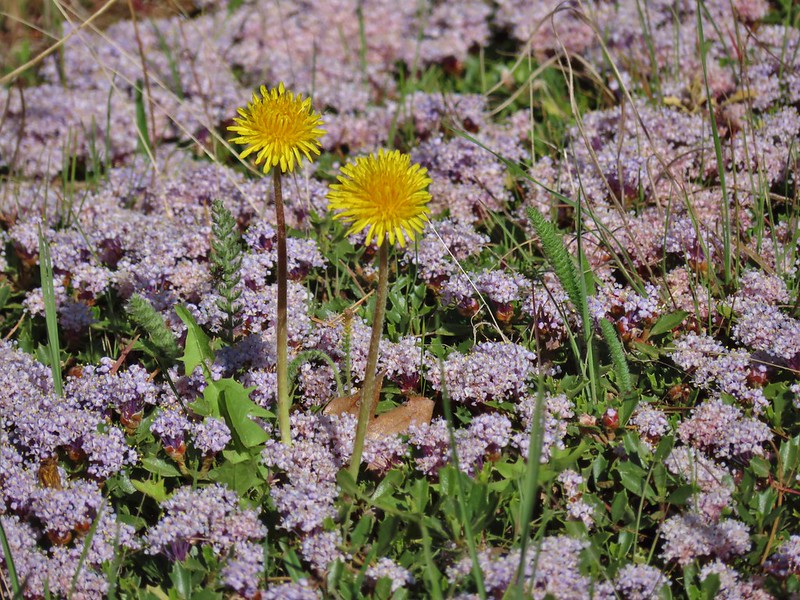 Dandelions in Mahala Mat
 Bitter cherry
 The real climb started at about the 4 mile mark at a junction below Grayback Mountain.
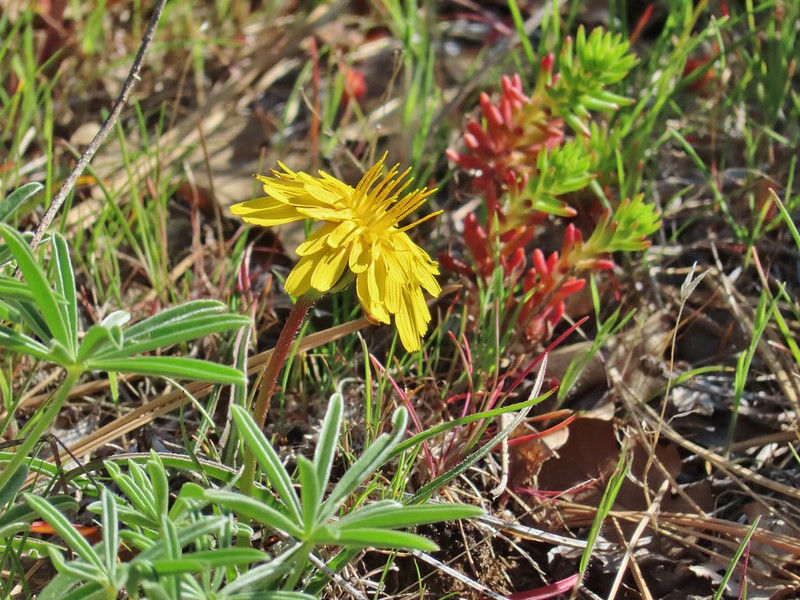 Sagebrush false dandelion
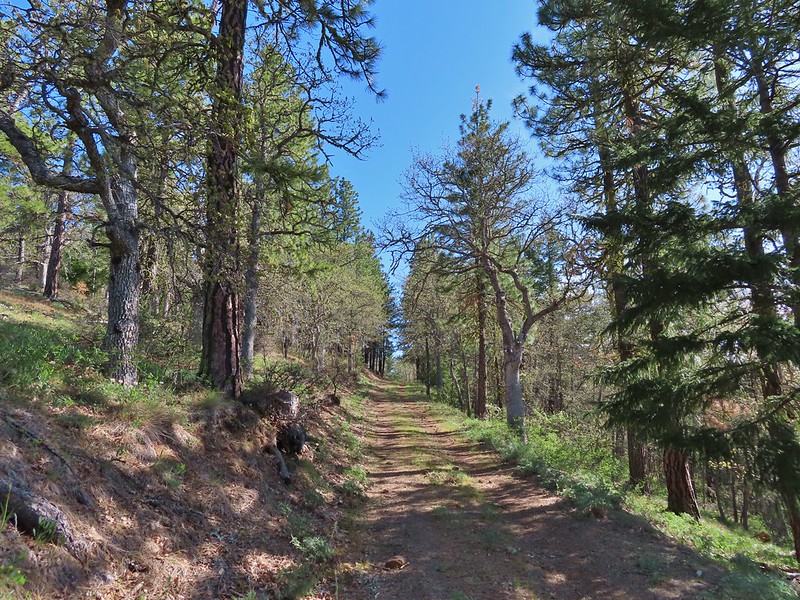 Climbing up Grayback Mountain
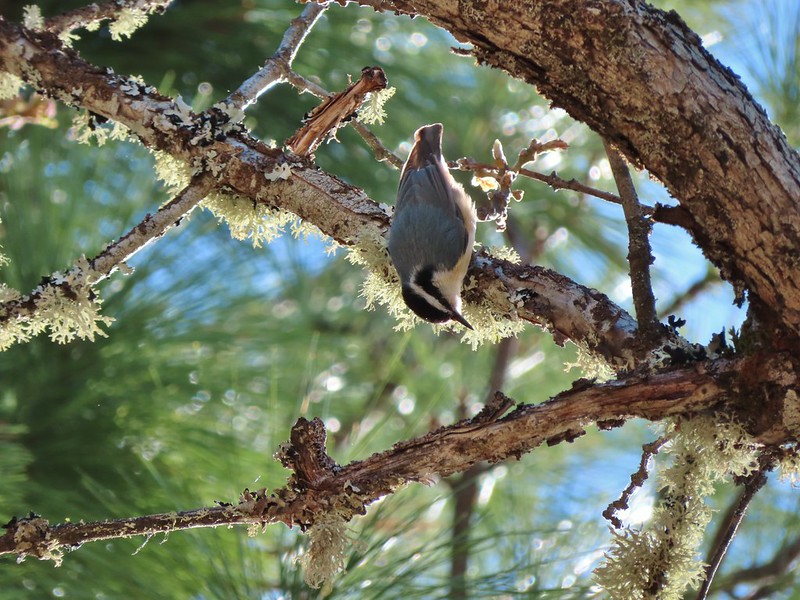 Red breasted nuthatch
 First view of Mt. Hood since the trailhead.
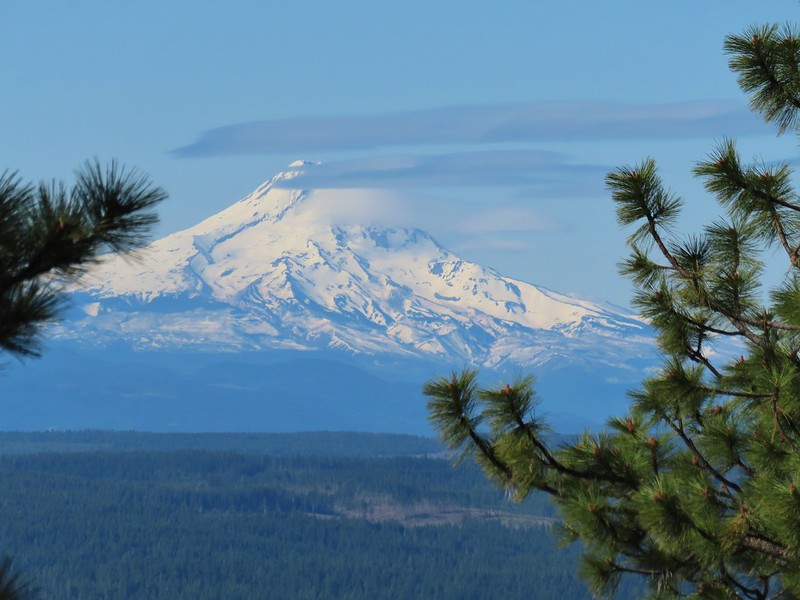 Mt. Hood
 Buckwheat
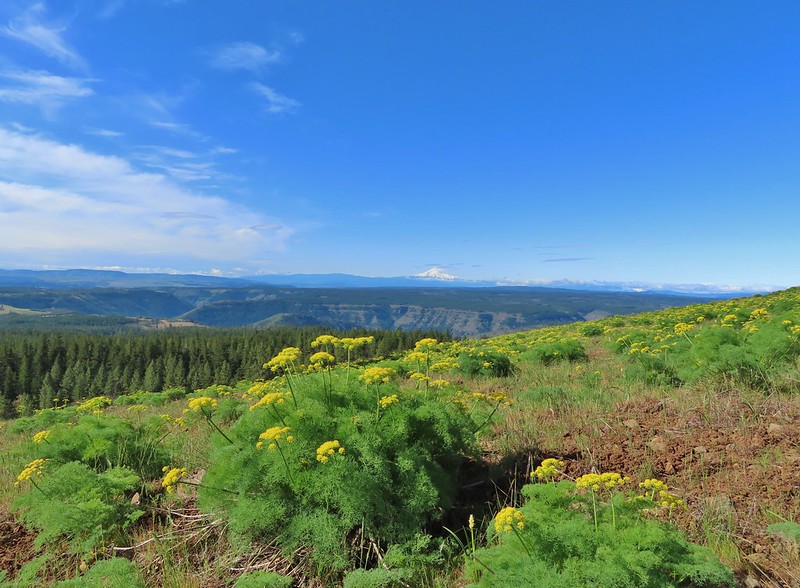 Mt. Hood beyond the Klickitat River Canyon
 Turkey vulture
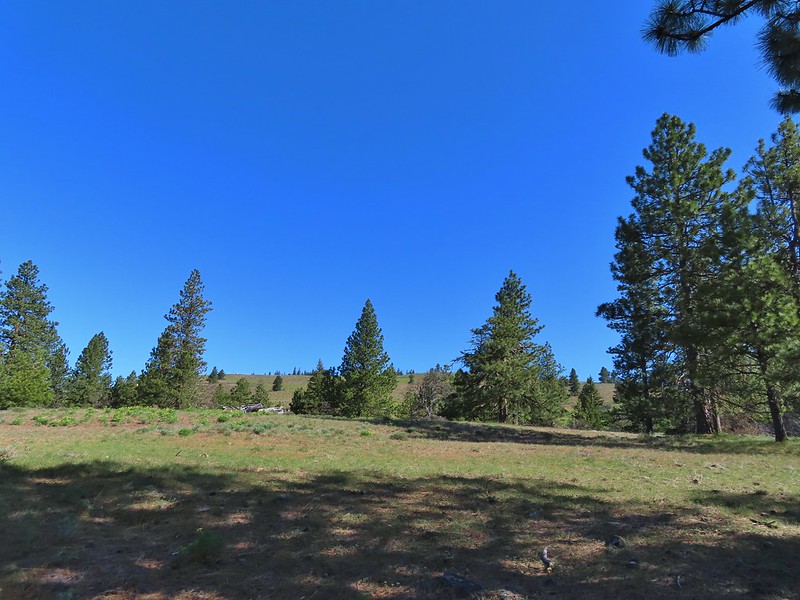 Entering the meadows on Grayback Mountain.
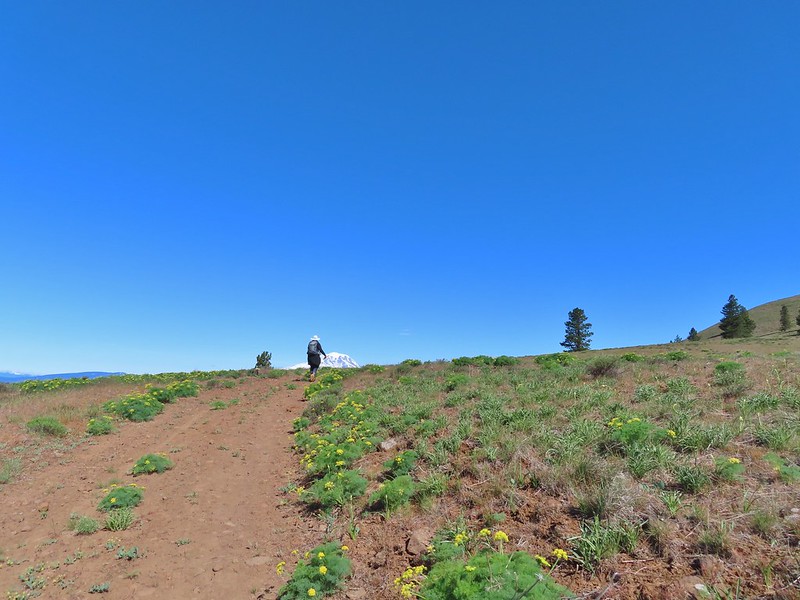 Approaching the first view of Mt. Adams.
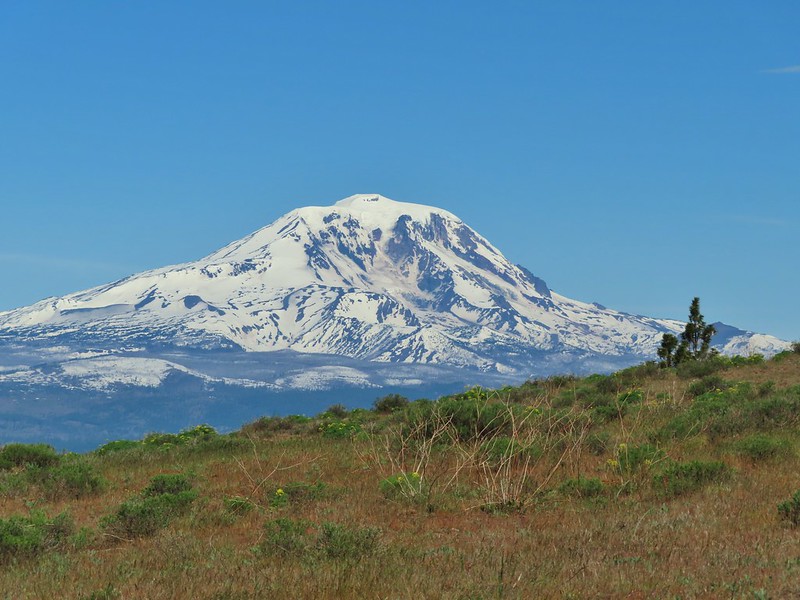 Mt. Adams
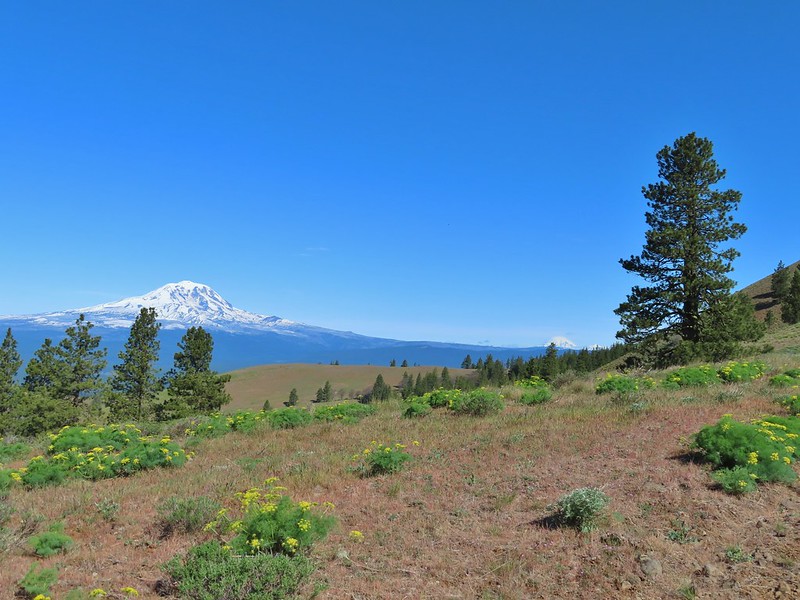 Mt. Adams, Mt. Rainier and Goat Rocks
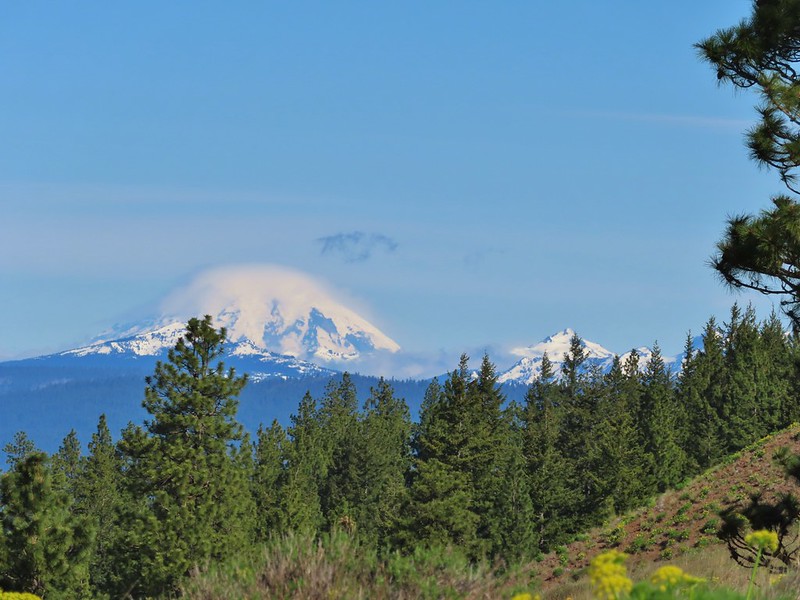 Mt. Rainier and Goat Rocks
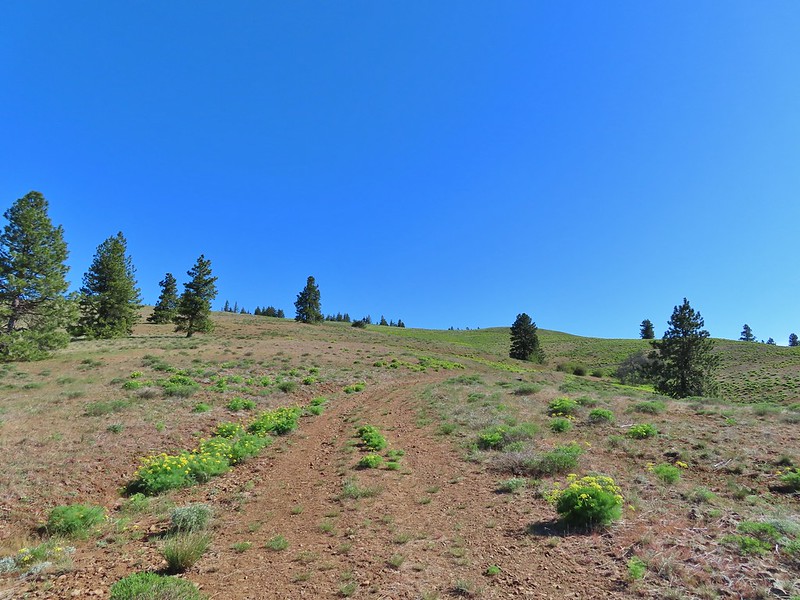 In the meadows.
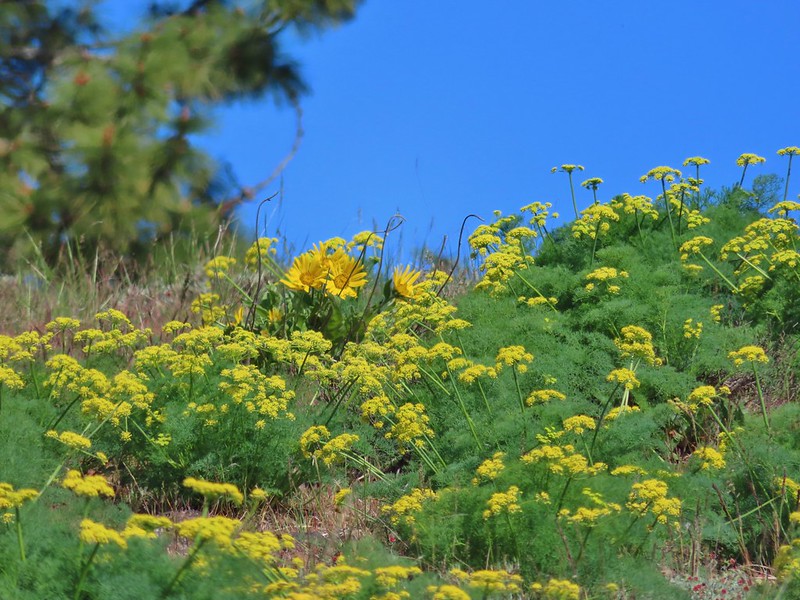 A balsamroot surrounded by parsley.
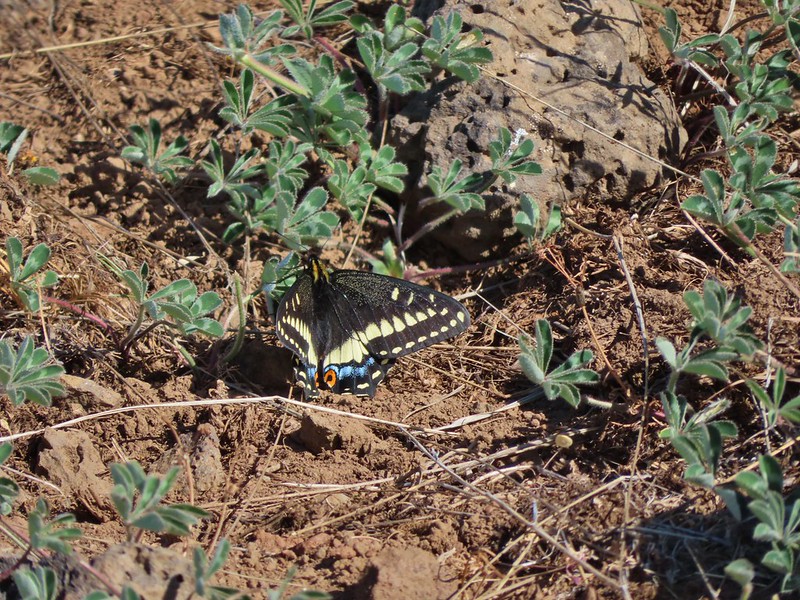 Indra swallowtail
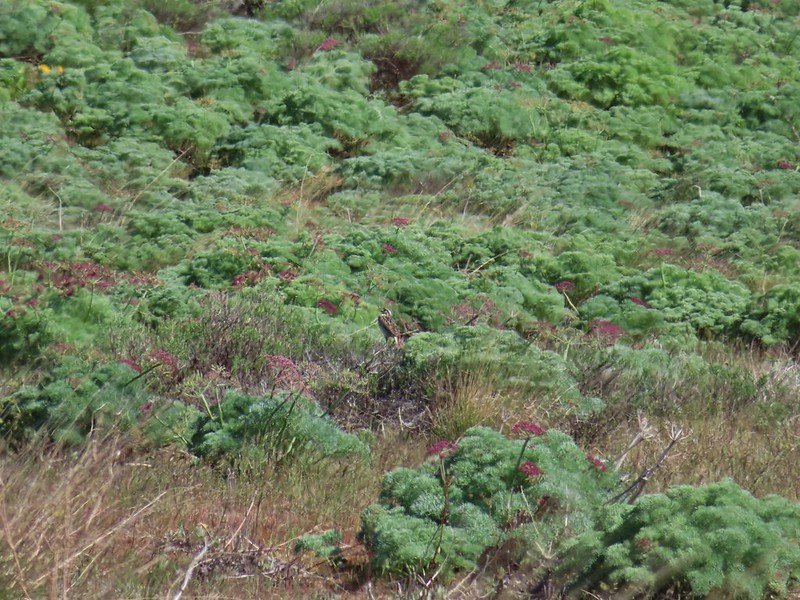 Western meadowlark in a patch of Columbia desert parsley.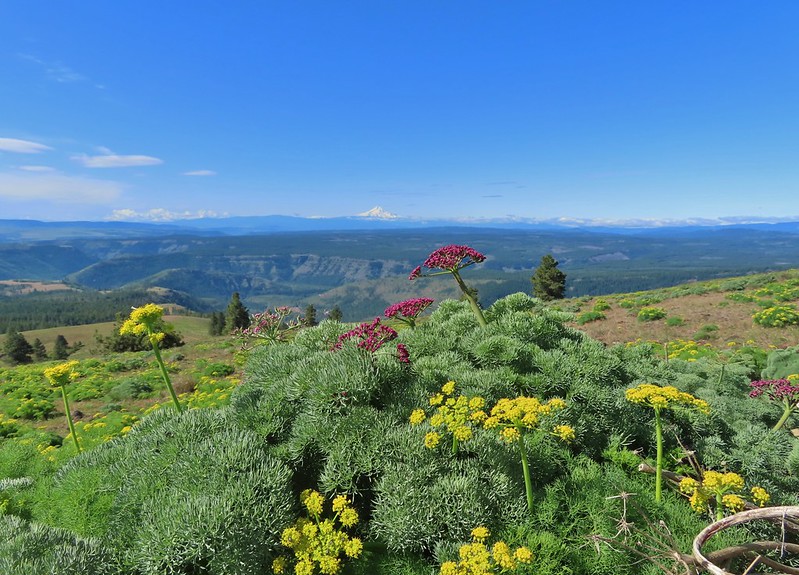
 Radio equipment atop Grayback Mountain with Mt. Adams beyond.
 Mt. Hood (we could just barely make out the top of Mt. Jefferson too.) from the summit.
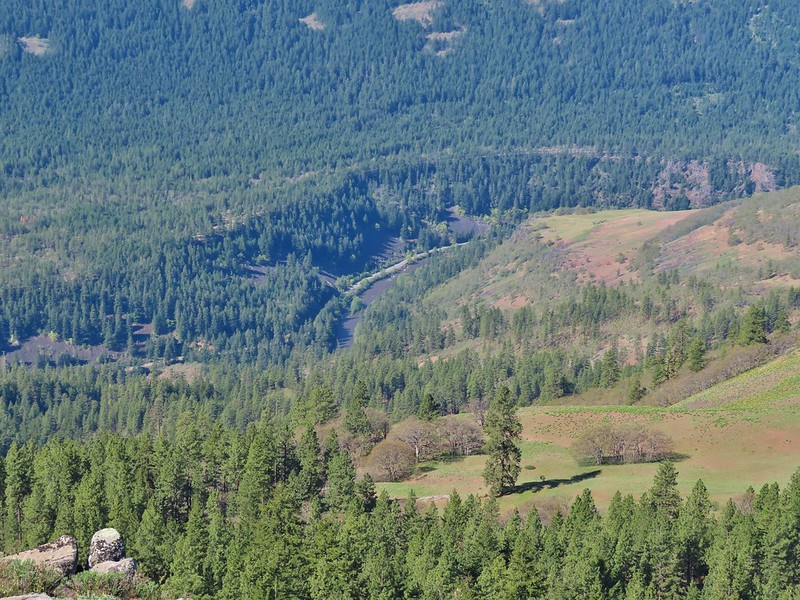 The Klickitat River
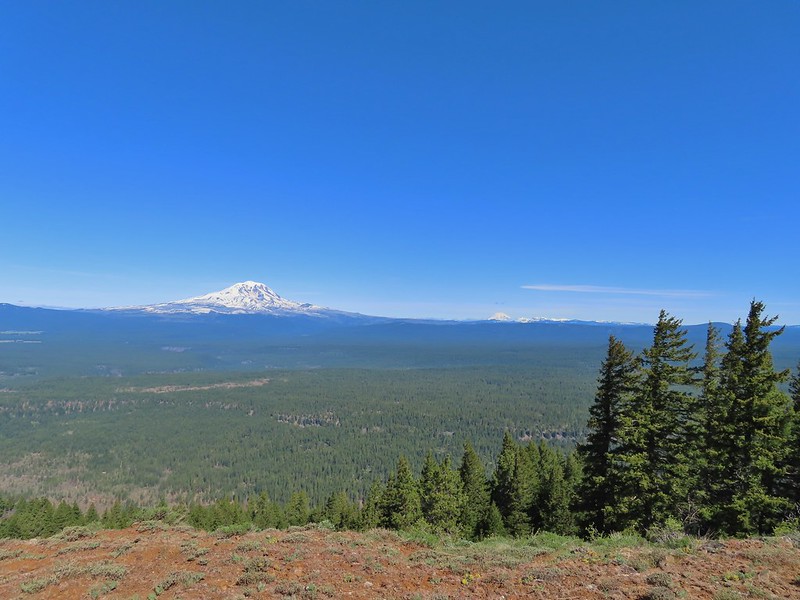 Mt. Adams, Mt. Rainier and Goat Rocks
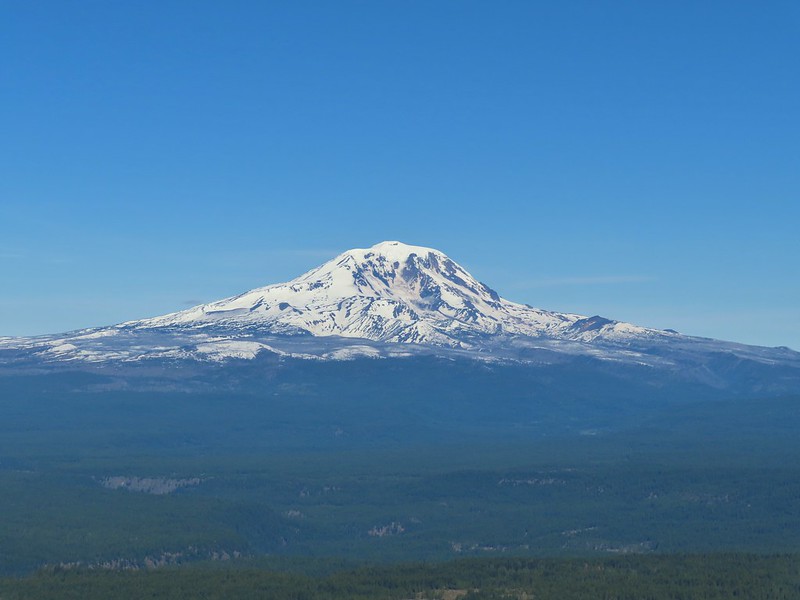 Mt. Adams
 Mt. Rainier and Goat Rocks (the Klickitat River originates from Goat Rocks.)
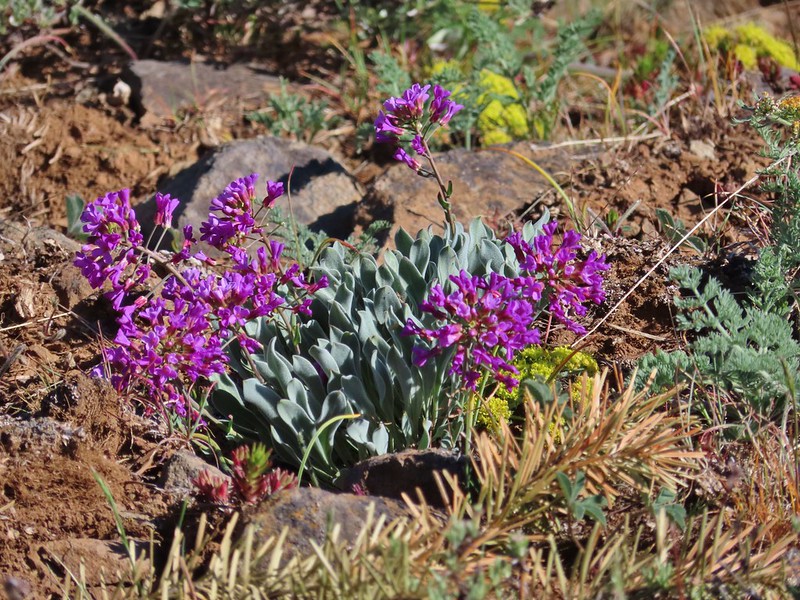 Daggerpod
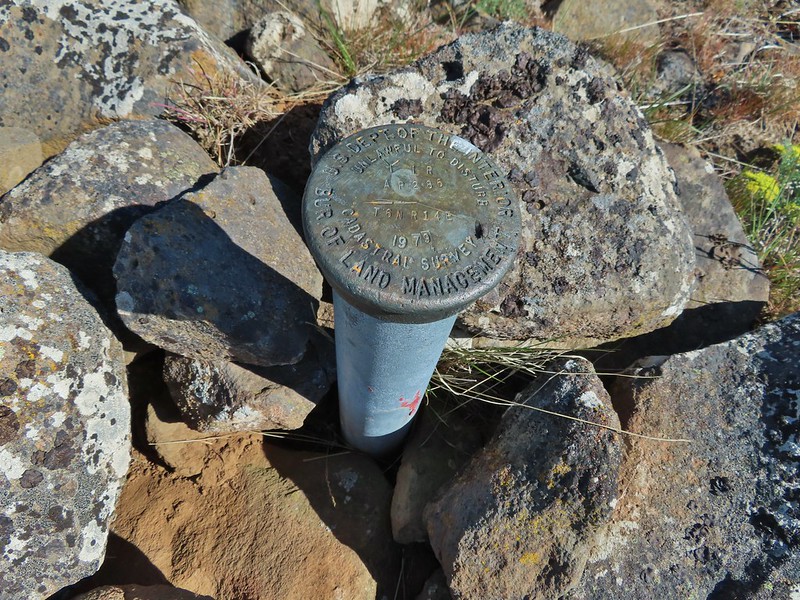 Obligatory survey marker photo.
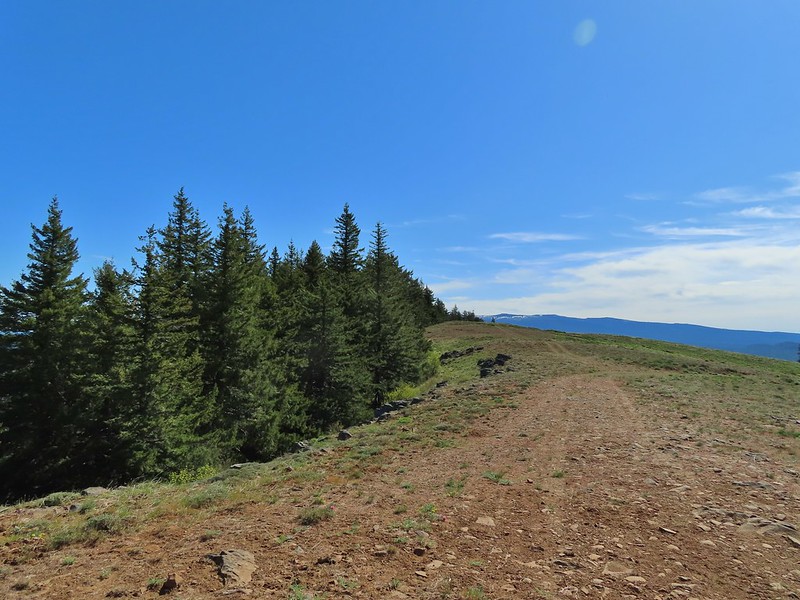 Looking east across the summit to the long ridge of Indian Rock. The boundary of the Yakima Indian Reservation is just on the north side of the summit.
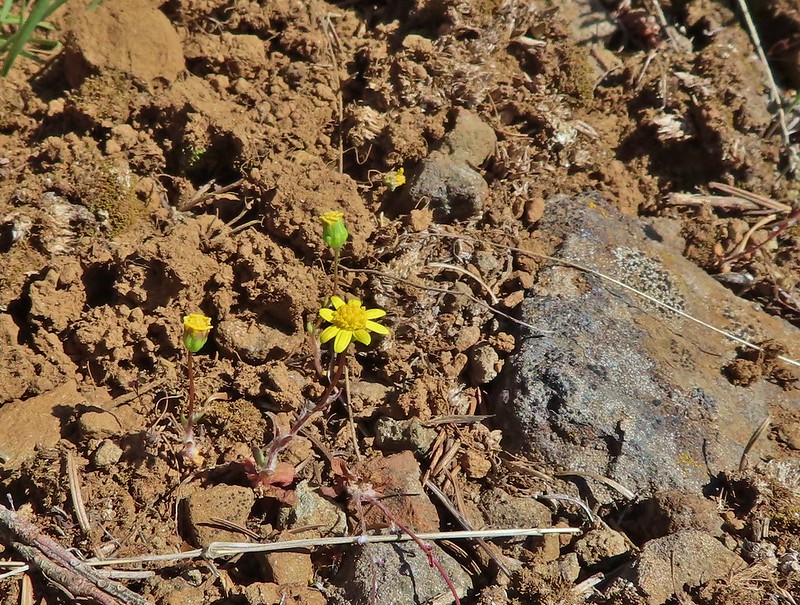 A few gold stars still had petals.
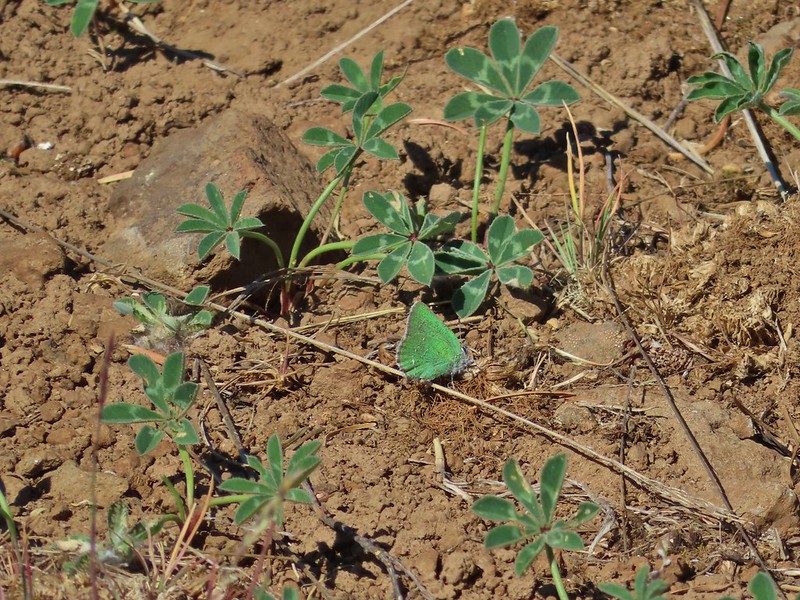 A hairstreak but I’m not sure which type.
 At least 4 ants on a large head clover.
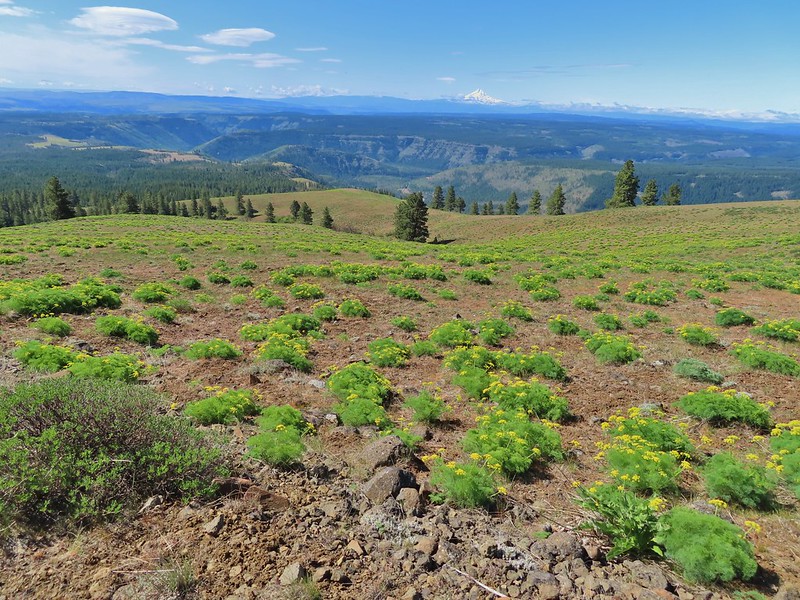 Looking back south down Grayback Mountain.
 There was a lot of white-stemmed frasera in the area but this was the closest one to blooming (and it’s a ways off).
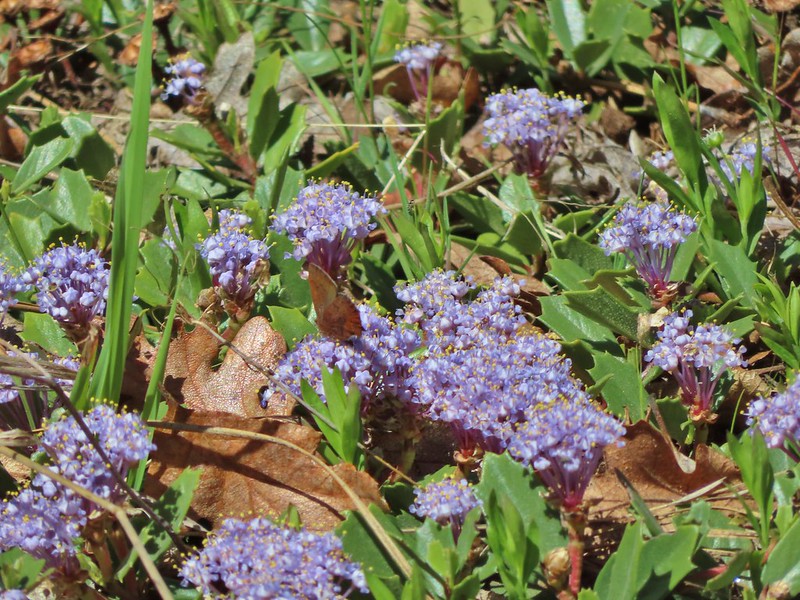 Maybe a brown elfin. I couldn’t get a clear picture of this one.
 Erynnis propertius – Propertius Duskywing (aka Western Oak Dustywing). There were lots of these duskywings flying about, it turns out that oaks are their host plants.
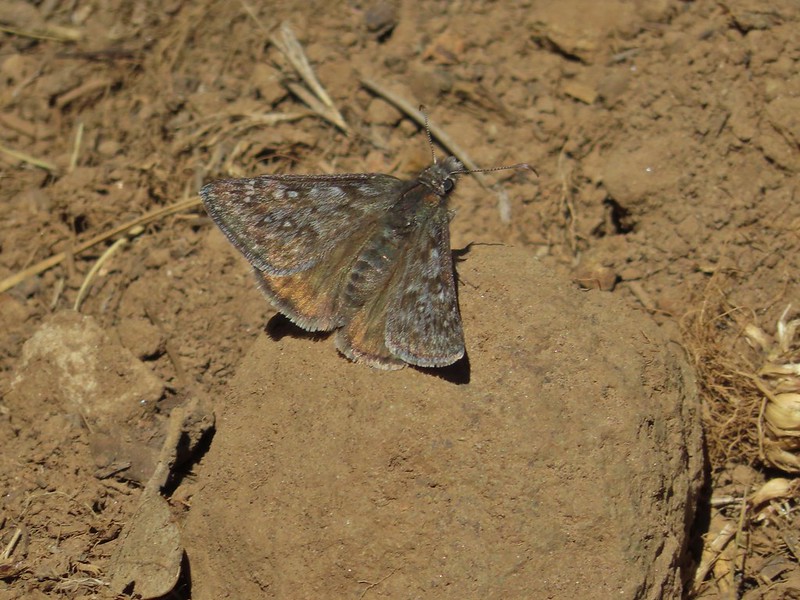 Another Erynnis propertius
 Juba skippers caught in the act.
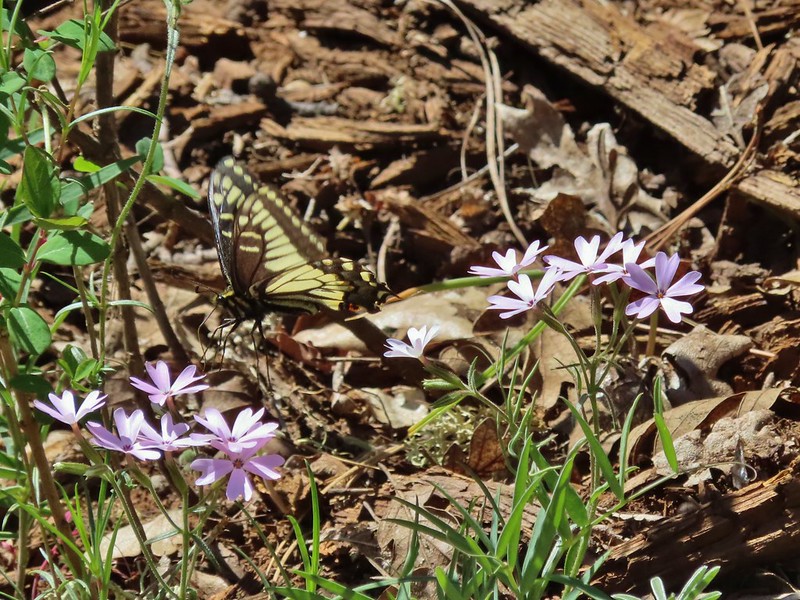 Anise swallowtail coming in for a landing on showy phlox.
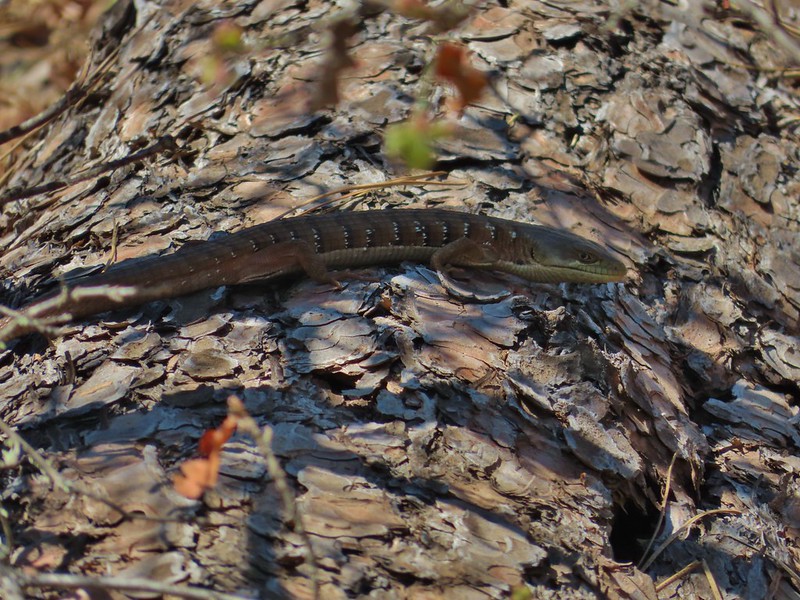 Alligator lizard on a log.
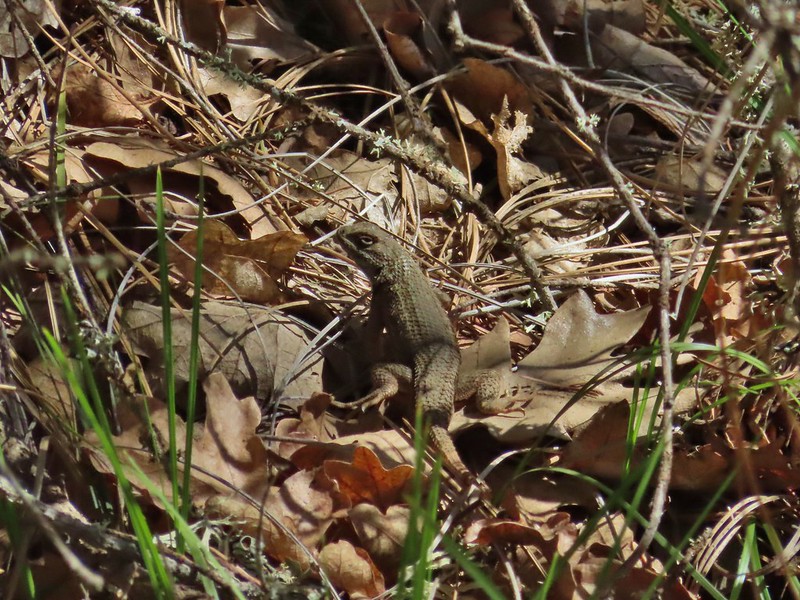 Western fence lizard
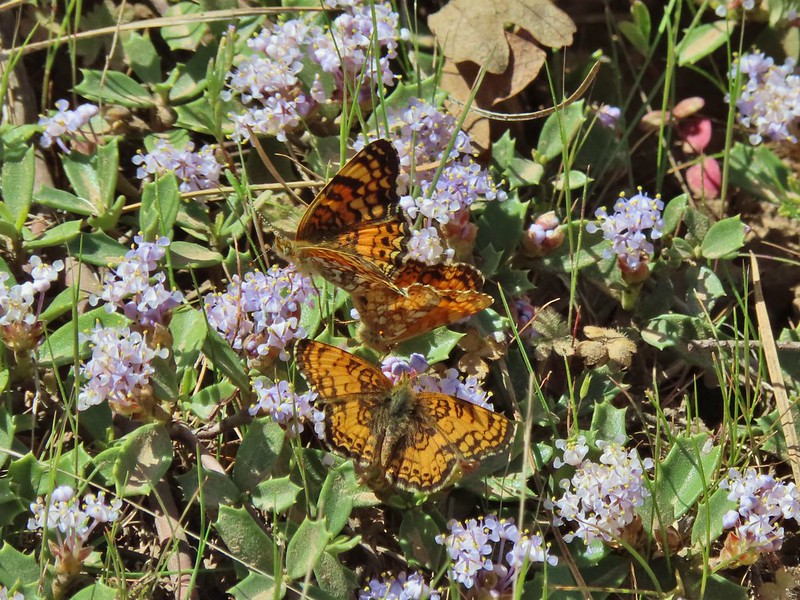 I believe these to be Mylitta crescents.
 wanderingyuncks
