Categories
Blue Mountains - South Hiking Oregon Trip report

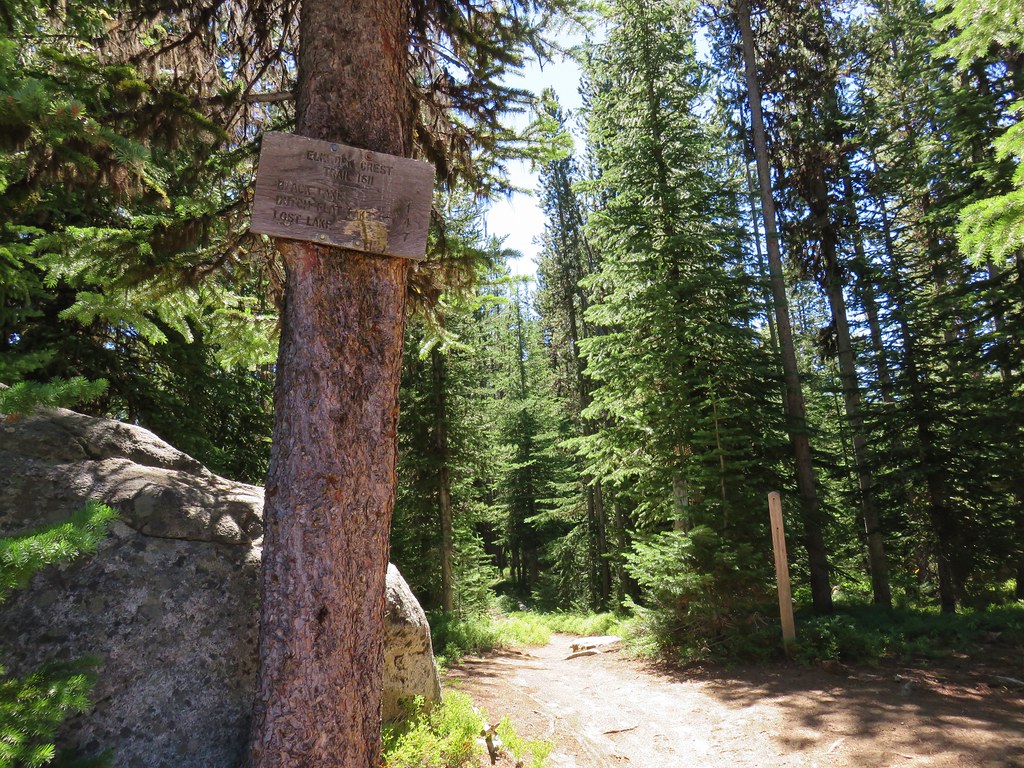
Elkhorn Crest Trail Day 2

The second day of our Elkhorn Crest backpacking trip began with a welcome chill in the morning. It was actually cold enough to break out the beanie, Buff, and gloves.
IMG_0198

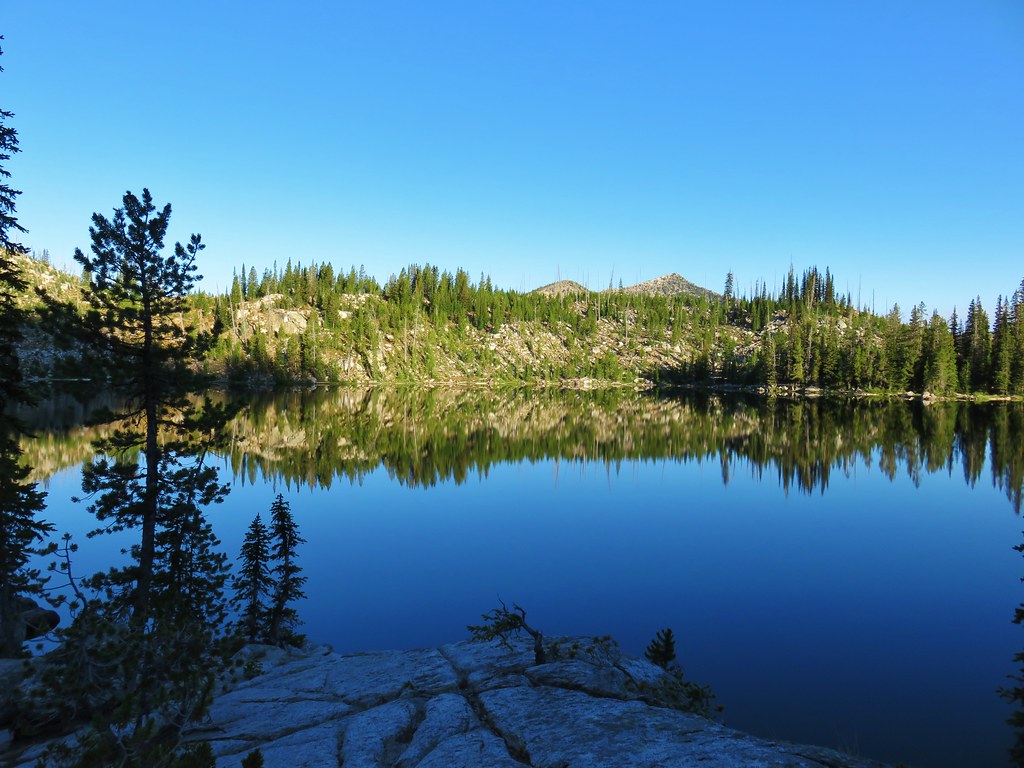
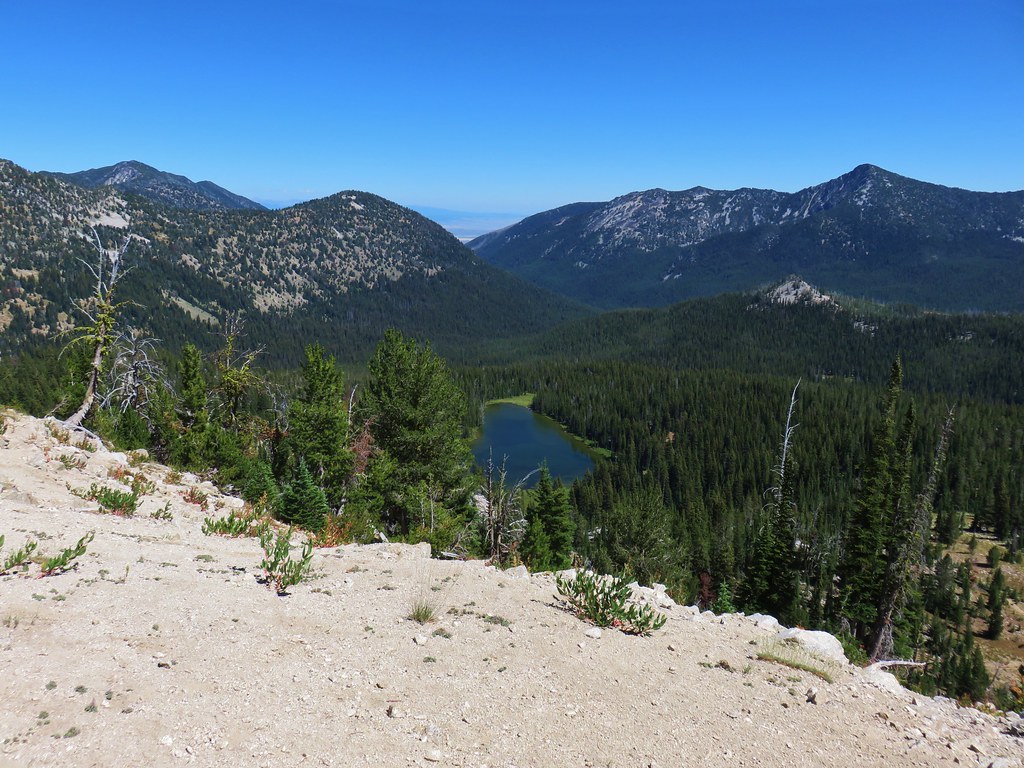
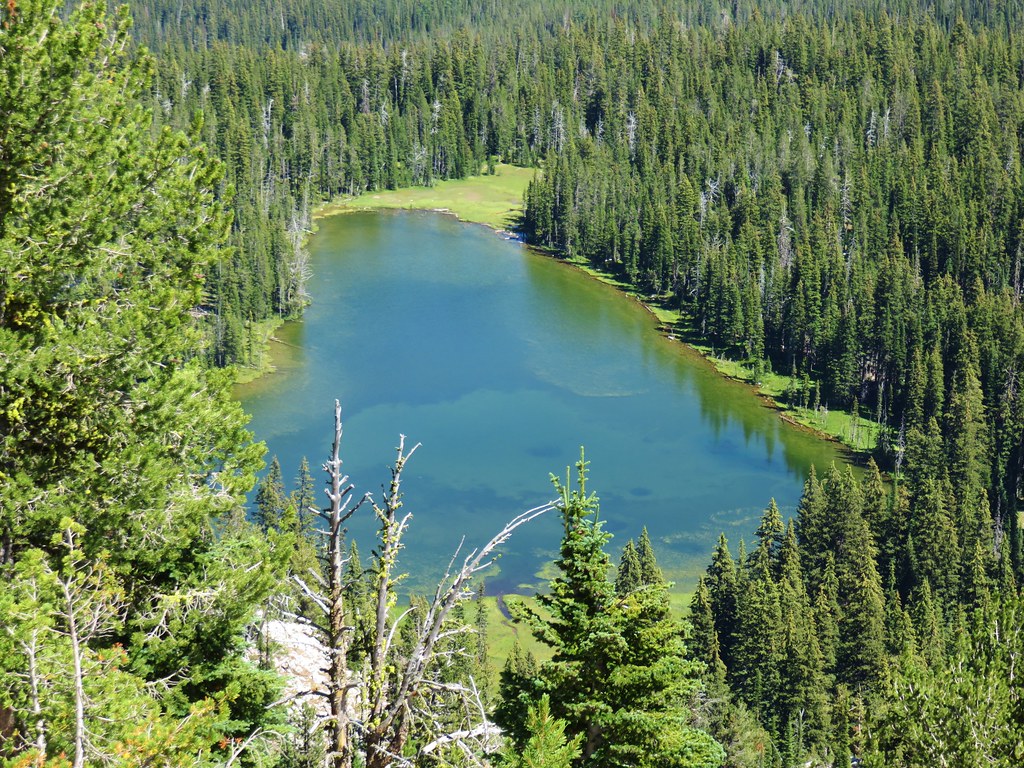
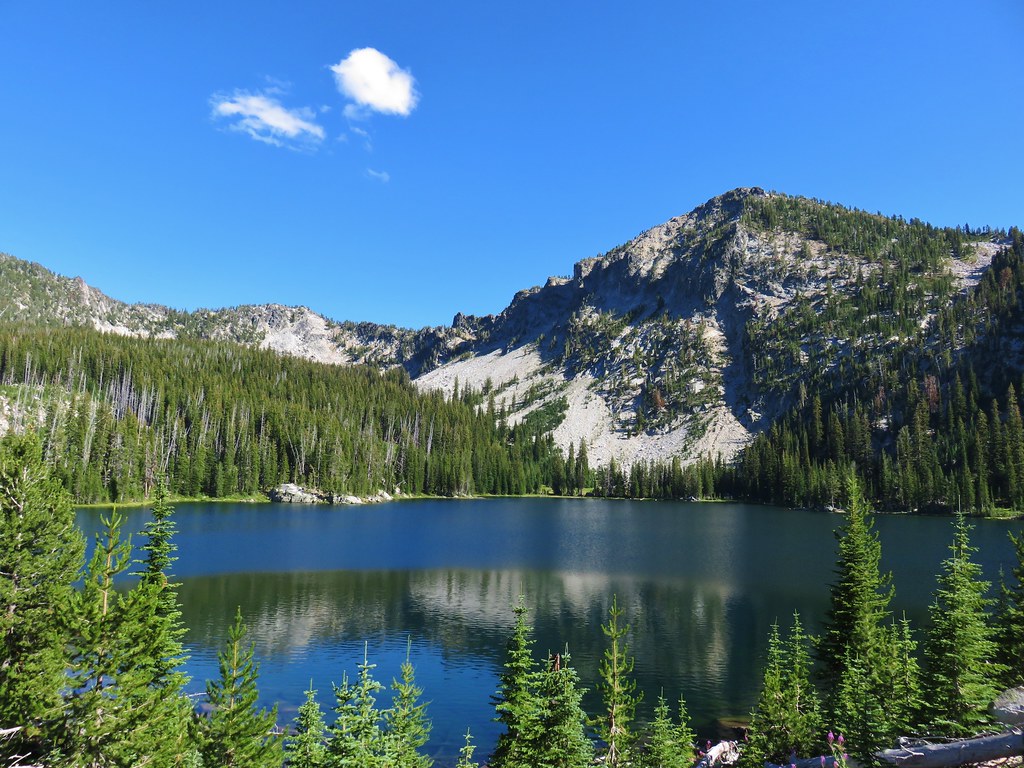
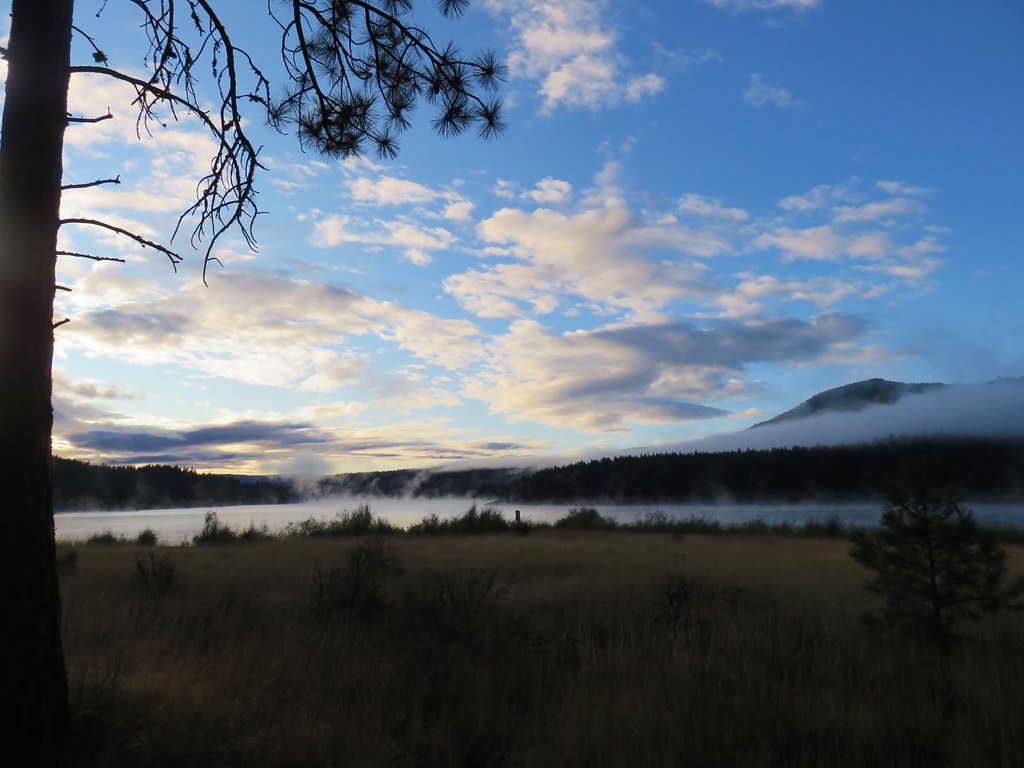
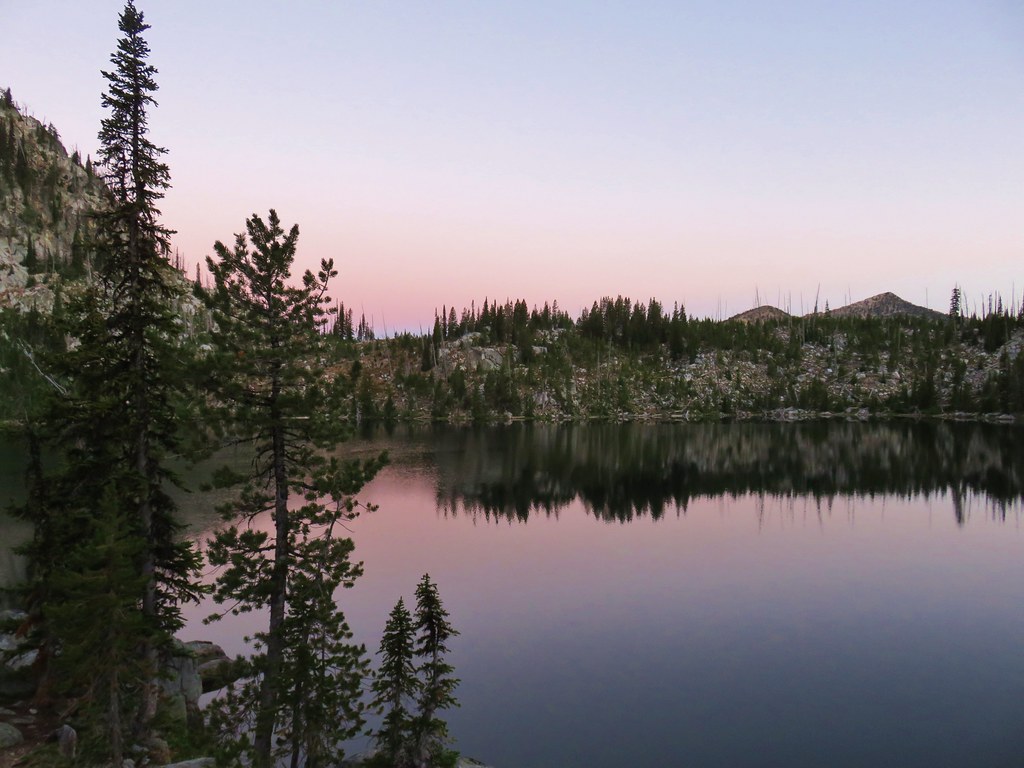
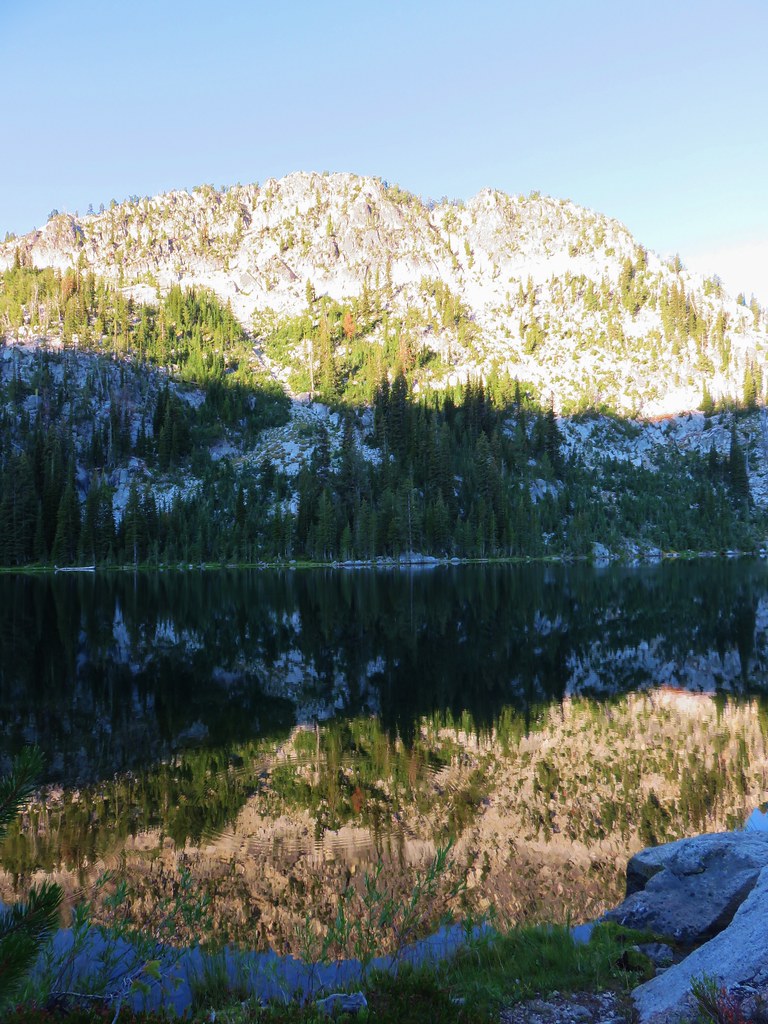
We ate breakfast as the Sun came up creating a nice reflection in Summit Lake.
IMG_0202

IMG_0203

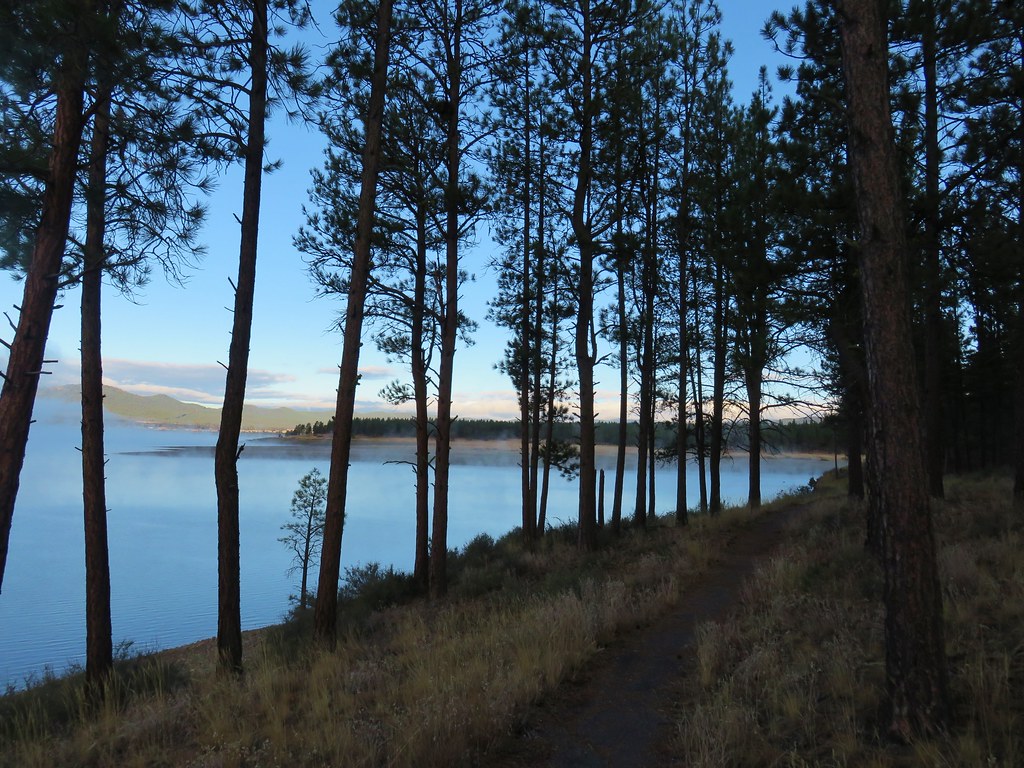
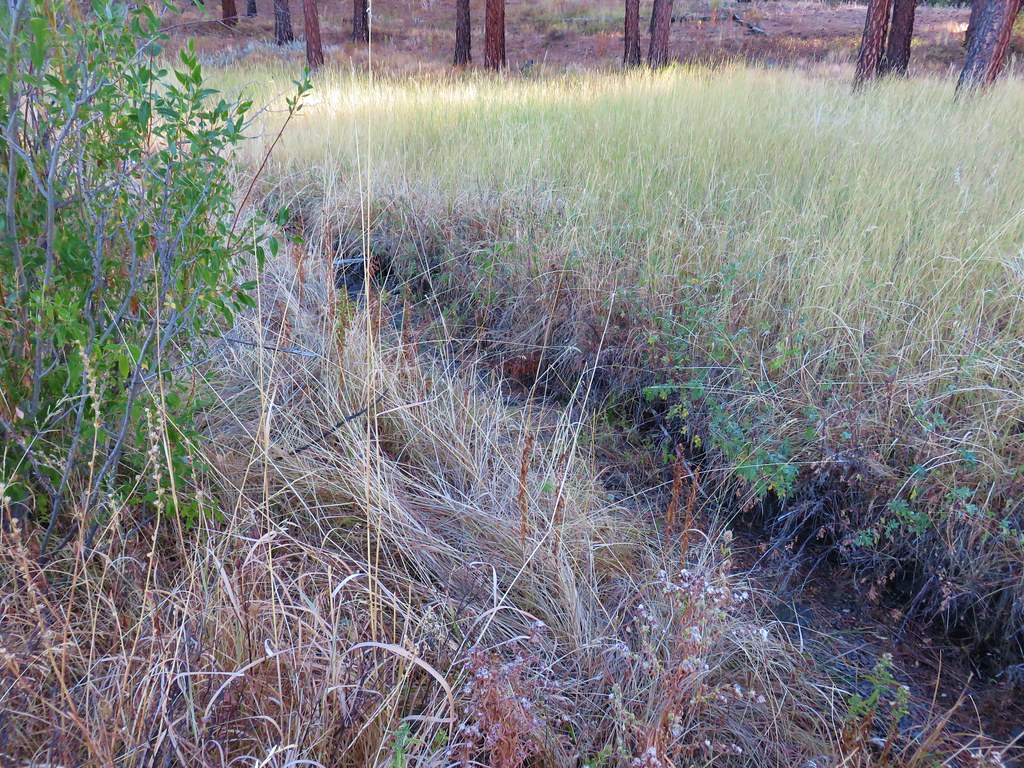
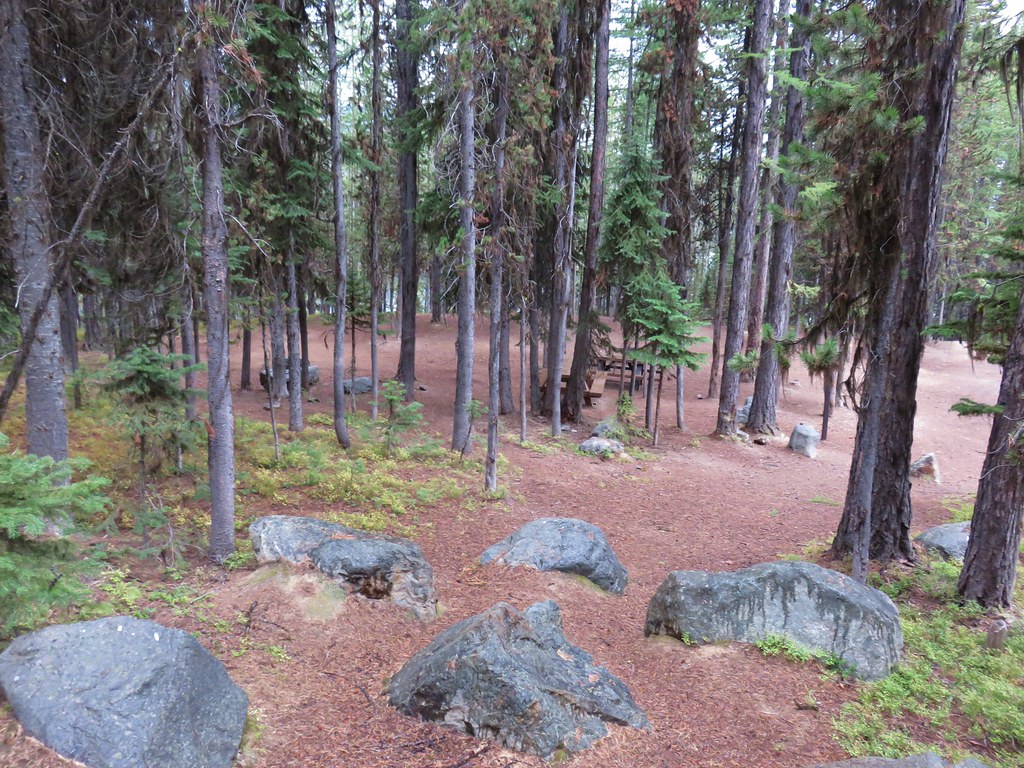
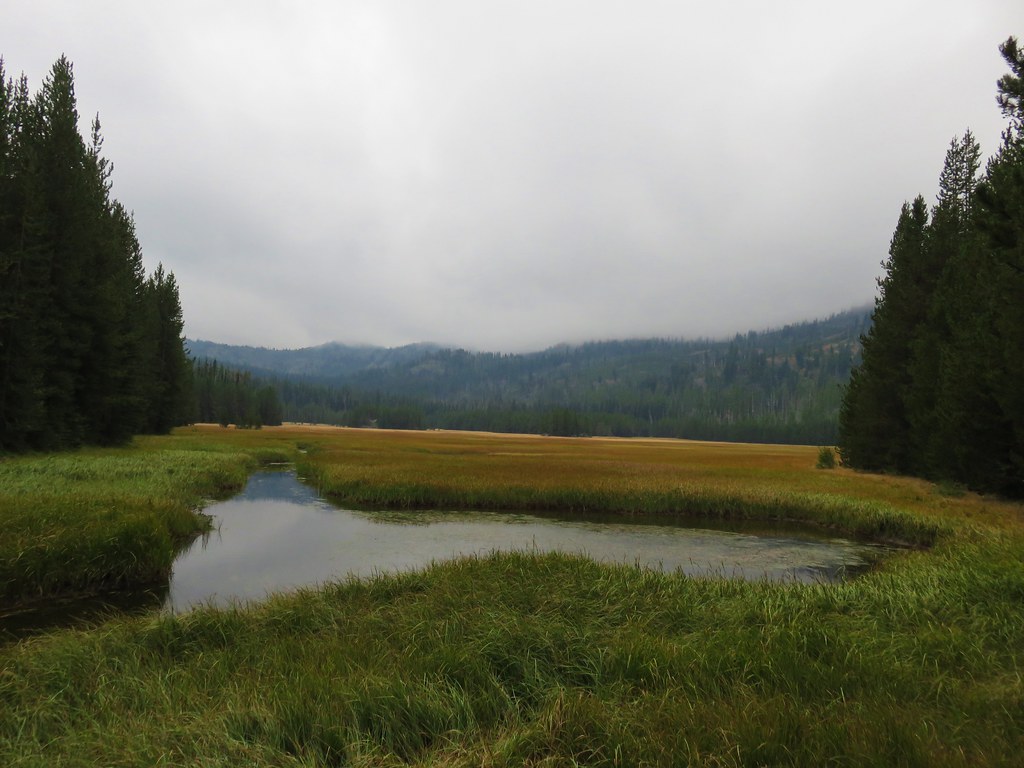
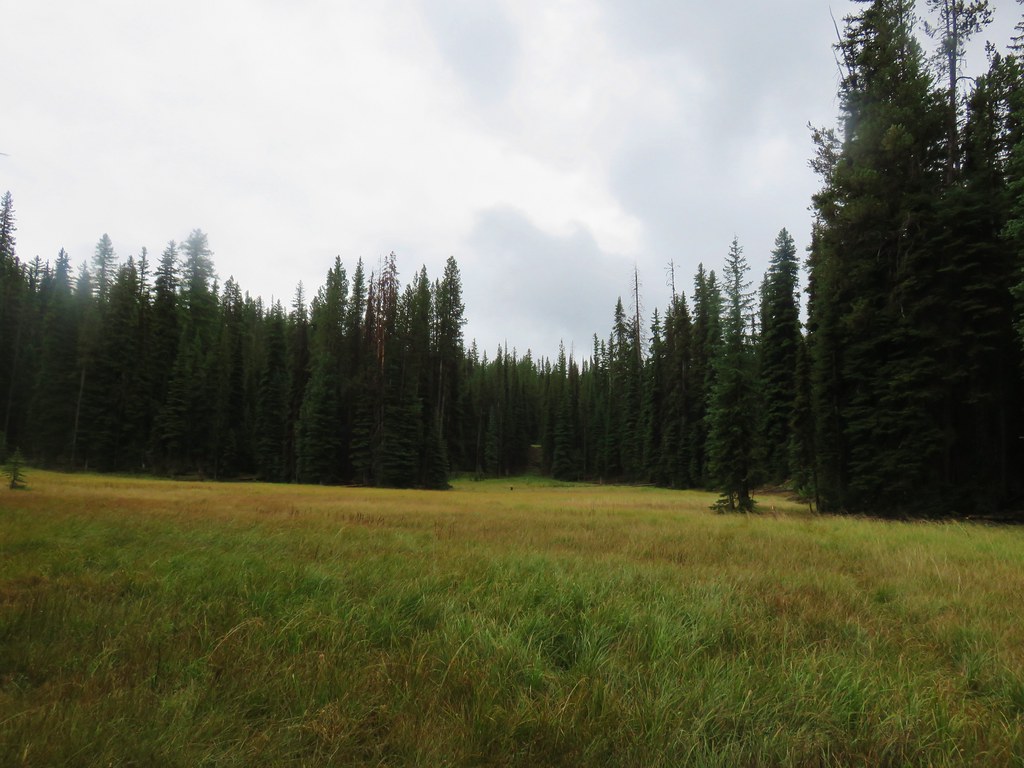
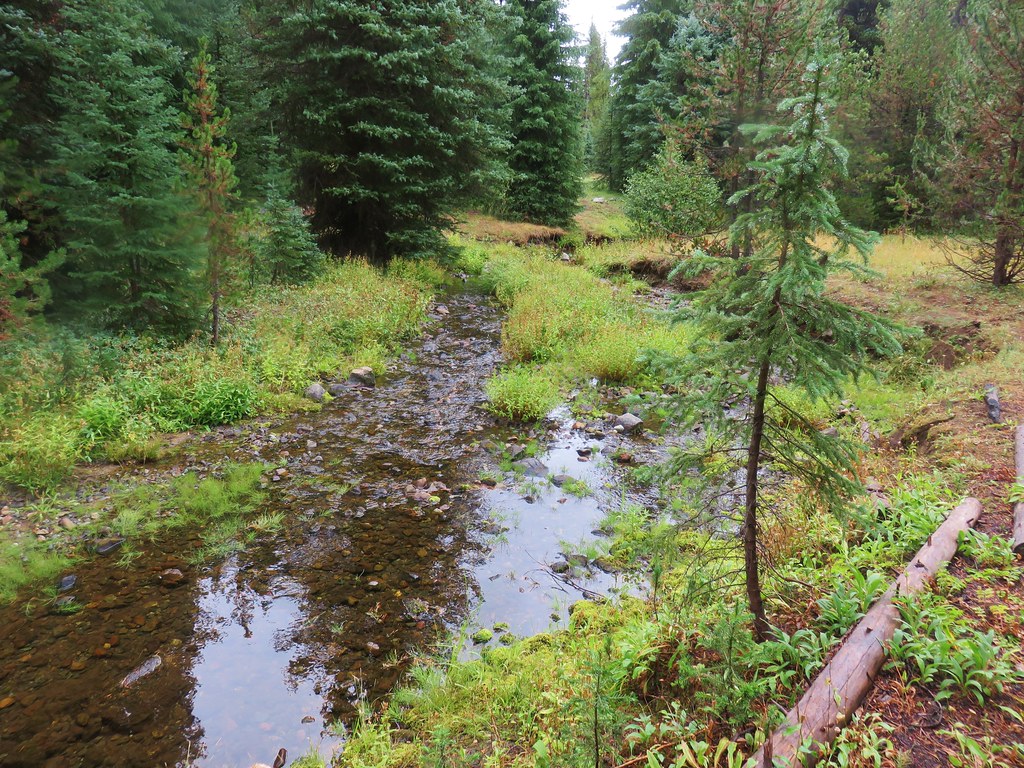
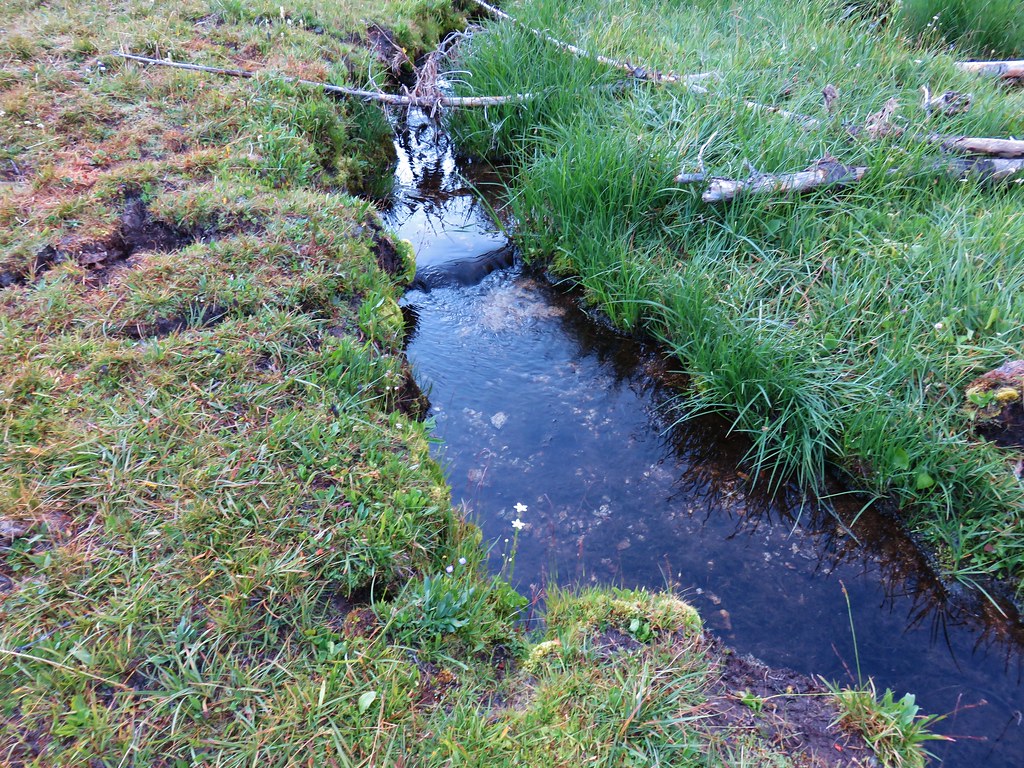
After packing up we decided to continue around the lake counter-clockwise to complete a loop around the shore. We crossed a small inlet in a meadow at the southern end of the lake.
IMG_0209

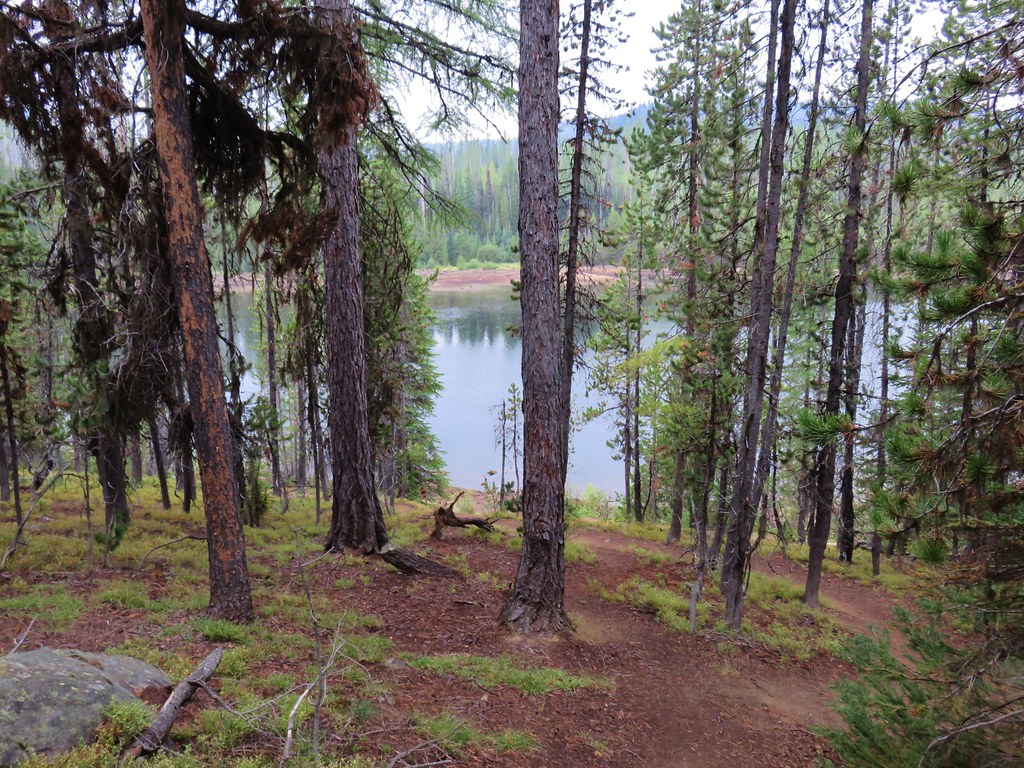
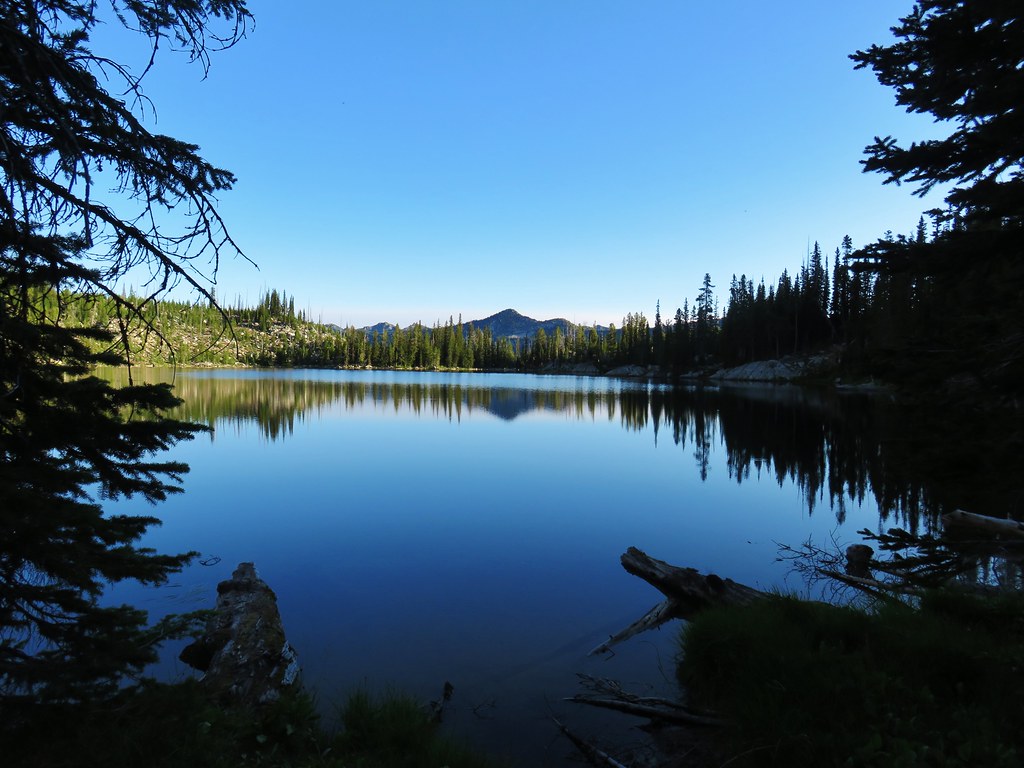
Beyond the meadow the trail passed a couple of other campsites with views to the north across the water.
IMG_0211

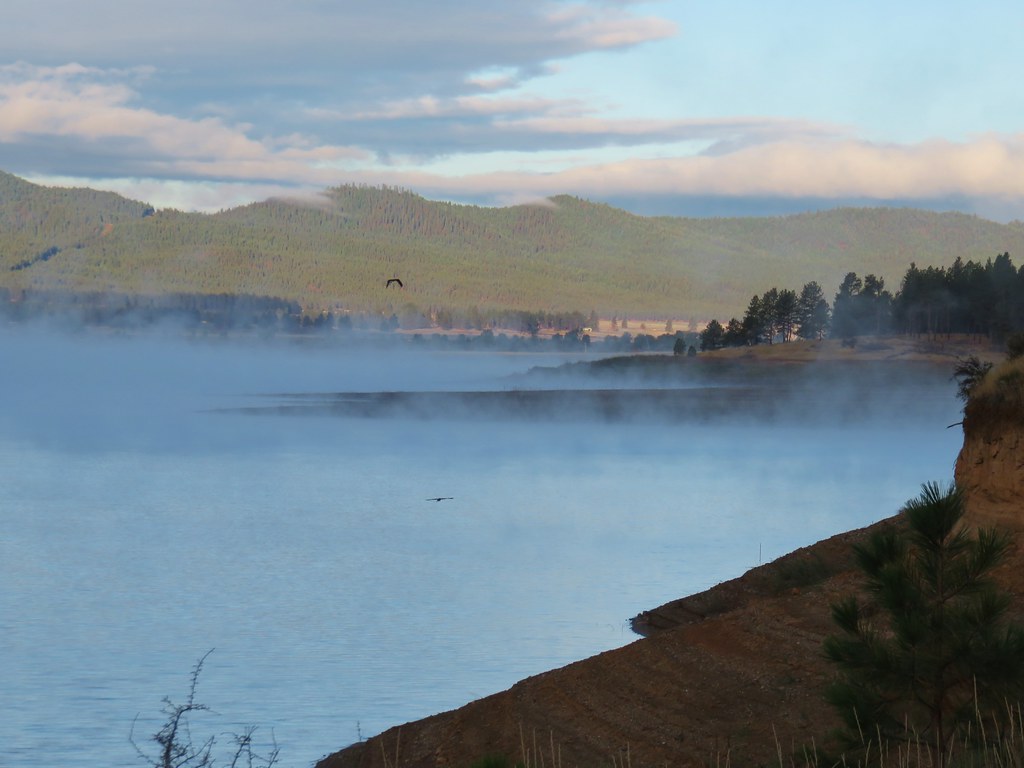
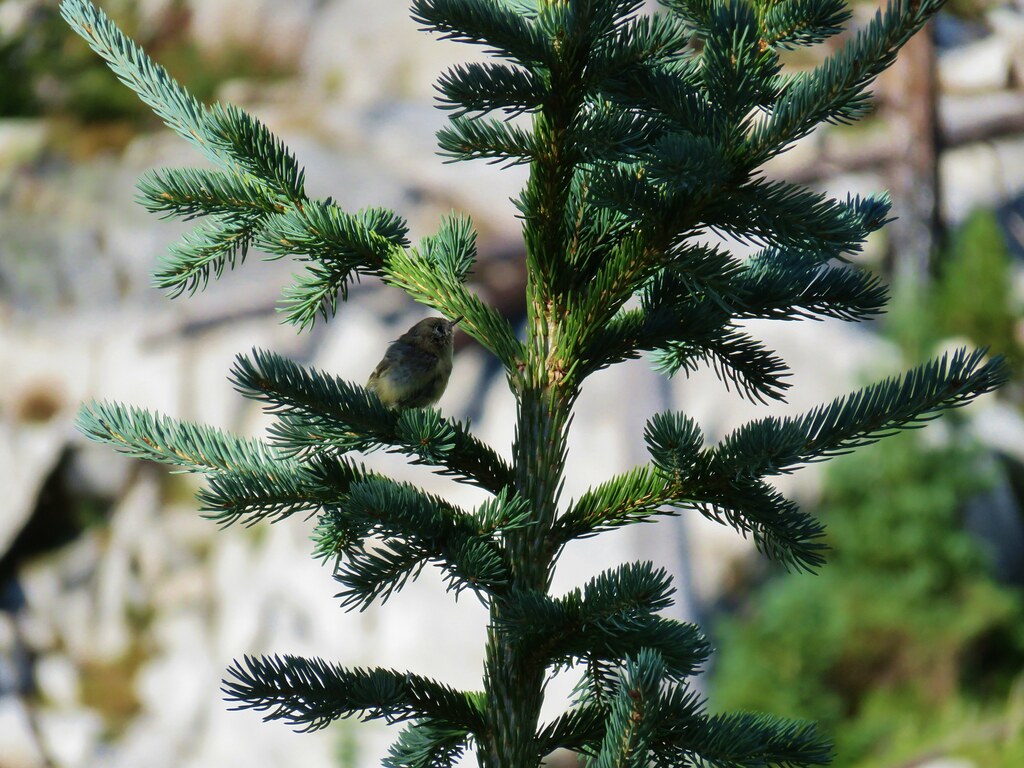
Birds were busily flying from tree to tree but one sat still long enough for a photograph.
IMG_0214

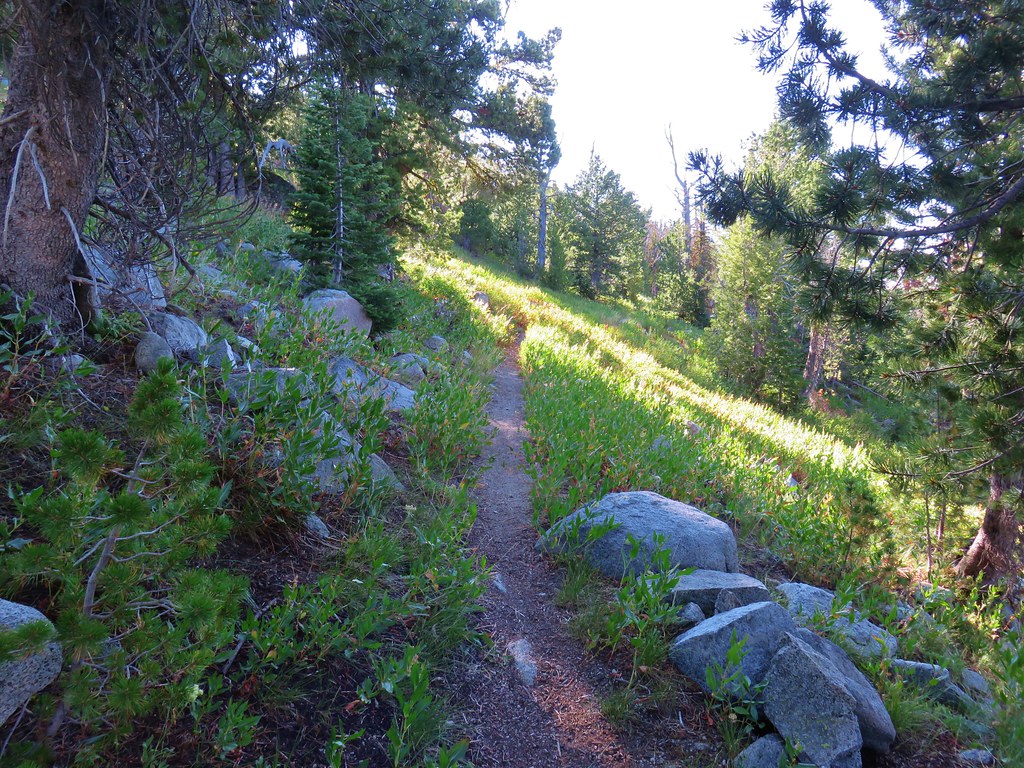
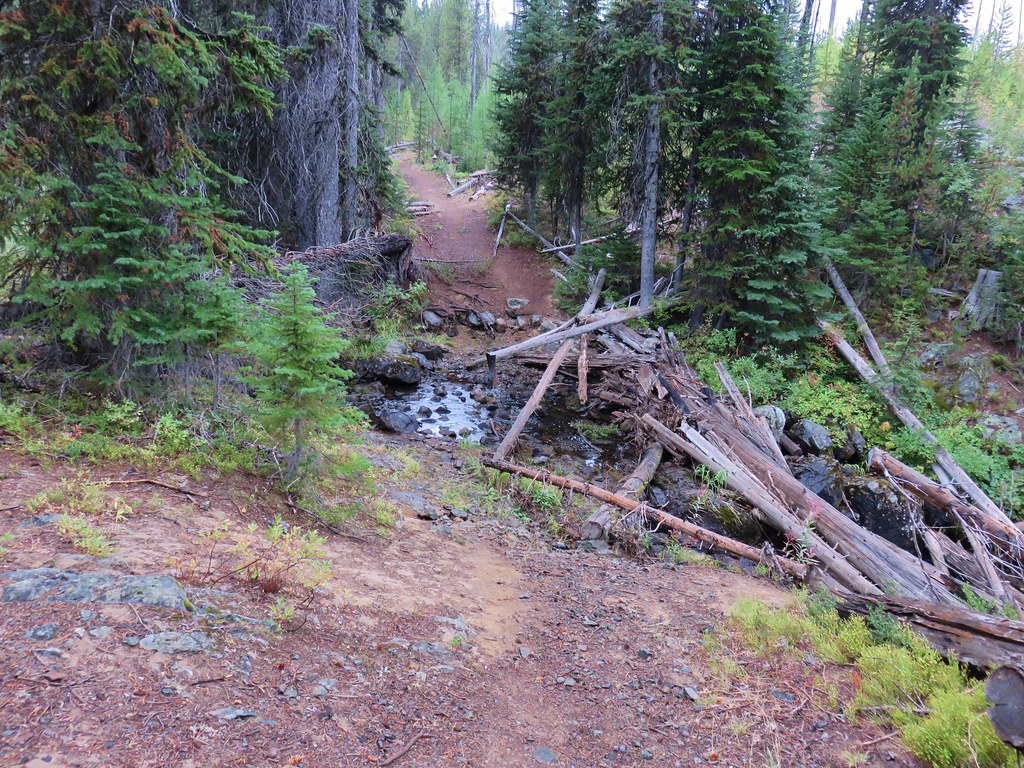
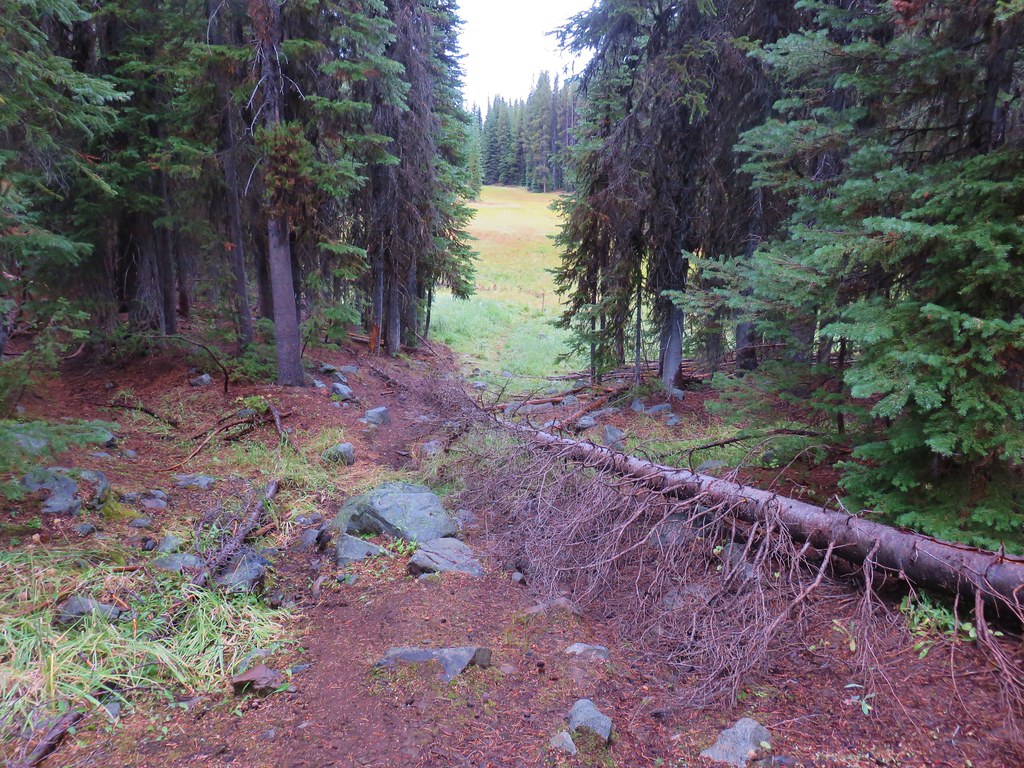
After completing the loop we began the 1.5 mile climb back to the Elkhorn Crest Trail. The trail crossed over several small streams and meadows as it passed through a forested section. We spotted two does and a fawn in the area.
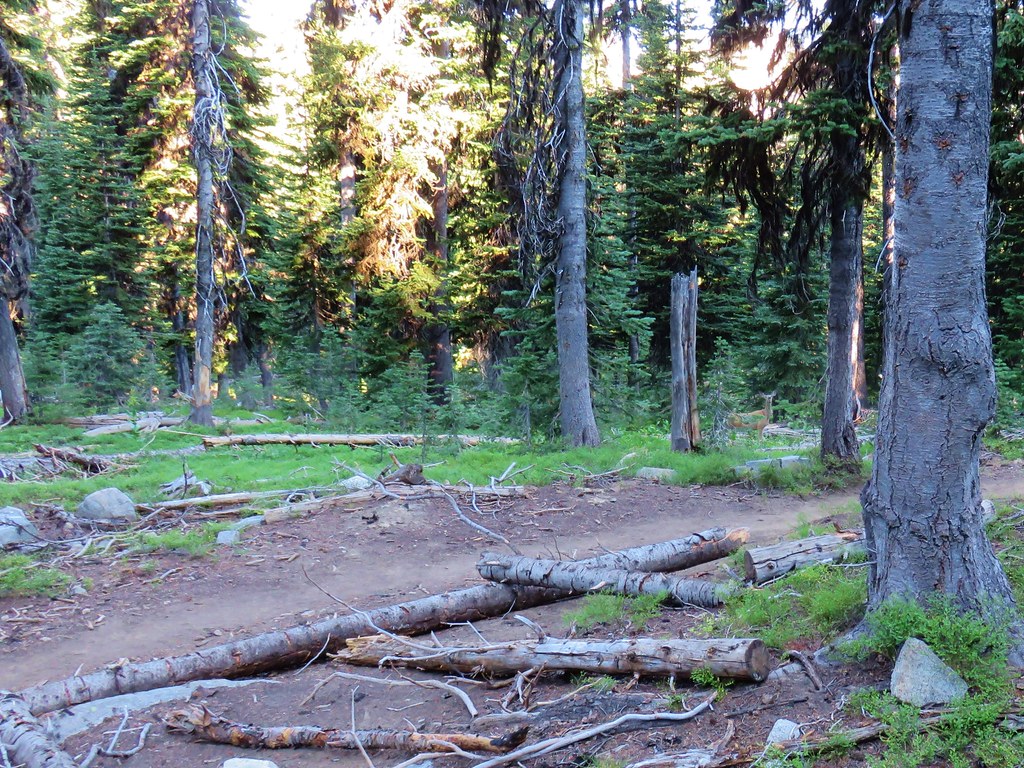
IMG_0220One of the does (the fawn dashed by moments later)
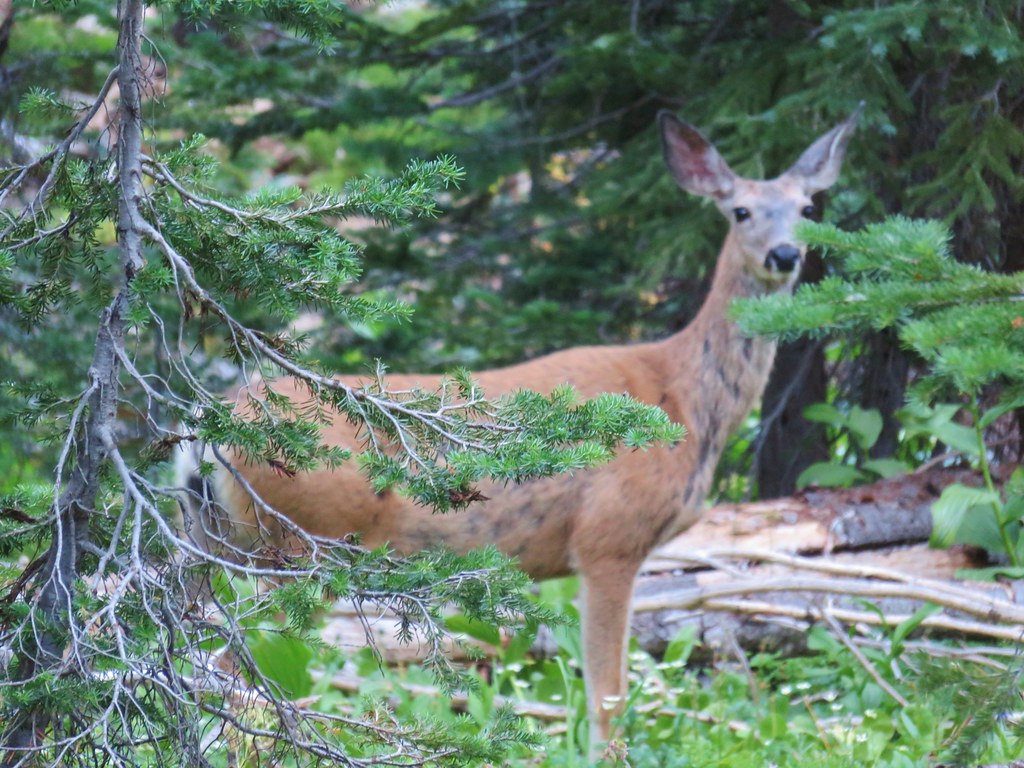
IMG_0218Close-up of the doe

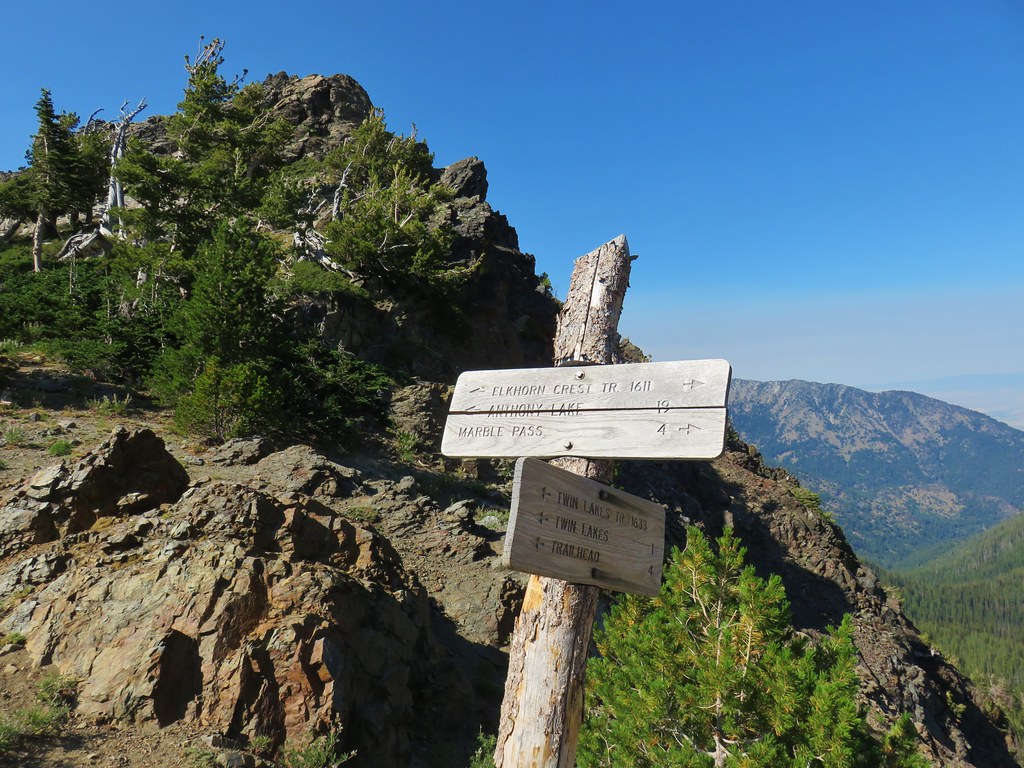
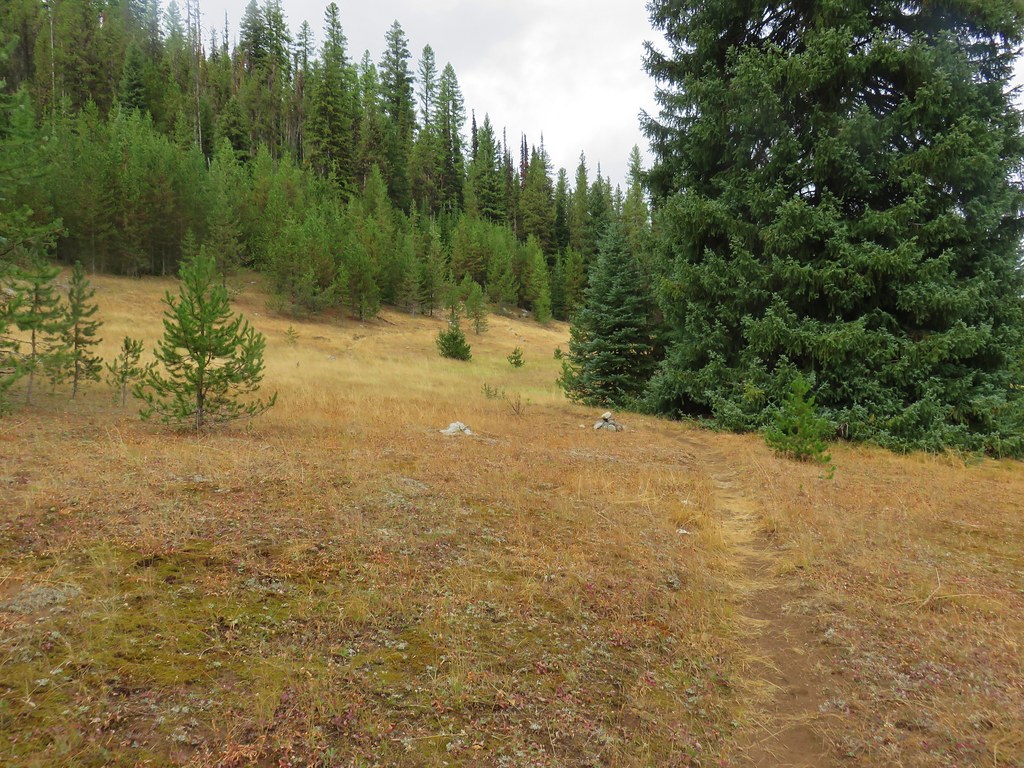
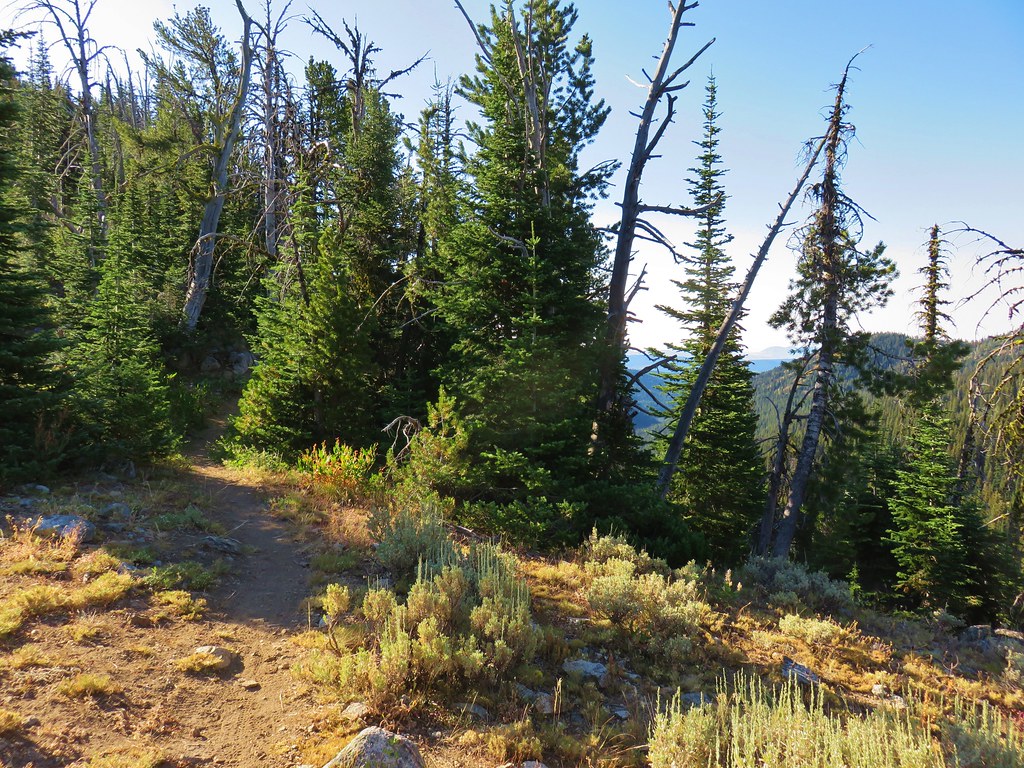
As we continued along we were hailed by the group of hikers we had passed early on the first day who had said they were aiming for Summit Lake as well. They wound up running out of gas they said so they set up camp on a rocky overlook of the valley below. After talking with them briefly we continued on to the cairn marking the junction with the Elkhorn Crest Trail where we turned left.
IMG_0222

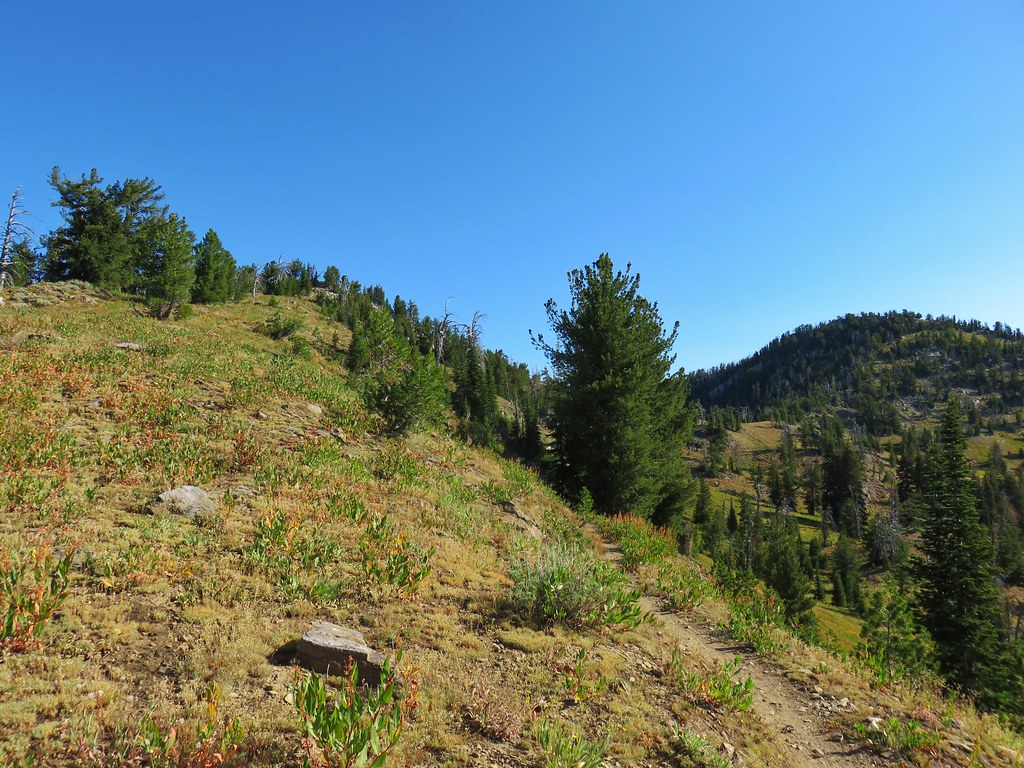
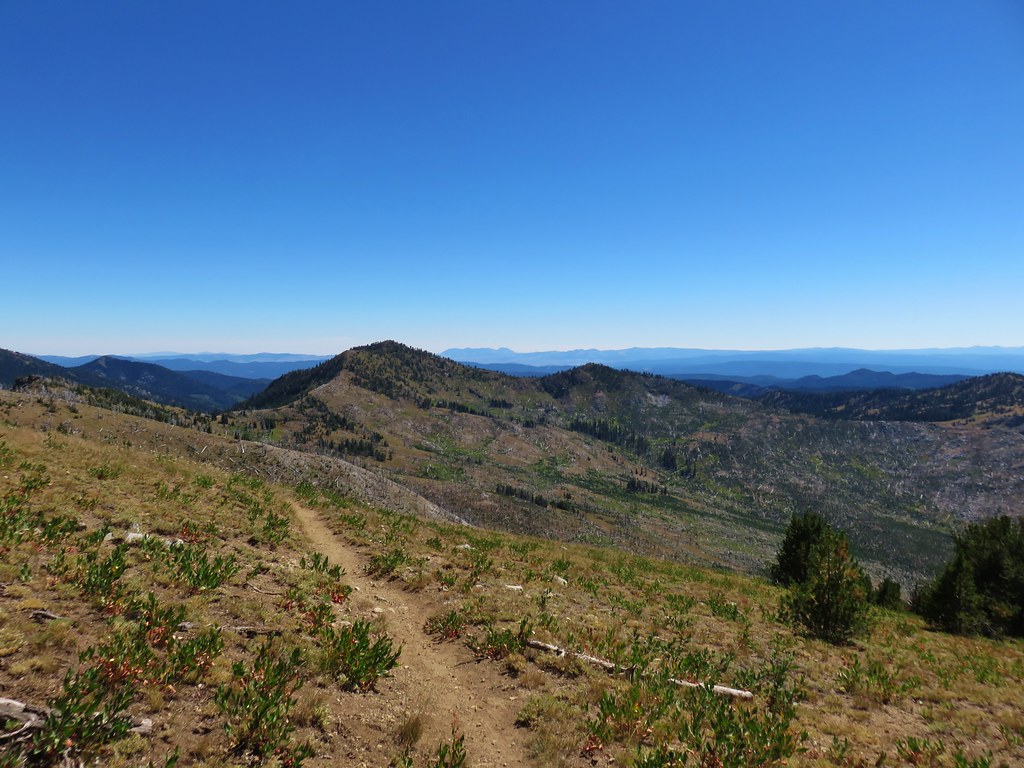
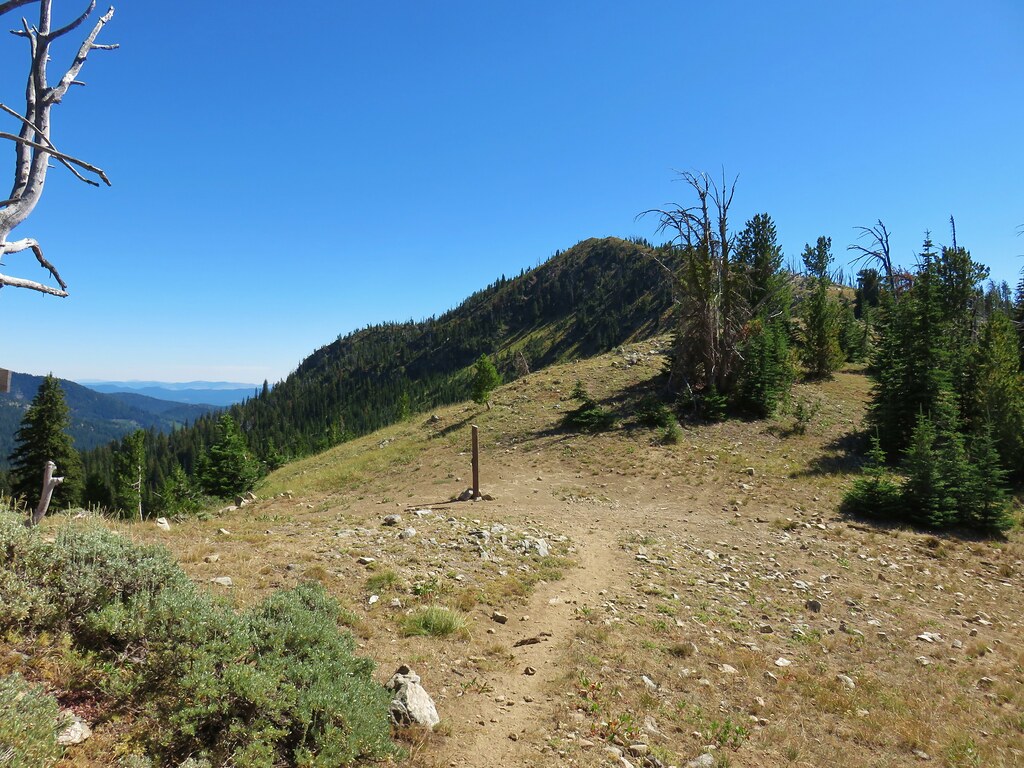
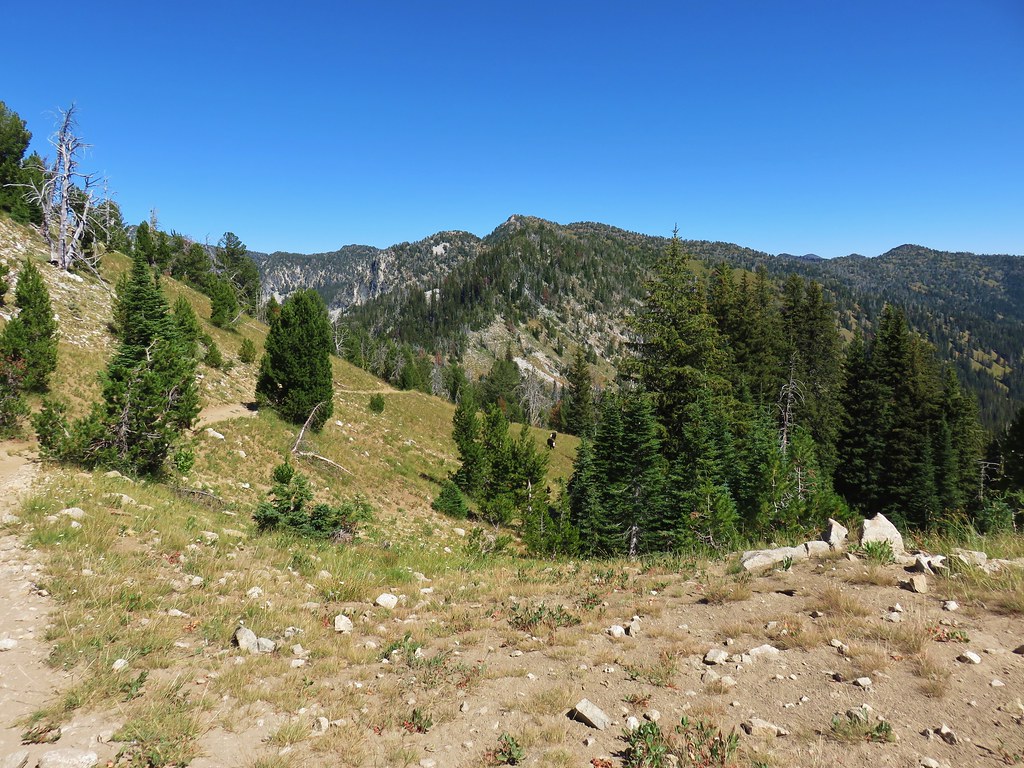
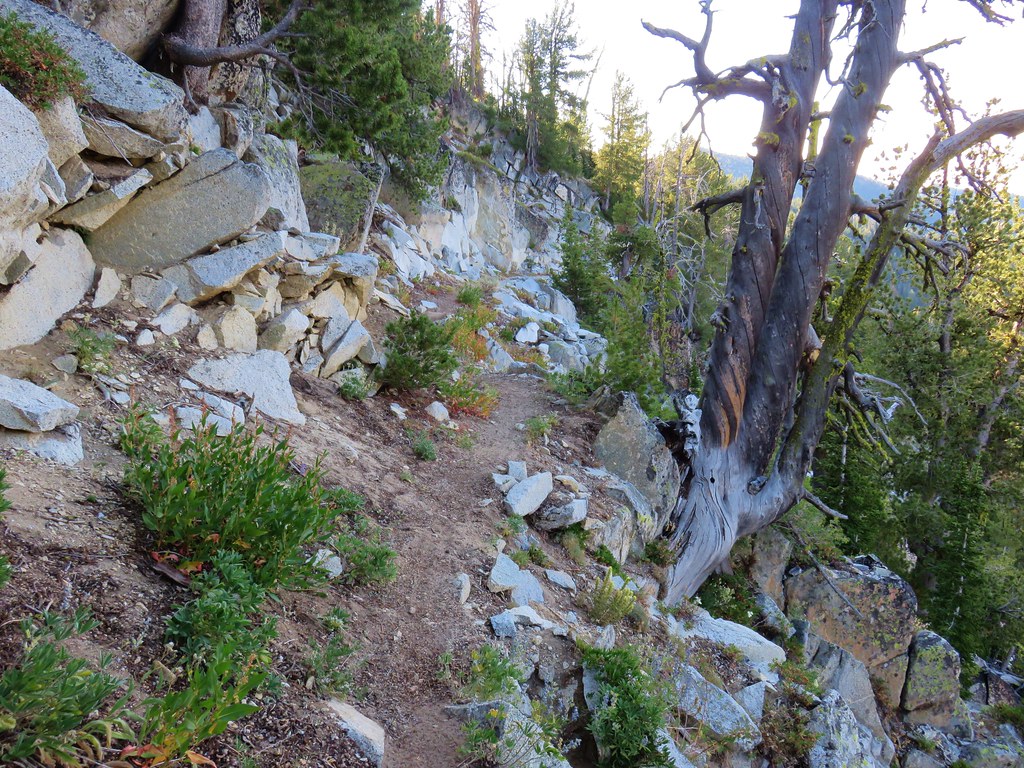
Our goal for the day was Twin Lakes but we also planned to summit Rock Creek Butte, the highest peak in the Elkhorn Range. We were leaving our options open though. The route up was 9.5 miles away and we weren’t sure if it would be better to wait and attempt it the next day when it would be earlier in the day and likely cooler or if doing it today would be better since the sky was still relatively smoke free in the immediate area. Either way we had time to decide as we followed the trail along the western side of the crest.
IMG_0227

IMG_0229

IMG_0239

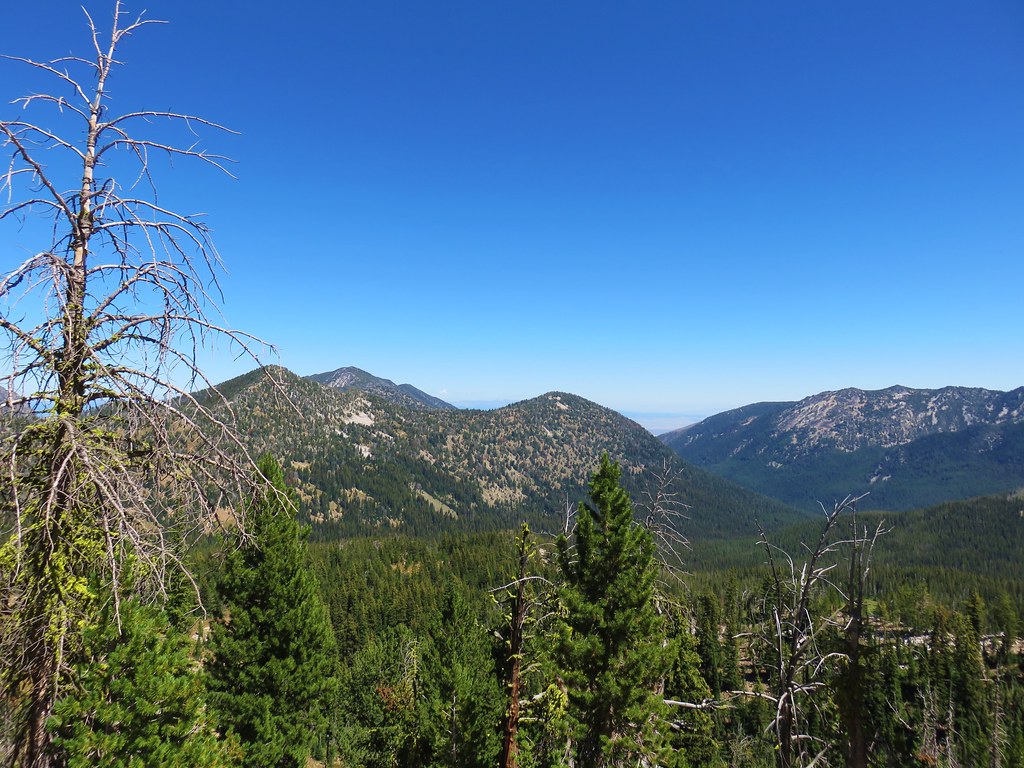
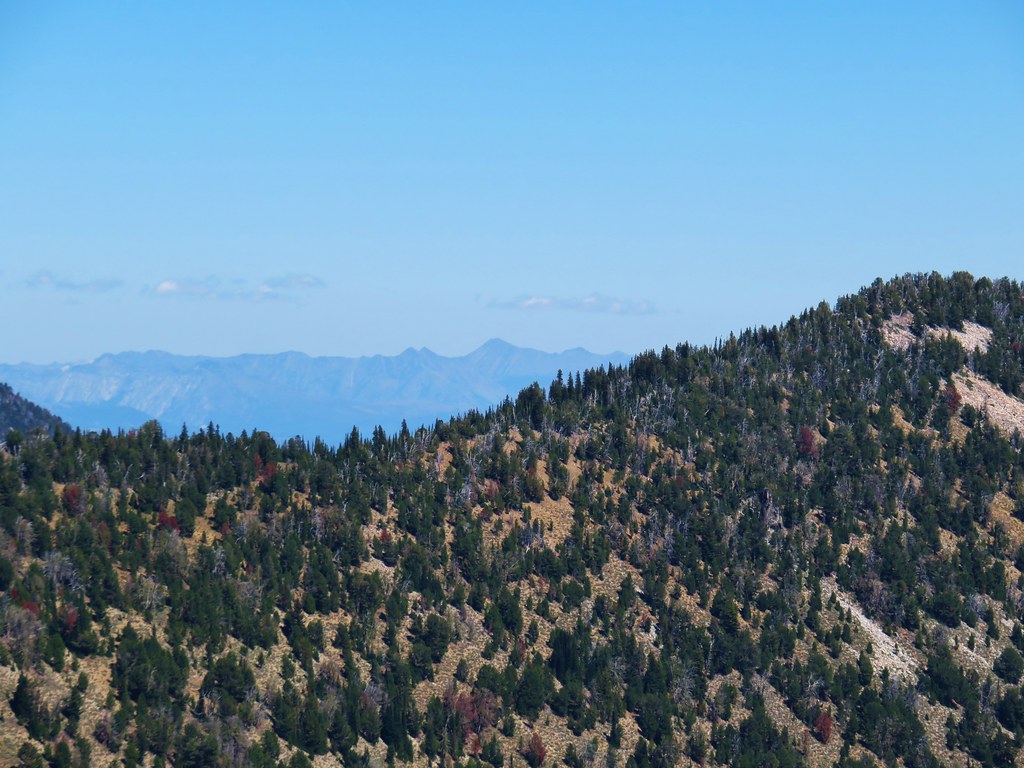
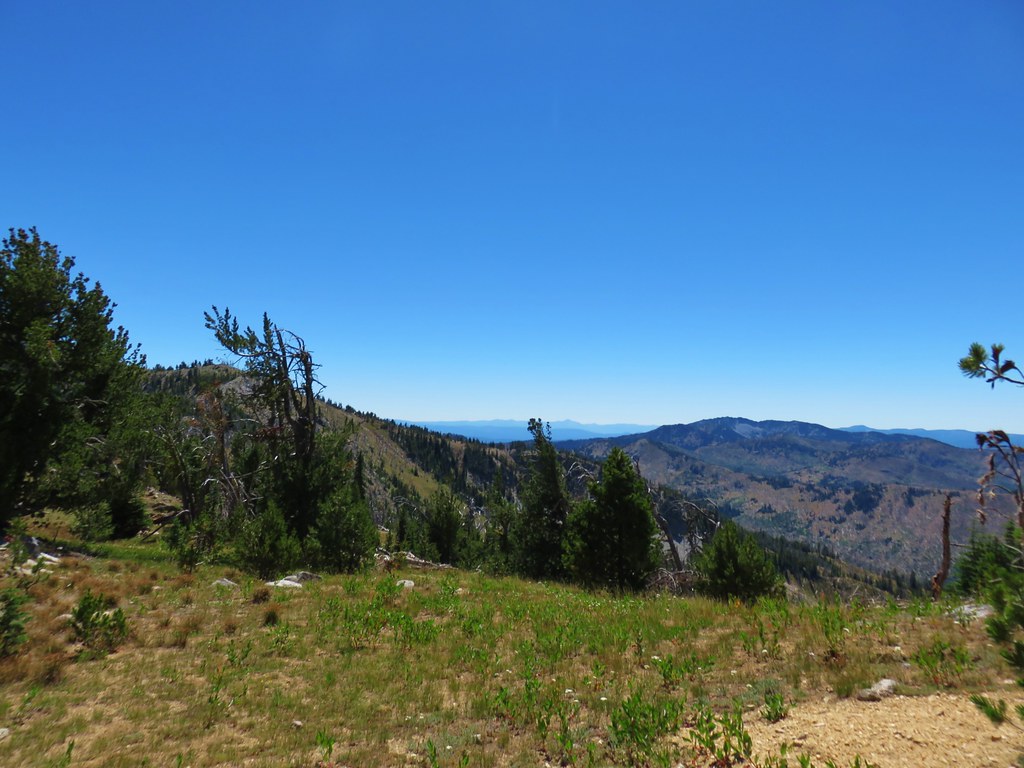
We were very interested in a peak on the horizon to the south. It was clearly separated from the Strawberry Mountains further west and we weren’t sure what it was. When we returned home it was one of the first things I looked up and it turned out to be Ironside Mountain.
IMG_0224

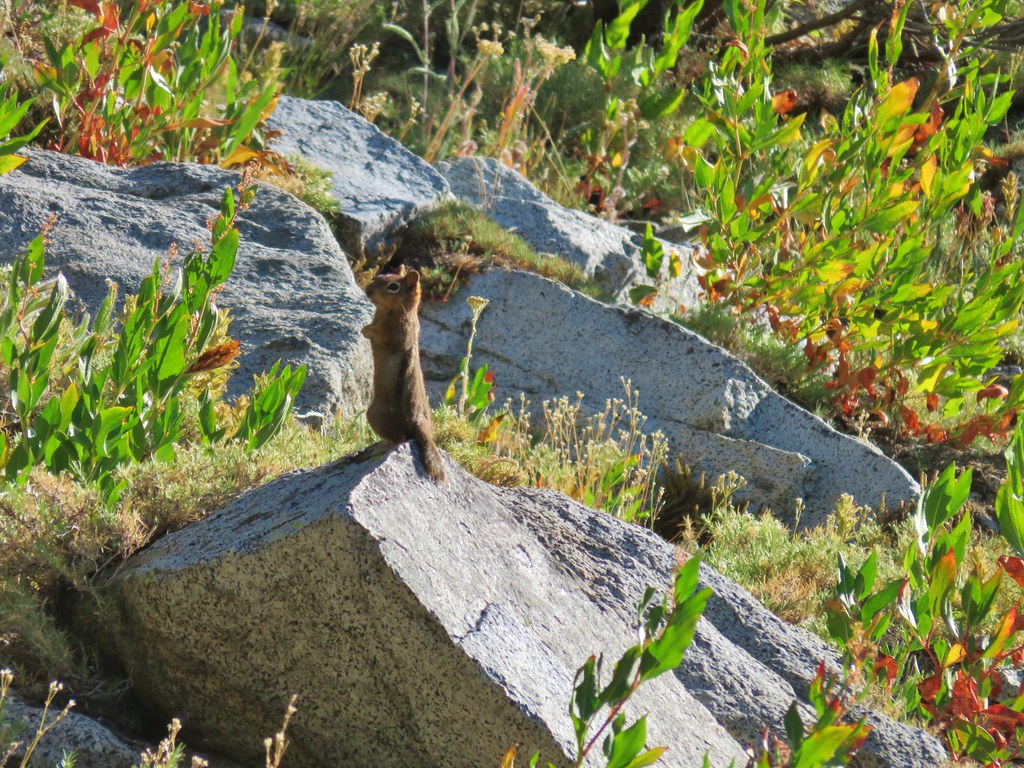
We spotted a number of animals along the crest in the morning including the biggest caterpillar either of us had ever seen digging in the dirt.
IMG_0243

IMG_0242

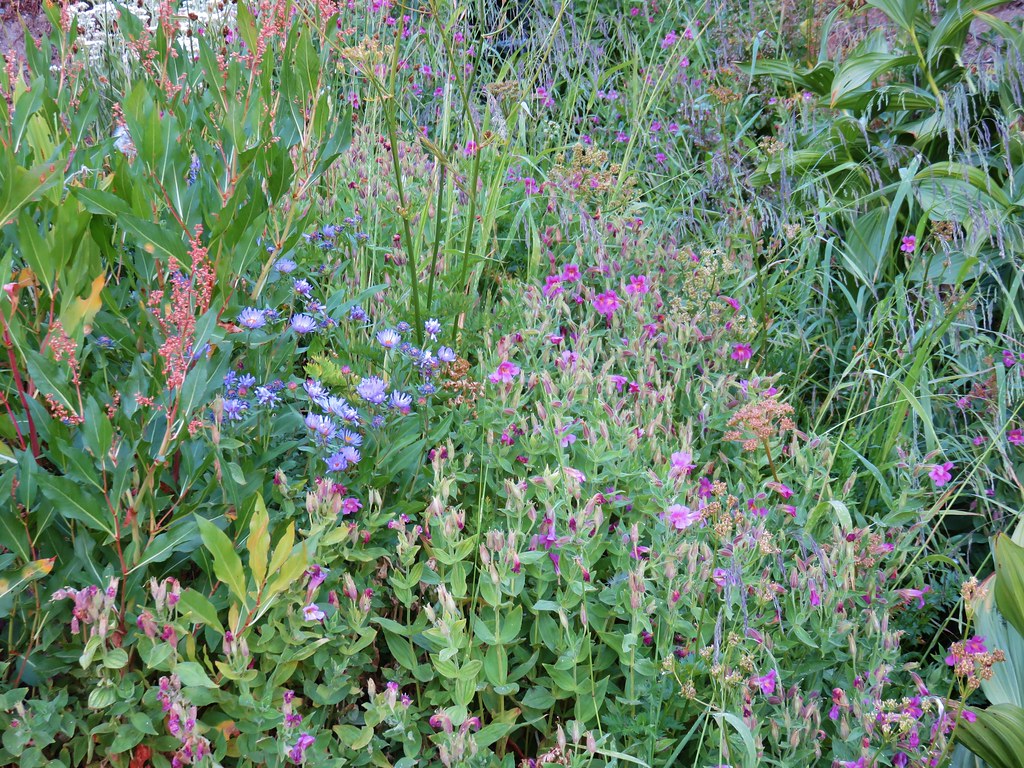
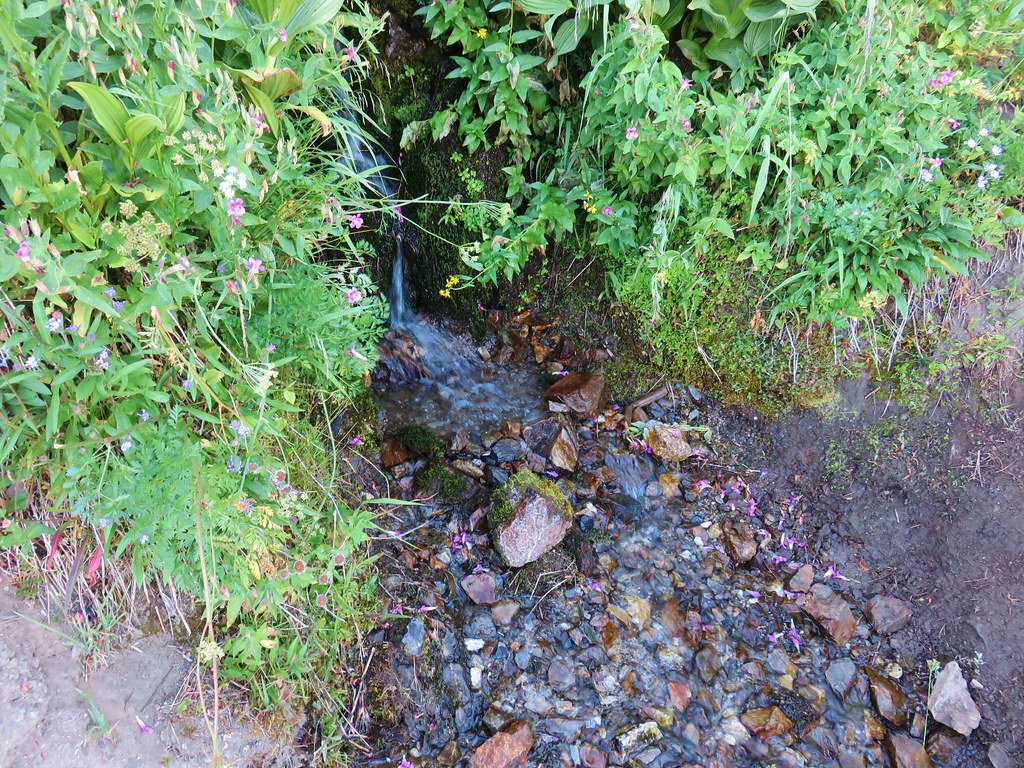
Approximately a mile and a half from the junction with the Summit Lake Trail we came across the only water we would encounter along the entire Elkhorn Crest Trail. A small flower lined stream heading down into Sardine Gulch to join Cracker Creek.
IMG_0250

IMG_0249

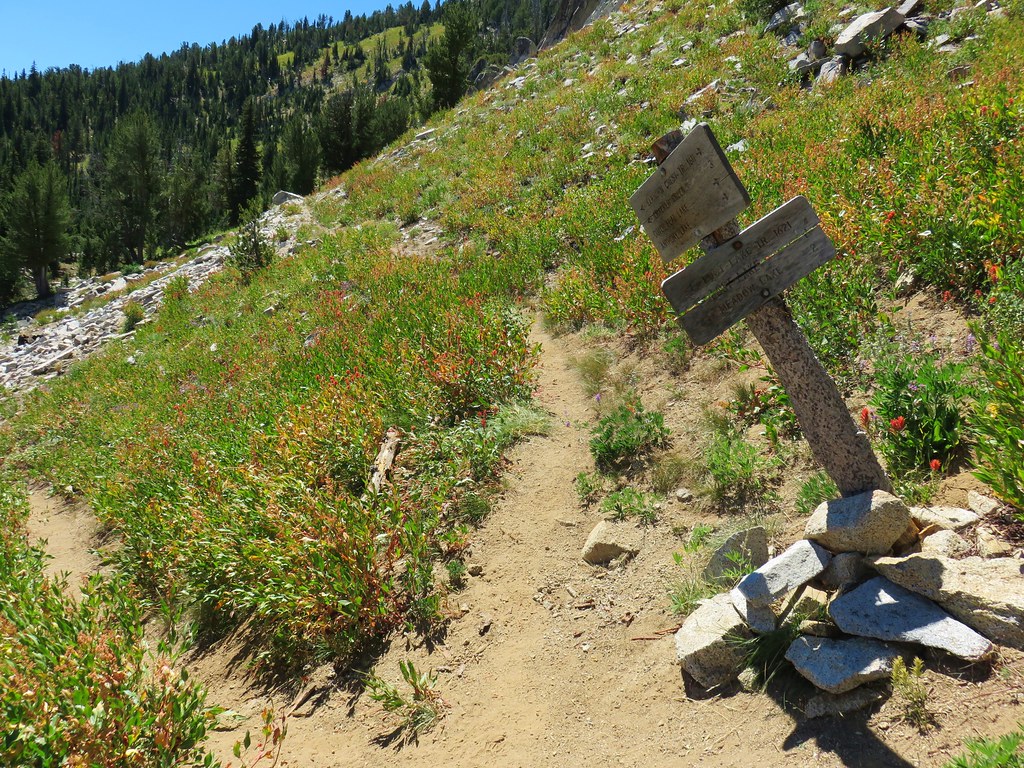
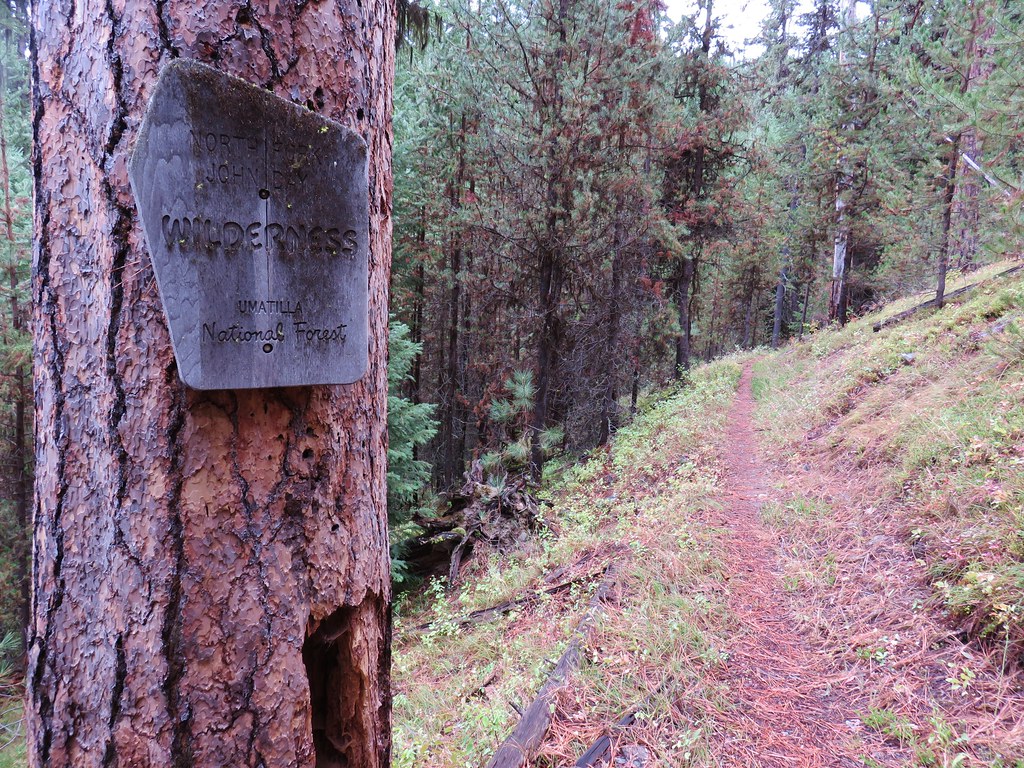
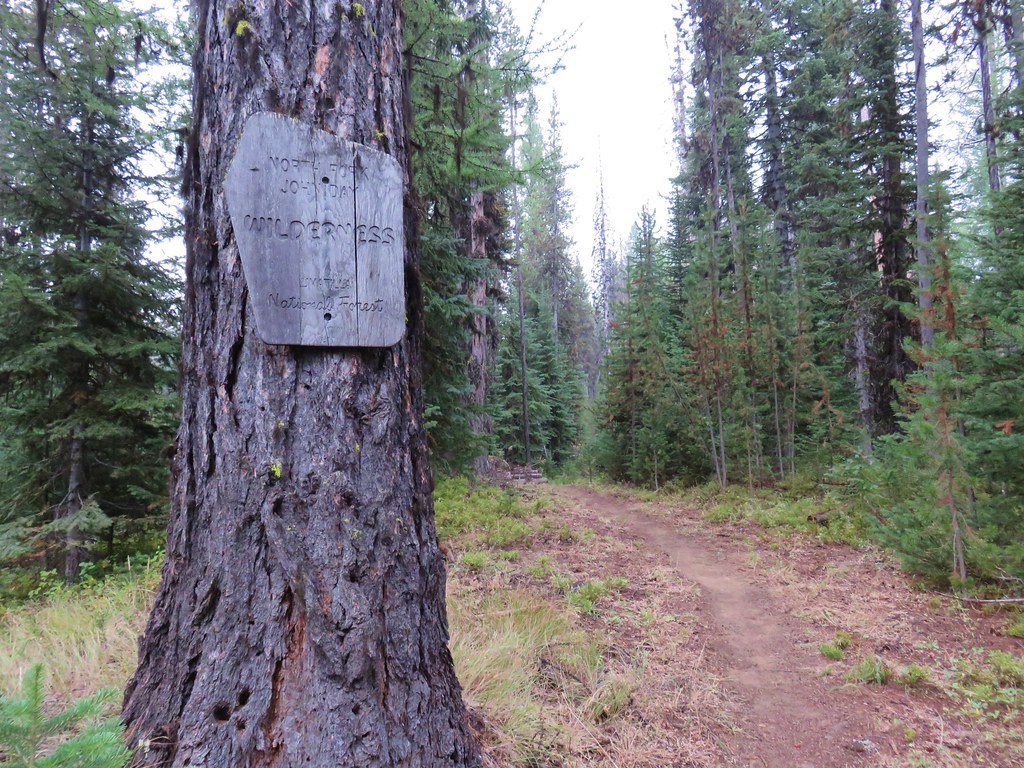
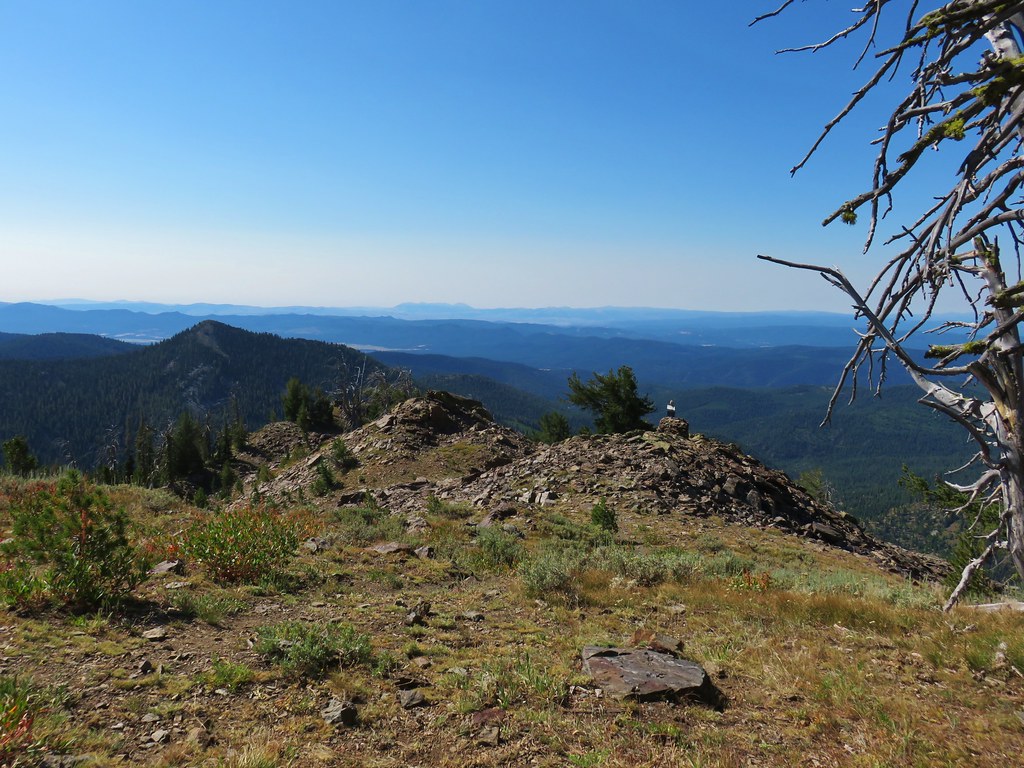
The trail had left the North Fork John Day Wilderness at Cracker Saddle and we began seeing the difference at a hairpin turn around a ridge.
IMG_0267

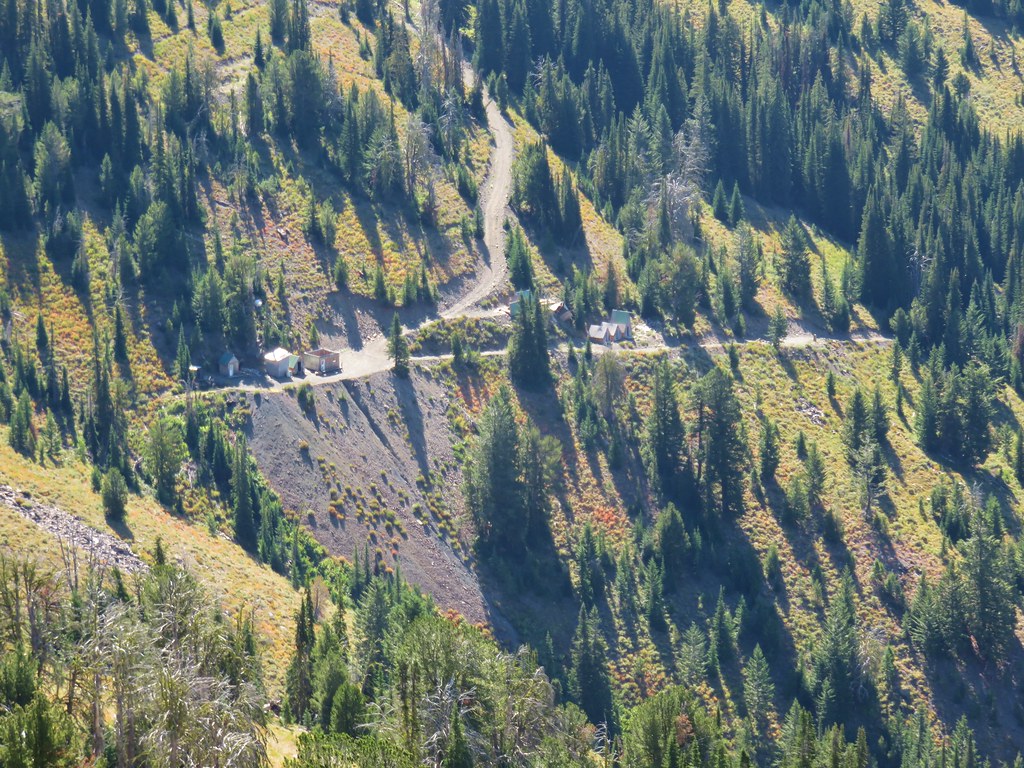
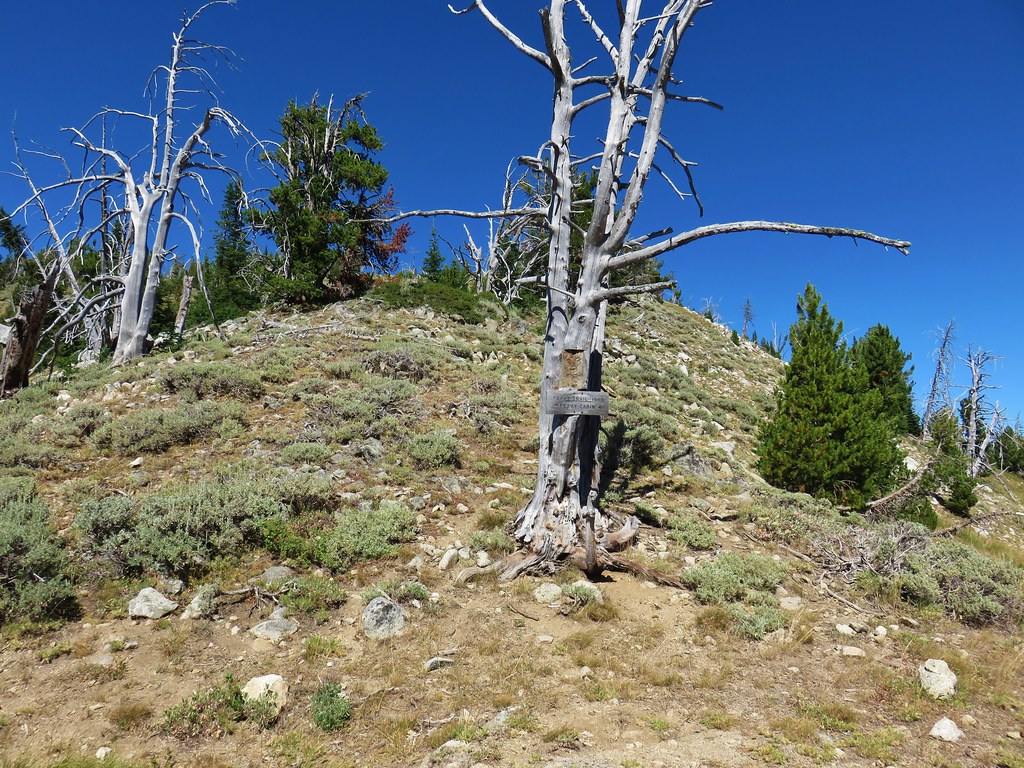
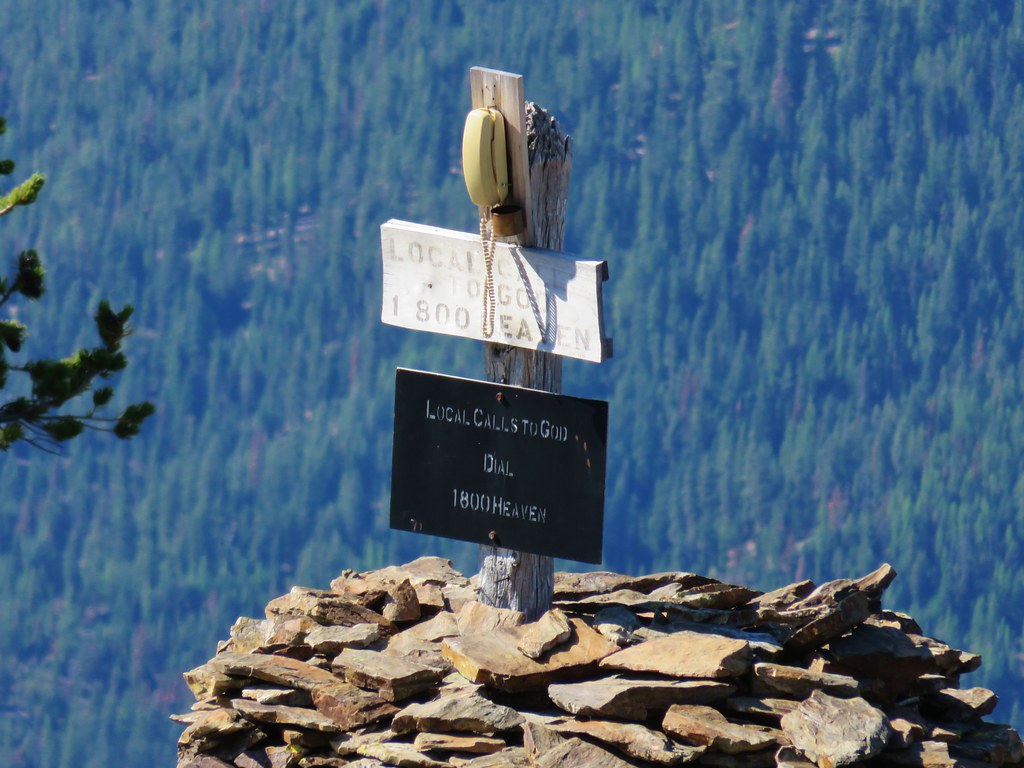
From above we couldn’t read the sign without the aid of the camera zoom.
IMG_0268

Someone clearly put some work into that. A little further along the trail we started noticing mining operations along the hillside. We could also see 9106′ Rock Creek Butte further along the ridge.
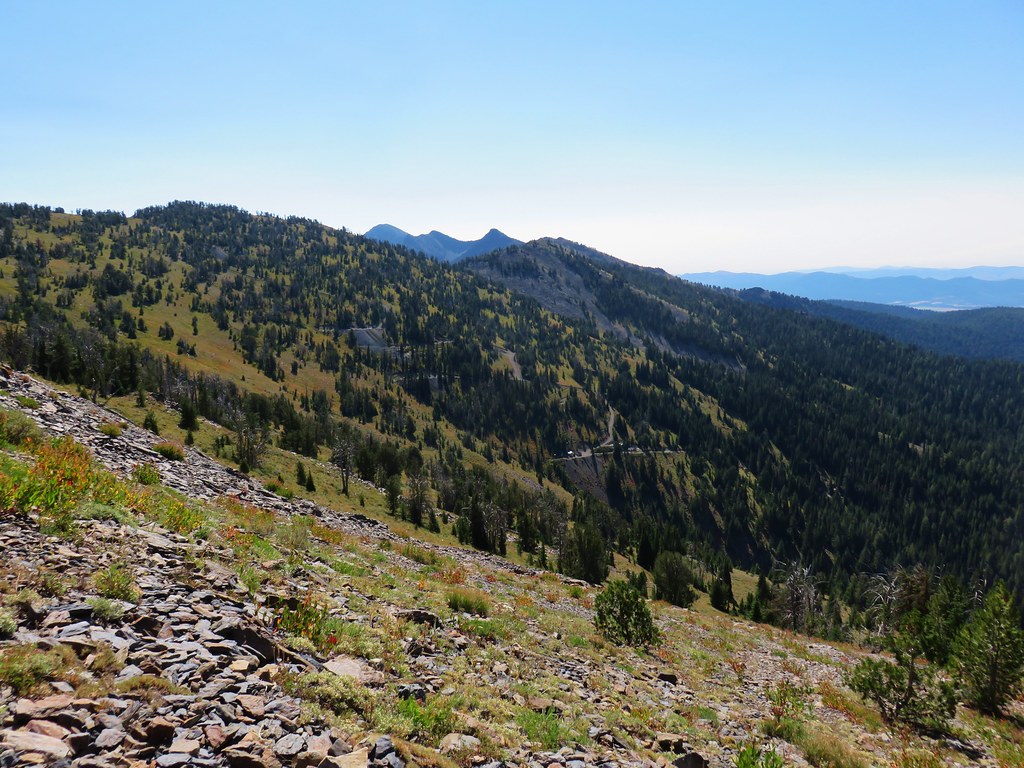
IMG_0274

IMG_0276

The trail spent a short while along a wide section of the ridge top before returning to the western side of the crest.
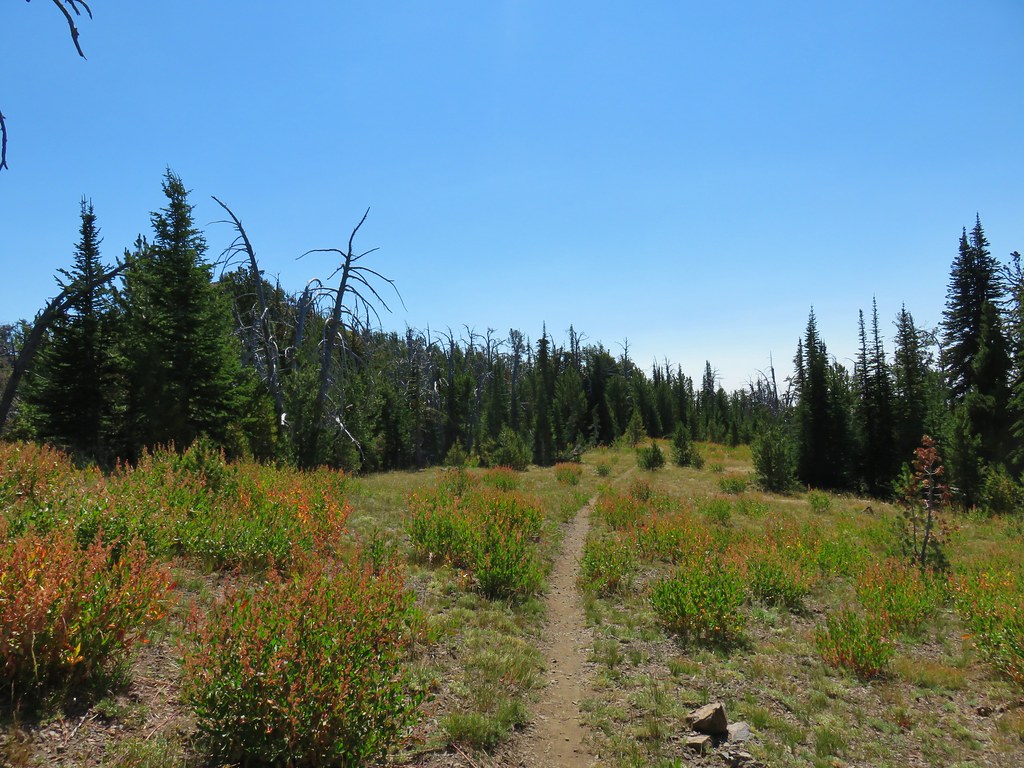
IMG_0280

IMG_0282

We would again gain the ridge top with a nice view down the Rock Creek Valley to the east.
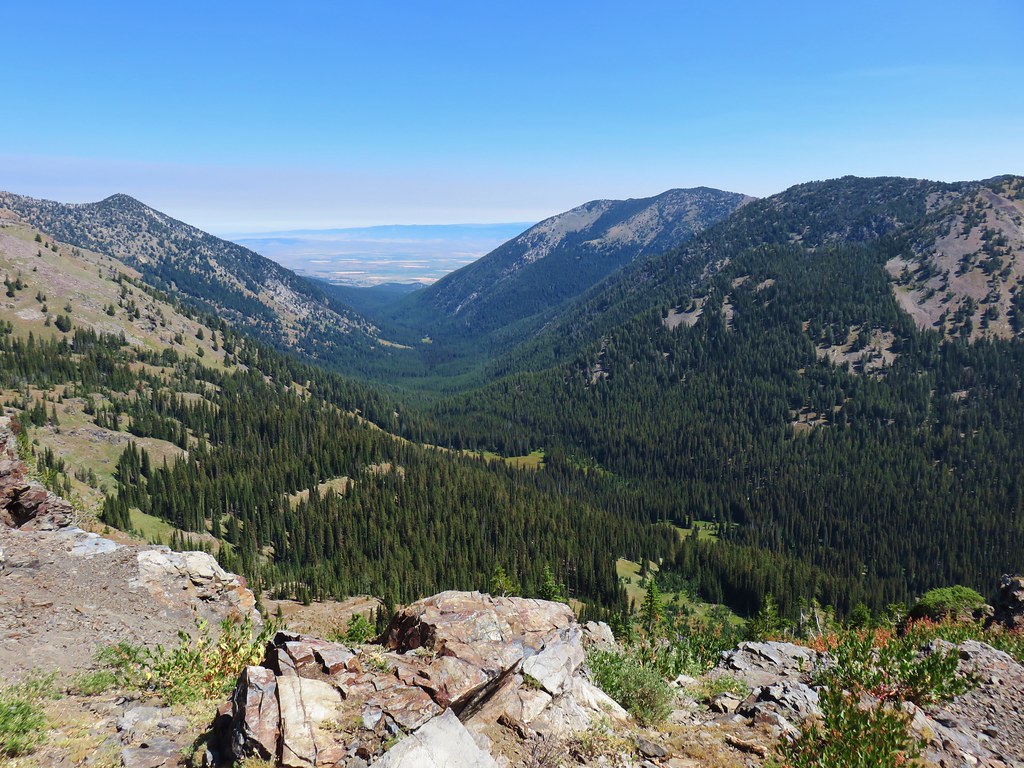
IMG_0287

Nearly seven miles from the Summit Lake Trail junction we came to the Pole Creek Ridge Trail which headed faintly downhill along a ridge.
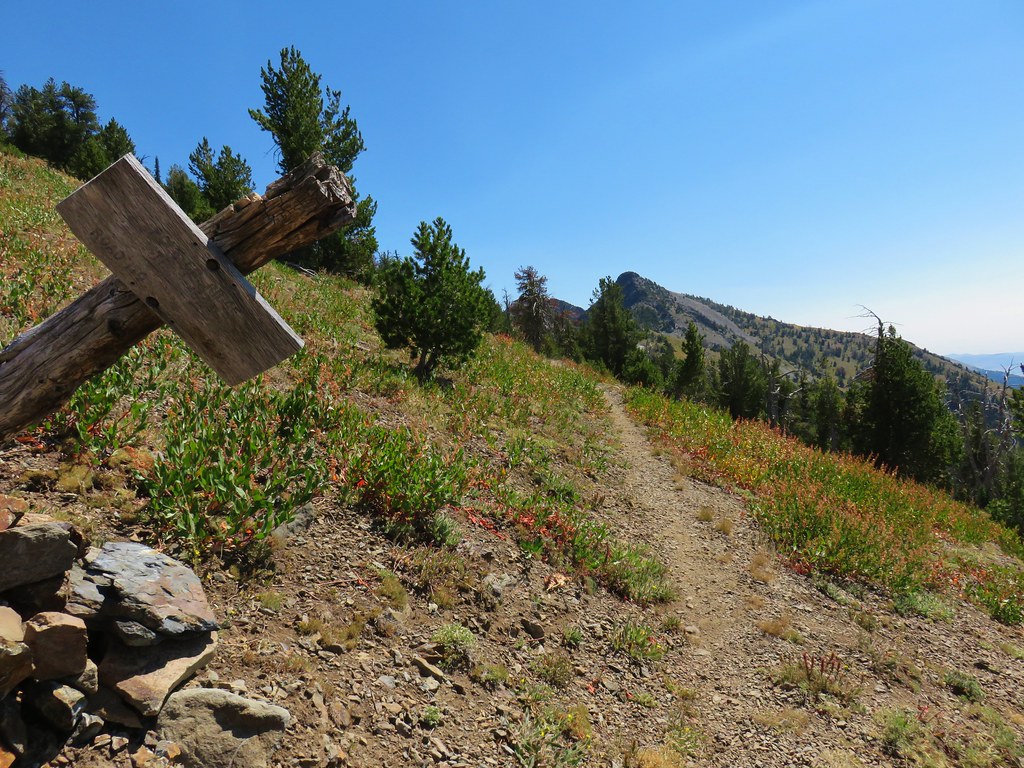
IMG_0291

IMG_0292

By the time we’d reached this junction we had decided to attempt Rock Creek Butte on the way by instead of waiting for the next day. It wasn’t too hot and more importantly it looked like smoke was creeping towards us from both sides so we thought we’d better get what views we could while the getting was good. It was still a little over two and a half miles to the SW ridge of Rock Creek Butte where we would turn up for the climb.
IMG_0295

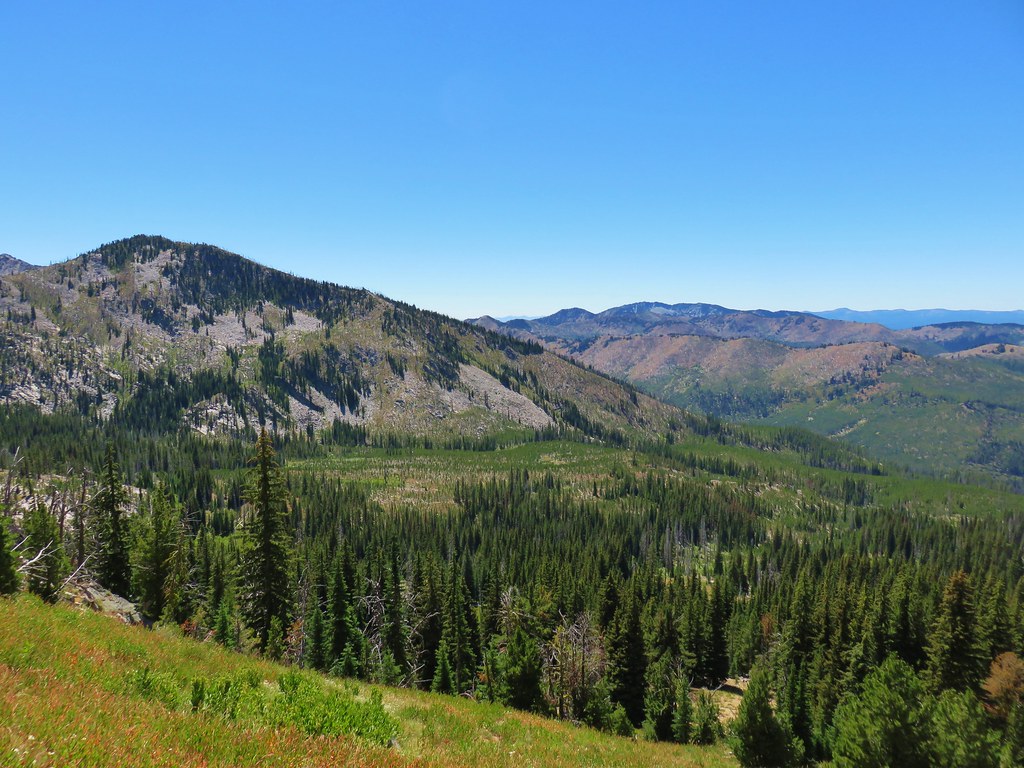
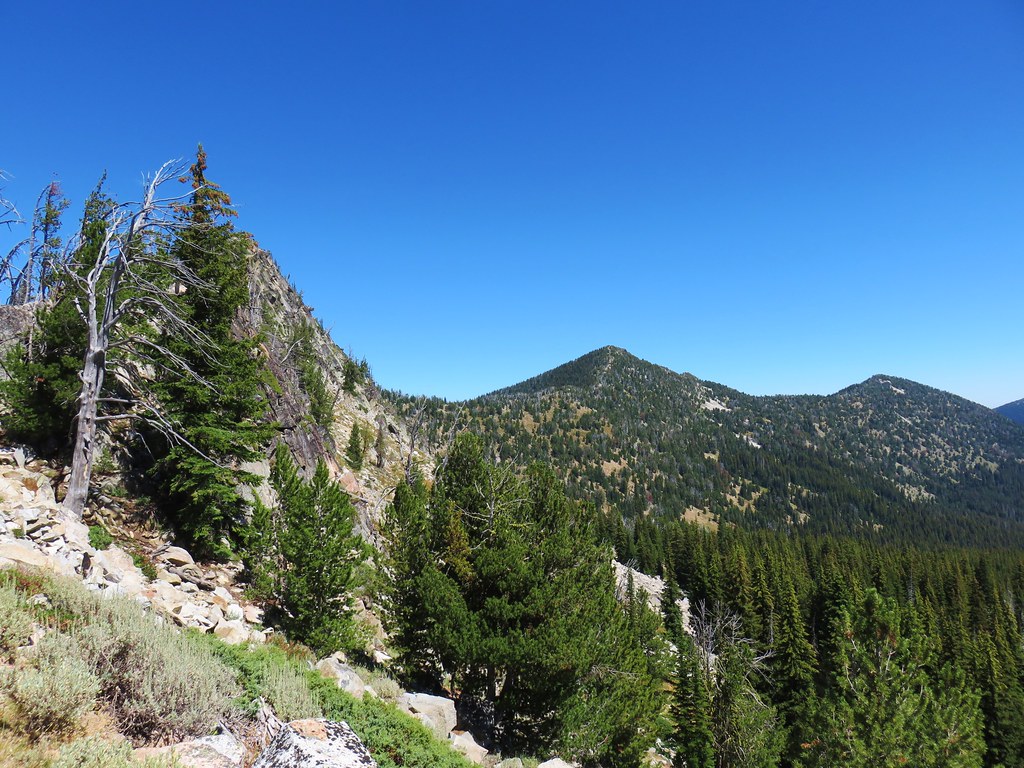
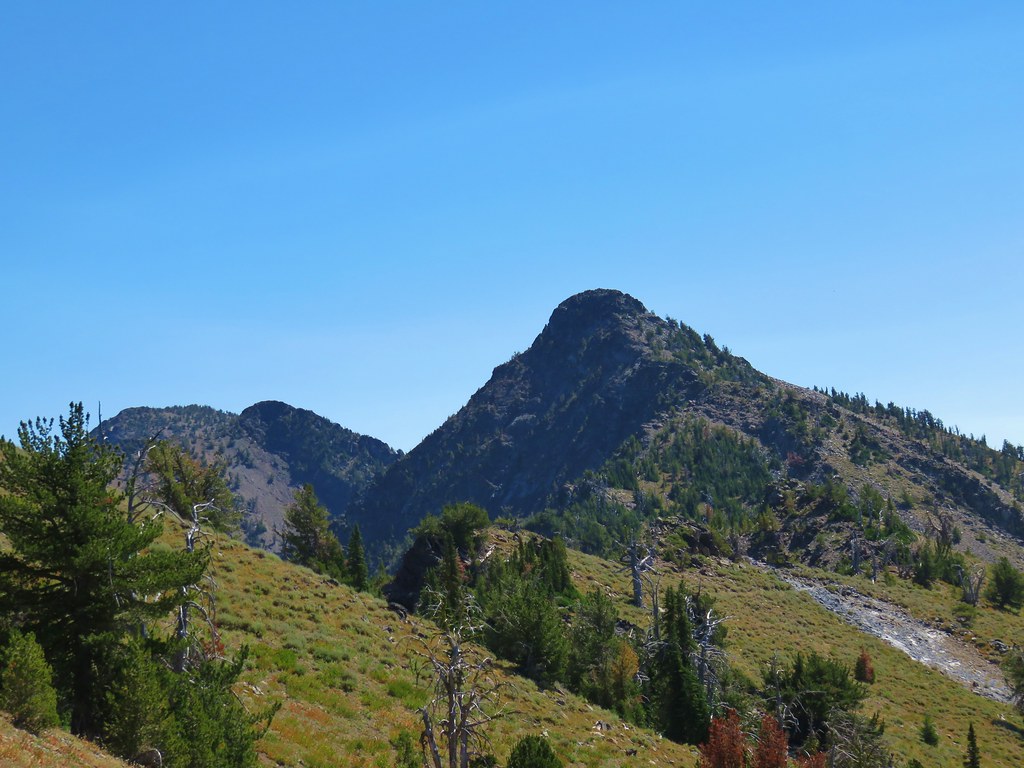
We were having a hard time coming from the direction that we were determining which peak ahead was actually Rock Creek Butte. We were hoping that the closest rounded peak was our goal and not the larger one further away. From the angle we were at they appeared to be somewhat similar in height.
IMG_0296

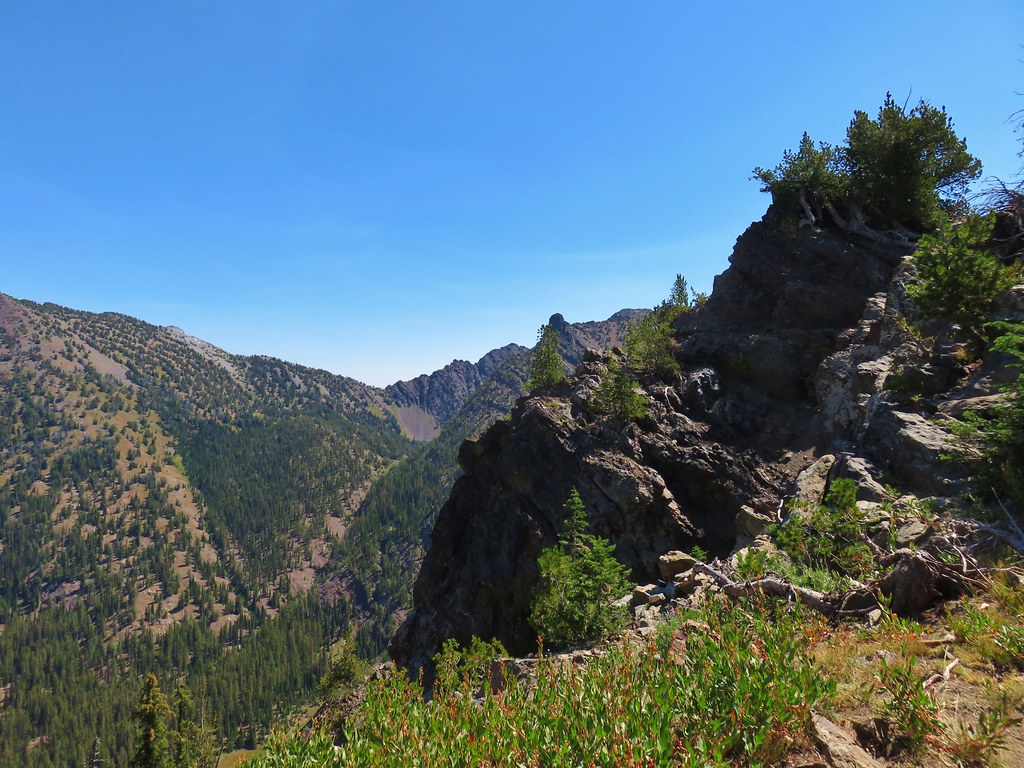
When we gained the ridge top again though we could just make out Rock Creek Lake in the basin below the further peak which told us that was our next goal.
IMG_0298

As it turned out the peak we had hoped was Rock Creek Butte was 500′ shorter although it did seem to have a possible route up.
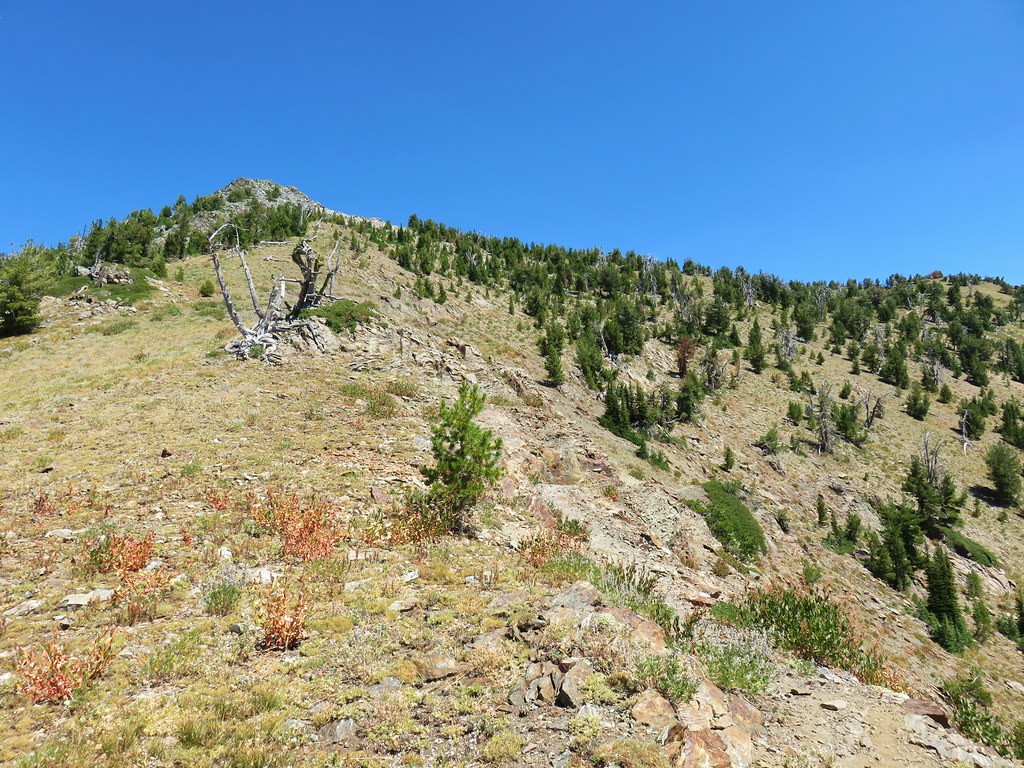
IMG_0309Looking up “not” Rock Creek Butte

IMG_0310Rock Creek Butte is still a little ways away.

It took another mile and a half to reach the saddle where we would turn up the SW ridge of Rock Creek Butte.
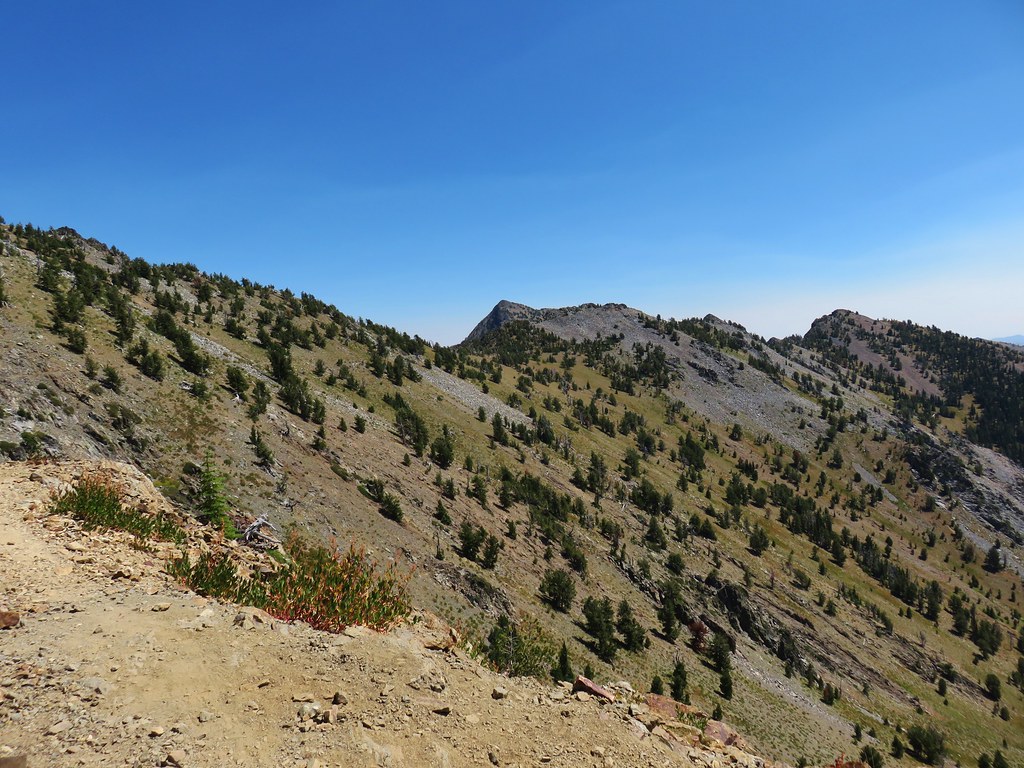
IMG_0327Looking ahead to the saddle.

IMG_0330Nearing the saddle.

At the saddle we left the trail and ditched are backpacks in a group of trees in favor of our day packs.
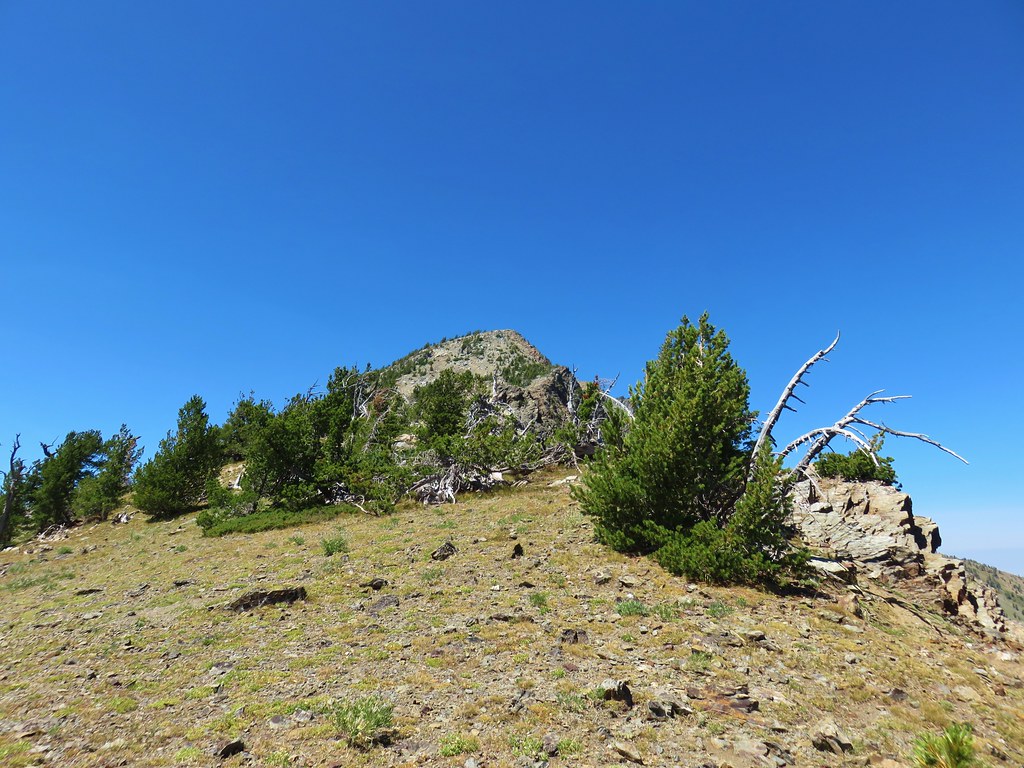
IMG_0331

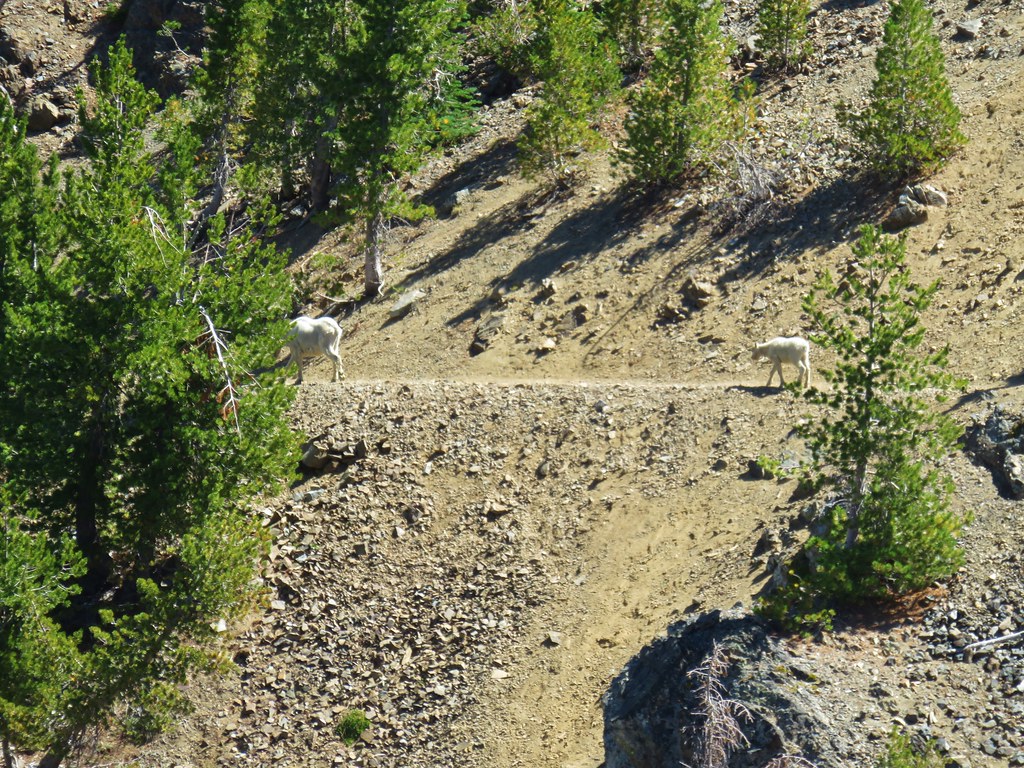
Before starting the climb we noticed that we weren’t the only ones traveling south on the Elkhorn Crest Trail. A pair of mountain goats could be seen walking along the trail.
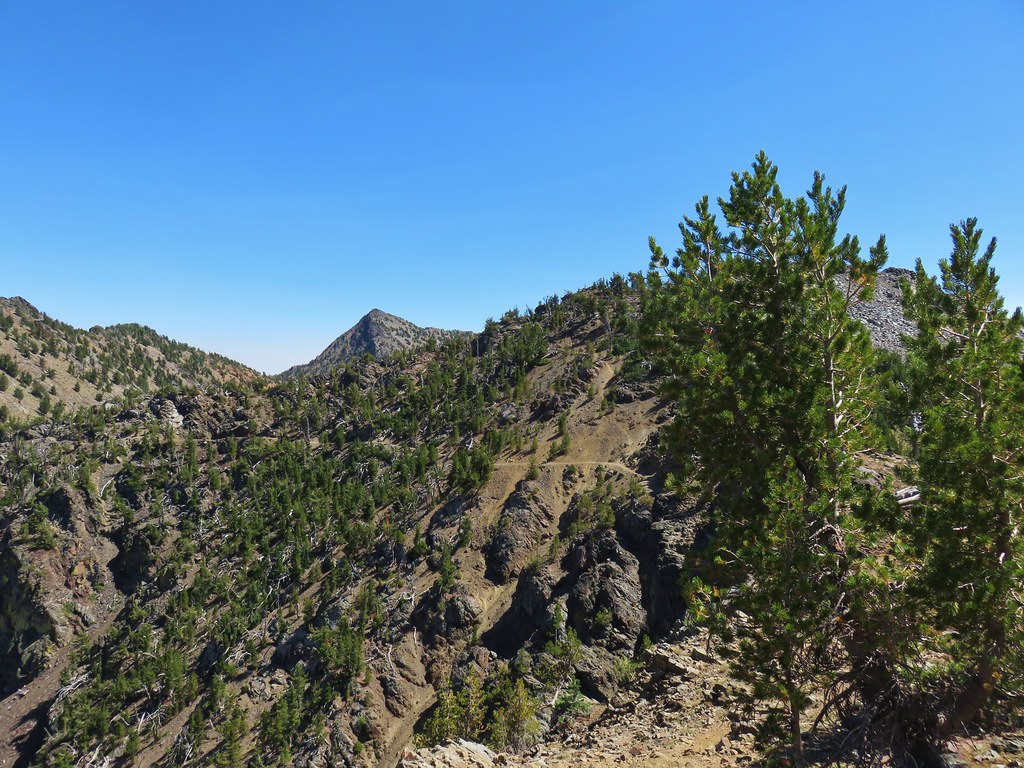
IMG_0335

IMG_0337

After watching the goats head over the ridge toward Twin Lakes we began our ascent.
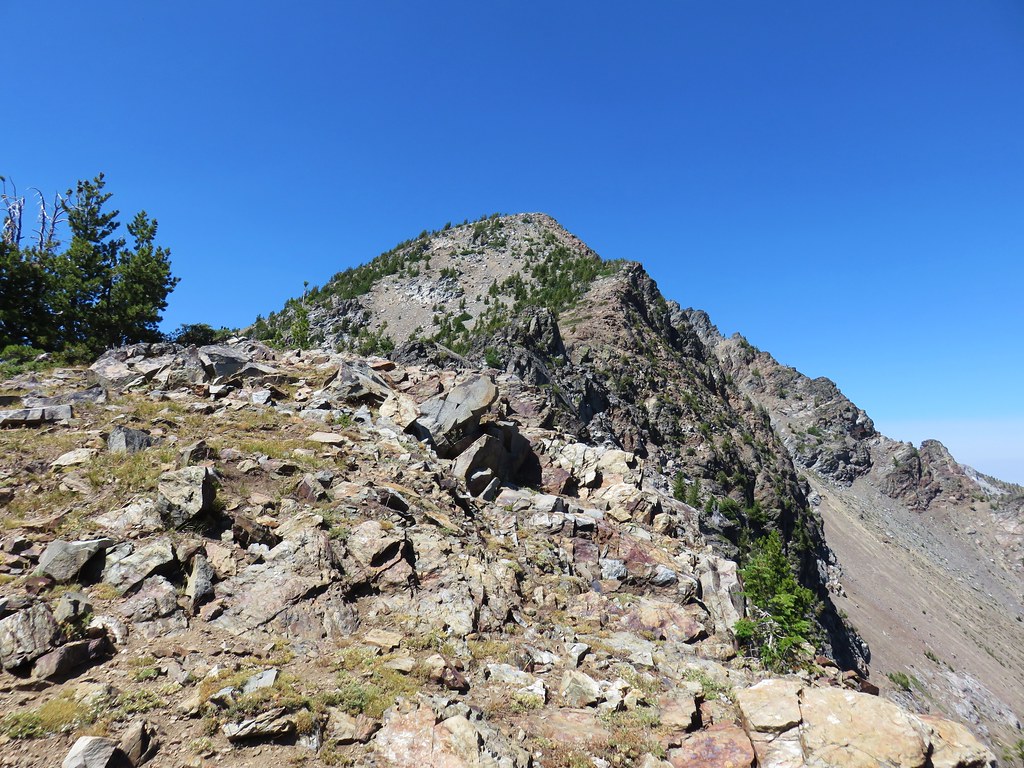
Mountain goat sign was everywhere along the rocky ridge and there was no discernible path, although we did occasionally spot a human foot print in the dirt.
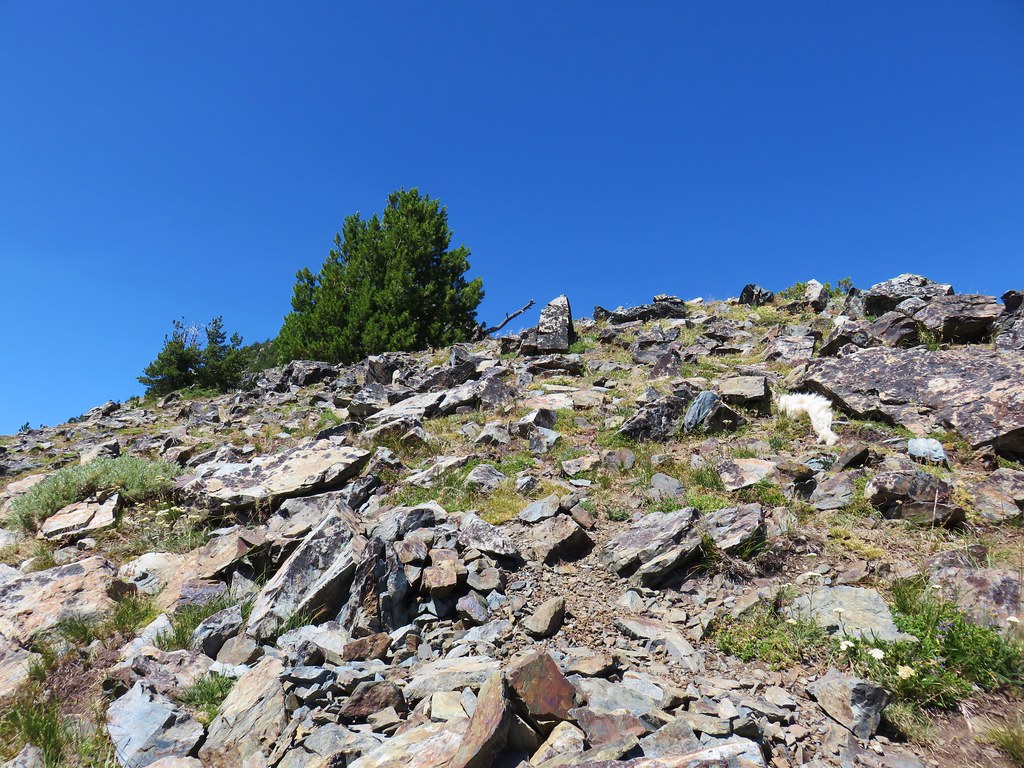
IMG_0340

IMG_0342

IMG_0346

The half mile route gains roughly 600′ with the final tenth of a mile being the steepest portion.
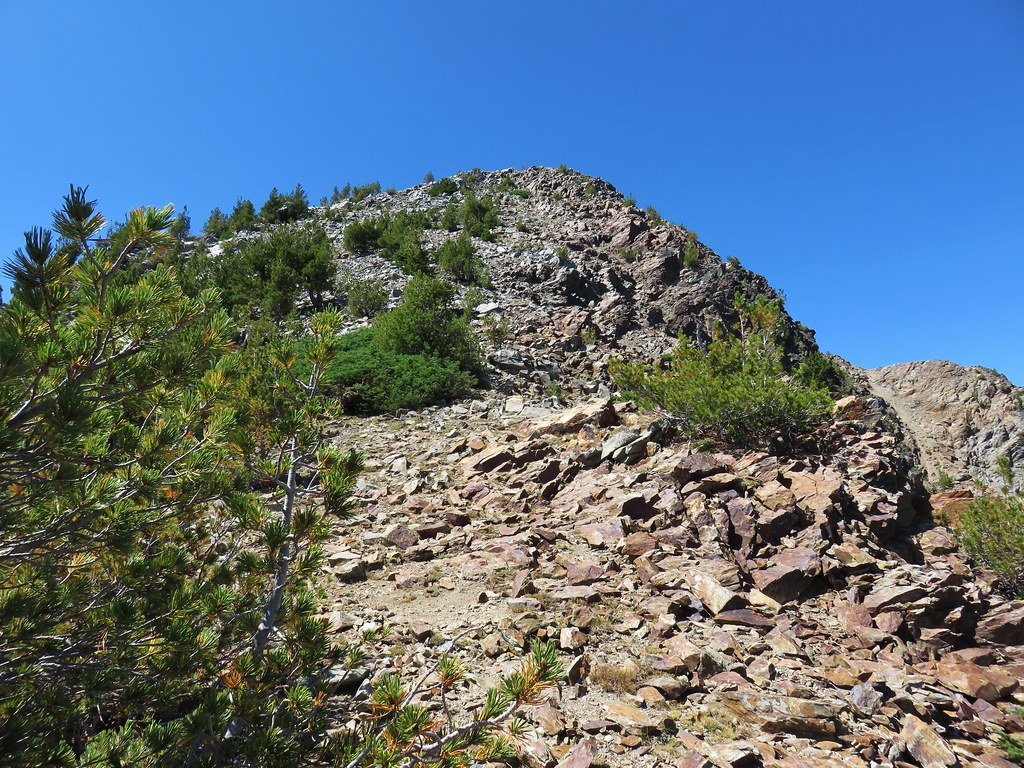
IMG_0349

A large cairn and register box sit atop the peak.
IMG_0353

From the summit Lower Twin Lake was visible to the south.
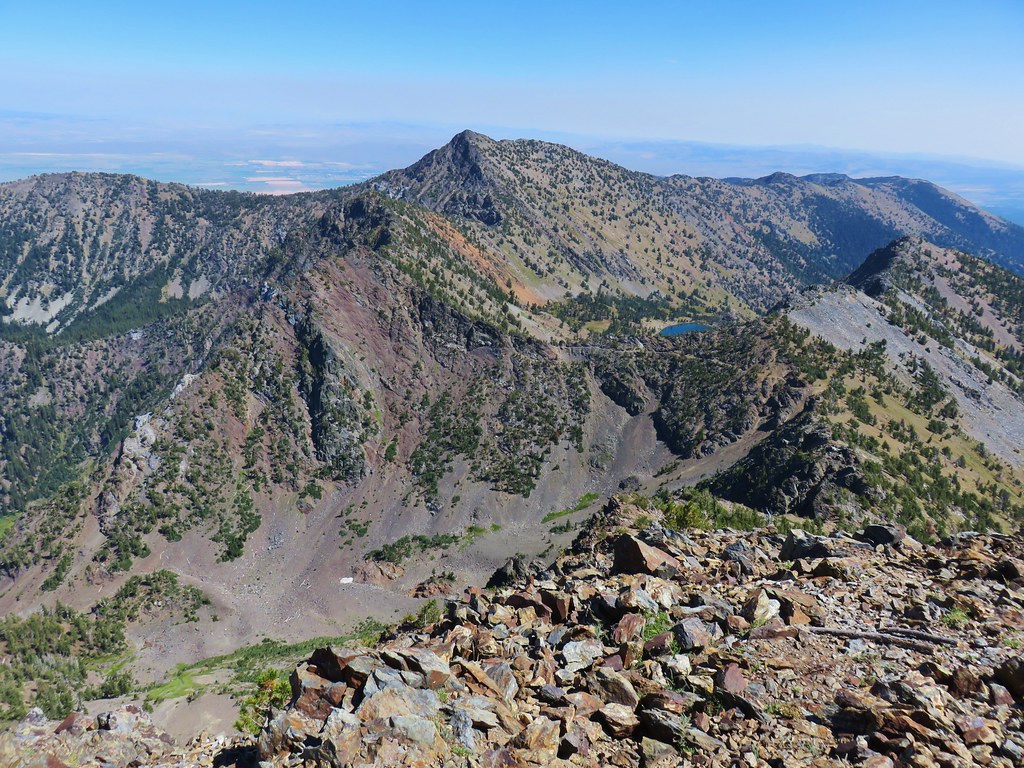
IMG_0376

IMG_0356

Mt. Ireland and Vinegar Hill lay to the west.
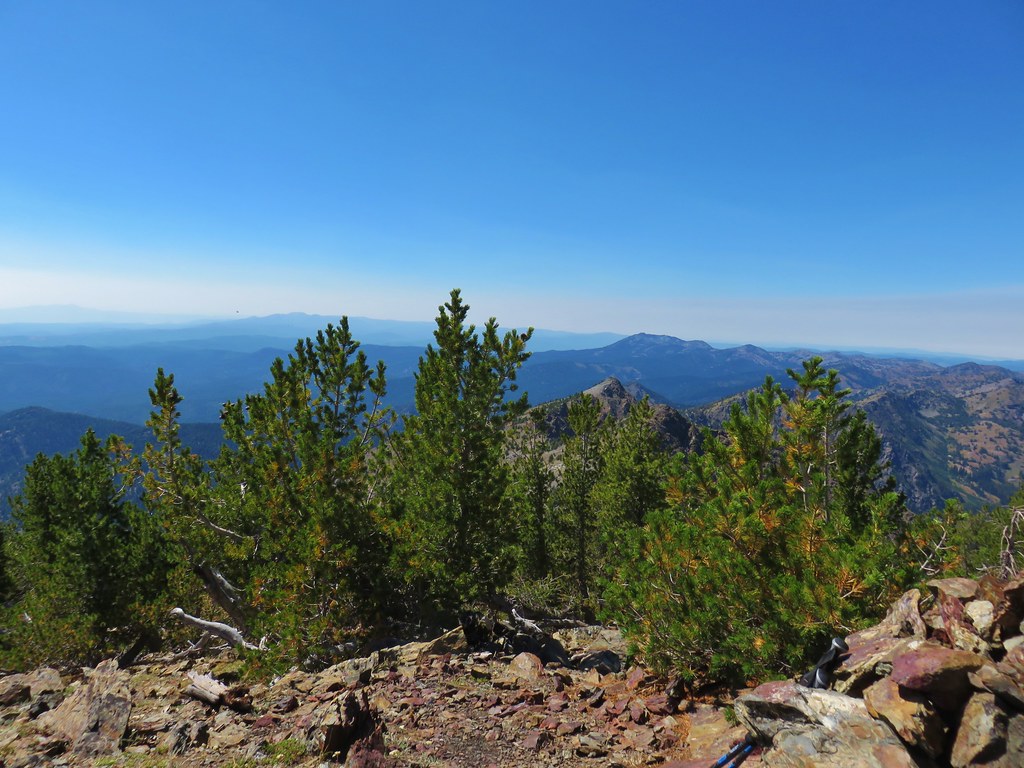
IMG_0360

To the NE should have been the Wallowas but smoke appeared to have overtaken them.
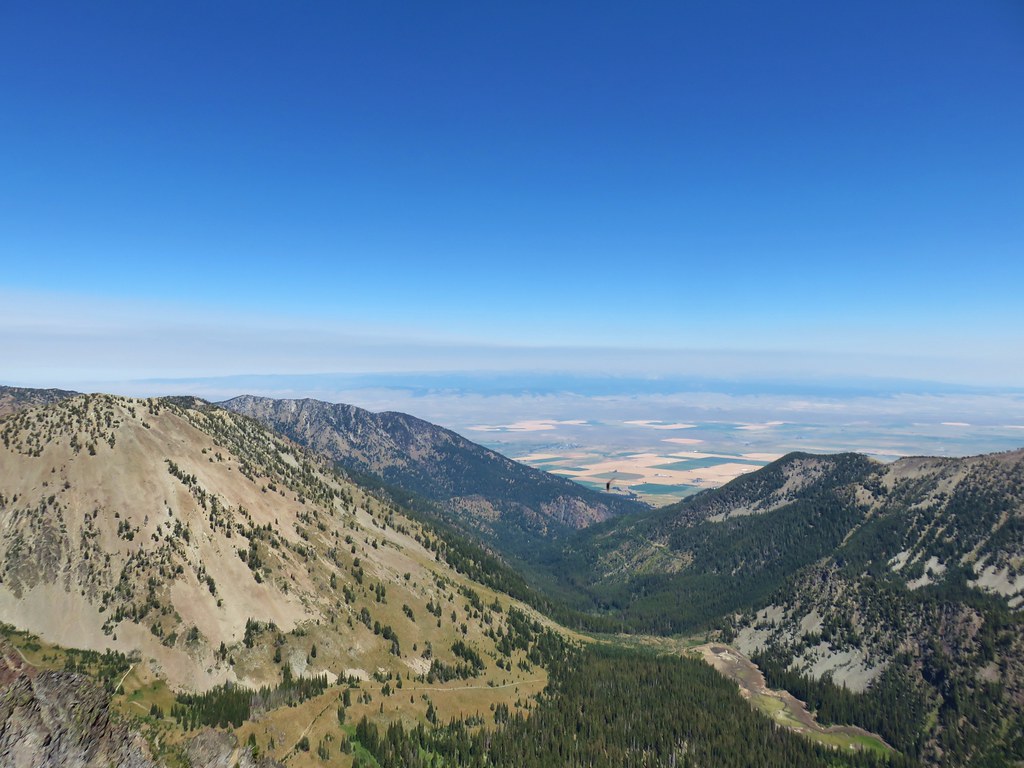
IMG_0358

The view to the north included many of the peaks of the Elkhorn Range but there was no view of Rock Creek Lake due to the broad summit.
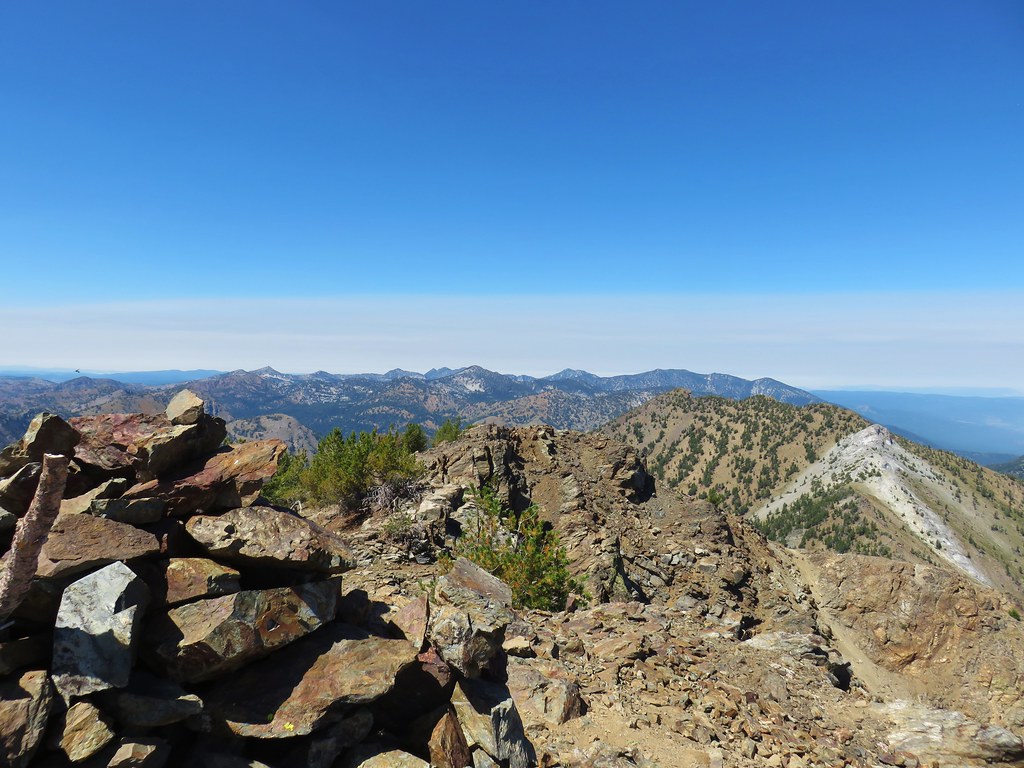
IMG_0354

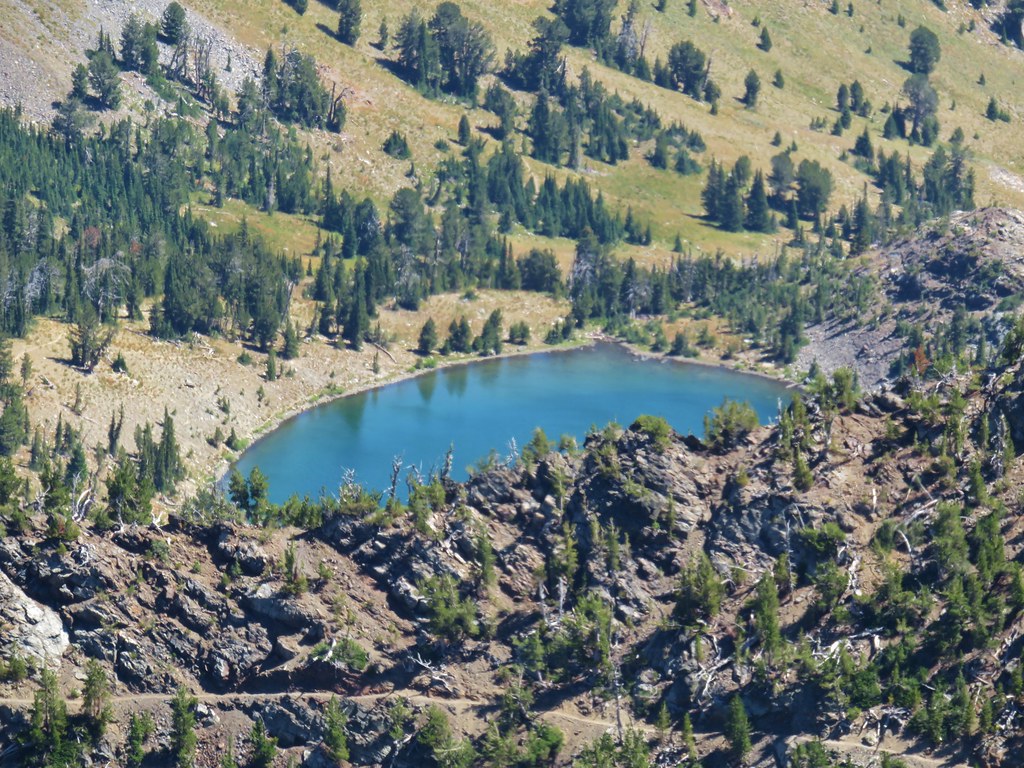
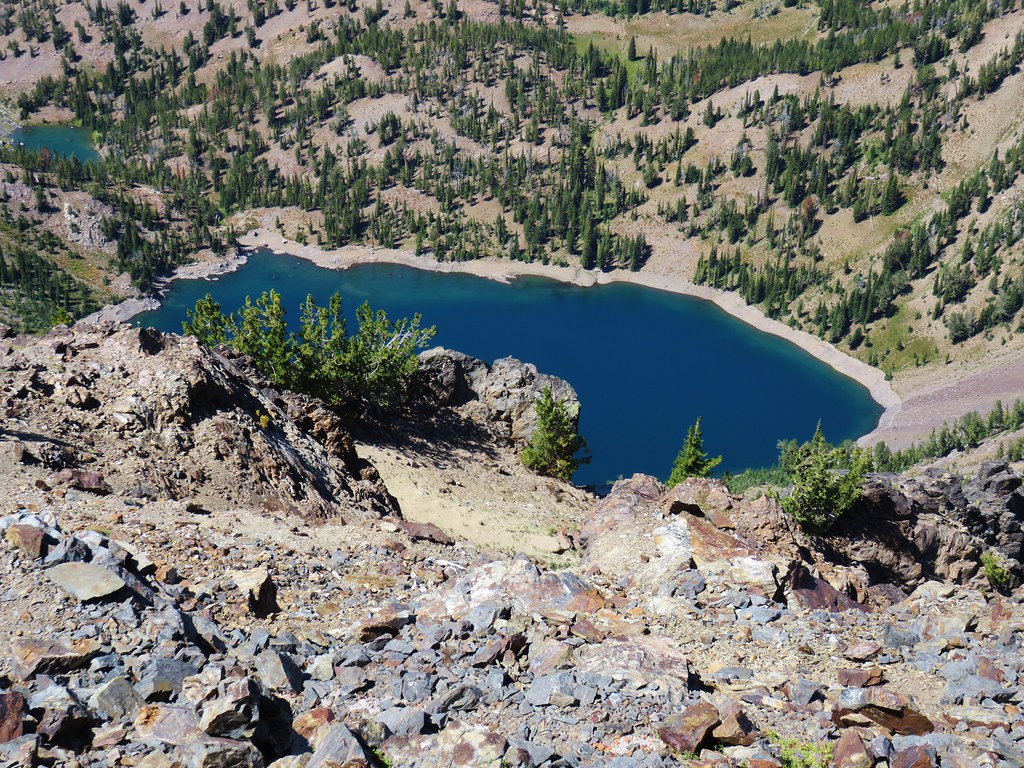
A 500′ stroll across the summit though revealed the gorgeous lake below.
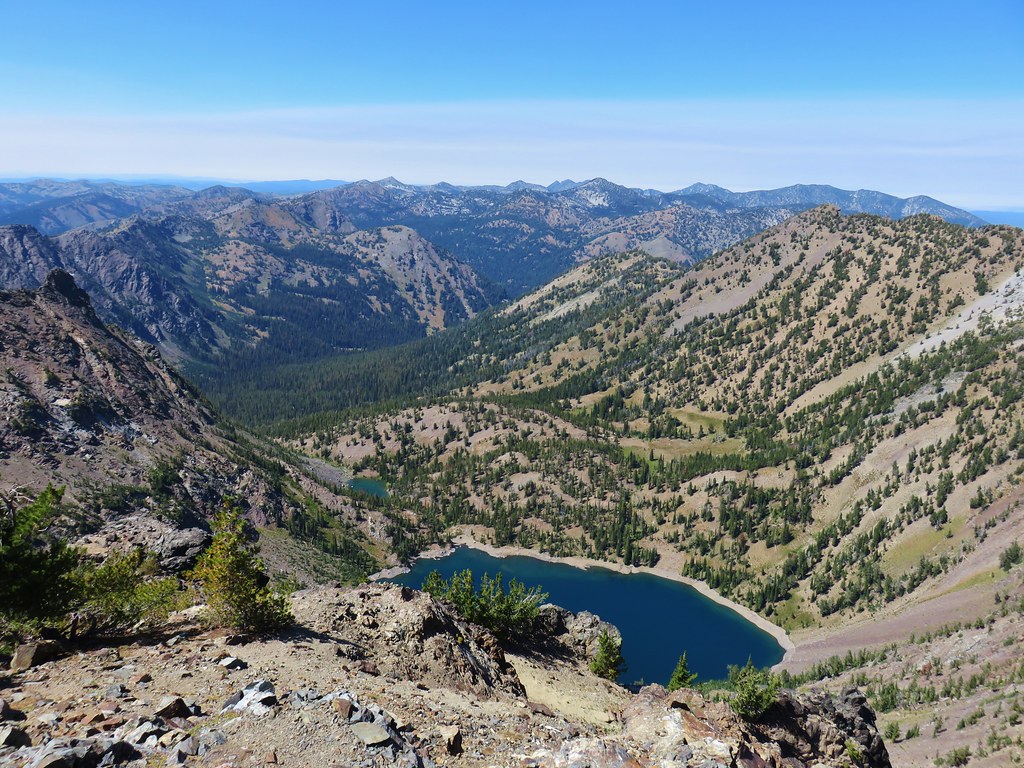
IMG_0371

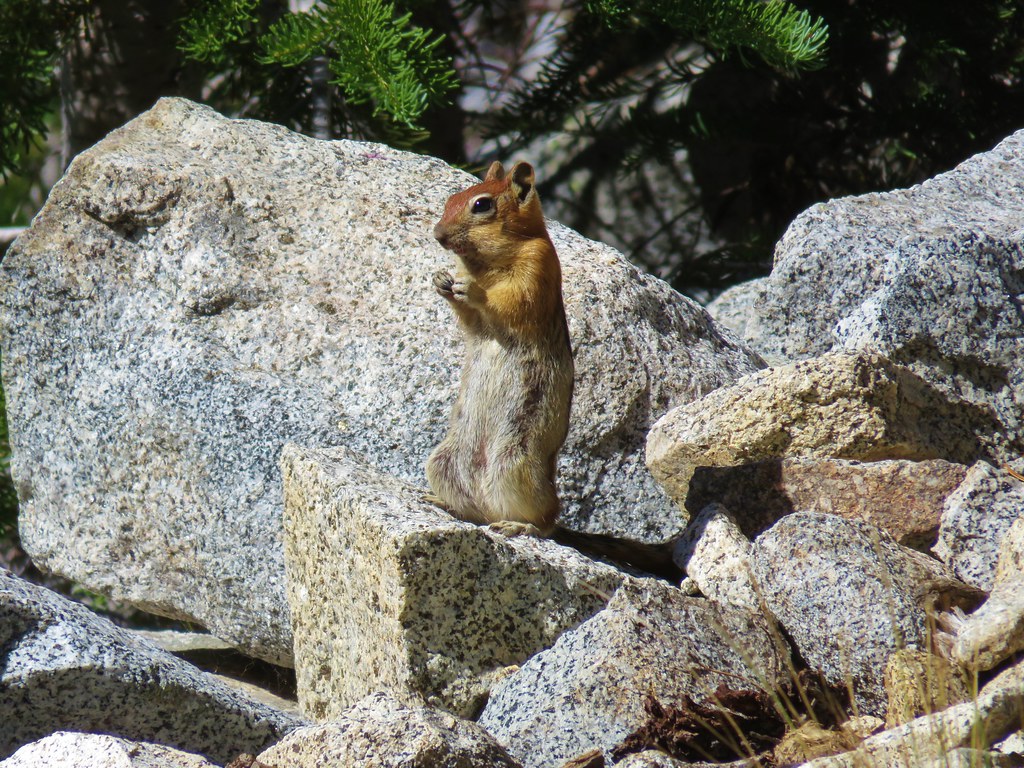
IMG_0370Notice the golden-mantled ground squirrel sitting atop the large rock overlooking the lake.

Mountain goats were grazing in some green grass by a smaller body of water near the lake.
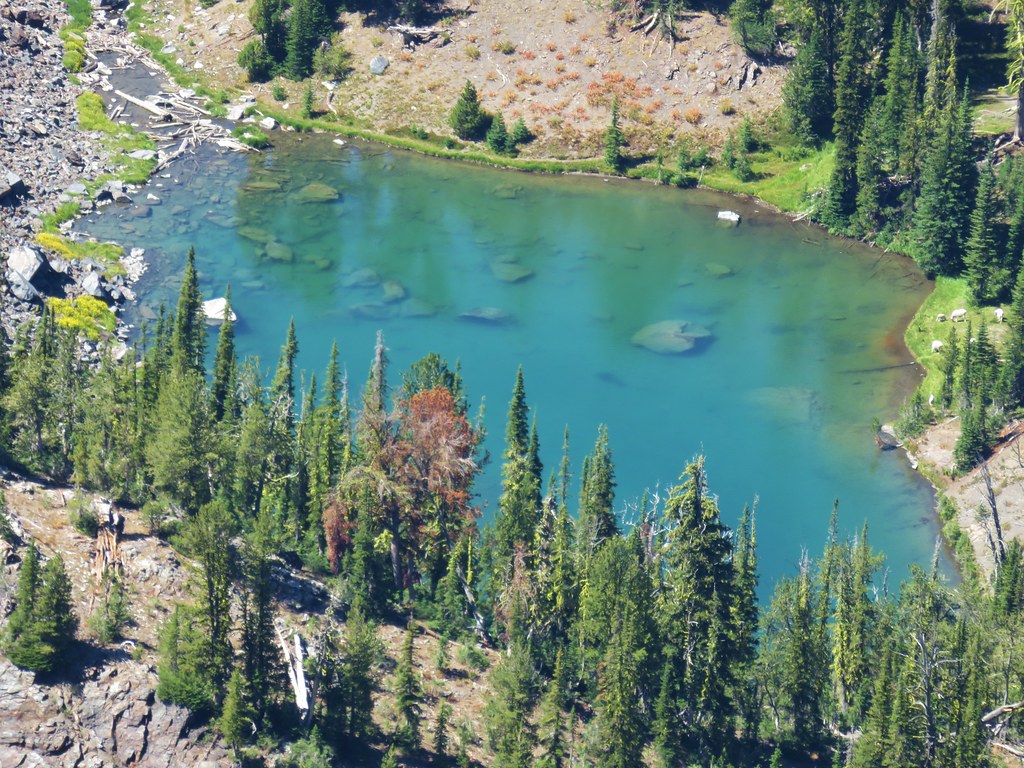
IMG_0375 (Full disclosure neither of us noticed the goats until I was looking through the pictures at home.)

IMG_0373Looking back at the summit cairn from the Rock Creek Lake overlook.

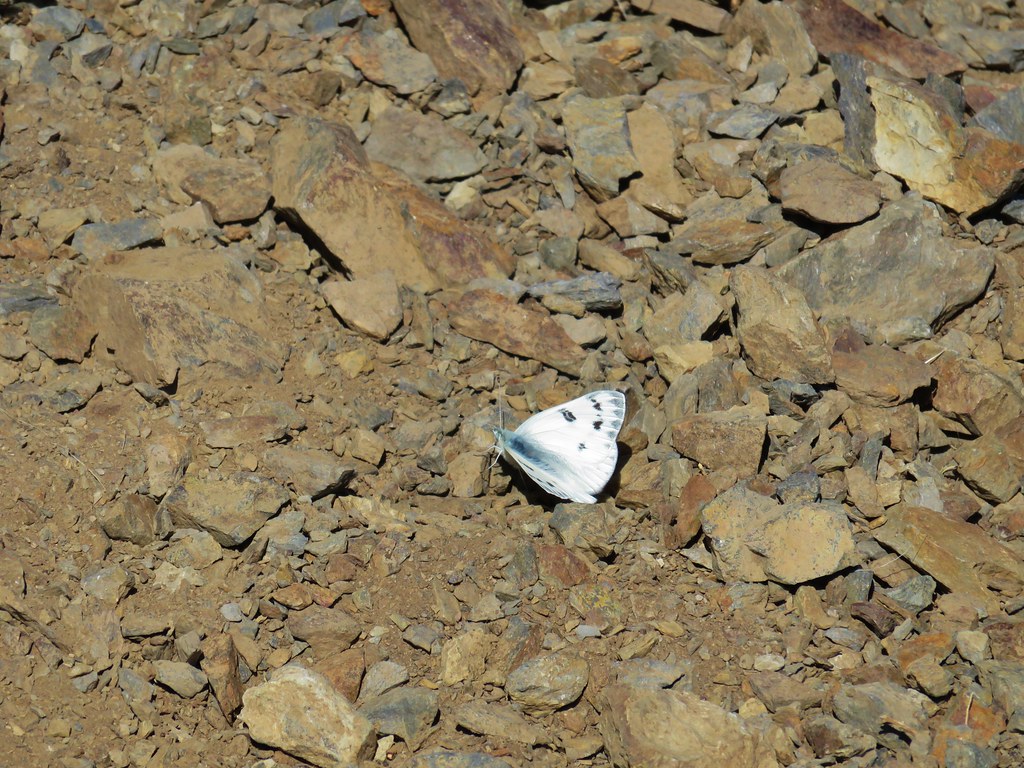
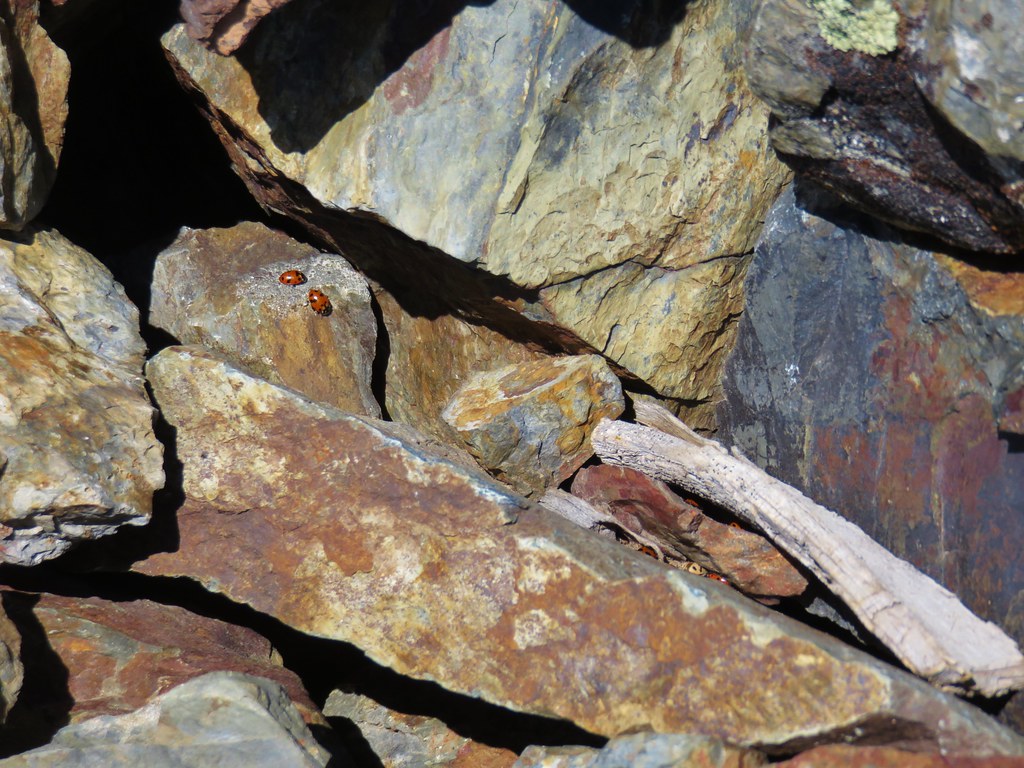
There were a lot of flying ants on the cairn as well as several lady bugs and some butterflies nearby.
IMG_0362

IMG_0363

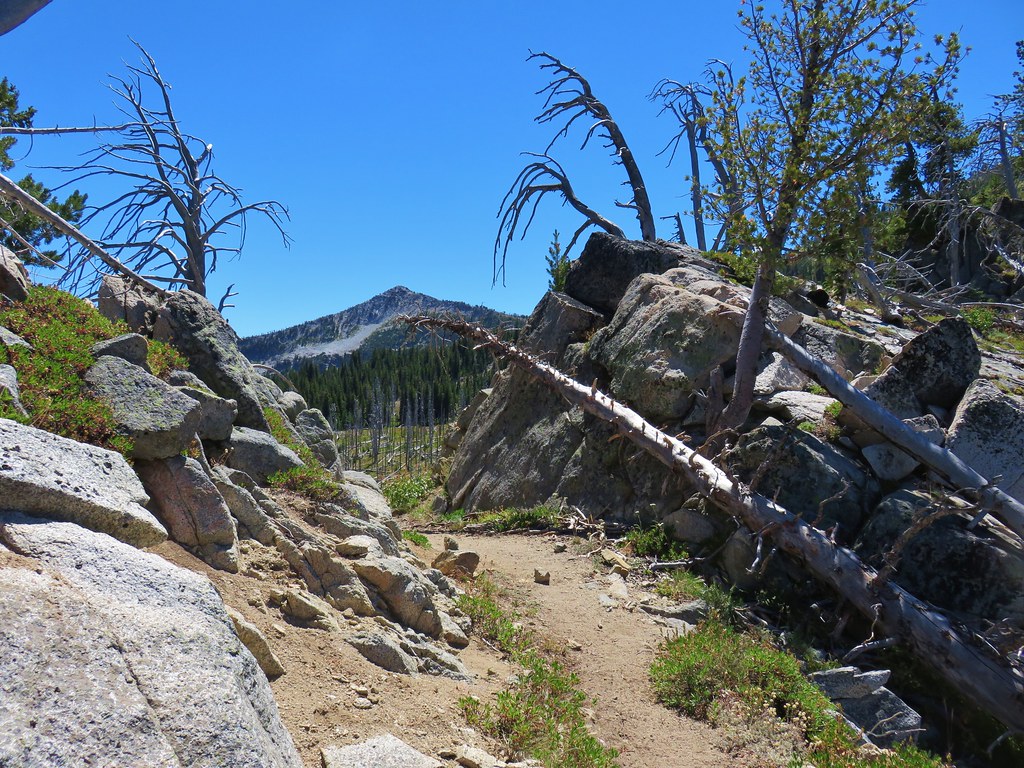
After recovering from the climb up we started back down just as another hiker was closing in on the summit. It turned out that he had been the other person besides us camped at Summit Lake the night before. We left him to the summit and slowly picked our way back down to our backpacks. After retrieving them we returned to the Elkhorn Crest Trail following a section of trail that had been blasted out of the rocks.
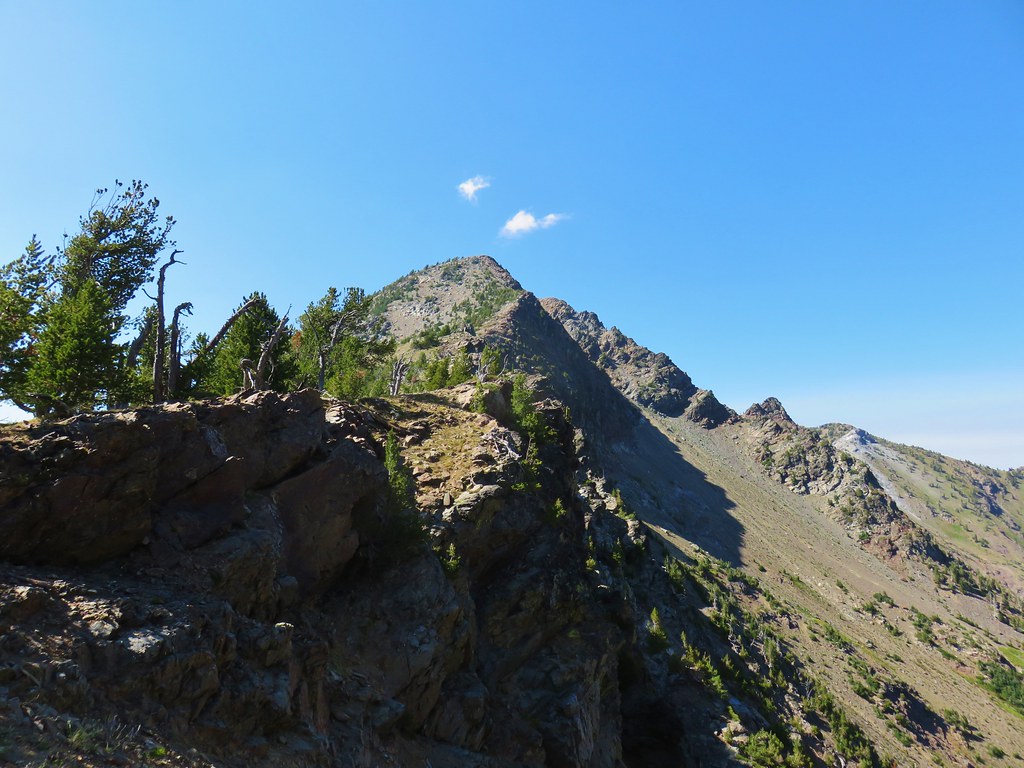
IMG_0379

IMG_0378

IMG_0380

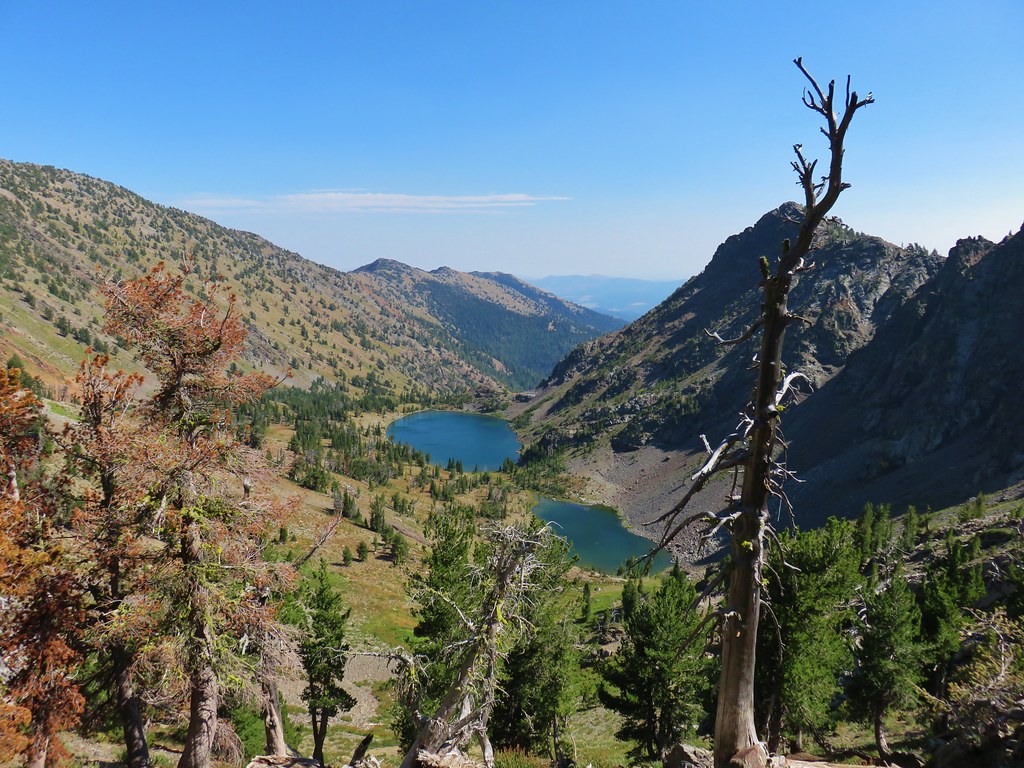
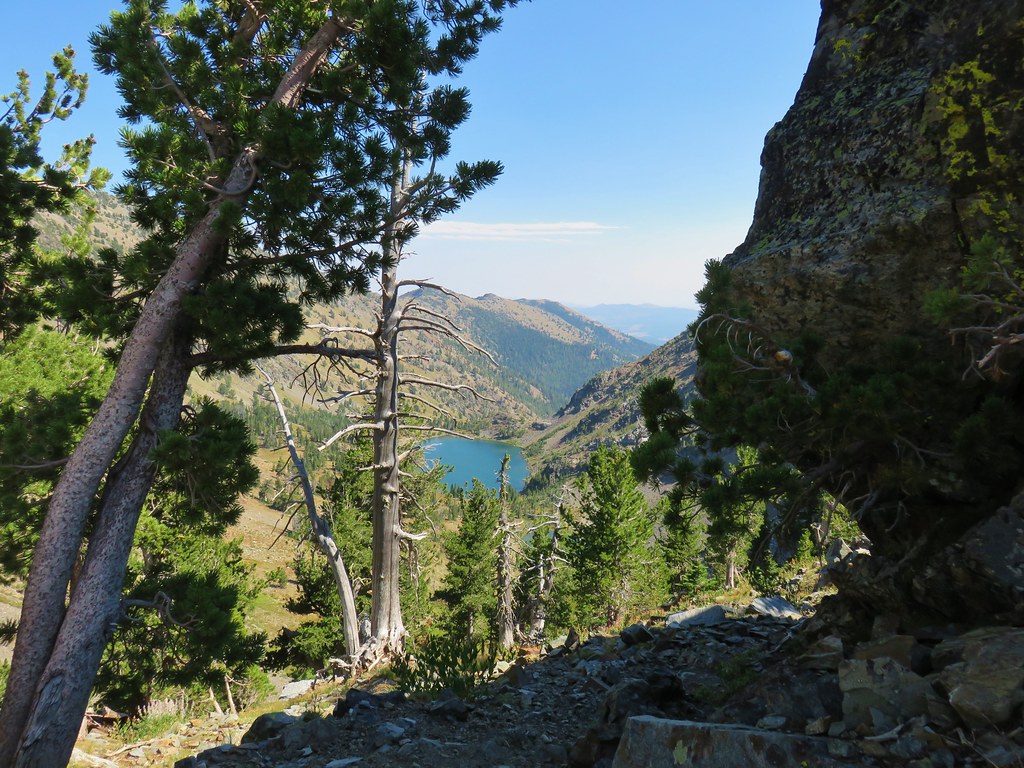
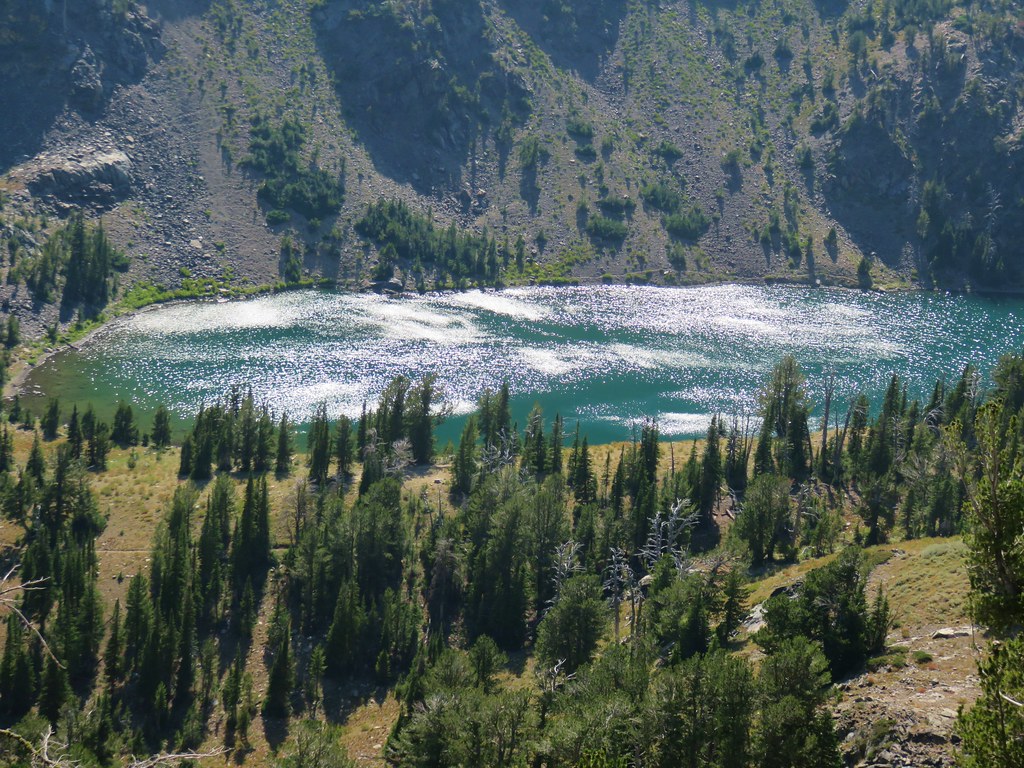
Soon Lower Twin Lake came into view followed by Upper Twin Lake.
IMG_0381

IMG_0385

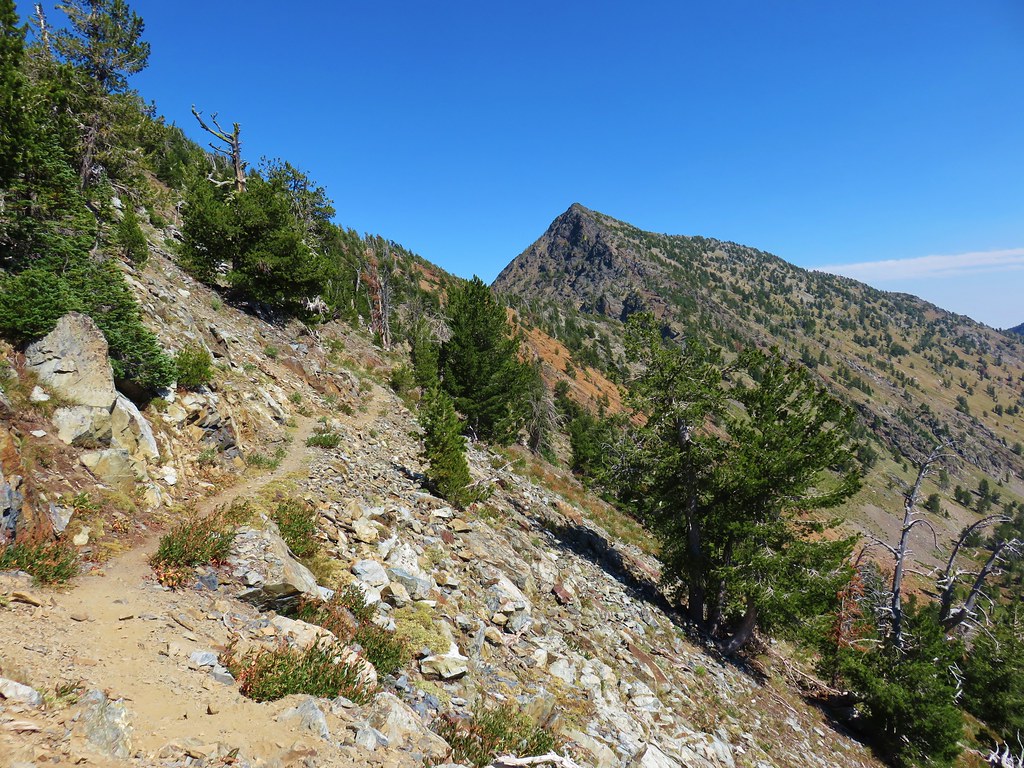
The trail made a sweeping curve for the next three quarters of a mile above the lakes bringing around to the opposite end of them before arriving at a junction with the Twin Lakes Trail.
IMG_0387

IMG_0392

Although the lakes are only about 350′ below the junction the Twin Lakes Trail takes its own sweet time getting down to them via a series of long switchbacks.
IMG_0393

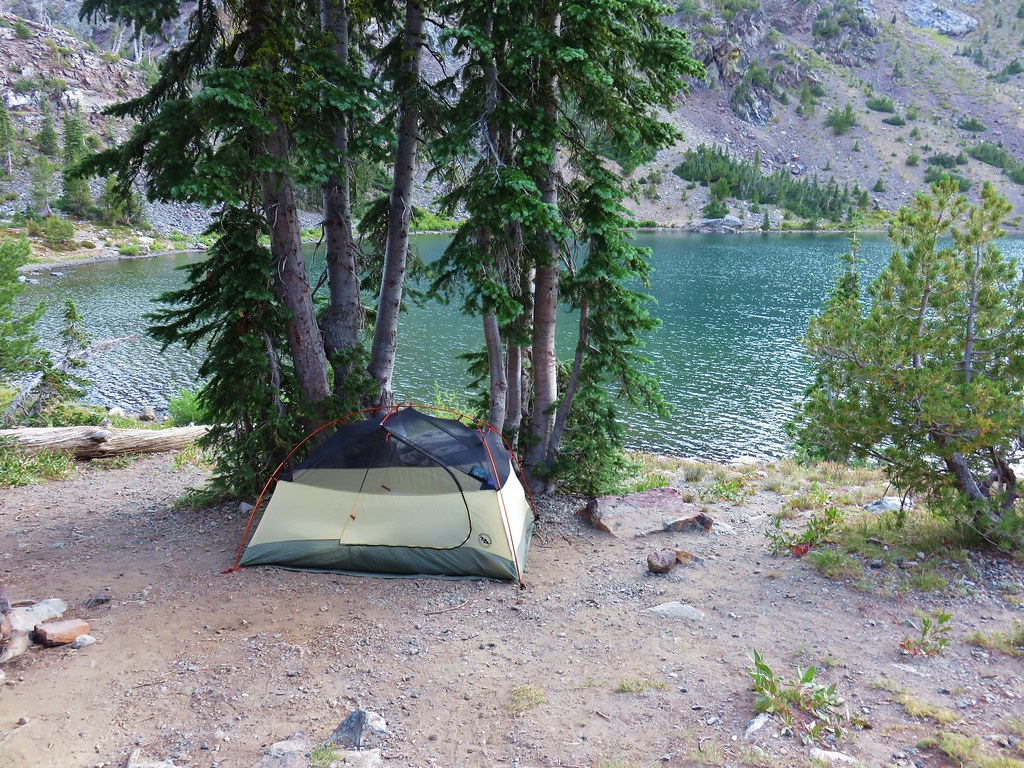
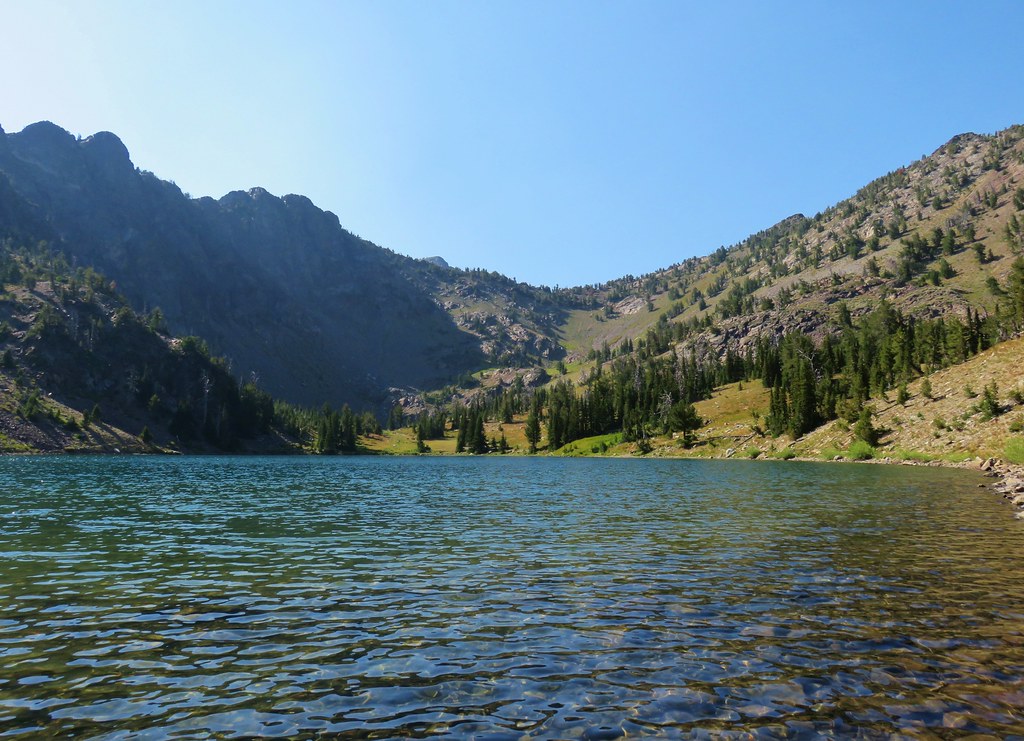
They made for a relatively easy climb out the next day but I was ready to be done for the day and became rather impatient with the slow decent. After a little over a mile we arrived at the lake and chose a camp stie.
IMG_0400

IMG_0492

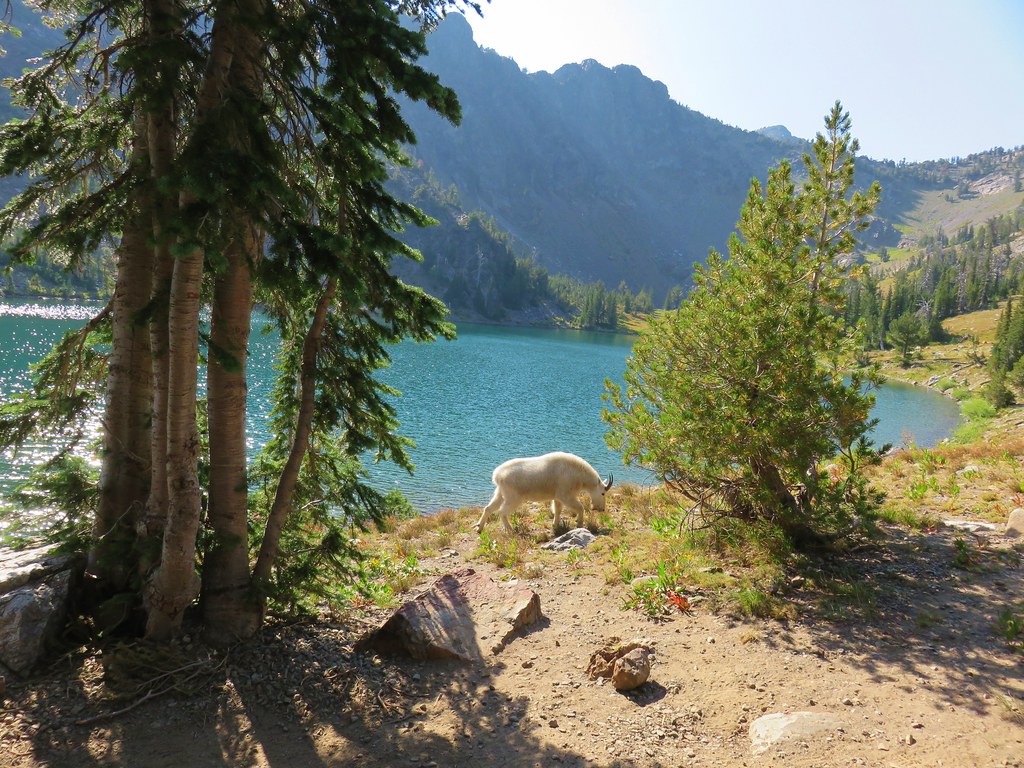
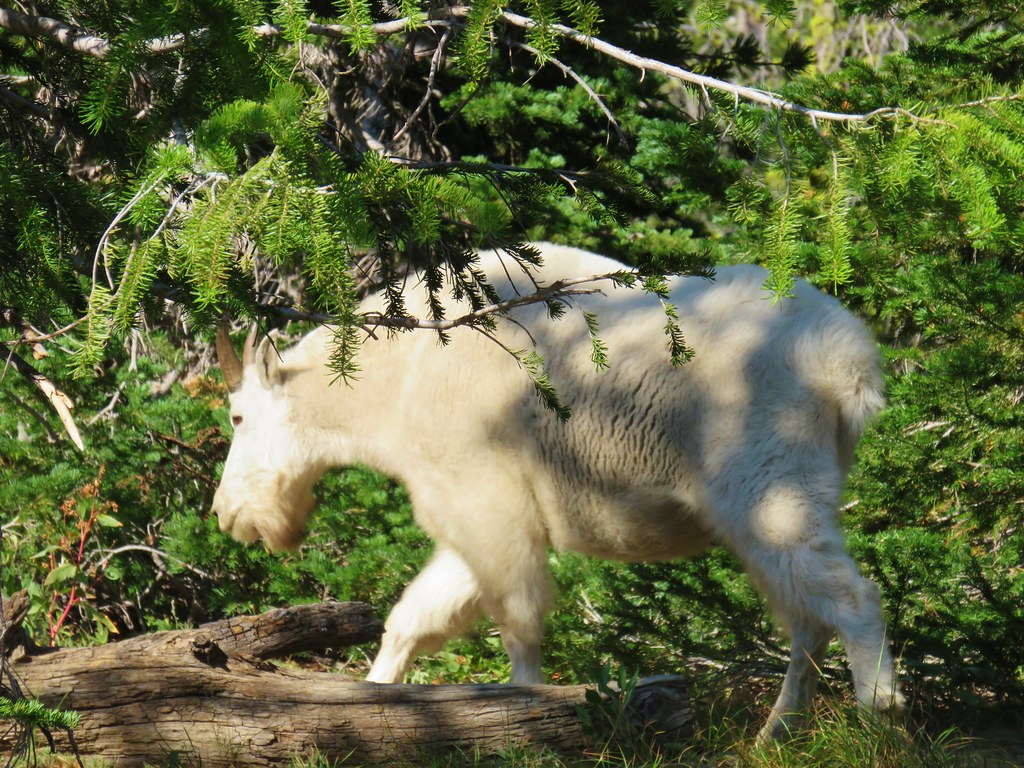
Both our guidebook and signs at the trailheads had warned about the mountain goats in the area being habituated to humans. A good reminder of why people shouldn’t feed wildlife, without the fear of humans the goats have been known to nibble on tents, clothing and backpacks in search of salt. We made sure not to leave anything lying around outside the tent but it wasn’t long before the first goat passed nearby.
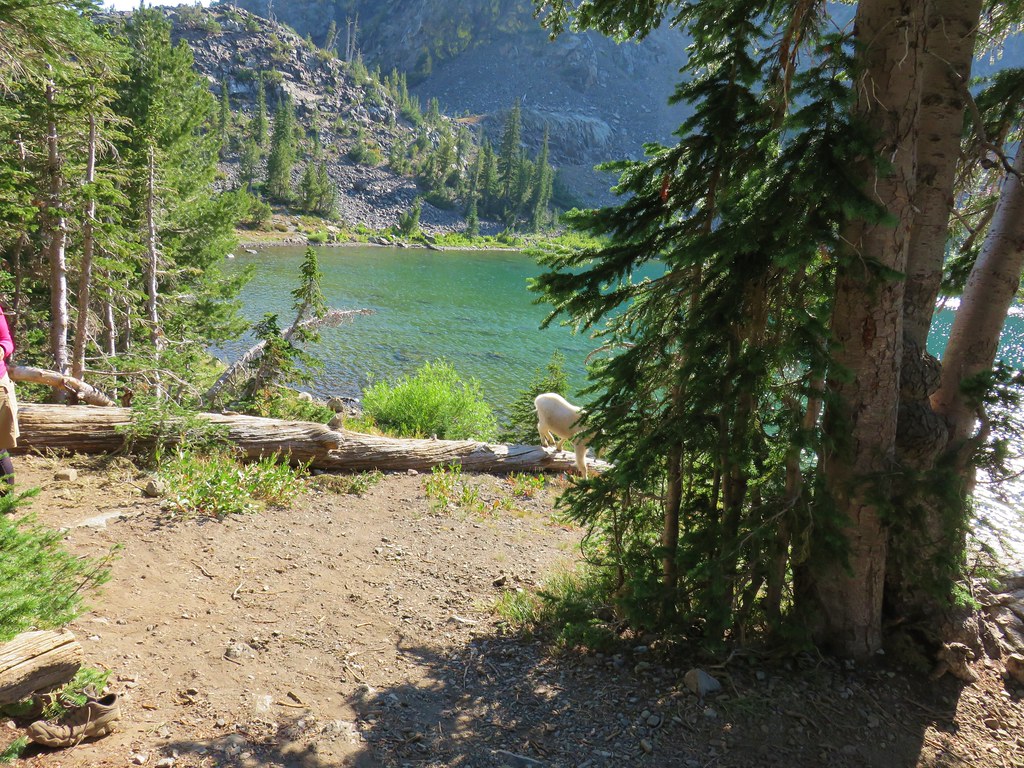
IMG_0407You can see Heather’s arm on the left side of the photo.
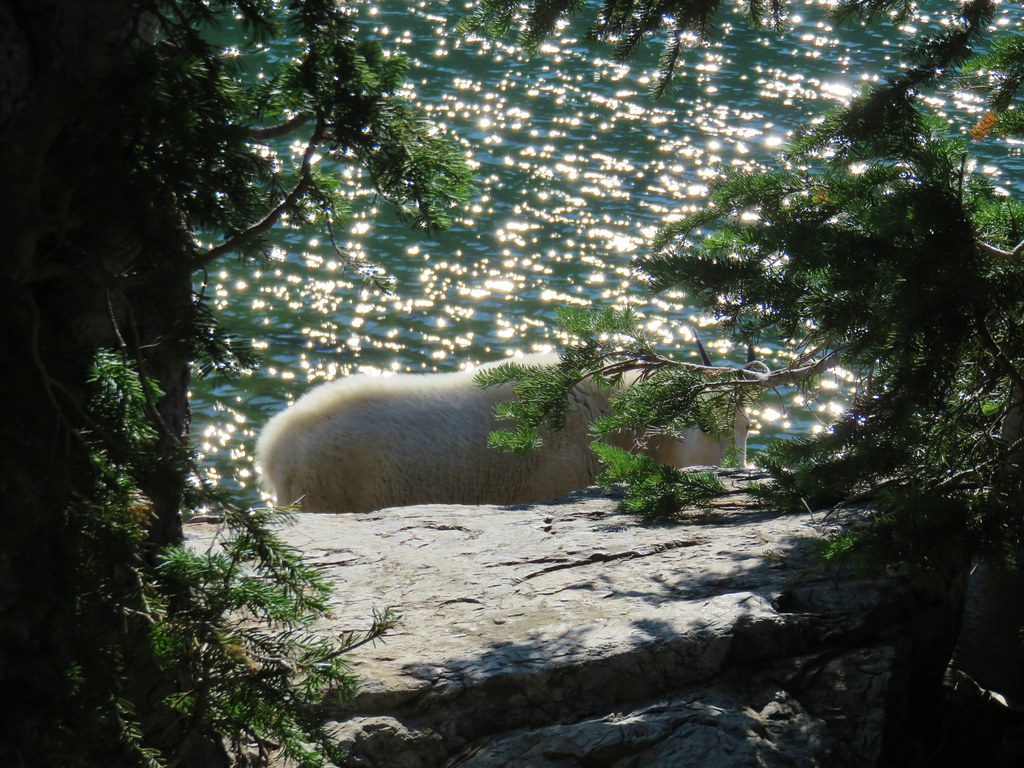
IMG_0408

IMG_0410

About a half hour later a second goat followed.
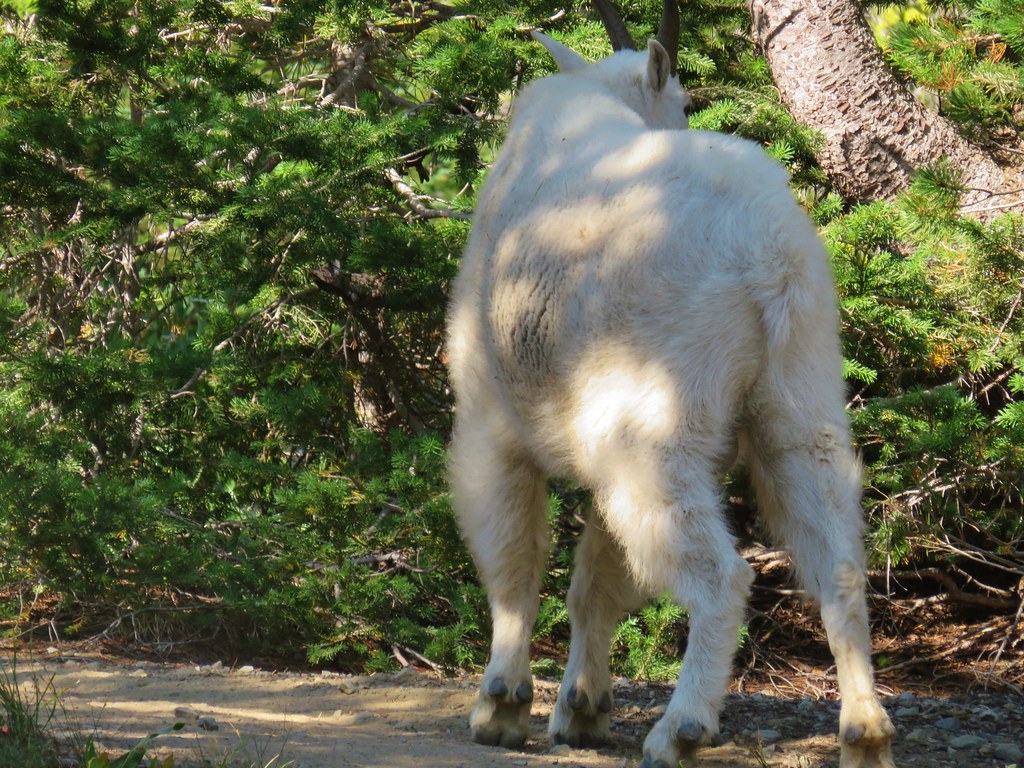
IMG_0422

IMG_0425

After dinner we watched a nanny and kid circle around the lake and graze nearby.
IMG_0434

IMG_0451

IMG_0459

We did leave our tent for about 45 minutes to visit Upper Twin Lake which was just .3 miles away.
IMG_0474

More mountain goats were grazing on the hillsides above this lake.
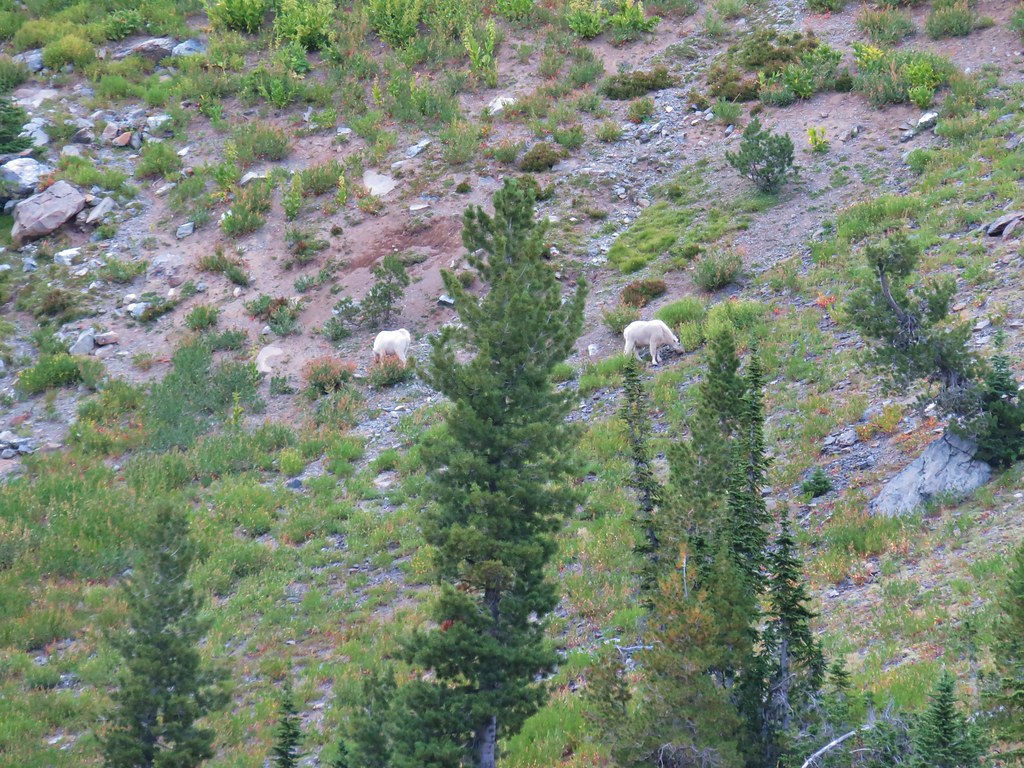
IMG_0479

The goats left our tent alone and we turned in for the night after what would be the longest day of our trip at 15.9 miles. Our original plan had been to return to Summit Lake the next day and stay there again but we were now considering camping along the Summit Lake Trail like the other group we had met had done. The nearby streams would allow us to get water and it would shave off a little distance both the next day and the day after when we were planning on heading from Summit Lake to Dutch Flat Lake. We decided to play it by ear the next day and turned in for the night halfway expecting to wake up to a mountain goat staring at us through the mesh on our tent. Happy Trails!

Flickr: Elkhorn Crest Trail Day 2
Categories
Blue Mountains - South Hiking Oregon Trip report

Elkhorn Crest Trail Day 1

A day after visiting Jefferson Park we left Salem early and headed up I5 to I84 to North Powder where we followed signs for Anthony Lakes to the Elkhorn Crest Trailhead.
IMG_9978

Our plan was to follow the Elhorn Crest National Recreation Trail (NRT) to Twin Lakes and back over a period of five days with a number of detours thrown in. Our goal for the first day was Summit Lake which was approximately 10 miles from the trailhead. We had hoped to be hiking by 11am and were right on schedule as we set off at 10:57. After the unrelenting heat two weeks earlier during our Strawberry Mountain trip (day 1 post)we were glad to find that the temperature was much friendlier here.

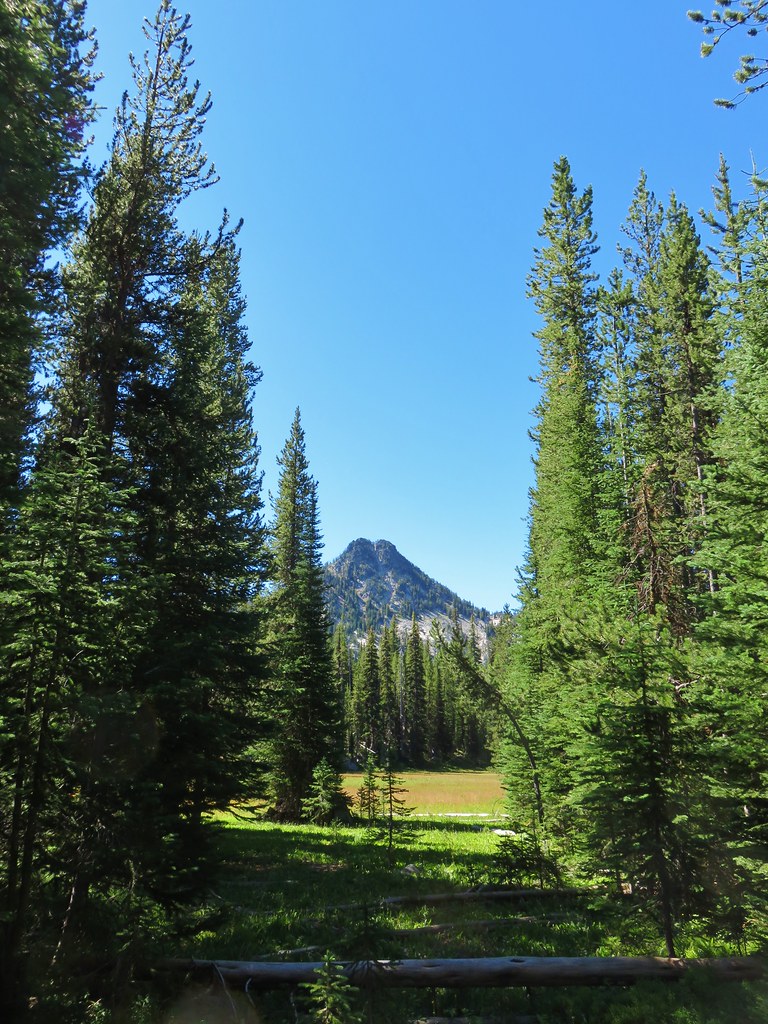
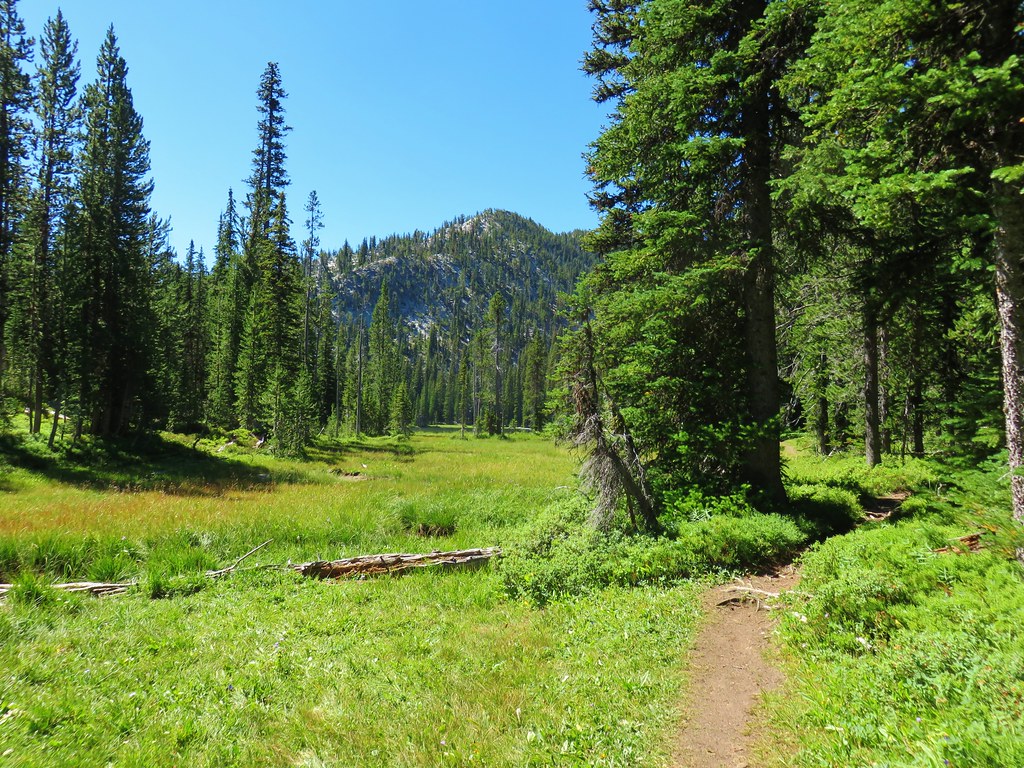
The trail passed through a forest with occasional meadows and glimpses of Gunsight Mountian.
IMG_9981

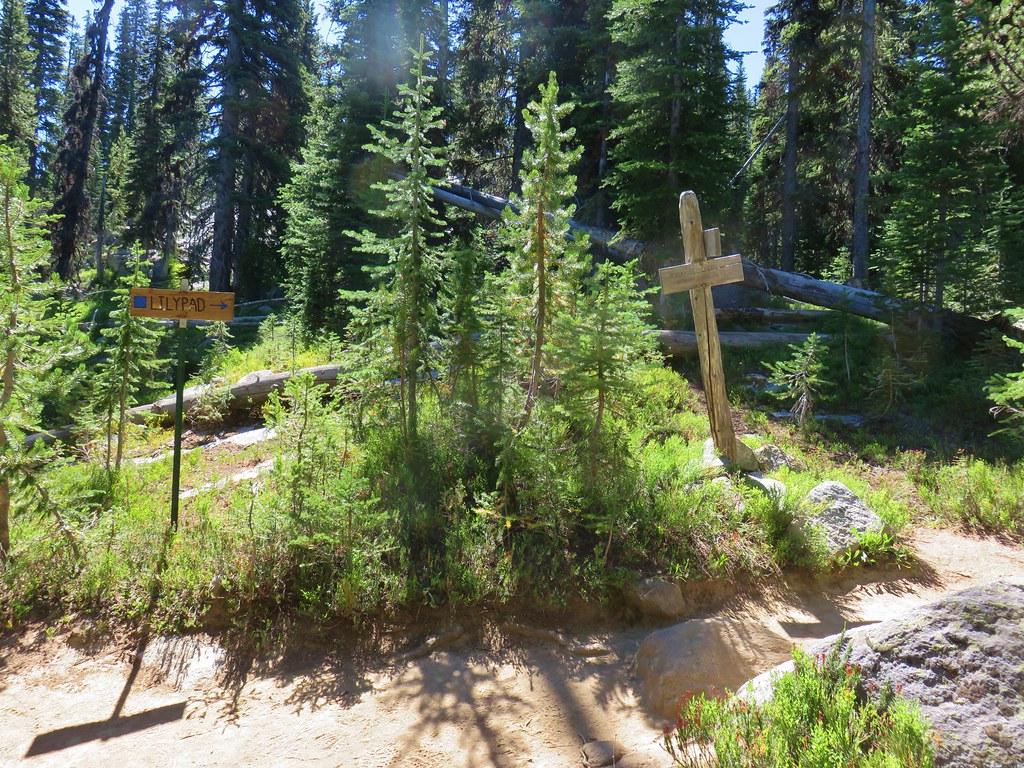
At the half mile mark we passed a signed trail junction with the Lilypad Lake Trail.
IMG_9987

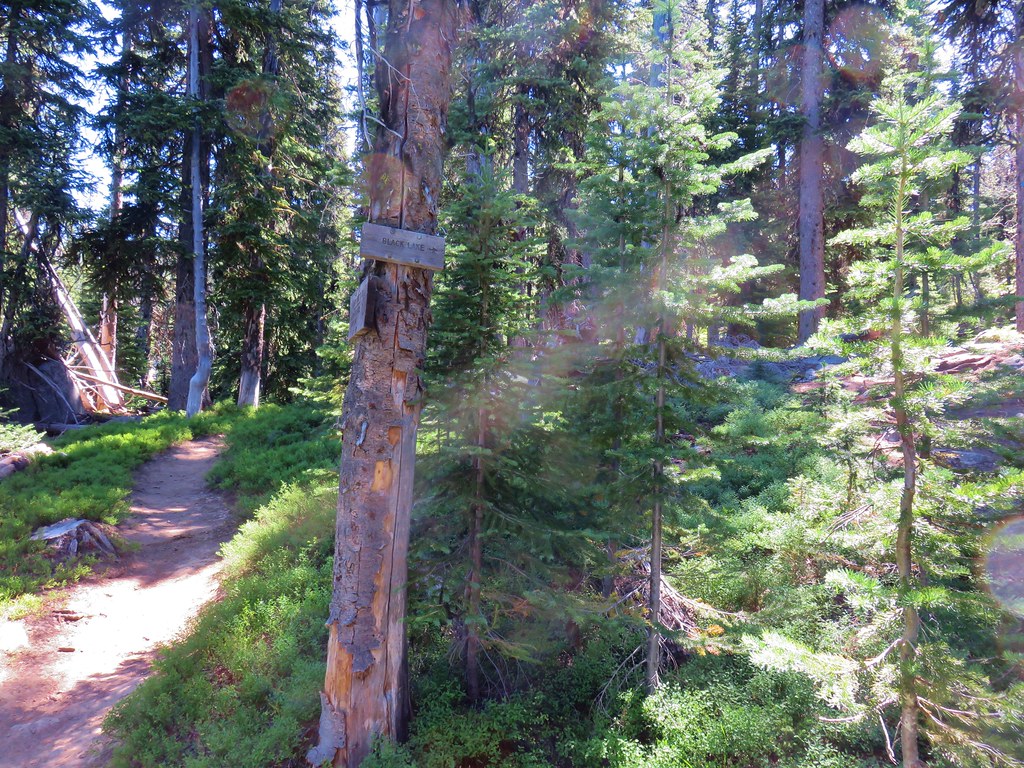
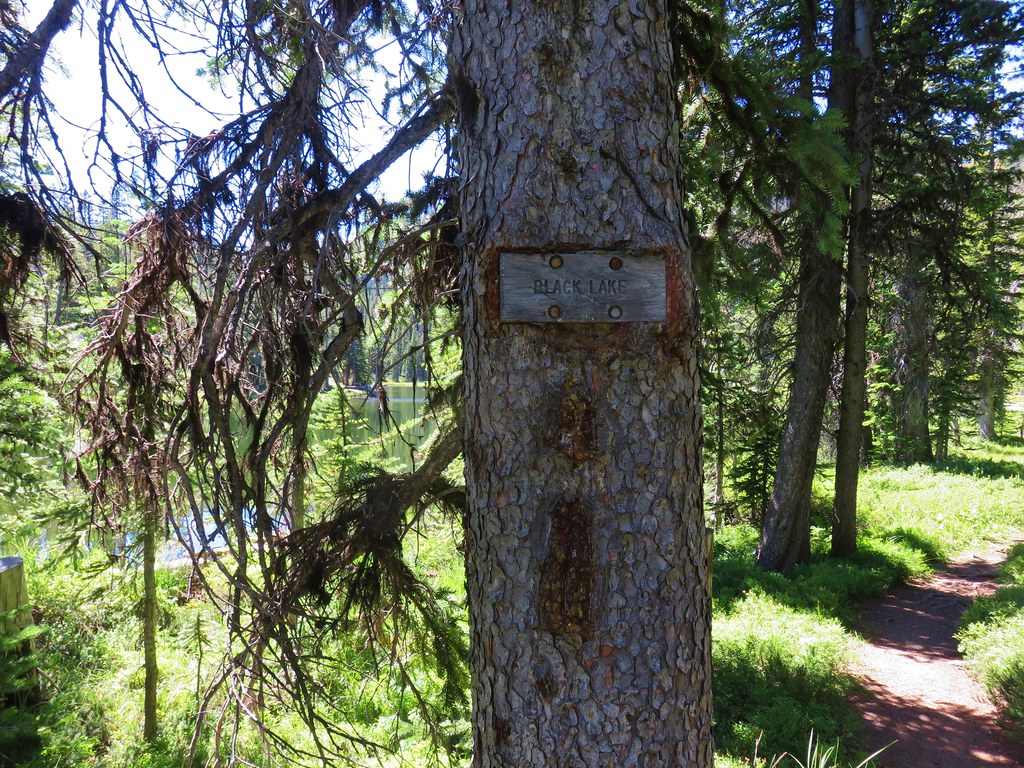
This was a possible return route on our final day after visiting both Hoffer Lakes and Anthony Lake. For now though we stayed on the Elkhorn Crest Trail for another 150′ where the Black Lake Trail forked to the right.
IMG_9989

We made a snap decision to check out Black Lake which was just a bit over a quarter mile away. After an initial steep climb the trail leveled out before arriving at the little lake.
IMG_9992

IMG_9993

IMG_9997

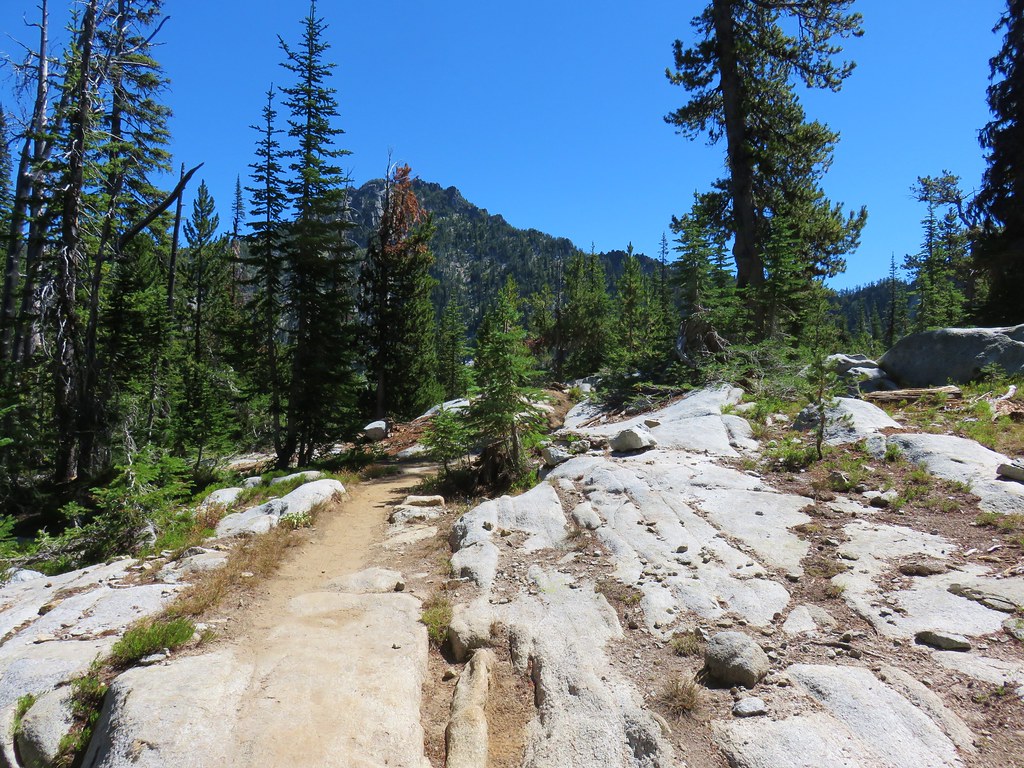
After viewing the lake we returned to the Elkhorn Crest Trail and continued south where in half a mile it passed near the SE end of Black Lake. If we had looked a little more closely at our guidebook we would have realized this and saved ourselves the extra mileage. Beyond Black Lake the trail continued to climb passing granite hillsides and a few wildflowers.
IMG_0003

IMG_0006

IMG_0007

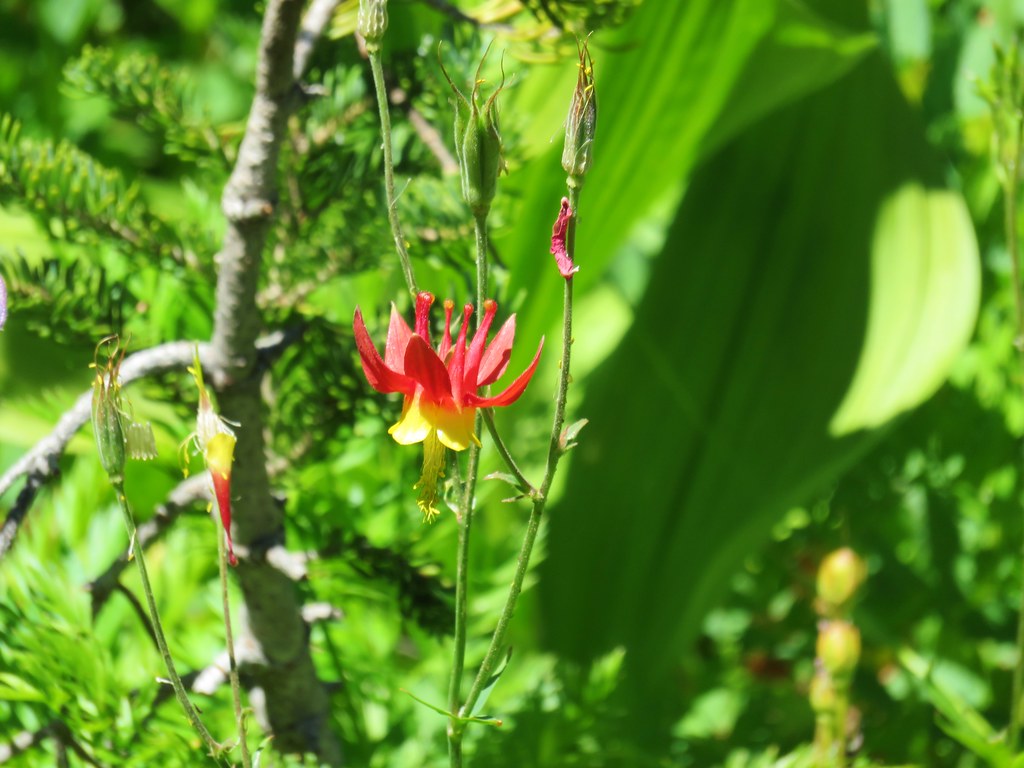
IMG_0014Columbine

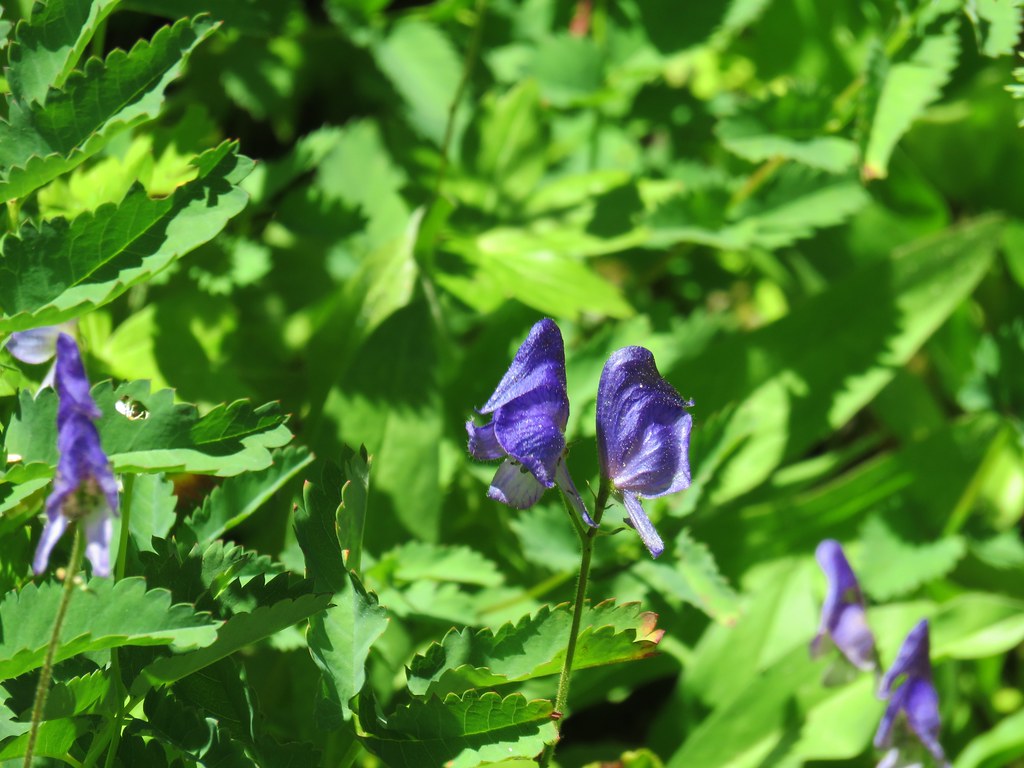
IMG_0016Monkshood

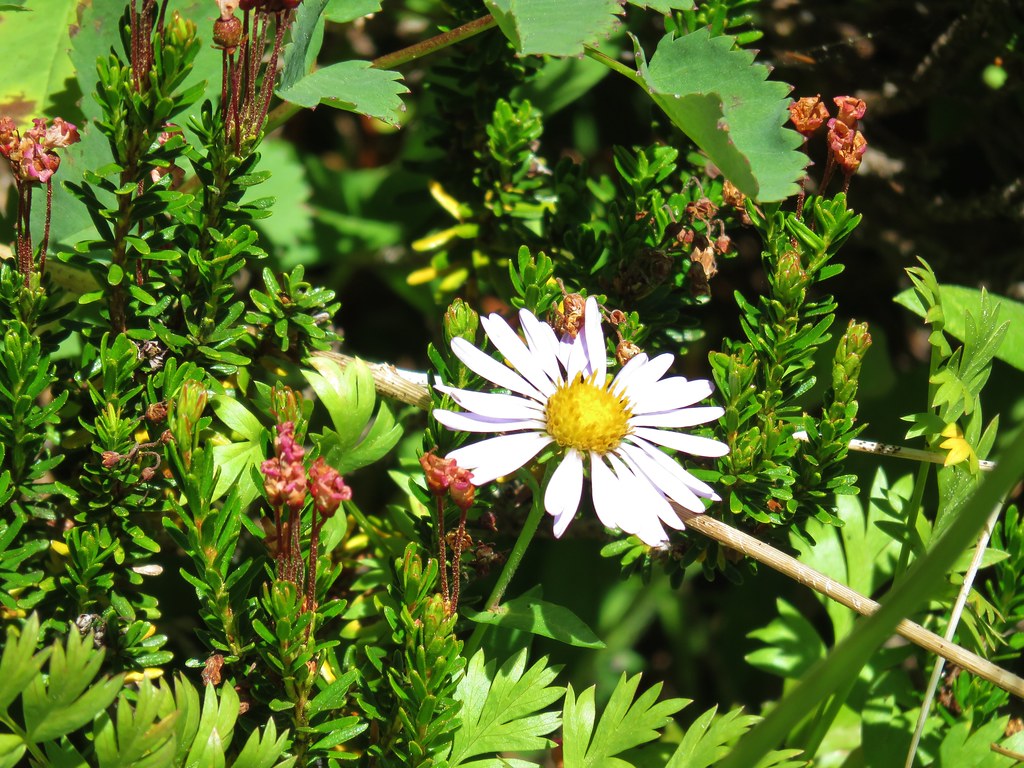
IMG_0017Aster

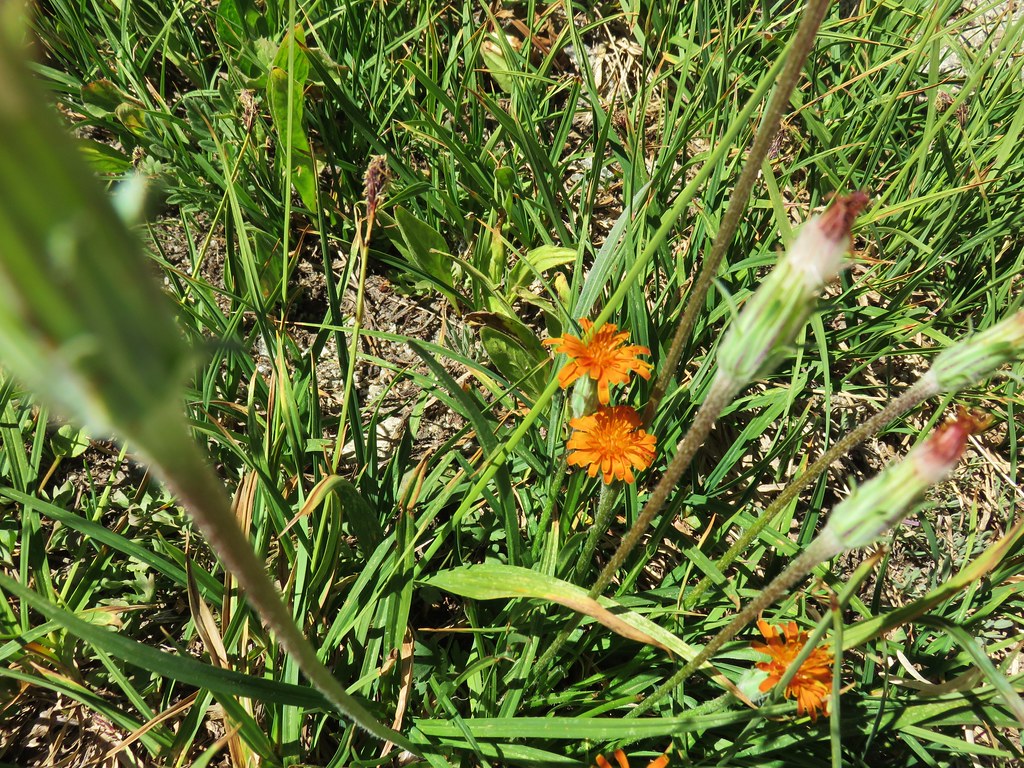
IMG_0032Orange Agoseris

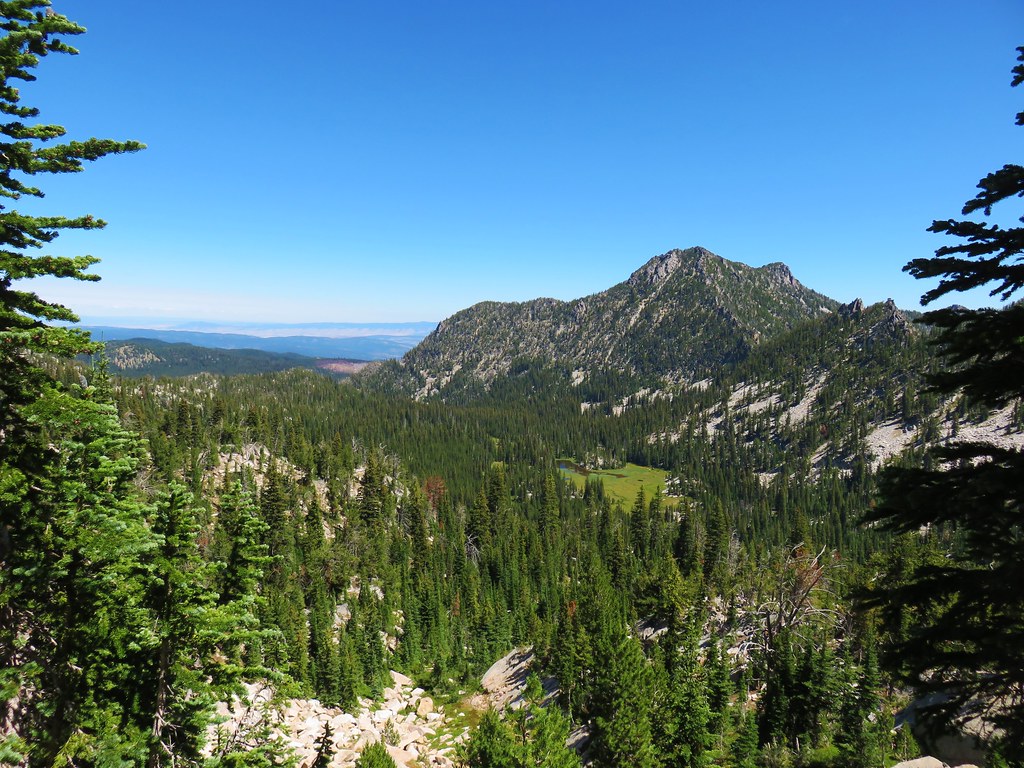
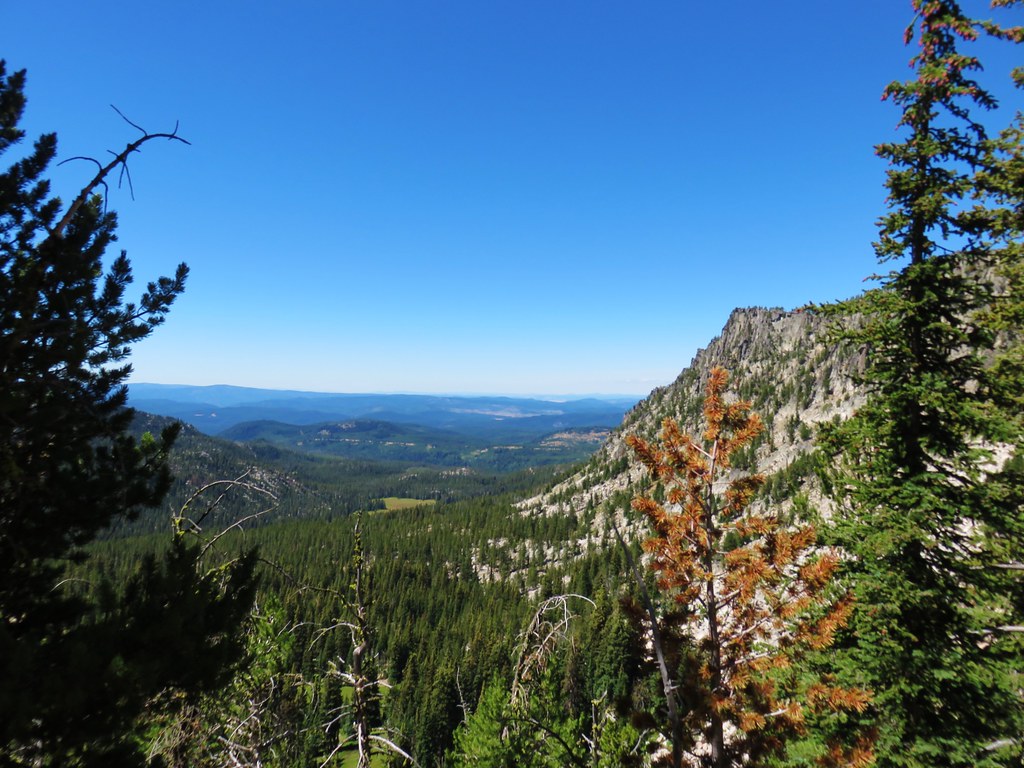
As the trail climbed the views opened up to either side of the crest with Antone Creek in the valley to the east and Crawfish Meadow to the west in Crawfish Basin.
IMG_0036Antone Creek

IMG_0039Crawfish Meadow in Crawfish Basin
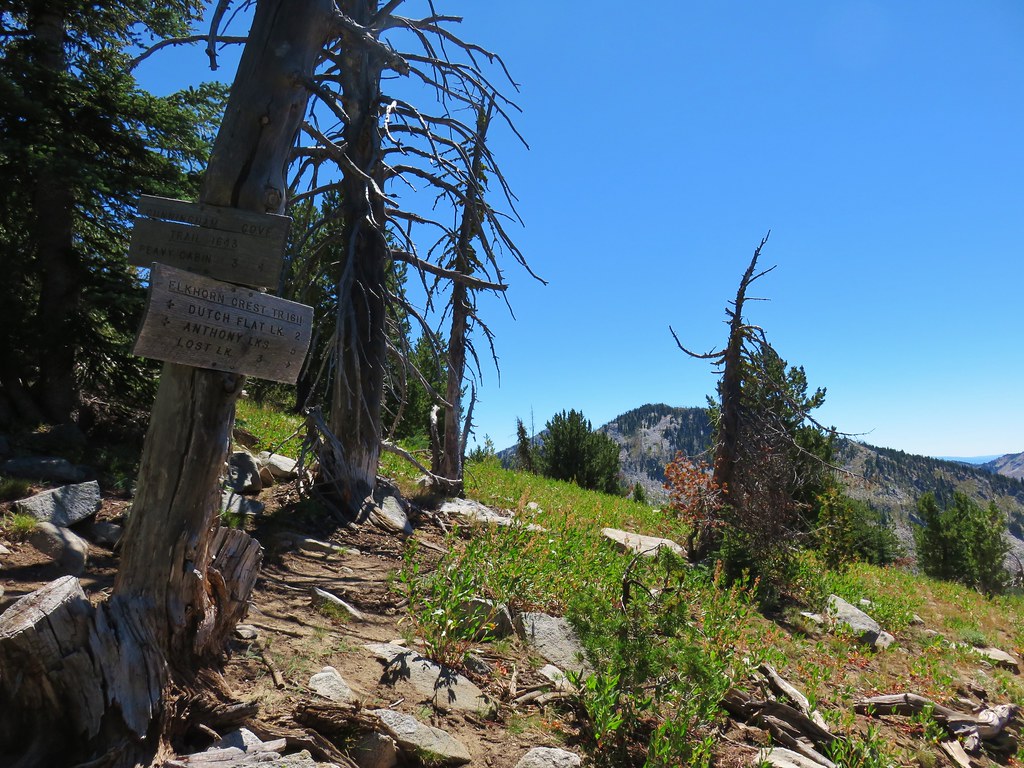
We reached Dutch Flat Saddle 2.8 miles from where we had taken the Black Lake Trail up to Black Lake. This saddle is the site of a four-way junction with the Dutch Flat Trail dropping to the east and the Crawfish Basin Trail to the west. It also marks the boundary of the North Fork John Day Wilderness.
IMG_0049

IMG_0050

IMG_0051

Our plans included both of these other trails with Dutch Flat Lake being our choice for camp on the fourth night and then the Crawfish Basin Trail being our route to the Hoffer Lakes, Anthony Lake and ultimately back to the trailhead. For now though we continued on the Elkhorn Crest Trail which traversed the hillside above Crawfish Basin.
IMG_0056

Although we were too late for the majority of wildflowers a few hardy souls remained.
IMG_0057

IMG_0059

IMG_0060

After passing around Crawfish Basin the trail crossed over a saddle where the faint Cunningham Cove Trail joined from the west.
IMG_0063

IMG_0065Cunningham Cove

A little over a mile from the Cunningham Cove Trail jct we crossed over the crest at Nip & Tuck Pass.
IMG_0074

IMG_0077View north from Nip & Tuck Pass

Just beyond the pass the Lost Lake Trail joined from the east which was another trail we were planning on taking on our way back.
IMG_0078

The Elkhorn Crest Trail climbed from this junction to Lost Lake Saddle where, despite some smokey haze, we could see some of the Wallowa Mountains to the NE and the Strawberry Mountains to the SW.
IMG_0088Looking NE

IMG_0089Wallowas

IMG_0092Looking SW

IMG_0093Strawberry Mountains
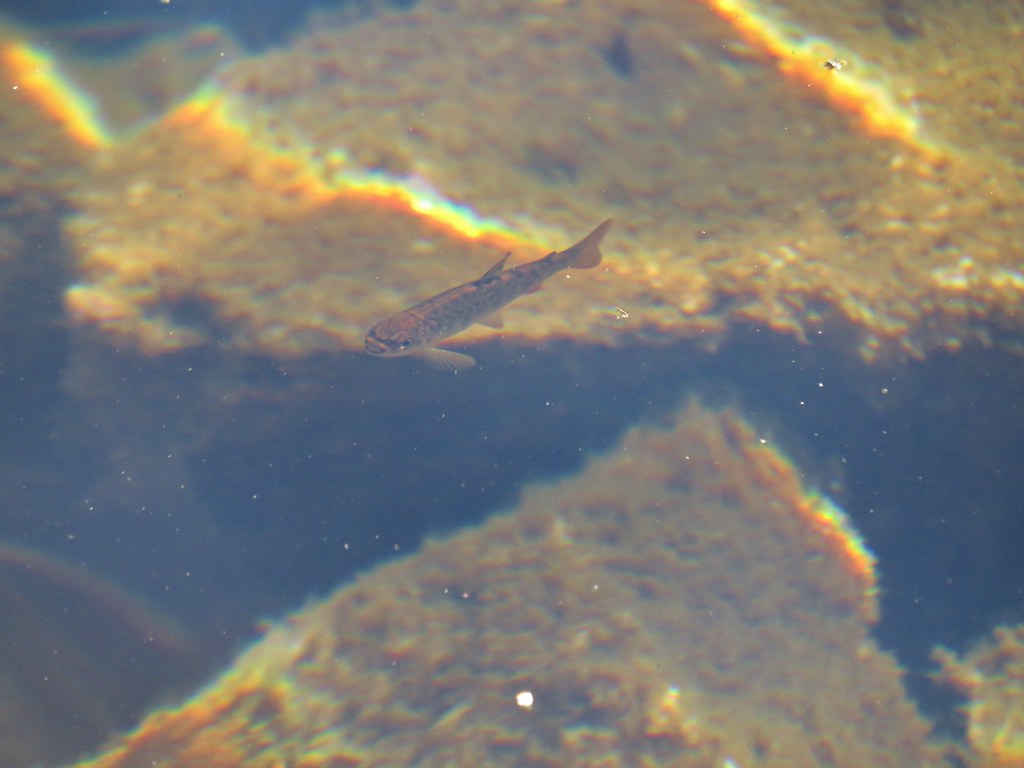
Along the ridge we also gained a view of Lost Lake below.
IMG_0097

IMG_0099

Beyond Lost Lake Saddle the trail crossed back over to the western side of the crest as it passed around Mt. Ruth.
IMG_0111

The scenery along the trail changed often with some sections passing through green trees and others sagebrush covered hillsides.
IMG_0114

IMG_0120

IMG_0128

A little over three and a quarter miles from Nip & Tuck Pass we reached Cracker Saddle.
IMG_0129

This was by far the most confusing spot of the entire trip. I had been chatting on Facebook with another hiker who had done a similar trip at the end of July and she had mentioned this area as a problem. Even with her information, a topographic map, and our guidebook it took us a bit (including two false starts) to figure out the correct path. Much of the signage here was missing save for a pointer for the Peavy Trail descending to the west to the rentable Peavy Cabin.
IMG_0130

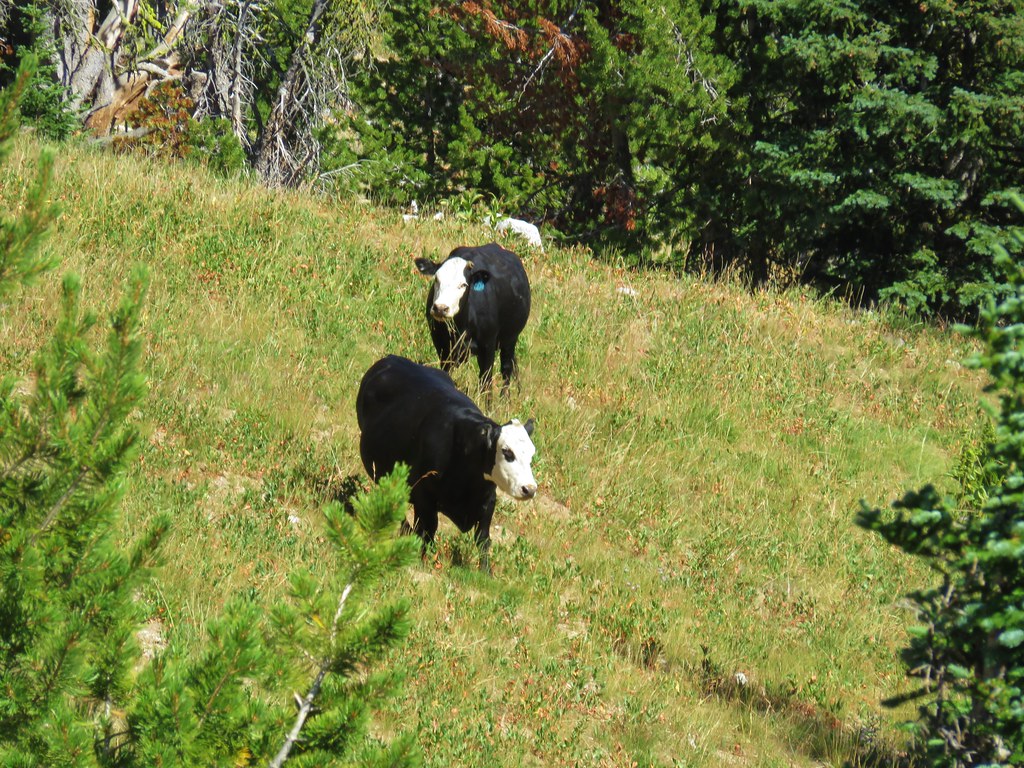
A jeep track came up to the saddle from the east while faint paths appeared to continue north on either side of the ridge ahead. A pair of cows watched us while we stood at the saddle debating which way to go.
IMG_0131

IMG_0132

We initially set off on the faint path that forked to the east side of the ridge ahead but quickly realized that it was only a cow path as it dove downhill toward a barbed wire fence. We retreated back to the saddle where I remembered being told that we’d be on a double track for a short bit. The jeep track that came up from the east looked like too sharp a turn based on the map in our guidebook so we started to follow the right hand fork that went around the west side of the ridge which was actually a continuation of the jeep track. We only took a few steps before coming to our senses since Summit Lake was on the east side of the crest. Twelve minutes after arriving at the saddle we picked the correct route and turned down the jeep track to the east. After .3 miles we arrived at a trailhead sign where a Jeep was parked.
IMG_0635

About 150ft downhill to the right of the parking area was a sign for the Elkhorn Crest Trail.
IMG_0134

We turned left at the sign and in another tenth of a mile forked left at a rock cairn at an unsigned junction (after confirming with the GPS).
IMG_0136

This was the Summit Lake Trail which wound around the east side of the crest.
IMG_0137

The lake itself is only 200′ lower in elevation than at Cracker Saddle, but the trail undulated along the hillside creating some climbs along the way. It also passed above Little Summit Lake which we initially mistook for Summit Lake itself. That lake is a little over 250′ lower than Summit Lake so we were thankful that we wouldn’t be climbing up from it the next morning.
IMG_0149

The trail passed below some white cliffs where we encountered a golden-mantled ground squirrel who appeared to be up to no good.
IMG_0146

IMG_0144

After a couple of short switchbacks down, the trail made a final climb to a view of Summit Lake.
IMG_0150

It was approximately a mile and a half total to the lake from the Elkhorn Crest Trail.
IMG_0155

Trails went around the lake in either direction. We chose to head left and go counter-clockwise looking for a campsite. There was a couple on the trail ahead of us that appeared to just be there on a day hike (another trailhead is located even further down the jeep track creating a 1.2 mile climb to the lake along its outlet creek from the NE). We passed them and then went by a series of sites before reaching the outlet creek. We had decided that the first site we’d passed was the best but the day hikers were resting there when we went back so we continued beyond the outlet passing another backpacker setting up camp. On the east side of the lake we found our spot and set up for the night.
IMG_0189

It was only 4:30pm so we had plenty of time to enjoy the lake which quickly became Heather’s favorite. Fish frequently jumped after bugs but the bugs weren’t bothering us. Other fish could be seen in the clear water near the lake shore.
IMG_0172

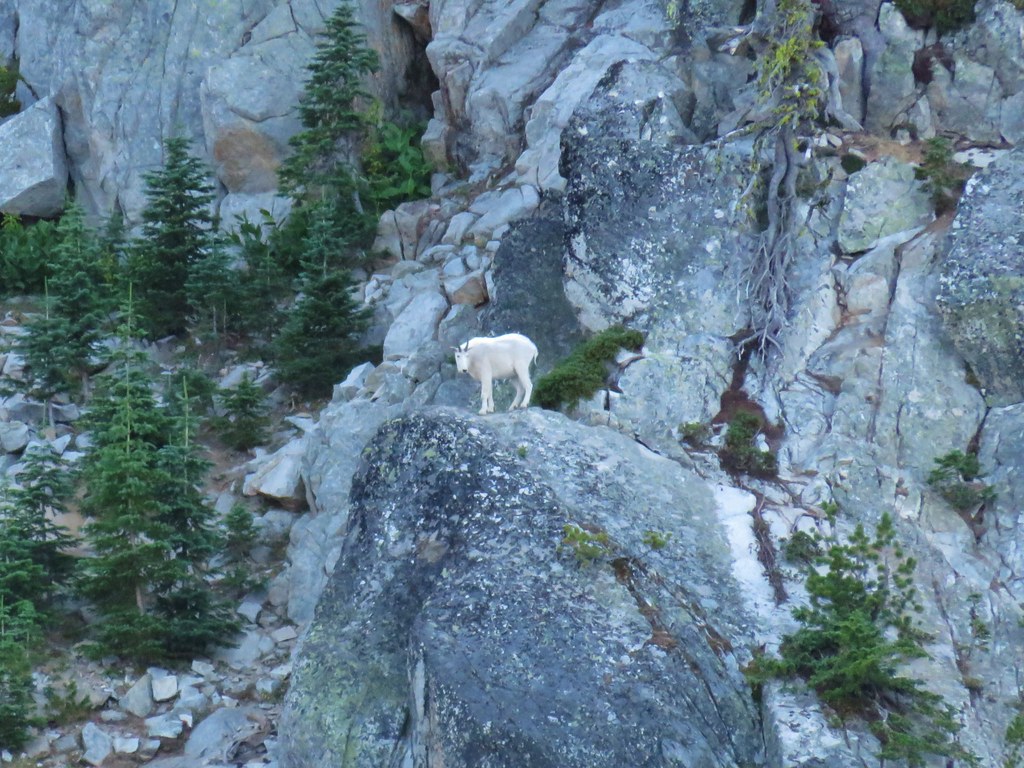
While scanning the cliffs on the far side of the lake we spotted a lone mountain goat.
IMG_0173

IMG_0179

It too seemed to think the lake was a good place to sit and relax.
IMG_0182

Early in the day we had passed a trio of hikers who had also been planning on camping at the lake for the night but we hadn’t seen them arrive by the time we turned in for the night. With our side trip to Black Lake, a bit of wandering at Cracker Saddle, and the walk around much of the lake our mileage for the day was an even twelve miles. Except for the short section of the Black Lake Trail the trails were very well graded and the temperatures stayed cool, especially in the shade and anytime a slight breeze kicked up which was quite often. Unlike our Strawberry Mountain Wilderness trip we ended the first day feeling good and looking forward to the next day when we would head to Twin Lakes. Happy Trails!

Flickr: Elkhorn Crest Trail Day 1

Categories
Blue Mountains - South Hiking Oregon Trip report

Phillips Reservoir and Granite Creek

We had originally planned a different set of hikes for the Thursday of our vacation week but after getting a look at Mt. Ireland from Baldy Lake the previous day we had decided to save that hike for another time. The plan had been to hike Granite Creek in the morning and Mt. Ireland in the afternoon.

With Mt. Ireland out and freezing temperatures overnight we were a little concerned about trying to get to Granite Creek in the morning due to having to pass over the 5860′ Blue Springs Summit between Sumpter and Granite. We turned to our trusty guidebook, William L. Sullivan’s 3rd edition of “100 Hikes/Travel Guide Eastern Oregon” for a solution.

Hike number 142 – Phillips Reservoir was the answer we came up with. We’d passed the reservoir on Monday when we drove to Baker City for groceries. Located less than 10 miles east of Sumpter a hike there in the morning would give the roads time to warm up before attempting the drive to Granite Creek.

When we walked out to our car a little before 7am Thursday morning we felt even better about our decision. For the first time in a long time it was necessary to scrape the ice off our windshield.

We decided to start our hike from the Union Creek Campground.

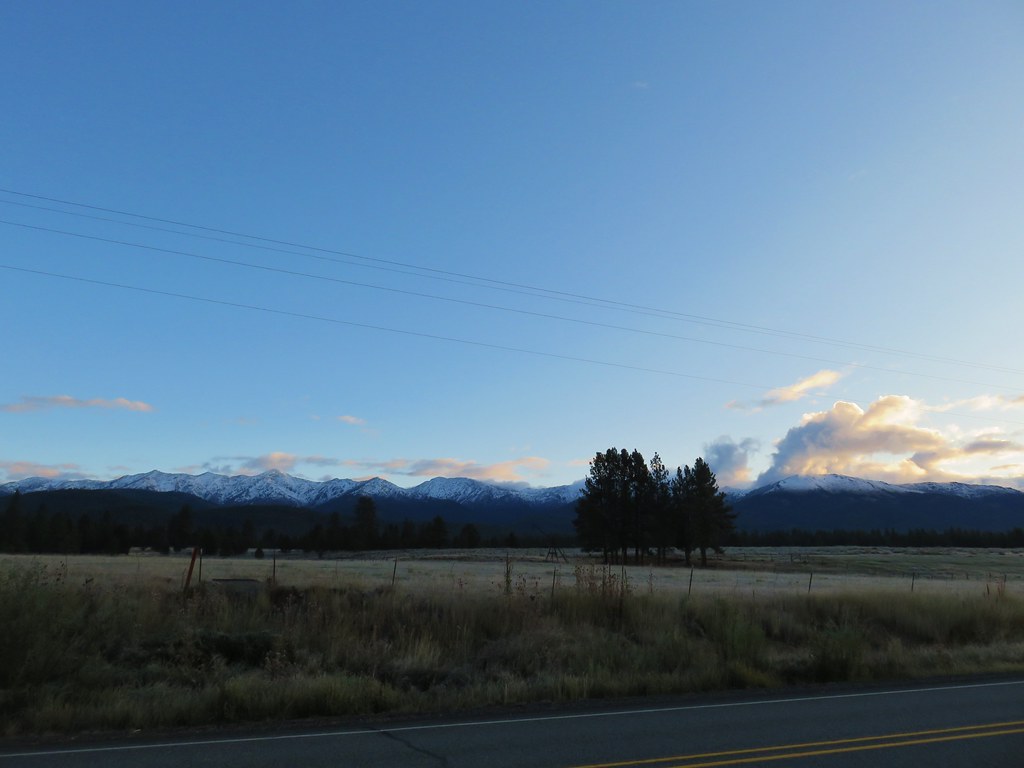
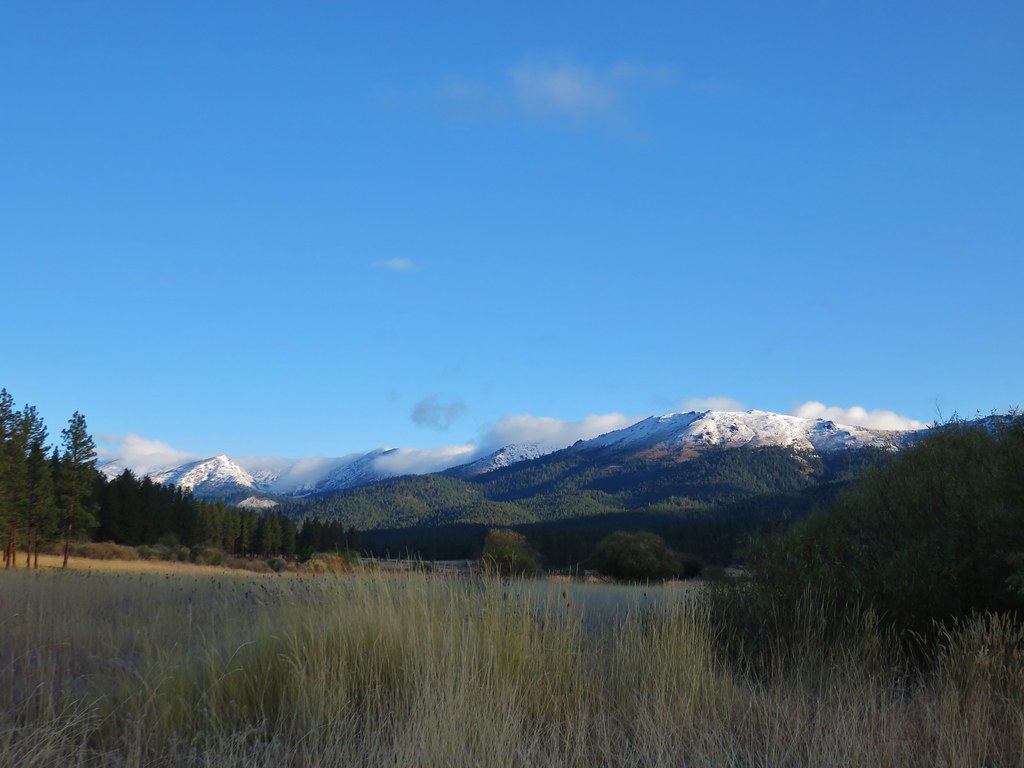
As we drove east along Highway 7 we had to pull over to get a picture of the snow covered Elkhorn Mountians.
IMG_0021

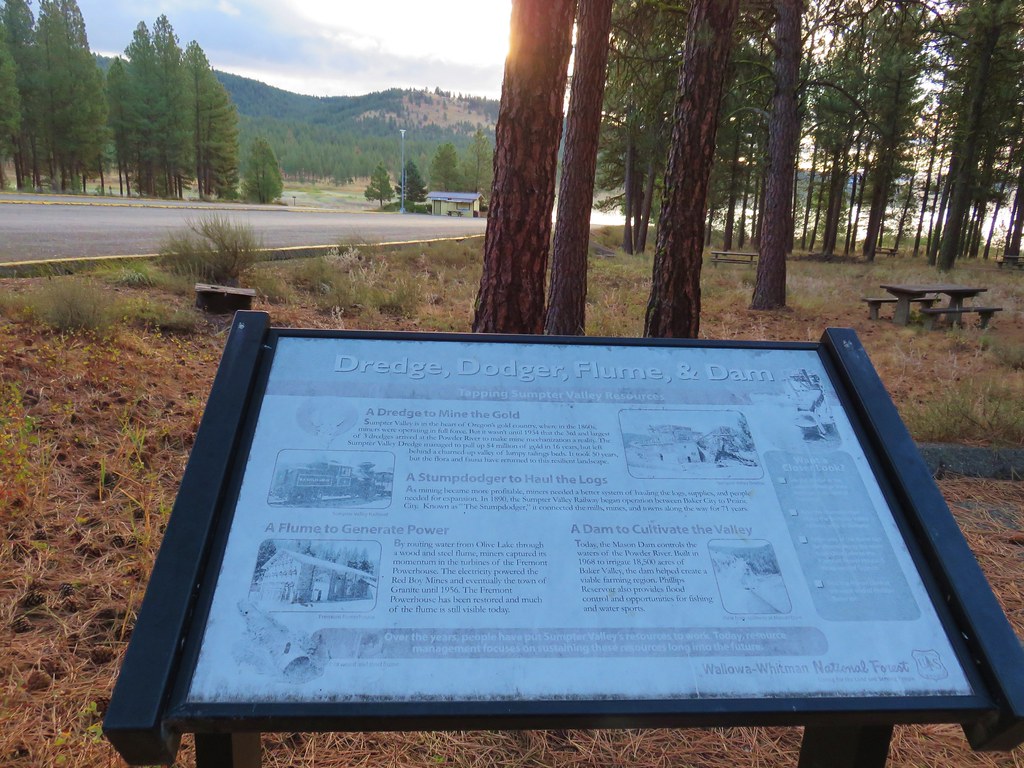
We turned off Highway 7 at a Union Creek Campground sign and after paying the $6 day use fee we parked at the picnic area and headed for the Shoreline Trail.
IMG_0025

IMG_0027

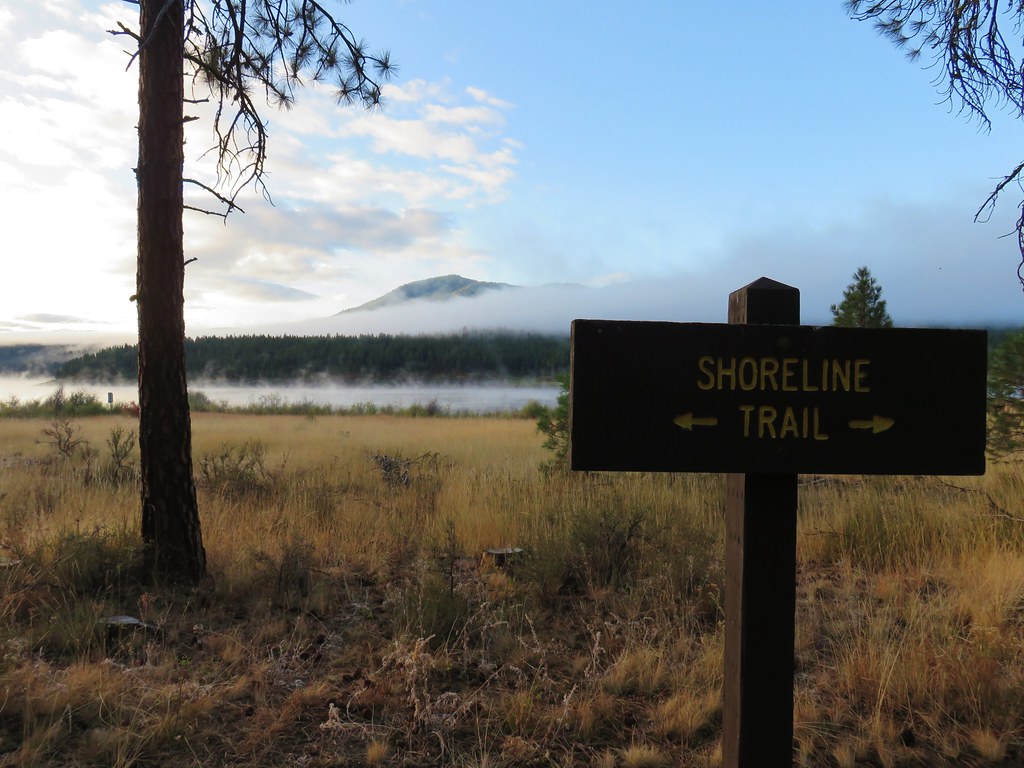
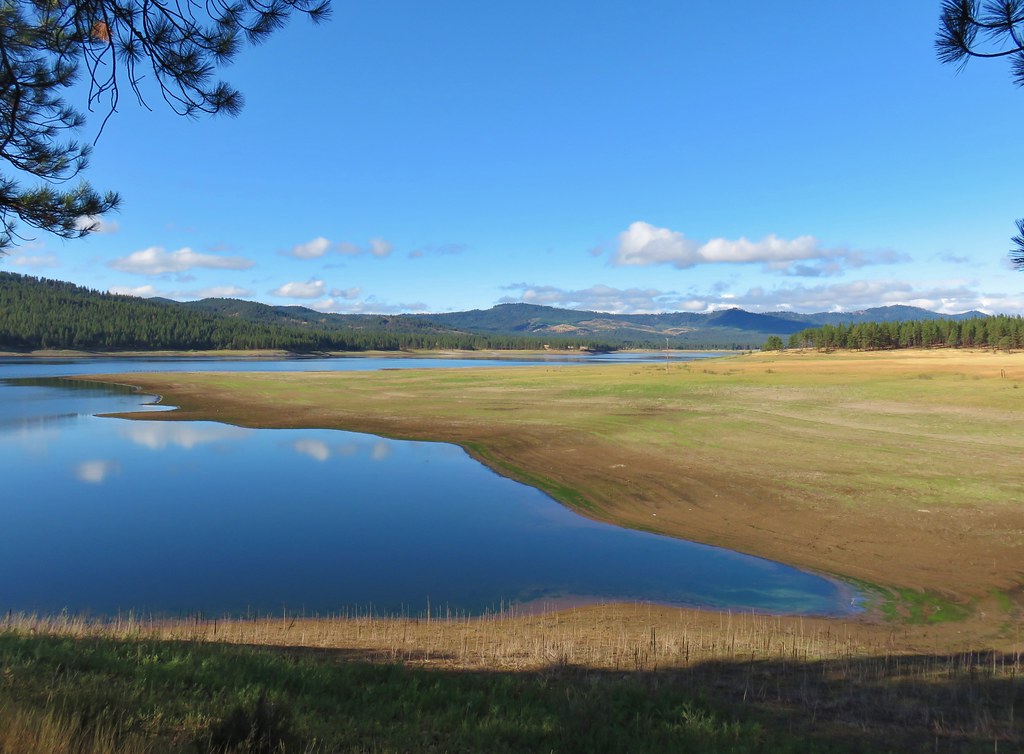
Sullivan’s abbreviated entry for this hike was one of the least enthusiastic descriptions that we’d seen in any of his guidebooks so we were pleasantly surprised by the scene at the reservoir.
IMG_0028

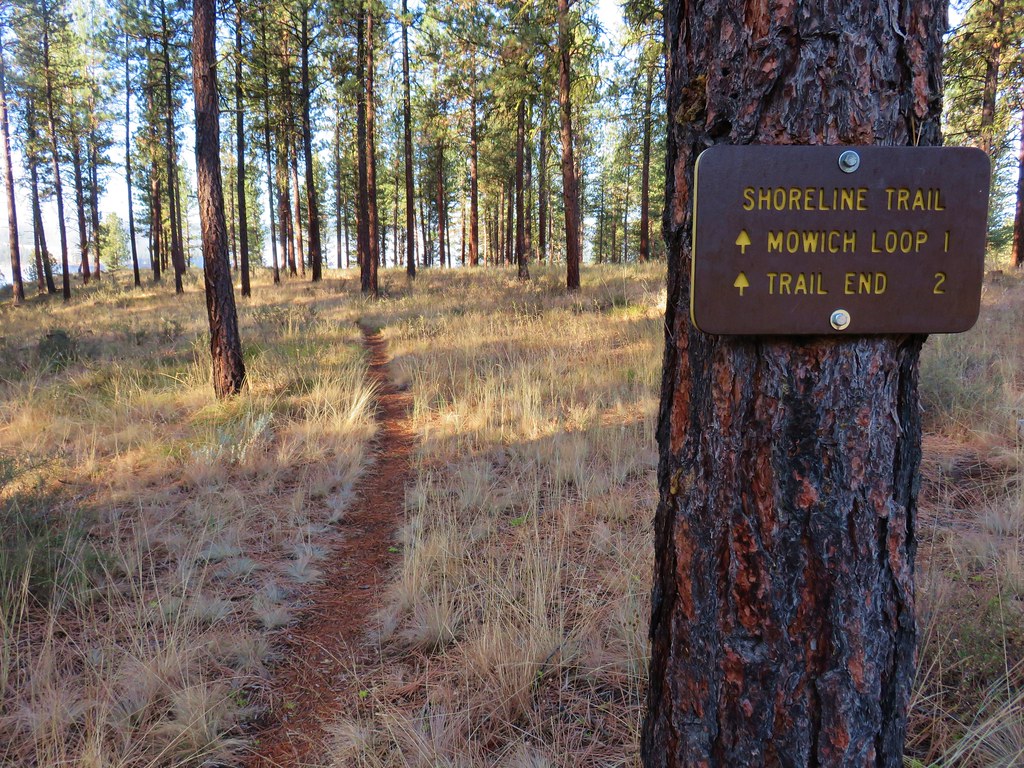
We headed west on the Shoreline Trail which extended 1.7 mile east from the picnic area and 4 miles to the west. The trail passed along the reservoir through open pine woods.
IMG_0038

Within the first mile we’d already spotted a number of different birds.
IMG_0037Osprey and Great Blue Heron in flight

IMG_0041Ducks

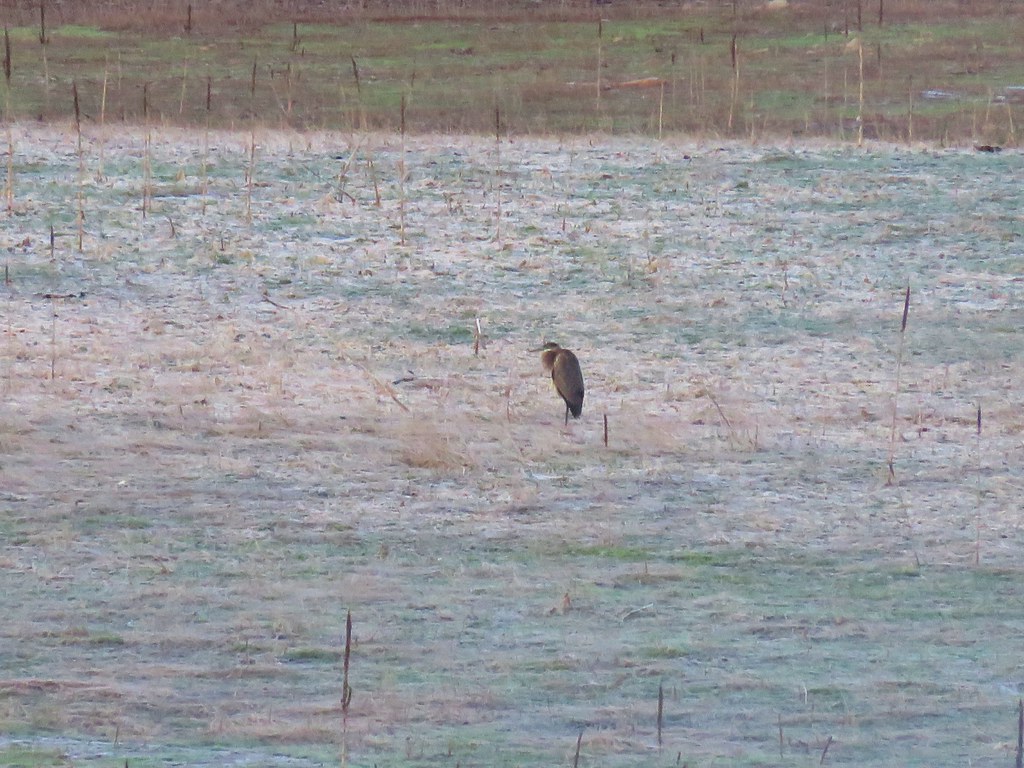
IMG_0044Heron

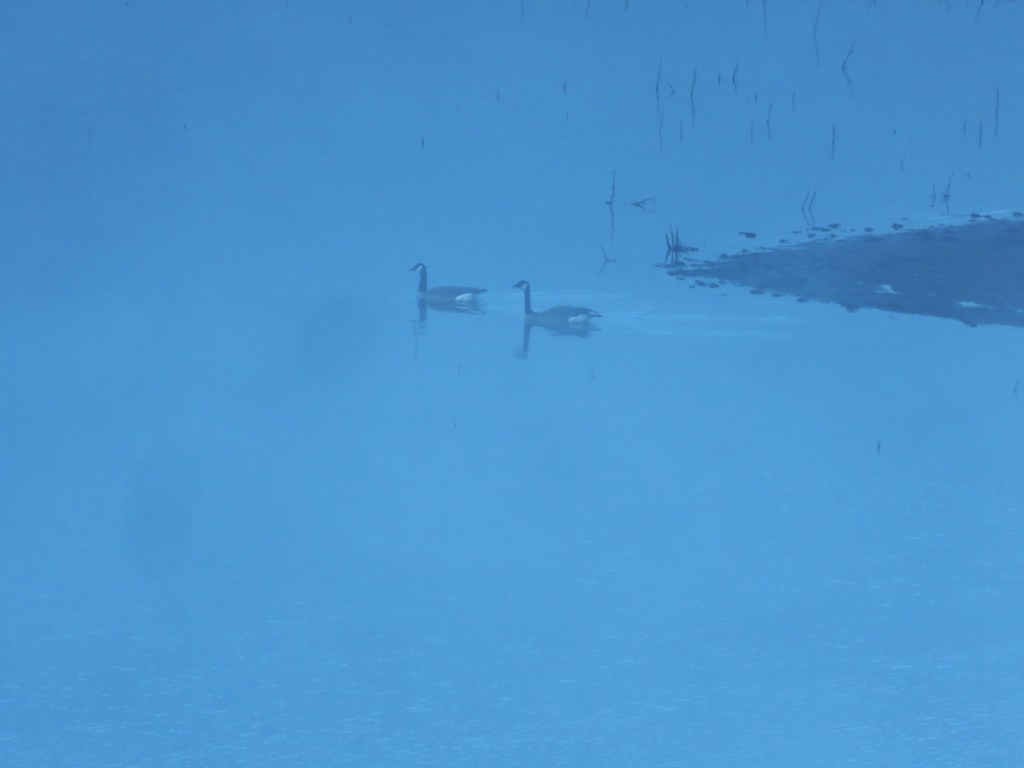
IMG_0046Canada Geese

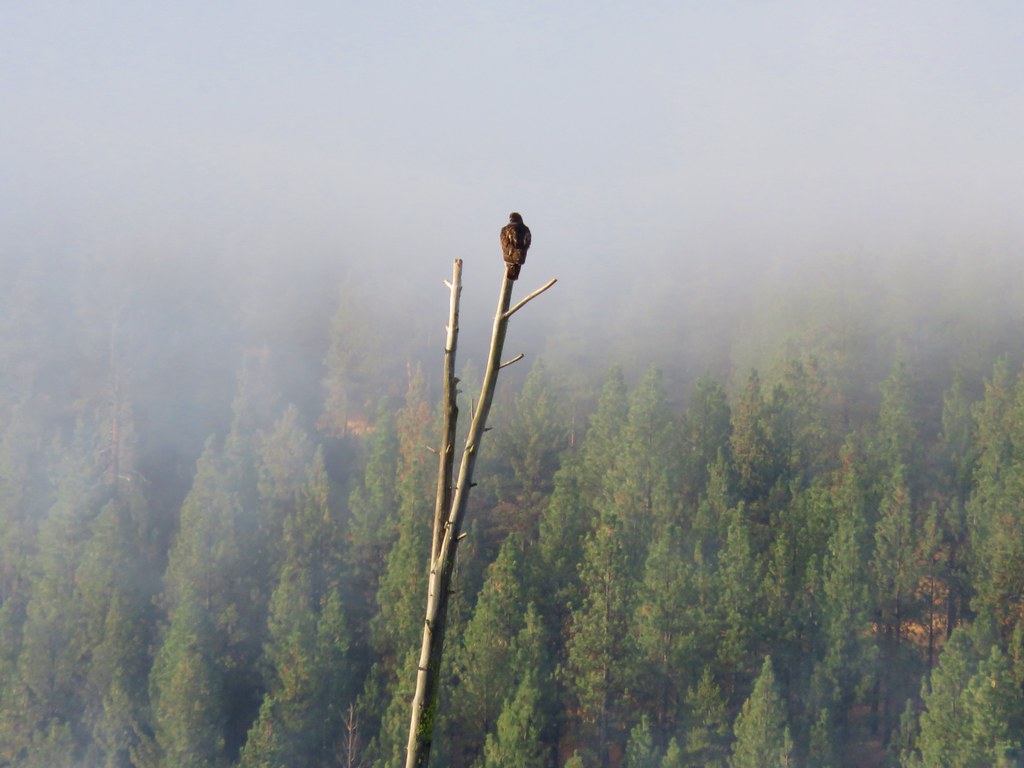
IMG_0054Hawk

We continued along the shoreline arriving at a dry Bridge Creek after 1.4 miles.
IMG_0062

IMG_0063

IMG_0064

Here the trail passed through a meadow with views of the Elkhorns to the north.
IMG_0066

IMG_0068

IMG_0071

IMG_0076

We spotted even more wildlife over the next mile before reaching the Social Security Point Trailhead.
IMG_0081Canada Geese

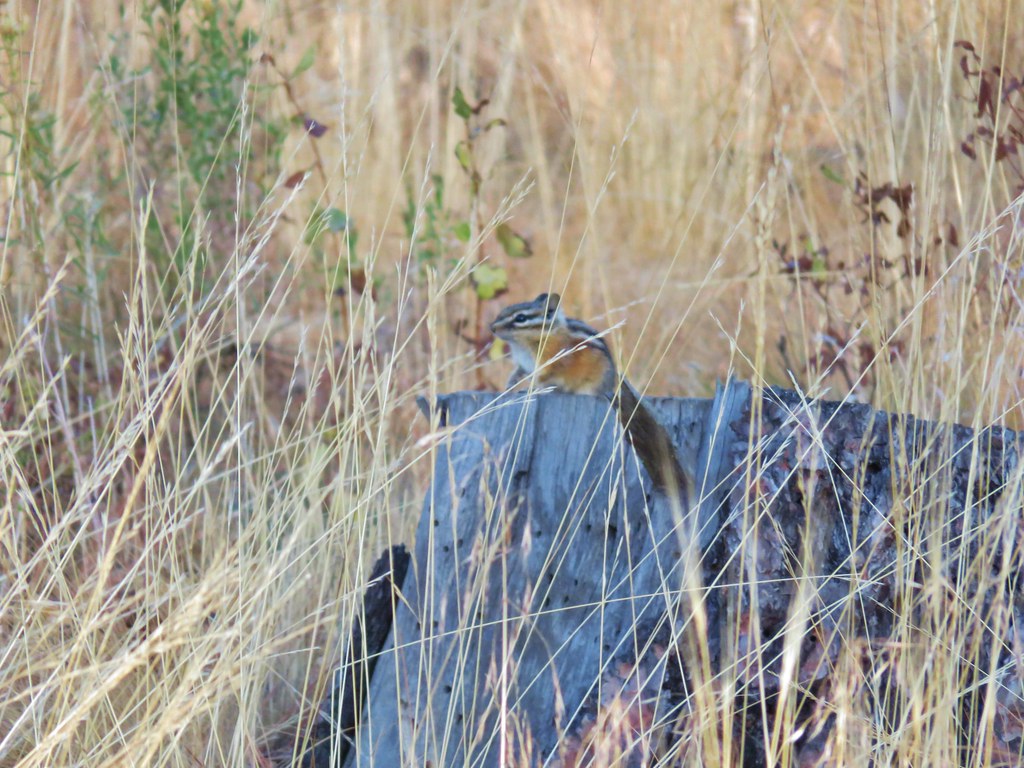
IMG_0083Chipmunk

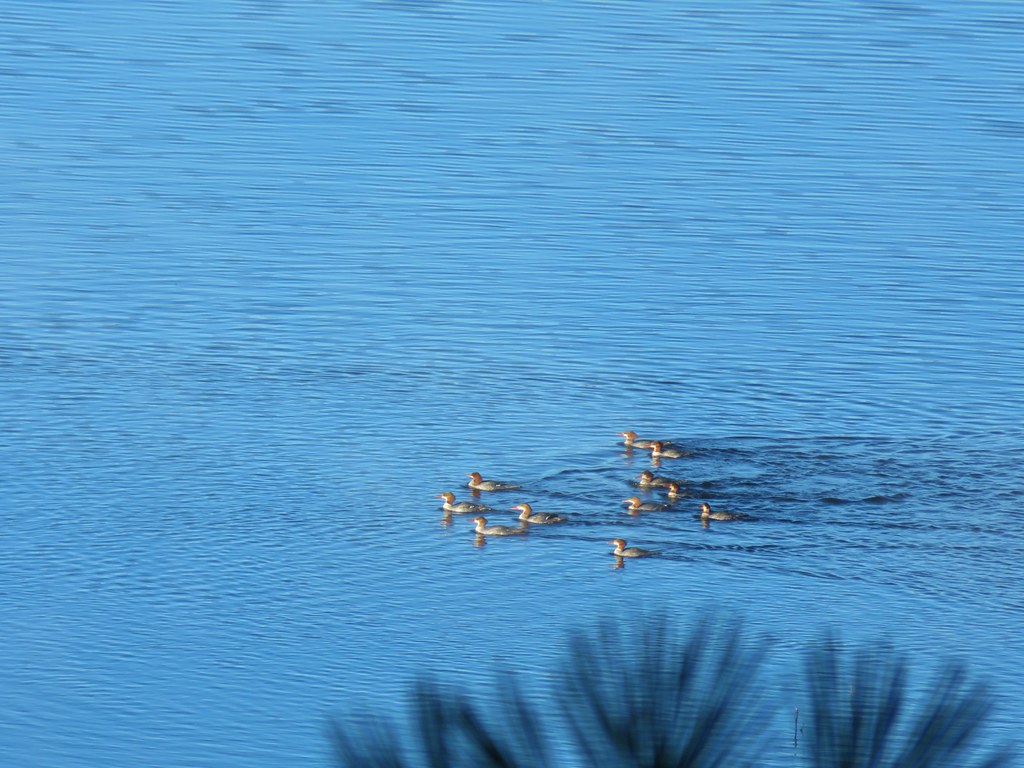
IMG_0085Mergansers

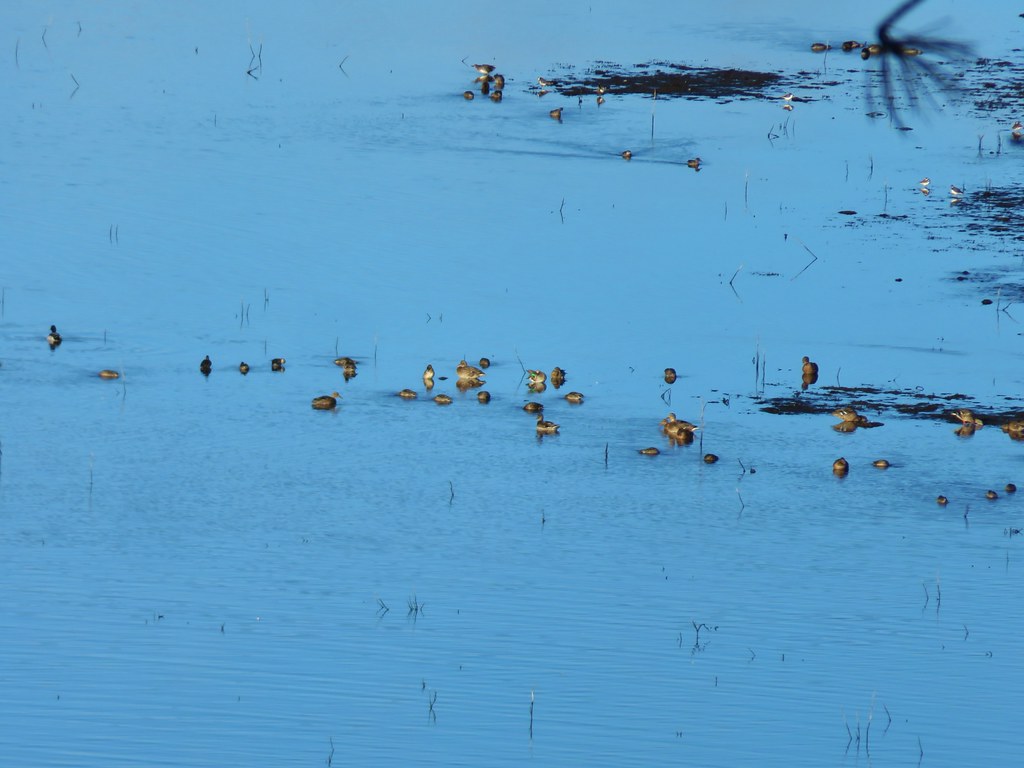
IMG_0086Various ducks and birds

IMG_0091Woodpecker

It was 8:30am when we arrived at the Social Security Point Trailhead so we decided to continue another mile to the Mowich Loop Picnic Area before turning around.
IMG_0092

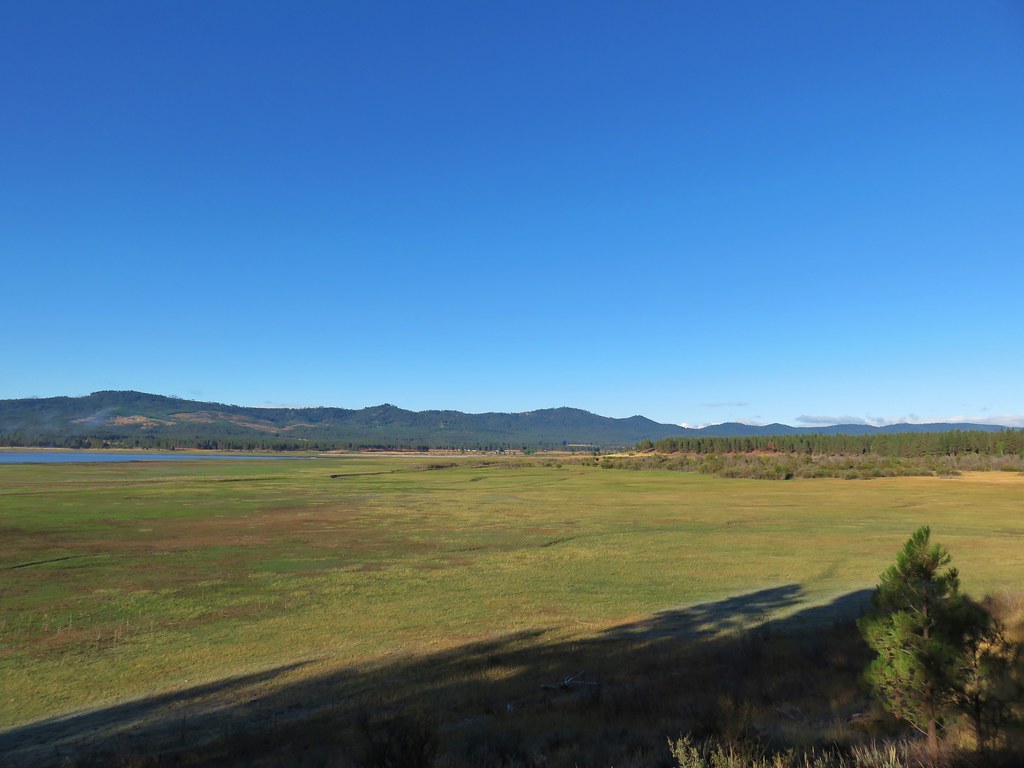
The trail passed through more open forest before reaching the wide open flat where Smith Creek empties into the reservoir.
IMG_0094

IMG_0106

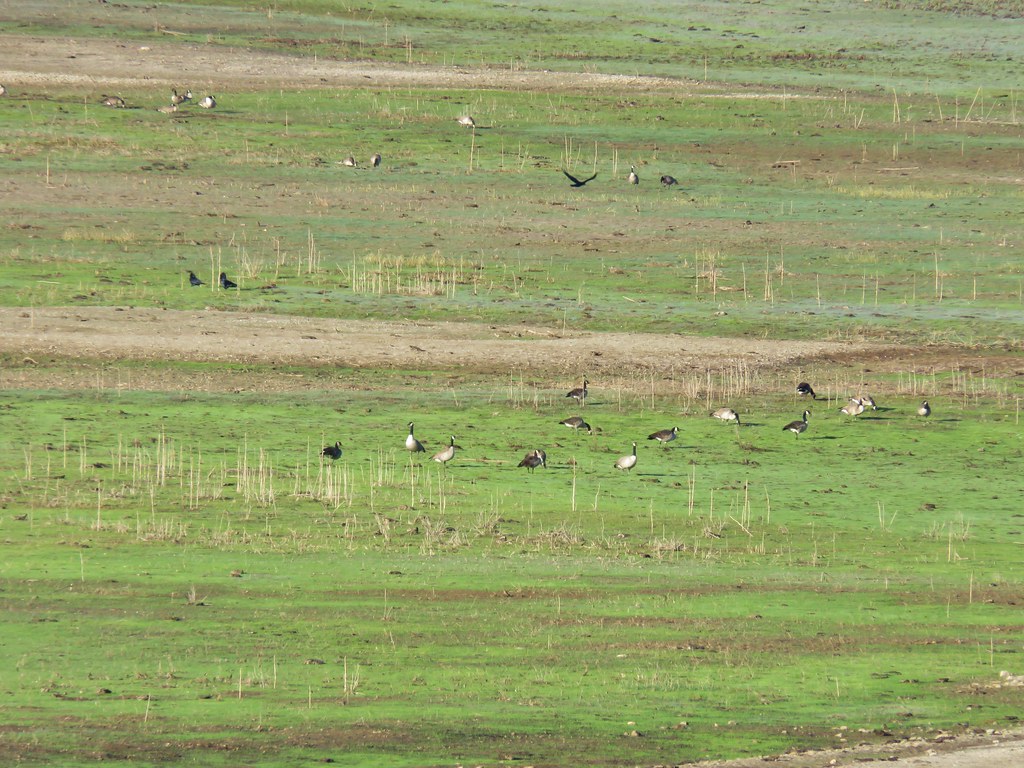
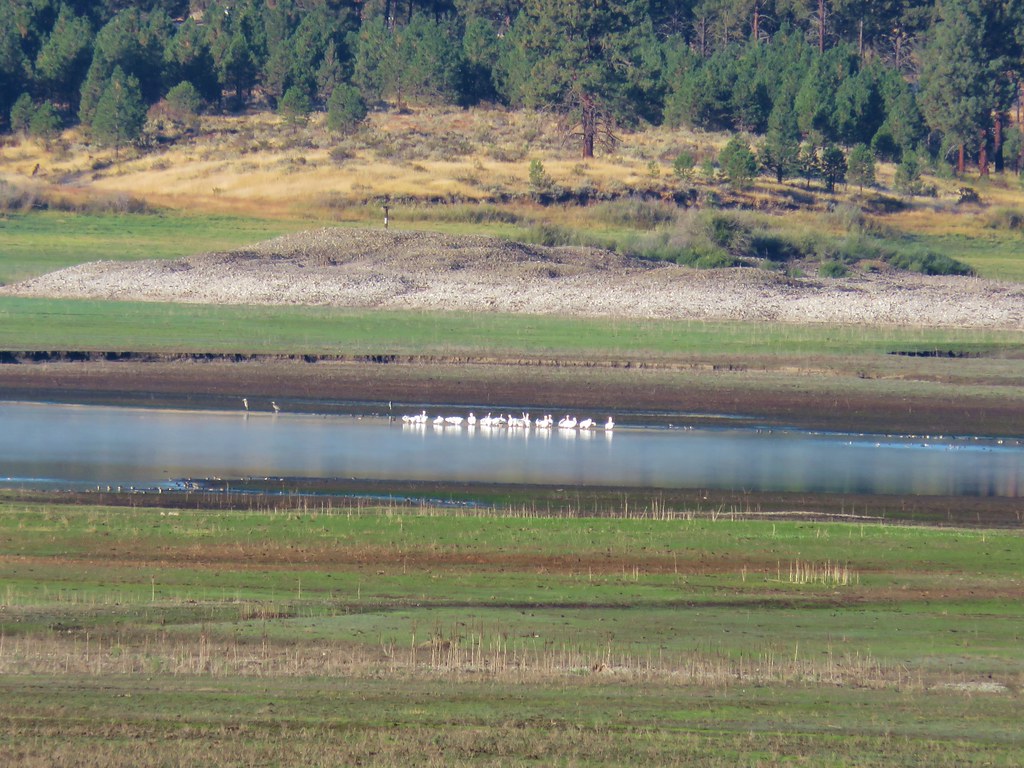
Even more birds could be seen in the grassy flat and in the distance was a group of white birds that we later realized where pelicans.
IMG_0095Canada Geese

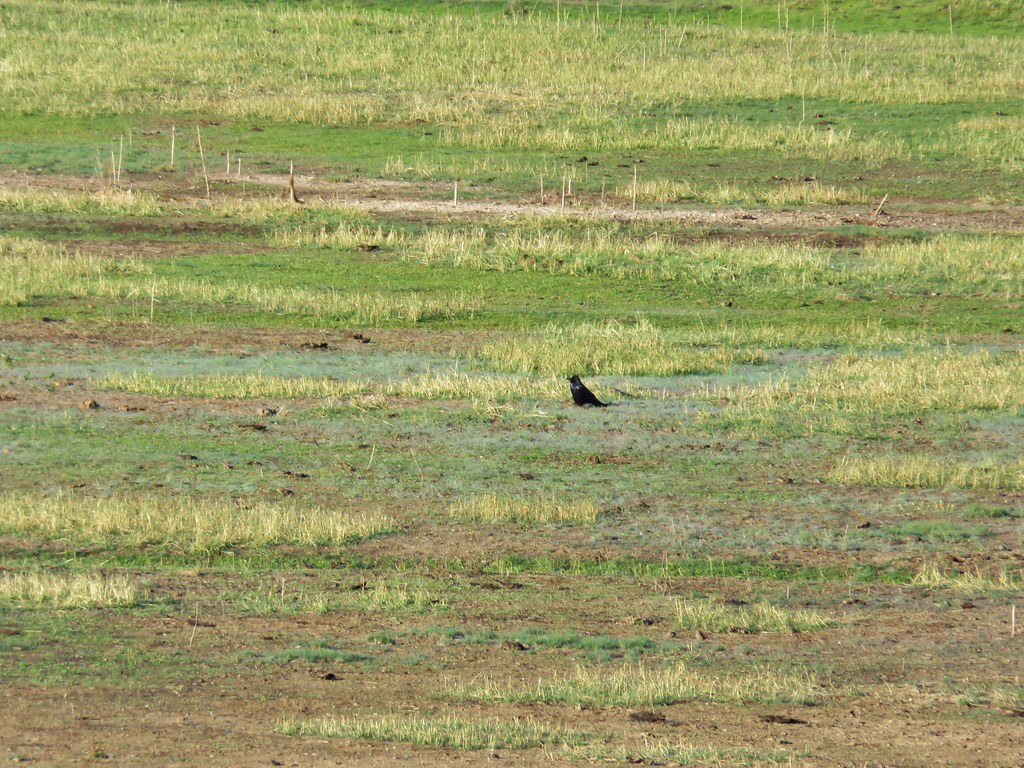
IMG_0107Raven

IMG_0097Pelicans, herons, and other assorted birds

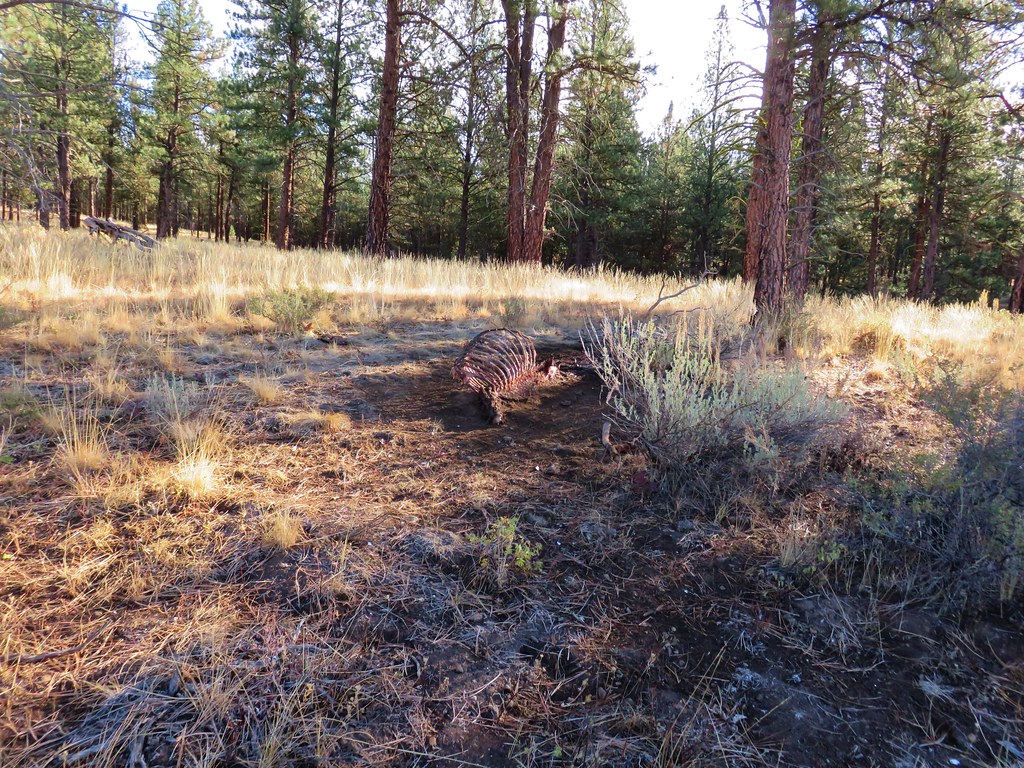
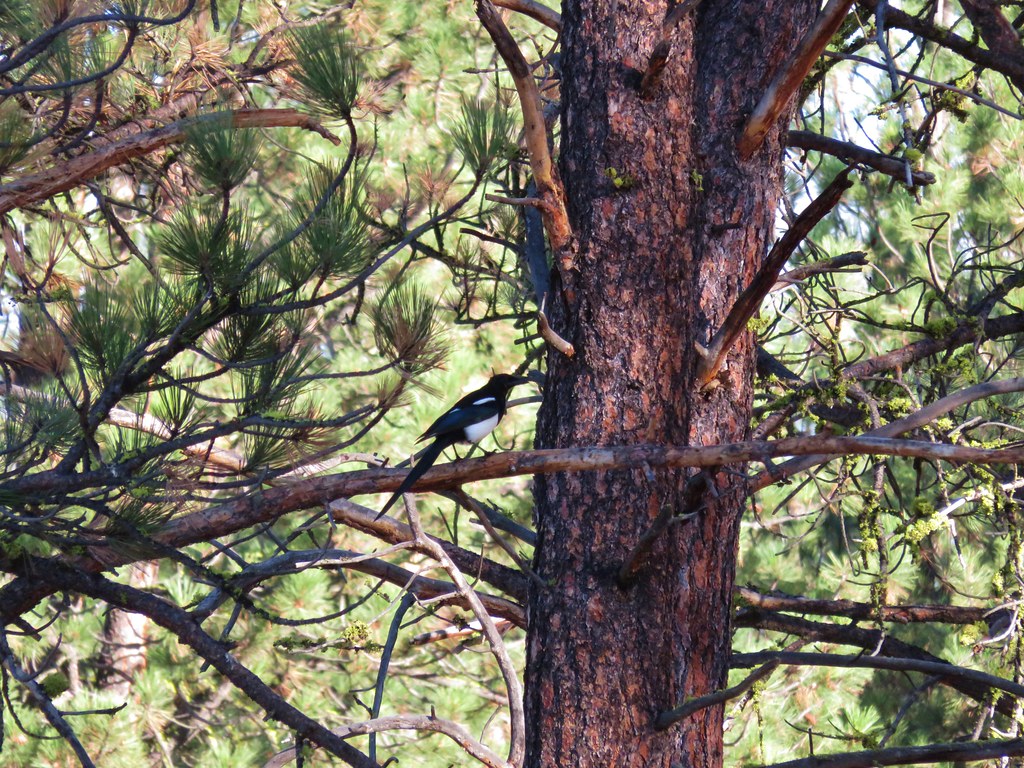
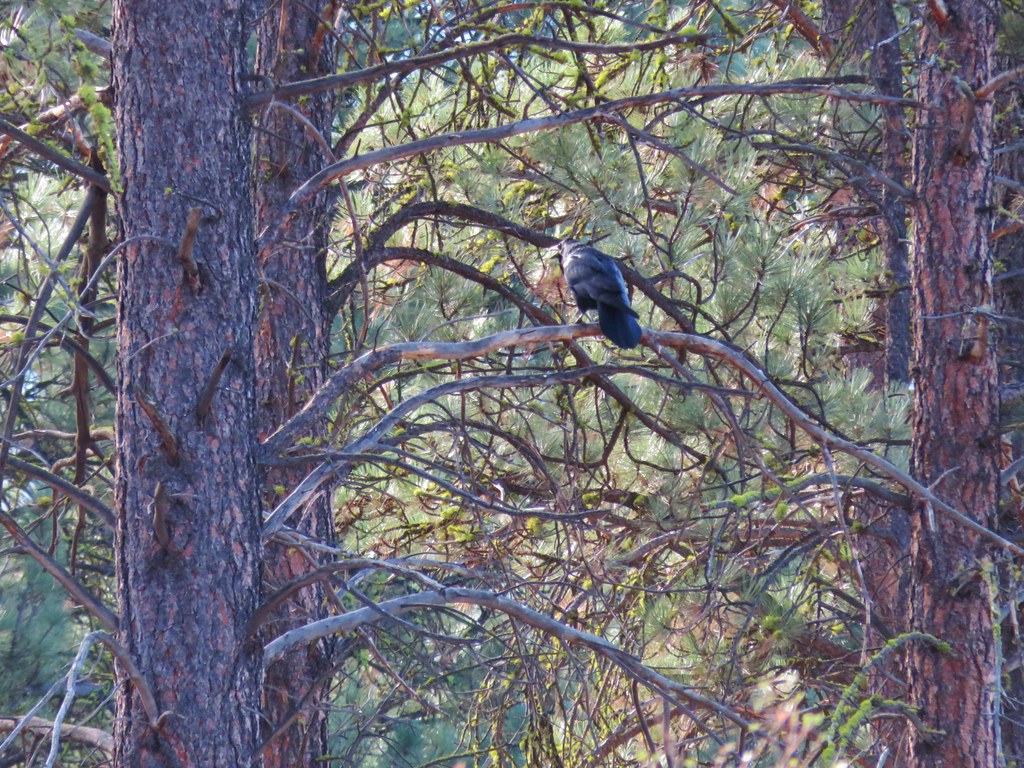
Before exiting the trees we passed a carcass that had drawn a large crowd of ravens and magpies who were none to happy with our presence.
IMG_0110

IMG_0109

IMG_0114

After leaving the trees the trail wound up skirting a meadow and leading us up to Highway 7 a quarter mile from the Mowich Loop Picnic Area.
IMG_0111

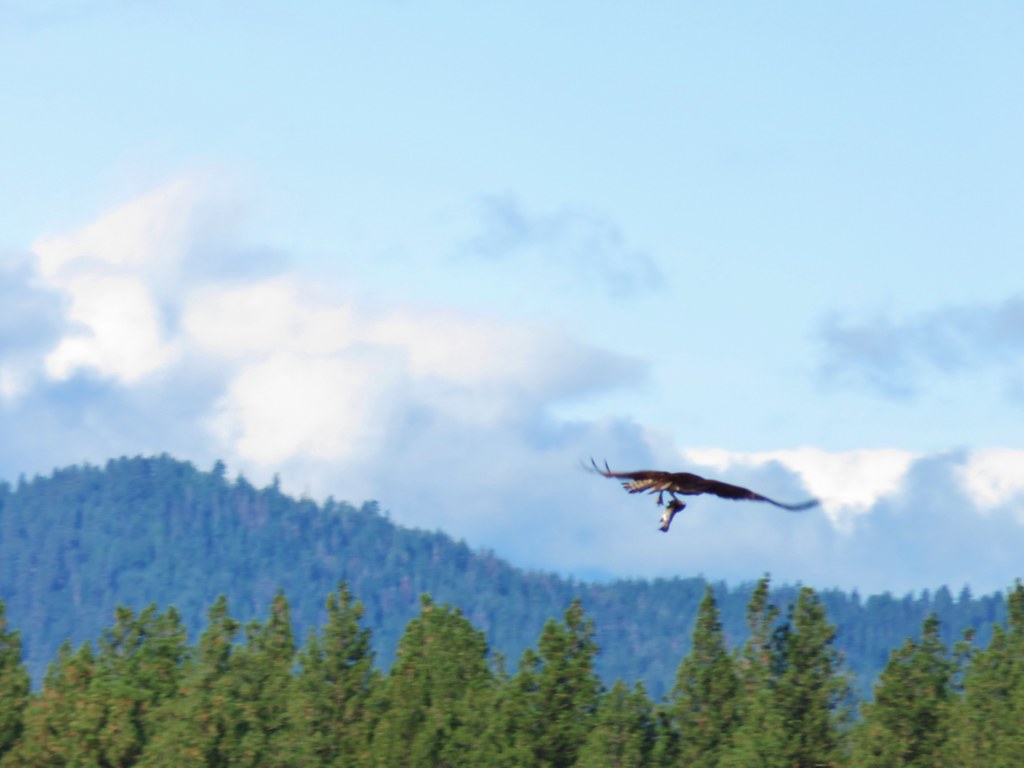
We decided to call it good there instead of walking along the highway and turned around. More wildlife sightings occurred on the return trip including an osprey with a freshly snagged fish.
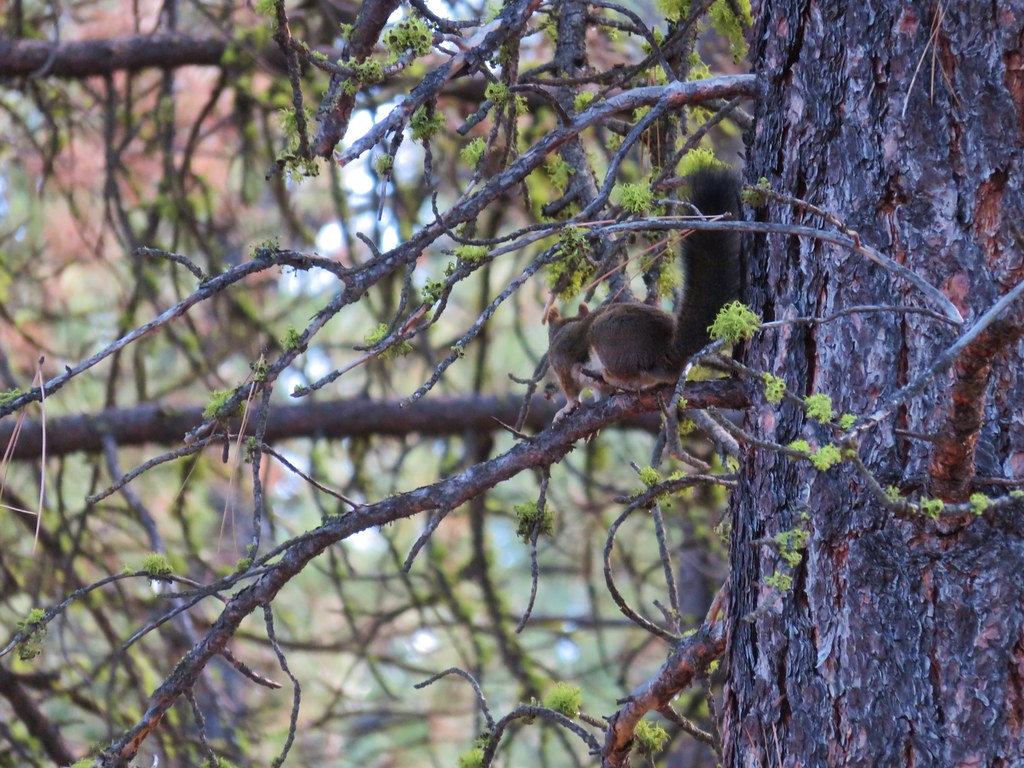
IMG_0117Squirrel

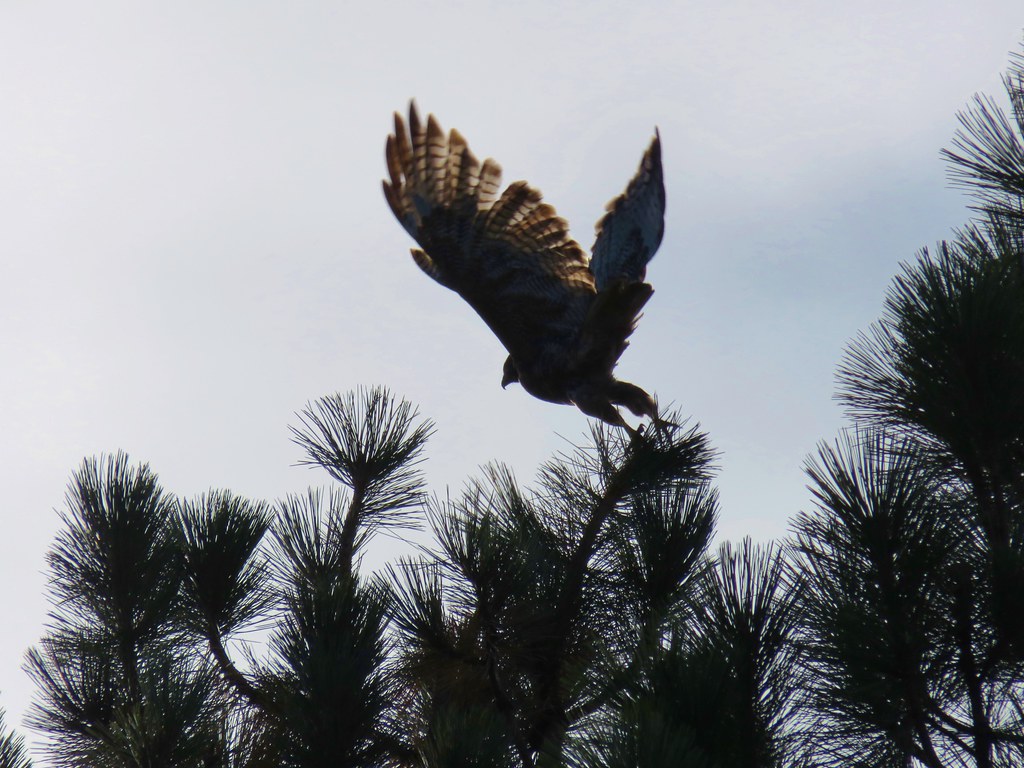
IMG_0122Hawk

IMG_0136Osprey

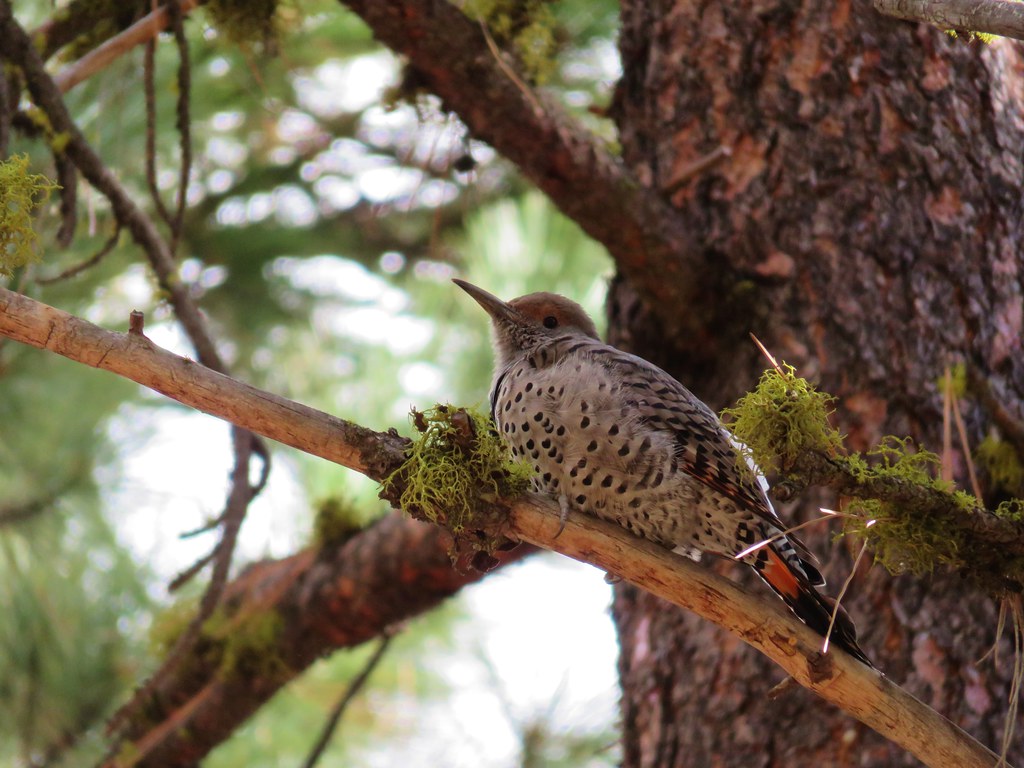
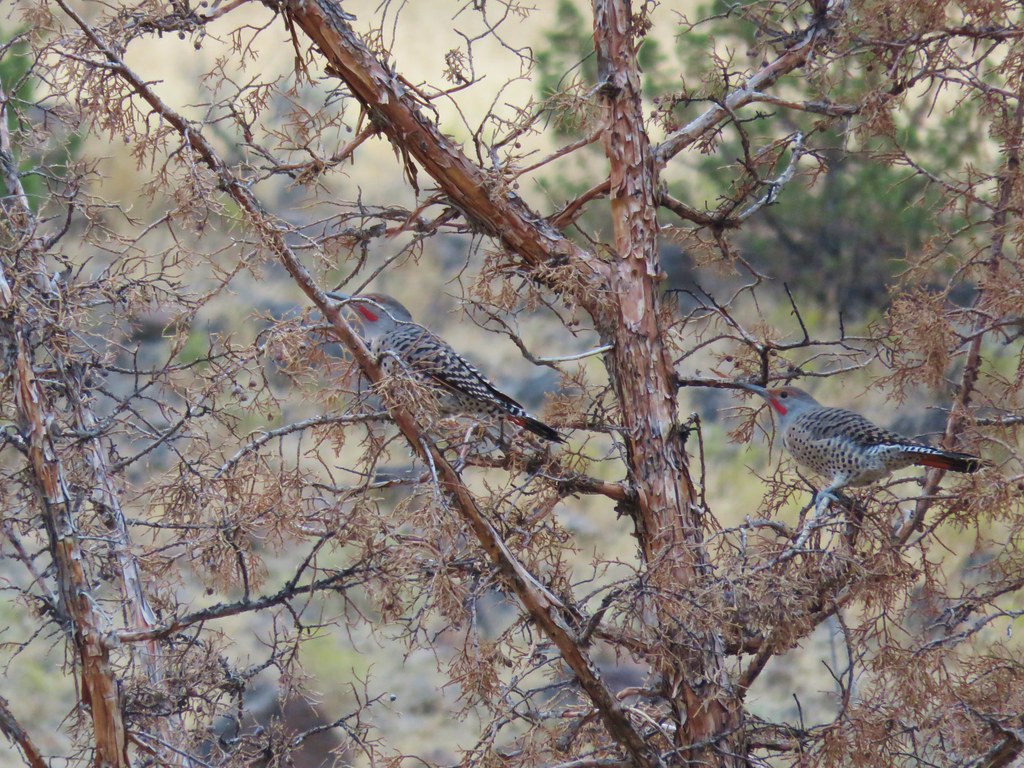
IMG_0138Northern flicker

The fog had lifted off the reservoir by the time we’d gotten back to the car and the weather was beautiful.
IMG_0133

It was 9:30am when we completed our 6.3 mile hike. We felt comfortable with it now being warm enough to make the drive over the pass to Granite Creek so we headed back to Sumpter then made the familiar drive to Granite.

To reach the Granite Creek Trailhead from Granite we turned left on Red Boy Road (Road 24) for 1.4 miles then forked right on Granite Creek Road for 4.3 miles to the signed trailhead.
IMG_0141

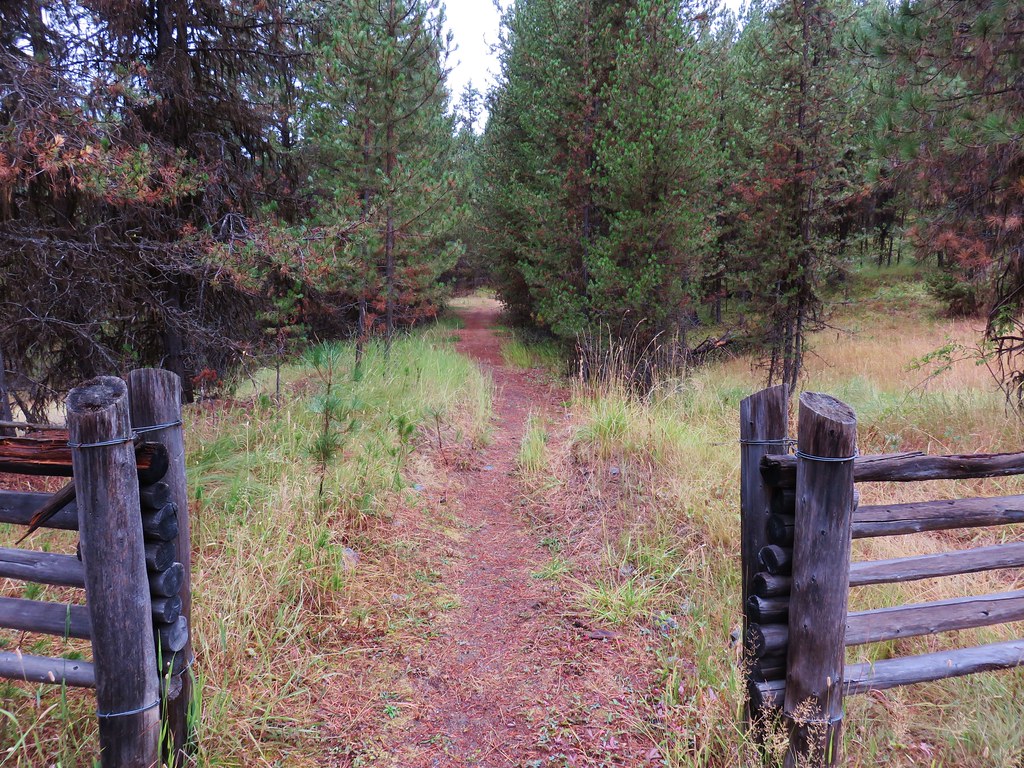
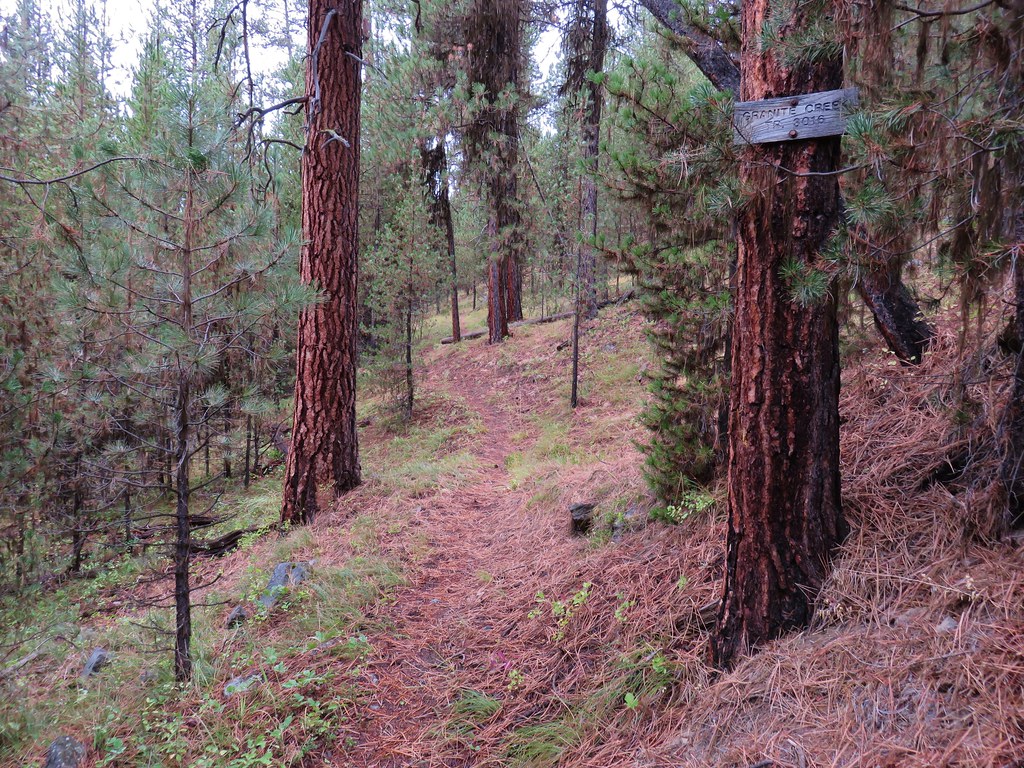
From the trailhead a gated mining road headed downhill to the left (our return route) while the Granite Creek Trail headed slightly uphill to the right after passing through an open fence.
IMG_0142

IMG_0144

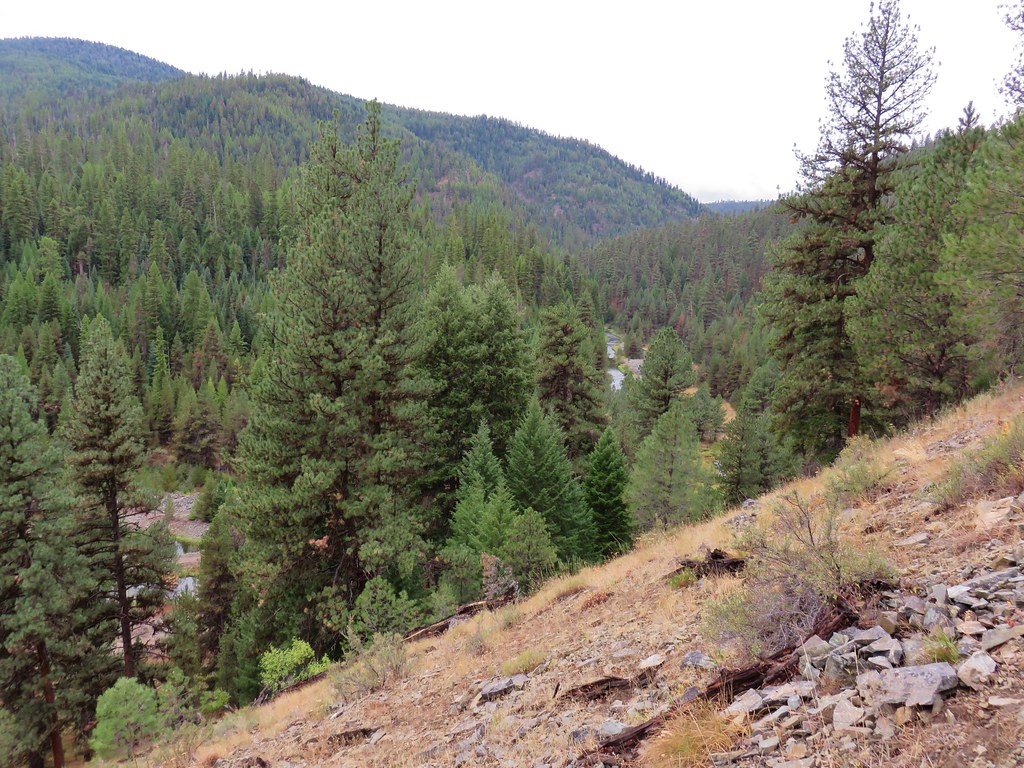
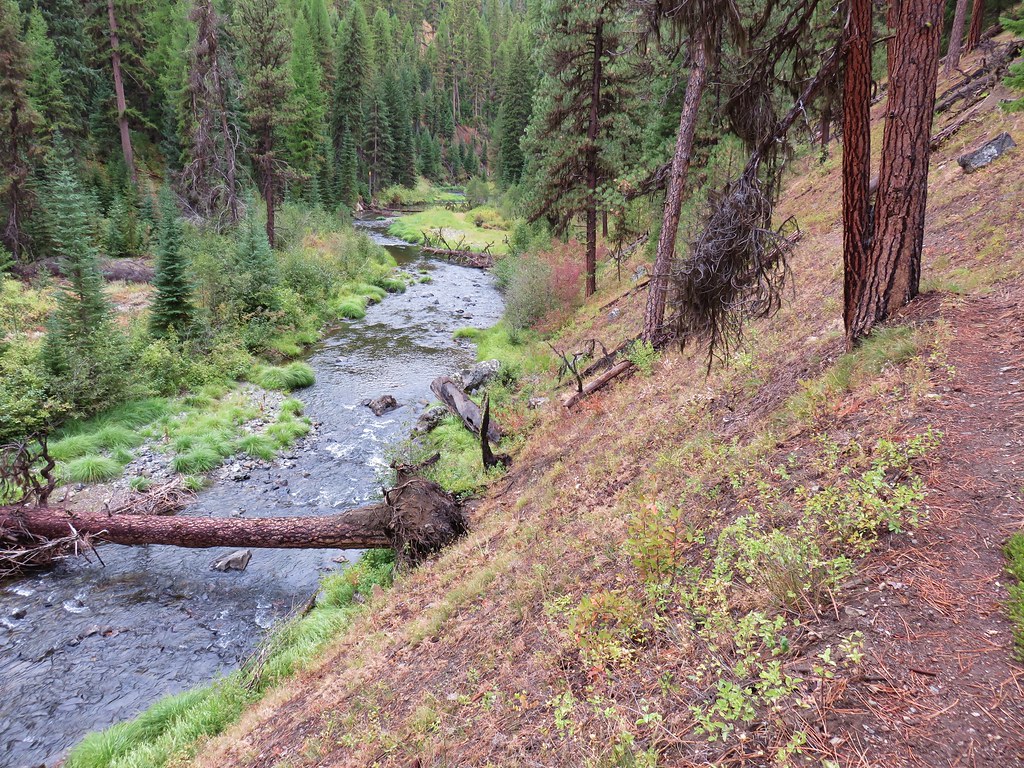
For a little over a mile the trail traversed the hillside above Granite Creek through open pine woods.
IMG_0149

IMG_0150

IMG_0159

The trail then descended to a crossing of Indian Creek before entering the North Fork John Day Wilderness.
IMG_0162

IMG_0165

The trail was still above the creek but not quite as far above.
IMG_0178

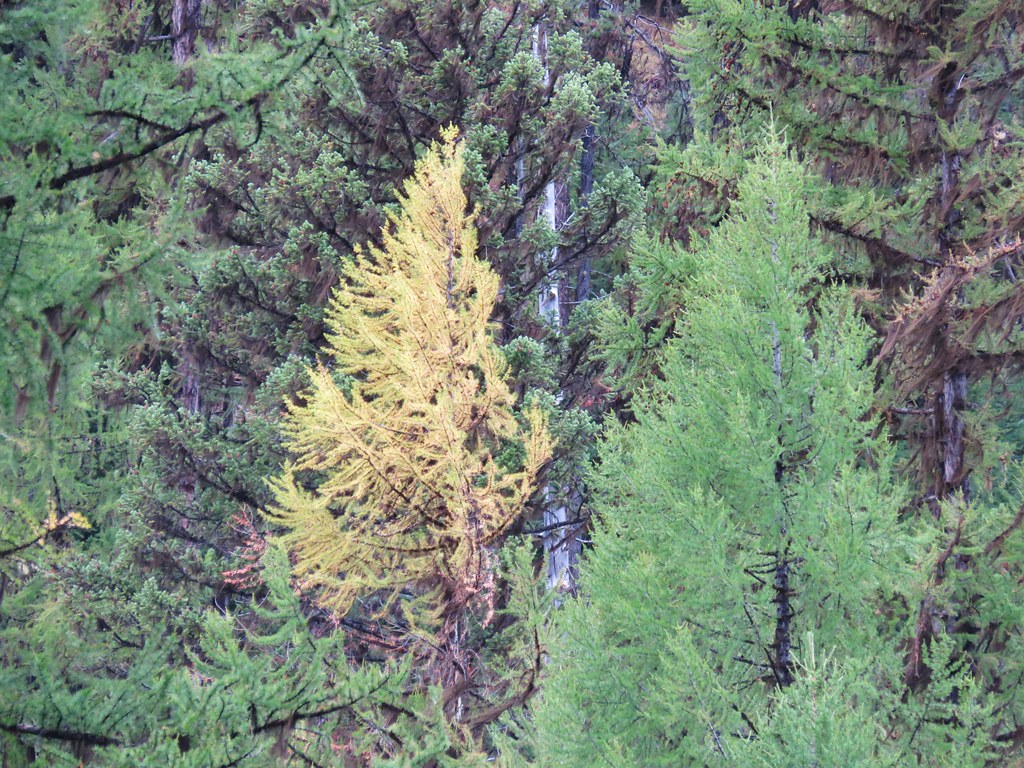
We had remarked on the variety of trees we were seeing in the forest here which included western larch trees. We spotted one that was already changing into its fall color.
IMG_0176

The forest around the trail shifted from open pine to a denser fir forest before crossing Granite Creek on a wide footbridge at the 2 mile mark.
IMG_0180

IMG_0183

The trail once again climbed away from the creek before dropping back down to a log footbridge over Lake Creek.
IMG_0187

IMG_0189

IMG_0190

Near the 3 mile mark we passed a small wooden box housing Snowshoe Spring.
IMG_0192

Two tenths of a mile later we passed the Lake Creek Trail coming downhill on the left.
IMG_0194

A second crossing of Granite Creek followed .2 miles later.
IMG_0200

IMG_0201

Shortly after crossing the creek we arrived at the end of the Granite Creek Trail at the North Fork John Day River Trail.
IMG_0203

This was the same trail we’d started out on for our Tuesday hike.

We continued on this trail just far enough to cross the river on a footbridge.
IMG_0204

IMG_0208

IMG_0207

We returned the way we’d come but after 2 miles at a fork we headed downhill to the right where we joined the mining road.
IMG_0219

This road passed through mining tailings left over from dredges and hydraulic mining.
IMG_0221

IMG_0224

There are still active claims along the road so we stayed on it for the 1.3 miles back to the trailhead.

The total distance for this hike was 6.8 miles putting the two hikes combined at 13.1 miles. The weather had been about as good as we could have asked for and we’d stayed reasonably dry other than our shoes due to the wet vegetation. It was a relaxing end to our week hiking in the Blue Mountains.

On our way back to the Sumpter Stockade we noticed that the corn dog cart (Cajun Concessions) was open even though it was Thursday. After dropping off our hiking gear in our room we walked up the street and each got a hand dipped corn dog and cheese stick. It was now a perfect ending to our stay in Sumpter. Happy Trails!

Flickr: Phillips Reservoir & Granite Creek

Categories
Blue Mountains - South Hiking Oregon Trip report

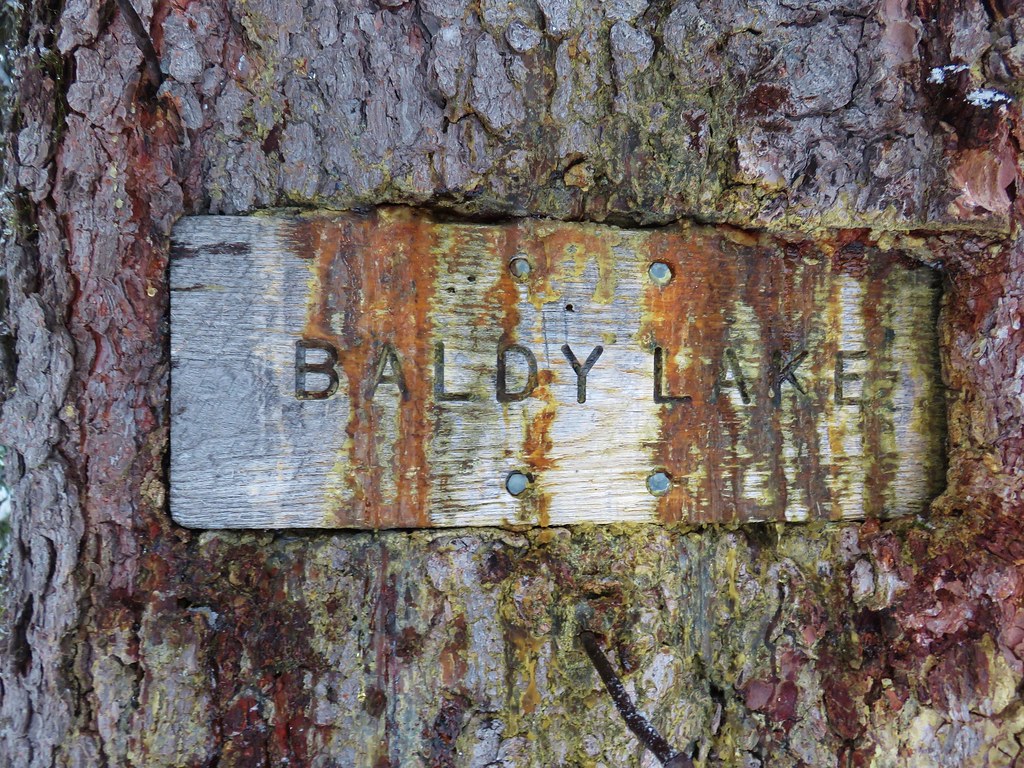
Baldy Lake

At the beginning of our vacation the forecast had called for Tuesday to be the coldest and wettest day of the week and then Wednesday and Thursday were expected to be a bit warmer with decreasing chances of precipitation and by Thursday afternoon partly sunny skies. By Tuesday that had all changed and a second weather system was following up the first. Wednesday morning was expected to be a little warmer than Tuesday  meaning less chance of snow on our drive to the trailhead but as the second system moved in that day more precipitation was expected and now there was a chance of isolated thunderstorms.

The good news in that forecast was we had no issues getting to the Baldy Creek Trailhead in the Wallowa-Whitman National Forest. The Baldy Creek Trail set off from a small campground and promptly crossed the North Fork John Day River on a log footbridge.
IMG_9839

IMG_9840

IMG_9841

We then entered the North Fork John Day Wilderness.
IMG_9842

The 121,099 acre wilderness is made up of four separate areas with this being the third we’d visited during our vacation but the first in the Wallowa-Whitman National Forest. The other two, Olive Lake and the North Fork John Day River, were in the Umatilla National Forest.

The trail passed through a nice, albeit wet, forest for just over a mile before reaching the first of several crossings of Baldy Creek.
IMG_9844

IMG_9848

IMG_9849

After crossing Baldy Creek the trail almost immediately crossed Bull Creek before entering a small section of forest recovering from a fire.
IMG_9851

IMG_9854

We had enough of a view from the area of the fire to get an idea of where the snow line was. We knew going in that we would be hitting snow at some point on the hike since Baldy Lake sat at an elevation just over 7000′ plus the forecast called for 2-4 inches of snow during the day.
IMG_9857

Not long after crossing Bull Creek we recrossed Baldy Creek on a footbridge where we noticed a small amount of snow between the logs.
IMG_9860

As we made our way uphill along the creek the amount of snow on the ground slowly increased.
IMG_9862

In the next three miles the trail crossed Baldy Creek four more times. There were footbridges at all of the crossings but several of them were in such a state that it was easier to find a different way across the water.
IMG_9871

IMG_9886

IMG_9889

IMG_9893

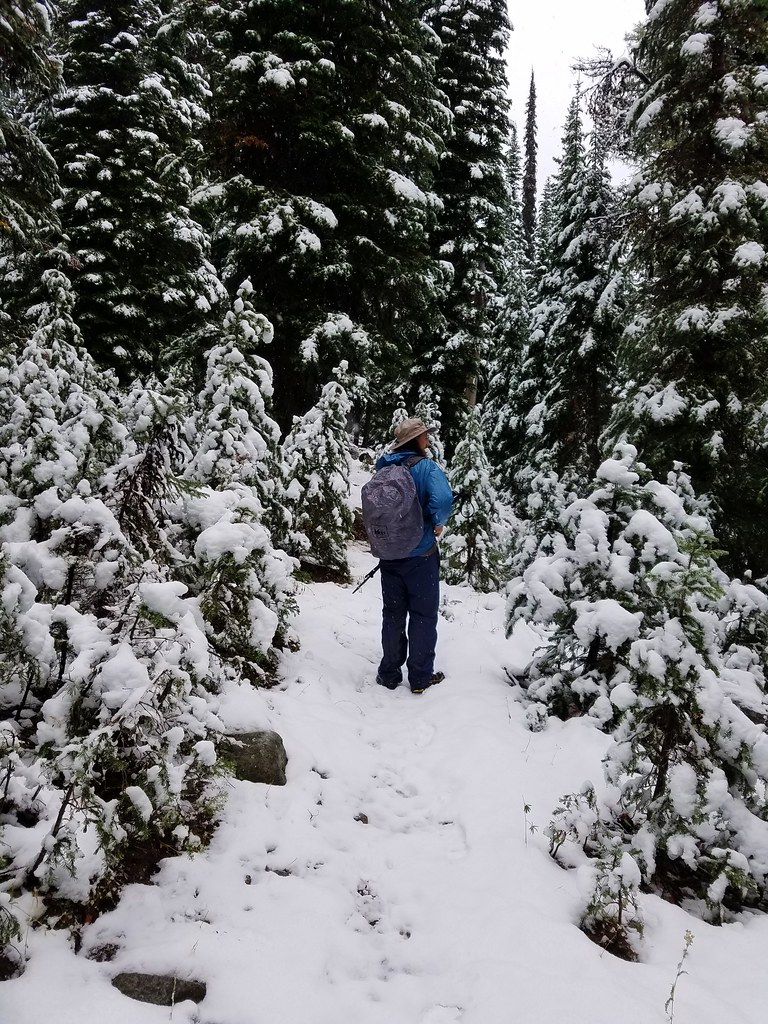
Beyond the final bridge the trail veered away from Baldy Creek and began climbing a bit more. As we climbed we found more and more snow on the trail and the trees.
IMG_9902

IMG_9905

2017-09-20 09.52.56

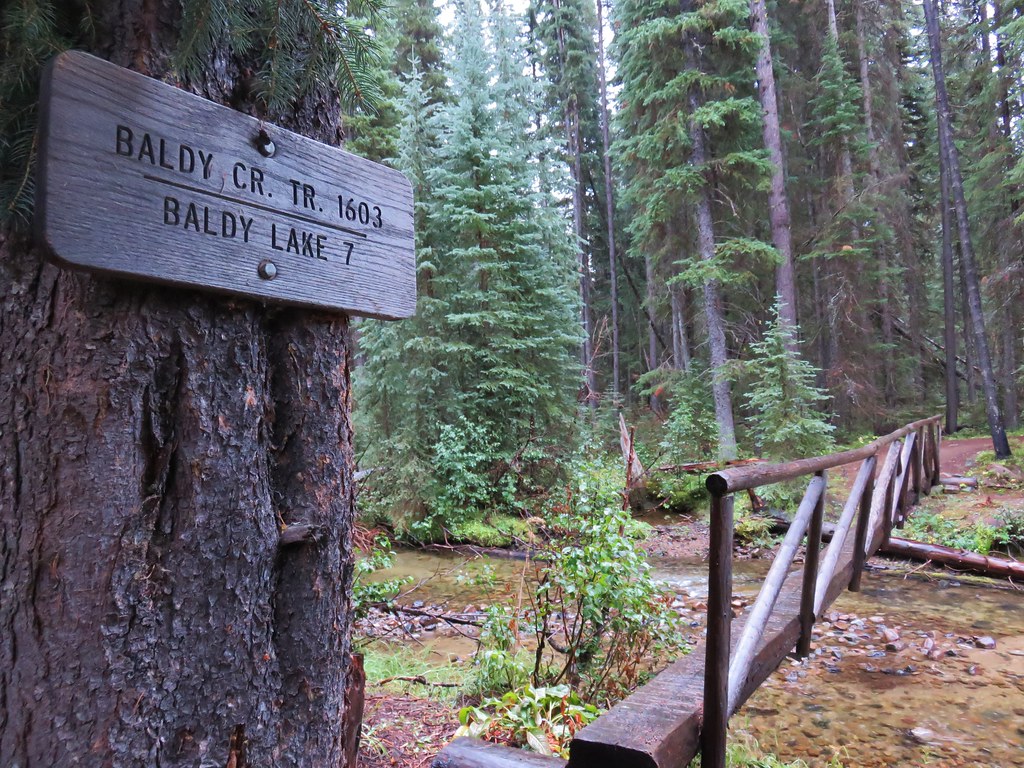
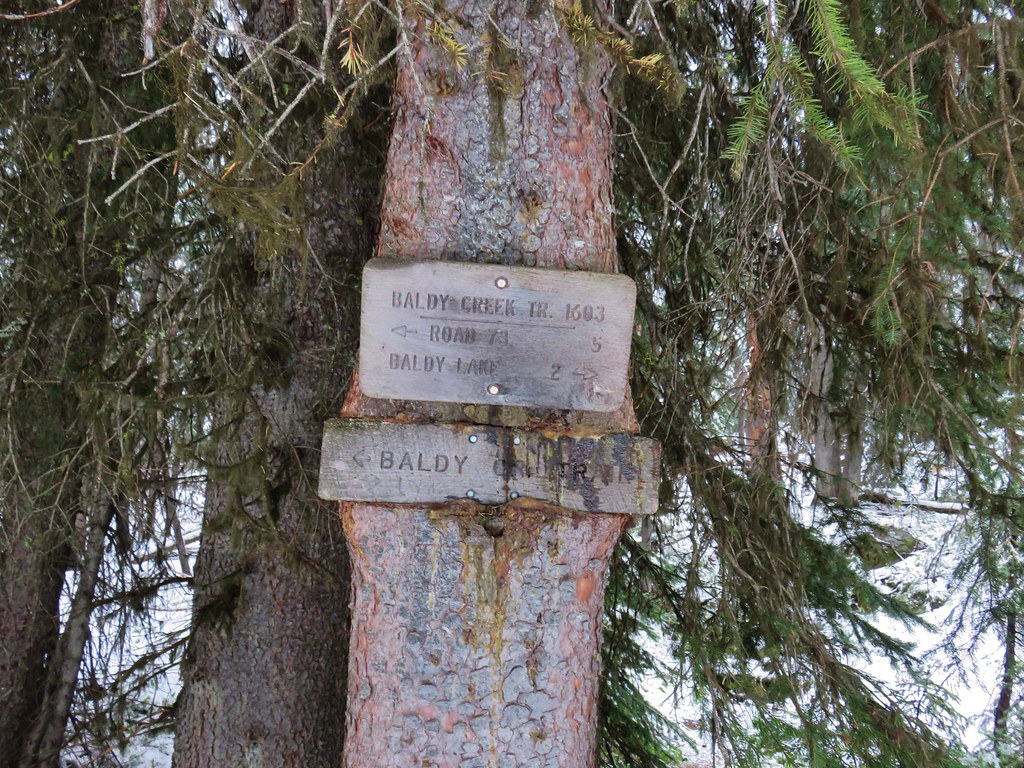
At the 5 mile mark we passed a trail sign at a junction.
IMG_9907

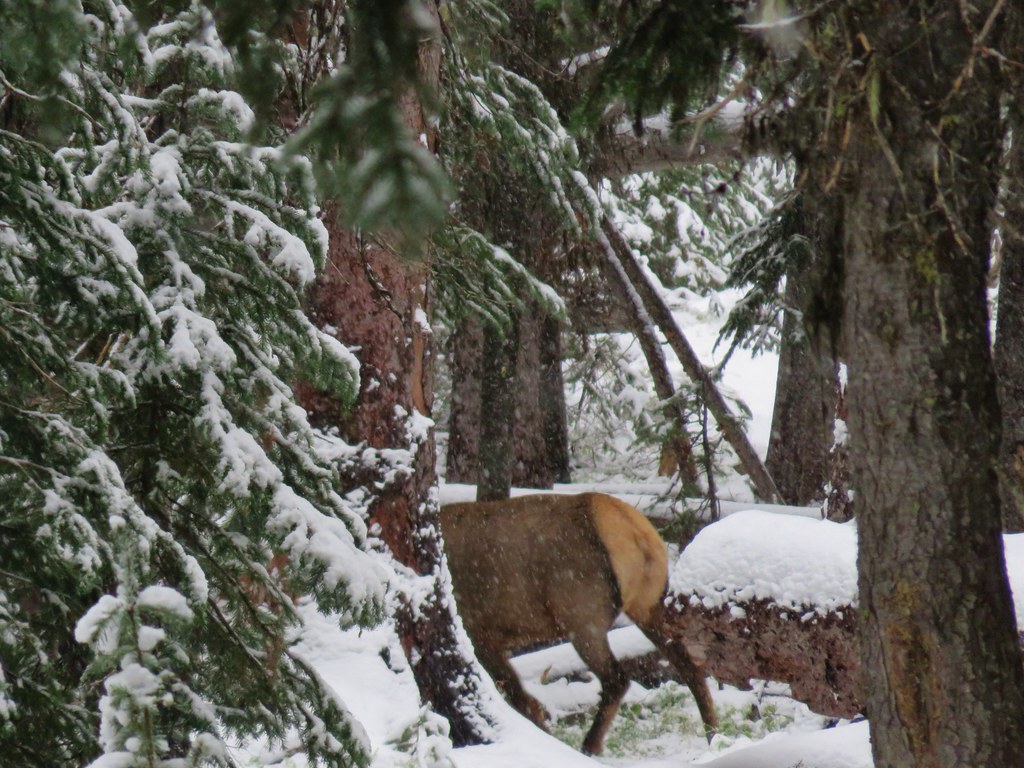
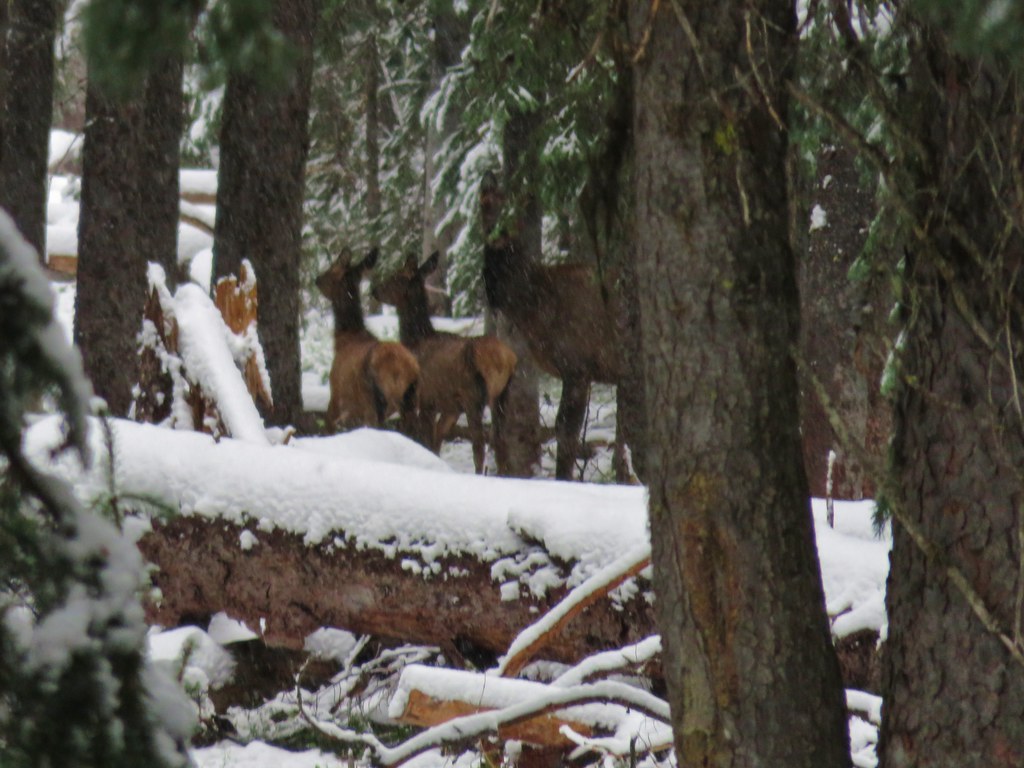
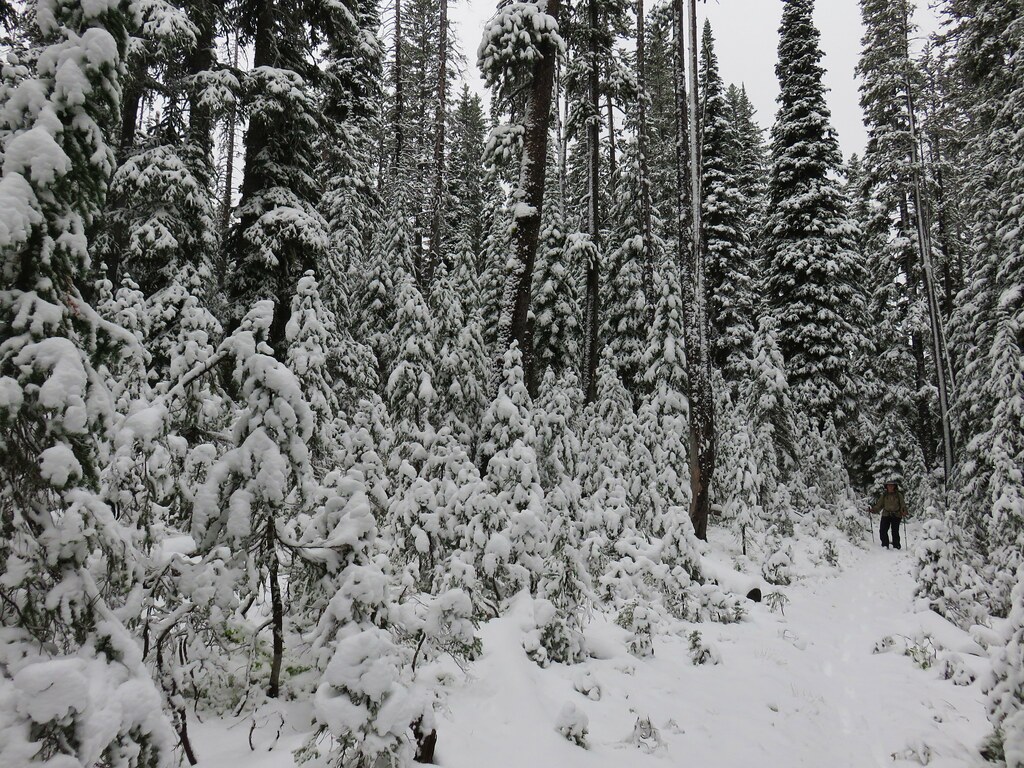
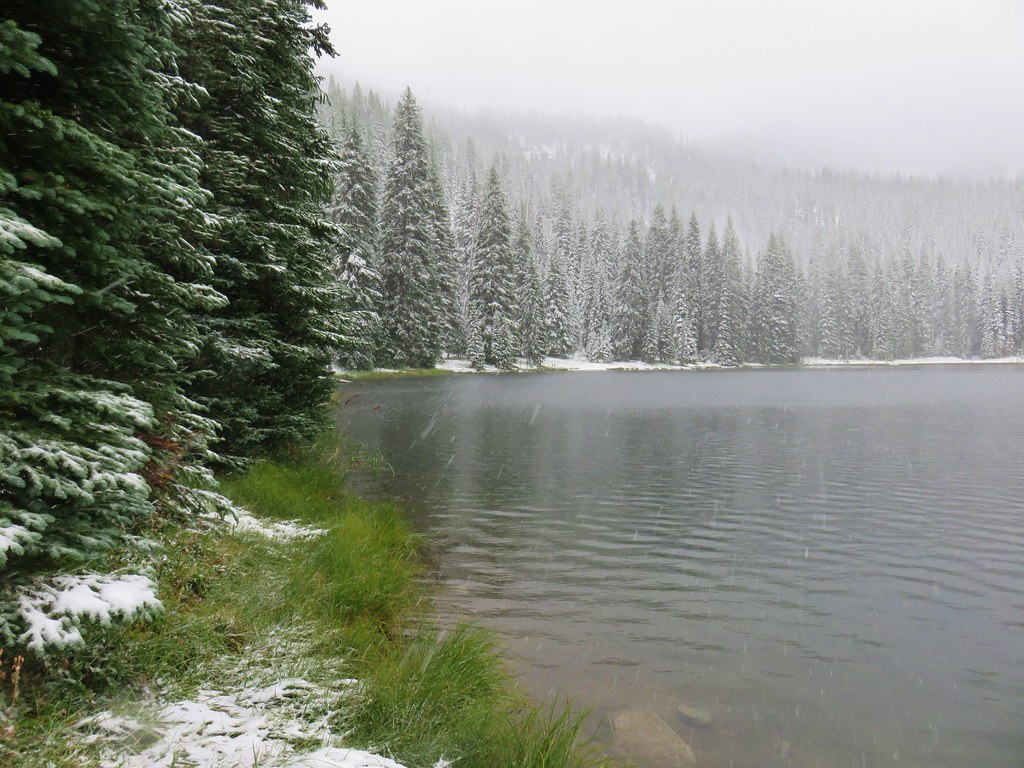
We were loving the winter scenery, it was such a welcome sight after a summer full of wildfires. On top of the snow on the ground and in the trees it had started snowing a bit. I mentioned that the only thing that could make it better would be to see a deer or even better an elk in the snow. Not five minutes later I looked up the trail and saw an elk cow staring back at me.
IMG_9915

She disappeared into the trees but then a second cow and two calves stepped onto the trail.
IMG_9916

IMG_9917

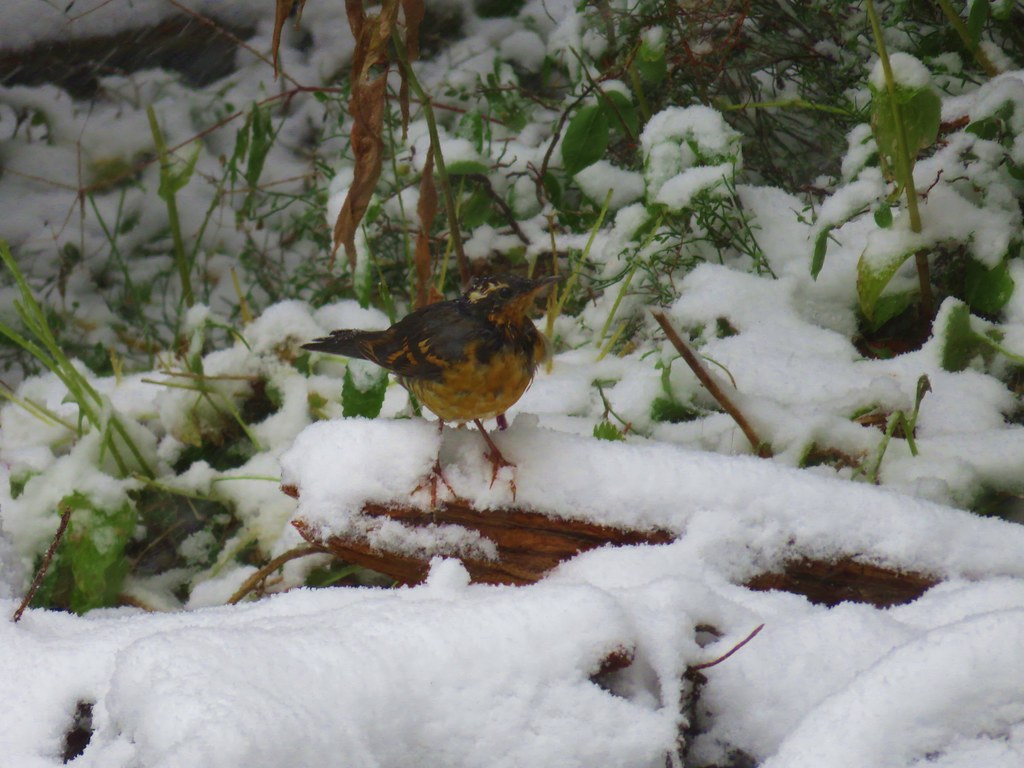
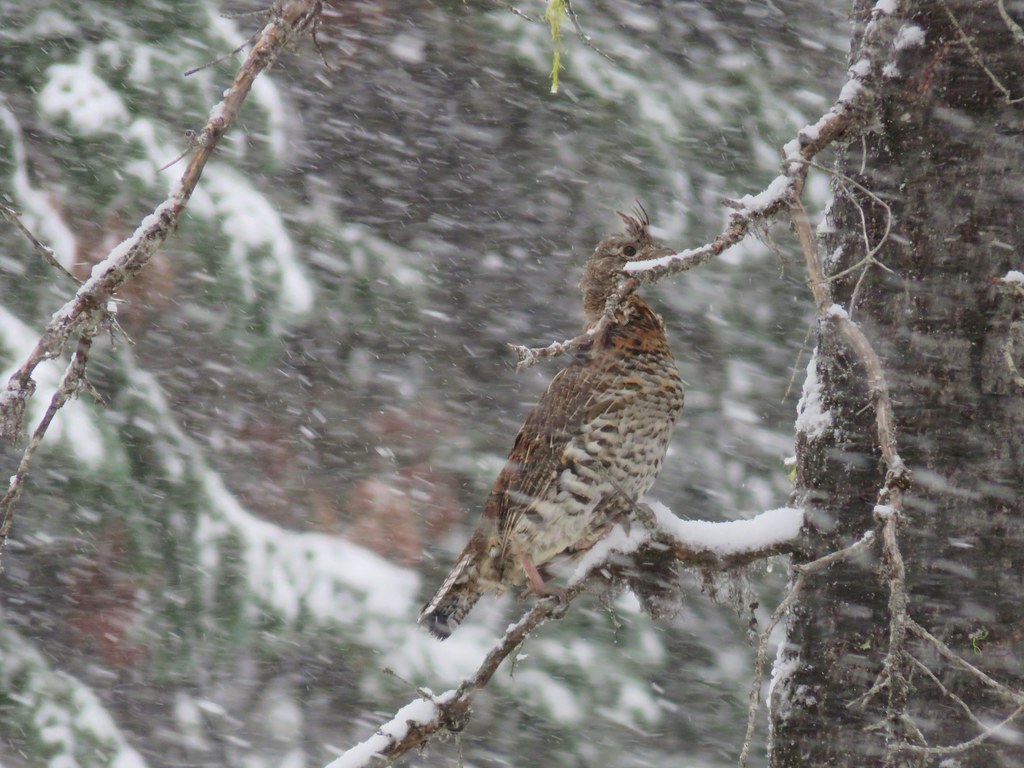
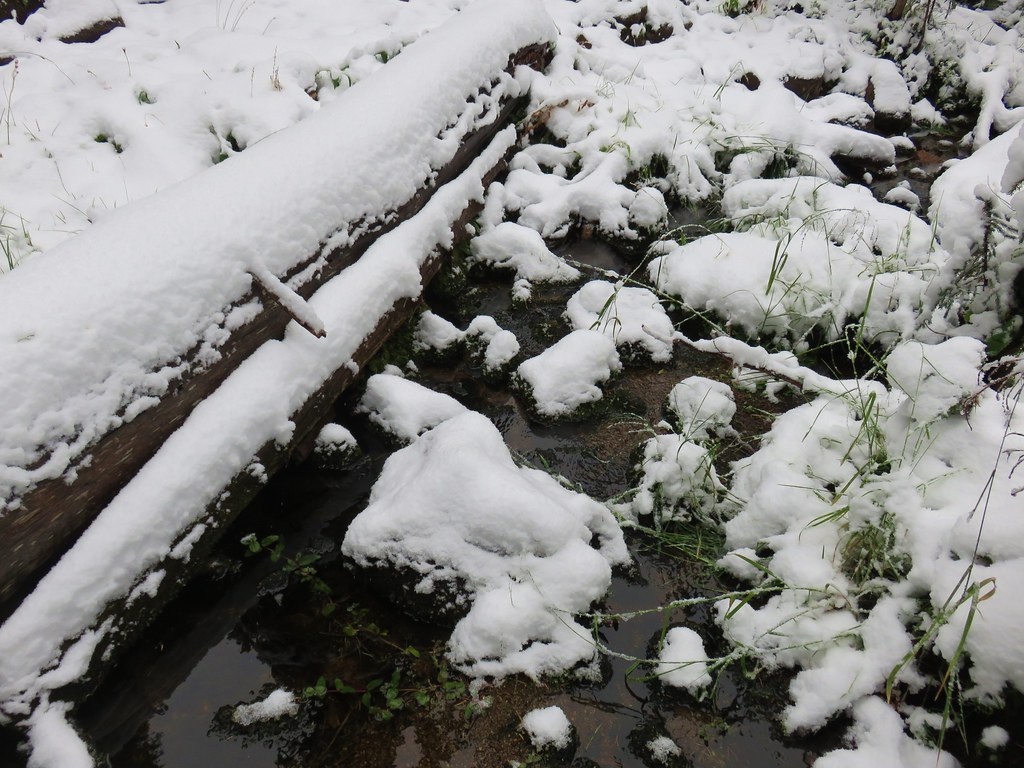
The trail was now winding around a hillside with several small streams which seemed to be attracting the wildlife. The elk had been at one of these streams and not too much further at another stream was a varied thrush and some grouse.
IMG_9927

IMG_9930

Our hike the day before along the North Fork John Day River had felt like fall but now we were in a winter wonderland.
IMG_9936

We crossed a greatly diminished Baldy Creek then came to a junction with a trail coming from Silver Creek Road.
IMG_9938

IMG_9939

Baldy Lake was approximately a quarter mile from the junction.
IMG_9946

IMG_9947

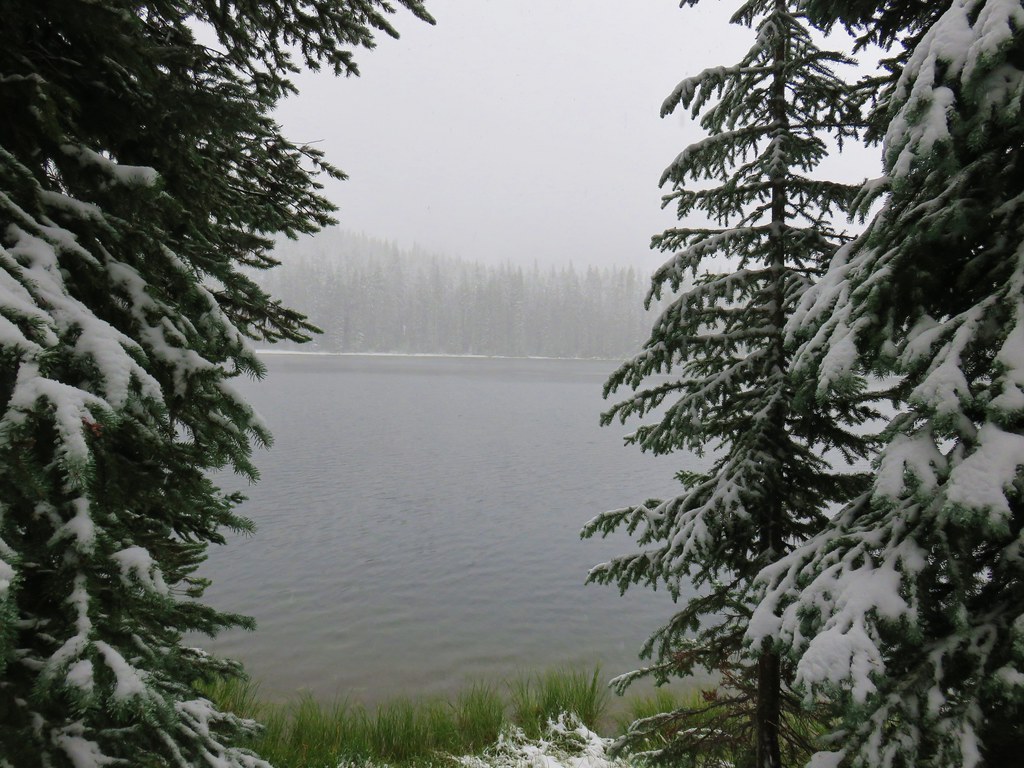
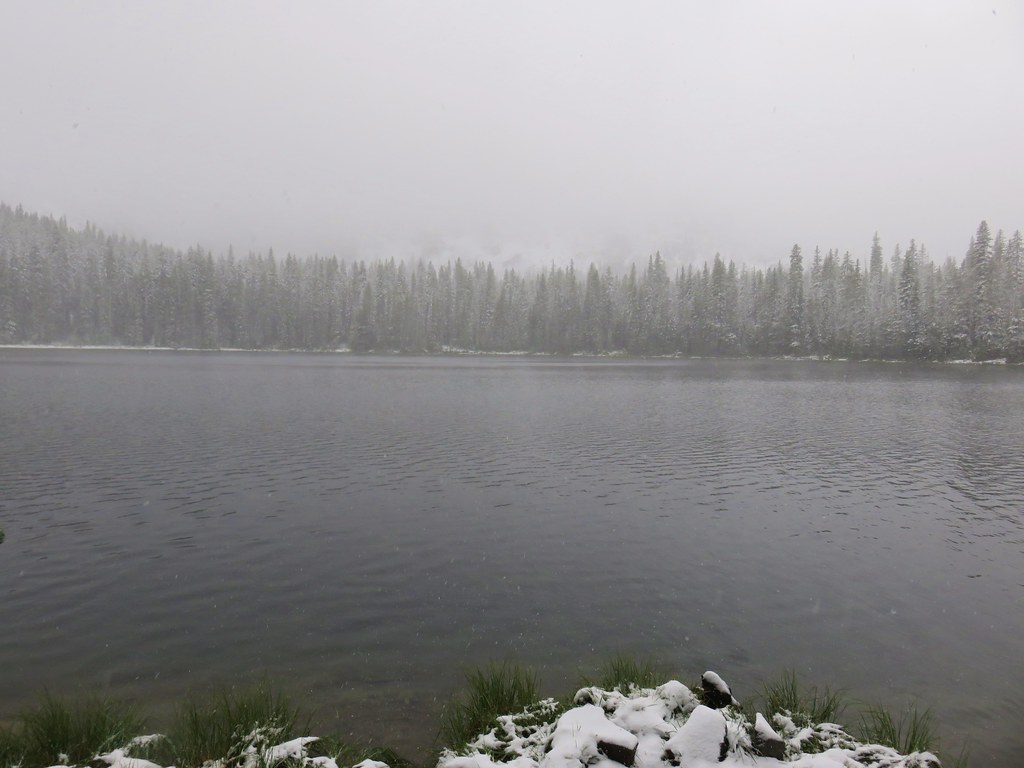
It was just a bit foggy when we arrived at the lake making it impossible to see the cliffs beyond the lake including Mt. Ireland.
IMG_9951

IMG_9958

We found a log and brushed off the snow so we could take a seat and enjoy the lake. The wind was really blowing along the ridge above the lake but it was calm along the water and not particularly cold.
IMG_9968

We hadn’t been sitting there long when the clouds started to lift revealing the lookout tower atop the 8321′ Mt. Ireland.
IMG_9976

IMG_9975

IMG_9973

Our original plans had called for us to hike up to the lookout on Mt. Ireland at some point during the week but given the conditions we had decided to save that hike for another trip, so for now getting to see it from the lake would have to suffice.

We finally started to get chilly just sitting there so we tore ourselves away from the lake and headed back. It was snowing pretty hard as we made our way back down and we could see the difference along the trail.
IMG_9981

IMG_9991

IMG_9993

We eventually left the snow behind which ironically made me colder. My feet and hands had stayed relatively dry in the snow but now they were starting to get wet. My hands, without gloves (I’m a slow learner), froze when a brief round of hail passed over. We picked up our pace eager to get to a heated car.

As we passed by the old fire area a little blue sky was visible.
IMG_0014

By the time we’d reached the trailhead there was quite a bit more blue allowing us to bask in a little warm sunshine.
IMG_0019

It had been a 14 mile hike that took us a few months into the future when winter snows will be here to stay. Getting to see the elk had been a big bonus to what was a great hike and fun adventure. Happy Trails!

Flickr: Baldy Lake

Categories
Blue Mountains - South Hiking Oregon Trip report

North Fork John Day River

A day after a cold, wet hike in the North Fork John Day Wilderness by Olive Lake we were headed back to that wilderness for another go around. We had decided to hike the North Fork John Day River on Tuesday because it was the lowest elevation hike we had lined up for the week and Tuesday was supposed to be the coldest day of the week.

We waited until 7am to leave Sumpter hoping that the slightly later than normal start would allow time for any potential snow on the roads to clear, especially over the 5860′ Blue Springs Summit between Granite and Sumpter. Ironically there was only a few patches of snow along the road at the summit but 15 miles further north the trees were flocked and snow was falling steadily at the 5500′ Crane Creek Trailhead. There was a good chance we would passing by this trailhead on our hike if everything went according to plan.

Our starting point for the day was another 2.5 miles away at the North Fork John Day Trailhead.

This trailhead is located at the North Fork John Day Campground at the junction of roads 73 and 52. At an elevation of 5200′ the trailhead was low enough that there was no snow and only a light rain was falling as we set off on the trail.
IMG_9667

We crossed Trail Creek on a log then passed through a section of forest before arriving alongside the North Fork John Day River.
IMG_9671

IMG_9674

IMG_9678

Soon we entered the North Fork John Day Wilderness.
IMG_9681

Just two weeks before we’d spent Labor Day weekend backpacking on Mt. Adams (Day 1 and Days 2 & 3) in 80 degree temperatures and we’d just driven through snowy winter landscape but along the river was the first time this year that it had felt unmistakably like Fall.
IMG_9686

IMG_9713

We passed several mining ruins before arriving at the “Bigfoot Hilton” at the 2.6 mile mark.
IMG_9694

IMG_9696

IMG_9720

IMG_9721

We hopped across Trout Creek just beyond the Bigfoot Hilton and continued further into the wilderness occasionally being startled by grouse.
IMG_9723

IMG_9725

IMG_9734

IMG_9709

Four miles from the Bigfoot Hilton we came to a junction with the Crane Creek Trail.
IMG_9752

Here we turned left for .2 miles down to the North Fork John Day River.
IMG_9754

After talking with a group of bow hunters camped near by we faced a choice, go back the way we’d come or ford the river and continue on a loop. It would have been a little shorter to go back the way we’d come but the prospect of a loop was too appealing, besides we were already wet so staying dry wasn’t an option.
IMG_9755

The calf deep water was reasonably warm all things considered which was a nice surprise. On the far side we met a couple of Oregon Department of Fish and Wildlife employees on their way to do a three day Chinook salmon survey. We wished them luck with the weather before continuing on our respective ways.

The Crane Creek Trail was much more overgrown than the North Fork John Day Trail but it was relatively free of blowdown.
IMG_9763

IMG_9769

The trail climbed steadily for 4.1 miles to the Crane Creek Trailhead, the last portion passing through the meadows of Crane Flats where we found most of the snow had melted.
IMG_9783

IMG_9792

IMG_9800

IMG_9808

IMG_9810

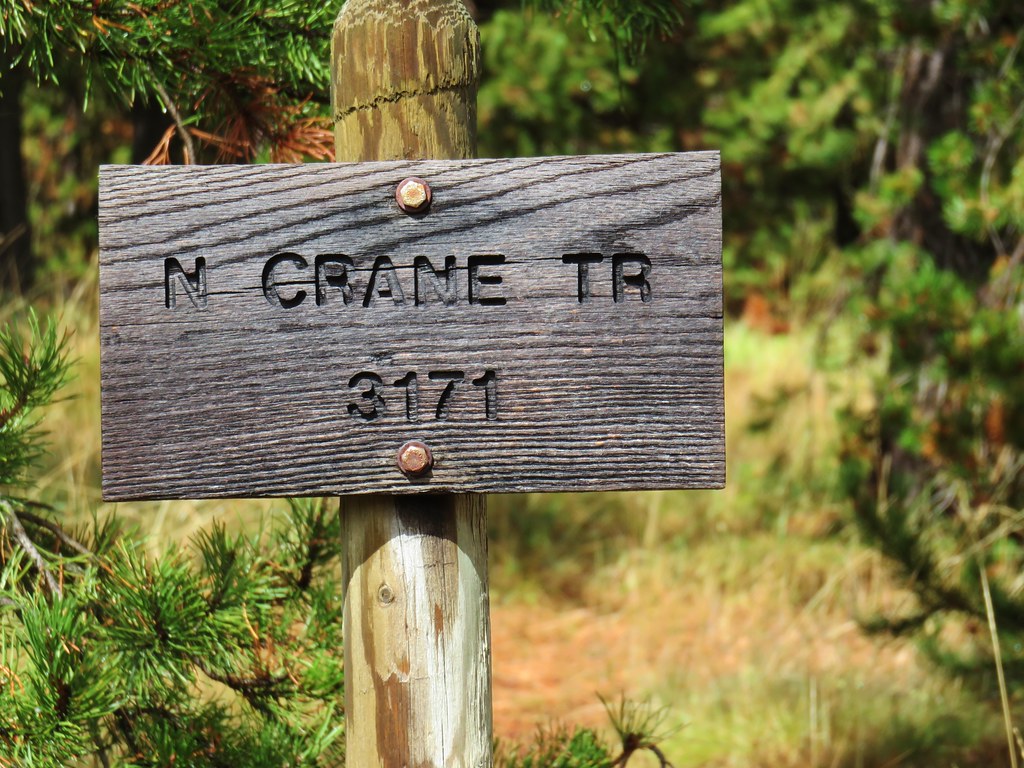
At the Crane Creek Trailhead we picked up the North Crane Trail which would lead us back to the North Fork John Day Trailhead.
IMG_9813

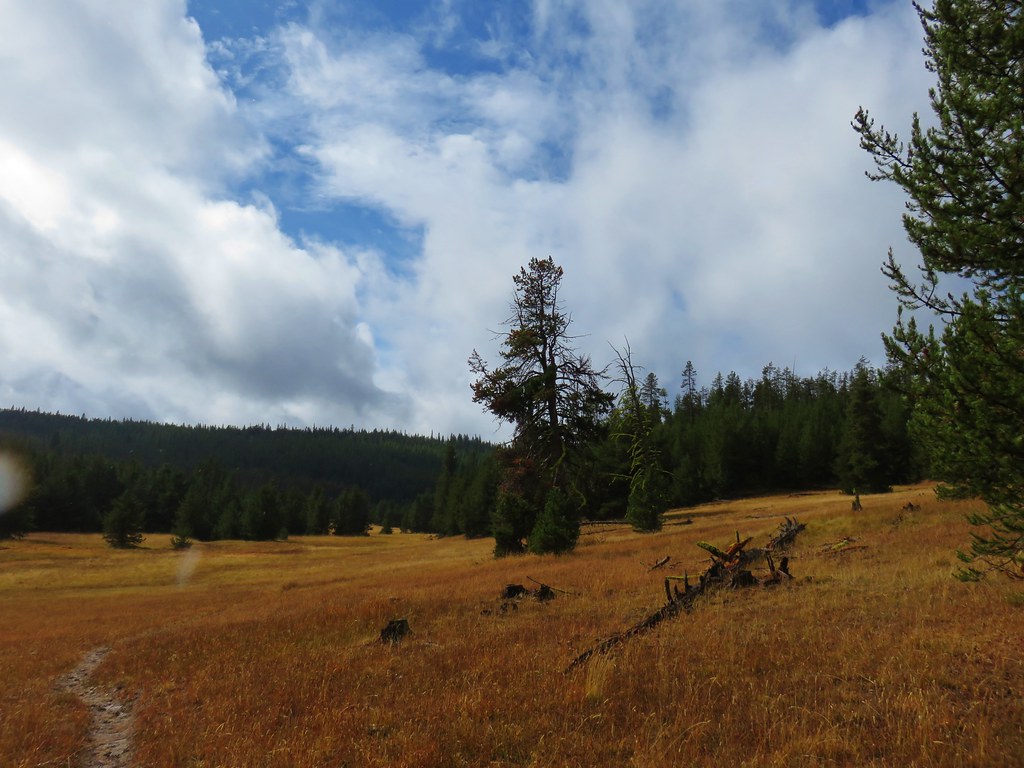
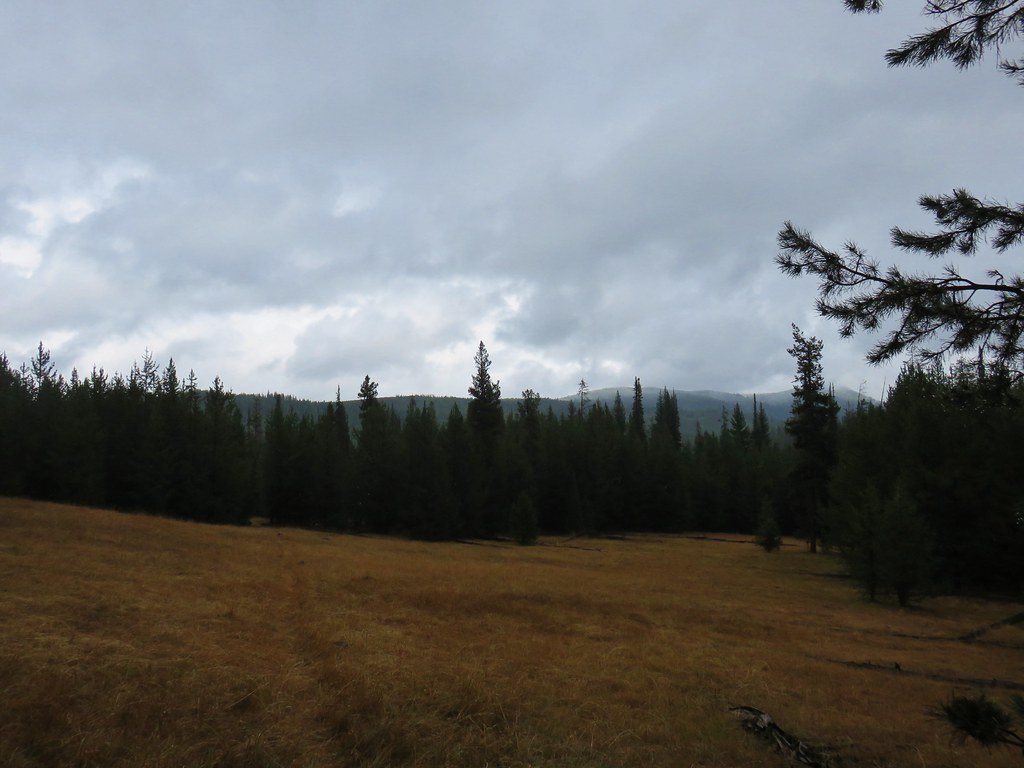
Remnants of the morning snow remained along this 2.6 mile trail as it passed through alternating meadows and forest.
IMG_9823

IMG_9828

IMG_9827

We had been expecting to have to ford the river again to get back to the trailhead but ended up taking a right at some point when the actual trail veered left and popped out onto Road 73 just before the river a quarter mile from our car. We crossed the river on the road and walked through the campground to our car.
IMG_9832

It was a much warmer hike than we had been expecting and a really enjoyable 14 mile loop. We would be heading back to the same area the next day for another hike at a higher elevation but for now it was time to head back to Sumpter and get cleaned up. Happy Trails!

Flickr: North Fork John Day River

Categories
Blue Mountains - South Hiking Oregon Trip report

Olive Lake

With the forecast calling for the possibility of snow at higher elevations from Monday through Friday of our vacation we were keeping a close eye on forecasts to help choose when to do each of the hikes we’d planned on. The really cold air wasn’t due to hit until about 11am Monday morning so we decided to do our planned loop past Olive Lake first knowing that the high point of the loop was at an elevation over 7400′ in the Greenhorn Mountains. We hoped that by starting early we could stay ahead of any snow that might fall so with that in mind we got an early start and arrived at the Lost Creek Trailhead just before 7am.

The trailhead is located 11.5 miles west of Granite along Road 10. Along the way to the trailhead the road passes the historic Fremont Powerhouse.
IMG_9510

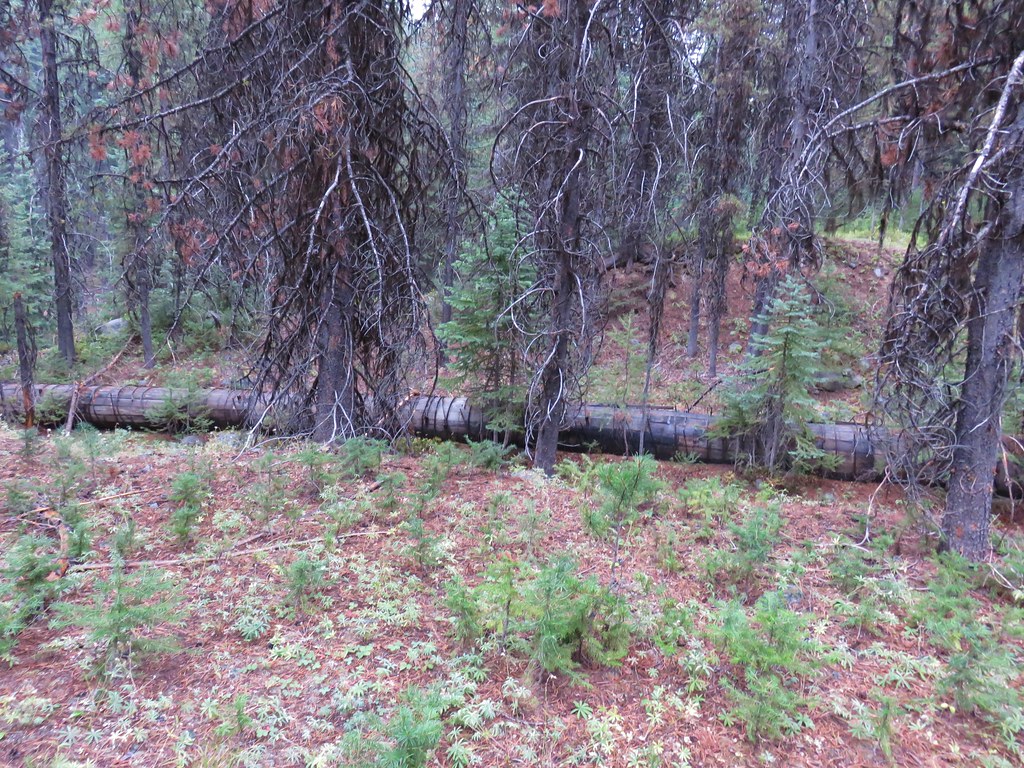
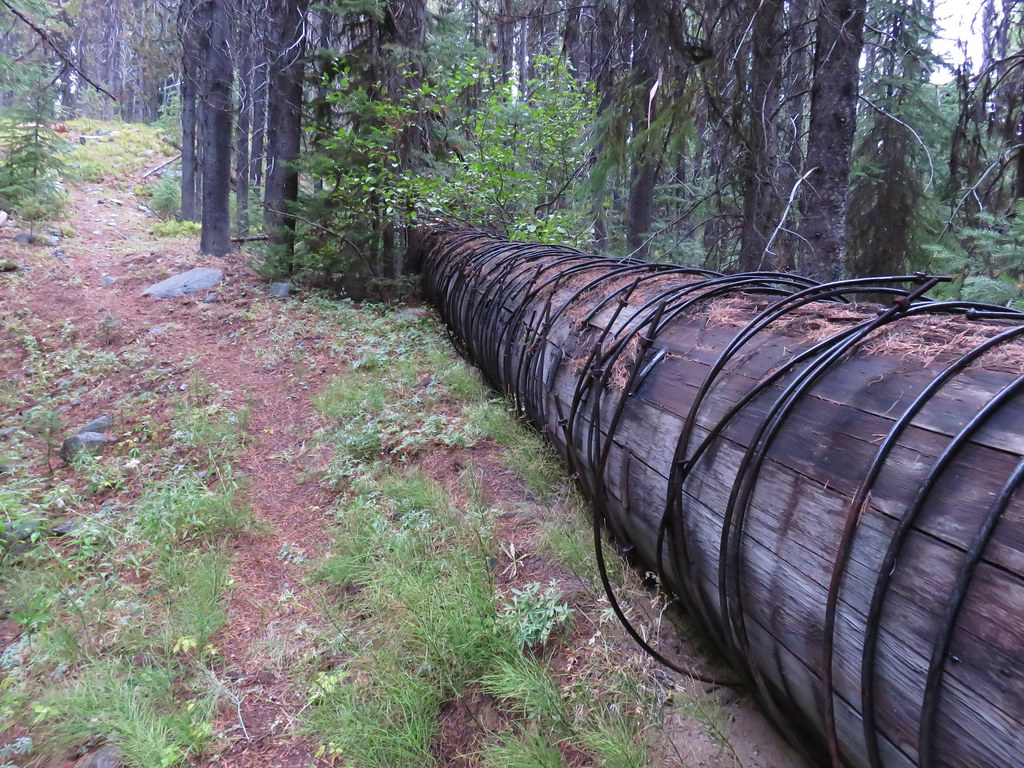
Our plan for the hike was to start on the Lost Creek Trail then take the Saddle Camp Trail to Olive Lake then continue up to Saddle Camp and take the Blue Mountain Trail SE to the Lost Creek Trail and take that back down to the trailhead. We set off on the trail and in .2 miles came to the remains of a redwood pipeline that supplied water from Olive Lake and Lost Creek to the Fremont Powerhouse.
IMG_9512

IMG_9515

IMG_9526

We got distracted by the pipeline and missed the right turn onto the Saddle Camp Trail. We’d gone almost a quarter mile past the junction when we caught our mistake. Shortly after passing a North Fork John Day Wilderness sign we realized we’d missed it since our map showed the junction prior to the wilderness boundary.
IMG_9517

This was our first time in this particular wilderness checking one more Oregon Wilderness off our “need to visit” list.

We turned around and headed back the way we’d come. The Saddle Camp Trail was marked with a sign that was much easier to spot from this direction.
IMG_9522

IMG_9524

We followed this trail through the forest for a mile and a half to another junction.
IMG_9529

Here we turned right and headed downhill for .2 miles to the Olive Lake Campground.
IMG_9531

IMG_9534

It is possible to drive to the campground and there is a 1.9 mile trail around the lake which we decided not to take on this day due to the presence of low clouds and wanting to get up and down as early as possible. We did however visit the lake shore.
IMG_9536

IMG_9540

After checking out Olive Lake we returned to the junction and continued uphill on the Saddle Camp Trail. After .7 miles we crossed Lake Creek near Upper Reservoir, a large marshy meadow.
IMG_9547

IMG_9550

IMG_9552

In the next 2 miles the trail passed along the meadow before climbing 600′ to Saddle Camp and a junction with the Blue Mountain Trail.
IMG_9554

IMG_9555

IMG_9557

IMG_9563

IMG_9568

IMG_9569

IMG_9573

A light rain had fallen off and on and now at the saddle we were in the clouds so it was damp. Luckily we had our rain gear on and stayed relatively dry as we traversed along Saddle Ridge. It was a bit of a shame about the clouds because the open ridge would have provided some excellent views along the way.
IMG_9576

IMG_9580

IMG_9585

IMG_9588

IMG_9592

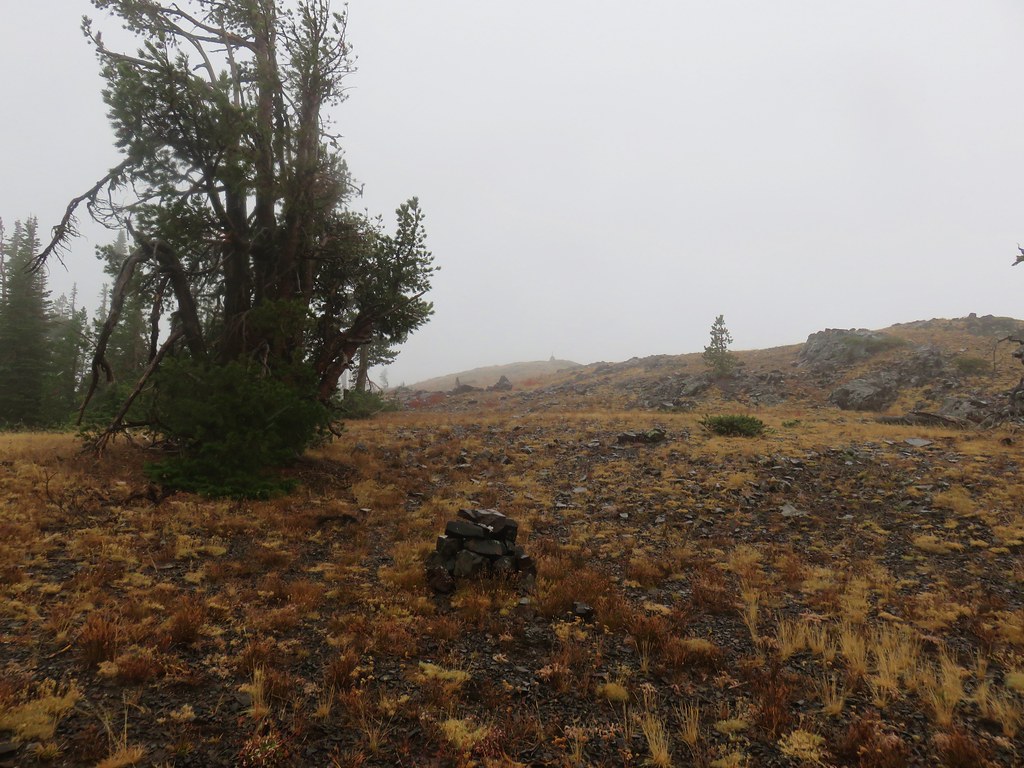
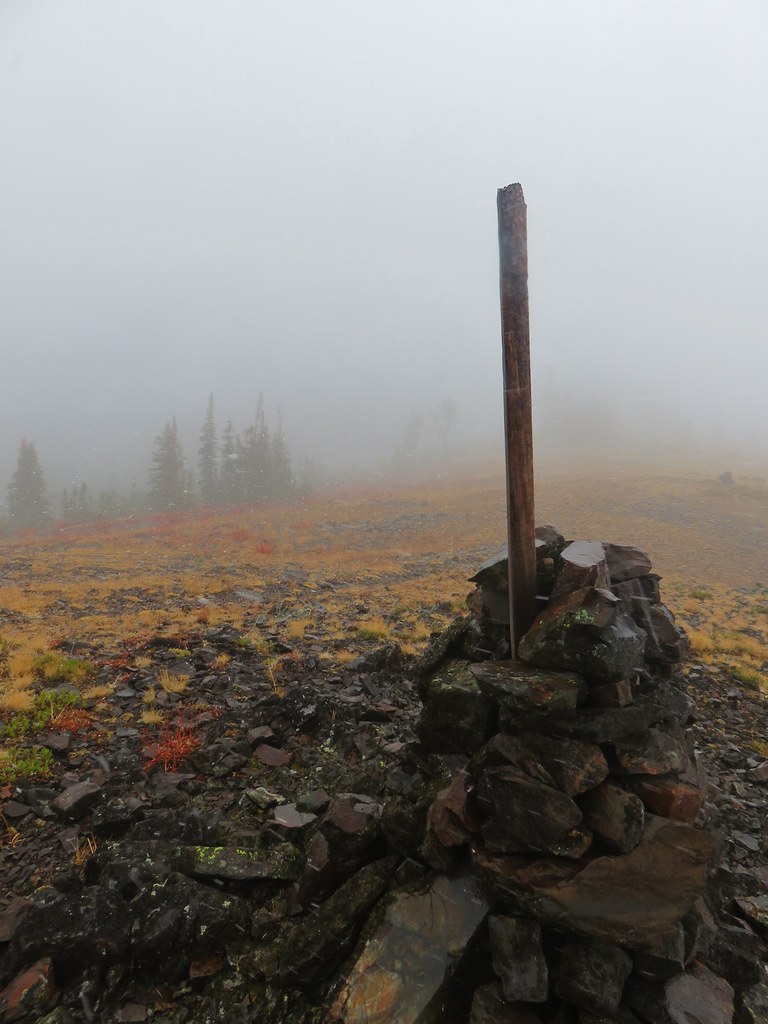
It was close to 10:30am when we spotted a cairn apparently marking the high point of the ridge. A few small snowflakes greeted us as we approached.
IMG_9595

IMG_9593

IMG_9601

The wind had kicked up as well and it was getting cold fast as we passed the cairn.
IMG_9599

As we began to descend to a junction at Dupratt Springs Pass the snow began to accumulate.
IMG_9605

IMG_9606

We had to hunt around just a bit to find the Lost Creek Trail sign at the pass but Heather located it and we headed downhill past a large cairn.
IMG_9607

IMG_9610

IMG_9613

IMG_9614

I don’t have a pair of waterproof boots/shoes and this was one of the rare times that I wish I had some and will probably be picking up a pair in the not too distant future. Both my feet and hands (due to taking pictures and not wearing my thicker waterproof gloves) were painfully cold as we entered the first of several meadows on our return route.
IMG_9619

We wound up losing the trail somewhere near the end of the meadow and had to do a little bit of back and forth using the GPS to locate the tread again which we did in another small meadow where we crossed Lost Creek.
IMG_9620

The trail wound up following an old roadbed before reaching the Lost Creek Trail junction at another saddle 2.3 miles from Dupratt Springs Pass.
IMG_9623

IMG_9633

We’d dropped out of the snow and the air had warmed up enough that we were warming up some as we descended from the pass. It was just under three miles back to the trailhead from the junction. The trail passed through five meadows and crossed Lost Creek again before arriving back at the Saddle Camp Trail junction where we had turned that morning.
IMG_9639

IMG_9640

IMG_9646

IMG_9652

IMG_9655

We passed a couple of bow hunting camps near the meadows but didn’t see any hikers on the trails. We did spot one doe near one of the meadows but she bolted before my cold hands could retrieve the camera.

Overall it was a nice hike that would have been a lot better without the clouds (and frozen extremities). We returned to Sumpter wondering if the 5800′ pass on the road between Granite and Sumpter would wind up being an issue at any point during the week. After changing and warming up we drove into Baker City and picked up some food and supplies from Safeway. We were all set for the week, now we just needed the weather to cooperate. Happy Trails!

Flickr: Olive Lake

Categories
Blue Mountains - South Hiking John Day Oregon Trip report

Blue Basin, Bates, and Sumpter

After a successful first hike and nice visit with Heather’s parents on the first day of our vacation we left Bend early Sunday morning and headed for Sumpter. To reach Sumpter from Bend we’d need to drive through Prineville and take Highway 26 through the Ochoco Mountains (where the Desolation Fire was burning) and John Day to Highway 7 at Austin Junction then follow that highway 25.2 miles to the Sumpter Valley Highway.

To break up the over 200 mile drive we planned a couple of short hikes along the way starting with Blue Basin in the Sheep Rock Unit of the John Day Fossil Beds National Monument.

This was our third visit to the monument having previously hiked in the Painted Hills and Clarno Units.

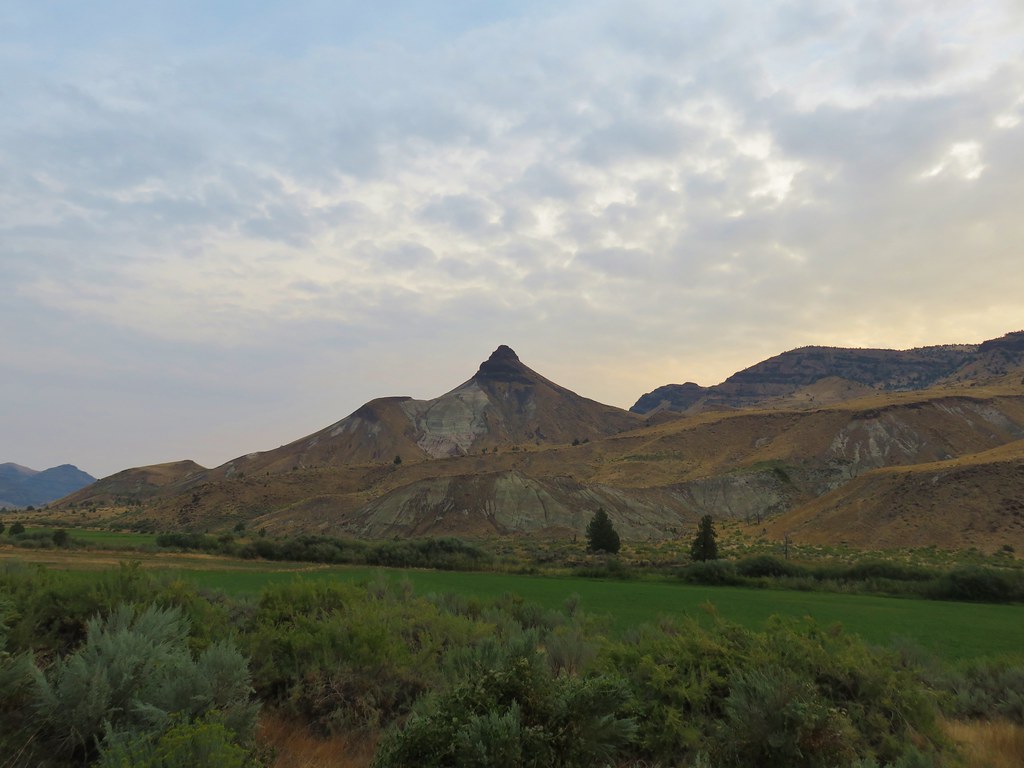
The Sheep Rock Unit is located approximately 30 miles east of Mitchell, OR. To reach the Blue Basin Trialhead we turned north on Highway 19 towards the Thomas Condon Visitors Center. It was too early for the center to be open but we stopped along the way to take in the view of Sheep Rock.
IMG_9127

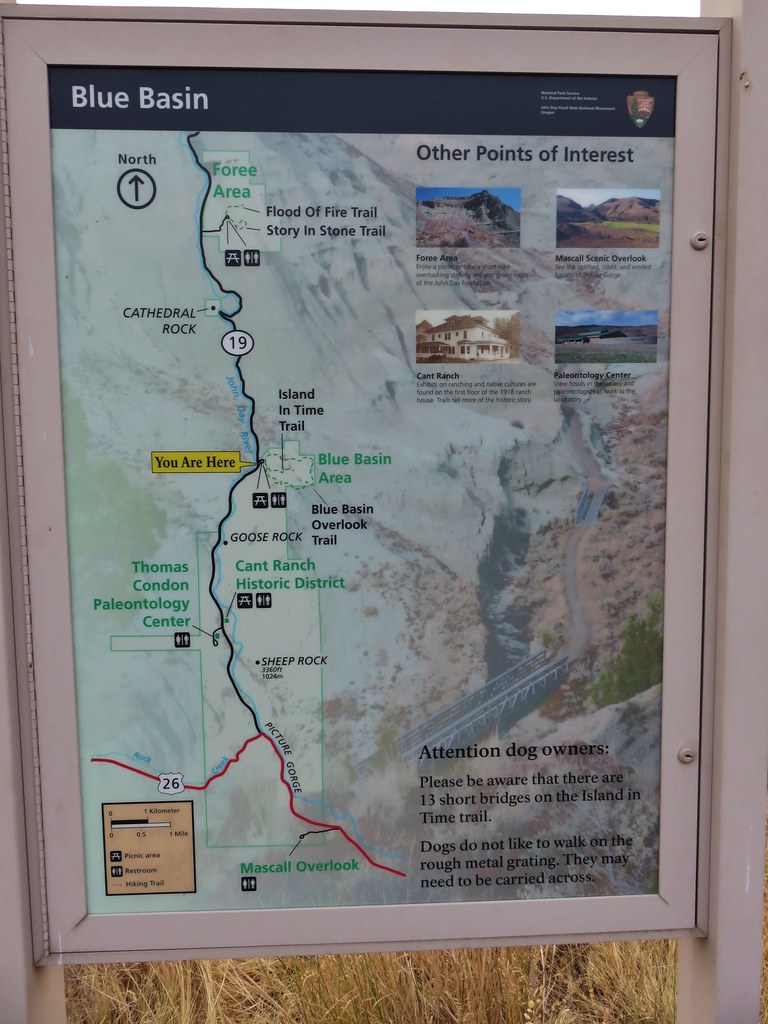
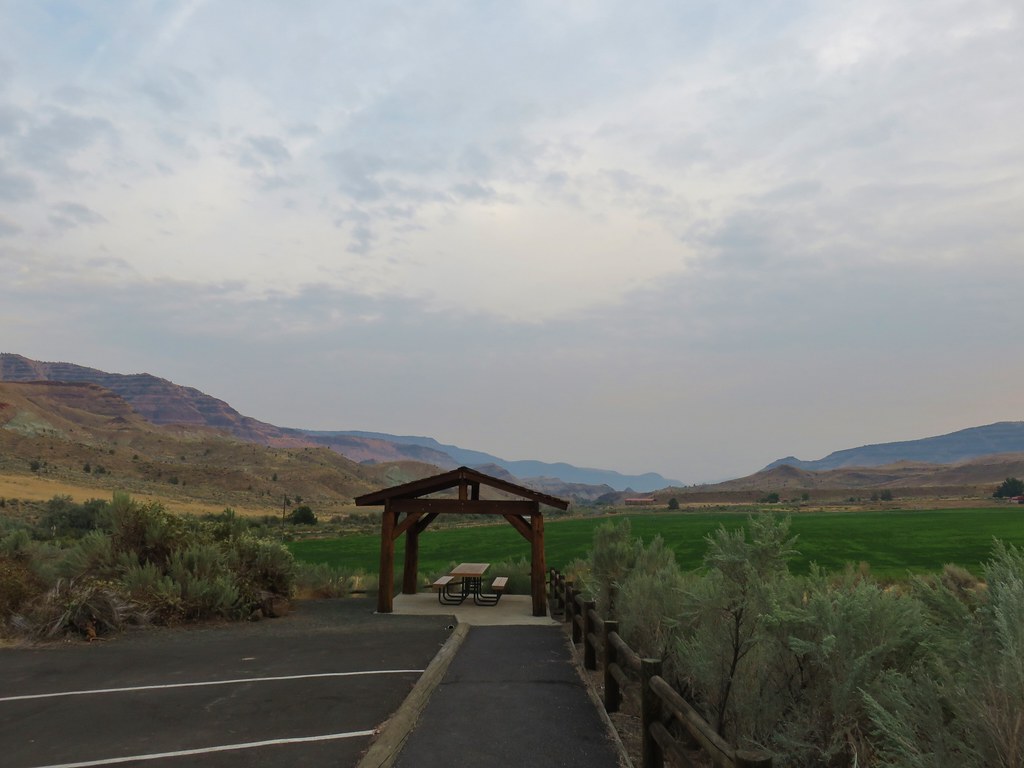
After 5 miles on Highway 19 we turned left into the parking area for the Blue Basin Area.
IMG_9131

IMG_9135

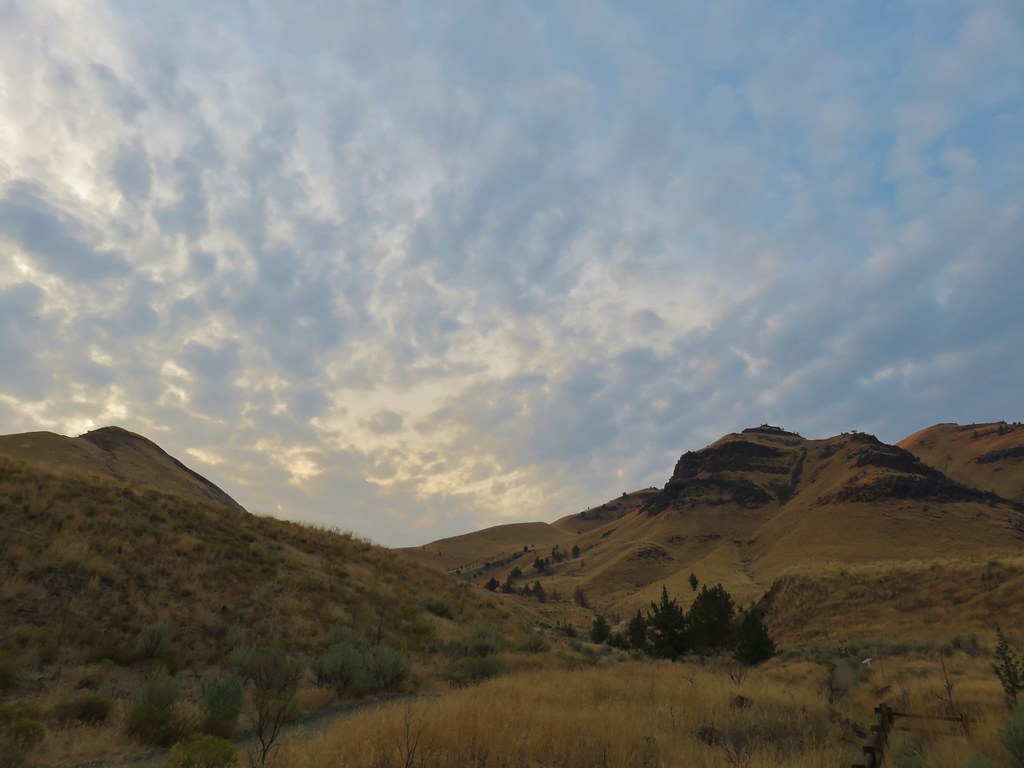
It was a beautiful morning with a few clouds in the sky providing for some dramatic views right off the bat.
IMG_9133

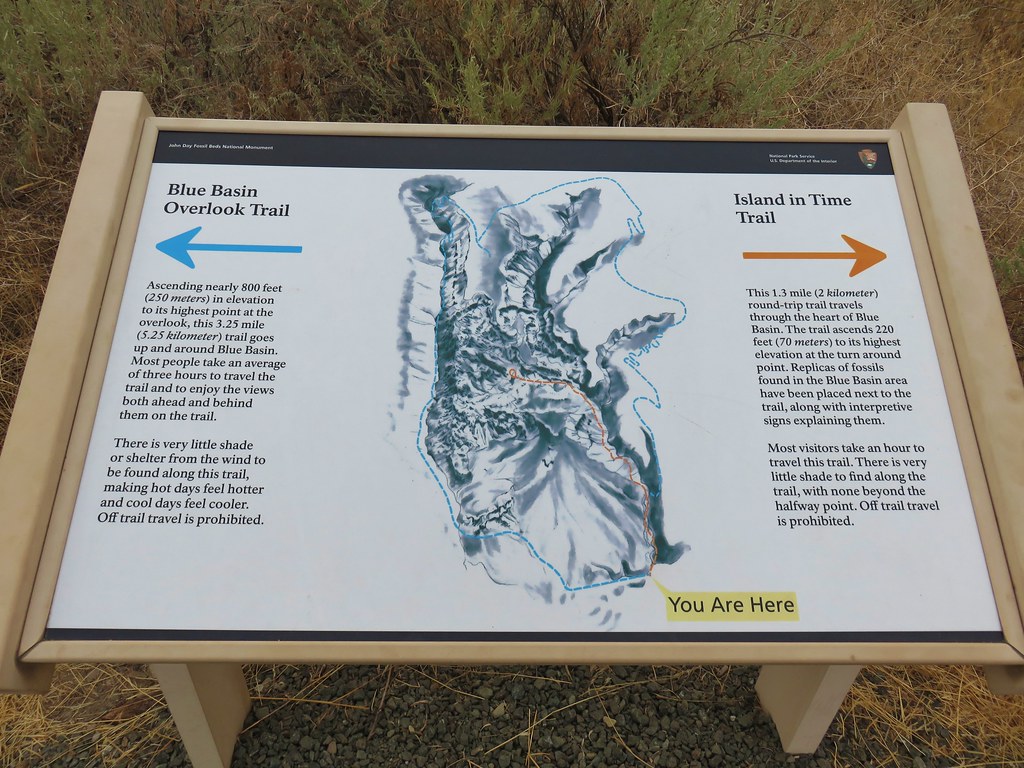
We chose to start our hike with the Blue Basin Overlook Trail.
IMG_9137

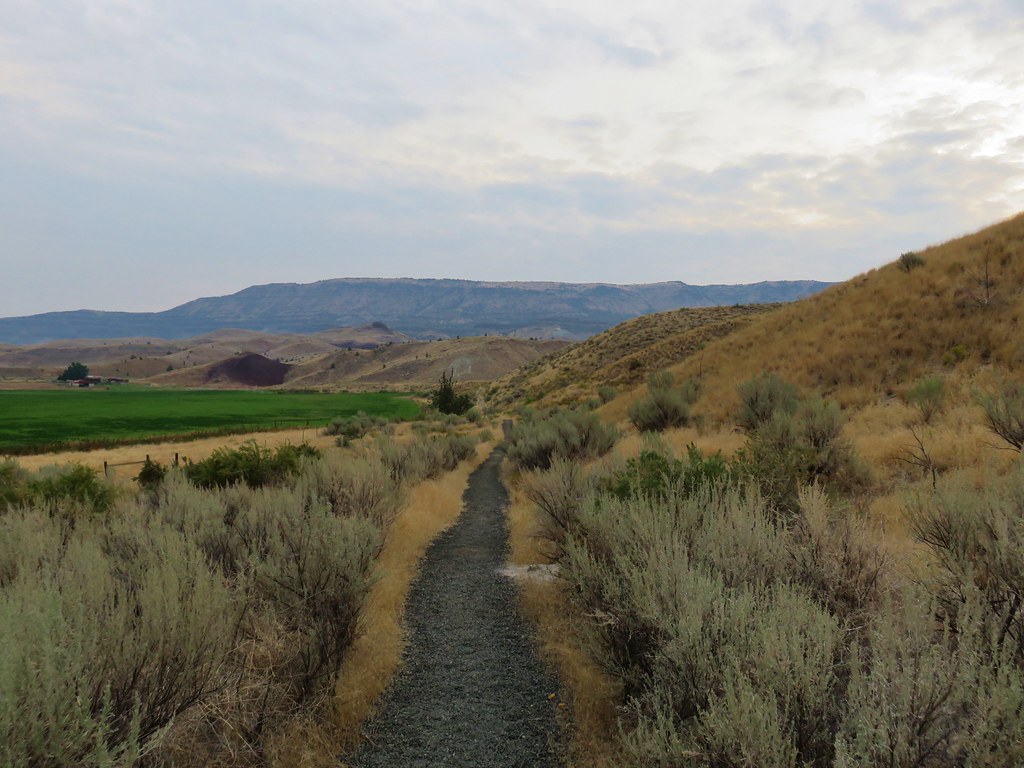
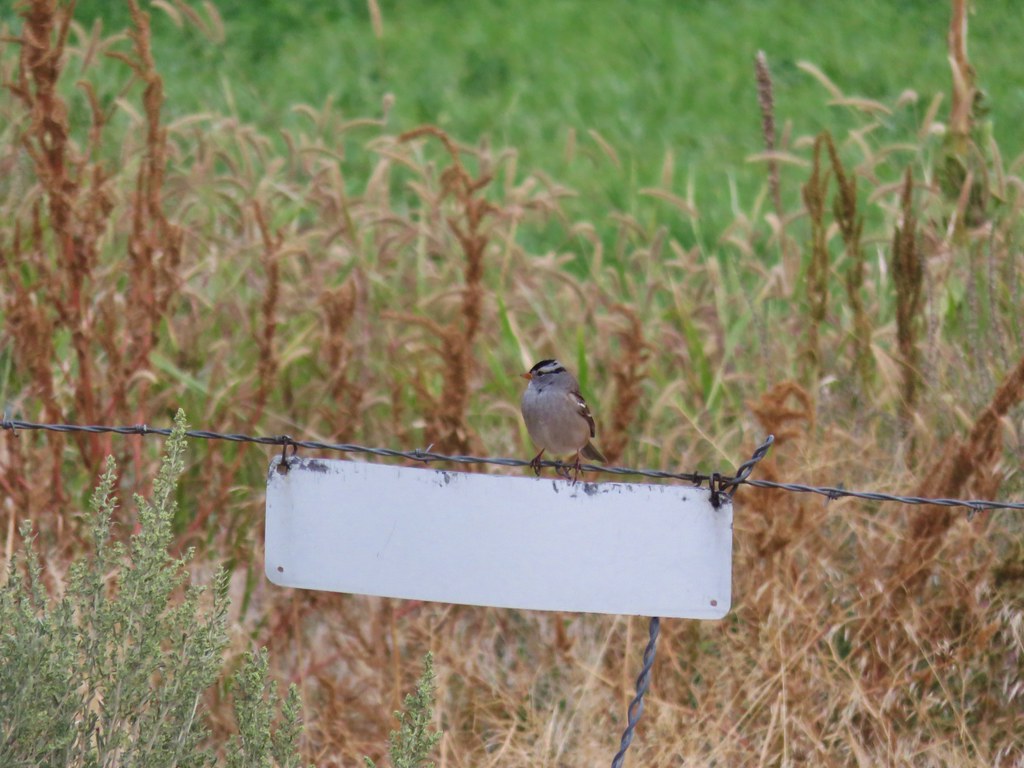
The path passed alongside a field where songbirds were happily enjoying their morning.
IMG_9138

IMG_9142

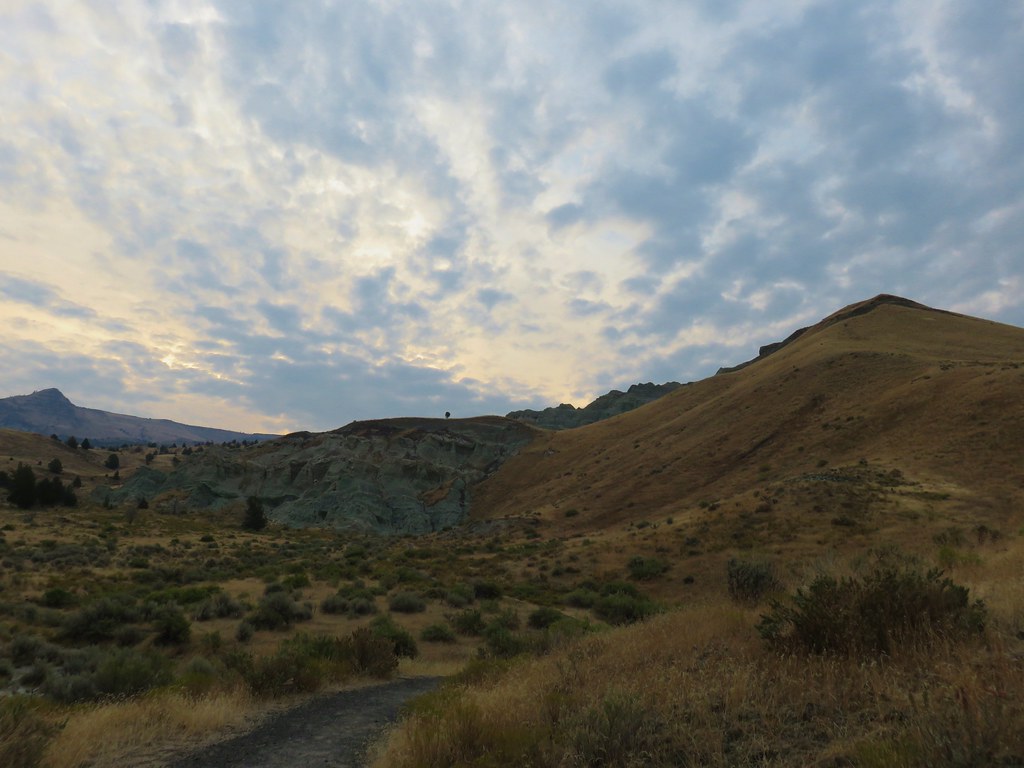
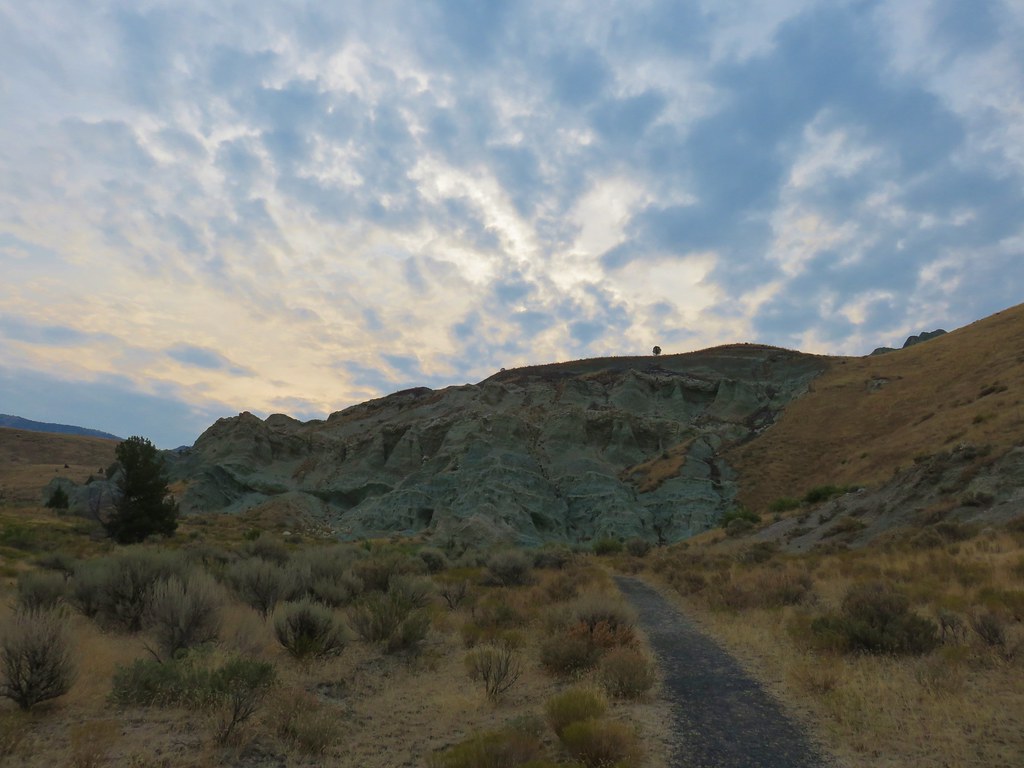
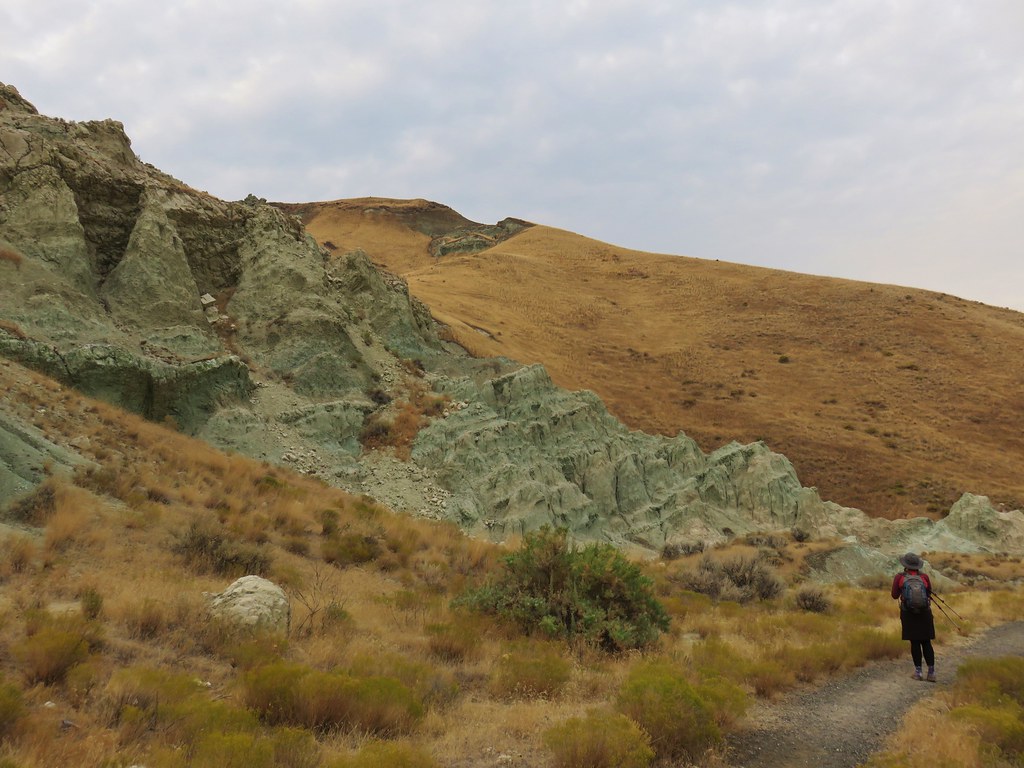
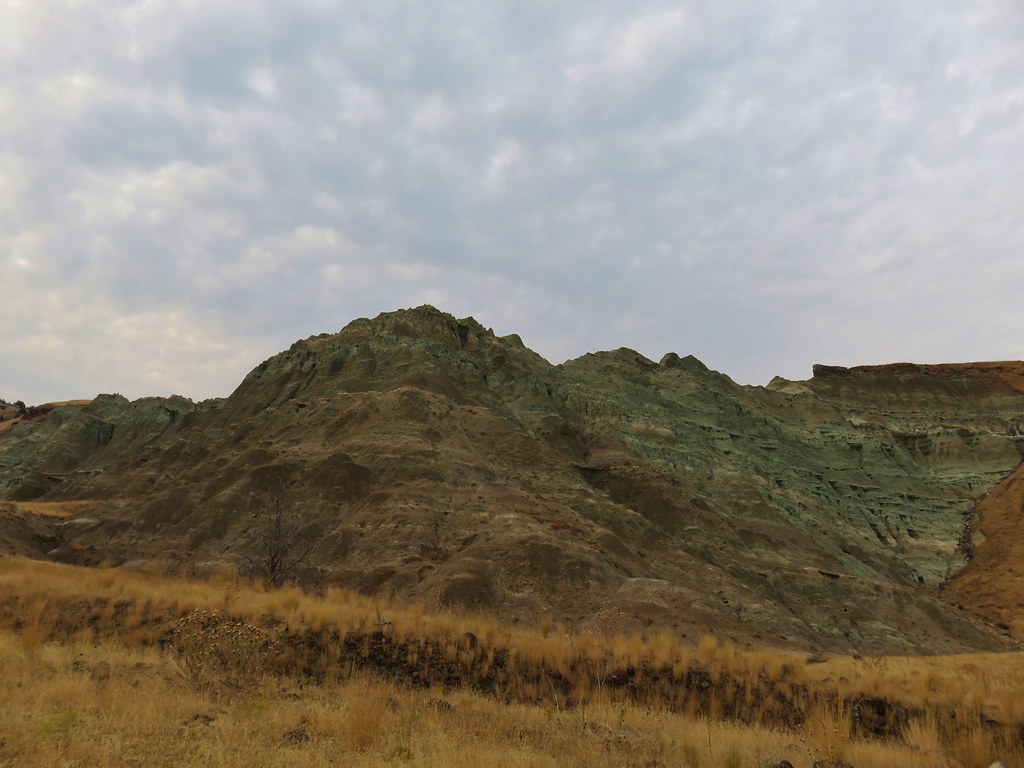
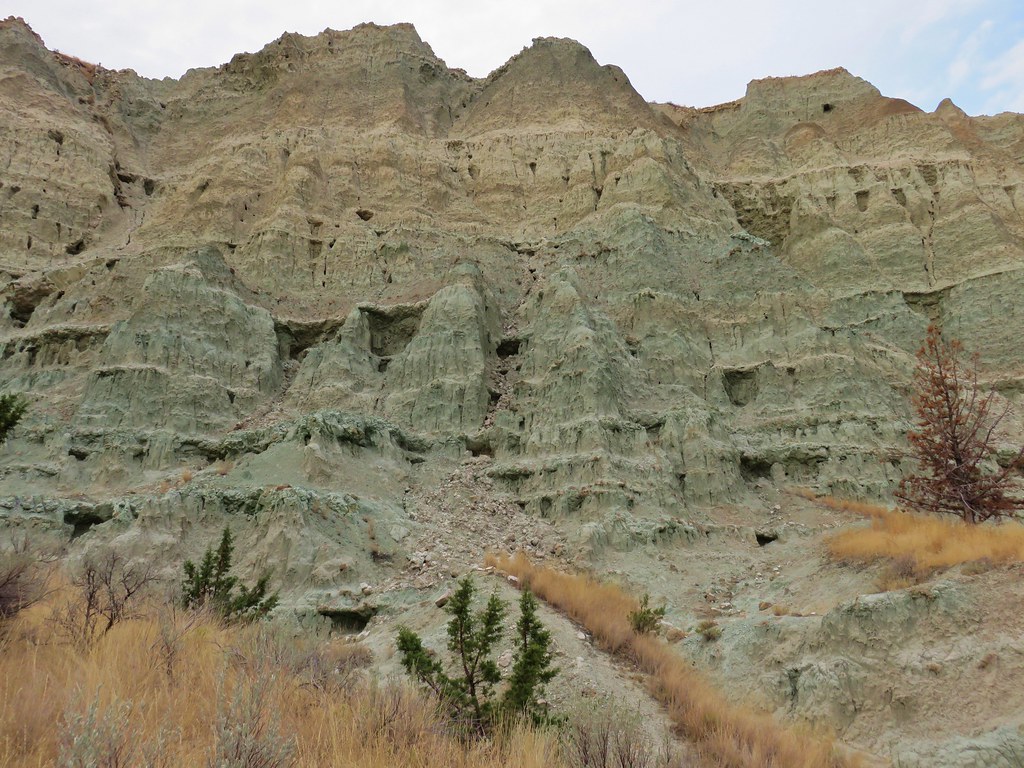
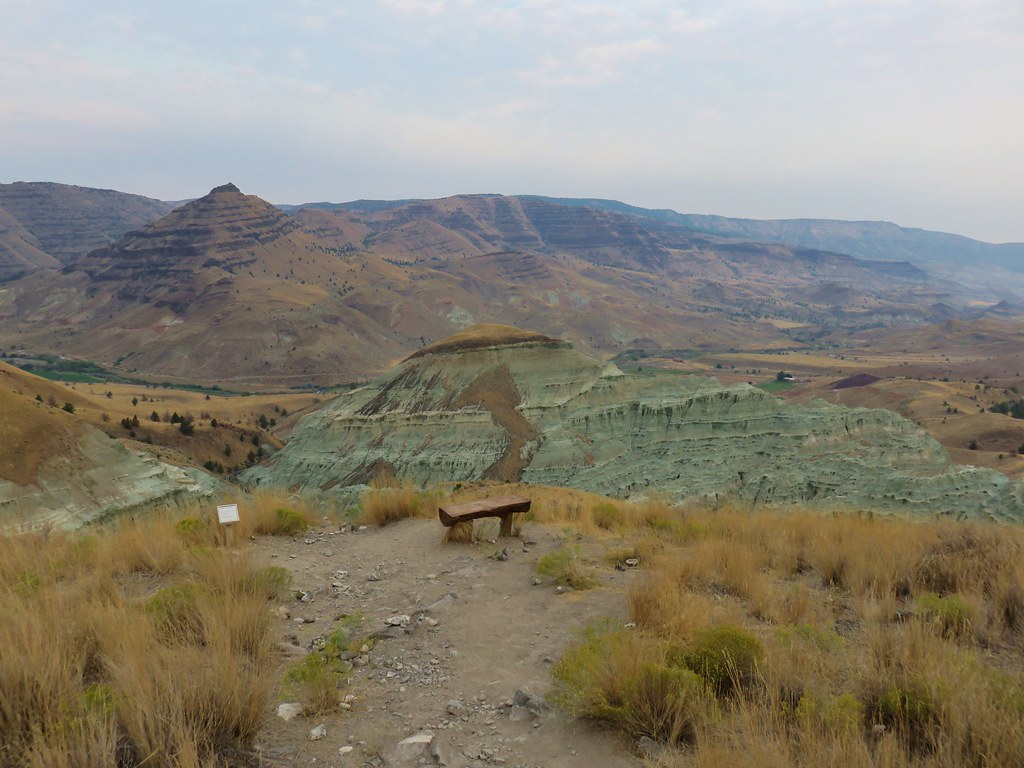
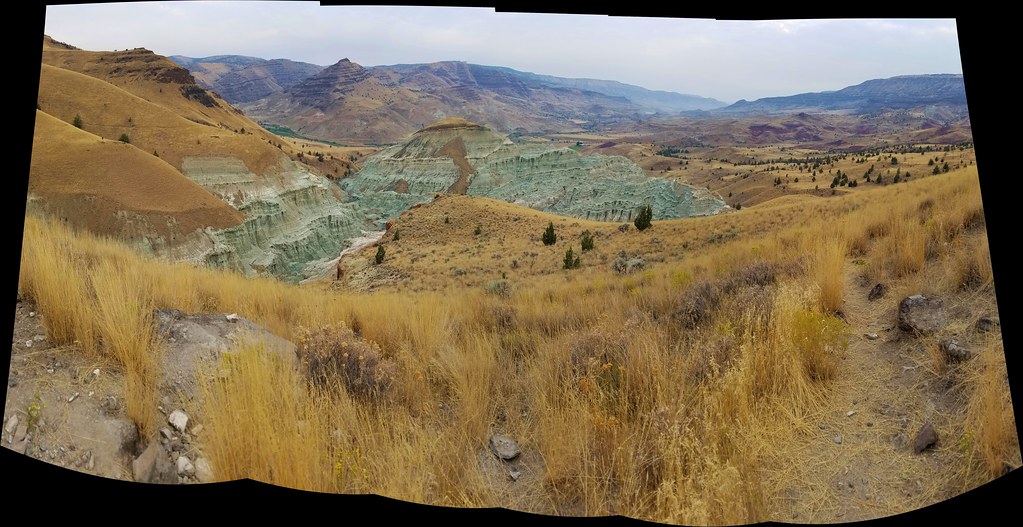
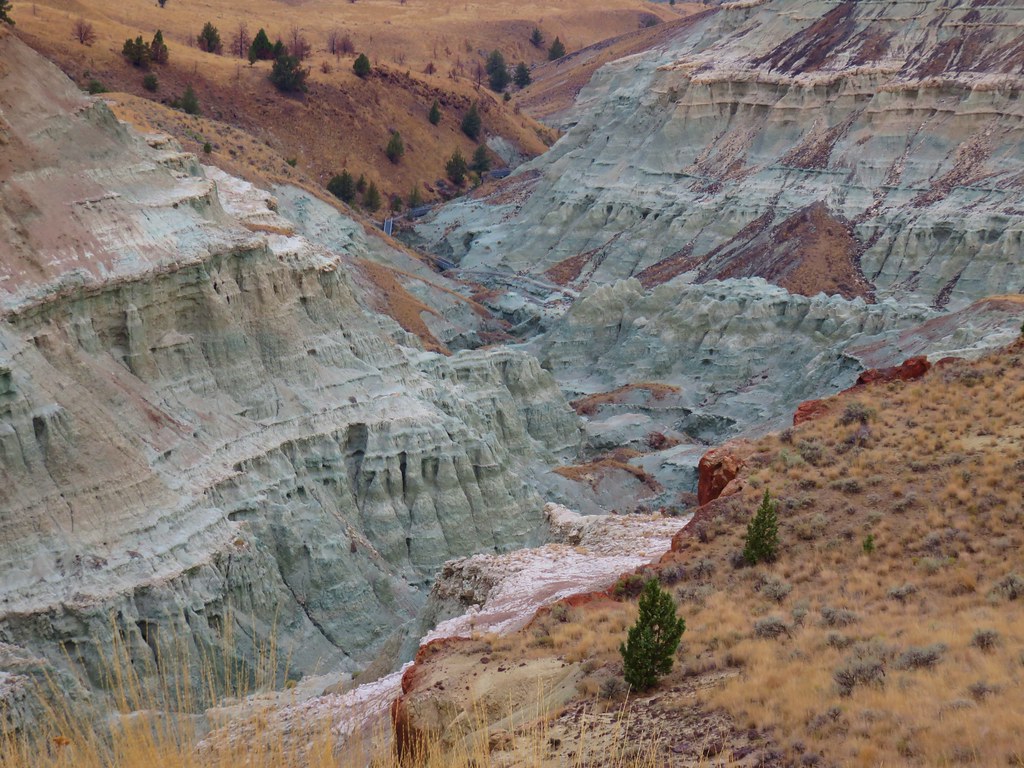
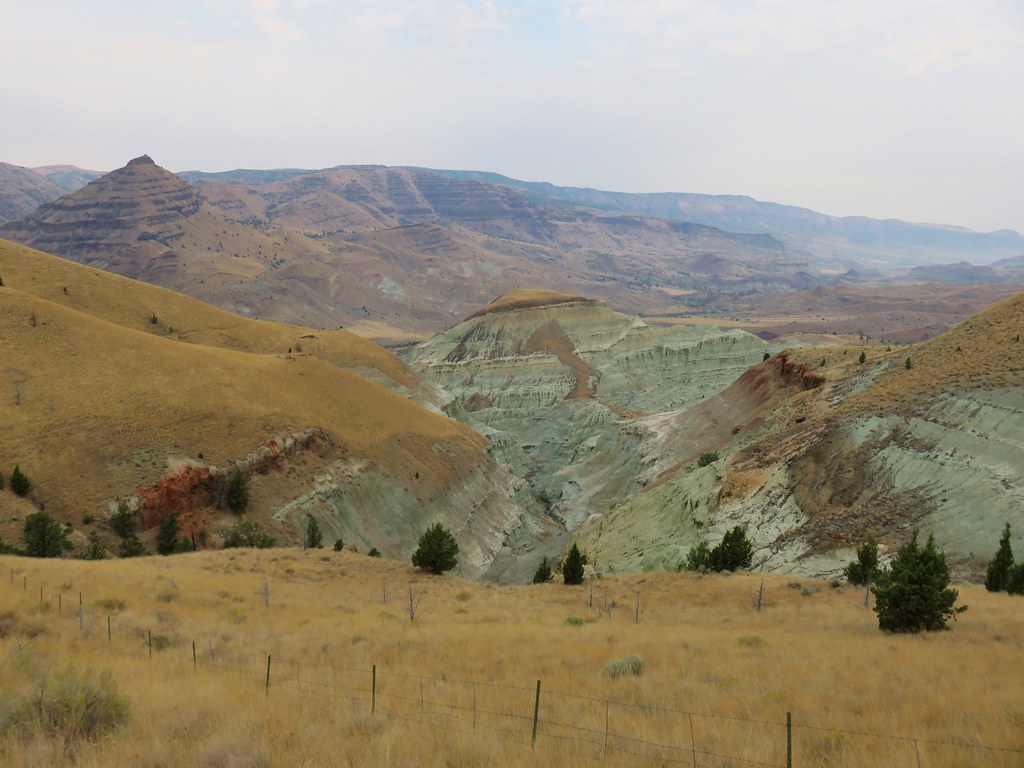
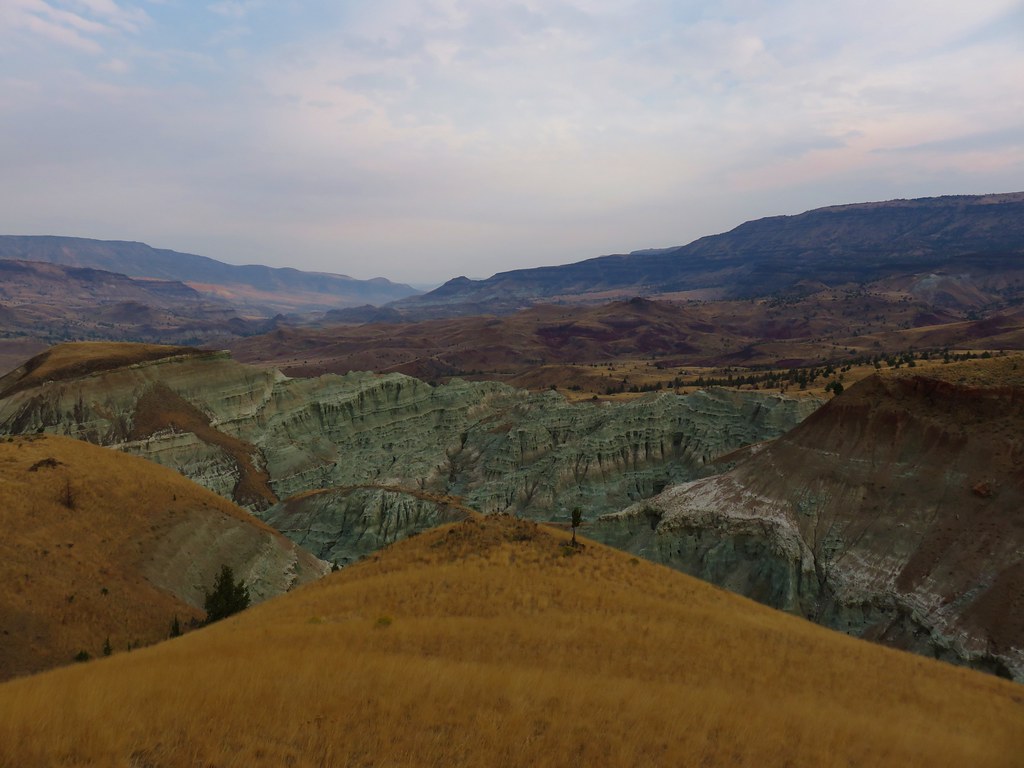
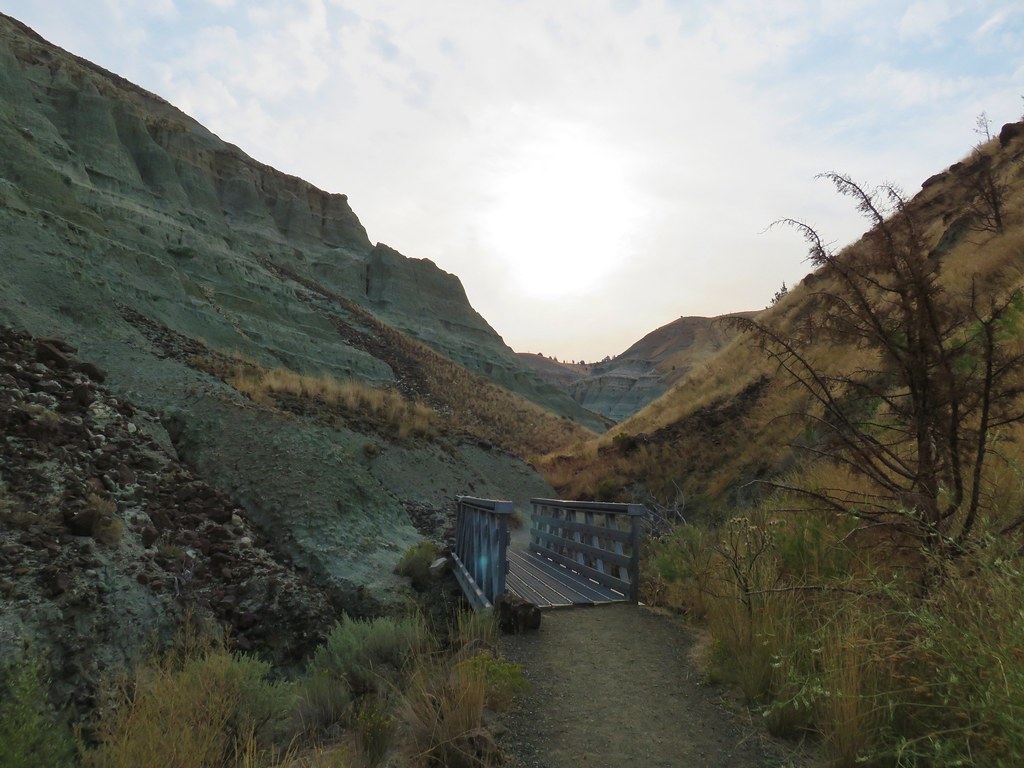
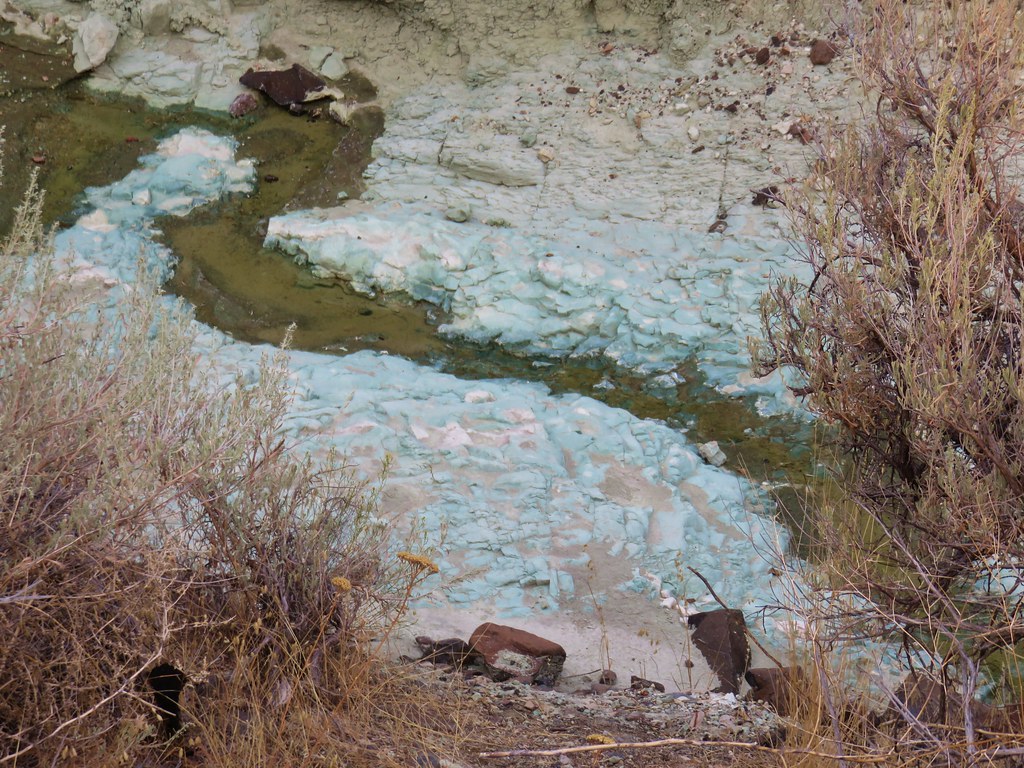
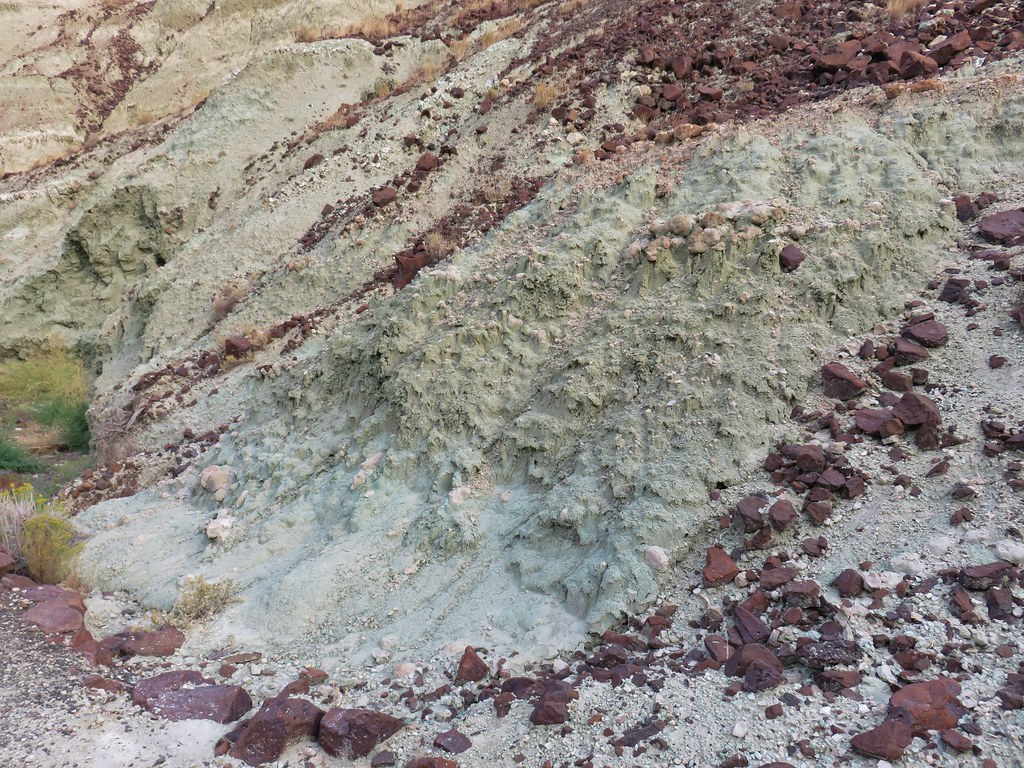
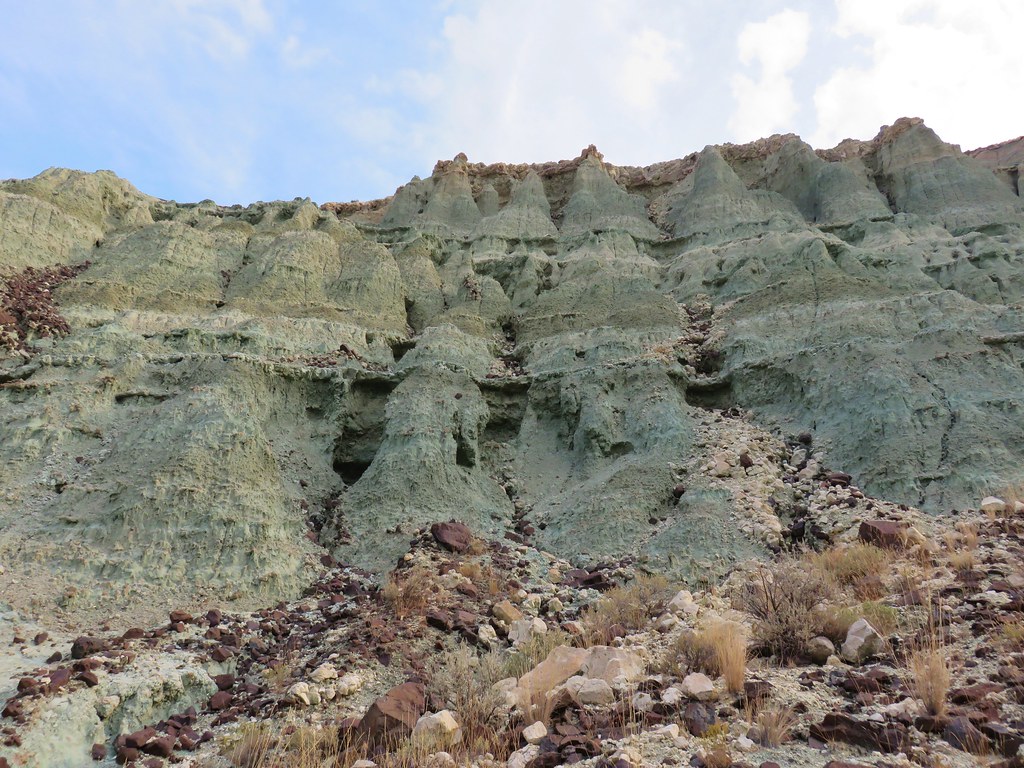
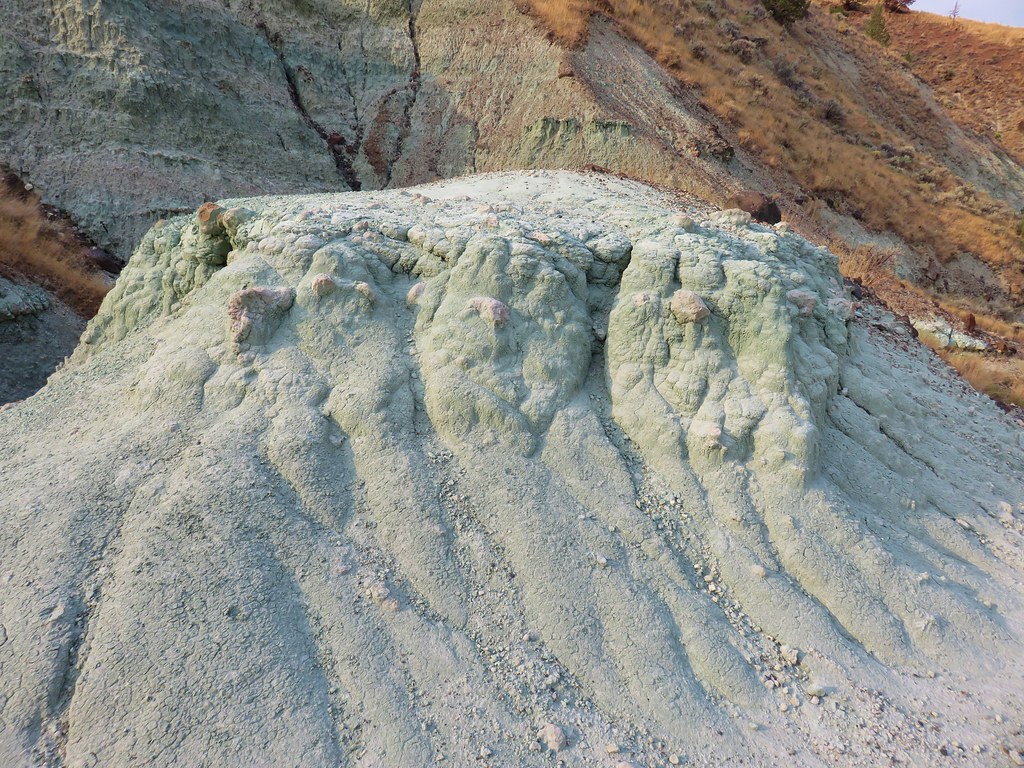
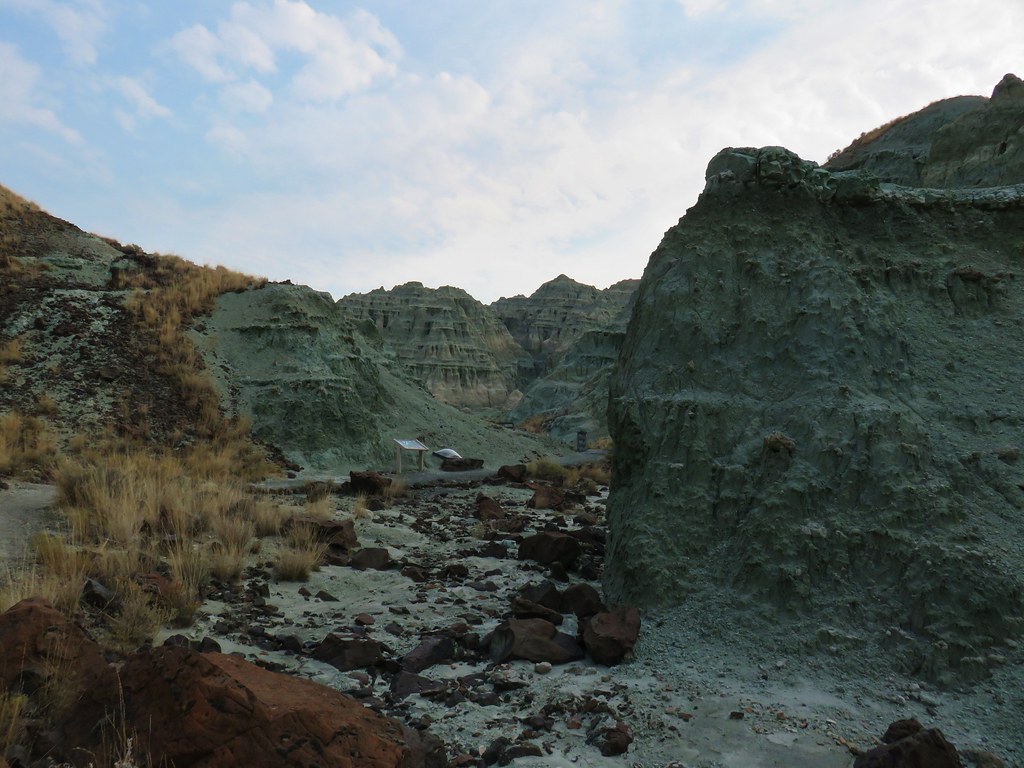
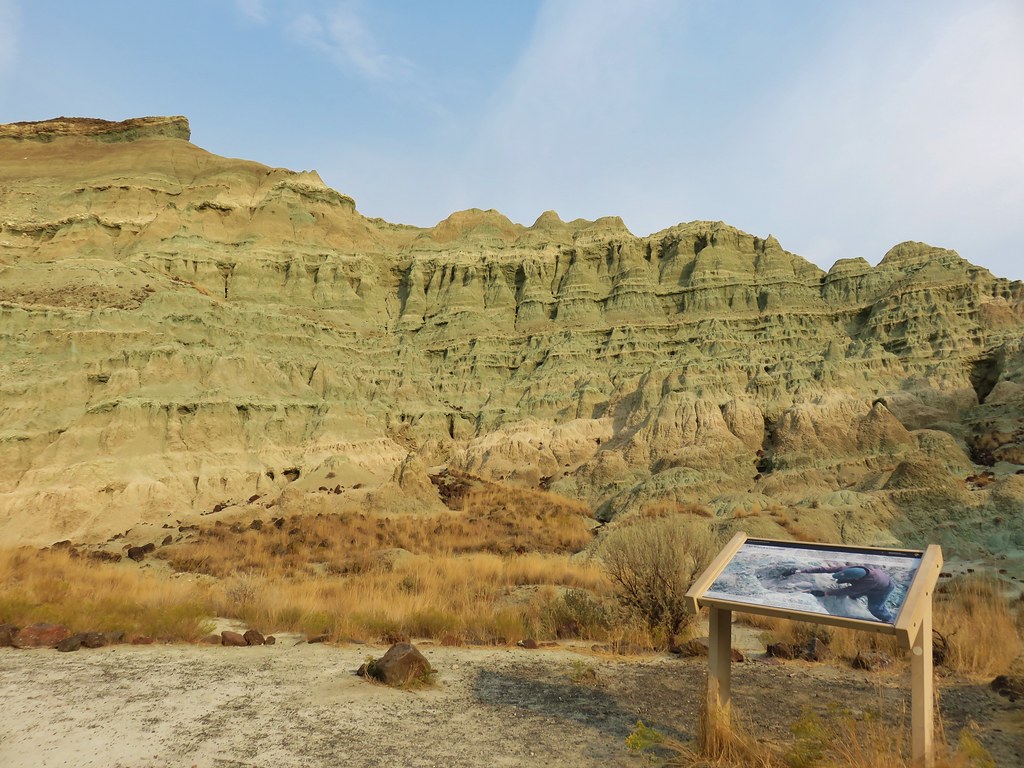
It wasn’t long before we got our first good look at the exposed volcanic ash that gave the area its name.
IMG_9144

IMG_9147

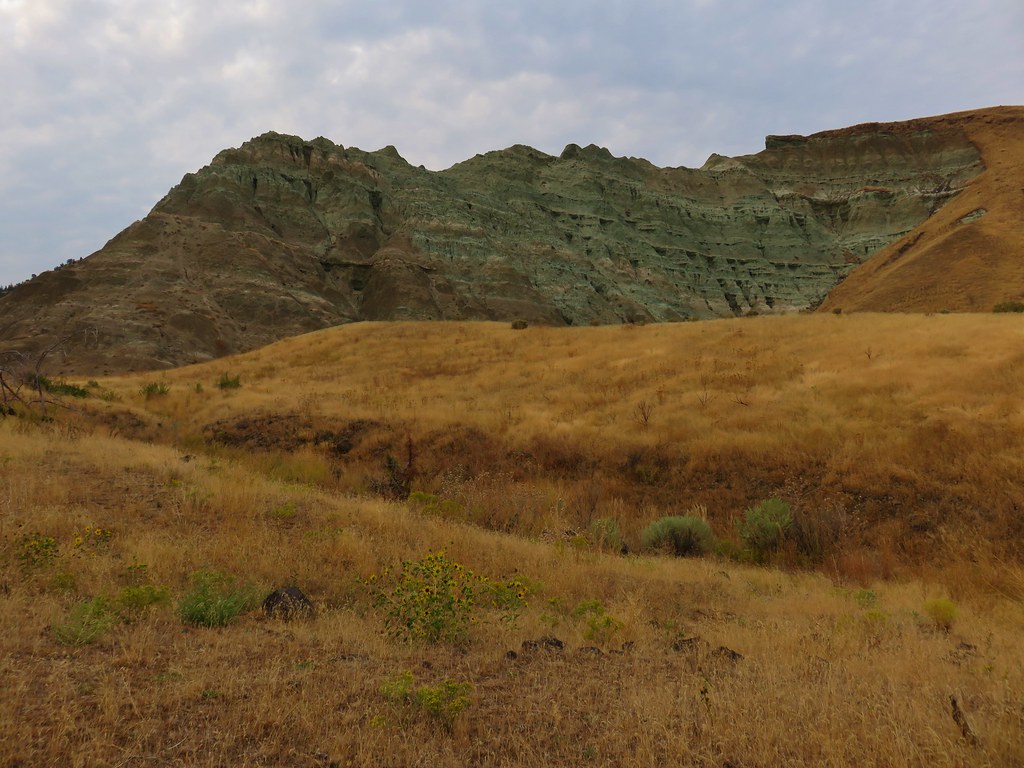
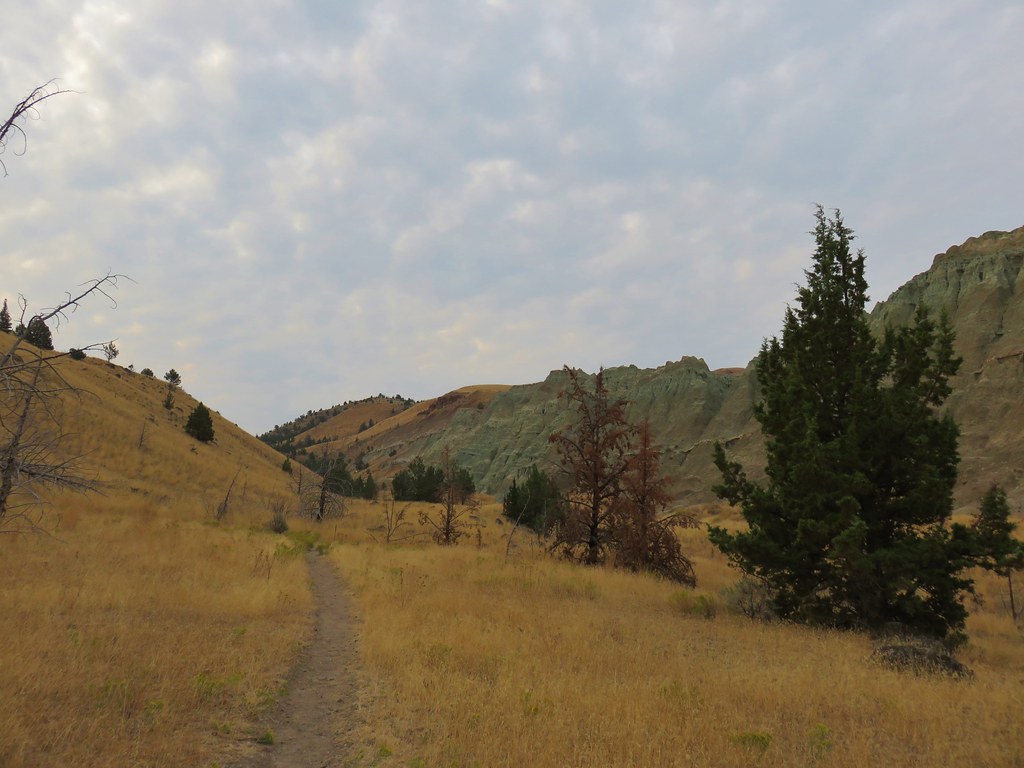
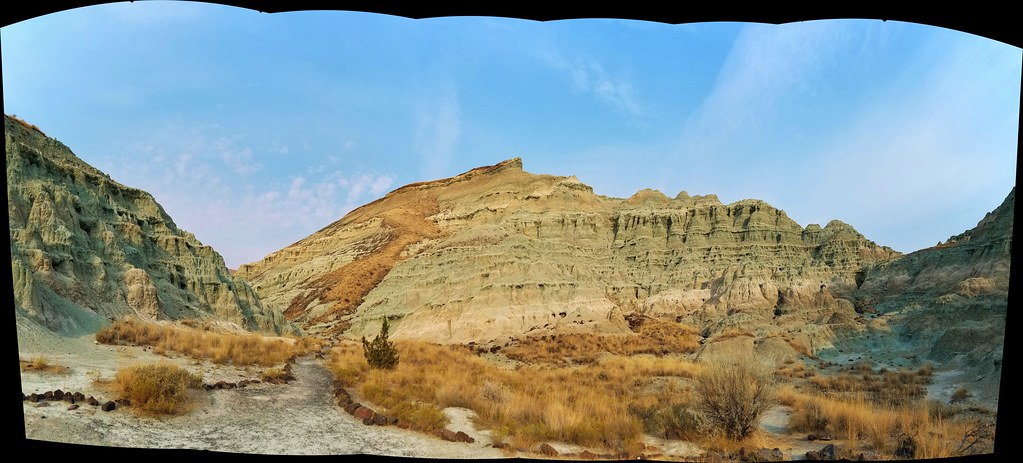
In the morning light the ash appeared more green than blue. The contrast between the ash and the golden grasses on the hillsides was beautiful.
IMG_9156

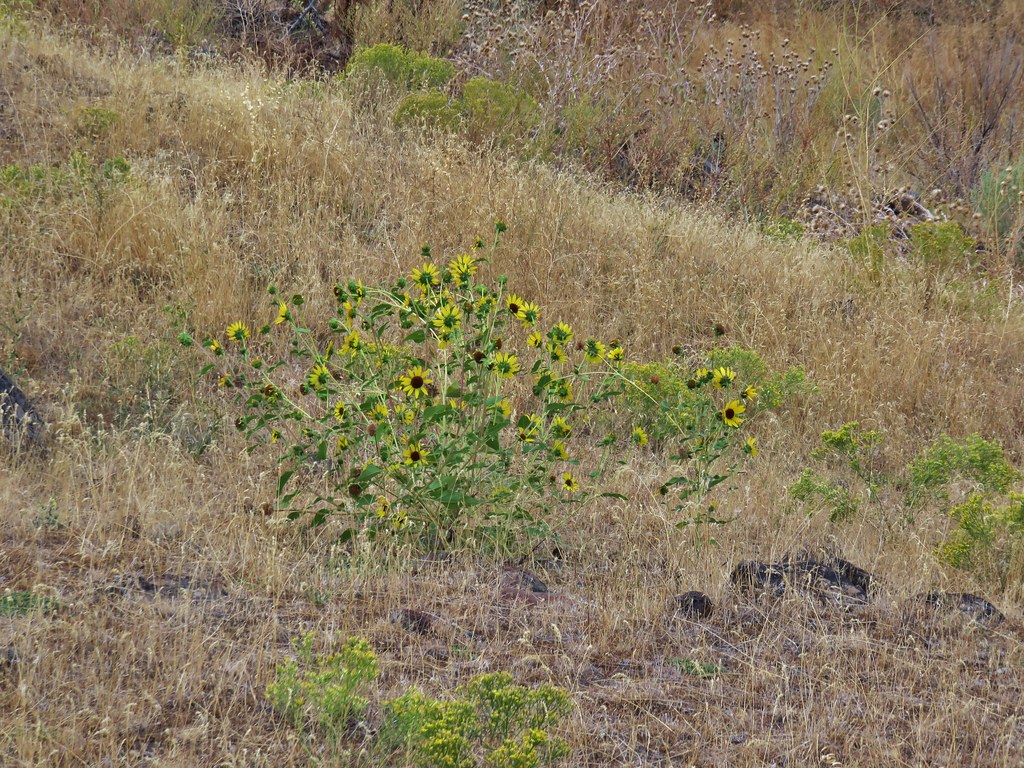
We were a bit surprised to see some yellow flowers still blooming as we wrapped around another scenic outcrop of ash.
IMG_9171

IMG_9169

IMG_9176

The trees were filled with birds as the trail climbed toward the rim.
IMG_9182

IMG_9183

IMG_9185

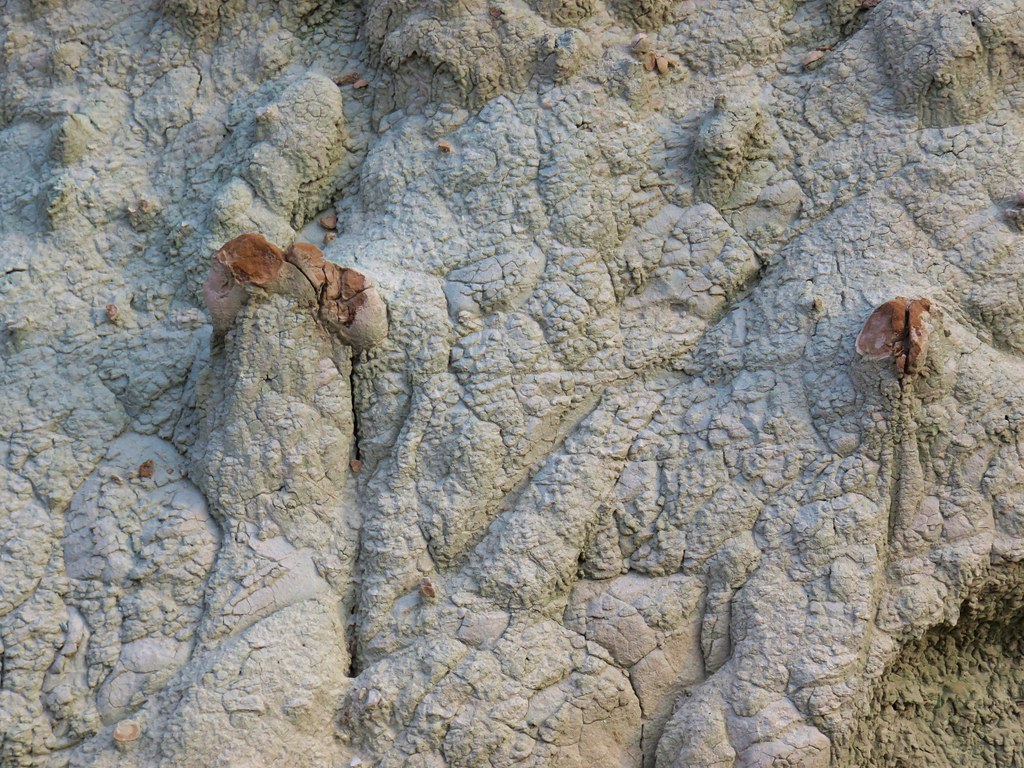
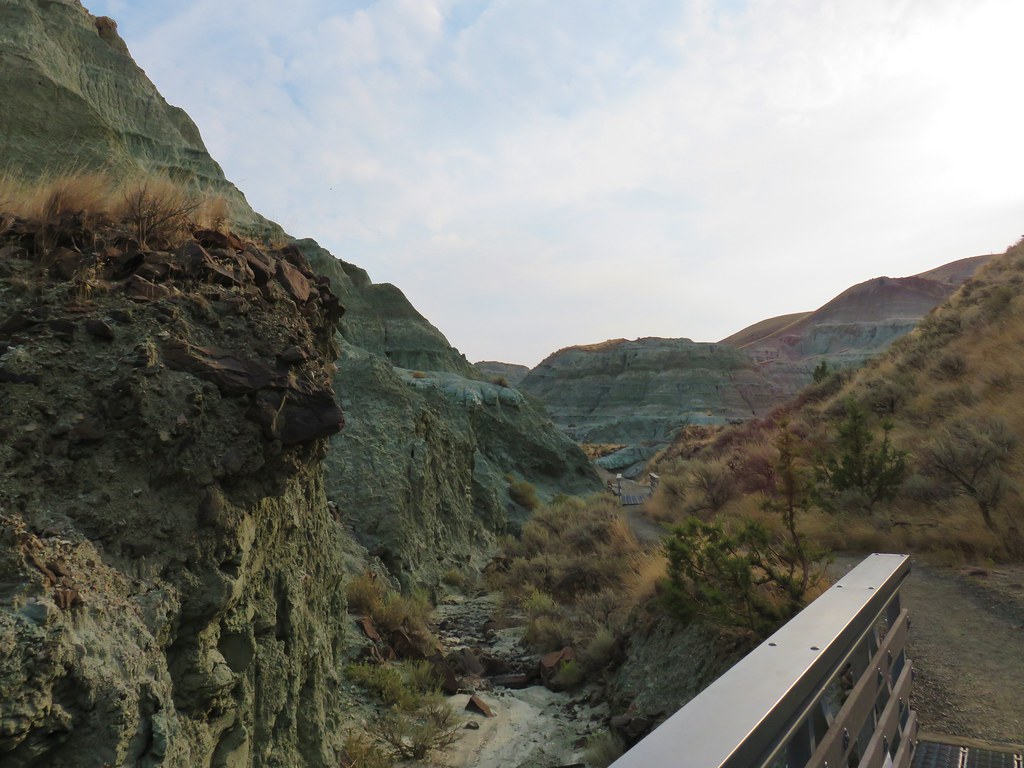
The trail climbed gradually for the most part for the first 1.2 miles and we were captivated by the formations created by the ash.
IMG_9195

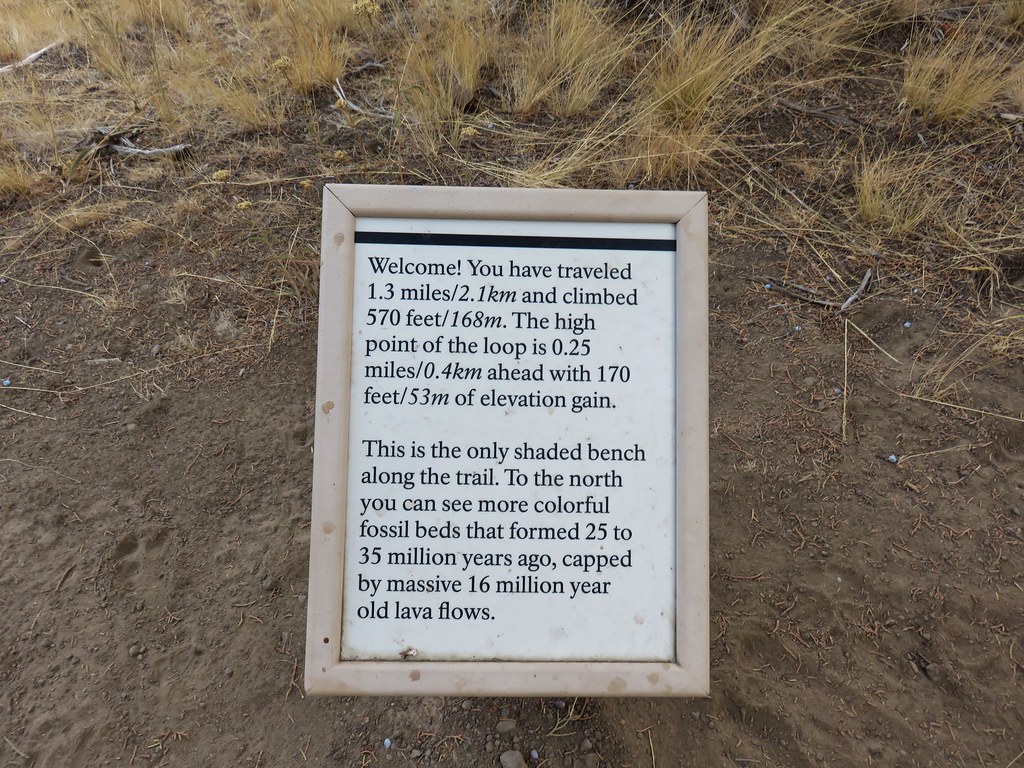
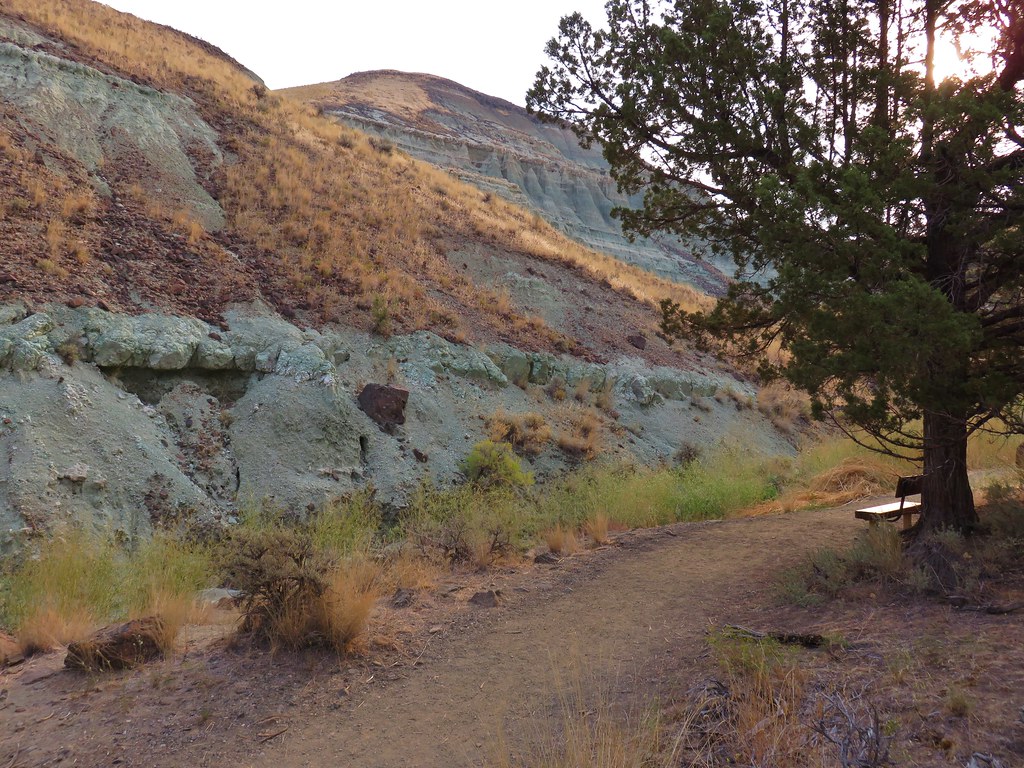
The trail then began to climb in earnest passing a bench with an encouraging sign along the way.
IMG_9205

IMG_9206

IMG_9208

We were thankful that it was a cool morning as we couldn’t imagine attempting the hike on a hot summer day.

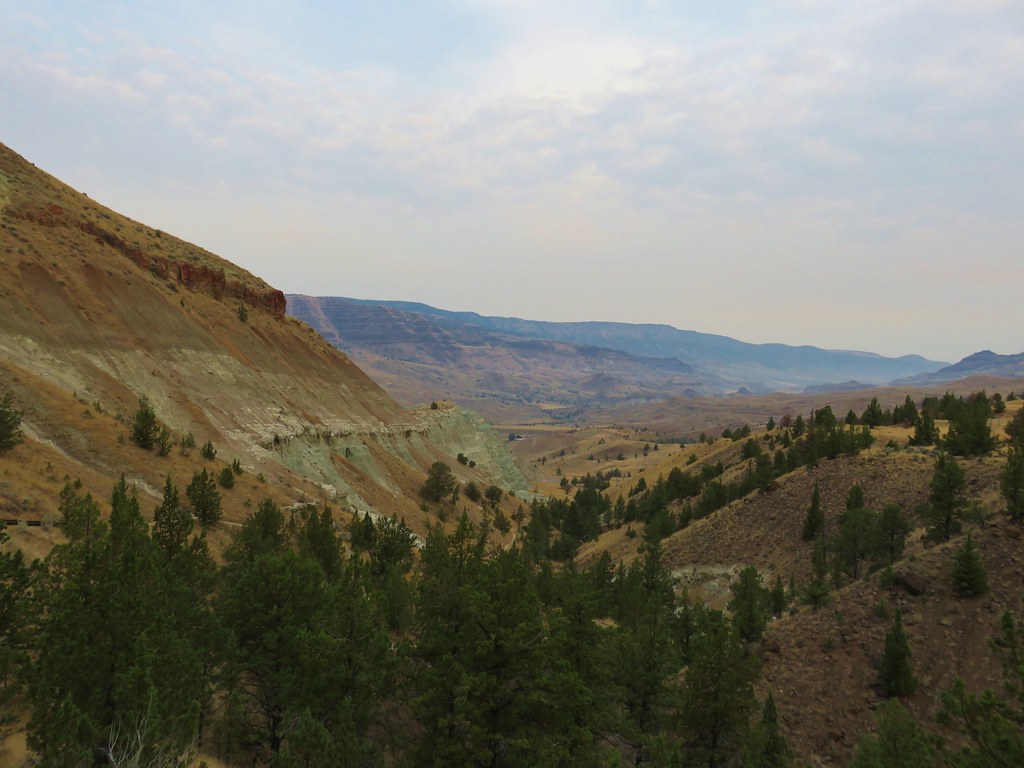
The trail became somewhat level once it reached the rim where the views were breathtaking.
IMG_9217

IMG_9214

IMG_9216

IMG_9218

A short spur trail led to a bench at the overlook which had even more impressive views.
IMG_9219

IMG_9223

2017-09-17 08.08.13_stitch

IMG_9230

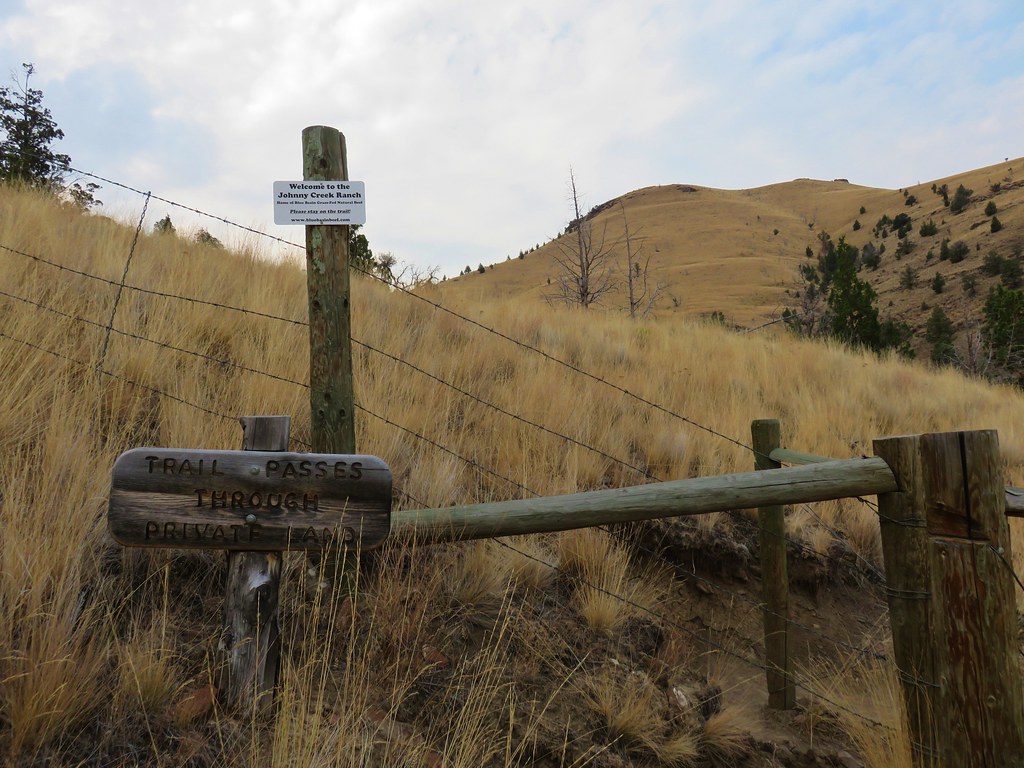
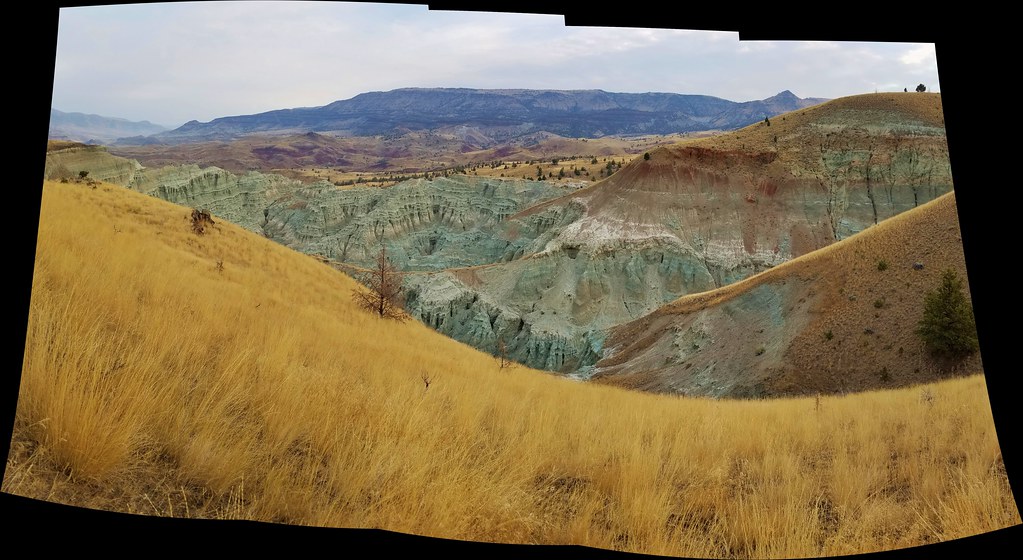
After attempting to comprehend what we were seeing we continued on the loop which passes through some private land on the way to more spectacular views before descending to a bench at a trail junction.
IMG_9237

IMG_9239

IMG_9248

2017-09-17 08.32.12_stitch

2017-09-17 08.39.30_stitch

IMG_9276

Here we turned right on the Island of Time Trail which led into the heart of Blue Basin.
IMG_9288

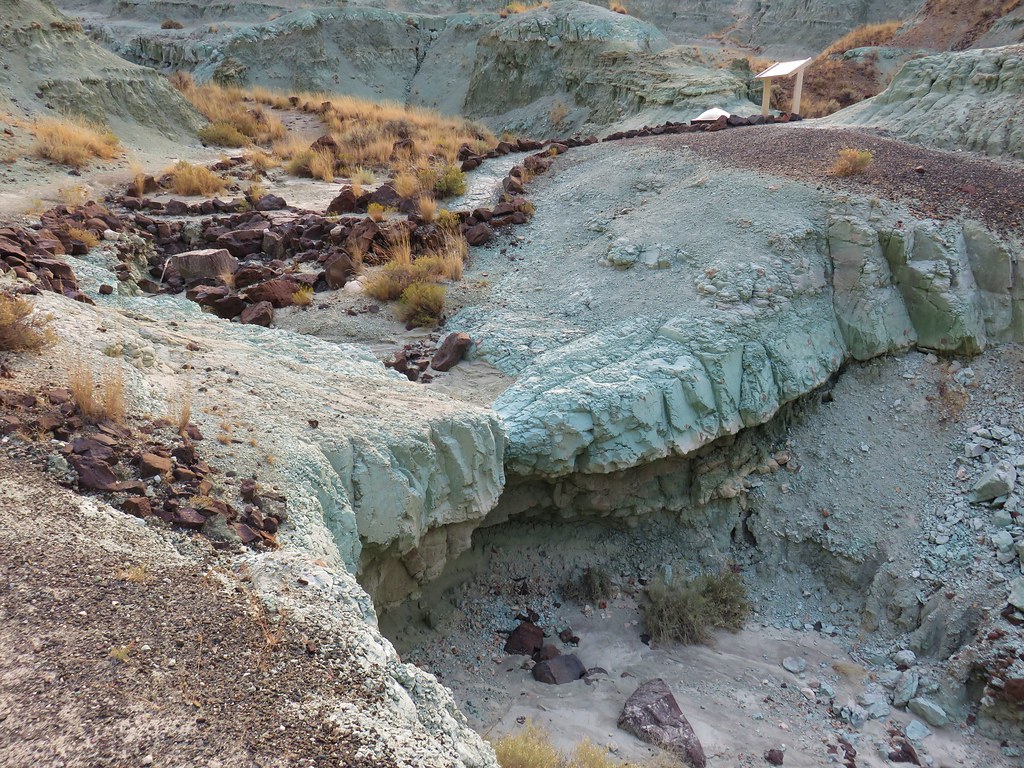
It was only .4 miles to the end of this trail but the scenery seemed endless. The various colors and textures were remarkable and numerous informative interpretive signs sat along the path.
IMG_9286

IMG_9291

IMG_9292

IMG_9293

IMG_9295

IMG_9302

IMG_9306

IMG_9310

IMG_9322

IMG_9342

We sat at a bench at the end of the trail soaking in the view on what was a perfectly peaceful morning.
2017-09-17 09.15.02

2017-09-17 09.15.43_stitch1

All of the hikes in the John Day Fossil Beds National Monument had been enjoyable but this 4.2 mile hike was by far the most impressive to us.

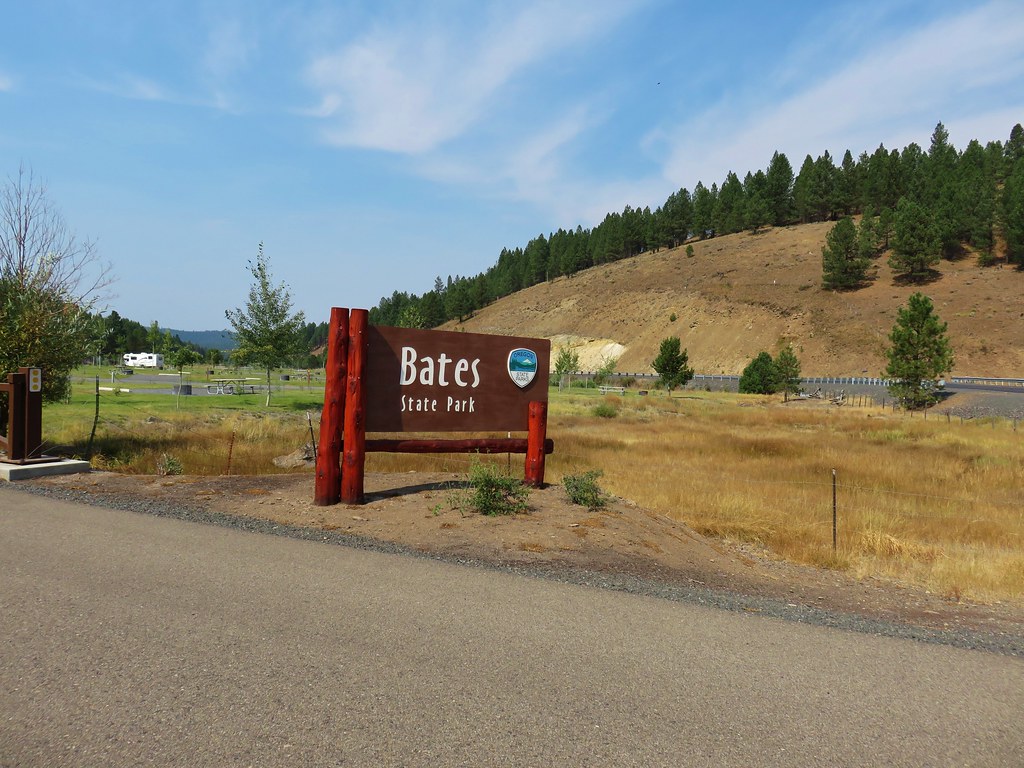
After returning to our car we drove back to Highway 26 and continued east. The air was once again hazy due to wildfire smoke making it hard for us to see much of the Strawberry Mountains as we passed by. After 66 miles we turned left onto Highway 7 for 1.1 miles then left again on Middle Fork Lane for .4 miles to Bates State Park.
IMG_9420

IMG_9364

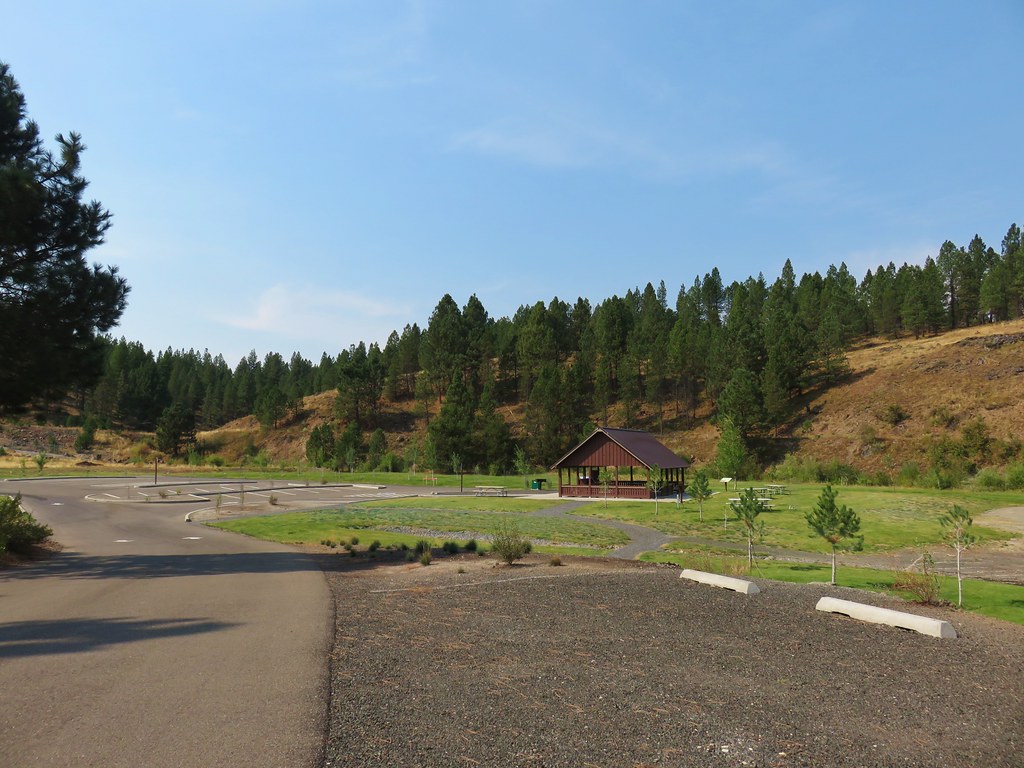
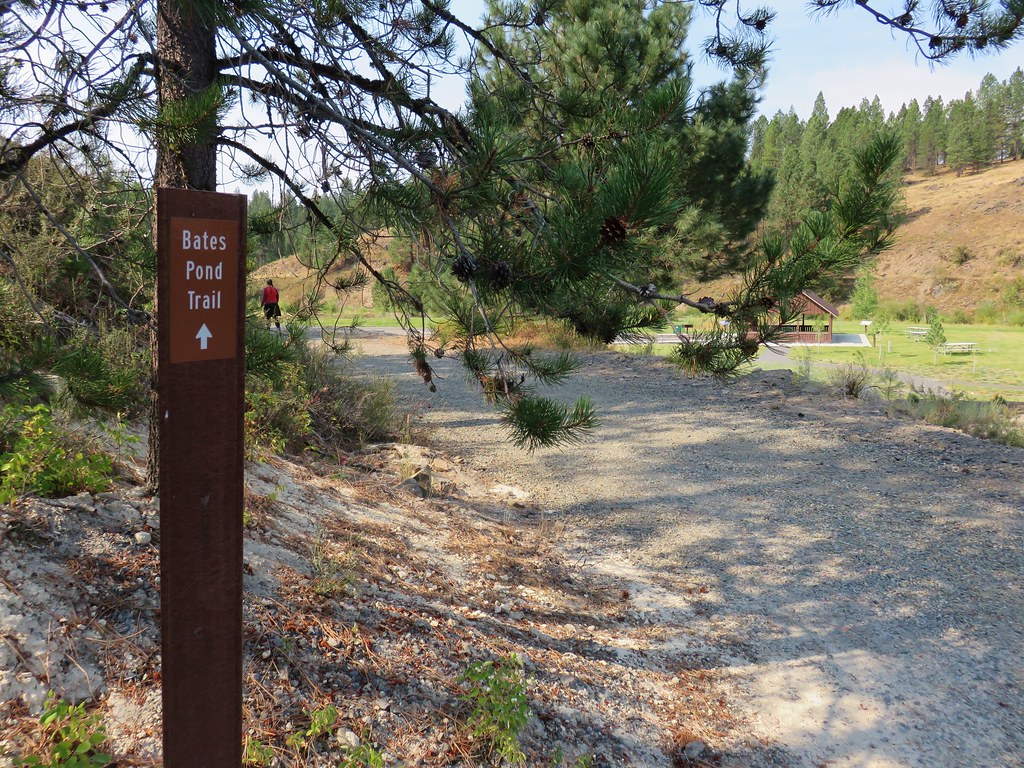
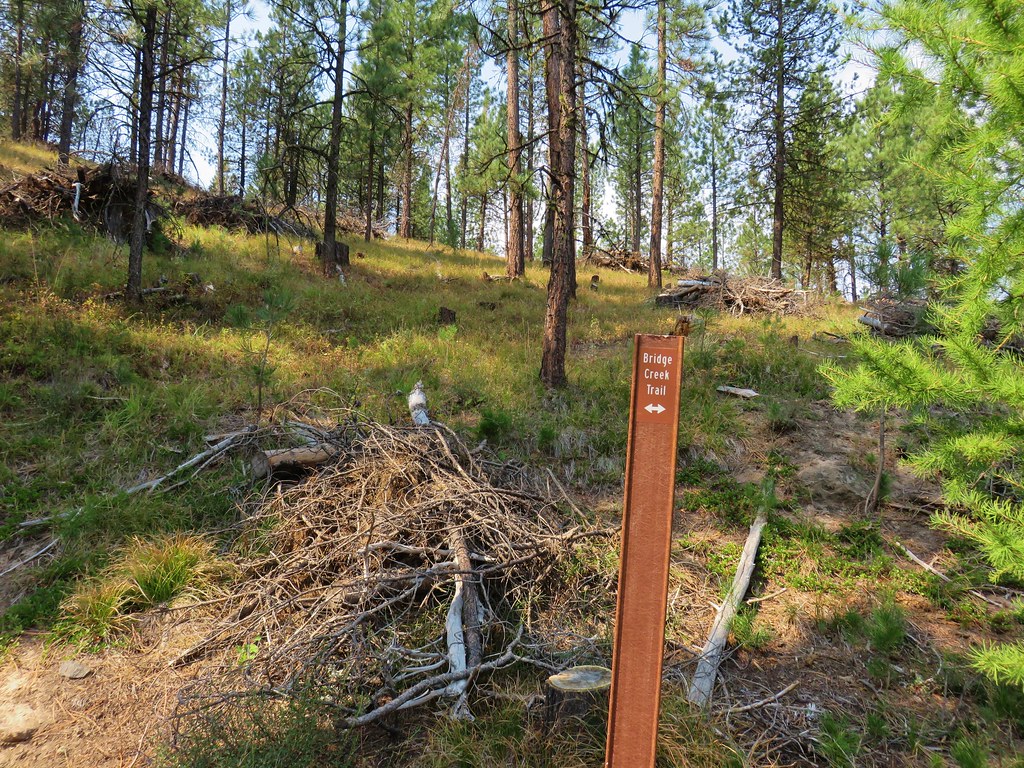
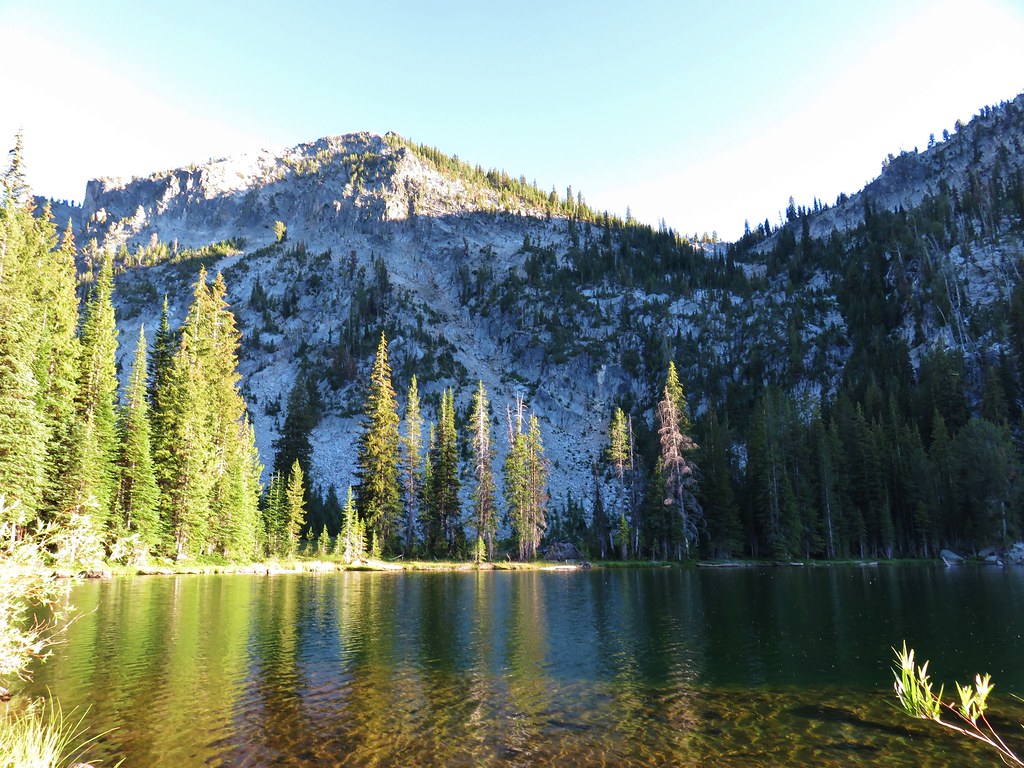
The park is located at the site of a former company lumber town. Bates Pond is all that is left from the town now. Several trails at the park gave us the opportunity to explore the area on a 2.6 mile hike starting on the Pond Trail which began on a road bed marked by a metal post.
IMG_9366

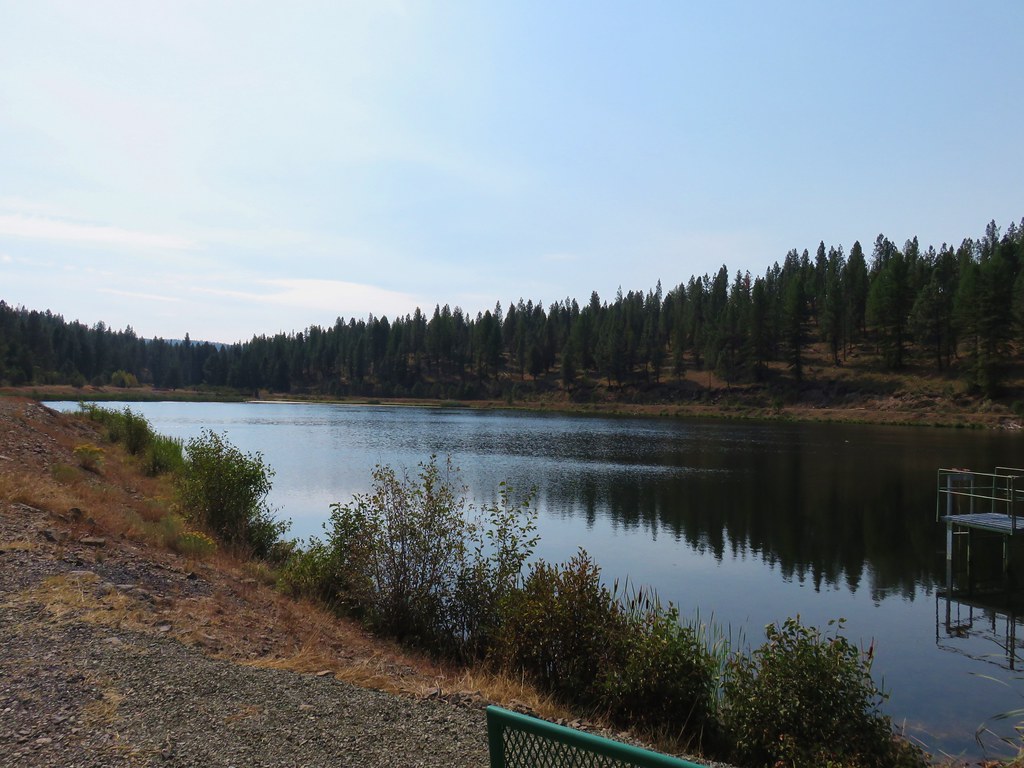
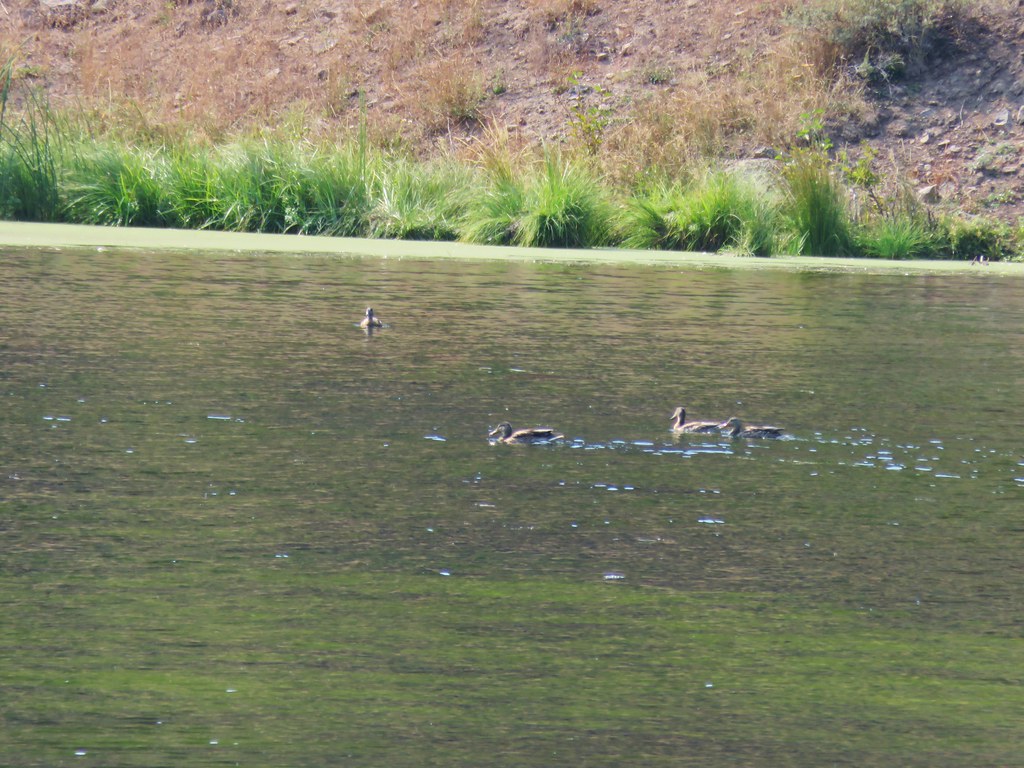
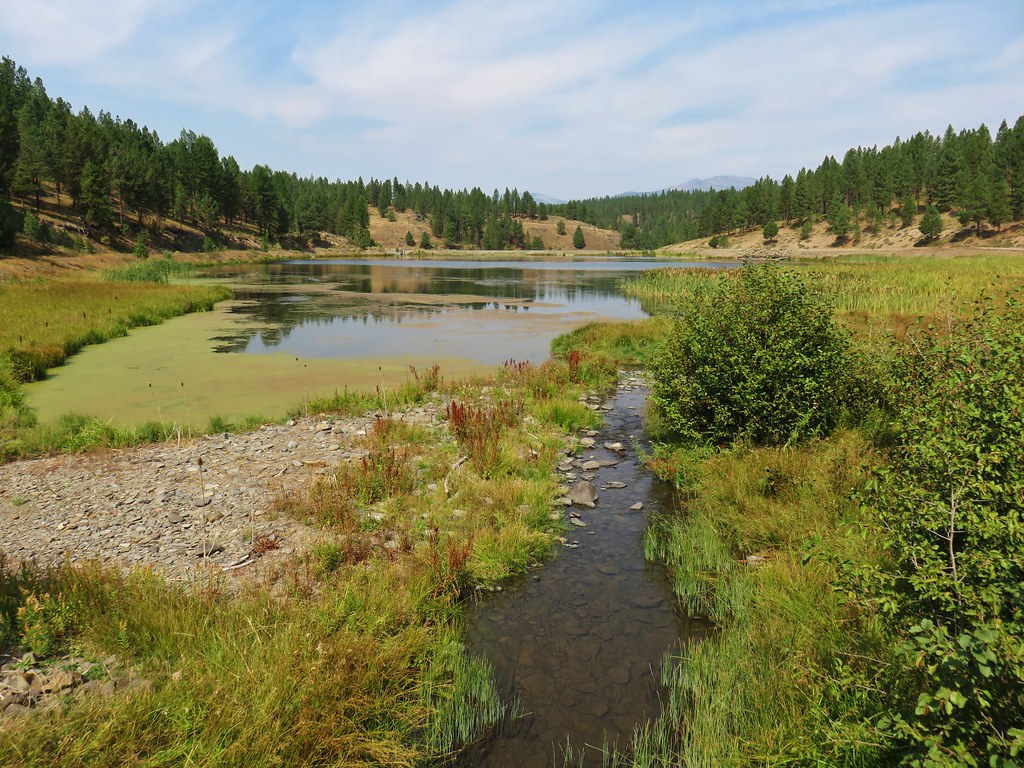
The trail followed the road along Bates Pond where numerous ducks paddled about.
IMG_9368

IMG_9371

IMG_9373

IMG_9374

IMG_9376

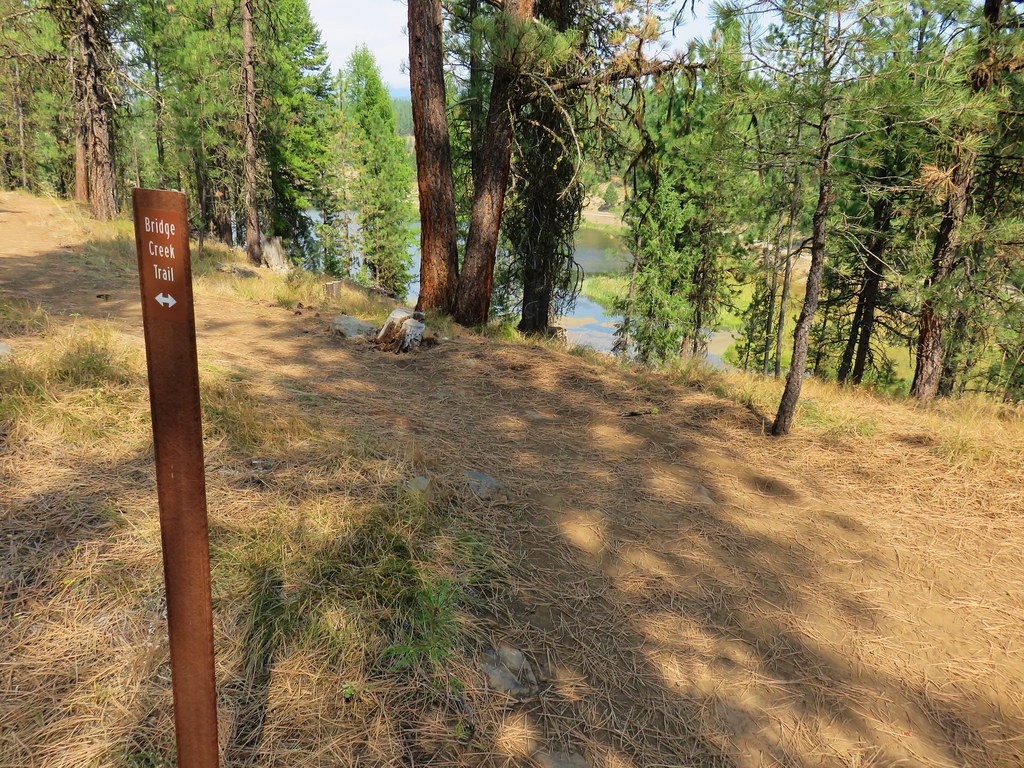
We crossed Bridge Creek on a footbridge at the far end of the pond and continued around the pond.
IMG_9378

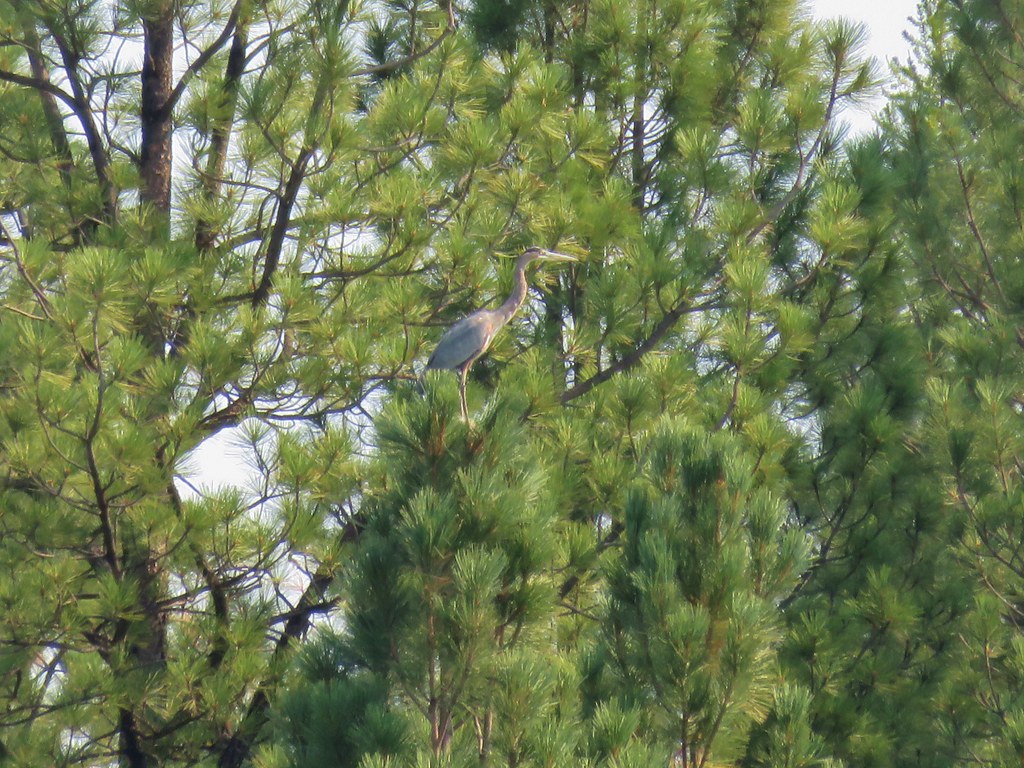
We startled a heron that flew ahead of us into a tree before taking off again across the pond to another tree.
IMG_9379

IMG_9383

IMG_9386

IMG_9389

When the Bates Pond Trail ended at the Bridge Creek Trail we stayed straight following Bridge Creek and ignoring side trails and the nosy residents.
IMG_9393

IMG_9400

IMG_9396

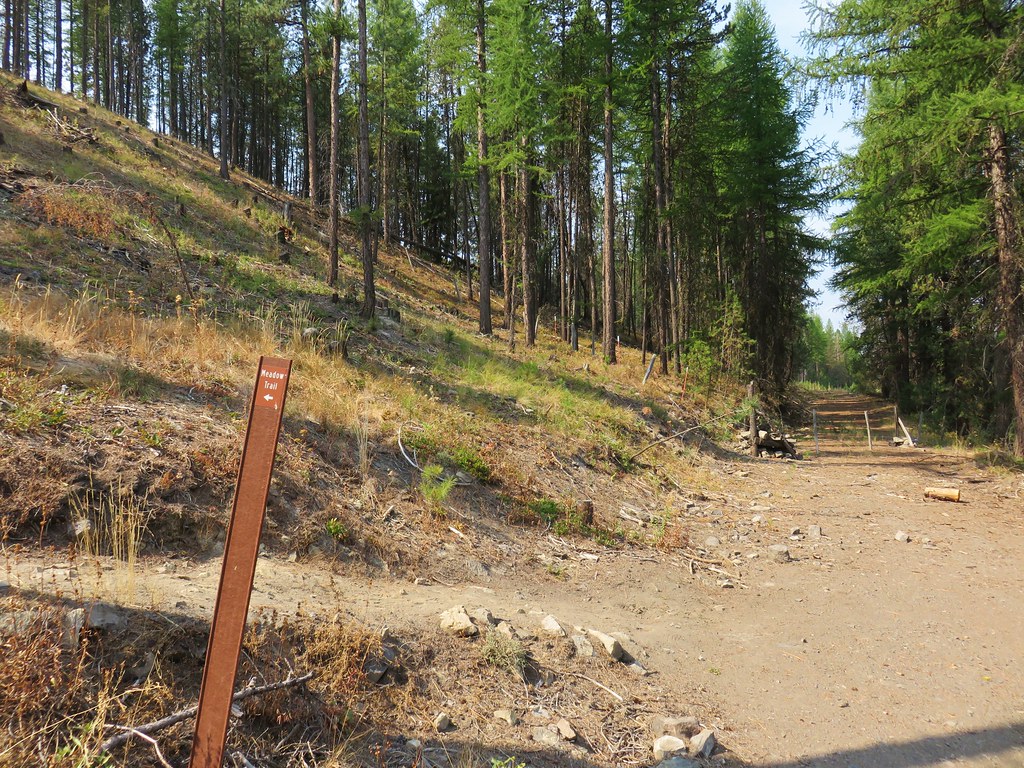
Just before arriving at a gate we turned uphill to the left onto the Meadow Trail.
IMG_9402

After a short climb the trail leveled off then came to an end at the Dixie Trail where we stayed right.
IMG_9405

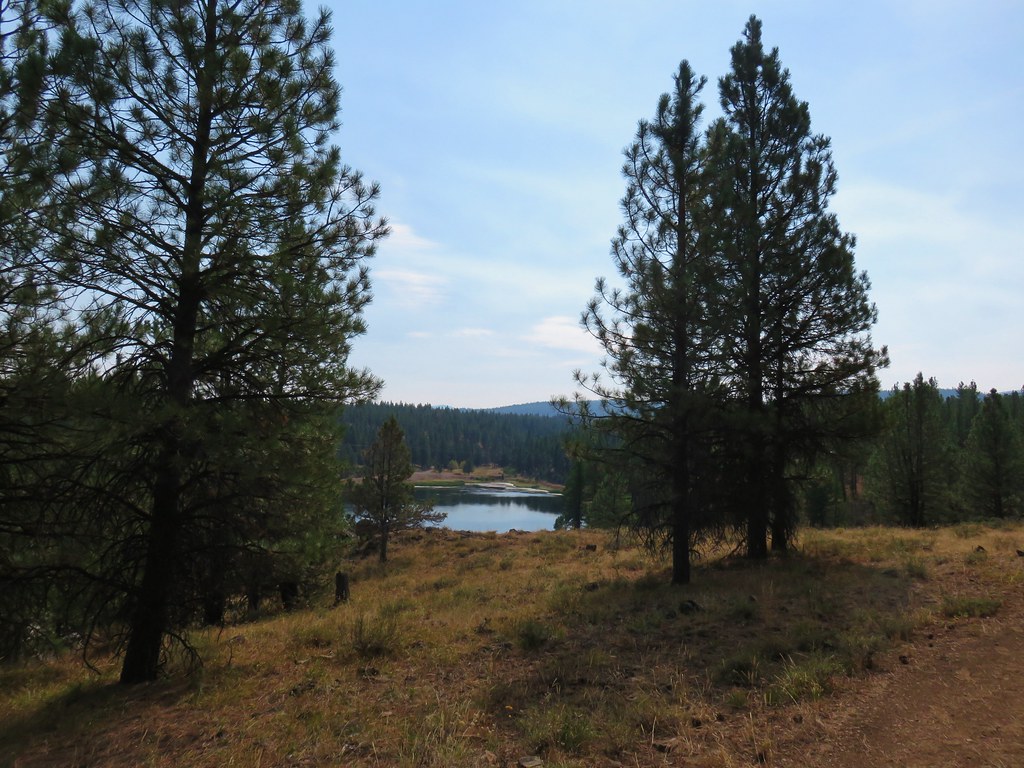
From this trail there was a view of the pond and to some buttes to the east.
IMG_9406

IMG_9409

Along the way we met one of the cutest ground squirrel we’d ever seen.
IMG_9416

The Dixie Trail descended to the Bridge Creek Trail near the footbridge at the end of the pond and we simply followed the Bates Pond Trail back to our car.
IMG_9417

IMG_9419

It was only a quarter after twelve when we’d finished and our check-in time was 2:30 in Sumpter which was only about a half an hour away. We still had one short hike left in Sumpter which would be good for about an hour which would have leave us a little early. We solved that issue by turning the wrong way (left) when leaving Bates. We only realized our mistake after driving over 16 miles which should have brought us to the ghost town of Whitney but didn’t.

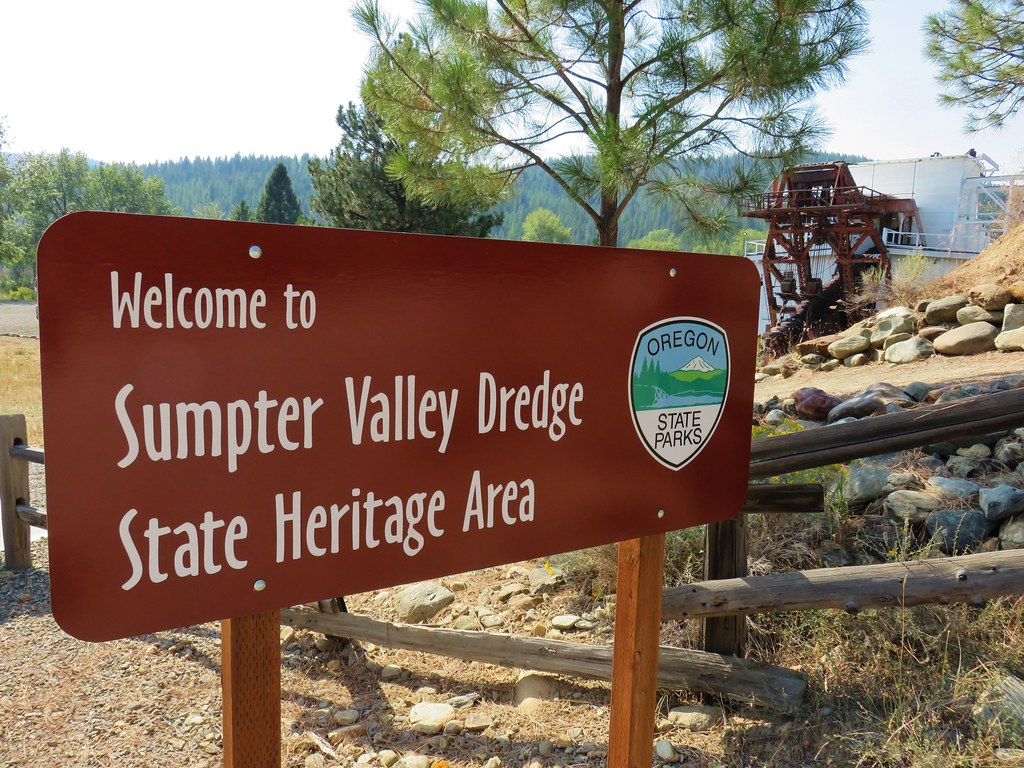
After correcting our mistake we drove back to Highway 7 and headed east for 25 miles to a sign for Sumpter where we turned left for 3 miles. We turned left into the Sumpter Valley Dredge State Heritage Area.
IMG_9429

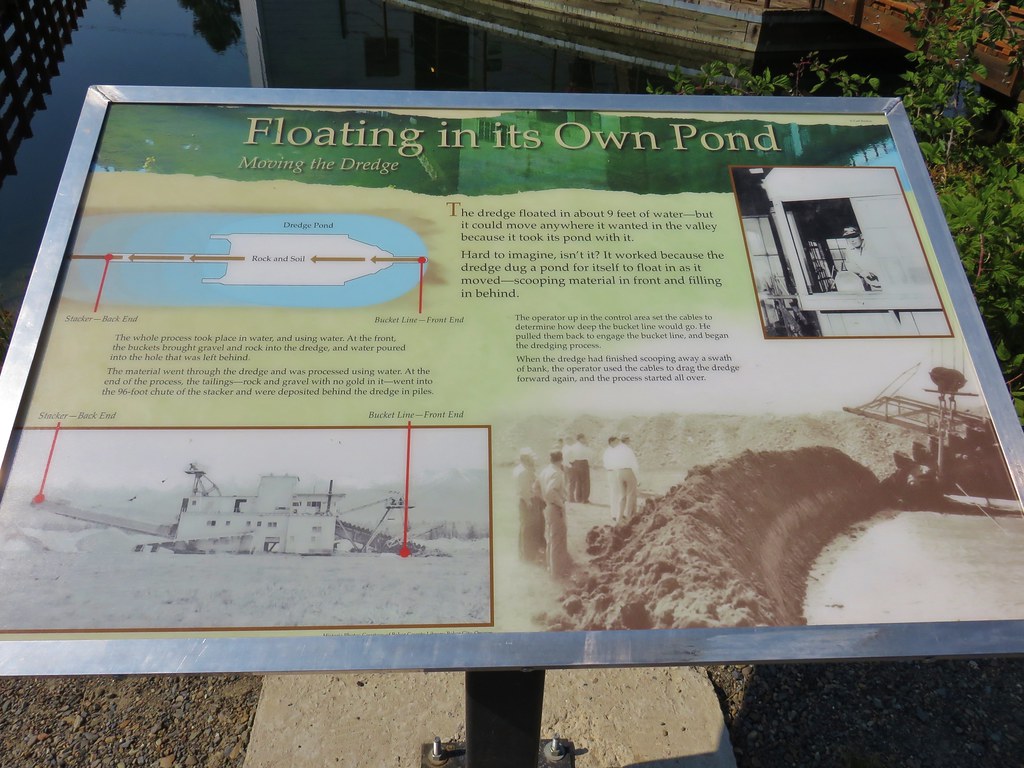
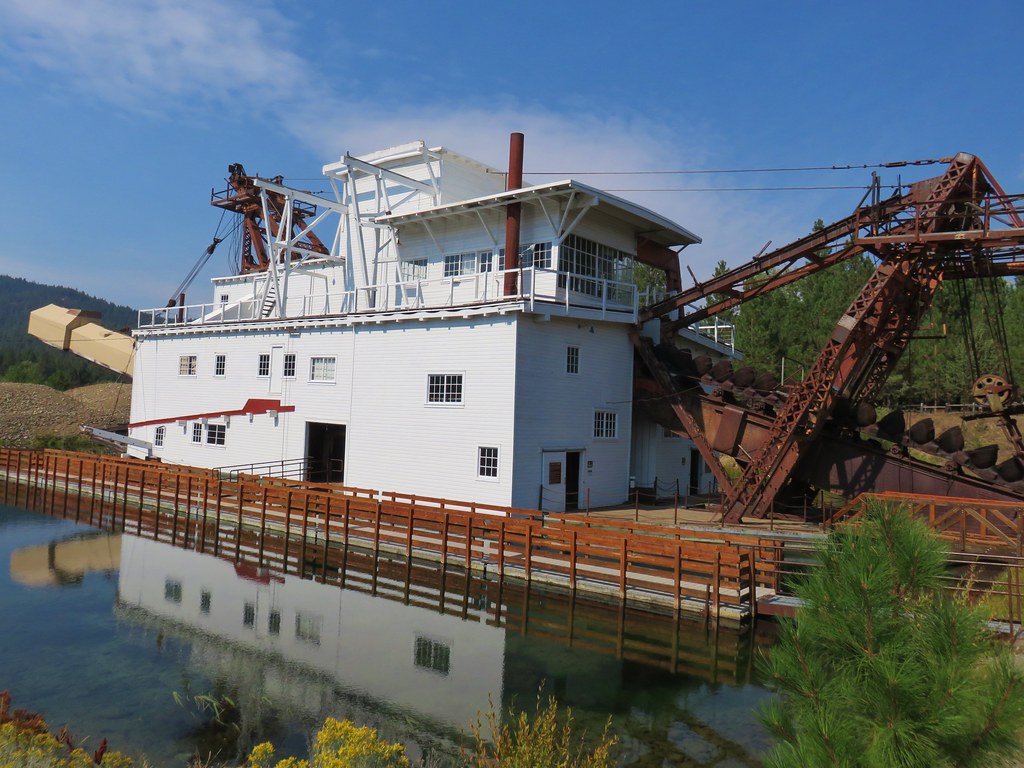
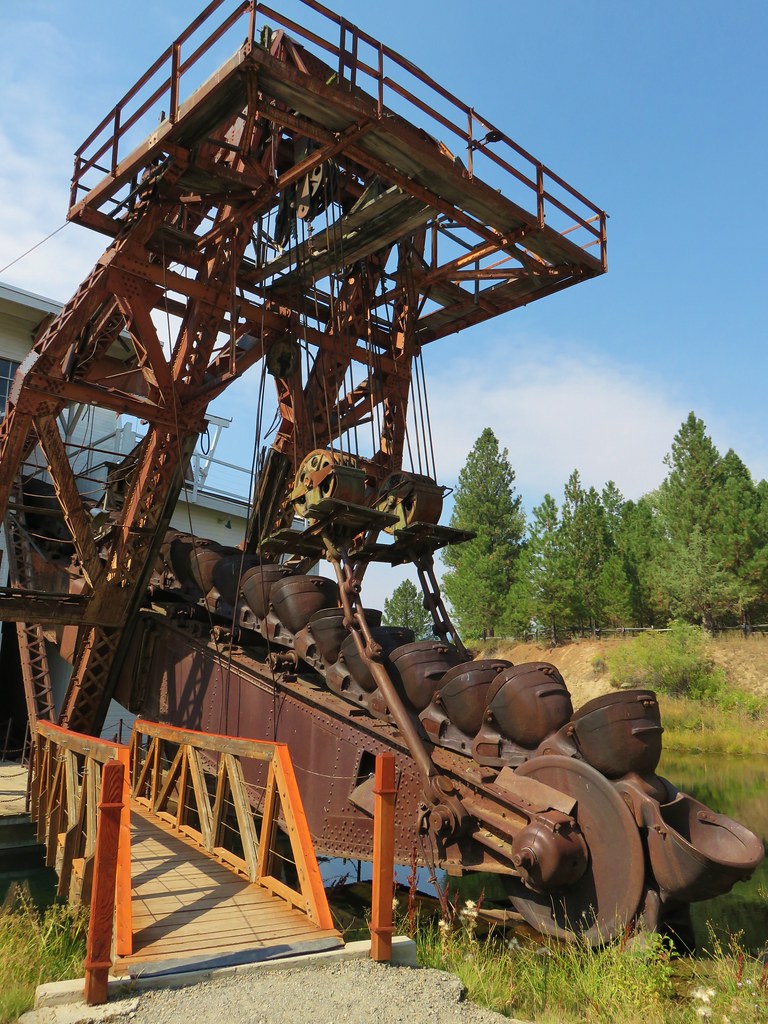
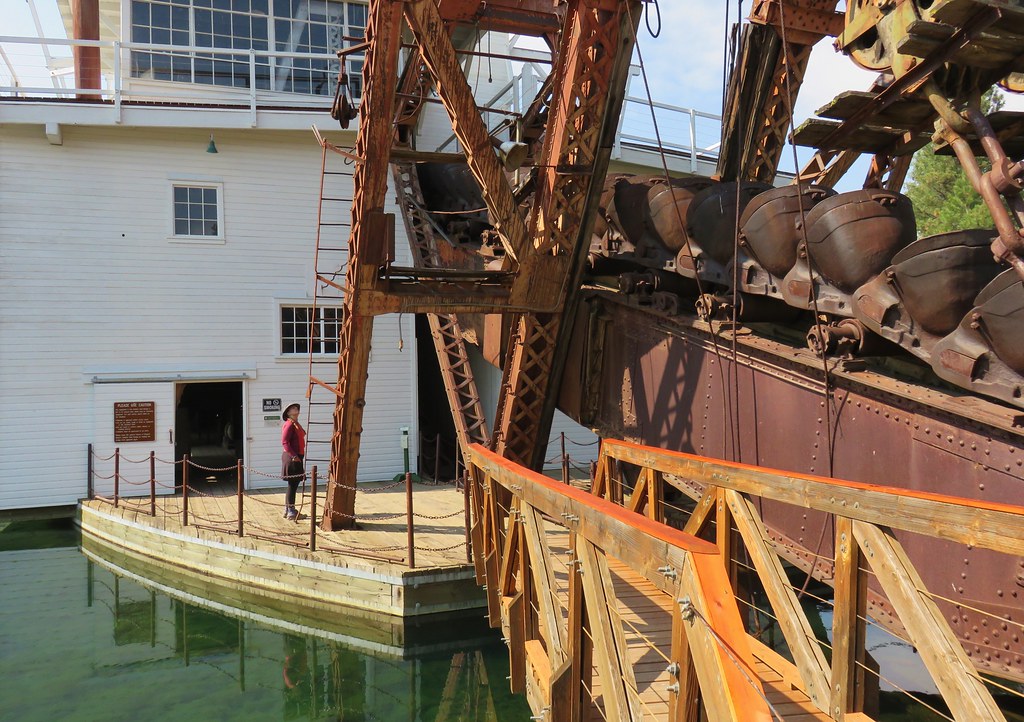
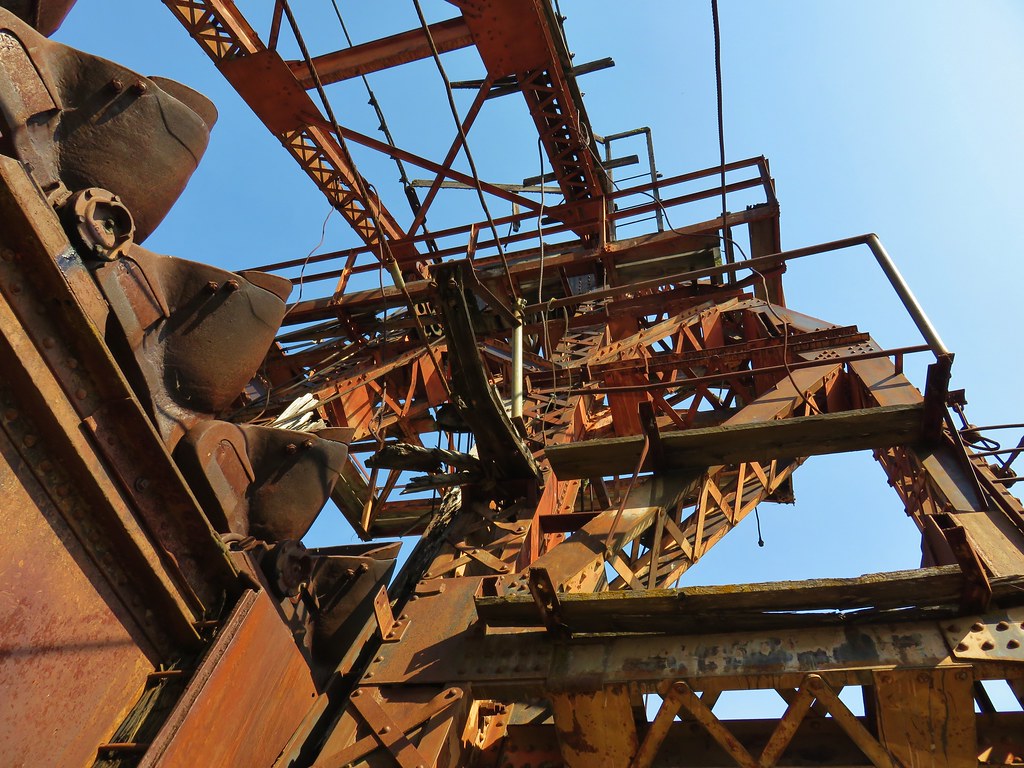
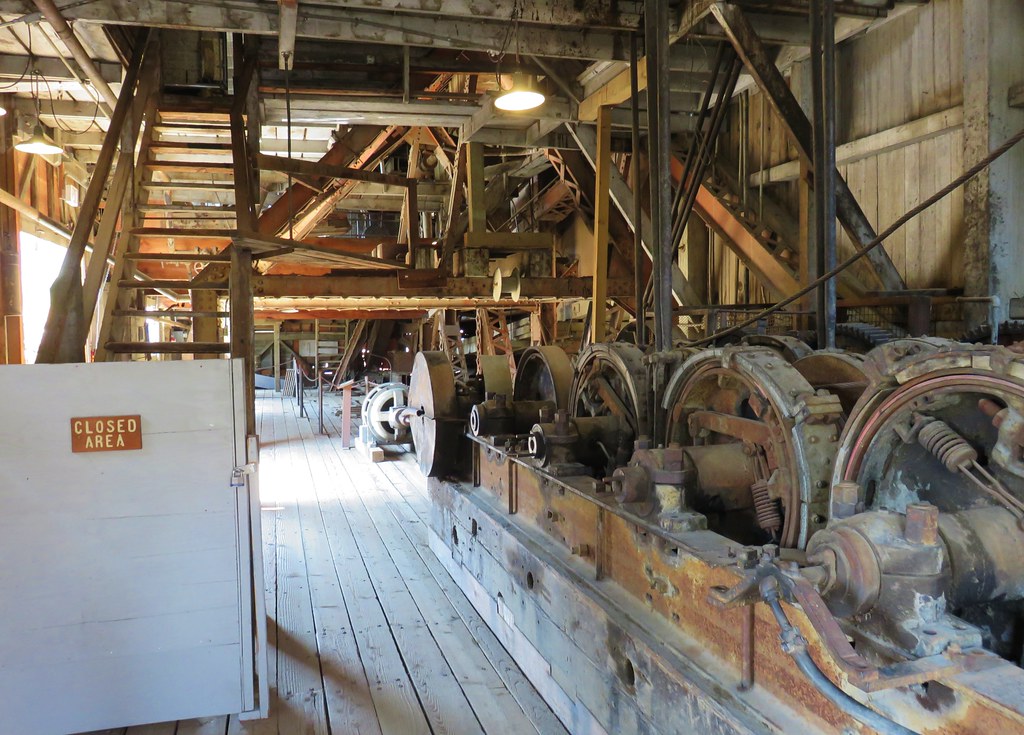
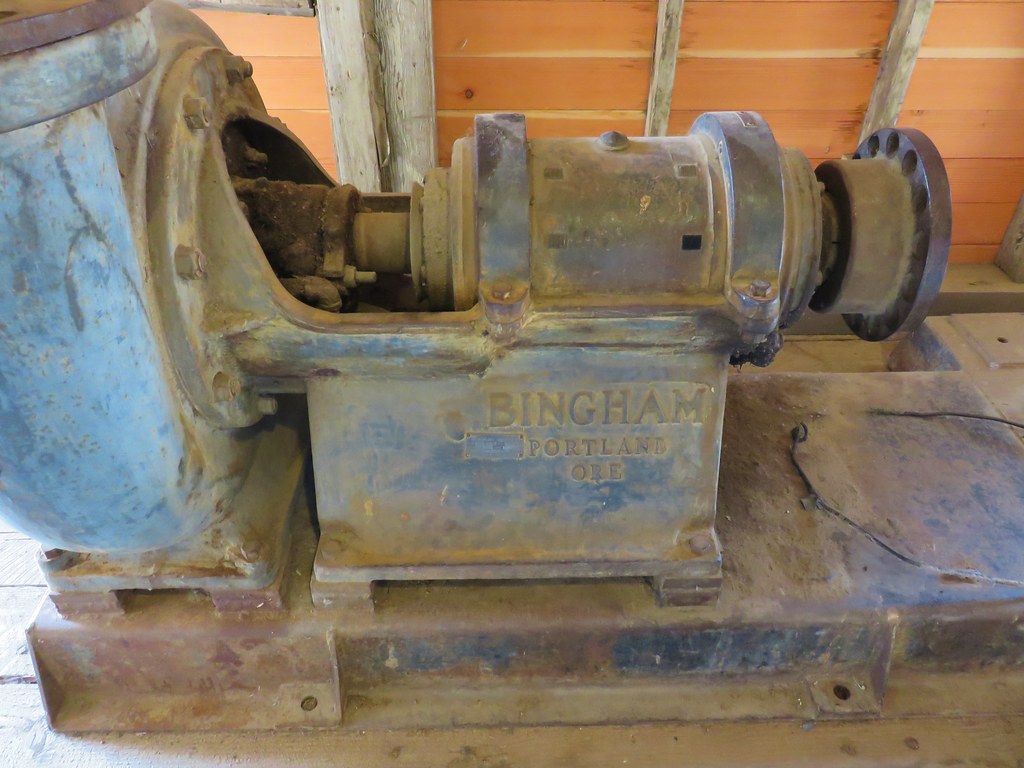
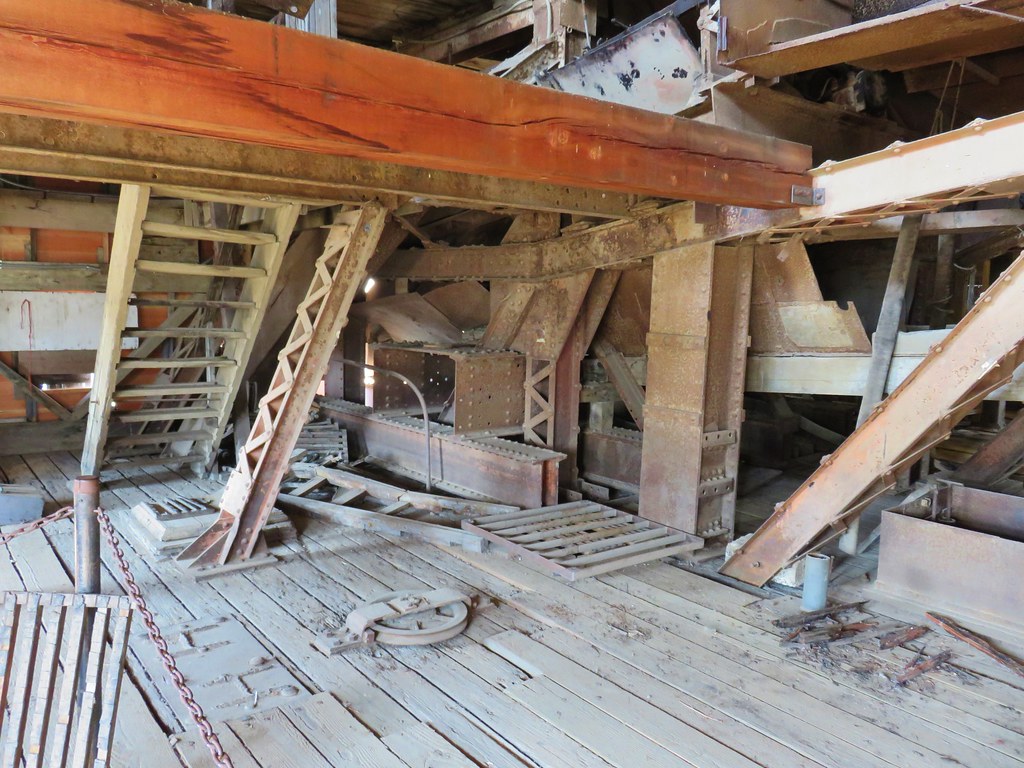
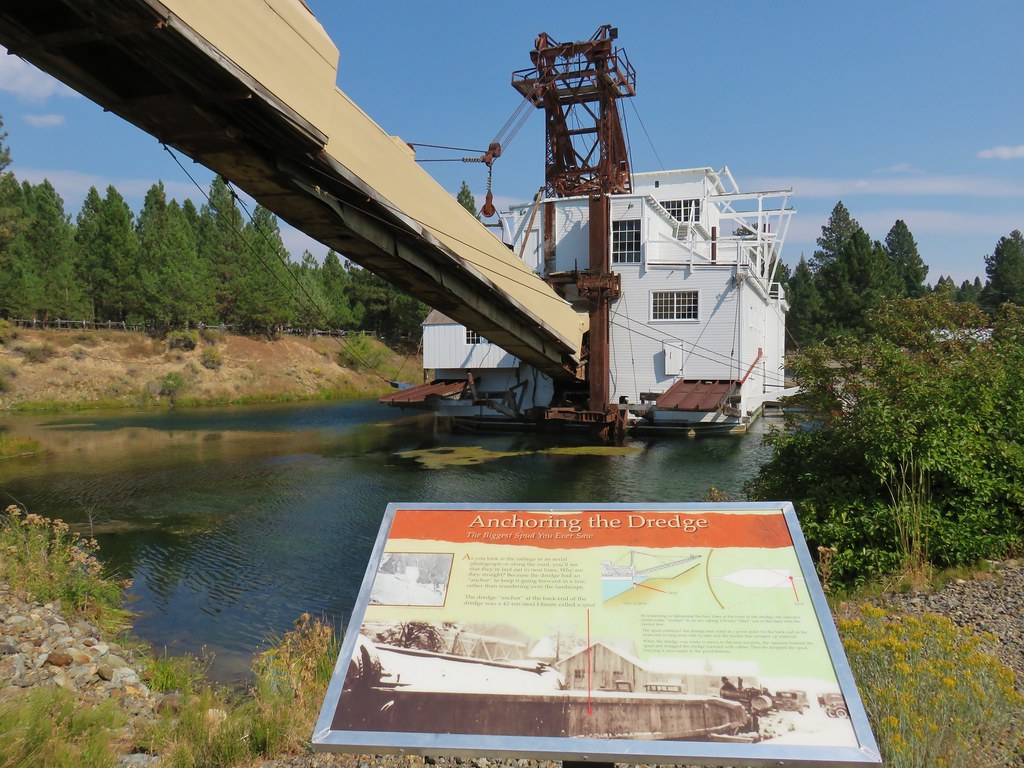
Here a 1240-ton dredge used to scoop up river gravel and filter out gold dust sits amid tailings left in its wake. The site is also home to the Sumpter Valley Railroad which hauled timber to Bates and Prairie City. We parked near the visitors center by the dredge.
IMG_9430

We started our visit by exploring the dredge.
IMG_9443

IMG_9435

IMG_9440

IMG_9444

IMG_9445

IMG_9447

IMG_9450

IMG_9453

IMG_9453

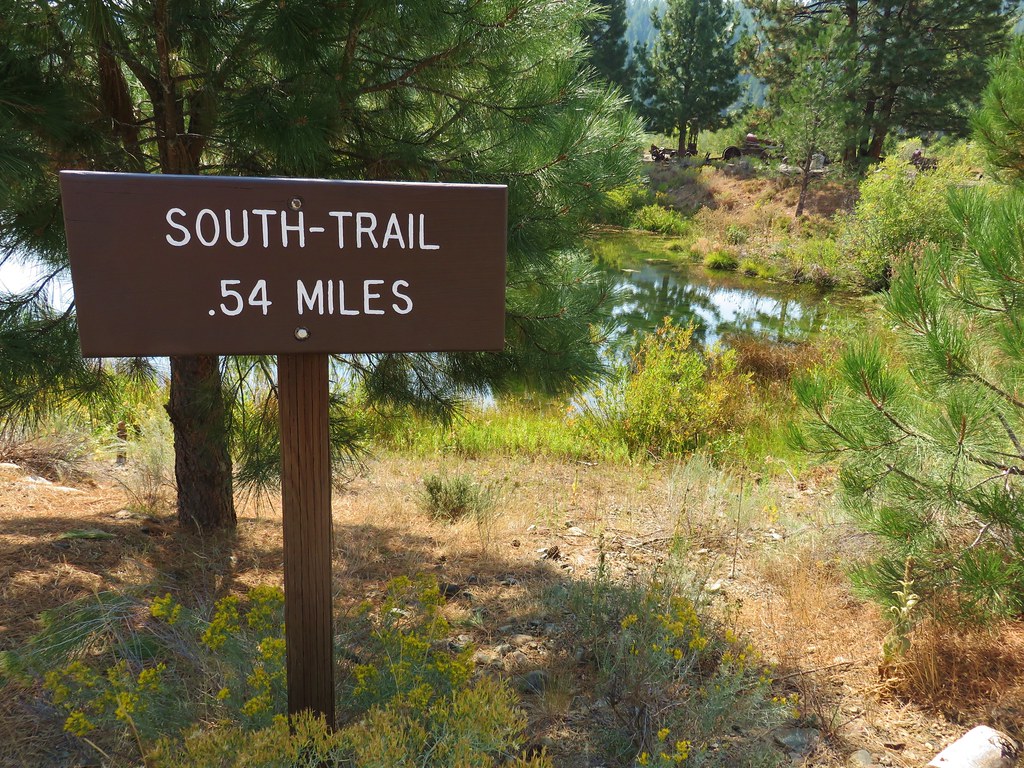
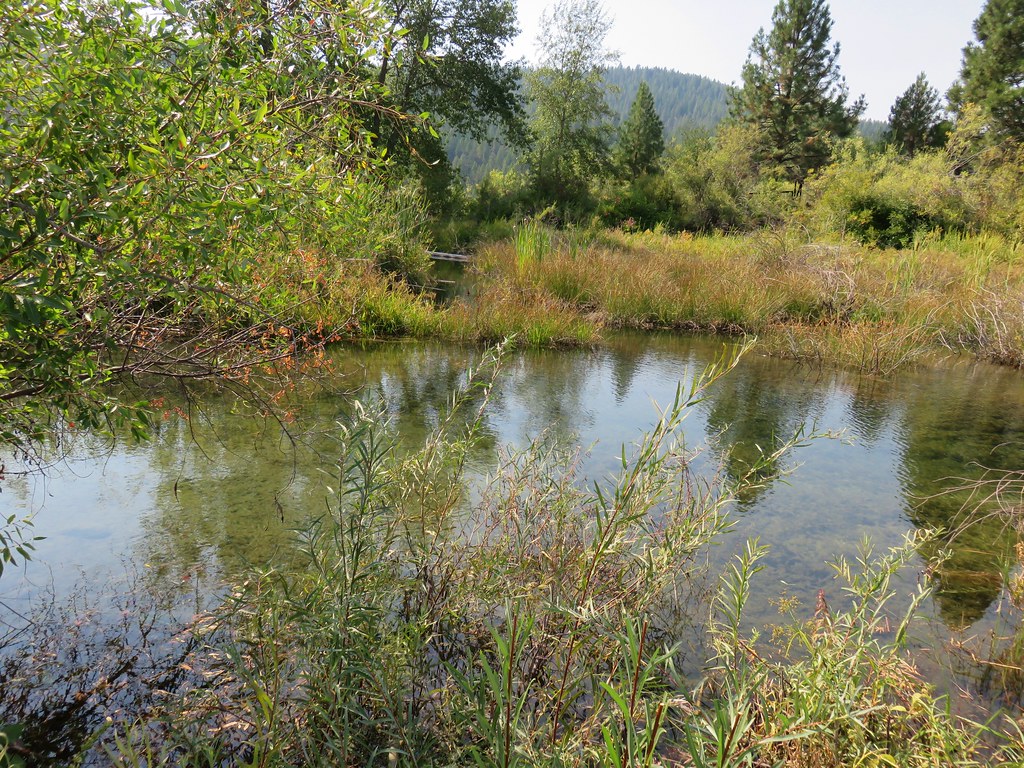
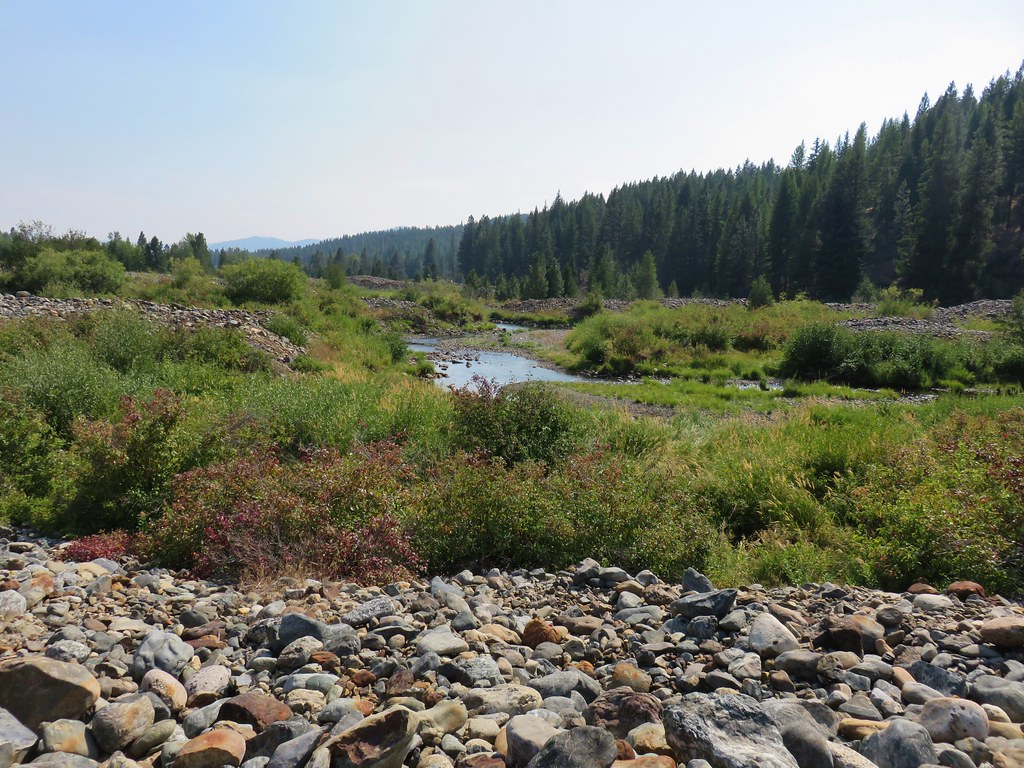
Next we took the South Trail for .4 miles through ponds amid the tailings to the Powder River.
IMG_9433

IMG_9457

IMG_9461

IMG_9470

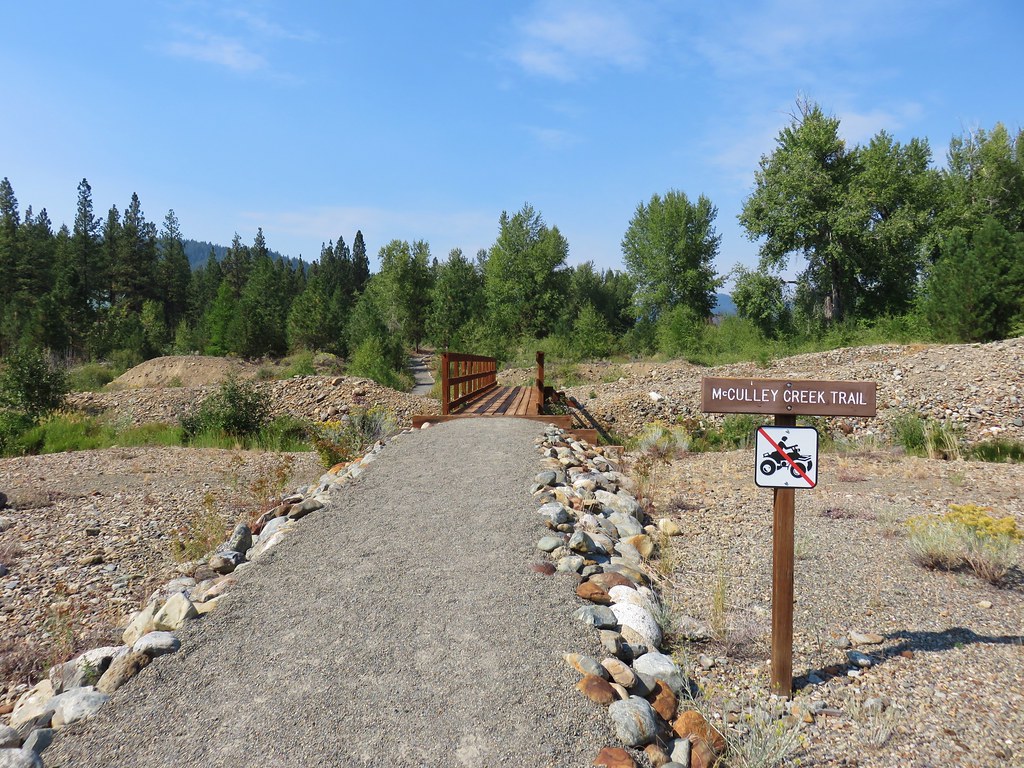
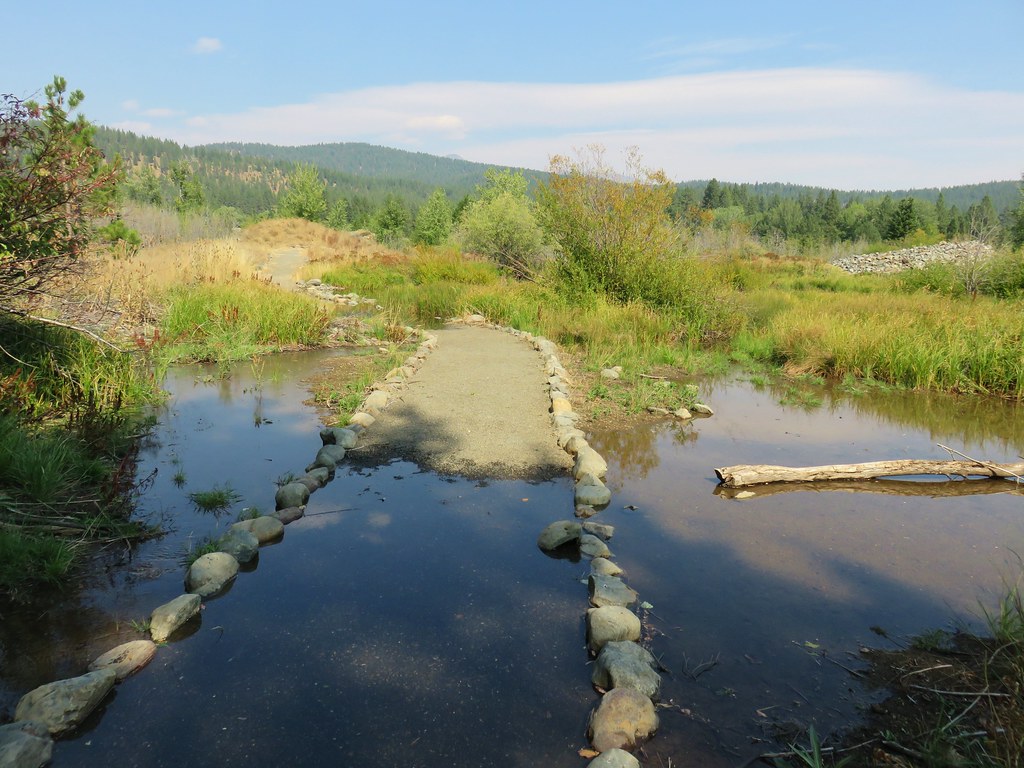
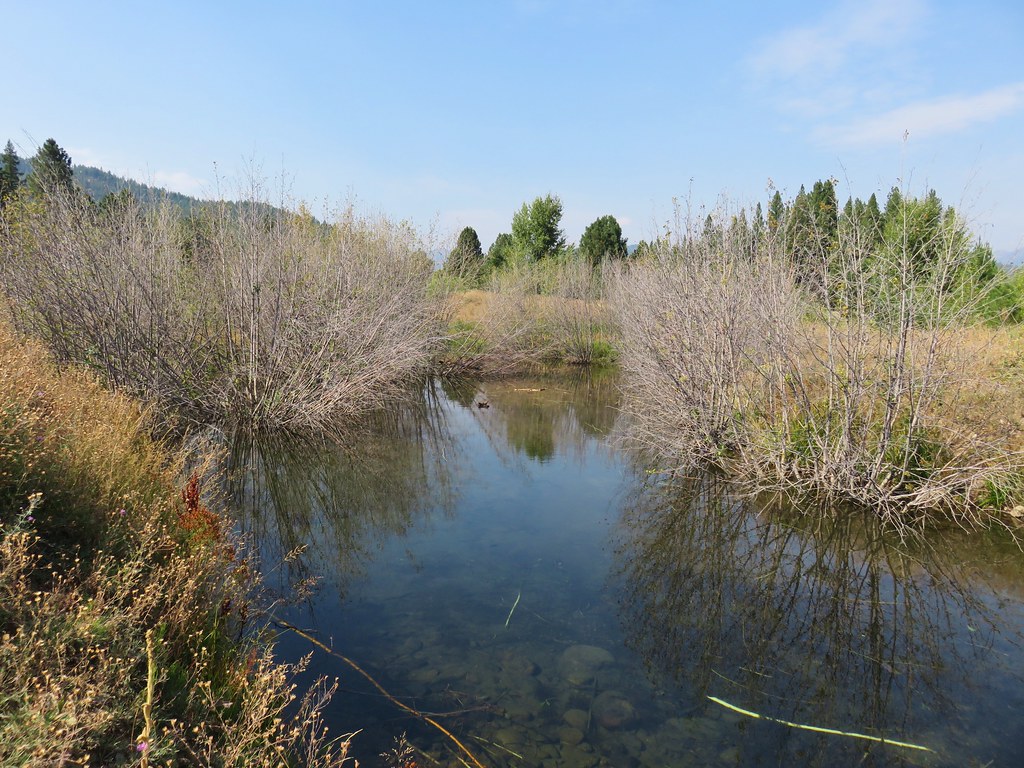
We turned left onto the .3 mile McCulley Creek Trail which was flooded near its end by some nifty beaver work.
IMG_9472

IMG_9482

IMG_9473

IMG_9475

IMG_9481

We returned to the South Trail and finished the loop which ended at a machinery yard near the dredge.
IMG_9436

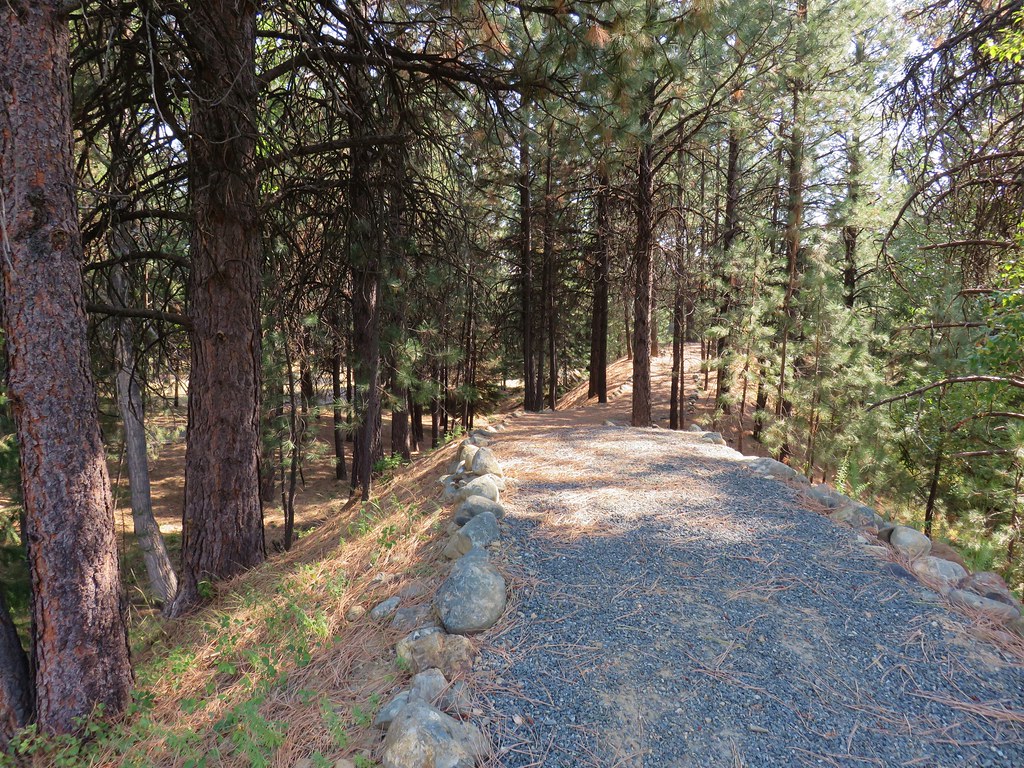
We walked left around the dredge and picked up the North Trail which traveled along Cracker Creek.
IMG_9483

IMG_9488

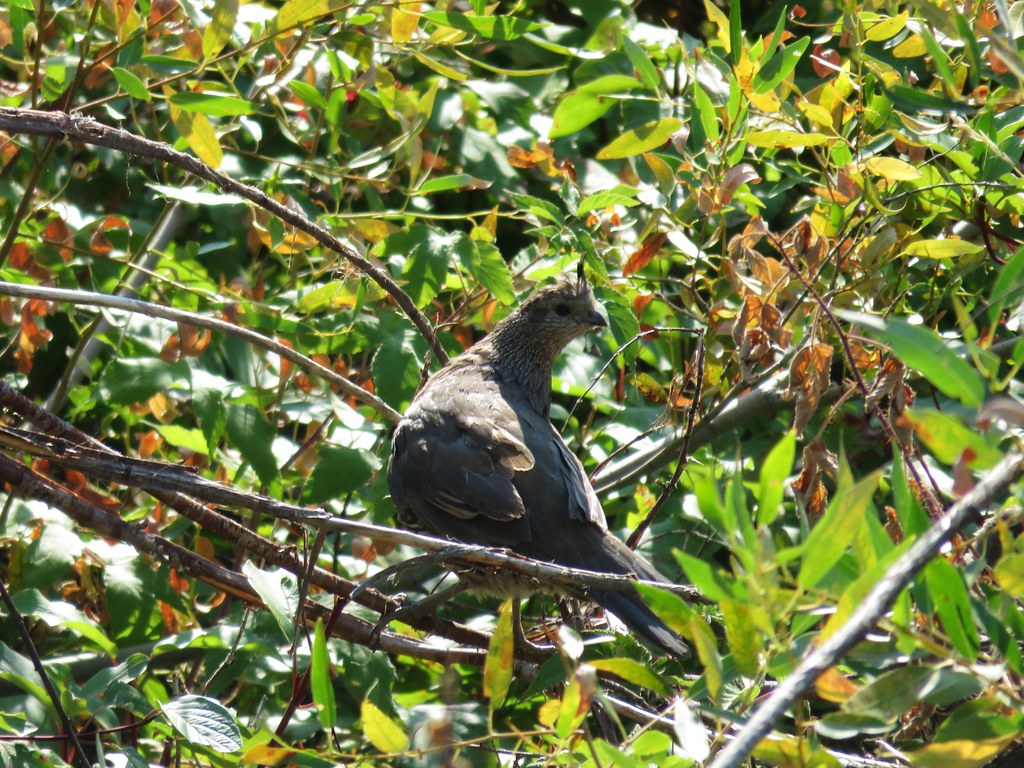
We had been hoping to see a beaver but knew the chances of that during the day were slim so we settled for a quail.
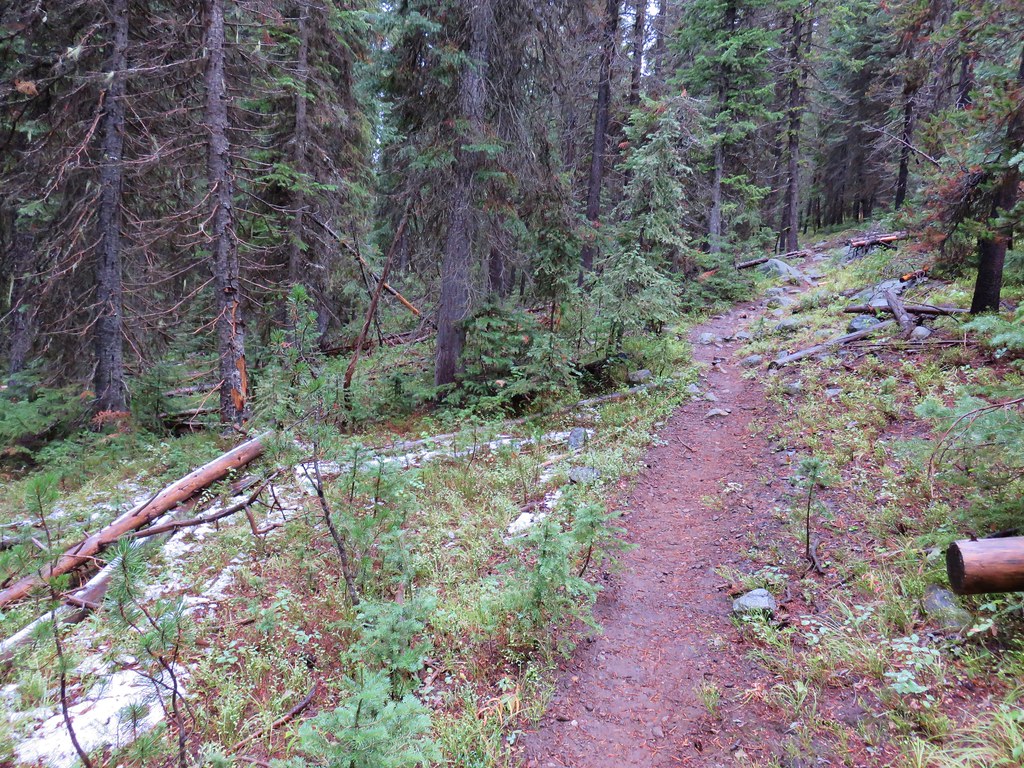
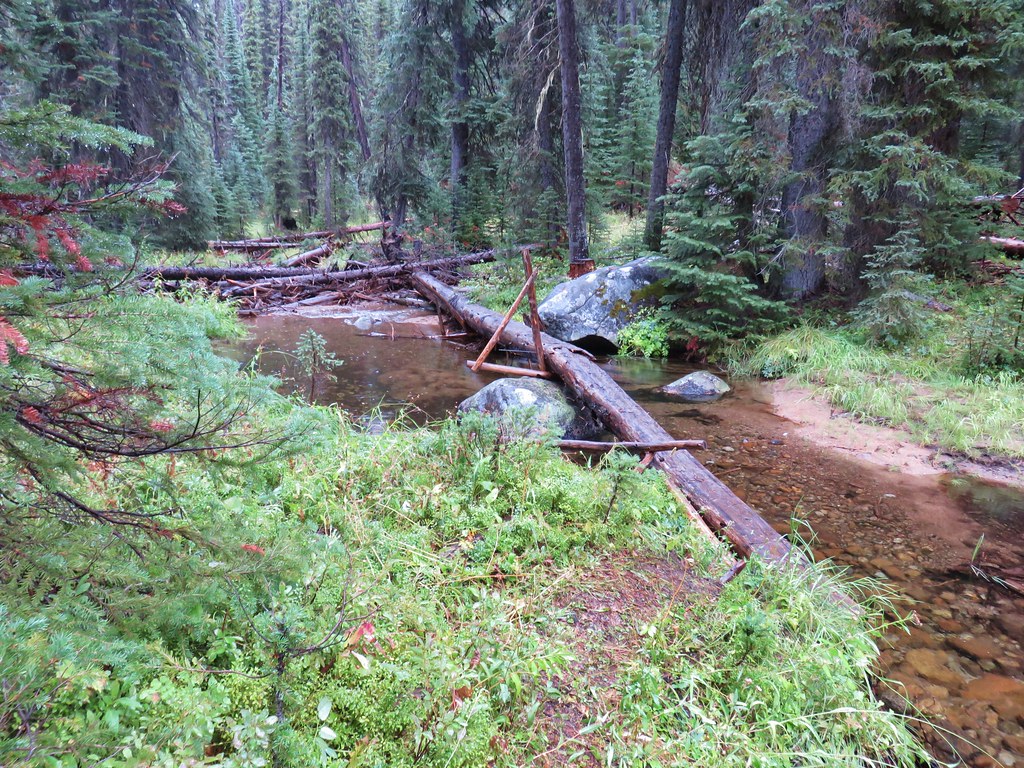
IMG_9485

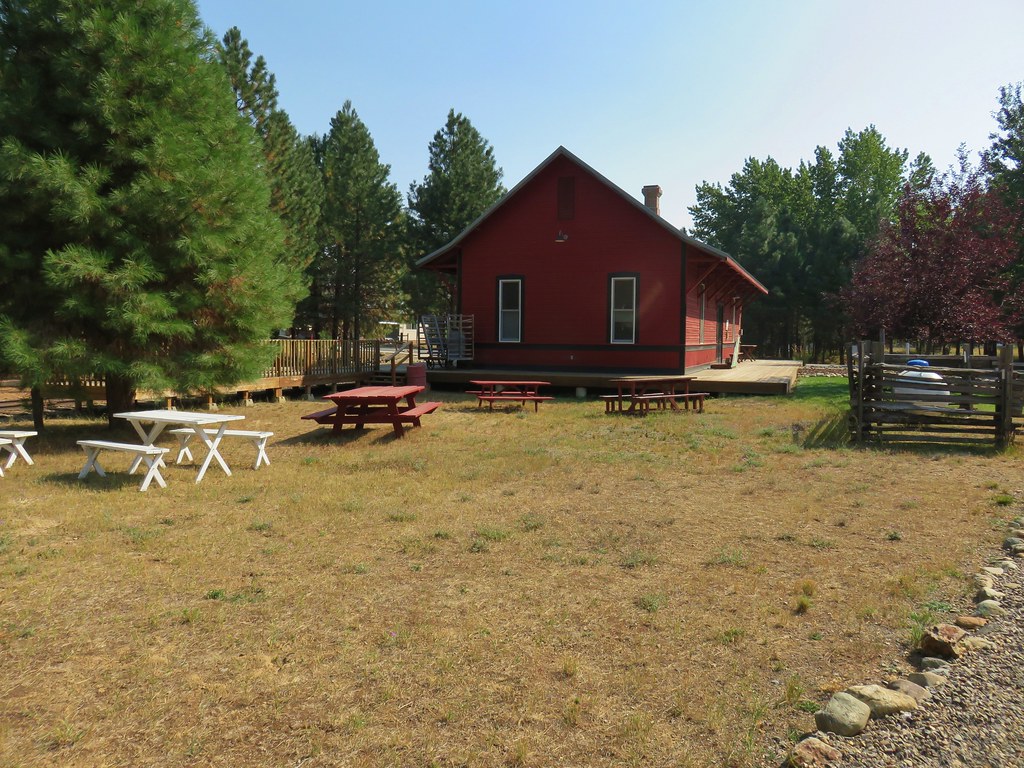
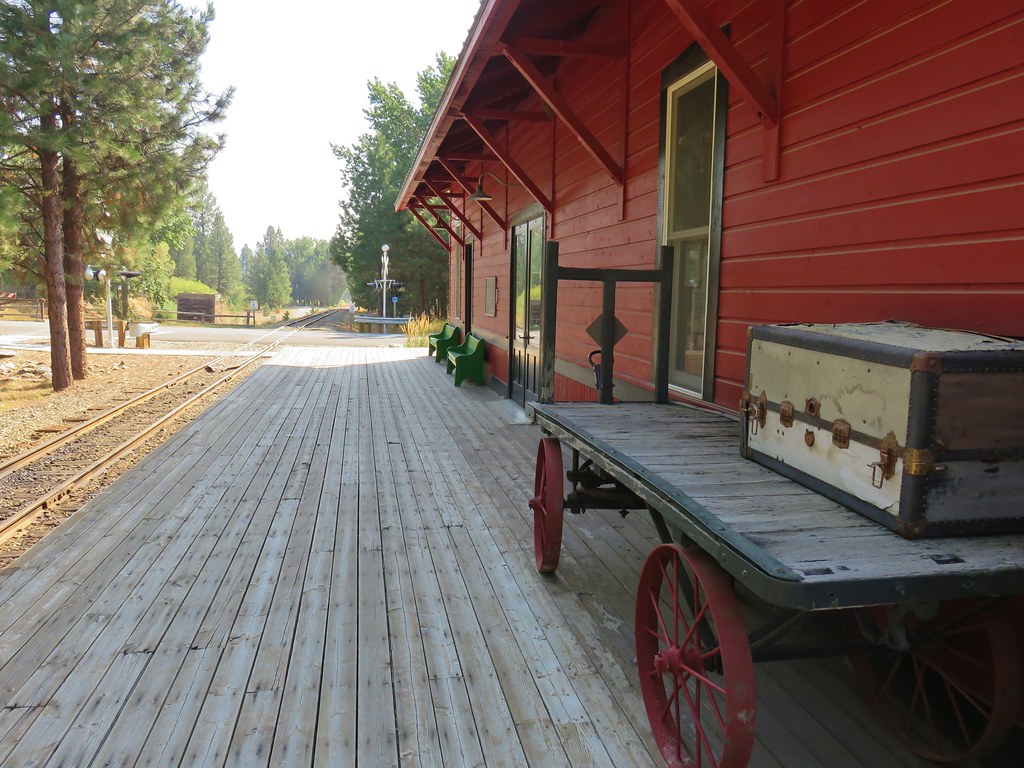
We turned left at a Ridge Trail sign and followed this path to the Railroad Station.
IMG_9491

IMG_9493

IMG_9494

IMG_9495

From the station we crossed the parks entrance road and took the Walking Trail back to the dredge.
IMG_9501

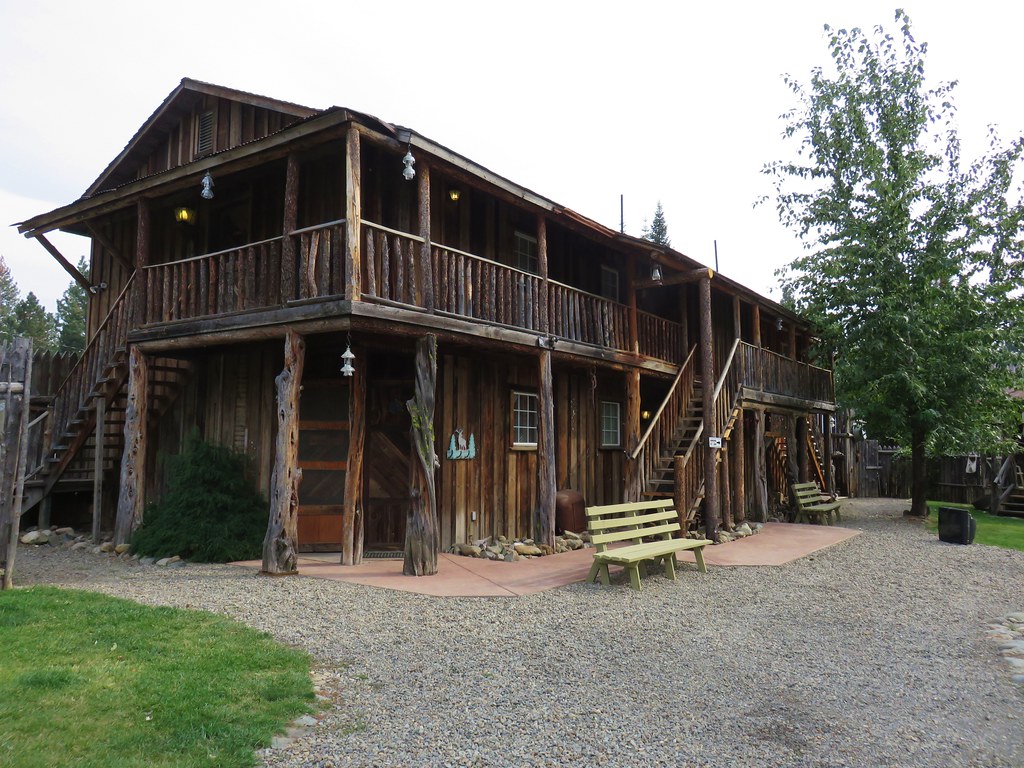
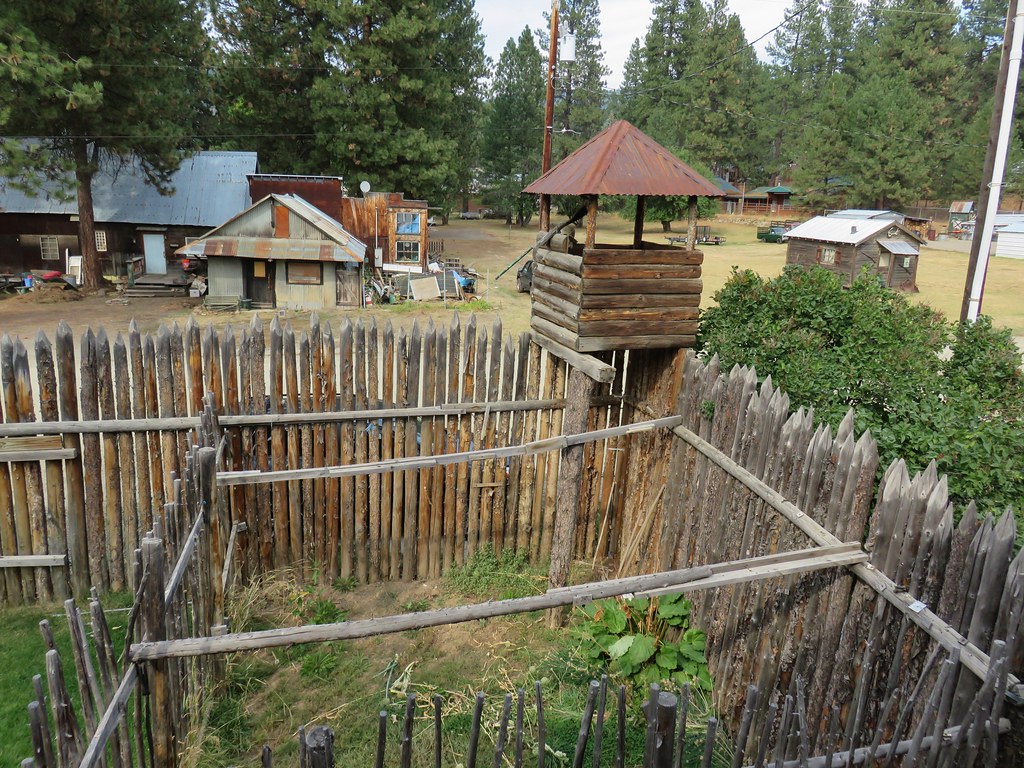
As it turned out our motel was right across the street from the park. We had originally planned to stay at the Granite Lodge in Granite but that establishment appeared to be for sale from what we could tell, so Heather started looking for a place in Sumpter. There were a couple of choices but we picked the Sumpter Stockade due to the themed rooms looking fun. It turned out that this motel had just changed owners and the previous owners hadn’t stayed open past Labor Day. We thoroughly enjoyed our stay there and the new owners were great!
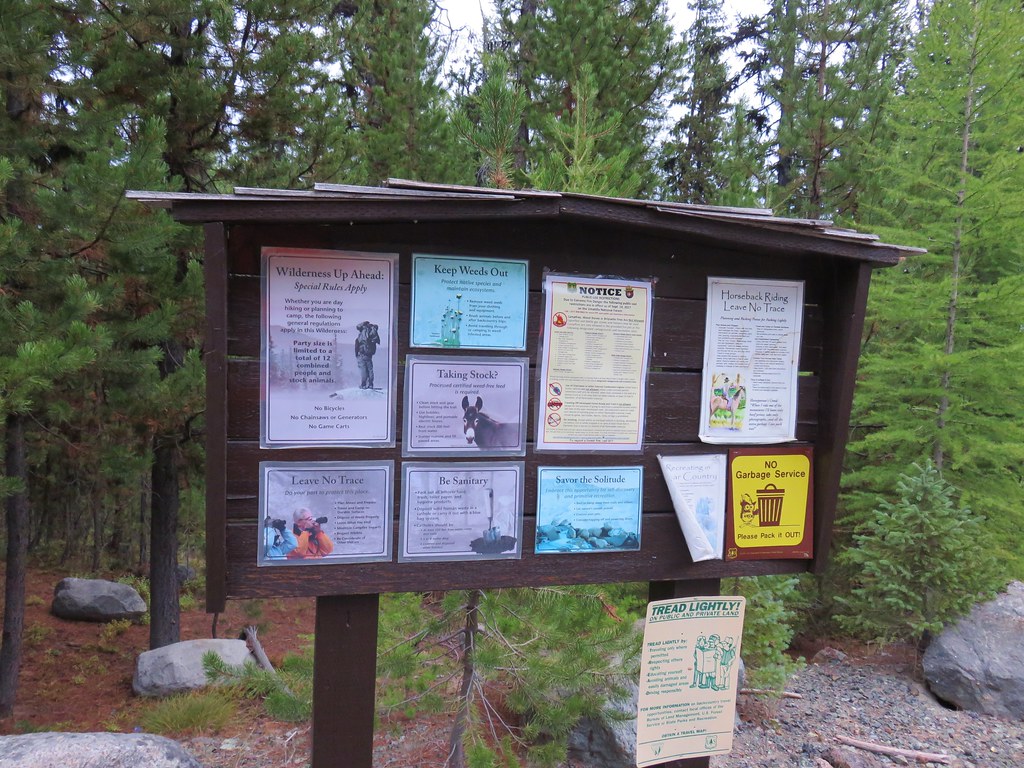
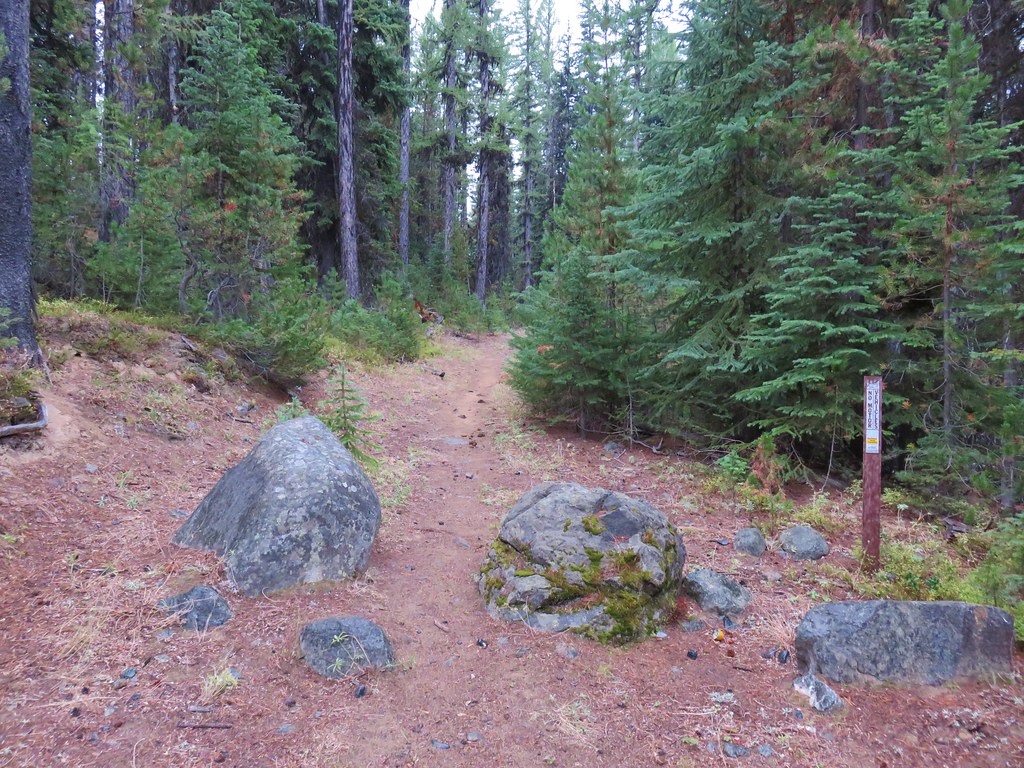
IMG_9508

IMG_9506

IMG_9507

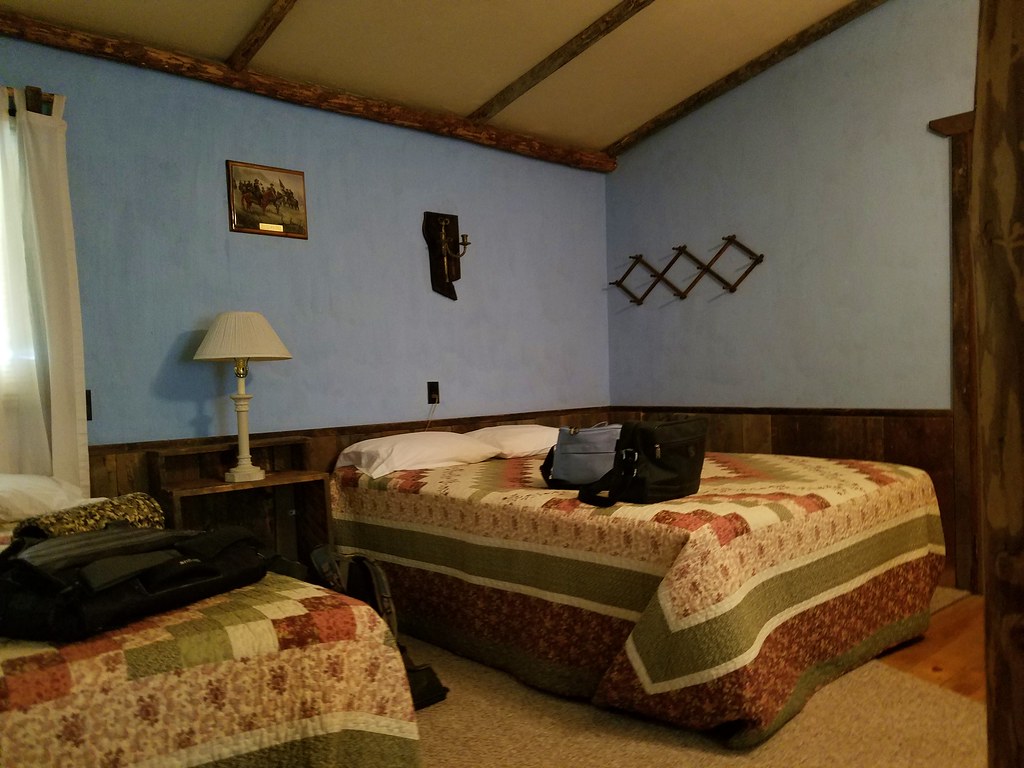
We were given the Civil War Room.
2017-09-17 15.40.20

After dropping off our stuff we decided to try out a hand dipped corn dog stand we’d seen on the next block. That turned out to be a great decision as both the corn dogs and cheese sticks from Cajun Concessions were excellent! It was a satisfying end to another great day of hiking.

It looked like things were going to start getting interesting the next day as the system from the Gulf of Alaska was supposed to begin arriving overnight and temperatures would start dropping around 11am on Monday with the snow level dropping as low as 5000′. We went to bed knowing there was a good chance we’d be hiking in snow by the end of the following day. Happy Trails!

Flickr: Blue Basin, Bates, and Sumpter