Categories
Central Coast Hiking Oregon Oregon Coast Trip report

Pacific City

It had been several months since we’d taken a hike along the Oregon Coast so for a change of pace we headed to Pacific City to check out Cape Kiwanda and Bob Straub State Park. We parked at the lot for Cape Kiwanda near the Dory Boat Launch and started our hike by heading over to the cape. Haystack Rock rose from the ocean just beyond the cape while seagulls patrolled the beach.
012

After a little exploration on Cape Kiwanda we retraced our steps and headed out to the tide pools next to the cape. The tide was out far enough to reveal several starfish and anemones.
038
We then headed south along the beach toward the Nestucca Spit and Bob Straub State Park. Vehicles are allowed on certain parts of this beach but only a couple came down and none stayed long. Several flocks of seagulls were gathered along the beach as well as a handful of other ocean birds.

Seagulls on the beach

Sandpipers
Sandpipers
Pelicans
Pelicans

When we reached the end of the spit we turned along Nestucca Bay to make a loop around the spit through Bob Straub State Park. More birds awaited us in the bay including some ducks and a heron.

Heron
Heron

Ducks
Ducks

We also saw many clam shells and a couple of nearly complete crabs. We enjoyed watching the seagulls pick up the clams, fly them into the air, and then drop them.

Seagull with a clam
Seagull with a clam

Clam shell
Clam shell
Crab
Crab

We originally missed the trail that would take us from the bay shore across the spit to a forested trail network. When we reached an impassable estuary we turned around and located the correct path. We found a surprisingly dense and scenic forest waiting for us in the middle of the spit. Moss covered the ground and many trees while bright colored mushrooms dotted the green carpet. A few flowers remained in bloom even as many of the leaves showed their fall colors.
168

169

178

There was a confusion of trails in the forest and absolutely no signs indicating where any of them went or which was the correct one to reach the park. We eventually found ourselves in a meadow along the Nestucca River. The trail we were on went down to a nice little beach along the river where it promptly ended. We turned back around and took a different path only to wind up arriving at the same meadow from a different direction. At that point we had already been on a couple of overgrown paths and I was getting a little irritated at the lack of signs. It was time for drastic measures so we turned to the gps and struck off on a faint game trail in the direction of the park. This worked out fairly well as we wound up popping out of a thicket of scotch broom on an old road less than 50 yards from the parks entrance road.

Scotch Broom where we emerged onto the old road

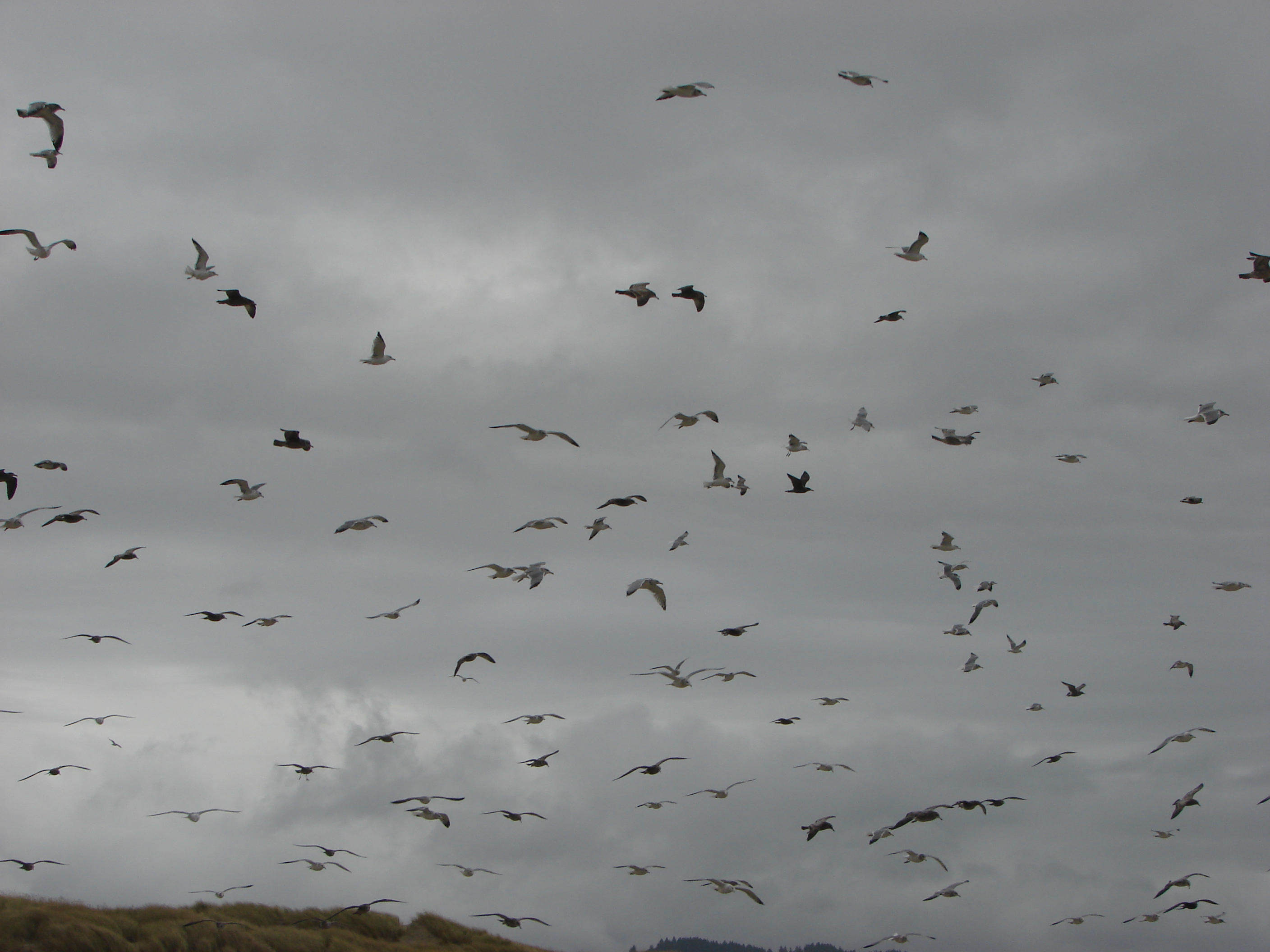
We walked to the parks parking lot and then followed a short trail back to the beach and headed back toward Cape Kiwanda. One the way back we encountered the largest flock of seagulls we’d seen all day. They took to the air as we passed by making for a scene straight out of the movie The Birds. As I was busy taking pictures I realized I was a sitting duck and should probably move before I was hit by a seagull bomb.
214

224
Despite the constant presence of gray clouds we had only had a couple of short bouts of rain until now. We escaped the seagulls only to be met with a sudden uptick in wind followed by a heavy sideways blowing rain. The rain let up just before we reached the Dory Boat Launch and our car where we dried off a bit and then walked across the parking lot to the Pelican Pub & Brewery for some lunch. http://www.yourlittlebeachtown.com/pelican
The food was great and the view out to Cape Kiwanda and Haystack Rock made for a perfect end to an interesting beach hike.
Happy Trails.

Facebook photos: https://www.facebook.com/deryl.yunck/media_set?set=a.10202353684630655.1073741860.1448521051&type=3
Flickr: http://www.flickr.com/photos/9319235@N02/sets/72157636339936434/

Categories
Coastal Range Hiking Oregon Trip report

Saddle Mountain

I am not sure we had completely dried out after our Hamilton Mountain hike (I know ours shoes hadn’t) but we were back in the “saddle” yesterday for another hike. Saddle Mountain state park was our destination, located in the NW corner of Oregon just 20 miles from the coastal city of Seaside. Saddle Mountain is known for it’s wildflowers and rare plants as well as being the highest point in northwest Oregon.

Once again we were we greeted at the trail head by a layer of low clouds which made for a damp morning. The good news was that there was no wind or rain this time. The trail started out amid salmon and thimble berry bushes in a forest of alders. The trail climbs 1603 feet in just 2.5 miles so the forest and plants changed often. A quick .2 climb to the Humbug Mountain viewpoint provided a view up toward Saddle Mountain’s cloud covered summit.
024

We returned to the summit trail and headed up through the fog passing multiple meadows full of wildflowers and lush forests. Much like our previous hike, visibility was limited to a couple hundred feet due to the low clouds but the variety of plants and flowers we were encountering kept us entertained. The trail itself was fairly steep and much of it consisted of wire enclosed rocks which looked like it could be slick but we didn’t have any real problems. Several picnic tables were placed along the trail at switchbacks which allowed for breaks from the climb if needed.

As we approached the summit we noticed some very slight breaks in the clouds which gave us hope. We decided to have some lunch and spend some time at the summit hoping that some views would open up. The clouds were actually moving from east to west toward the Ocean which we could now occasionally see through the clouds. We spent over an hour watching the clouds pass by us as better and better views opened up on all sides. Many swallows zoomed about as we waited and a Junco and a crow also stopped by to check us out. As the view opened up to the west was the Pacific, north the city of Astoria, OR and the Columbia River flowing into the Ocean
317
and to the south the coastal mountains. The only disappointment was that on a clear day the Cascade mountains from Mt. Rainier to Mt. Jefferson would have been visible to the East.

We headed back down now able to see the forest below. The wildflowers became even prettier as the increased light made their colors more intense. We took the side trail to the Humbug Mountain viewpoint again to get the cloudless view of Saddle Mountain before returning to the car.
462

If you are a wildflower or plant enthusiast this is a great hike, especially from May-July when the flowers are on display. If you can find a clear day (which isn’t easy near the Oregon Coast) the view is a great bonus. Next up is Mount June and yet another attempt at a view of the Cascades. Until then-Happy Trails.

For more info on Saddle Mountain visit: http://www.oregonstateparks.org/index.cfm?do=parkPage.dsp_parkPage&parkId=140
Photo albums-fb: https://www.facebook.com/media/set/?set=a.10201276380778732.1073741834.1448521051&type=1
flickr: http://www.flickr.com/photos/9319235@N02/sets/72157633845363594/

Categories
Hiking Northern Coast Oregon Oregon Coast Trip report

Bayocean Spit

Before I dive into a description of our most recent hike I wanted to mention that last night we had a chance to listen to a presentation by William L. Sullivan, the author of the hiking books we use to plan our hikes. He presented a number of new hikes that are included in his updated guide to the Central Oregon Cascades. He travels around Oregon giving presentations throughout the year and you can check his calendar of events at http://www.oregonhiking.com/ if you are interested in attending one.

Now on to our hike. We traveled to Tillamook on the Oregon Coast for a hike around Bayocean Spit which protects Tillamook Bay. I’d picked this hike due to the lack of elevation gain given both Heather and I have races in two weeks (a full marathon for her and a half for me).

This turned out to be another interesting hike with the Pacific Ocean on one side and the bay on the other. Between the two the spit is a mix of grassy dunes and a small forest. We decided on hiking in a figure 8 pattern in order to cover both sides of the spit as well as explore the forest via a .5mile connector trail. We left the parking area and headed West across some grassy dunes toward the beach sporting some less than attractive ponchos. It was a cloudy day with intermittent rain. We must have been a sight because it wasn’t long before we noticed a doe watching us from behind a dune.
022

We found the beach which was empty aside from a few seagulls and turned north. There were numerous shells and sand dollars in the sand. To the south was Cape Meares along with Pillar & Pyramid rocks, and to the north was Cape Falcon. As we approached the forested section of the spit we quickly spotted several Bald Eagles perched in the tree tops. We also noticed a large gathering of seagulls on the beach. Curious about the attraction Dominique and I set off for a closer look while Heather searched for the connector trail to the bay side. As we got closer to the birds we noticed that they were huddled around the end of a log that had washed up on the beach. That end of the log appeared to be covered with some type of clam. 081

After satisfying our curiosity we headed back to the now located connector trail. This sandy half mile trail led through a small but varied forest to an old dike road along Tillamook Bay. The water level was low due to it being a low tide and the number of birds was less than we had hoped, but we did spot a Great Blue Heron, several ducks, Canadian Geese, and another Bald Eagle. We continued north along the road to an abandoned campground across the bay from the city of Garibaldi. Shortly after the campground we spotted some flagging leading back across the spit toward the ocean.

The flags marked a path across another set of grassy dunes. We spotted three more deer before reaching the beach where we turned south and began our return trip. We stopped to take a closer look at what I was now calling the “seagull log”
167
and the took the connector trail back through the forest to the road. This time we turned right (south) and headed back toward the parking area. It wasn’t until this last leg that we saw any other people which made for a very peaceful day.

We’ll be taking a few weeks off from hiking now due to the upcoming races, but then our hiking season will kick into high gear. Hopefully the weather will continue to cooperate and most of the snow will have melted from the lower elevations by then. In the meantime thanks to the Salem Audobon Society and William Sullivan I have some new hikes to read about and trips to plan. Until next time – Happy Trails 🙂

Pictures from the hike on Facebook https://www.facebook.com/media/set/?set=a.10200995758203343.1073741827.1448521051&type=3
or Flickr http://www.flickr.com/photos/9319235@N02/sets/72157633242847785/

Categories
Central Coast Hiking Oregon Oregon Coast Trip report

Gwynn Creek & Cape Perpetua shelter

Our first hikes of 2013 are officially in the books. We headed to Cape Perpetua just South of Yachats on the Oregon coast to visit two trails. One of the things we are always on the lookout for on our hikes is wildlife. We see plenty of birds, chipmunks, and squirrels and a fair number of deer but are always hoping to see something different. On this day we would wind up spotting an owl, a small herd of elk, a deer, and an eagle eating a recently caught fish. The only problem was these were all seen from the car.

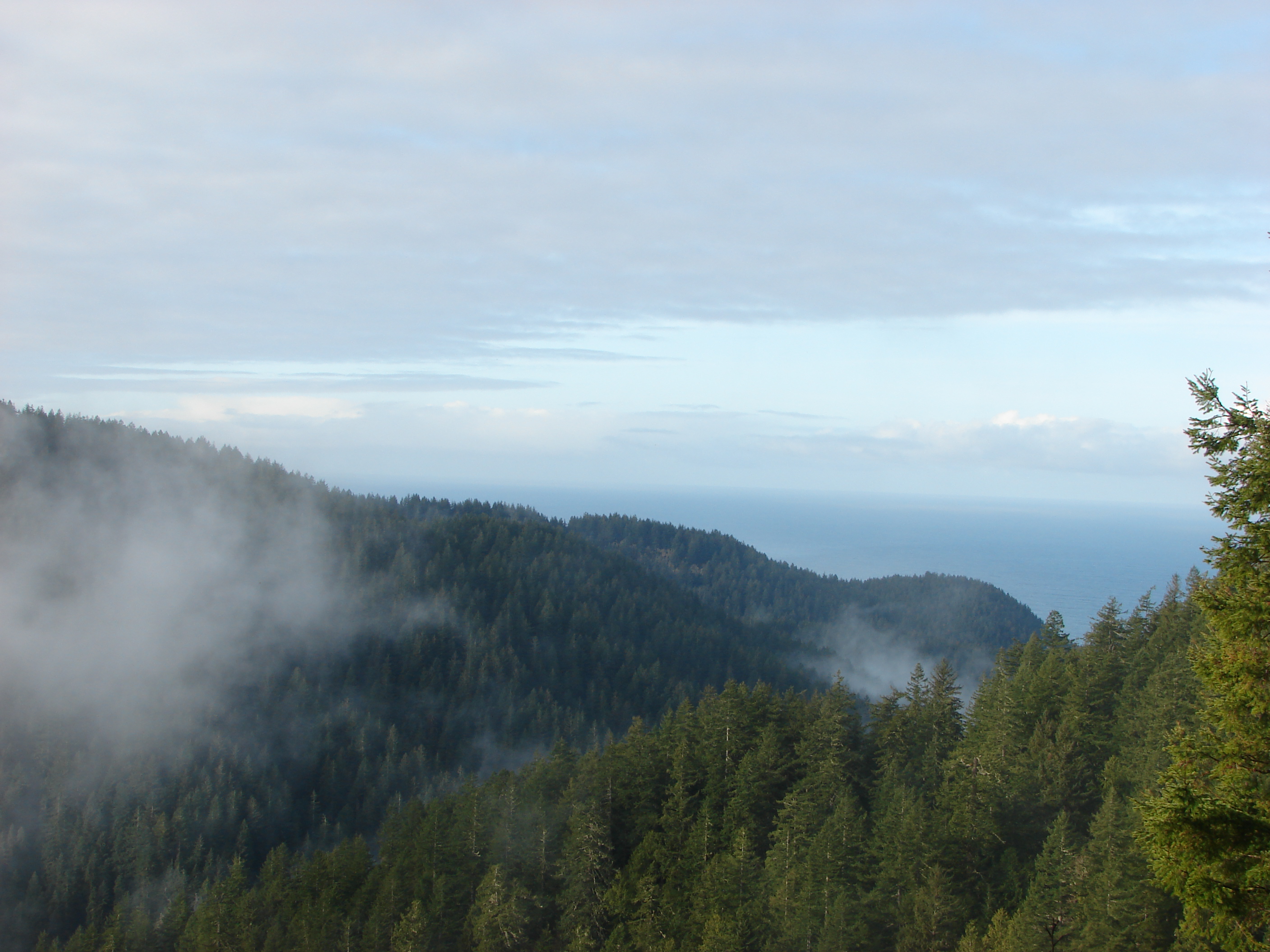
The first hike was a loop along the ridges surrounding Gwynn Creek which is located about a mile South of Cape Perpetua in the Siuslaw National Forest. We set out shortly after Sunrise on what turned out to be a nice day. Although there were some clouds and a couple of very brief very light showers, temperatures stayed around 40F for the day. Many of the plants along the trails were showing buds and a few early flowers were starting to bloom. We were also fortunate enough to be able to see the Ocean from the view points along this mostly forested trail.

View from a viewpoint along the Gwynn Creek loop.

Anyone familiar with the Oregon coast knows there is often a layer of low clouds hanging just at the shore line which have hidden the Ocean from us on several hikes in the past.

After finishing the Gwynn Creek loop we stopped in at the Cape Perpetua Visitor Center to take the short trail up to the stone shelter constructed in 1933 at the top of the cape.

shelter on Cape Perpetua

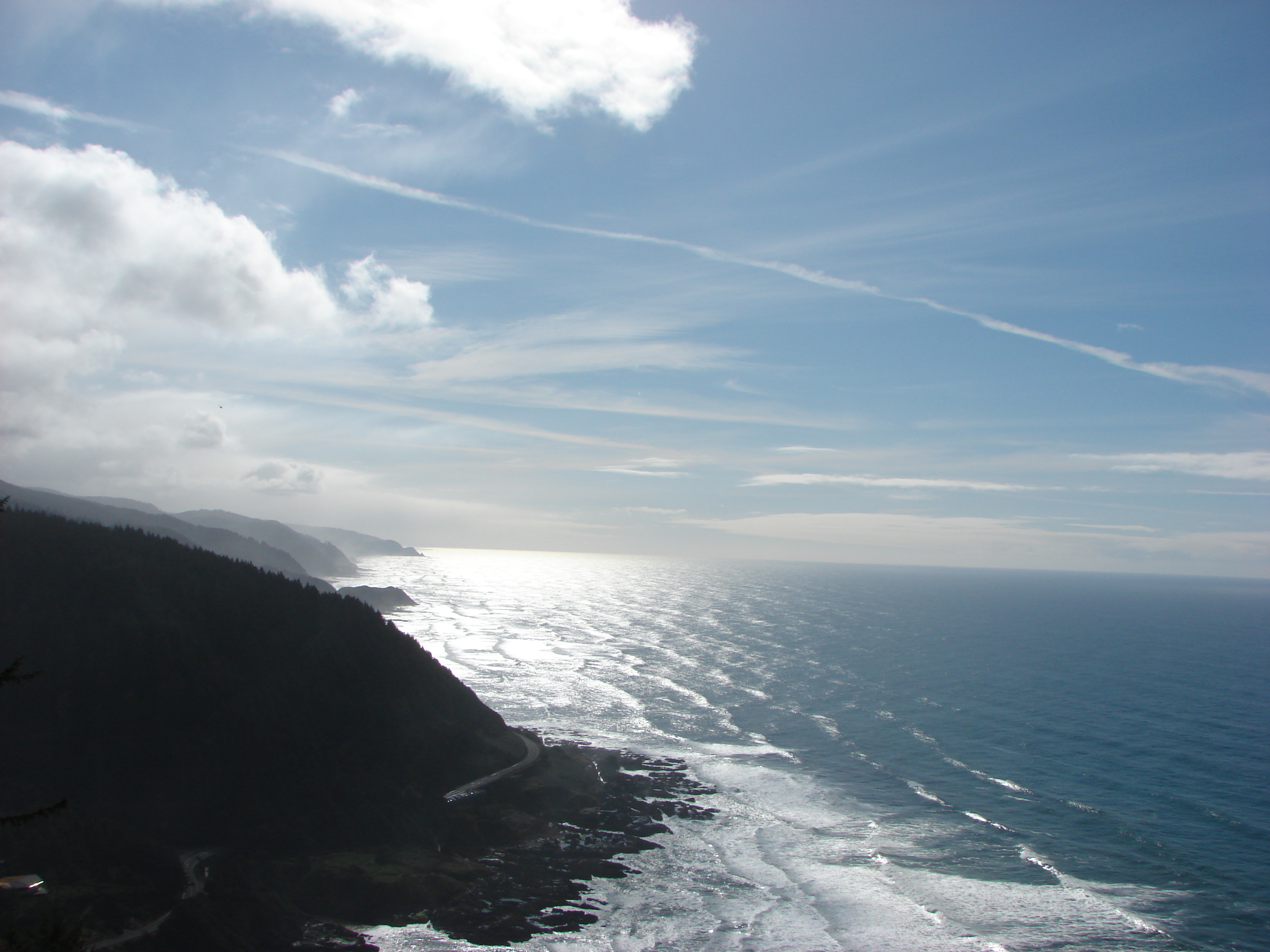
We had been to the area in 2011 visiting the tidepools and Devils Churn along the beach, but we hadn’t been up to the shelter before. On our way up the 1.3mi trail we could tell we hadn’t been doing much hiking. The 700ft elevation gain felt a lot worse than it should have. 🙂 The view from the top was worth it though. On a clear day the view extends 37 miles to sea and a good 70 miles to the South and to Cape Foulweather to the North. The only drawback on this day was that the position of the Sun to the South limited the view, but did provide some nice effects as it reflected off the Ocean.

The view South from the shelter on Cape Perpetua

More pictures from the trails have been posted on Facebook: http://www.facebook.com/media/set/?set=a.10200643581919156.200254.1448521051&type=3