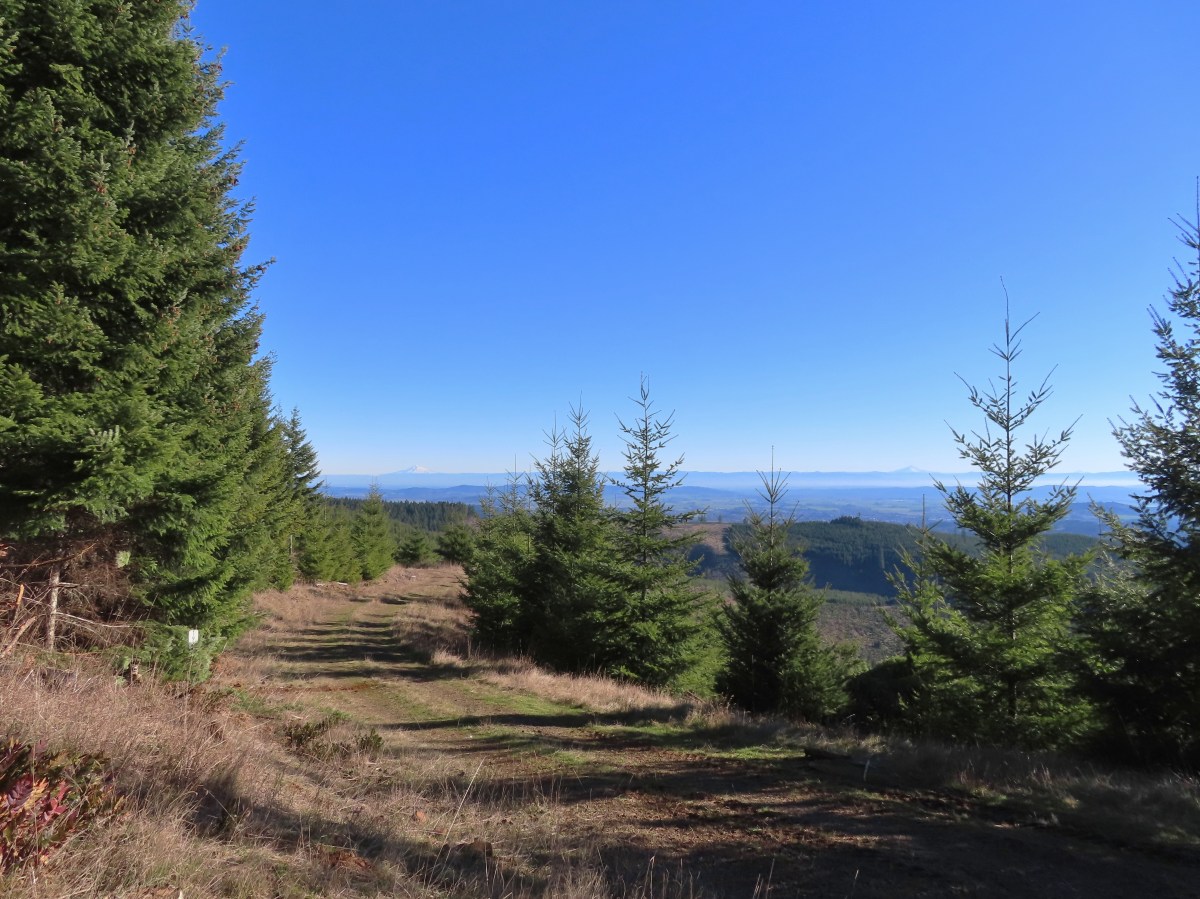
Over the last few months, a couple of people including a coworker and my cousin and Uncle mentioned a hiking option just west of Dallas, OR around Ellendale Creek. It wasn’t something that had ever hit my radar, but they all live in the Monmouth/Dallas area and suggested it might be something we’d like to check out. Since I’m always looking for new options I looked into it and found the Ellendale Creek Loop entry in AllTrails which is listed as a 4.9-mile loop gaining 987′. Full disclosure, I have a tolerate/dislike relationship with AllTrails. For me there are two things it can be useful for – locating hikes like this one and getting trail conditions. The latter use depends on how frequently a trail is used since seldom hiked trails result in seldom updated conditions. Even when a hike has frequent recent updates the information needs to be taken with a grain of salt due to people’s different interpretations of what things like “steep”, “muddy”, “buggy” etc. What I dislike about it is the lack of detailed descriptions of the route(s) and that even though community submitted hikes are vetted before being added they sometimes don’t make any sense why the route was chosen. (See our Emigrant Springs State Heritage Area post.) But I digress so back to this hike.
The brief AllTrails description mentioned an extensive network of singletrack in the area thar eventually led to the Siuslaw National Forest. With that tidbit of information I turned to CalTopo to get a better look at the roads and trails in the area with their Public Lands layer enabled. That revealed that the loop described by AllTrails spent most of the 4.9-miles on private timber land, but a section along the top of the loop passed through a Bureau of Land Management (BLM) parcel. That parcel shared a border with one of four Siuslaw National Forest parcels, each of which shared a corner with one of the other FS parcels. The map showed a number of roads and trails throughout the parcels allowing for a longer hike than the 4.9-mile loop. I came up with a general plan to leave the loop in the BLM parcel and explore into the Siuslaw National Forest before returning and finishing the loop. With no information on trail conditions and not knowing if any of the roads/trails that crossed into private lands would be marked private or signed no trespassing it made sense to leave my options open. The one thing I had been warned of on both AllTrails and the limited information I could find in the online mountain biking community was that none of the trails were signed.
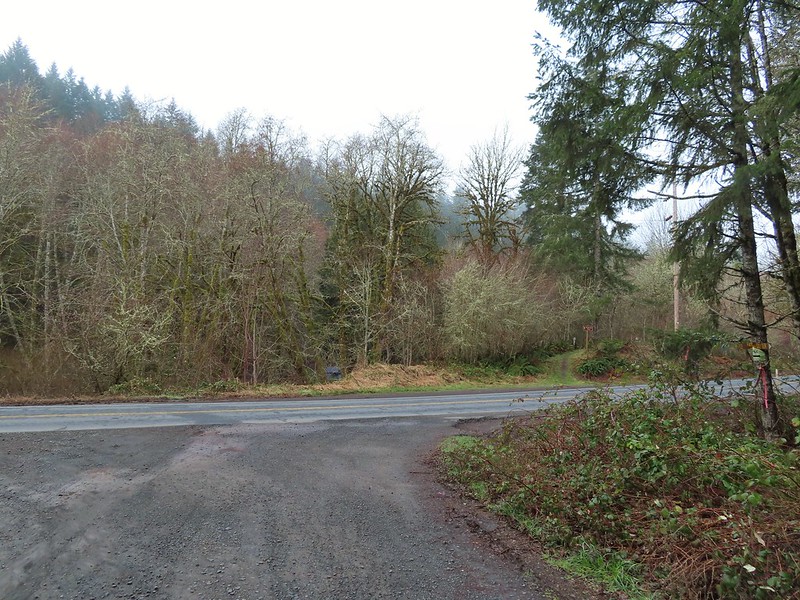
I parked along the south shoulder of Reuben Boise Rd near a gated road.

I was the second car here. There was room for quite a few more along the shoulder.

I spotted this trail just behind where I’d parked but I didn’t take it because I wanted to make sure I’d read the information at the gate.
With the loop being primarily on private lands it was important to make sure it was open, didn’t require a permit, and to be aware of the landowner’s rules/regulations.


After reading up on the rules I headed down the gated gravel road which crossed an unnamed creek after 0.2-miles.


The loop was shown as beginning on the far side of the creek and I wound up missing it. It was a good example of one of my frustrations with AllTrails. I was planning on hiking the loop counterclockwise and should have turned right on a trail almost immediately after passing the creek.

The correct trail in the afternoon on my way back.
Had the hike description mentioned taking a right on a singletrack after crossing the creek I’d have been fine, but it simply said the “outer loop crosses Ellendale Creek and passes through dense forest”. Had I had cell service I would have likely been okay as I would have been able to view my location on the AllTrails map, but I didn’t have service so I checked the maps on my GPS and that I’d downloaded from CalTopo. The GPS didn’t show anything to my right and none of the maps (including the AllTrails base layer) showed a trail heading off to the right. What the maps did show was a road splitting and then a second split off of the lefthand fork. Looking ahead I could see the road splitting so I continued forward and took the right hand fork.

About 100 yards up this road I realized something was off. I was headed south instead of NW. I stopped and looked at the maps again but saw the same three roads and I know I hadn’t passed a road on my right. I happened to be standing near another trail veering off to the right and I could see on the CalTopo map a couple of trails located between the “road” I was supposed to be on and the road which I had determined I was actually on.

I decided to take this trail hoping I might find a way over to the right road, but it didn’t exactly do what CalTopo showed it doing. It dumped me back out on the road I’d been on after 0.2-miles in the forest.

I confirmed on the maps that the road I was on would eventually connect me up to the route of the loop and simply stuck to this road as it climbed steadily.


The road heading down to the left wasn’t shown on any maps which is something to be aware of anywhere recent logging has occurred.

Mt. Jefferson in the distance from the road.

Mt. Jefferson

I passed the first of just four people I’d see on the trails all day along this stretch.
The next moment of confusion came when the roadbed curved left with what appeared to be singletrack continuing straight.

Once again the maps all showed a road going straight and a “trail” veering left. Regardless of which was the road or the trail it was clear from the maps that going straight would lead me directly to the AllTrails loop. Just to be sure I checked to see if I had cell service which I now did so I pulled up AllTrails and confirmed all my suspicions. This was the first time I’d ever used my phone to actively track my location since I always have the Garmin on me. If this were something I was to do regularly I would use Gaia GPS and not AllTrails, but for today it was helpful. I headed straight on the singletrack which turned out to be a much older roadbed.

This quickly brought me to a “T” junction with the “road” that the loop followed where I turned left.


This was obviously a road too at one point, but not anytime recently.

Had I veered left instead of staying straight I would have eventually come up here from the left.

The map showed this as a 4-way road junction where the loop route turned left which is what I did.
I was now on BLM land and headed toward a crossing of Ellendale Creek.

Queen Anne’s Lace (non-native)

Salal blossom beginning to form.

As I neared Ellendale Creek two deer dashed across the road and up the forested hillside.

I took a picture but between the forest and the distance I didn’t get the deer. Shortly after resuming the hike a third deer came up from the creek and ran across the road, again before I could get a photo.

The third deer is somewhere up on that hillside.

Ellendale Creek
A tenth of a mile beyond the creek I came to a road junction where trails also headed up and downhill. Here the route of the loop was along the road to the left, but this was where I had planned to leave the loop and head into the National Forest. I stayed straight ignoring a second road on the left and began climbing.


Shortly after I started the climb I spotted a mountain biker and their pup heading in the same direction. They were taking a break and as I neared I thought for a moment I heard my name but then decided they were probably just calling to their dog. Then I heard my name again and thought that Deryl was an odd name for a dog. Another Deryl later and I realized that it was our friend Yolanda and she was trying to get my attention. She was able to provide me with some information about some of the trails in the area as we continued uphill to Rob Mill Road (Road 1924).

Robb Mill Road at the junction.
Most of the mountain bike websites mentioned starting from Robb Mill Road which is what she’d done. They were heading left on the road back toward the gate at its end and my plans had me going right so after a little more information we said goodbye and went our separate ways. I followed the fairly level gravel round along the hillside above Ellendale Creek watching for the “White Gate” on a spur road that would be on my right.


Yolanda had told me to keep an eye out for a trail veering off to the left shortly beyond the White Gate. This spur trail would lead to split where the Tree Fort and Tree House trails (shown on the CalTopo & AllTrails maps) both head south back to Robb Mill Road. Before reaching that split this spur also connected to what was shown as a road labeled Muddy Puddles on the maps right at the National Forest border. My plan was to follow Muddy Puddles west to a crossing of Canyon Creek then continue on and hook back up with Robb Mill Road.

The spur trail.


Muddy Puddles on the right. Again, this was shown as a road on the maps.
I was now in the Siuslaw National Forest and the trail was a little rough but passable with signs of occasional trail maintenance.


I’m not sure who has been out working on these trails, but they’d done some recent work.


This was the biggest tree that I saw over any trail during my hike.


The trail got pretty faint as it neared Canyon Creek. Shortly before reaching the creek I noticed an even fainter trail veering off to the right that the map showed connecting up to Robb Mill Road.

There are two trails in the above photo, the one to the right heads to Robb Mill Road.
I passed some flagging on my left that was a little earlier than where the map showed the trail crossing Canyon Creek so I ignored it and continued on reaching the creek a short distance later.


Remains of a little footbridge on Cayon Creek.
Based on the map the trail bent around after crossing the creek and climbed a little over 100′ to Robb Mill Road. I nearly lost the tread completely on the far side of the creek and used my phone to stick to the track. The tread became clearer near what I determined to be the current creek crossing which the orange flagging I’d passed had been for.


The new route of the trail across Canyon Creek.


Robb Mill Road.
This had become a choose your own adventure hike at this point so I paused on the road to plot the next leg of my hike. Turning left on the road would simply head me back toward where I’d left the road near the White Gate and a right would lead me out of the National Forest for a bit before reentering another parcel further south. My other option was to cross the road sticking to singletrack and climbing to a ridge on what the maps show as the Burma Trail. If I chose the right combination of trails and roads I would eventually connect back up with Robb Mill Road near the southern end of that second National Forest parcel. That was the plan I settled on and across the Robb Mill Road I went.
Burma gained over 500′ from Robb Mill Road over the next 1.25-miles.


The trail leveled out a bit a couple of times along a ridge before dipping down twice to saddles.

About a half mile from the road the trail made a “corner crossing” between the two Forest Service Parcels.

Forest Service boundary sign.

Nearing the high point of the trail which also ran along the border of a clear cut.
The trail began descending from its high point and I came to a fork. It didn’t matter which way I went as the two forks rejoined in a tenth of a mile according to the maps so I forked right.


The forks rejoining.
My biggest mistake of the day came shortly after the forks rejoined. I’d noticed that I would be coming to another fork and the lefthand fork led to Robb Mill Road while the right looped around to the west to join Burma Road.

Despite the left fork being the used trail my ability to tell my left from my right malfunctioned and I forked right. I quickly found myself struggling through a mess of downed trees.

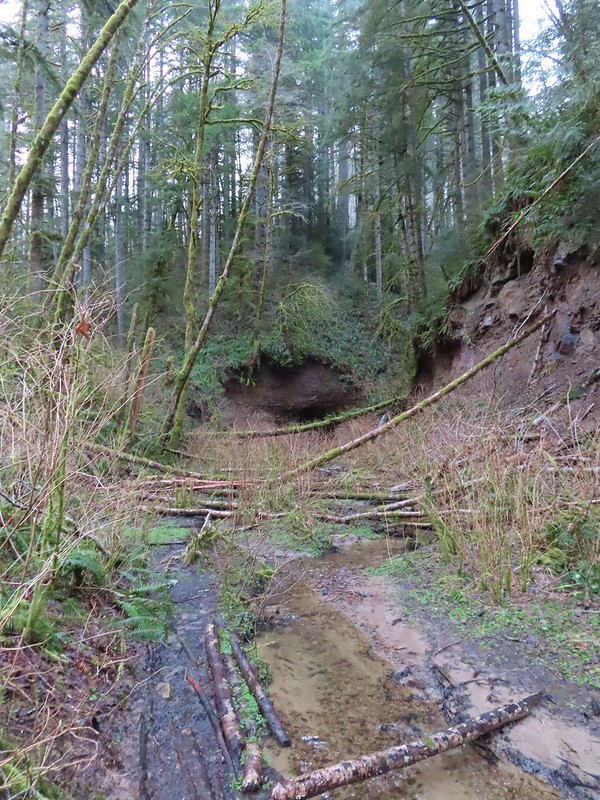
At the second pile of blowdown I did a map check and realized what I’d done. Fortunately I had only gone a tenth of a mile down this trail, but unfortunately I had to go back through the blowdown.


At least it was a little clearer after I’d removed a few limbs during my first pass.
I turned onto the correct fork and followed it somewhat steeply downhill a third of a mile to Robb Mill Road.


Unnamed creek crossing just before reaching the road.

Robb Mill Road through the trees.
Since I hadn’t had an exact route planned I had set a three-hour turnaround time which was 10:45am. It was 10:35am when I arrived at Robb Mill Road which was close to my turnaround time and the road provided an opportunity to make a loop back without having to climb back up to the high point. That was assuming none of the private land was off-limits, which they were not on this day. I turned left on the road and followed it back 2.1-miles to where the Burma Trail had crossed it.


Markes at the boundary of the National Forest.

There were a couple of logging roads that weren’t shown on any maps, so I used my phone quite a bit to make sure I was still on Robb Mill Road.

Views opened up as the road passed through previously logged areas.

Madrone

Mt. Hood straight ahead with Mt. Jefferson visible in the gap on the right. In addition to Hood and Jefferson Three Fingered Jack and the Three Sisters were also visible.

Mt. Hood

Back in the Siuslaw National Forest.

Arriving at the Burma Trail junction.
In hindsight I should have stayed straight on the road and followed it all the way back, but instead I dropped down on the trail and descended to Canyon Creek.

If I hadn’t come up here earlier I don’t know that I would have seen the path down.
I didn’t want to follow the exact same route back so after crossing Canyon Creek I took the faint trail I’d passed on my way up and followed it 0.2-miles to Robb Mill Road.


I turned right onto the road and followed it 1.4-miles to where I’d left the road in the morning.


Gate at the national forest boundary.

I turned onto the spur trail again but forked left at the Muddy Puddles junction then forked right at the next “Y” onto the Tree Fort Trail.

Left is Tree House and right is Tree Fort.
This was a totally unnecessary detour simply to check out some additional trails. I followed Tree Fort for 0.7-miles then made a hard left at a three-way junction onto Tree House.


Mary’s Peak (post) in the distance.

A little patch of snow on Mary’s Peak.

After 0.4-miles I arrived at the above three-way junction. Tree Fort followed an old logging road headed left while singletrack continued downhill to, you guessed it, Robb Mill Road.


Orange peel fungus.

Junction with Tree House (on the left).
I followed Tree House for half a mile to yet another three-way junction.


Had I taken Tree House instead of Tree Fort I would have arrived here in just a tenth of a mile instead of 1.1-miles. I turned right then forked left when this trail split and in two tenths of a mile found myself at Robb Mill Road near where I had said goodbye to Yolanda earlier.


I stayed left but either path would have dropped me down to Robb Mill Road.

Instead of following the road down I crossed over and picked up the continuation of the trail.

In another third of a mile I was back on the AllTrails Ellendale Creek Loop.

I was kind of tired of road walking so when I saw that there was trail parallel to the road that the loop followed, I decided to try it.

This turned out to be a mistake as the trail dropped steeply into then out of a depression. It was so steep and slick that I had to slide down.

I climbed up the far side which was slightly less steep then bushwacked 100′ over to the road.


I followed the road downhill 2.3-miles to complete the loop.

Road 1906 was the number.

More views of the Cascade Mountains.

The Three Sisters

Mt. Jefferson beyond the Willamette Valley.


Ellendale Creek

Arriving back at the road junction where I started my loop.
There were quite a few cars at the trailhead when I got back at 1:20pm. Despite the number of cars, I only saw four people on the trails. My convoluted route came to 15.1-miles with approximately 1800′ of cumulative elevation gain.

Blue represent the area covered by AllTrails with the orange being my addition.
Here is the track on the CalTopo map showing the National Forest (green) and BLM (orange).

This is truly a choose your own adventure area and offers a lot of options as long as access is allowed. Watch for active logging operations and seasonal fire closures, but otherwise this was a great place to get some trail miles in less than 30-minutes from Salem. Happy Trails!
Flickr: Ellendale Creek

 The pullout only has room for two cars, a third might be able to squeeze in but it would be tight. DO NOT drive past the gate if it happens to be open as motor vehicle use by the public is not allowed beyond the gate.


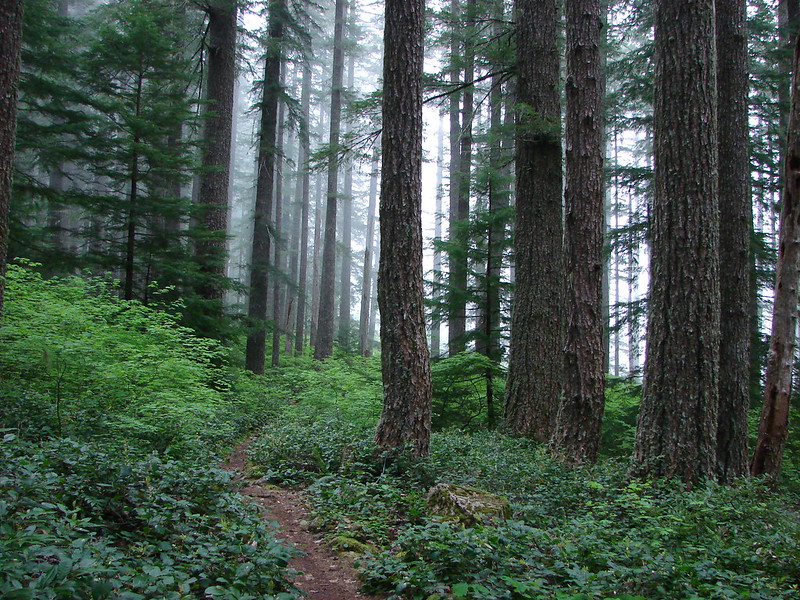
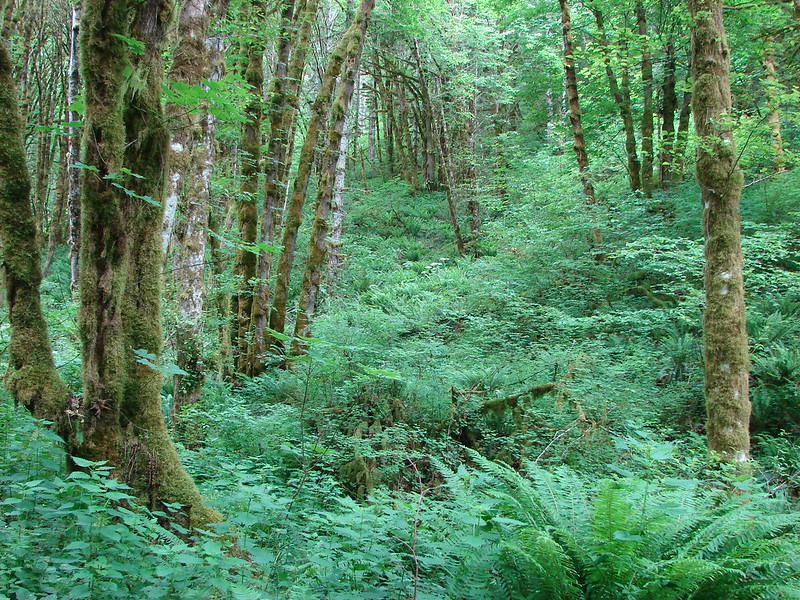
 A section of intact forest.


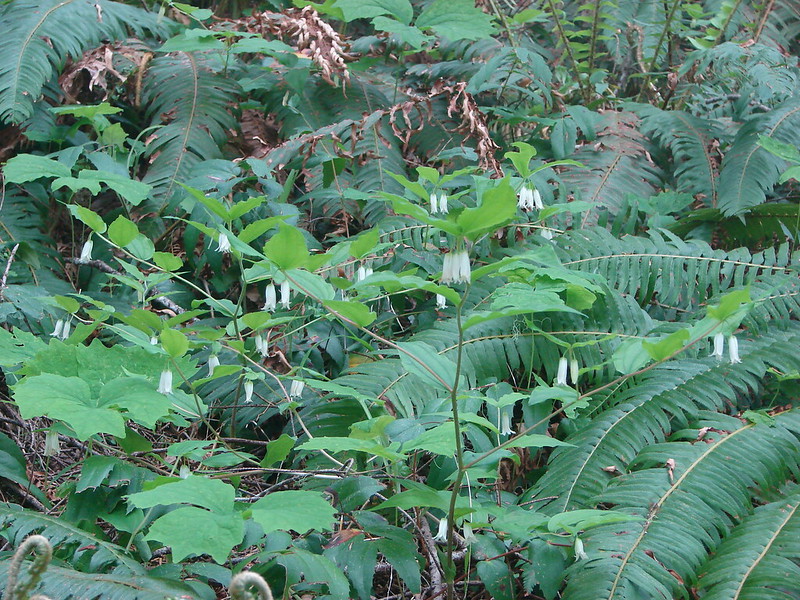
 False lily-of-the-valley


 Chipmunk


 Salmonberry


 Another junco


 Mt. Rainier


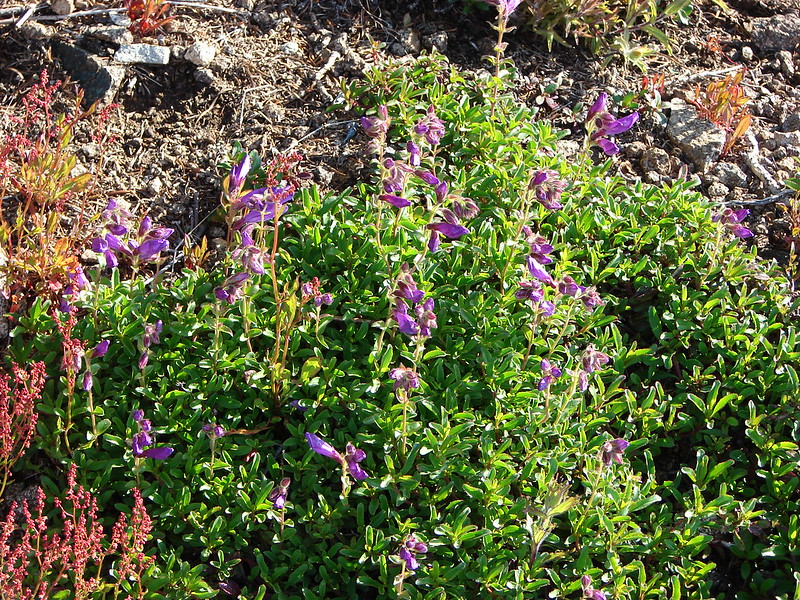
 Dandelion (non-native) in the penstemon. There were surprisingly few non-native wildflowers which was nice.

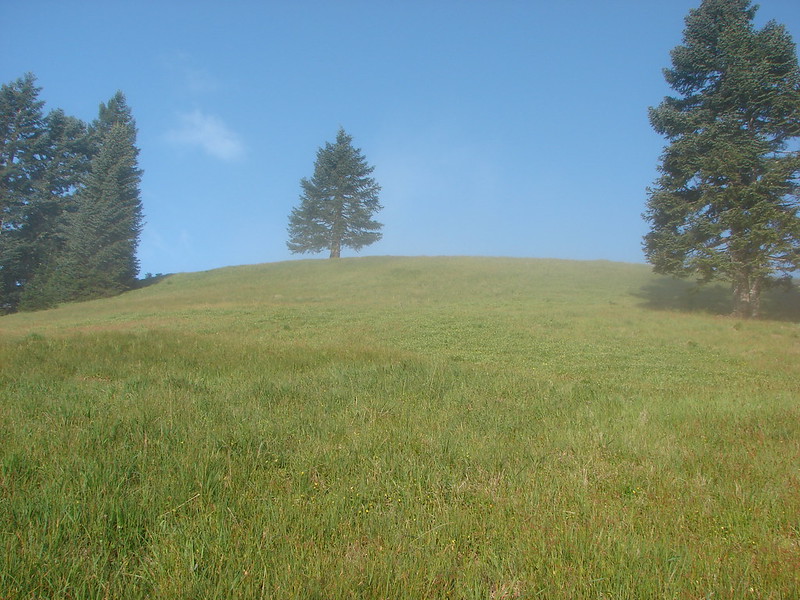
 Looking back after having made it onto the ridge. The loop route is the road seen on the right cutting along the hillside, not the roadbed straight ahead going up the knoll.


 Lomatium


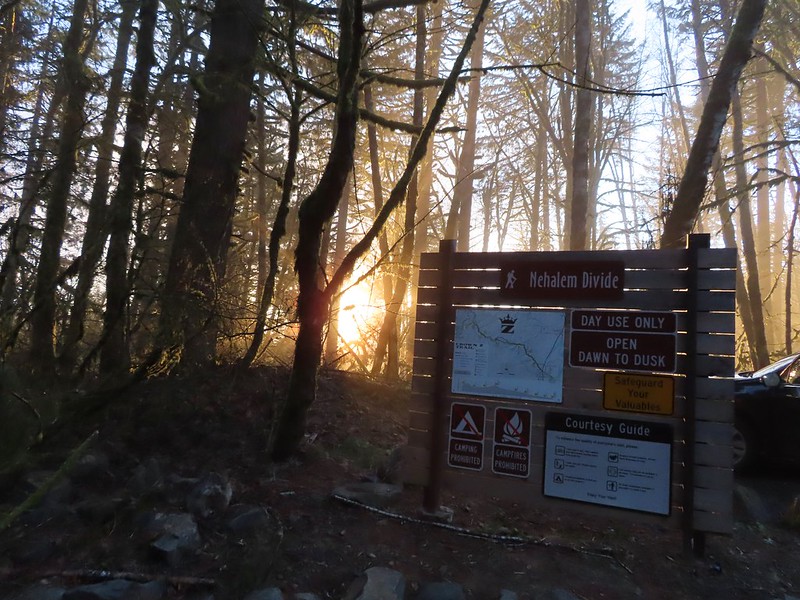
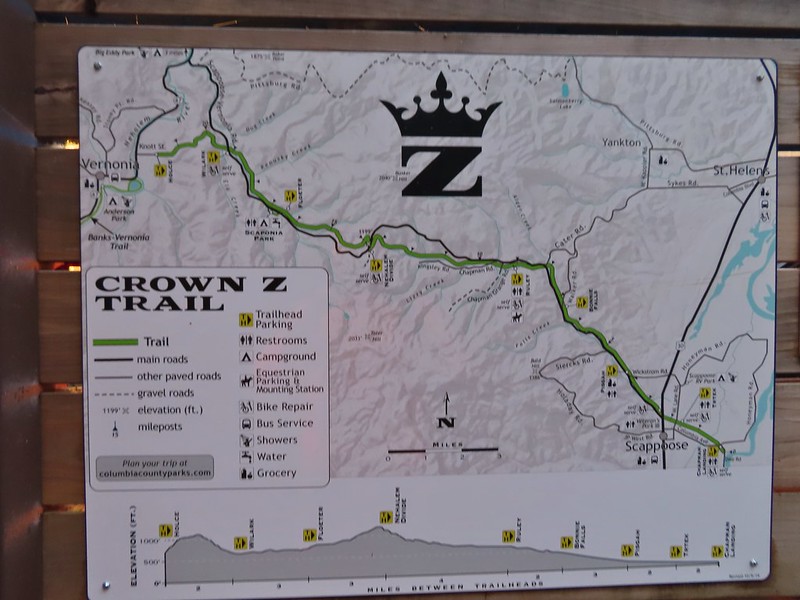
 Heading down the connector trail.
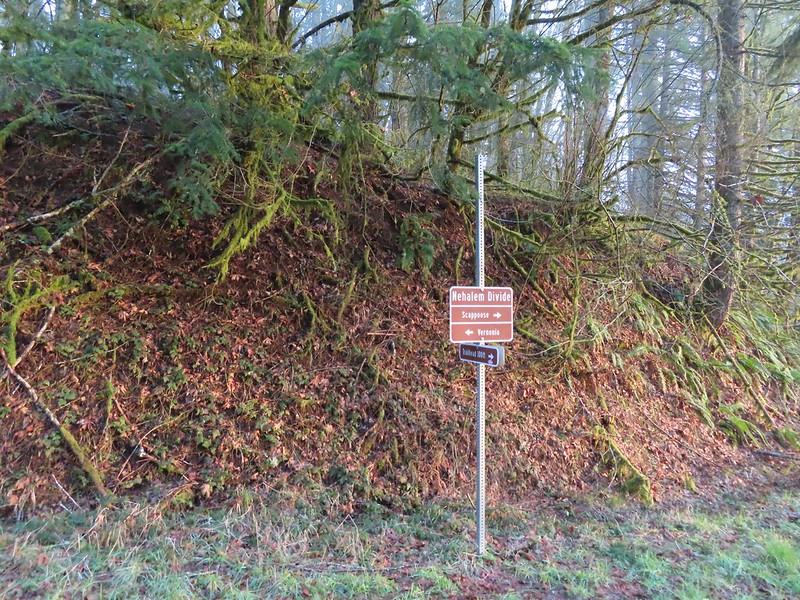 Trial sign at the jct with the CZ Trail.
 CZ Trail passing under the highway.


 Light from the eastern portal is visible at the other end but the tunnel is not safe to enter without at least a hard hat.

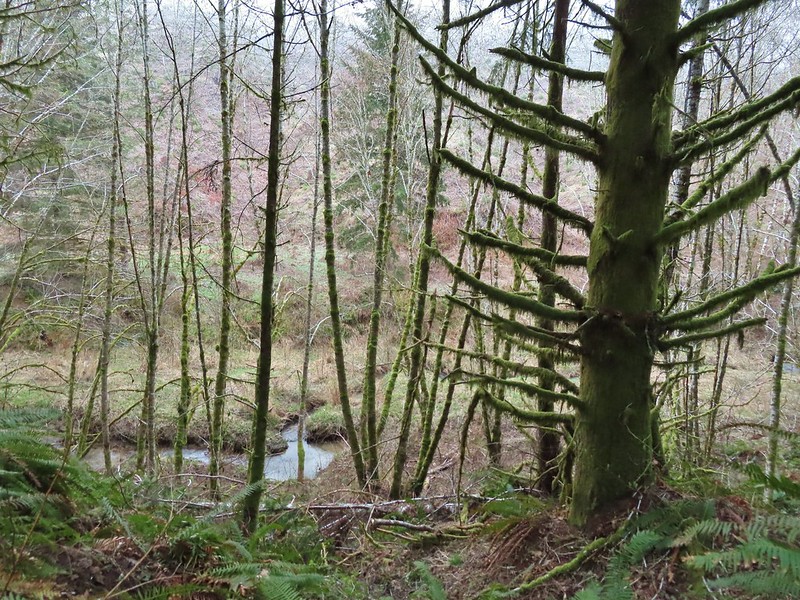 The East Fork Nehalem River next to the trail.
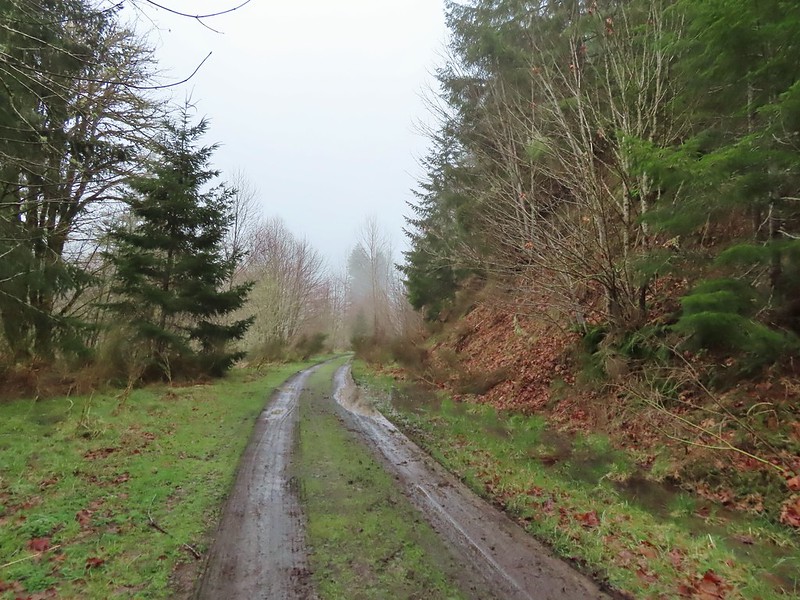 It was a little muddy in places.
 Another of several interpretive signs along the trail.
 Not much in the way of flowers yet but there were a few indian plum starting to blossom.




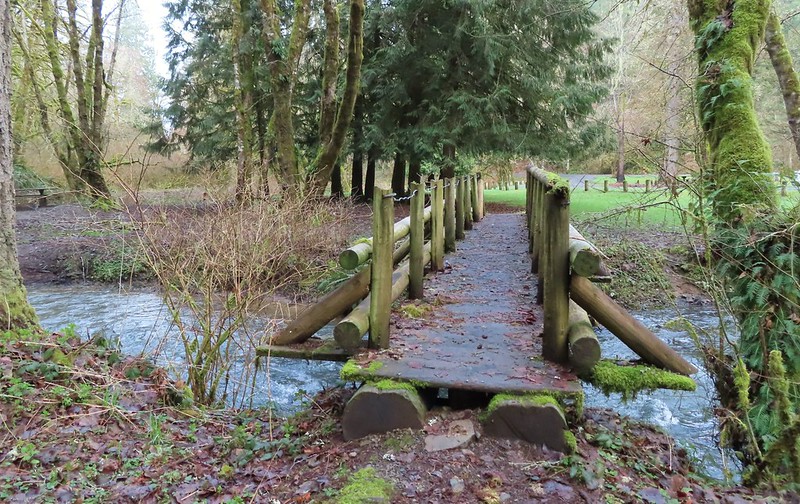
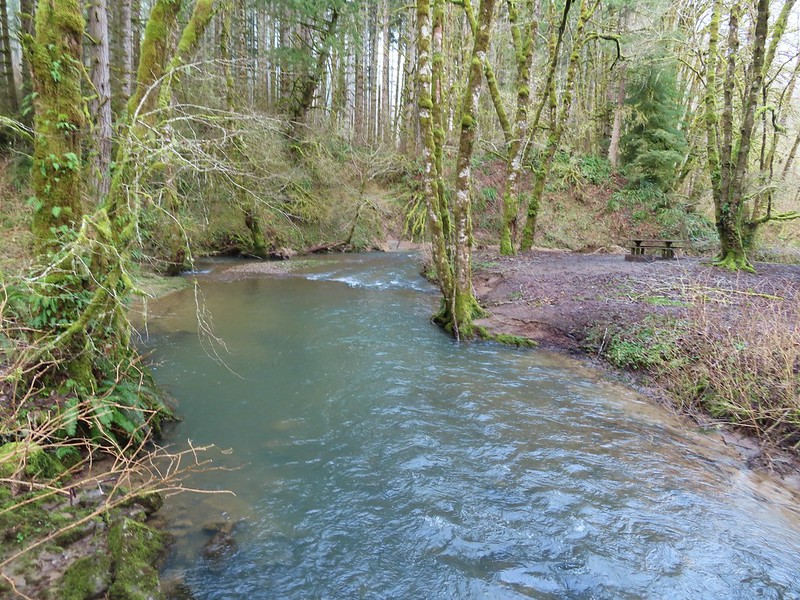 East Fork Nehalem River
 Pointer for the CZ Trail in Scaponia Park

 American kestral
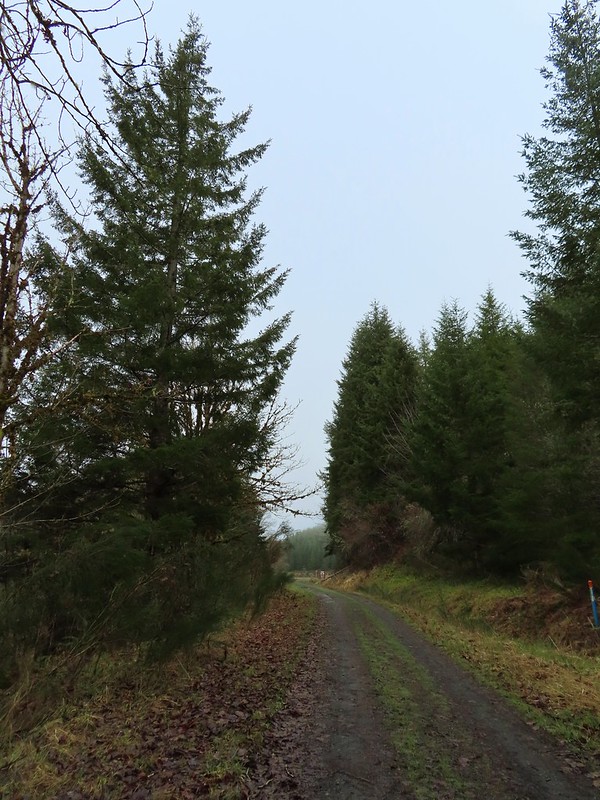

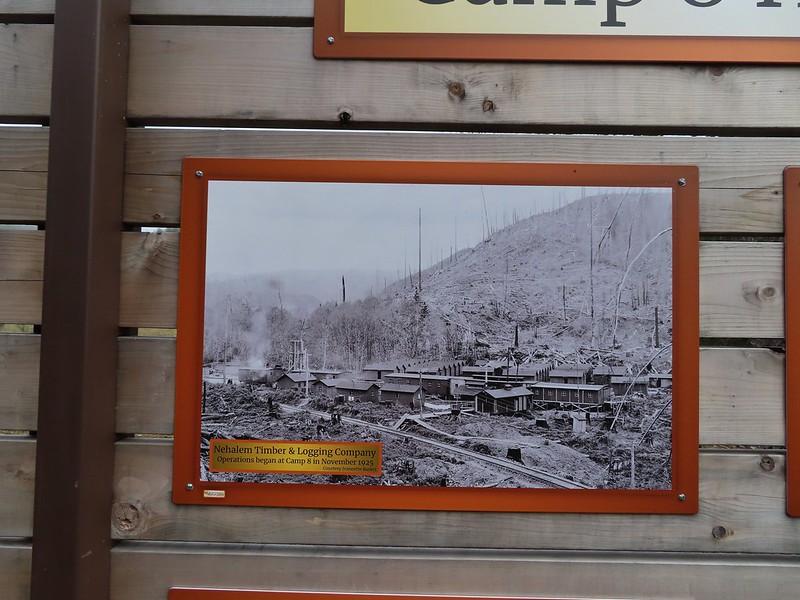
 Robin in the meadow that once was Camp 8.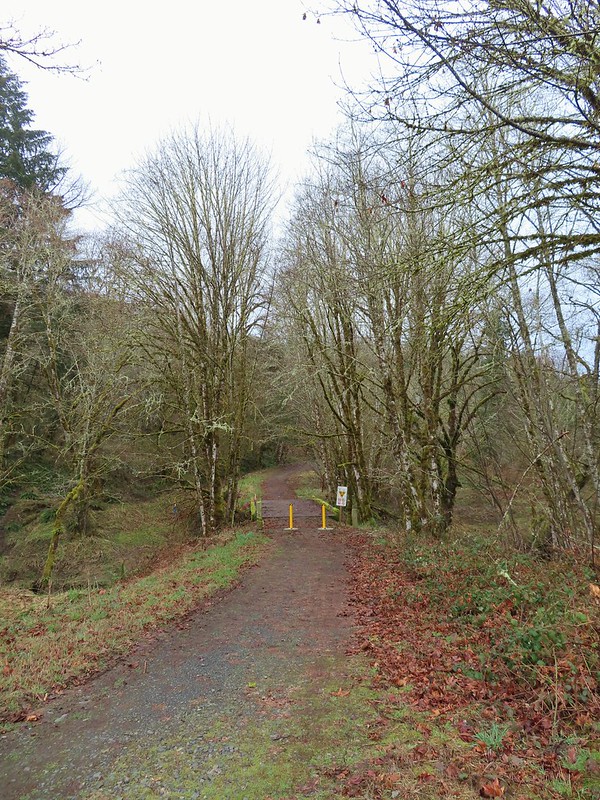

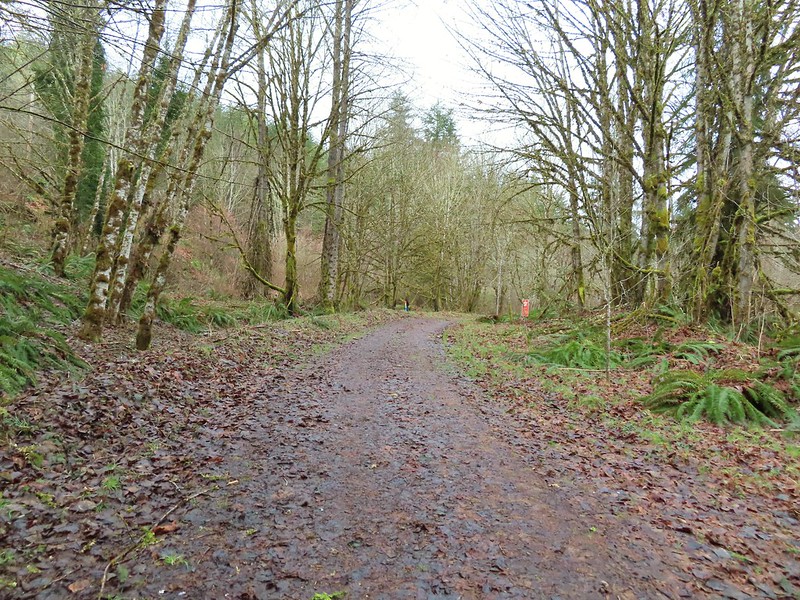 The orange mile marker 19 ahead.
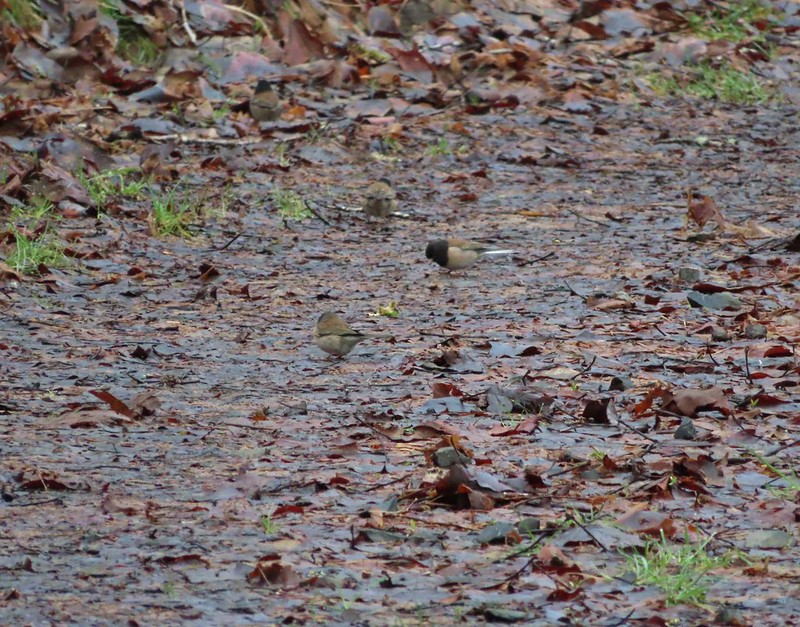 Juncos
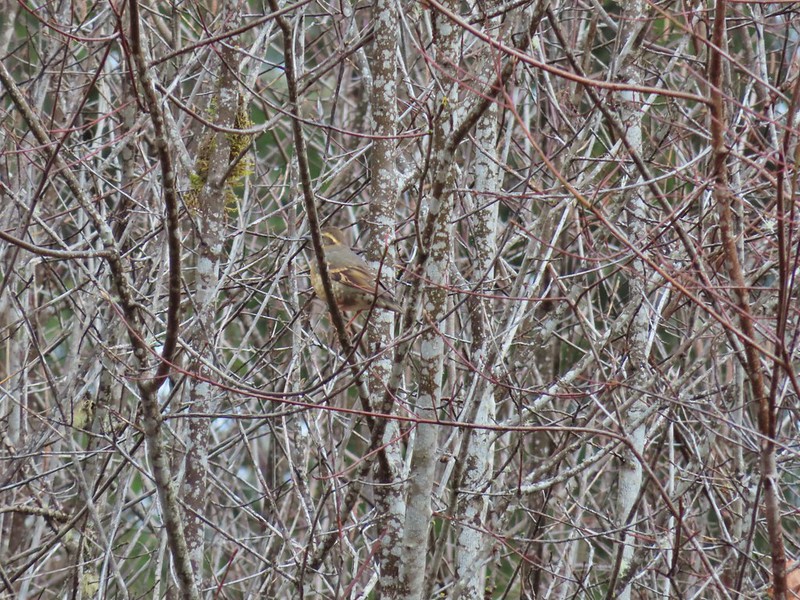 Another not great picture of a varied thrush.
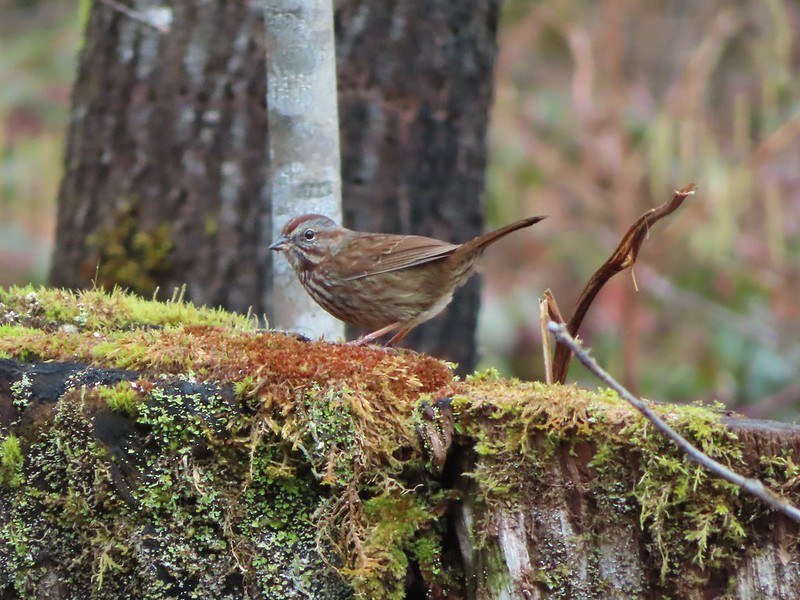 Sparrow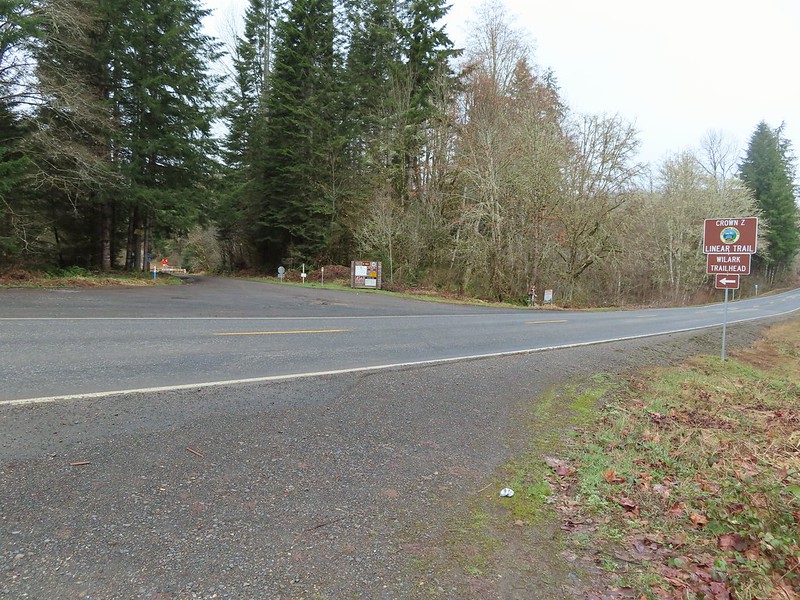


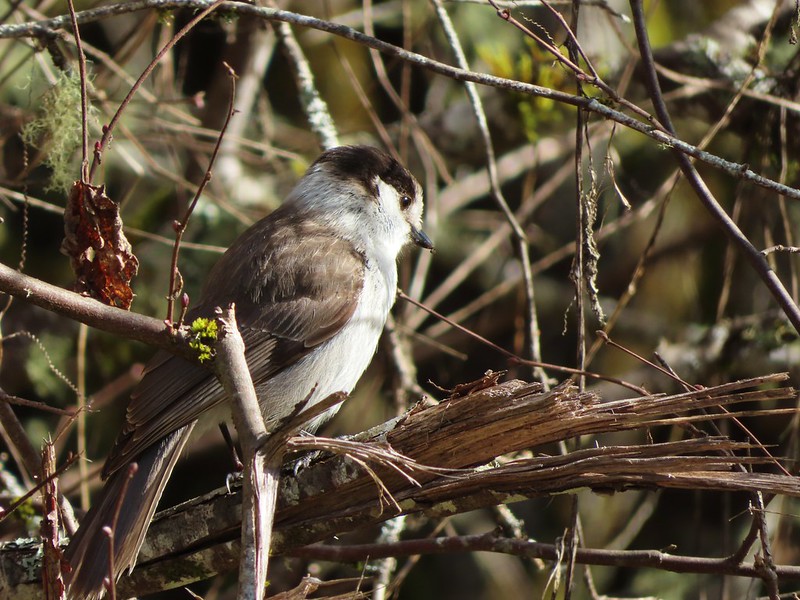 A grey jay enjoying the emerging sunlight.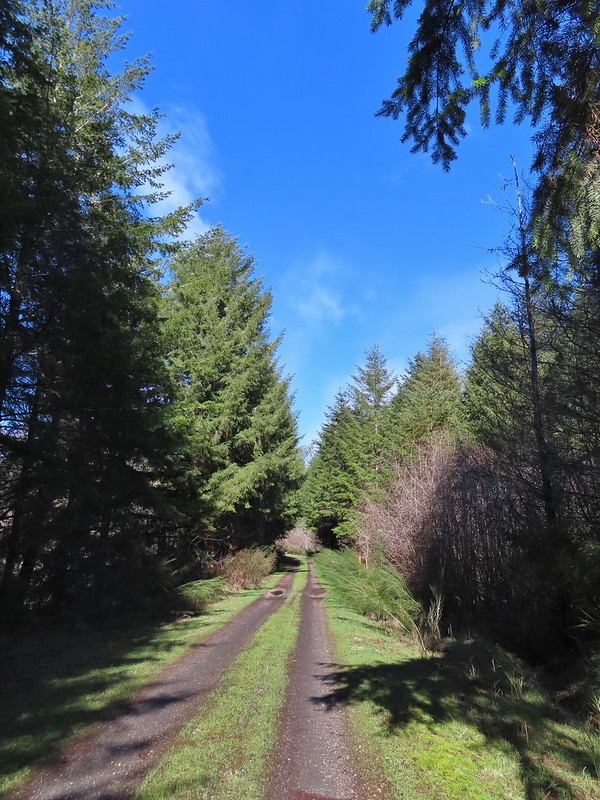
 Blue sky near the Floeter Trailhead.


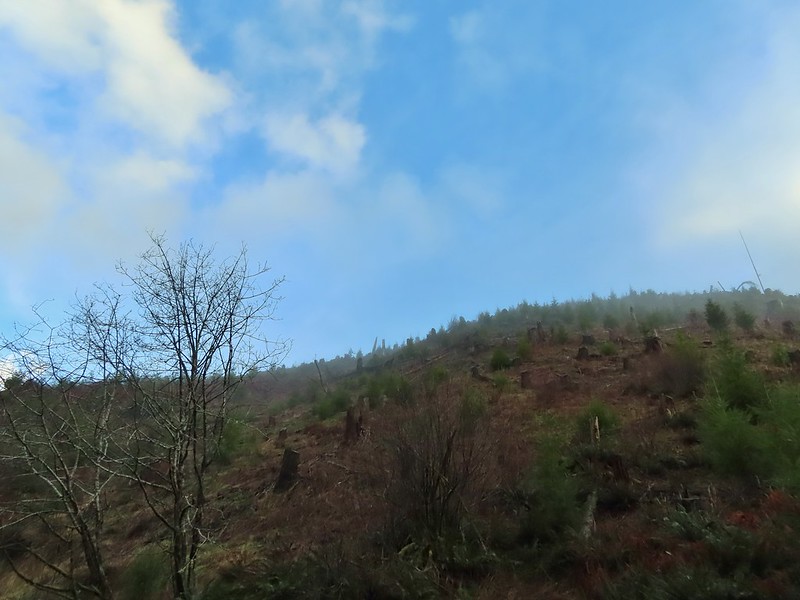


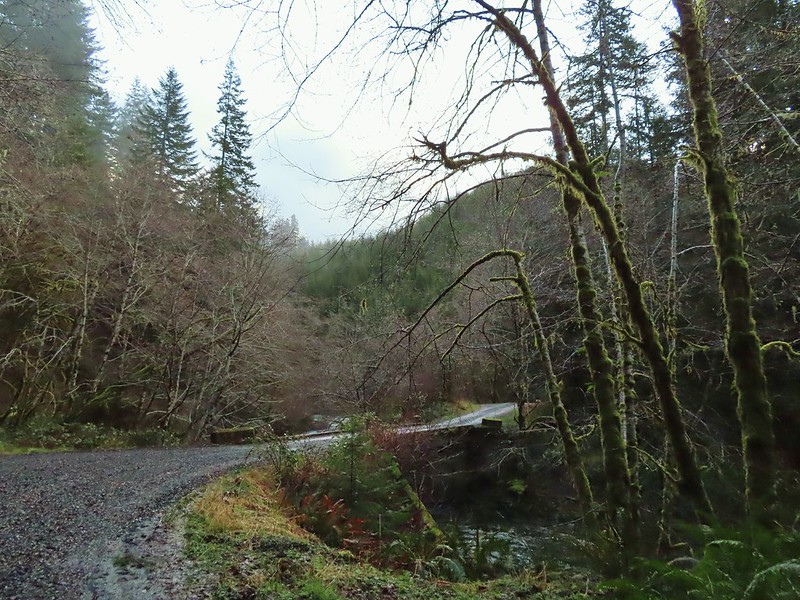

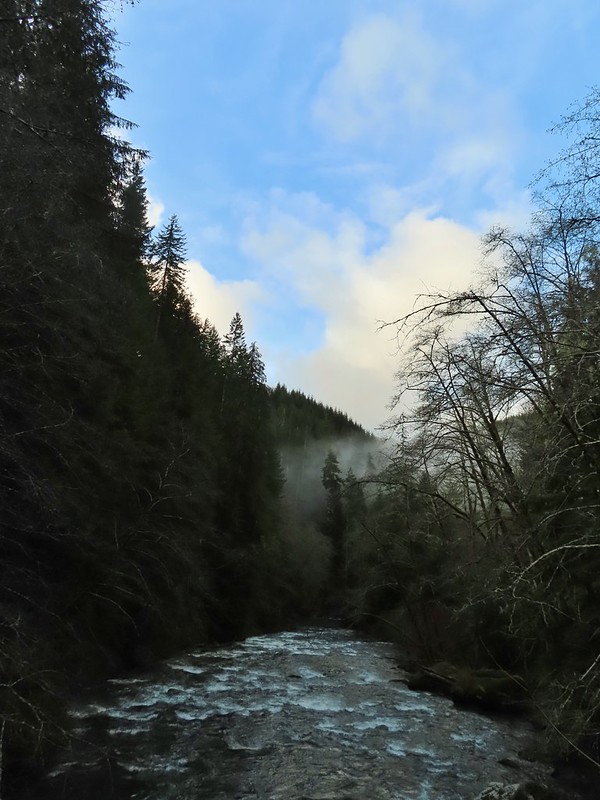

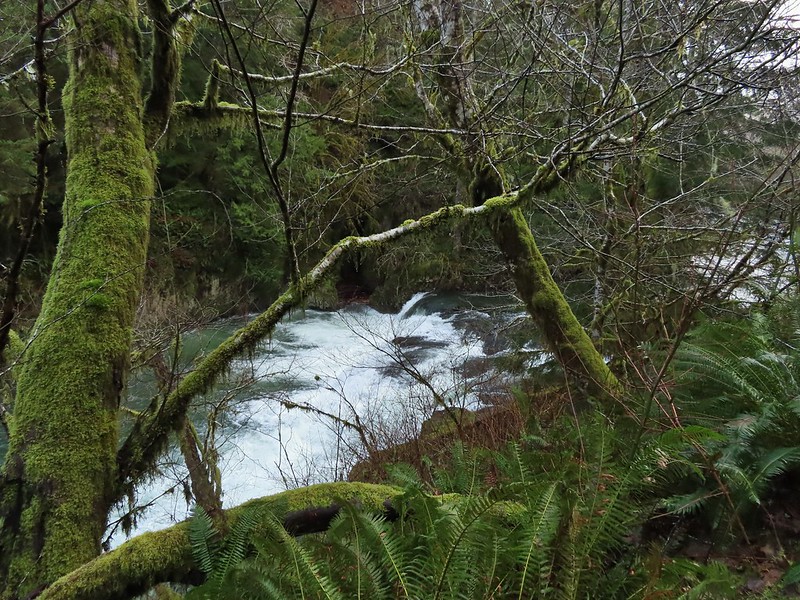


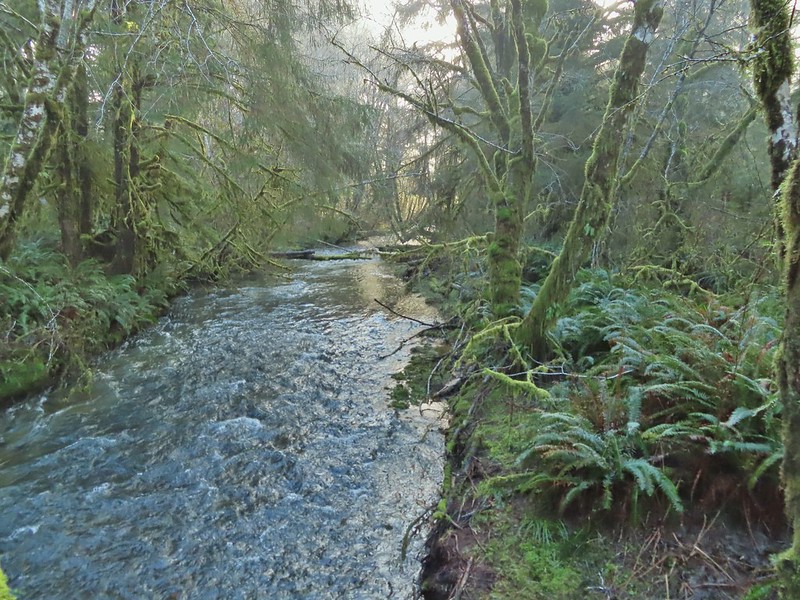 Gods Valley Creek
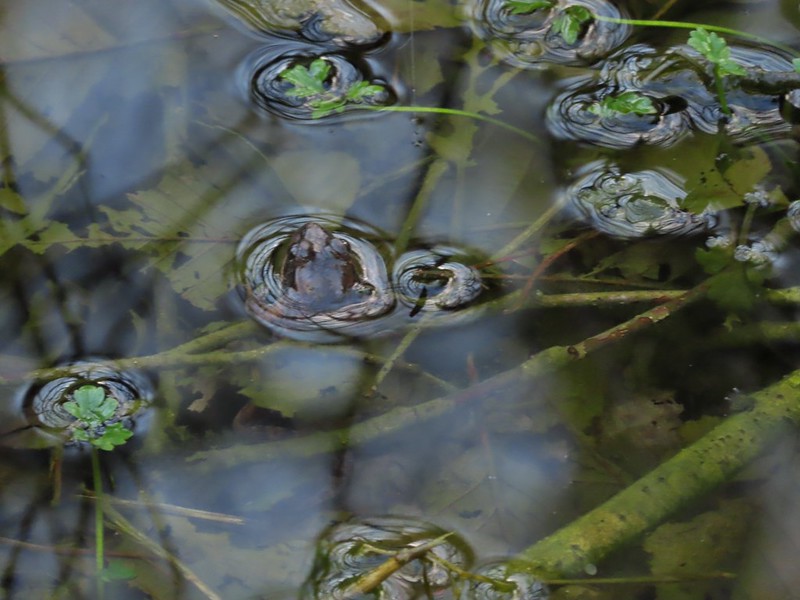 Frog near the old picnic tables.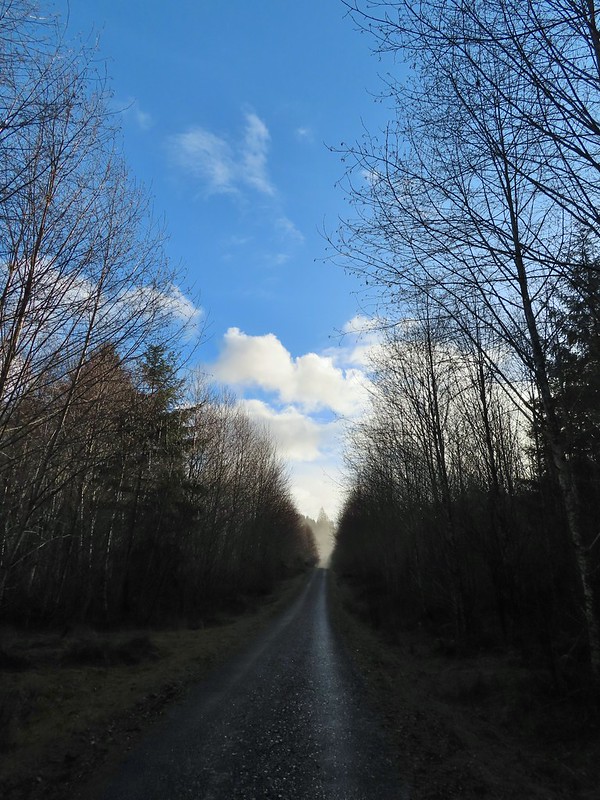


 Not much in the way of flowers yet but there was a bit of skunk cabbage in bloom.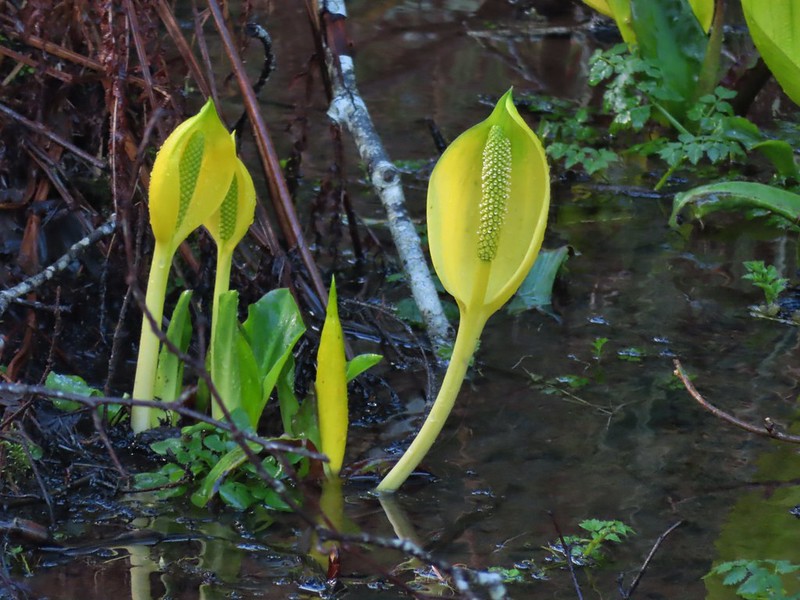
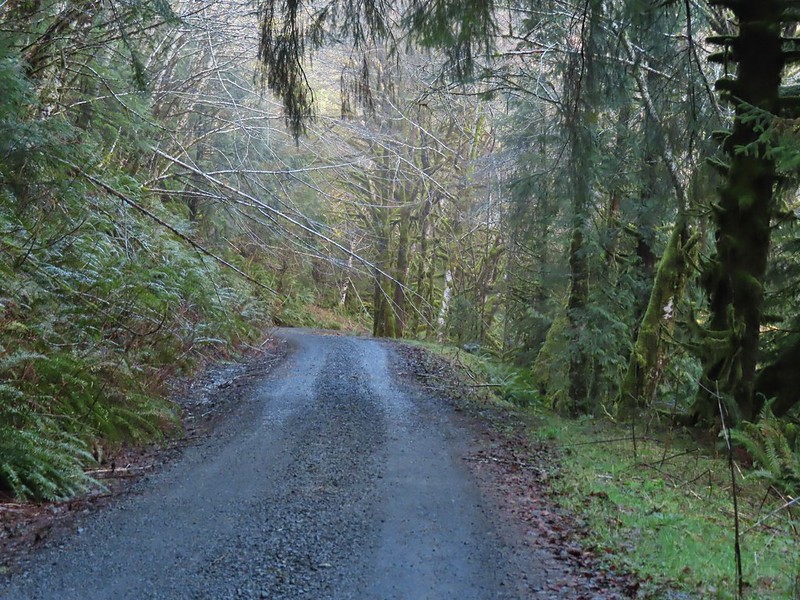 Some low hanging trees, presumably from the storm. The roads had been cleared but occasional damage along the side of the road was evident.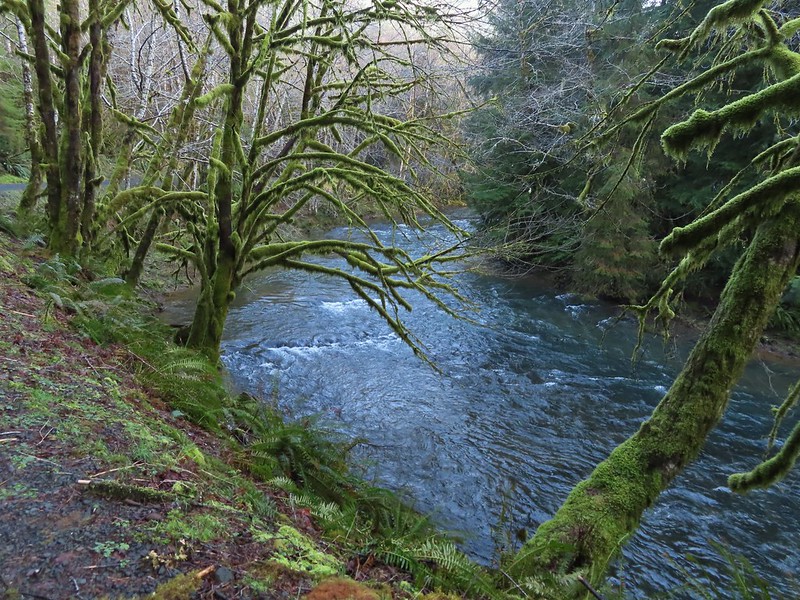
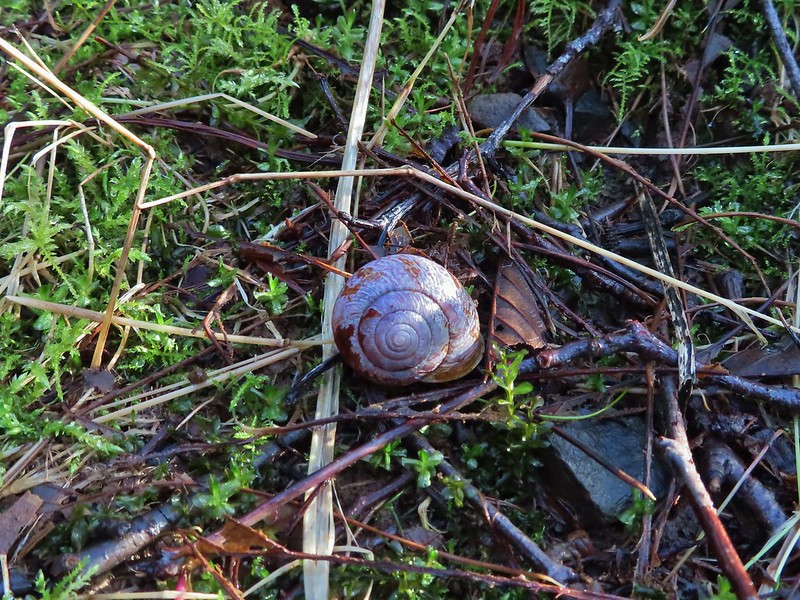
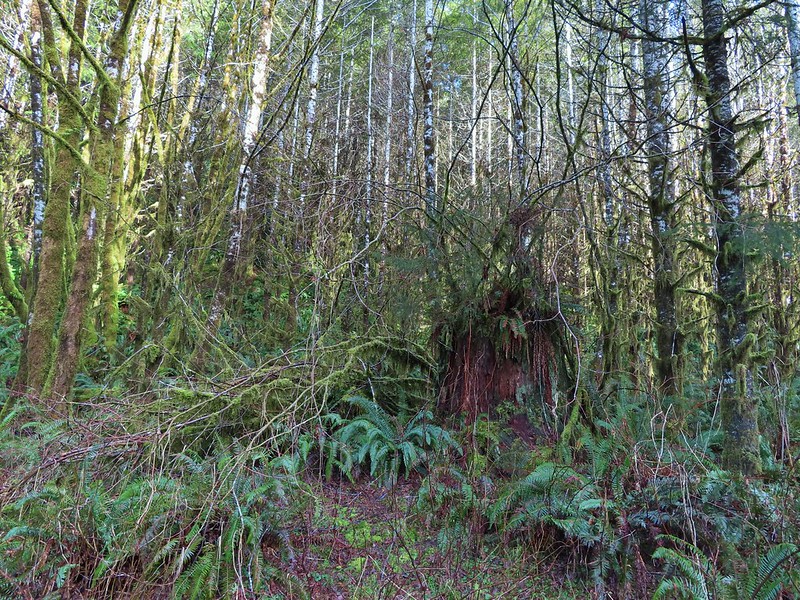 There were no recent clearcuts in the Clatsop State Forest section but there was evidence of past logging.
 Fall Creek
 Not sure why I neglected to get a picture of the bridge from the locked gate but this is the only one I took of the bridge.
 The hike description in the Oregon Hikers Field Guide mentions walking along the bank to get a view of Upper North Fork Falls from the rocks below but that wasn’t going to be an option with the river level today.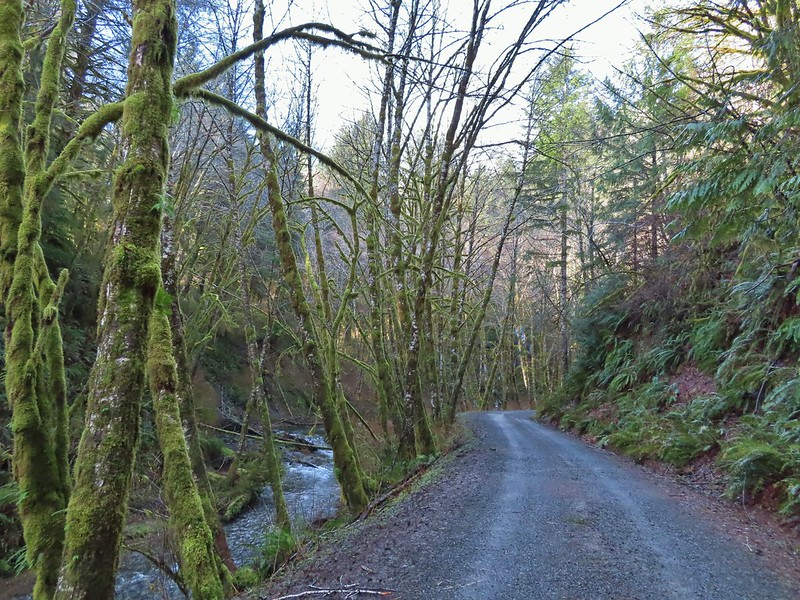


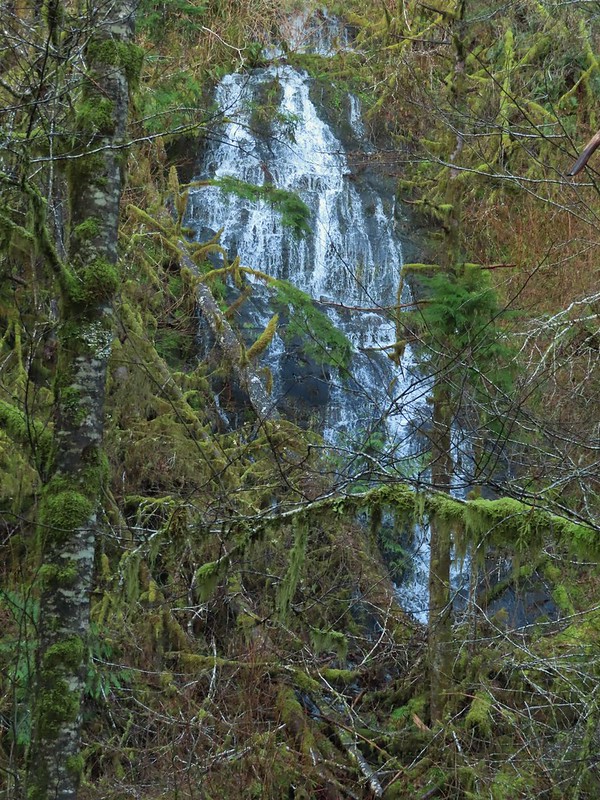

 We both thought that this thick moss looked like some sort of hairstyle.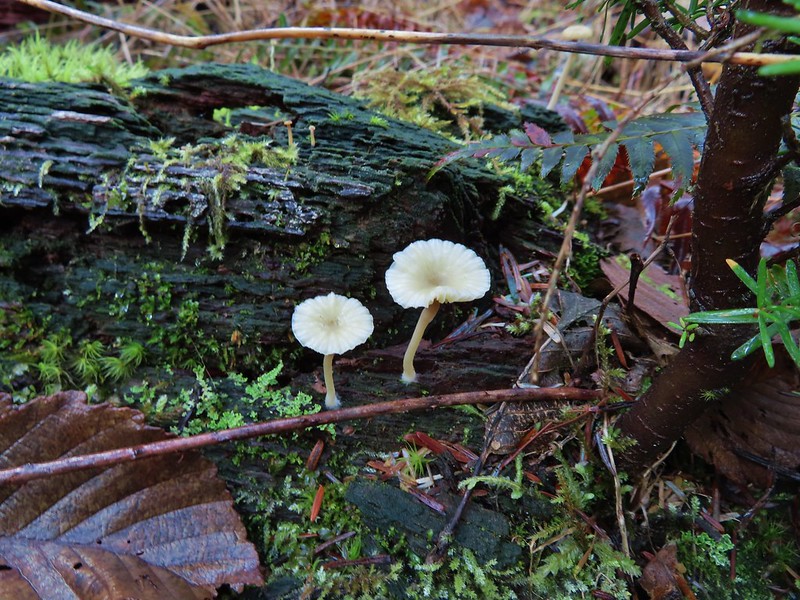
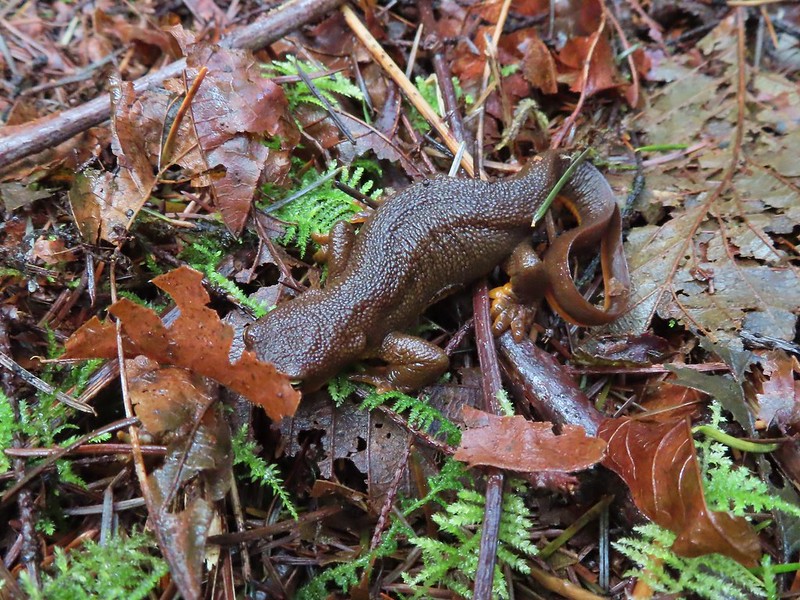 Rough-skinned newt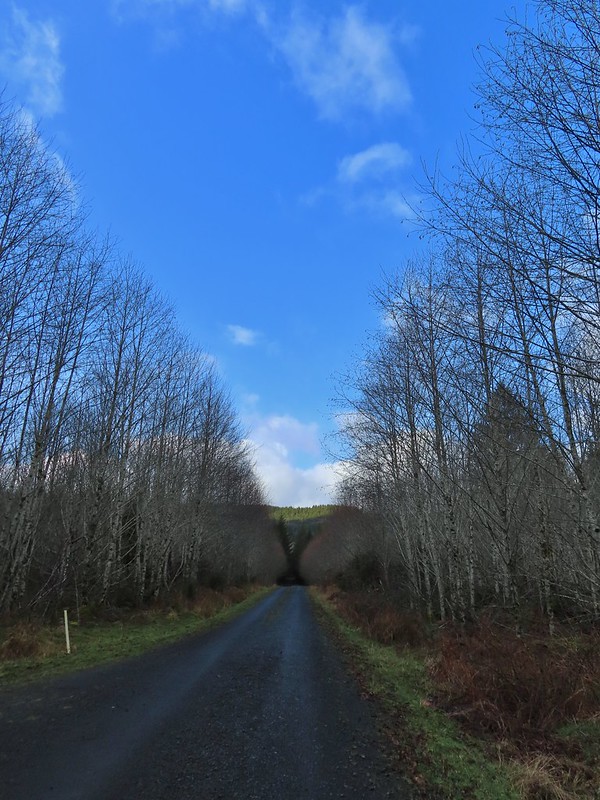










 wanderingyuncks