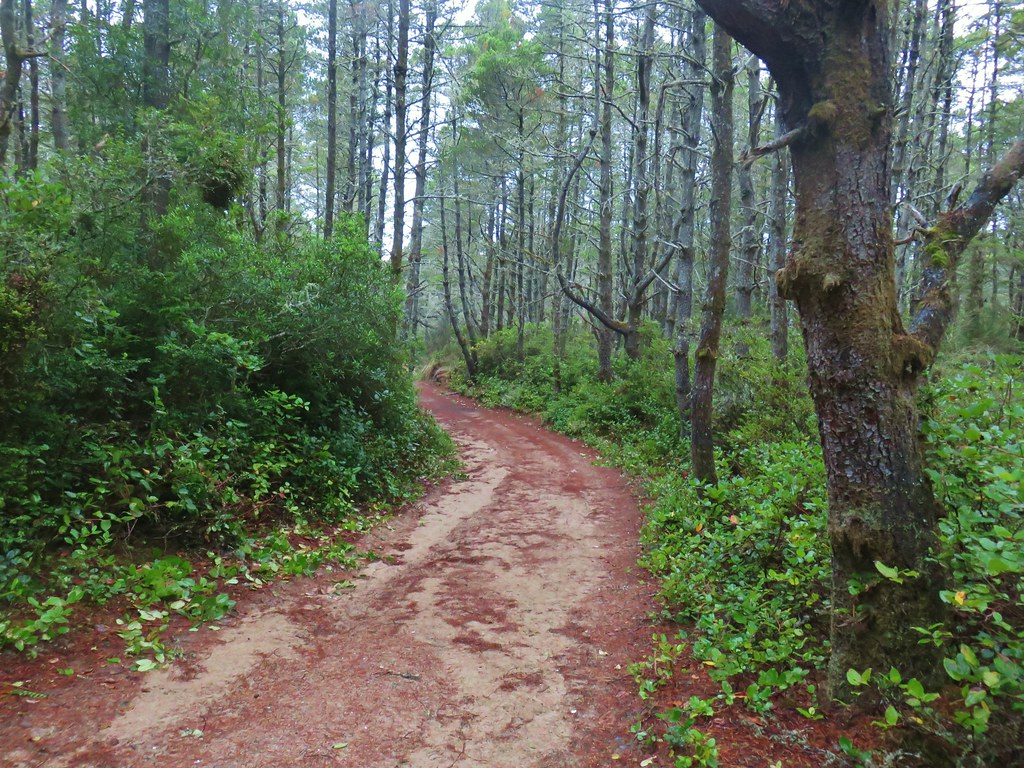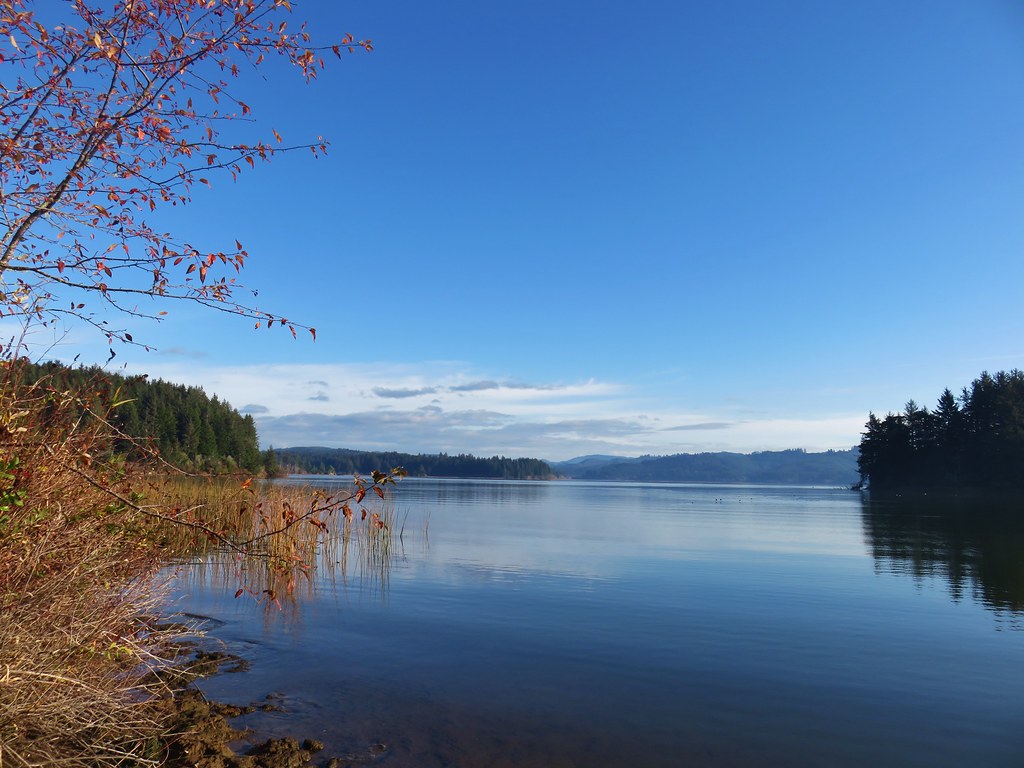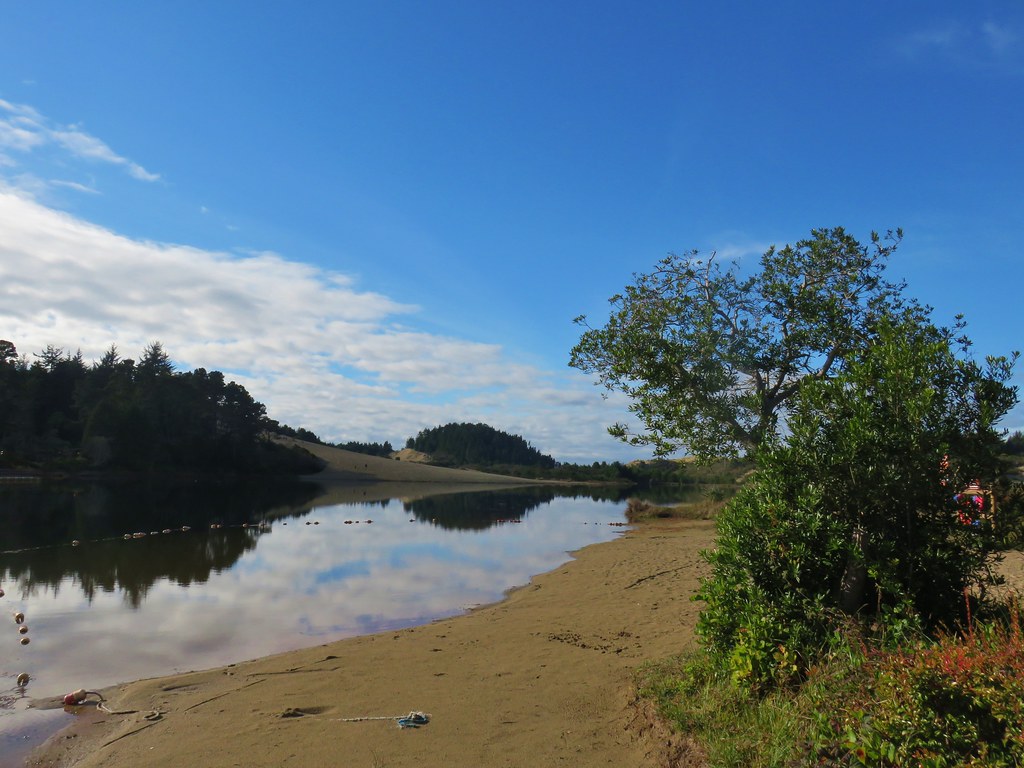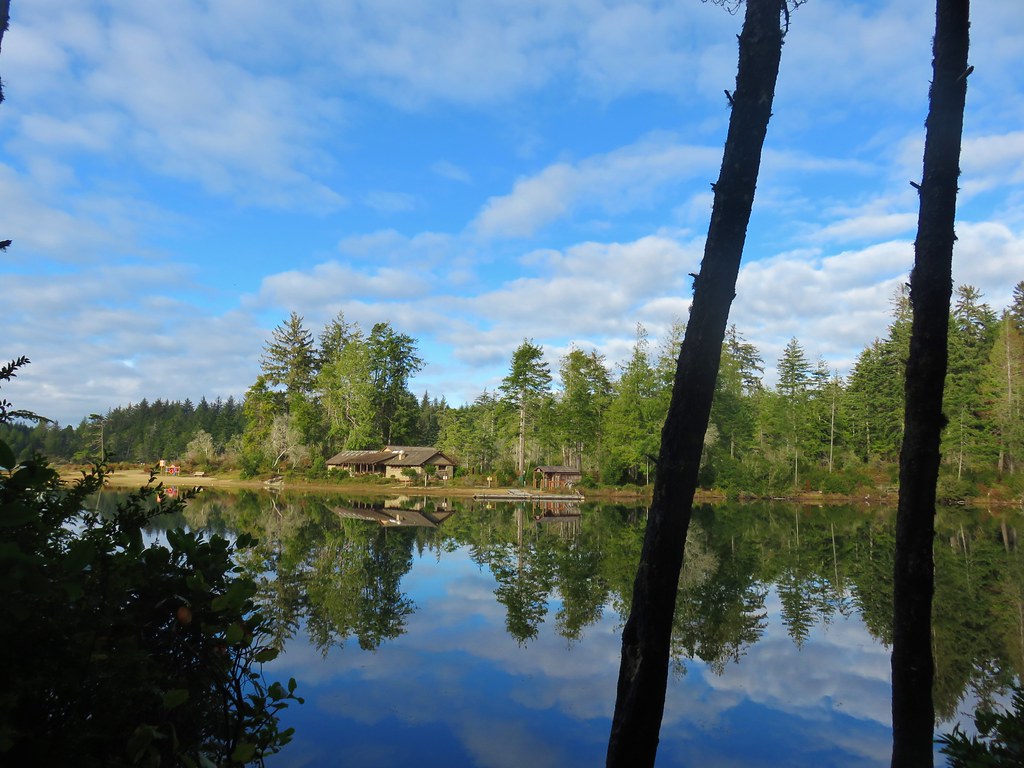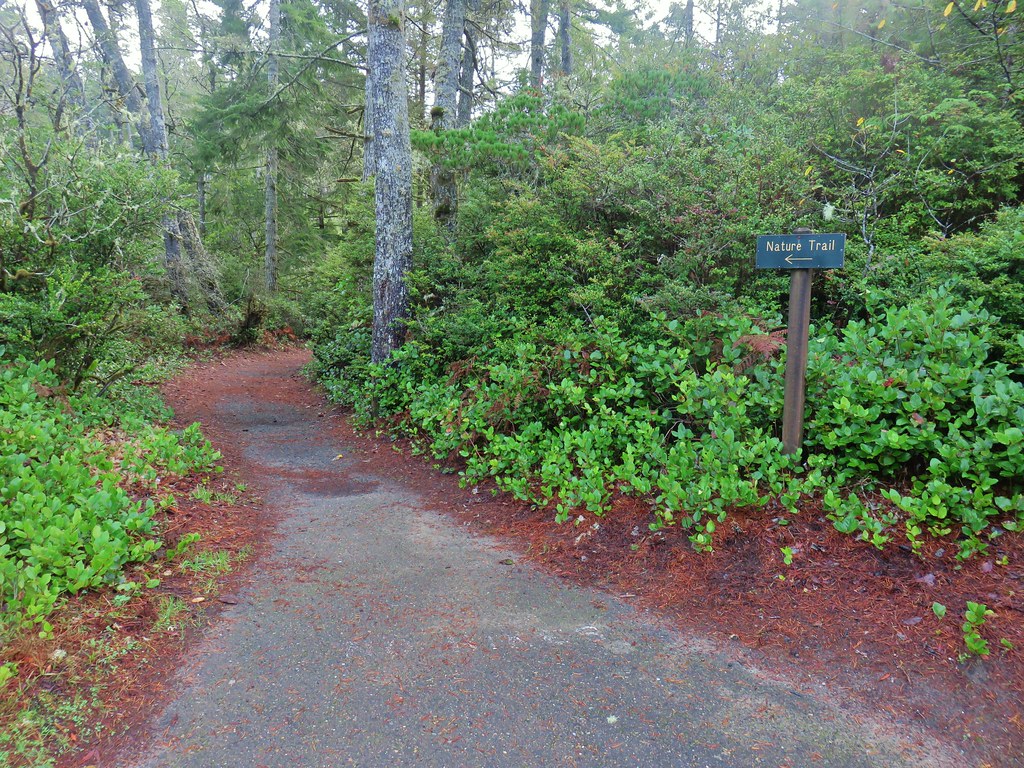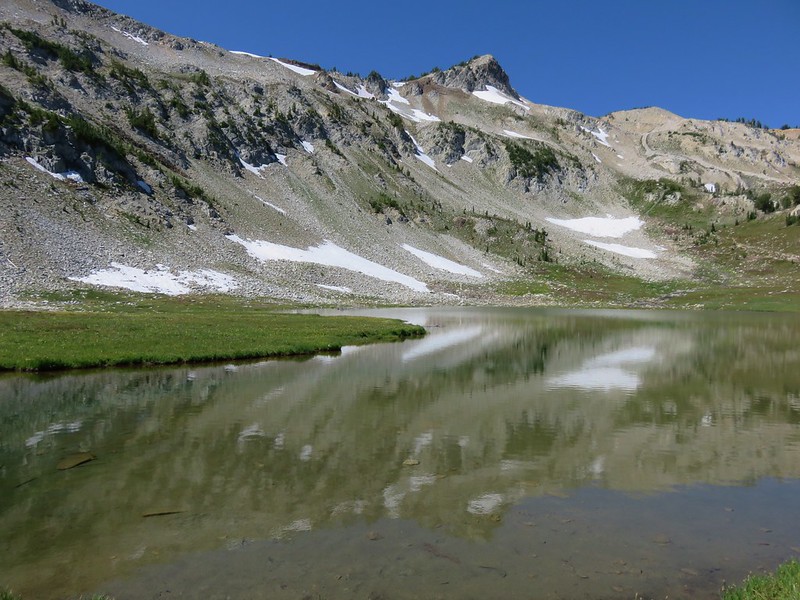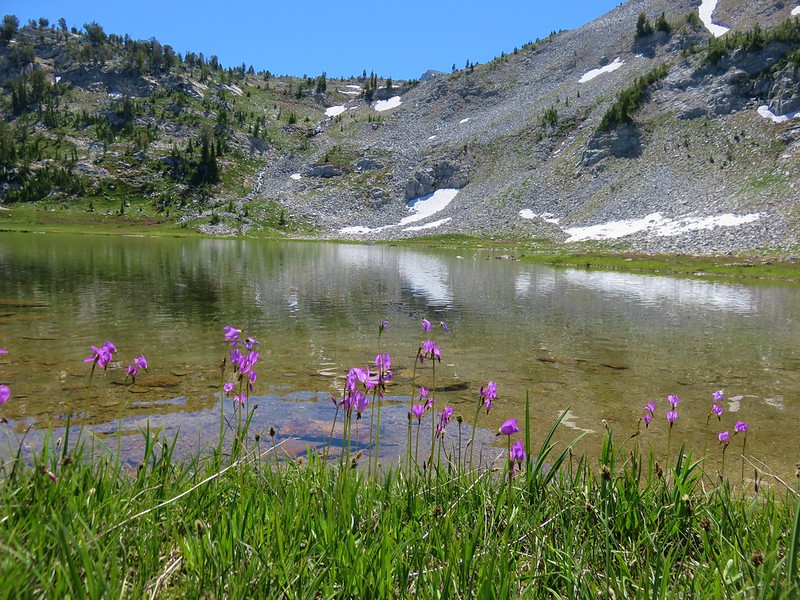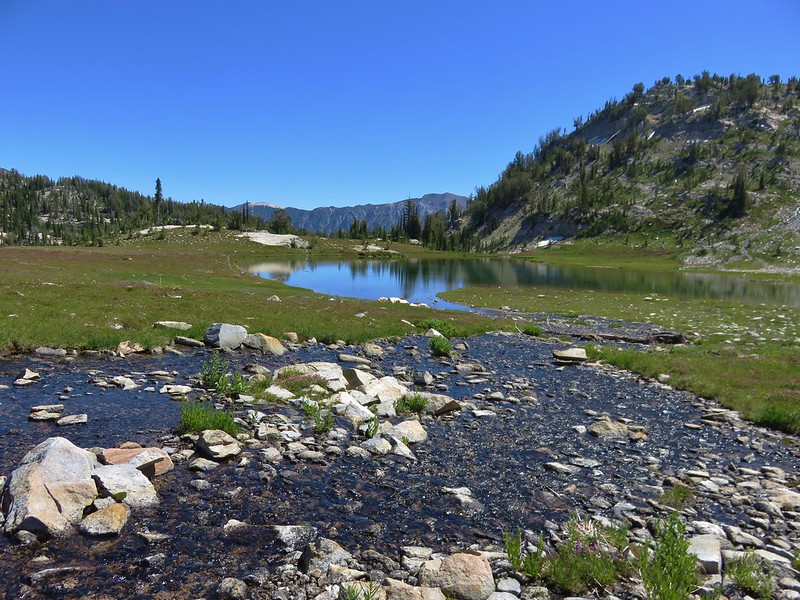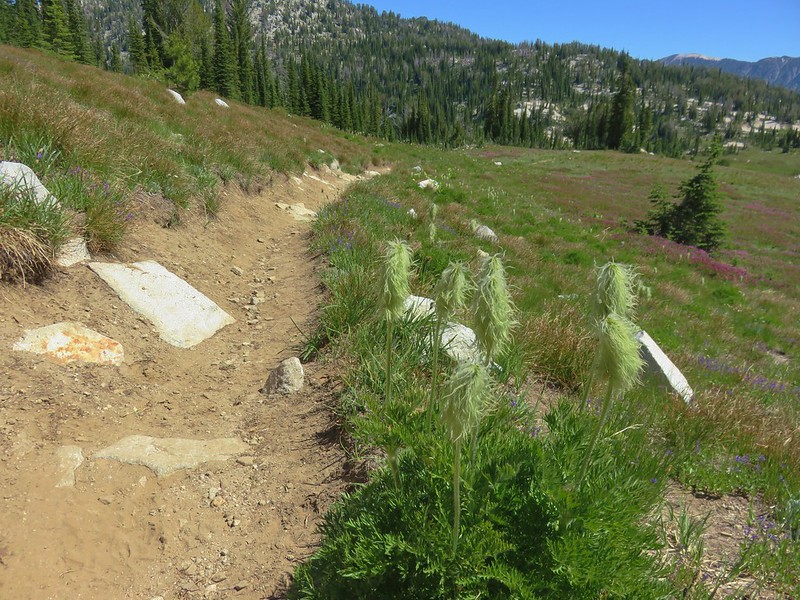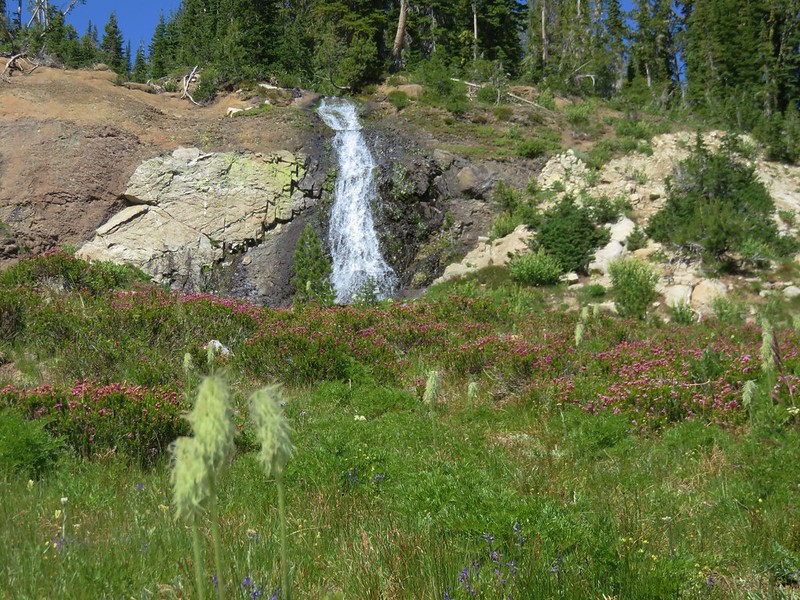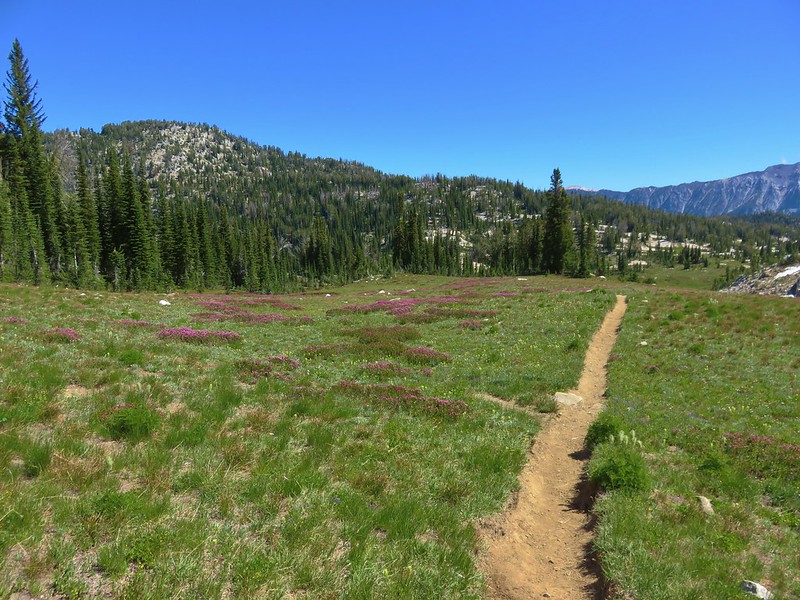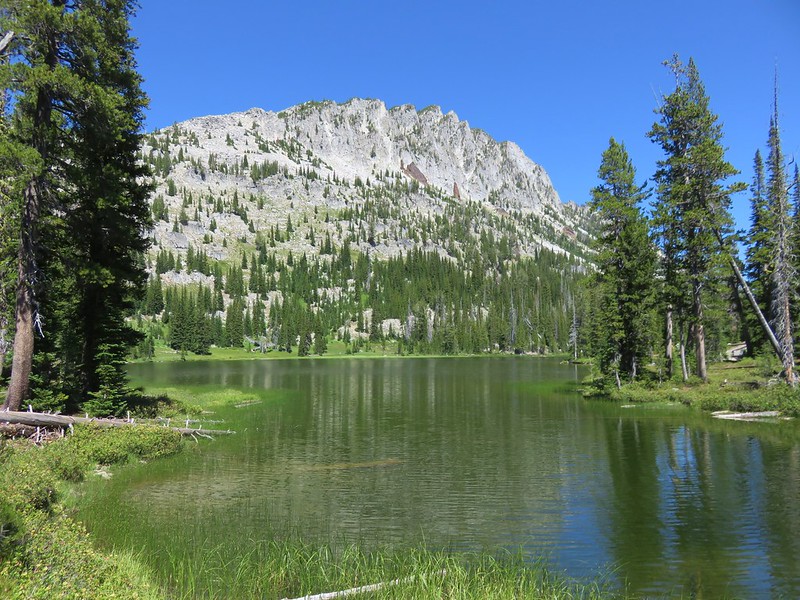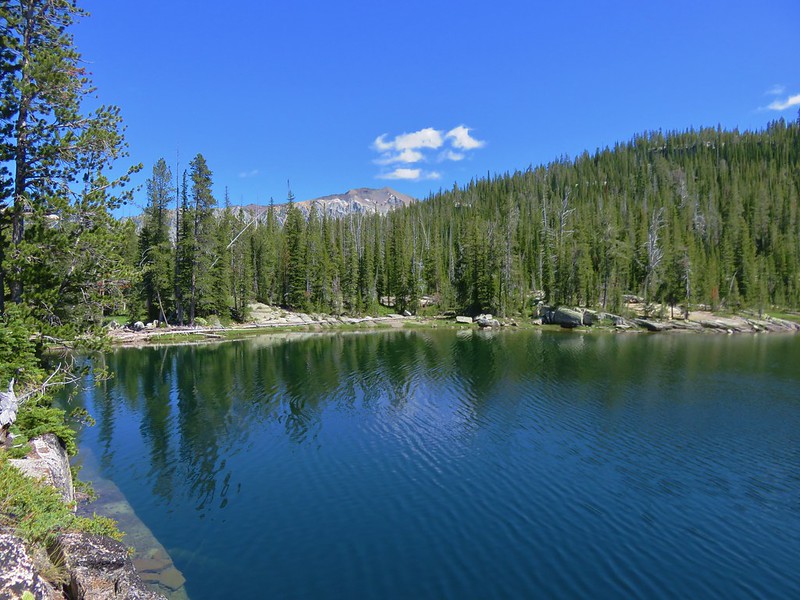
Categories
High Cascades Hiking Oregon Trip report Waldo Lake Area

Charlton and Lily Lakes Loop – 09/27/2025

Another warm, sunny forecast coincided with our hiking schedule leaving multiple destinations possible. (My original schedule for the year has been largely replaced by groups of ideas depending on the weather or fire situation.) After considering several different hikes we decided to try out a loop around Charlton and Lily Lakes in the Willamette and Deschutes National Forests.

We parked at what Google labels as the Pct Trailhead located a quarter mile up Forest Road 4290 off Forest Road 5897 aka Waldo Lake Road.
IMG_1649

The first part of the loop we were planning passes through the 2022 Cedar Creek Fire scar. One of the trails, the Lily Lake Trail, was severely impacted by both that fire and the 1996 Charlton Fire and no longer shows up on the Forest Service website or updated maps such as CalTopo. Our paper, GPS, and the PCTA online map National Forest System Trails layer all showed the trail alignment, so we hoped that we would be able to use our navigational skills on that section.

Before starting the loop we headed down to Charlton Lake for a first look.
IMG_1652
Canada jay

IMG_1656
The trail to Charlton Lake from the trailhead crosses the Pacific Crest Trail (PCT) after just 250′ then continues to the lake for a total of just a tenth of a mile.

IMG_1660
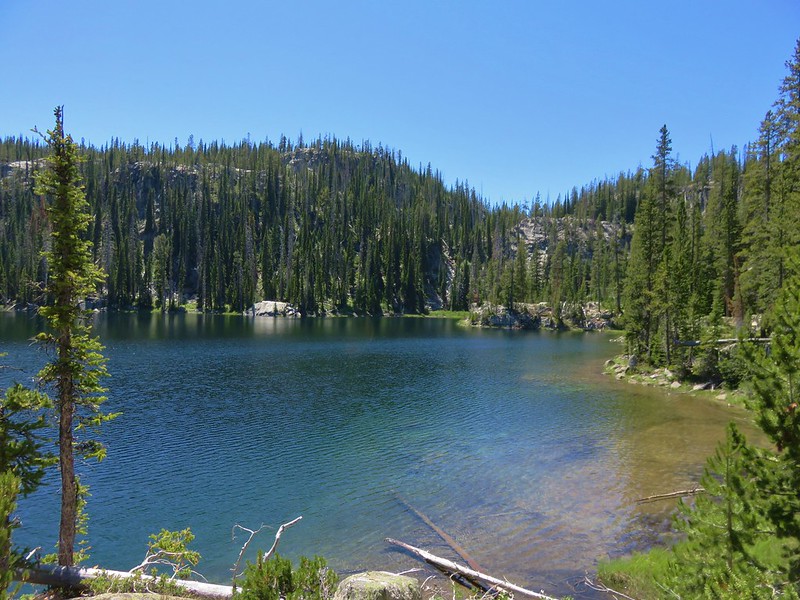
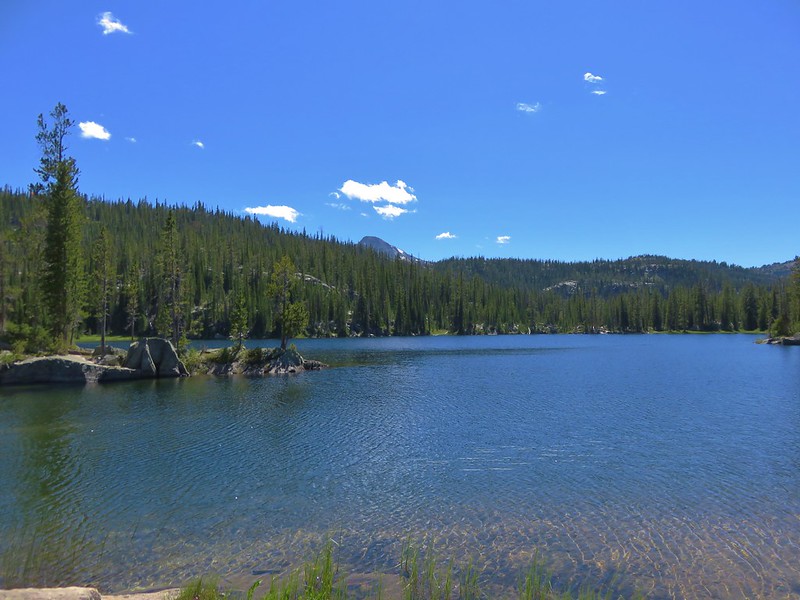
Charlton Lake

IMG_1658
Geradine Butte to the left and The Twins (post) to the right.

After visiting the lake we hiked back to the PCT and turned right (north) heading toward the Lily Lake Trail junction.
IMG_1664

IMG_1661
Fireweed

After 0.4-miles on the PCT the trail crossed FR 4290.
IMG_1668

IMG_1669
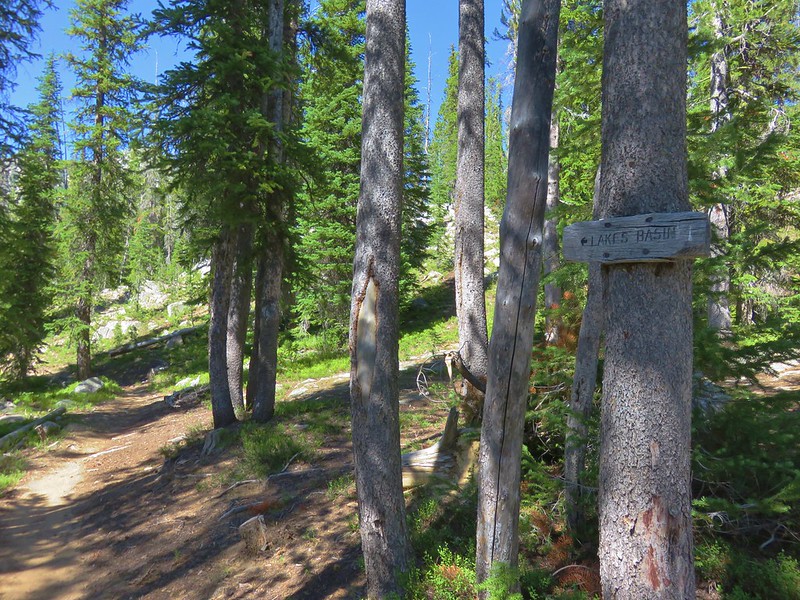
We took it as a good sign that the Lily Lake Trail was listed on the sign at least.

The PCT headed toward Charlton Butte which it would pass to the west. The Cedar Creek fire had burned over this entire section although a few trees were spared here and there.
IMG_1671

IMG_1672

IMG_1676
Pond along the PCT.

IMG_1679
Charlton Butte

IMG_1683
Pearly everlasting

IMG_1685
Trail signs at the Lily Lake Trail junction. From FR 4290 the sign said it was 1.5-miles, the GPS put it at 1.4.

IMG_1686
It appeared this sign was set up after the 2022 fire so we took the inclusion of the Lily Lake Trail as another good sign.

We turned right onto the faint but discernable Lily Lake Trail and followed it up a small rise along the base of Charlton Butte gaining a view north of several Cascade Volcanos.
IMG_1689

IMG_1691
Irish Mountain is the forested peak to the left with Mt. Jefferson, Mt. Washington, The Husband, the Three Sisters, Broken Top, Mt. Bachelor and finally Cultus Mountain.

IMG_1694
Zoomed in you can see Three Fingered Jack in front of Mt. Jefferson. Little Roundtop Mountain is the peak between Mt. Jefferson and Mt. Washington.

IMG_1695
The Three Sisters

IMG_1696
Broken Top and Ball Butte

IMG_1697
Mt. Bachelor (post) and Kwolh Butte

IMG_1701
The flank of Charlton Butte.

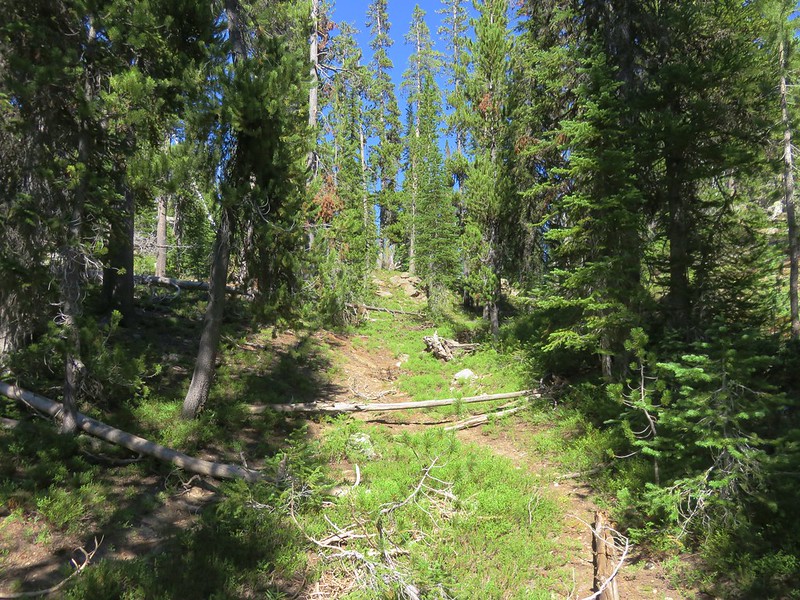
The maps that contained the Lily Lake Trail showed it dropping into the basin below then swinging to the NE before arriving at Lily Lake. We quickly lost the tread at the lip of the basin and wound up using our GPS units to stick as close to the trail shown on those as we could.
IMG_1702
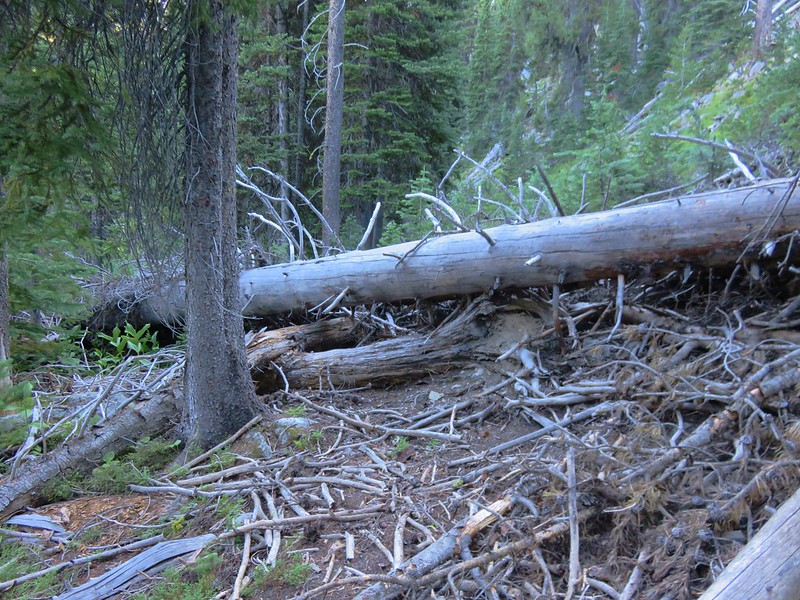
We found no sign of the trail at all going down the burned hillside. The footing was pretty good, but we had to be careful of holes or areas where the ground was not stable.

As we got closer to the basin the severity of the burn was less which meant more obstacles to navigate.
IMG_1703

We continued to use the GPS units as guides and eventually found what appeared to be the former trail tread.
IMG_1704
What is left of the Lily Lake Trail coming through the basin.

IMG_1705
The Lily Lake Trail heading toward the lake.

IMG_1707
Charlton Butte from the trail.

IMG_1709
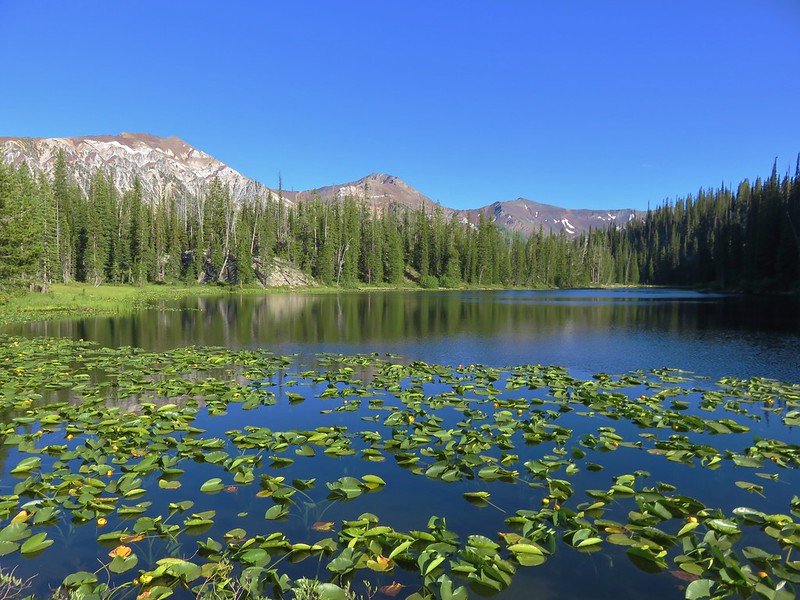
Arriving at Lily Lake just under a mile from the junction with the PCT.

Unlike Charlton Lake where much of the forest around that lake had survived the Cedar Creek Fire, all of the forest surrounding Lily Lake was burned.
IMG_1710

IMG_1716

The good news was that the trail tread was much more obvious as it passed along the southern end of the lake for a quarter mile.
IMG_1715

IMG_1718
Mt. Bachelor and Cultus Mountain from the SE end of Lily Lake.

IMG_1721

At the end of the lake the trail veered uphill to the SE climbing below a rock outcrop where we were sure there should be a pika or two.
IMG_1722

IMG_1729

For the next 0.6-miles the trail made a gentle descent through burned forest.
IMG_1732
There was some flagging along this stretch of the trail, note the small blue flag ahead along the ground.

IMG_1733

The flagging petered out shortly before we arrived at the Charlton Trail Junction.
IMG_1734

IMG_1735
Arriving at the Charlton Trail Junction.

IMG_1737
The trail signs at the junction.

It was at this junction where things got “interesting”. Our GPS map, paper map, and the PCTA Map all showed the Lily Lake Trail arriving at a “4-way” junction.
Screenshot 2025-09-28 045048
All three maps showed this trail alignment.

Two things should have caused us to stop and do a little more analysis before continuing on. First there were only three obvious trails at the junction and second this junction was before the meadow shown on the map not near its far end. Instead of immediately picking up on those two discrepancies we took the lefthand fork which did not have a pointer on the trail signs. It was the straighter of the two choices and based on the “4-way” junction shown on the maps we wanted to go straight as the righthand fork would take us on a more direct 2.1-mile route back to Charlton Lake.
IMG_1738
The righthand fork

IMG_1739
The lefthand fork headed toward the meadow initially which made more sense based on the maps we were using at this point.

After just over 200′ on the lefthand fork we realized something was amiss as we were clearly veering N when we expected to be continuing SE. At that point the fact that it had been a three and not four-way junction suddenly seemed relevant. We returned to the junction and consulted the GPS and PCTA maps and came to our second incorrect conclusion. We assumed that the trail shown on the maps continuing straight through the junction had been lost/abandoned due to the fire and decided to bushwack along the right (south) side of the meadow while trying to stick to the track shown on the GPS as we had done descending to the Lily Lake basin.
IMG_1742

IMG_1743
The edge of the meadow was very wet, so we had to bow out to stay on dry ground.

IMG_1747

IMG_1748
Charlton Butte

IMG_1749
According to the GPS we crossed over the old trail alignment several times, but we didn’t see anything that looked like tread

We didn’t even see anything when we passed over the spot where the GPS thought the “4-way” junction was supposed to have been. As far as cross-country hiking goes it wasn’t hard, but it was still more work than simply hiking on trail. After three quarters of a mile of bushwacking I was working us back uphill to our right to where the GPS showed the tread and lo and behold there was clear tread.
IMG_1752
The Clover Meadow Trail passing through a cut log.

IMG_1753
Back on trail!

Had I pulled up the CalTopo map back at the junction things would have made a lot more sense. (It also would have helped if I had realized that the trail we wanted was the Clover Meadow Trail.)
Screenshot 2025-09-28 045429
Our wrong turn and cross-country track as shown on the GPS unit.

Screenshot 2025-09-28 053241
Our track overlaid onto the CalTopo map. I hadn’t been referring to this map because the Lily Lake Trail wasn’t shown on it, but if we had looked at it at the three-way junction we would most likely have realized that we needed to go right a short distance to a fork and then go left.

It was a lot easier going now that we were on actual trail. This trail was in good shape and clearly used by mountain bikers. We followed the trail for another 1.8 gentle downhill miles to another three-way junction.
IMG_1756
The Twins from the trail.

IMG_1761
Woodpecker

IMG_1762

IMG_1763
The trail eventually left the fire scar for good.

IMG_1764
Our dislike of mylar balloons grows every time we pack one out of the forest/wilderness. I spotted that unmistakable shiny material and had to detour over to pick it up.

IMG_1769
As we continued east the forest changed to lodgepole pine.

IMG_1772
The three-way junction ahead near Clover Meadow.

Aside from a Clover Meadow sign the only other signs at the junction were yield signs for users.
IMG_1776

We were at the Metolius-Windigo Trail. This multi-use trail is over 100-miles long. The actual distance varies depending on which website you visit, some say it begins at the Head of the Metolius River (post) and ends at Windigo Pass (post), while others show it starting at the Bear Valley Trailhead NE of Three Fingered Jack. Regardless of the actual distance we were only concerned with the 3.5-mile stretch SSW from this junction. We turned right, and in three quarters of a mile recrossed FR 4290.
IMG_1777

IMG_1782

IMG_1788

IMG_1789
Charlton Butte

IMG_1790

After crossing the road the trail began climbing at times as it needed to gain over 500′ of elevation before reaching the junction with the Charlton Trail.
IMG_1792

IMG_1795

IMG_1797

IMG_1799

IMG_1802

IMG_1803

IMG_1808
Round Meadow

IMG_1811

IMG_1812
Stream flowing into Round Meadow.

IMG_1817

IMG_1820
The junction with the Charlton Trail.

Heather and I split up at this junction. I stayed on the Metolius-Windigo Trail for another 0.4-miles then took another 0.4-mile trail to Found Lake below Geradine Butte while Heather forked right onto the Charlton Trail and headed for the lake where she planned on taking a relaxing break while she waited for me.
IMG_1823
Continuing on the Metolius-Windigo Trail.

IMG_1827
Sign for the Found Lake Trail splitting off to the right.

IMG_1829
The Twins from a meadow along the Found Lake Trail.

IMG_1830
Geradine Butte from the meadow.

IMG_1831
Geradine Butte

IMG_1838
Found Lake

IMG_1837
My second chance of the day to spot a pika was on the rocky hillside along Found Lake. Alas, I wasn’t lucky enough to spot one here either, but I did hear one.

IMG_1840

After tagging the lake and unsuccessfully searching for pikas I headed back to the Charlton Lake Trail looking forward to what I was sure would be some downhill. The answer to whether this 1.9-mile stretch of the Charlton Trail was up or down is “yes”. There were several steep climbs broken up by some downhills and flat sections before steeply descending to the lake.
IMG_1846

IMG_1850
A flat stretch.

IMG_1851
Going down

IMG_1856
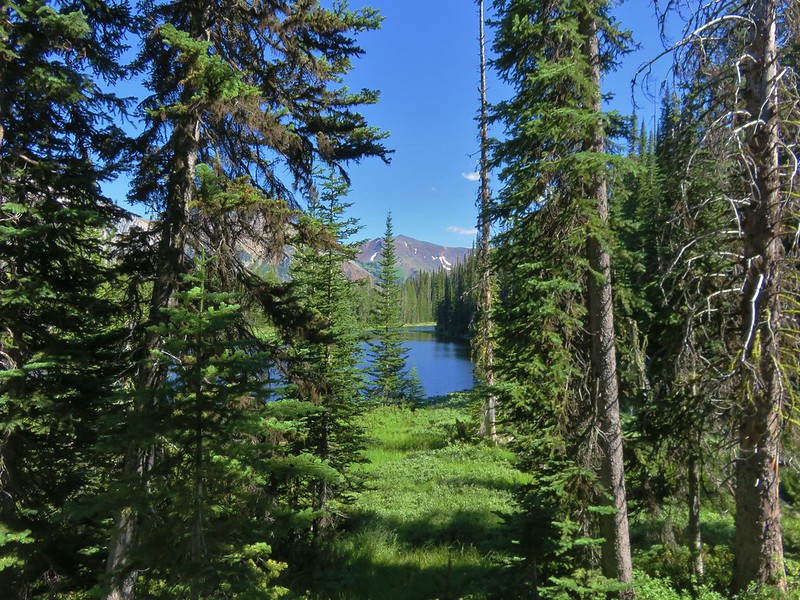
Charlton Lake through the trees.

At the lakeshore I headed left (clockwise) around the lake on the Charlton Trail. There were plenty of good views along the way.
IMG_1859

IMG_1866
Charlton Butte

IMG_1871
Geradine Butte

IMG_1875
Geradine Butte and The Twins.

IMG_1878
California tortoiseshells doing what butterflies do.

Heather was in her camp chair reading a book when I met back up with her. After a quick break we hiked the final tenth of a mile back to the car so we could change our shoes and get cold drinks out of our cooler. With the detour to Found Lake my hike came in at 13.7-miles with roughly 1500′ of elevation gain.
Screenshot 2025-09-27 161923

Had we not gone down to the lake first and gone the wrong way at the confusing junction the loop sans Found Lake would have been a little under 12-miles with around 1400′ of elevation gain. This was a fun loop with nice lakes, a few good views, and some short challenging sections. Of course we’d made it harder on ourselves by needlessly bushwacking when we could have been on the Clover Meadow Trail. Due to the lack of trail between the PCT and Lily Lake you do really need map and navigational skills if you’re going to try it. Happy Trail!

Flickr: Charlton and Lily Lakes

Categories
Hiking Oregon Oregon Coast Southern Coast

Siltcoos River, Siltcoos Lake & Honeyman State Park – 12/08/18

The first week of December greeted us with some beautiful weather. Unfortunately the forecast called for the arrival of rain Friday evening and we were unable to get time off of work during the week to take advantage of the sunny conditions.  We kept our eyes on the forecast though and by Friday there was a window of time Saturday morning where it looked like it might be dry along the coast south of Florence so we made a last minute call to take our final outing of the year.

Our plan was to end the year much as it started (post), with a three stop day along the Oregon Coast.  For this trip we’d picked three hikes just south of Florence, OR in the Oregon Dunes National Recreation Area.  Our first stop was at the Stagecoach Trailhead, eight miles south of Florence, in the Siltcoos Area.

Stagecoach Trailhead

Map at the Stagecoach Trailhead

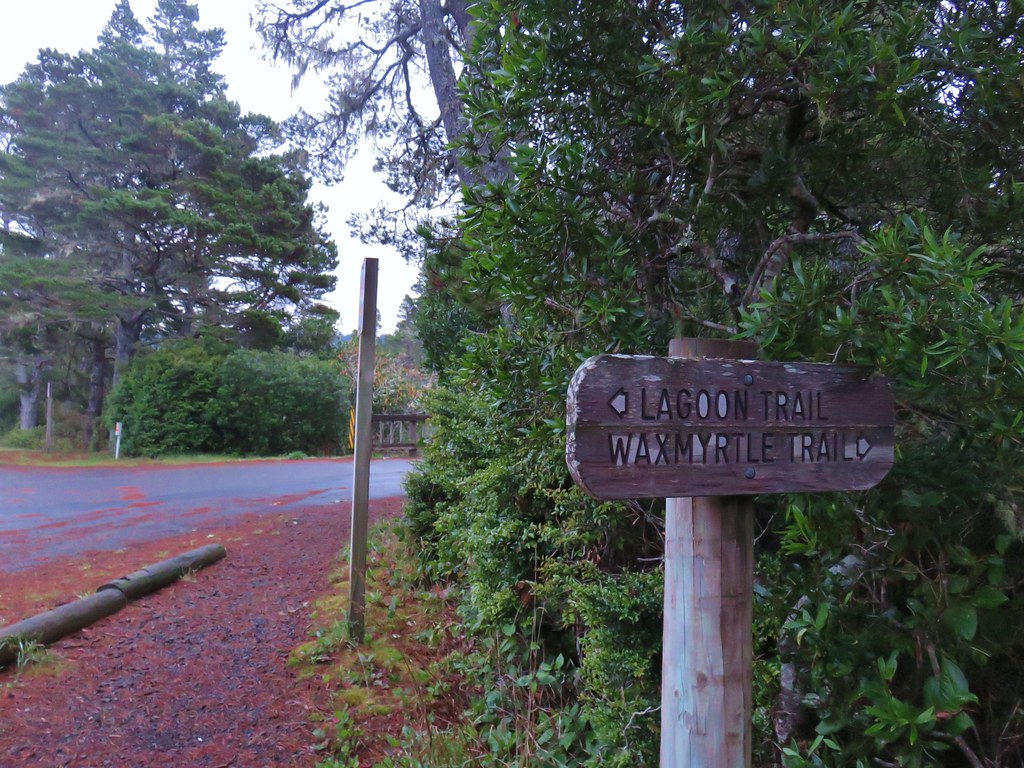
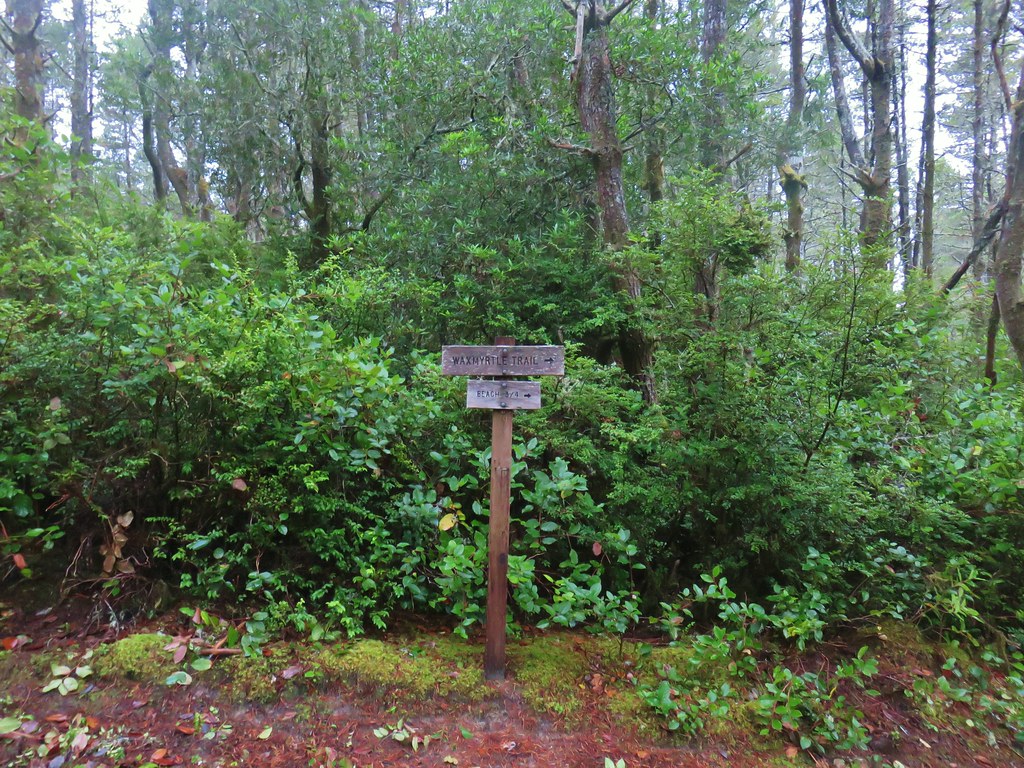
From the trailhead we followed signs for the Waxmyrtle Trail which led us across the Siltcoos River on bridge on the entrance road to the Waxmyrtle Campground.
Waxmyrtle Trail sign

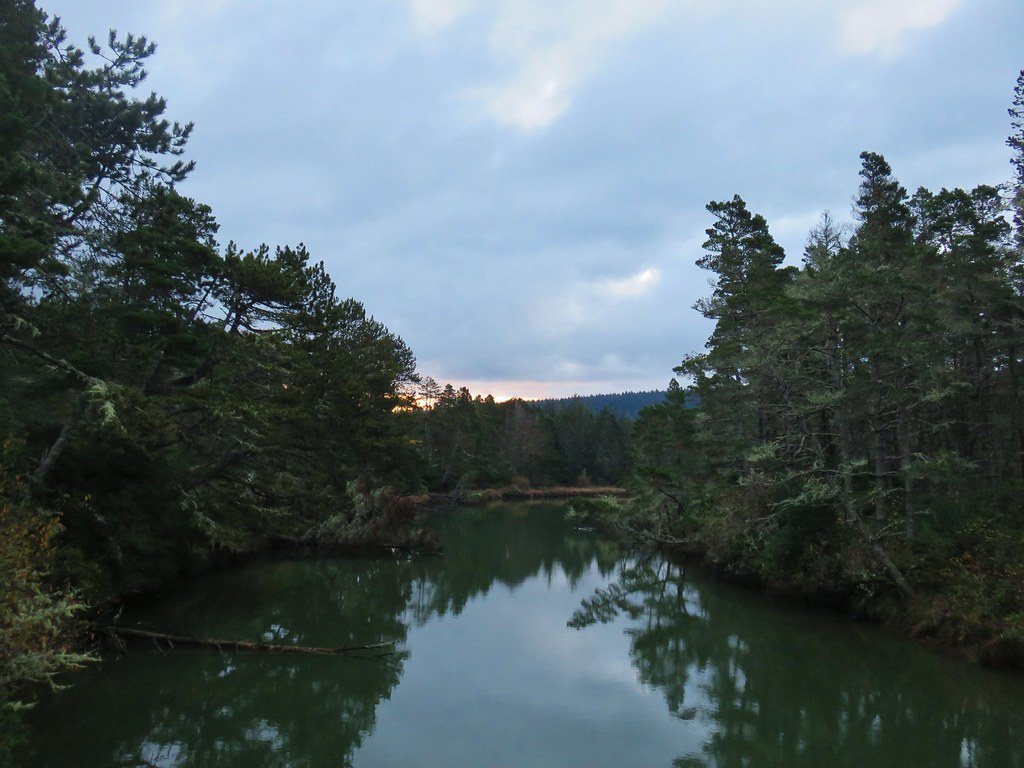
Siltcoos River

Once across the bridge we turned right along the river bank on the Waxmyrtle Trail.
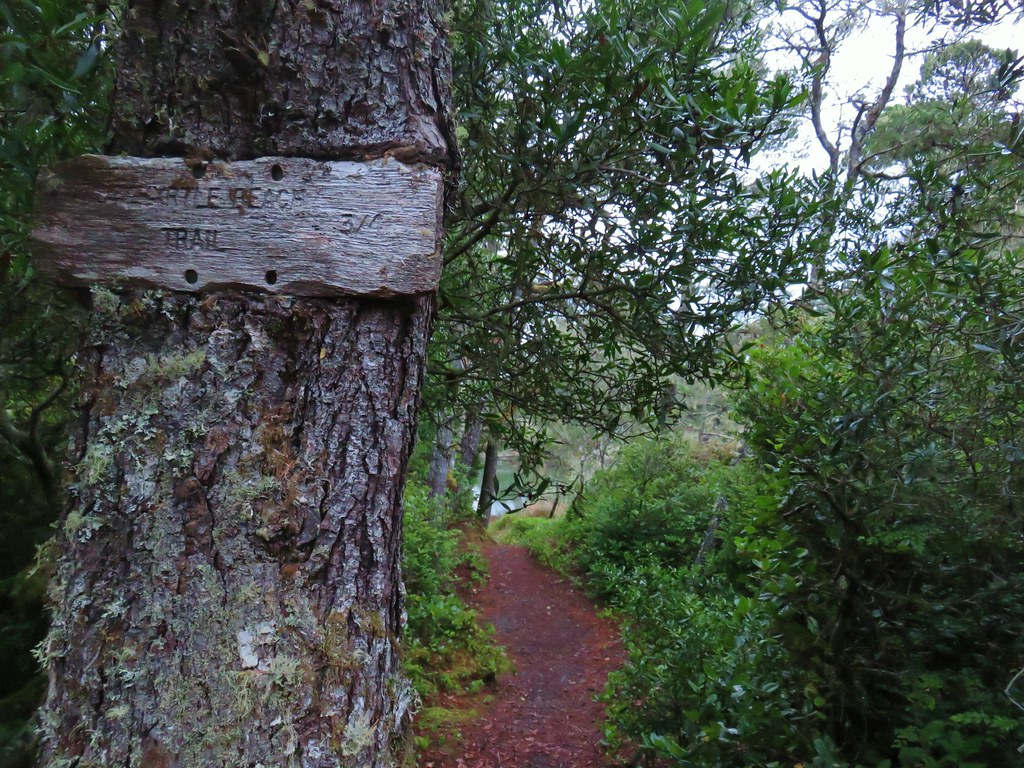
Waxmyrtle Trail

Siltcoos River

It was a mostly cloudy morning, but it was dry and there was a least some breaks which gave us hope that it would turn out to be a nice day after all.
Siltcoos River

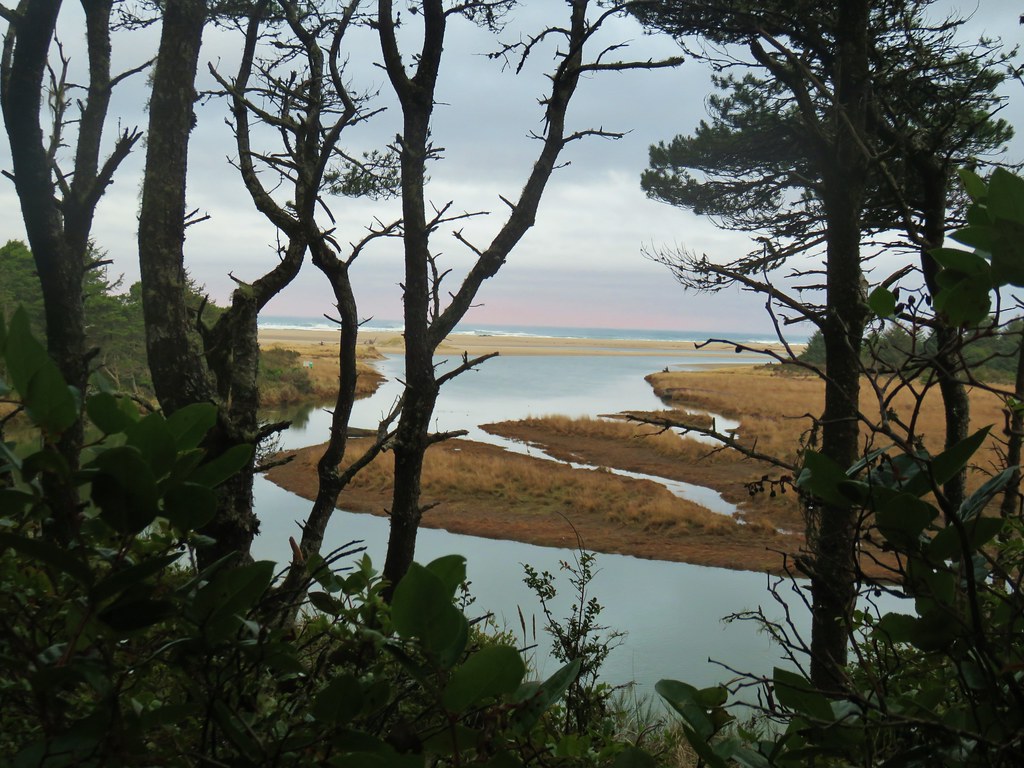
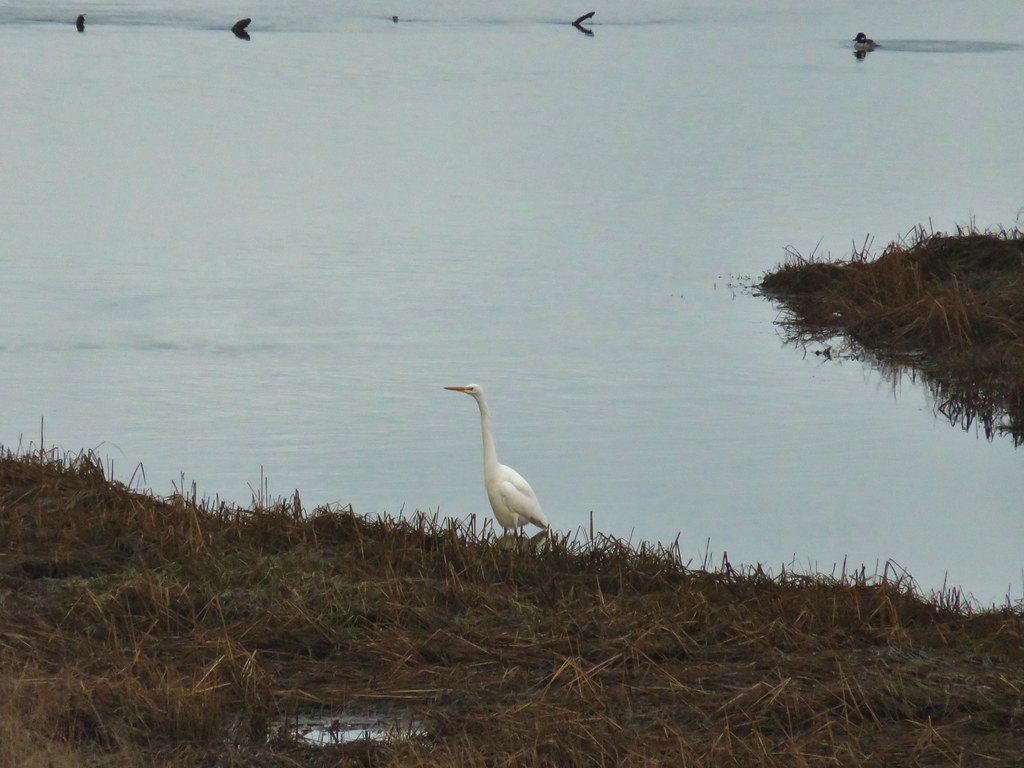
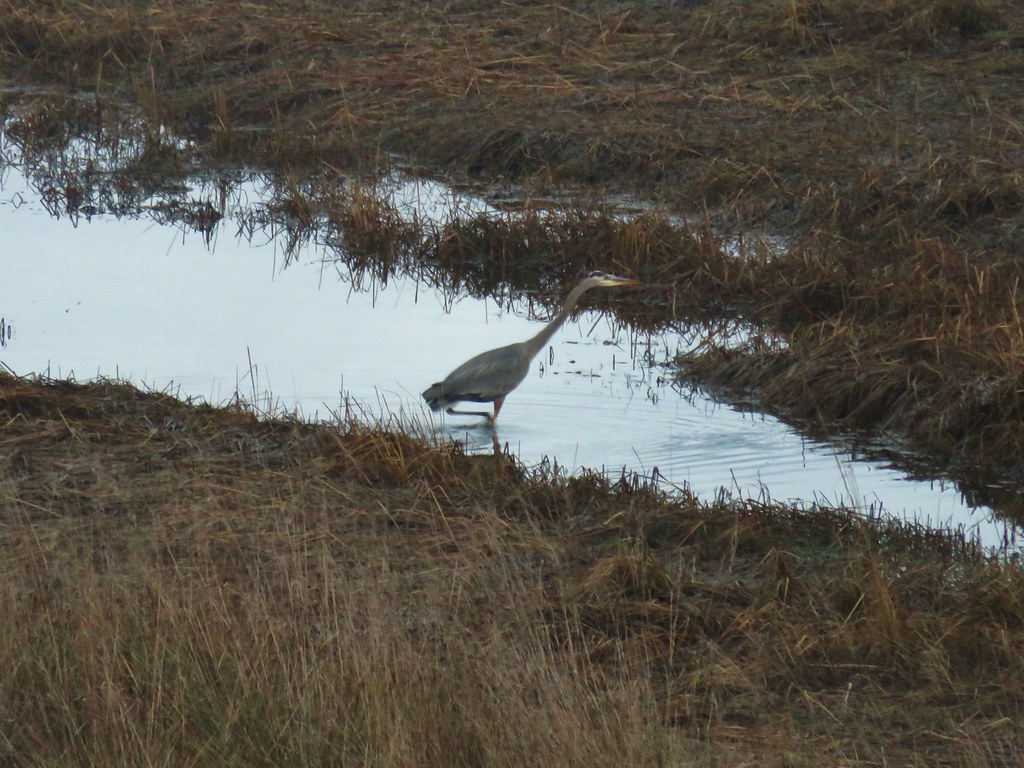
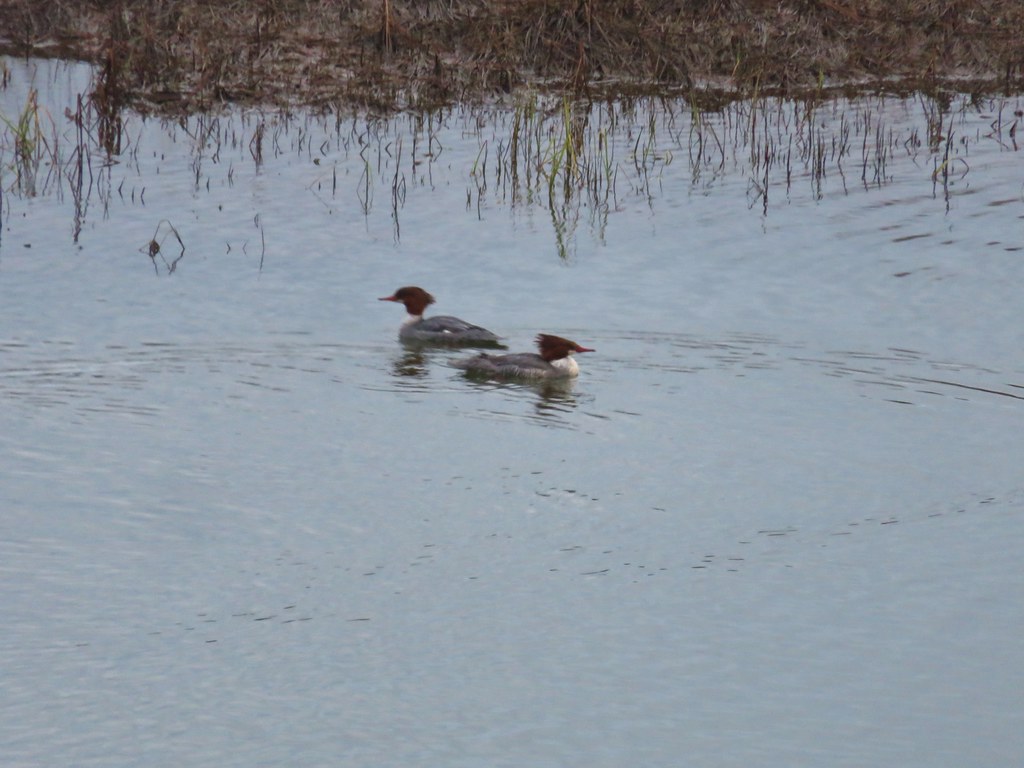
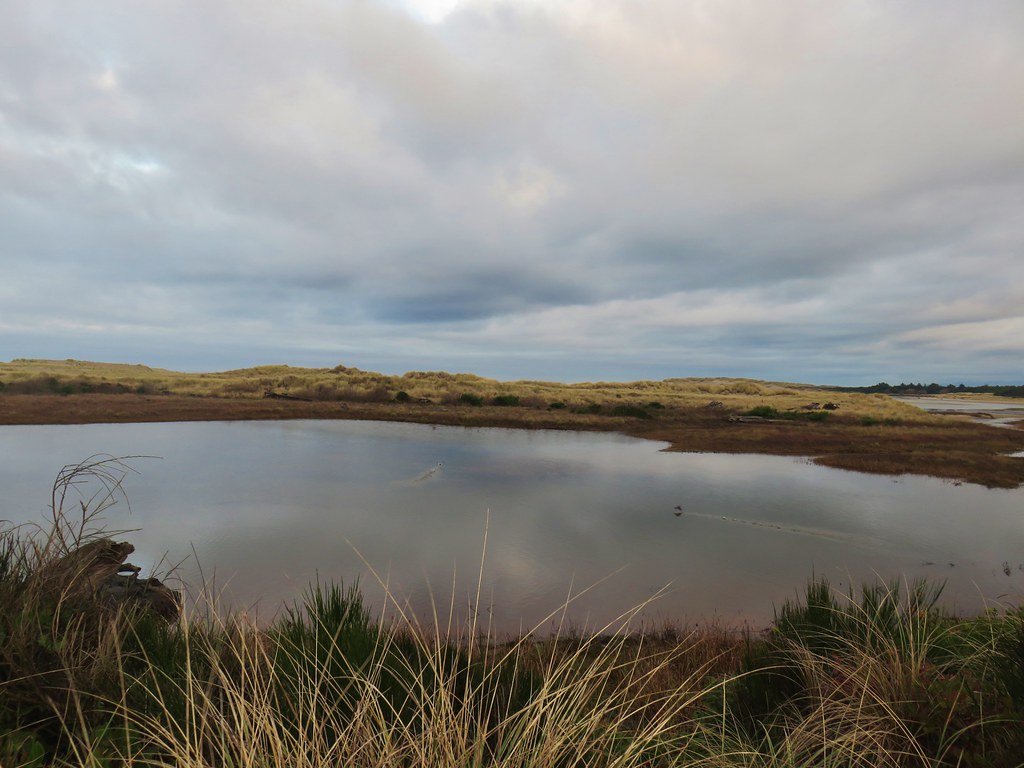
Our guidebook had mentioned that this area was one of the best areas for bird watching in the State. Although we didn’t see a large number of birds on this morning we did spot a few along the estuary here.
EgretEgret

Great blue heronGreat blue heron

Common mergansersCommon mergansers

BuffleheadBufflehead

A little under a half mile from the bridge we came to an old fork in the trail. The right hand fork had been a seasonal trail sticking closer to the river, but it has been closed due to erosion.
Closed portion of trail along the Siltcoos River

We stayed left and shortly arrived at a sandy road leading between the campground and the beach. A sign here pointed right for the continuation of the Waxmyrtle Trail.
Sign for the Waxmyrtle Trail

Waxmyrtle Trail

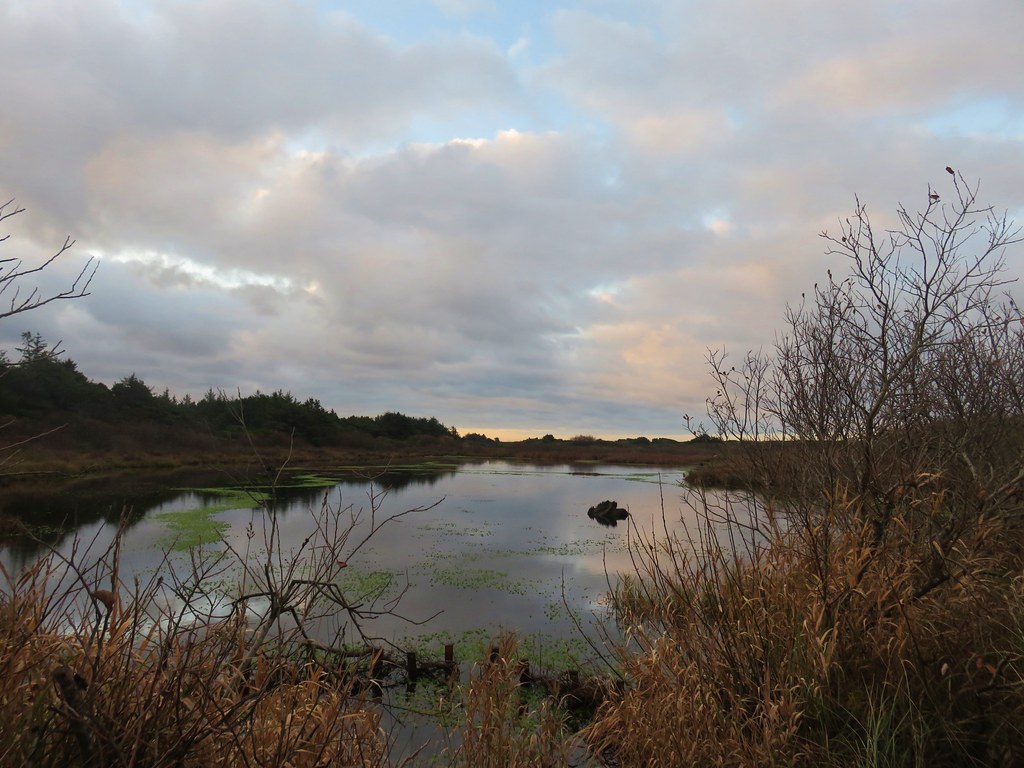
We followed this sandy track 3/4 of a mile to Waxmyrtle Beach. Along the way we passed through Waxmyrtle Marsh where the morning colors reflected off the still waters on either side of the trail.
Waxmyrtle Trail

Interpretive sign for the Waxmyrtle Marsh

Waxmyrtle Marsh

Waxmyrtle Marsh

Waxmyrtle Marsh

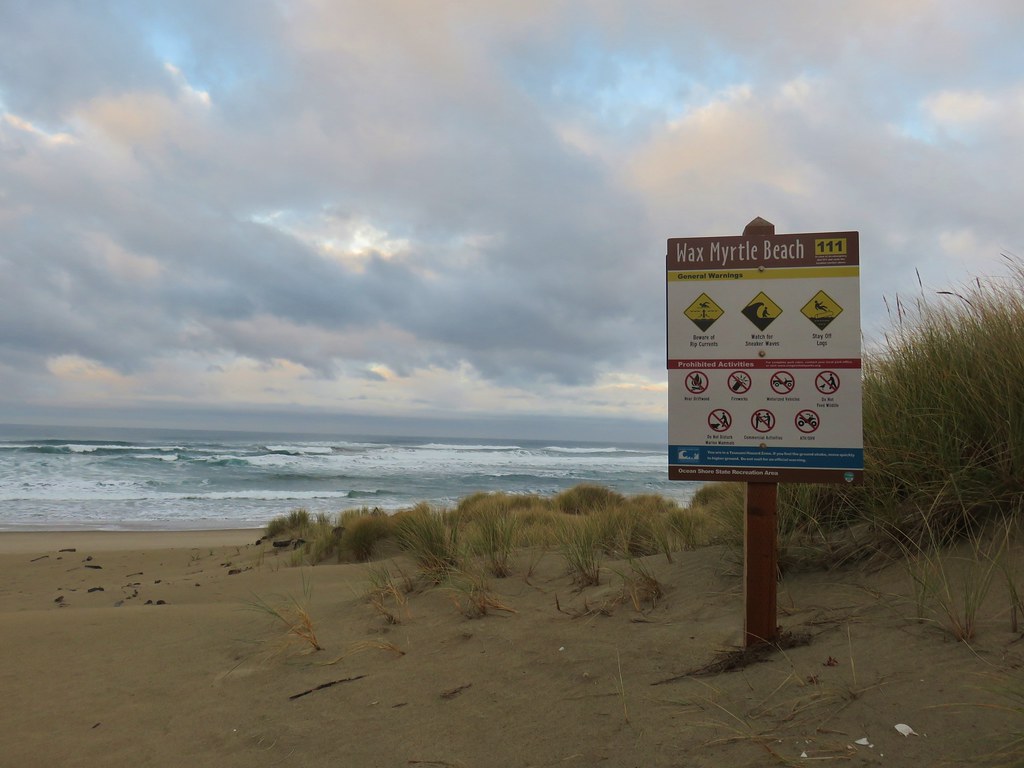
Waxmyrtle Beach

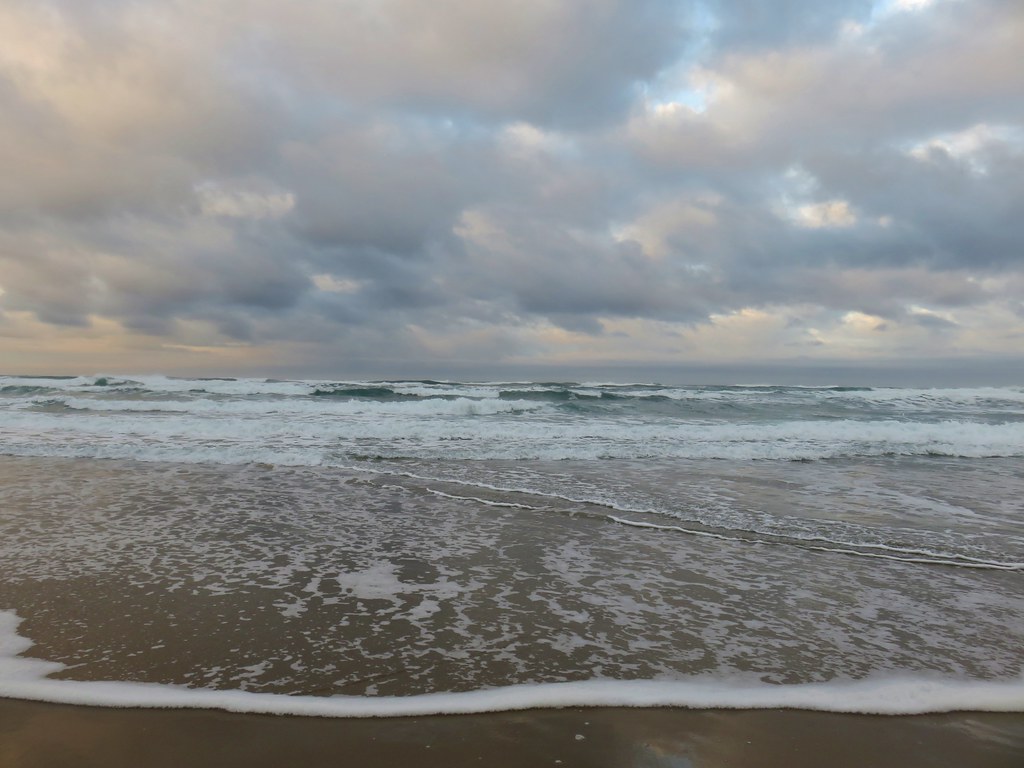
For a longer hike here we could have walked along the beach, but with two other stops ahead of us we simply stopped for a moment to enjoy the Pacific Ocean. It was a perfect morning for a visit, the temperature was in the upper 40’s, there was no breeze at all, and the sky above seemed to compliment the waves below.
Waxmyrtle Beach

Pacific Ocean at Wax Myrtle Beach

Pacific Ocean

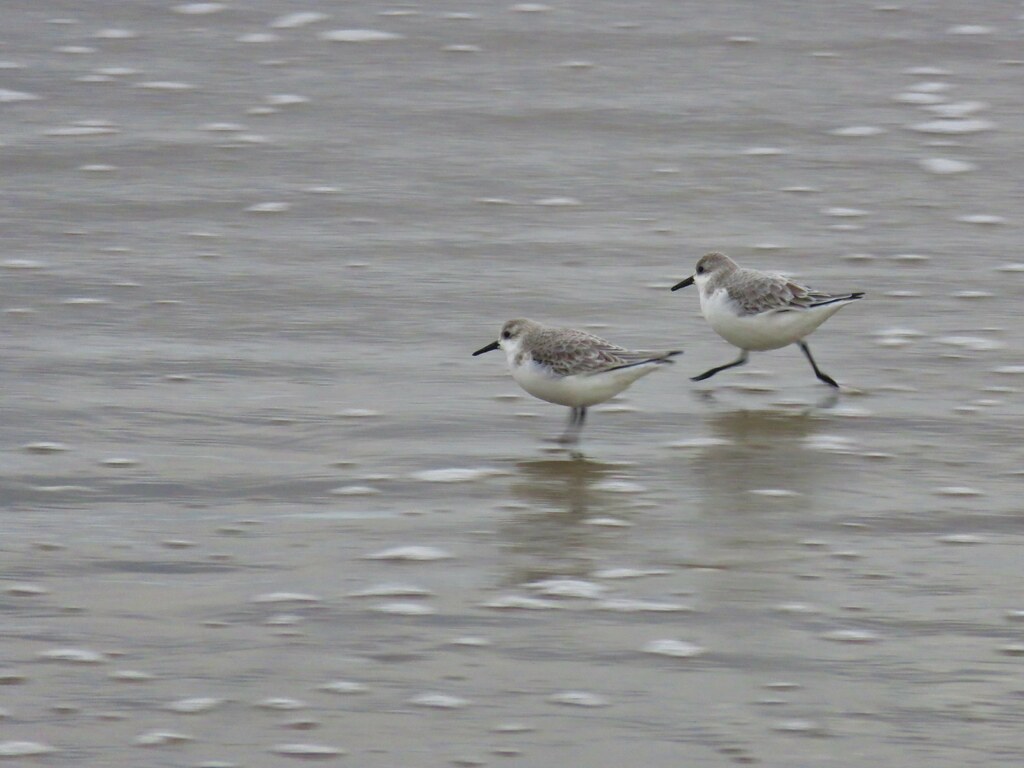
Sanderlings

After enjoying a peaceful moment on the beach we headed back the way we’d come, careful to not step on any of the numerous rough skinned newts that were out and about.
Tiny rough skinned newt

After recrossing the Siltcoos River and before returning to the Stagecoach Trailhead we crossed the main road to take the .7 mile Lagoon Trail.
Lagoon Trail

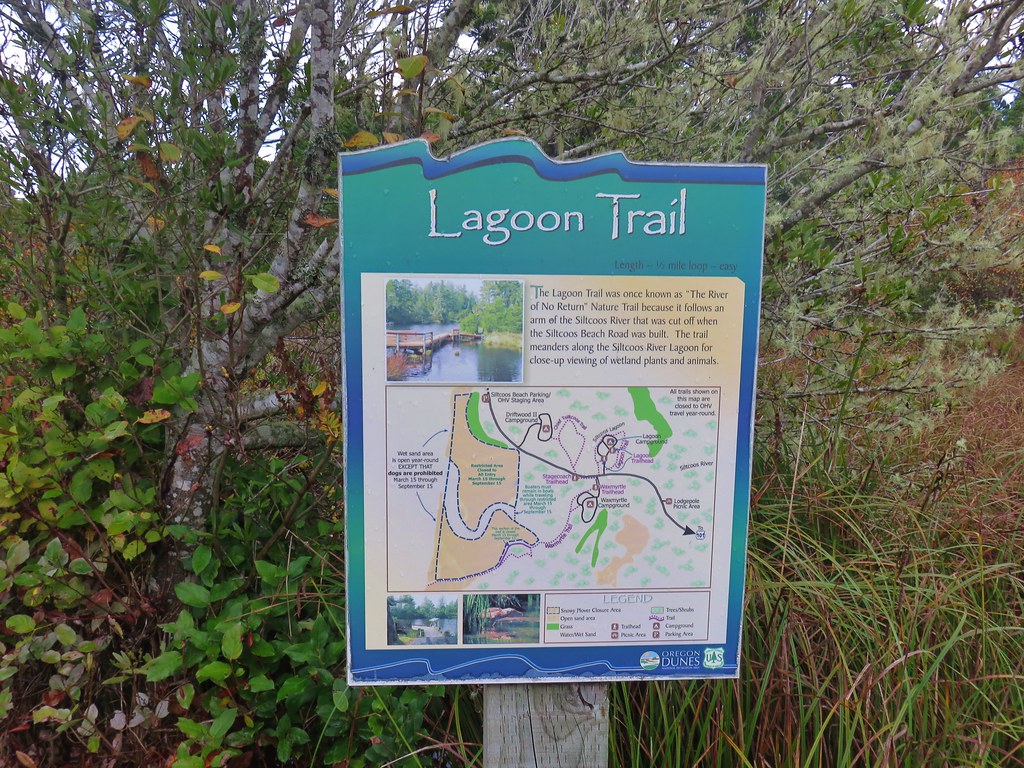
On the far side of a boardwalk the Lagoon Trail began a .7 mile loop around a campground in the middle of the Siltcoos Lagoon.
Lagoon Trail map

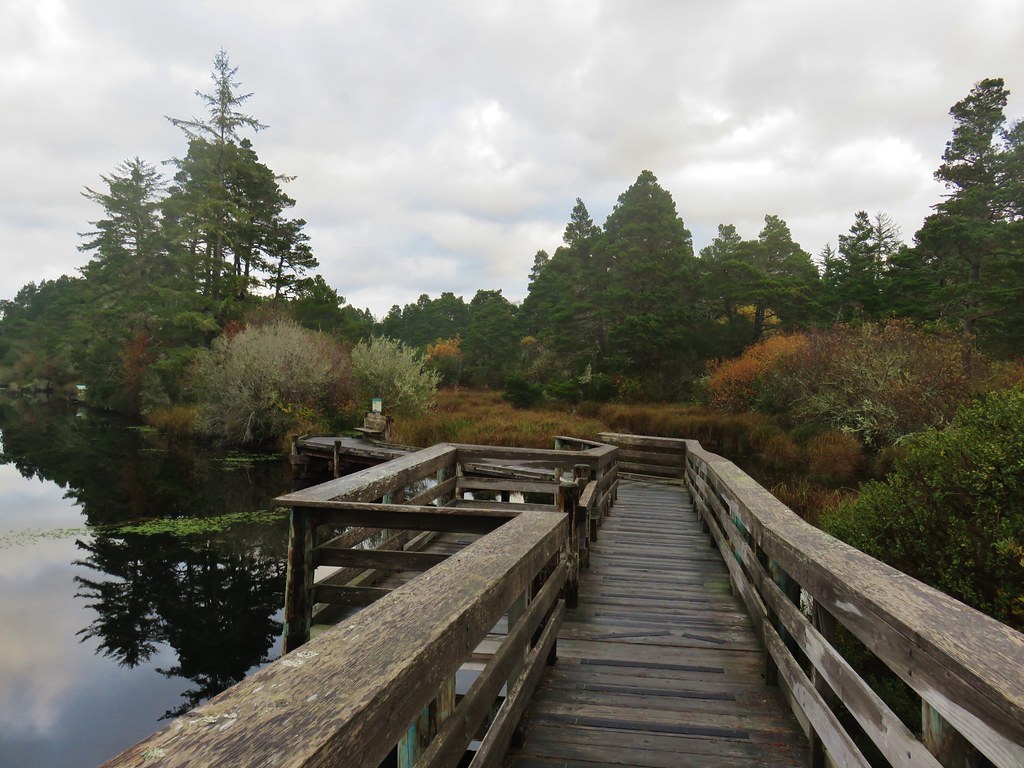
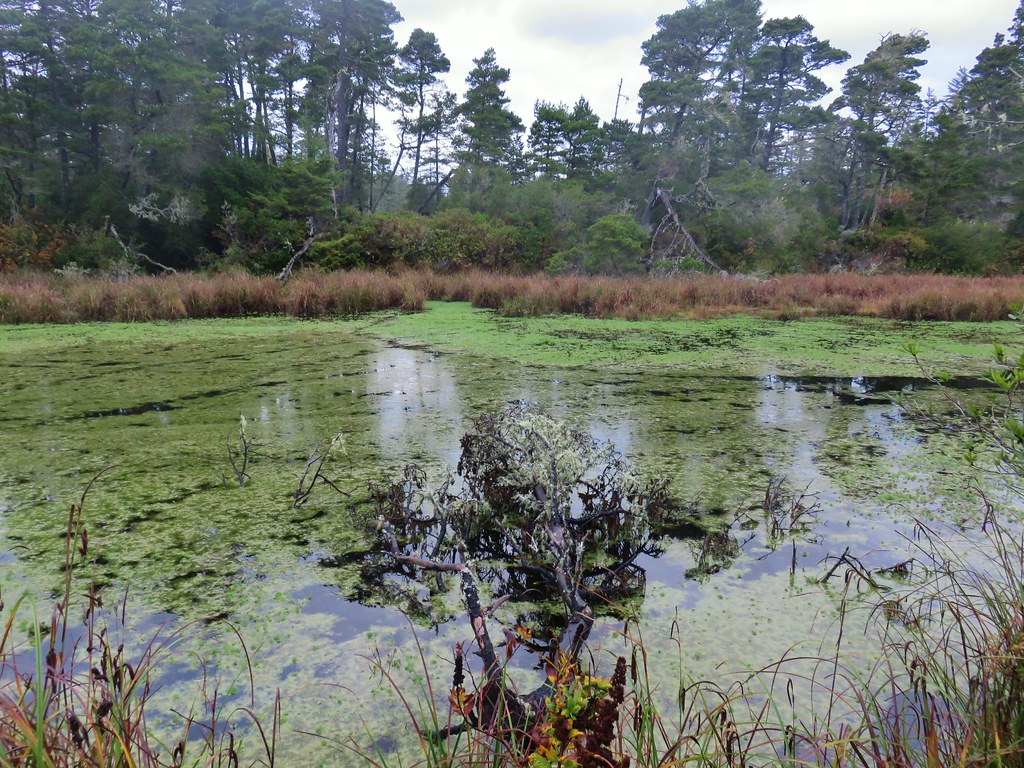
Siltcoos Lagoon

Siltcoos Lagoon

Interpretive sign along the Siltcoos Lagoon

Siltcoos Lagoon

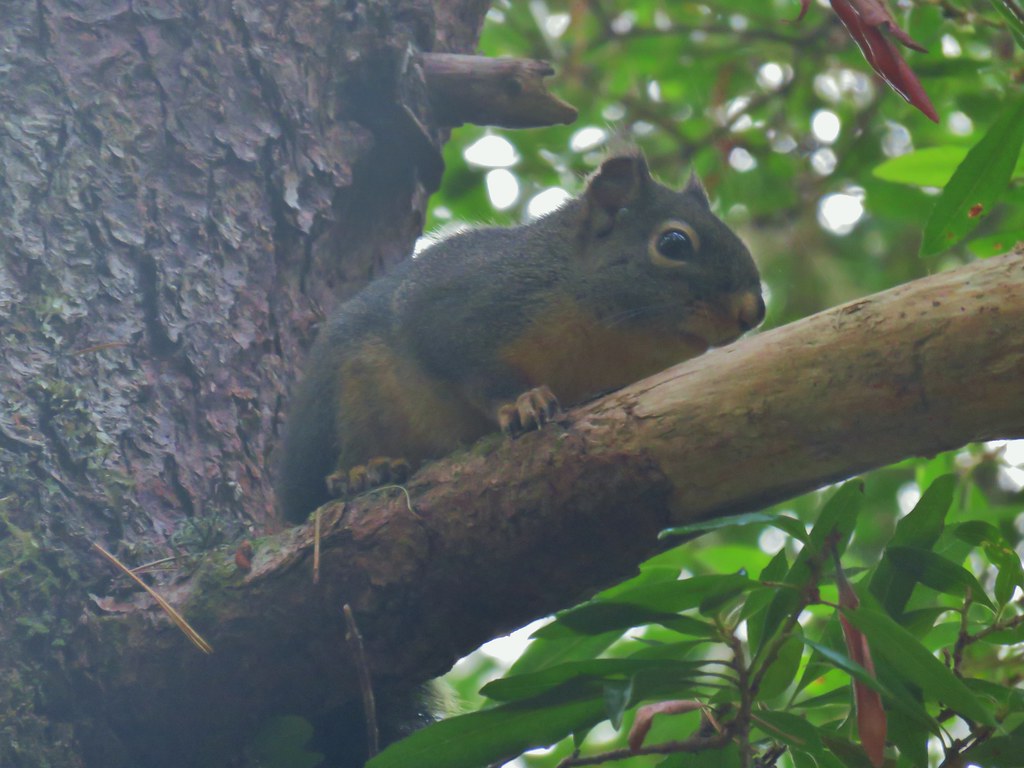
Squirrel

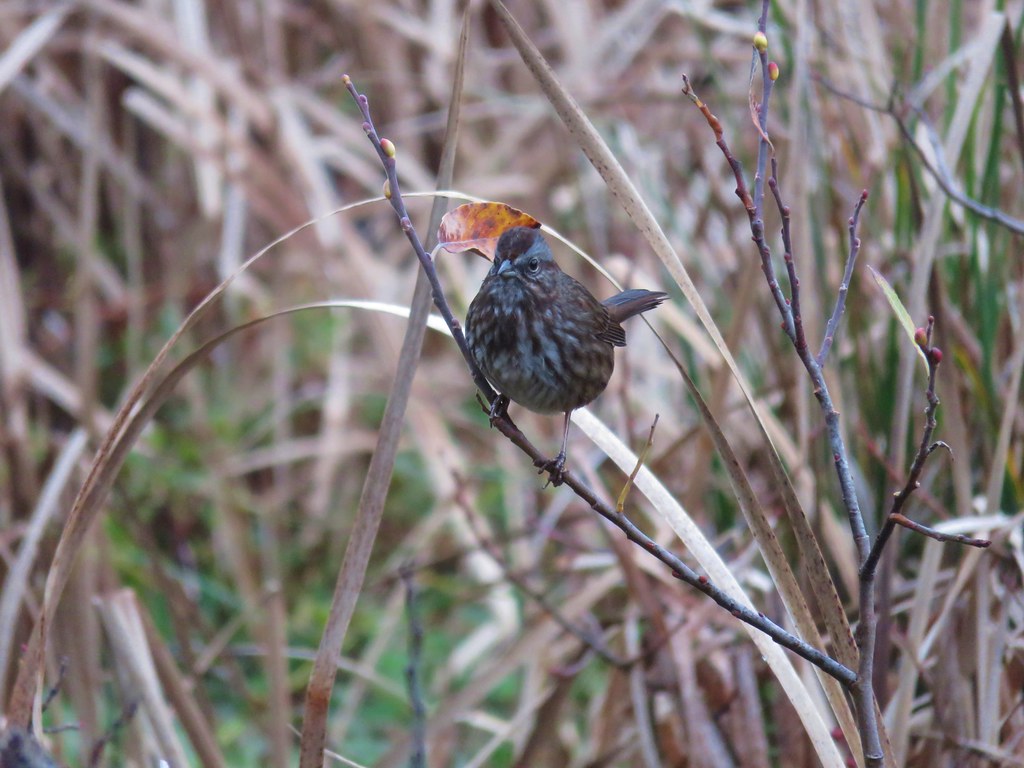
Sparrow

After finishing the loop we returned to our car. The hike here had only been 3.3 miles but had offered a nice variety of scenery and wildlife. We drove back to Highway 101 from the trailhead and crossed directly over it to reach the Siltcoos Lake Trailhead.
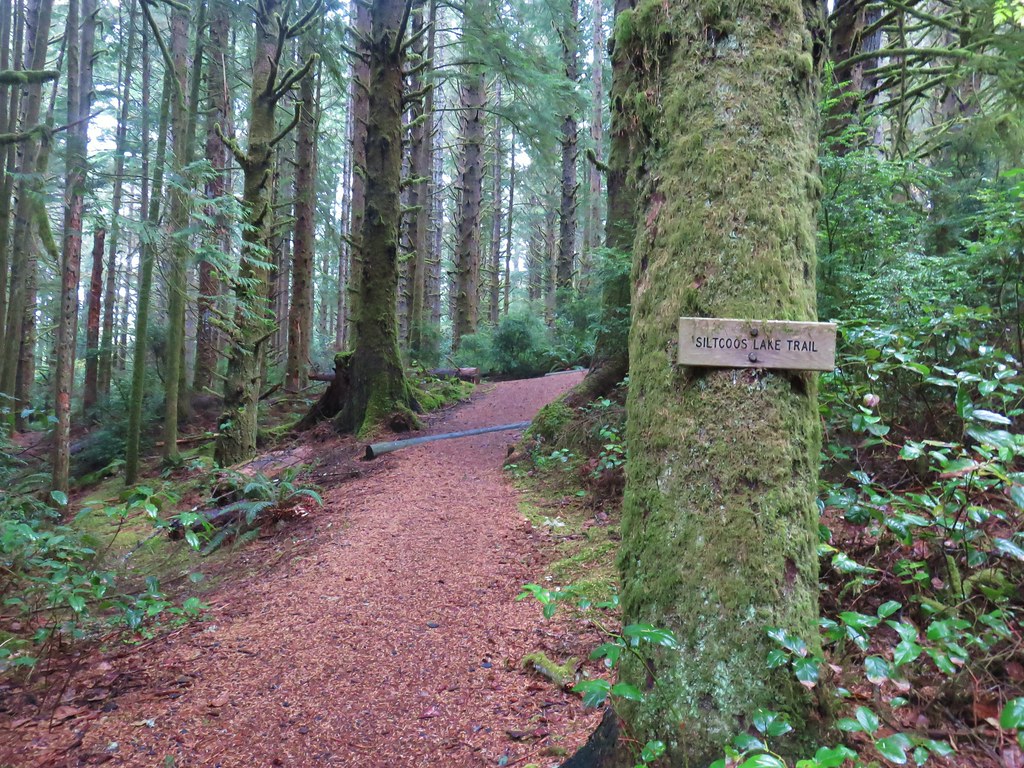
Siltcoos Lake Trailhead

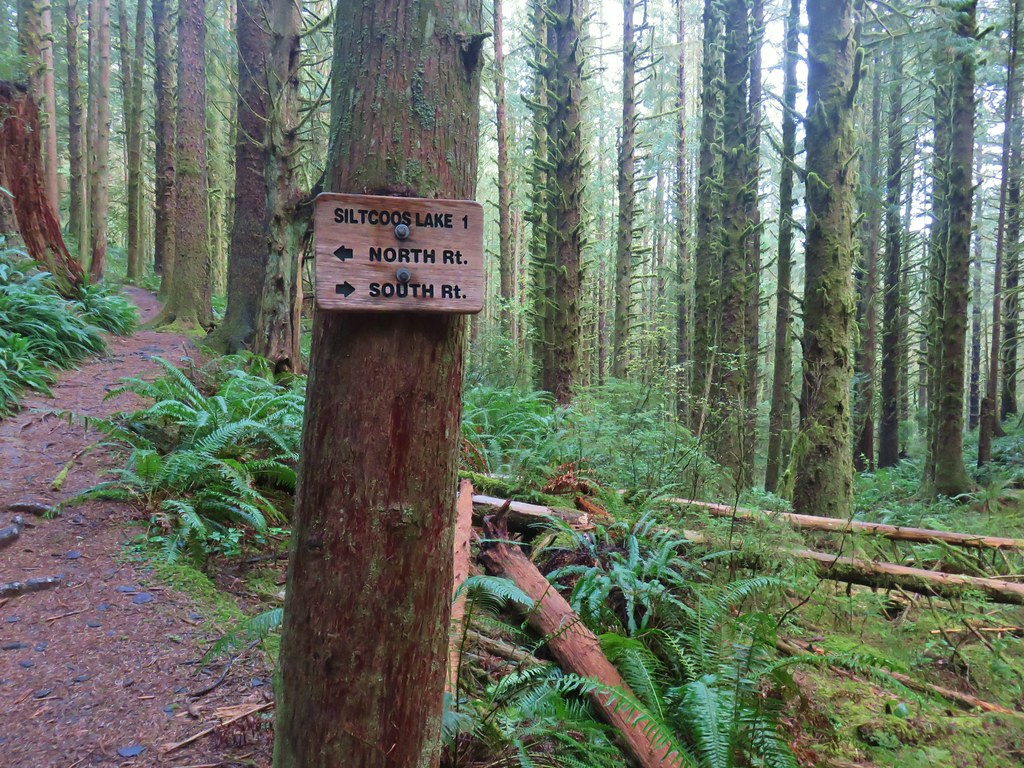
The Siltcoos Lake Trail with a .9 mile climb inland through a second growth forest to the start of a loop.
Siltcoos Lake Trail

Siuslaw forest along the Siltcoos Lake Trail

Siltcoos Lake Trail

Siltcoos Lake Trail

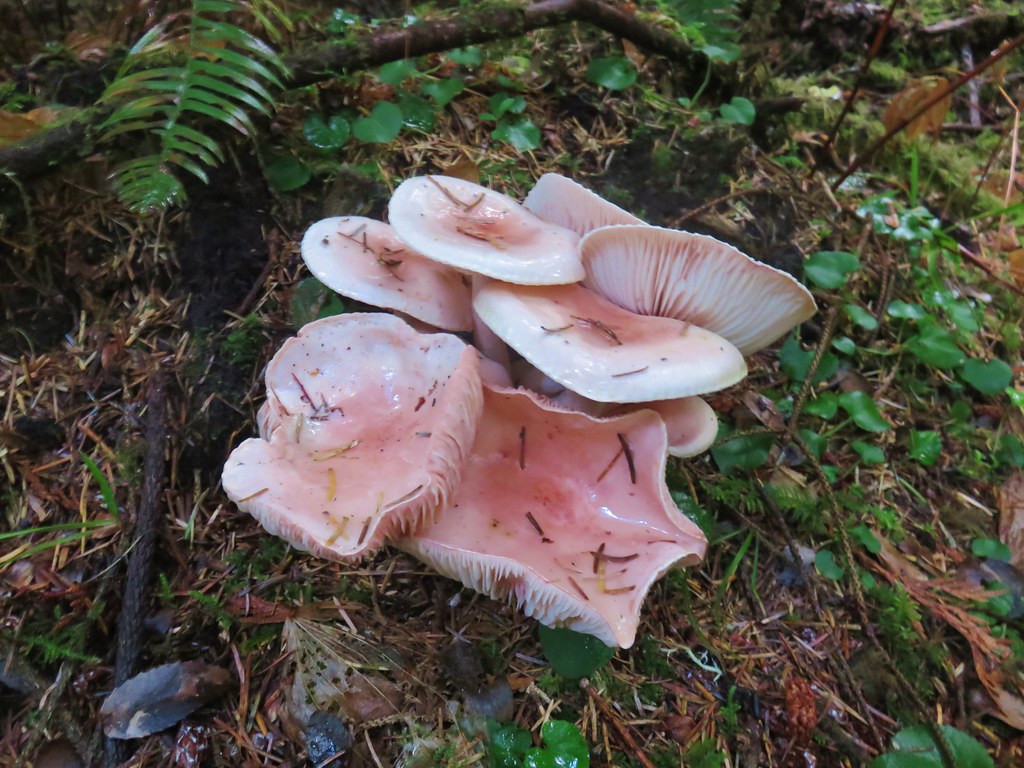
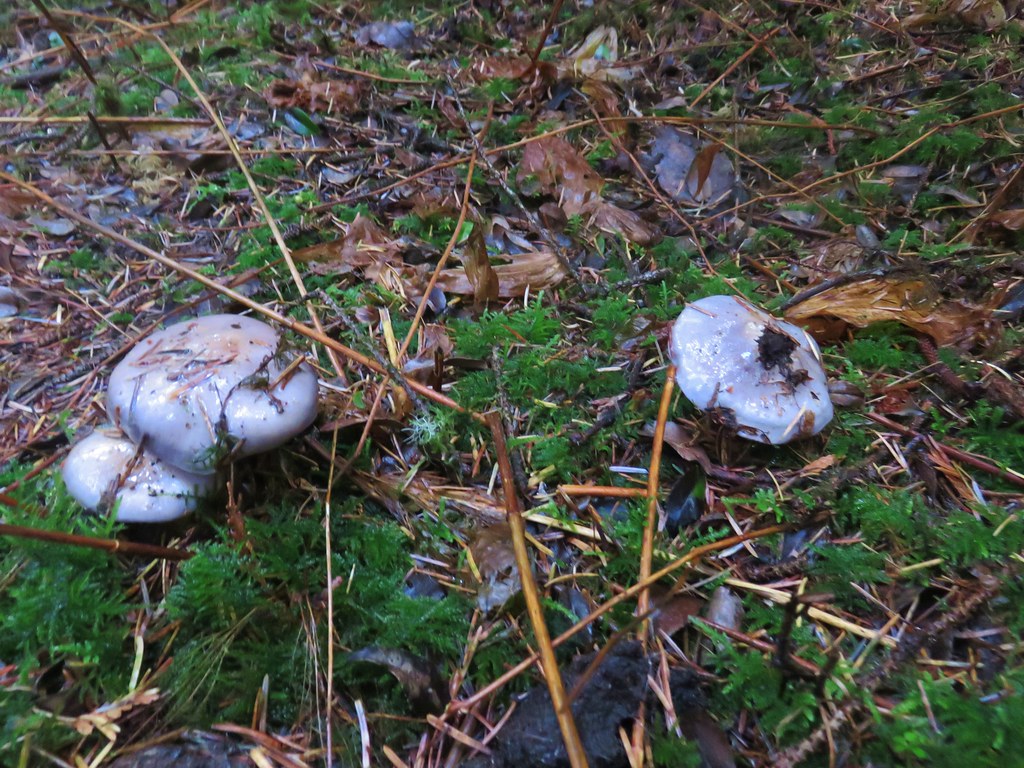
A wide variety of mushrooms grew along the forest floor where there were also more newts to watch out for.
Mushrooms

Mushrooms

Mushroom along the Siltcoos Lake Trail

Mushroom along the Siltcoos Lake Trail

Rough skinned newt next to an upturned mushroom

We turned right at the start of the loop and followed the trail a little over three quarters of a mile to another junction.
Sunbeams in the forest along the Siltcoos Lake Trail

Siltcoos Lake Trail

We had lost nearly all the elevation we had gained and the trail to right continued downhill for another quarter mile to South Camp, a tent site along the lake shore.
Siltcoos Lake

Siltcoos Lake

The lake was very pretty and full of birds but the nearly constant sound of gunfire took a little away from the enjoyment.
Birds on Siltcoos Lake

Birds on Siltcoos Lake

We climbed back up to the Sitlcoos Lake Trail and continued a half mile on the loop which dropped to a small creek crossing before arriving at a sign for the tent sites at North Camp where we again turned right and visited the lake shore.
Siltcoos Lake Trail

Siltcoos Lake

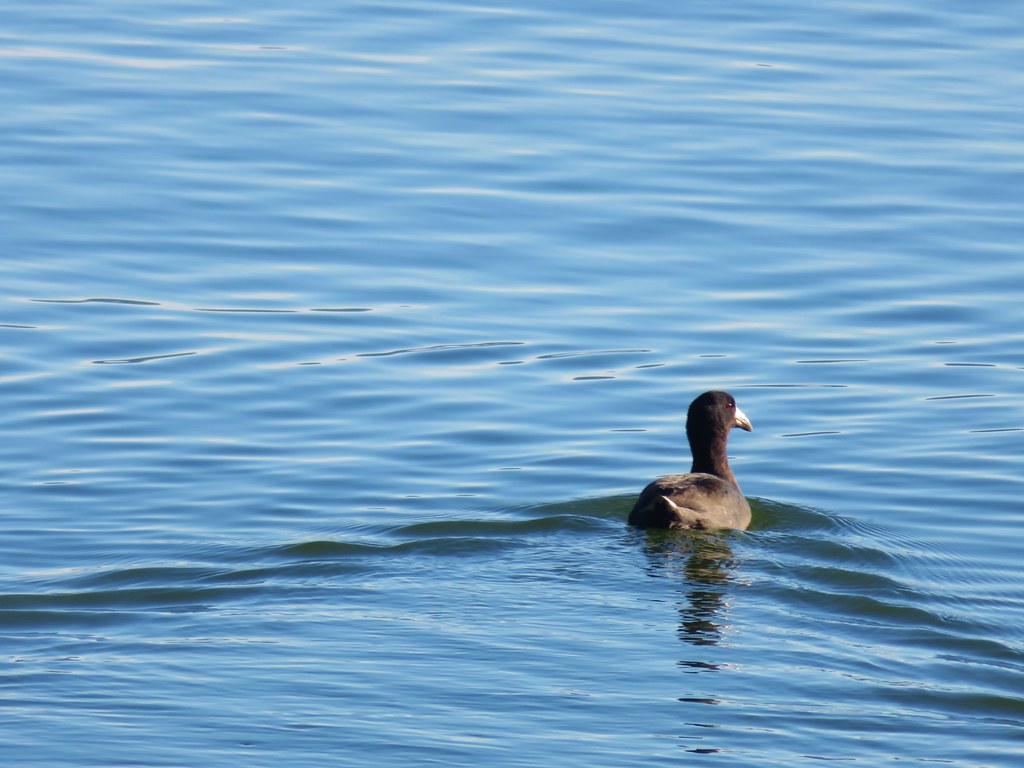
American coot

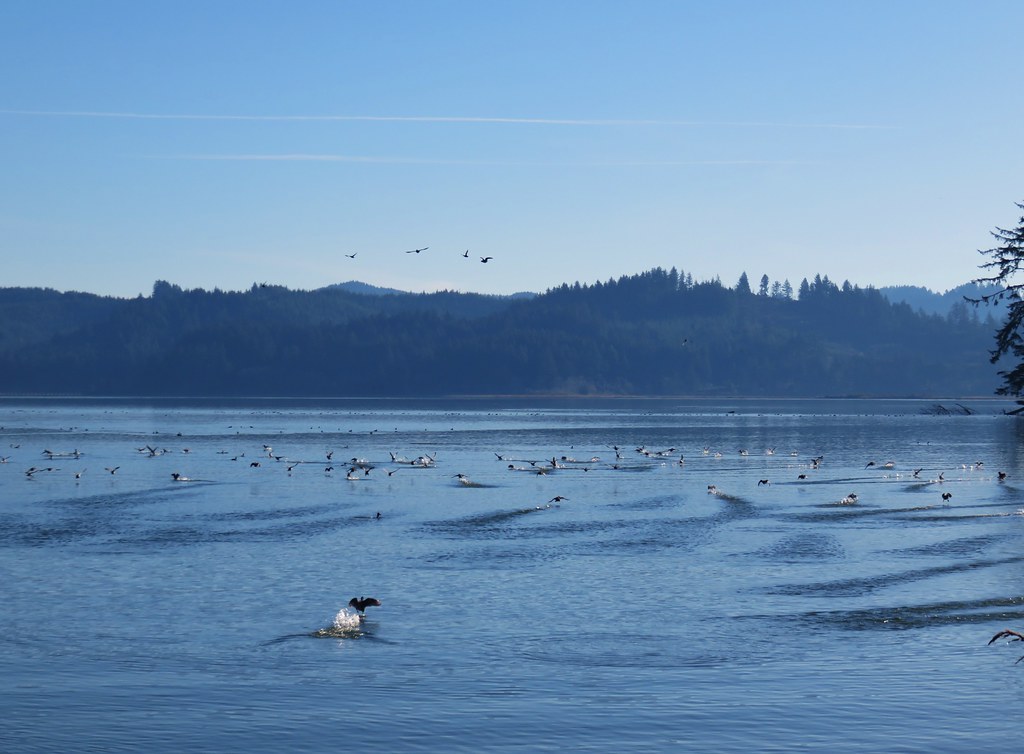
Birds taking flight from Siltcoos Lake

Following paths north along the shore led us past all the sites and back to the Siltcoos Lake Trail.
Sunbeams in the Siuslaw National Forest

Siltcoos Lake Trail

Just under a mile and a quarter from North Camp we finished the loop and then returned the .9 miles to the trailhead to complete the 4.4 mile hike.

Next we drove north on Highway 101 just over 4.5 miles to signs for Jessie M. Honeyman State Park where we turned east on Canary Road. We followed this road for a half mile before turning right into the East Woahink Day Use Area.

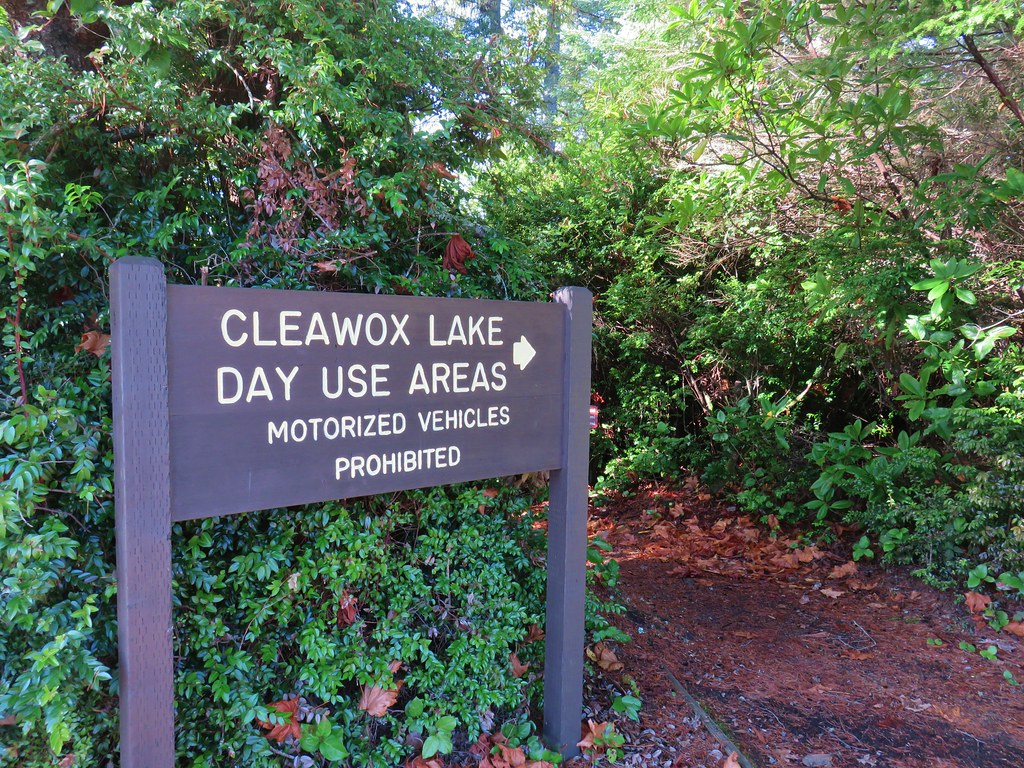
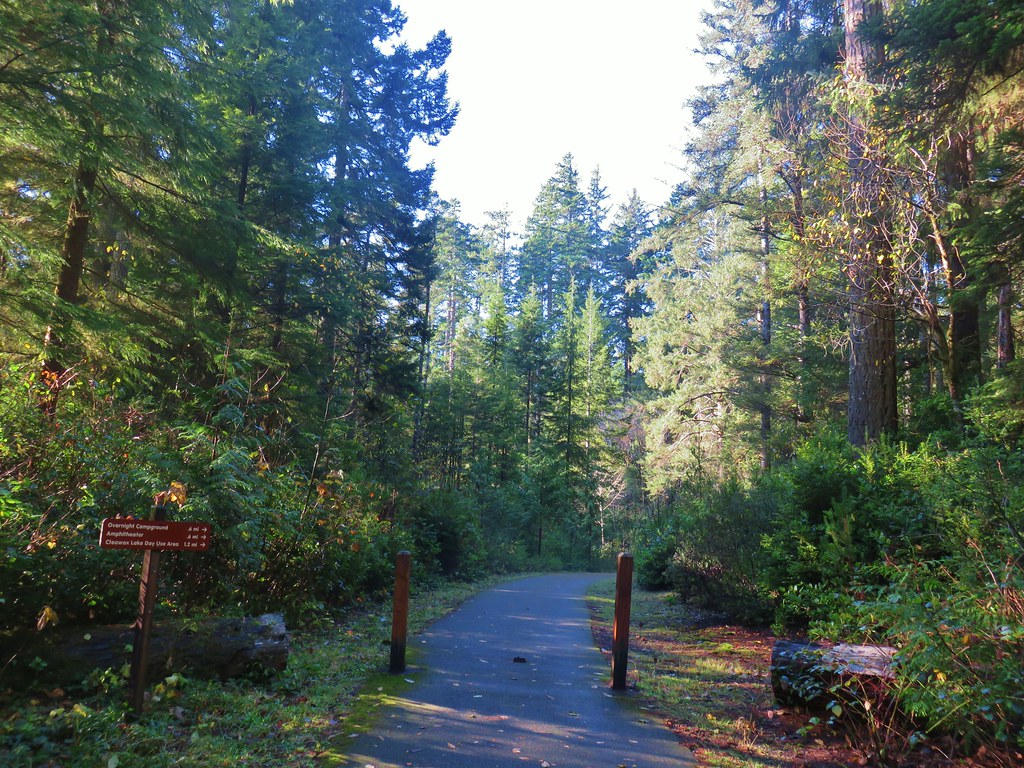
After parking in the large parking area we walked back toward the entrance to a large sign for Cleawox Lake Day Use Areas.
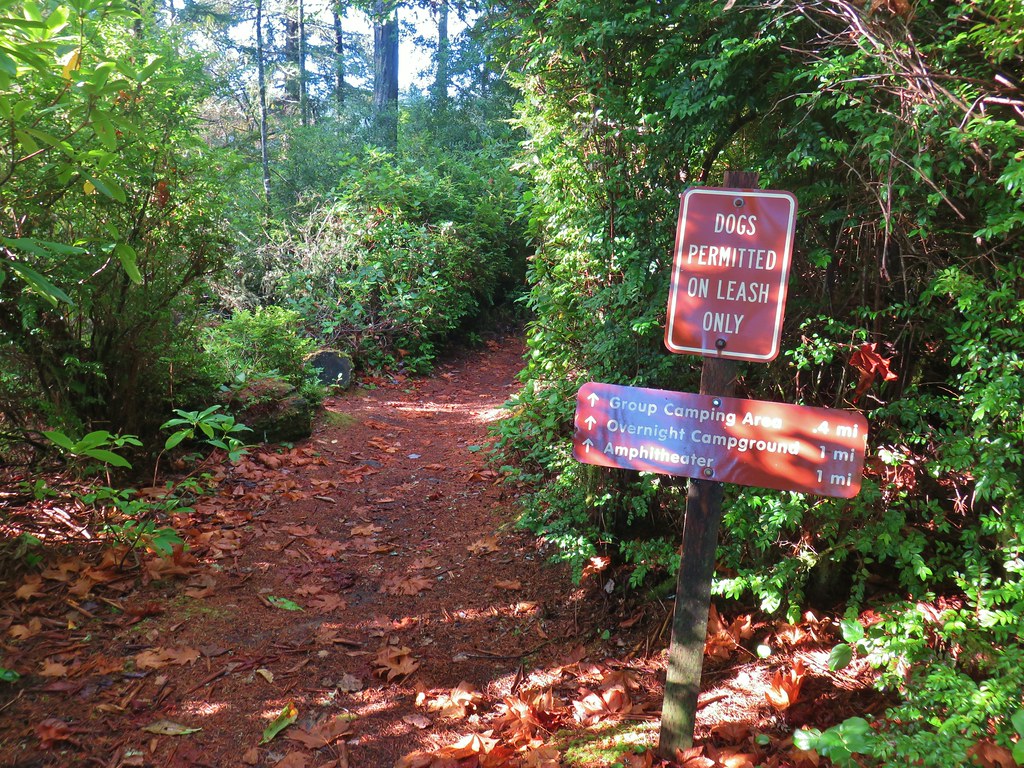
Trail from the East Woahink Lake picnic area

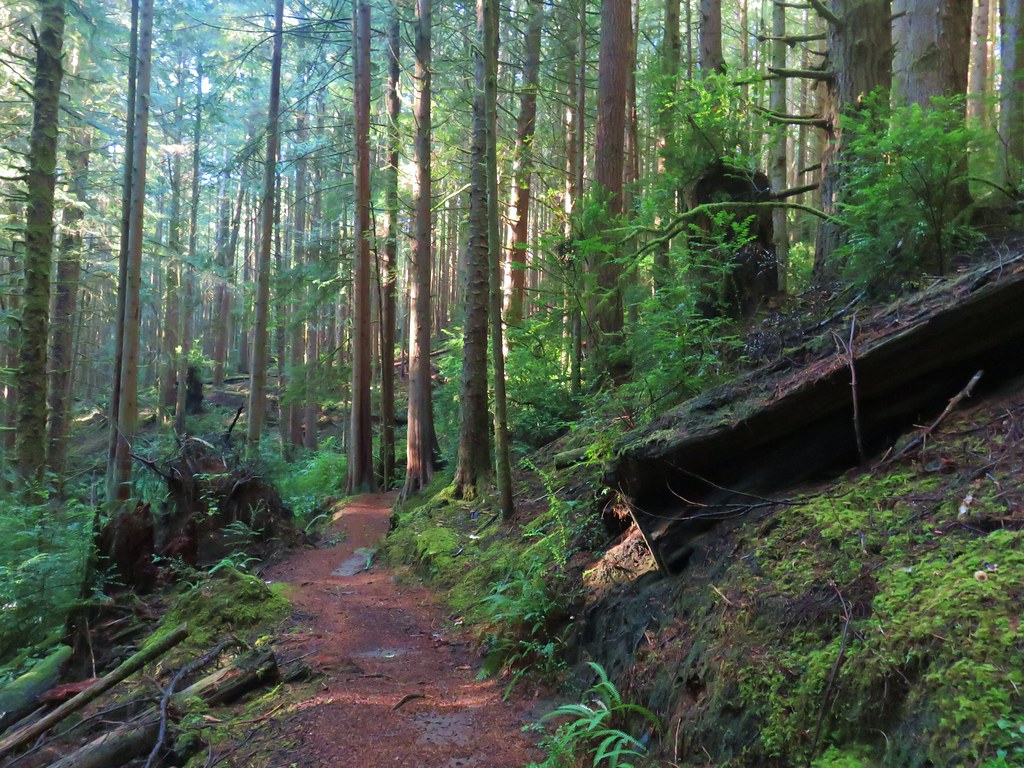
This path led briefly through a forest before joining Canary Road to cross a portion of the lake.
Trail between Woahink and Cleawox Lake

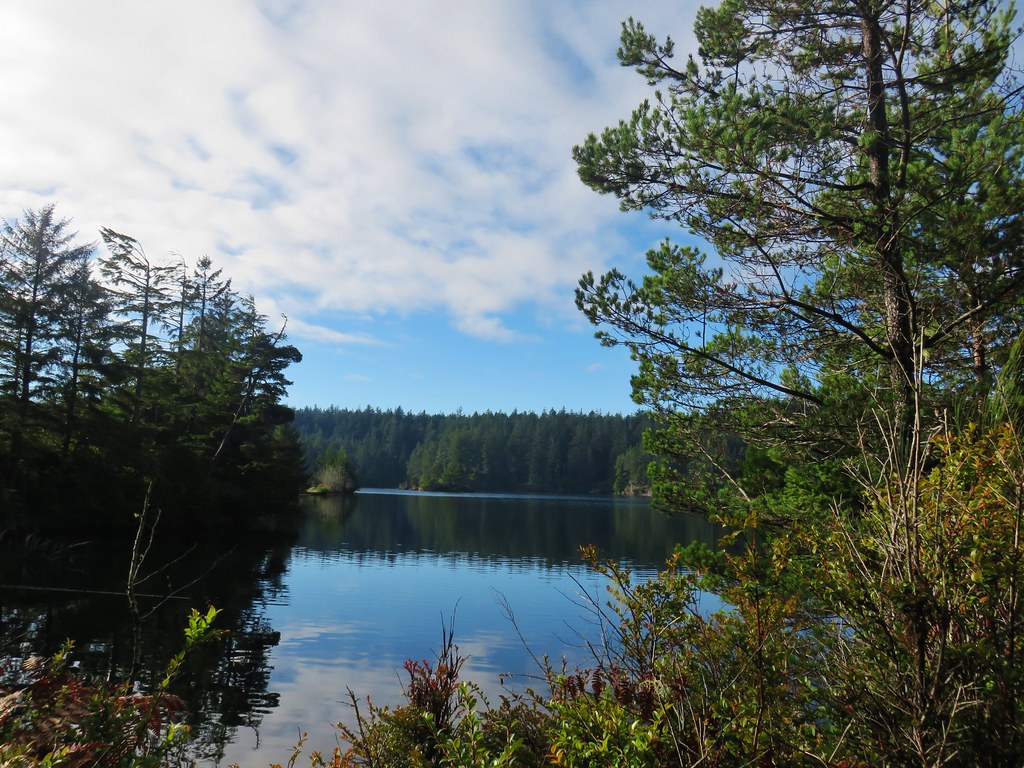
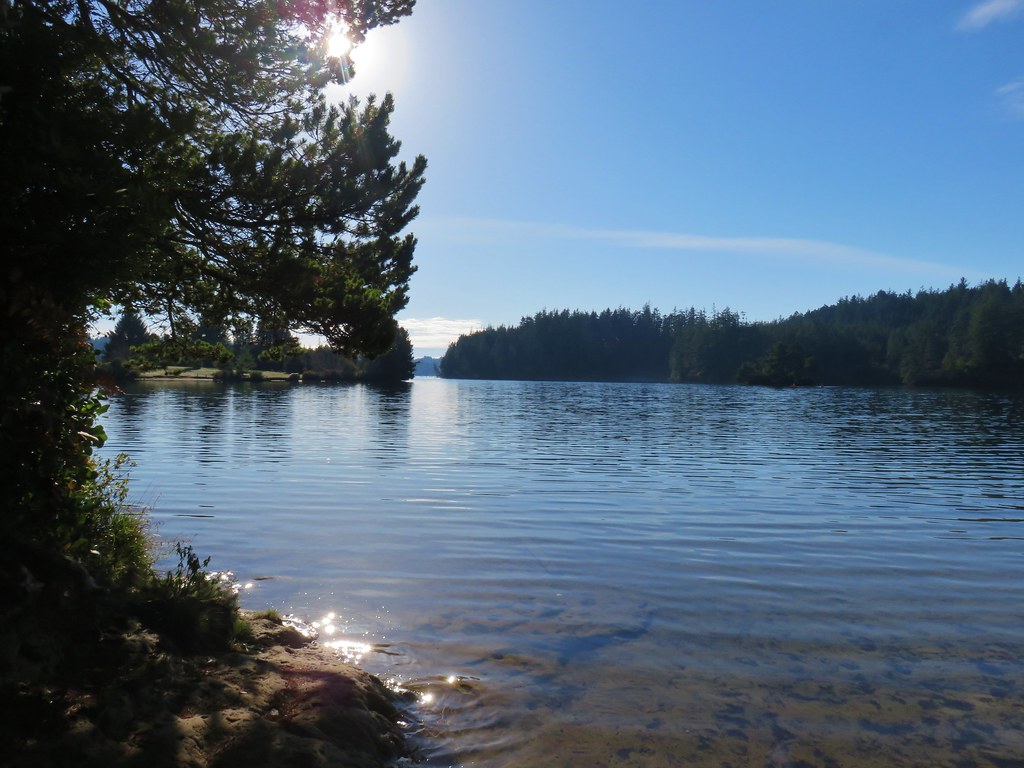
Woahink Lake

After passing over the water along the road the trail dipped back into the forest and immediately forked. The right hand fork led directly into the West Woahink Day Use Area while the left fork (which we took) looped around the day use area along the lake shore passing picnic tables and a small beach.
Beach along Woahink Lake

Woahink Lake

On the far side of the West Woahink Day Use Area we once again found ourselves on the shoulder of Canary Road passing over more of the lake. The trail again veered away from the somewhat busy road and we followed pointers for Cleawox Lake to a paved bike path leading over Highway 101.
Trail between Woahink and Cleawox Lake

Trail between Woahink and Cleawox Lake

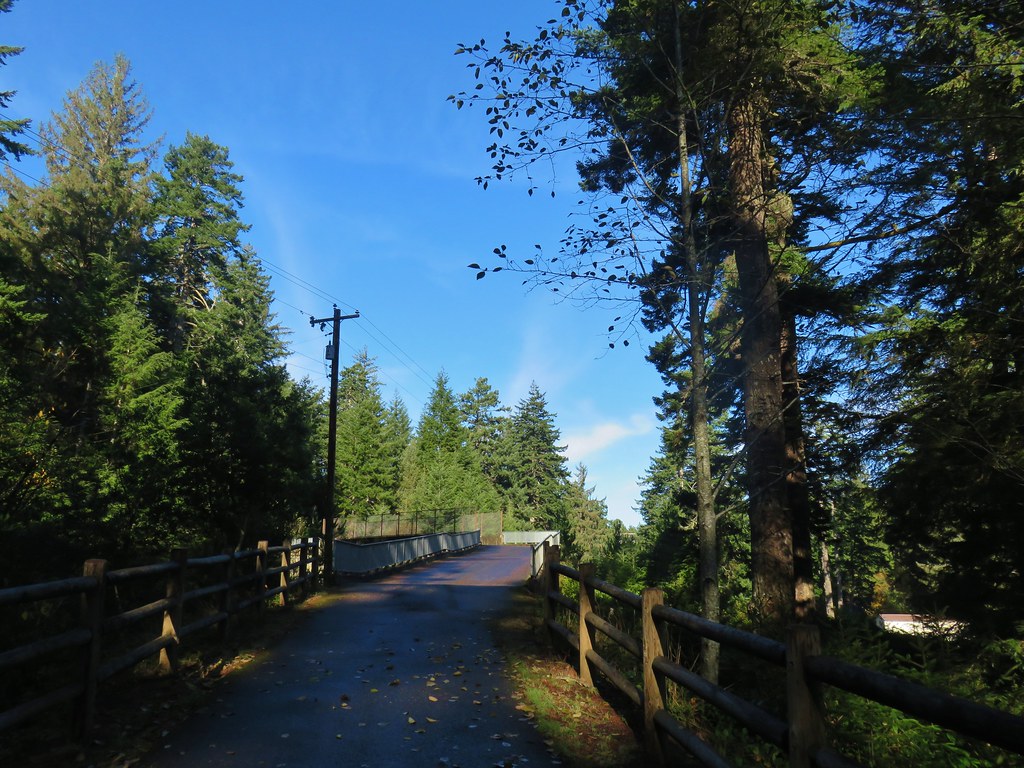
Path over Highway 101 in Jesse M. Honeyman State Park

Rough skinned newts had become the theme for the day and even the bike path was not free of them.
Rough skinned newt

Shortly after crossing over the highway we turned right off the bike path at a trail sign.
Trail between Woahink and Cleawox Lake

This path led downhill past a small stone structure and across a couple of paved roads before reaching Cleawox Lake.
Stone structer in Jessie M. Honeyman State Park

Trail between Woahink and Cleawox Lake

Cleawox Lake

On the far side of lake was the day use area complete with a very nice bathhouse. We turned right at the lake and made our way around the water to the bathhouse and swimming area.
Cleawox Lake

Bathhouse at Cleawox Lake

Cleawox Lake

We could imagine that this would be a very busy place at other times of the year but on the second weekend in December there were only a few other people that we could even see and they were all across the water in other areas. We found a dry bench and sat a for a bit listening to a sparrow sing.
Sparrow

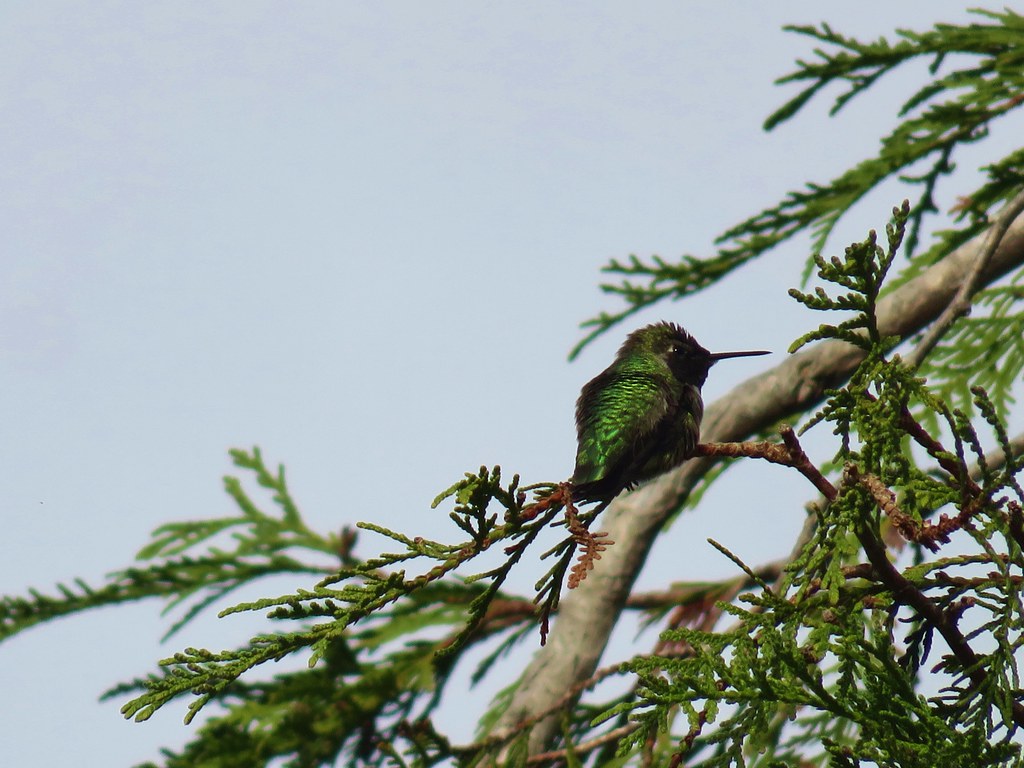
As we started to head back an Anna’s hummingbird zoomed by and landed in a nearby tree.
Anna's hummingbird

Anna's hummingbird

We passed by the trail that we had come down to the lake on and continued along the water to a large parking area on the opposite side of the bathhouse.
Cleawox Lake

At the end of the parking lot a path led to a dune along the lake, but before we headed out onto the sand we took a very short side trip on the signed Nature Trail to visit Lily Lake.
Nature Trail

Lily LakeLily Lake

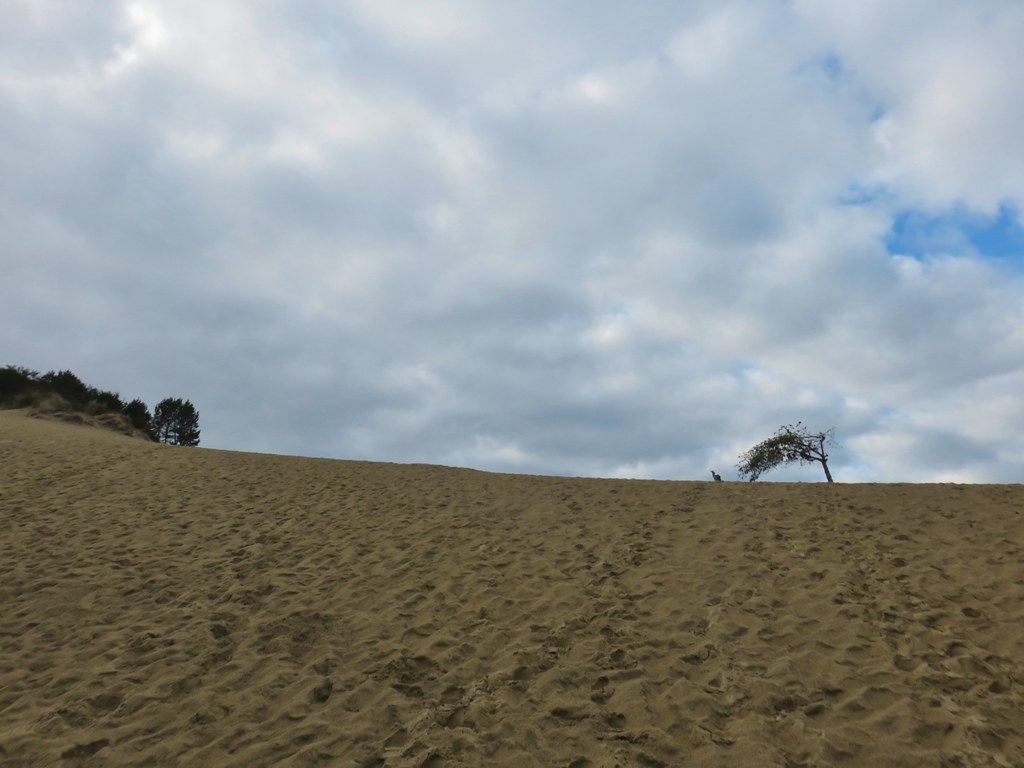
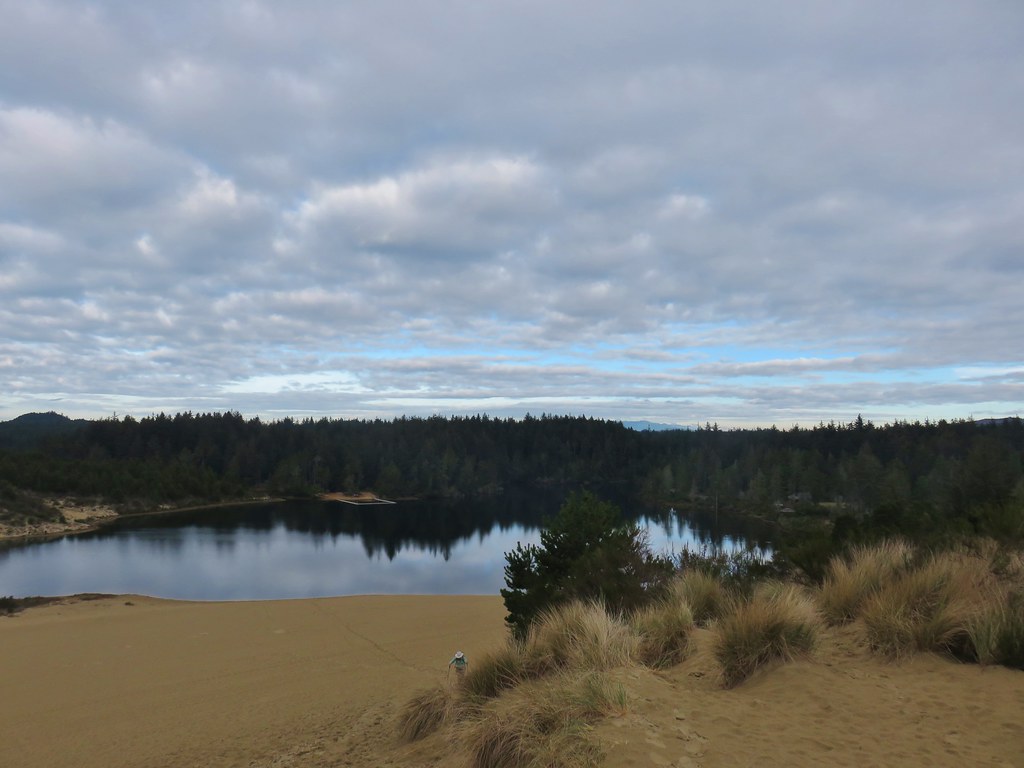
After seeing the small lake we headed up the sand dune overlooking Cleawox Lake.
Dunes Trail

Dune in Jessie M. Honeyman State Park

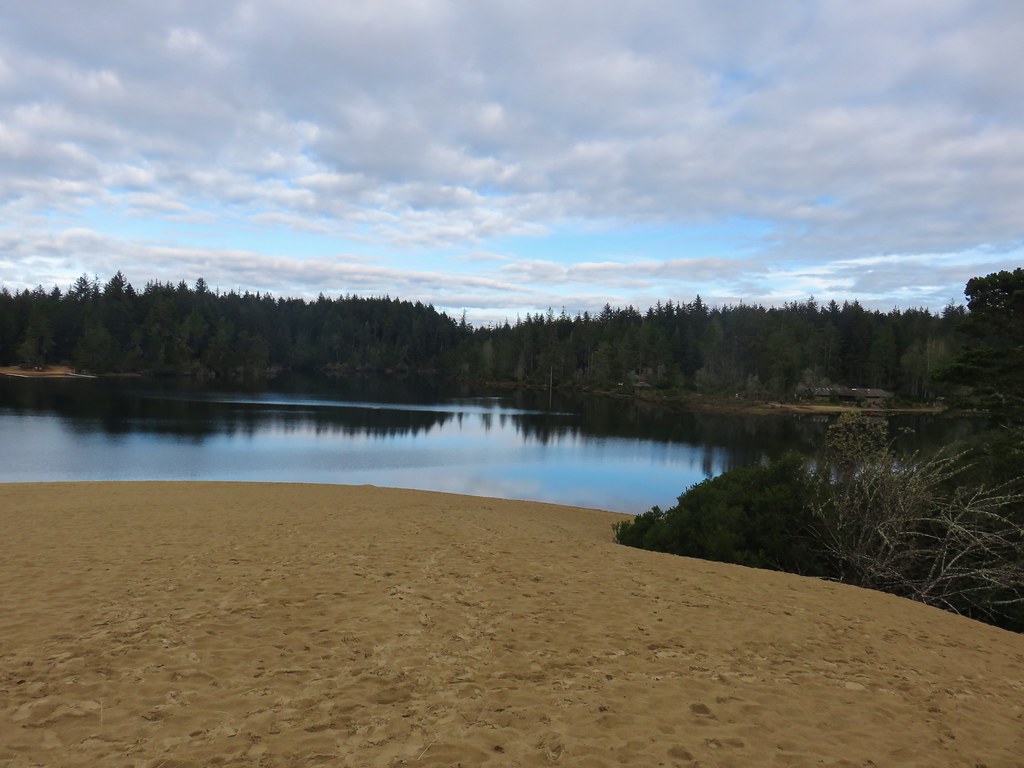
Cleawox Lake

We climbed to the top of the dune and surveyed the surrounding area.
Dune in Jessie M. Honeyman State Park

Cleawox Lake

Pacific Ocean from a dune in Jessie M. Honeyman State ParkThe Pacific Ocean from the dune.

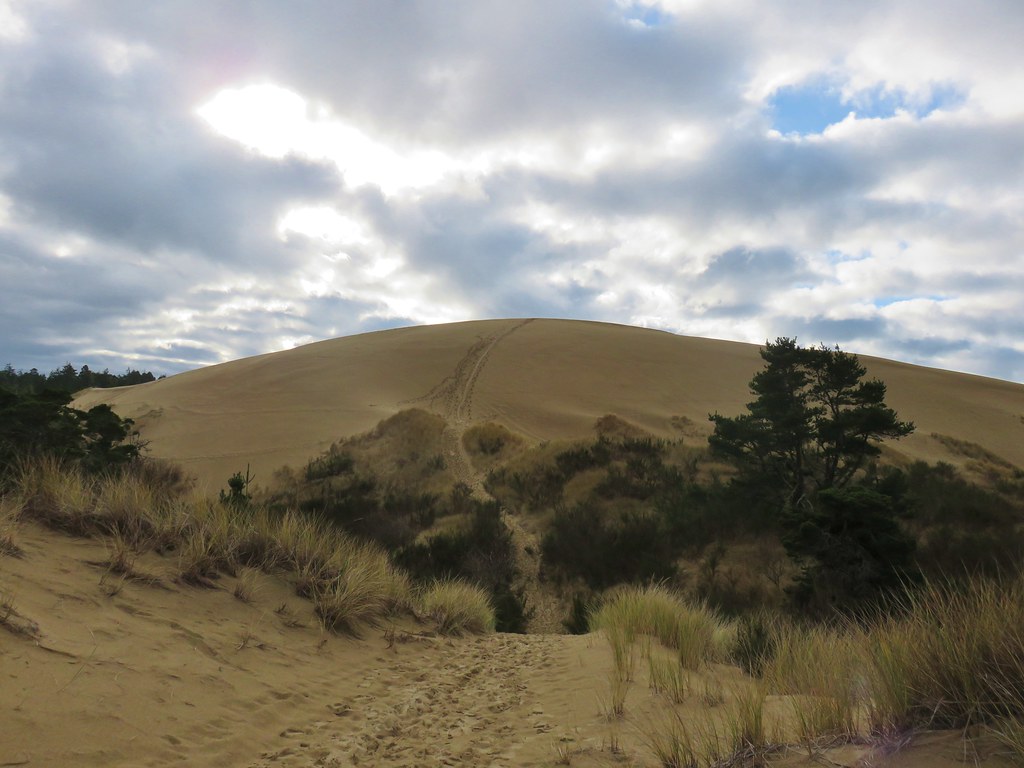
To the south we could see our goal, the largest sand dune (at least in that area) in Jessie M. Honeyman State Park.

Jessie M. Honeyman State Park

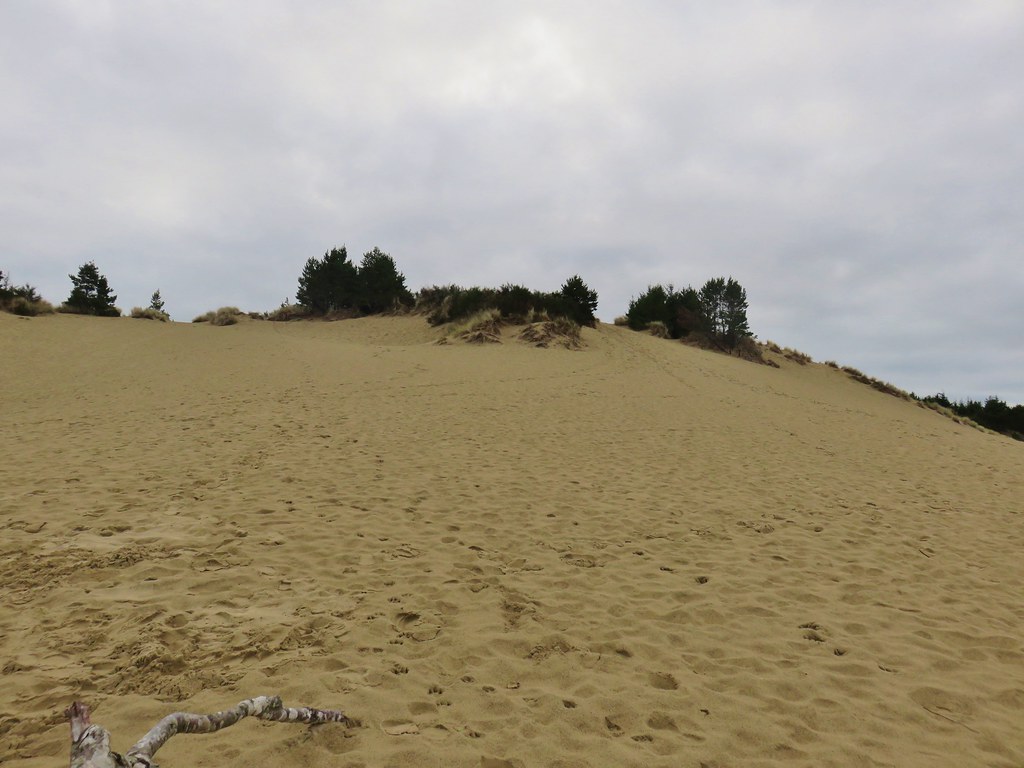
It was a half mile of sandy up and down walking between the two dunes.
Trail through the dunes at Jessie M. Honeyman State Park

Dune Trail

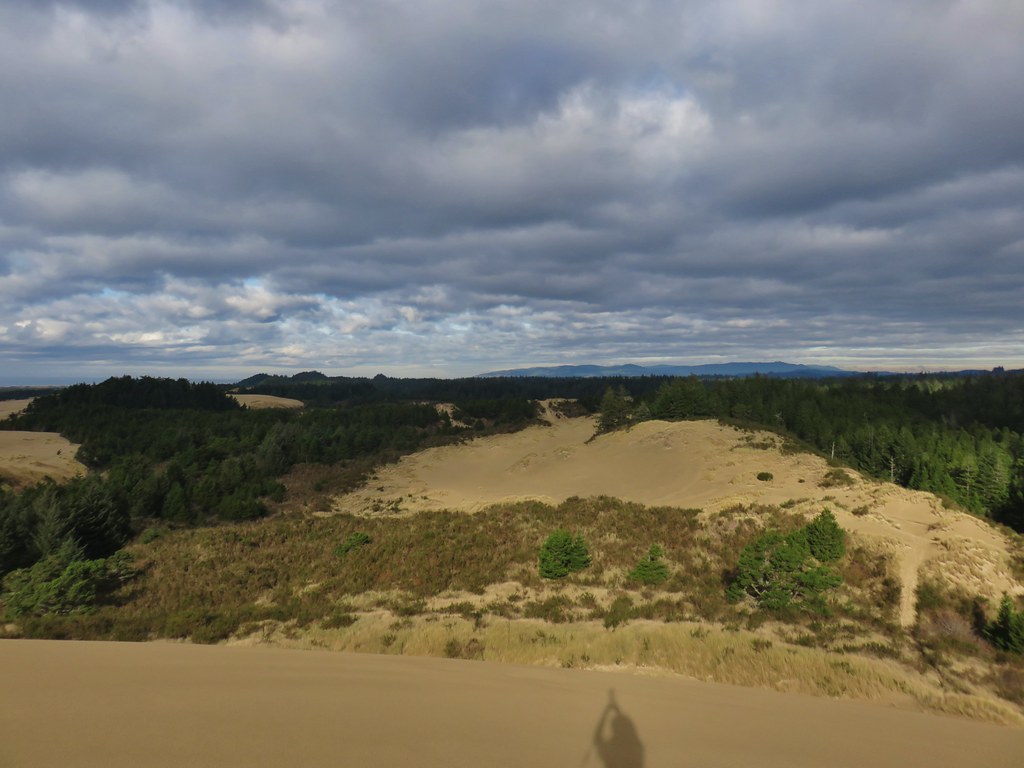
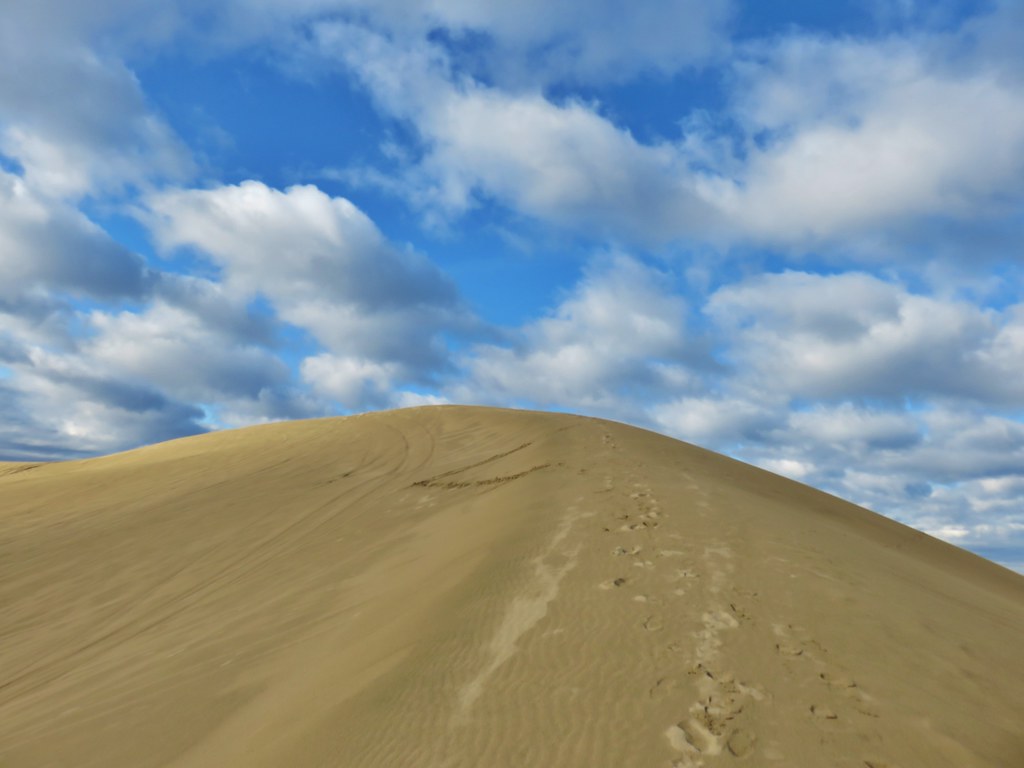
After a nearly 150′ climb we arrived at the top of the dune and its 360 degree view.
View from the tallest dune in Jessie M. Honeyman State Park

View from the tallest dune in Jessie M. Honeyman State Park

View from the tallest dune in Jessie M. Honeyman State Park

View from the tallest dune in Jessie M. Honeyman State Park

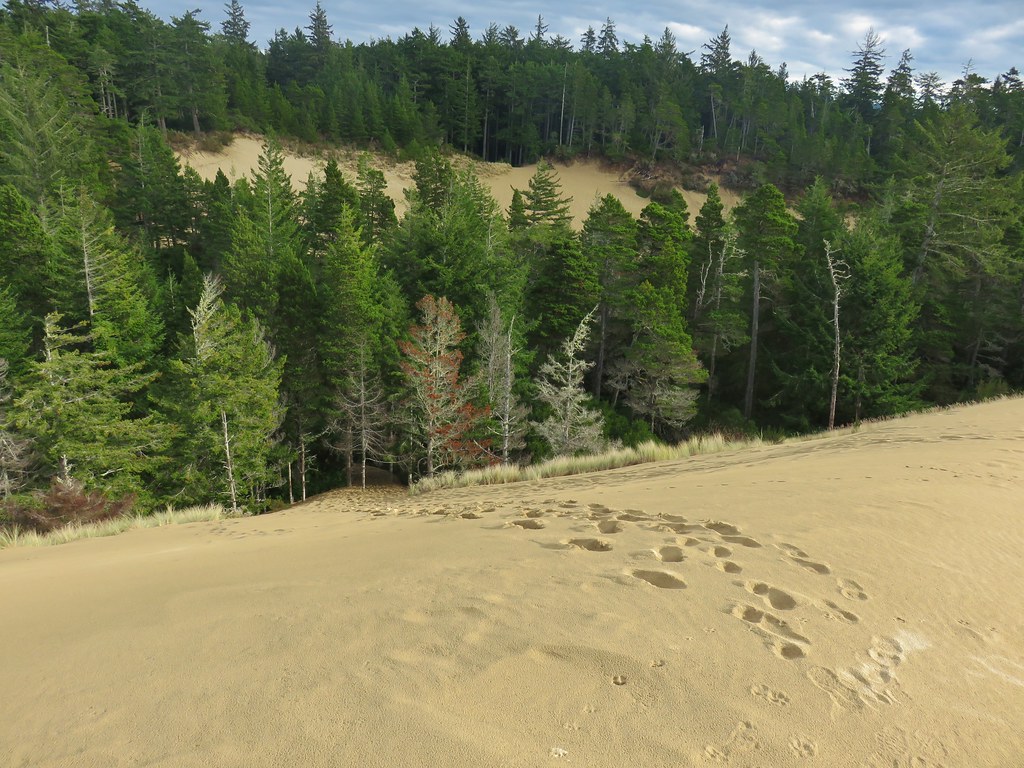
Although off road vehicles are allowed in much of the park this dune (and our route to and from it) are off limits. After soaking in the view (and watching a couple of motorcycles in the distance) we followed footprints steeply downhill to the east.
Path down the dune

Dune in Jessie M. Honeyman State Park

After a short stint through trees we followed tracks around a sandy bowl reentering the trees just above the park’s campground.
Dune in Jessie M. Honeyman State Park

Once in the campground we headed north following the paved roads to Loop “B”.
Campground in Jessie M. Honeyman State Park

We turned east along the northern end of Loop B which brought us to the bike path that we had crossed Highway 101 on earlier.
Trail to East Woahink Lake Day Use Area

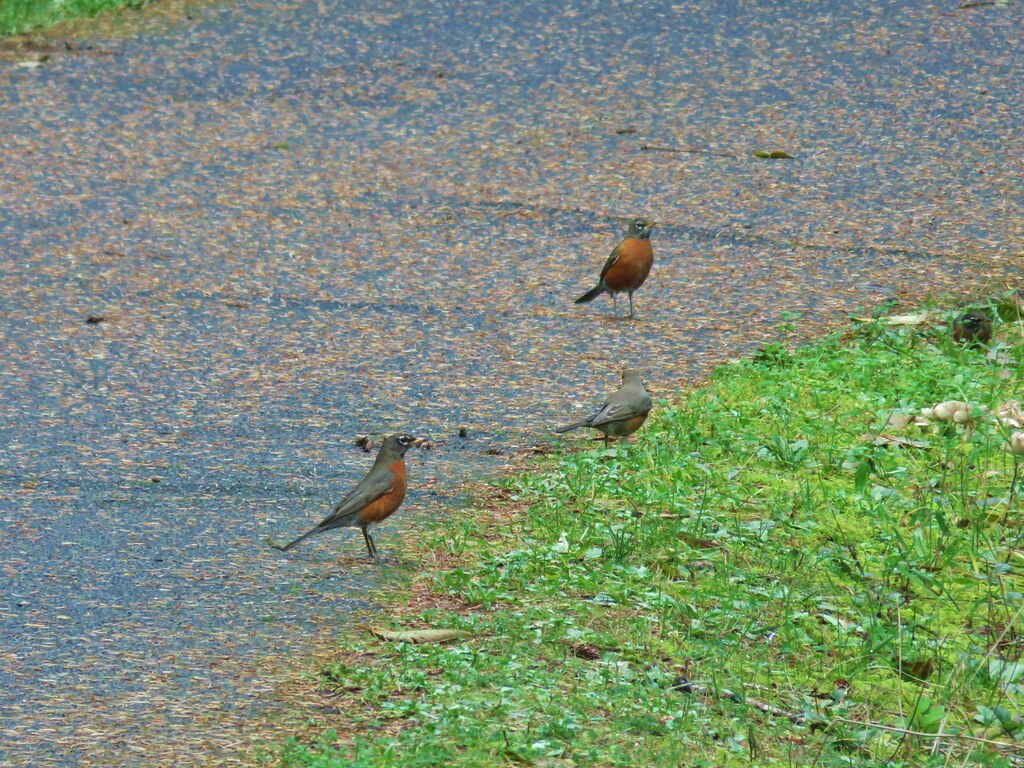
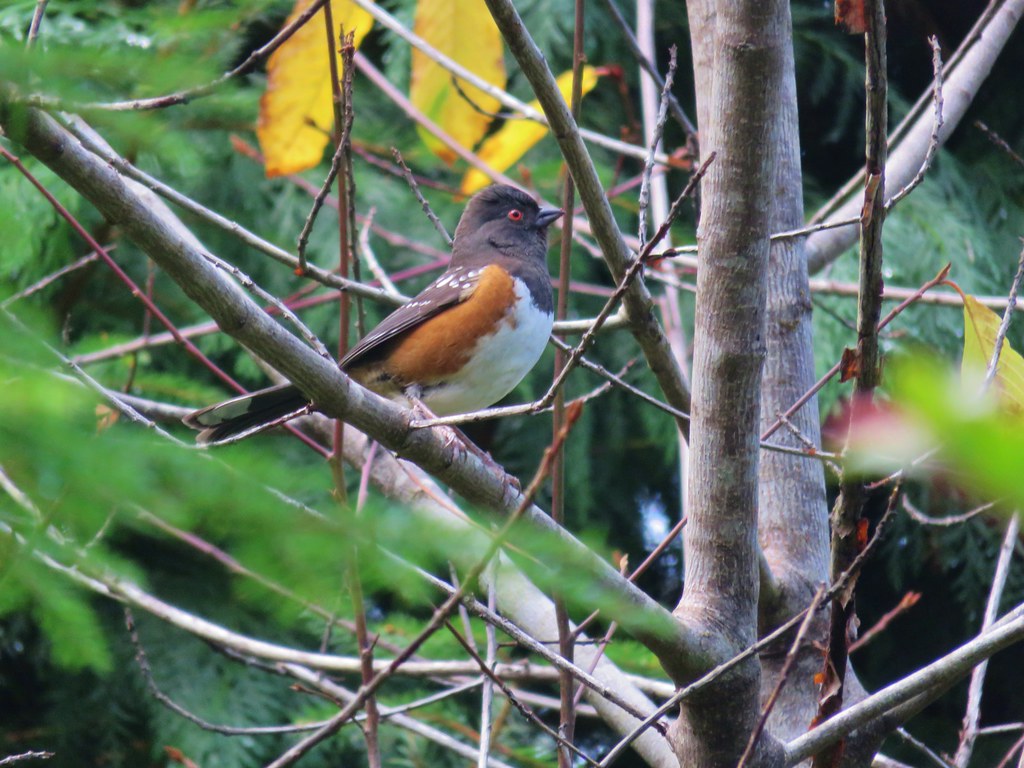
We followed path back up and over Highway 101 and returned to the East Woahink Lake Day Use Area. The path was full of birds now, mostly robins but we also spotted a nice spotted towhee.
Robins

Spotted towhee

The only thing we did differently on the way back was that we went through the West Woahink Day Use Area instead of around it which allowed us to use the facilities there before our drive home. This was our longest hike of the day at 5.2 miles bringing the days total to 12.9.

We had been all prepared for wet and rainy weather, but instead we had a nearly perfect day for hiking at the coast. Happy Trails!

Flickr: Siltcoos River, Siltcoos Lake, & Honeyman State Park

Categories
Central Coast Hiking Oregon Oregon Coast Trip report

Baker Beach and Rock Creek Wilderness

Since 2013 our first hike of the year has been somewhere along the Oregon Coast.  Often the weather at the coast during January is nicer than other parts of the State making it a great time to visit.  This was certainly the case this year as the first part of January saw near record snows and freezing temperatures over much of the State.  The coast had not escaped the weather entirely but by the time we headed out for our first hike of the year, things were much nicer there than at home in the Willamette Valley.

Our destination was Baker Beach Camp just north of Florence, OR. This was a change (already) to our plans for 2017 but the forecast for the area was just too good to pass up. Mostly sunny skies and a high of 48 degrees was what was being called for so we left 23 degree Salem early in the morning and headed down to Eugene then west to Florence on Highway 126.

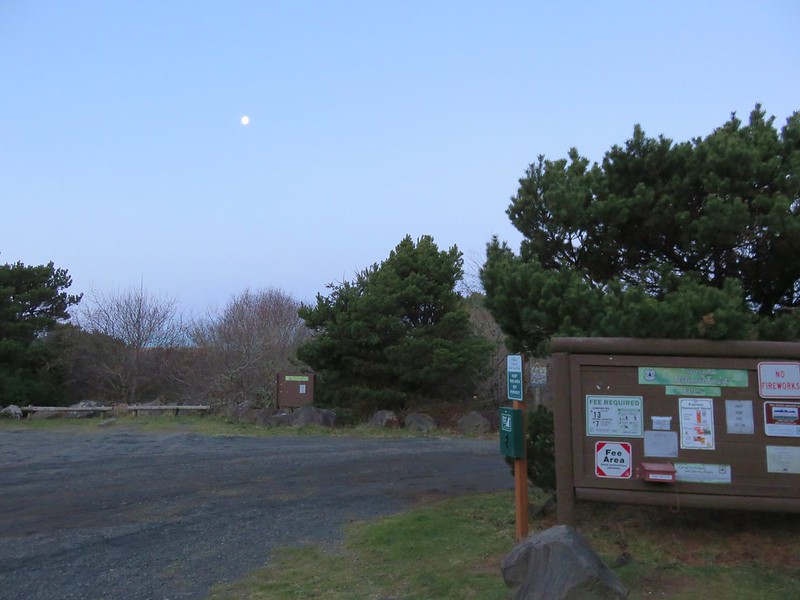
Baker Beach Camp is located at the end of Baker Beach Road, 7 miles north of Florence along Highway 101.  The only signage along the highway was a small green street sign which I noticed just as we passed by it. After quickly turning around we turned onto the gravel road and followed it .5 miles to the camps parking area.

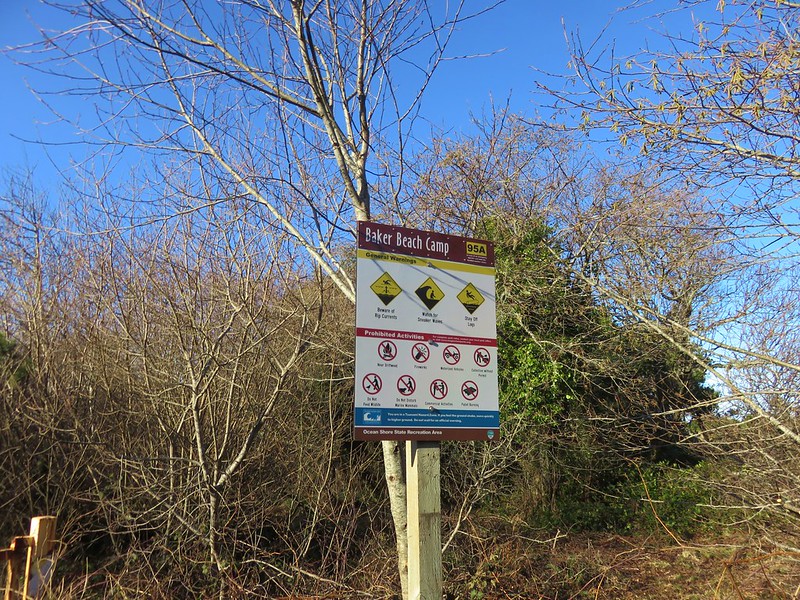
Baker Beach Camp

Baker Beach Camp sign

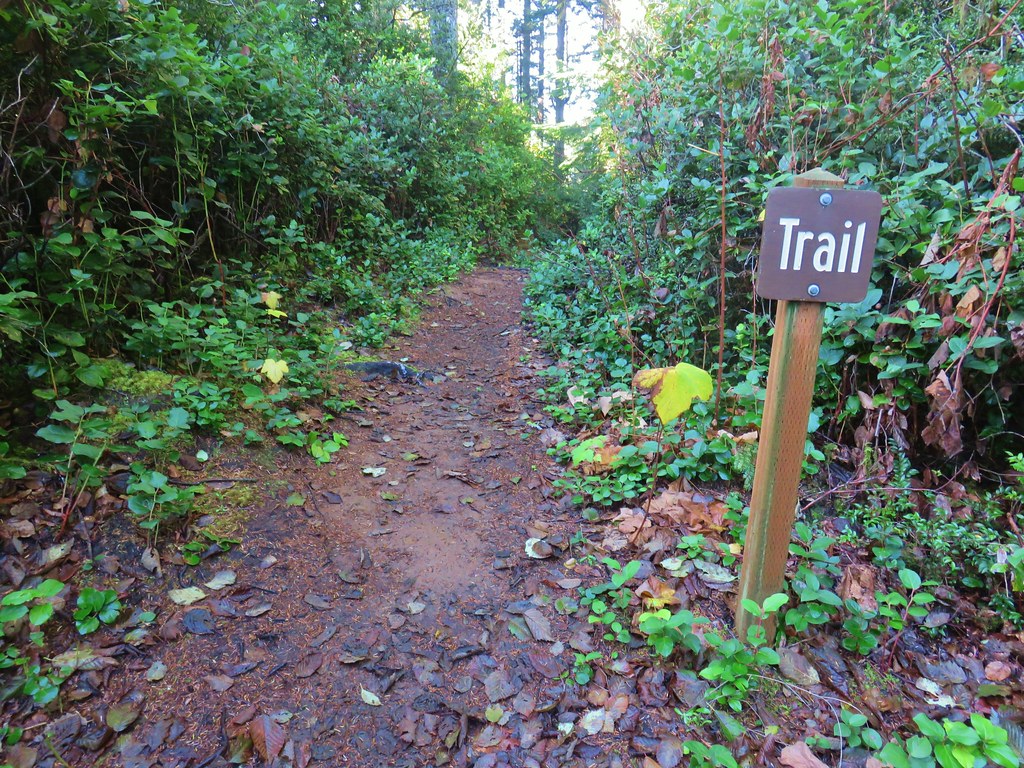
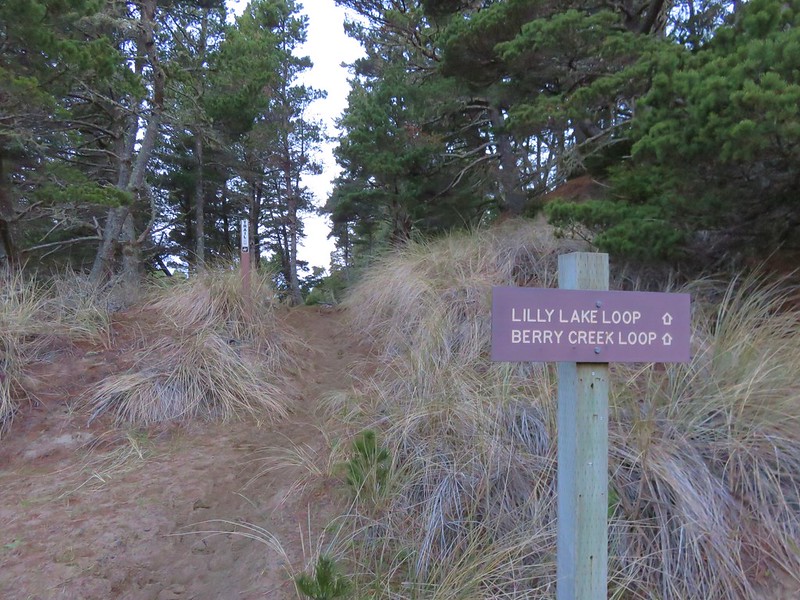
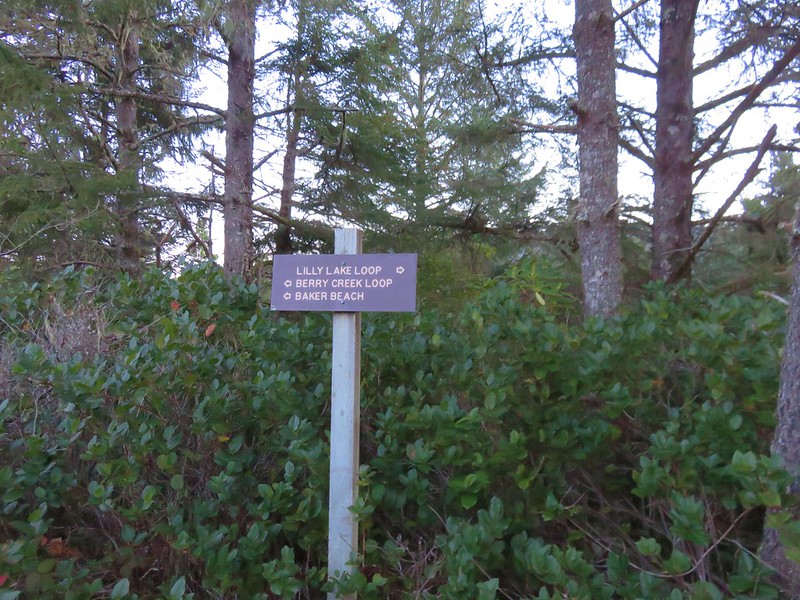
To start our hike we walked a short distance back along the road and turned left at a trail sign for the Lily Lake Loop.

Start of the Lily Lake Loop

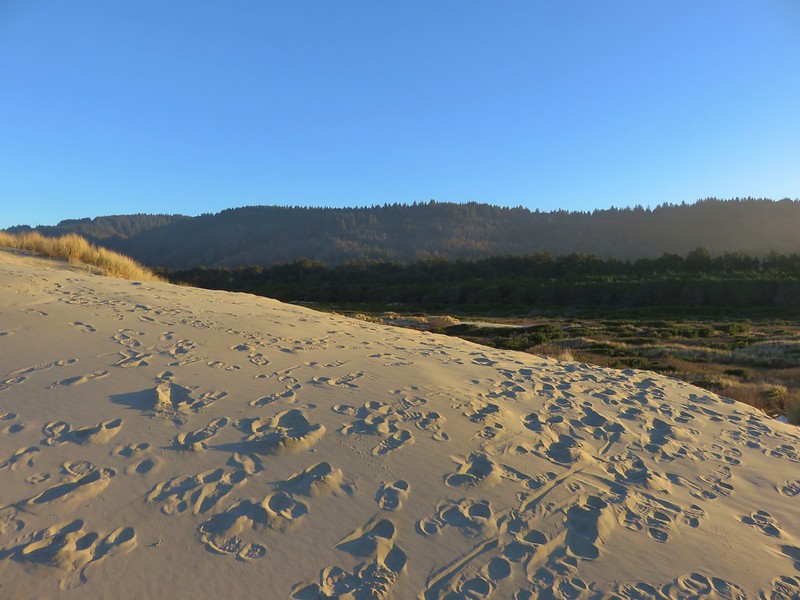
A short sandy climb brought us to a trail junction at the top of a sandy ridge.

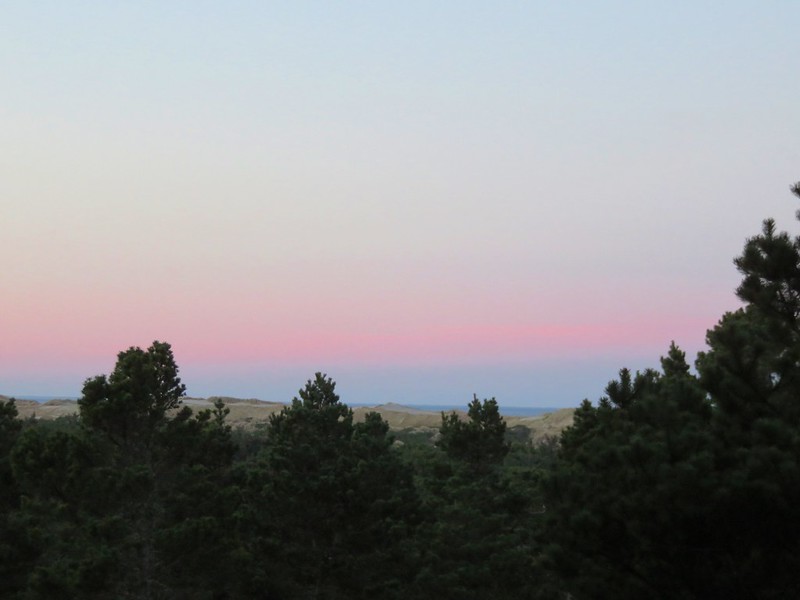
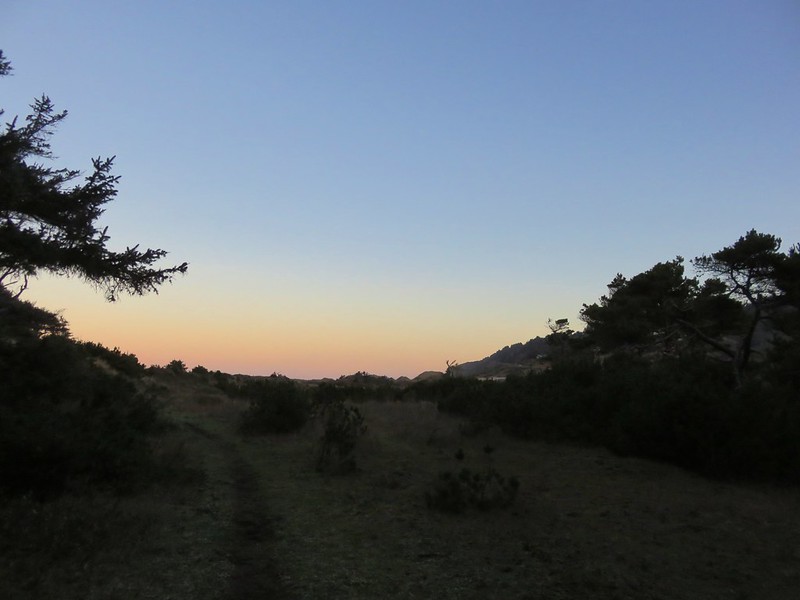
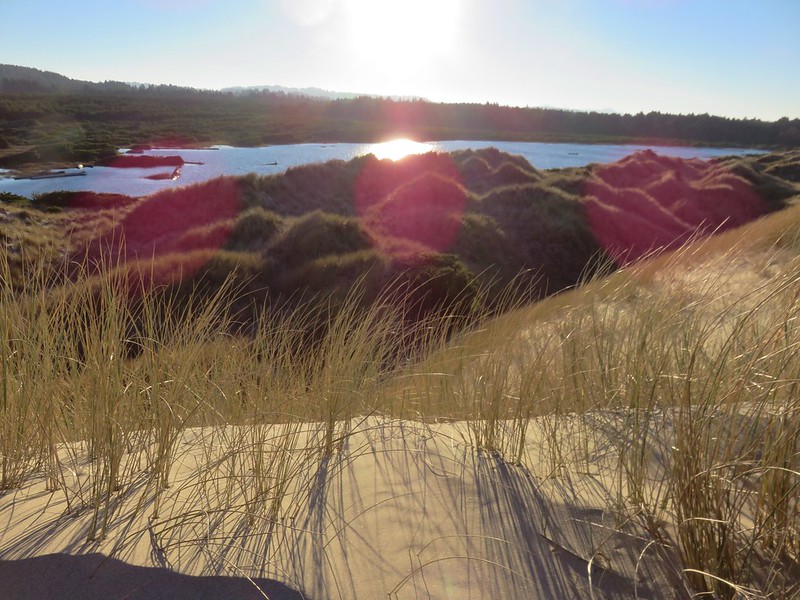
Pacific Ocean from the Lily Lake Loop Trail in the morning

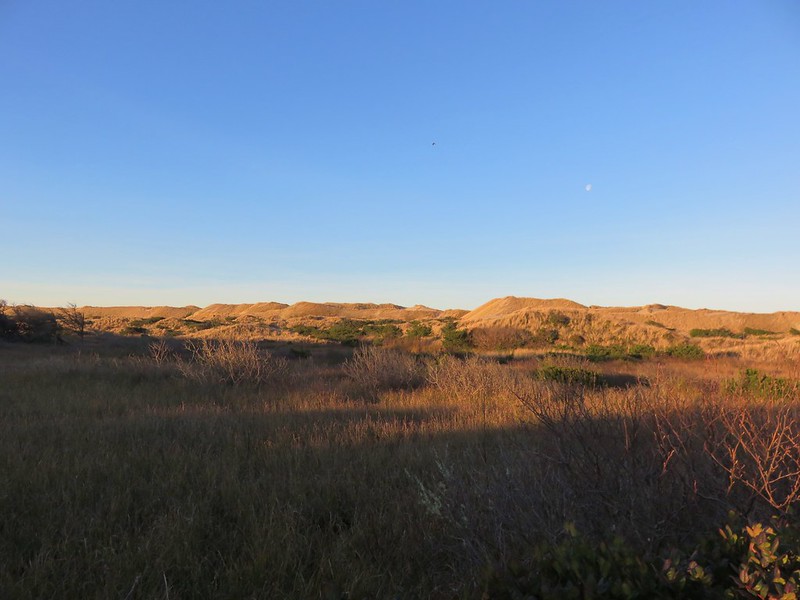
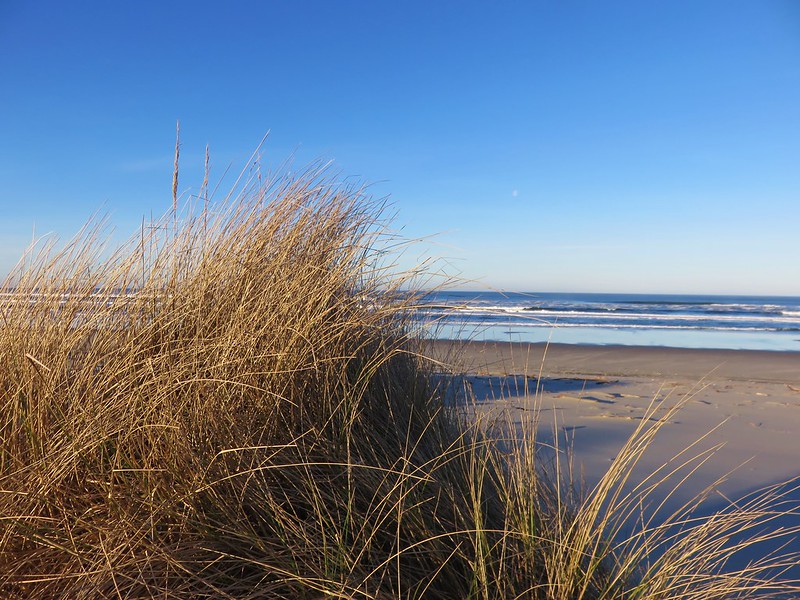
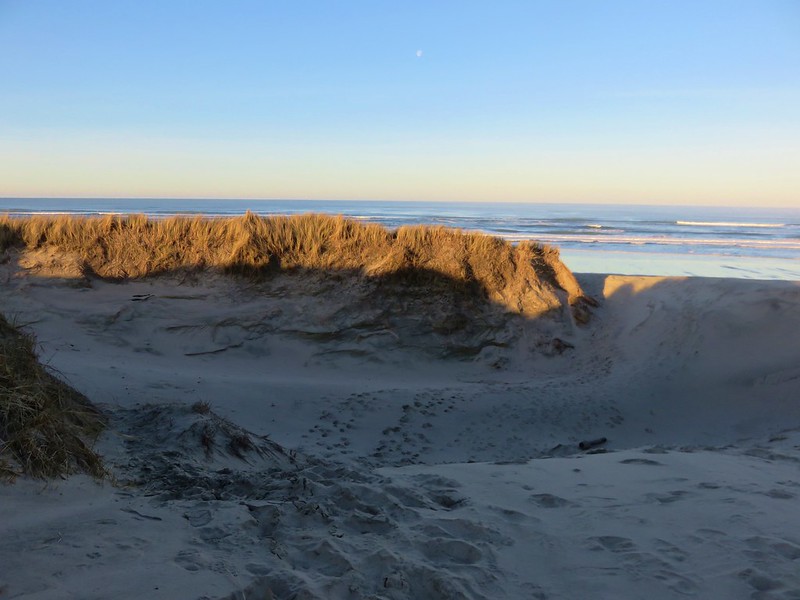
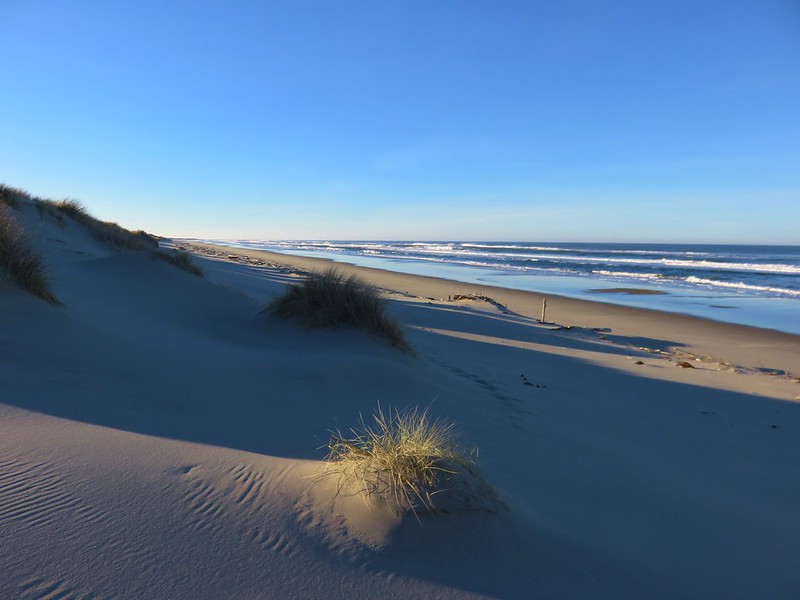
The Pacific Ocean was visible beyond Baker Beach and the sand dunes.

Trail signs along the Lily Lake Loop

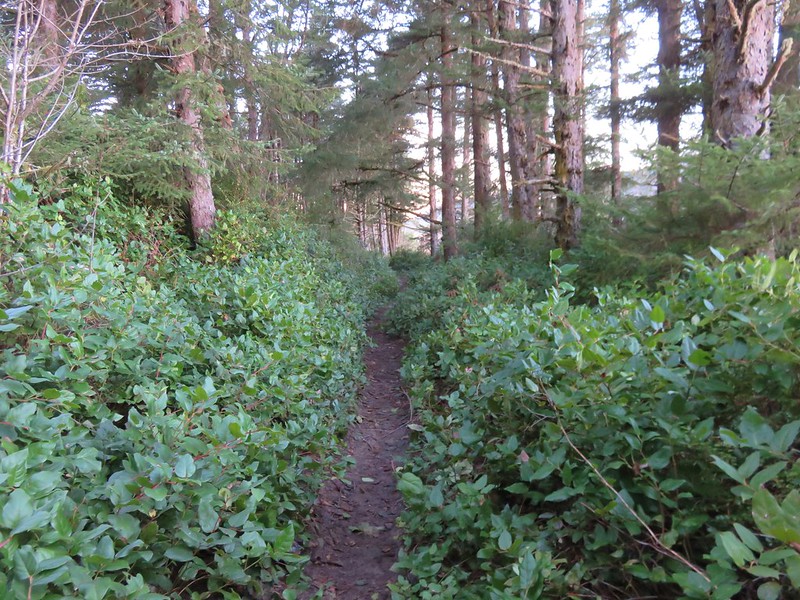
The Berry Creek Loop would have kept us up on the sandy ridge while the Lily Lake Loop dropped down and passed near Lily Lake before climbing back up to the ridge top and rejoining the Berry Creek Loop Trail. We wanted to see the lake so we followed the Lily Lake pointer passing through a salal filled forest before things opened up along the lake.

Lily Lake Loop Trail

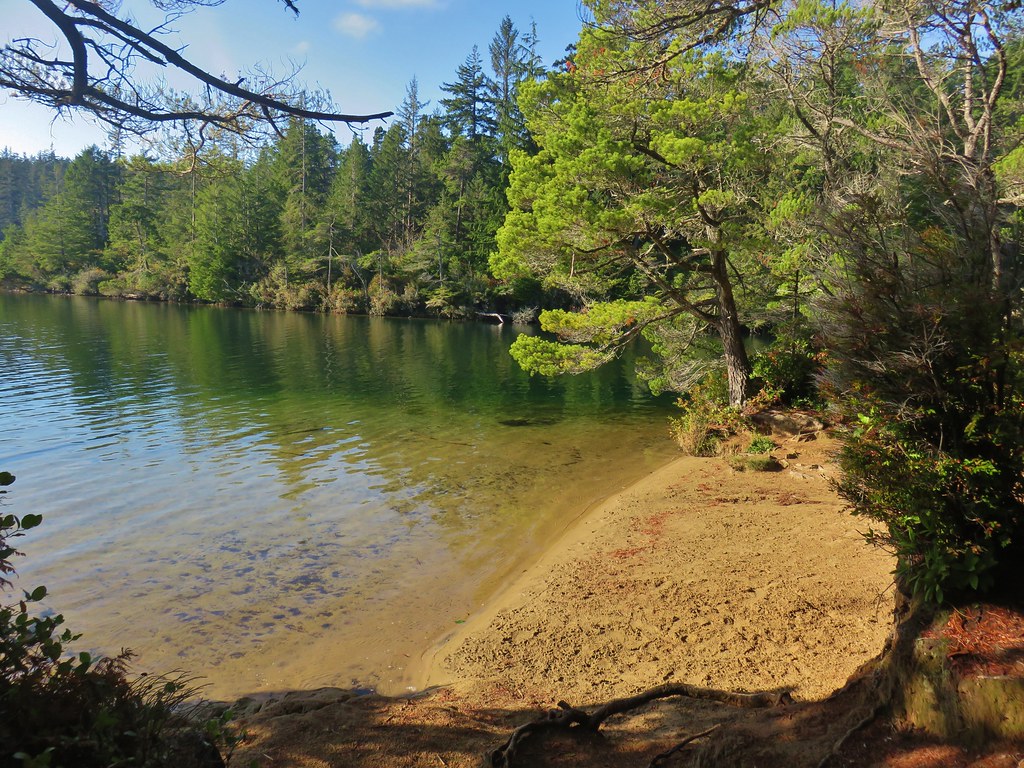
Trail along Lily Lake

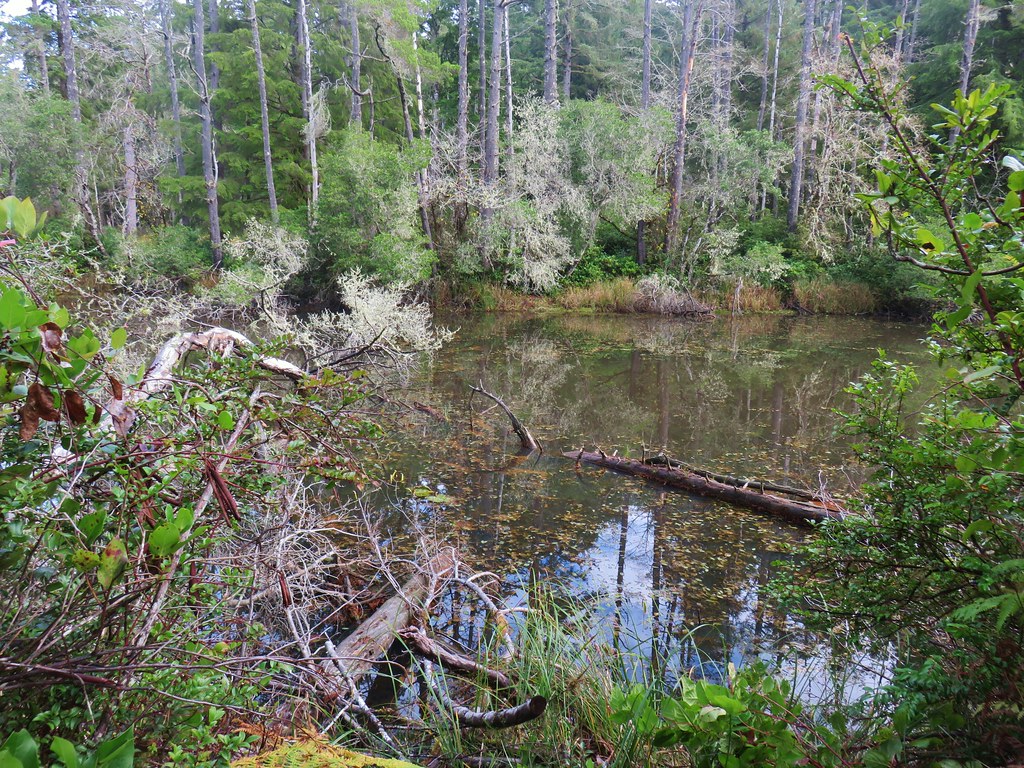
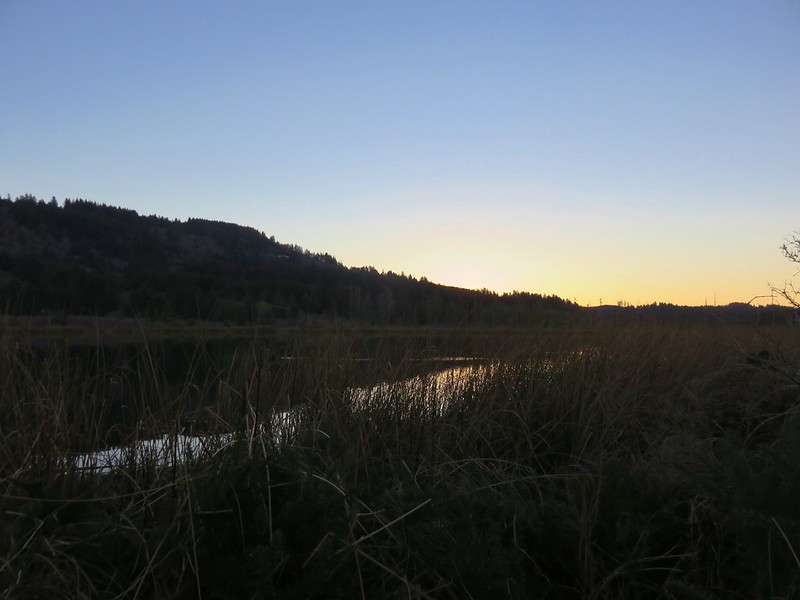
We stayed on the paths closest to the lake thinking that one would bring us right to it but instead the lake remained mostly hidden behind first a row of trees then by a reed filled marsh near it’s outlet.

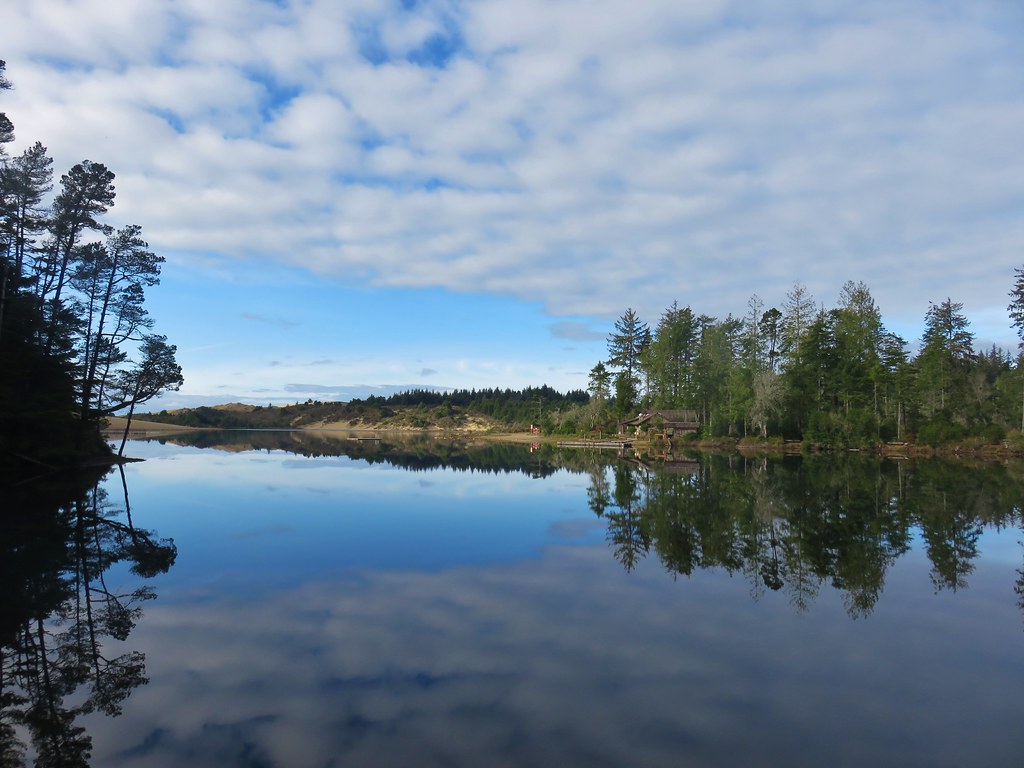
Lily Lake

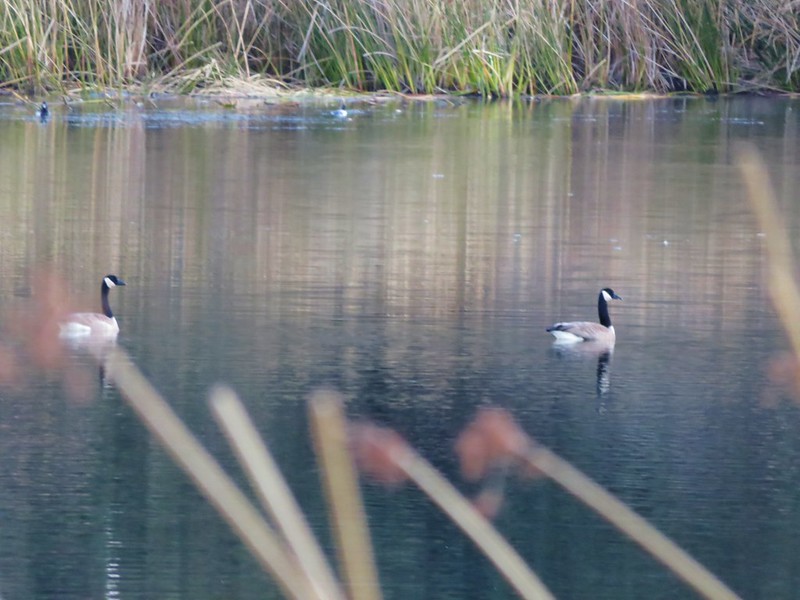
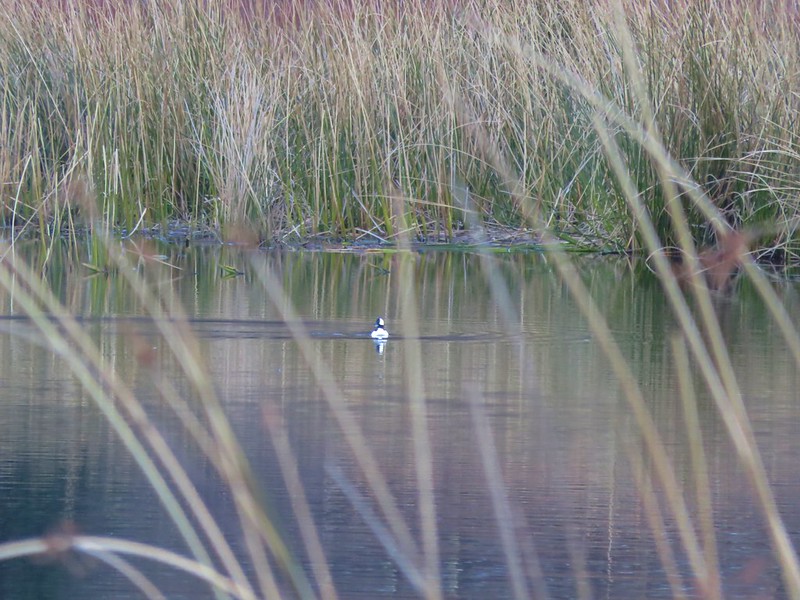
We could see that there was quite a bit of activity on the lake with several types of ducks and some Canada geese floating on the water, but it was hard to get any clear photos with the vegetation in the way.

Canada geese on Lily Lake

Bufflehead

Bufflehead on Lily Lake

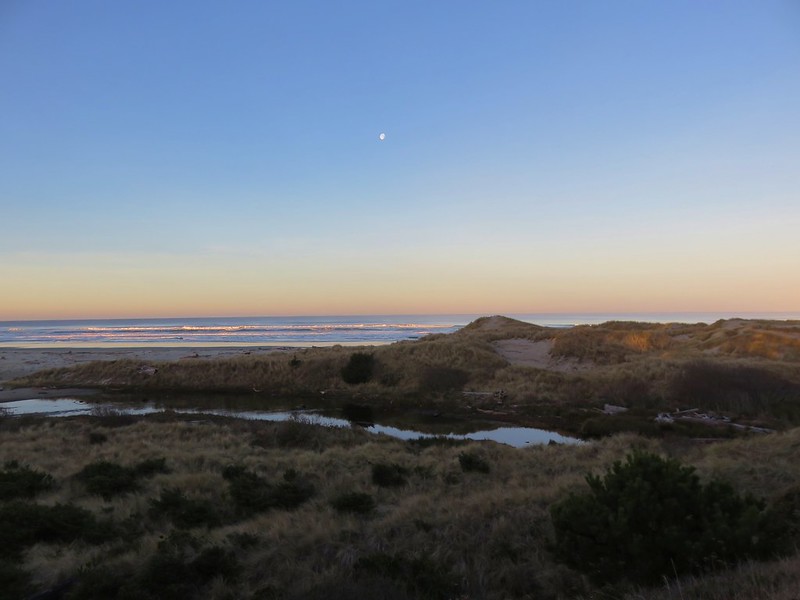
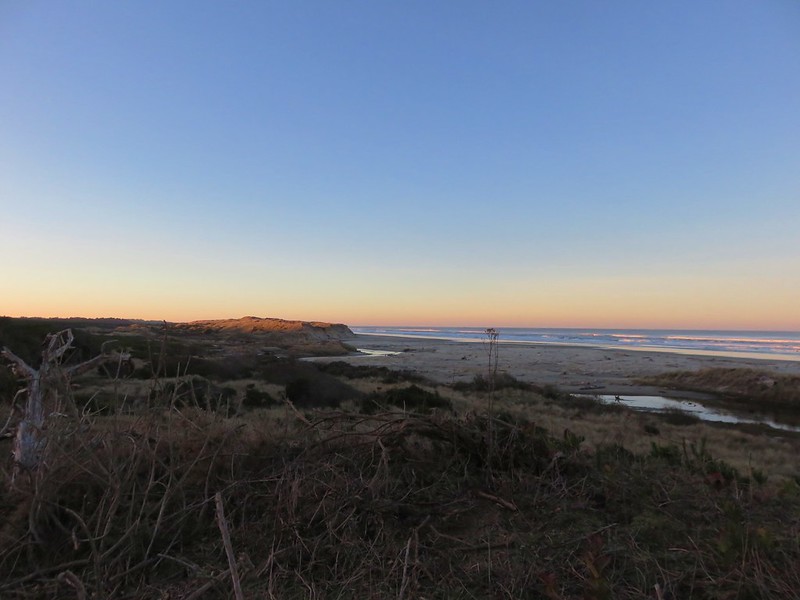
From the lake we climbed back up to the top of the Sandy Ridge which overlooked a small pond and Berry Creek flowing out toward the Pacific.

Moon over the Pacific Ocean

Berry Creek flowing toward the Pacific

There was no sign here and we could have followed the sandy ridge back to the junction we’d been at earlier, but instead we followed a path down to the base of the ridge which led us back to the start of the Baker Beach Trail at Baker Beach Camp. This little loop was just under 1.5 miles.

Baker Beach Trail

Here we turned right following the pointer for Baker Beach. (The Lily Lake/Berry Creek Loop continued from this junction creating an additional 1.7 mile loop to the north of the camp.)

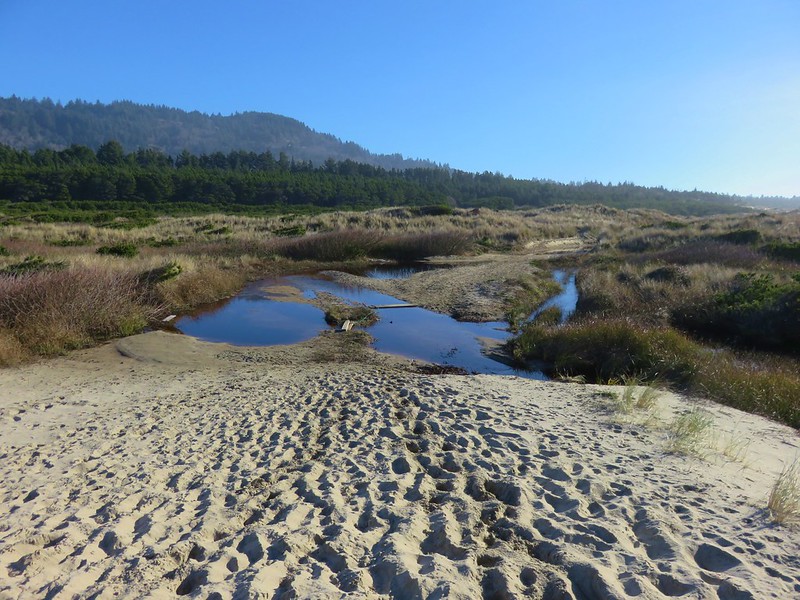
The trail passes through a deflation plain behind the beaches foredune for .4 miles.

Foredune at Baker Beach

Looking north along the Baker Beach Trail

The deflation plain is the result of the dunes no longer expanding due to the loss of additional sand being blown from the beach. European bunchgrass which was introduced in the early 1900’s to help stabilize jetties but spread along the beaches and began stopping the blowing sand from leaving the beach which created the foredunes denying the dunes further inland any additional sand.

Baker Beach

Pacific Ocean from the foredune at Baker Beach

Cape Mountain from the foredune at Baker Beach

When we reached the beach we turned south heading toward Sutton Creek which was 3 miles away. Aside from a few birds we had the beach to ourselves.

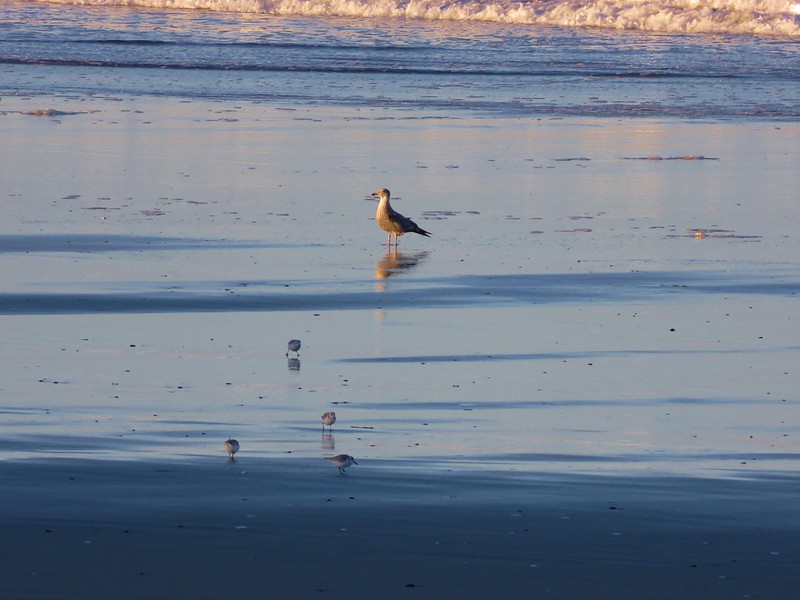
Sanderlings on Baker Beach

Seagull and sanderlings

After about 3/4 of a mile along the beach we climbed back up the foredune to get a look at Sutton Creek which we had visited the previous February.

Sutton Creek behind the foredune

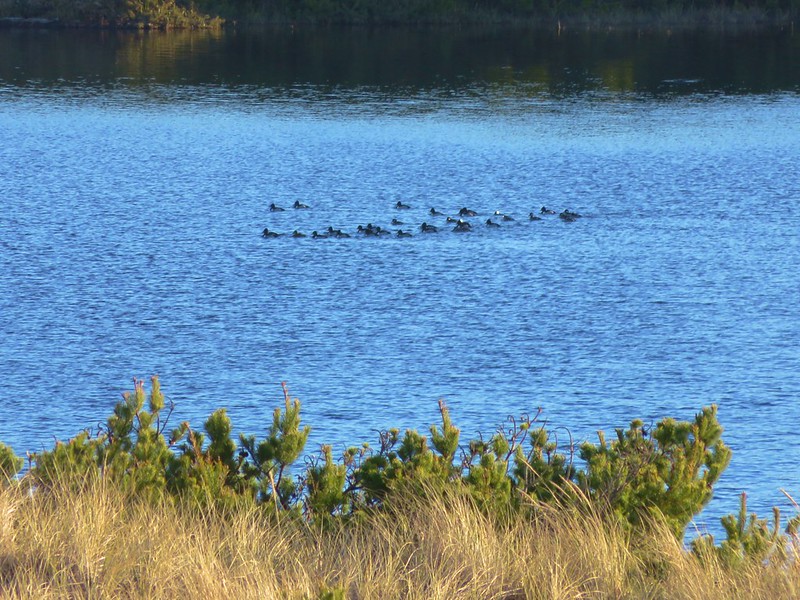
Ducks on Sutton Creek

We traveled along the foredune for a bit before dropping back down to the beach.

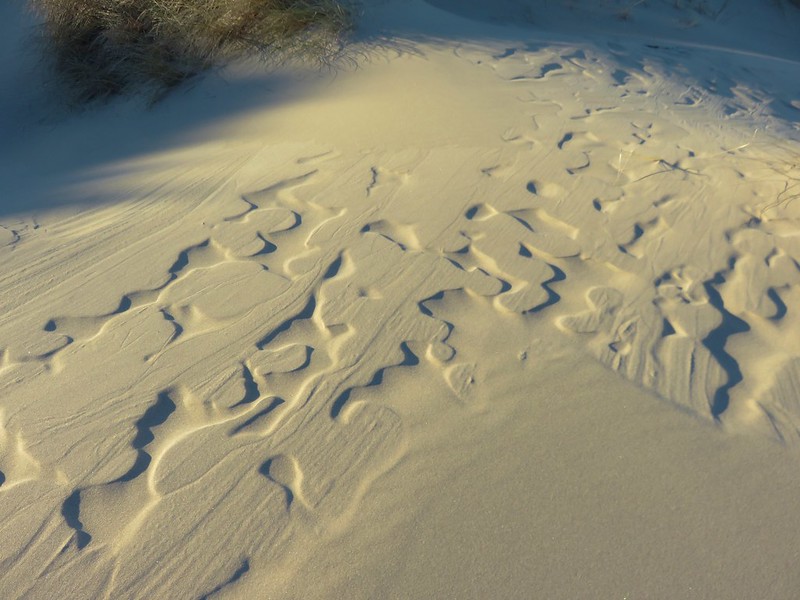
Patterns in the sand

Baker Beach

We had been considering crossing Sutton Creek and continuing south along Heceta Beach another 2.5 miles to the Siuslaw River but the creek was wide and it wasn’t that warm out.

Sutton Creek

Sutton Creek

After watching several large chunks of sand fall into the creek we headed back with the Heceta Head Lighthouse blinking in the distance to the north.

Heceta Head Lighthouse from Baker Beach

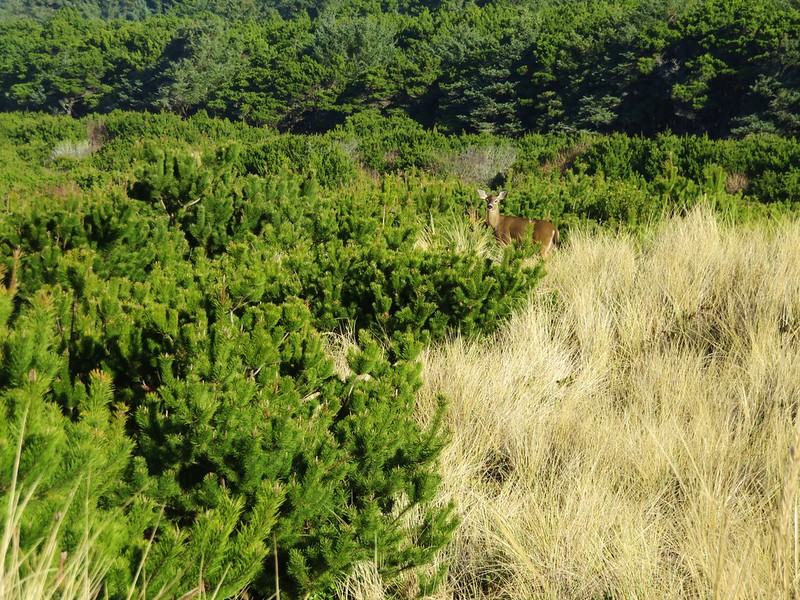
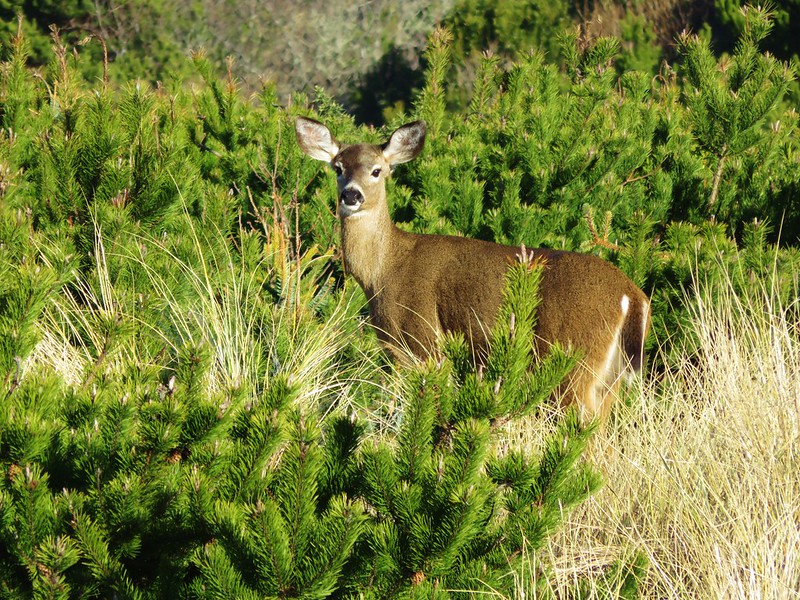
As we were recrossing the deflation plain we spotted a doe amid the grass and pines.

Heading back toward Baker Beach Camp

Doe

Doe

Since we’d cut our hike short (8.2 miles instead of the 13.2 planned) we had time to do another. We could have hiked Heceta Beach like we had planned by driving back to Florence and parking at the end of South Jetty Road, but we had noticed that that beach was already busy when we were at Sutton Creek earlier. We preferred something a little less crowded which led us to the Rock Creek Wilderness.

This was one of the wilderness areas that we had yet to visit and it was just another 8 miles north on Highway 101 from Baker Beach Road. We hopped in our car and drove to the gated entrance to the Rock Creek Campground.

Rock Creek Campground sign along Highway 101

The campground was closed for the season so we had to walk along the paved entrance road for approximately .4 miles.

Road to Rock Creek Campground

There had been one other vehicle parked at the gate and we passed it’s owner on his way back up from the campground area. The little campground was located right along Rock Creek.

Rock Creek

Rock Creek

The 7,486 Rock Creek Wilderness was designated as such in 1984 and has no Forest Service developed or maintained trials. That being said there is a use trail leading from the end of the Rock Creek Campground that can be followed into the wilderness.

Use trail leading from the Campground into the Rock Creek Wilderness

The path was brushy and narrow but passable as it followed along the creek.

Use trail in the Rock Creek Wilderness

Rock Creek Wilderness

Rock Creek

Occasional flagging was present but really unnecessary as the brush was so thick that we had to follow the path in order to keep moving forward. The only real obstacle to speak of was a large downed tree that had fallen over the best path, but game trails led around the root ball.

BIg tree down in the Rock Creek Wilderness

Without an official trail there were no signs to mark the beginning of the wilderness area so we just followed the path as long as we could. After awhile the path led into a frosty meadow where the canyon widened.

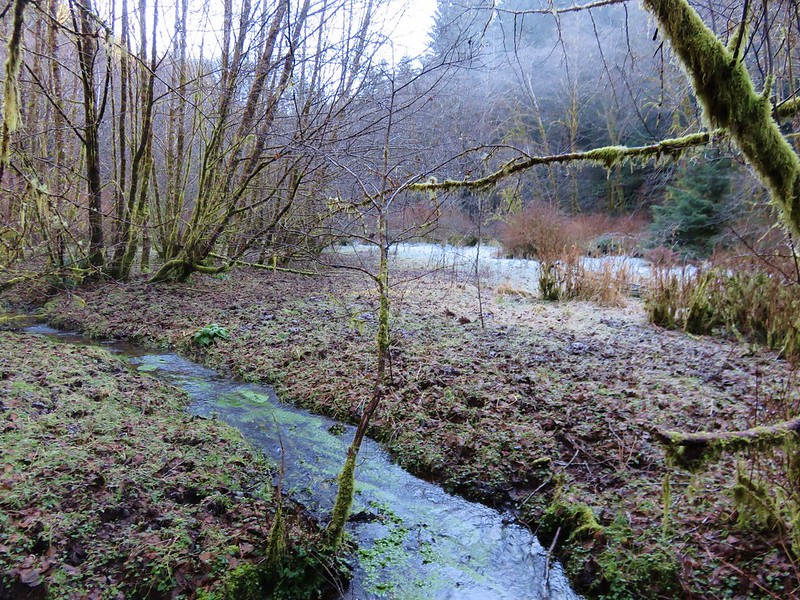
Frosty meadow in the Rock Creek Wilderness

It was a muddy in spots but enough of the ground was still frozen to make it passable. Elk and deer sign were everywhere. It was a beautiful spot with the white frost contrasted against the green of a coastal forest while rays of sunlight attempted to penetrate the canopy.

Frosty meadow in the Rock Creek Wilderness

Sunlight through the trees in the Rock Creek Wilderness

The sound of water flowing on every side only added to the ambiance. There was more flagging at the far end of the meadow and some on the far side of Rock Creek but again this wasn’t a day for fording creeks so we declared victory here and turned around.

Our turn around point (too cold to ford the creek today)

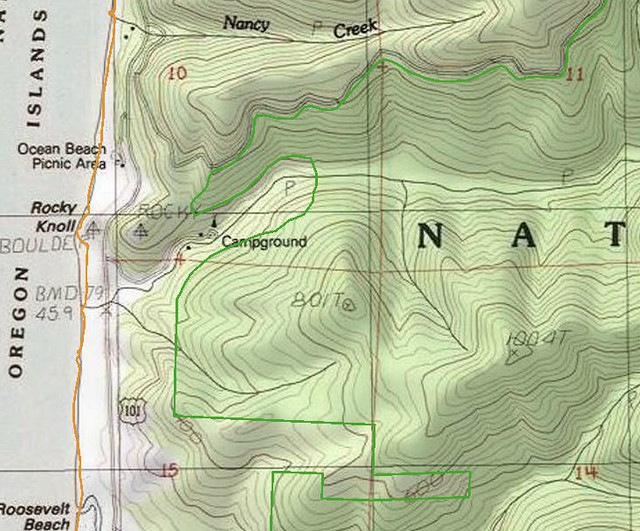
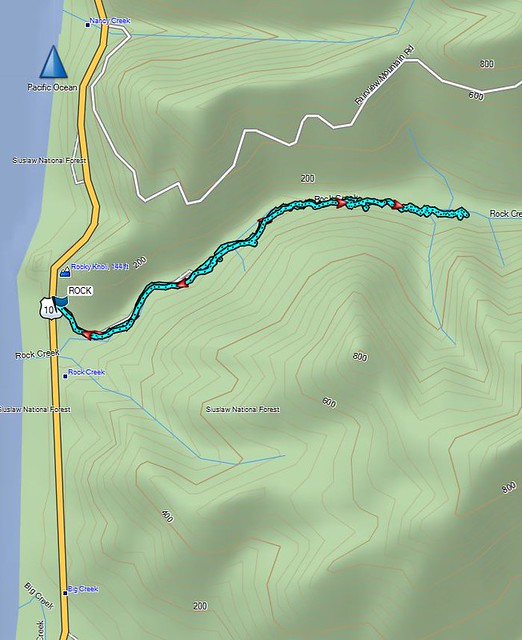
When we got home I wanted to make sure we’d actually made it into the wilderness so I pulled up the interactive map on Wilderness.net. The actual wilderness boundary bows away from the Rock Creek Campground making it further up along the creek than I had thought, but comparing our GPS track to that map showed we had managed to get about .4 miles into the Rock Creek Wilderness.

The Wilderness.net map

Rock Creek Wilderness

Our GPS track

Rock Creek Wilderness Track

On a warmer day when you don’t mind spending some time in the creek it’s possible to get further into the wilderness as this trip report indicates.a href=”http://www.cascadiahiking.com/2012/08/rock-creek-wilderness-no-trail-no.html” target=”_blank”>Cascadia Hiking

Our adventure was only 2.2 miles round trip including the road walk to and from the campground but the solitude and remote feeling of the Rock Creek Wilderness made it seem much more removed from civilization.

With that our 2017 hiking year is officially under way. We checked off our 27th Oregon Wilderness Area and still have 18 to go, 4 more of which are planned this year. Happy Trails!

Flickr: https://www.flickr.com/photos/9319235@N02/albums/72157679106715756

Categories
Hiking Oregon Trip report Wallowas

Eagle Cap Wilderness Day 4 – Eagle Cap

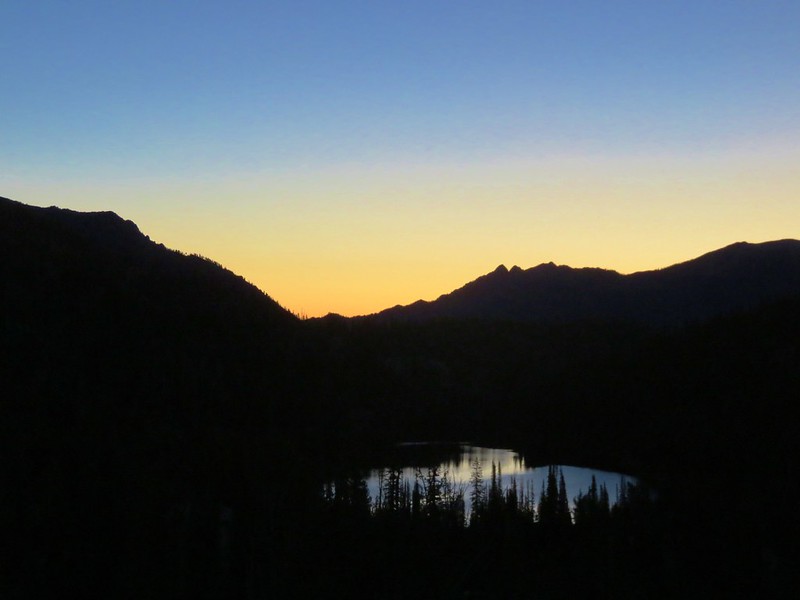
The fourth day of our backpacking trip began with a nice sunrise over Moccasin Lake.
IMG_3623

Our plan for the day was to take our day packs and hike to the summit of Eagle Cap, then pack up camp and move to Horseshoe Lake for the final night of our trip.

It had been rather breezy the day before and we were hoping that wouldn’t be the case today so that we could get catch some reflections of Eagle Cap in the lakes. A gentle breeze kept that from happening.
IMG_3628

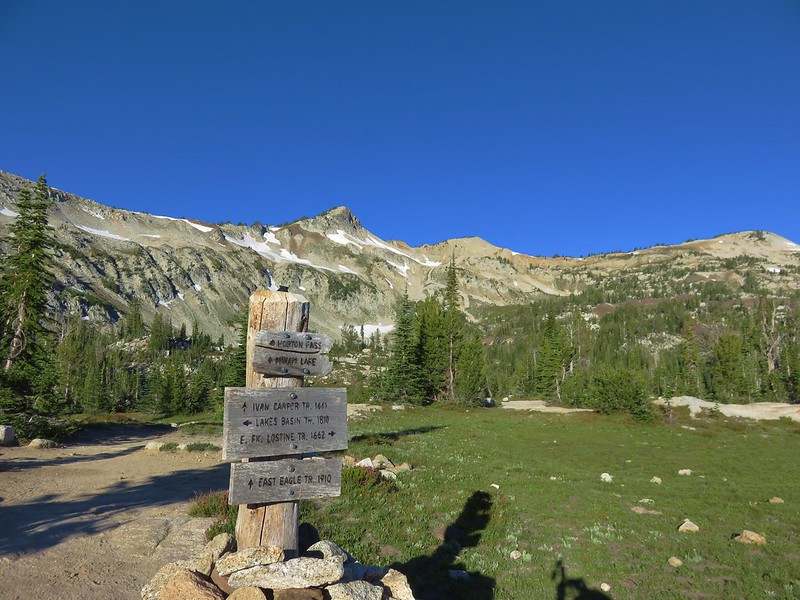
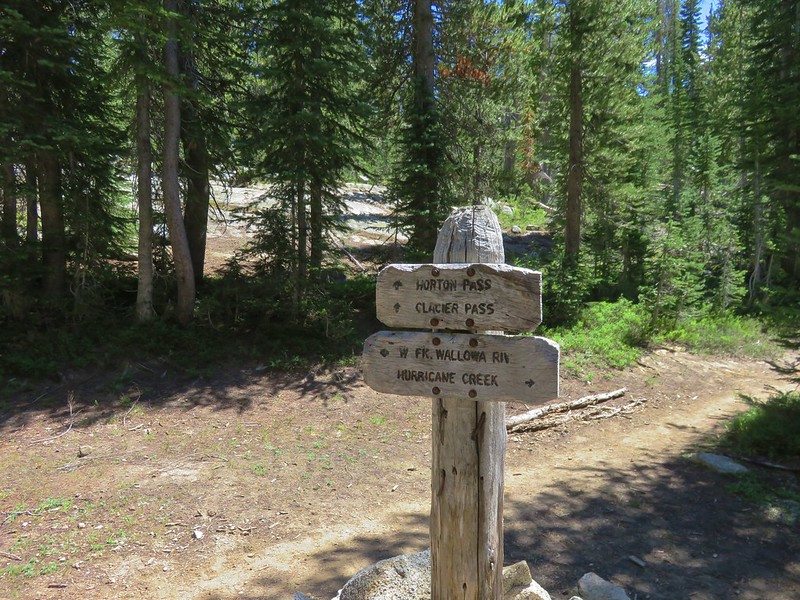
We hiked to the west end of Mirror Lake and followed signs toward Horton Pass at a 4-way trail junction.
IMG_3642

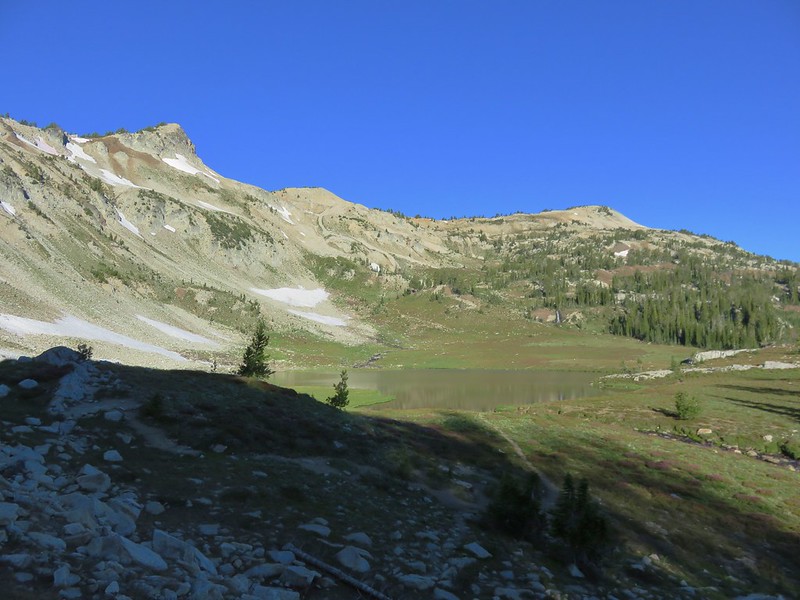
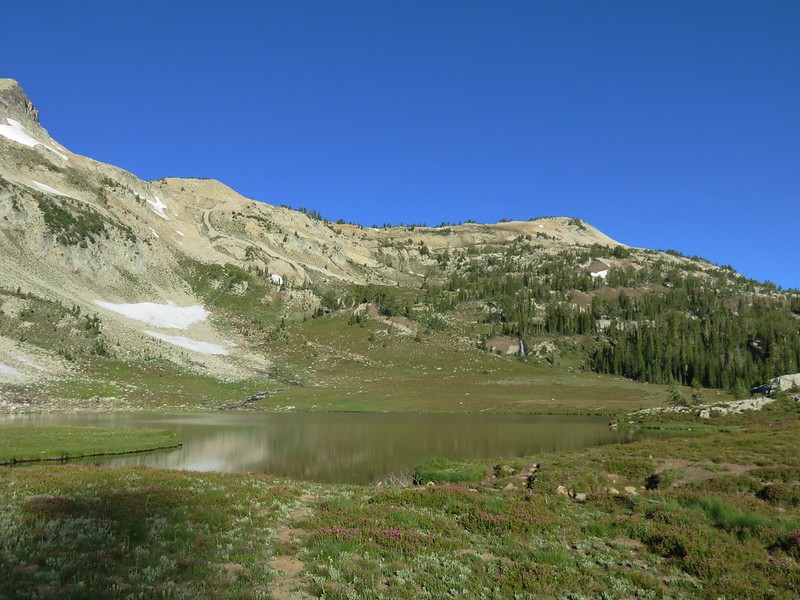
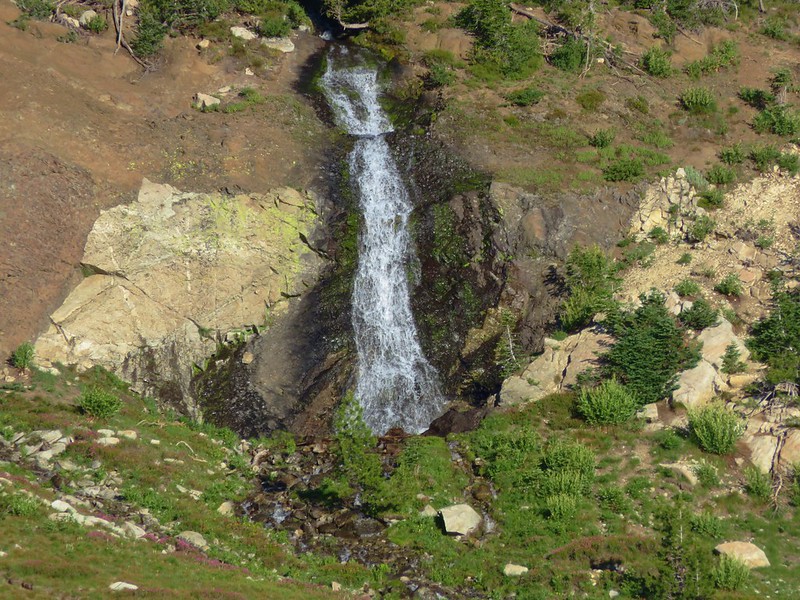
The trail took us past Upper Lake set in an alpine bowl surrounded by wildflowers and backed by a scenic waterfall on the far side of the valley.
IMG_3646

IMG_3647

IMG_3649

The trail climbed up from Upper Lake toward Eagle Cap.
IMG_3668

IMG_3669

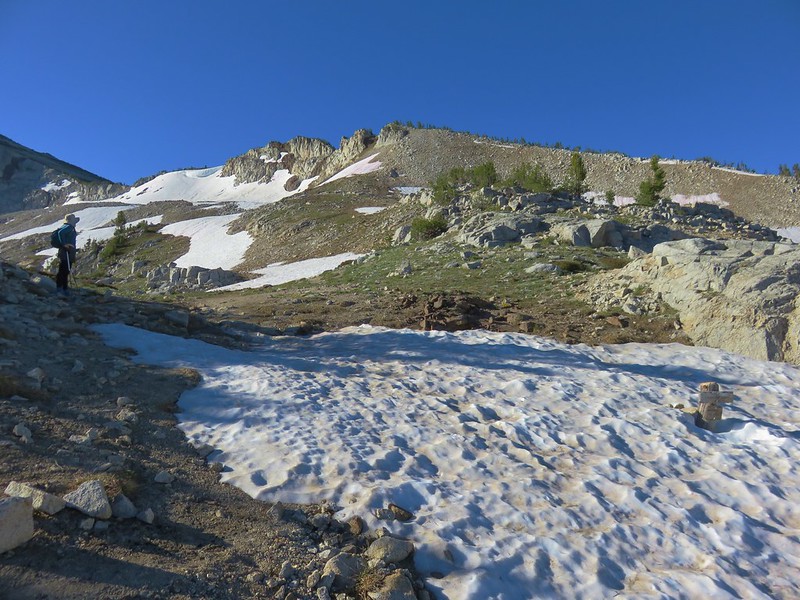
We knew we would be encountering some patches of snow based on recent trip reports from Van Marmot and Born2BBrad over on Oregonhikers.org. We also knew that it would be fairly easy to avoid the snow which was good given our early start because the snow was still iced from the night before.
IMG_3671

IMG_3673

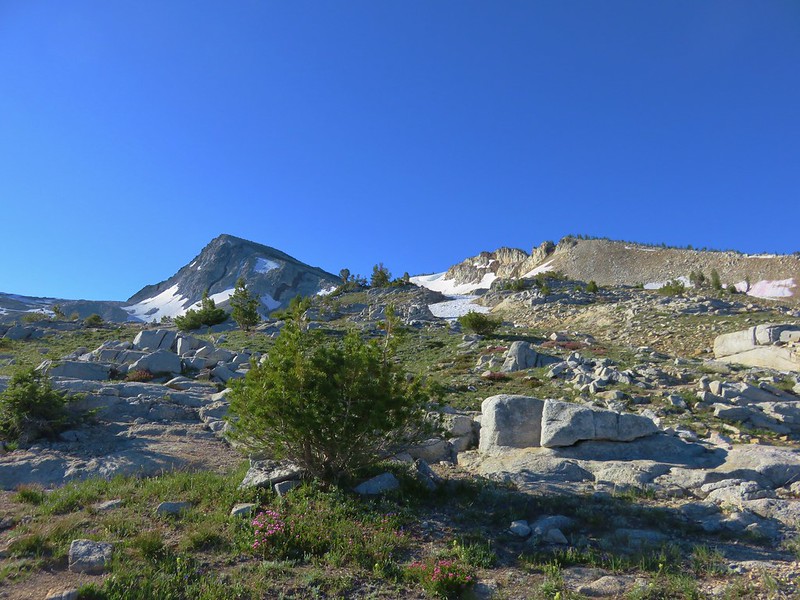
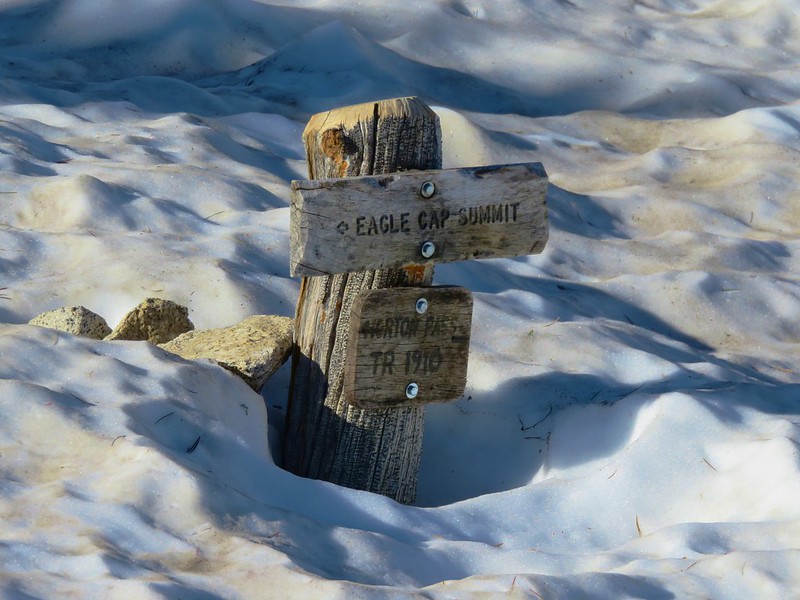
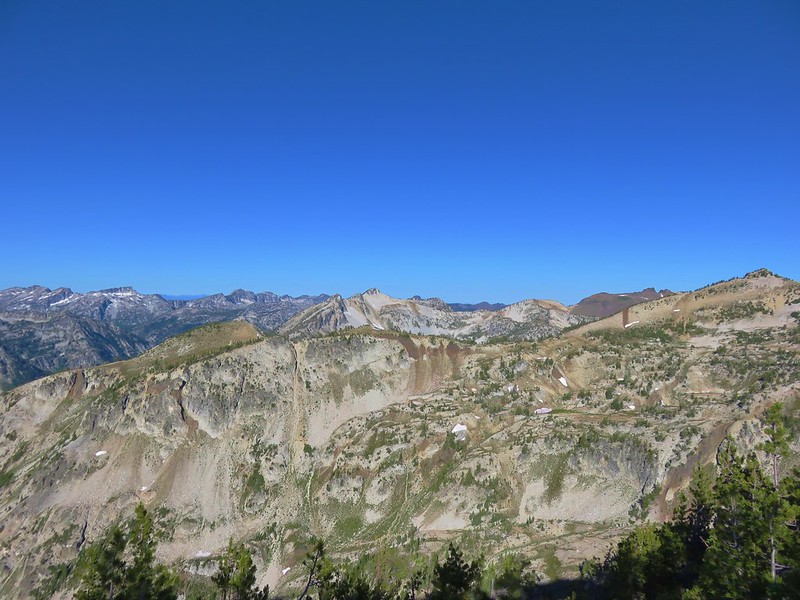
From the sign in the snow we had the choice of going right to Horton Pass and following the ridge from there or going left and making a steeper climb to a higher point on the same ridge. Looking at the trail up to Horton Pass it seemed to have not only more snow but it was on a steeper slope than staying left so we chose that route and climbed to the ridge where views opened up to the west.
IMG_3684

IMG_3689

IMG_3698

To the NE lay the Lakes Basin and the Matterhorn.
IMG_3690

The west side of the ridge was covered in short trees and we passed through this forest of miniature trees to a saddle below Eagle Cap.
IMG_3687

IMG_3703

From the saddle we had a nice view down the East Lostine River valley to the east and across to Blue Lake to the west.
IMG_3711

IMG_3725

IMG_3726

Beyond the saddle the trail climbed Eagle Cap in a series of long switchbacks. A few alpine flowers dotted the landscape.
IMG_3723

IMG_3730

IMG_3731

IMG_3714

IMG_3695

After passing through some whitebark pines we arrived at the broad summit of Eagle Cap.
IMG_3733

IMG_3734

Although Eagle Cap is a few hundred feet shorter than the Matterhorn the sky was clearer than it had been two days earlier when we had been atop the other peak. The view was so huge it was hard to take everything in.
East Lostine River, the Matterhorn, and the Lakes Basin
IMG_3749

Glacier Lake
IMG_3736

Looking SW
IMG_3742

Seven Devils in Idaho
IMG_3751

The Elkhorns
IMG_3748

After having second breakfast on Eagle Cap we headed back down. On the way we ran into a couple from Portland who had camped near Upper Lake. They had seen a mountain goat run by their camp the day before and spotted a pair of wolves crossing a snowfield on the ridge above the lake as well. We passed several other hikers making their way up toward Eagle Cap making us glad we had started so early.

We stopped at Upper Lake to refill our water supply and decided to follow the trail around the lake thinking it would take us over to another trail that ran between Minam Pass and the 4-way junction at Mirror Lake.
IMG_3809

IMG_3812

The trail petered out at the far end of the lake near it’s inlet stream. Instead of backtracking we decided to rock hop up the creek to the other trail.
IMG_3815

When we arrived at the other trail we found our first western pasque flower seed-heads.
IMG_3821

We were also near the waterfall we had seen from across Upper Lake.
IMG_3824

We followed the trail back down through some lovely wildflower meadows to the 4-way junction and then returned to our campsite to pack up.
IMG_3826

IMG_3834

IMG_3839

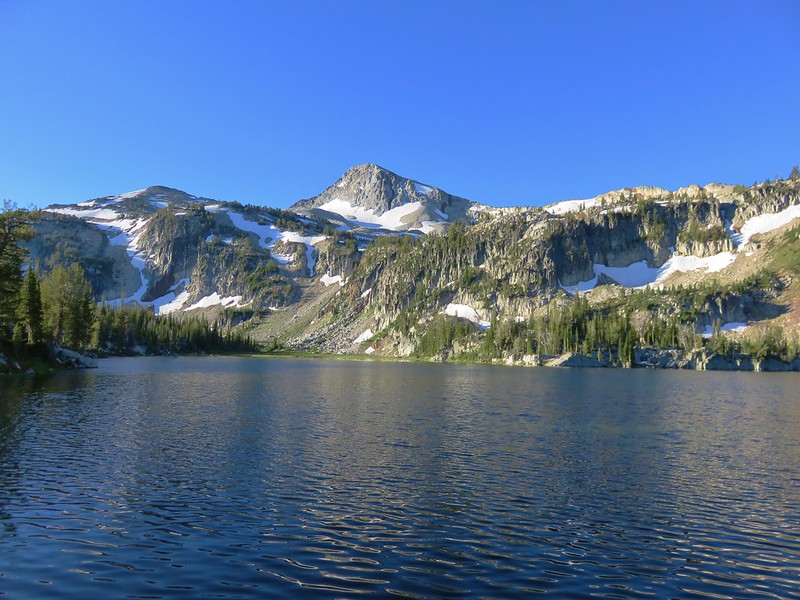
From Mirror Lake we had the choice of going back past Moccasin Lake or taking a different trail past little Sunshine and Crescent Lake. The two routes rejoined at the NE end of Douglas Lake. Since we had already seen Moccasin Lake we decided to go by Sunshine Lake where we wound up getting our best reflection of Eagle Cap.
IMG_3856

We passed a junction with the Hurricane Creek Trail after 1.1 miles and arrived at Crescent Lake after approximately another three quarter miles.
IMG_3865

IMG_3869

Douglas Lake was just on the other side of the trail from Crescent Lake.
IMG_3871

We followed a pointer for the West Fork Wallowa River when we reached the trail junction at the end of Douglas Lake.
IMG_3877

Shortly thereafter we came to another trail junction.
IMG_3879

Here we faced another choice. Both forks would bring us to Horseshoe Lake, the left in 1.3 miles and the right in 1.5 miles passing Lee and Lily Lakes. We chose the longer route past the other two lakes and began descending toward Lee Lake.
IMG_3881

IMG_3882

After a brief stop at Lee Lake we continued past the aptly named Lily Lake.
IMG_3891

The trail passed by large Horseshoe Lake along the northern shore.
IMG_3892

IMG_3896

IMG_3902

We were hoping to find a campsite at east end of Horseshoe Lake which would would leave us with a shorter hike on our final day but we were unable to find a suitable site at that end of the lake. After reaching the junction with the other fork of the Lakes Basin Trail and failing to have found a good campsite we decided to head back up the other fork to see if there were any decent sites along that trail.
IMG_3903

We had been planning on visiting nearby Unit Lake after setting up camp and knew there was a campsite there, but the trail to that lake was no longer maintained and camping there would require hauling our packs down to the lake over a lot of blowdown which we preferred not to do. As luck would have it we found a suitable spot for our tent below the trail just opposite of the unmaintained trail to Unit Lake.
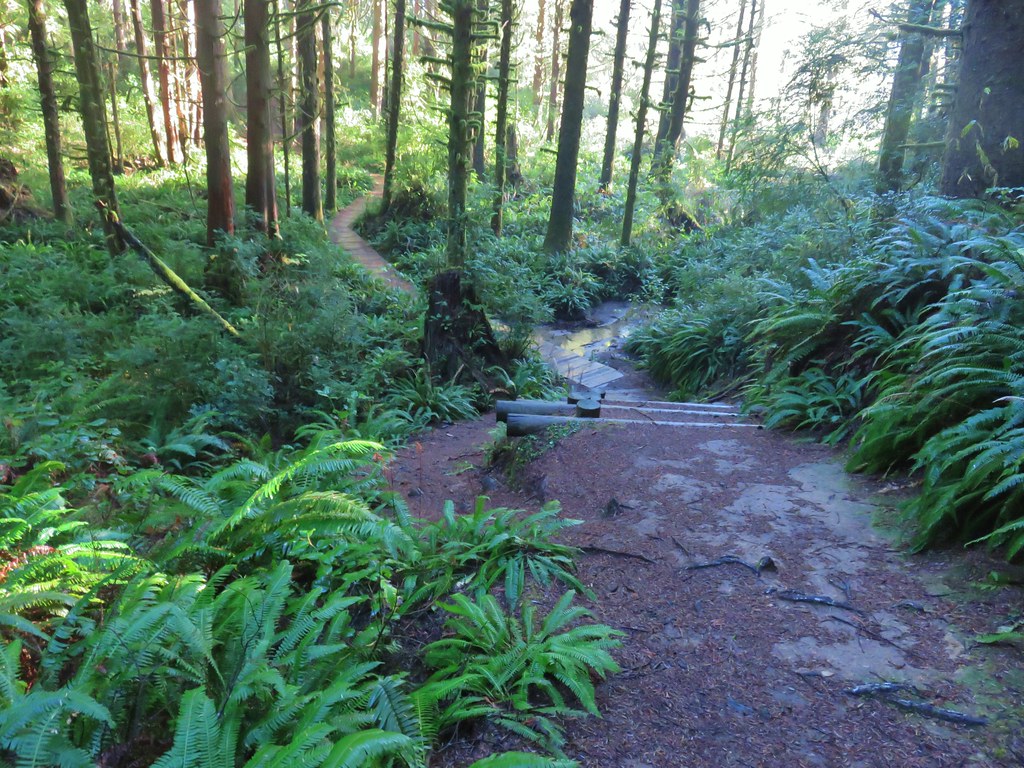
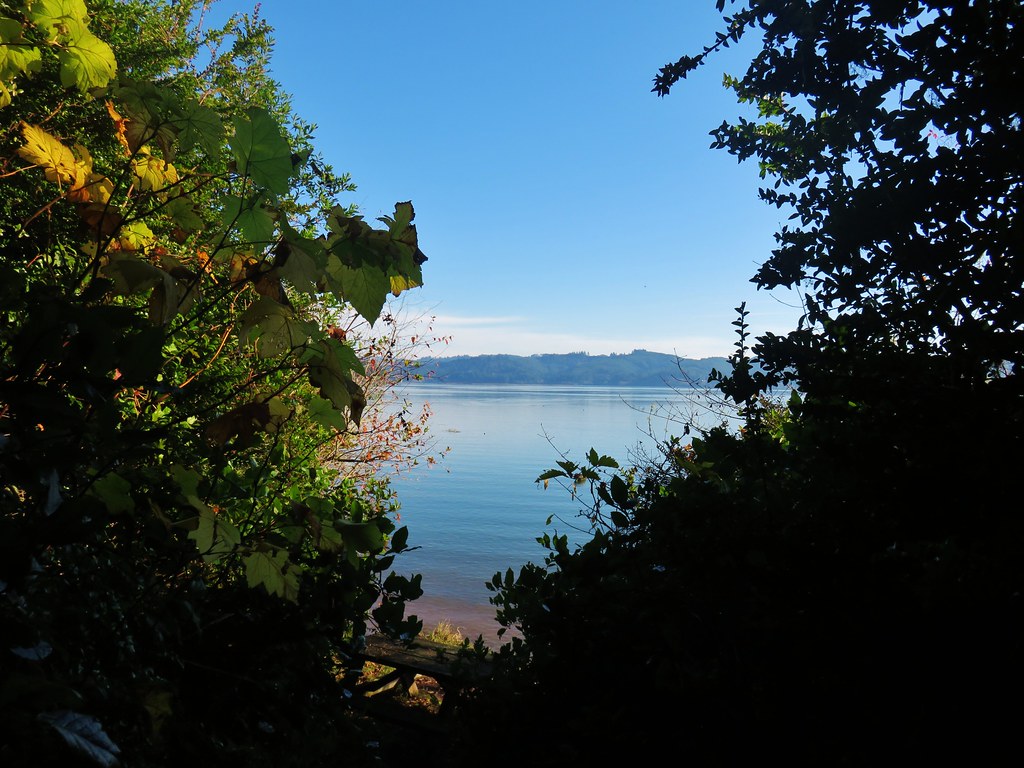
IMG_3905

IMG_3908

After getting settled we decided to take our chairs, dinner, and water filter with us to Unit Lake and spend our evening there. The trail had definitely not been maintained from quite some time and we were glad we had chosen not to try and do the trail with our full packs.
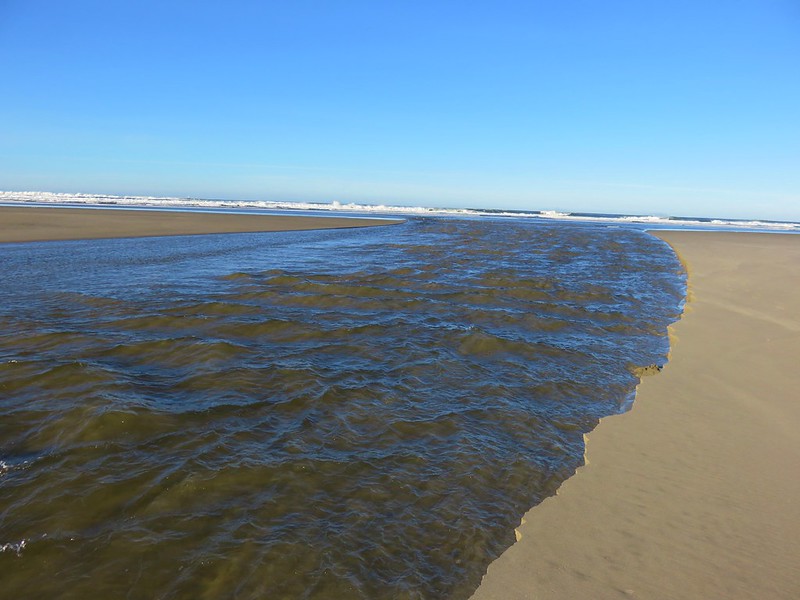
IMG_3946

That being said we were glad we made the side trip down to the lake.
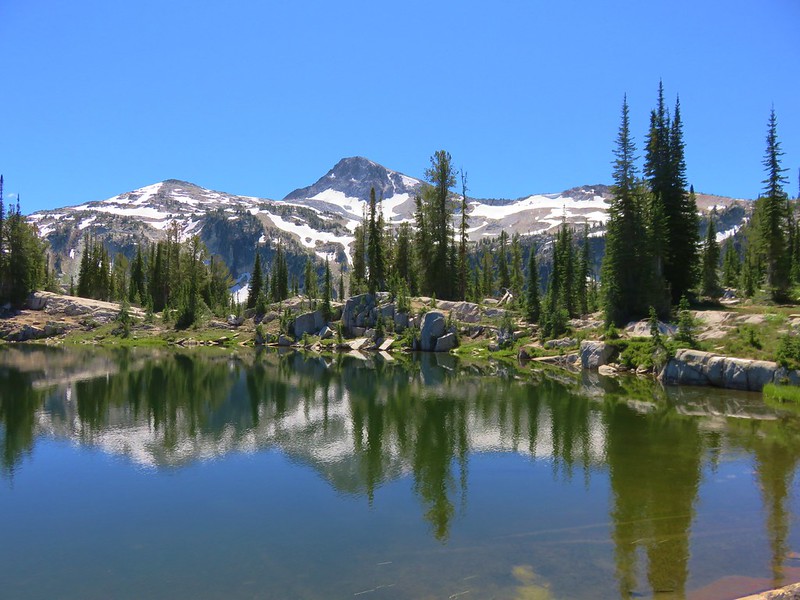
IMG_3914

IMG_3937

IMG_3935

We were a little surprised when a Dad and four kids came crashing down the trail to fish for a little while but they soon departed and we had a little more solitude before returning to our tent and watching the sunset on Eagle Cap for the final time.
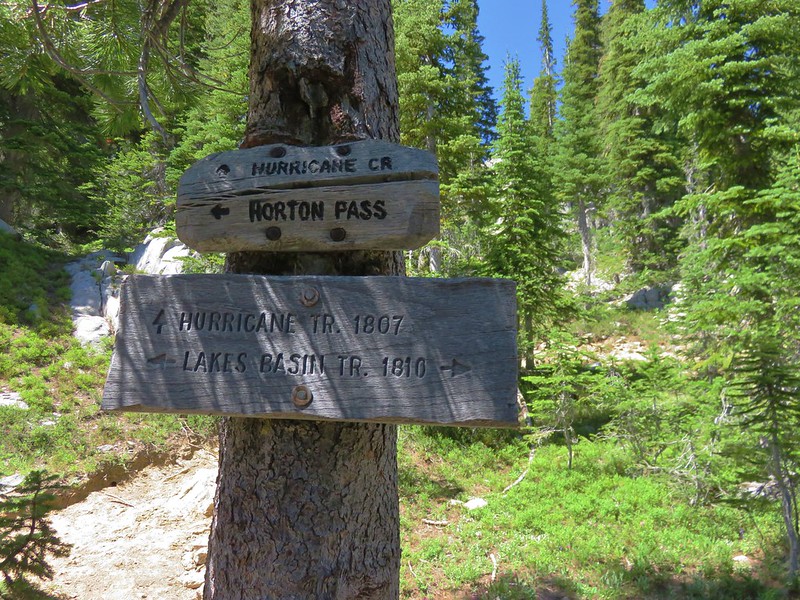
IMG_3952

Happy Trails!

Flickr: https://www.flickr.com/photos/9319235@N02/albums/72157671183919842