A left leg issue caused me to put hiking on hold for about a month. I was experiencing shifting discomfort and tightness from the piriformis down to the calf. It seemed to be a different location every day and after a couple of weeks the area around my knee was consistently feeling tight. X-rays and an exam showed the knee itself was in good shape structurally, so I’ve been referred to physical therapy. My first PT appointment isn’t until mid-April, but in the meantime the leg has been gradually improving and the orthopedist said I had no restrictions other than to not overdo it.
With that in mind we decided to see how my leg responded to hiking with a multi-stop outing of up to four short hikes in and around the Nehalem River Corridor. The short hikes would allow me to test my leg while allowing us to easily cut the day short if necessary.
We started our morning with the shortest of the planned hikes, a visit to Umbrella Falls at the Nehalem Fish Hatchery. We had attempted to visit the waterfall in February of 2021 prior to our North Fork Nehalem River hike (post). The hatchery was closed to the public due to COVID restrictions and although walking through to the river would probably have been allowed, we opted to save it for another time. That time was now and we opted to park at the North Fork Nehalem County Park adjacent to the gate at the hatchery entrance which acts as parking for non-disabled anglers.
We walked down the entrance road stopping at the rearing ponds to look at some of the fish then continued to the western end of the hatchery to a sign for the Umbrella Falls Trail.
We followed the trail 250 yards to Umbrella Falls across the North Fork Nehalem River.
Violets
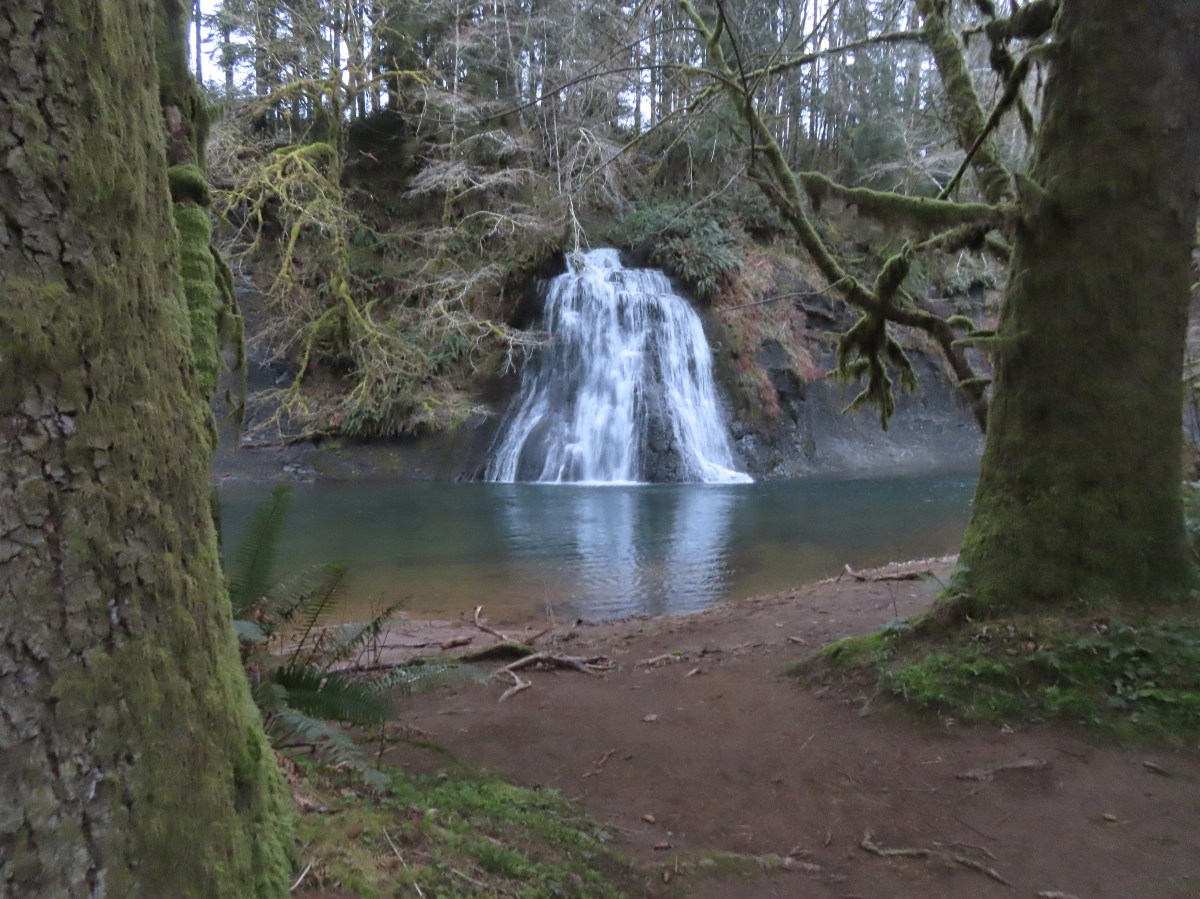
Umbrella Falls
After visiting the falls, we continued on the short loop back to the hatchery and returned to the car.
Trillium
Coltsfoot
Bald eagle above the hatchery.
This stop was just over three-quarters of a mile. Umbrella Falls is a nice waterfall, and the fish hatchery added quite a bit to see.
My leg felt great during the first stop, so we drove to our next stop at the Nehalem River Dike. There is limited parking along the shoulder of Tideland Road. There is room for a couple of cars at the location linked above. We wound up parking approximately 100 yards to the south along the shoulder to the road.
The gate at the trailhead in the Oregon Hikers Field Guide.
There is a three-quarter mile section of a grassy dike open to hiking. The dike travels between the Nehalem River and the Nehalem Bay wastewater ponds. The draw of the hike is wildlife viewing and we were not disappointed.
Swallows
One of a several great blue herons.
Red-winged blackbird
The city of Nehalem across the river.
Mallards
Scaup
One of the wastewater ponds.
Seal
Common mergansers
Northern shovelers
Great blue heron
End of the dike trail.
Heading back.
Sparrow
Bufflehead
Caterpillar
Bald eagle
Northern flicker
Cormorant
This hike was just over 1.75-miles with nice views and a lot of wildlife which made for an enjoyable hike.
I was still feeling good so when we got back to the car we headed for our third planned stop at the Nehalem Falls Campground. With the campground still closed for the season we parked near the gate at the entrance road.
We walked down the entrance road a tenth of a mile to a sign for the “Hiking Trail”.
Skunk cabbage
Day use parking area
We headed down the trail which quickly drops near the river at Nehalem Falls. These falls are more of a rapid with the tallest drop being just 8′. Depending on the water volume the drop isn’t visible.
Violets
The fish ladder is visible to the far right. At times this too is underwater and not visible.
Pink fawn lilies
After visiting the falls, we continued on the hiking trail which loops around the campground in just under a mile.
Bleeding heart
Blackberry blossoms
Trillium
One of several benches along the loop.
Fall Creek
Chestnut-backed chickadee
Toothwort
There were a lot of trilliums along the trail.
The trail dropped us into the campground.
A short walk along the campground road led us back to the day use parking area to complete the loop then we walked back up to our car.
The final hike we had planned was located less than a mile from the Nehalem Falls Campground at Cougar Valley. In 2007 an Oregon Department of Parks and Recreation proposal included development of a 315-acre parcel of land located in Cougar Valley that had been purchased by the State in 2005. Local pushback on the proposal suspended that development and today the tract of land is open for day use only. The abandoned Lost Creek Road serves as what All Trails refers to as the Lost Creek Trail. This “trail” is not officially maintained, at least not frequently.
We parked at the gated roadbed and set off on a grassy track through blackberry bushes.
There were dozens of snails along the roadbed.
Maple meadow. The land had previously been the homestead of Cougar Bill and Cougar Marie, mountain line bounty hunters.
Lost Creek below Lost Creek Road.
Lost Creek
Salmonberry
One of two washed out areas along side creeks, possibly from flooding in February 2026.
Pacific wren
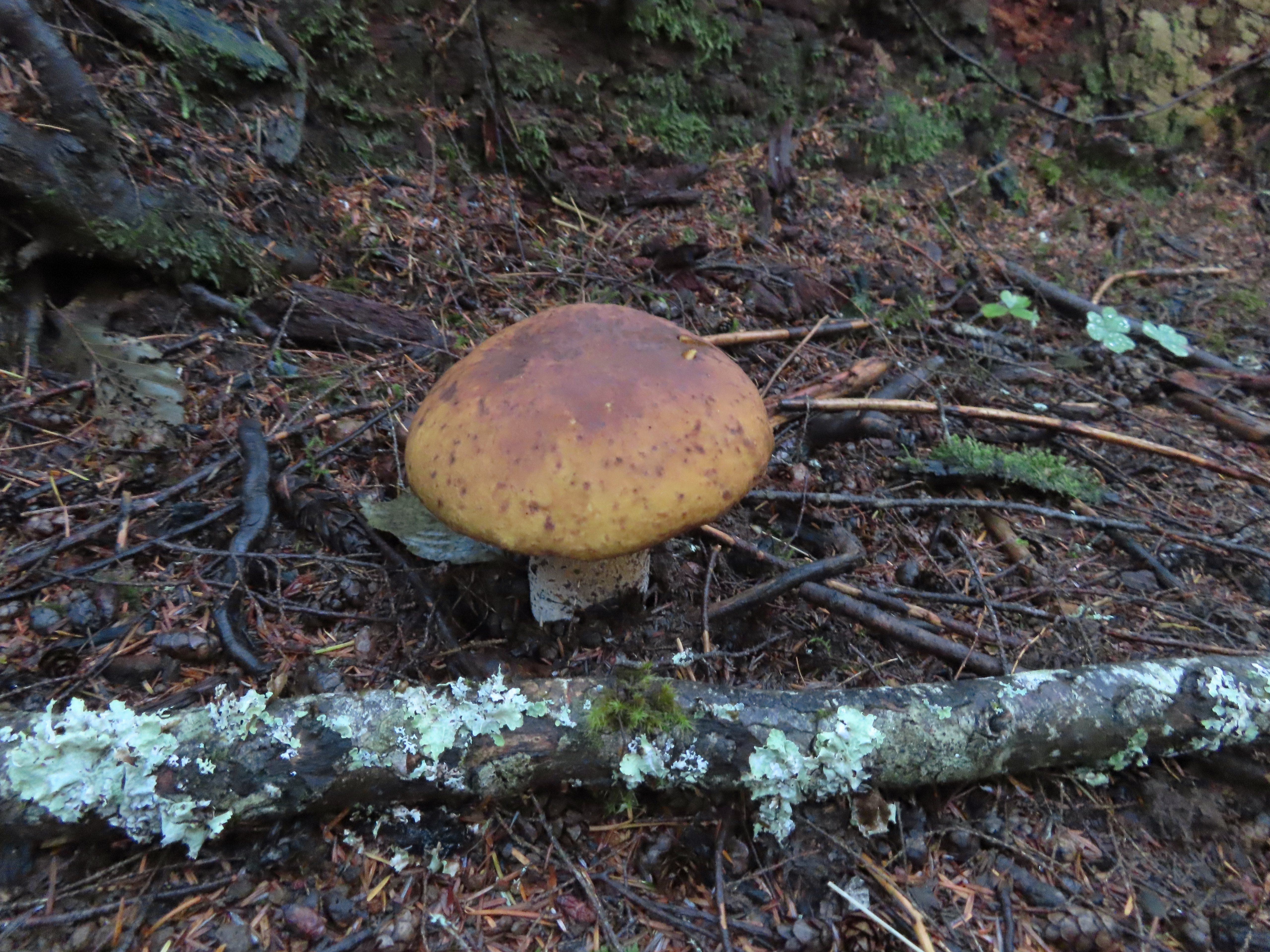
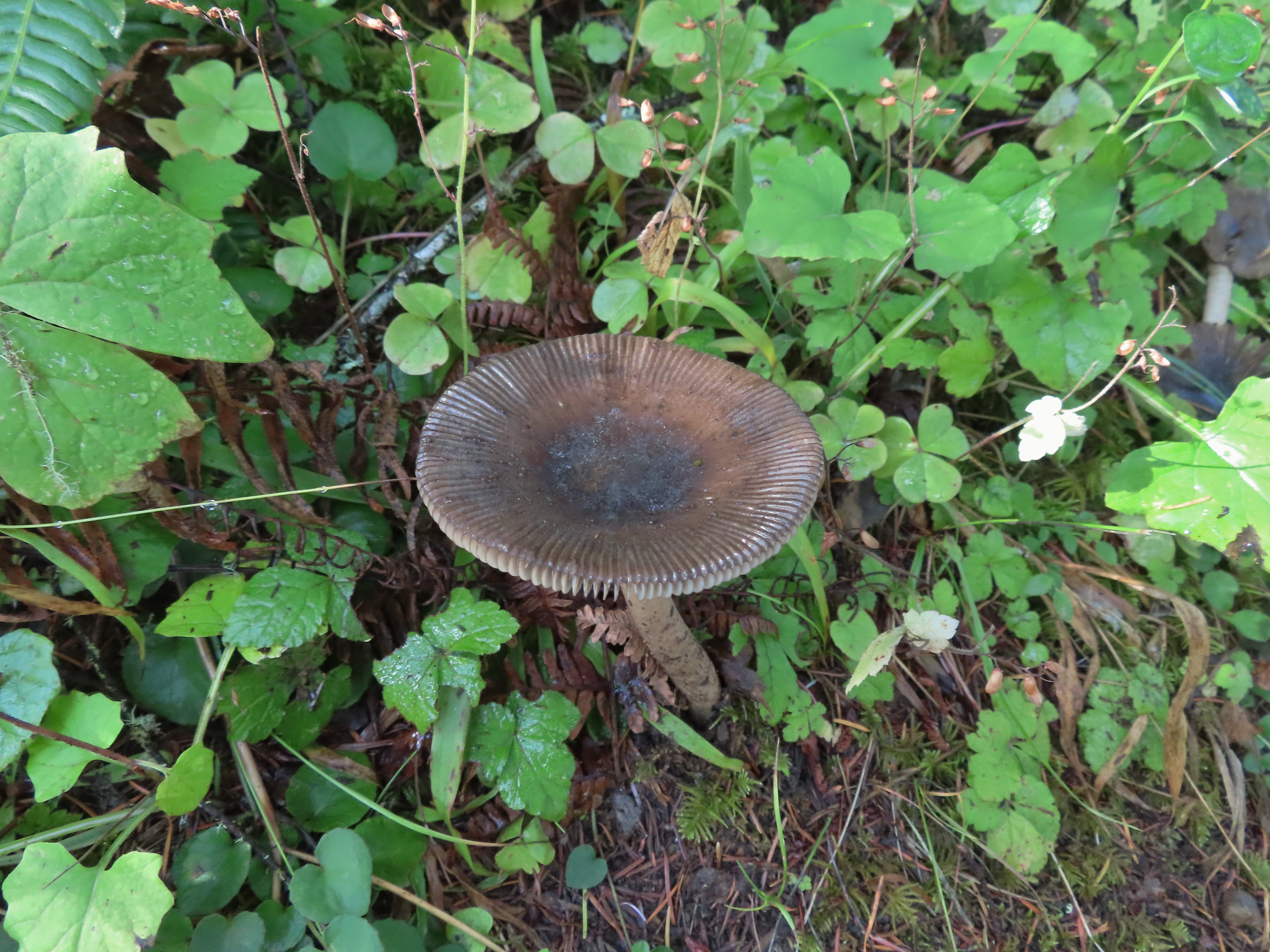
Mushroom
Rusted dozer blade
We made it almost a mile and a half before we began to encounter overgown conditions.
After picking our way through the first section we came to an even thicker mass of vegetation and decided to turn around. The old logging road had originally continued a couple more miles, and the roadbed had been accessible to at least the 1.75-mile mark where it crosses Lost Creek. Time has allowed nature to slowly reclaim the roadbed though.
Our turnaround point.
We headed back toward the car but took a short detour 0.4-miles before the trailhead down an old spur road that led to an old bridge over Lost Creek.
The old bridge from Lost Creek Road.
The spur road is on the right heading out Lost Creek Road. Since we were on the way back it was a left for us.
A very rough trail was cut through the blackberry bushes. We came away with quite a few scratches.
I didn’t trust the bridge enough to try stepping on it.
Lost Creek from the edge of the bridge.
After checking out the bridge we fought our way back up through the blackberries and returned to our car.
Our hike in Cougar Valley came in just under three miles and Nehalem Falls had been 1.1-miles.
One note is that we both did wind up with a tick on our long sleeves post hike. With the unusually warm, dry winter all reports indicate they are bad all over the State this year and this was the first time we’d picked any up in the Coast Range. It was a good reminder to always perform a tick check at the end of your hikes.
In all the four stops wound up being 6.6-miles with just 175′ of elevation gain. Here is a look at the relative location of our four stops.
My leg held up surprising well and as I am writing up this trip report the next day it’s still feeling good which is encouraging. Our plan is to take things easy and hopefully the physical therapist will be able to identify whatever the issue is and we’ll go from there. In the meantime, Happy Trails!
It had been nearly 14 years since we visited Shellburg Falls (post). Since that time a lot has changed there, most notably the area was burned in the 2020 Beachie Creek Fire. The area remained closed until May 2024, when it was reopened thanks in large part to volunteer work done by the Trail Keepers of Oregon (TKO). I had MLK Day off from work and while the polar vortex was keeping people from outdoor activities in some parts of the country the low at Shellburg Falls was forecast to be a crisp but reasonable 25F with nothing but blue skies.
I couldn’t pass up hiking weather like that so while Heather was getting ready for work I headed out to the Shellburg Falls Trailhead. Please note that access roads for the trailhead changed post fire and that some information online and certain navigation apps (I’m looking at you Google Maps) still show the pre-fire route. The directions in Oregon Hikers Field Guide (linked above) are correct as of this writing.
One of the other changes post fire is that the loop we did back in 2011 is no longer possible due to the closure of the section of trail that passed behind Shellburg Falls. You can still reach Shellburg Falls on either the west side or east side, you just can’t make a loop out of it. There are several other loops that are possible in the area on the east side of the creek and my plan was to check out three of those and also take a detour to the Silver Falls State Park Backcountry.
Prior to doing any of that though I headed down the Shellburg Falls Trail to do the roughly 1.5-mile out-and-back on the west side of the falls.
The trail parallels Shellburg Road and briefly joins it after passing a gate to cross Shellburg Creek and then returns to a single track recrossing Shellburg Creek on a new footbridge installed by TKO volunteers.
Shellburg Creek
Trail sign ahead on the right marking the resumption of the Shellburg Falls Trail.
The trail soon passes the top of the falls before descending via new switchbacks and turning back up the creek for a view of the full waterfall.
May 2011 view.
First sunlight hitting the rocks above the trail.
Barricade and sign marking the closed section of trail.
2011 view
After admiring the falls I headed back up toward the trailhead but stayed on Shellburg Road and turned right across the parking area to head toward the shelter and day use area. Some survivors on the far hillside.
I heard a number of woodpeckers throughout the day, but this was the only one I was able to spot.
Outhouse at the day use area up ahead.
Parking spots at the day use area along with the shelter. The trails on the left and right are the Vine Maple Trail, the shortest loop option at about 1-mile.
While my plan was to do the Vine Maple Loop it would not be all at once. Instead, my plan was to take the left (northern) section to the Shellburg Creek Trail where I would turn left onto that loop which would eventually lead me back to the trailhead where I would then take the southern section of the Vine Maple Loop to the August Mountain Trail.
The only tree I had to step over on a trail all morning.
Arriving at the 4-way trail junction with the Shellburg Creek, August Mountain, and southern portion of the Vine Maple Trail.
At the junction I made a hard left onto the Shellburg Creek Trail.
We had not been on this trail in 2011, so it was brand new to me. The trail climbed gradually along Shellburg Creek (no views) for a third of a mile before turning away from the creek and climbing more steeply.
I saw a good number of varied thrushes including 4 or 5 in this spot, but once again I failed at getting a clear picture.
The forest along the creek held up pretty well in the fire.
I was keeping an eye out for the Lost Creek Trail which would be heading uphill to the right (or left if you’re going the other way) of the Shellburg Creek Trail. I first spotted a faint trail signed as a horse route.
I had seen this trail on at least one map and knew it wasn’t the trail I was looking for. (It theoretically rejoins the Shellburg Creek Trail a short distance later, but I did not notice the other end.)
Frosty leaves
A short distance later the trail crossed a roadbed that was not on any of the maps that I had available to me. (This road is shown on several other maps that I did not happen to be using.)
Referring to the maps I had, and my GPS track this old roadbed looked like it might be what I was looking for. There was no sign for the Lost Creek Trail but the other tail signs at the junction increased my confidence that this could be the trail. I turned uphill on the roadbed and climbed 150′ in a quarter of a mile to the end of the road.
End of the line. I briefly searched for old tread before deciding that this was not in fact the Lost Creek Trail.
I returned to the Shellburg Creek Trail and continued on that loop. A tenth of a mile later I passed an abandoned trail that had been covered with debris. A few feet beyond the abandoned trail I came to an unsigned T-junction at the edge of a clearcut.
The T-junction
The trail leading uphill here was in good shape and I was confident that I had finally found the correct trail, so I turned right. Heading uphill from the Shellburg Creek Trail.
After climbing for a bit I passed the upper end of the closed trail and a trail marker for the Snag Loop Trail.
As near as I can tell the decommissioned section of trail was the Lost Creek Trail as some maps show both the Lost Creek and Snag Loop Trails.
I continued uphill crossing a roadbed at the half a mile mark and arriving at Shellburg/Ayers Creek Road at the three-quarter mile mark.
Arriving at the road crossing.
Shellburg/Ayers Creek Road (depending on the map)
I turned right on the road for a tenth of a mile to an intersection where I proceeded straight into a wide muddy area.
On the other side of the intersection.
The Lost Creek Trail followed the muddy roadbed for another 0.2-miles before splitting off to the left at a trail pointer.
The trail continued uphill to Lookout Mountain Road at the edge of Silver Falls State Park. Some of the forest up higher had survived the fire as well.
Arriving at Lookout Mountain Road.
Gate at the border of Silver Falls State Park.
I had been on the other side of that gate in 2022 during my 21.5-mile perimeter loop of that park(post).
The unmistakable flat top of Coffin Mountain (post) in the distance.
After tagging the gate, and shedding a layer, I headed back down to the Shellburg Creek Trail.
Shortly after starting back down I spotted a couple of early wildflowers. Evergreen violets – Viola sempervirens
Snow queen
Back at the Shellburg Creek Trail.
From the junction the Shellburg Creek Trail descended at a good pace through a recently replanted clearcut before ending at Shellburg Road after two thirds of a mile.
While the Sun was out and it had warmed up a bit the shady areas were still frosty.
The trail crossed this road at the 0.3-mile mark. It turns out this roadbed is the one I turned up earlier in error.
Shellburg Road
I turned left onto the road and followed it approximately 500′ to the trailhead where I again headed for the day use area (left this time) and picked up the southern section of the Vine Maple Trail.
I followed the Vine Maple Trail back to the 4-way trail junction and turned right onto the August Mountain Trail.
The back of the shelter.
The August Mountain Trail crossed Shellburg Creek on another nice new bridge then climbed August Mountain to a signboard at a roadbed.
Following a pointer for the Shellburg Falls Trail I headed downhill into a creek drainage where I spotted a few deer on the opposite hillside. While not unobstructed, the fire had opened up partial views of Mt. Jefferson.
Mt. Jefferson through the trees.
Two of the deer.
The trail dropped to Shellburg Road (again) and continued on the far side.
I however turned left onto the road in order to make another little loop, and to see if the fire had opened up any views of Stassel Falls. While the waterfall is on private property the Santiam State Forest Boundary extends far enough that it is possible to get glimpses of the 125′ waterfall. There is no official trail but I picked up a use trail which I followed, keeping an eye out for private property or no trespassing signs.
While the fire had burned away much of the trees the angle looking toward the falls from this side of Stout Creek still doesn’t provide a great view. Stassel Falls
Given the rough terrain, dangerous hillside, and lack of a view I don’t recommend this side trip. I returned to the road and followed it down to a picnic table next to Lower Shellburg Falls. Along the way I was passed by a bike, the first person I’d seen on trail all morning.
The picnic table in the distance.
Lower Shellburg Falls
2011
I saw a second trail user, an equestrian, just before I headed up toward Shellburg Falls from the road.
I had the waterfall to myself and as a bonus there was a nice rainbow at its base.
Rainbow and ice below Shellburg Falls.
Icicles on the rocks above Shellburg Creek.
After admiring the falls again I headed back by taking the August Mountain Trail through the burned forest to the road crossing. August Mountain Trail on the left.
At Shellburg Road I turned left and followed it above the falls and back to the bridge over Shellburg Creek.
At the gate I hopped back onto the Shellburg Falls Trail and took it back to the trailhead.
My convoluted route came to 10.8-miles with a little over 1700′ of elevation gain and consisted of five loops.
Given the numerous options and proximity to Salem (about an hour) it’s an area we need to make more use of. There is also a network of mountain bike only trails in the area making it a popular destination at times but on a day like to today it provided a lot of solitude.
One interesting prospect that I found myself thinking about was the possibility of shuttling from Shellburg Falls over to Silver Falls State Park. It would make for a long outing but could include at least a dozen waterfalls with the right planning. Happy Trails!
With October and our official hiking season coming to an end I was hoping to go out with a bang by doing a long loop around Silver Falls State Park. I had gotten the idea during our 2021 hike in the backcountry of the park (post). While looking at the map for that hike I had started doing the math for the loop and it appeared to be a little over 20 miles which would be a long day but doable. Heather was not as enthused as I was about the possibility, so I had originally planned on attempting the loop on a day off while she was working. With her knee ending her season early it seemed like a good way to put an exclamation on the end of mine.
As the day neared I started second guessing myself. Some much need wet weather had moved in, and Friday was the wettest day we’ve had in months. The forecast for Saturday was for more rain in the morning, a 70% chance, followed by several hours of patchy fog then mostly cloudy skies. Twenty plus miles with wet feet wasn’t my ideal way to spend a hike but I decided to give it a try figuring I could cut the loop short by using one of the many trails running through the park. I packed some extra pairs of socks in a dry sack and had my rain gear ready as I made the 40-minute drive to the South Falls Trailhead.
It was a dark and raining when I left home but shortly after turning onto Highway 214 I popped out of the low clouds and left the rain behind. Things were trending positive. When I got to the South Falls Day Use Area entrance I was reminded that by the gate that the Park opens at 8am and not 7am from October through March and it was only 7:30am. I needed to purchase a pass so I drove to the North Falls Trailhead where I knew there was a pay kiosk, only I had forgotten that the station there only accepts cash which I didn’t have. After using the restroom there I drove back through the park to the campground entrance remembering that there was a station along the entrance road that did take cards. I decided that I would get a pass there and then park at the 214 Trailhead like we had in 2021 since there was no gate blocking that one. At the kiosk I immediately inserted my card into the cash slot. Things were trending down. I managed to retrieve the card using a pair of travel nail clippers and finally got my pass. It was nearly 8am as I came to the turn into the trailhead at Lookout Mountain Road. Given the time I changed my mind here and decided to revert back to my original plan and drove back to the now ungated South Falls Day Use Area. A lot more blue in the sky than I had expected to see.
The route I had penciled out was to take the paved bike path from the parking lot to the campground where I would pick up the Nature Trail. I could take that trail to the 214 Trail followed by a portion of the Newt Loop to the Catamount Trail. I hoped to take that trail up to Buck Mountain then take the Perimeter Trail down to the Trail of Ten Falls near the North Falls Trailhead. I planned on visiting all ten falls and returning to the parking area via the Canyon Trail portion of the Trail of Ten Falls. I crossed South Fork Silver Creek on a footbridge to pick up the Bike Path on the far side where I turned left.
Crossing Highway 214 to the campground.
I detoured left to check out this bridge over Howard Creek.
Howard Creek
With the Nature Trail being a loop I could have gone either direction from the campground to reach the 214 Trail. Going left was a tenth of a mile shorter but I really wanted to make the loop as wide as possible so I went right at a pointer for the trail and Ampitheater.
We had been on the Nature Trail in 2021 so it was familiar surroundings as I made my way to the 214 Trail where I turned right.
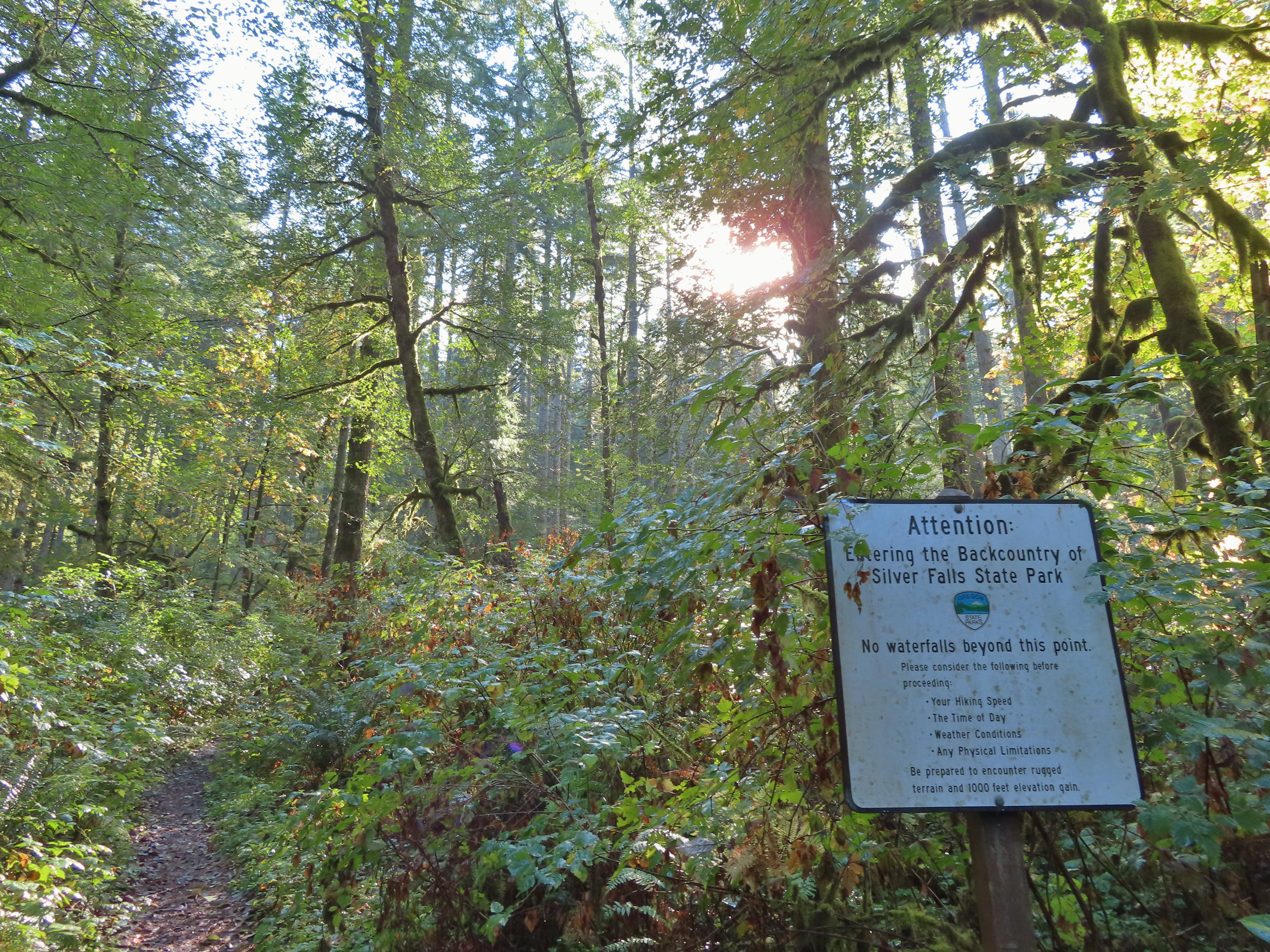
Sign at the 214 Trail junction to let people know that there are no waterfalls in the backcountry.
I followed the 214 Trail for 1.3 miles to the Newt Loop. Just a little fog but no rain.
Passing the Smith Creek Trail (left) after 0.6 miles on the 214 Trail.
Rough skinned newt on the 214 Trail. (Probably headed for the Newt Loop too.)
Big nursery tree along the 214 Trail.
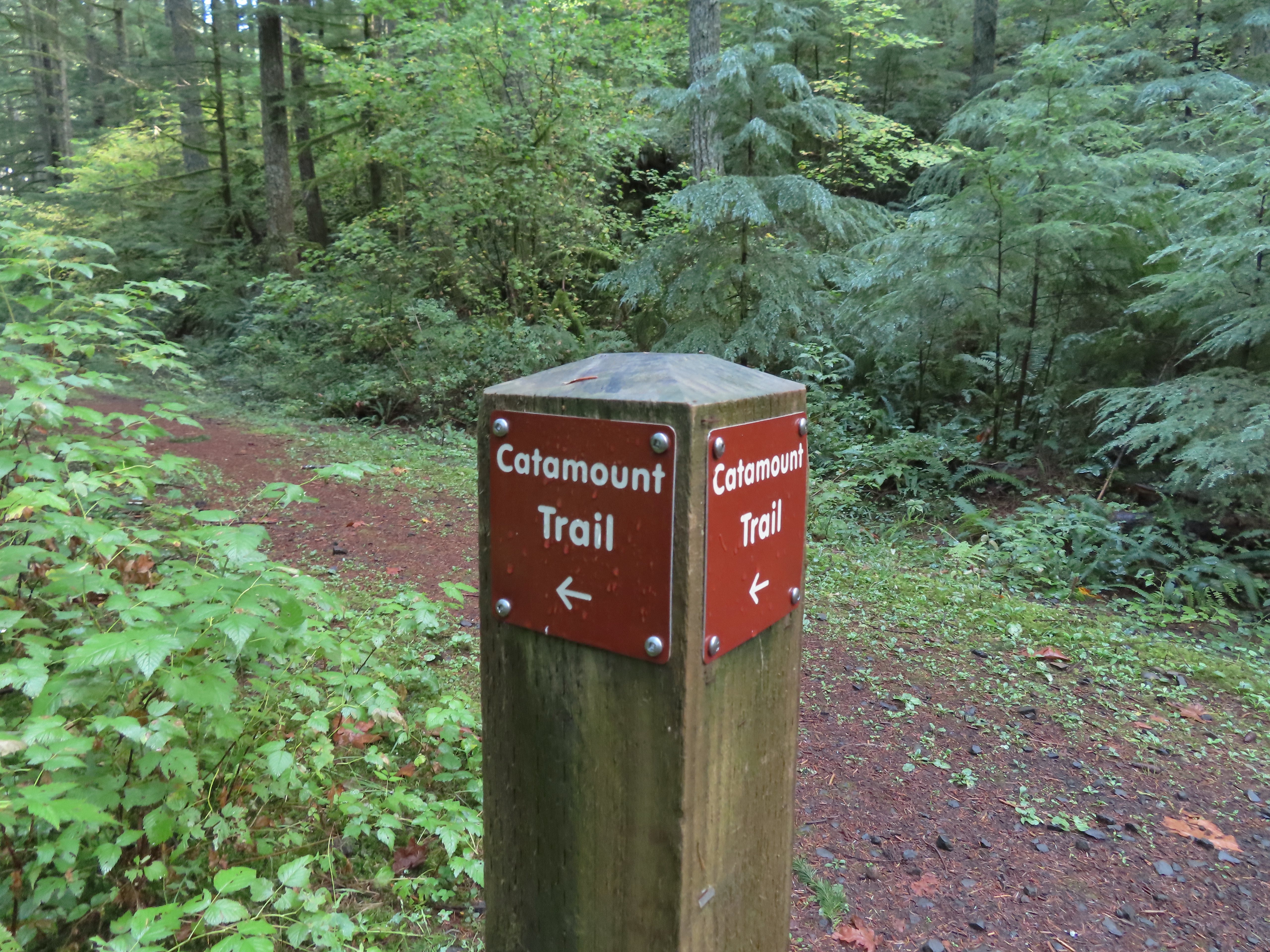
The trail post at the junction shows the Catamount Trail instead of the Newt Loop but the map at the junction labels it the Newt Loop.
Map check.
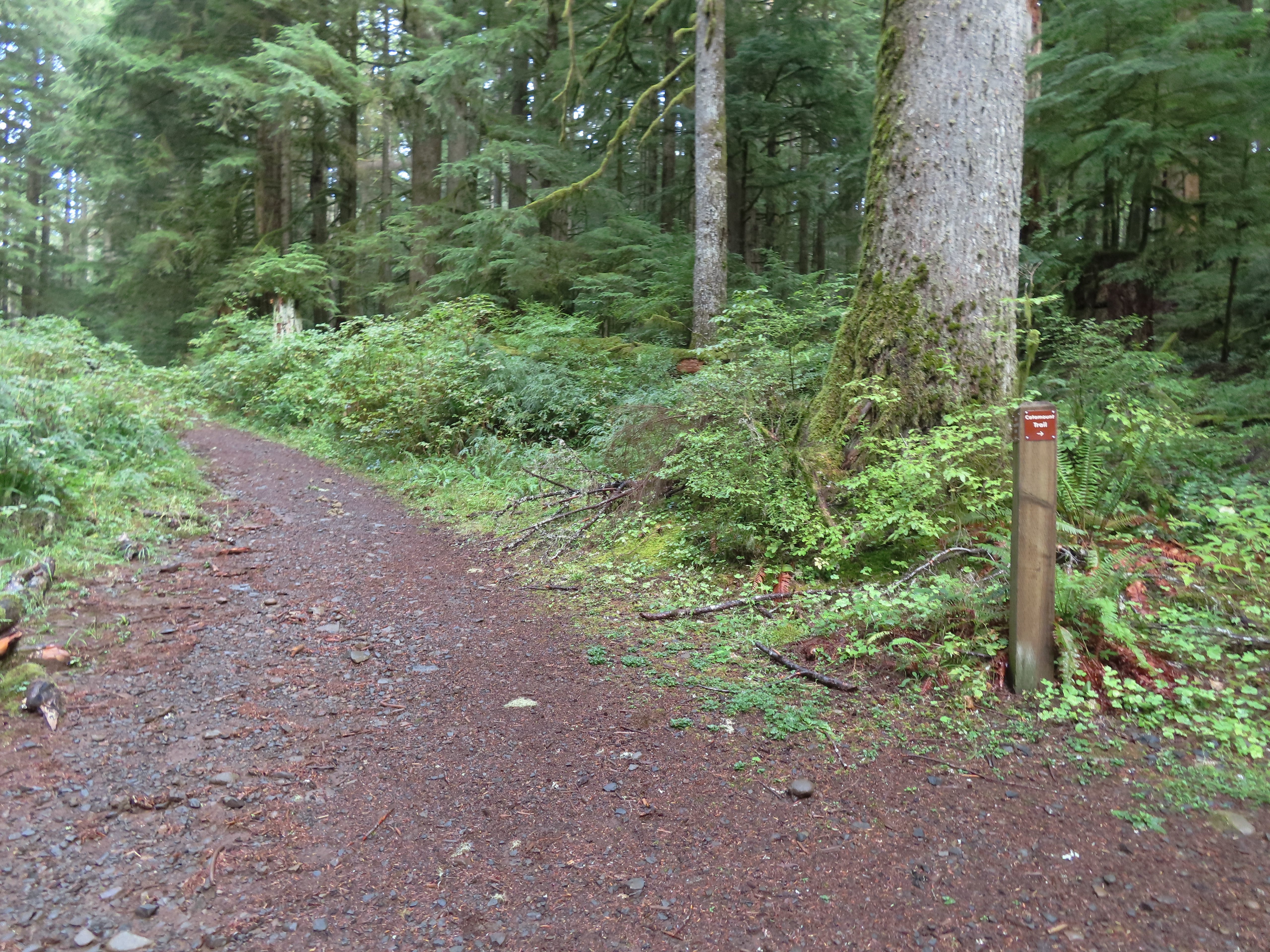
I turned right onto the Newt Loop and arrived at a junction with the Catamount Trail after 0.4 level miles. This second post included the Newt Loop along with a pointer for the Catamount Trail.
Crossing a CAT road along the Newt Loop.
Turning onto the Catamount Trail.
The Catamount Trail was new trail for me having not used it on our loop in 2021. The park map showed this trail extending 4.6 miles to a junction with the Lost Creek Trail then continuing another 0.9 miles to Buck Mountain. As a mountain bike trail the Catamount wound steadily uphill through the forest. Lots of nursery stumps along the trail.
Another nursery stump.
Side trails were well marked.
Did not expect to see that overhead today.
I believe this short section of fire scar was from the 2020 Beachie Fire.
After 3.8 miles on the Catamount Trail I came to a 4-way junction with a maintenance road.
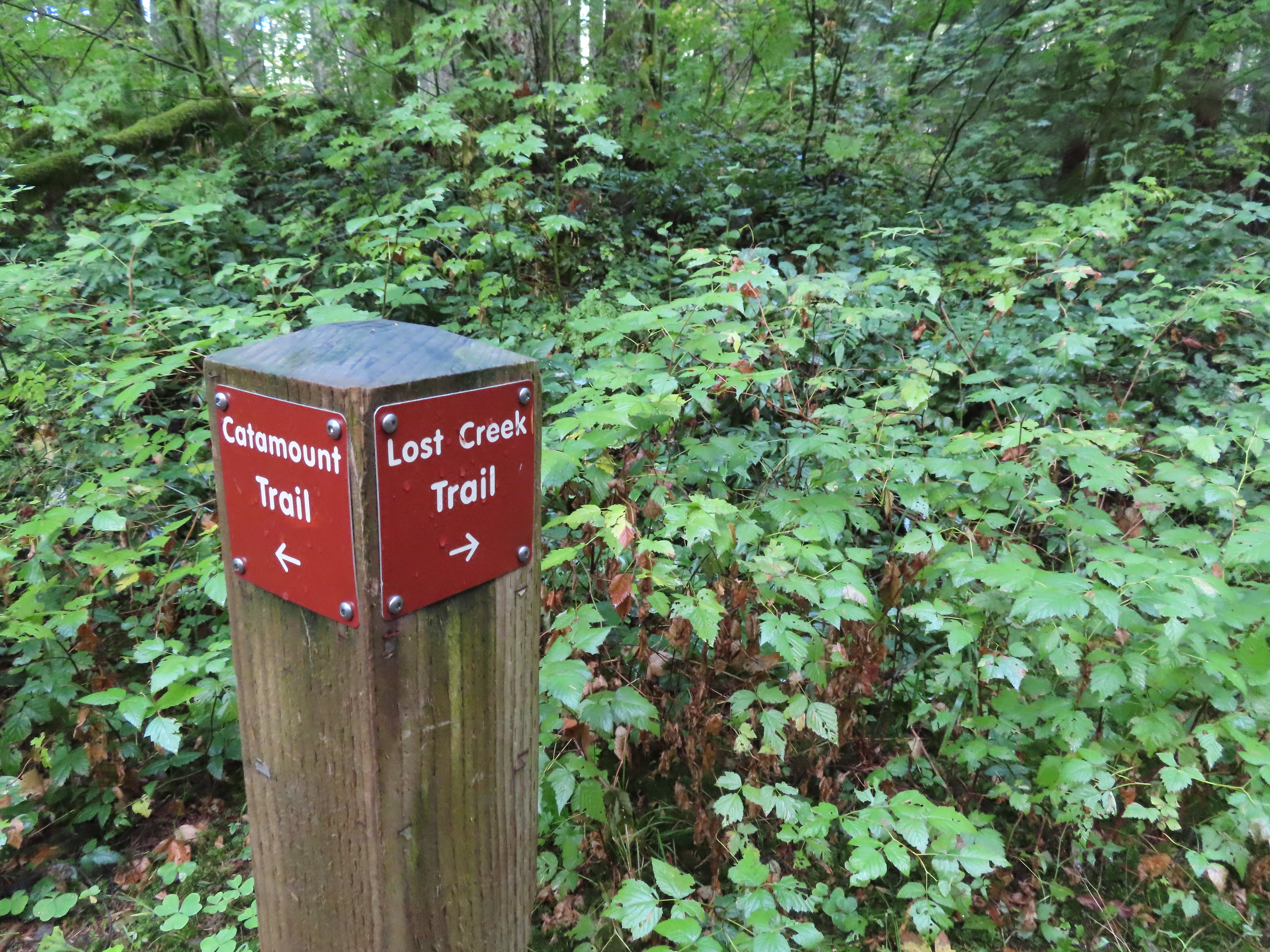
The Catamount Trail continued on the far side the road only there was a “Do Not Enter One-Way” sign on the post.
This was the first I’d heard of the trail here being one-way and I haven’t had a lot of luck since my hike in finding that information online or maps, but I honored the sign and turned left on the maintenance road following a Catamount Trail pointer. Turning onto the road.
The opposite side of the post had a pointer for the Lost Creek Trail.
I followed the road for half a mile to the Lost Creek/Buck Mountain Trail junction.
I veered uphill to the right here.
The Lost Creek/Buck Mountain junction.
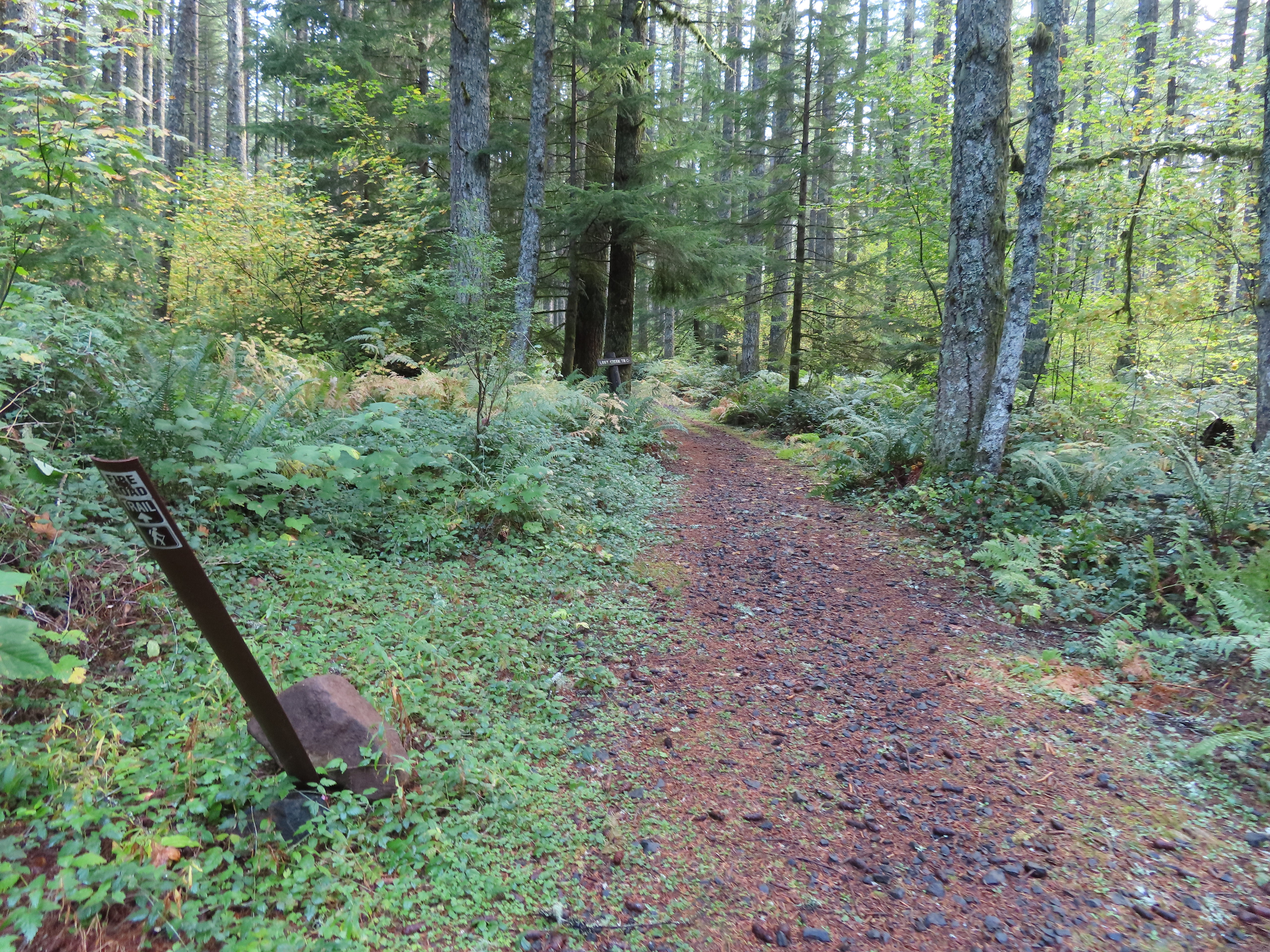
On our previous visit we had arrived at this same junction having come down the Buck Mountain Trail. To make this hike as different as possible (and to remain as far to the outside of the park as possible) I turned right on the Lost Creek Trail. The Lost Creek Trail doubles as a fire road.
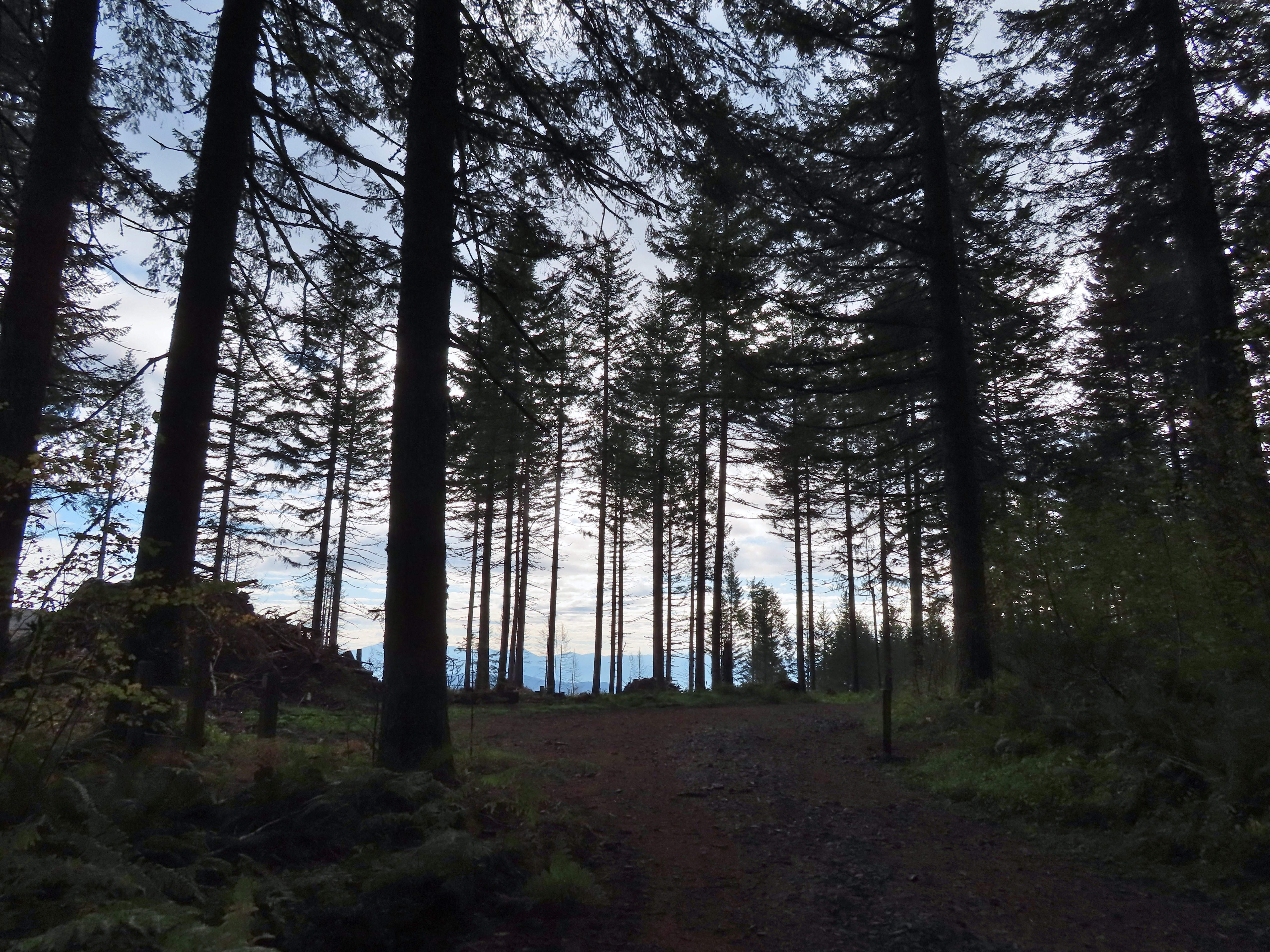
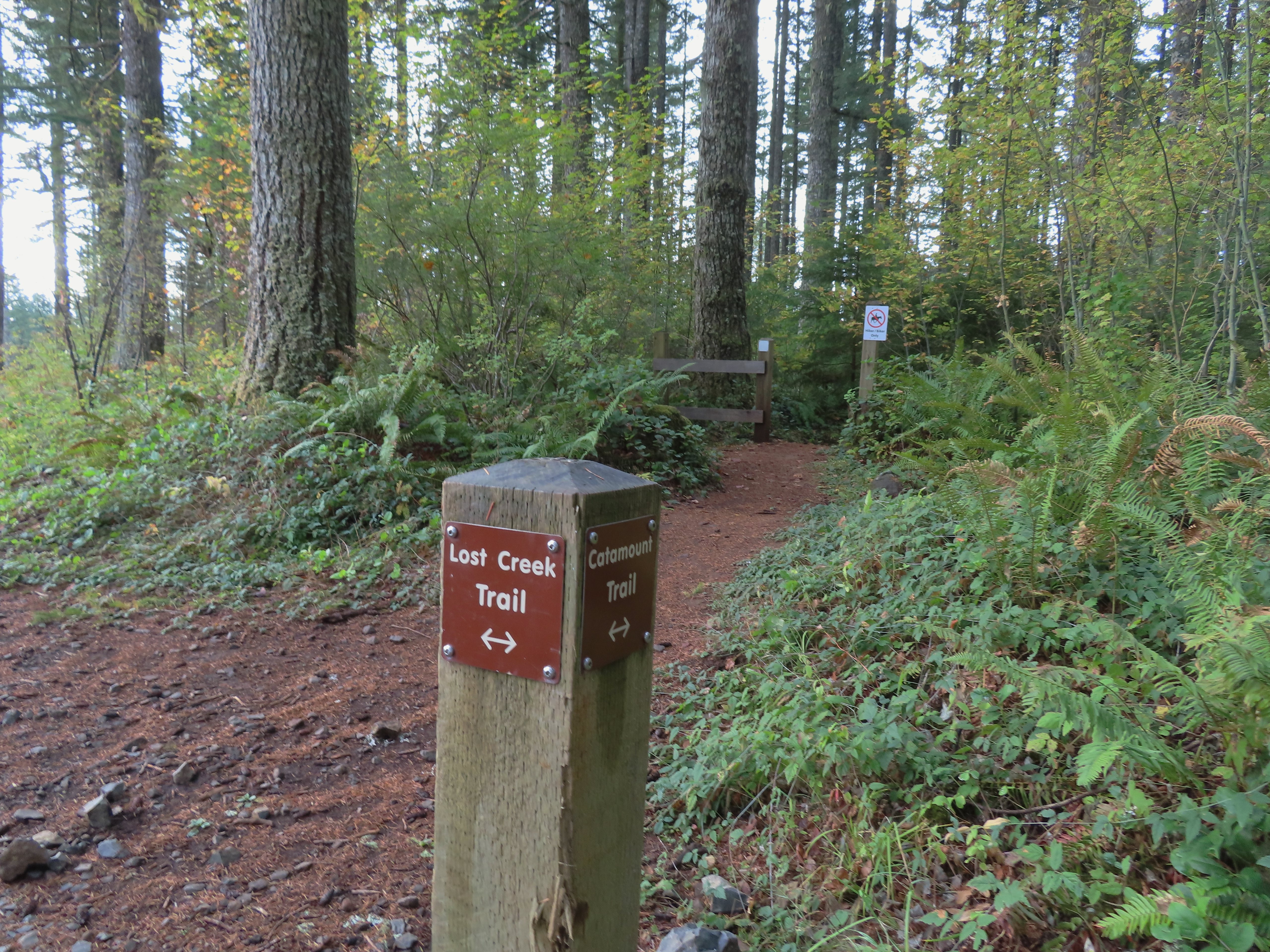
I followed this trail for 0.8 miles to a junction with the Catamount Trail at the edge of a clear cut.
Here is where I would have come up had the Catamount Trail did not have the on-way section. (Note that on some mountain biking maps the one-way section is labeled “Upper Catamount Trail.)
I turned left onto the Catatmount Trail at the junction and quickly found myself walking through the clear cut.
The treeless section wasn’t long. It appeared to have been an area impacted by the 2020 Beachie Fire.
Still some bleeding heart blooming.
There wasn’t a lot of bright Fall colors in the backcountry, but this maple stood out.
Was a bit surprised to see a few violets along this section.
Nearing the end of the logged area.
At the tree line the trail split unexpectedly (another feature not shown on the park map) into two one-way trails. The right hand fork (in this direction) was one-way uphill while the left down. I was going down at this point so I stayed to the left.
It wasn’t long before the two trails rejoined. The trail continued downhill to the Buck Mountain Loop near its crossing of Howard Creek. The rejoining of the trails.
There were several bridges along this section of the trail. I also ran into the only mountain bikers that I would encounter all day in this area, a group of five.
The Buck Mountain Loop junction.
I turned right at the junction and crossed Howard Creek then turned right again back onto the Catamount Trail. Bridge over Howard Creek.
The continuation of the Catamount Trail on the right.
The trail now climbed uphill for 0.2 miles to the large trail junction on Buck Mountain, a total of 1.1 miles from the Lost Creek Trail junction.
The map showed the section I had just done as 0.9 miles, but my track was a bit more twisty than the map.
From the junction I took the Perimeter Trail.
The park map lists this trail as 5.9 miles in length and has a “Steep” warning not far from the Buck Mountain junction. The trail was in good shape and although it lost over 350′ of elevation in just under a mile to a crossing of South Fork Silver Creek the grade was reasonable. Compared to some of the other trails we’d been on this year it didn’t seem all that steep.
A small opening on the way down.
Footbridge over South Fork Silver Creek.
South Fork Silver Creek
If I had paid better attention to the elevation numbers shown on the park map I might not have been so surprised when the trail began to climb on the other side of the creek. Over the next 2.1 miles the trail gained over 650′ before arriving at junction with the Rackett Ridge Trail. Up until the Rackett Ridge junction I had only encountered 8 people, the group of 5 mountain bikers and three trail runners (one solo and two together). The number of people seen doubled at this junction.
I’m a hiker so I went right here.
Big fungus on the tree ahead.
Map at the Rackett Ridge junction.
I continued on the Perimeter Trail which now began a nearly 3-mile descent that was at least as steep as the section before with the warning. The use of switchbacks allowed the grade to stay reasonable though.
Another impressive nursery log.
I stopped in this area to change out of my sweaty socks and into one of the extra pairs I’d brought expecting rain.
The vegetation went through several changes as the trail lost elevation.
This was a big tree in the midst of much smaller ones.
Roemer’s Meadow Trail (left) isn’t shown on the park maps yet, but it was completed in 2021 with help from the Salem Area Trails Alliance. (They do a lot of good work in the park and the area.) The trail is approximately 1.7 miles from the Rackett Ridge junction.
The Trail of Ten Falls junction near Highway 214.
Looking back up the Perimeter Trail.
For the hike to be a true loop I would have turned left onto the Trail of Ten Falls, but in order to see Upper North Falls I needed go right for 0.3 miles so that’s what I did.
Upper North Falls
After visiting the falls I headed back and passed under the highway to a large map at a “T” junction.
A left would have taken me to the North Falls Trailhead.
I turned right at the signboard then veered right onto the Canyon Trail at a congested fork in the trail. The Rim Trail to the left and Canyon Trail to the right, both part of the Trail of Ten Falls.
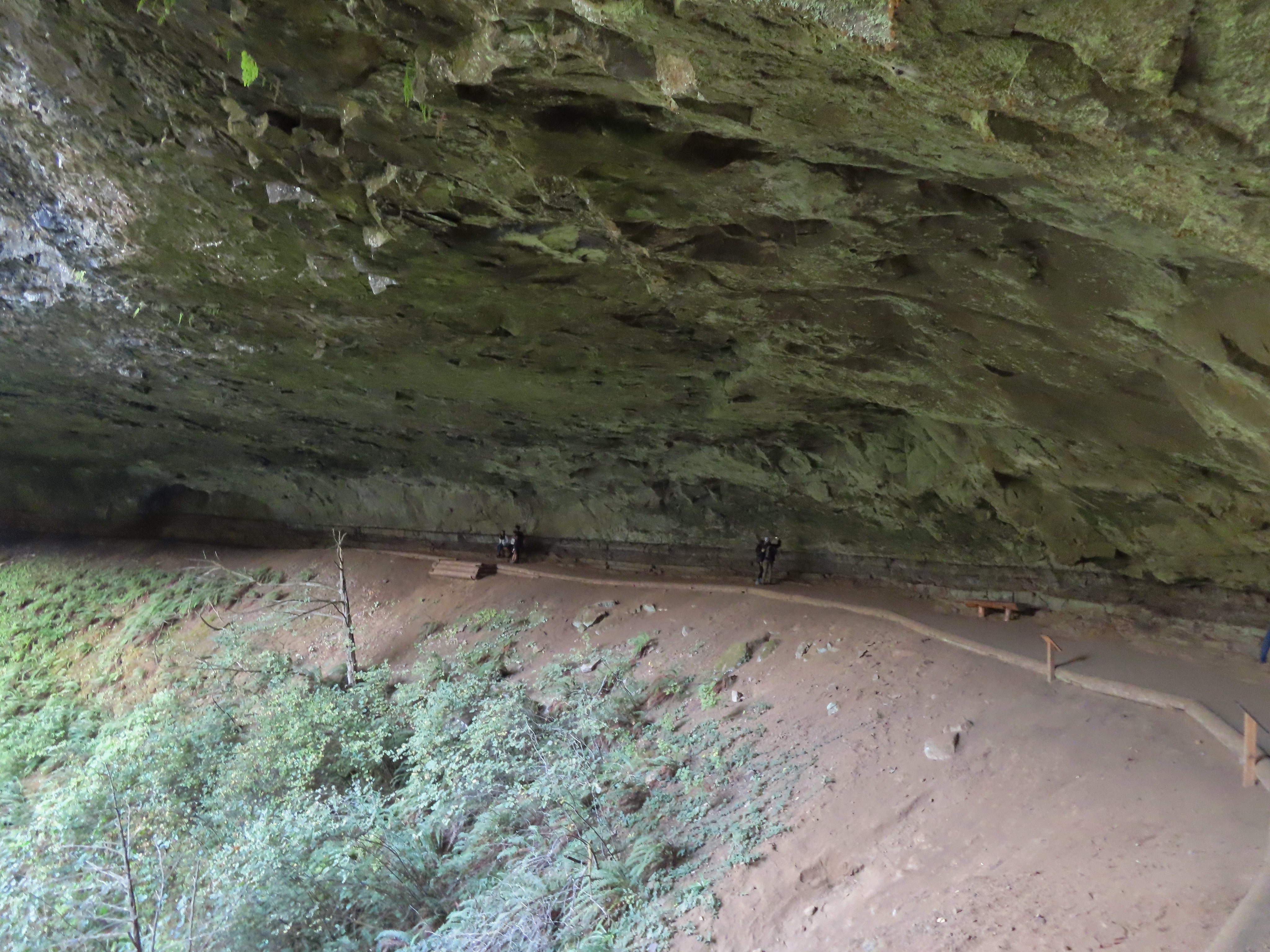
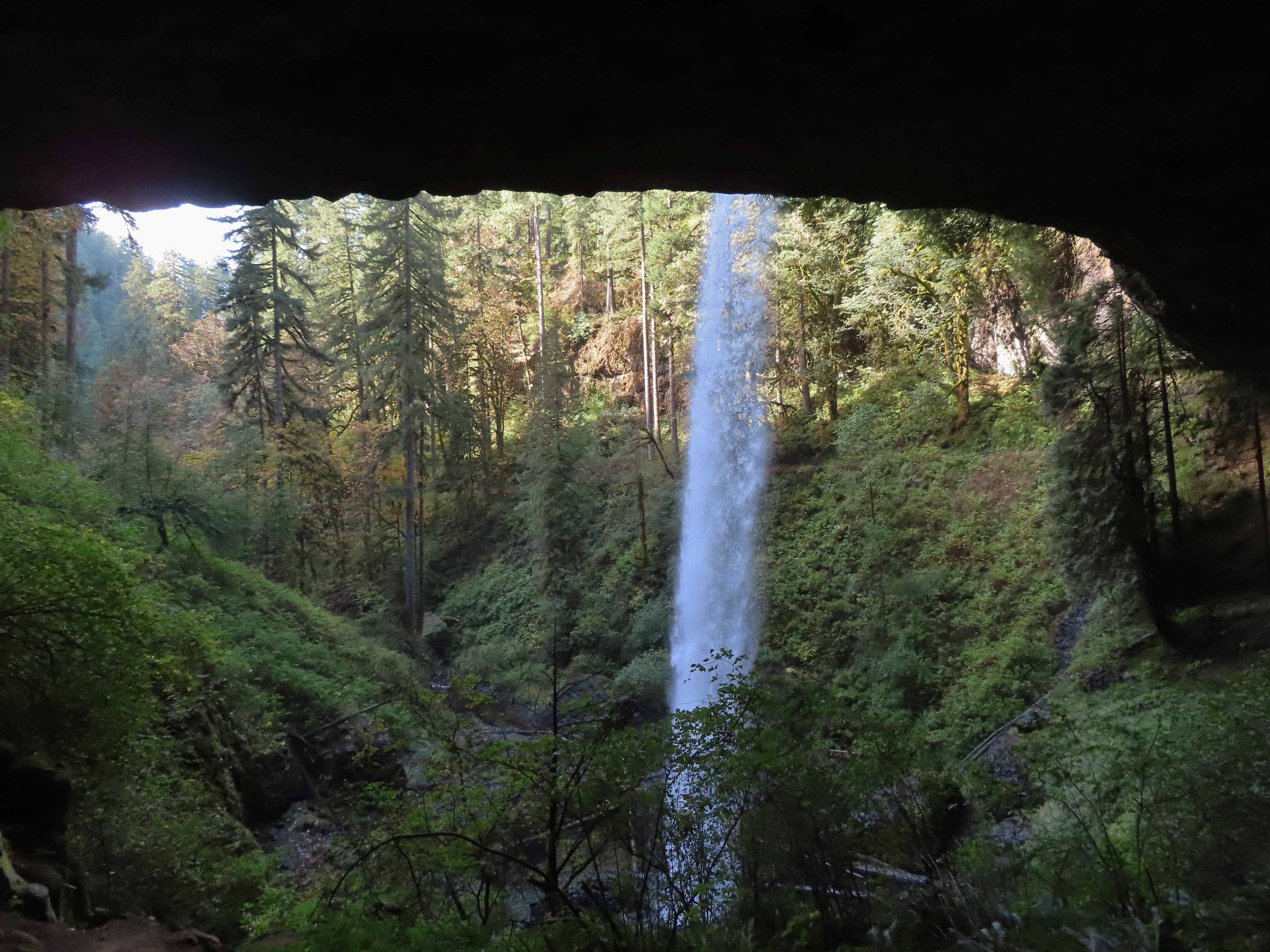
The Canyon Trail descended some stairs then wound its way behind North Falls in approximately a tenth of a mile.
The trail followed the creek arriving at Twin Falls a little over three-quarters of a mile from North Falls.
I’m always impressed by the size of this rock in the creek.
Not Twin Falls, but a nice little cascade nonetheless.
This post could be a little confusing without a map. The Twin Falls Trail climbs uphill to a group camp and does not lead to Twin Falls. The falls are the opposite side along a very short spur trail that connects at either end to the Canyon Trail.
Twin Falls isn’t very easy to see from the spur trail either even though you’re right next to it.
I was able to find a better viewpoint of Twin Falls further along the Canyon Trail.
Twin Falls
My next detour came 0.3 miles beyond Twin Falls when I turned left onto the Winter Falls Trail.
The Winter Falls Trail crosses the creek on a footbridge then climbs gradually to the base of Winter Falls before steepening to climb up to the Rim Trail. I turned around before the steep part.
North Fork Silver Creek
Winter Falls, as the name suggests it’s not much of a waterfall outside of Winter when rain and snowmelt provide more water.
With the dry Summer it isn’t a great Fall color year but there was a decent display along this trail.
After saying hi to Winter Falls I returned to the Canyon Trail and continued toward the South Falls Day Use Area. Next up was Middle North Falls and another detour to go behind this one as well. I turned left here on the spur trail behind Middle North Falls.
I again returned to the Canyon Trail and quickly arrived at the Drake Falls viewing platform. Middle North Falls from the Canyon Trail.
The 27′ Drake Falls.
Approximately a quarter mile beyond Drake Falls I turned right onto the Double Falls Trail.
Much like Winter Falls, Double Falls is on a side creek which has a low flow much of the year. The hiker at the base gives a good idea of the fall’s height, you just have to use your imagination to add water.
On my way back to the Canyon Trail I ran into one of Heather’s friends which allowed me to pause for a moment to talk and update her on our new kittens. Just beyond the Double Falls Trail I passed the eighth waterfall of my hike, Lower North Falls.
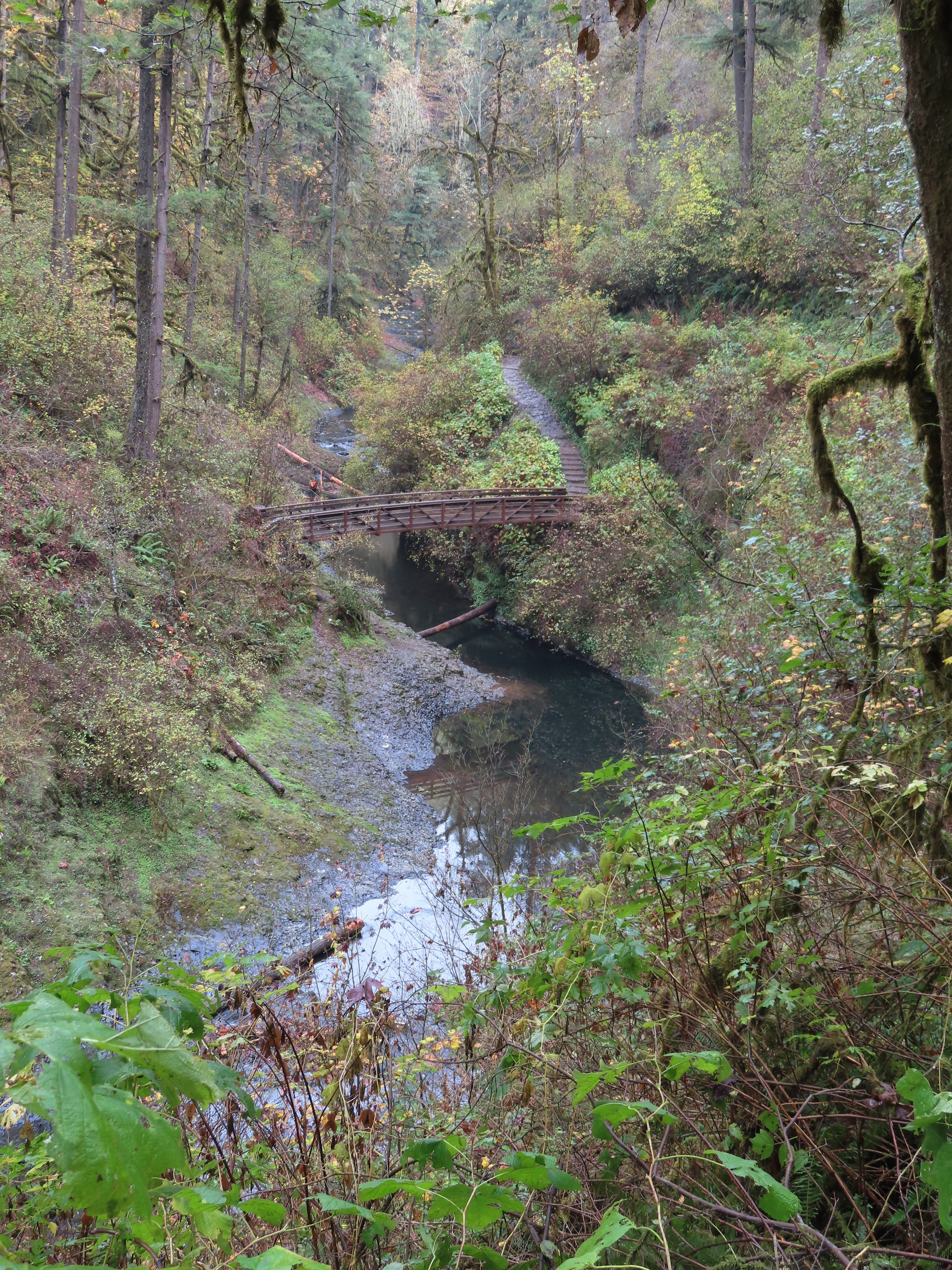
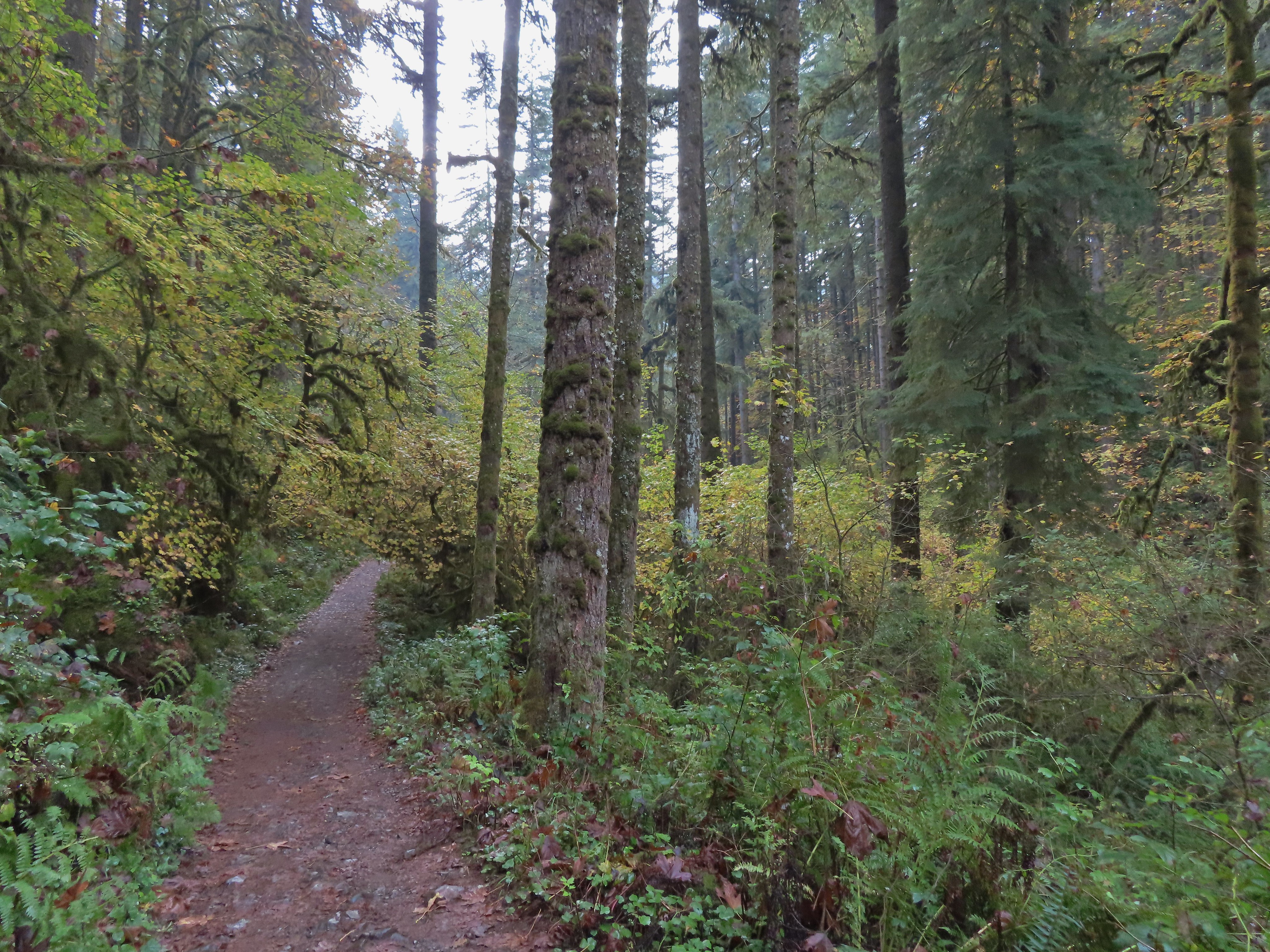
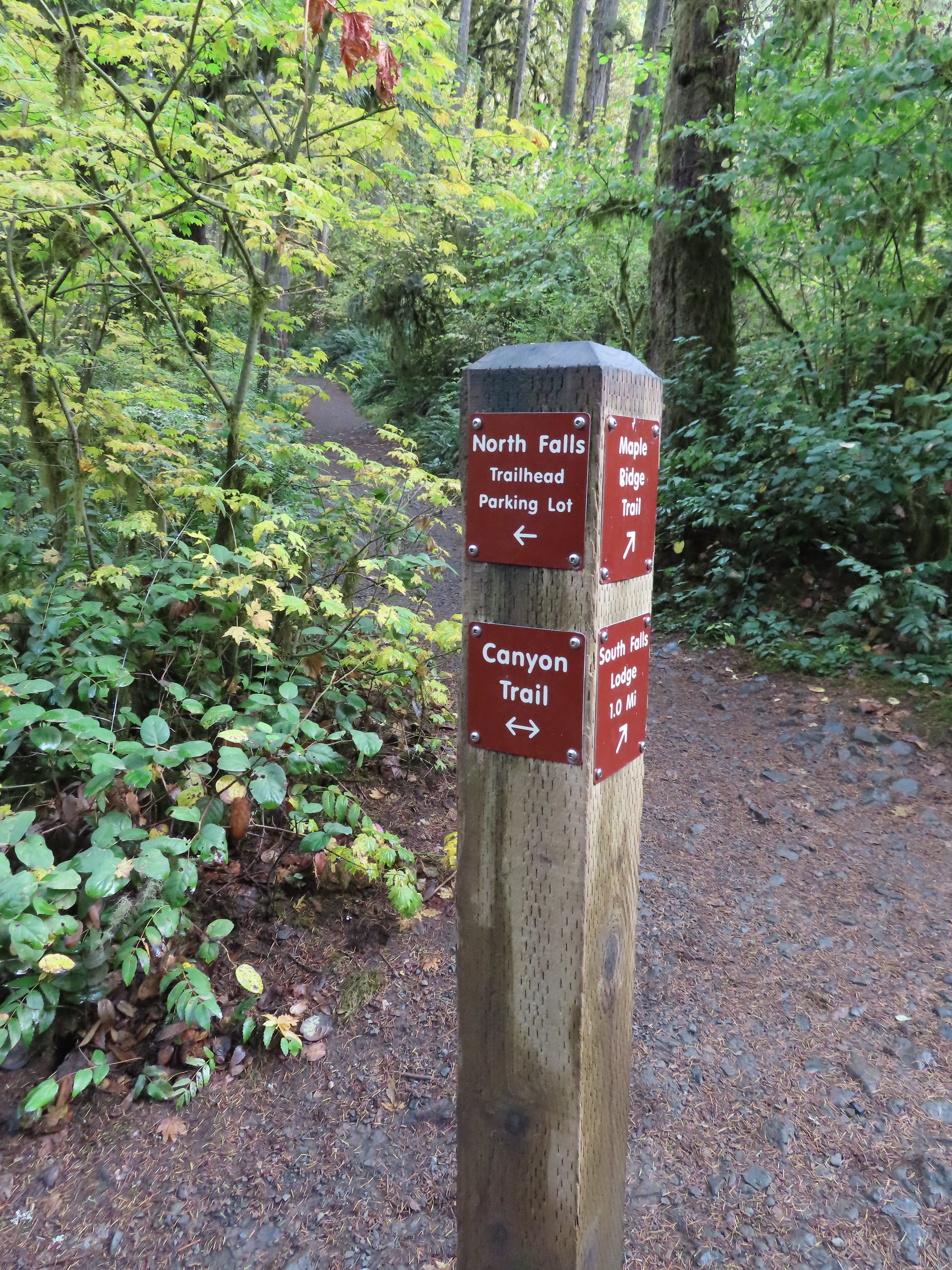
It was about here that my feet started to let me know that this was a long hike. It was almost a mile from Lower North Falls to my next marker, a junction with the Maple Ridge Trail. The Canyon Trail crosses the creek just downstream from Lower North Falls then makes a short climb to get above the canyon cliffs.
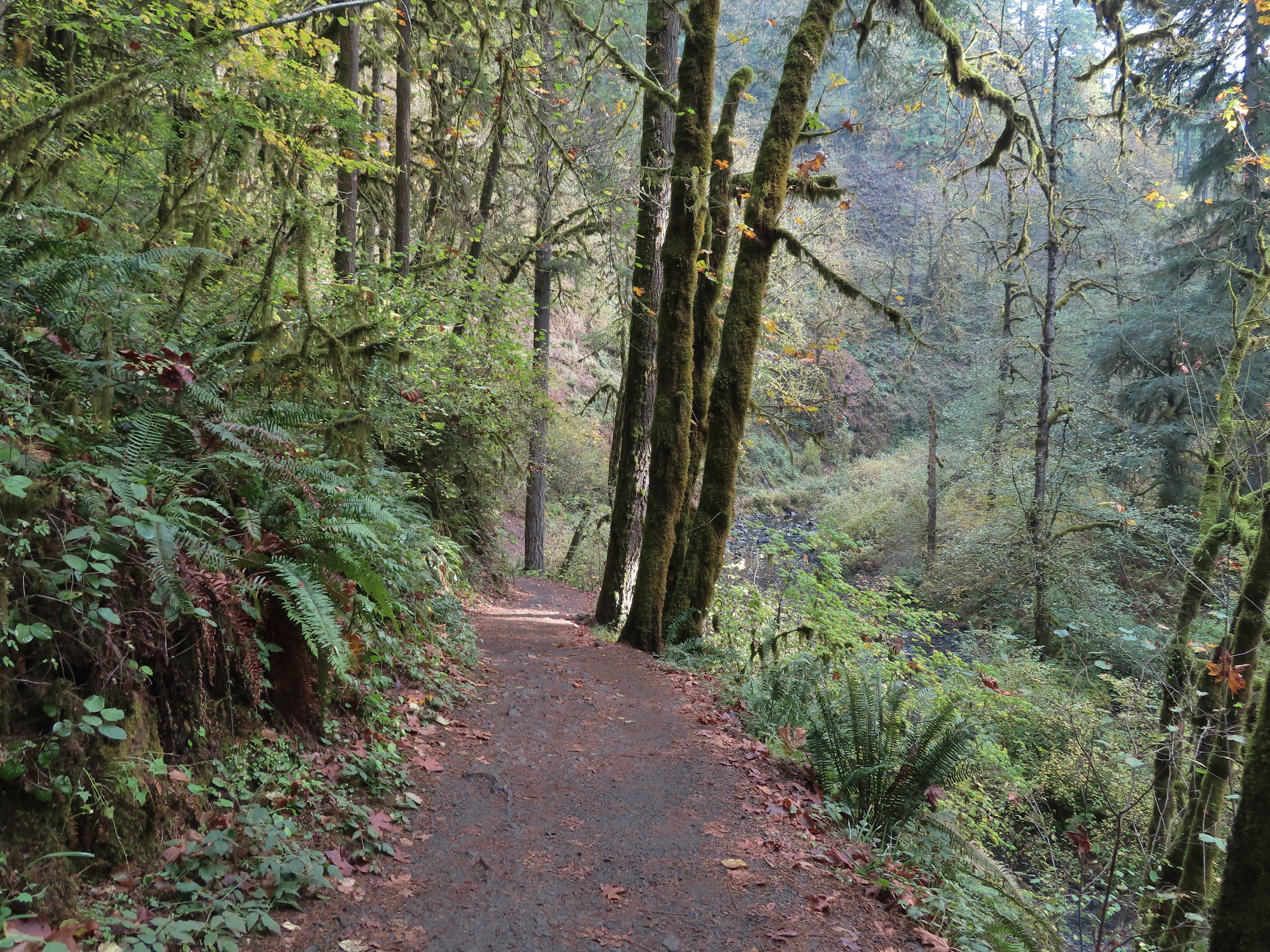
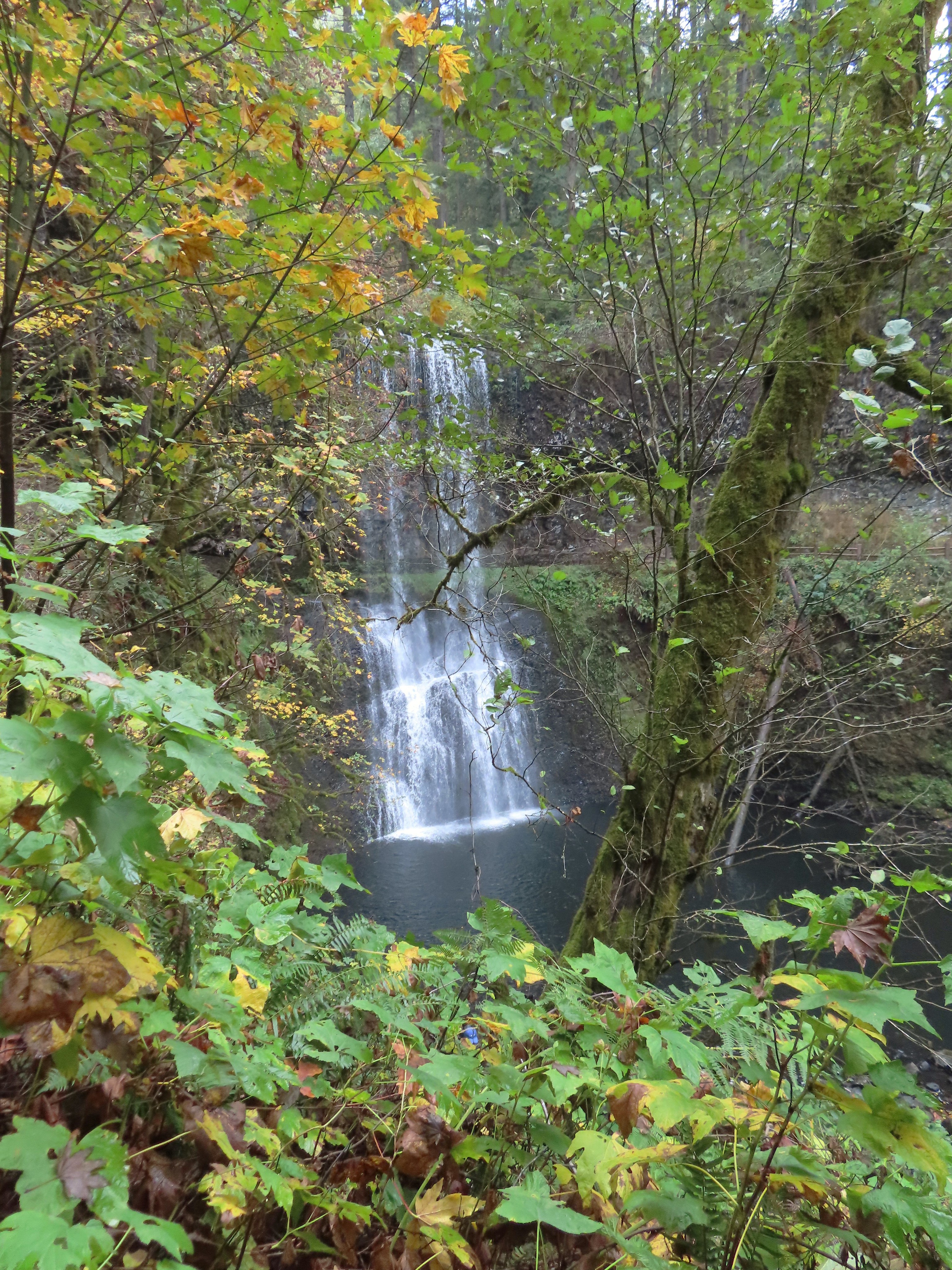
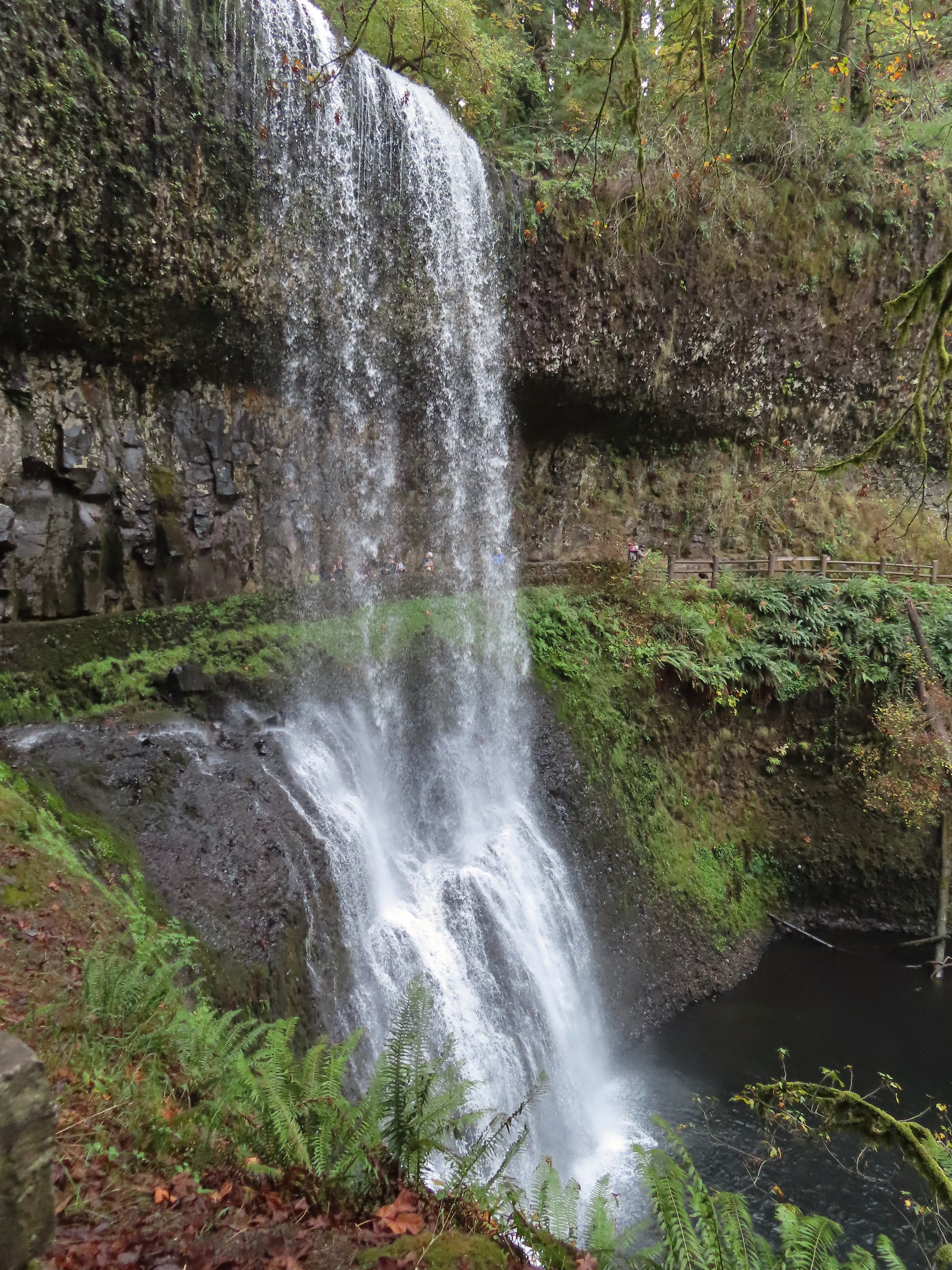
A quarter mile from the Maple Ridge junction was Lower South Falls, another that the trail passes behind.
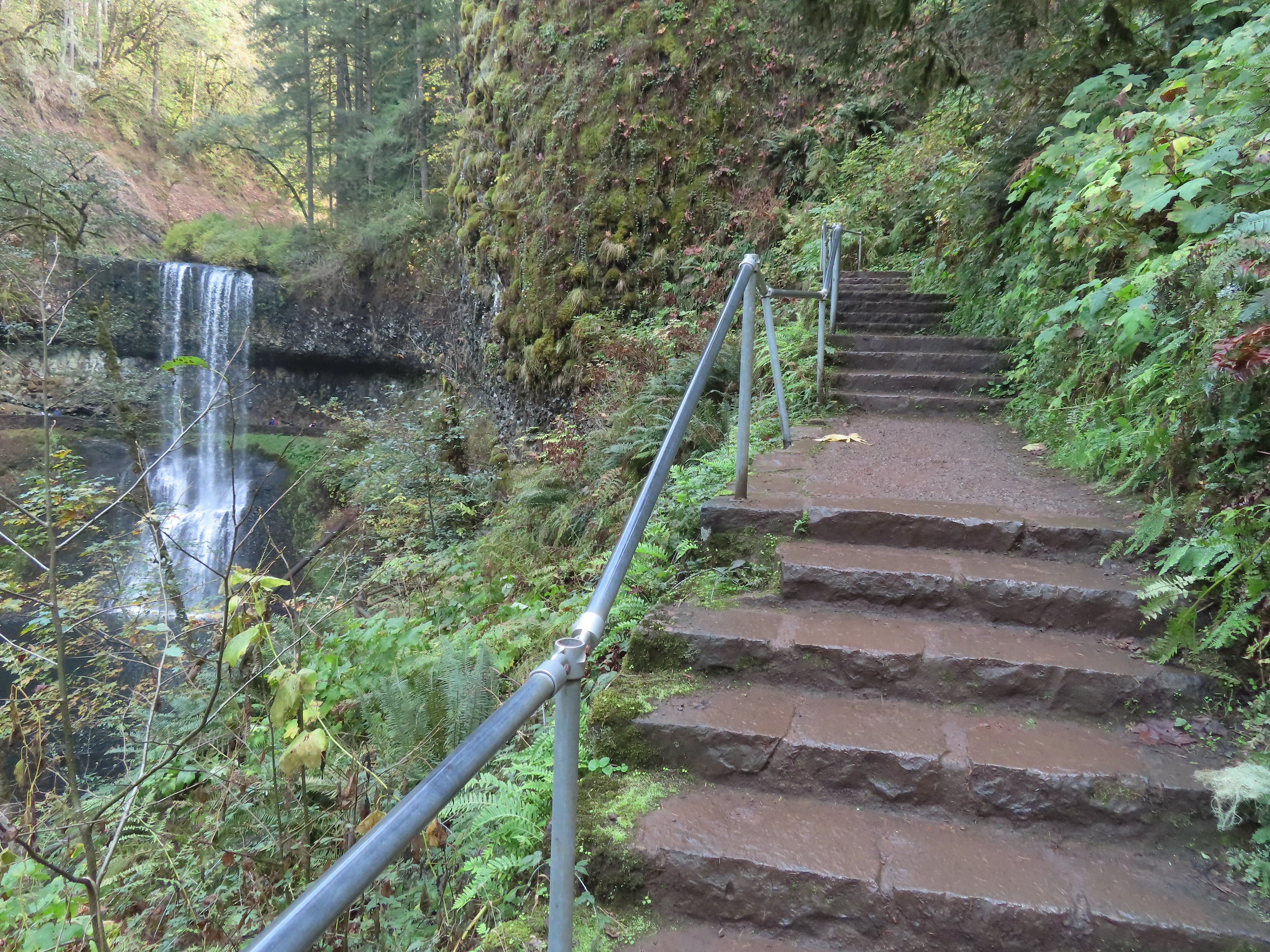
After passing behind the falls the trail climbs a number of stairs which at this point of the hike was a mean trick.
After conquering the stairs it was another 0.6 miles level miles to a footbridge at a fork in the trial within sight of the tenth and final waterfall, South Falls.
I walked out onto the bridge for the view then returned to the junction to take the right hand fork and go behind this fall as well.
I stayed right at junctions as I climbed to the top of South Falls then followed a paved path to a footbridge where I crossed the creek.
View toward South Falls from the footbridge.
I followed the paved path to the Bike Path where I recrossed the creek then made my way along the parking lot to the car.
Not sure what this old building was, possibly restrooms by the doors.
One of several picnic shelters in the park.
Approaching the Bike Path where I recrossed the creek.
I can see the car!
The hike turned out to be close to 22 miles with somewhere around 2900′ of cumulative elevation gain. The GPS originally said 22.4 miles but that was partly due to it jumping around when I was behind the different falls and it didn’t have a good connection to the satellites. Removing some of the points put the total down to 21.5 miles but doing that lost the out-and back behind Middle North Falls and some of the switchbacks up from South Falls. Whatever the actual distance it was a lot for me but overall everything held up pretty well. A couple of small blisters on one heel were the worst consequence. The fact that it hadn’t rained surely helped with the feet.
Track prior to trying to remove some of the jumps in data points.
The lack of people in the backcountry is almost a shame as the forest is lovely and the trails well maintained. I say almost a shame because for those of us who do take the time to explore it, the solitude only adds to the beauty. The Trail of Ten Falls was busy comparatively, but it wasn’t the zoo that it would have been on a Summer weekend which was nice. Doing the loop in reverse would have resulted in less folks at the falls but we’d been to the falls in the morning on all our other visits so this gave me a chance to see them with the Sun at a different angle. The only minor bummer was not being able to hike the full Catamount Trail due to the one-way section. If I were to do it over I would probably start at the North Falls Trailhead and go clockwise so that I would have been going the right way for that section and still would have ended with most of the Trail of Ten Falls. Happy Trails!


 Shellburg Creek
 Trail sign ahead on the right marking the resumption of the Shellburg Falls Trail.

 May 2011 view.
 First sunlight hitting the rocks above the trail.
 Barricade and sign marking the closed section of trail.

 Some survivors on the far hillside.
 I heard a number of woodpeckers throughout the day, but this was the only one I was able to spot.
 Outhouse at the day use area up ahead.
 Parking spots at the day use area along with the shelter. The trails on the left and right are the Vine Maple Trail, the shortest loop option at about 1-mile.
 The only tree I had to step over on a trail all morning.
 Arriving at the 4-way trail junction with the Shellburg Creek, August Mountain, and southern portion of the Vine Maple Trail.

 I saw a good number of varied thrushes including 4 or 5 in this spot, but once again I failed at getting a clear picture.
 The forest along the creek held up pretty well in the fire.


 Frosty leaves


 End of the line. I briefly searched for old tread before deciding that this was not in fact the Lost Creek Trail.
 The T-junction
 Heading uphill from the Shellburg Creek Trail.
 As near as I can tell the decommissioned section of trail was the Lost Creek Trail as some maps show both the Lost Creek and Snag Loop Trails.
 Arriving at the road crossing.
 Shellburg/Ayers Creek Road (depending on the map)
 On the other side of the intersection.

 Some of the forest up higher had survived the fire as well.
 Arriving at Lookout Mountain Road.
 Gate at the border of Silver Falls State Park.
 The unmistakable flat top of Coffin Mountain (
 Evergreen violets – Viola sempervirens
 Snow queen

 While the Sun was out and it had warmed up a bit the shady areas were still frosty.


 While not unobstructed, the fire had opened up partial views of Mt. Jefferson.
 Mt. Jefferson through the trees.
 Two of the deer.

 Stassel Falls
 Lower Shellburg Falls
 2011
2011


 Rainbow and ice below Shellburg Falls.
 Icicles on the rocks above Shellburg Creek.
 August Mountain Trail on the left.


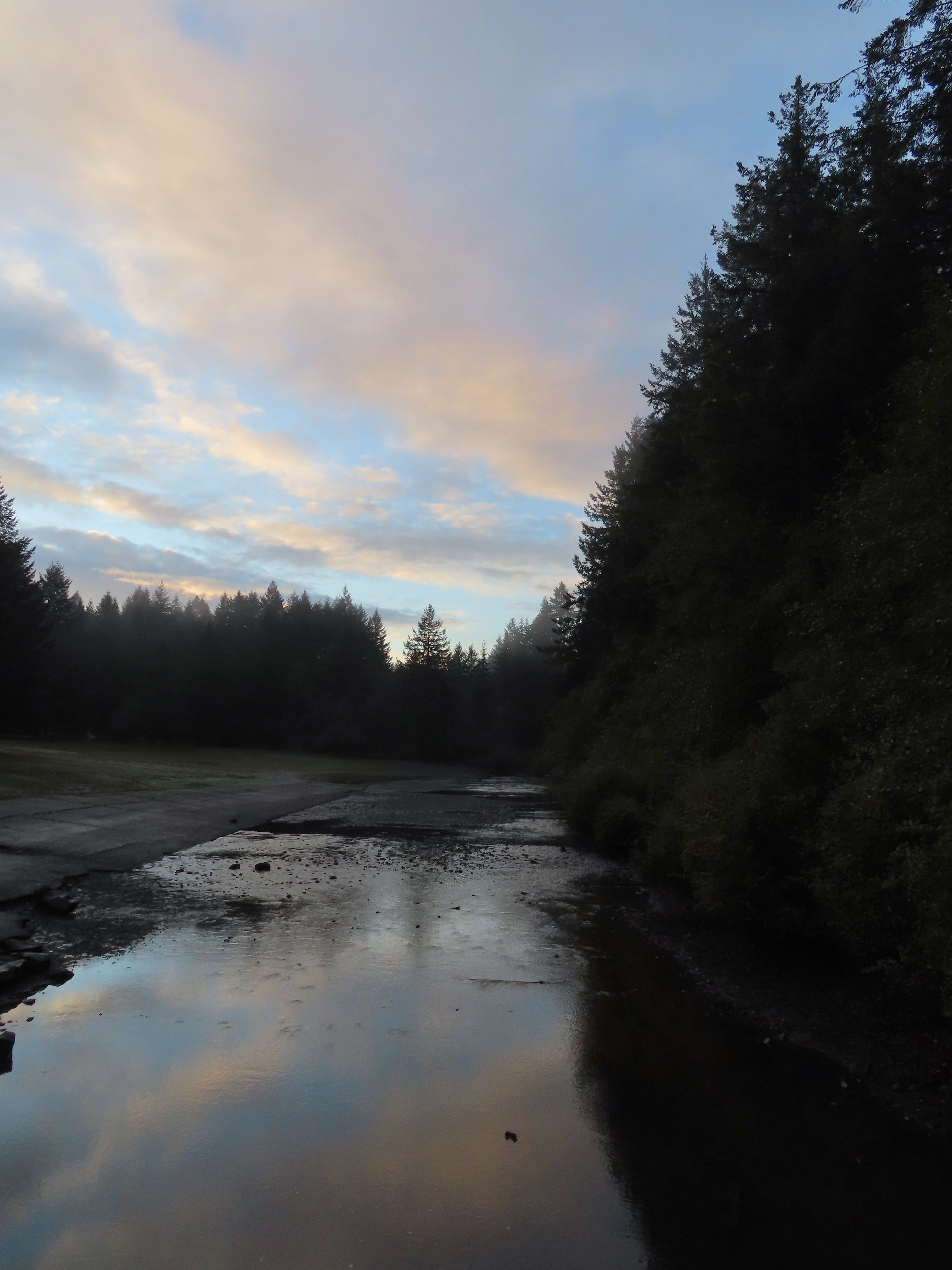
 A lot more blue in the sky than I had expected to see.

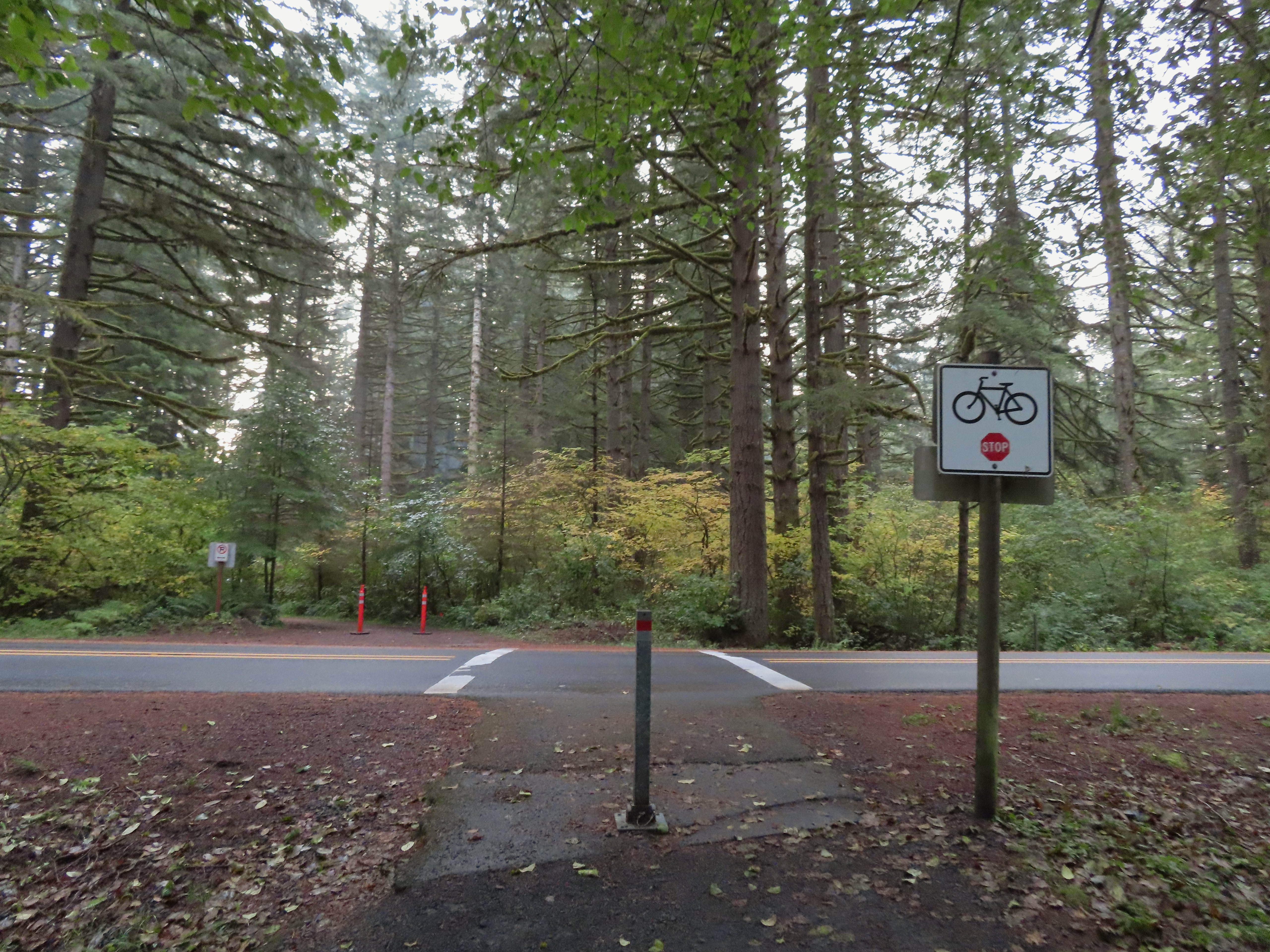 Crossing Highway 214 to the campground.
 I detoured left to check out this bridge over Howard Creek.
 Howard Creek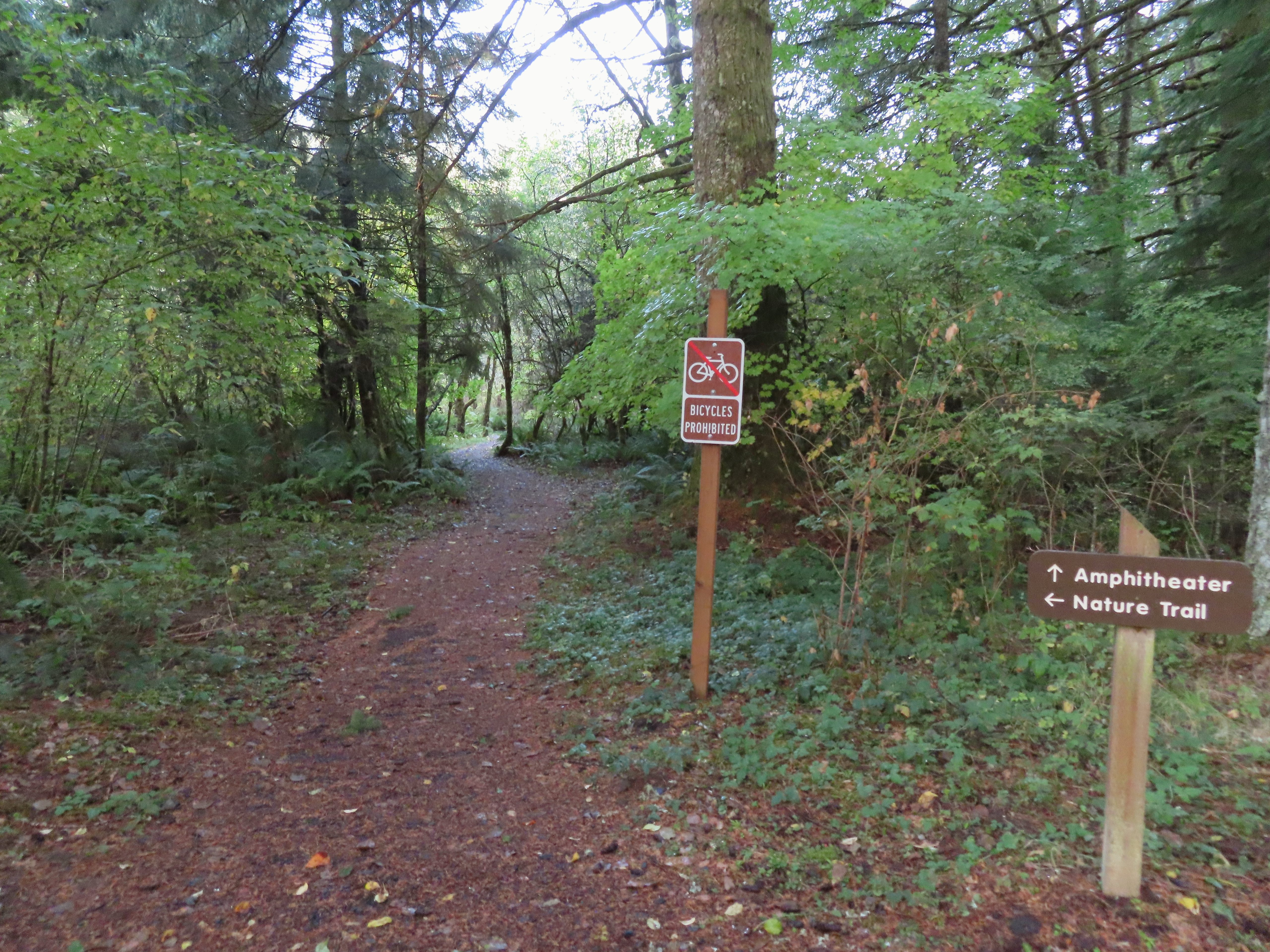

 Sign at the 214 Trail junction to let people know that there are no waterfalls in the backcountry.
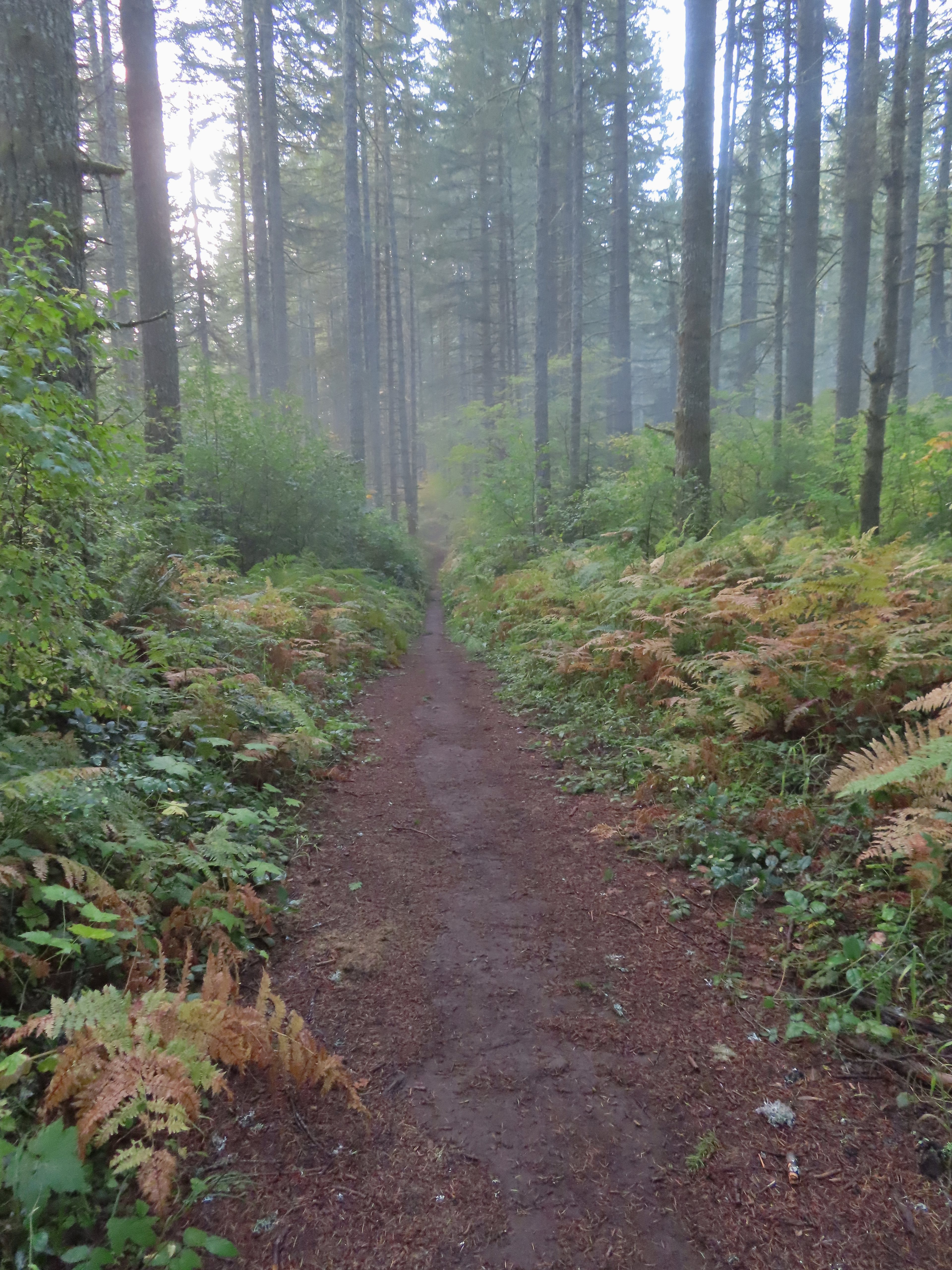 Just a little fog but no rain.
 Passing the Smith Creek Trail (left) after 0.6 miles on the 214 Trail.
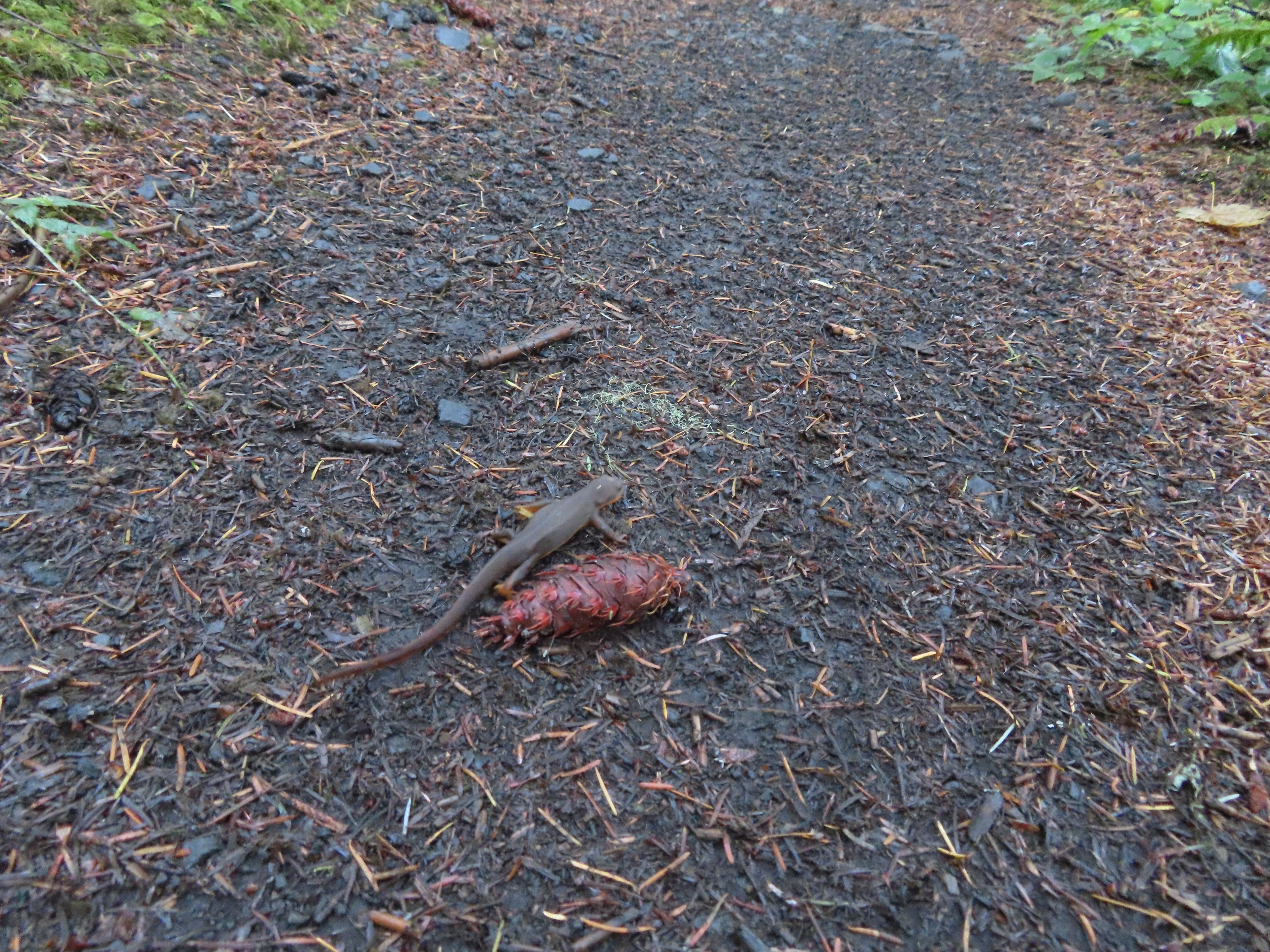 Rough skinned newt on the 214 Trail. (Probably headed for the Newt Loop too.)
 Big nursery tree along the 214 Trail.
 The trail post at the junction shows the Catamount Trail instead of the Newt Loop but the map at the junction labels it the Newt Loop.
 Map check.
 This second post included the Newt Loop along with a pointer for the Catamount Trail.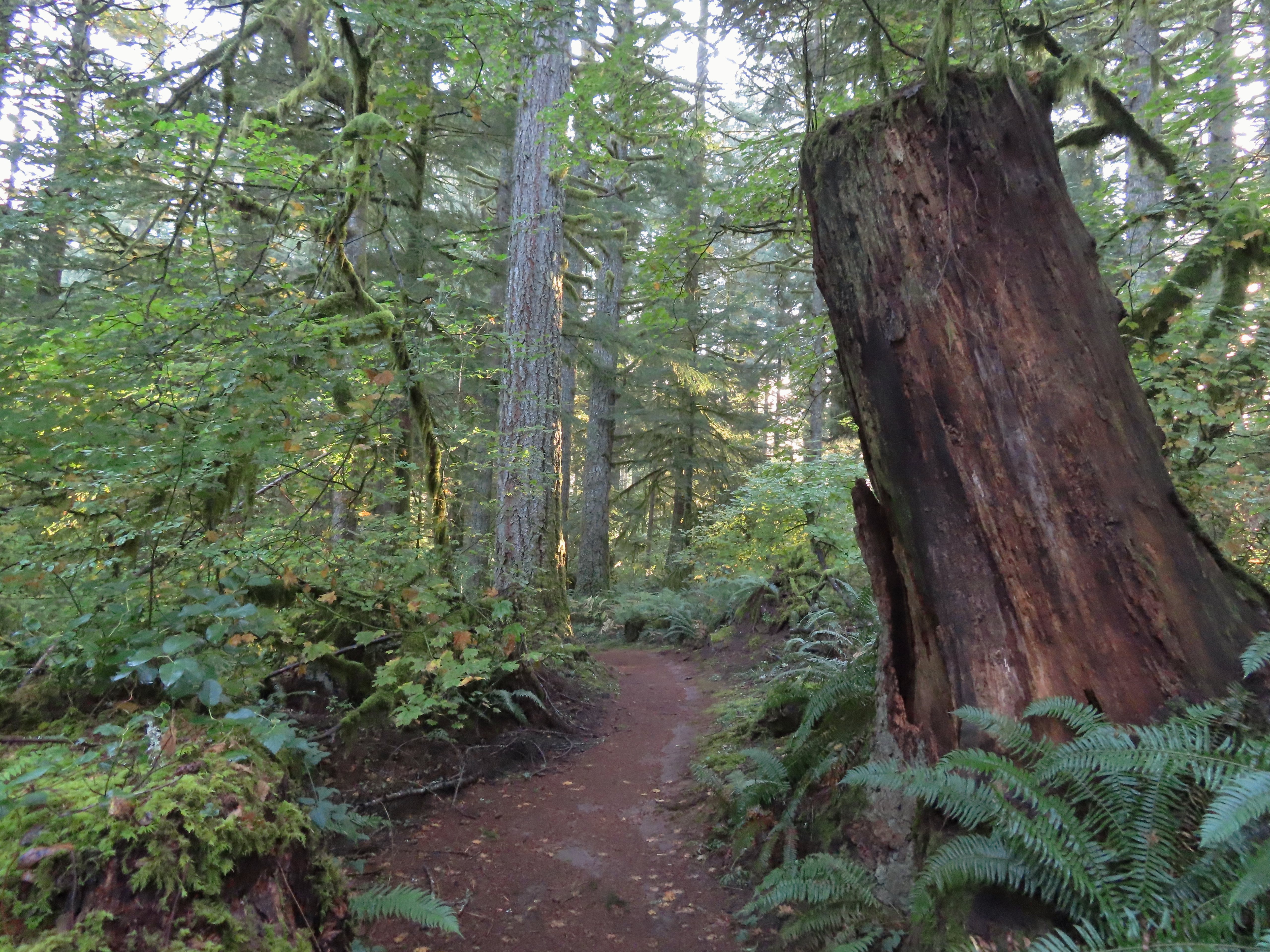
 Crossing a CAT road along the Newt Loop.
 Turning onto the Catamount Trail.
 Lots of nursery stumps along the trail.
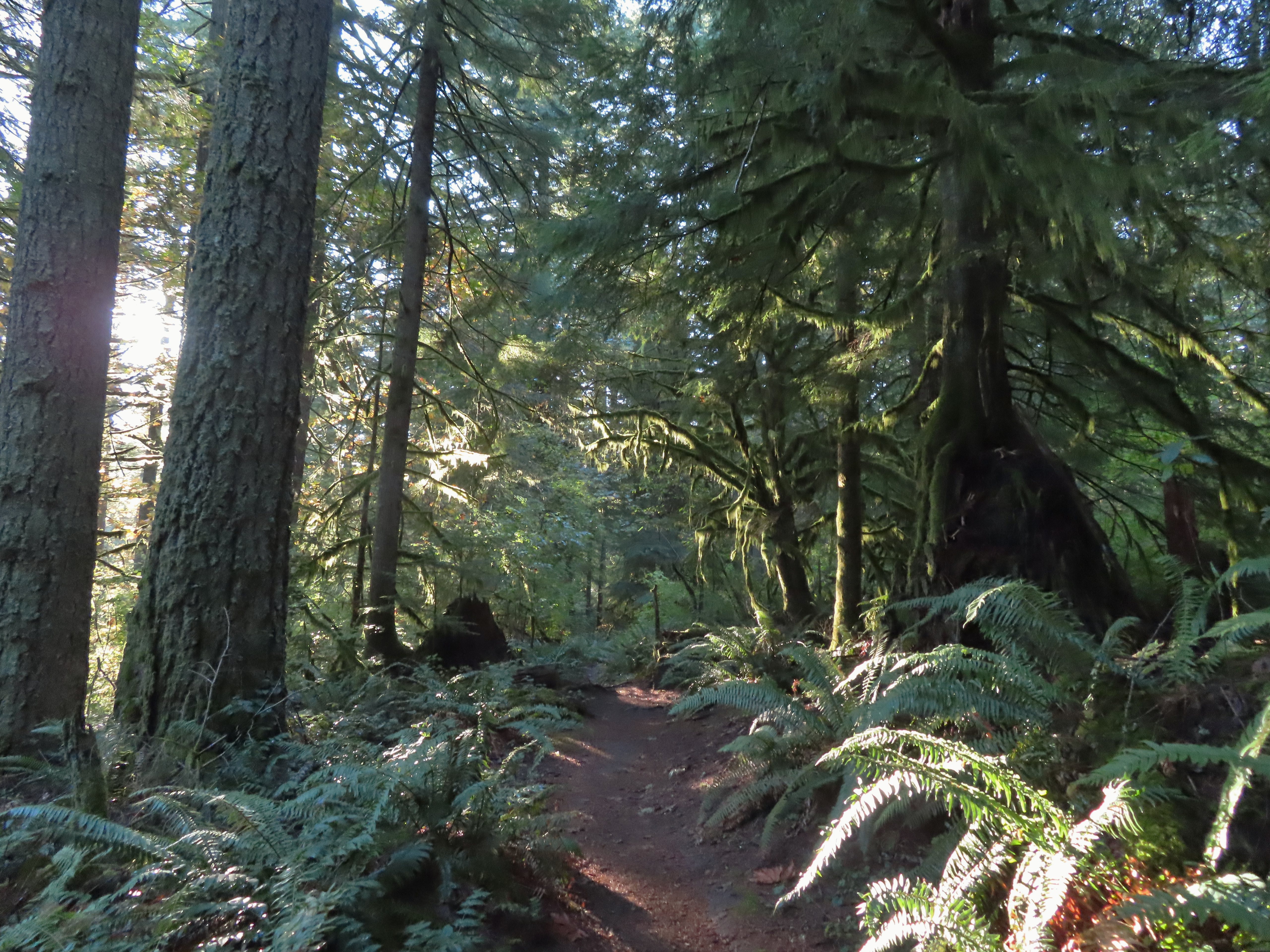 Another nursery stump.
 Side trails were well marked.
 Did not expect to see that overhead today.


 I believe this short section of fire scar was from the 2020 Beachie Fire.

 Turning onto the road.
 The opposite side of the post had a pointer for the Lost Creek Trail.
 I veered uphill to the right here.
 The Lost Creek/Buck Mountain junction.
 The Lost Creek Trail doubles as a fire road.
 Here is where I would have come up had the Catamount Trail did not have the on-way section. (Note that on some mountain biking maps the one-way section is labeled “Upper Catamount Trail.)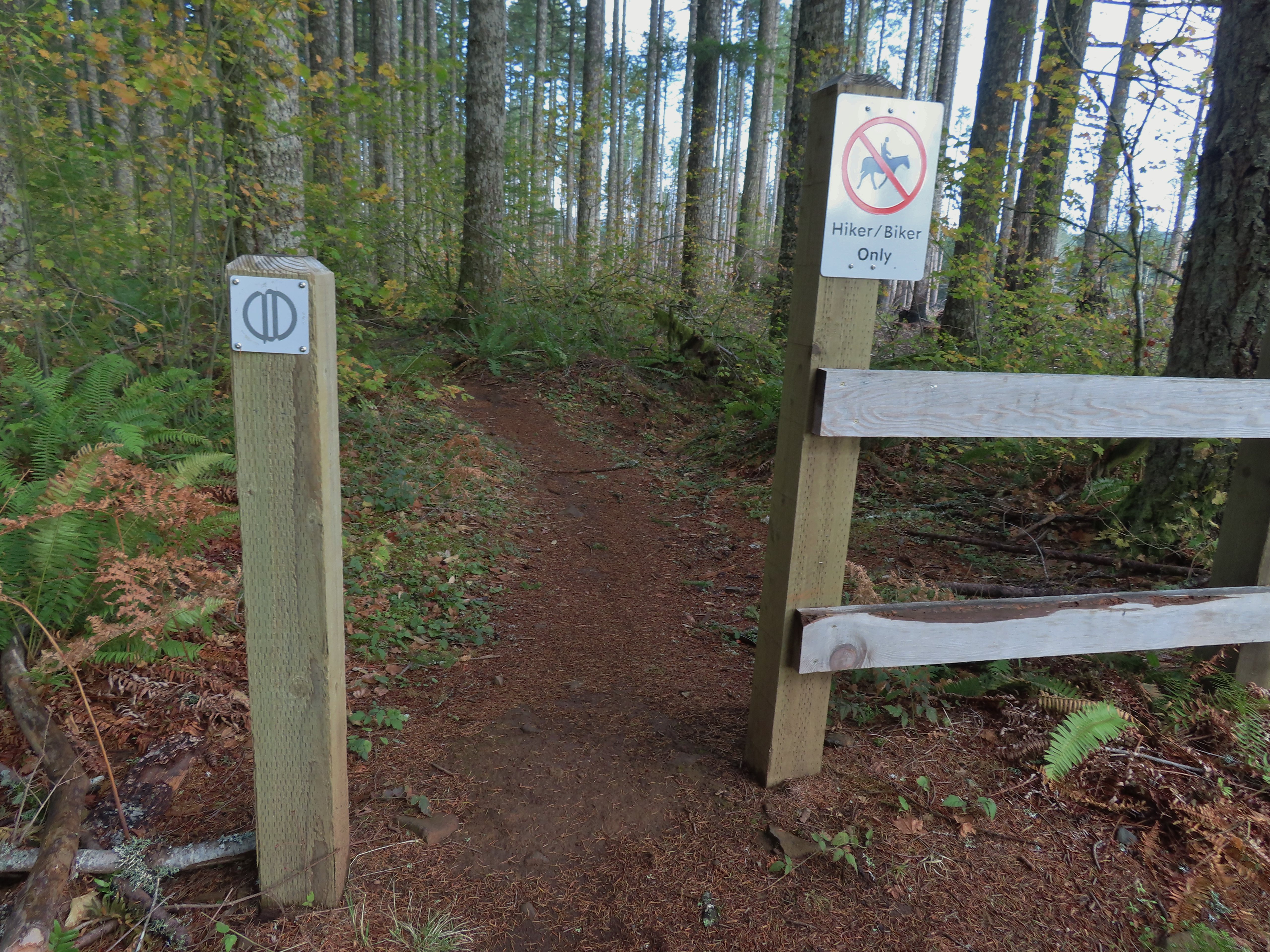
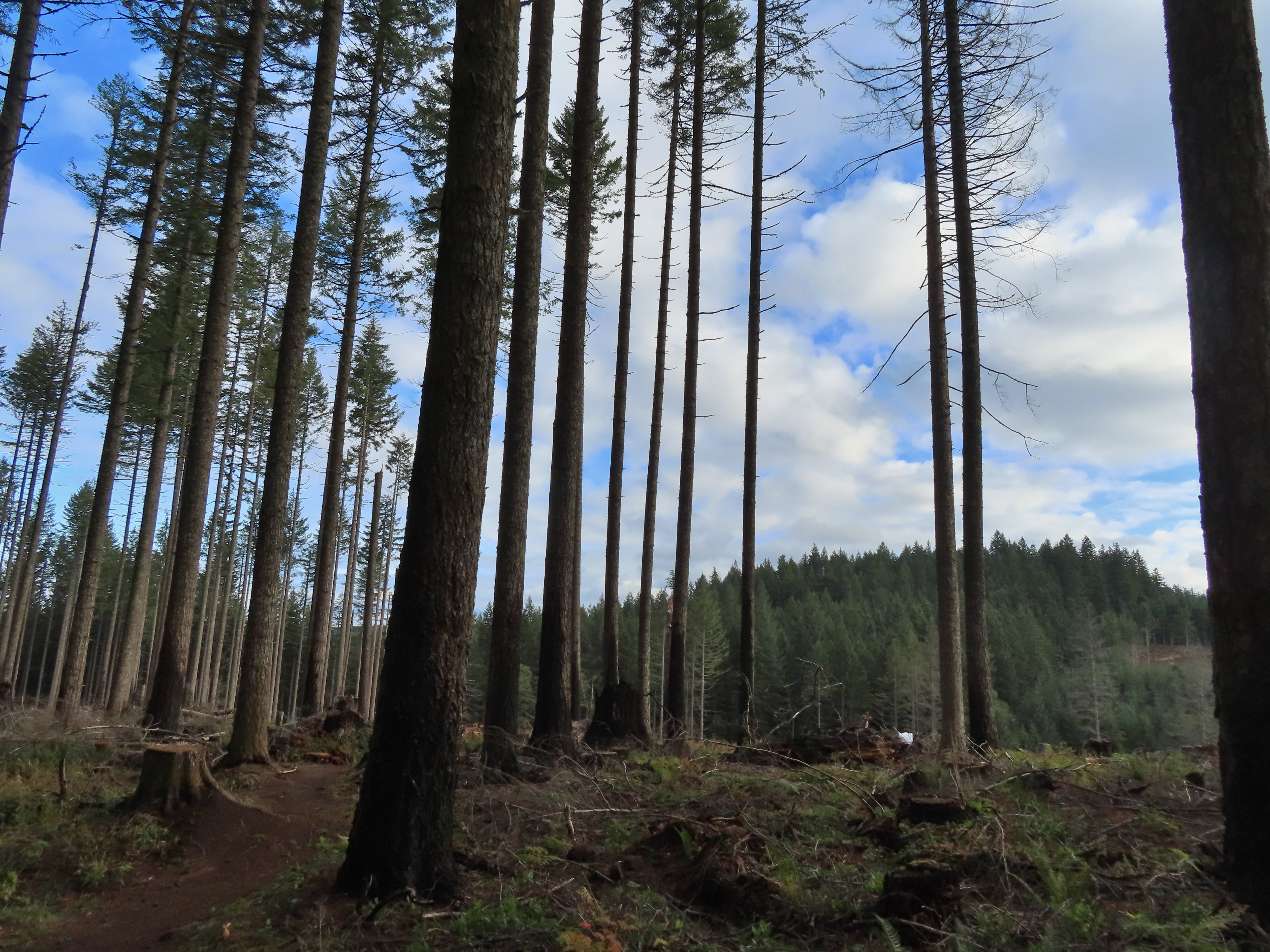 The treeless section wasn’t long. It appeared to have been an area impacted by the 2020 Beachie Fire.
 Still some bleeding heart blooming.
 There wasn’t a lot of bright Fall colors in the backcountry, but this maple stood out.
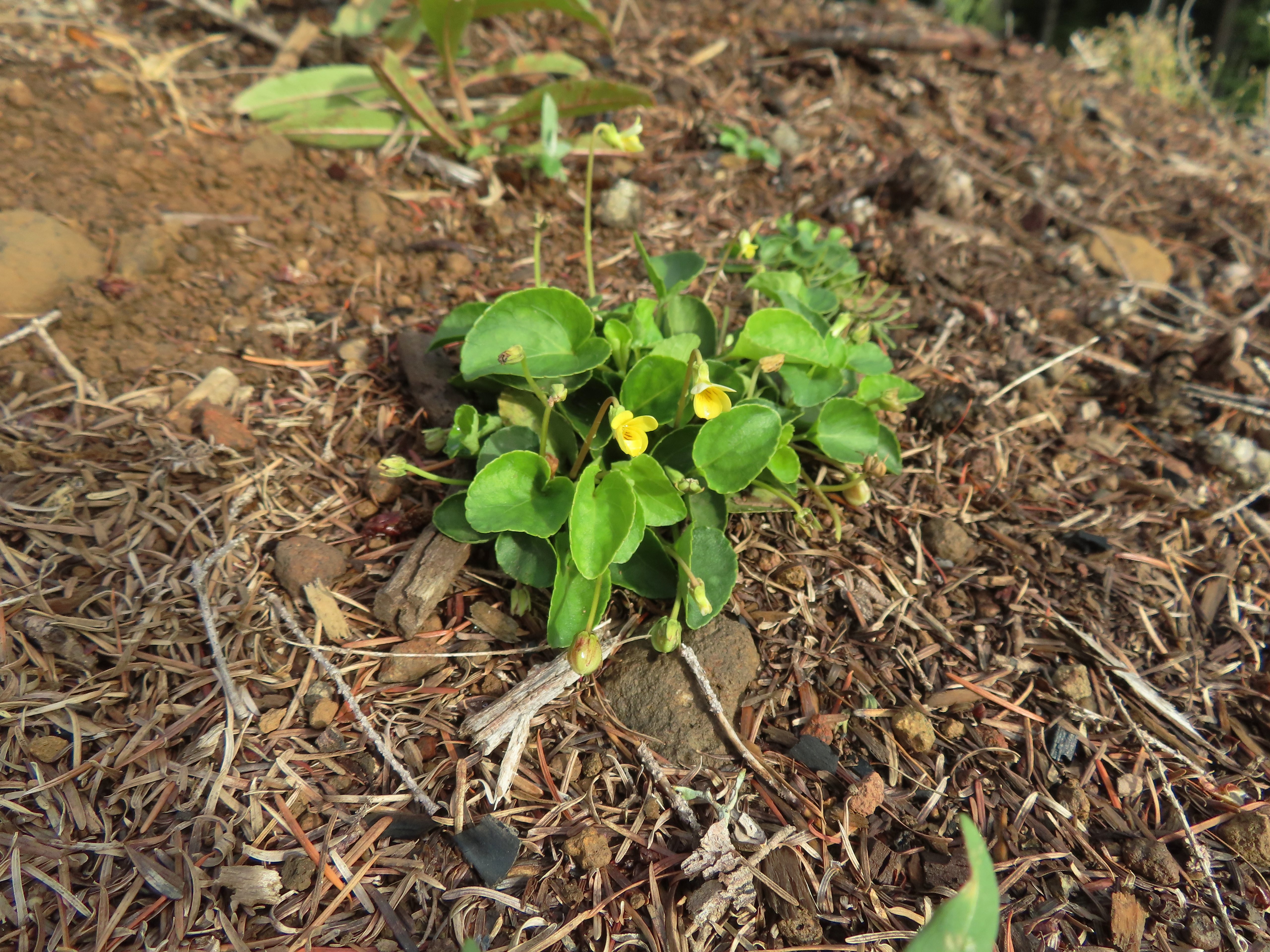 Was a bit surprised to see a few violets along this section.
 Nearing the end of the logged area.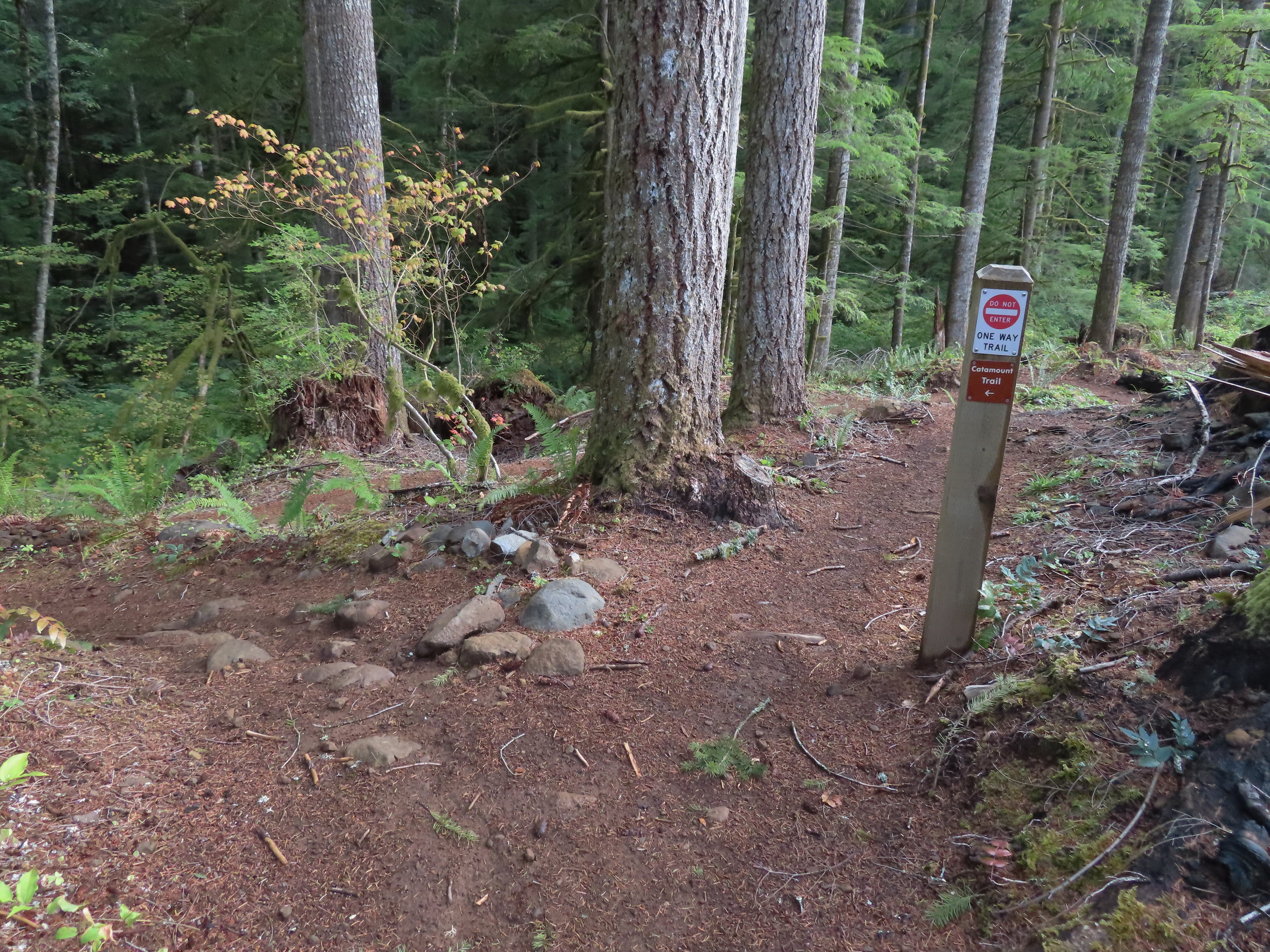
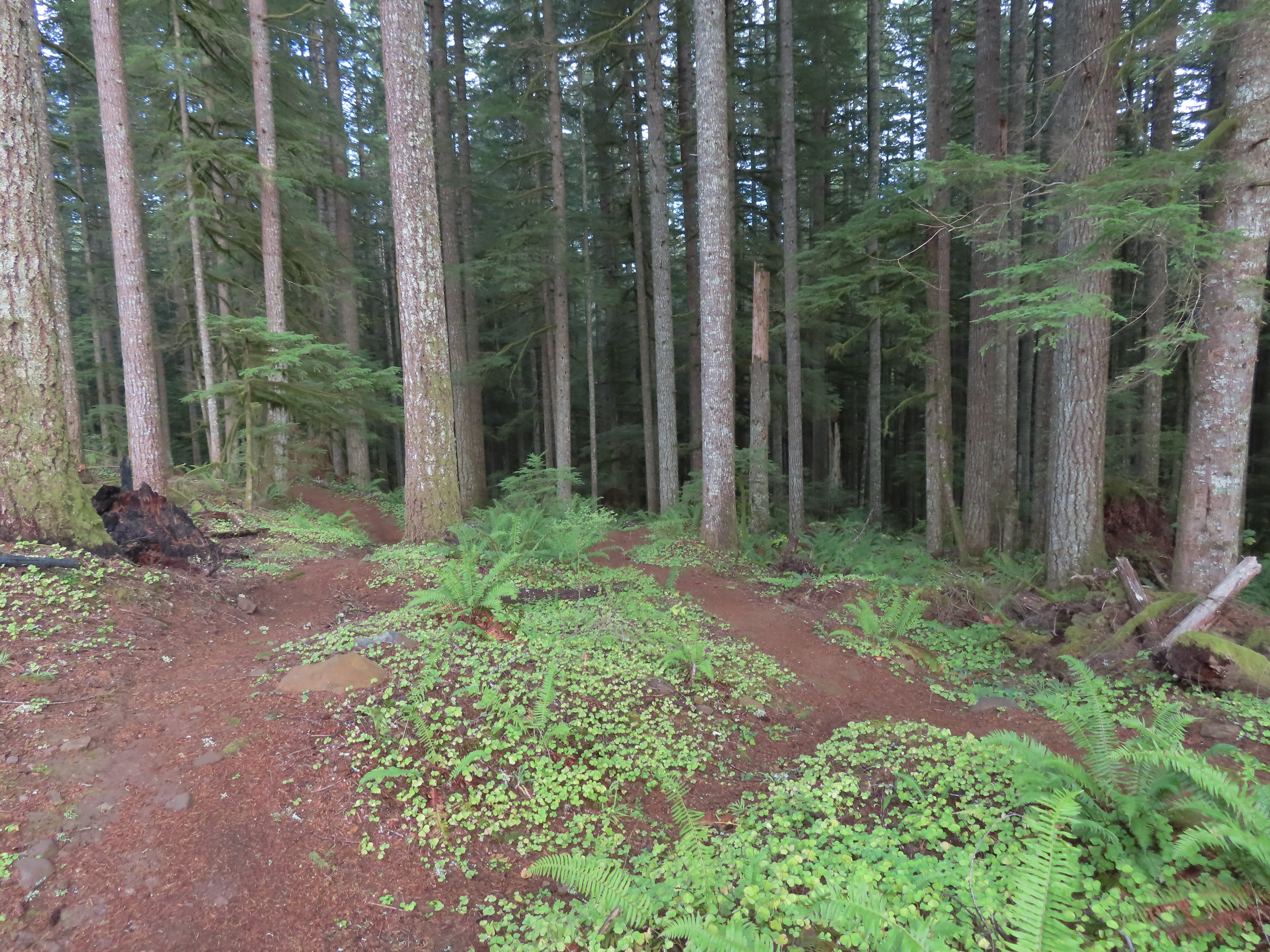
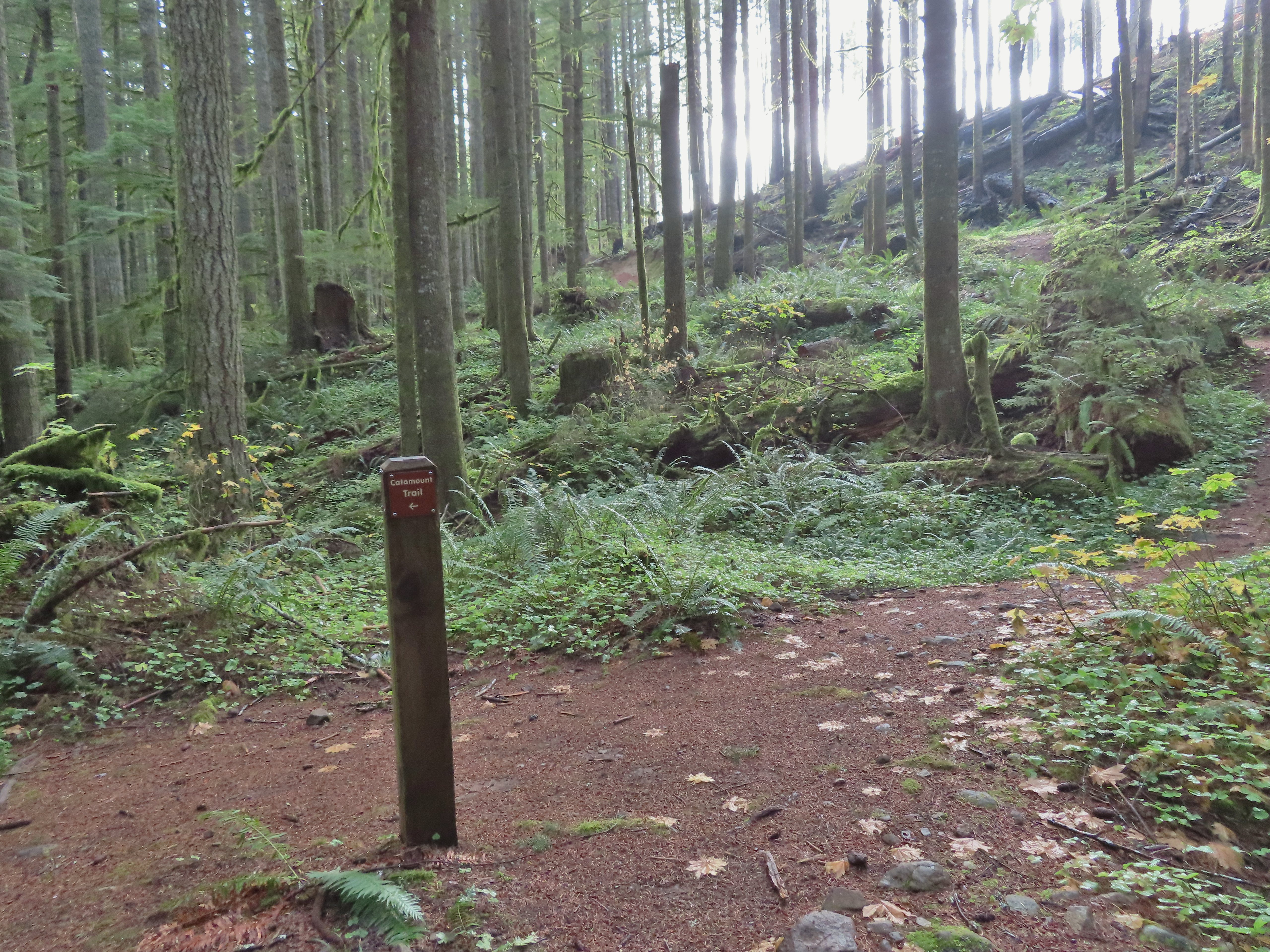 The rejoining of the trails.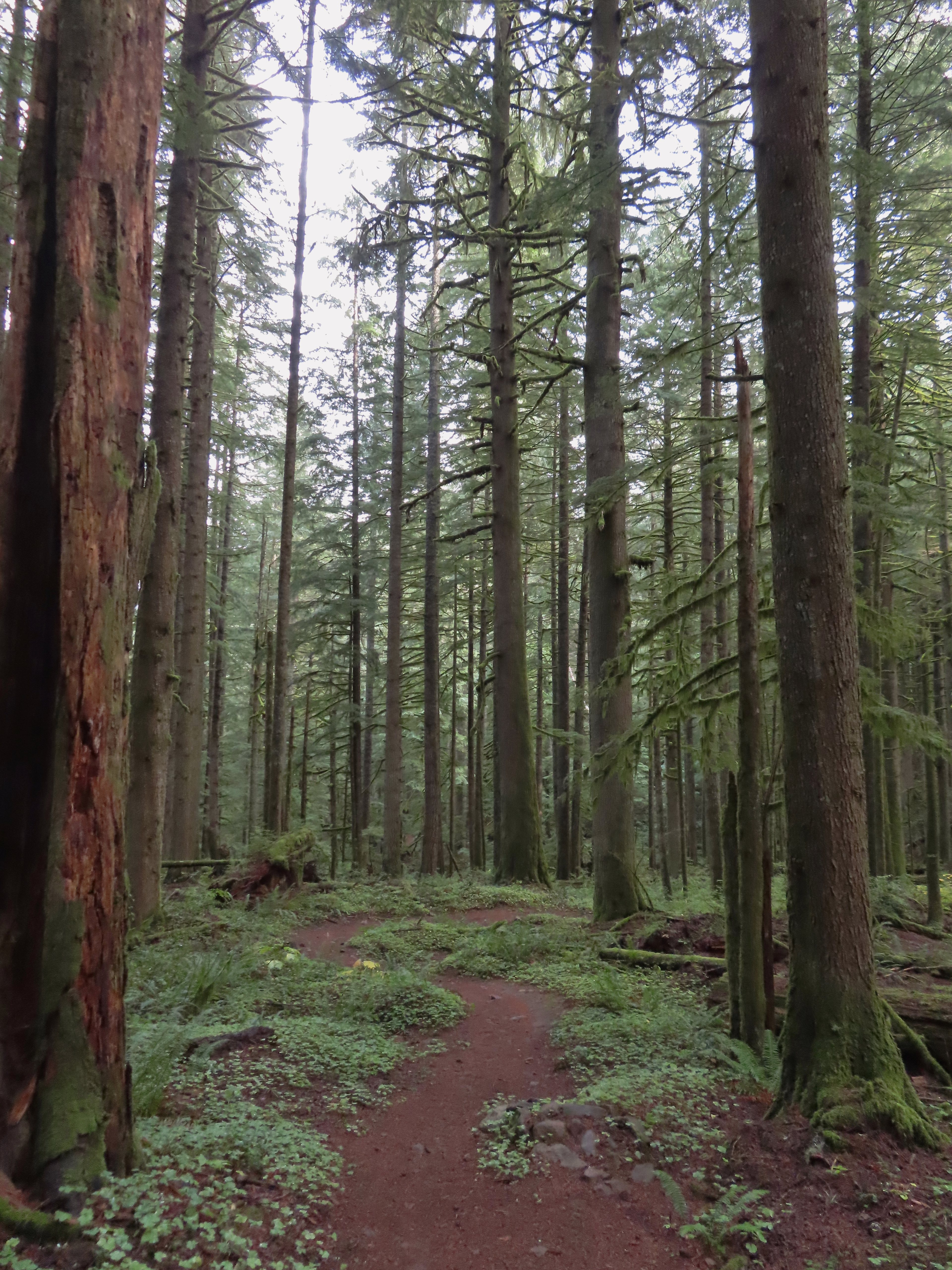
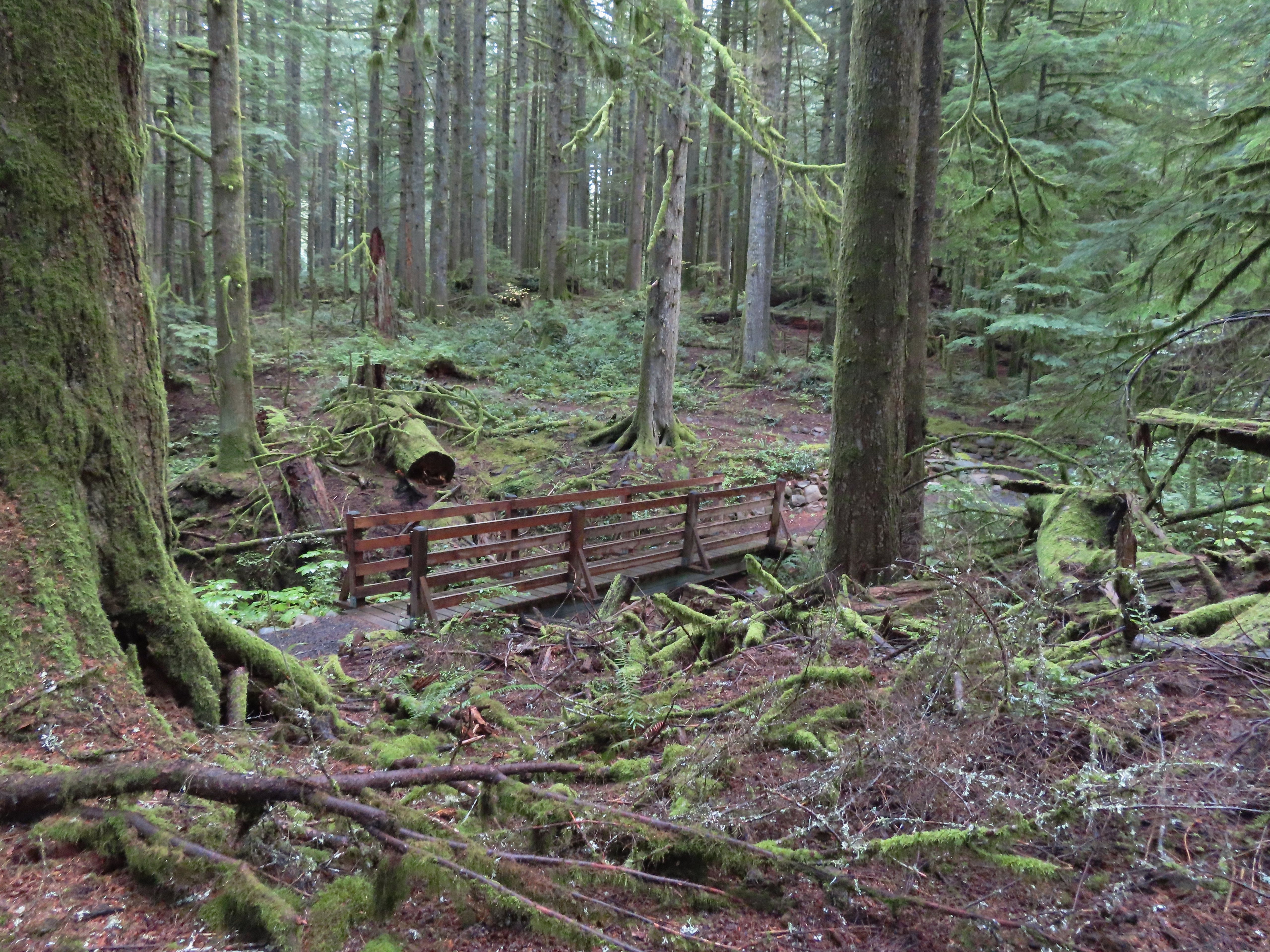 There were several bridges along this section of the trail. I also ran into the only mountain bikers that I would encounter all day in this area, a group of five.
 The Buck Mountain Loop junction.
 Bridge over Howard Creek.
 The continuation of the Catamount Trail on the right.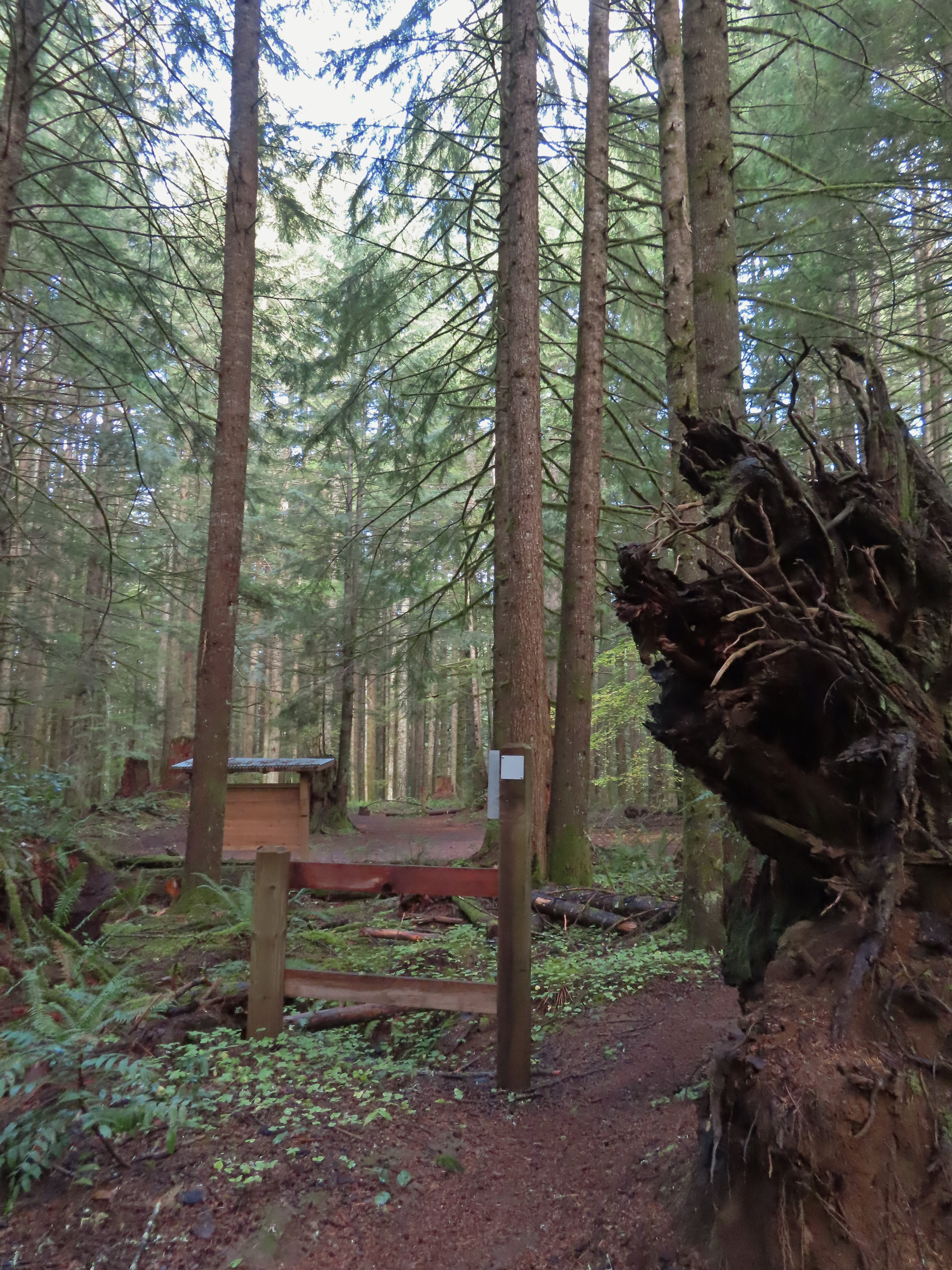
 The map showed the section I had just done as 0.9 miles, but my track was a bit more twisty than the map.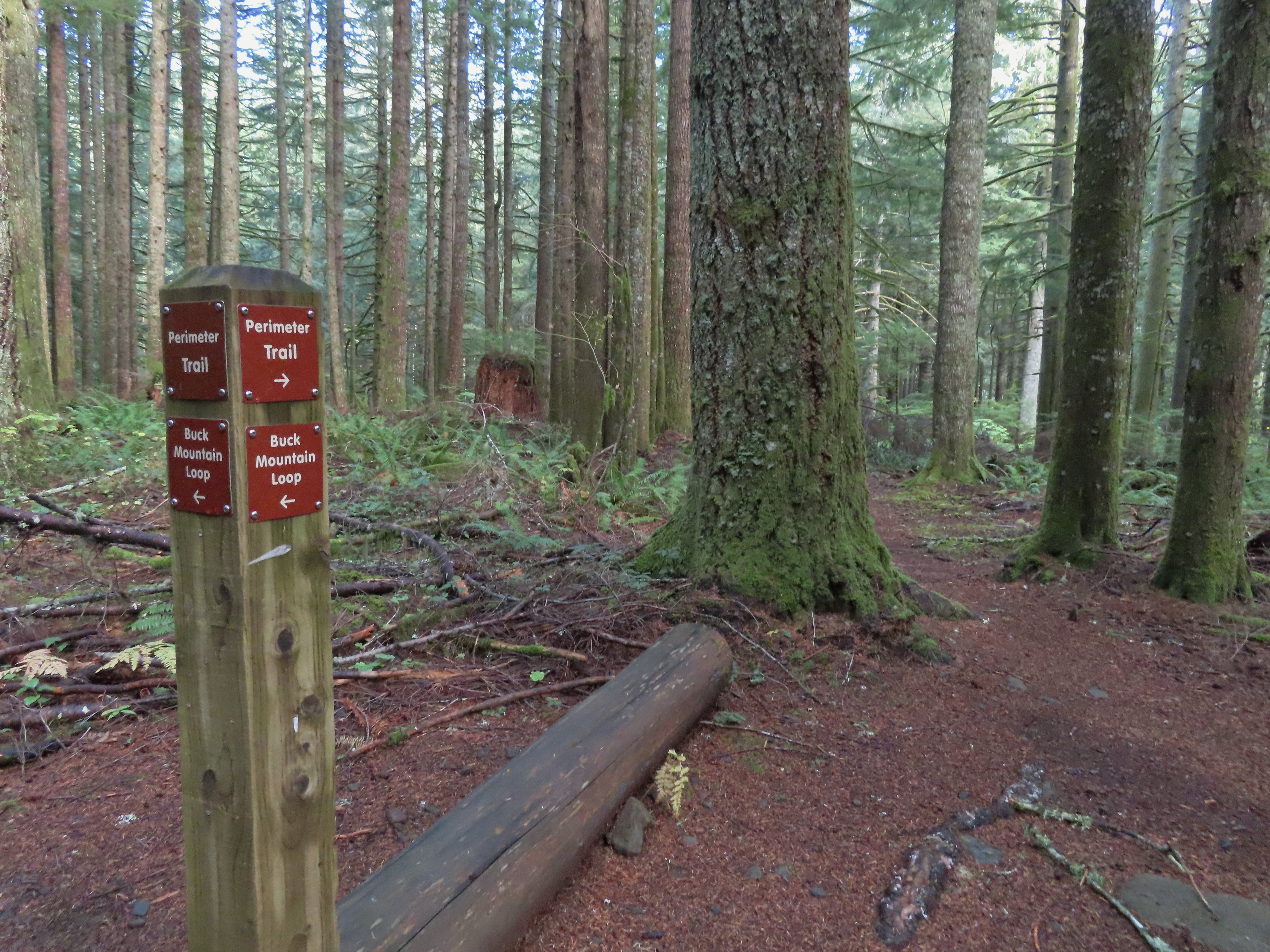
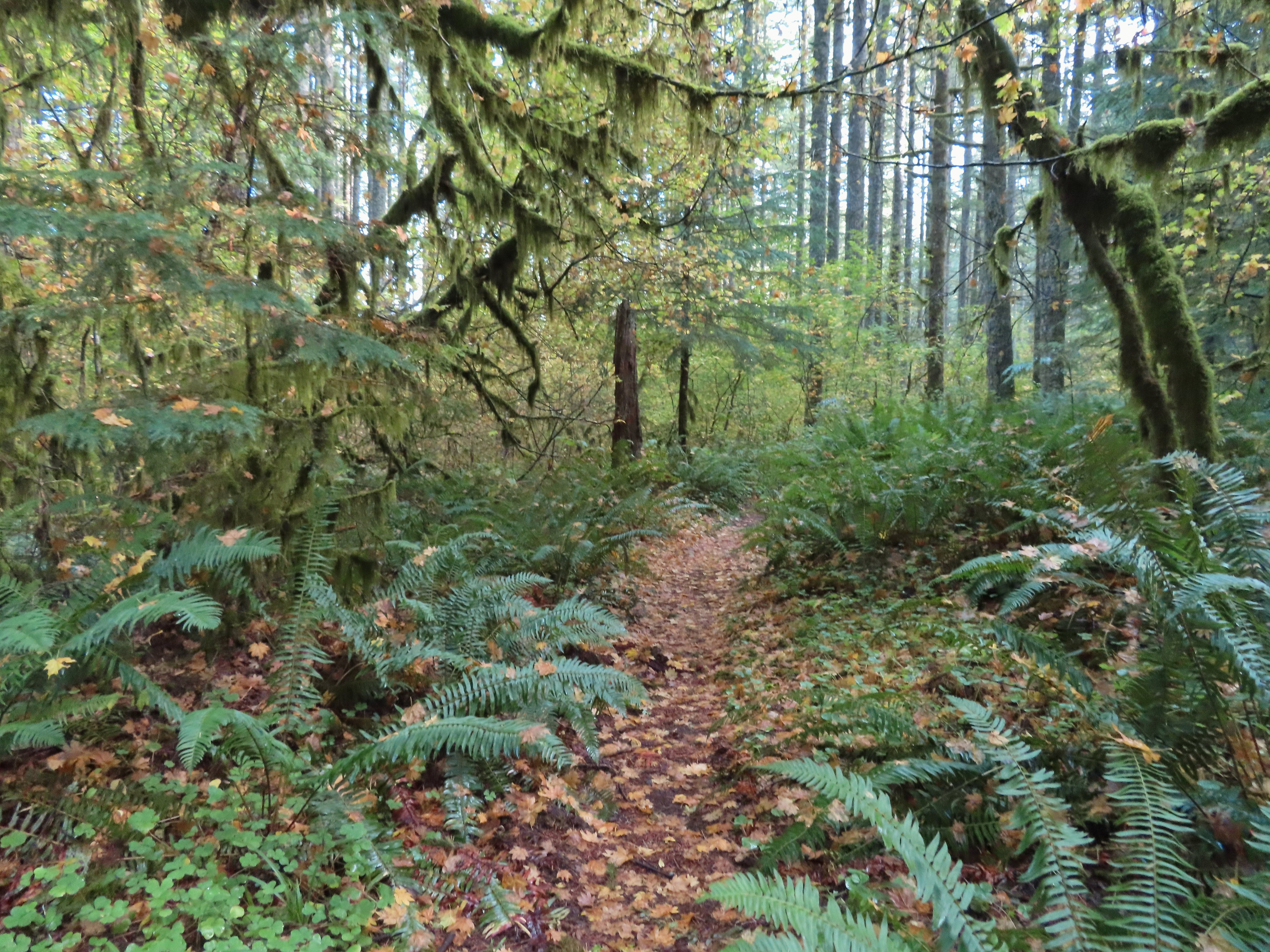
 A small opening on the way down.

 Footbridge over South Fork Silver Creek.
 South Fork Silver Creek


 I’m a hiker so I went right here.
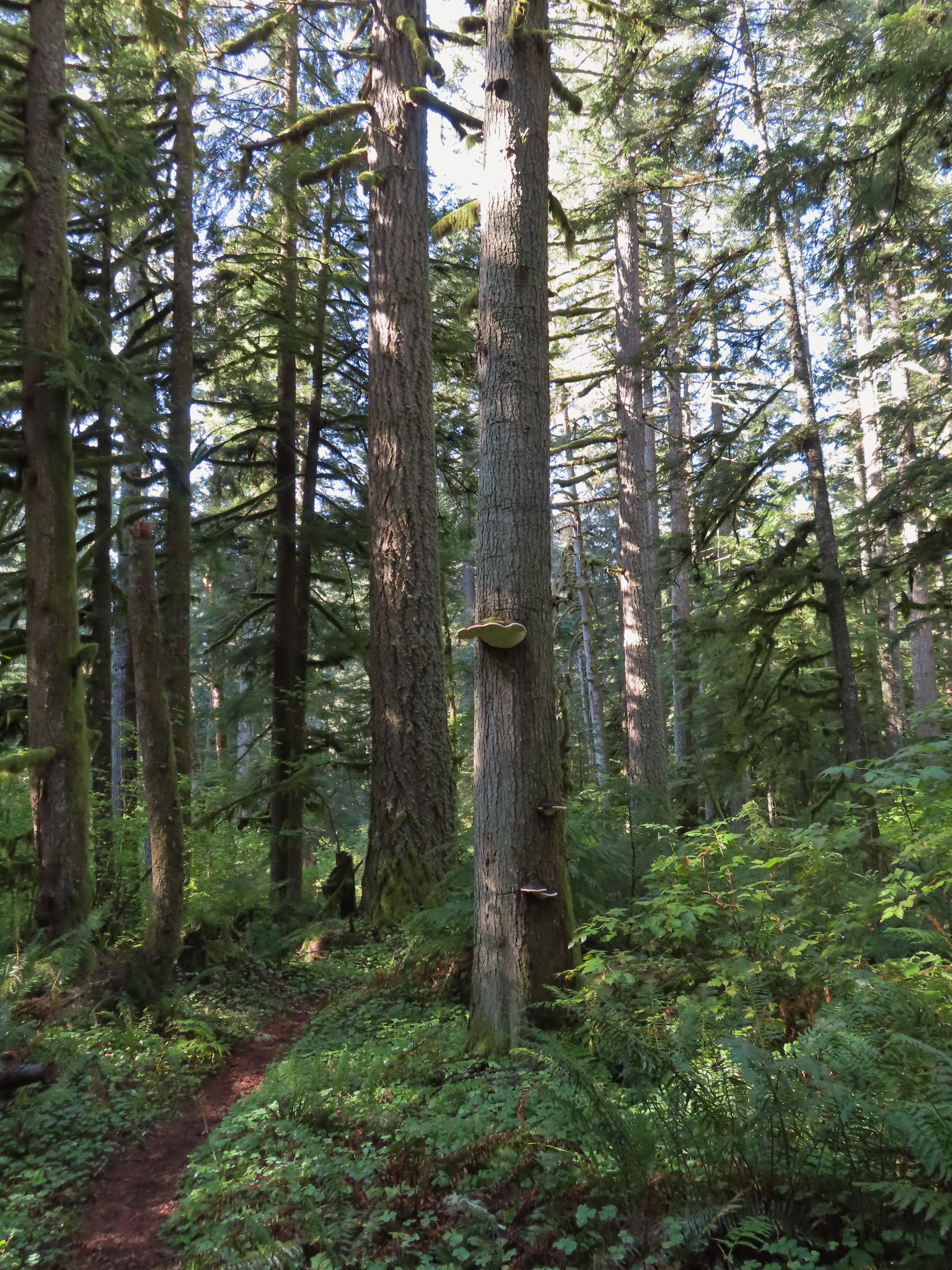 Big fungus on the tree ahead.

 Map at the Rackett Ridge junction.
 Another impressive nursery log.
 I stopped in this area to change out of my sweaty socks and into one of the extra pairs I’d brought expecting rain.
 The vegetation went through several changes as the trail lost elevation.
 This was a big tree in the midst of much smaller ones.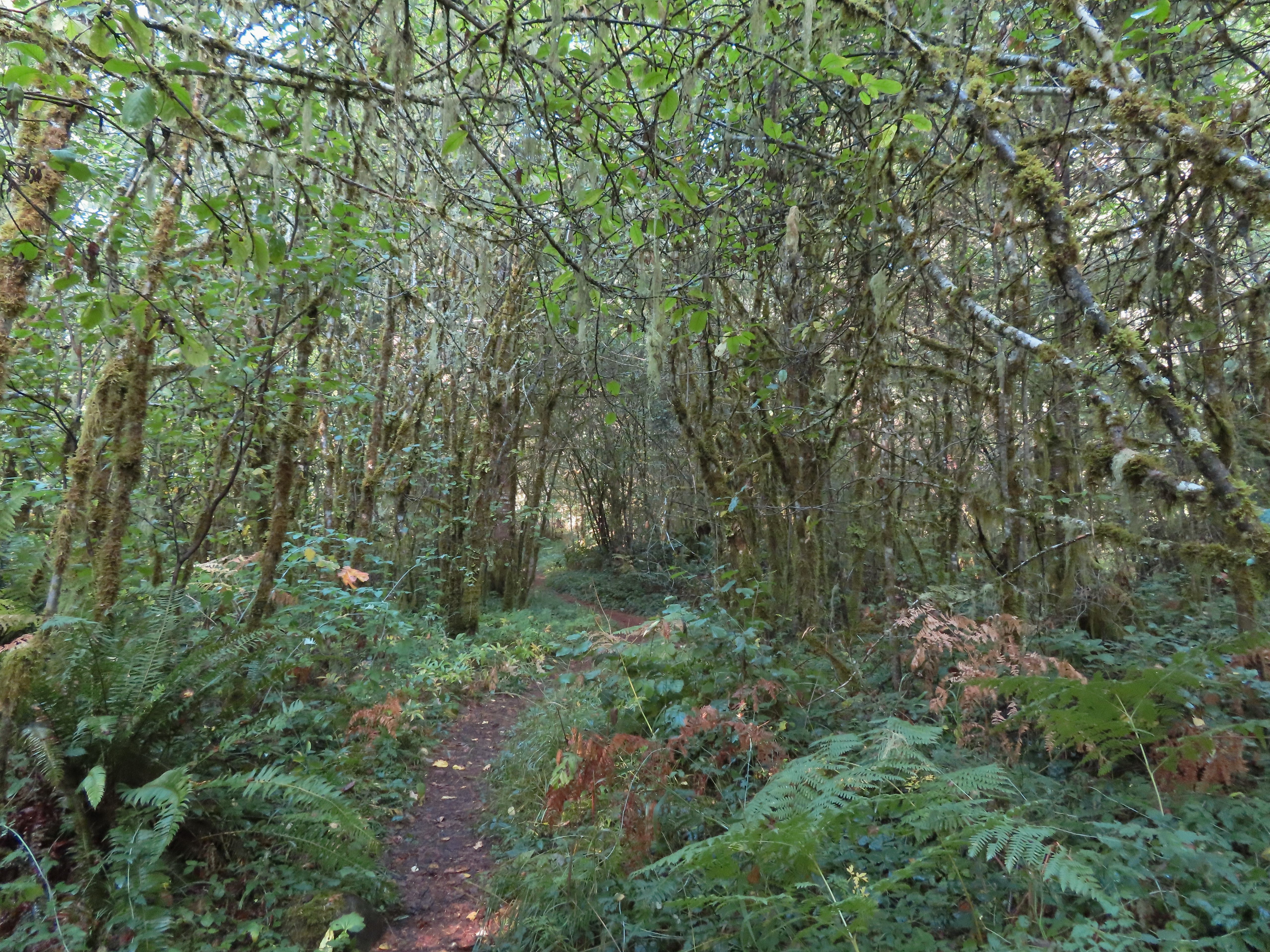
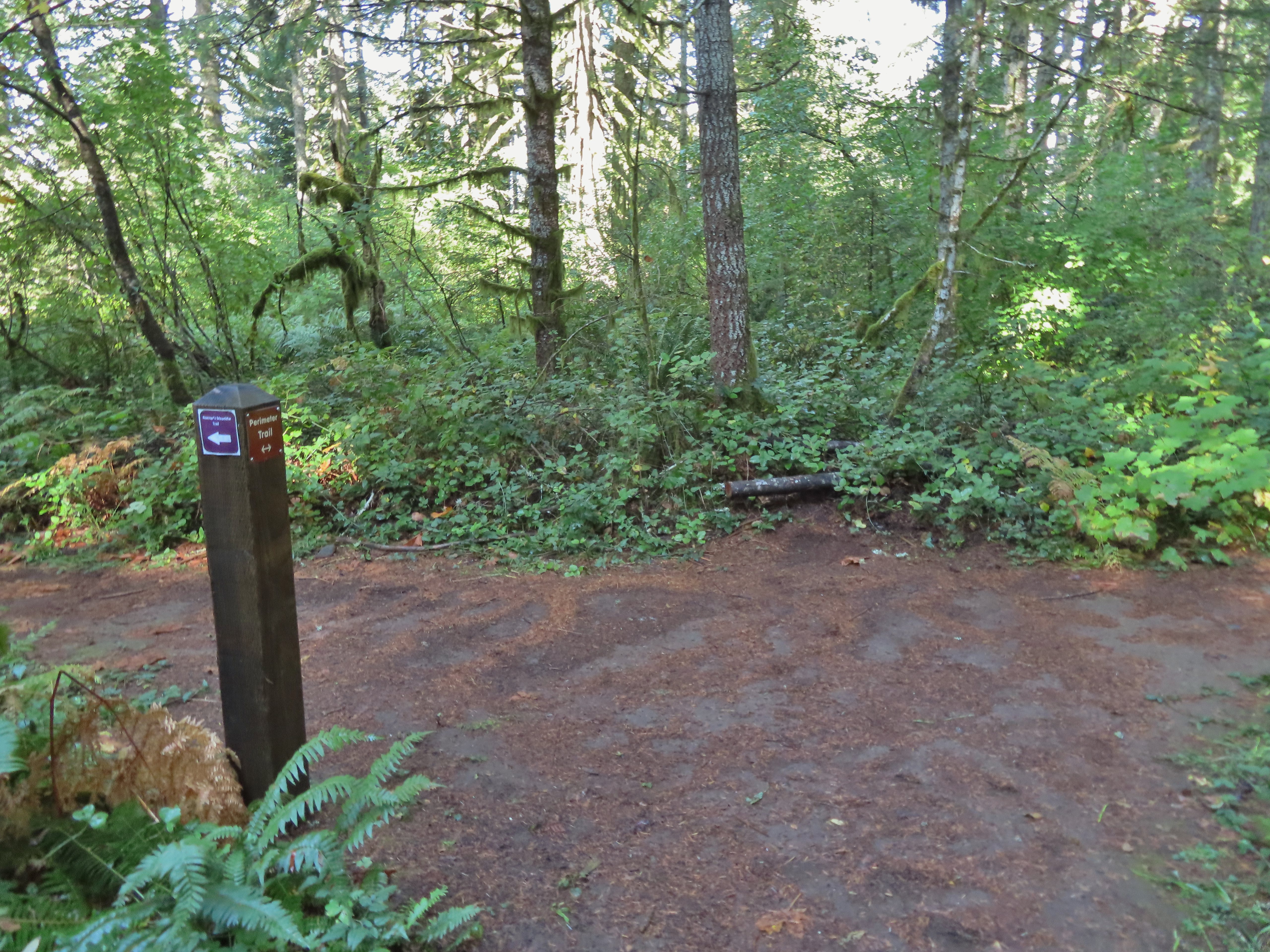 Roemer’s Meadow Trail (left) isn’t shown on the park maps yet, but it was completed in 2021 with help from the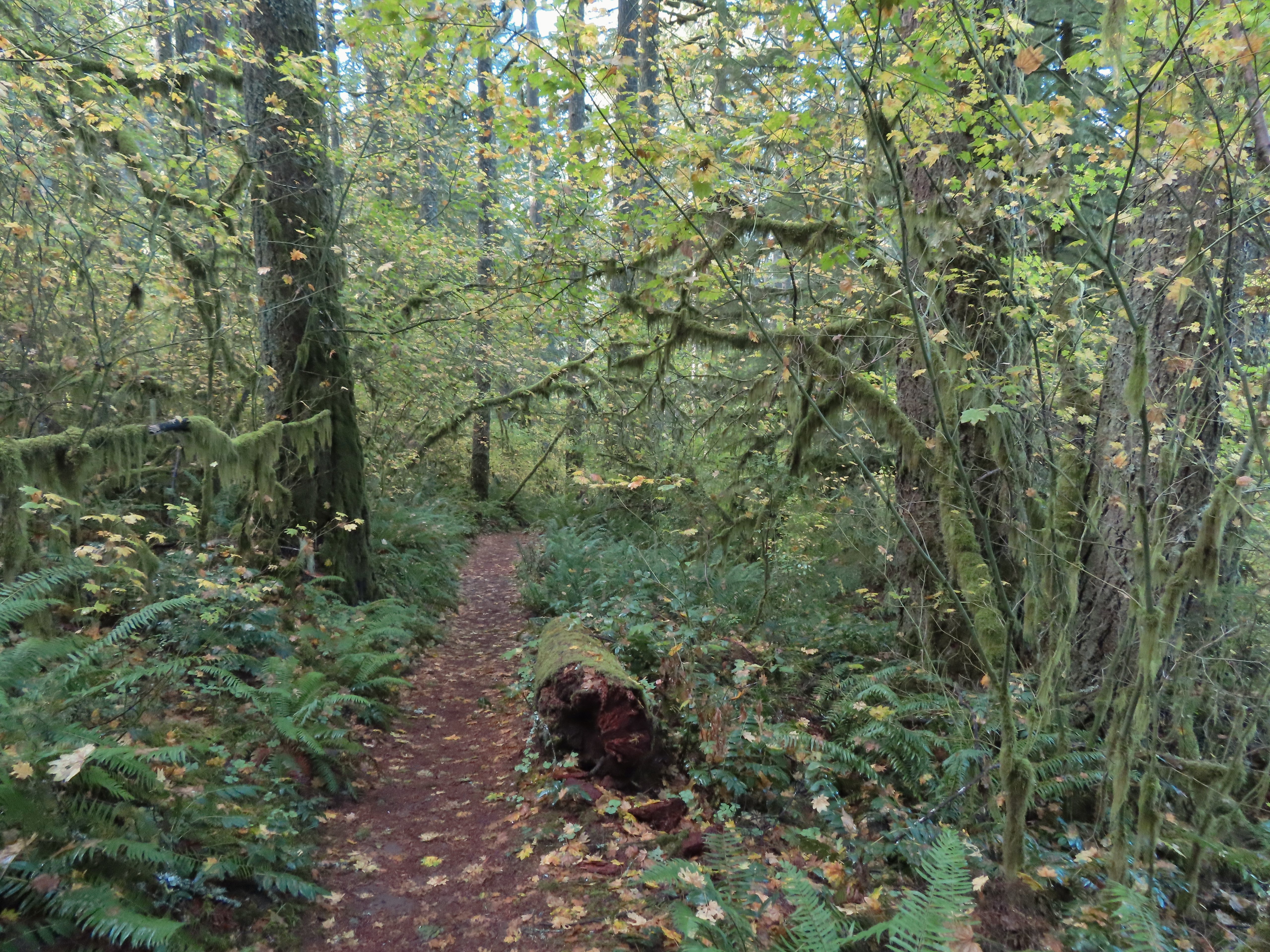
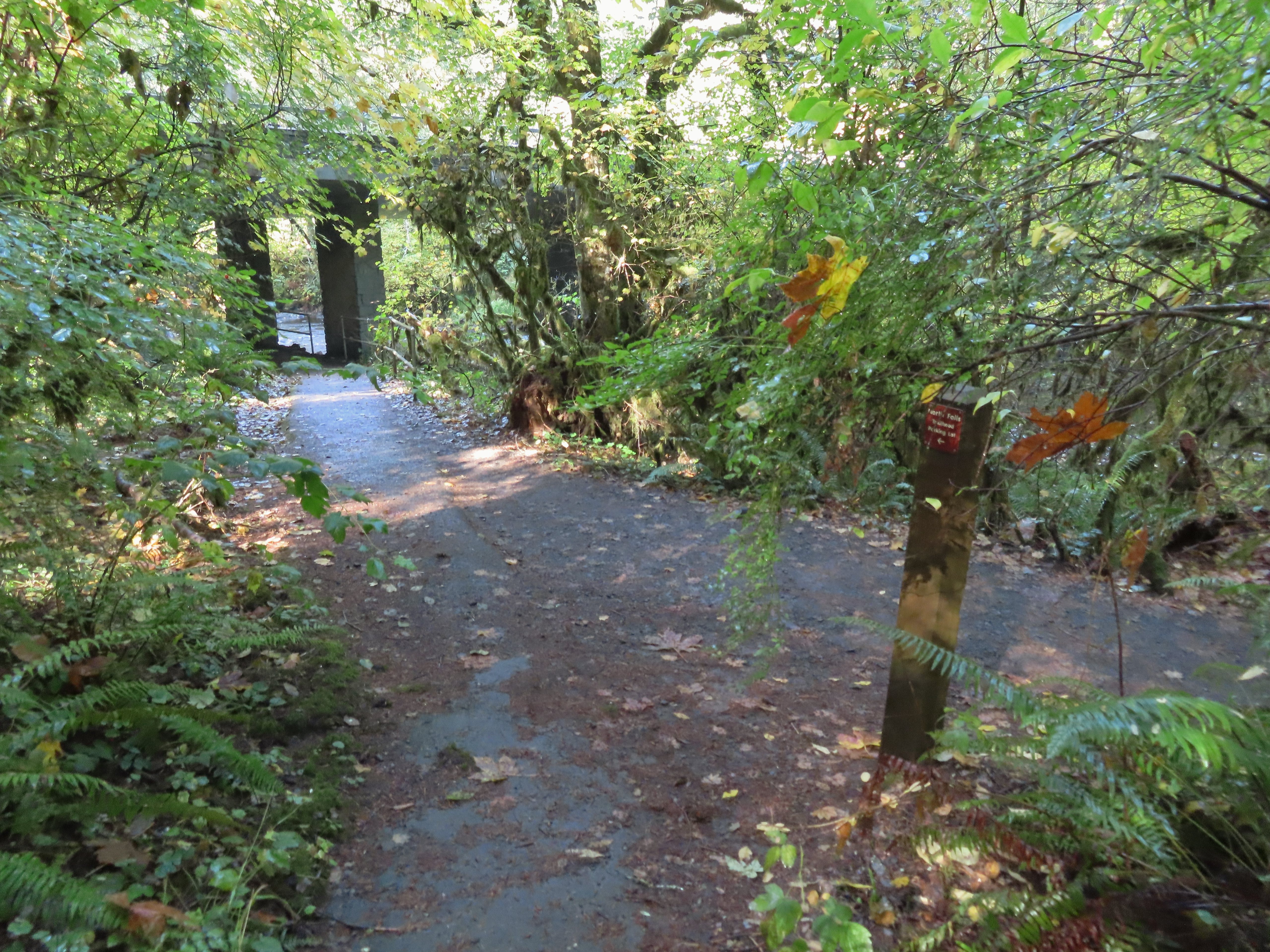 The Trail of Ten Falls junction near Highway 214.
 Looking back up the Perimeter Trail.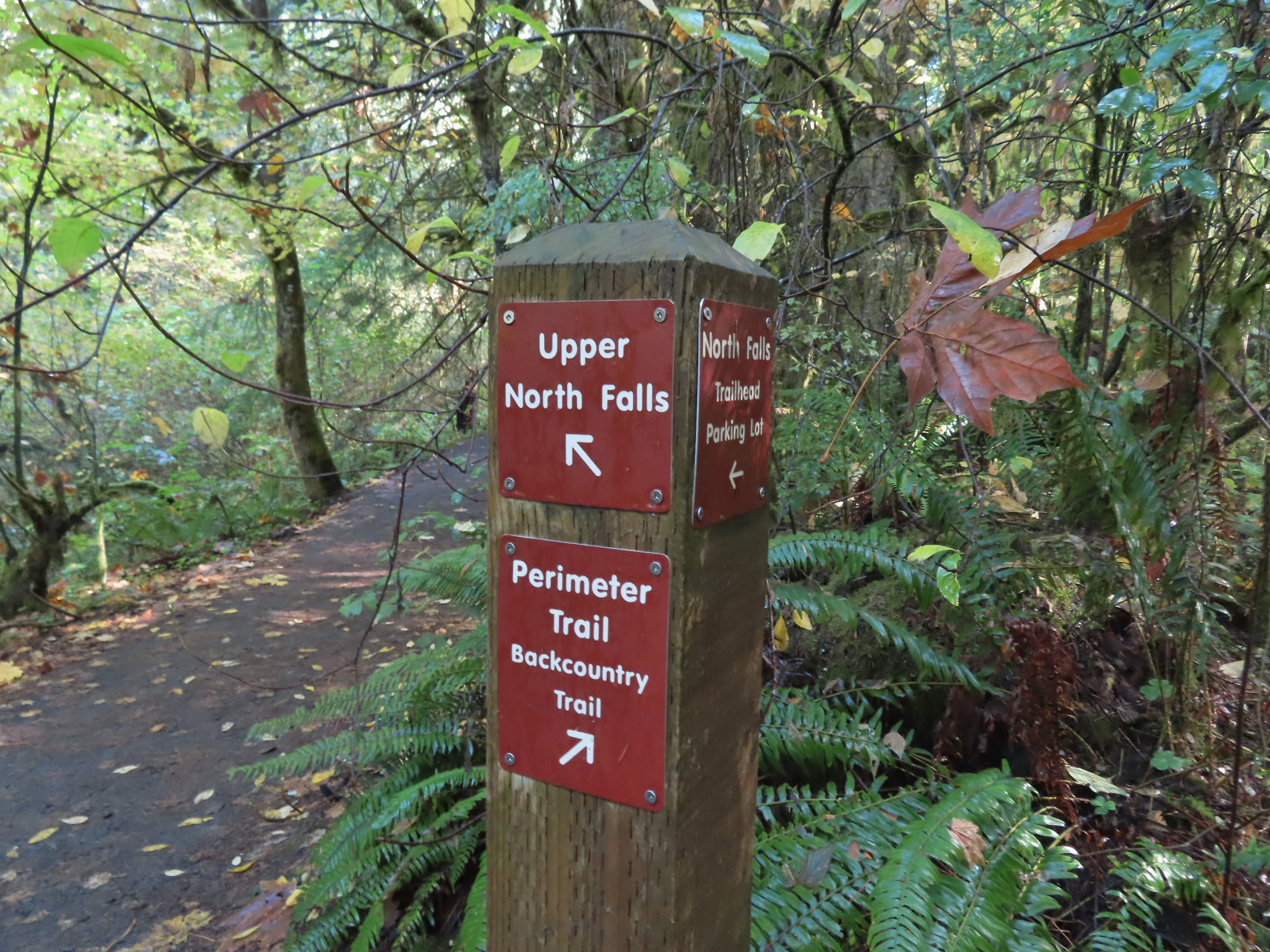
 Upper North Falls
 A left would have taken me to the North Falls Trailhead.
 The Rim Trail to the left and Canyon Trail to the right, both part of the Trail of Ten Falls.

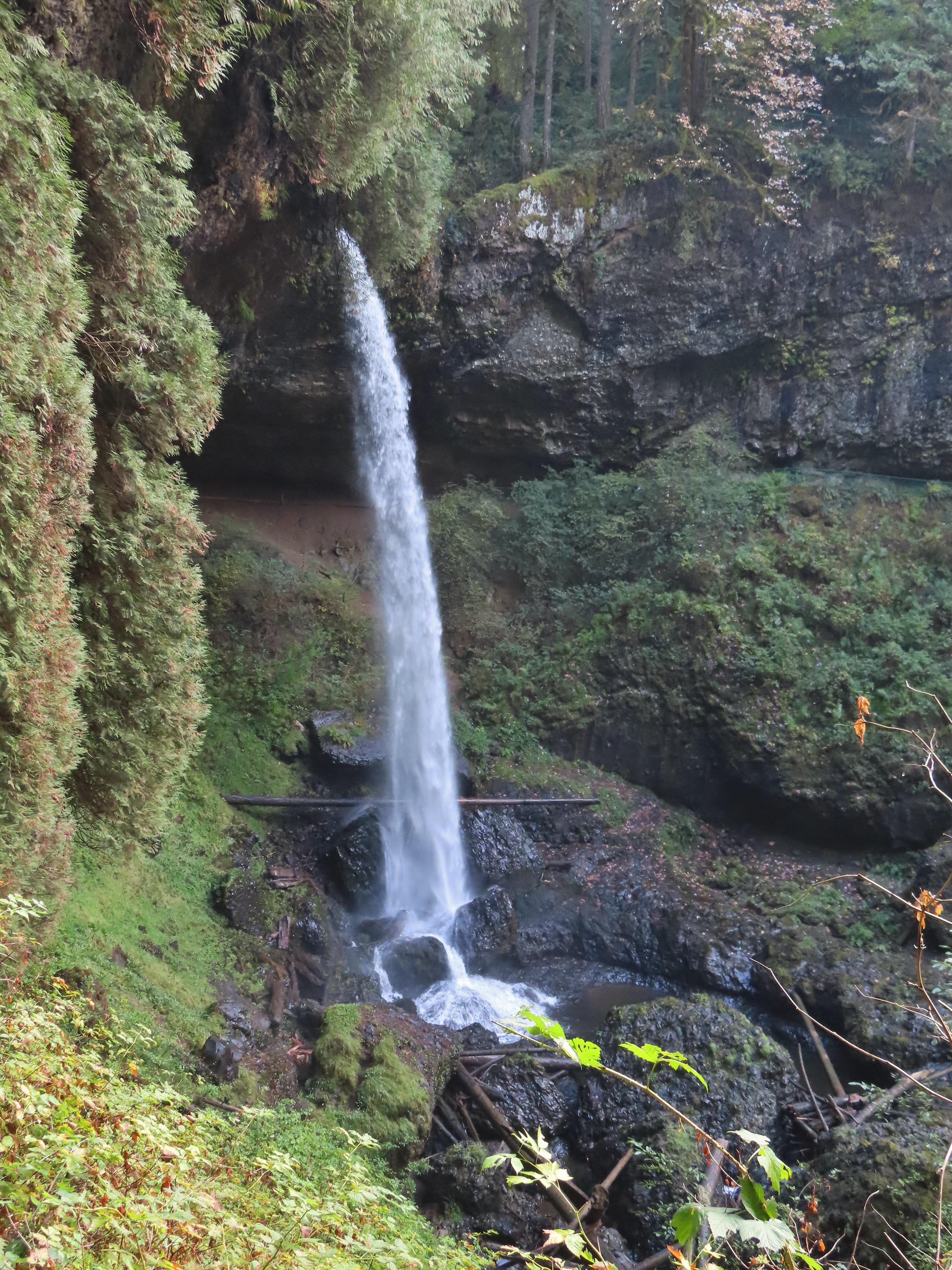

 I’m always impressed by the size of this rock in the creek.
 Not Twin Falls, but a nice little cascade nonetheless.
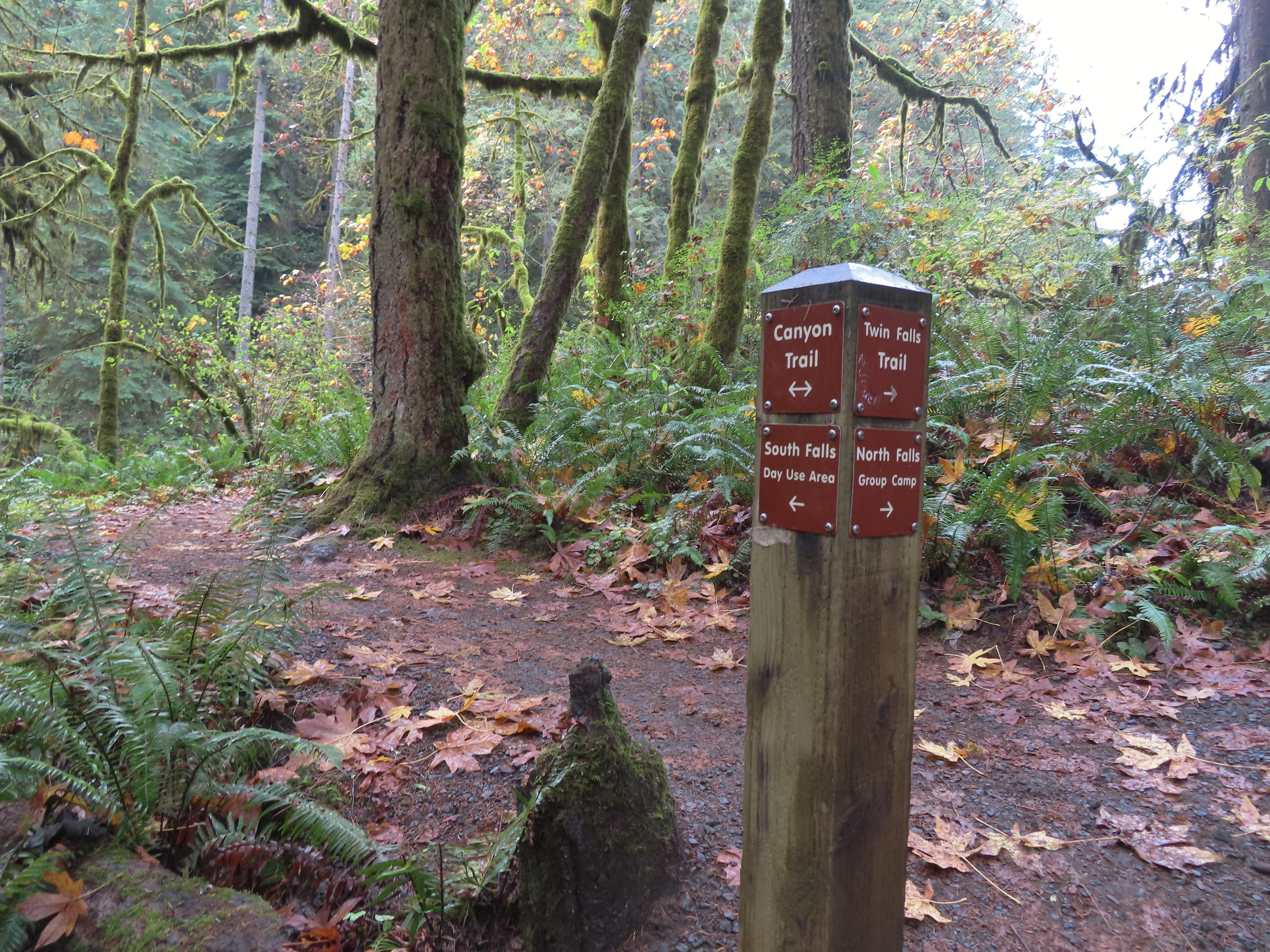 This post could be a little confusing without a map. The Twin Falls Trail climbs uphill to a group camp and does not lead to Twin Falls. The falls are the opposite side along a very short spur trail that connects at either end to the Canyon Trail.
 Twin Falls isn’t very easy to see from the spur trail either even though you’re right next to it.
 Twin Falls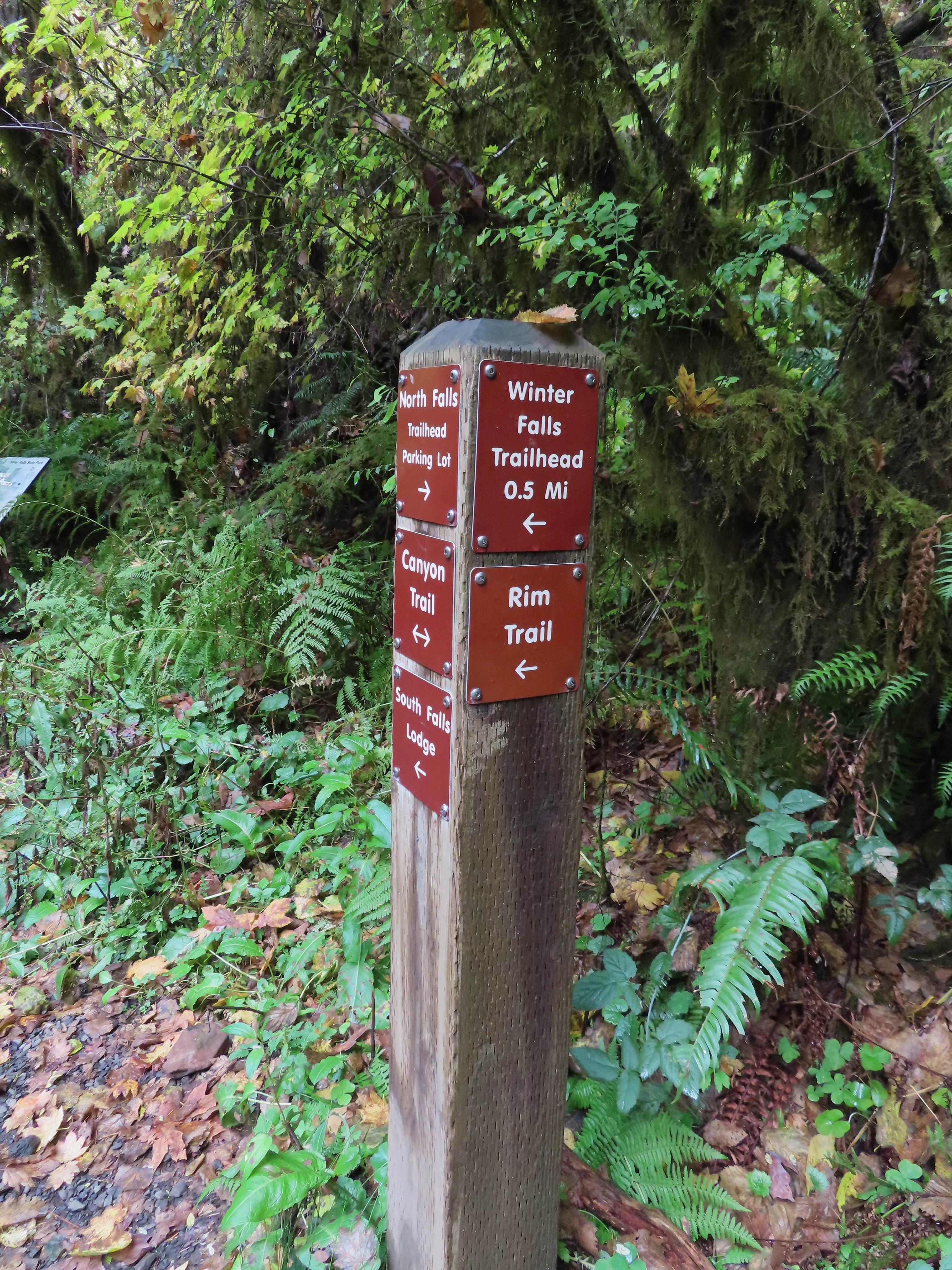

 North Fork Silver Creek
 Winter Falls, as the name suggests it’s not much of a waterfall outside of Winter when rain and snowmelt provide more water.
 With the dry Summer it isn’t a great Fall color year but there was a decent display along this trail.
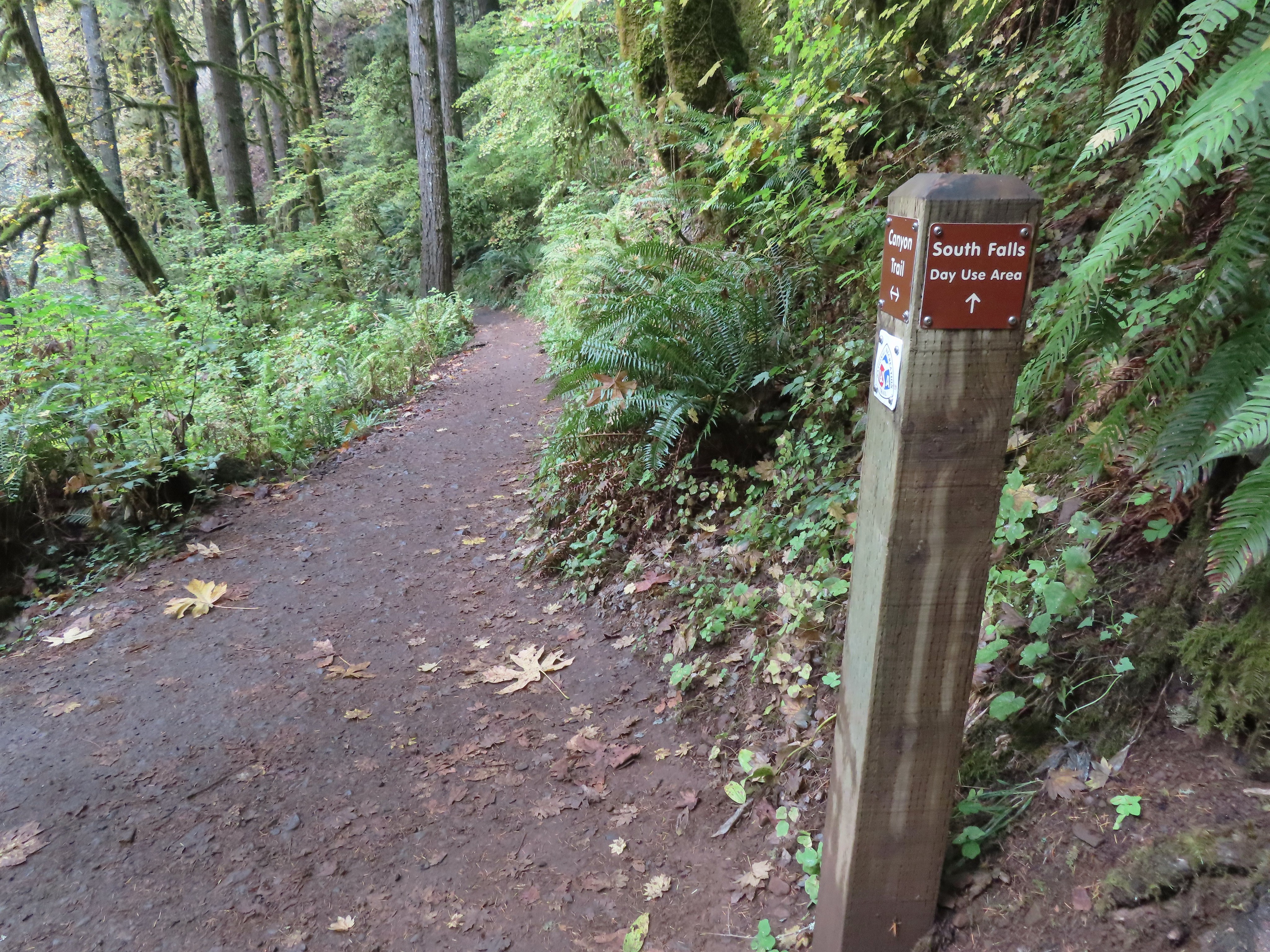 I turned left here on the spur trail behind Middle North Falls.


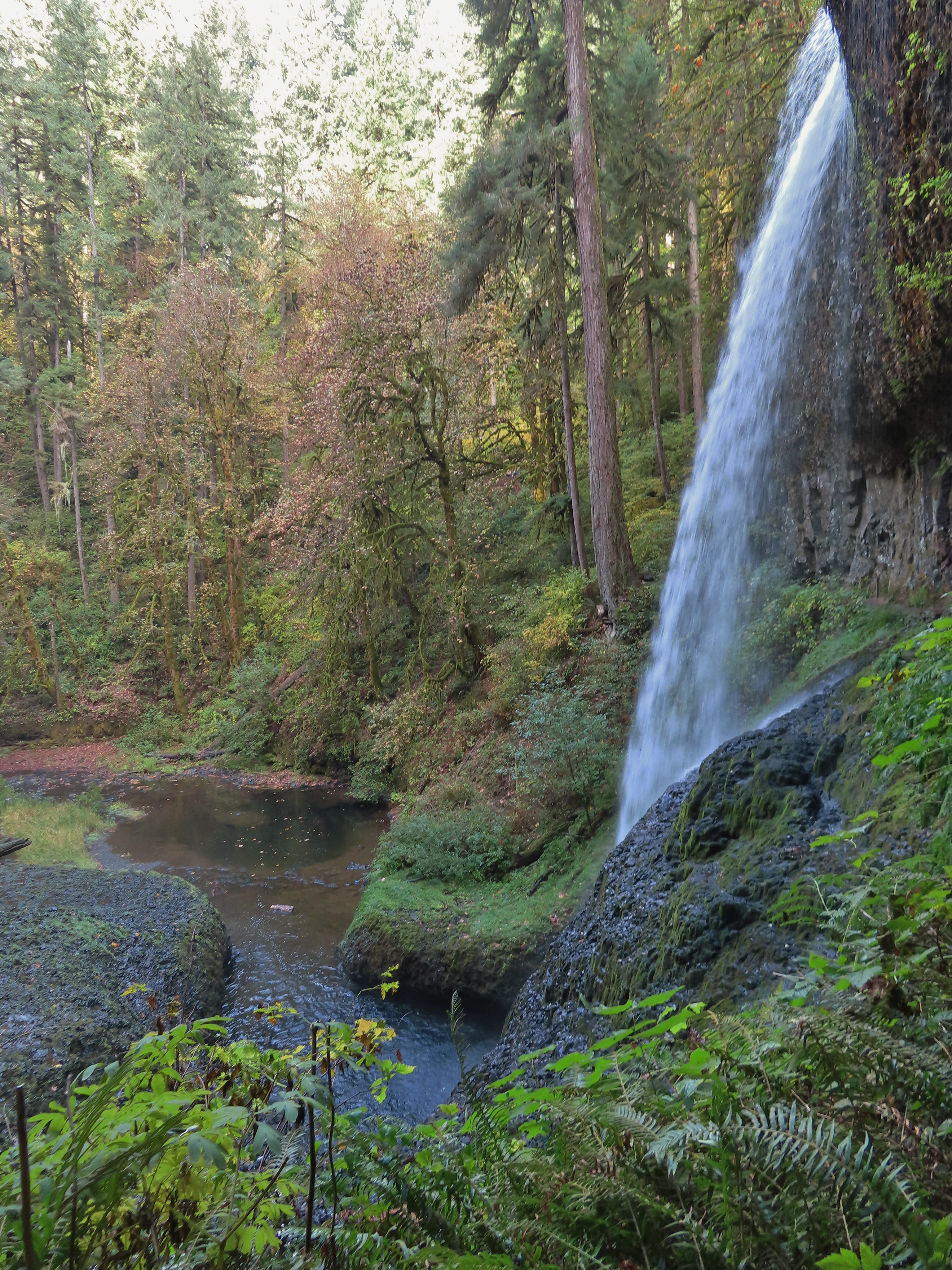
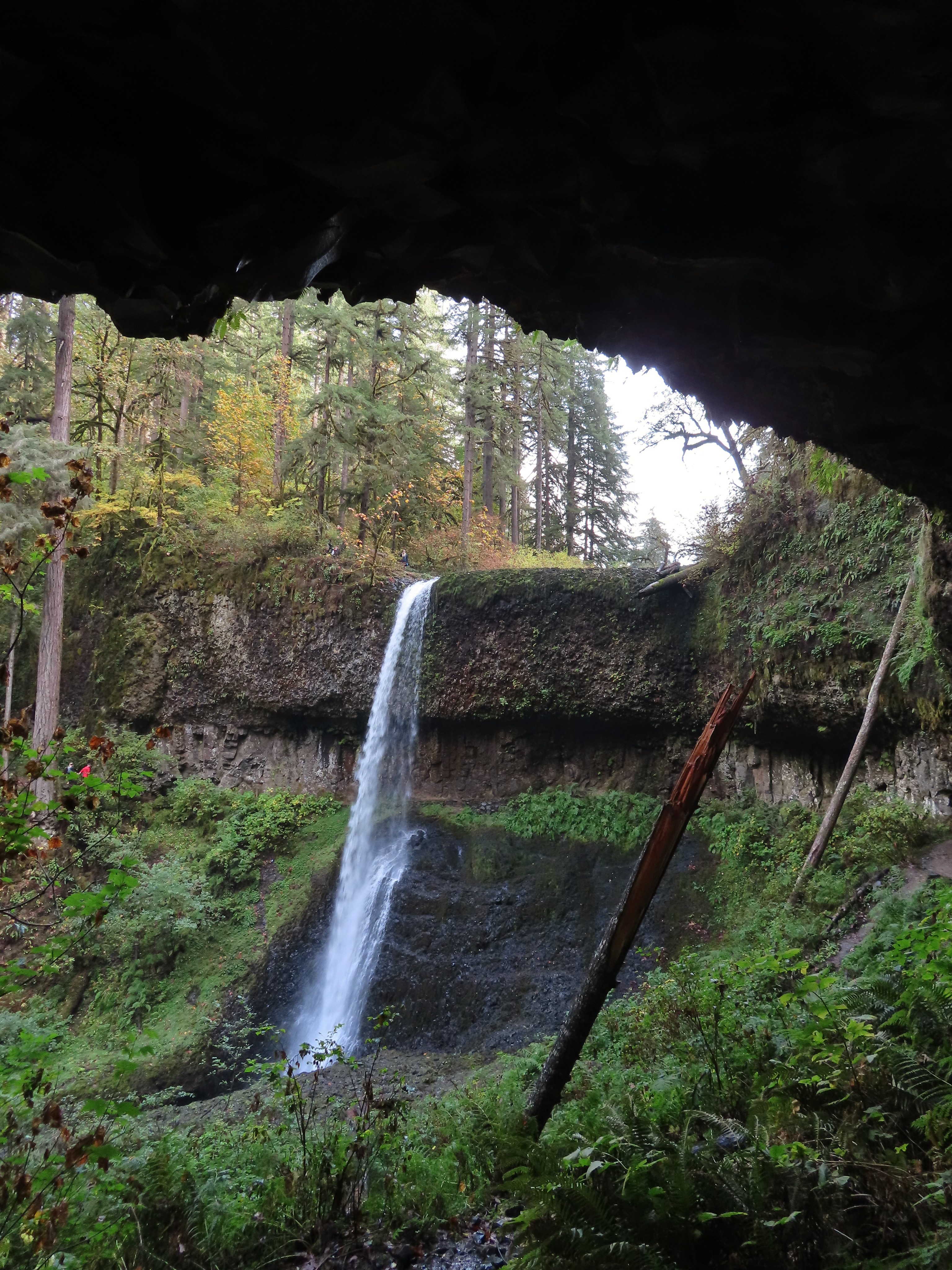
 Middle North Falls from the Canyon Trail.
 The 27′ Drake Falls.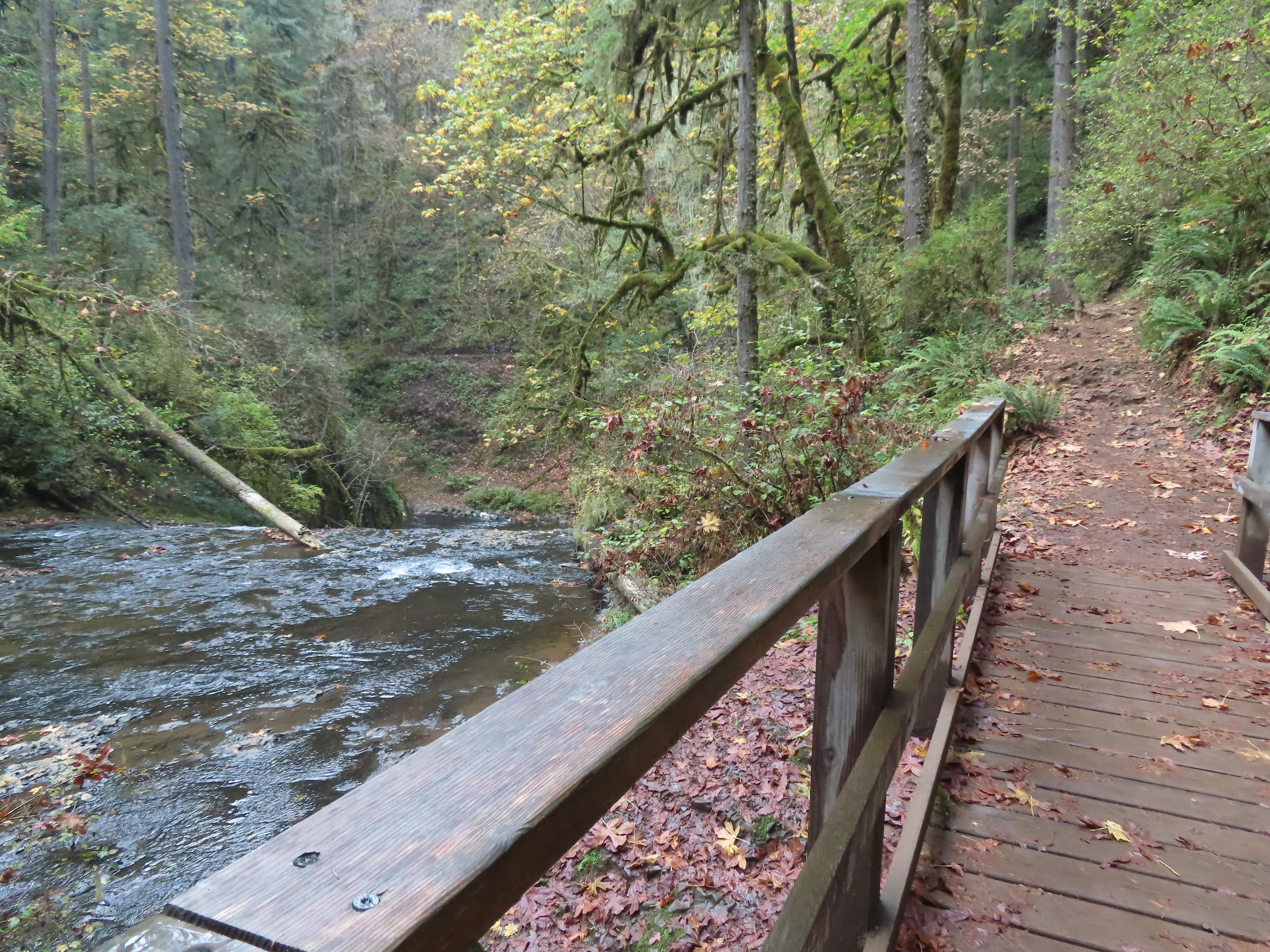

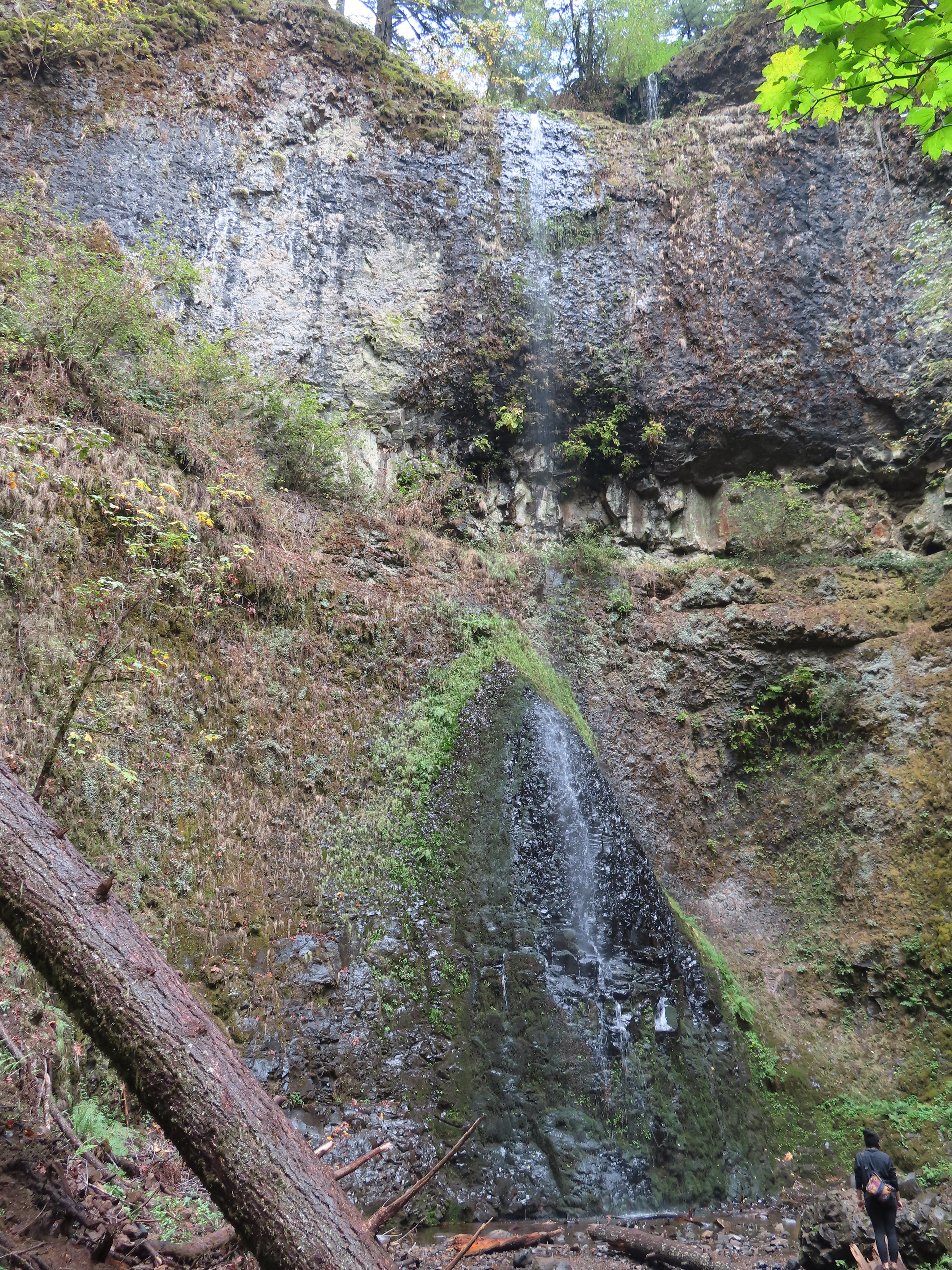 The hiker at the base gives a good idea of the fall’s height, you just have to use your imagination to add water.

 The Canyon Trail crosses the creek just downstream from Lower North Falls then makes a short climb to get above the canyon cliffs.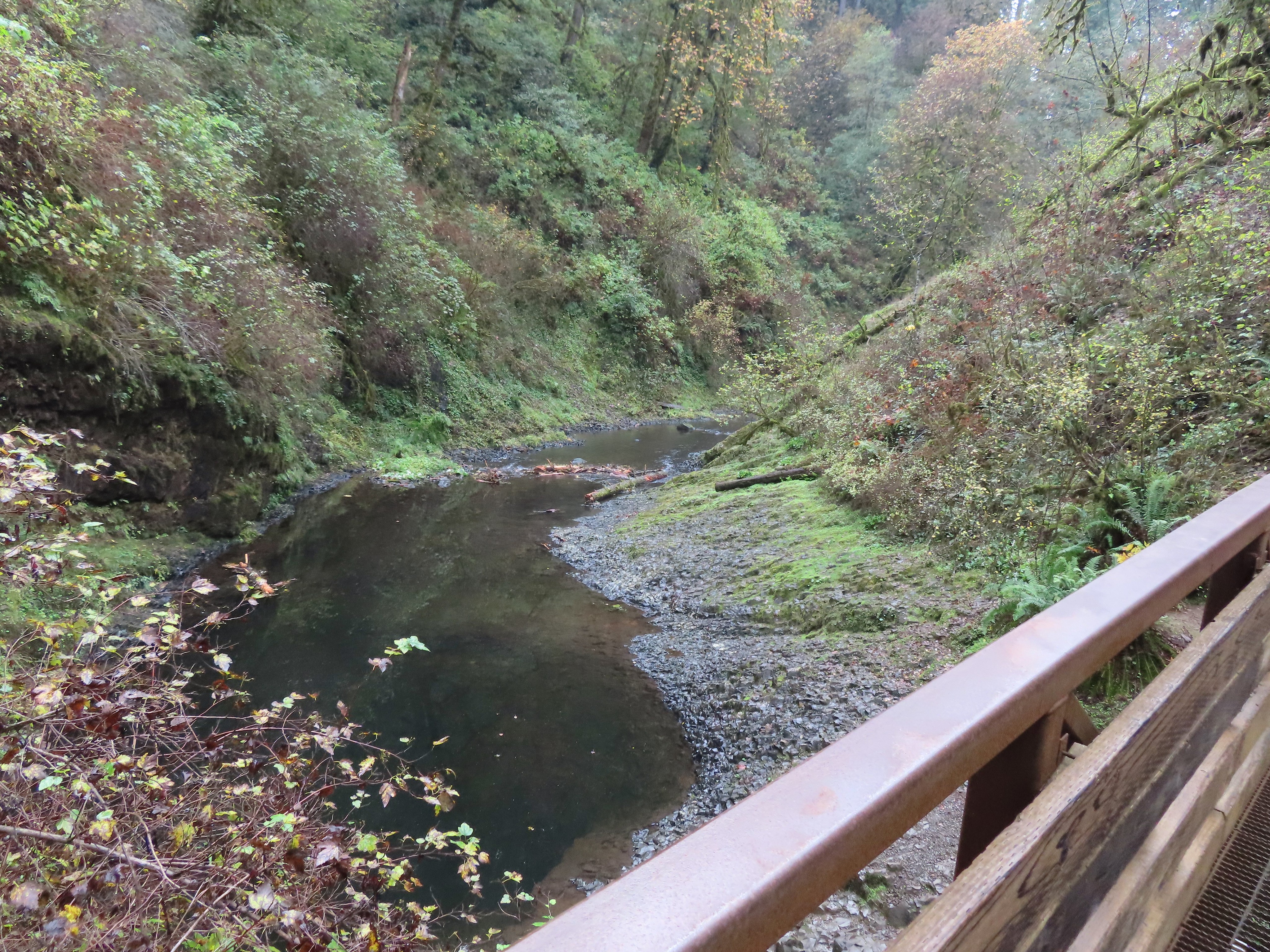




 I walked out onto the bridge for the view then returned to the junction to take the right hand fork and go behind this fall as well.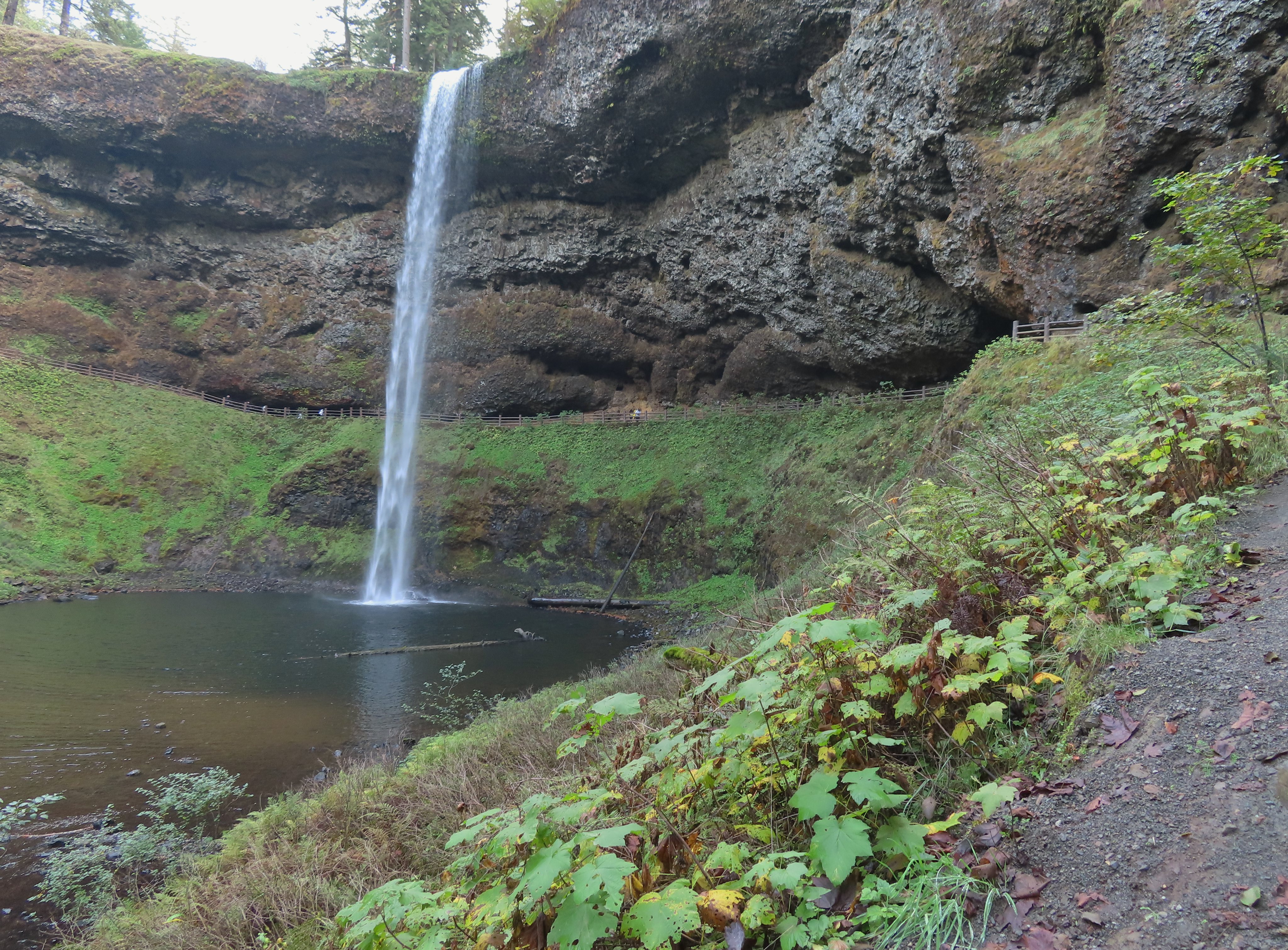
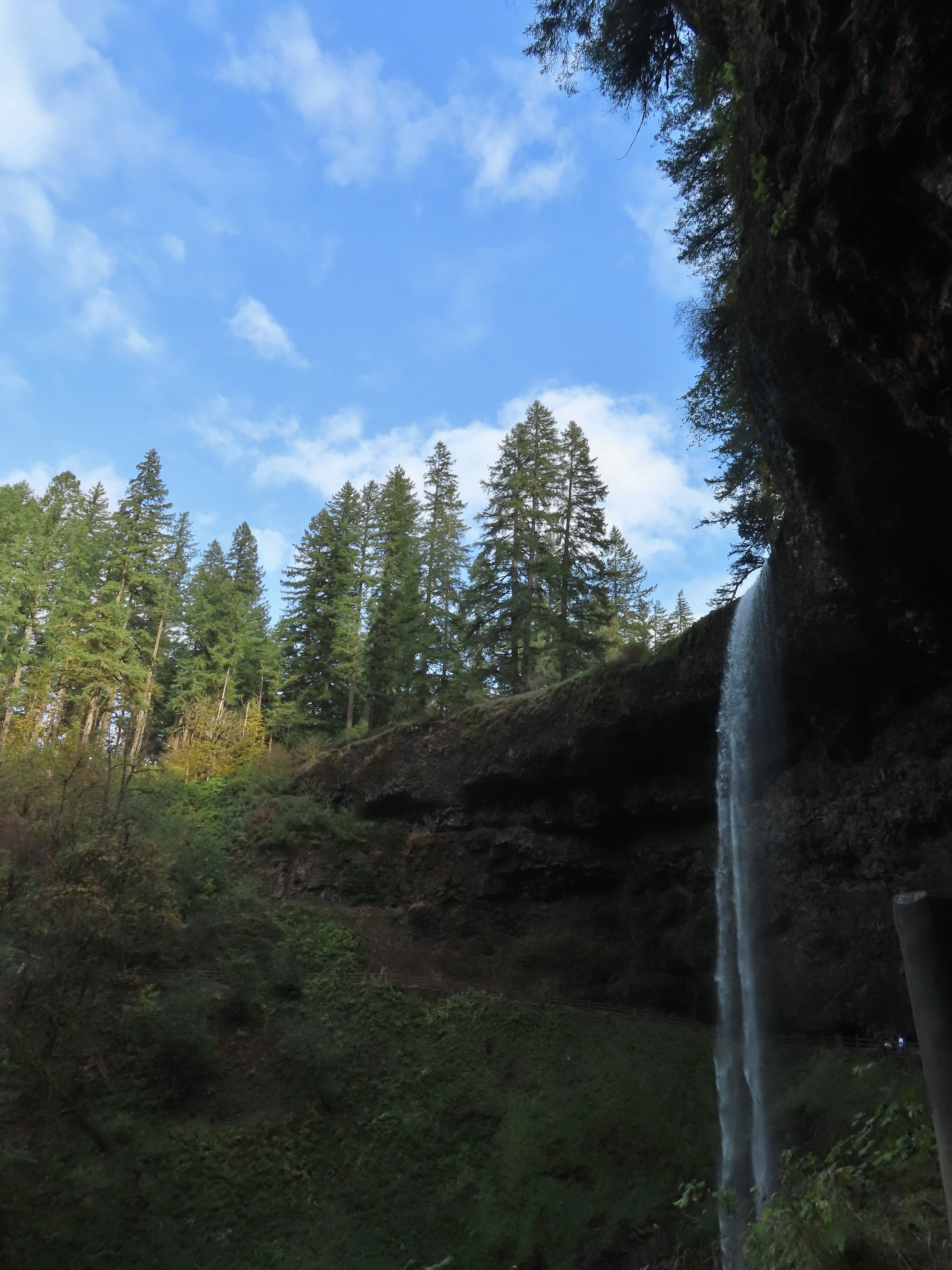


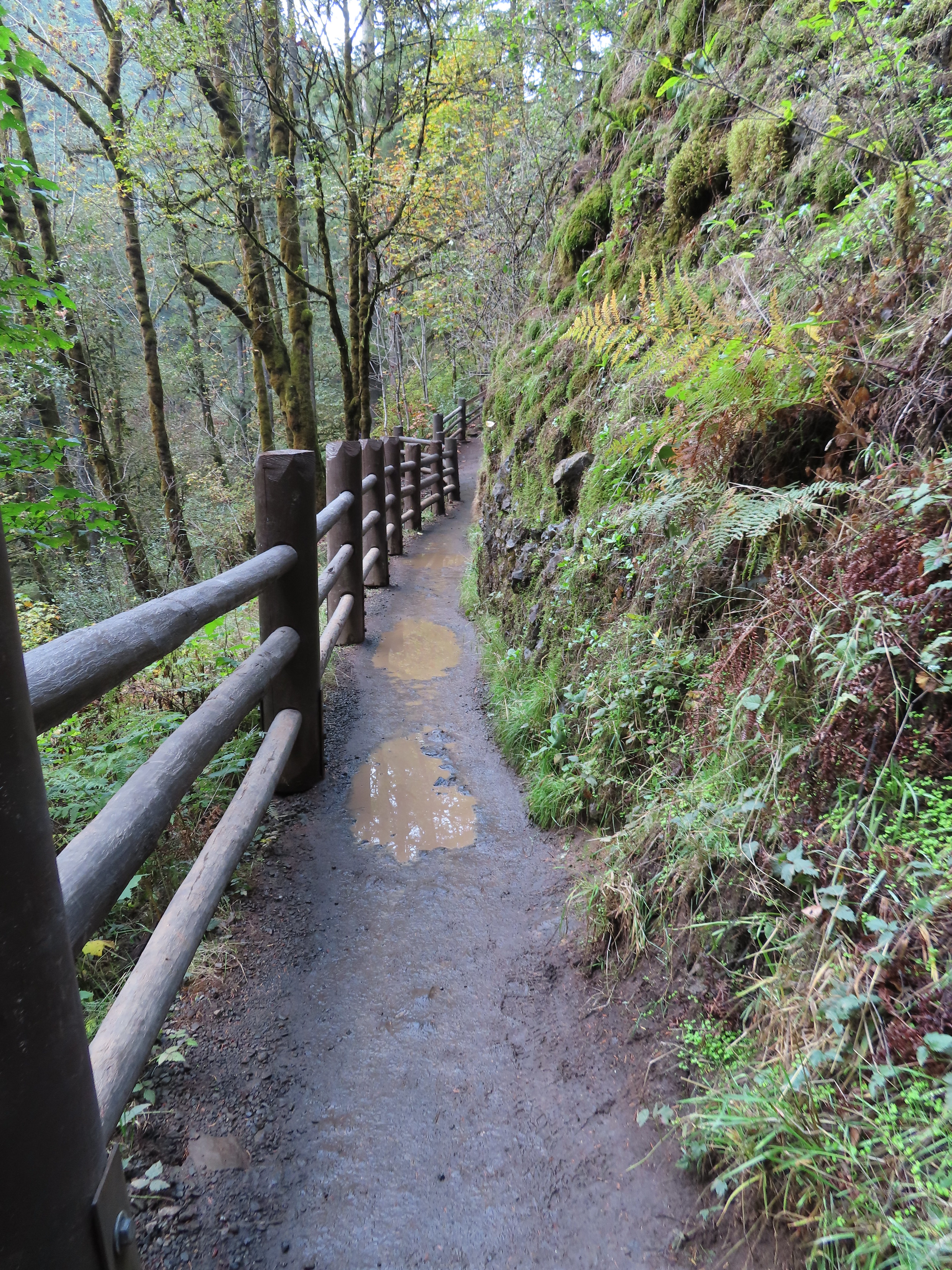


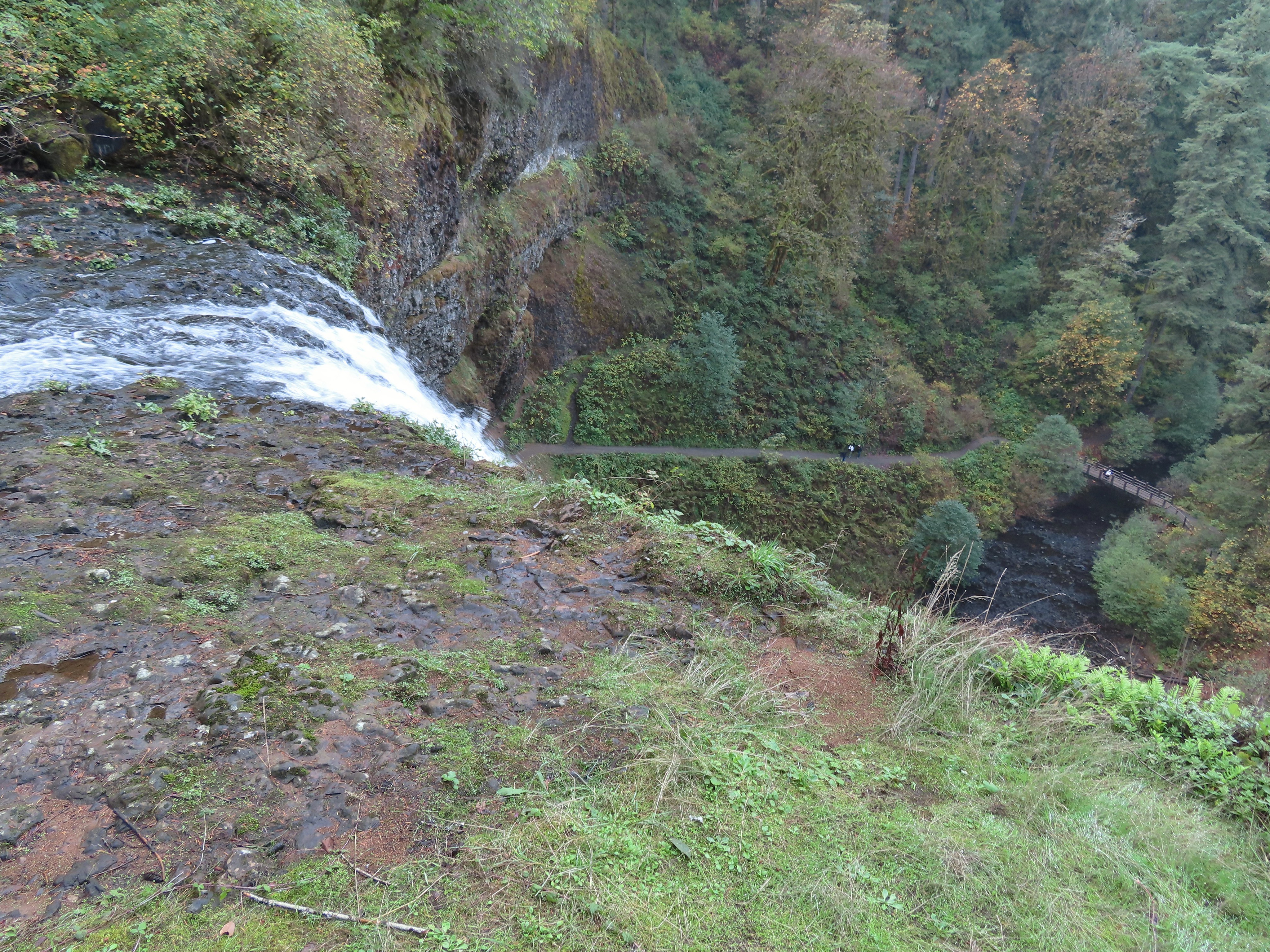
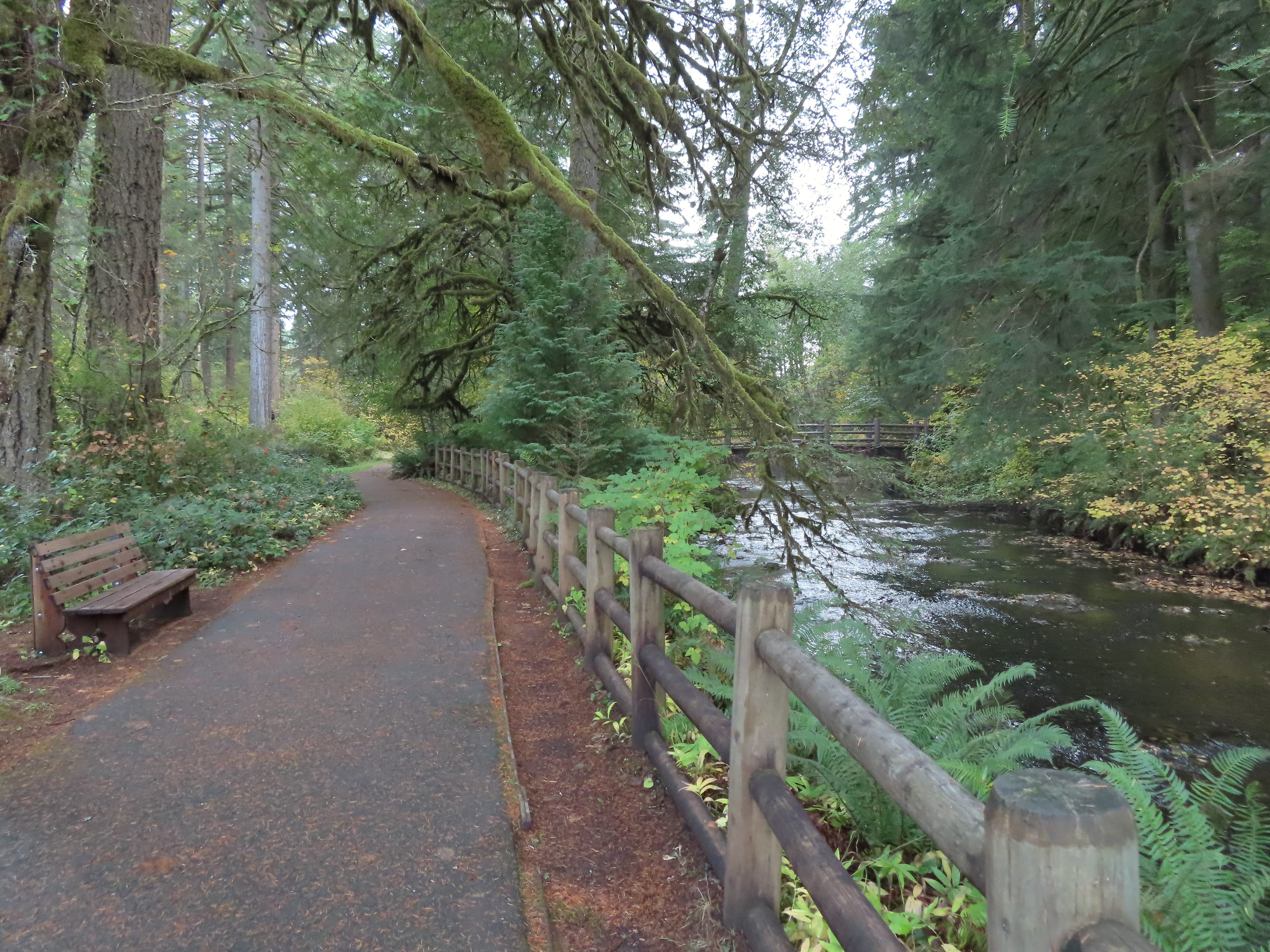
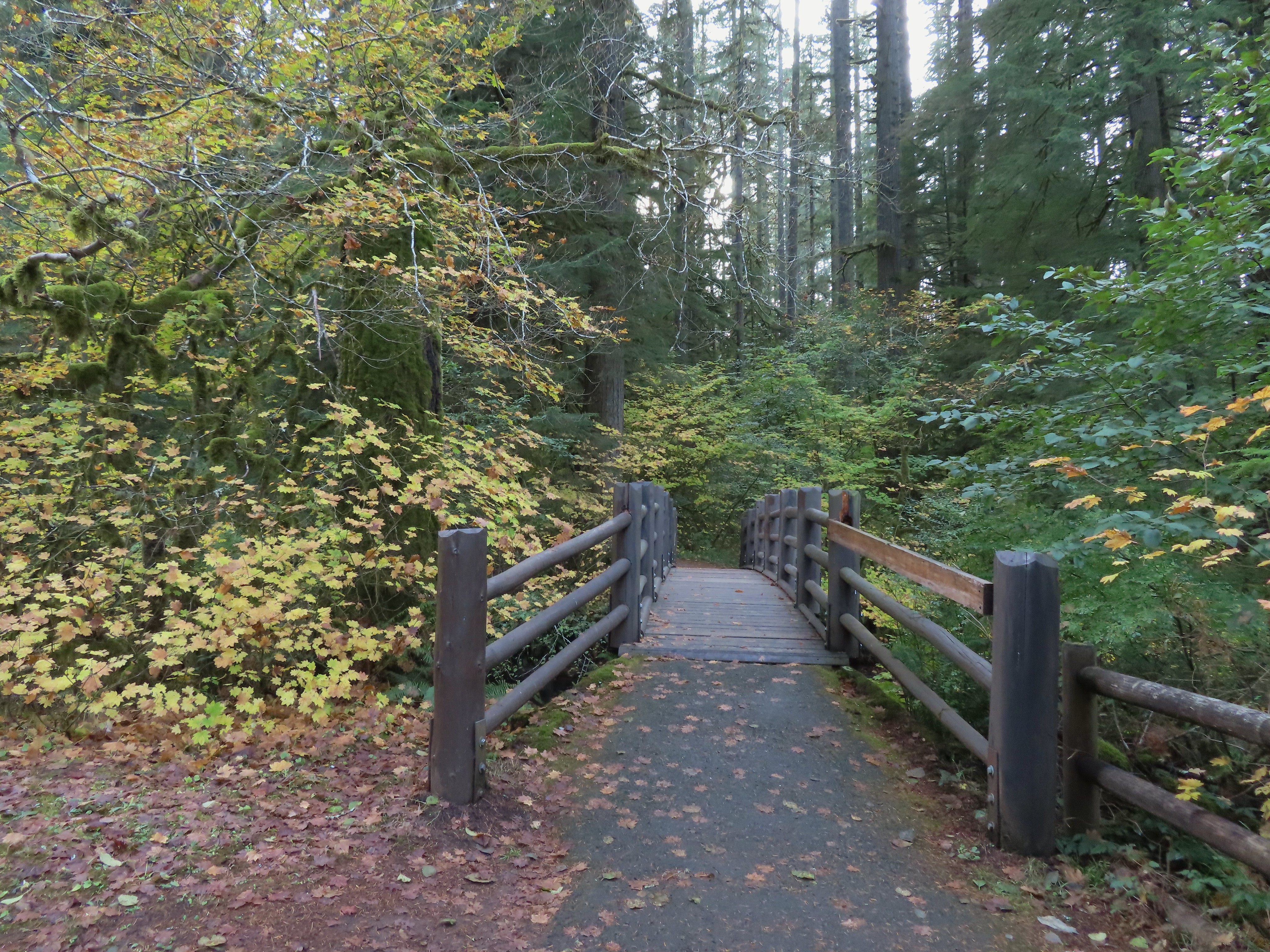
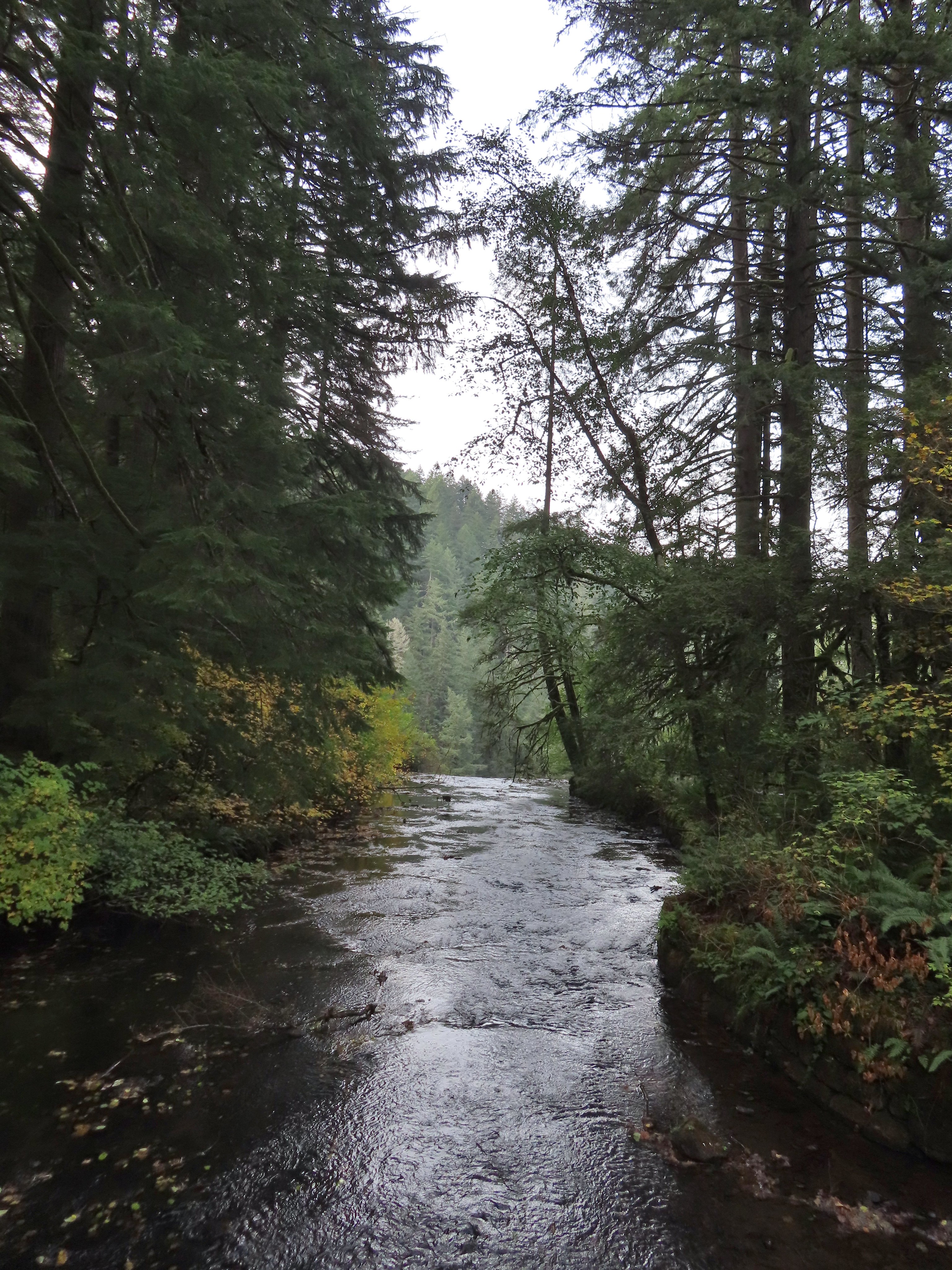 View toward South Falls from the footbridge.
 Not sure what this old building was, possibly restrooms by the doors.
 One of several picnic shelters in the park.
 Approaching the Bike Path where I recrossed the creek.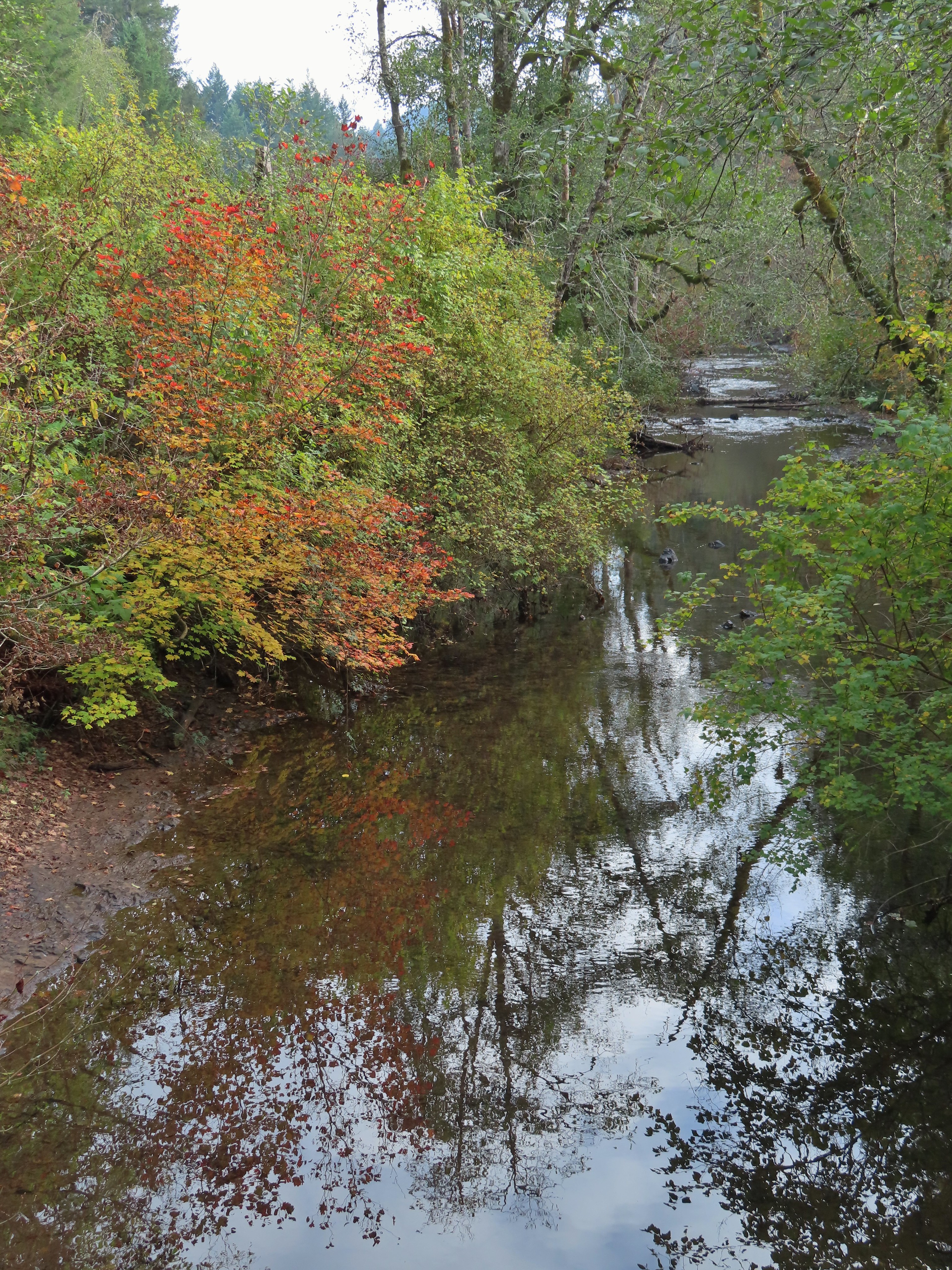
 I can see the car!
 wanderingyuncks