The final outing of Wildlife Week fell on Saturday, so Heather was able to join me. I’d picked the Fern Ridge Wildlife Area west of Eugene, OR for this final outing, in part because it gave us an excuse to check out a pair of waterfalls SW of Eugene between Reedsport and Drain.
The forecast called a chance of showers through early afternoon, and we drove through several along Interstate 5 before exiting the freeway on Highway 38 south of Cottage Grove. As we headed west on Hwy 38 the showers eased and we even had some blue sky by the time we parked at the gated entrance to Loon Lake Recreation Site.

With the campground still closed for the season we parked at a pullout next to a bridge over Mill Creek and then hiked past the gate to the day use area.
 Mill Creek from the bridge.

 Stellar’s jay
 Chipmunk
 Loon Lake
 The lake was formed by a landslide. The boulders in the Mill Creek picture above were part of that landslide.
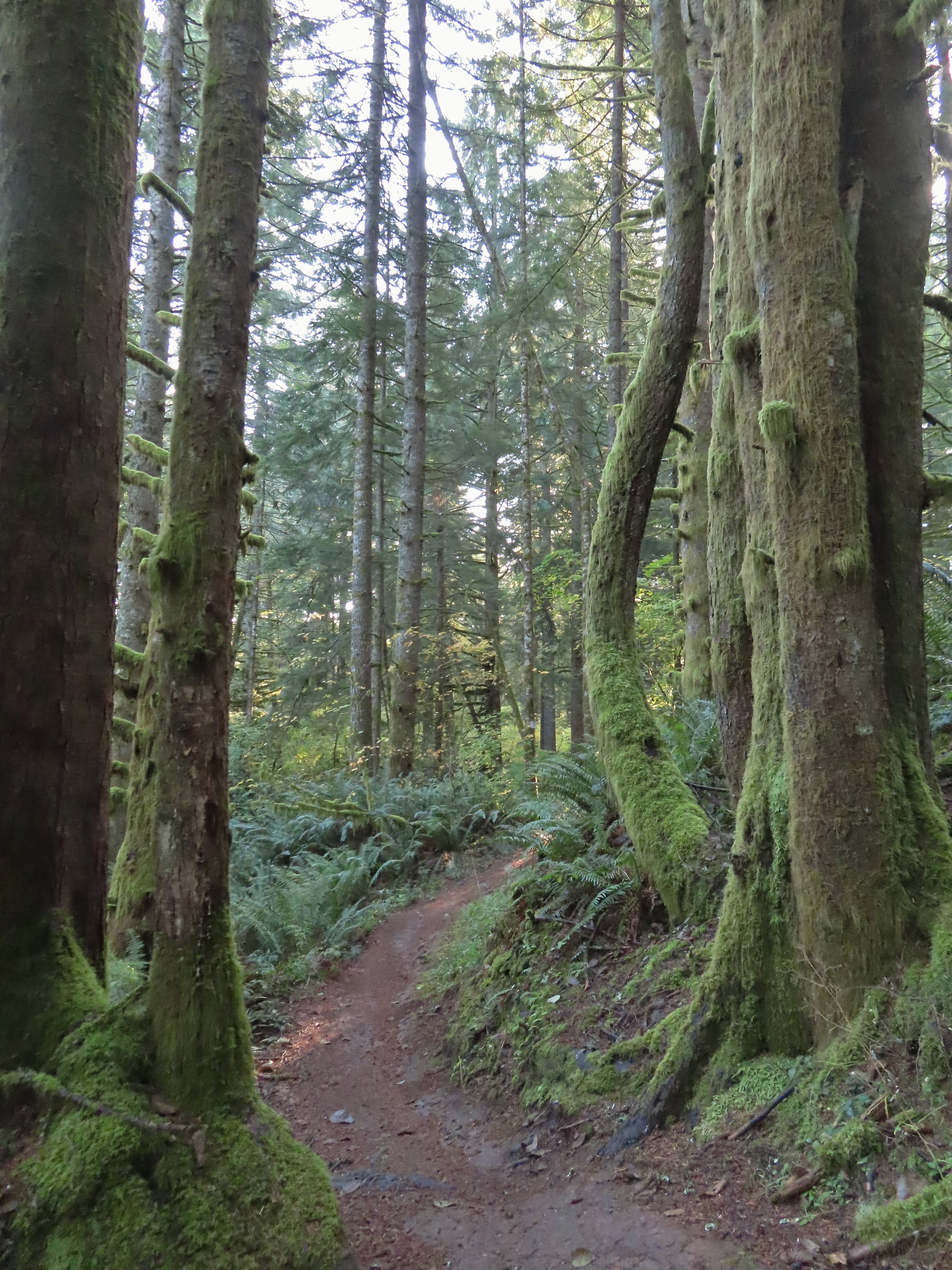
At the end of the day use area we picked up a paved path that led into the forest.

 Trillium

We veered right at a hiker symbol onto a short path (about a quarter mile) that led into the Elliott State Research Forest and ended at Loon Lake Falls.
 This was our first hike in the Elliott State Forest and possibly only hike given the forest webpage states under “There are no established trails, restrooms, or trash receptacles.”

 Fairy lanterns

 Given that the unnamed stream that feeds the waterfall appears to start just a bit further uphill I suspect it doesn’t often have much of a flow, but it was a decent waterfall in a lovely setting.
After admiring the waterfall we hiked back to the car. This stop was just 1.5-miles with 200′ of elevation gain.

Quite a bit of the distance was walking from the road to the day use area.
The next waterfall we visited was Camp Creek Falls. This waterfall is on private timberland just off of a BLM road. The timberland company’s public access map available online currently shows the area as open to the public but that could change at any time. Because of this I am not going to go into detail for the location but there is information online from other sources. If you do plan on trying to visit the waterfall, I highly suggest looking up the current land ownership through the Douglas County Assessor (Douglas County GIS| County Map) and then looking up the current owner online to find out about public access.
 A very short path led down to the waterfall.
 Camp Creek Falls. The rock here is sandstone which creates the 31′ stairstep cascade.

 Snail
Snail
This was a very pretty waterfall. There were however a few beer cans and bottles around and a fire pit along the creek which were disappointing. We’ll never understand why someone would take the time to visit such a beautiful location and mar it.
With the waterfall visits checked off we headed back to Highway 38 then made our way north to the Fern Ridge Wildlife Area.
 Before reaching Highway 38 I had to pull over to get a couple of photos of an elk herd.

We started our hikes at Fern Ridge WLA by parking along Cantrell Road at a pullout for the West Coyote Unit.

The wildlife area maps showed loops on both sides of Coyote Creek. We set off on a trail leading off from the pullout which followed an old roadbed.

 Camas
Camas
 Not sure why this was lying on the side of the trail away from the trailhead, but it provides information on the seasonal allowed usage of the units.
The trail led to a grassy track along Coyote Creek.

 Geese
Geese

The maps showed the trail then looping back closer to the creek and returning to Cantrell Road at the Coyote Creek Canoe Access. There was a bench right next to the creek near the mowed track but we didn’t see any sign of a trail here, so we continued another 0.2-miles on the grassy tack before deciding we’d for sure missed the return trail, if it even still existed.
 Roses
Roses
 Channel along the dikes.
We turned around and returned to the bench where, coming from this direction, we could make out a faint trail leading into the woods.


This trail was muddy with vegetation encroaching on it, including an alarming amount of poison oak.


 Rough-skinned newt
 Slug
Slug
 Snail
Snail
 Made it out.
Dodging poison oak isn’t either of our favorite pastimes so we were hesitant about the trail in the Coyote East Unit. Nevertheless we crossed Coyote Creek on Cantrell Road where large signboards announced the Nature Trail. (FYI there are no parking pullouts on this side of the creek.

We walked up the trail a short distance to the start of the loop where Heather said thanks but no thanks and headed back to the car.

I opted to give it a try and set off to the right on the more obvious trail. There was a bit of poison oak but on this trail it wasn’t encroaching as much as it had in the Coyote West Unit.

Western meadowrue
 Bench along Coyote Creek

The Nature Tail also emerged onto a mowed track where I messed up the route.

If I had consulted the map I would have realized the trail continued left on the grass for a short distance before returning to the woods and looping back around to mowed tracks. The trail then sticks to the grass as it heads south before turning back to the west. I turned right mistakenly thinking I was further along the route and having not paid attention to the mix of grass tracks and woods.
 I should have gone this direction. The presence of the bench should have tipped me off.
I kept my eyes out for a trail on my right and after 0.2-miles I spotted a possibility.
 Overgrown but in the right spot.
I was now paying closer attention to the map compared to the GPS and realized my mistake of turning right, but I could also see that this overgrown path must be the continuation of the loop. It was muddy and overgrown but in just 370′ I was back at the start of the loop.

After completing my “modified” loop I road walked back to Heather and the car. This hike wound up being two miles with no elevation gain.
 The orange section is where I turned right instead of left as I should have. I estimate that going the correct way would have added approximately 0.75-miles. I don’t know what type of condition the other section of trail through the woods is in.
These were an odd couple of trails, possibly more useful for hunters during hunting seasons. We had one more stop at planned at Fern Ridge WLA at the https://myodfw.com/sites/default/files/2019-02/Fisher%20Butte.pdf. We parked at the large trailhead off Highway 126 and set off past a large signboard.

We’d spent time in this unit in November 2021 when we started from a different trailhead along Royal Avenue (post). The “trails” here are a series of dikes through the wetlands creating multiple route opportunities. We wound up with a 4.3-mile hike consisting of two loops.

 Road to Fisher Butte,
We spotted quite a few different species of birds and heard a lot of bull frogs. There were also some impressive camas fields in some of the wetlands.
 Camas
Camas
 Bird viewing platfrom.
 Red-winged blackbird
 Bullfrog. They were everywhere and continuously startled us when they would make a loud “alarm” sound before jumping into the water.
 We turned left at the platform onto this dike.
 Sparrow
 Blue-winged teals. This was the first time seeing this species during Wildlife Week. We had seen a couple of these ducks back in 2021 at Cold Springs National Wildlife Refuge in Eastern Oregon (post).
 Another big field of camas.
 Fisher Butte at the end of another dike.
 Geese in formation.
 Checkerbloom
 Blue sky, a far cry from the low clouds and showers we’d driven through in the Eugene area earlier in the morning.
 Geese and cinnamon teals.
 I needed a more powerful camera to make out the various ducks and other birds we were seeing in the distance.
 There were a number of great blue herons hunting in the wetlands.
 Another viewing platfrom.

 Looking toward the Royal Avenue Unit.
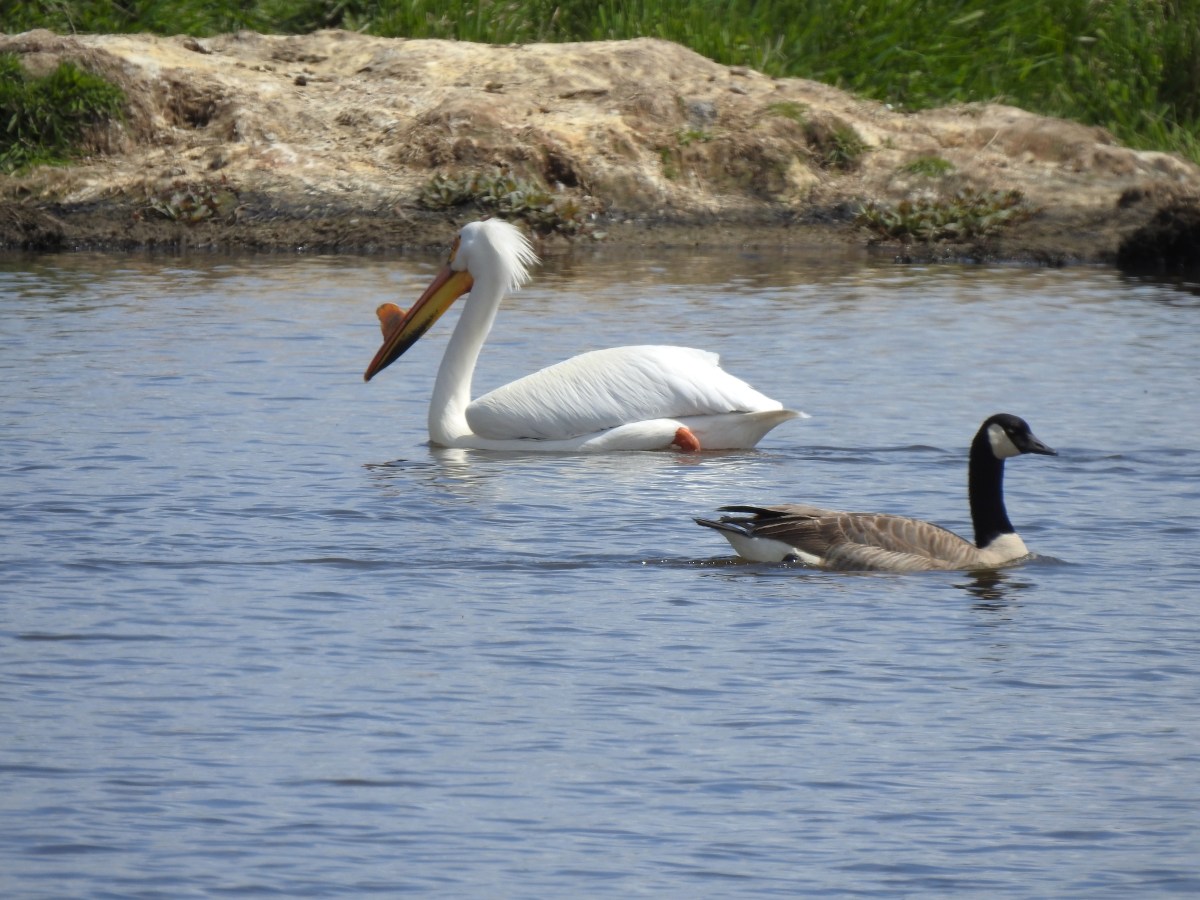
 Pelicans. Another species that I hadn’t seen at any other wildlife area this week.

 Purple martin
 One of at least a half dozen American bitterns that we saw in flight. We were unable to spot any before or after they were in flight.
 Swallows in flight
 There was a lot happening in this part of the unit.
 White pelicans and a mute swan (non-native)
 Geese
Geese
 Another first this week – greater white fronted geese. It’s a blurry photo but it was the best I could do given their distance.
 Goose passing the swan.
 Same goose passing a pelican.
 Northern shoveler
 Hawk
Hawk
 Another large group of various ducks and other birds.
 Bald eagles
 Two types of camas
 Heading back to the trailhead along the side of Fisher Butte.
 Flax
Flax
 The final stretch of Wildlife Week.
The showers never materialized, and the wildlife was abundant making this a great end to Wildlife Week. Over the seven days I visited five national wildlife refuges, two state wildlife areas, and two wetlands covering nearly 60-miles of hiking. I got to see a great variety of wildlife and know I missed so much more. Happy Trails!
Flickr: Fern Ridge WLA plus waterfalls

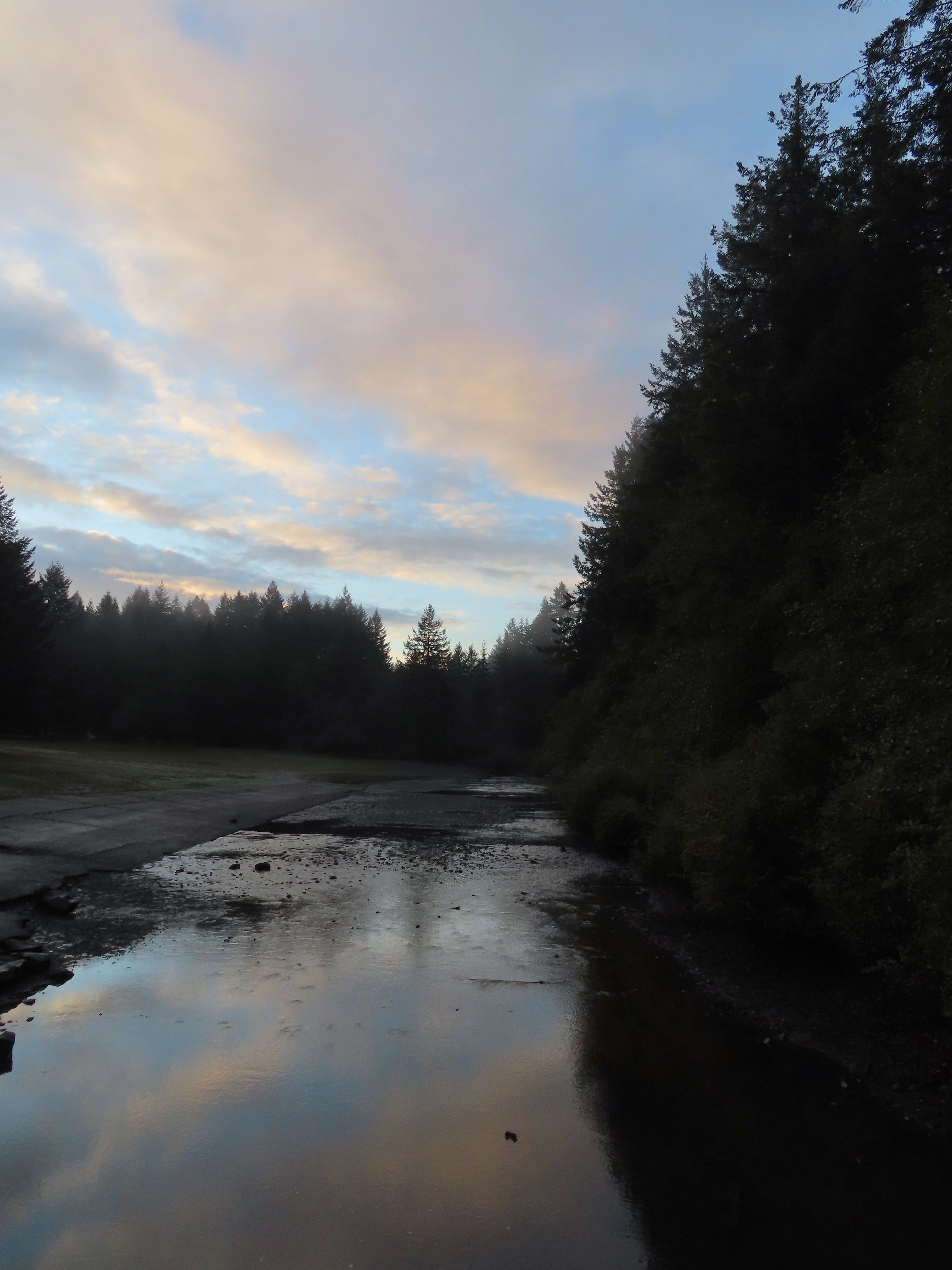
 A lot more blue in the sky than I had expected to see.

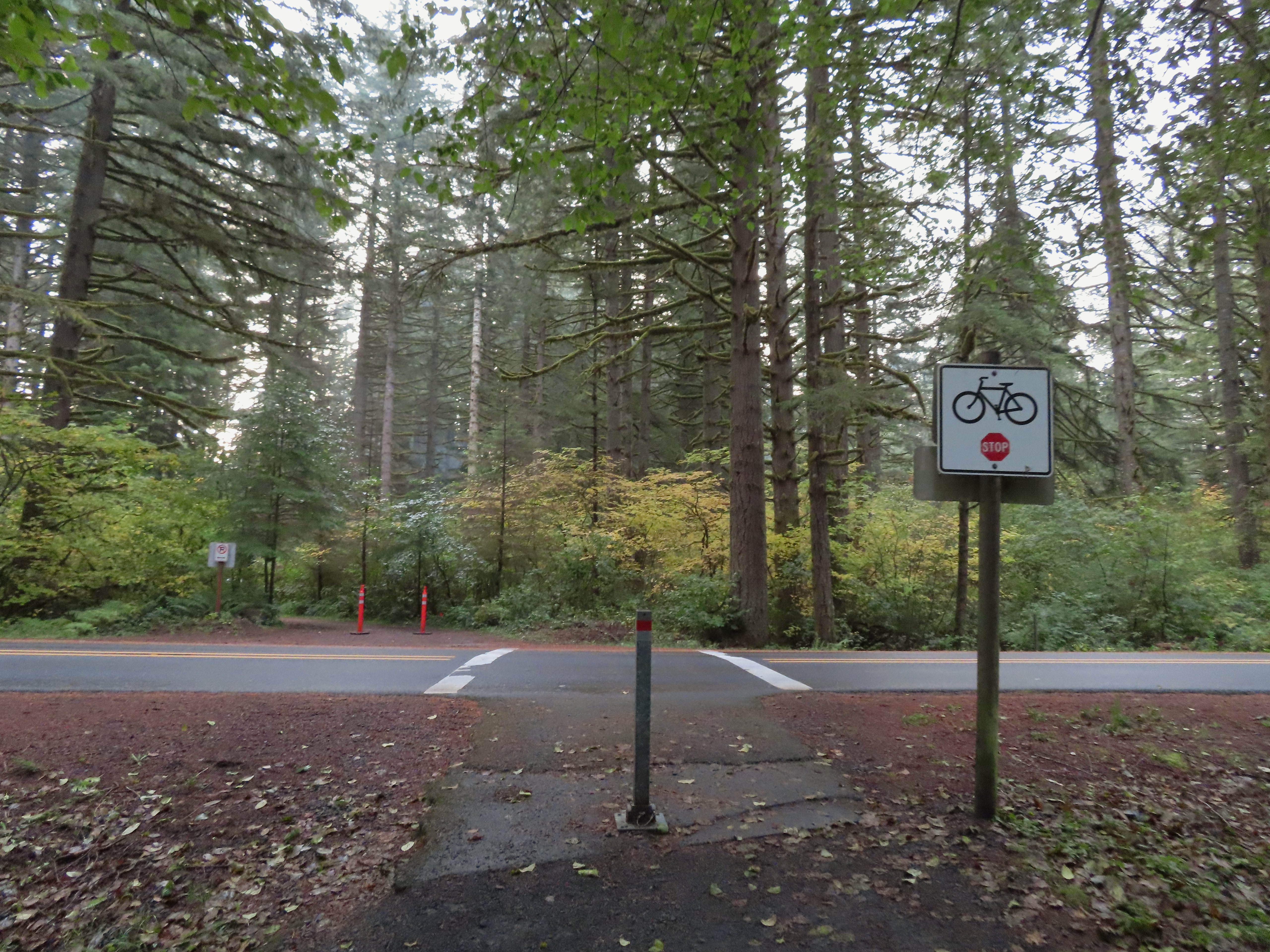 Crossing Highway 214 to the campground.
 I detoured left to check out this bridge over Howard Creek.
 Howard Creek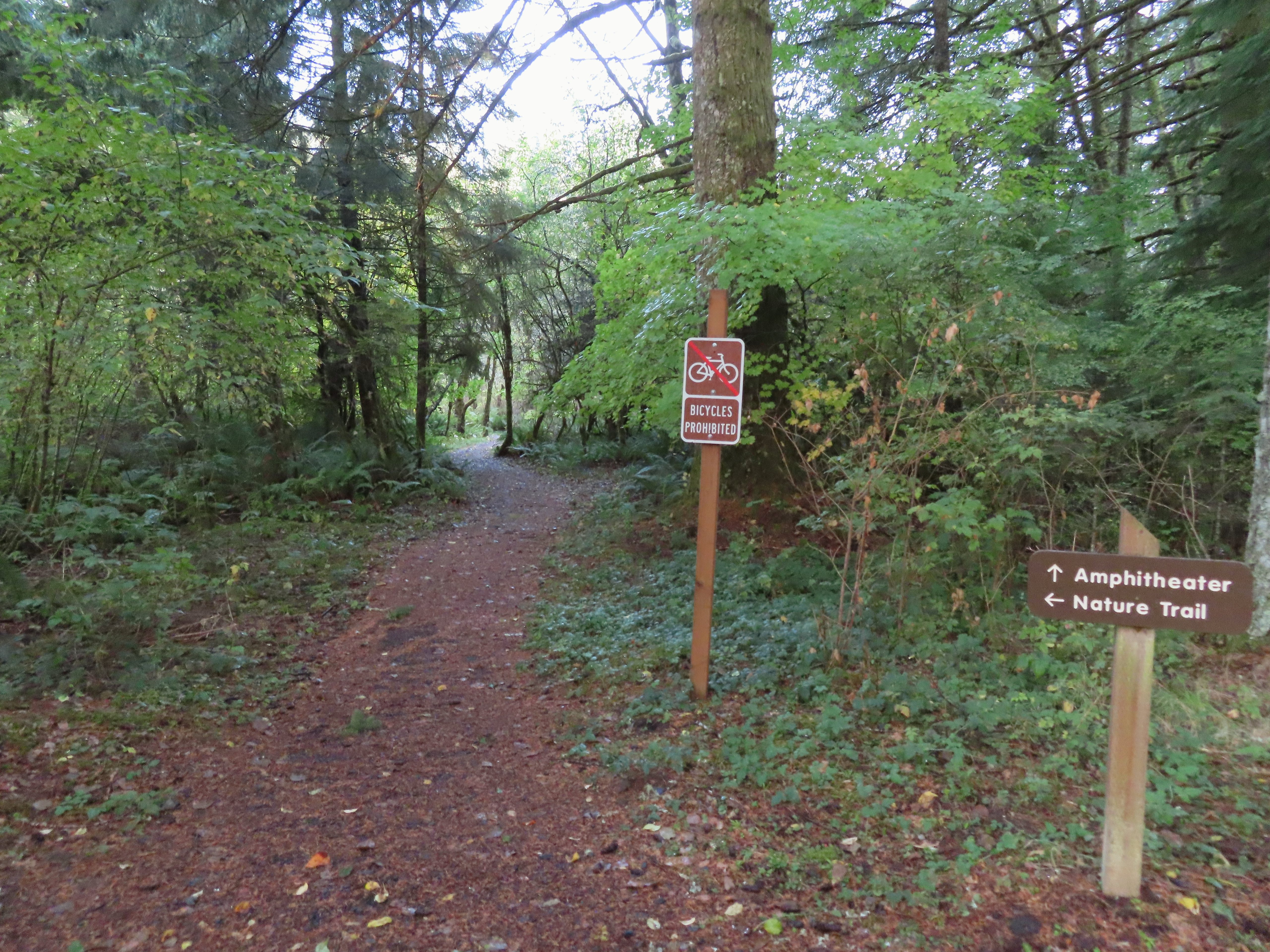

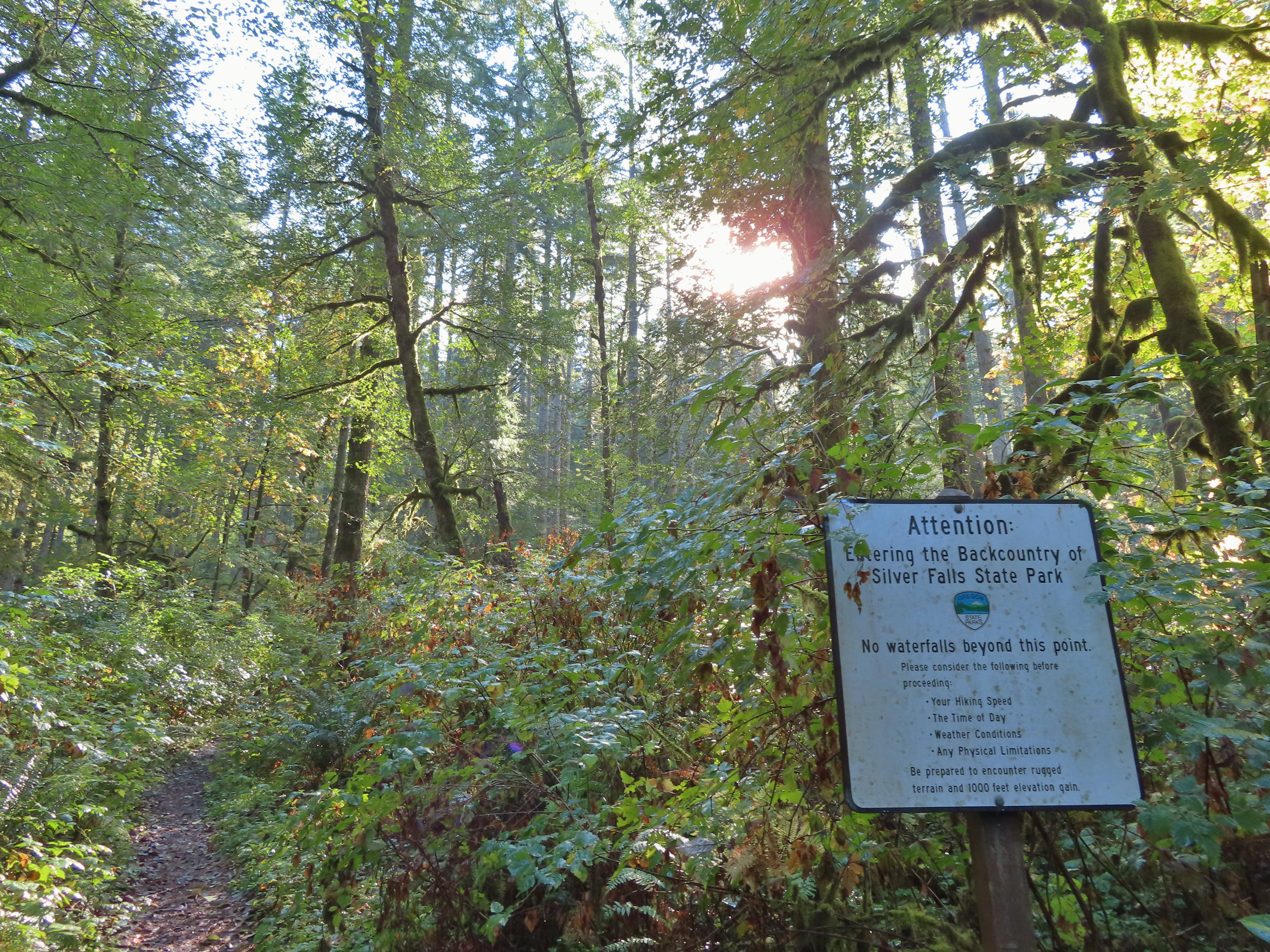
 Sign at the 214 Trail junction to let people know that there are no waterfalls in the backcountry.
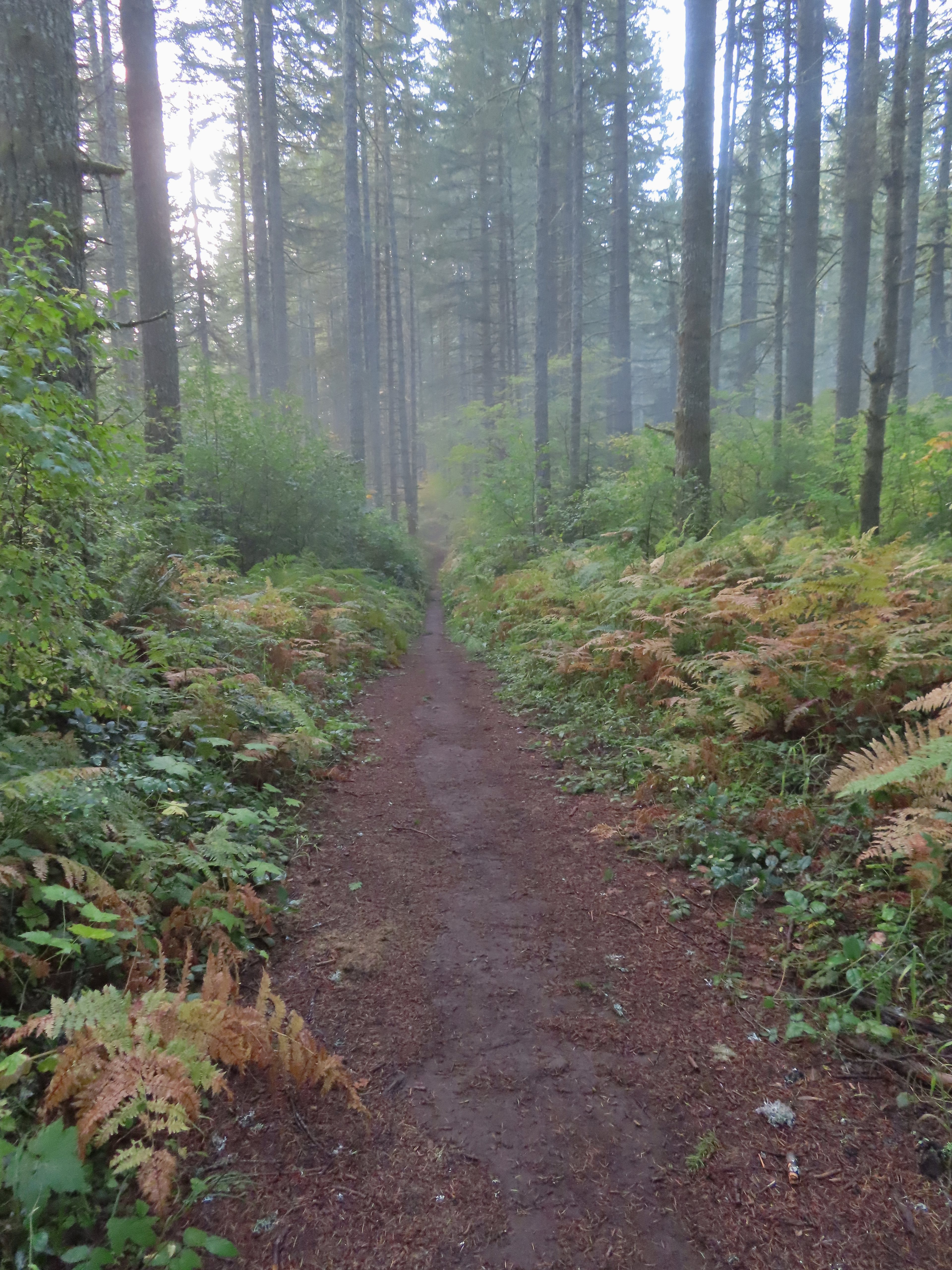 Just a little fog but no rain.
 Passing the Smith Creek Trail (left) after 0.6 miles on the 214 Trail.
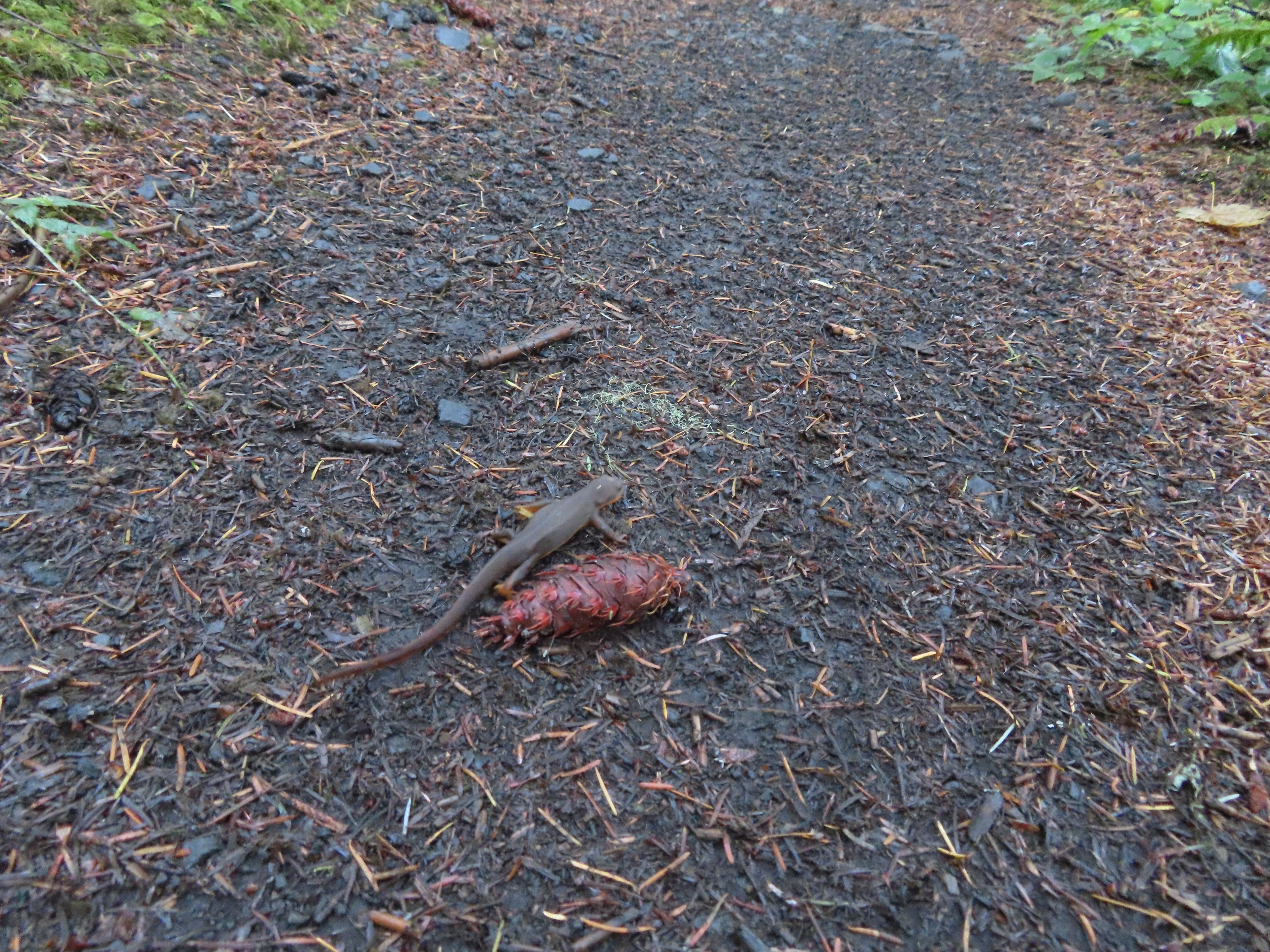 Rough skinned newt on the 214 Trail. (Probably headed for the Newt Loop too.)
 Big nursery tree along the 214 Trail.
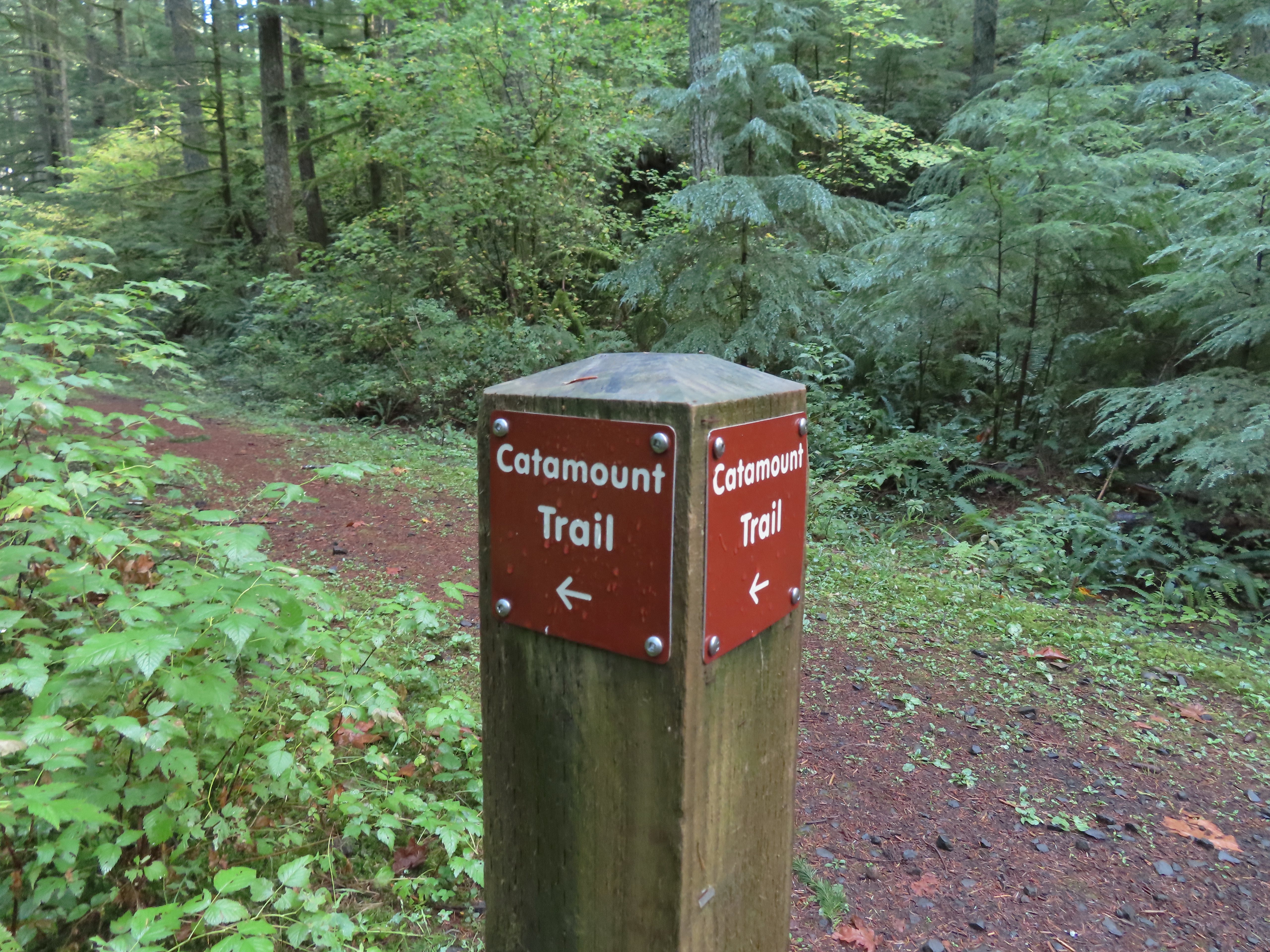
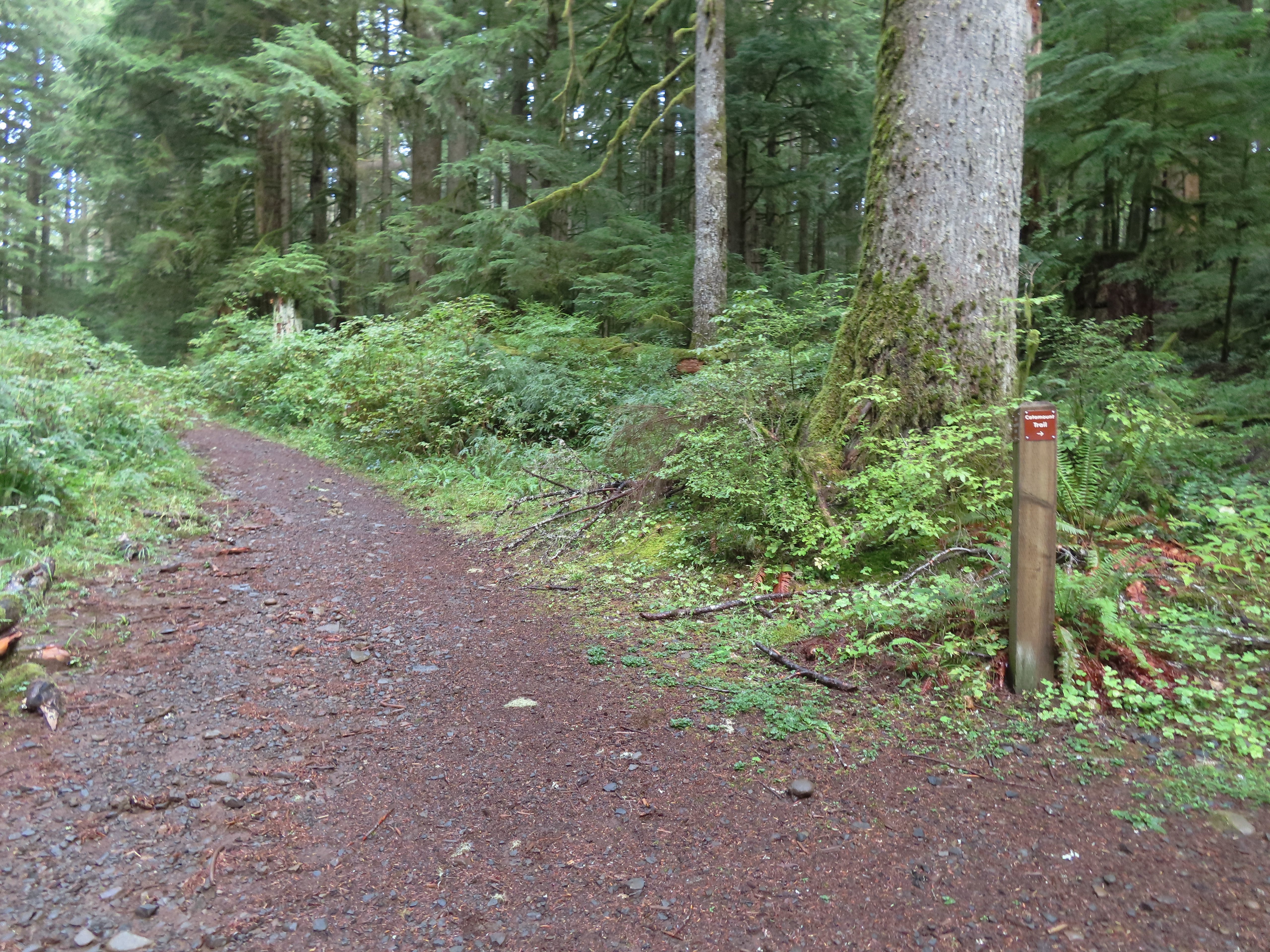
 The trail post at the junction shows the Catamount Trail instead of the Newt Loop but the map at the junction labels it the Newt Loop.
 Map check.
 This second post included the Newt Loop along with a pointer for the Catamount Trail.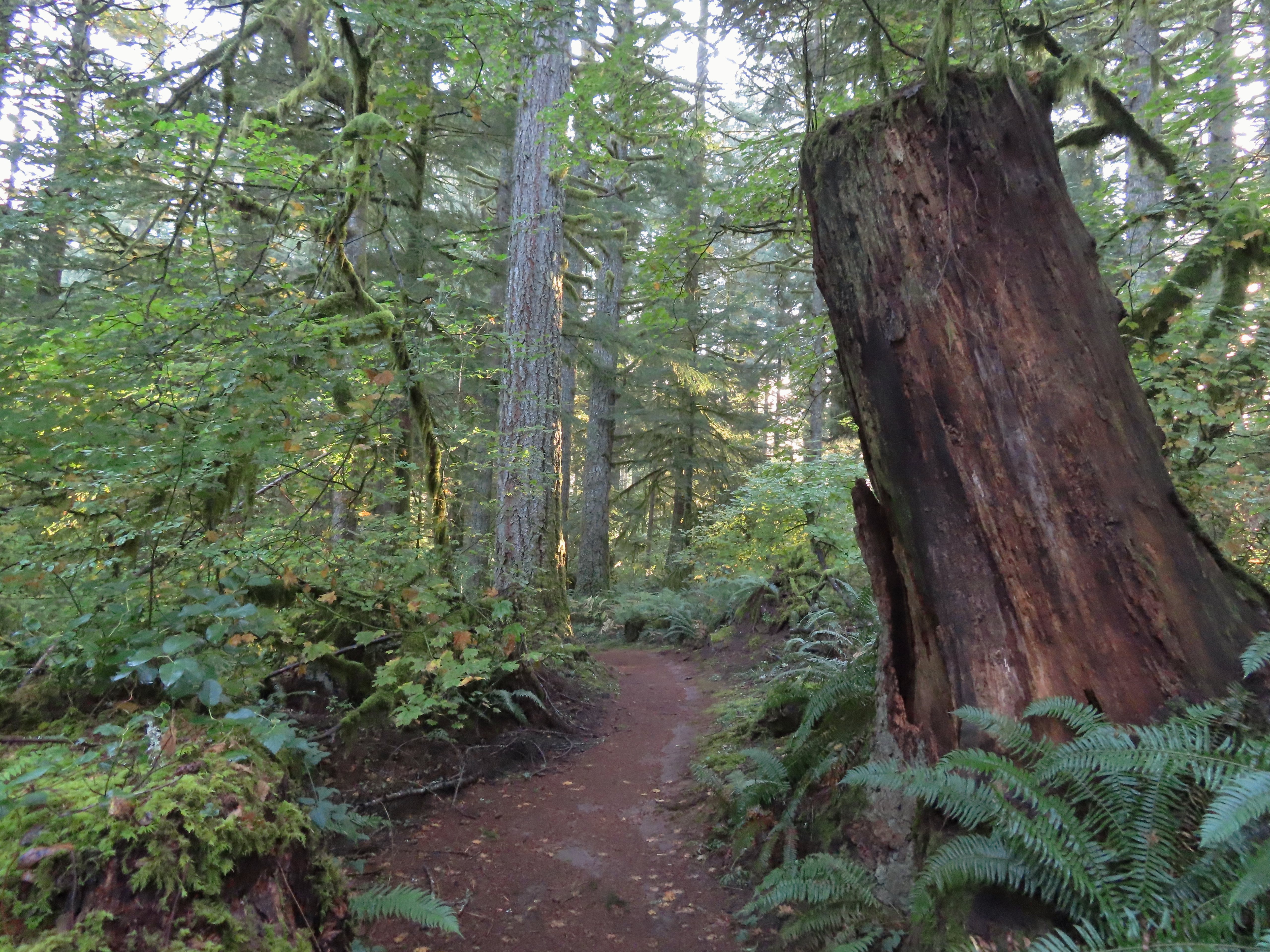
 Crossing a CAT road along the Newt Loop.
 Turning onto the Catamount Trail.
 Lots of nursery stumps along the trail.
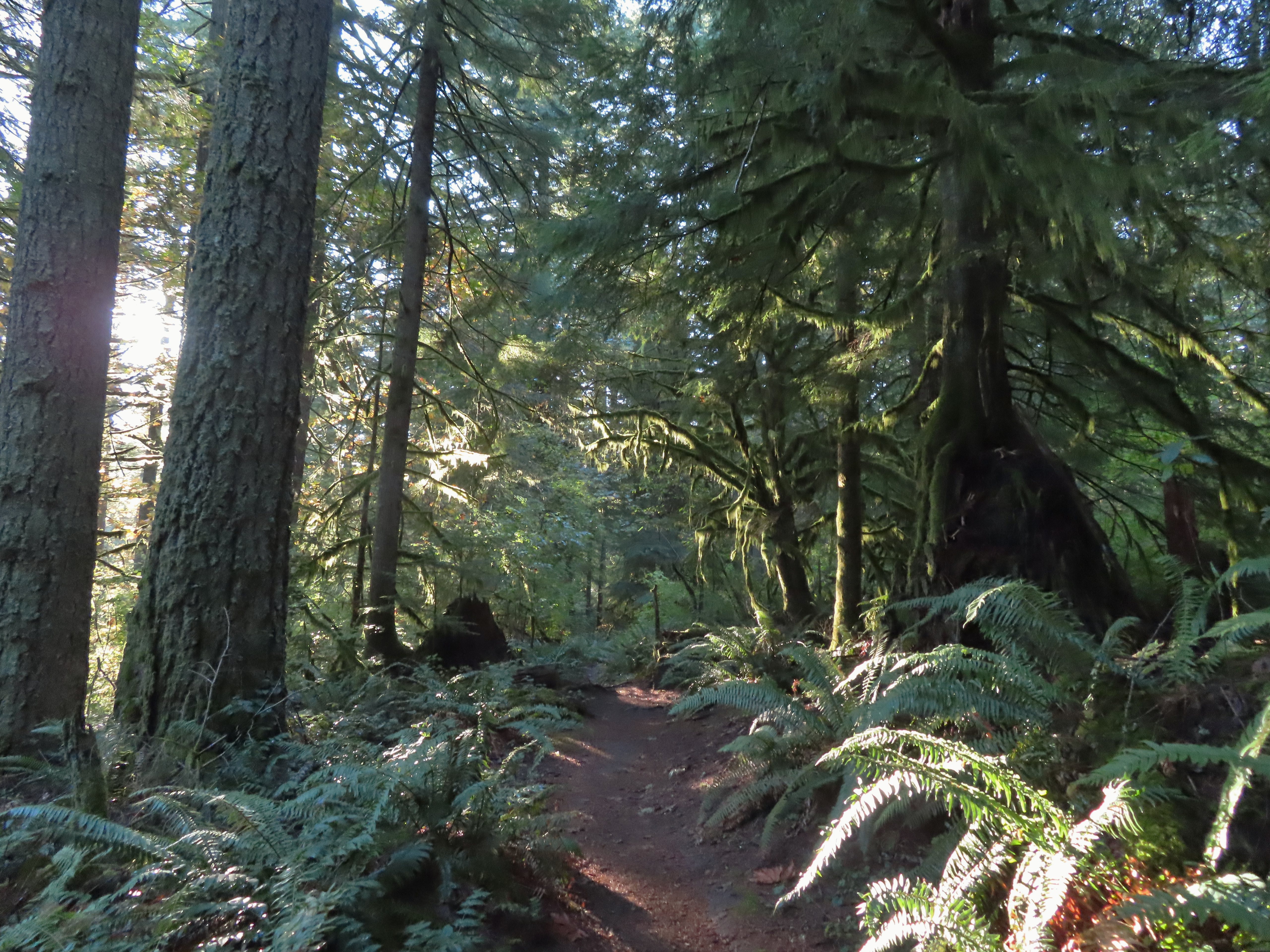 Another nursery stump.
 Side trails were well marked.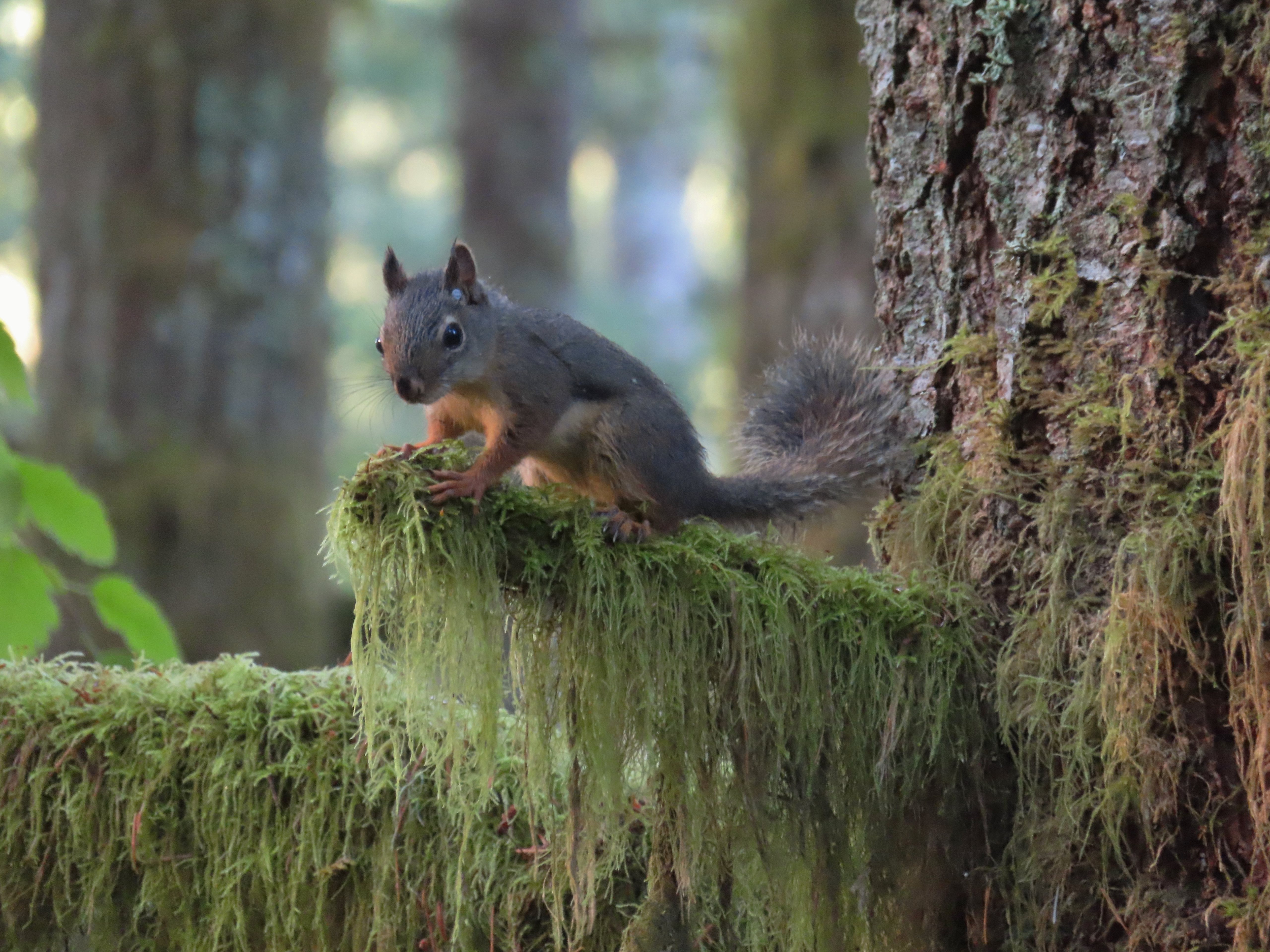
 Did not expect to see that overhead today.


 I believe this short section of fire scar was from the 2020 Beachie Fire.

 Turning onto the road.
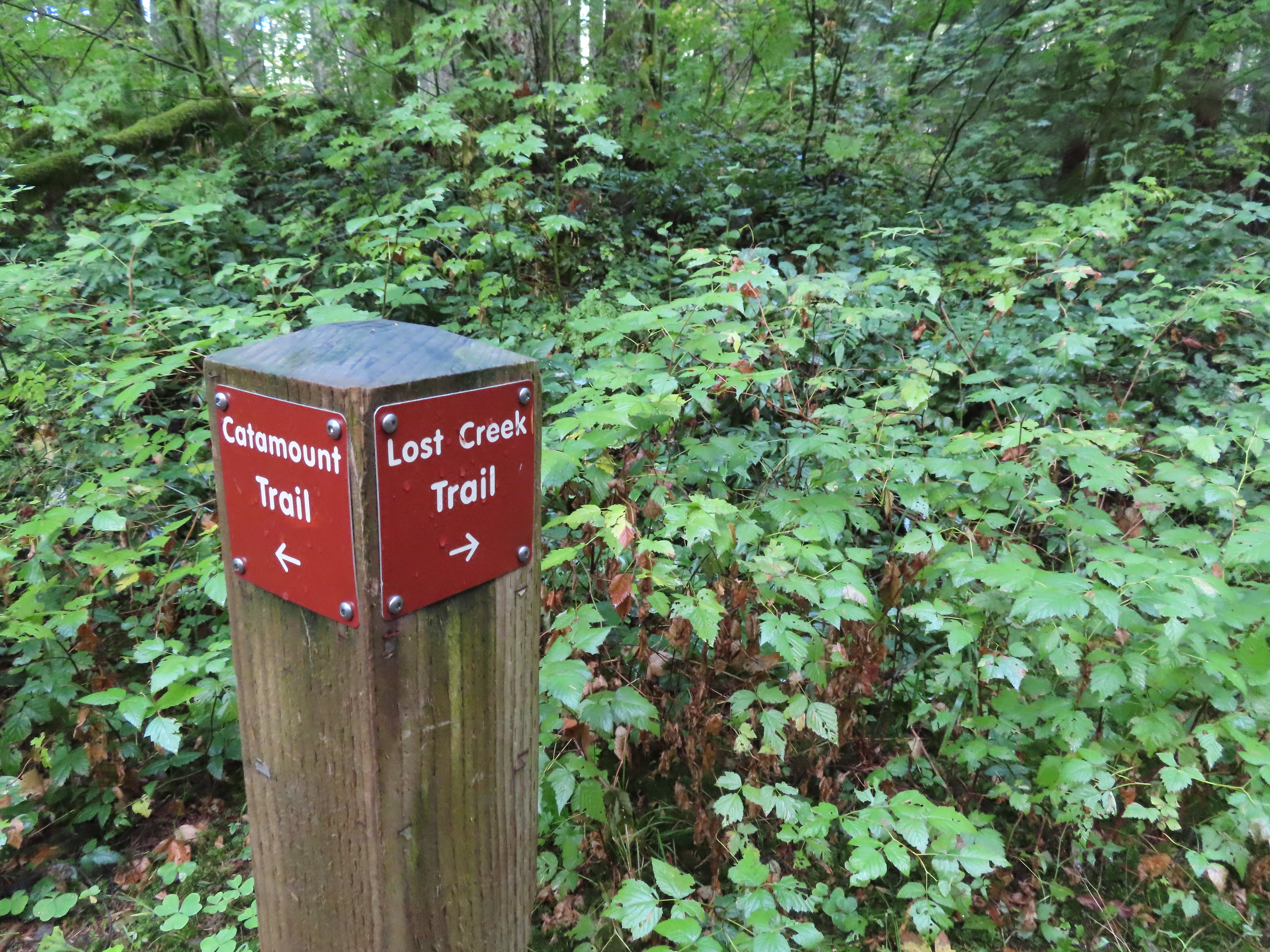 The opposite side of the post had a pointer for the Lost Creek Trail.
 I veered uphill to the right here.
 The Lost Creek/Buck Mountain junction.
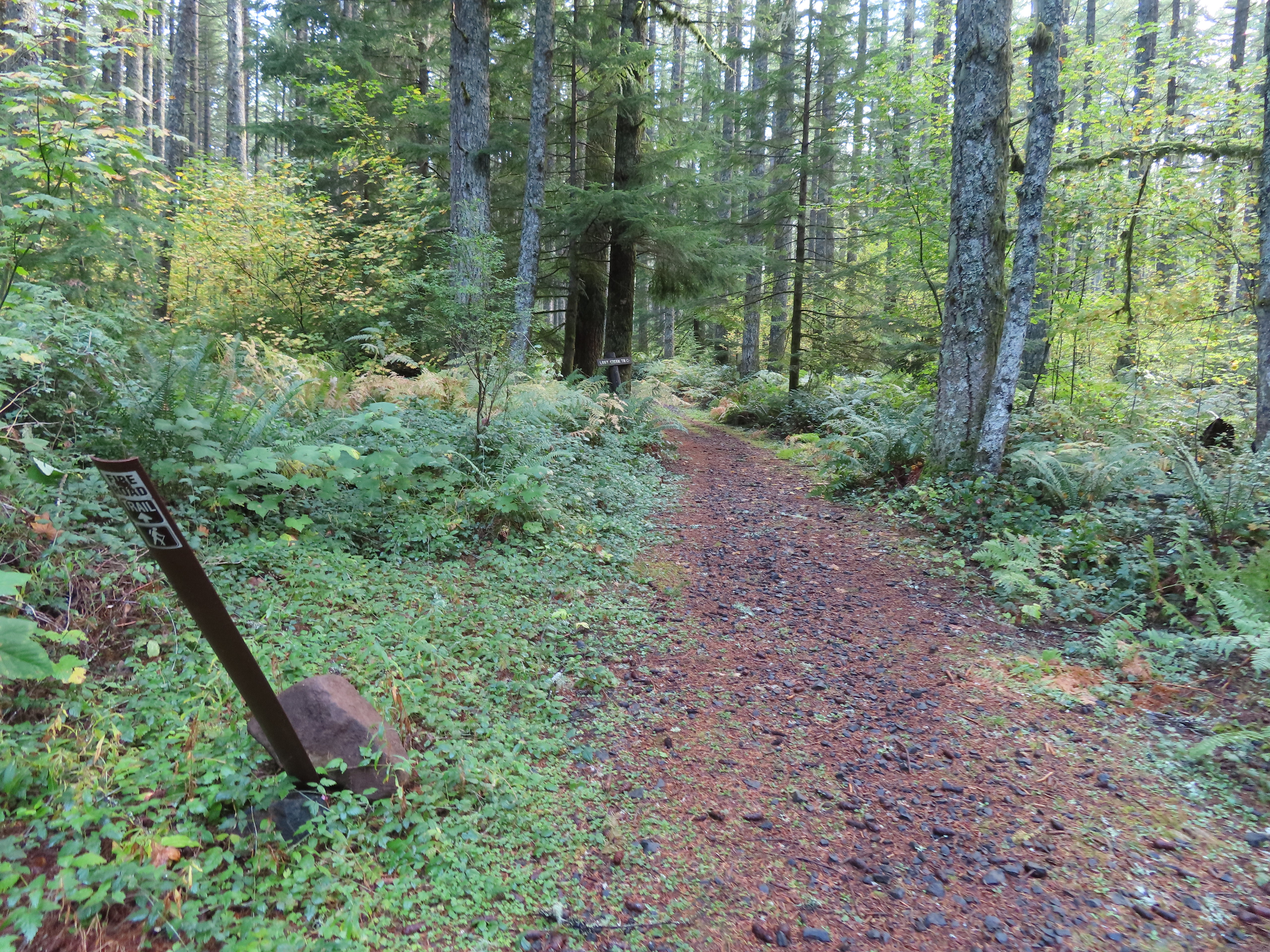 The Lost Creek Trail doubles as a fire road.
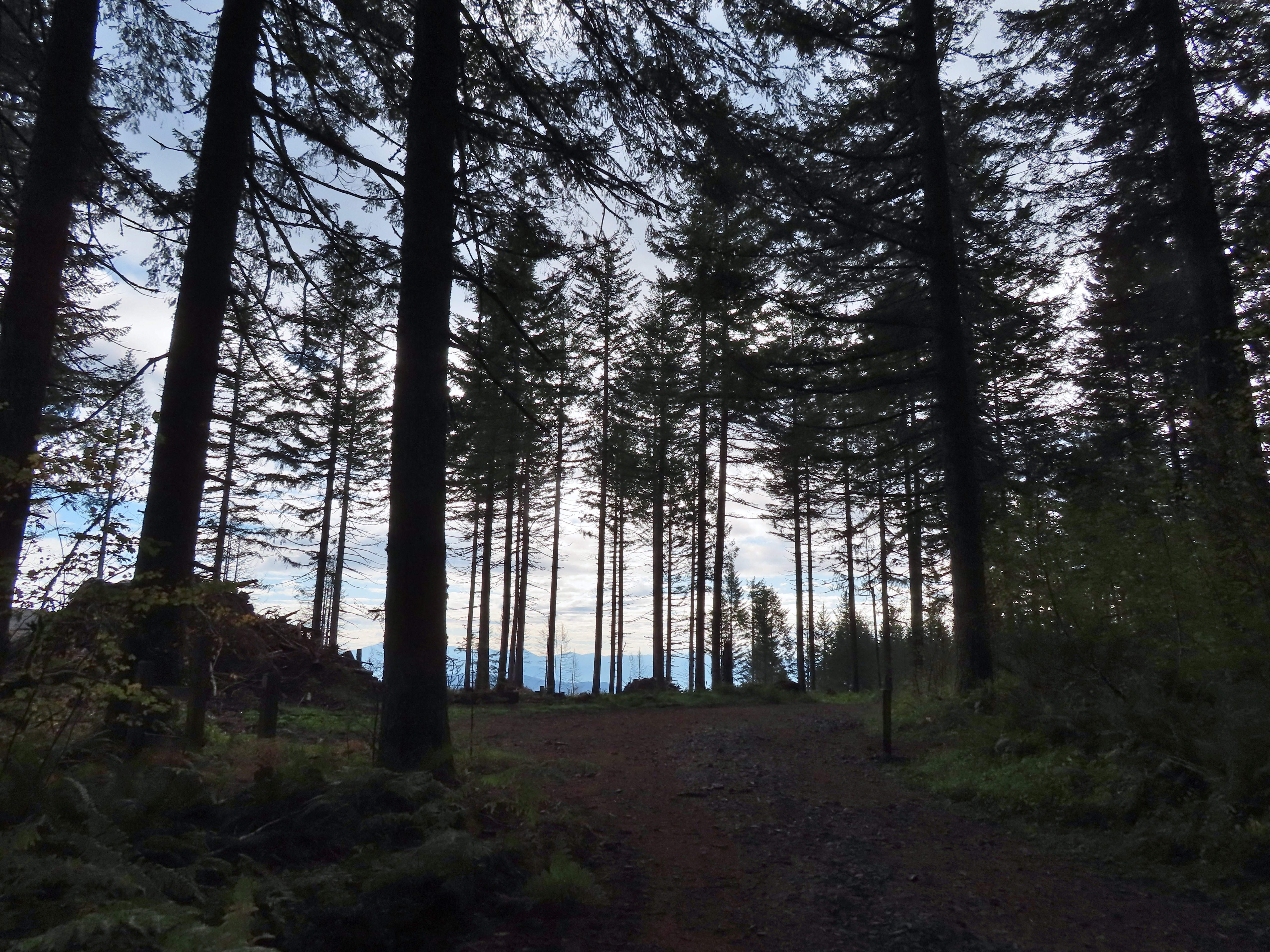
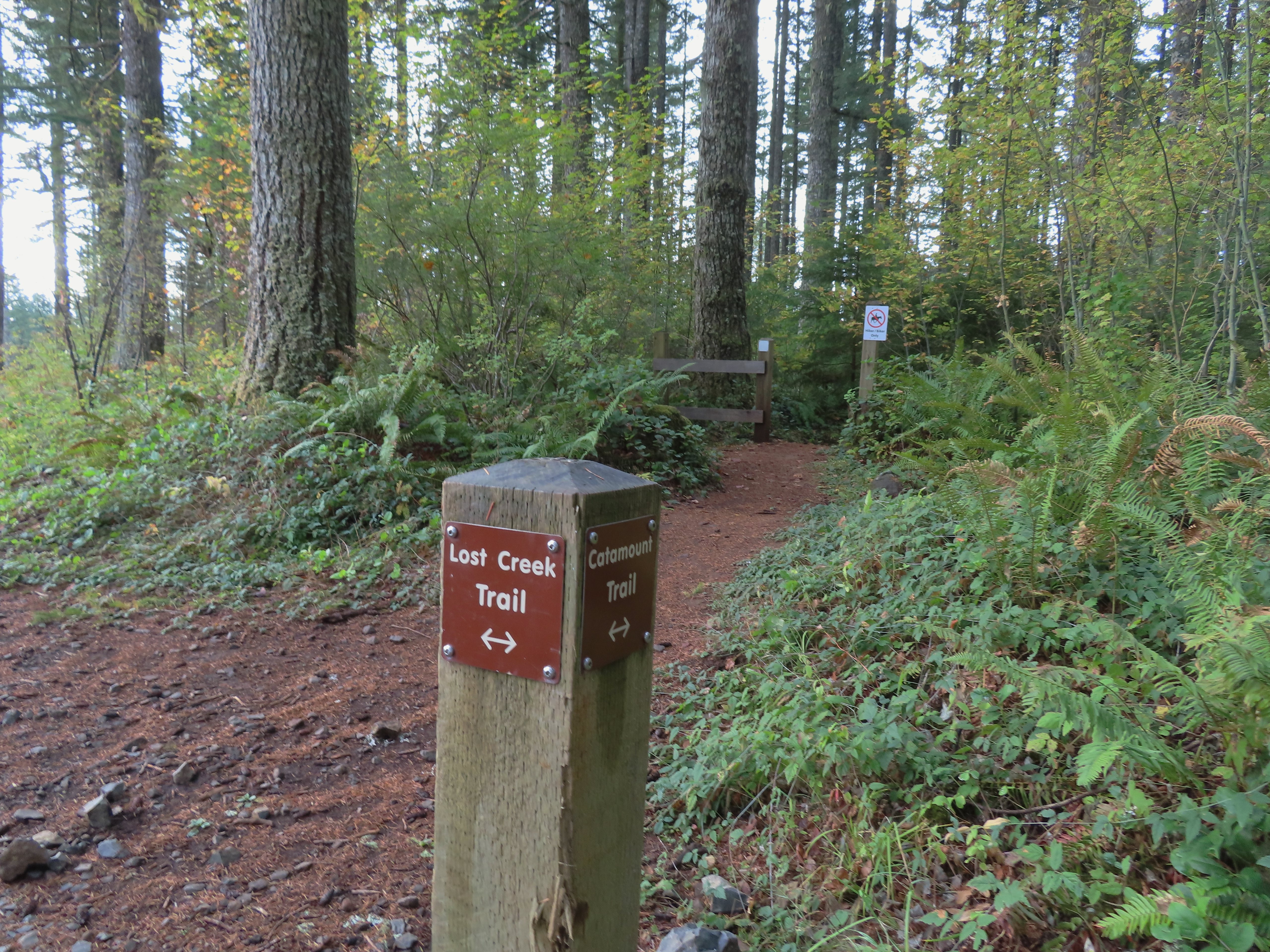 Here is where I would have come up had the Catamount Trail did not have the on-way section. (Note that on some mountain biking maps the one-way section is labeled “Upper Catamount Trail.)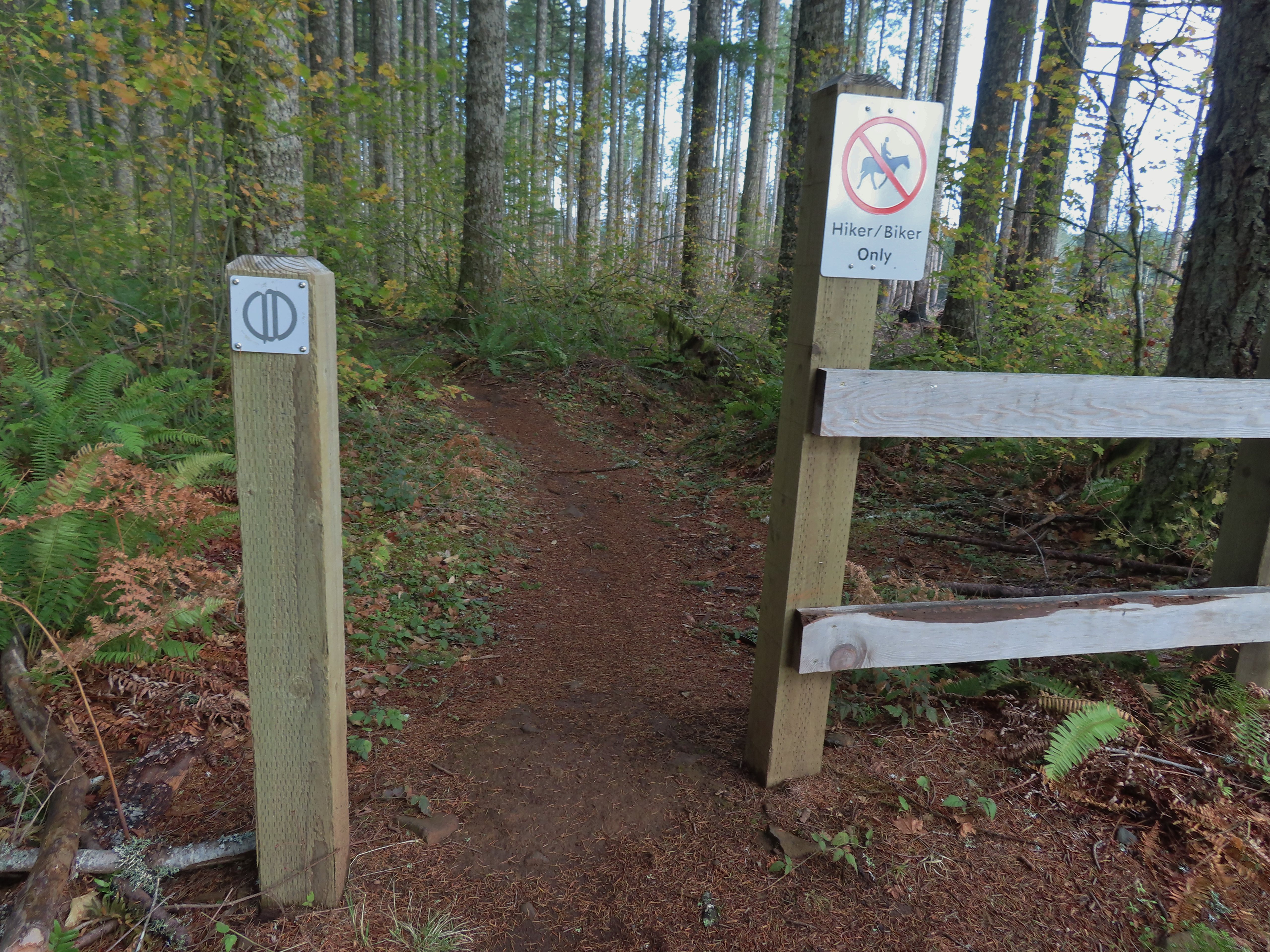
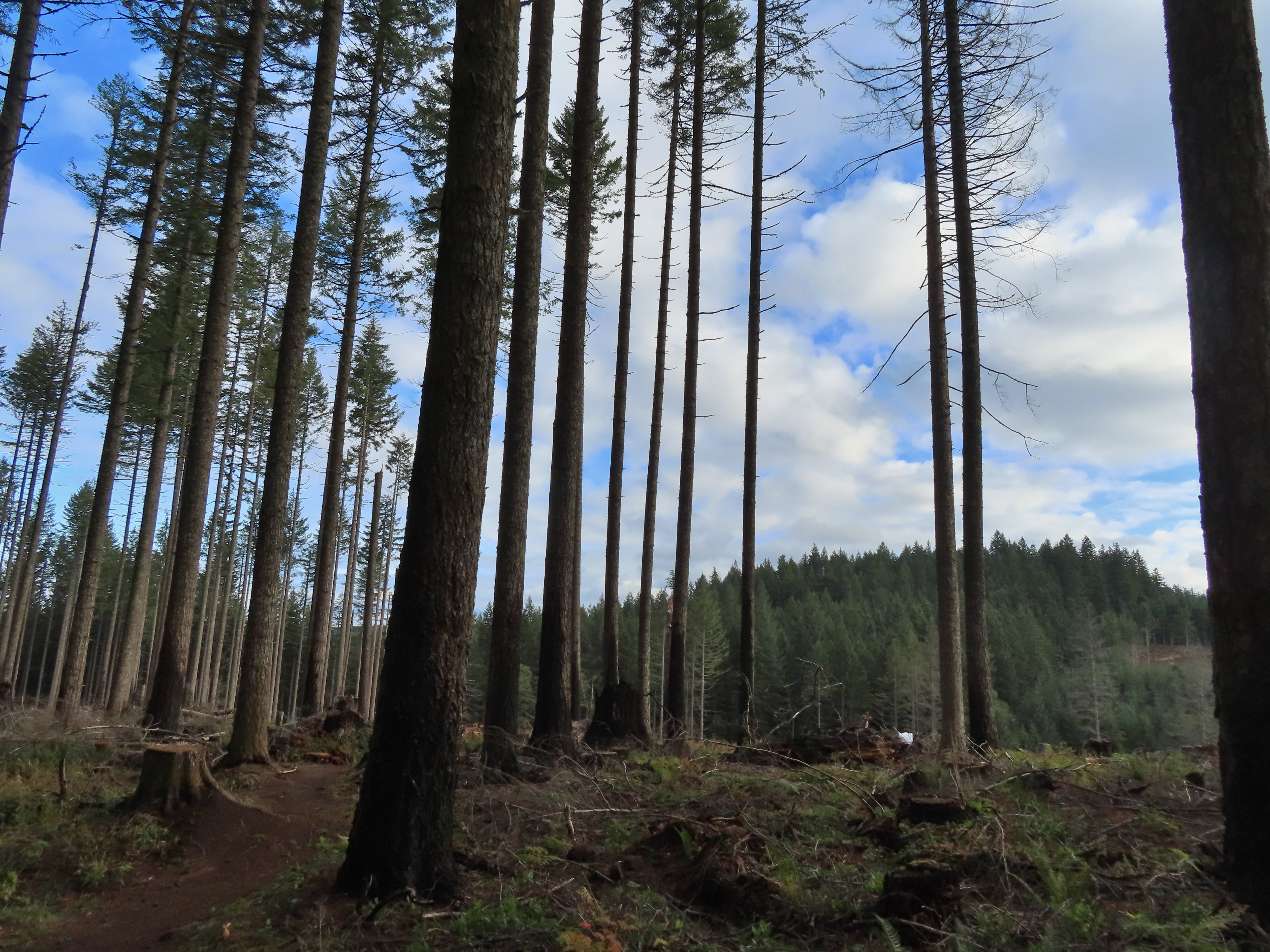 The treeless section wasn’t long. It appeared to have been an area impacted by the 2020 Beachie Fire.
 Still some bleeding heart blooming.
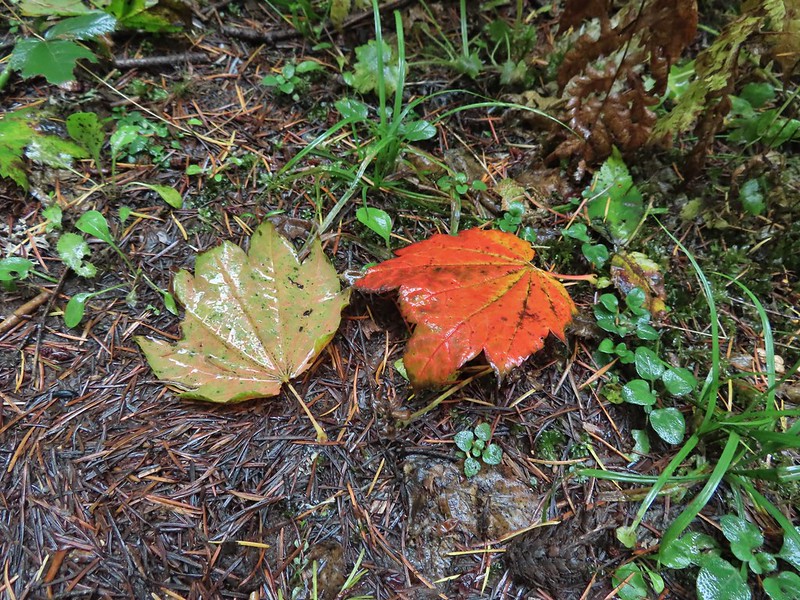
 There wasn’t a lot of bright Fall colors in the backcountry, but this maple stood out.
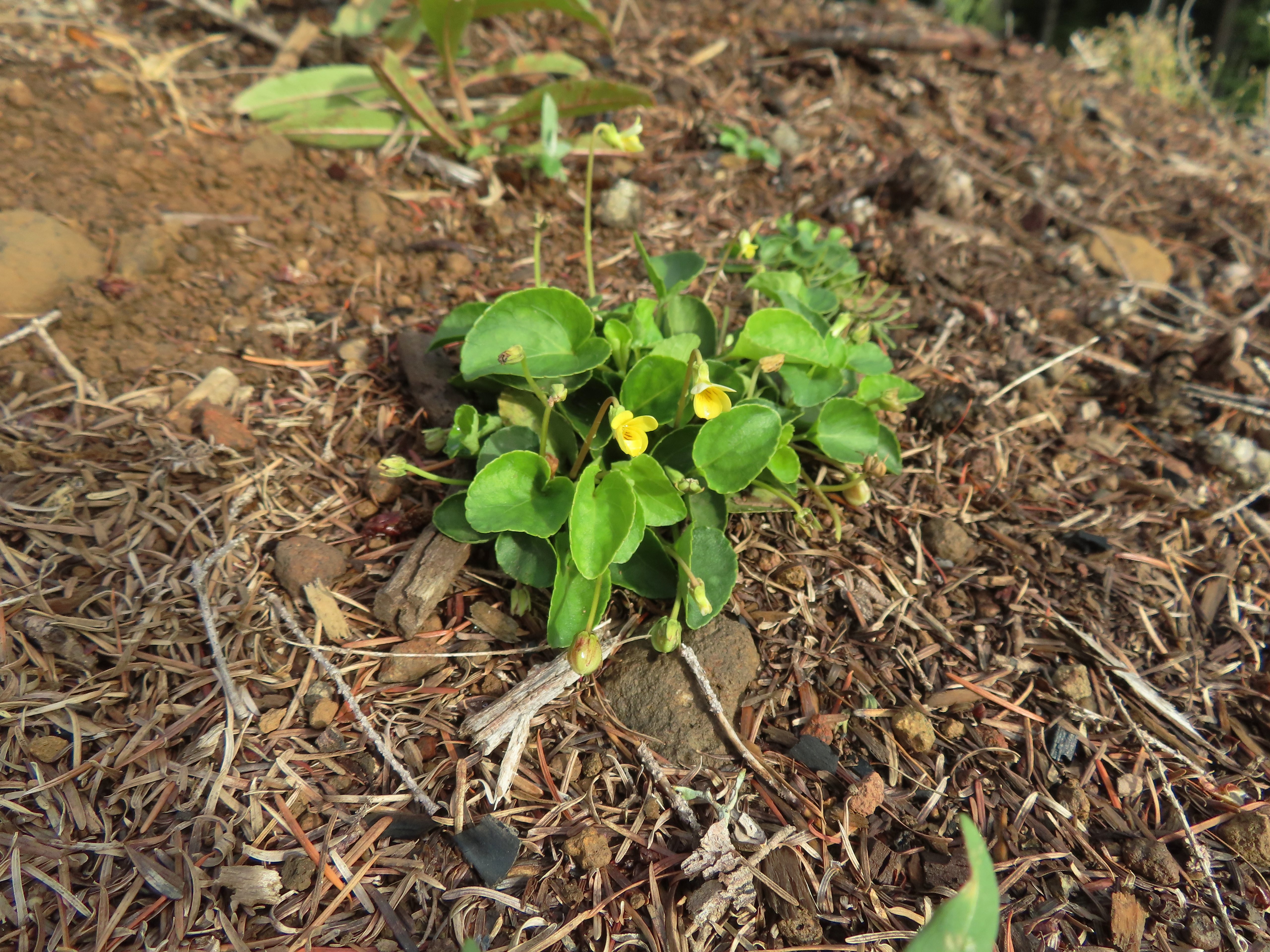 Was a bit surprised to see a few violets along this section.
 Nearing the end of the logged area.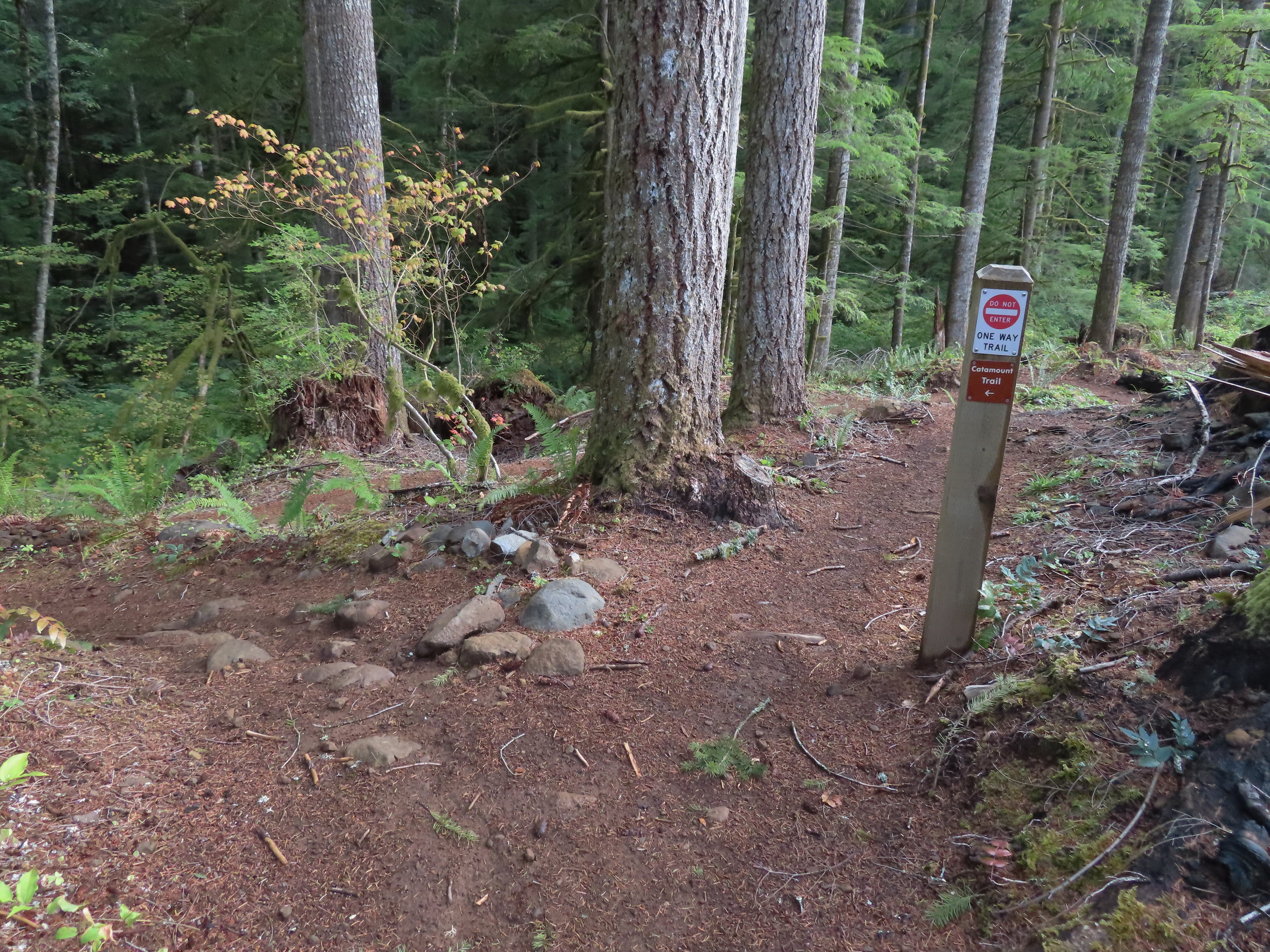
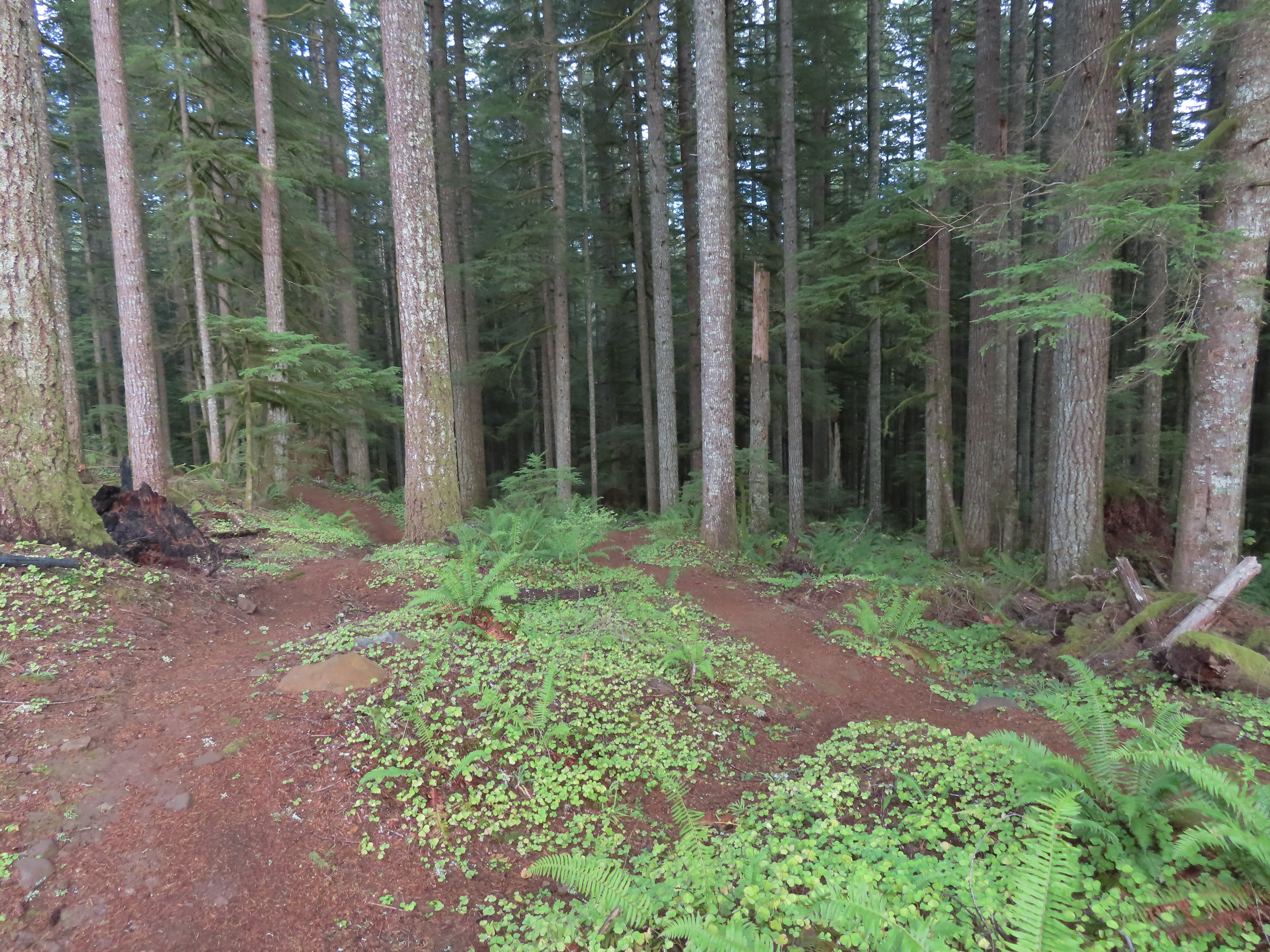
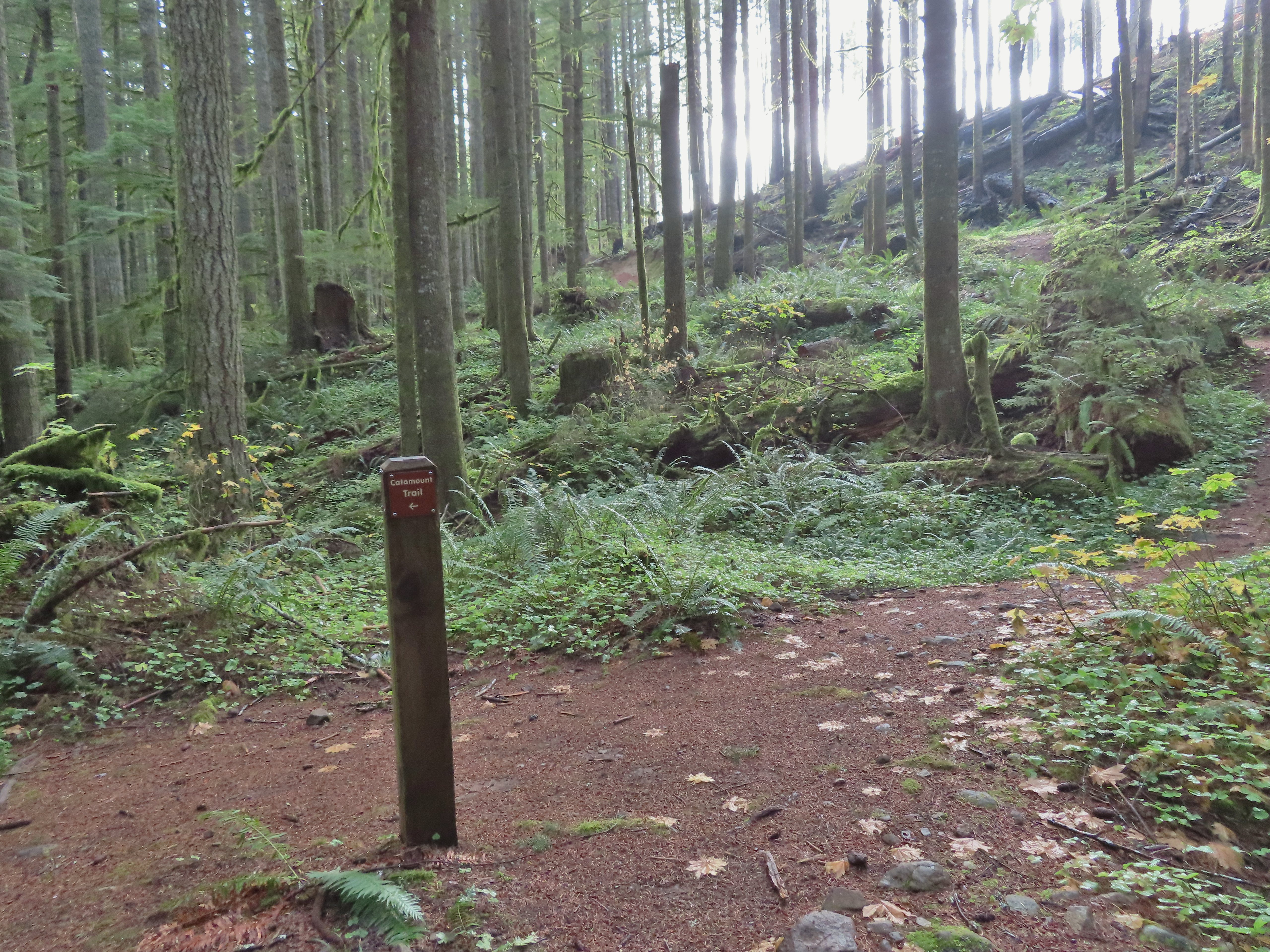 The rejoining of the trails.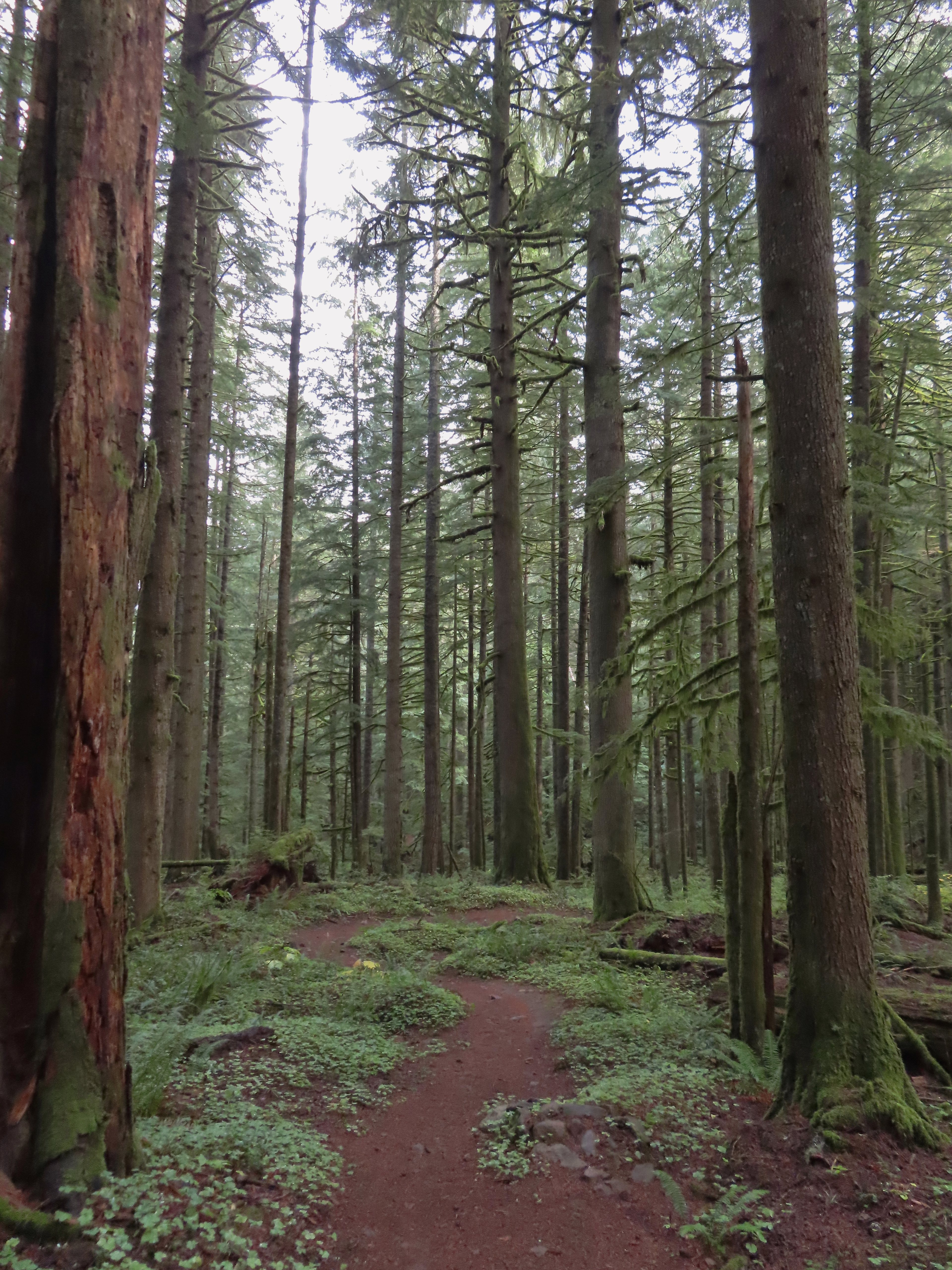
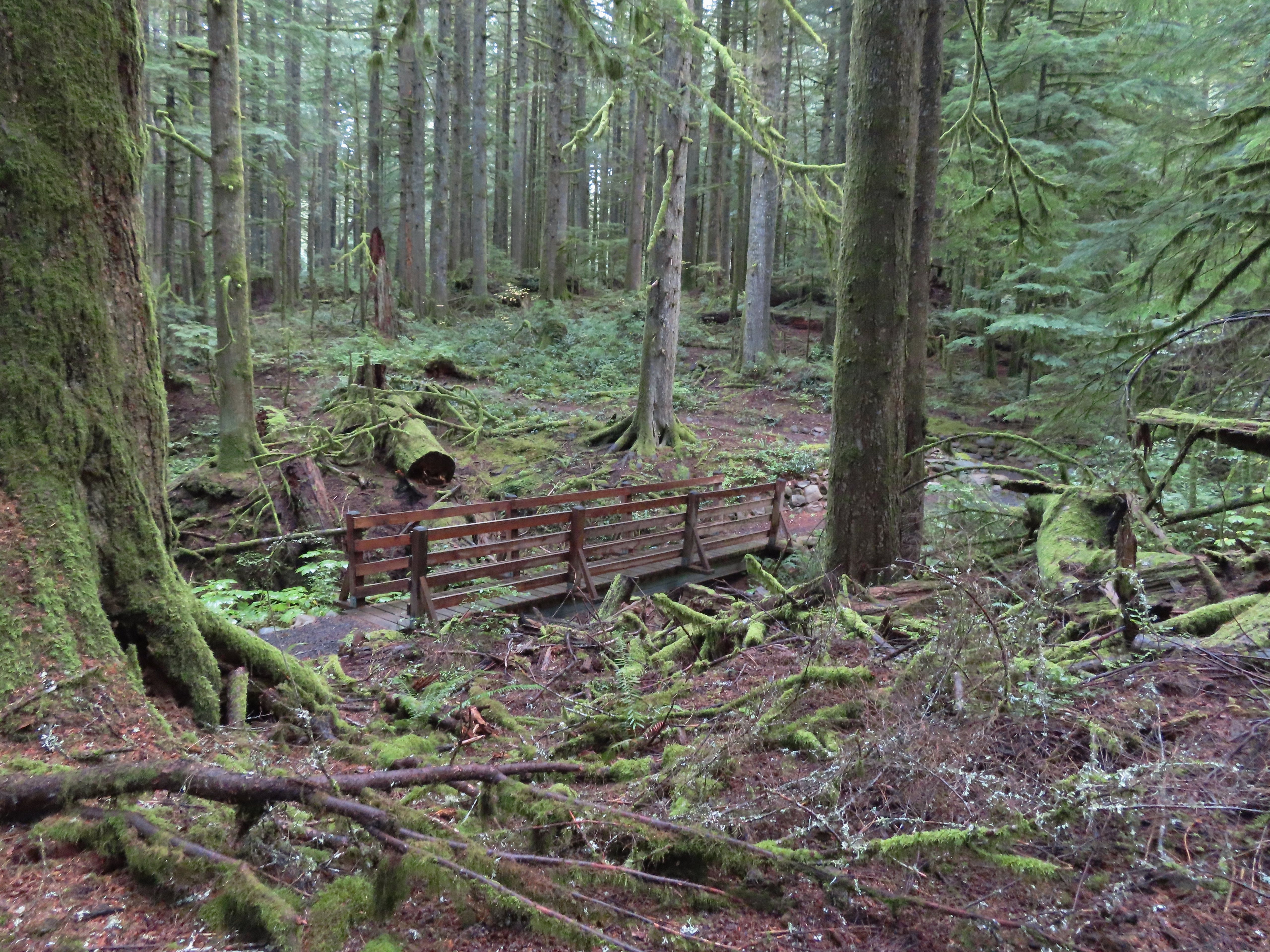 There were several bridges along this section of the trail. I also ran into the only mountain bikers that I would encounter all day in this area, a group of five.
 The Buck Mountain Loop junction.
 Bridge over Howard Creek.
 The continuation of the Catamount Trail on the right.
 The map showed the section I had just done as 0.9 miles, but my track was a bit more twisty than the map.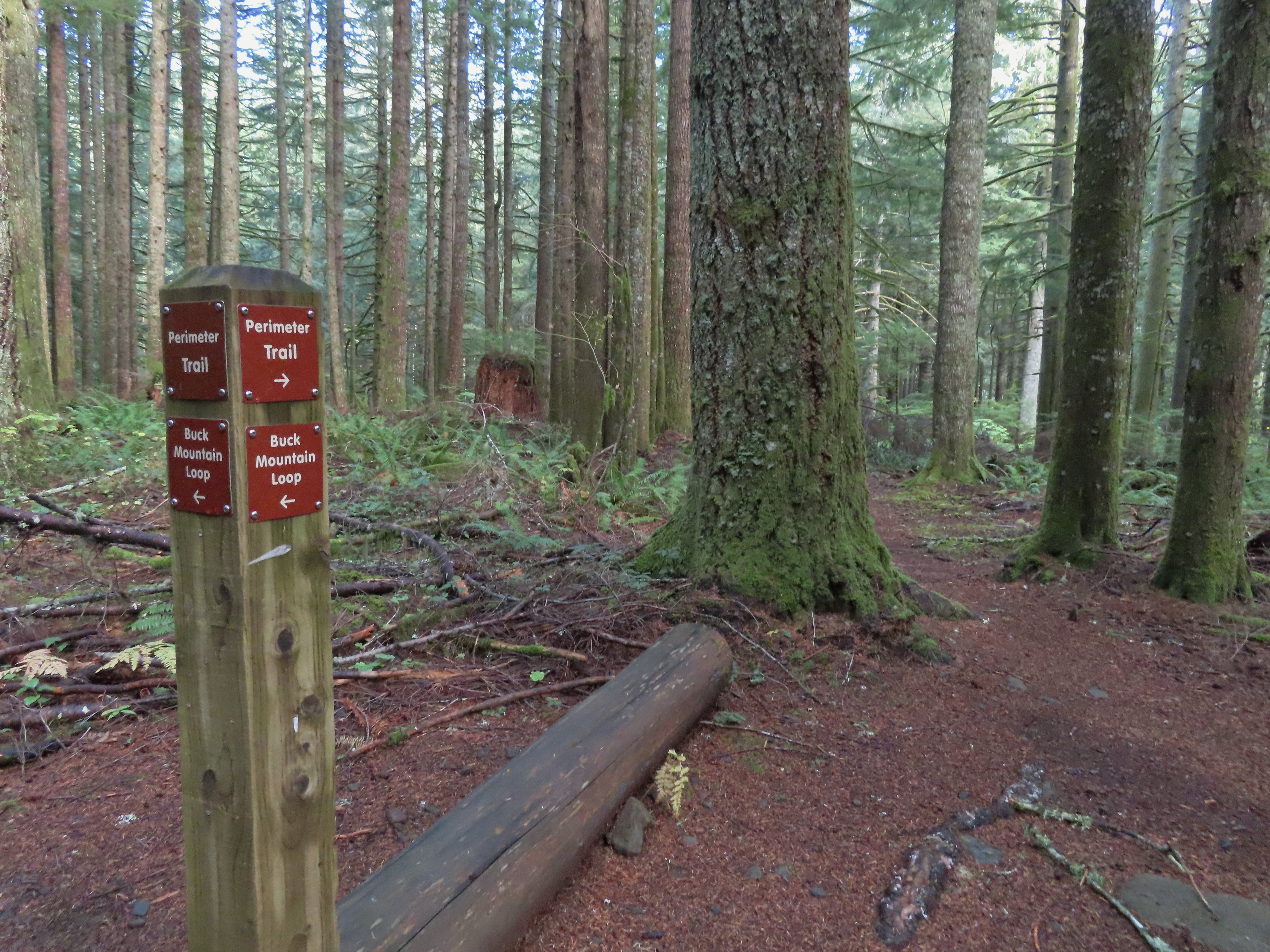
 A small opening on the way down.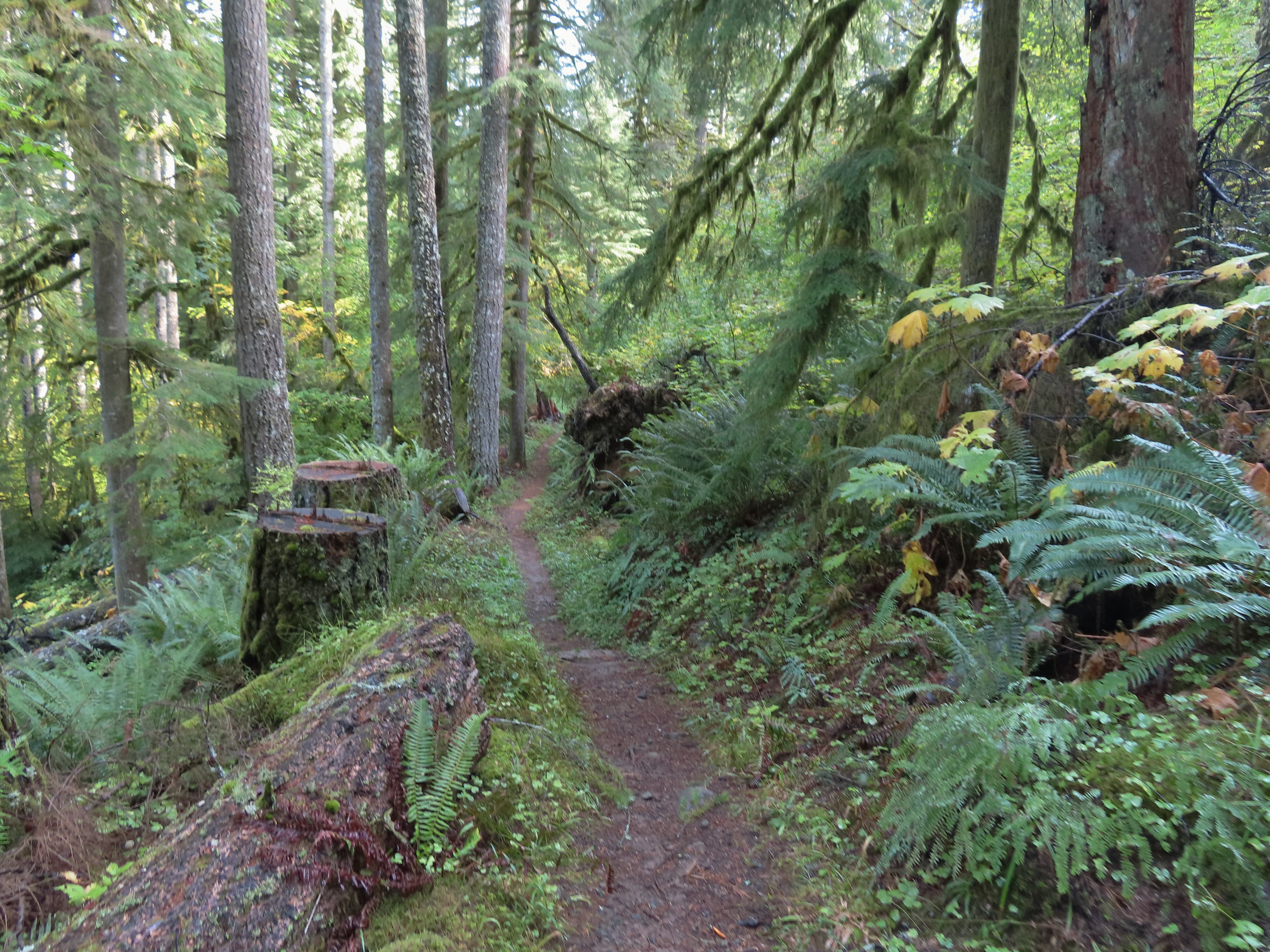

 Footbridge over South Fork Silver Creek.
 South Fork Silver Creek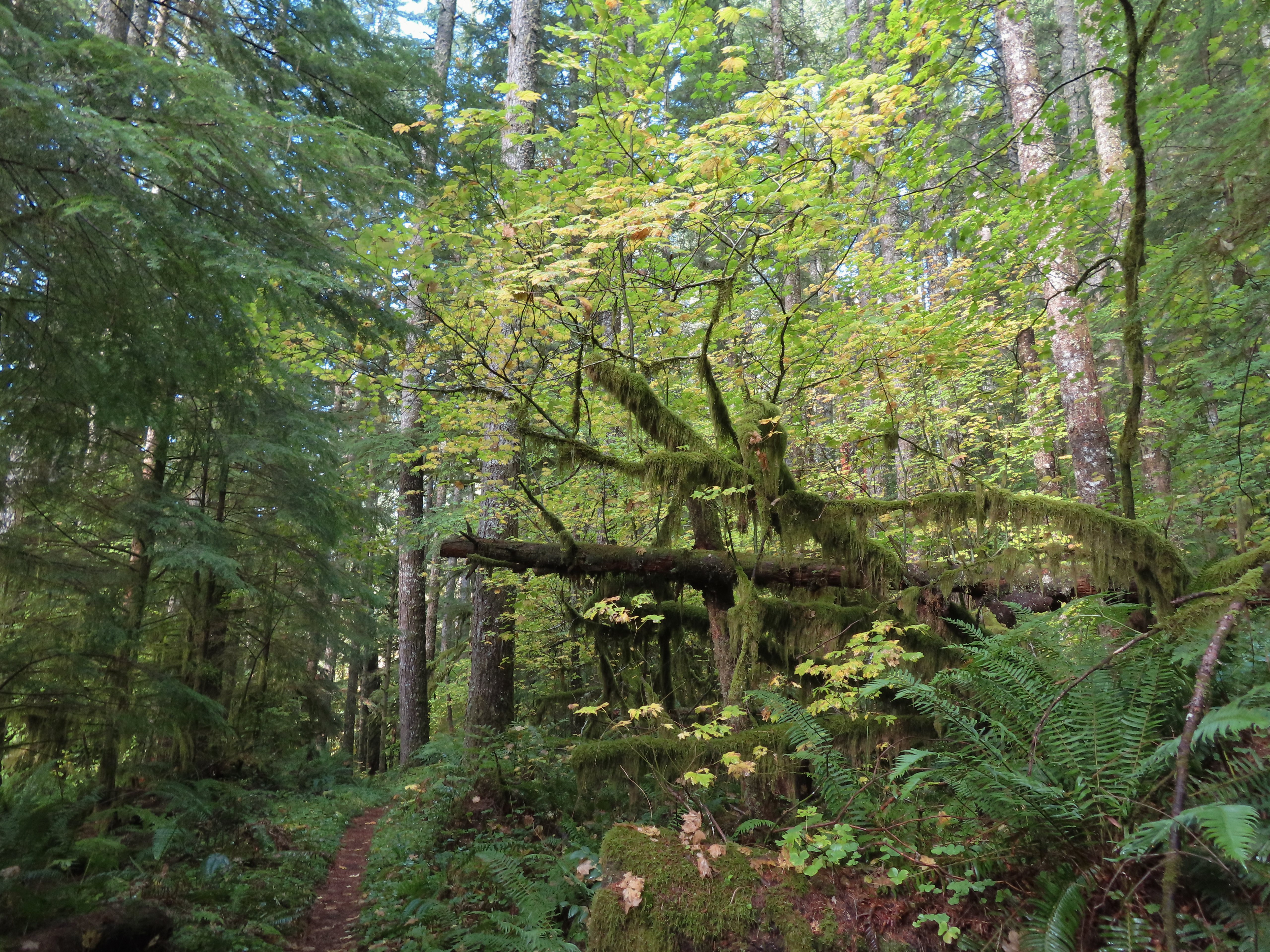


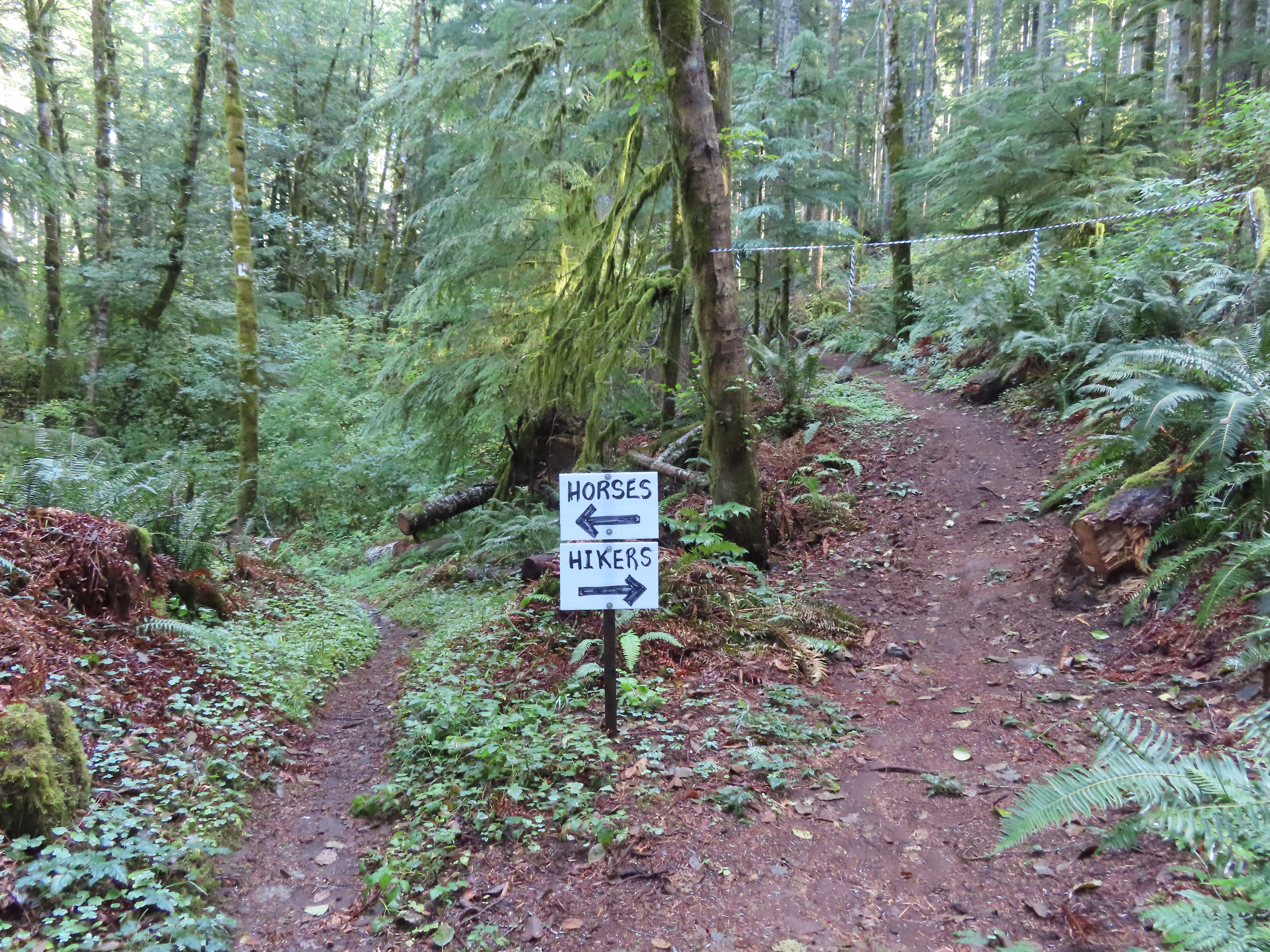 I’m a hiker so I went right here.
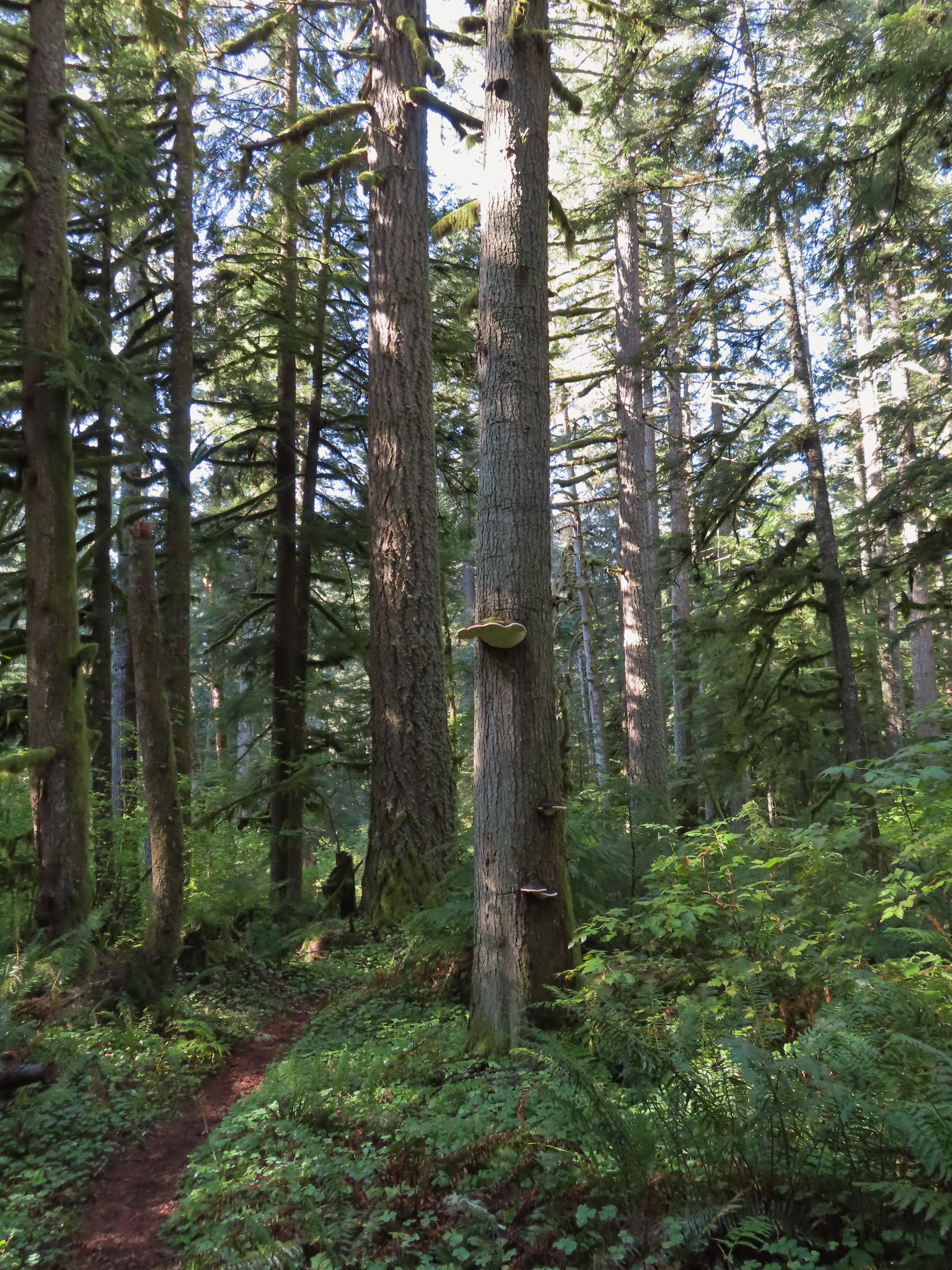 Big fungus on the tree ahead.

 Map at the Rackett Ridge junction.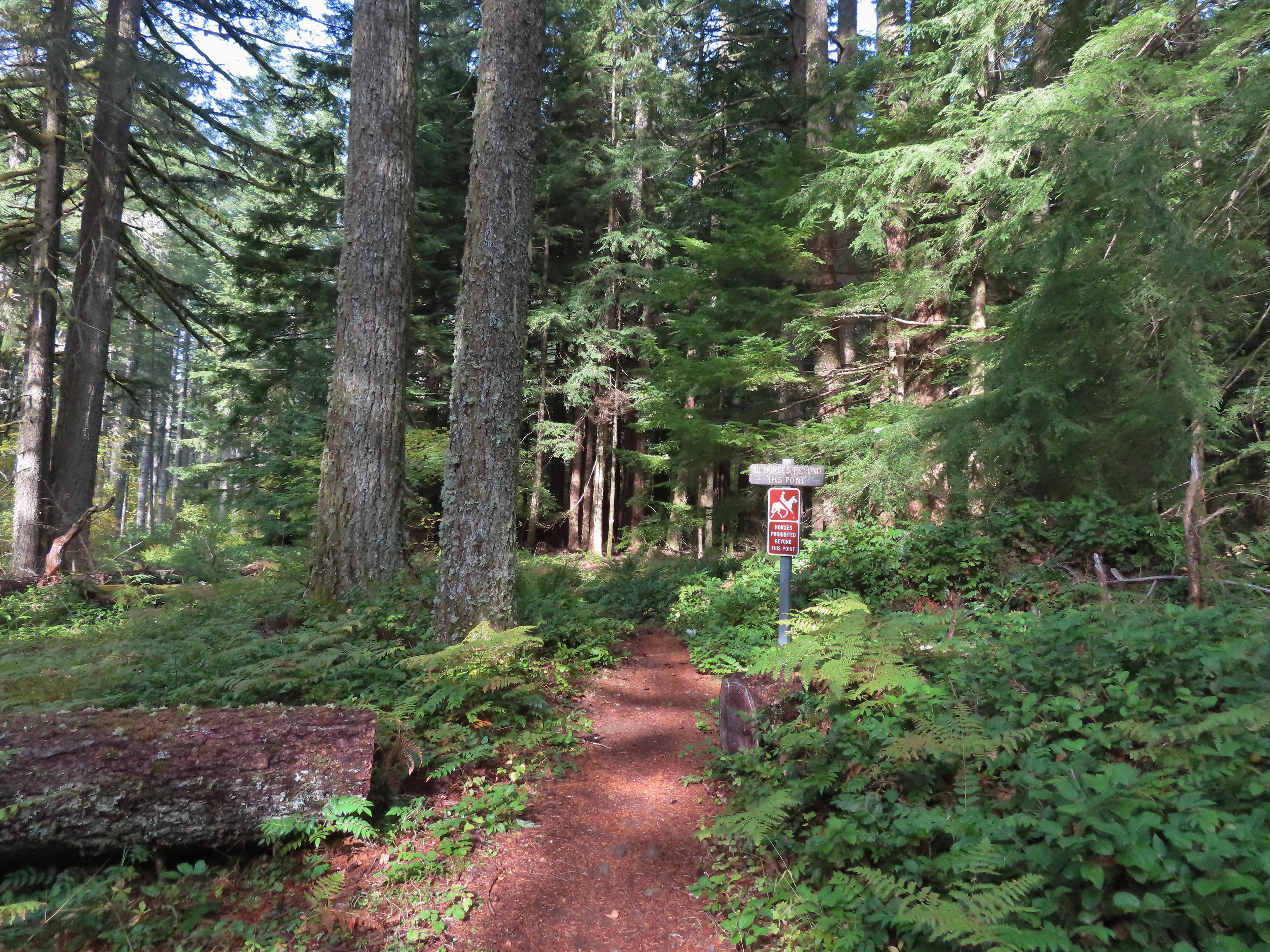
 Another impressive nursery log.
 I stopped in this area to change out of my sweaty socks and into one of the extra pairs I’d brought expecting rain.
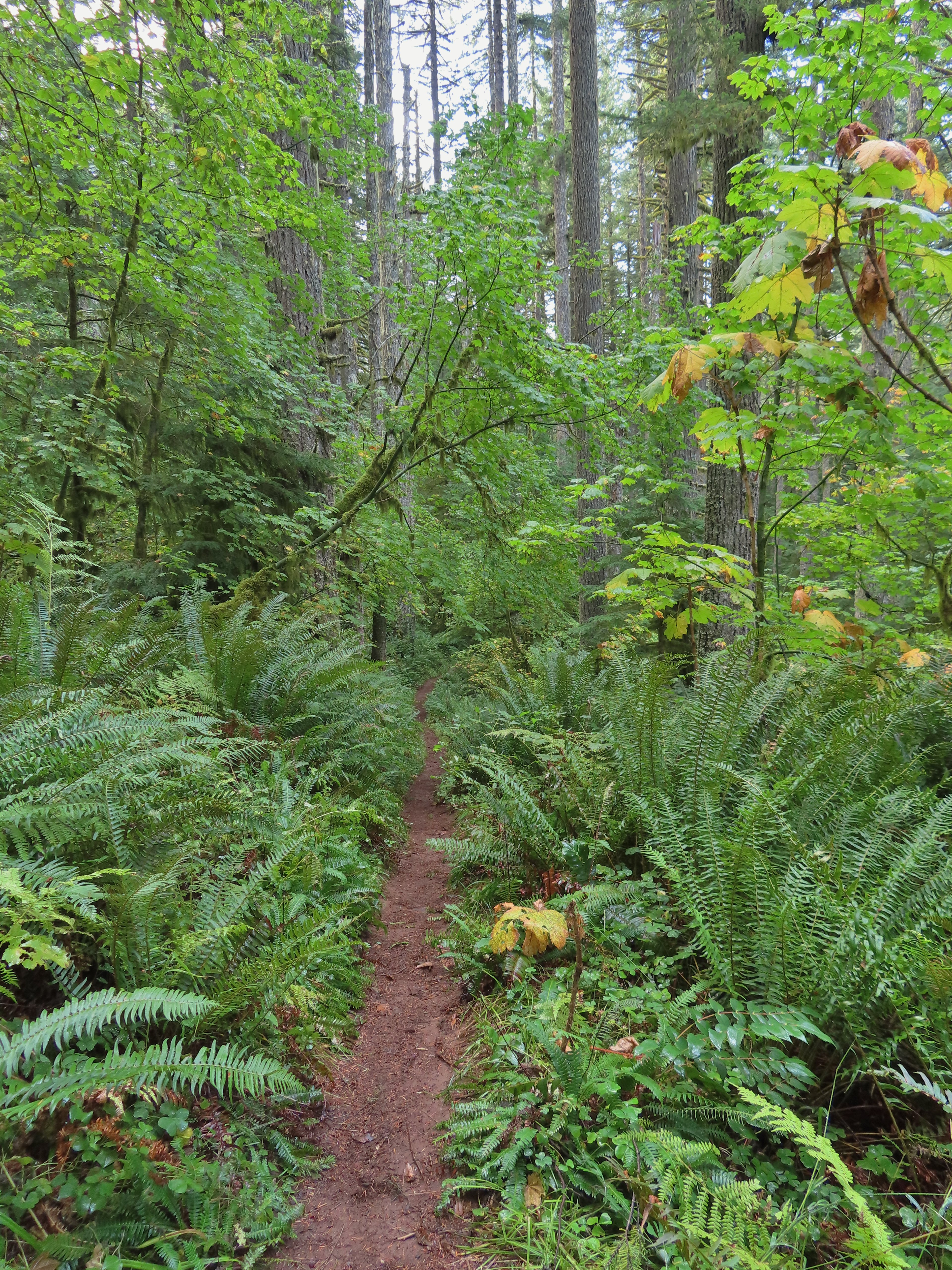 The vegetation went through several changes as the trail lost elevation.
 This was a big tree in the midst of much smaller ones.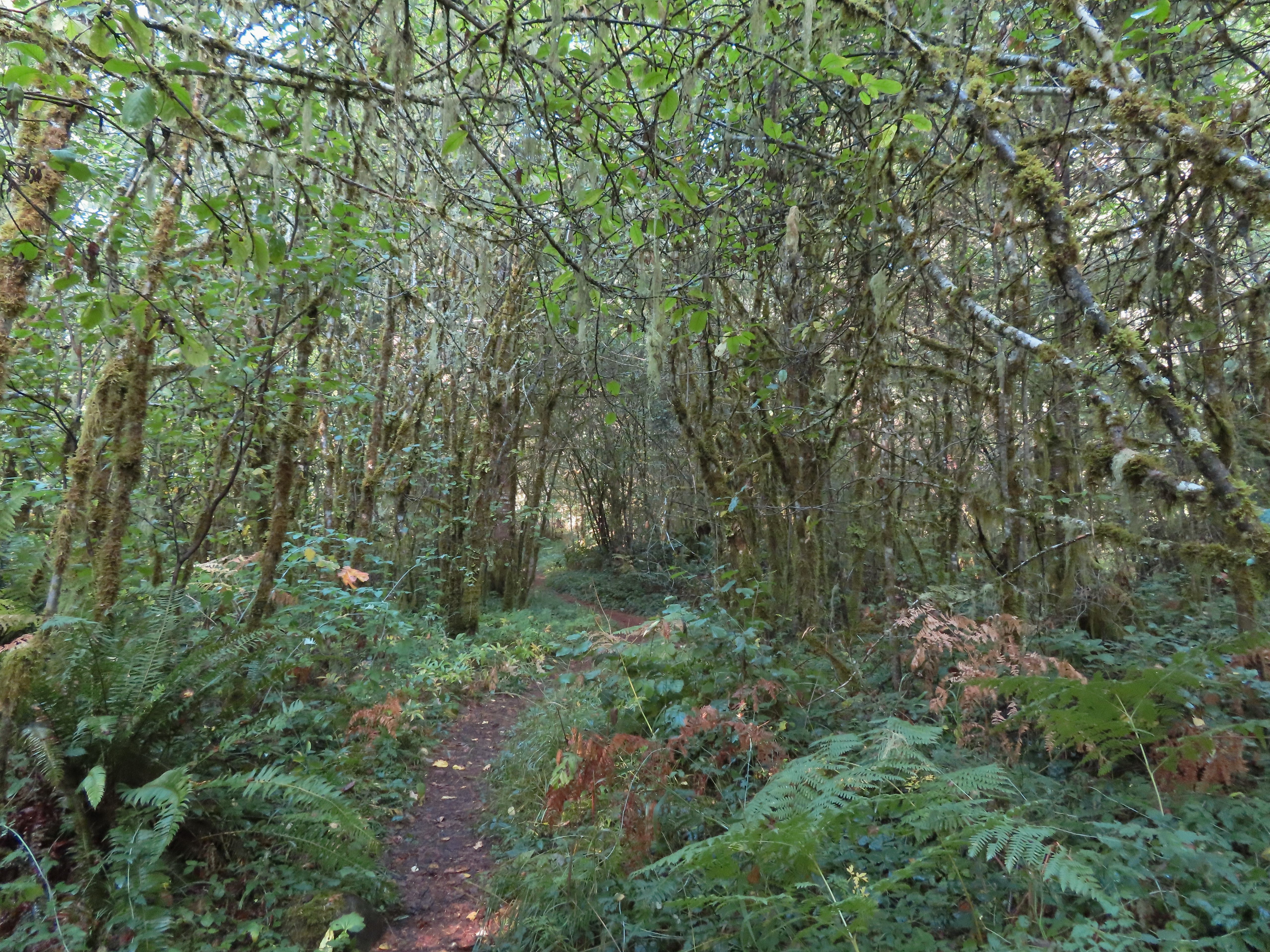
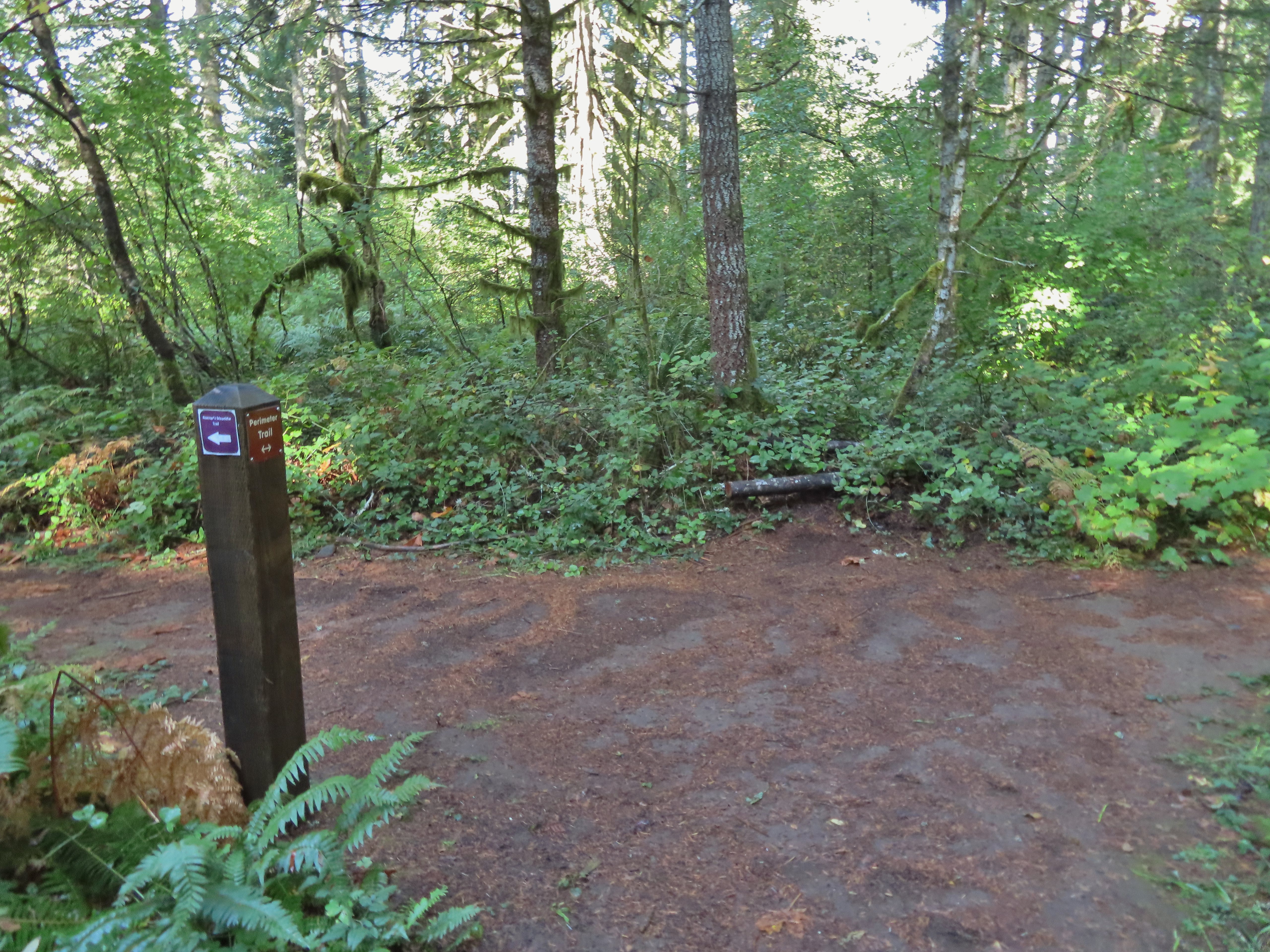 Roemer’s Meadow Trail (left) isn’t shown on the park maps yet, but it was completed in 2021 with help from the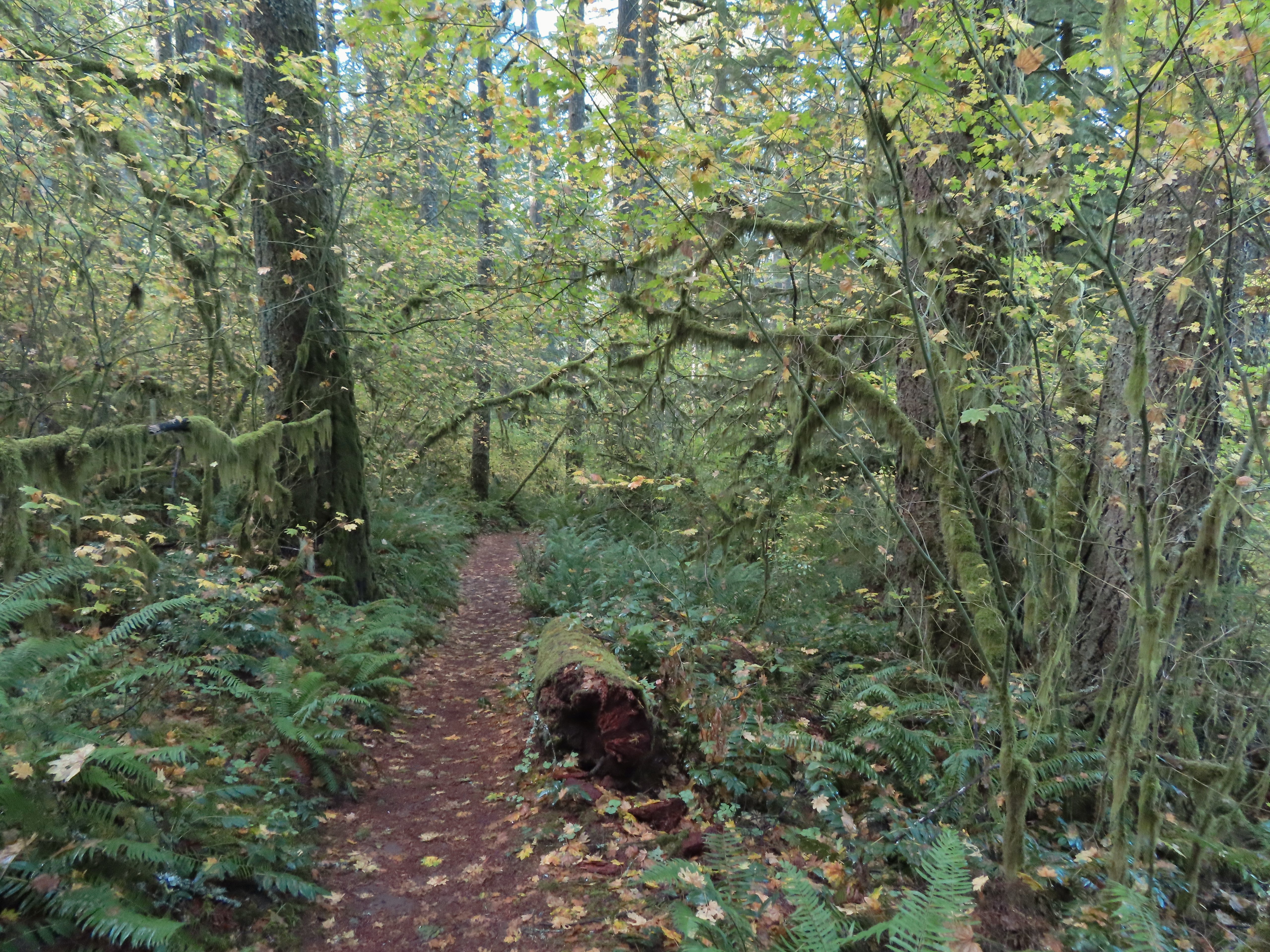
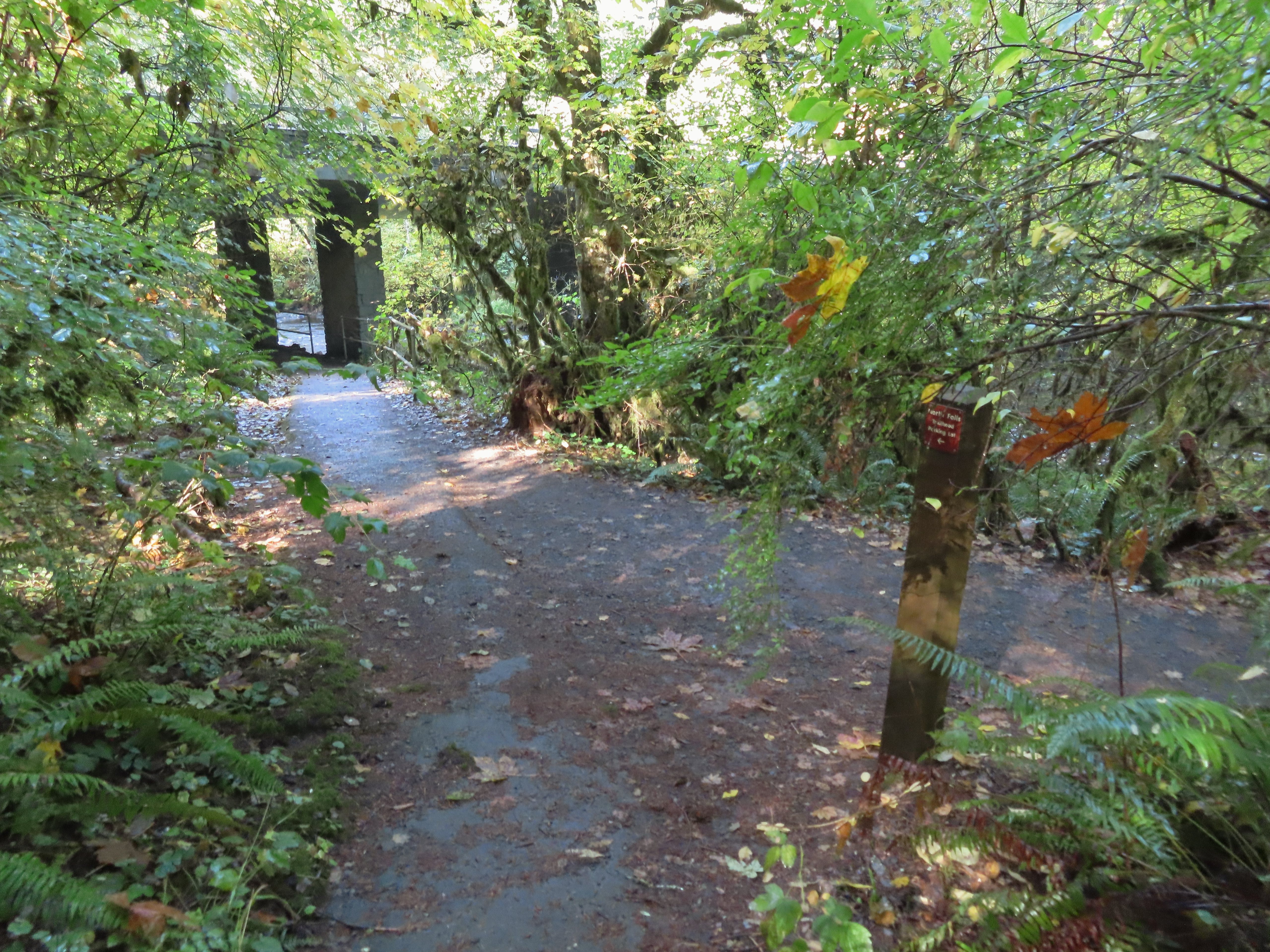 The Trail of Ten Falls junction near Highway 214.
 Looking back up the Perimeter Trail.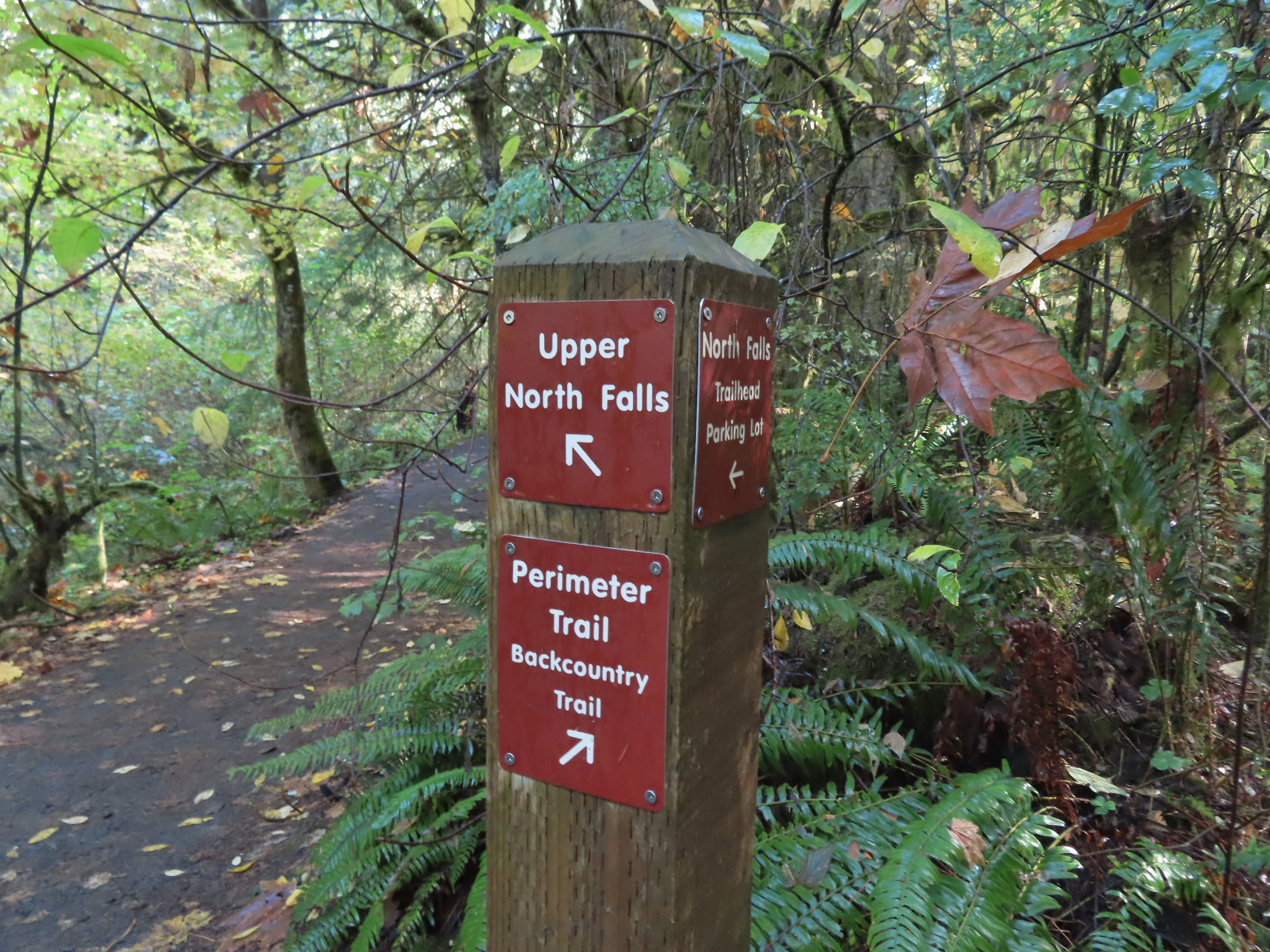
 Upper North Falls
 A left would have taken me to the North Falls Trailhead.
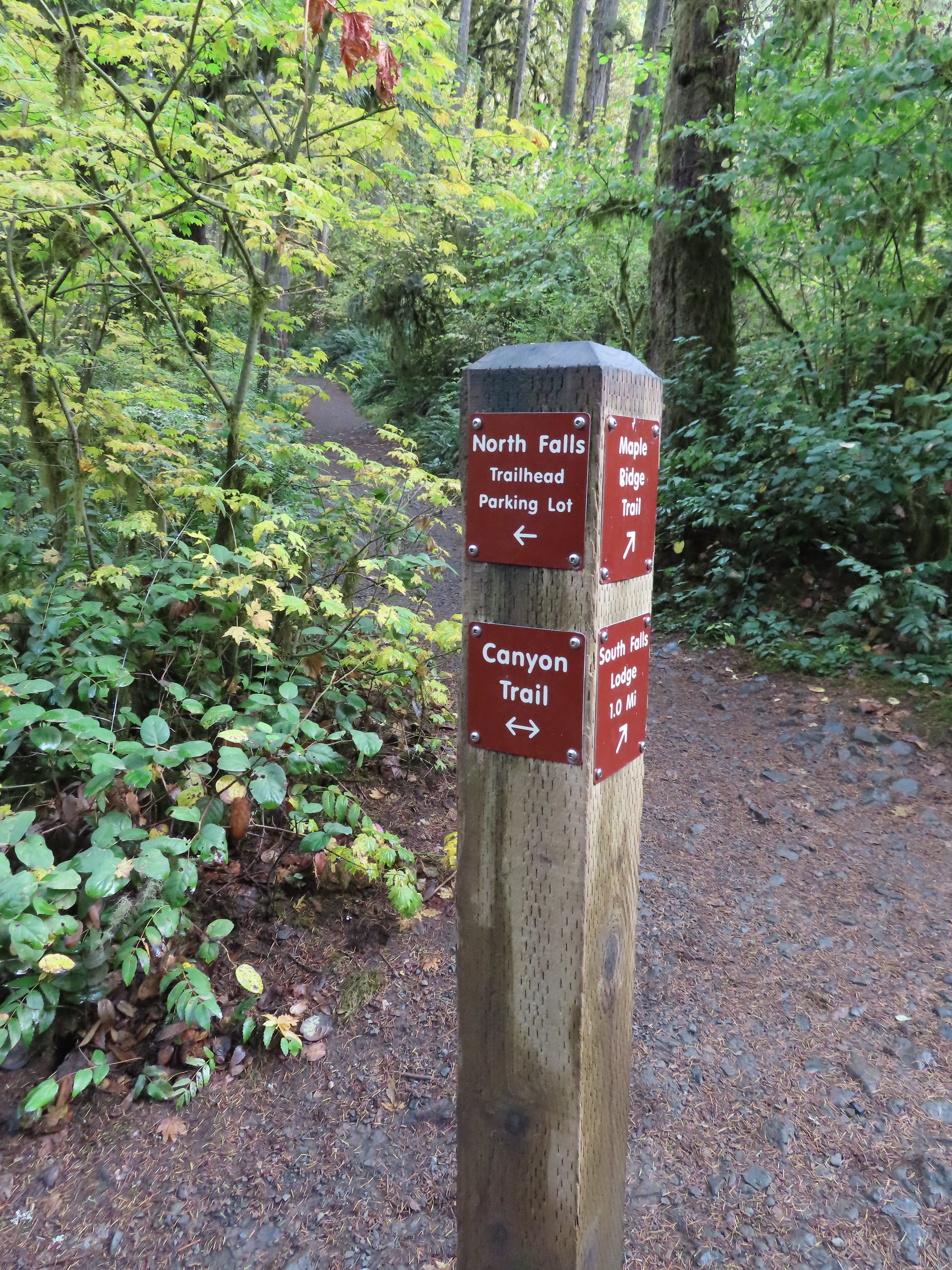
 The Rim Trail to the left and Canyon Trail to the right, both part of the Trail of Ten Falls.

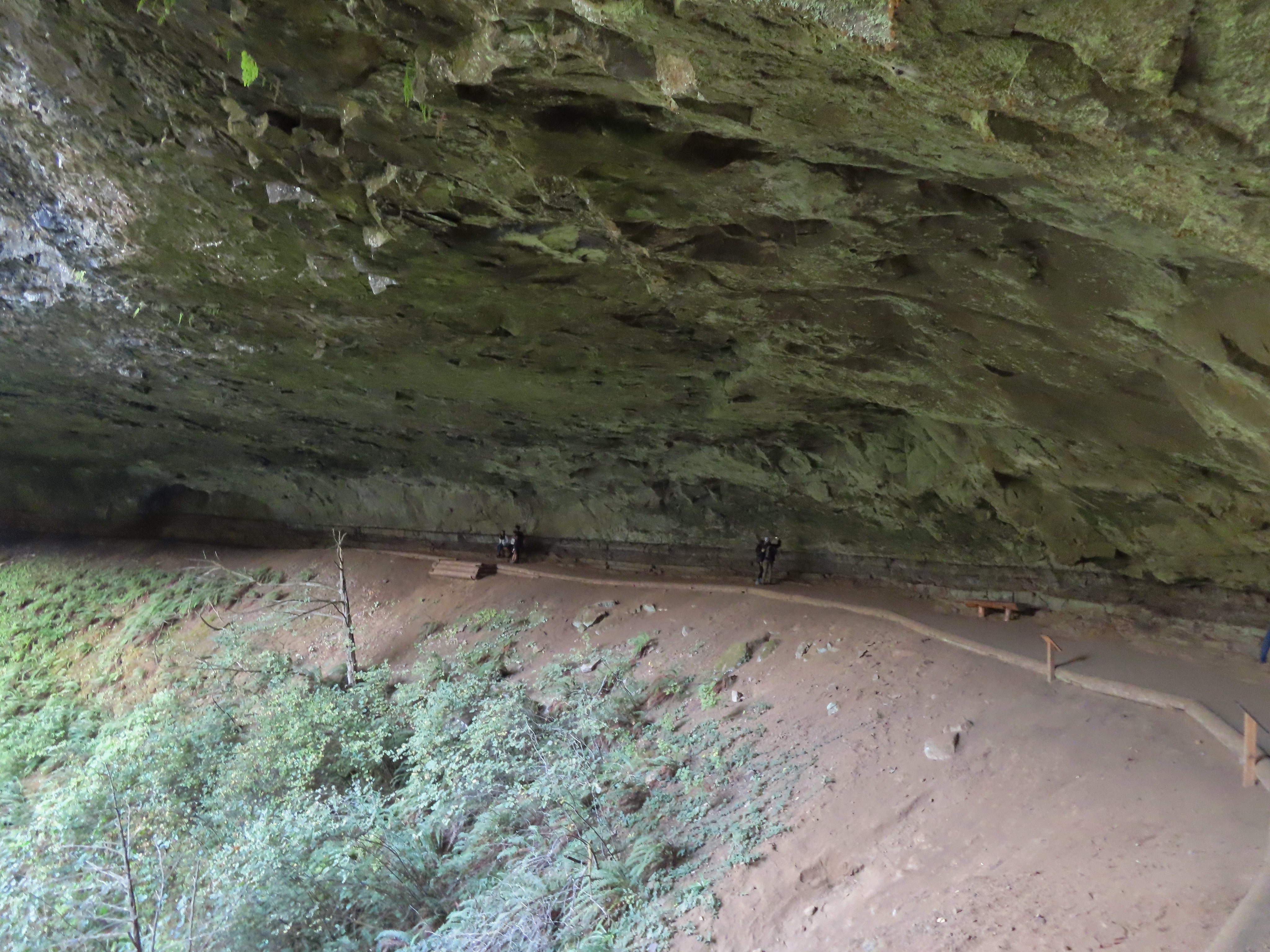
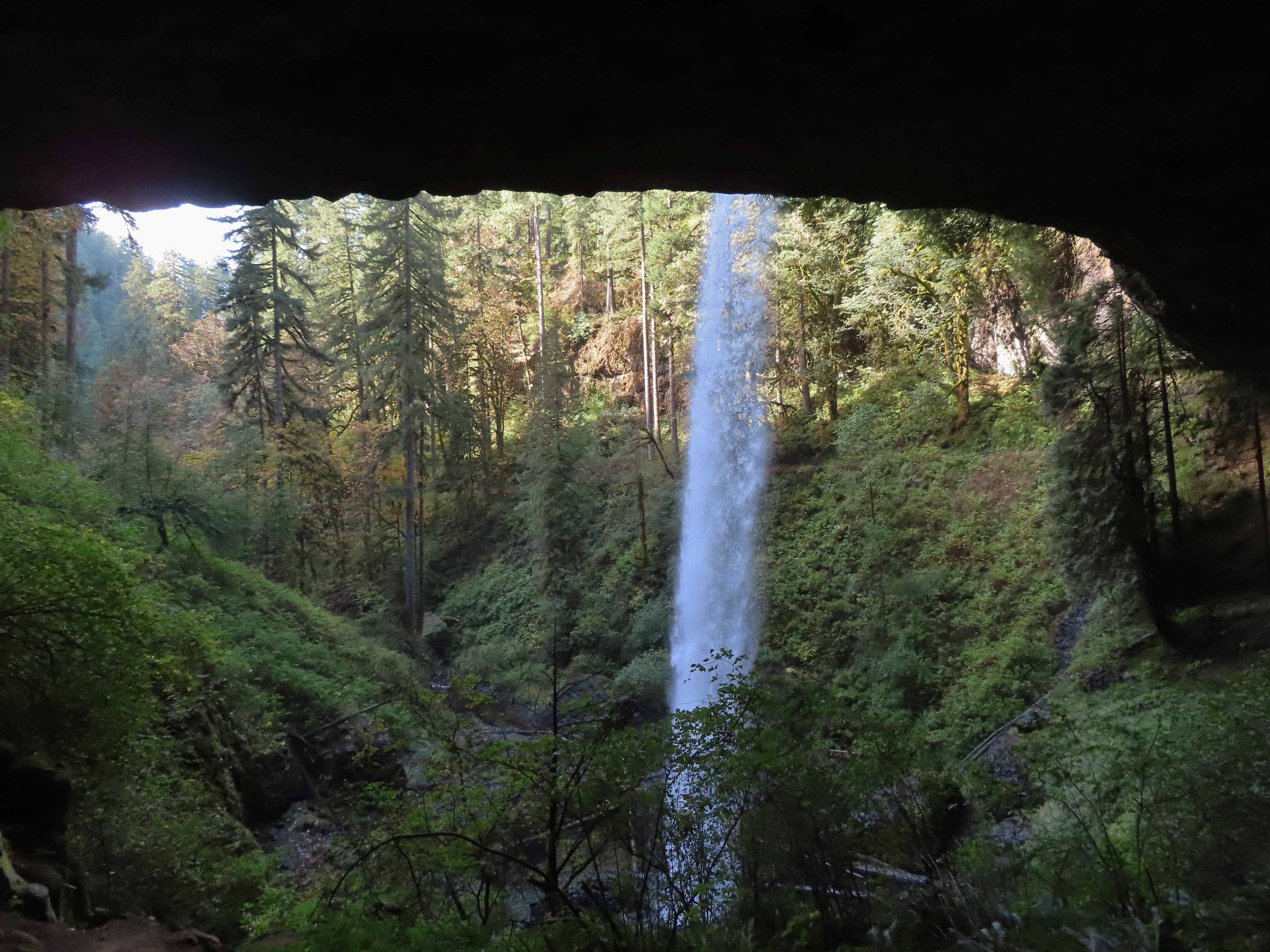
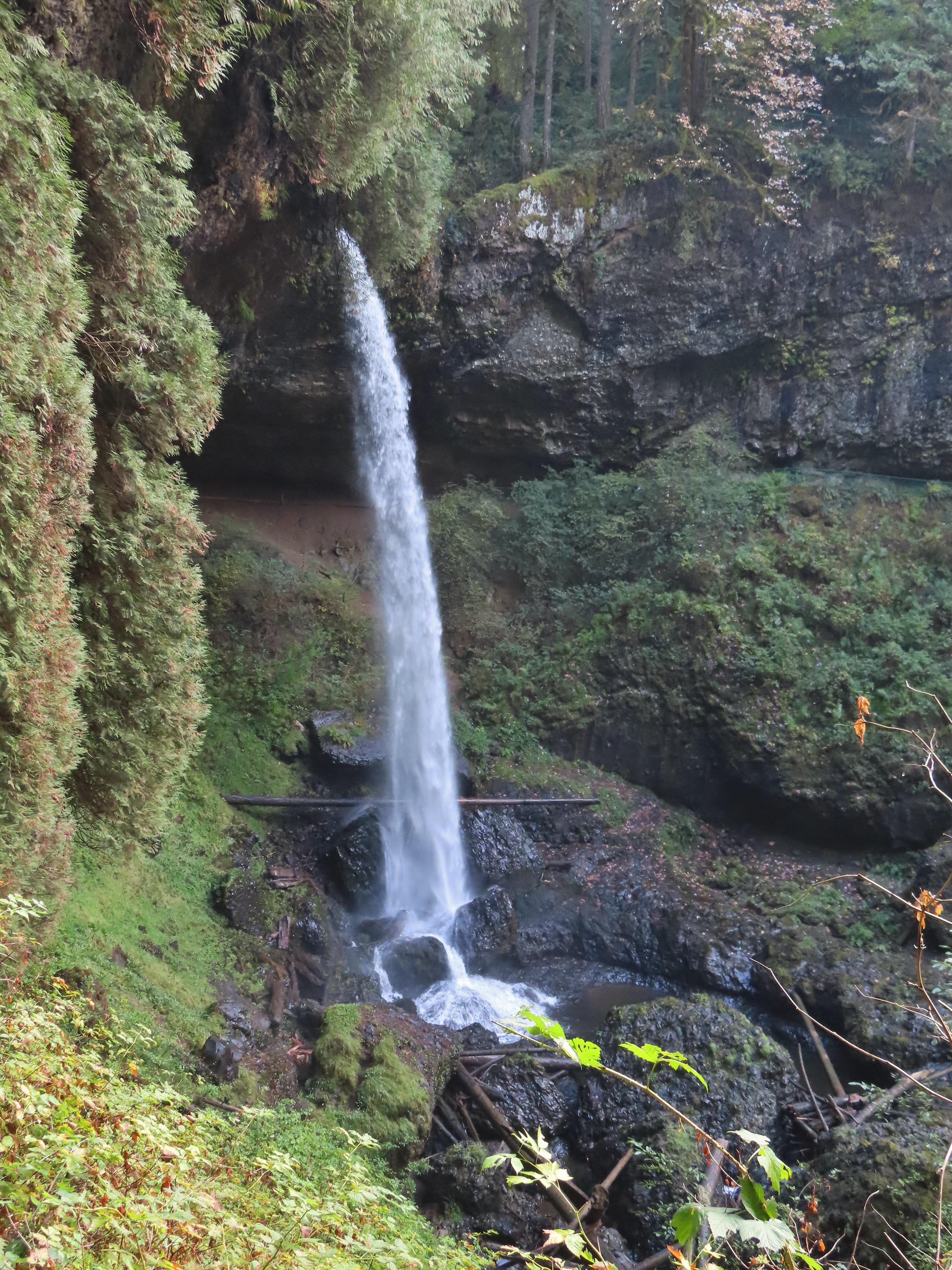

 I’m always impressed by the size of this rock in the creek.
 Not Twin Falls, but a nice little cascade nonetheless.
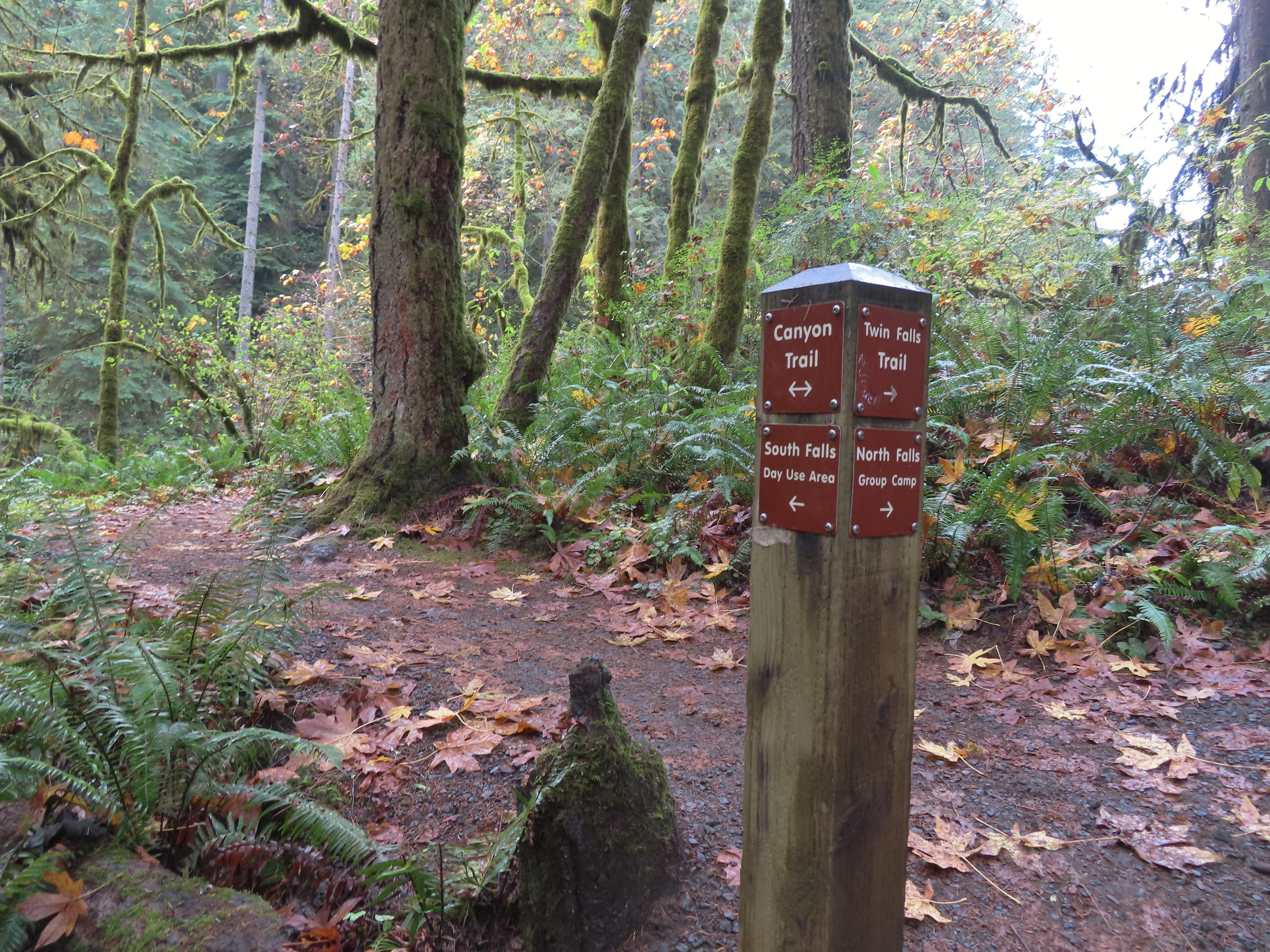 This post could be a little confusing without a map. The Twin Falls Trail climbs uphill to a group camp and does not lead to Twin Falls. The falls are the opposite side along a very short spur trail that connects at either end to the Canyon Trail.
 Twin Falls isn’t very easy to see from the spur trail either even though you’re right next to it.
 Twin Falls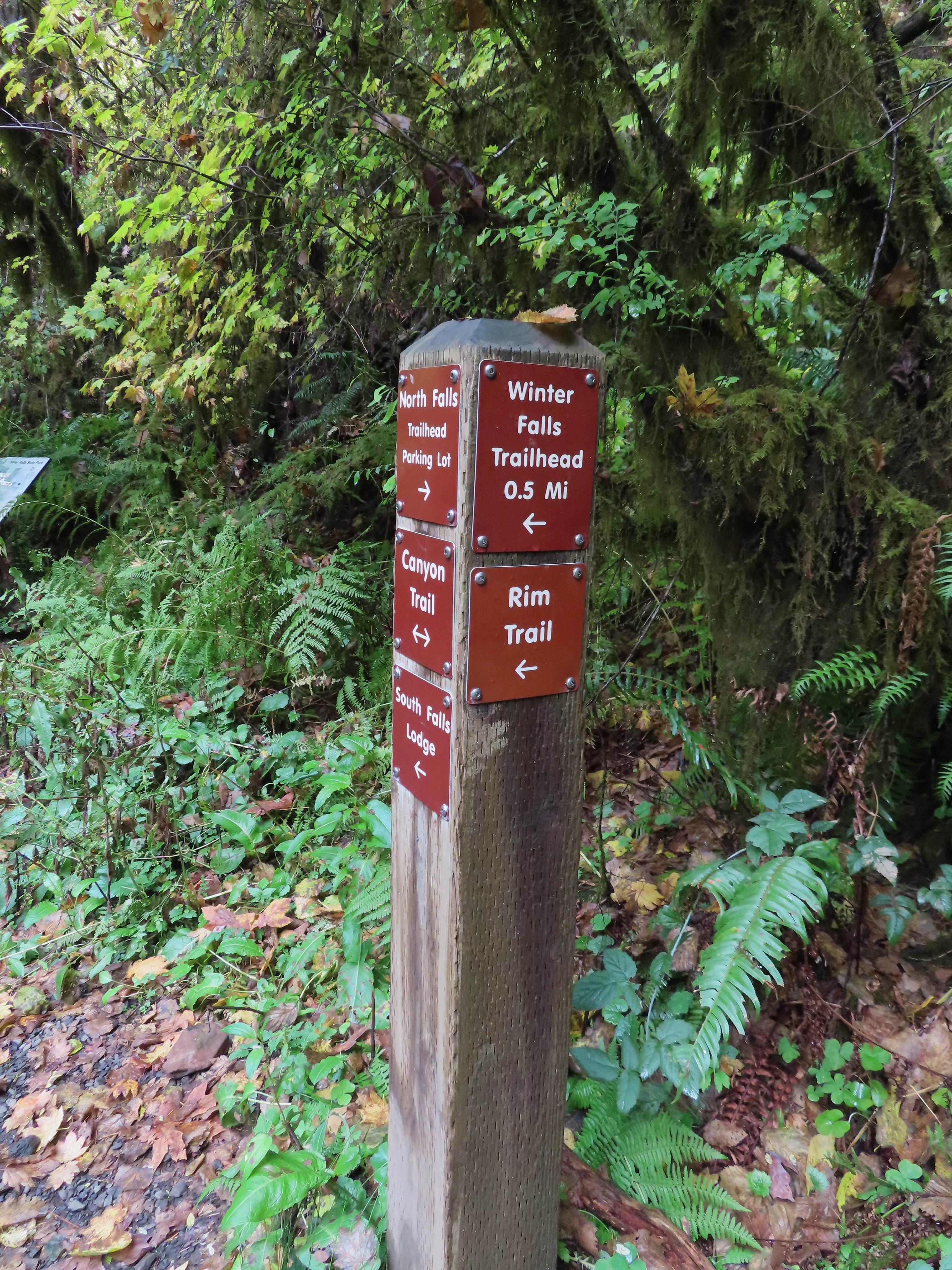

 North Fork Silver Creek
 Winter Falls, as the name suggests it’s not much of a waterfall outside of Winter when rain and snowmelt provide more water.
 With the dry Summer it isn’t a great Fall color year but there was a decent display along this trail.
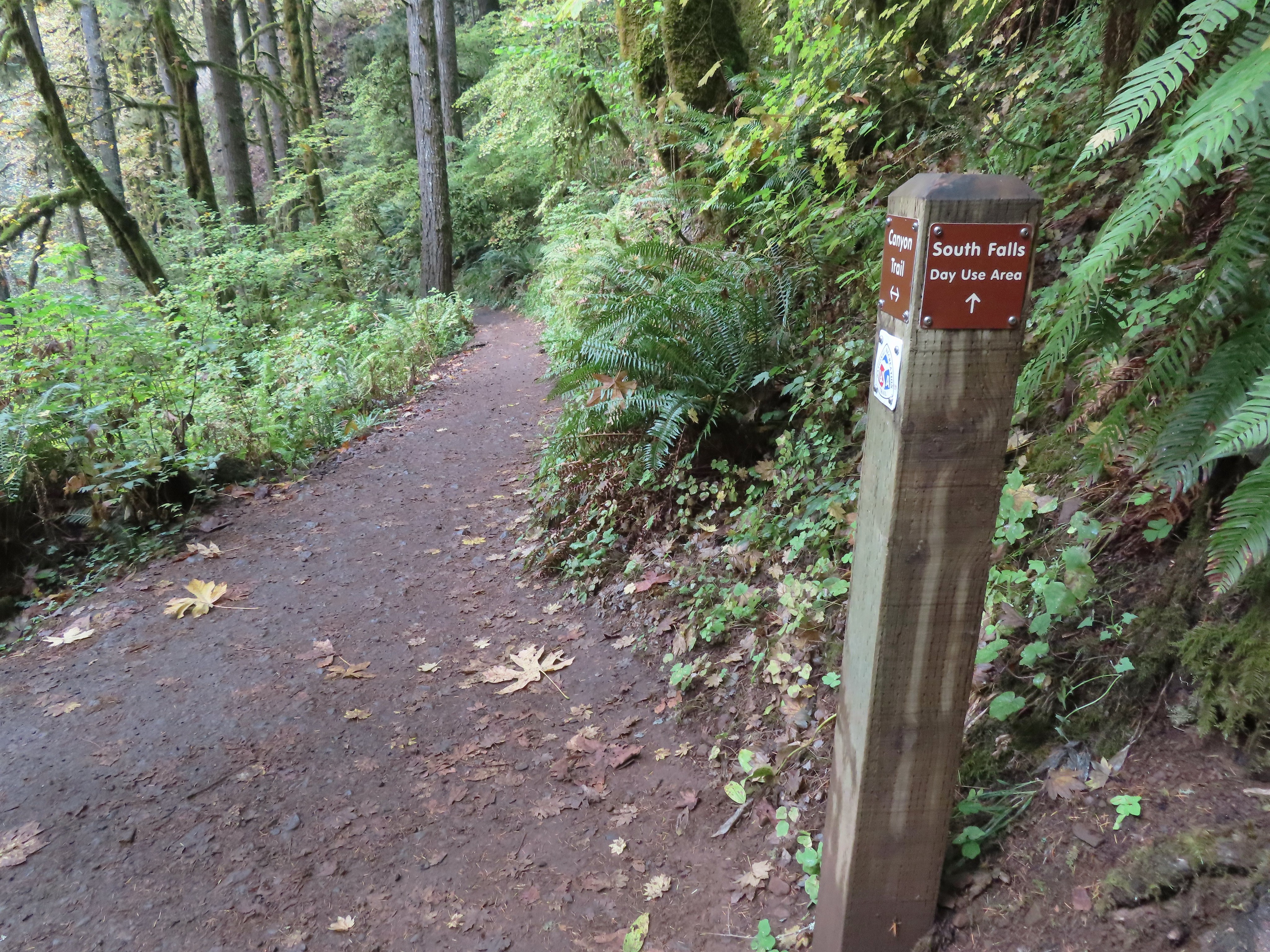 I turned left here on the spur trail behind Middle North Falls.


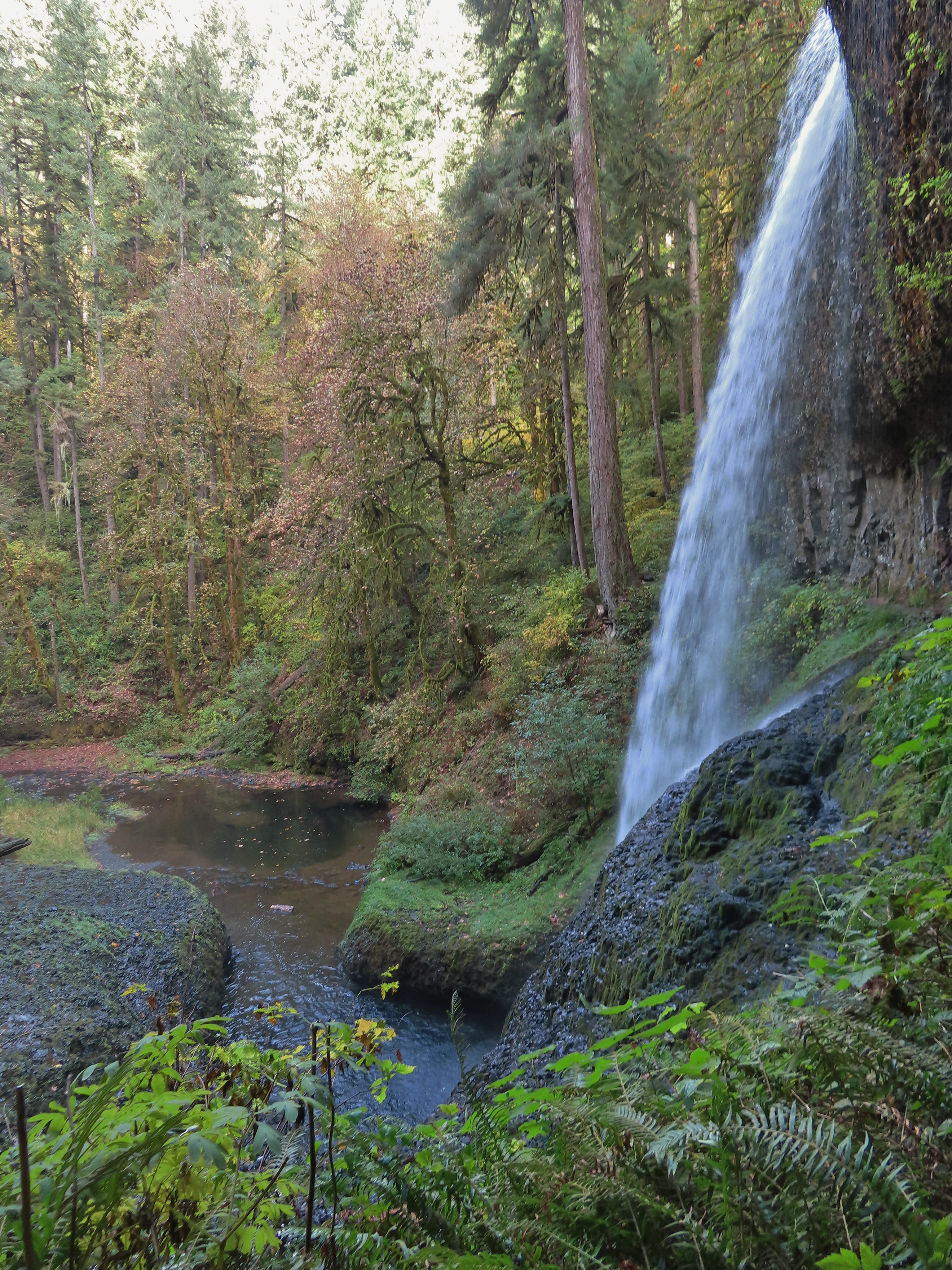
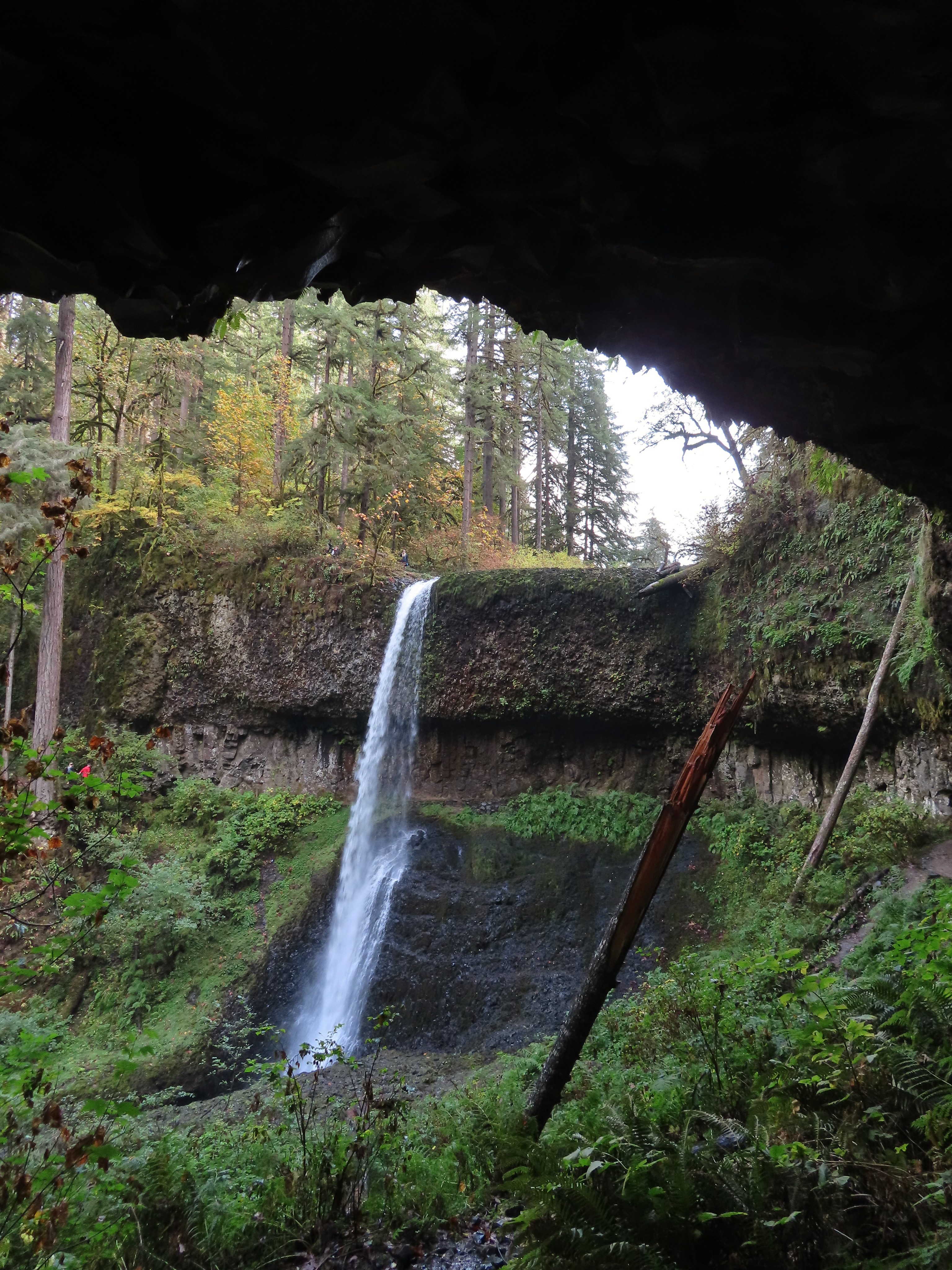
 Middle North Falls from the Canyon Trail.
 The 27′ Drake Falls.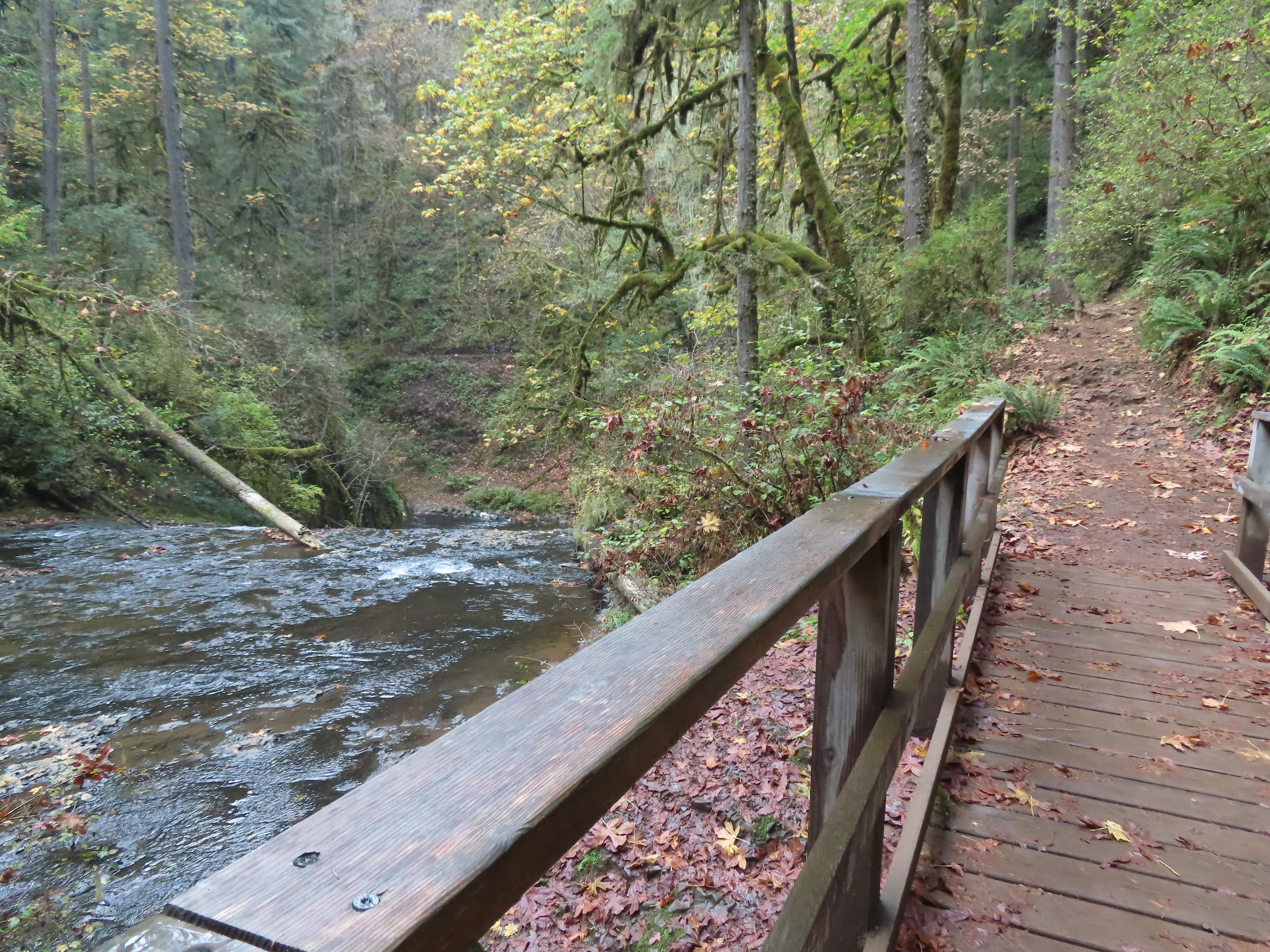

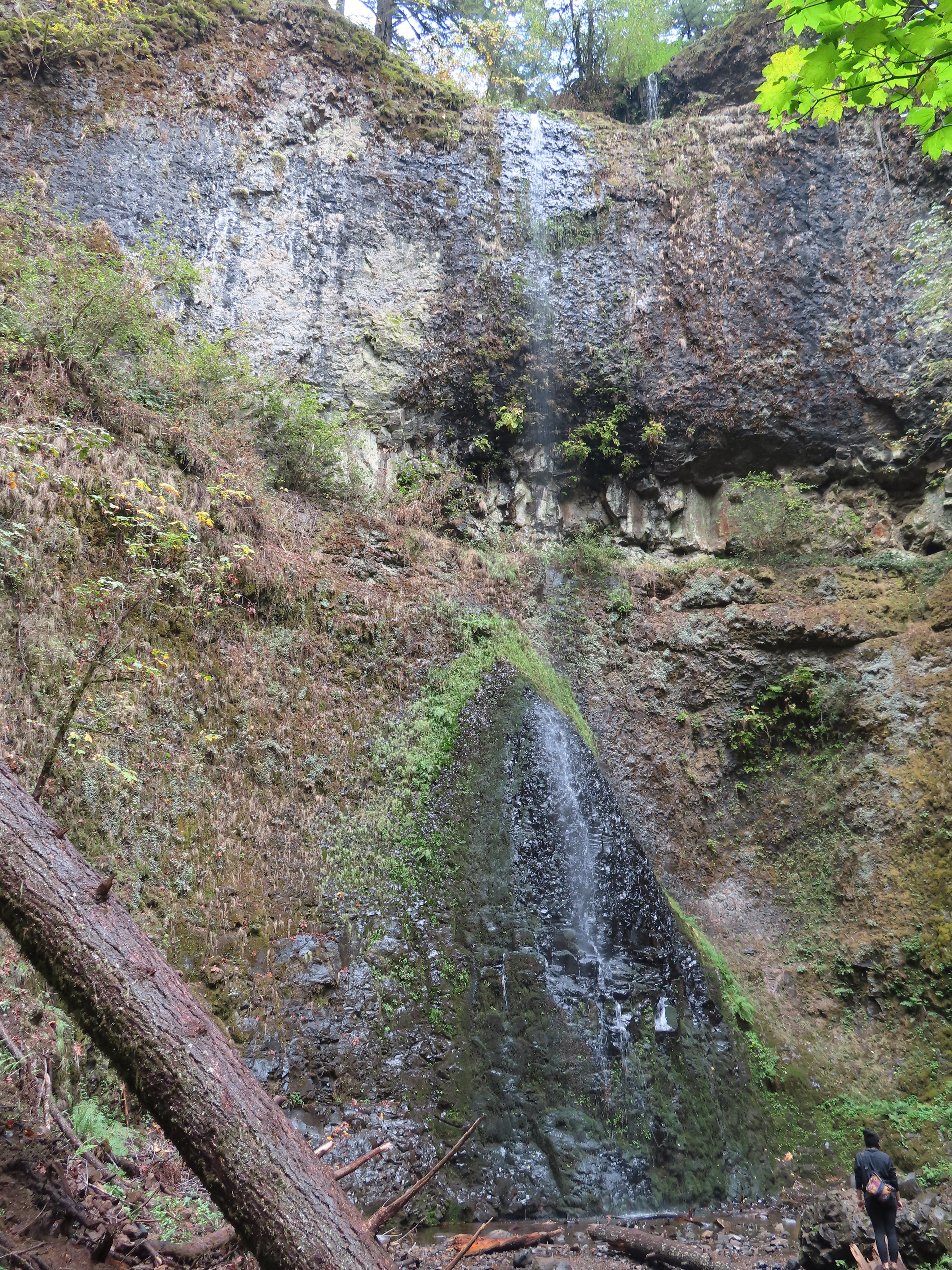 The hiker at the base gives a good idea of the fall’s height, you just have to use your imagination to add water.

 The Canyon Trail crosses the creek just downstream from Lower North Falls then makes a short climb to get above the canyon cliffs.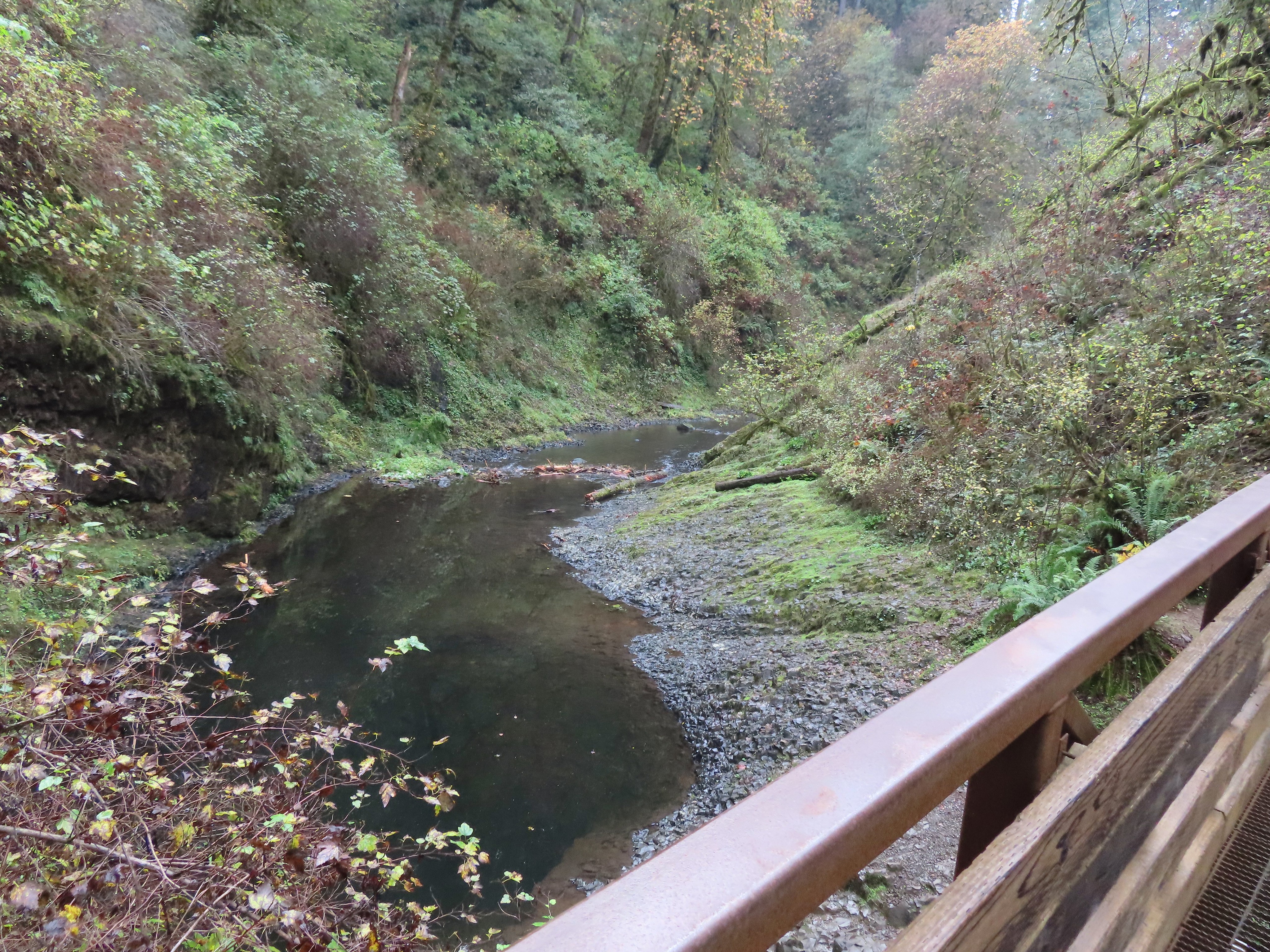
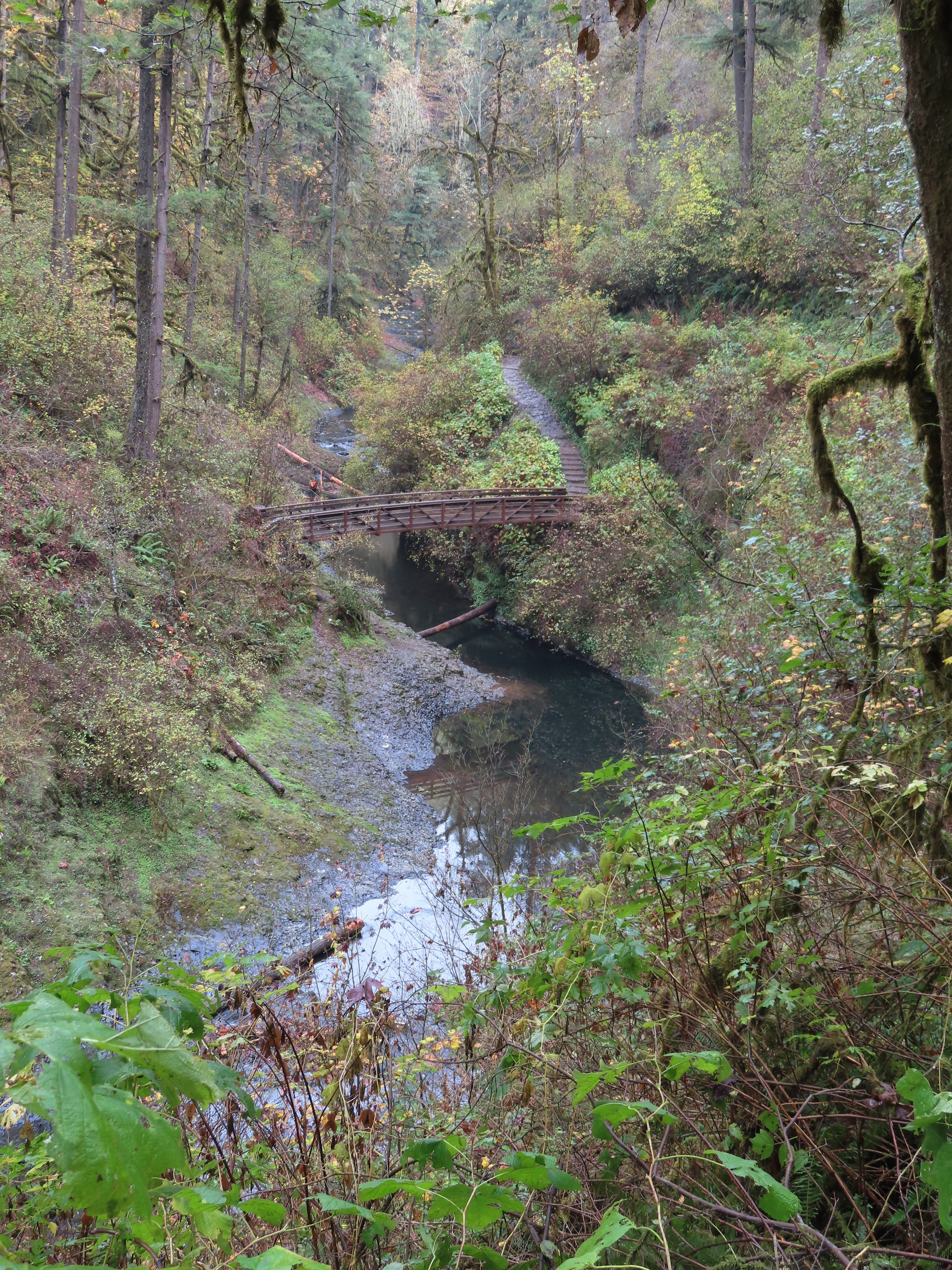
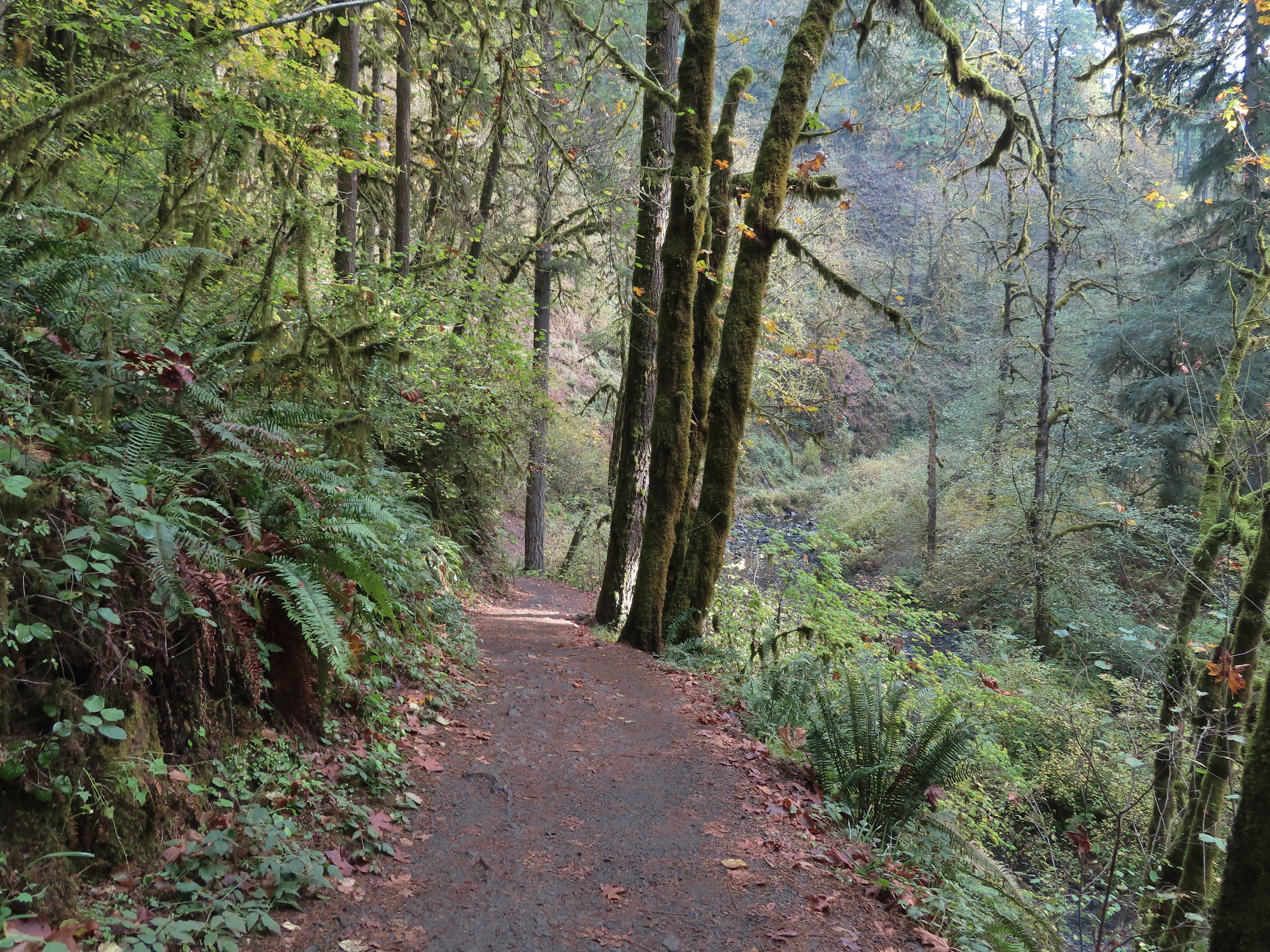
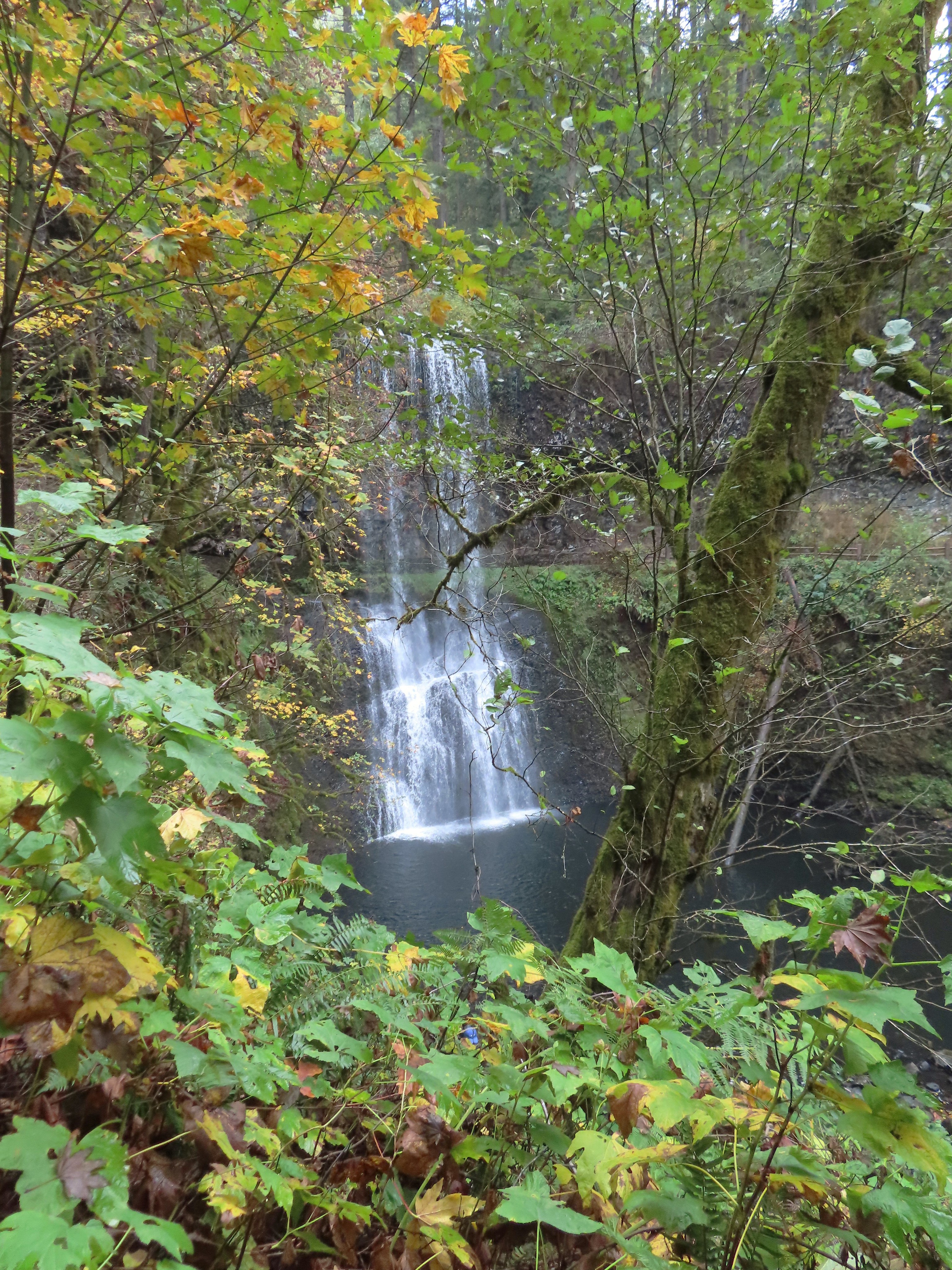
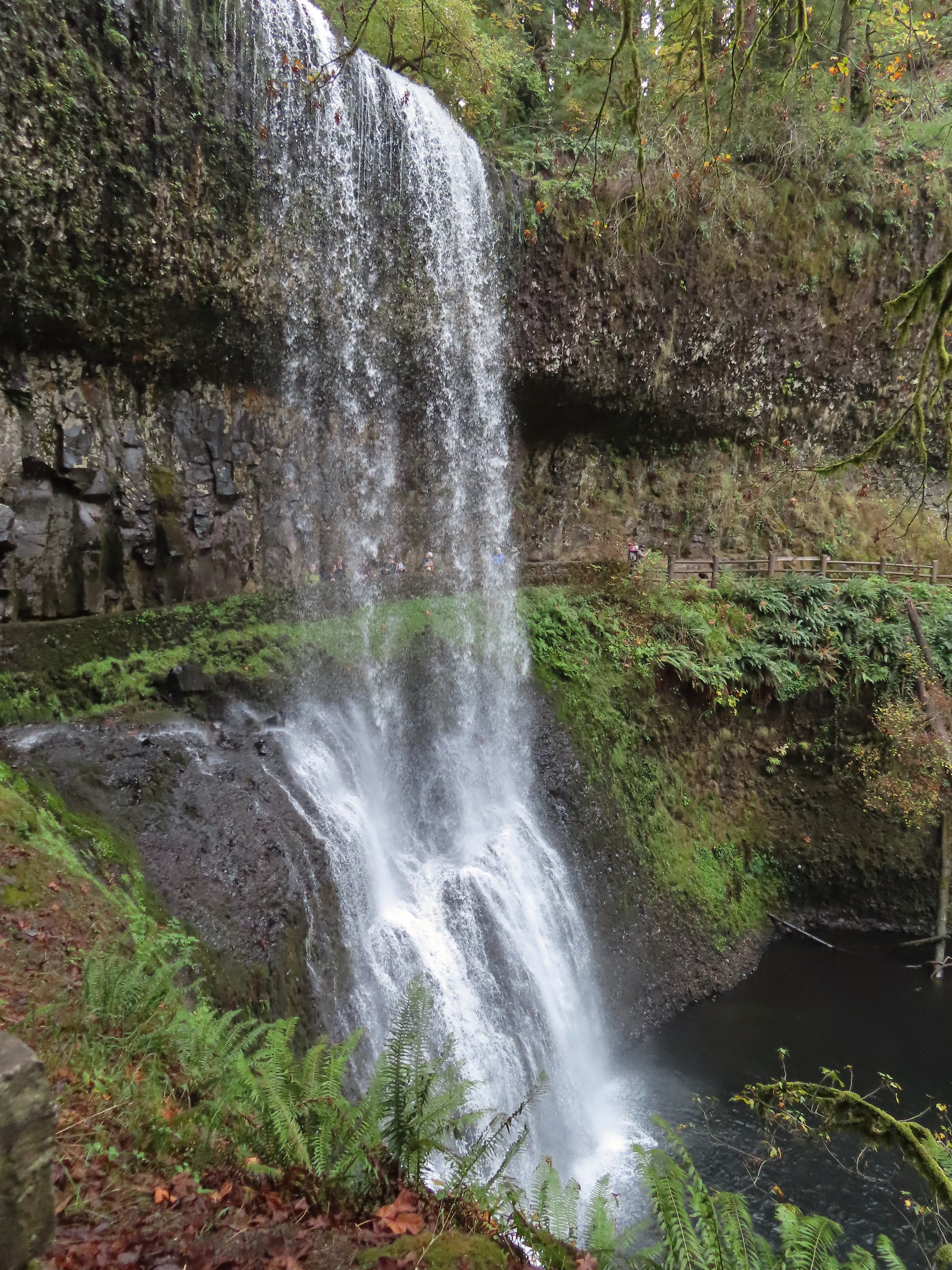


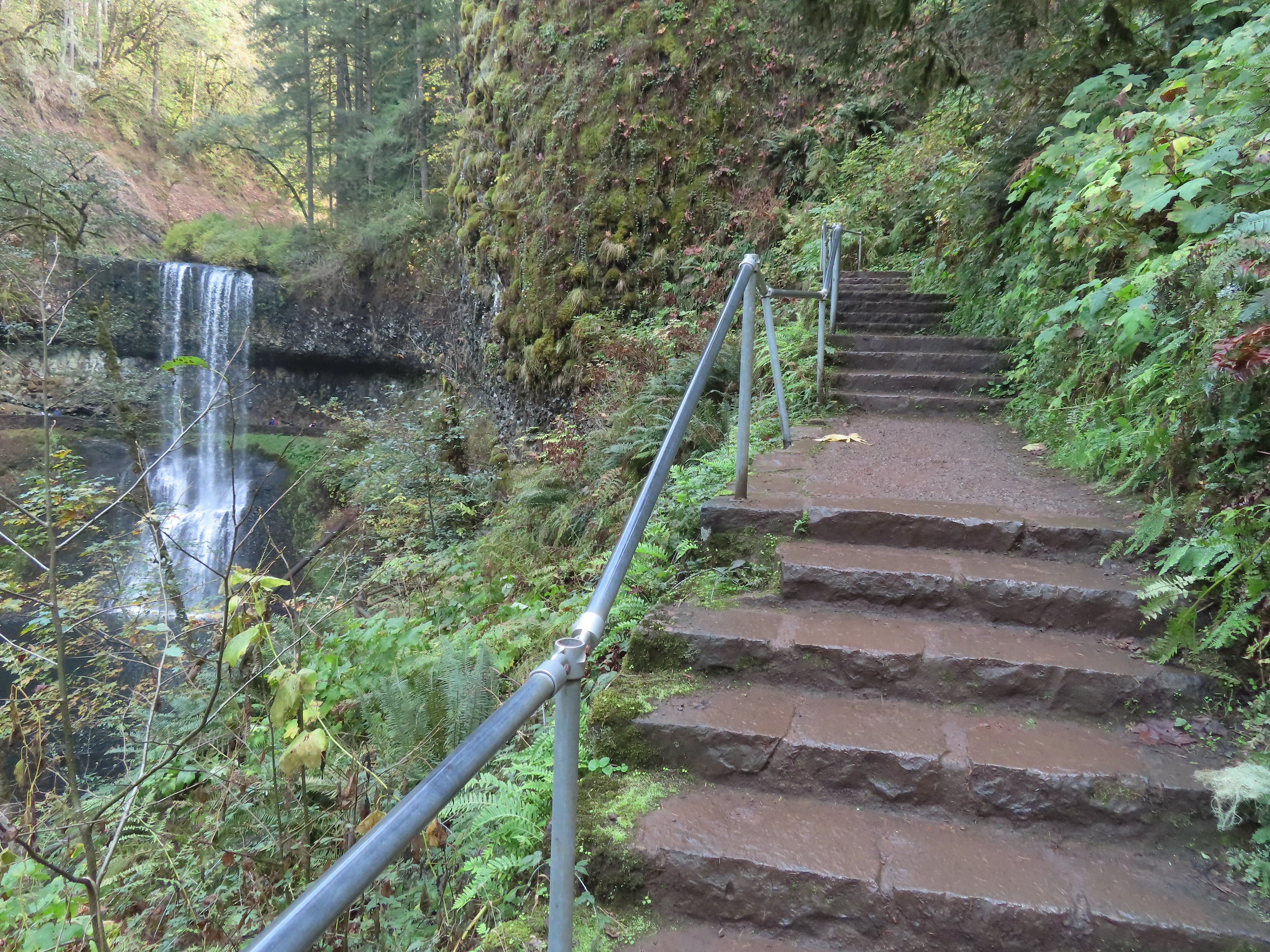


 I walked out onto the bridge for the view then returned to the junction to take the right hand fork and go behind this fall as well.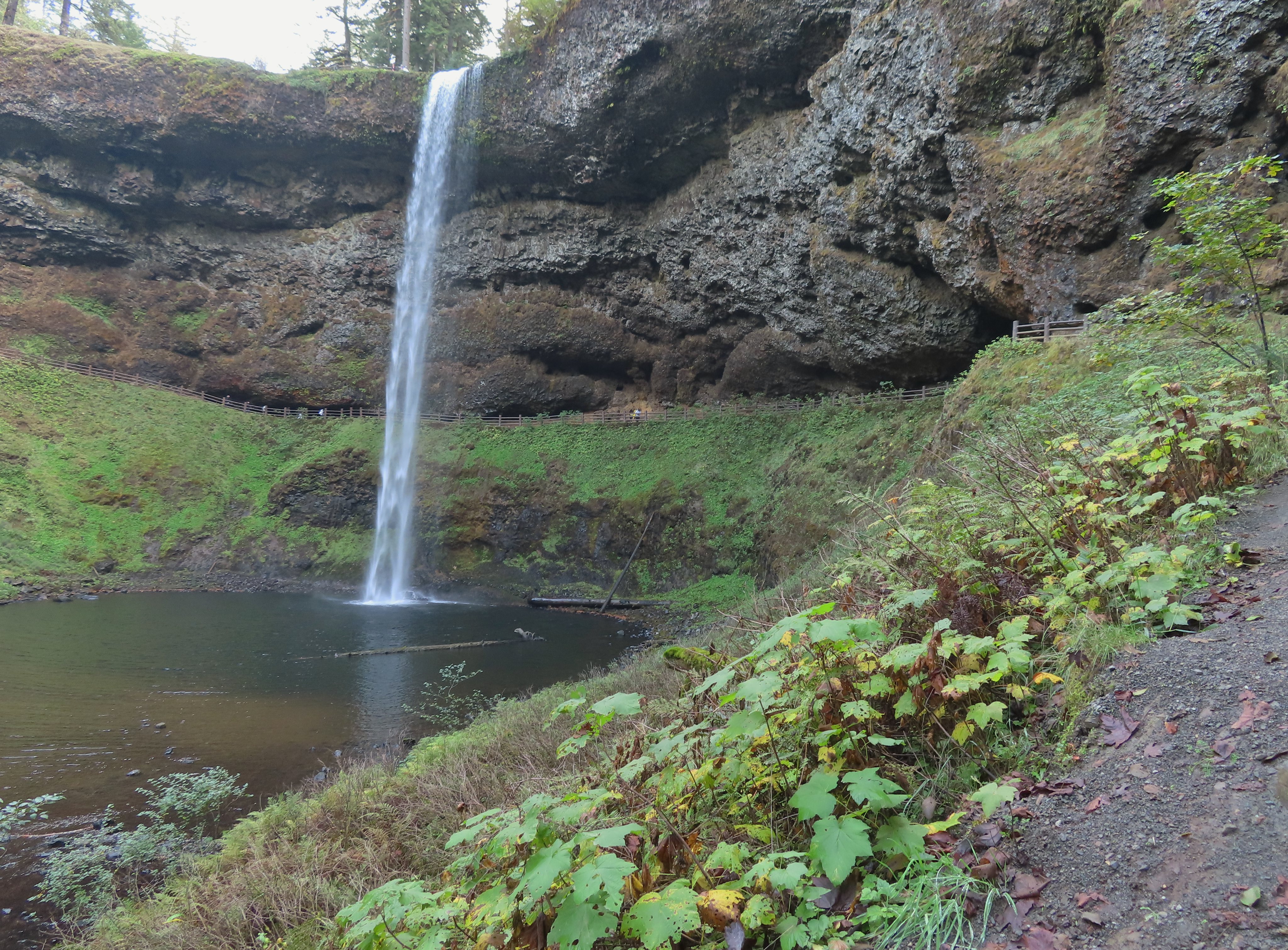
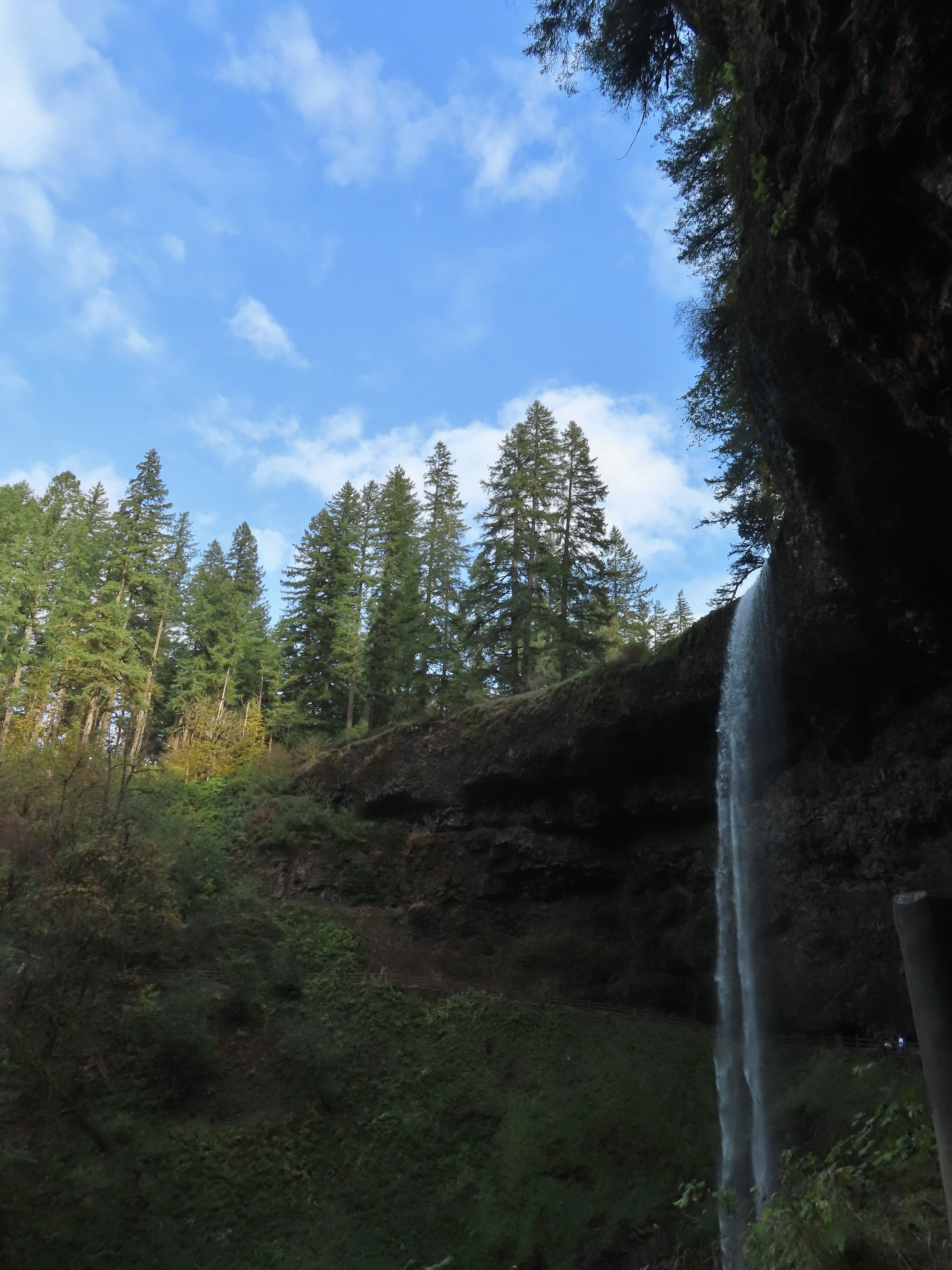




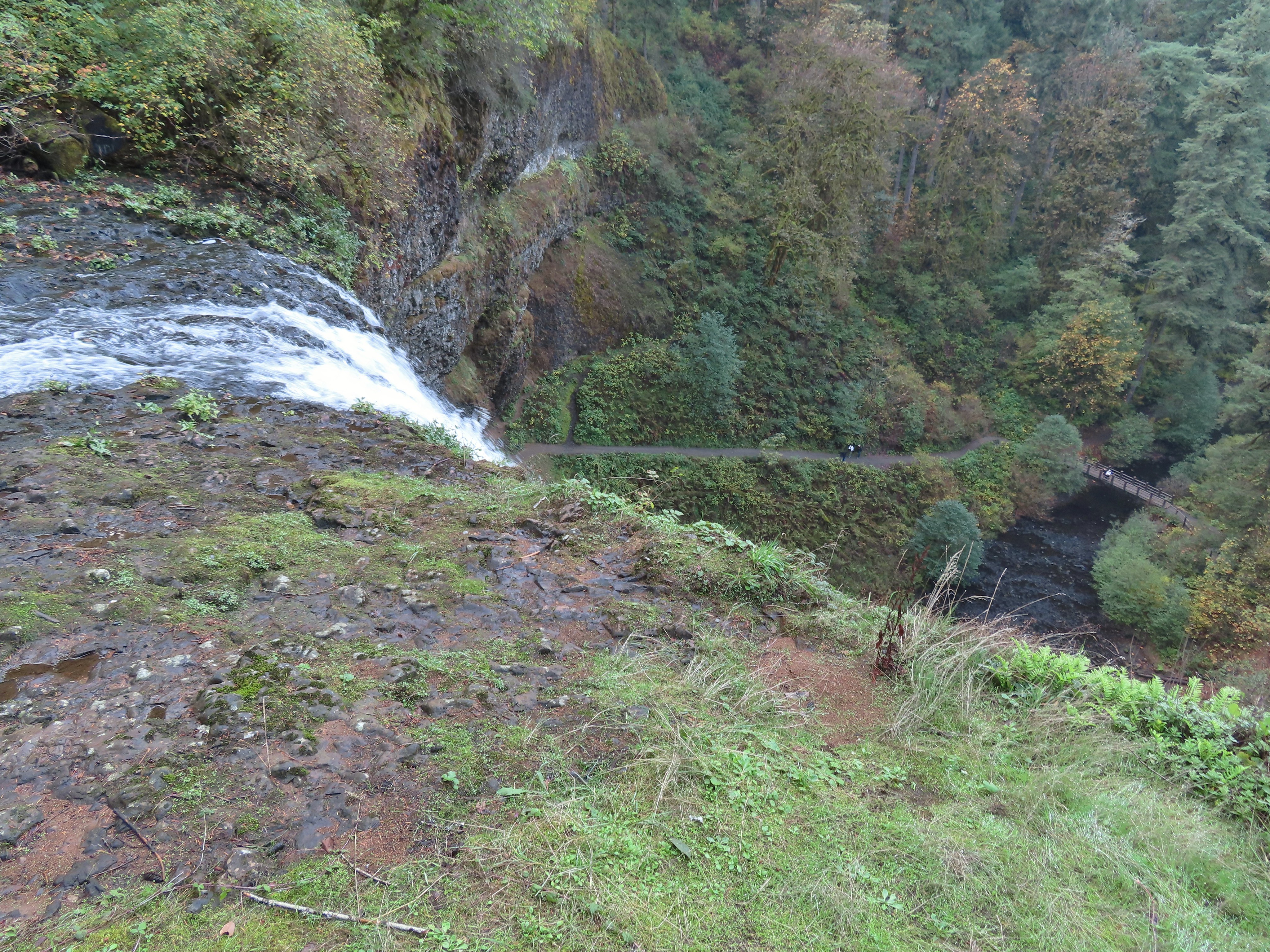
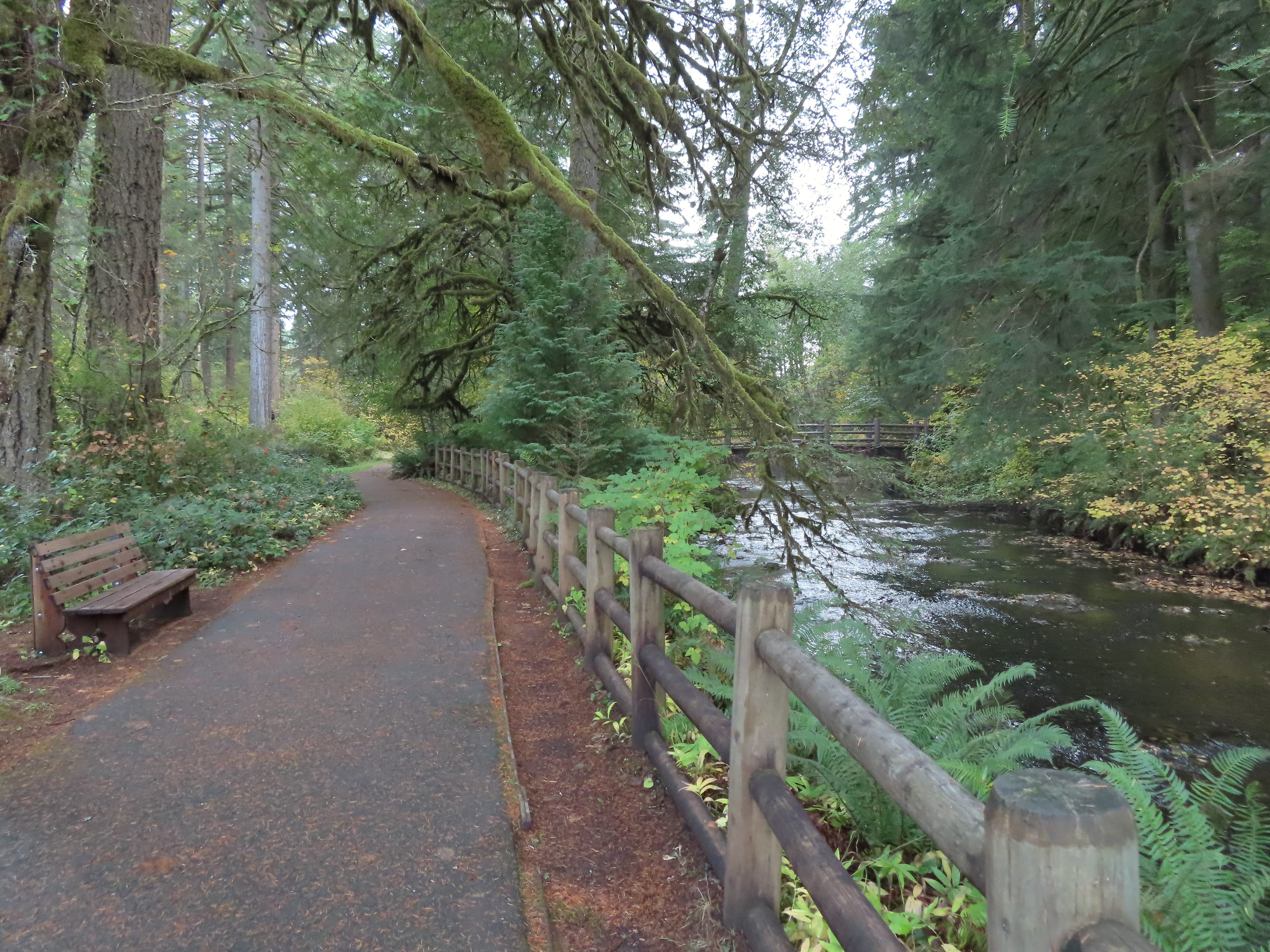
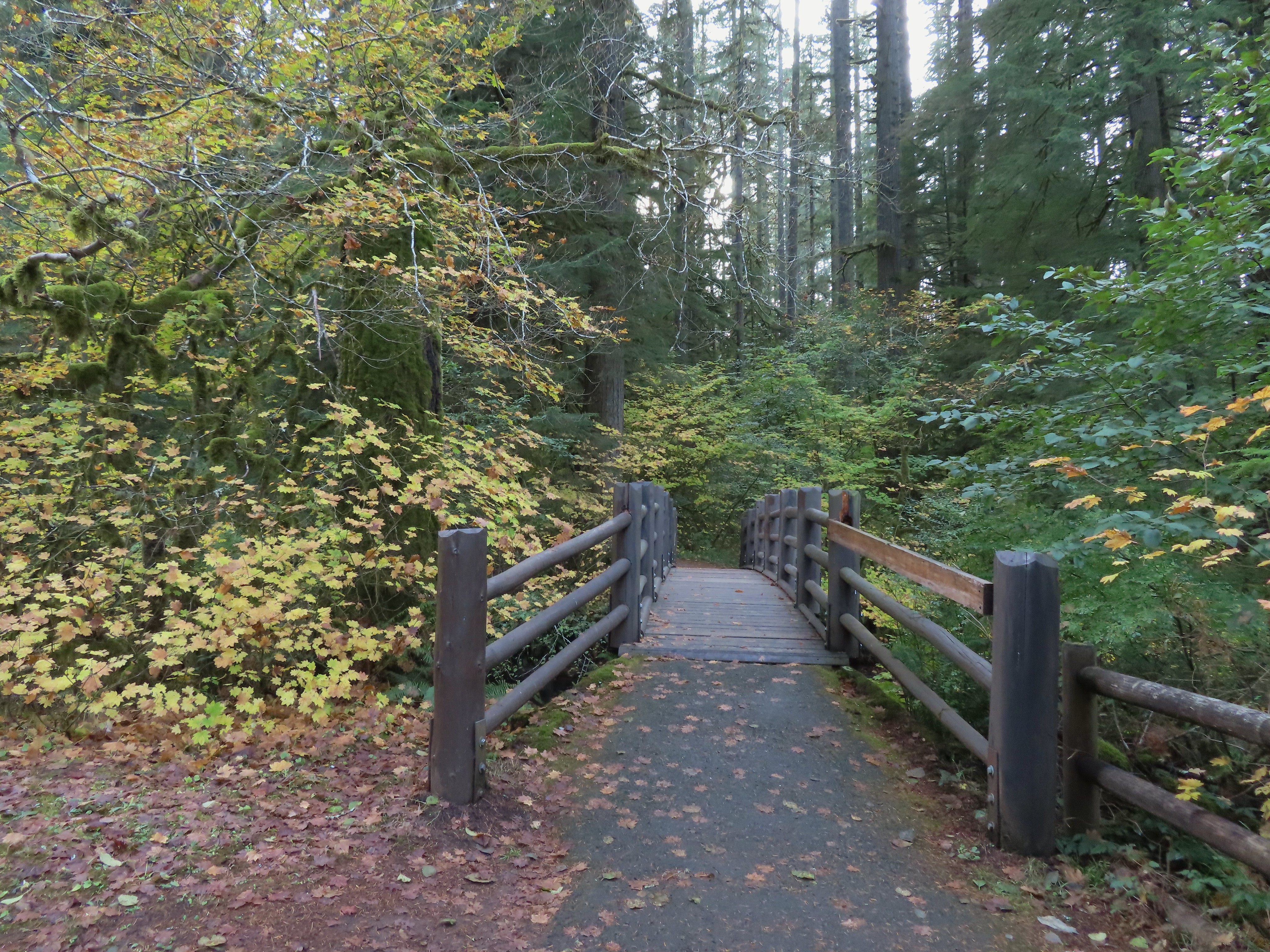
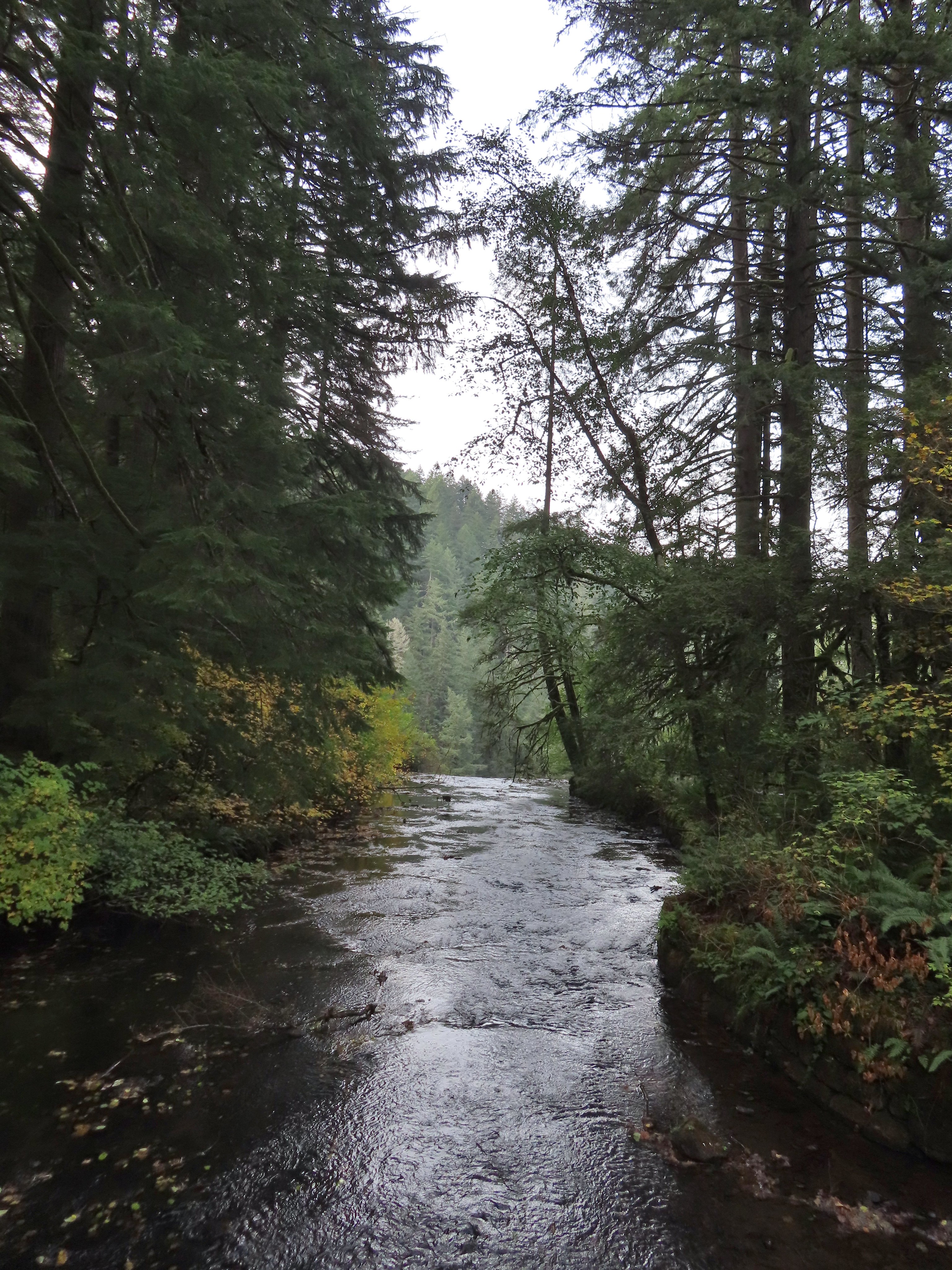 View toward South Falls from the footbridge.
 Not sure what this old building was, possibly restrooms by the doors.
 One of several picnic shelters in the park.
 Approaching the Bike Path where I recrossed the creek.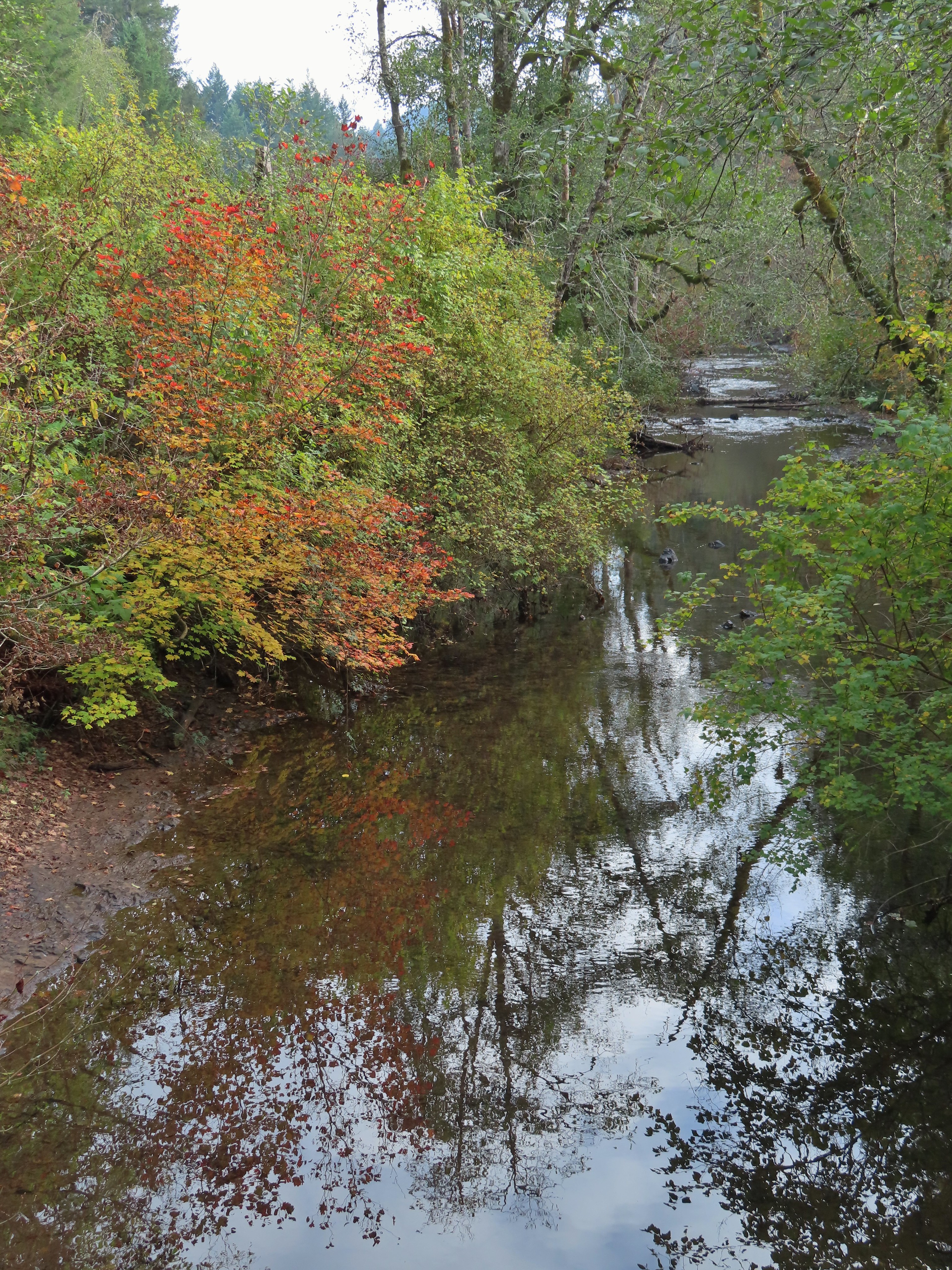
 I can see the car!


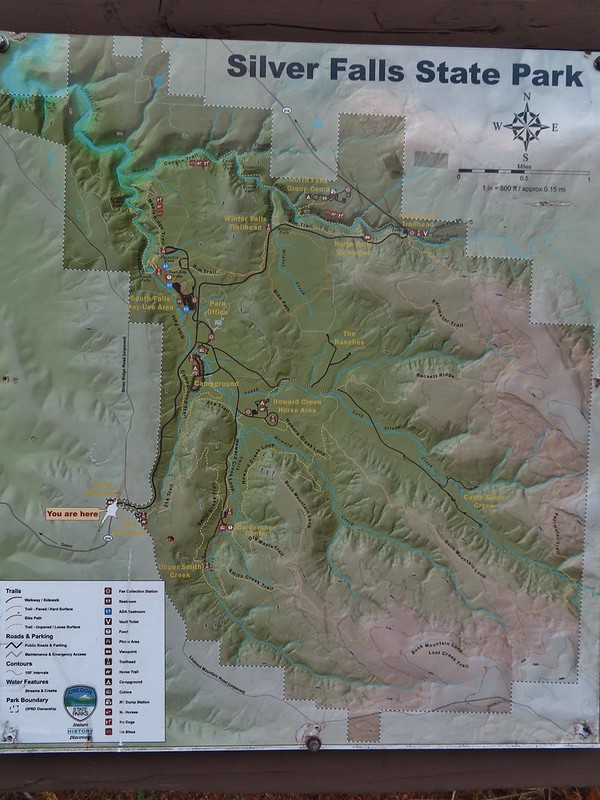 Park map at the viewpoint.
 Willamette Valley
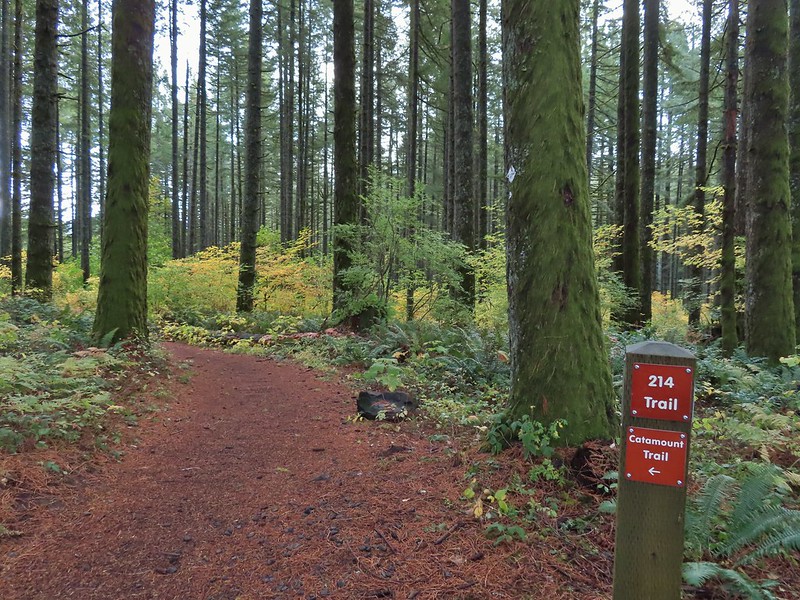

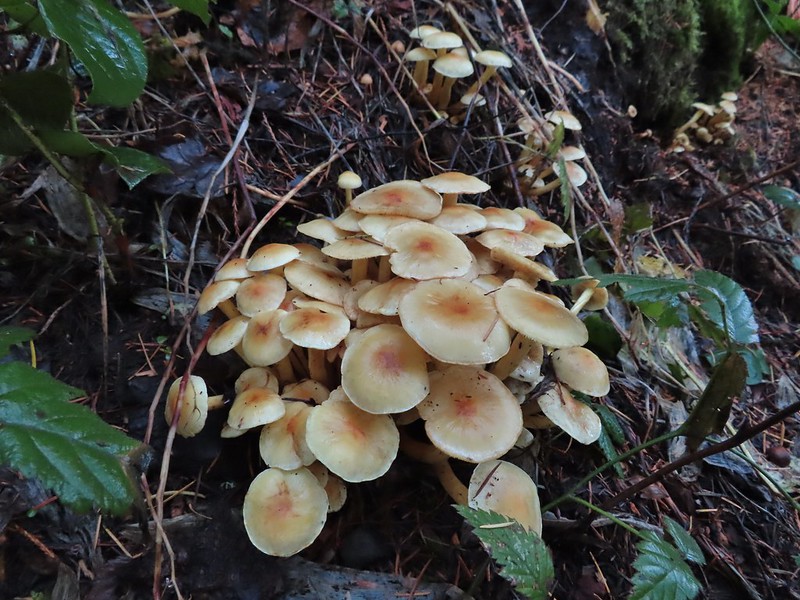
 Sign post for the Newt Loop and mountain biking skills station.
 As much blue sky as we were going to get on this day.
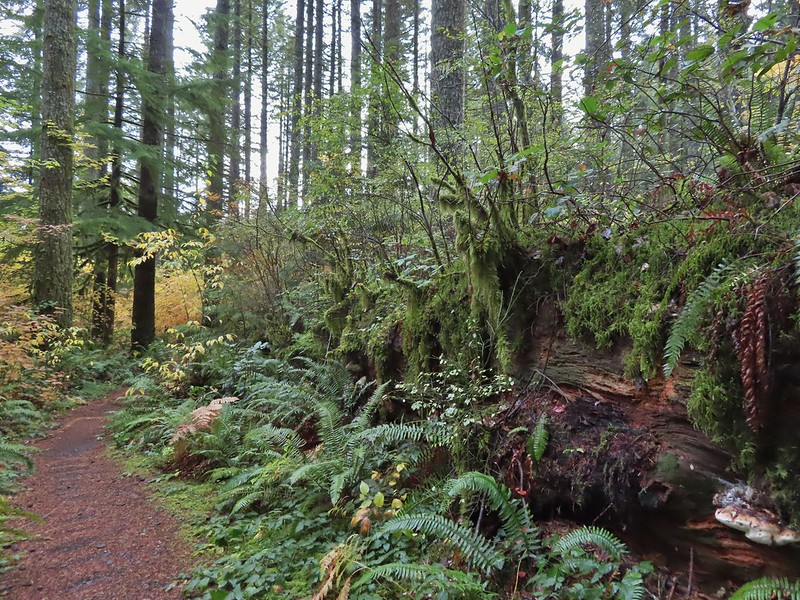 A massive old growth nursery log. The tree stood for hundreds of years and will spend hundreds more slowly decaying and providing nutrients for younger trees.
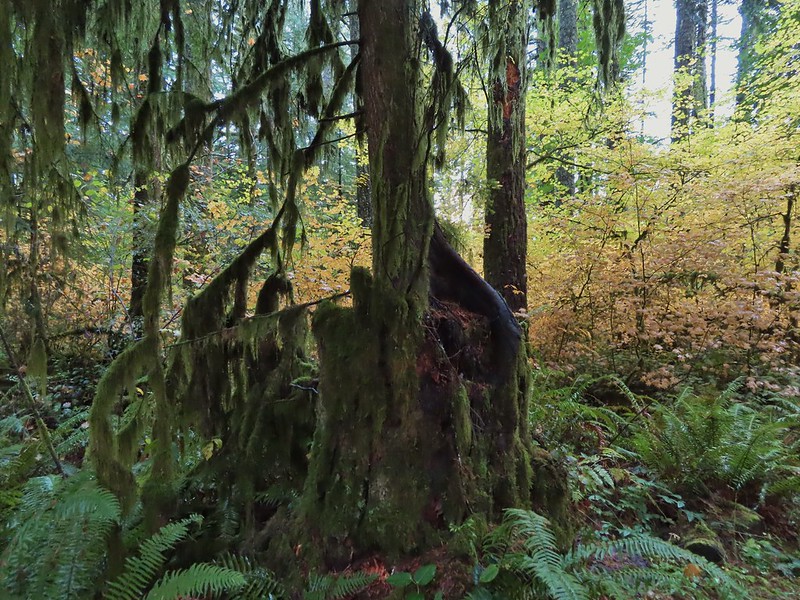 Nursery stump. While some old growth exists in the park it was also logged heavily which was the primary reason it was passed over for National Park status.
 The Smith Creek Trail junction.
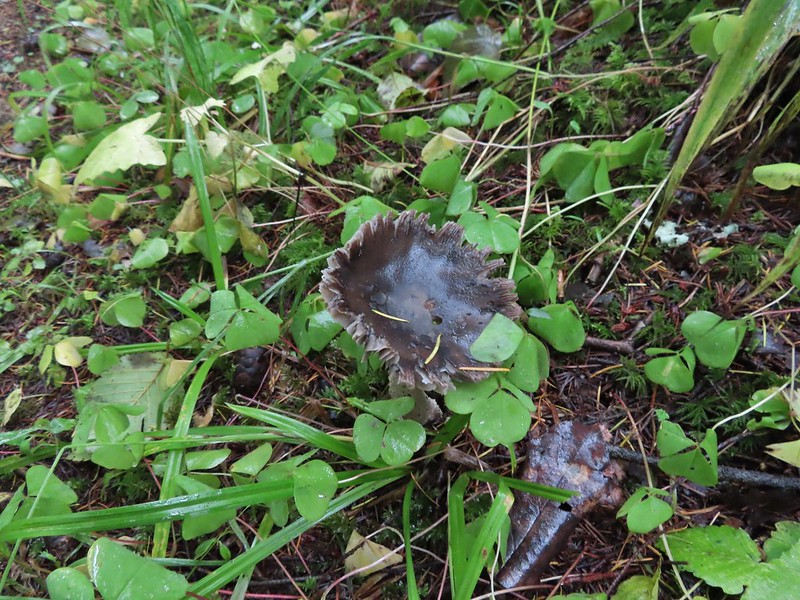
 Does anyone know their salamanders? Not sure what type this one was.
 The Nature Trail junction.
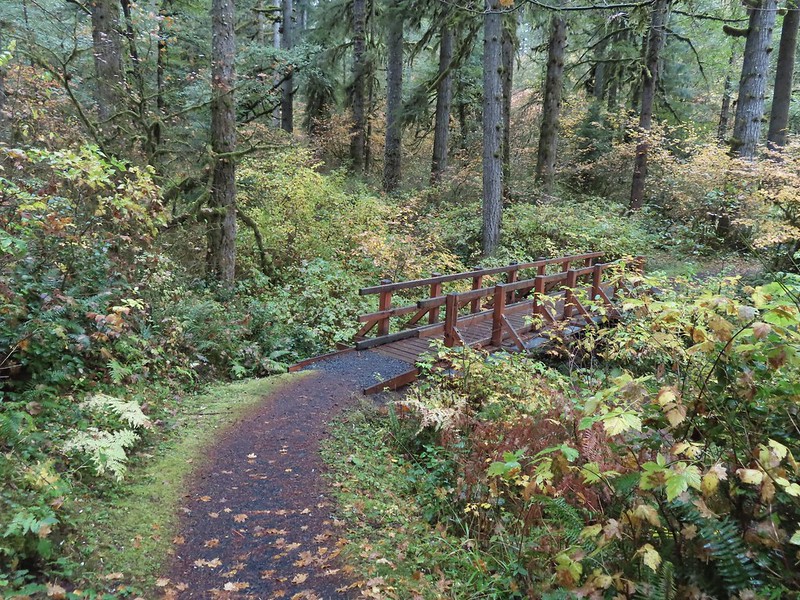


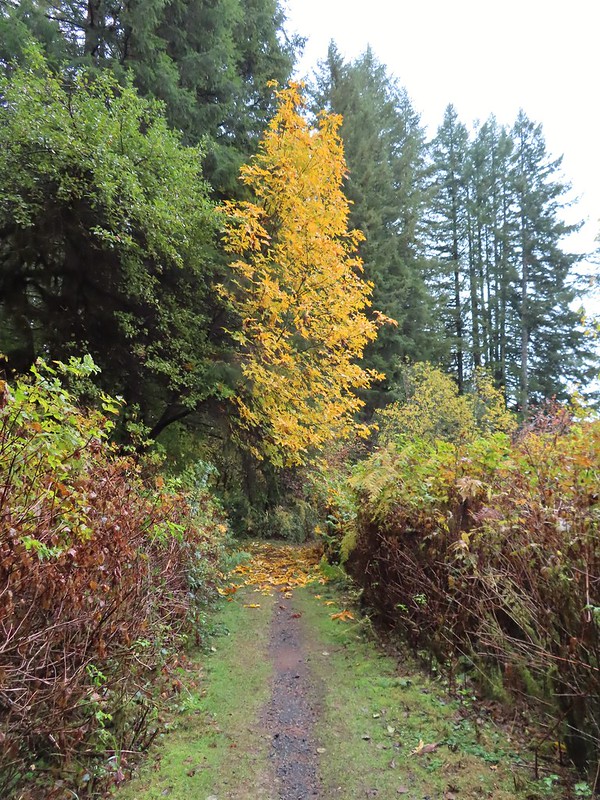

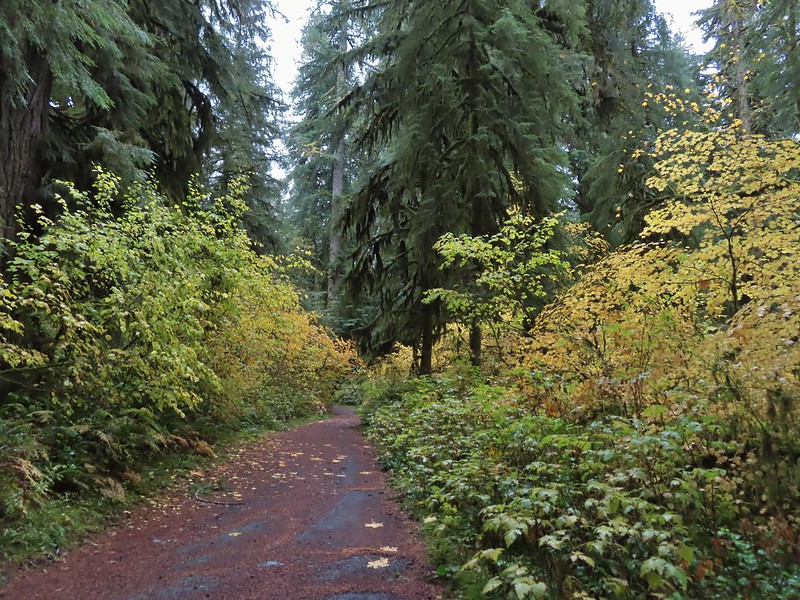
 From the spot that we entered the campground you could just see a hiker sign at the far end of the paved campground road.

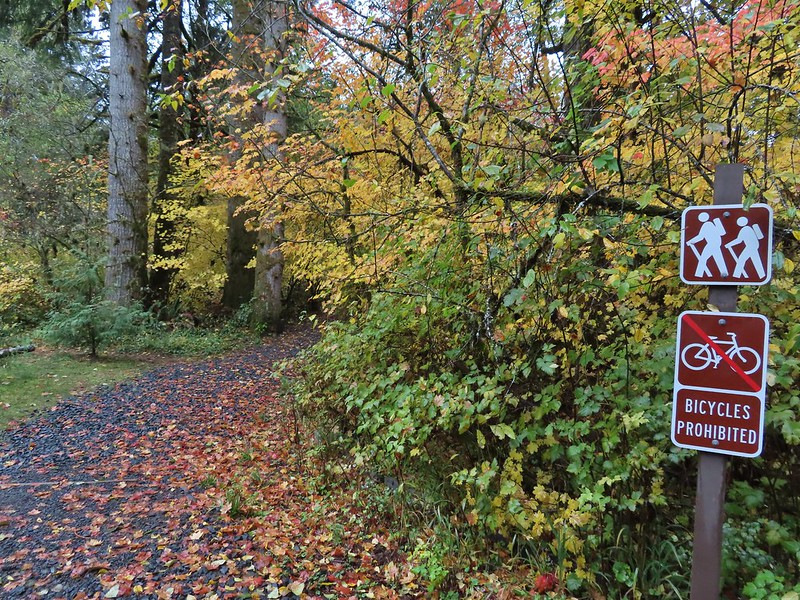
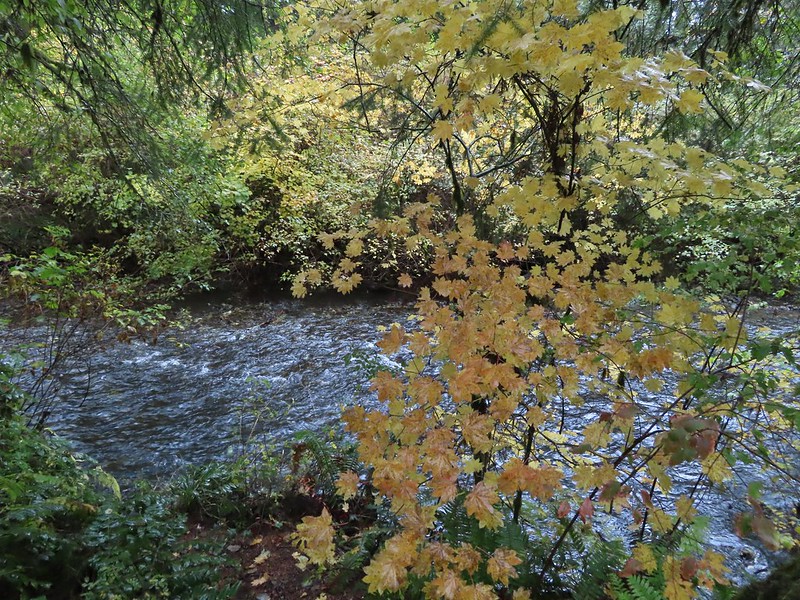
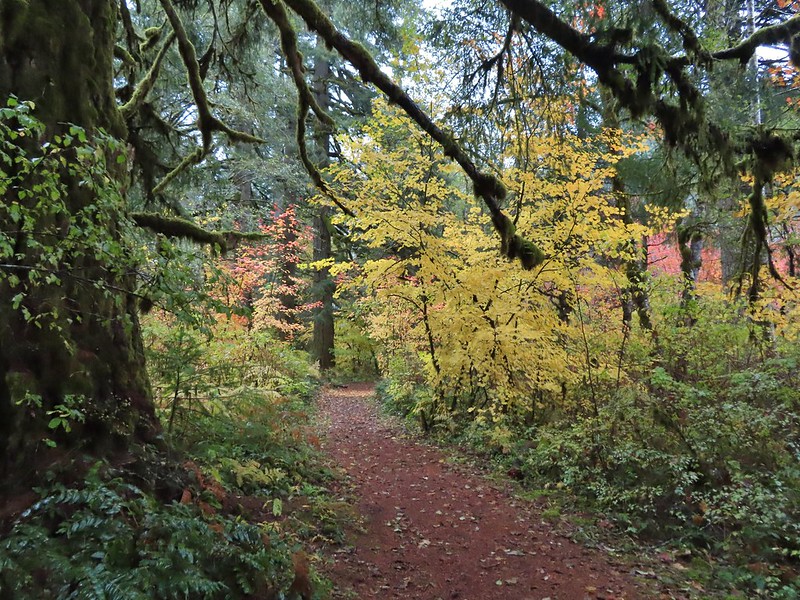

 No wildlife to view today.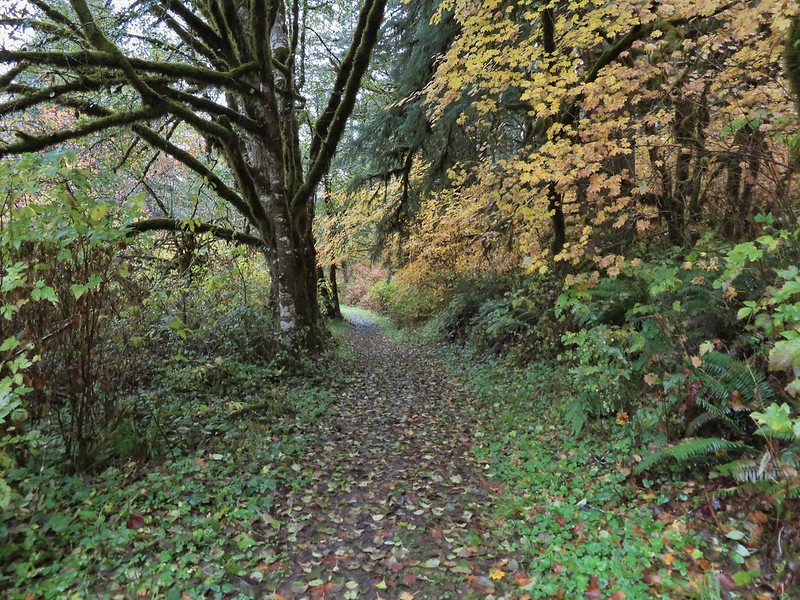

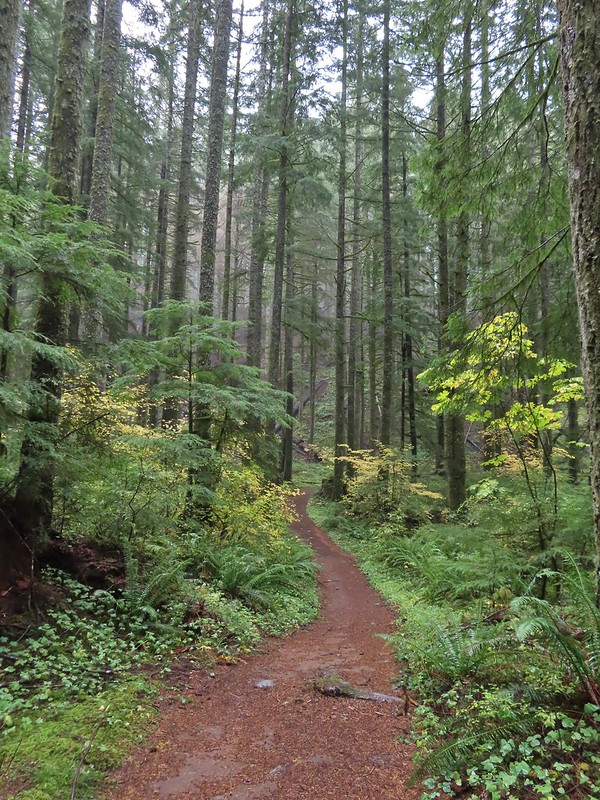
 The Howard Creek Loop Trail.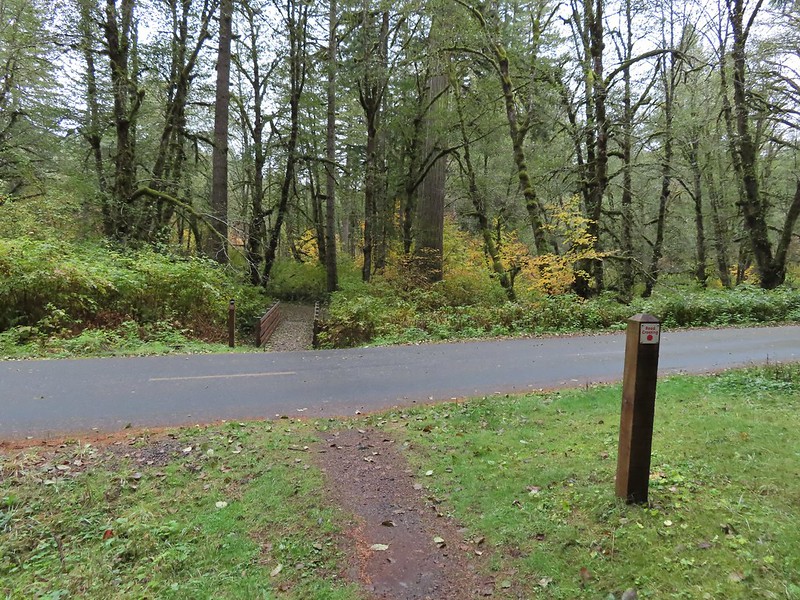
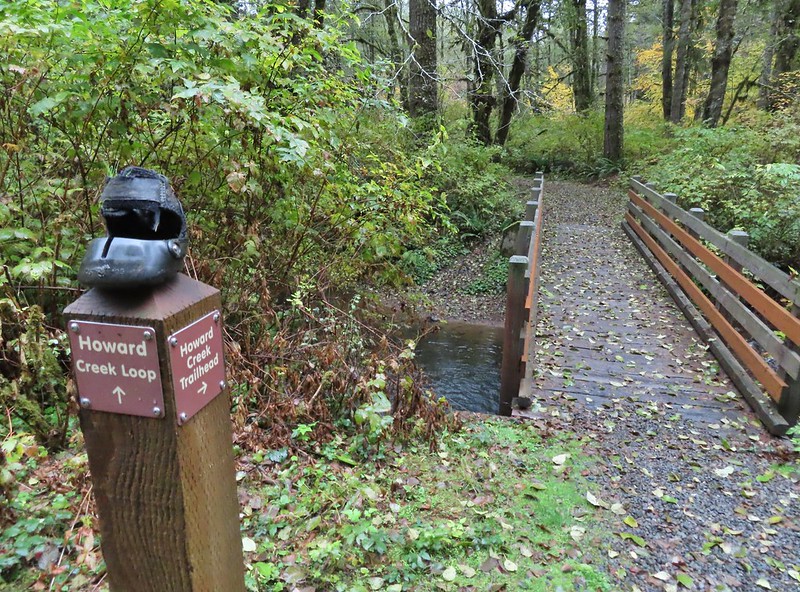
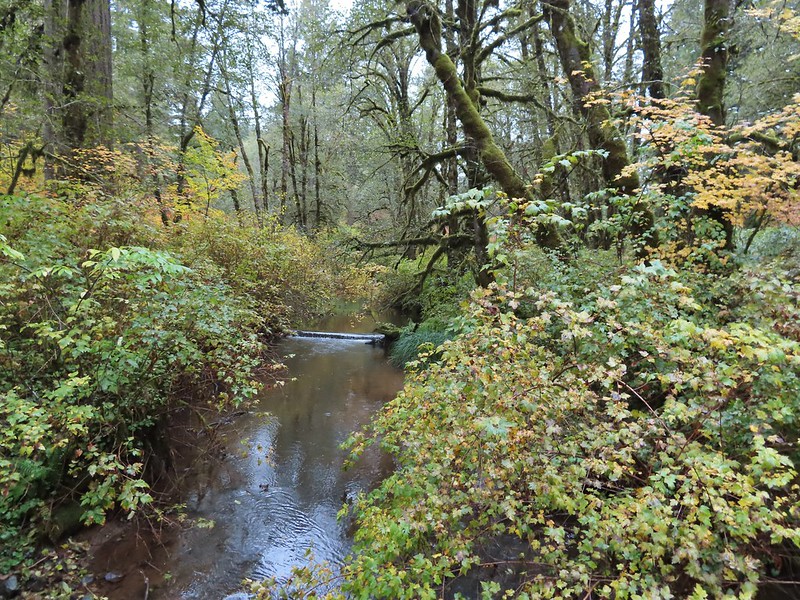 Howard Creek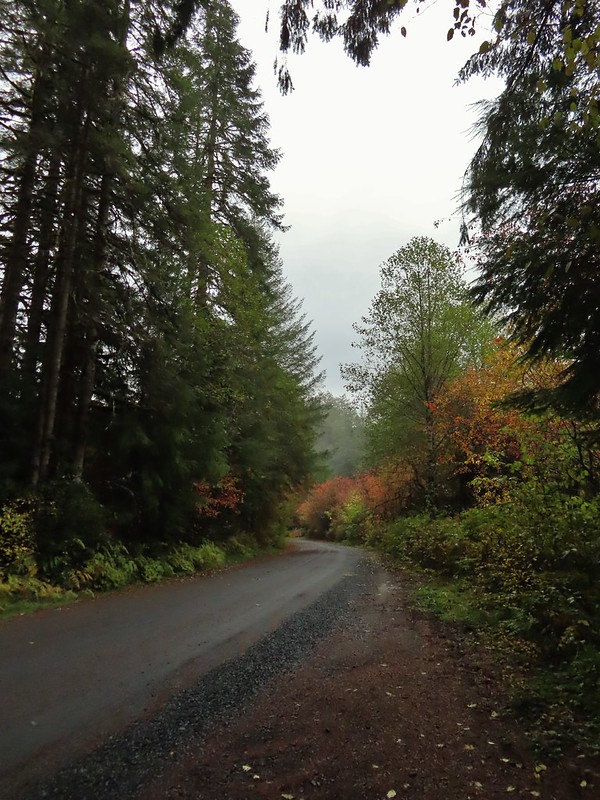
 Sign for the trailhead.


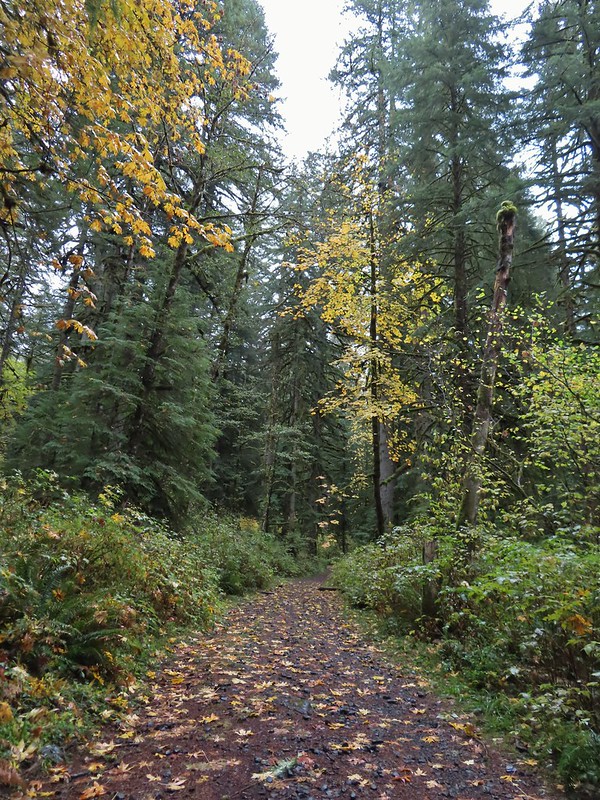
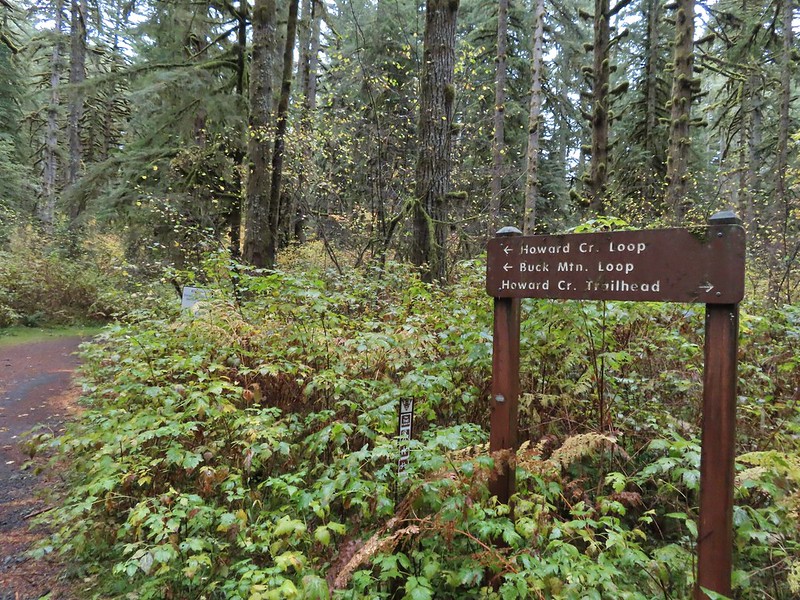
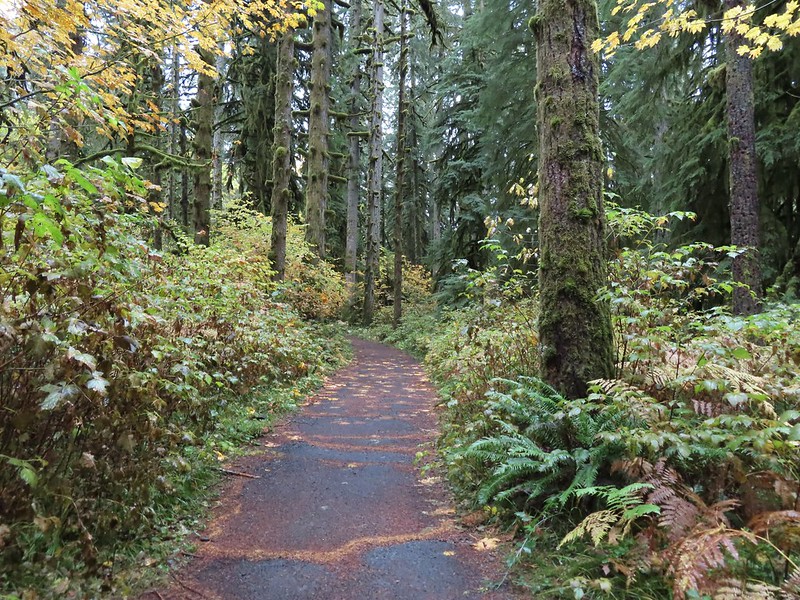

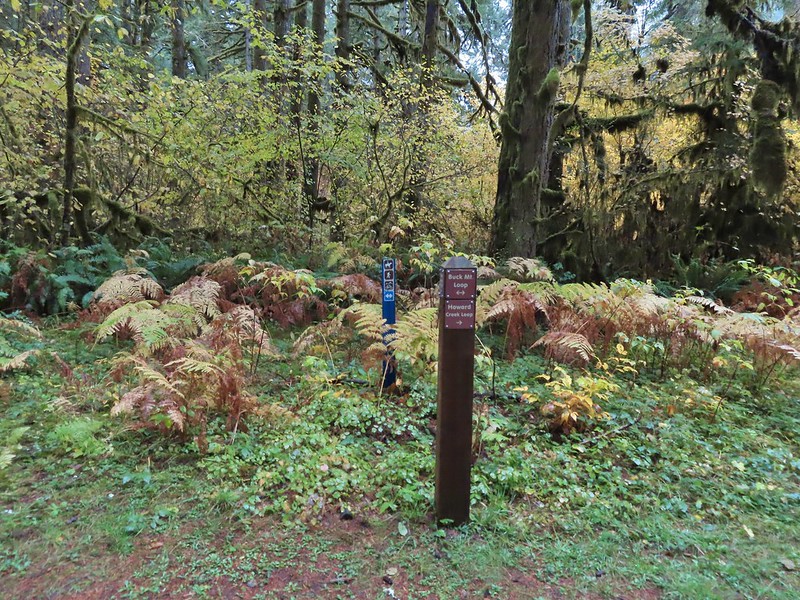



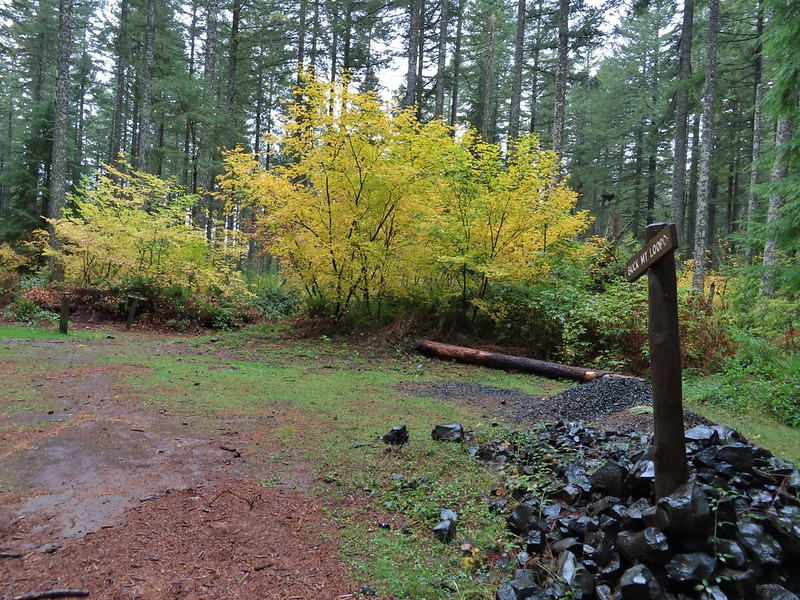
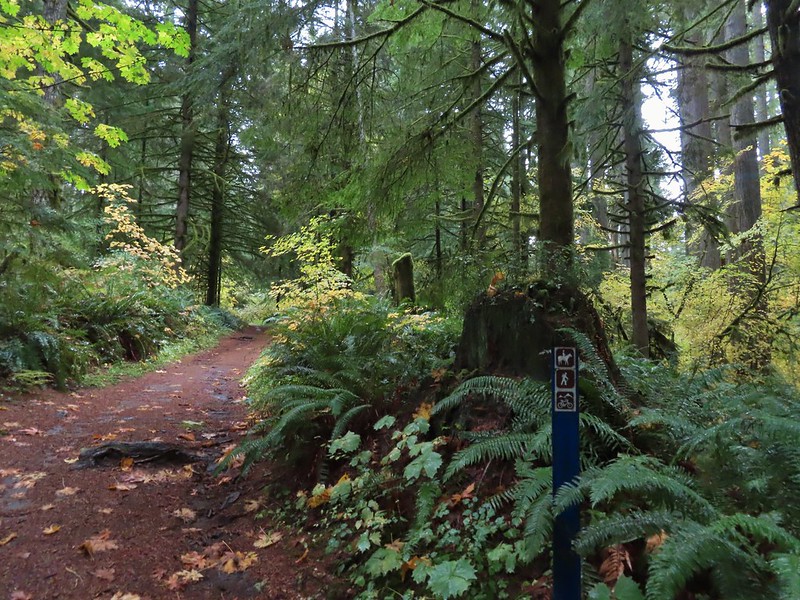 Blue appeared to mean Buck Mountain Loop (the posts along the Howard Creek Loop had been red and later the Smith Creek Trail posts were yellow.)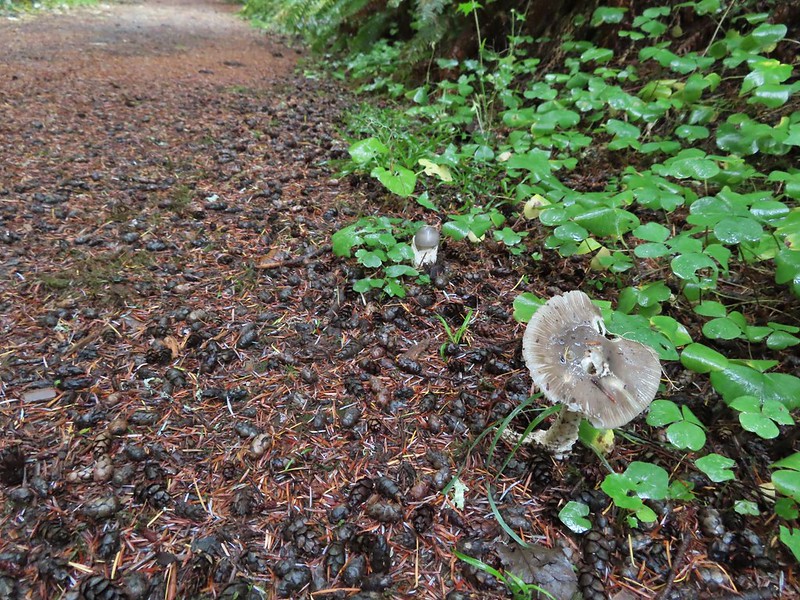

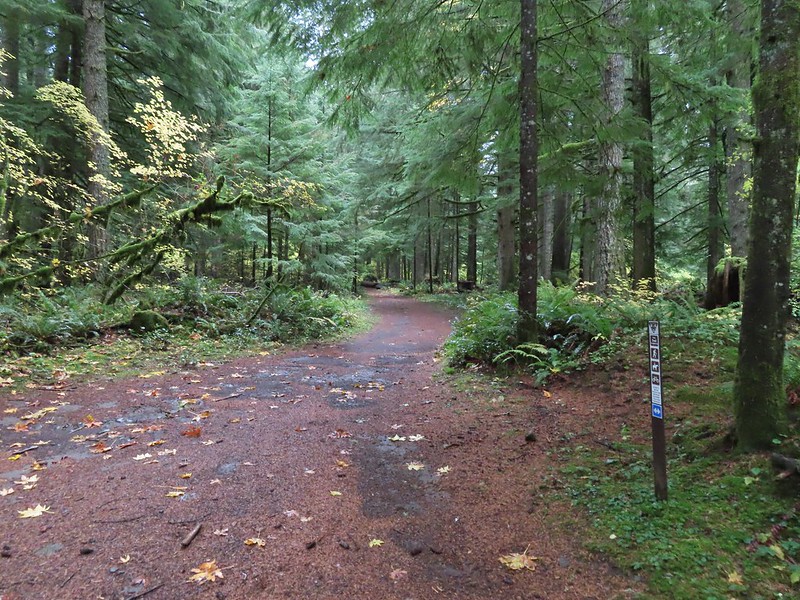
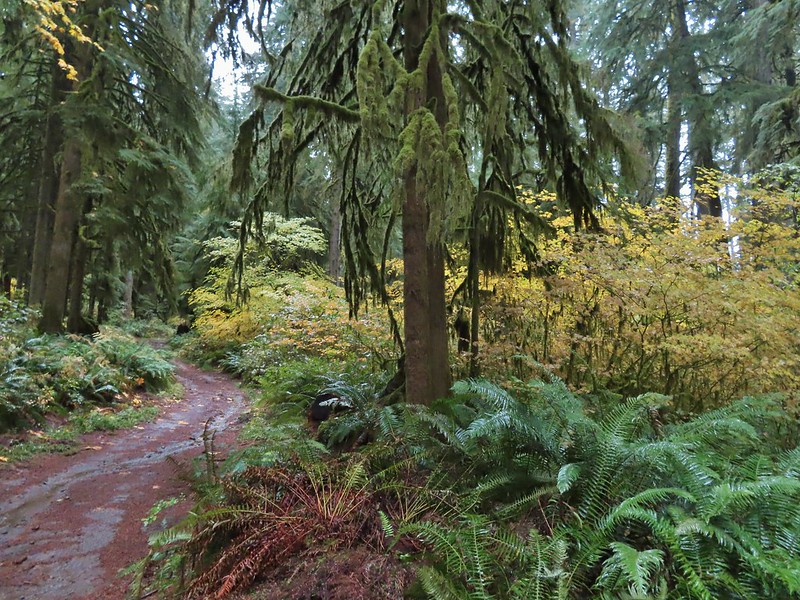
 The mix of tree trunks here caught our eye.
 Approaching the trail junction.

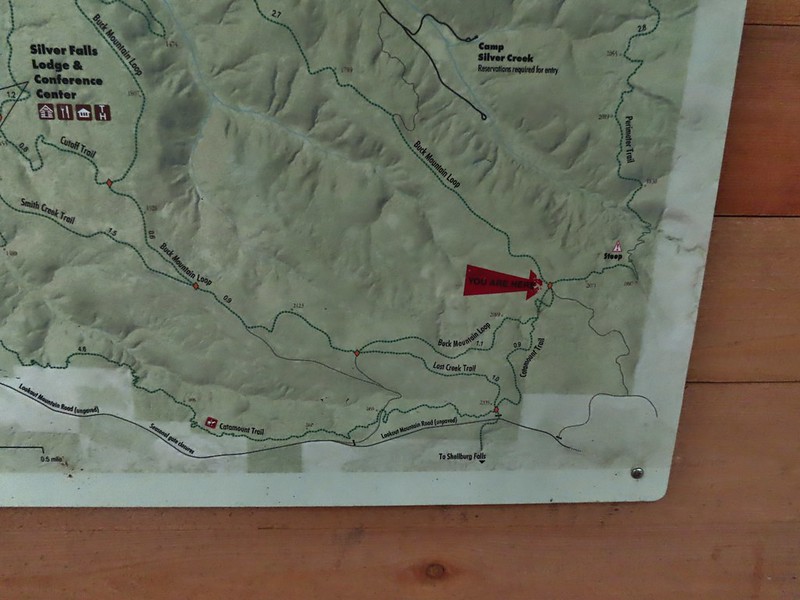
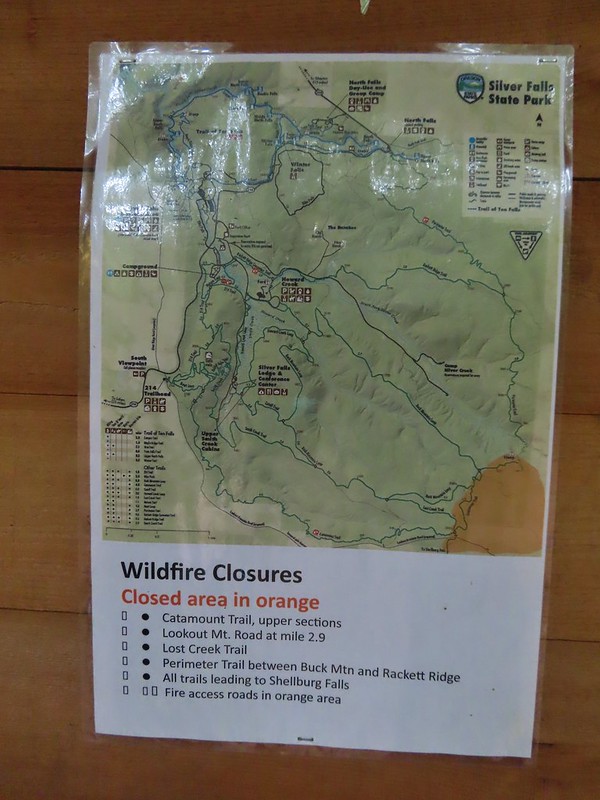 The 2020 Beachie Creek Fire threatened the Park and did in fact burn over nearby Shellburg Falls (
 Orange fence marking the closure of the Catamount Trail.
 The first footbridge which spans Howard Creek. The creek was obscured by brush.
 The second footbridge over a tributary not shown on the topo map.
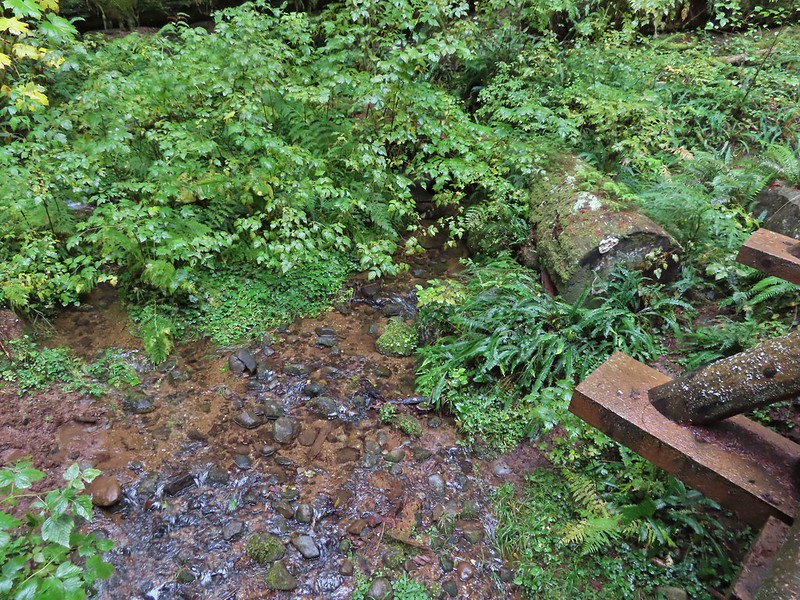 This stream was a little easier to see.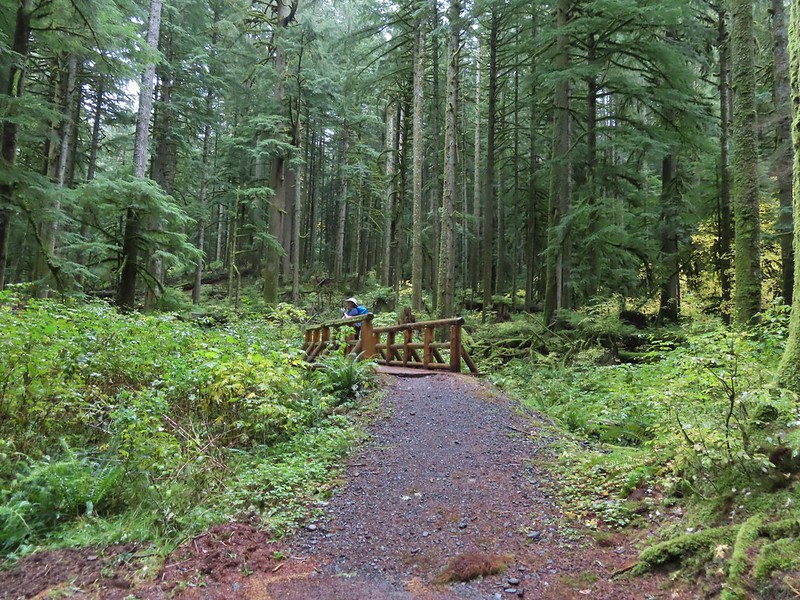
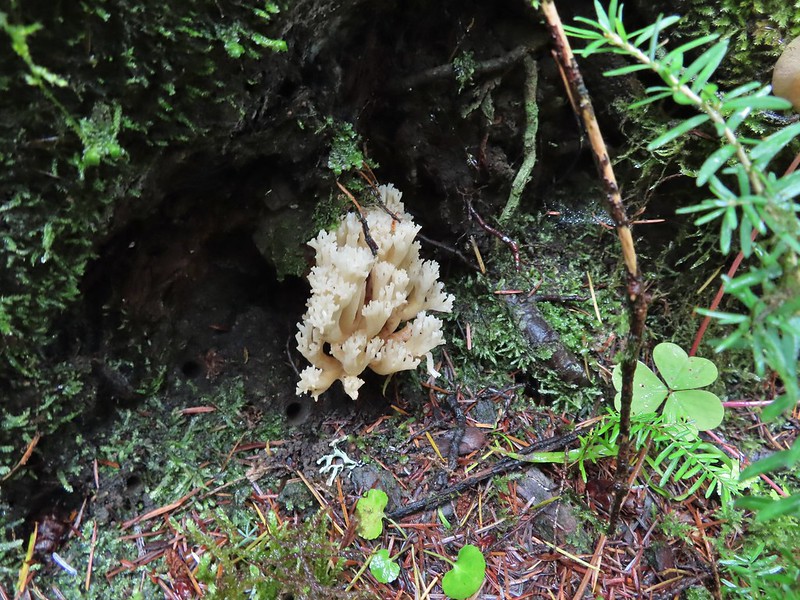
 A reminder of how close the Beachie Creek Fire was.
 The 4-way junction.

 Approaching the Smith Creek Trail junction.
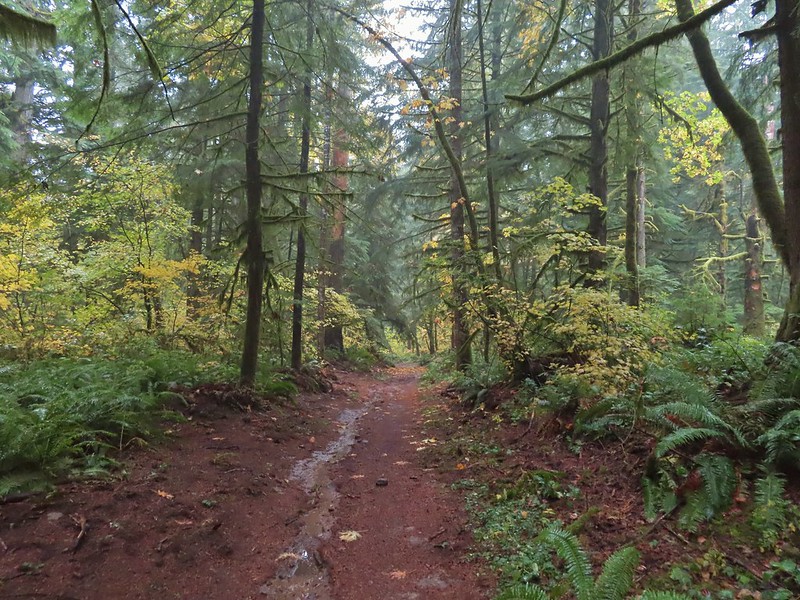


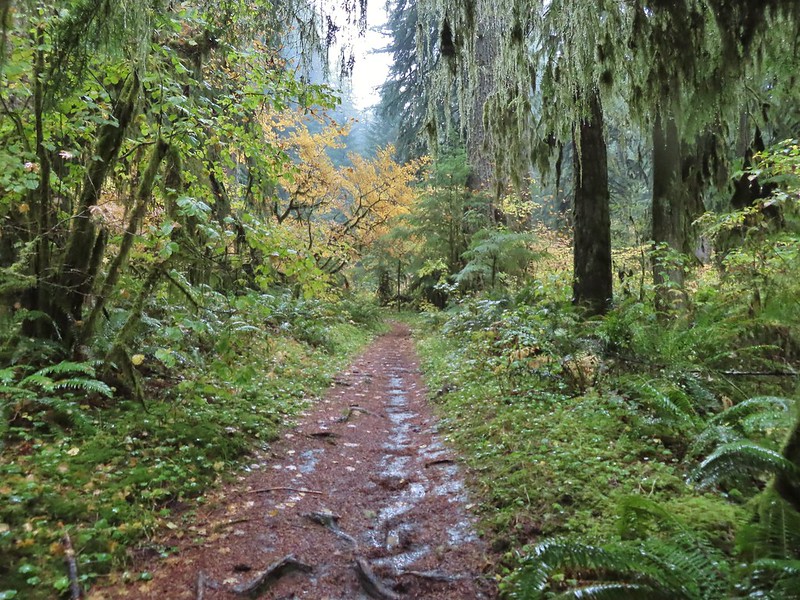
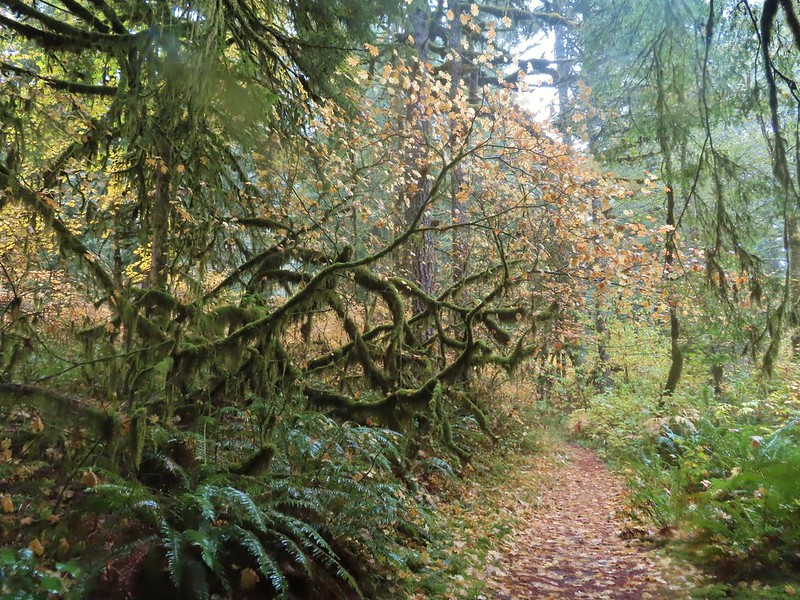


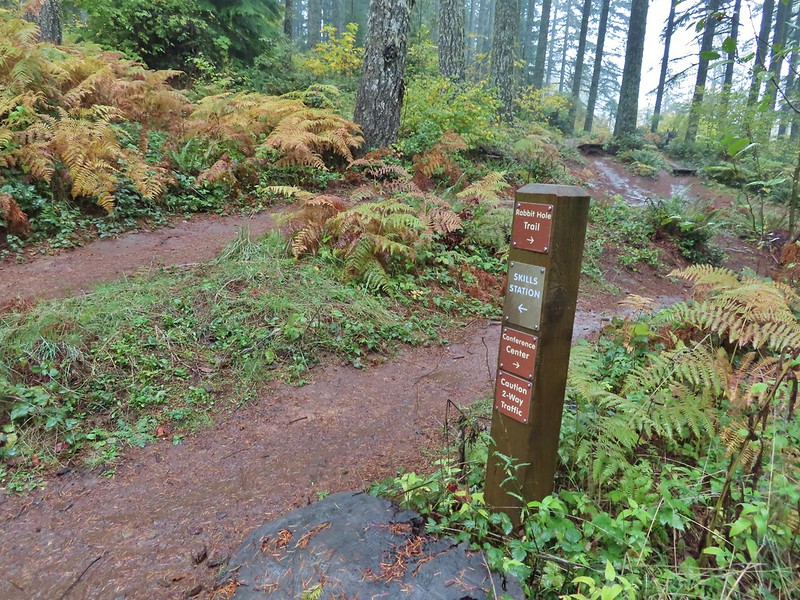 Ramps in the background at the skills station.
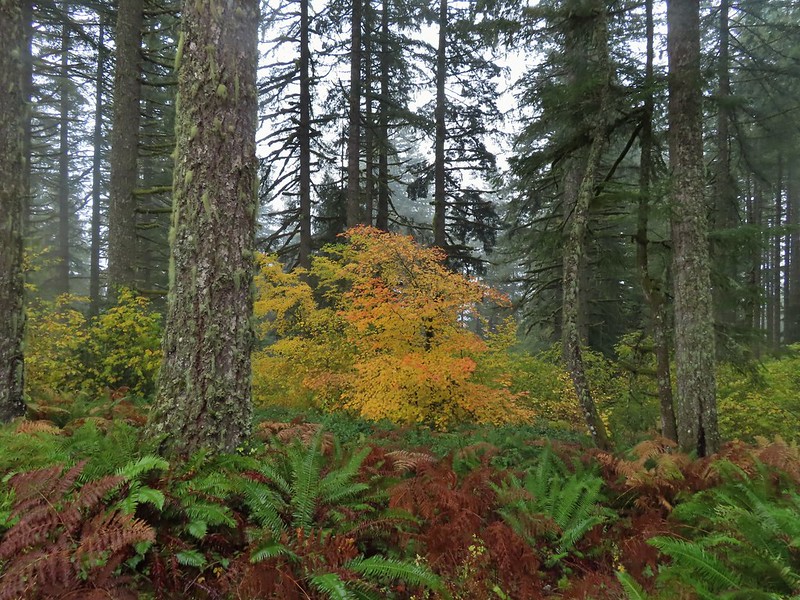
 The Catamount Trail arriving on the left.
 The 214 Trail from the Newt Loop.
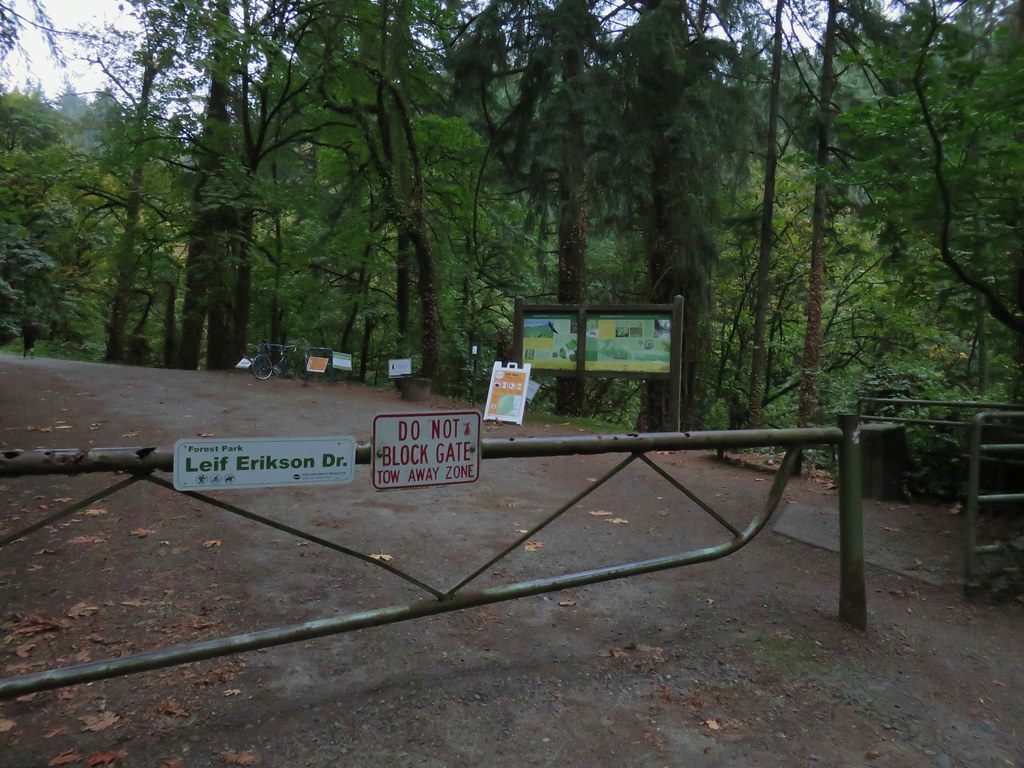
 .
.

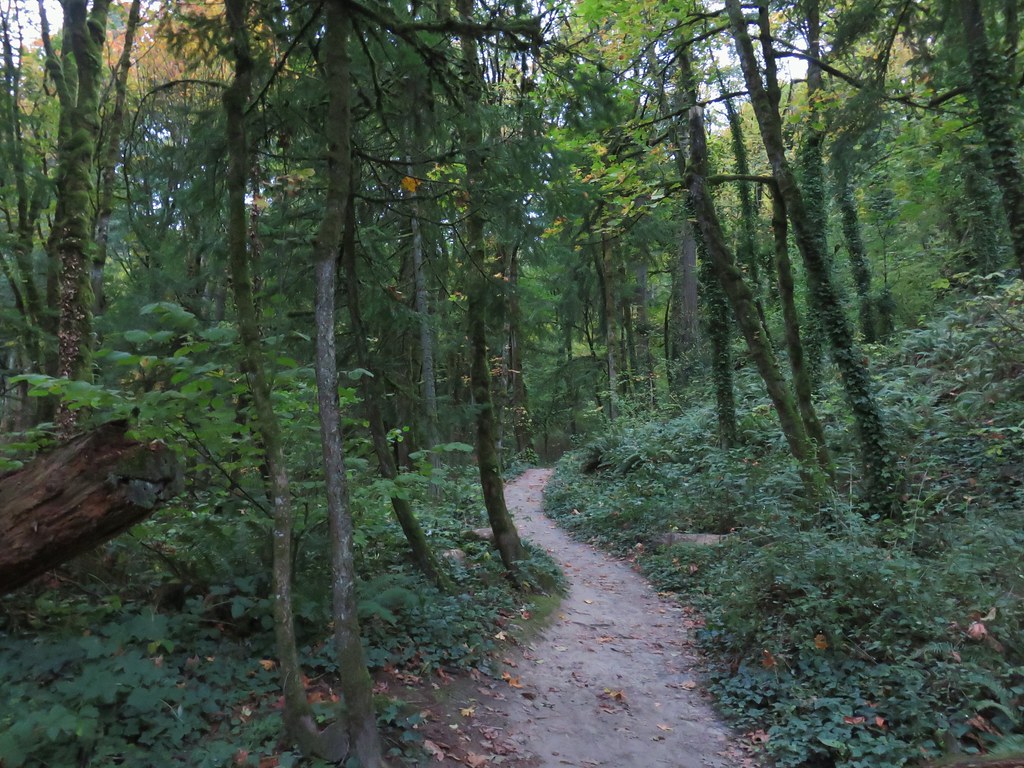
 Switchback along the Wild Cherry Trail.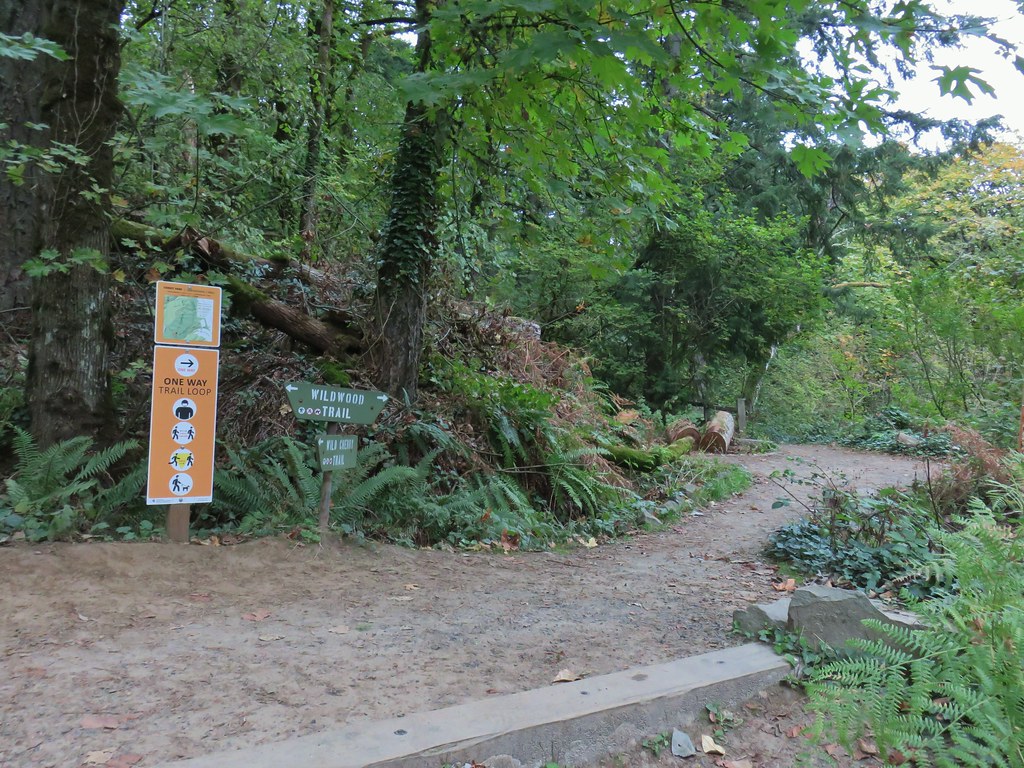


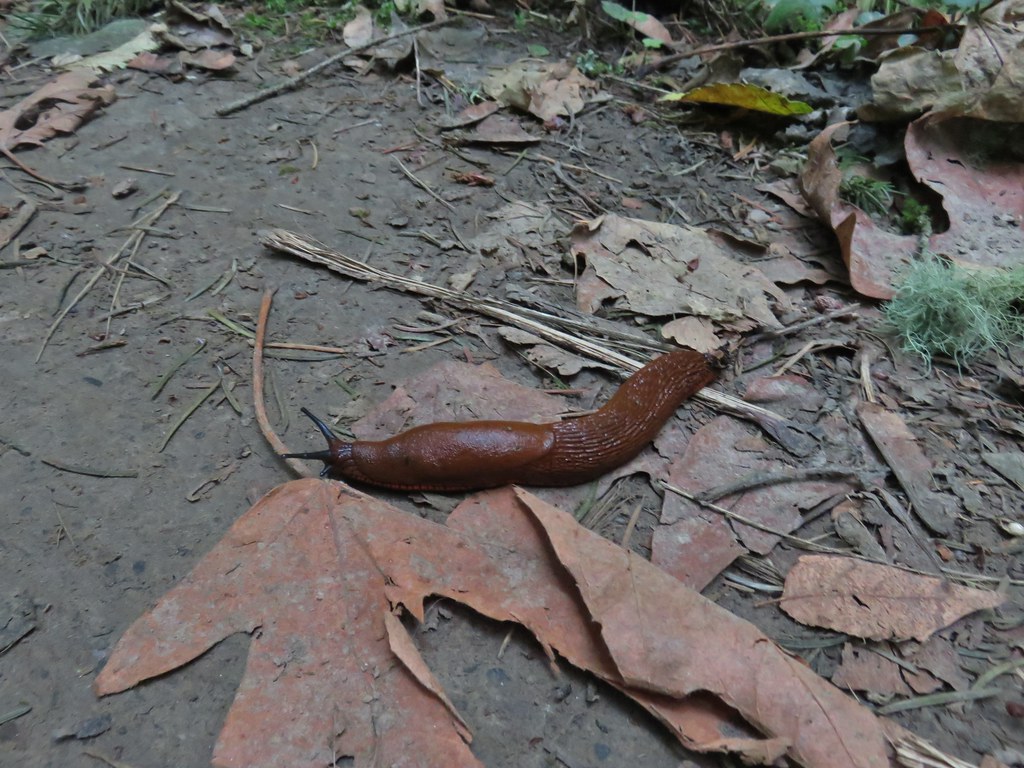 This was the first slug we recall seeing of this color.
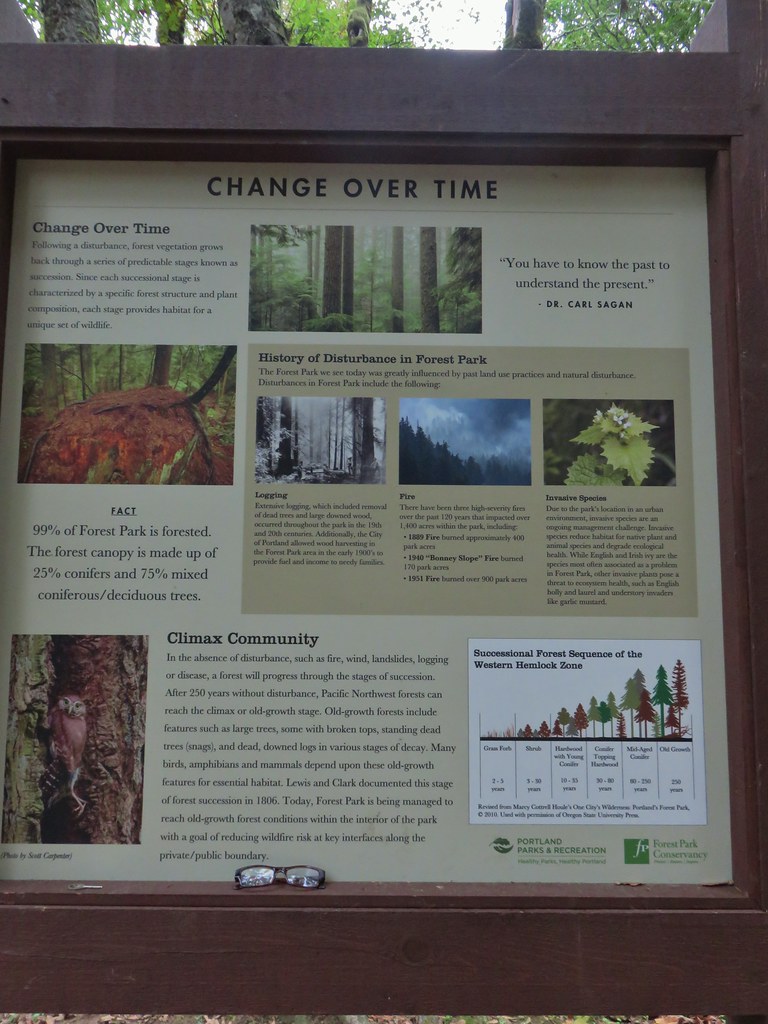 Interpretive sign at the NW 53rd parking area.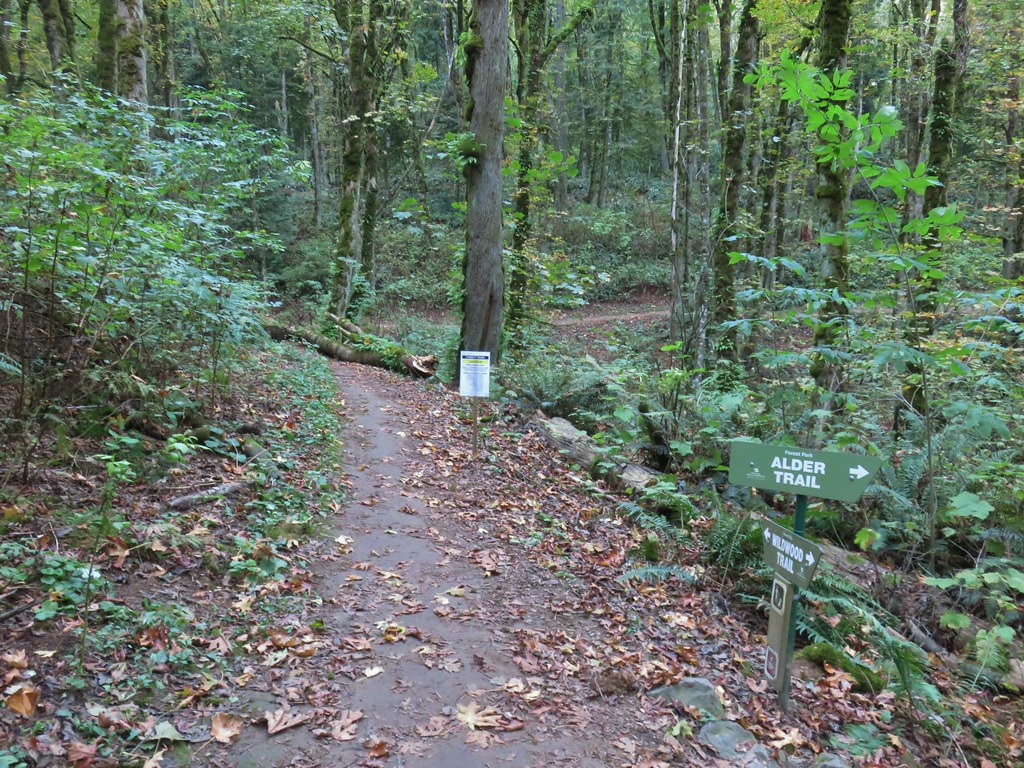


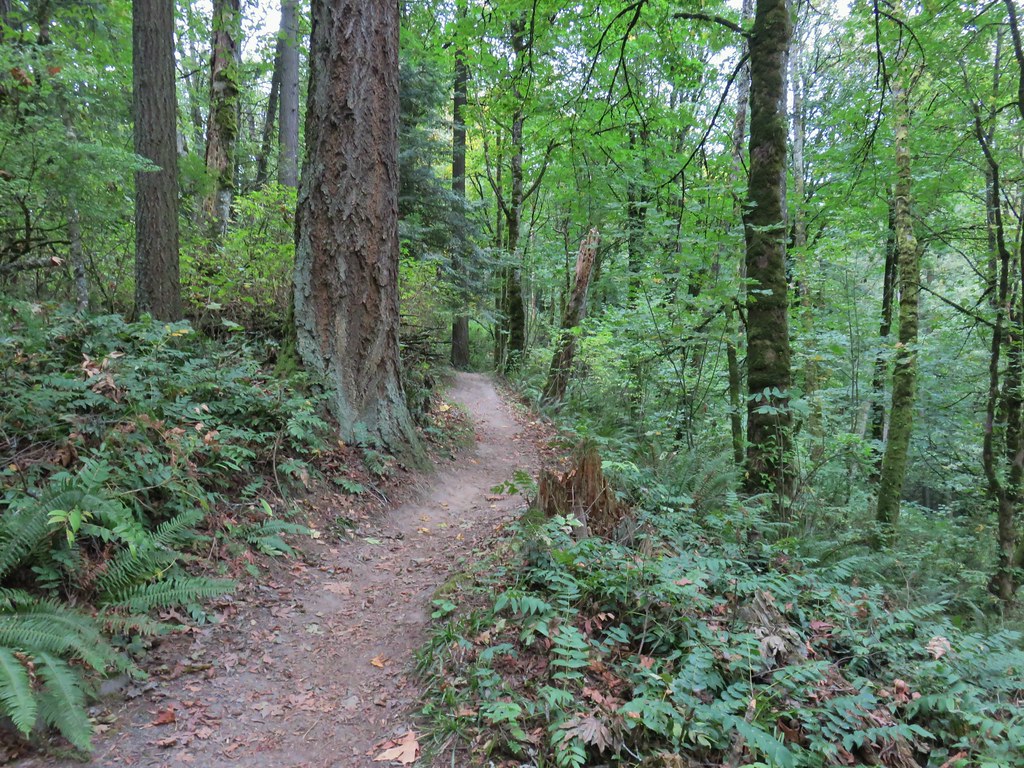
 The bridge damage was not an issue.
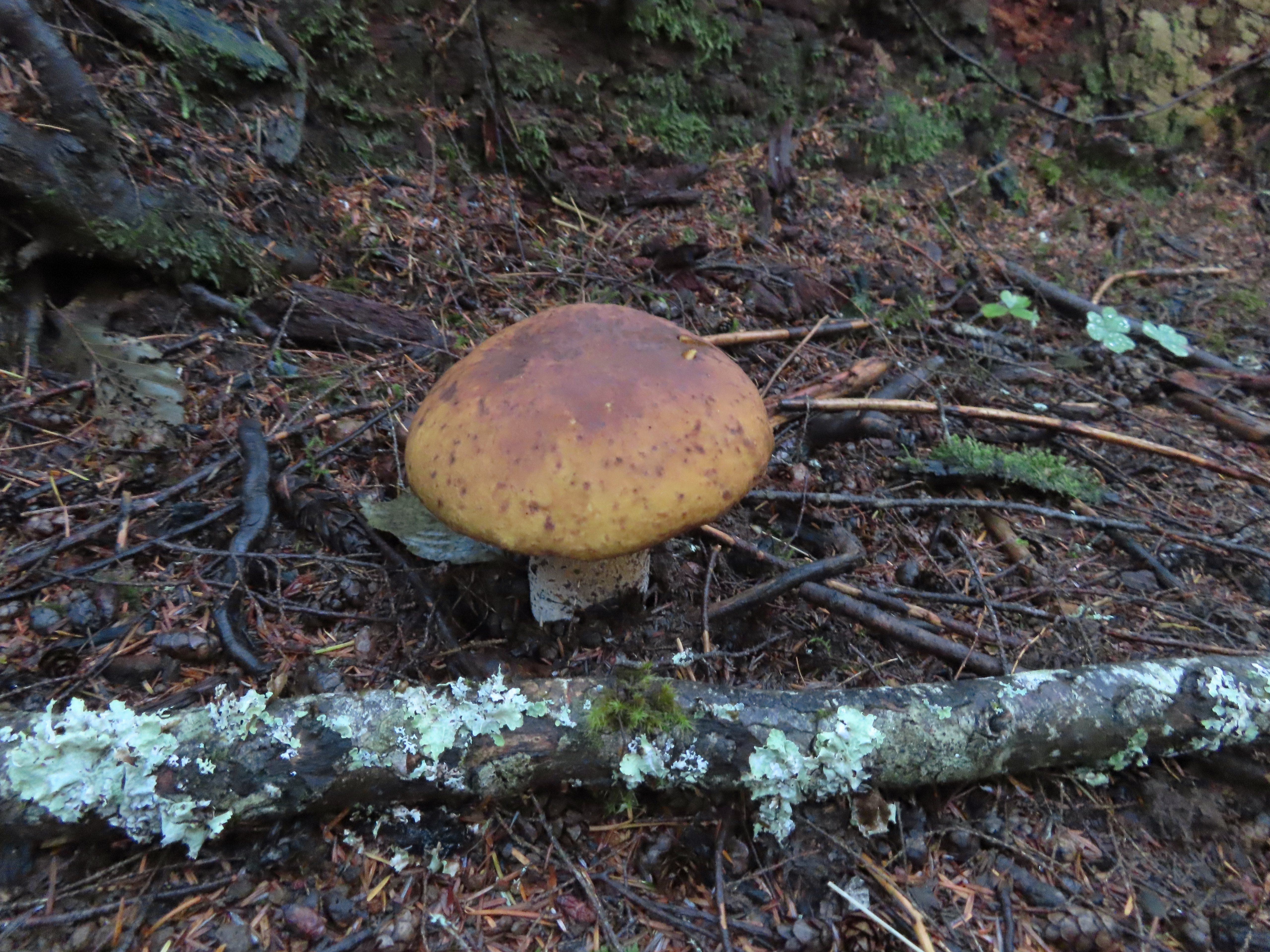
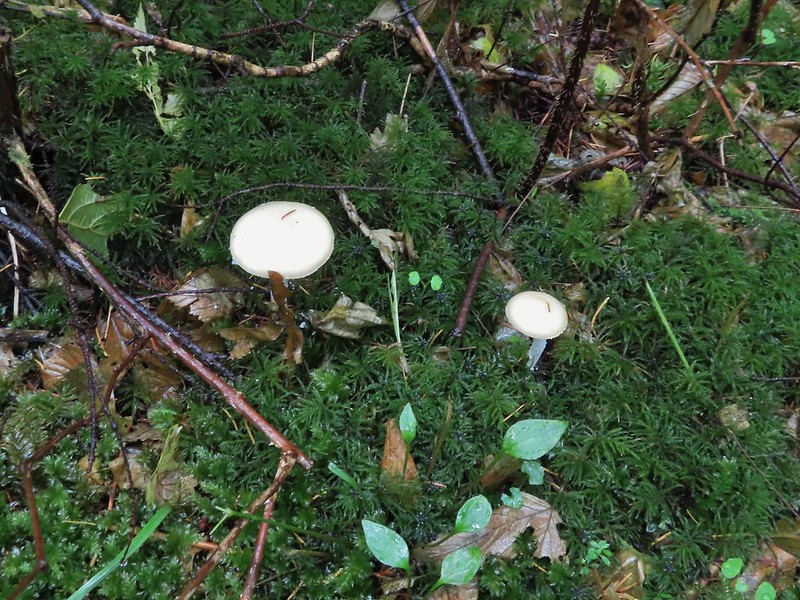
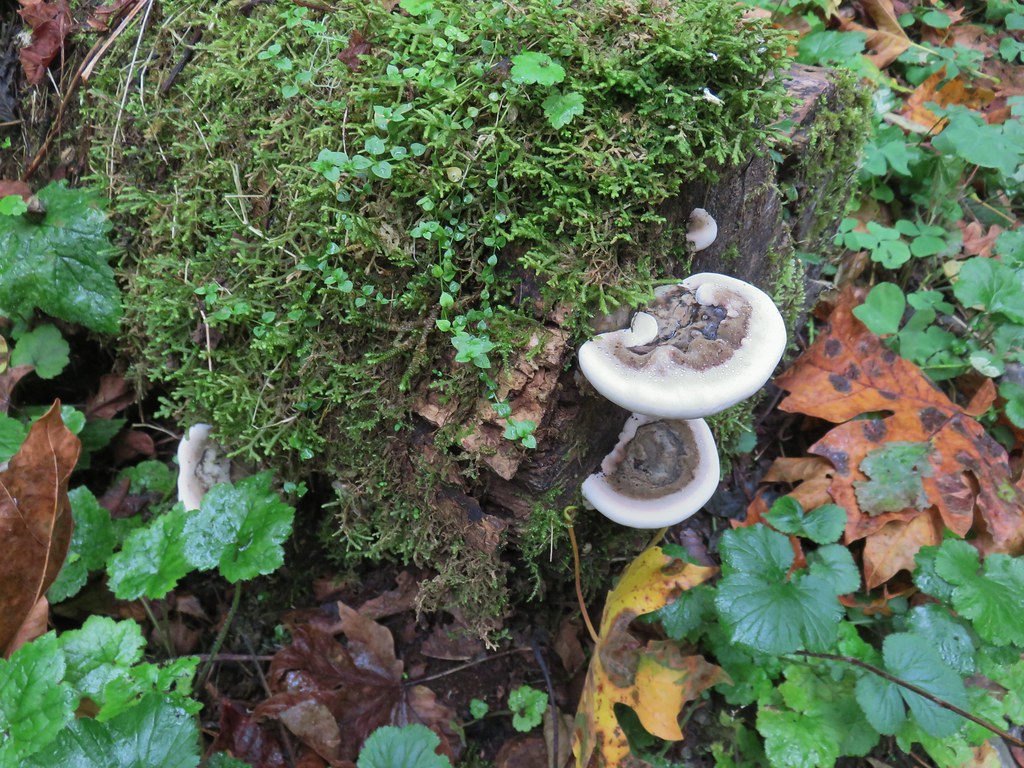
 Another bunch of musrhooms.

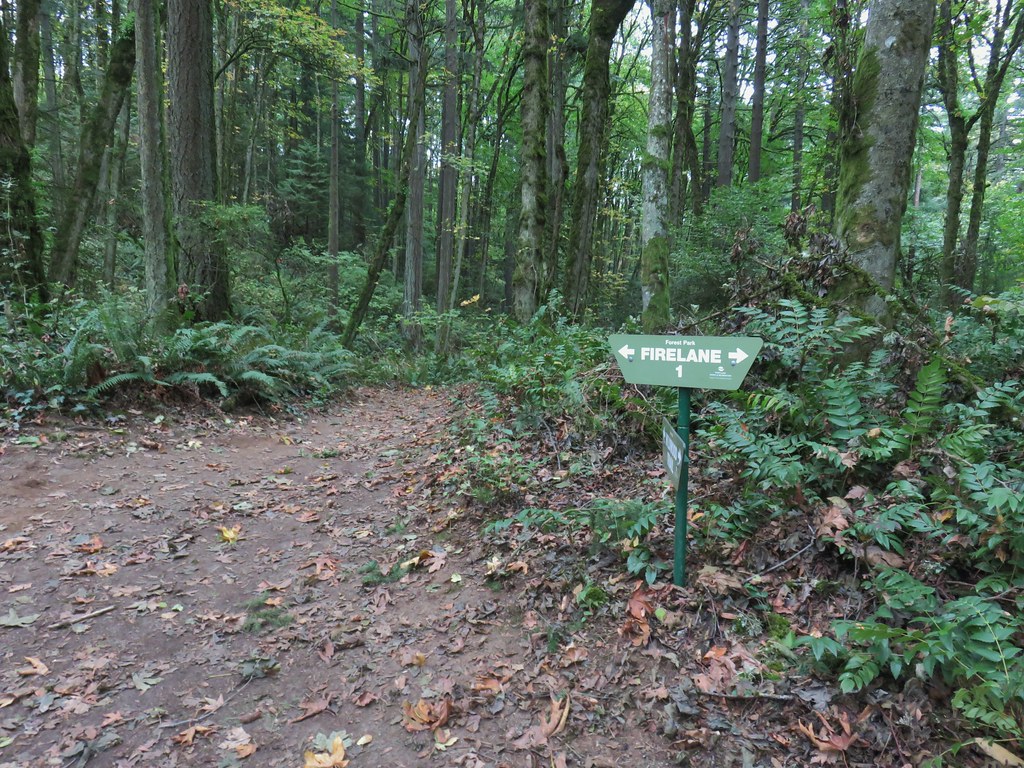 Firelane 1 junction.

 The fork, left was downhill right up.


 Firelane 1
 Somewhere along Leif Erikson there was supposed to be a view of Mt. St. Helens, Mt. Adams and Mt. Hood along the way but the clouds never burned off like the forecast had called for.
 The Alder Trail at Leif Erikson Dr.
 An orange one-way marker along Leif Erikson Drive between the Dogwood and Wild Cherry Trail junctions.
 wanderingyuncks