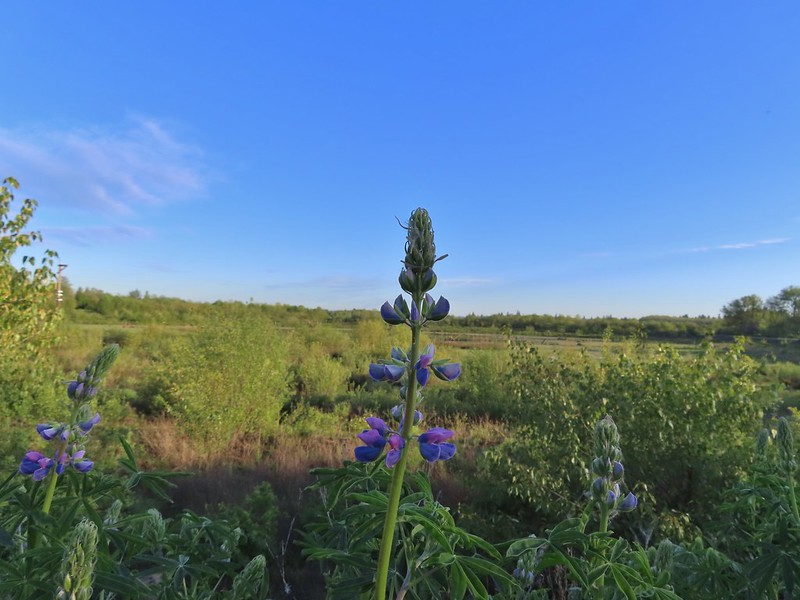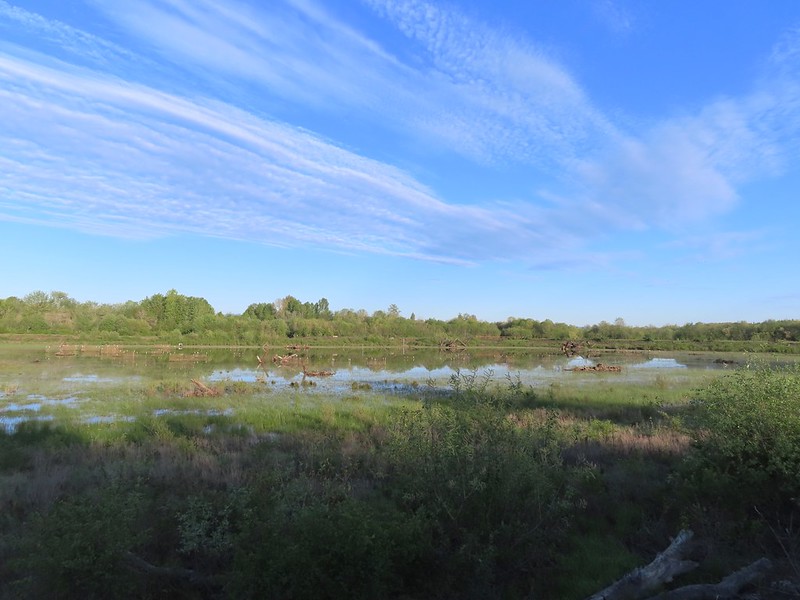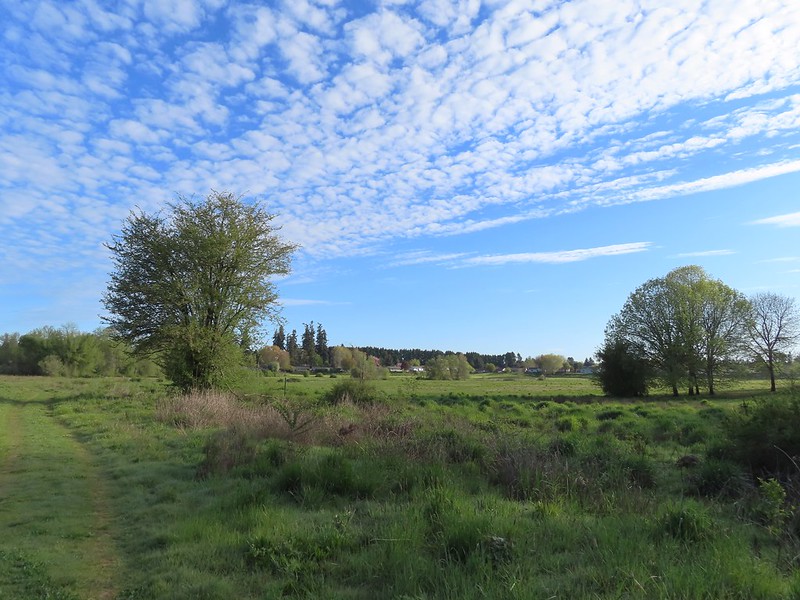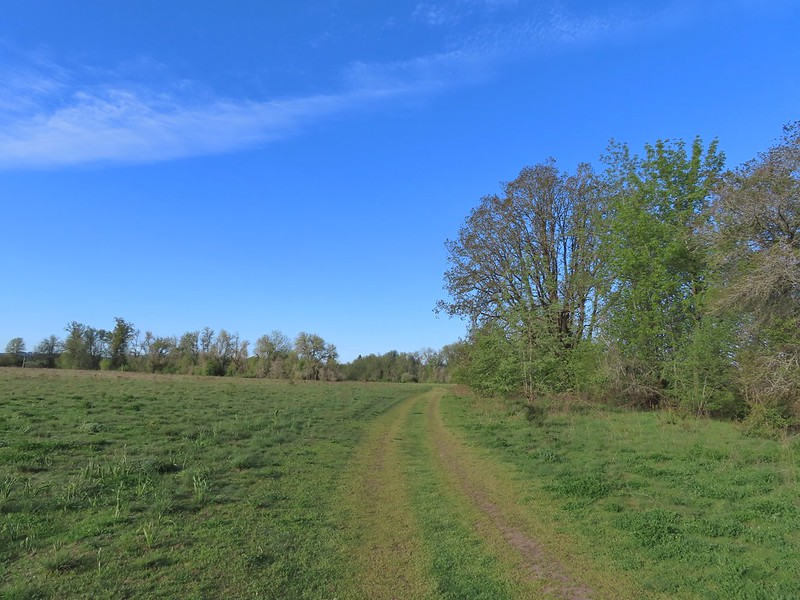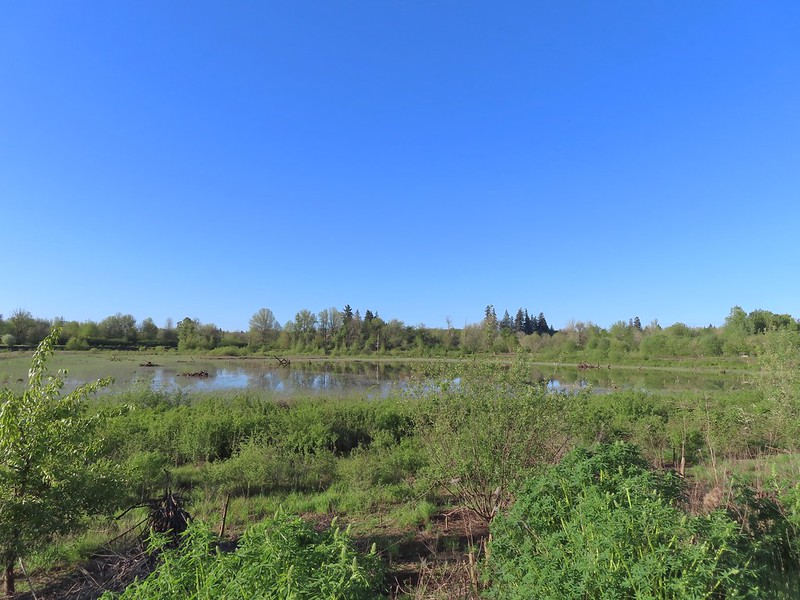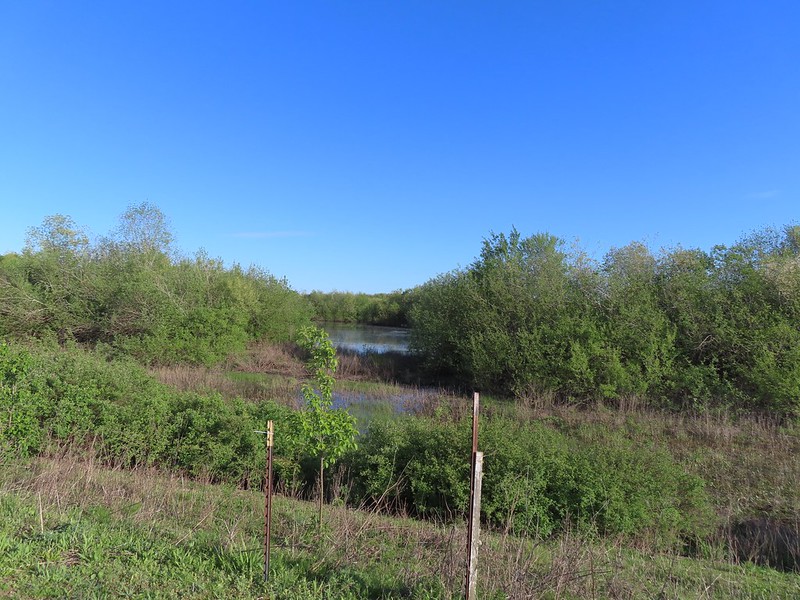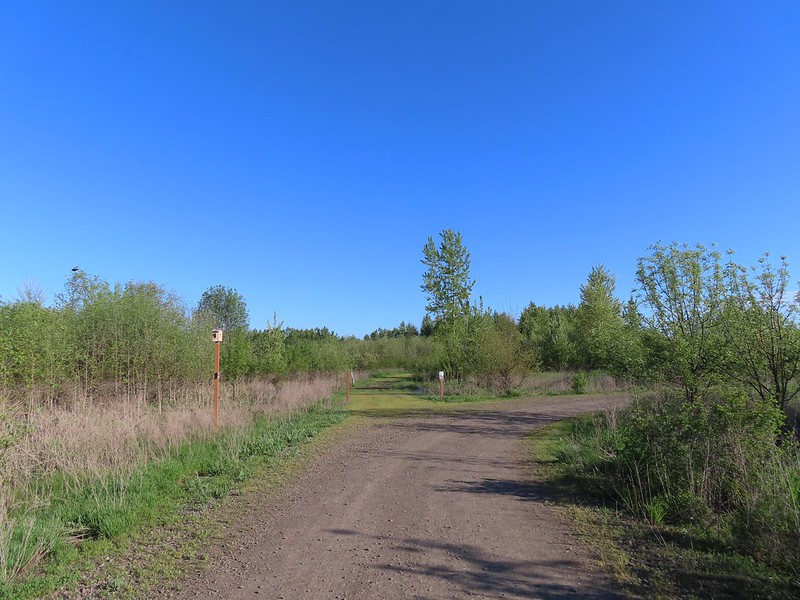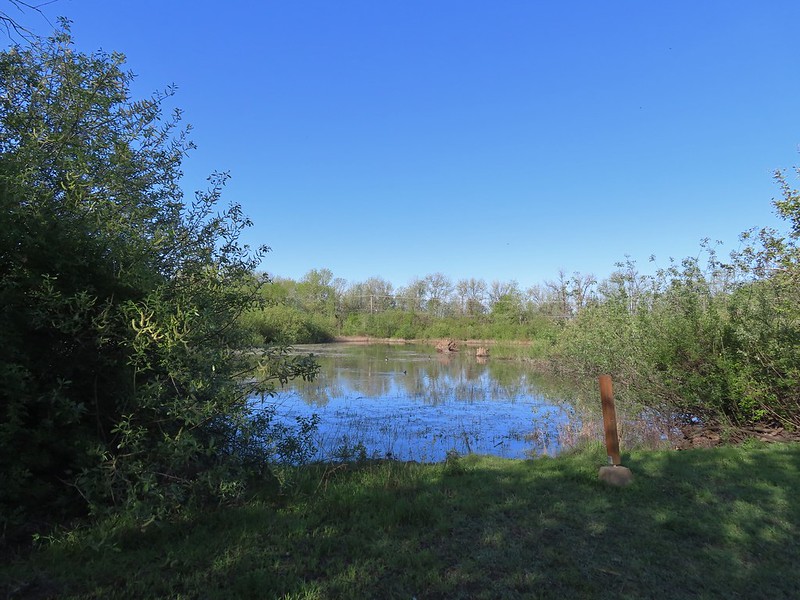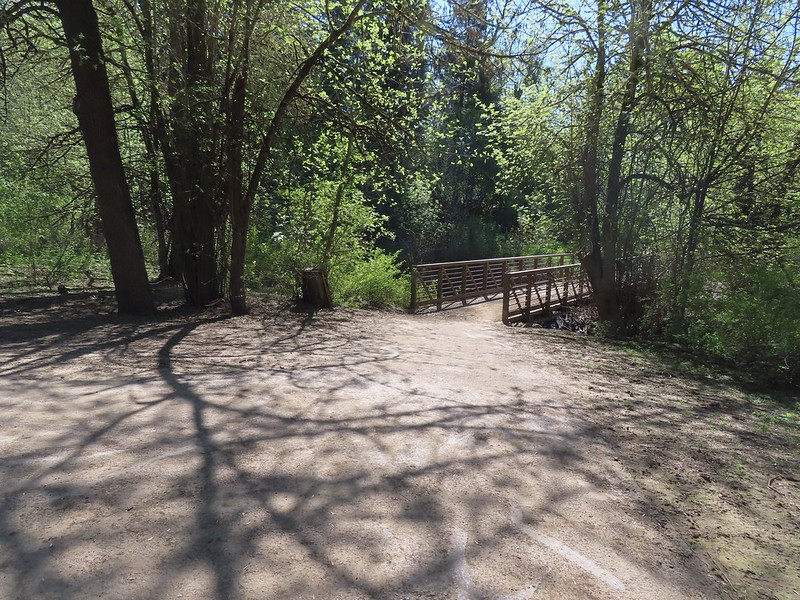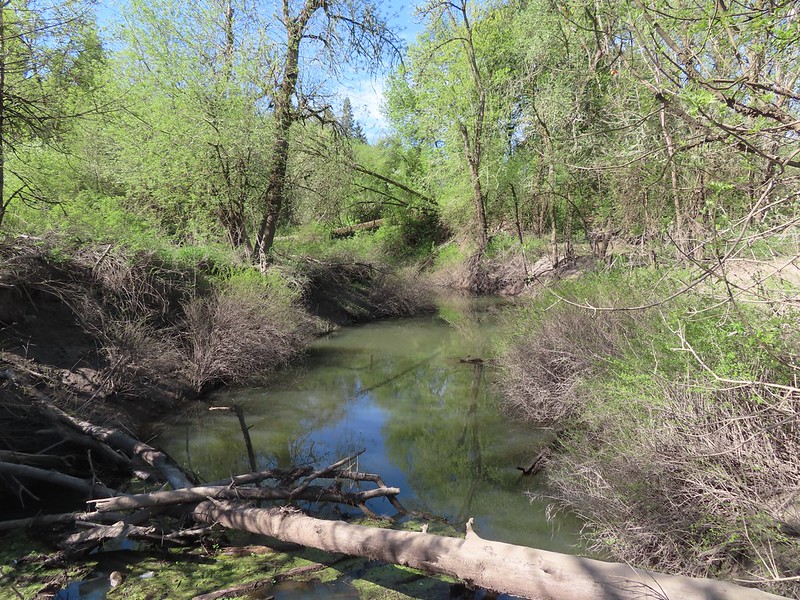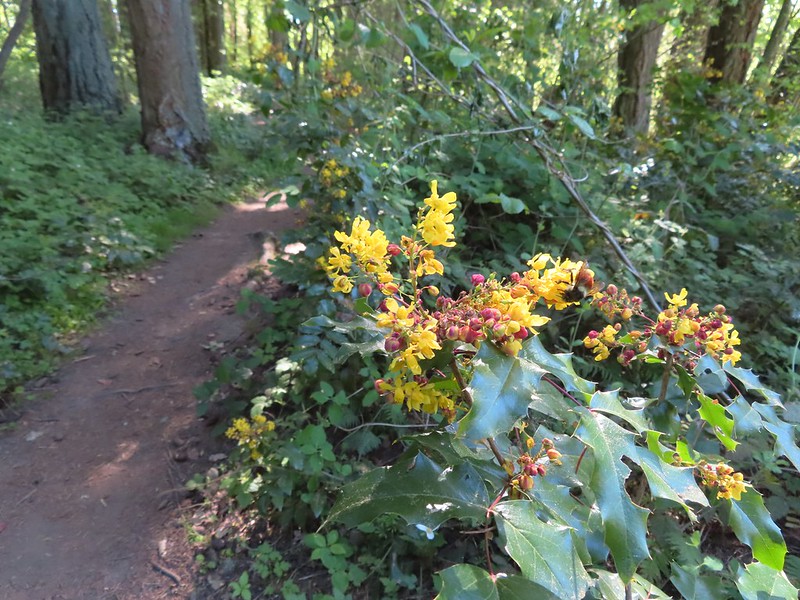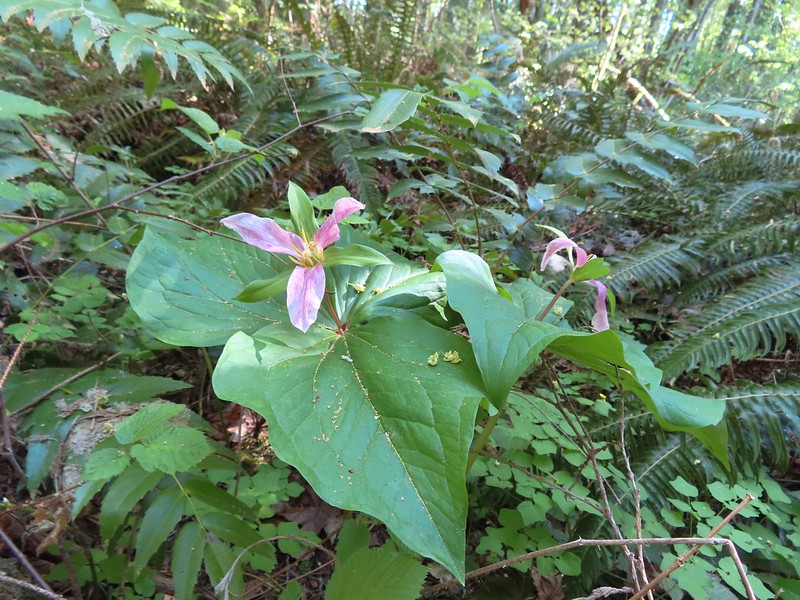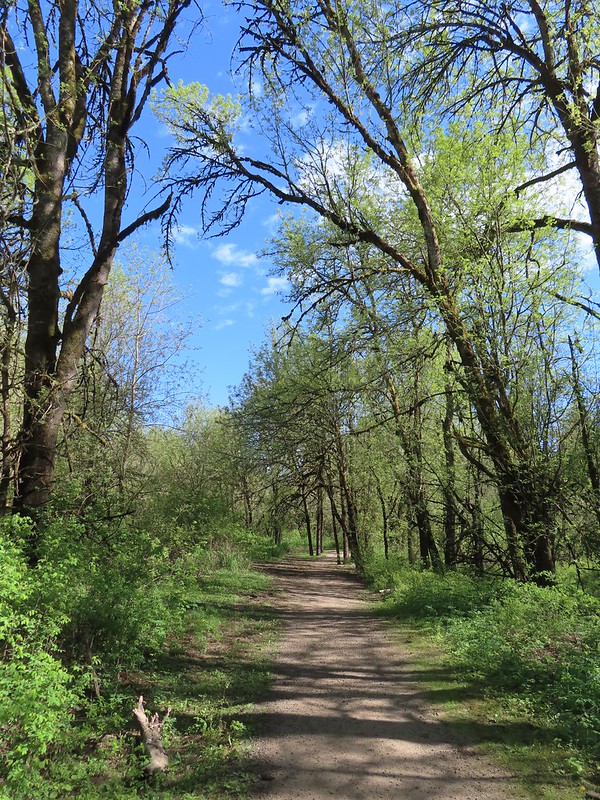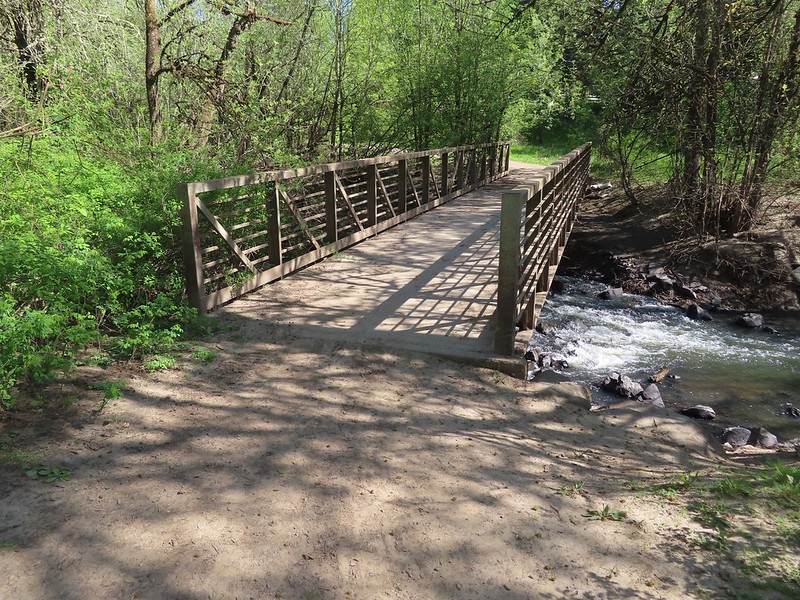
For our next short outing while I rehab we decided to return to Fernhill Wetlands for some birding. This destination allowed us to do a 3.5-mile hike first thing in the morning then meet up with Heather’s biological father and his wife for breakfast at McMenamins Grand Lodge in Forest Grove.
I had been feeling good following our hike at Wild Iris Park two days earlier in Eugene (post), however I woke up on this morning with a sore and tight right hip (again). It loosened up a little after my morning stretching session, but it was still a bit irritated as we set out from the Fernhill parking lot just before 7am.
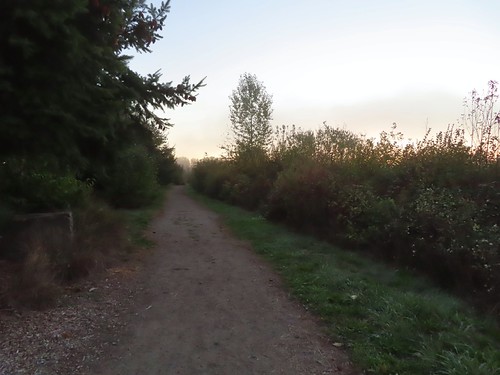
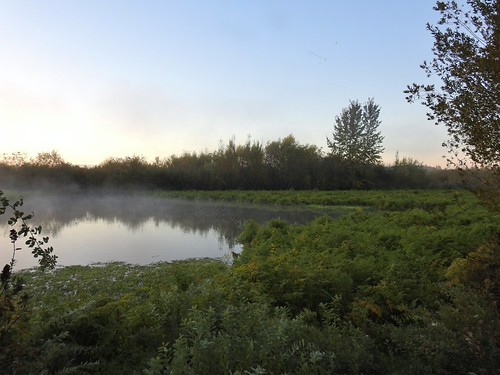
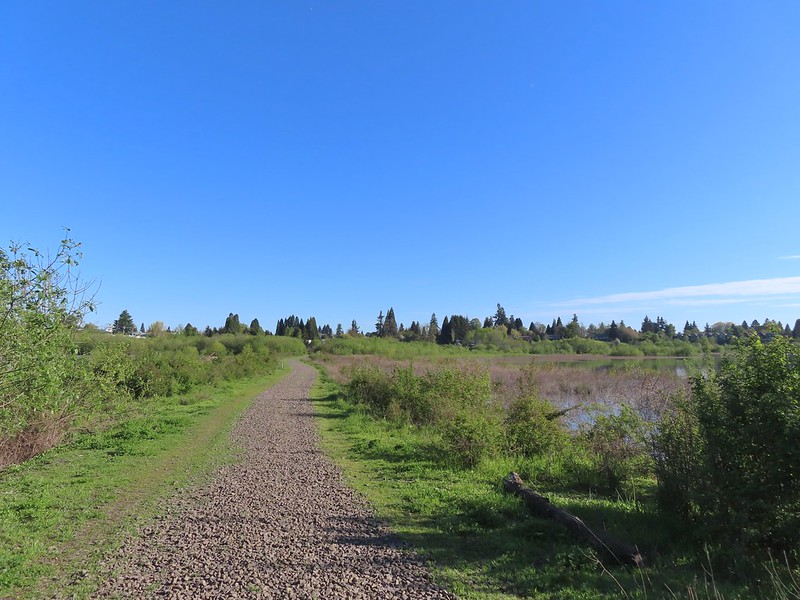
We started at Fernhill Marsh and began a counterclockwise loop.
Today’s track.
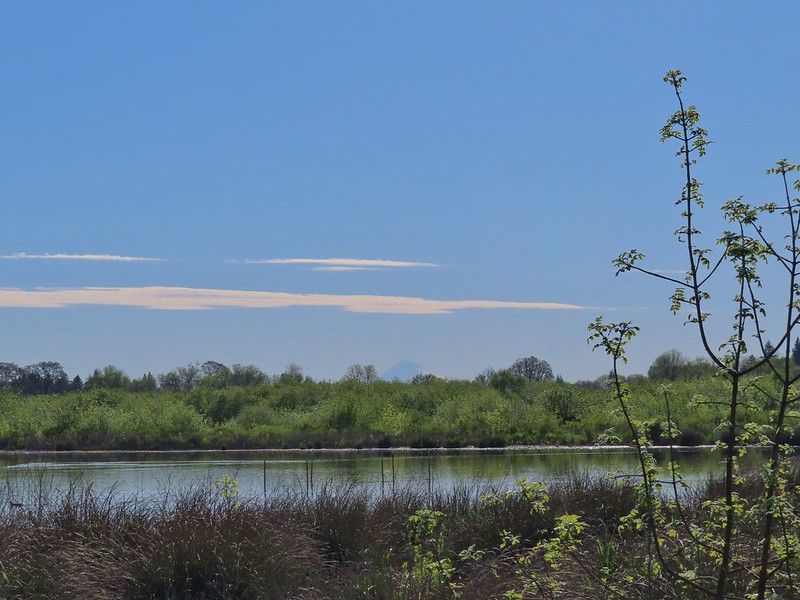
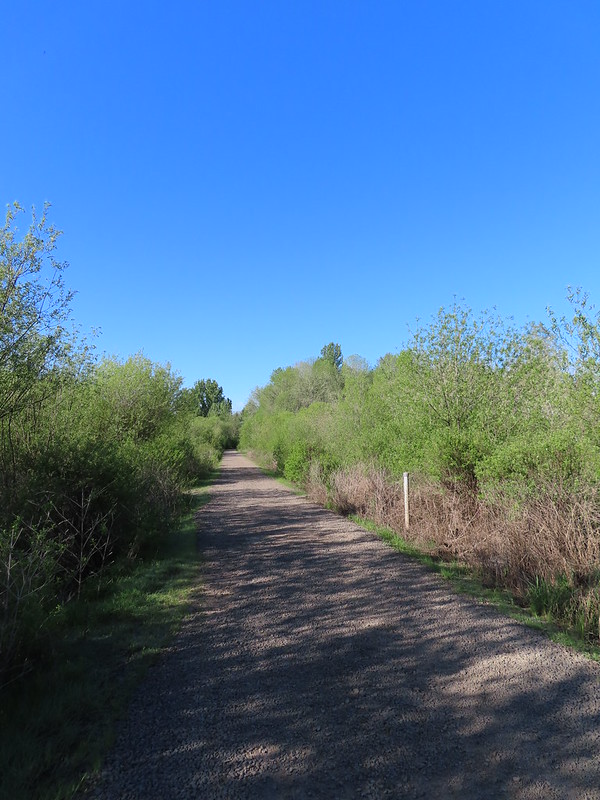
Heading toward Fernhill Marsh.
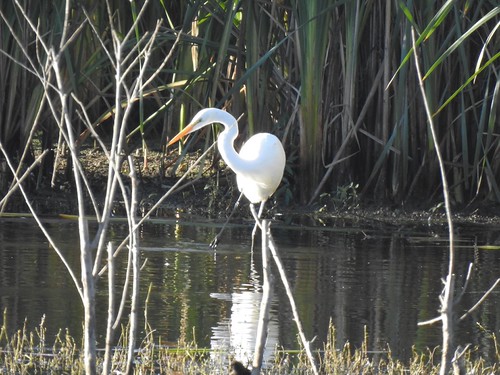
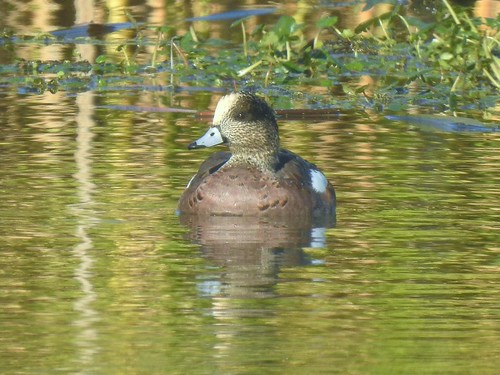
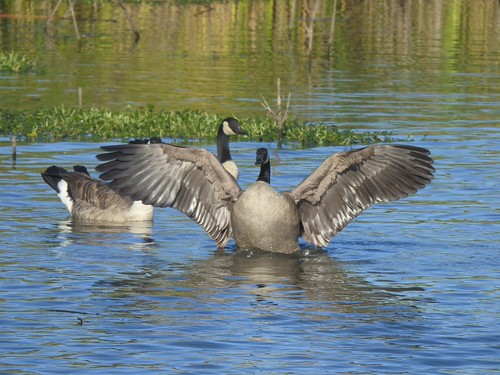
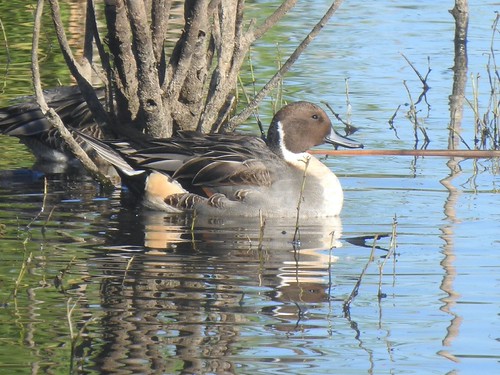
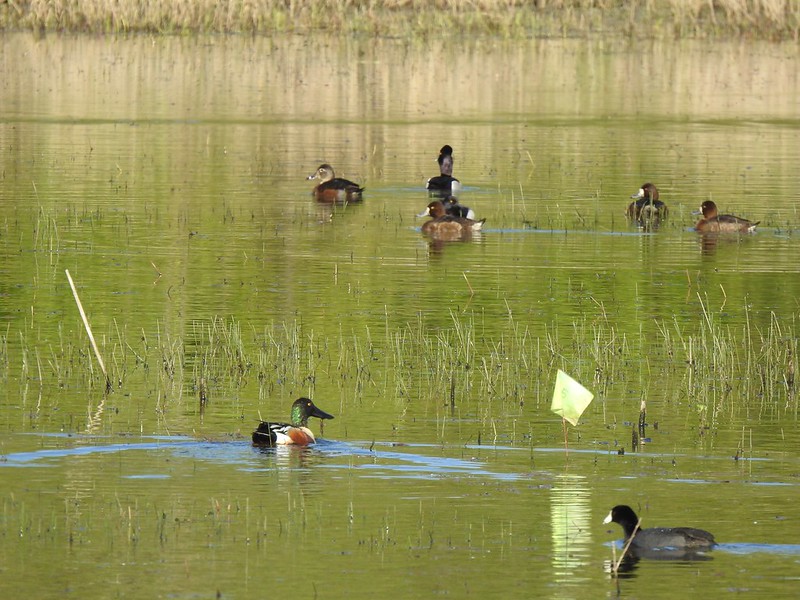
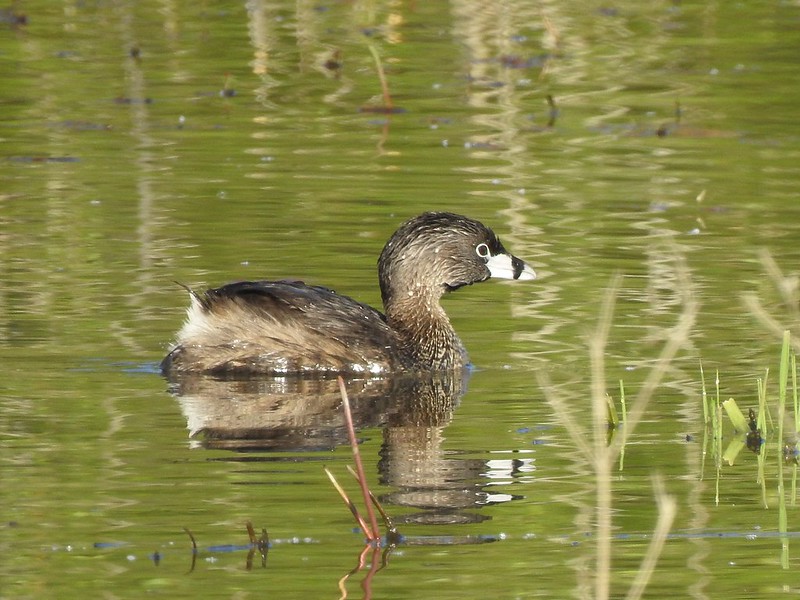
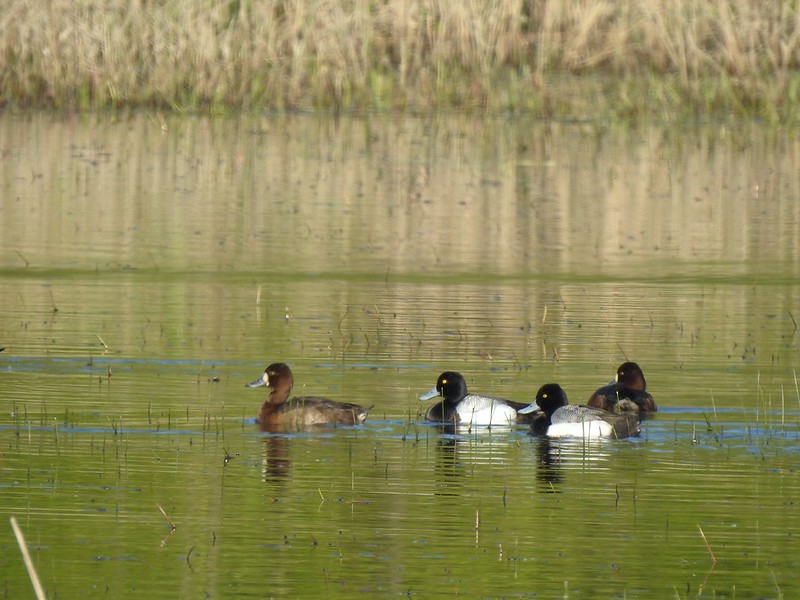
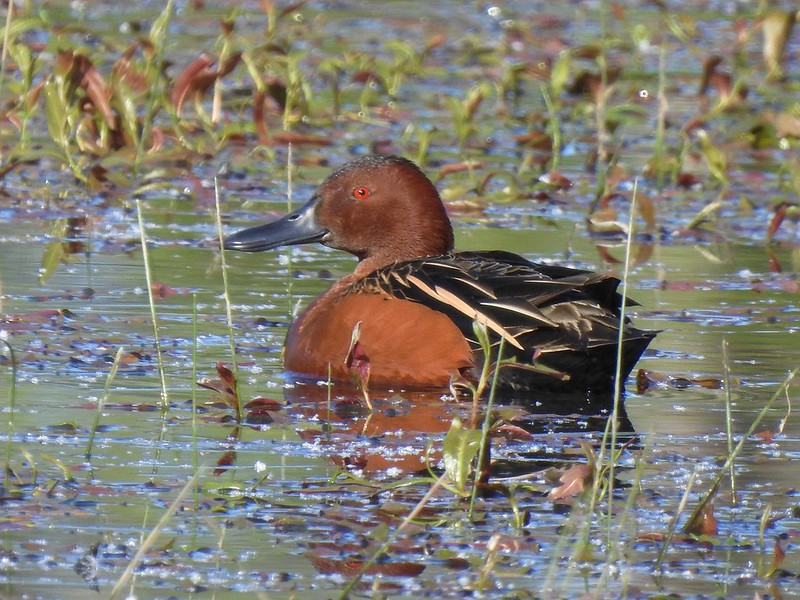
We spotted a few ducks, at least one goose, a number of long billed dowitchers, and a sandpiper.
Long billed dowitchers
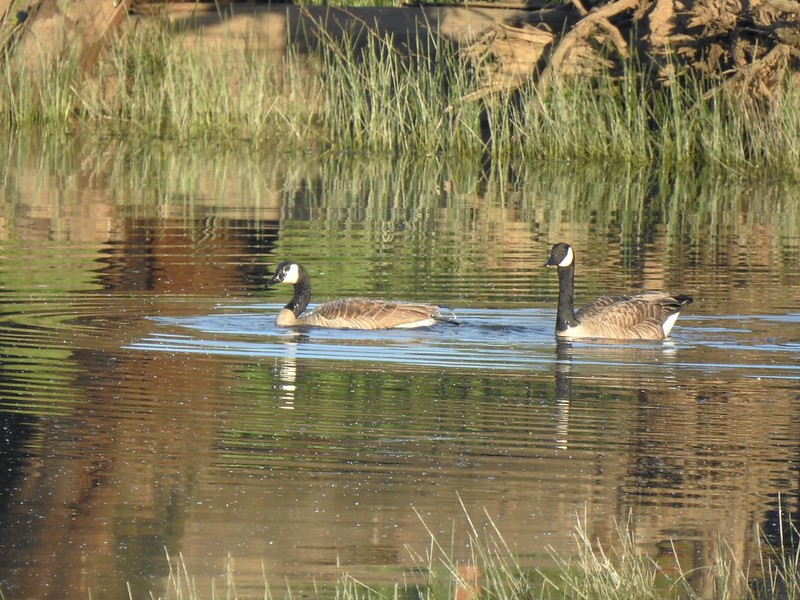
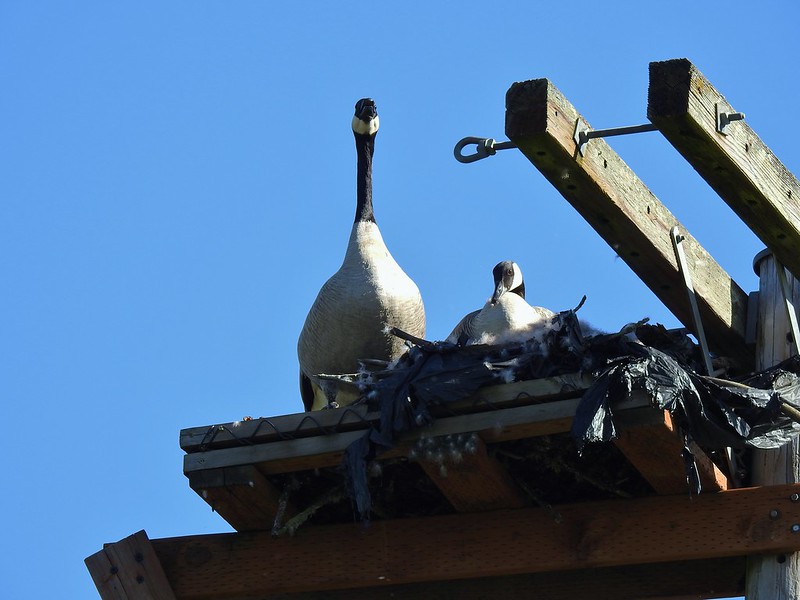
Goose
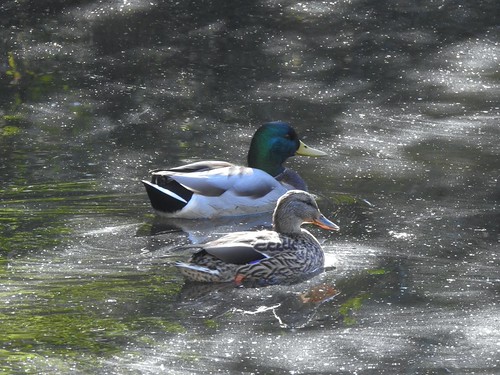
Mallard and a dowitcher
Gadwall
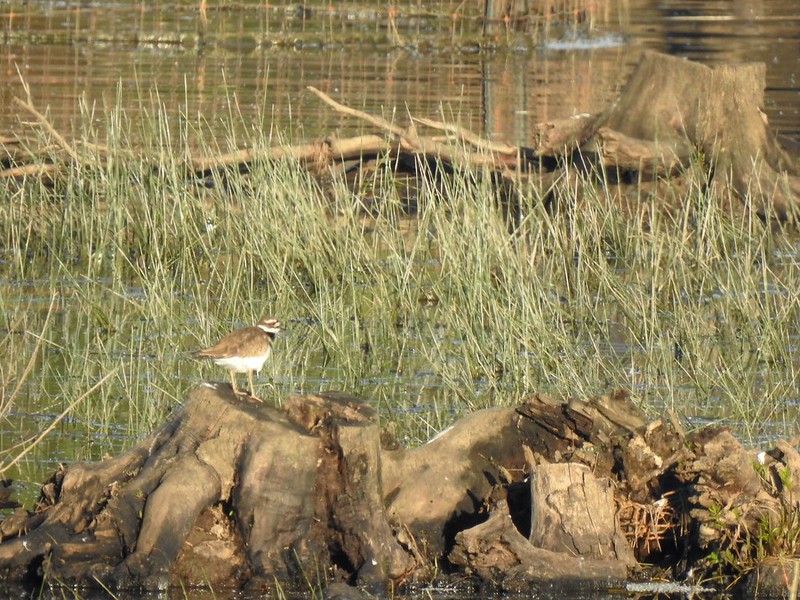
Sandpiper on the far side of the marsh.
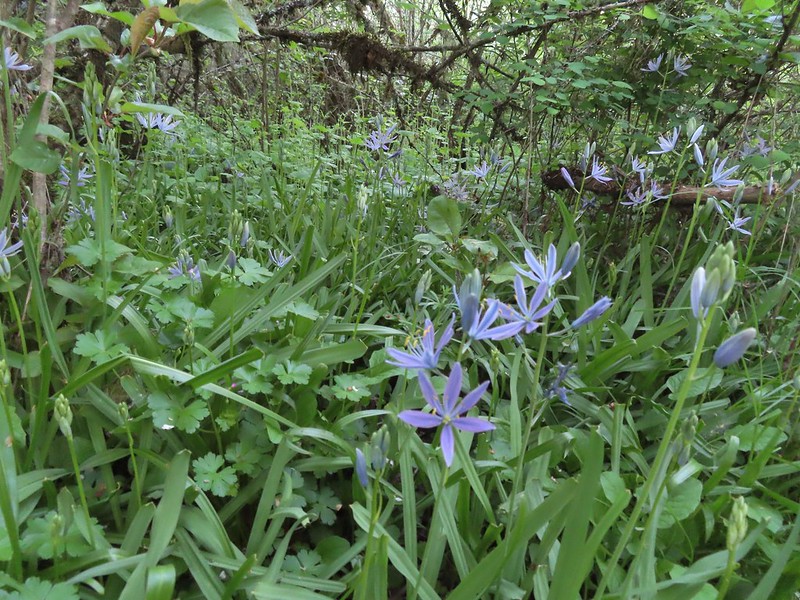
Camas at Fernhill Marsh.
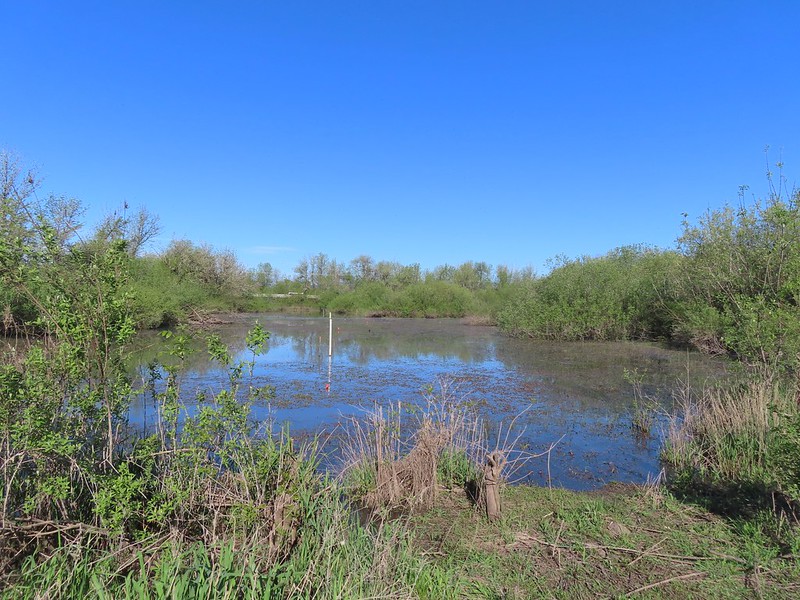
We made our way around Fernhill Marsh to the gazebo overlooking Cattail Marsh.
Thimbleberry
Twinberry
Sparrows
Roses
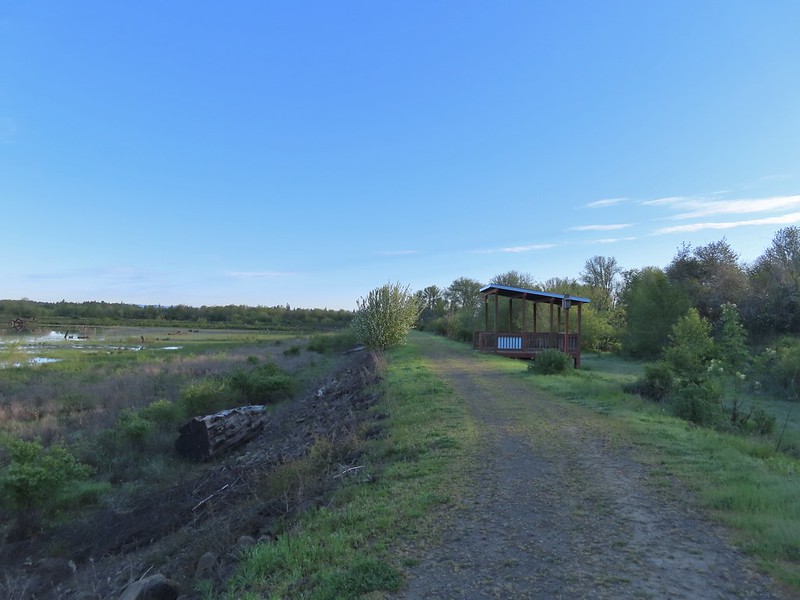
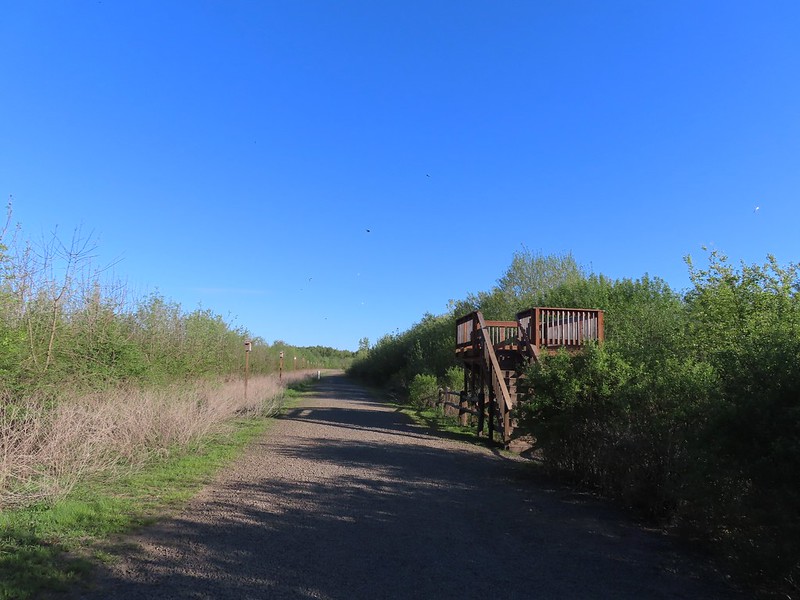
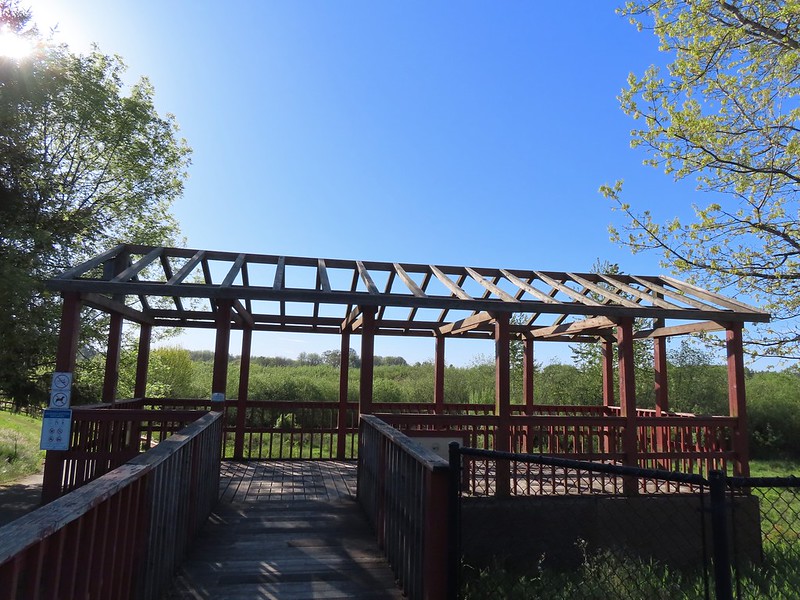
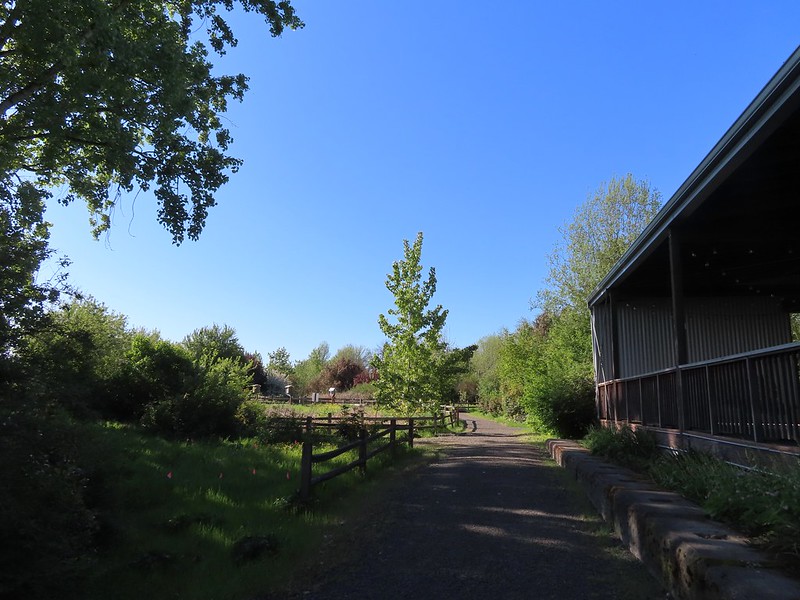
The gazebo at Cattail Marsh.
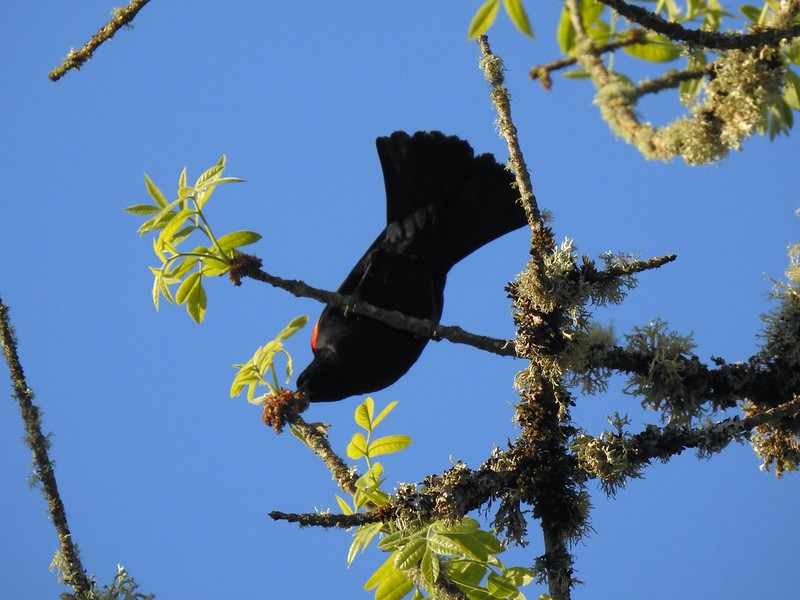
Red-winged blackbird
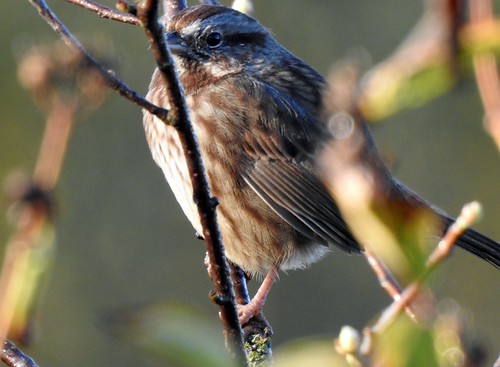
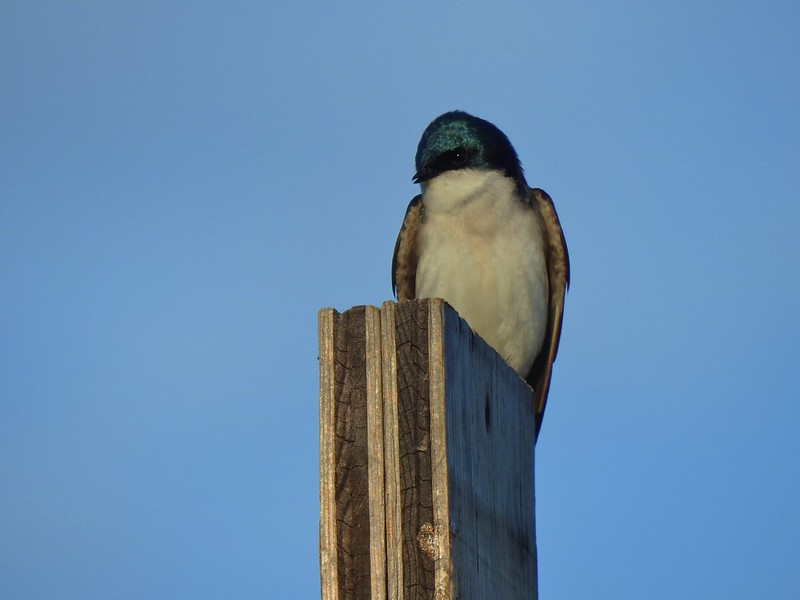
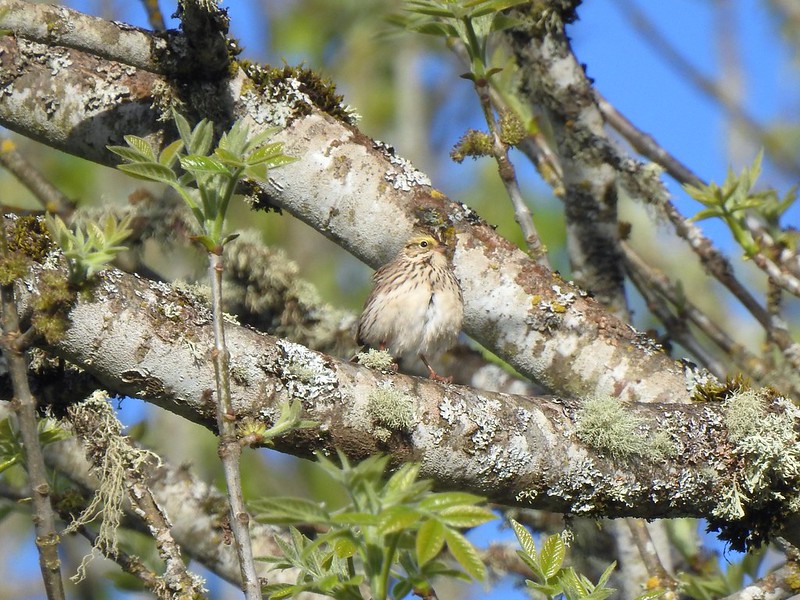
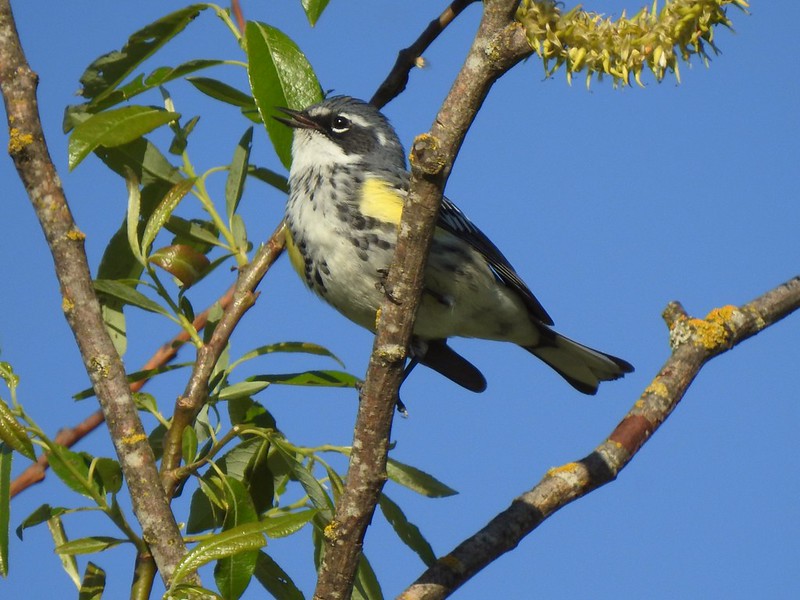
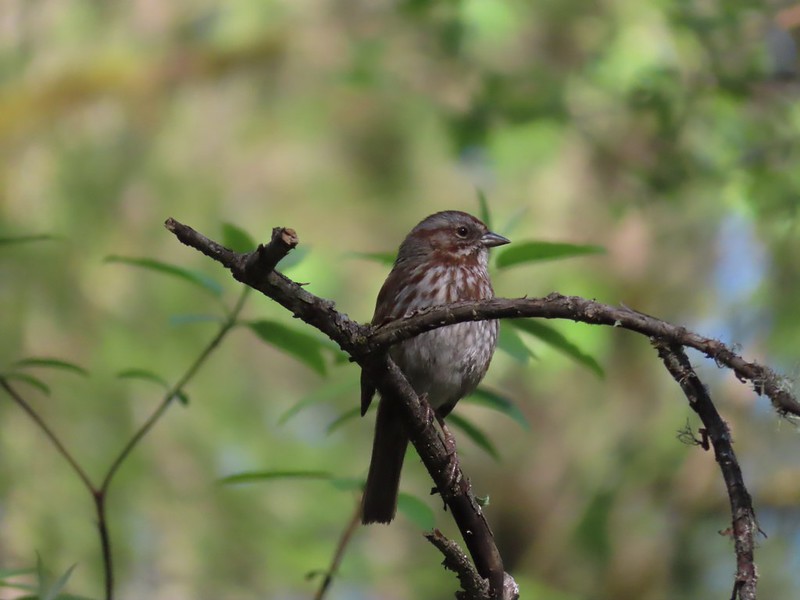
There wasn’t much to see in the marsh from the gazebo, but we were visited by a rather grumpy looking sparrow while inside the gazebo.
We continued on our loop from the gazebo then took a right when we reached Eagle Marsh. While it is possible to hike out and back along Eagle Marsh looping around it is not possible. With the morning sun low on the horizon the view from the western side of this marsh would be looking almost directly at it which is why we skipped this detour.
Mallard on the path.
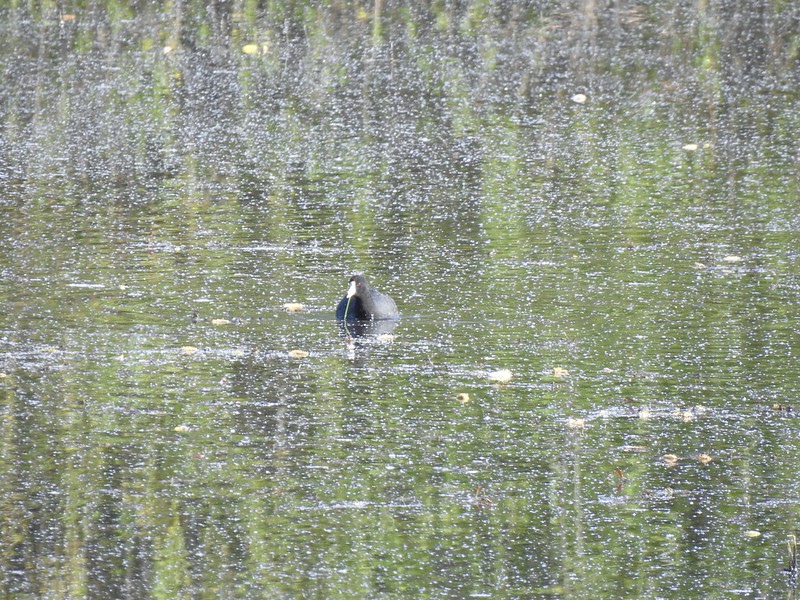
American coot in Cattail Pond.
Rabbit near Eagle Marsh.
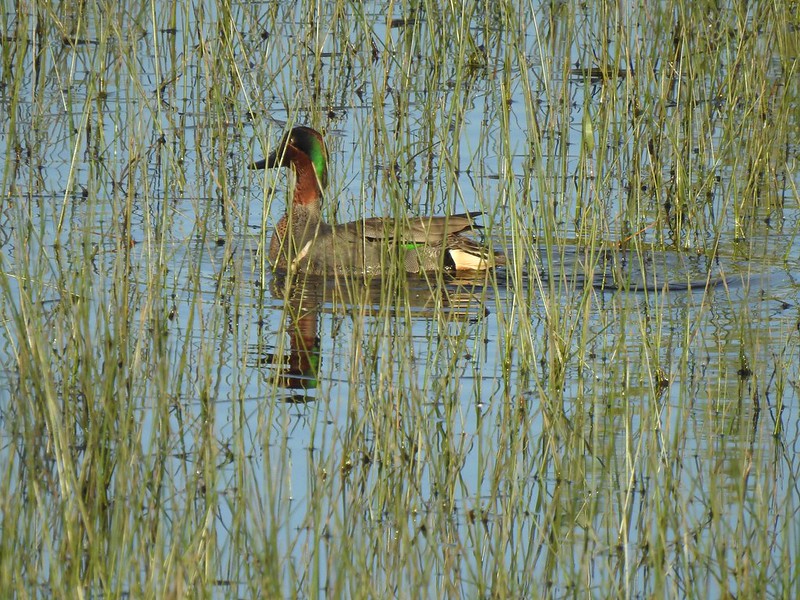
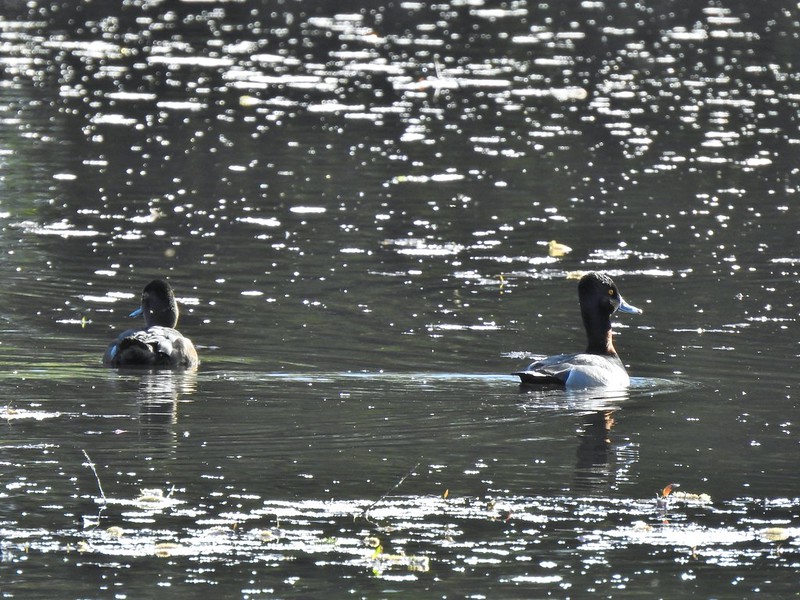
Green-winged teals in Eagle Marsh.
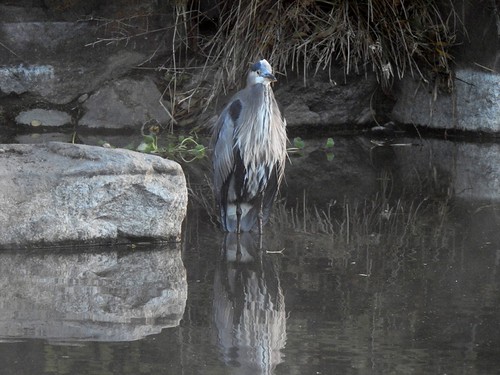
Cattail Marsh gives way to Fernhill Lake and as we passed between the lake and Eagle Marsh we detoured down a short path to the lake where a great blue heron was hunting for breakfast.
The heron out in Fernhill Lake.
Gadwall in the same area as the heron.
We continued to the junction at the far end of the marshes, and this time did detour on the out and back along Eagle Marsh.
The path between the lake and Eagle Marsh.
Damsel fly
Sparrow
Goose having a bad feather day in Eagle Marsh.
Mallard drake on a log in Eagle Marsh.
Starling
Another great blue heron in Eagle Marsh.
After reaching the end of this spur we headed back to Fernhill Lake and continued our loop around.
Fernhill Lake from the junction.
One of several families of geese along the lakeshore.
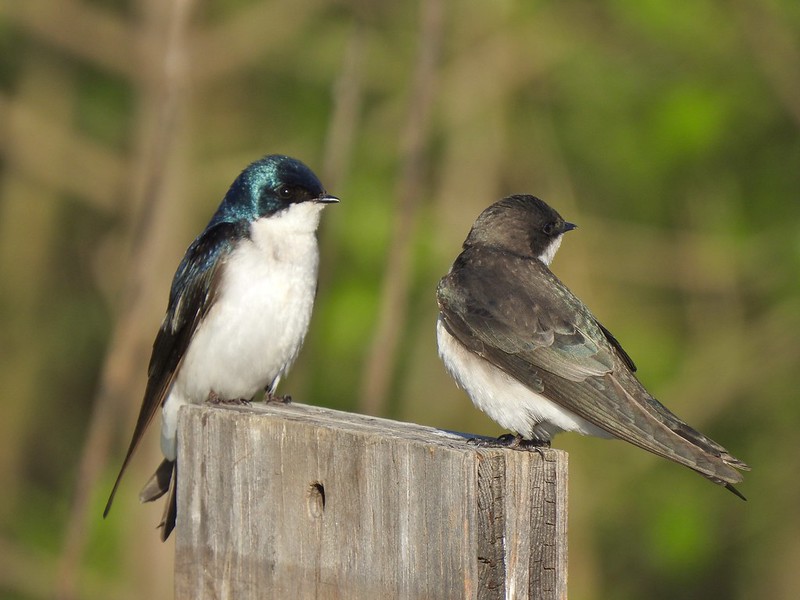
Purple martins
These fish, possibly invasive carp, could be seen up and down the shores of Fernhill Lake.
Yet another heron at Fernhill Lake.
We paused at a second gazebo, this one overlooking the Barney Wetlands where we had spotted some tundra swans during our visit in February 2024 (post).
Not much to see in Barney Wetlands on this day.
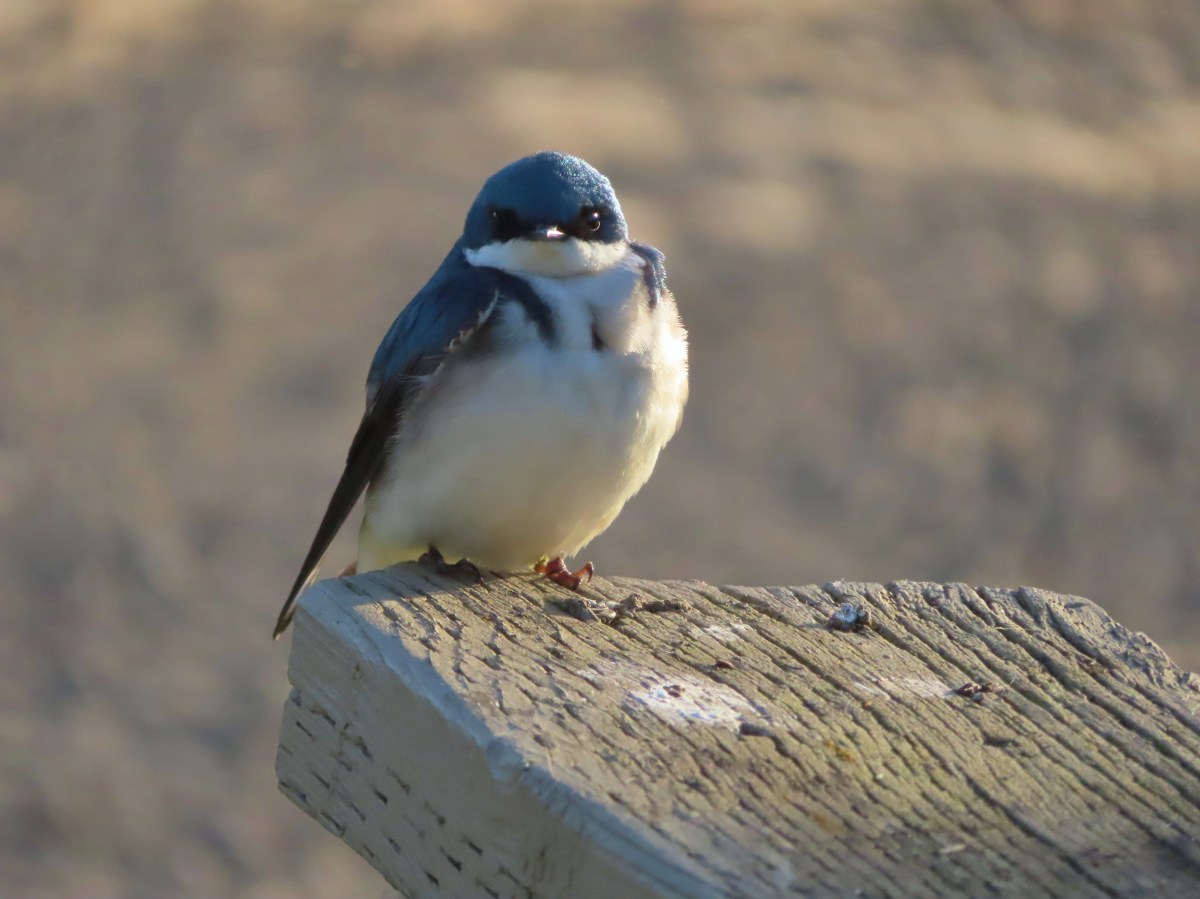
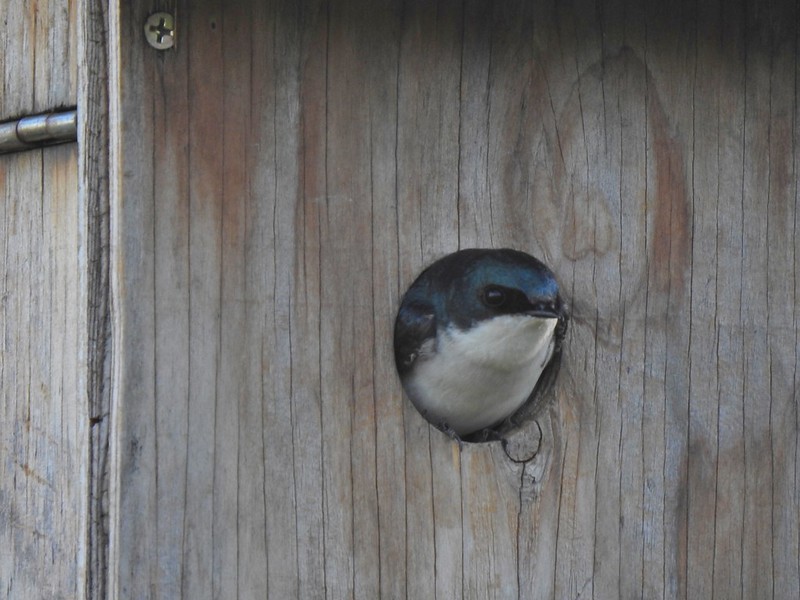
Cliff swallow in the gazebo.
We continued on to the Dabbler’s Marsh Trail and took a right onto it.
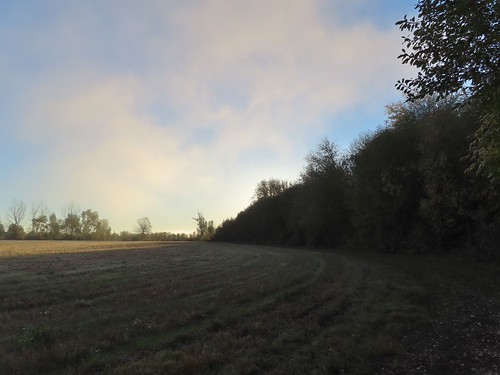
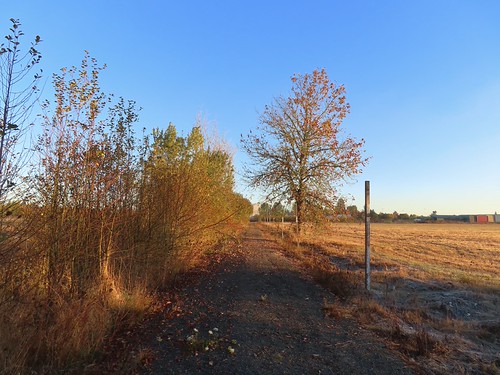
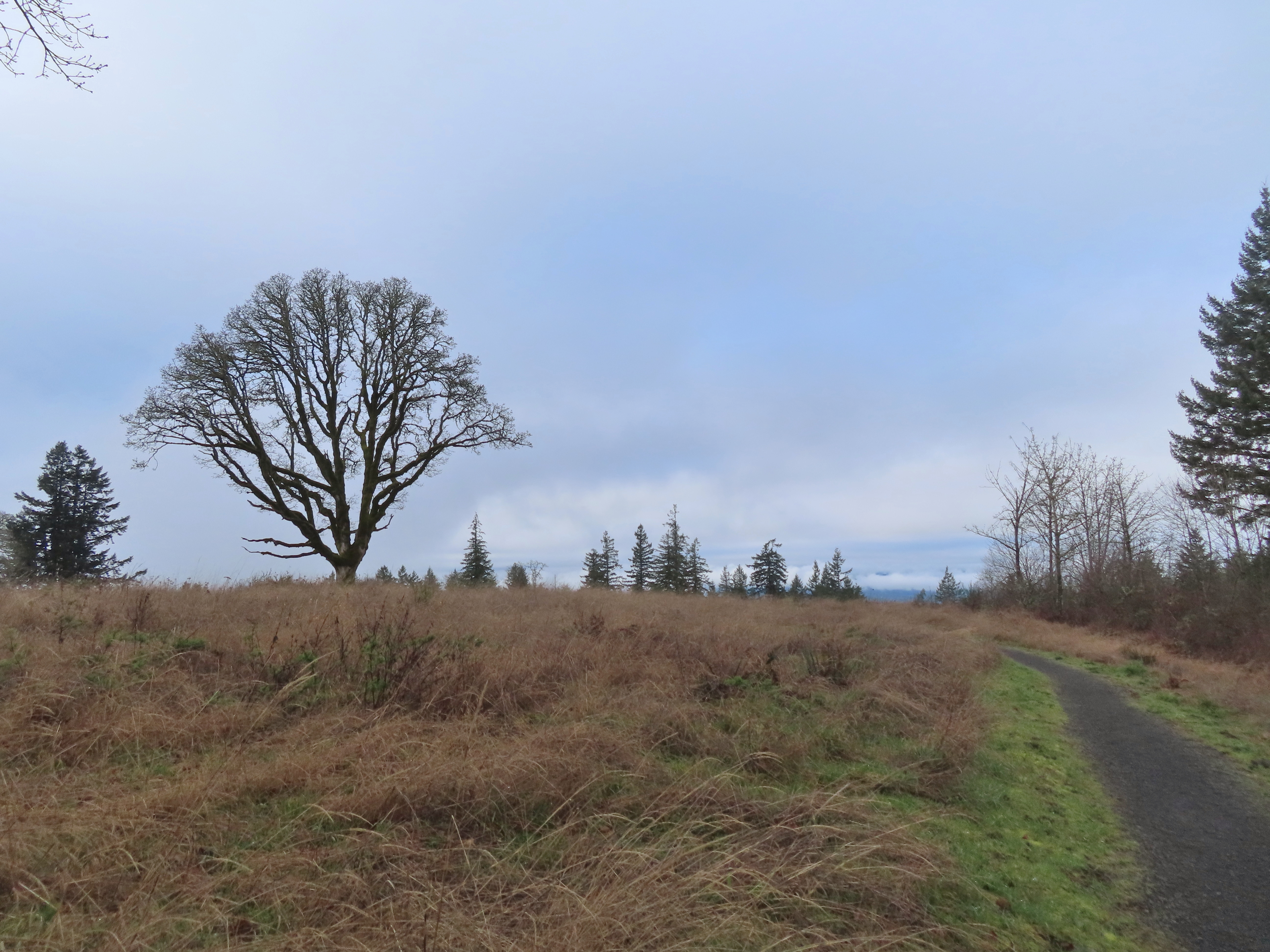
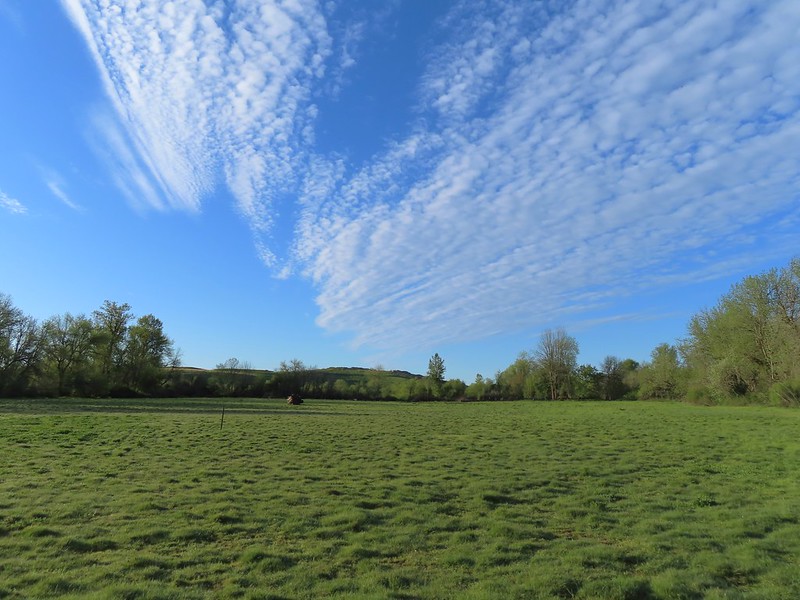
We hiked the Dabbler’s Marsh Loop counterclockwise. There wasn’t much to see on this day but the views across the grassy fields were nice.
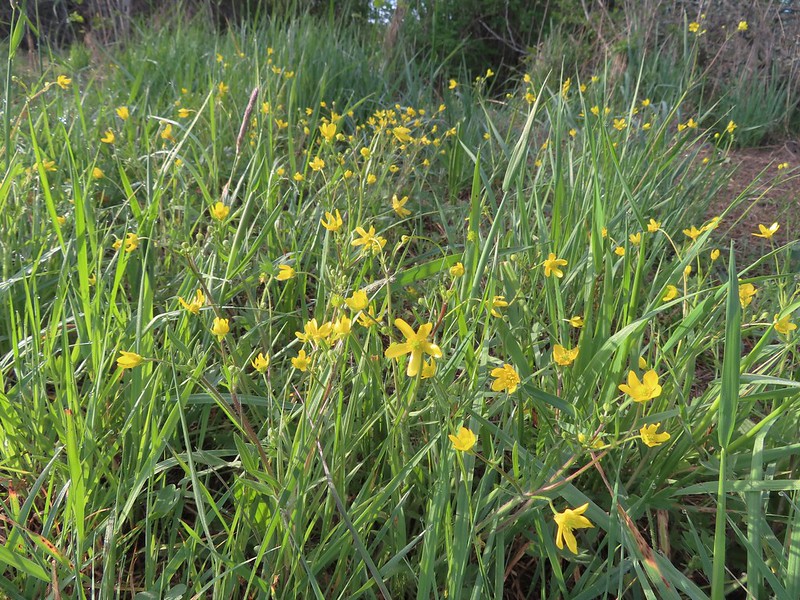
Cinquefoil
Fringecup
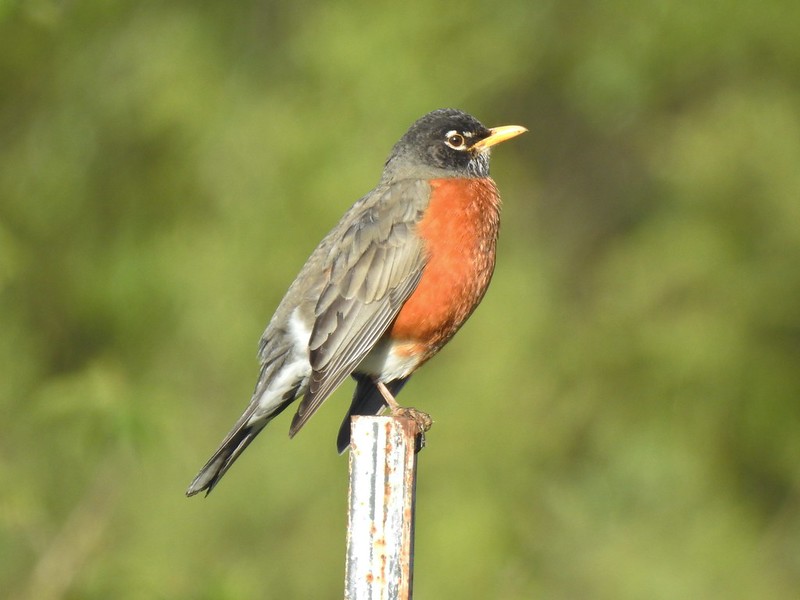
Robin
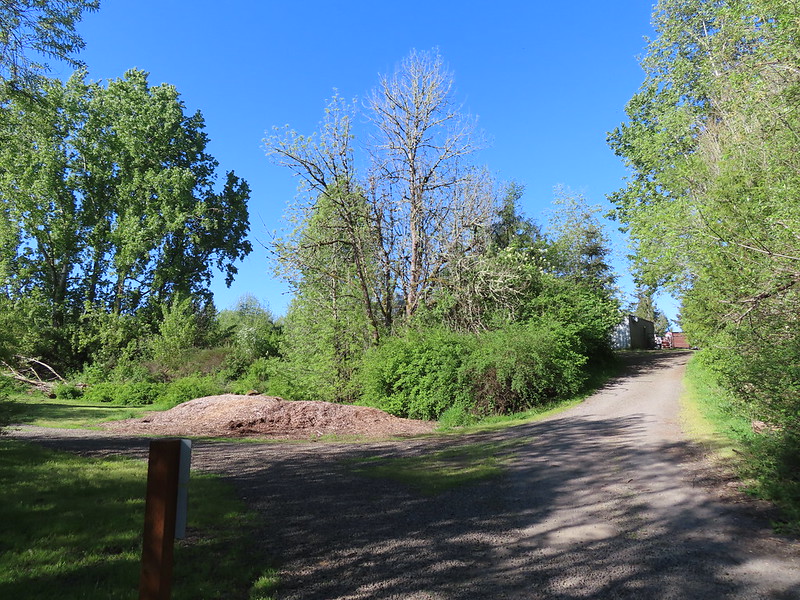
After finishing the 1.4-mile Dabbler’s Marsh Trail we looped through the Water Garden (sans water) before returning to our car.
Brown headed cowbird
Sparrow in the parking lot.
This was least amount of wildlife we’d seen on our three visits here, but there was still enough for it to be enjoyable. Our breakfast at McMenamins Grand Lodge was excellent and we had a great time catching up with Jeff and Mary and even got to meet Mary’s sister and her husband before saying our goodbyes. Happy Trails!
February has been quite a bit wetter than our January was, so we hadn’t been out on any hikes in the first two weeks of the month. A brief window of dry weather was forecast for the Portland-Metro area the day after Valentines Day though and we took the opportunity to revisit Chehalem Ridge Nature Park.
Our first visit to the park was in May of 2022 (post). We had hiked the majority of trails in the park during that visit, but our route had missed the 0.3-mile Castor Trail and missed portions of three other trails. Our plan for this outing was to hike what we’d missed on that first visit.
The website lists the park open from Sunrise to Sunset and Google Maps showed it opening at 7am. (Sunrise was at 7:11am today.) We arrived a quarter after seven and were the first car in the large parking area.
We stopped at the signboard map to confirm our route then headed down Timber Road.
Just over two tenths of a mile along Timber Road we came to the junction with the Castor Trail where we turned left.
Map at the junction, thank you Metro Parks.
The Castor Trail angled us back a bit and climbed up to the Woodland Trail where we turned right.
We followed the Woodland Trail for two tenths of a mile then forked right onto a short spur trail that acts as a connector to Timber Road.
It was just 150′ back to Timber Road along this connector trail.
The spur brought us to Timber Road across from the Ammefu Trail. We had taken that trail in 2022 which loops back to Timber Road further to the NW thus missing a short 0.1-mile section of the road.
At the 4-way junction we turned left and hiked the 0.1-mile section of Timber Road. We stayed on the road a total of 0.4-miles where we turned right onto the Witches Butter Trail.
While the forecast had indicated that it would be mostly sunny here at some point it didn’t happen before our hike ended.
We stopped for a bit to try and get a photo or two of some birds that were flitting between trees. At least one of them was a golden-crowned kinglet which is a species that we hadn’t gotten a photo of yet. After a number of attempts we still don’t have a good photo, however I did manage to get an out of focus shot where it could at least be identified.
The Ammefu Trail rejoining on the right with another connector to the Woodland Trail on the left.
Squirrel!
Christensen Creek
Witches Butter Trail heading straight into the forest. The trail to the furthest right is the Ayeekwa Trail. We had taken the 0.7-mile Ayeekwa Trail in 2022 which rejoins the Witches Butter Trail just 0.2-miles from this fork.
This time we stuck to the Witches Butter Trail.
Three tenths of a mile along the Witches Butter Trail we came to one of the benches that are placed around the park.
This bench faced a clearing with some smaller trees. I started to make a comment about the view being nice, but wondered where the deer were, then I spotted them.
After watching each other for a while we continued around the clearing and spotted a third doe.
Beyond the clearing the trail climbed 0.4-miles to its end at the Chehalem Ridge Trail.
We turned right onto the Chehalem Ridge Trail and followed it for 1.3-miles to the start of the Chehalem Ridge Loop.
Camouflaged stump.
Viewpoint along the Chehalem Ridge Trail.
Wapato Lake National Wildlife Refuge (post) and Gaston, OR.
Robin
Post for the Chehalem Ridge Loop.
We paused at the start of the loop to decide if we would hike clockwise or counterclockwise. We decided on counterclockwise and just as we started to move, we spotted another deer.
We passed the 1.4-mile Madrona Trail part way around the loop. We had hiked that trail in 2022, but today we didn’t want to add the extra 2.8-miles and 400′ of elevation gain needed to climb back up to the loop.
After completing the loop, we followed the Chehalem Ridge Trail back to the Witches Butter Trail junction and continued on it for another tenth of a mile to its end at Timber Road.
Witches Butter coming up on the left marked by the railings and the Chehalem Ridge Trail continuing to the right.
Timber Road from the Chehalem Ridge Trail. The pointer on the post ahead is for the Mampaɬ Trail which heads off from Timber Road here to the right.
We turned right onto the Mampaɬ Trail and followed it for a mile to Iowa Hill where the trail loops around an open meadow.
A half mile up the Mampaɬ Trail the Zorzal Trail forks off to the right then loops back to the Mampaɬ Trail two tenths of a mile from this junction. Since we had taken the Zorzal Trail in 2022 we’d missed the 0.2-mile section of the Mampaɬ Trail.
The Zorzal Trail rejoining on the right before the trail crossed Timber Road.
The start of the loop on Iowa Hill.
We hiked the loop clockwise this time and stopped at the stone viewpoint for a break.
Sunlight hitting a field in the valley below.
After a nice break we finished the loop and then made our way back to Timber Road.
A little bit of blue sky over Iowa Hill.
We turned right on Timber Road and followed it downhill 0.6-miles to the Woodland Trail.
We turned right onto the Woodland Trail and followed it 1.4-miles back to Timber Road near the trailhead.
Switchback on the initial climb from Timber Road.
Passing the Castor Trail where we’d come up earlier in the morning.
It wasn’t until we could see the trailhead that the sun finally broke through the clouds enough for us to feel its warmth.
Oregon grape blossoms beginning to form.
Today’s hike came in at 8.6-miles and 750′ of elevation gain.
While we didn’t get the mostly sunny skies that had been forecast, we did stay dry and we got to see the four deer and a number of birds. Depending on weather this might be our only outing in February, and if so, at least it was a good one. Happy Trails!
Originally I had planned to do my hike at Finley Wildlife Refuge (post) on the Friday of Wildlife Week, but going into the week the forecast called for rain showers. I rearranged the order to move Wapato Lake National Wildlife Refuge and Fernhill Wetlands to Friday morning feeling in hopes that I could finish these hikes before 11am when the showers were forecasted to start. By the end of the week the chance of showers had been replaced by mostly sunny skies.
We visited Wapato Lake in February 2024 (post) and had enjoyed the short hike. Located in Gaston, OR the trailhead is just under an hour from Salem. A paved path leads to a footbridge over Wapato Creek and then dikes lead right for 2 miles and left for 0.6. We hadn’t done the full 2-miles to the right in 2024, so I started with that section then hiked to the end of the 0.6-mile section before returning to the car for a total of 5.6-miles with virtually no elevation gain.
All trails are open from February 1st through September 30th, then from October 1st through November 30th the final 1.3-mile stretch to the right (south) is closed, and there is no hiking allowed during hunting season from December 1st to January 31st.
There were a lot of ducks, geese, and herons at the lake along with smaller birds in the surrounding trees. Geese
Osprey
Killdeer
Meadow checker-mallow
Wood ducks
Northern shovelers
Ducks, geese, and a heron.
Scrunched heron
Stretched heron (same heron)
Sparrow
A different heron and a duck.
Yep, it’s a nutria.
Spotted sandpiper
One of several benches located along the dikes.
American coot
Gadwall
Dove
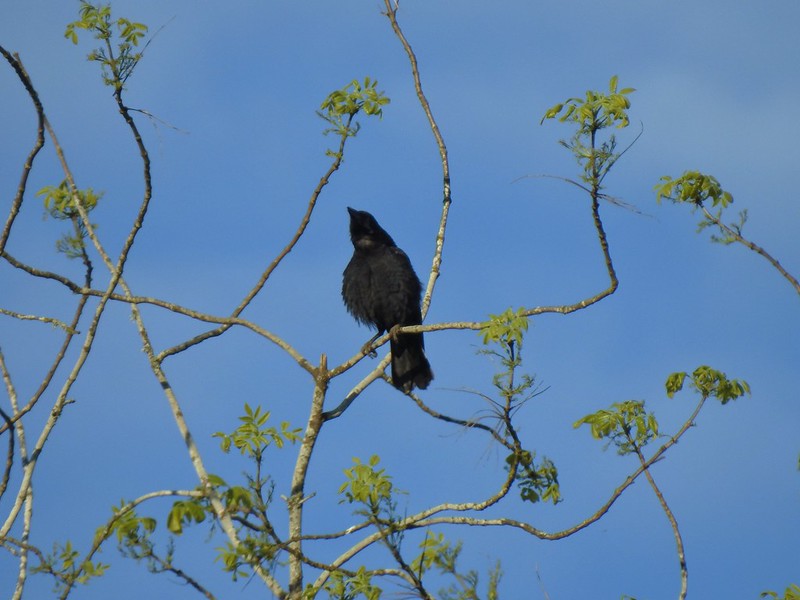
Crow
American kestrel
Swallow
Cinnamon teals having a disagreement.
End of the trail to the south.
View from the end of the trail.
Wood ducks
Robin
Short billed dowitchers
Green winged teal
Hooded merganser and a gadwall
Ring-necked ducks
Heading to the left (NNE) now.
Red-winged blackbird
Egrets, herons, and ducks.
Great blue heron and egret
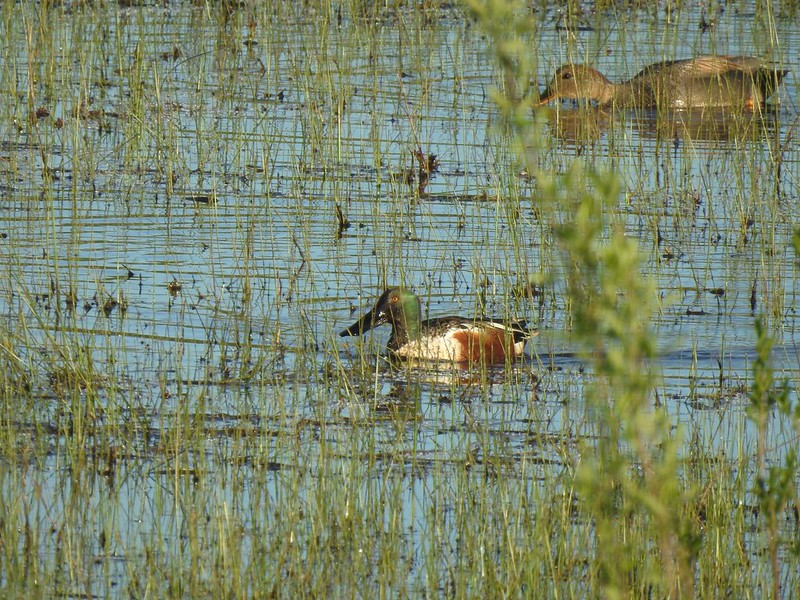
Cinnamon teal and northern shoveler
Hooded mergansers and a cinnamon teal
Northern shovelers and a northern pintail on the right.
California quail
End of the trail in this direction.
One thing to note is that the bathroom is currently closed due to budget shortages. Other than that, this was a great hike with a nice variety of wildlife and no other people.
From Gaston it was just a ten-minute drive to Fernhill Wetlands.
We had also been here in February 2024 (post), but not on the same day as Wapato Lake. I did virtually the same route today as on that trip which is described in detail in that trip report. My 3.3-mile track with minimal elevation gain.
The wildlife was sparser here than it had been on our previous visit, but there were a few species about. I also saw my fourth and fifth Bullock’s oriole of the week. Every one of these I’ve spotted have been while flying past me with their bright orange feathers flashing momentarily only to disappear into a tree or bush. I did have some more cooperative subjects though including the first hummingbird of the week. Swallow
Osprey
Killdeer
American coot
Mallard
Anna’s hummingbird
A bit of the pink on it’s throat.
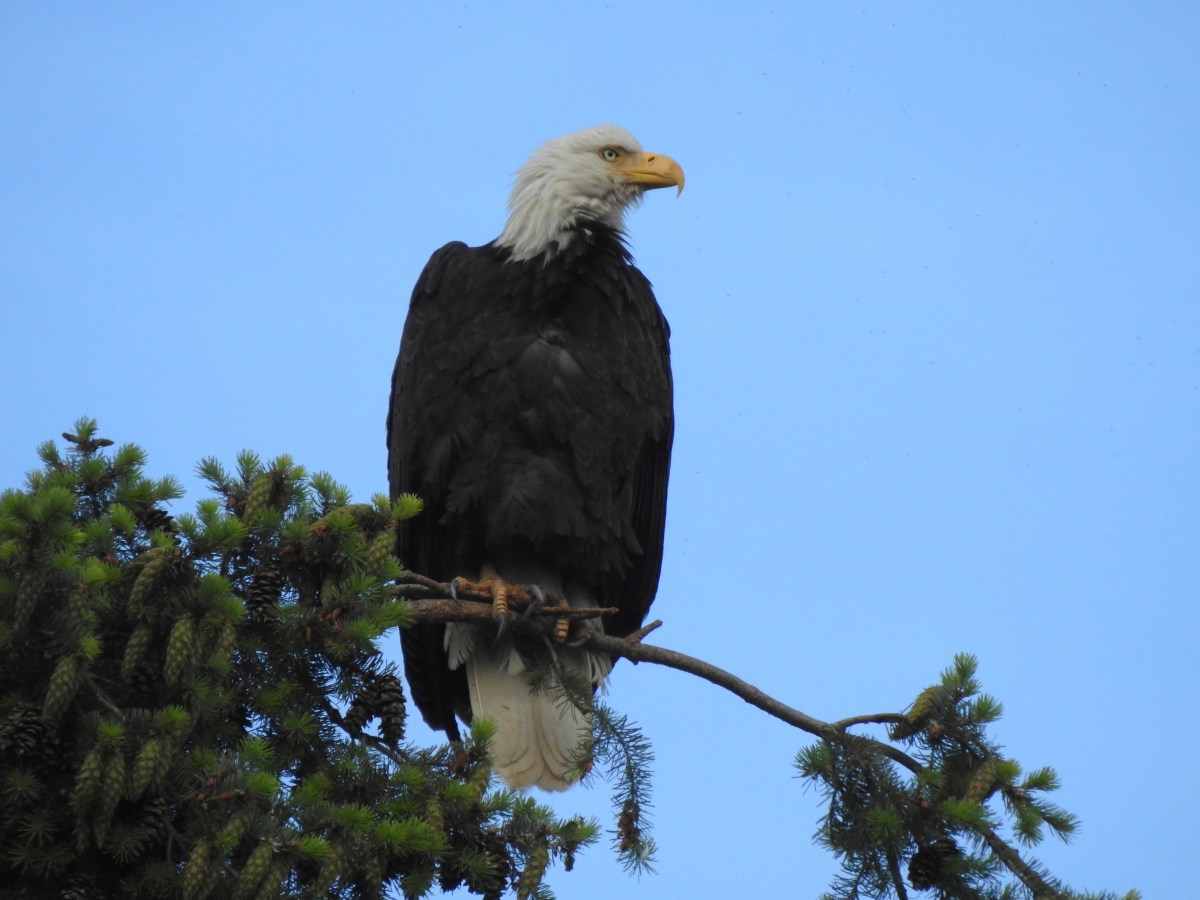
Ring-necked ducks Bald eagle
Gadwalls
Song sparrow
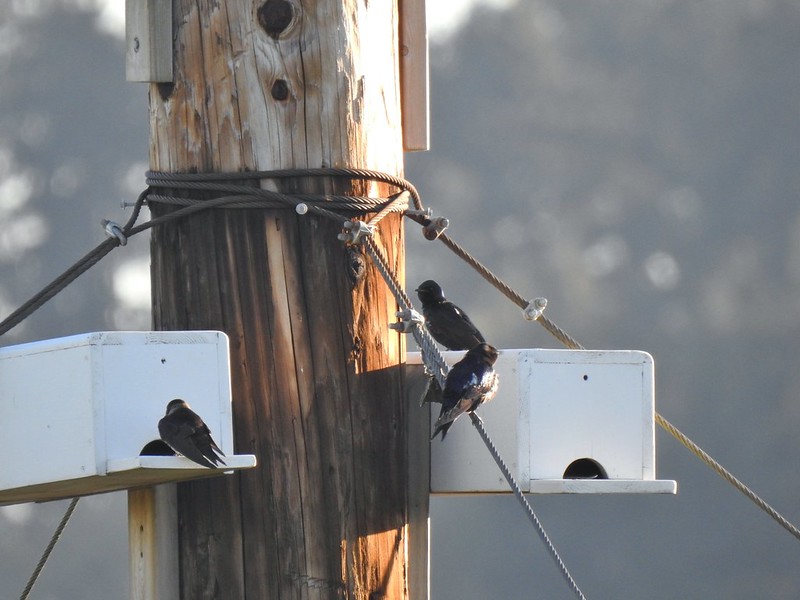
Purple martins
Pied billed grebe
Mallard and ducklings
Mallards
Fringecup
Rabbit
Sandpipers
Ground squirrel
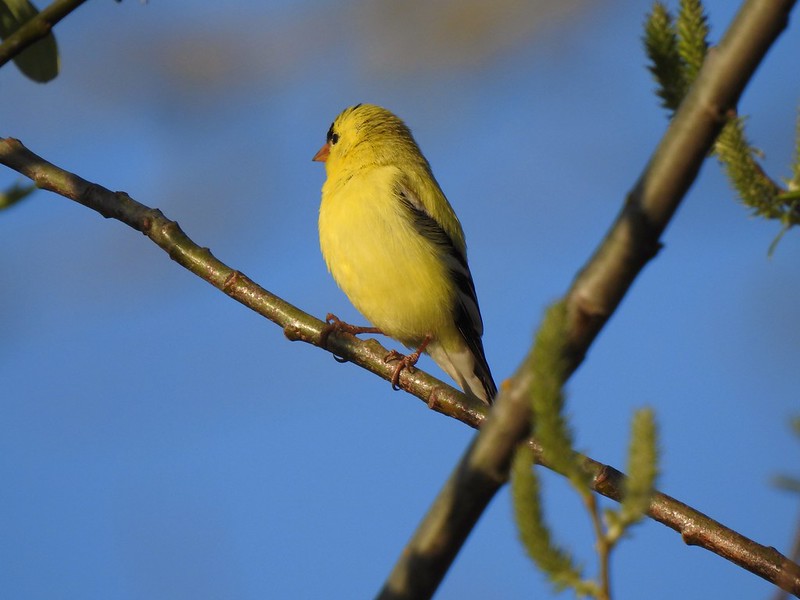
American goldfinch. I’d seen a number of these this week but had only managed a picture of the back of one at Finley Wildlife Refuge.
This was another fun morning of looking for wildlife, but my feet and legs are more than happy that there is only one day of Wildlife Week left. The plan is for Heather to join me on the last hike, and we are hoping to check out a couple of waterfalls before stopping at Fern Ridge Wildlife Area west of Eugene. Happy Trails!
A day after my long hike at William L. Finley National Wildlife Refuge (post) I dialed it back a little. For day 5 of my “Wildlife Week” vacation I had two short hikes planned to revisit a pair of wildlife areas along the Tualatin River the Tualatin River National Wildlife Refuge and Jackson Bottom Wetlands Preserve.
First up was the Tualatin River NWR. We’d visited this refuge twice previously, first in March 2019 and then again in May 2023. The seasonal trails at this refuge are closed from October 1st through April 30th so today was the first day the Wetlands Loop would be open this year.
I parked at the Roy Rogers Road Trailhead as we had done in 2023 primarily because it was a little closer to Jackson Bottom.
My route utilized portions of the seasonal Wetland Trail and the River Trail to make a loop with a short out-and-back on the Ridgetop Trail. It came to 4.7-miles with about 100′ of elevation gain, most of which was on the Ridgetop Trail. The orange track is a portion of the Wetland Trail that I had not previously hiked.
Mt. Hood from the Wetlands Trail.
I spotted a couple of deer shortly after setting out.
I believe this is a savannah sparrow.
Geese families
Killdeer
It was just under 40 degrees Fahrenheit when I started, but the forecast called for temperatures to reach 80 by the afternoon.
Geese, goslings, and goose eggs.
Sandpiper
Not sure what type of fish this is but they were thrashing about near the shoreline, and I had seen similar behavior the day before in McFadden Marsh at Finley NWR.
Duck and ducklings
Sleeping nutria
Purple martins and a swallow (bottom left).
Egrets and a great blue heron.
Closer look at the egrets and heron.
Robin
I stopped at the Refuge Headquarters to use the facilities, and this pair of bald eagles arrived at the same time.
The eagles on the tree behind the headquarters.
Mallard
Sandpipers
Riverside Trail
Tualatin River
Song sparrow
Inside-out flower
The Ridgetop Trail to the left. There is a bench and railed overlook but the view is blocked by trees. If there hadn’t been any leaves there may have been a view but today there wasn’t.
The only trillium I saw with any petals left.
Bleeding heart
Northern flicker
I spotted an American kestrel in this snag. I had been hoping to see one during this week’s hikes.
American kestrel
Crow
Northern shoveler
Wildflowers near the trailhead.
Lupine, plectritis, checkerbloom, and golden paintbrush.
Not a huge amount of wildlife here today but the kestrel was a nice addition to the list of species seen this week. This was by far the busiest hike of the week, possibly due to it being the first day of the seasonal trails being open. I was done with the hike at 8am so not only was it busy, they were early birds.
It was a 20-minute drive from the refuge to Jackson Bottom Wetland so it was still fairly early when I arrived at the trailhead.
Our previous visit here was last April (post) and we hiked the majority of trails here during that visit, so this was a near repeat except I went in the opposite direction (clockwise). This route came to 4.4-miles and just 35′ of elevation gain.
In addition to wildlife the preserve has some nice flower gardens near the visitor center.
Camas
Larkspur
Not a native wildflower but pretty.
Columbine
Rabbit
The look on their faces seems to indicate they were not expecting to see me there.
Going back the other way.
Karaoke
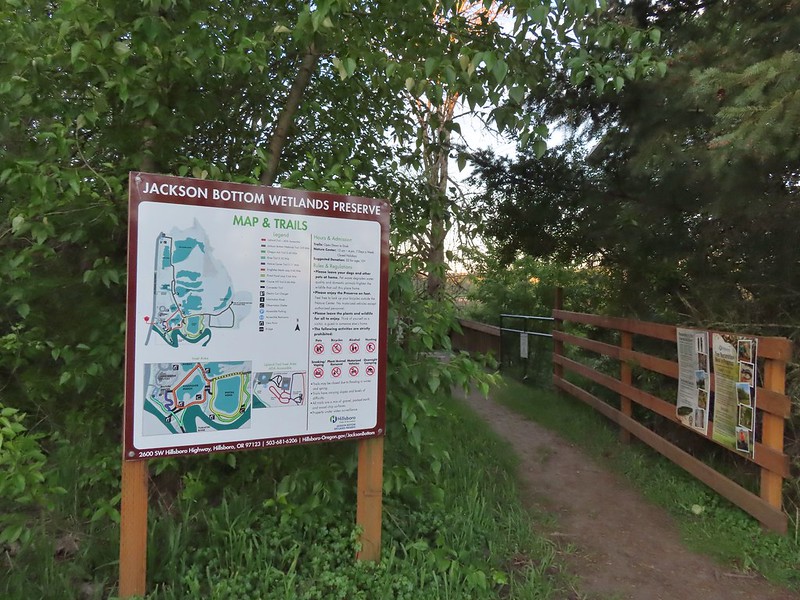
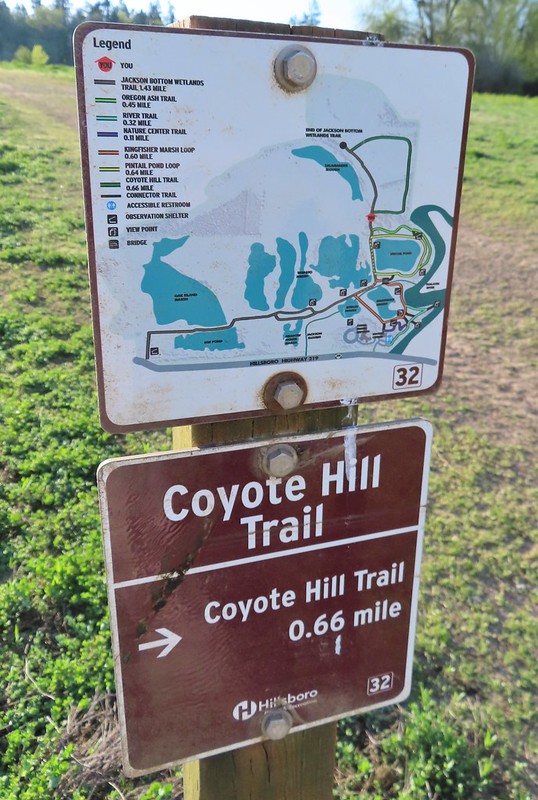
Helpful maps and/or pointers are located at trail junctions.
Swallow
Swallows
Cinnamon Teal
Ring-necked ducks
Purple martins
Canada geese
Jackson Bottom Wetlands Trail passing Oak Island Marsh.
Crow harassing an osprey over Oak Island Marsh.
I thought flamingos were pink.
American coot in NW Pond.
Another napping nutria.
Robin
Gadwall
Egrets at Wapato Marsh.
Great blue heron in Pintail Pond.
Lupine along the trail.
Green winged teal
Heading toward Salamander Slough.
Two turtles and a mallard.
Long billed dowitcher
Cabbage white?
Checkerbloom along the Coyote Hill Trail.
Common yellowthroat
Savannah sparrow
Spotted towhee
Tualatin River
Deer crossing Pintail Pond. I think these are the same three I saw earlier.
I’ve been spotted.
Rabbit on the left along the River Trail.
Salmonberry
Western meadowrue
Wild rose
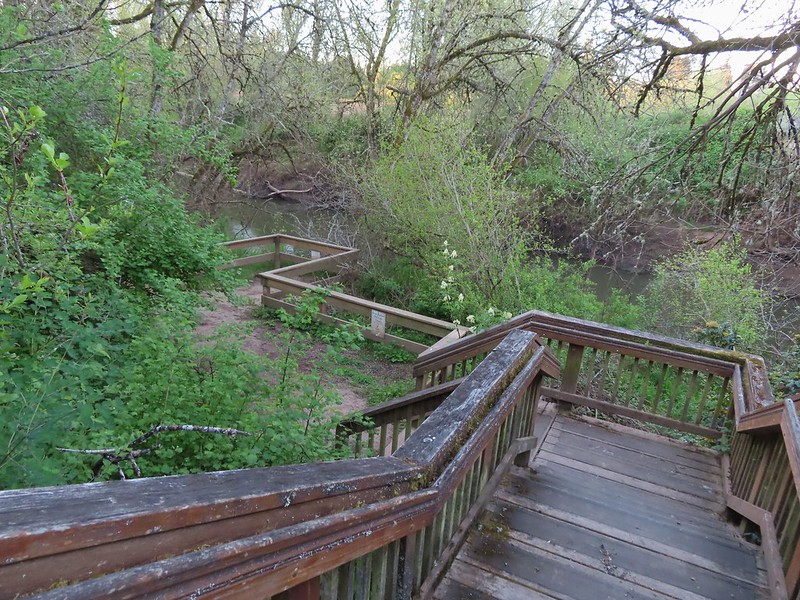
Stairs leading to the trail on the River Trail.
Jackson Bottom was noticeably less busy than the refuge had been. It was a nice hike with a fairly steady supply of wildlife. These are both good destinations and were a nice addition to wildlife week. Happy Trails!
The Fanno Creek Trail is part of the Tualatin Hills Parks and Recreation District offering several miles of paved trail along Fanno Creek in Beaverton and Tigard. The current trail is 8.3-miles in length with plans to eventually extend the trail between Willamette Park in Portland to the Tualatin River in Durham. The urban trail passes through a number of parks, and we planned on hiking a section that included five such parks. Before starting our hike though we made a short detour to check out Koll Wetlands.
There is no hike at Koll Wetlands, you just park behind some businesses and look for birds and other wildlife.
We arrived too early for decent pictures due to cloud cover limiting light, but we spotted a rabbit and a number of ducks and other birds.
We headed south on the trail into Fanno Creek Park and followed the paved path 0.7-miles to a crossing of SW Hall Boulevard.
Chickadee
Mallards
Fanno Creek
Thimbleberry and service berry
We crossed SW Hall Boulevard and entered Greenway Park.
Northern flicker
There are several loop options available in this park if the water isn’t too high. The water was low enough today that we were able to stay left at all junctions and only had to navigate a few feet of muddy, flooded trail.
Hummingbird
Red-winged blackbird
Squirrel
The Greenway Loop Trail had the only flooded section on this day.
Wetlands along the Greenway Loop Trail.
Goose
Hooded mergansers
After rejoining the Fanno Creek Trail at the southern end of Greenway Park we passed under SW Scholls Ferry Road. This is another section that may flood at high water times.
Shortly after passing under the road the trail passes a sign for Englewood Park.
We spent some time here watching a female mallard attempt to join the drakes along with her ducklings only to be repeatedly chased off.
Mallards ducklings
The ducklings finally making it across the trail.
Goose and gosling
Avens
The trail jogged right at a crossing of SW North Dakota Street then crossed SW Tigard St to enter Dirksen Nature Park.
Camas
Dirksen Nature Park
Viewing platform
Wetlands from the viewing platform.
Dove
Finch
Robin
We continued through the nature park and crossed SW Tiedeman Ave. Two tenths of a mile later we arrived at the Woodard Park Trailhead near the park’s playground.
Lupine
Woodard Park Trailhead.
We made this our turnaround point and headed back. We stayed left again in Greenway Park to complete the three loops there. The trail was fairly busy on the way back but not too crowded and there was still quite a bit of wildlife to see. This may be a lesser goldfinch, I wasn’t able to see anything but its rear end though.
Spotted towhee
Wood duck
Our out-and-back on the Fanno Creek Trail came to 7.1 miles with minimal elevation gain.
This was a nice urban hike, and we can see why it’s popular with all types of trail users. Dirksen Nature Park was a highlight and looked like it would be a great place to bring the kiddos. Happy Trails!
In the original version of our 2024 hiking schedule we’d planned on visiting Jackson Bottom Wetlands Preserve and Rood Bridge Park in March, but the thing about wetlands is that they tend to be wet. We’d been waiting for all of the trails at Jackson Bottom to dry out, and according to online reports that had finally happened.
Both the preserve and park are located in the city of Hillsboro with the preserve being home to a nature center open 10am – 4pm seven days a week. We began our day at Jackson Bottom by parking at the south entrance near the nature center. (We did not visit the nature center primarily due to the fact that we finished our hike here before 9:30am.)
A network of trails provides numerous options to explore. For our hike we began on the River Trail at the SW corner of the parking lot.
This trail descended a staircase to a view of the Tualatin River.
The trail follows the river through woods with several varieties of Spring wildflowers.
Camas
Solomonseal
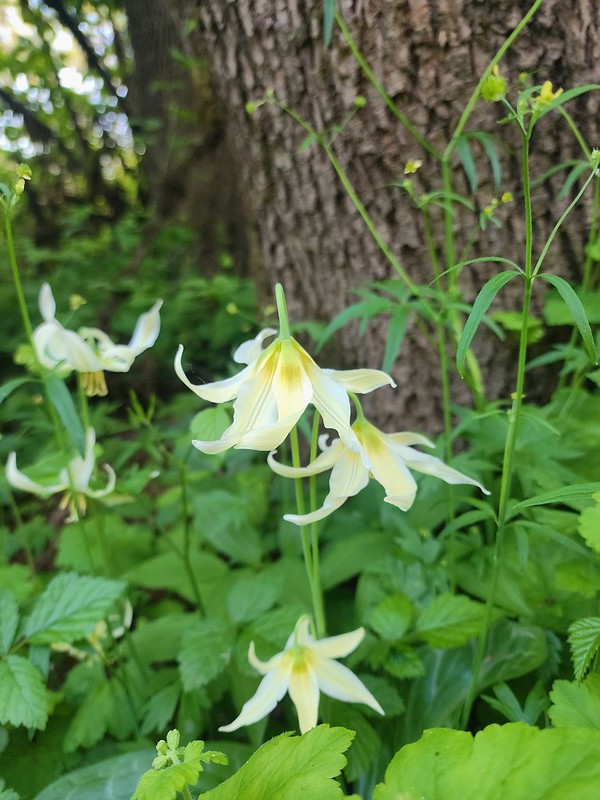
Fawn lilies
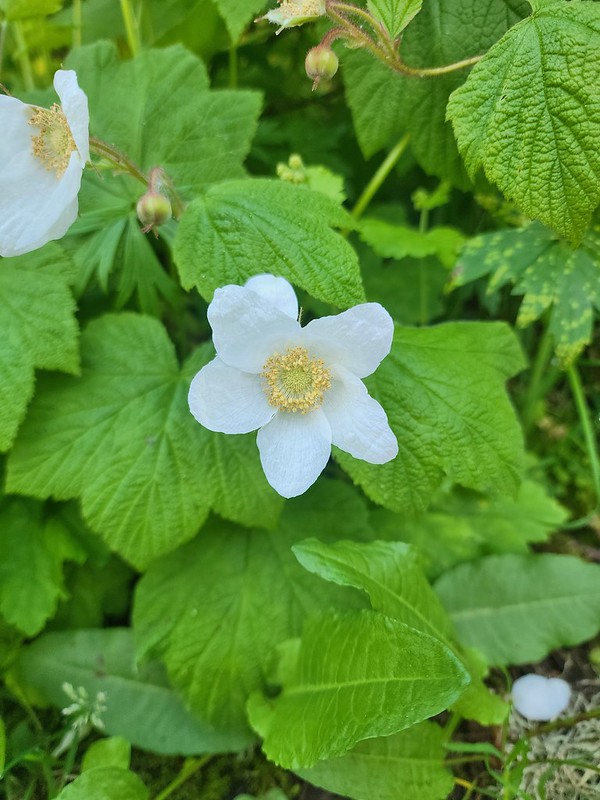
Thimbleberry
Giant purple wakerobin
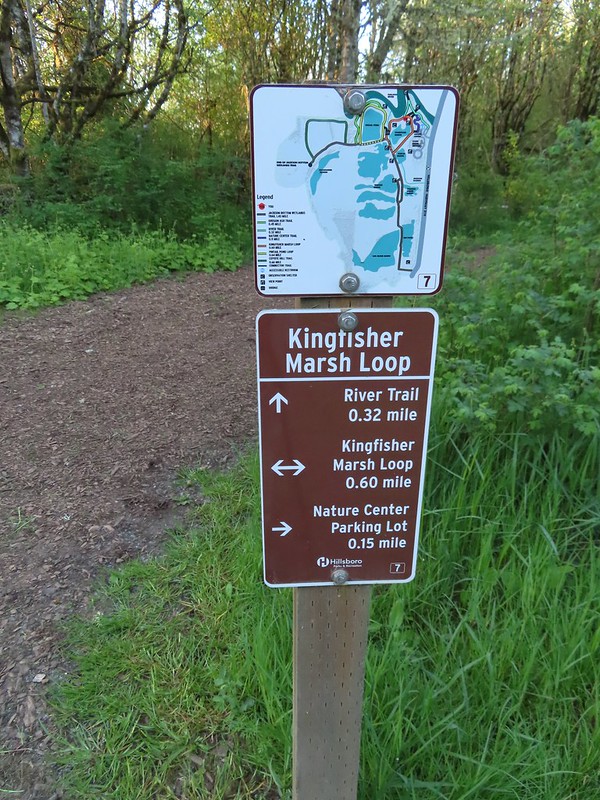
The River Trail ended at the Kingfisher Marsh Loop where we turned right. The trail signs were very helpful in keeping us on track.
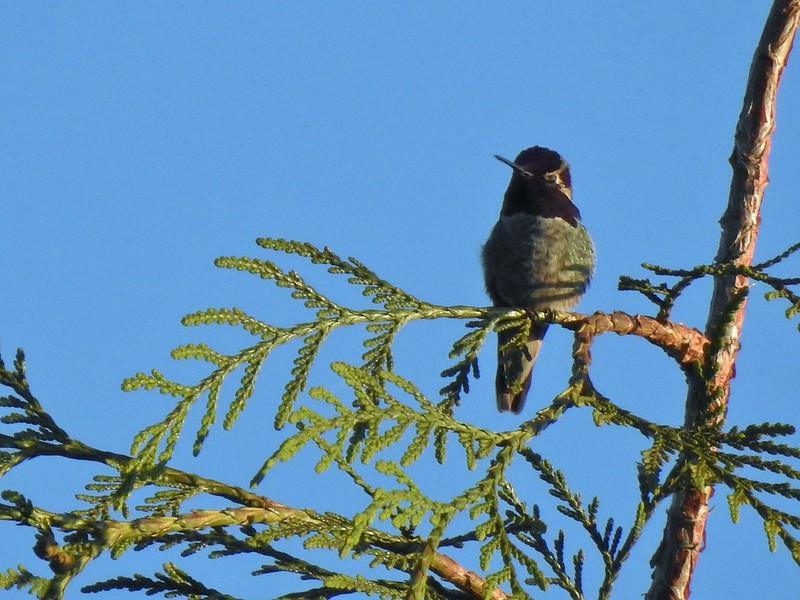
Anna’s hummingbird
Viewpoint overlooking Kingfisher Marsh.
The trail crossed Jackson Slough on a footbridge.
After crossing the slough we turned right on a connector trail that brought us to the Pintail Pond Loop where we once again turned right. Pintail Pond Loop
American goldfinch
A short distance from the connector trail junction we passed the Ash Trail which was temporarily closed due to unstable conditions.
We would have preferred sticking to the Pintail Pond Trail even if the Ash Trail had been open simply because the Pintail Pond Trail provided constant views of the pond where numerous ducks, geese and other birds could be seen. Red-winged blackbird
Sparrow
Purple martins
American robin
There is a lot of lupine in the preserve but only a few had started blooming.
There was a connector trail down to the Ash Trail near a covered viewing deck, but again we opted to stay on the pond loop.
We paused near the viewing deck to watch the tree swallows glide around their houses.
Pintail Pond
Northern shoveler drake and a gadwall
Green-winged teal
Geese
Killdeer
At the northern end of the pond we arrived at the Jackson Bottom Wetlands Trail where we turned right.
We followed this trail past the northern end of the Ash Trail to a junction with the Coyote Hill Trail where, you guessed it, we turned right. More camas
The Ash Trail.
Orange-crowned warbler
Jackson Bottom Wetlands
Can’t emphasize enough how helpful the map/pointer combinations are.
The Coyote Hill Trail doesn’t actually climb a hill, but rather it loops around a meadow with a view of Coyote Hill.
Noisy crow
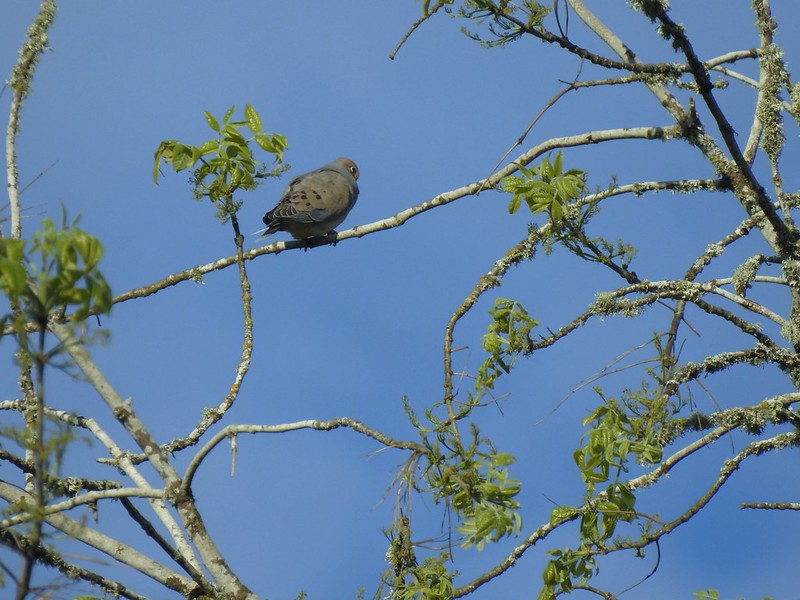
Mourning dove
Our assumption was that that is Coyote Hill in the distance.
Western buttercups
Some houses on the wetlands border.
Golden-crowned sparrow
The Coyote Hill Trail brought us back to the Jackson Bottom Wetlands Trail near its end. We finally made a left turn and headed back toward Pintail Pond.
End of the trail.
Savannah sparrow
Spotted towhee
Passing Pintail Pond.
We stayed right at junctions following the Jackson Bottom Wetlands Trail to its end at Jackson Bottom North Trailhead. Wapato Marsh
White-crowned sparrow
American robin
American coot
Ring-necked ducks
Wapato Marsh
Cormorants
Raised viewing platform with many tree swallow photobombs.
This couple was having quite the discussion.
The Bobcat Marsh Trail on the left.
Water treatment pipes at the other end of the Bobcat Marsh Trail.
NW Pond
The trail passed between the NW Pond on the left and Oak Island Marsh on the right.
NW Pond had a variety of waterfowl. This is a northern shoveler drake, ring-necked duck pair, four lesser scaups, and an American coot.
Pied-billed grebe in NW Pond
Lesser scaups
Goose and mallards
Yellow-rumped warbler
The northern trailhead.
Viewing platform at the trailhead.
On the way back we took the Bobcat Marsh Trail which passed Meadow Mouse Marsh.
Cinnamon teal on Meadow Mouse Marsh
Near the southern end of the Bobcat Marsh Trail a pair of geese were nesting on a pole and were noisily fending off a second pair of geese.
After rejoining the Jackson Bottom Wetlands Trail we followed it back to the Kingfisher Marsh Loop where we turned right. Mt. Hood beyond Wapato Marsh
Back on the Kingfisher Marsh Loop.
We followed this trail to a junction below the Nature Center where we stayed straight at a junction and climbed a small hill to the Nature Center Trail. The Kingfisher Marsh Loop turned left here.
The trail passed behind the Nature Center to some gardens.
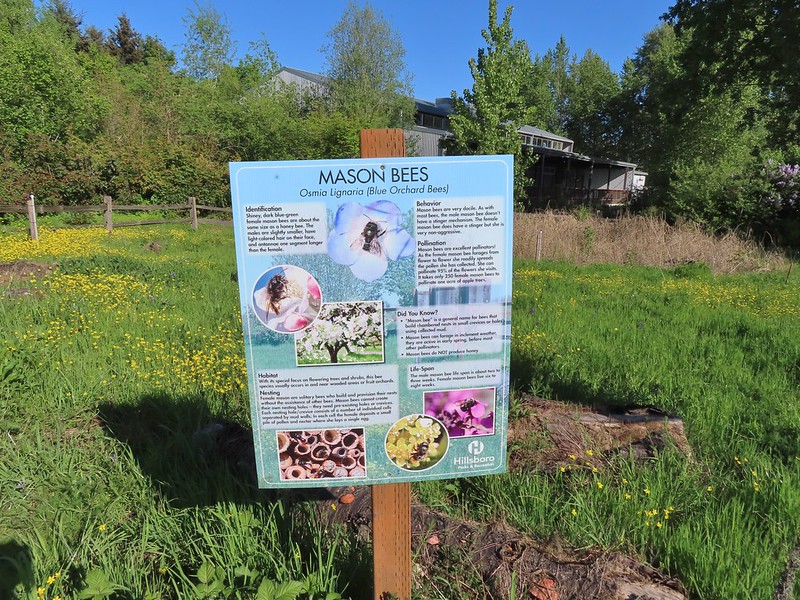
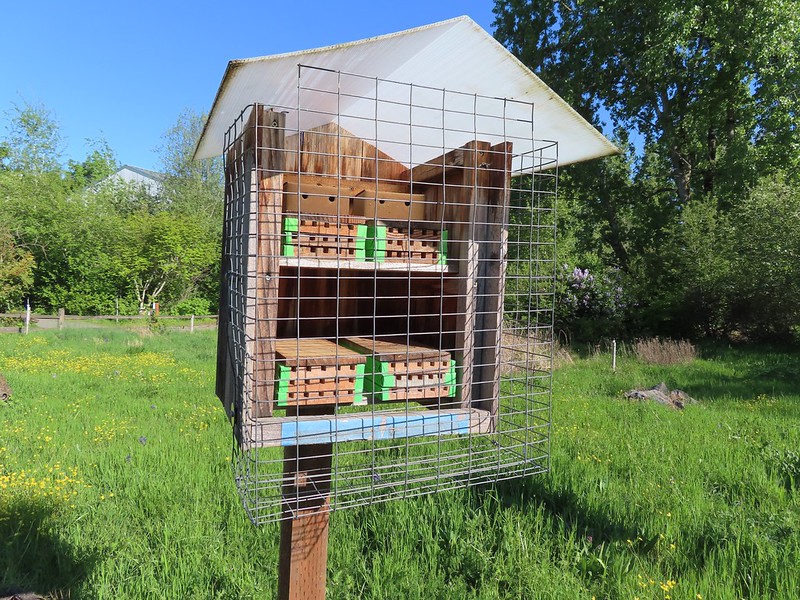
Mason bee house
We followed the Nature Trail down to the River Trail which we followed back to the parking lot. Our hike here came in just under 5 miles with just 50′ of elevation gain. From the parking lot we drove 4.3 miles to Rood Bridge Park (it’s less than 2 miles as the crow flies).
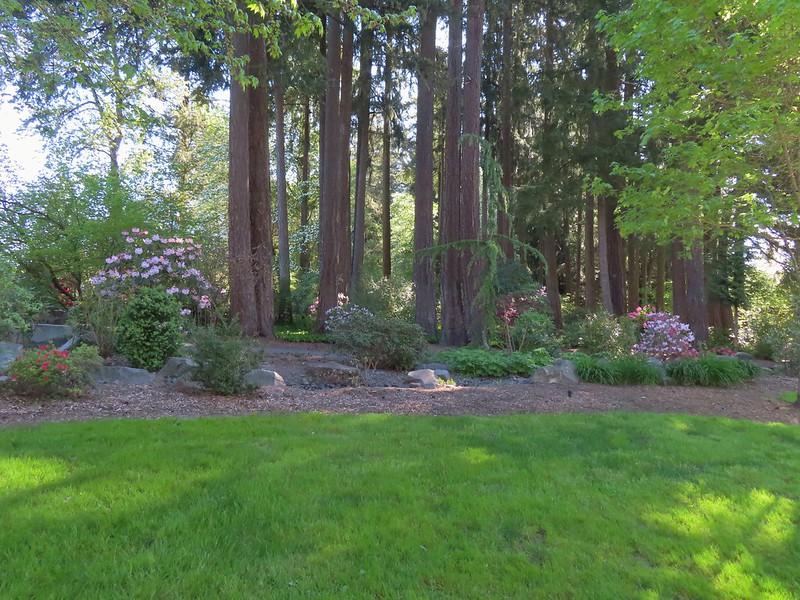
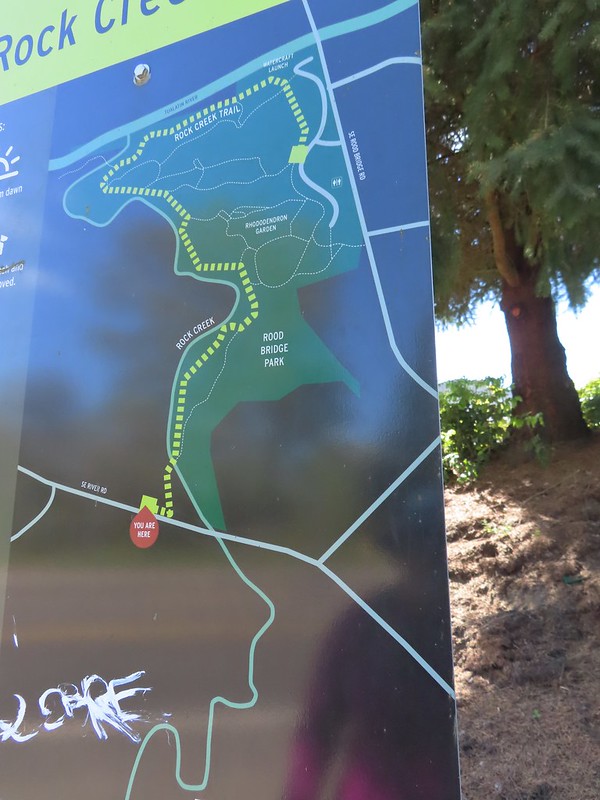
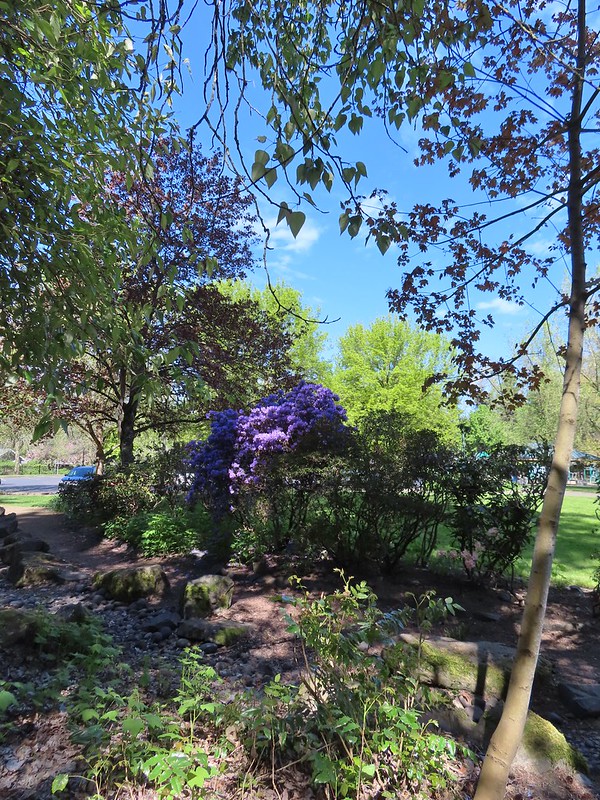
The parking area here is rather large, but we chose to park at the northern end near the playground. From our parking spot we made our way toward the rhododendron garden.
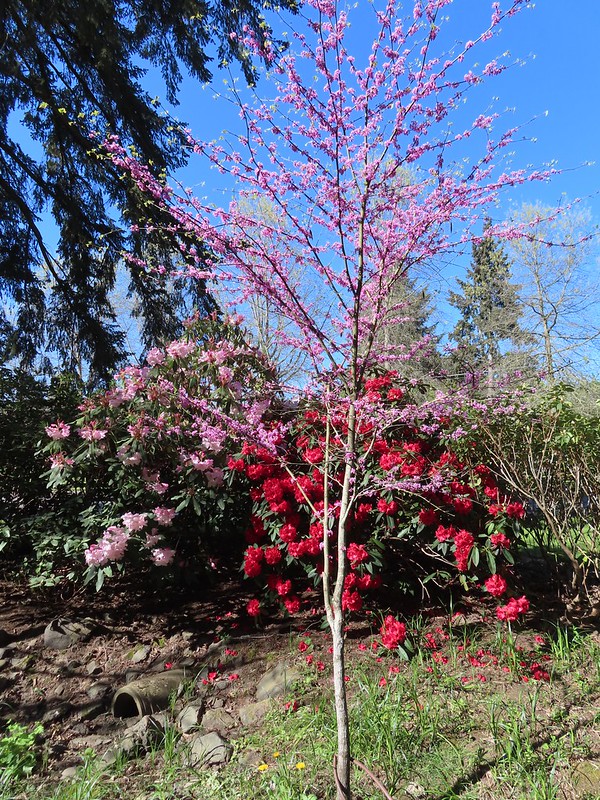
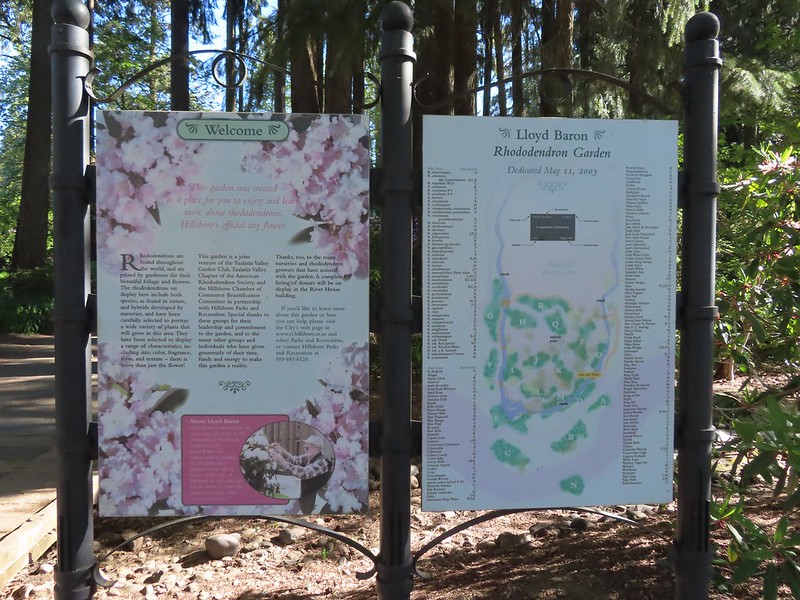
Sign for the rhododendron garden.
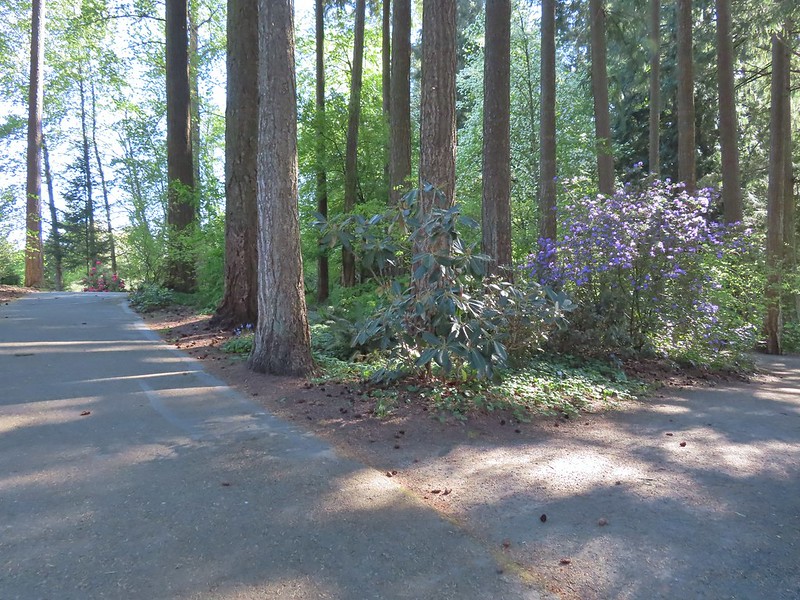
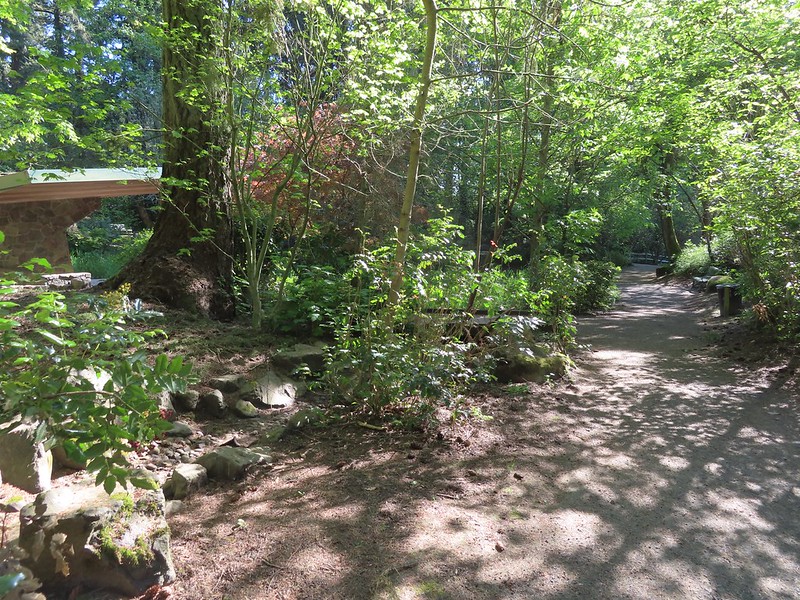
Numerous paths loop through the garden, but we stayed mostly to the right as we made our way east to the Woodland Pond.
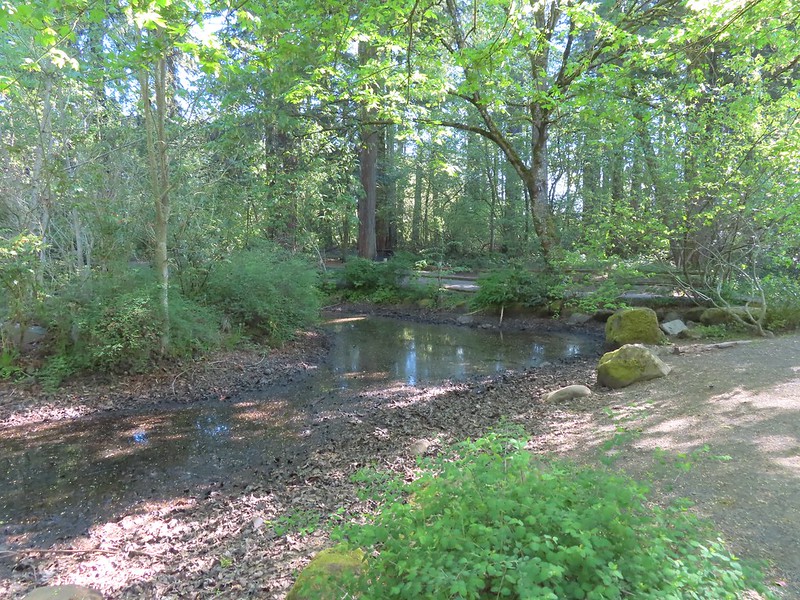
The Woodland Pond
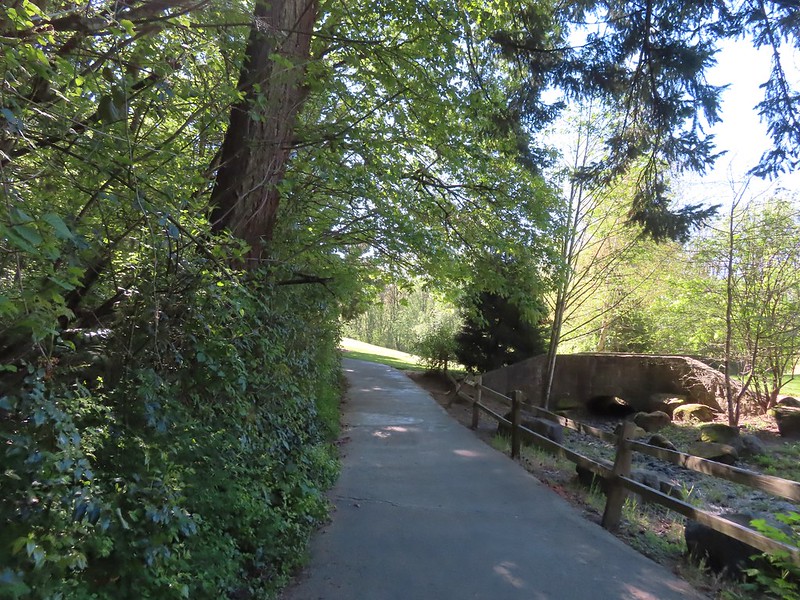
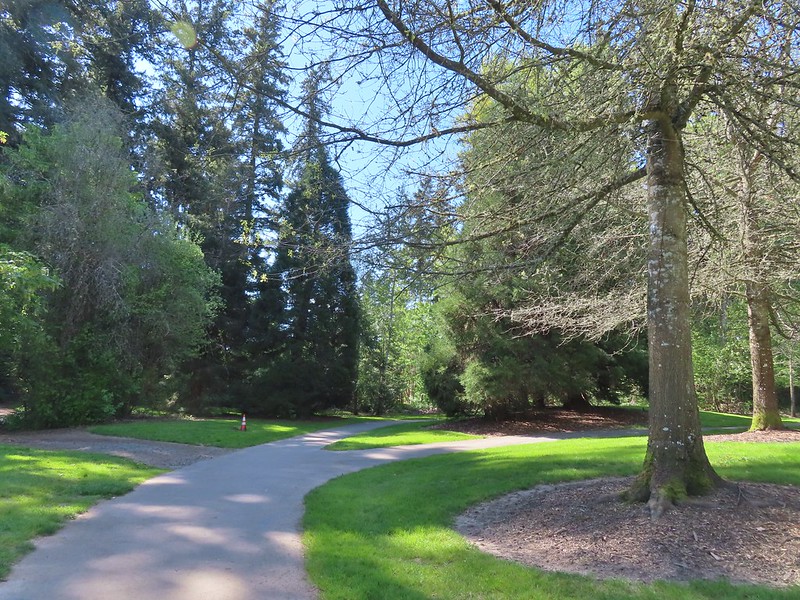
At the pond we turned right on a paved trail which led us to the Rock Creek Trail. Heading for the Rock Creek Trail.
Rock Creek from the Rock Creek Trail.
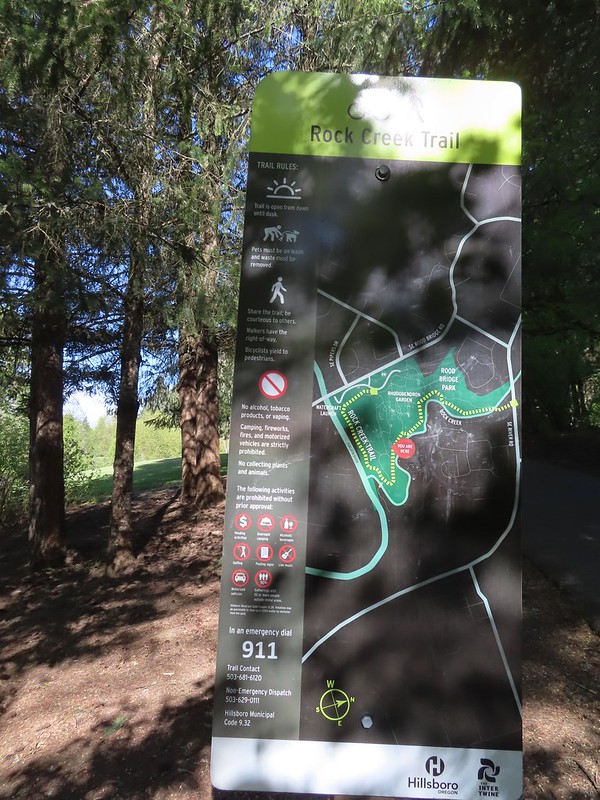
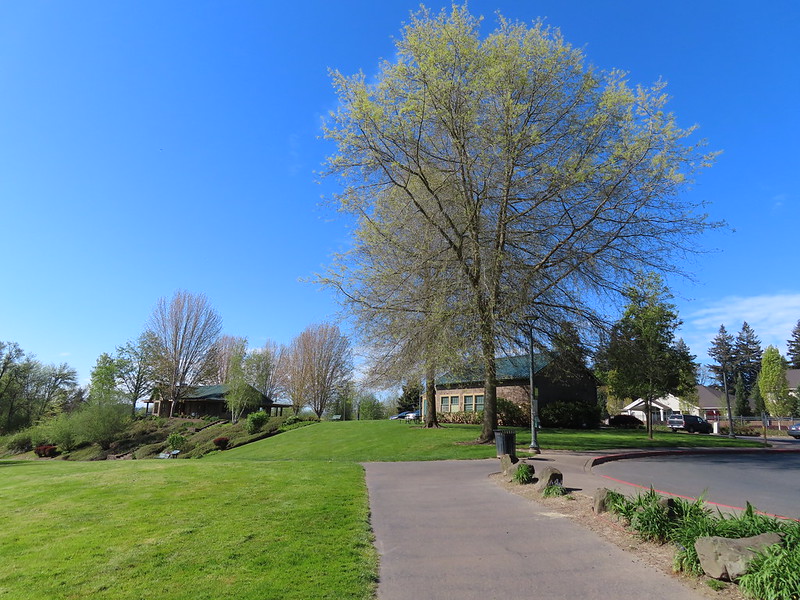
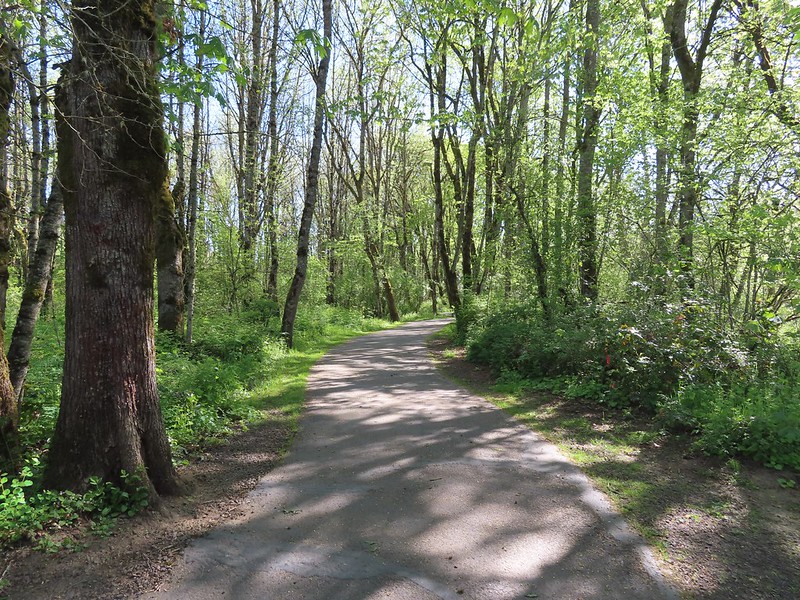
We were familiar with the Rock Creek Trail having hiked its two other segments in May 2022 (post). The eventual plan is for the three current segments to be connected to make a single 8-mile trail. We turned right onto the Rock Creek Trail and followed it to a junction with Lakeside Loop Trail where we took another right. The maps for the park were a little tougher to follow as most of the trails weren’t named and there were a lot of interconnected short segments.
We followed this paved path past a trail leading downhill to a lake.
We stuck to the paved trail which brought us back to the parking lot and the beginning/end of the Rock Creek Trail.
The junction ahead is where the Rock Creek Trail beings/end according to the Rock Creek Trail maps. Maps of Rood Bridge Park simply refer to this as part of the “Main Trail Loop”, if they label it at all.
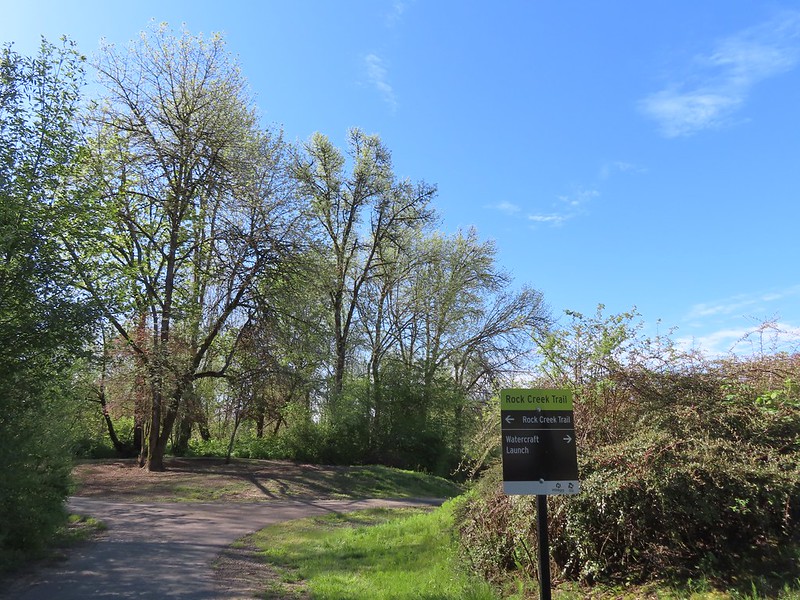
We followed the Rock Creek Trail downhill past a sign for a watercraft launch along the Tualatin River. The trail then followed the river before arriving at junction with the Lollipop Loop.
Mallards
Footbridge at the start of the Lollipop Loop.
We crossed Rock Creek on the footbridge and quickly found ourselves climbing a short but steepish hill to a forested ridge. The loop began a short distance after the trail flattened out.
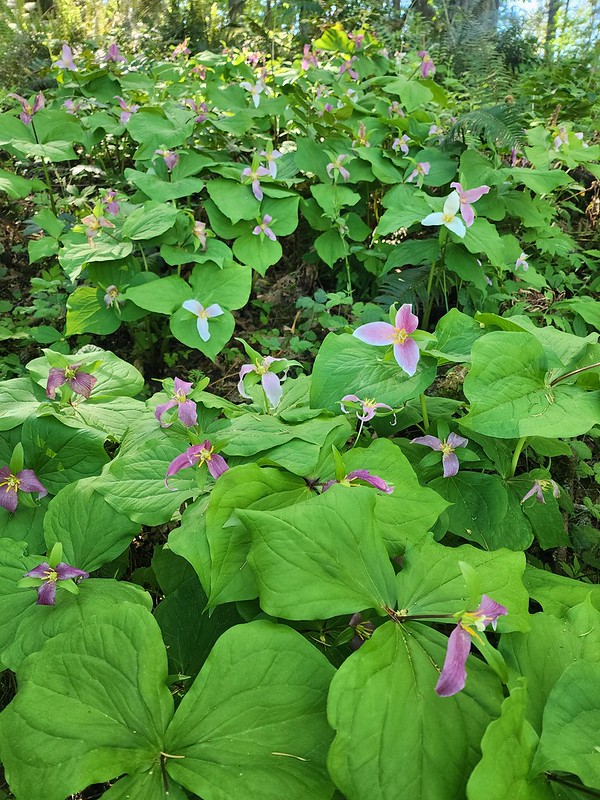
As we had for most of the day we went right when the trail split and followed the path through the woods. There were several use trails cutting through the center of the loop as well as some spur trails leading to nearby homes, so it took some trial and error to find the “official” trail. We managed to only veer off course once, but we spent a fair amount of time pondering which way to go at several junctions. The highlight of this loop was the abundance of trillium. We were just catching the tail end of the bloom, but it was impressive. There was a fair amount of Oregon grape as well.
Violets and trillium
After completing the loop we returned to the Rock Creek Trail, turning right and climbing back to the junction where we’d turned onto the Lakeside Loop earlier.
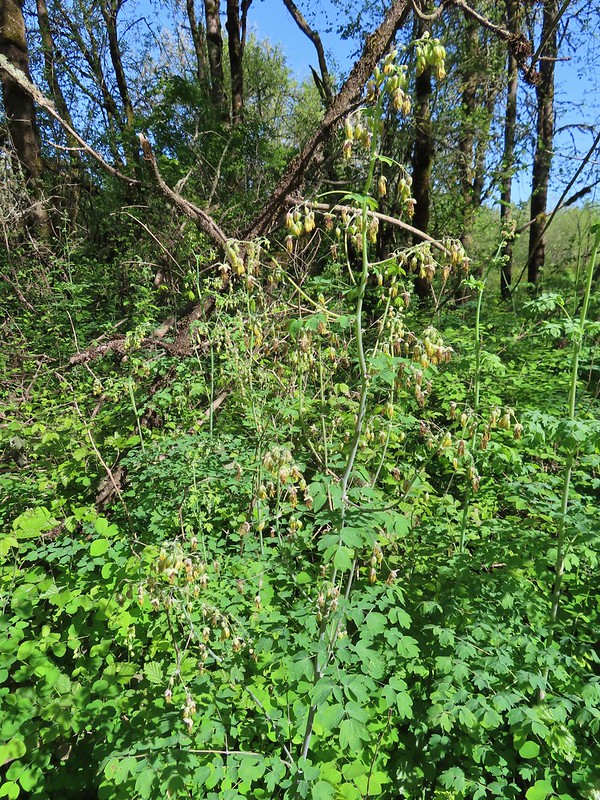
Western meadowrue
Fawn lilies
We veered right off of the paved trail onto a dirt path since it was a much more inviting surface.
The dirt path rejoined the paved path behind the Rhododendron Garden and playground.
We continued on the Rock Creek Trail as it passed behind the playground area and descended back down to Rock Creek on what was now a dirt/gravel trail.
Sparrow
Footbridge over Rock Creek.
Just over 100 yards beyond the footbridge the trail arrived at S 1st Avenue where the segment currently ends.
We turned around at street and headed back, taking a somewhat muddy spur trail that ran parallel to the main trail for 0.2 tenths of a mile just to change things up on the way back. When we got back to the Rhododendron Garden we passed through again on different paths to see more of the plants. Left is the dirt path we’d taken earlier, straight is the Rock Creek Trail, and right led to the Rhododendron Garden.
This hike was approximately 2.5-miles with 100′ or so of elevation gain giving us just under 7.5-miles and 150′ of elevation gain for the day. Jackson Bottom on the left and Rood Bridge to the right.
Both of these destinations would be great for kids. (Note dogs and bicycles are not allowed at Jackson Bottom.) We enjoyed Jackson Bottom a little more given the wildlife, but Rood Bridge was a nice park and the trillium display along the Lollipop Loop will not be forgotten. Happy Trails!
A mostly sunny, near 60-degree forecast, looked too good to pass up so we decided to head out and attempt a pair of short hikes in the Oregon Coast Ranges Tillamook State Forest. Our first stop was along Maple Creek Road for a hike to Ki-a-Kuts Falls. Sunrise from the trailhead.
Clear cut at the trailhead.
The old alignment of the road was said to be located approximately 80 yards from the trailhead, but it appears that between time, storms, and logging operations the old road has become far less obvious. This was the view through the forest from Maple Creek Road around the 80-yard mark.
We hiked further up Maple Creek Road and checked for a way down to the old alignment, but in the end decided that the slick conditions combined with the amount of blowdown on the hillsides would have made for a much more challenging hike than we were looking to tackle. We could hear the Tualatin River in the valley below and I managed to get far enough down the hill to get a glimpse of the water. I had descended from a pullout with a fire ring about 50-75′ looking for the old roadbed, but I still couldn’t make out where it actually was and had been slipping a lot on wet wood.
After climbing back up to Heather I called an audible and we turned to Plan B. The second hike we’d originally planned on was a 1.5-mile out and back further into the forest to visit Stairstep Falls, a rapid more than a fall, that requires fording the 25 yard wide Middle Fork North Fork Trask River. We decided against attempting that hike because it would effectively end our hiking day by leaving the only pair of hiking shoes I’d brought soaked. That was fine when it was going to be the final hike of our day, but we wanted to get a little more than 2.5-miles in. (We’d done close to 1 looking for the way to Ki-a-Kuts Falls.)
I’d known going in that there was a chance that we’d need to turn to Plan B because the most recent trip reports I could find for Ki-a-Kuts Falls was from 2014. That Plan B had been Fernhill Wetlands. Located in Forest Grove, OR the trailhead was just 26-miles from where we were. We drove back to Yamhill and then headed North on Highway 47 to the Fernhill Wetlands Trailhead.
Map and information at the trailhead.
There are several loops possible at the wetlands and we hoped to maximize these, so we headed south along Fernhill Marsh.
Starling
Lenticular clouds over Mt. Hood in the distance.
Our first wildflower of the year is Indian plum in 2024.
Egret
Path at Fernhill Wetlands.
We stayed straight at a junction with a path between Fernhill Marsh and Cattail Marsh. Gazebo overlooking Cattail Marsh.
Great blue heron on a post above Cattail Marsh.
American coot
At the next junction we turned left between Cattail and Eagles Perch Marshes.
Another great blue heron.
Red-winged blackbird
Hawk flying over Eagles Perch Marsh.
Fittingly at the far end of the marsh were a pair of bald eagles.
We turned right and walked along Eagles Perch Marsh for a tenth of a mile to a gate along SW Geiger Rd.
Ring-necked ducks
Buffleheads
This one might be a hooded merganser?
After turning around we headed north passing Cattail Marsh and arriving at Fernhill Lake.
Fernhill Lake
The trail bent eastward along the lake to a gazebo overlooking Barney Wetlands. From the gazebo we watched a flock of tundra swans. This was our second outing in a row (Wapato Lake) seeing tundra swans after not ever having seen them on a hike prior. This is where the trail turned east (for obvious reasons).
Barney wetlands
There were also quite a few ruddy ducks here which we don’t often see.
After a good long break watching the swans we continued around Fernhill Lake to Dabblers Marsh. Double-crested cormorant on a post in Barney Wetlands.
Double-crested cormorant
Drying off in the sun.
Nurtia at a bench near Dabblers Marsh
Nutria
Dabblers Marsh
Green-winged teal
Great blue heron
Pie-billed grebe
We turned west between Fernhill Lake and Dabblers Marsh and came to a nice view of the lake and the start of the Dabblers Marsh Loop Trail.
We turned onto the woodchip path along Dabblers Marsh and followed pointers to a loop around some farmland.
Robin
The start of the loop at the edge of the farmland. We stayed left opting to hike the loop clockwise.
Anna’s hummingbrid
A gaggle of geese in the field.
American kestrels manning their posts.
Purple dead-nettle
More geese coming in for a landing.
Near the end of the loop the trail left the field along Dabblers Marsh.
Spotted towhee
Rabbit
After completing the loop and returning to Fernhill Lake we did a loop through the Water Gardens. Geese on Fernhill Lake
Mallard drake
Mallard female
Water Gardens
Northern shovelers, a mallard, and a coot.
Oregon grape beginning to bloom.
Northern shoveler
Green-winged teal pair
Path along the Research Wetlands.
Egret near the parking lot at Fernhill Marsh
Looking back at the Research Wetlands from the near the trailhead.
We managed to get 3.7-miles in at the wetlands and saw a lot of birds and other animals. While there were quite a few more folks here than we’d seen on our previous hike at nearby Wapato Lake Wildlife Refuge, it never felt too busy. Plan B had earned an A+ in our books. Happy Trails!
Warm weather and possible blue sky prompted us to head out for our February hike the first day we had off. While the very recent weather had been unseasonably warm the Willamette Valley, and especially the Portland area, was still recovering from January’s Winter storm. We had changed our planned January hike due to storm damage in Portland’s Forest Park and found ourselves looking to change our planned February hike now as well.
We had originally planned on visiting some wetlands west of Portland but flooding from the ice storm and heavy rains that followed had left some of those trails flooded. A quick check of the current trail conditions at Forest Park revealed that there were no closures/detours listed for the area of the park we had planned to hike the previous week so that became our Plan B.
We had hiked in the 5200-acre Forest Park on five previous occasions with each hike including part of the approximately 30-mile Wildwood National Recreation Trail. The trail begins in Washington Park’s Hoyt Arboretum (post) and ends at Newberry Road to the NW. Our previous outings had covered all but approximately 3.3-miles of the Wildwood Trail between the arboretum and Germantown Road (post). A 2022 visit to the Pittock Mansion via the Wildwood Trail (post) connected to the hike from Hoyt Arboretum and to a 2020 loop starting on Leif Erickson Drive from Thurman Street (post). A 2019 loop from the Lower Saltzman Road Trailhead (post) didn’t connect to any of the other hikes leaving a 1.3-mile gap in the Wildwood Trail between the Maple Trail and Nature Trail junctions, and a 2-mile gap between Firelanes 5 and 7A.
We were missing all of the Wildwood Trail between Germantown Road and Newberry Road though, so that was the goal of today’s hike. We decided to start at the Germantown Road Trailhead as opposed to the Newberry Road Trailhead which was a choice we would regret later. We were the third car at the Germantown Road Trailhead at 7:15am. Some of the damage from the ice storm at the trailhead.
One of the nice things about Forest Park is the numerous loops that are possible off of the Wildwood Trail which allows one to avoid straight out-and-back hikes. There is a price for the loops which is paid in the currency of elevation gain. The route I’d planned for the day included three loops beginning at the trailhead where instead of taking the Wildwood Trail we took the Connector Trail to the Cannon Trail and followed it downhill to the Leif Erickson Drive North Trailhead. Sign for the Connector Trail at the trailhead.
Cannon Trail
From the Leif Erickson Trailhead we crossed Germantown Road at the gate for Firelane 9 then hiked uphill along the shoulder of Germantown Road just over 100 yards to Firelane 10. Firelane 9 across from the trailhead.
Firelane 10
We followed Firelane 10 downhill to a stream crossing then climbed to a junction with the Linnton Trail.
Unsurprisingly the recent weather had most of the stream beds flowing which we hadn’t witnessed on our other visits.
We turned left at the junction sticking to Firelane 10 which climbed back up to the Wildwood Trail. The 1.7-mile detour from the Germantown Trailhead came with an elevation loss of 375′ and gain of 550′.
We passed the Keyser Trail which rejoins Firelane 10 just a quarter mile ahead. We stuck to Firelane 10 which climbed very steeply in that quarter mile leading us to believe the Keyser Trail may have been a little more gradual as the map showed it bowing away from Firelane 10 before rejoining.
The first of only three trees that were still down over the trails we hiked. In the distance is a Wildwood Trail sign at the junction.
We turned right onto the Wildwood Trail and followed it for just over a mile to the BPA Road.
The trail repeatedly bows into the hillside to cross creek beds.
We passed three pointers for Newton Road and then crossed Newton Road along this section of the Wildwood Trail. We would be using Newton Road to make another small loop on our way back.
The Wildwood Trail crossing Newton Road.
Not all of the junctions have maps, but most of the major ones do to help keep hikers and runners on track (or to give them more ideas).
Climbing up to the BPA Road crossing.
The BPA Road heading uphill with the Wildwood Trail we’d just come up to the right.
We turned off of the Wildwood Trail here and took a right onto the BPA Road. After a brief climb the BPA Road dropped to a saddle where Firelane 12 joined from the left at the Fix-the-Hole plaque.
Firelane 12 on the left.
The middle of three plaques commemorating the 1999 acquisition of 73-acres that was in danger of being developed.
We turned left onto Firelane 12 and descended for half a mile to Firelane 15 near another unnamed creek.
Once again varied thrush 1 – Deryl 0. If I was keeping score, it would probably be something like 179-10.
Firelane 15 on the left ahead.
We turned left onto Firelane 15 and climbed over 230′ in 0.4-miles to the Wildwood Trail. The small creek along Firelane 15.
Blue sky and powerlines above Firelane 15.
Wildwood Trail crossing Firelane 15.
We turned right onto the Wildwood Trail once again and followed it nearly 1.8-miles to its end at Newberry Road. There were no firelanes or side trails along this final stretch of the Wildwood Trail.
The fanciest bridge we crossed all day.
Why is the trail way down there when the road is up above on the far hillside?
Woolly bear
Climbing to Newberry Road just to say we made it to the end of the Wildwood Trail.
Newberry Road Trailhead.
After a brief break at the trailhead we headed back. We stuck to the Wildwood Trail passing both Firelane 15 and the BPA Road. Just under 4-miles from Newberry Road we arrived at Newton Road were we turned right and left the Wildwood Trail.
Another sub-par bird photo, but it took us quite a while just to spot this woodpecker who was way up in the treetops (and mostly in the shade).
Crossing Firelane 15.
Another blurry bird. This one a wren, one of many we heard but the only one we were able to spot.
Uprooted trees along the Wildwood Trail.
Newton Road to the right of the Wildwood Trail.
We turned uphill onto Newton Road and followed it just over half a mile to the Newton Road Trailhead where we paused to use the facilities. Mile marker along Newton Road.
Douglas squirrel
One of several small habitat restoration study areas along Newton Road.
The Newton Road Trailhead in the distance.
After our break at this trailhead we followed Firelane 10 at the far end of the parking area 0.2-miles to the Wildwood Trail.
It was just over three quarters of a mile on the Wildwood Trail from Firelane 10 to the Germantown Road Trailhead. One of only two benches we saw all day.
Cars parked along Germantown Road in the distance.
According to the Garmin our hike was 12.2 miles with approximately 2200′ of elevation gain. A good challenge for us this early in the year. (Our feet were not too happy with us.)
Despite the challenge it had been a nice hike with excellent weather, and while Forest Park is much busier than many of the trails we visit it never really feels too crowded.
While our experience on the trails had been good we arrived back at our car to find that people had parked along a fence behind us in the parking lot which didn’t leave us enough room to back out from between the cars on either side of us. We hadn’t expected anyone to park there because of the lack of room, but we should have known better. We spent the next half hour or so waiting for the owners of any of the three cars parked around us to return and set us free. (Although the SUV parked on our right was most likely going to be in the same predicament we were.) Fortunately the people that had parked directly behind us returned and we were able to escape. There have been other times I worried about having the car get trapped, but until today it had just been my own paranoia. Hopefully we will choose our parking spots more carefully in the future. Happy Trails!
For our final outing of 2023 we headed to Portland to visit some Boring volcanoes. Not to be confused with boring, the Boring Volcanic Field which consists of more than 80 small volcanic vents and associated lava flows dispersed throughout the greater Portland-Vancouver metropolitan area. Several of the resulting cinder cones are home to parks providing hiking opportunities and we planned on visiting three of these along with a city park with a 15′ waterfall.
We began our morning at Portland’s Mt. Tabor Park. We parked in in the lot next to the Mount Tabor Visitors Center and set off toward the playground. The playground behind and to the right of the signboard at the Visitors Center.
We were attempting to follow, as closely as possible, the route described by Matt Reeder in “PDX Hiking 365”. (His hike has a different starting point but loops through the parking area where we were starting.) After a little confusion near the playground we located the red trail and followed it to the Mount Tabor Stairs where we turned right. The red trail continuing on the far end of the playground.
Mt. St. Helens from the playground.
On the red trail.
The Mount Tabor stairs extend from the park border up to the summit.
Summit restrooms
The restrooms were reopened in 2017 after being renovated.
Mount Tabor summit
Mt. Hood from the summit.
Downtown Portland
At the southern end of the summit, near the former site of a statue of Harvey W. Scott (and later a bust of York), we headed downhill on a steeper trail.
At a wide junction we turned right onto the Red Trail and passed above Reservoir No. 1.
At Reservoir Loop Road we veered left staying on the Red Trail climbing up and over Poison Oak Hill. The trail then dropped back down to the loop road near Reservoir No. 5.
Mallards
We walked along reservoir road to a small building then crossed the road and headed down a long flight of stairs.
At the bottom of the stairs we turned right on the Green Trail and followed it past some tennis courts before turning uphill. We stuck to the Green Trail as it neared the parking area and followed it back behind The Crater before arriving back at the Visitors Center.
We forked right at this junction sticking to the green pointers.
Arriving at The Crater.
Coming around The Crater near the Visitors Center.
This was just over a two-mile loop with approximately 350′ of elevation gain.
From Mount Tabor we made the nine-mile drive to the Sunnyside Road Trailhead for the Mount Talbert Nature Park.
We set off on a gravel path that descended to a metal bridge over Mount Scott Creek. Mount Talbert from the path.
Mount Scott Creek
Beyond the creek the forested trail began to climb Mount Talbert. We passed a junction with the Cedar Park Trail joining from the left and after 0.4-miles arrived at a T-junction with the Park Loop Trail.
The Park Loop Trail junction just uphill.
Mount Talbert is an Oregon Metro park which meant well marked junctions complete with small maps. Note that the map at the Park Loop/Sunnyside Road Trail junction mis-identifies the location with the “You Are Here” star located at the Park Loop/Summit Ridge junction.
We turned left onto the Park Loop Trail and followed it further uphill to the actual Summit Ridge Trail junction.
We turned right onto the Summit Ridge Trail and followed it up and over the wooded summit to the West Ridge Trail.
Arriving at the West Ridge Trail junction.
We turned right again and followed the West Ridge Trail as it traversed the hillside brining us back to the Park Loop Trail.
Rejoining the Park Loop Trail.
We completed the loop and turned down the Sunnyside Road Trail to return to our car to complete this 2.5-mile (and 700′ gain) hike. Mt. Adams was visible through the web of small branches.
A snowy Mt. Adams.
Back at the Sunnyside Road Trail.
From the Sunnyside Road Trailhead it was just a 3.5-mile drive to the parking area at Scouters Mountain Nature Park.
From the parking area we set off on the paved Shelter Trail toward the summit.
After just 0.2-miles we arrived at the shelter and a great view of Mt. Hood.
The benches throughout the park contained various nature sculptures, this one is “Moss Group”.
After admiring the mountain we made a small loop on the summit then continued on our larger loop by taking the Boomer Trail at the southern end of the summit downhill and looping around the East side of the mountain to return to the parking area. On the Boomer Trail.
The Boomer Trail turned left at the bottom of these stone steps.
Another Metro trail map and pointers.
The Boomer Trail, named for Mountain Beavers which are sometimes called boomers, crossed the entrance road before climbing back up to the parking area.
This was an impressive root system.
A less obstructed view of Mt. Adams. (Mt. St. Helens was also briefly visible from this section of trail.)
Slightly clearer shot of Mt. Adams.
Back at the trailhead.
This was just a 1.3-mile loop with 200′ of elevation gain, and it was still early enough that we could easily fit one more stop in. From Scouters Mountain we drove another 4.5-miles to Hood View Park
At the far end of the parking area we followed a service road down to SE 162nd Ave and followed it right to its end at a sign for the Hidden Falls Nature Park.
Mt. St. Helens from the service road. Mt. Hood was also visible to the right through some fences around the ball fields.
A wide path led somewhat steeply downhill a third of a mile to an impressive bridge over Rock Creek and a view of Hidden Falls.
The large area to the right didn’t offer much of a view of the falls, but the view from the bridge was great.
We continued past the bridge a short distance along Rock Creek before turning around when the path veered away to climb up into another neighborhood.
The Oregon Hikers Field Guide describes a 4.1-mile loop that visits some other parks while also passing through several neighborhoods. We were content with seeing the falls and headed back making this just a 1.2-mile out-and-back with a couple hundred feet of elevation gain. For the day we logged 7.2-miles and 1475′ of cumulative elevation gain. It was a nice relaxing way to end our 2023 hiking season. Happy Trails and Merry Christmas!
While Spring has largely been a no-show so far this year, Summer decided to make an early appearance with a weekend forecast for temperatures topping 90 degrees. We’ve been lucky to hit 60 so we’ve had no time to adjust to that kind of heat. In the past when temperatures have soared, we’ve opted to adjust our planned hike to minimize the impact. That wasn’t necessary this time though as our planned outing was to take three short hikes, each less than an hour North of Salem.
We started our morning by re-visiting the Tualatin River National Wildlife Refuge. We’d stopped here in March of 2019 (post) but could only hike the River Trail at that time of the year. The longer Wetland Trail loop is closed from October 1st through April 30th so we’d scheduled this May visit to check out the loop. We started from the Roy Rogers Trailhead where we found a nice patch of wildflowers to greet us. The refuge is open from dawn to dusk. We arrived at a quarter to six to get an early start and avoid being out during the hottest parts of the day.
The patch of wildflowers.
A checker-mallow surrounded by golden paintbrush.
Plectritis amid the golden paintbrush.
We decided to go counterclockwise and forked right across Chicken Creek on a bridge. We had a pretty good view of Mt. Hood.
The Wetland Trail follows a service road around the refuge. We began seeing wildlife almost immediately with a family of geese and a pair of deer hanging out on some private property adjacent to the refuge.
It was approximately 1.5-miles from the Roy Rogers Trailhead to the Refuge Headquarters and Wildlife Center. It was slow going as we kept stopping to watch the wildlife.
Mallards
Greater yellowlegs
Mourning dove
Great blue heron
An egret and some ducks
More families of geese
Swallows flying above the Wetland Trail.
Northern shoveler, scaups (leaning toward greater), and a bufflehead.
Mallards
Northern shoveler
Ruddy duck
Gadwalls
Spotted sandpiper
Purple martins
Killerdeer
Cinnamon teals
Nutria, one of several of these non-native rodents that we saw.
Nap time (or just a late sleeper).
Ducklings
Song sparrow
Common yellowthroat
Wildlife Center
We took in the view from the overlook next to the Wildlife Center before continuing on with the loop.
Great blue heron watching from a little island.
We followed the Wetland Trail until we came to the River Overlook where we cut over to the River Trail (the trails are less than a yard apart in this area) to check in on the Tualatin River.
Anna’s hummingbird
The same Anna’s hummingbird. When catching light their head/throat is bright pink but appear black when not.
River Overlook
Tualatin River
Robin
From the overlook we stuck to the River Trail following it through a short section of forest before rejoining the Wetland Trail. The Wetland and River Trails running parallel.
Spotted towhee
Rabbit
Pacific waterleaf
Violets and fringecup along the River Trail.
Bleeding heart
We skipped the spur trail to the Ridgetop Overlook since we’d done that on our previous visit.
Chicken Creek
The River Trail meets the Wetland Trail across from the Weland Observation Platform.
We didn’t observe much from the platform on this visit. We continued on with our loop back on the Wetland Trail.
Great white egrets
There were some impressively tall trees along this portion of the loop.
The trail made a 90-degree turn just before another branch of Chicken Creek and headed in a near straight line back toward the Roy Rogers Trailhead.
Another egret
More egrets across Chicken Creek.
Red-winged blackbird
Savannah sparrow
Checker-mallow
A parsley
While our loop was only 3.6-miles it was packed full of sights, a great start to our morning. From the refuge we made the roughly 10-minute drive to our next stop at the Cooper Mountain Nature Park, yet another park managed by Oregon Metro. The park hosts a little over three miles of trails which start at a nice little playground.
Our planned route was to go right on the Little Prairie Loop to the Cooper Mountain Loop and then stay right on that loop (with a detour to hike the Larkspur Loop) to Blacktail Way. We’d then take Blacktail Way back to the Little Prairie Loop and turn right again to finish that loop and return to the trailhead.
The view from Cooper Mountain Nature Park.
The trail system heads downhill from the trailhead so keep in mind that all hikes here end with on an uphill.
Metro is currently running an odd little trial with very short “photo loops”. Mowed paths just off the main trails for photography. We took the first loop just to check it out and they were not kidding when they said the surface may be uneven.
One of two trial photo loops.
The idea is to limit the negative effects of off trail hiking. It’s an interesting idea but it would be easier if people could follow simple rules. We quickly found ourselves back on the Little Prairie Loop and forking right.
The second trial loop. You can see how short this one is by the signboard just downhill marking its other end.
There were several interpretive signs and benches along the trails.
White-crowned sparrow
Anna’s hummingbird
Star flower
As usual Metro had the trail junctions well marked with little maps on top of the posts. This is the Cooper Mountain Loop junction with the lower end of the Outback Trail.
Camas
Tough-leaved iris
Serviceberry
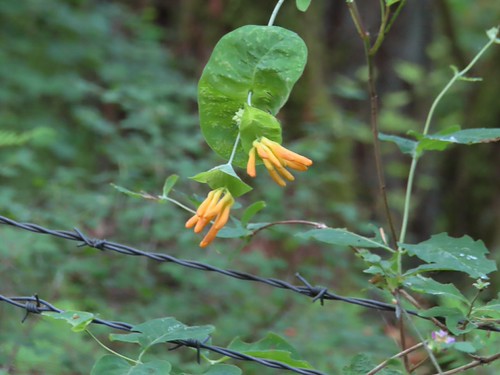
Honeysuckle
Looking back uphill to some wildflowers.
Monkeyflower
Tomcat clover
Spotted towhee
Bench along a pond filling an old quarry.
The pond. Red-legged frogs apparently breed here. We didn’t see any frogs but there was a mallard hanging out in the brush.
Iris on the hillside above the quarry.
The Larkspur Loop continuing straight from the Cooper Mountain Loop which turns uphill at the junction.
An endangered species of larkspur, pale larkspur (Delphinium leucophaeum), typically blooms in the park in late Spring into June. With everything running late this year we didn’t spot any yet this year as we completed the 0.7-mile lollipop loop. Prior to the loop the Larkspur Loop dips to cross a creek in the trees.
The little creek.
View from the Larkspur Loop.
While watching for the larkspur I noticed these giant blue-eyed Mary.
We returned to the Cooper Mountain Loop which made a steep climb to its junction with Blacktail Way.
Blacktail Way to the right.
Map at the junction.
Blacktail Way climbed more gradually on its way to the Little Prairie Loop. The “earphone” next to the bench here was neat. There was also one at the trailhead and they really allowed you to isolate the sounds of the woods.
The Little Prairie Loop.
We turned right onto the loop and then quickly detoured to the Little Prairie Overlook.
The pale larkspur also grows in this area but again we were too early.
These were the only woodland-stars we spotted.
After checking out Little Prairie we finished the loop and returned to our car. This stop came to 3.1 miles with 300′ of elevation gain.
From Cooper Mountain we drove 18 miles south to our final stop of the day at Graham Oaks Nature Park. Another one of Metro’s parks Graham Oaks also hosts approximately three miles of trails. Unlike many of the other Metro parks we’ve visited recently this one allows bikes and dogs (on leash) albeit limited to the Tonquin Trail.
Our planned route here was another counterclockwise loop starting on the Tonquin Trail. We would follow that trail to the hiker only Oak Woodland Walk and then turn onto Coyote Way then take the Legacy Creek Trail returning to Coyote Way just before its end at the Tonquin Trail. Then we would simply follow the Tonquin Trail back to the trailhead.
Despite this being our third stop, the early start had gotten us here shortly after 10am, it was already over 70 degrees when we set off on the Tonquin Trail. Luckily for us there was an occasional breeze that helped cool things off a bit. Heading toward Acron Plaza on the Tonquin Trail.
Interpretive sign at Acorn Plaza.
There were large amounts of large camas blooming along the trail along with yellow buttercups and some patches of lupine. Lupine and buttercups
Lupine
Meadow checker-mallow
We detoured to Elder Plaza at a trail marker.
The “elder” oak is between 150-200 years old.
We watched this American Kestral hover on a near vertical line for what felt like quite a while. It eventually dove and attempted to catch something in the grass. We couldn’t tell if it had been successful.
We continued down the Tonquin Trail and made a second detour to visit the Wetland Overlook.
Mylitta crescent
We made a third detour when we reached a 4-way junction with the Oak Woodland Walk and Arrowhead Creek Trails. We turned right onto the Arrowhead Creek Trail to see what the creek might look like since we could see a little footbridge from the junction.
Footbridge over Arrowhead Creek.
There wasn’t really any water flowing in the creek bed and we turned around after crossing and returned to the 4-way junction where we crossed the Tonquin Trail onto the Oak Woodland Walk.
The Lycaenidae family of butterflies remains a mystery to me. This appears to be an Eastern Tailed Blue based on the ventral spots.
Snow in the Cascade foothills. If you look really closely behind the bigger snow patch to the far-right, you can just barely make out Mt. Jefferson.
We turned onto Coyote Way and quickly spotted several species of birds. Starling
Northern flicker
This scrub jay would not come out from behind the oak leaves.
Coyote Way eventually entered some trees and crossed a boardwalk.
There was a lot of candy flower beneath the trees.
We turned onto the Legacy Creek Trail and found ourselves under a much denser canopy of trees. This extra shade made this feel like the coolest section of trail we’d been on all day which was welcome because it was now over 80 degrees in the Sun.
Mushrooms along the Legacy Creek Trail.
Violets, candy flower and the invasive herb robert (pink).
We left the trees and quickly arrived back at Coyote Way where we took a right followed by another right on the Tonquin Trail after 200′. Coming up to Coyote Way.
Back on the Tonquin Trail and heading for the trailhead.
This was our shortest stop of the day coming in at just 2.7 miles. For the day we logged 9.4 miles with approximately 400′ of cumulative elevation gain, primarily from our stop at Cooper Mountain. These were all enjoyable stops and each provided a different experience. Happy Trails!