Categories
Bend/Redmond Central Oregon Hiking Oregon Throwback Thursday Trip report

Throwback Thursday – Metolius River

Throwback Thursday is dedicated this week to one of the best wildlife hikes we’ve taken. On July 29th, 2012 on the way to Central Oregon we stopped at the Lower Canyon Creek Campground along the Metolius River. We parked at the West Metolius Trailhead at the far end of the campground.

West Metolius River Trailhead

An interesting thing here was the presence of a parking attendant.

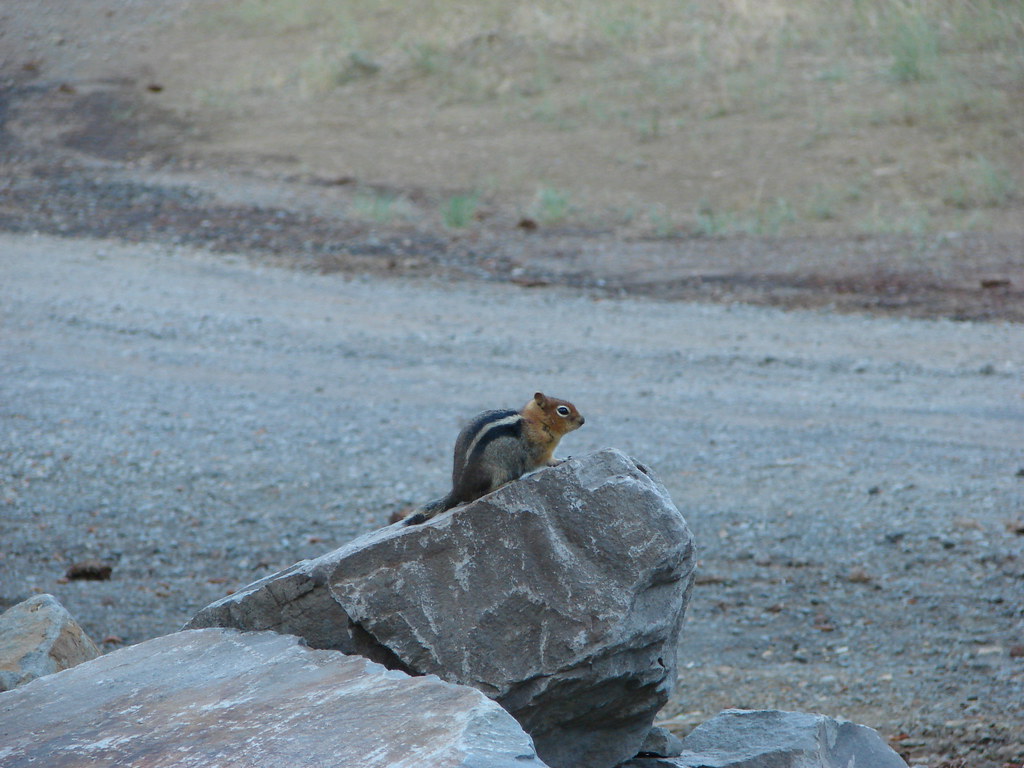
Golden mantled ground squirrel

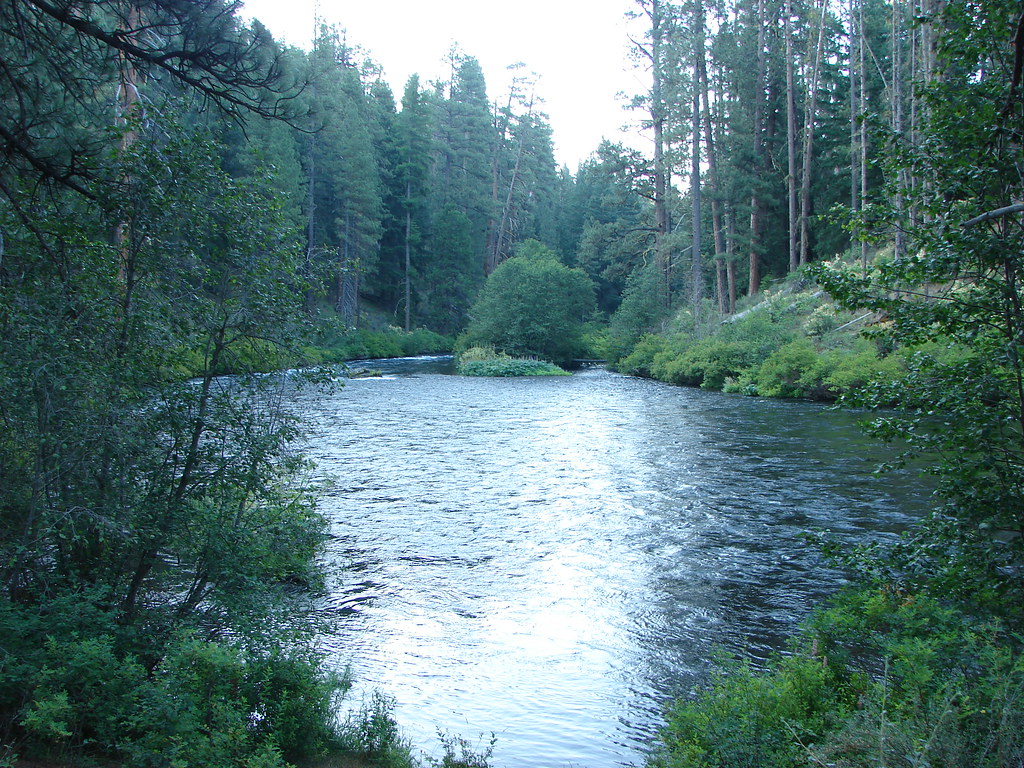
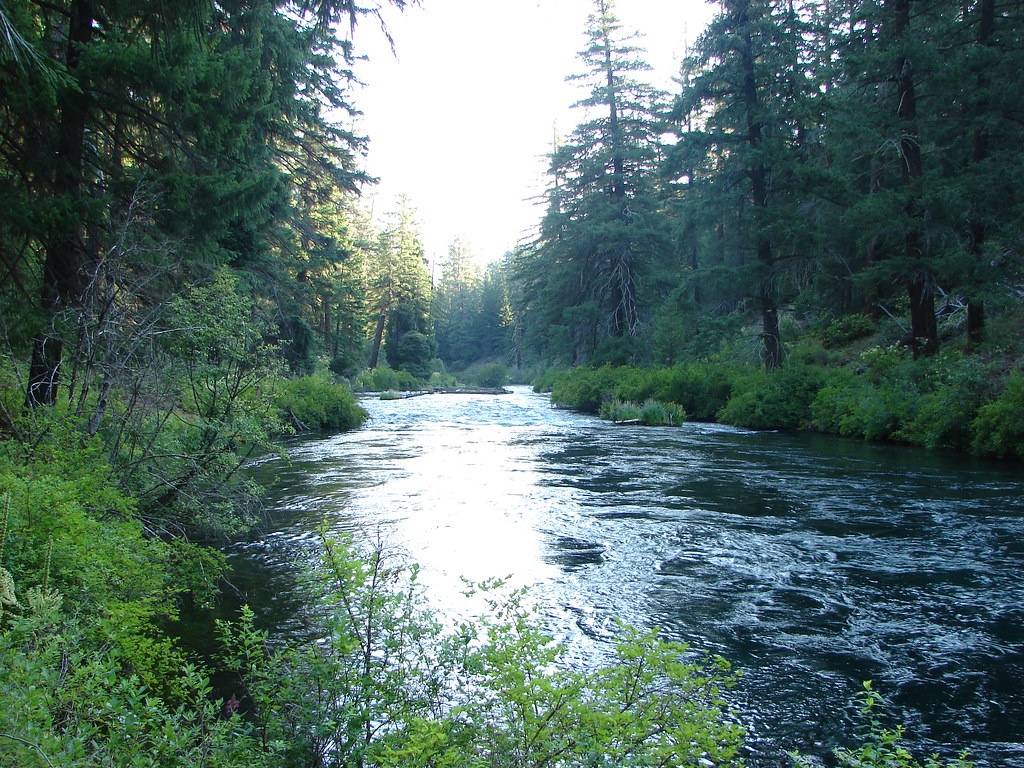
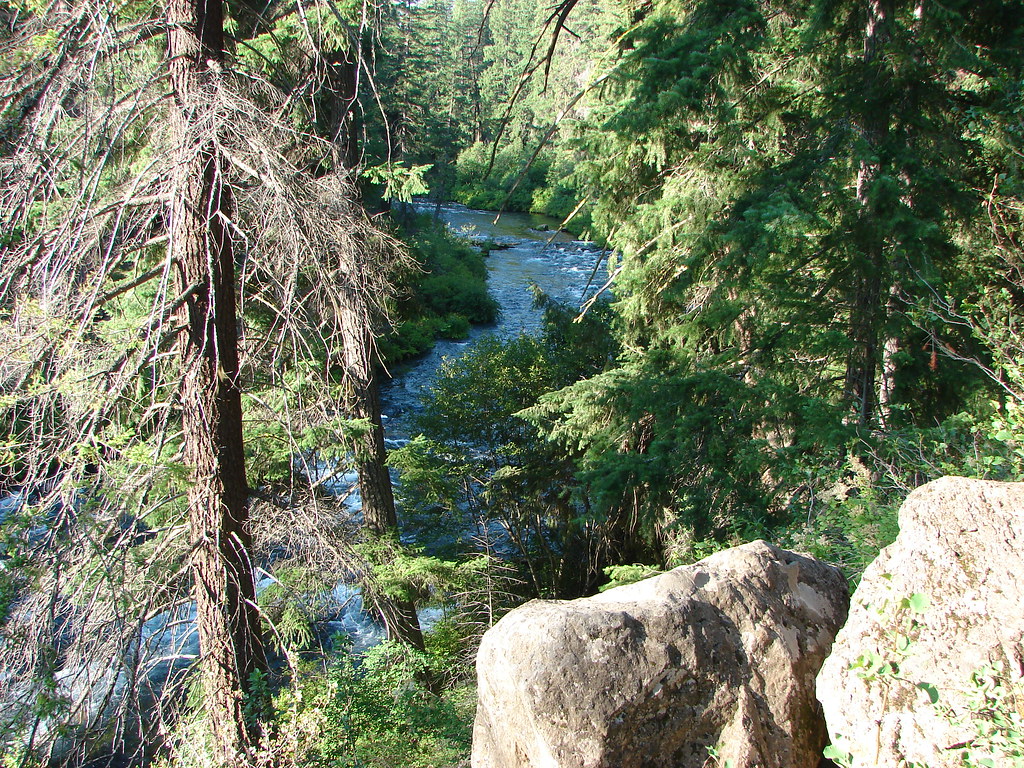
The trail begins along the banks of the Metolius River and stick close to it for the first 1.25 miles.

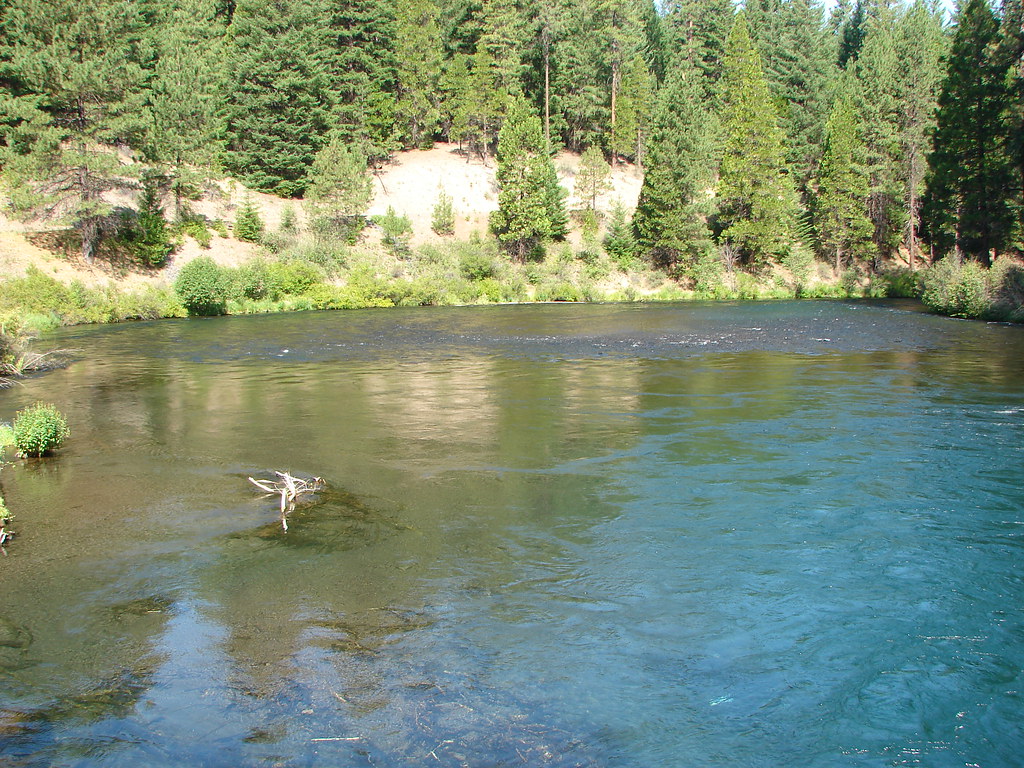
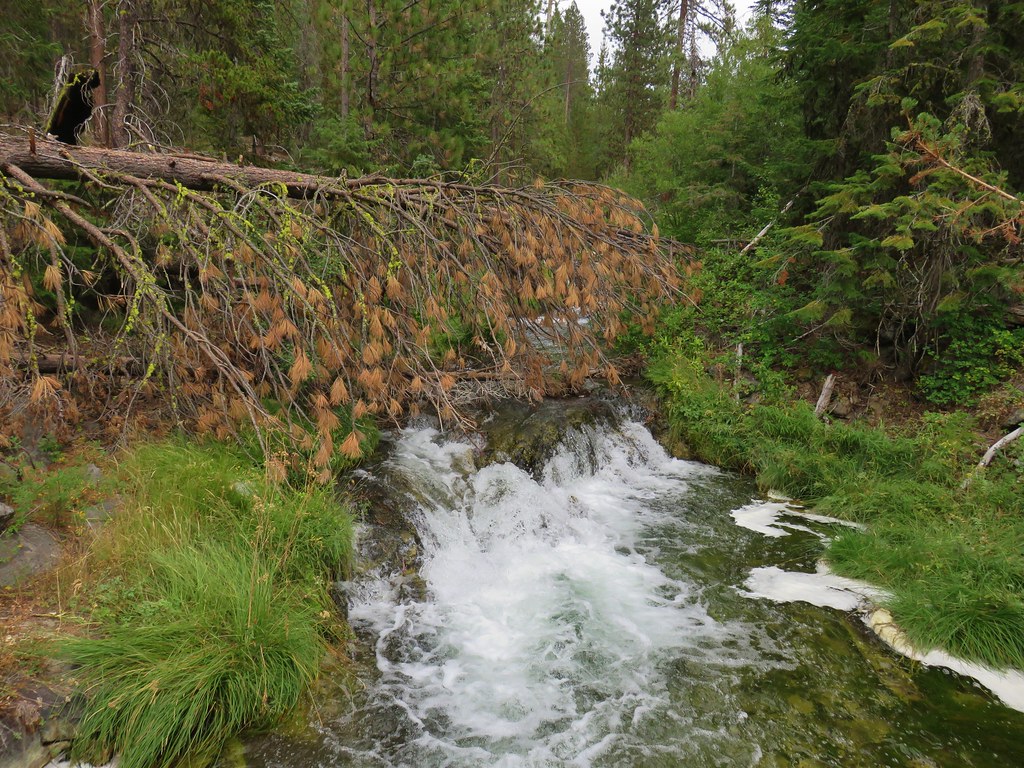
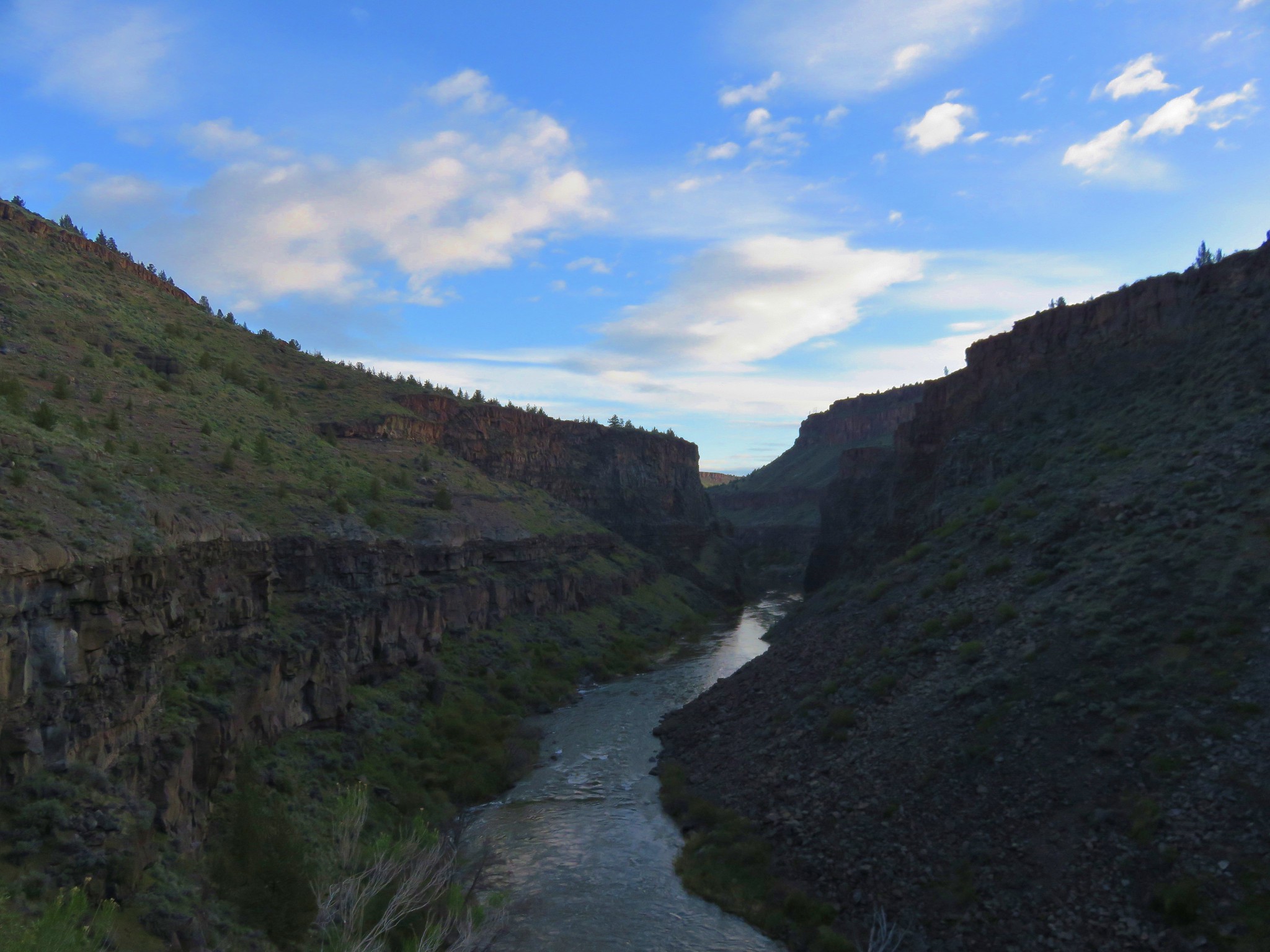
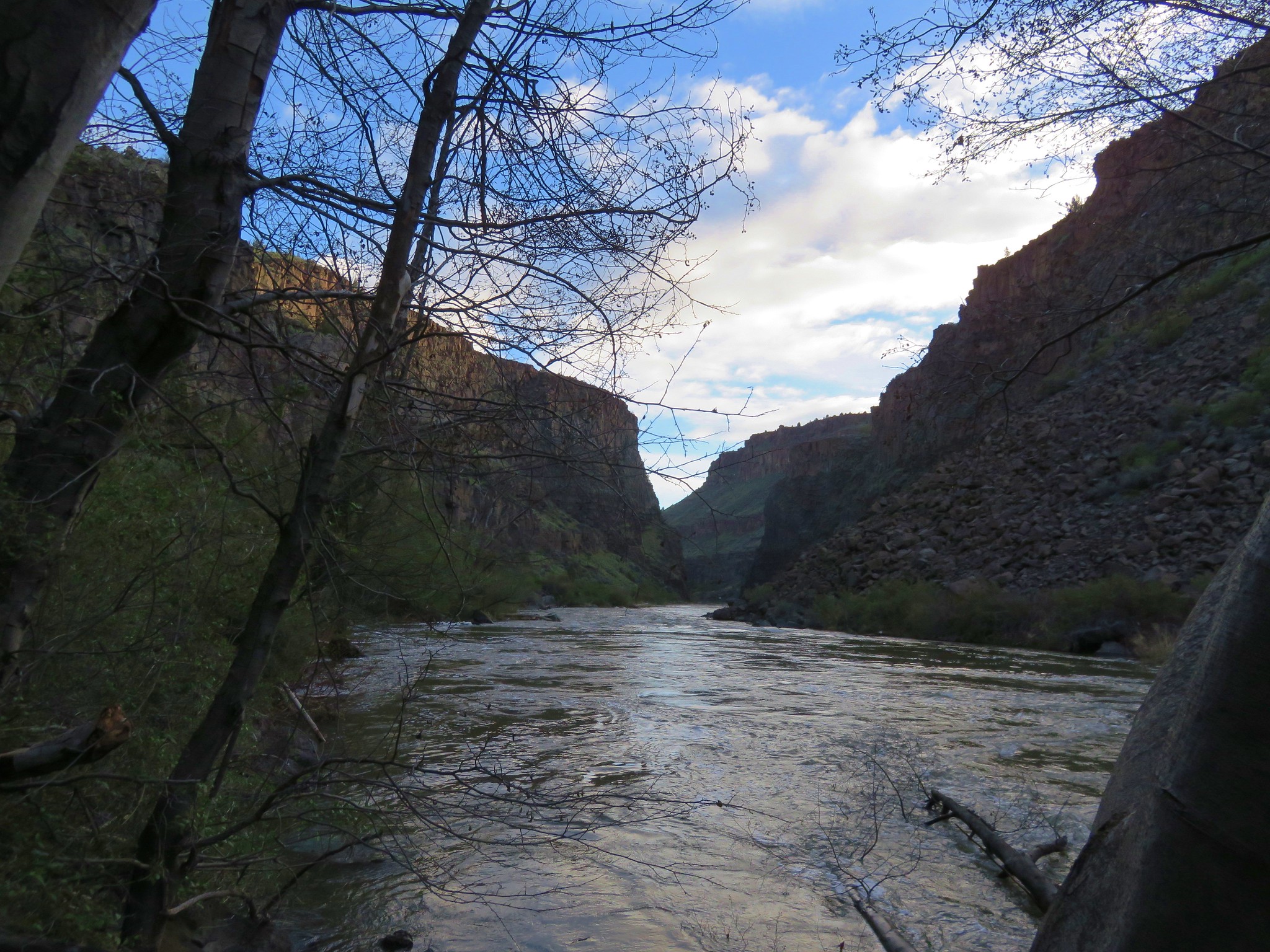
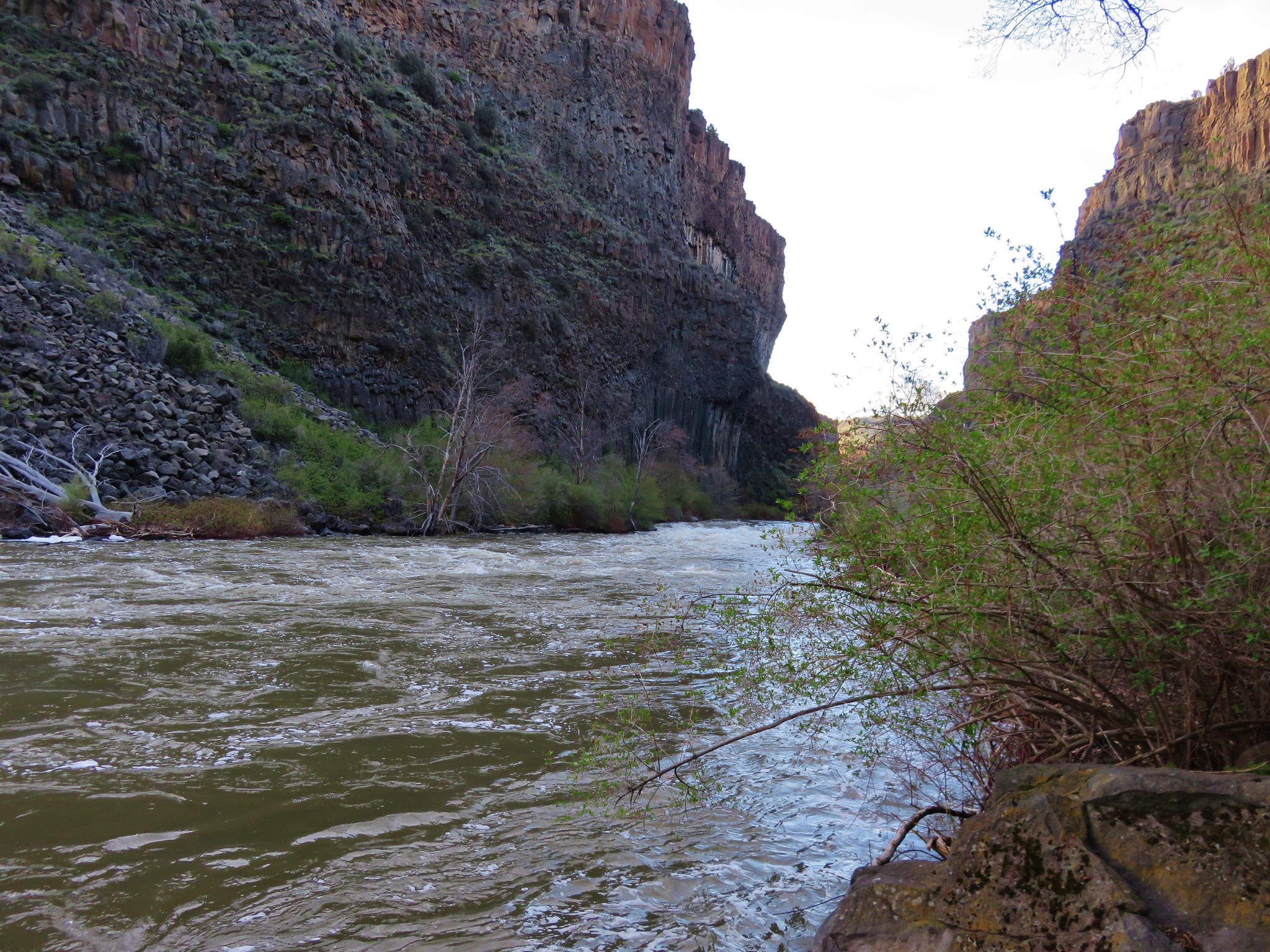
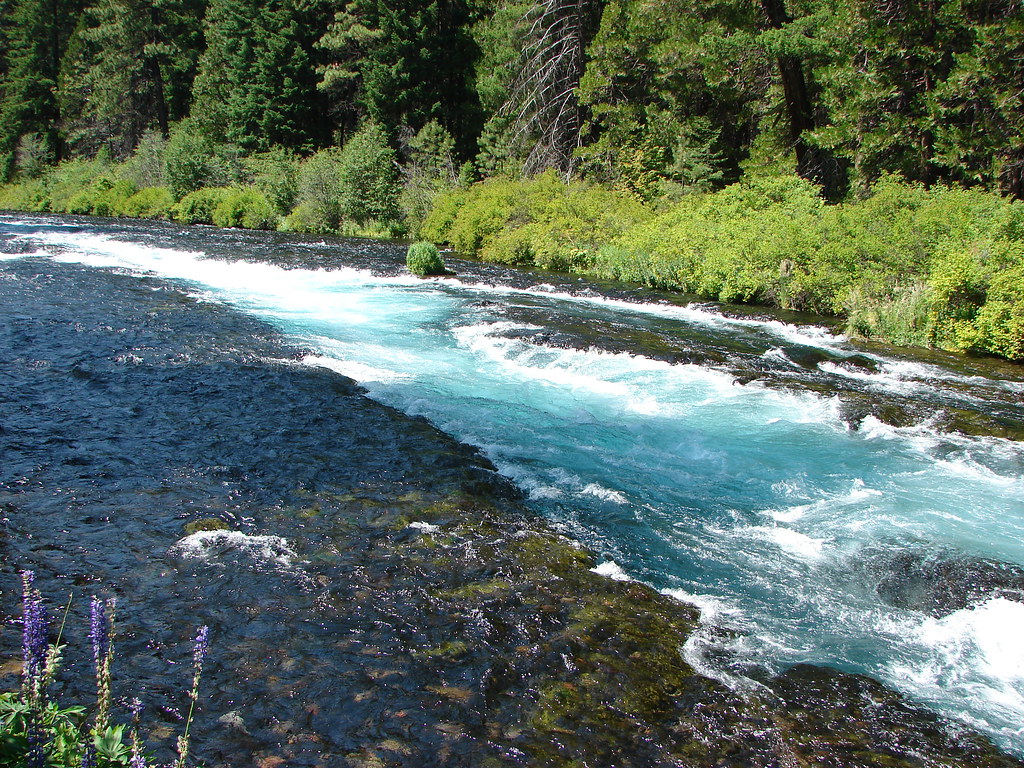
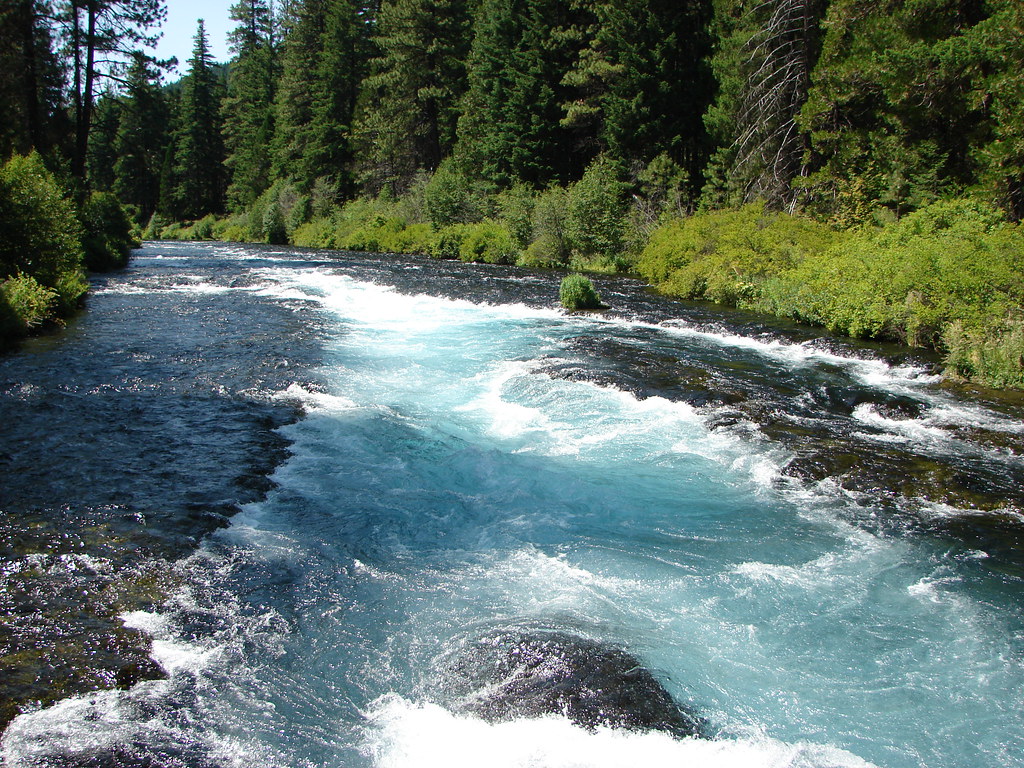
Metolius River

Just over a quarter mile from the trailhead a series of springs gushed from the far bank of the river.

Springs along the Metolius River

Springs along the Metolius River

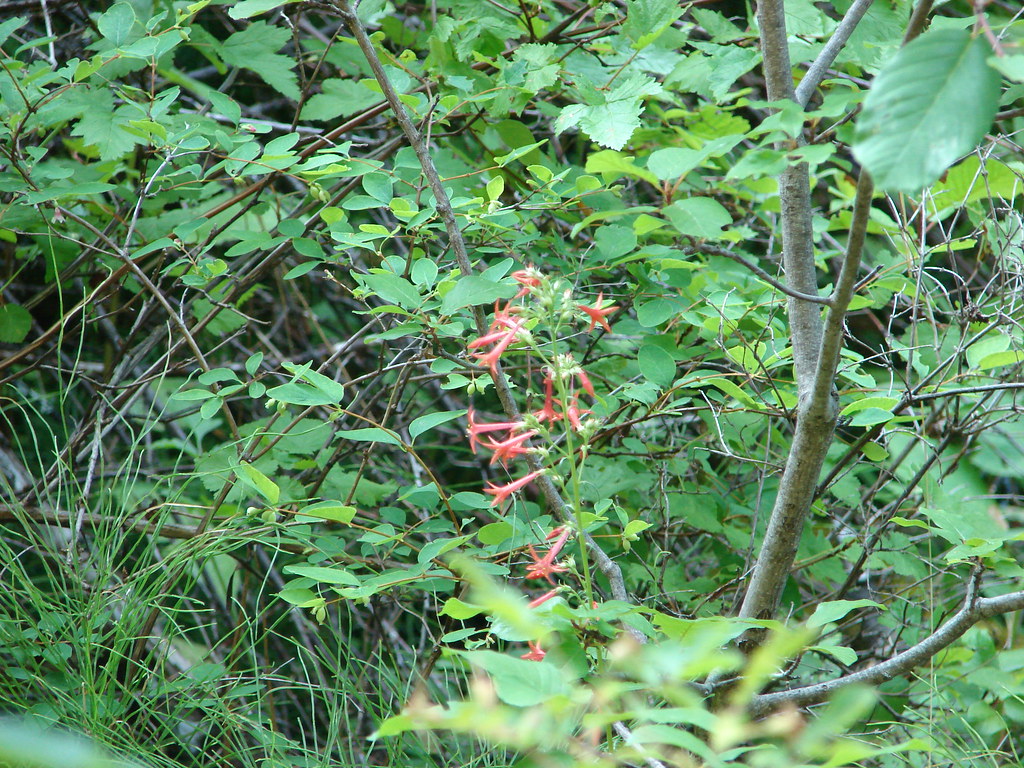
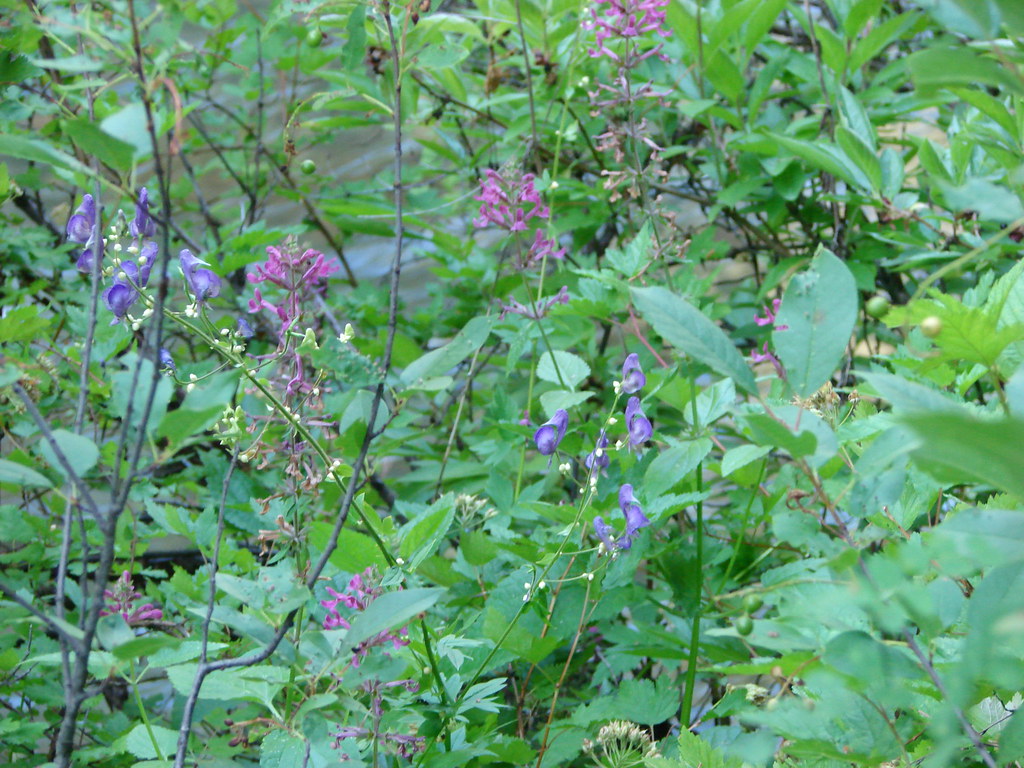
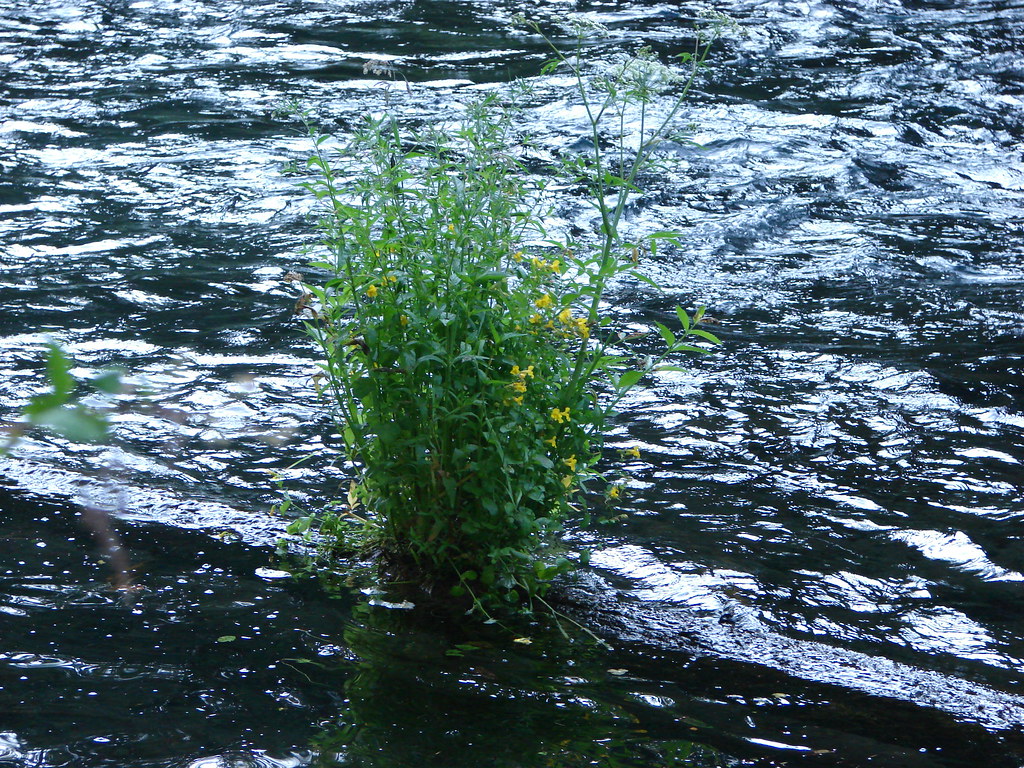
Wildflowers grew along the bank and sometimes out in the river.

Metolius River

Scarlet gilia

Monkshod and hedge-nettle

Wildflowers along the Metolius River

Monkeyflower

Near the 1.25 mile mark the trail climbed away from the river just a bit as it wound through a steep canyon.

Metolius River

Soon we were back down along the riverbank though.

Metolius River

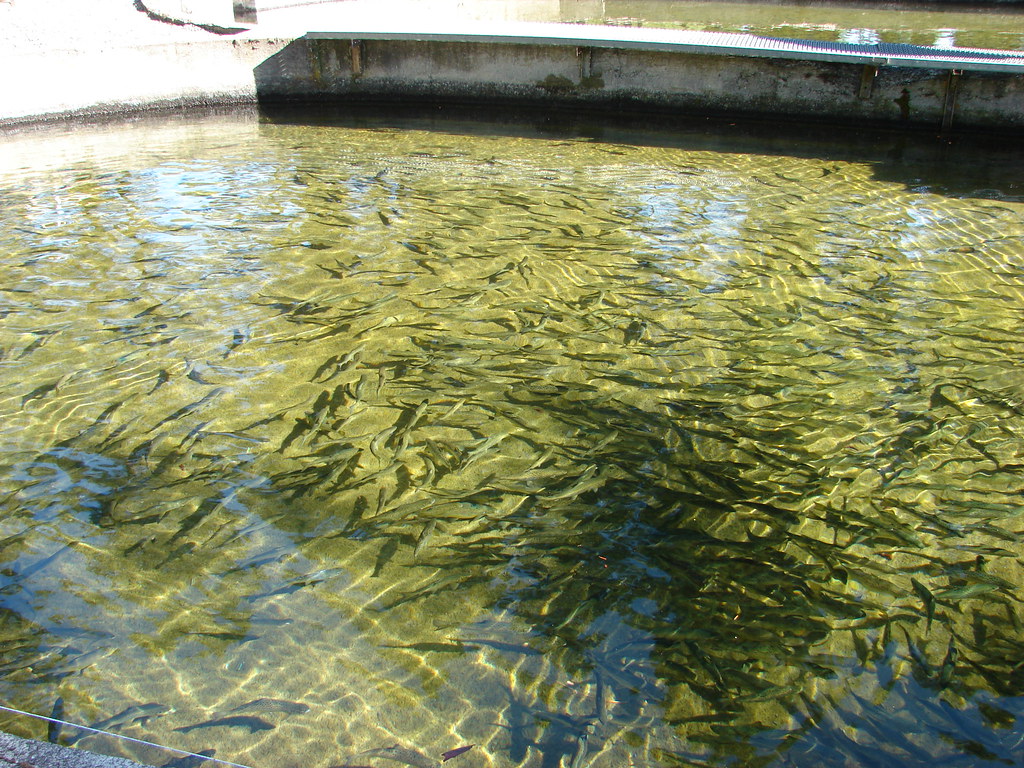
At the 2.7 mile mark we arrived at the Wizard Falls Fish Hatchery. Driving here is an option and can be a fun place for kids to watch and even feed the fish.

Wizard Falls Fish Hatchery

Wizard Falls Fish Hatchery

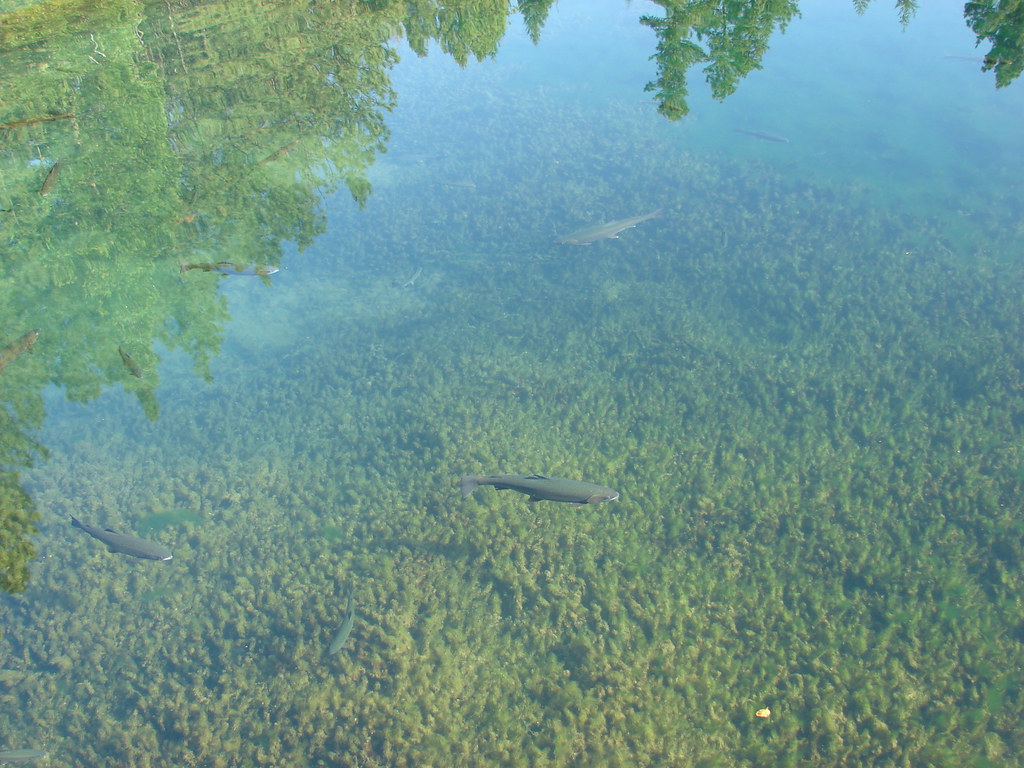
Fish at Wizard Falls Fish Hatchery

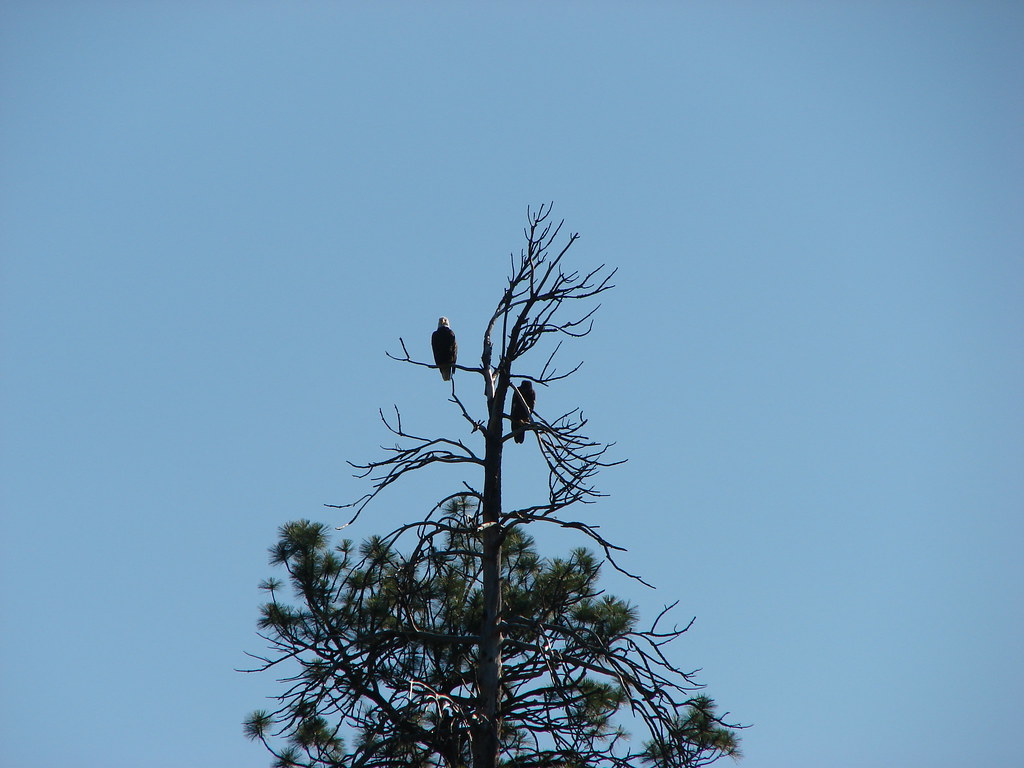
The hatchery apparently has other fans as well.

Bald Eagles

Bald Eagles

For a shorter 5.7 mile hike we could have turned around here and headed back but a 6.4 mile loop could be completed by continuing on from the fish hatchery to a bridge at the Lower Bridge Campground so after looking at all the fish we continued on. In the 3.2 miles to the bridge we spotted a variety of wildlife.

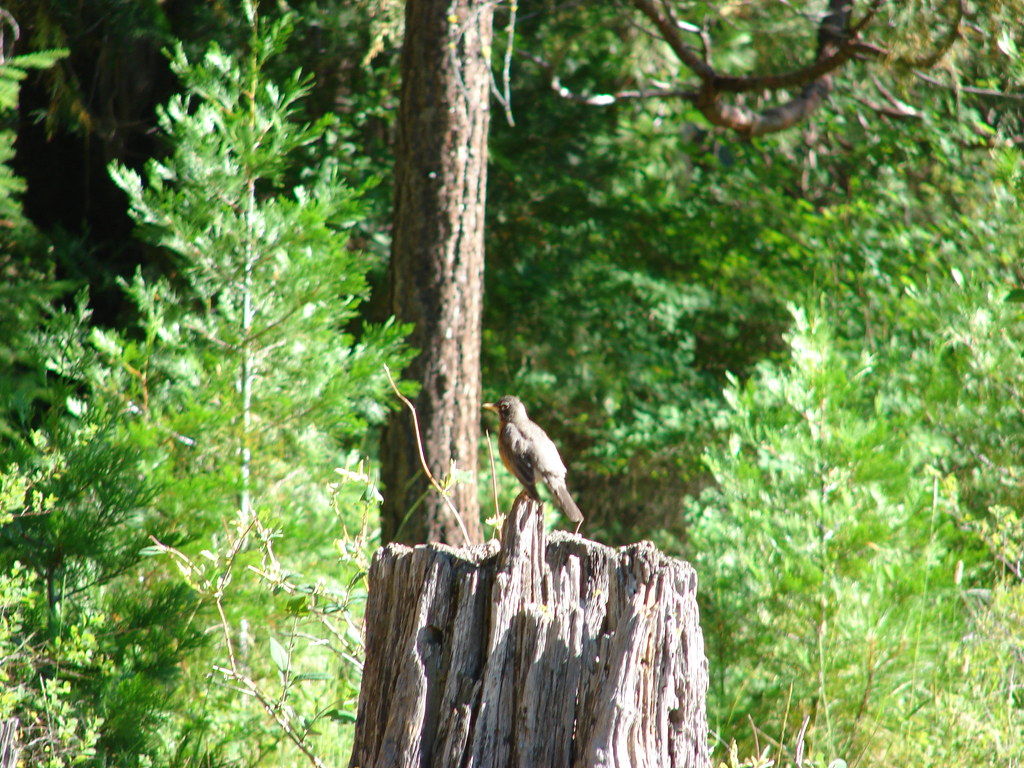
Robin

Robin

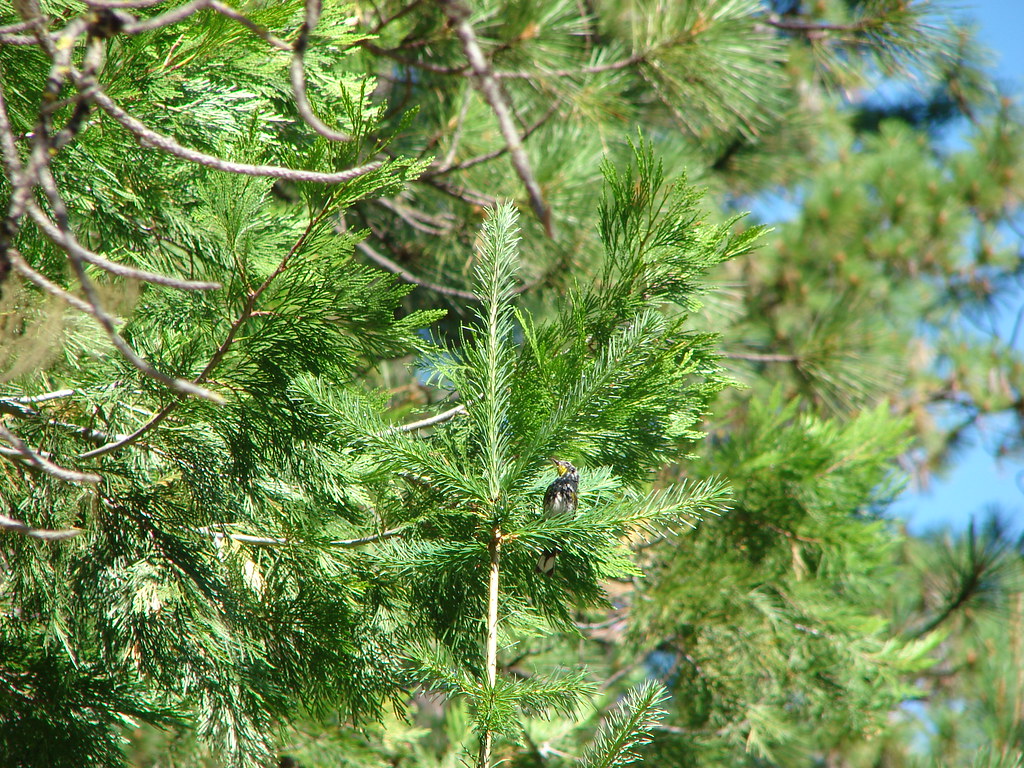
Yellow rumped warbler

Yellow rumped warbler

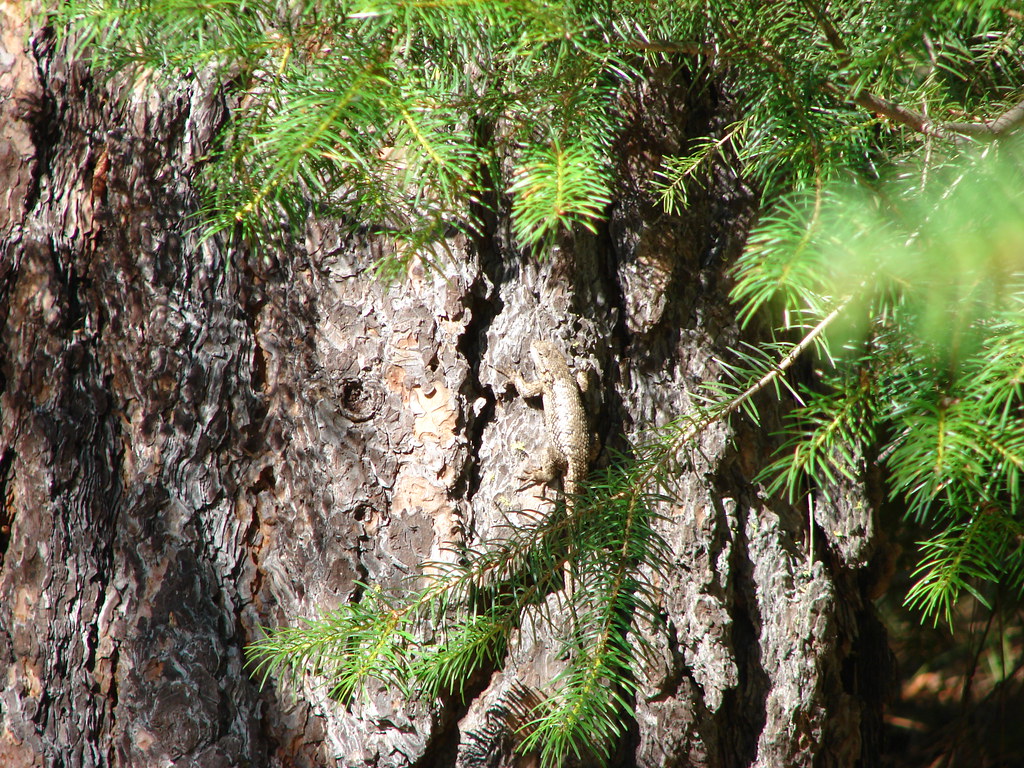
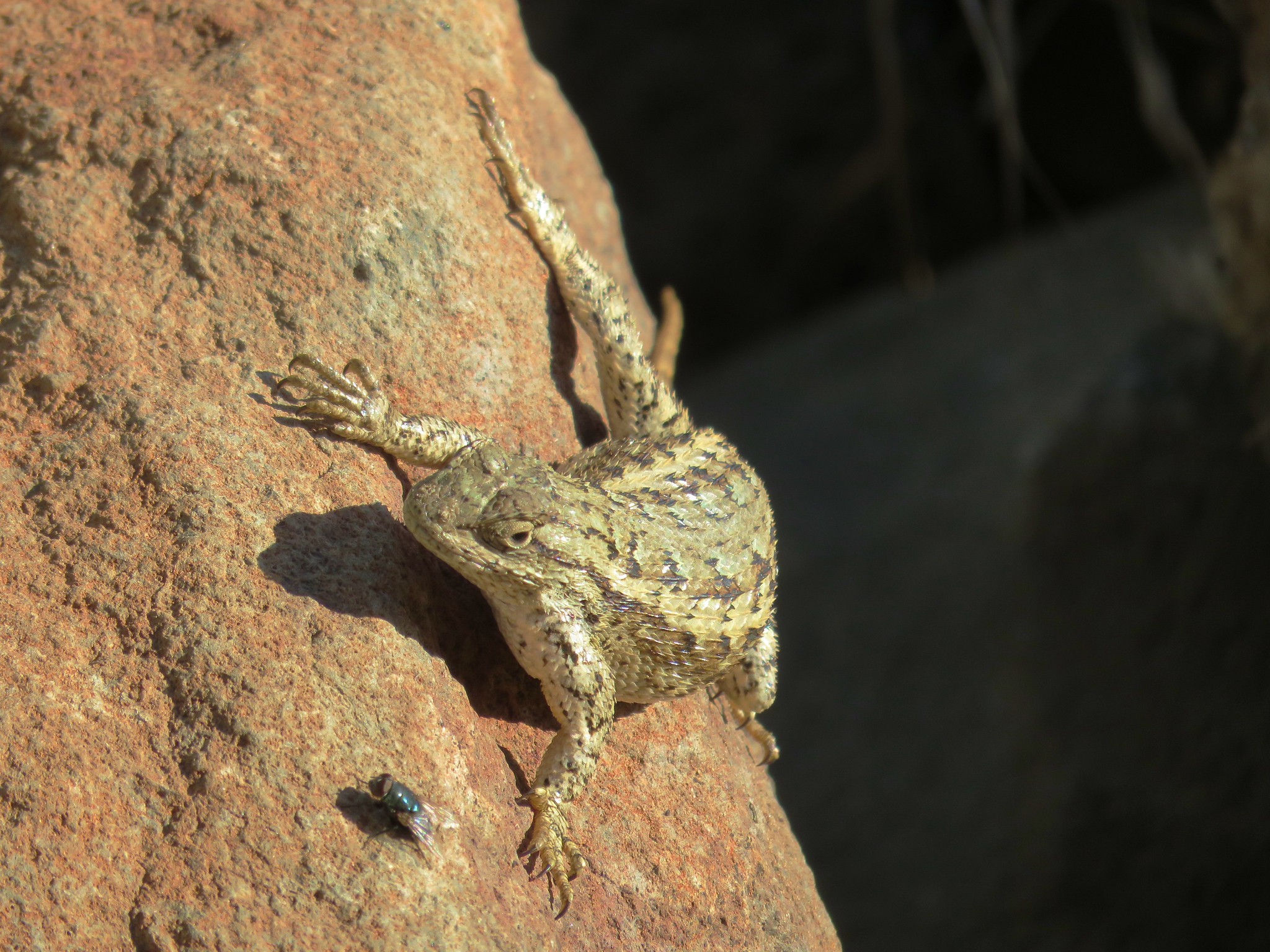
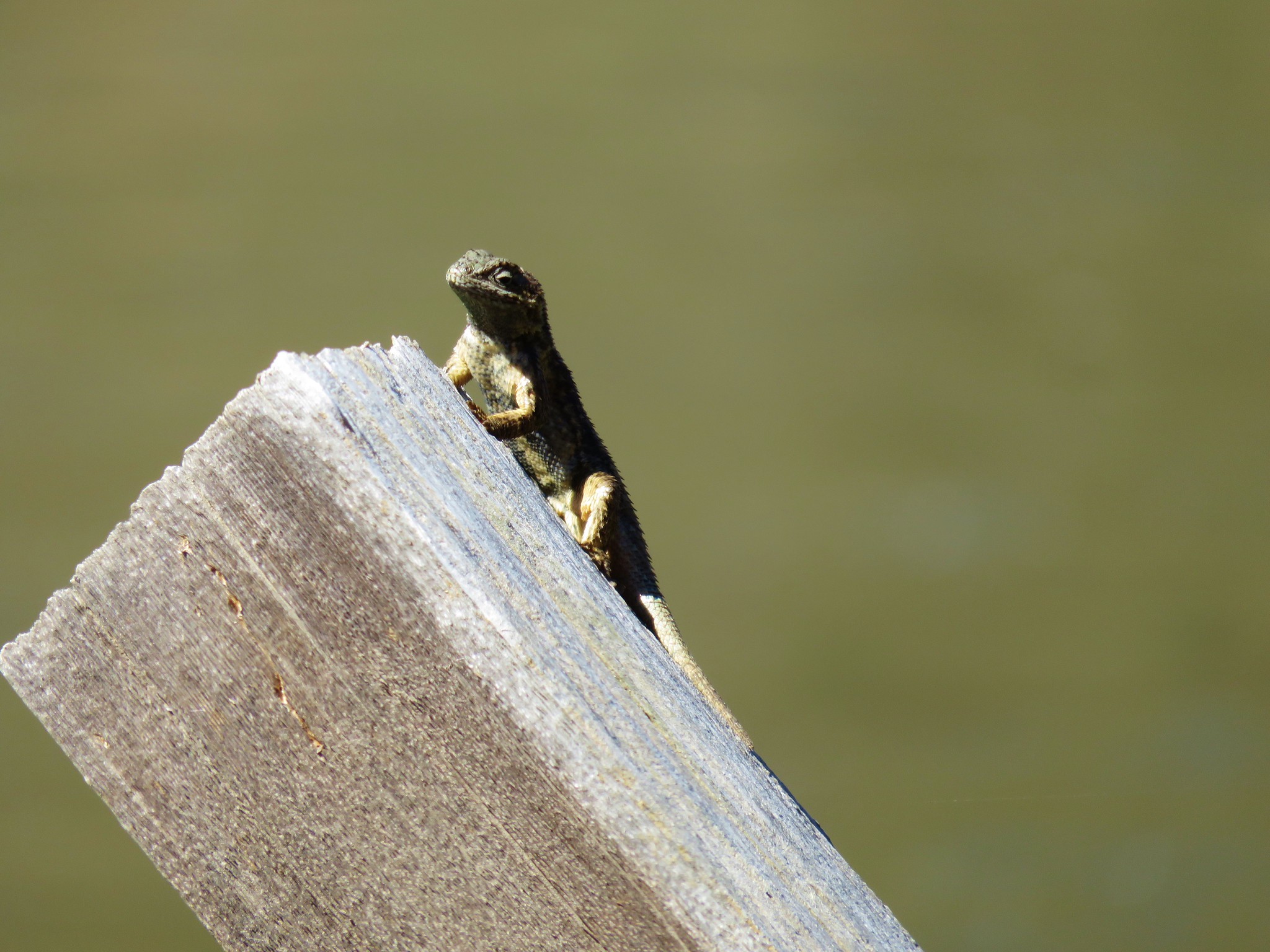
Western fence lizard

Western fence lizard

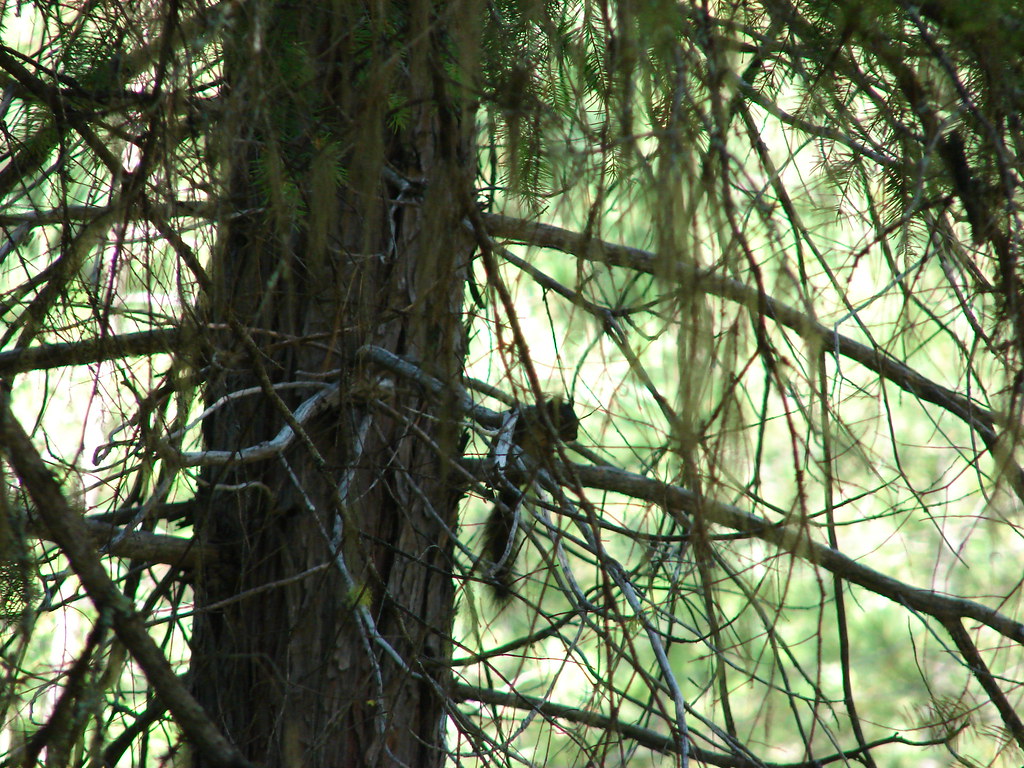
Douglas squirrel

Douglas squirrel

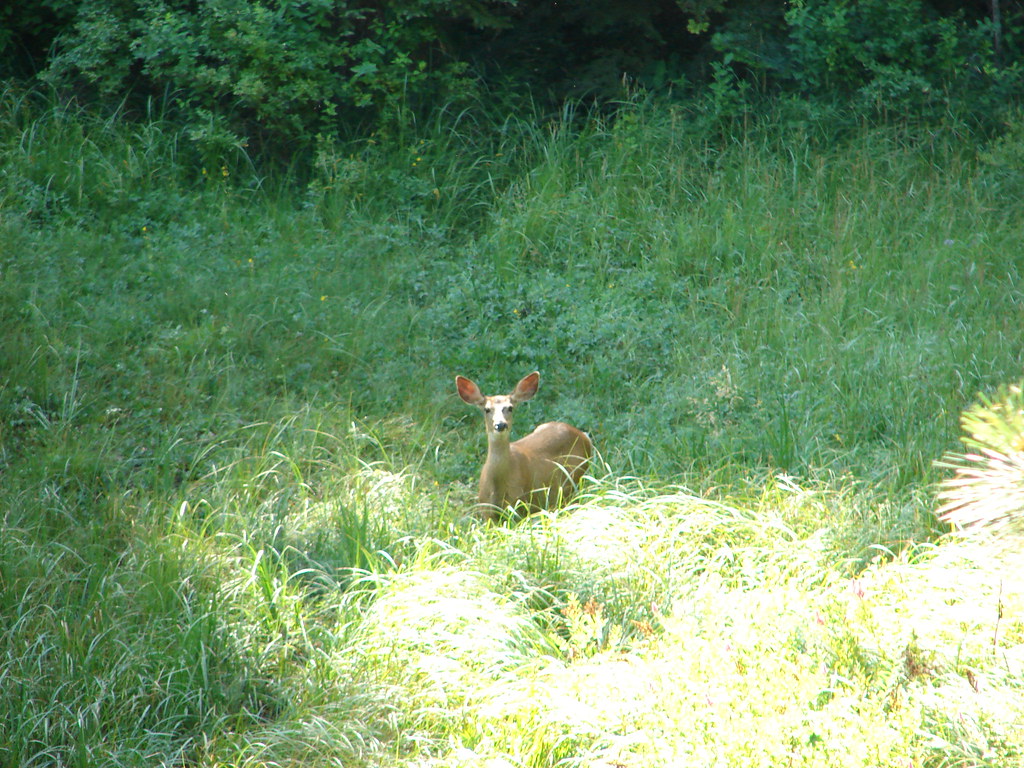
Deer in a meadow along the West Metolius Trail

Doe

Lorquin's admiral butterfly

Lorquin’s admiral

Mylitta crescent butterfly

Mylitta crescent? butterfly

western fence lizard

Another western fence lizard

Coronis fritillary

Fritillary butterfly

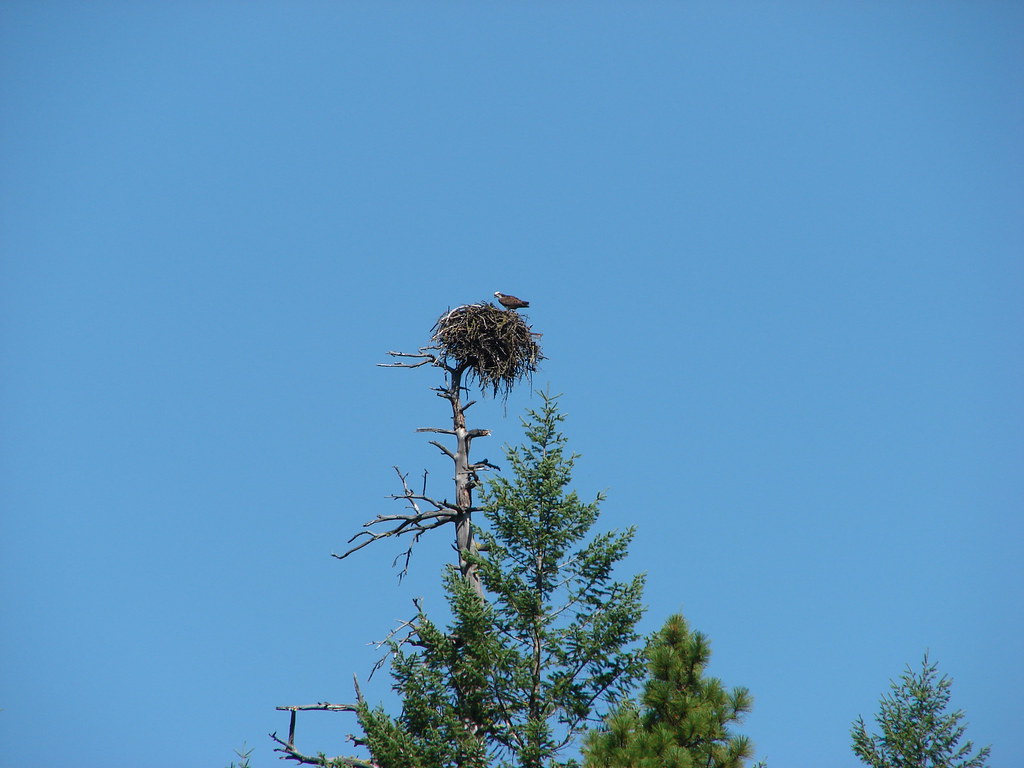
Osprey

Osprey

We crossed the Metolius on the bridge and headed back along the eastern bank.

Metolius River

East Metolius Trail

The 3.2 miles back to the bridge at the Wizard Falls Fish Hatchery also had its share of wildlife.

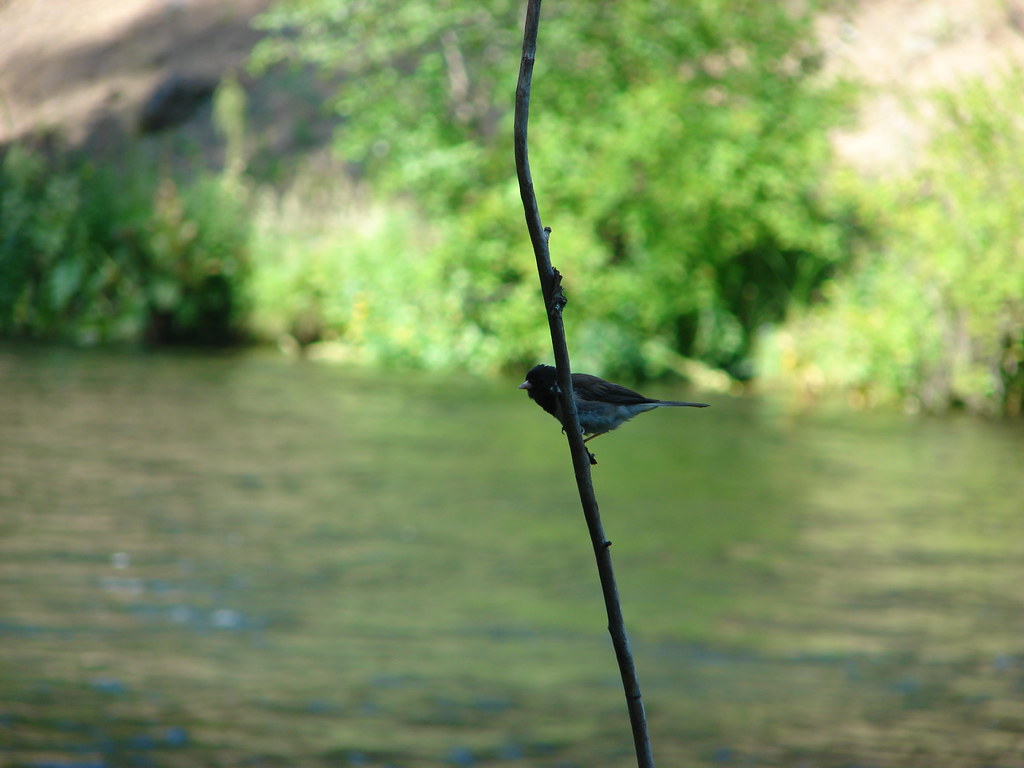
Junco

Junco

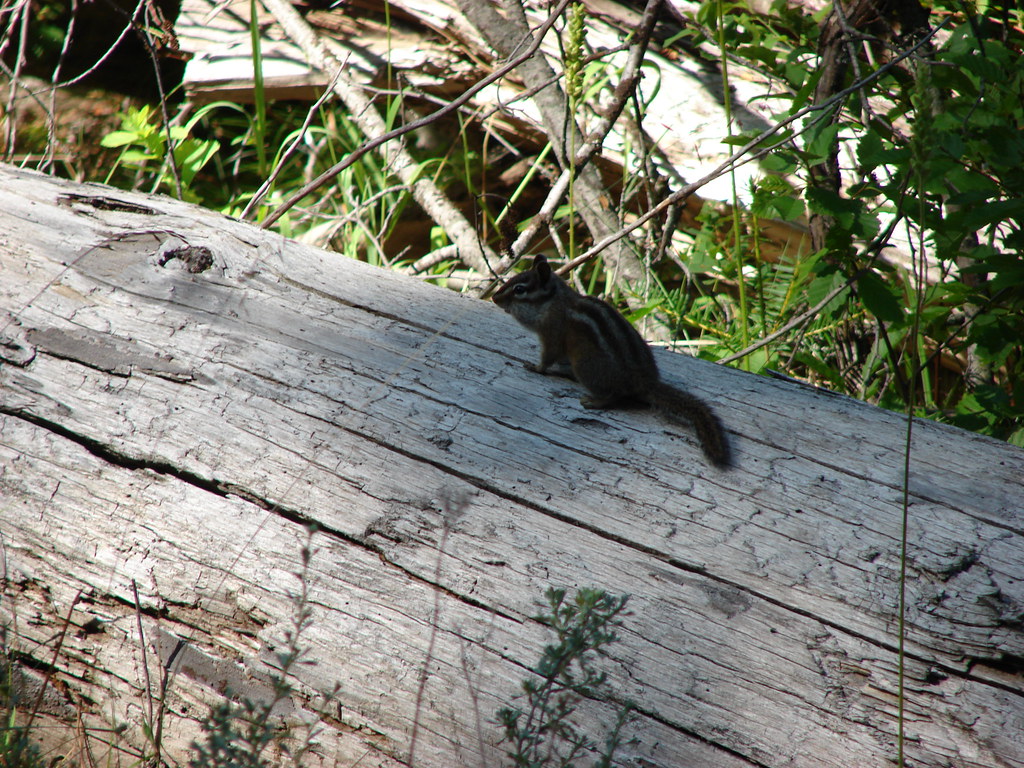
Chipmunk

Chipmunk

Silver-spotted skipper on lewis flax

Silver-spotted skipper

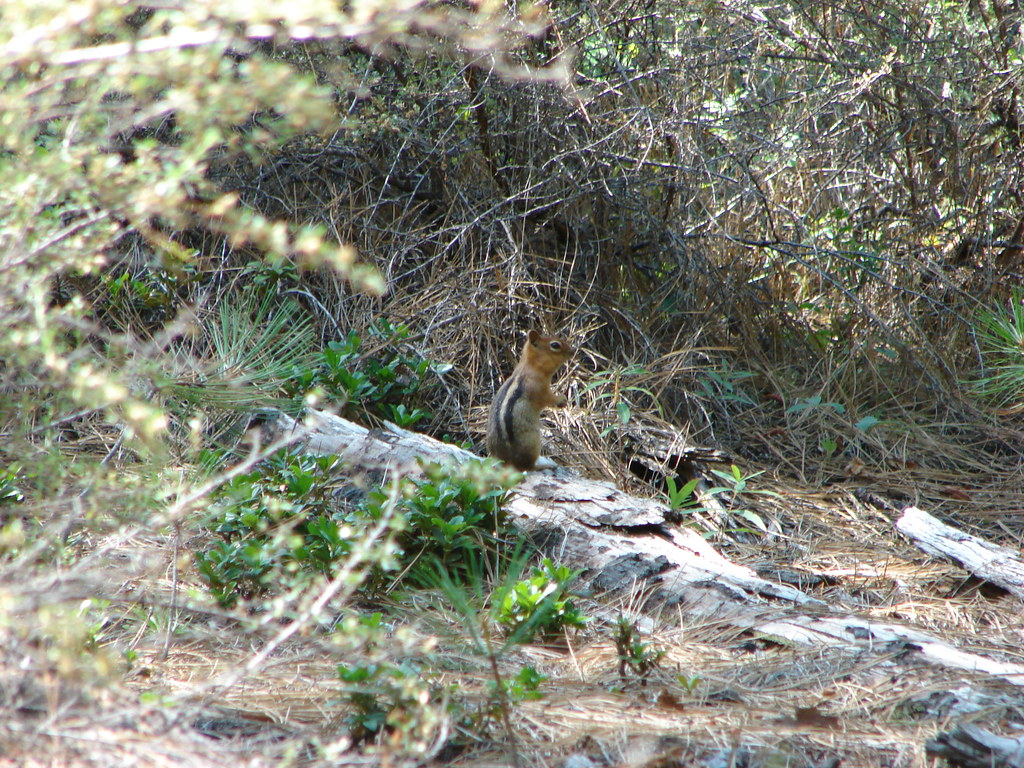
Golden mantled ground squirrel

Golden-mantled ground squirrel

Chipmunk

Another chipmunk

Golden mantled ground squirrel

Another ground squirrel

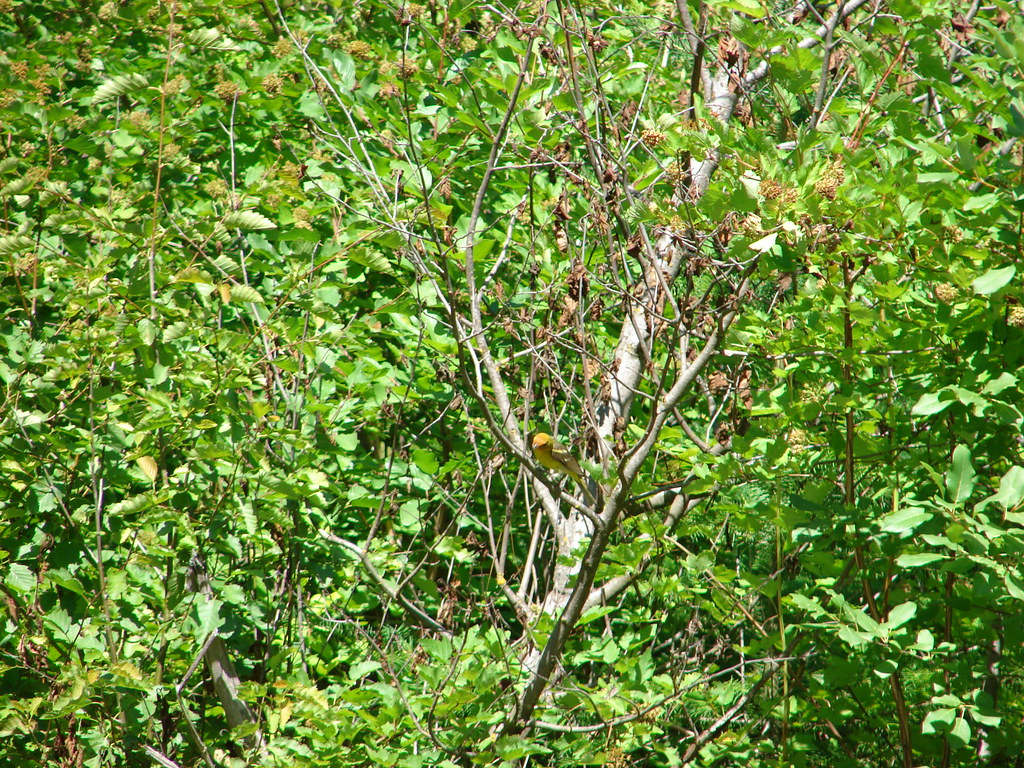
Western tanager

Western tanager

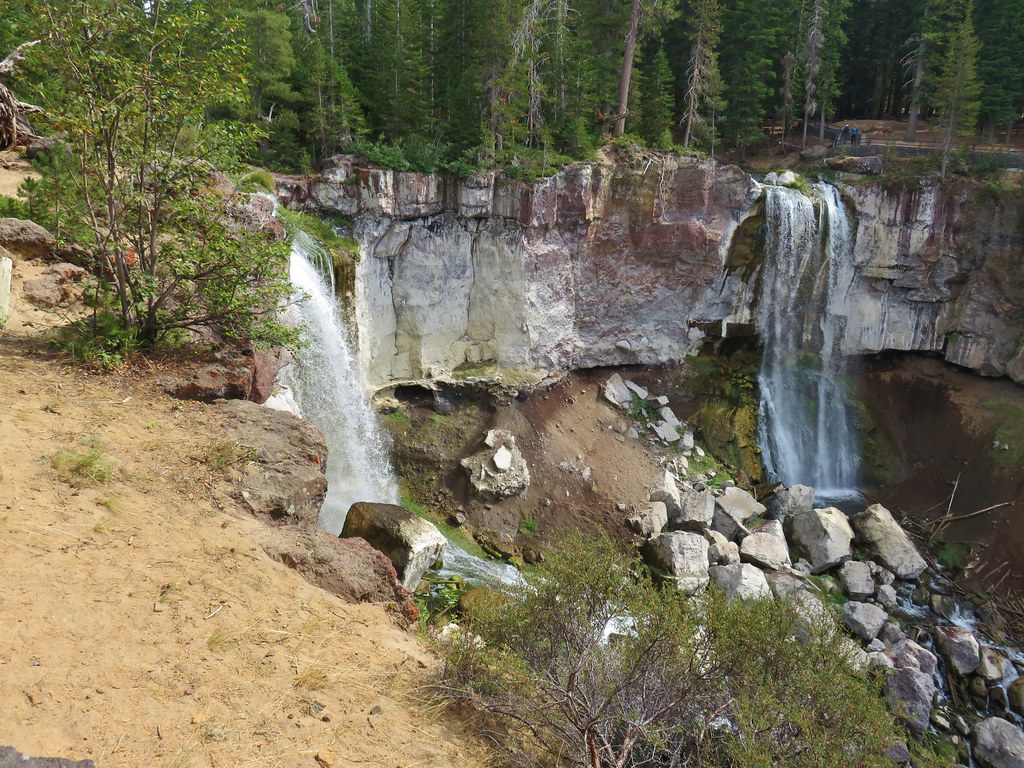
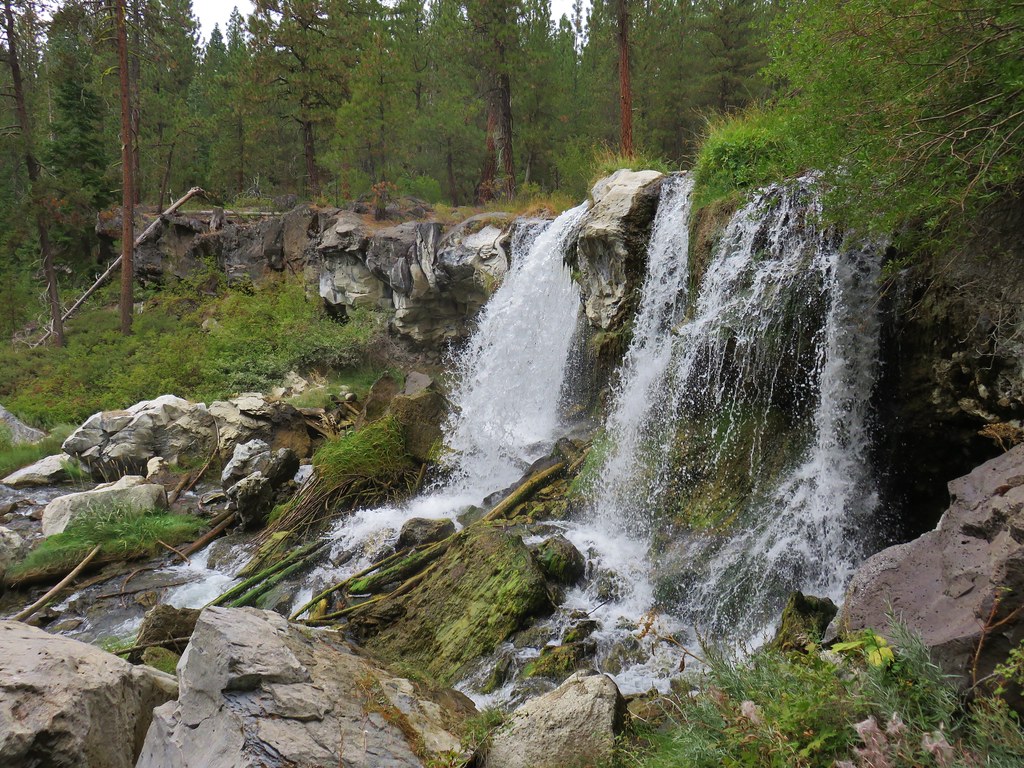
The bridge to the hatchery offers a great view of Wizard Falls. Not exactly a waterfall, Wizard Falls is created by ledges in the lava rock below the river creating a colorful water feature.

Wizard Falls

Wizard Falls

After crossing the bridge we returned to the trailhead and headed to Sisters. This was a great hike for not a lot of effort. There was very little elevation gain making the 11.8 miles very manageable. Another nice aspect to this trail is that it is open most of the year (other than during winter storms). Happy Trails!

Flickr: Metolius River

Categories
Bend/Redmond Central Oregon Hiking Oregon Throwback Thursday Trip report

Throwback Thursday – Shevlin Park

On 8/5/2011, during a vacation in Central Oregon, we headed to Shevlin Park on the outskirts of Bend for an easy day hike. The 4.8 mile loop was a perfect break in the midst of a week of longer hikes.

We parked in a large lot at the park entrance and walked across the park’s road to a trail that passed through a meadow for 100 yards before crossing over Tumalo Creek on a footbridge.
Shevlin Park sign

Bridge over Tumalo Creek

The trail climbed just a bit to a rim on the canyon above the creek. A fire in 1990 was stopped at the rim which still showed a few signs of the blaze. Birds and chipmunks were plentiful along this stretch.
Paintbrush

Loop Trail in Shevlin Park

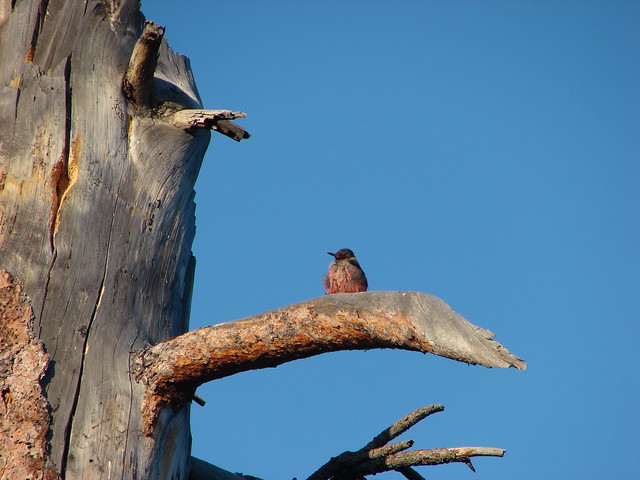
Lewis's Woodpecker

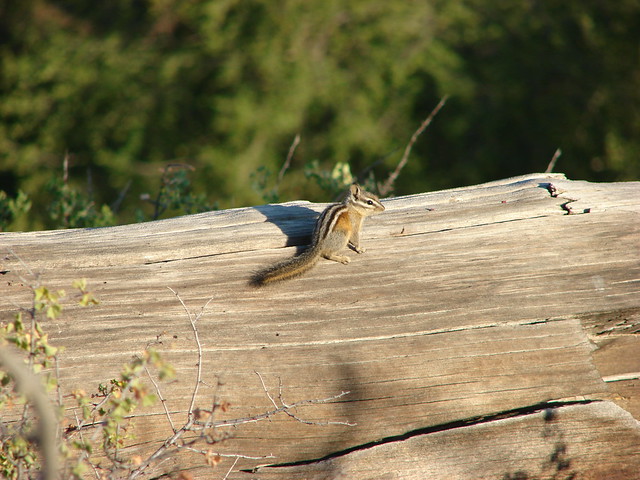
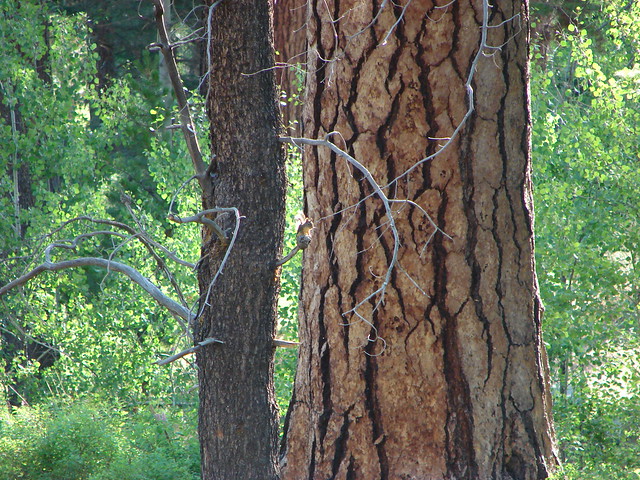
Chipmunk

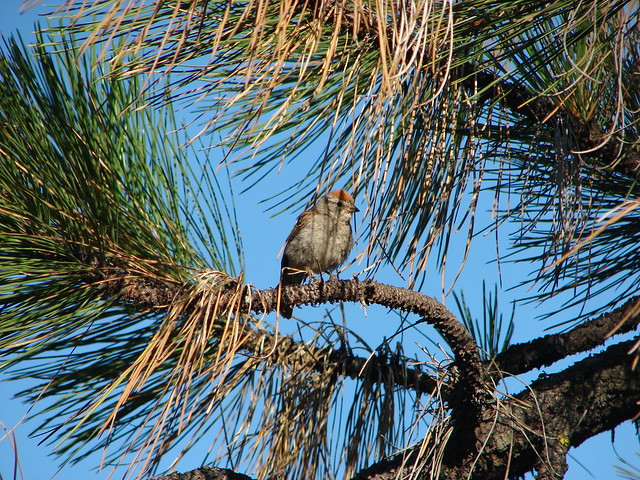
Chipping sparrow

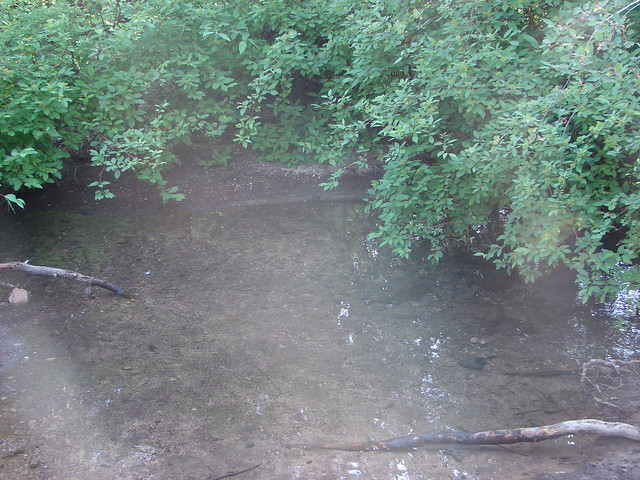
Tumalo Creek flowed through the forest in the green canyon below.
Tumalo Creek

At approximately the 1.75 mile mark we forked to the right and followed a trail back down into the canyon and crossed a side creek on another footbridge. We began encountering mosquitoes at that point and having had given enough blood already that week we picked up the pace quickly covering the next .6 miles where yet another bridge led us back over Tumalo Creek.
Tumalo Creek

The trail once again climbed away from the creek which provided relief from the mosquitoes. From the bridge it was 2.2 miles back to the parking lot. At the 1.5 mile mark a side trail led down to the Hixon Crossing covered bridge which we had a nice view of from above.
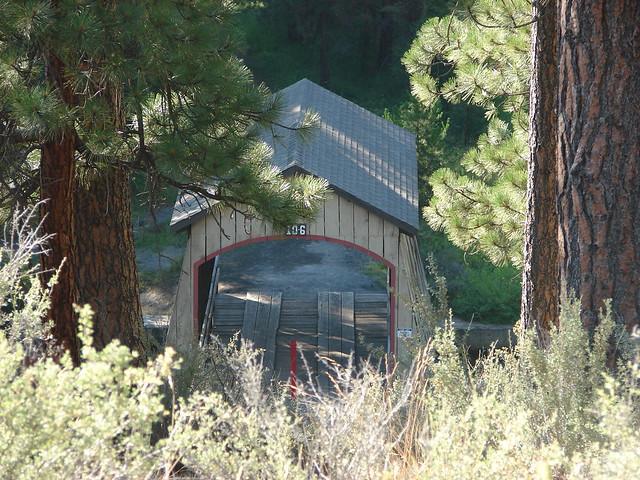
Hixson Crossing Covered Bridge

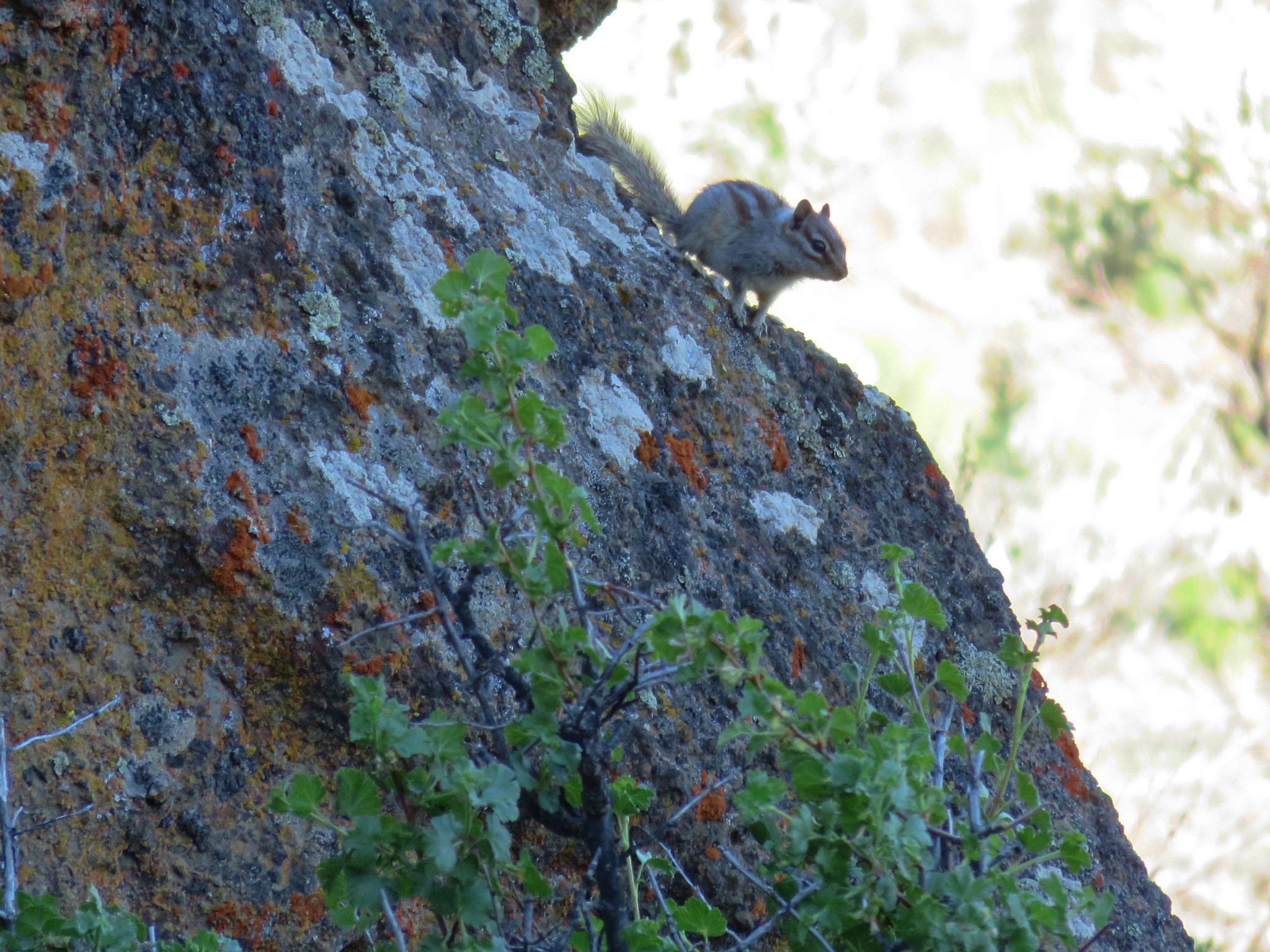
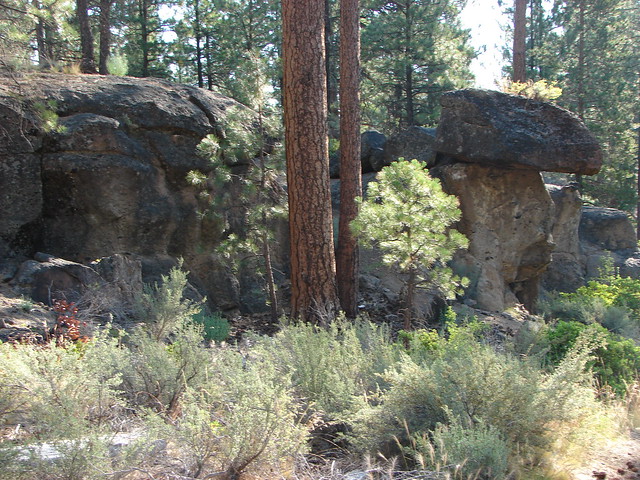
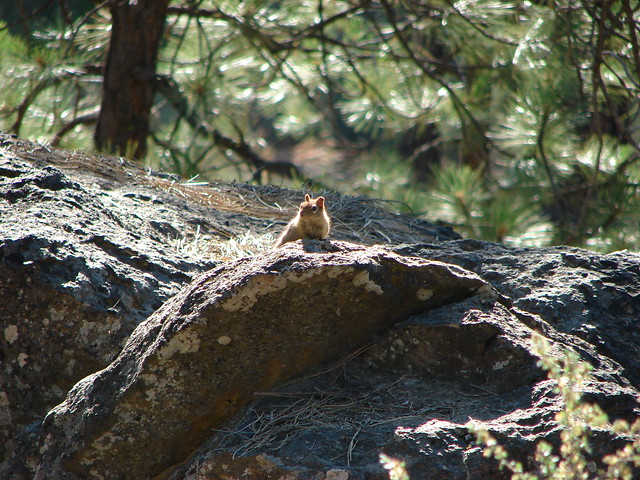
The trail passed Ponderosa Pine trees and some interesting rock formations where golden-mantled ground squirrels and gray Douglas squirrels watched us as we passed by.
Rocks along the Loop Trail in Shevlin park

Golden-mantled Ground Squirrel

Douglas Squirrel

With a relatively short distance and only 300′ of elevation gain the Shevlin Park loop was a great choice for a recovery day. It’s proximity to Bend also meant we had plenty of time left in the day to pursue other activities in town. Happy Trails!

Flickr: Shevlin Park

Categories
Bend/Redmond Central Oregon Hiking Oregon Trip report

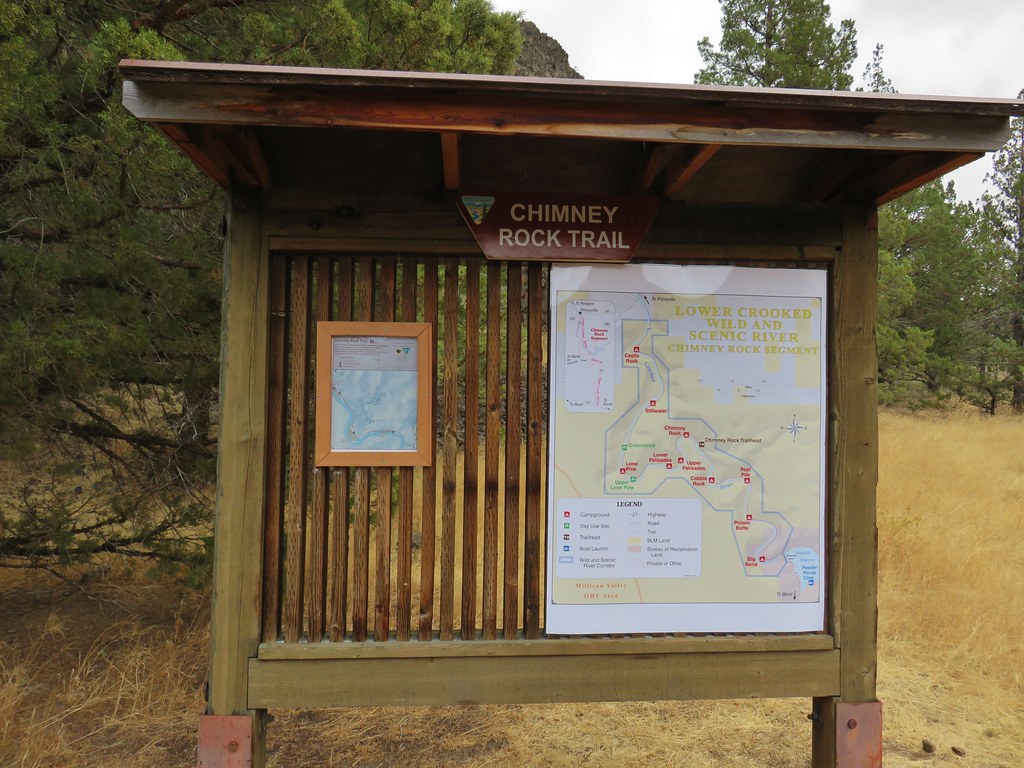
Chimney Rock

The first day of fall saw our time in Sumpter come to an end. We left town at 7am and started our long drive back to Salem. We had a couple of stops to make along the way, one to visit our Son in Bend and the other a short hike in the Crooked River’s canyon.

We took Highway 26 into Prineville and after a bit of confusion located Main St. and headed south. Main Street becomes Highway 27 and follows the Crooked River through a canyon to Prineville Reservoir.

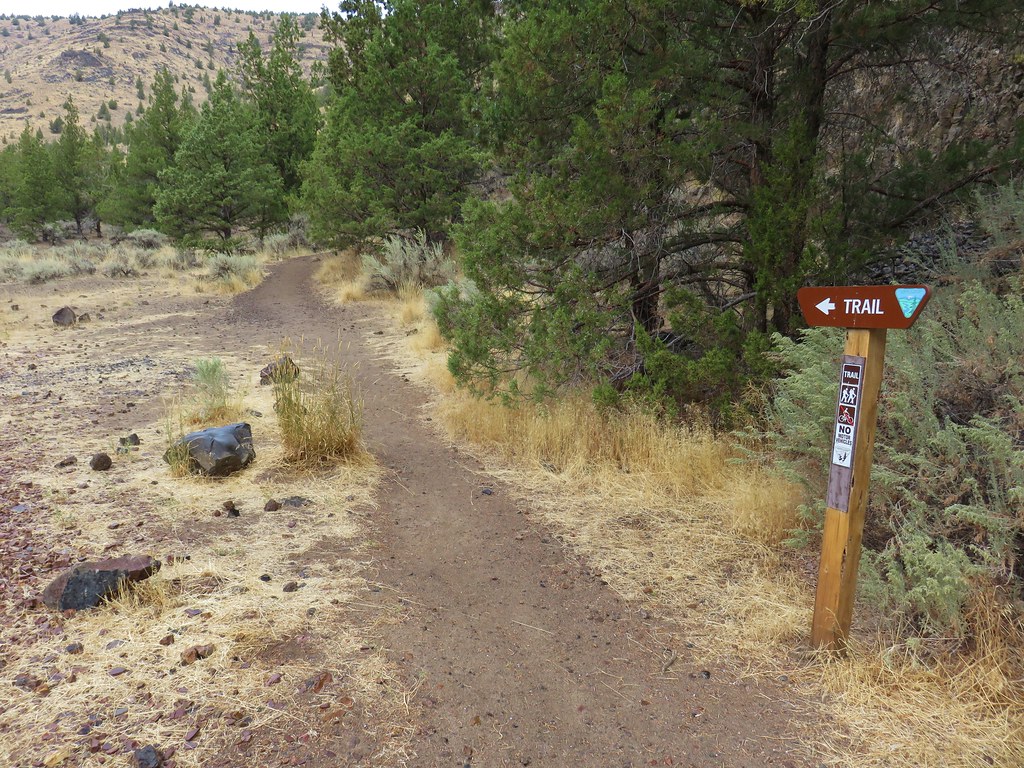
Our planned hike was a 2.6 mile round trip to visit Chimney Rock along the rim of the canyon. We parked at the signed trailhead on the NE side of the road 16.6 miles from Prineville.
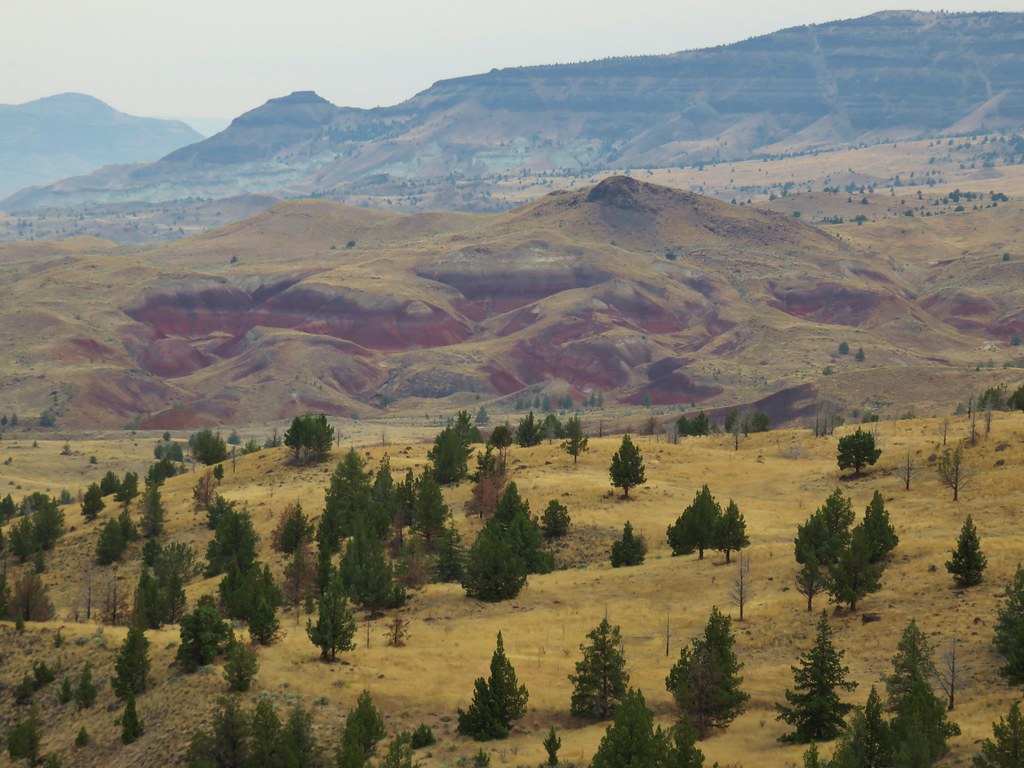
IMG_0234

IMG_0235

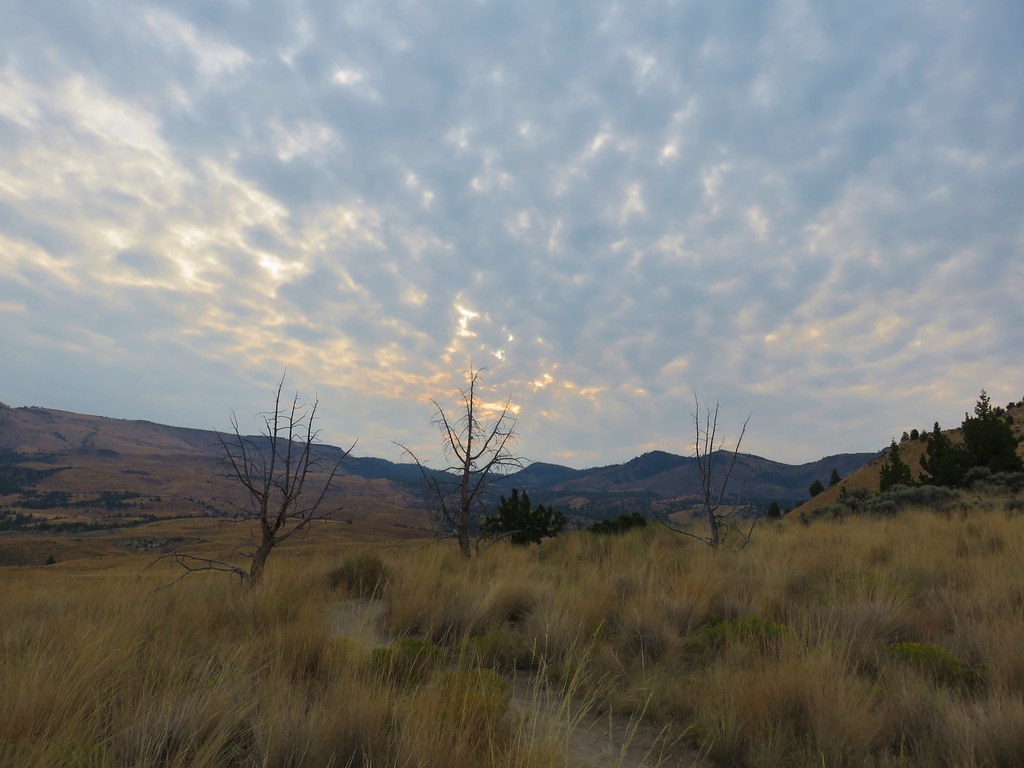
The weather systems that had provided rain and snow for the previous 5 days were breaking up creating a lot of different scenes in the sky as we set off on the trail.
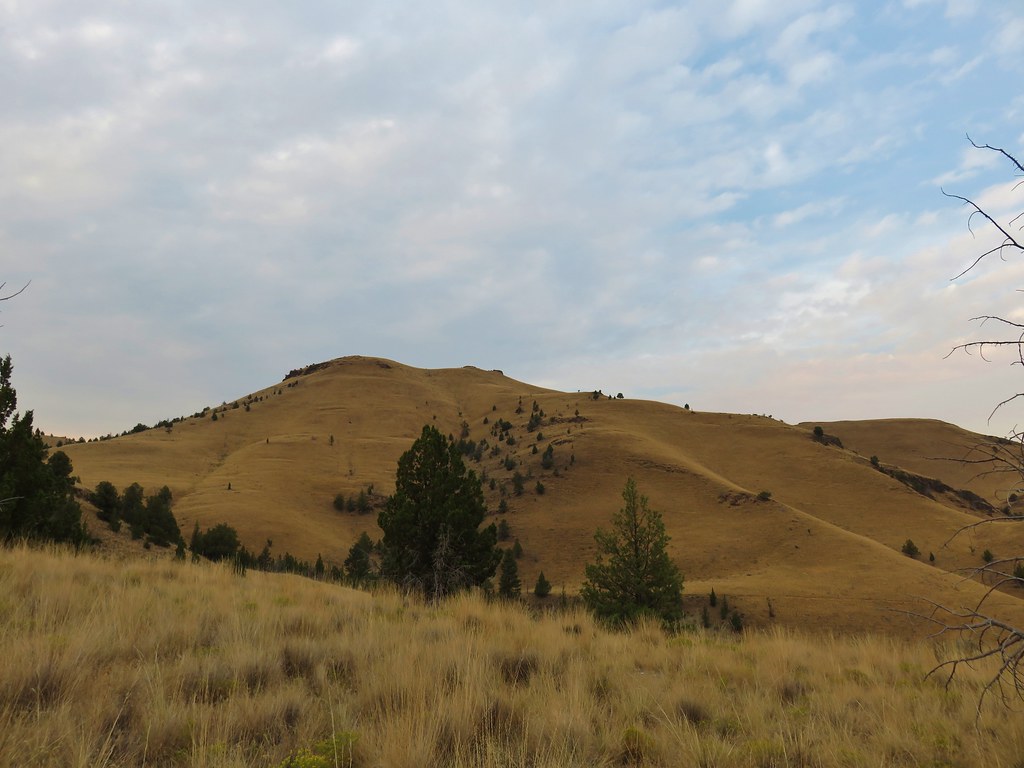
IMG_0238

IMG_0251

IMG_0254

IMG_0261

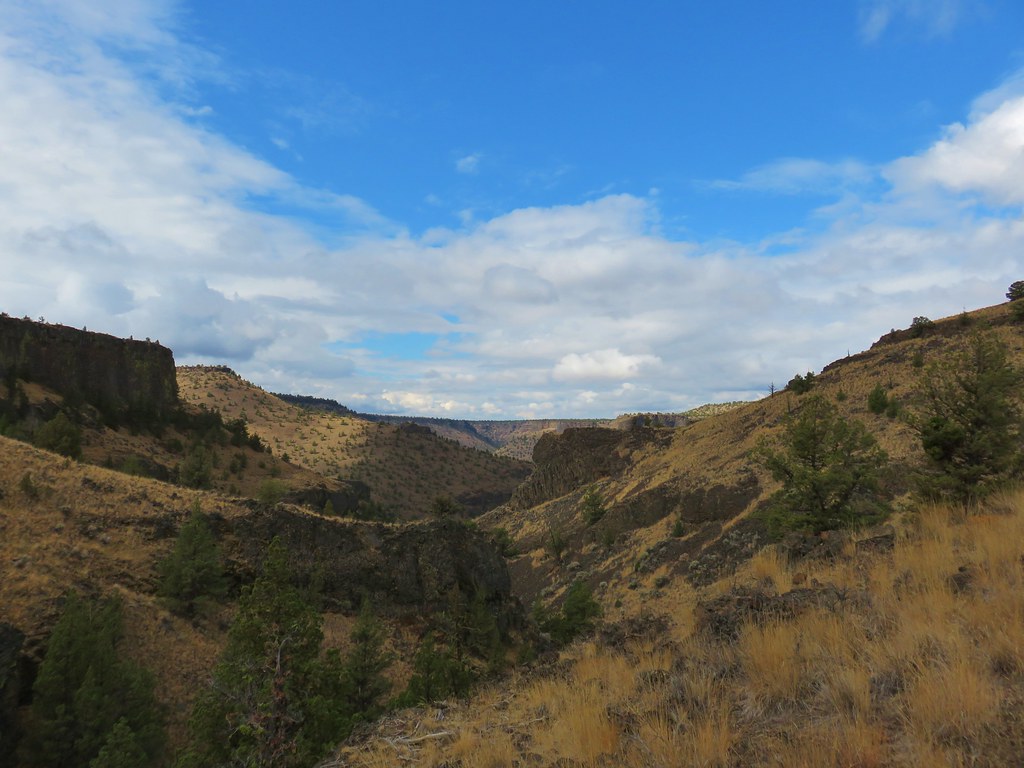
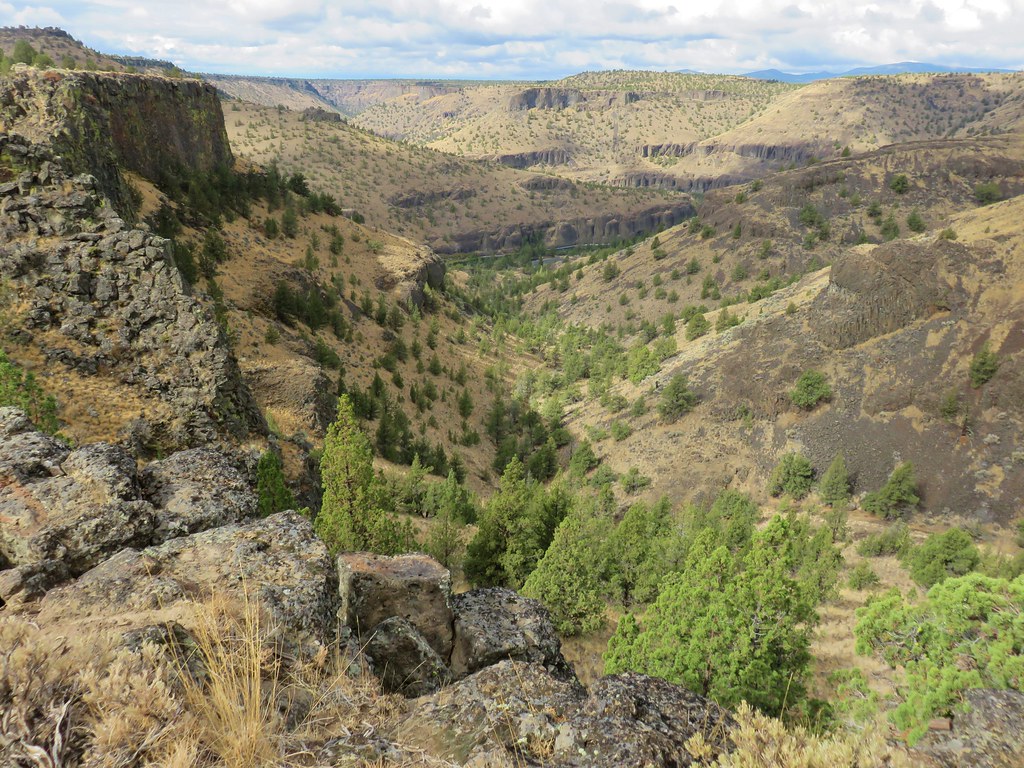
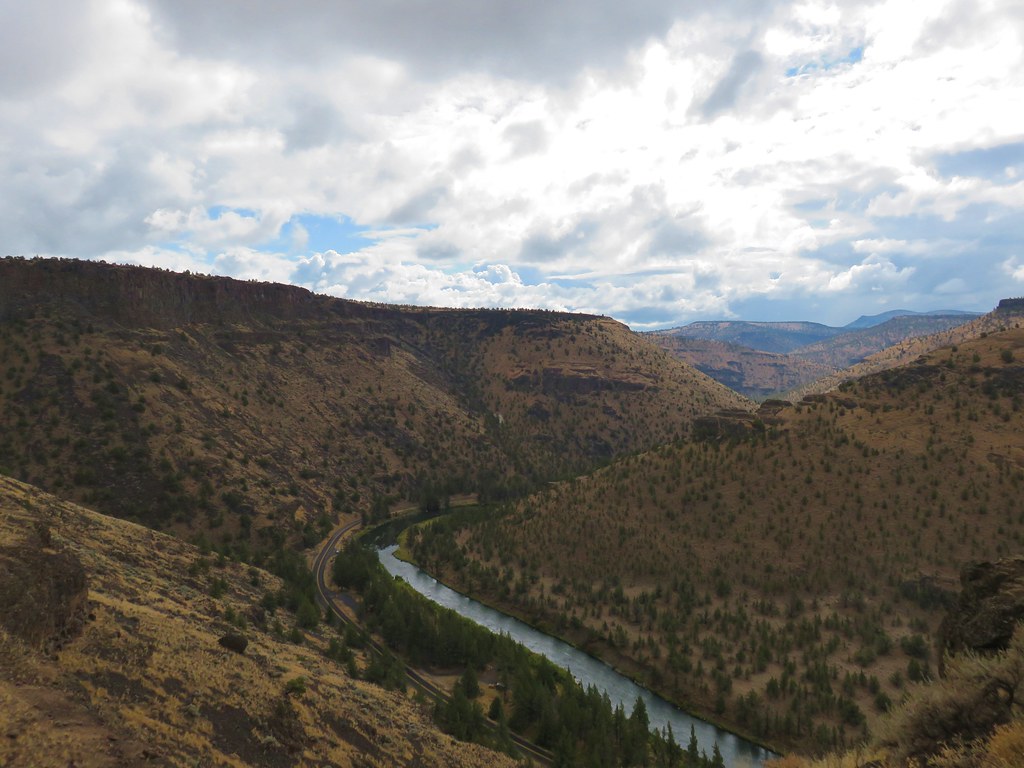
The trail gains approximately 500′ in the 1.3 miles to Chimney Rock so it’s a pretty good climb at times but the views of the Crooked River Canyon are worth it.
IMG_0268

IMG_0273

IMG_0281

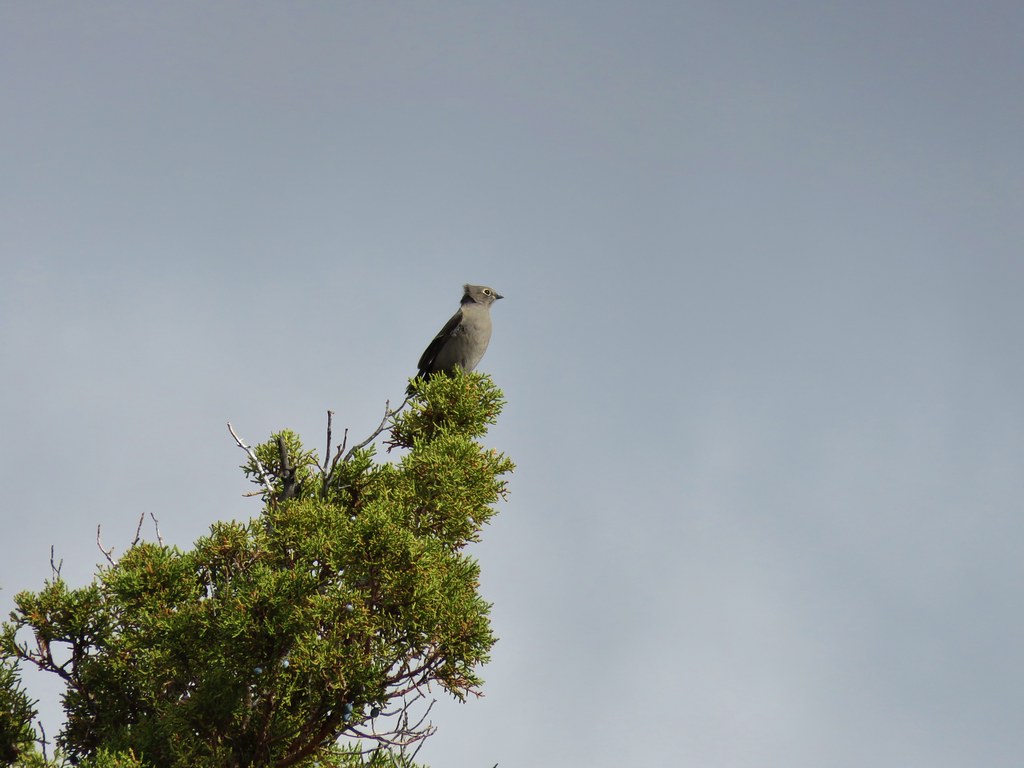
The sound of songbirds added to the relaxing scene.
IMG_0278

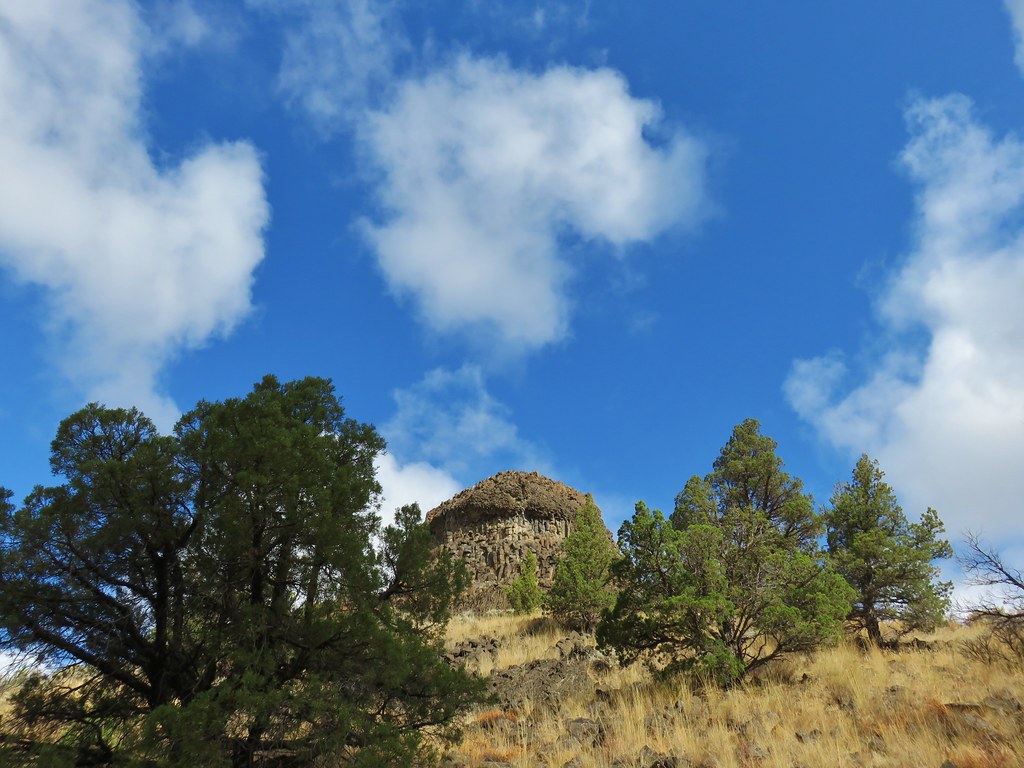
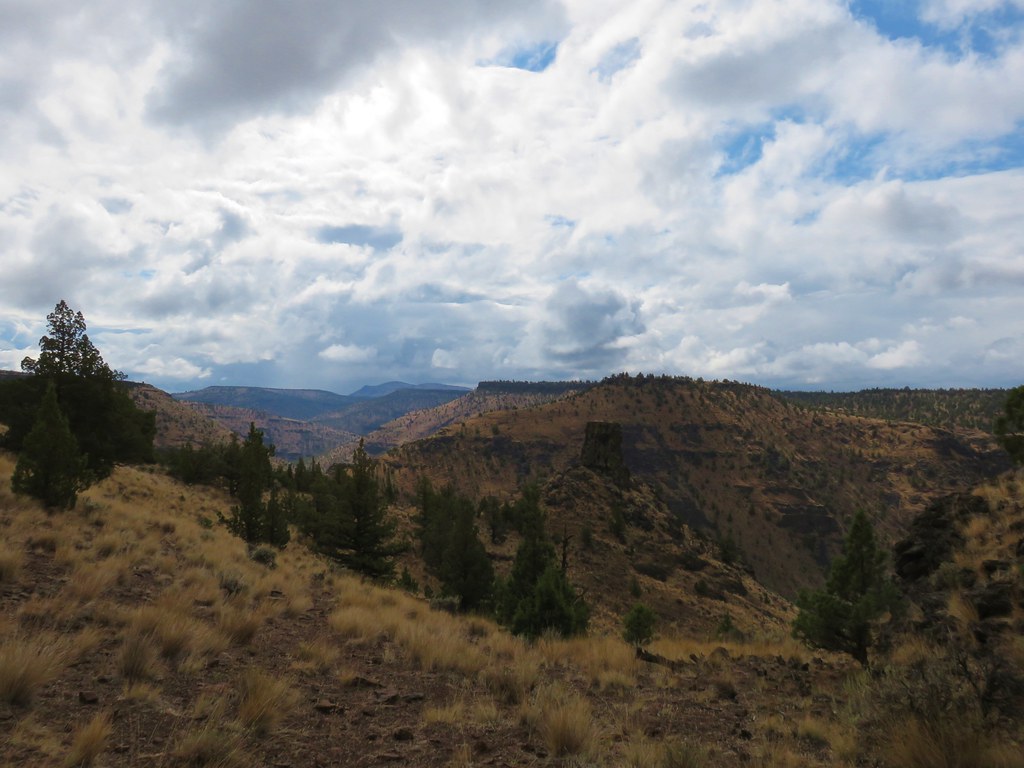
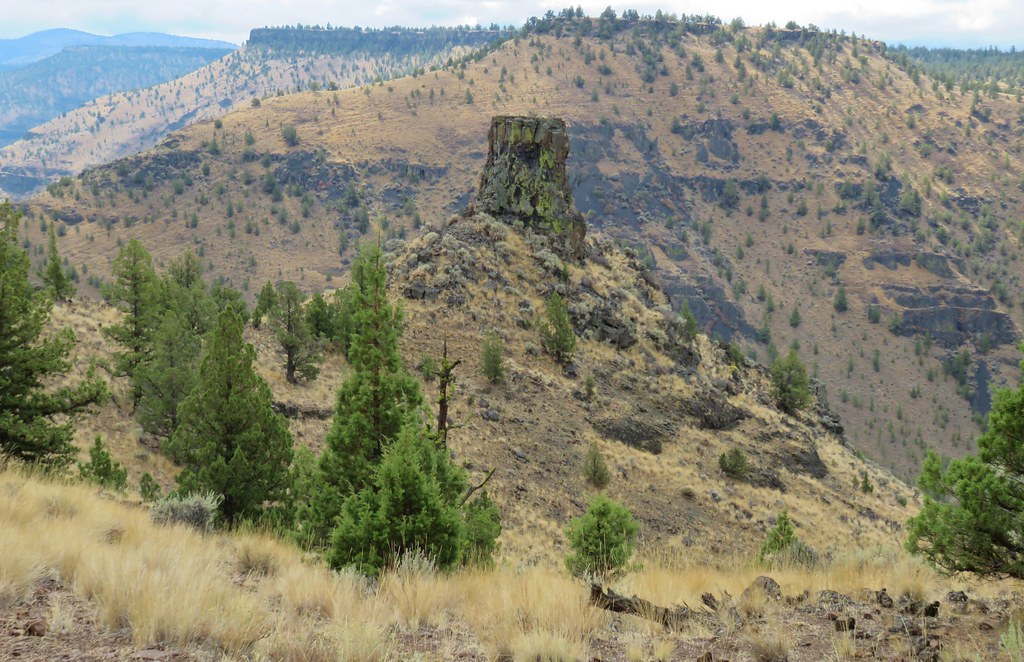
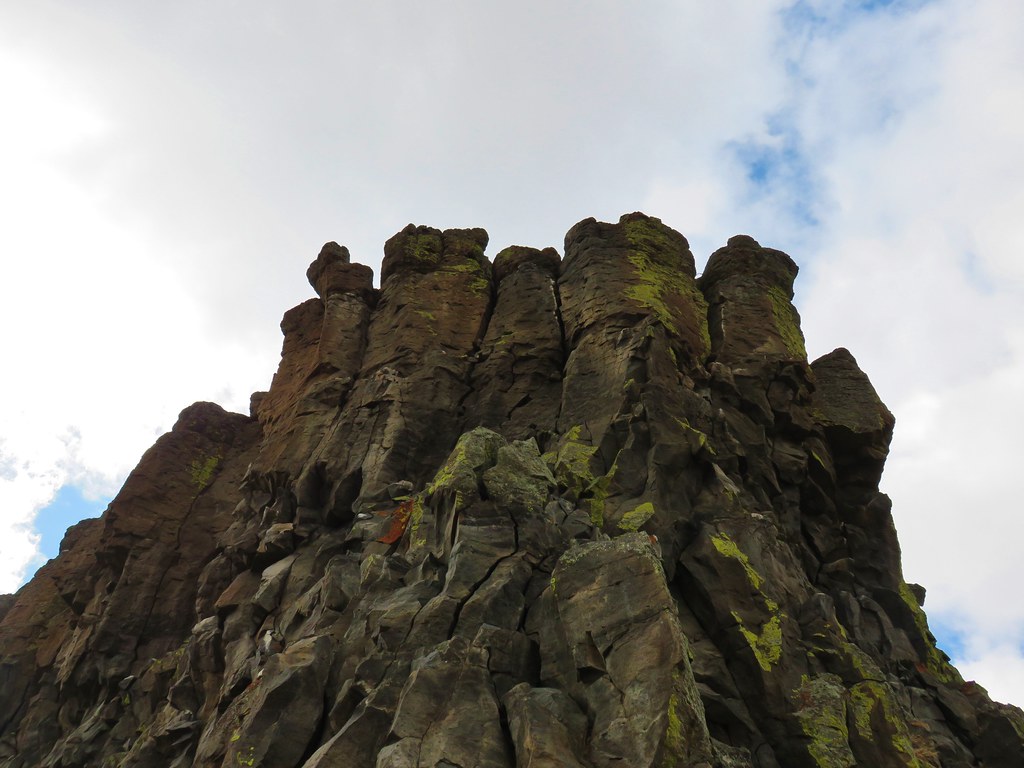
Chimney Rock was hidden for most of the hike but as the trail leveled out on the rim the unique pillar came into view.
IMG_0283

IMG_0287

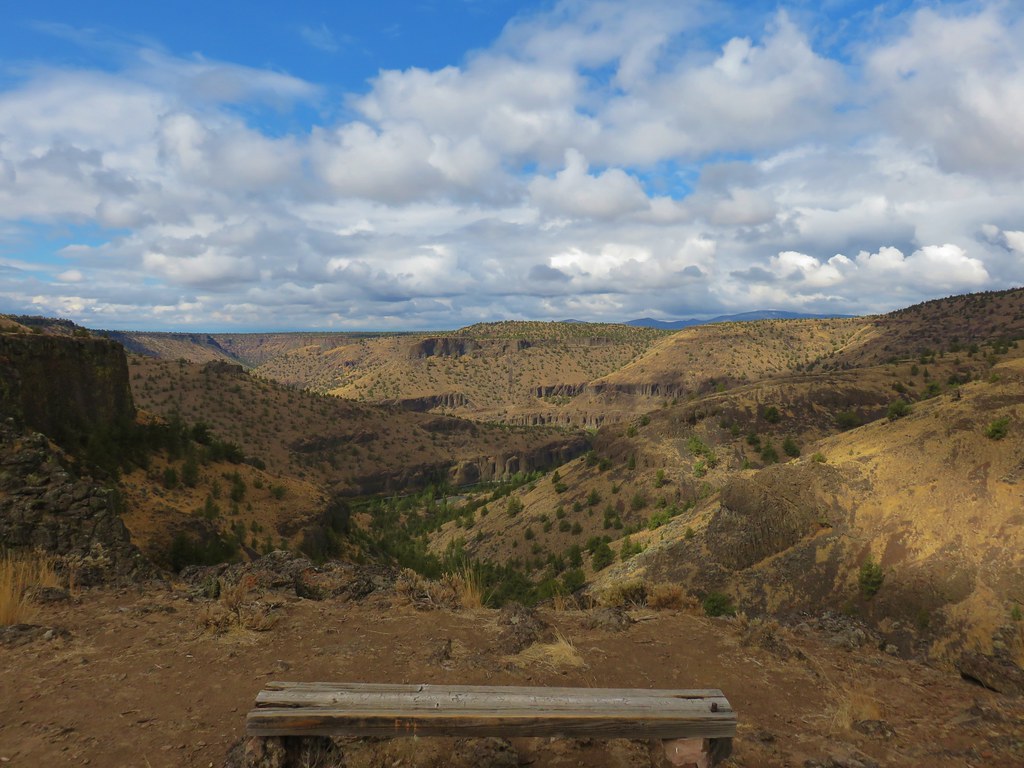
The trail leads right to the pillar and a nearby bench.
IMG_0293

IMG_0295

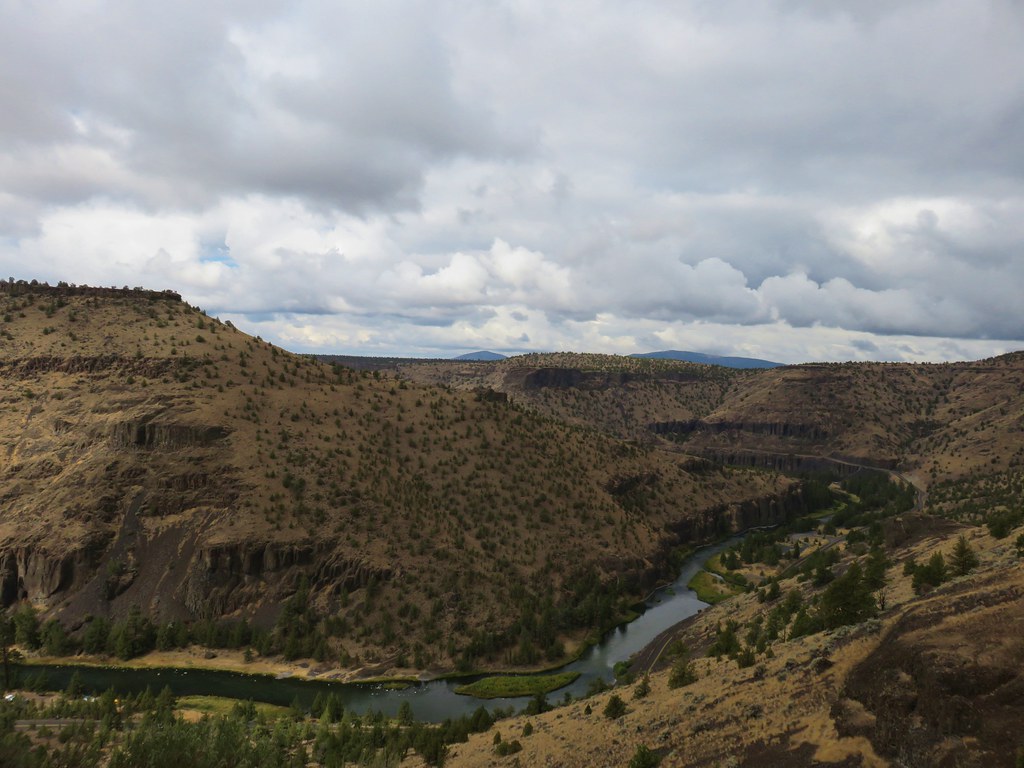
From Chimney Rock we had a nice view of the Crooked River as it wound through the rimrock canyon.
IMG_0296

IMG_0297

It was a pretty quick up and down taking us just over an hour but it gave us an opportunity to stretch our legs and enjoy some impressive views at the same time.

After visiting our Son we drove home over Santiam Pass. Clouds obscured many of the mountains but both Three Fingered Jack and Mt. Washington were brilliantly white with snow which was such a welcome sight. Just 7 days earlier when we passed by going the other way they were hidden by thick smoke from wildfires. Happy Trails!

Flickr: Chimney Rock

Categories
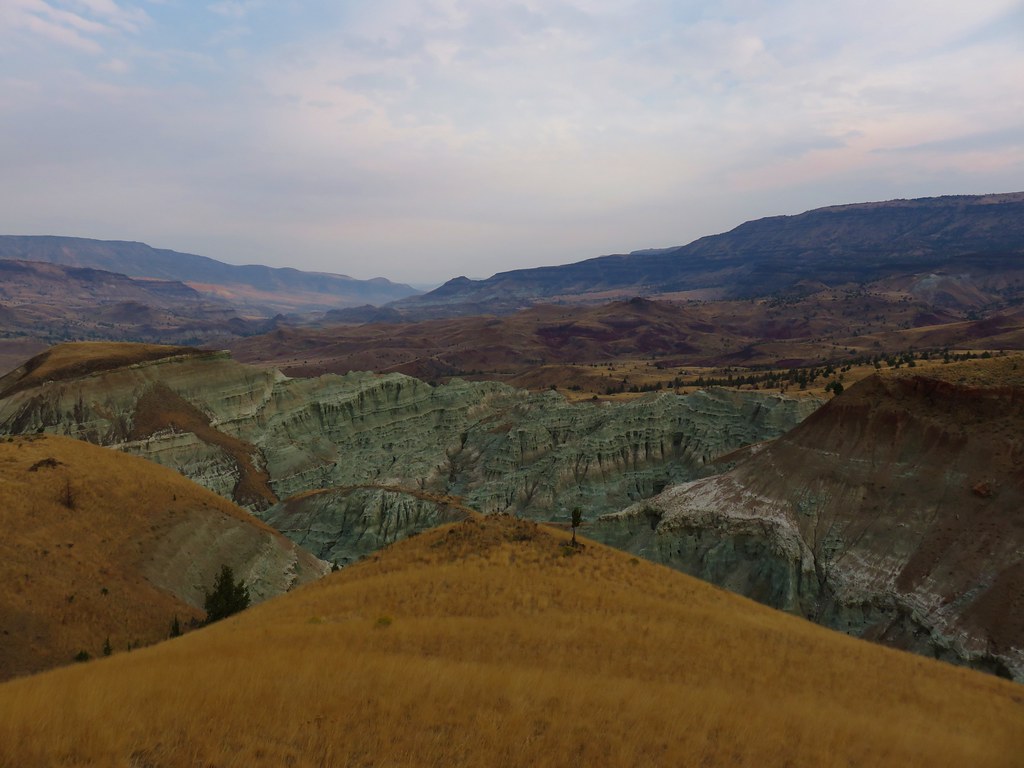
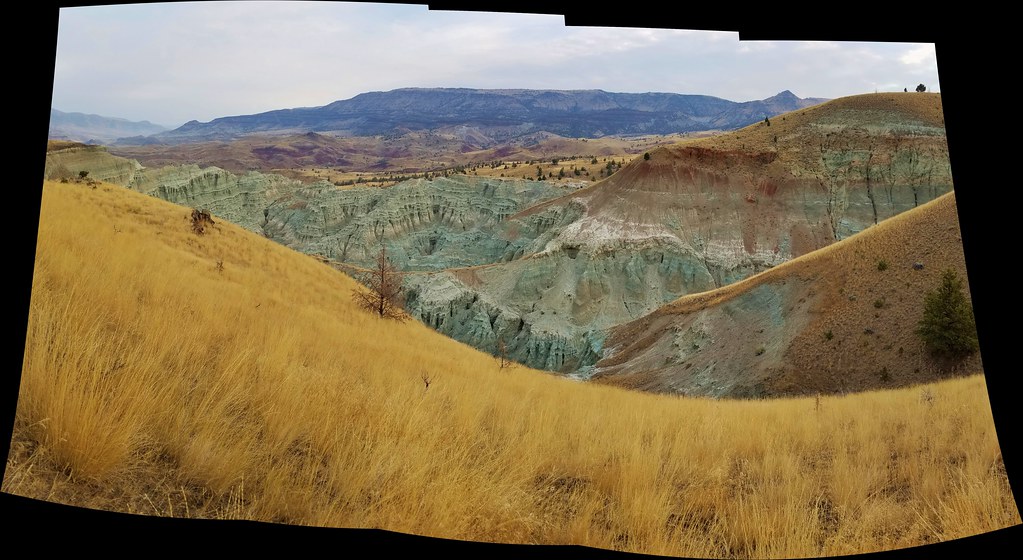
Blue Mountains - South Hiking John Day Oregon Trip report

Blue Basin, Bates, and Sumpter

After a successful first hike and nice visit with Heather’s parents on the first day of our vacation we left Bend early Sunday morning and headed for Sumpter. To reach Sumpter from Bend we’d need to drive through Prineville and take Highway 26 through the Ochoco Mountains (where the Desolation Fire was burning) and John Day to Highway 7 at Austin Junction then follow that highway 25.2 miles to the Sumpter Valley Highway.

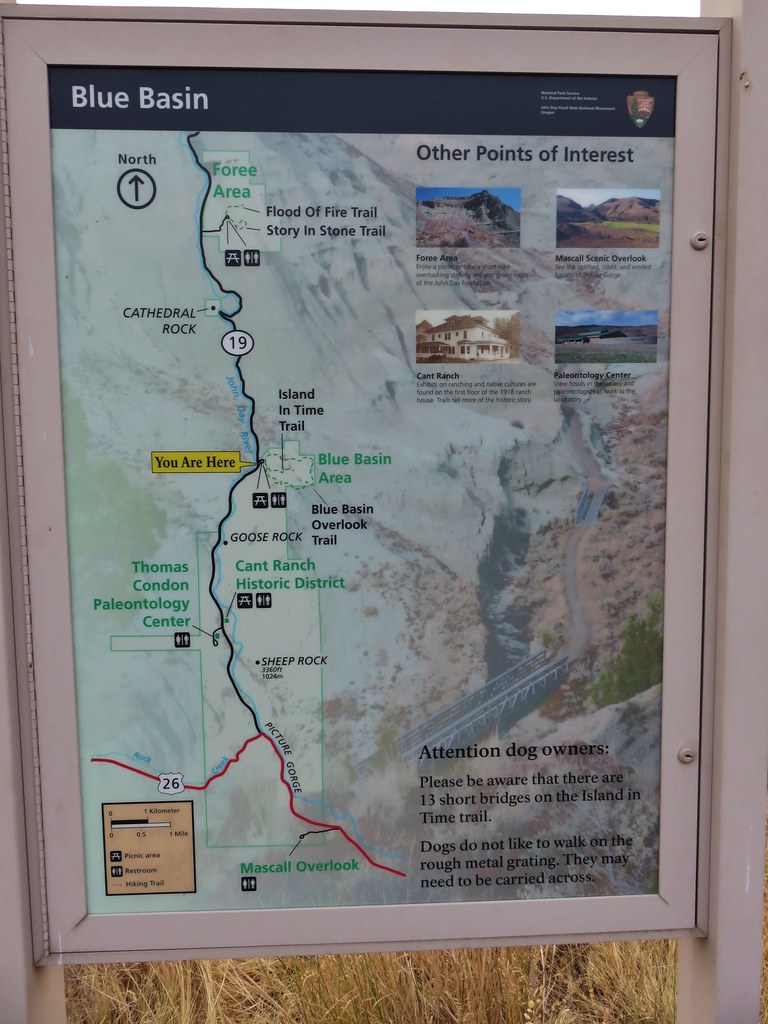
To break up the over 200 mile drive we planned a couple of short hikes along the way starting with Blue Basin in the Sheep Rock Unit of the John Day Fossil Beds National Monument.

This was our third visit to the monument having previously hiked in the Painted Hills and Clarno Units.

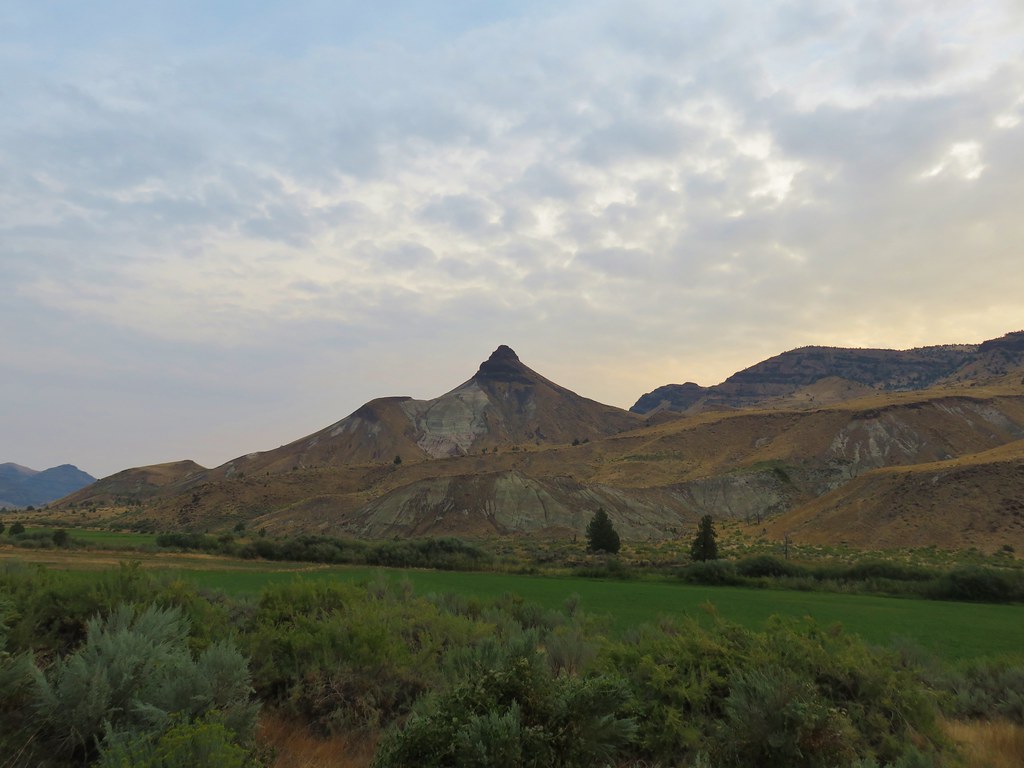
The Sheep Rock Unit is located approximately 30 miles east of Mitchell, OR. To reach the Blue Basin Trialhead we turned north on Highway 19 towards the Thomas Condon Visitors Center. It was too early for the center to be open but we stopped along the way to take in the view of Sheep Rock.
IMG_9127

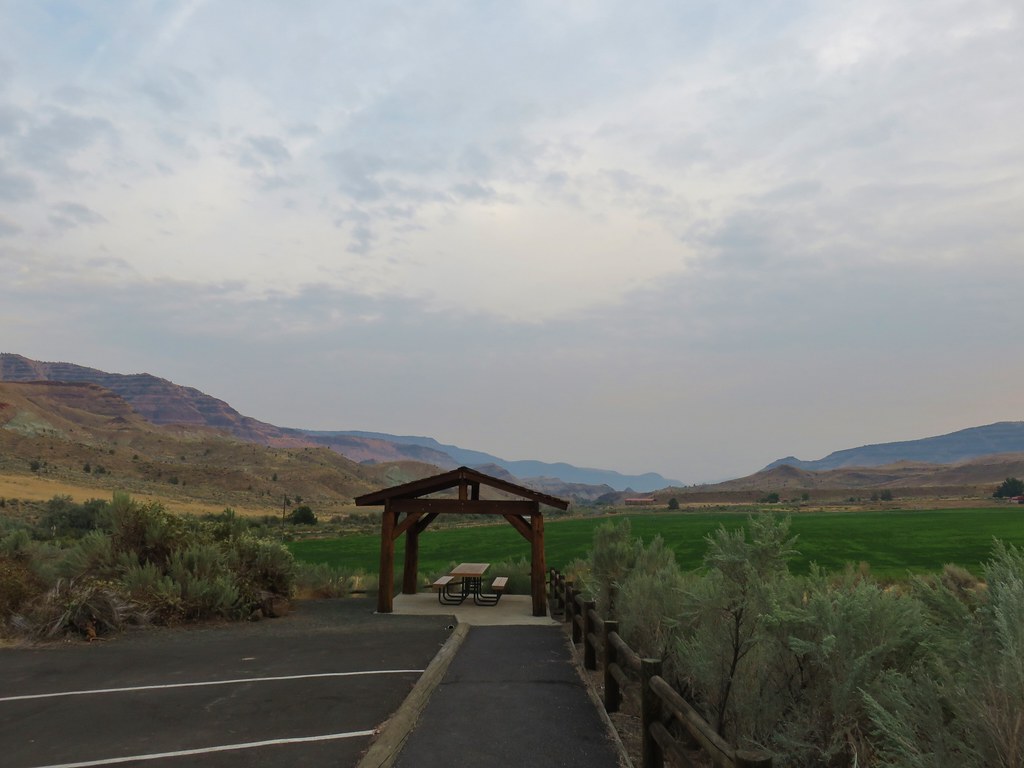
After 5 miles on Highway 19 we turned left into the parking area for the Blue Basin Area.
IMG_9131

IMG_9135

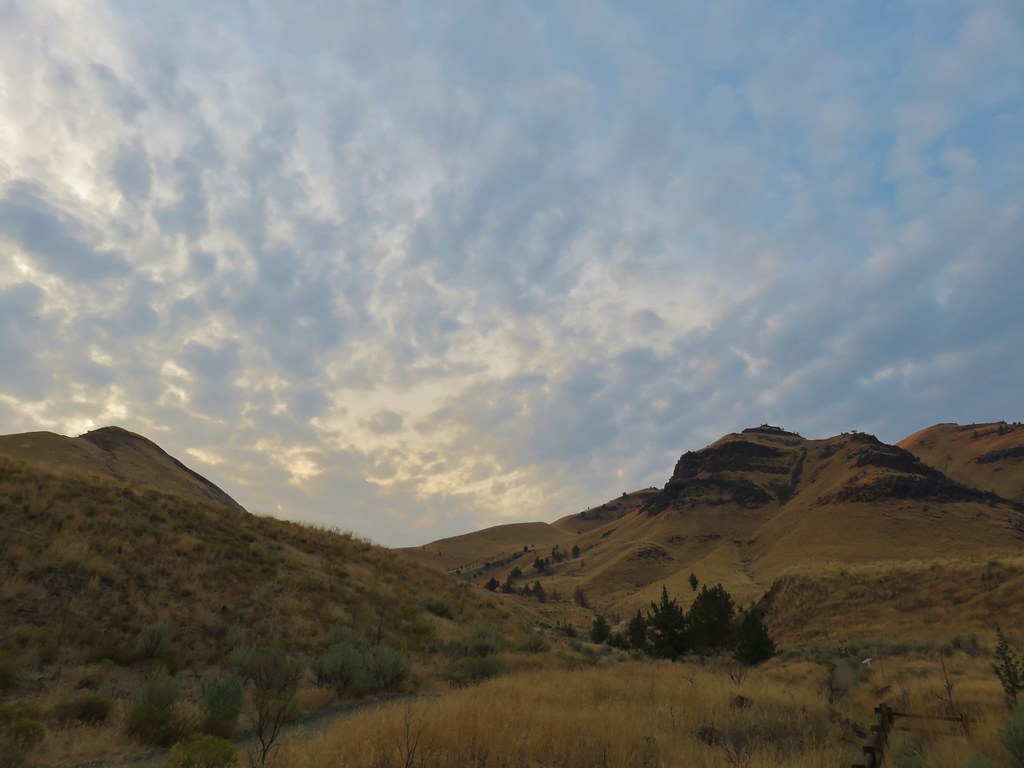
It was a beautiful morning with a few clouds in the sky providing for some dramatic views right off the bat.
IMG_9133

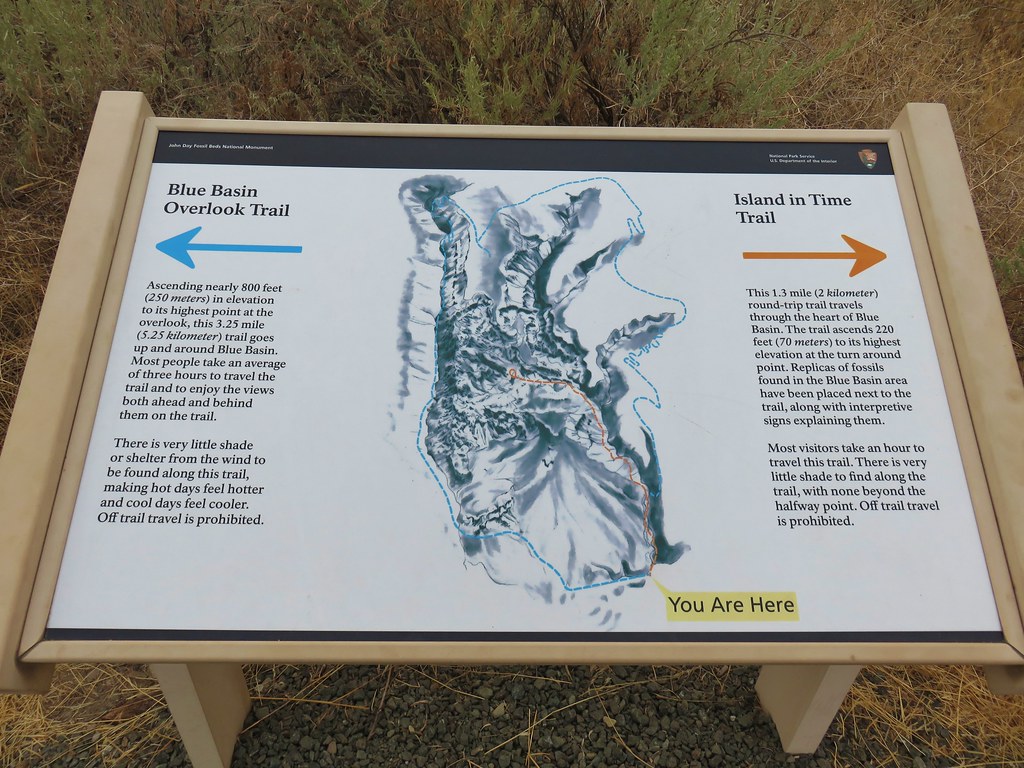
We chose to start our hike with the Blue Basin Overlook Trail.
IMG_9137

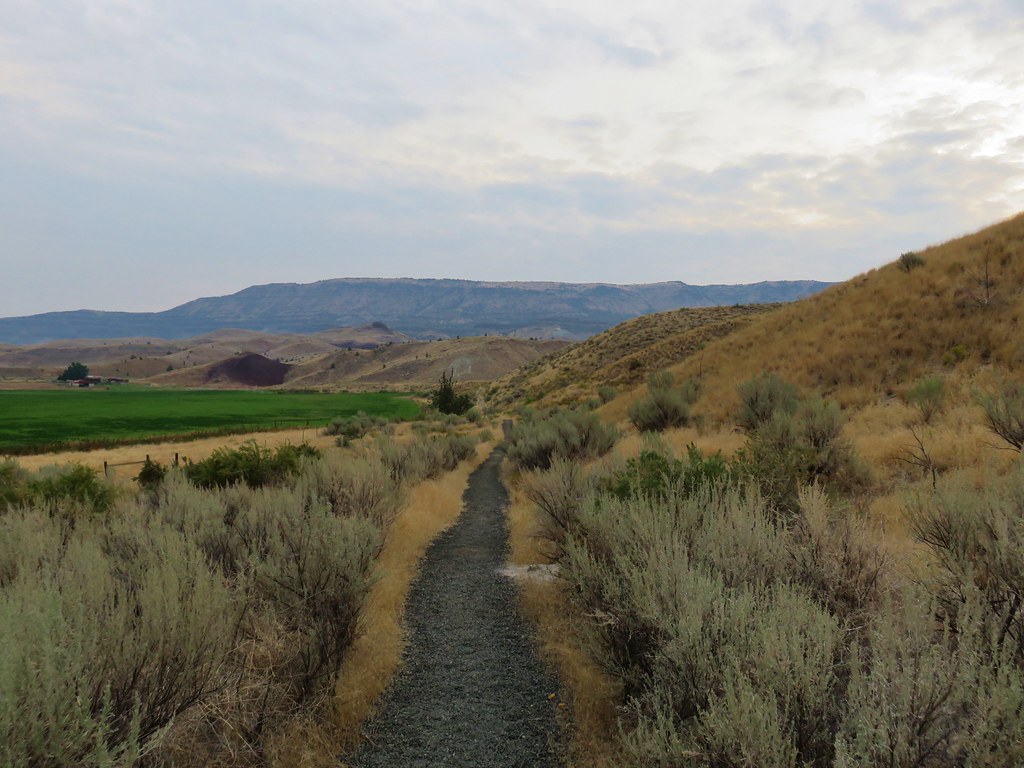
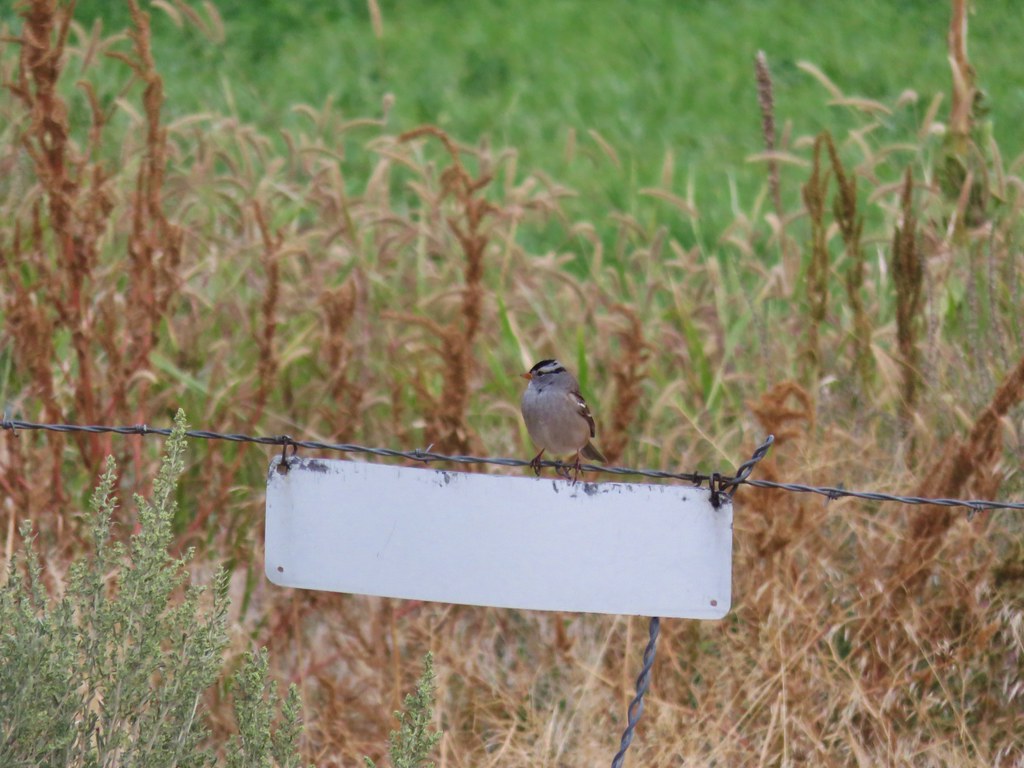
The path passed alongside a field where songbirds were happily enjoying their morning.
IMG_9138

IMG_9142

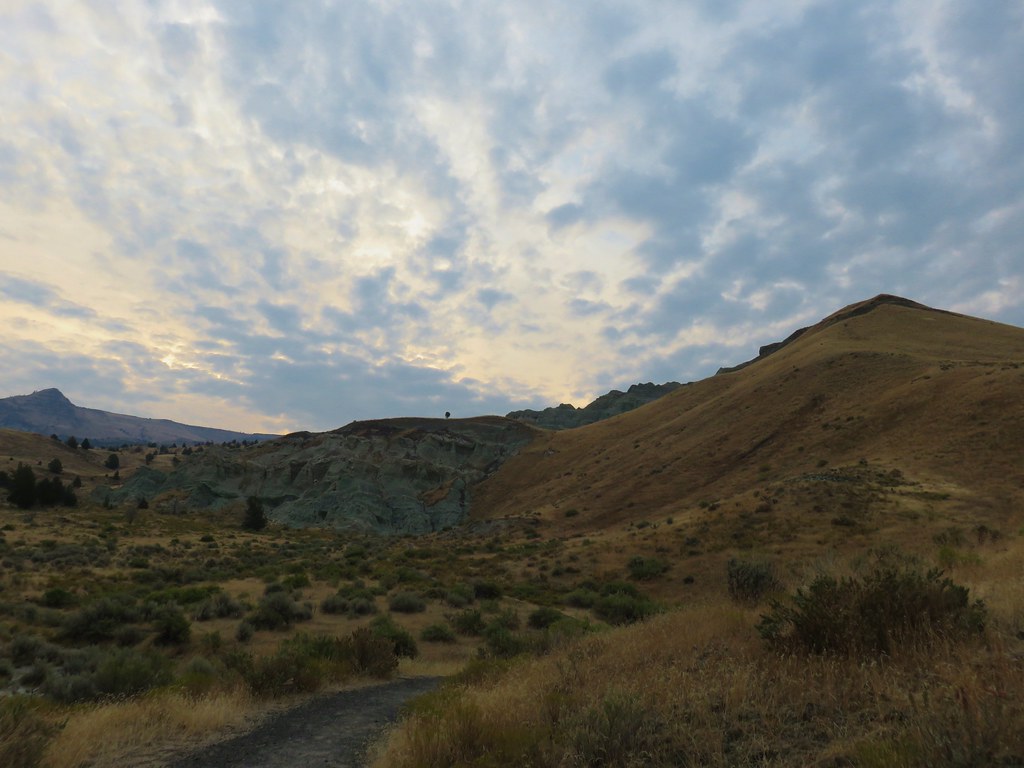
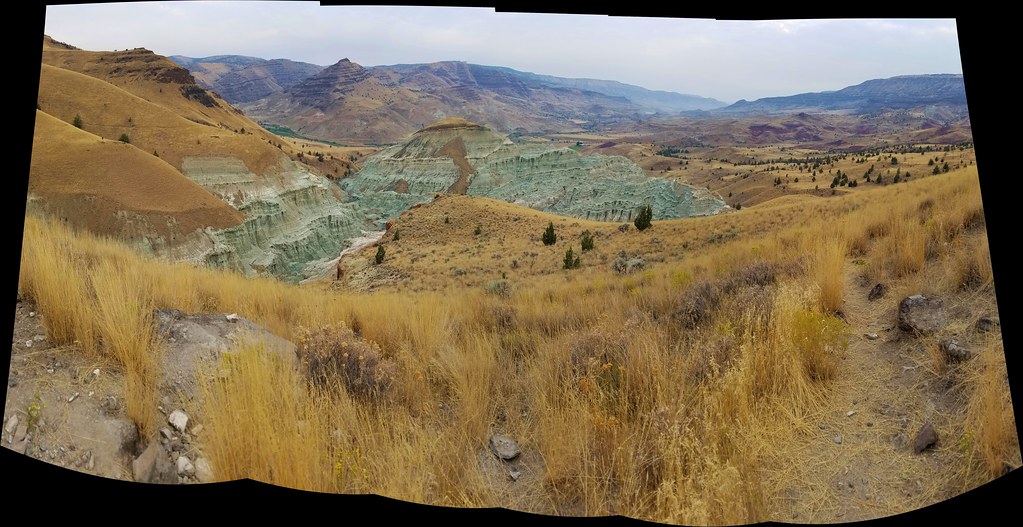
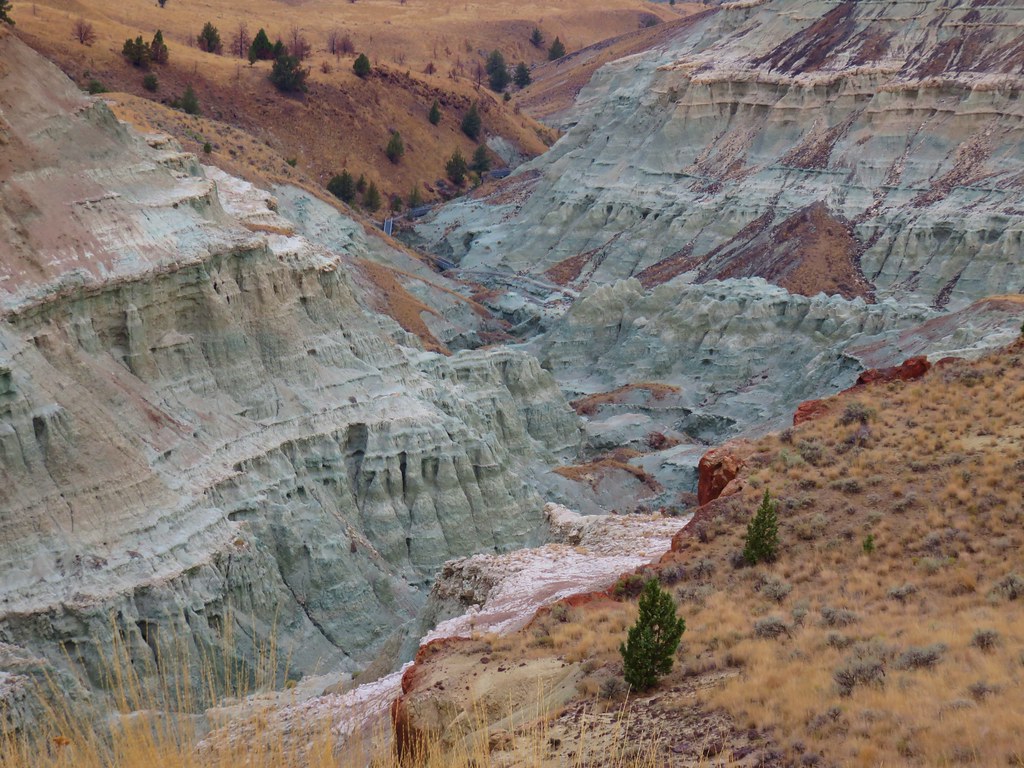
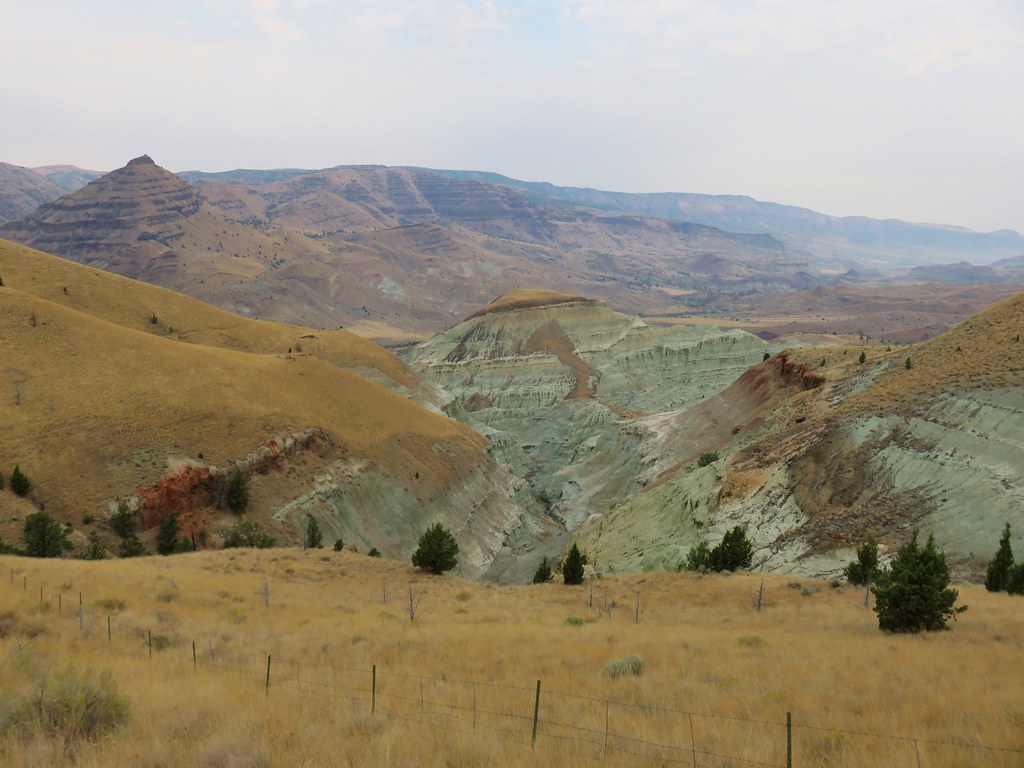
It wasn’t long before we got our first good look at the exposed volcanic ash that gave the area its name.
IMG_9144

IMG_9147

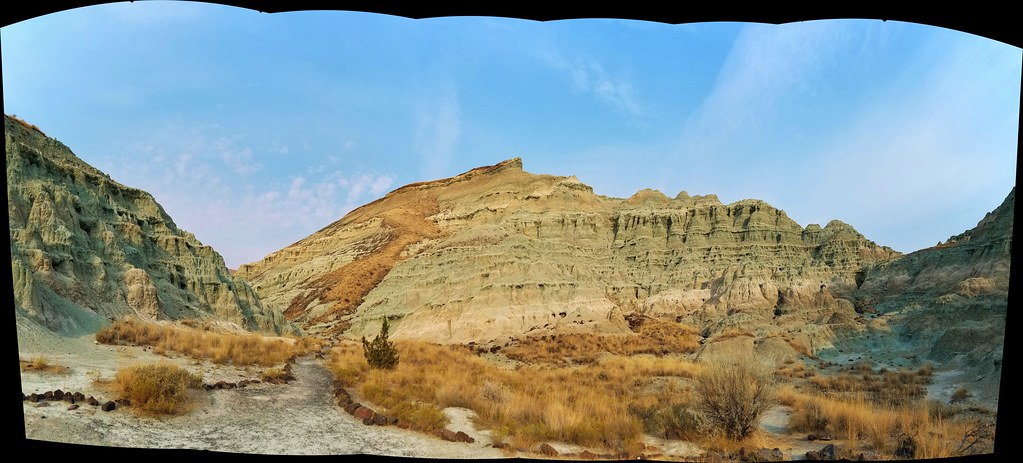
In the morning light the ash appeared more green than blue. The contrast between the ash and the golden grasses on the hillsides was beautiful.
IMG_9156

We were a bit surprised to see some yellow flowers still blooming as we wrapped around another scenic outcrop of ash.
IMG_9171

IMG_9169

IMG_9176

The trees were filled with birds as the trail climbed toward the rim.
IMG_9182

IMG_9183

IMG_9185

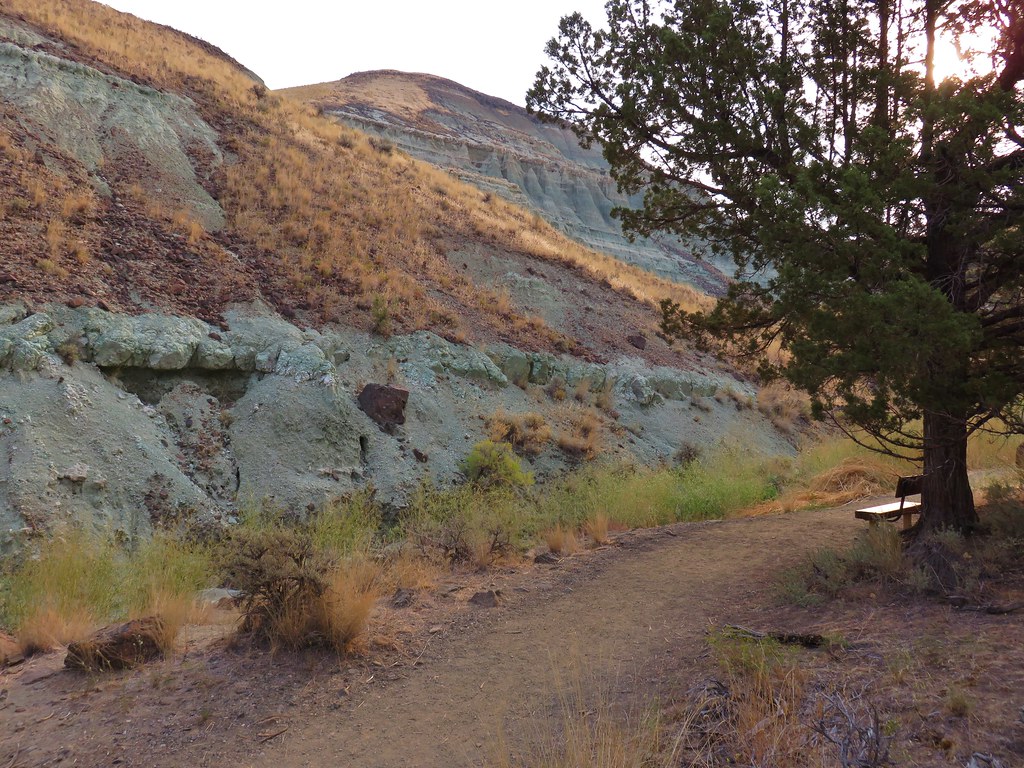
The trail climbed gradually for the most part for the first 1.2 miles and we were captivated by the formations created by the ash.
IMG_9195

The trail then began to climb in earnest passing a bench with an encouraging sign along the way.
IMG_9205

IMG_9206

IMG_9208

We were thankful that it was a cool morning as we couldn’t imagine attempting the hike on a hot summer day.

The trail became somewhat level once it reached the rim where the views were breathtaking.
IMG_9217

IMG_9214

IMG_9216

IMG_9218

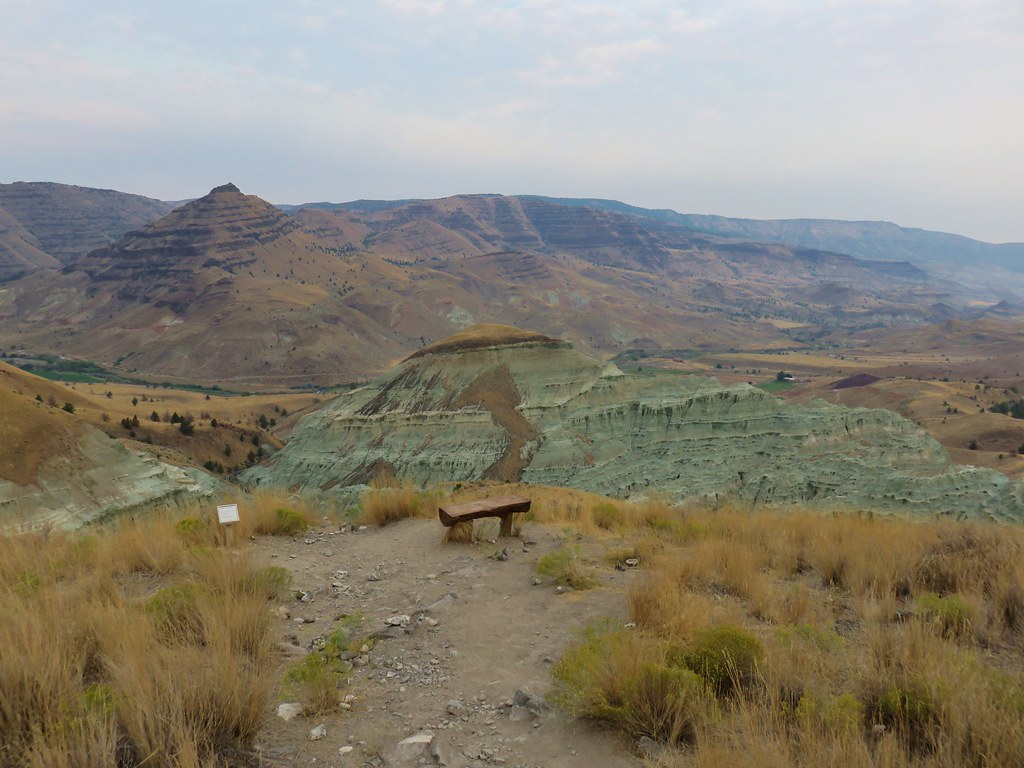
A short spur trail led to a bench at the overlook which had even more impressive views.
IMG_9219

IMG_9223

2017-09-17 08.08.13_stitch

IMG_9230

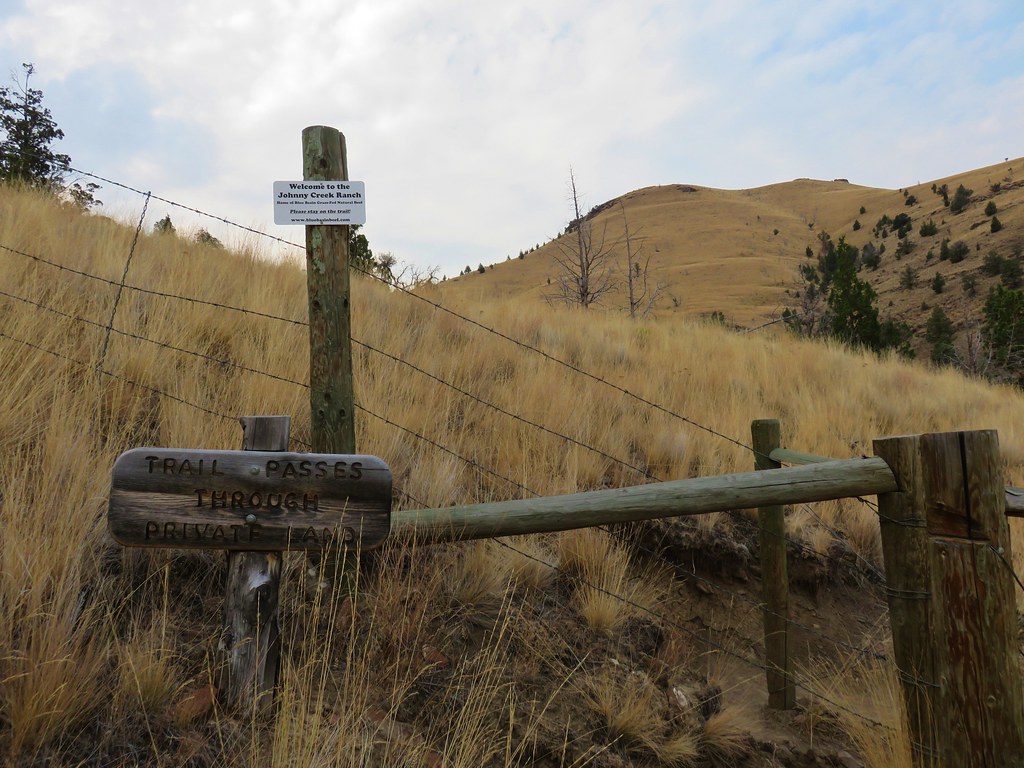
After attempting to comprehend what we were seeing we continued on the loop which passes through some private land on the way to more spectacular views before descending to a bench at a trail junction.
IMG_9237

IMG_9239

IMG_9248

2017-09-17 08.32.12_stitch

2017-09-17 08.39.30_stitch

IMG_9276

Here we turned right on the Island of Time Trail which led into the heart of Blue Basin.
IMG_9288

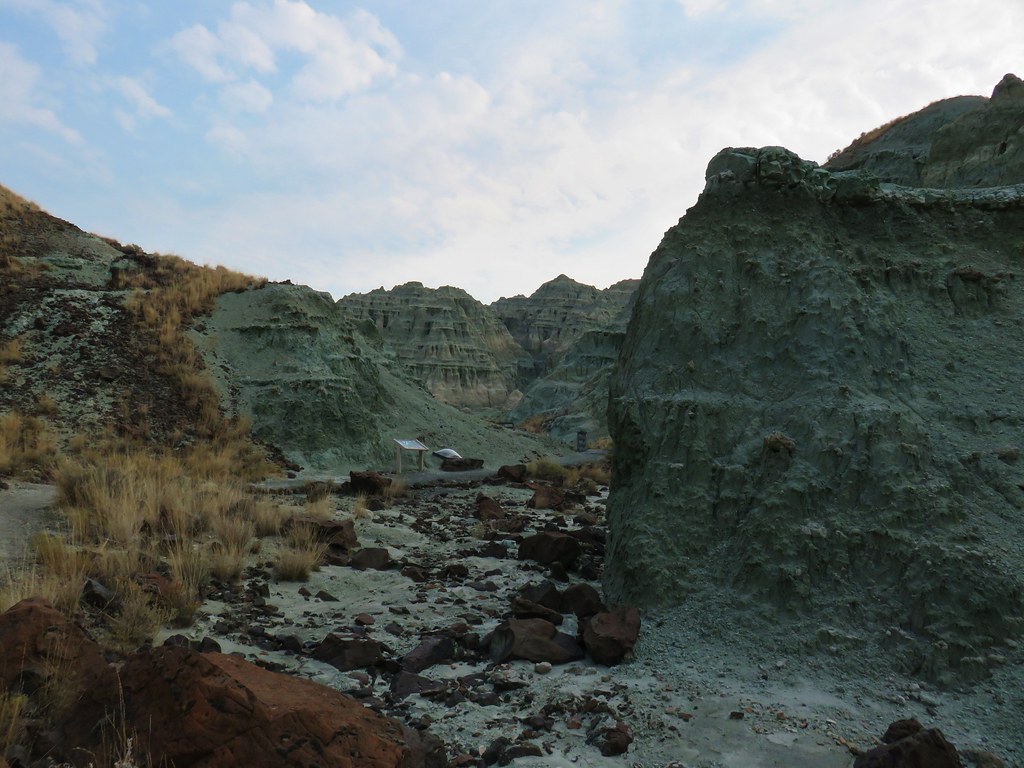
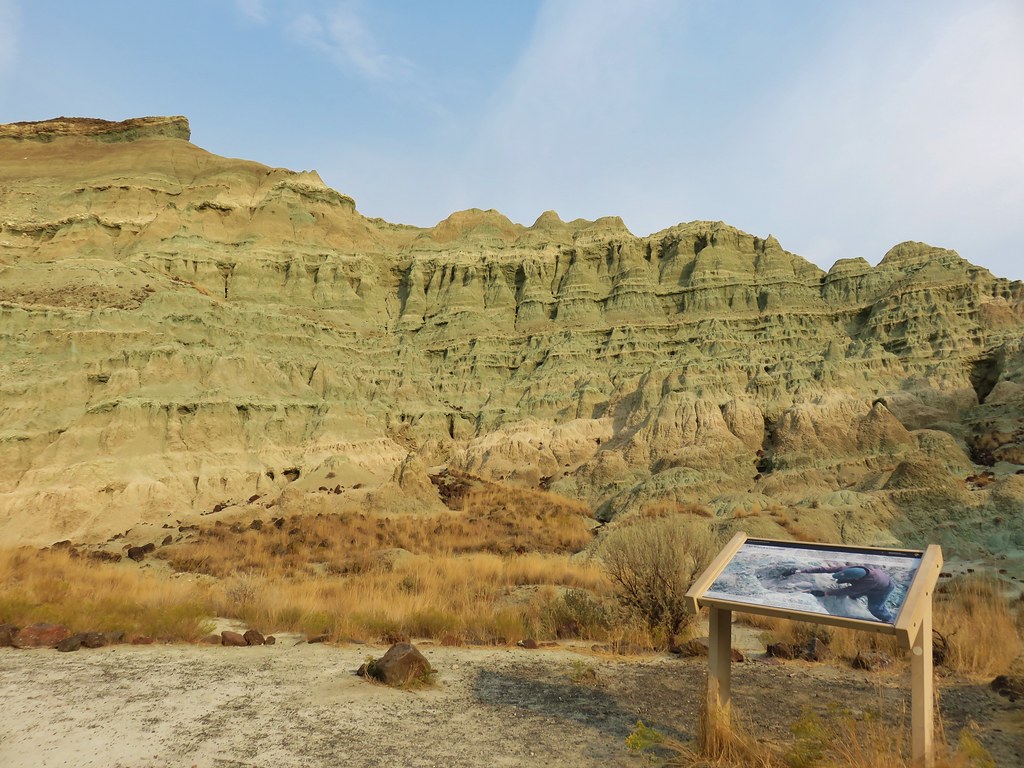
It was only .4 miles to the end of this trail but the scenery seemed endless. The various colors and textures were remarkable and numerous informative interpretive signs sat along the path.
IMG_9286

IMG_9291

IMG_9292

IMG_9293

IMG_9295

IMG_9302

IMG_9306

IMG_9310

IMG_9322

IMG_9342

We sat at a bench at the end of the trail soaking in the view on what was a perfectly peaceful morning.
2017-09-17 09.15.02

2017-09-17 09.15.43_stitch1

All of the hikes in the John Day Fossil Beds National Monument had been enjoyable but this 4.2 mile hike was by far the most impressive to us.

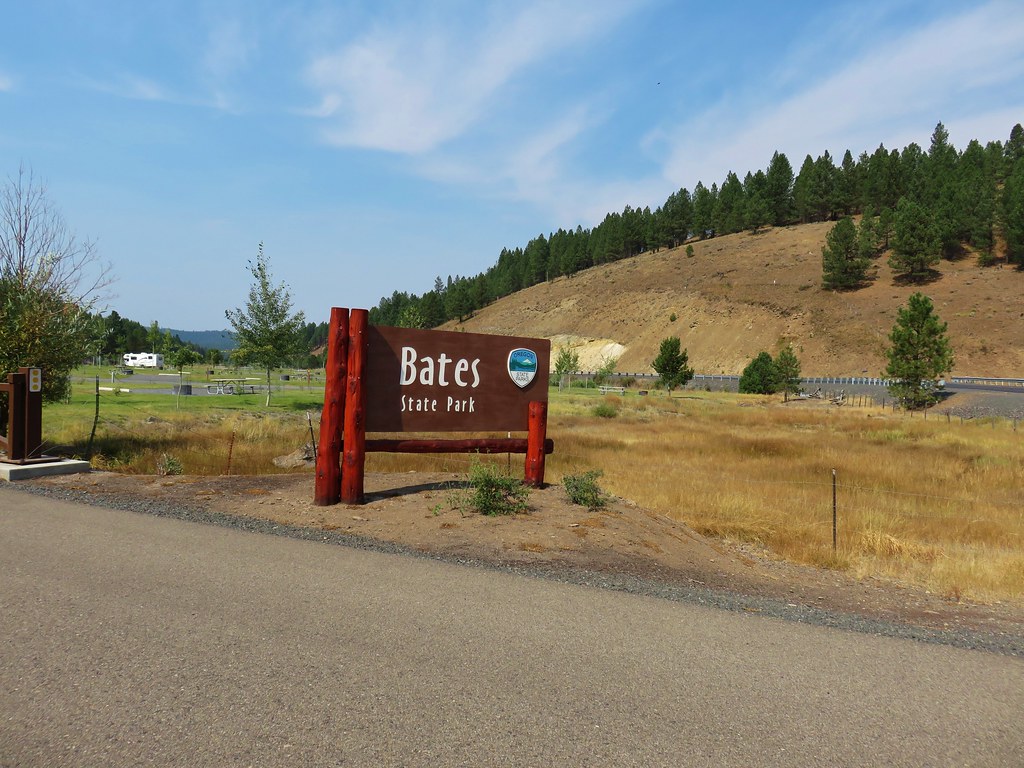
After returning to our car we drove back to Highway 26 and continued east. The air was once again hazy due to wildfire smoke making it hard for us to see much of the Strawberry Mountains as we passed by. After 66 miles we turned left onto Highway 7 for 1.1 miles then left again on Middle Fork Lane for .4 miles to Bates State Park.
IMG_9420

IMG_9364

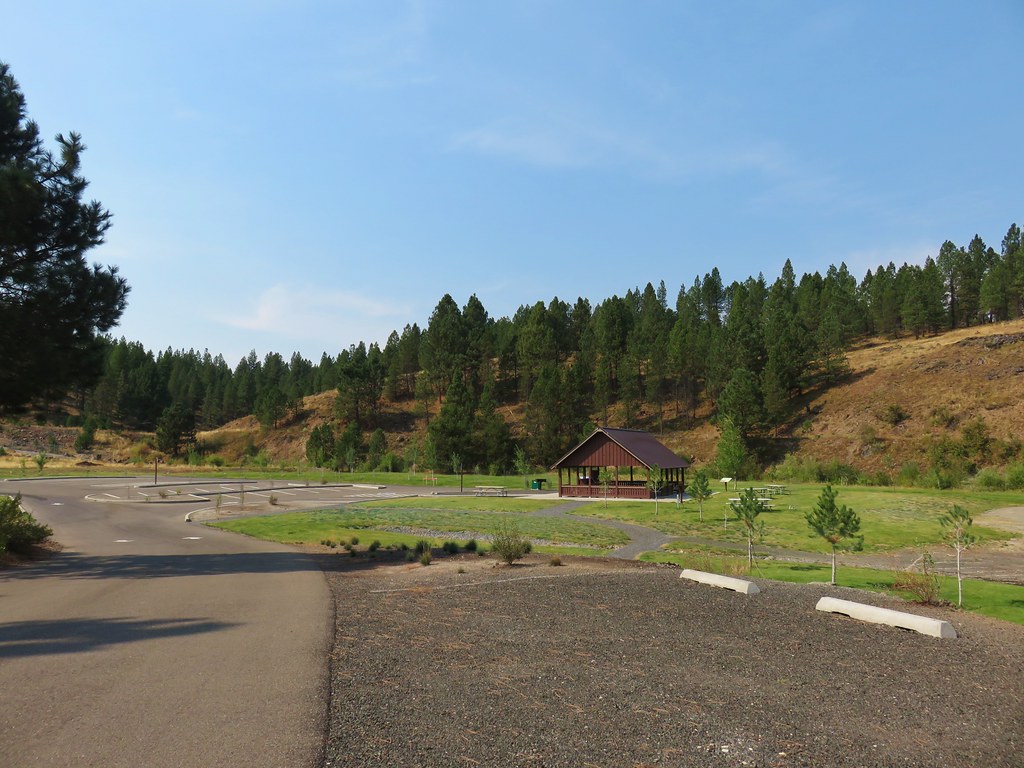
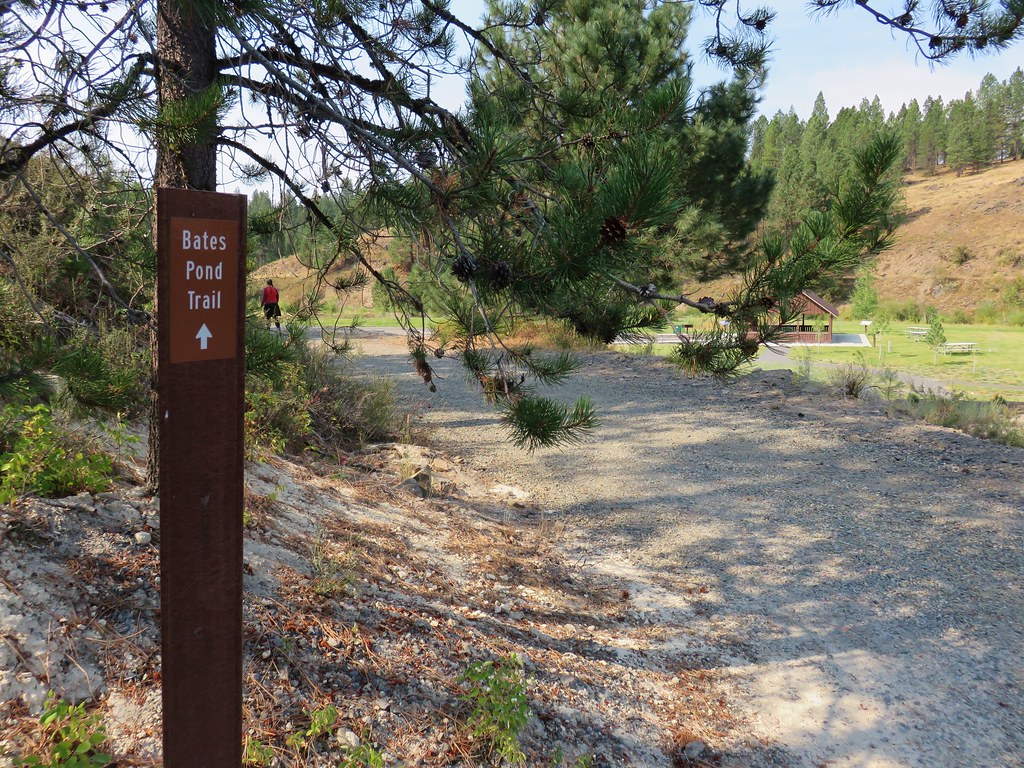
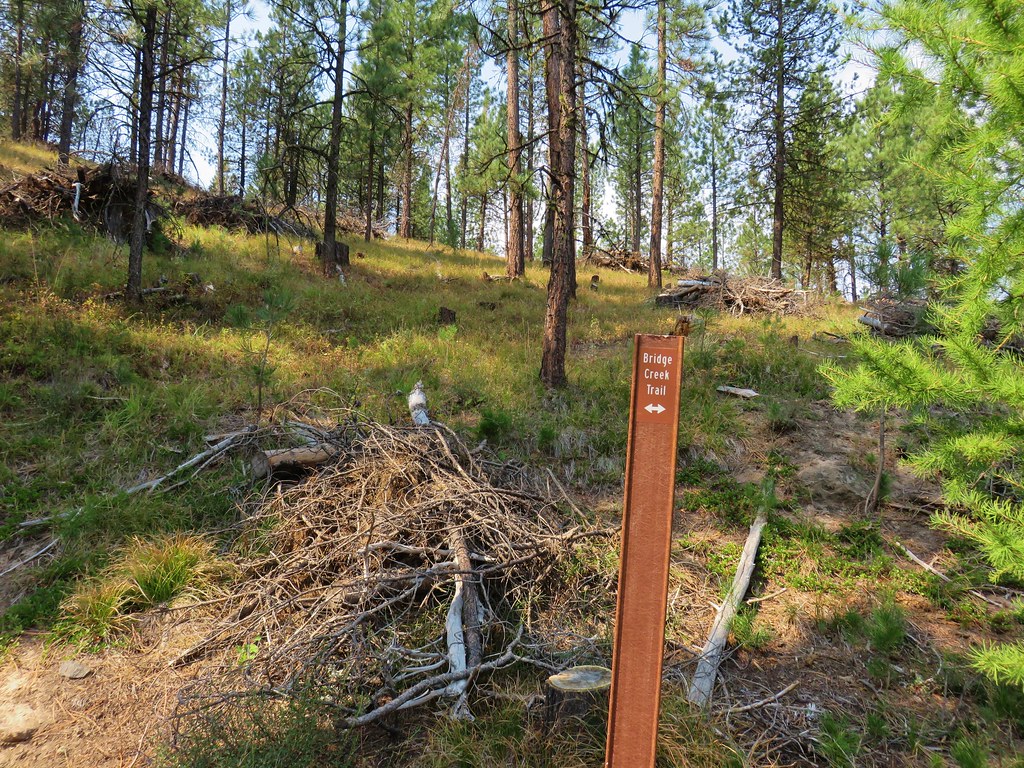
The park is located at the site of a former company lumber town. Bates Pond is all that is left from the town now. Several trails at the park gave us the opportunity to explore the area on a 2.6 mile hike starting on the Pond Trail which began on a road bed marked by a metal post.
IMG_9366

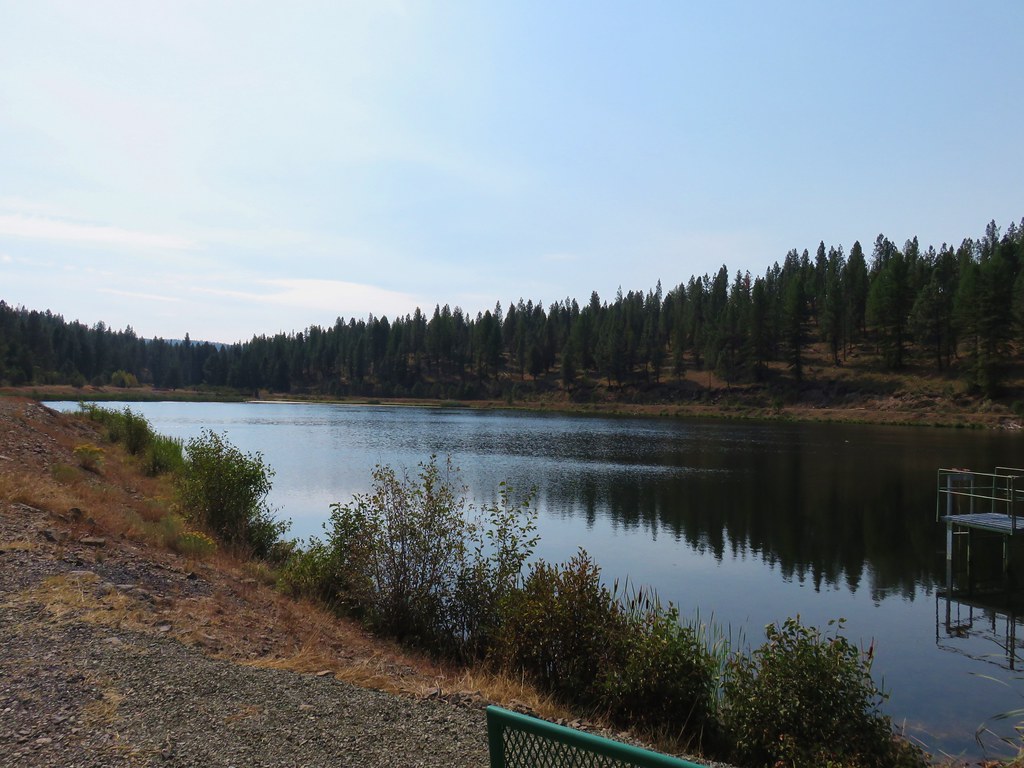
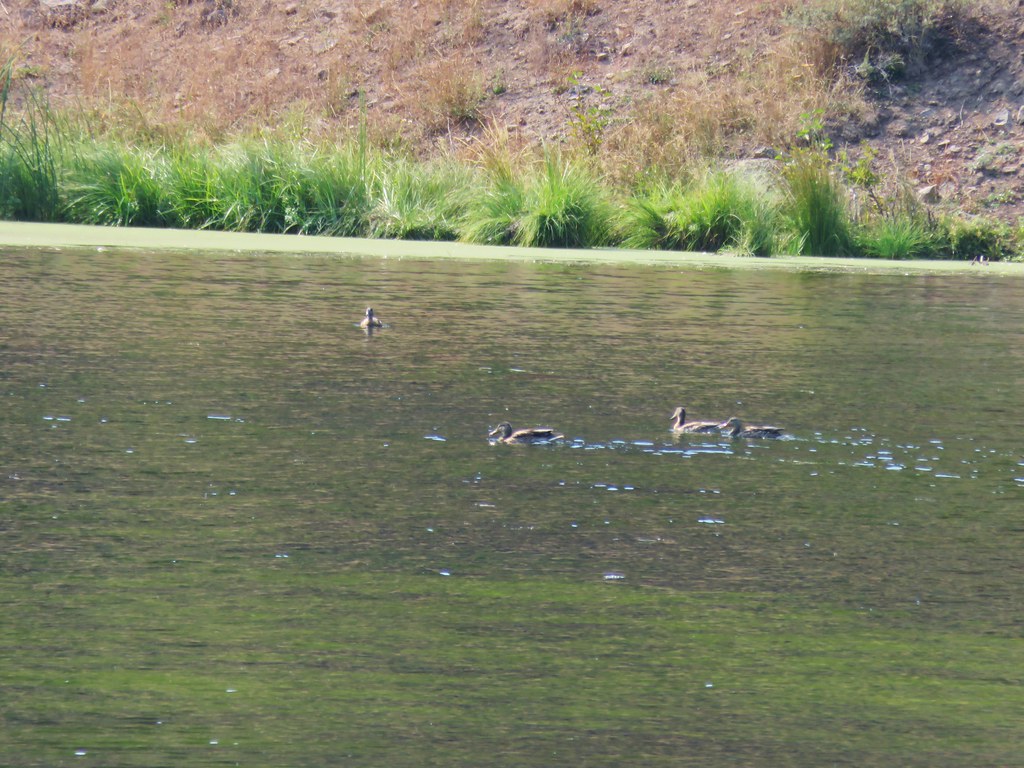
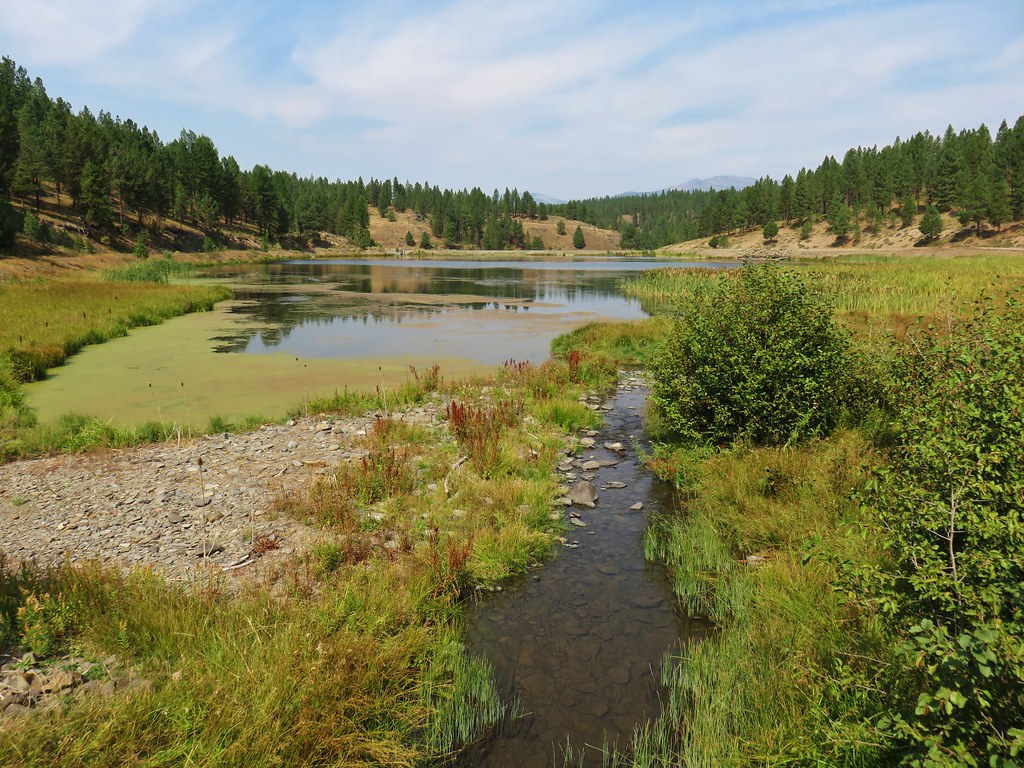
The trail followed the road along Bates Pond where numerous ducks paddled about.
IMG_9368

IMG_9371

IMG_9373

IMG_9374

IMG_9376

We crossed Bridge Creek on a footbridge at the far end of the pond and continued around the pond.
IMG_9378

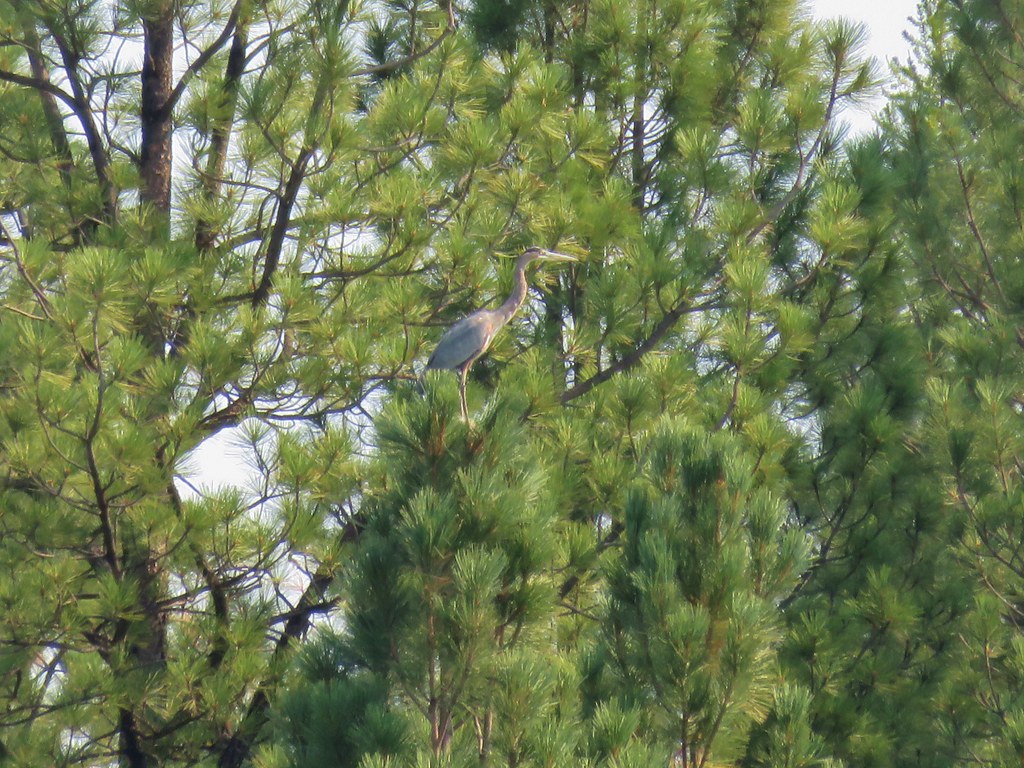
We startled a heron that flew ahead of us into a tree before taking off again across the pond to another tree.
IMG_9379

IMG_9383

IMG_9386

IMG_9389

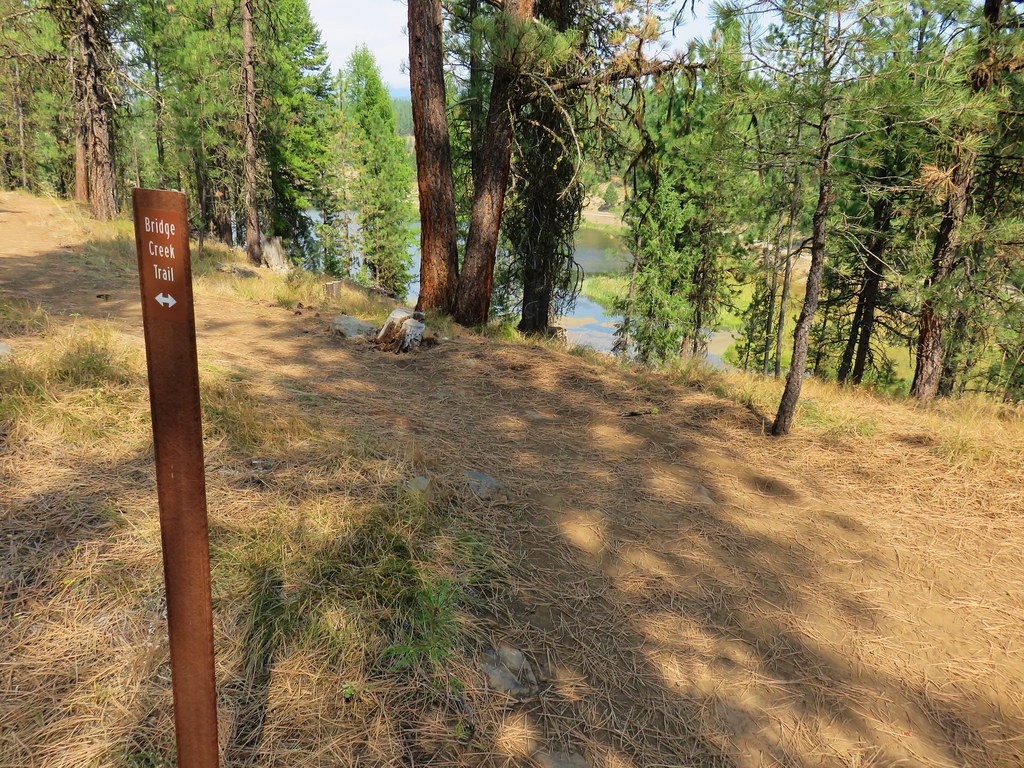
When the Bates Pond Trail ended at the Bridge Creek Trail we stayed straight following Bridge Creek and ignoring side trails and the nosy residents.
IMG_9393

IMG_9400

IMG_9396

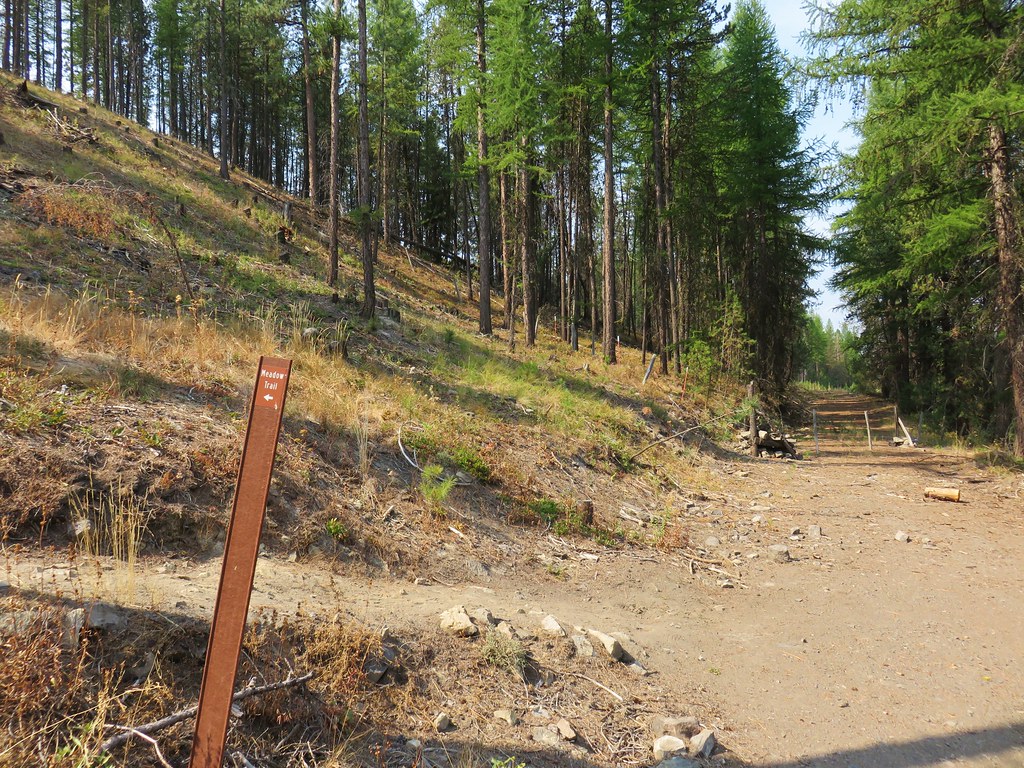
Just before arriving at a gate we turned uphill to the left onto the Meadow Trail.
IMG_9402

After a short climb the trail leveled off then came to an end at the Dixie Trail where we stayed right.
IMG_9405

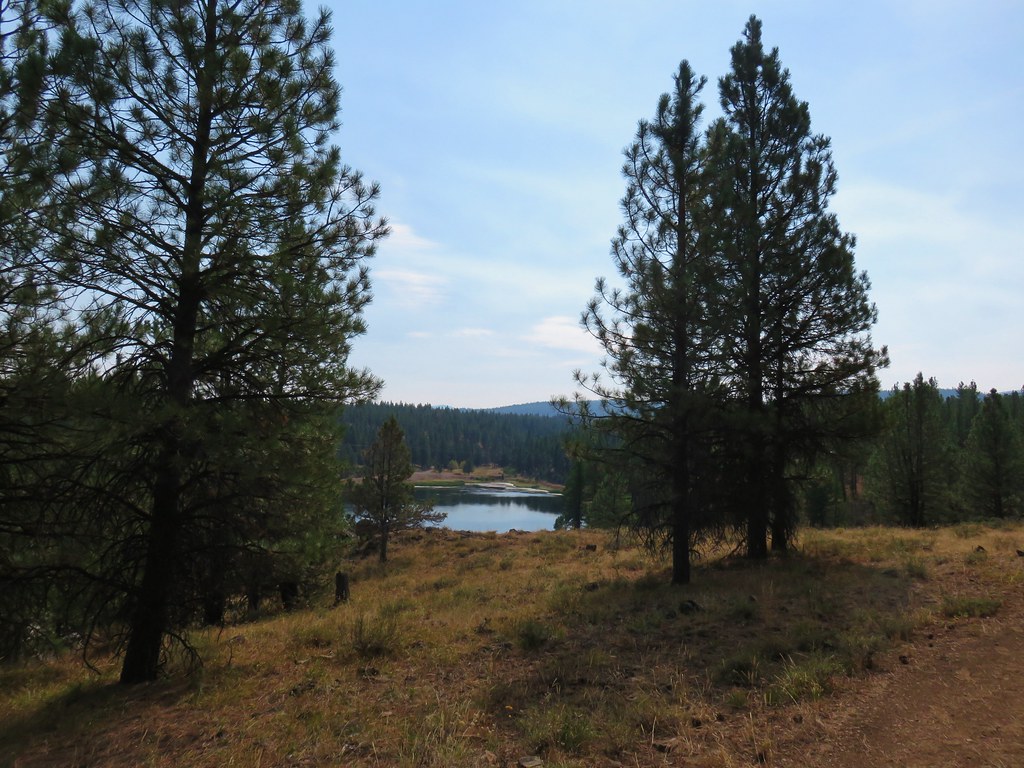
From this trail there was a view of the pond and to some buttes to the east.
IMG_9406

IMG_9409

Along the way we met one of the cutest ground squirrel we’d ever seen.
IMG_9416

The Dixie Trail descended to the Bridge Creek Trail near the footbridge at the end of the pond and we simply followed the Bates Pond Trail back to our car.
IMG_9417

IMG_9419

It was only a quarter after twelve when we’d finished and our check-in time was 2:30 in Sumpter which was only about a half an hour away. We still had one short hike left in Sumpter which would be good for about an hour which would have leave us a little early. We solved that issue by turning the wrong way (left) when leaving Bates. We only realized our mistake after driving over 16 miles which should have brought us to the ghost town of Whitney but didn’t.

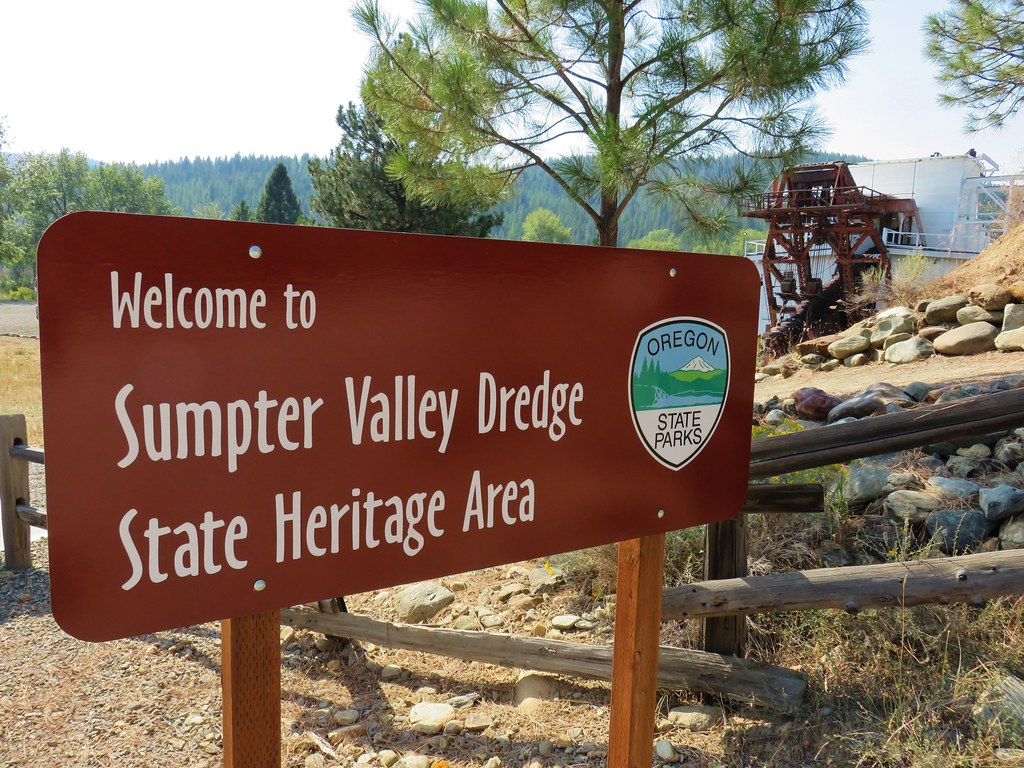
After correcting our mistake we drove back to Highway 7 and headed east for 25 miles to a sign for Sumpter where we turned left for 3 miles. We turned left into the Sumpter Valley Dredge State Heritage Area.
IMG_9429

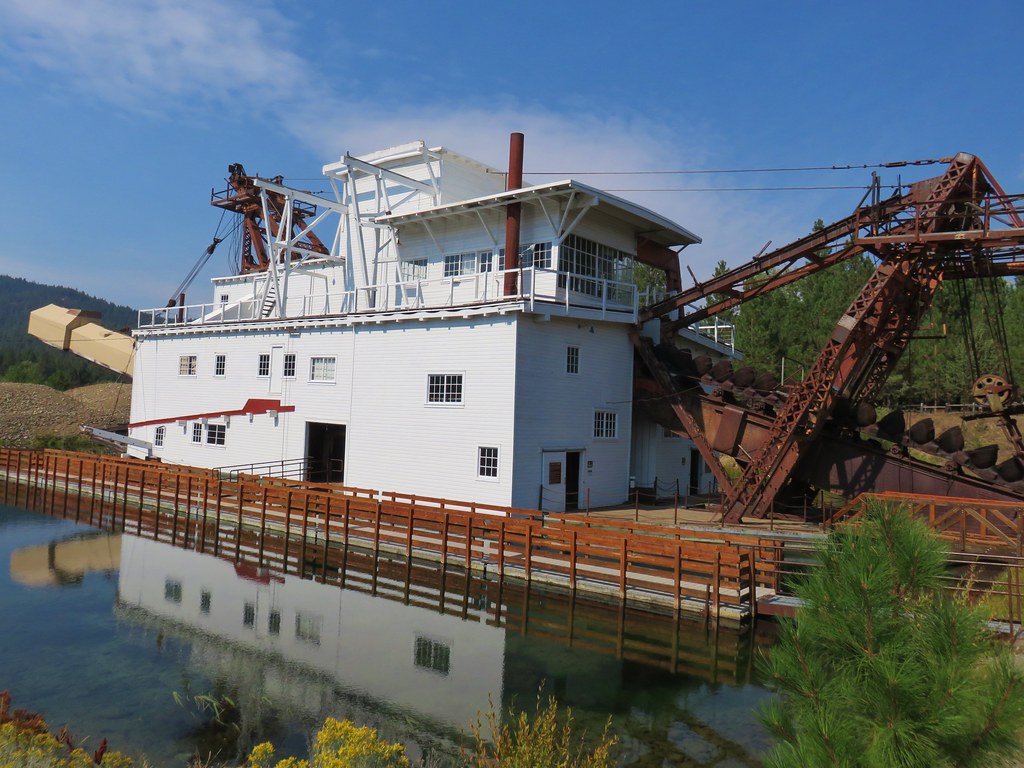
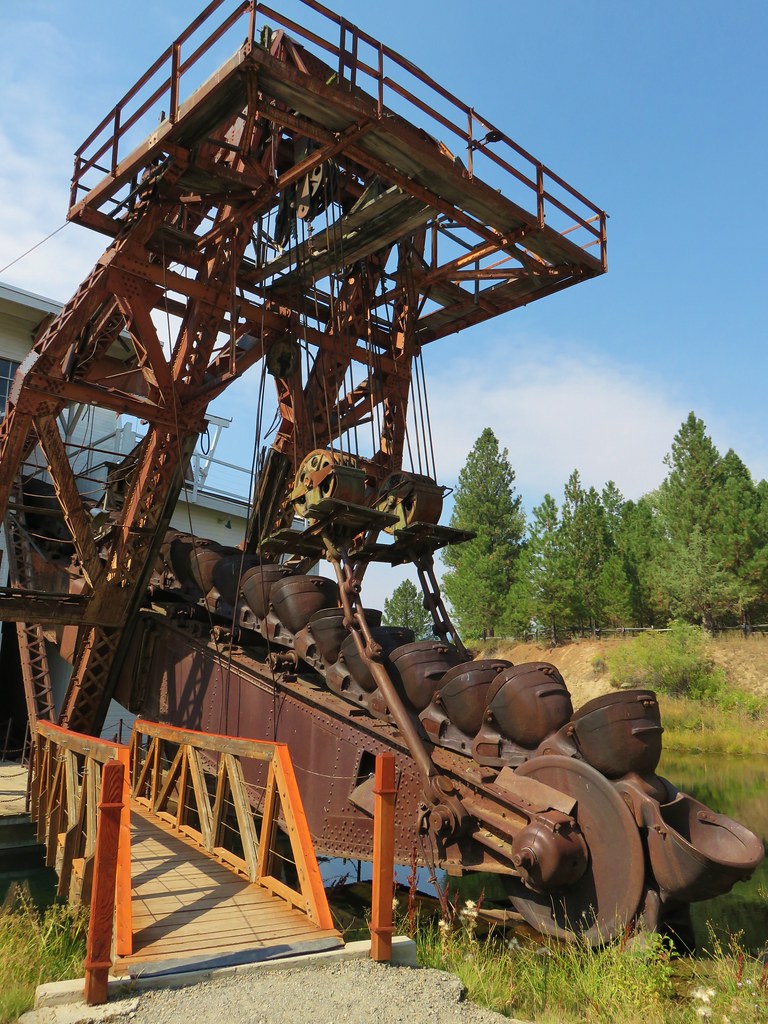
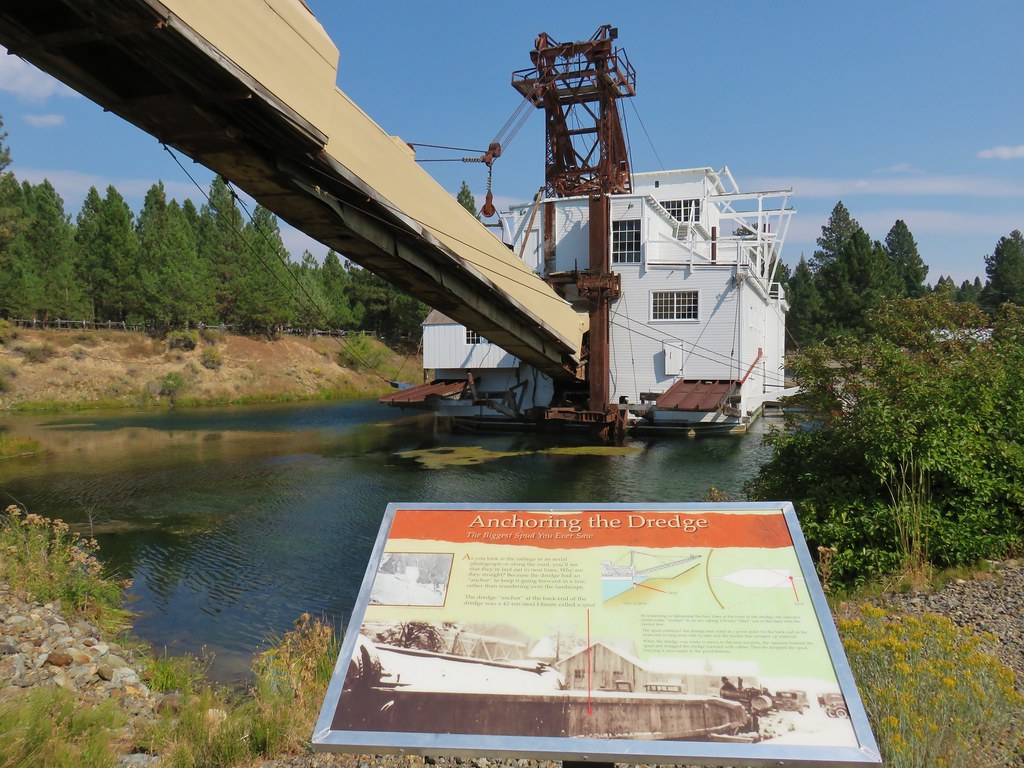
Here a 1240-ton dredge used to scoop up river gravel and filter out gold dust sits amid tailings left in its wake. The site is also home to the Sumpter Valley Railroad which hauled timber to Bates and Prairie City. We parked near the visitors center by the dredge.
IMG_9430

We started our visit by exploring the dredge.
IMG_9443

IMG_9435

IMG_9440

IMG_9444

IMG_9445

IMG_9447

IMG_9450

IMG_9453

IMG_9453

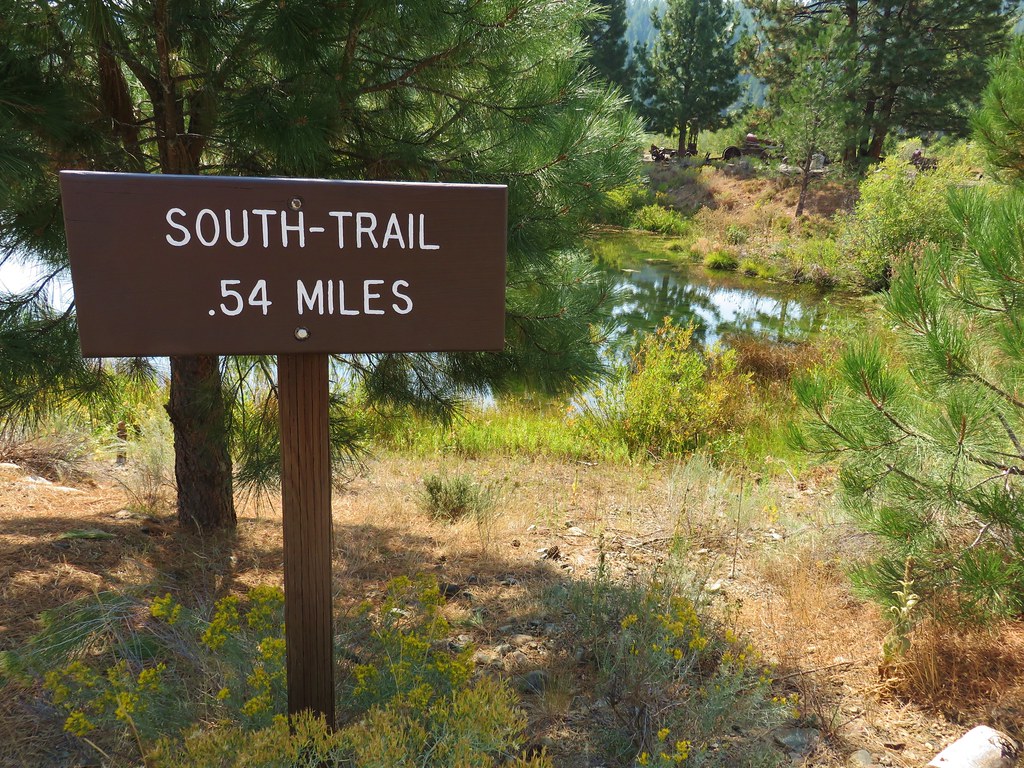
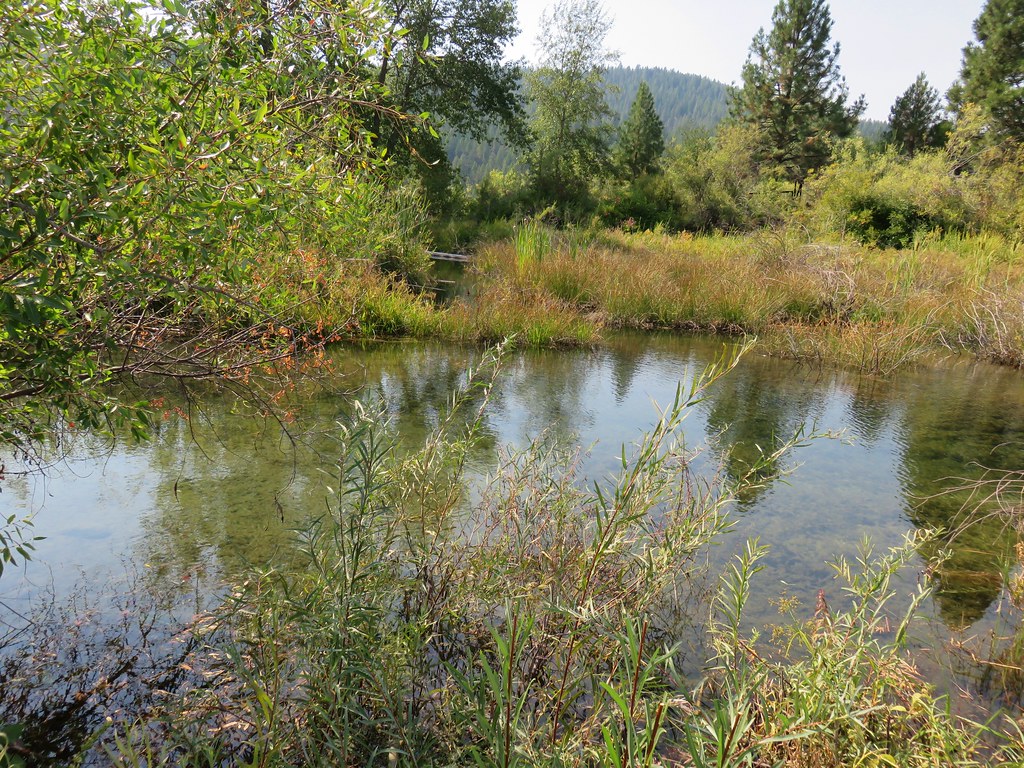
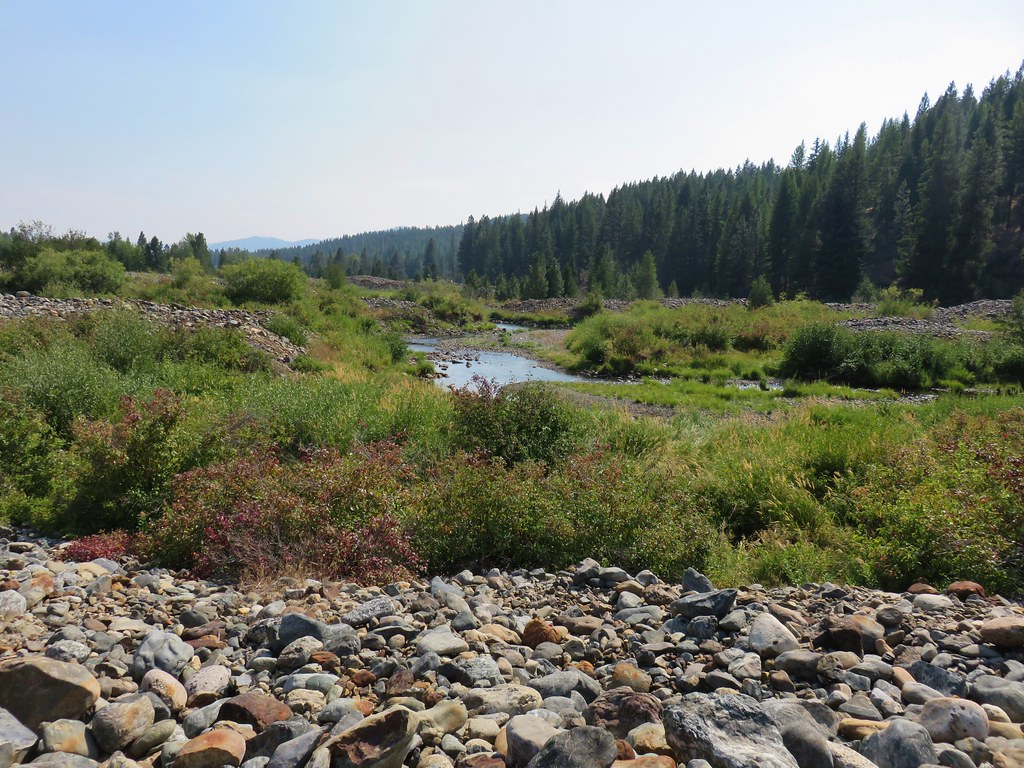
Next we took the South Trail for .4 miles through ponds amid the tailings to the Powder River.
IMG_9433

IMG_9457

IMG_9461

IMG_9470

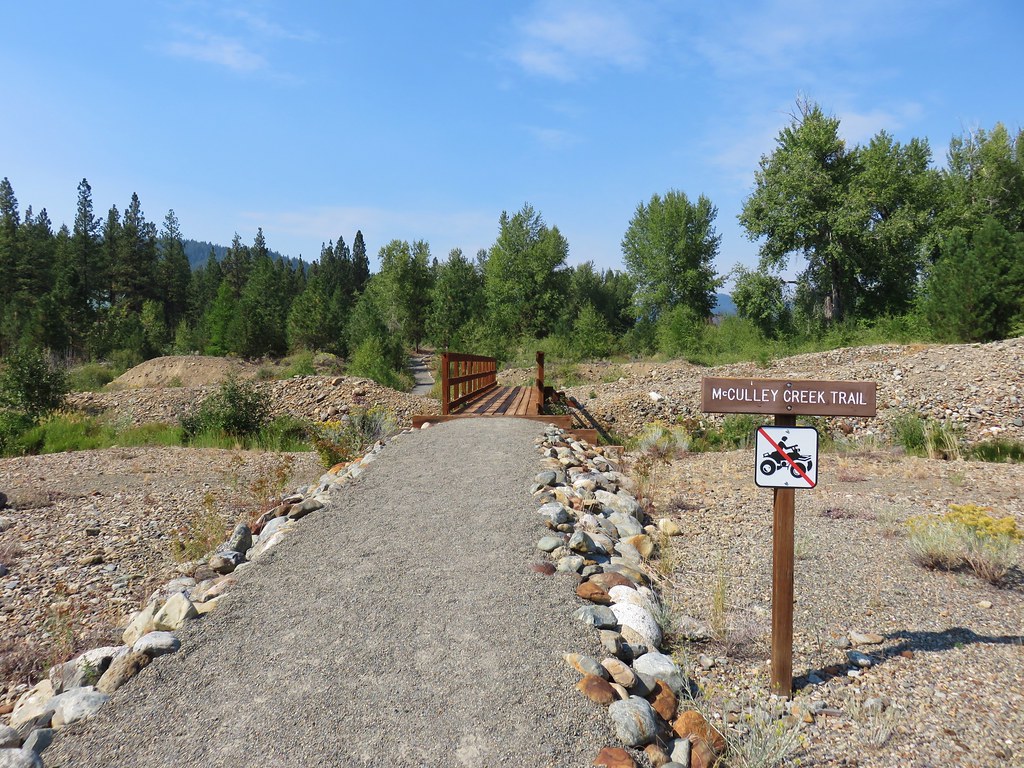
We turned left onto the .3 mile McCulley Creek Trail which was flooded near its end by some nifty beaver work.
IMG_9472

IMG_9482

IMG_9473

IMG_9475

IMG_9481

We returned to the South Trail and finished the loop which ended at a machinery yard near the dredge.
IMG_9436

We walked left around the dredge and picked up the North Trail which traveled along Cracker Creek.
IMG_9483

IMG_9488

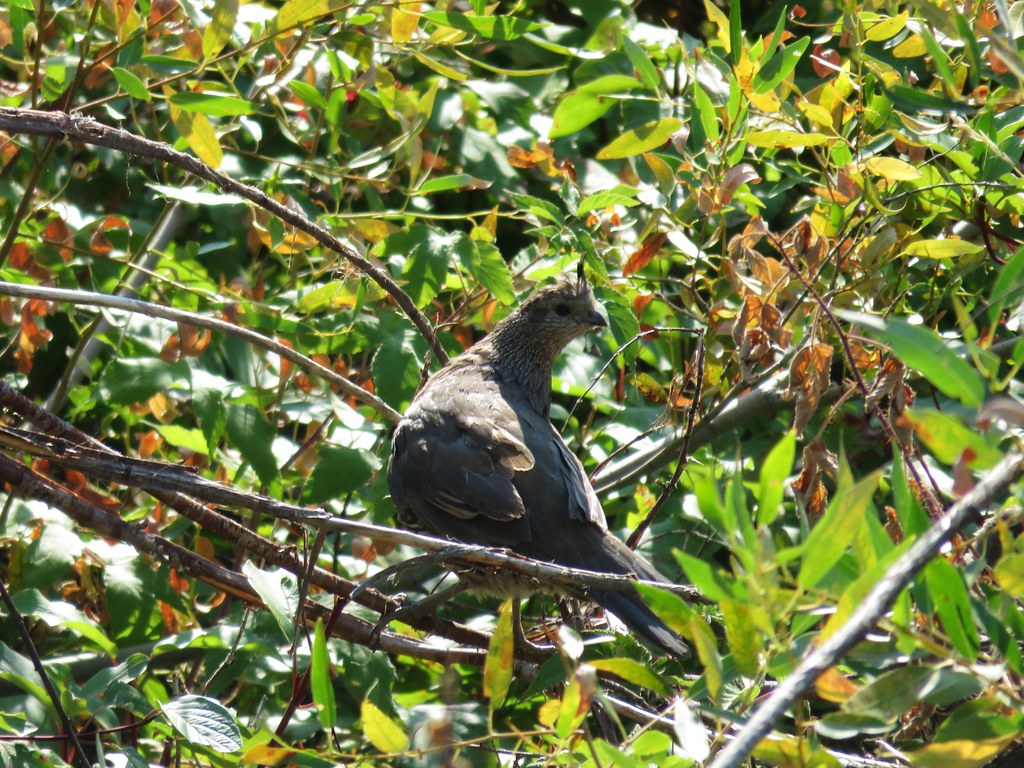
We had been hoping to see a beaver but knew the chances of that during the day were slim so we settled for a quail.
IMG_9485

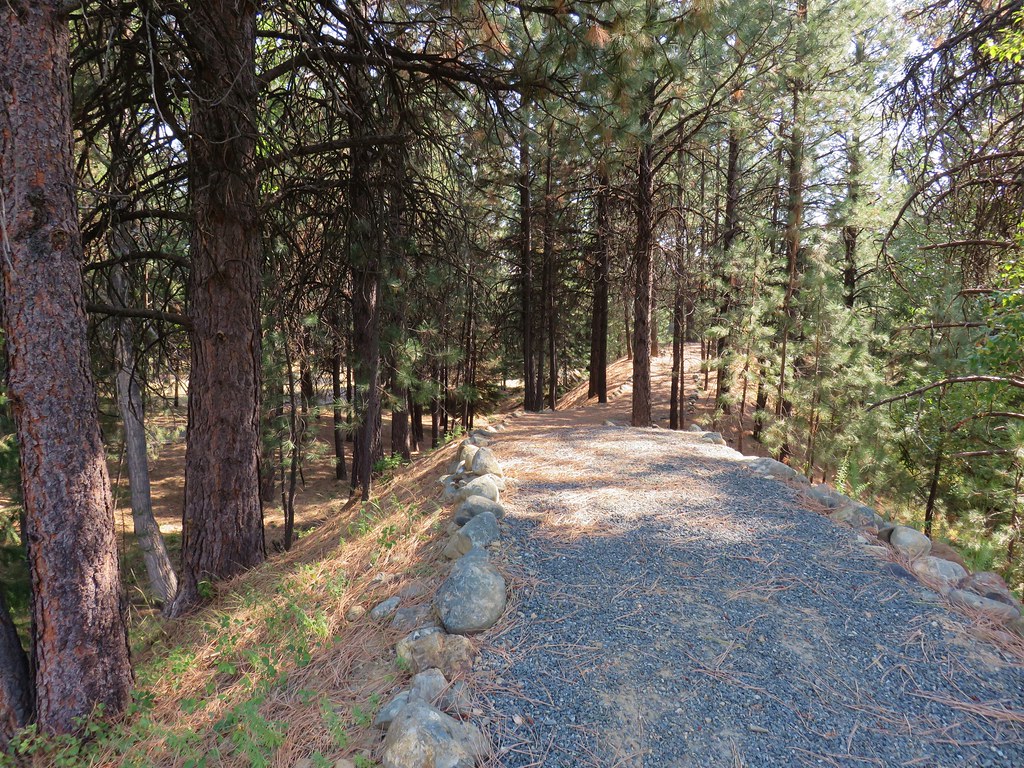
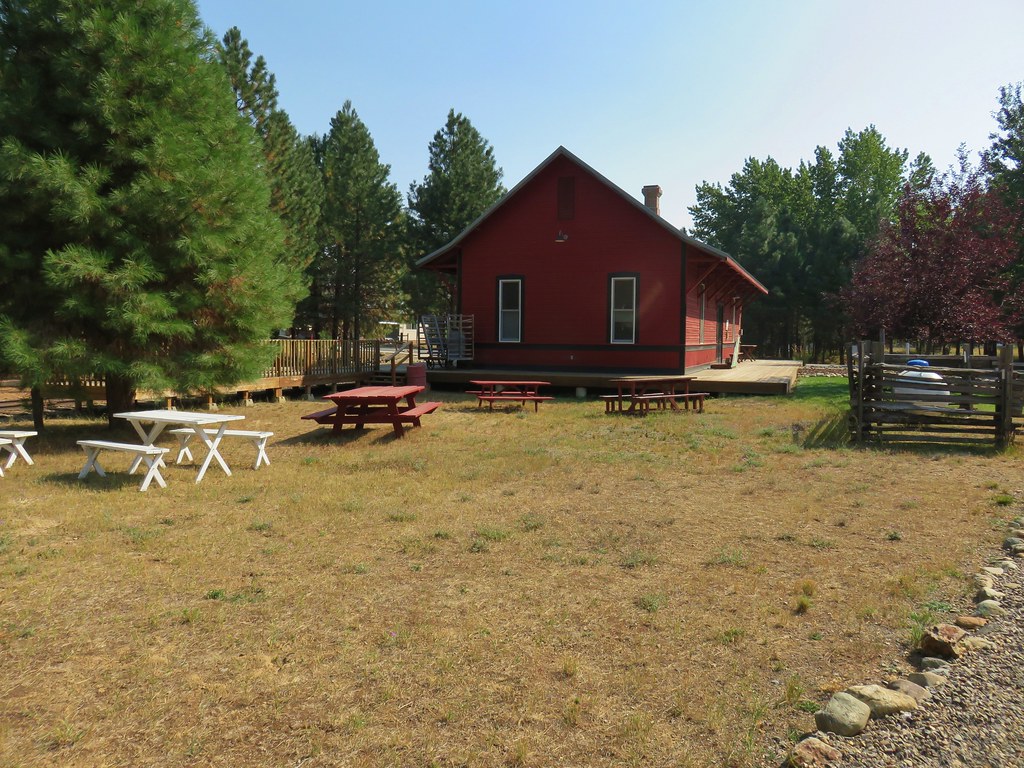
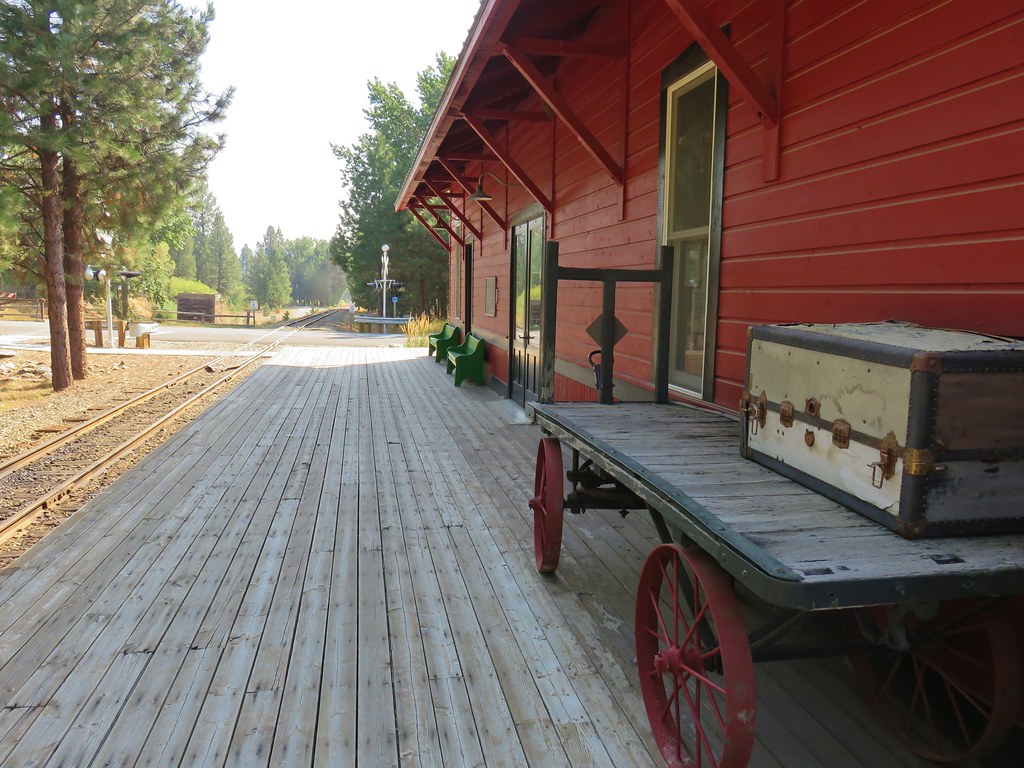
We turned left at a Ridge Trail sign and followed this path to the Railroad Station.
IMG_9491

IMG_9493

IMG_9494

IMG_9495

From the station we crossed the parks entrance road and took the Walking Trail back to the dredge.
IMG_9501

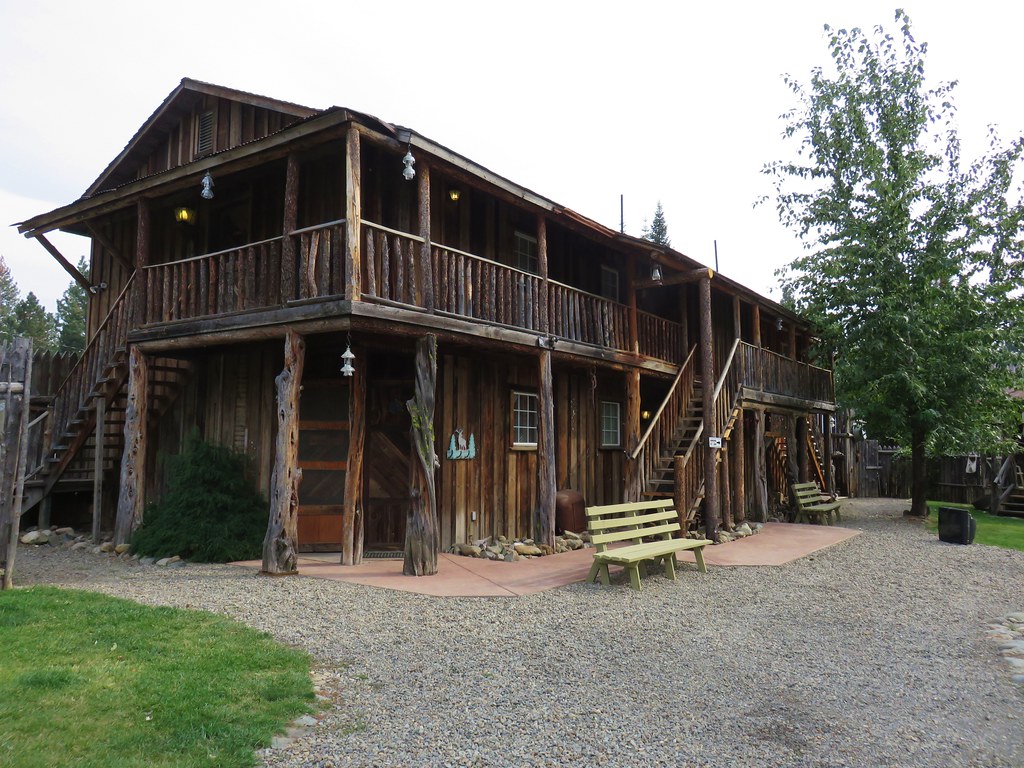
As it turned out our motel was right across the street from the park. We had originally planned to stay at the Granite Lodge in Granite but that establishment appeared to be for sale from what we could tell, so Heather started looking for a place in Sumpter. There were a couple of choices but we picked the Sumpter Stockade due to the themed rooms looking fun. It turned out that this motel had just changed owners and the previous owners hadn’t stayed open past Labor Day. We thoroughly enjoyed our stay there and the new owners were great!
IMG_9508

IMG_9506

IMG_9507

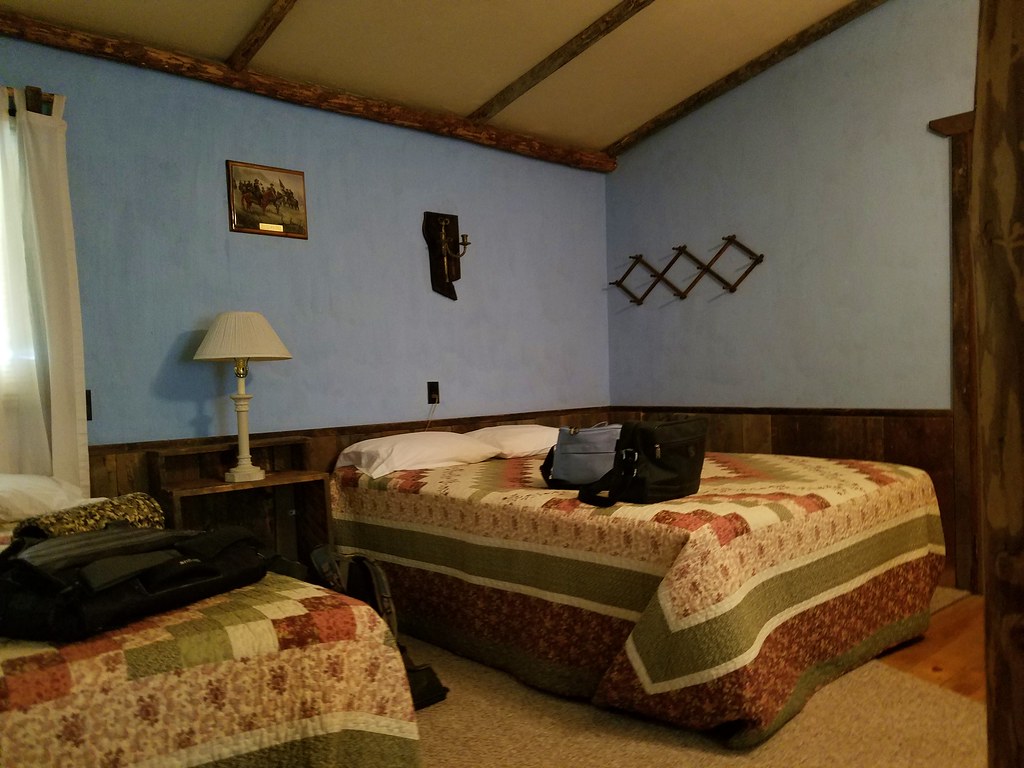
We were given the Civil War Room.
2017-09-17 15.40.20

After dropping off our stuff we decided to try out a hand dipped corn dog stand we’d seen on the next block. That turned out to be a great decision as both the corn dogs and cheese sticks from Cajun Concessions were excellent! It was a satisfying end to another great day of hiking.

It looked like things were going to start getting interesting the next day as the system from the Gulf of Alaska was supposed to begin arriving overnight and temperatures would start dropping around 11am on Monday with the snow level dropping as low as 5000′. We went to bed knowing there was a good chance we’d be hiking in snow by the end of the following day. Happy Trails!

Flickr: Blue Basin, Bates, and Sumpter

Categories
Central Oregon Hiking Newberry Crater Oregon Trip report

Paulina Lake via Ten Mile Sno-Park

The year of rearranging continued to present challenges as we prepared for our final week of vacation. Originally planned for mid-August we had rescheduled a planned trip to Steens Mountain due to work considerations. An unusually cold and wet weather system due to arrive from the Gulf of Alaska the first Sunday night of our vacation derailed those plans. In fact it ended any thoughts of attempting to backpack as the entire week called for rain or snow showers, depending on elevation, everywhere we looked. At the last minute we decided to dial up a group of hikes in the southern Blue Mountains near Sumpter, OR.

The disappointment of having to change our plans once again this year was tempered by the prospect of the wet weather helping to put out the numerous wildfires burning in the Pacific Northwest.

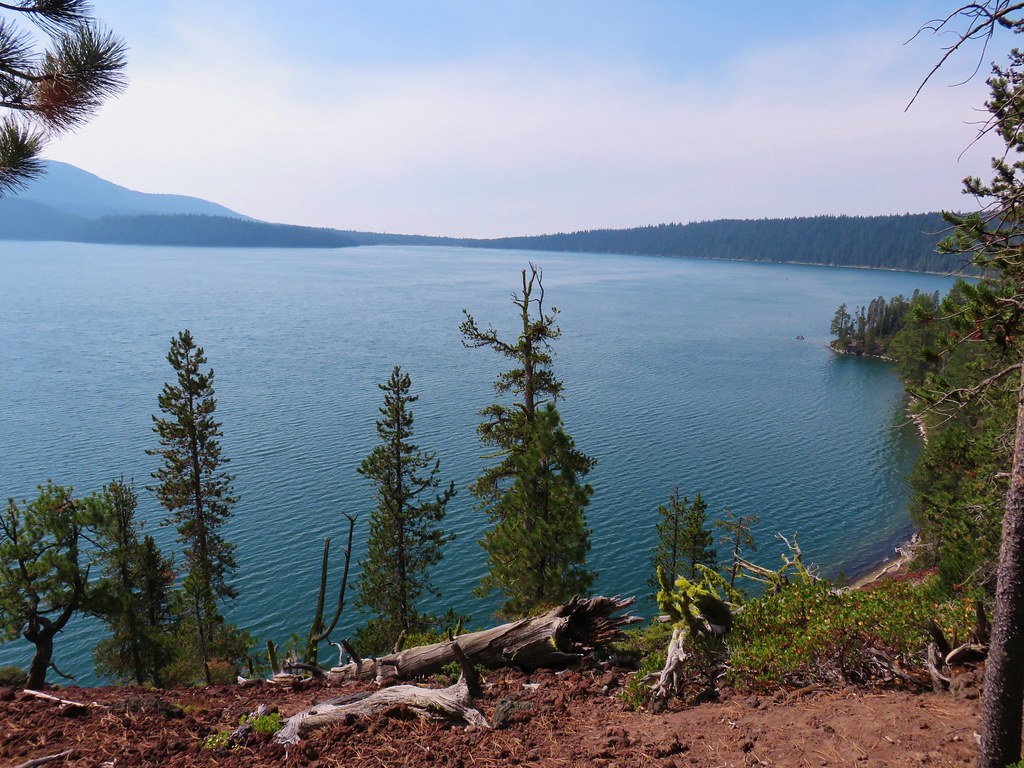
We had planned to stay in Bend on our way to Steens Mountain and visit Heather’s parents and it made sense to do the same on the way to Sumpter so the only hike planned for the week to survive the rearranging was a visit to Paulina Lake in the Newberry National Volcanic Monument. This hike would allow us to fill in some blanks along both Paulina Creek and Paulina Lake left from two previous hikes. (Paulina Creek and Paulina Peak)

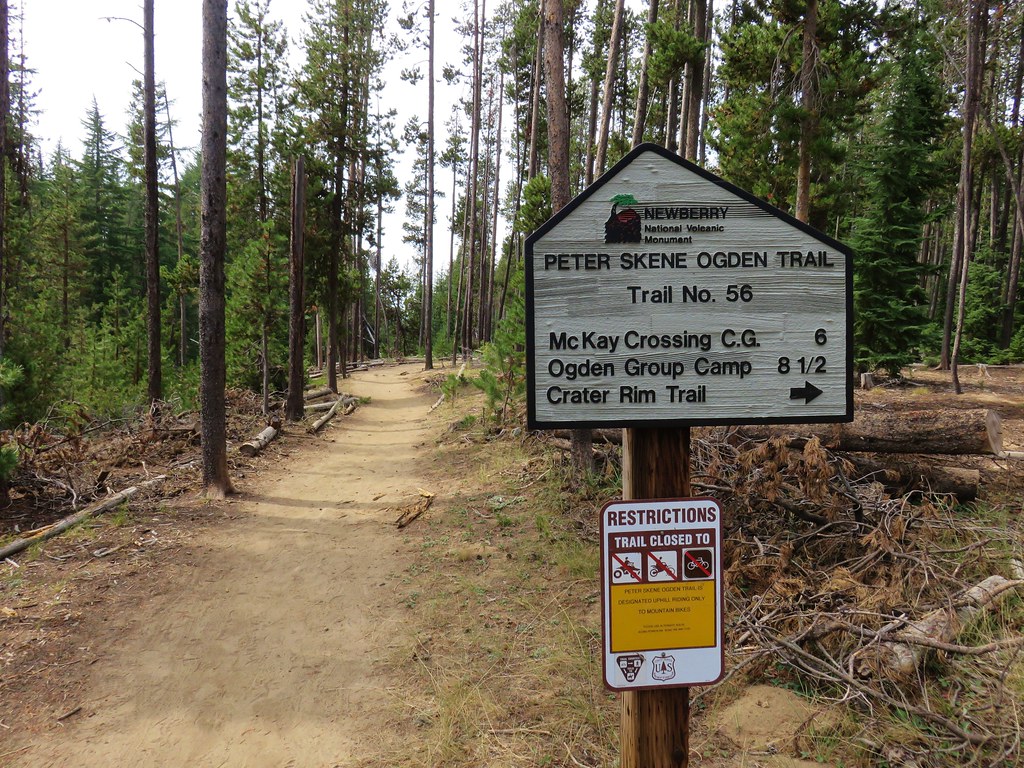
On our hike up Paulina Creek from the Peter Skene Ogden Trailhead we had turned around after approximately 5.5 miles at footbridge over Paulina Creek. After looking at some maps it appeared that this footbridge was near the Ten Mile Sno-Park. Our plan this time was to start at the sno-park and hike over to the bridge and take the Peter Skene Ogden Trail up past Paulina Falls to Paulina Lake, loop around the lake, then return down the creek for a total of about 14.5 miles.

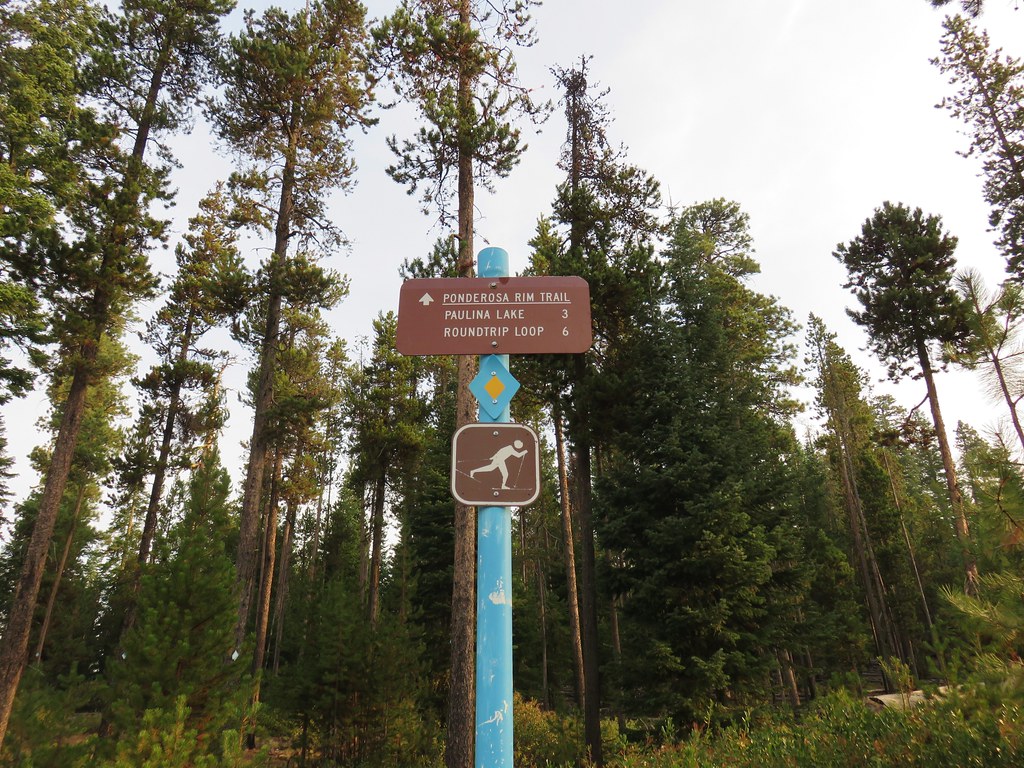
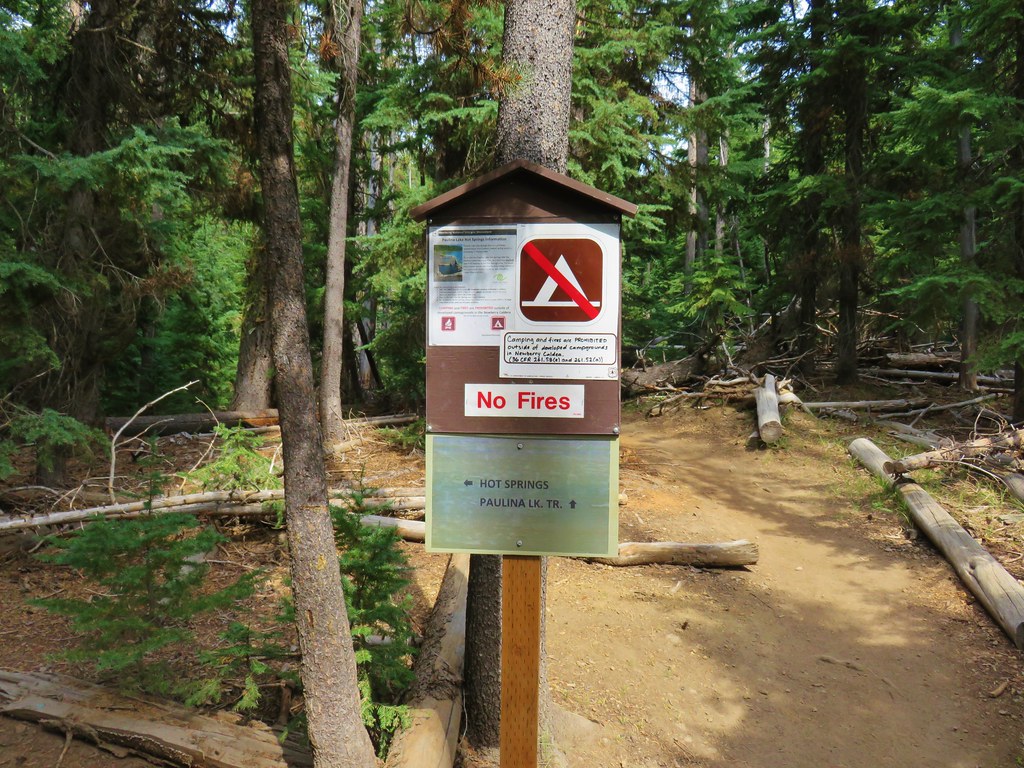
The drive from Salem to Bend was extremely smokey but fortunately for us the conditions inside the Newberry Caldera were much better, just a general haze instead of the heavy smoke we’d passed through. After parking at the sno-park we decided to follow the Ponderosa Trail hoping it would take us to the footbridge.
IMG_8849

In hindsight we should have printed out a copy of a nordic trails map of the area especially given that they do not show up on the GPS map nor were they included in our guidebook’s map. The trail was easy enough to follow, there was a visible path as well as blue diamond markers on the trees to mark the way.
IMG_8852

We quickly realized we were heading up the creek away from the footbridge but we decided to just keep going since we knew from the trail sign that the Ponderosa Trail went to Paulina Lake. We could take this up to the lake then come down on the trail we’d intended to come up on after finishing the lake loop.

When we came to a snowmobile track (Road 500) we followed it right for about four tenths of a mile before veering left back onto the nordic trail towards the sound of Paulina Creek.
IMG_8853

IMG_8854

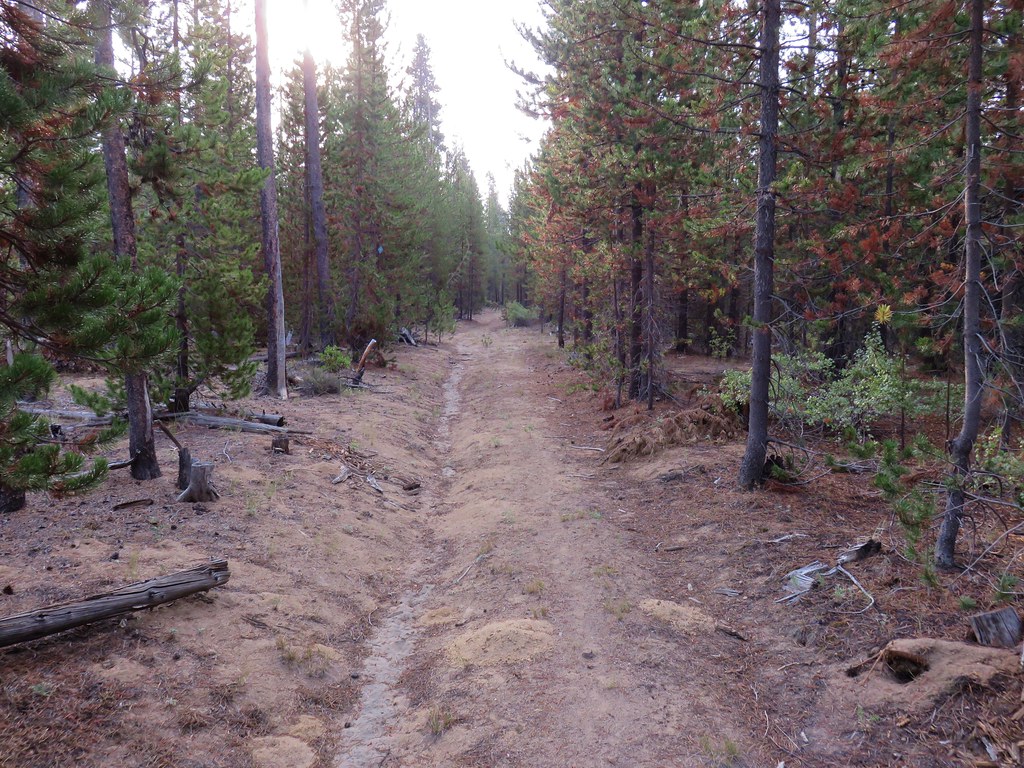
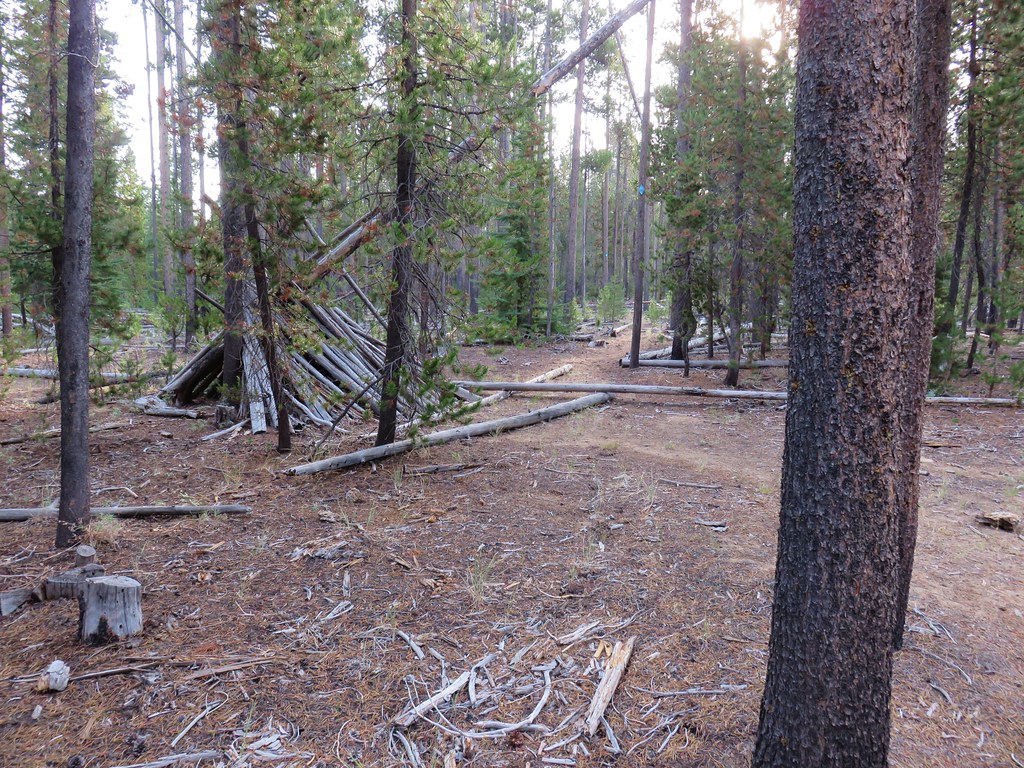
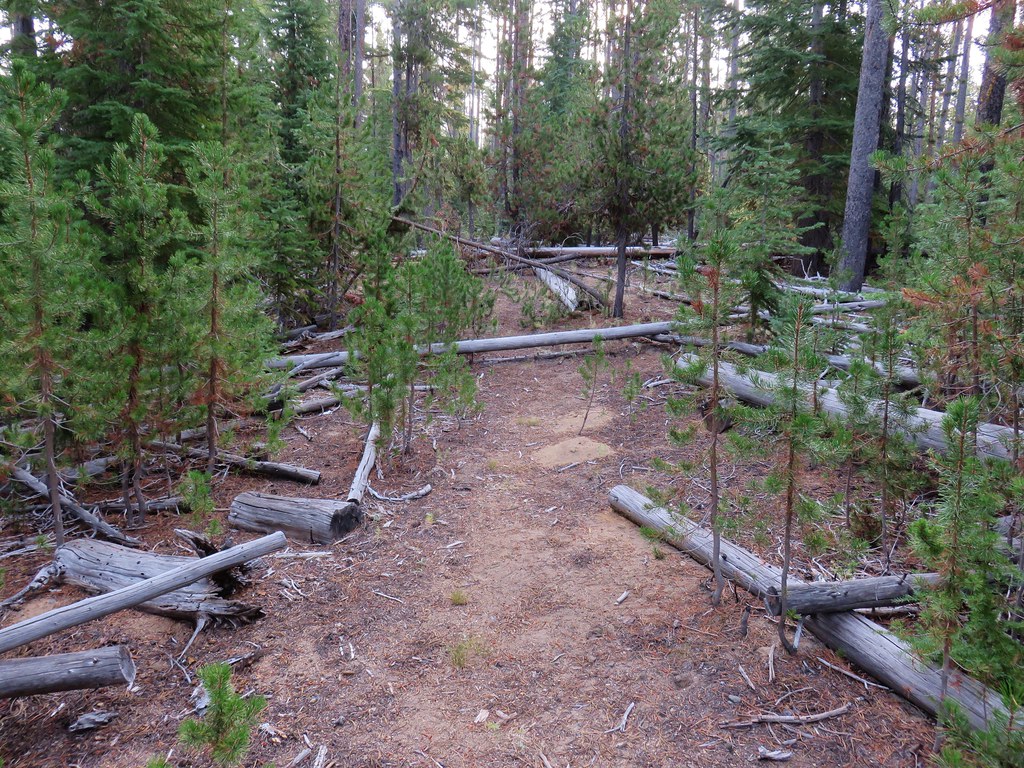
Being a nordic trail the Ponderosa Trail had a good deal of blowdown but it was mostly lodgepole pine trees which we easily stepped over.
IMG_8855

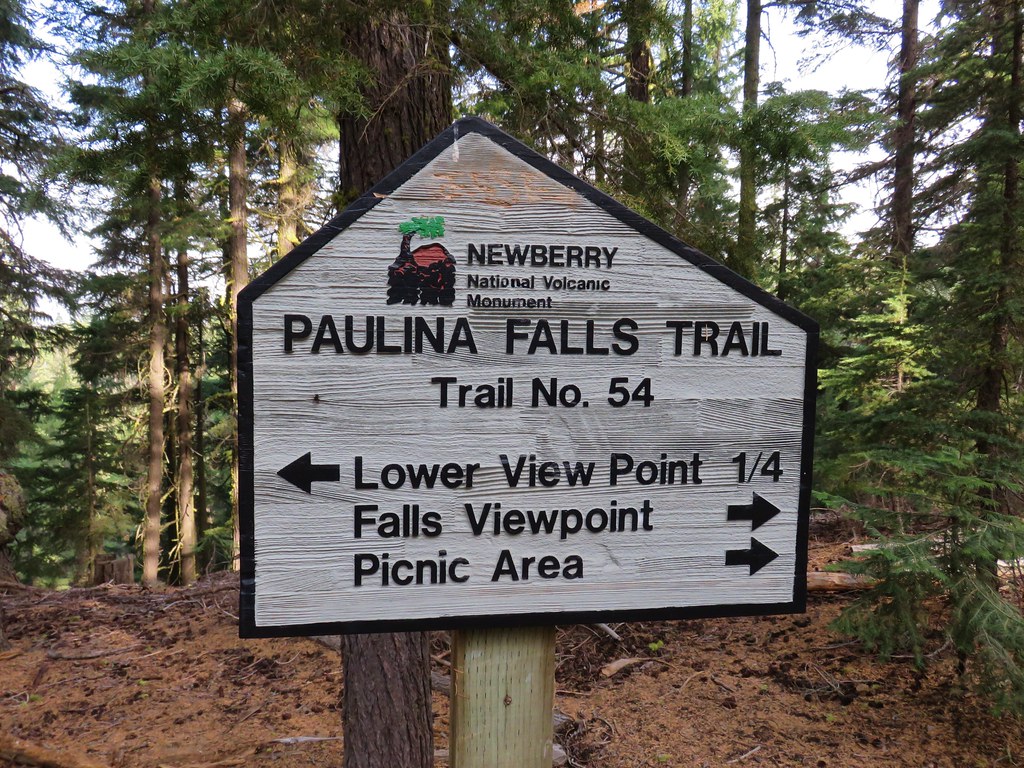
The trail never approached the creek and offered almost no views of the water. A little over 2.5 miles from the sno-park we arrived at a signed trail to a viewpoint below Paulina Creek Falls.
IMG_8874

IMG_8859

IMG_8864

After visiting the lower viewpoint we continued on to the upper viewpoint which had been our turnaround point during our Paulina Peak hike.
IMG_8878

We headed upstream a little over a quarter mile to the start of the Paulina Lake Loop just after crossing the road to the Paulina Lake Lodge.
IMG_8887

IMG_8888

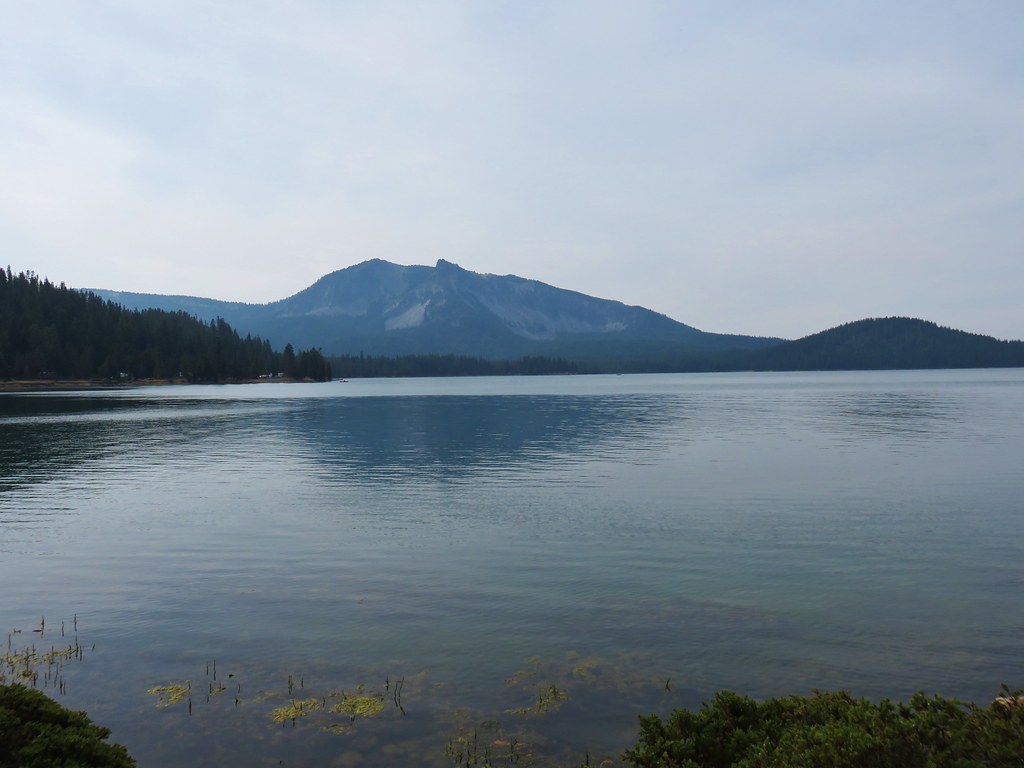
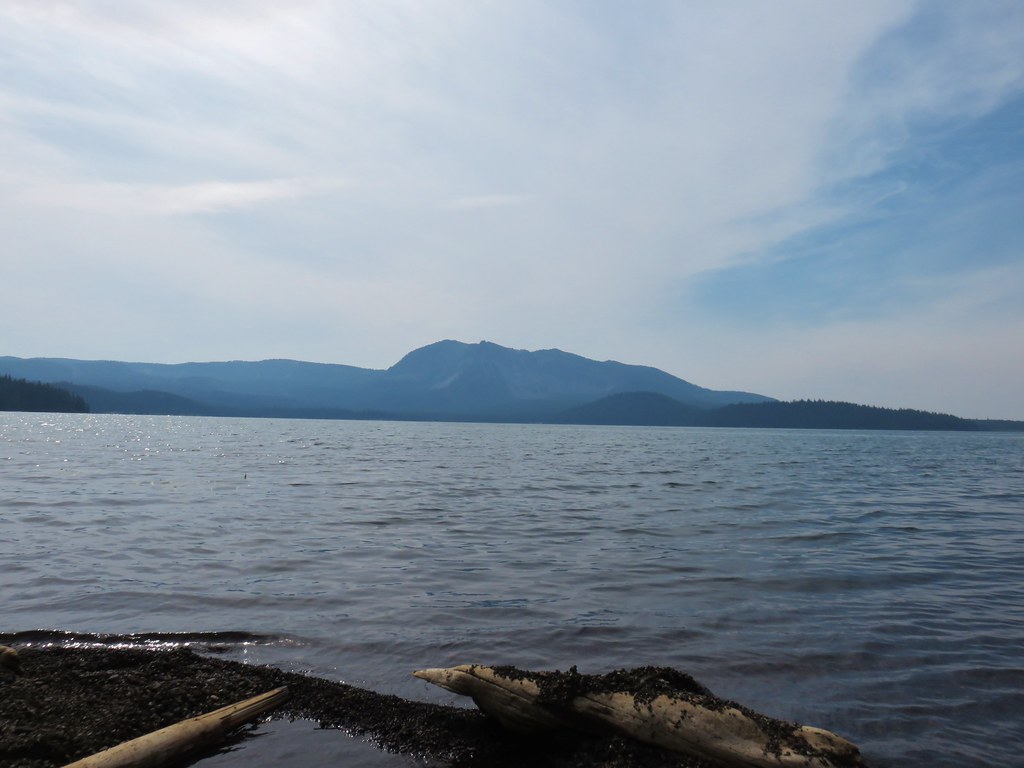
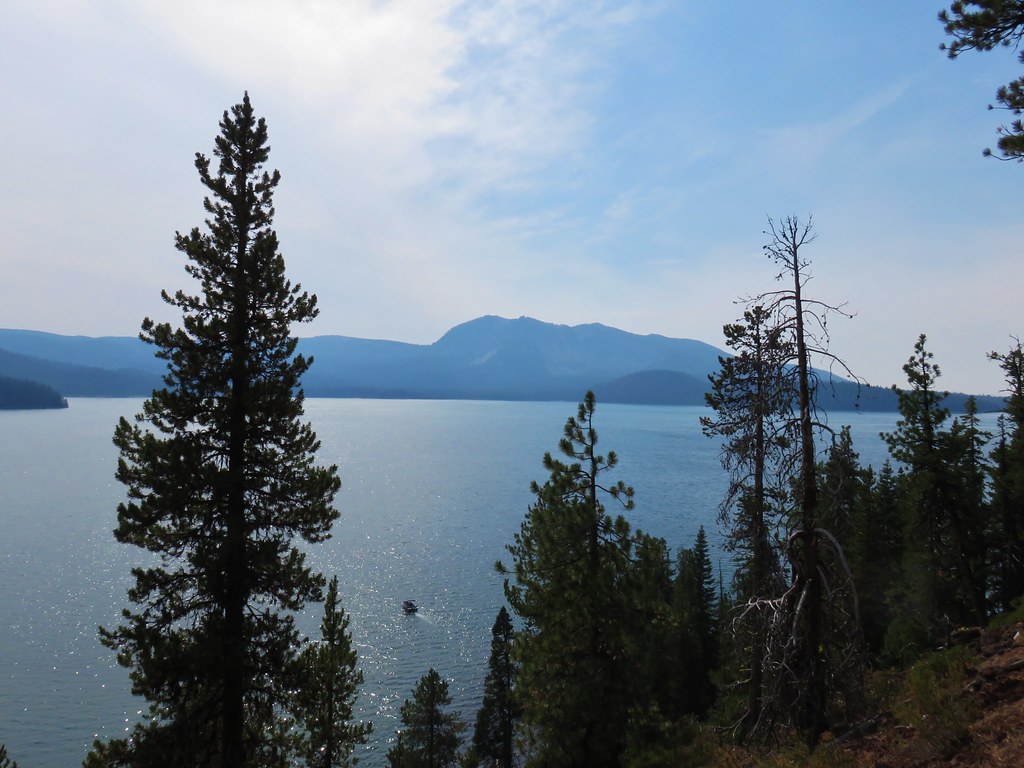
We started around the lake in a counter-clockwise direction which was the same direction we’d gone during our Paulina Peak hike. We passed some familiar scenery including a small rocky peninsula and a marshy area filled with birds and a view of Paulina Peak.
IMG_8900

IMG_8901

IMG_8901

IMG_8909

IMG_8915

IMG_8922

IMG_8932

IMG_8926

After 2.4 miles on the loop we arrived at the boat ramp near Little Crater Campground.
IMG_8936

IMG_8939

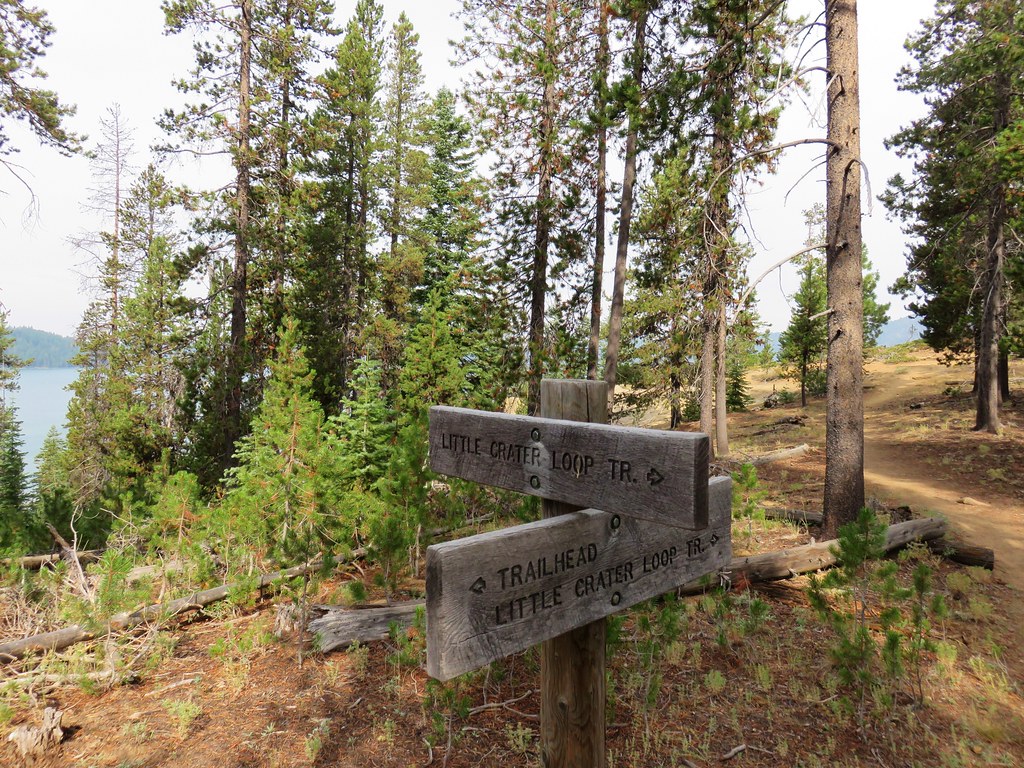
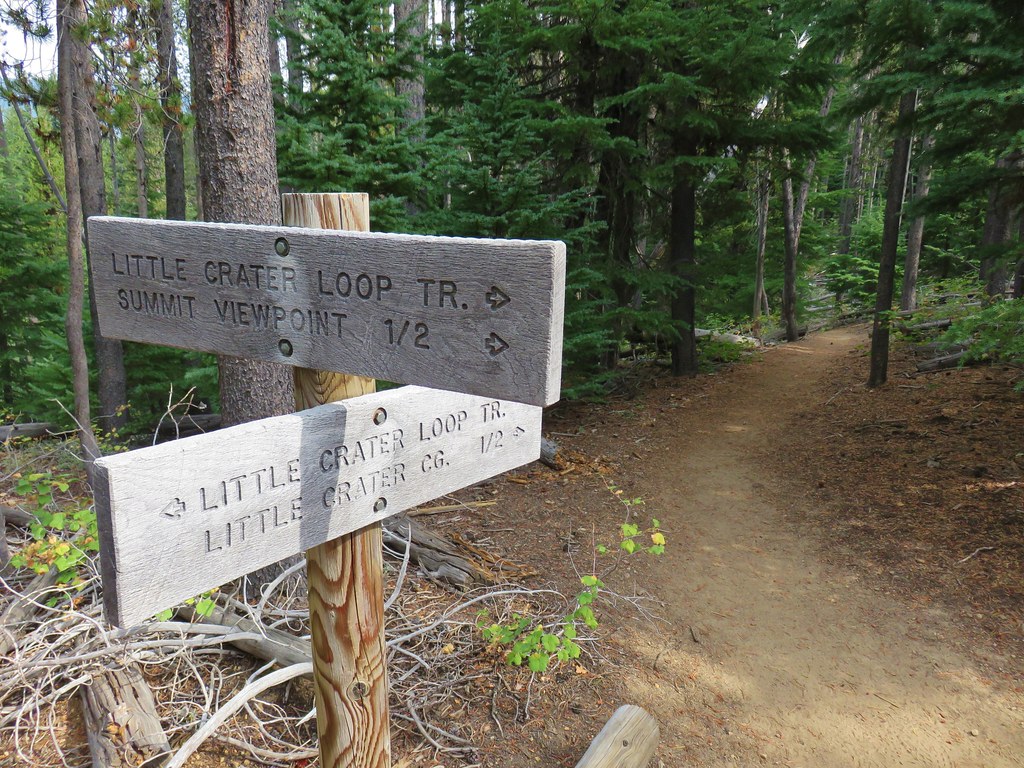
On our previous visit we had taken the Silica Trail from the parking area here. This time we could either follow the paved road to the campground on the loop trial or we could climb up and over Little Crater, a cinder cone. Even though I had planned on taking the Little Crater Trail my 14.5 mile estimate had not taken into consideration that this route would add a little over a mile to the hike.
IMG_8940

The Little Crater Trail climbed up past an interesting rock outcrop to a junction.
IMG_8941

IMG_8942

IMG_8946

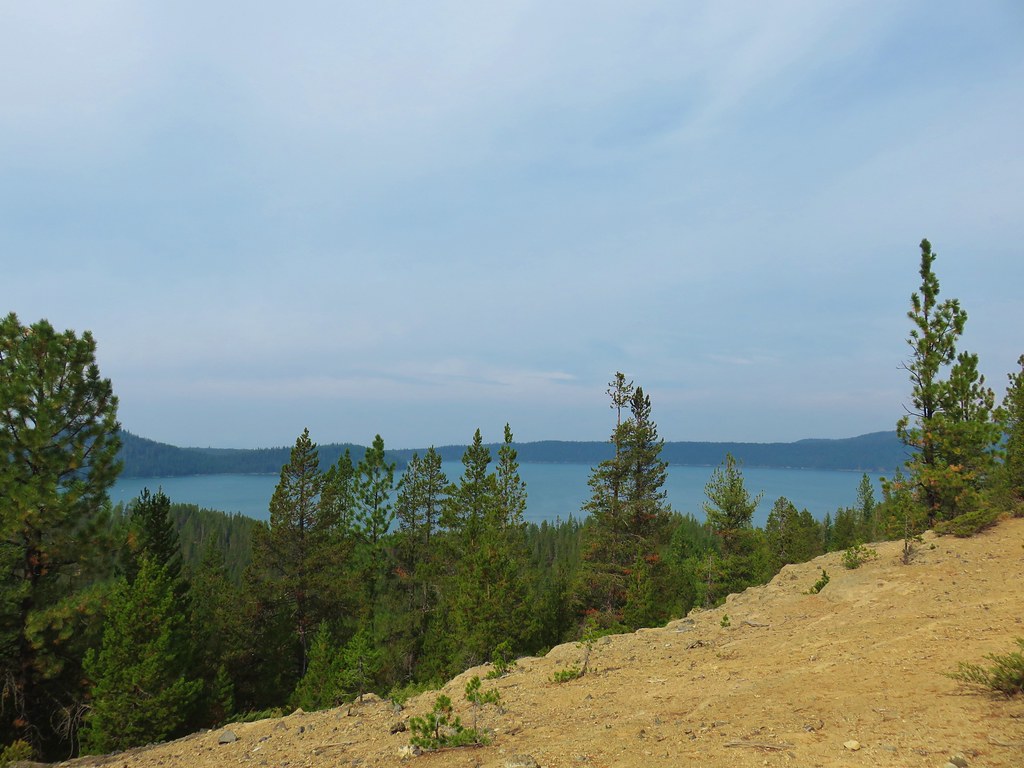
At the junction we went right passing around the crater and gaining increasingly impressive views of the Newberry Caldera.
IMG_8948

The first views were of the Big Obsidian Flow and Paulina Peak.
IMG_8951

IMG_8952

IMG_8953

Paulina Lake was soon visible to the west and East Lake came partially into view to the east behind the Central Pumice Cone.
IMG_8970

IMG_8973

After passing over the summit the trail descended to another junction where we turned right following a pointer for Little Crater Campground.
IMG_8987

We picked up the loop trail just to the north of the campground.
IMG_8992

The next section of the loop trail had some nice, albeit hazy, views of Paulina Peak and the marina at the lodge way across the lake.
IMG_8993

IMG_9000

The trail hugged the lake shore as it passed by the inter lake obsidian flow.
IMG_9009

IMG_9010

IMG_9015

IMG_9014

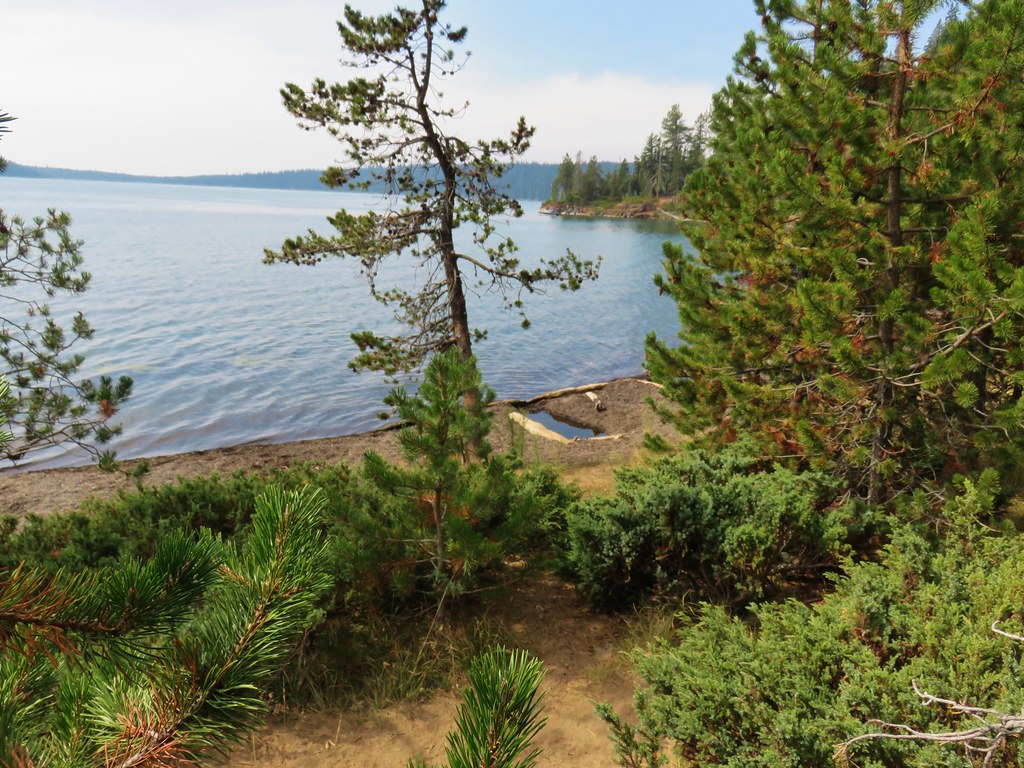
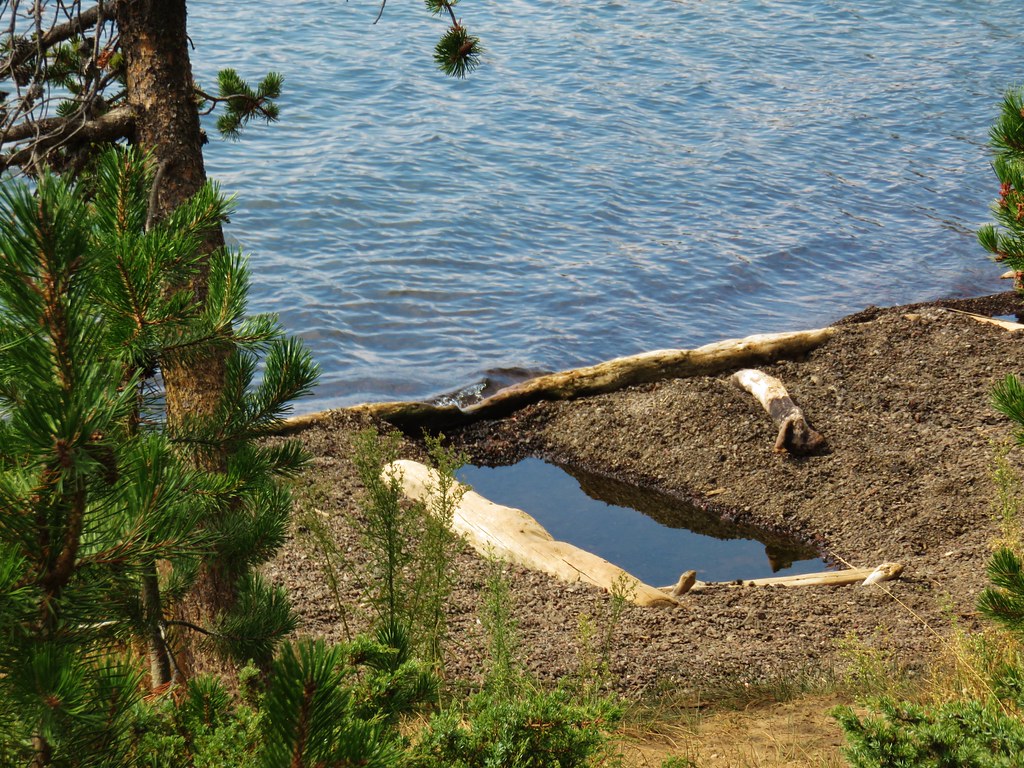
Beyond the lava flow, and 1.2 miles from Little Crater Campground, we came to a side trail down to some hot springs along the lake shore.
IMG_9016

IMG_9017

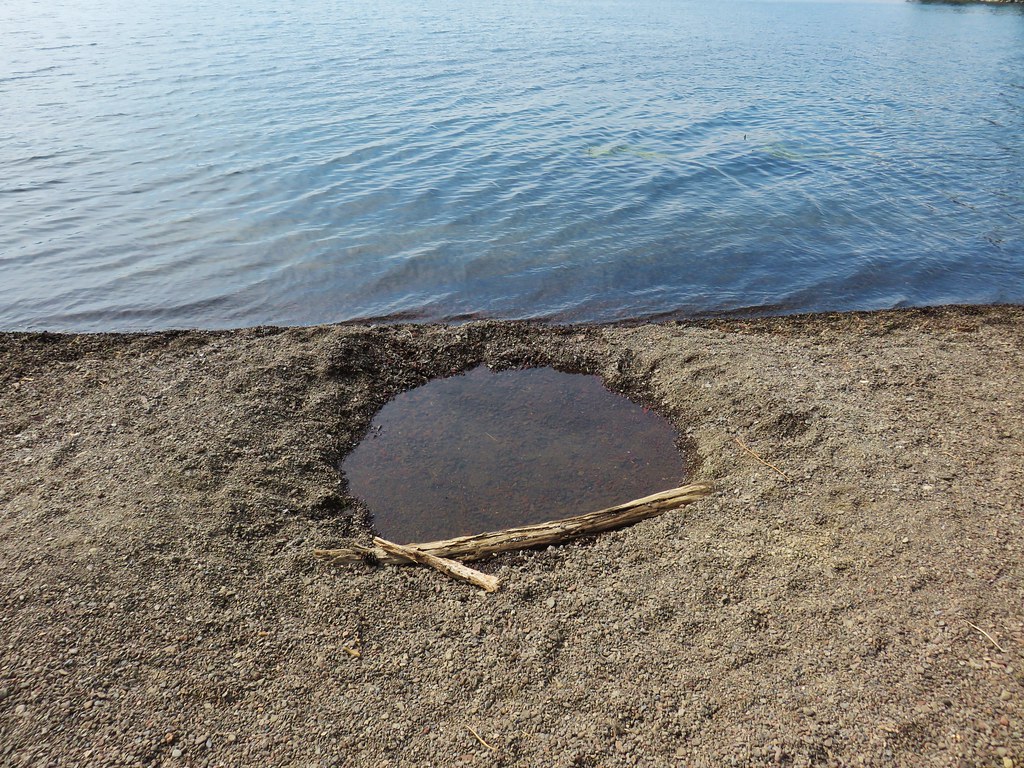
Our timing was good as two groups of hikers were just leaving as we arrived. We decided to take off our shoes and socks and soak our feet in one of the pools.
IMG_9018

IMG_9019

IMG_9021

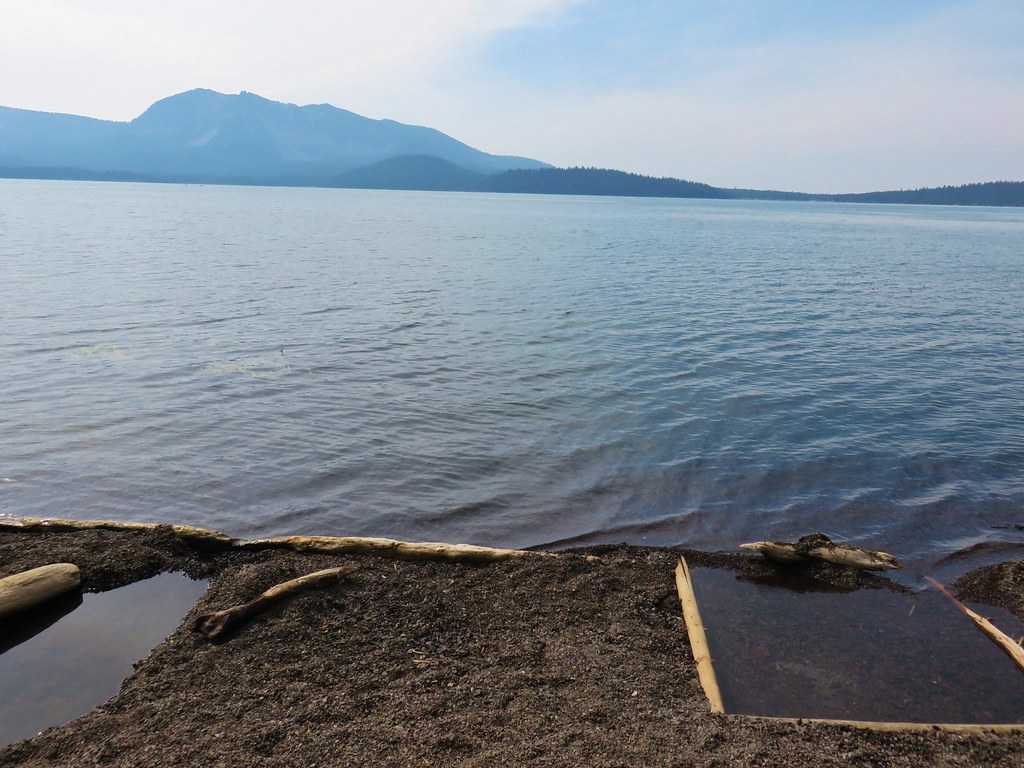
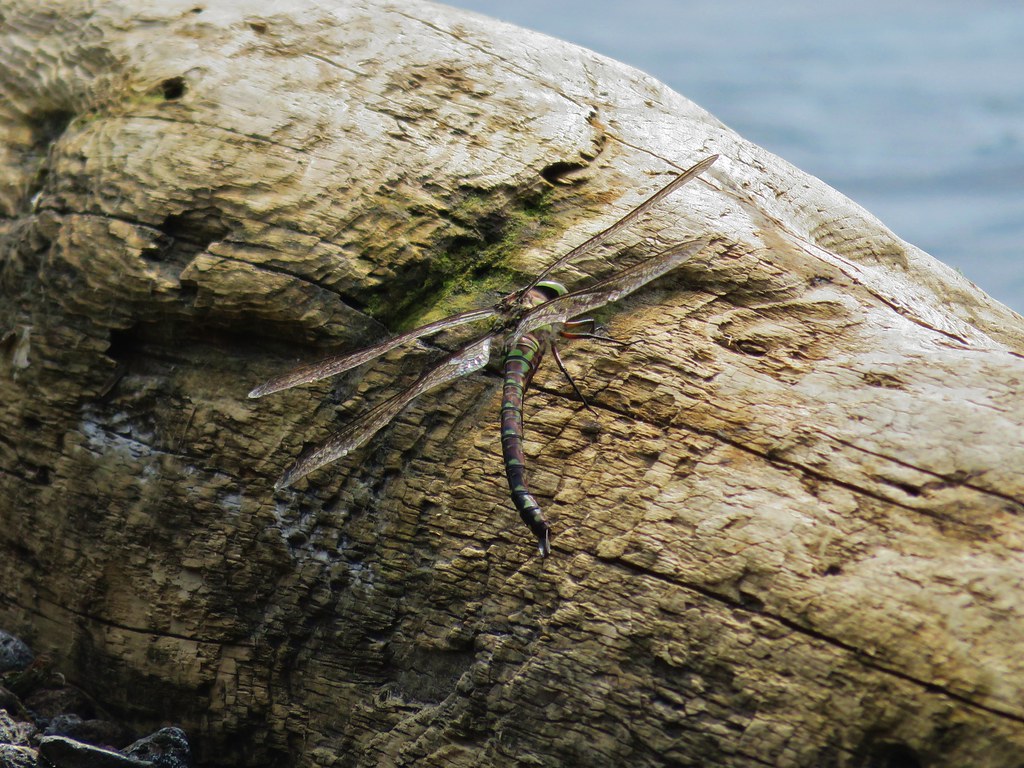
The water was amazing. It was almost exactly the temperature of a nice hot bath even with a little water from the lake lapping in. We sat for a while enjoying the view (and a large dragonfly) before continuing on.
IMG_9023

IMG_9026

We finally tore ourselves away from the hot springs and continued on. From the springs the trail climbed above the lake as it traversed a cinder hillside
IMG_9030

IMG_9034

IMG_9036

The trail then descended back near the lake shore to North Cove before entering a little thicker forest.
IMG_9044

We had seen been seeing hikers off and on all day and as we passed through the trees along this stretch I thought I spotted a little black dog along the side of the trail. Then a second small black animal emerged from the brush on the other side of the trail and I realized they weren’t small dogs they were little bear cubs! Heather spotted the second cub as I was simultaneously announcing bear and trying to get the camera ready. I once again failed to get a photo though as we were too busy talking loudly and trying to locate mama bear. We never did spot her but she had to be close by given how small the cubs were. We paused long enough to give the bears plenty of time to leave the area before continuing.

Approximately 2.2 miles from the hot springs we turned uphill following a trail sign and passed above the Paulina Lake Lodge before descending after a quarter mile to a junction with the Peter Skene Ogden Trail.
IMG_9054

IMG_9055

We turned down this trail which passed another viewpoint of Paulina Creek Falls after a quarter mile.
IMG_9059

Unlike the Ponderosa Trail this trail offered many glimpses of Paulina Creek. Much like the lower section of the creek we had hiked along previously there were many small cascades to admire along the way.
IMG_9083

IMG_9092

IMG_9104

IMG_9113

Three miles beyond the viewpoint we arrived at the footbridge we had been looking for that morning. A trail sign indicated that it was 1/8 mile to Road 500 and 3/4 to the sno-park.
IMG_9115

The view from the bridge upstream was now obscured by a fallen tree.
Paulina Creek

IMG_9118

We crossed the bridge and passed a view of the waterfall just downstream from it.
IMG_9120

We briefly followed Road 500 but then veered right onto what appeared to be a mountain bike trail
IMG_9125

IMG_9126

We followed the mountain bike trail for half a mile before arriving at a dirt road which we recognized from that morning. We turned right on the road and followed it back to the sno-park which was only a tenth of a mile away.

The end result of the hike was a 15.8 mile loop on what turned out to be a very pleasant day. It was hard to imagine that the area would likely be seeing snow in the next 48-72 hours.

It was a great start to our vacation with lots of wildlife, decent views despite the haze, and a wonderful soak in the hot springs. We were anxious to see what the next 6 days of hiking would bring. Happy Trails!

Flickr: Paulina Lake

Categories
Central Oregon Hiking Ochoco Mountains Oregon Trip report

North Point and Round Mountain – Ochoco National Forest

For Father’s Day weekend we headed over to Central Oregon to visit my Dad and our Son. On Saturday we headed to the Ochoco Mountains for a pair of hikes.

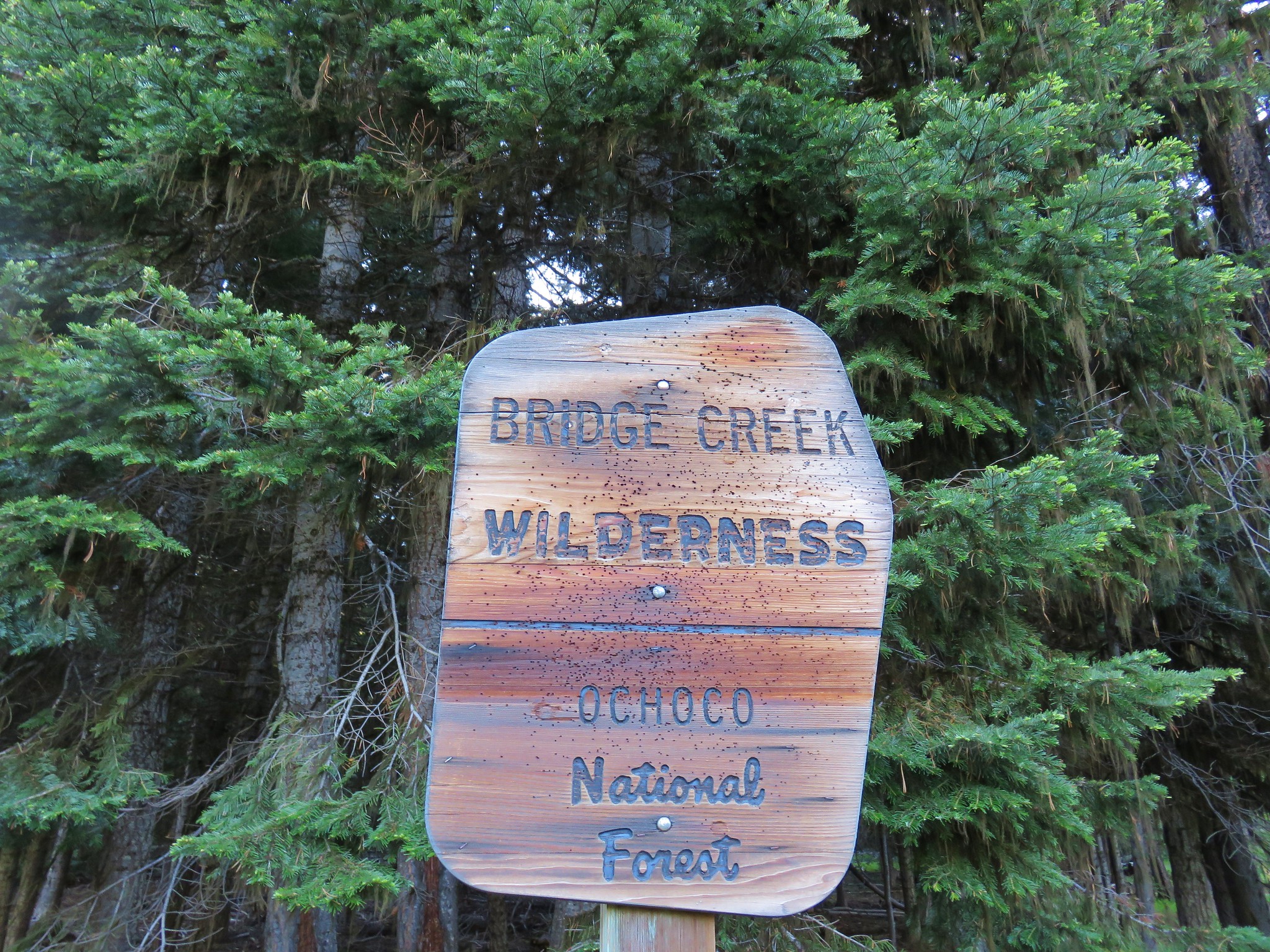
Our first destination was North Point in the trail-less Bridge Creek Wilderness. We started our hike near Pisgah Springs along Forest Road 2630. We made the mistake of following Google’s suggested route which led us over an extremely rough section of that road which we could have avoided. We had turned right off of Highway 26 at a sign for Walton Lake and Big Summit Prairie onto Ochoco Creek Road which becomes Forest Road 22. Just before crossing Ochoco Creek, Google had us fork left onto Road 2210 before turning right onto Rd 2630. That was where the road deteriorated quickly into a muddy, giant hole filled mess. Had we stayed on Road 22 past Walton Lake we could have turned left onto Road 2630 a mile and a half beyond the entrance road to the lake. That section and the remainder of Rd 2630 was a fairly good gravel road. We followed Rd 2630 to a fork at a Bridge Creek Wilderness sign where Road 450 went left and 2630 continued to the right.

IMG_2837

Road 2630 became rougher beyond the fork but nothing like the earlier section Google had taken us on. A May 2016 trip report mentioned that the road improved after the first couple hundred yards and this was still the case. A total of two miles from the fork we arrived at an old jeep track near Pisgah Springs.

IMG_2839

IMG_2840

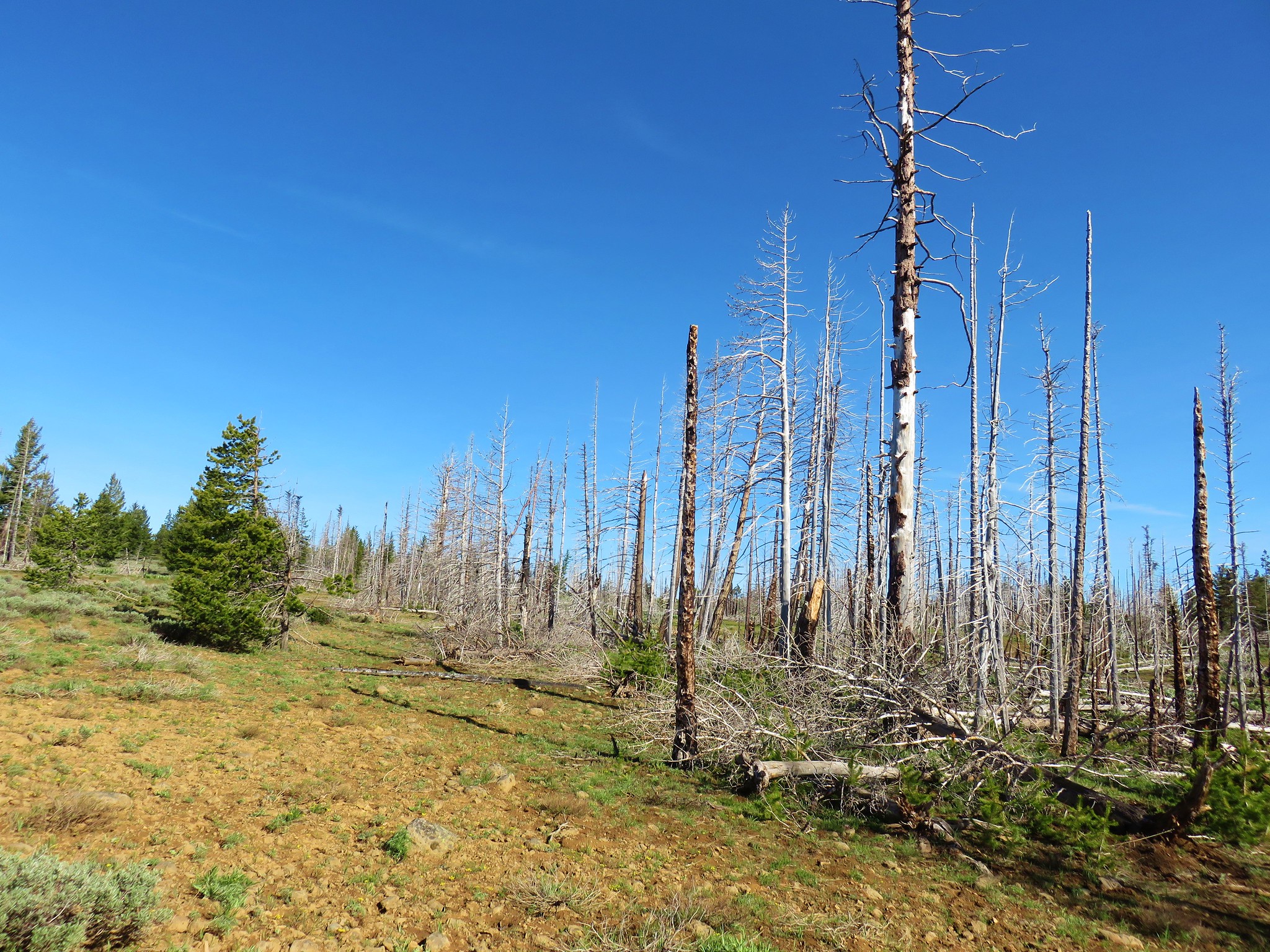
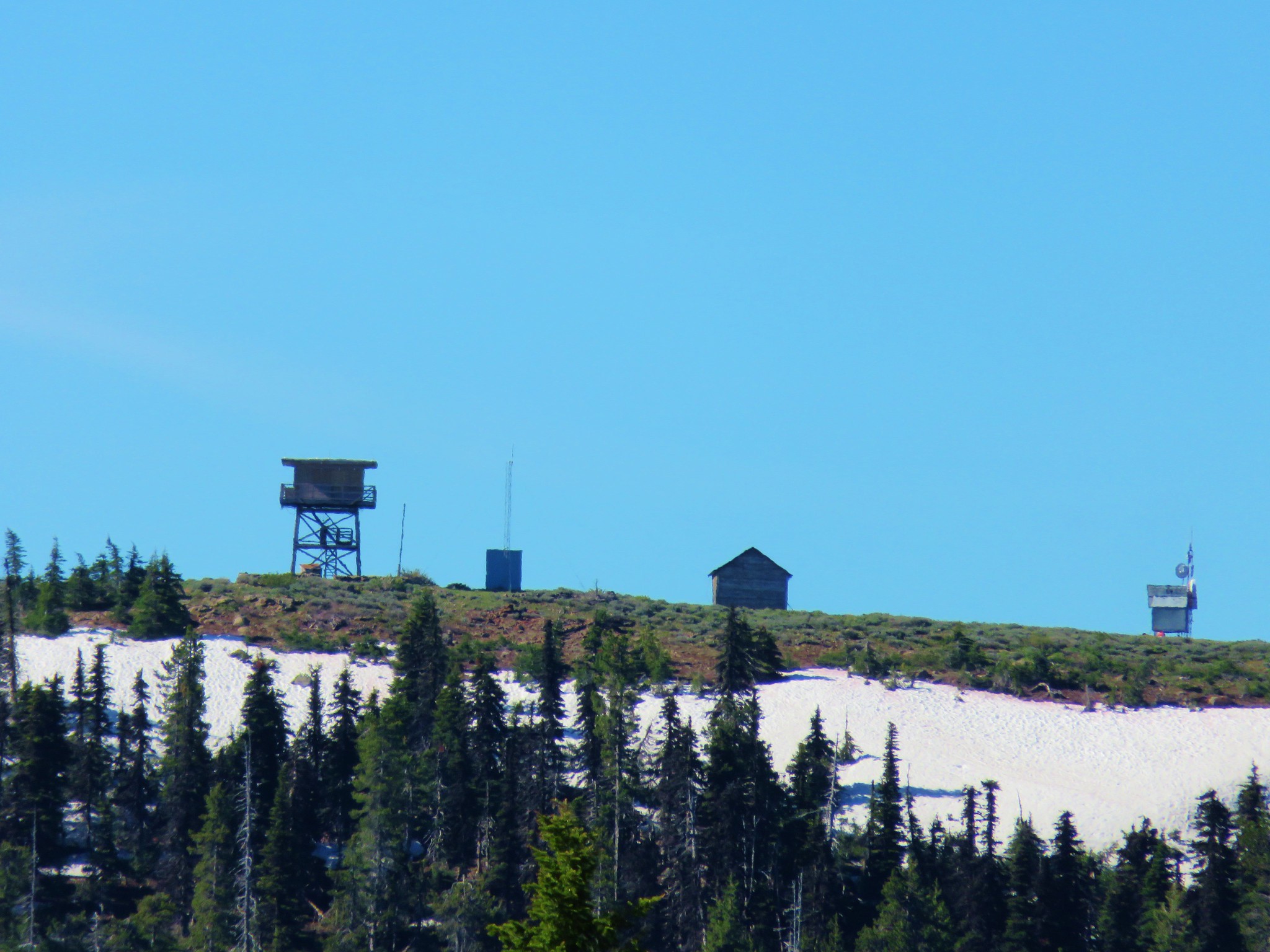
We pulled off the road at the jeep track which at one time went all the way out to North Point. Much of the wilderness burned in 2008 and many of the left over snags have begun falling and we’d heard that the track had a good deal of blowdown. Looking uphill from the jeep track we decided to angle left and skirt around the side of a stand of trees.

IMG_2841

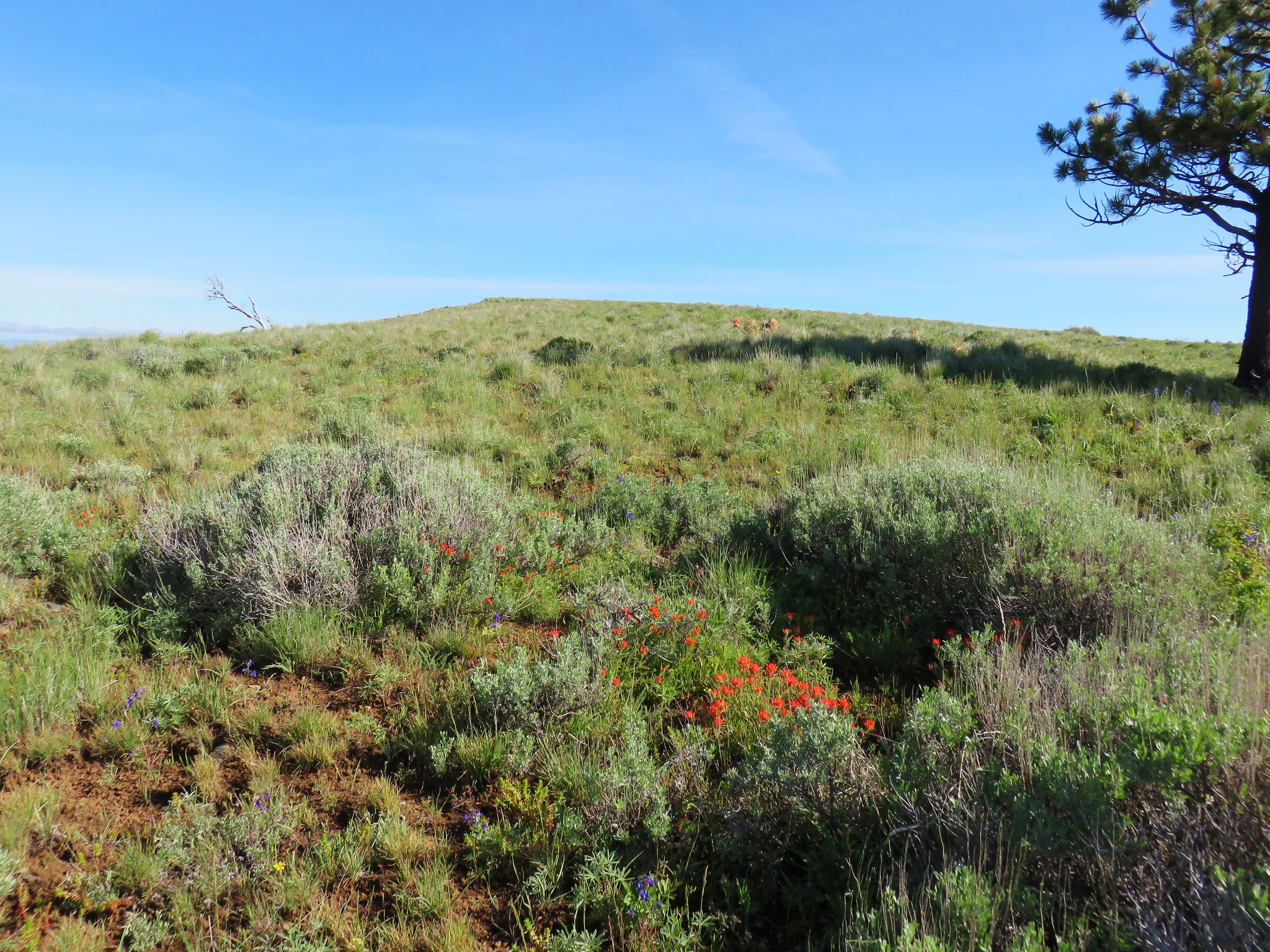
The cross country travel was easy through the sagebrush but our pace was slowed due to stopping to admire the many wildflowers along the way.

IMG_2854

Brown’s Peony

IMG_2859

Parsley

IMG_2861

Paintbrush

IMG_2863Larkspur

IMG_2864Old man’s whiskers

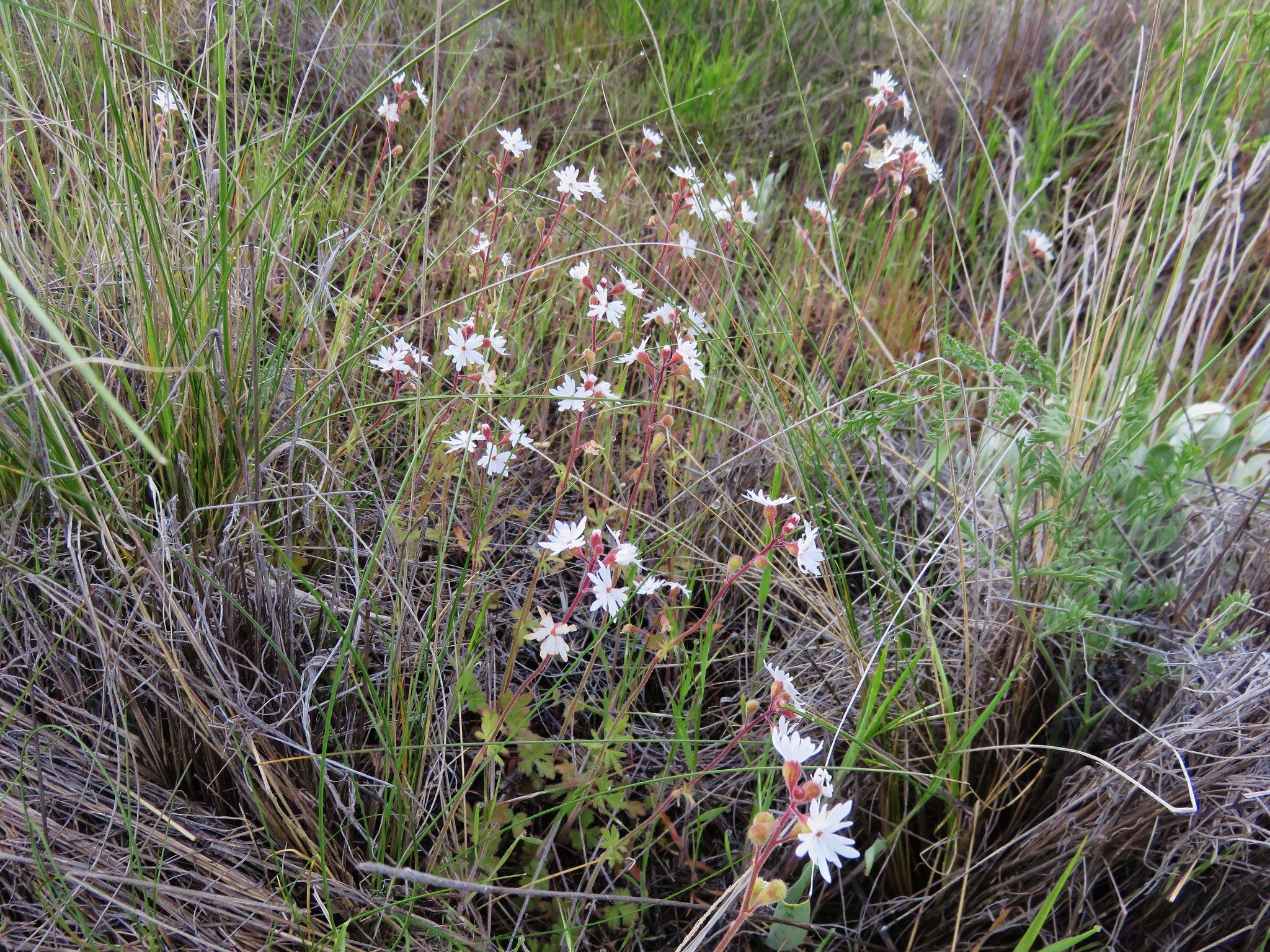
IMG_2866Woodland stars

The terrain began to level after the initial climb (which was short and not at all steep) revealing some open meadows among the trees.

IMG_2884

We encountered additional flowers in and around these meadows.

2017-06-17 08.26.38Bluebells

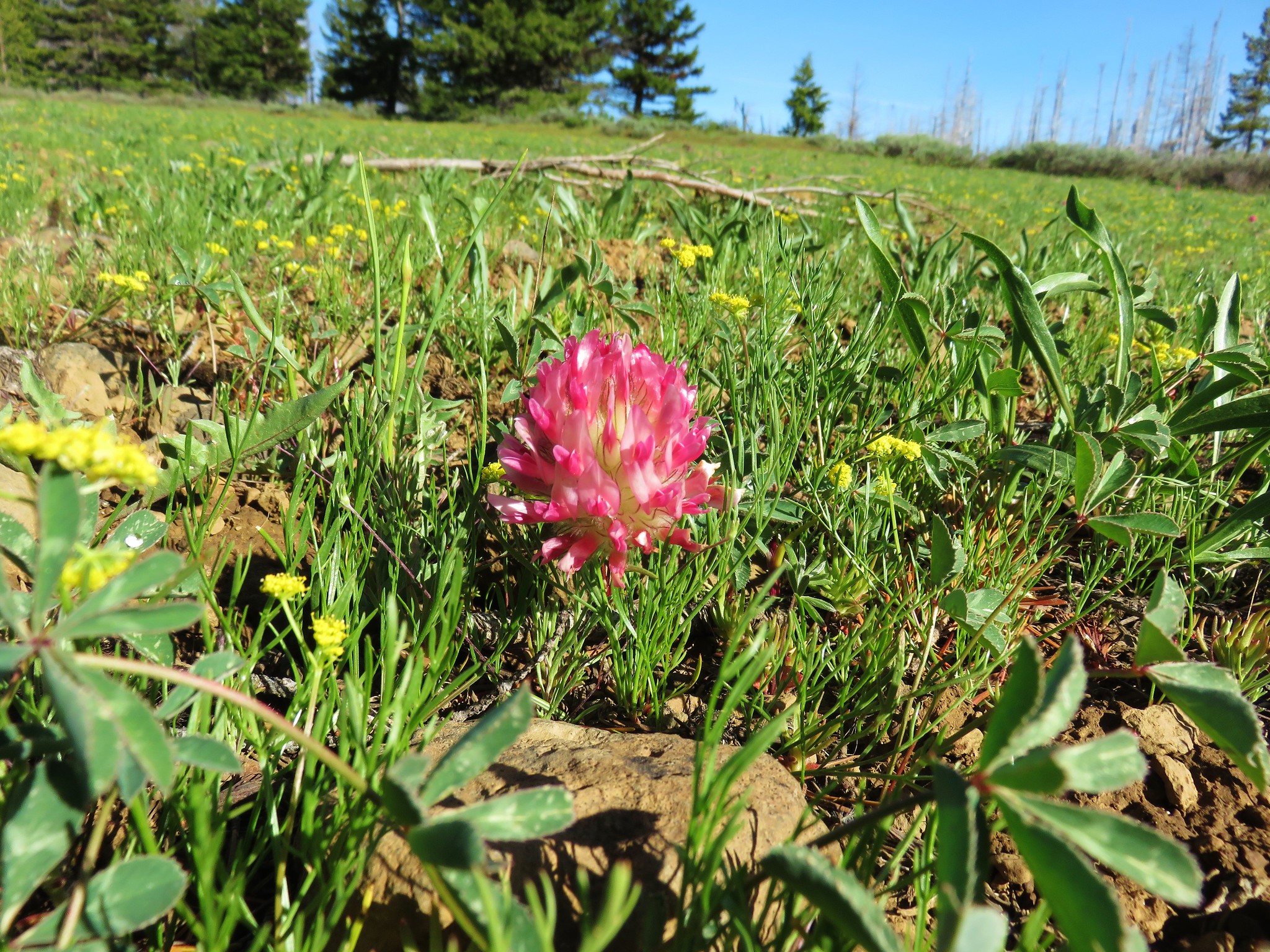
IMG_2888Big-head clover

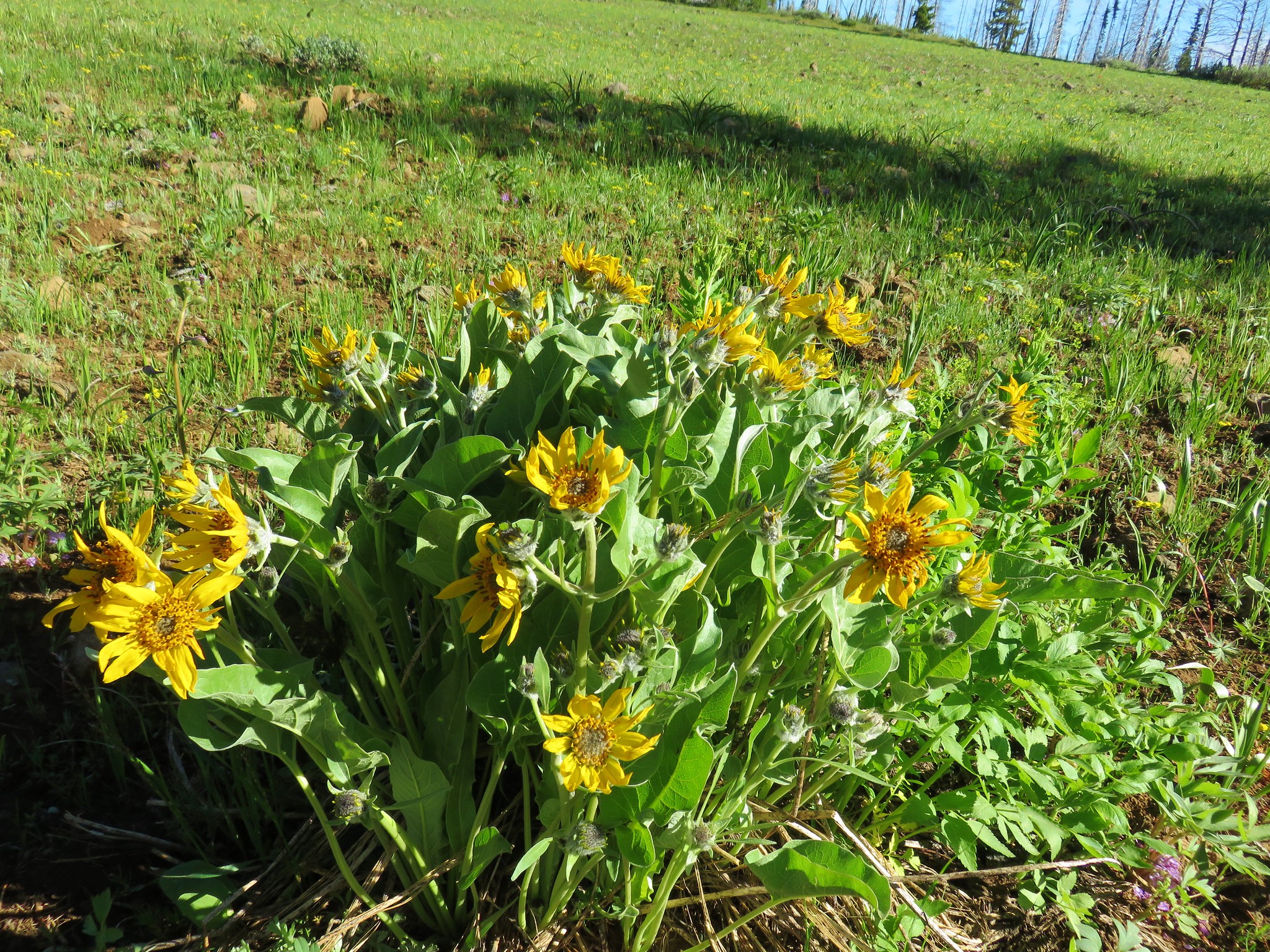
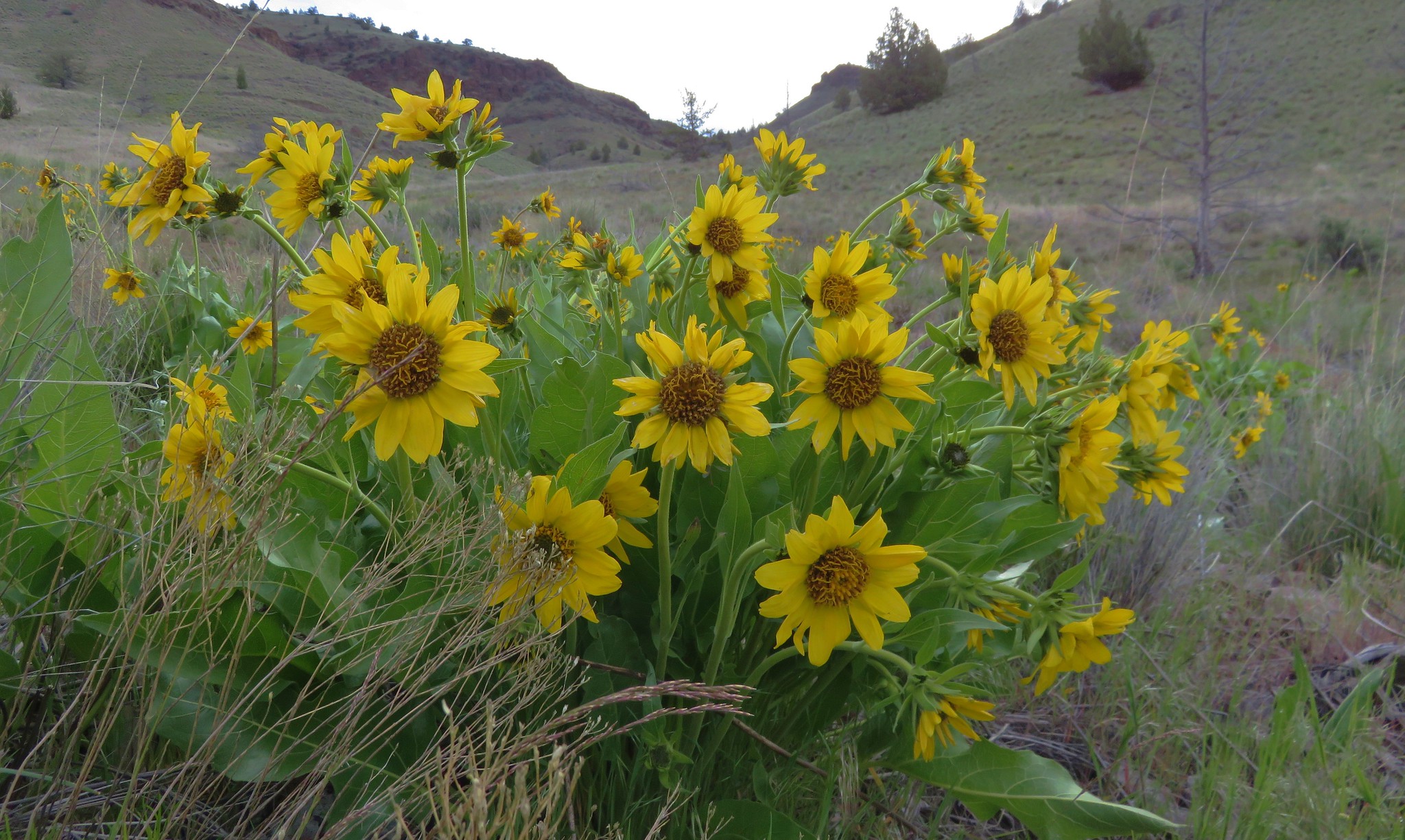
IMG_2887Balsamroot

2017-06-17 08.24.38Jessica sticktight

We took a line along between the meadows and a line of dead trees.

IMG_2894

Using the GPS we eventually veered to the right stepping over a couple of downed snags then briefly following the jeep track toward the rim of the plateau.

IMG_2907

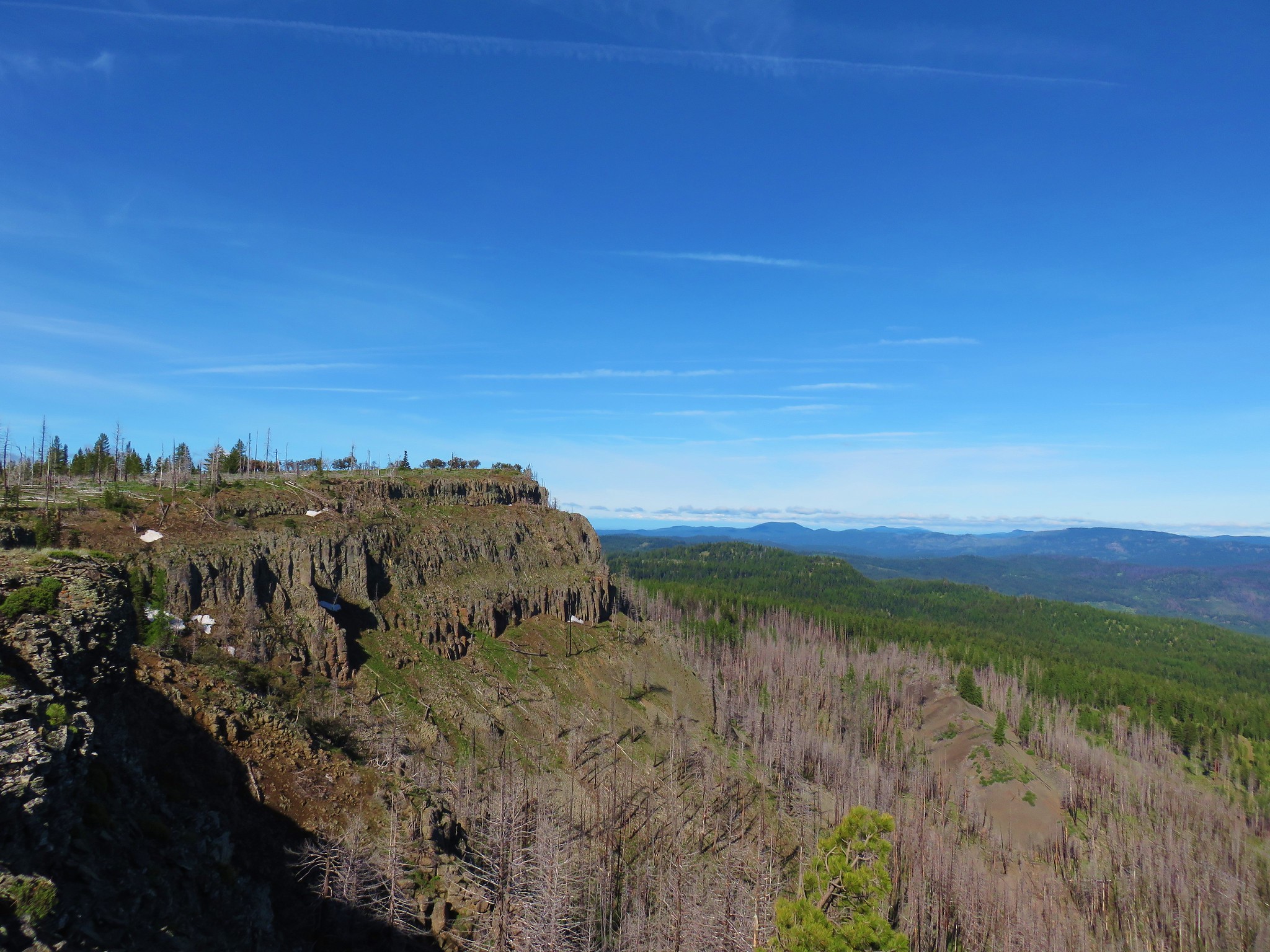
We arrived at the rim between point 6607 to the west and North Point to the east.

2017-06-17 08.49.39_stitch

The view to the north was amazing and included some very interesting topographical formations.

IMG_2912

IMG_2915

Behind us to the south lay Mt. Pisgah and the Mt. Pisgah Lookout

IMG_2916

IMG_2917

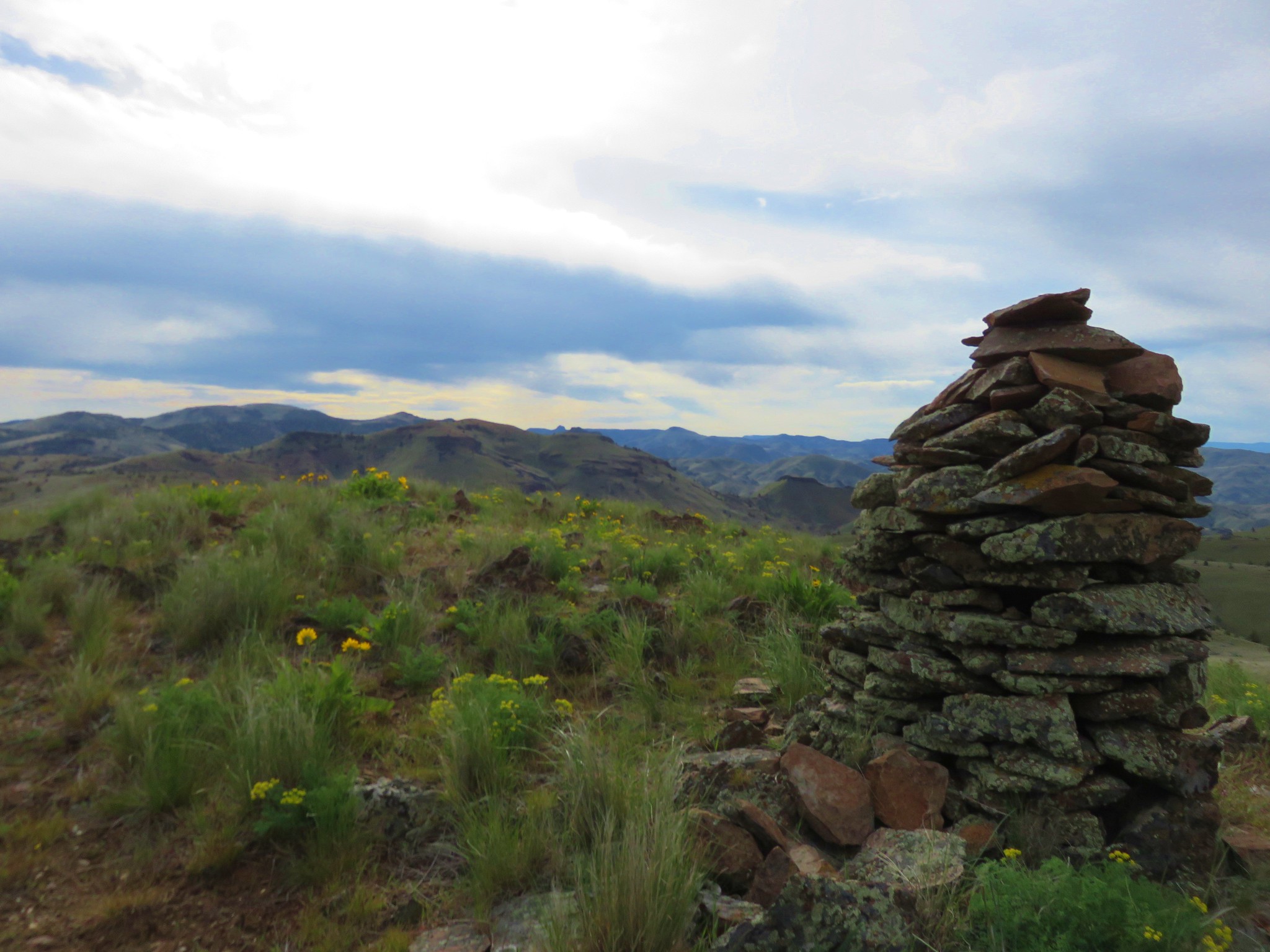
We made our way along the rim to North Point which was marked with a cairn.

IMG_2919

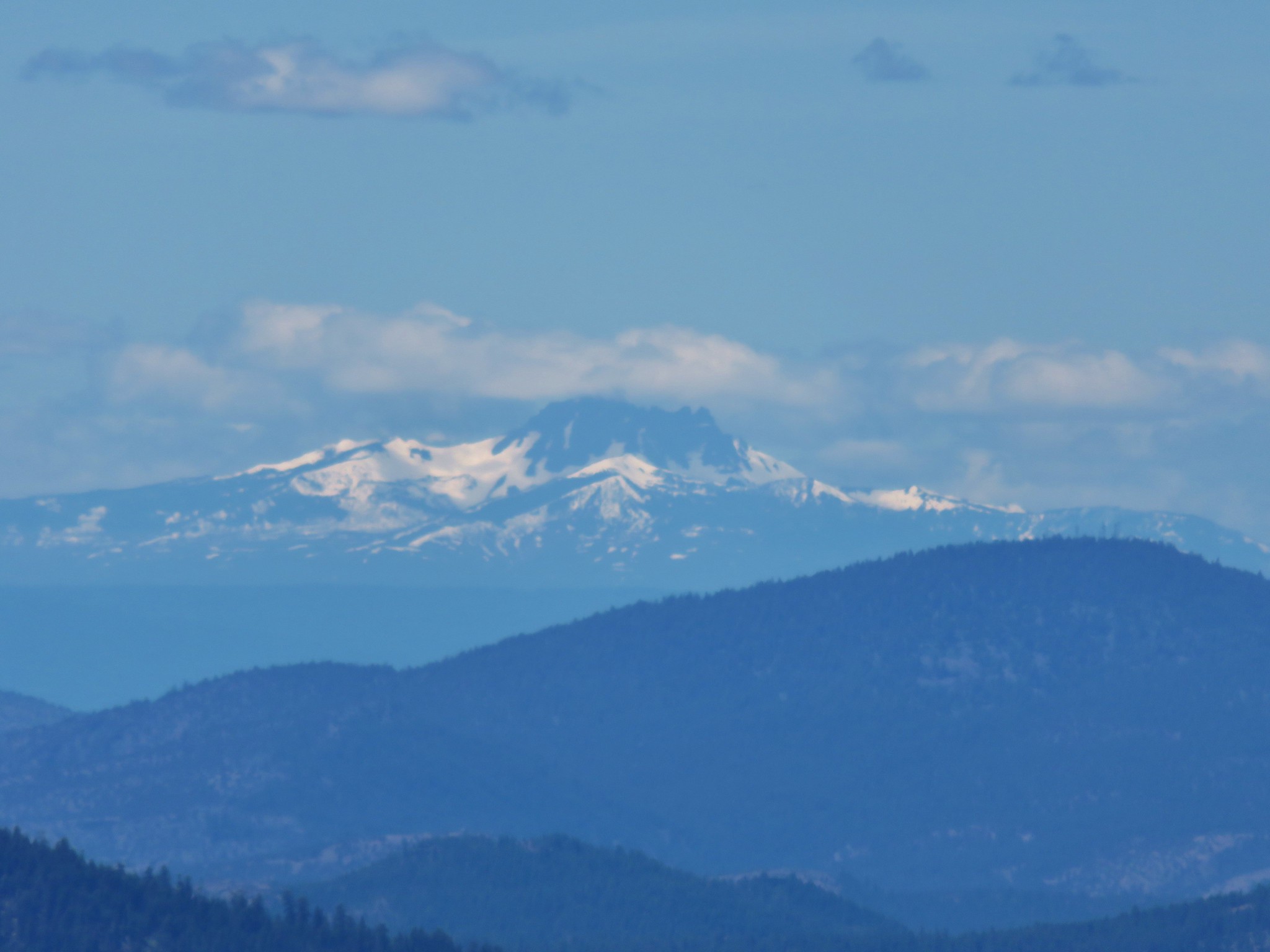
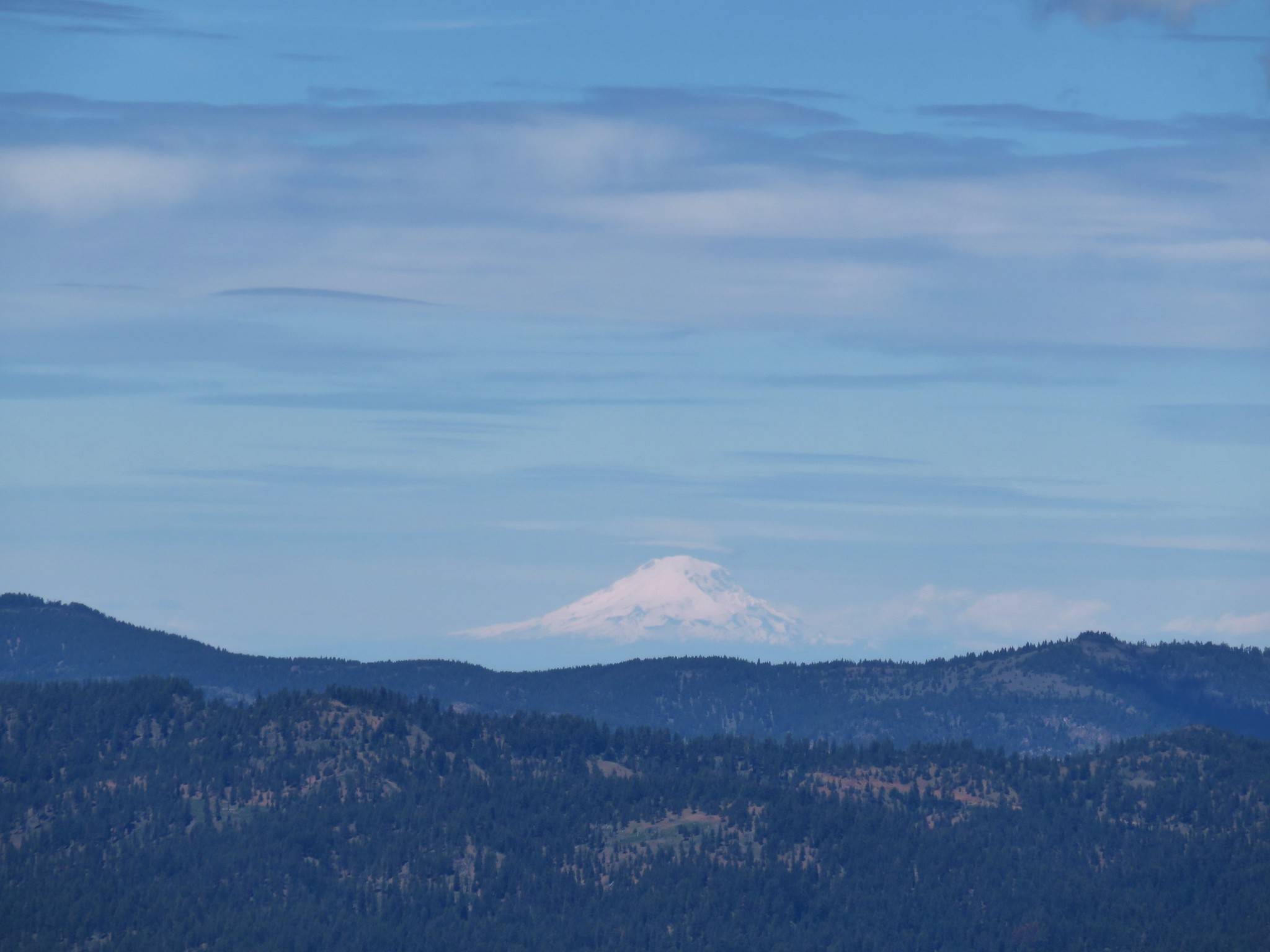
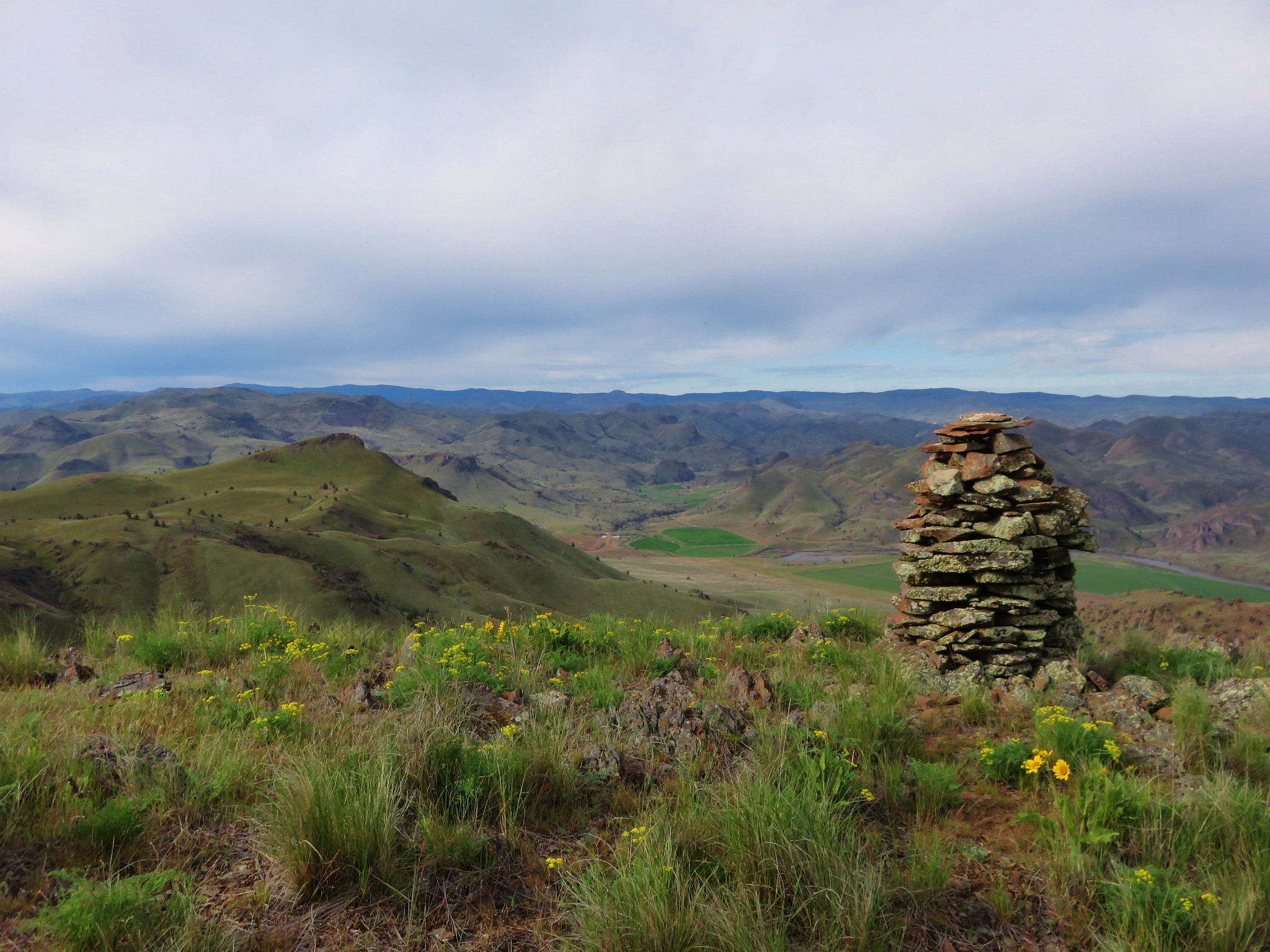
From North Point we could see parts of the Cascade Mountains from Mt. Bachelor to the south to Mt. Adams in Washington to the north. The only problem was a single line of clouds moving north right in our line of sight for the snowy volcanoes.

IMG_2922

IMG_2923

We spotted a few additional flowers on North Point.

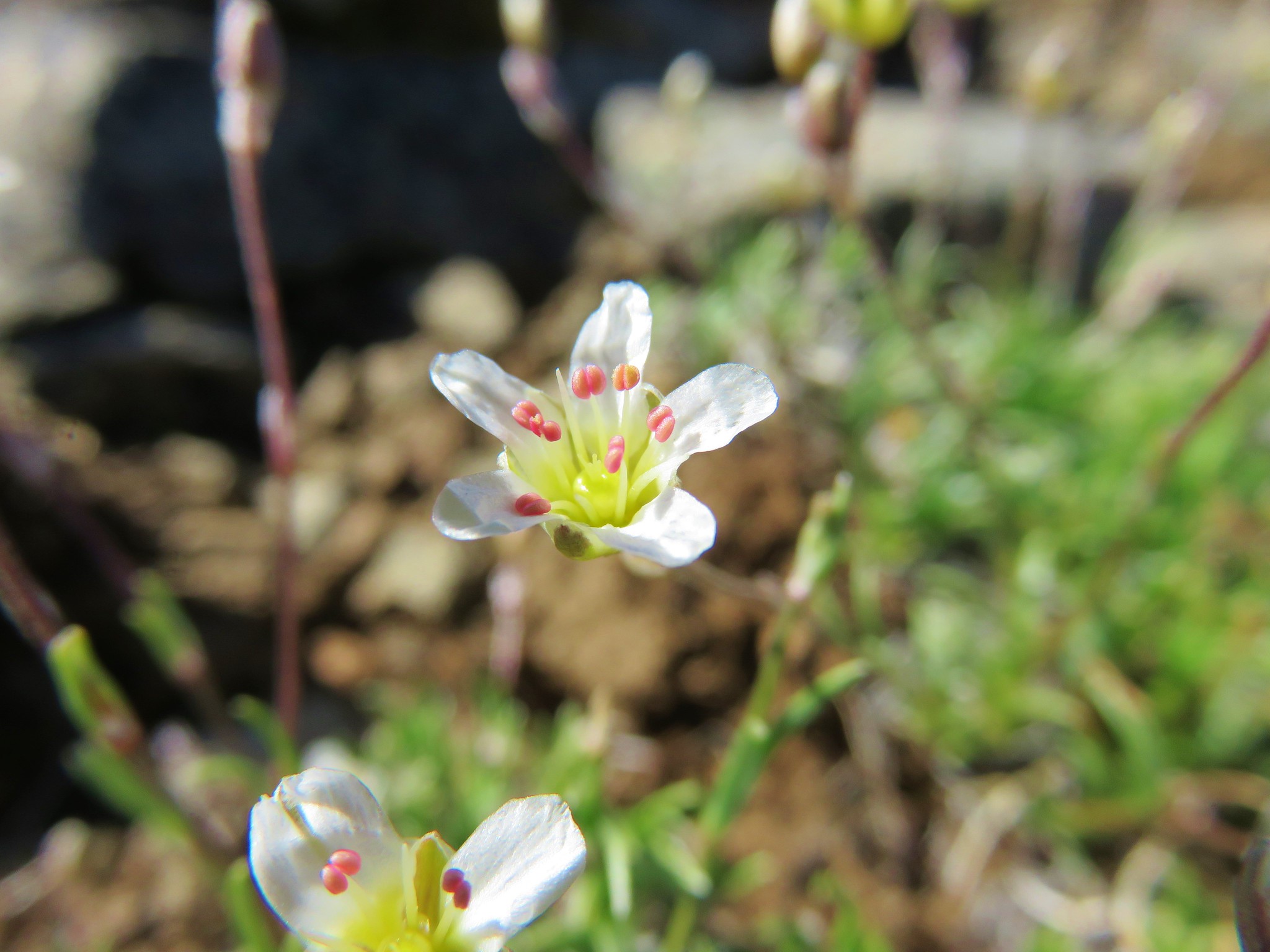
IMG_2931Sandwort

IMG_2932A stonecrop?

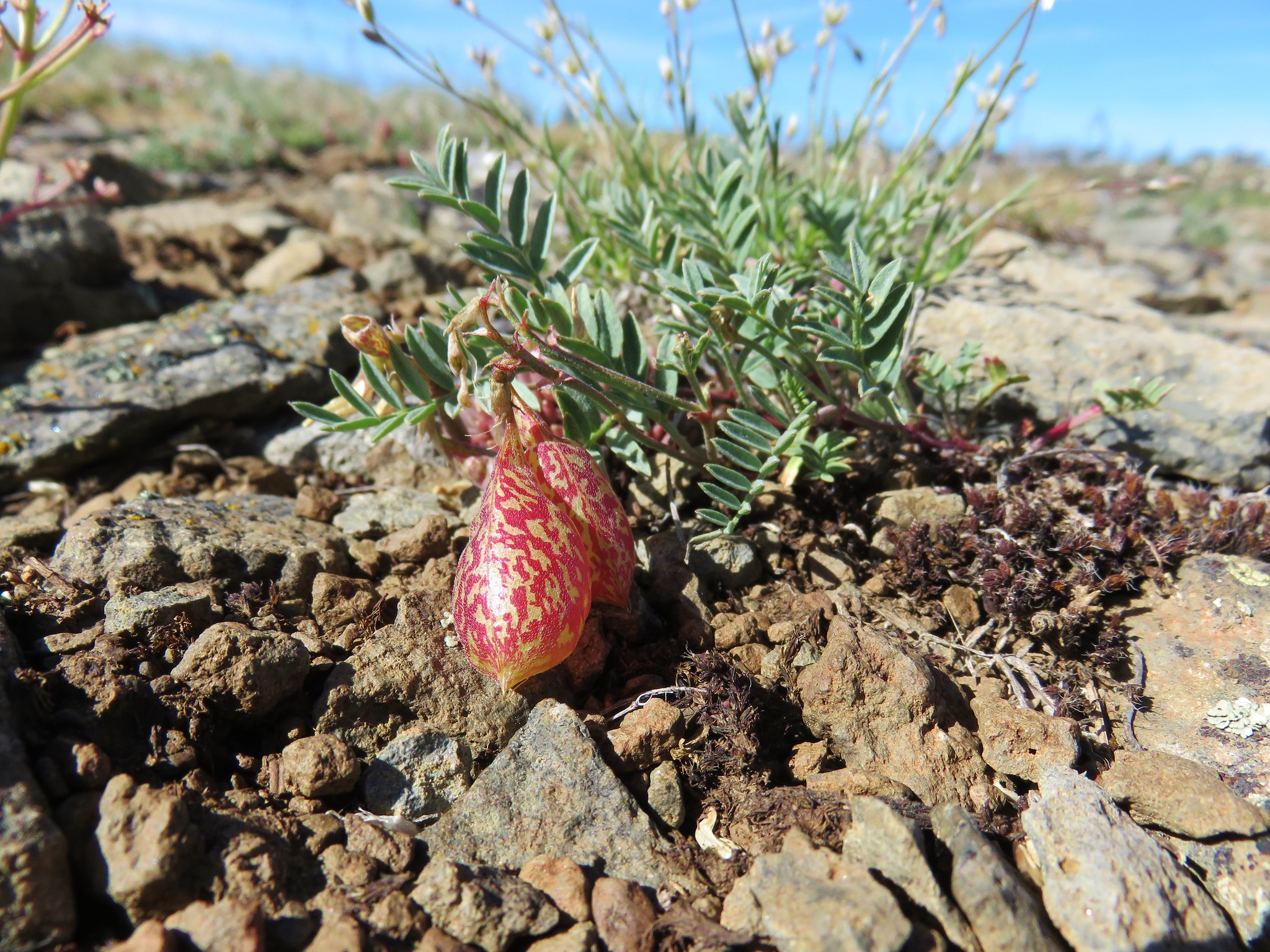
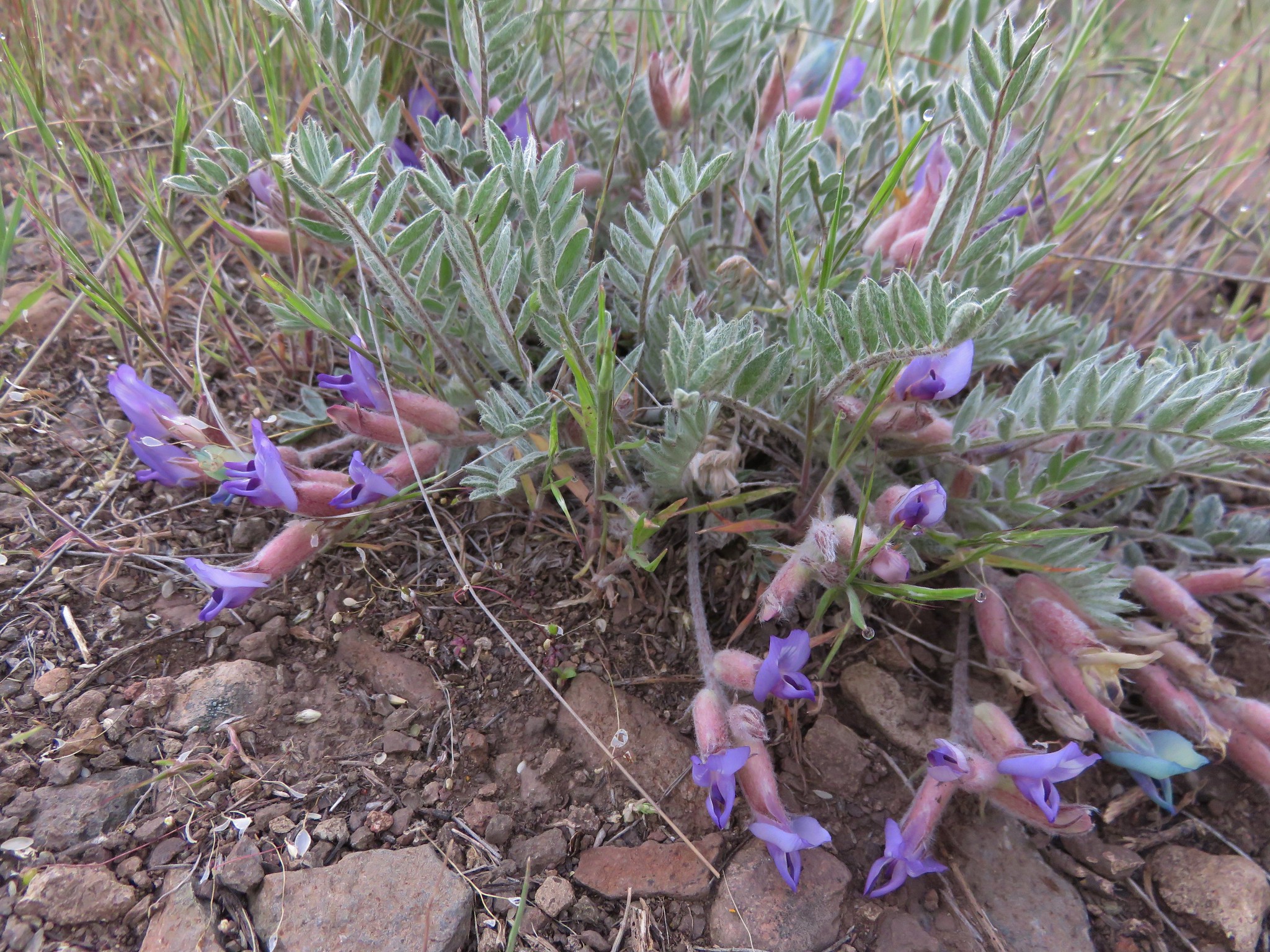
IMG_2940Balloon pod milk vetch

After taking in the views on what was shaping up to be a beautiful day we made our way back to our car amid the ever present sound of birds.

IMG_2949

IMG_2903

The hike to North Point had only been 2.2 miles round trip and we were heading for hike number two of the day, but first we wanted to check out Big Summit Prairie. After passing the point on Road 2630 where we had emerged from the apocalyptic section of road from the morning we continued on the gravel road .8 miles to NF-22 where we turned left. After 4.2 miles on NF-22 we turned right onto gravel South Howard Road for 1.6 miles then right again onto Badger Creek Road (NF 4210). We followed this road for 2.3 miles to Canyon Creek Road (NF-42) where we turned left. We drove 9.7 miles on NF 42 which travels along the southern side of Big Summit Prairie.

Covering several thousand acres in the middle of the Ochoco Mountains, Big Summit Prairie sports some impressive wildflower displays from April through Mid-June. We were hoping that we weren’t too late for the show, but alas we seemed to be on the tail-end of the last flowers.

IMG_2958

IMG_2959

We stopped near the North Fork Crooked River bridge and took a look at our next goal, Round Mountain rising to the west.

IMG_2960

We drove back on NF-42 12.7 miles to a sign for the Independent Mine on the left. We had been here before in 2014 when we hiked to the summit of Lookout Mountain.

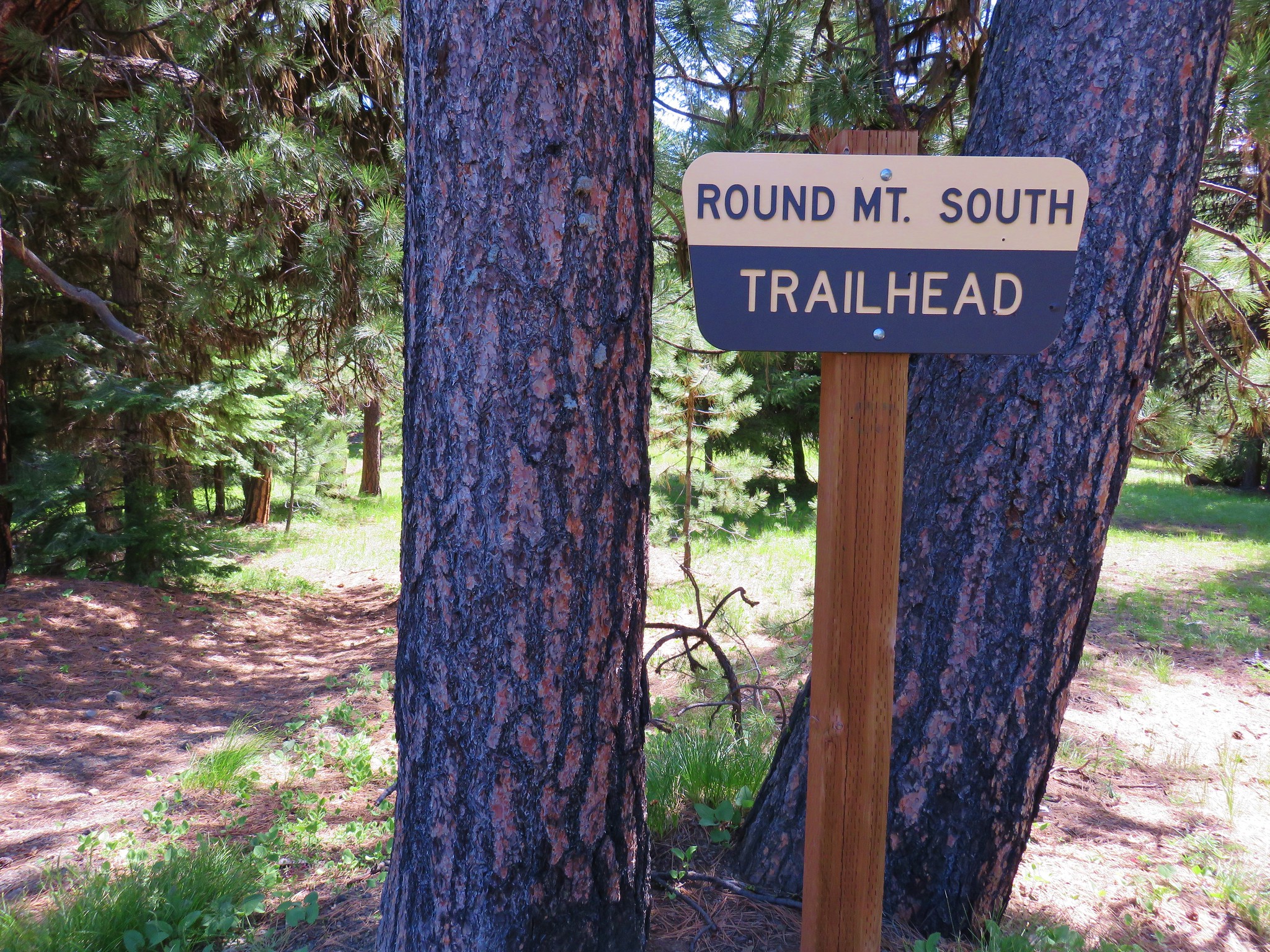
We parked at the same trailhead as before just a few hundred feet up Road 4205. A good sized parking area here doubles as the Lower Lookout Mountain and the Round Mountain South Trailheads.

IMG_2964

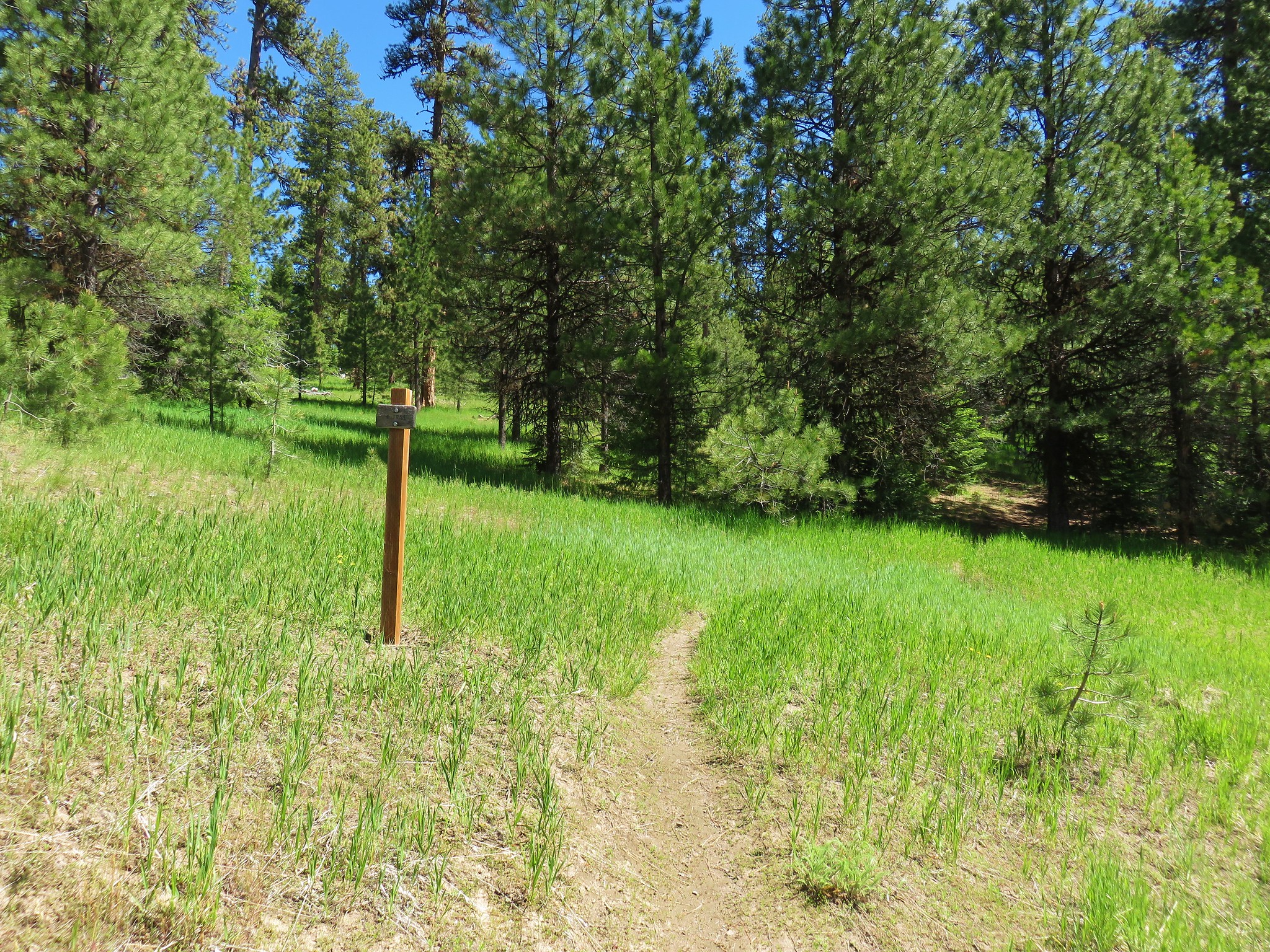
From the trailhead the Round Mountain Trail descended into a small meadow before entering some trees and climbing up to a crossing of NF-42.

IMG_2965

IMG_2980

The trail climbed gradually through wildflower filled meadows to a view of little Prospect Pond.

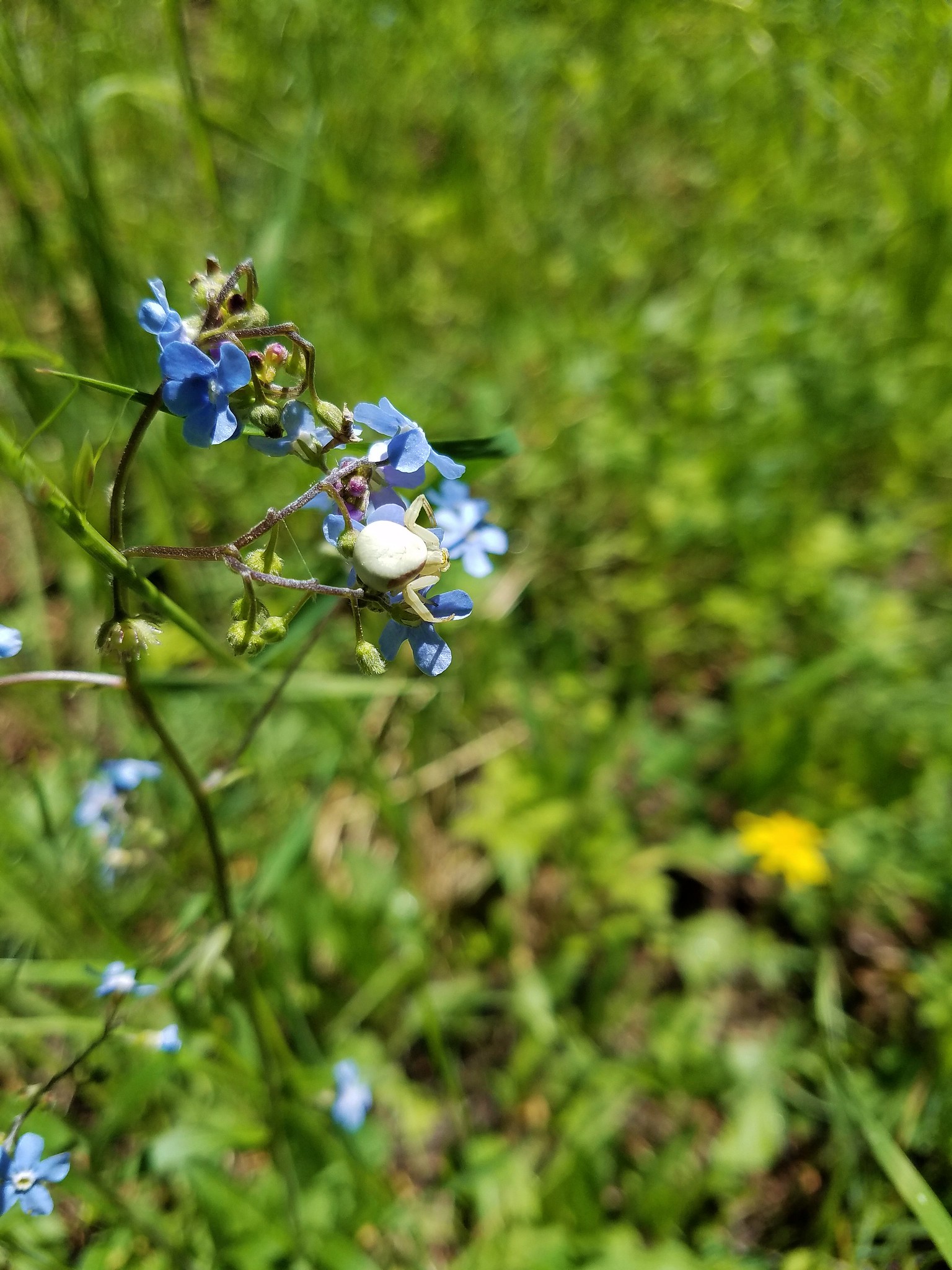
2017-06-17 10.54.46Crab spider

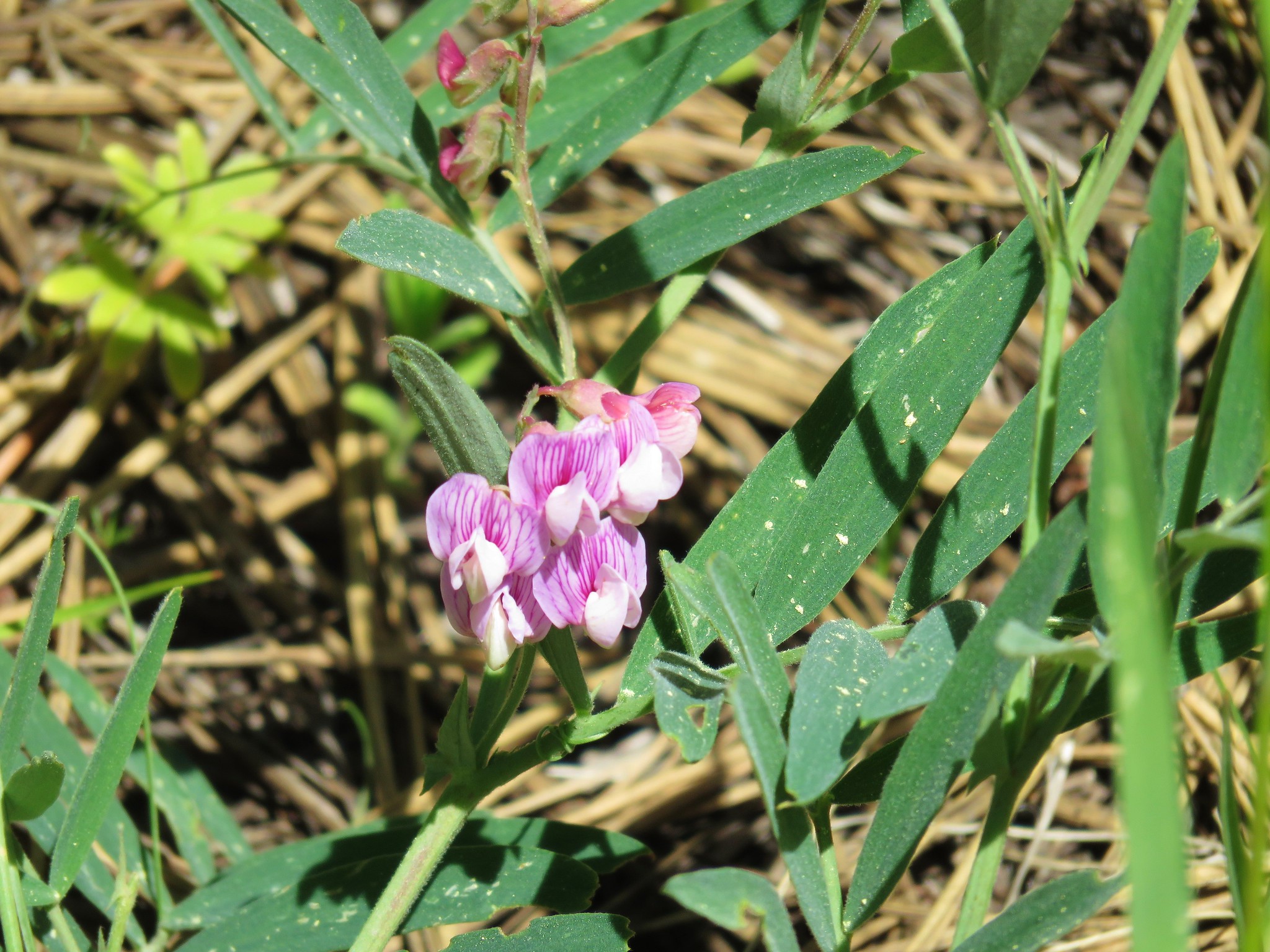
IMG_2975Torrey’s peavine

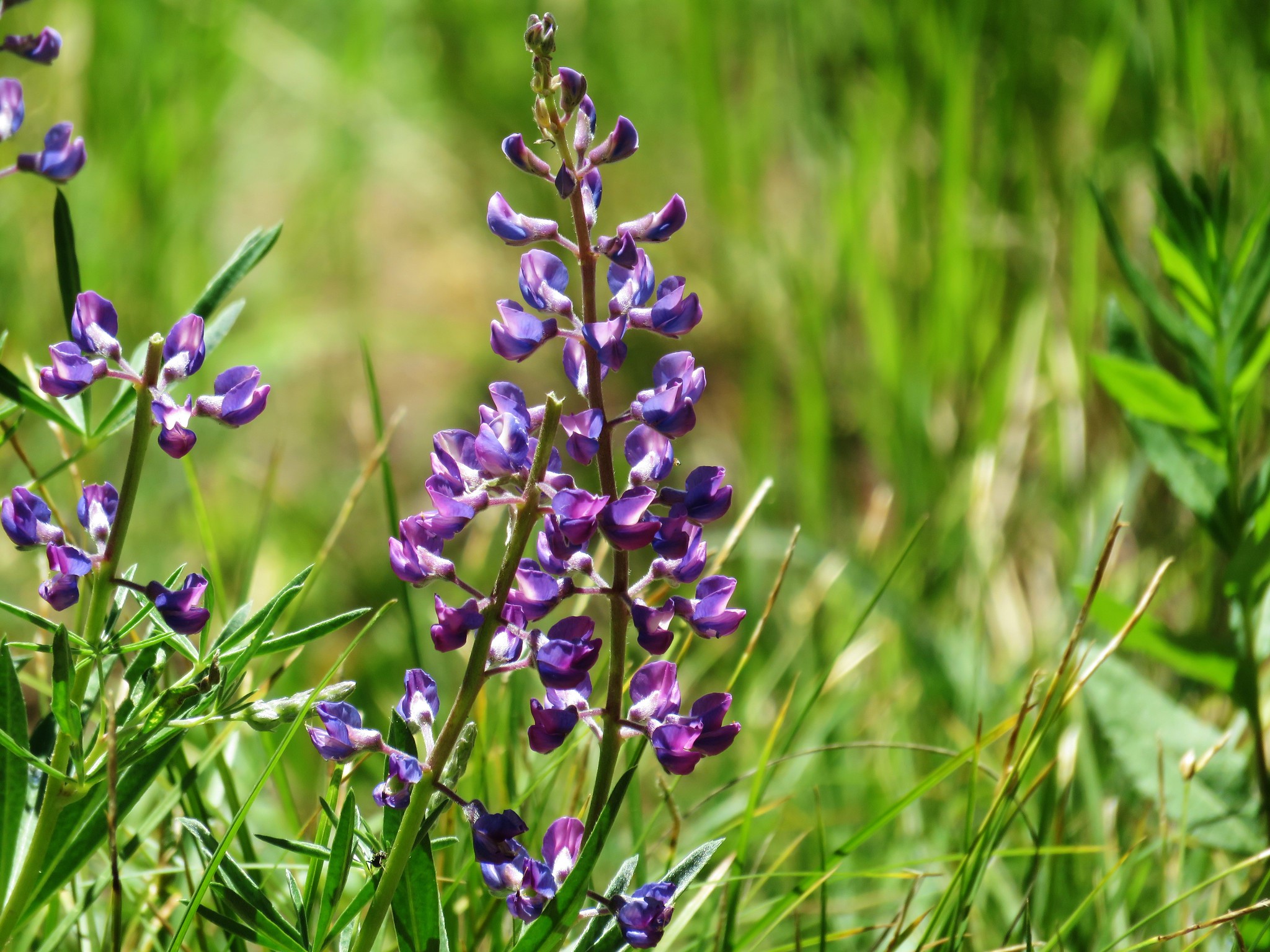
IMG_2985Lupine

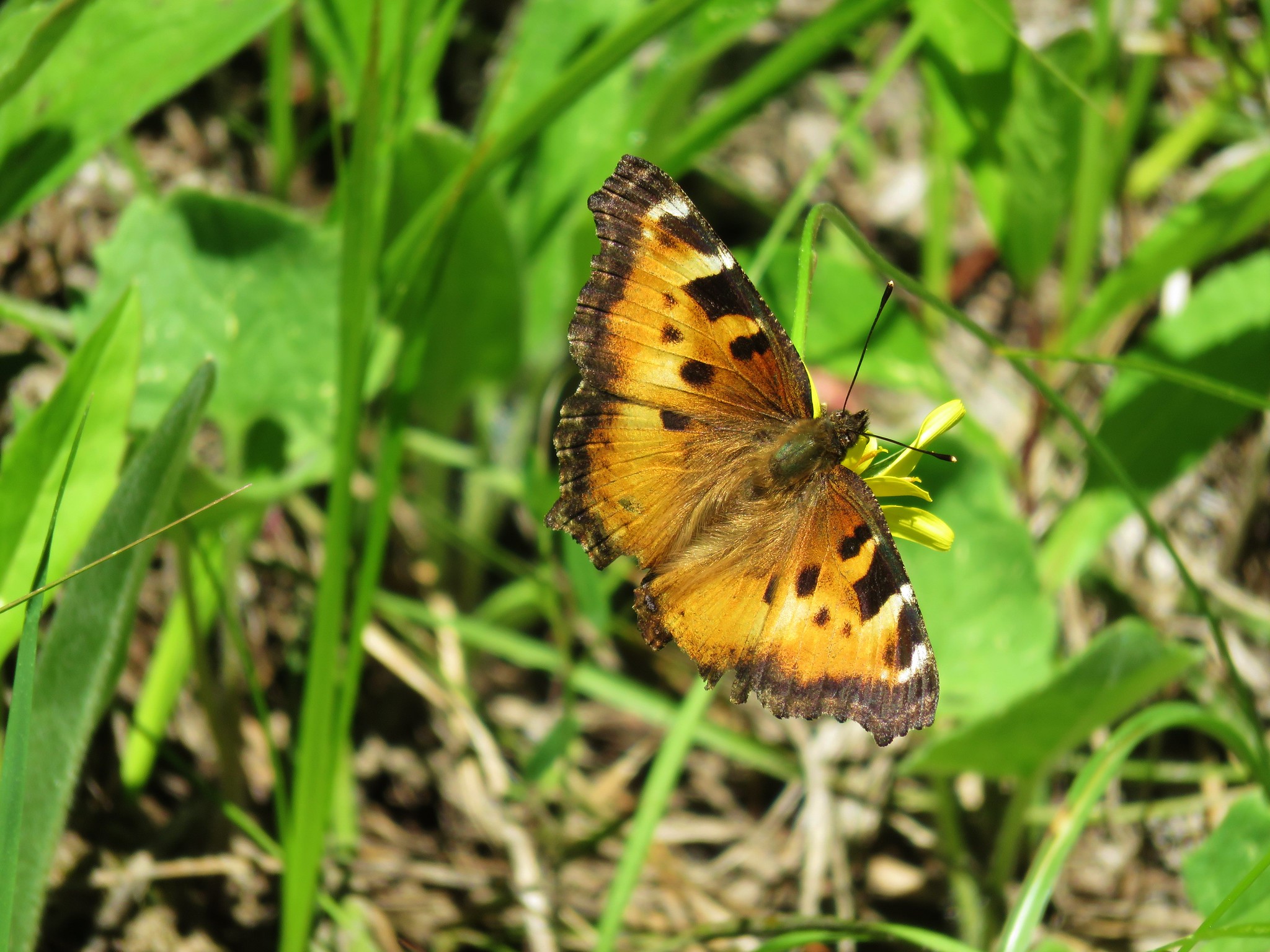
IMG_2997Tortoiseshell butterfly

IMG_2990

IMG_3003Balsamroot and larkspur

IMG_3007Death camas

IMG_3009Vetch

IMG_3013Paintbrush

IMG_3012

IMG_3019Prospect Pond (and Lookout Mountain beyond)

As the trail continued to follow a ridge uphill the wildflower displays kept getting better.

IMG_3029

IMG_3031

IMG_3033

The trail briefly leveled off at the wide Onion Pass.

IMG_3041

IMG_3045

We soon got our first good look at our goal, Round Mountain.

IMG_3046

Shortly after crossing a road at the 2.3 mile mark the trail traversed an open slope with views of several Cascade Mountains.

IMG_3060

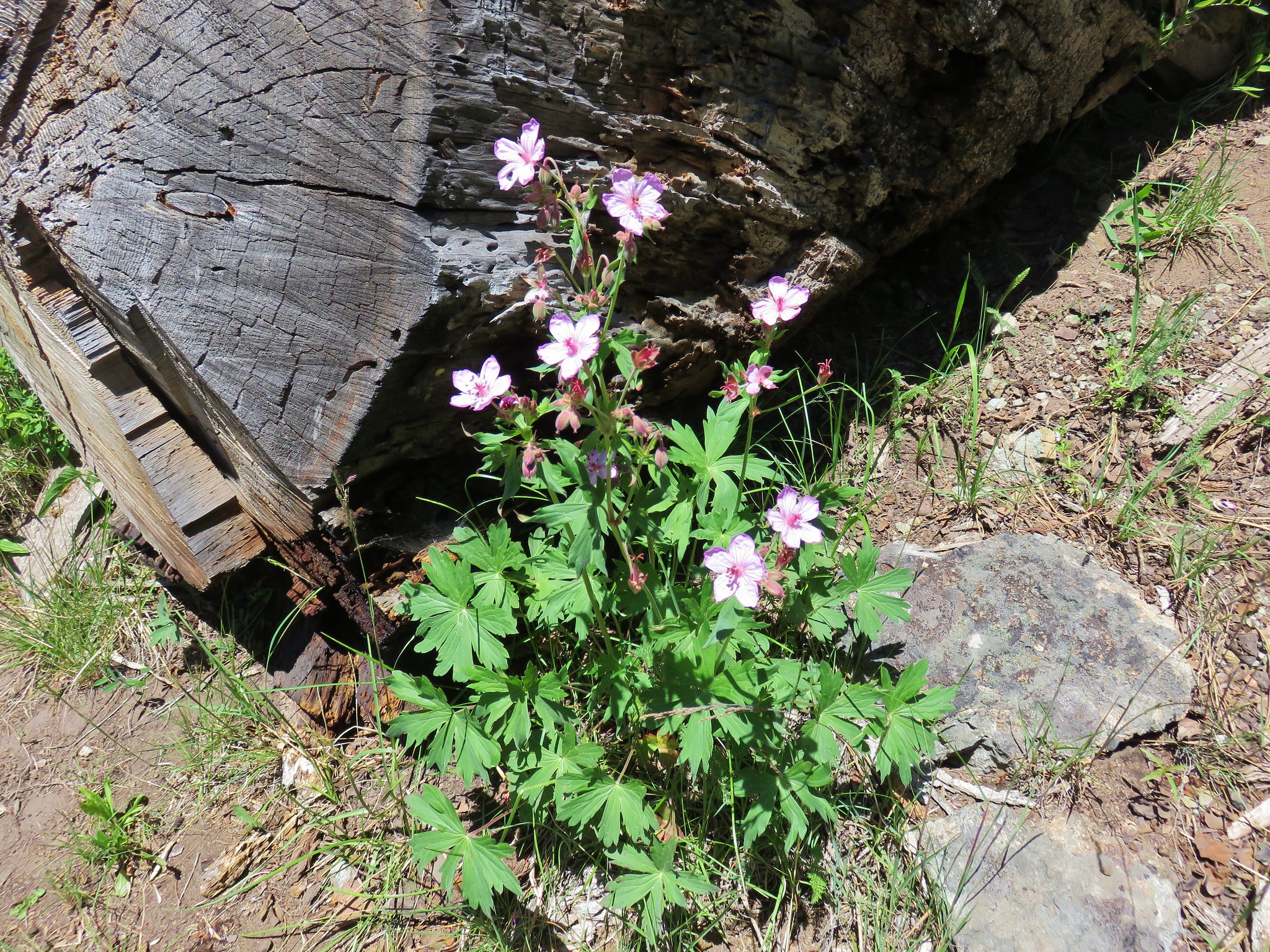
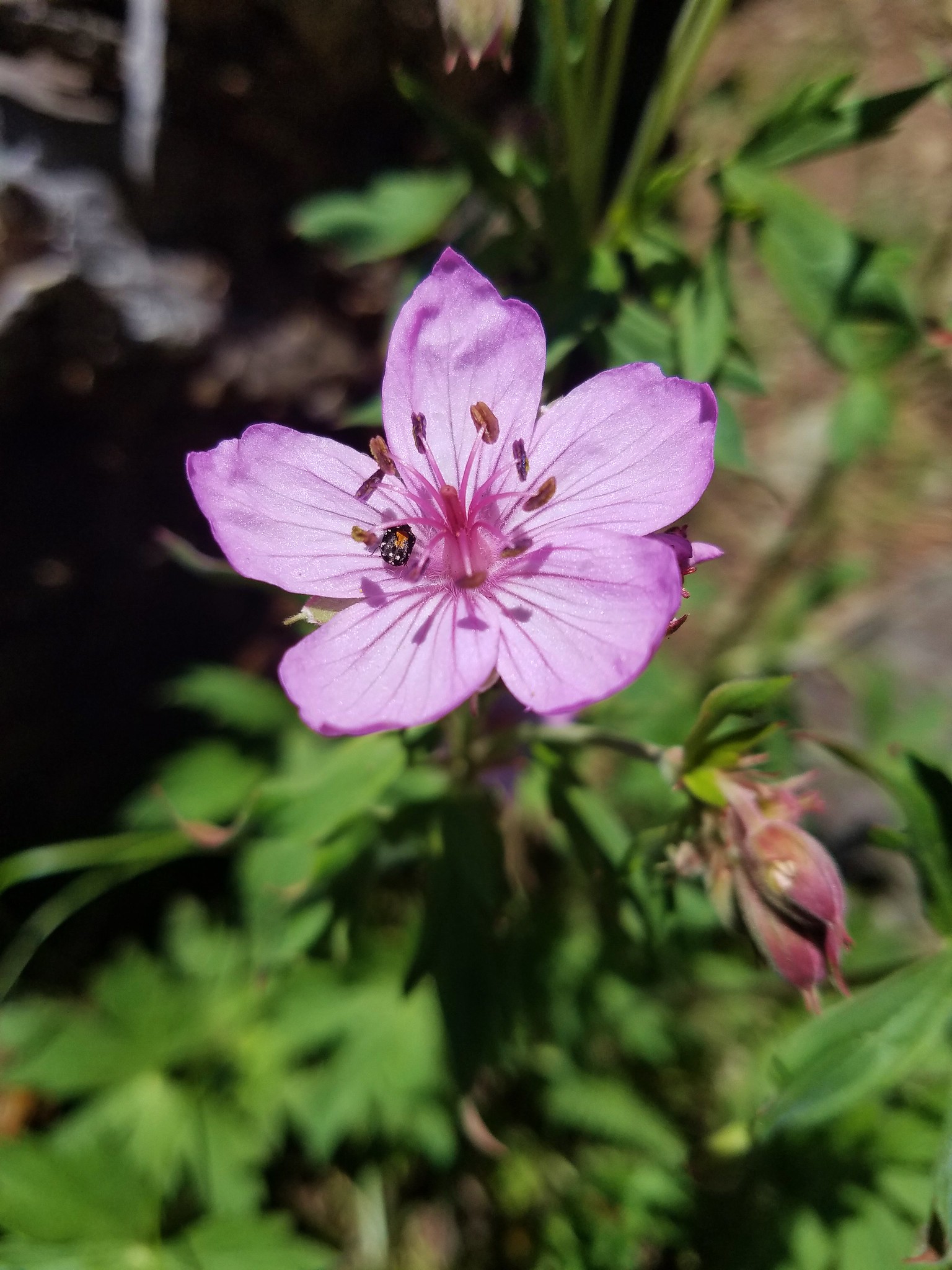
The flowers continued to impress along the entire trail with the pink Oregon geraniums being some of our favorites.

IMG_3088

2017-06-17 12.20.49

After another short level stretch along what appeared to be an old road track the trail finally began to climb with some urgency through a series of hellebore meadows.
IMG_3079

IMG_3094

IMG_3097

The trail was in great shape with only a minor slide which was easily passable.

IMG_3102

IMG_3105

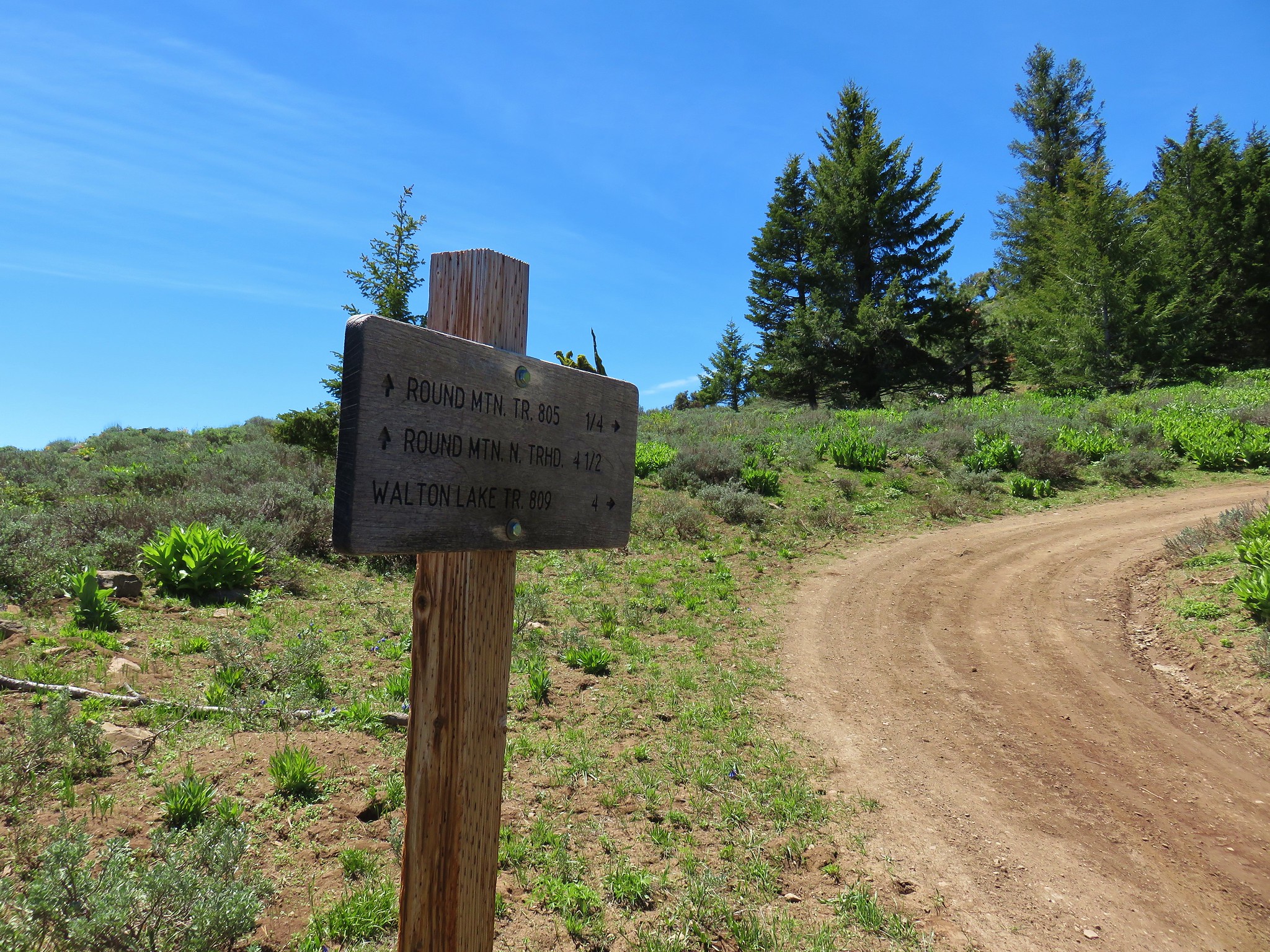
The trail wrapped around under the summit of Round Mountain to Round Mountain Road (yes it is possible to drive up).

IMG_3110

IMG_3115

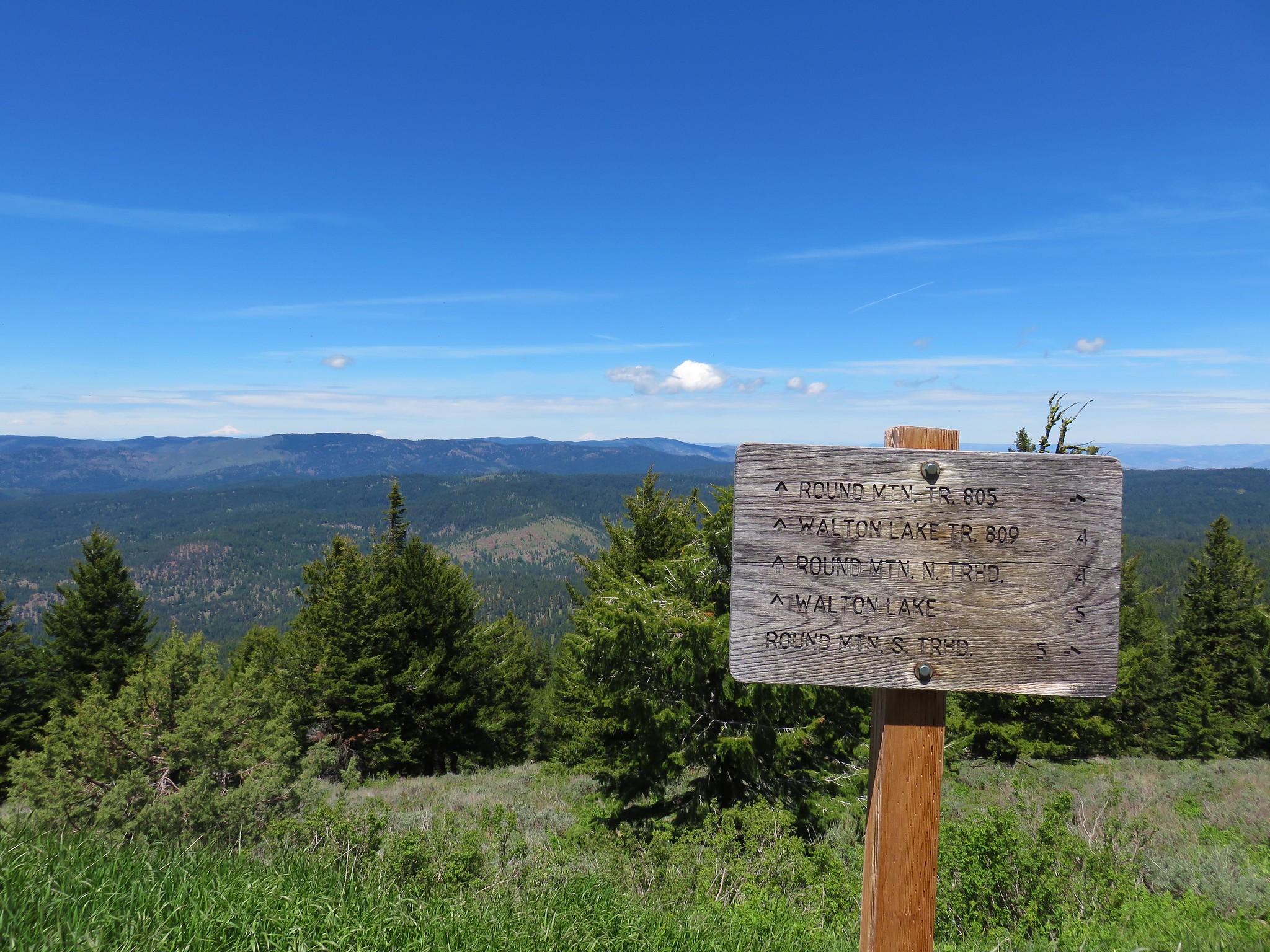
We followed the road up past the signed junction with the Round Mountain Trail coming up from the northern trailhead near Walton Lake.

IMG_3125

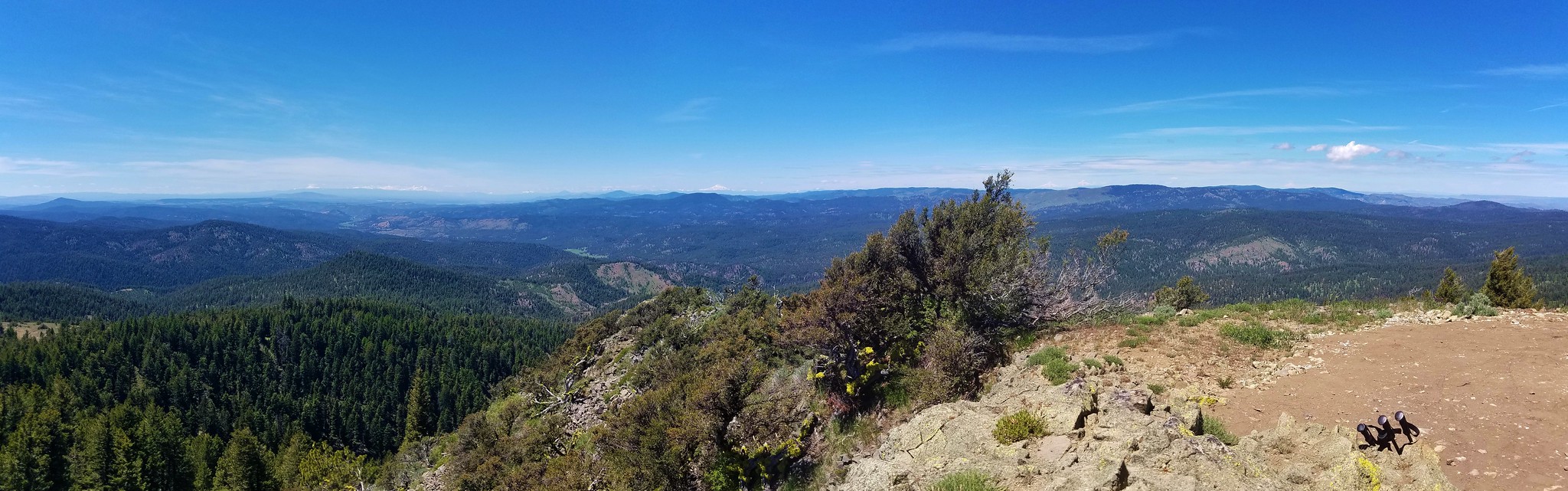
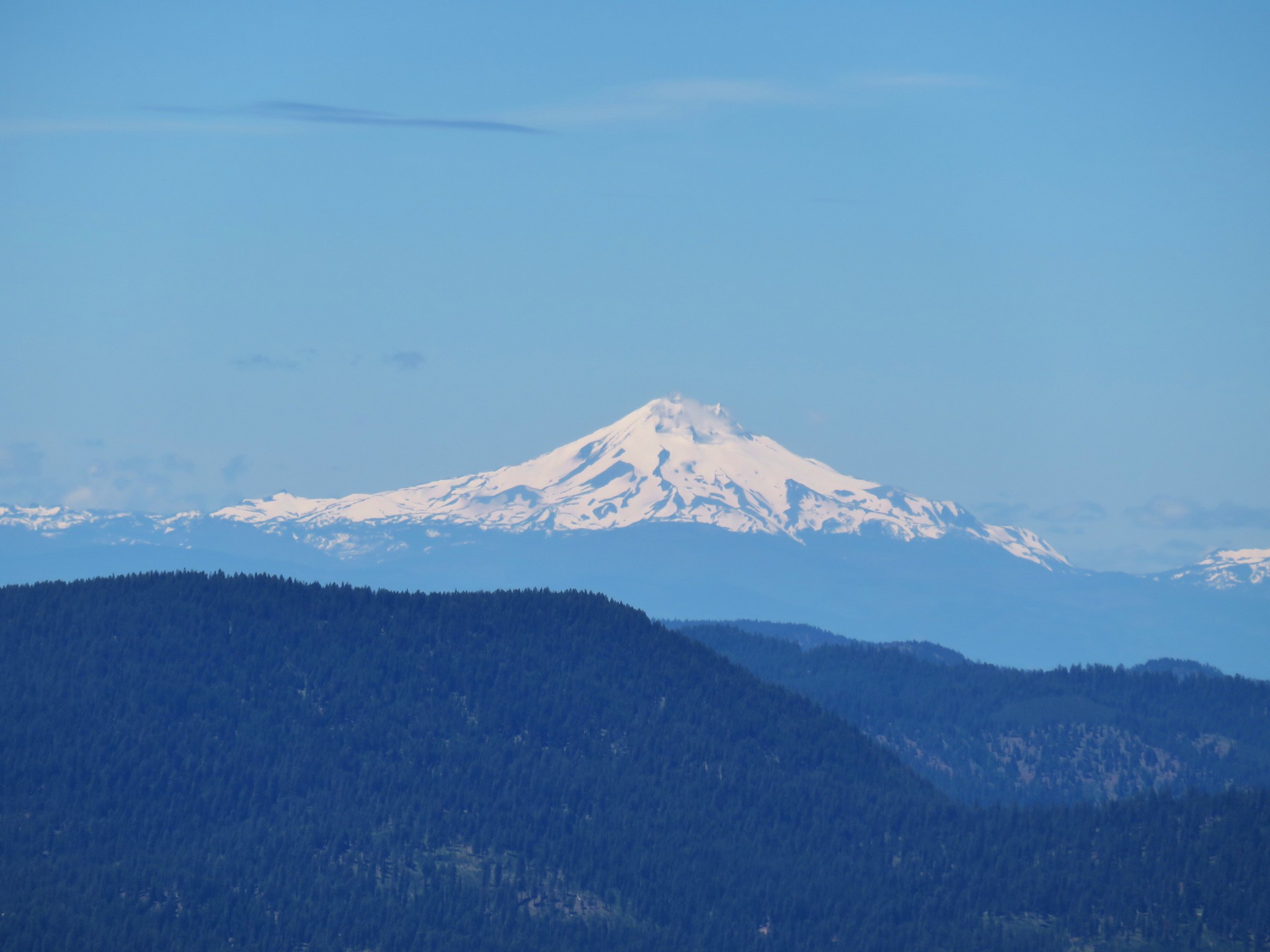
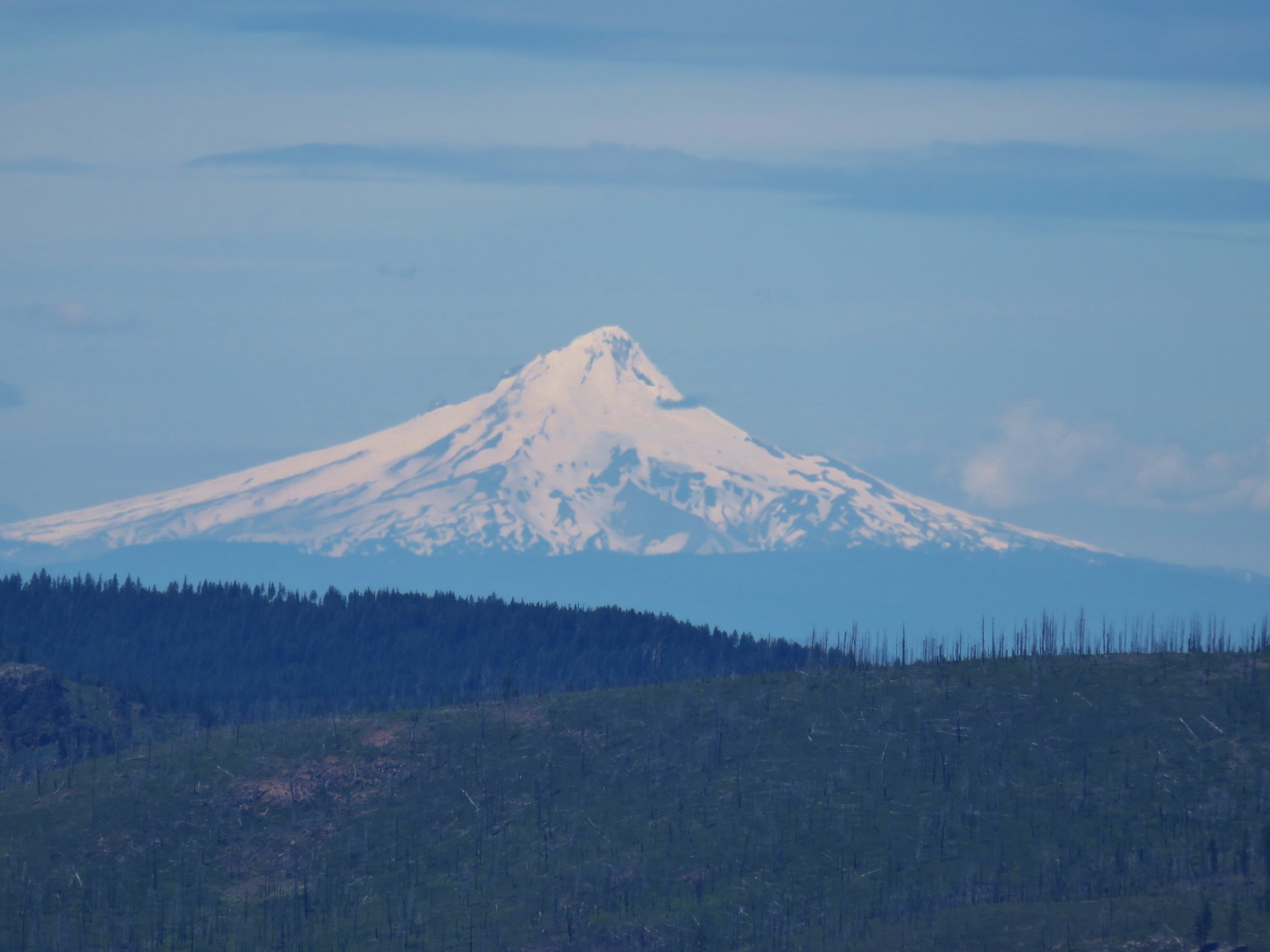
The 360 degree view from the 6755′ summit did not disappoint. The clouds that had hidden parts of the Cascades had mostly burned off (except for over Three Fingered Jack) and Diamond Peak joined the line of snow covered volcanoes.

2017-06-17 12.59.08_stitch

IMG_3131Diamond and Maiden Peaks

IMG_3132Mt. Bachelor

IMG_3133Ball Butte and Broken Top

IMG_3134The Three Sisters

IMG_3062Mt. Washington

IMG_3140Three Fingered Jack

IMG_3141Mt. Jefferson

IMG_3143Mt. Hood

IMG_3147Mt. Adams

The plateau of the Bridge Creek Wilderness was visible to the NE.

IMG_3150

Lookout Mountain rose across NF-42 to the south.

IMG_3128

While Big Summit Prairie stretched out to the east.

IMG_3162

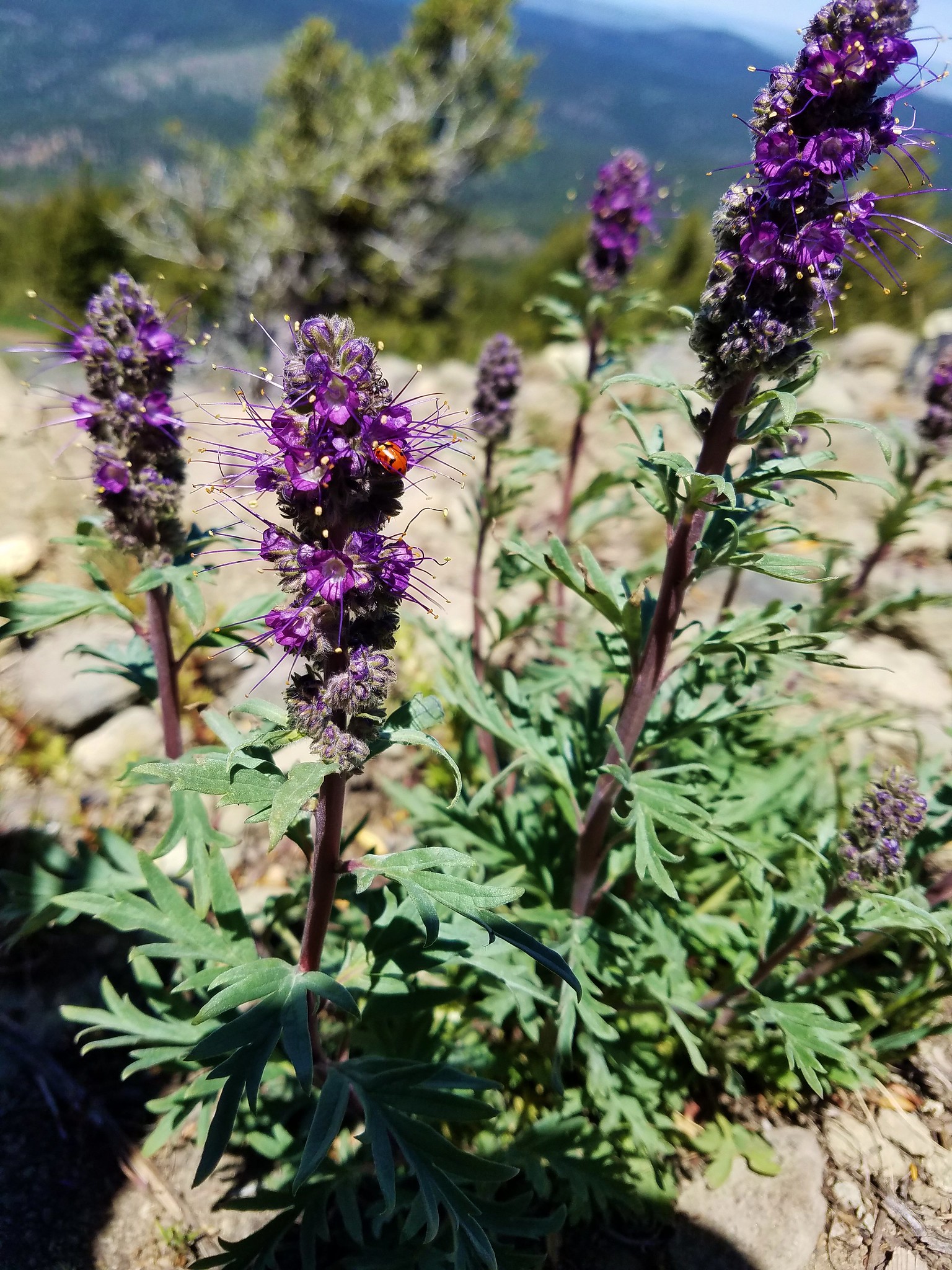
We spotted a couple of flowers near the summit that we hadn’t seen lower including a few pink phlox, a patch of purple silky phacelia, and some yellow bells along the road.

IMG_3164

silky phacelia

2017-06-17 12.50.49

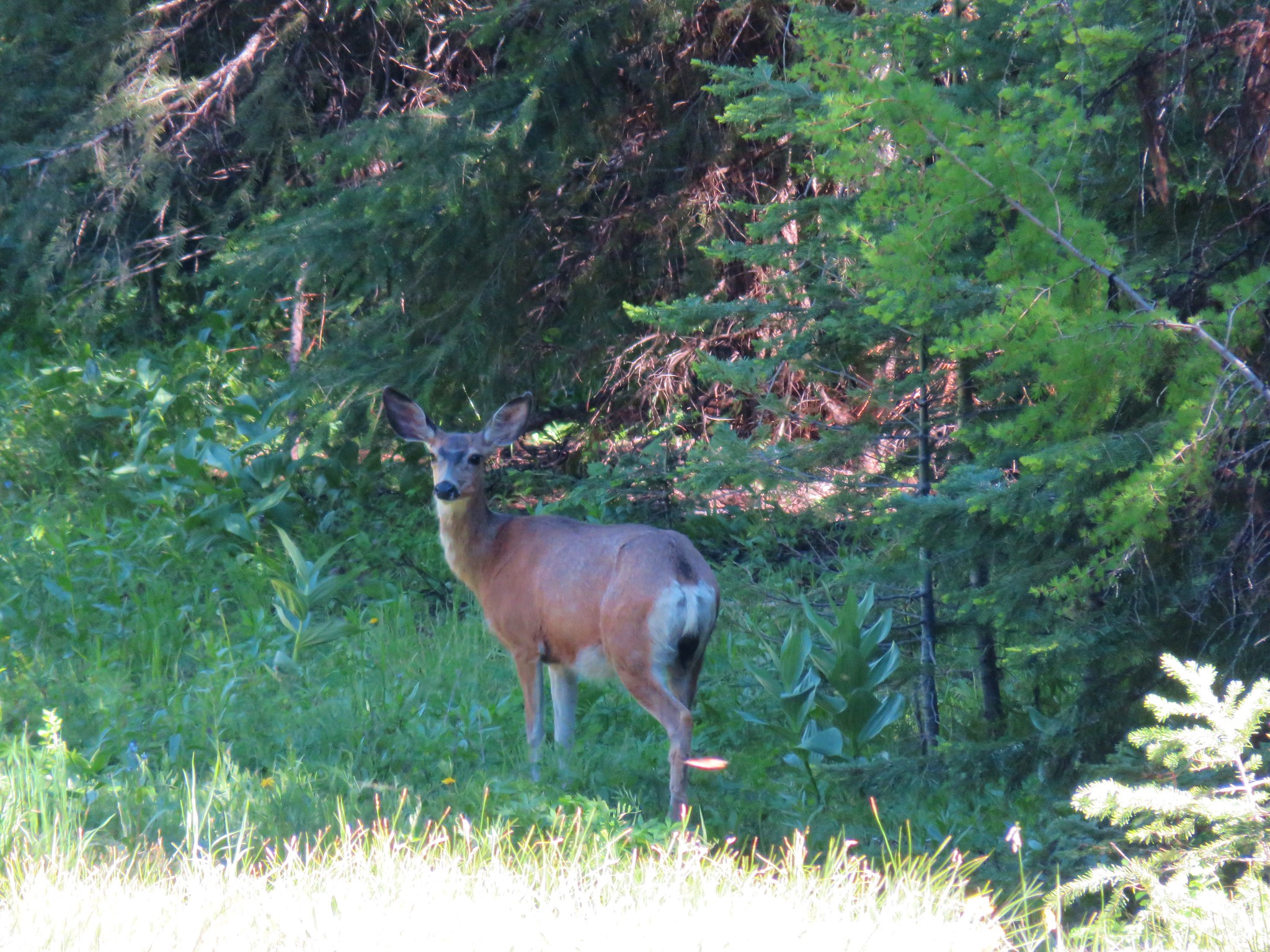
We returned the way we’d come. After crossing NF-42 we spotted a doe which seemed fitting since we were close to a road and we seem to see more deer from the roads than we do on the trails.

IMG_3192

It was a great day in the Ochocos and it had felt really nice to finally spend some time in the mountains. Happy Trails!

Flickr: North Point & Round Mountain

Categories
Central Oregon Fort Rock Hiking Newberry Crater Oregon Trip report

Central Oregon Oddities

**Note the 2024 Flat Top Fire burned the forest around South Ice Cave.**

On Sunday of Memorial Day weekend we headed south of Bend on a tour of oddities, most of which were geologic in nature.  In addition to our usual Sullivan guide books (Central and Eastern Oregon for these hikes) we had the 2012 updated “Bend, Overall” by Scott Cook with us.

Our first stop was the only hike that was solely covered by Cook, South Ice Cave.  From Bend we drove south on Highway 97 to LaPine where we turned left on Finley Butte Rd which became NF-22. After 25 miles we turned left at a sign into a parking area.
IMG_0924

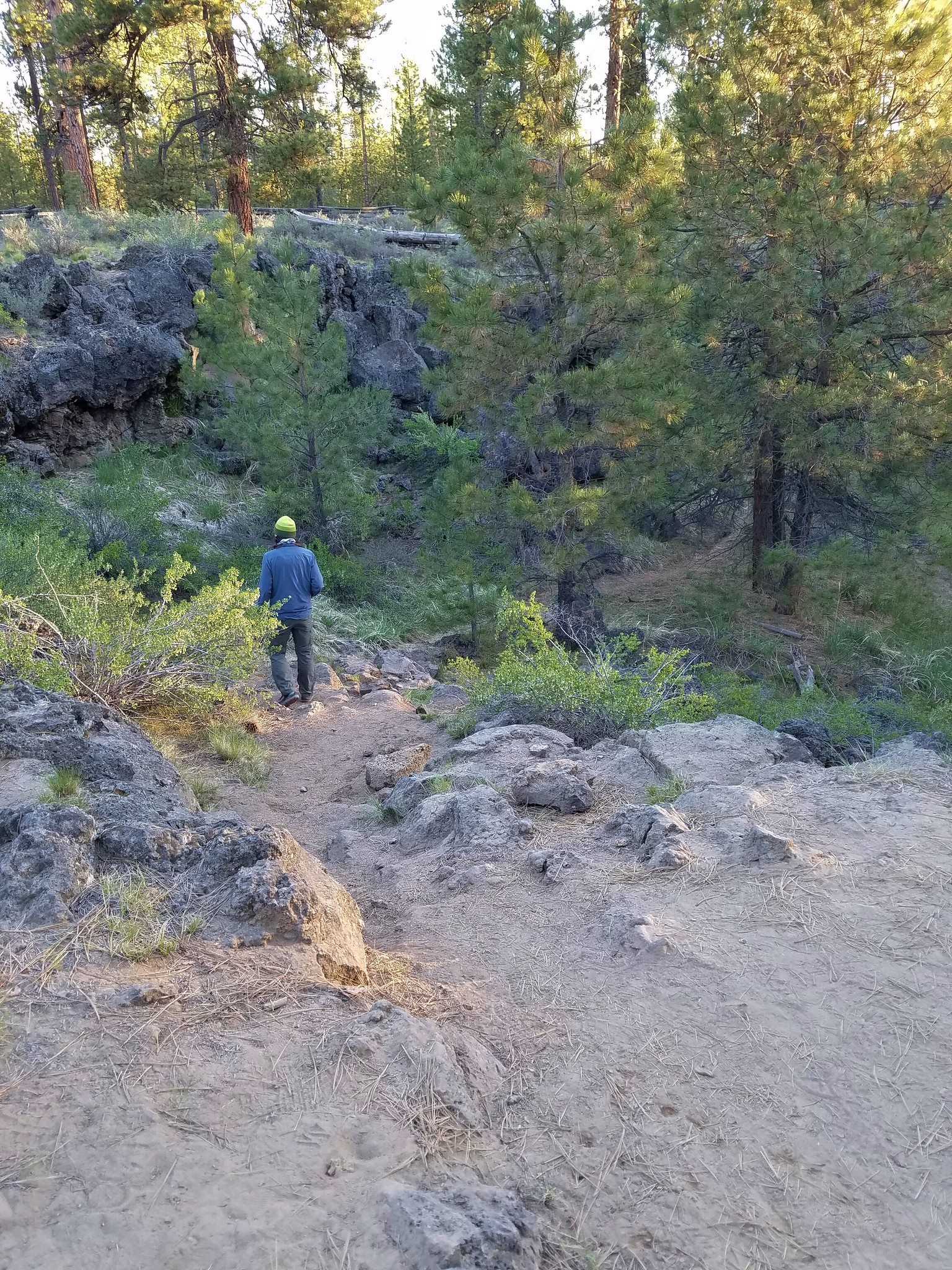
A short path descended into a depression where numerous small birds were busy singing in the pine trees.
2017-05-28 06.21.00

IMG_0932

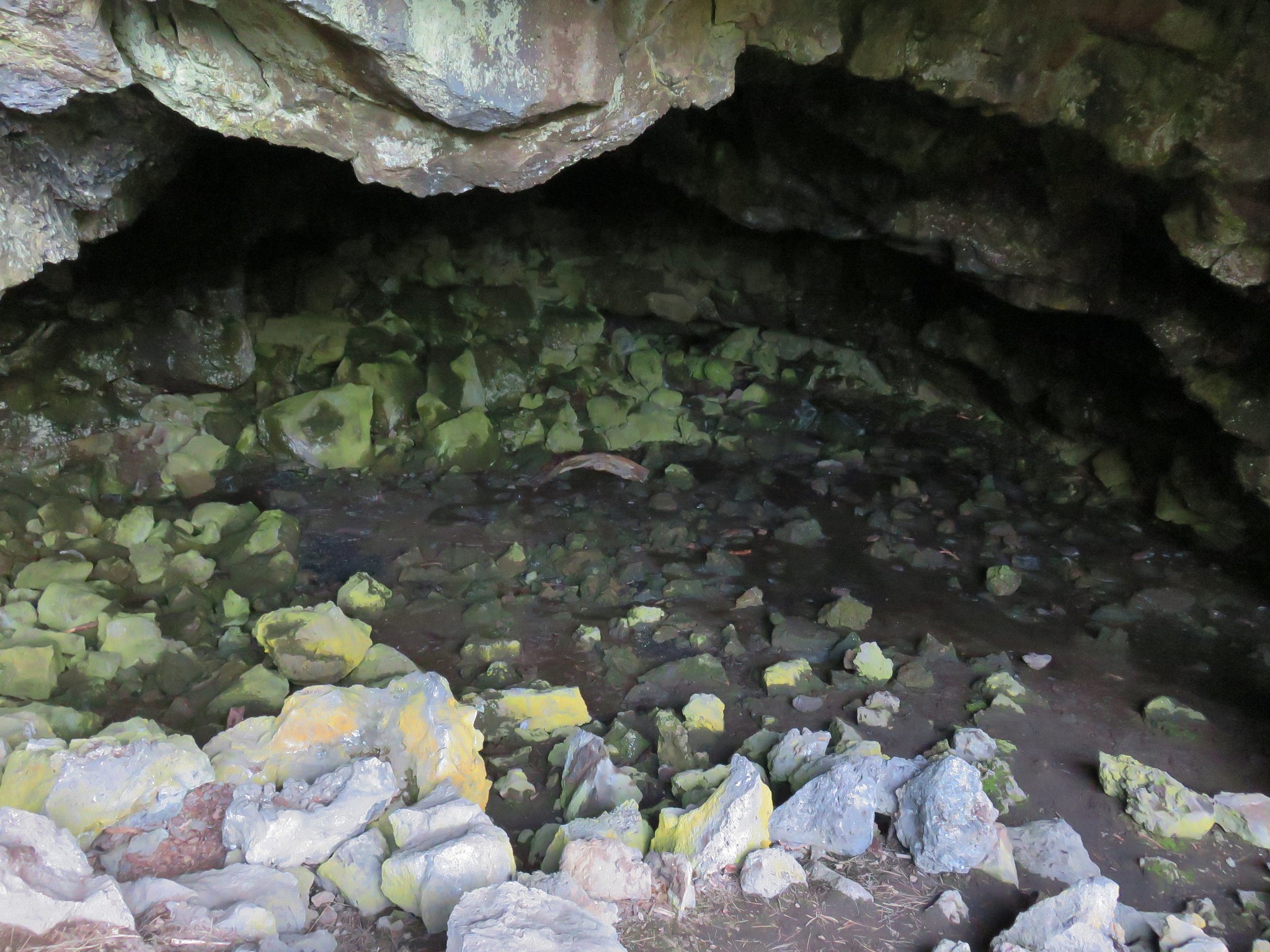
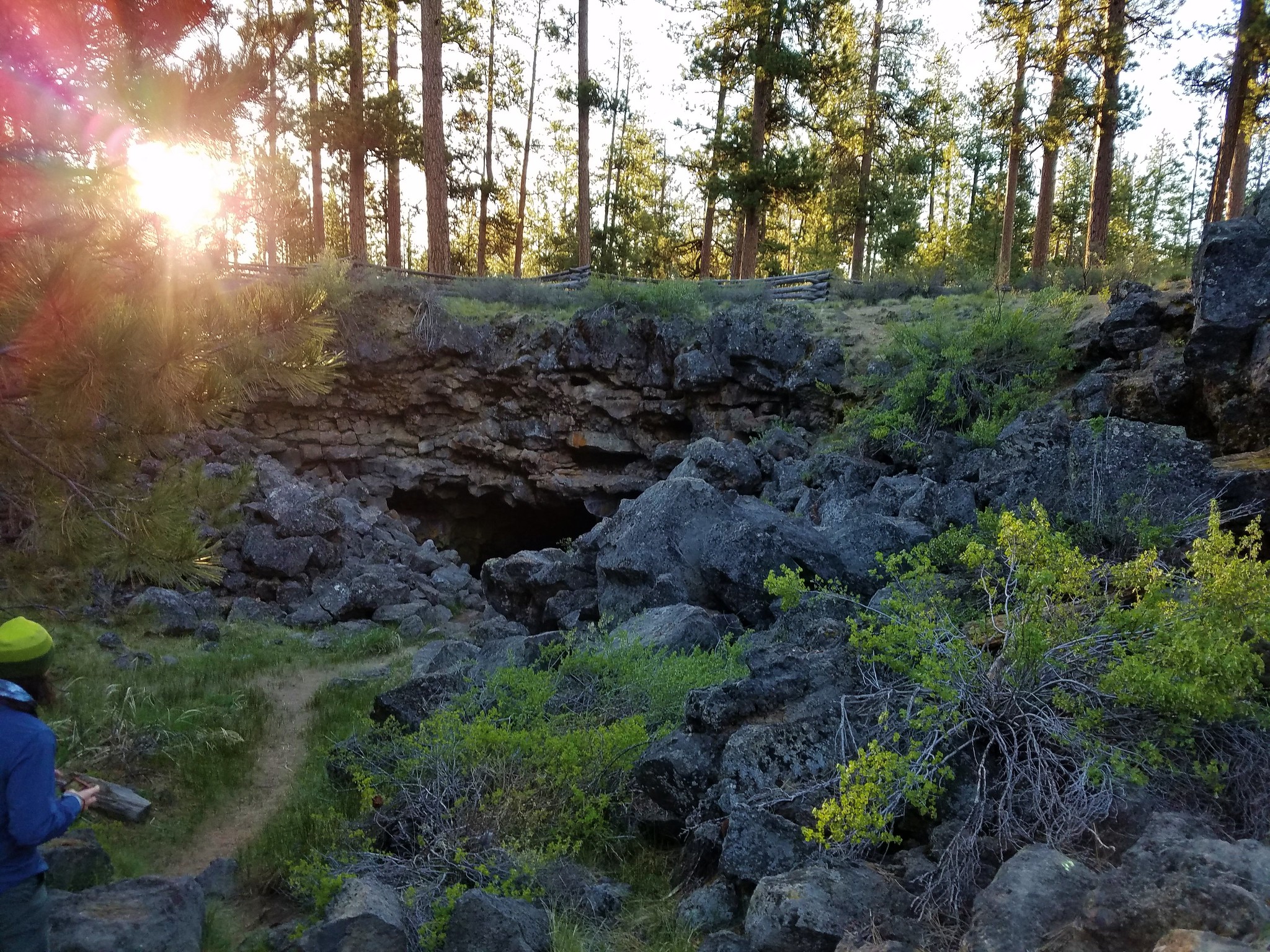
We followed the path to the right which led to the entrance to South Ice Cave, a .25 mile long lava tube.
2017-05-28 06.21.28

IMG_0939

Armed with headlamps and warm clothing we headed down into the cave. Cook suggests that May is the best month to visit to see the ice but noted that each year is different as far as how much ice is present. We may have been just a bit late this year but there was indeed ice on the floor of the cave near the entrance.
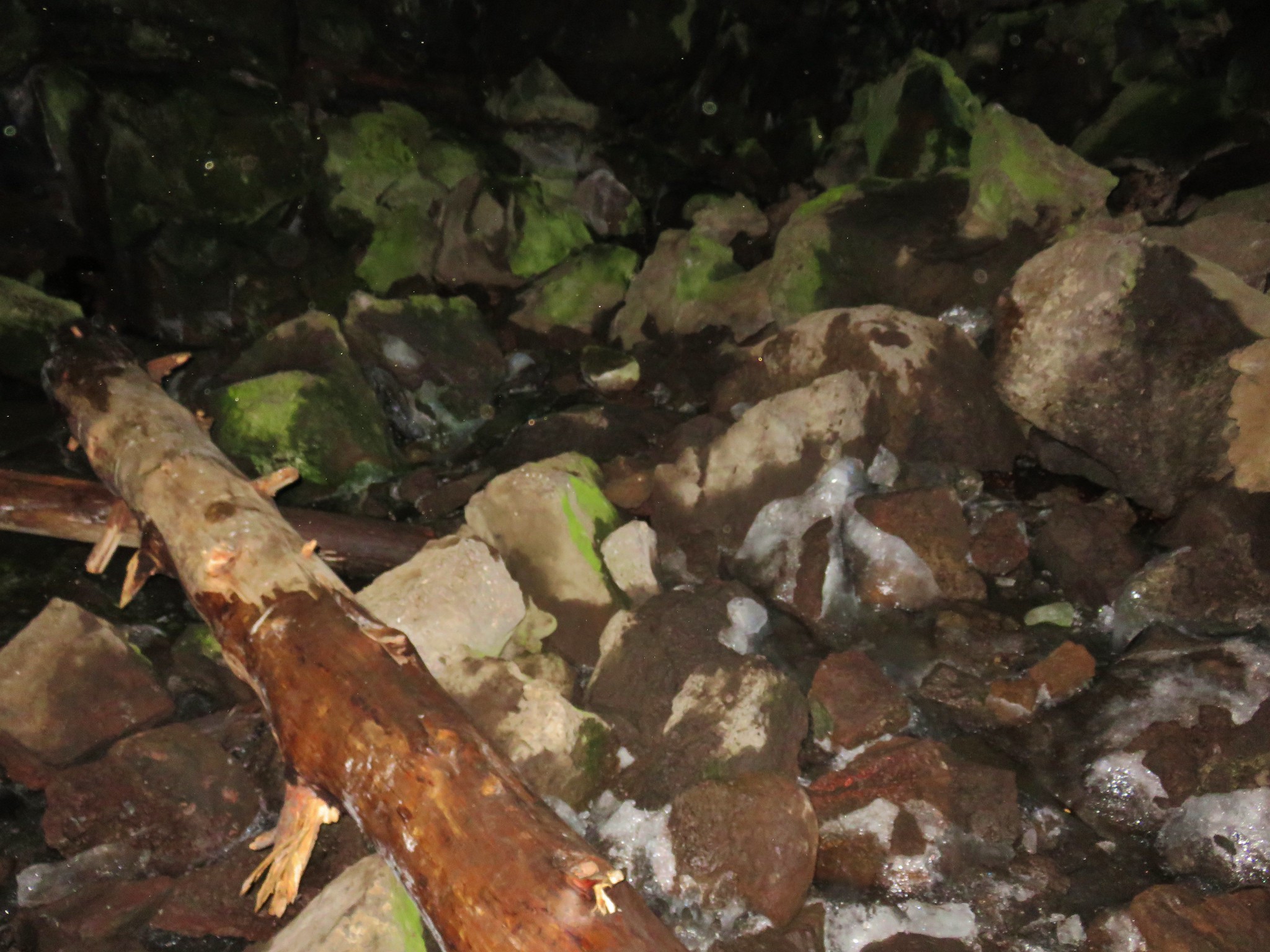
IMG_0942

We climbed over a pile of rocks and went deeper into the cave where the amount of ice increased.
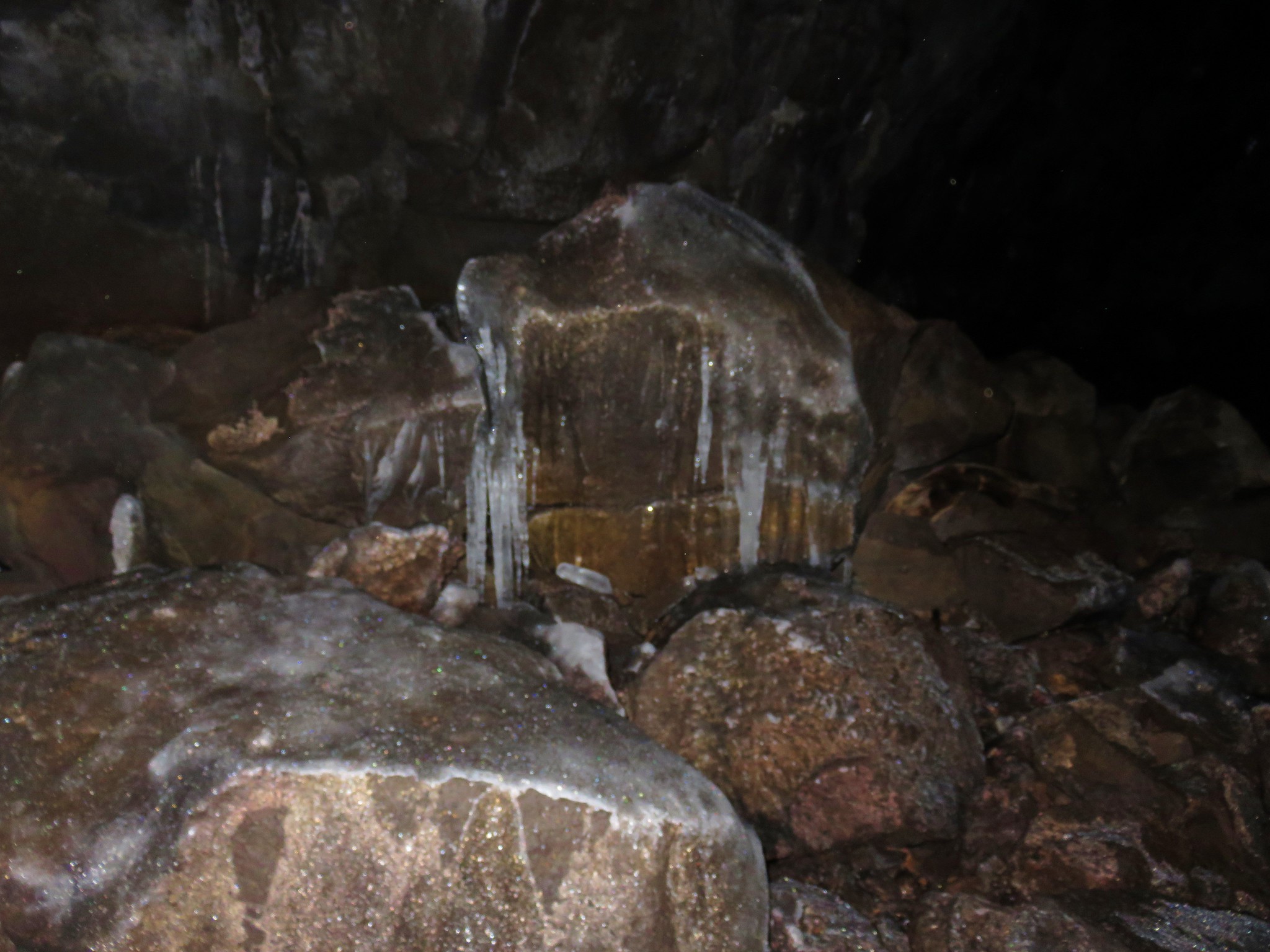
IMG_0954

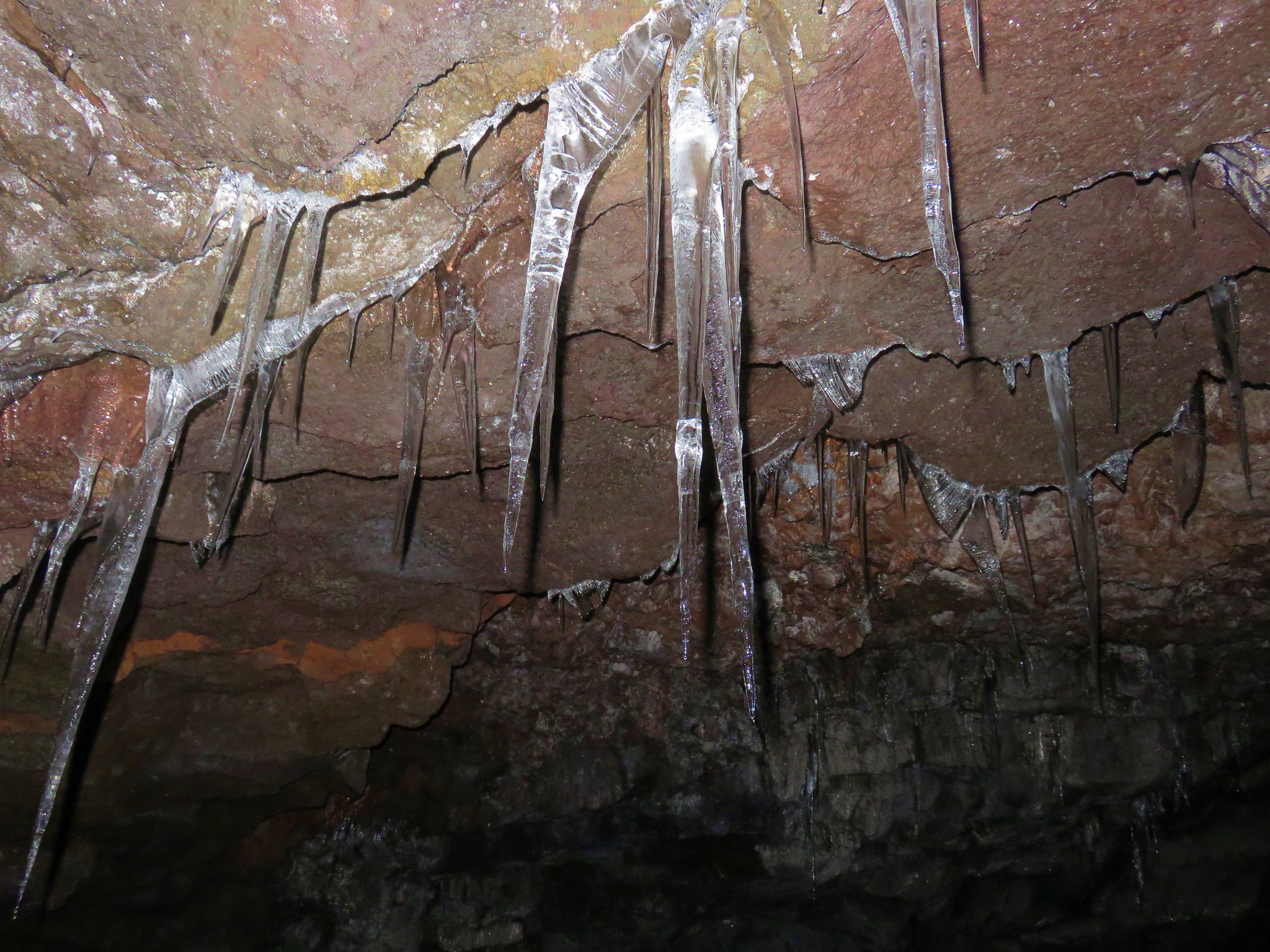
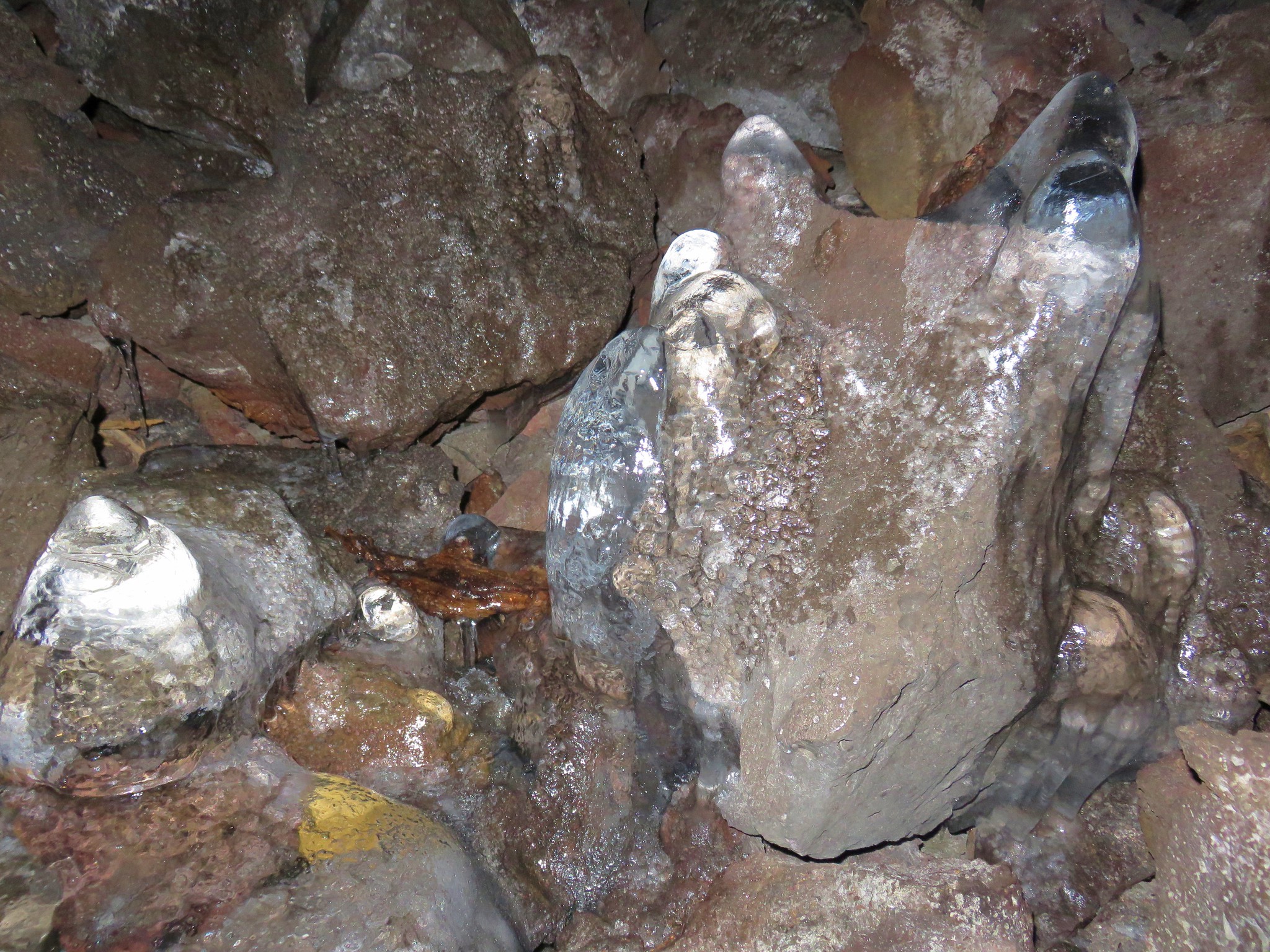
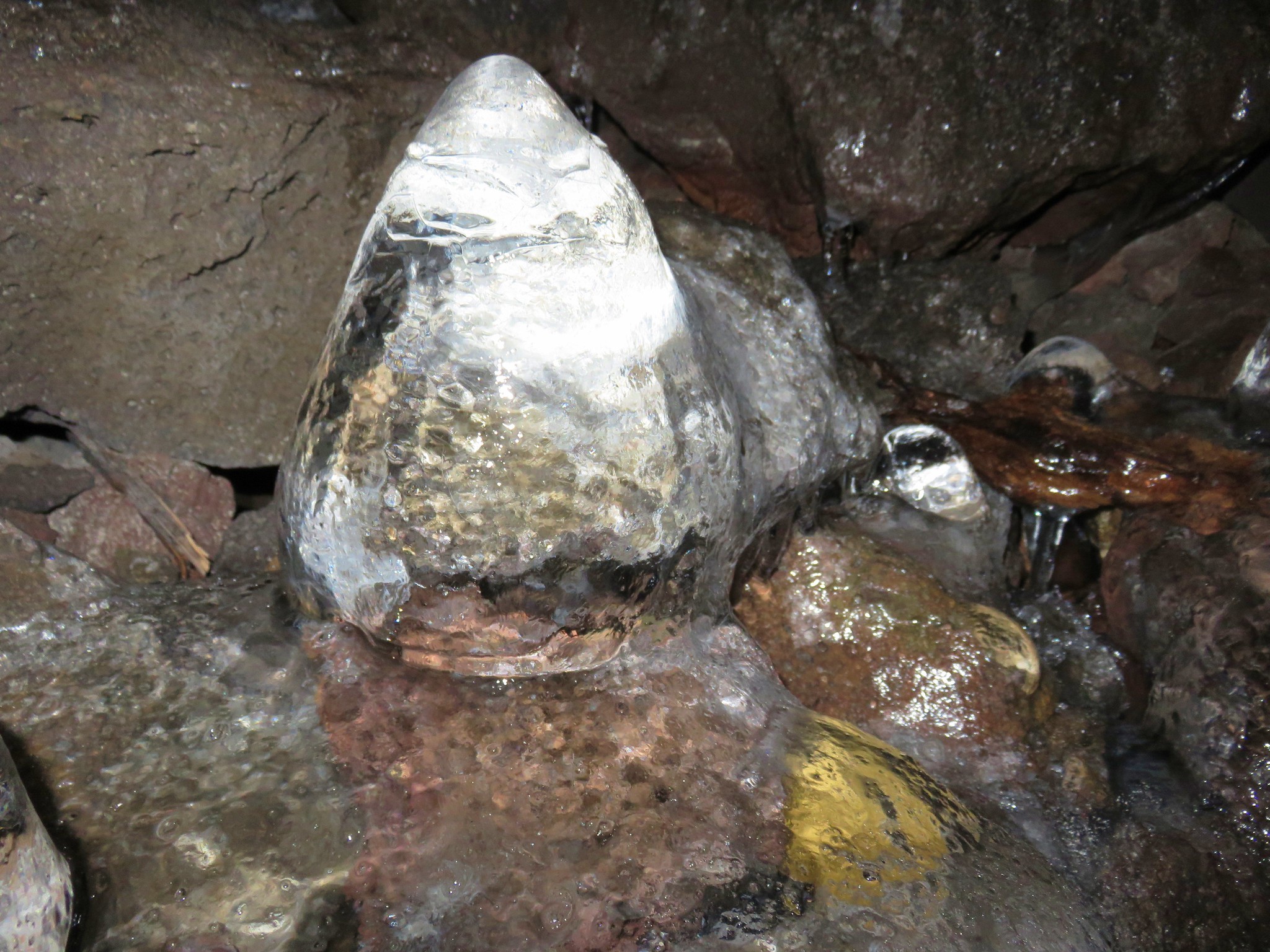
We continued to scramble over the lava trying to avoid the ice as much as possible since it made the rocks very slick, on the other hand the lava was sort of sharp and both our pants came away with battle scars. A little further into the cave we came to the best of the ice display where icicles hung overhead and ice nubs rose from the rocks.
IMG_0966

IMG_0969

IMG_0984

IMG_0985

Near the back of the cave the ice pretty much disappeared and the cave ended unceremoniously.
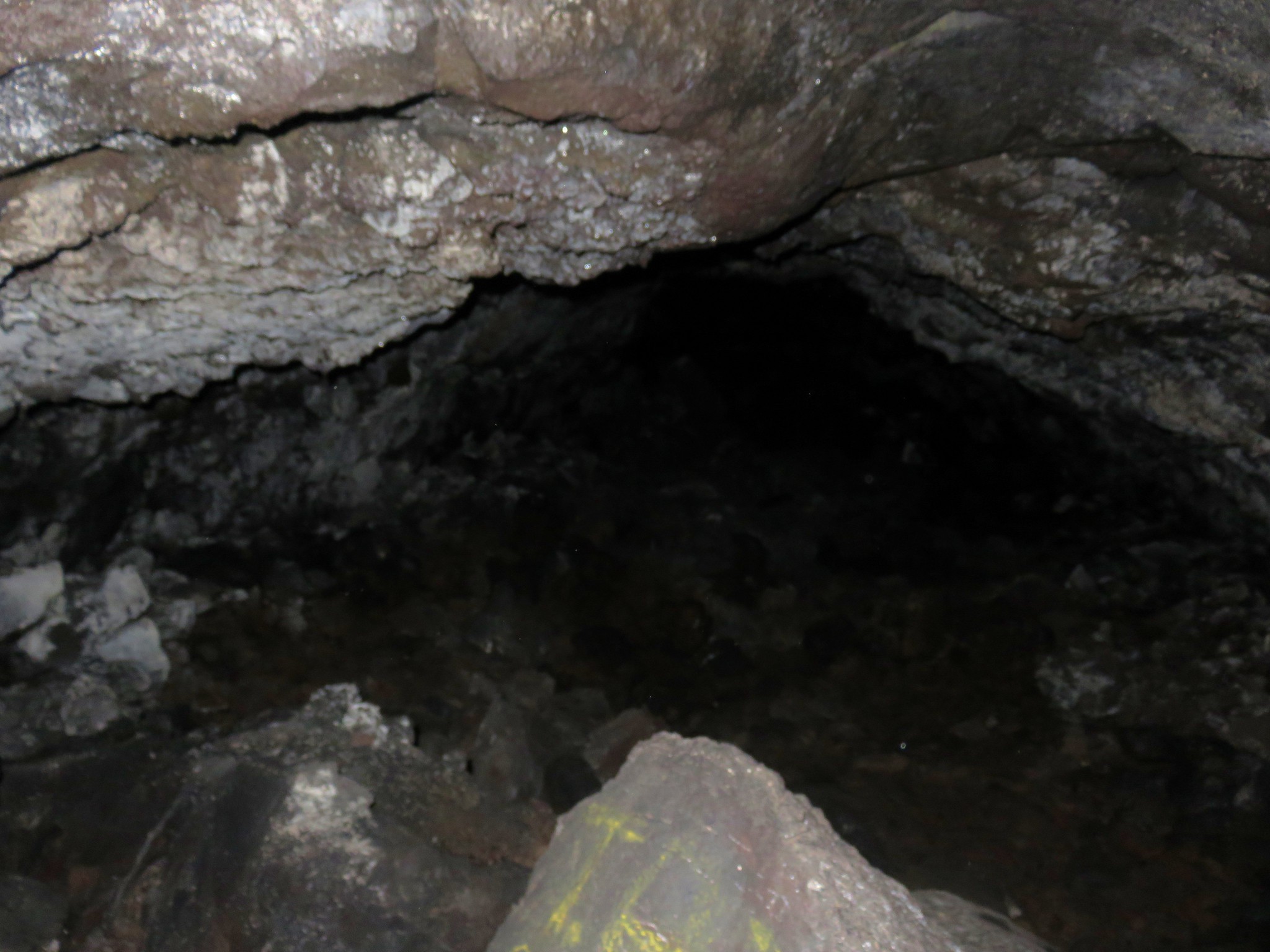
IMG_0974

I had reached the end first and as I turned to see if I could see where Heather was a bat flew through my headlamp’s light. It had apparently passed by Heather as well because when I told her there were bats she said she knew. 🙂

Despite the ice it wasn’t as cold in the cave as we’d anticipated and we were both a little warm from all the scrambling by the time we emerged from the cave.
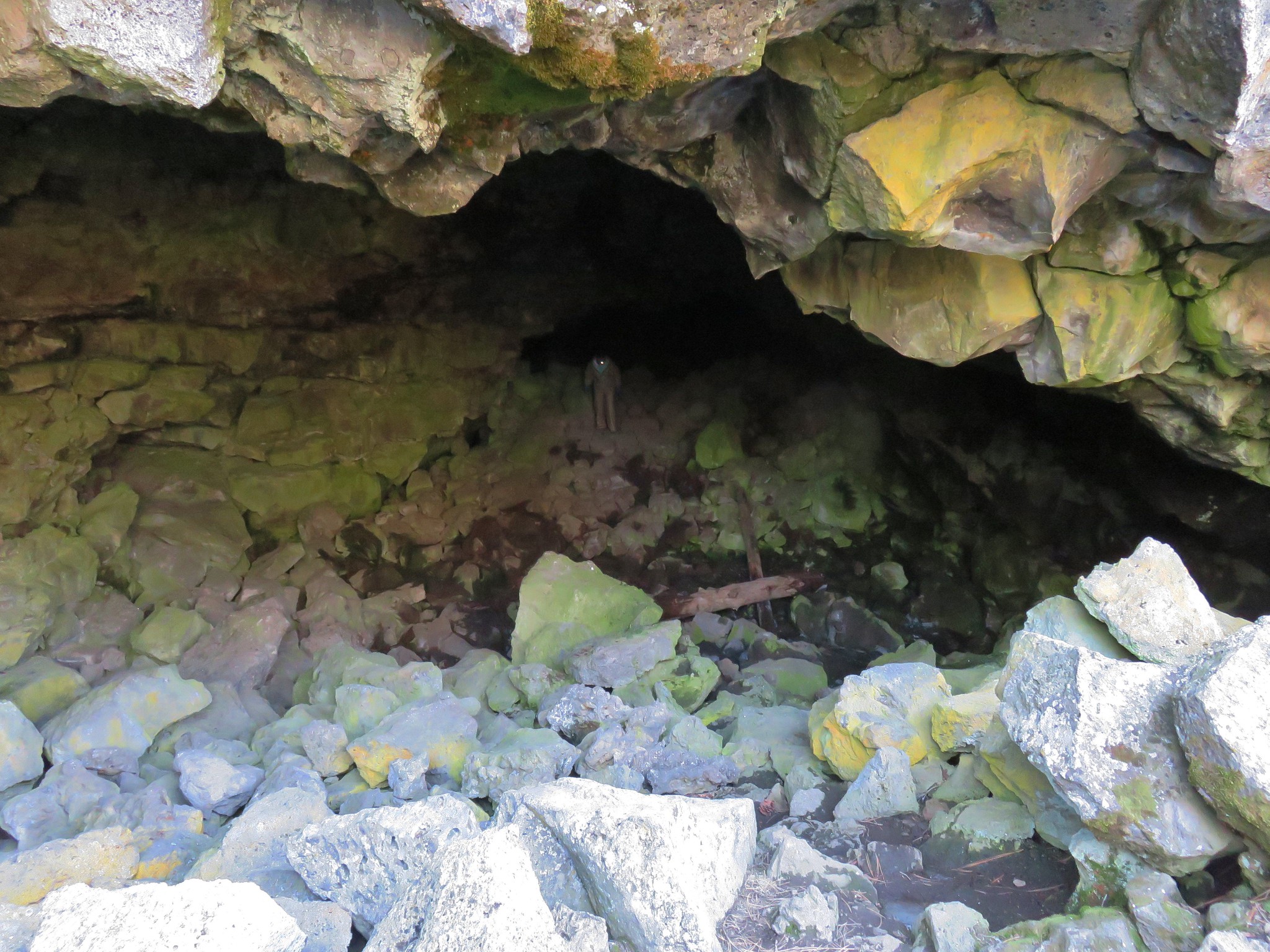
IMG_0988

The half mile round trip took us about an hour which is what Cook had said to expect in the guidebook. After taking off our extra clothing we headed off to our next stop – Fort Rock State Park.

We turned left out of the parking area back onto NF-22 and followed it for a mile to a stop sign at NF-18 where we turned right. We stayed on NF-18 for 15 miles to the entrance of Fort Rock State Park. We had stopped here in 2014 after a hike up Hager Mountain and toured the inside of Fort Rock so this time we decided to hike around the outside.

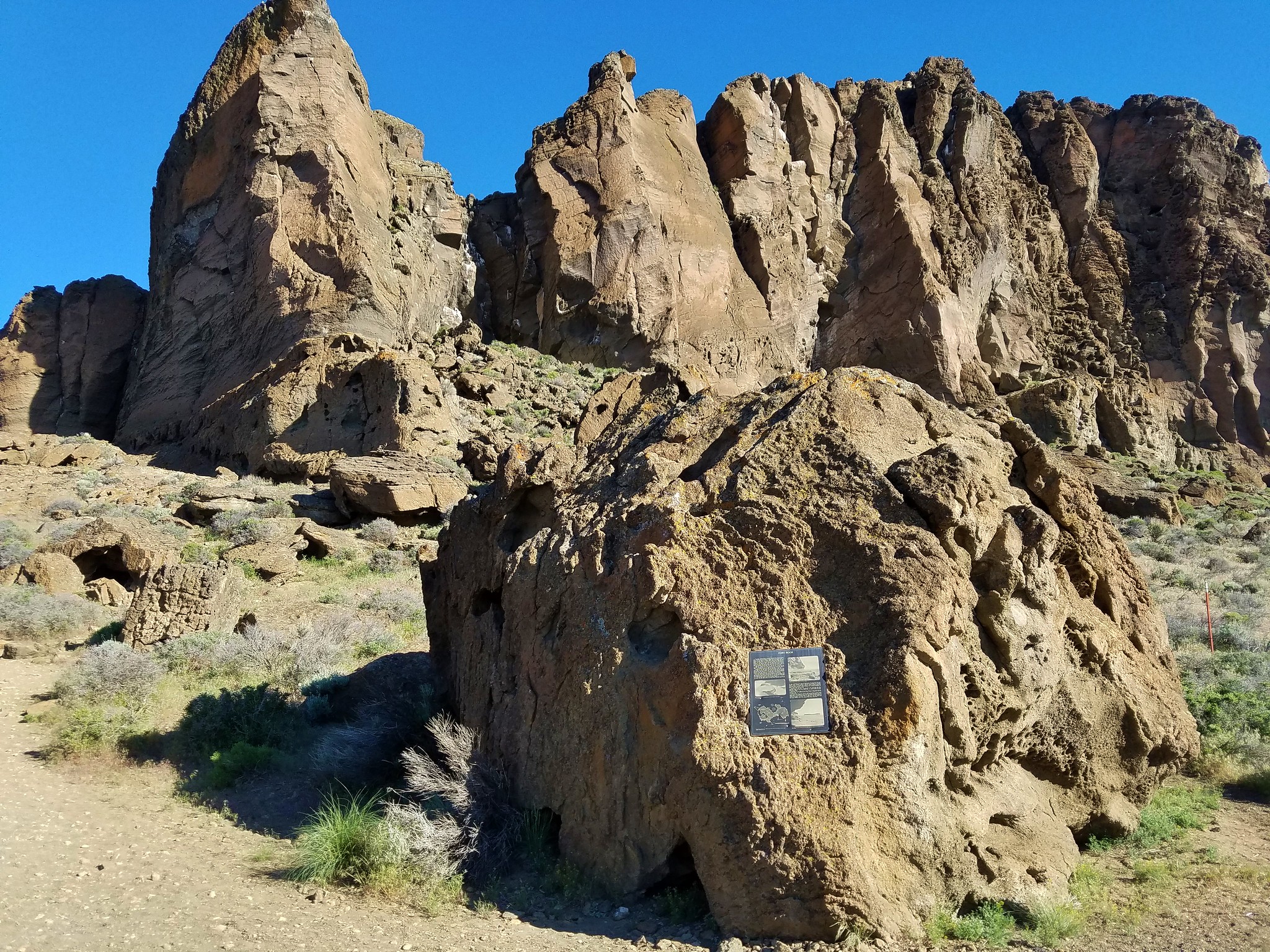
From the parking area we followed a path to some plaques on rocks.
IMG_1001

2017-05-28 07.53.53

From these rocks we turned right and passed through a barbed wire fence heading around the outside of Fort Rock.
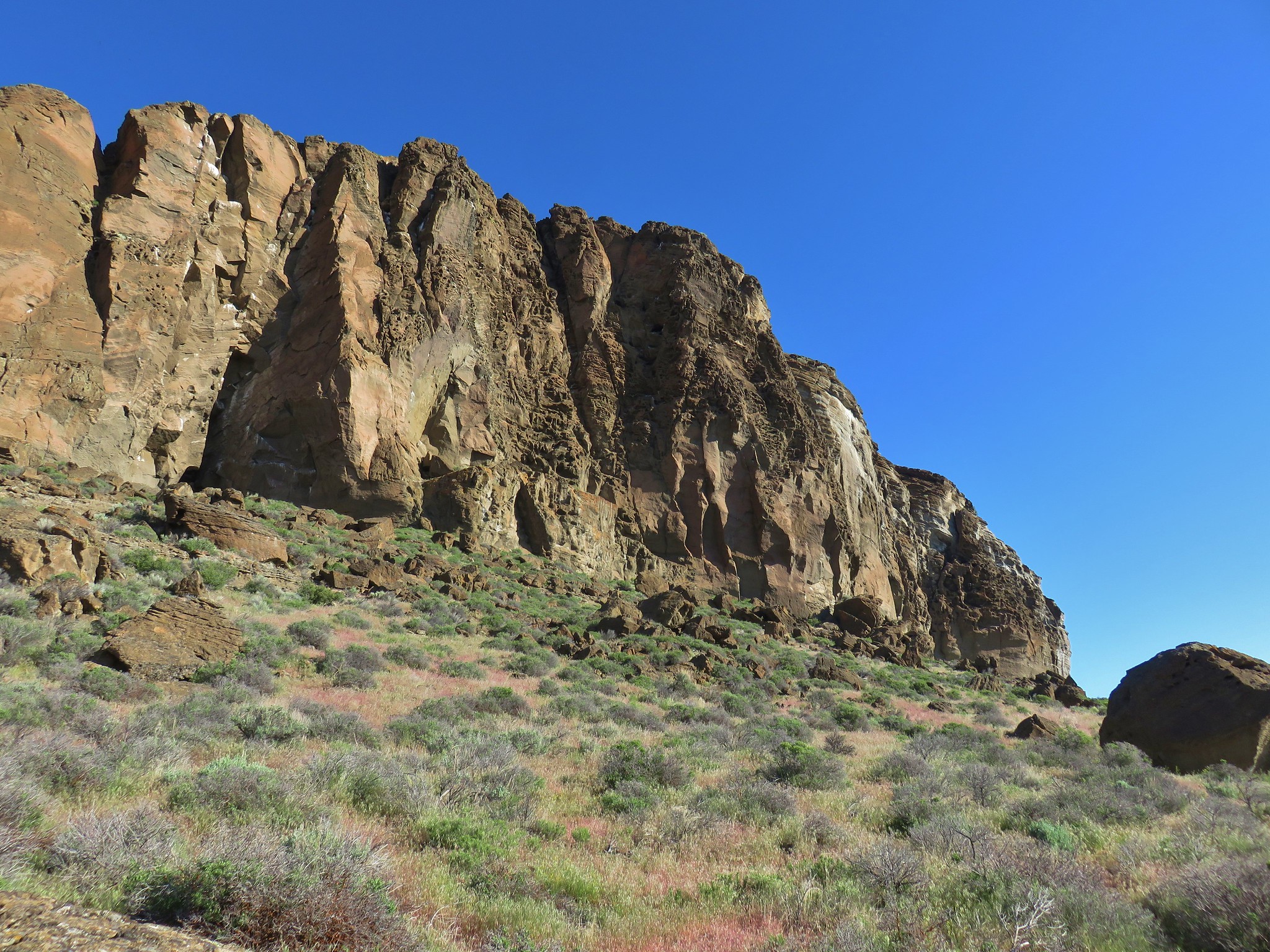
IMG_1006

Although there is no official trail around the outside there was almost always a clear path through the sagebrush. Much like our visit to Cottonwood Canyon State Park the previous day we kept our eyes peeled for wildflowers and wildlife amid the sagebrush and on the cliffs above.
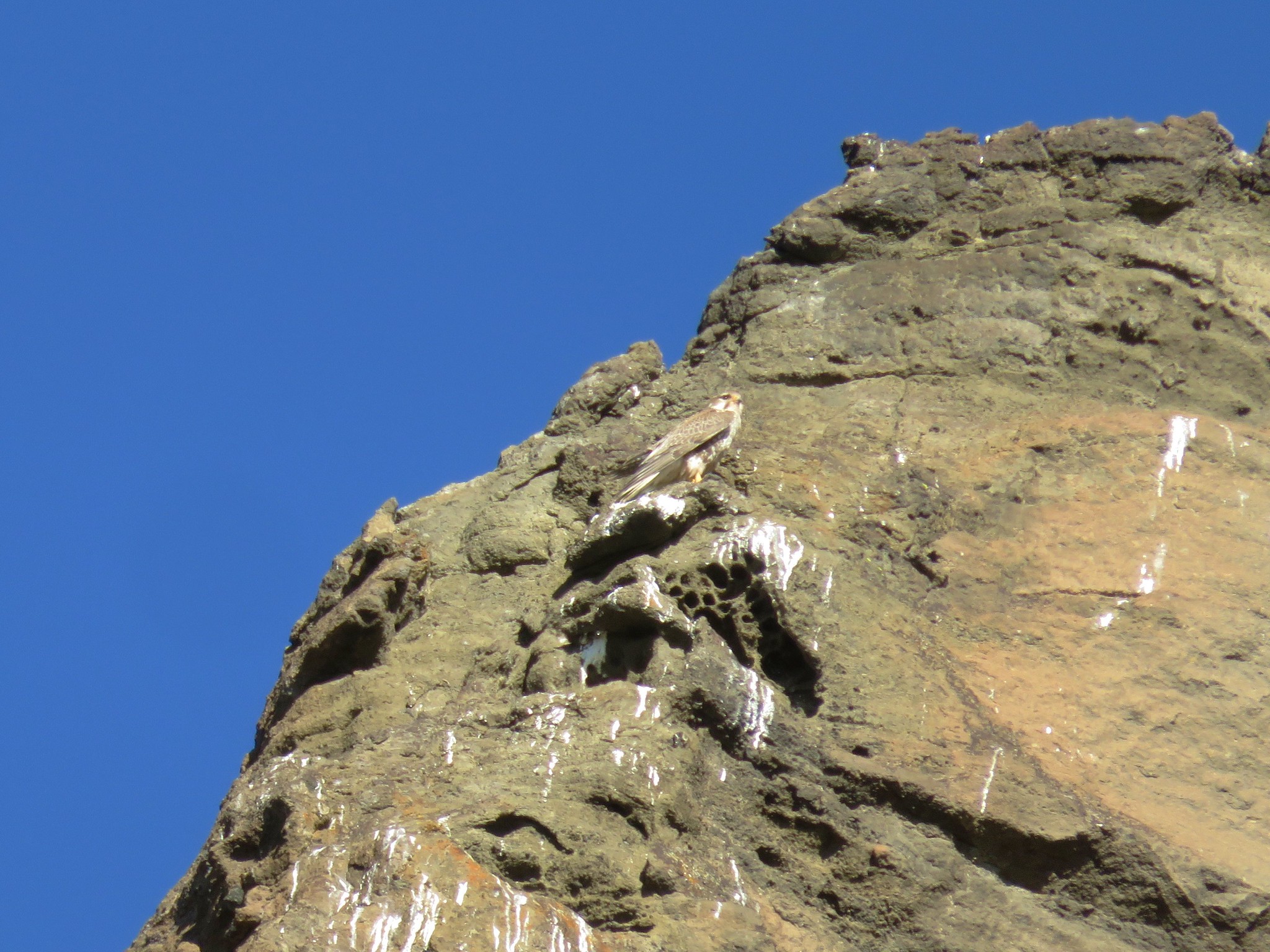
IMG_1008

2017-05-28 07.59.10

IMG_1025

IMG_1030

IMG_1035

IMG_1038

IMG_1041

IMG_1047

IMG_1049

IMG_1052

IMG_1056

IMG_1062

IMG_1060

2017-05-28 08.27.27

2017-05-28 08.43.21

IMG_1083

After approximately a mile and a half we rounded the west cliff of Fort Rock where we could now see into Fort Rock.
2017-05-28 08.54.22_stitch

We turned left onto an old road bed and followed it around the inside of Fort Rocks cliffs.
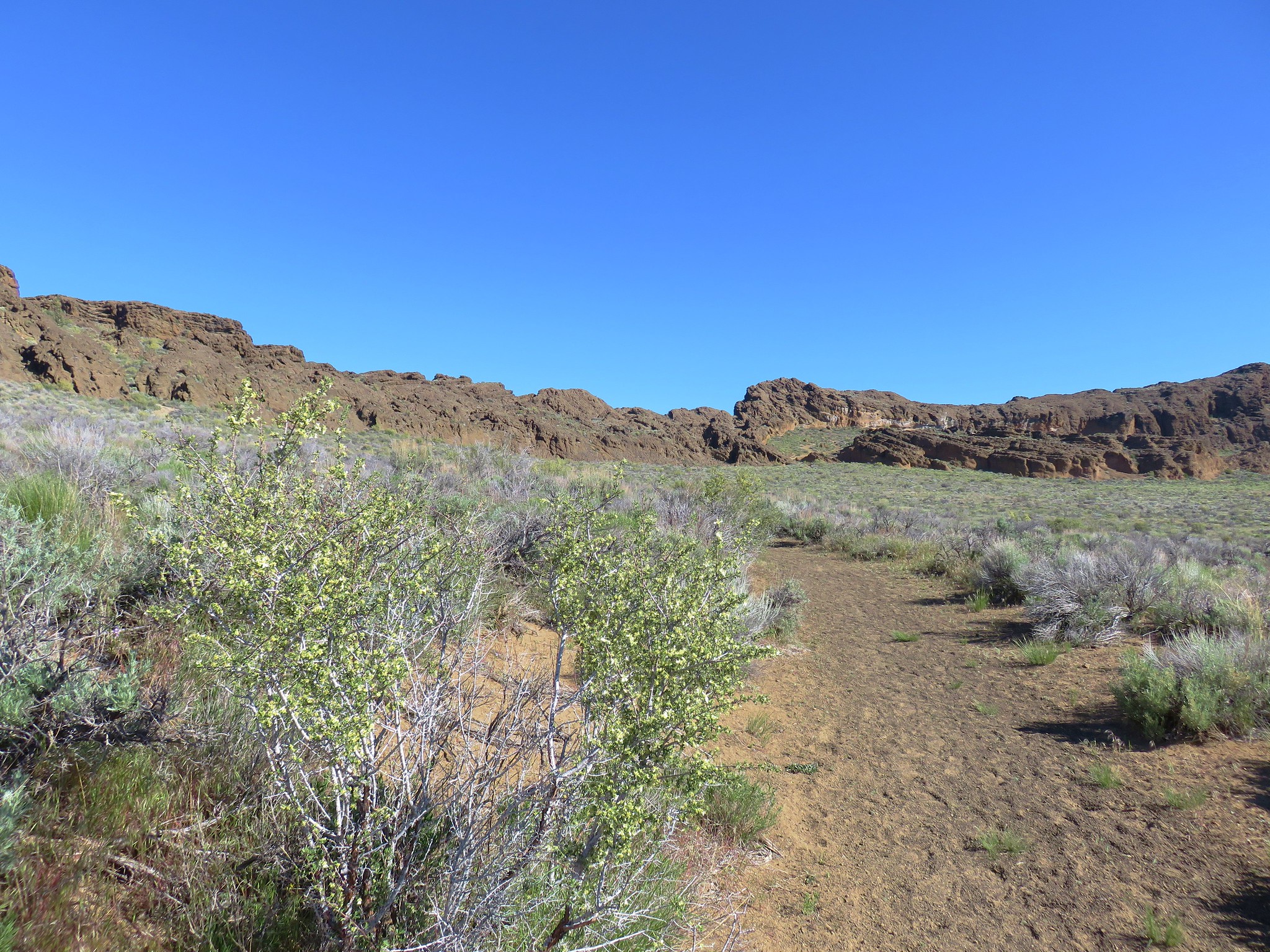
IMG_1097

We skipped the .2 mile trail up to a viewpoint which we had visited on our previous trip and stuck to the road bed which climbed up next to an explorable rock shelf where there were several lizards and a lot of bright red paintbrush.
IMG_1105

IMG_1118

IMG_1119

IMG_1120

The trail then passed by a rock pillar before returning to the parking area.
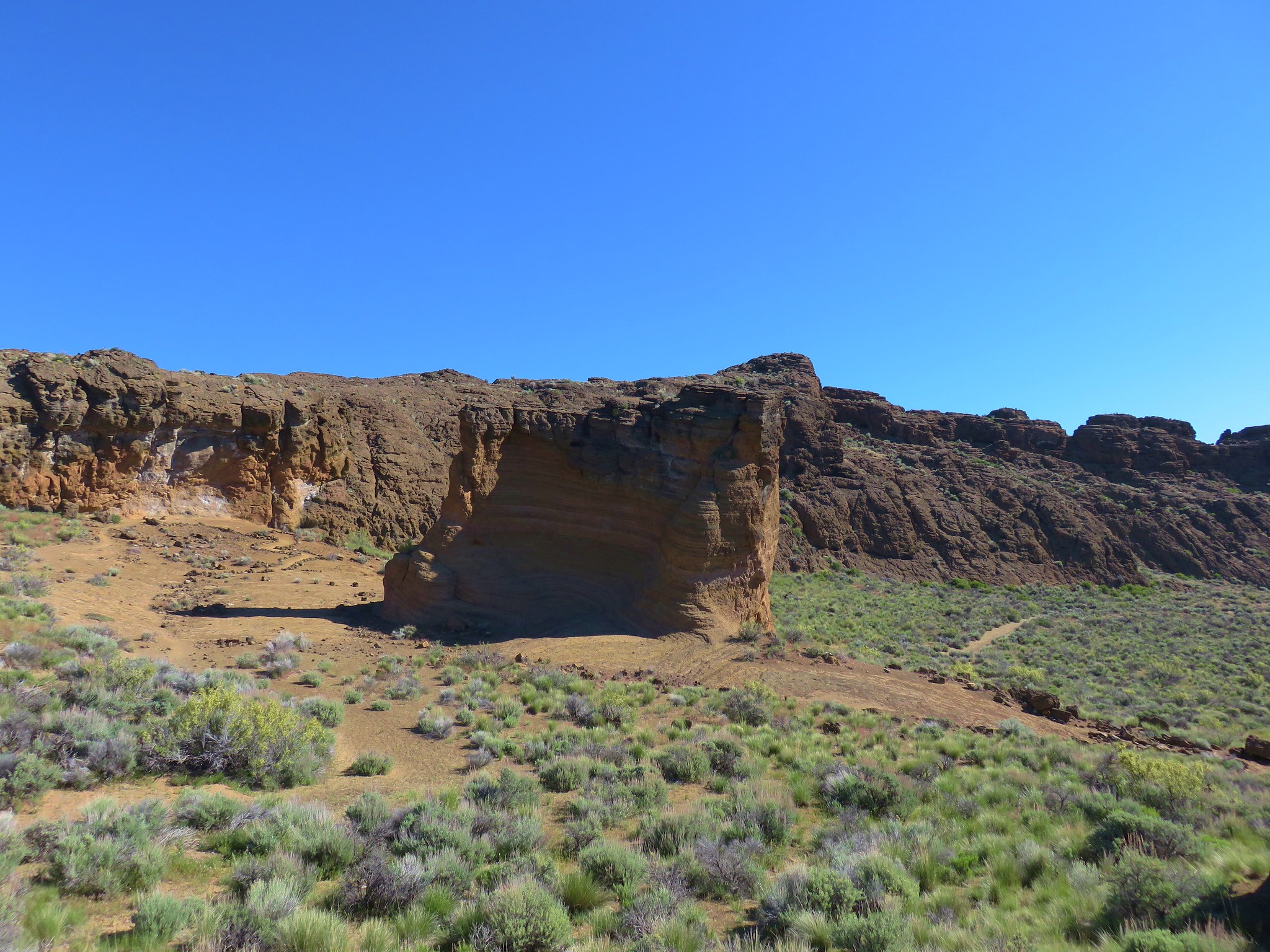
IMG_1127

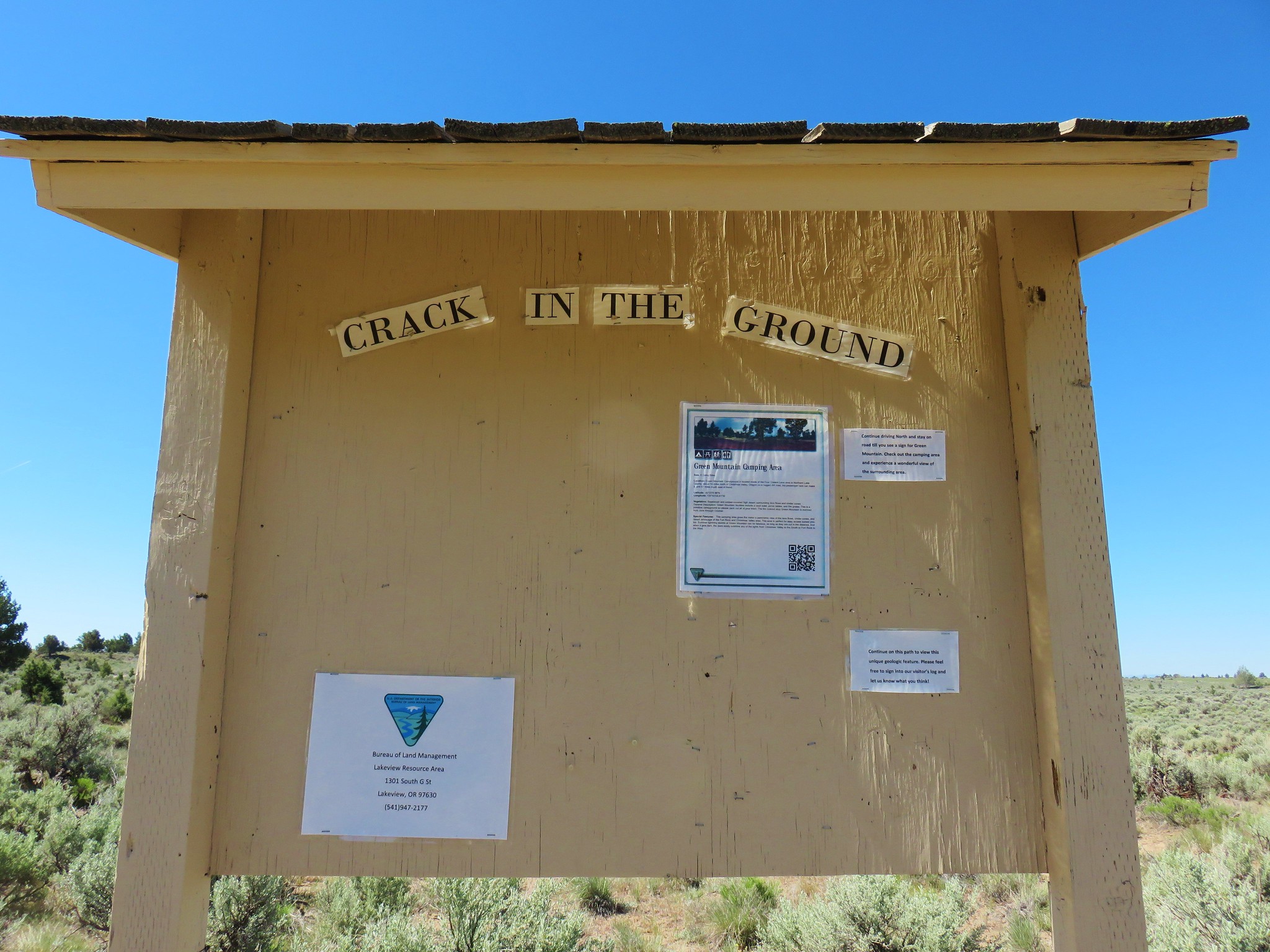
For our next stop we headed toward Christmas Valley by heading south from the park to the town of Fort Rock where we turned left and followed signs for Christmas Valley a total of 27 miles. After passing through the town we turned left at a sign for Crack in the Ground and followed this dirt/gravel road for 7.2 miles to a small parking area with a toilet. The trail started on the far side of the road at a signboard.
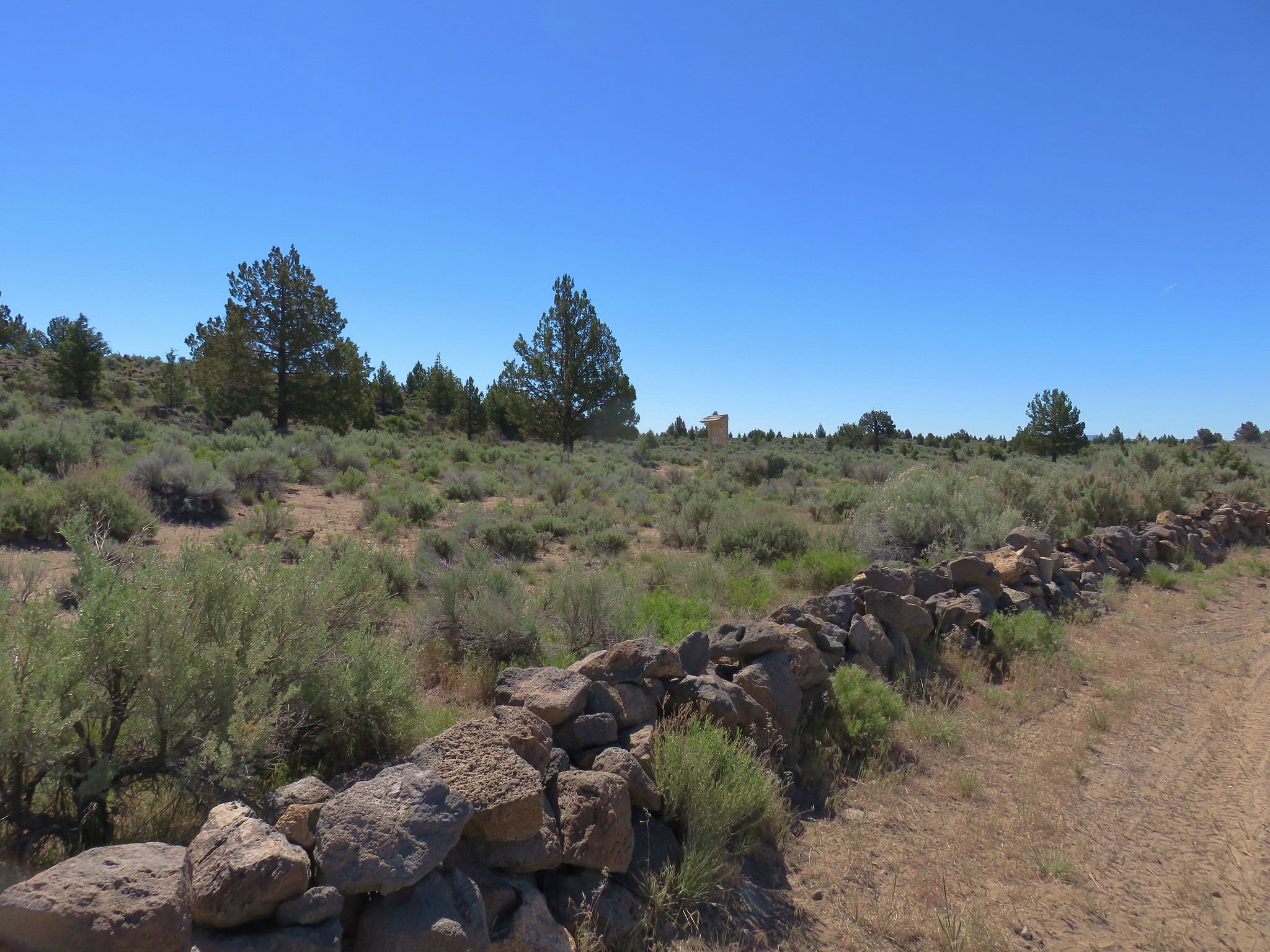
IMG_1145

IMG_1147

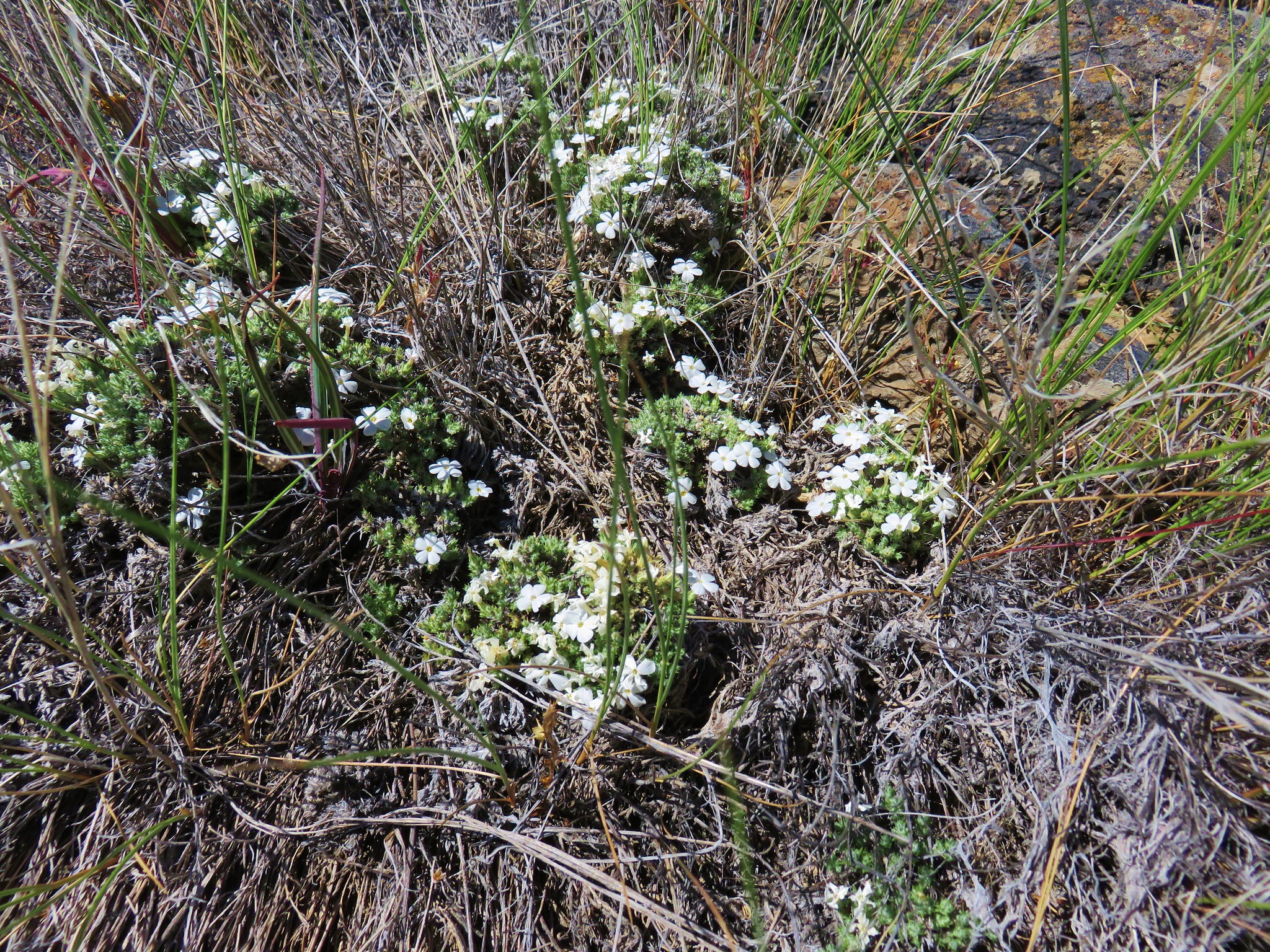
A level .2 mile path passed through sagebrush dotted with white phlox to a picnic table near the entrance to Crack in the Ground.
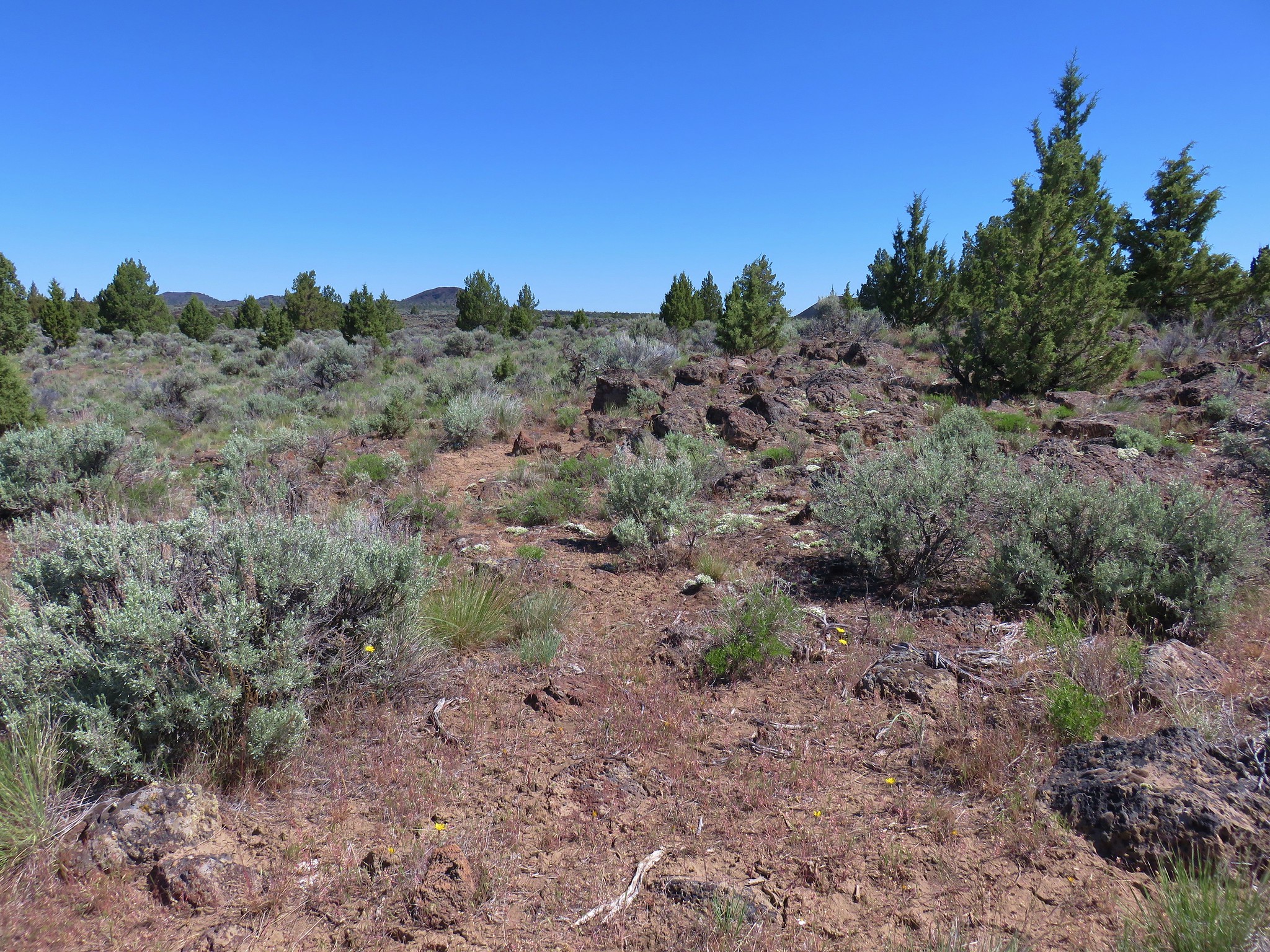
IMG_1153

IMG_1152

2017-05-28 10.37.28

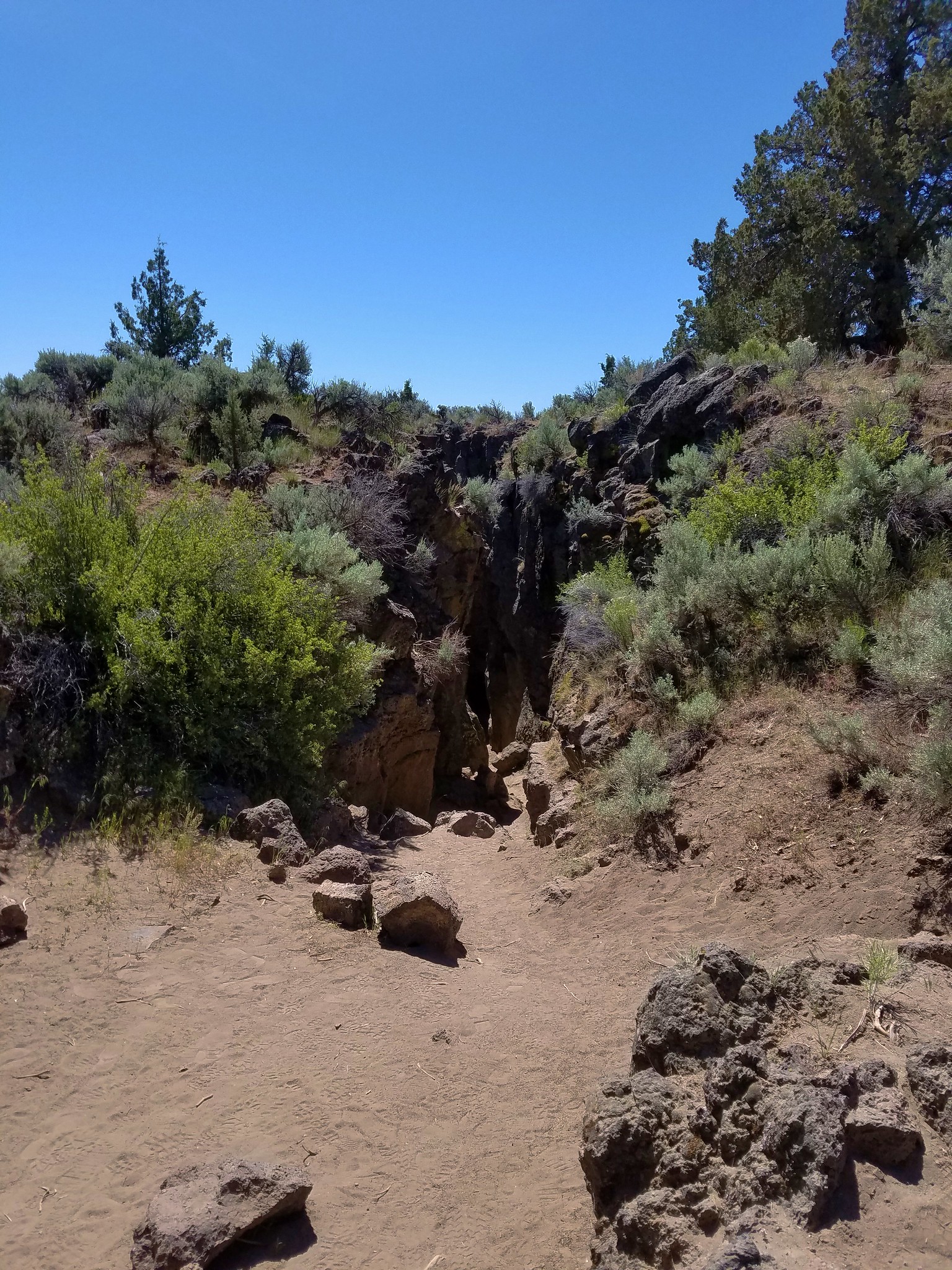
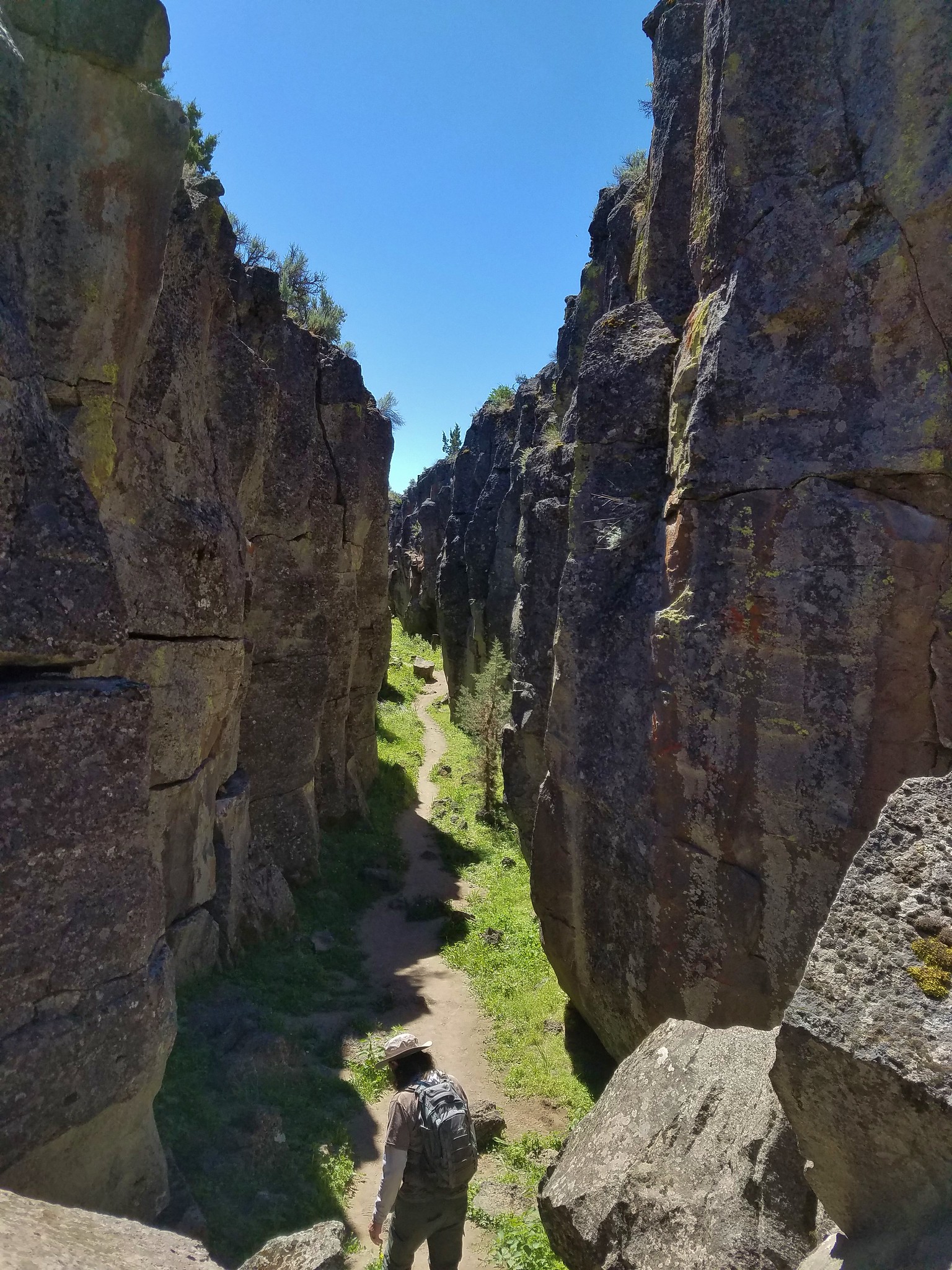
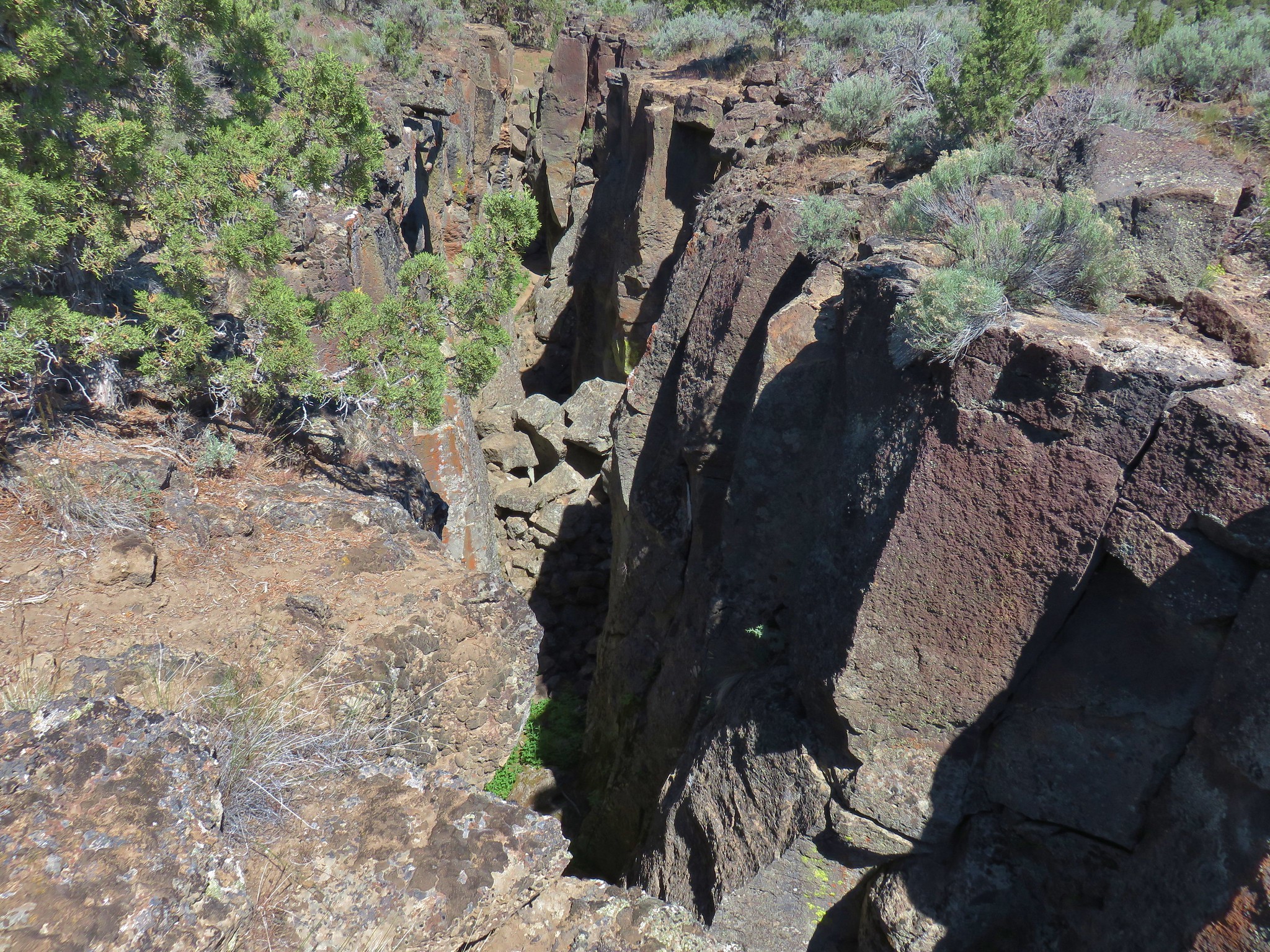
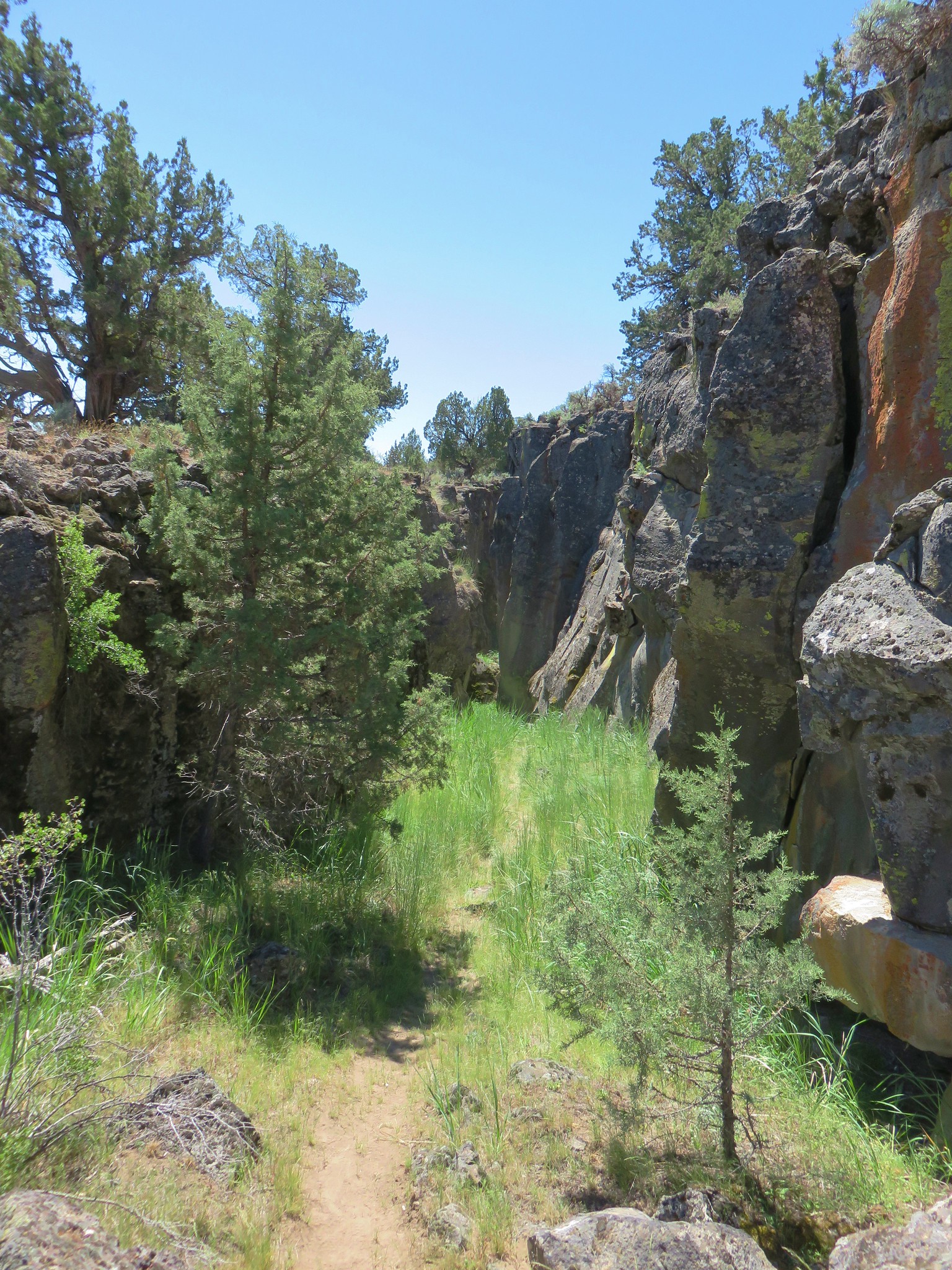
A path led down into the lava slot which reaches a depth of 70′.
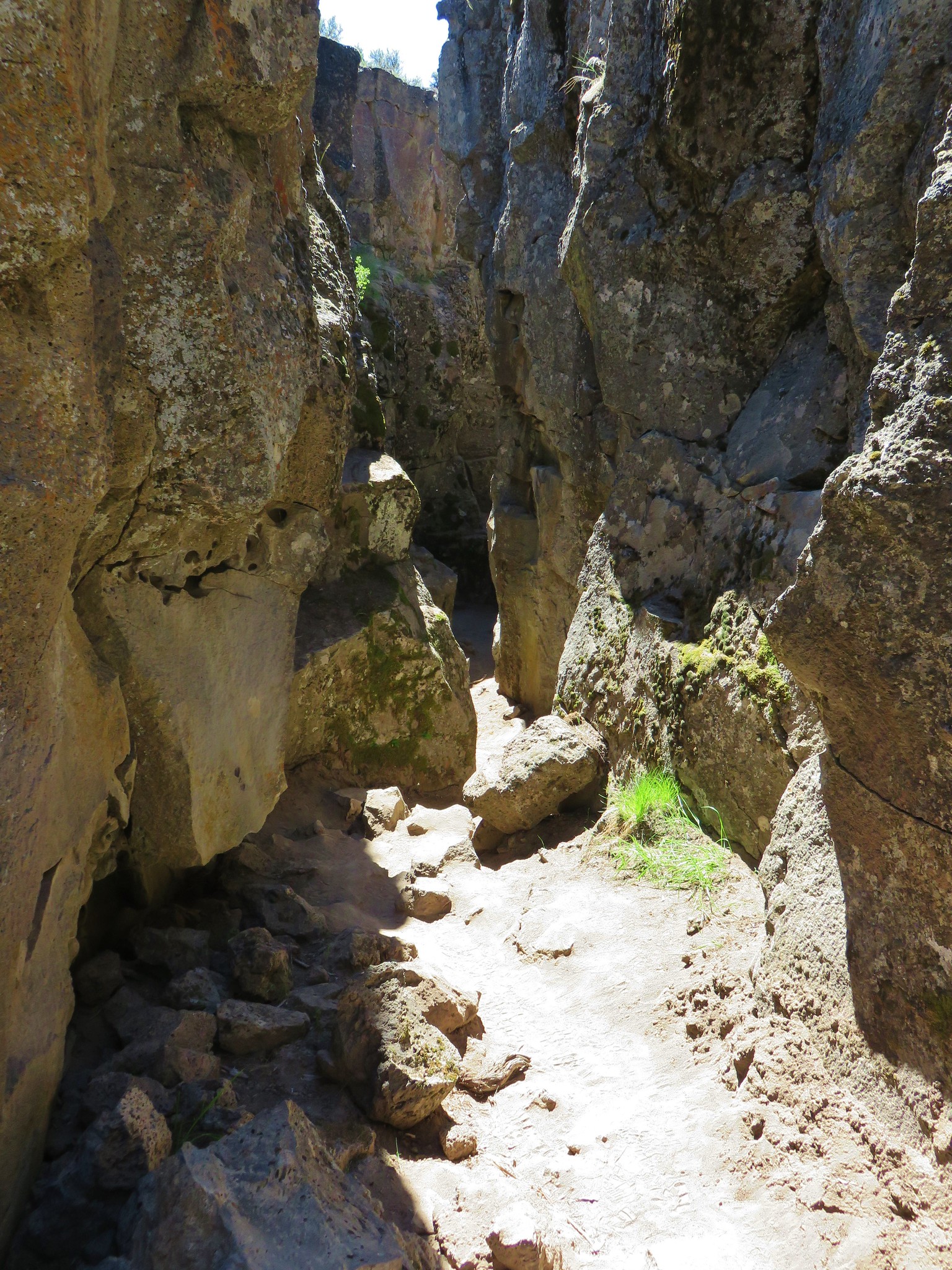
IMG_1158

2017-05-28 10.38.55

2017-05-28 10.40.01

IMG_1172

IMG_1168

There were some interesting textures along the canyon walls.
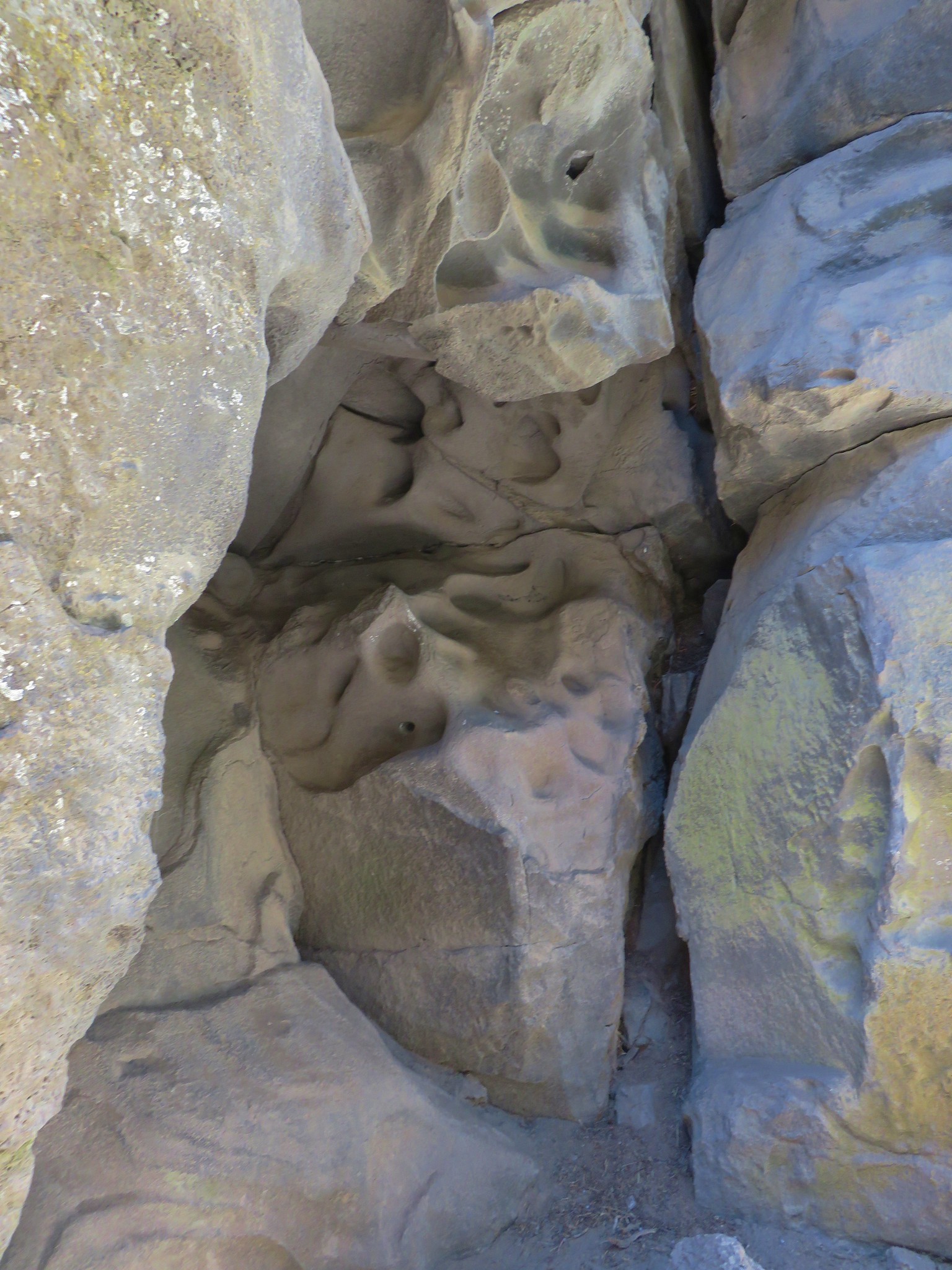
IMG_1159

IMG_1166

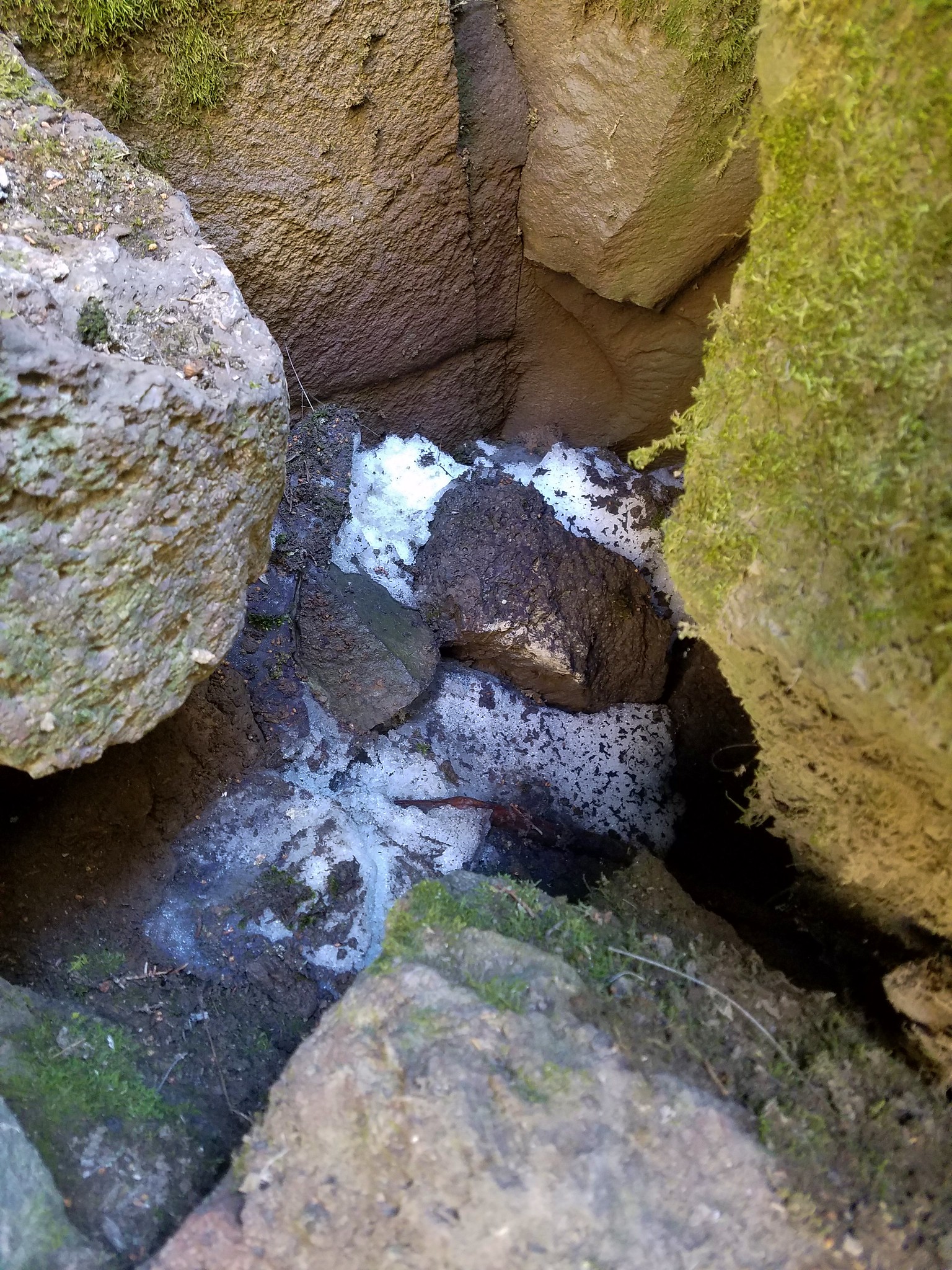
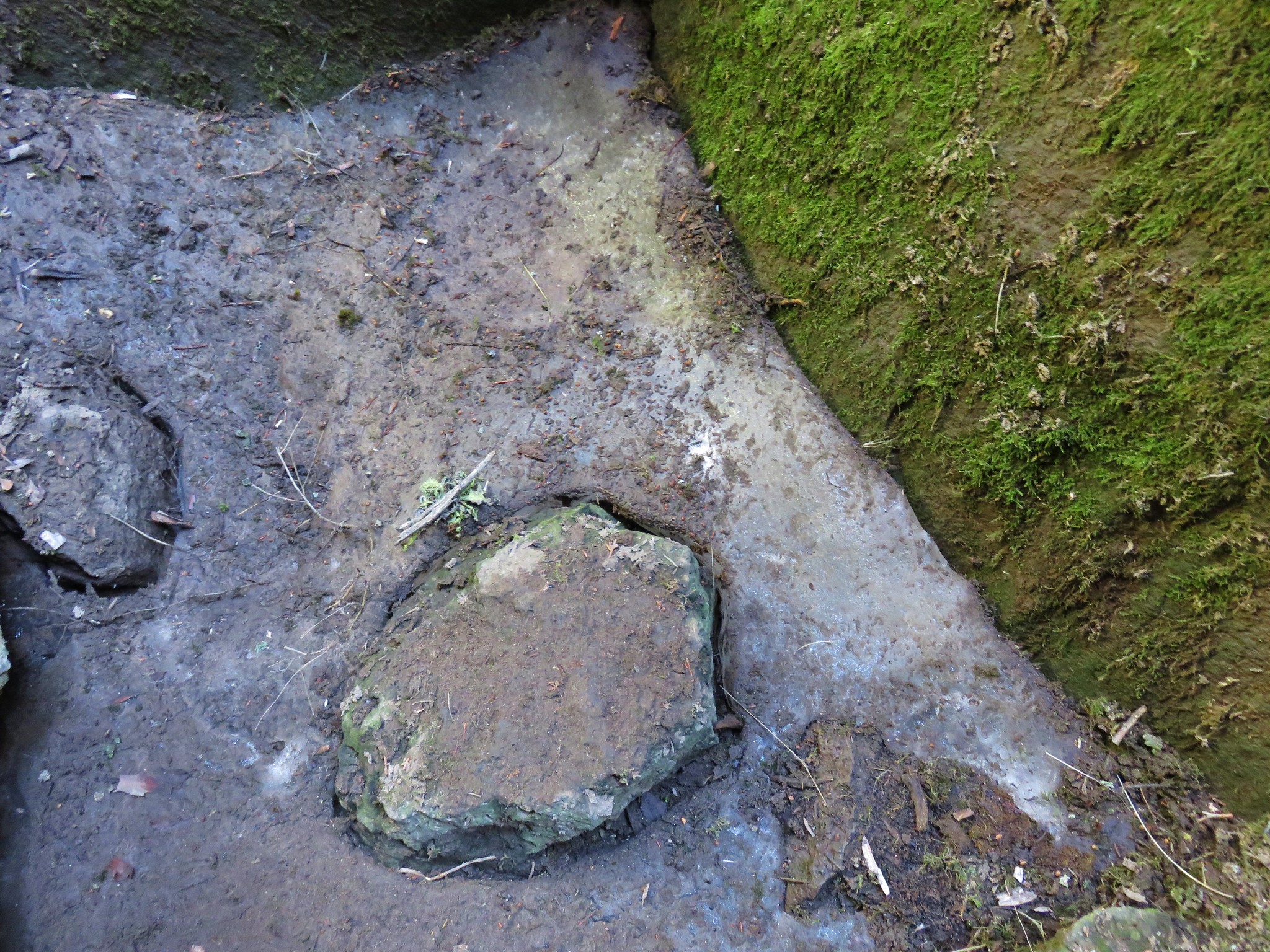
It was nice and cool inside the crack and there was still some left over snow managing to hide from the sun at the bottom.
IMG_1170

2017-05-28 10.42.15

2017-05-28 10.47.42

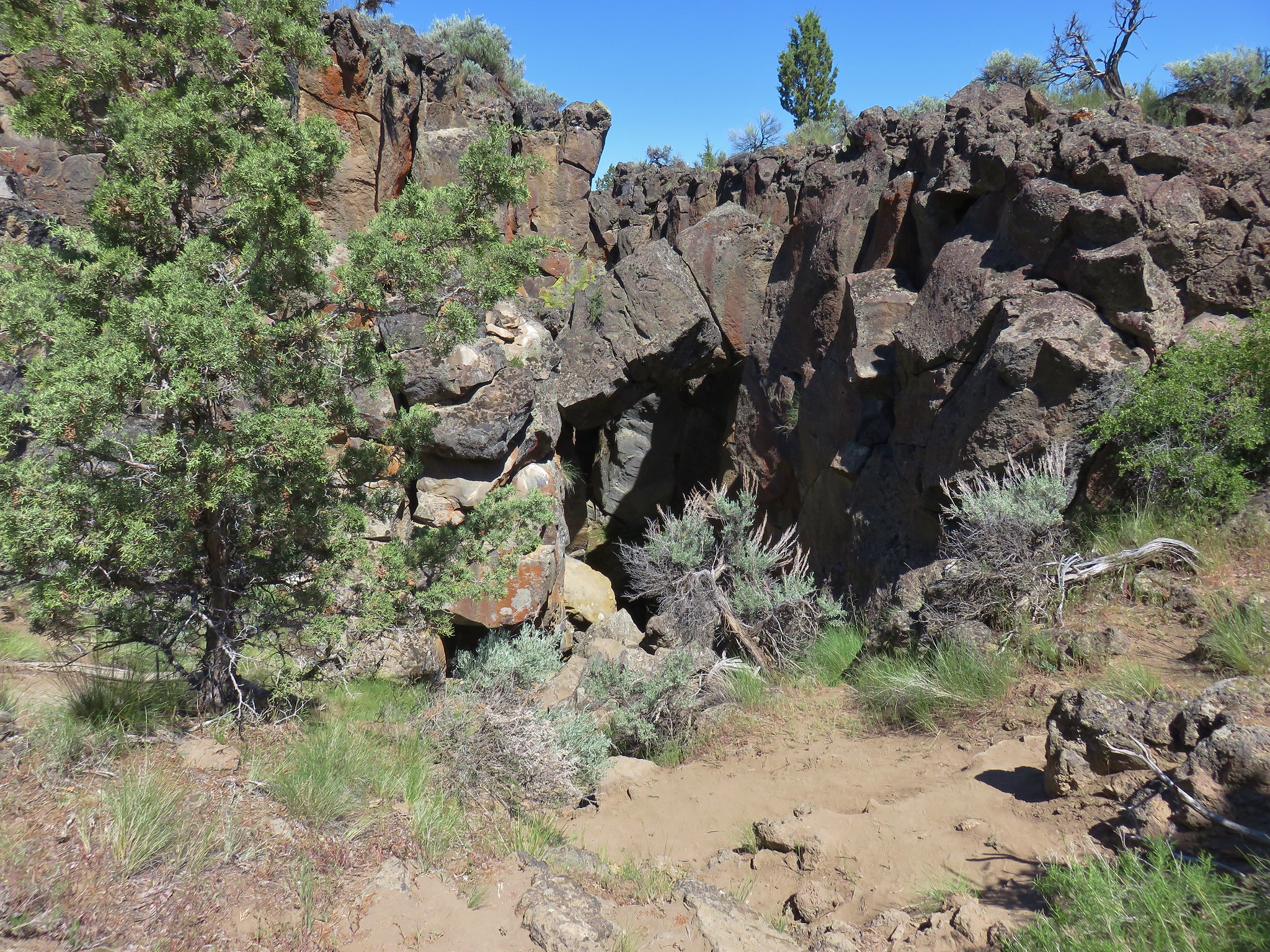
We emerged from the crack at a saddle after a little less than a quarter of a mile. We had made the mistake of not bringing the guidebook with us and were really confused because even though we both remembered something different neither of us had expected to be out of the crack yet (we’d both remembered it wrong).

Another section of the crack continued on the other side of the saddle but it was impassable after just a couple hundred feet.
IMG_1183

IMG_1190

We did remember that Sullivan had said the canyon did become impassable at some point but that it was possible to follow the rim for another mile so we continued on a clear path on the west side of the crack. Views extended across the desert to some distant buttes.
2017-05-28 10.53.40

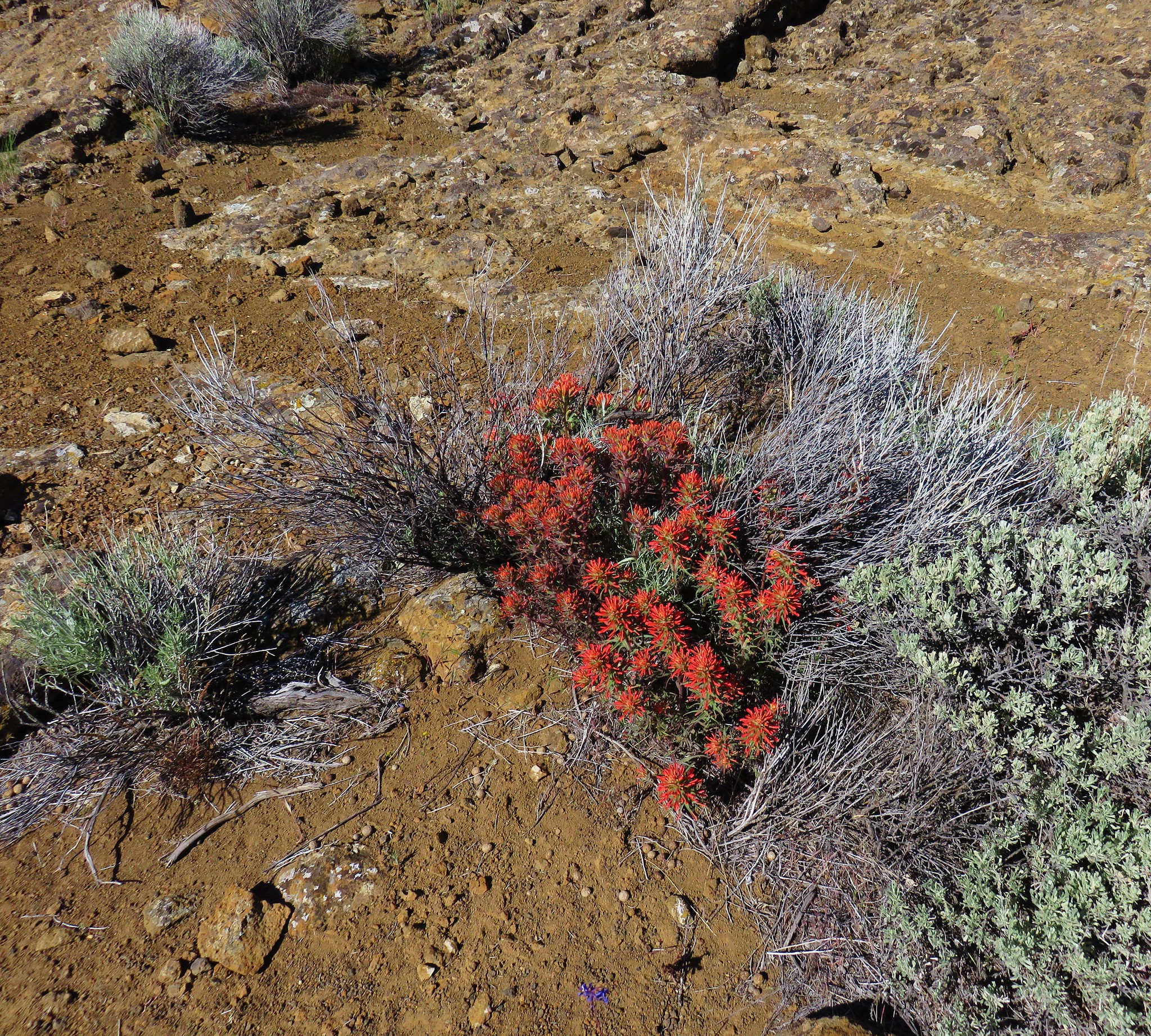
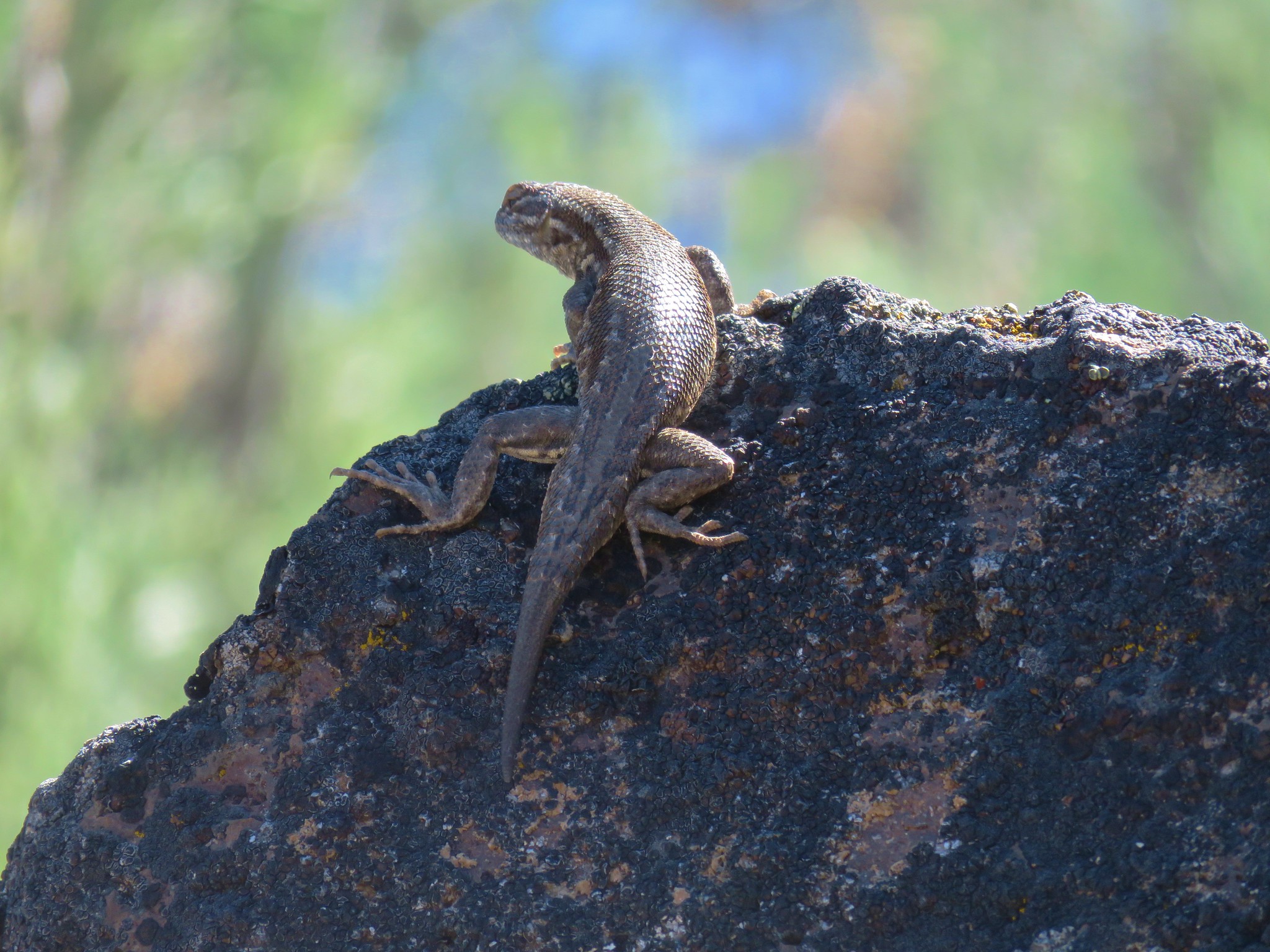
Lizards and butterfly covered flowers were common along the rim.
IMG_1181

IMG_1186

IMG_1189

2017-05-28 10.58.55

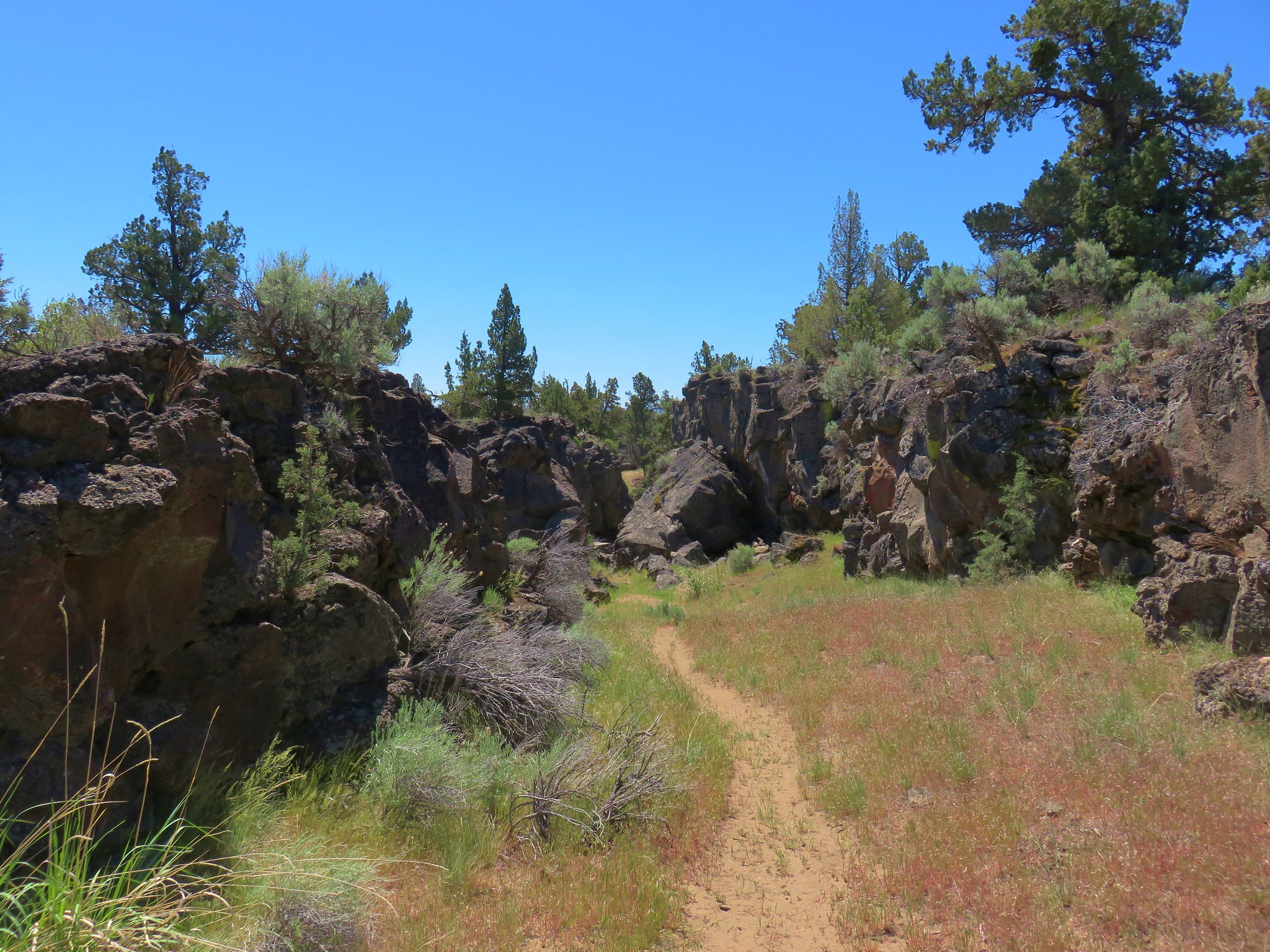
We came to another a saddle and remained on the rim to yet another saddle where we decided to drop back into the crack.
IMG_1195

We figured that if we found this section impassable we would just turn around and call it good. It wasn’t quite as deep or dramatic as the first section but it was still interesting and better yet, passable.
IMG_1198

2017-05-28 11.21.29

We passed another small saddle before coming to what appeared to be the end of the crack where it split into three slots.
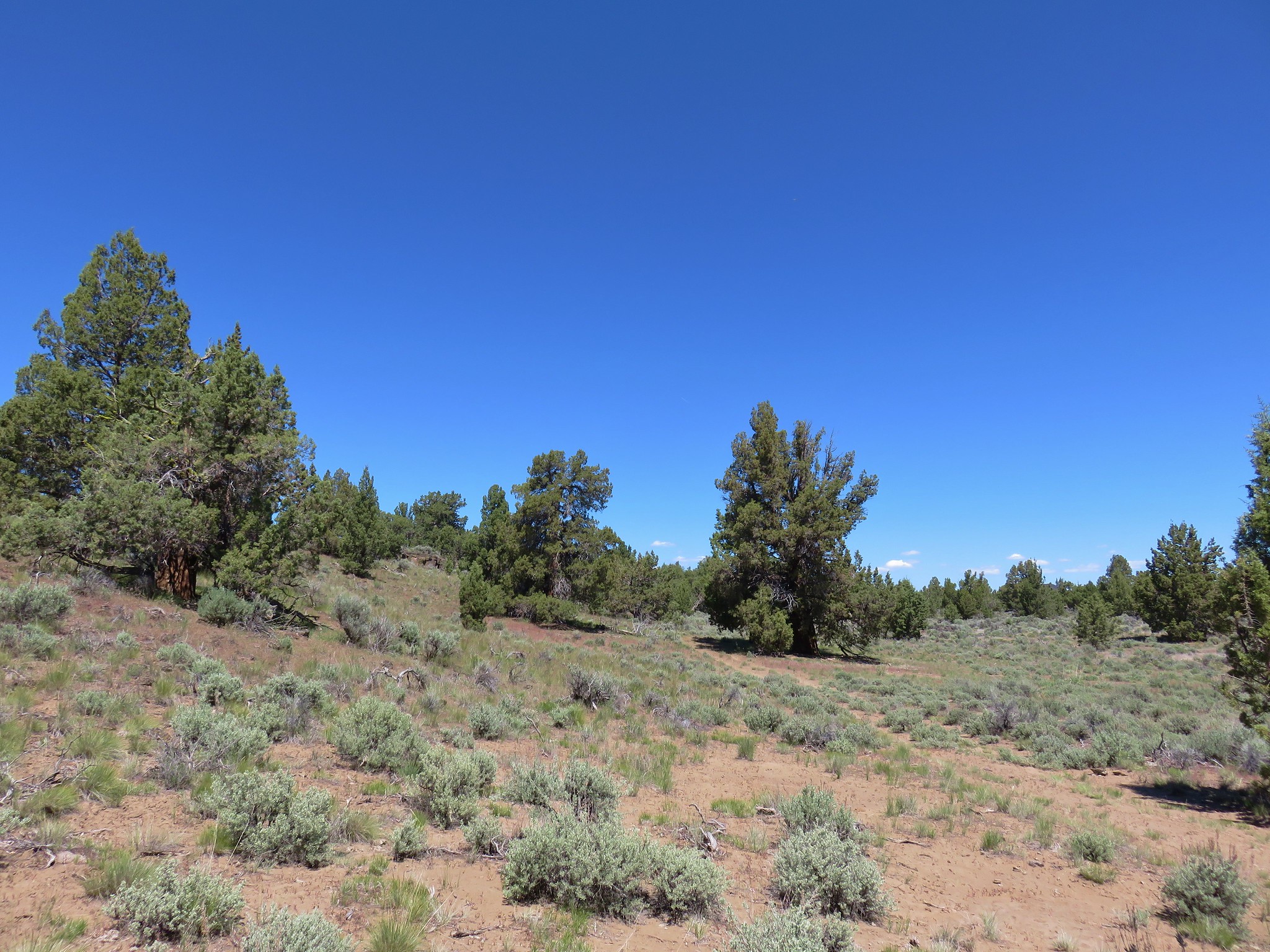
IMG_1201

We turned back after emerging from this section and followed an old dirt track on the east side of the crack.
IMG_1202

The road brought us back to the saddle between the first section and the impassable section. We crossed over to the west side of the rim here and followed a clear trail back to the picnic table and then returned to our car. We pulled out the book which showed us we had basically done the hike as described although Sullivan didn’t mention being able to pass through the later sections of the crack. We had hiked roughly two and three quarters of a mile which agreed with the distances on his map.

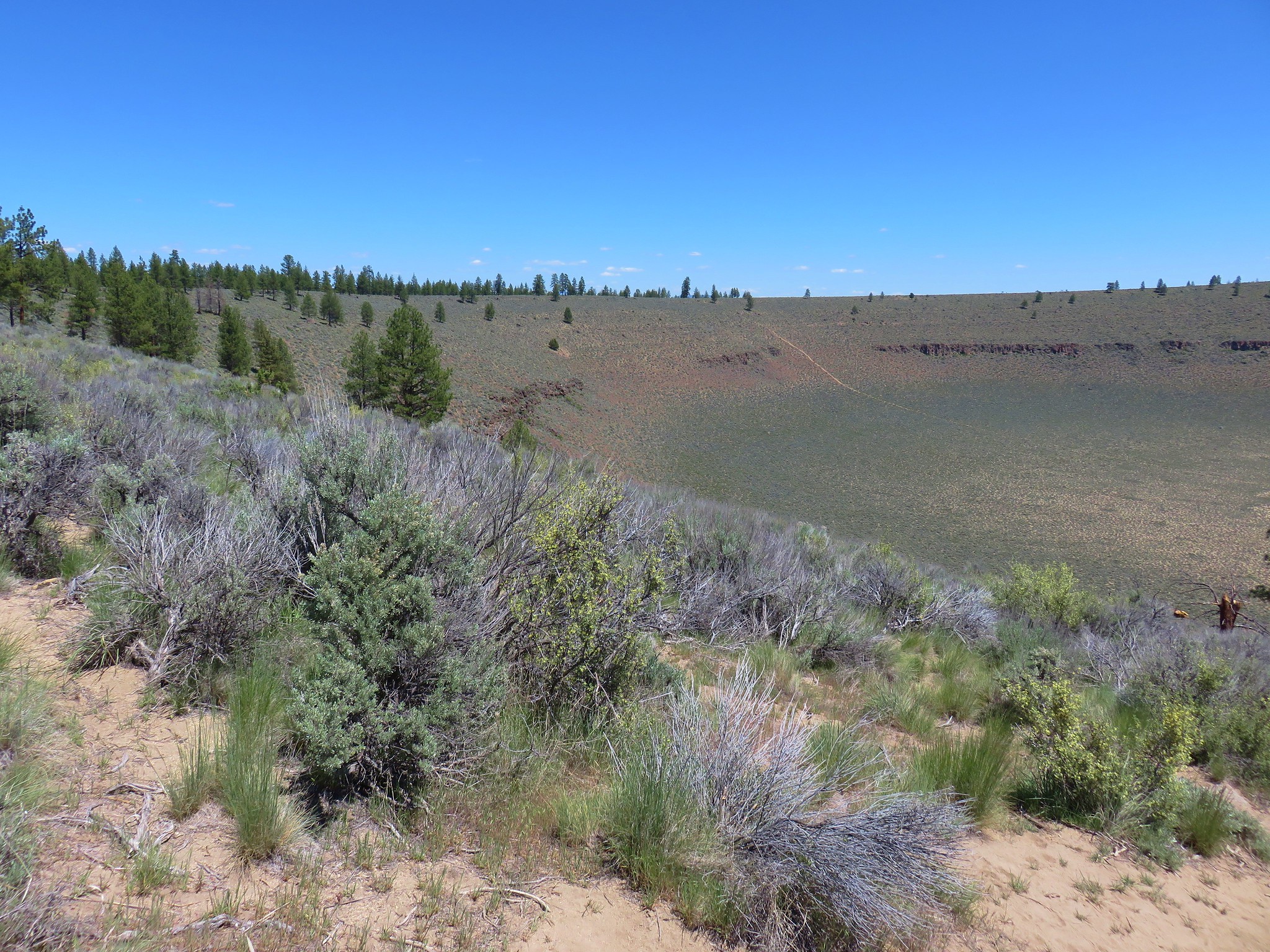
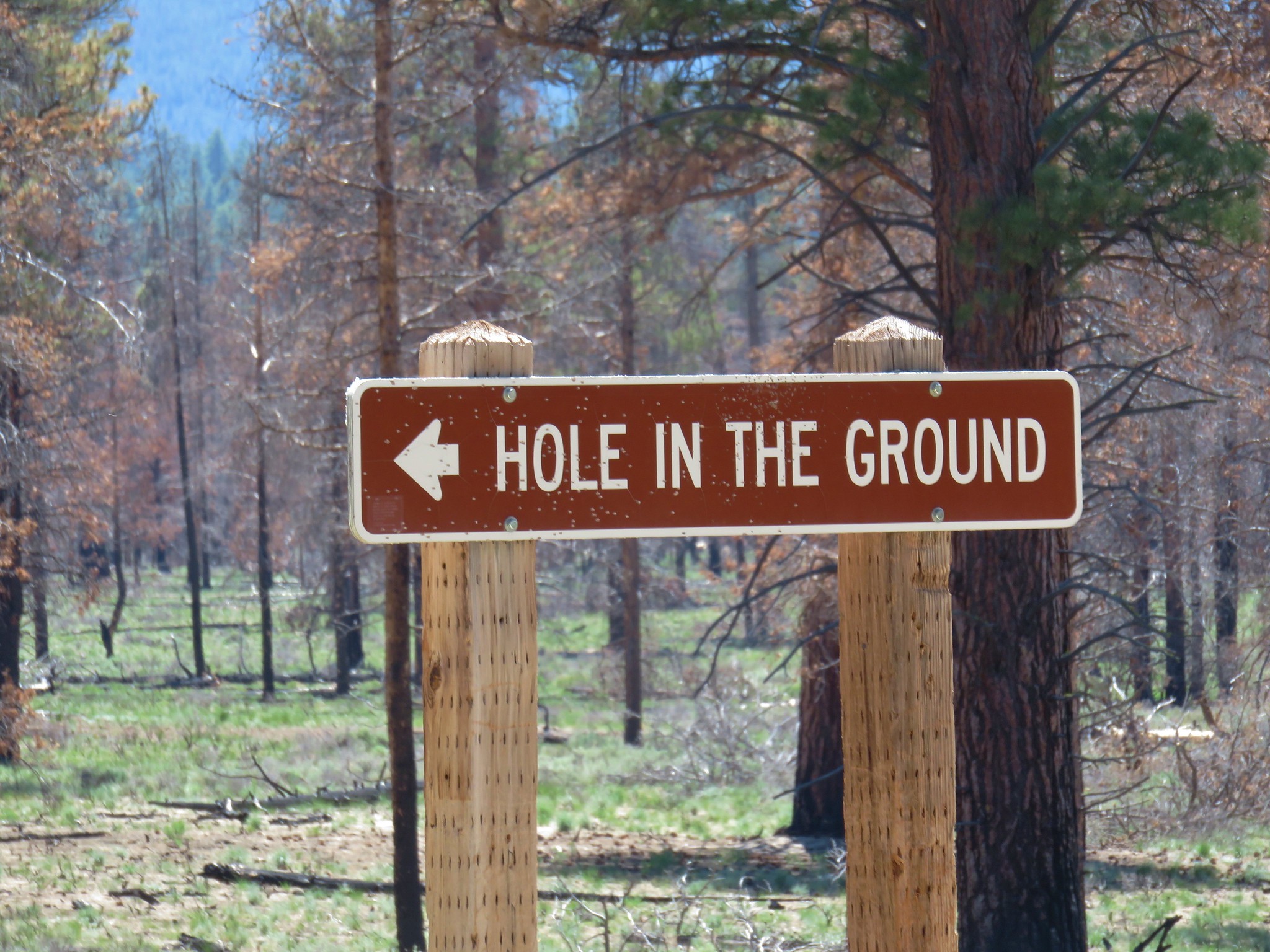
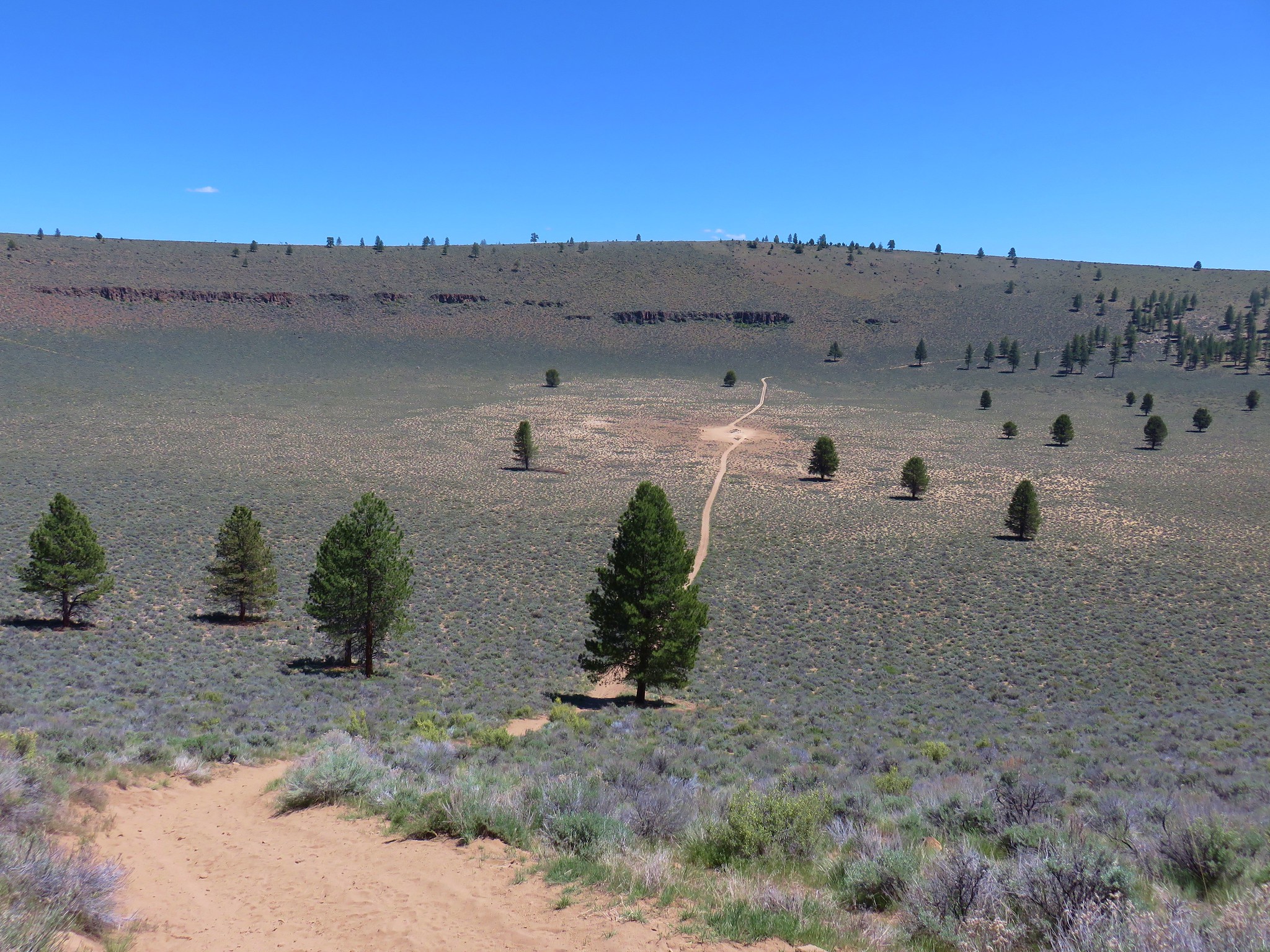
From Crack in the Ground we drove back to the town of Fort Rock and continued west 6.5 miles to Highway 31. Here we turned north toward LaPine and drove just over 7 miles to a sign for Hole in the Ground near milepost 22. We followed signs for 4.4 miles to a small parking area on the rim of the 425′ deep volcanic maar created when a volcanic gas bubble exploded. A similar occurrence formed Fort Rock only the lava at Fort Rock formed under the water of an ancient lake. Over time the currents and waves of the lake removed all but the hardest rock leaving the fortress like ring.
IMG_1258

IMG_1203

IMG_1207

A steep dirt trail headed straight down into the crater.
IMG_1208

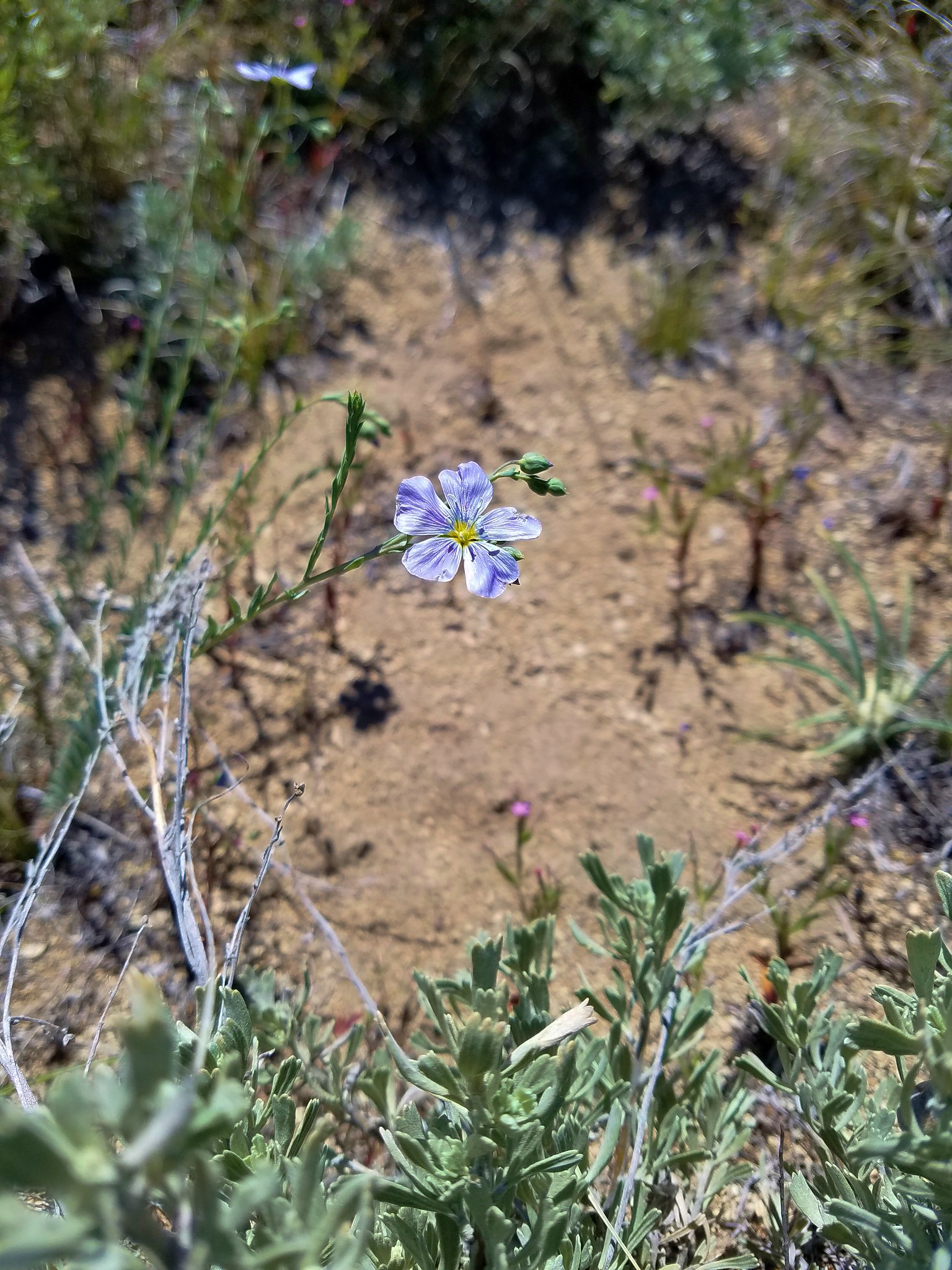
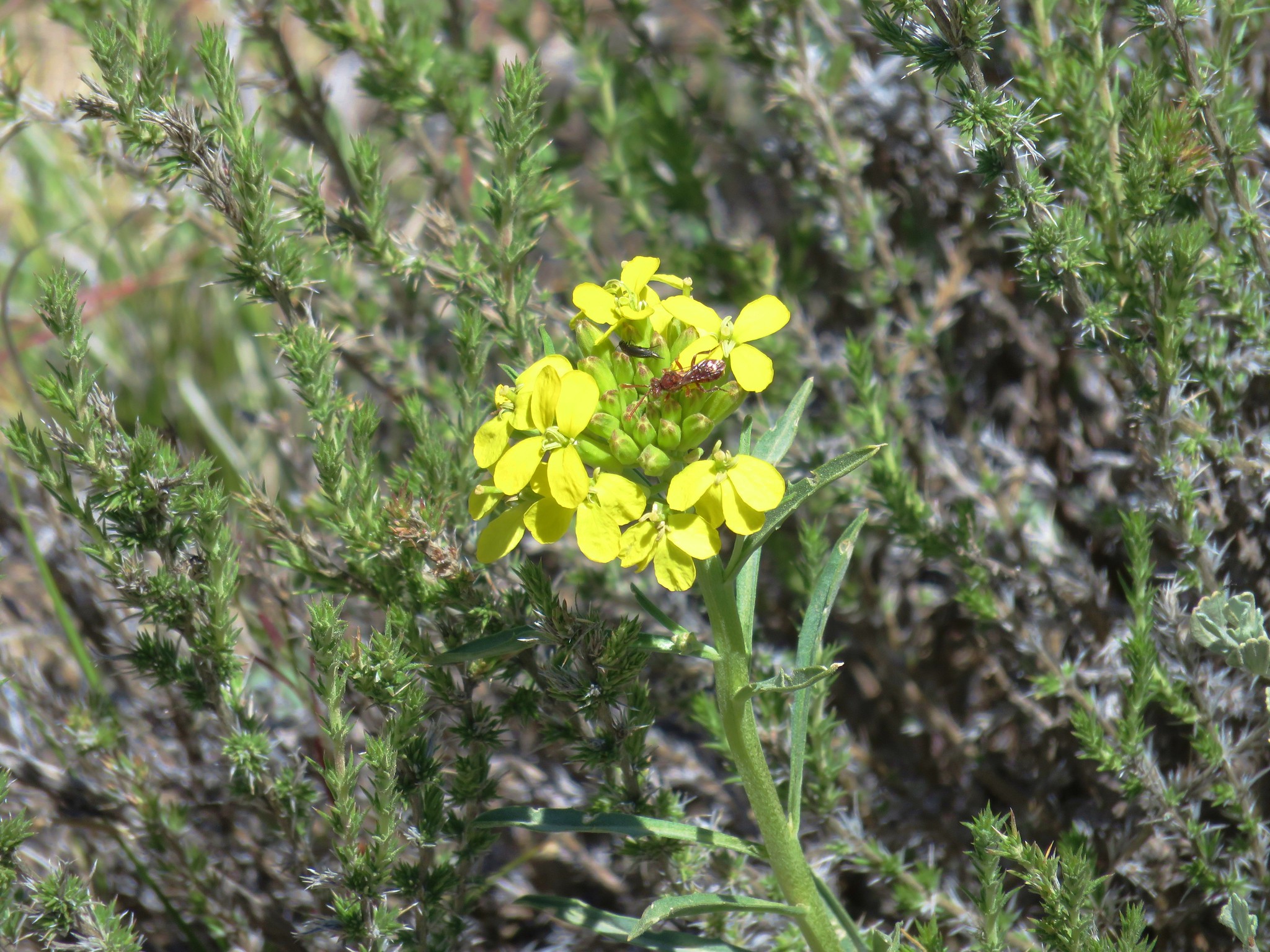
We were surprised to find some blue lewis flax among the flowers blooming at the bottom.
IMG_1223

IMG_1232

2017-05-28 13.23.06

2017-05-28 13.27.07

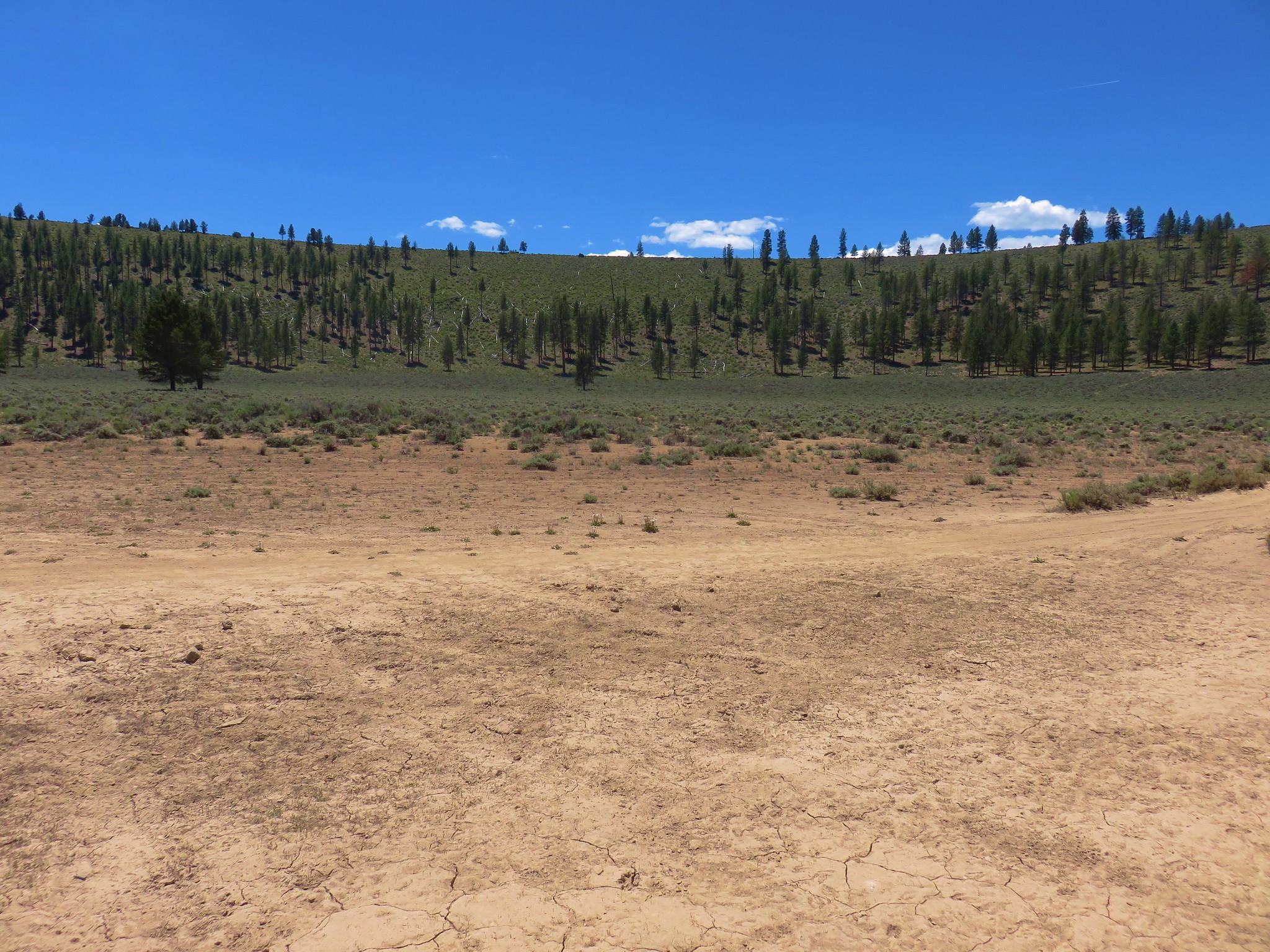
After a half mile we arrived at the small playa at the center of Hole in the Ground.
IMG_1233

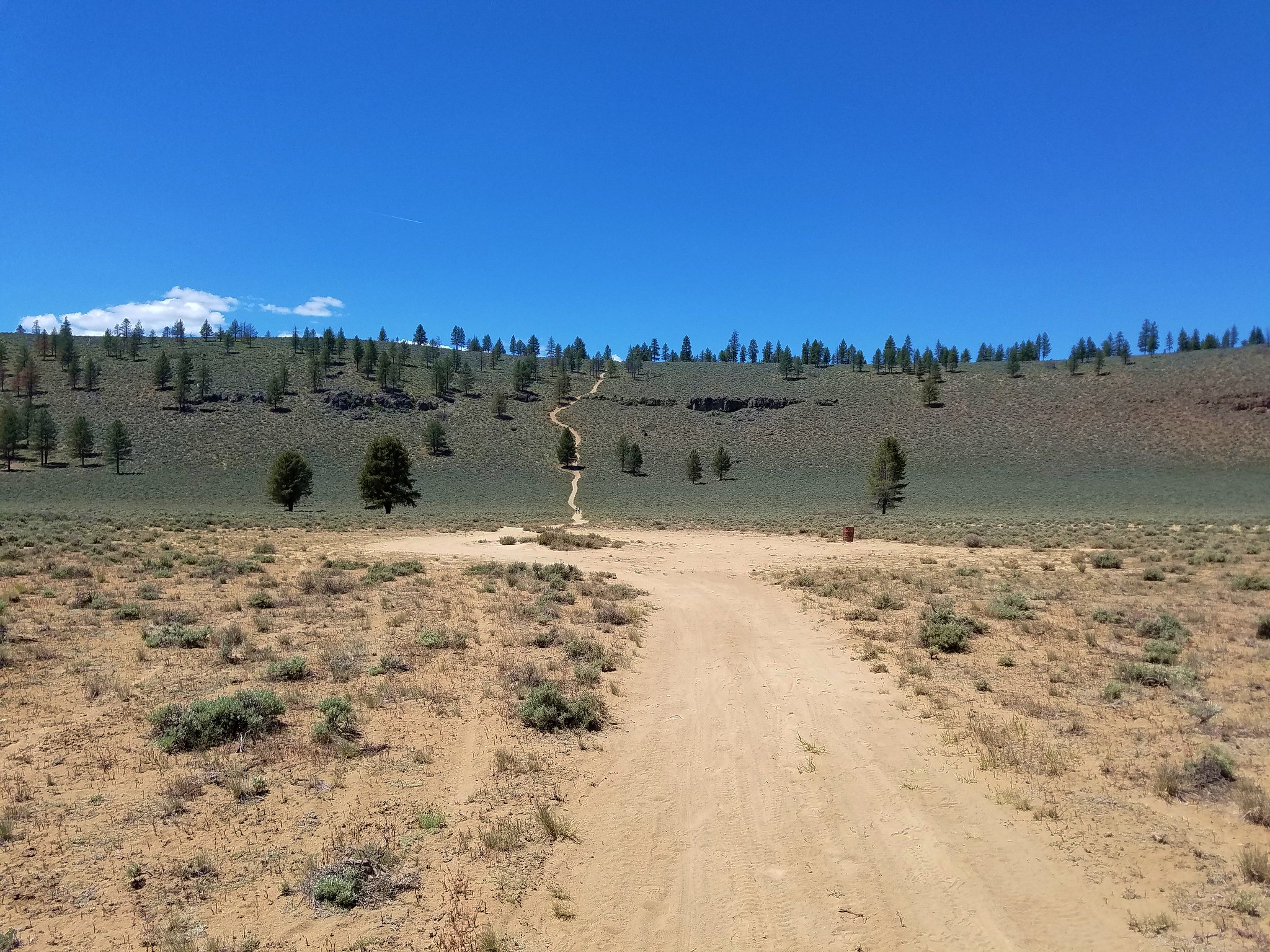
To get an idea of the size of the crater a couple of other hikers had come down behind us and are on the trail in the following picture.
2017-05-28 13.26.12

An old dirt track extended from the playa to the far side of the crater and eventually wound its way up to the rim after 1.2 miles.
2017-05-28 13.26.19

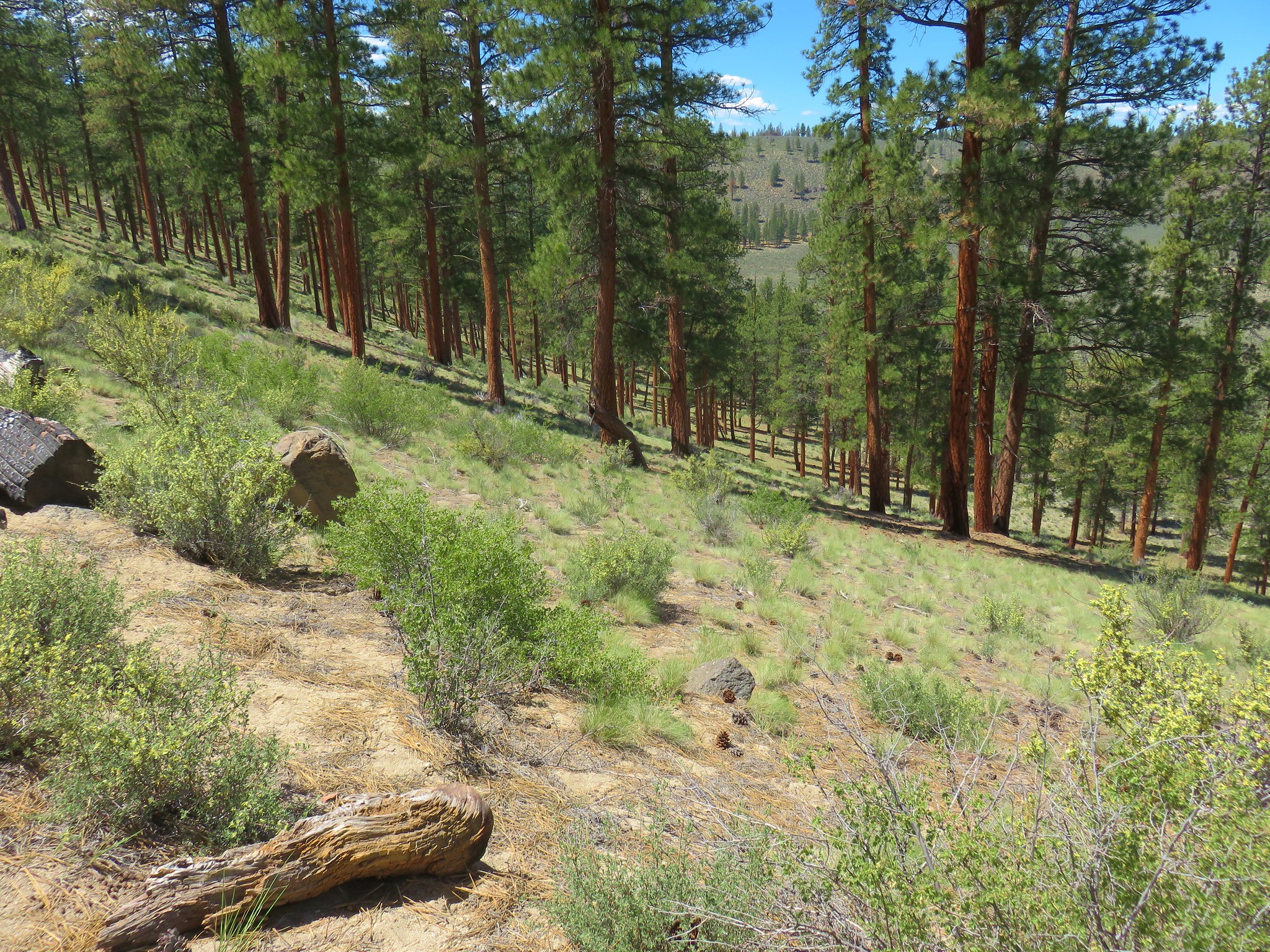
Along the way it passed a nice stand of ponderosa pines.
IMG_1243

Once we obtained the rim Paulina Peak was visible to the north across the crater.
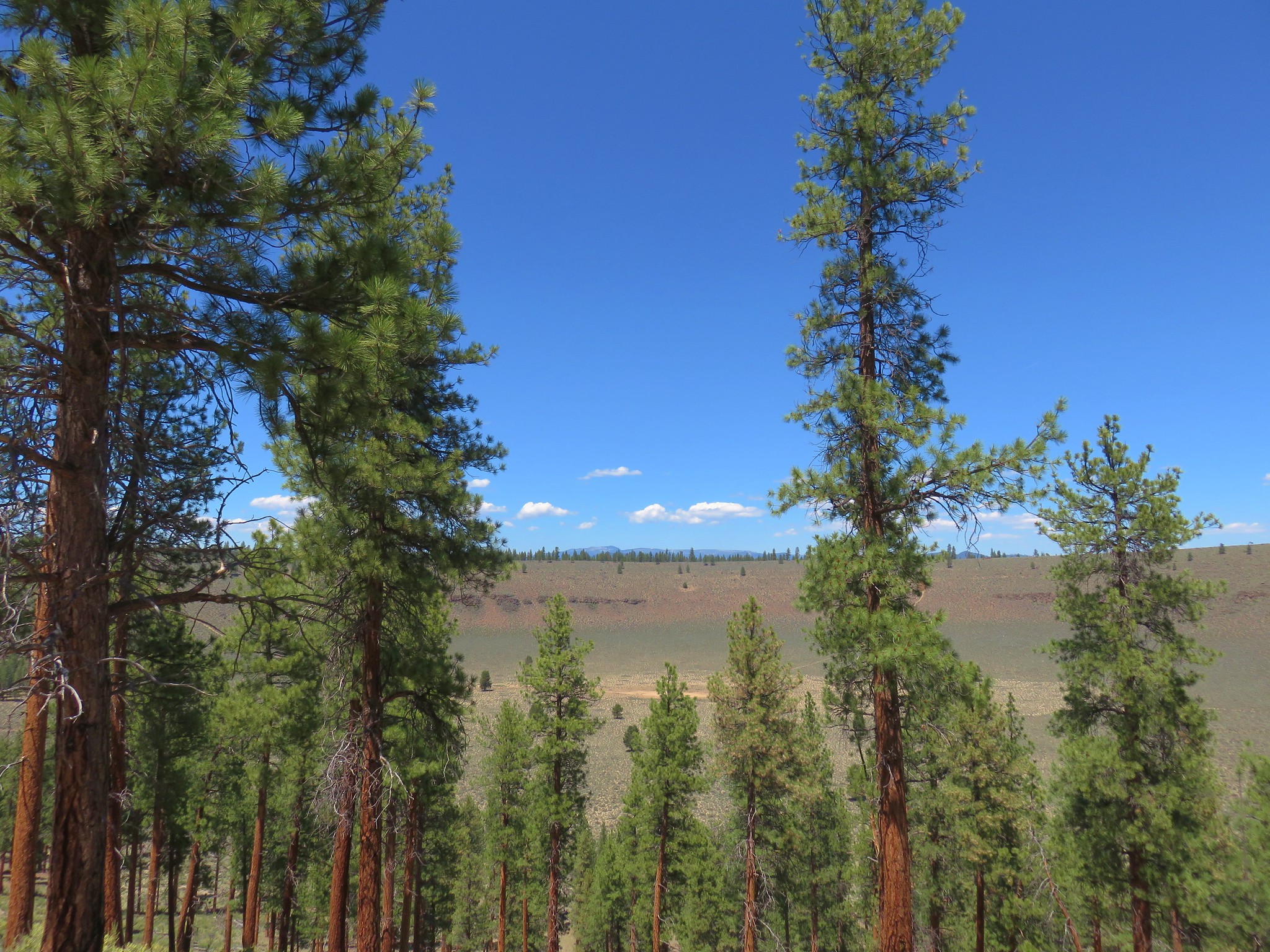
IMG_1246

IMG_1248

Mt. Bachelor and the South Sister were also visible to the NW.
IMG_1250

We followed the road along the rim just over a half mile back to our waiting car then headed for our next stop – Big Tree. We returned to Highway 31 and continued north to Highway 97 then through LaPine. Seven miles north of LaPine we turned left at a sign for LaPine State Park.

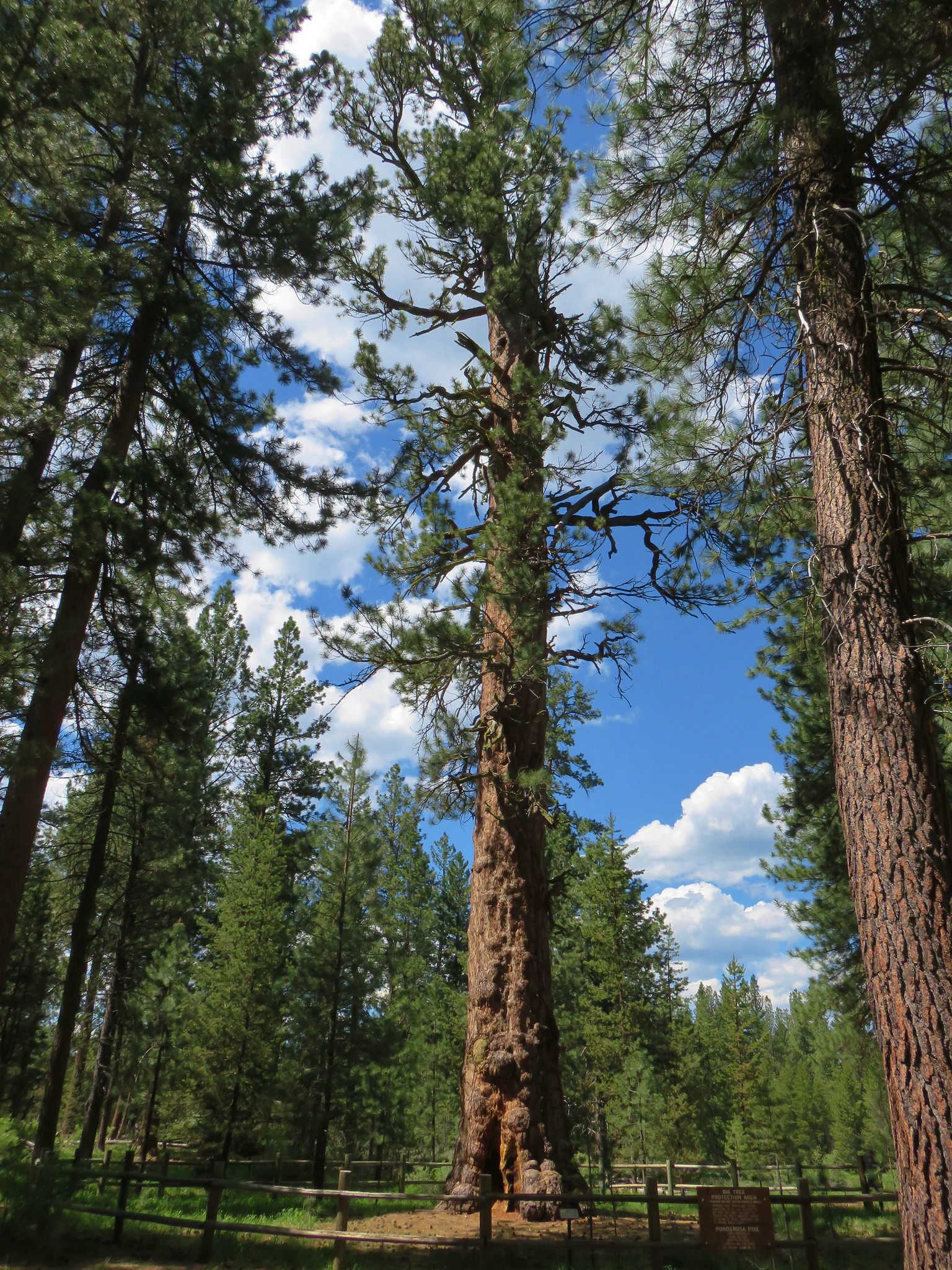
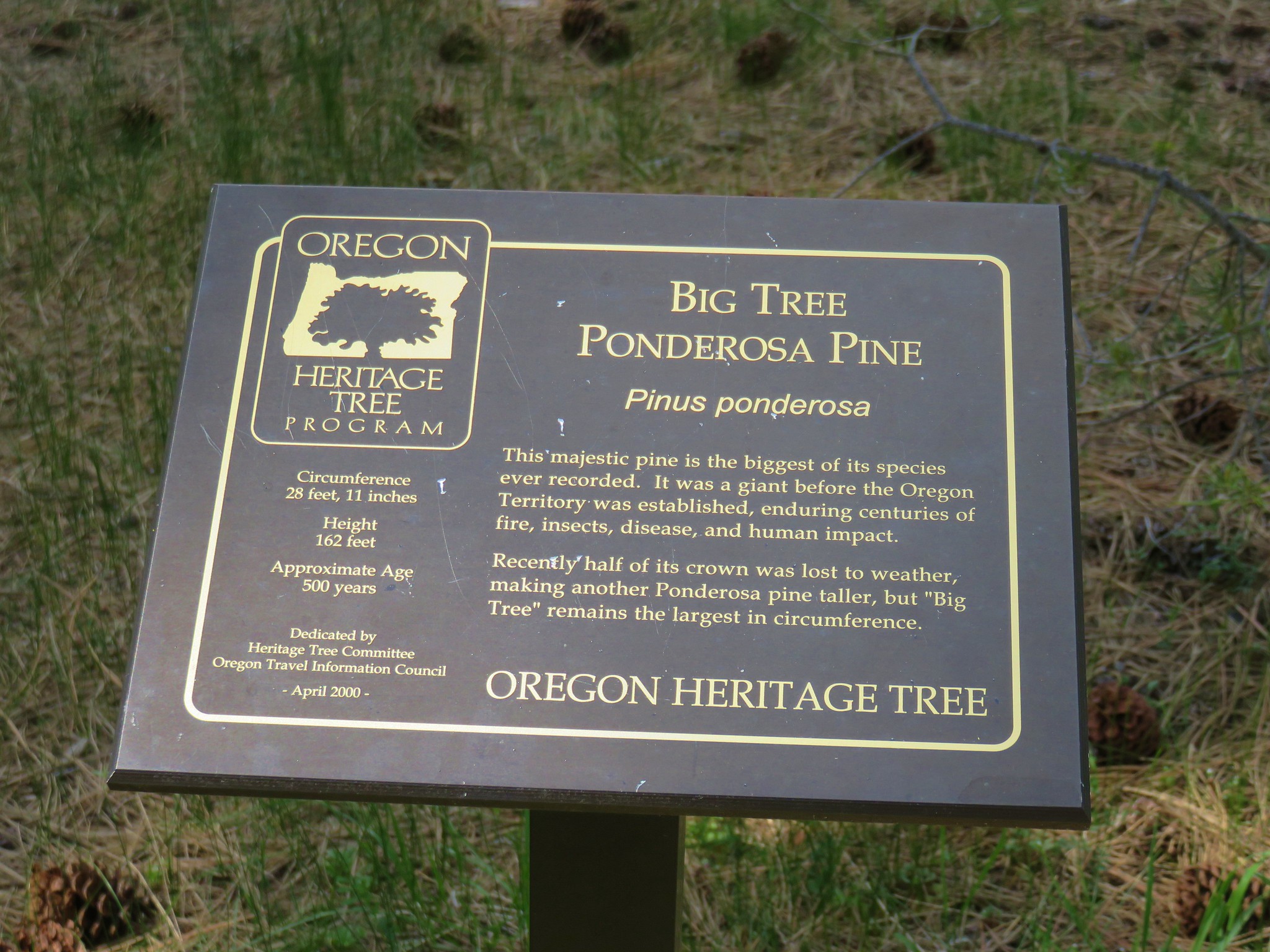
We had visited this park before in 2015, but had not made it to Big Tree – Oregon’s largest ponderosa pine.

A half mile after entering the park we turned right at a four way junction following a Big Tree pointer. A .7 mile gravel road brought us to the trailhead parking area.
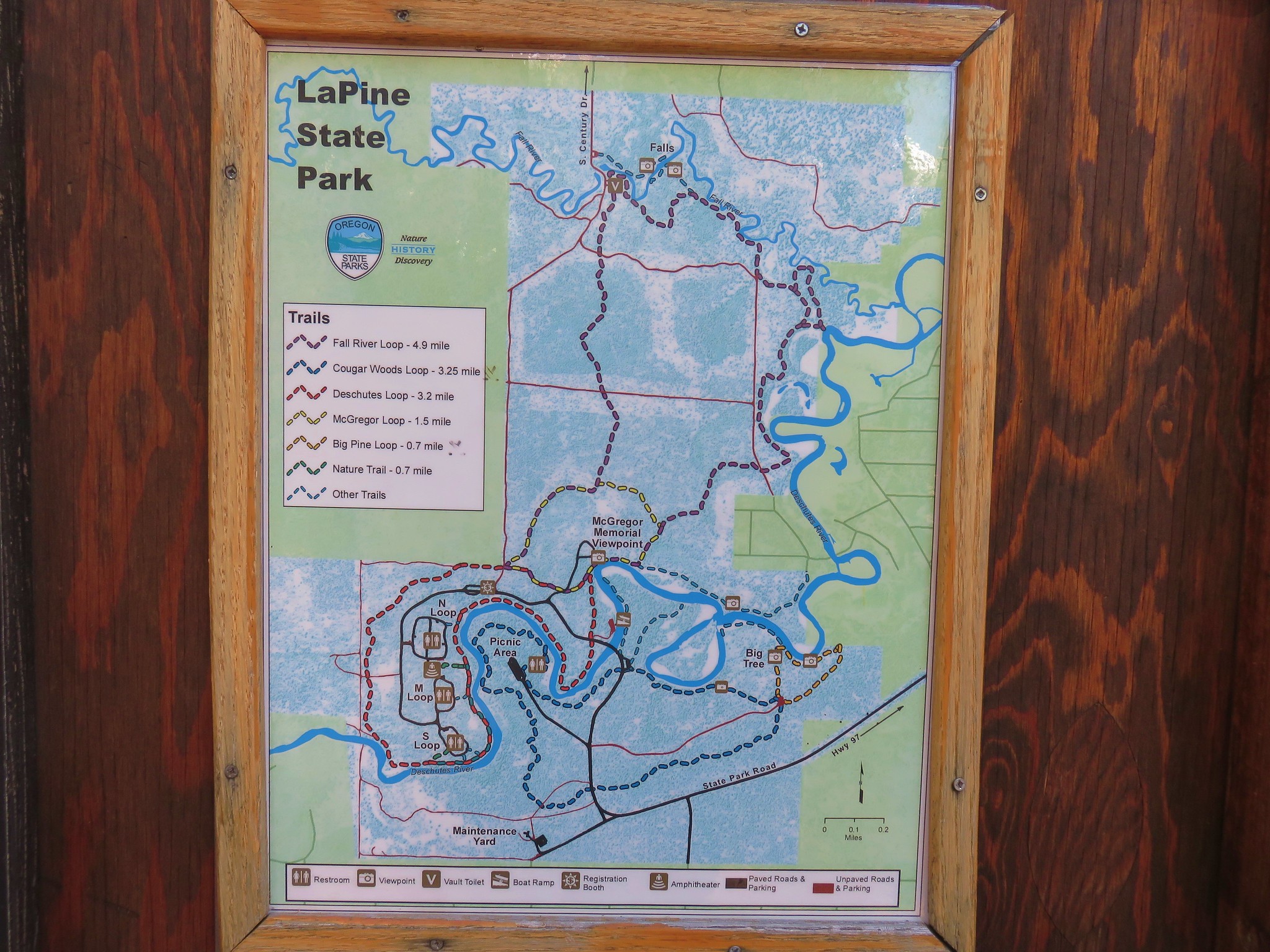
IMG_1261

A paved .2 mile path led to the tree.
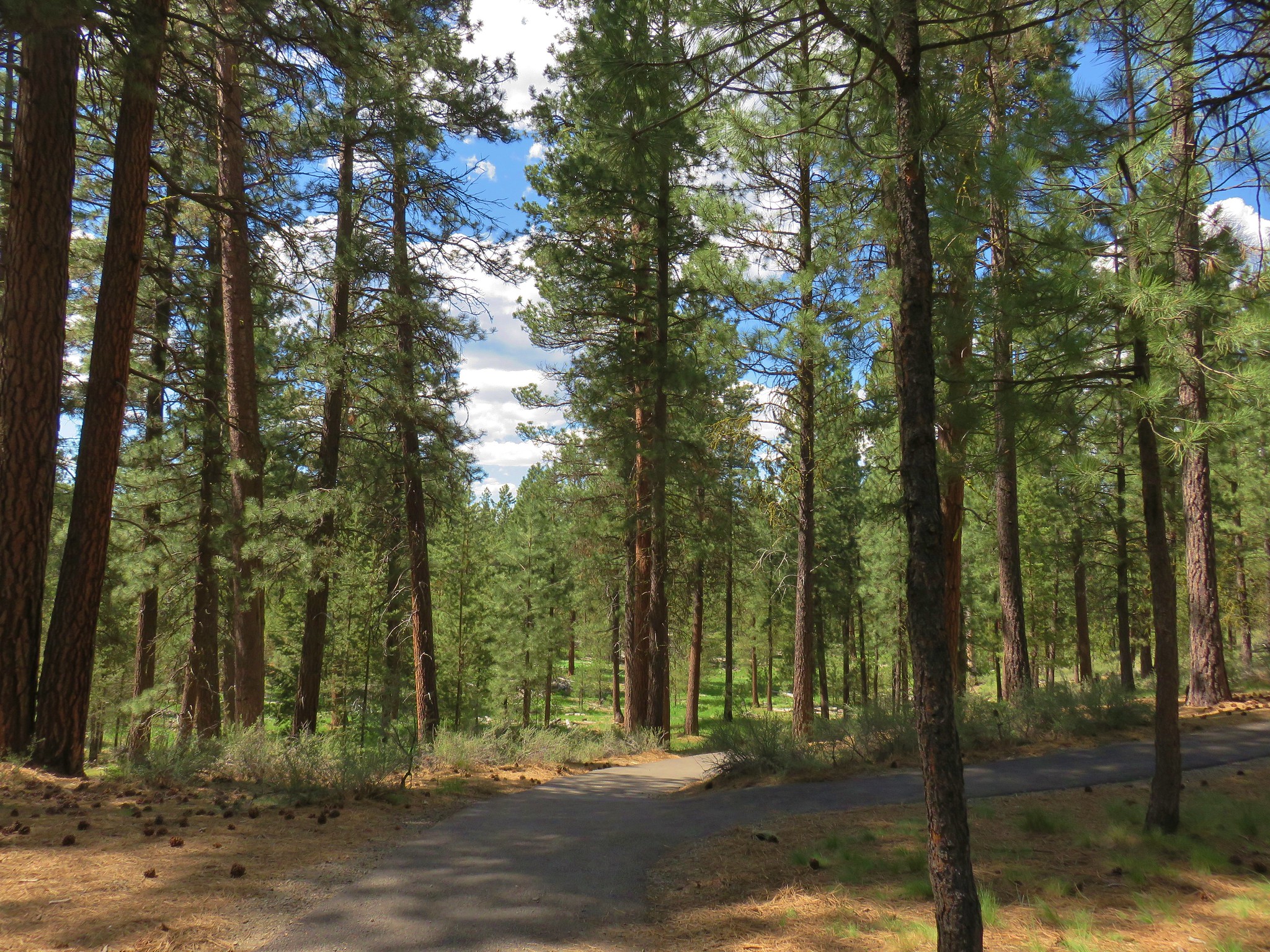
IMG_1262

IMG_1264

IMG_1267

We continued on the Big Pine Loop passing near the Deschutes River before looping back to the trailhead.
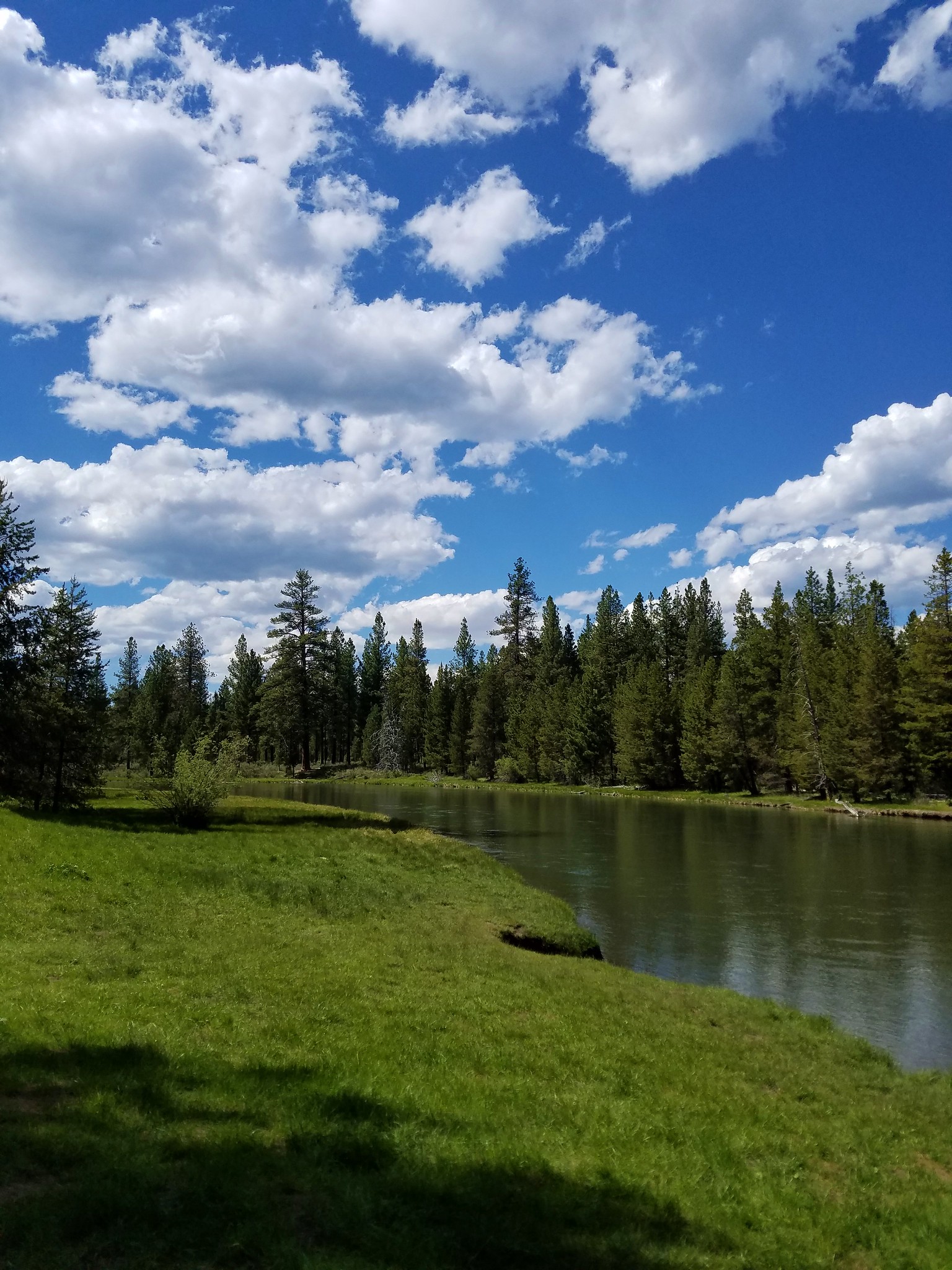
2017-05-28 15.11.51

It was a quick half mile hike but after visiting the redwoods, Oregon’s largest Myrtle Tree and several large port orford cedars and douglas firs on the Big Tree Trail on our southern Oregon vacation earlier in the month it was fitting to add this behemoth to the list.

We returned to Highway 97 and drove north another 10 miles to exit 153 for our final hike of the day. At the exit we followed pointers for the Lava Cast Forest. After 9 miles of gravel road we arrived at the trailhead in the Newberry National Volcanic Monument.
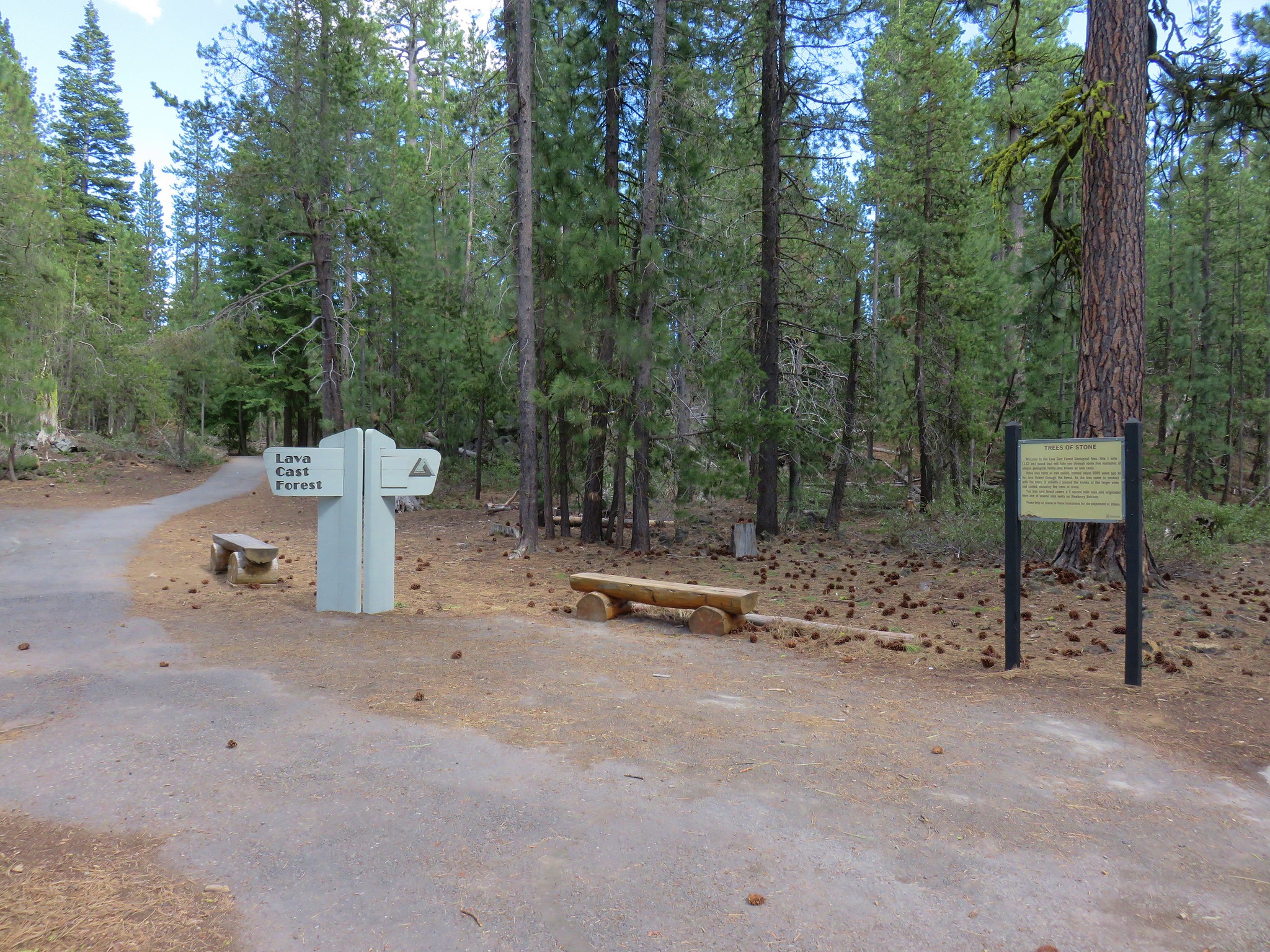
IMG_1274

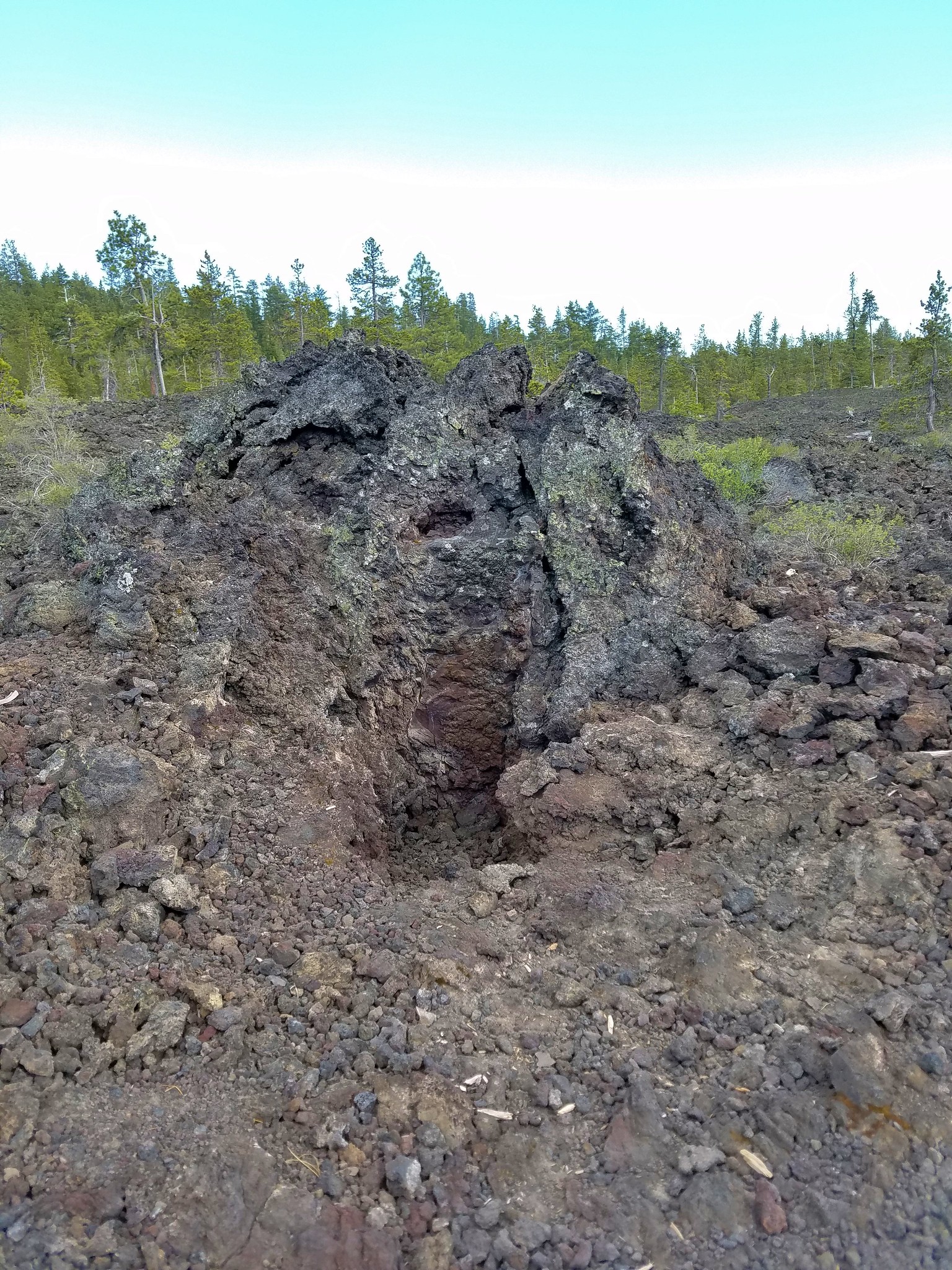
A paved 1 mile interpretive loop here led through a lava flow where the molds of trees remain from when the lava cooled around their burning trunks.
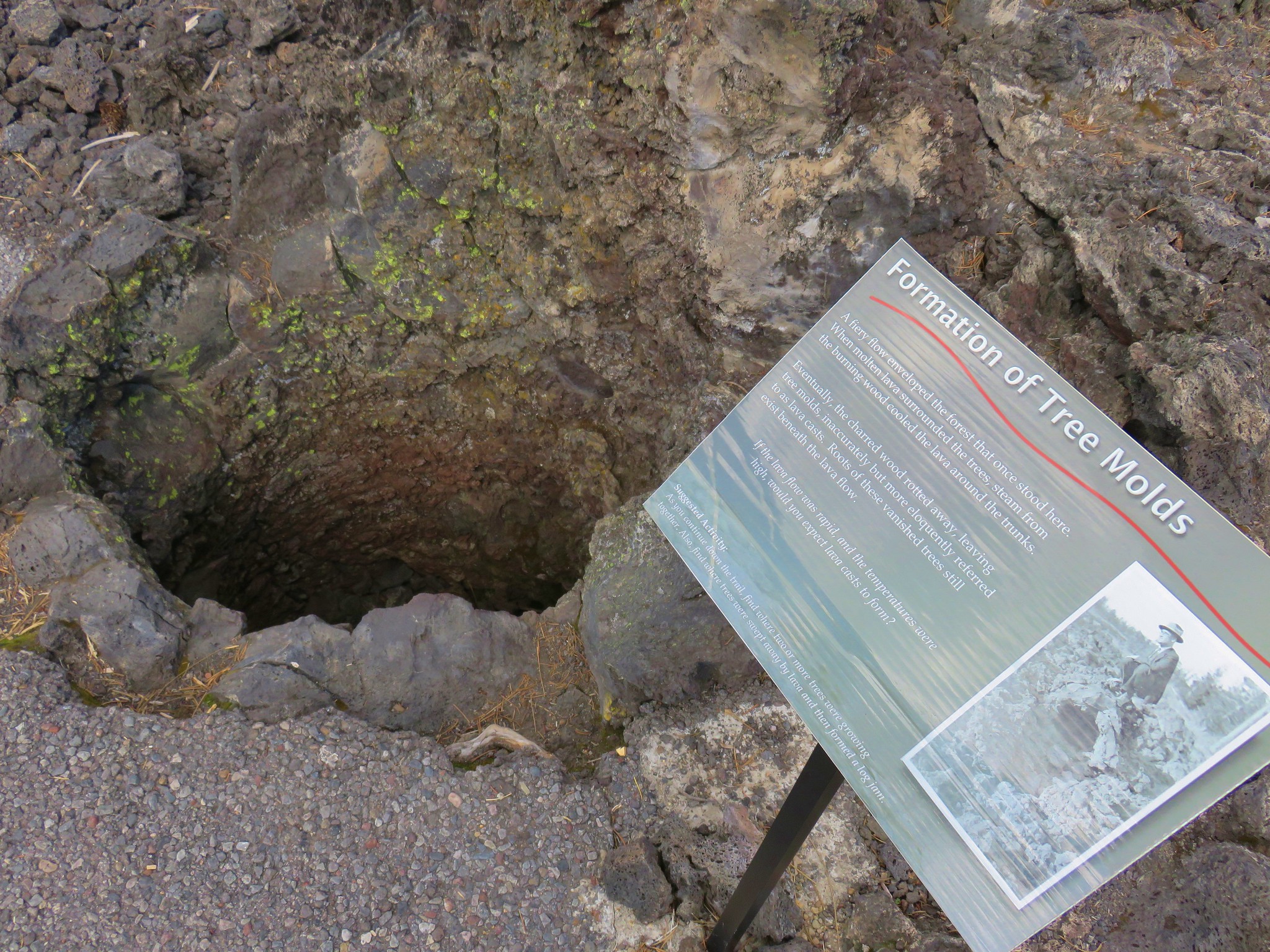
IMG_1291

2017-05-28 16.10.49

IMG_1299

IMG_1312

IMG_1319

Other sights along the trail included a few wildflowers, the rim of Newberry Crater, and a view of Mt. Bachelor, Broken Top, and the Three Sisters.
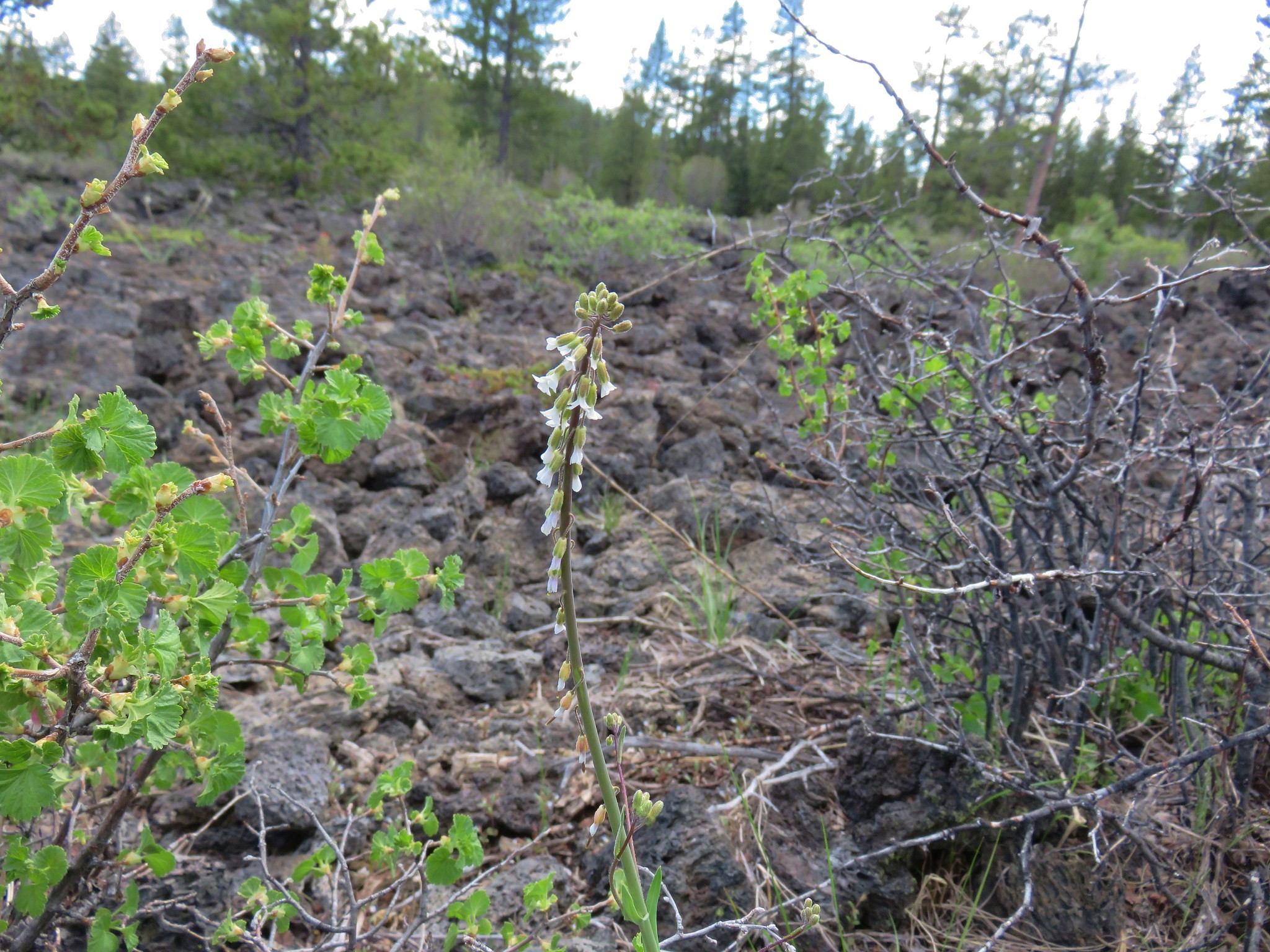
IMG_1287

IMG_1301

2017-05-28 16.17.17

IMG_1332

When it was all said and done we hiked a total of right around 9 miles on the day and saw some amazingly diverse and unique scenery all within a relatively small area. It had been one of the most interesting days of hiking to date. Happy Trails!

Flickr: Central Oregon Oddities

Categories
Central Oregon Hiking John Day Oregon Trip report

Cottonwood Canyon State Park

**Note in 2025 the Ferry Fire burned over this area. The park structures were saved. This was a grass/brush fire, and the area should recover quickly.”

We spent Memorial Day Weekend in Bend and on Saturday morning drove up to Cottonwood Canyon State Park along the John Day River. To get there from Bend we drove north on Highway 97 to Wasco then turned onto Highway 206 for 15 miles to the park entrance.

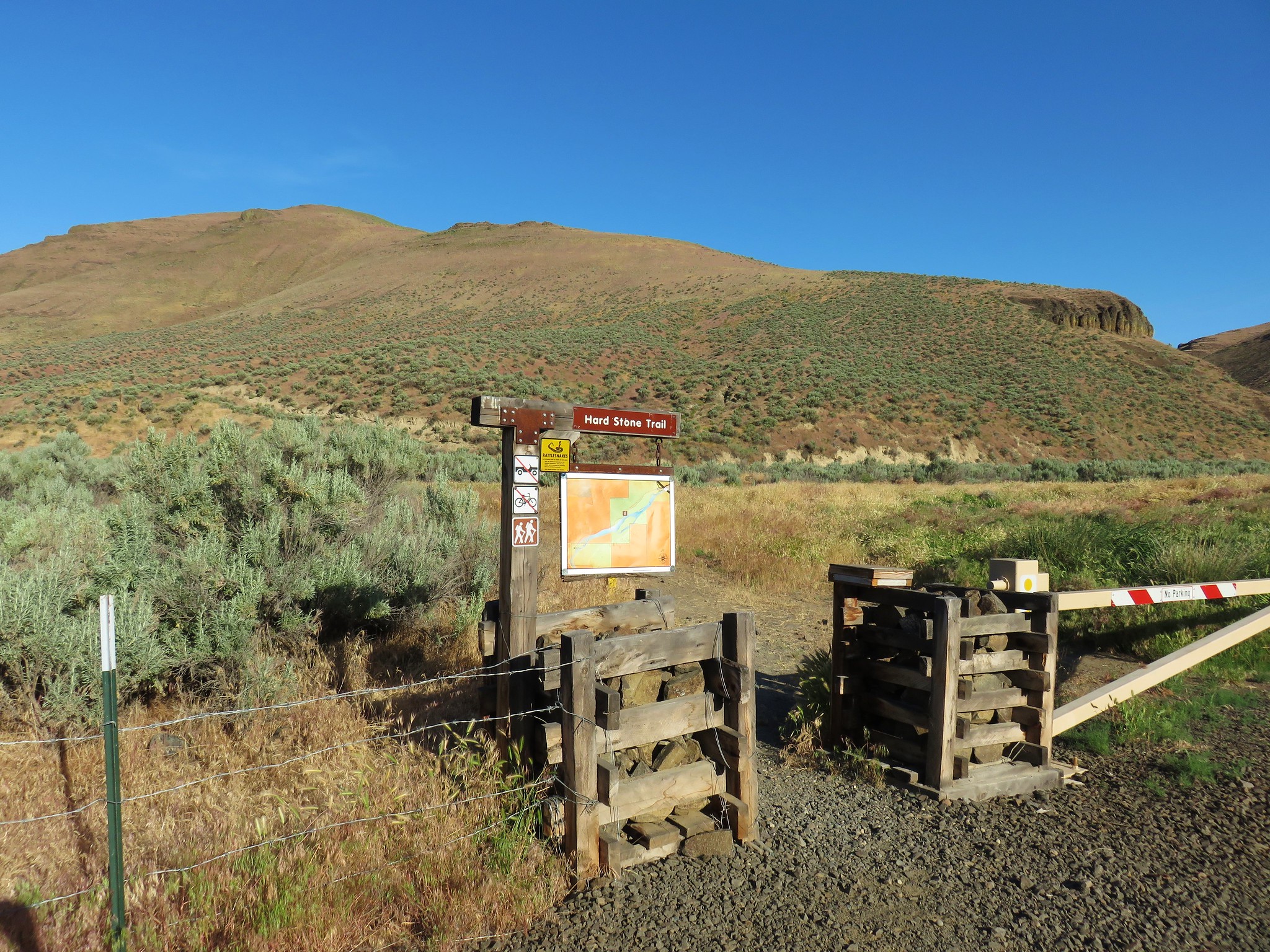
Just after turning onto the entrance road we forked right on a short gravel road to a parking area near the river. The Hard Stone Trail began here.
IMG_0658

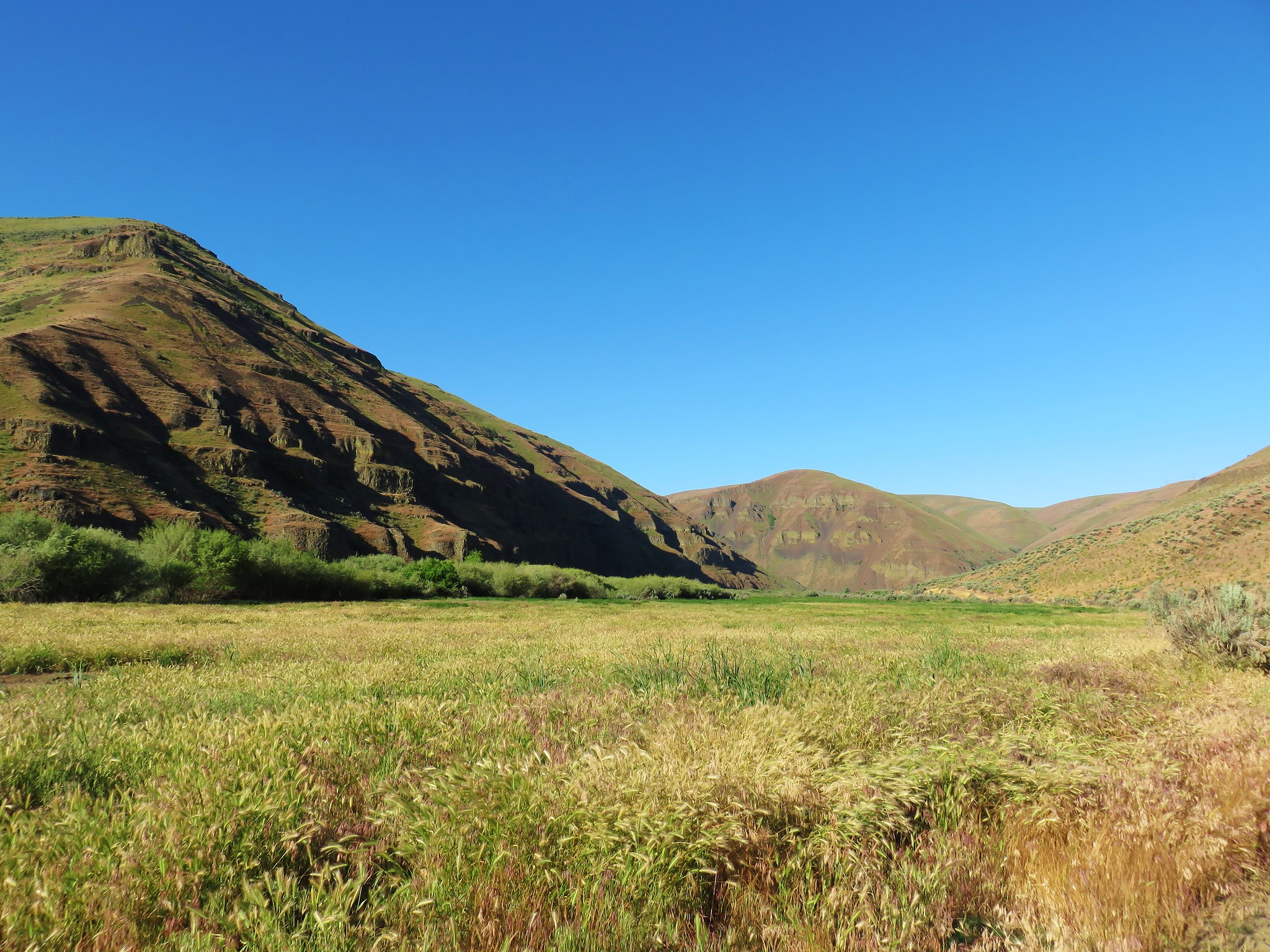
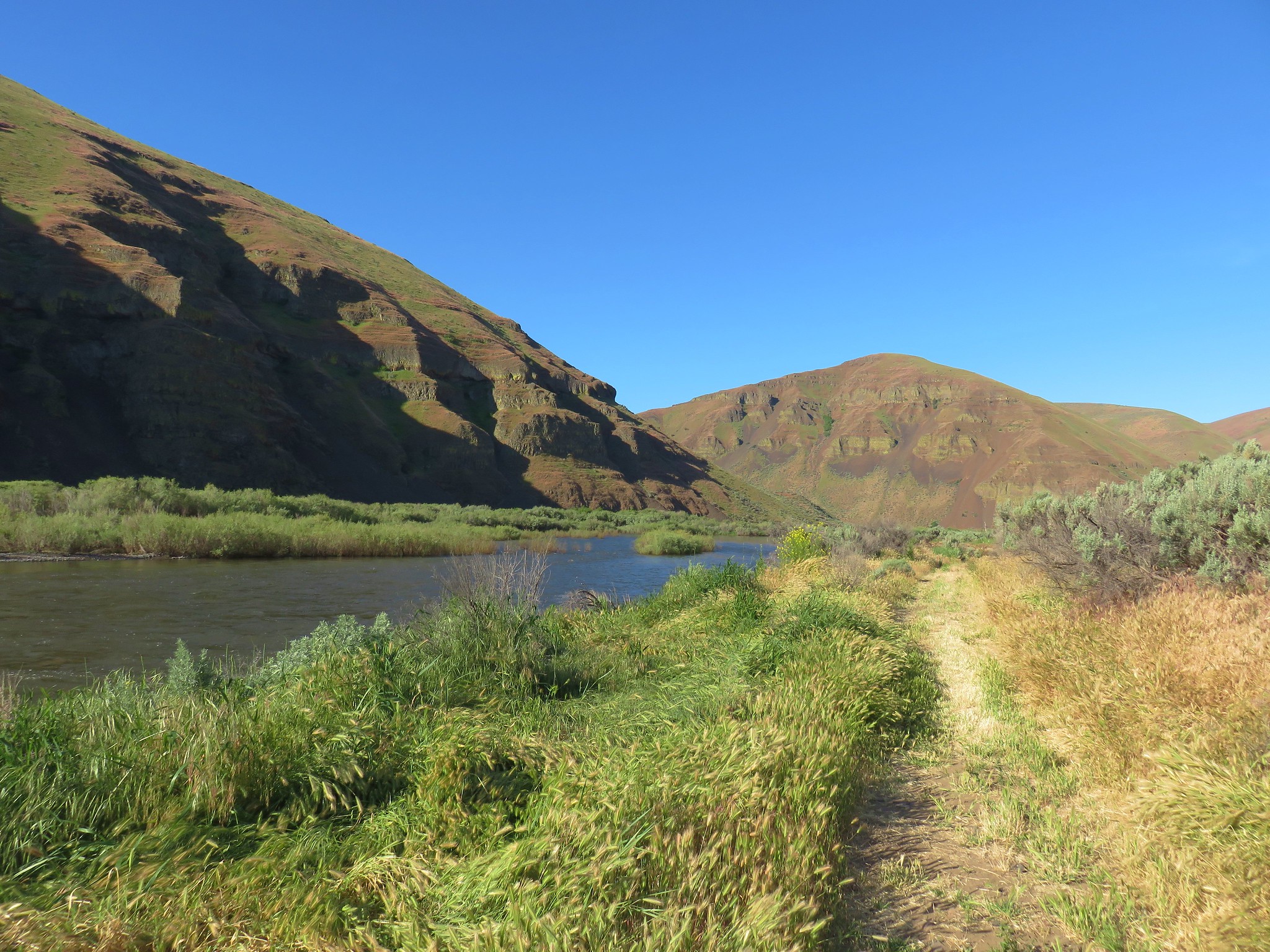
This nearly level 1.5 mile path follows the river upstream to Big Eddy, a lazy whirlpool at a bend in the river. The park has very few trees which allows for some wide open views but it also means a real lack of shade. Considering it was already in the low 60’s as we set off on the Hard Stone Trail at 7:30 we knew we were in for a hot hike.
IMG_0661

IMG_0664

IMG_0667

IMG_0669

IMG_0700

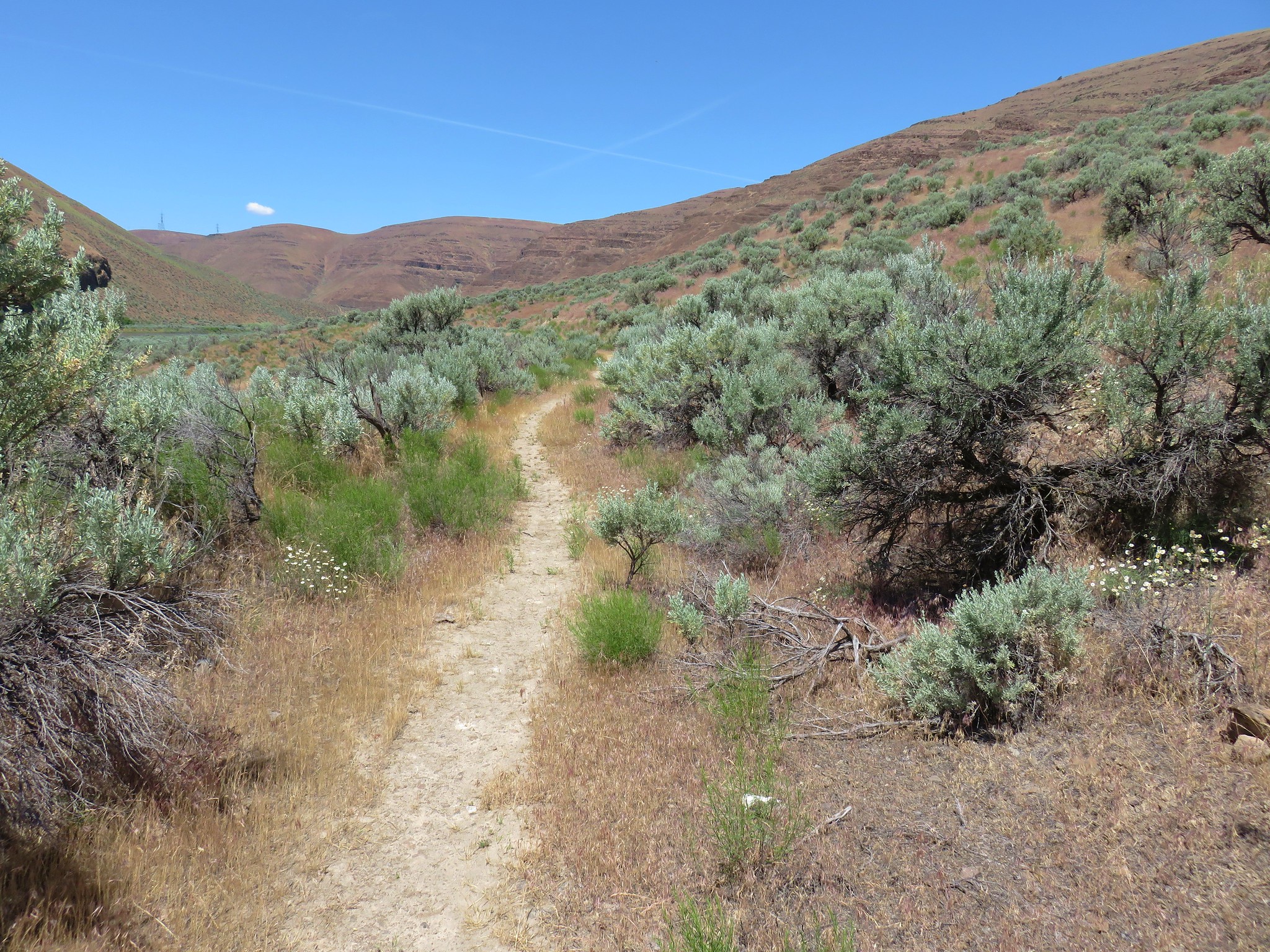
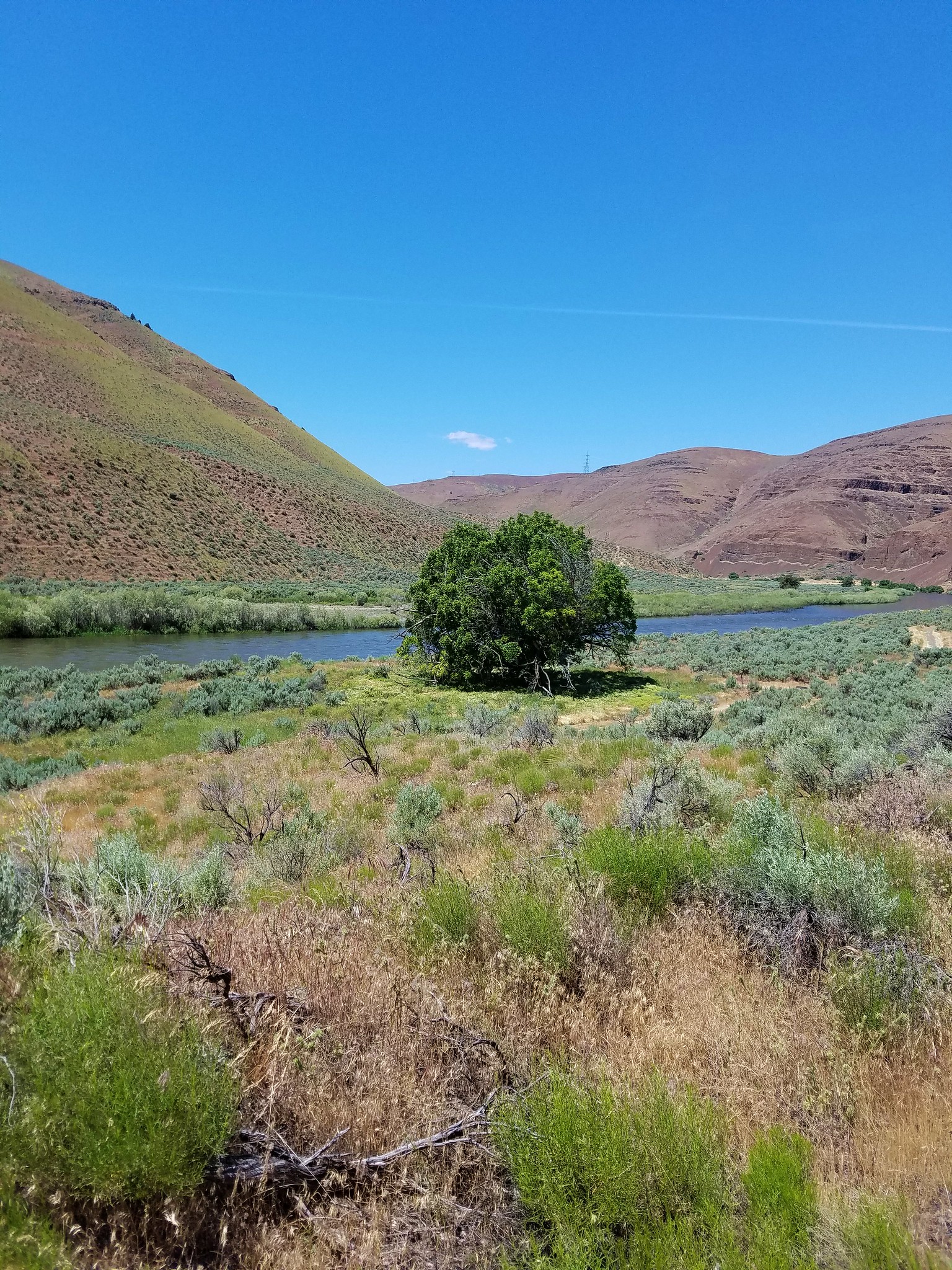
We spent our time enjoying the views of the canyon cliffs and scanning the sagebrush for flowers and animals including rattle snakes which are seen with some regularity along the John Day. We didn’t see any snakes but we saw a few other critters and a nice variety of flowers.
IMG_0673

IMG_0694

IMG_0703

2017-05-27 08.30.51

2017-05-27 08.33.35

IMG_0676

IMG_0683

IMG_0689

IMG_0690

IMG_0696

IMG_0709

2017-05-27 08.28.44

IMG_0715

The trail, which followed an old road bed, officially ended at Big Eddy which was where we turned back, but the road continues on.

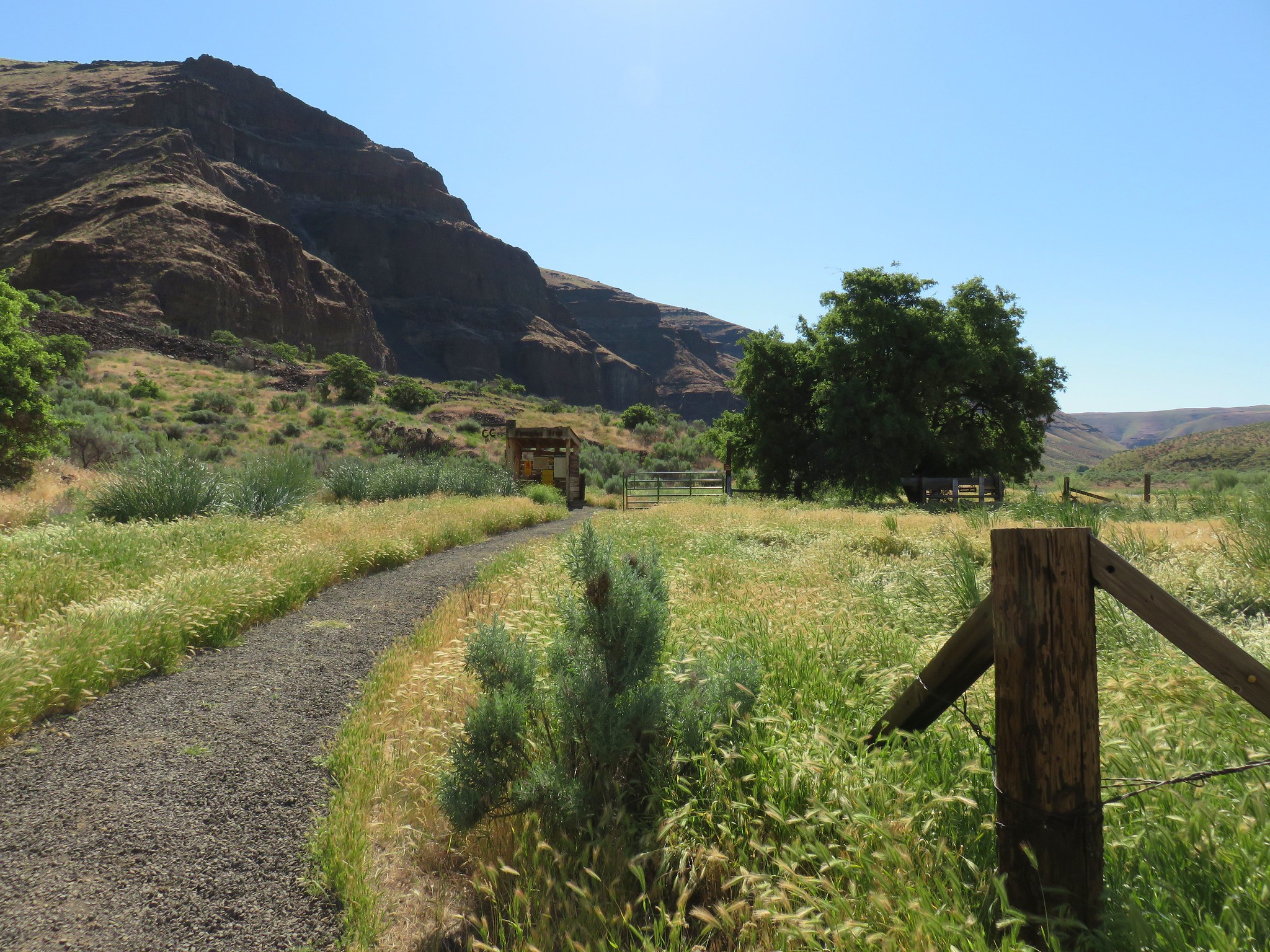
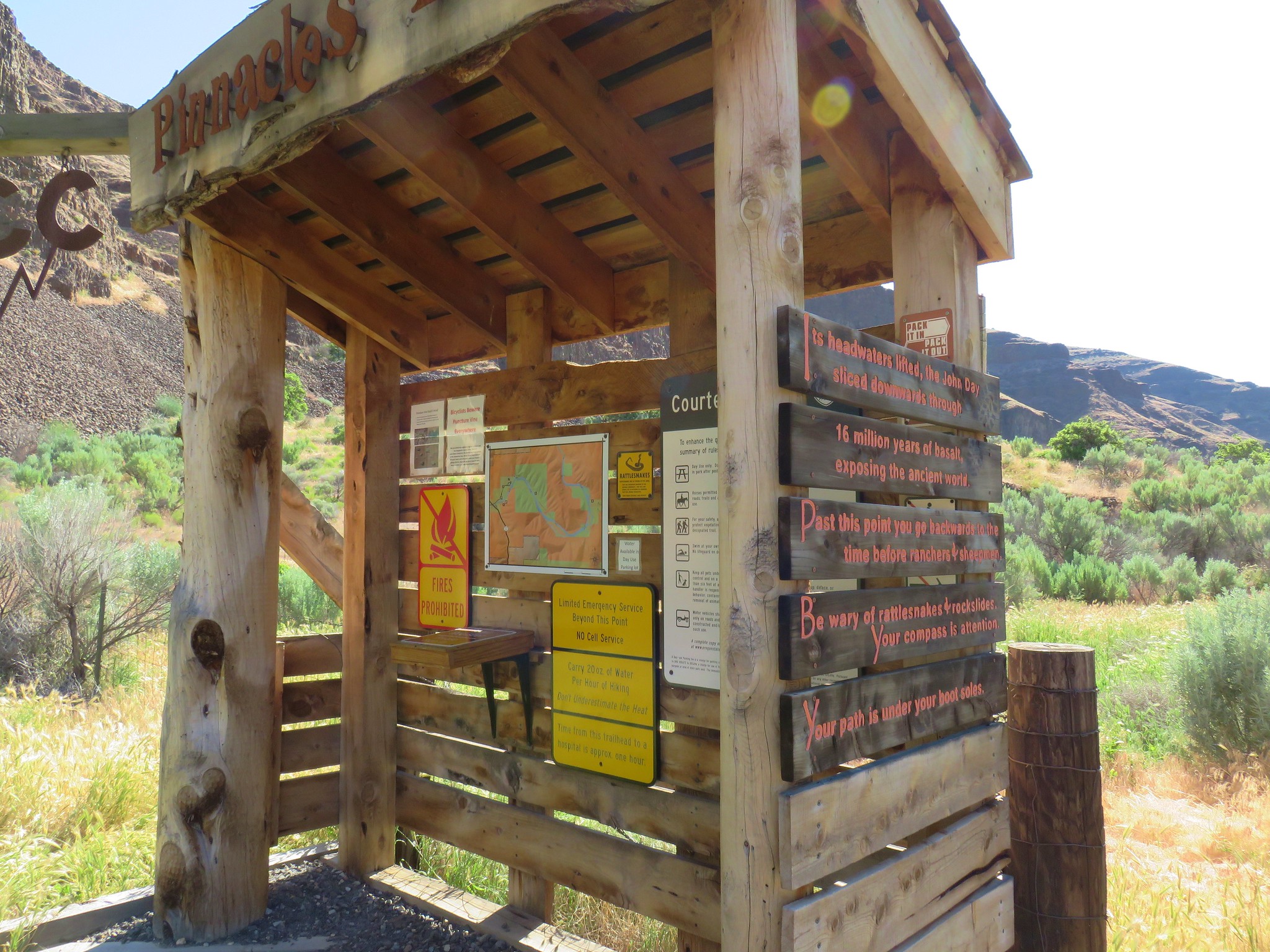
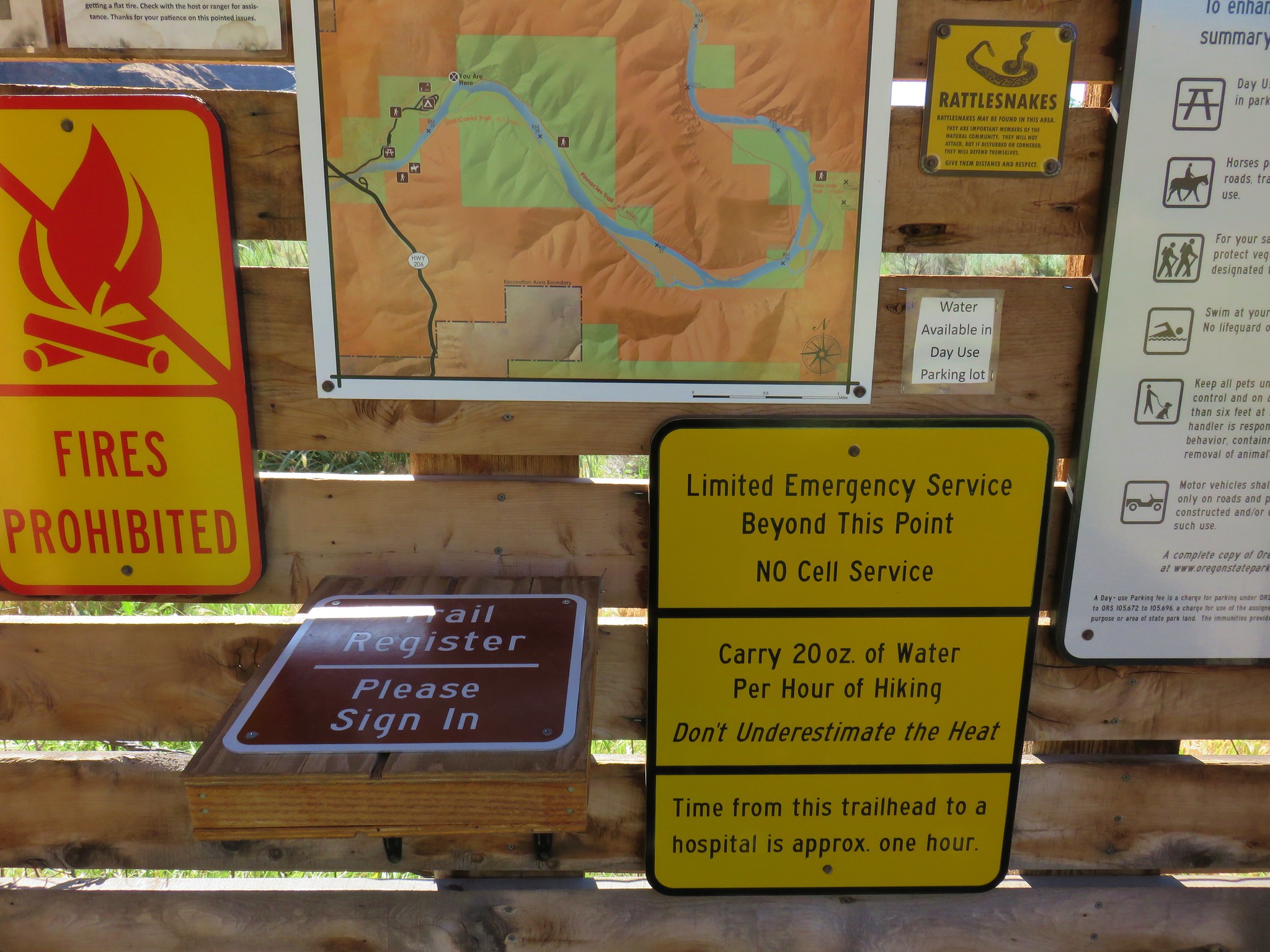
After returning to our car we drove further into the park following signs for the Pinnacles Trail parking area. We set off following signs for the trail. After a short walk through a camping area the path led to a gate with a signboard and trail register.
IMG_0721

IMG_0724

IMG_0725

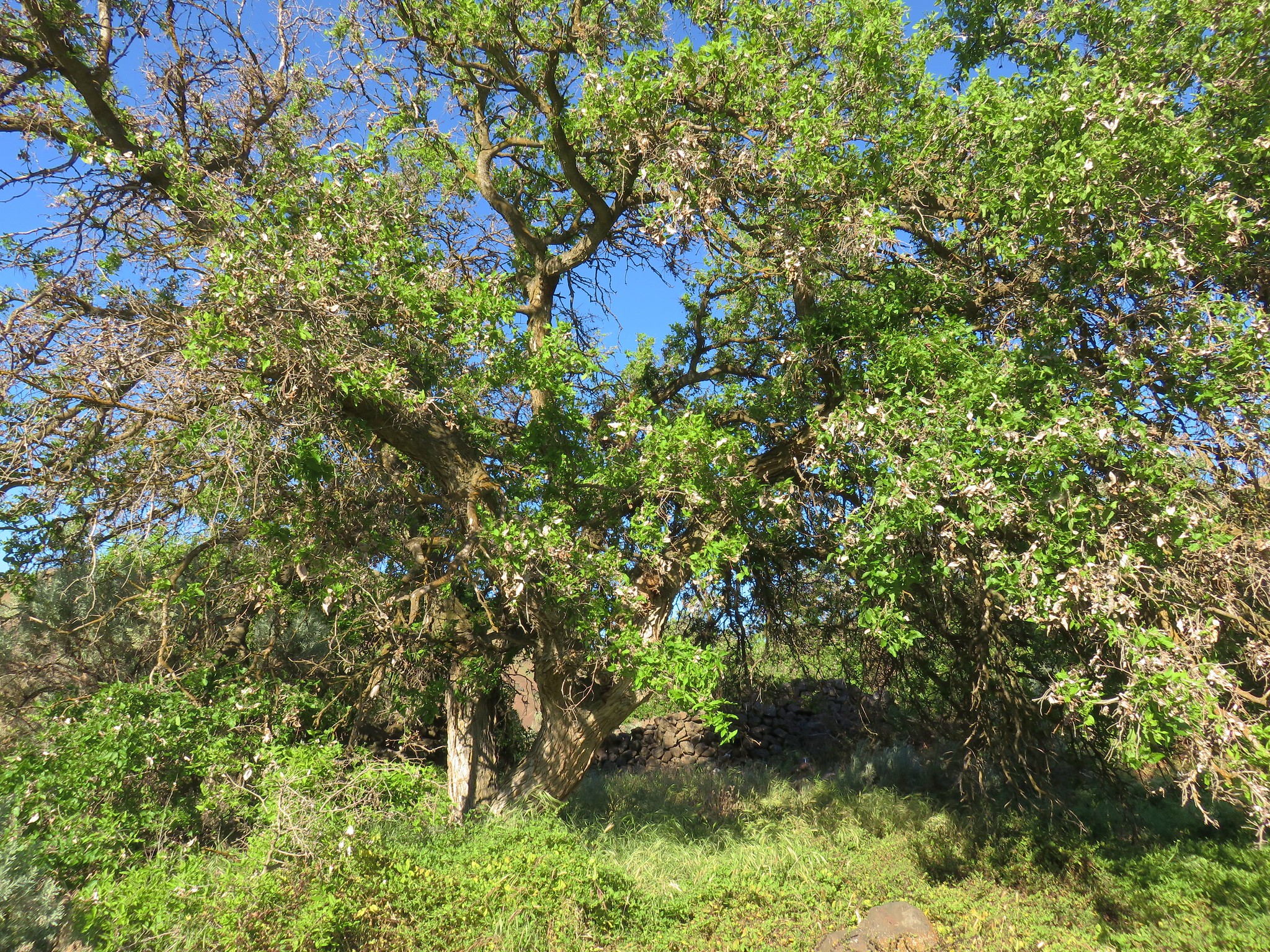
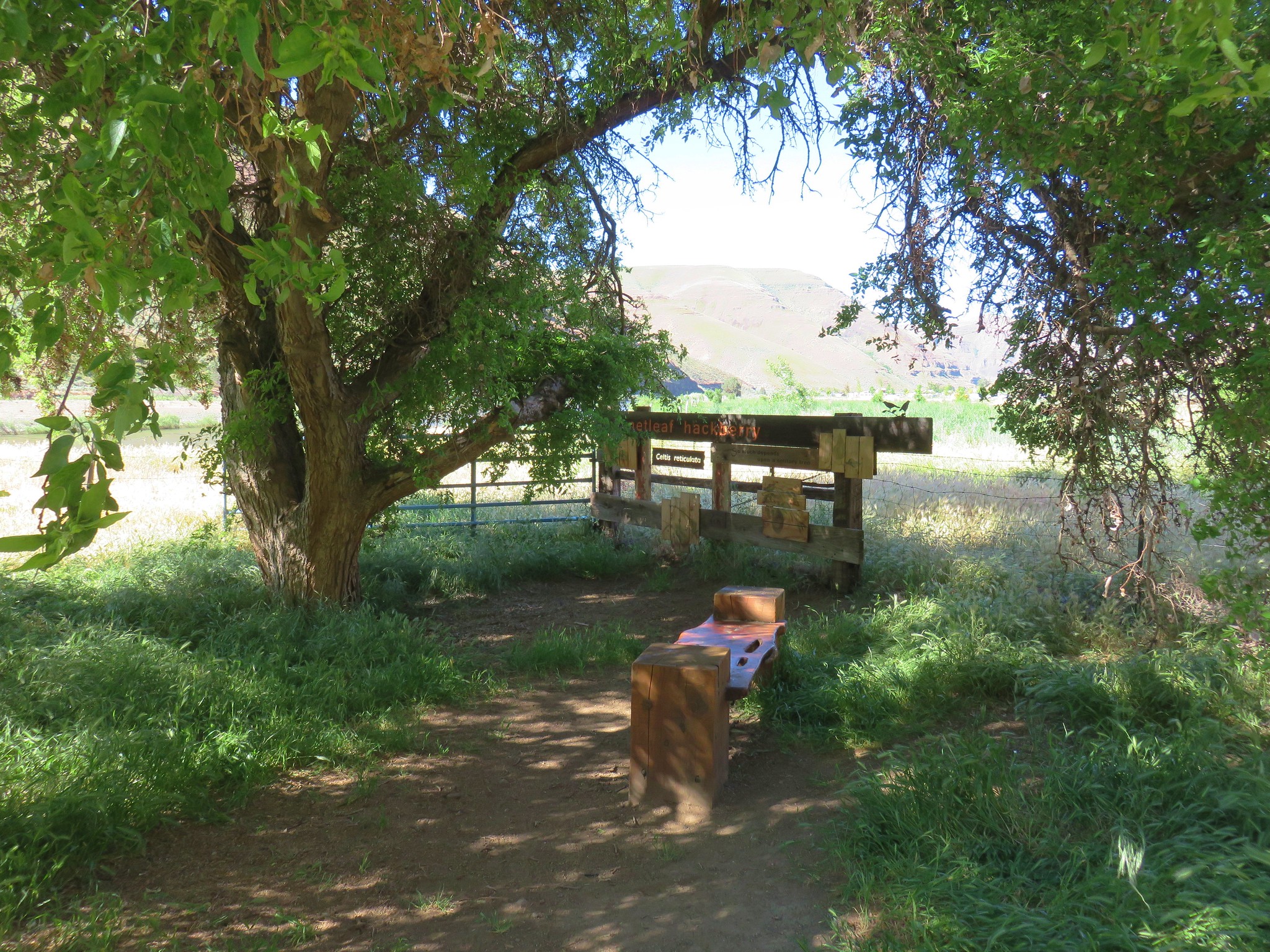
A nearby walnut tree offered some cool shade.
IMG_0726

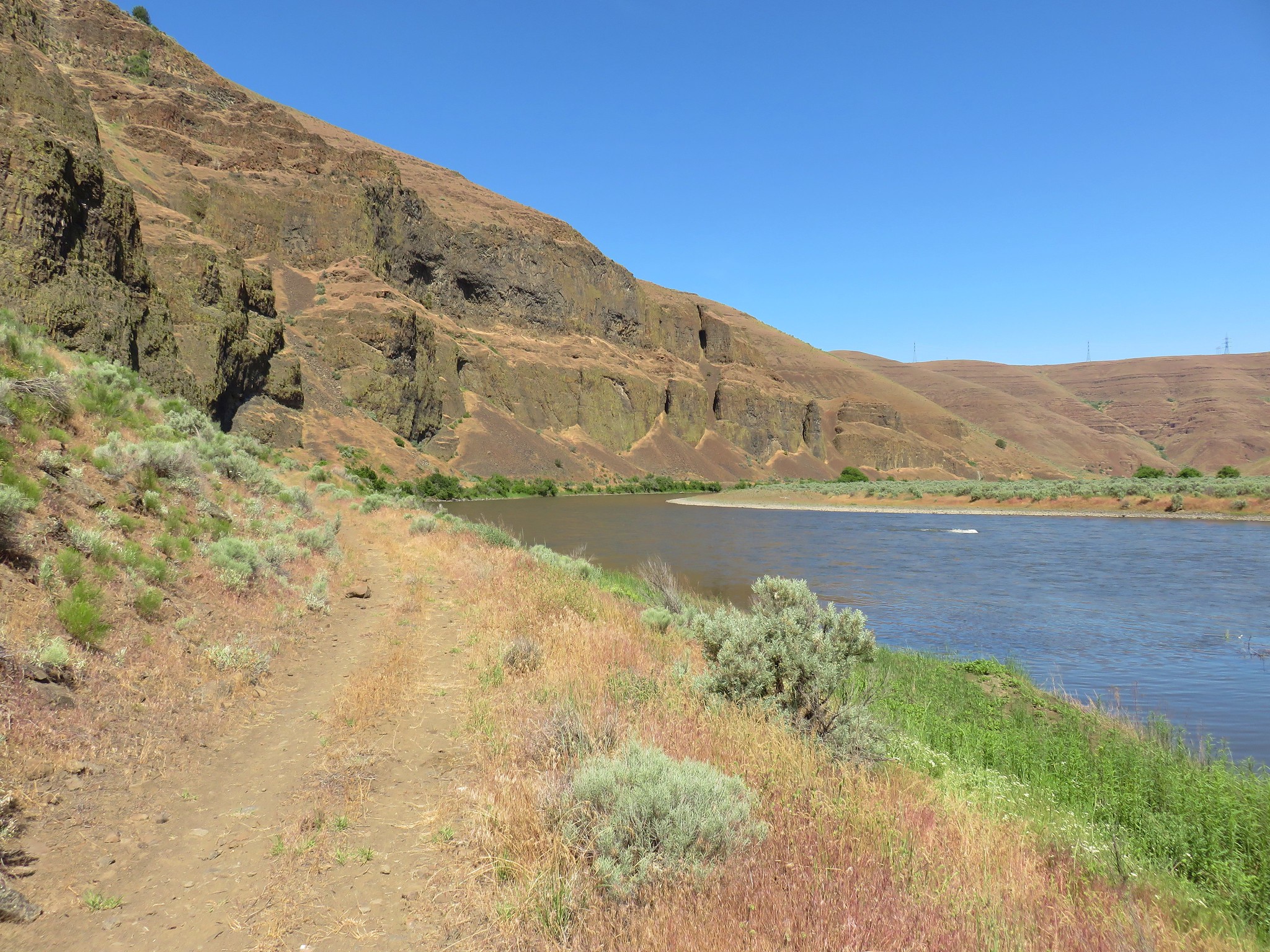
The Pinnacles Trail follows another old road bed along the river downstream a total of 4.3 miles. IMG_0728

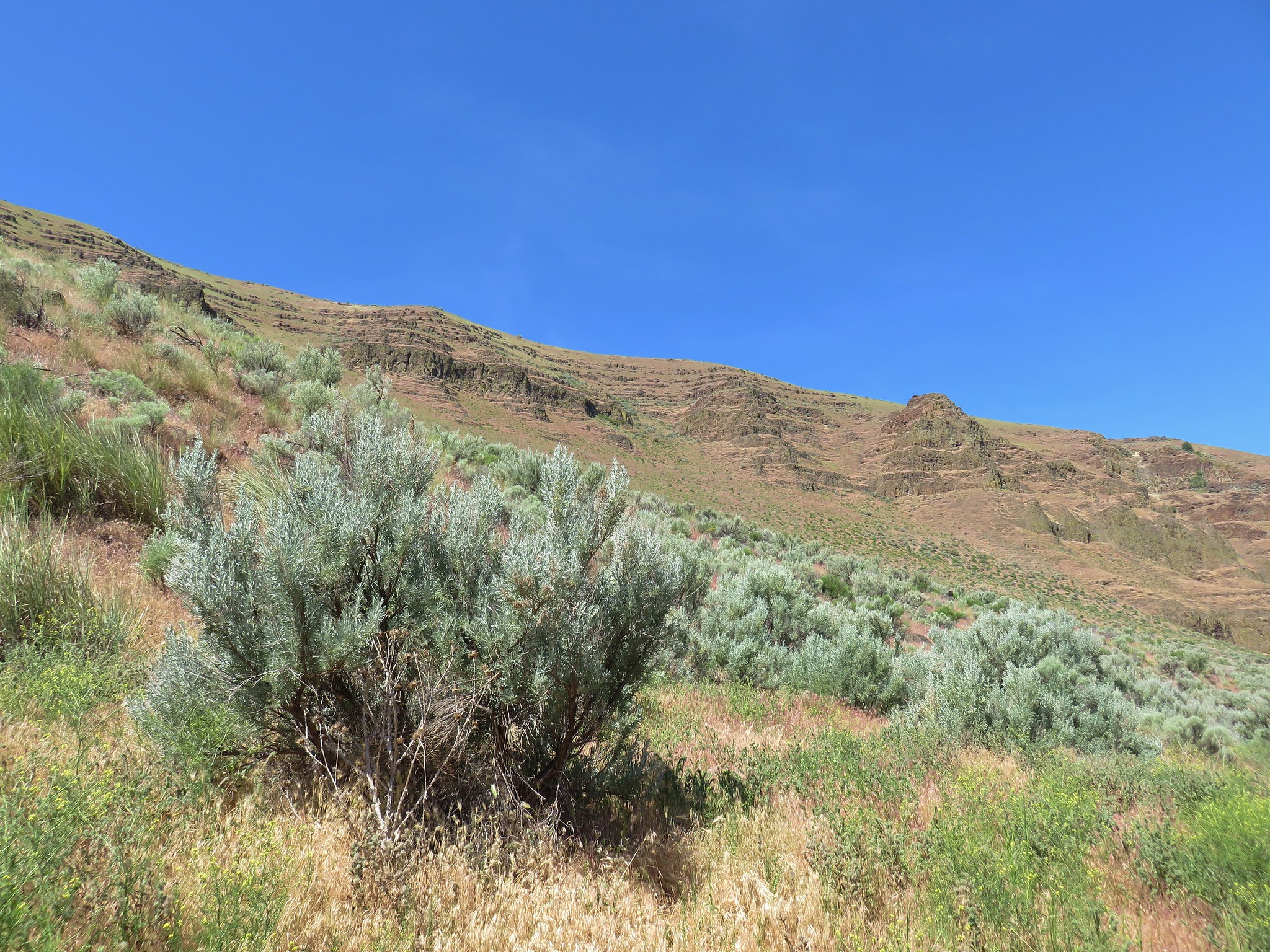
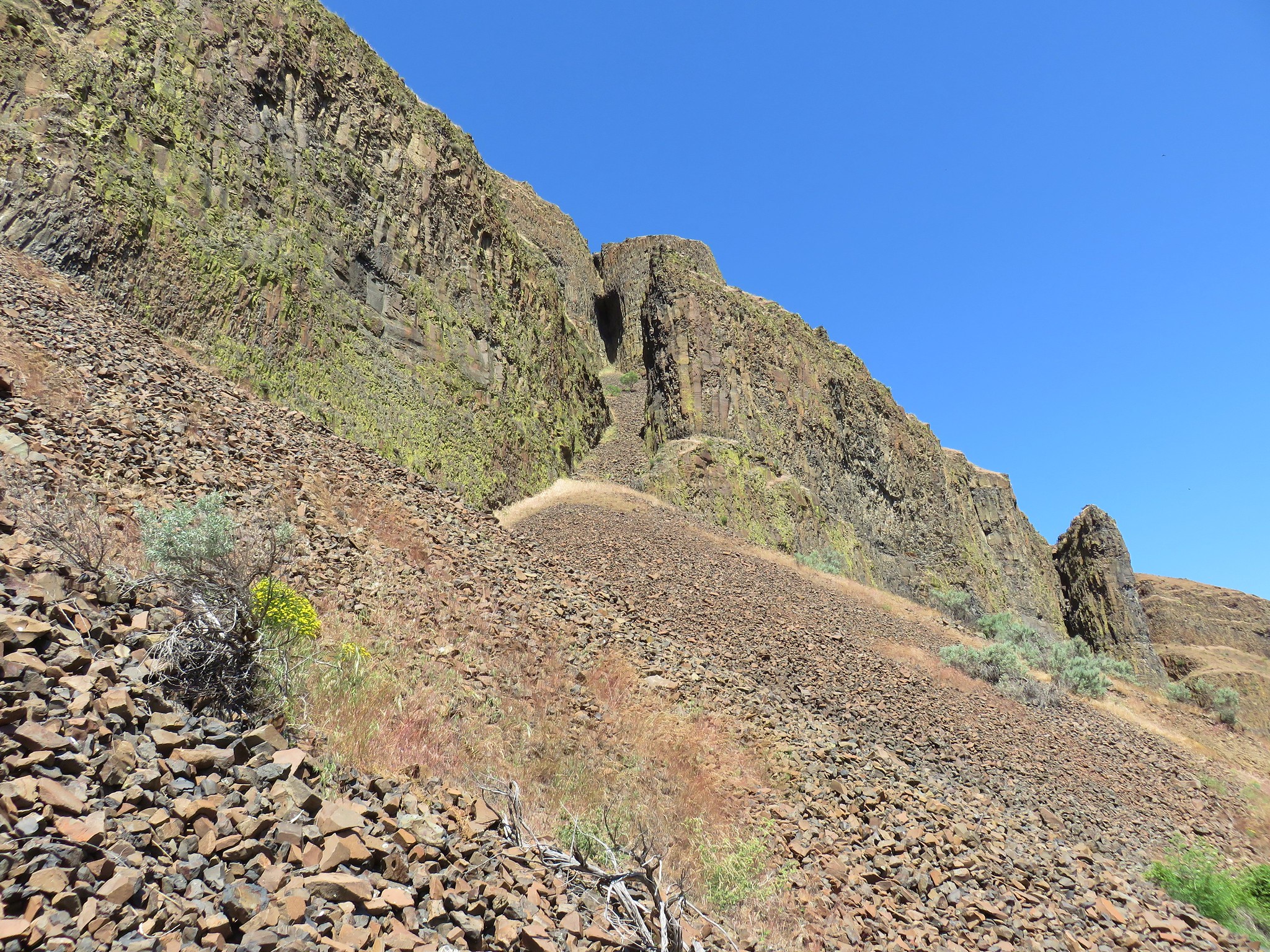
The cliffs along the trail were captivating. It was hard not to turn off the trail just to see how far one could get up some of the gullies and side canyons.
2017-05-27 09.20.32

A short distance from the gate the cliffs crowded the trail.
IMG_0738

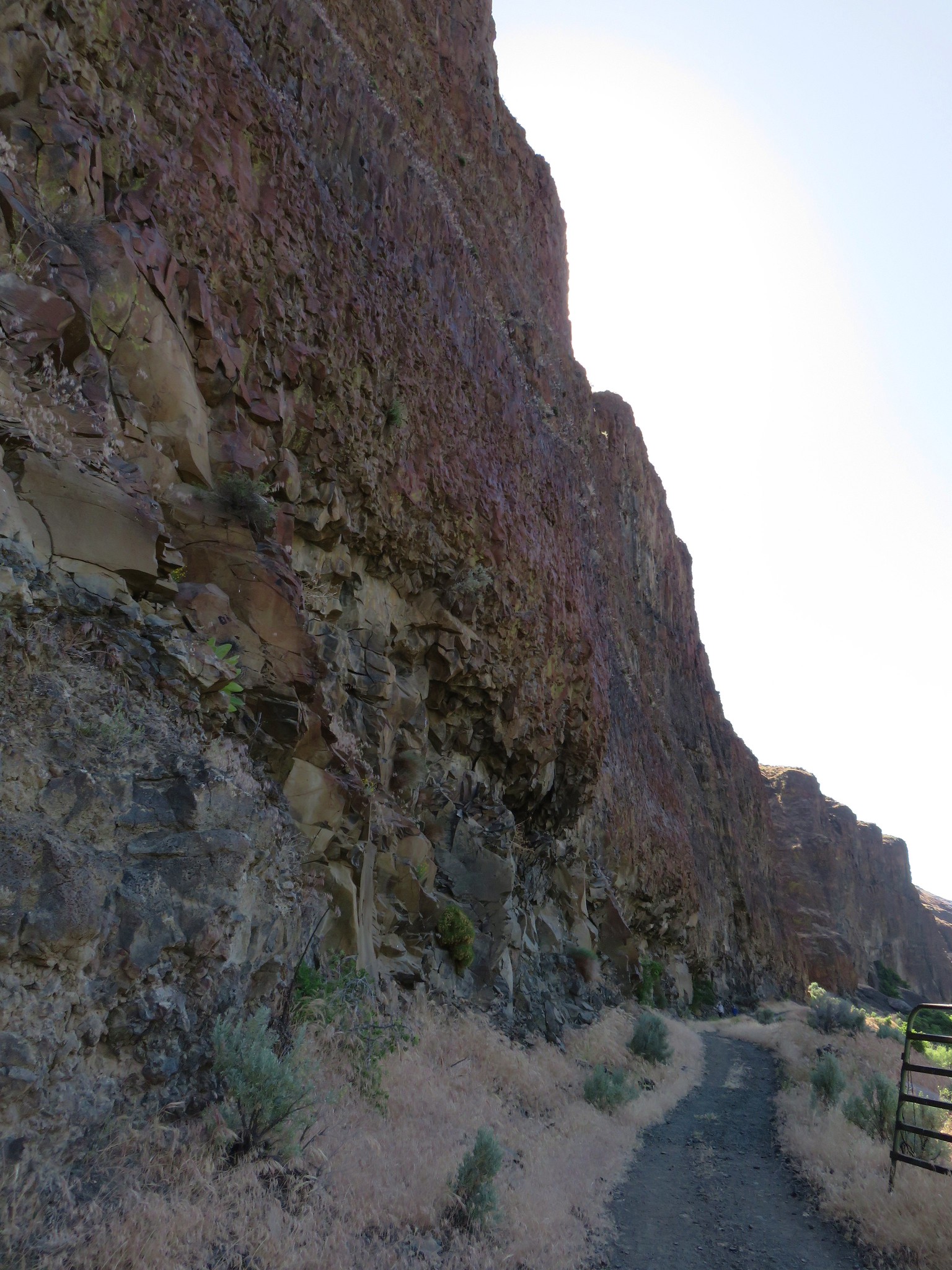
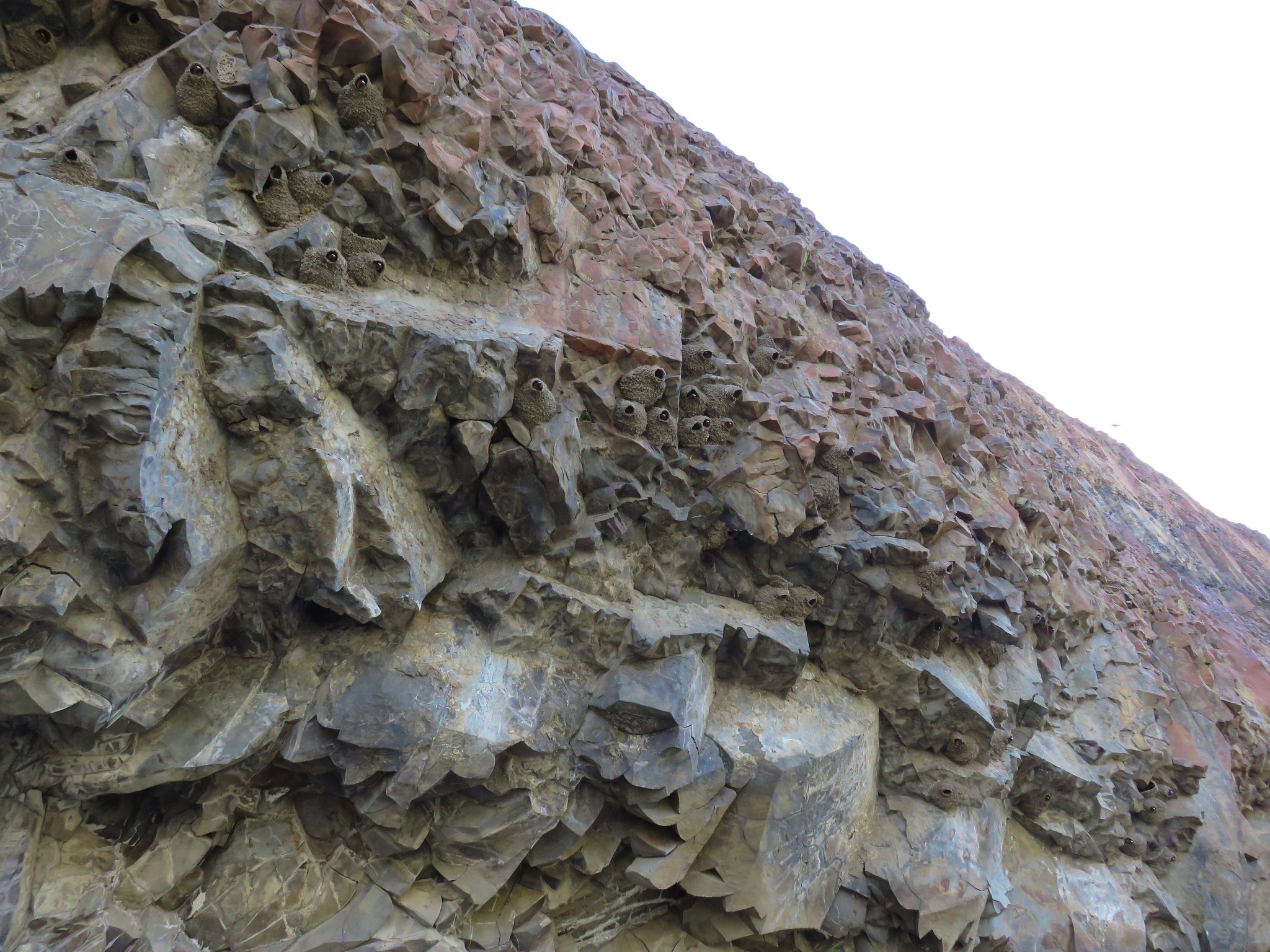
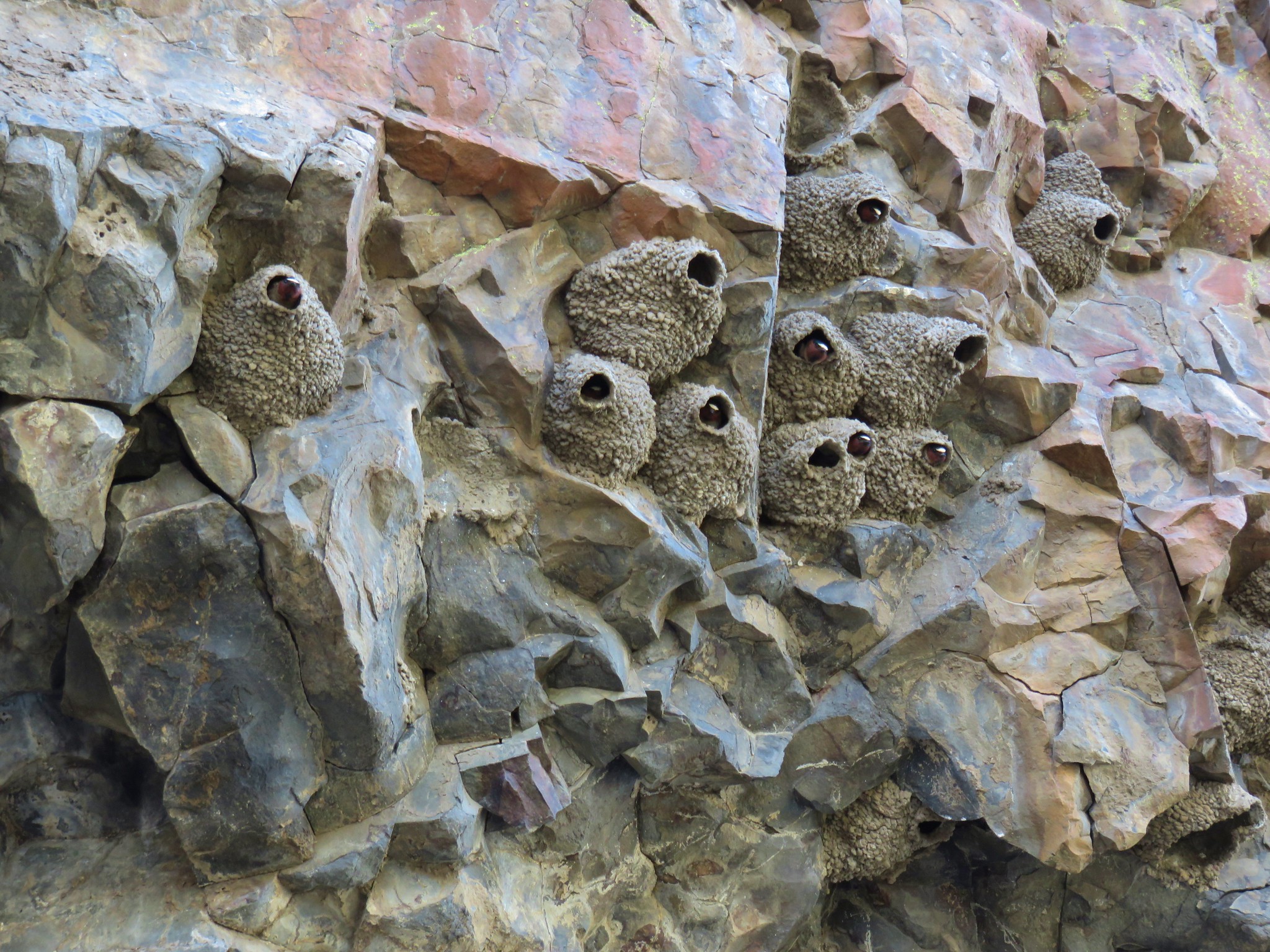
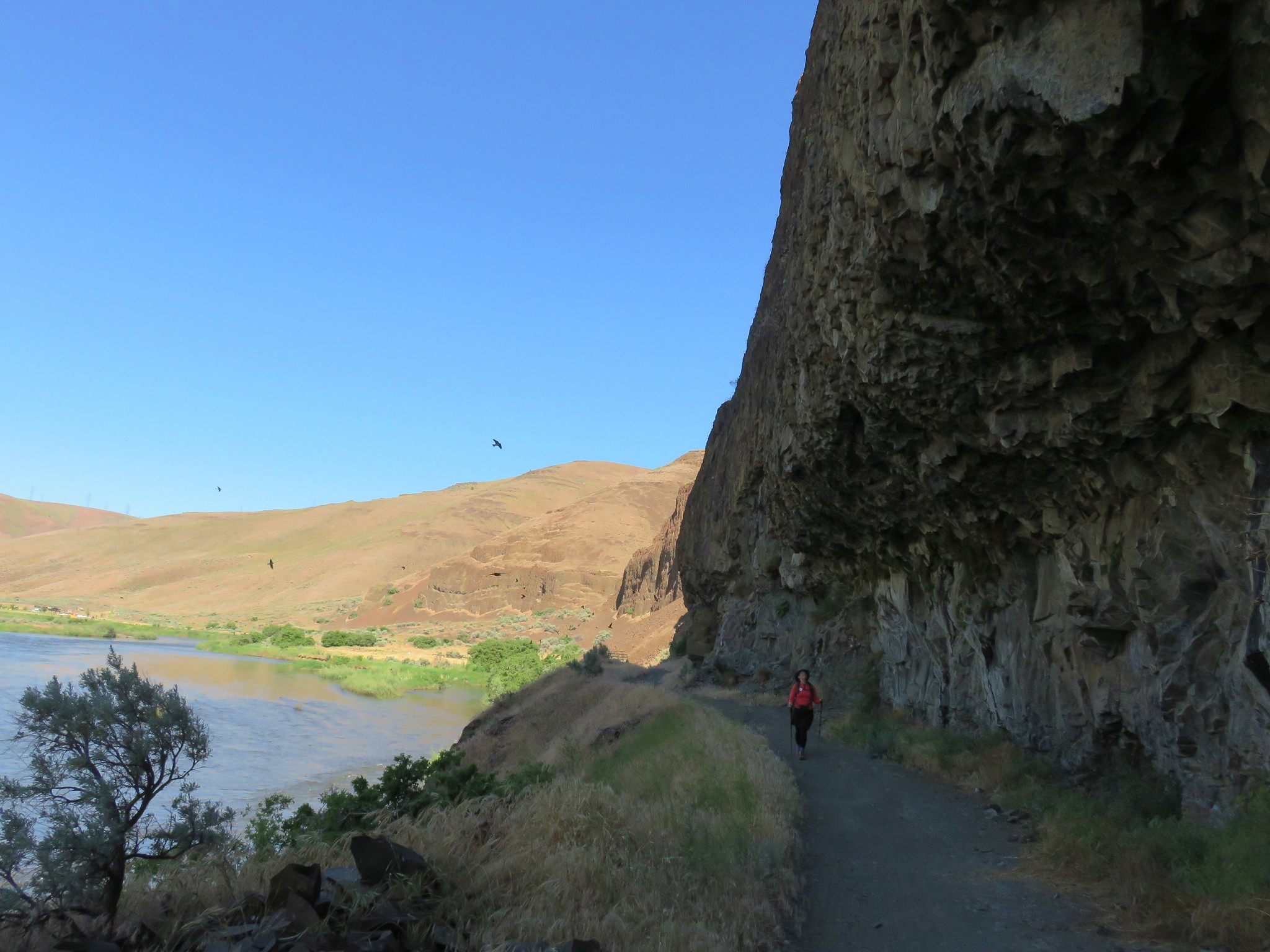
The cliffs hung over the trail and were home to countless American Cliff Swallows which sped to and from their nests as we passed underneath.
IMG_0748

IMG_0749

IMG_0746

IMG_0753

IMG_0759

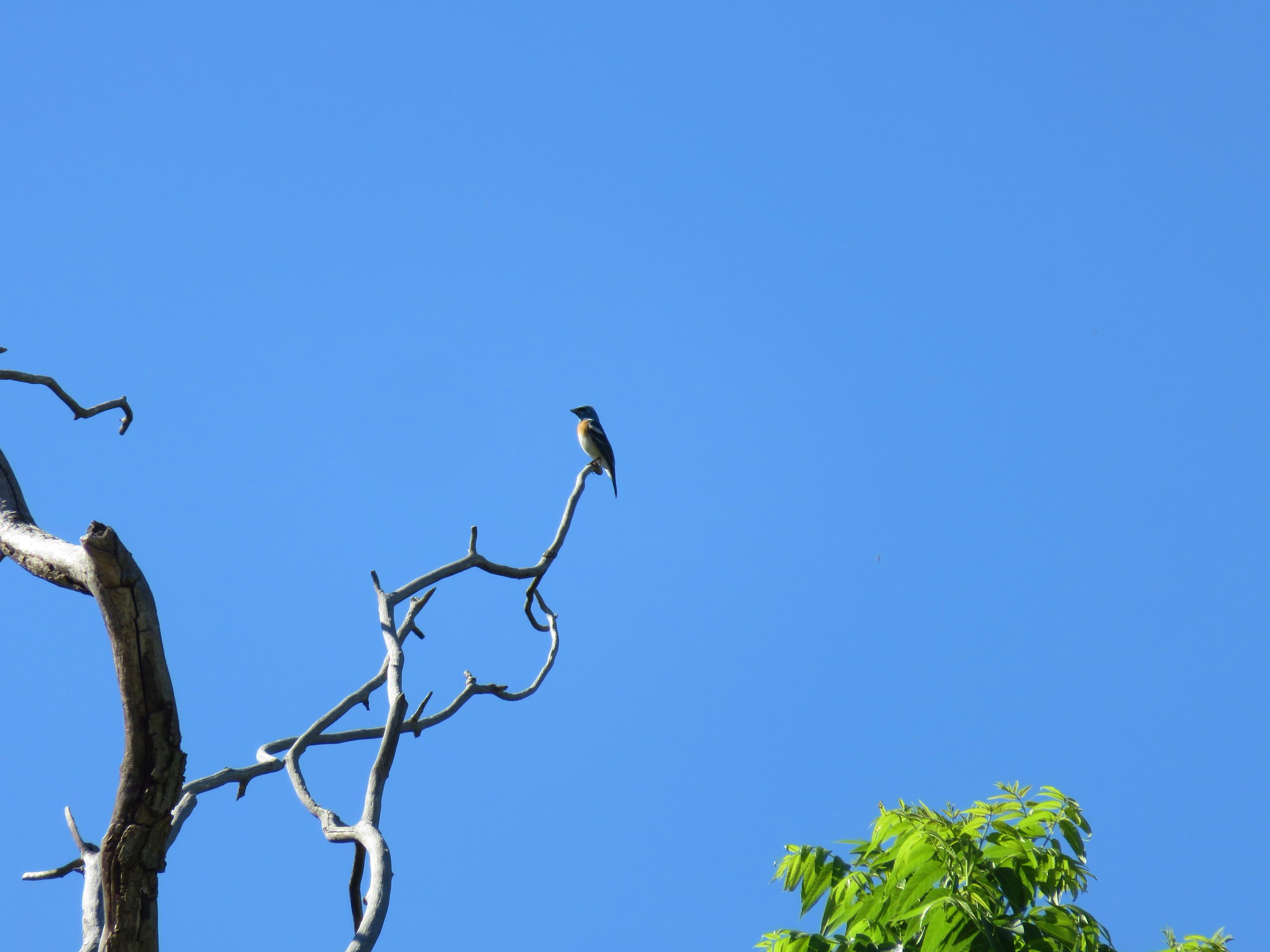
Just under a mile and half along the trail brought us to a neat old walnut tree where we spotted a colorful lazuli bunting.
2017-05-27 09.42.30

IMG_0774

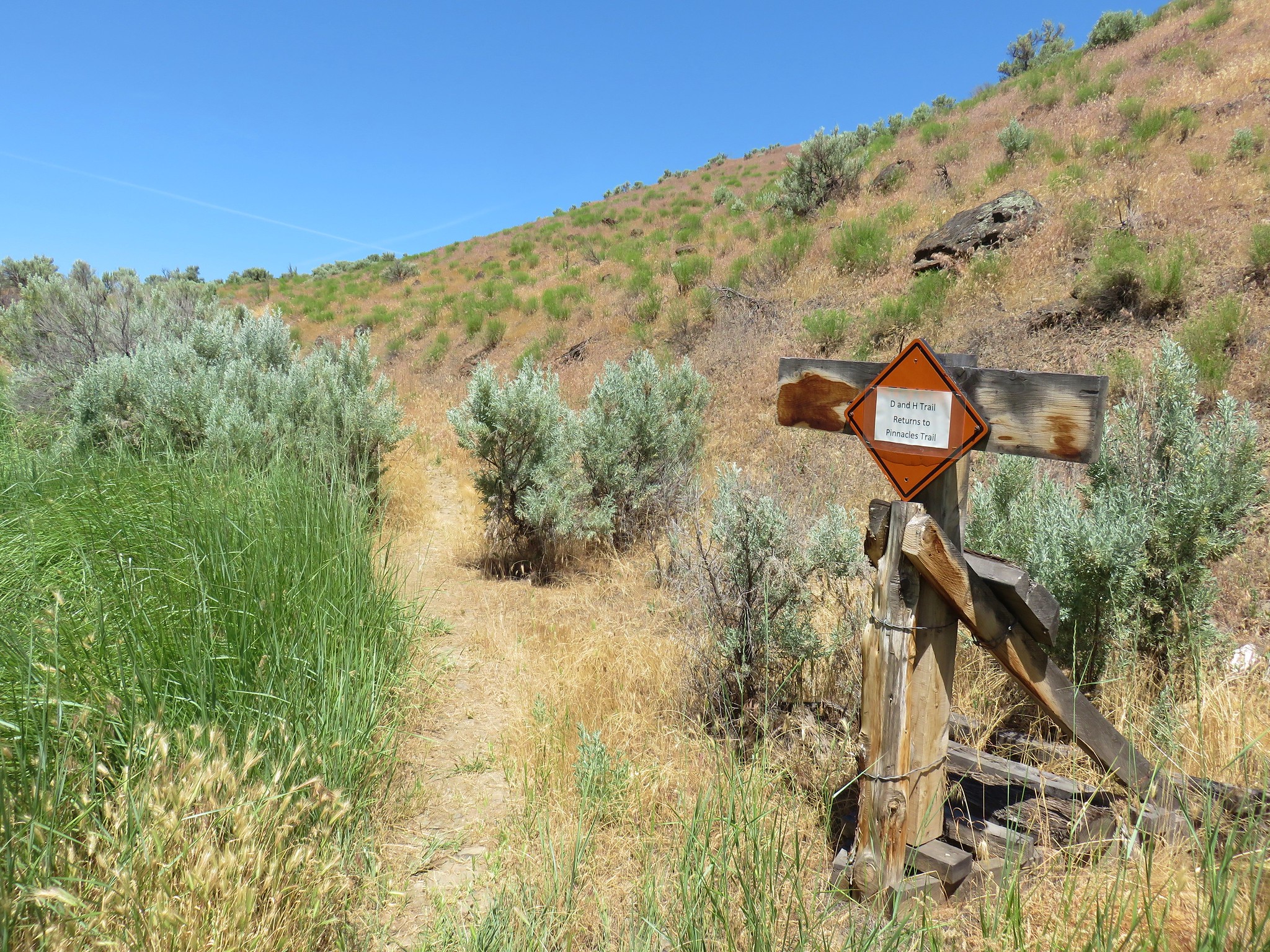
A trail near the tree provides river access and another trail led slightly uphill away from the tree. The sign named this the D & H Trail and indicated that it returned to the Pinnacles Trail further downstream. We decided we’d take it on the return trip after realizing (after way too long a time) that those were our initials, D & H.

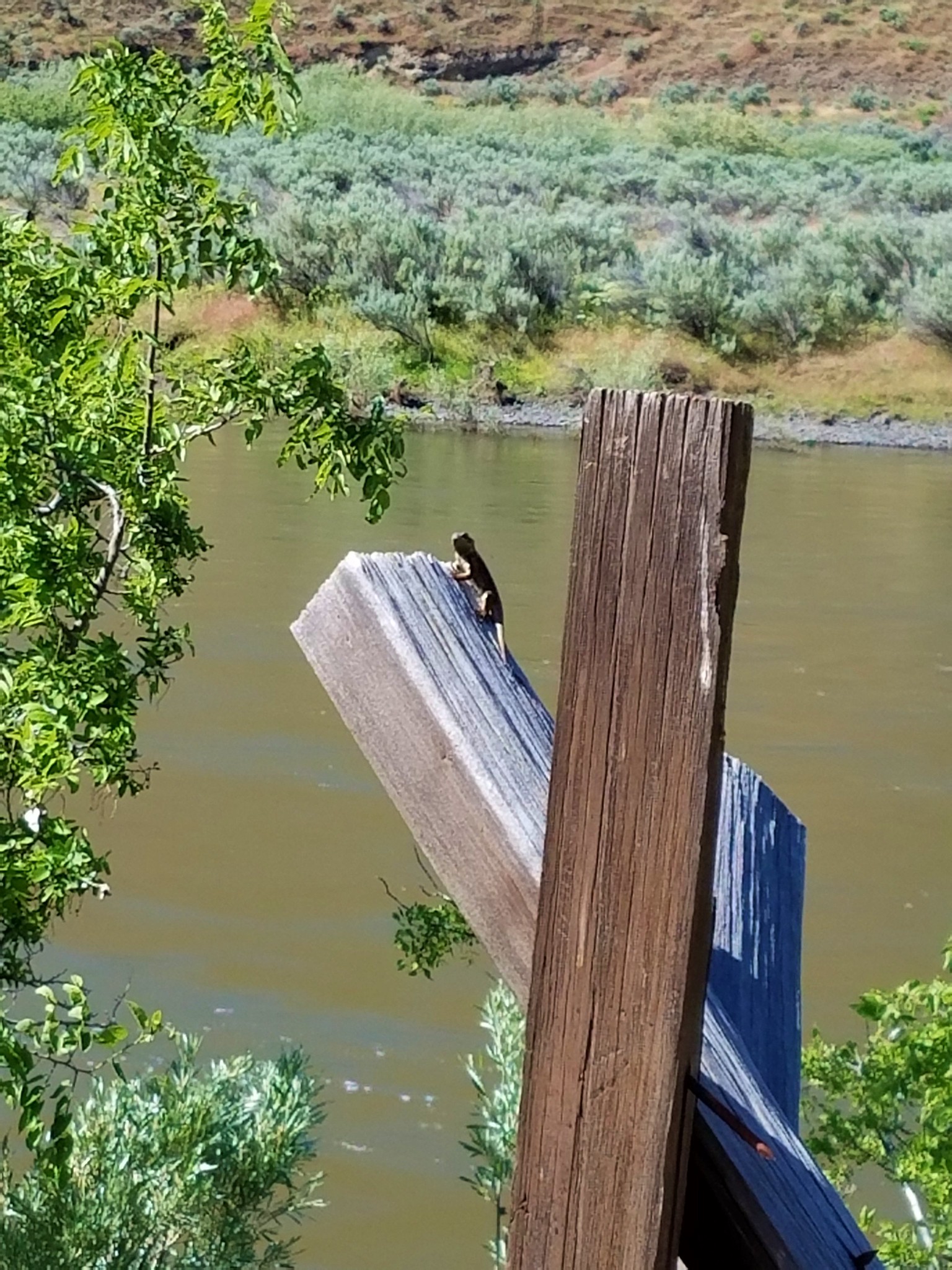
As we continued on we passed part of an old fence where we spotted an aptly named western fence lizard.
2017-05-27 10.11.26

IMG_0800

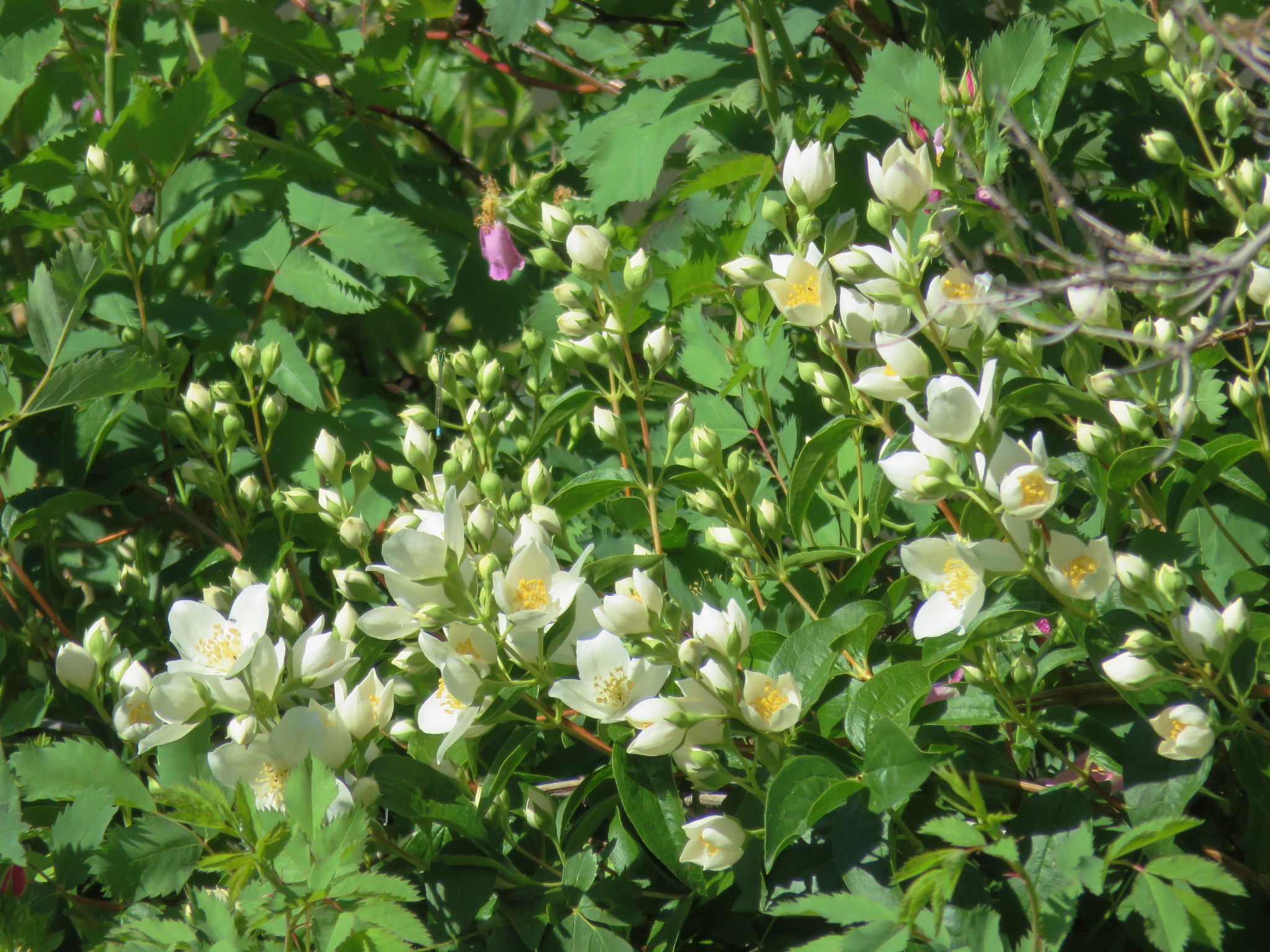
We spotted many of the same types of flowers we’d seen along the Hard Stone Trail and a few we hadn’t including some sweet smelling mock orange.
IMG_0768

IMG_0793

2017-05-27 10.17.02

2017-05-27 09.56.11

IMG_0814

IMG_0806

The Pinnacles Trail is named after some rock outcrops across the river near the 3 mile mark.
IMG_0808

Beyond the Pinnacles the trail bent to the left passing through an open area full of sagebrush before rounding a rocky ridge-end.
IMG_0820

IMG_0821

The ridge bowed away from the trail.
IMG_0825

We had talked early about the possibility of spotting larger animals on the hillsides and imagined that most of them would be sticking the the brush filled gullies we had seen along the way. As we were scanning the cliffs below the ridge I spotted what might have been an animal or possibly another rock (I have a real knack for spotting rocks and tree trunks).
IMG_0840

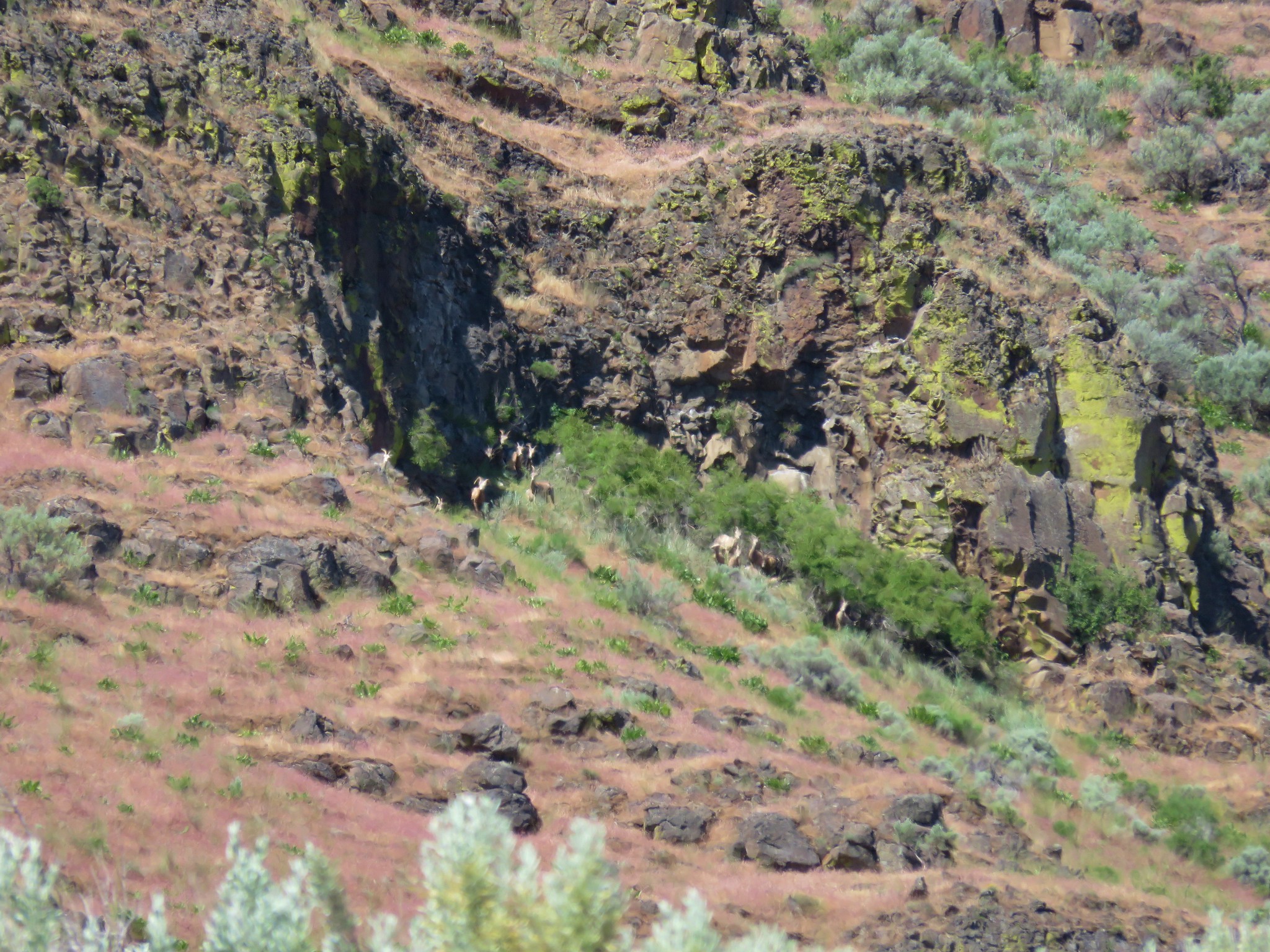
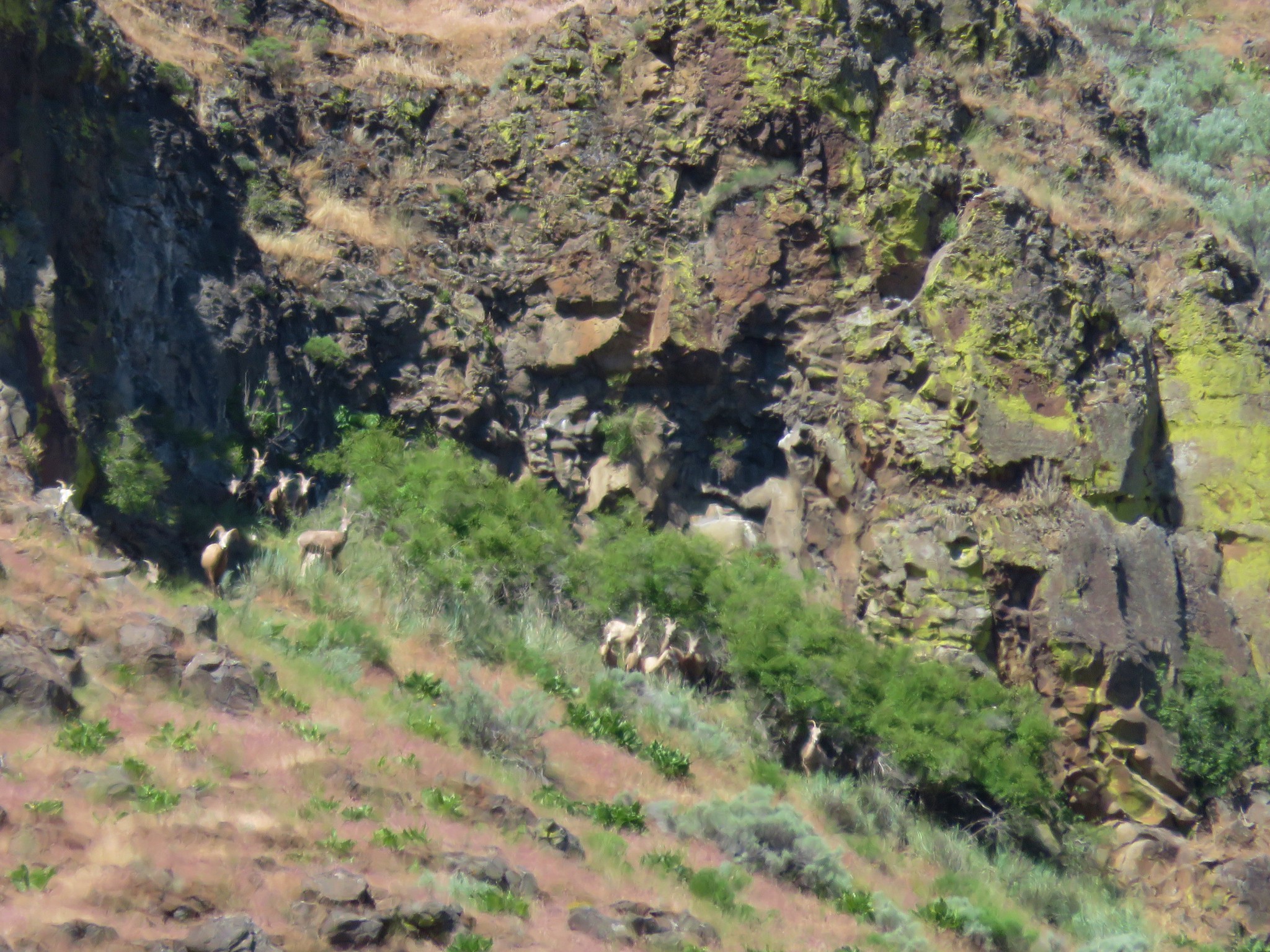
Making use of the camera’s 30x optical zoom allowed me to confirm that is was indeed an animal, in fact it was several animals.
IMG_0828

Going from the optical to the digital zoom gave us a closer look (but grainier picture) of the first big horn sheep we’d spotted on a hike.
IMG_0827

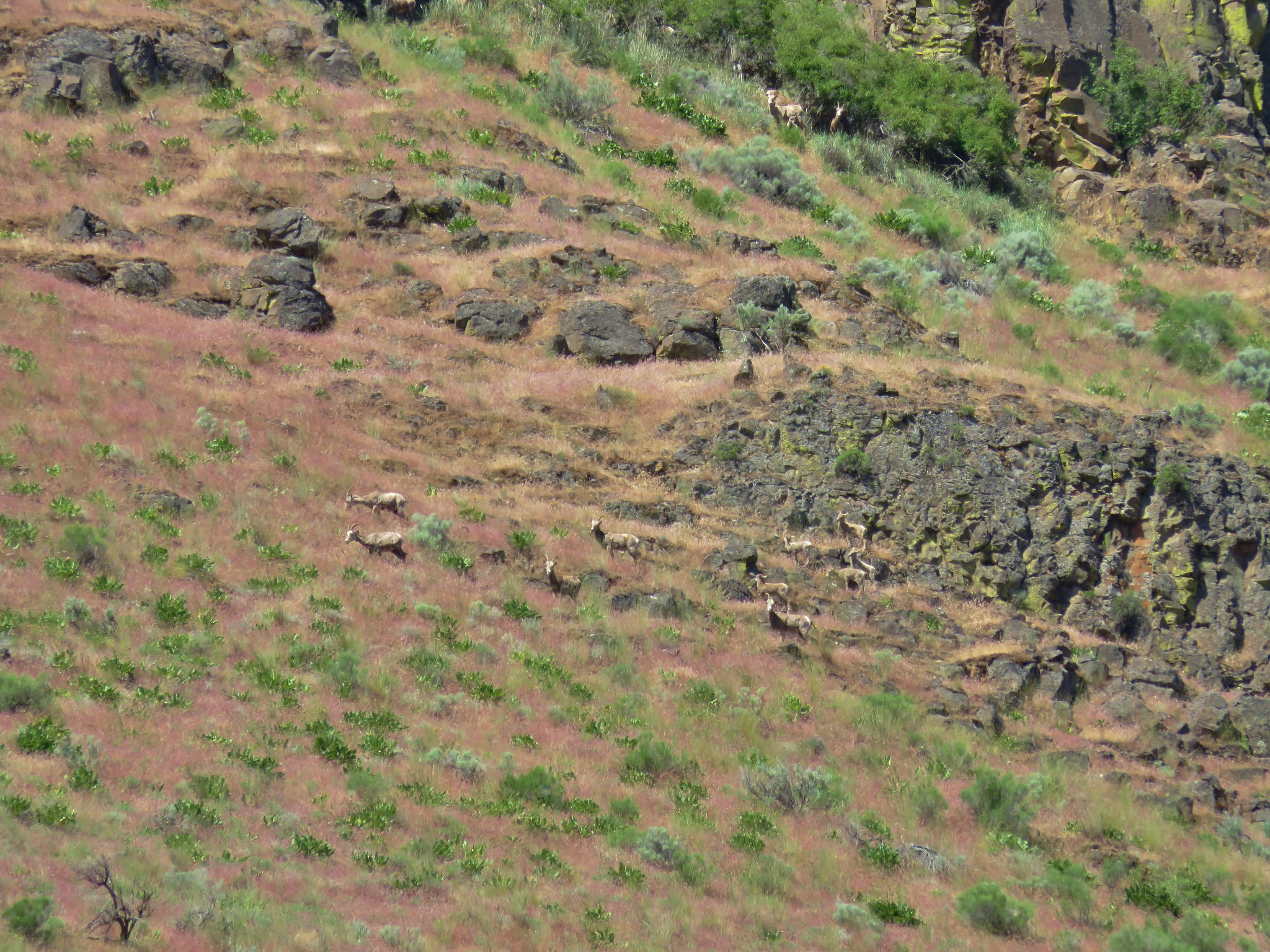
Sure enough they were hanging out in the shaded vegetation. Then we noticed a few more of the sheep passing below the first group. They seemed to be grazing on balsamroot leaves.
IMG_0854

IMG_0868

The official trail continued to a narrow area between the cliffs and river.
IMG_0874

IMG_0881

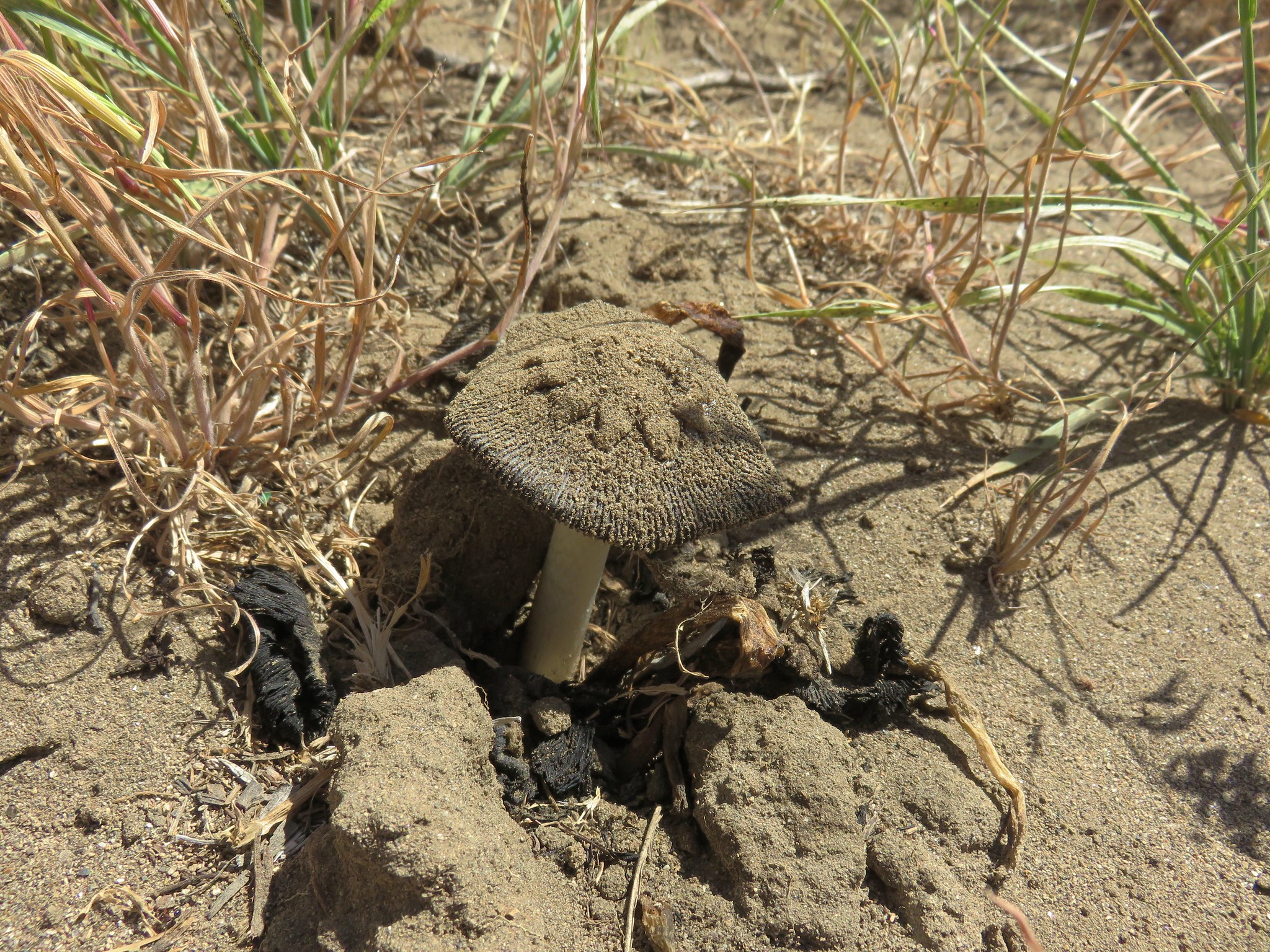
A use path continued on but we didn’t see any reason to continue. It was well into the 80’s and we’d seen plenty of great sights already. The sheep had disappeared when we passed back by where we’d seen them but Heather spotted something that was almost as surprising to see as they had been, a mushroom.
IMG_0891

We forked onto the D & H Trail when we reached its eastern end.
IMG_0905

The trail led through the sagebrush just far enough uphill that we were able to avoid what had been a fairly active area for mosquitoes before dropping back down to the Pinnacles Trail by the walnut tree.
IMG_0907

2017-05-27 12.32.43

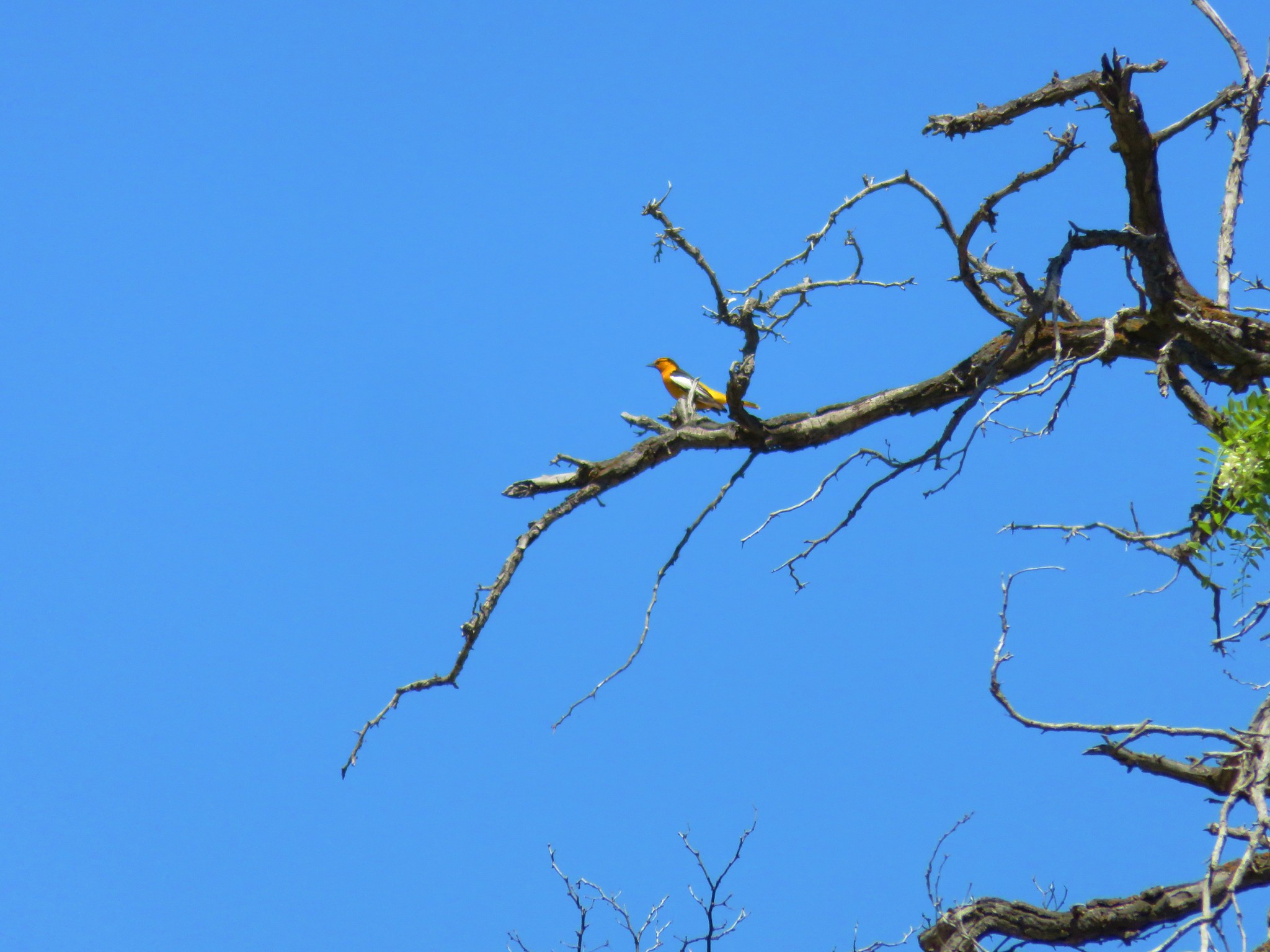
One final sighting of note was a pair of Bullock’s Orioles which we had not seen before.
Bullock's Oriole

The one thing we didn’t see were any snakes which Heather was more than thankful for. I on the other hand was a little disappointed. I have no desire to be close to a rattle snake but at the same time I wouldn’t mind seeing one at a nice safe distance.

It was a great hike despite the warm temperatures but they were a good reminder of why summer may not be the best time for a visit to the park. Winter can also bring strong winds and freezing temperatures, so Spring or Fall probably are the best.

Hiking isn’t the only activity the park has to offer either. Rafting, fishing, mountain bike riding, and horseback riding opportunities exist as well. Whatever your reason for visiting it’s well worth the trip. Happy Trails!
Flickr: Cottonwood Canyon

Categories
Bend/Redmond Central Oregon Hiking Oregon Trip report

Otter Bench Trail System

We are going to take a break from our Throwback Thursday posts now that we are hiking regularly again. Have no fear though Throwback Thursday hikes will return in the Fall.
The day after our visit to the Clarno area we headed to Crooked River Ranch and the BLM managed Otter Bench Trail System.

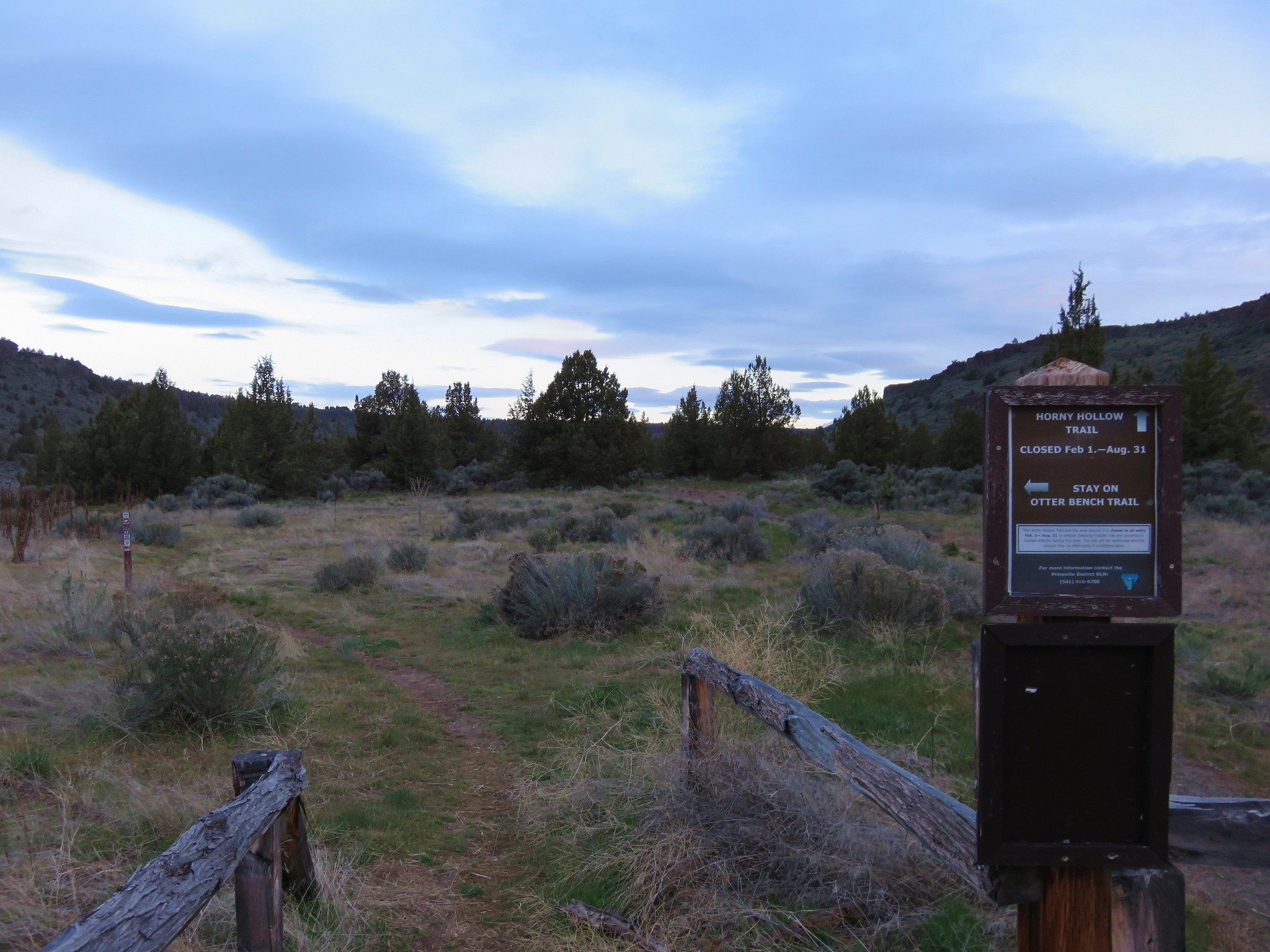
Otter Bench Trailhead

Three trails begin at the trailhead at the end of Horny Hollow Dr. The .9 mile Lone Pine Trail, the 1.5 mile Horny Hollow Trail, and the 1.7 mile Otter Bench Trail.
Otter Bench Trail

The Otter Bench and Horny Hollow Trail form a loop but from February 1 – August 31 the Horny Hollow Trail is closed. The Lone Pine Trail heads in the opposite direction eventually dropping down to the river. Our plan was to take the Otter Bench Trail a junction at it’s end where we would take the short Pink Trail down to the river then the Opal Loop Trail further out along the bench.

As we set off through the sagebrush and junipers the sun was rising over the rim of the gorge.

Otter Bench

Sunrise over the Crooked River Gorge

There weren’t many flowers along the first portion of the trail, but as we continued on more and more flowers started popping up amid the sagebrush.

BiscuitrootBiscuitroot

LarkspurLarkspur

western stoneseedWestern stoneseed

BalsamrootBalsamroot

PhloxPhlox

At the end of the Otter Bench Trail we came to the 4 way intersection with the Horny Hollow, Pink, and Opal Loop Trails.

Junction along the Otter Bench Trail system

We turned onto the Pink Trail which offered dramatic views on its way down into the Crooked River Gorge.

Crooked River Gorge from the Pink Trail

Crooked River Gorge

Balsamroot along the Pink Trail

Crooked River Gorge

Crooked River Gorge

A short section of trail passed through some pinkish rock, possibly the inspiration for the trails name.

Pink Trail

The trail ended on the bank of the Crooked River which was swollen with spring runoff.

Crooked River

Crooked River

We climbed back up to the junction and turned right onto the Opal Loop Trail. For the first .5 mile this trail passed through a narrow section of the bench before arriving at the start of the trails namesake loop.

Opal Canyon Loop

Paintbrush along the Opal Loop Trail

Wildflowers were plentiful below the columnar basalt cliffs along the trail.

Wildflowers below columnar basalt

Prairie stars

Prairie stars

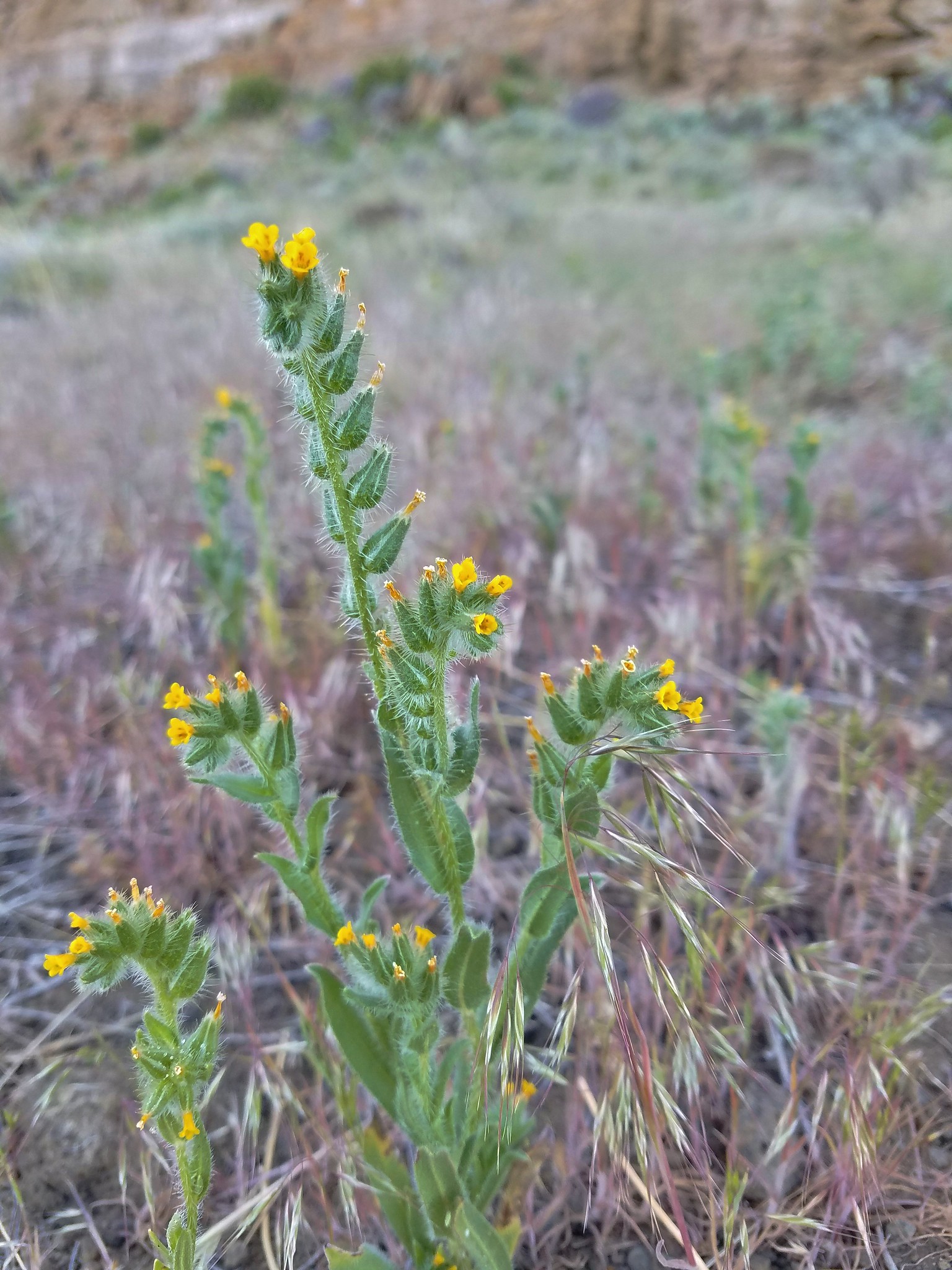
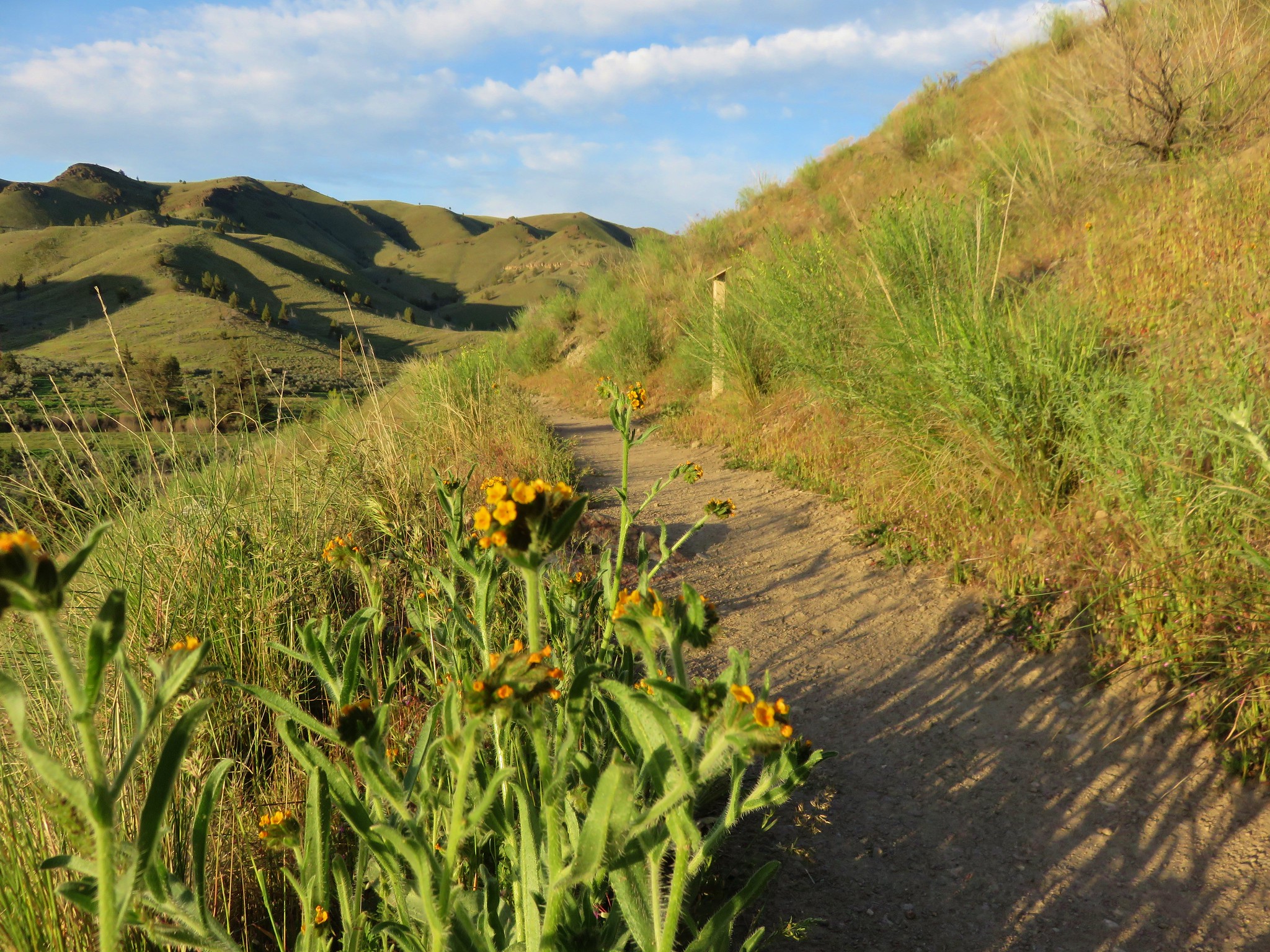
Fiddleneck

Fiddleneck

Threadleaf phacelia

Threadleaf phacelia

The bench had widened again where the Opal Loop began.

Opal Loop Trail

We went counter-clockwise arriving at a viewpoint above the gorge at the far end of the loop.

Crooked River Gorge

Crooked River Gorge

Beyond the viewpoint the trail veered away from the river for the remainder of the loop.

Opal Loop Trail

We headed back to the Otter Bench Trail and followed it back to the trailhead. We were planning on meeting our son and my parents at Bogeys Burgers in Redmond for lunch a little after 11am but it was only 9:50 as we arrived back at the car. Realizing we were a good hour early we decided to check out the Lone Pine Trail.

We set off on a use path heading directly for the gorge from the parking area intending to pick up the Lone Pine Trail when we intersected it.

Crooked River Gorge

We misjudged the distance though and passed over the actual trail without noticing it. The path we were on was very clear though and it brought us to a rim above the river. Not realizing we had already passed the Lone Pine Trail we were still looking for it when we noticed a path to our left heading down toward the river. We headed down this path thinking it might be the trail. It was pretty steep as it headed down toward a rock pillar.

Rock pillar

The path continued to the left of the rock pillar. Here there were steps in the rocks and old wooden stairs. This made us think that we might be on the right trail after all.

Steps leading away from the Crooked River

On the far side of the river were some caves and cool rock formations.

Cave across the Crooked River

Crooked River Gorge

Near the river the trail became faint. A barely visible path to the right led through the grass between the river and canyon wall.

Crooked River Gorge

The trail eventually ran out in thick brush.

Crooked River Gorge

We hadn’t seen any pine trees and were now back to thinking this wasn’t the Lone Pine Trail after all. It had taken us almost 30 minutes to get to the thicket though so we had killed enough time and headed back the way we’d come. This time as we followed the same use path back to the parking lot we spotted the Lone Pine Trail. We figured that just left us an excuse to come back again someday, for now it was time for some food. Happy Trails!

Flickr: Otter Bench

Categories
Central Oregon Hiking John Day Oregon Trip report

Clarno Unit – John Day Fossil Beds and Spring Basin Wilderness

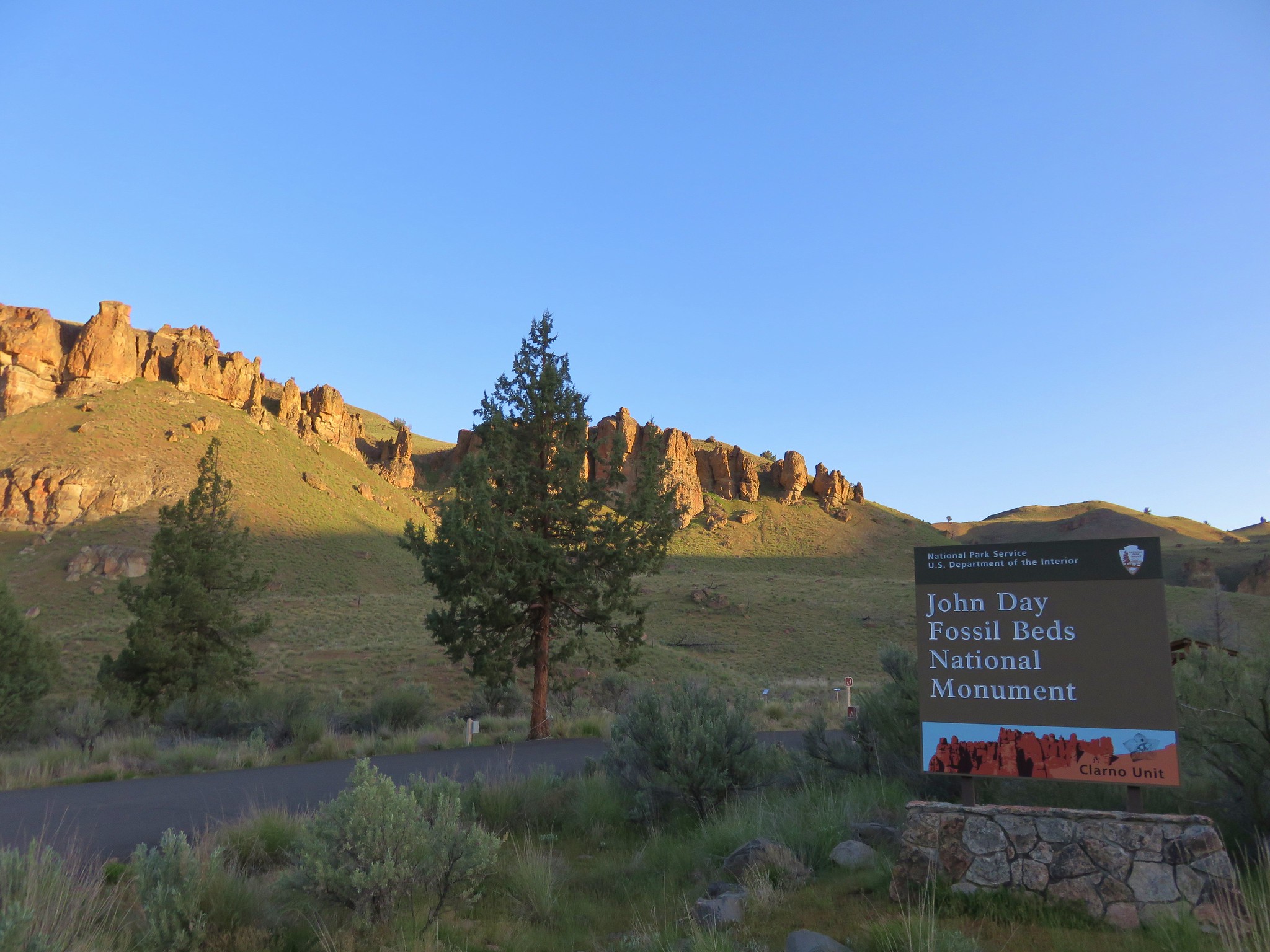
We officially kicked off our 2017 hiking season on 4/22 with a pair of hikes near Clarno, OR. The first was a 1.4 mile at the Clarno Unit of the John Day Fossil Beds National Monument. We parked at the day use picnic area 3.4 miles east of the John Day River bridge at Clarno.
Clarno Unit Trailhead

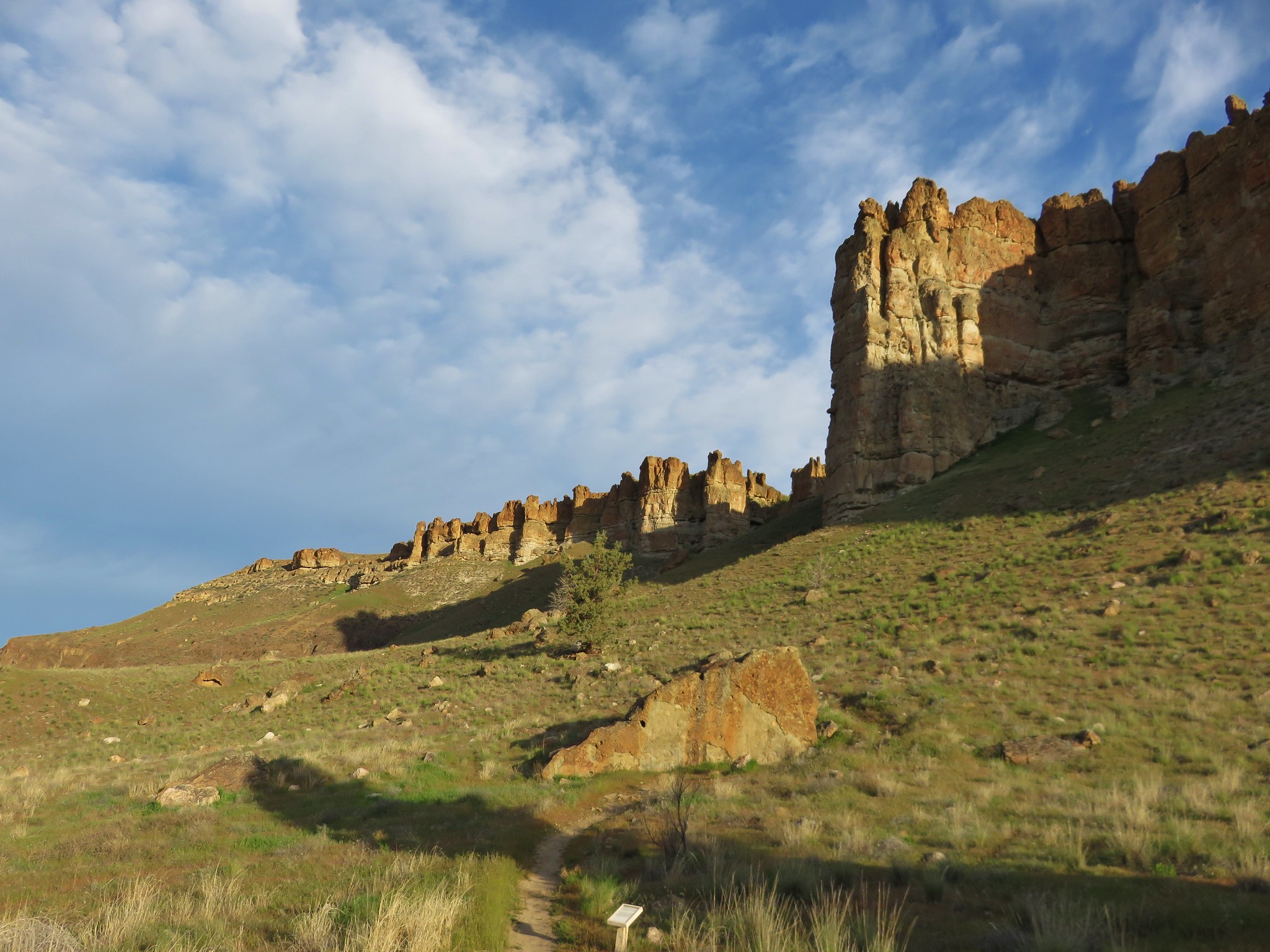
From the parking area we took the .3 mile Geologic Time Trail west toward the dramatic rock formations called The Palisades.

Clarno Unit - John Day Fossil Beds

The trail was lined with golden fiddleneck blossoms and passed several interpretive signs describing the history of the area that created the amazing features.
Fiddleneck along the trail at Clarno Unit - John Day Fossil Beds

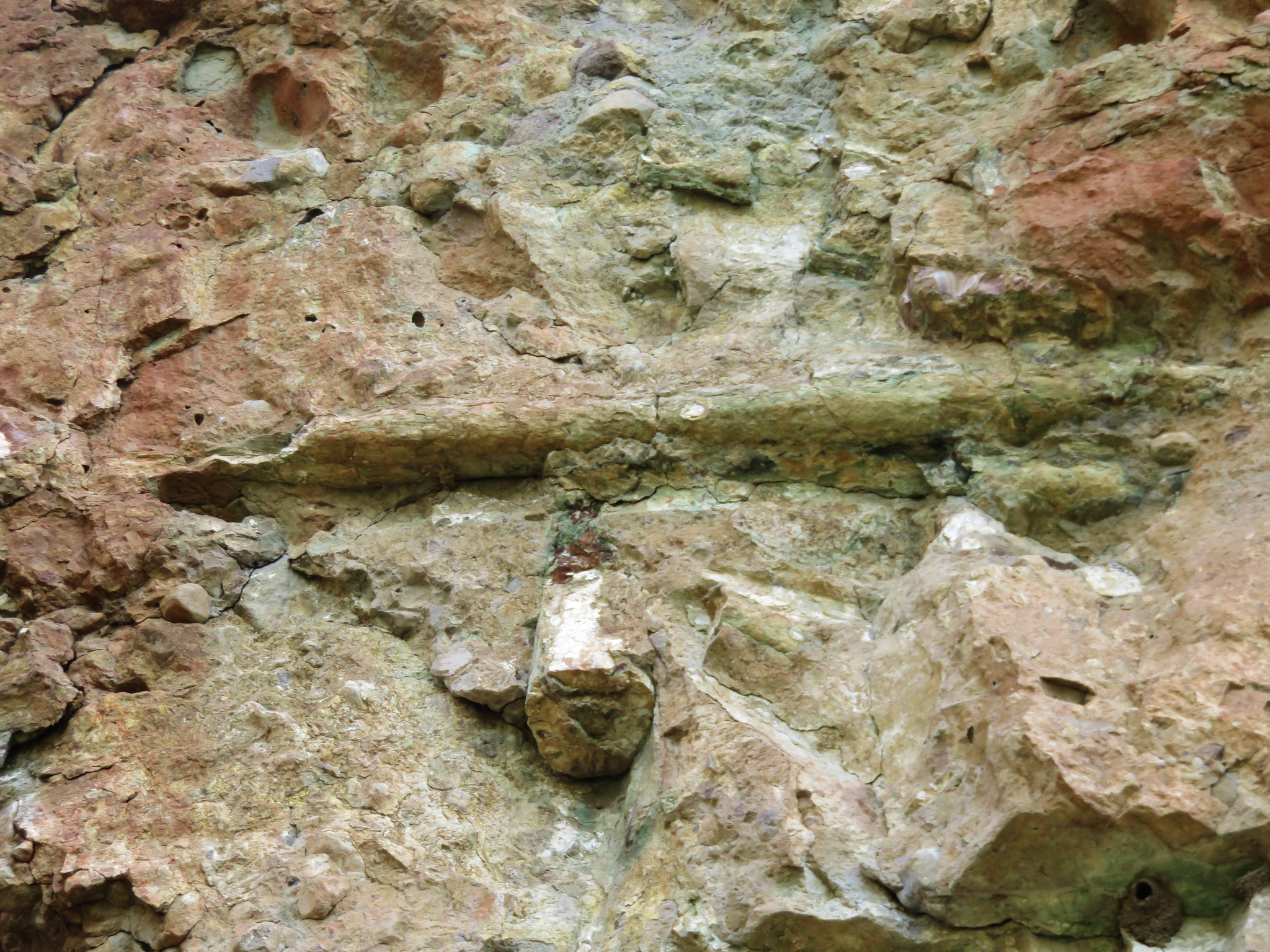
The Geologic Time Trail ended at a junction with the .2 mile Trail of Fossils loop. Here we turned uphill to the right passing more interpretive signs. These helped identify fossils in the nearby rocks.

Interpretive sign Clarno Unit - John Day Fossil Beds

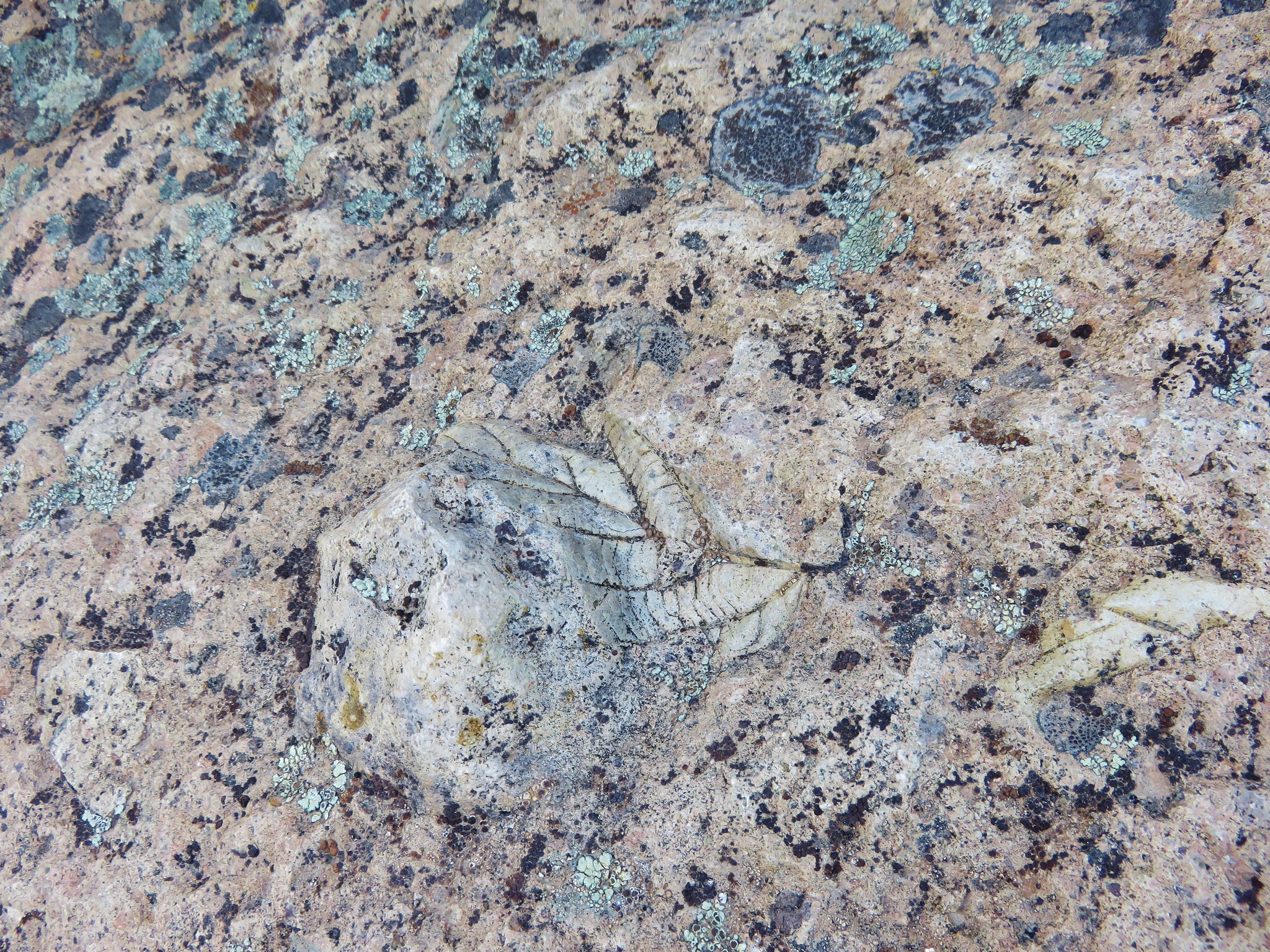
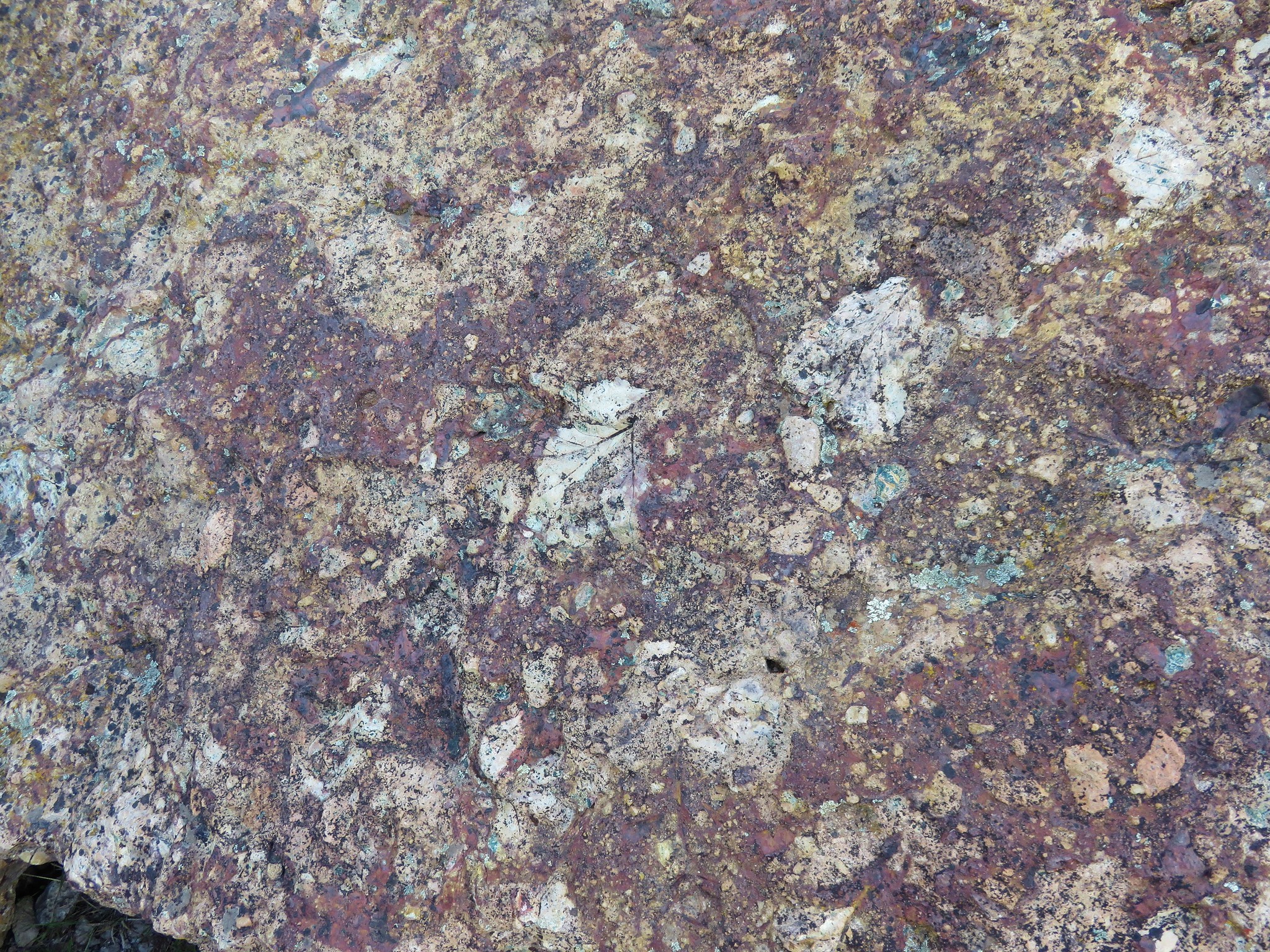
Leaf fossil at Clarno Unit - John Day Fossil Beds

Leaf fossils Clarno Unit - John Day Fossil Beds

Interpretive sign Clarno Unit - John Day Fossil Beds

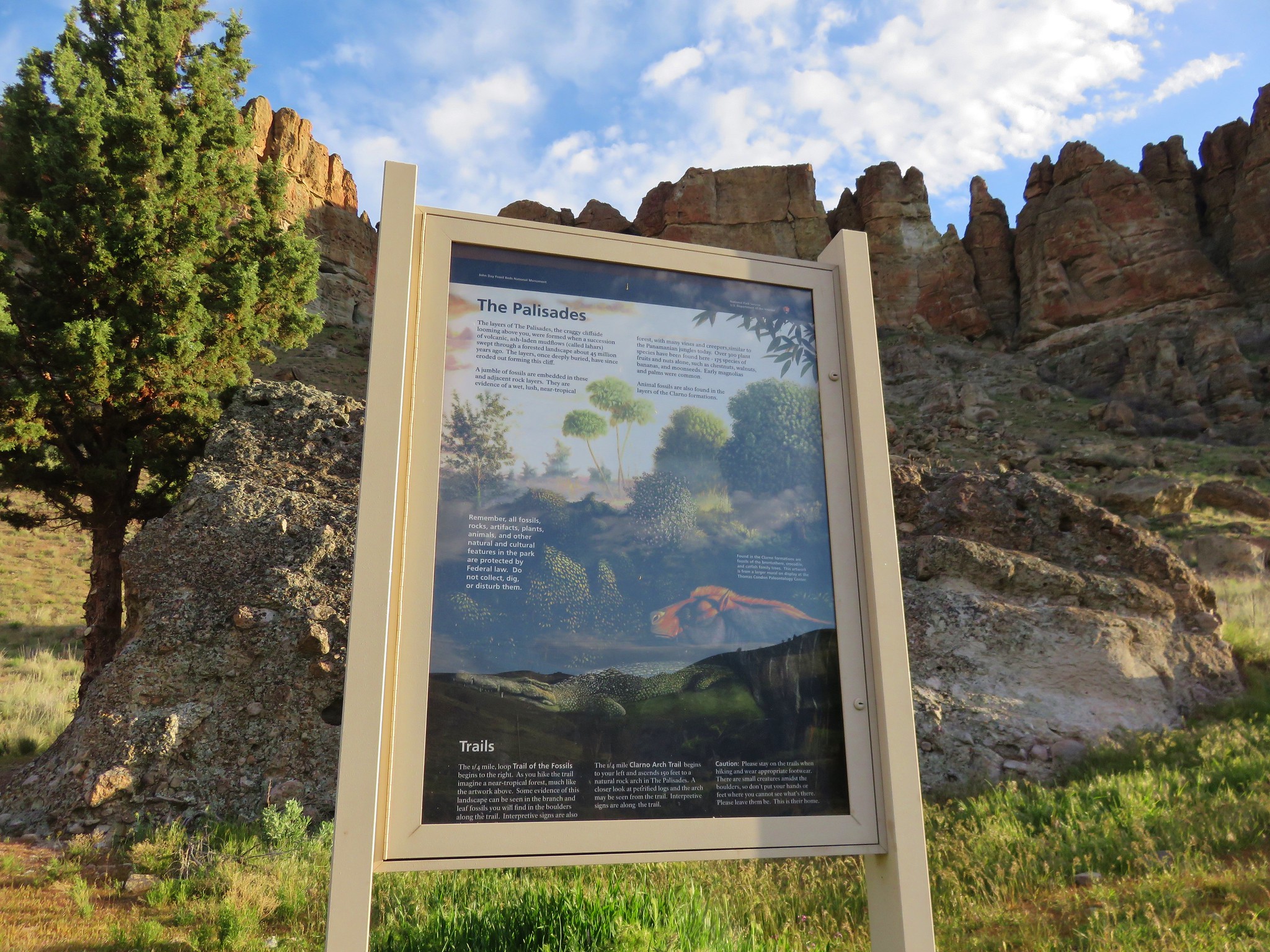
The loop descended to a second possible trailhead where another trail, the .2 mile Arch Trail, split to the right (west) near a large signboard.

The Palisades Clarno Unit - John Day Fossil Beds

Clarno Unit - John Day Fossil Beds

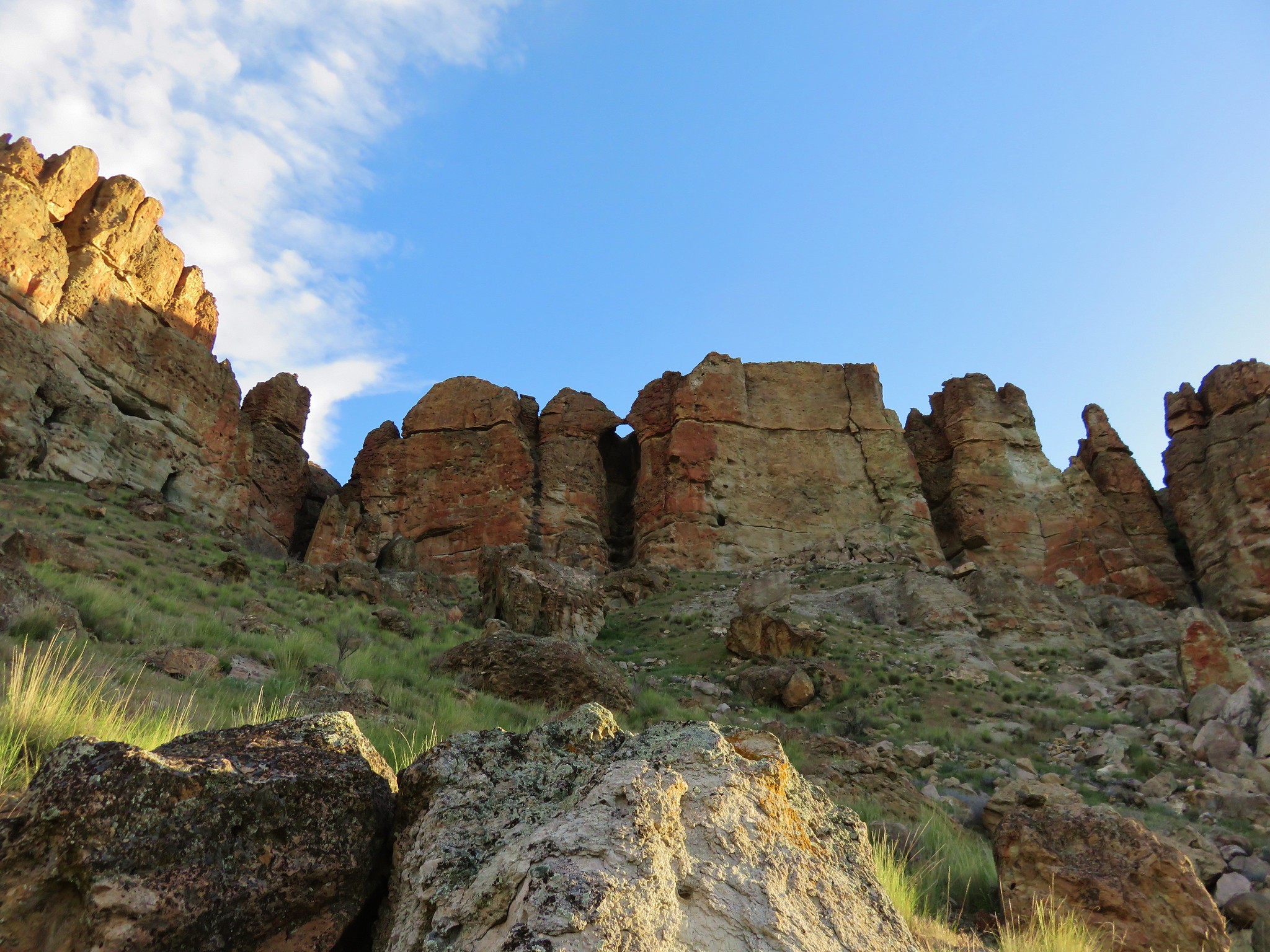
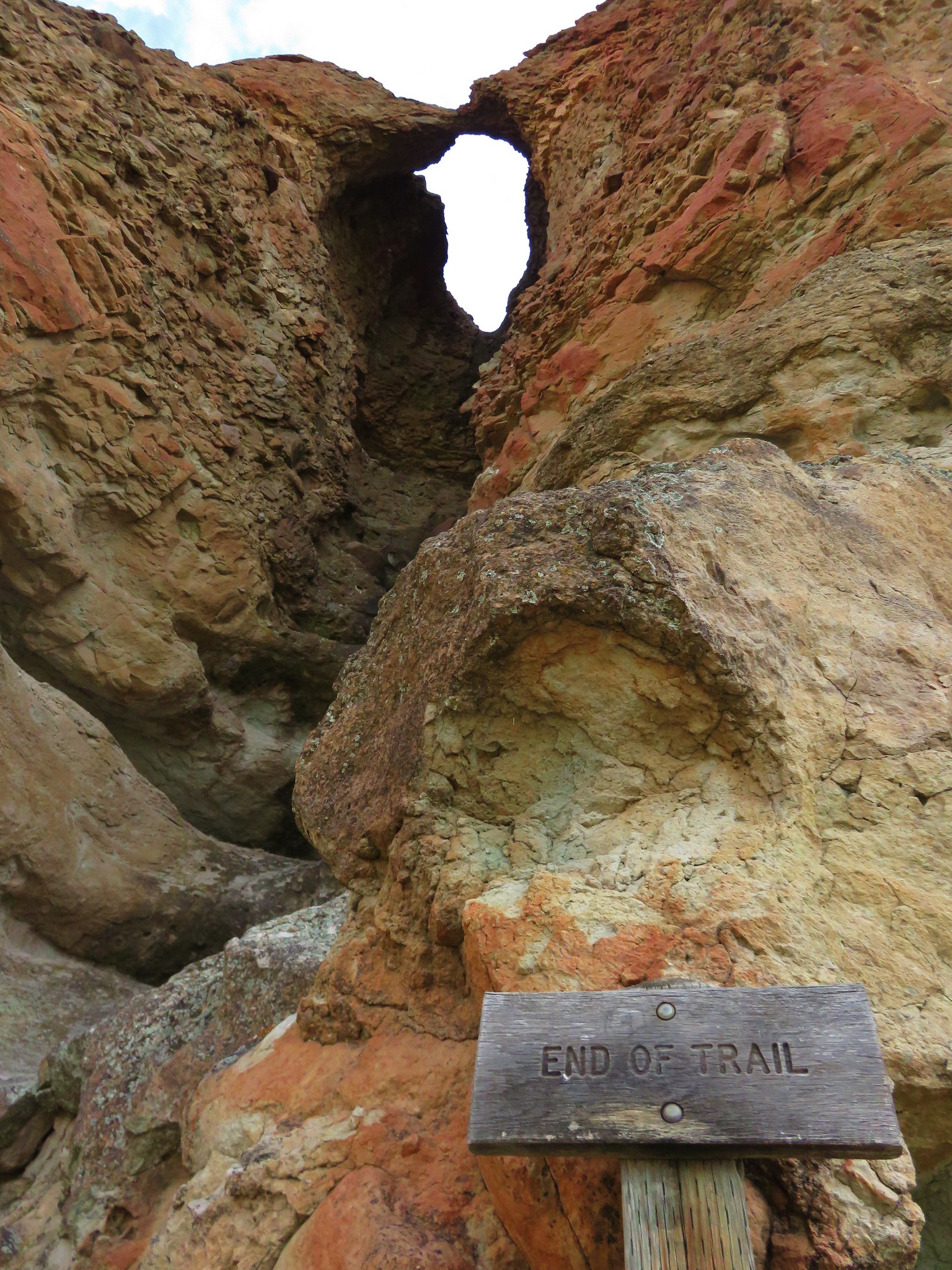
This short trail led uphill to the base of a rock arch along The Palisades.

Rock Arch Clarno Unit - John Day Fossil Beds

The views along the trail were amazing both across the highway and up close to the rocks.

Clarno Unit - John Day Fossil Beds

Looking south toward the Spring Basin Wilderness

Rock pillar Clarno Unit - John Day Fossil Beds

Rock wall along the Palisades - Clarno Unit - John Day Fossil Beds

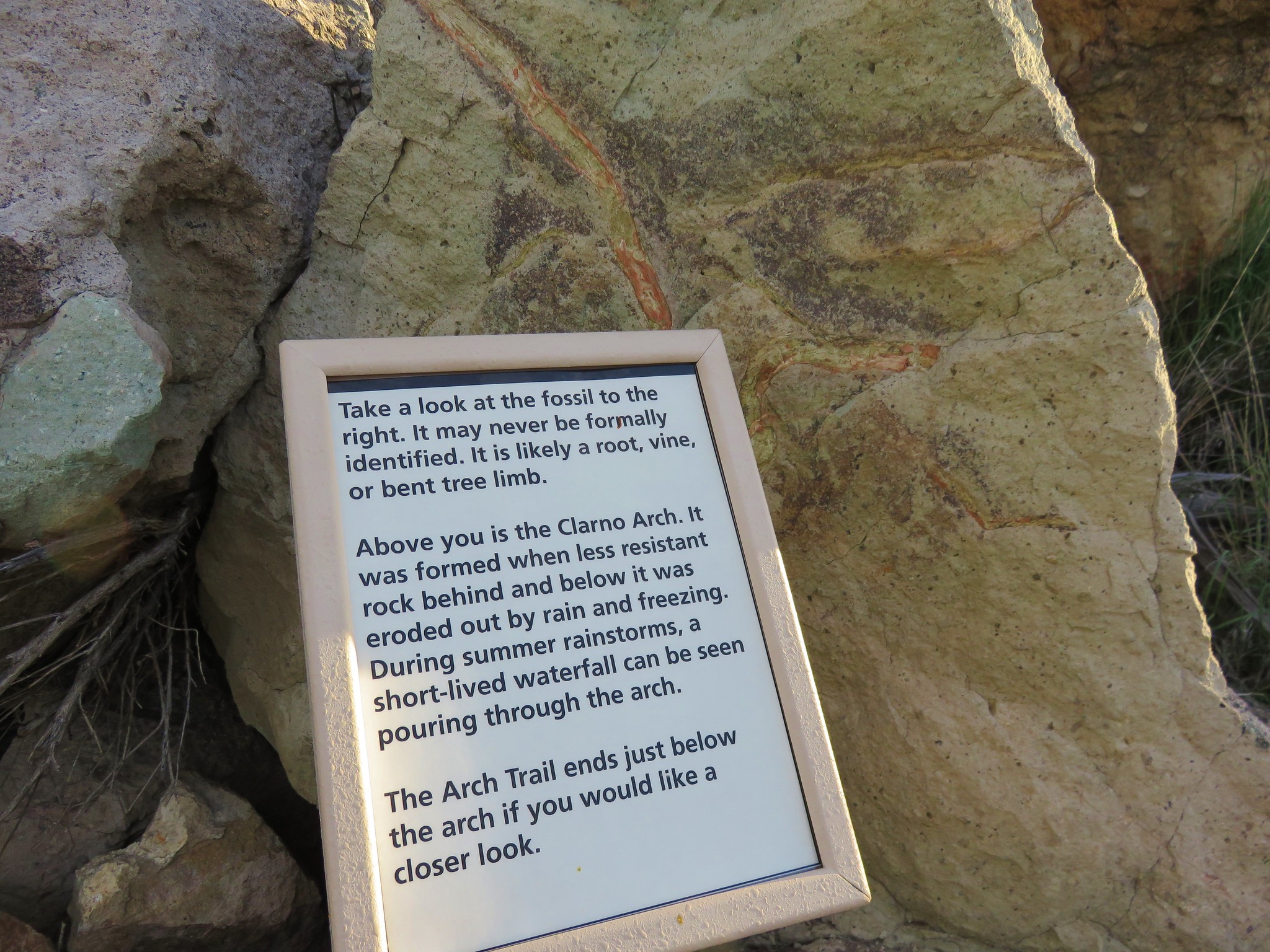
Just before the rock arch was a sign describing a pair of fossilized logs 40 feet above the trail. For some reason neither of us could see them despite spending a few minutes searching. After visiting the rock arch, we paused again to look for the logs. This time they were easily spotted up in the wall of rocks above the sign.

Looking up at the rock arch

Petrified tree trunks in the rock walls of the Clarno Unit - John Day Fossil Beds

We returned to the Trail of Fossils loop and completed it then took the Geologic Time Trail back to the picnic area where another car was just pulling in. These were really interesting hikes and a great warm-up for our next stop, the nearby Spring Basin Wilderness.

Designated a wilderness in 2009 the 6,404 acre Spring Basin Wilderness has no official trails but similar to nearby Sutton Mountain old jeep tracks and open terrain make exploring the area fairly easy.  The wilderness is located south of Highway 218 across from the Clarno Unit.

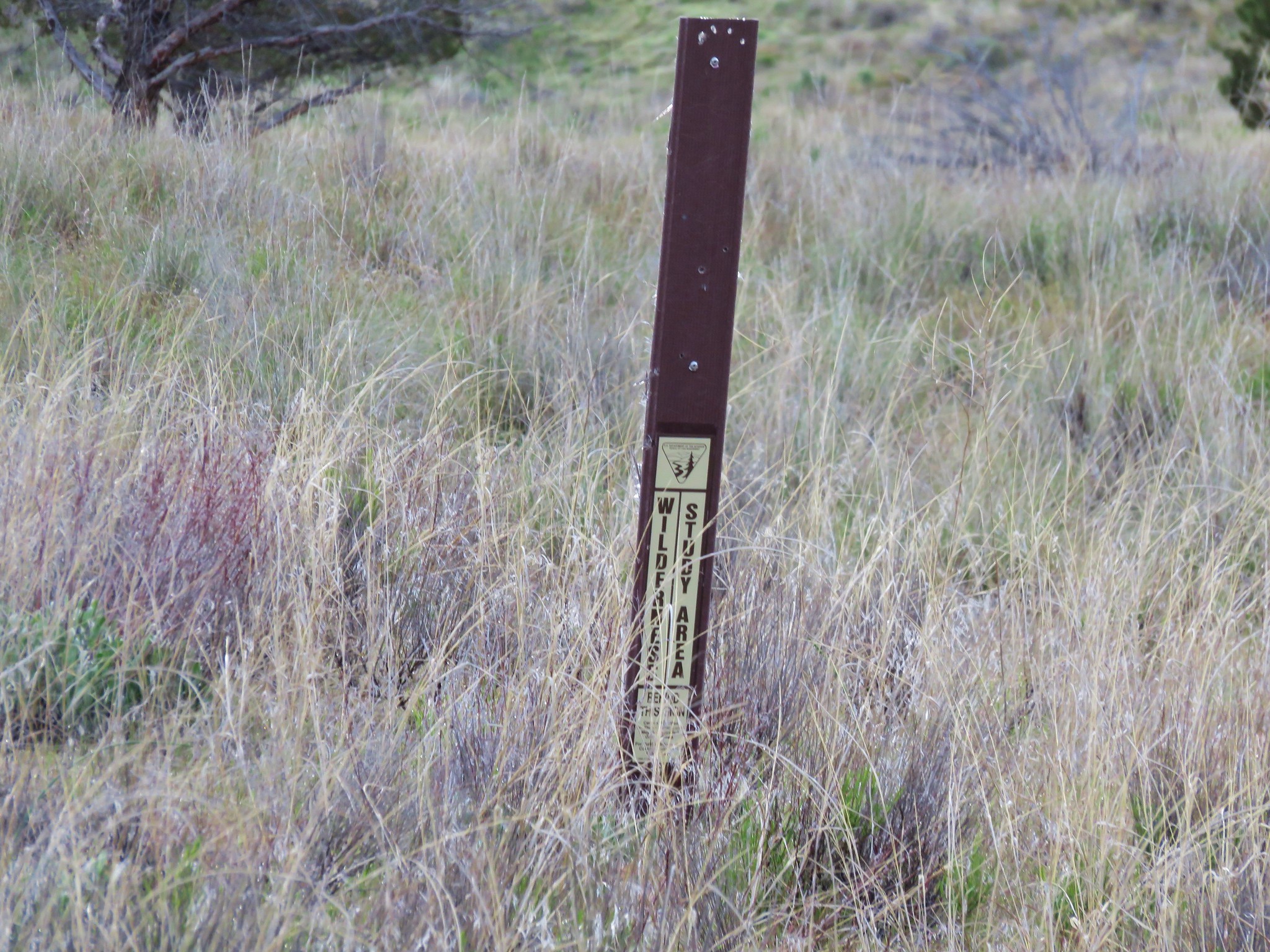
For our visit we were planning on following the route described in the Third Edition of William L. Sullivan’s “100 Hikes/Travel Guide Eastern Oregon” (Hike #18). From the Clarno Unit we drove back toward Clarno 1.9 miles and turned left onto gravel Clarno Rd. After 3.2 miles we parked on the left at a pullout near a lone juniper tree. An outdated wilderness sign declaring a wilderness study area indicated that we were at the correct spot.

Wilderness signpost at the Spring Basin Wilderness

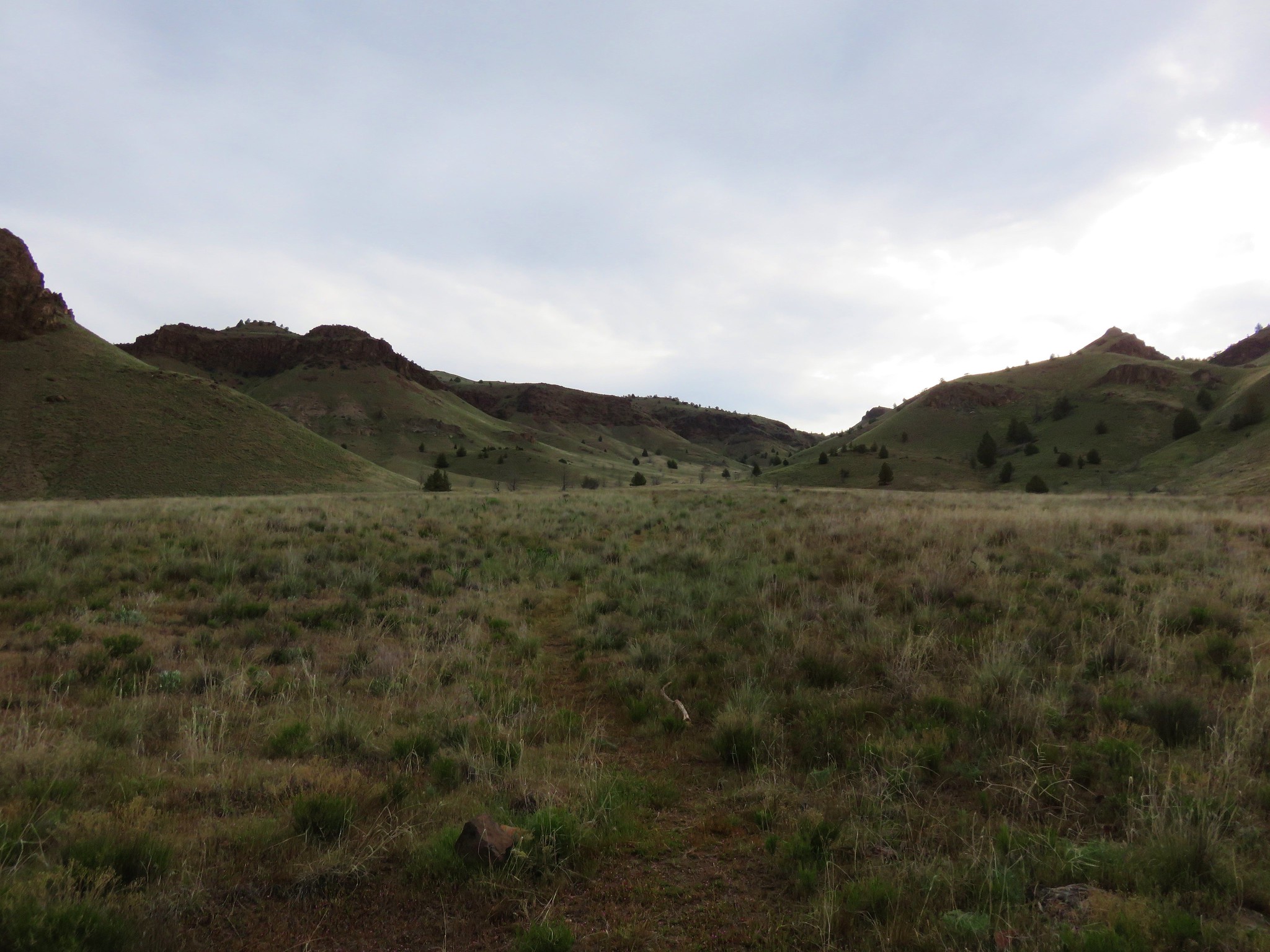
A faint but clear path led into the wilderness toward a draw on the horizon.

Spring Basin Wilderness

The views were dramatic from the start with jagged rock formation and green rolling hills.

Sun and shadows as seen from the Spring Basin Wilderness

View from the Spring Basin Wilderness

Spring Basin Wilderness

The path led us up into the draw passing a number of different types of wildflowers.

Biscuitroot

Biscuitroot

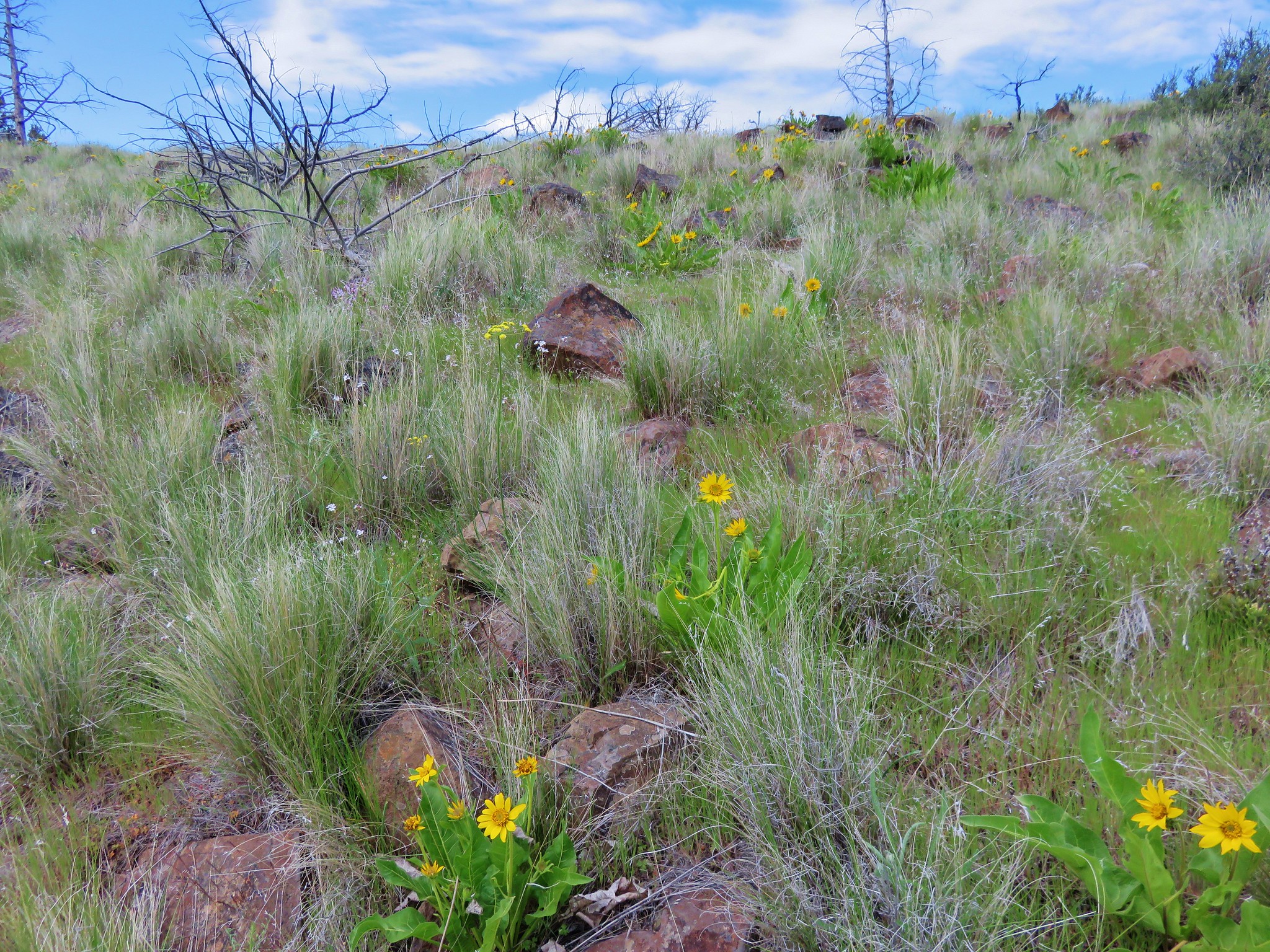
Balsamroot

Balsamroot

Prairie stars

Prairie stars

Balloon pod milkvetch

Balloon pod milkvetch

milkvetch

Another type of milkvetch

paintbrush

Paintbrush

Phlox

Phlox
There was one flower that had not yet started to bloom that we had never seen before and we still aren’t sure what it was.

Wildflower getting ready to bloom in the Spring Basin Wilderness

After 1.3 miles the path reached a ridge top junction with an old jeep track marked by a rock cairn.

Spring Basin Wilderness

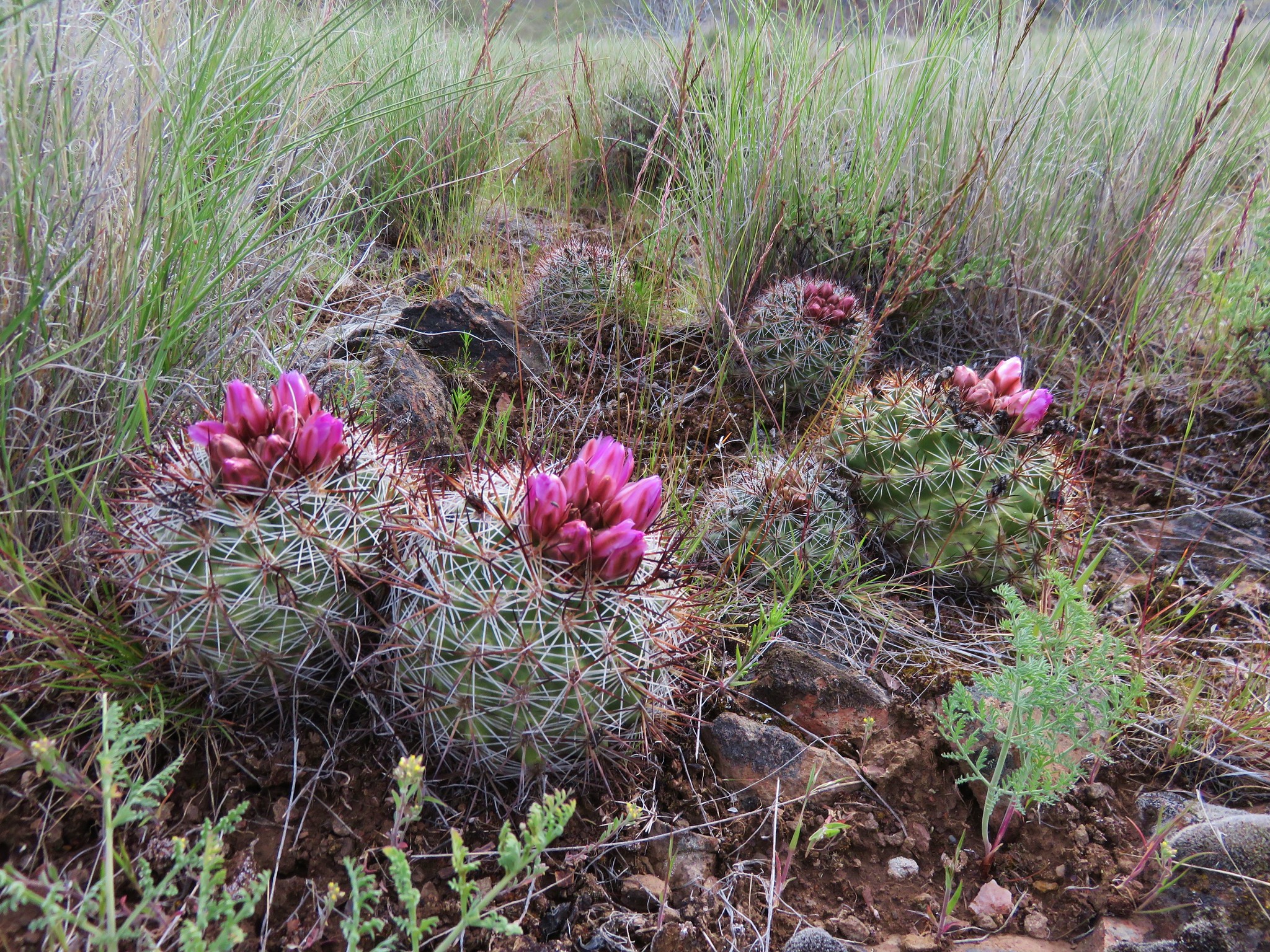
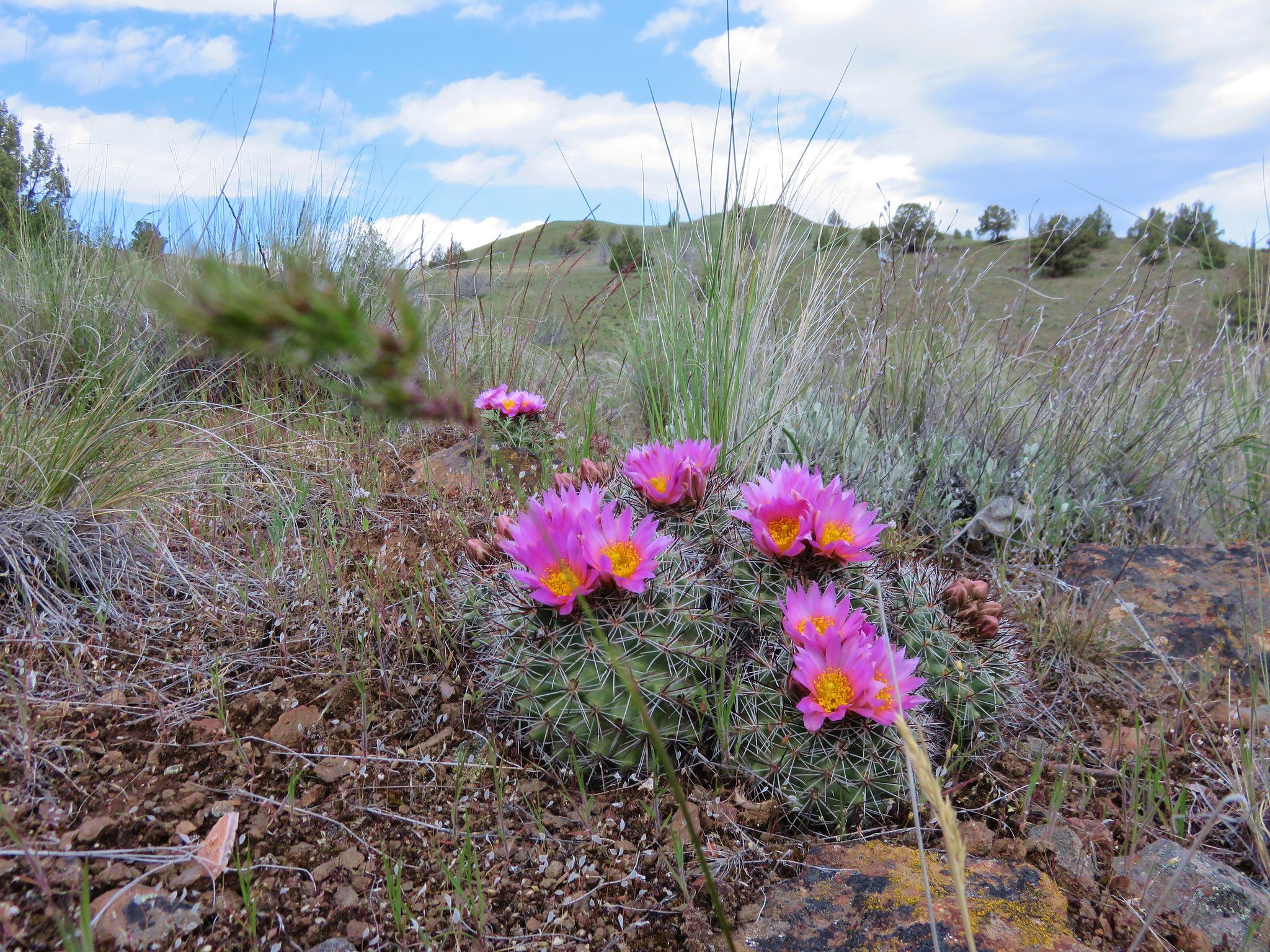
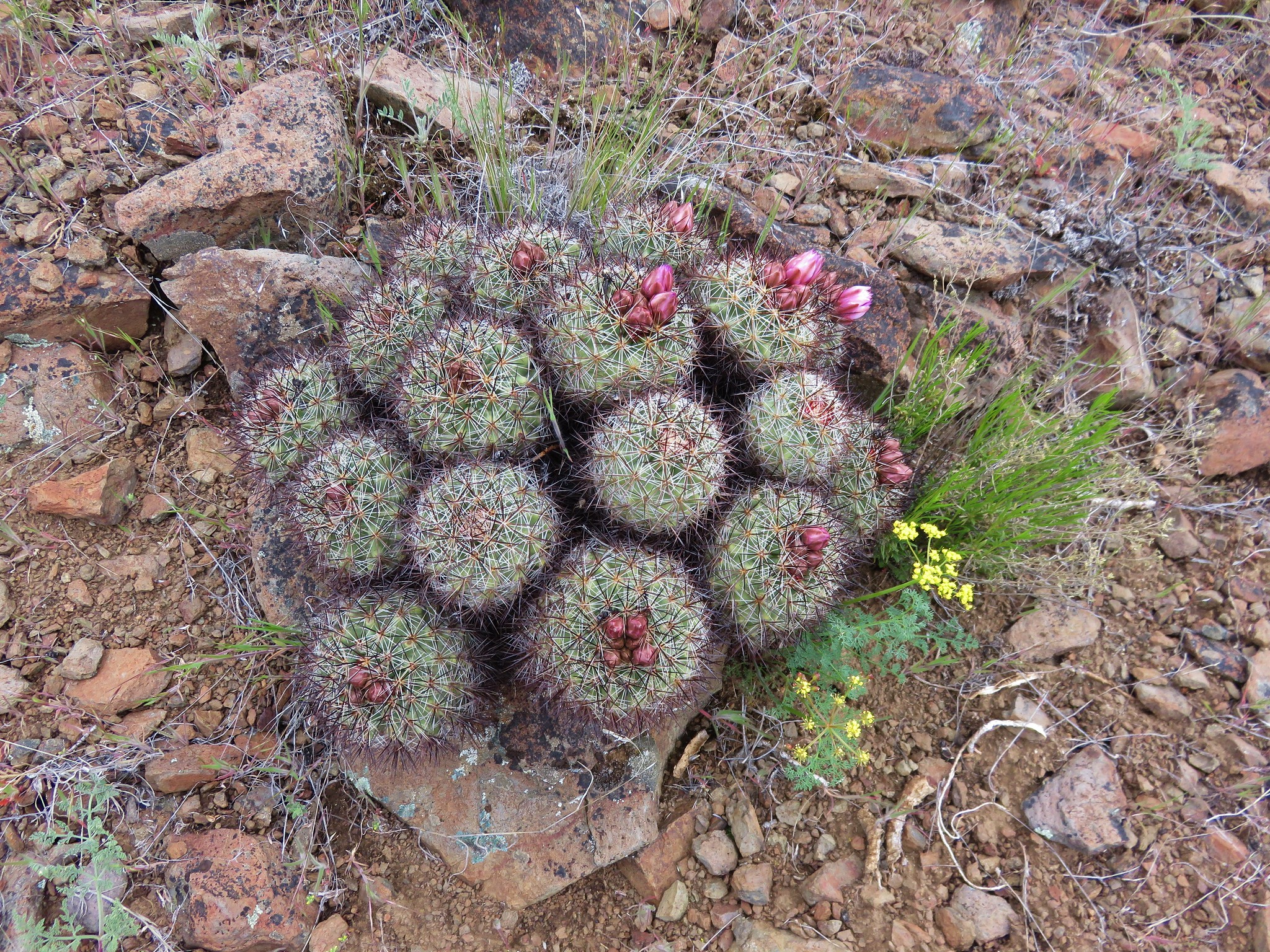
Near the junction we spotted the first of many hedgehog cactus.

Hedgehog cactus

None of the blossoms were open and we mistakenly thought we were a week or so too early to see them in full bloom. As we would discover later the blossoms would open to the Sun later in the day.

Hedgehog cactus

We turned left onto the jeep track and headed toward a knoll on the horizon.

Spring Basin Wilderness

We followed the track around the side of the knoll then turned uphill and went cross country to the summit marked by another cairn.

Spring Basin Wilderness

John Day River from the Spring Basin Wilderness

Our goal, Horse Mountain, was slightly southeast of the knoll.

Spring Basin Wilderness

To reach the summit of that mountain without having to lose and regain too much elevation Sullivan’s route called for a .9 mile cross country route due east through a juniper grove then up a draw to find the jeep track once again on the ridge line.

Spring Basin Wilderness

We surveyed the landscape and picked out the juniper grove before heading back down the knoll to the jeep track.

Juniper grove in the Spring Basin Wilderness

We followed the jeep track north a short distance to a low point then descended into a draw and headed for the grove. The initial descent was a little steeper than it had appeared from the knoll but it was not a problem and we made it to the junipers without any difficulty.

Juniper grove

Juniper grove in the Spring Basin Wilderness

From the grove we climbed up the draw we’d seen to the jeep track and turned right toward Horse Mountain.

Spring Basin Wilderness

On the ridge we found more hedgehog cactus amid other many other wildflowers.

Wildflowers in the Spring Basin Wilderness

Hedgehog cactus

We stuck to the jeep track for approximately 3/4 of a mile then veered off toward Horse Mountain when the track turned left amid more junipers.

Horse Mountain in the Spring Basin Wilderness

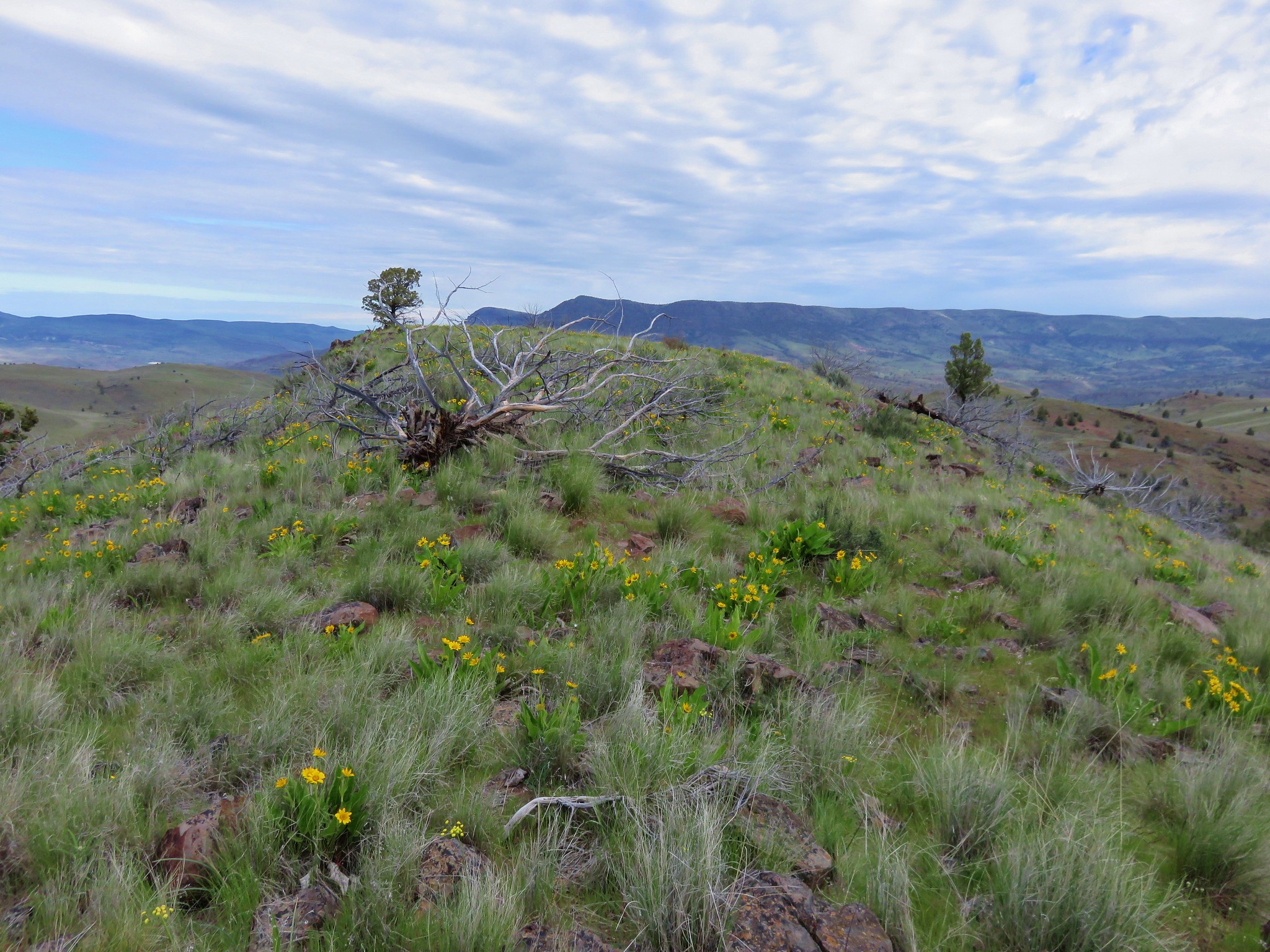
Our initial plan was to sidehill up to a saddle along Horse Mountain but we found it was actually easier to head directly uphill so we wound up gaining the ridge near it’s western end which was dotted with balsamroot.

Balsamroot

Balsamroot in the Spring Basin Wilderness

We then followed the ridge up to the summit of Horse Mountain.

Horse Mountain

Along the way we passed a lone daggerpod in bloom,some lupine plants that were just beginning to show buds, and more hedgehog cactus.

Horse Mountain

Lupine

Biscuitroot and hedghog cactus in the Spring Basin Wilderness

A small rock cairn marked the summit of Horse Mountain.

Horse Mountain summit in the Spring Basin Wilderness

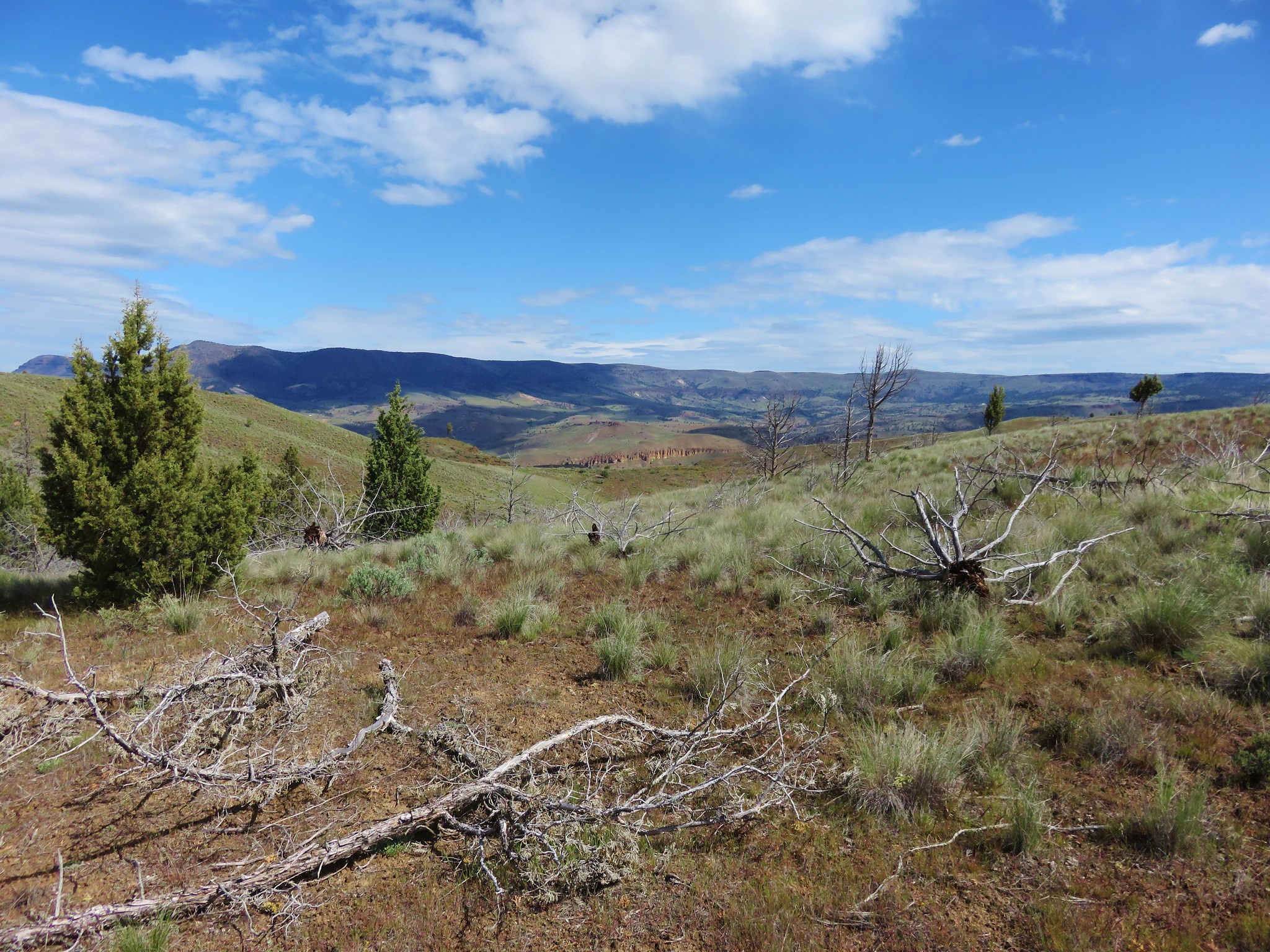
The 360 degree view was spectacular. We sat on some rocks and examined the scenery.

View from the summit of Horse Mountain

View from the summit of Horse Mountain

View from the summit of Horse Mountain

Spring Basin Wilderness

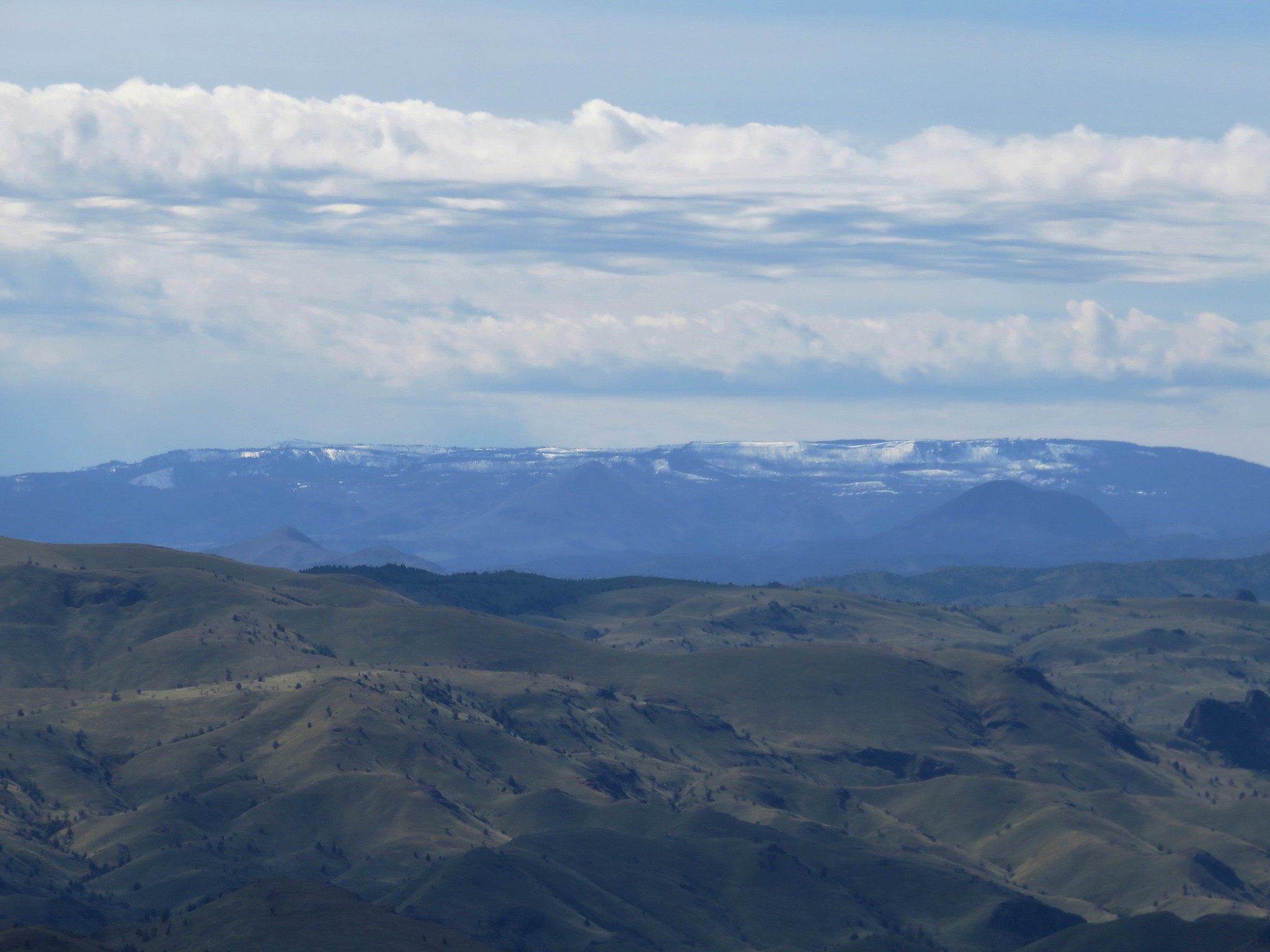
To the far south the snowy Ochoco Mountains lined the horizon.

Lookout Mountain from Horse Mountain

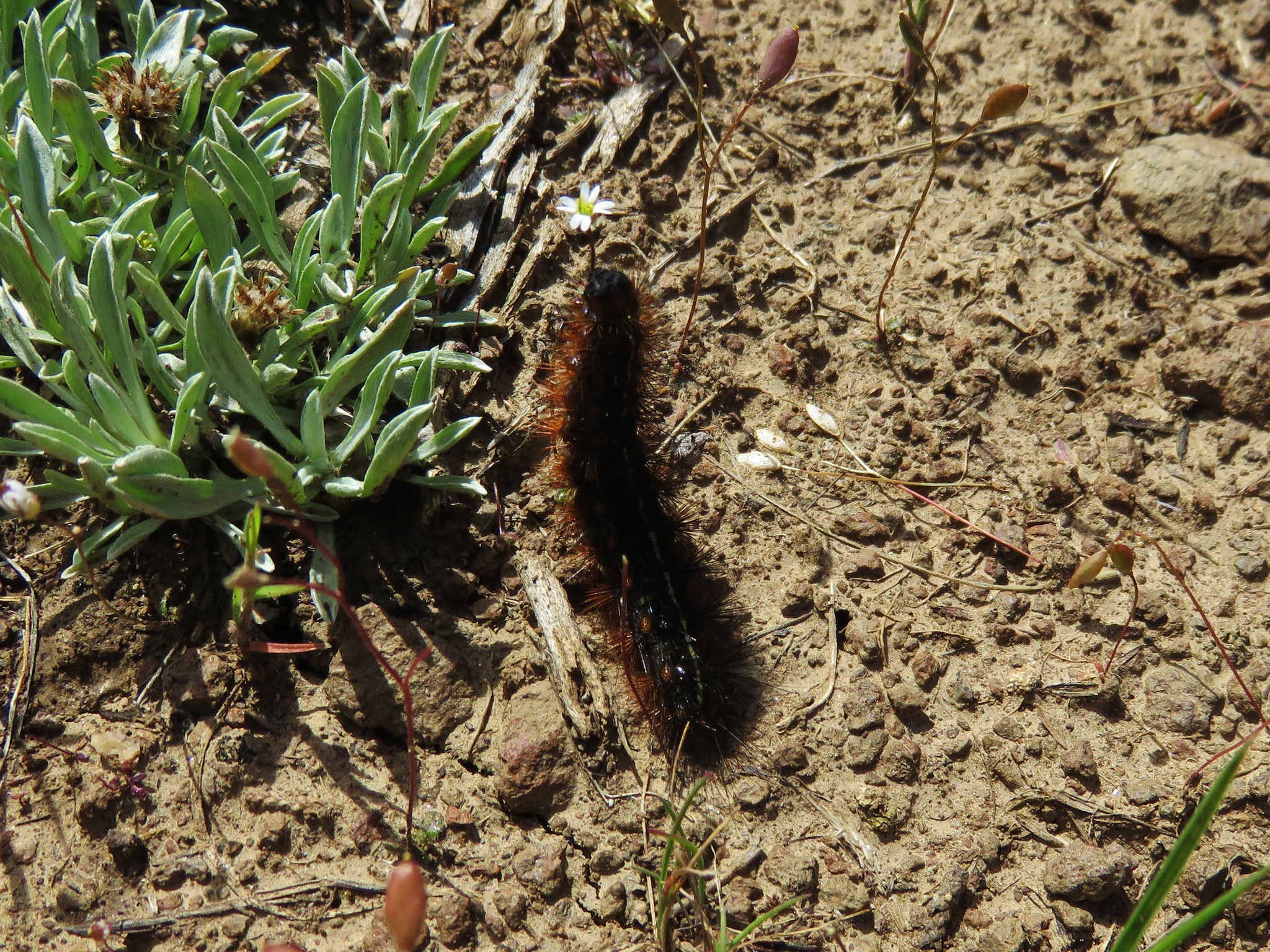
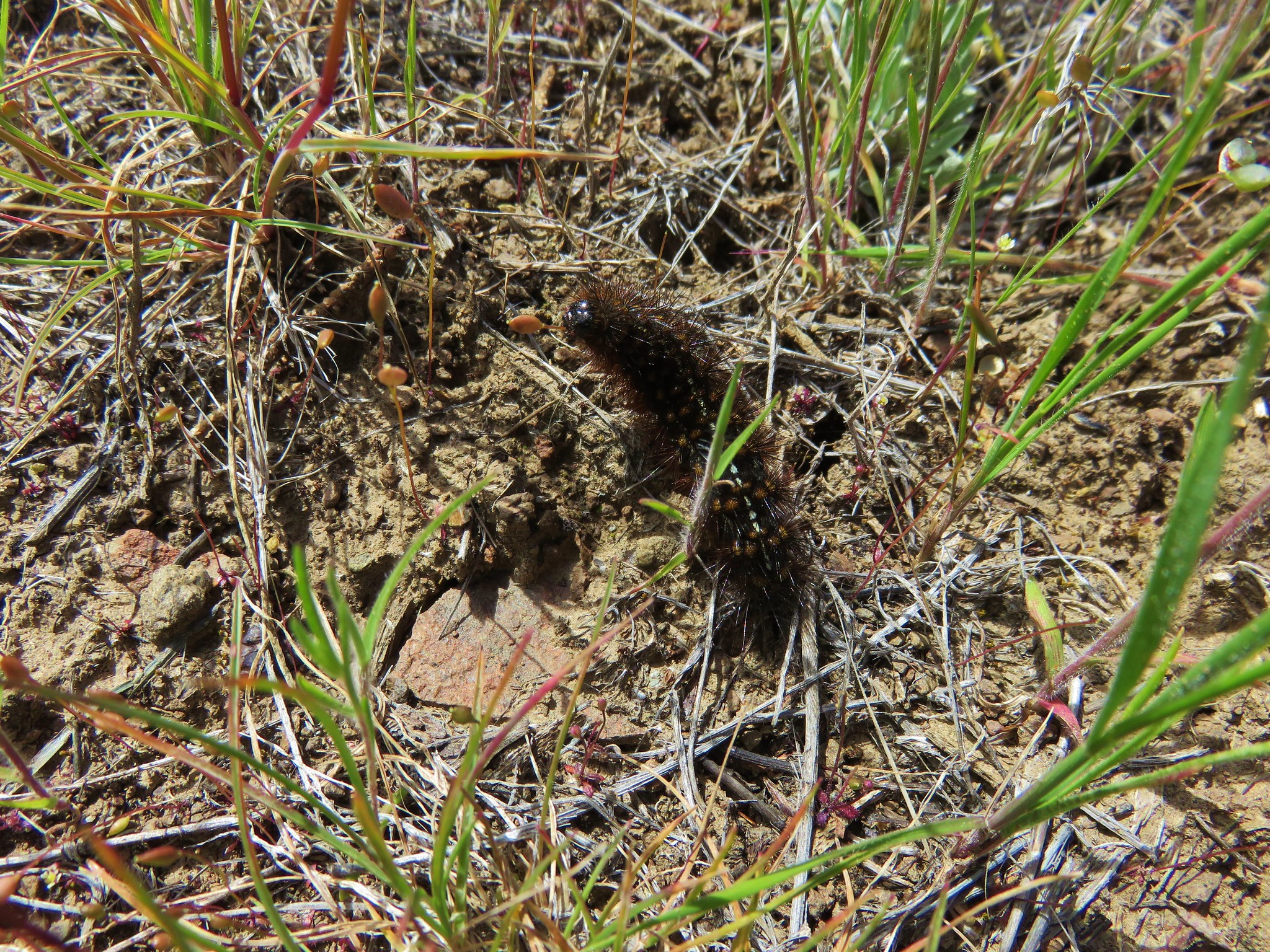
It was amazingly peaceful on the summit. The only sounds were bird songs and the low hum of insects buzzing about. If the rocks had been a little softer we could have stayed for hours. As it was we eventually headed back down to the jeep track which we thought about following all the way back to the knoll. We had seen quite a few caterpillars on the ground all morning but now there seemed to be more and they were moving about.

Caterpillar

caterpiller

From the ridge The Palisades of the Clarno Unit were visible to the north.

The Clarno Unit of the John Day Fossil Beds from the Spring Basin Wilderness

Raven with the Palisades of the Clarno Unit in the distance

After looking more closely at the map we decided that the jeep track swung out a little more than we were willing to do so we instead took a slightly different off trail route to the knoll.

Spring Basin Wilderness

We wound up climbing up the same draw we’d descended earlier in the day and regained the jeep track below the knoll. We then returned to the rock cairn and descended the gully back to our car ending our hike at 7.4 miles. We had been on the alert for rattlesnakes all day but had not seen nor heard any. That changed on our drive back to the highway. We spotted at least 4 rattlers sunning themselves on Clarno Road. Happy Trails!

Flickr: Clarno Unit and Spring Basin Wilderness