A day after my long hike at William L. Finley National Wildlife Refuge (post) I dialed it back a little. For day 5 of my “Wildlife Week” vacation I had two short hikes planned to revisit a pair of wildlife areas along the Tualatin River the Tualatin River National Wildlife Refuge and Jackson Bottom Wetlands Preserve.
First up was the Tualatin River NWR. We’d visited this refuge twice previously, first in March 2019 and then again in May 2023. The seasonal trails at this refuge are closed from October 1st through April 30th so today was the first day the Wetlands Loop would be open this year.
I parked at the Roy Rogers Road Trailhead as we had done in 2023 primarily because it was a little closer to Jackson Bottom.
My route utilized portions of the seasonal Wetland Trail and the River Trail to make a loop with a short out-and-back on the Ridgetop Trail. It came to 4.7-miles with about 100′ of elevation gain, most of which was on the Ridgetop Trail. The orange track is a portion of the Wetland Trail that I had not previously hiked.
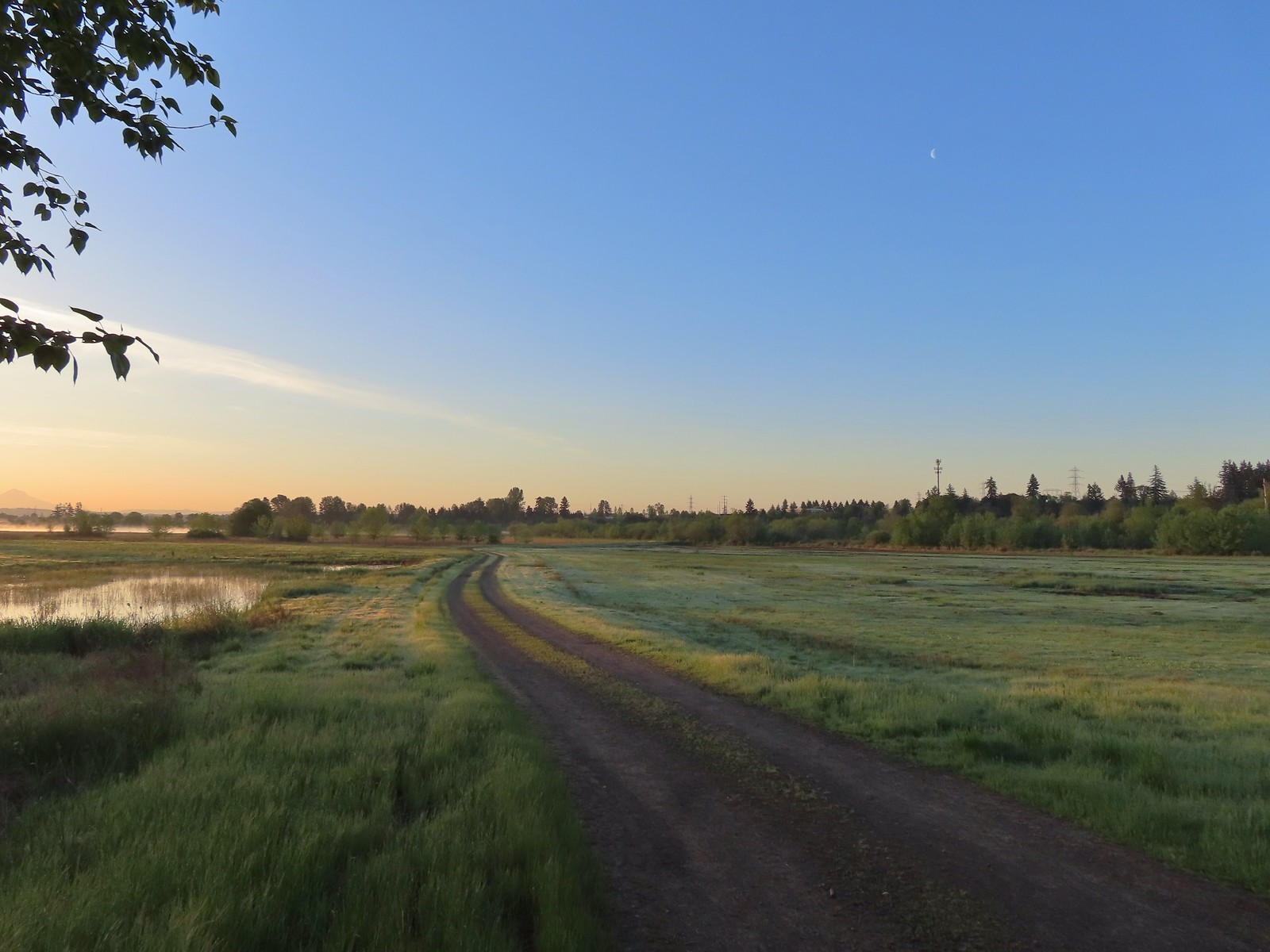
Mt. Hood from the Wetlands Trail.
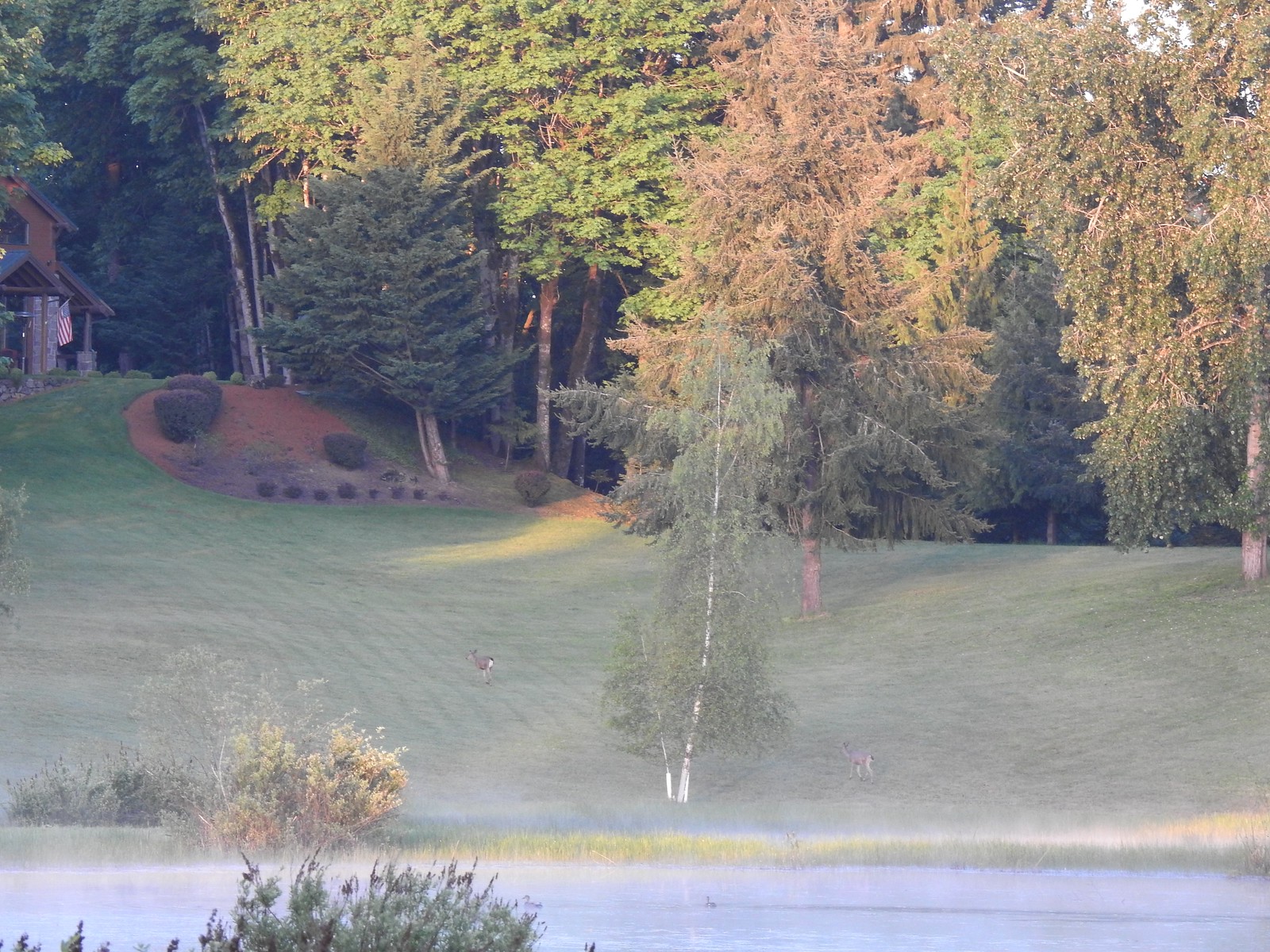
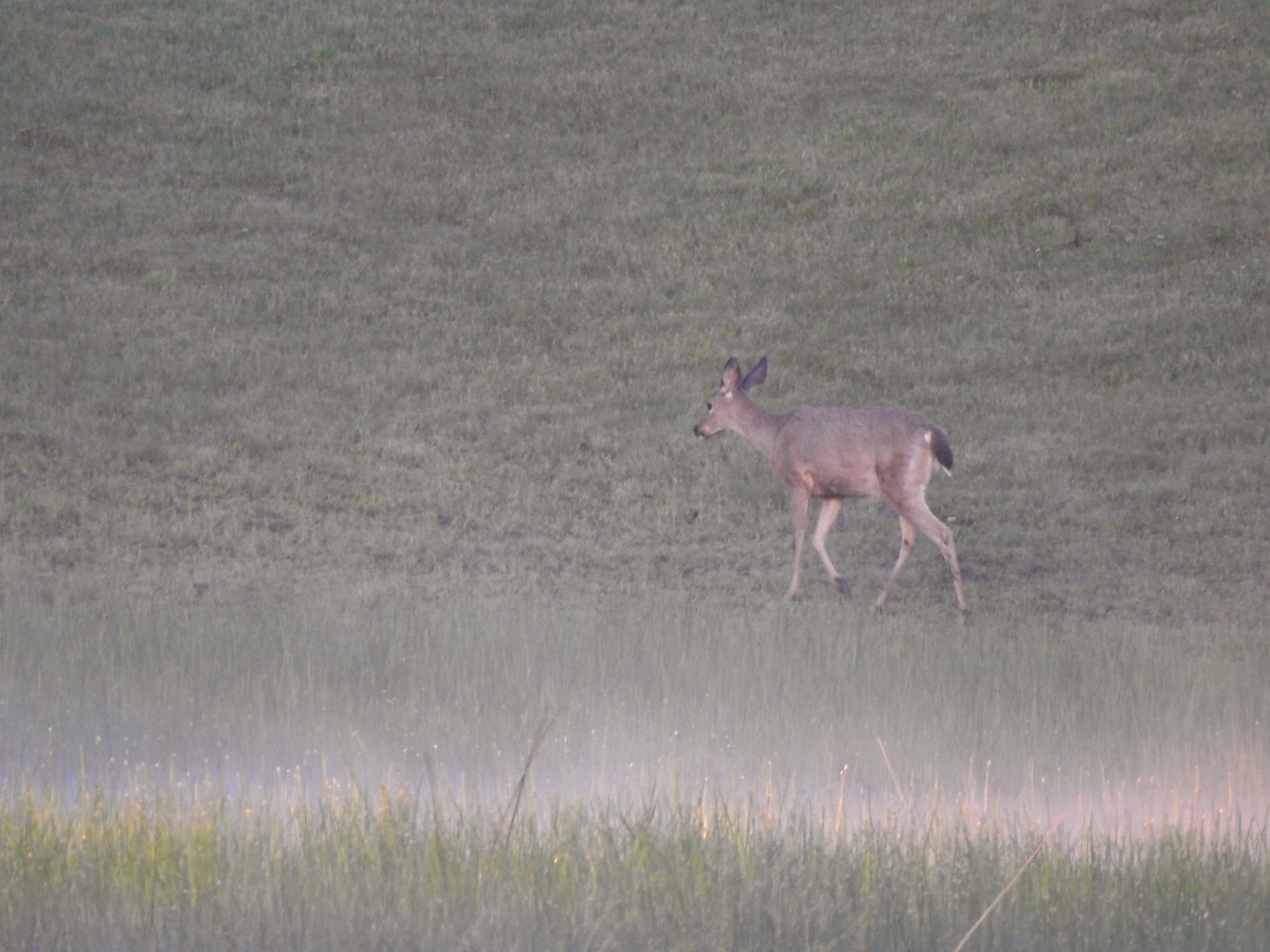
I spotted a couple of deer shortly after setting out.
I believe this is a savannah sparrow.
Geese families
Killdeer
It was just under 40 degrees Fahrenheit when I started, but the forecast called for temperatures to reach 80 by the afternoon.
Geese, goslings, and goose eggs.
Sandpiper
Not sure what type of fish this is but they were thrashing about near the shoreline, and I had seen similar behavior the day before in McFadden Marsh at Finley NWR.
Duck and ducklings
Sleeping nutria
Purple martins and a swallow (bottom left).
Egrets and a great blue heron.
Closer look at the egrets and heron.
Robin
I stopped at the Refuge Headquarters to use the facilities, and this pair of bald eagles arrived at the same time.
The eagles on the tree behind the headquarters.
Mallard
Sandpipers
Riverside Trail
Tualatin River
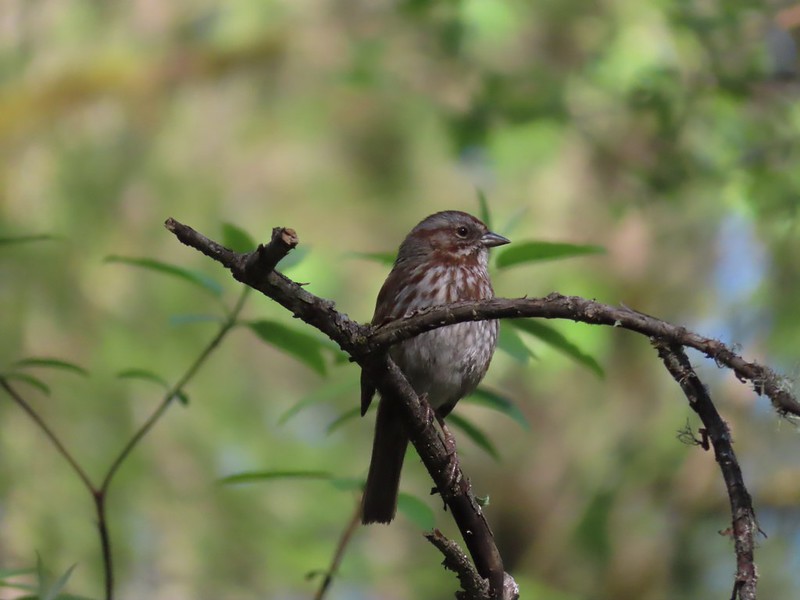
Song sparrow
Inside-out flower
The Ridgetop Trail to the left. There is a bench and railed overlook but the view is blocked by trees. If there hadn’t been any leaves there may have been a view but today there wasn’t.
The only trillium I saw with any petals left.
Bleeding heart
Northern flicker
I spotted an American kestrel in this snag. I had been hoping to see one during this week’s hikes.
American kestrel
Crow
Northern shoveler
Wildflowers near the trailhead.
Lupine, plectritis, checkerbloom, and golden paintbrush.
Not a huge amount of wildlife here today but the kestrel was a nice addition to the list of species seen this week. This was by far the busiest hike of the week, possibly due to it being the first day of the seasonal trails being open. I was done with the hike at 8am so not only was it busy, they were early birds.
It was a 20-minute drive from the refuge to Jackson Bottom Wetland so it was still fairly early when I arrived at the trailhead.
Our previous visit here was last April (post) and we hiked the majority of trails here during that visit, so this was a near repeat except I went in the opposite direction (clockwise). This route came to 4.4-miles and just 35′ of elevation gain.
In addition to wildlife the preserve has some nice flower gardens near the visitor center.
Camas
Larkspur
Not a native wildflower but pretty.
Columbine
Rabbit
The look on their faces seems to indicate they were not expecting to see me there.
Going back the other way.
Karaoke
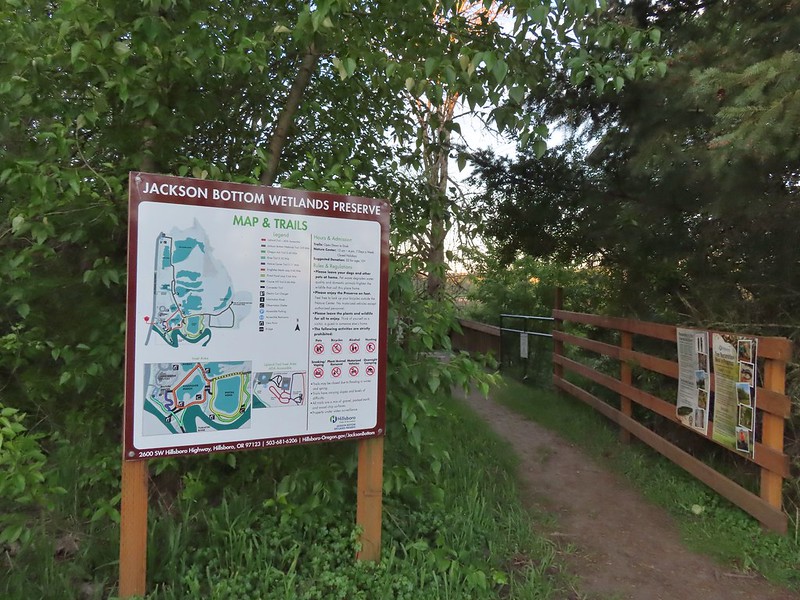
Helpful maps and/or pointers are located at trail junctions.
Swallow
Swallows
Cinnamon Teal
Ring-necked ducks
Purple martins
Canada geese
Jackson Bottom Wetlands Trail passing Oak Island Marsh.
Crow harassing an osprey over Oak Island Marsh.
I thought flamingos were pink.
American coot in NW Pond.
Another napping nutria.
Robin
Gadwall
Egrets at Wapato Marsh.
Great blue heron in Pintail Pond.
Lupine along the trail.
Green winged teal
Heading toward Salamander Slough.
Two turtles and a mallard.
Long billed dowitcher
Cabbage white?
Checkerbloom along the Coyote Hill Trail.
Common yellowthroat
Savannah sparrow
Spotted towhee
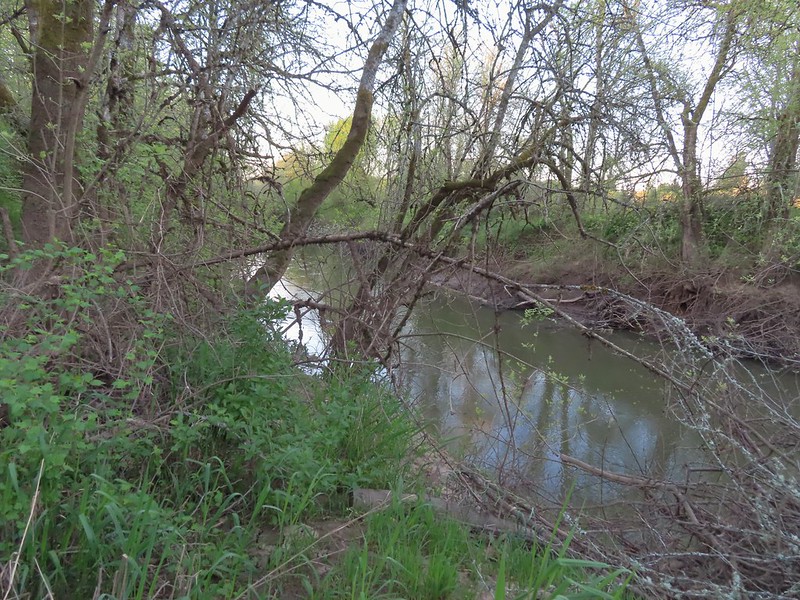
Tualatin River
Deer crossing Pintail Pond. I think these are the same three I saw earlier.
I’ve been spotted.
Rabbit on the left along the River Trail.
Salmonberry
Western meadowrue
Wild rose
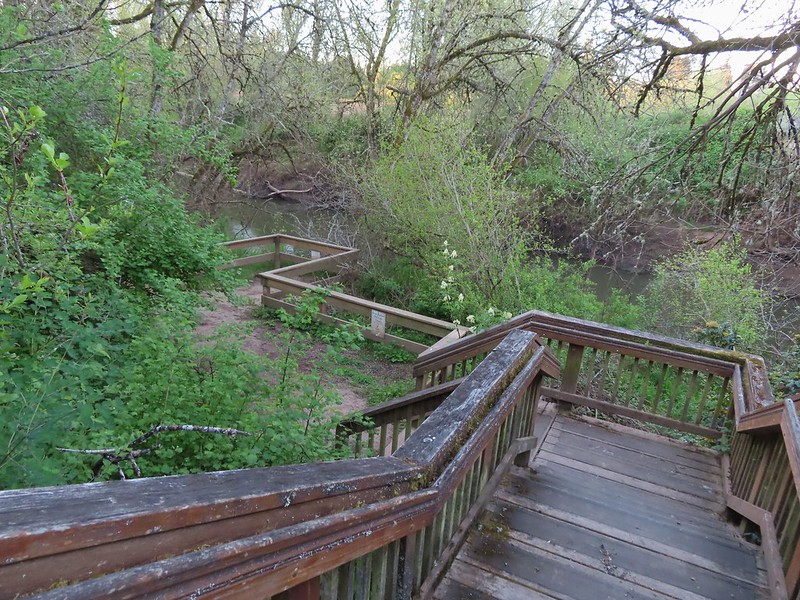
Stairs leading to the trail on the River Trail.
Jackson Bottom was noticeably less busy than the refuge had been. It was a nice hike with a fairly steady supply of wildlife. These are both good destinations and were a nice addition to wildlife week. Happy Trails!
In the original version of our 2024 hiking schedule we’d planned on visiting Jackson Bottom Wetlands Preserve and Rood Bridge Park in March, but the thing about wetlands is that they tend to be wet. We’d been waiting for all of the trails at Jackson Bottom to dry out, and according to online reports that had finally happened.
Both the preserve and park are located in the city of Hillsboro with the preserve being home to a nature center open 10am – 4pm seven days a week. We began our day at Jackson Bottom by parking at the south entrance near the nature center. (We did not visit the nature center primarily due to the fact that we finished our hike here before 9:30am.)
A network of trails provides numerous options to explore. For our hike we began on the River Trail at the SW corner of the parking lot.
This trail descended a staircase to a view of the Tualatin River.
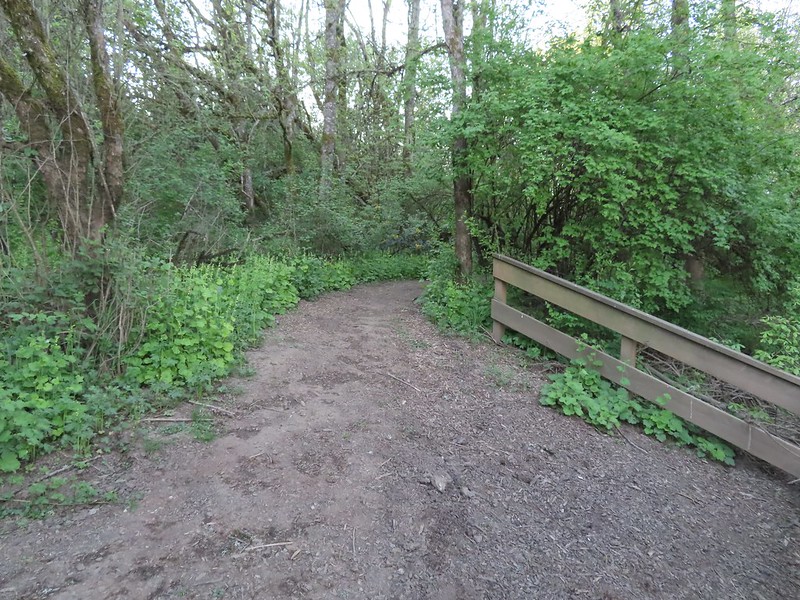
The trail follows the river through woods with several varieties of Spring wildflowers.
Camas
Solomonseal
Fawn lilies
Thimbleberry
Giant purple wakerobin
The River Trail ended at the Kingfisher Marsh Loop where we turned right. The trail signs were very helpful in keeping us on track.
Anna’s hummingbird
Viewpoint overlooking Kingfisher Marsh.
The trail crossed Jackson Slough on a footbridge.
After crossing the slough we turned right on a connector trail that brought us to the Pintail Pond Loop where we once again turned right. Pintail Pond Loop
American goldfinch
A short distance from the connector trail junction we passed the Ash Trail which was temporarily closed due to unstable conditions.
We would have preferred sticking to the Pintail Pond Trail even if the Ash Trail had been open simply because the Pintail Pond Trail provided constant views of the pond where numerous ducks, geese and other birds could be seen. Red-winged blackbird
Sparrow
Purple martins
American robin
There is a lot of lupine in the preserve but only a few had started blooming.
There was a connector trail down to the Ash Trail near a covered viewing deck, but again we opted to stay on the pond loop.
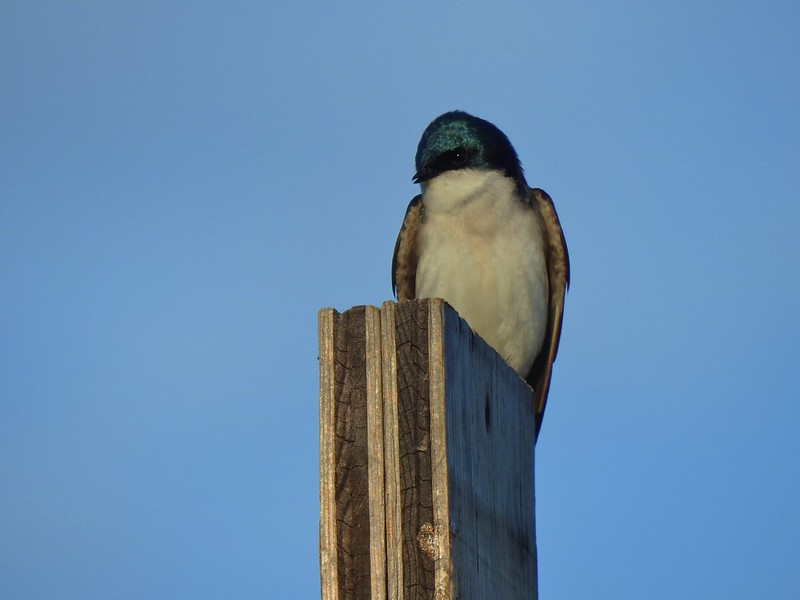
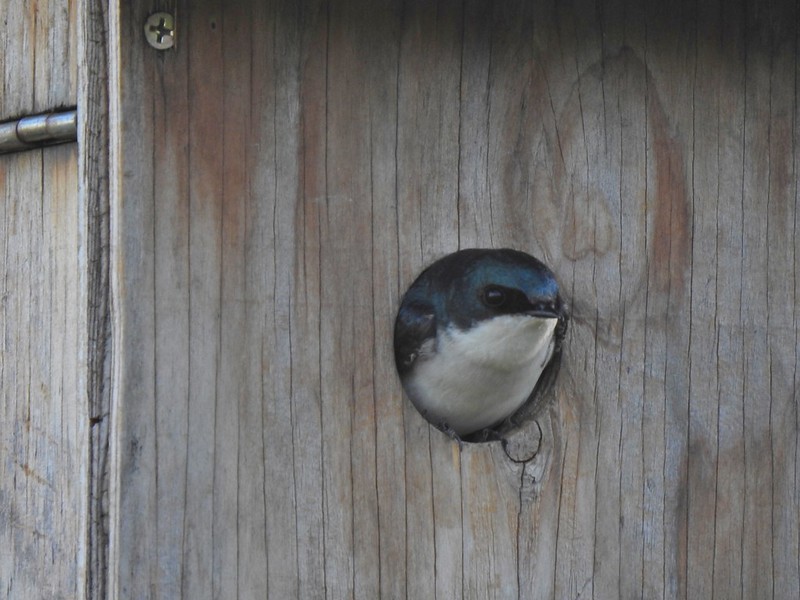
We paused near the viewing deck to watch the tree swallows glide around their houses.
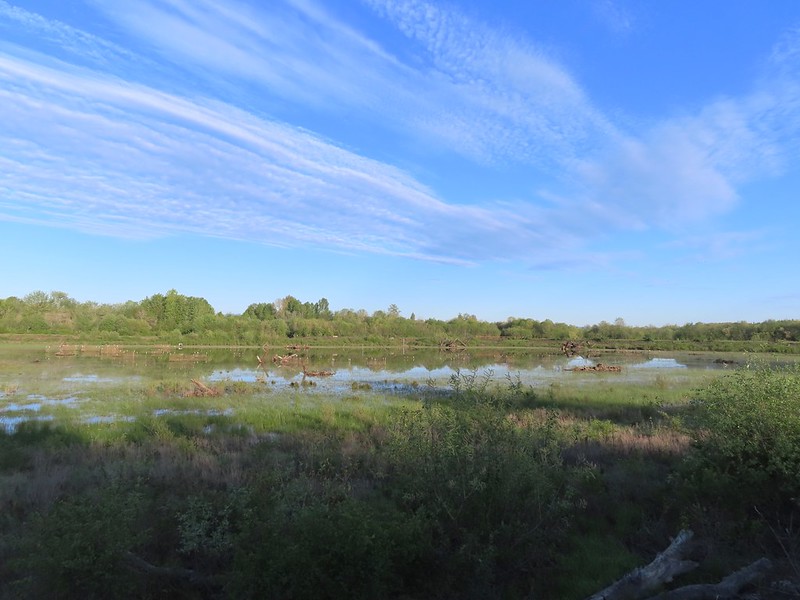
Pintail Pond
Northern shoveler drake and a gadwall
Green-winged teal
Geese
Killdeer
At the northern end of the pond we arrived at the Jackson Bottom Wetlands Trail where we turned right.
We followed this trail past the northern end of the Ash Trail to a junction with the Coyote Hill Trail where, you guessed it, we turned right. More camas
The Ash Trail.
Orange-crowned warbler
Jackson Bottom Wetlands
Can’t emphasize enough how helpful the map/pointer combinations are.
The Coyote Hill Trail doesn’t actually climb a hill, but rather it loops around a meadow with a view of Coyote Hill.
Noisy crow
Mourning dove
Our assumption was that that is Coyote Hill in the distance.
Western buttercups
Some houses on the wetlands border.
Golden-crowned sparrow
The Coyote Hill Trail brought us back to the Jackson Bottom Wetlands Trail near its end. We finally made a left turn and headed back toward Pintail Pond.
End of the trail.
Savannah sparrow
Spotted towhee
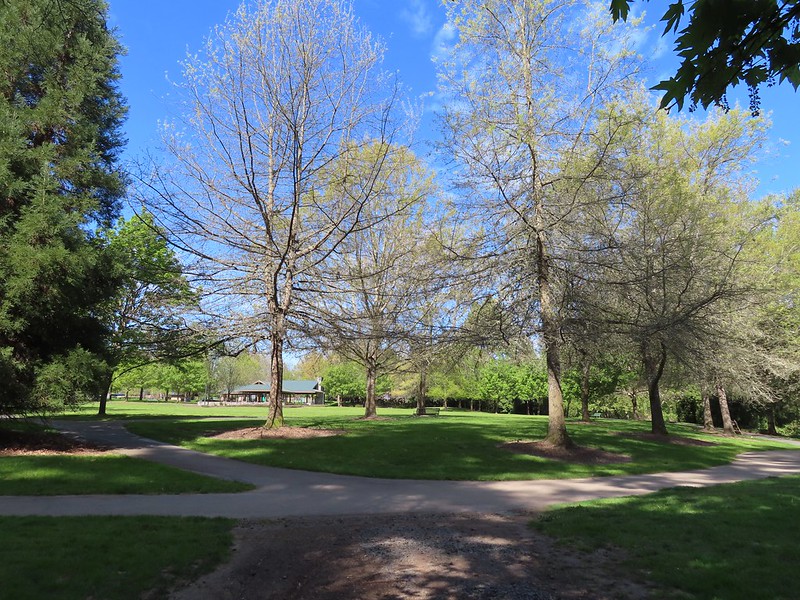
Passing Pintail Pond.
We stayed right at junctions following the Jackson Bottom Wetlands Trail to its end at Jackson Bottom North Trailhead. Wapato Marsh
White-crowned sparrow
American robin
American coot
Ring-necked ducks
Wapato Marsh
Cormorants
Raised viewing platform with many tree swallow photobombs.
This couple was having quite the discussion.
The Bobcat Marsh Trail on the left.
Water treatment pipes at the other end of the Bobcat Marsh Trail.
NW Pond
The trail passed between the NW Pond on the left and Oak Island Marsh on the right.
NW Pond had a variety of waterfowl. This is a northern shoveler drake, ring-necked duck pair, four lesser scaups, and an American coot.
Pied-billed grebe in NW Pond
Lesser scaups
Goose and mallards
Yellow-rumped warbler
The northern trailhead.
Viewing platform at the trailhead.
On the way back we took the Bobcat Marsh Trail which passed Meadow Mouse Marsh.
Cinnamon teal on Meadow Mouse Marsh
Near the southern end of the Bobcat Marsh Trail a pair of geese were nesting on a pole and were noisily fending off a second pair of geese.
After rejoining the Jackson Bottom Wetlands Trail we followed it back to the Kingfisher Marsh Loop where we turned right. Mt. Hood beyond Wapato Marsh
Back on the Kingfisher Marsh Loop.
We followed this trail to a junction below the Nature Center where we stayed straight at a junction and climbed a small hill to the Nature Center Trail. The Kingfisher Marsh Loop turned left here.
The trail passed behind the Nature Center to some gardens.
Mason bee house
We followed the Nature Trail down to the River Trail which we followed back to the parking lot. Our hike here came in just under 5 miles with just 50′ of elevation gain. From the parking lot we drove 4.3 miles to Rood Bridge Park (it’s less than 2 miles as the crow flies).
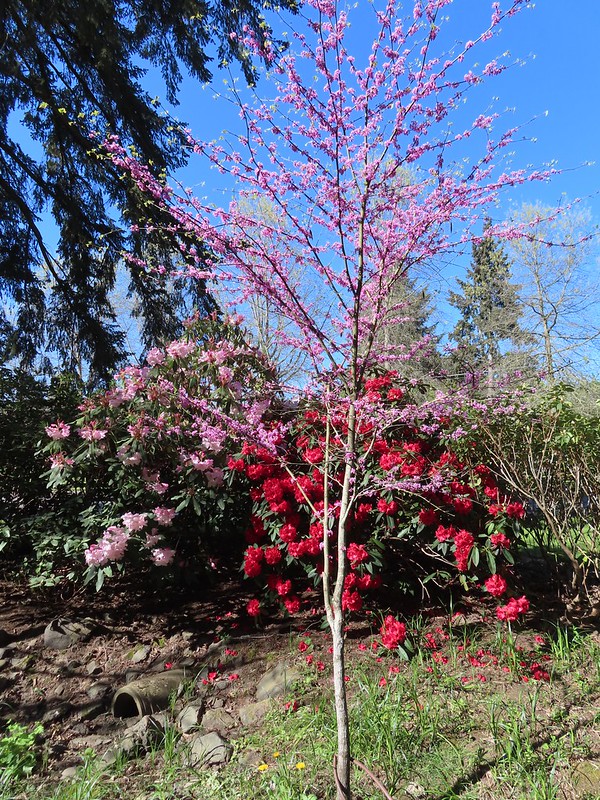
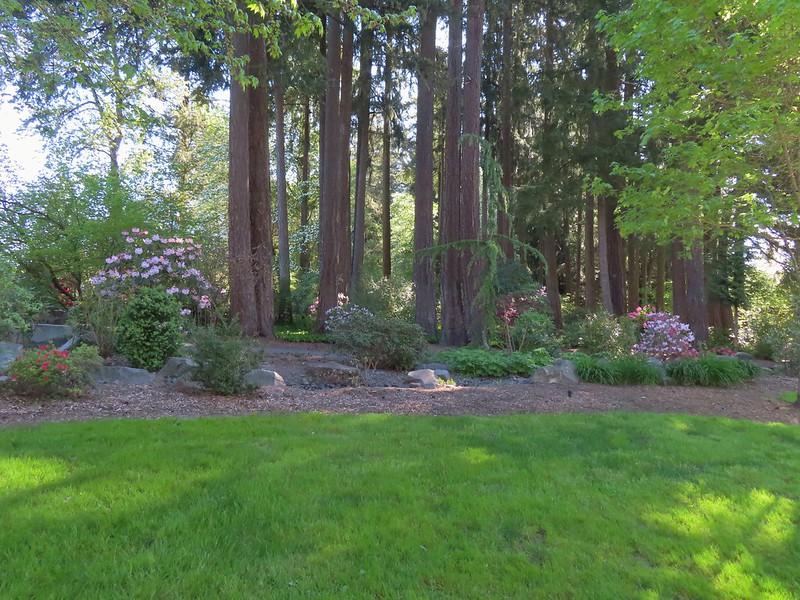
The parking area here is rather large, but we chose to park at the northern end near the playground. From our parking spot we made our way toward the rhododendron garden.
Sign for the rhododendron garden.
Numerous paths loop through the garden, but we stayed mostly to the right as we made our way east to the Woodland Pond.
The Woodland Pond
At the pond we turned right on a paved trail which led us to the Rock Creek Trail. Heading for the Rock Creek Trail.
Rock Creek from the Rock Creek Trail.
We were familiar with the Rock Creek Trail having hiked its two other segments in May 2022 (post). The eventual plan is for the three current segments to be connected to make a single 8-mile trail. We turned right onto the Rock Creek Trail and followed it to a junction with Lakeside Loop Trail where we took another right. The maps for the park were a little tougher to follow as most of the trails weren’t named and there were a lot of interconnected short segments.
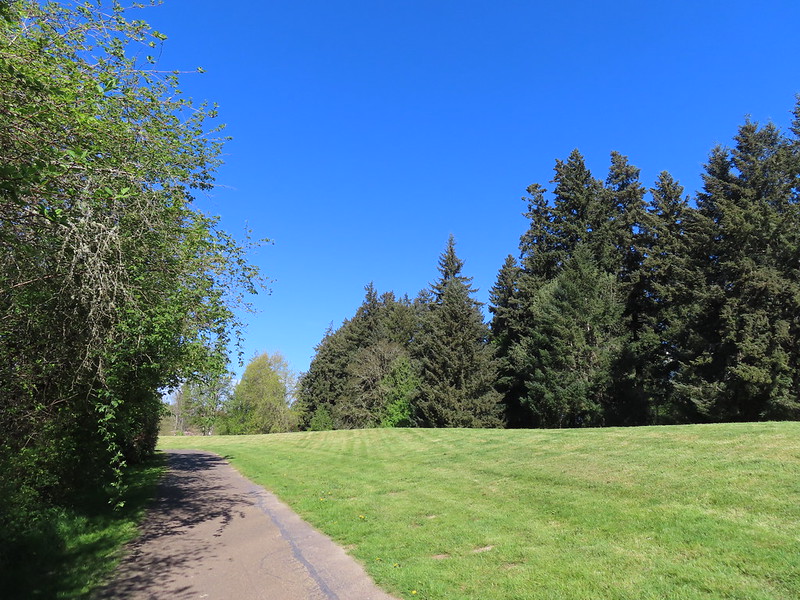
We followed this paved path past a trail leading downhill to a lake.
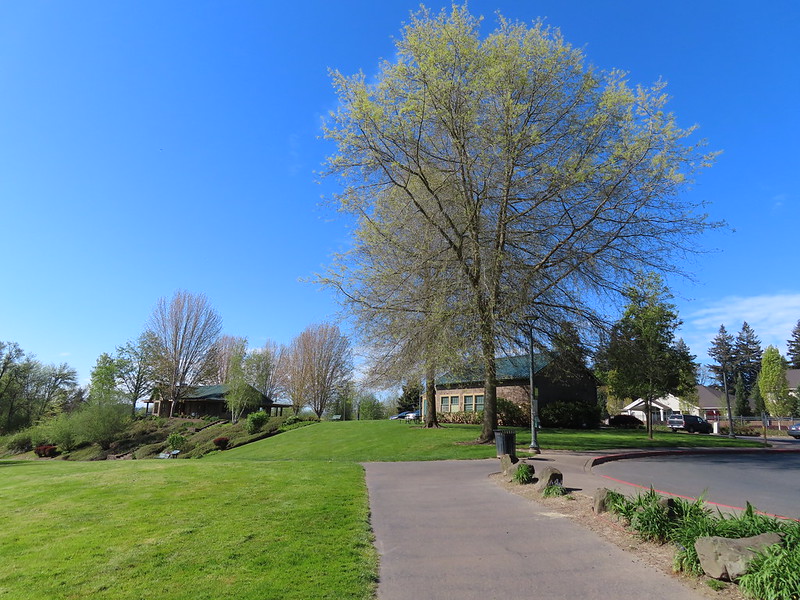
We stuck to the paved trail which brought us back to the parking lot and the beginning/end of the Rock Creek Trail.
The junction ahead is where the Rock Creek Trail beings/end according to the Rock Creek Trail maps. Maps of Rood Bridge Park simply refer to this as part of the “Main Trail Loop”, if they label it at all.
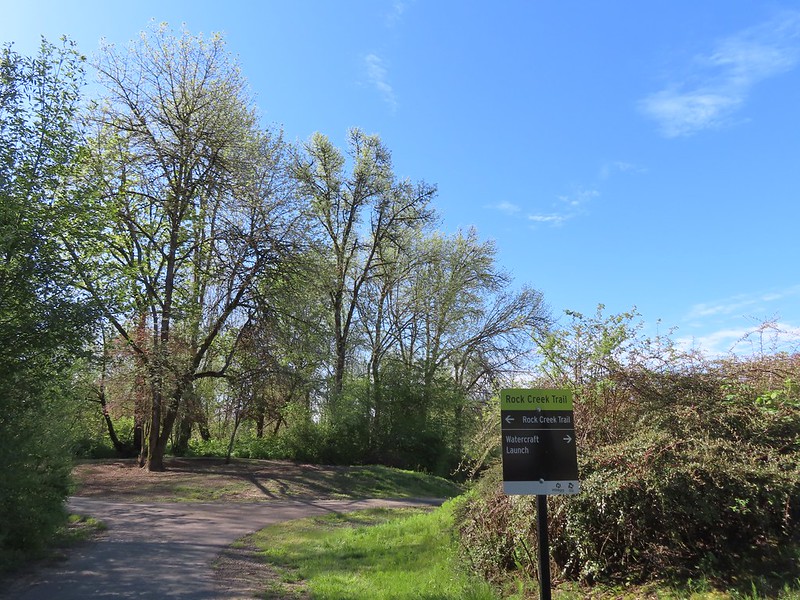
We followed the Rock Creek Trail downhill past a sign for a watercraft launch along the Tualatin River. The trail then followed the river before arriving at junction with the Lollipop Loop.
Mallards
Footbridge at the start of the Lollipop Loop.
We crossed Rock Creek on the footbridge and quickly found ourselves climbing a short but steepish hill to a forested ridge. The loop began a short distance after the trail flattened out.
As we had for most of the day we went right when the trail split and followed the path through the woods. There were several use trails cutting through the center of the loop as well as some spur trails leading to nearby homes, so it took some trial and error to find the “official” trail. We managed to only veer off course once, but we spent a fair amount of time pondering which way to go at several junctions. The highlight of this loop was the abundance of trillium. We were just catching the tail end of the bloom, but it was impressive. There was a fair amount of Oregon grape as well.
Violets and trillium
After completing the loop we returned to the Rock Creek Trail, turning right and climbing back to the junction where we’d turned onto the Lakeside Loop earlier.
Western meadowrue
Fawn lilies
We veered right off of the paved trail onto a dirt path since it was a much more inviting surface.
The dirt path rejoined the paved path behind the Rhododendron Garden and playground.
We continued on the Rock Creek Trail as it passed behind the playground area and descended back down to Rock Creek on what was now a dirt/gravel trail.
Sparrow
Footbridge over Rock Creek.
Just over 100 yards beyond the footbridge the trail arrived at S 1st Avenue where the segment currently ends.
We turned around at street and headed back, taking a somewhat muddy spur trail that ran parallel to the main trail for 0.2 tenths of a mile just to change things up on the way back. When we got back to the Rhododendron Garden we passed through again on different paths to see more of the plants. Left is the dirt path we’d taken earlier, straight is the Rock Creek Trail, and right led to the Rhododendron Garden.
This hike was approximately 2.5-miles with 100′ or so of elevation gain giving us just under 7.5-miles and 150′ of elevation gain for the day. Jackson Bottom on the left and Rood Bridge to the right.
Both of these destinations would be great for kids. (Note dogs and bicycles are not allowed at Jackson Bottom.) We enjoyed Jackson Bottom a little more given the wildlife, but Rood Bridge was a nice park and the trillium display along the Lollipop Loop will not be forgotten. Happy Trails!
While Spring has largely been a no-show so far this year, Summer decided to make an early appearance with a weekend forecast for temperatures topping 90 degrees. We’ve been lucky to hit 60 so we’ve had no time to adjust to that kind of heat. In the past when temperatures have soared, we’ve opted to adjust our planned hike to minimize the impact. That wasn’t necessary this time though as our planned outing was to take three short hikes, each less than an hour North of Salem.
We started our morning by re-visiting the Tualatin River National Wildlife Refuge. We’d stopped here in March of 2019 (post) but could only hike the River Trail at that time of the year. The longer Wetland Trail loop is closed from October 1st through April 30th so we’d scheduled this May visit to check out the loop. We started from the Roy Rogers Trailhead where we found a nice patch of wildflowers to greet us. The refuge is open from dawn to dusk. We arrived at a quarter to six to get an early start and avoid being out during the hottest parts of the day.
The patch of wildflowers.
A checker-mallow surrounded by golden paintbrush.
Plectritis amid the golden paintbrush.
We decided to go counterclockwise and forked right across Chicken Creek on a bridge. We had a pretty good view of Mt. Hood.
The Wetland Trail follows a service road around the refuge. We began seeing wildlife almost immediately with a family of geese and a pair of deer hanging out on some private property adjacent to the refuge.
It was approximately 1.5-miles from the Roy Rogers Trailhead to the Refuge Headquarters and Wildlife Center. It was slow going as we kept stopping to watch the wildlife.
Mallards
Greater yellowlegs
Mourning dove
Great blue heron
An egret and some ducks
More families of geese
Swallows flying above the Wetland Trail.
Northern shoveler, scaups (leaning toward greater), and a bufflehead.
Mallards
Northern shoveler
Ruddy duck
Gadwalls
Spotted sandpiper
Purple martins
Killerdeer
Cinnamon teals
Nutria, one of several of these non-native rodents that we saw.
Nap time (or just a late sleeper).
Ducklings
Song sparrow
Common yellowthroat
Wildlife Center
We took in the view from the overlook next to the Wildlife Center before continuing on with the loop.
Great blue heron watching from a little island.
We followed the Wetland Trail until we came to the River Overlook where we cut over to the River Trail (the trails are less than a yard apart in this area) to check in on the Tualatin River.
Anna’s hummingbird
The same Anna’s hummingbird. When catching light their head/throat is bright pink but appear black when not.
River Overlook
Tualatin River
Robin
From the overlook we stuck to the River Trail following it through a short section of forest before rejoining the Wetland Trail. The Wetland and River Trails running parallel.
Spotted towhee
Rabbit
Pacific waterleaf
Violets and fringecup along the River Trail.
Bleeding heart
We skipped the spur trail to the Ridgetop Overlook since we’d done that on our previous visit.
Chicken Creek
The River Trail meets the Wetland Trail across from the Weland Observation Platform.
We didn’t observe much from the platform on this visit. We continued on with our loop back on the Wetland Trail.
Great white egrets
There were some impressively tall trees along this portion of the loop.
The trail made a 90-degree turn just before another branch of Chicken Creek and headed in a near straight line back toward the Roy Rogers Trailhead.
Another egret
More egrets across Chicken Creek.
Red-winged blackbird
Savannah sparrow
Checker-mallow
A parsley
While our loop was only 3.6-miles it was packed full of sights, a great start to our morning. From the refuge we made the roughly 10-minute drive to our next stop at the Cooper Mountain Nature Park, yet another park managed by Oregon Metro. The park hosts a little over three miles of trails which start at a nice little playground.
Our planned route was to go right on the Little Prairie Loop to the Cooper Mountain Loop and then stay right on that loop (with a detour to hike the Larkspur Loop) to Blacktail Way. We’d then take Blacktail Way back to the Little Prairie Loop and turn right again to finish that loop and return to the trailhead.
The view from Cooper Mountain Nature Park.
The trail system heads downhill from the trailhead so keep in mind that all hikes here end with on an uphill.
Metro is currently running an odd little trial with very short “photo loops”. Mowed paths just off the main trails for photography. We took the first loop just to check it out and they were not kidding when they said the surface may be uneven.
One of two trial photo loops.
The idea is to limit the negative effects of off trail hiking. It’s an interesting idea but it would be easier if people could follow simple rules. We quickly found ourselves back on the Little Prairie Loop and forking right.
The second trial loop. You can see how short this one is by the signboard just downhill marking its other end.
There were several interpretive signs and benches along the trails.
White-crowned sparrow
Anna’s hummingbird
Star flower
As usual Metro had the trail junctions well marked with little maps on top of the posts. This is the Cooper Mountain Loop junction with the lower end of the Outback Trail.
Camas
Tough-leaved iris
Serviceberry
Honeysuckle
Looking back uphill to some wildflowers.
Monkeyflower
Tomcat clover
Spotted towhee
Bench along a pond filling an old quarry.
The pond. Red-legged frogs apparently breed here. We didn’t see any frogs but there was a mallard hanging out in the brush.
Iris on the hillside above the quarry.
The Larkspur Loop continuing straight from the Cooper Mountain Loop which turns uphill at the junction.
An endangered species of larkspur, pale larkspur (Delphinium leucophaeum), typically blooms in the park in late Spring into June. With everything running late this year we didn’t spot any yet this year as we completed the 0.7-mile lollipop loop. Prior to the loop the Larkspur Loop dips to cross a creek in the trees.
The little creek.
View from the Larkspur Loop.
While watching for the larkspur I noticed these giant blue-eyed Mary.
We returned to the Cooper Mountain Loop which made a steep climb to its junction with Blacktail Way.
Blacktail Way to the right.
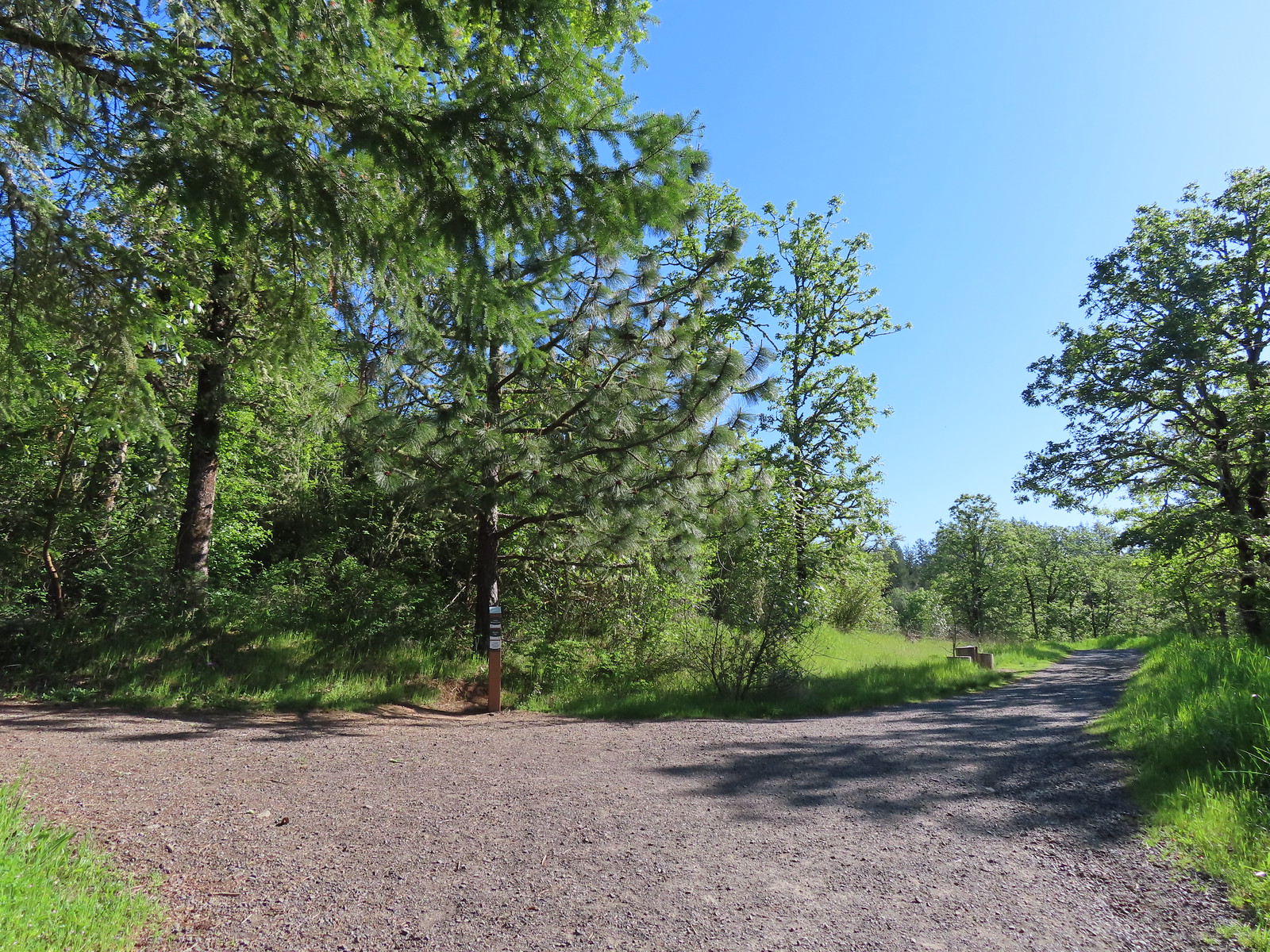
Map at the junction.
Blacktail Way climbed more gradually on its way to the Little Prairie Loop. The “earphone” next to the bench here was neat. There was also one at the trailhead and they really allowed you to isolate the sounds of the woods.
The Little Prairie Loop.
We turned right onto the loop and then quickly detoured to the Little Prairie Overlook.
The pale larkspur also grows in this area but again we were too early.
These were the only woodland-stars we spotted.
After checking out Little Prairie we finished the loop and returned to our car. This stop came to 3.1 miles with 300′ of elevation gain.
From Cooper Mountain we drove 18 miles south to our final stop of the day at Graham Oaks Nature Park. Another one of Metro’s parks Graham Oaks also hosts approximately three miles of trails. Unlike many of the other Metro parks we’ve visited recently this one allows bikes and dogs (on leash) albeit limited to the Tonquin Trail.
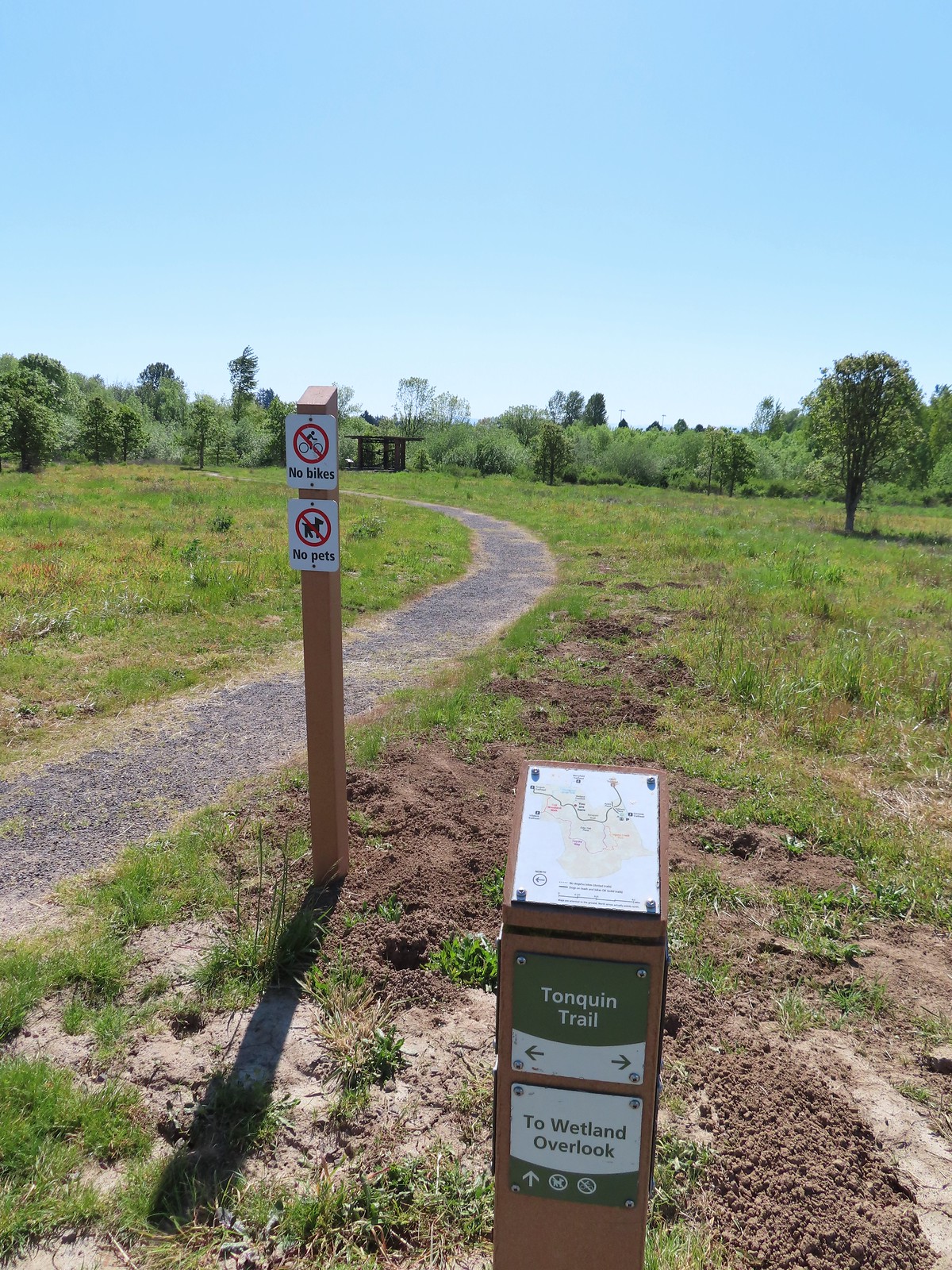
Our planned route here was another counterclockwise loop starting on the Tonquin Trail. We would follow that trail to the hiker only Oak Woodland Walk and then turn onto Coyote Way then take the Legacy Creek Trail returning to Coyote Way just before its end at the Tonquin Trail. Then we would simply follow the Tonquin Trail back to the trailhead.
Despite this being our third stop, the early start had gotten us here shortly after 10am, it was already over 70 degrees when we set off on the Tonquin Trail. Luckily for us there was an occasional breeze that helped cool things off a bit. Heading toward Acron Plaza on the Tonquin Trail.
Interpretive sign at Acorn Plaza.
There were large amounts of large camas blooming along the trail along with yellow buttercups and some patches of lupine. Lupine and buttercups
Lupine
Meadow checker-mallow
We detoured to Elder Plaza at a trail marker.
The “elder” oak is between 150-200 years old.
We watched this American Kestral hover on a near vertical line for what felt like quite a while. It eventually dove and attempted to catch something in the grass. We couldn’t tell if it had been successful.
We continued down the Tonquin Trail and made a second detour to visit the Wetland Overlook.
Mylitta crescent
We made a third detour when we reached a 4-way junction with the Oak Woodland Walk and Arrowhead Creek Trails. We turned right onto the Arrowhead Creek Trail to see what the creek might look like since we could see a little footbridge from the junction.
Footbridge over Arrowhead Creek.
There wasn’t really any water flowing in the creek bed and we turned around after crossing and returned to the 4-way junction where we crossed the Tonquin Trail onto the Oak Woodland Walk.
The Lycaenidae family of butterflies remains a mystery to me. This appears to be an Eastern Tailed Blue based on the ventral spots.
Snow in the Cascade foothills. If you look really closely behind the bigger snow patch to the far-right, you can just barely make out Mt. Jefferson.
We turned onto Coyote Way and quickly spotted several species of birds. Starling
Northern flicker
This scrub jay would not come out from behind the oak leaves.
Coyote Way eventually entered some trees and crossed a boardwalk.
There was a lot of candy flower beneath the trees.
We turned onto the Legacy Creek Trail and found ourselves under a much denser canopy of trees. This extra shade made this feel like the coolest section of trail we’d been on all day which was welcome because it was now over 80 degrees in the Sun.
Mushrooms along the Legacy Creek Trail.
Violets, candy flower and the invasive herb robert (pink).
We left the trees and quickly arrived back at Coyote Way where we took a right followed by another right on the Tonquin Trail after 200′. Coming up to Coyote Way.
Back on the Tonquin Trail and heading for the trailhead.
This was our shortest stop of the day coming in at just 2.7 miles. For the day we logged 9.4 miles with approximately 400′ of cumulative elevation gain, primarily from our stop at Cooper Mountain. These were all enjoyable stops and each provided a different experience. Happy Trails!
Since mid-February we’ve had several rounds of snow, lots of rain, and a stretch of cool (cold) temperatures. We are more than ready for Spring to arrive. A well-timed break in the weather pattern gave us an opportunity to get back to hiking with a trip to Benton County’s Fitton Green Natural Area. While the Fitton Green Natural Area is managed by Benton County a network of trails also allows access to land managed by the Crestmont Land Trust, Greenbelt Land Trust, and the City of Corvallis (Bald Hill Natural Area).
We had visited Bald Hill in 2016 (post) so for this visit we chose to start at the Wren Trailhead (Cardwell Hill West TH) and visit the Crestmont Land Trust and Fitton Green trails.
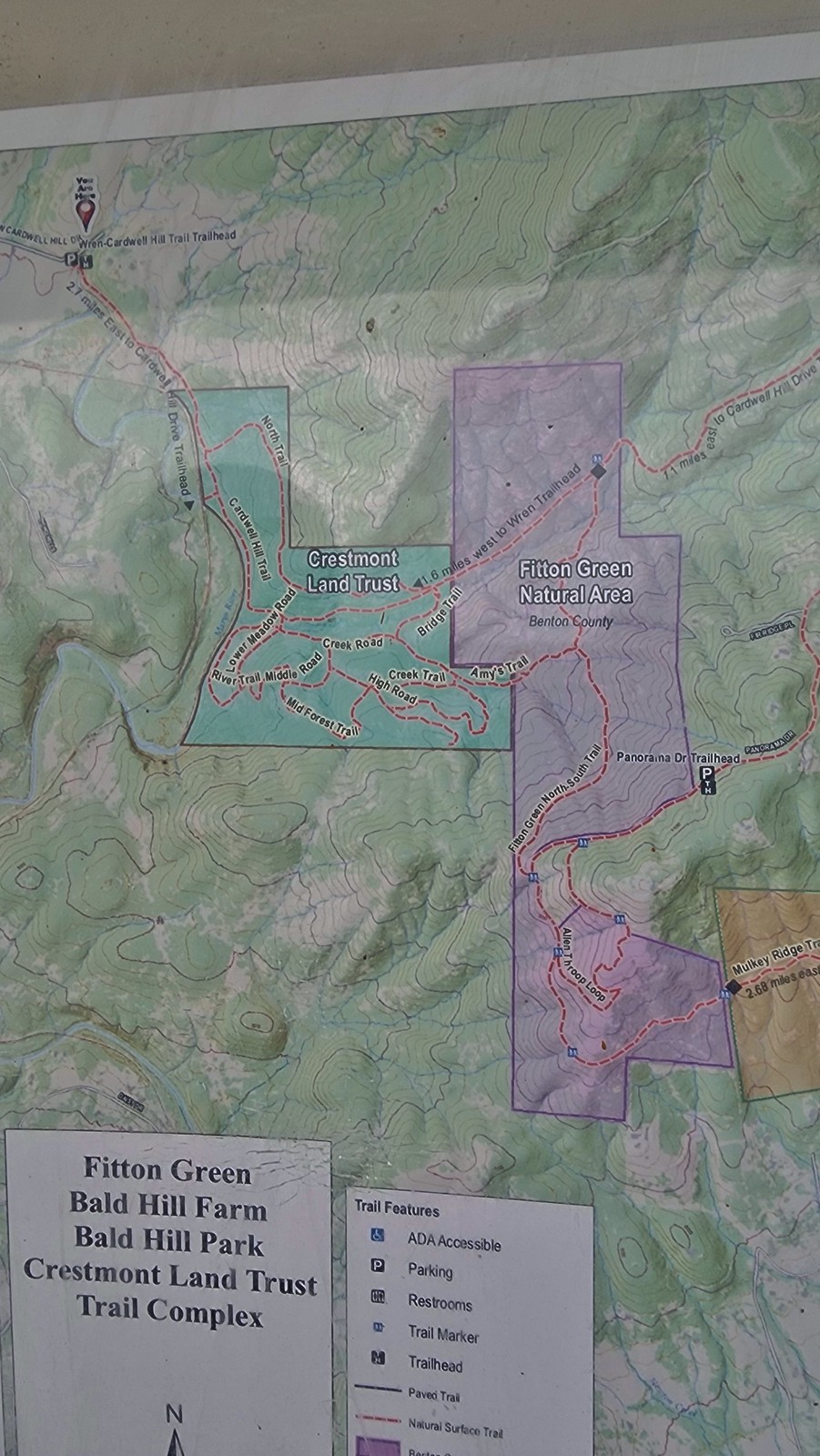
The signboard at the trailhead had a good map which revealed two trails that were not present on the map I’d downloaded from the County’s website, the North and Bridge Trails.
Of the two the North Trail most interested us as it would allow us to avoid repeating a section of the Cardwell Hill Trail. The Bridge Trail would have been an option had we been looking for a shorter loop. After settling on our route we set off on the Cardwell Hill Trail.
From the trail we had a brief view of Marys River.
We followed the gravel roadbed turned trail for half a mile, crossing into the Crestmont Land Trust area, to the well signed junction with the North Trail. The forecast was for patchy morning fog with a chance of light showers between Noon and 3pm and partly sunny skies. They got the patchy morning fog part right.
The first of three abandoned cars we’d pass on the day. This one was in a field on a hillside before entering the Crestmont Land Trust.
Interpretive signs greeted us as we entered the Crestmont Land Trust.
The North Trail junction.
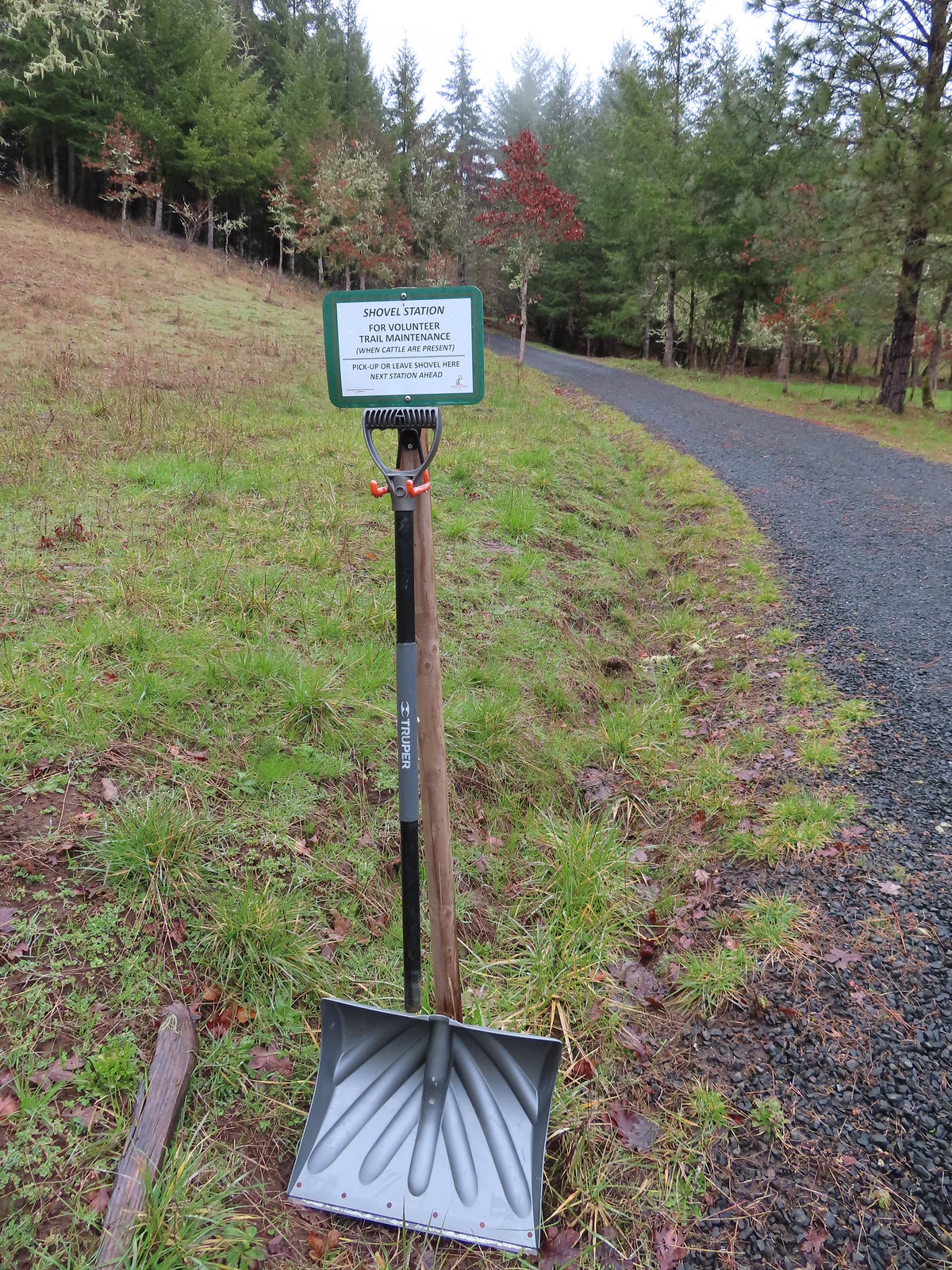
We turned uphill on the North Trail at the junction where we encountered the first of several “Shovel Stations”.
The shovels can be used to remove cow pies from the trails during periods of cattle grazing in the land trust. Thankfully there was no grazing happening currently so there was no need to carry the shovel to the next station, but we thought it was a neat idea. The North Trail gained approximately 200′ in the first third of a mile where we came to a viewpoint with a fairly new looking gazebo and a unique set of table and chairs that had been carved from stumps.
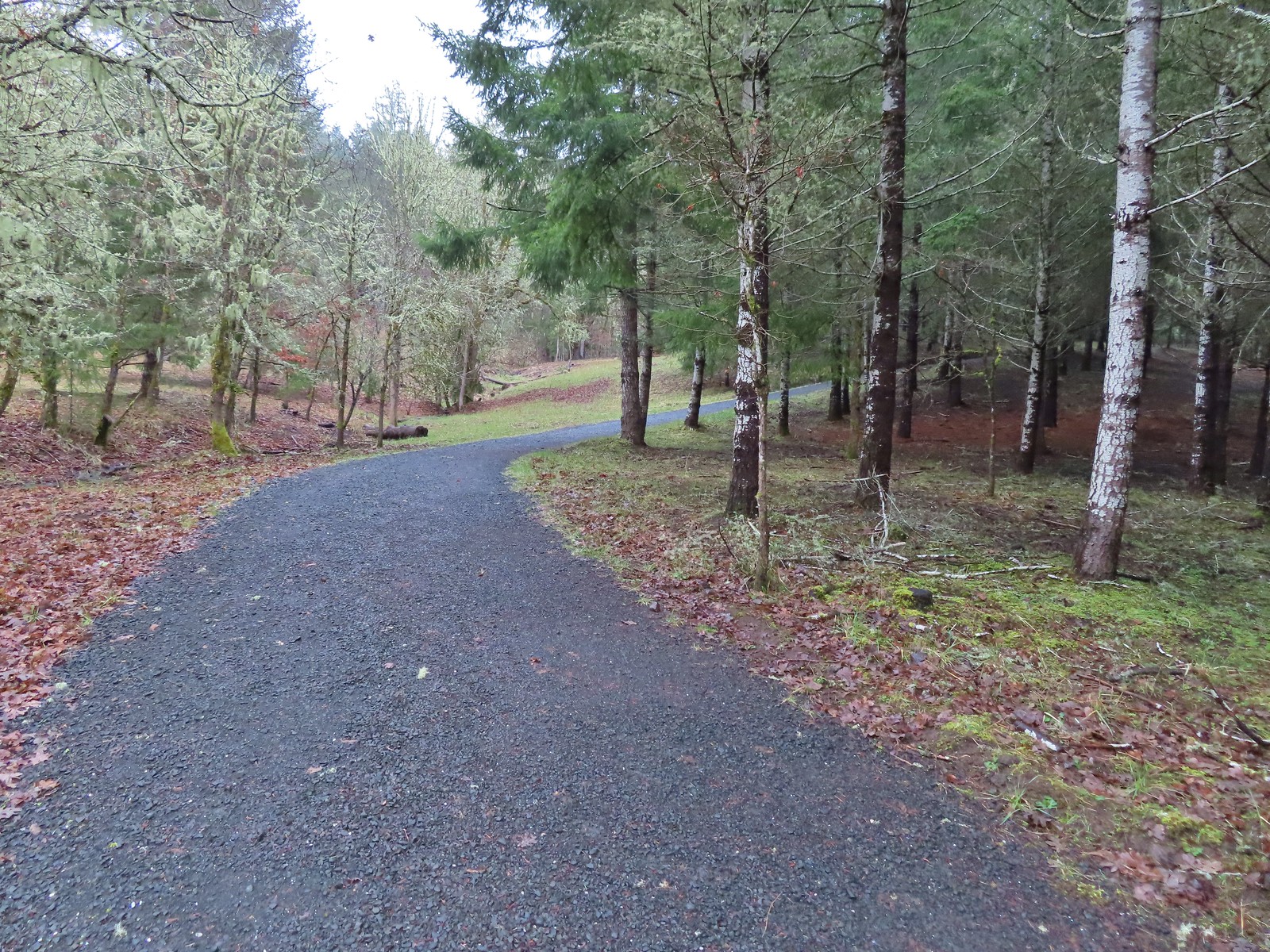
The gazebo housed a small table with benches. A particularly nice touch was the lack of back on the bench that wasn’t facing the view which allows you to sit facing the view.
The view from the gazebo.
The stump table and chairs.
Not sure what the most recent gathering was but there was an interesting variety of items around the table.
After admiring the gazebo and odd table setting we continued on the North Trail which began a half mile descent back to the Cardwell Hill Trail. Another bench along the trail.
Turkey tails
The Cardwell Hill Trail in the valley below the North Trail.
Dropping down to the Cardwell Hill Trail.
We turned back onto the Cardwell Hill Trail which quickly entered the Fitton Green Natural Area. We ignored two spurs of the Fitton Green North-South Trail on the right and followed this trail up and over its high point a total of 1.5 miles to the Cardwell Hill East Trailhead. The first spur didn’t have any signage
The second spur had a marker naming it the Fitton Green North-South Trail.
The other two abandoned cars, these were outside of the natural area.
Arriving at the east trailhead.
We turned around at the trailhead and regained the 250+ feet that we’d dropped from the trail’s highpoint. The out and back to east trailhead wasn’t necessary but it was some good hill training for the hiking season to come. We then descended 300′ to the Fitton Green North-South Trail where we veered left. One of the more impressive trees along this section of the Cardwell Hill Trail
The Fitton Green North-South Trail.
Tragedy nearly struck on this trail when a slow-moving slug barely avoided a foot. Watch your step.
We followed this trail a total of 1.1 miles where we turned right onto the Allen Throop Loop Trail. Along the way we passed Amy’s Trail at the 0.4-mile mark, a private road at the 0.9-mile mark, and the western end of the Allen Throop Loop at the 1-mile mark. Amy’s Trail
The clouds were beginning to break up as we climbed up this trail.
The western end of the Throop Loop.
The eastern end of the Allen Throop Loop. Continuing on the Fitton Green North-South Trail would have brought us to the Panorama Drive Trailhead.
We turned onto the Allen Throop Loop Trail which brought us to an oak savannah hillside. There seems to have been a spelling error (Alan vs Allen) on the trail marker.
Plaque at a viewpoint along the Allen Throop Loop. Note that it is Allen not Alan on the plaque.
Despite the clouds breaking up we didn’t have a view of Marys Peak, the highest peak in the Oregon Coast Range (post).
The trail overlooks the cities of Corvallis (to the left/east) and Philomath (straight/south).
Bald Hill with Corvallis beyond from the Throop Loop.
East toward the Coast Range.
We were too early for any wildflowers, especially this year with the lingering cold weather but we did spot some lupine leaves along the trail before we came to a bench at a junction with the Mulkey Ridge Trail.
This is the trail that connects Bald Hill with Fitton Green.
The trail made a slight climb from the bench arriving back at the Fitton Green North-South Trail less than a quarter mile later. The junction from the Throop Loop Trail.
We turned left and retraced our steps on the Fitton Green North-South Trail to its junction with Amy’s Trail where we turned left (West) dropping into a denser forest. Map at the start of Amy’s Trail.
Gate at the Fitton Green-Crestmont Land Trust border.
Creek along Amy’s Trail. With all the wet weather there was a fair amount of water in all the streams/creeks in the area.
After a third of a mile on Amy’s Trail we came to a junction with Creek Road.
We turned left crossing over the little unnamed creek to a T-junction near a picnic table. To the right was the Creek Trail while the Upper Forest Trail went left.
On the hillside above the picnic table is the Creek Trail.
Our plan was to make as wide a loop as possible through this area so we went left following the Upper Forest Trail uphill.
Switchbacks along the Upper Forest Trail.
After a fairly stiff climb the Upper Forest Trail descended more gradually arriving at High Road 0.4-miles from the Picnic Table.
Arriving at High Road.
According to the maps High Road continued to the left a short distance then became the Lookout Extension before dead ending in the forest. Something to check out on another trip. Today we turned right following this roadbed 100 yards before once again turning left, this time onto the Mid Forest Trail at a 4-way junction. The Mid Forest Trail is hidden behind the tree on the left. To the right is the Creek Trail while High Road continues straight ahead.
Another 0.4-mile descent brought us to a junction in an oak savannah with the Lower Forest Trail and Middle Road.
Lots of green moss along this trail.
A little snow on the ridge in the distance.
Rabbit that Heather spotted.
The junction was at the far end of this open space.
Stayed left at the junction on what was now the Lower Forest Trail which descended another quarter mile to Lower Meadow Road. This was by far the most confusing junction we’d encountered all day. It was one of only a couple that was unsigned and none of the maps that we’d seen or had brought with us showed the road continuing to the left. Since we’d planned on staying left at all junctions except for at High Road we initially turned left here thinking it was the River Trail, but it just didn’t feel right so we turned to the Garmin which did show the road continuation. It didn’t look anything like the River Trail route so we promptly turned around and returned to the 4-way junction and took a left downhill through the meadow. Lower Meadow
The River Trail brought us to Marys River then turned north along the river for a 0.2-miles. Gate along the River Trail just before Marys River.
Marys River
Male common merganser floating Marys River. I only had a brief second to try and get a picture as he floated by thus the poor focus.
A short spur trail led down to the river bank.
We had spent all morning watching for wildflowers knowing that everything was running late this year but holding out hope that we’d spot an early bloomer. One of the first to bloom each year in the forests around the valley is snow queen and finally along the river here we spotted a few of the small purple flowers.
The River Trail veered away from Marys River and back into the meadow before ending at Lower Meadow Road. We turned right on the road which crossed an unnamed creek before meeting the Cardwell Hill Trail.
Not flowers but mushrooms are always fun to spot.
Lower Meadow Road crossing the creek and ending at the Cardwell Hill Trail.
We turned left onto the Cardwell Hill Trail. We had missed this 0.4-mile section which followed Marys River earlier when we’d turned up the North Trail.
The short Trestle Extension led to a view of a railroad trestle over Marys River.
The signboards at the North Trail junction from the Cardwell Hill Trail.
Robin near the North Trail junction.
We retraced our steps from the North Trail junction under the partly sunny skies that had been promised. No more fog.
Today’s hike came in as 9.3 miles on the Garmin with approximately 1200′ of cumulative elevation gain.
While it hadn’t felt at all like Spring when we’d set off that morning by the end of the hike, and after seeing the snow queen blossoms, we could convince ourselves that it might not be too far off. The forecast had been spot on with the patchy fog giving way to partly sunny skies, and we did have two very light showers pass over while we were looping through the Crestmont Land Trust.
This was a nice hike and an area that we will definitely be back to. There are trails that we didn’t take this time to come back and explore and the possibility of longer or shorter loops make it an attractive option when we were looking for something open year-round and not too far home. Happy Trails!


 The orange track is a portion of the Wetland Trail that I had not previously hiked.
 Mt. Hood from the Wetlands Trail.
 I spotted a couple of deer shortly after setting out.

 I believe this is a savannah sparrow.
 Geese families
 Killdeer
 It was just under 40 degrees Fahrenheit when I started, but the forecast called for temperatures to reach 80 by the afternoon.
 Geese, goslings, and goose eggs.
 Sandpiper
 Not sure what type of fish this is but they were thrashing about near the shoreline, and I had seen similar behavior the day before in McFadden Marsh at Finley NWR.
 Duck and ducklings
 Sleeping nutria
 Purple martins and a swallow (bottom left).
 Egrets and a great blue heron.
 Closer look at the egrets and heron.
 Robin
Robin


 Mallard
 Sandpipers
 Riverside Trail
 Tualatin River
 Song sparrow
 Inside-out flower
 The Ridgetop Trail to the left. There is a bench and railed overlook but the view is blocked by trees. If there hadn’t been any leaves there may have been a view but today there wasn’t.
 The only trillium I saw with any petals left.
 Bleeding heart
 Northern flicker
 I spotted an American kestrel in this snag. I had been hoping to see one during this week’s hikes.
 American kestrel
 Crow
Crow Northern shoveler
 Wildflowers near the trailhead.
 Lupine, plectritis, checkerbloom, and golden paintbrush.
 This route came to 4.4-miles and just 35′ of elevation gain.
 Camas
Camas
 Larkspur
 Not a native wildflower but pretty.
 Columbine
 Rabbit
 The look on their faces seems to indicate they were not expecting to see me there.
 Going back the other way.
 Karaoke
 Helpful maps and/or pointers are located at trail junctions.
 Swallow
 Swallows
 Cinnamon Teal
 Ring-necked ducks
 Purple martins
 Canada geese
 Jackson Bottom Wetlands Trail passing Oak Island Marsh.
 Crow harassing an osprey over Oak Island Marsh.
 I thought flamingos were pink.
 American coot in NW Pond.
 Another napping nutria.
 Robin
Robin Gadwall
 Egrets at Wapato Marsh.
 Great blue heron in Pintail Pond.
 Lupine along the trail.
 Green winged teal
 Heading toward Salamander Slough.
 Two turtles and a mallard.
 Long billed dowitcher
 Cabbage white?
 Checkerbloom along the Coyote Hill Trail.
 Common yellowthroat
 Savannah sparrow
 Spotted towhee
 Tualatin River
 Deer crossing Pintail Pond. I think these are the same three I saw earlier.
 I’ve been spotted.
 Rabbit on the left along the River Trail.
 Salmonberry
 Western meadowrue
 Wild rose
 Stairs leading to the trail on the River Trail.

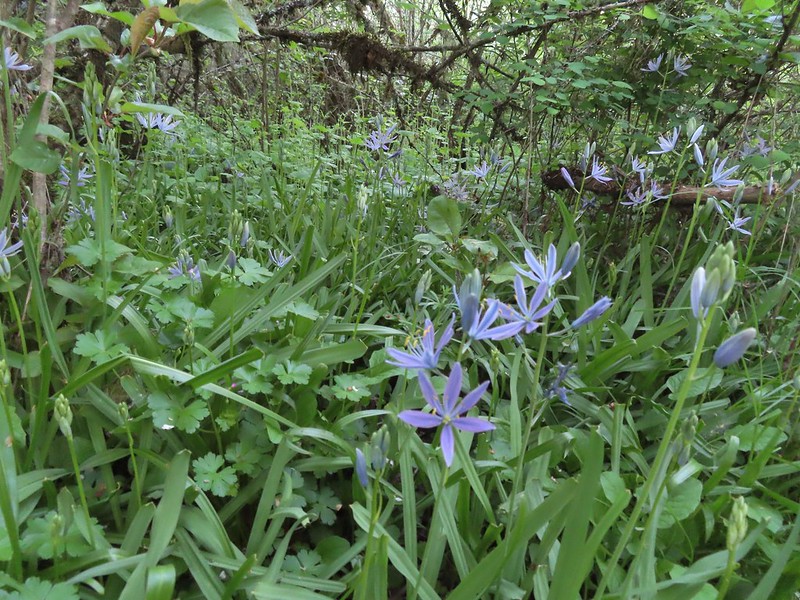 Camas
Camas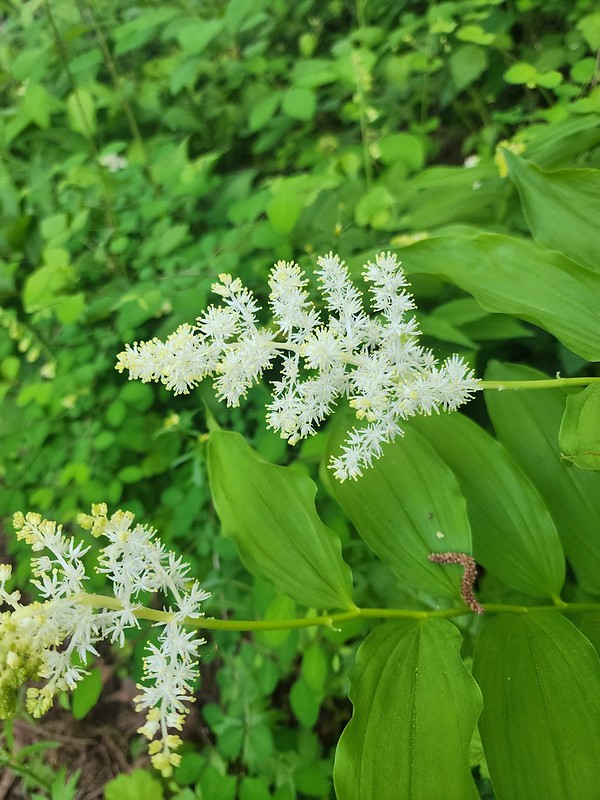 Solomonseal
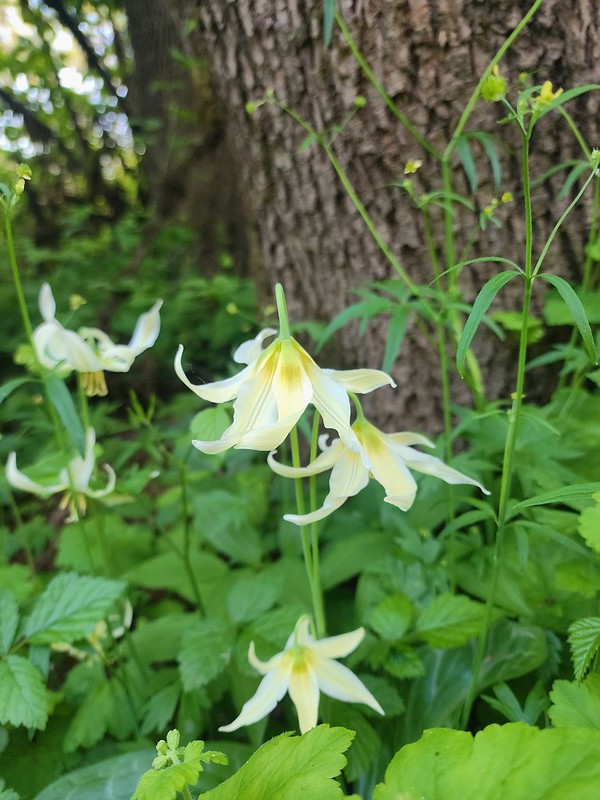 Fawn lilies
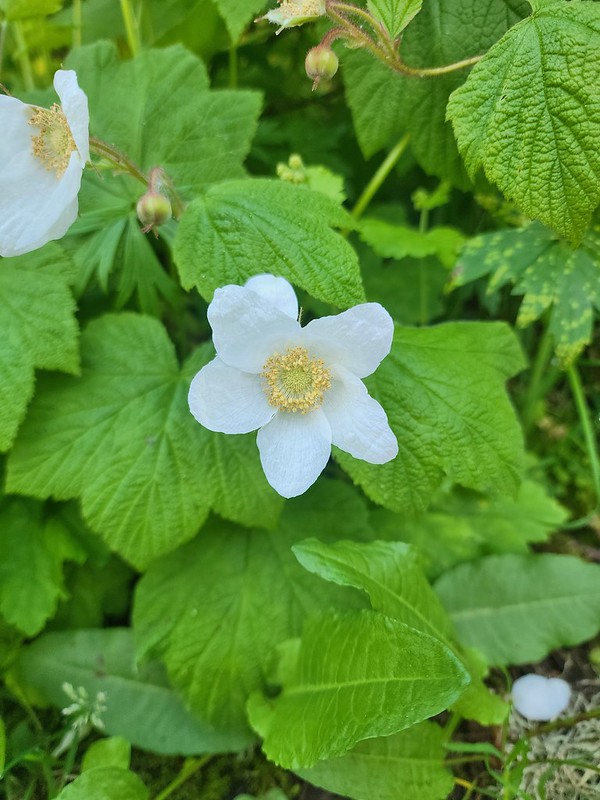 Thimbleberry
 Giant purple wakerobin
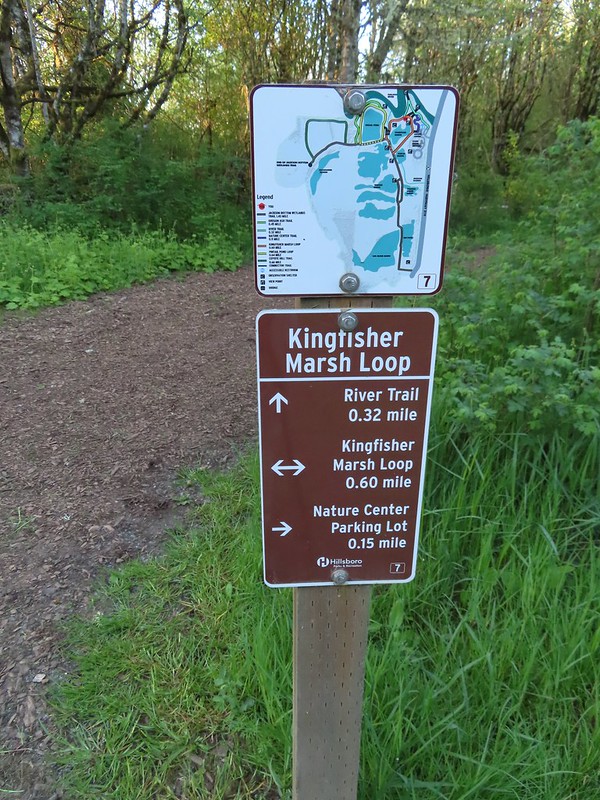 The trail signs were very helpful in keeping us on track.
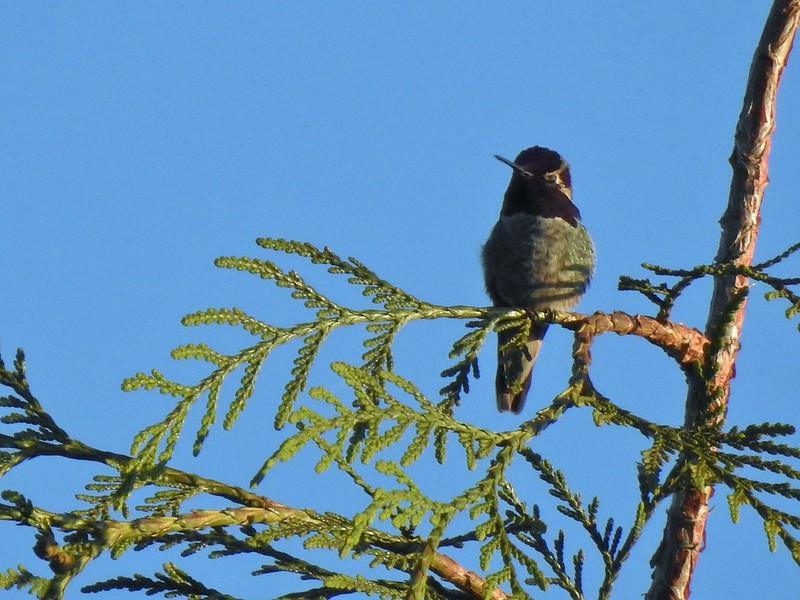 Anna’s hummingbird
 Viewpoint overlooking Kingfisher Marsh.
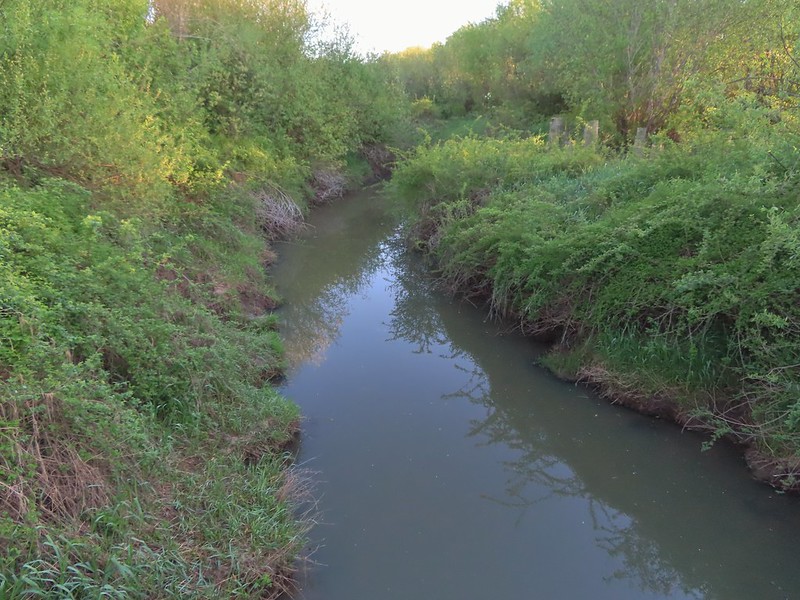 The trail crossed Jackson Slough on a footbridge.
 Pintail Pond Loop
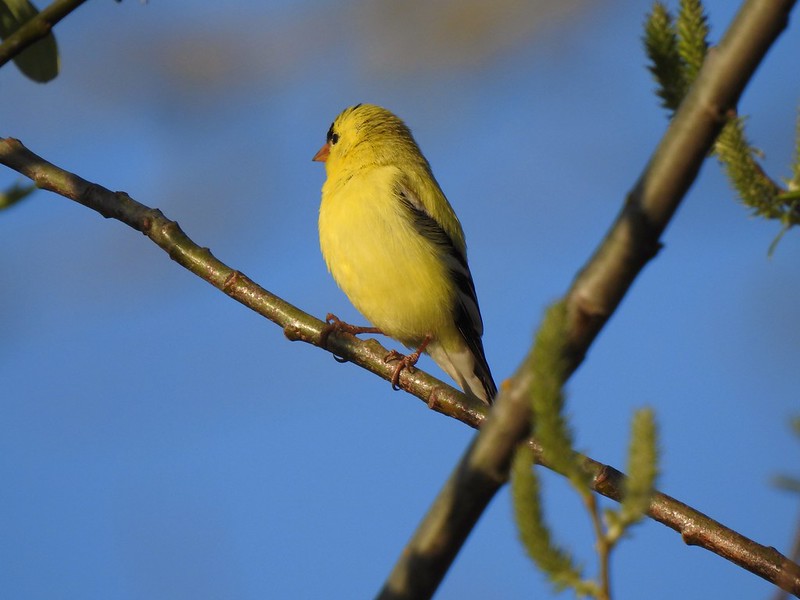 American goldfinch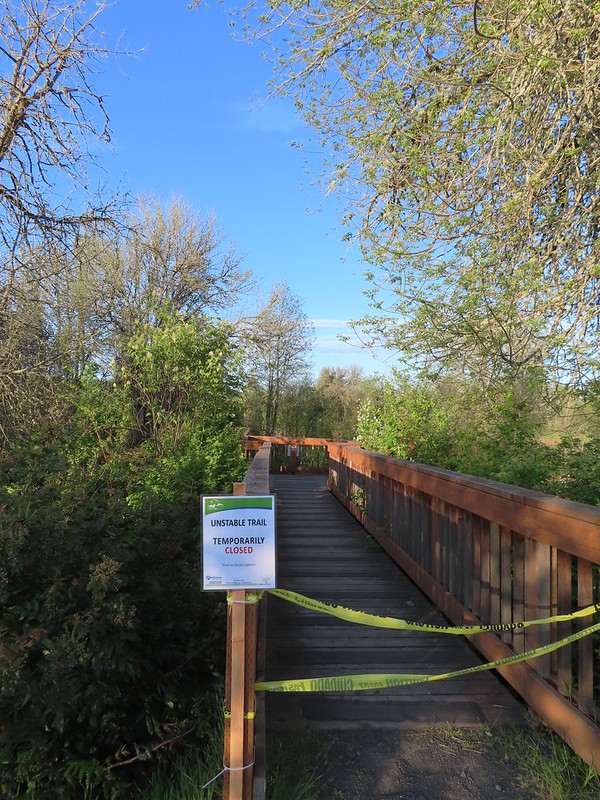
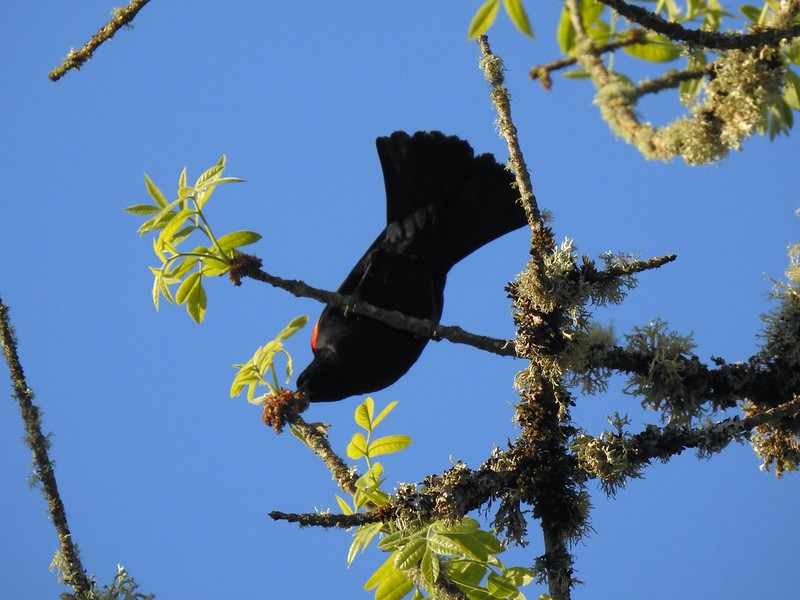 Red-winged blackbird
 Sparrow
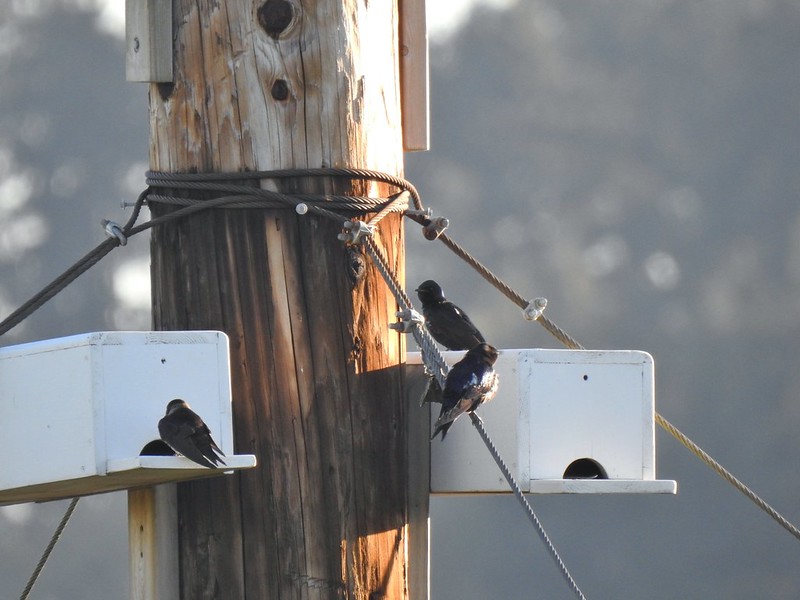 Purple martins
 American robin
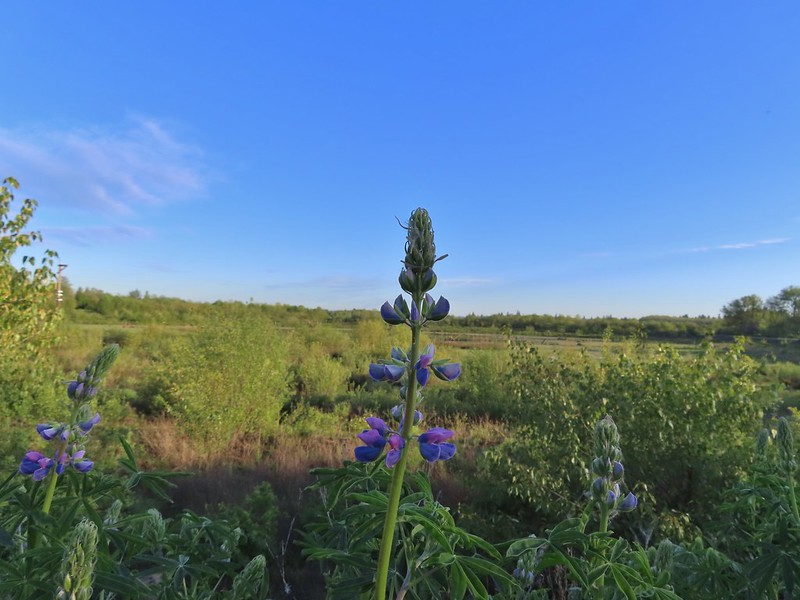 There is a lot of lupine in the preserve but only a few had started blooming.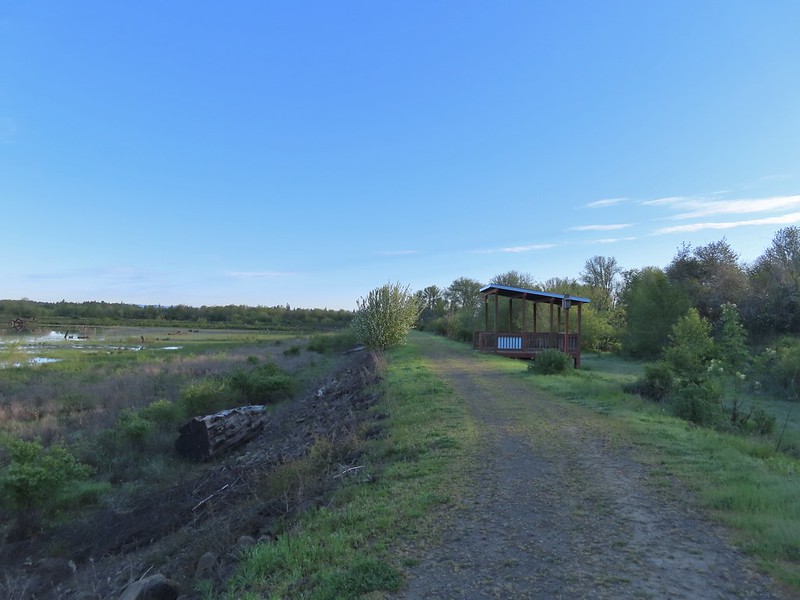


 Pintail Pond
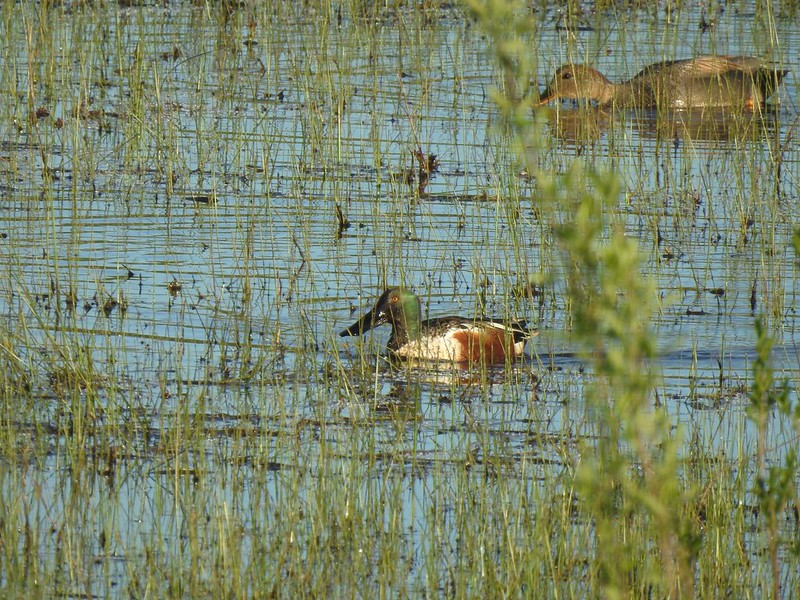 Northern shoveler drake and a gadwall
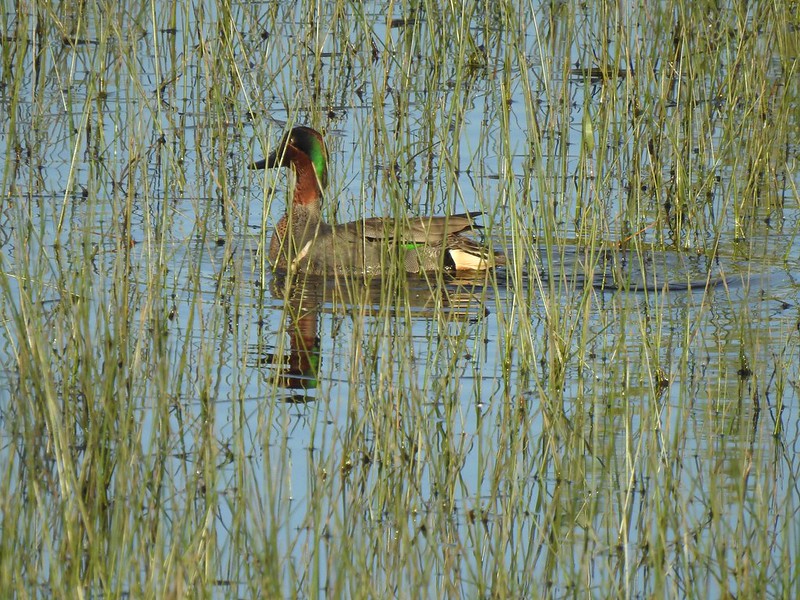 Green-winged teal
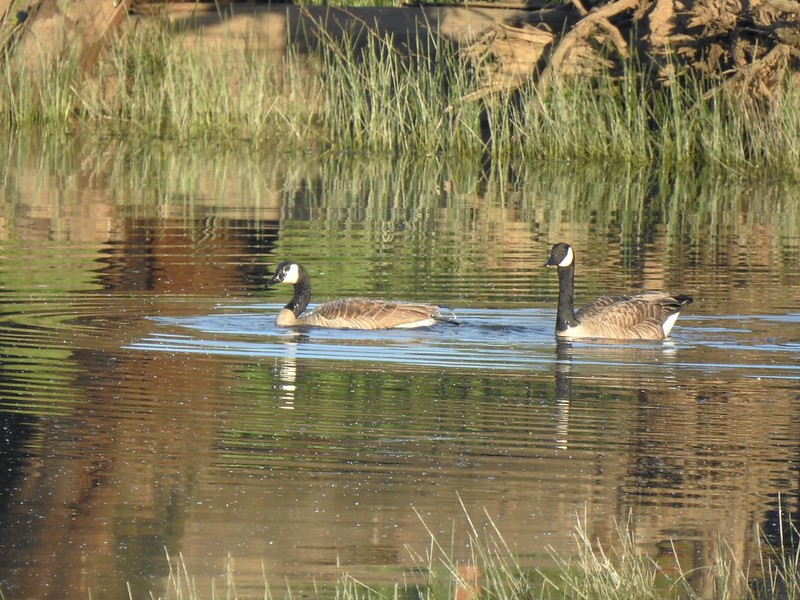 Geese
Geese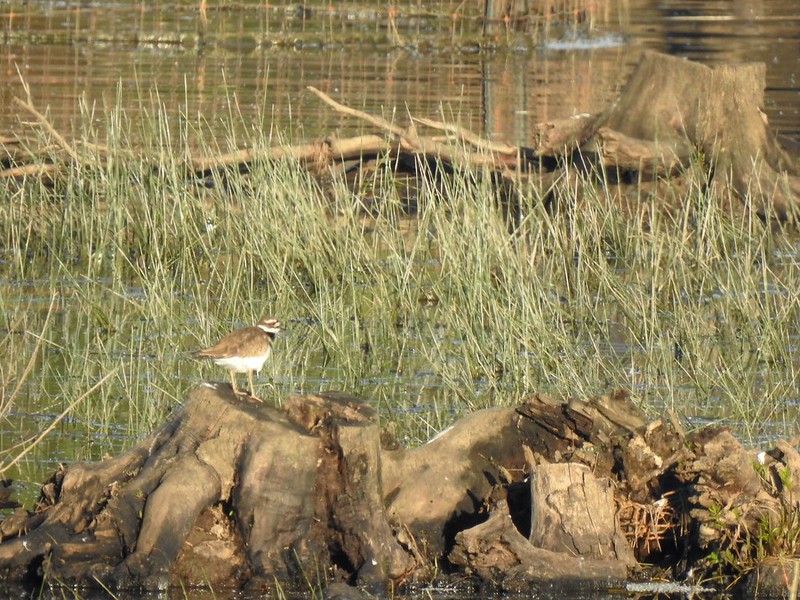 Killdeer
 More camas
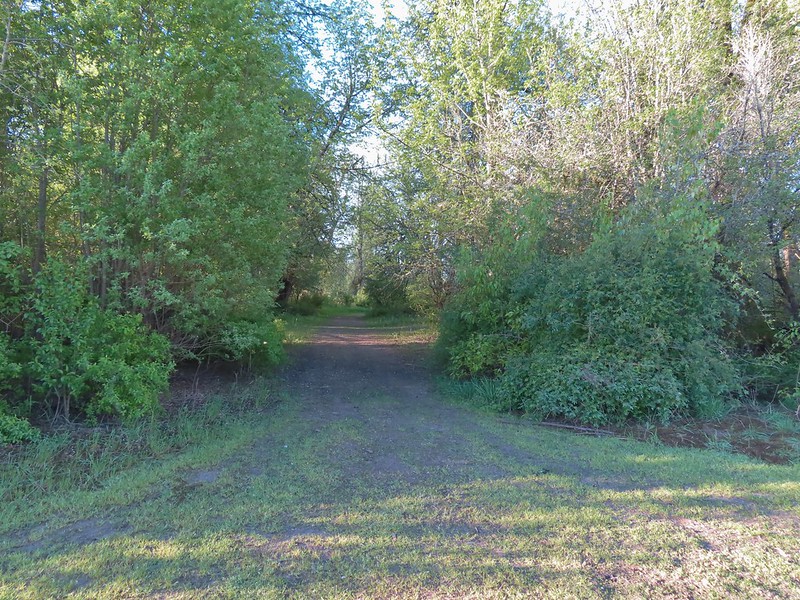 The Ash Trail.
 Orange-crowned warbler
 Jackson Bottom Wetlands
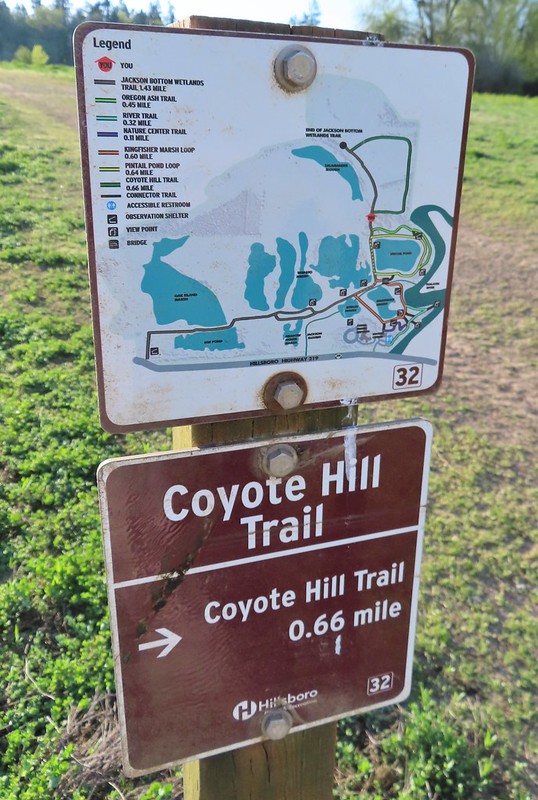 Can’t emphasize enough how helpful the map/pointer combinations are.
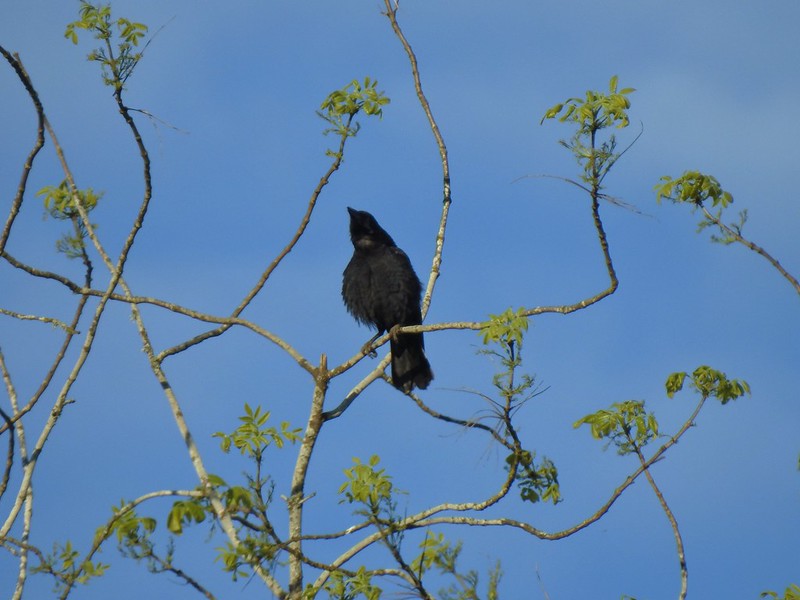 Noisy crow
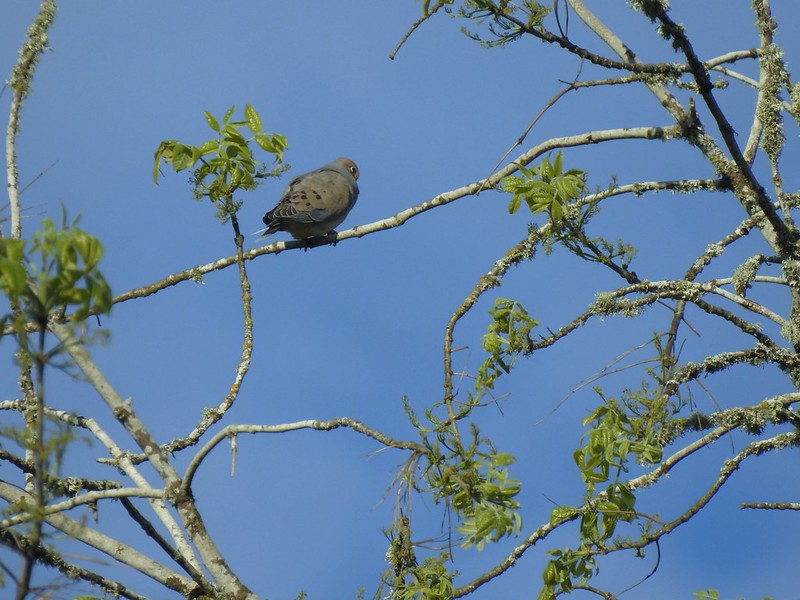 Mourning dove
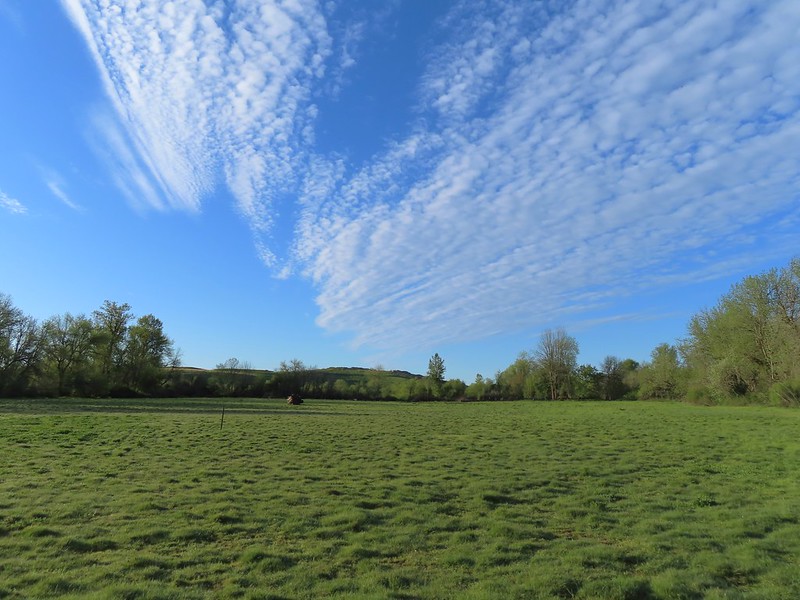 Our assumption was that that is Coyote Hill in the distance.
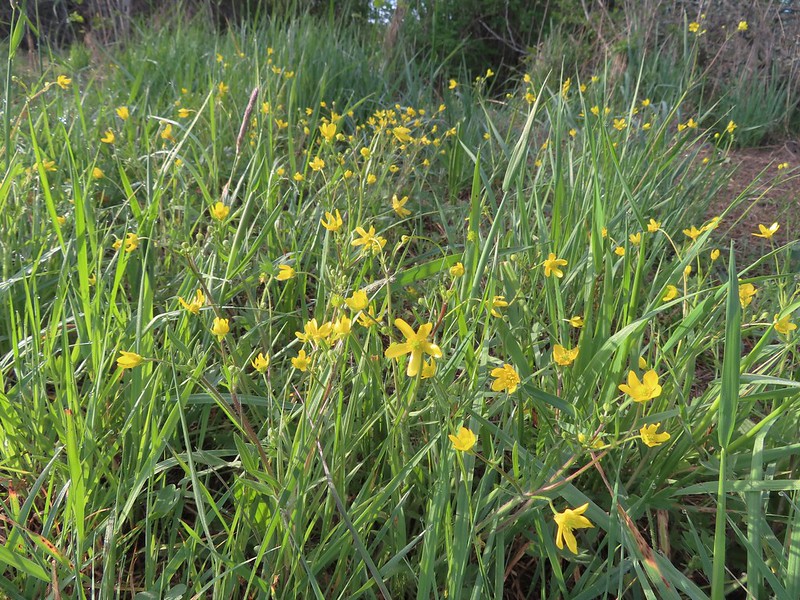 Western buttercups
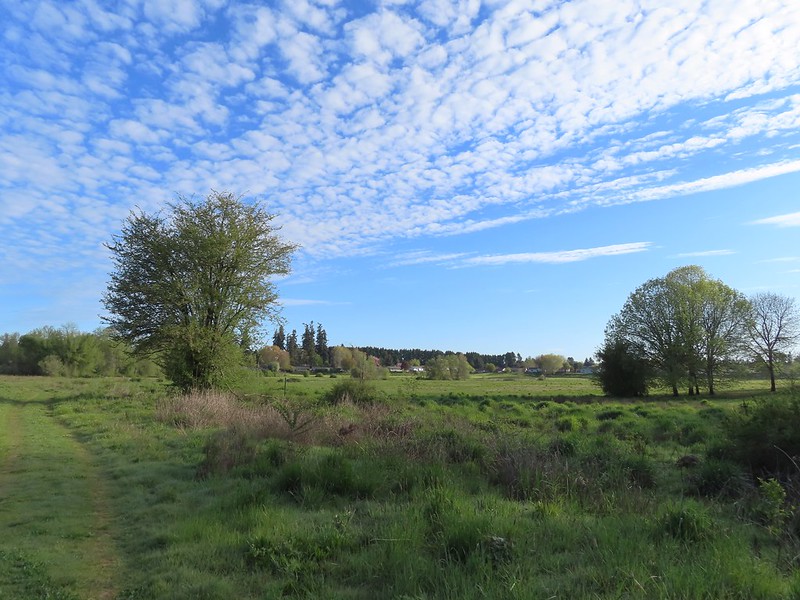 Some houses on the wetlands border.
 Golden-crowned sparrow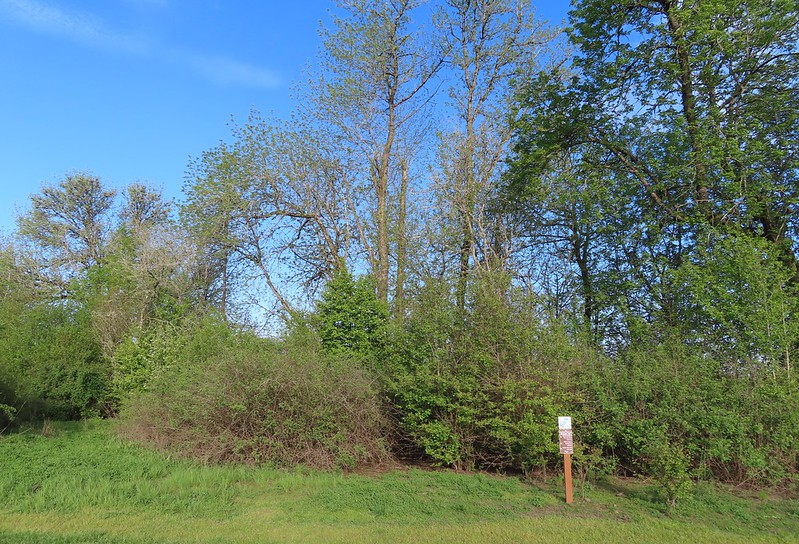
 End of the trail.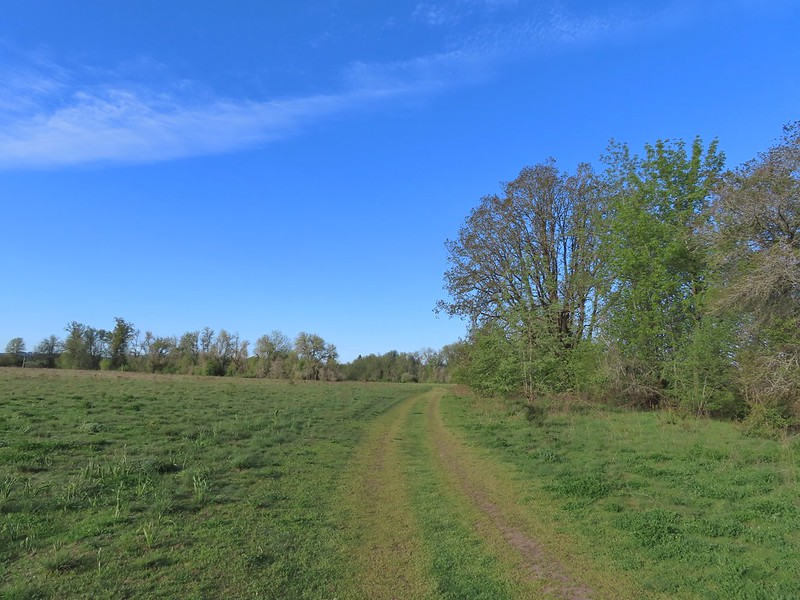
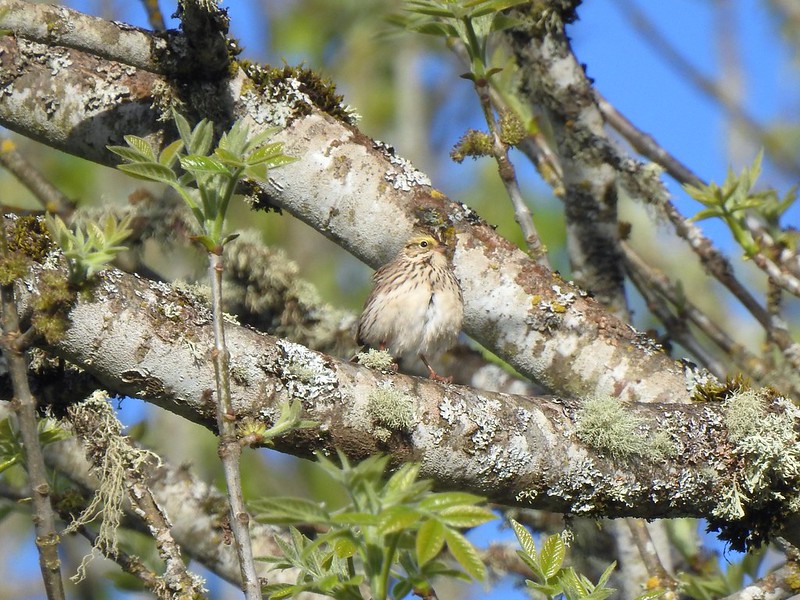 Savannah sparrow
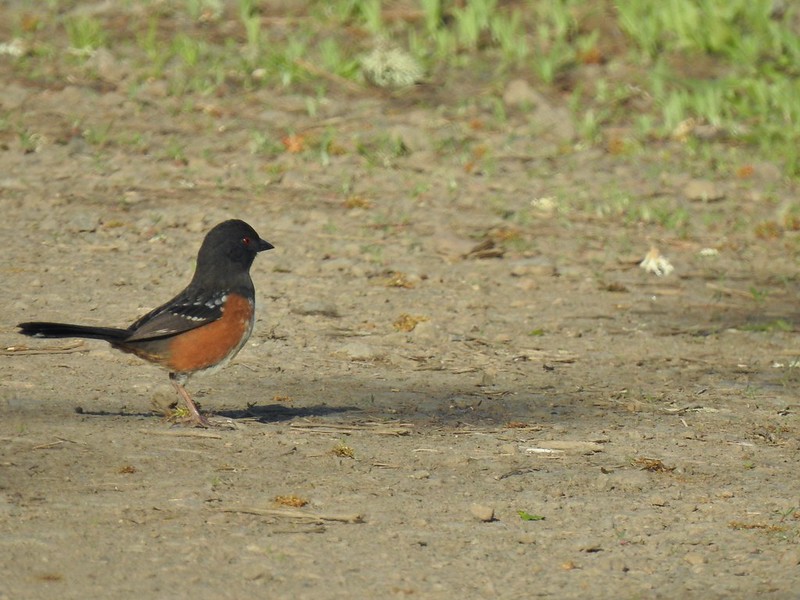 Spotted towhee
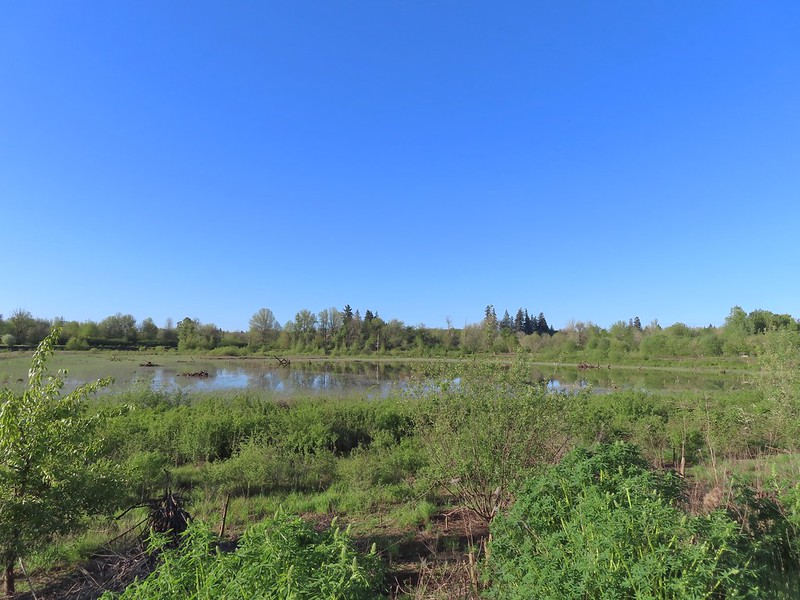 Passing Pintail Pond.
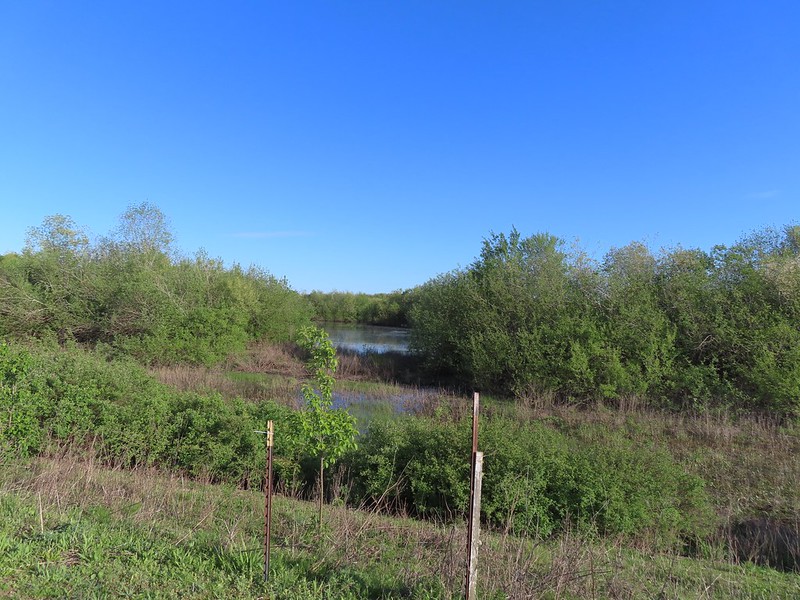 Wapato Marsh
 White-crowned sparrow
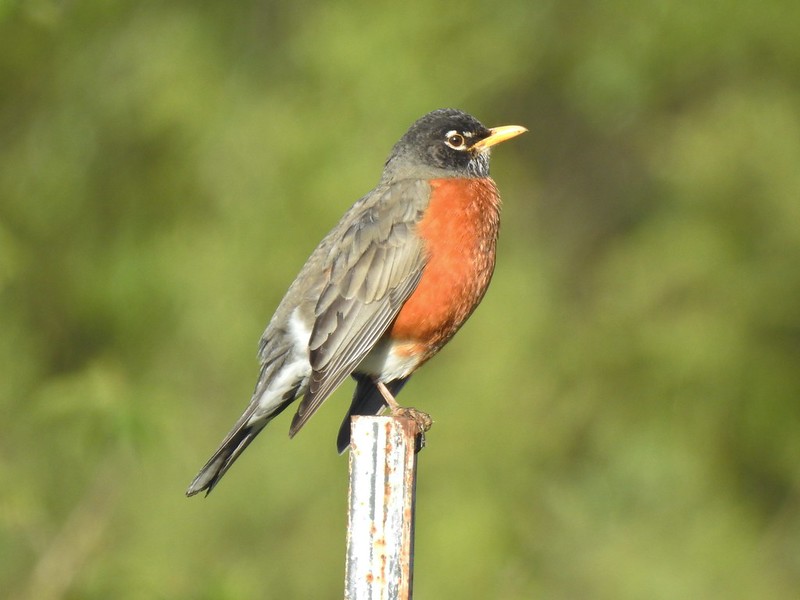 American robin
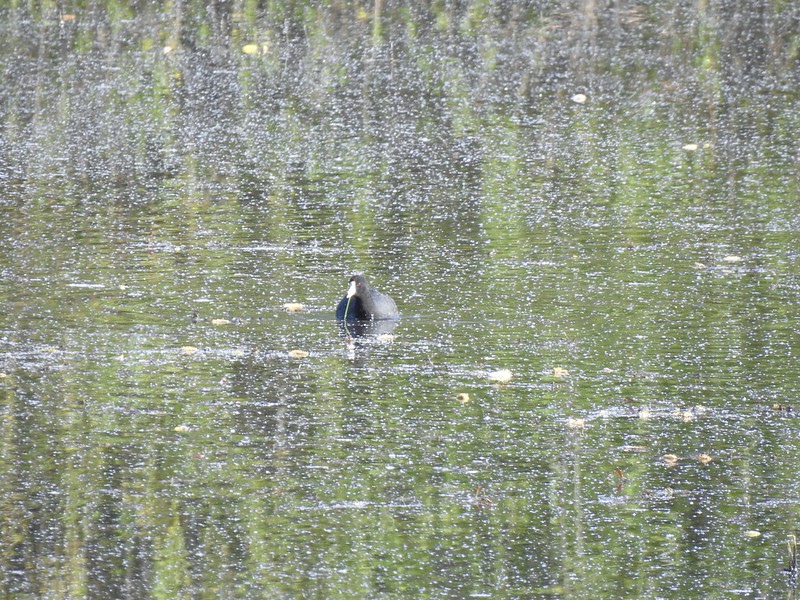 American coot
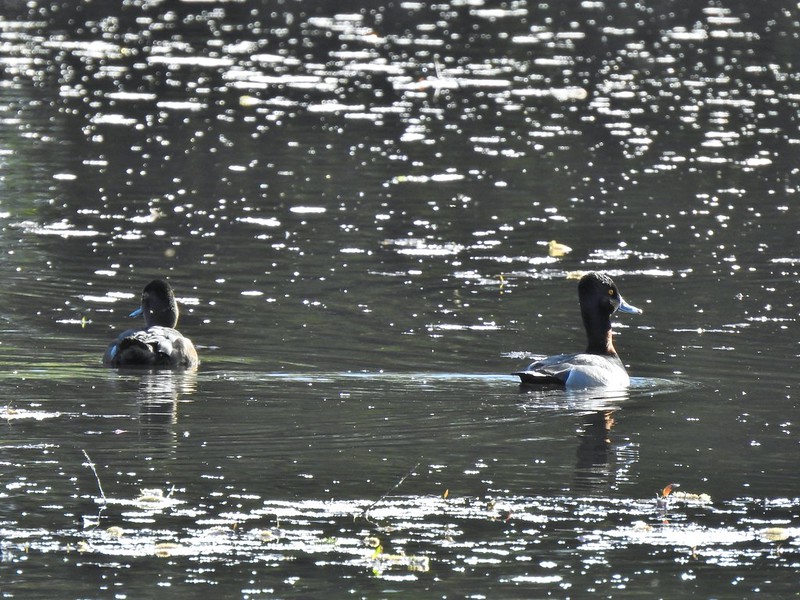 Ring-necked ducks
 Wapato Marsh
 Cormorants
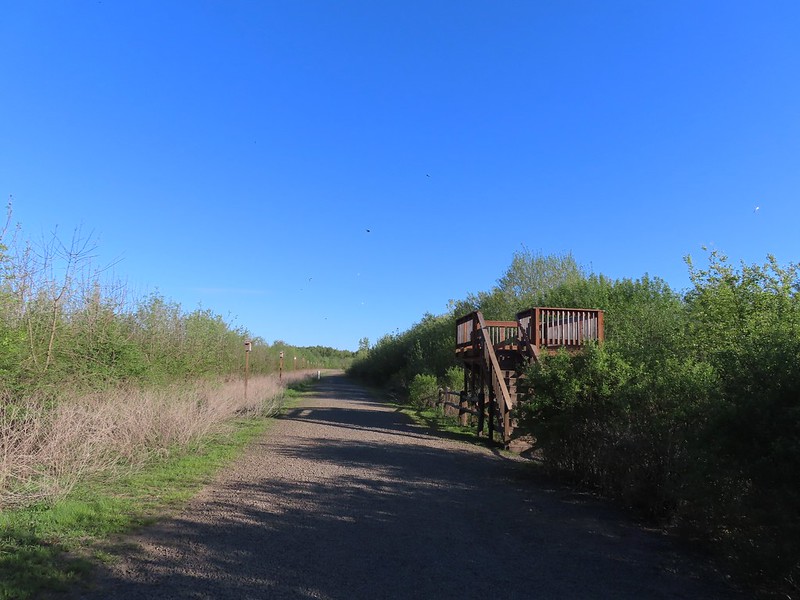 Raised viewing platform with many tree swallow photobombs.
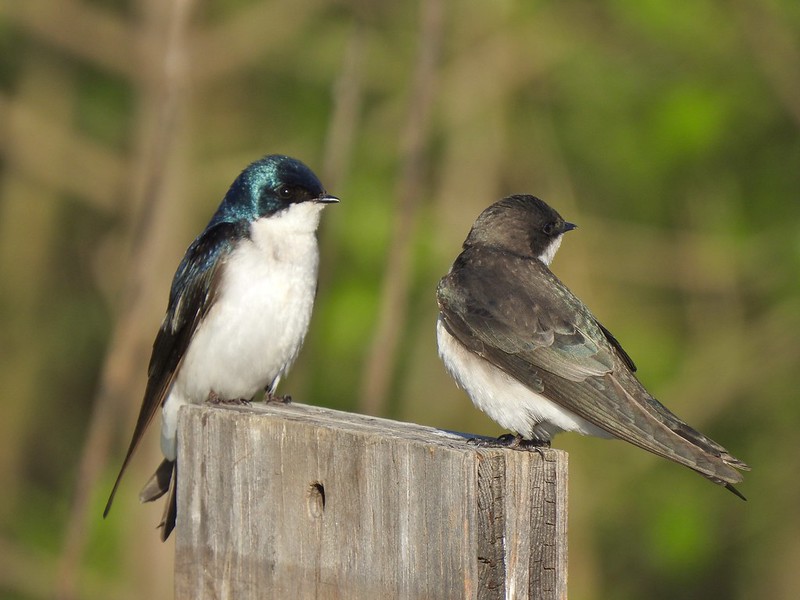 This couple was having quite the discussion.
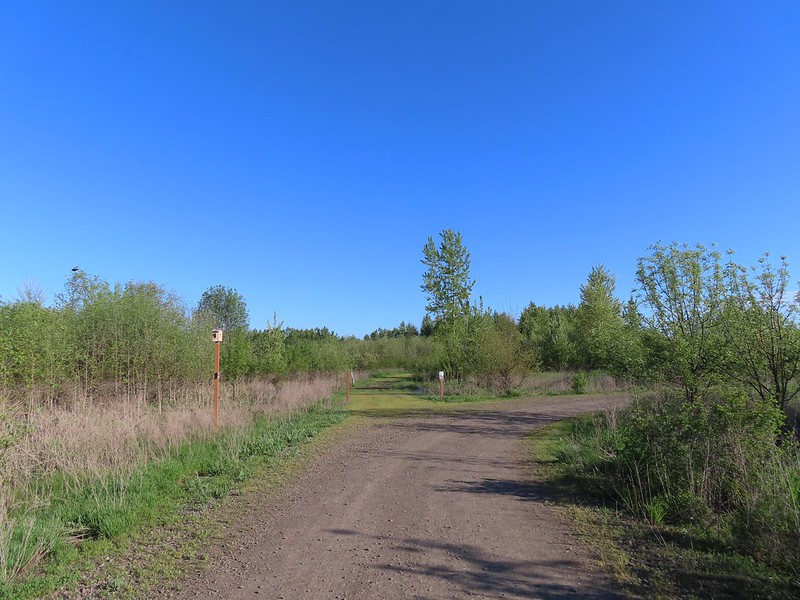 The Bobcat Marsh Trail on the left.
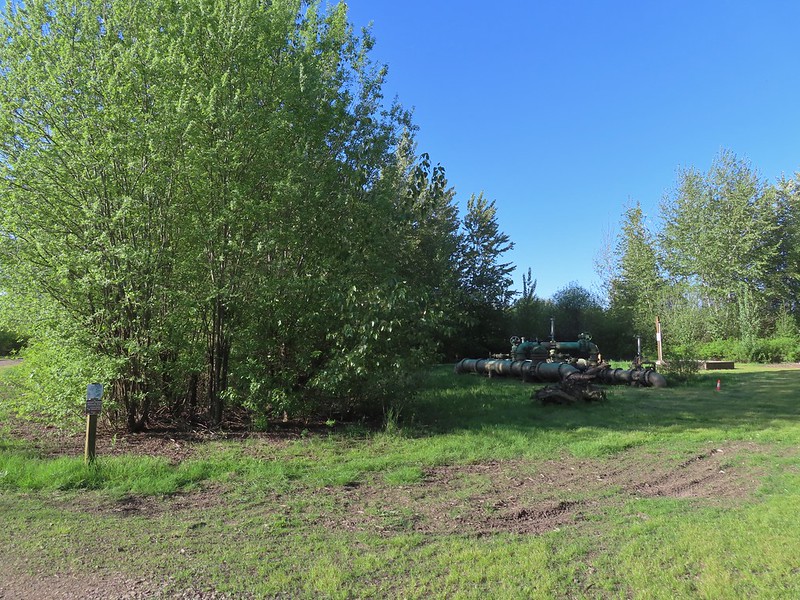 Water treatment pipes at the other end of the Bobcat Marsh Trail.
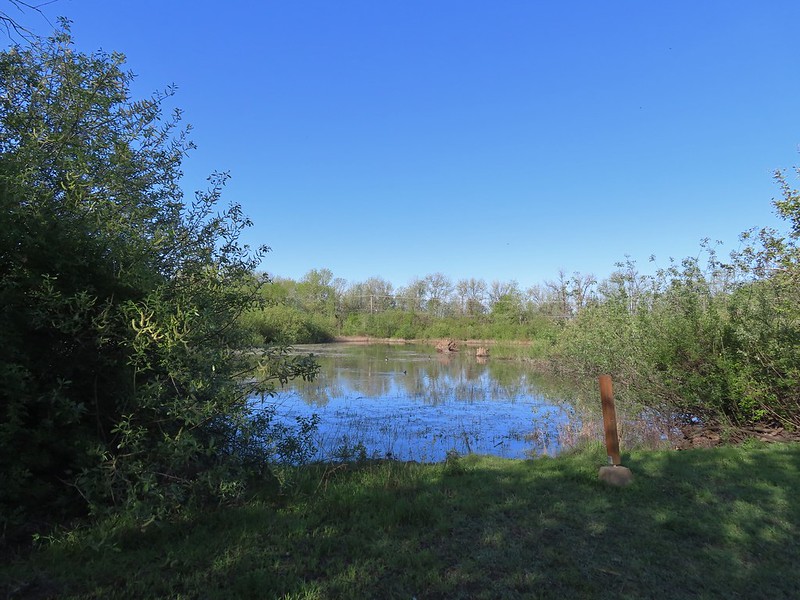 NW Pond
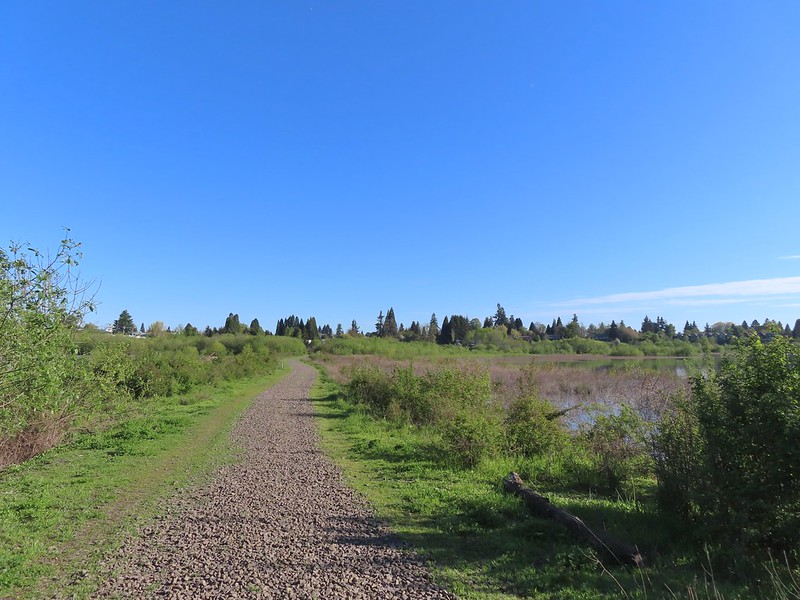 The trail passed between the NW Pond on the left and Oak Island Marsh on the right.
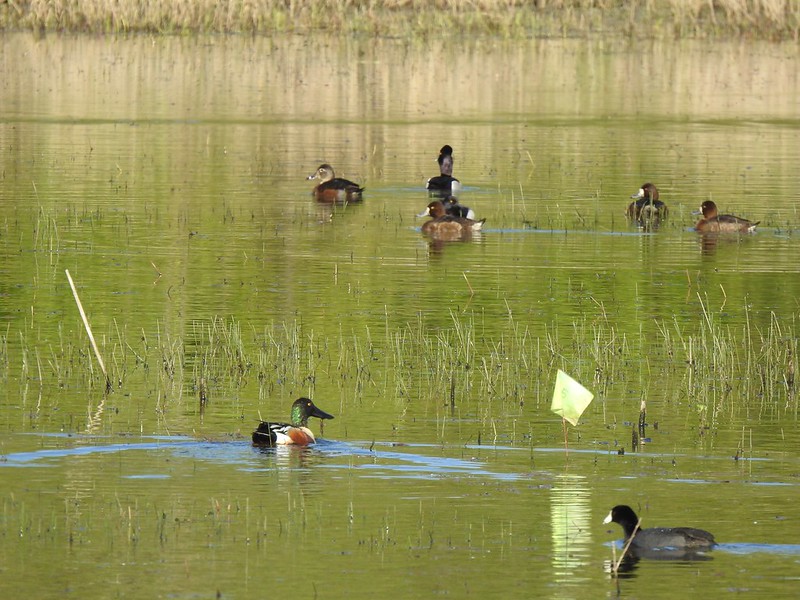 NW Pond had a variety of waterfowl. This is a northern shoveler drake, ring-necked duck pair, four lesser scaups, and an American coot.
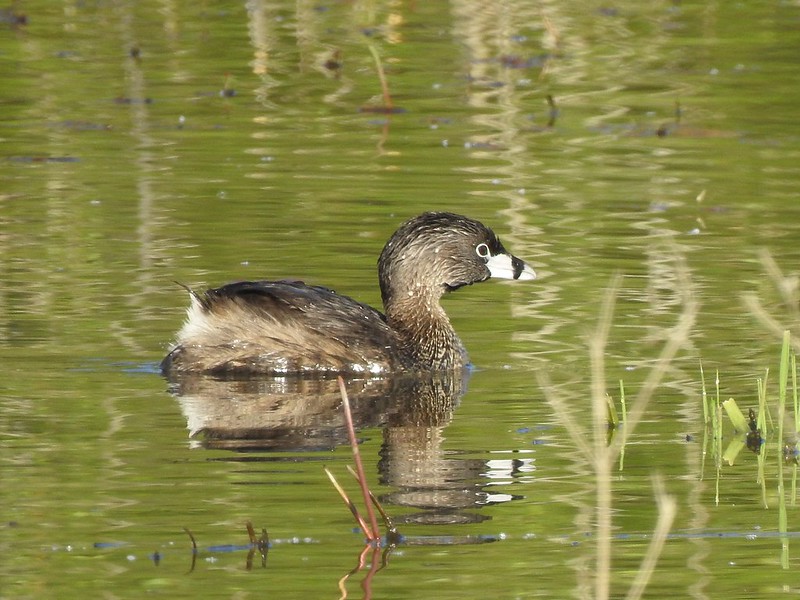 Pied-billed grebe in NW Pond
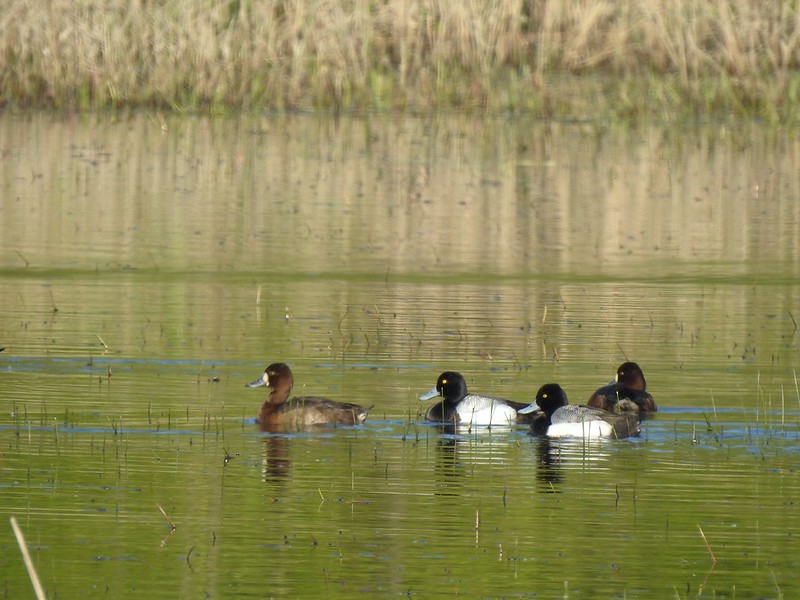 Lesser scaups
 Goose and mallards
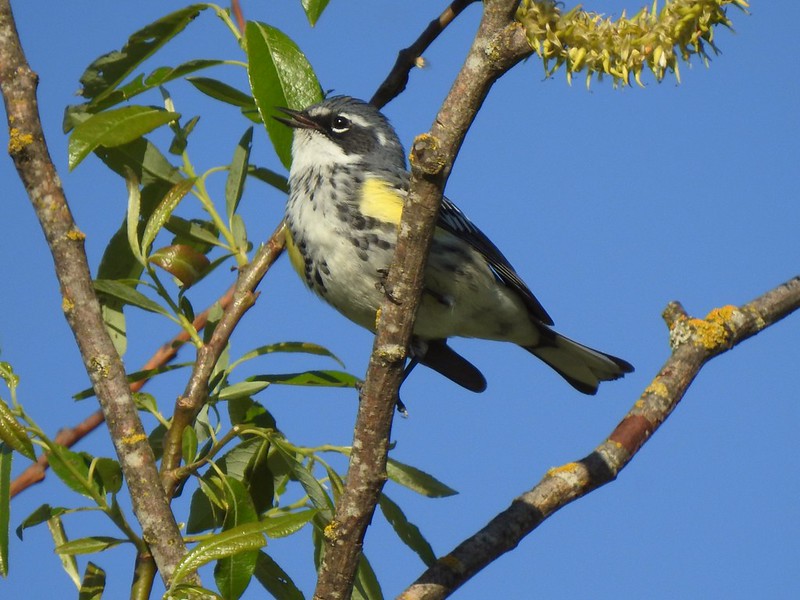 Yellow-rumped warbler
 The northern trailhead.
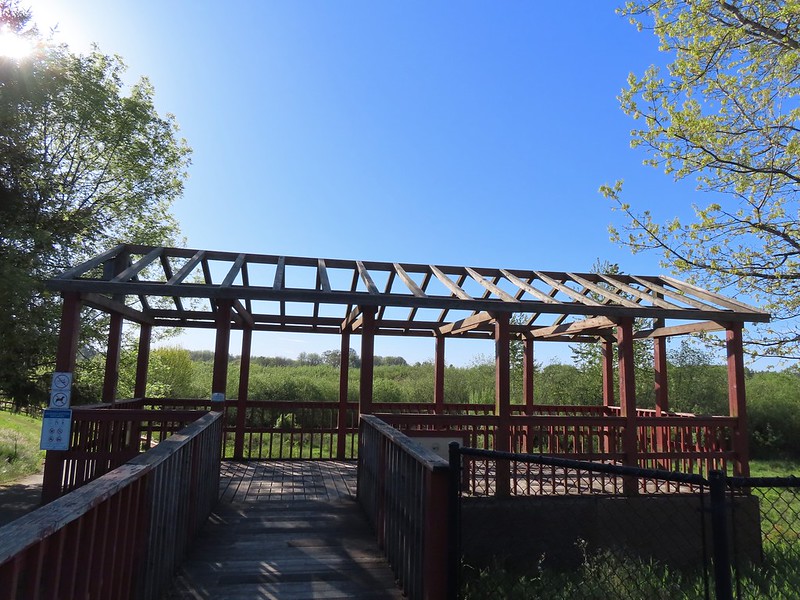 Viewing platform at the trailhead.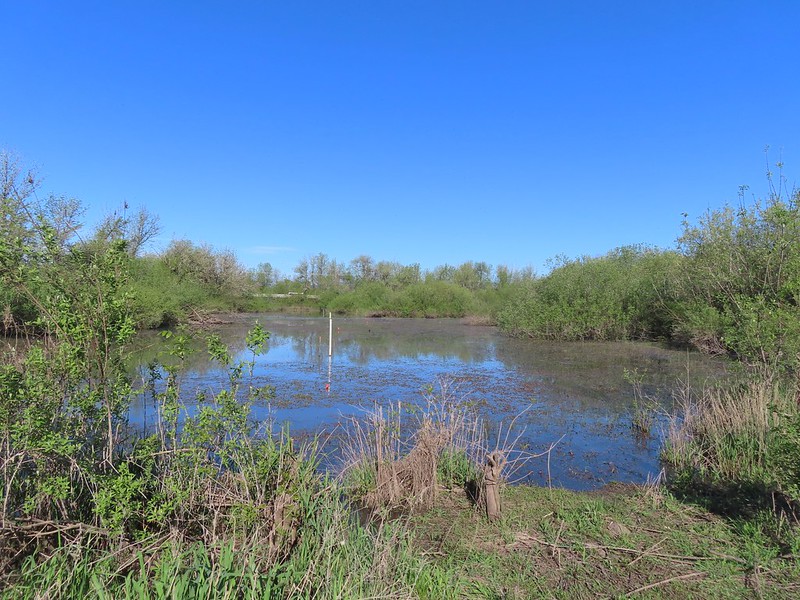
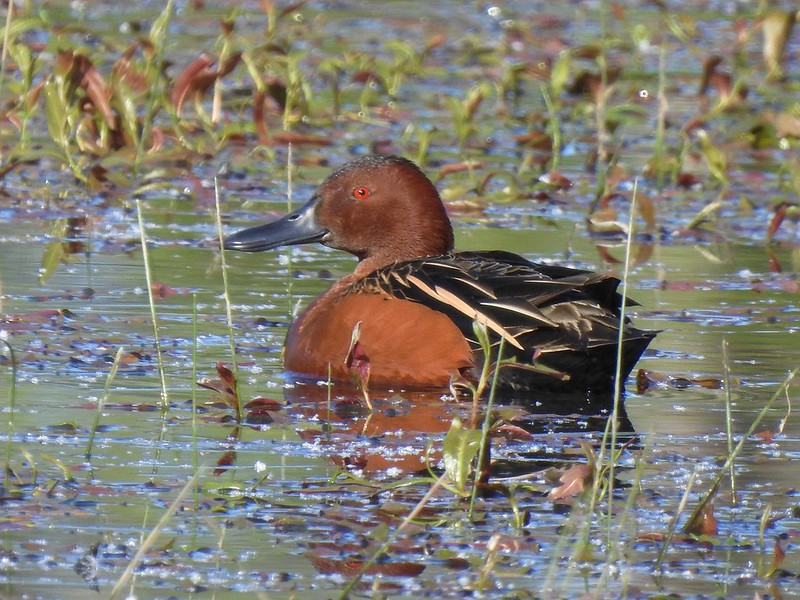 Cinnamon teal on Meadow Mouse Marsh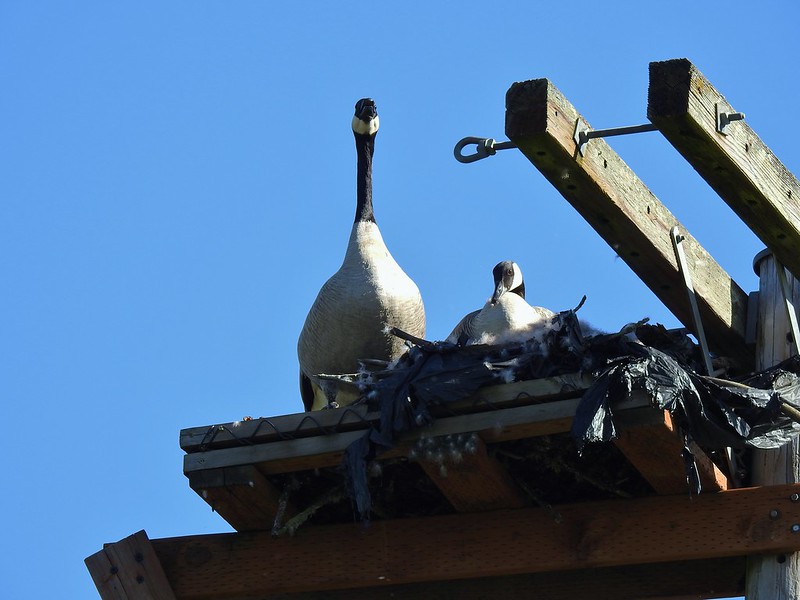

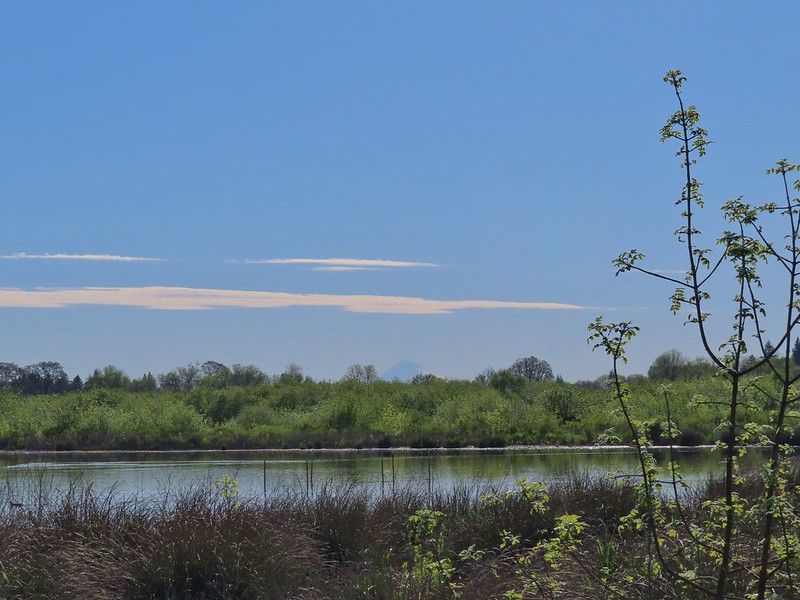 Mt. Hood beyond Wapato Marsh
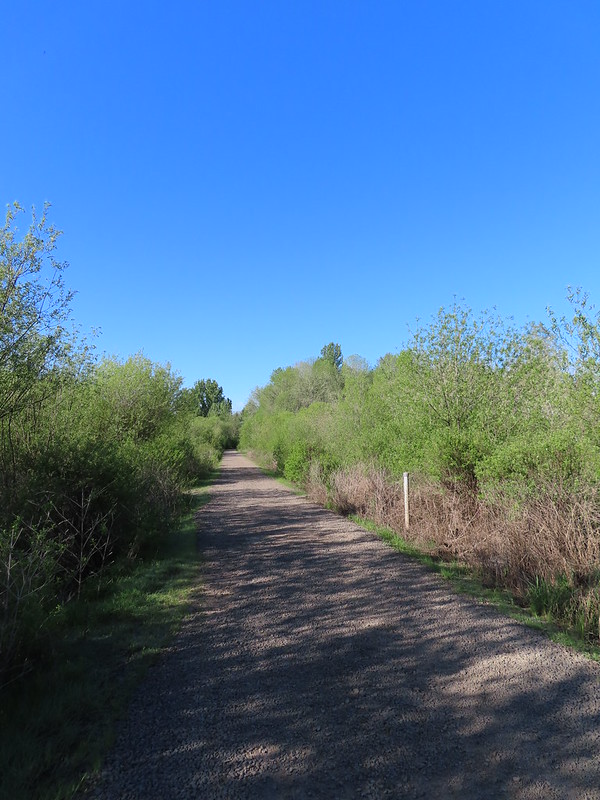 Back on the Kingfisher Marsh Loop.
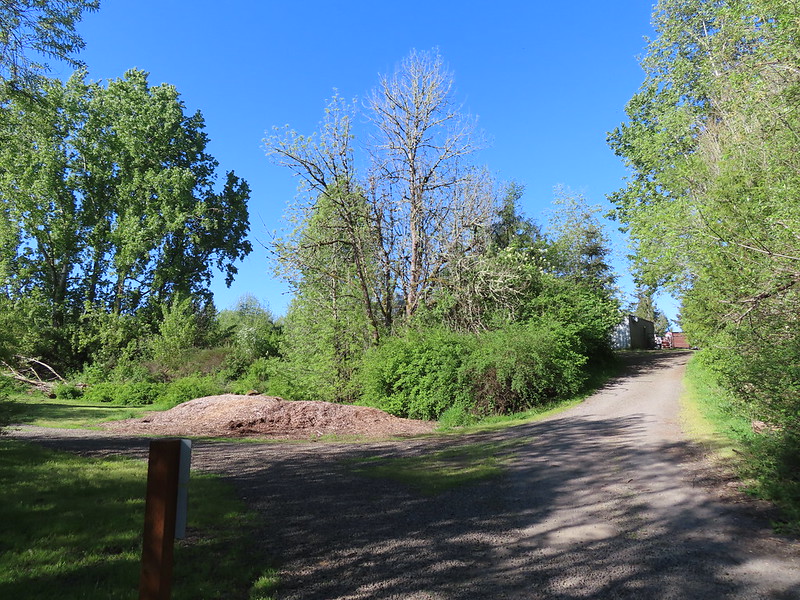 The Kingfisher Marsh Loop turned left here.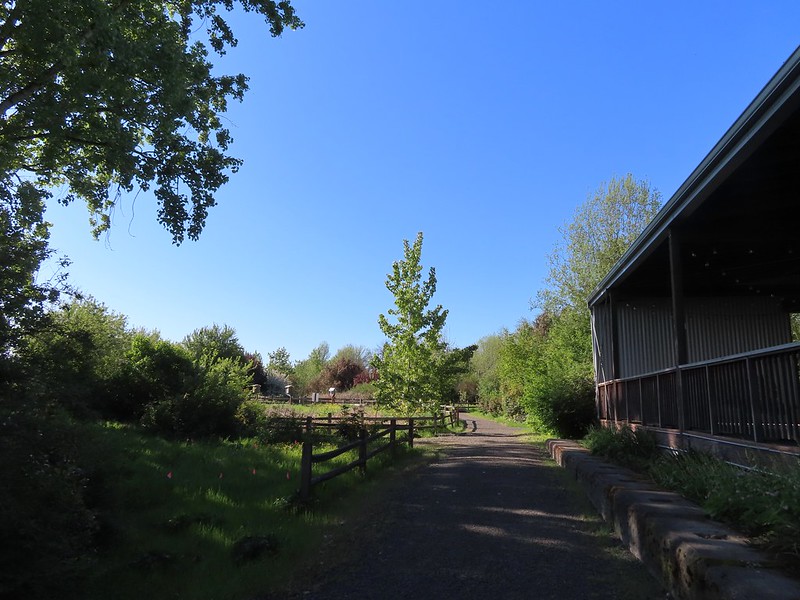
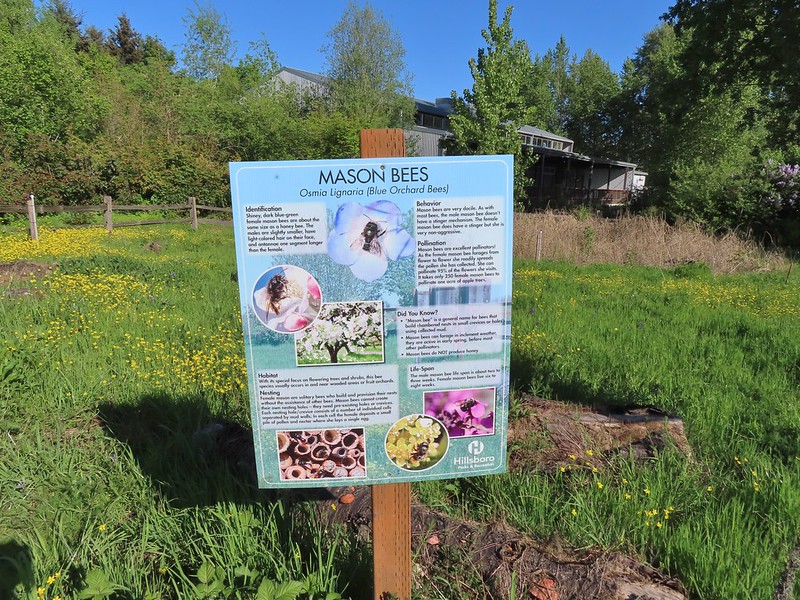
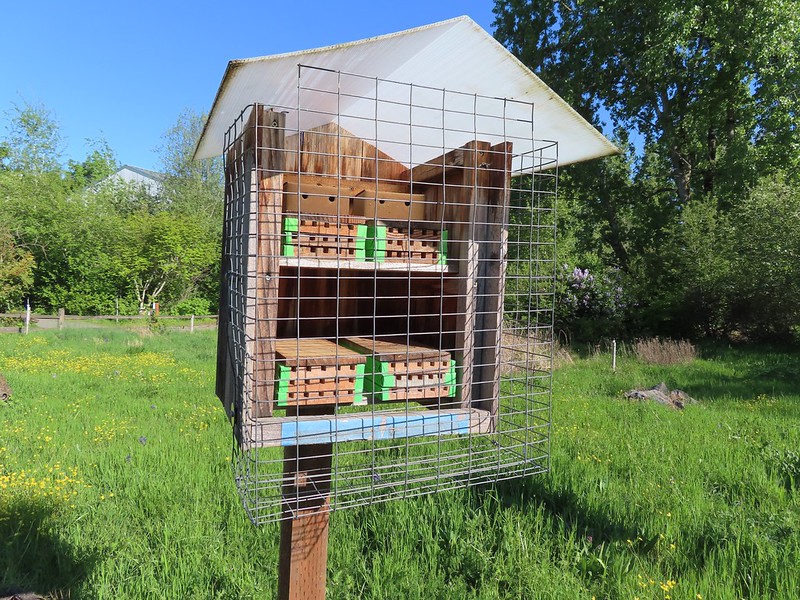 Mason bee house
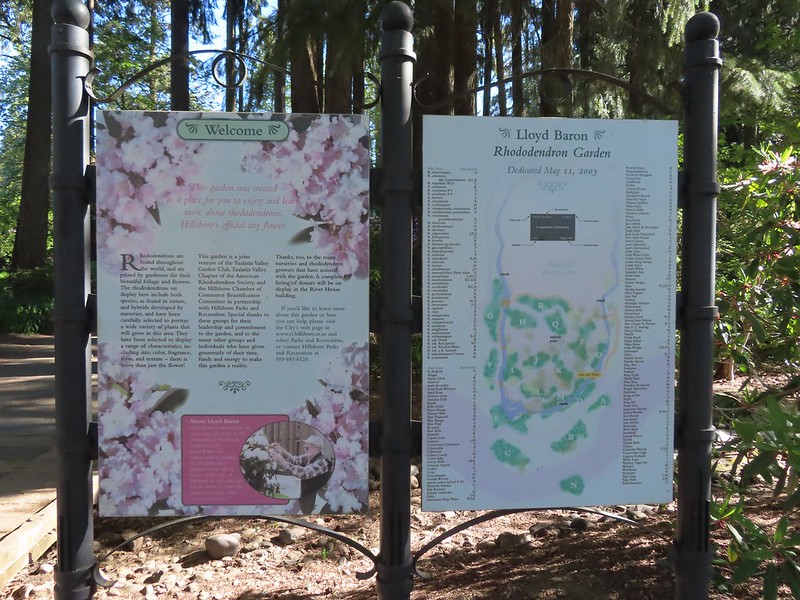 Sign for the rhododendron garden.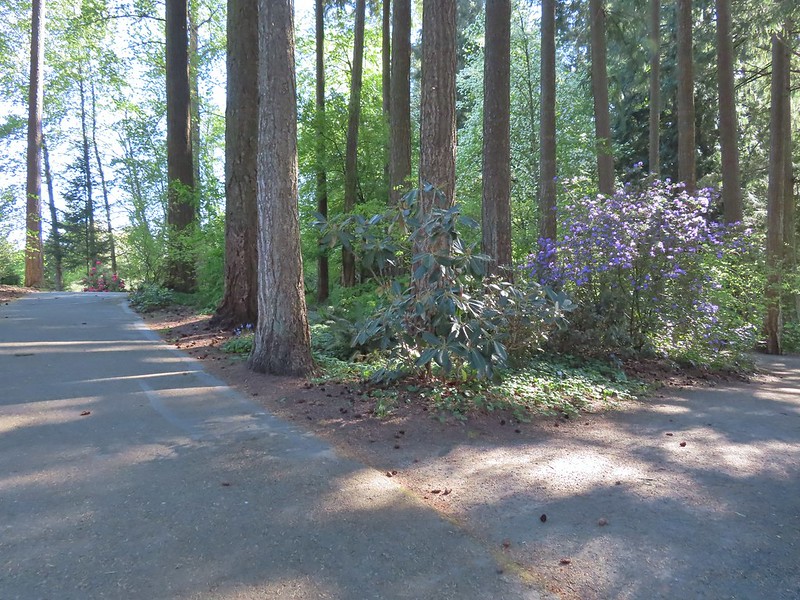
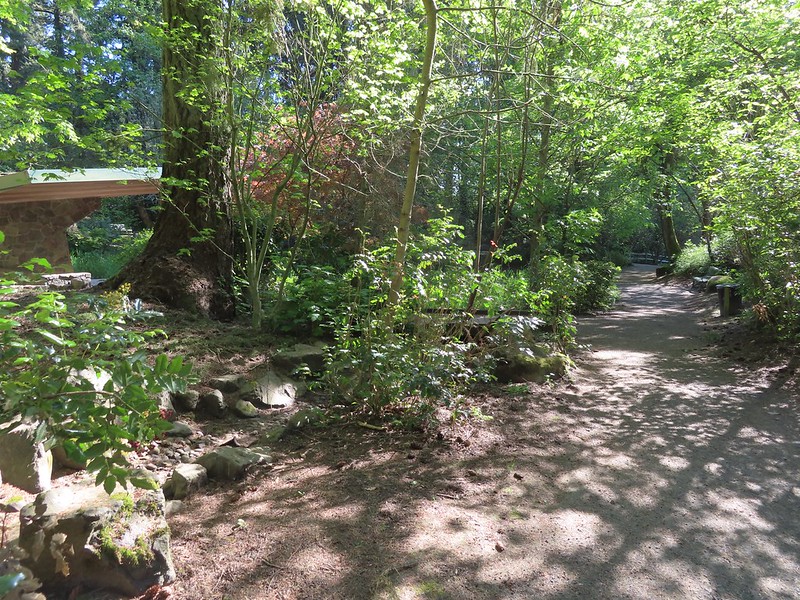
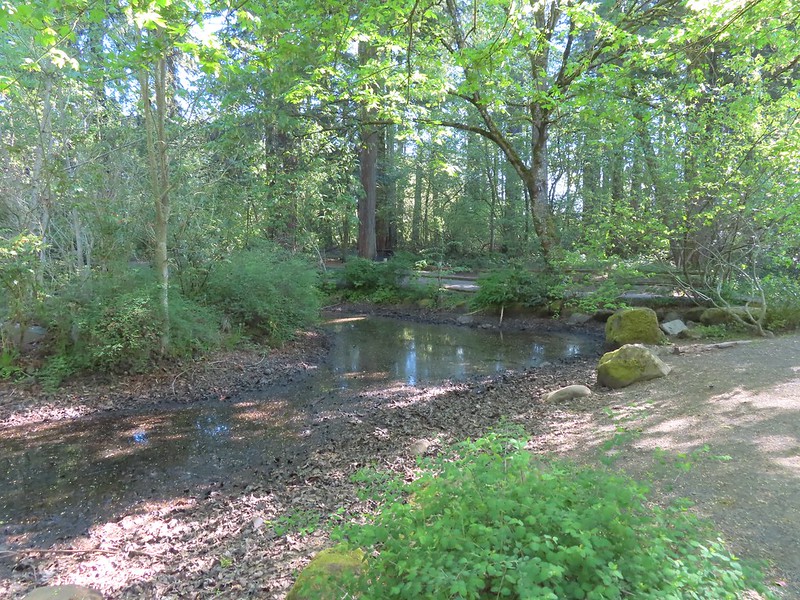 The Woodland Pond
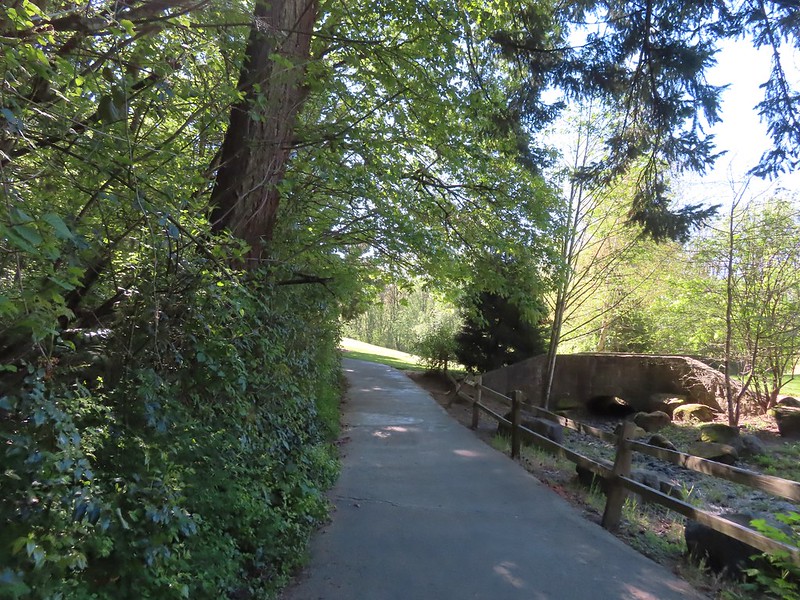 Heading for the Rock Creek Trail.
 Rock Creek from the Rock Creek Trail.
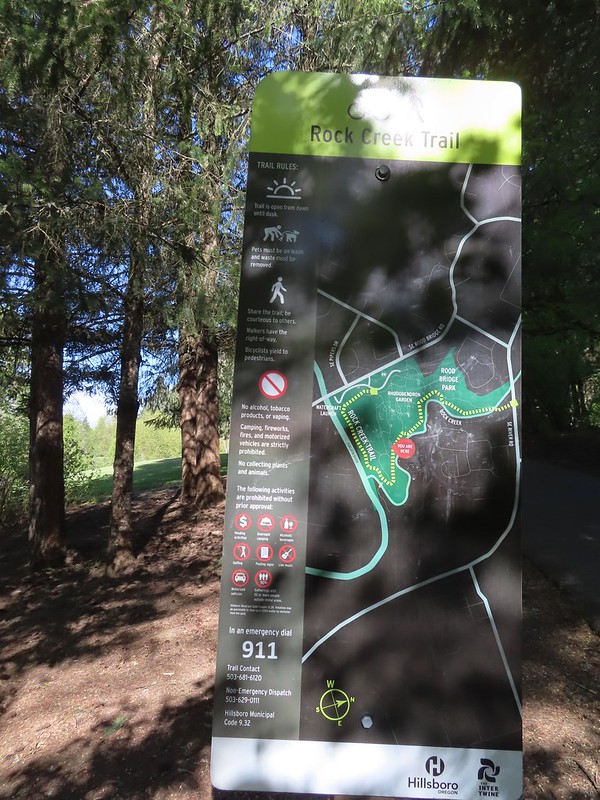 The maps for the park were a little tougher to follow as most of the trails weren’t named and there were a lot of interconnected short segments.
 The junction ahead is where the Rock Creek Trail beings/end according to the Rock Creek Trail maps. Maps of Rood Bridge Park simply refer to this as part of the “Main Trail Loop”, if they label it at all.

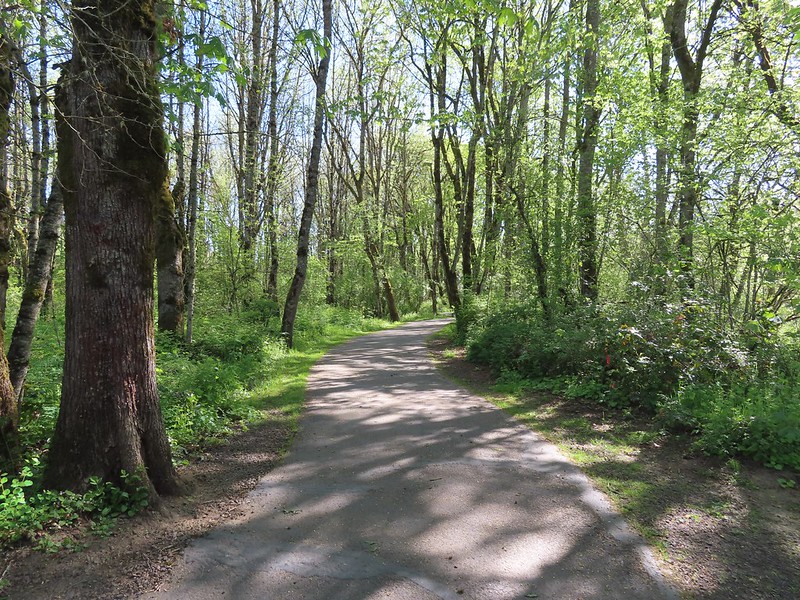
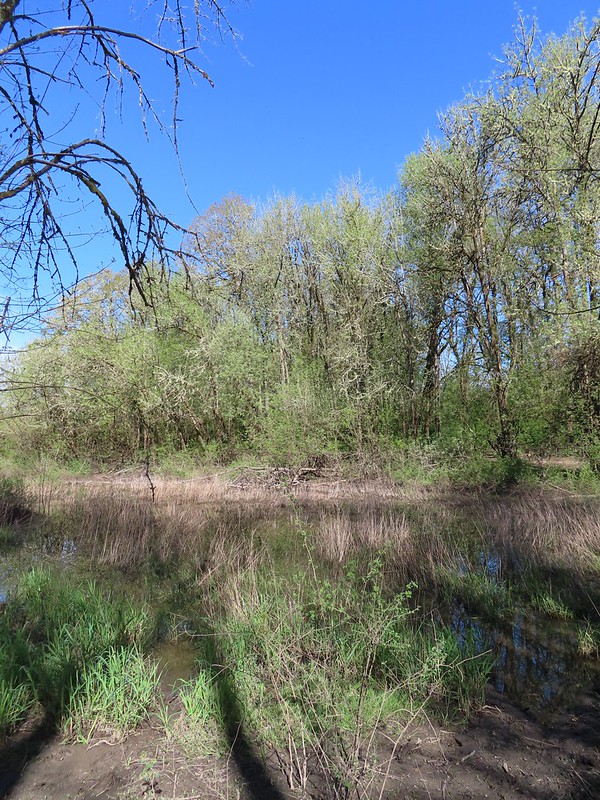
 Mallards
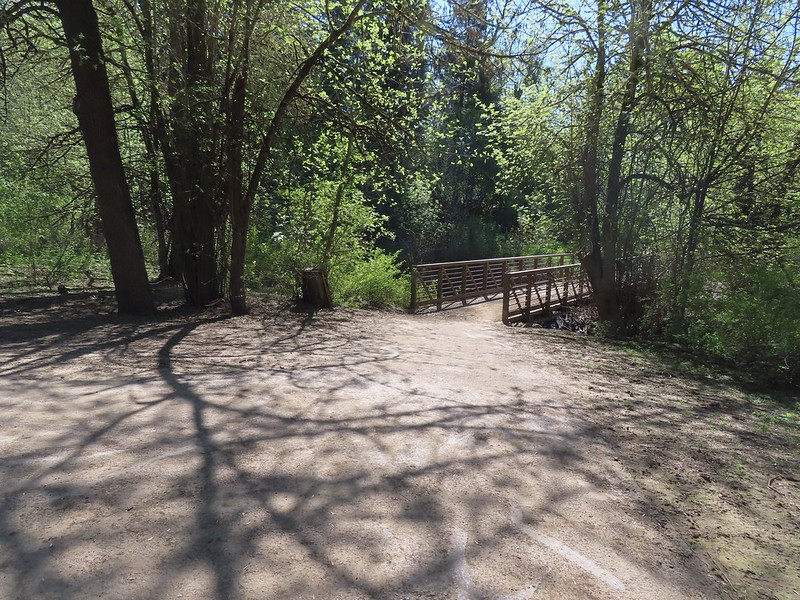 Footbridge at the start of the Lollipop Loop.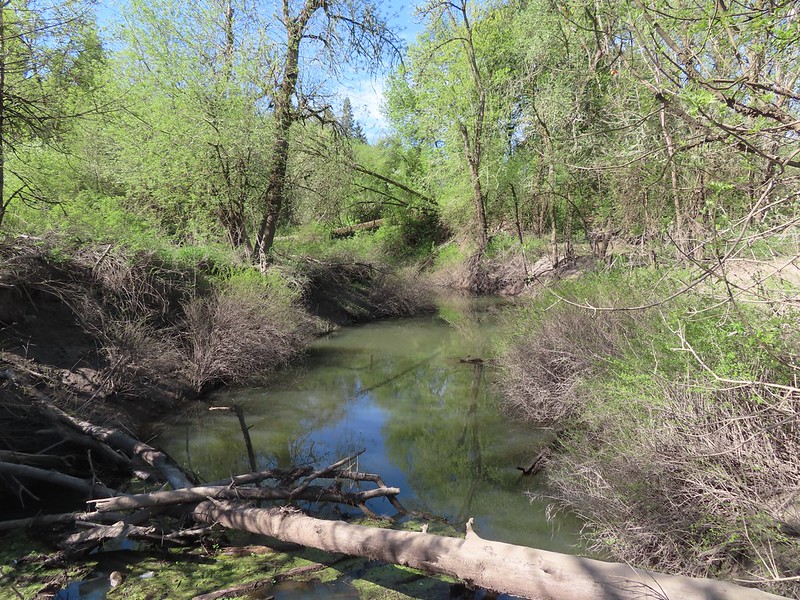

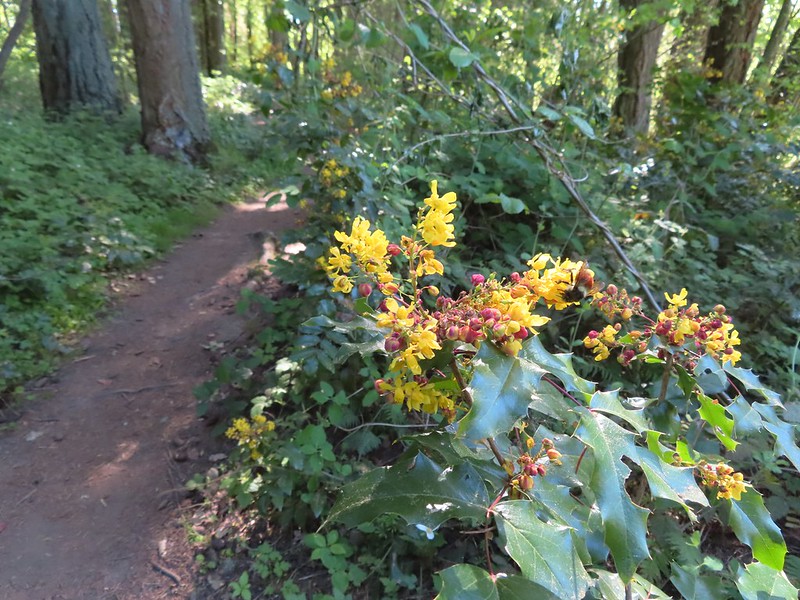 There was a fair amount of Oregon grape as well.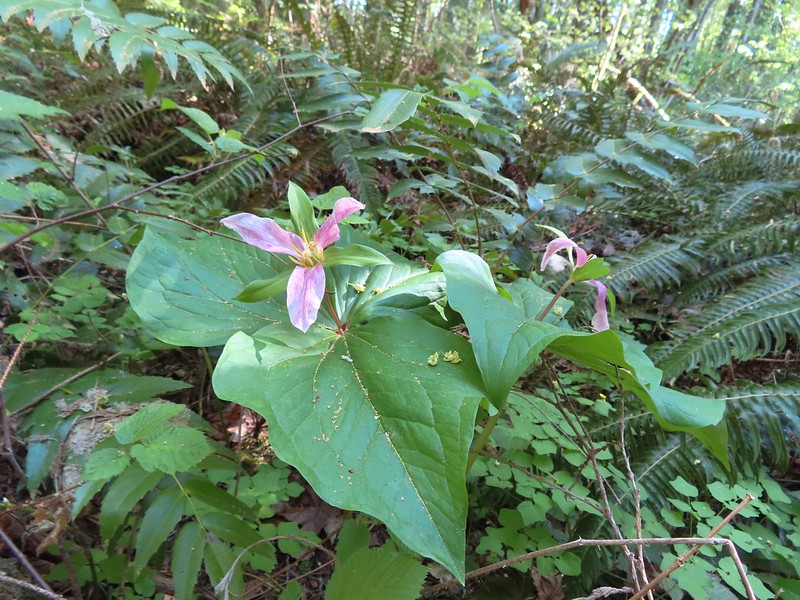

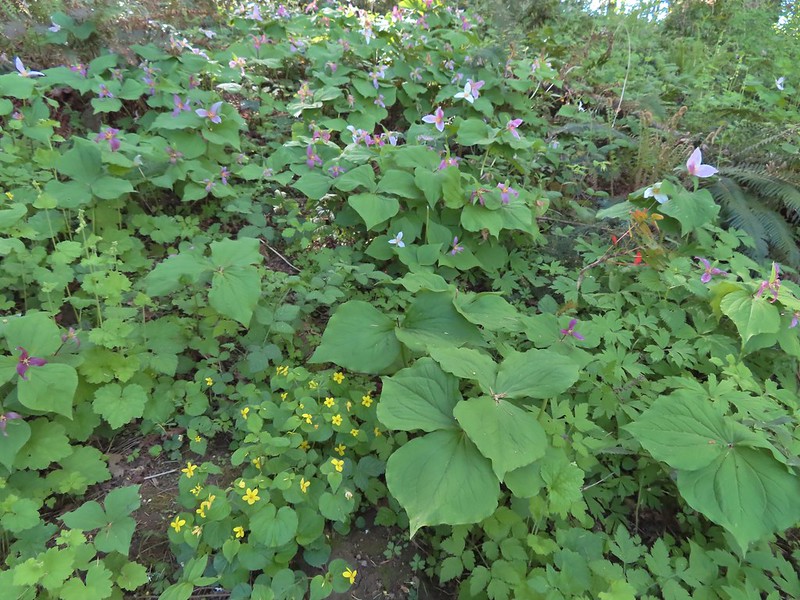 Violets and trillium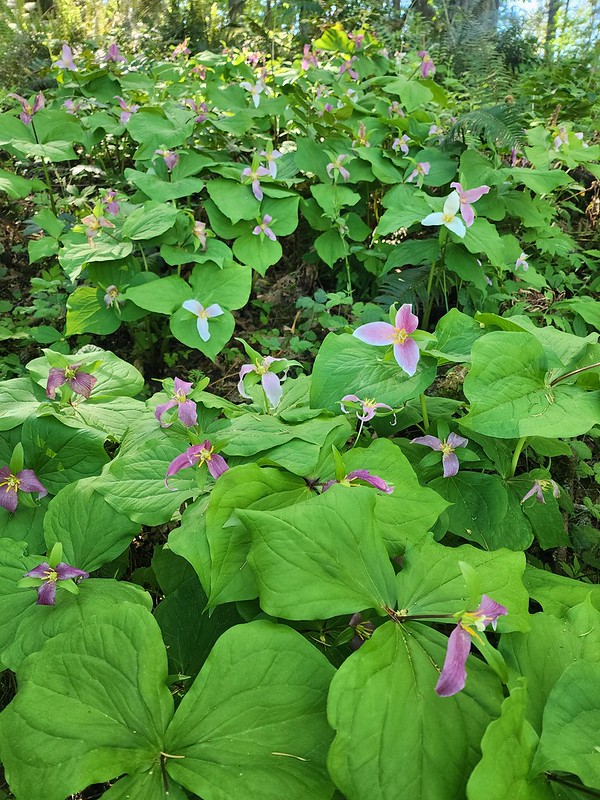
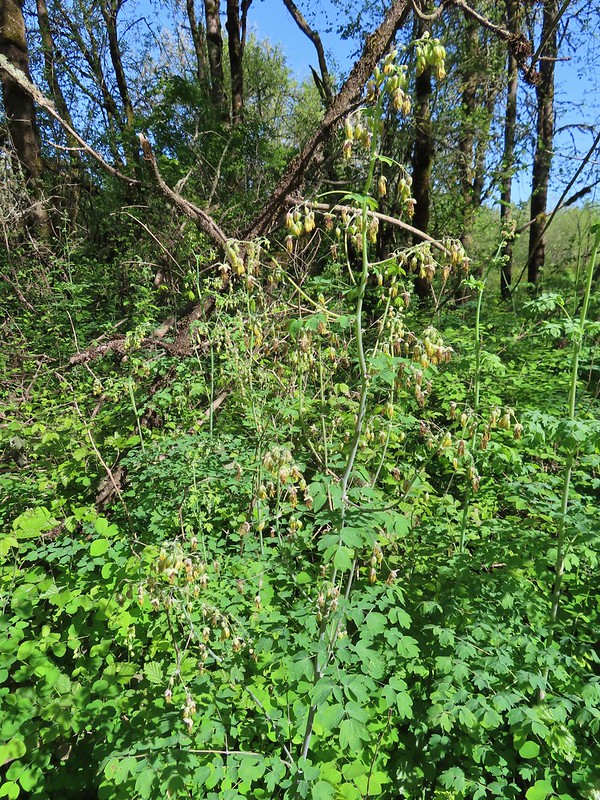 Western meadowrue
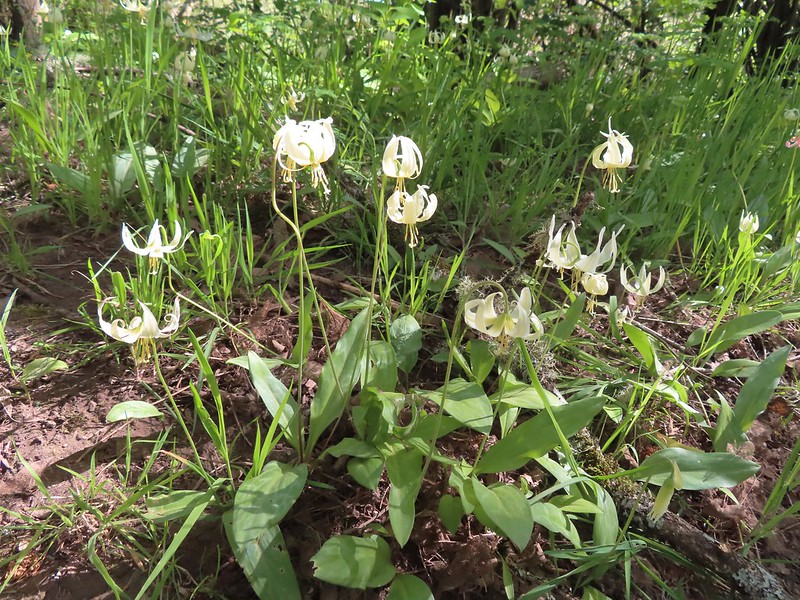 Fawn lilies

 Sparrow
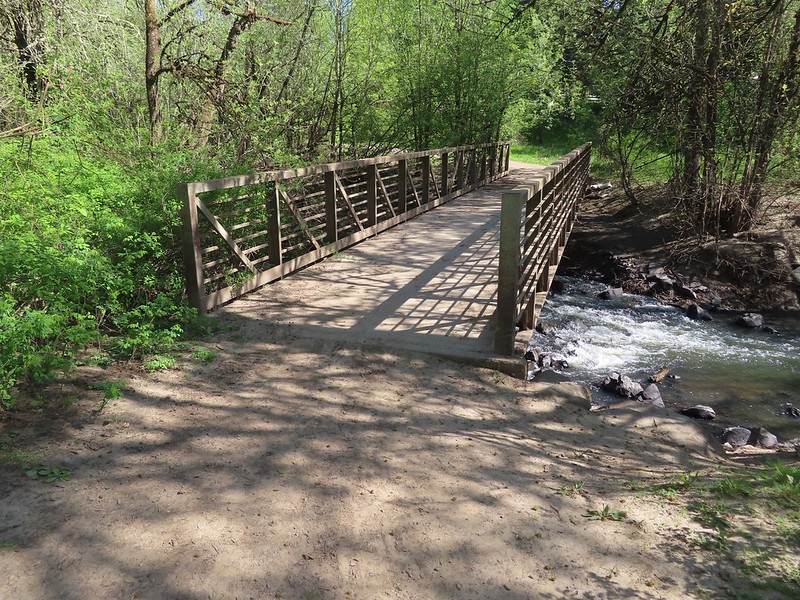 Footbridge over Rock Creek.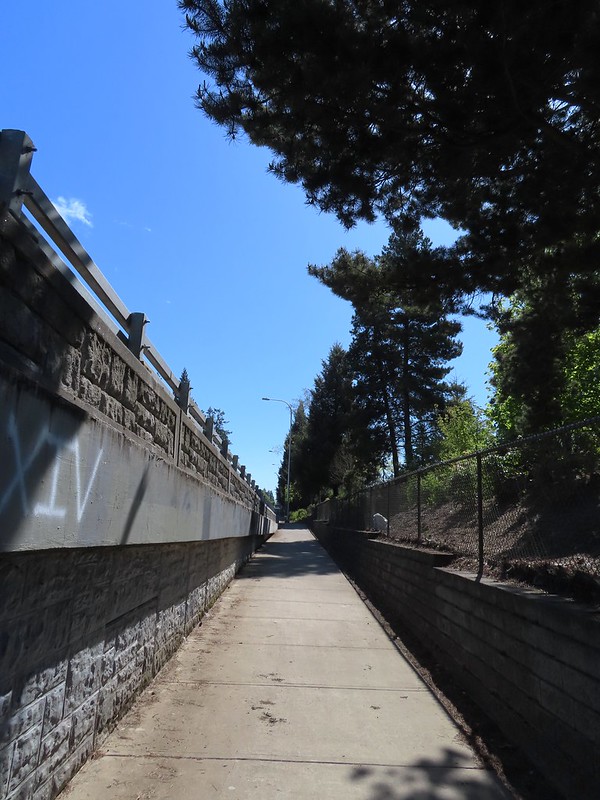
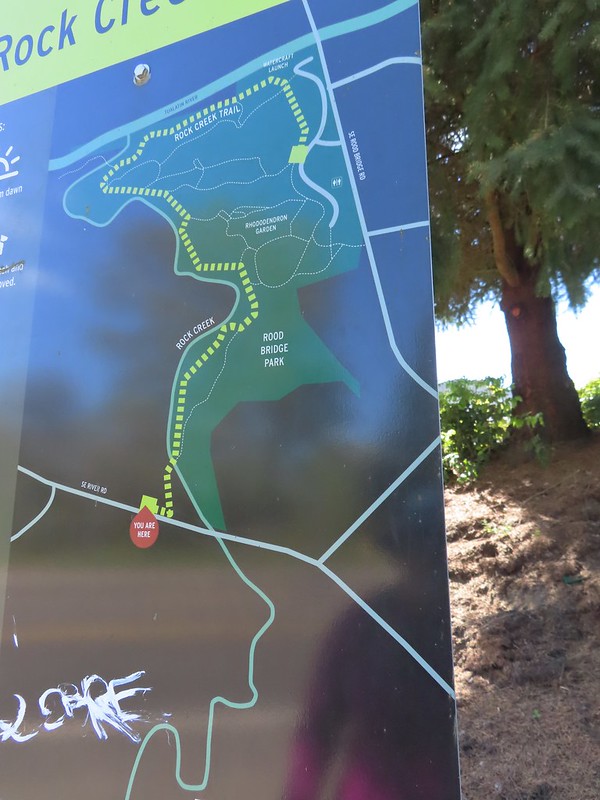
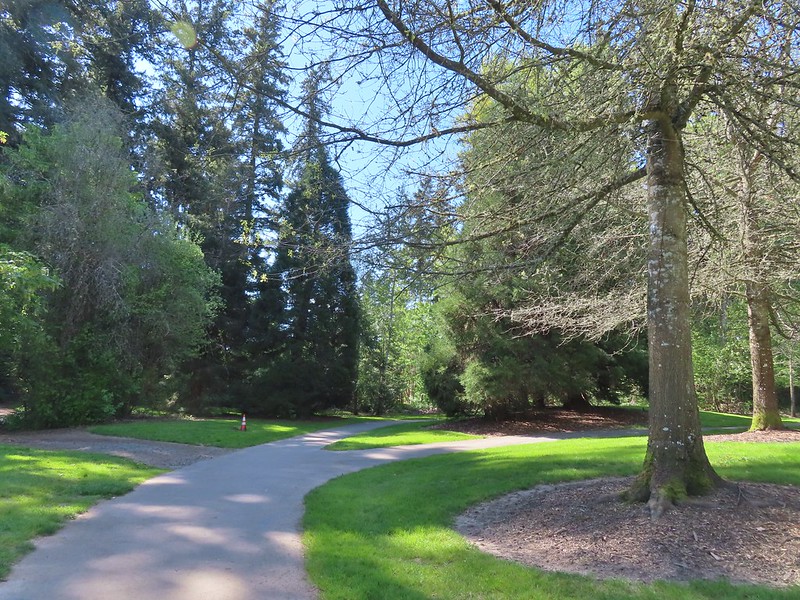 Left is the dirt path we’d taken earlier, straight is the Rock Creek Trail, and right led to the Rhododendron Garden.
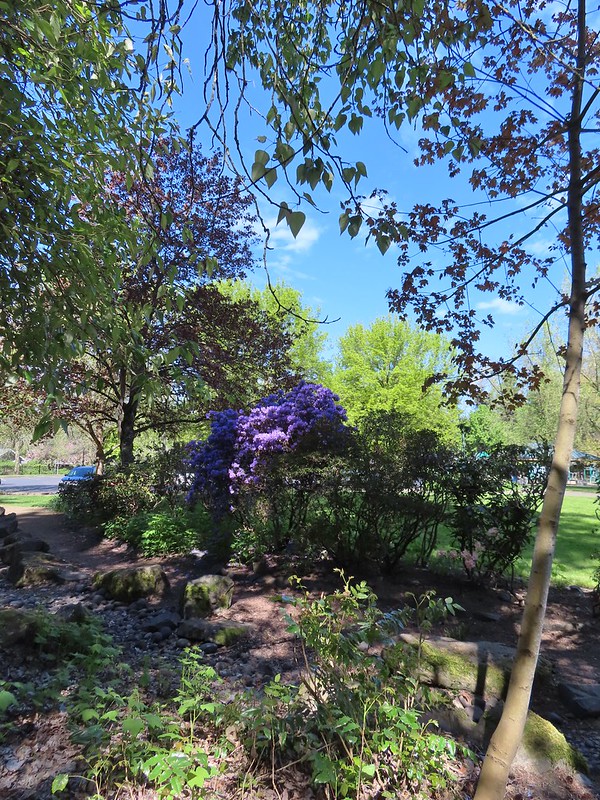

 Jackson Bottom on the left and Rood Bridge to the right.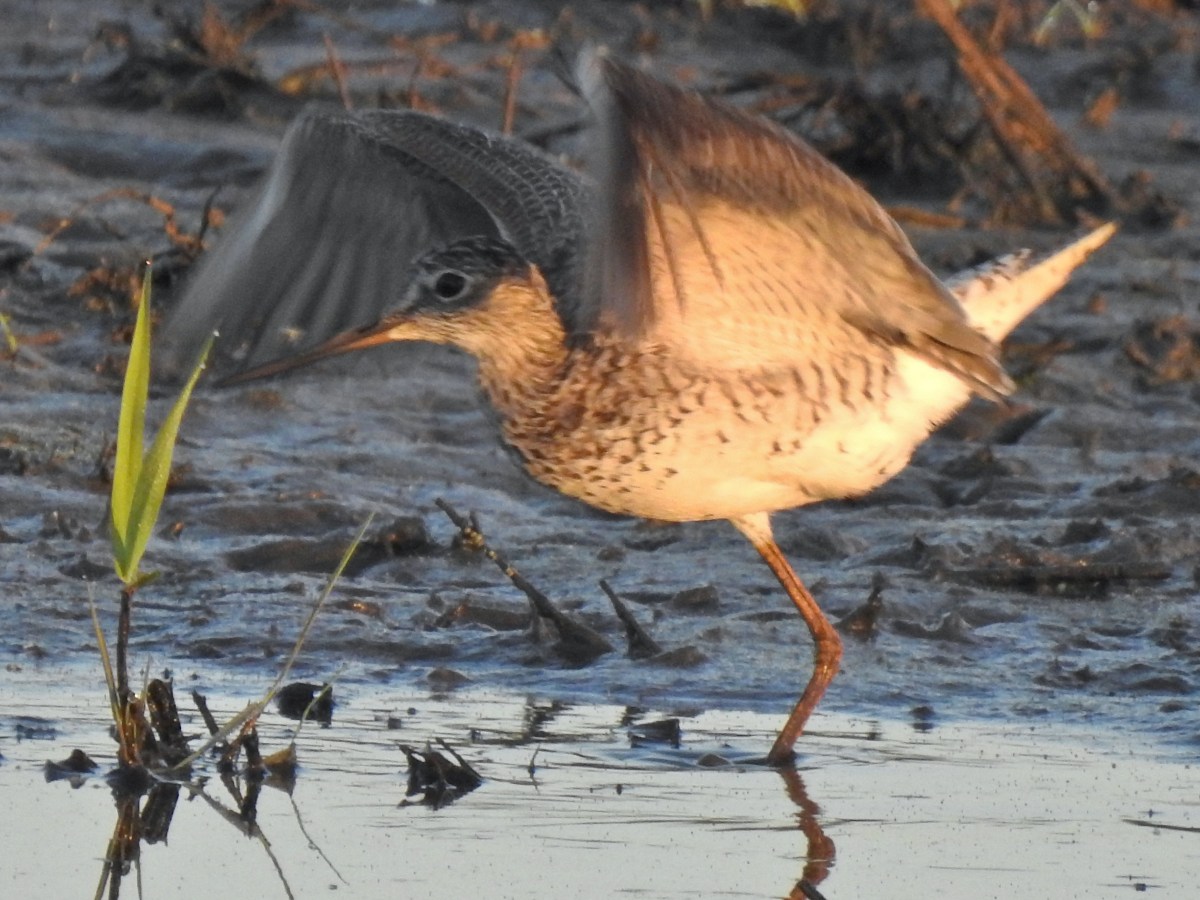
 The refuge is open from dawn to dusk. We arrived at a quarter to six to get an early start and avoid being out during the hottest parts of the day.
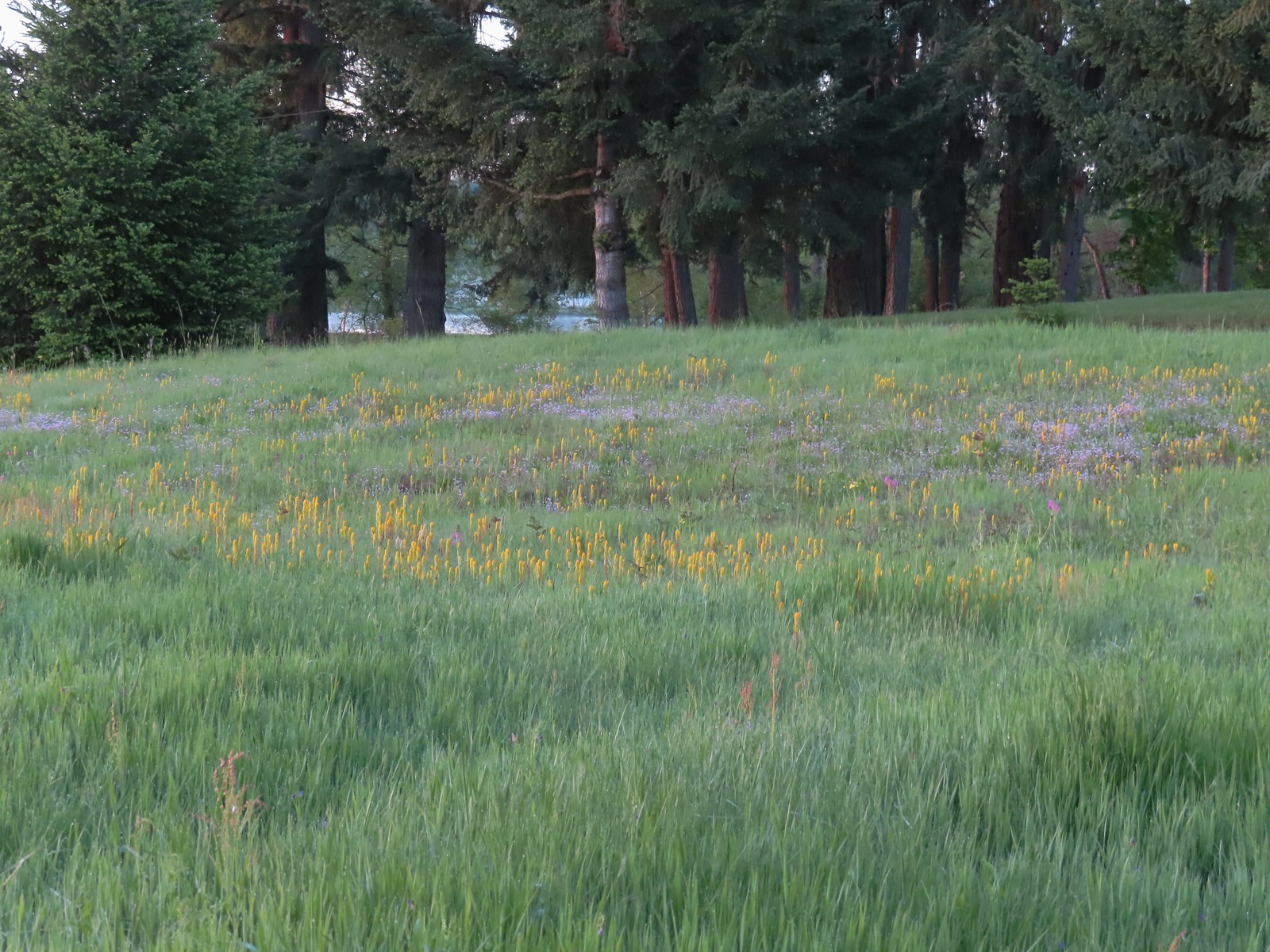 The patch of wildflowers.
 A checker-mallow surrounded by golden paintbrush.
 Plectritis amid the golden paintbrush.
 We had a pretty good view of Mt. Hood.
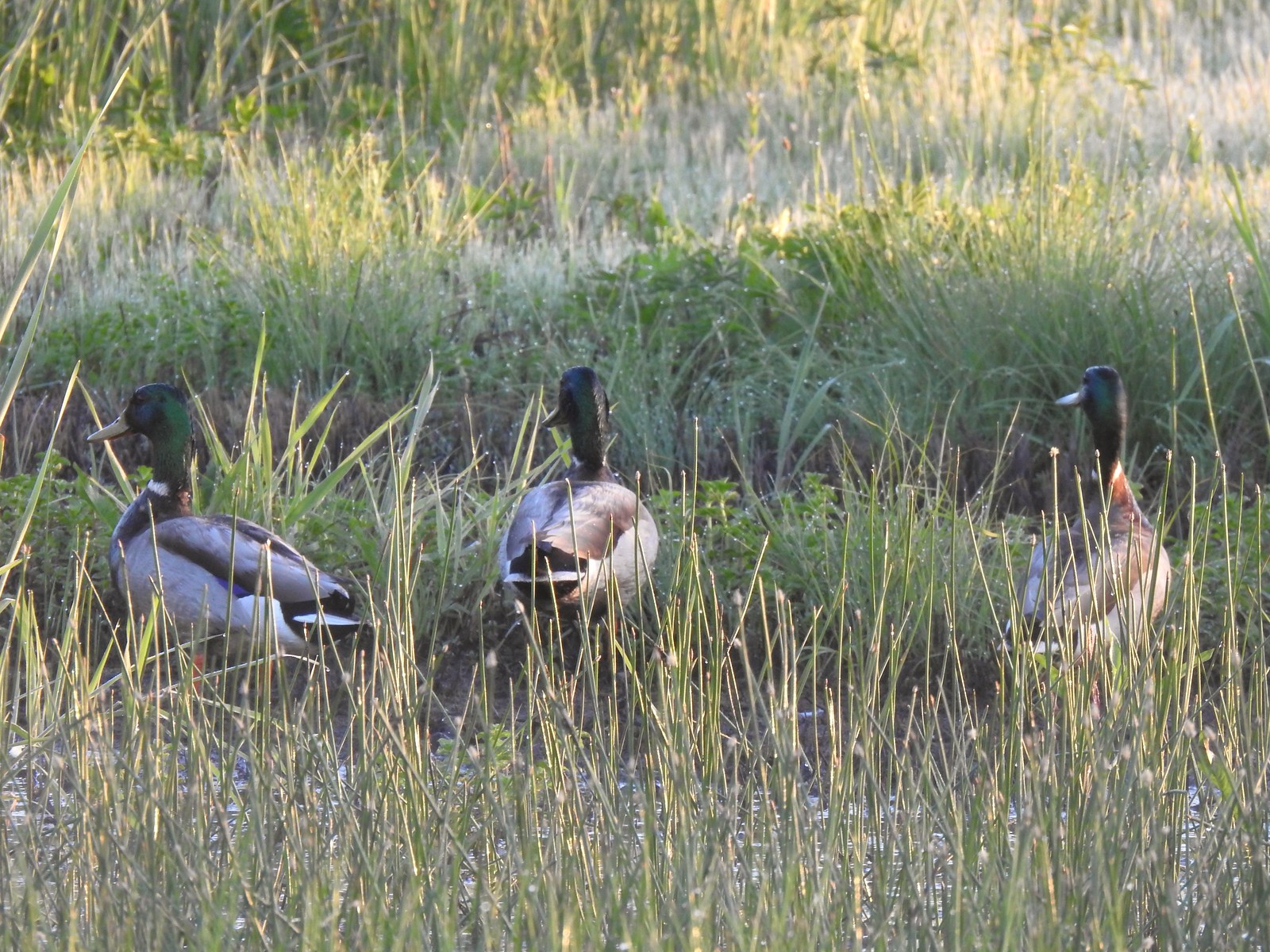 Mallards
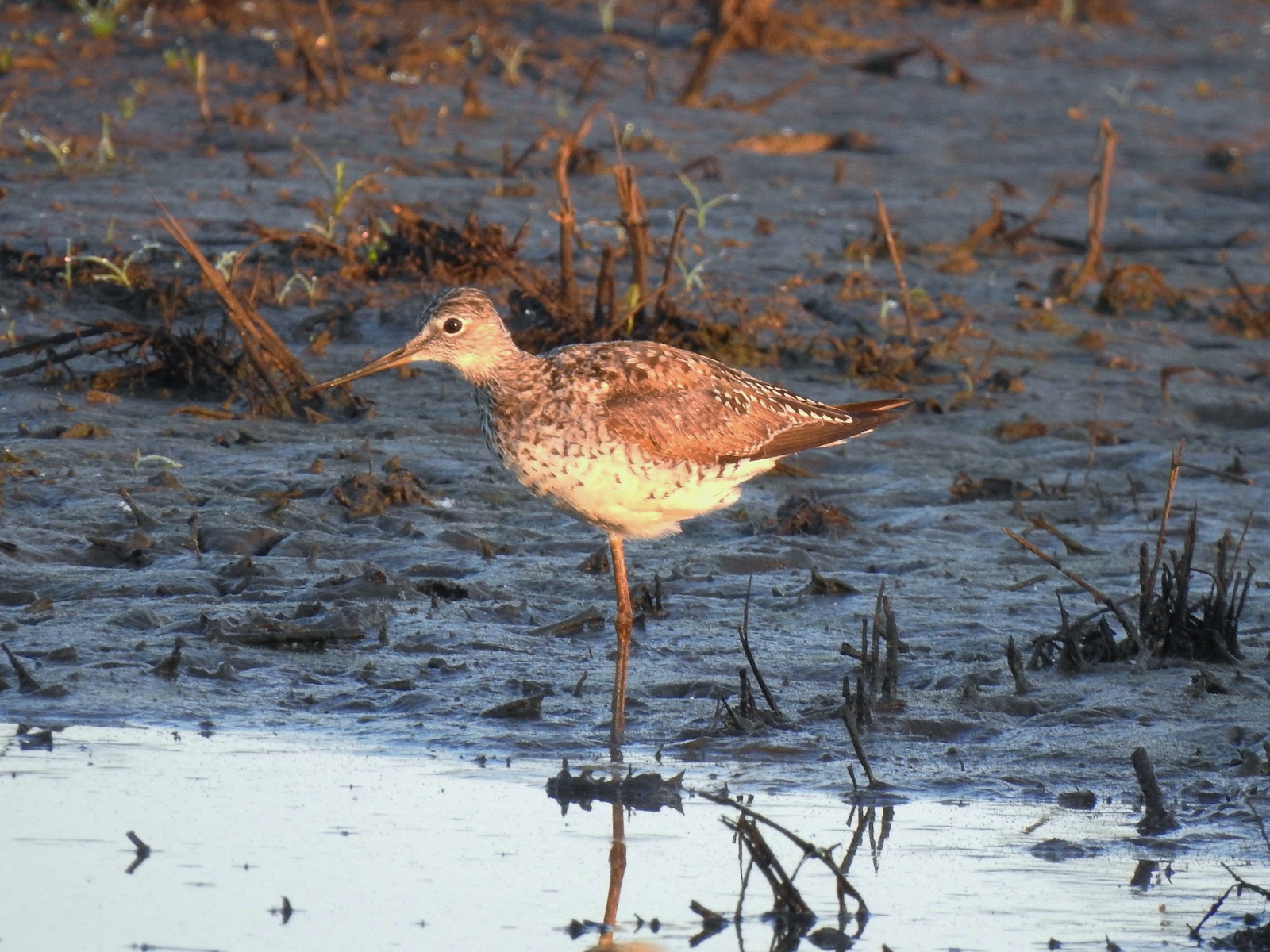 Greater yellowlegs
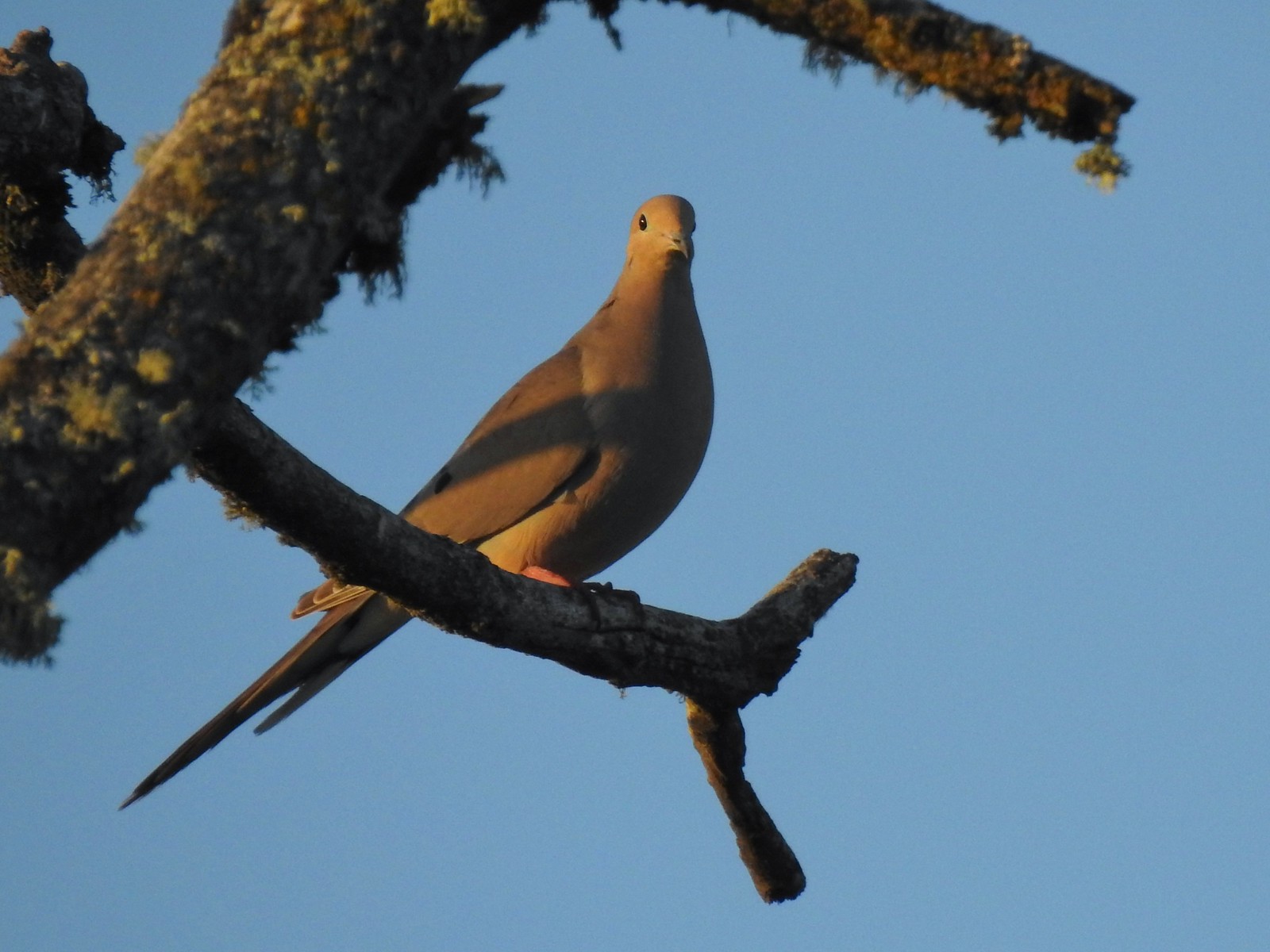 Mourning dove
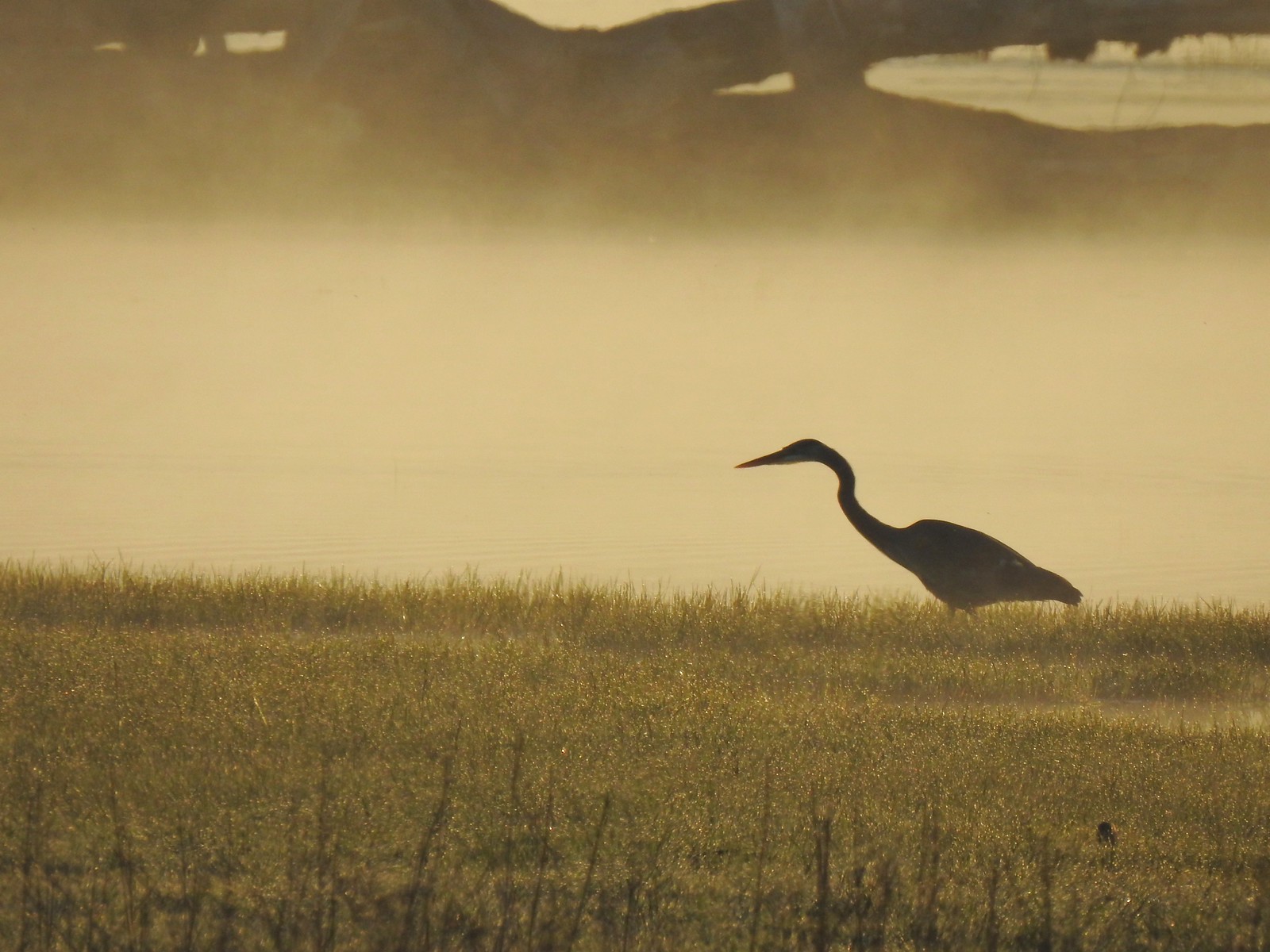 Great blue heron
 An egret and some ducks
 More families of geese
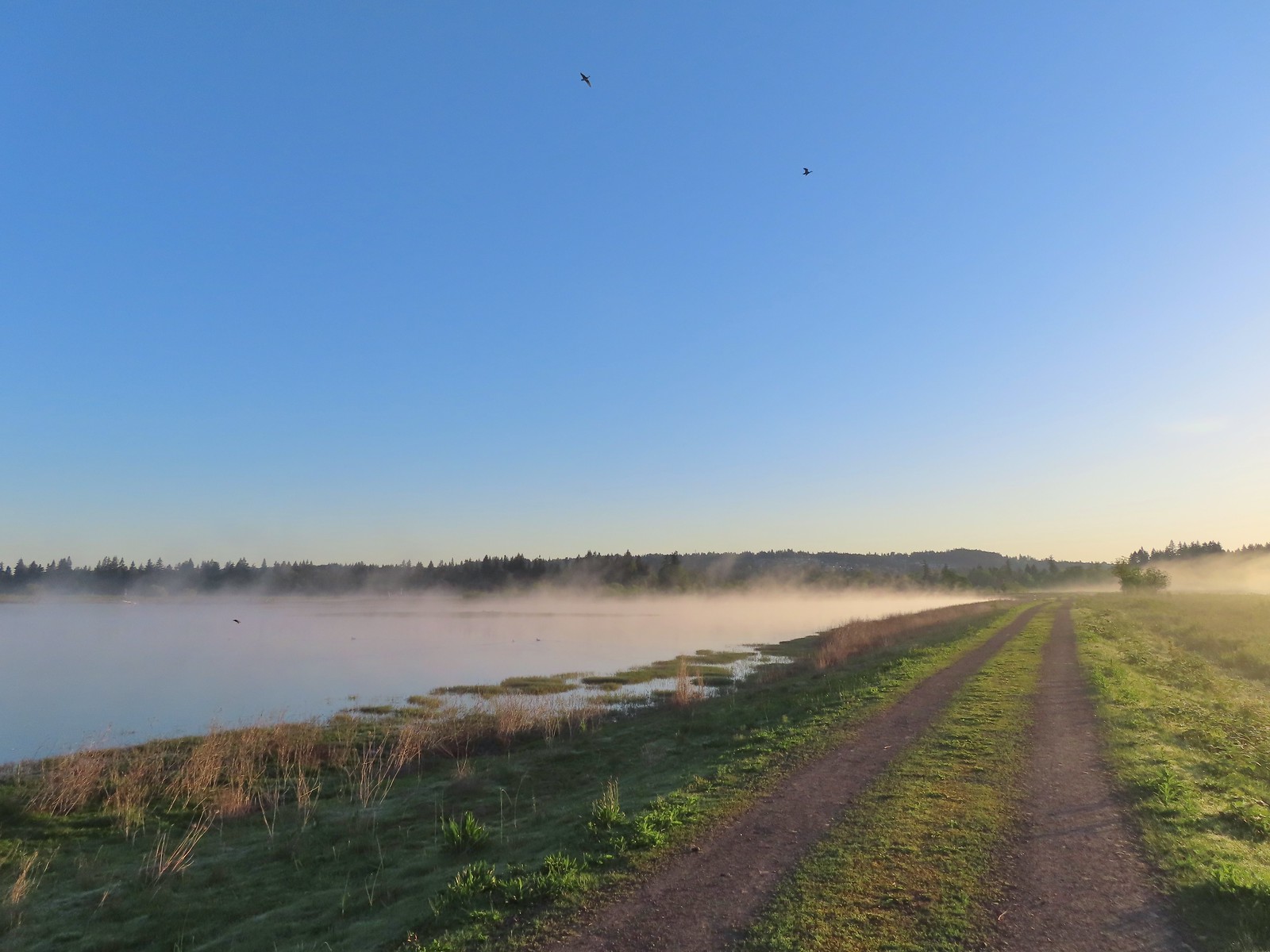 Swallows flying above the Wetland Trail.
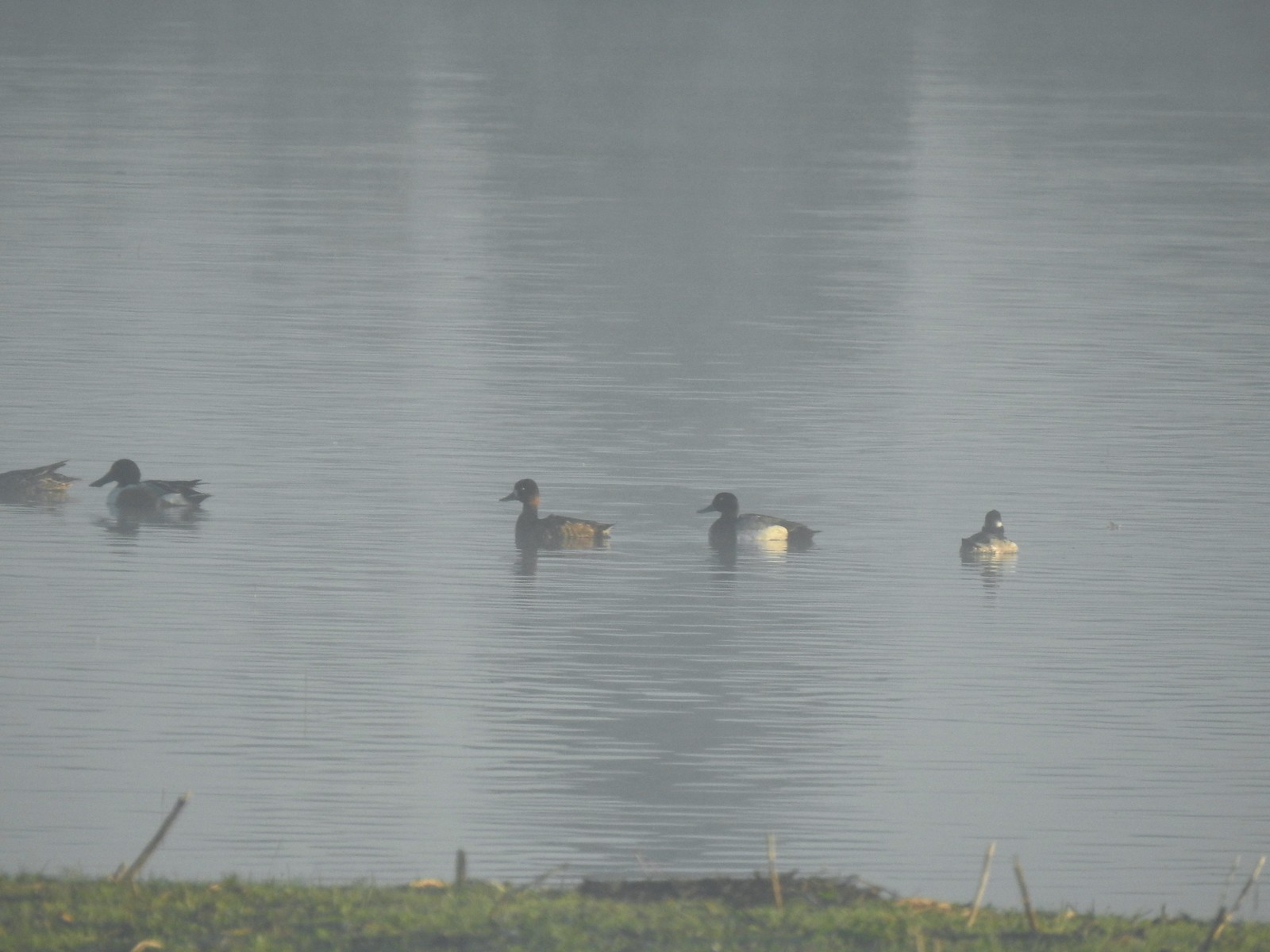 Northern shoveler, scaups (leaning toward greater), and a bufflehead.
 Mallards
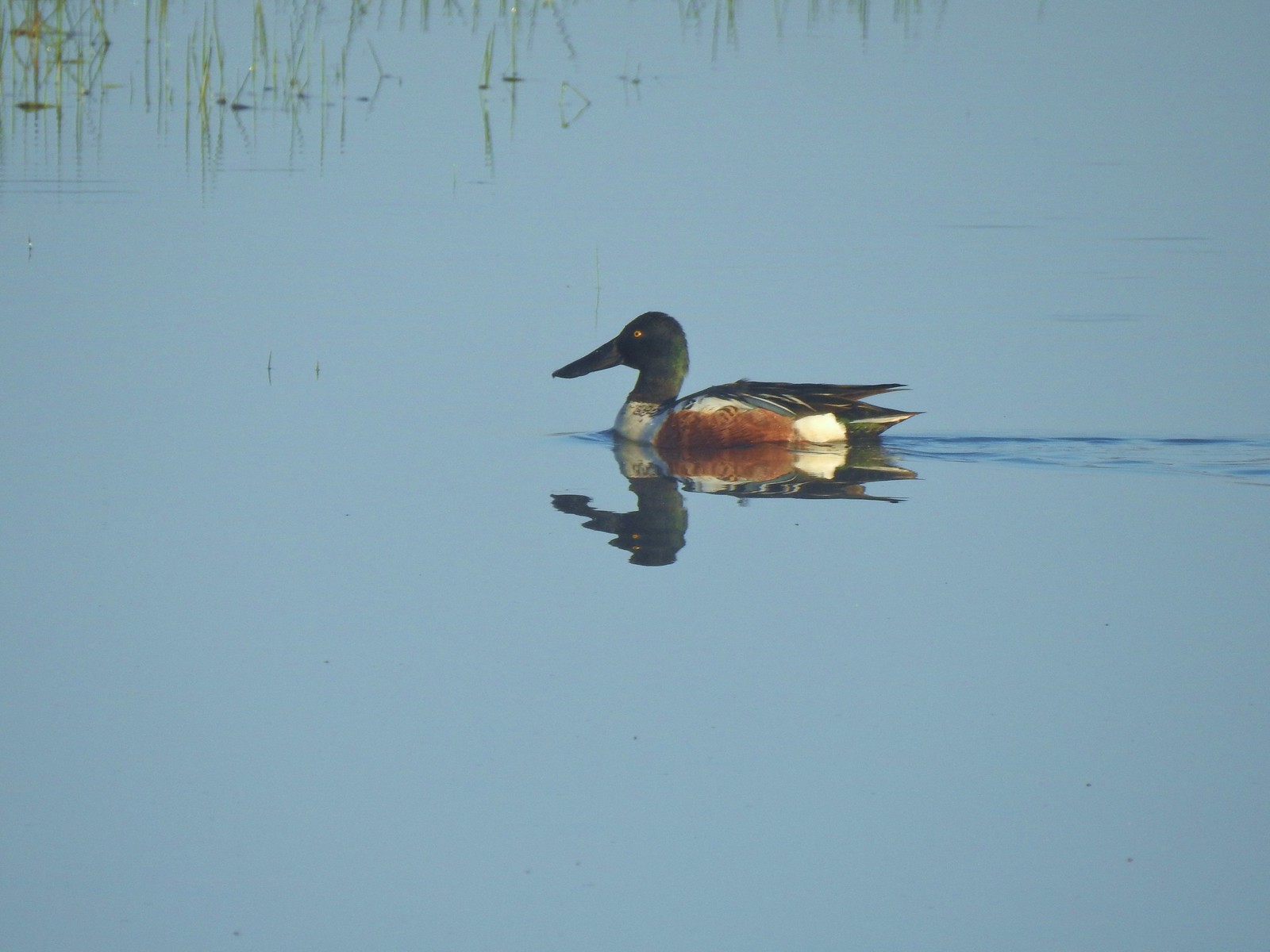 Northern shoveler
 Ruddy duck
 Gadwalls
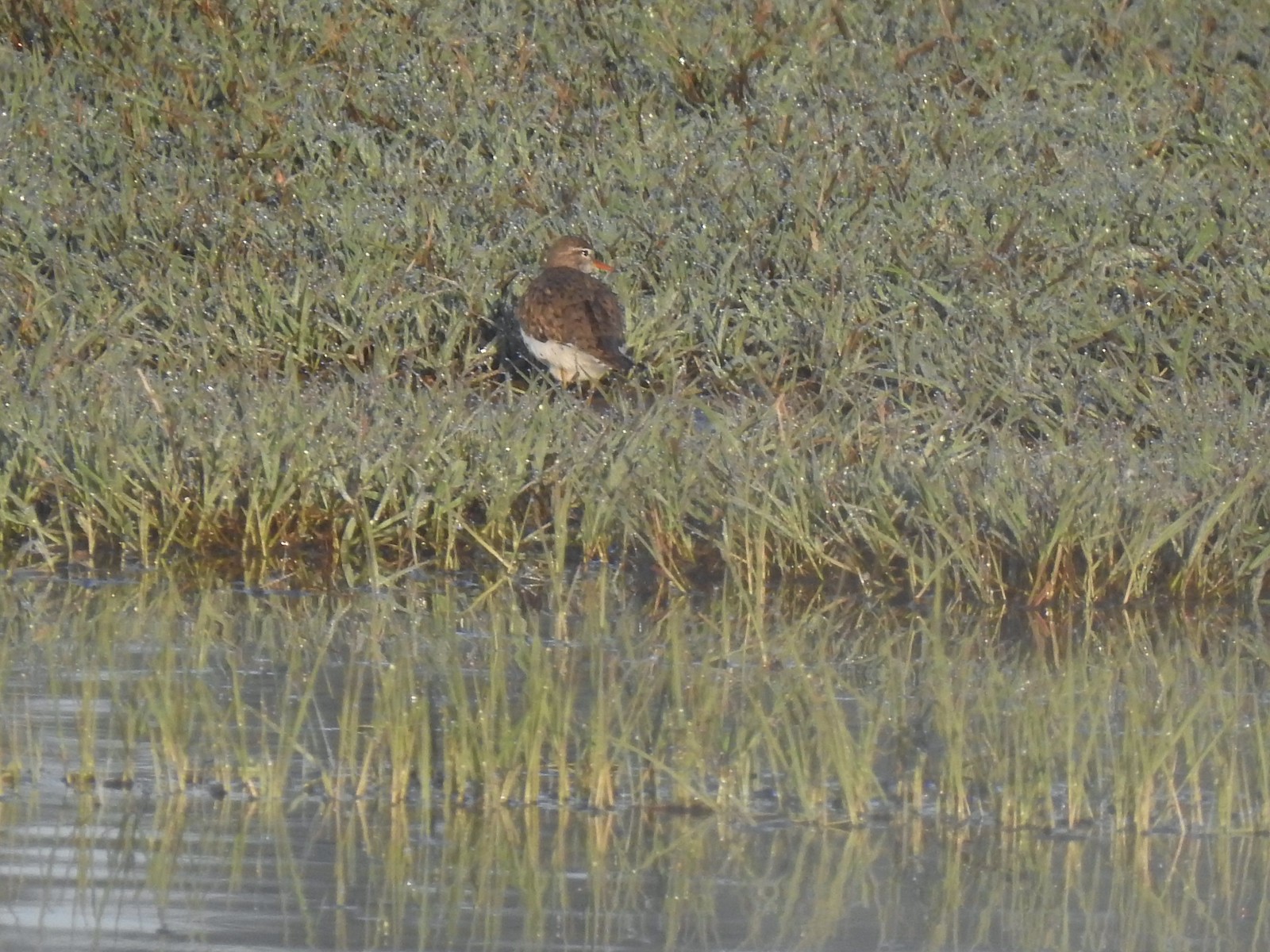 Spotted sandpiper
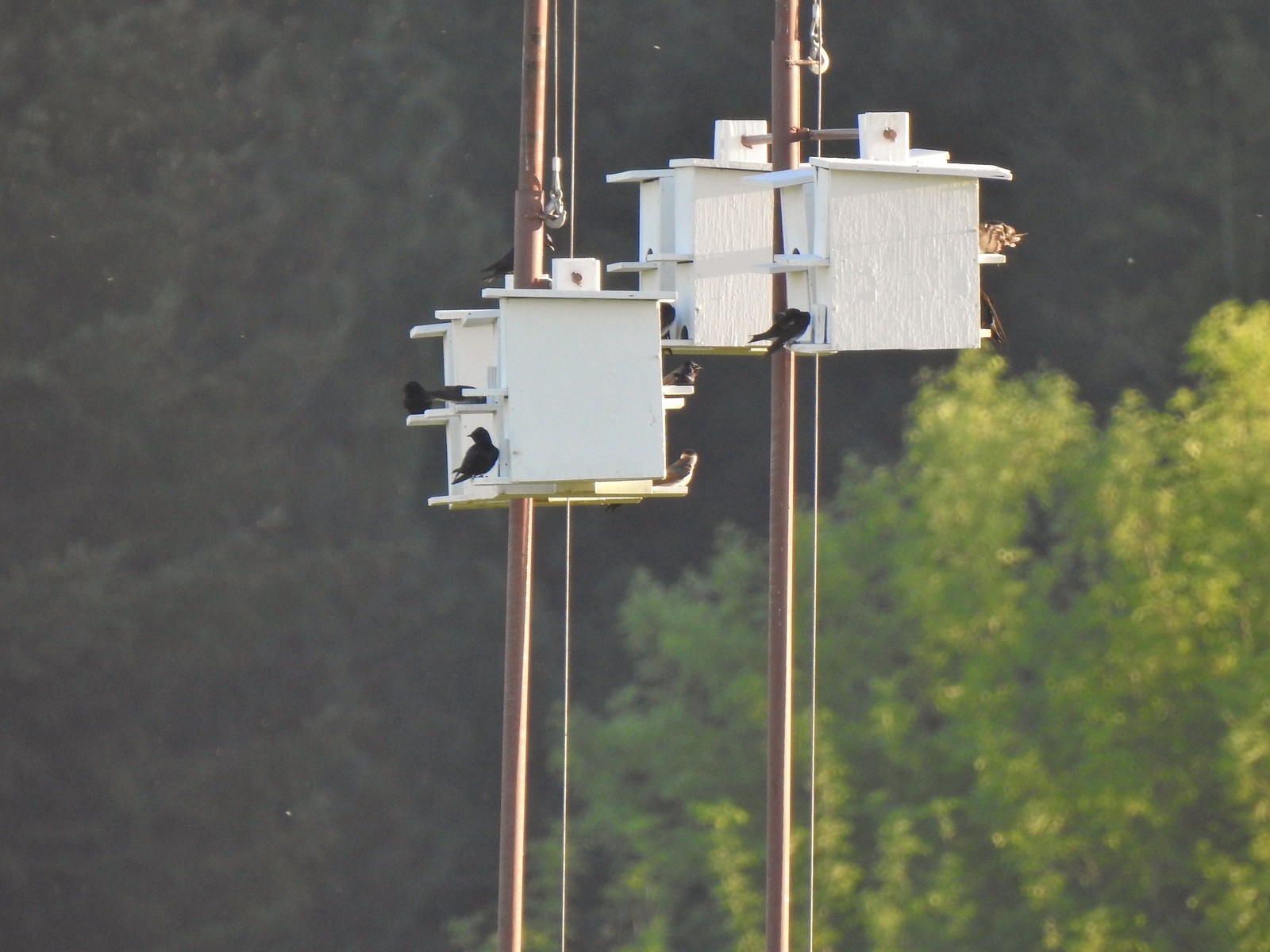 Purple martins
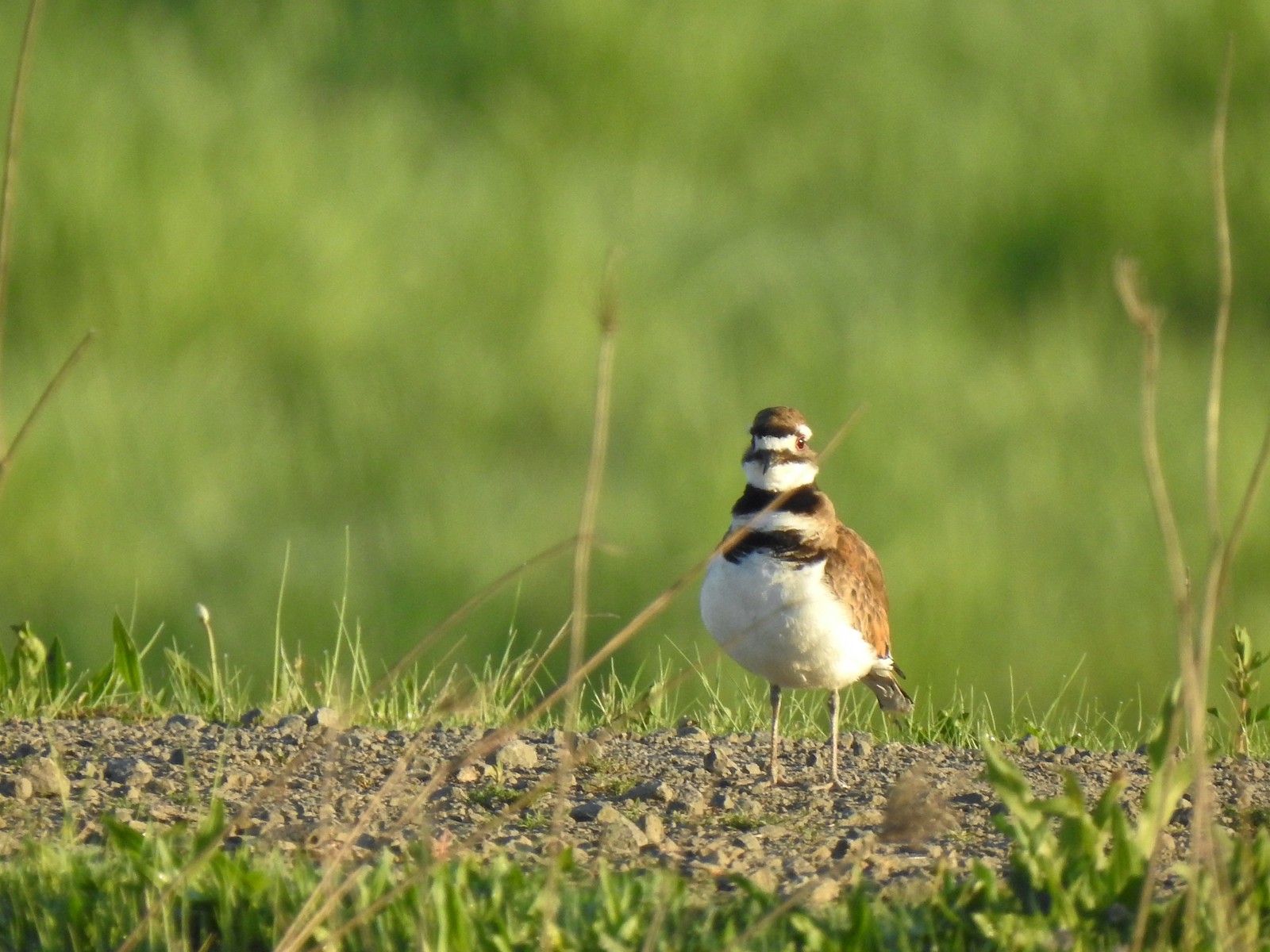 Killerdeer
 Cinnamon teals
 Nutria, one of several of these non-native rodents that we saw.
 Nap time (or just a late sleeper).
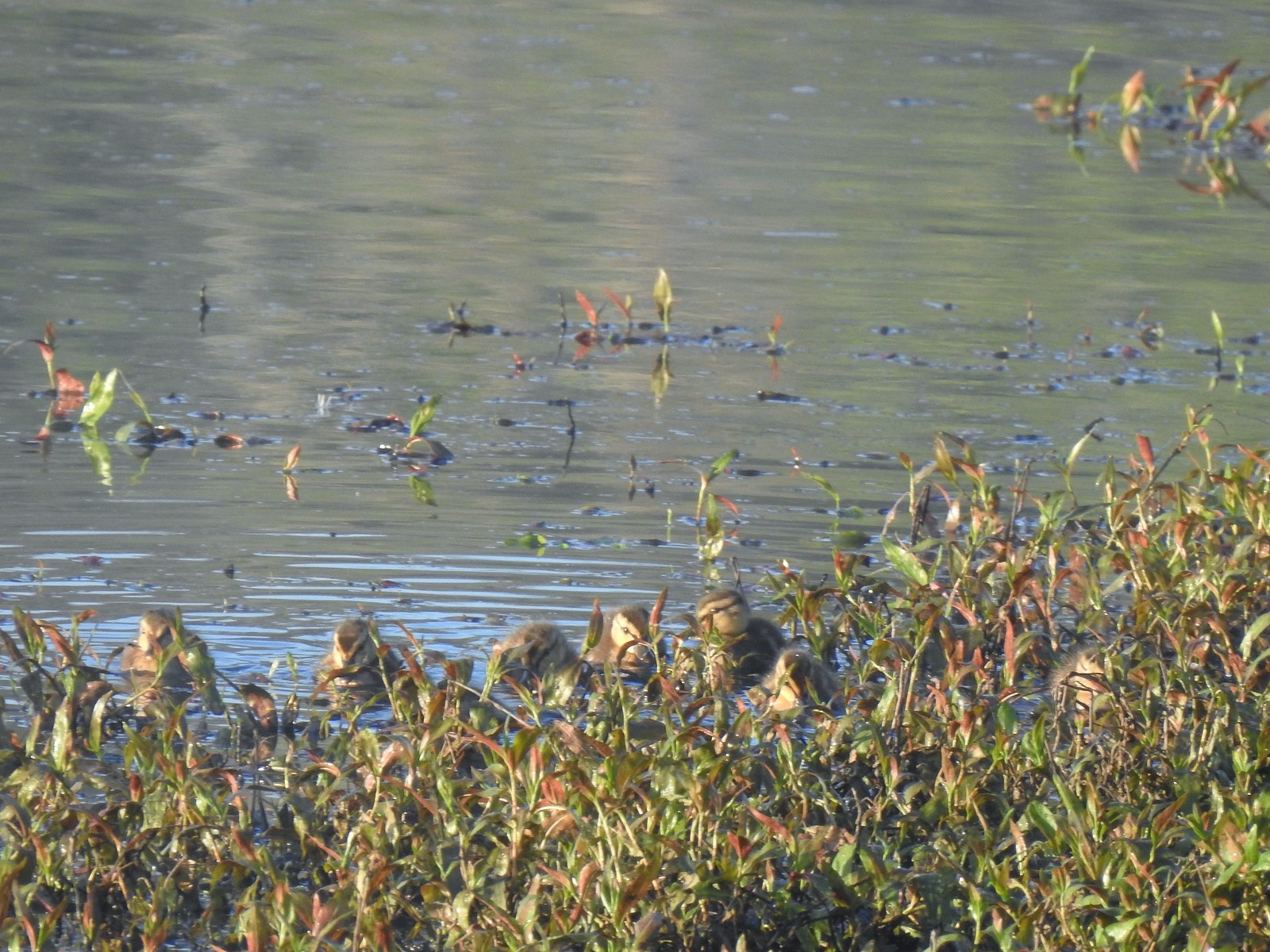 Ducklings
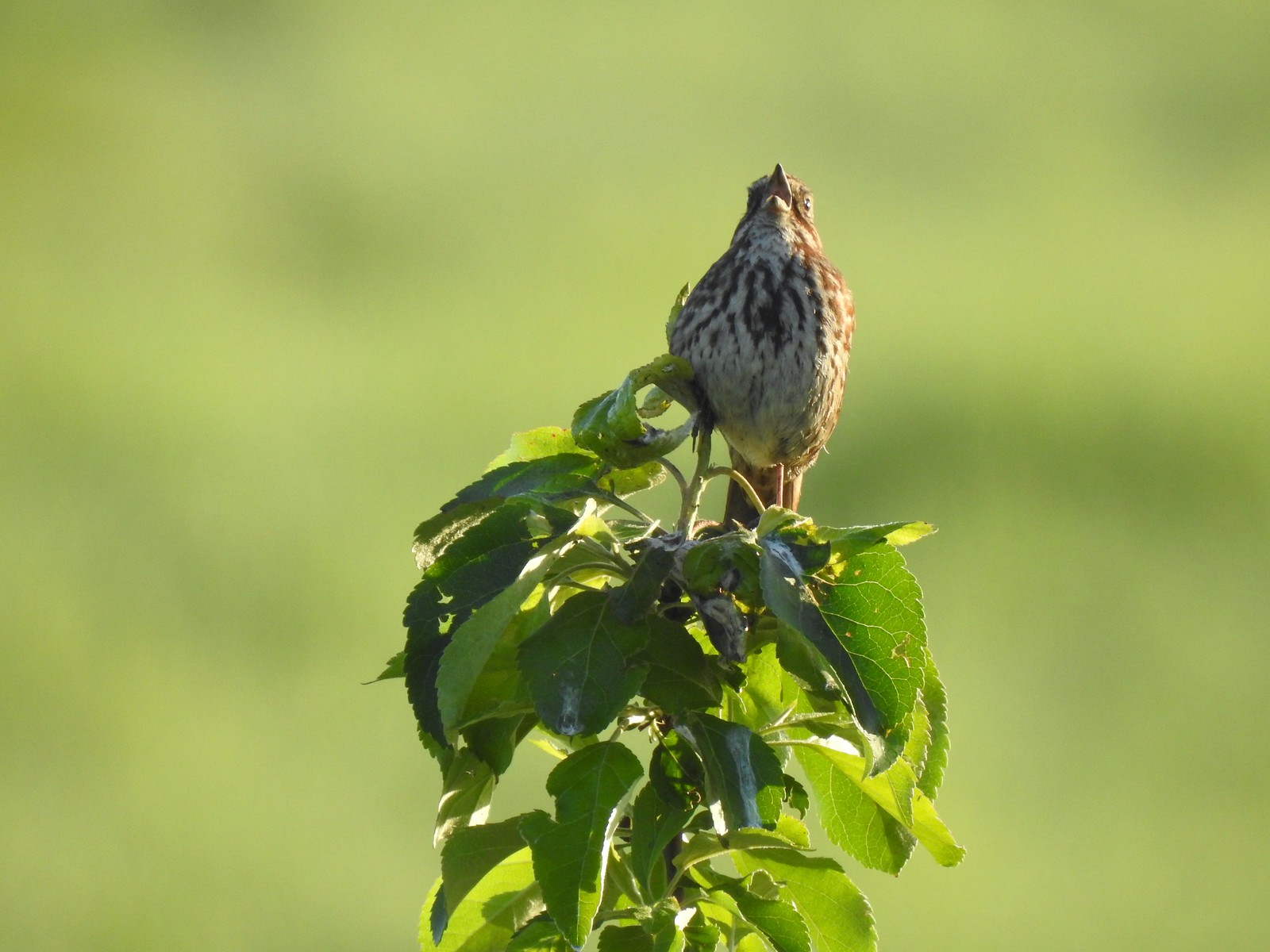 Song sparrow
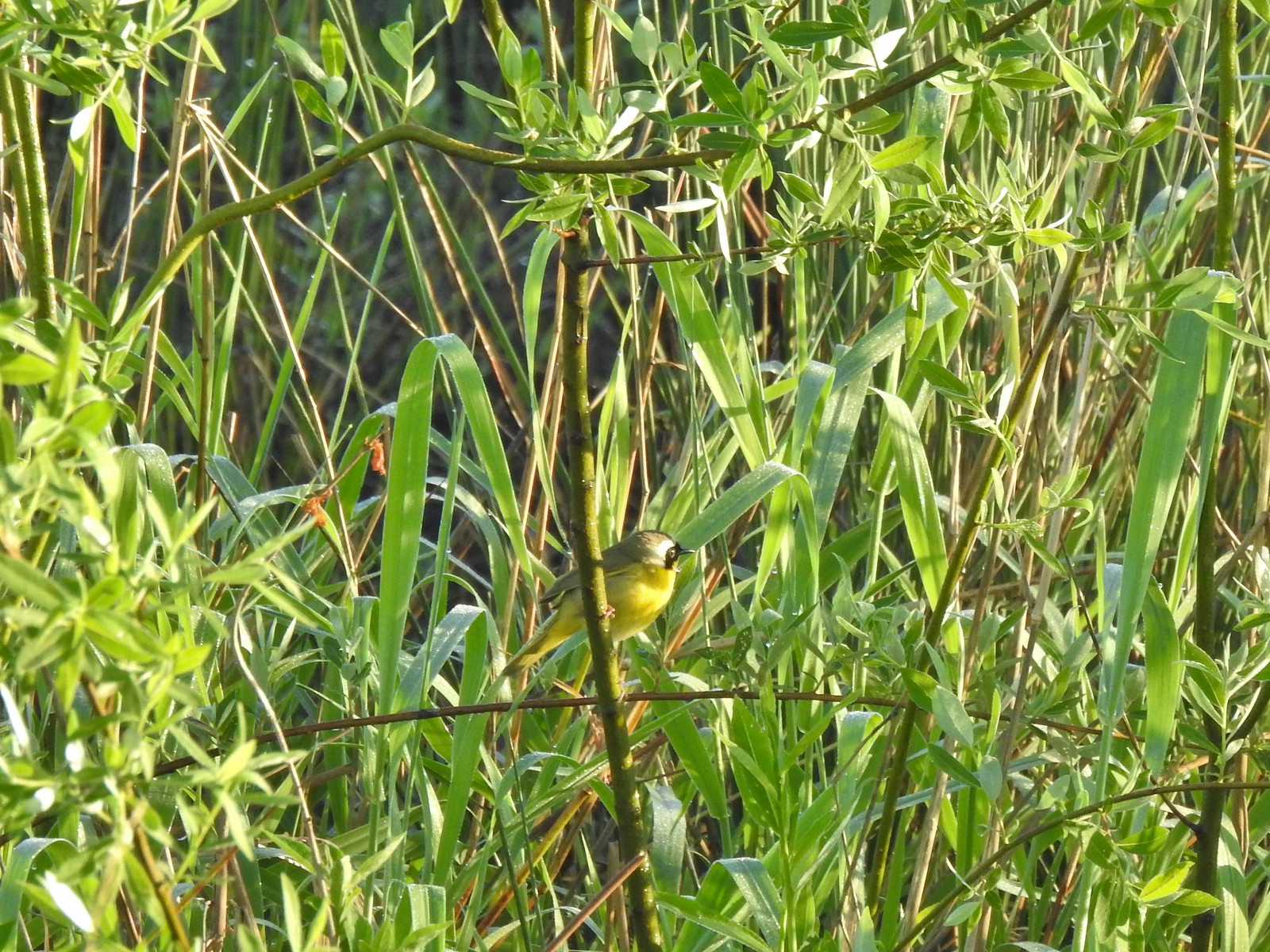 Common yellowthroat
 Wildlife Center
 Great blue heron watching from a little island.

 Anna’s hummingbird
 The same Anna’s hummingbird. When catching light their head/throat is bright pink but appear black when not.
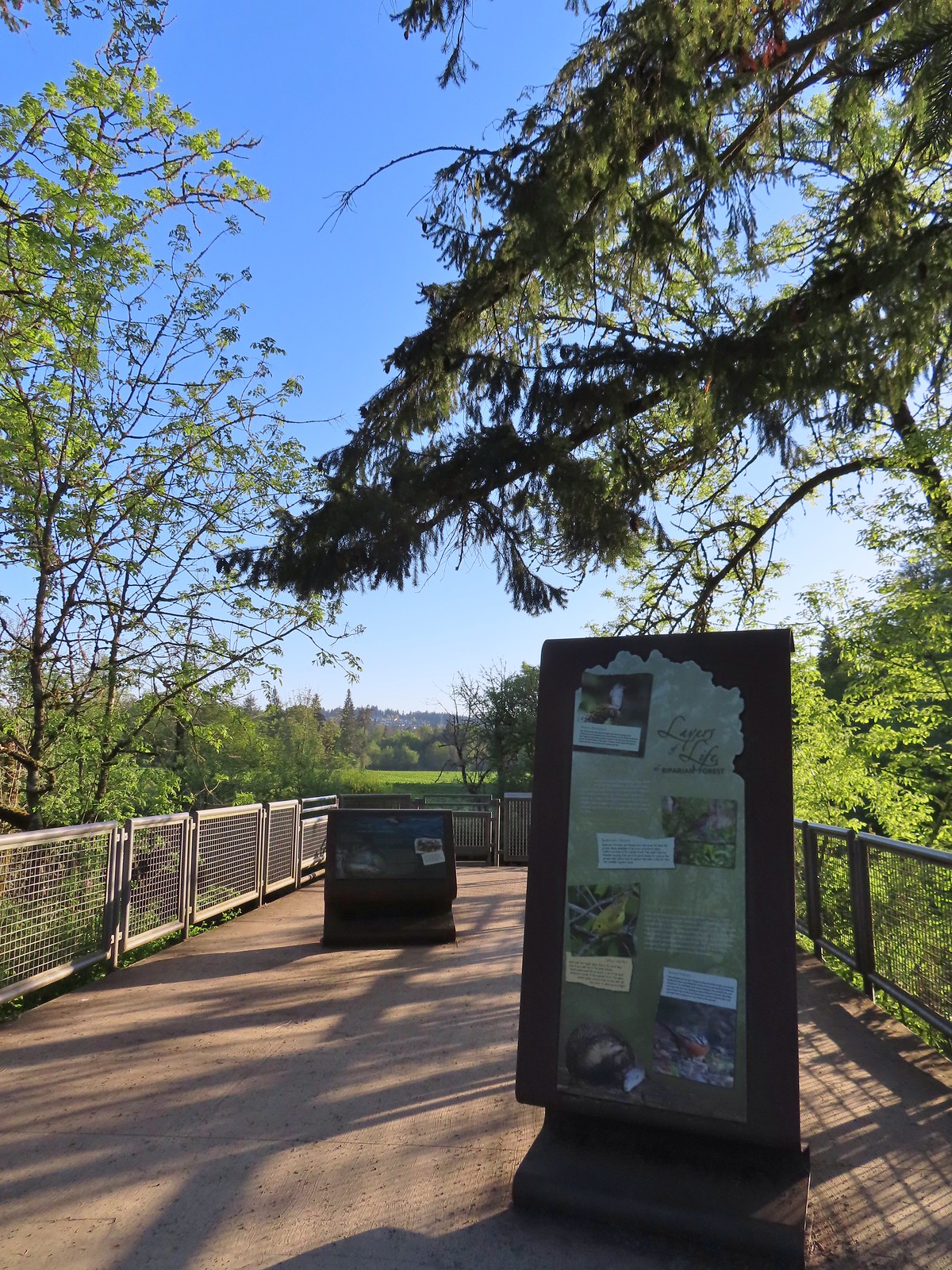 River Overlook
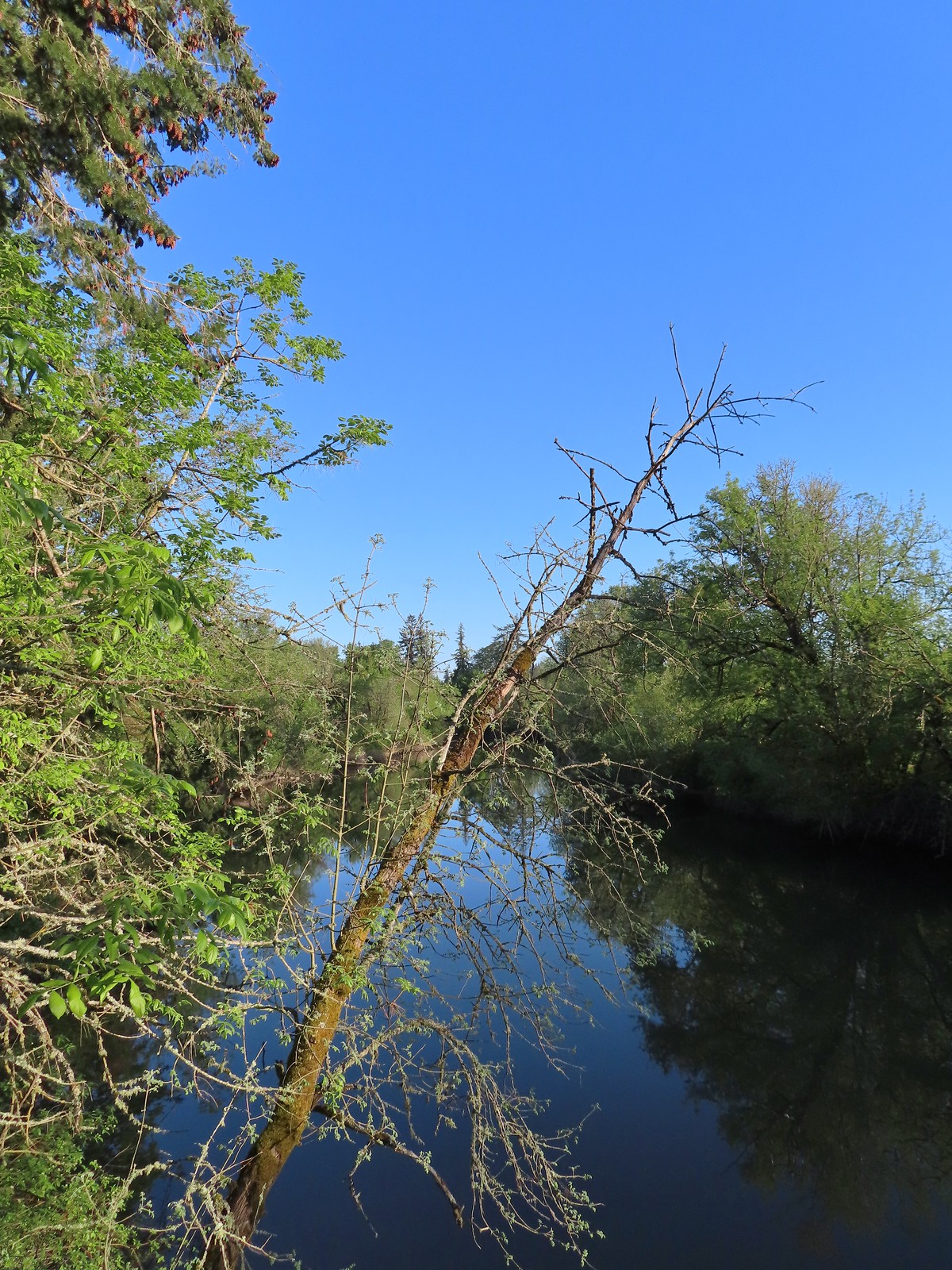 Tualatin River
 Robin
Robin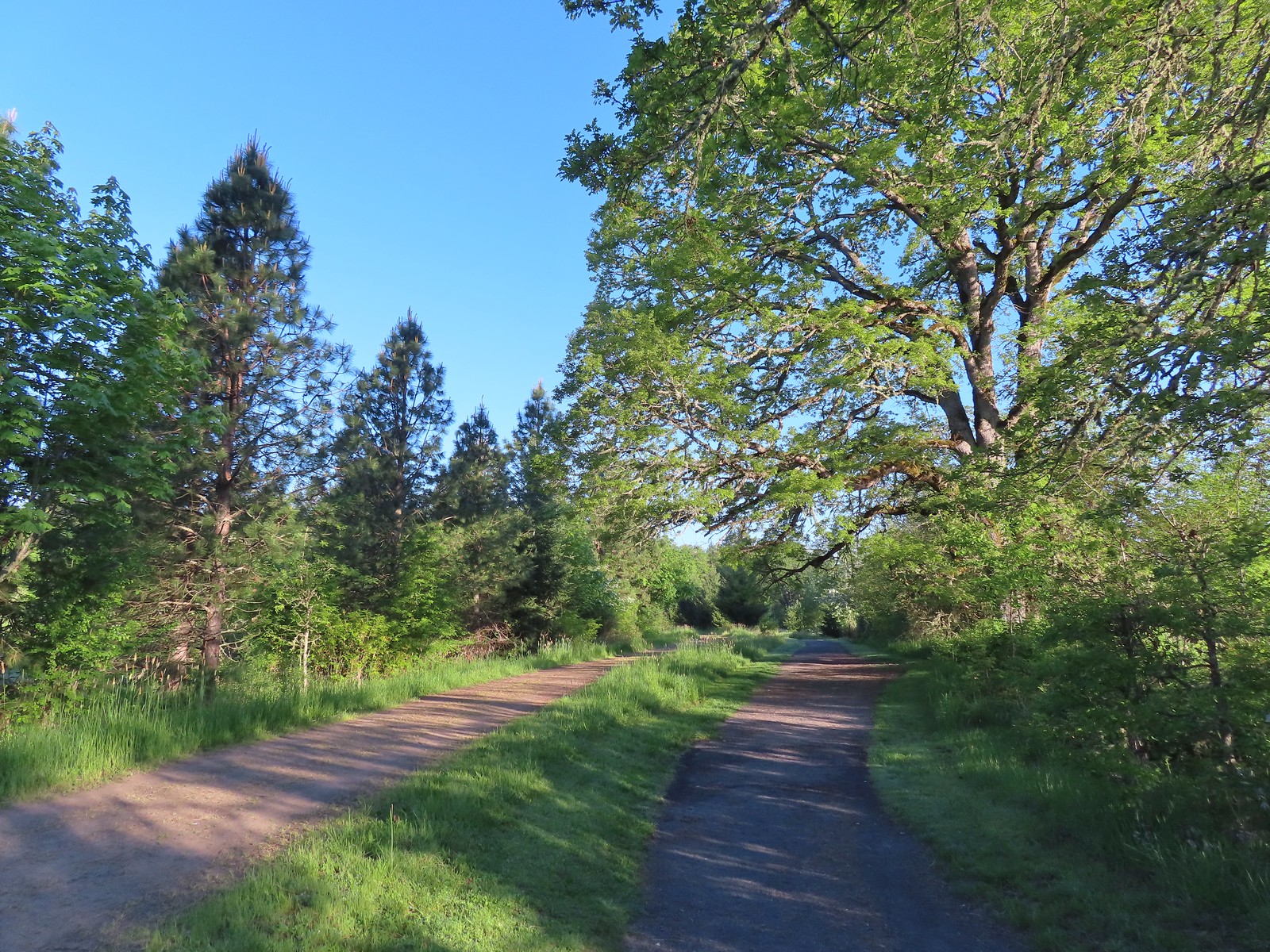 The Wetland and River Trails running parallel.
 Spotted towhee
 Rabbit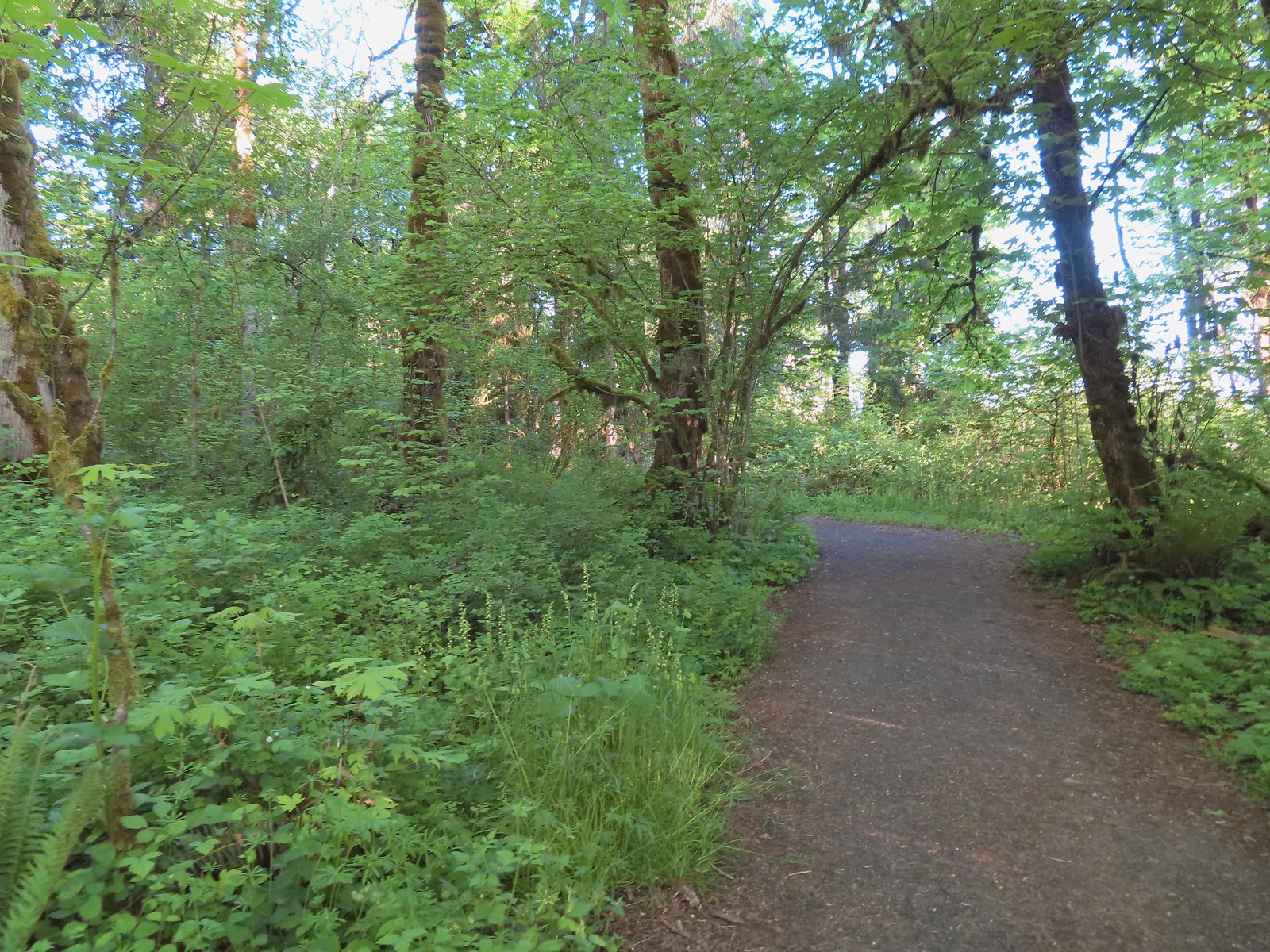
 Pacific waterleaf
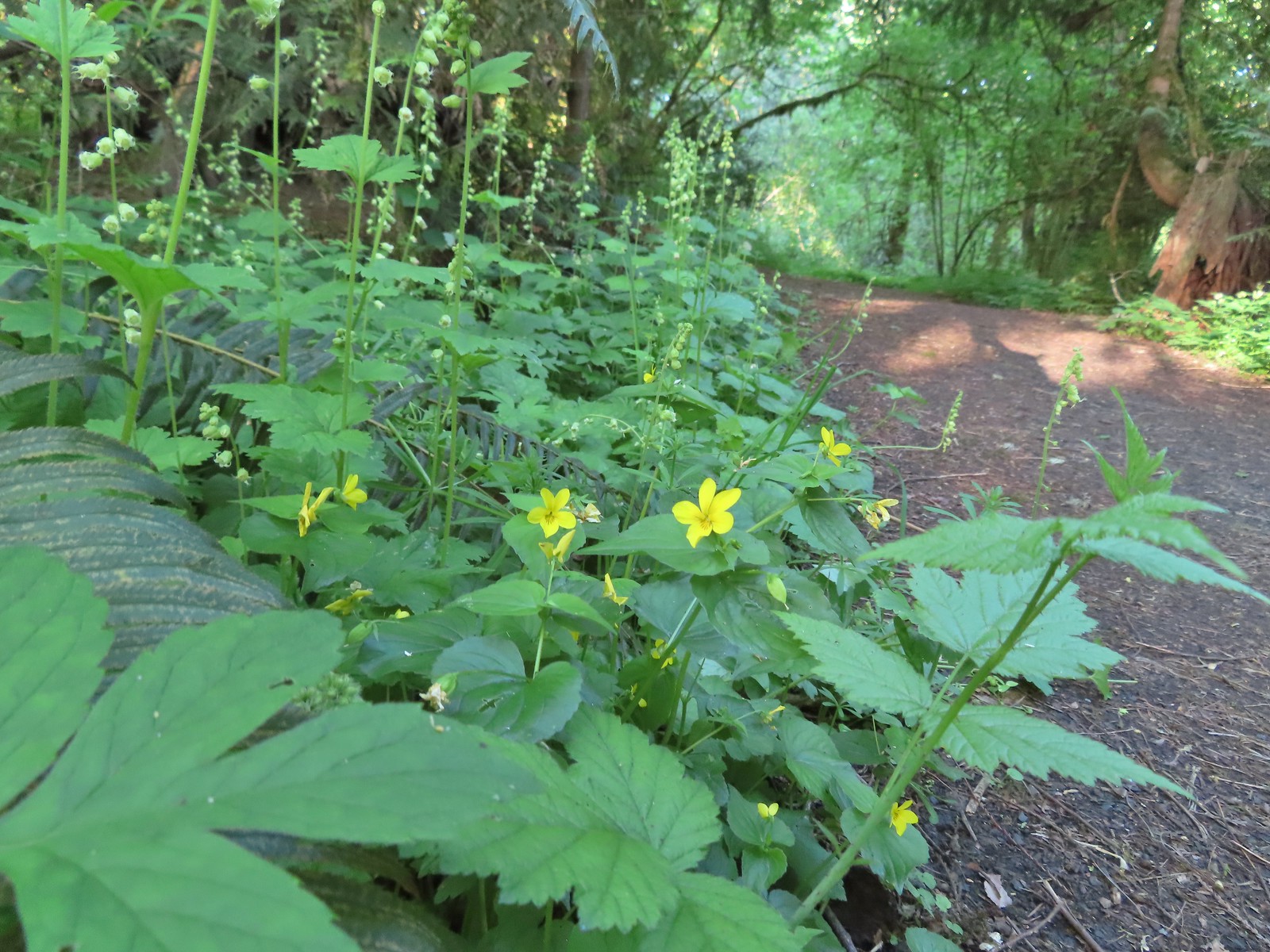 Violets and fringecup along the River Trail.
 Bleeding heart
 We skipped the spur trail to the Ridgetop Overlook since we’d done that on our previous visit.
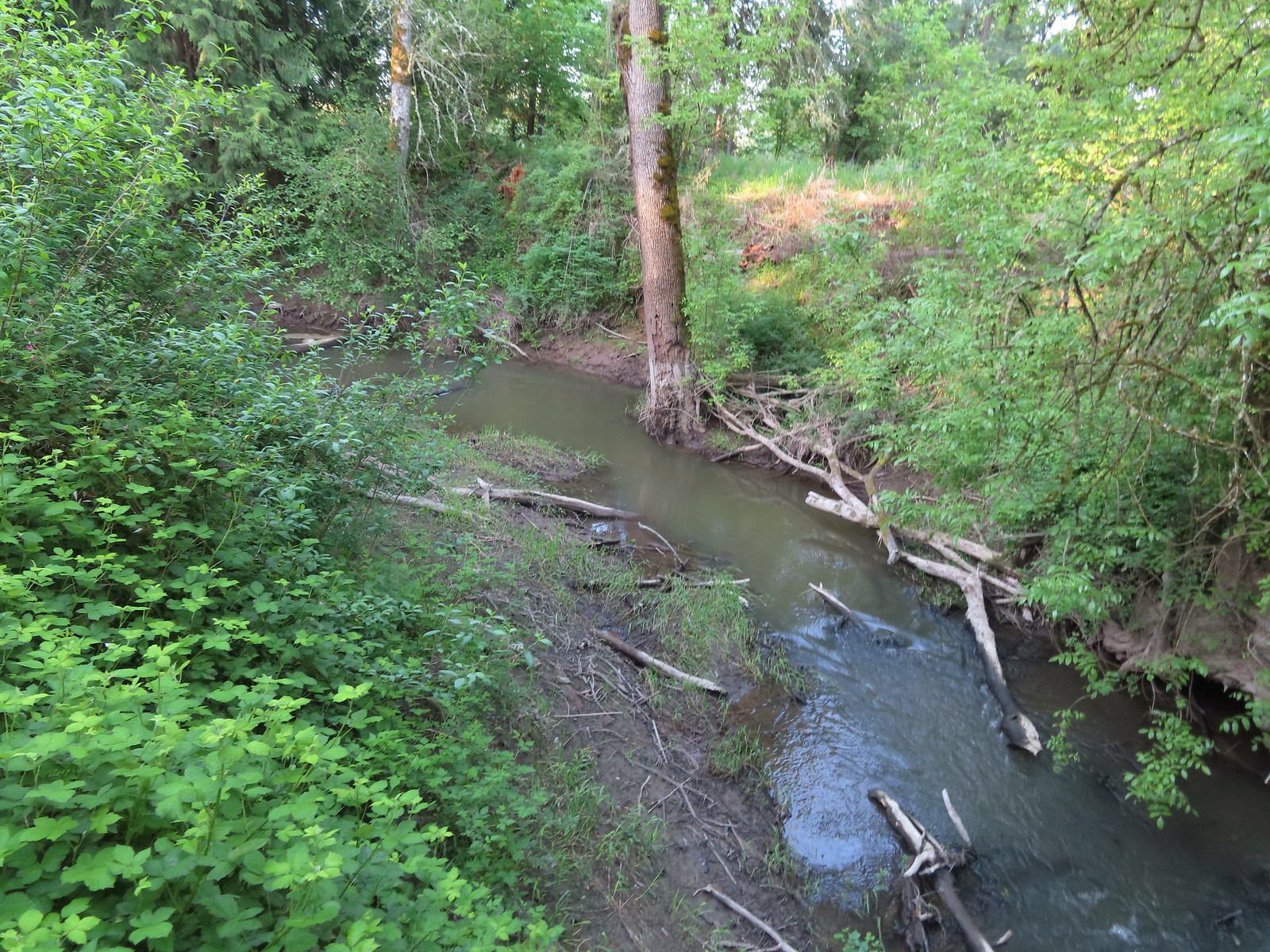 Chicken Creek
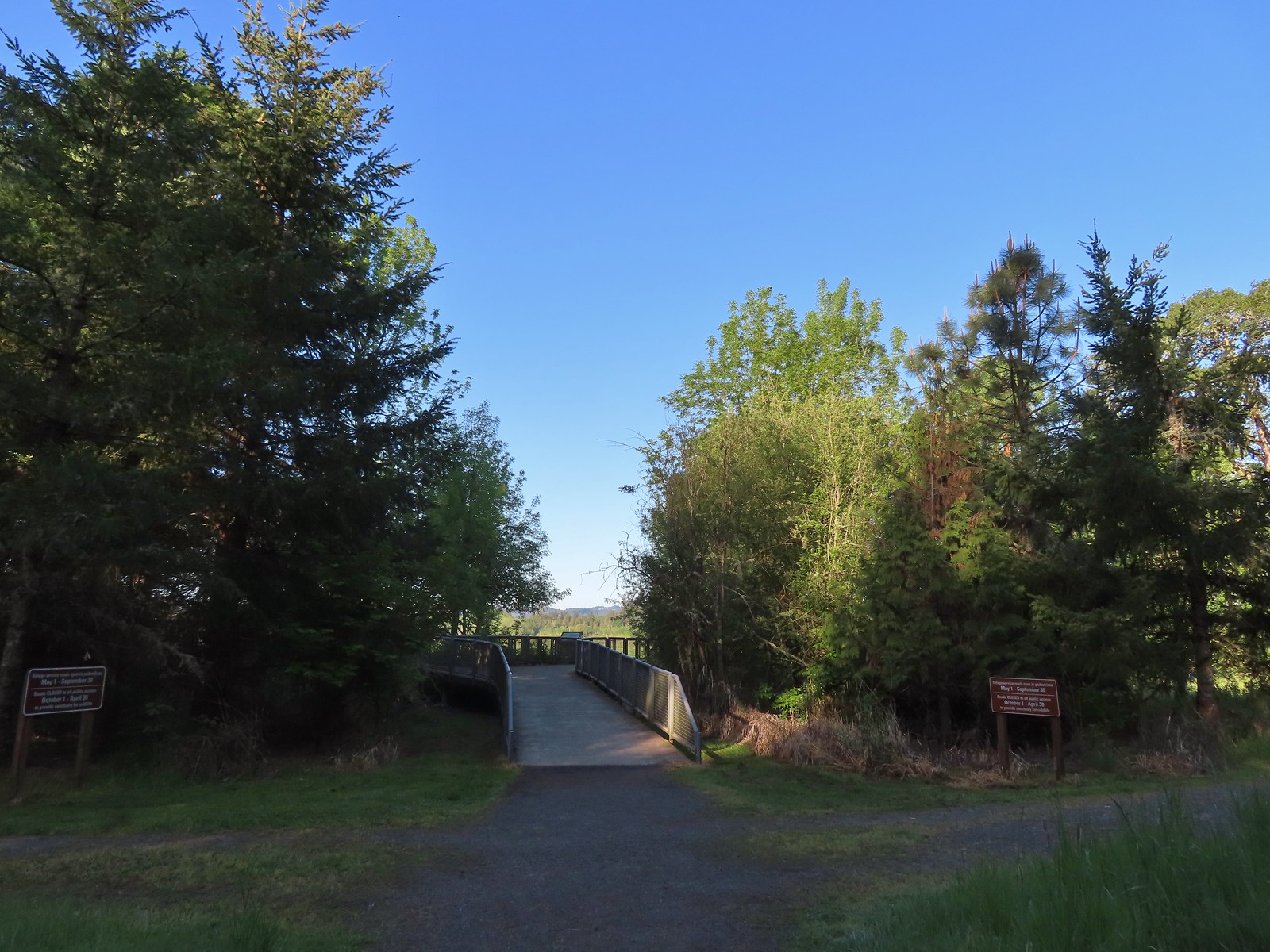 The River Trail meets the Wetland Trail across from the Weland Observation Platform.
 Great white egrets
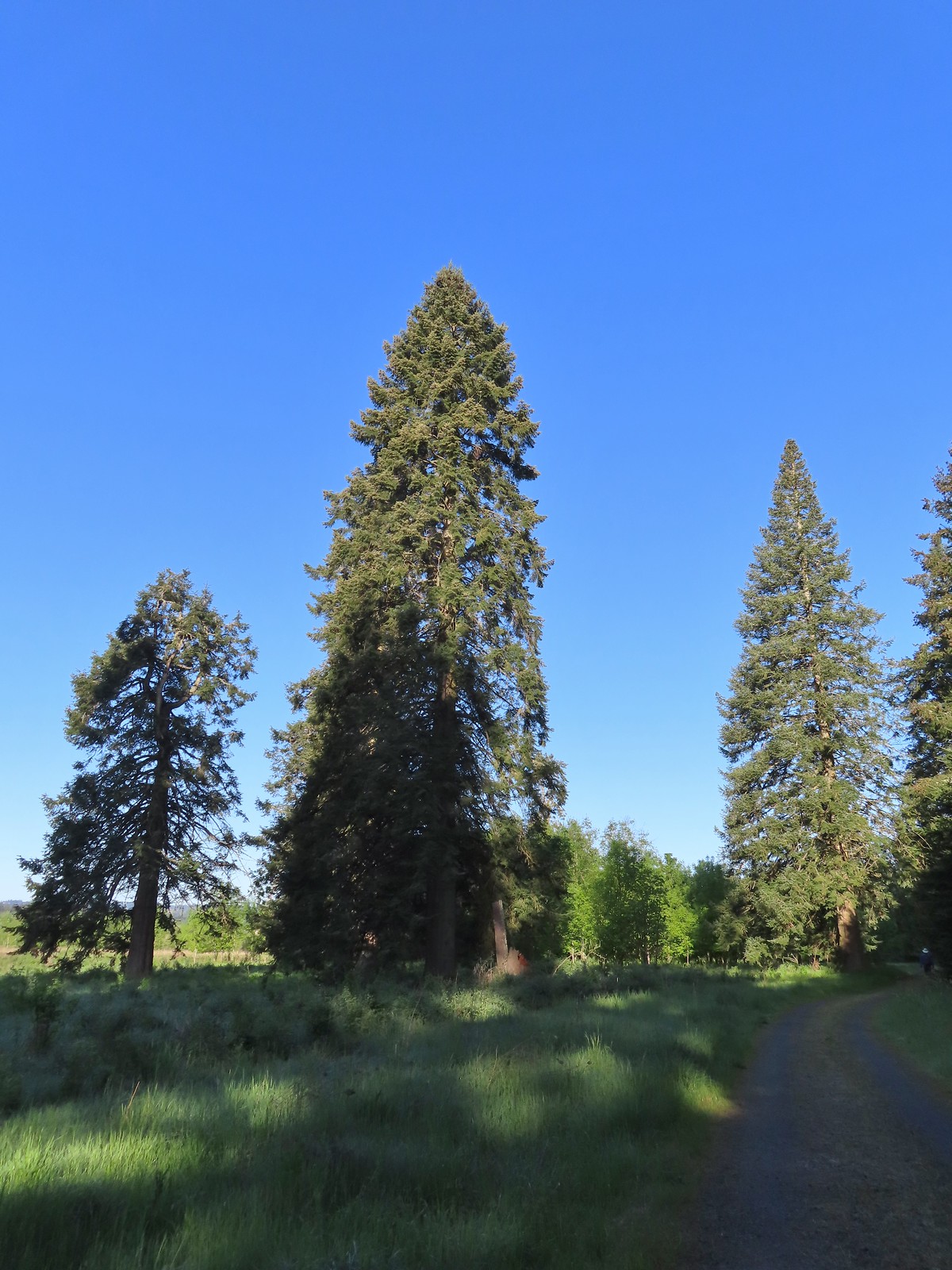 There were some impressively tall trees along this portion of the loop.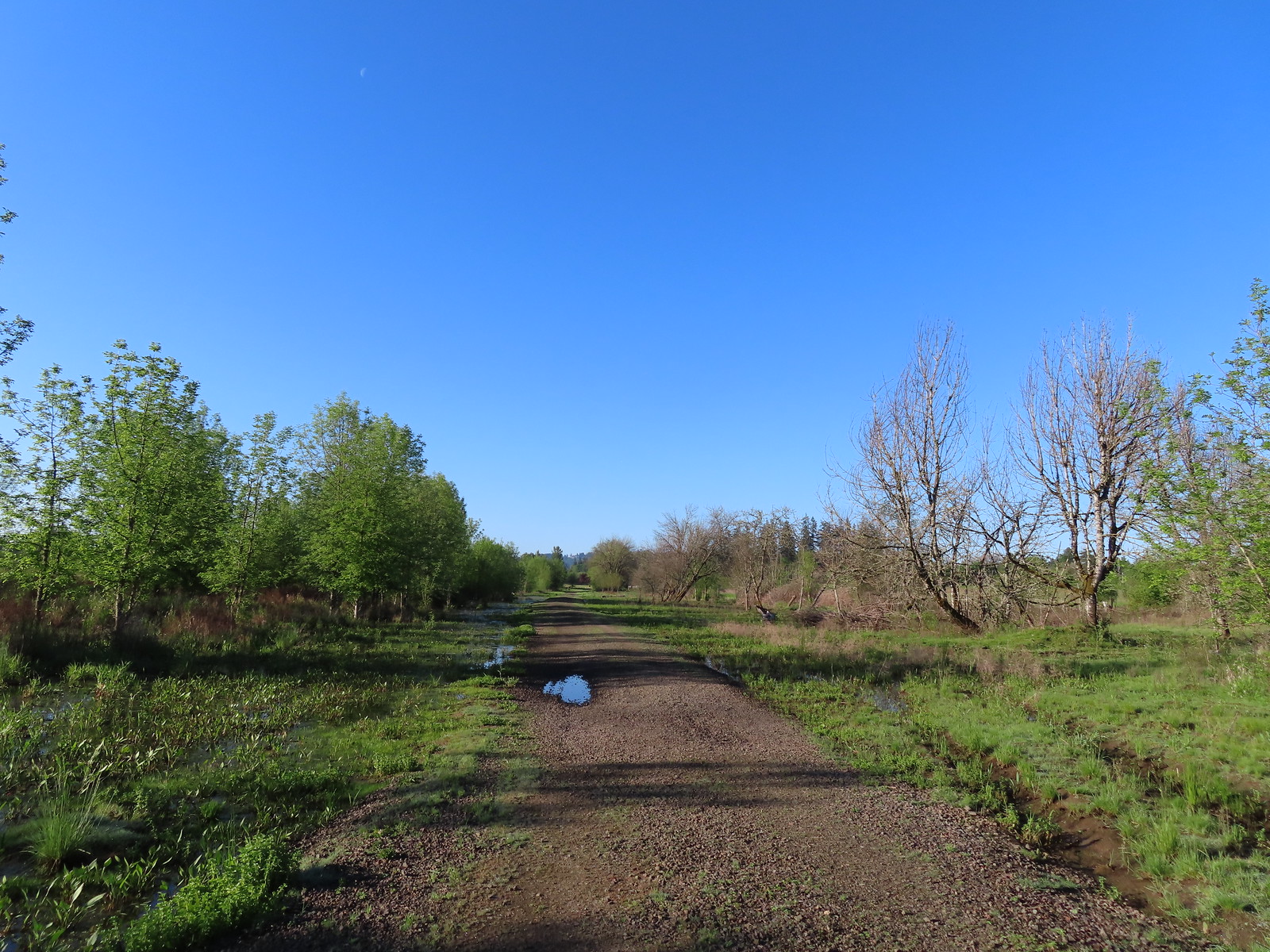
 Another egret
 More egrets across Chicken Creek.
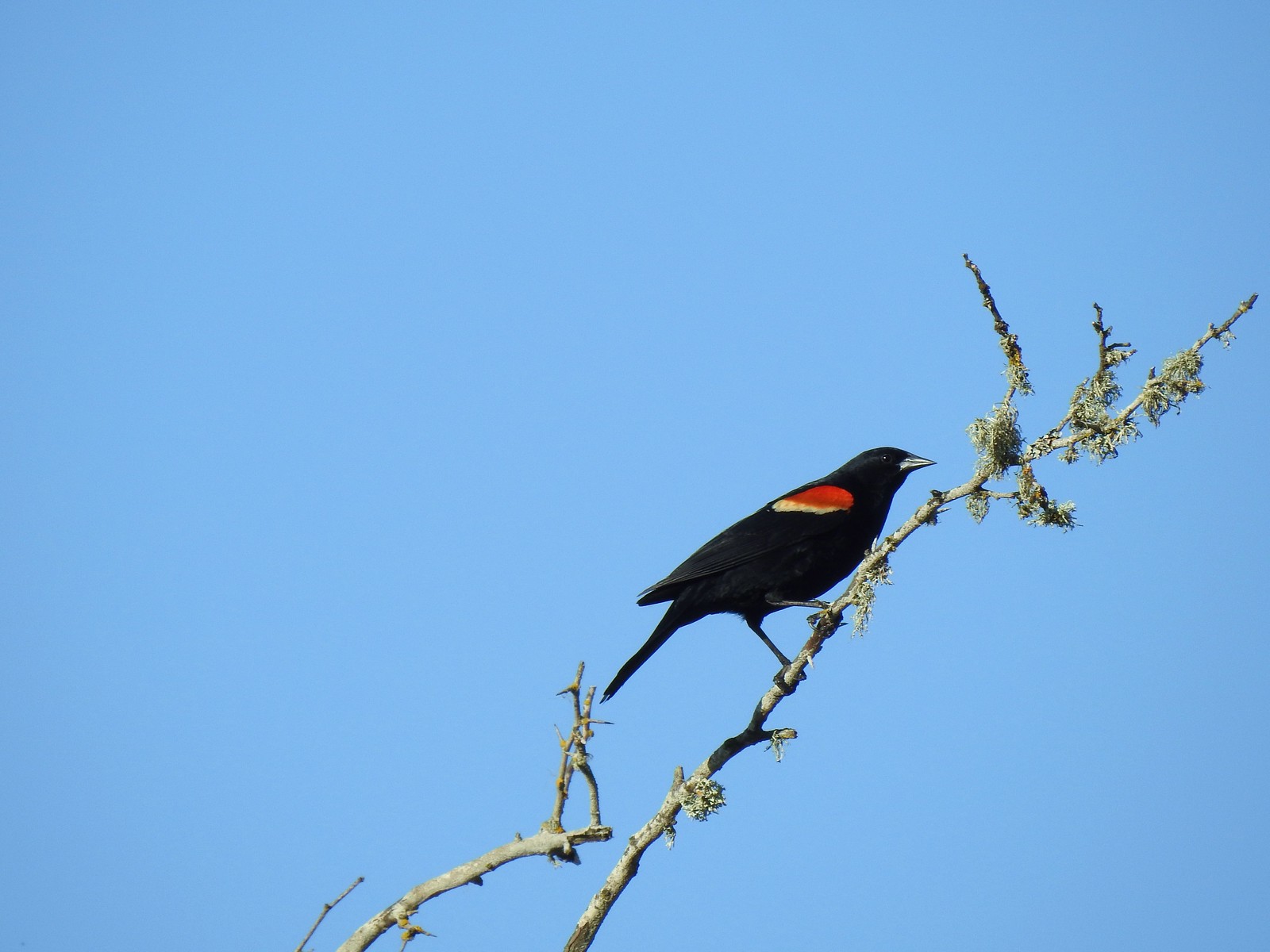 Red-winged blackbird
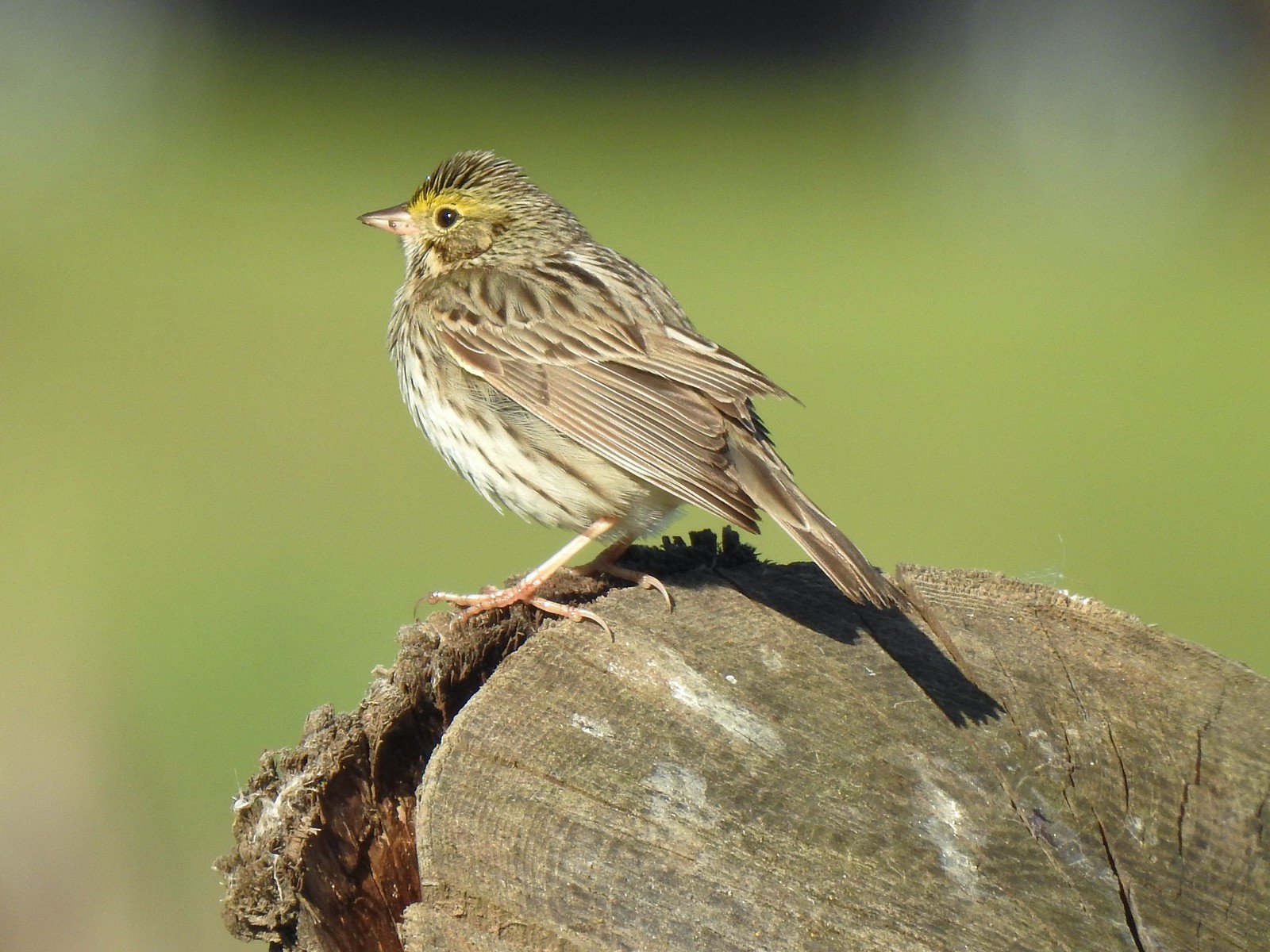 Savannah sparrow
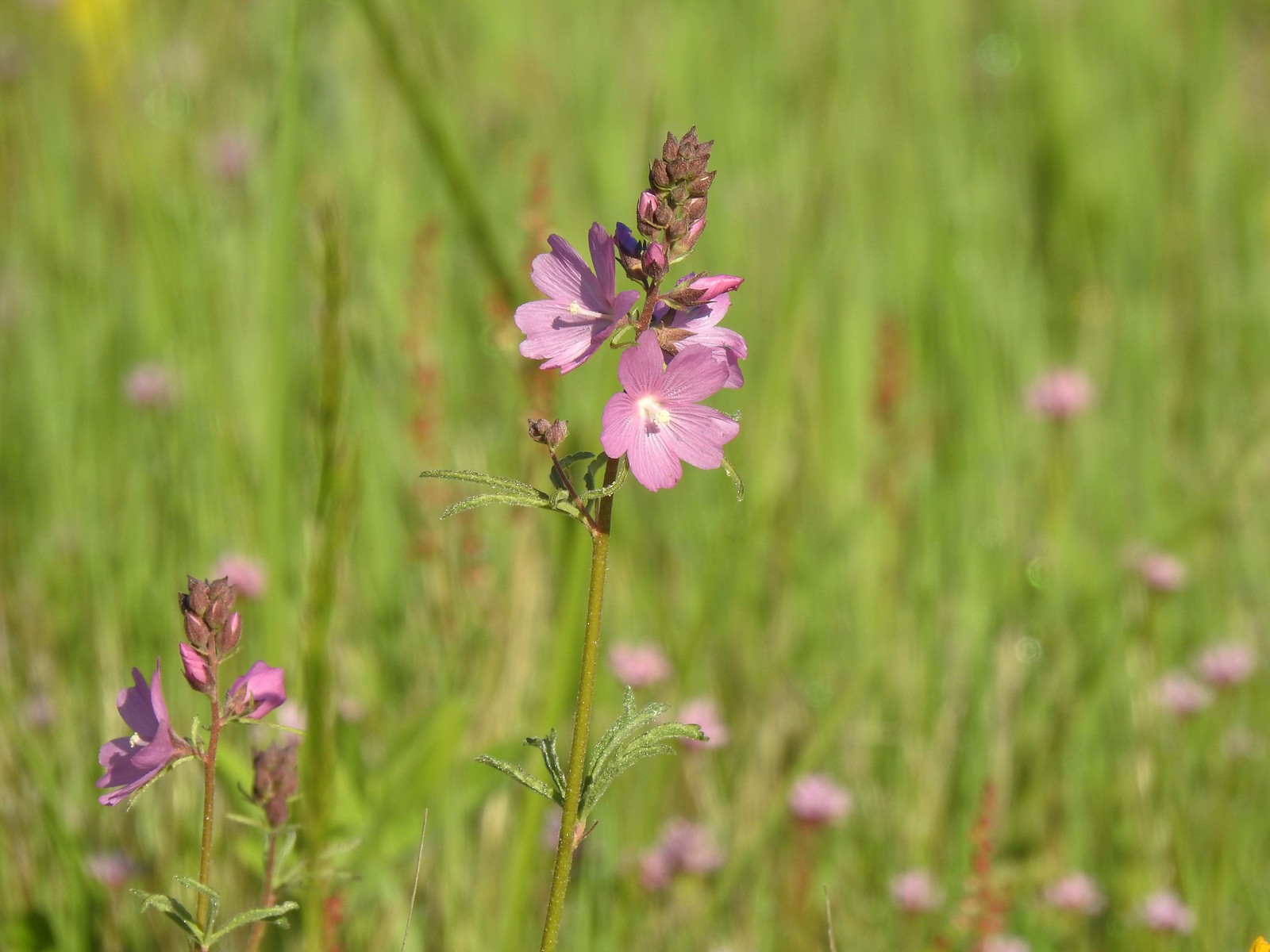 Checker-mallow
 A parsley
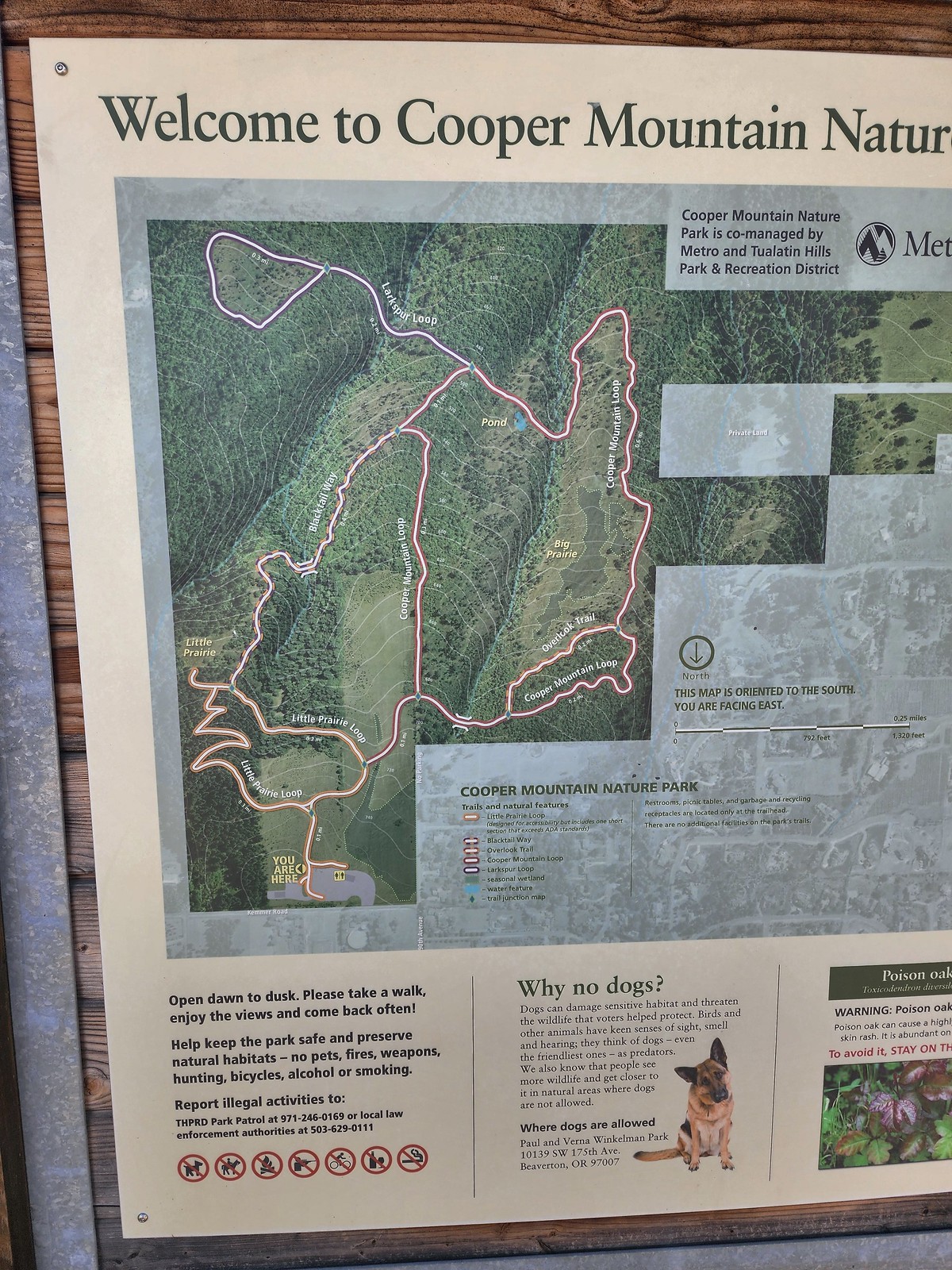 Our planned route was to go right on the Little Prairie Loop to the Cooper Mountain Loop and then stay right on that loop (with a detour to hike the Larkspur Loop) to Blacktail Way. We’d then take Blacktail Way back to the Little Prairie Loop and turn right again to finish that loop and return to the trailhead.
 The view from Cooper Mountain Nature Park.
 Metro is currently running an odd little trial with very short “photo loops”. Mowed paths just off the main trails for photography. We took the first loop just to check it out and they were not kidding when they said the surface may be uneven.
 One of two trial photo loops.
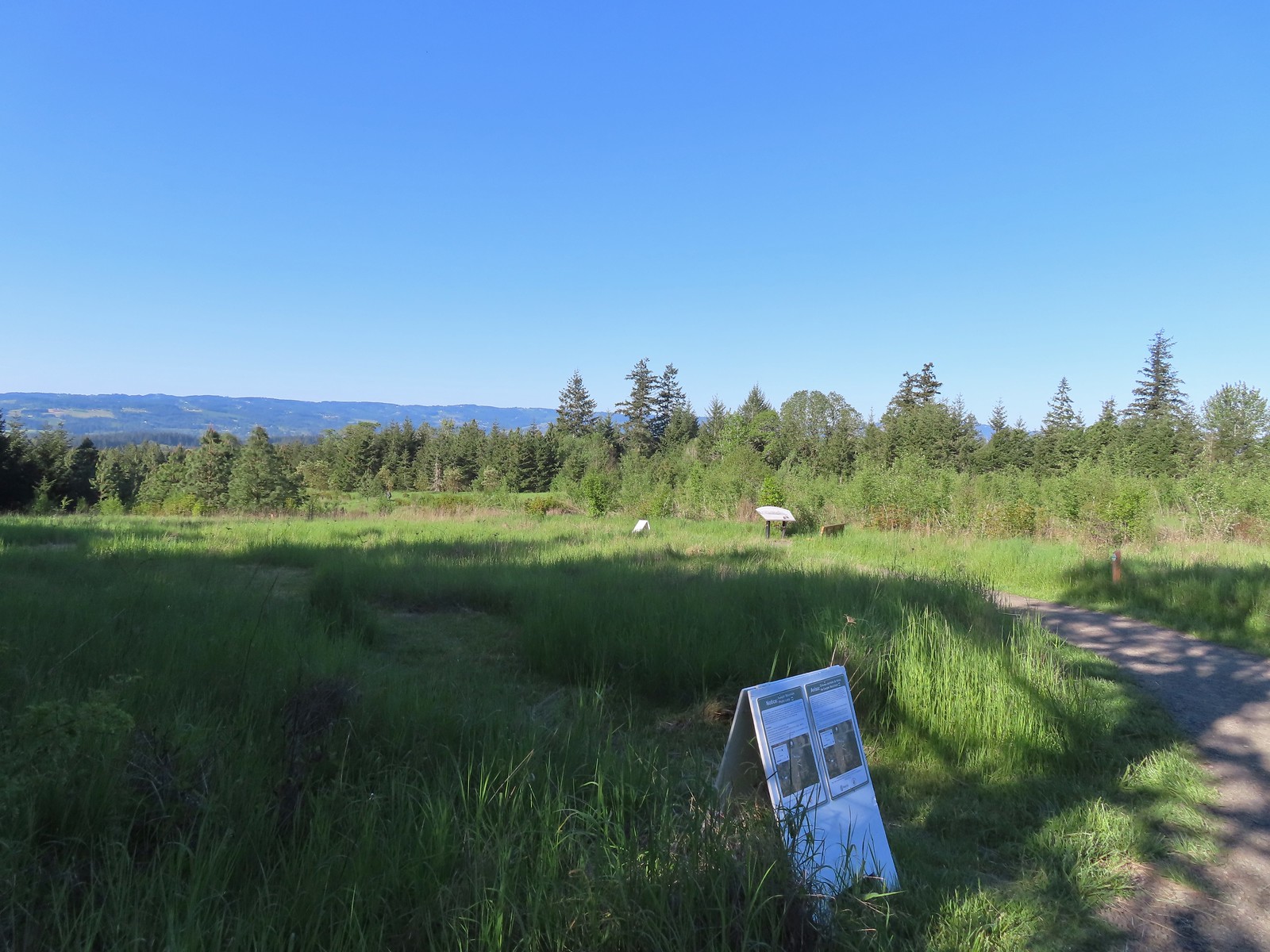 The second trial loop. You can see how short this one is by the signboard just downhill marking its other end.
 There were several interpretive signs and benches along the trails.
 White-crowned sparrow
 Anna’s hummingbird
 Star flower
 As usual Metro had the trail junctions well marked with little maps on top of the posts. This is the Cooper Mountain Loop junction with the lower end of the Outback Trail.
 Camas
Camas
 Tough-leaved iris
 Serviceberry
 Honeysuckle
 Looking back uphill to some wildflowers.
 Monkeyflower
 Tomcat clover
 Spotted towhee
 Bench along a pond filling an old quarry.
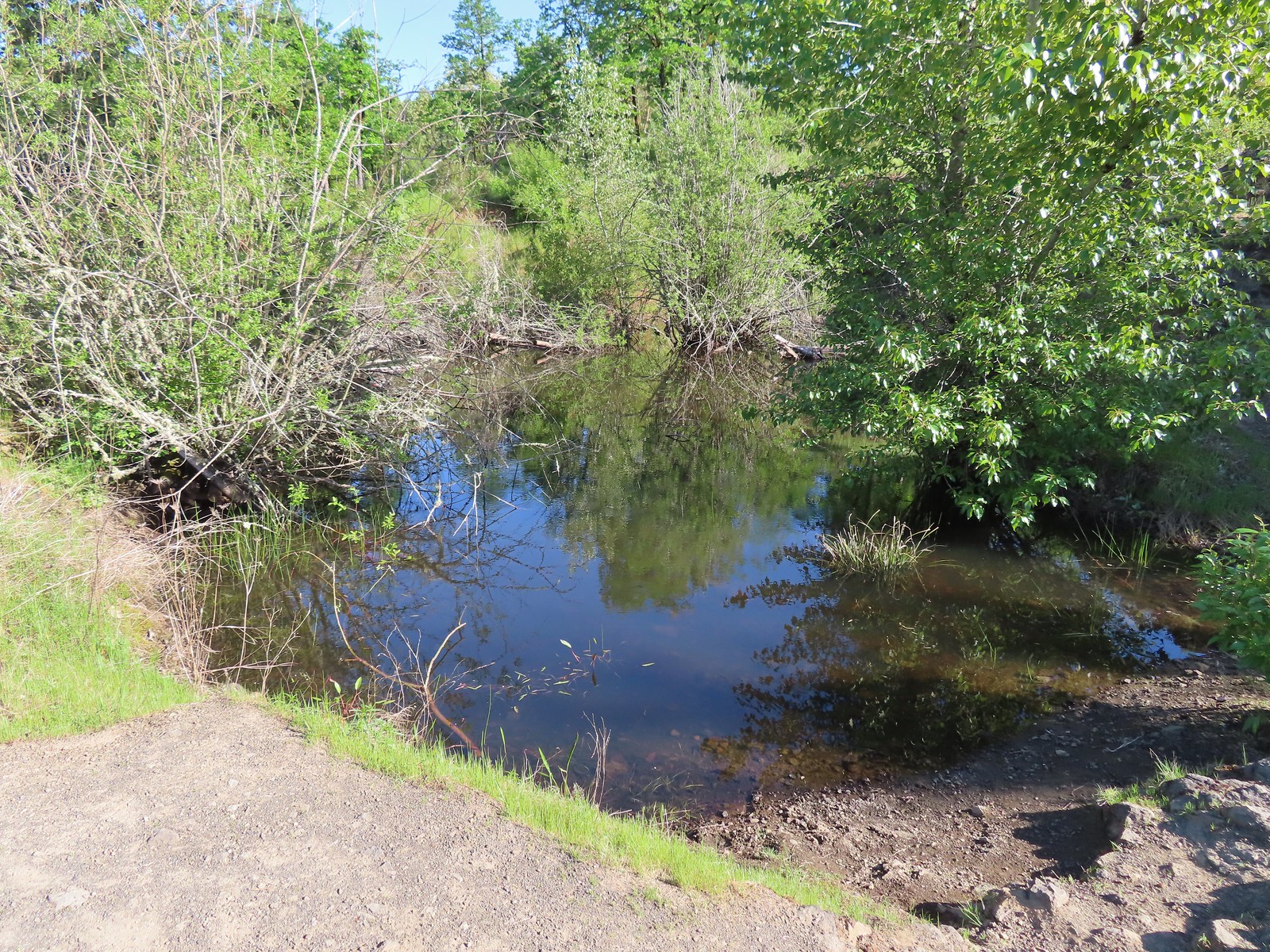 The pond. Red-legged frogs apparently breed here. We didn’t see any frogs but there was a mallard hanging out in the brush.
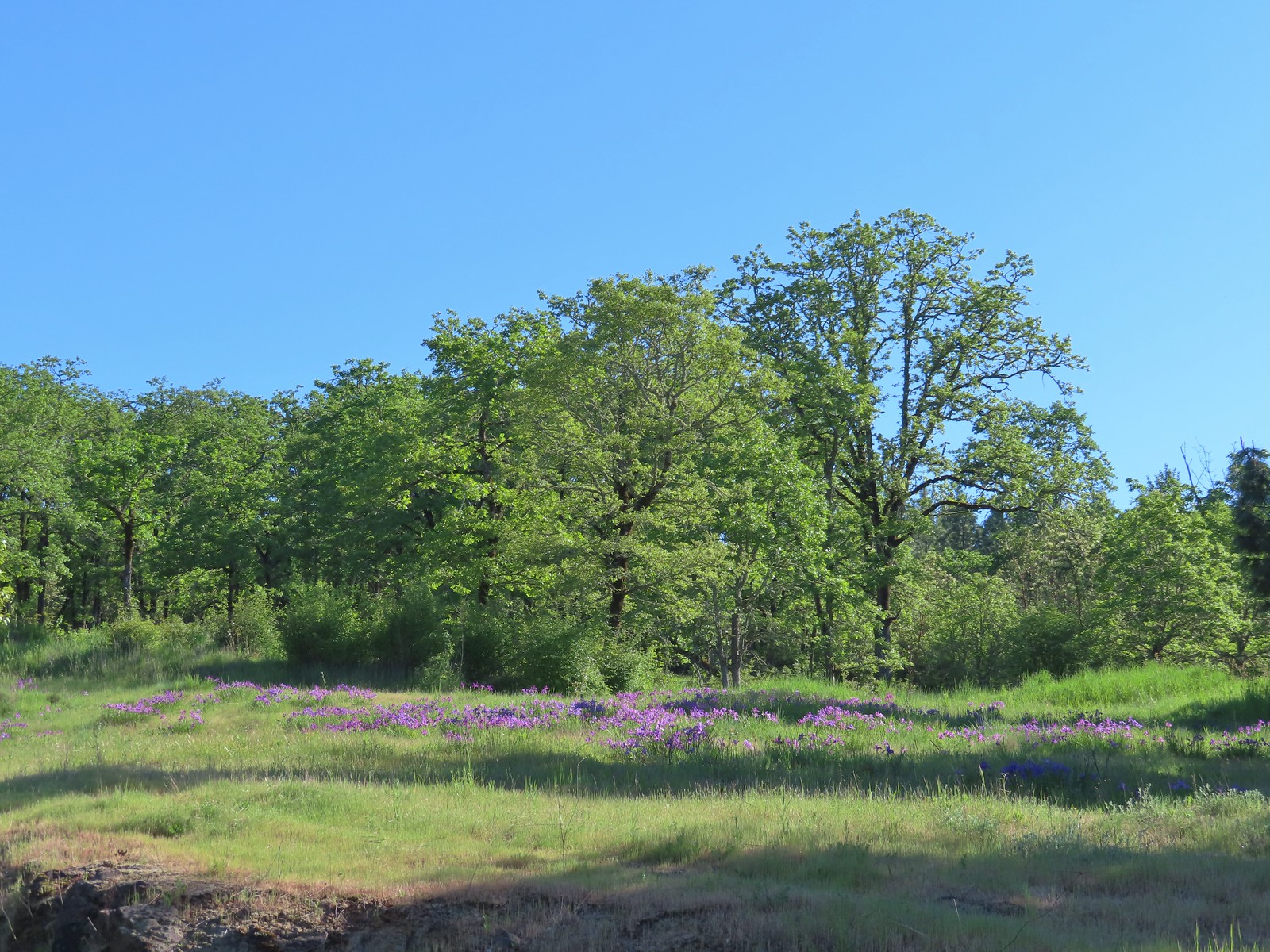 Iris on the hillside above the quarry.
 The Larkspur Loop continuing straight from the Cooper Mountain Loop which turns uphill at the junction.
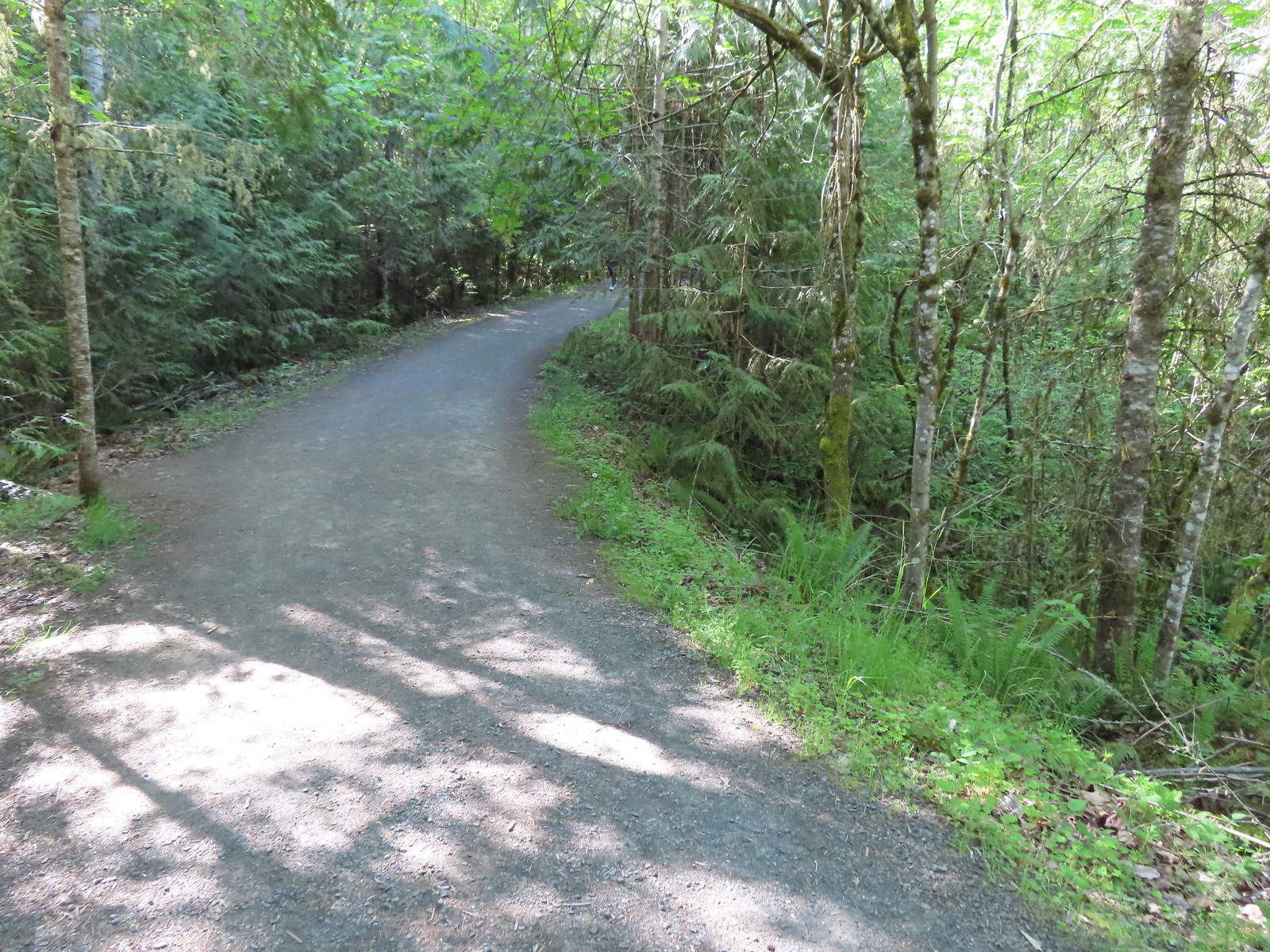 Prior to the loop the Larkspur Loop dips to cross a creek in the trees.
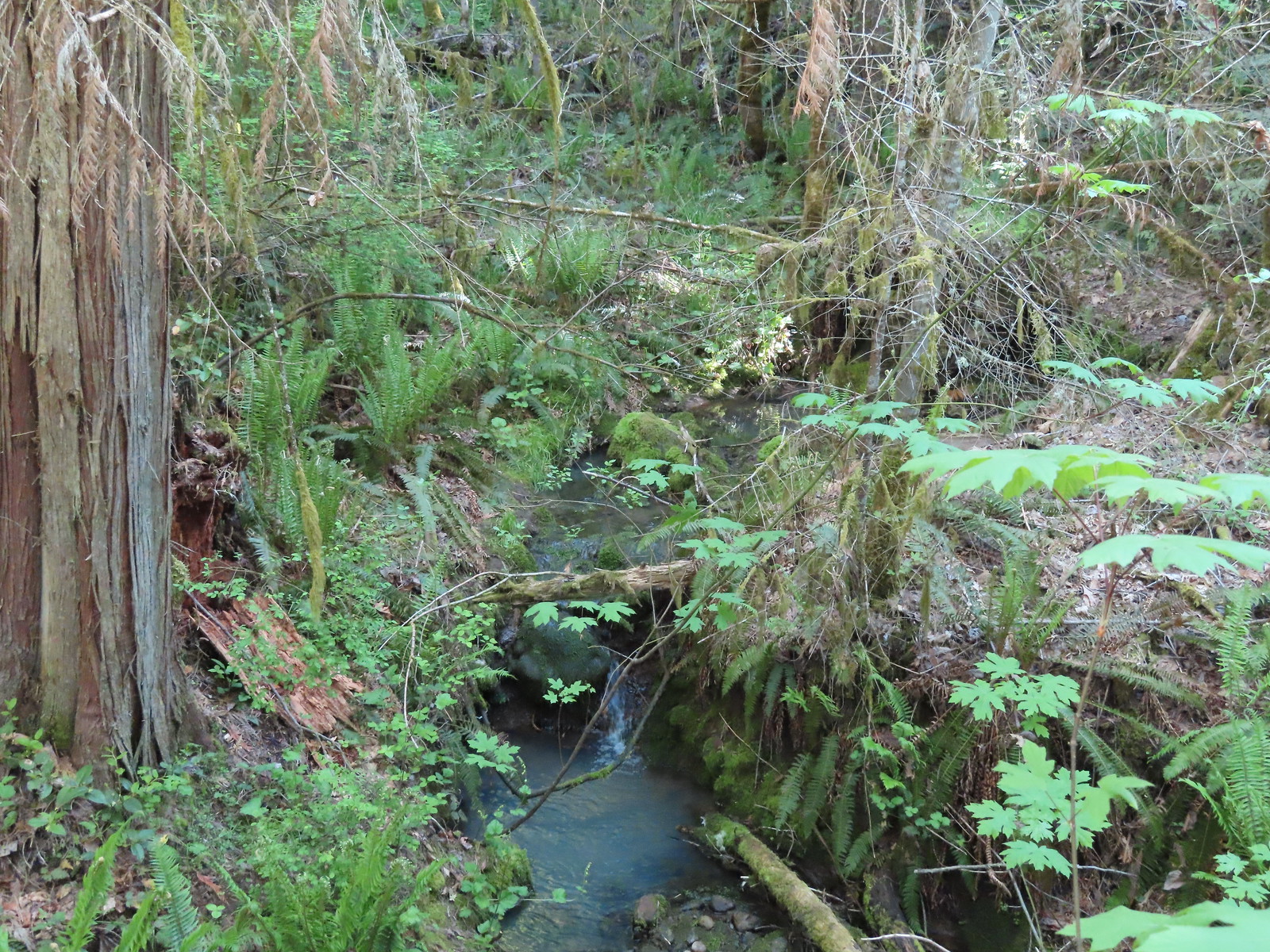 The little creek.
 View from the Larkspur Loop.
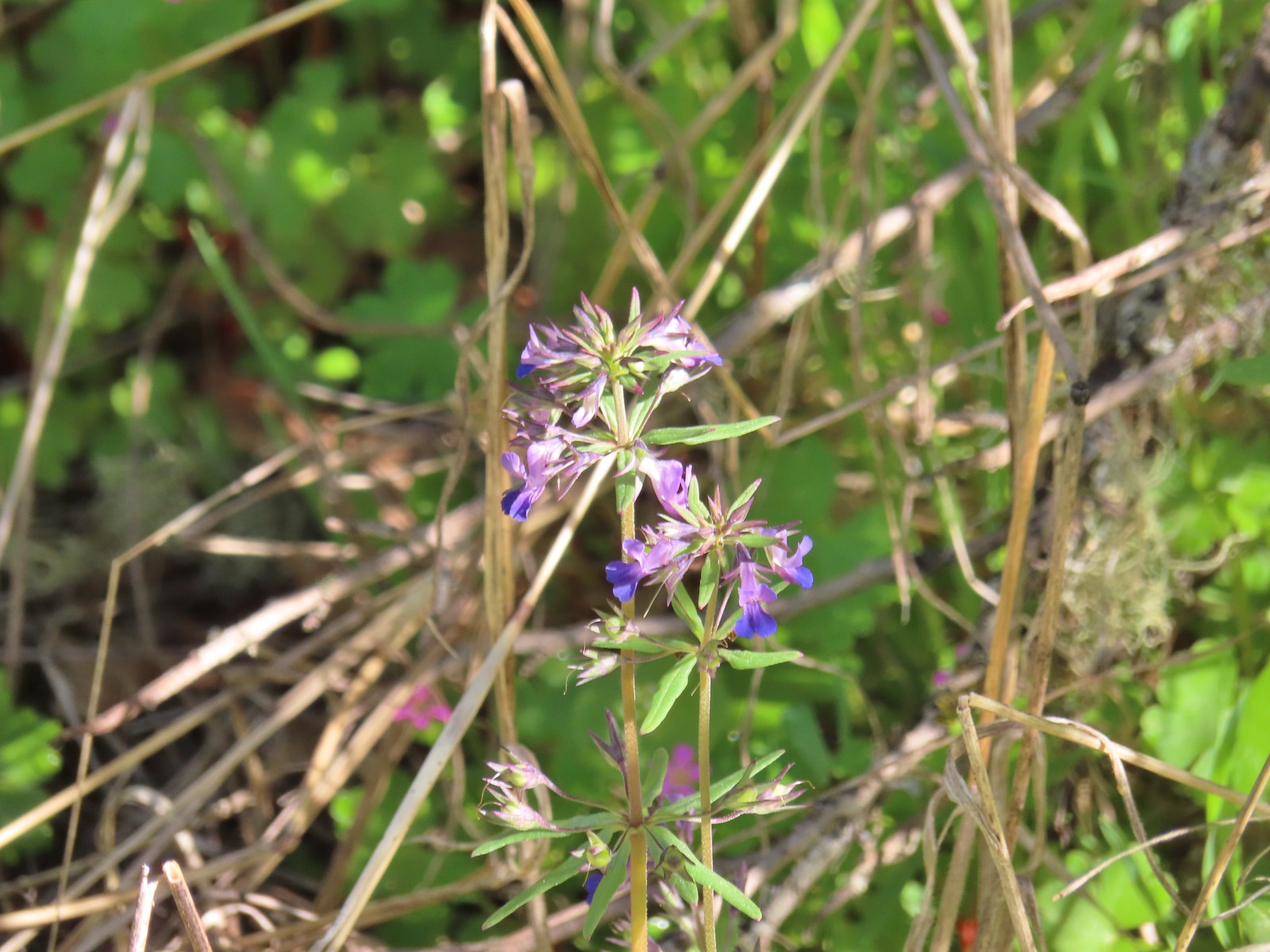 While watching for the larkspur I noticed these giant blue-eyed Mary.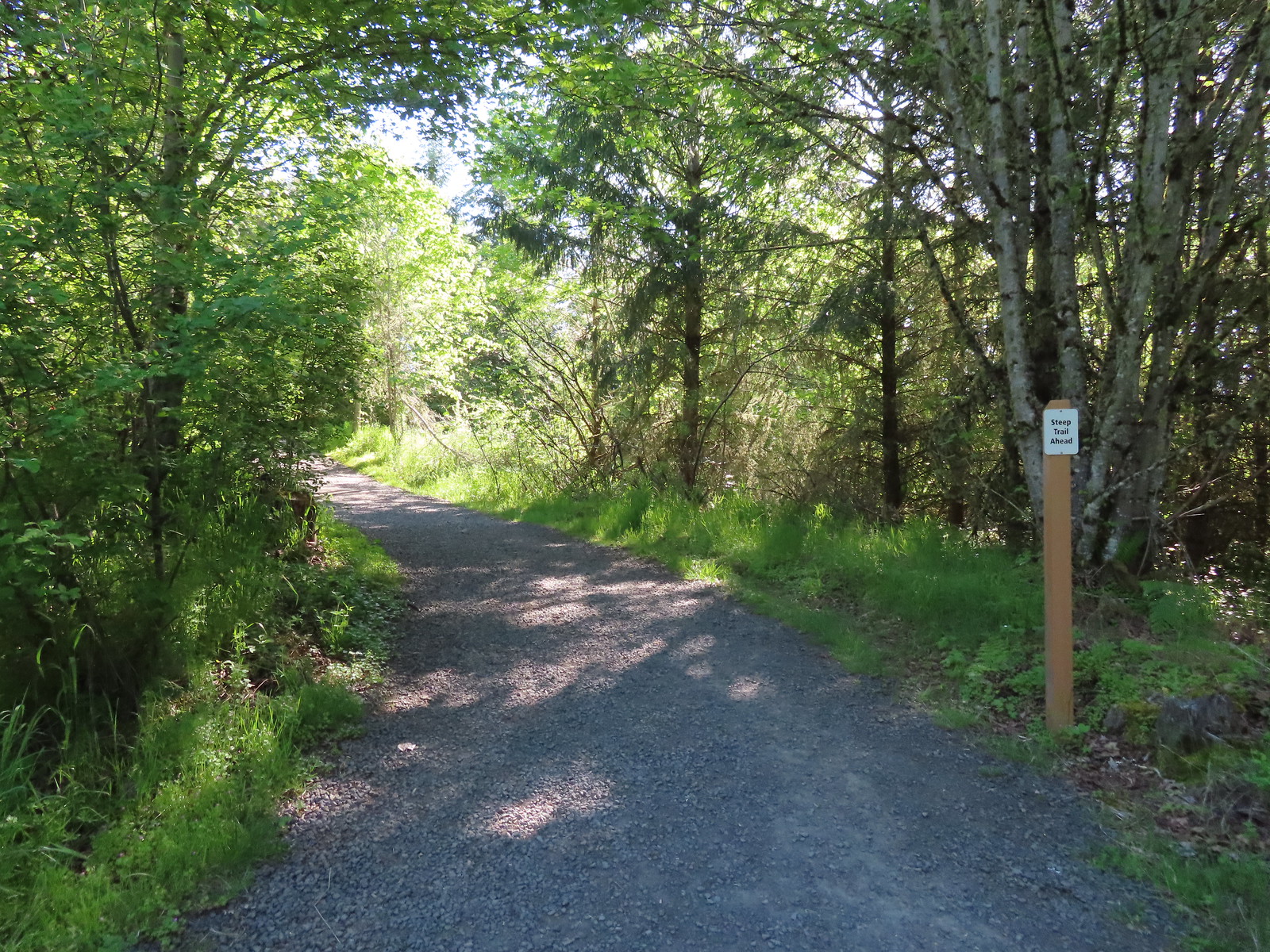
 Blacktail Way to the right.
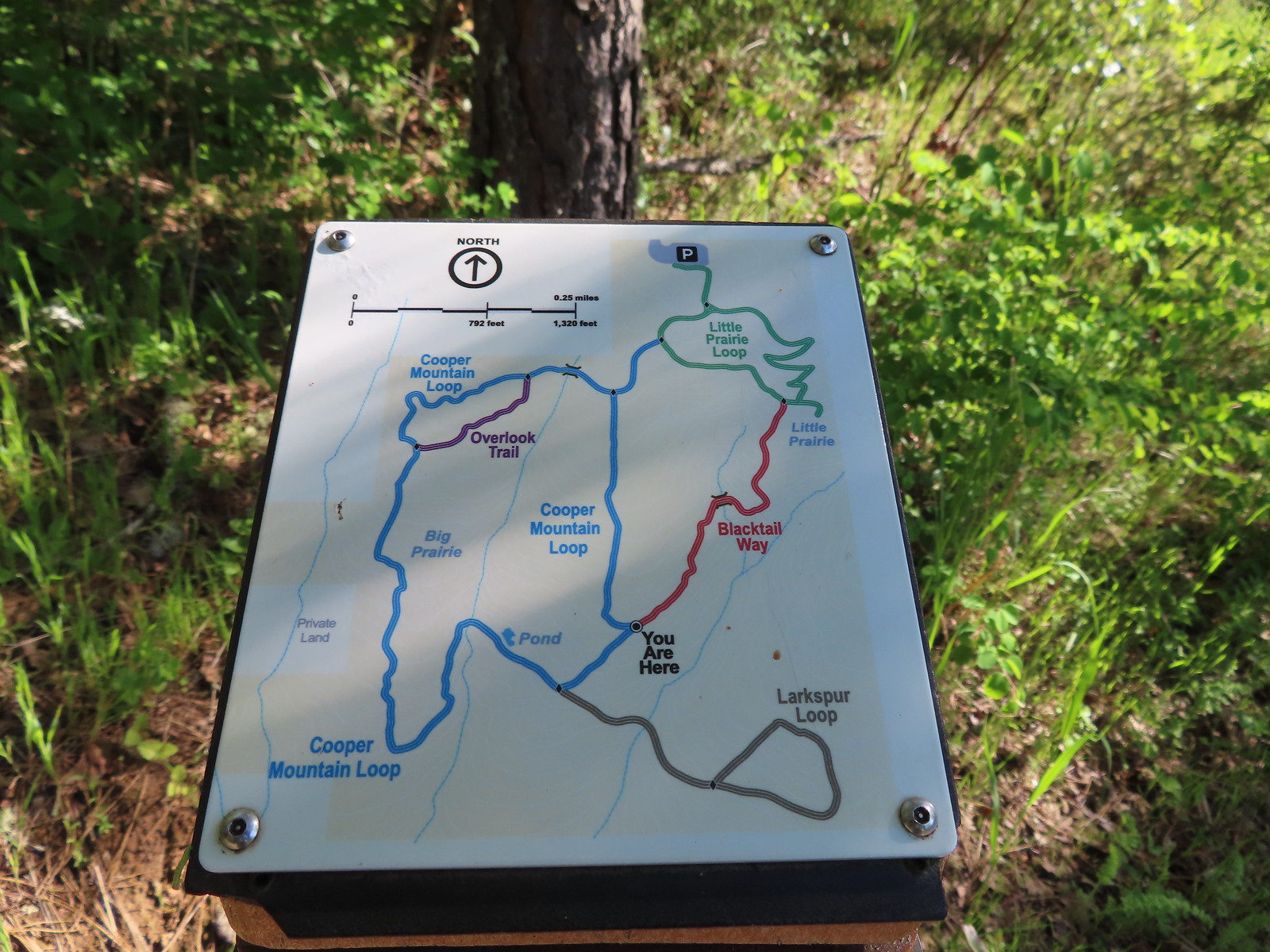 Map at the junction.
 The “earphone” next to the bench here was neat. There was also one at the trailhead and they really allowed you to isolate the sounds of the woods.
 The Little Prairie Loop.
 The pale larkspur also grows in this area but again we were too early.
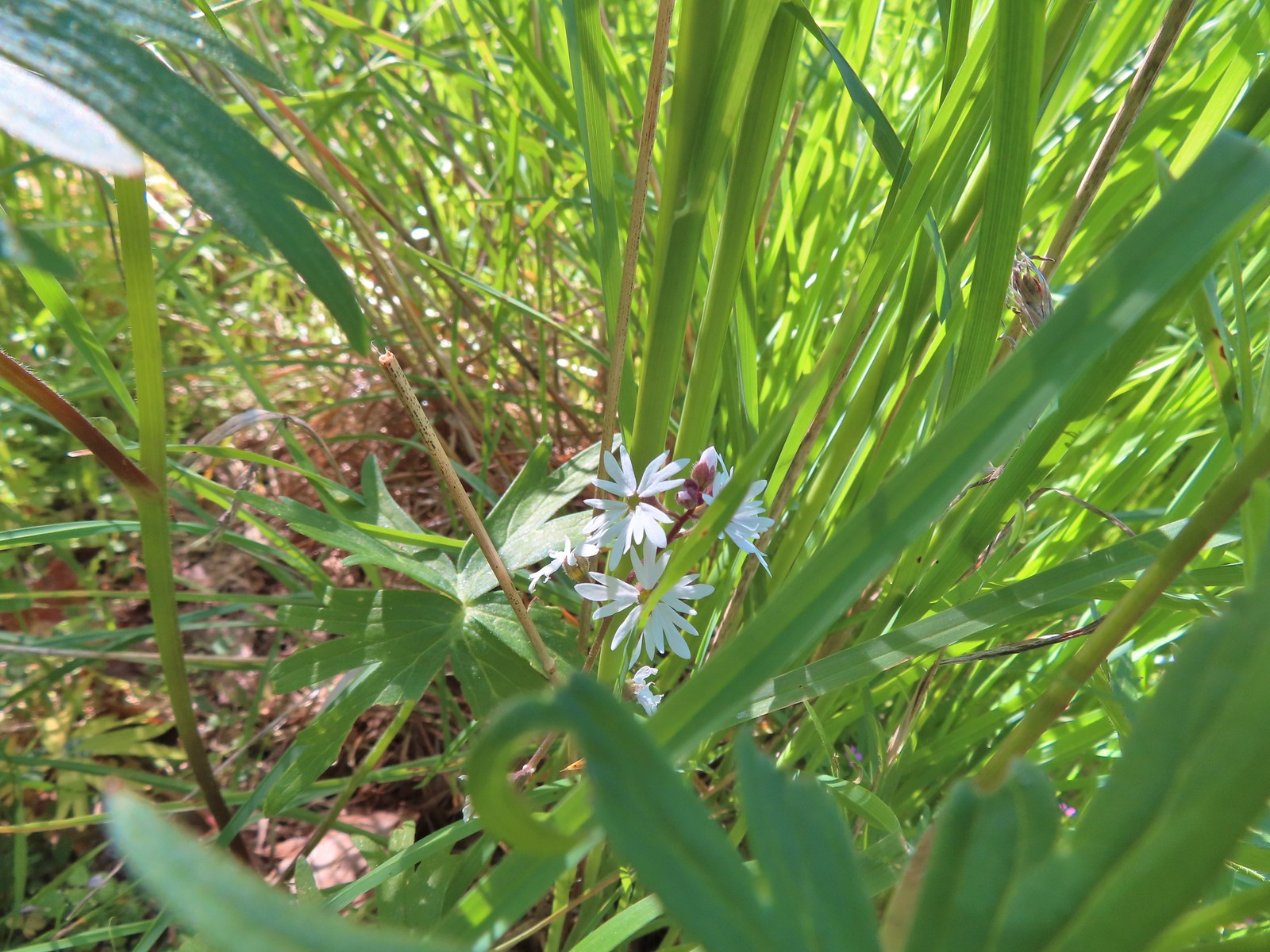 These were the only woodland-stars we spotted.

 Heading toward Acron Plaza on the Tonquin Trail.
 Interpretive sign at Acorn Plaza.
 Lupine and buttercups
 Lupine
 Meadow checker-mallow
 The “elder” oak is between 150-200 years old.

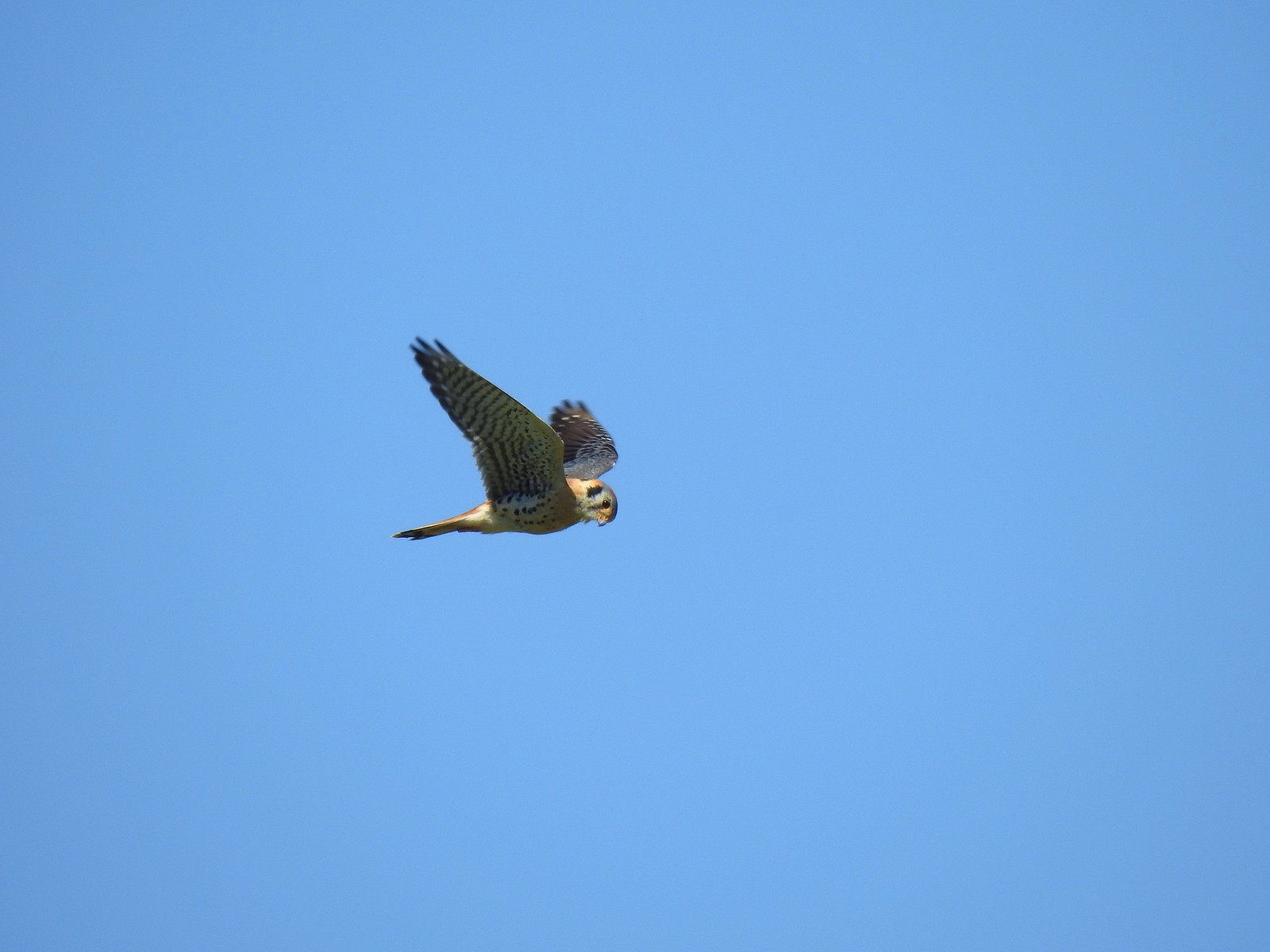 We watched this American Kestral hover on a near vertical line for what felt like quite a while. It eventually dove and attempted to catch something in the grass. We couldn’t tell if it had been successful.

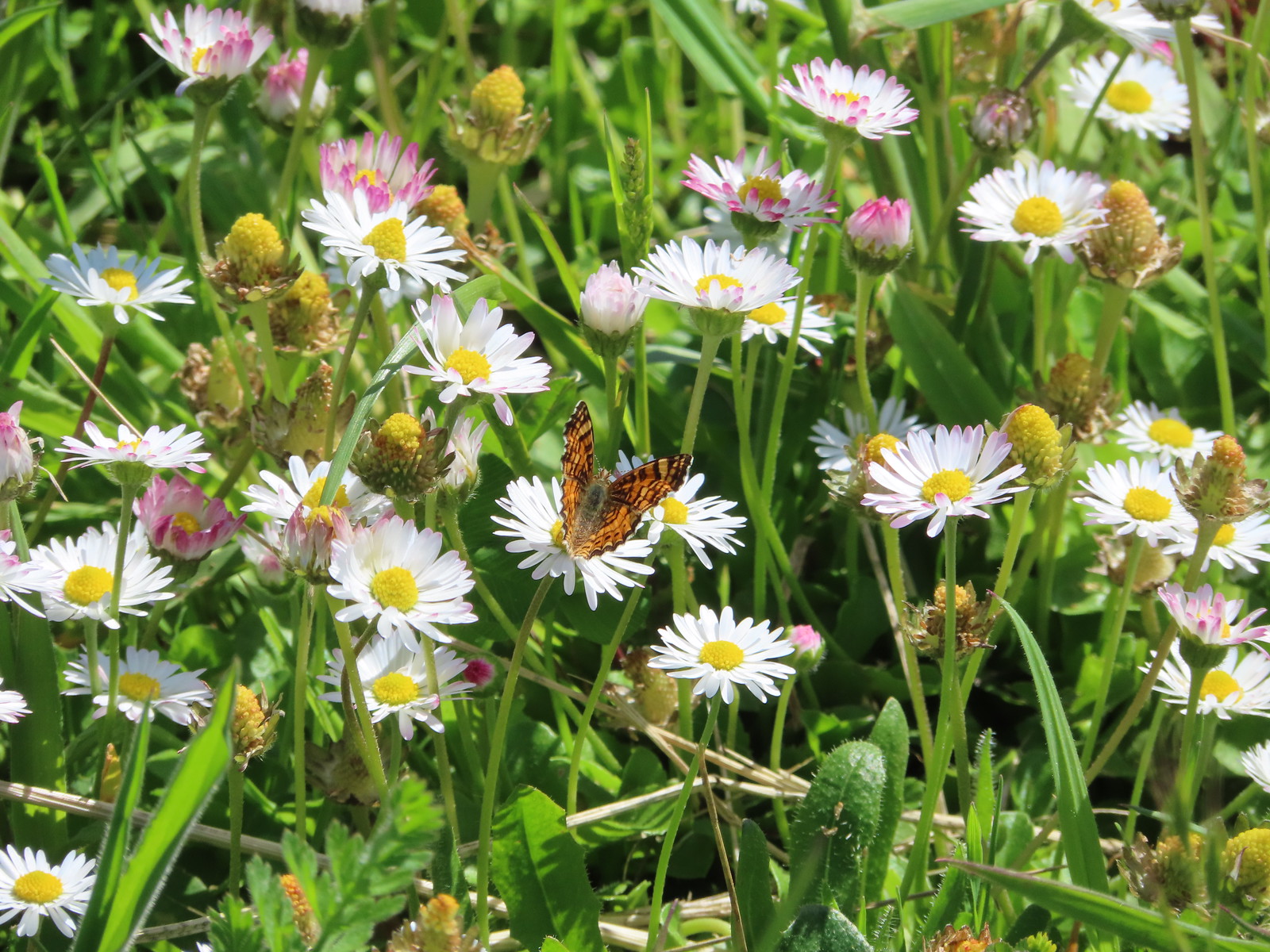 Mylitta crescent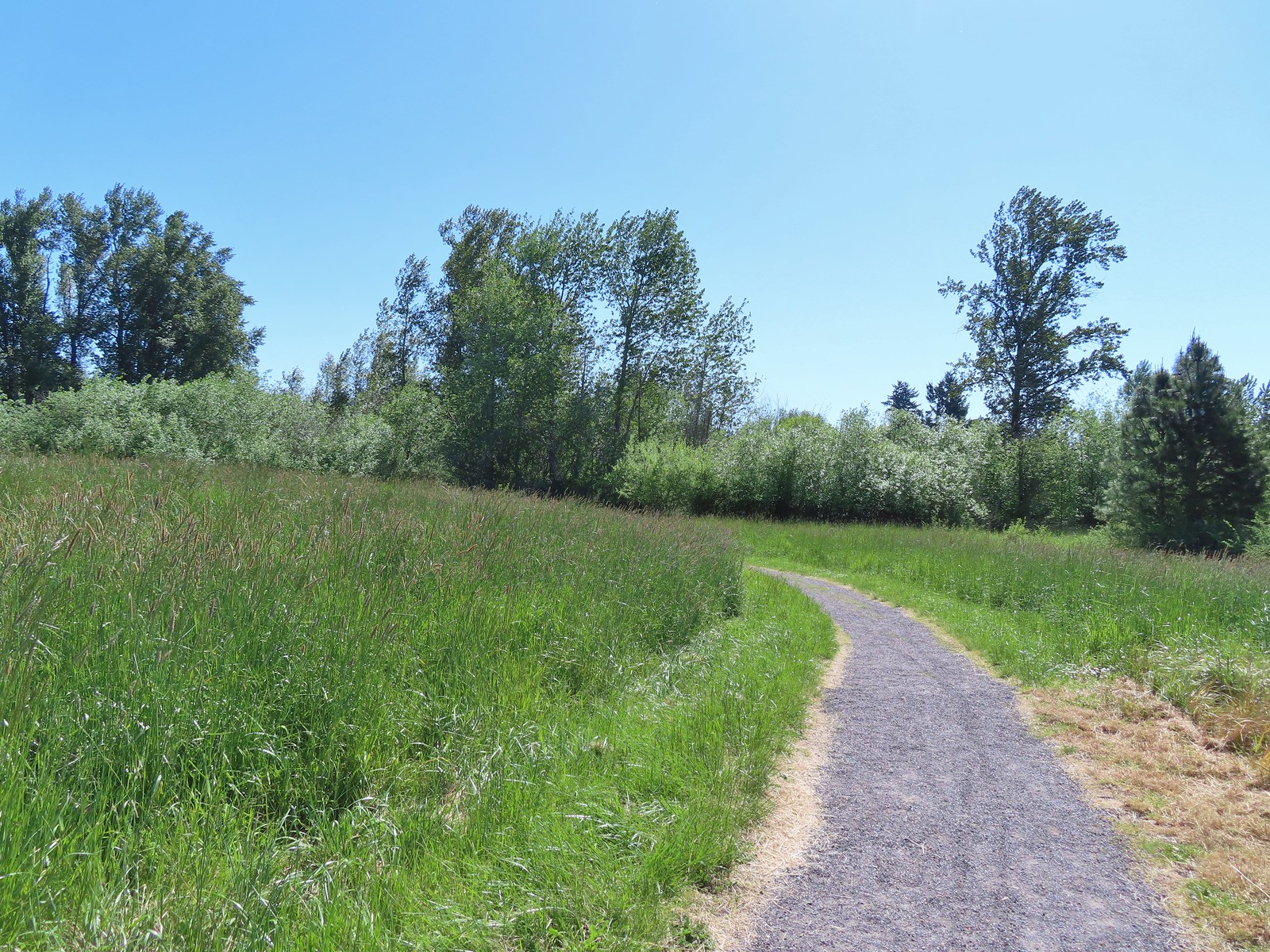
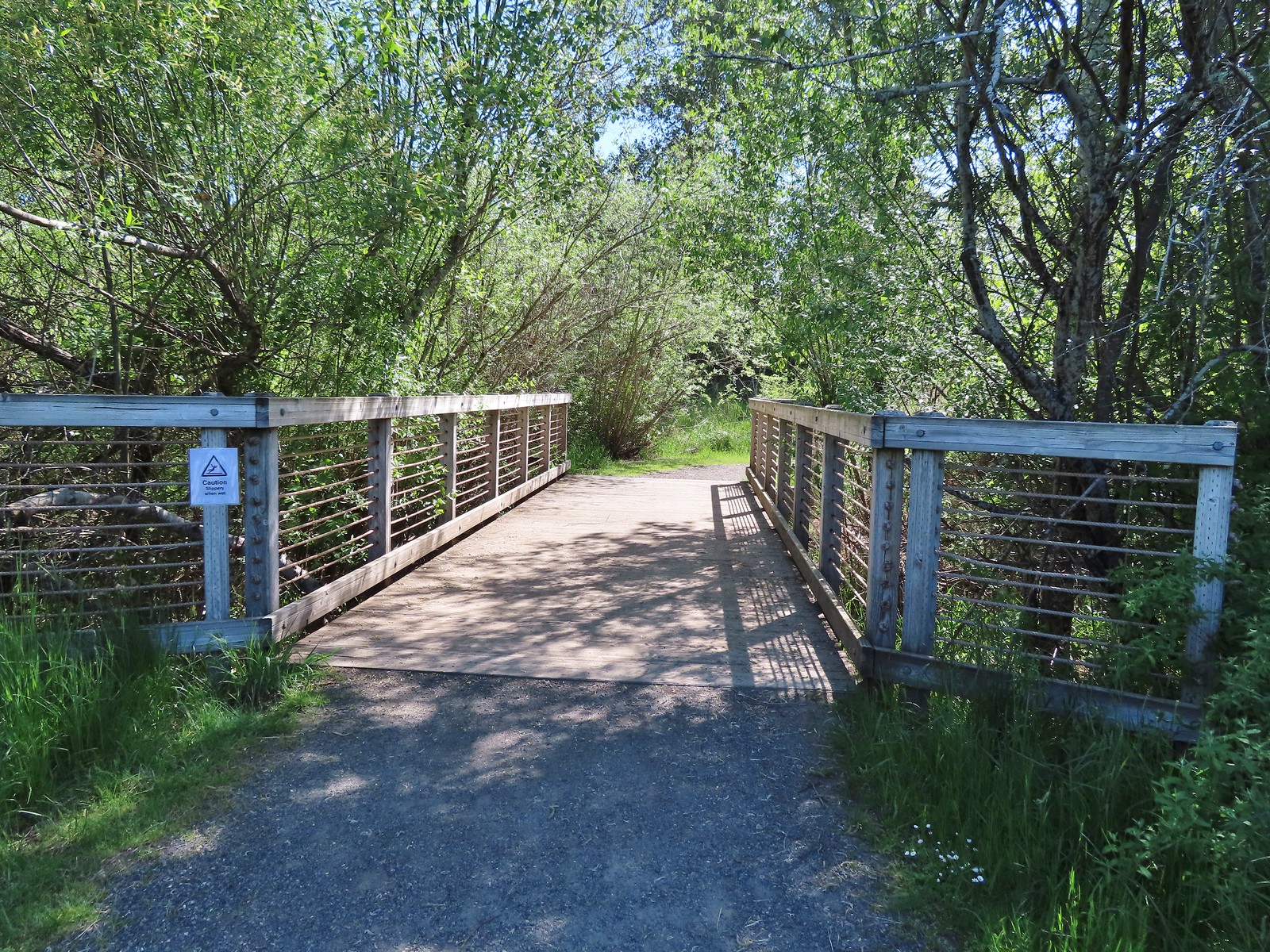 Footbridge over Arrowhead Creek.

 The Lycaenidae family of butterflies remains a mystery to me. This appears to be an Eastern Tailed Blue based on the ventral spots.
 Snow in the Cascade foothills. If you look really closely behind the bigger snow patch to the far-right, you can just barely make out Mt. Jefferson.
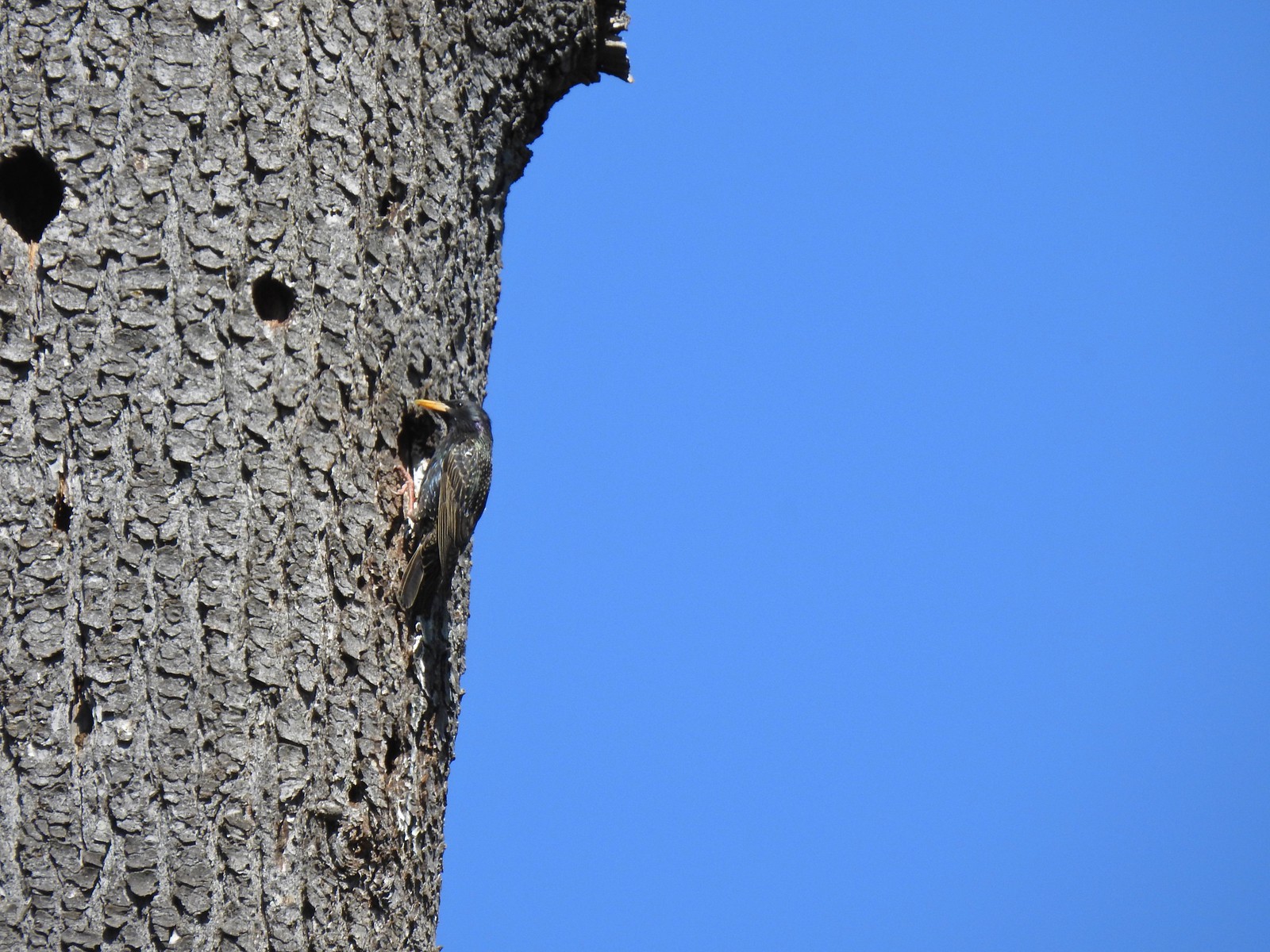 Starling
 Northern flicker
 This scrub jay would not come out from behind the oak leaves.
 There was a lot of candy flower beneath the trees.


 Mushrooms along the Legacy Creek Trail.
 Violets, candy flower and the invasive herb robert (pink).
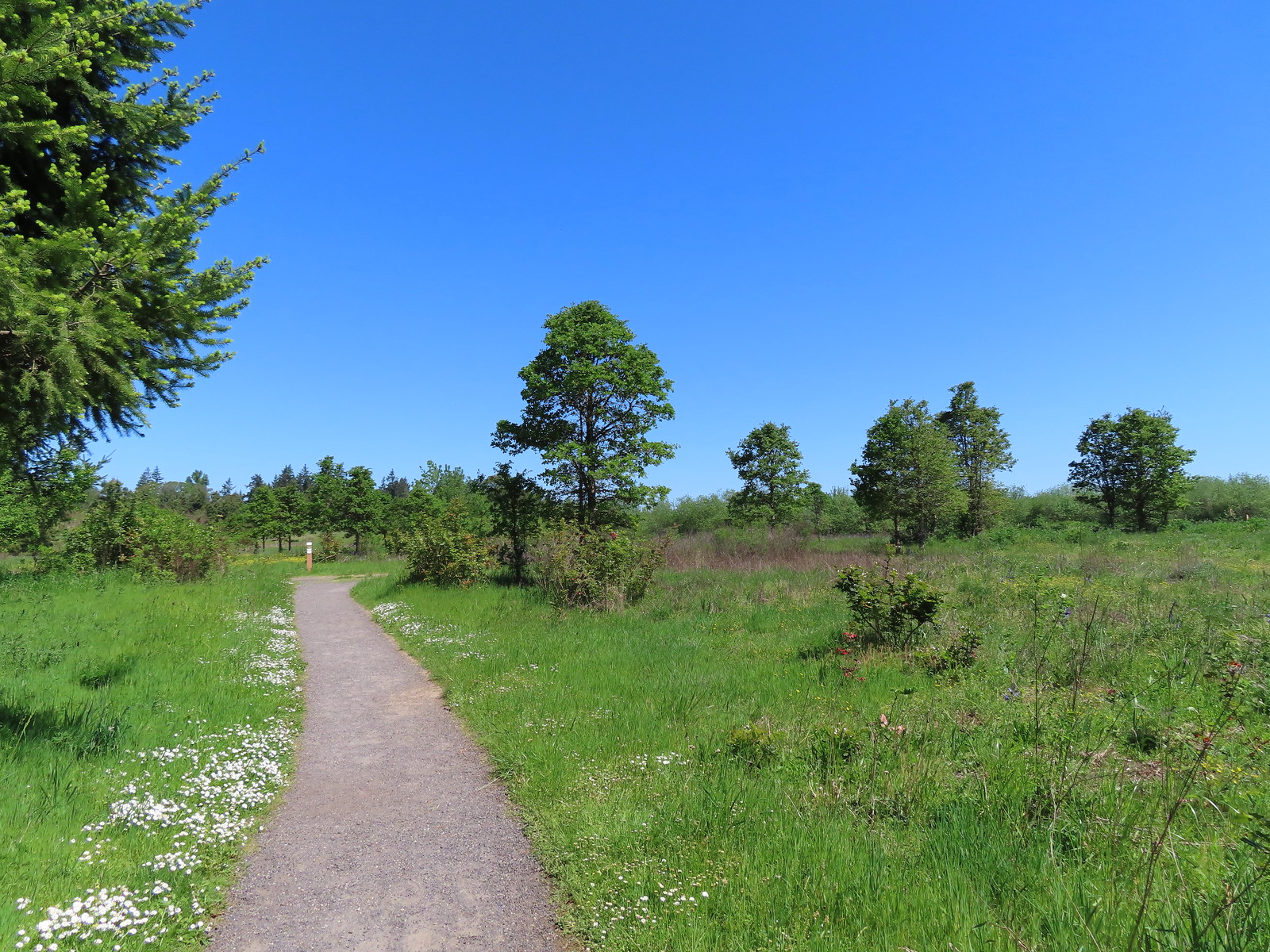 Coming up to Coyote Way.
 Back on the Tonquin Trail and heading for the trailhead.


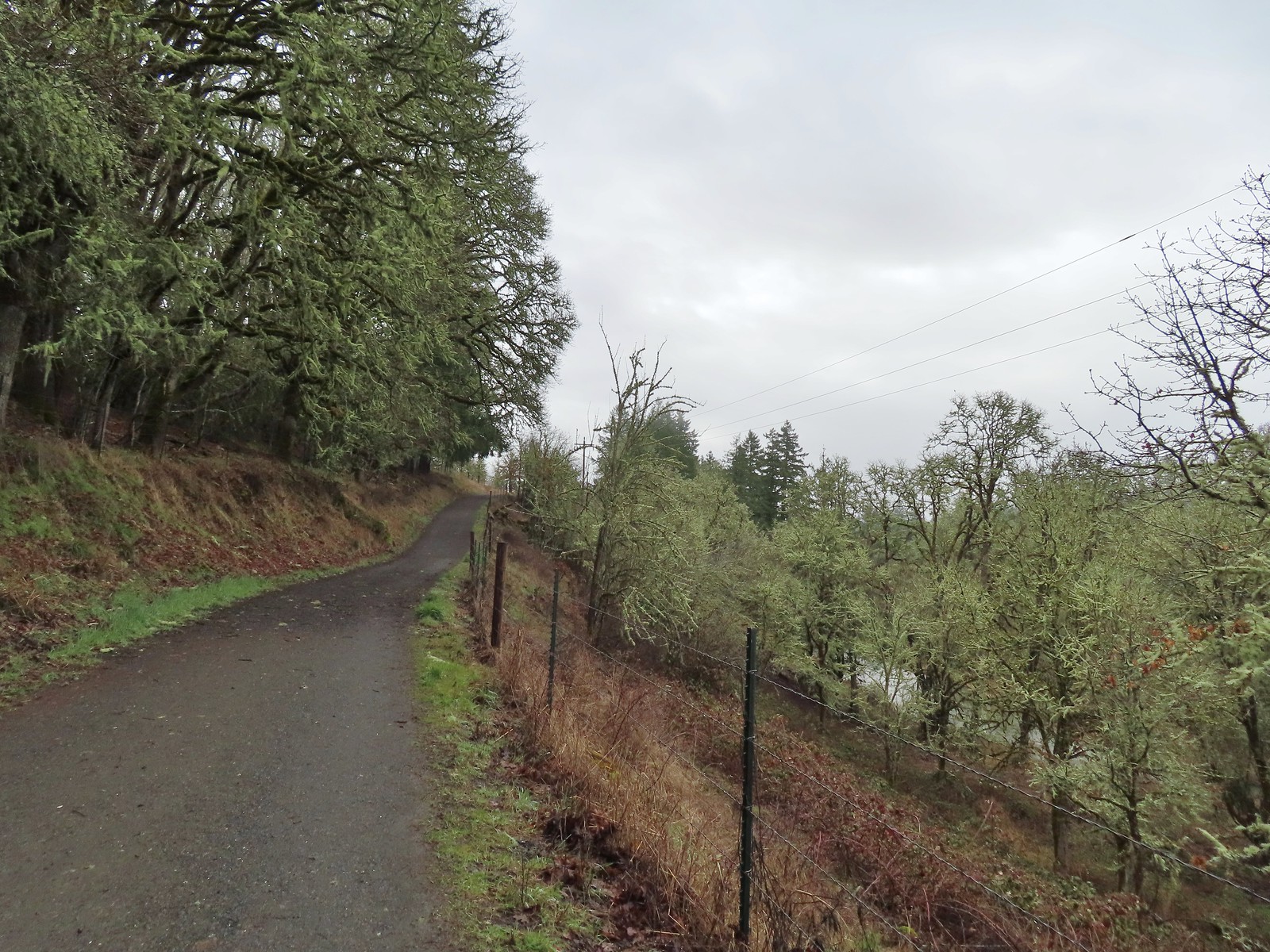
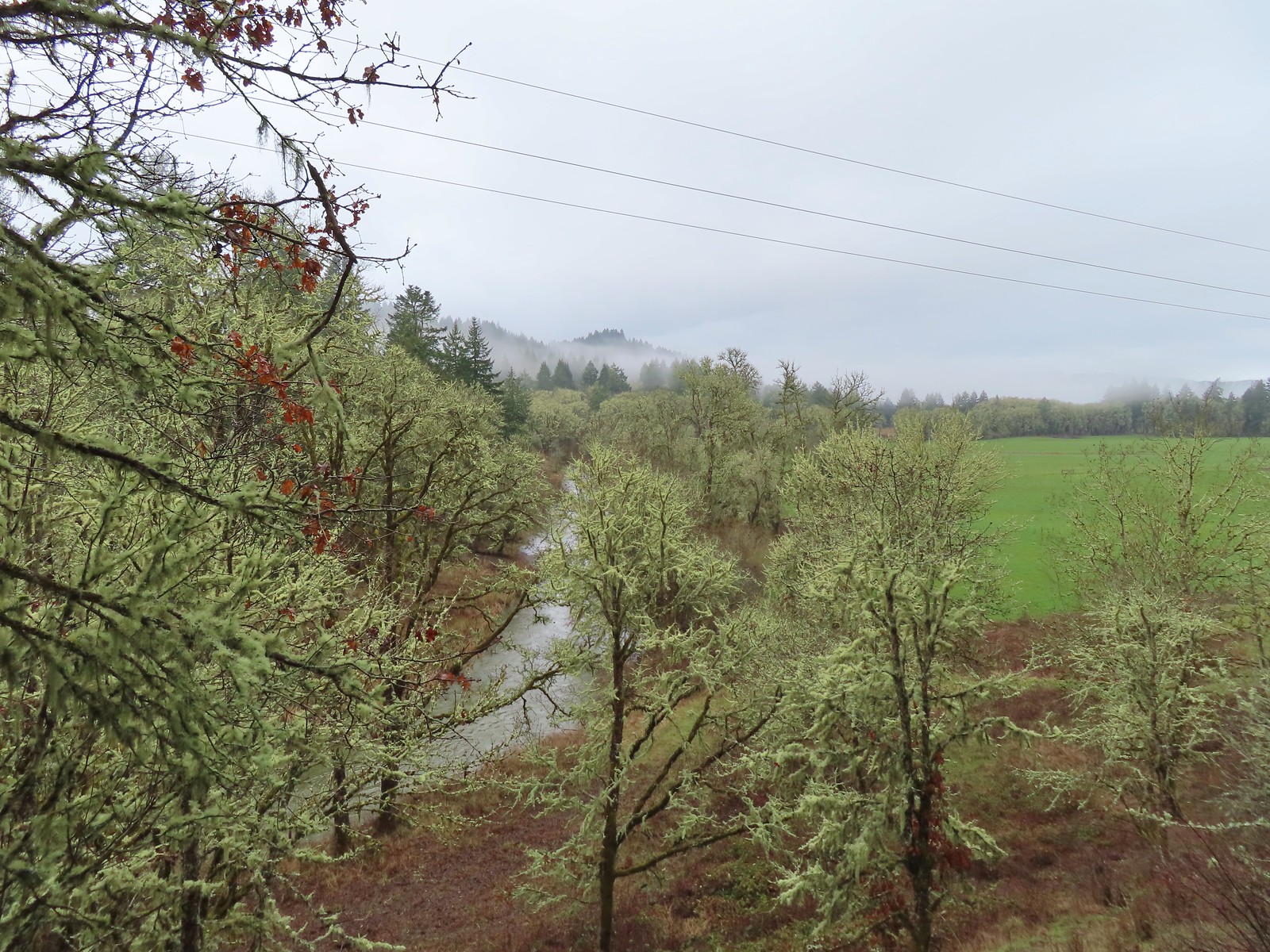
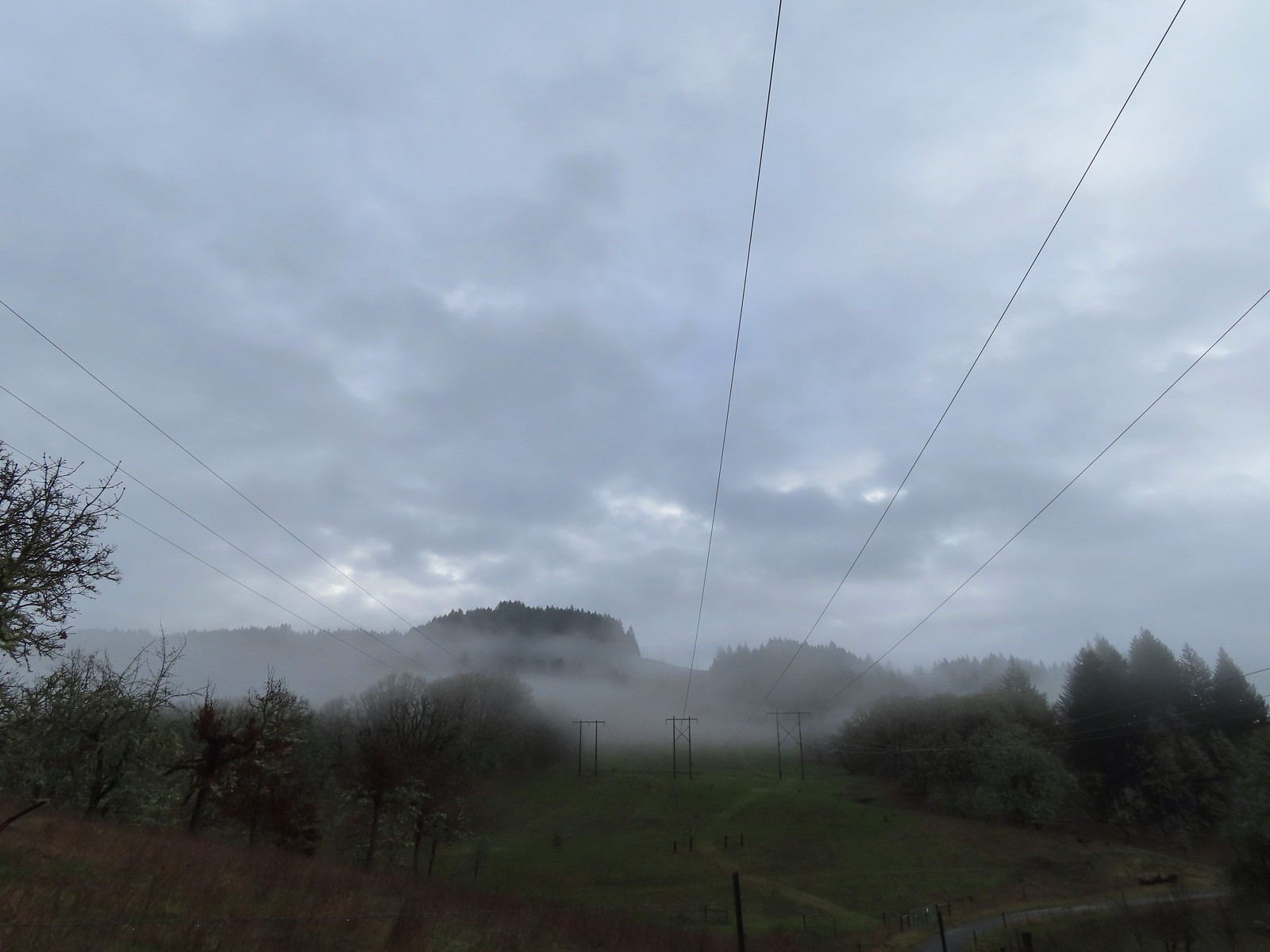 The forecast was for patchy morning fog with a chance of light showers between Noon and 3pm and partly sunny skies. They got the patchy morning fog part right.
 The first of three abandoned cars we’d pass on the day. This one was in a field on a hillside before entering the Crestmont Land Trust.
 Interpretive signs greeted us as we entered the Crestmont Land Trust.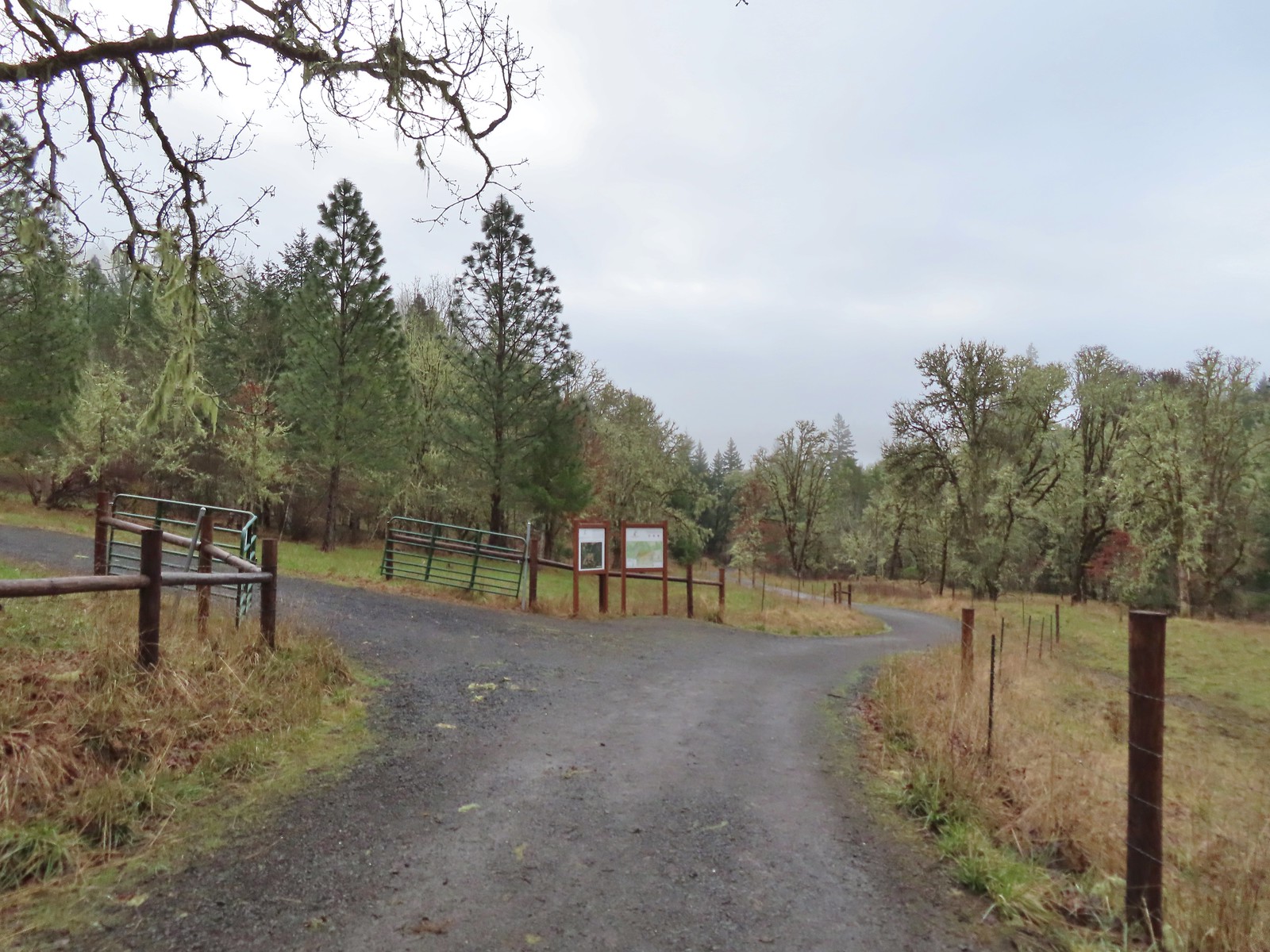
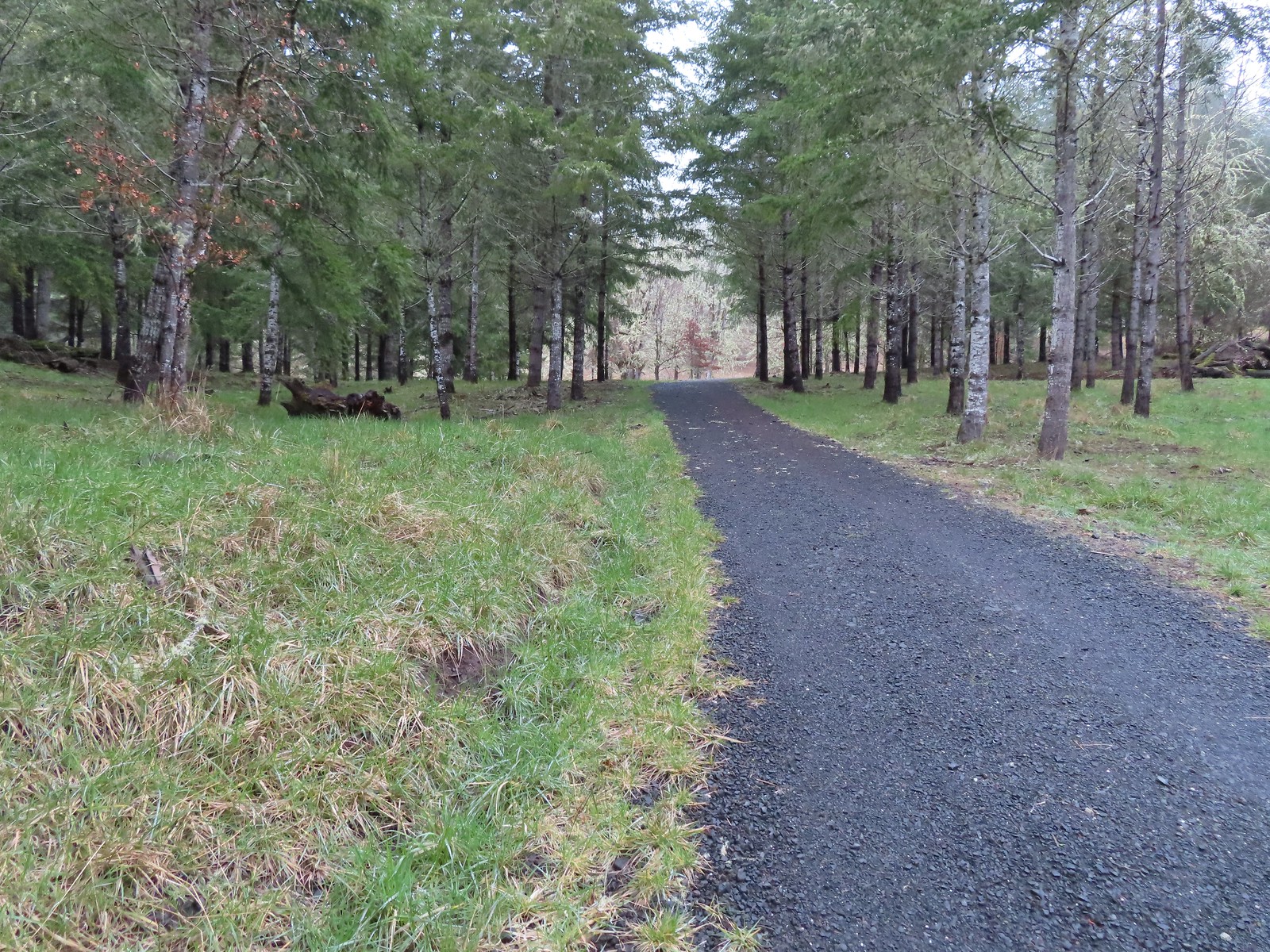
 The gazebo housed a small table with benches. A particularly nice touch was the lack of back on the bench that wasn’t facing the view which allows you to sit facing the view.
 The view from the gazebo.
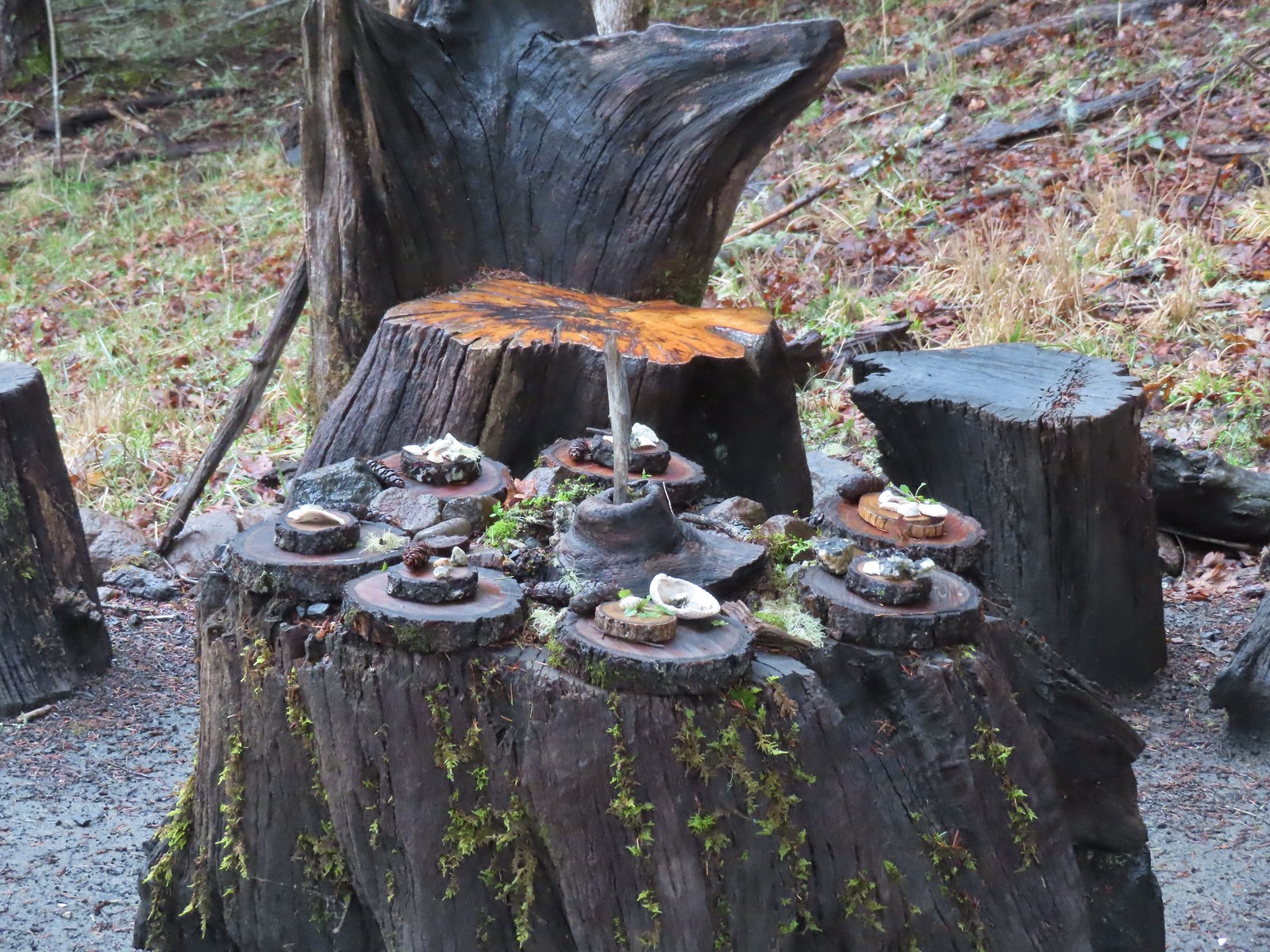 Not sure what the most recent gathering was but there was an interesting variety of items around the table.
 Another bench along the trail.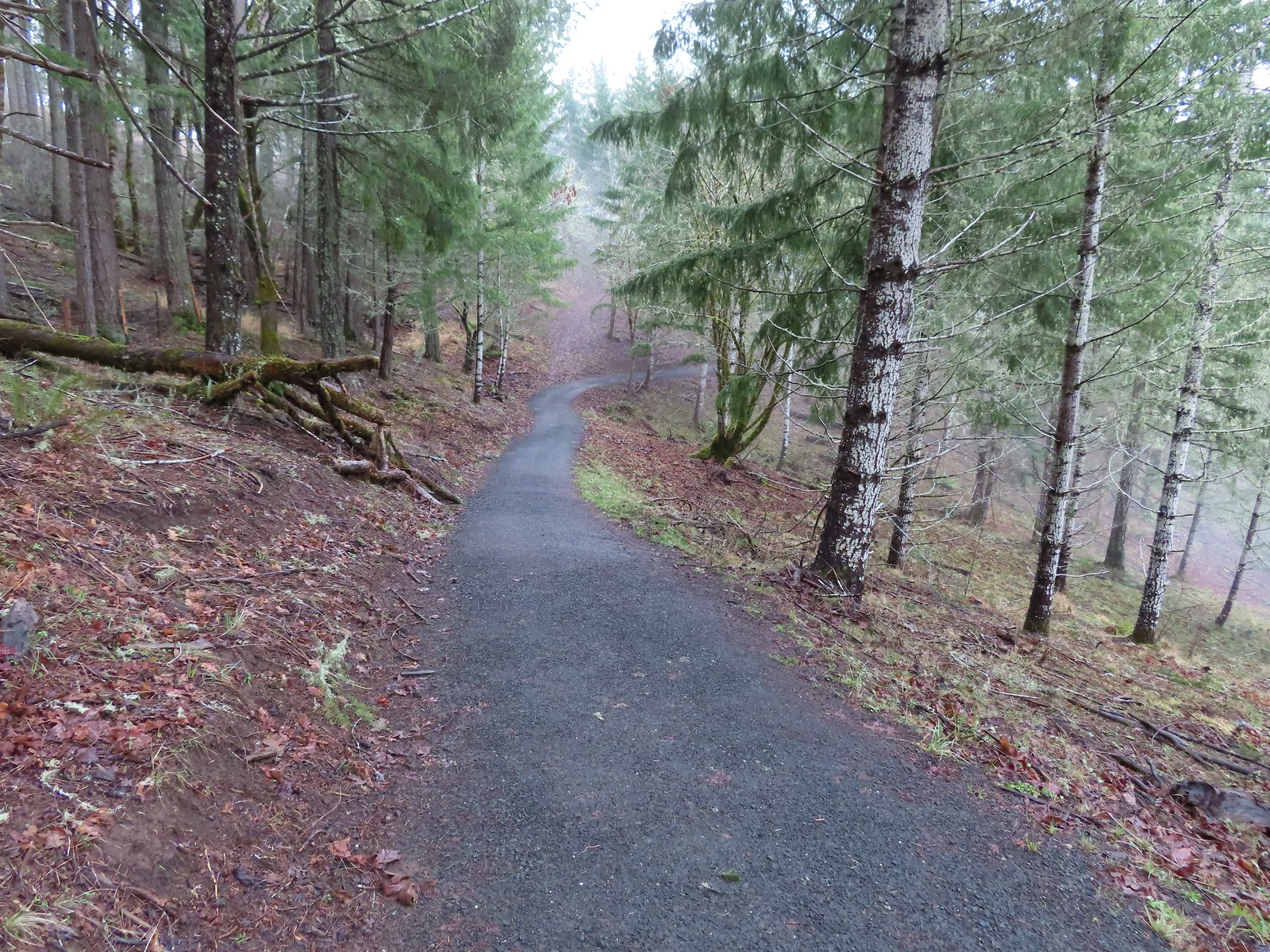
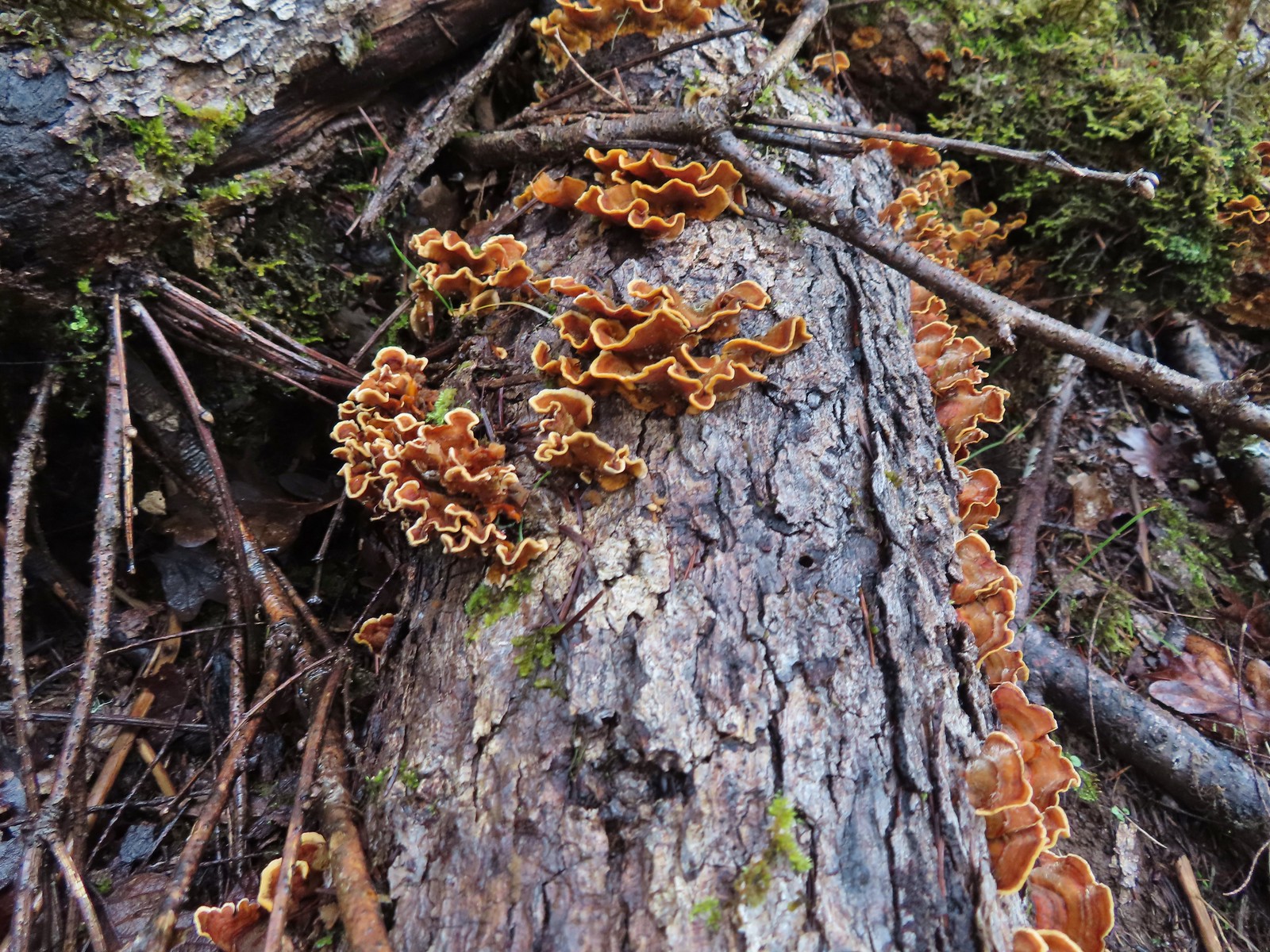 Turkey tails
 The Cardwell Hill Trail in the valley below the North Trail.
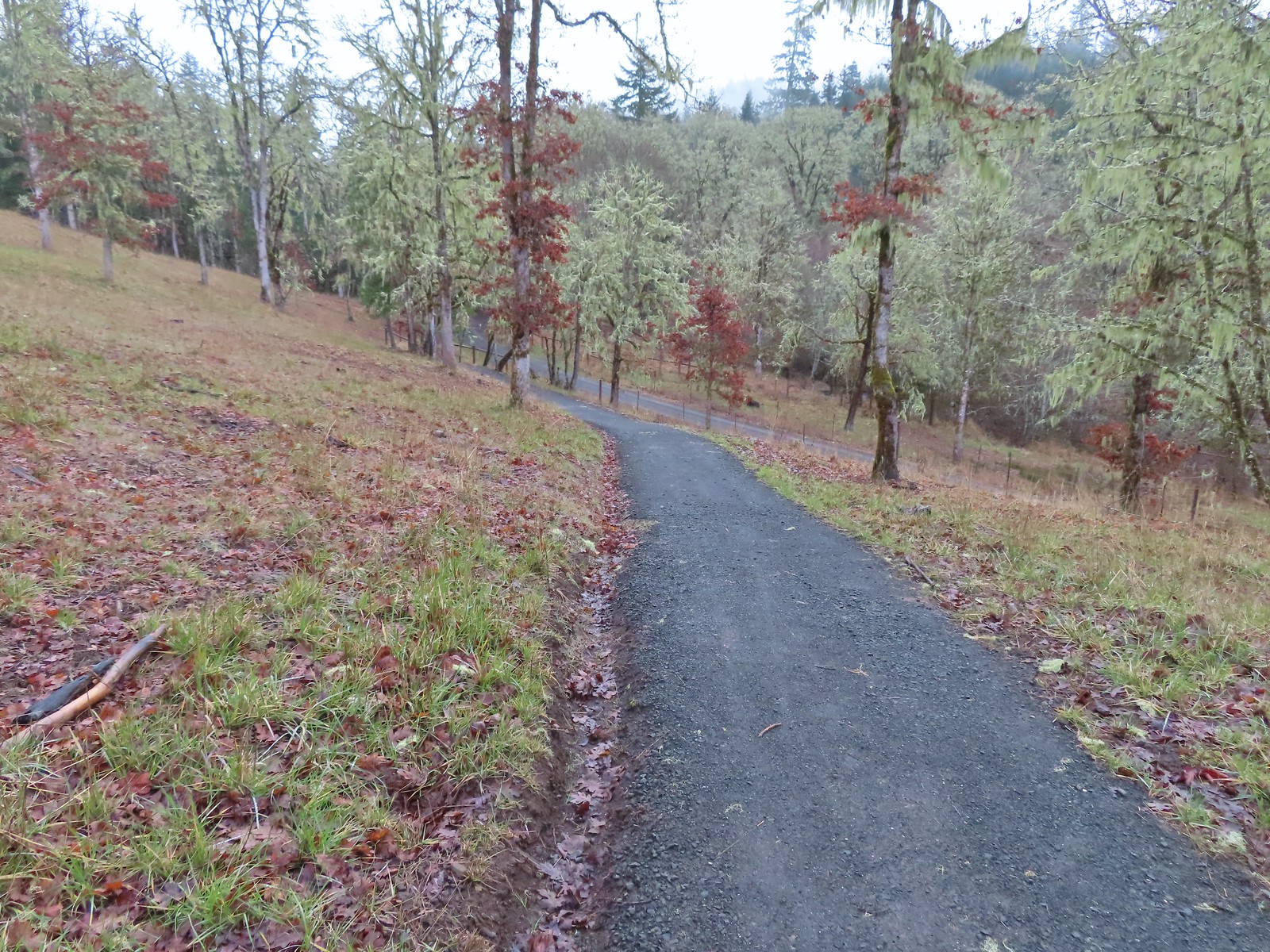 Dropping down to the Cardwell Hill Trail.
 The first spur didn’t have any signage
 The second spur had a marker naming it the Fitton Green North-South Trail.
 Trail marker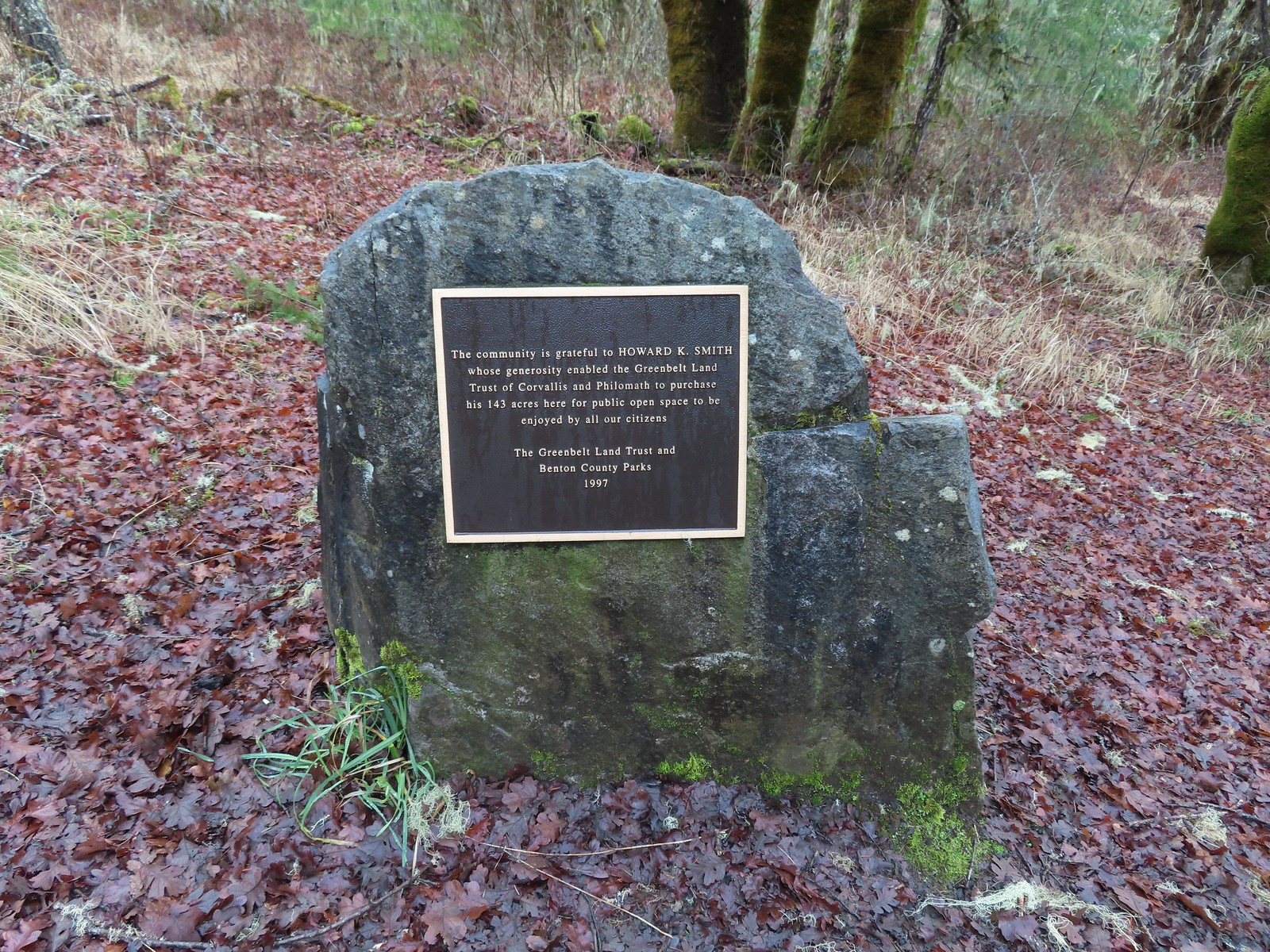

 Dimple Hill in the McDonald Forest (
 The other two abandoned cars, these were outside of the natural area.
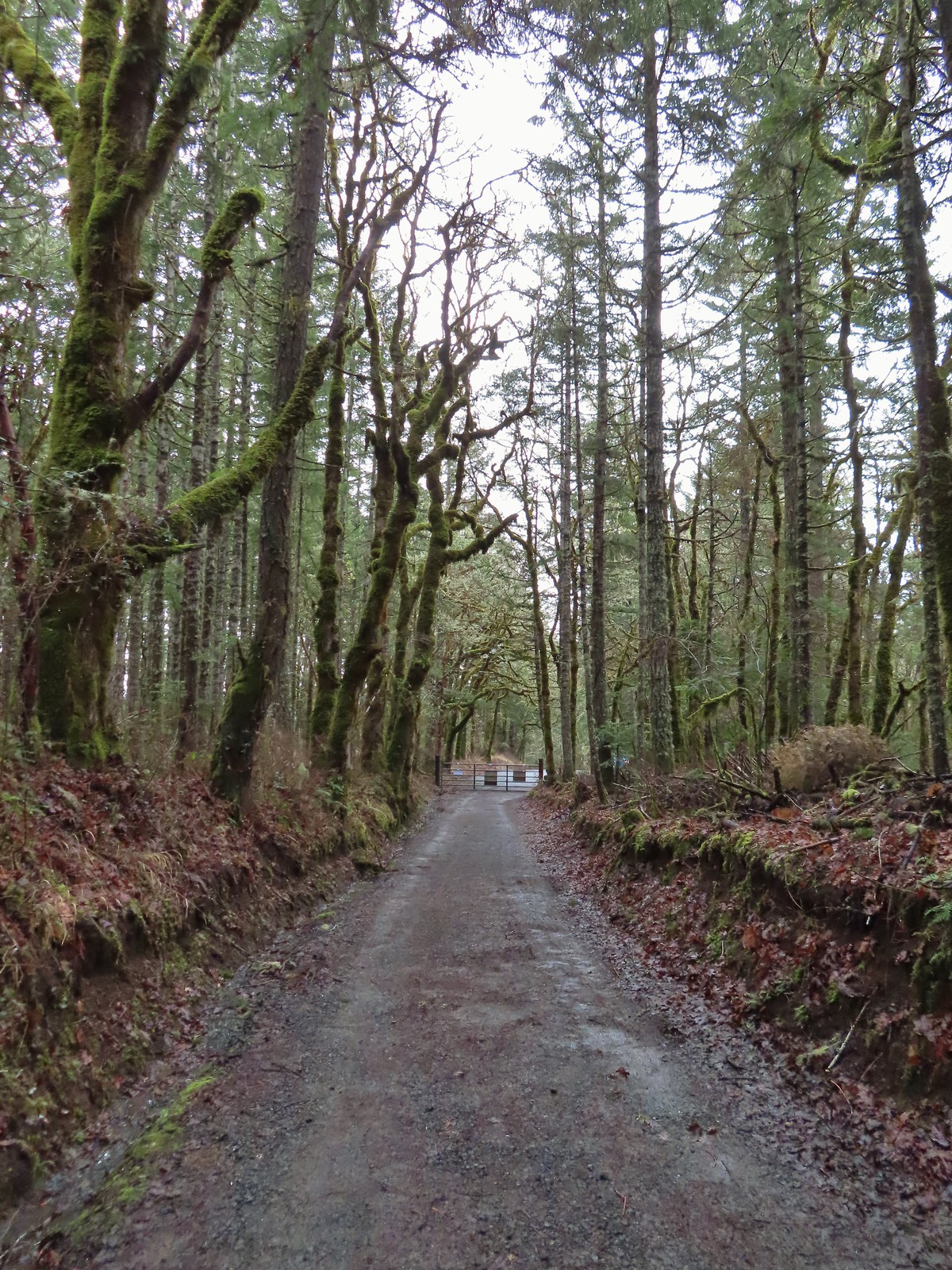 Arriving at the east trailhead.
 One of the more impressive trees along this section of the Cardwell Hill Trail
 The Fitton Green North-South Trail.
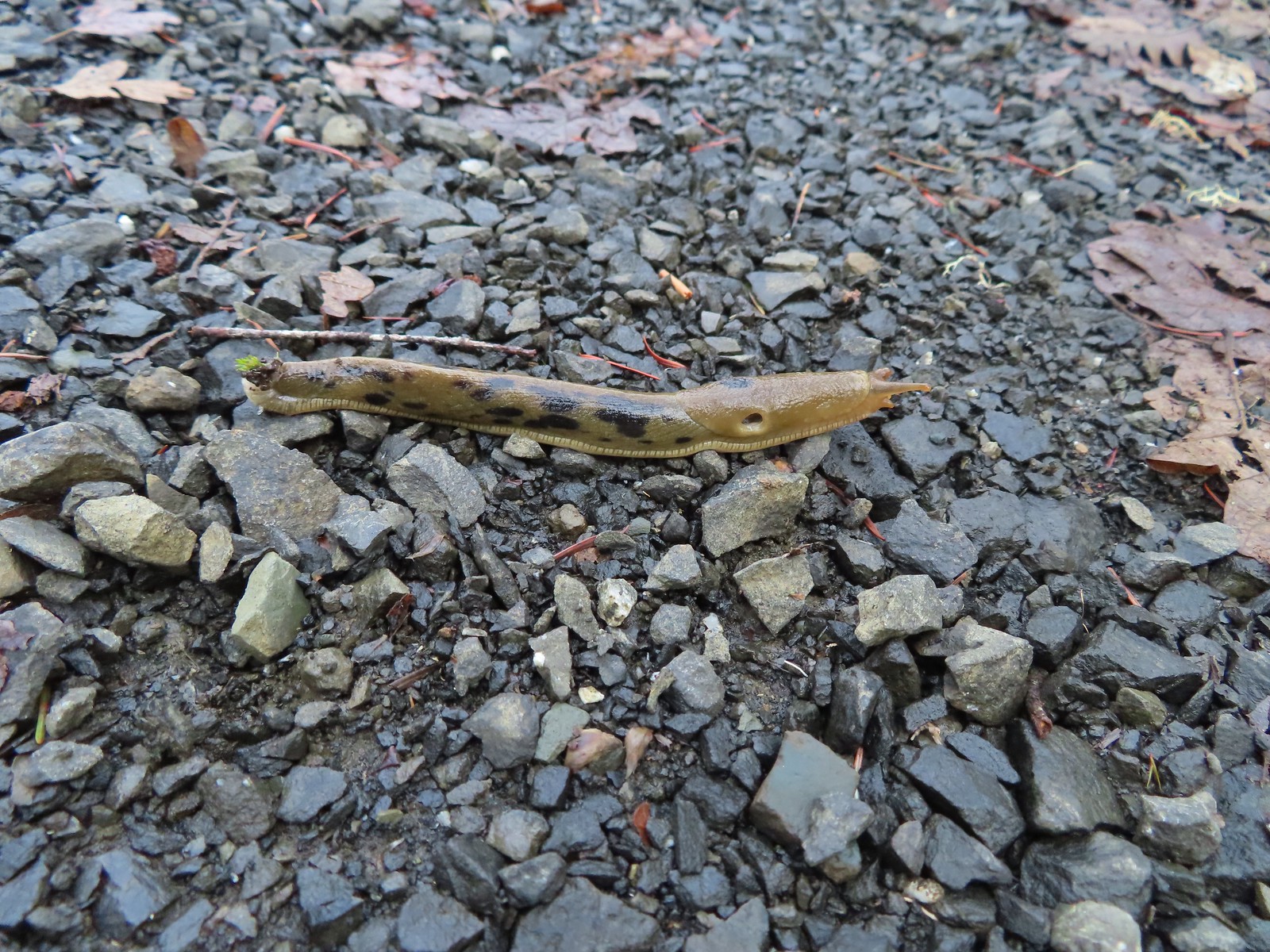 Watch your step.
 Amy’s Trail
 The clouds were beginning to break up as we climbed up this trail.
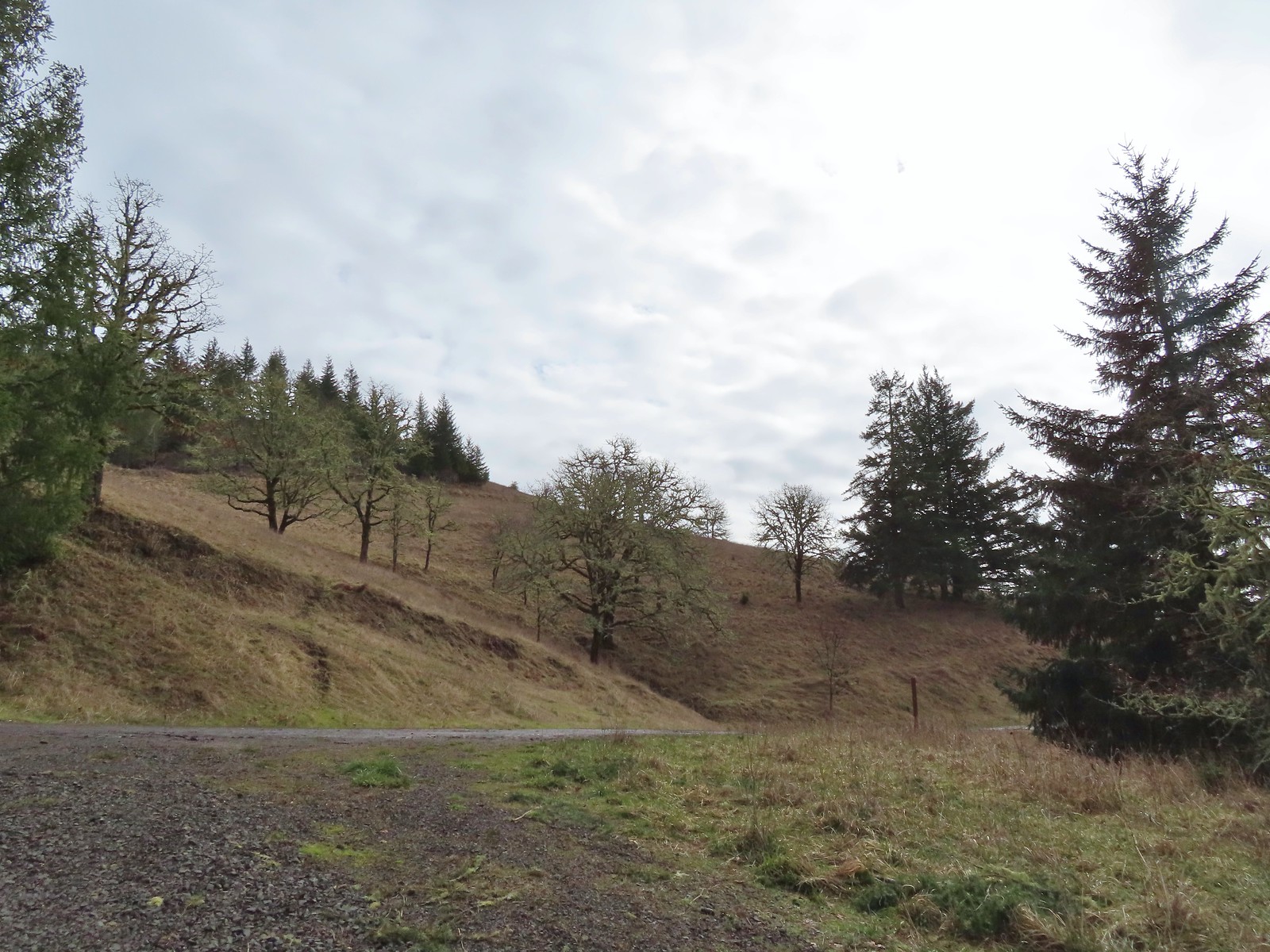 The western end of the Throop Loop.
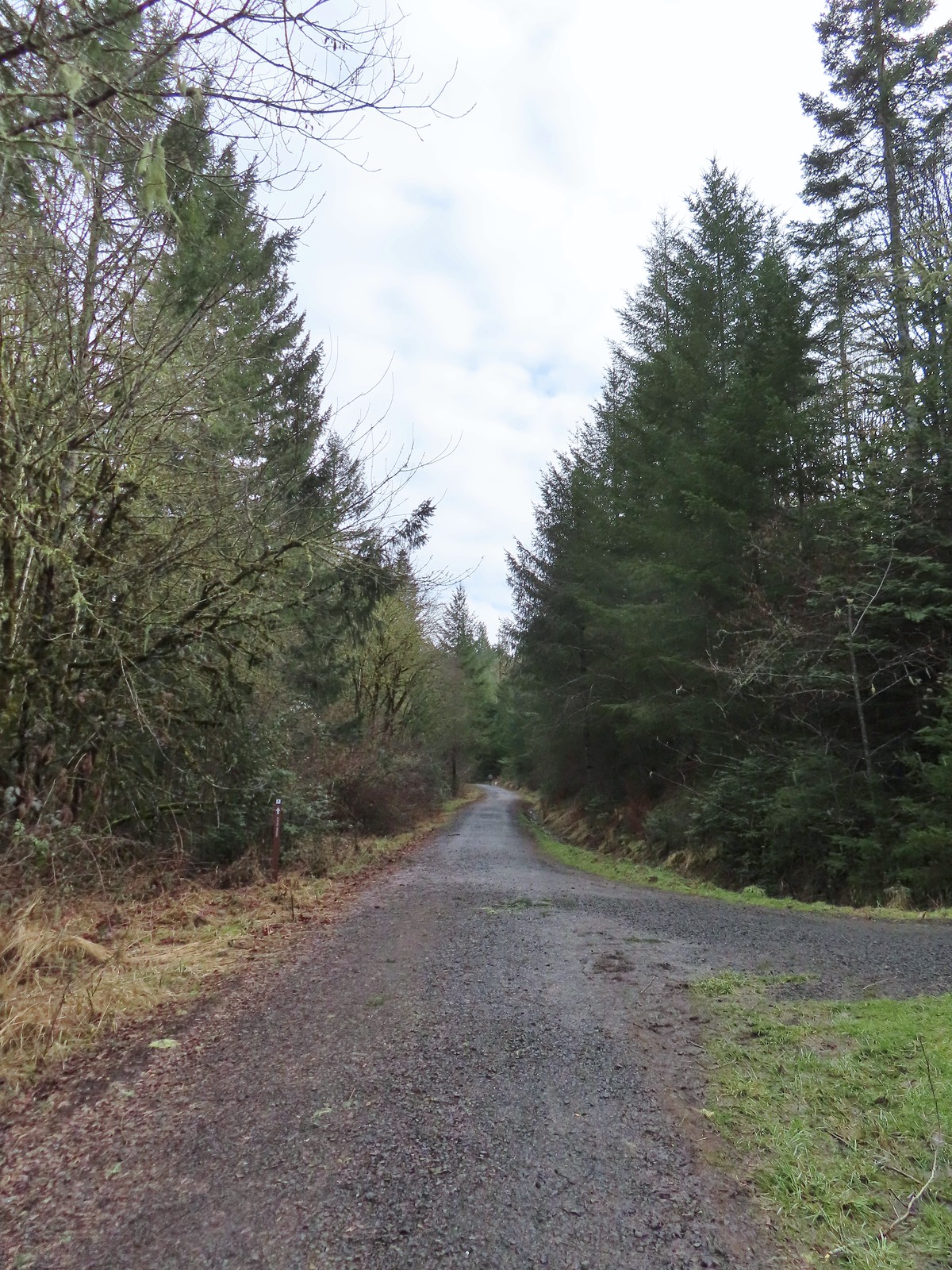 The eastern end of the Allen Throop Loop. Continuing on the Fitton Green North-South Trail would have brought us to the
  There seems to have been a spelling error (Alan vs Allen) on the trail marker.
 Plaque at a viewpoint along the Allen Throop Loop. Note that it is Allen not Alan on the plaque.
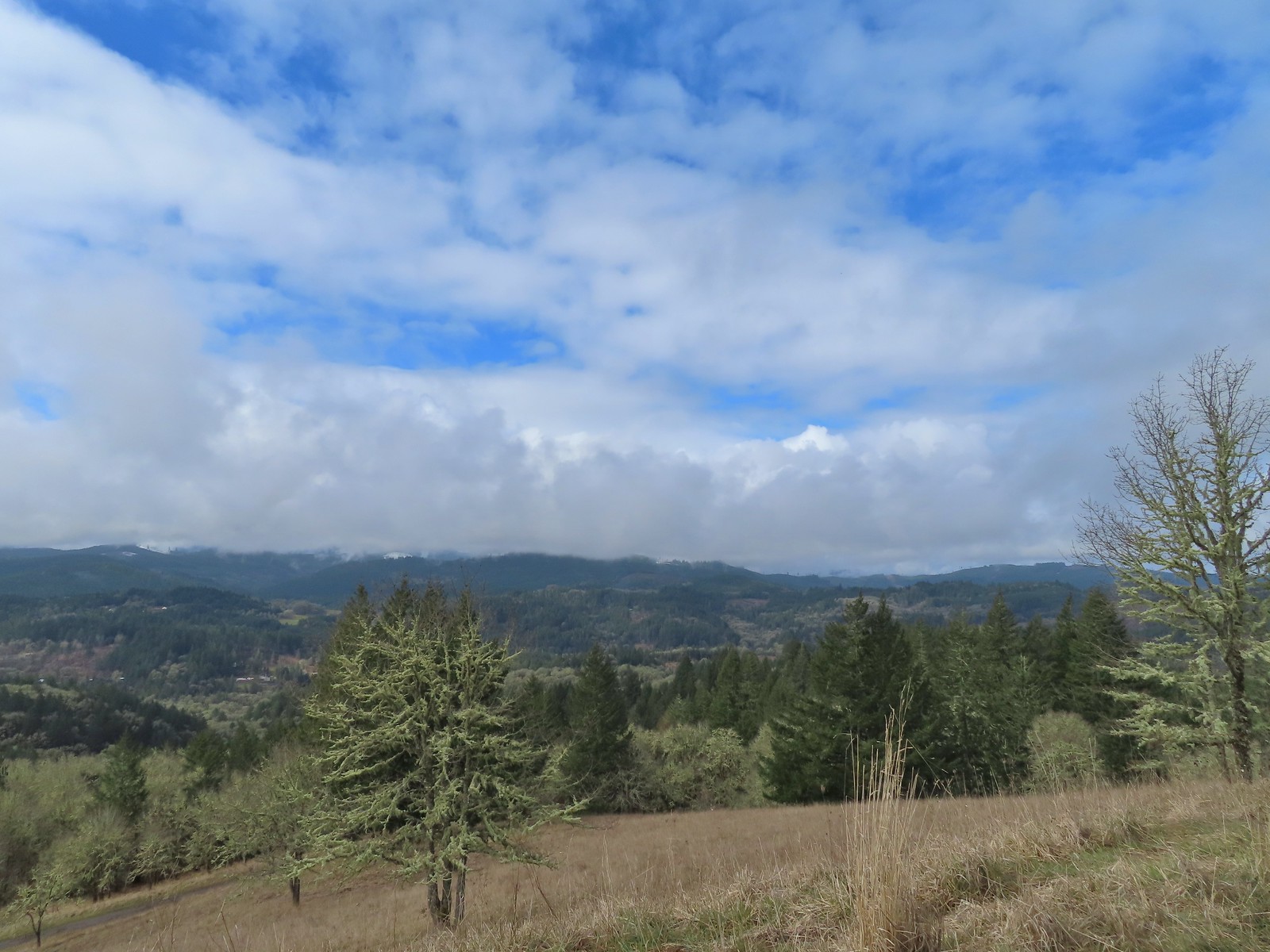 Despite the clouds breaking up we didn’t have a view of Marys Peak, the highest peak in the Oregon Coast Range (
 The trail overlooks the cities of Corvallis (to the left/east) and Philomath (straight/south).
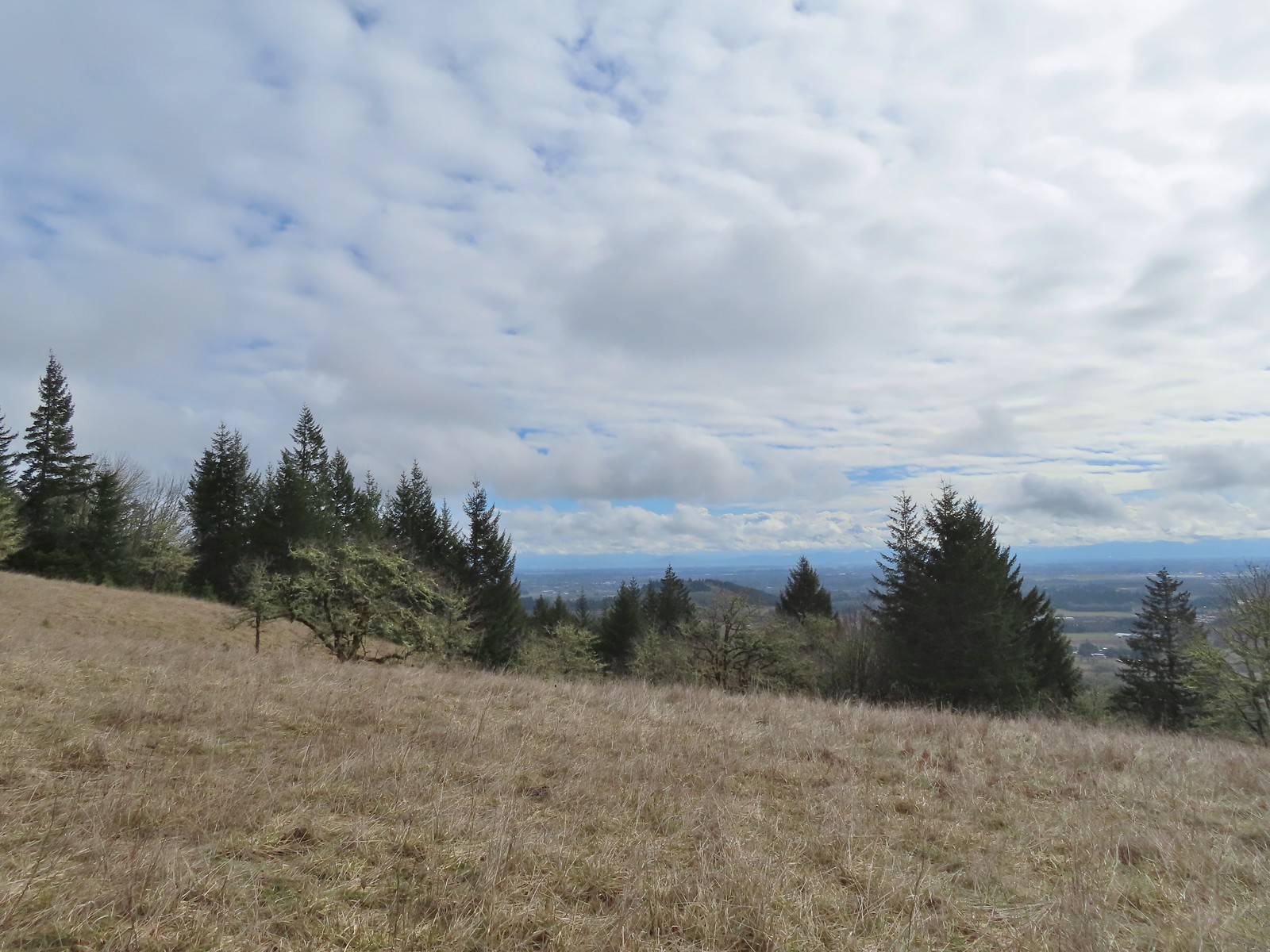 Bald Hill with Corvallis beyond from the Throop Loop.
 East toward the Coast Range.
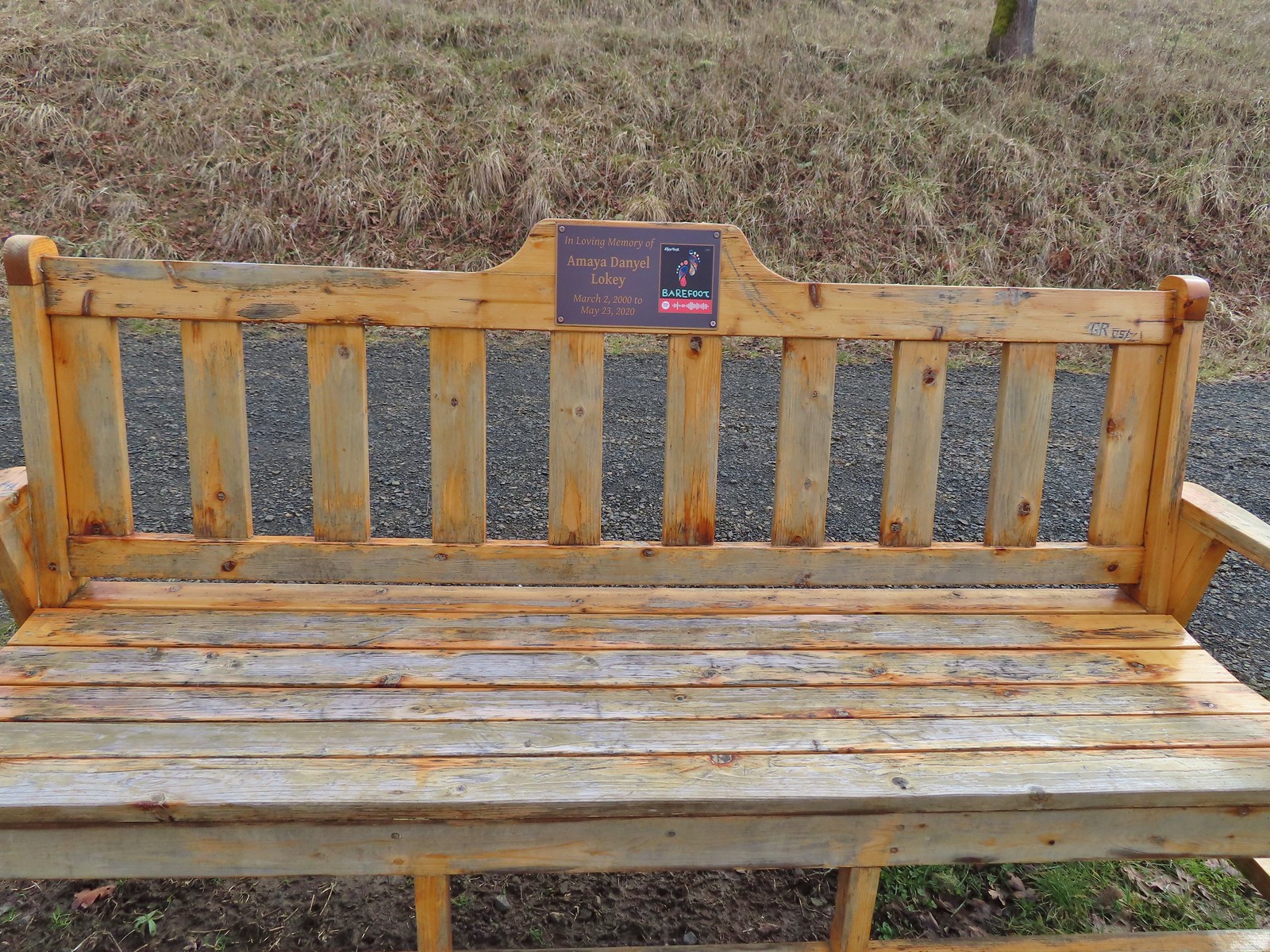
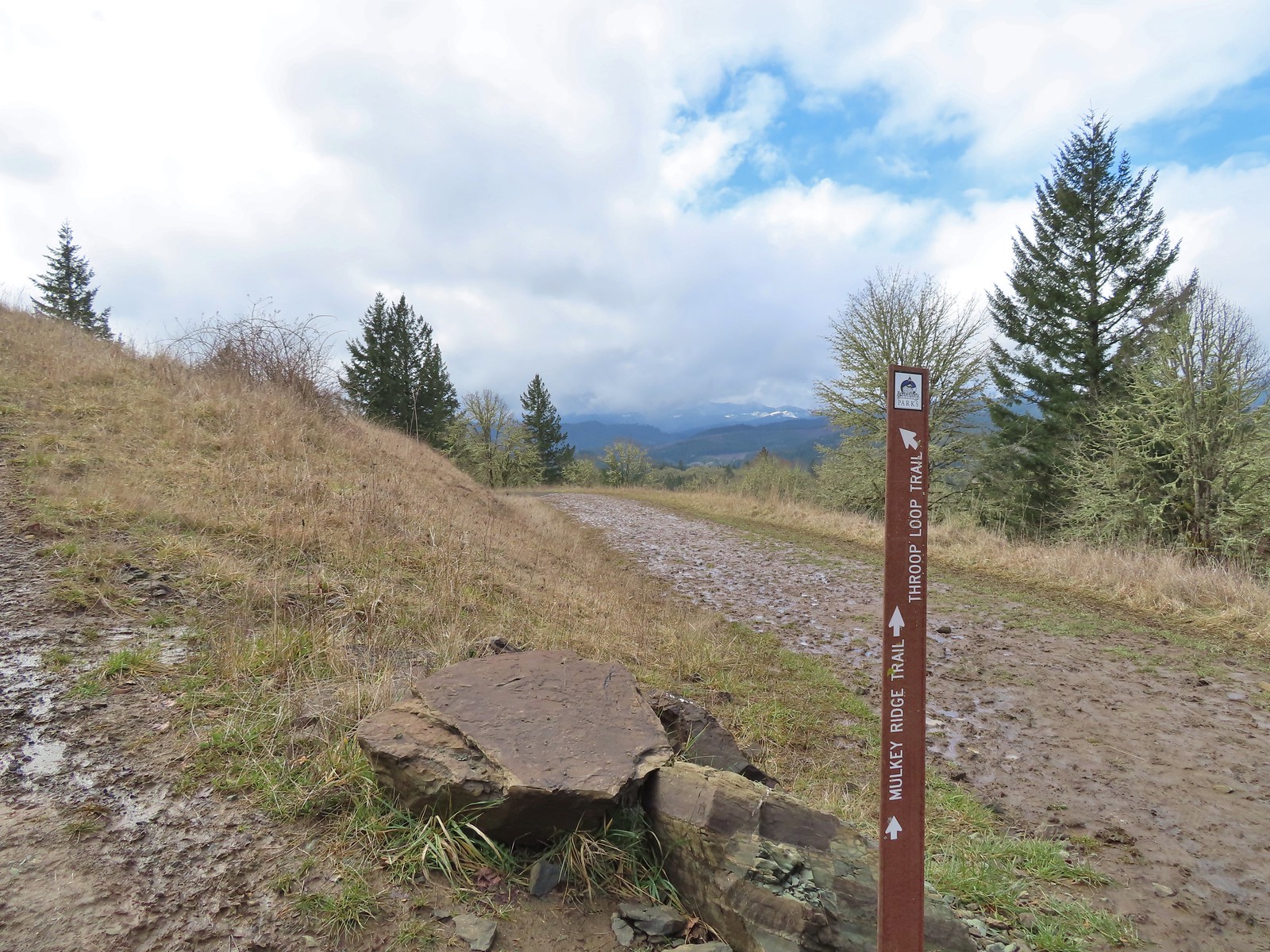 This is the trail that connects Bald Hill with Fitton Green.
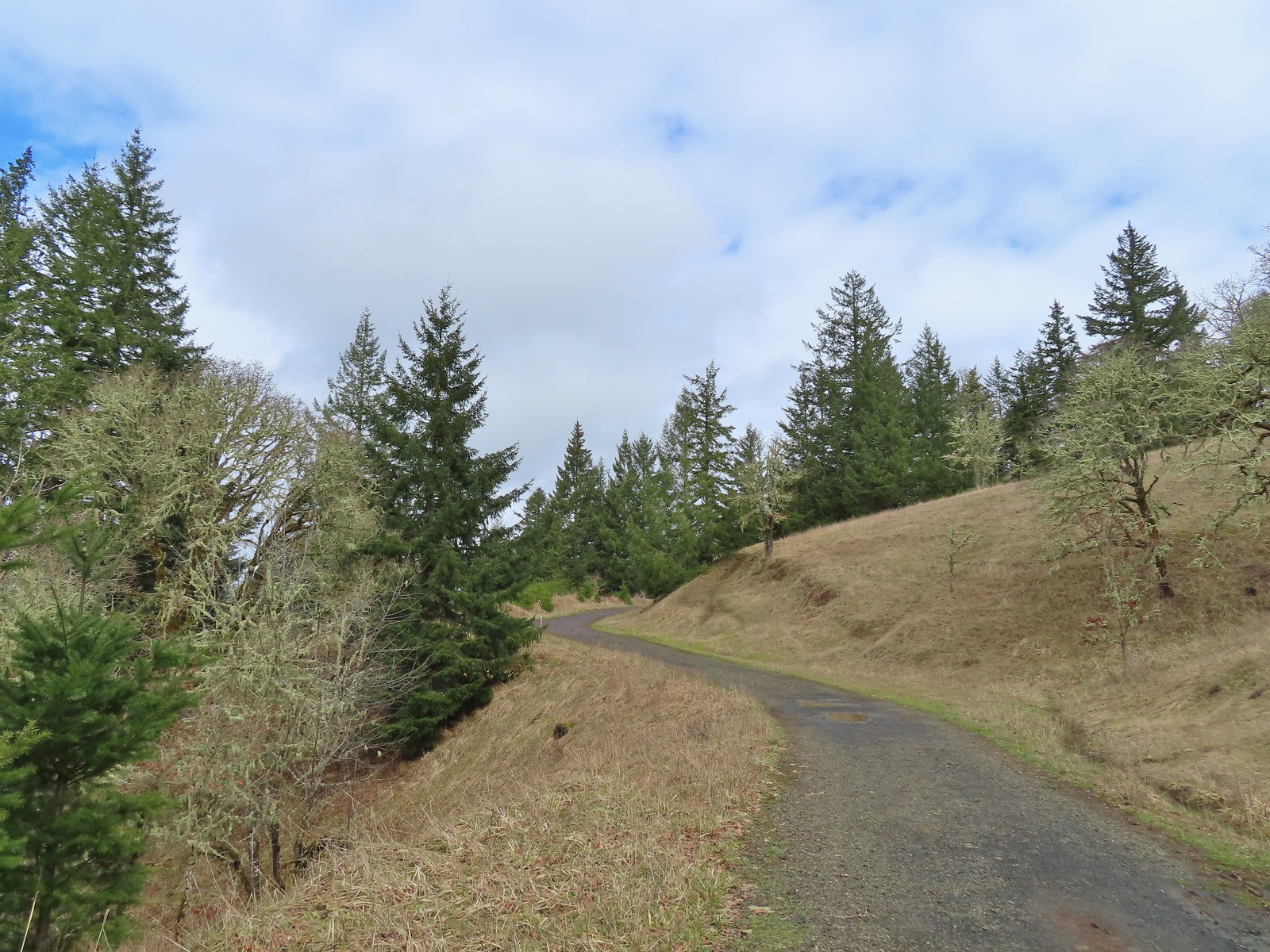 The junction from the Throop Loop Trail.
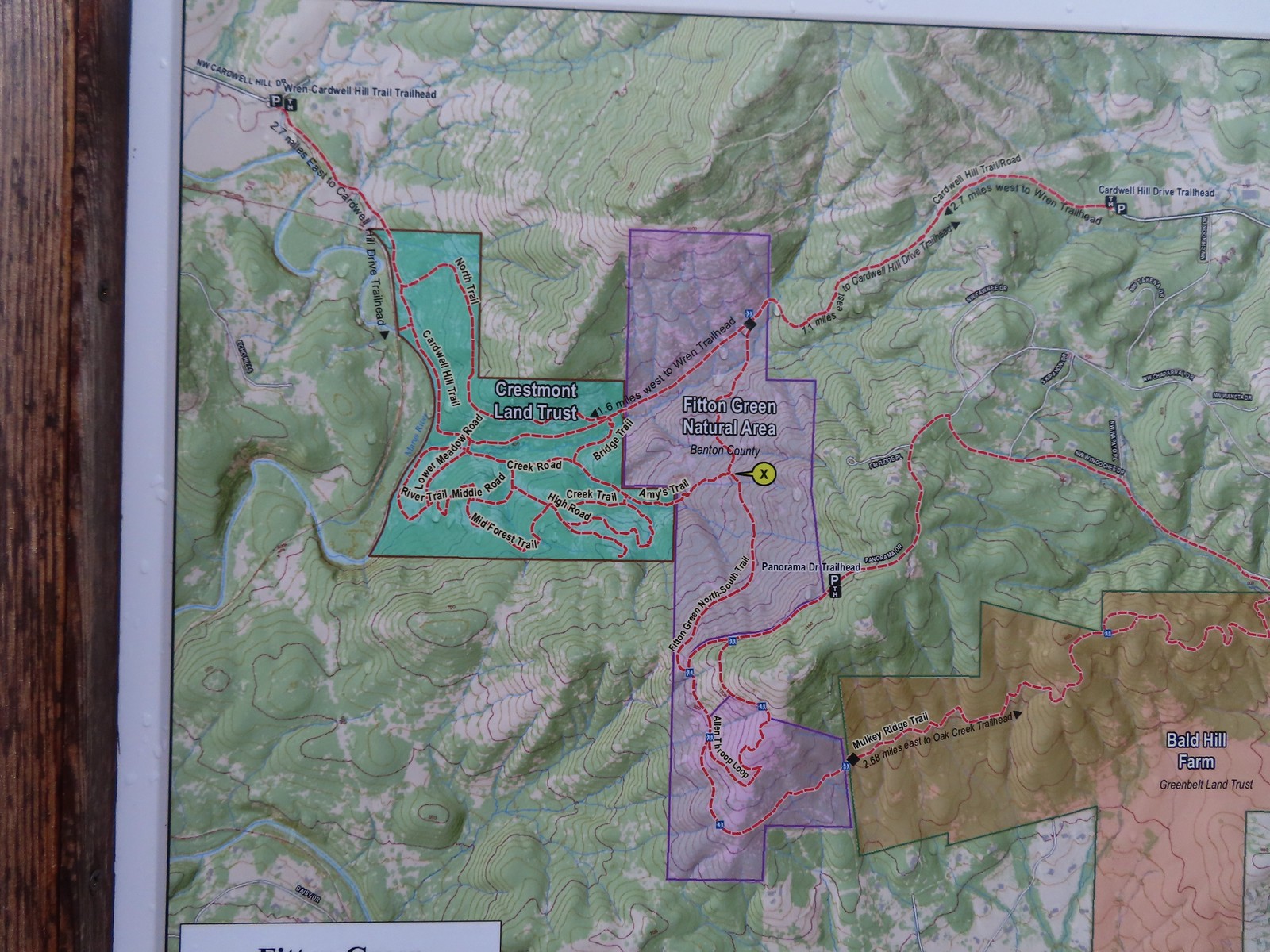 Map at the start of Amy’s Trail.
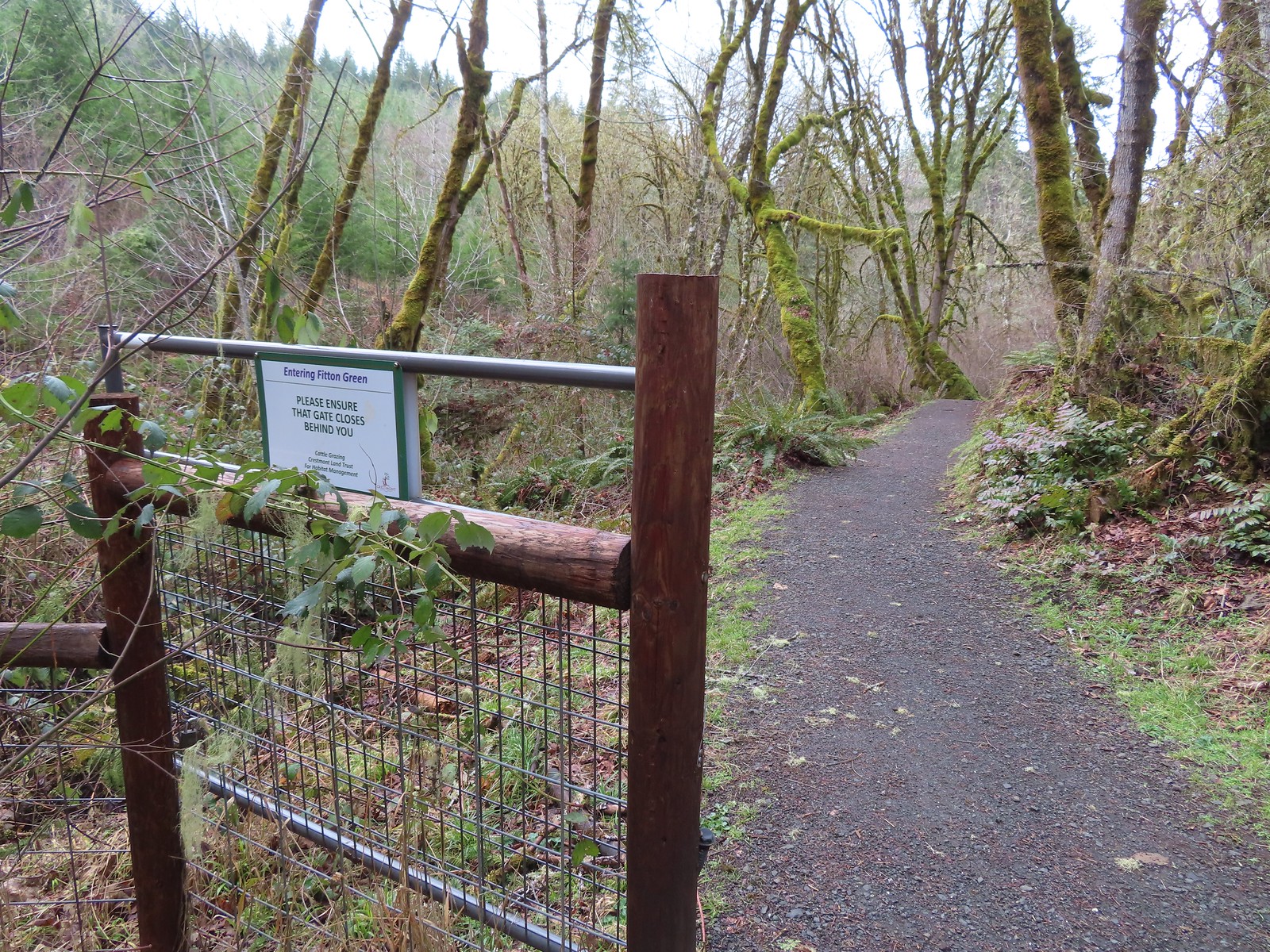 Gate at the Fitton Green-Crestmont Land Trust border.
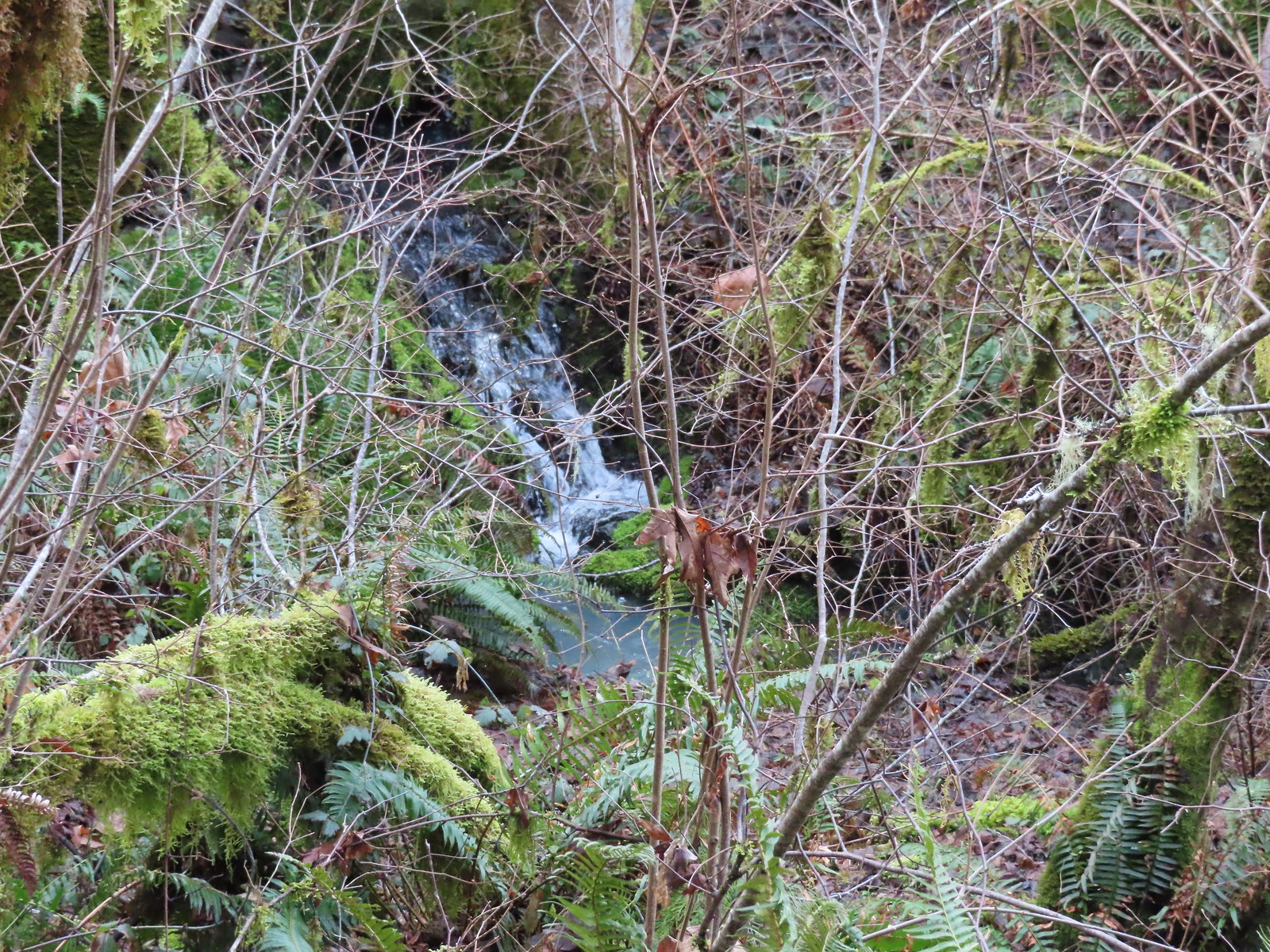 Creek along Amy’s Trail. With all the wet weather there was a fair amount of water in all the streams/creeks in the area.

 On the hillside above the picnic table is the Creek Trail.
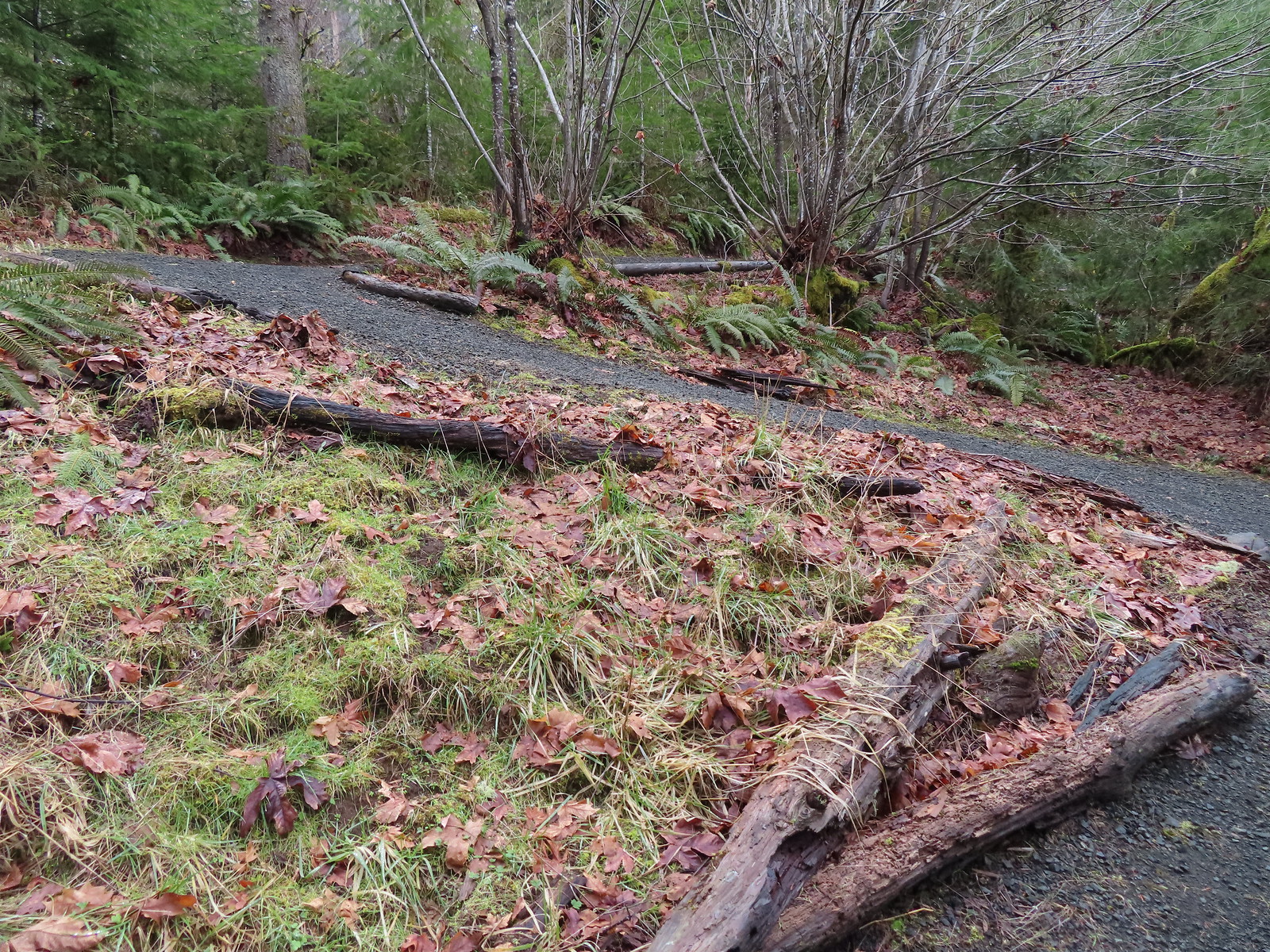 Switchbacks along the Upper Forest Trail.
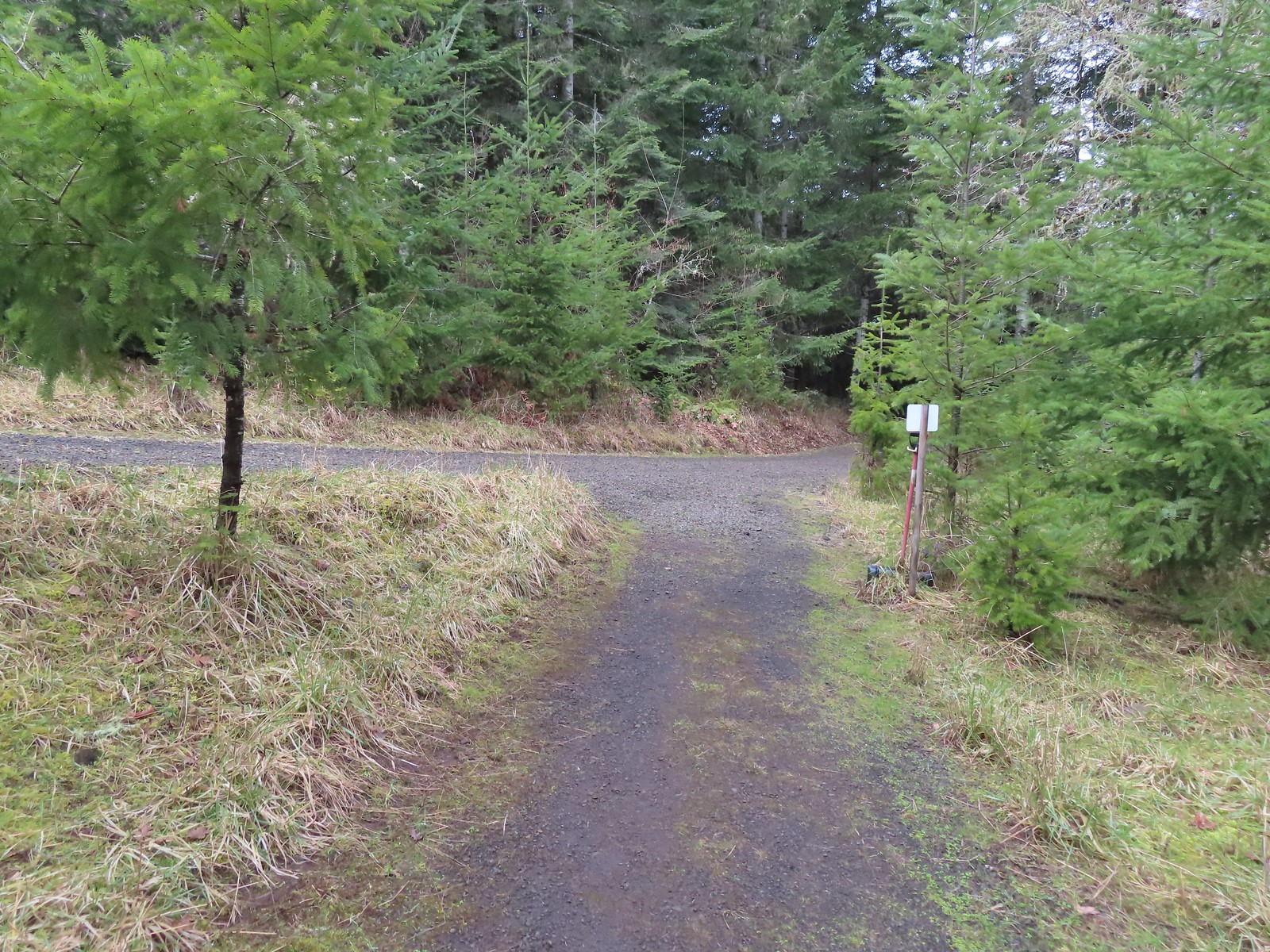 Arriving at High Road.
 The Mid Forest Trail is hidden behind the tree on the left. To the right is the Creek Trail while High Road continues straight ahead.
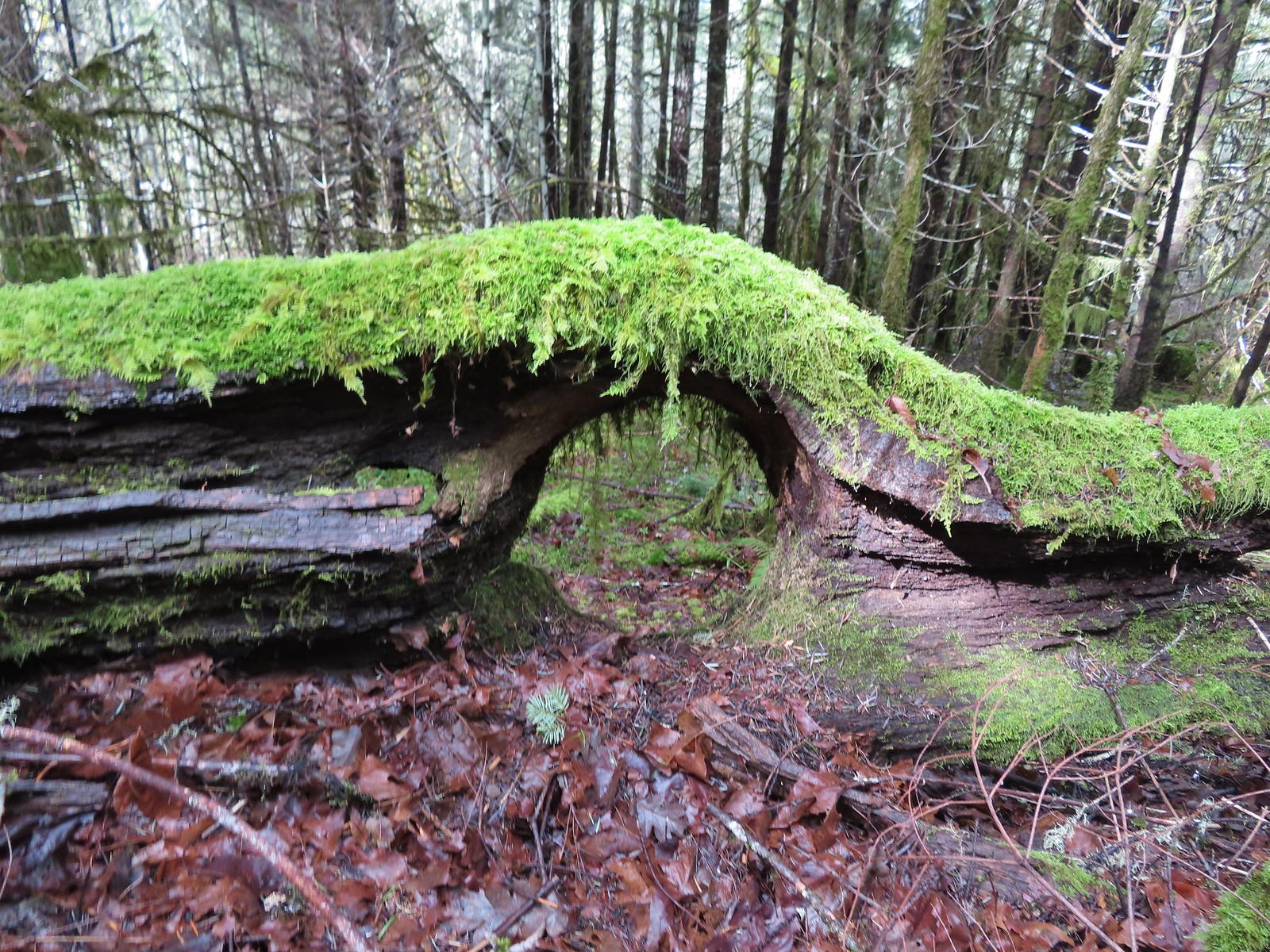 Lots of green moss along this trail.
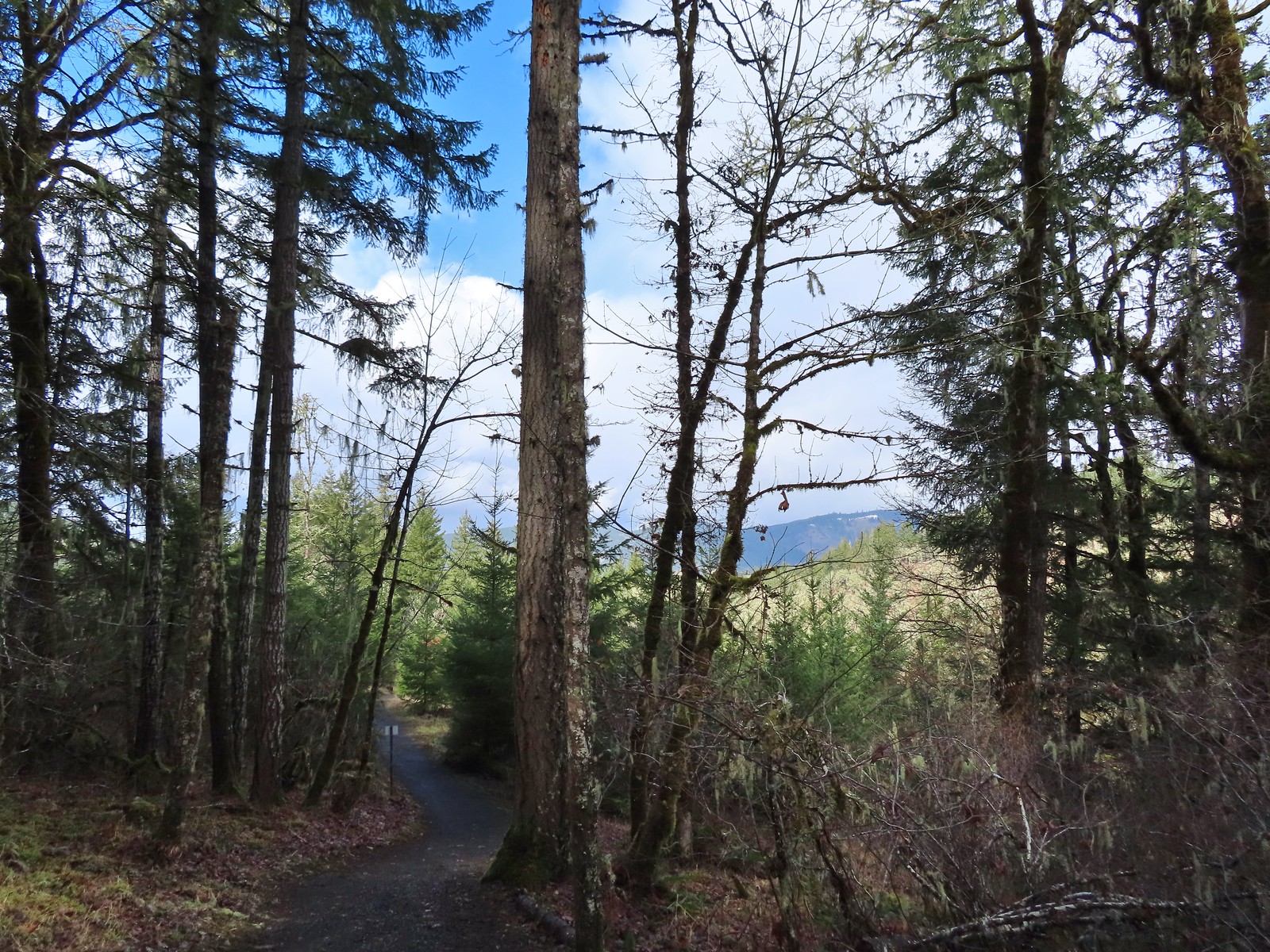 A little snow on the ridge in the distance.
 Rabbit that Heather spotted.
 The junction was at the far end of this open space.
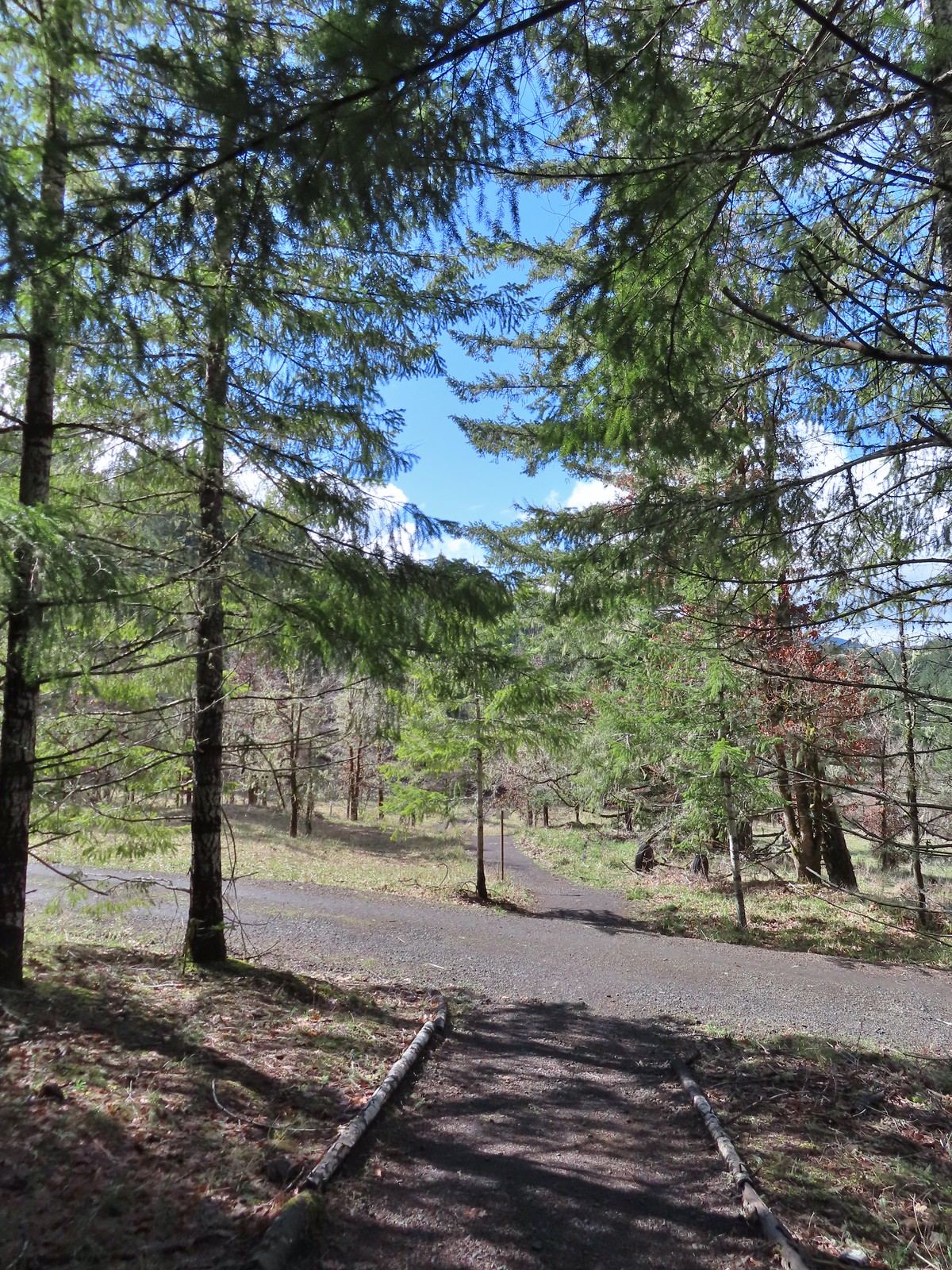 This was by far the most confusing junction we’d encountered all day. It was one of only a couple that was unsigned and none of the maps that we’d seen or had brought with us showed the road continuing to the left. Since we’d planned on staying left at all junctions except for at High Road we initially turned left here thinking it was the River Trail, but it just didn’t feel right so we turned to the Garmin which did show the road continuation. It didn’t look anything like the River Trail route so we promptly turned around and returned to the 4-way junction and took a left downhill through the meadow.
 Lower Meadow
 Gate along the River Trail just before Marys River.
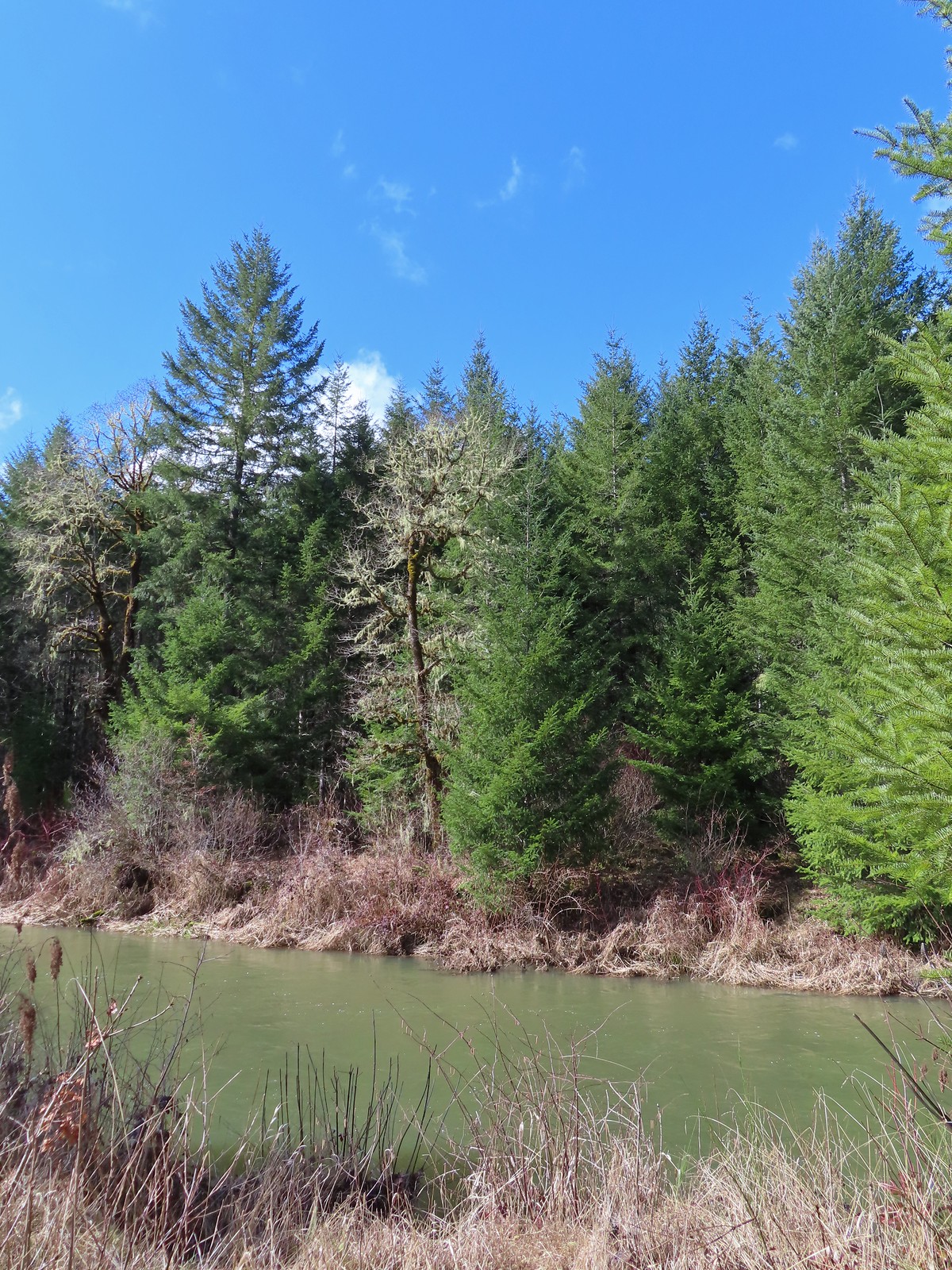 Marys River
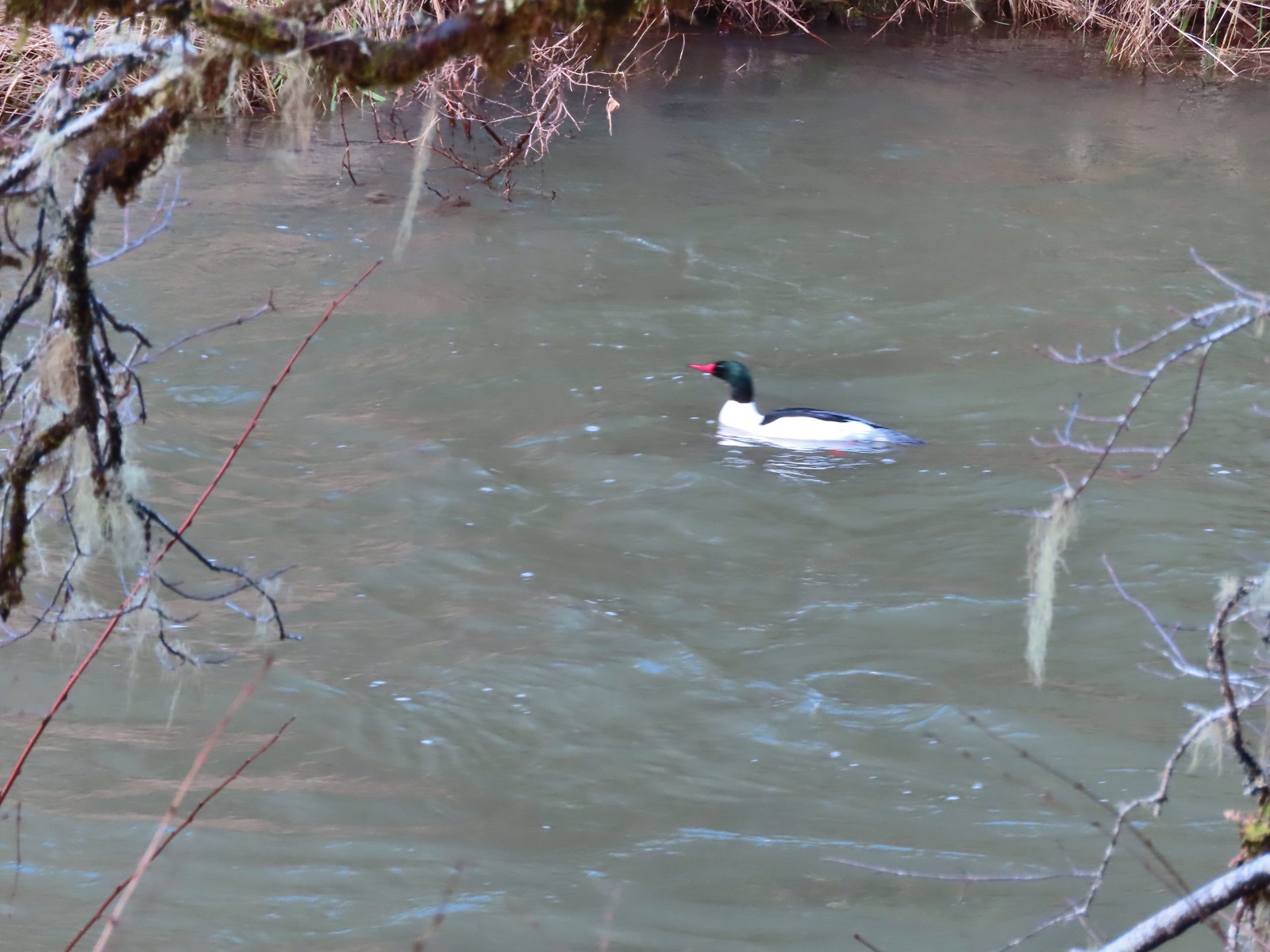 Male common merganser floating Marys River. I only had a brief second to try and get a picture as he floated by thus the poor focus.
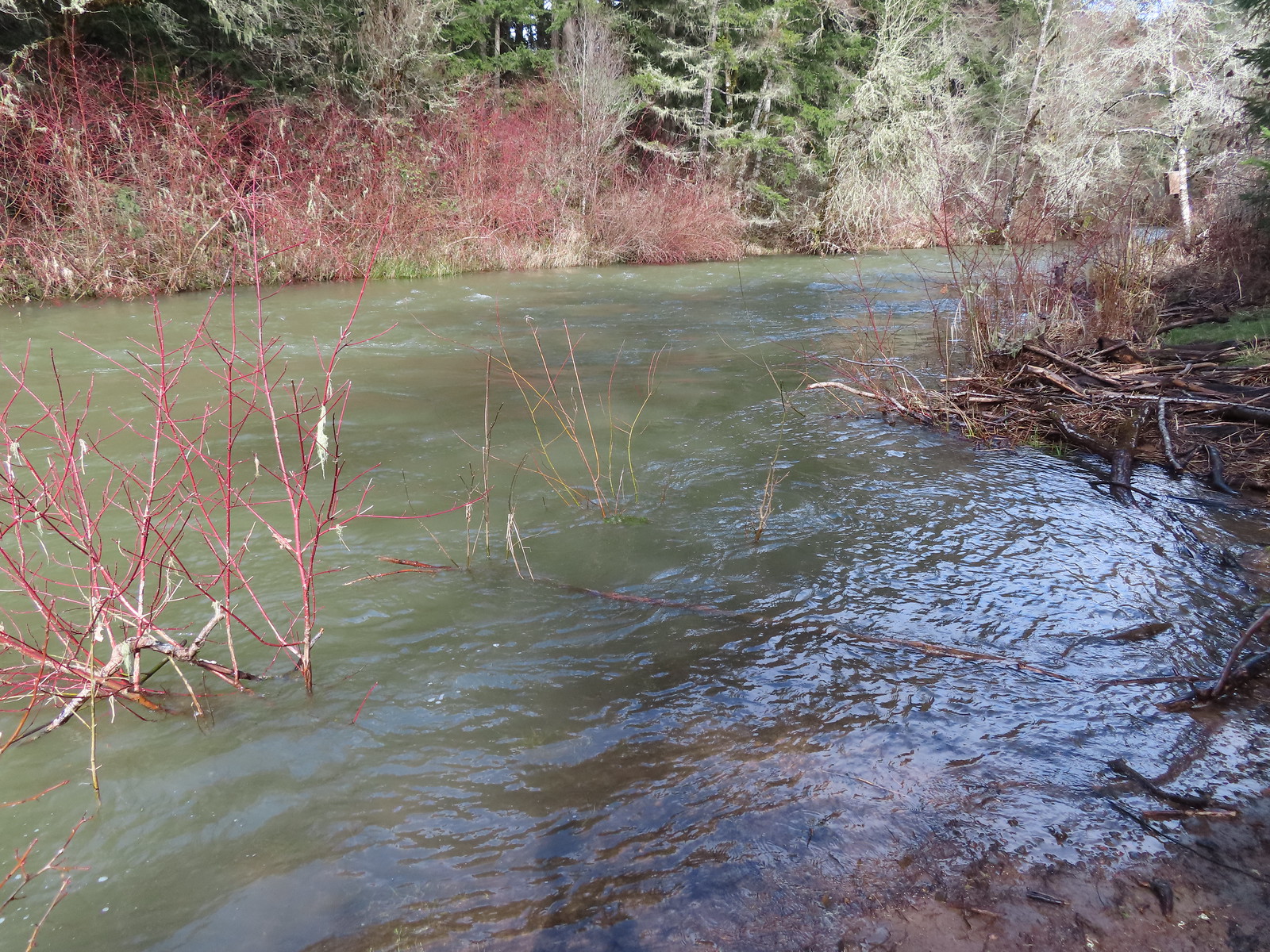 A short spur trail led down to the river bank.
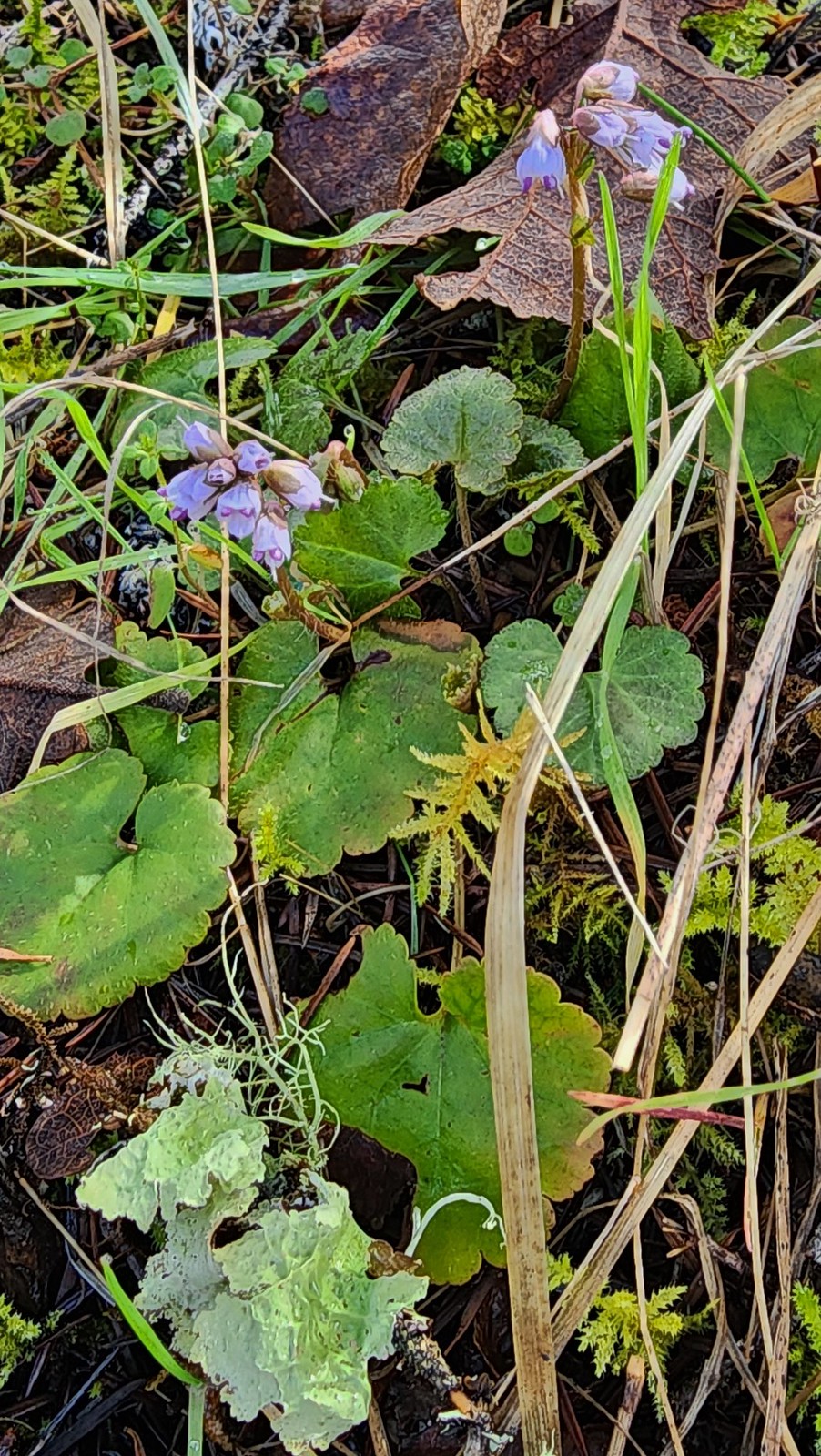


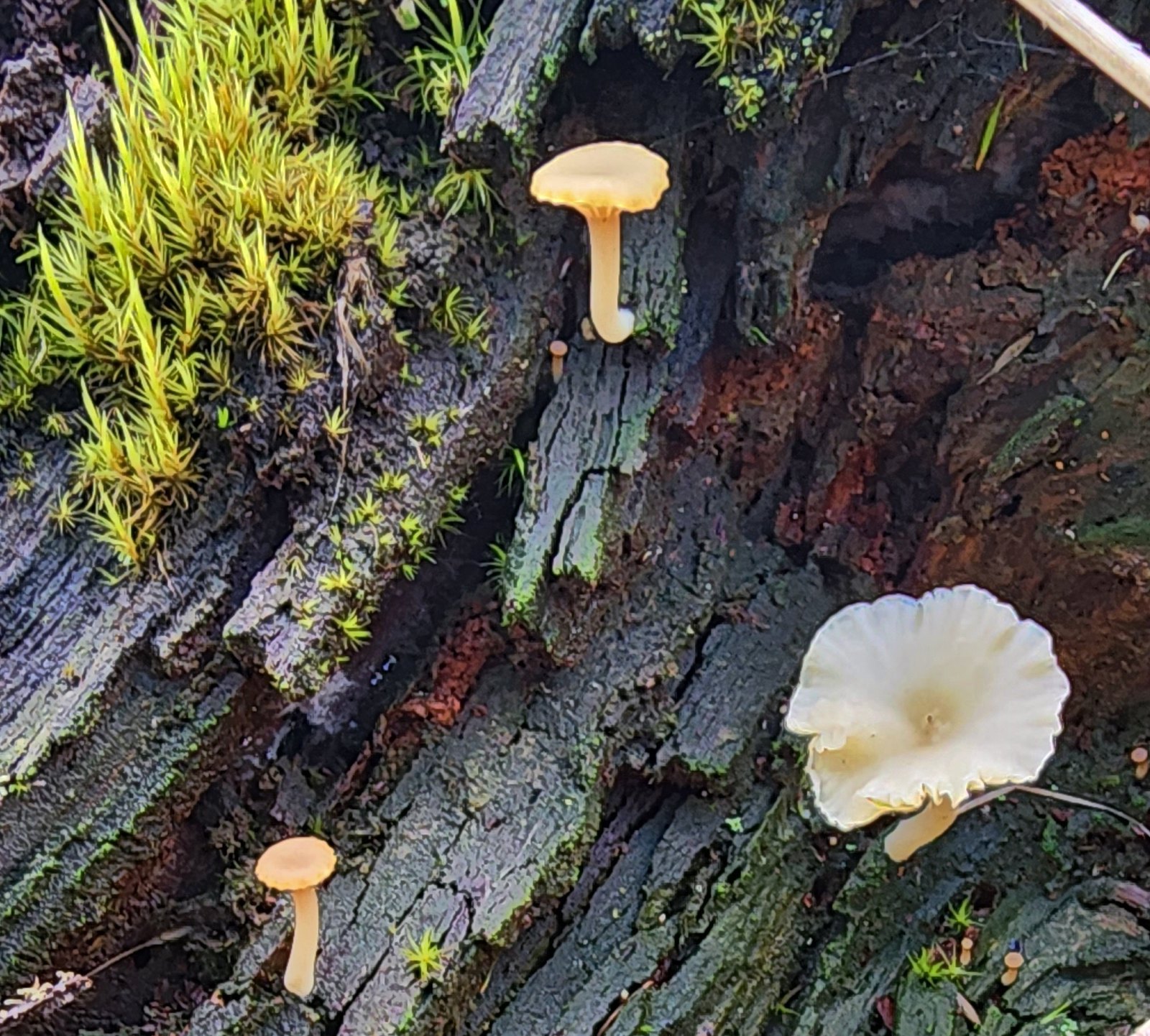 Not flowers but mushrooms are always fun to spot.
 Lower Meadow Road crossing the creek and ending at the Cardwell Hill Trail.
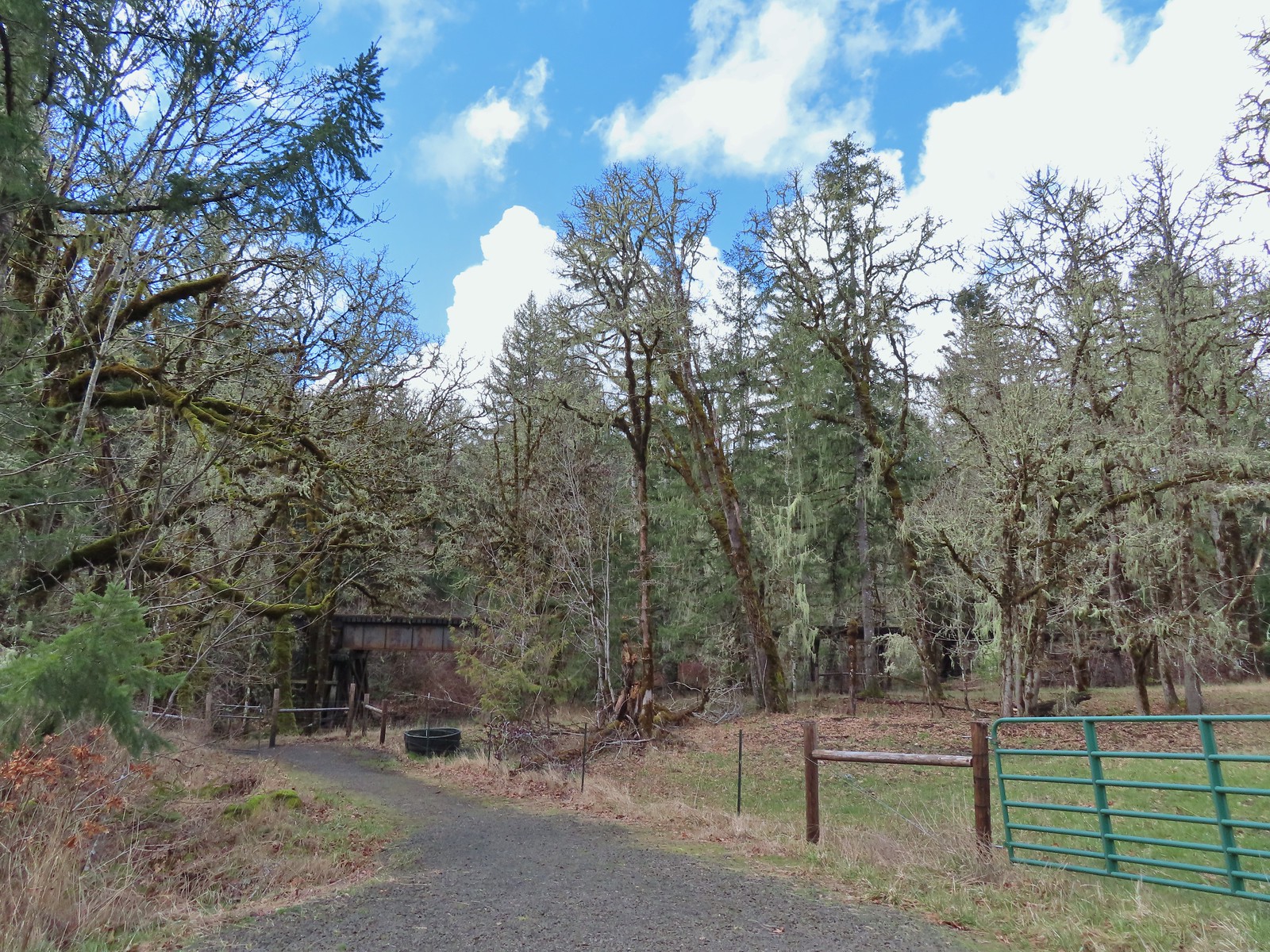 The short Trestle Extension led to a view of a railroad trestle over Marys River.
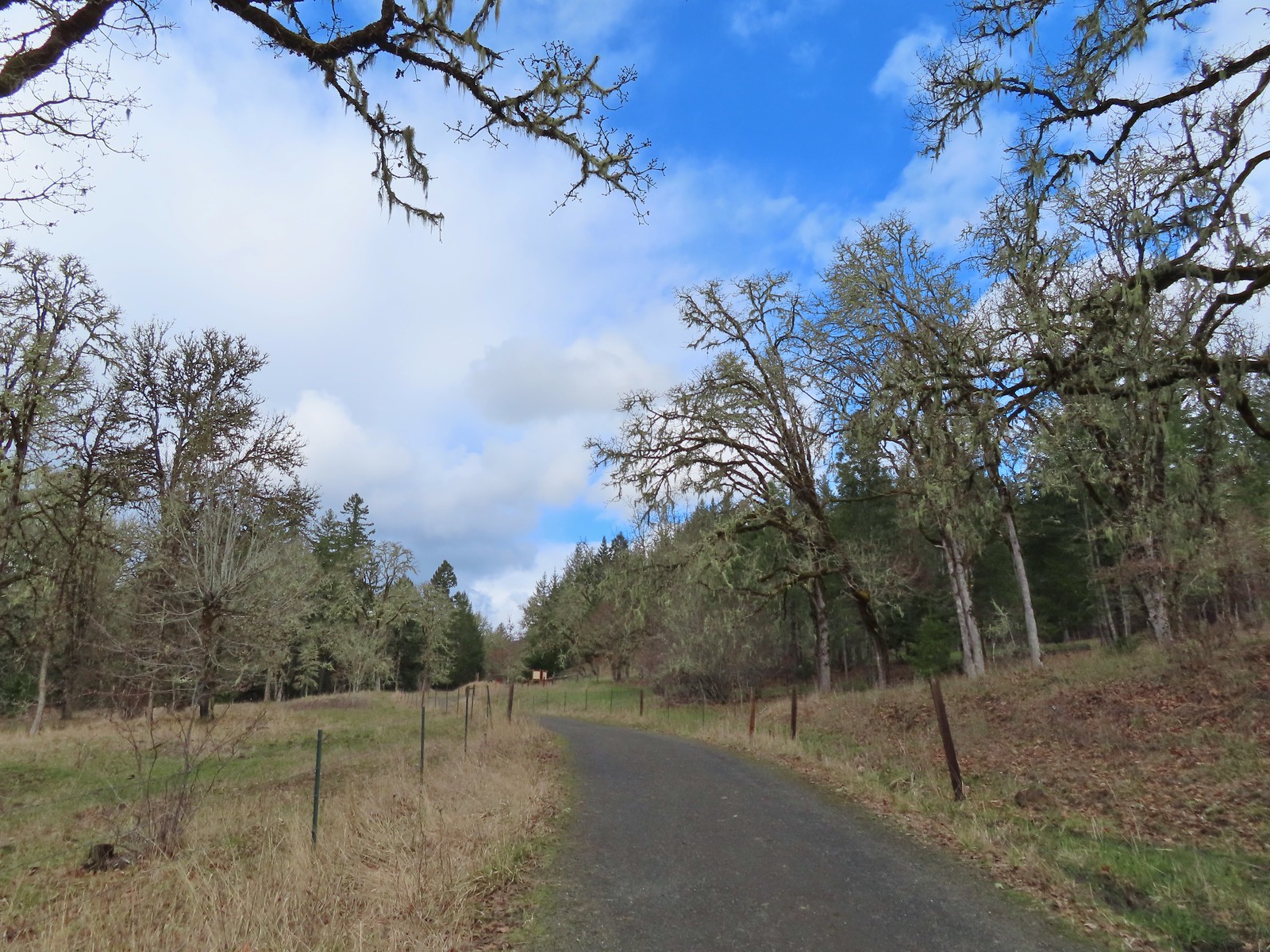 The signboards at the North Trail junction from the Cardwell Hill Trail.
 Robin near the North Trail junction.
 No more fog.
 wanderingyuncks