For our fourth day in Olympic National Park we headed to Ozette Lake, the largest natural body of water in Washington. This was our longest drive from Forks taking just over an hour to reach the Ozette Trailhead.
We followed pointers for the “Coastal Trail” and crossed the Ozette River on a footbridge.
Notice regarding the petroglyphs on Wedding Rocks. By the time we were on the beach we’d completely forgot to look for these. We did run into another hiker who had seen them on a prior trip, but he couldn’t remember where. He thought they were located at some rocks near where we’d run into him, so we searched those rocks for several minutes with no luck. As it turns out he was mistaken as to where Wedding Rocks was, it is located on the first rocky headland nearest Cape Alava at the northern end of the triangle hike. We were much closer to the southern end.
Ozette River leaving Ozette Lake.
Shortly after crossing the river the trail split to begin the triangle.
We forked right onto the Cape Alava Trail. This 3.1-mile trail led through a coastal forest to the beach near Cape Alava. Much of the trail consisted of boardwalk.
Bunchberry
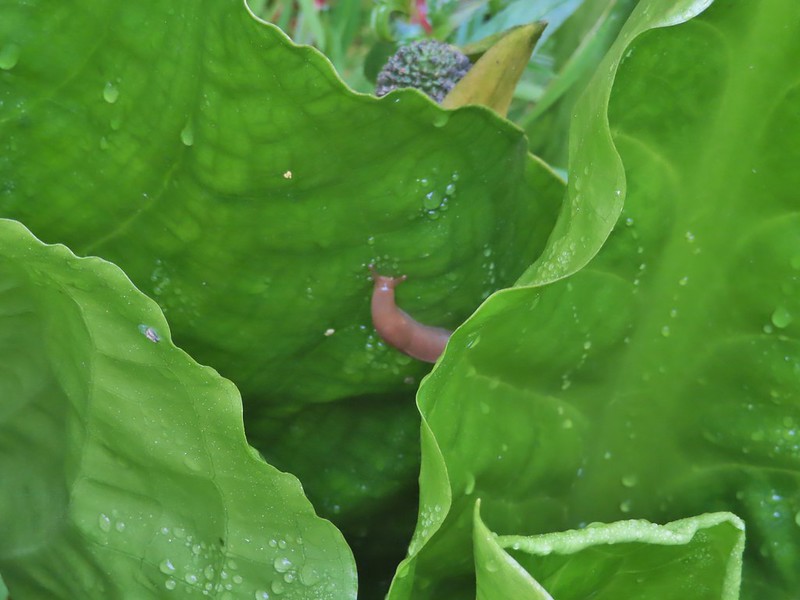
Slug on a skunk cabbage leaf.
Skunk cabbage
Bog laurel along the trail.
Closer look at the bog laurel blossoms.
Squirrel
First view of the ocean.
Beach bunny
Ozette Island. The signpost is used to identify inland trails that bypass the beach.
At the beach we turned left (south) and began walking along the rocky beach. Bodelteh Islands
Heading south along the beach.
We had heard sea lions somewhere in the direction of Ozette Island as we were approaching the beach.
There is a seal in the foreground and a couple of sea lions on the rocks beyond.
Seals lounging on the rocks.
This beach hike wasn’t quite as challenging as the previous day on Rialto Beach (post) but there was a lot of slick ocean vegetation that was washed up on the shore.
One of several campsites along the beach.
Approaching Wedding Rocks. There is a bypass sign ahead if you look closely. At higher tides it is not possible to go around the rocks along the beach.
A couple of crabs taking a defensive position as we were passing by.
Wedding Rocks
On the other side of the Wedding Rocks. As I mentioned before this is where the petroglyphs are, but we’d already forgotten to be looking for them. In Heather’s defense she had started to come down with a cold the previous day and was not feeling 100%. I however had no excuse.
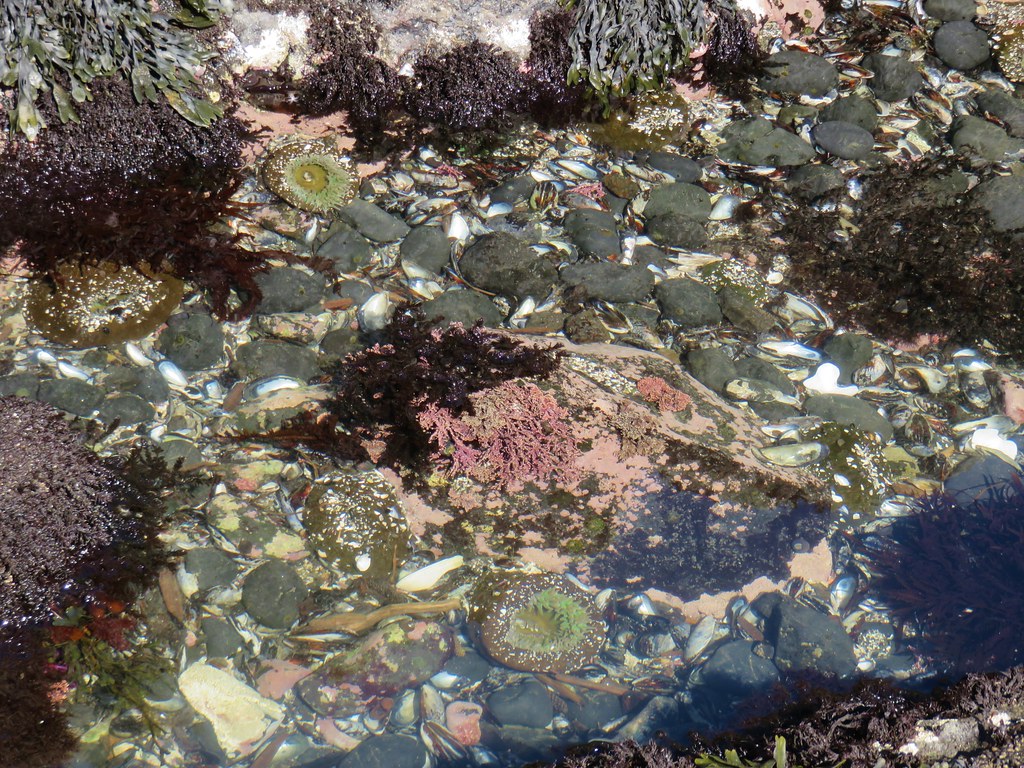
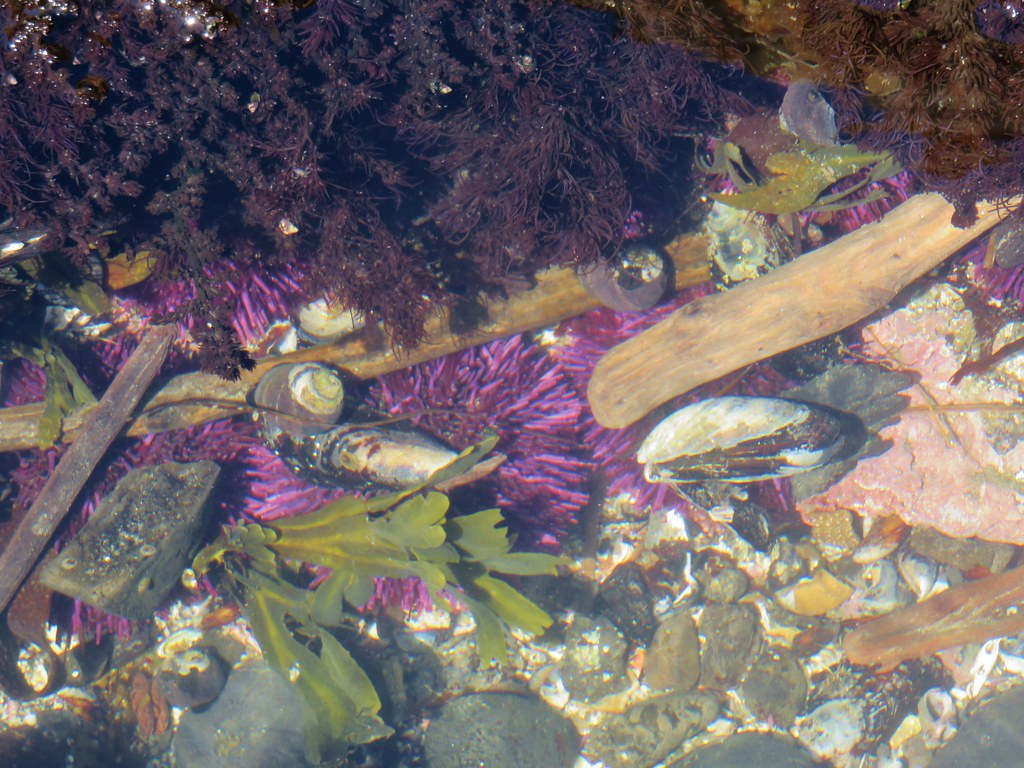
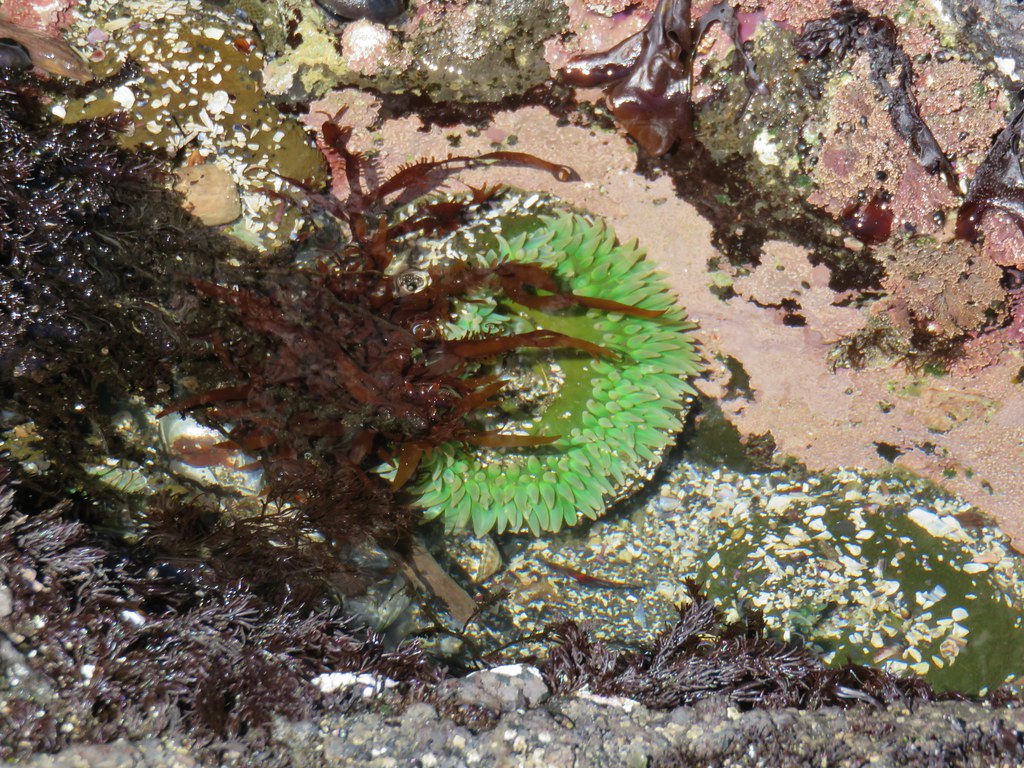
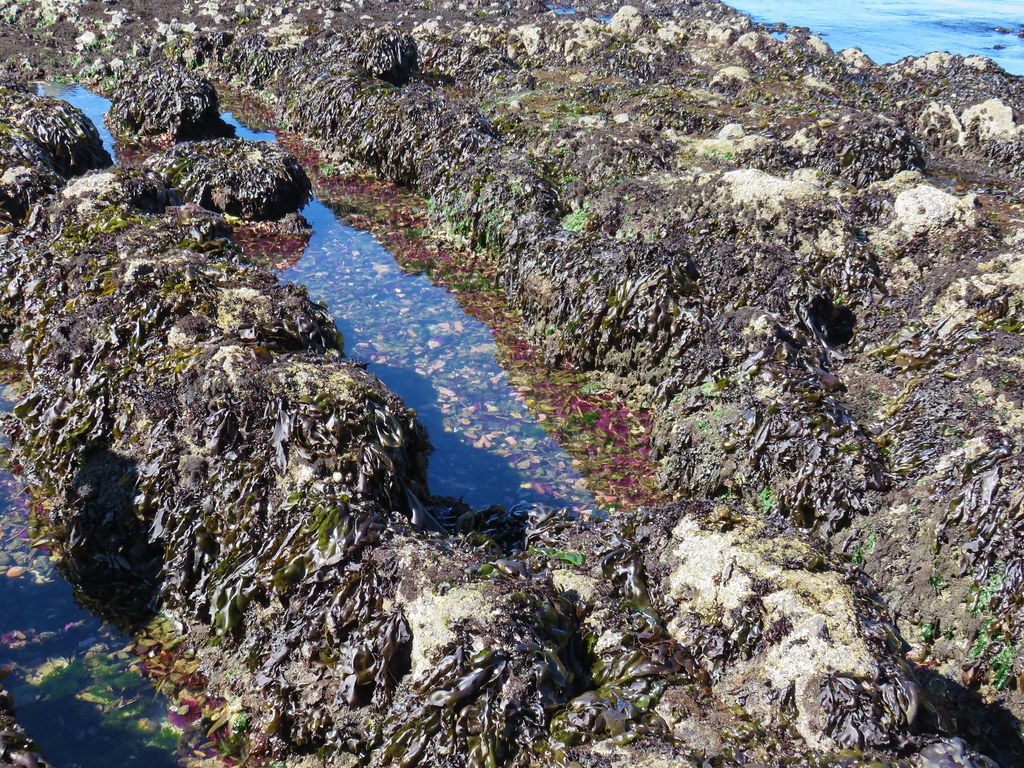
Beyond the Wedding Rocks we had to cross a rocky area where there were many pools.
After reaching some sand we took a break on a log before continuing on. Looking back at the Wedding Rocks.
Robin
Bald eagle
Whimbrel
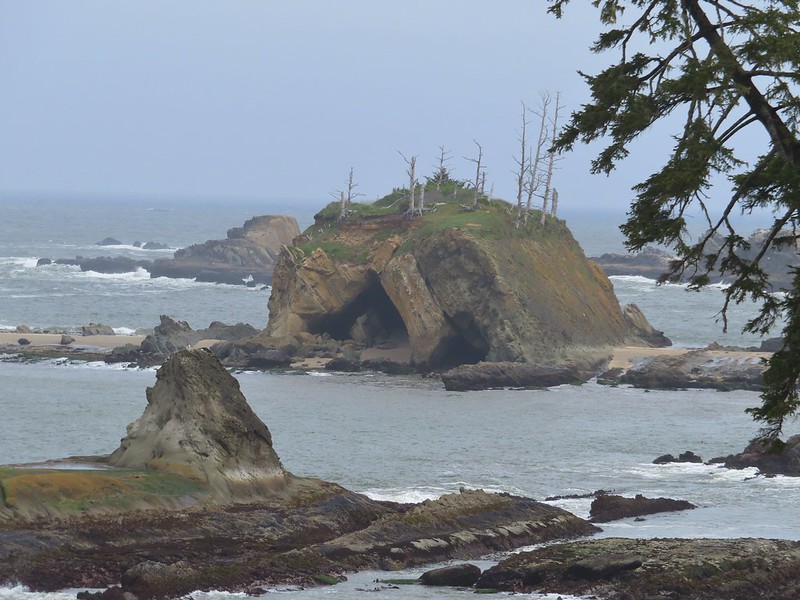
Hole in a sea stack.
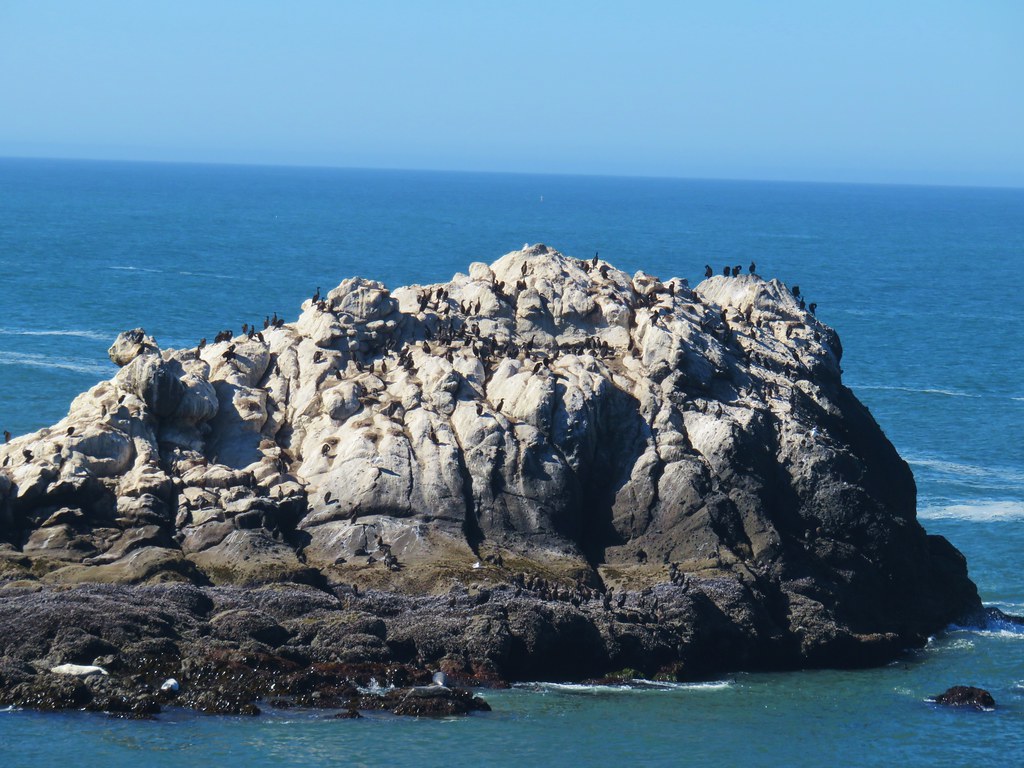
Seals and cormorants
The second rocky headland where there was an inland bypass route. On the far side is where we ran into the hiker who thought these were the Wedding Rocks where he’d seen the petroglyphs before.
Path through the rocks. It made sense to us that this would be where the petroglyphs were given there were several passages between the rocks here.
Coming out the other side.
Looking back at the rocks that weren’t the Wedding Rocks.
After hiking back to the rocks with the hiker to look for the petroglyphs, which he did have photos of on his phone, we continued south to Sand Point. Along this stretch we passed a couple of large groups of backpackers heading north. Sandpoint ahead.
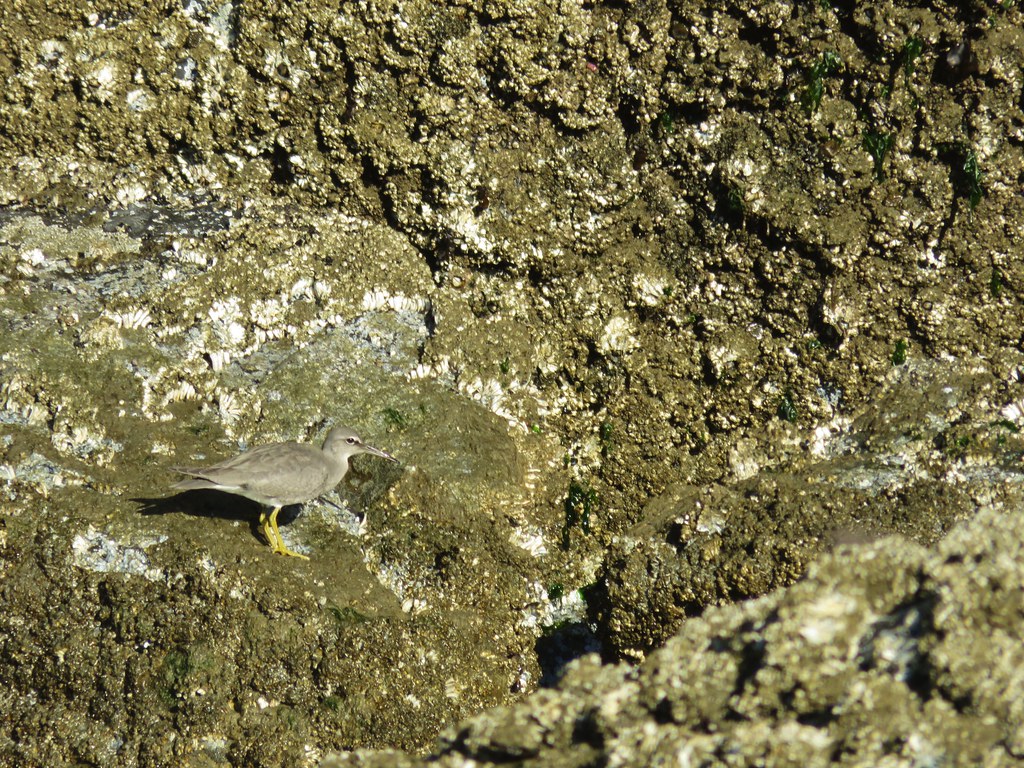
Semipalmated plover
There was a use trail up the headland at Sand Point which I felt obliged to go up.
View south
One of the groups of backpackers heading north from Sand Point.
Chickweed on the headland.
We picked up a trail in the trees near some empty campsites and followed it inland along Sand Point.
There was a bit of a maze of use trails in the trees but we eventually found some trail signs and picked up the Sand Point Trail that would lead us back to Ozette Lake.
Similar to the Cape Alava Trail this trail had lot of boardwalk sections over the muddy forest floor.
Evergreen huckleberry blossoms.
Bench along the trail.
Groundcone. Heather had a sharp eye to pick this up on the forest floor.
There were a couple of missing sections of boardwalk along this side of the triangle.
Ozette Lake
This hike came in at an even 10-miles. Wandering around looking for the petroglyphs and going to the end of Sand Point instead of cutting up off the beach at the signed bypass added a little distance to the typical 9.4-mile distance.
Heather was a trooper for getting through this hike with what had now become a pretty intense cold. The cold would however keep her from our final hike and as I am writing this trip report I am dealing with the same illness. It had sprinkled off and on near the end of this hike and more rain was on the way Friday. For now we headed back to Forks and after changing clothes headed to Sully’s Drive-In for some burgers and tater tots before turning in for the night. Happy Trails!
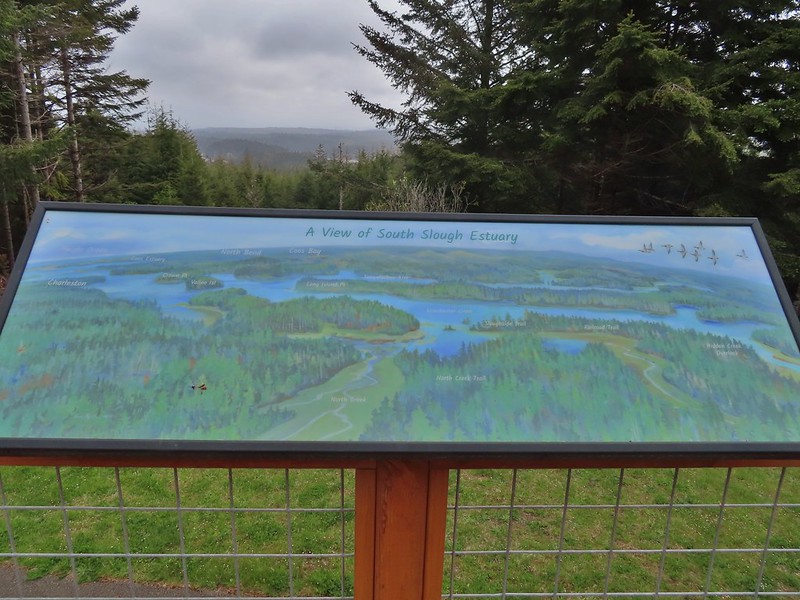
We started our day parking at the closed (stupid COVID) interpretative center at South Slough Reserve.
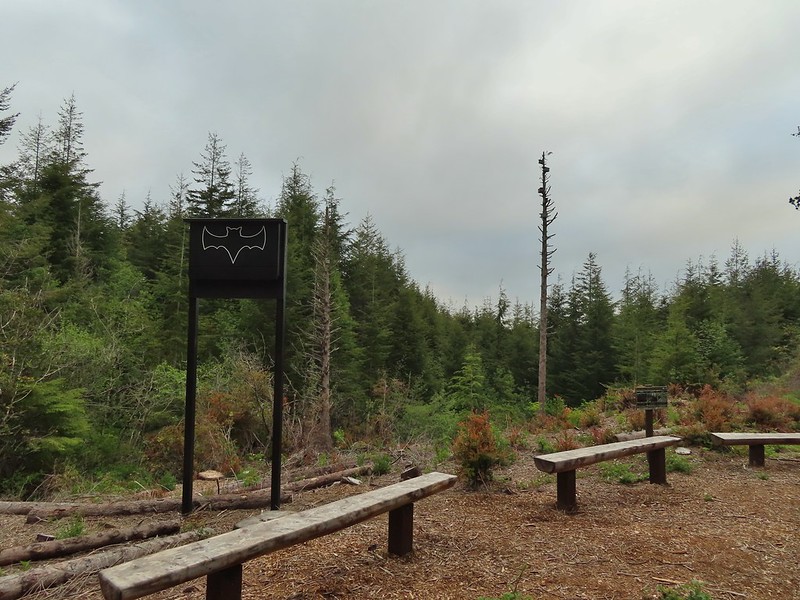
It looked like it would be full of good info and we’ll have to come back someday post pandemic when we can experience it. For now we settled for the trails walking behind the center and picking up the Ten Minute Loop Trail where we turned right.
After just a tenth of a mile we came to a junction with the Middle Creek Trail where we turned right detouring briefly to check out an opening where in better times talks are given by staff members.
We followed the Middle Creek Trail downhill through a coastal forest to a road crossing where the Hidden Creek Trail continued on the far side.
All the bridges had labels consisting of the first initial of the trail and then the bridge number making this the 4th bridge along the Middle Creek Trail.
Interesting seat.
That’s a fancy hat for a stump.
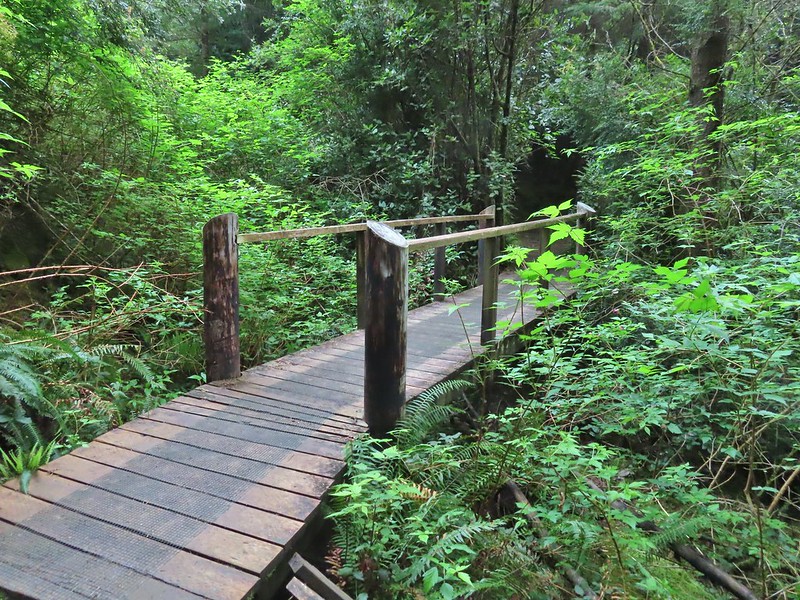
The Hidden Creek Trail continued downhill following the creek to Hidden Creek Marsh where a series of boardwalks passed through giant skunk cabbage patches. We stayed to the right each time the boardwalks split (they eventually rejoined along the way).
>
>
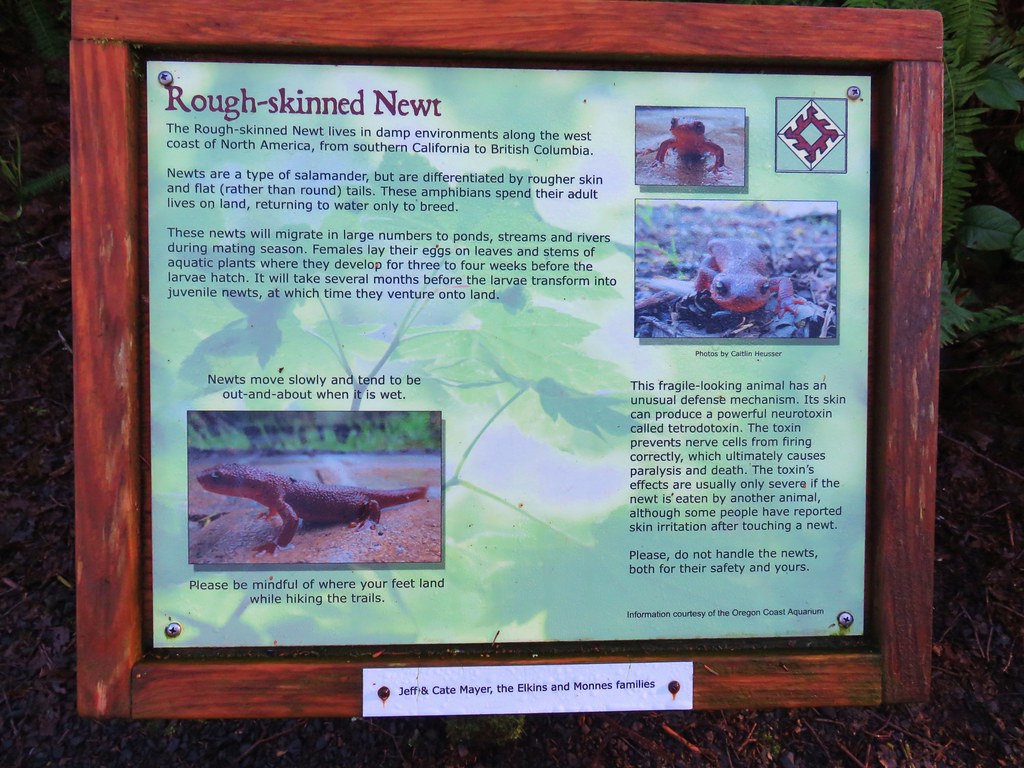
We saw a lot of rough skinned newts on the trails, but what we were really hopping for was a Pacific Giant Salamander. No luck there this time.
A few trillium still had petals.
Woodpecker
We heard a few frogs and we were looking in the skunk cabbage to see if we could spot any. We didn’t see any of the frogs but we did spot several others on the plants.
A hedgenettle
At the end of Boardwalk 2 the trail became the Tunnel Trail and headed back into the forest.
After a short climb we came to a nice big observation deck. The view was good but there wasn’t much to observe on this morning.
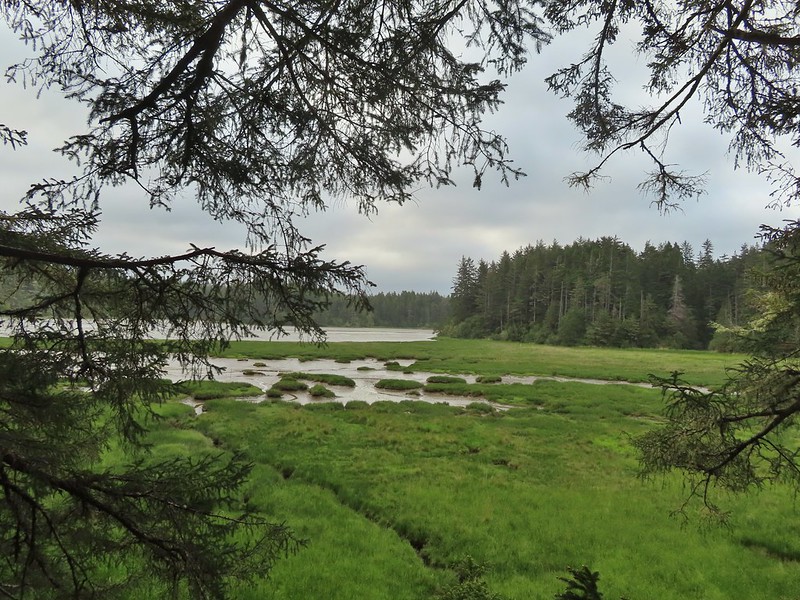
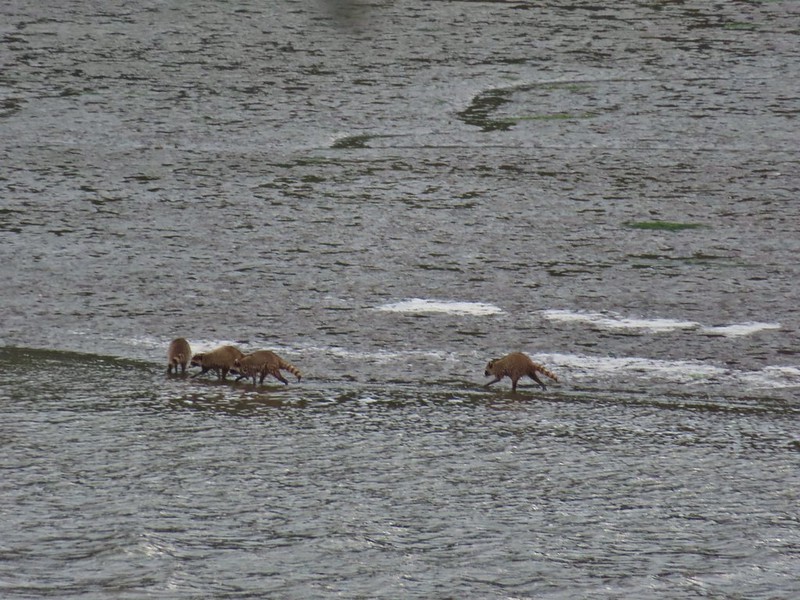
We ignored the Big Cedar Trail to the left when we passed it and continued on the Tunnel Trail passing a couple of more viewpoints out to the South Slough. While we had struck out at the observation deck we now could see movement which turned out to be over a half dozen raccoons crossing the mud flats in search of breakfast.
Tunnel Trail indeed.
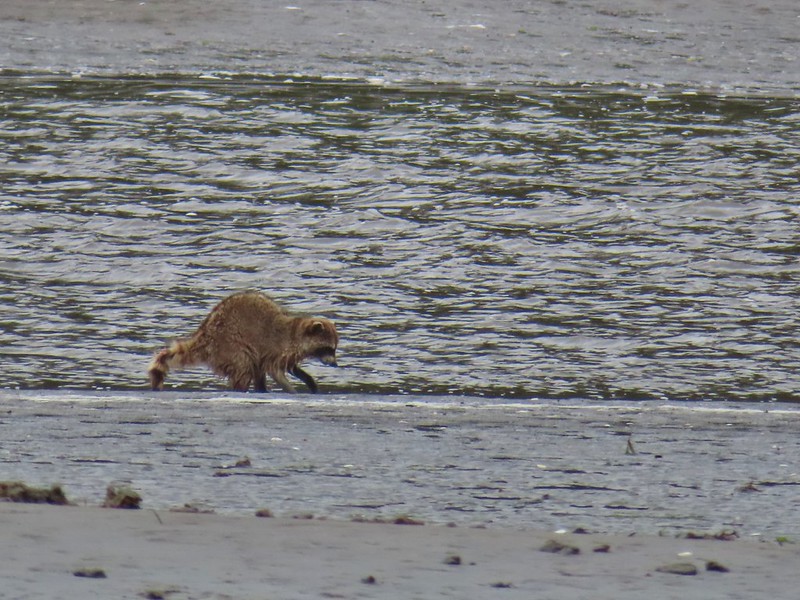
This marked the first time we’d seen raccoons on a hike and we had a lot of fun watching them search for snacks. Shortly after passing some restrooms the trail came to a junction where we headed downhill to a shed and another junction.
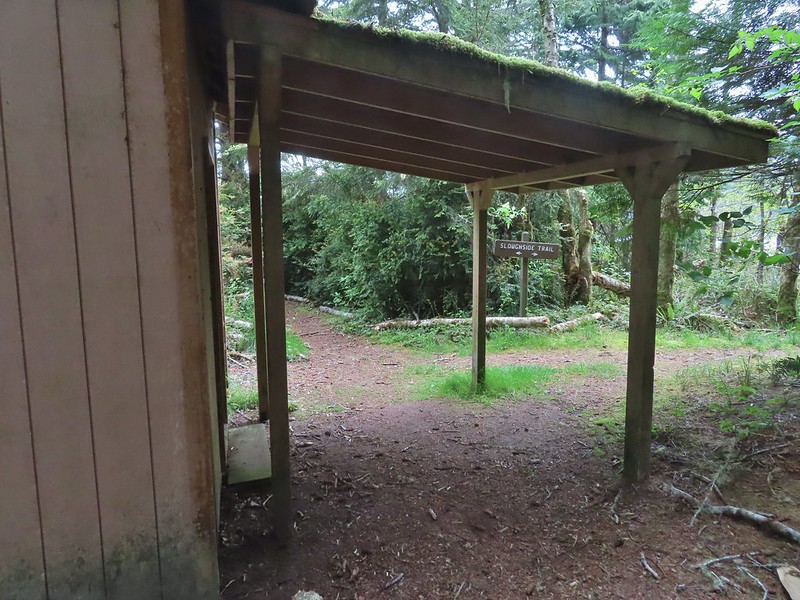
We turned right by the shed passing under an awning to the Sloughside Trail
We turned right first passing several wooden decks before the trail ended along the slough.
Castilleja ambigua – Estuarine Paintbrush
After watching more raccoons from the end of this spur we returned to the shed and took the left hand fork. This spur was a bit longer (still only .1 miles) and passed along a narrow strip between flats.
>End of the line.
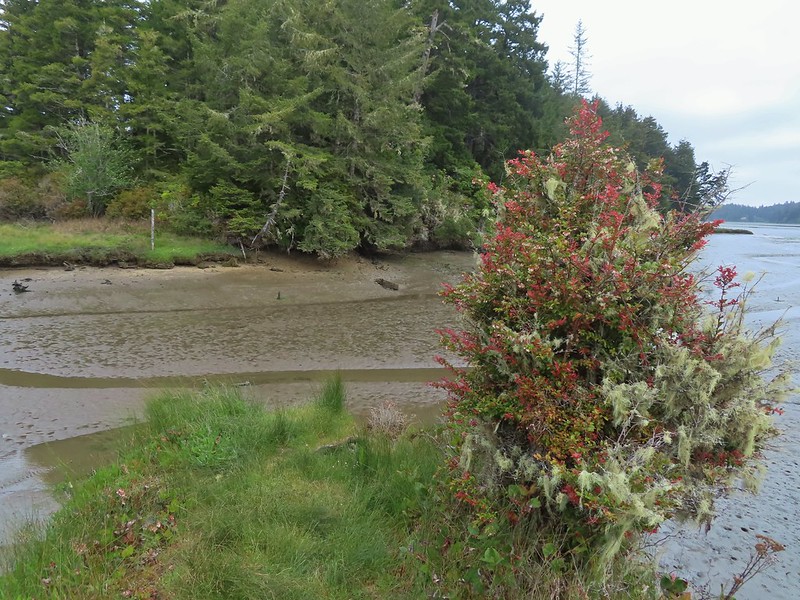
South Slough
It was interesting to see how this uprooted tree peeled back a layer of the ground.
We again returned to the shed staying to the right and crossing a nice bridge on the North Creek Trail.
Rhoades Marsh
Sloughside Marsh
Rhododendron
A third of a mile along the North Creek Trail we came to the signed .15 mile North Creek Spur.
We decided to check it out and followed the short trail downhill to a different view of the Sloughside Marsh.
We returned to the North Creek Trail and followed it uphill back to the Ten Minute Loop Trail where we turned right for a tenth of a mile to the Interpretive Center. Bleeding heart, fairy bells, and youth-on-age.
This was an excellent 4 mile hike with 300′ of elevation gain.
South Slough Track
From the Interpretive Center we returned to Seven Devils Road and followed it north to Charleston were we turned left onto the Cape Arago Highway to Sunset Bay State Park, a total of 6.7 miles from the center. We parked at Sunset Bay Middle (there is a North, Middle, and South but we didn’t realize that before we parked) which added a tenth of a mile each way to our hike but we had a nice view of Sunset Beach and Bay.
We walked over to Sunset Bay South and picked up the Oregon Coast Trail at a bridge over Big Creek.
The trail climbed to the top of the cliffs overlooking the Pacific as it looped around a large grass clearing that in non-pandemic times acts as a group camp.
>
Cape Arago Lighthouse (not on Cape Arago) on Chiefs Island.
Salal
The group campsite.
We followed pointers for the Oregon Coast Trail which briefly followed the shoulder of Cape Arago Highway as it passed Norton Gulch.
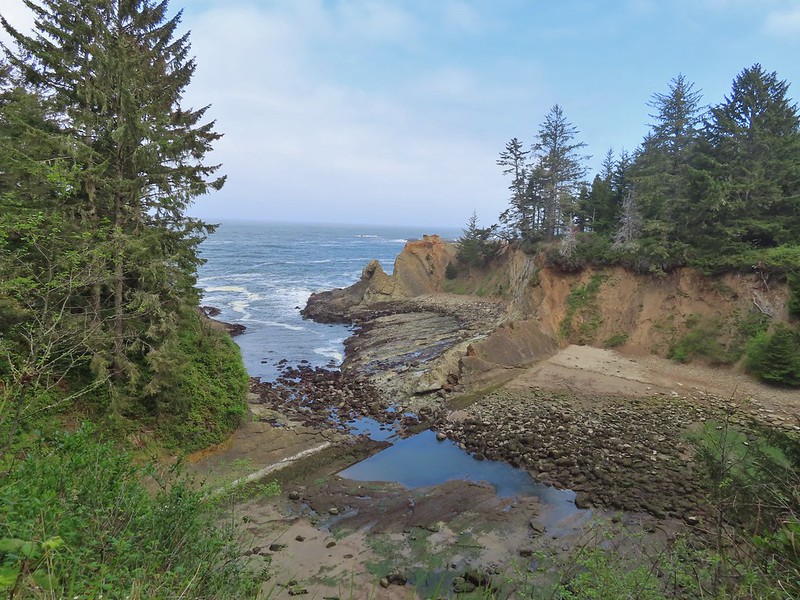
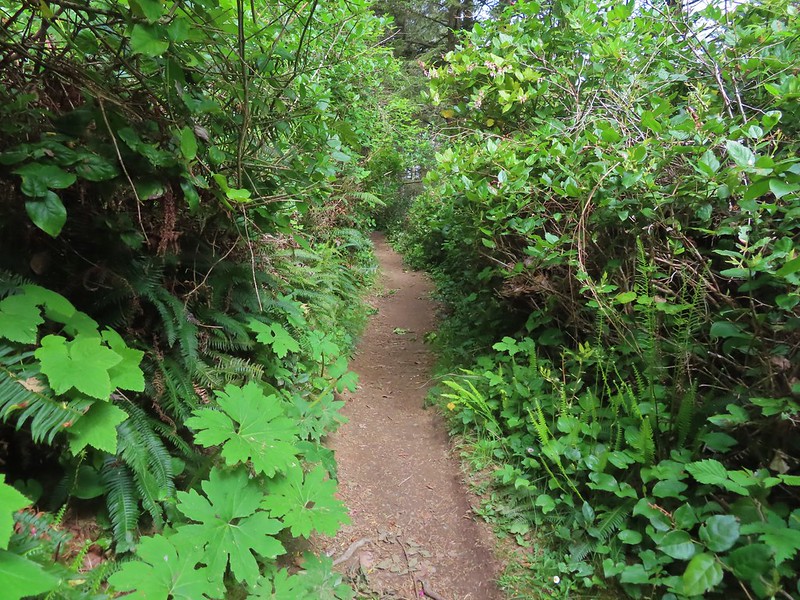
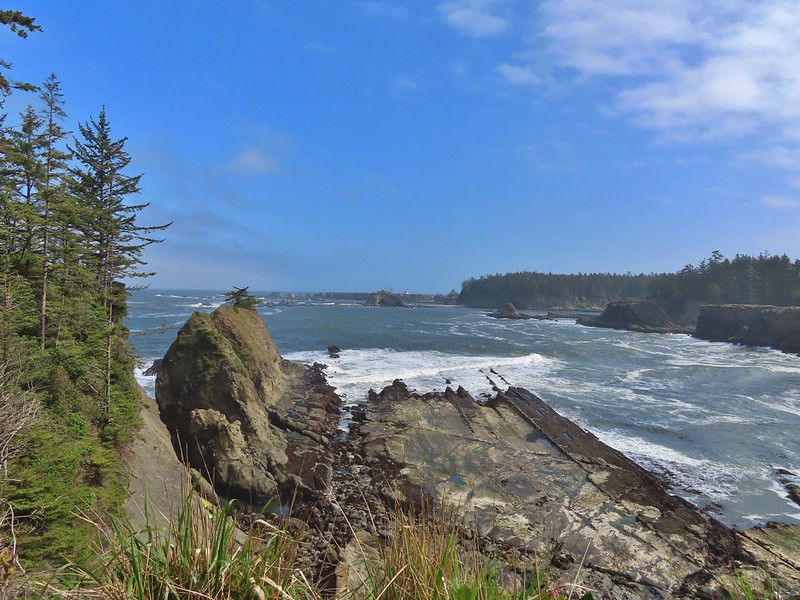
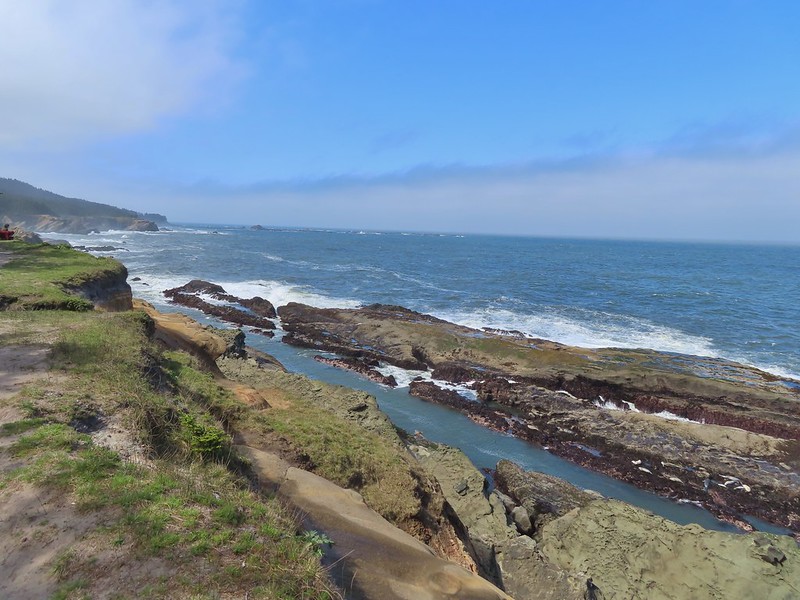
On the far side of the gulch the trail veered away from the highway and by staying right at junctions soon got back to the cliffs above the ocean providing some excellent views.
A long pause in our hike came when we stopped to watch some harbor seals on the rocks below us. Harbor seals in the lower right hand corner on the rocks.
Drama was unfolding in front of us as one pup repeatedly attempted to follow its mother up onto the rocks only to slide back into the water. It finally found success and then back into the water they went. Apparently it was just a practice run.
Success!
After tearing ourselves away from the seal show we continued south along the cliffs. Paintbrush
Sea thrift
Mariposa lilies
Iris
Just over two miles into the hike we came to the first noticeable remnants of the 1906 estate of timber baron Louis Simpson. Former tennis courts.
It was windy on the plateau and I couldn’t help but wonder how anyone could play tennis in the windy conditions that are often present on the coast.
View near the tennis courts.
These roots explain how some of the trees that look like they should be plunging into the ocean don’t.
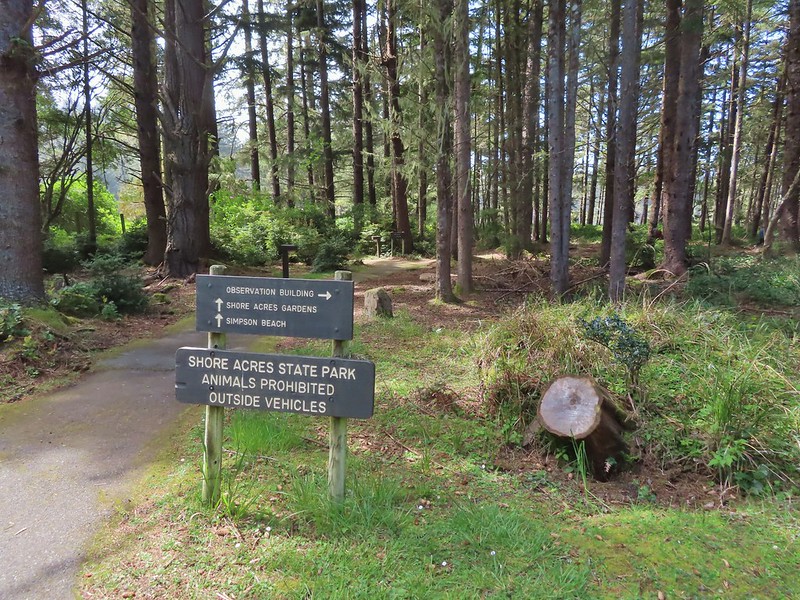
Observation Building ahead on the cliff.
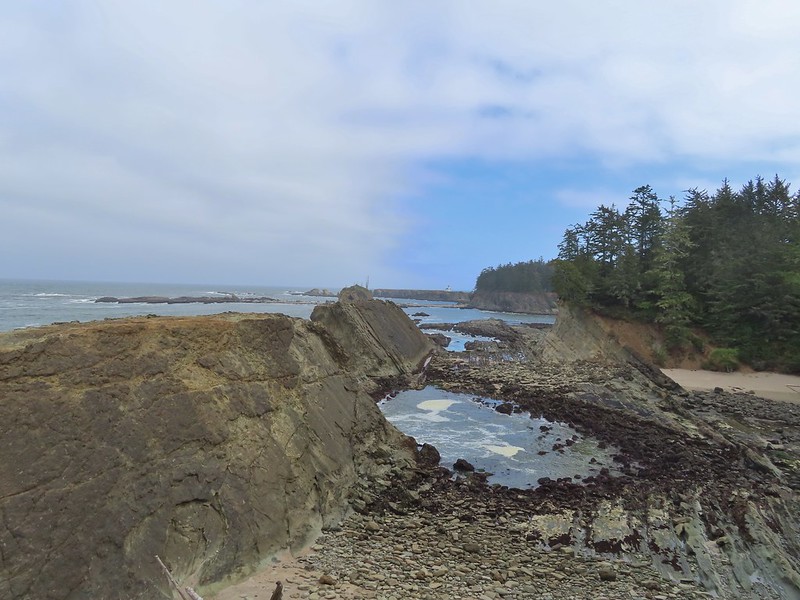
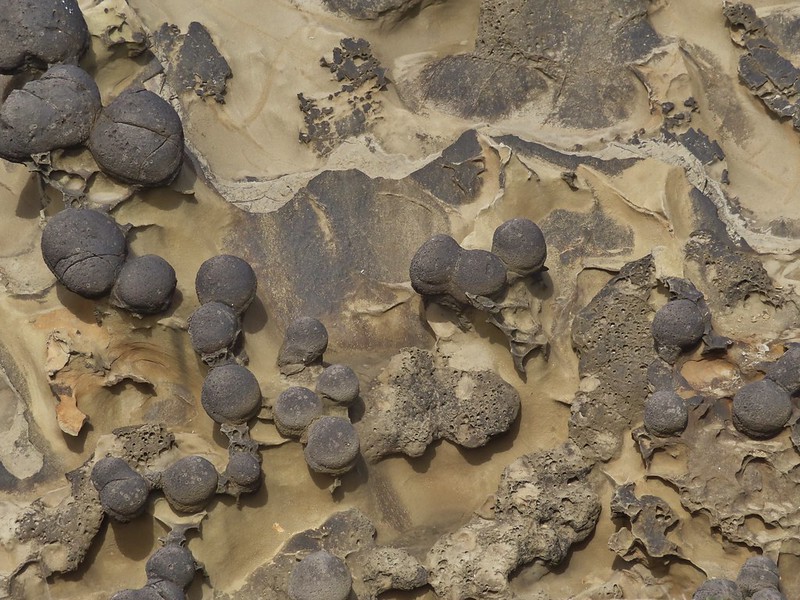
The rocks along the coastline here had been pounded and carved by the ocean into some interesting shapes and designs.
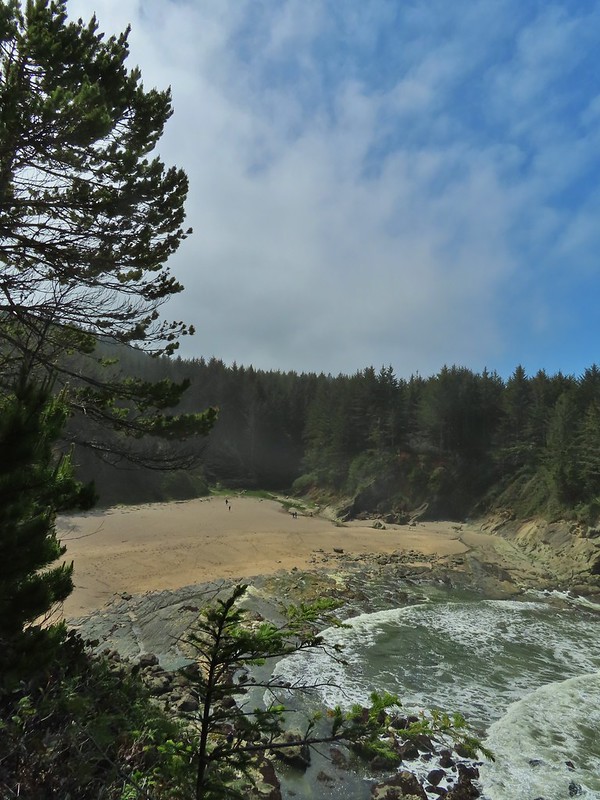
We walked past the Observation Building (closed due to COVID) to a viewpoint overlooking Simpson Cove.
The Oregon Coast Trail dropped down to the cove before climbing again and continuing onto Cape Arago State Park but before we headed down we wanted to check out the Shore Acres Gardens which were open (limit of 75 persons at a time).
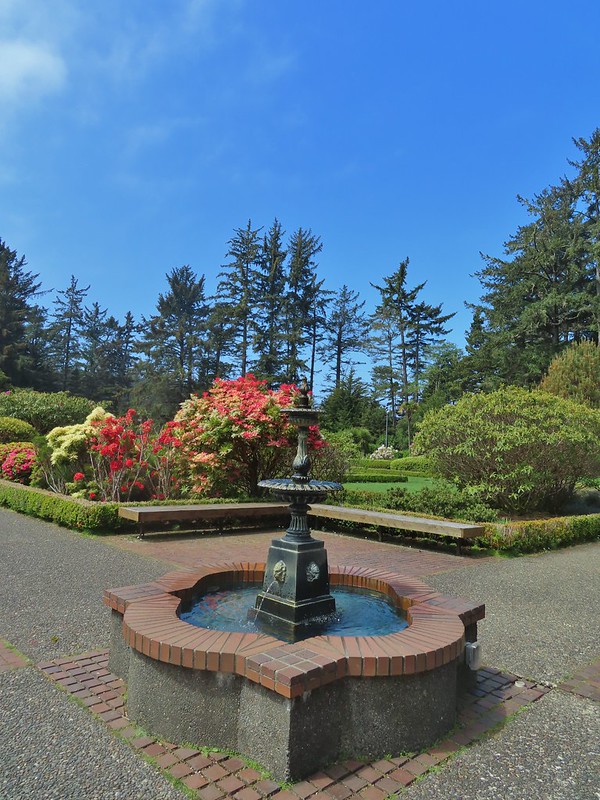
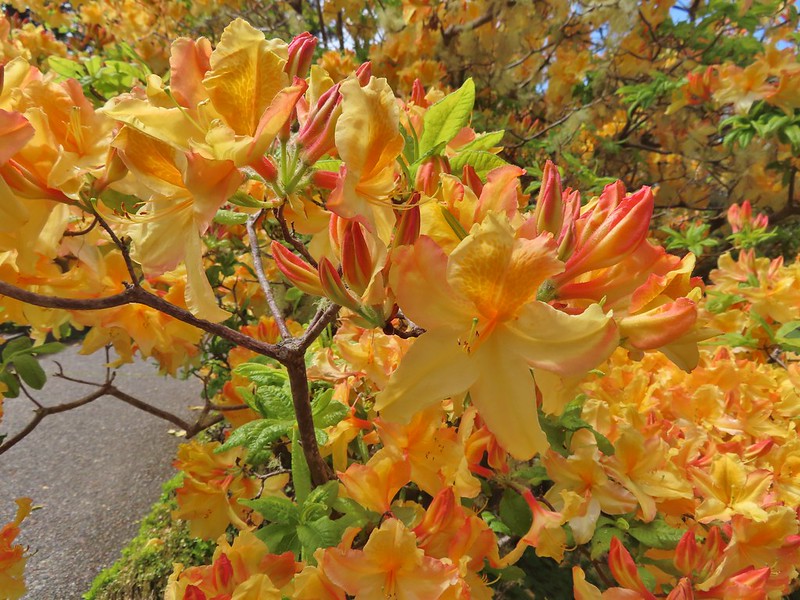
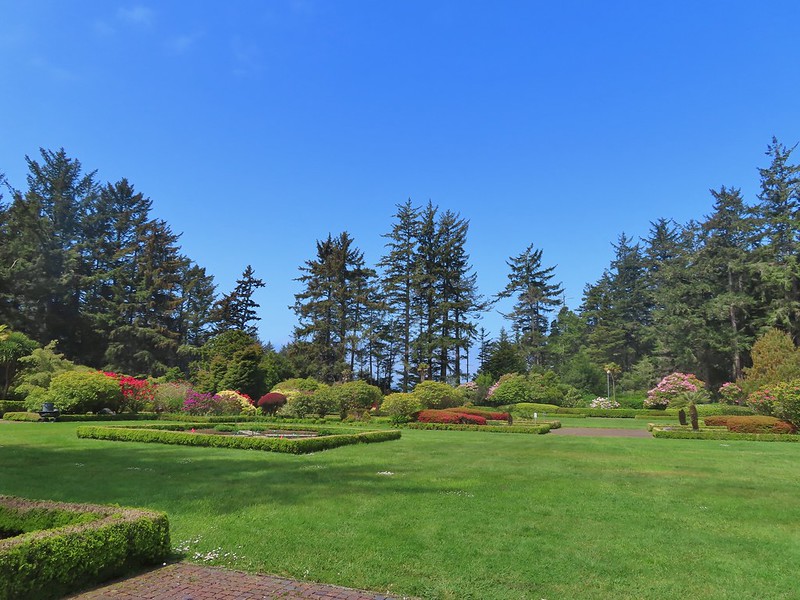
It was a little early yet for many of the flowers, especially the rose garden, but there was still a lot to see. The most impressive specimens to us were a plant and tree from South America.
>
Prickly Rhubarb from Chile
Monkey Puzzle Tree from South America
The yet to bloom rose garden.
After winding our way through the gardens we returned to the Oregon Coast Trail and followed it down to Simpson Beach.
After climbing up from the beach we came to an unsigned junction where we turned right continuing to follow the cliff south for .9 miles to an overlook along the Cape Arago Highway of Simpson Reef.
Looking back across Simpson Cove to the Observation Building.
Simpson Reef extending into the Pacific.
There was a lot of action going on out on the reef, in particular on Shell Island where sea lions barked and eagles engaged in aerial combat. Shell Island in the middle of Simpson Reef.
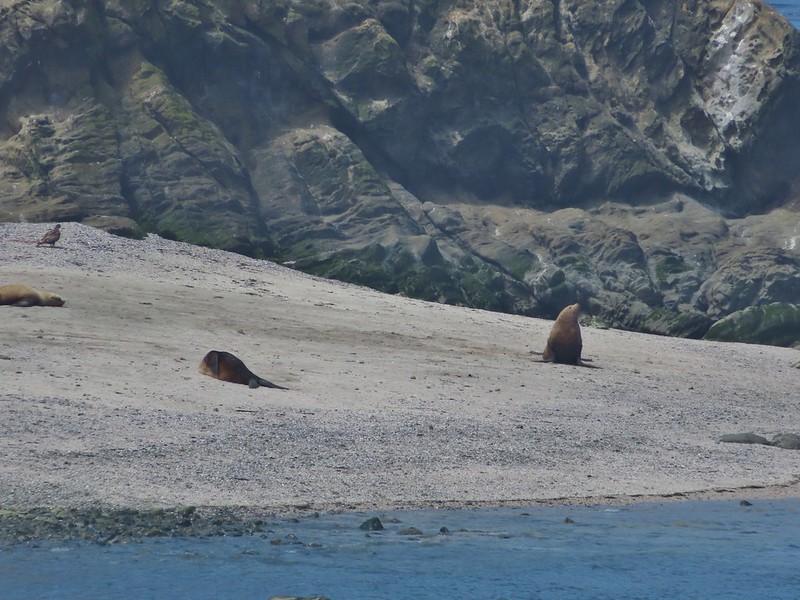
Sea lions and juvenile bald eagles on Shell Island.
Harbor seals on the reef.
After watching the action for awhile we continued on our trek by crossing the Highway onto a hiking trail marked by a post.
Coltsfoot
After a half mile on this trail we arrived at the Cape Arago Pack Trail.
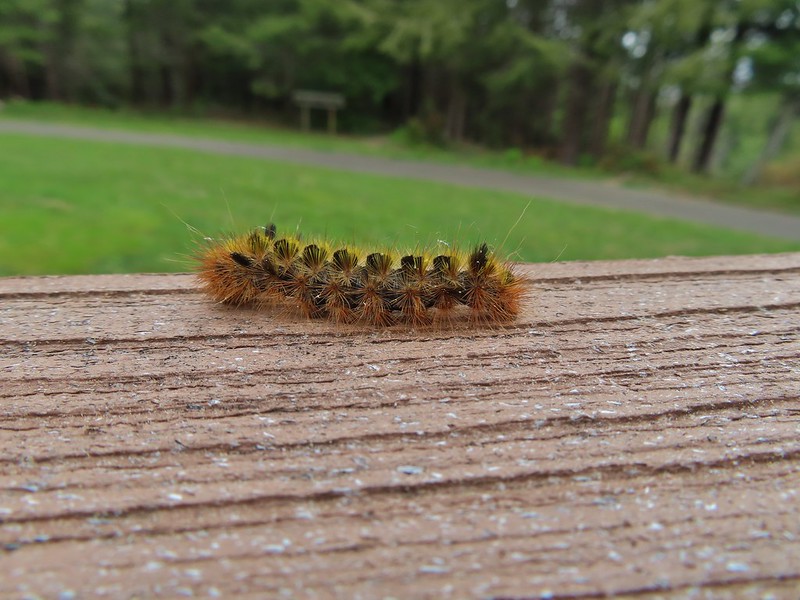
Left would loop us back to Shore Acres State Park while heading right would drop us into the main part of Cape Arago State Park. We turned right to check out more of the park and popped out near the South Cove of Cape Arago. Woolly bear caterpillar
Looking back up the Pack Trail.
A short trail led down to the beach in the South Cove (and possible tidepools) but we were starting to feel the effects of 3 straight days of hiking and having to climb back up from the cove just didn’t sound appealing so we opted to take a break at bench overlooking the cove in a picnic area.
Plaque near the bench commermorating Sir Frances Drake’s visit to the area in 1579.
Our stalker while we sat at the bench hoping we would leave some food behind (we didn’t).
After the break we continued to follow the parking area around Cape Arago passing Middle Cove and then arriving at the North Cove Trail.
We thought we might be hearing things, but no it was a rooster crowing.
Stellar’s jay
We decided to take this trail as it only lost a little elevation on its way to a ridgeend viewpoint with a view of a different side of Shell Island. North Cove (A trail down to that beach was closed for the season.)
From the North Cove Trail it was shorter to continue around the parking loop to reach the Pack Trail instead of backtracking so that’s what we did. The Cape Arago Pack Trail gained approximately 300′ in just under a mile to reach its high point at 530′. There had been caution signs regarding storm damage which we found near the high point where a clearcut had left trees overly exposed to winds causing several large ones to be uprooted. Luckily crews had cleared the trail beacuse the size and amount of trees down here would have been very problematic to get past.
The trail then descended to a small stream crossing before climbing again to a ridgetop. Heading down.
Going up.
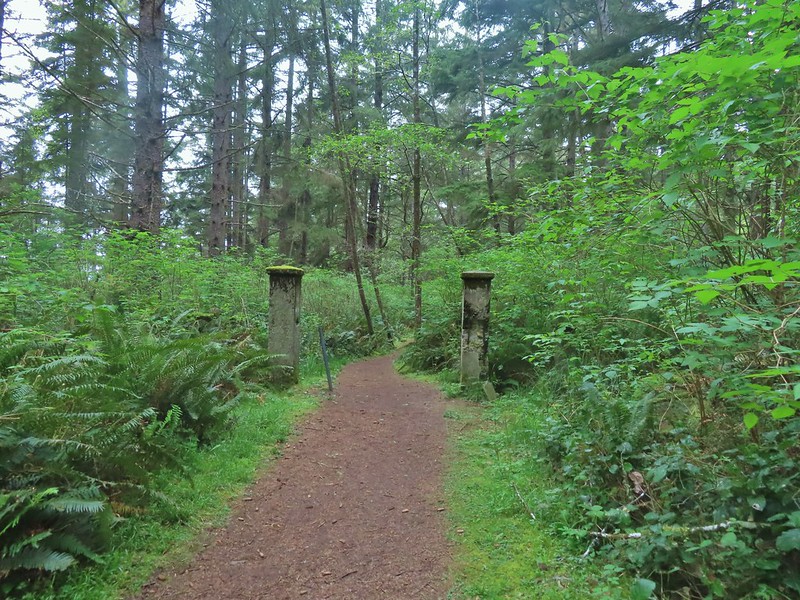
On the ridge we turned left at a junction on an old roadbed which followed the ridge down to the highway passing an old WWII radar installation bunker near the highway.
The Cape Arago Pack Trail at the highway.
We recrossed the highway here into Shore Acres State Park.
Just five hundred feet after crossing the road we came to the unsigned junction where we had turned right earlier after climbing up from Simpson Beach only we both missed it. Luckily we realized our mistake less than fifty yards later and got onto the right path. At this point we had hiked 12.5 miles on the day and it was closing in on 3pm due to all our extended breaks and we were getting tired. We decided to take the straightest path back to our car instead of following the Oregon Coast Trail as we had done earlier. We followed the entrance road in Shore Acres to the fee booth where we turned left on an old roadbed that now acts as a trail.
Going this way shortened our return trip by nearly 3/4 of a mile but it meant missing the views along the cliffs where we had watched the seals earlier. When we reached the Oregon Coast Trail we turned right and followed it back to the group camp at Sunset Bay State Park. We shortened our hike even further here by cutting through the empty camp, a move that shaved another 1/2 mile off the hike. It was a good thing too because our feet were not happy with us when we finally made it back to our car.
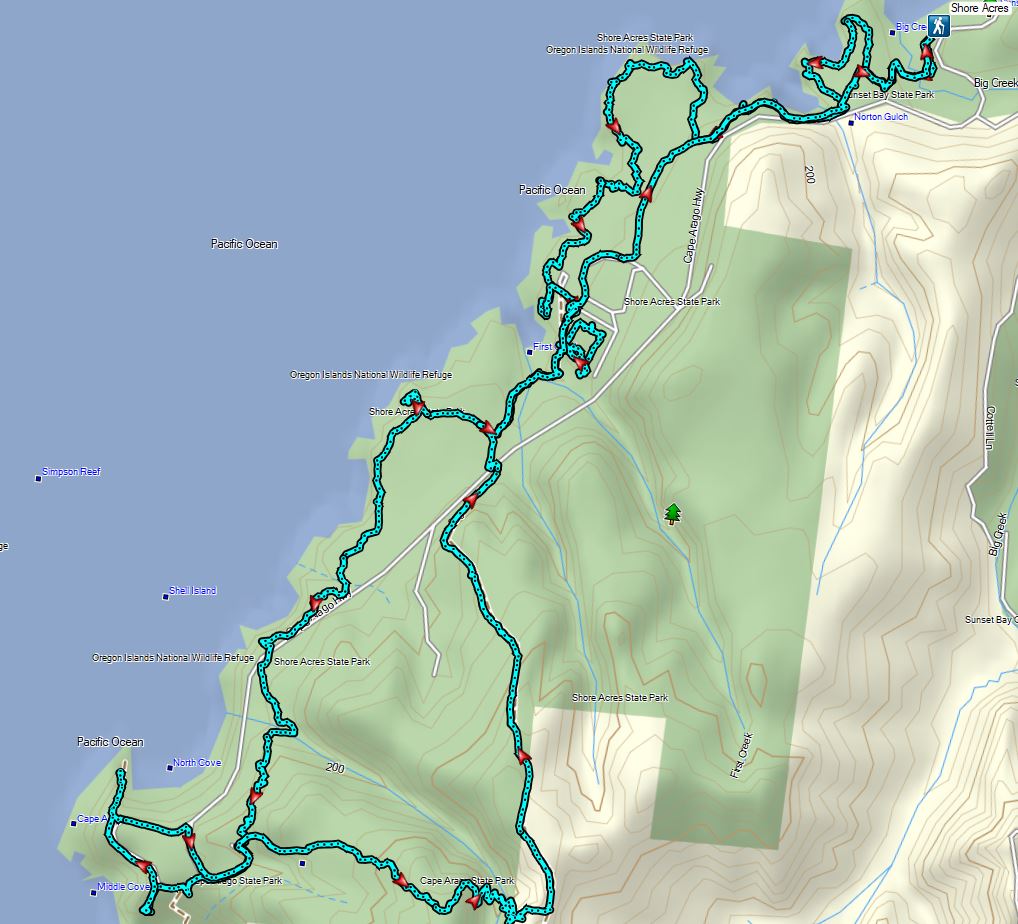
Our route through the parks
It had been a great day though with the two hikes combining for a 14.3 mile day. Happy Trails!
We didn’t waste any time starting on our 2018 list of hikes as we took advantage of favorable weather on New Year’s Day and headed for the Oregon Coast. Our plan for the day was to make three stops near Tillamook. First at Cape Meares State Scenic Viewpoint, then at Kilchis Point Reserve, and finally at Nehalem Bay State Park. As we neared Tillamook though it became apparent that we were a bit ahead of the Sun so we decided to swap the first and final stops to avoid sitting at the Cape Meares Trailhead waiting for light.
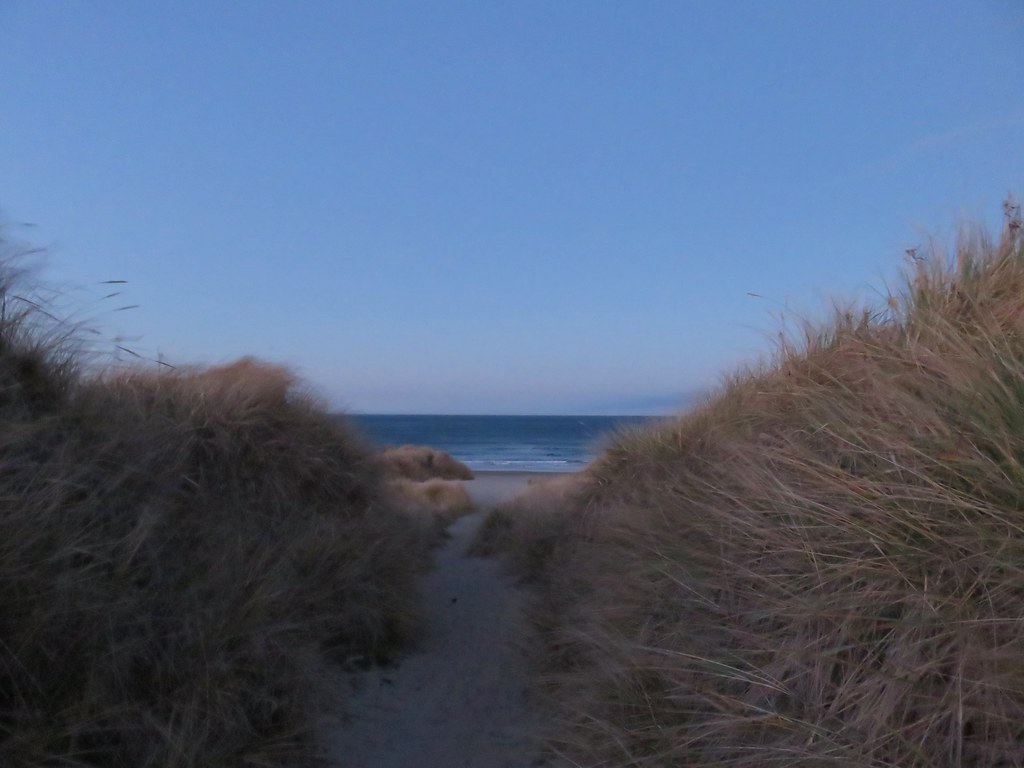
We drove north through Tillamook on Highway 101 to mile post 44 (one mile south of Manzanita) where we turned west at a sign for Nehalem Bay State Park. After paying the $5 day use fee we parked at the large day use area. We waited briefly for enough light to take a short path to the ocean.
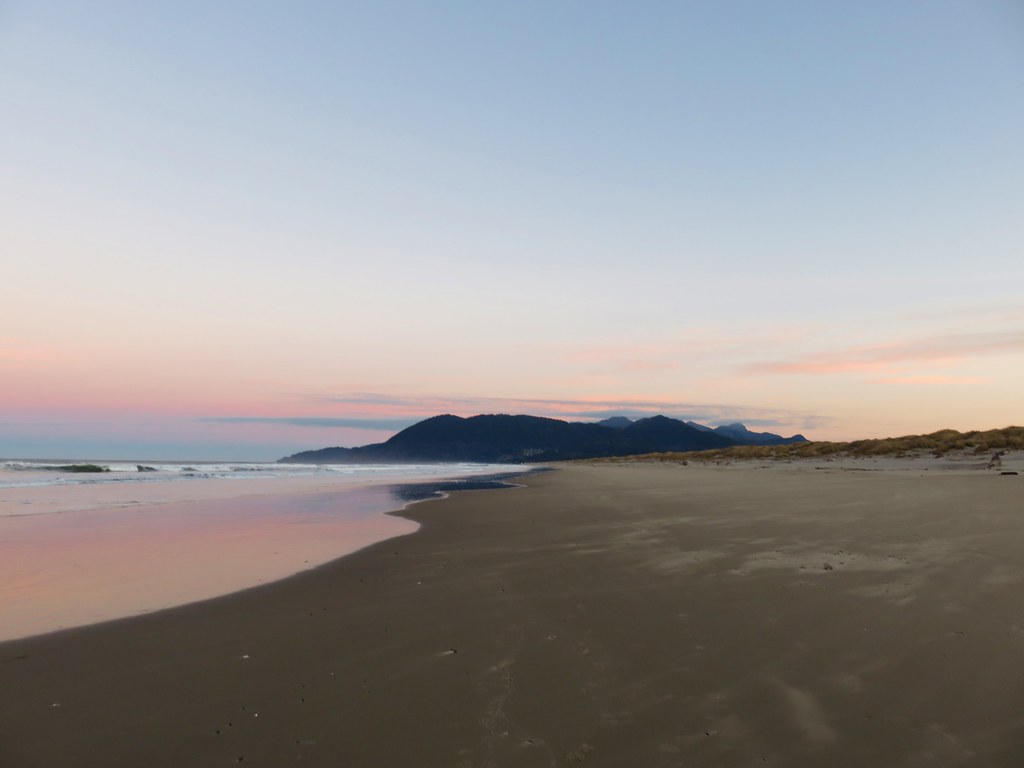
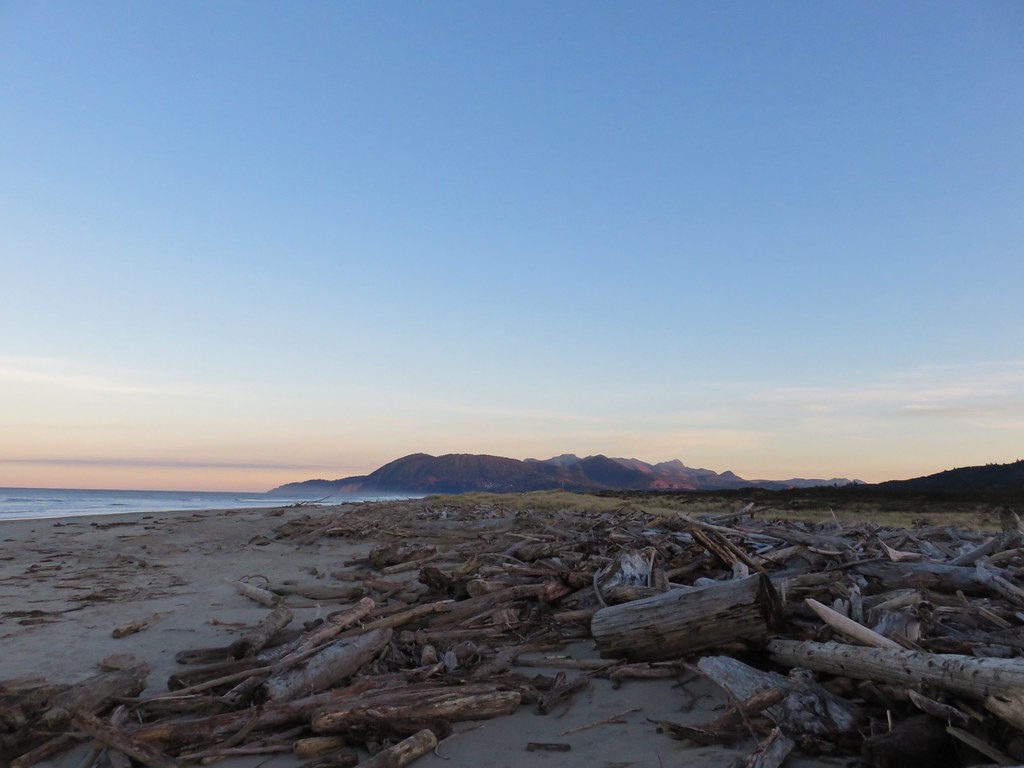
To the south our final destination of the day, Cape Meares, jutted out into the Pacific.
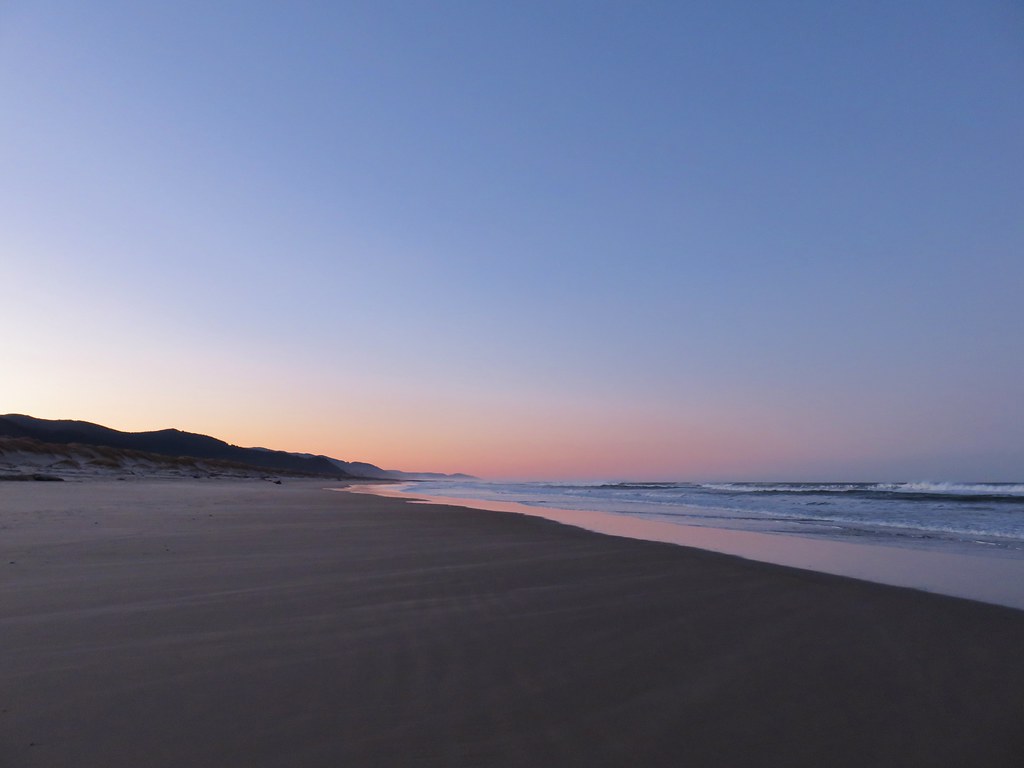
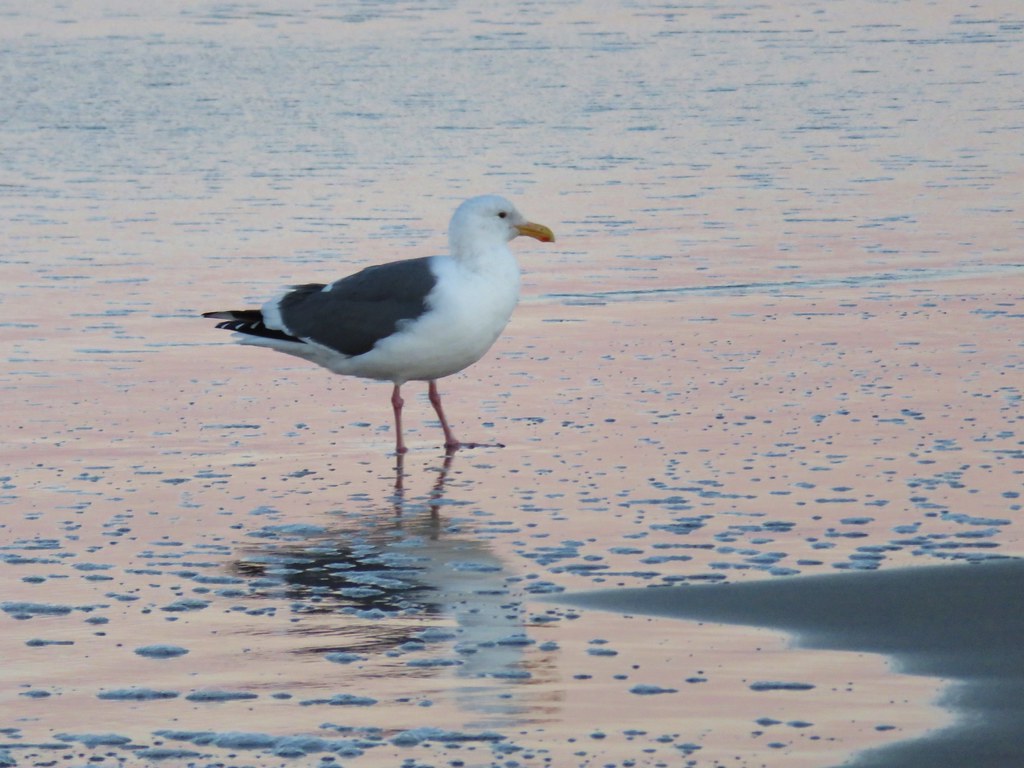
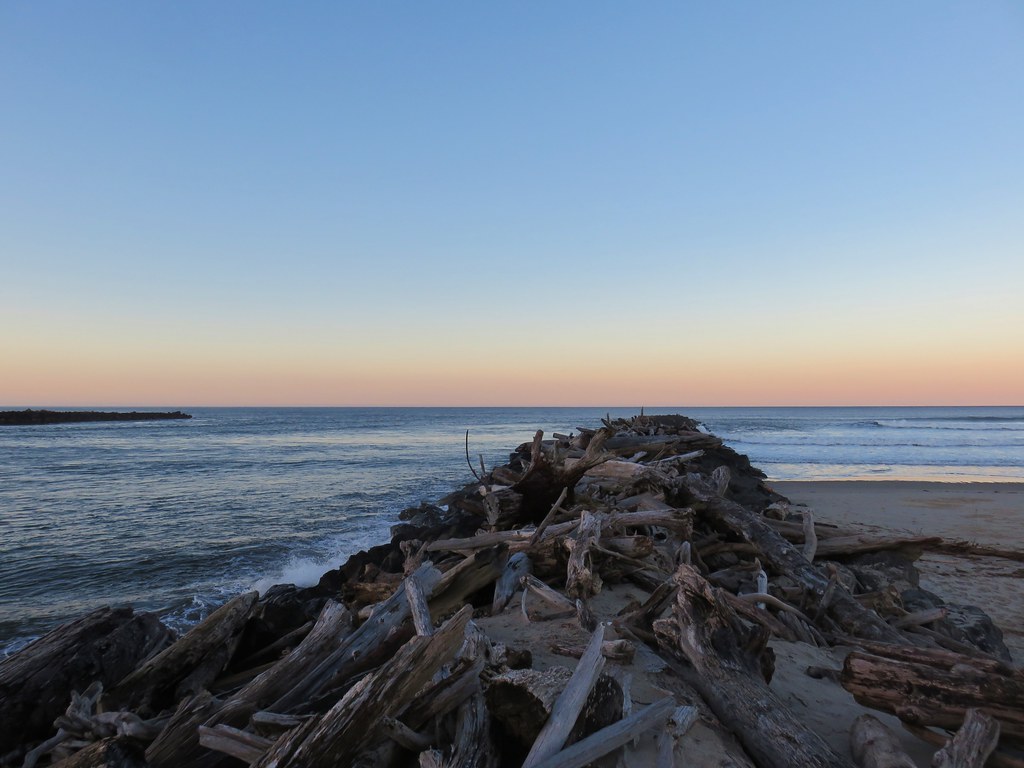
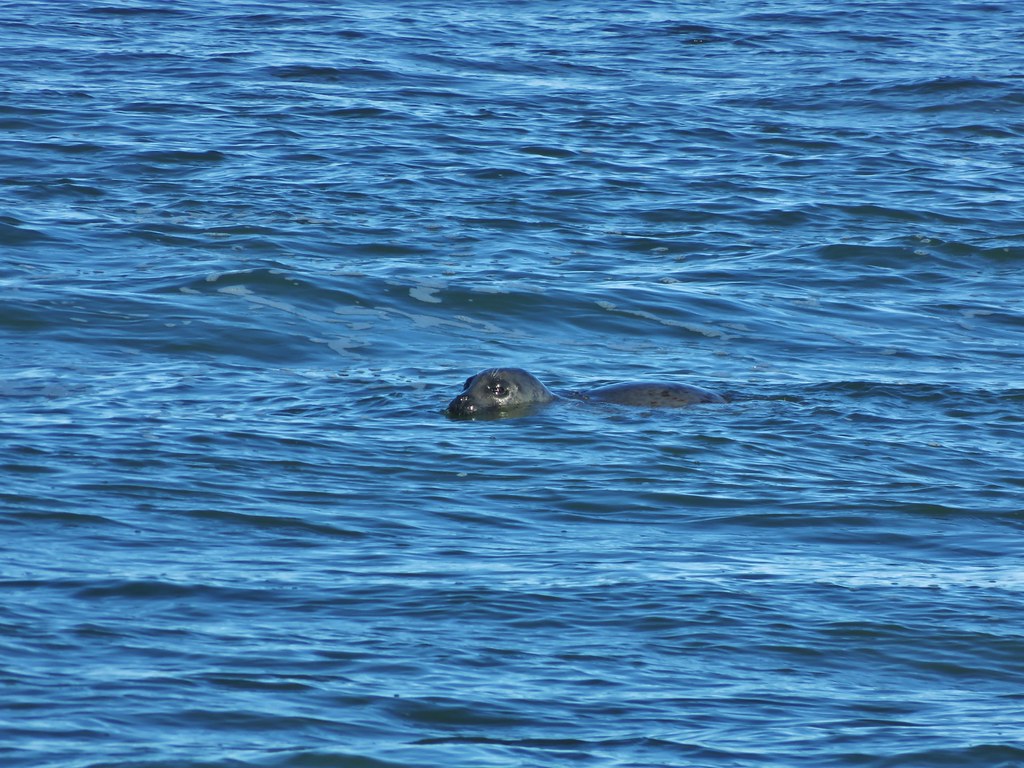
We walked south along the quite beach for 2.25 miles to the jetty at the end of the spit. We were joined by a lone jogger, some seagulls, and a curious seal.
A mass of driftwood near the jetty forced us to backtrack a bit along the beach to a hiker sign where we turned inland.
We crossed the spit to the bay and turned north along the water on a worn path.
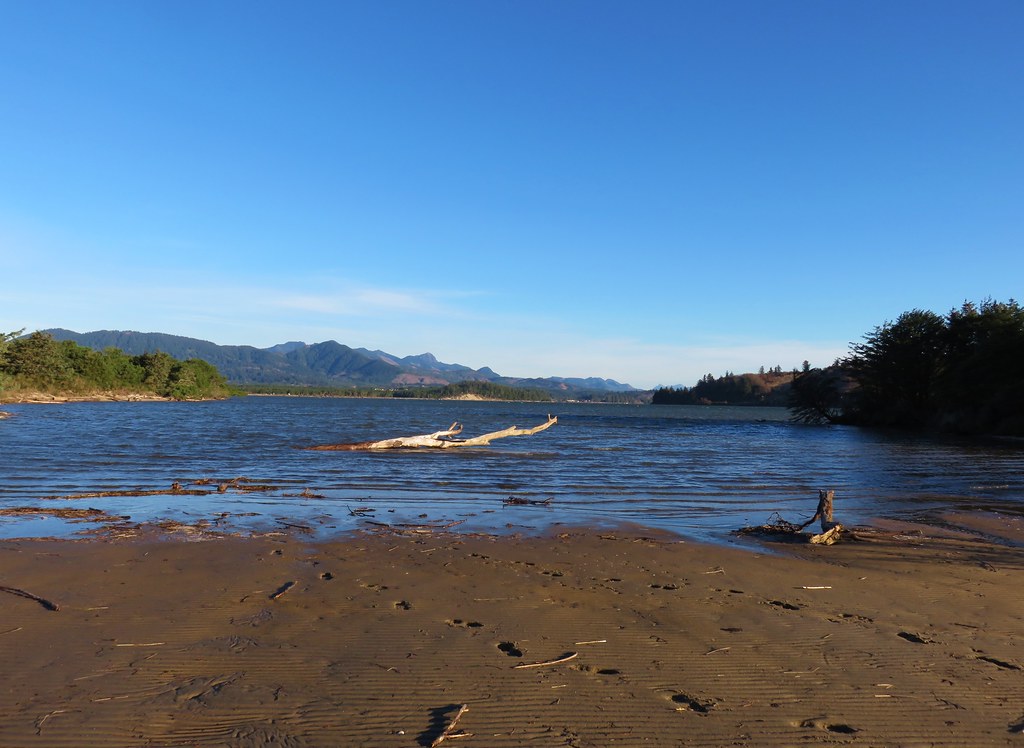
We were eventually able to get down onto the sandy Nehalem Beach which we walked along as far as we could before the high water forced us back up into the vegetation. Nehalem Beach ahead
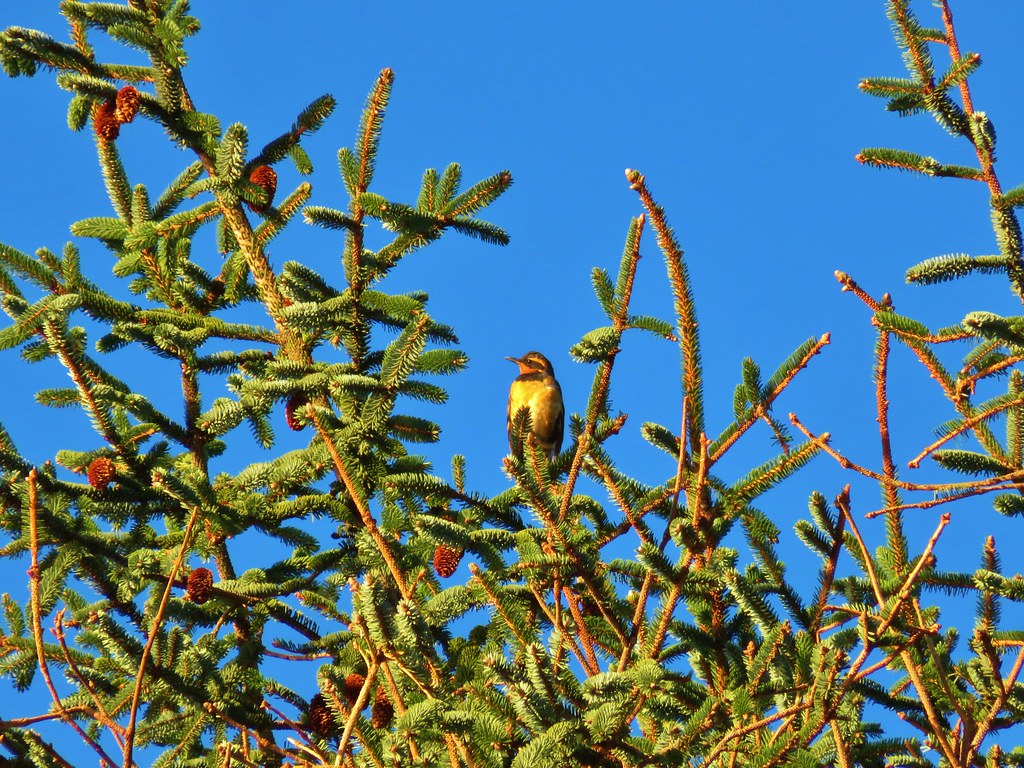
While we walked along the beach we spotted a bald eagle, more seals, and a varied thrush.
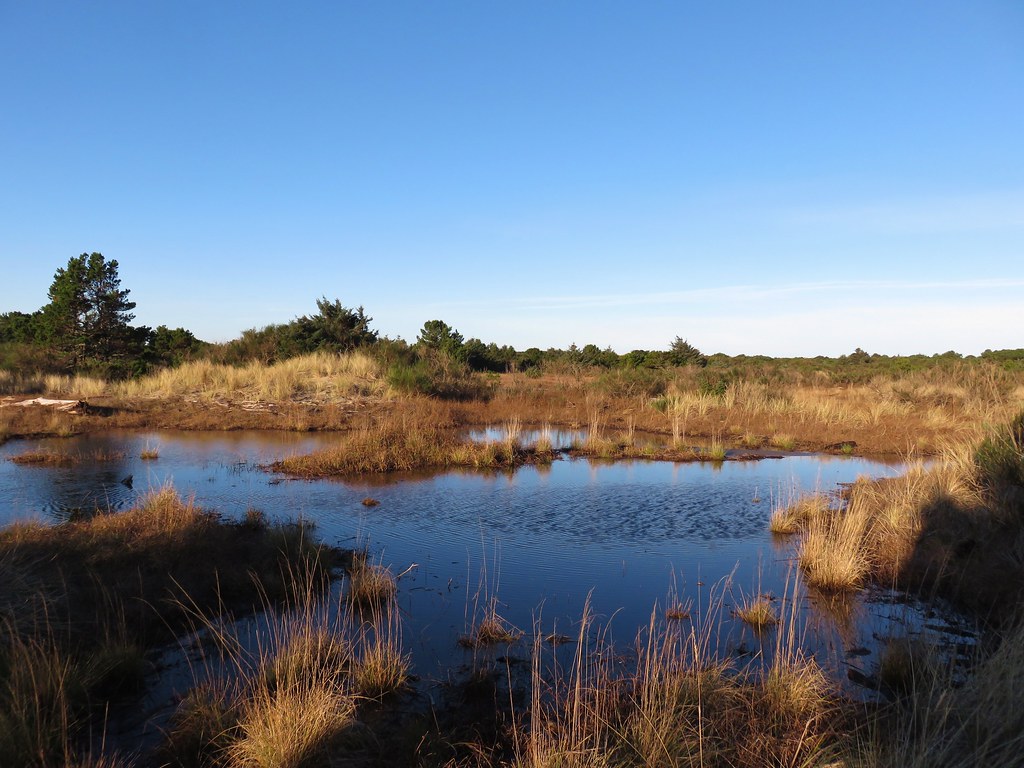
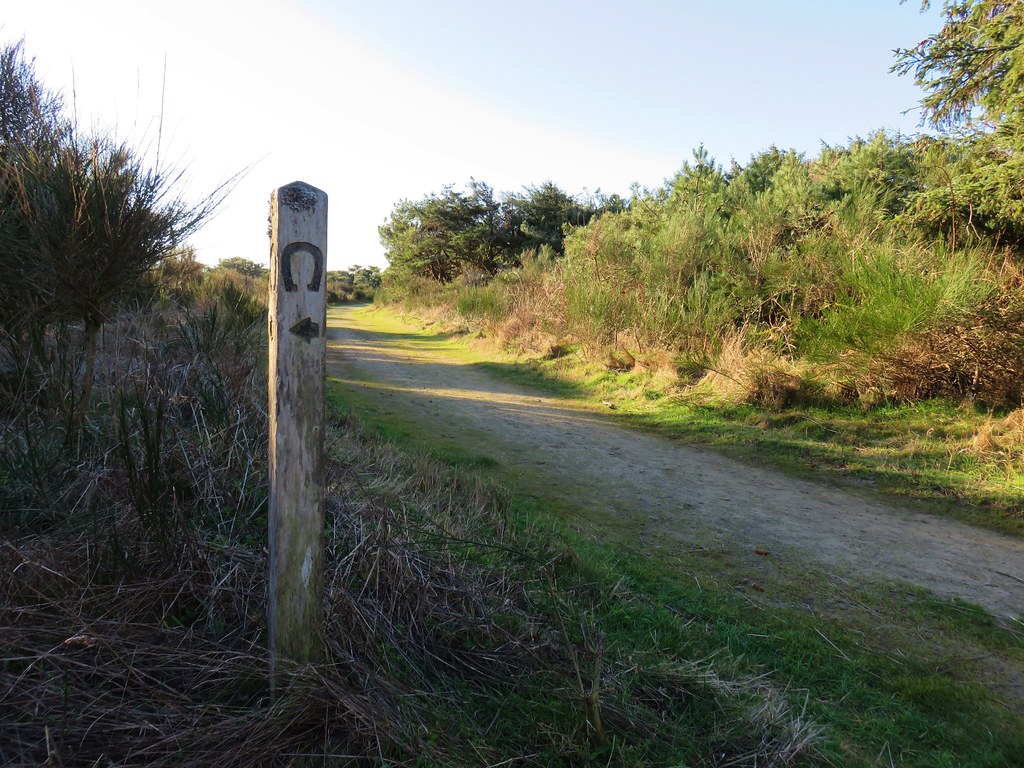
Ideally we would have been able to keep on the sand all the way back along the bay to the park’s boat ramp but since that wasn’t an option we turned inland on what appeared to be a well traveled trail. We were hoping it would lead us to the horse trail that our map showed running down the center of the spit but after a short distance the path we were following became flooded.
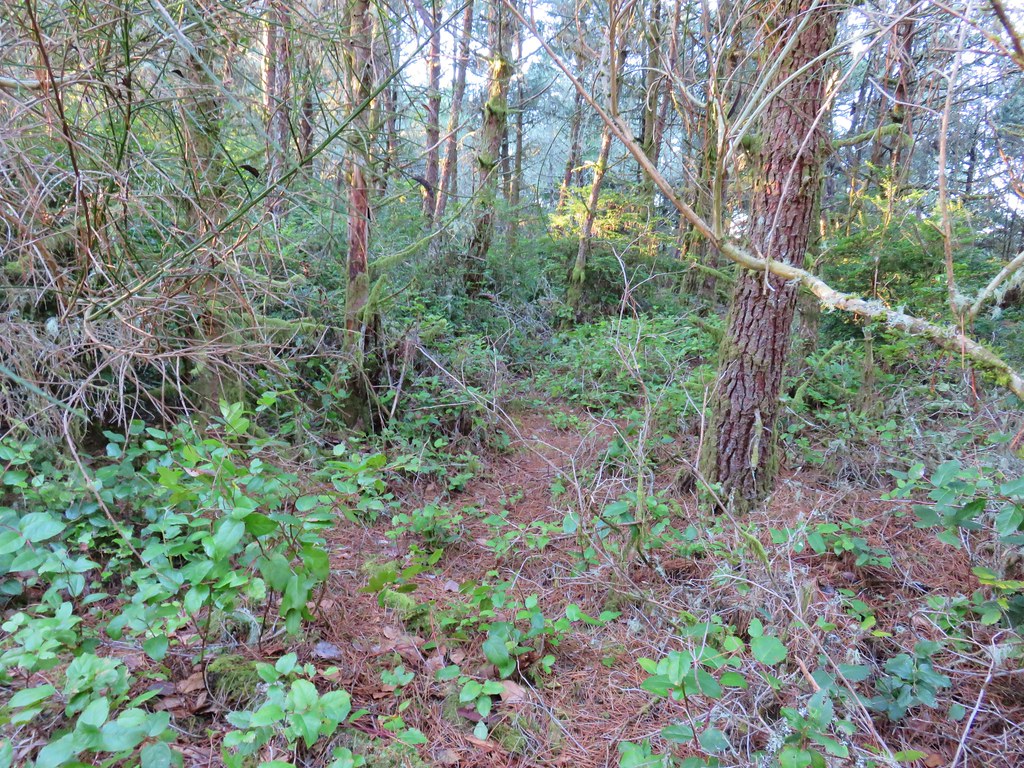
We were forced to attempt to follow a maze of game trails.
We could guess who was responsible for the confusion of trails by the elk sign we continually spotted. We lucked out at one point when we came to another flooded area at a narrow point where we were able to cross on driftwood. Had we tried sticking to the bay we would have run into a spot too wide to cross and wound up where we were anyway.
Shortly after crossing the water travel became easier as we were able to reach another sandy beach and then pick up a wider more traveled trail back to the horse trail not far from the day use parking lot.
Our guidebook and called this a 5.2 mile loop but the time we’d arrived back at the car we had squeezed 5.7 miles out of it due to backtracking because of the flooded trail.
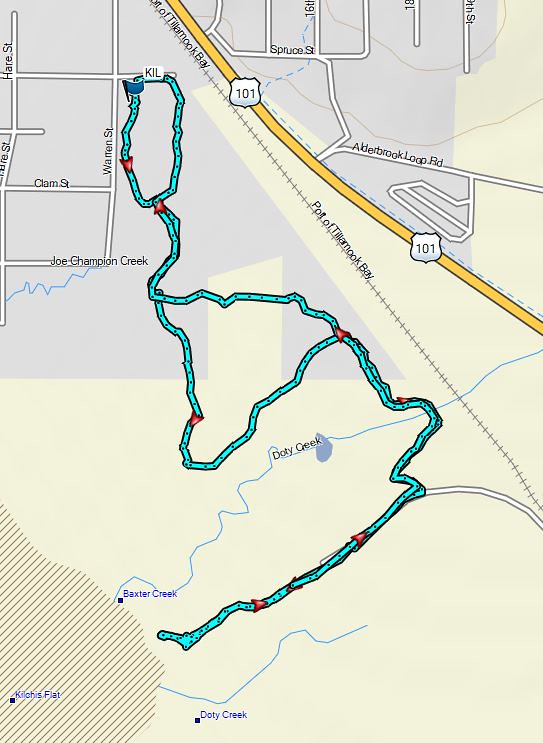
After returning to the highway we headed south to Bay City for our second stop of the morning – Kilchis Point Reserve. We turned towards Tillamook Bay on Warren Street near mile post 61 and followed pointers to the parking area on Spurce Street.
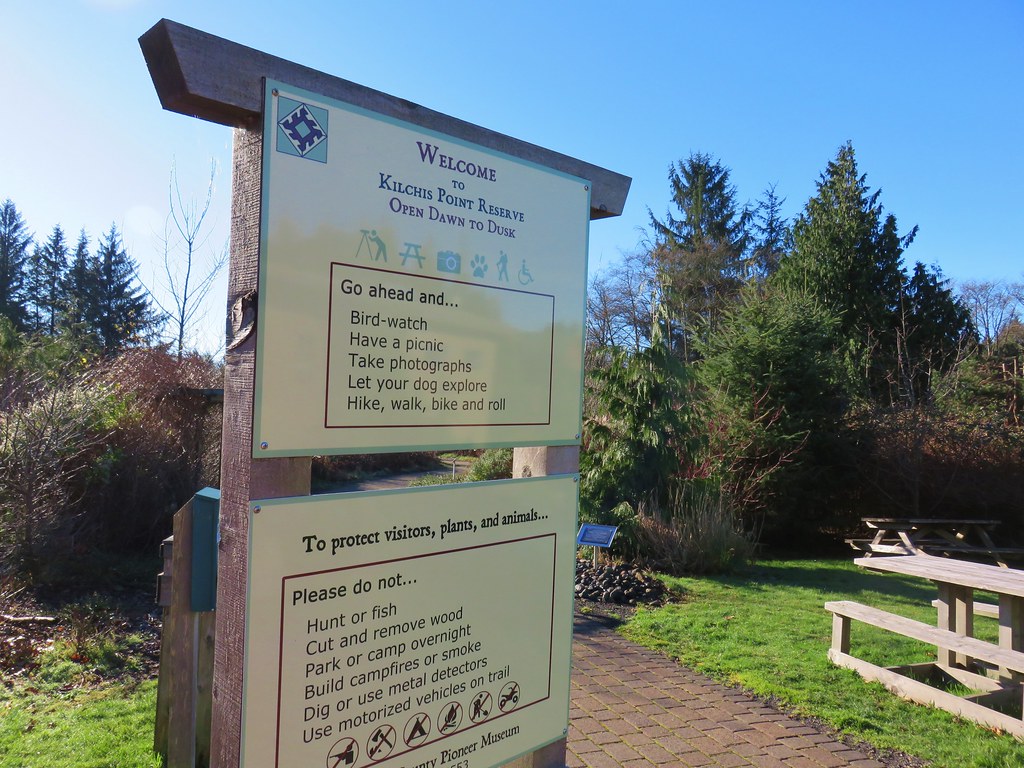
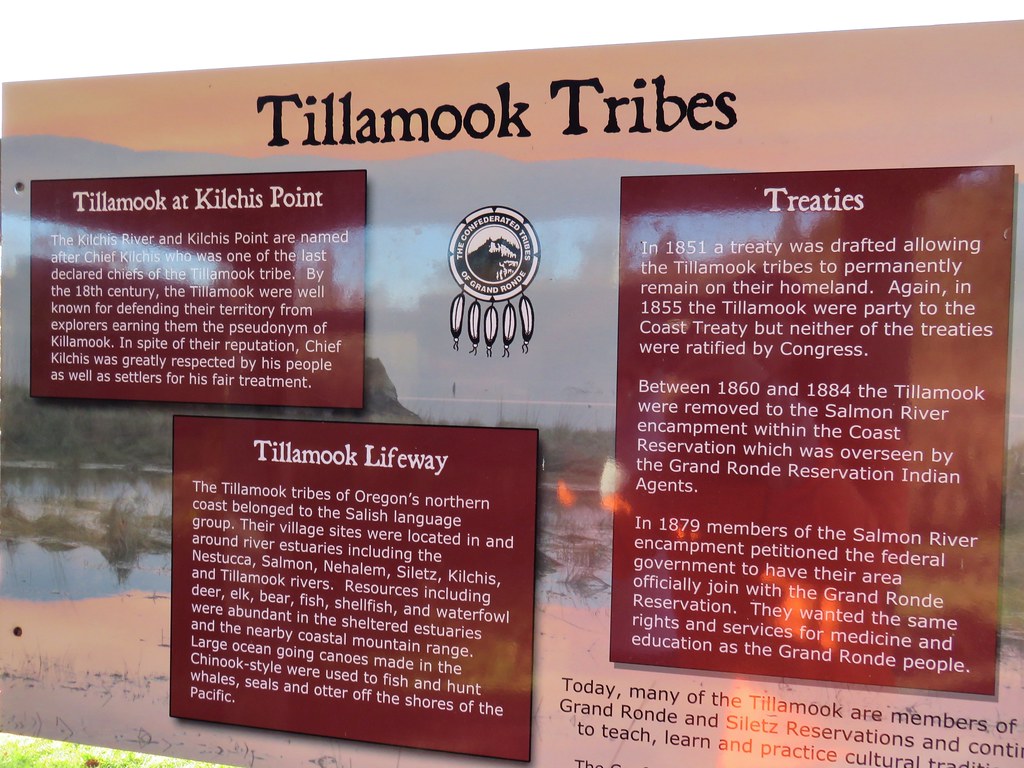
Kilchis Point is the site of one of the largest Native American villages along the Northern Oregon Coast. It is also the location where the Morning Star of Tillamook, first ship registered in the Oregon Territory, was built. The small park is very nice with plenty of amenities and a plethora of information posted throughout. It was a little chilly out so we didn’t stop to read all the signs this time but that just gives us a reason to stop again and check it out in the Spring or Summertime.
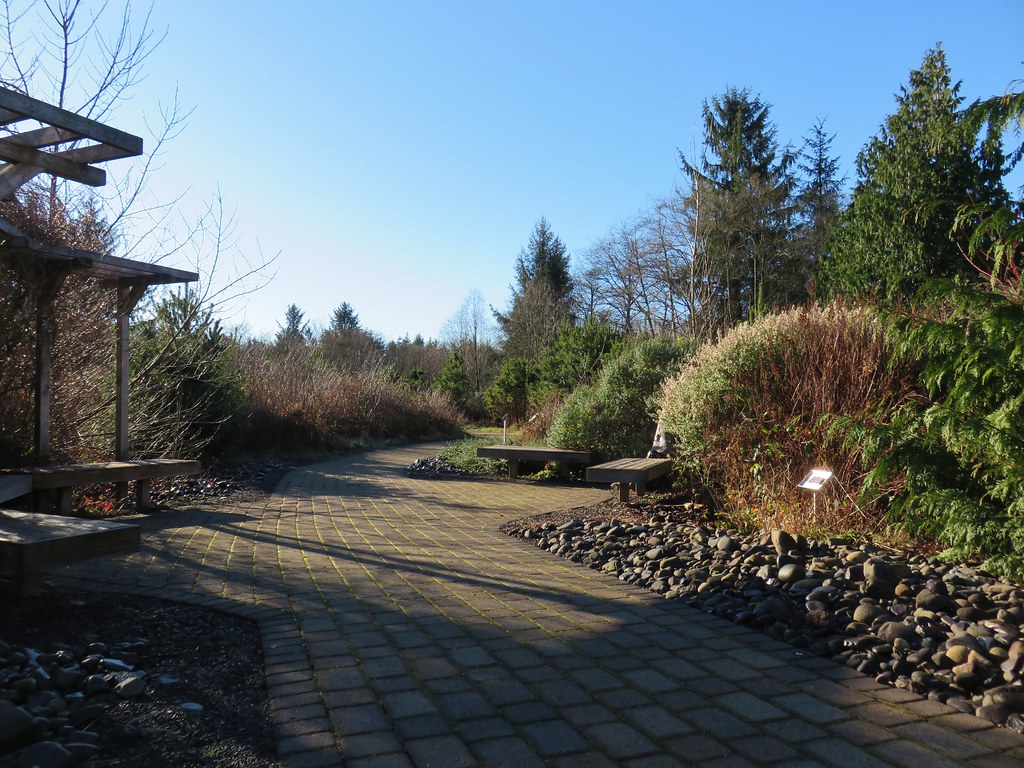
We followed the brick path from the parking area keeping right at junctions a total of 1.2 miles to a bird watching gazebo at Tillamook Bay.
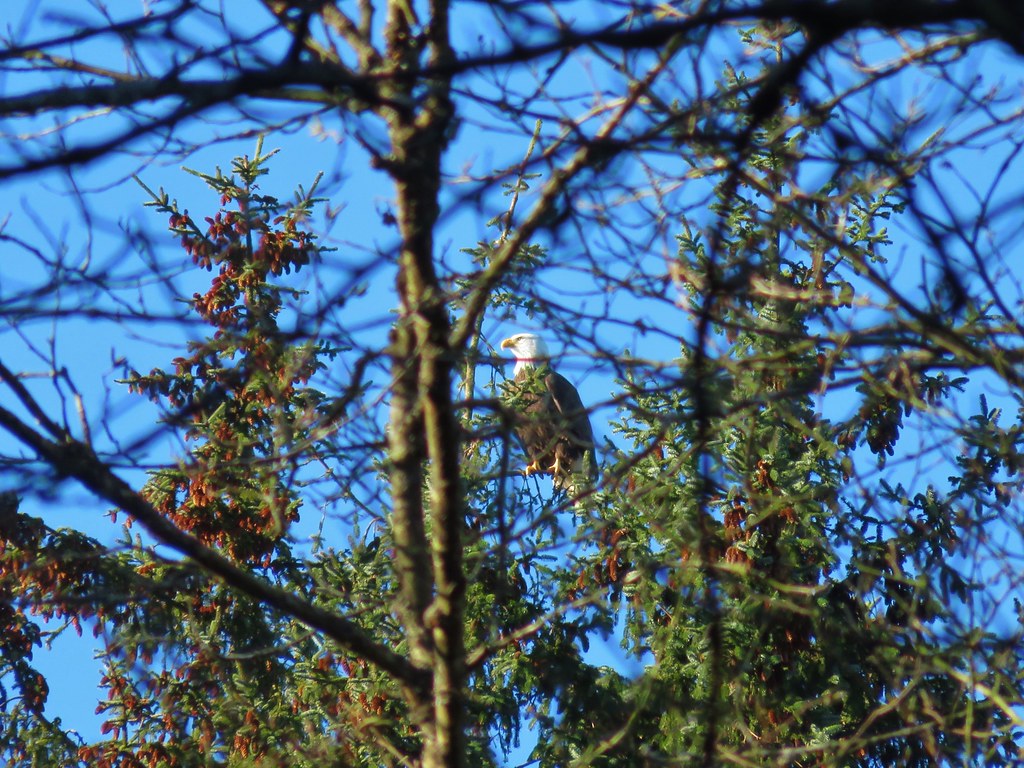
We didn’t spot many animals (other than dogs) along the way but we did get to listen to a pair of bald eagles for a bit.
After a short break by the bay we returned to the parking area by following signs and staying right at trail junctions to complete two short loops.
We then drove south to Tillamook and followed signs to Oceanside on Highway 131. From Oceanside we followed signs to Cape Meares State Scenic Viewpoint and parked at a trailhead parking area at the park entrance.
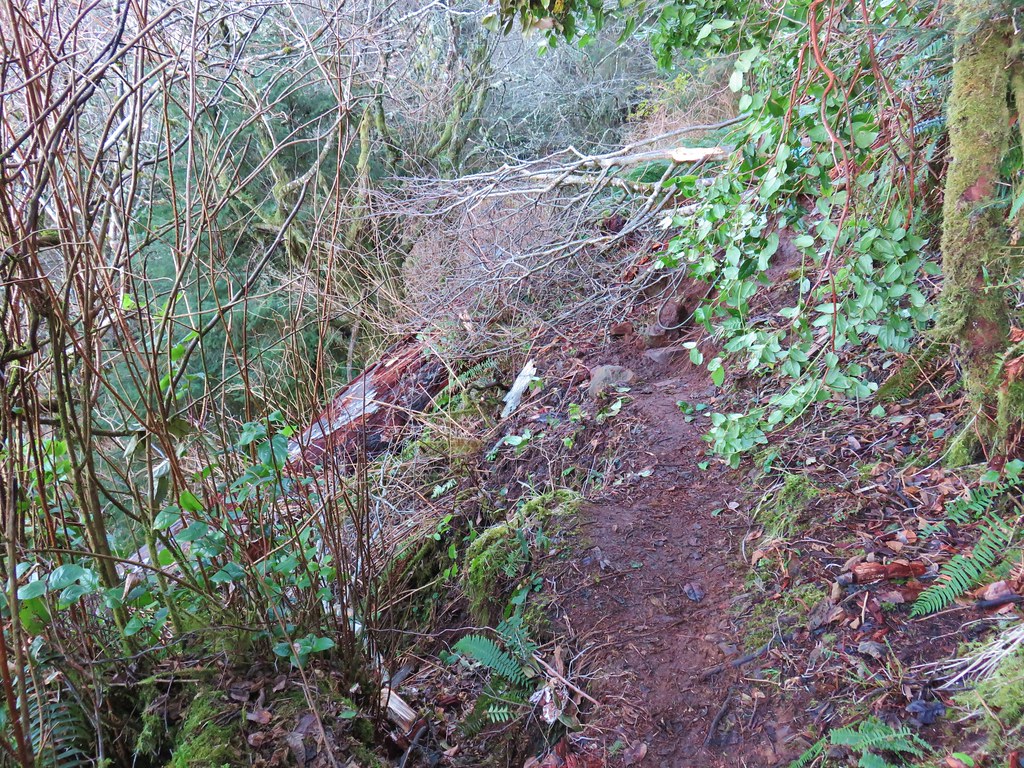
A mudslide in January of 2013 closed the Three Capes Scenic Loop beyond the park entrance. That slide continues to slowly shift the area and has affected a trail between the trailhead and the beach to the north of Cape Meares. We decided to head down this trail to see the conditions first hand.
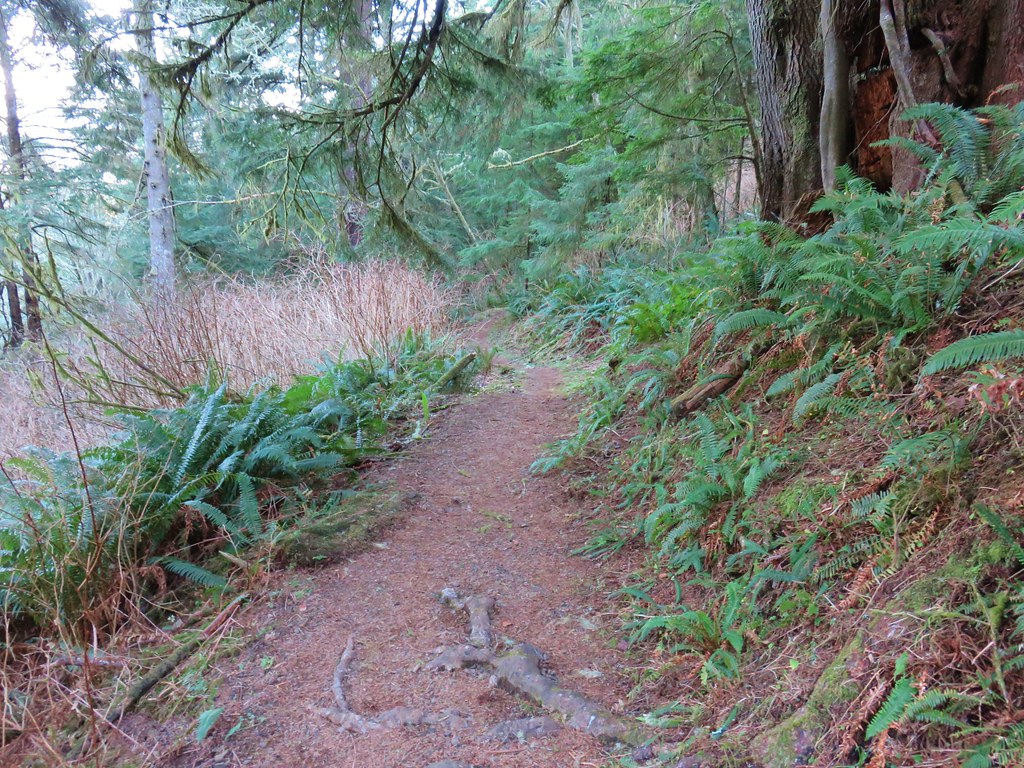
The upper portion of the trail was in reasonably good shape although there was a small tree that required ducking under.
Shortly after passing a fairly nice view of another place we had previously hiked, Bayocean Spit, we came to a jumble of debris.
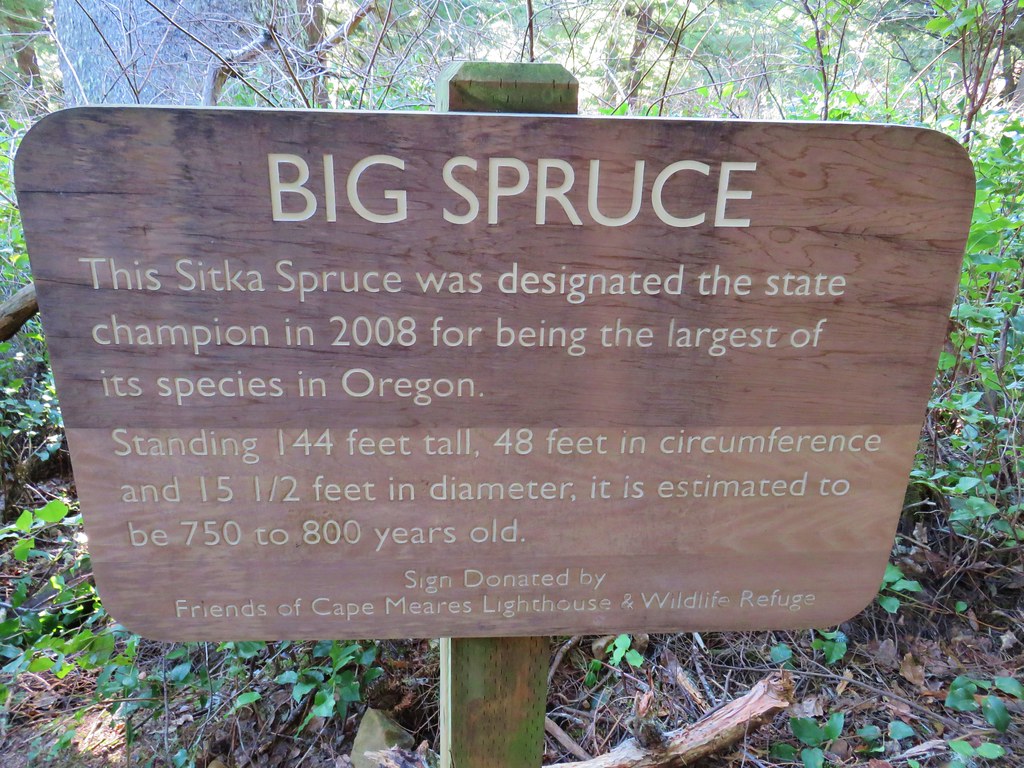
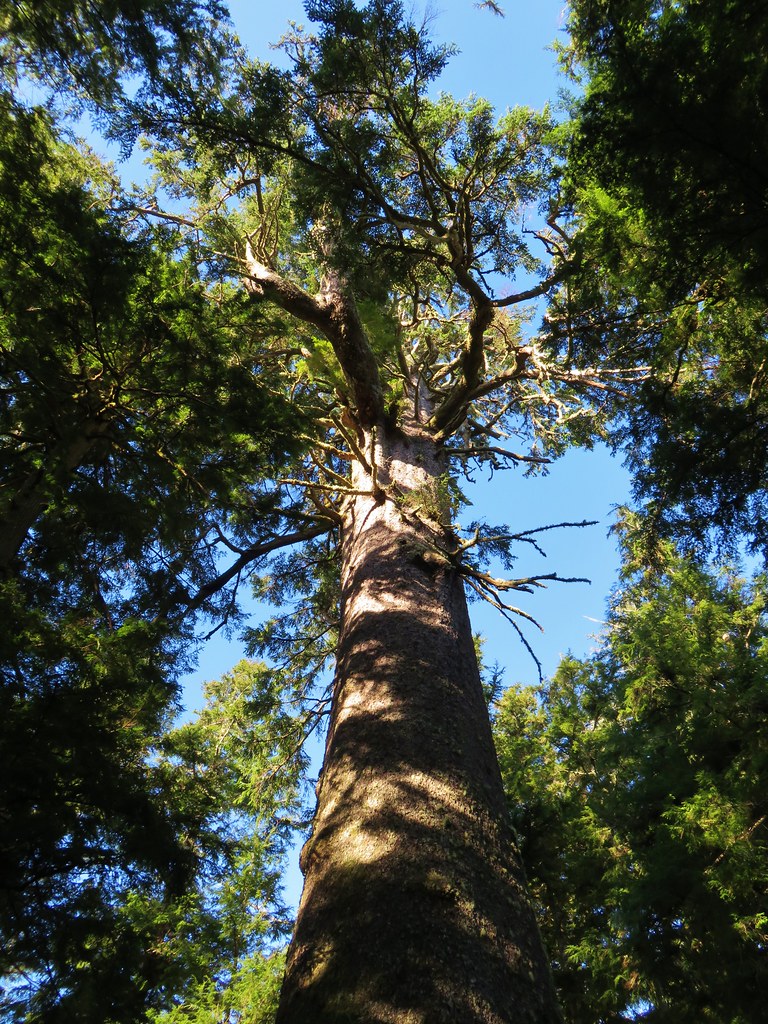
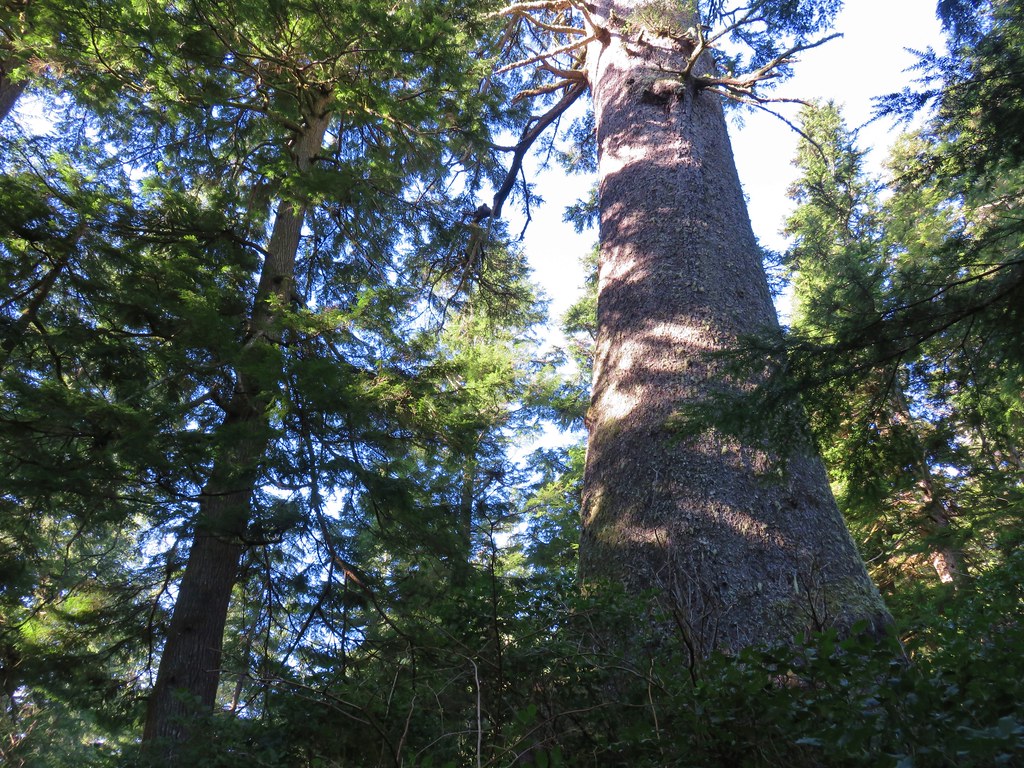
That was our turn around point,a little over half a mile from the trialhead. We headed back up to the trailhead and took the .2 mile Big Spruce Trail. The tree is estimated to be 750 to 800 years old and is the largest known Sitka spruce in Oregon.
For a bit of perspective if the tree sprouted in 1217 it was there at the start of the fifth crusade.
After visiting the old tree we road walked .6 miles along the entrance road to the crowded parking area for the Cape Meares Lighthouse.
We stopped at a viewpoint platform overlooking Tower and Pillar Rocks to the north.
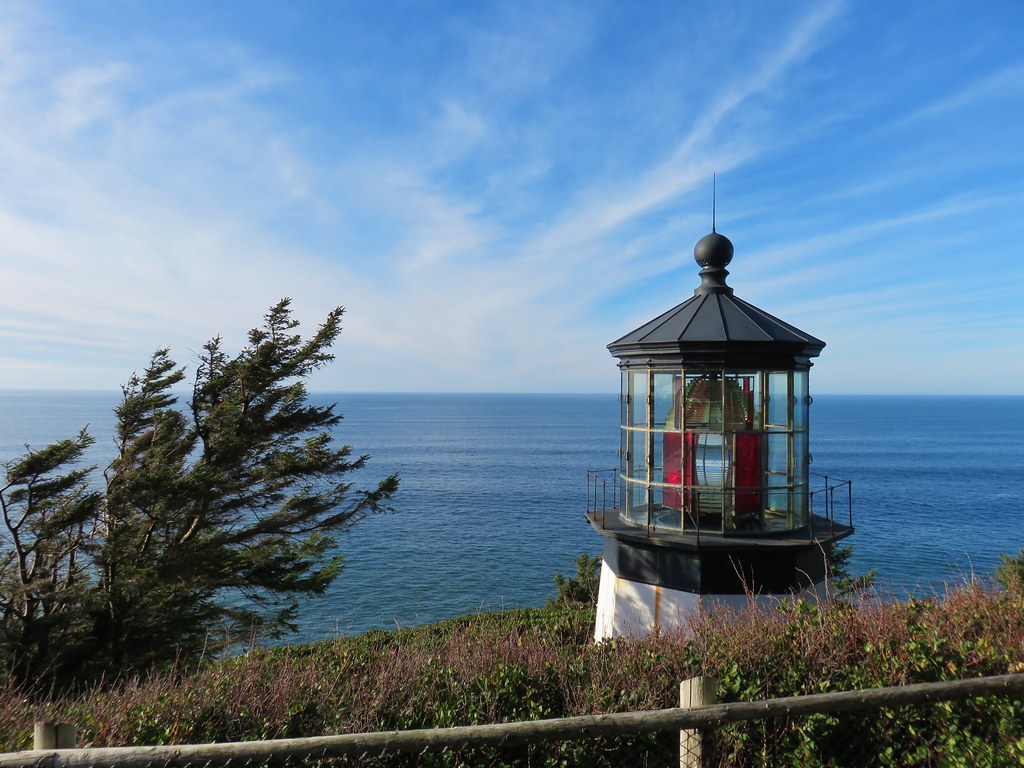
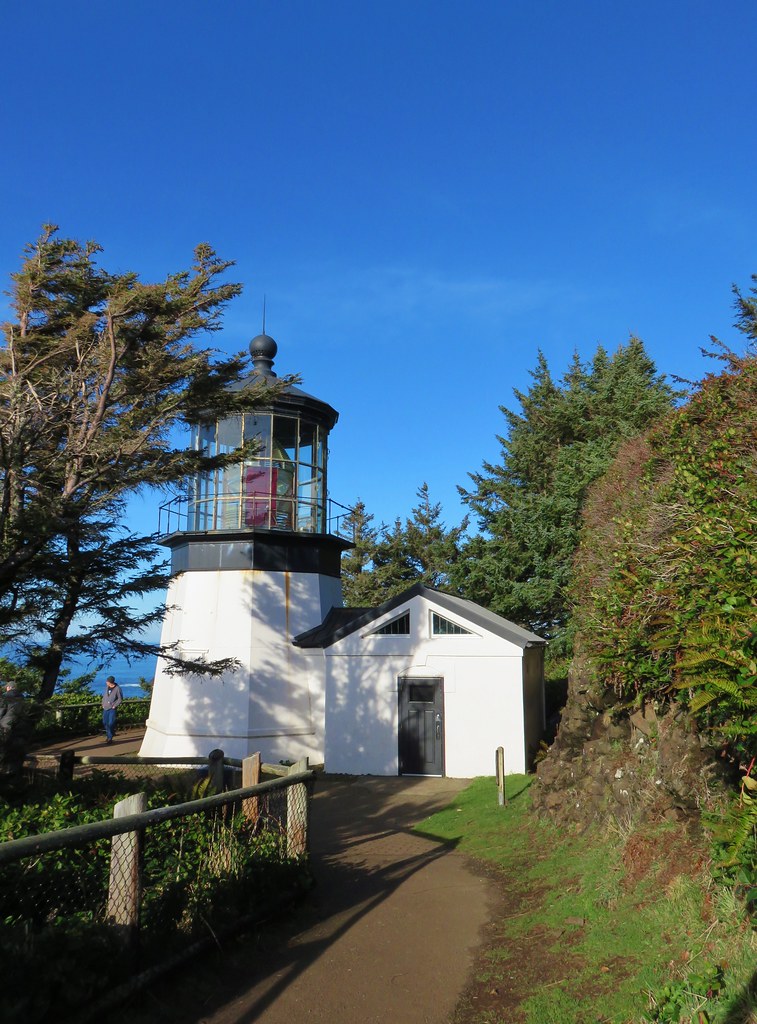
A .2 mile path led from the parking area past more viewpoints to the lighthouse.
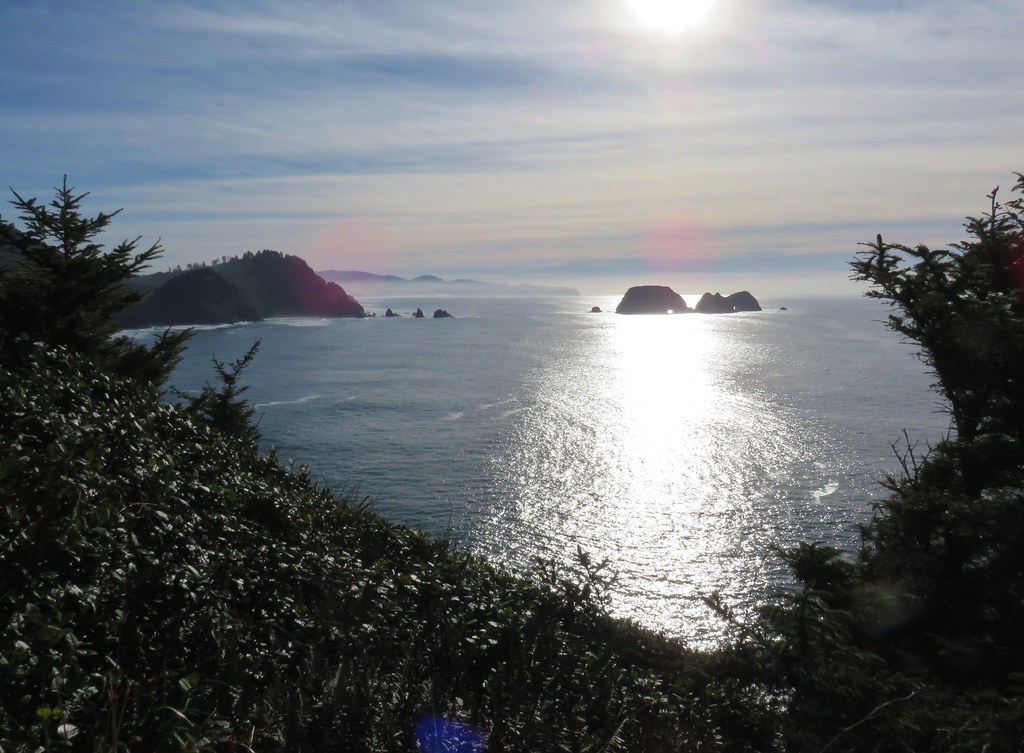
A second .2 mile path led back to the parking lot allowing for a short loop and providing views south to Cape Lookout and the Three Arch Rocks Wilderness, one of the two off-limits wilderness areas in Oregon.
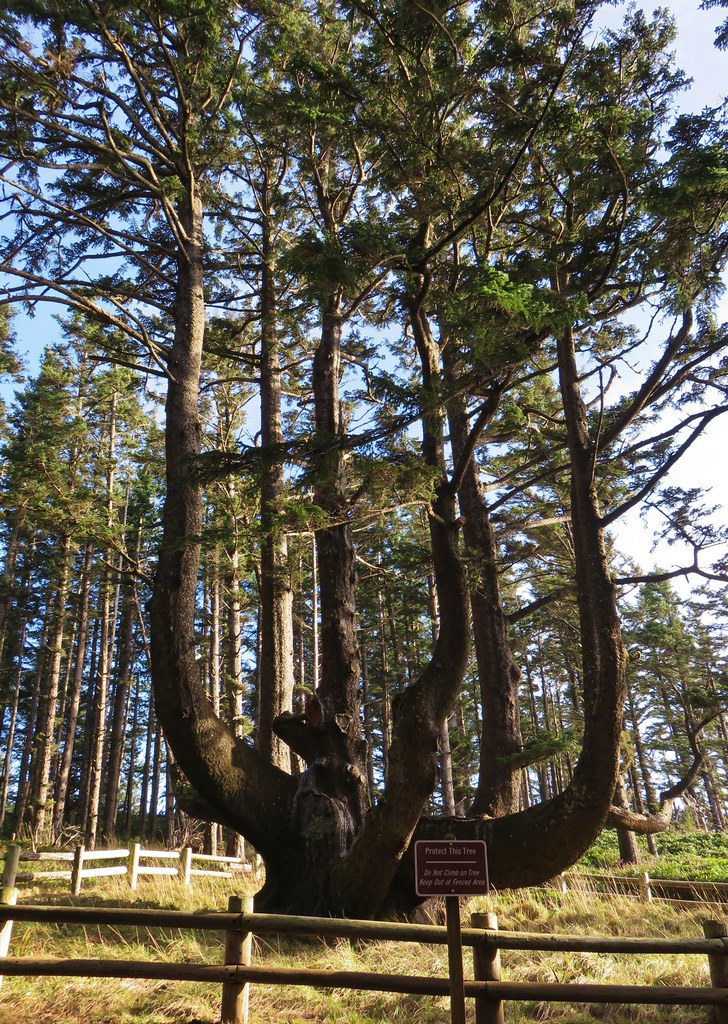
After returning to the parking area we headed for the Octopus Tree which was just a tenth of a mile away.
Another Sitka spruce, this unique tree has no central trunk. Instead several limbs have grown vertically. After visiting this tree we walked back up the entrance road to our car and headed home, capping off our first outing of 2018. Happy Trails!
It’s become tradition to take a shortish hike on the Oregon Coast the morning of our annual family reunion in Gleneden Beach, OR. This year we decided to visit a pair of lighthouses near Newport.
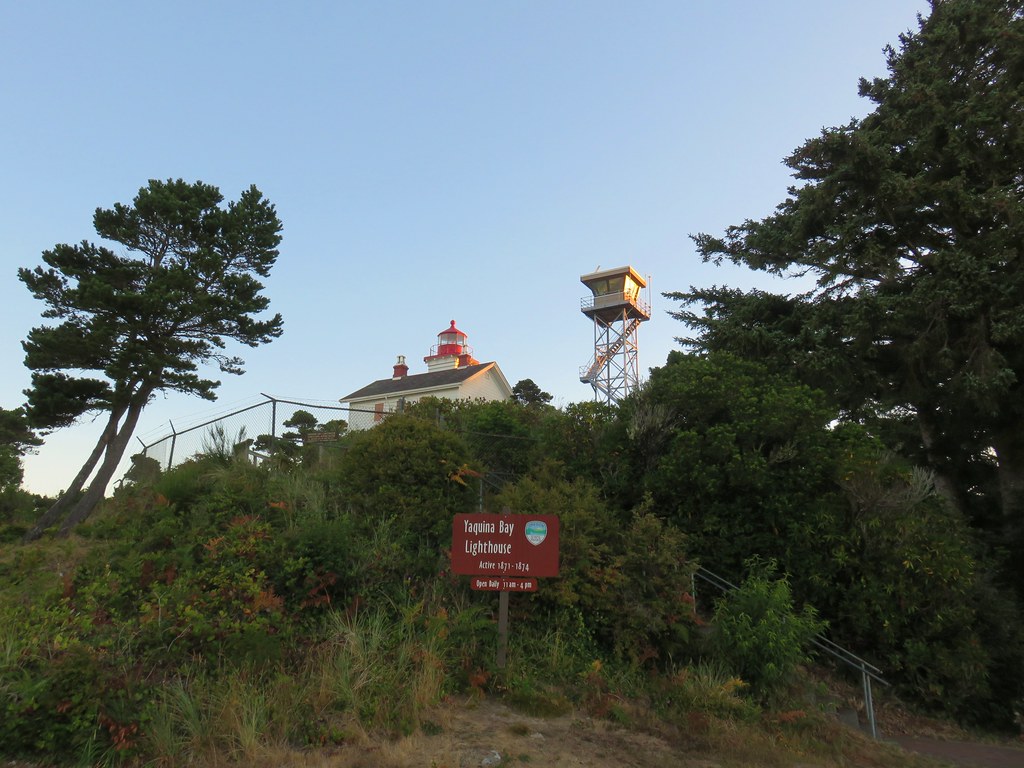
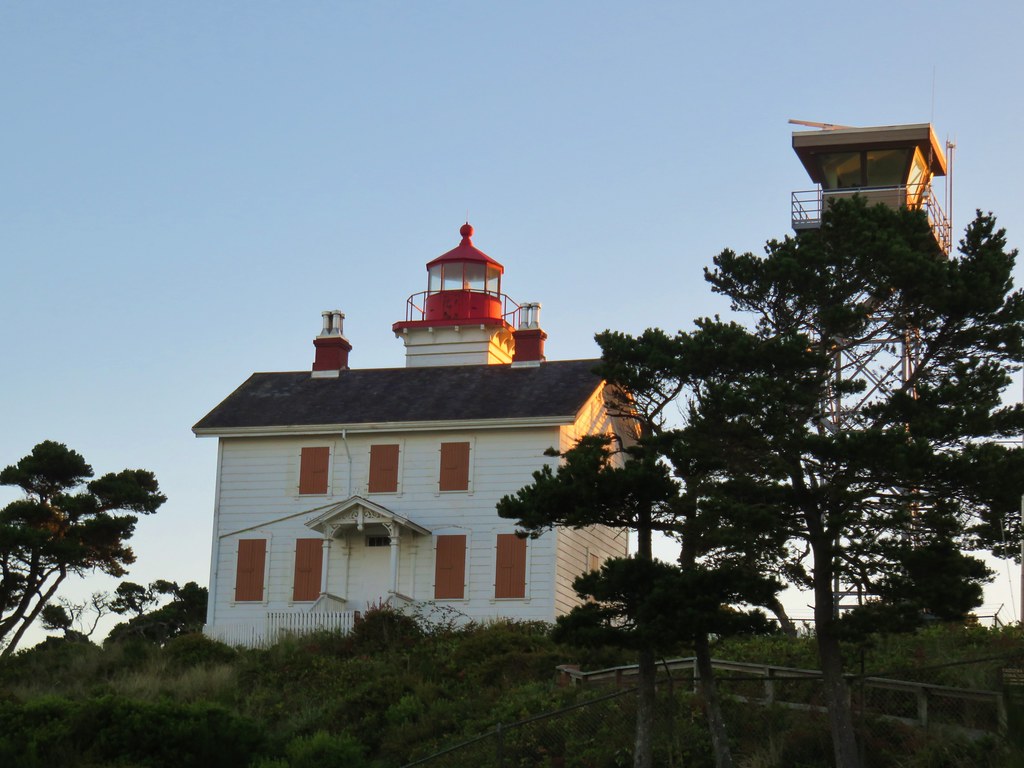
Home to the 1871 Yaquina Bay Lighthouse the 32 acre park also offers access to an approximately 4 mile stretch of beach between the Yaquina River and Yaquina Head.
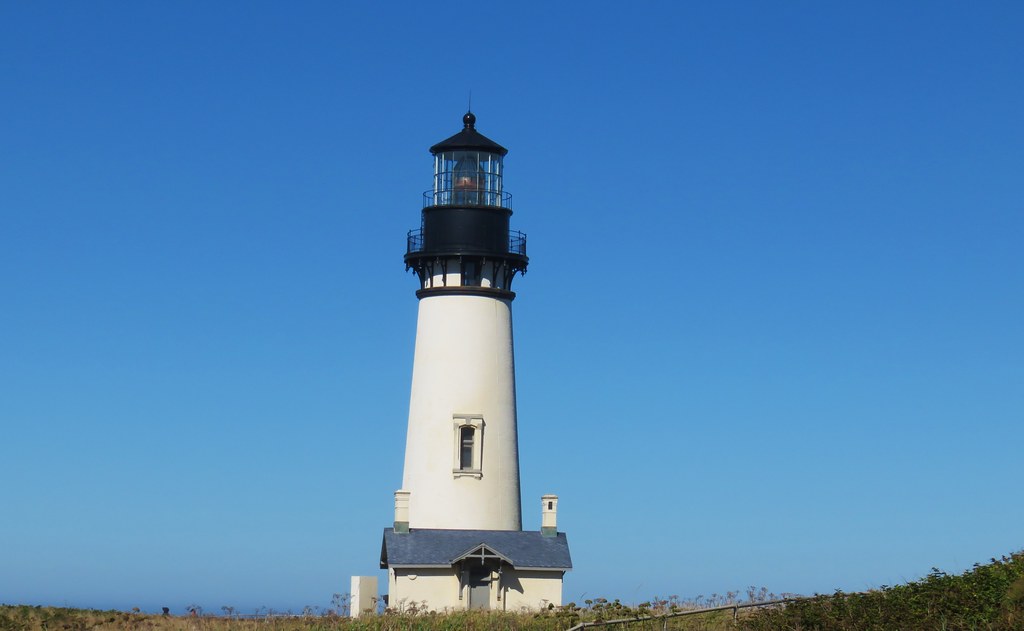
We parked below the lighthouse, which operated only three years before being replaced by the Yaquina Head Lighthouse.
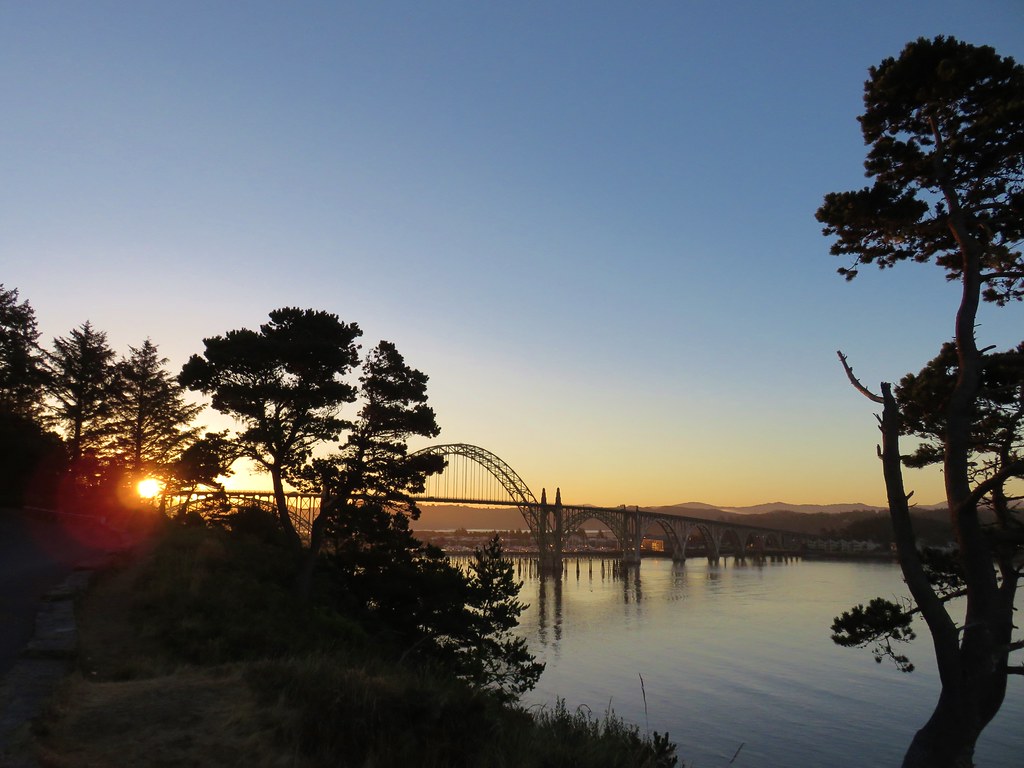
From a viewpoint in the parking lot we could see the Yaquina Bay Bridge and watch boats heading out to sea.
A paved path led down the bluff to a sandy path in the deflation zone behind a small foredune.
We passed over the foredune and turned left toward the Yaquina River.
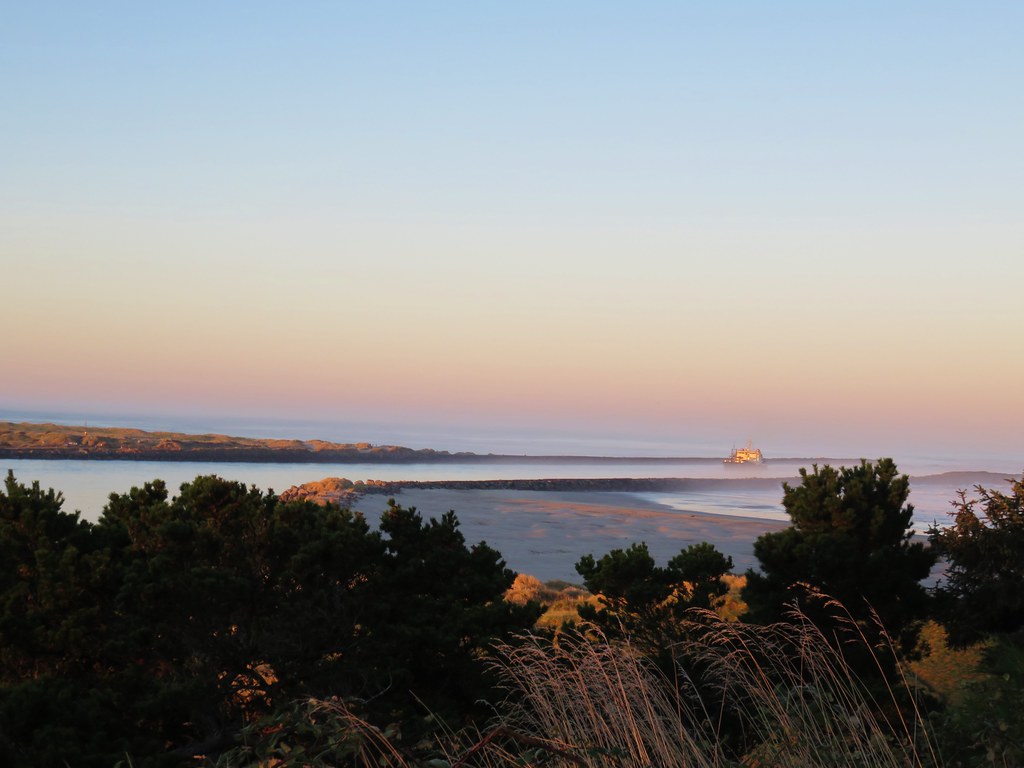
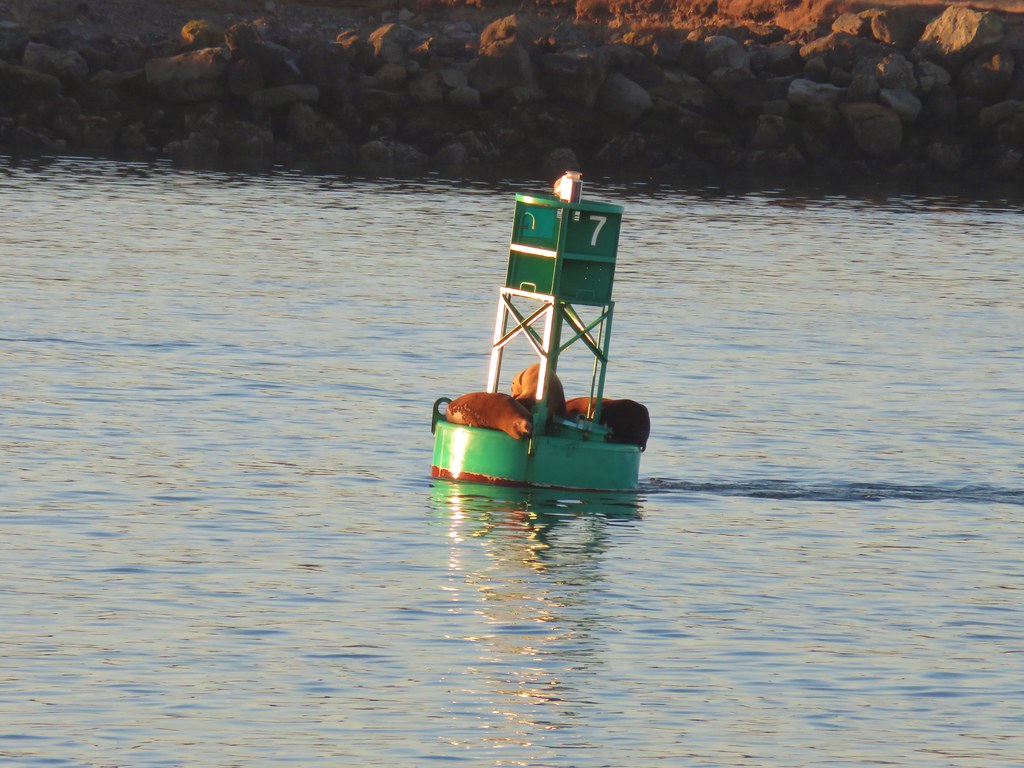
The sound of sealions in the bay greeted us as we approached the jetty where we spotted some squatters on a buoy.
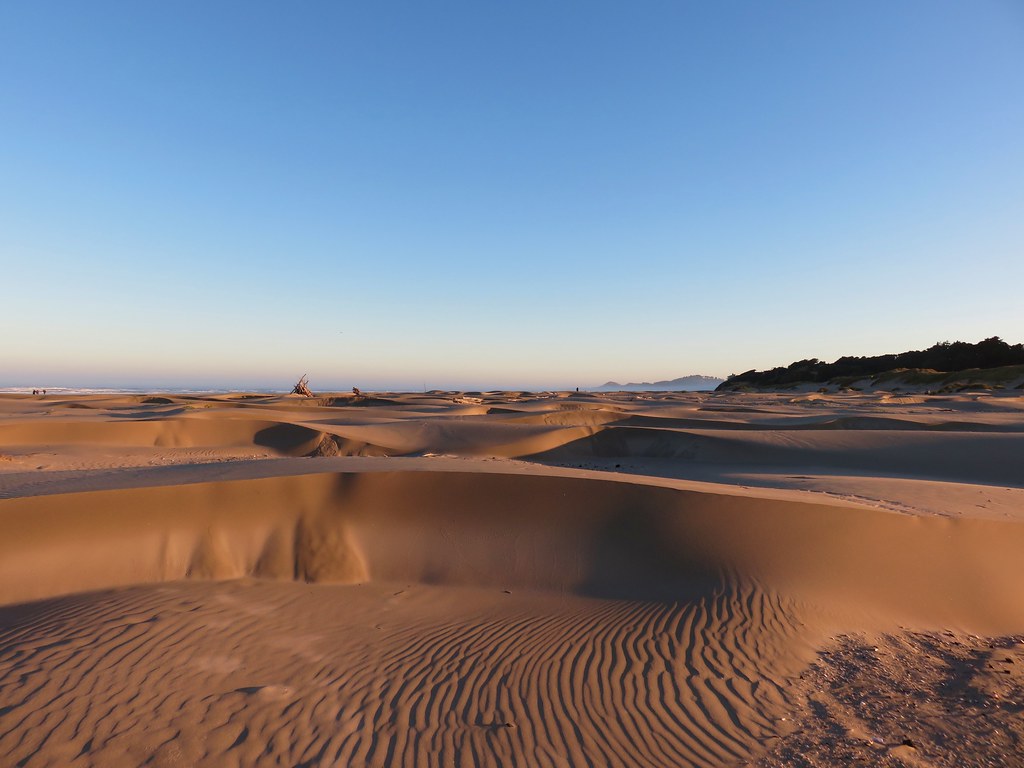
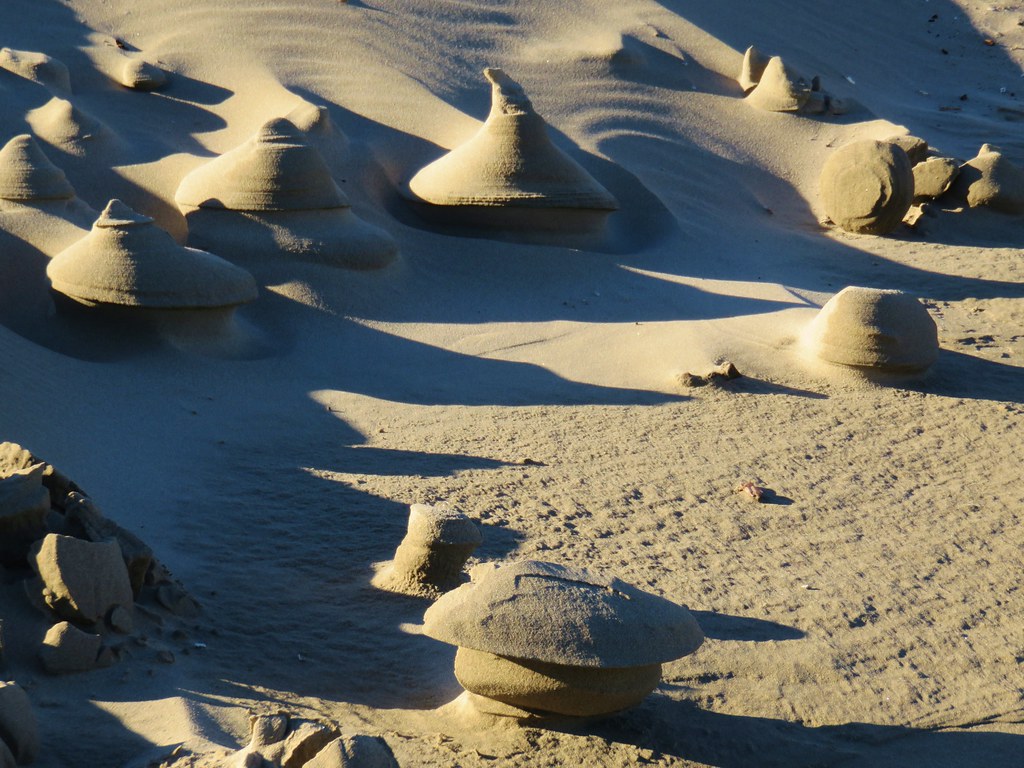
We turned around and headed north along the beach. It was an interesting beach with many small dune like formations.
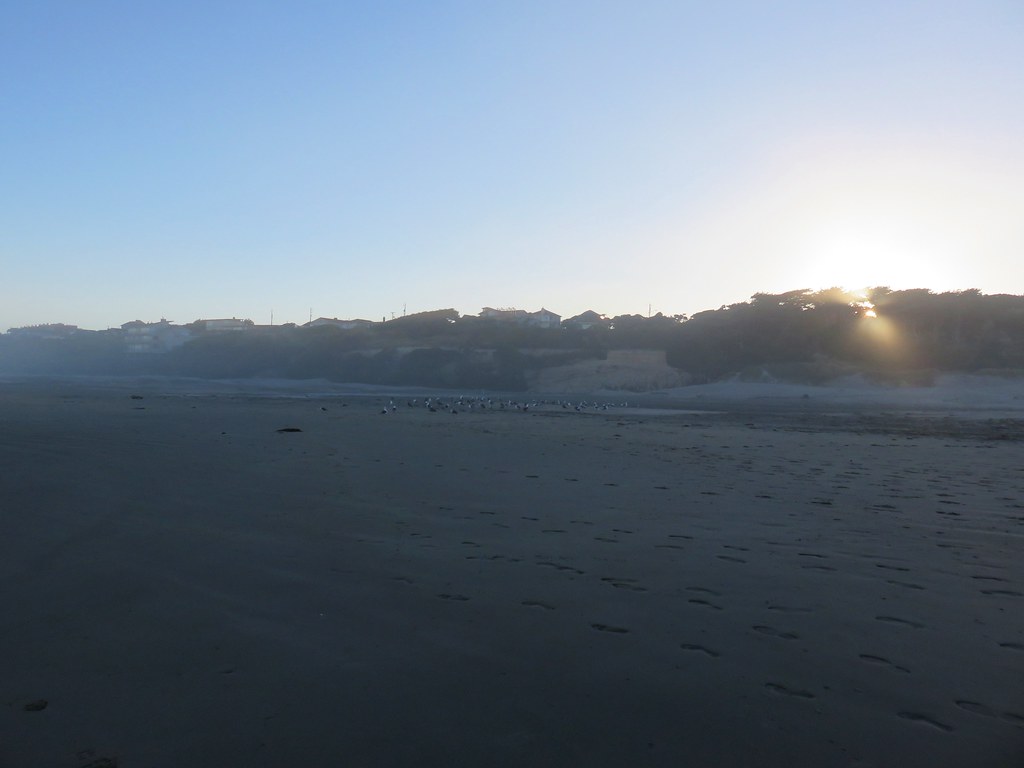
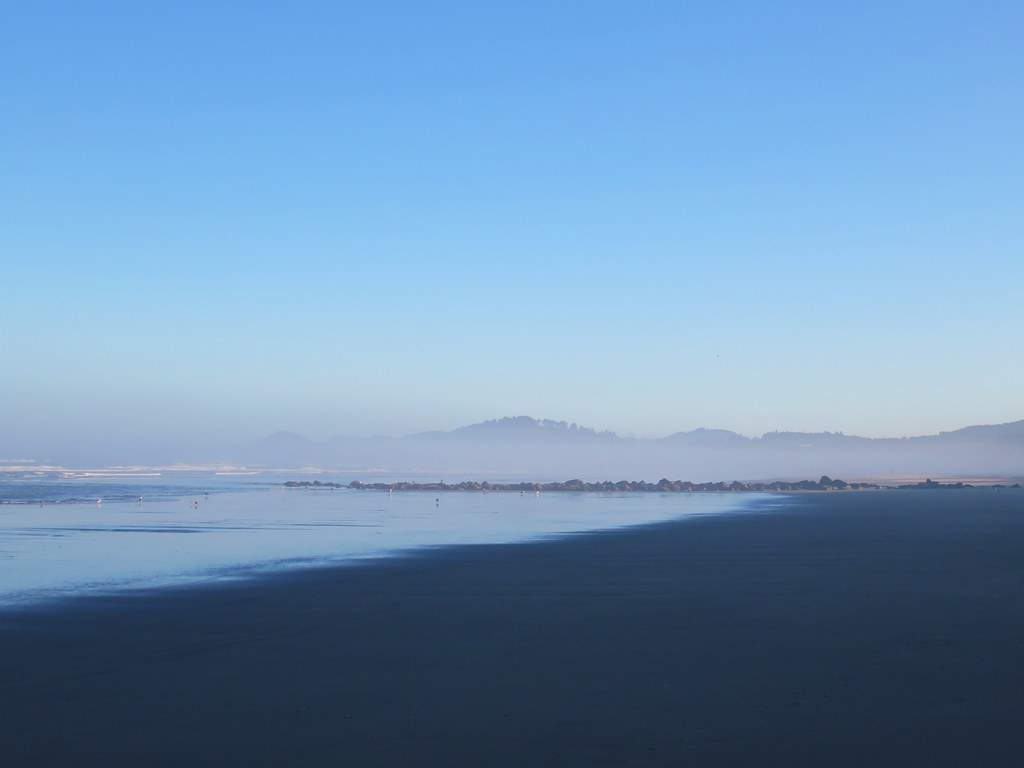
It was a typical summer morning on the coast with patches of marine layer clouds along the way.
Wildlife along the way consisted of seagulls and shore birds as well as a couple of small tide pools where we spotted anemones and some sand crabs.
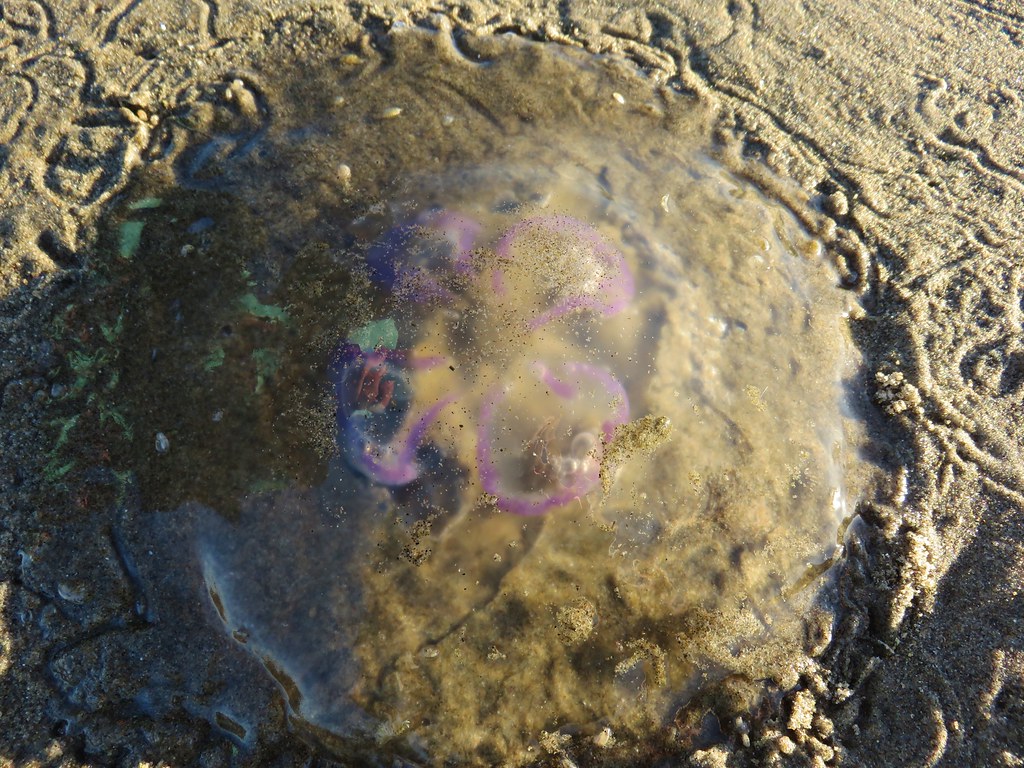
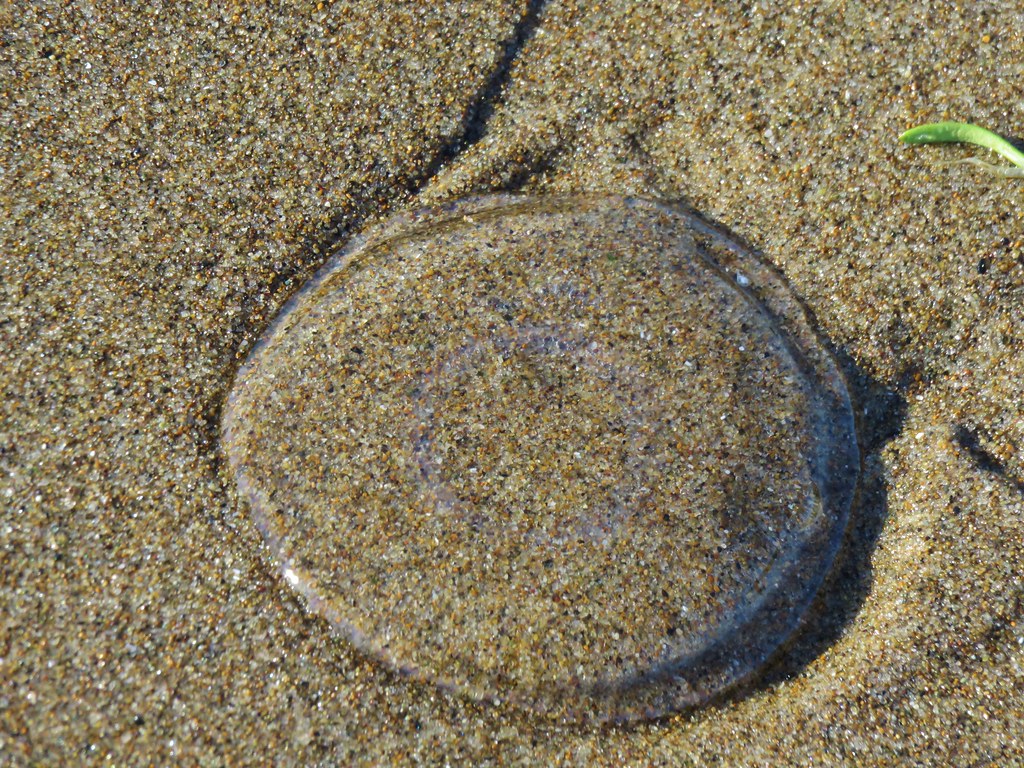
Of particular interest were a couple of jellyfish with some sort of colorful lines.
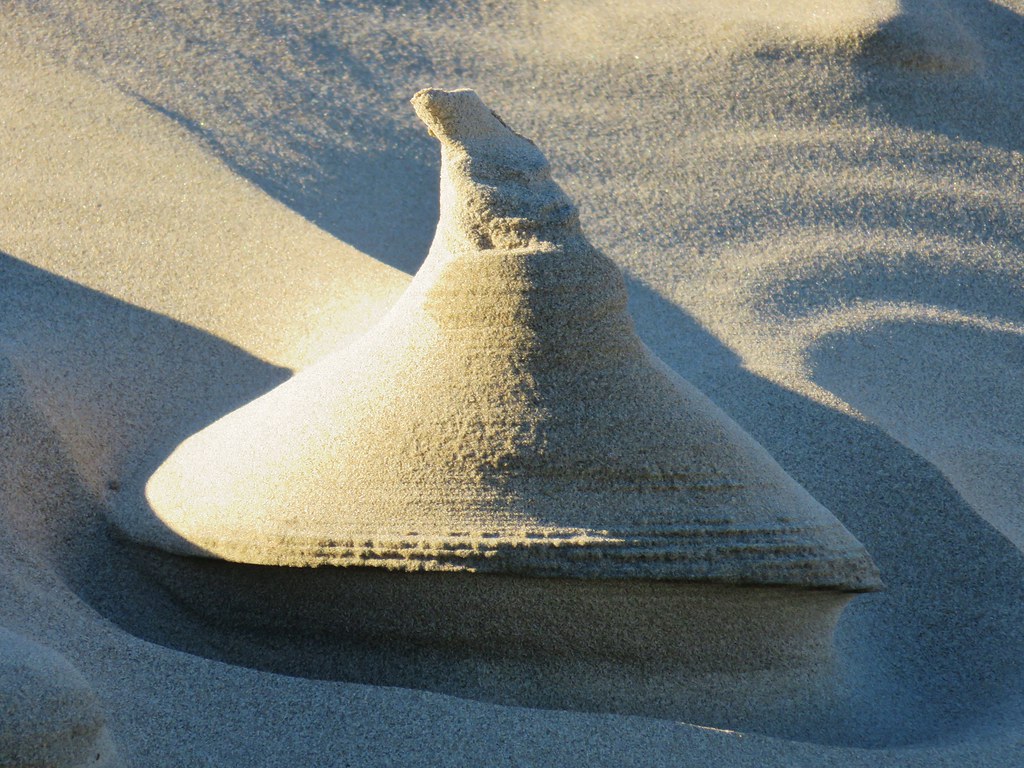
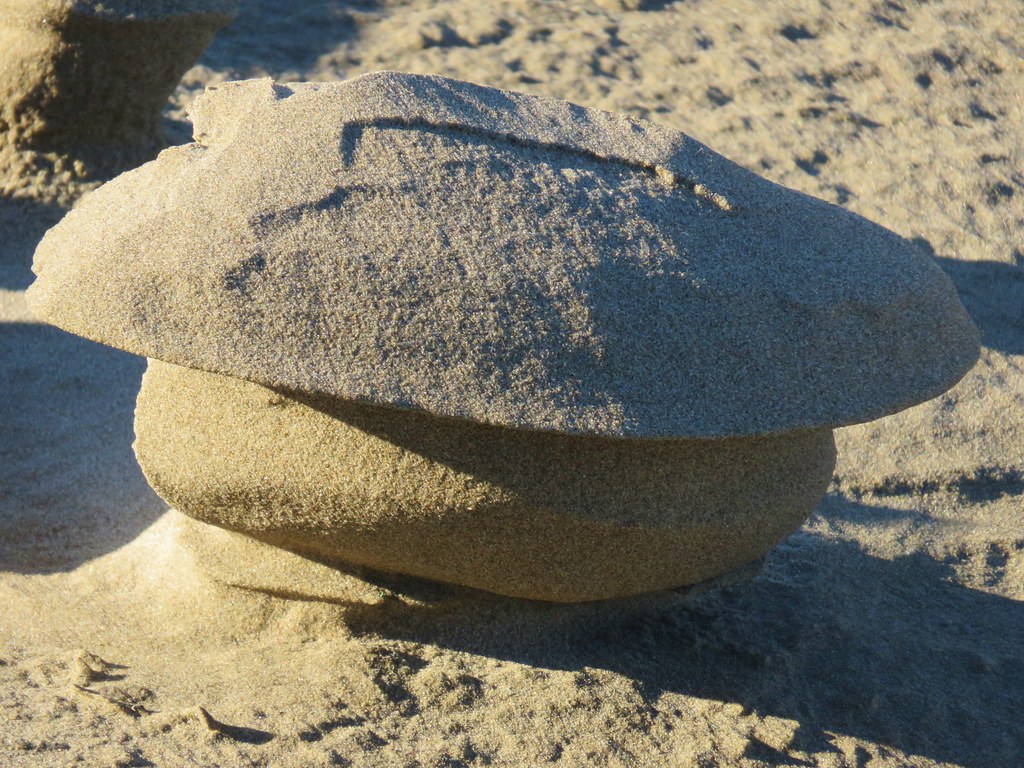
Another peculiar sight along the way were some sand formations that reminded us of clay sculptures.
The beach began to narrow as we neared Yaquina Head and we soon came to Little Creek which was running parallel to the ocean.
Yaquina Head forced the creek to finally turn toward the ocean and we followed it along the cliffs as it emptied into the Pacific.
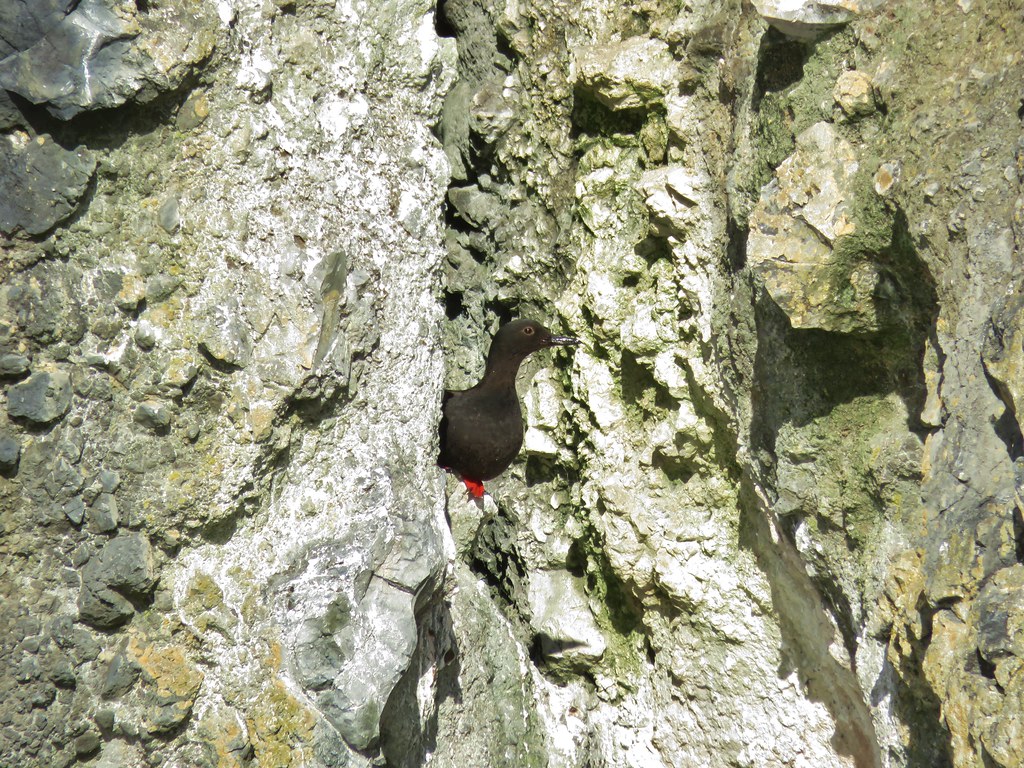
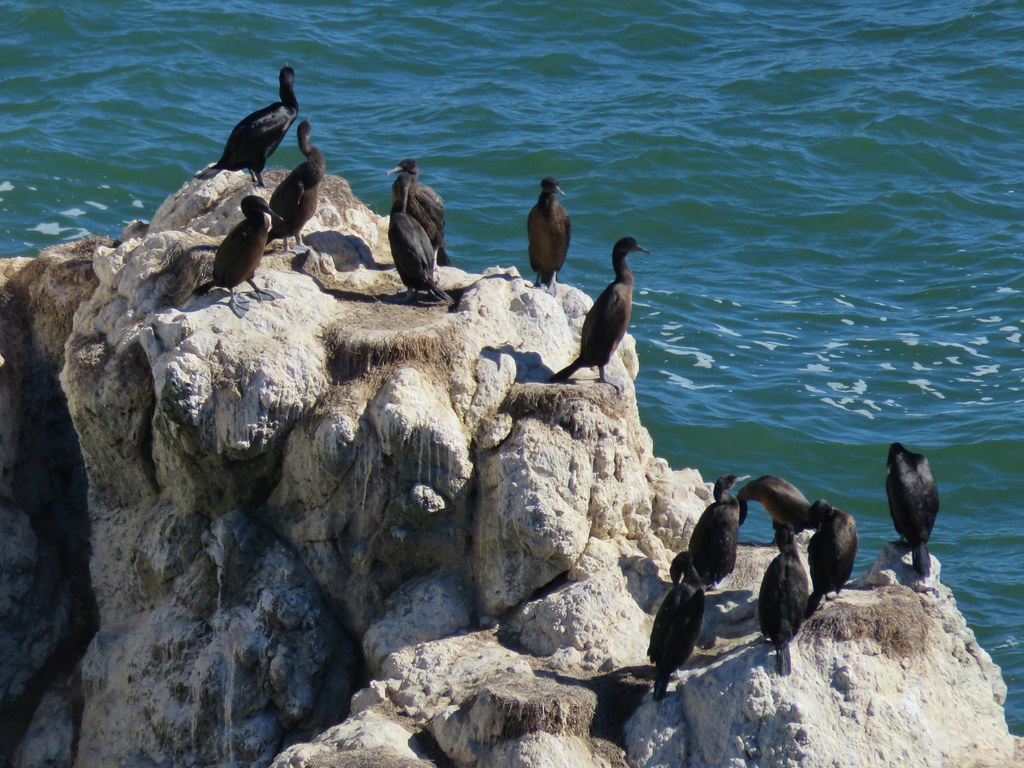
We passed various birds along the creek including a pigeon guillemot which was a bird we were unfamiliar with.
Pigeon guillemot
We headed back south along the beach staying closer to the ocean which brought us to a crossing of some tide water. In our infinite wisdom we waded through the water soaking our shoes and socks before realizing that this was not one of our typical stream crossings. The rocks in mountain creeks and rivers make crossing barefoot a bad idea but on the beach we could have easily taken them off before wading through.
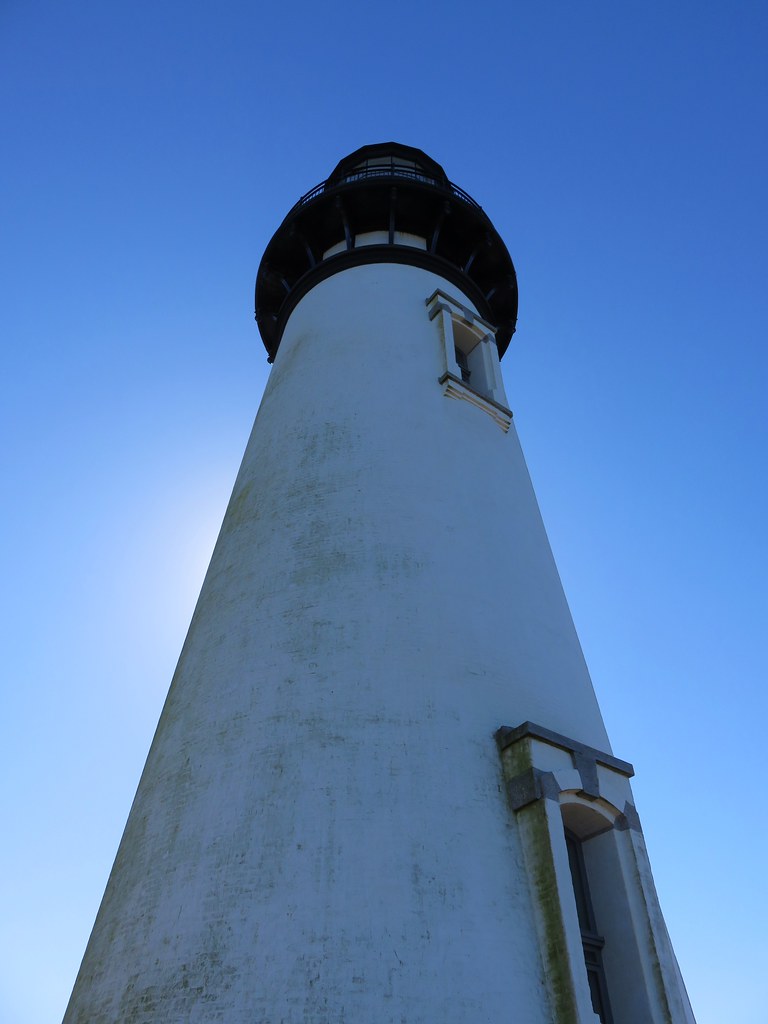
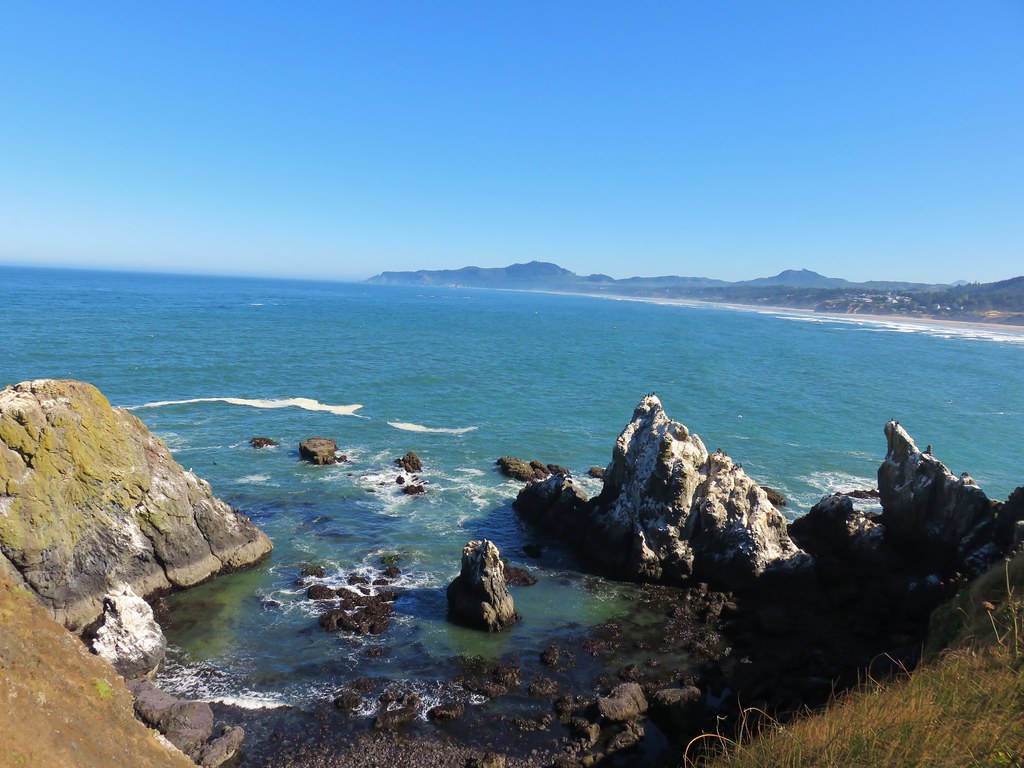
We were back at our car by 9:45 so we had plenty of time to make a second stop at the Yaquina Head Lighthouse (even after stopping at the Newport Safeway to pick up some cilantro). Located on Yaquina Head 4.5 miles north of Newport the Yaquina Head Outstanding Natural Area has a lot to offer. Oregon’s tallest lighthouse, tide pools, several trails, and an interpretive center (which wasn’t there the last time we visited) make the $7/car pass seem reasonable, especially given the pass is valid for three days.
We didn’t have a lot of time so we drove past the interpretive center and parked at the end of the road near the lighthouse.
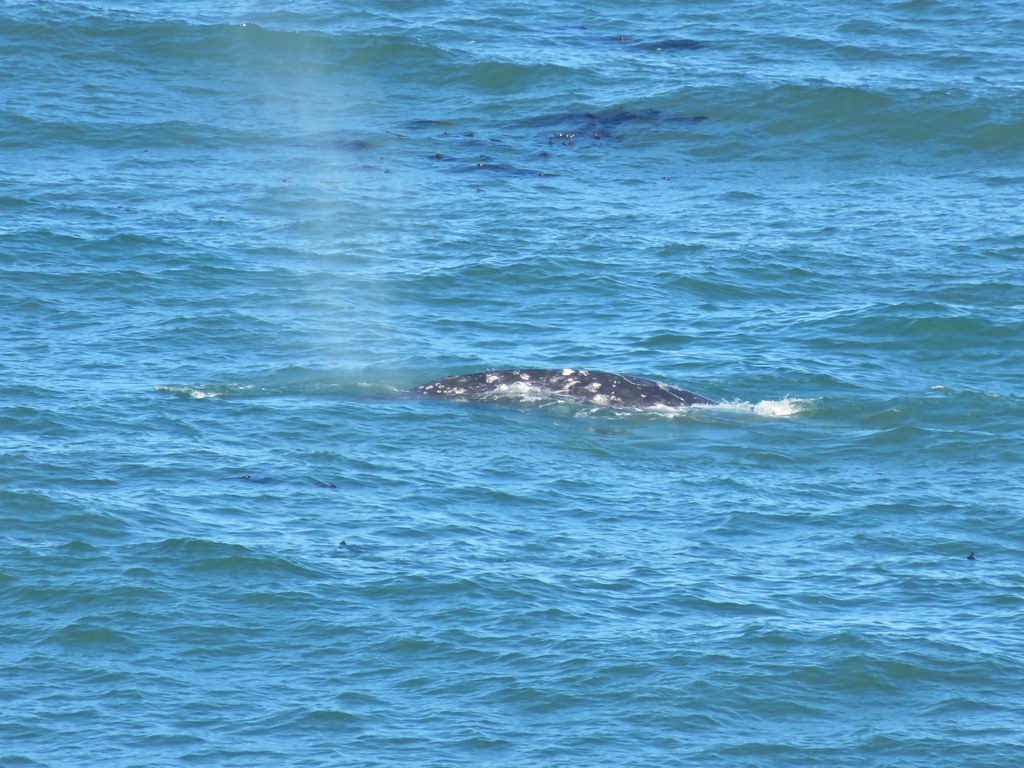
We walked to the lighthouse first stopping at viewpoints along the way. Several grey whales could be seen surfacing and blowing water into the air.
After watching the whales for a bit we continued around the lighthouse and then headed for nearby Cobble Beach.
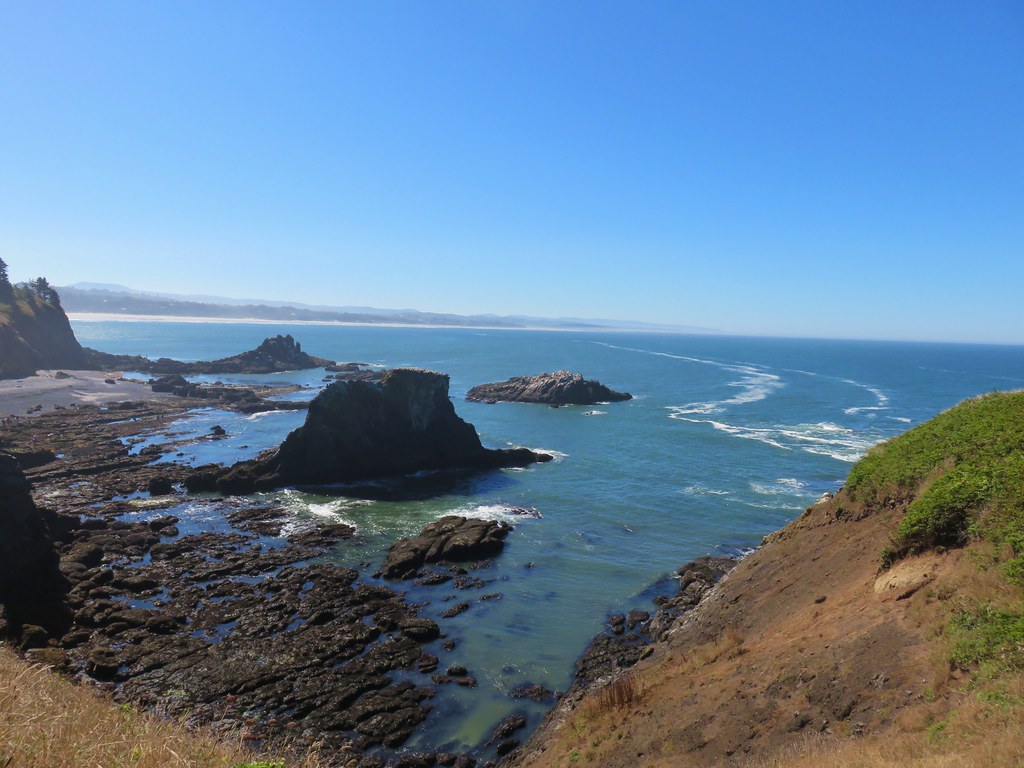
The beach is home to some very good tide pools and the tide was out far enough for some of them to be revealed.
We took the wooden staircase down toward the beach and after some last minute rules and instructions from rangers at the bottom of the stairs we began exploring the pools. Touching anything but the starfish (the rangers informed us that they were dealing with some sort of illness) was allowed but no picking up.
Large sea rocks just beyond the tide pools are part of the Oregon Islands National Wildlife Refuge, one of only tow wilderness areas in Oregon closed to humans.
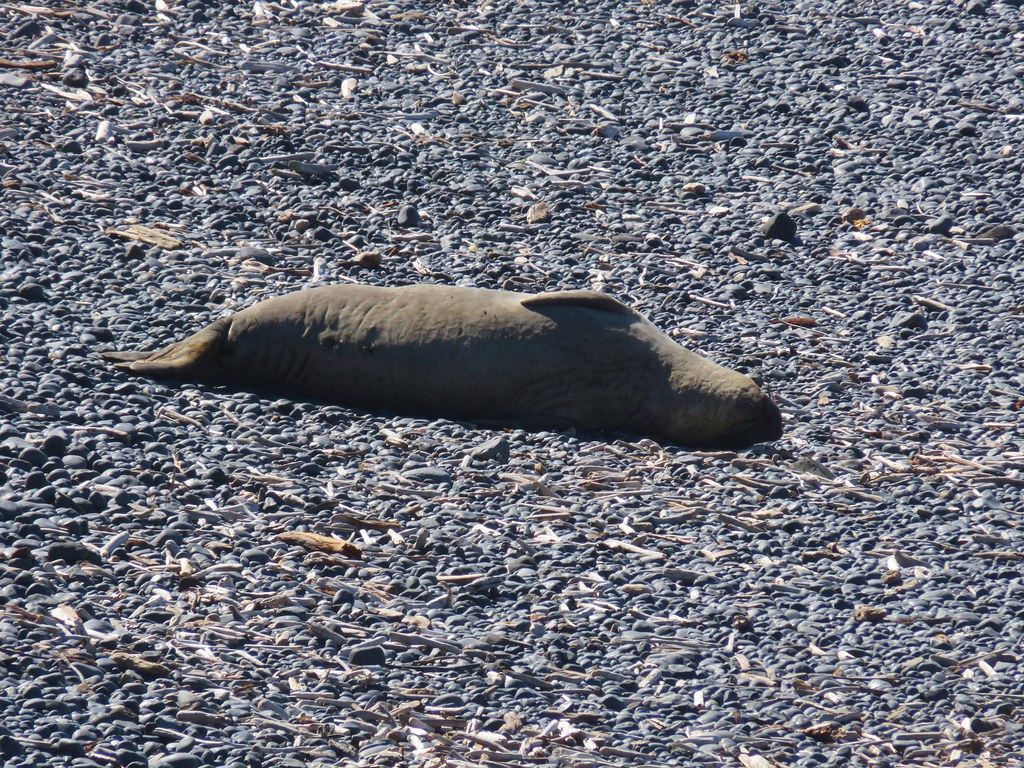
Not all the wildlife stuck to the islands though as a section of Cobble Beach was closed off due to a resting seal.
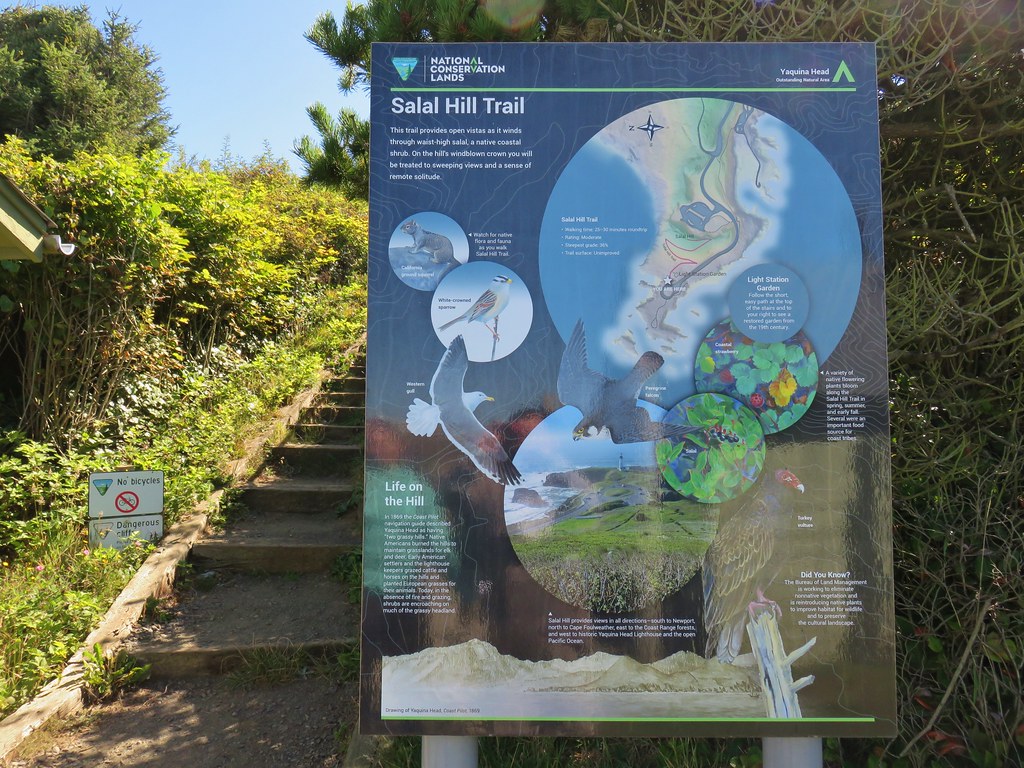
After making our way around the pools we headed back up the stairs. It was still a bit early to head for the reunion so we decided to check out the short trail up Salal Hill which began at the lot where we had parked.
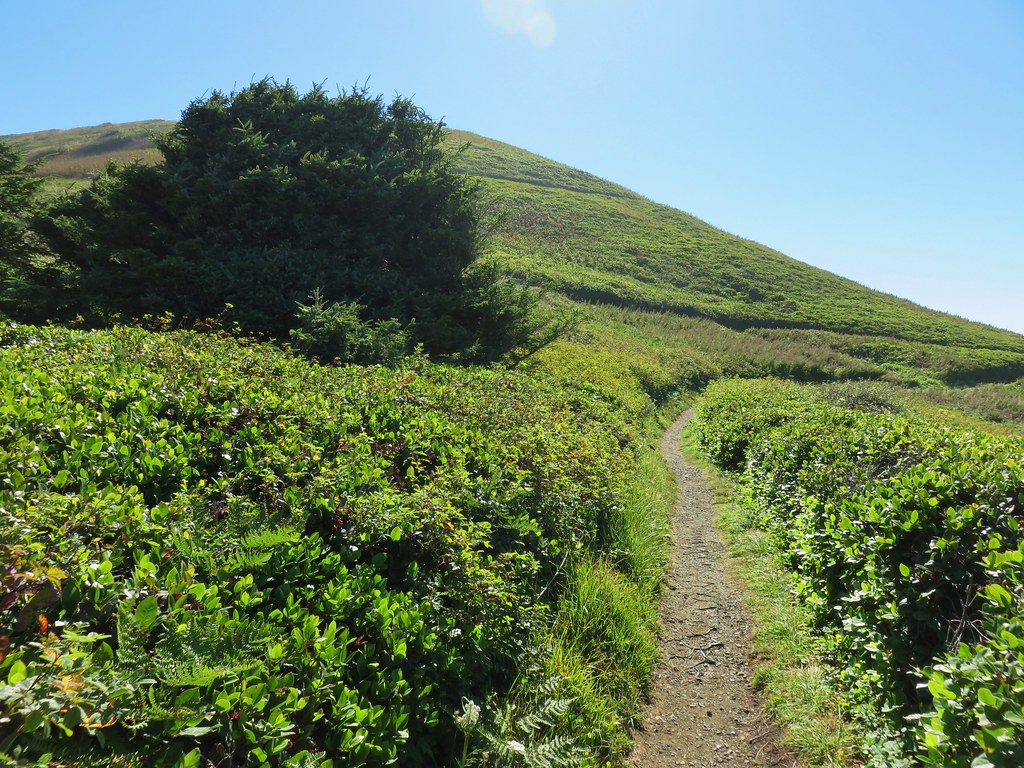
The .4 mile path switchbacked up the small hill at a nice gradual grade.
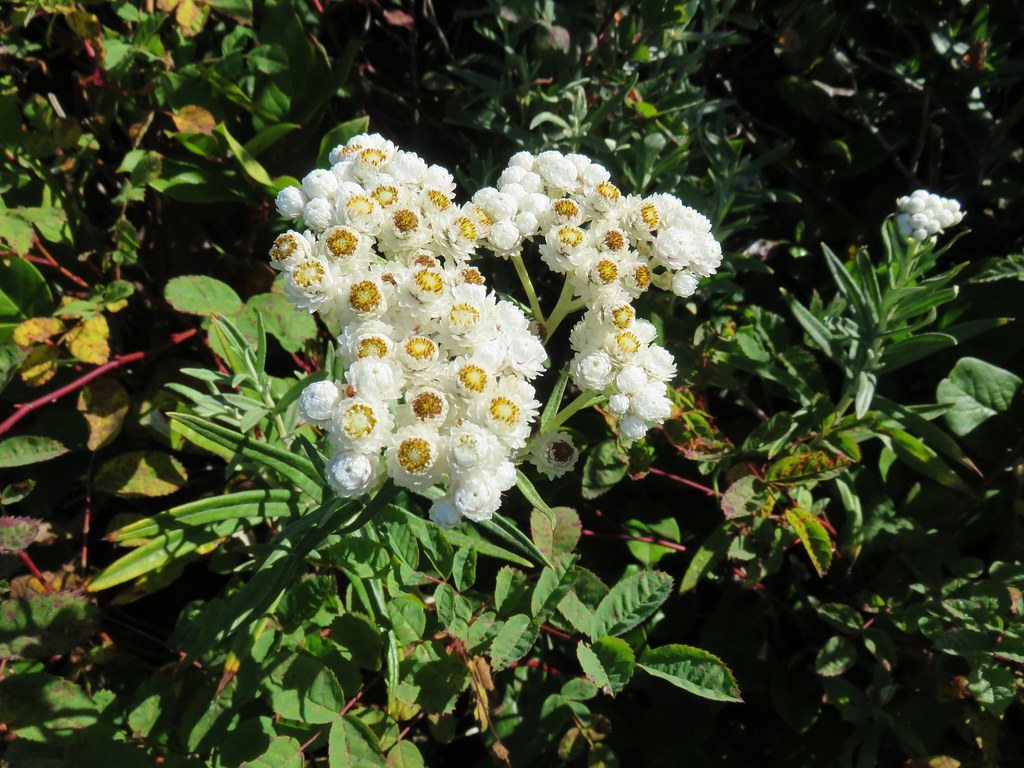
Some lingering flowers showed that there was more to the hill than just salal bushes.
The trail passed above the interpretive center before arriving at the small, flat summit.
From the summit we had a nice view north to Cape Foulweather.
To the west was the Yaquina Head Lighthouse and the Pacific Ocean.
We headed down after a short stay since it was now time to make our way to the reunion. We could have spent a lot more time exploring the area so we’ll have to go back again sometime. As we were coming down the hill we spotted another whale which we watched for a moment. It seemed to be giving us a goodbye wave, what a polite way to end our hike. Happy Trails!
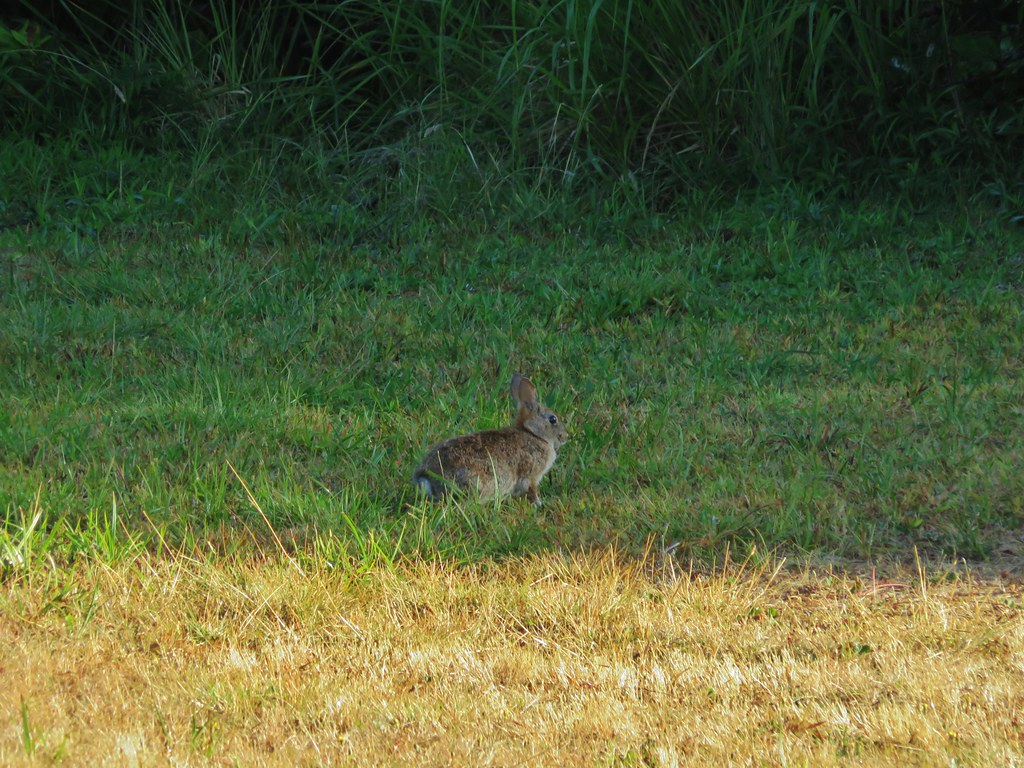
Every August we head to Gleneden Beach for a family reunion, and almost every year we consider hiking Salishan Spit due the starting point being less than a mile from the site of the reunion. We had consistently passed on it though in favor of doing a wildflower hike in the mountains the day after instead. With the wildflower season over early this year it was a perfect time to finally check out the spit. We started at the Gleneden Beach Wayside south of Lincoln City, OR. The wayside consisted of a large parking area, picnic tables, restrooms, and a large gazebo. A rabbit was the only one present when we arrived.
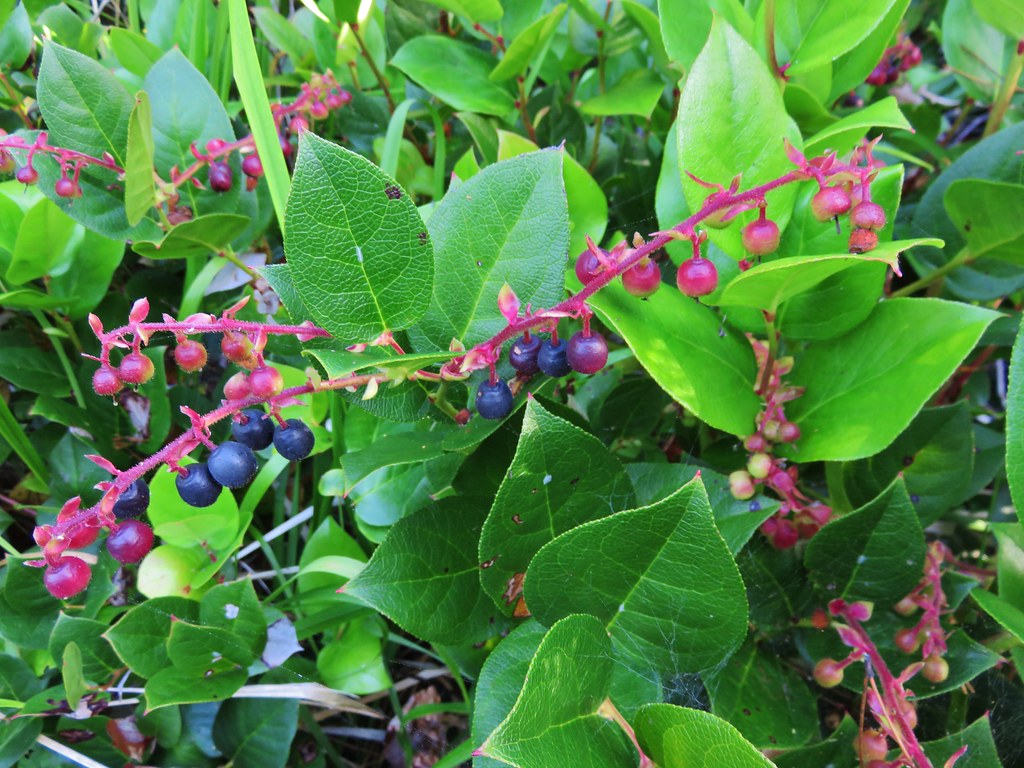
The area was full of salal berries which are edible but not one of our favorites.
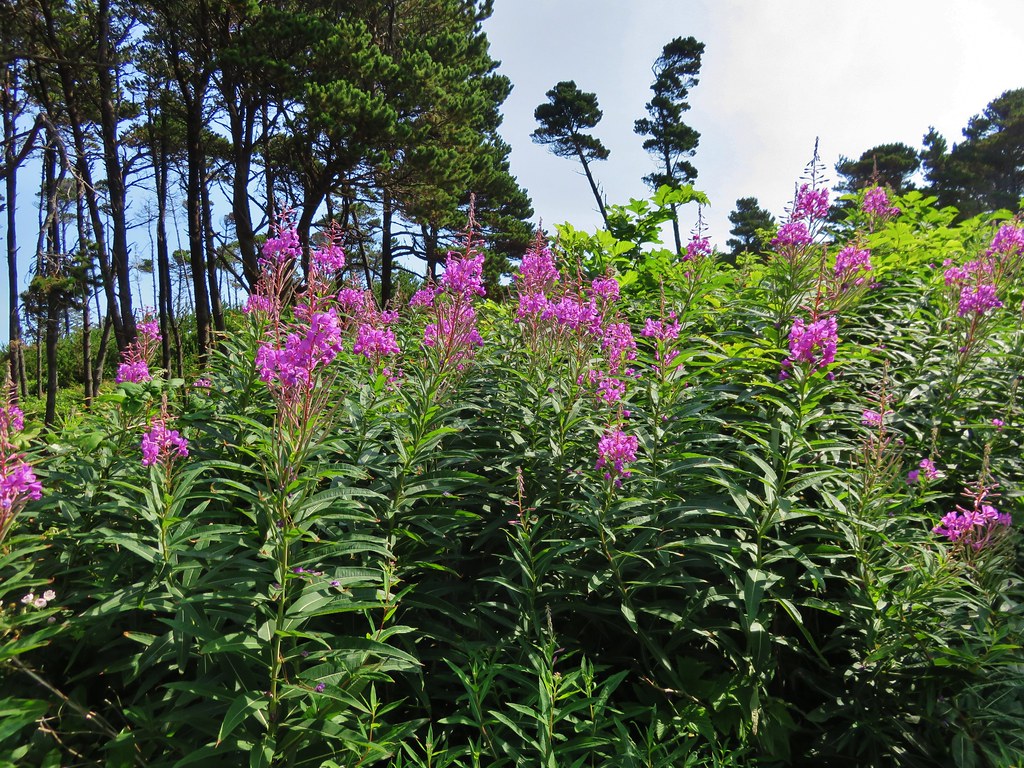
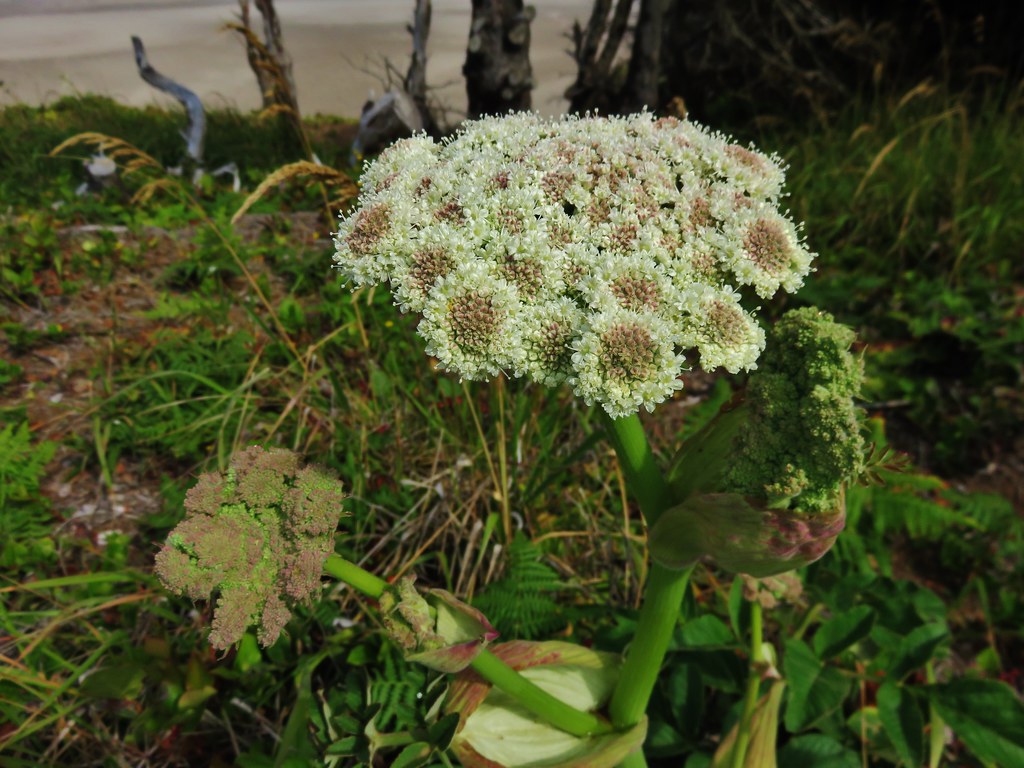
There were a few flowers at the wayside as well.
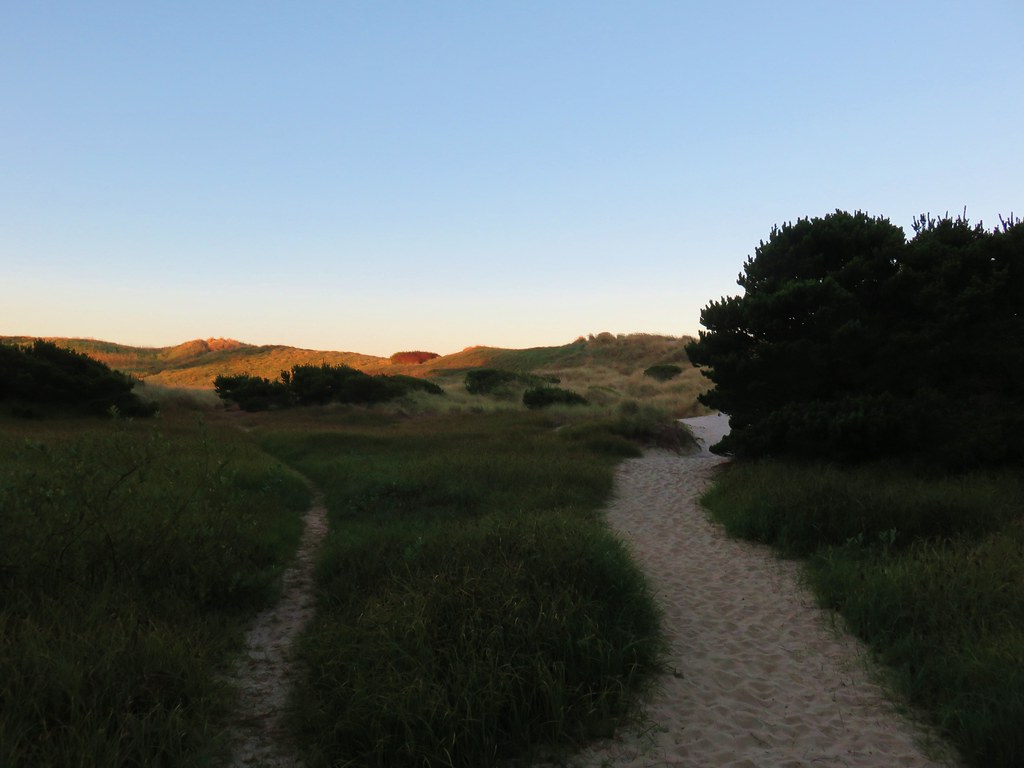
A short path led through a small stand of trees and down to the beach.
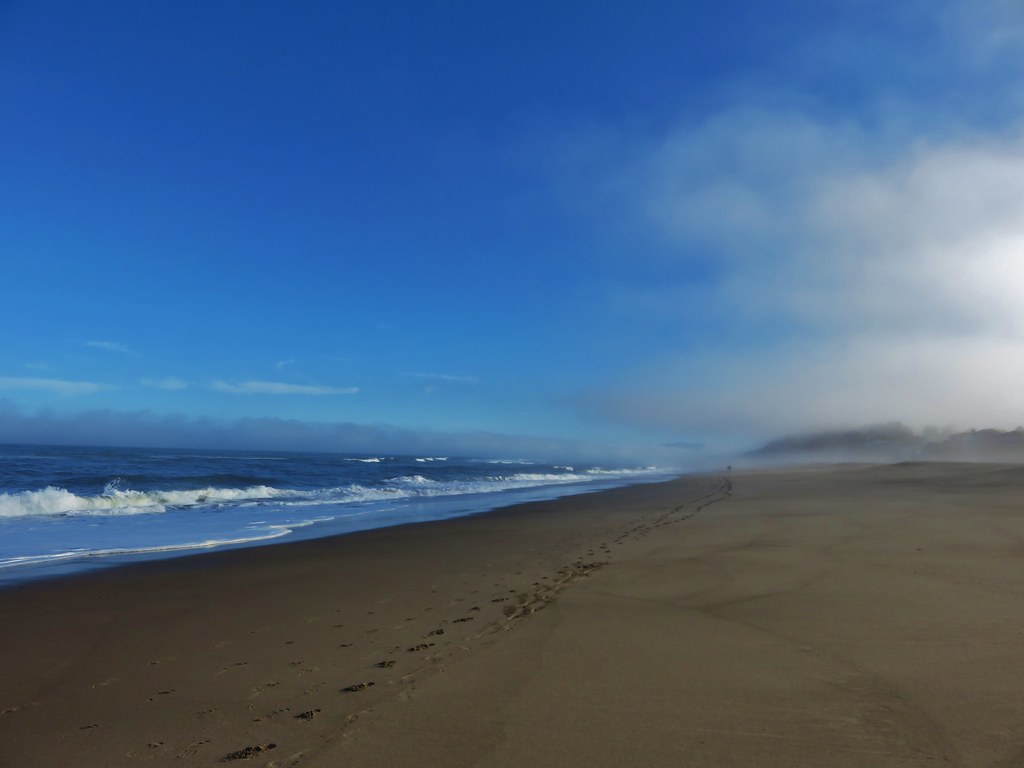
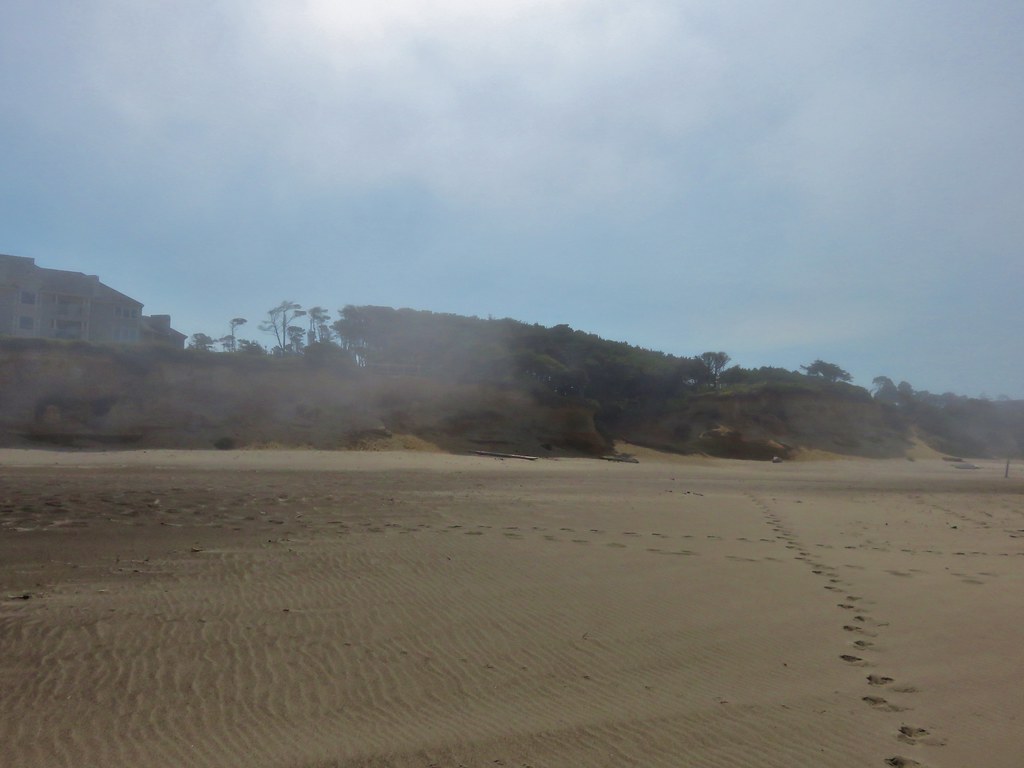
It was a weird day at the beach. We had been having a heat wave in the Willamette Valley with highs over 100 degrees and our drive to the coast had been under bright blue skies. When we had arrived at Lincoln City the sky was still blue but there was a big wall of clouds visible off-shore over the Pacific. As we drove south down Highway 101 toward Gleneden Beach the blue sky was replaced by fog. It was blue sky again at the wayside, but when we reached the beach we saw that we were in a pocket of blue amid the fog. The bank of clouds off-shore was also visible.
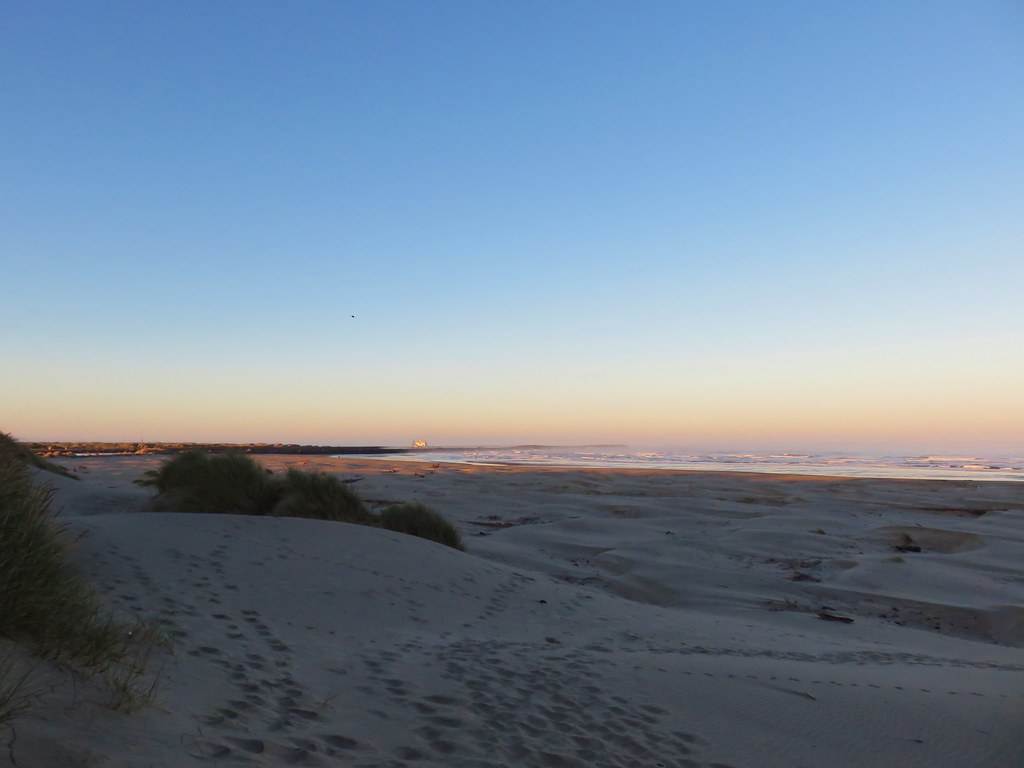
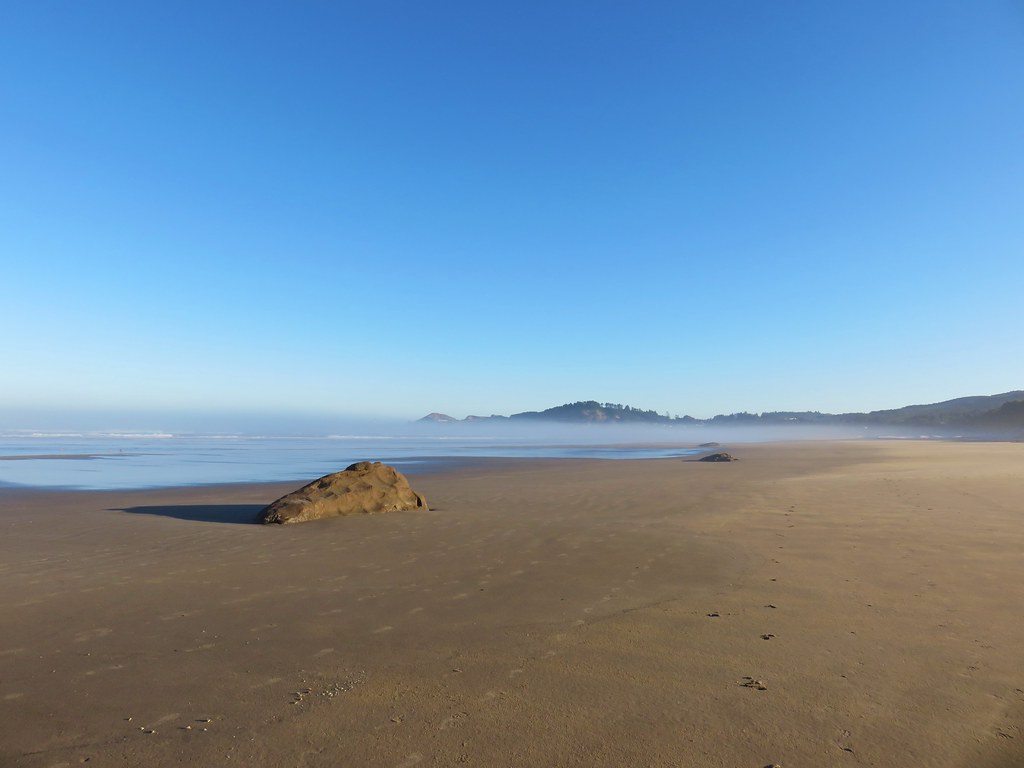
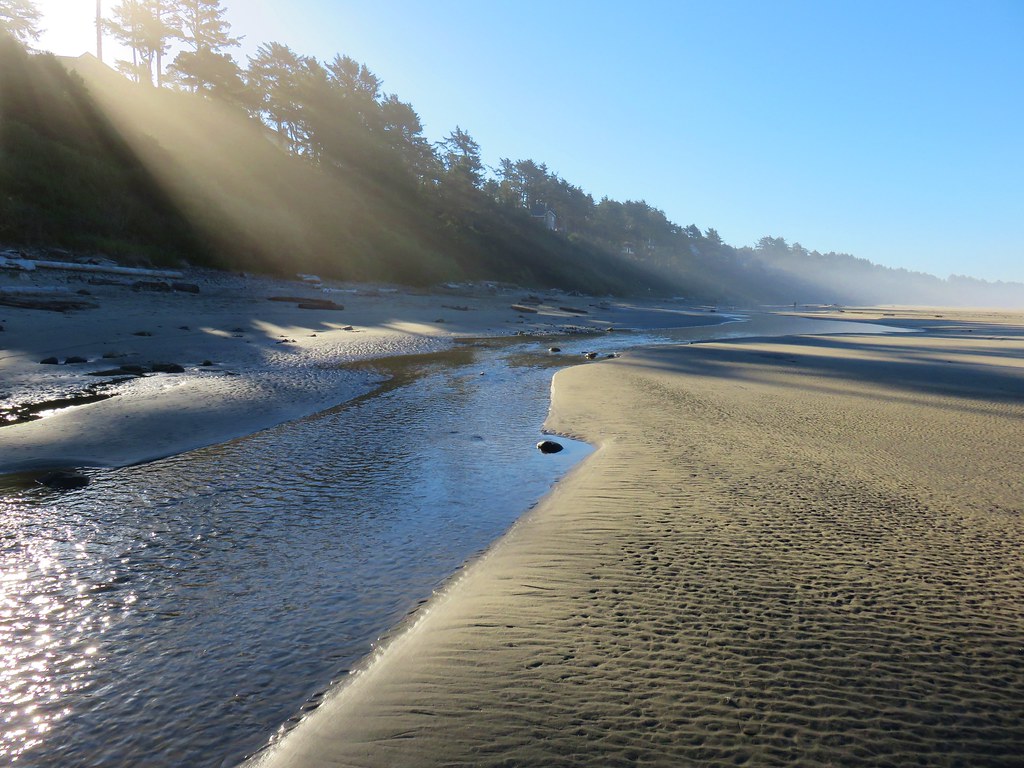
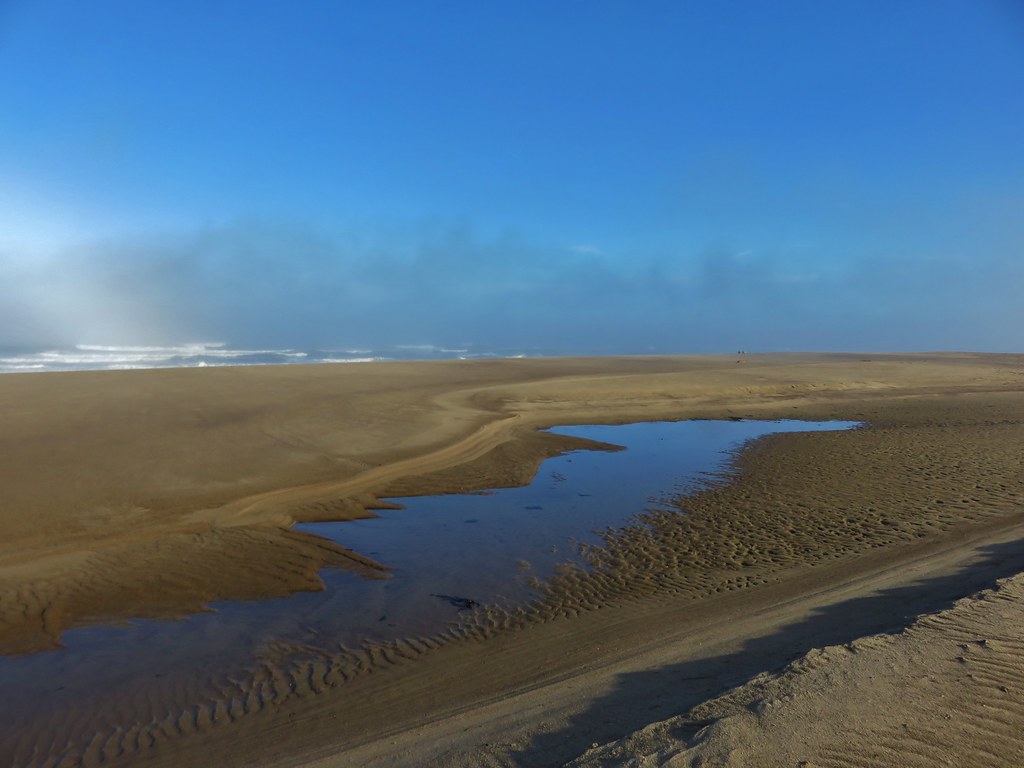
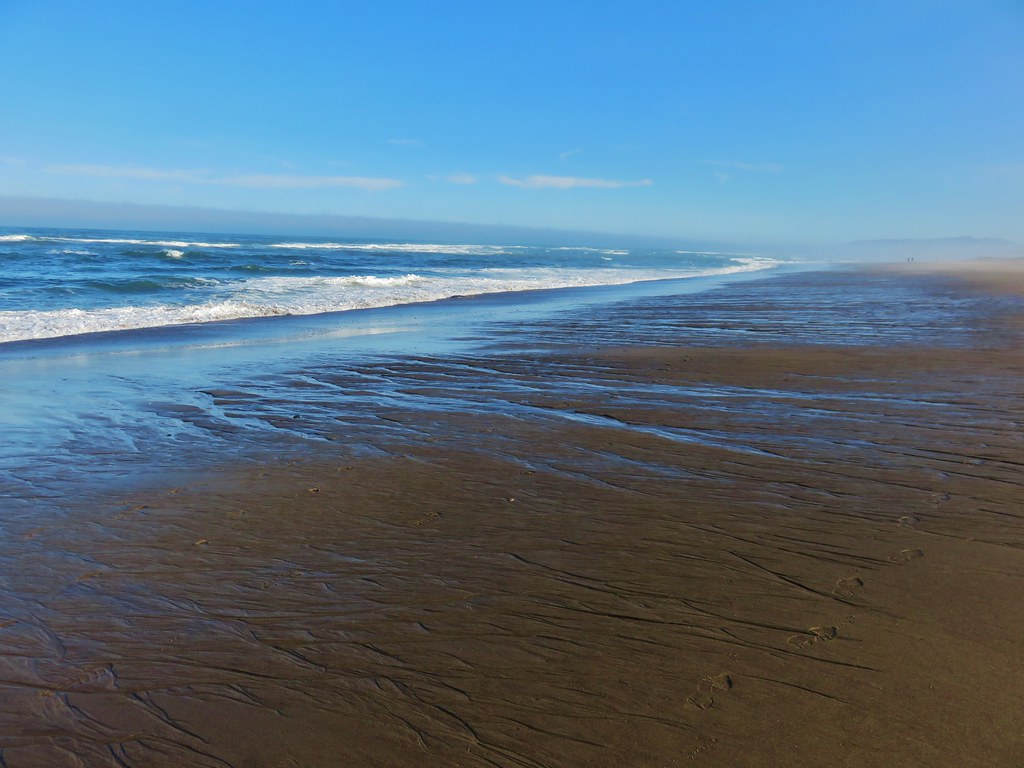
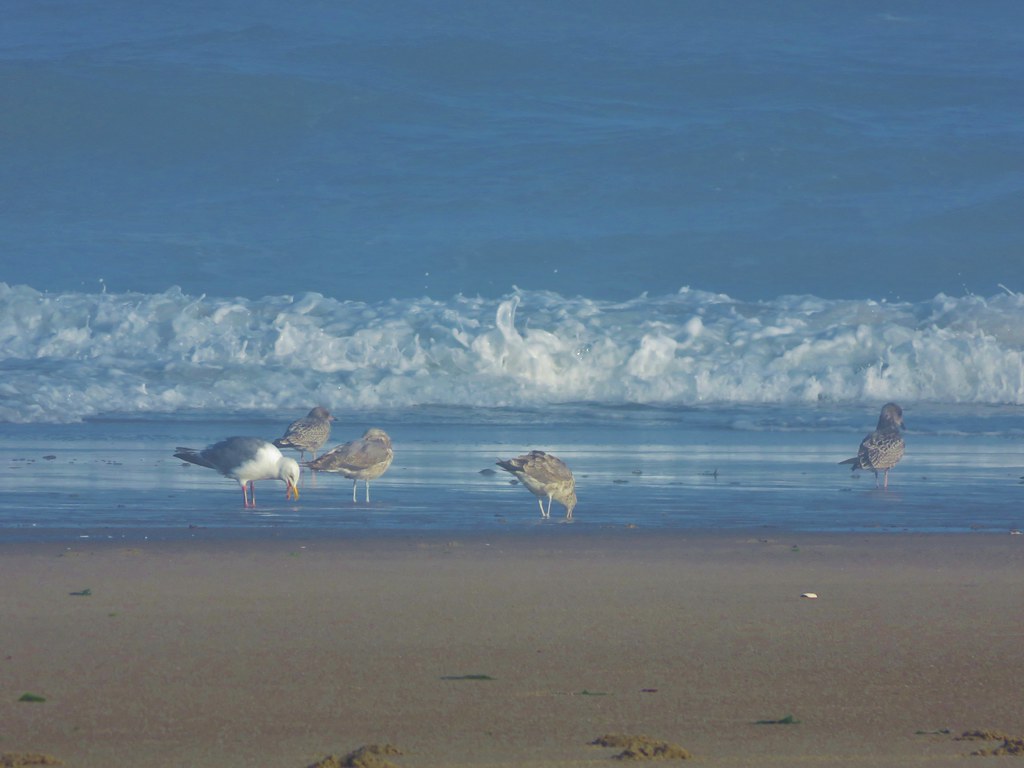
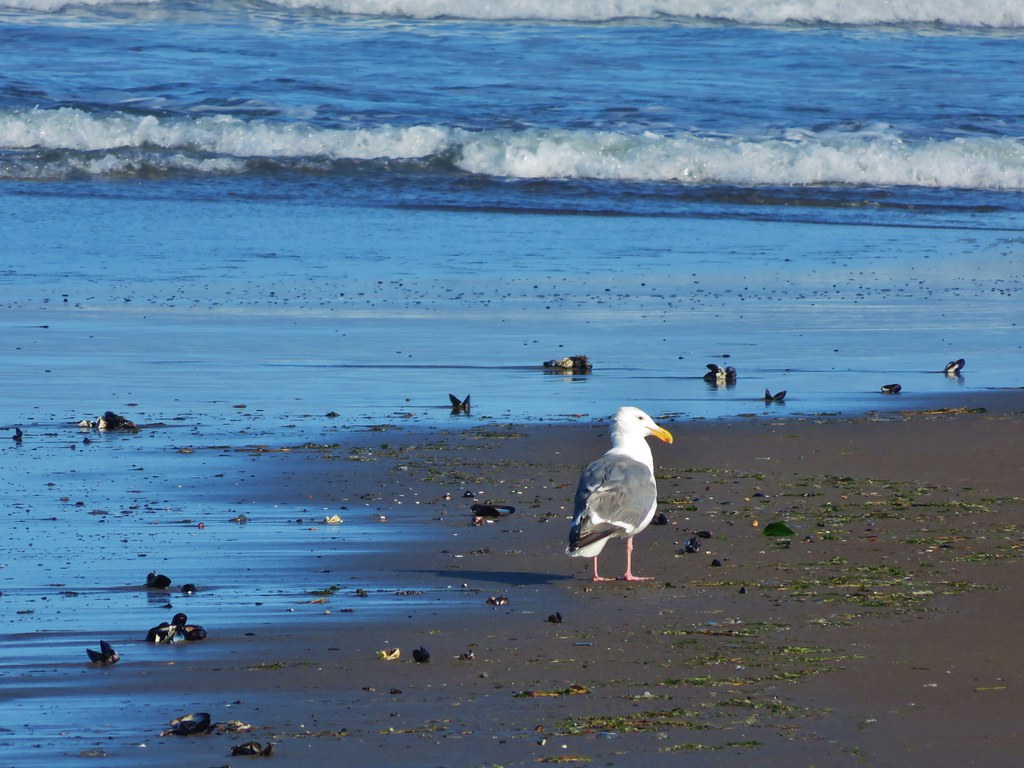
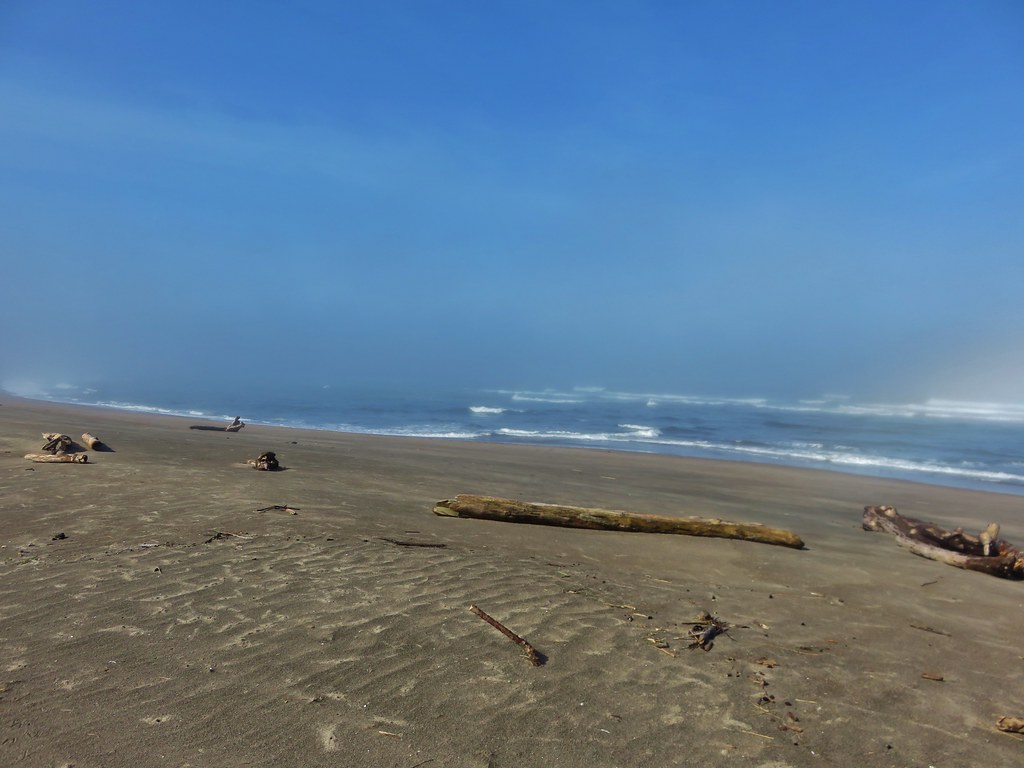
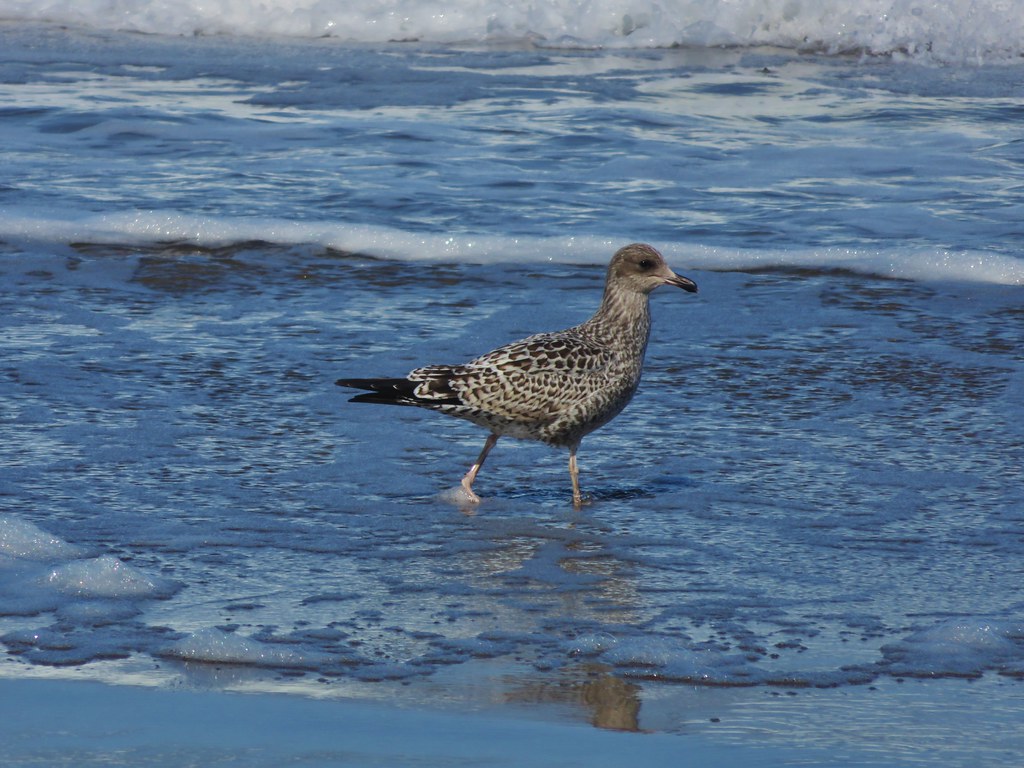
We headed north along the beach. The tide was out as we watched seagulls search for snacks in the surf.
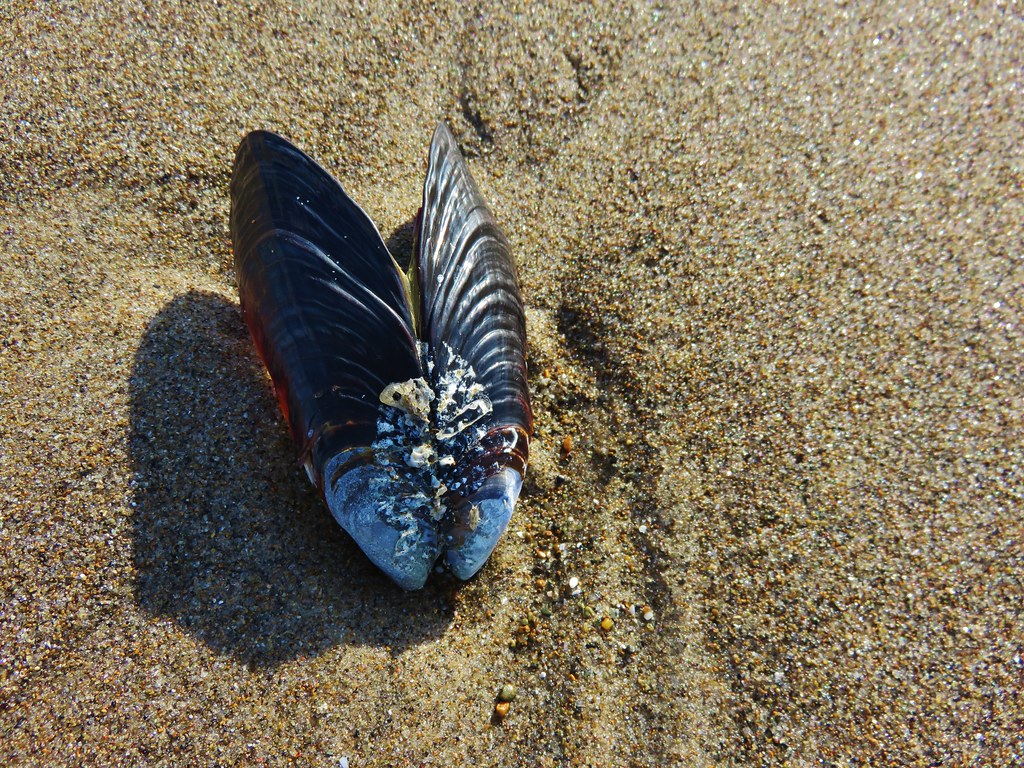
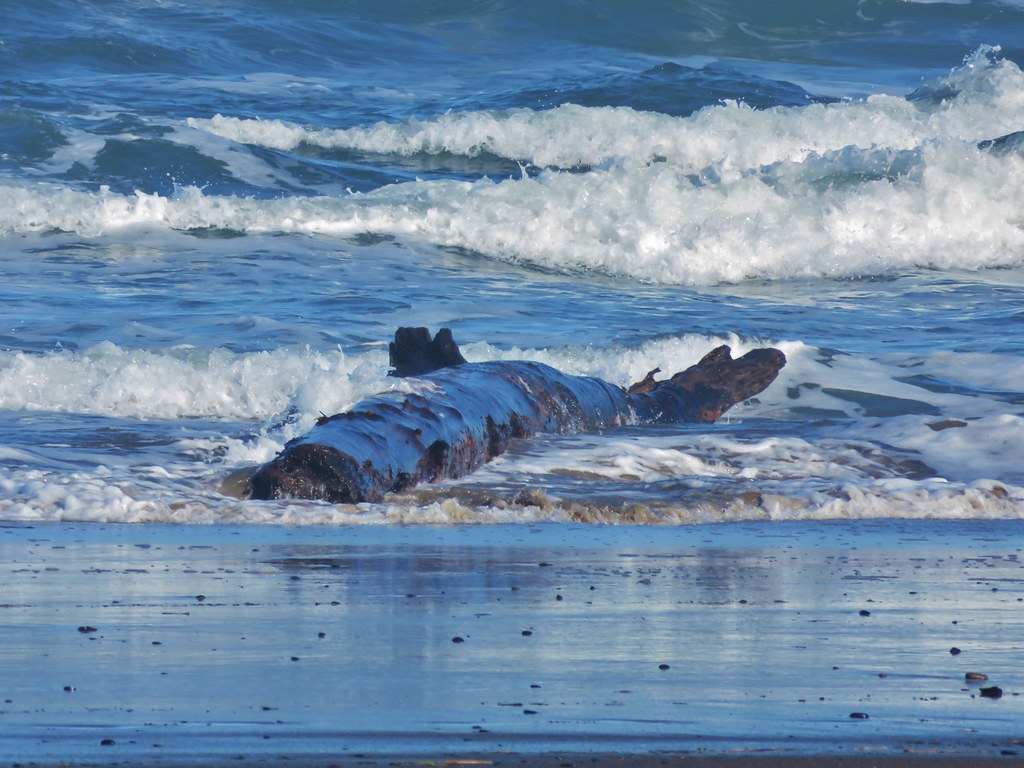
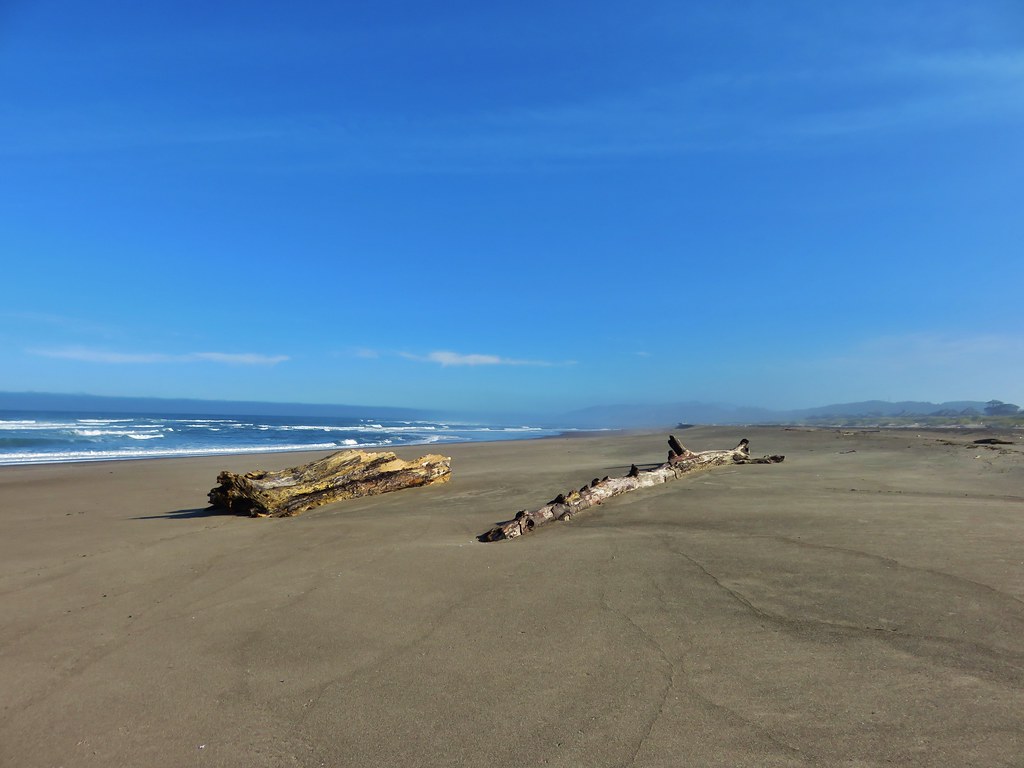
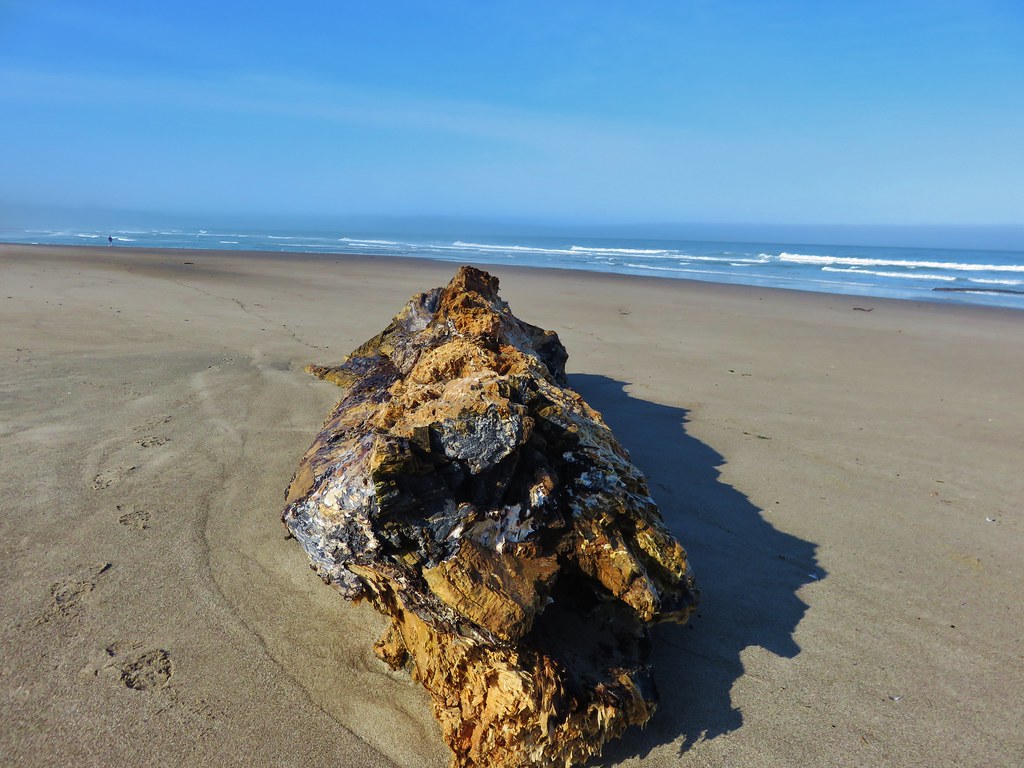
The beach was fairly free of debris but there were a few items to inspect including some nice drift wood.
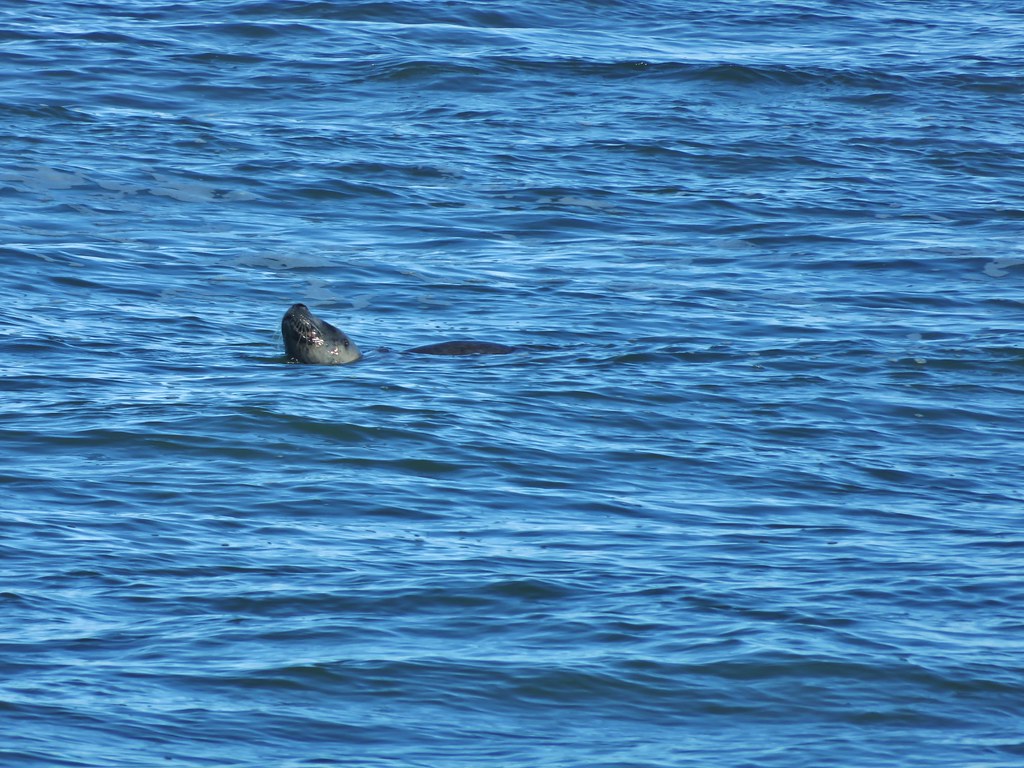
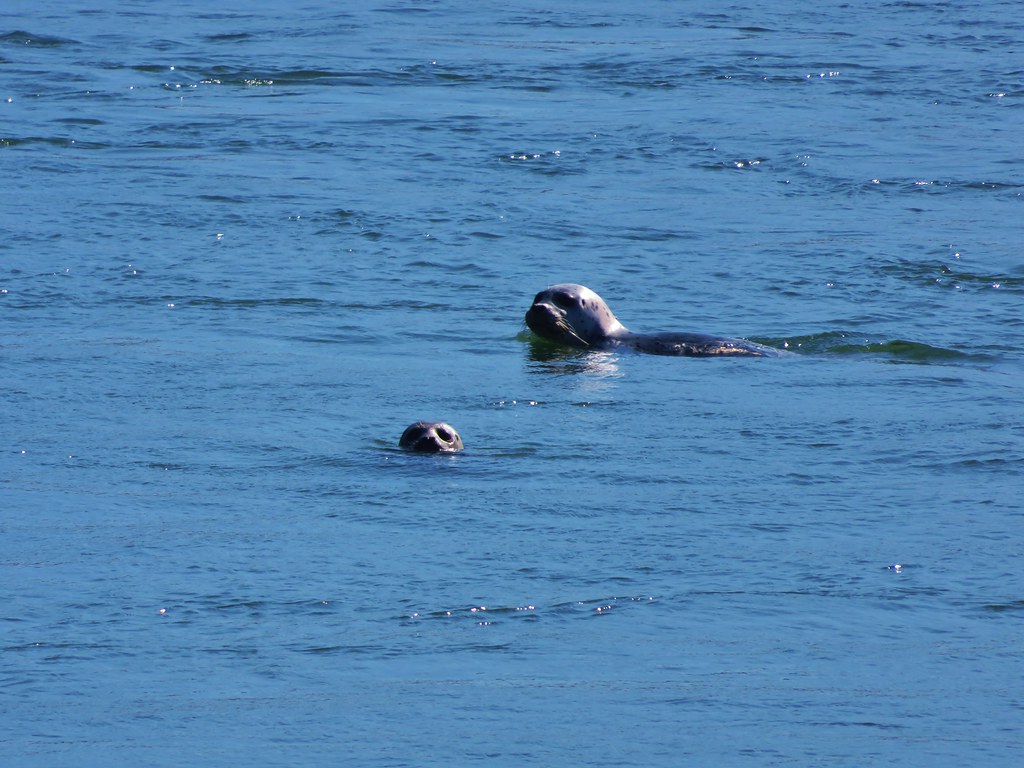
One of the things we were looking forward to on this hike was the possibility of seeing some seals. We spotted the first one of the day in the ocean about half way down the spit.
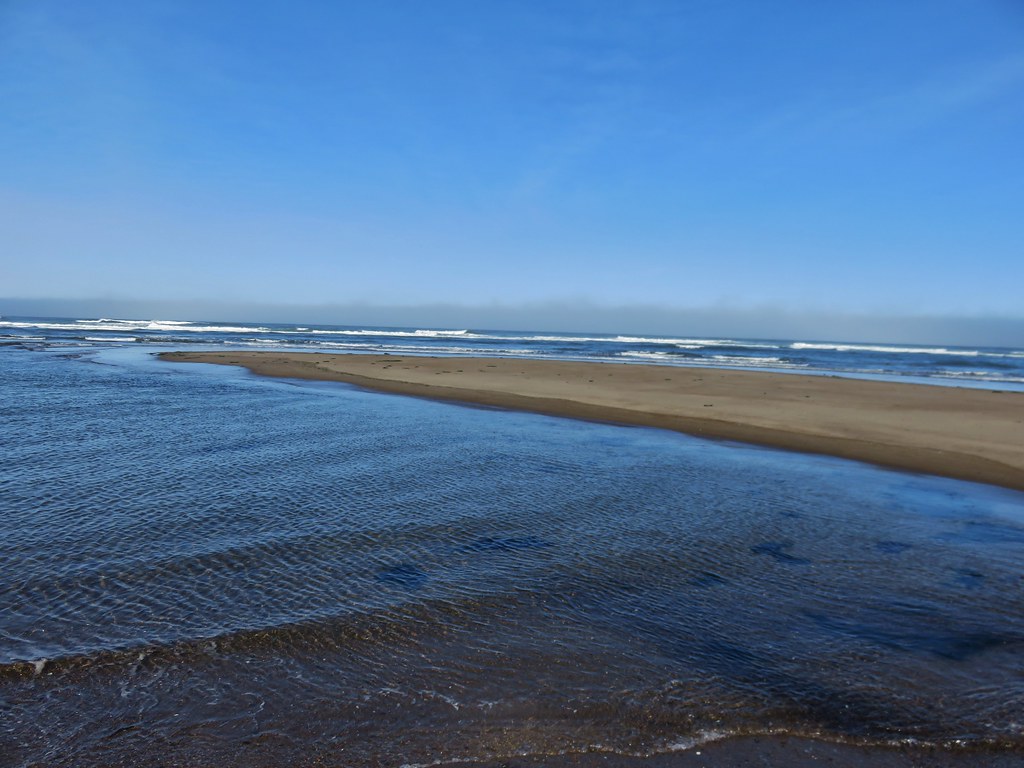
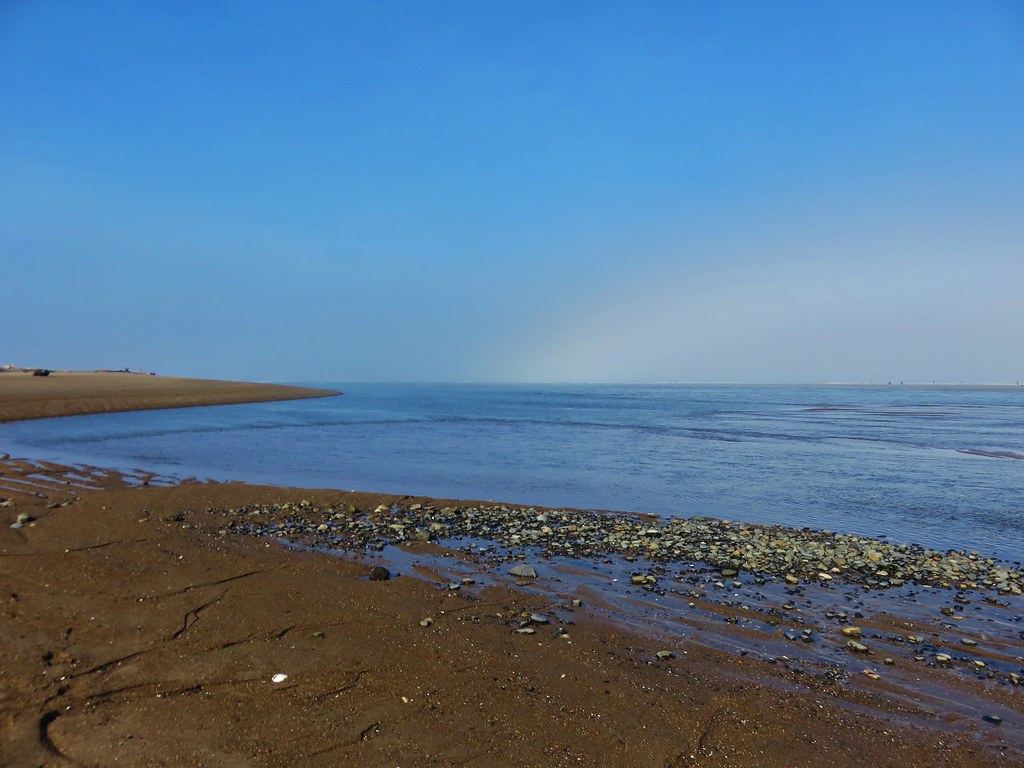
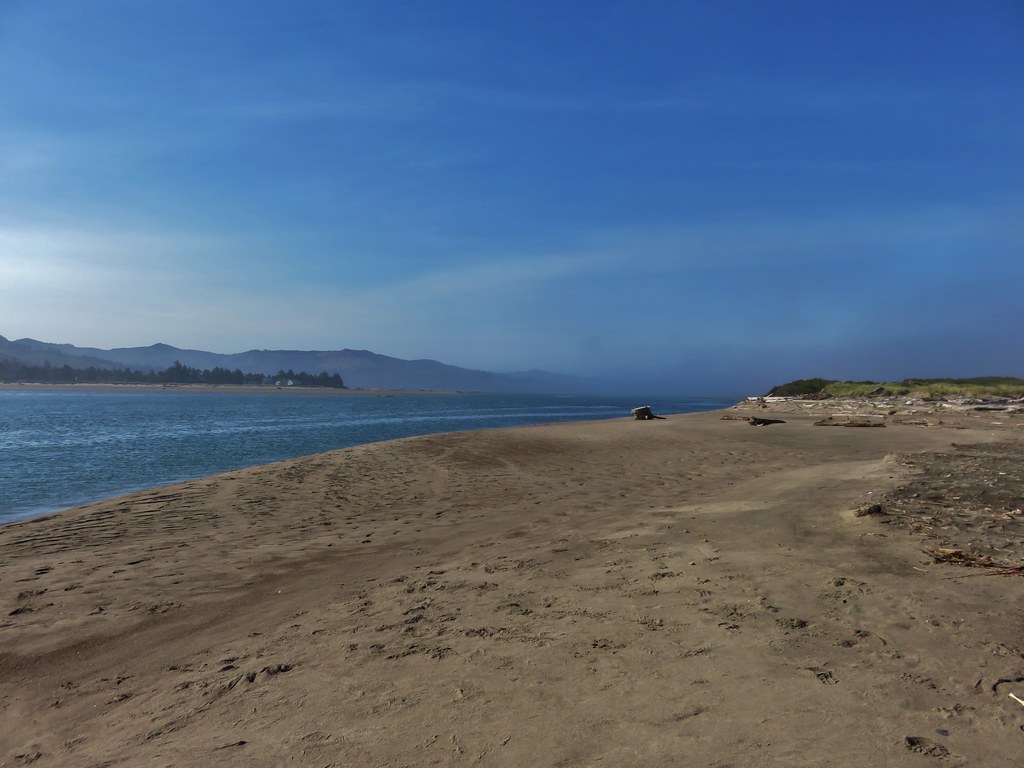
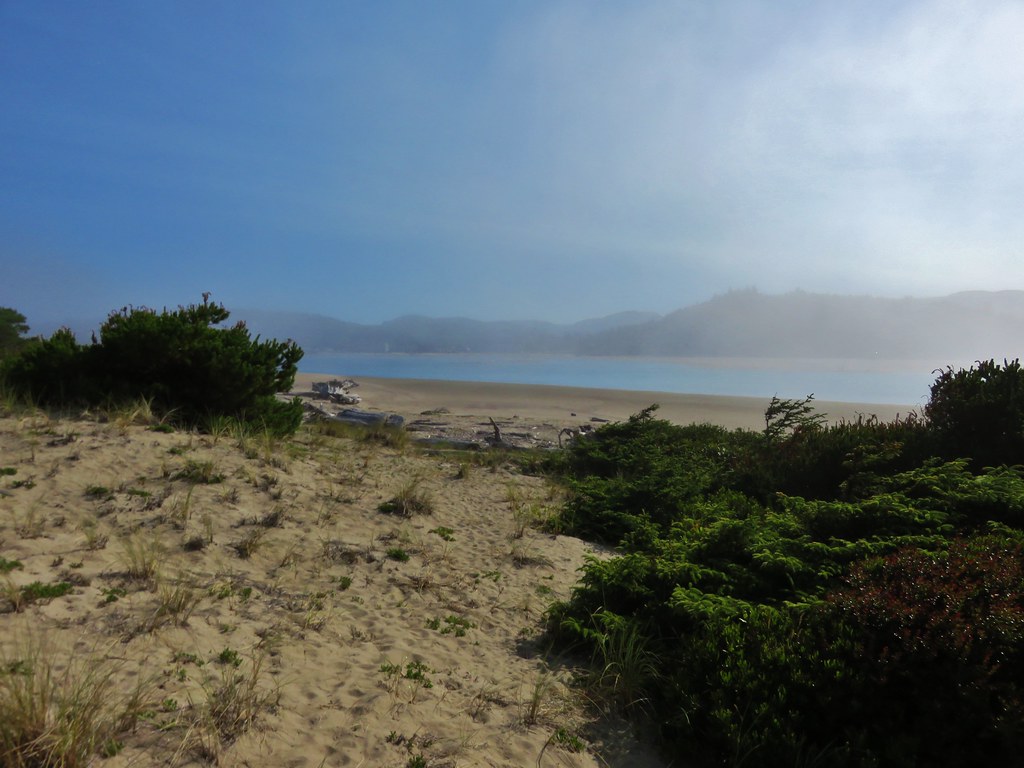
The spit ends where Siletz Bay meets the Pacific Ocean.
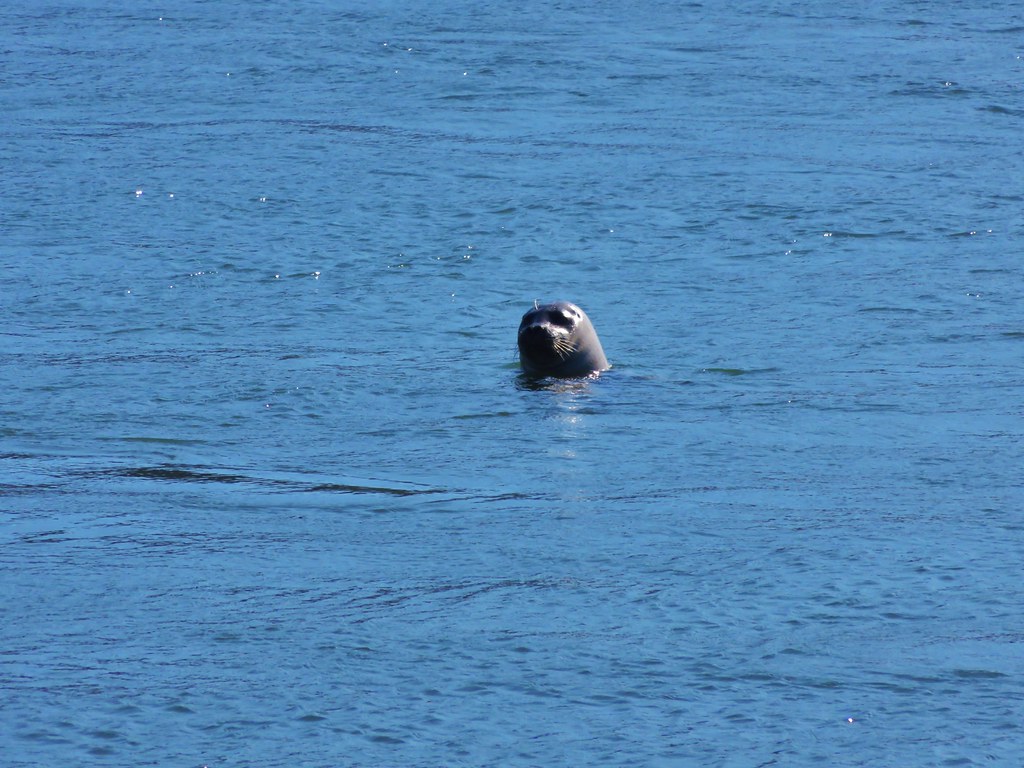
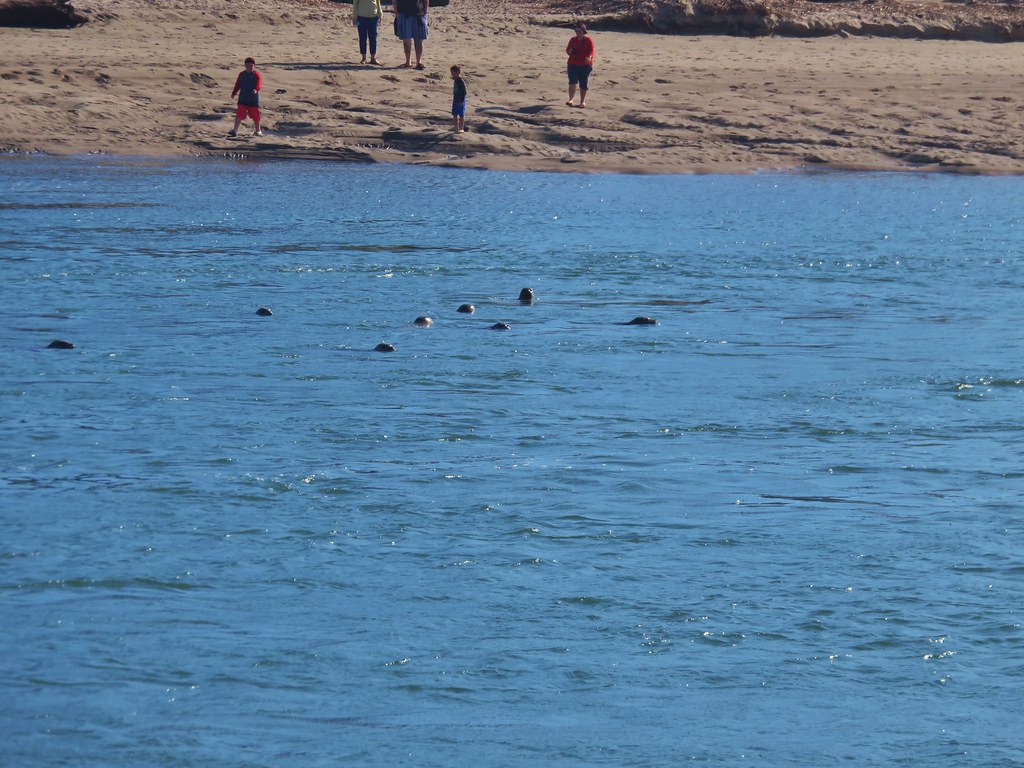
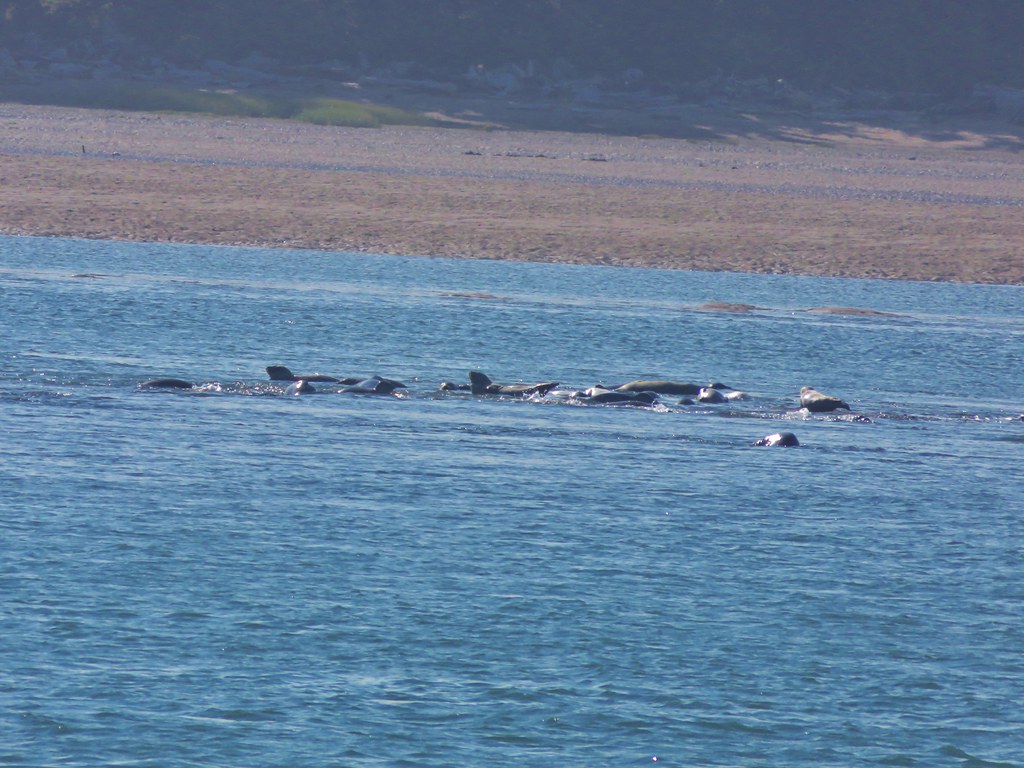
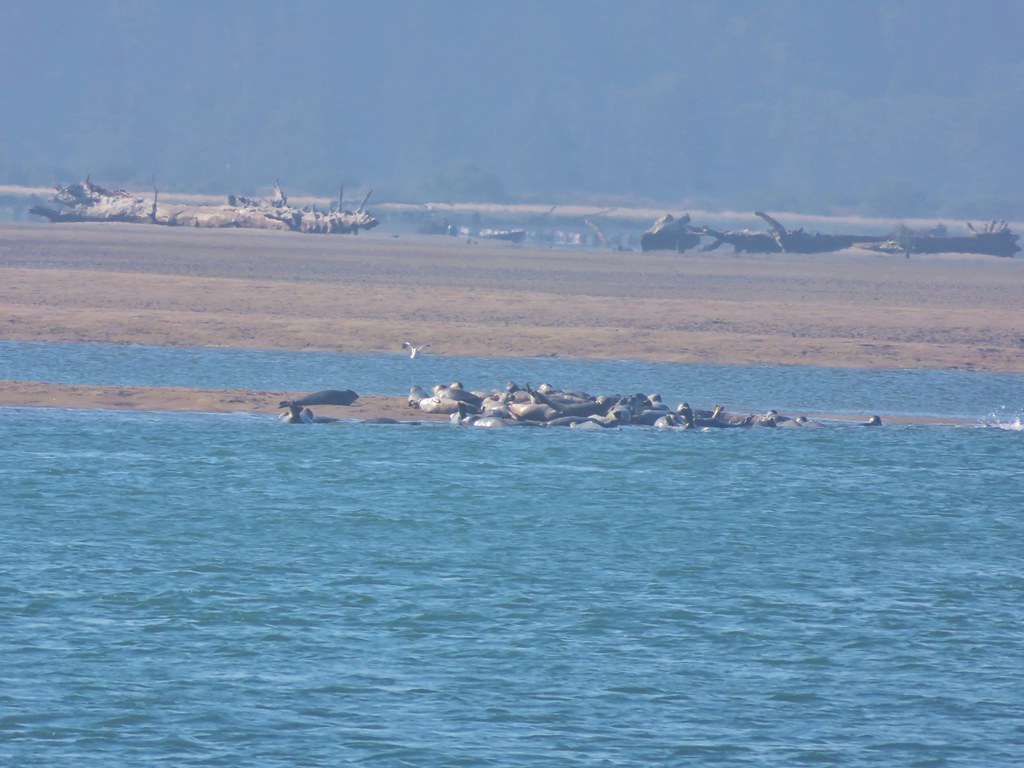
As we walked around the end of the spit we spotted many seals floating past on their way back out to the ocean.
We then turned along the bay.
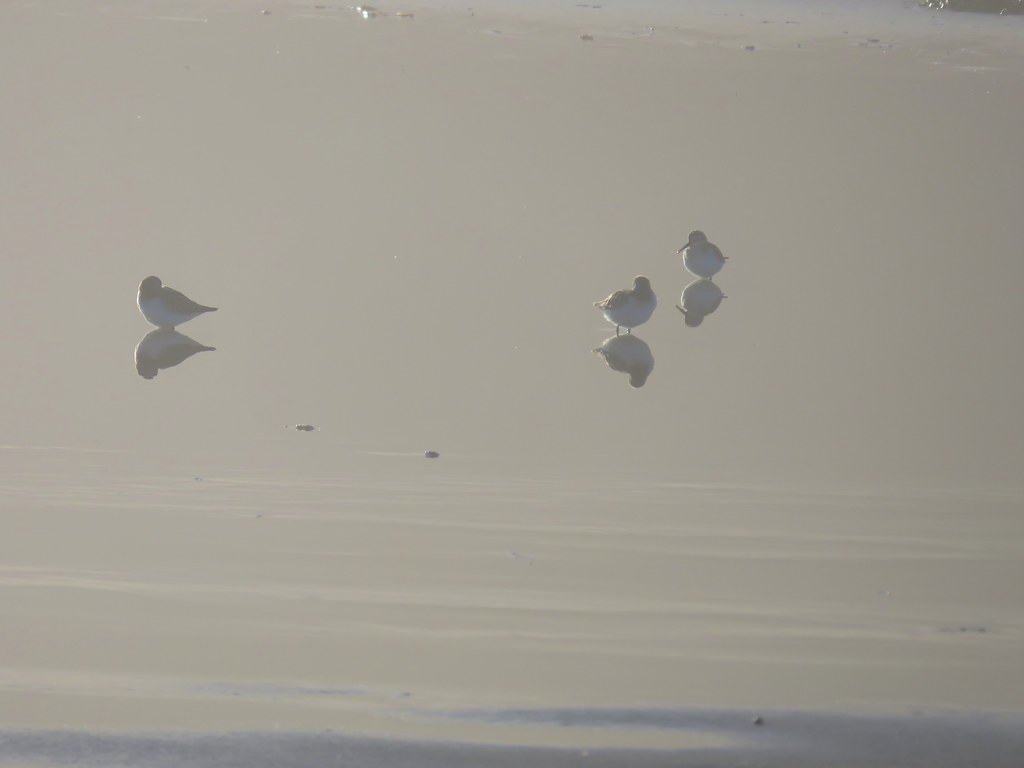
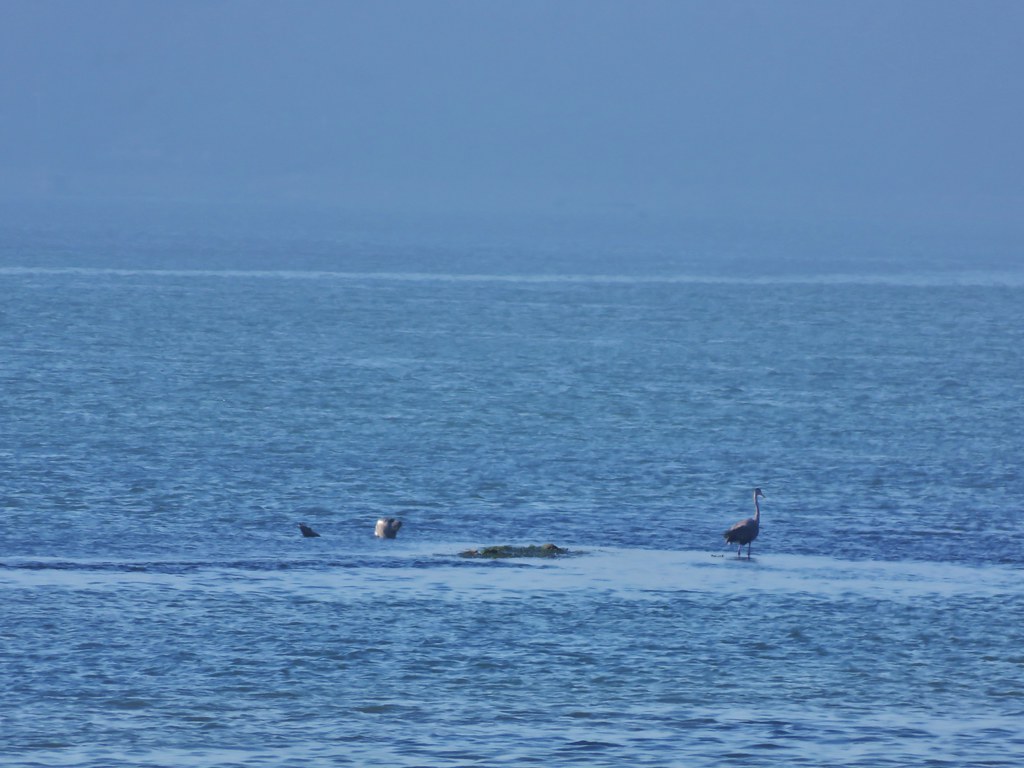
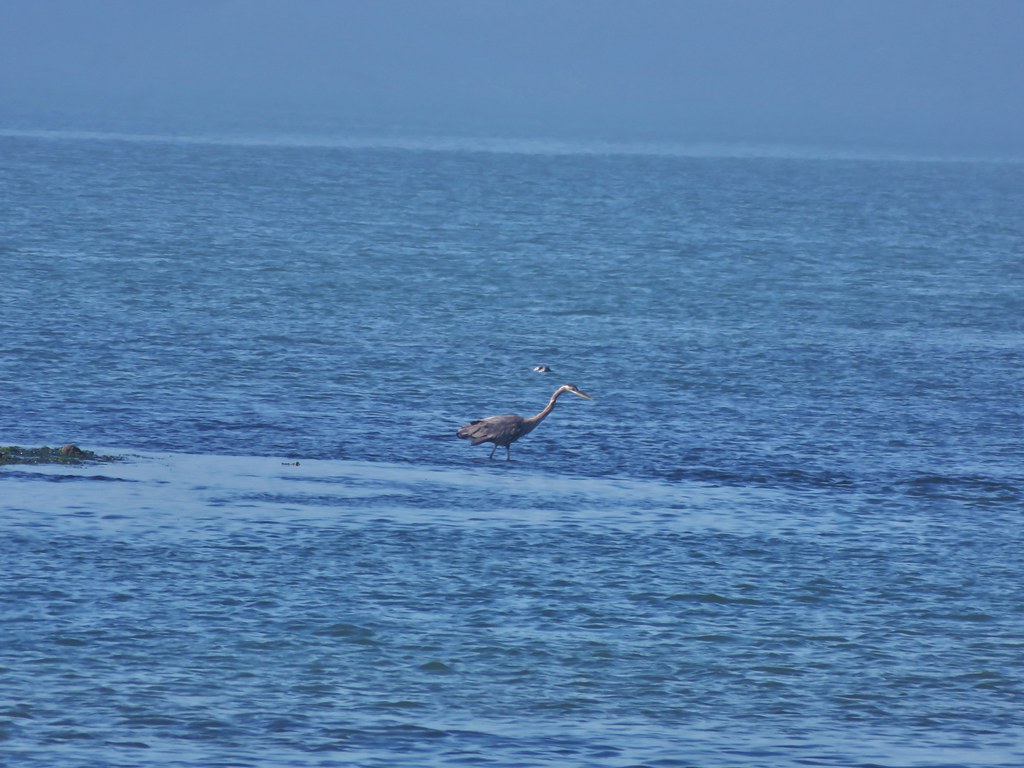
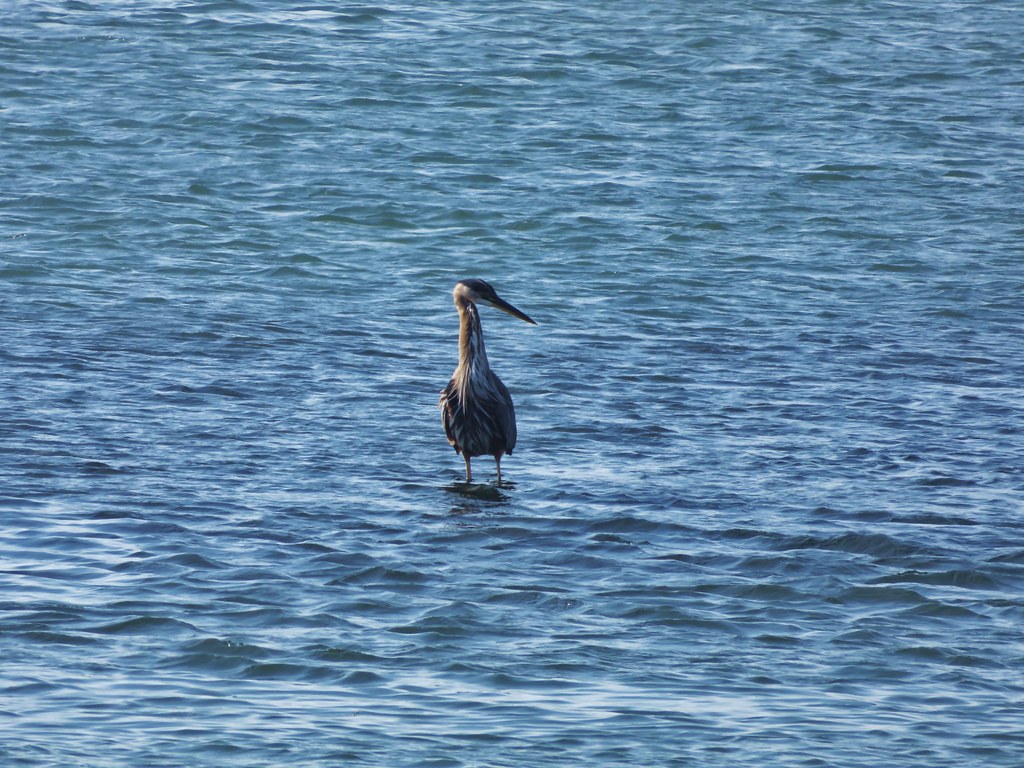
There were several groups of seals lounging in the bay as well as a Great Blue Heron looking for breakfast.
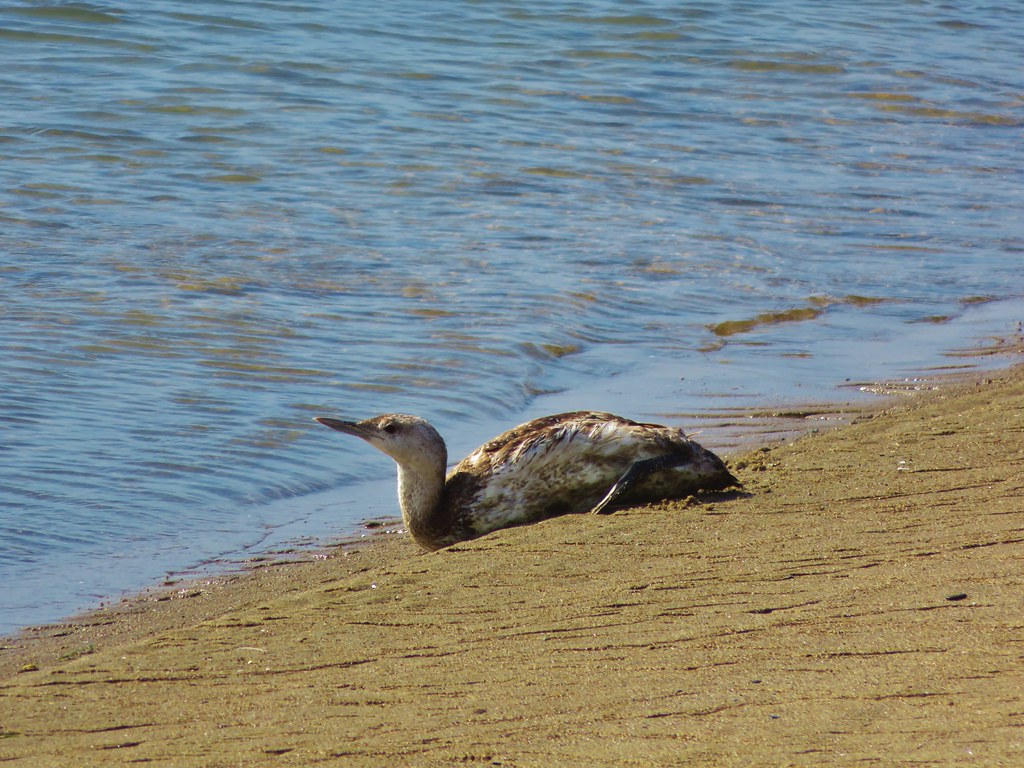
Along the shore we spotted a bird laying in the sand. We weren’t sure if it was injured or just a young bird but we kept our distance so we didn’t disturb it.
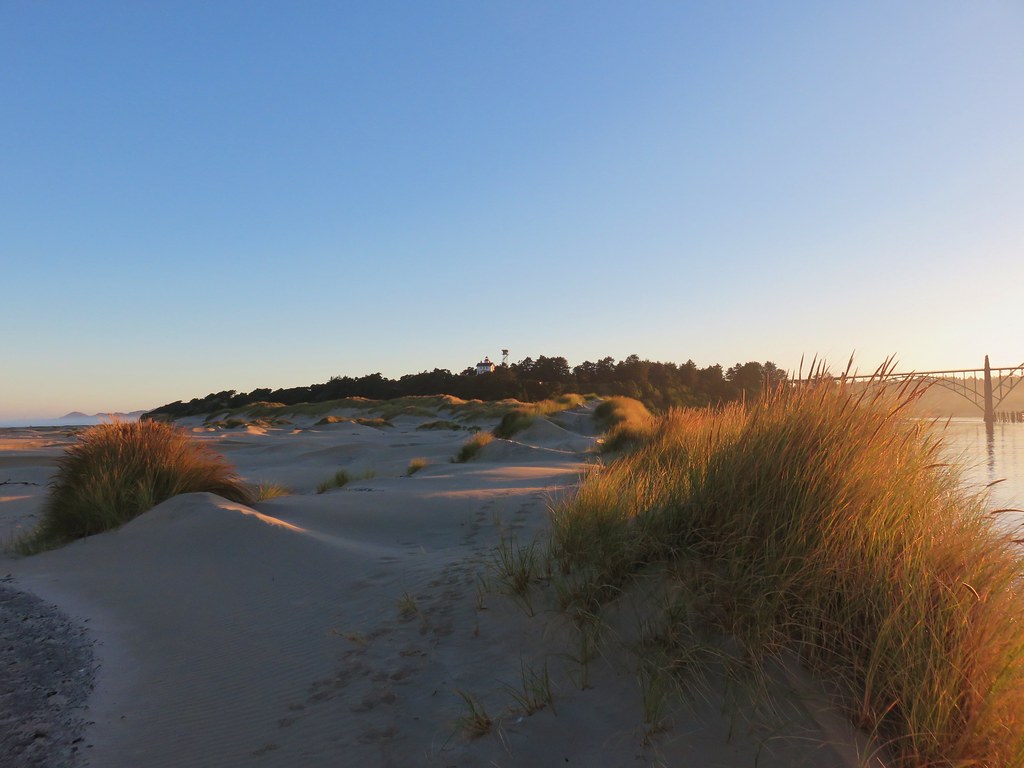
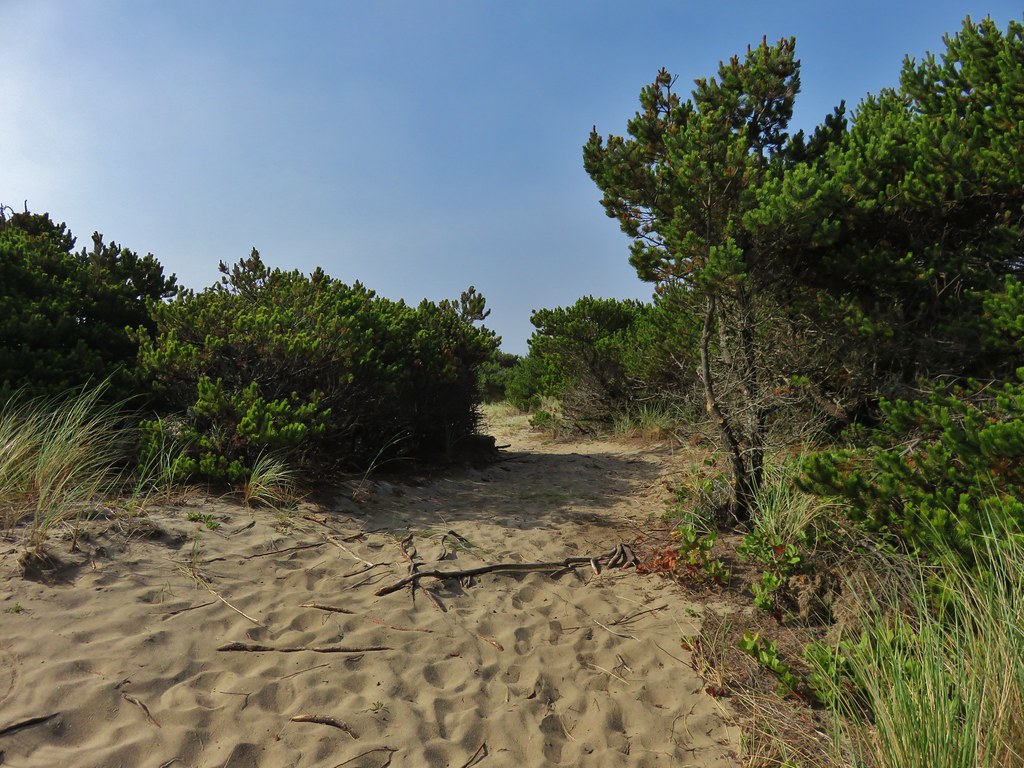
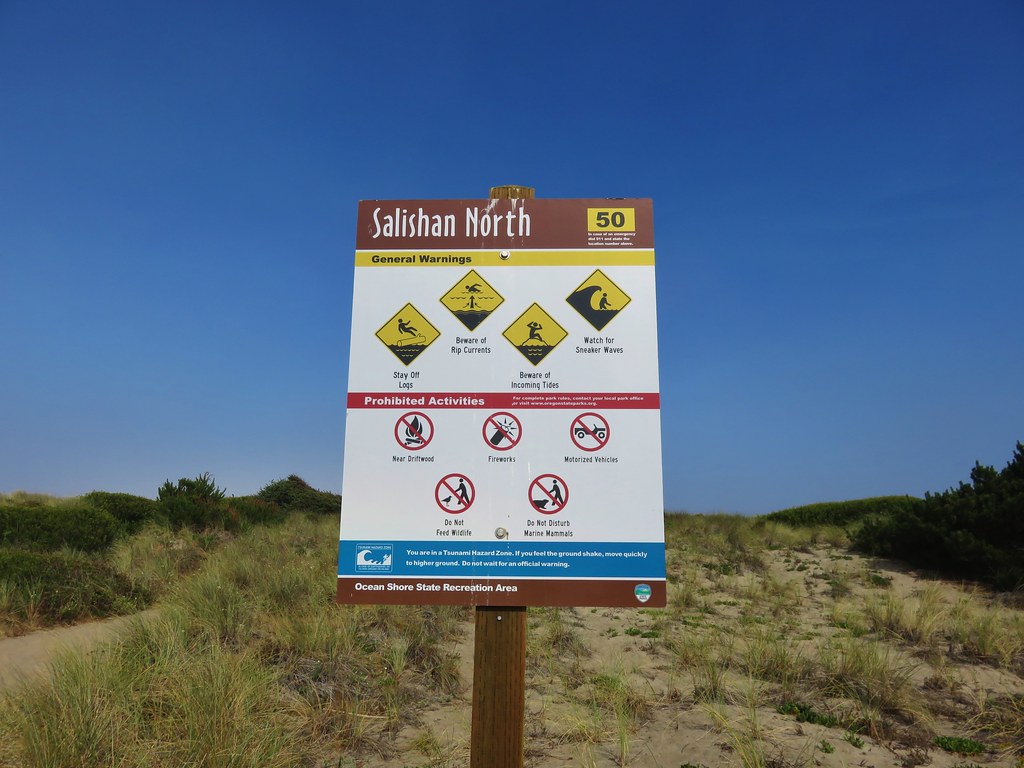
A wide path then led through some stunted pines and grasses to the Salishan North parking area.
From the parking area we crossed back over to the ocean due to the presence of private residences on the bay side of the spit beyond the parking area.
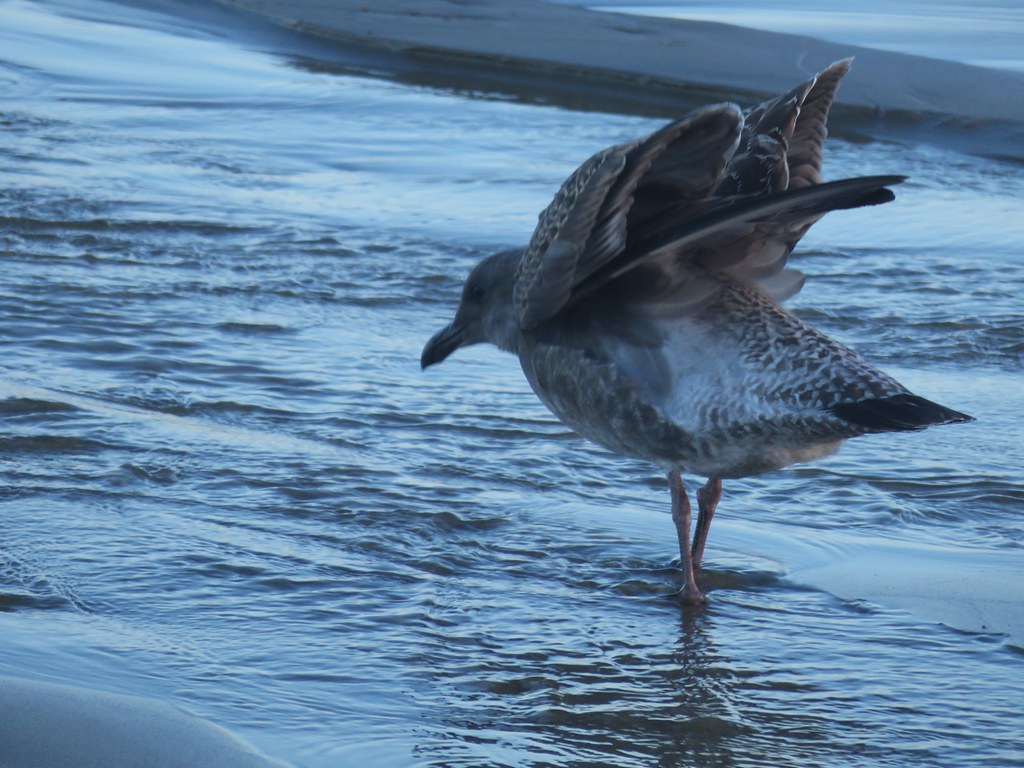
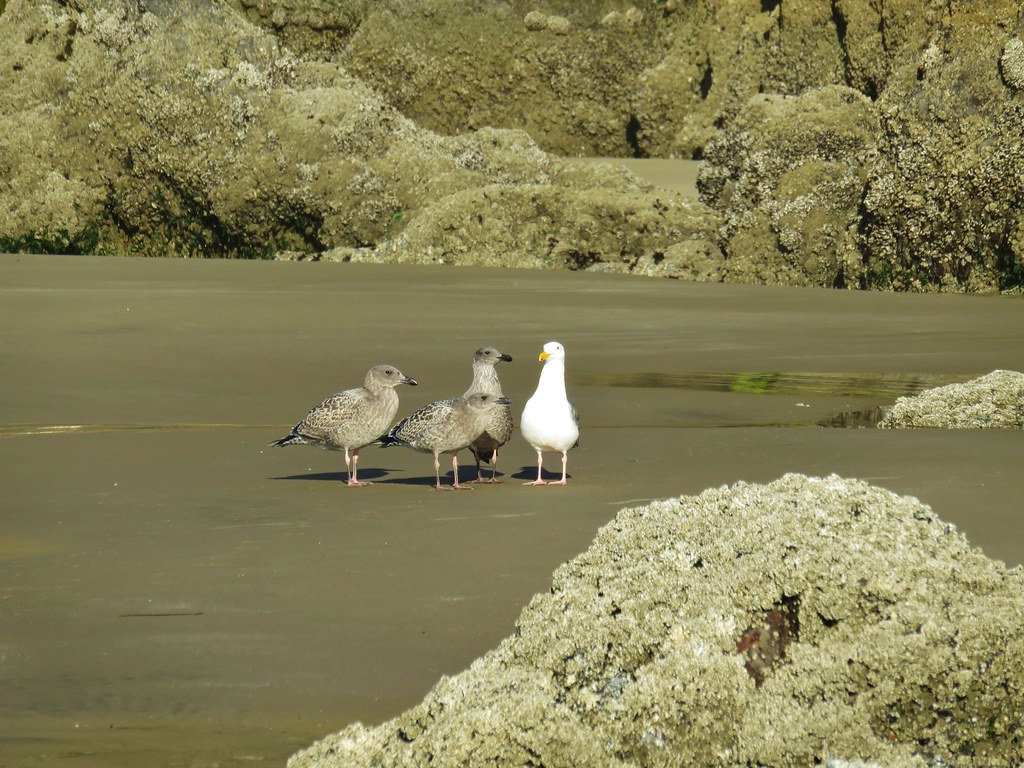
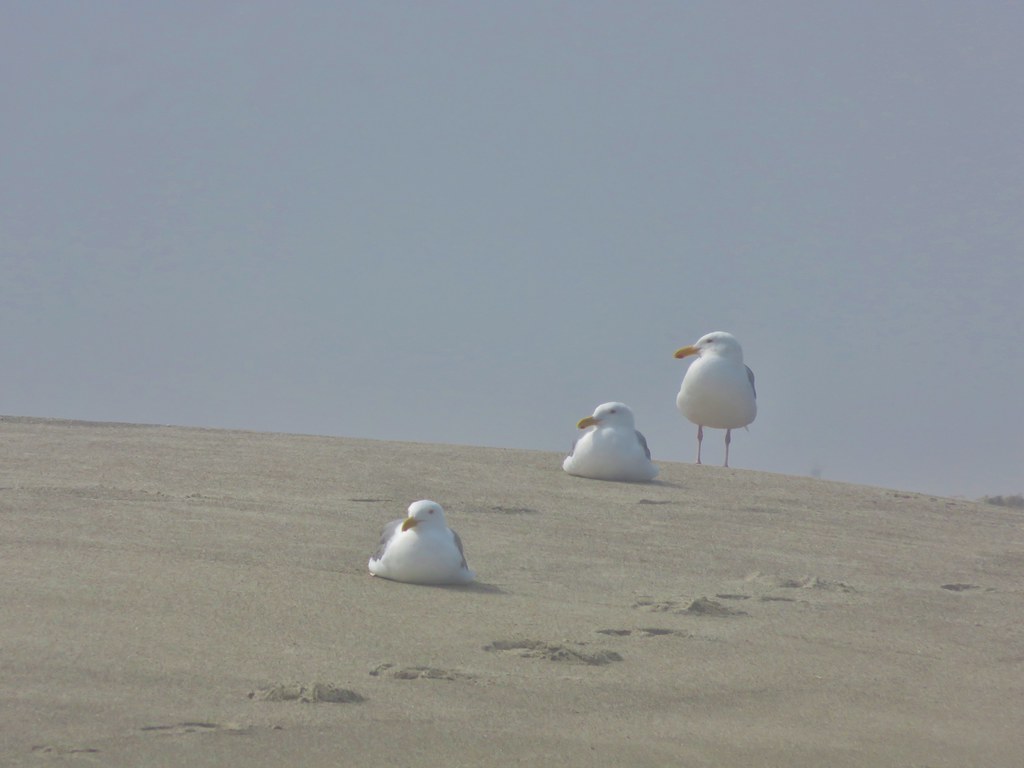
We returned along the beach to the wayside. Many of the seagulls were still hunting for goodies to eat although some were now taking a break.
Our total distance was 7.7 miles making this a relatively short hike for us but we finished with plenty of time to get to the reunion on time. It was a far cry from the previous weeks hikes in the Three Sisters Wilderness but it was great to see so many seals and the mild temperatures made for a really nice hike. Happy Trails!


 Notice regarding the petroglyphs on Wedding Rocks. By the time we were on the beach we’d completely forgot to look for these. We did run into another hiker who had seen them on a prior trip, but he couldn’t remember where. He thought they were located at some rocks near where we’d run into him, so we searched those rocks for several minutes with no luck. As it turns out he was mistaken as to where Wedding Rocks was, it is located on the first rocky headland nearest Cape Alava at the northern end of the triangle hike. We were much closer to the southern end.
 Ozette River leaving Ozette Lake.

 Bunchberry
 Slug on a skunk cabbage leaf.
 Skunk cabbage
 Bog laurel along the trail.
 Closer look at the bog laurel blossoms.
 Squirrel
 First view of the ocean.
 Beach bunny
 Ozette Island. The signpost is used to identify inland trails that bypass the beach.
 Bodelteh Islands
 Heading south along the beach.
 We had heard sea lions somewhere in the direction of Ozette Island as we were approaching the beach.
 There is a seal in the foreground and a couple of sea lions on the rocks beyond.
 Seals lounging on the rocks.
 One of several campsites along the beach.

 Approaching Wedding Rocks. There is a bypass sign ahead if you look closely. At higher tides it is not possible to go around the rocks along the beach.
 A couple of crabs taking a defensive position as we were passing by.
 Wedding Rocks
 On the other side of the Wedding Rocks. As I mentioned before this is where the petroglyphs are, but we’d already forgotten to be looking for them. In Heather’s defense she had started to come down with a cold the previous day and was not feeling 100%. I however had no excuse.

 Looking back at the Wedding Rocks.
 Robin
Robin Bald eagle
 Whimbrel
 Hole in a sea stack.
 Seals and cormorants
 The second rocky headland where there was an inland bypass route. On the far side is where we ran into the hiker who thought these were the Wedding Rocks where he’d seen the petroglyphs before.
 Path through the rocks. It made sense to us that this would be where the petroglyphs were given there were several passages between the rocks here.
 Coming out the other side.
 Looking back at the rocks that weren’t the Wedding Rocks.
 Sandpoint ahead.
 Semipalmated plover
 View south
 One of the groups of backpackers heading north from Sand Point.
 Chickweed on the headland.


 Evergreen huckleberry blossoms.
 Bench along the trail.
 Groundcone. Heather had a sharp eye to pick this up on the forest floor.
 There were a couple of missing sections of boardwalk along this side of the triangle.
 Ozette Lake



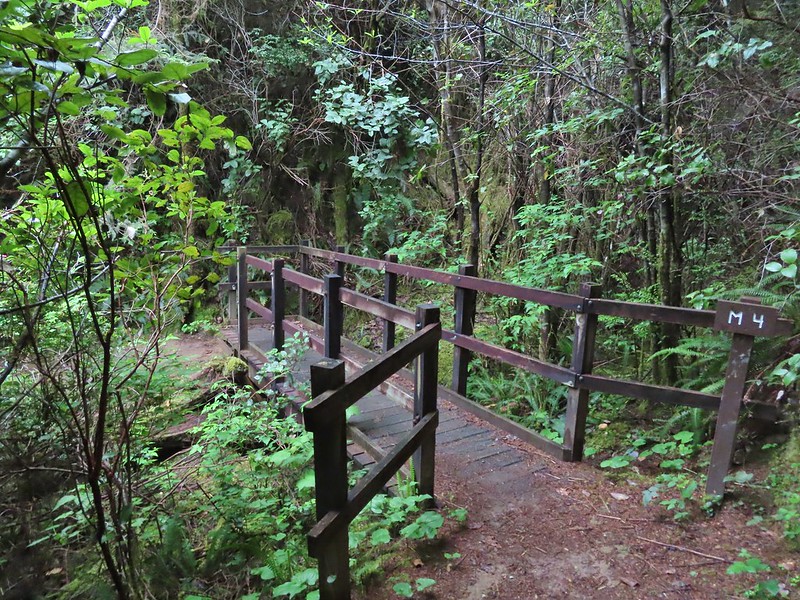 All the bridges had labels consisting of the first initial of the trail and then the bridge number making this the 4th bridge along the Middle Creek Trail.
 Interesting seat.
 That’s a fancy hat for a stump.


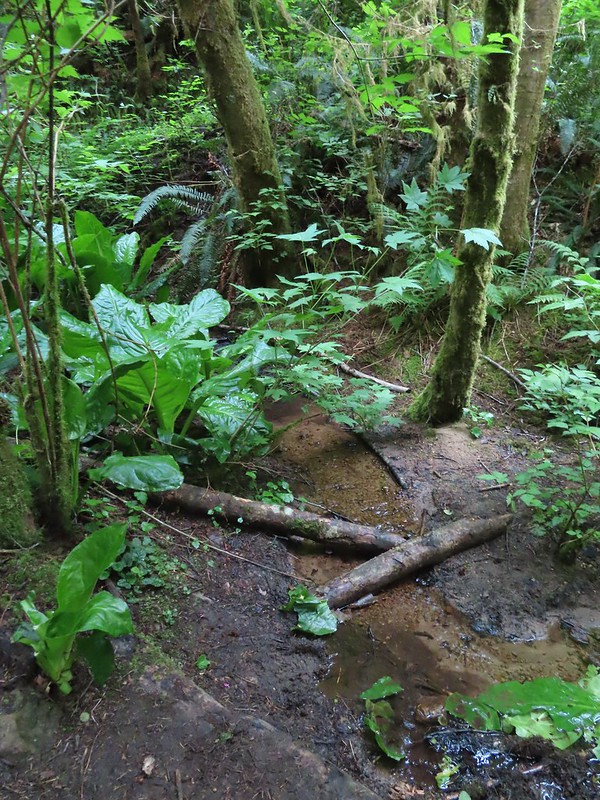


 We saw a lot of rough skinned newts on the trails, but what we were really hopping for was a Pacific Giant Salamander. No luck there this time.
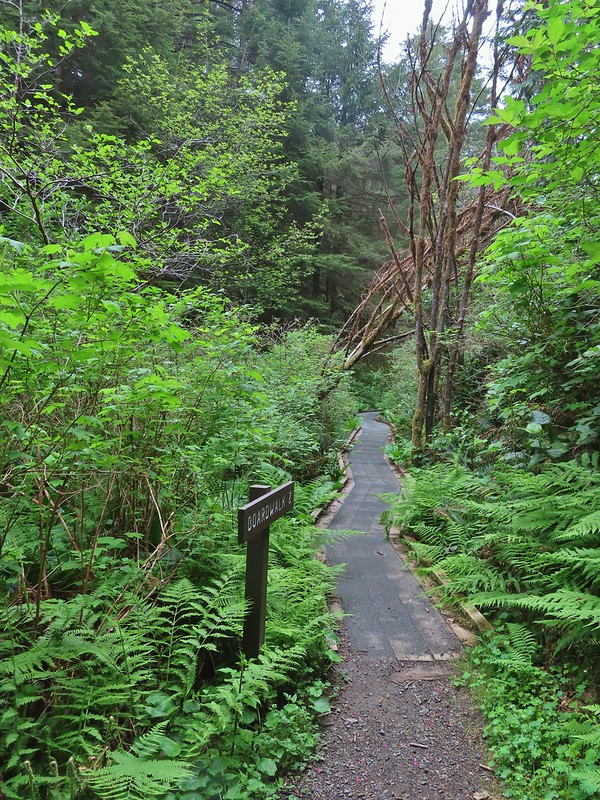
 A few trillium still had petals.
 Woodpecker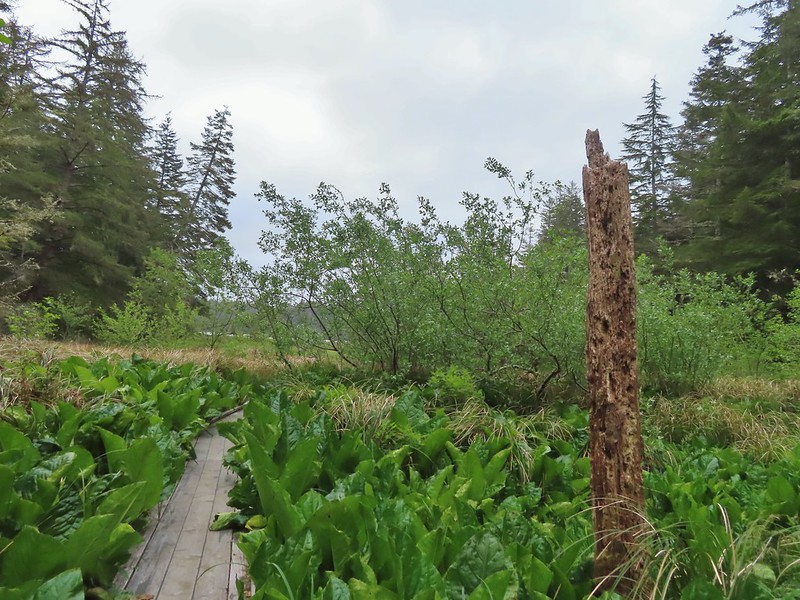
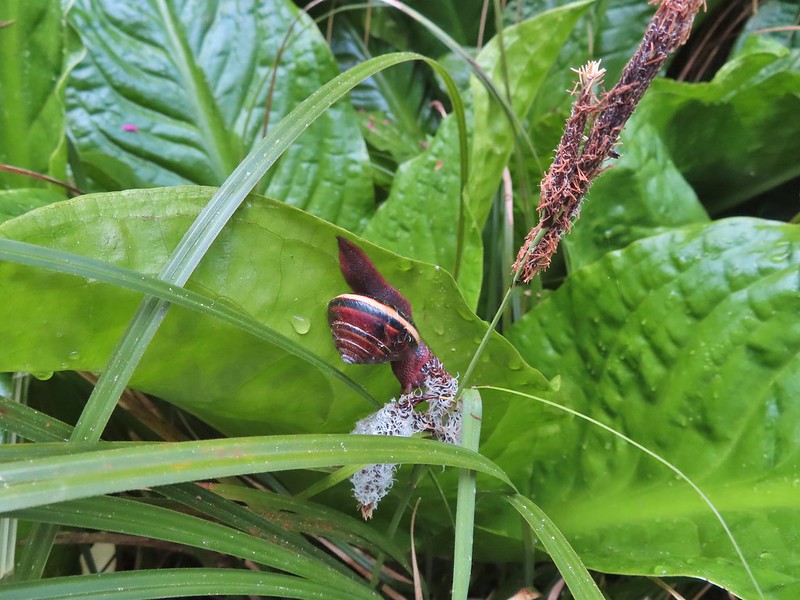


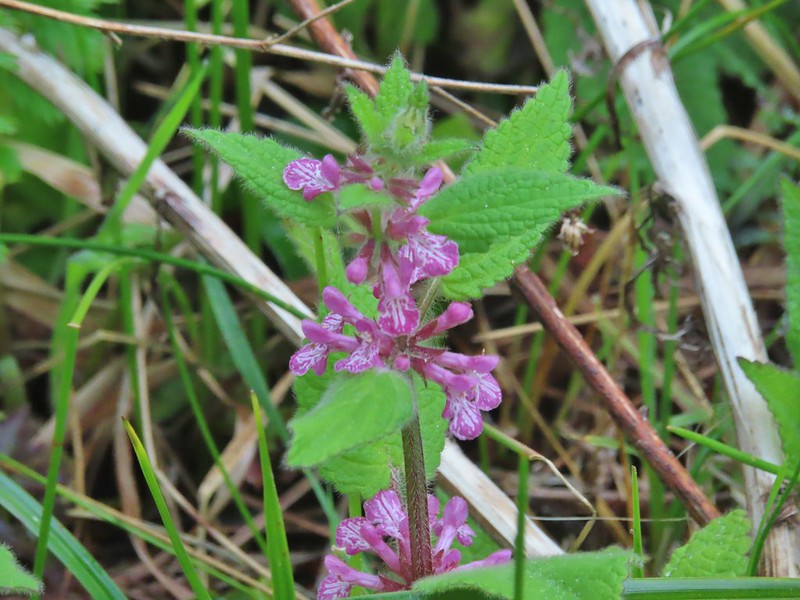 A hedgenettle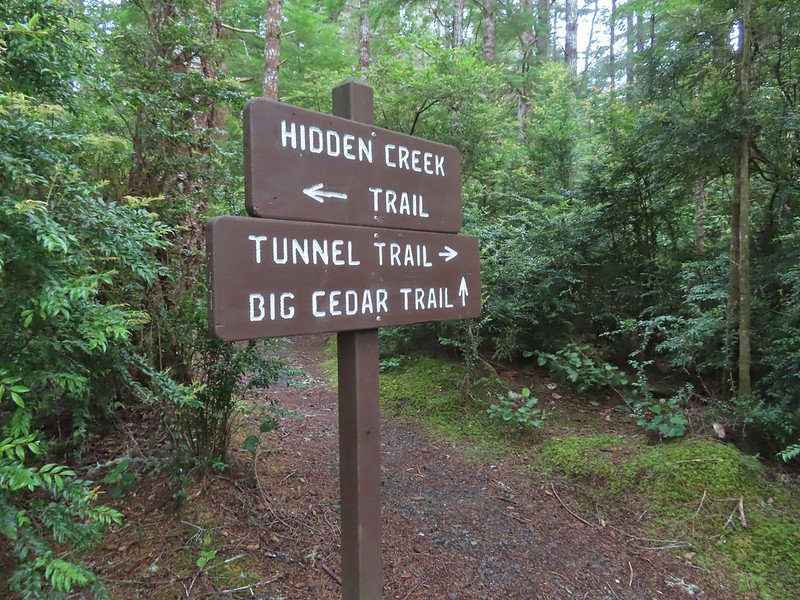


 Tunnel Trail indeed.




 Castilleja ambigua – Estuarine Paintbrush


 End of the line.
 South Slough
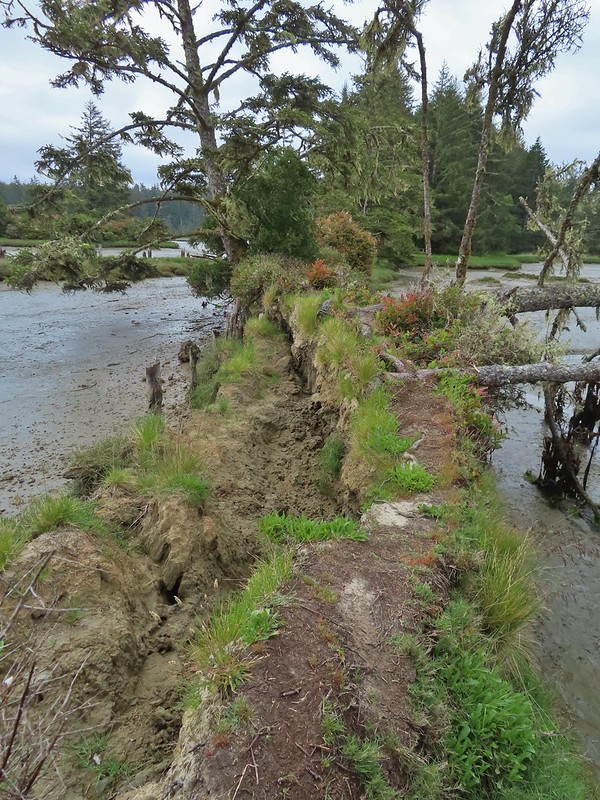 It was interesting to see how this uprooted tree peeled back a layer of the ground.
 Rhoades Marsh
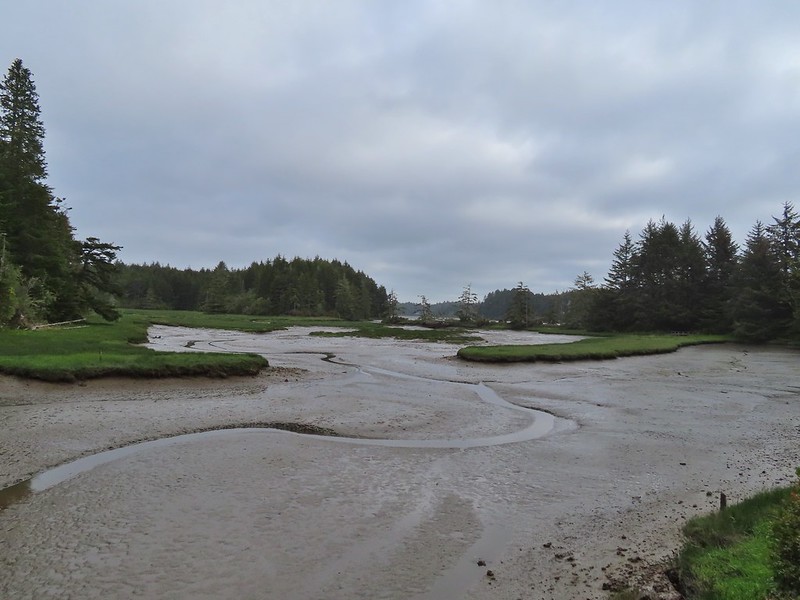 Sloughside Marsh
 Rhododendron


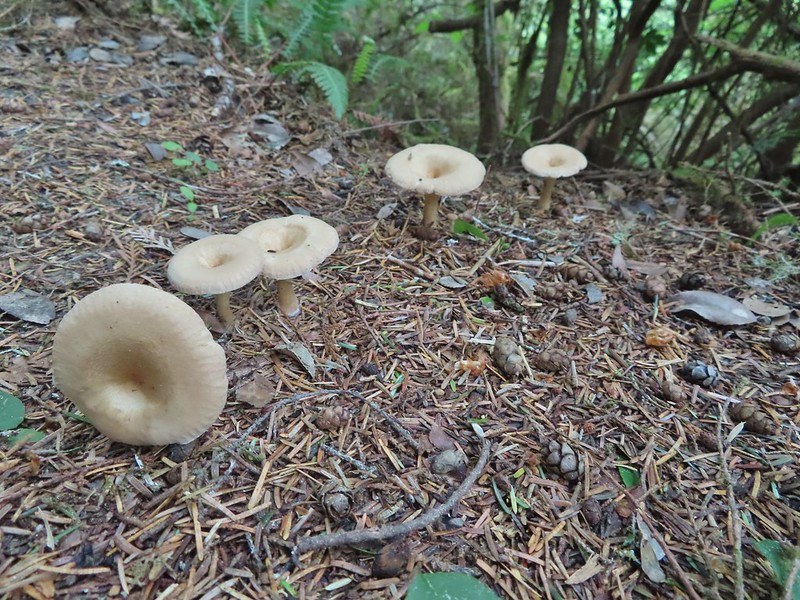
 Bleeding heart, fairy bells, and youth-on-age.


 Cape Arago Lighthouse (not on Cape Arago) on Chiefs Island.
 Salal
Salal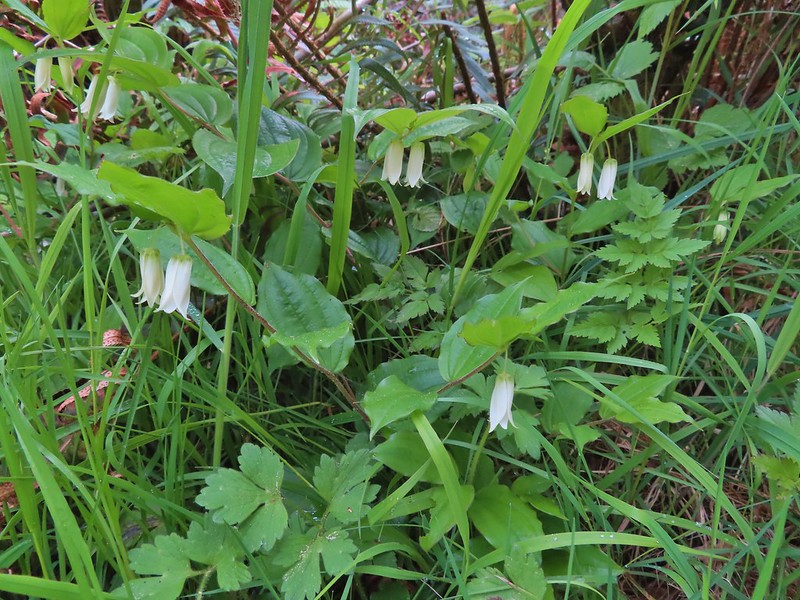
 The group campsite.





 Harbor seals in the lower right hand corner on the rocks.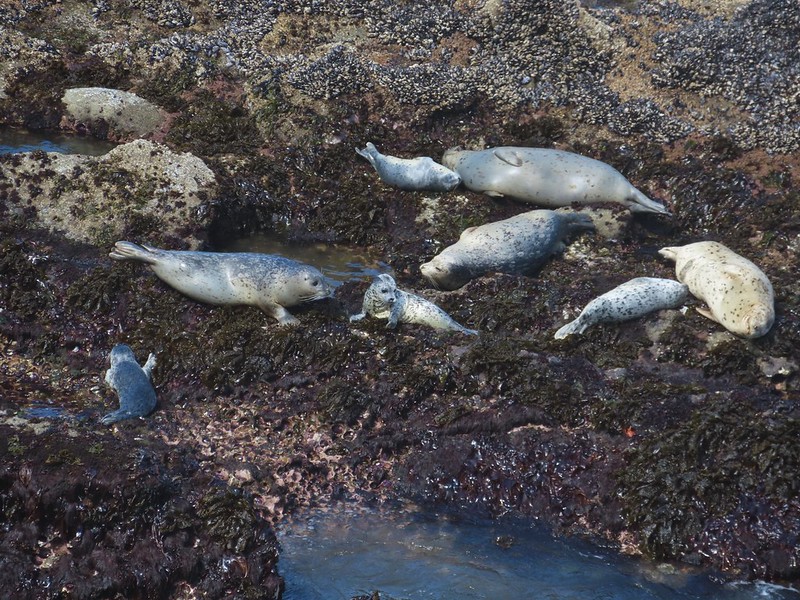

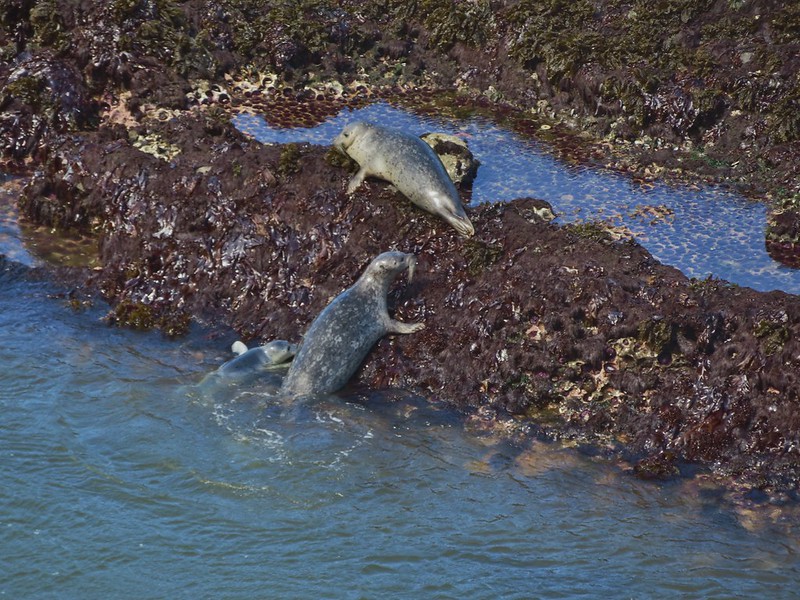
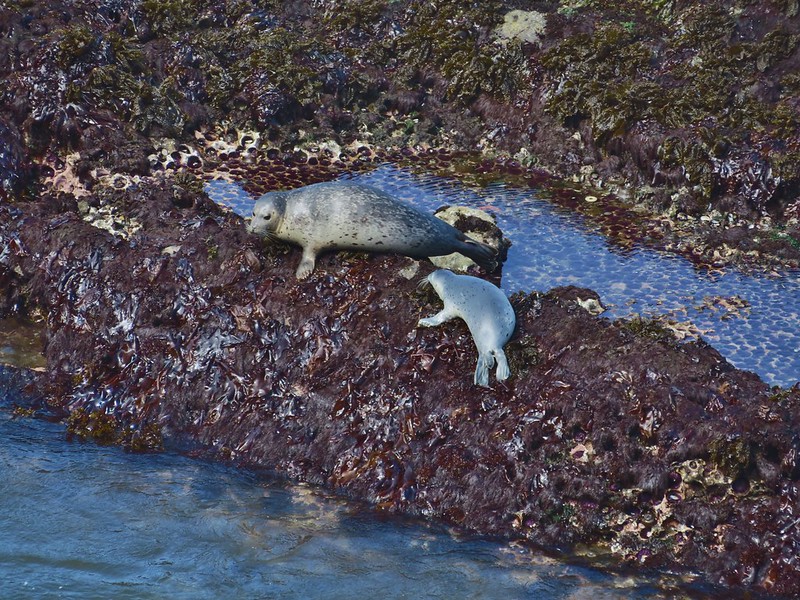 Success!
 Paintbrush
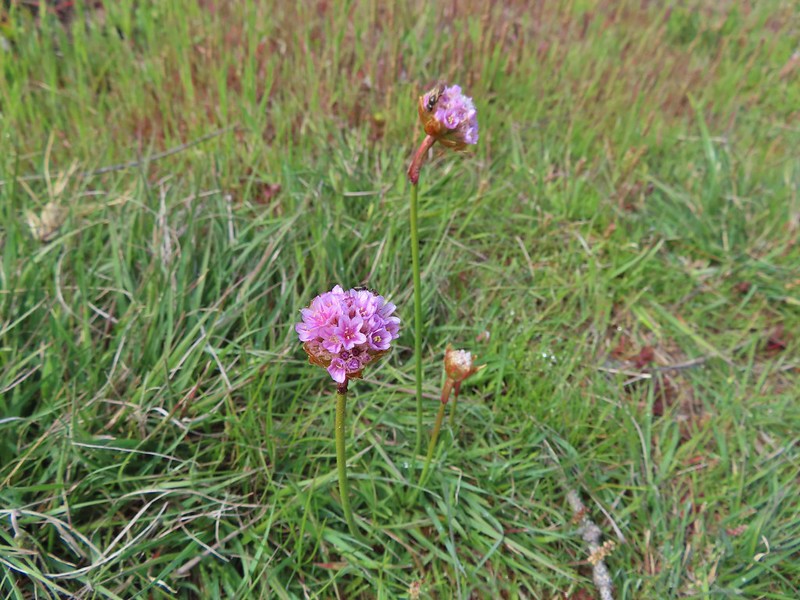 Sea thrift
 Mariposa lilies
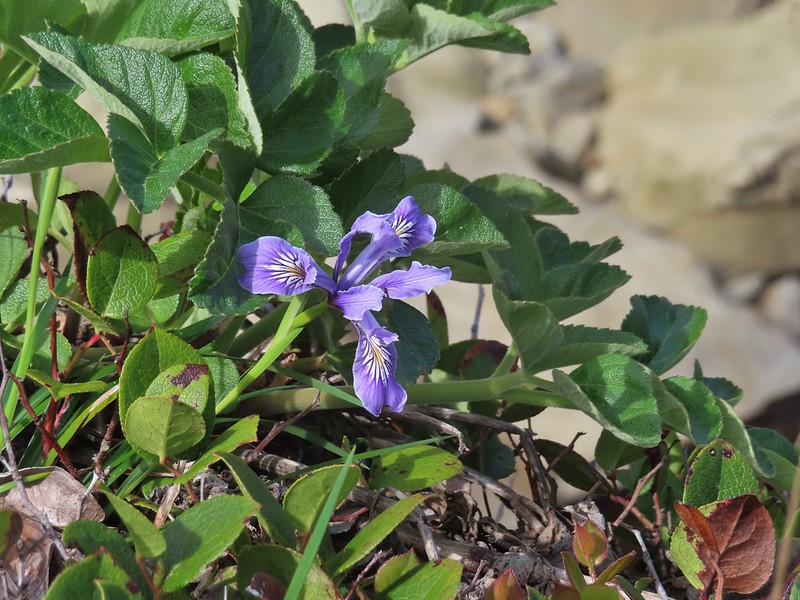 Iris
Iris Former tennis courts.
 View near the tennis courts.
 These roots explain how some of the trees that look like they should be plunging into the ocean don’t.
 Observation Building ahead on the cliff.









 Prickly Rhubarb from Chile

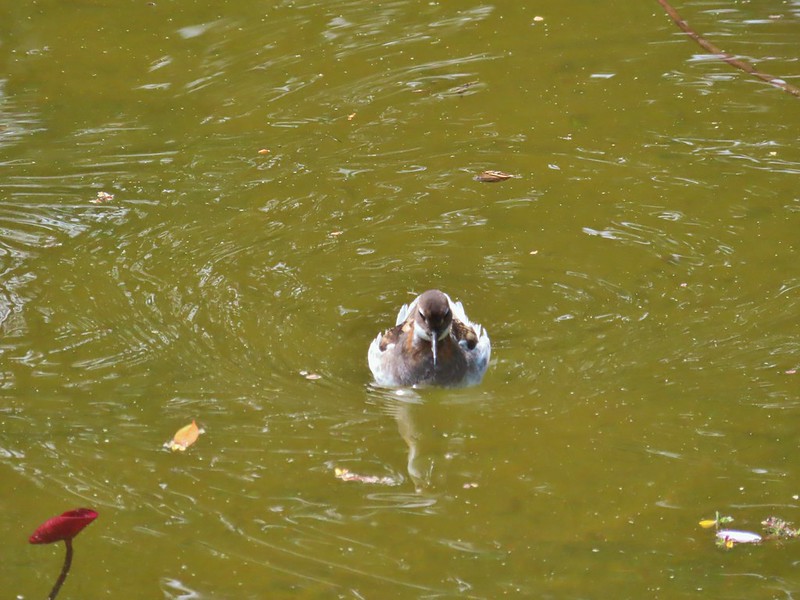
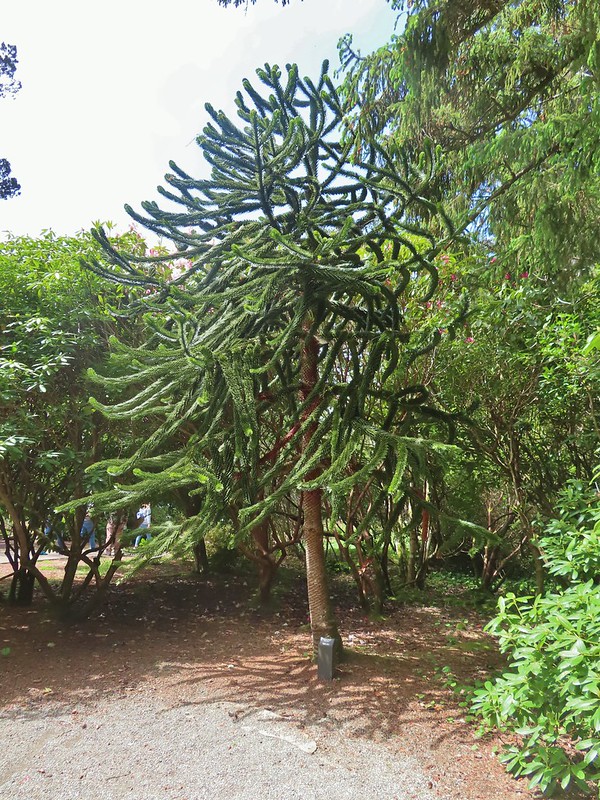 Monkey Puzzle Tree from South America
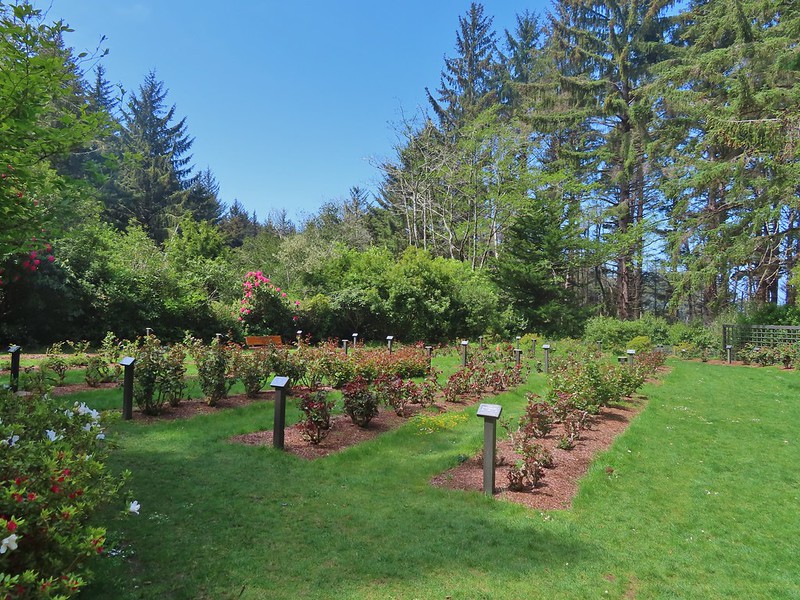 The yet to bloom rose garden.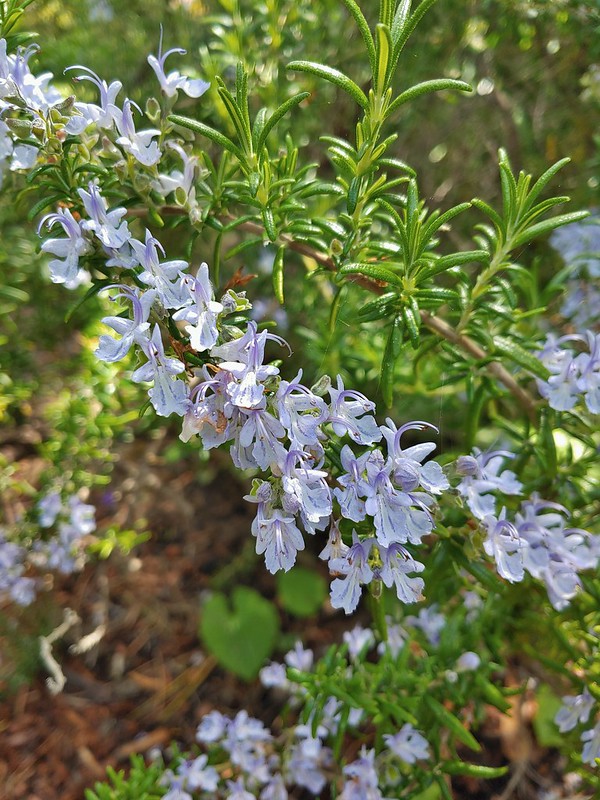

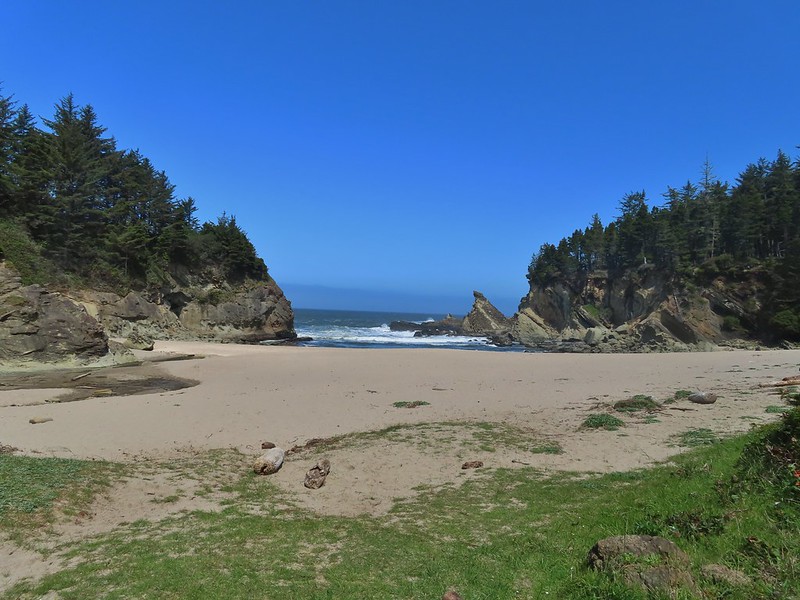

 Looking back across Simpson Cove to the Observation Building.
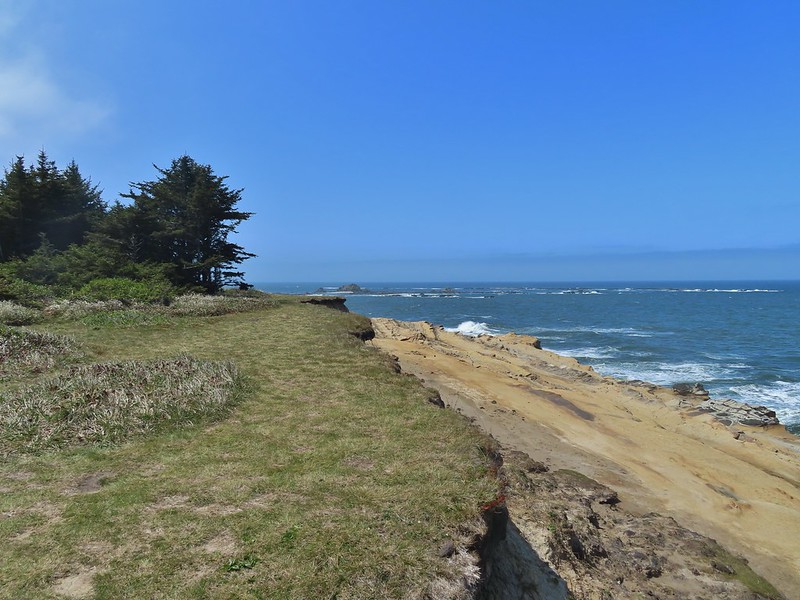 Simpson Reef extending into the Pacific.
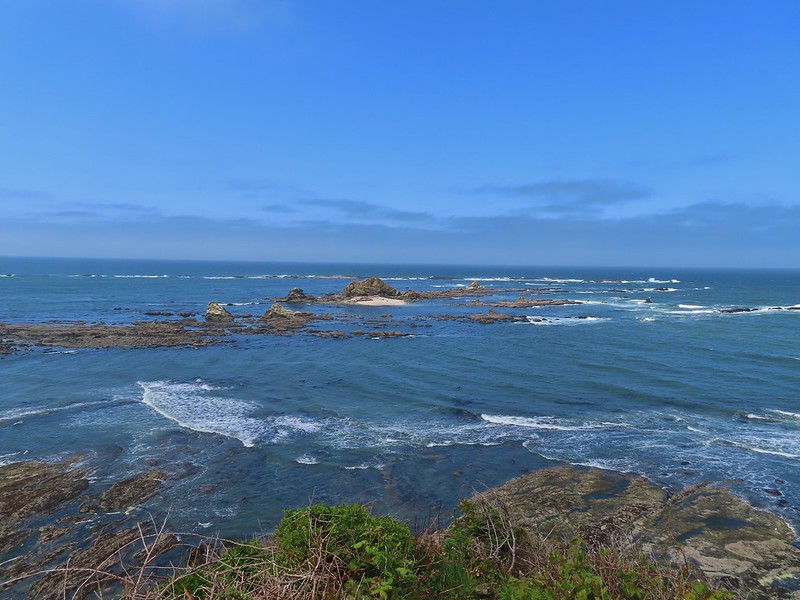 Shell Island in the middle of Simpson Reef.
 Sea lions and juvenile bald eagles on Shell Island.


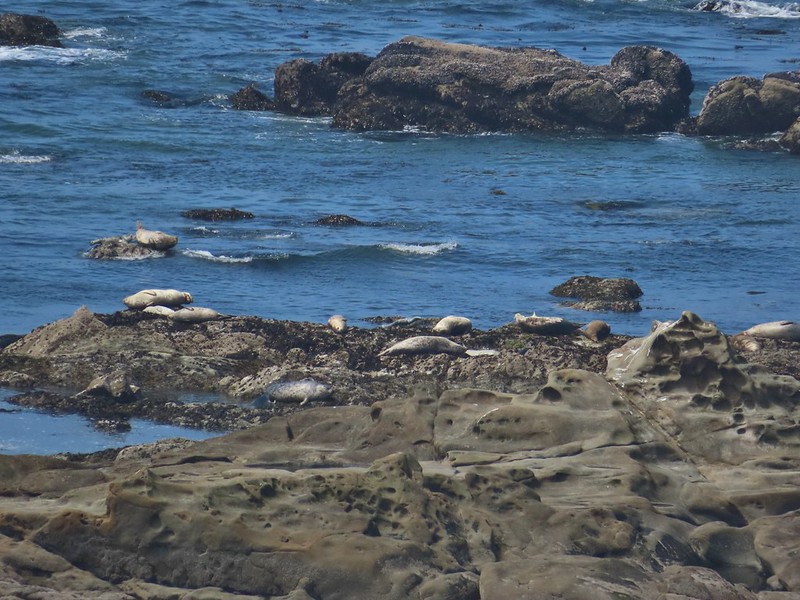 Harbor seals on the reef.

 Coltsfoot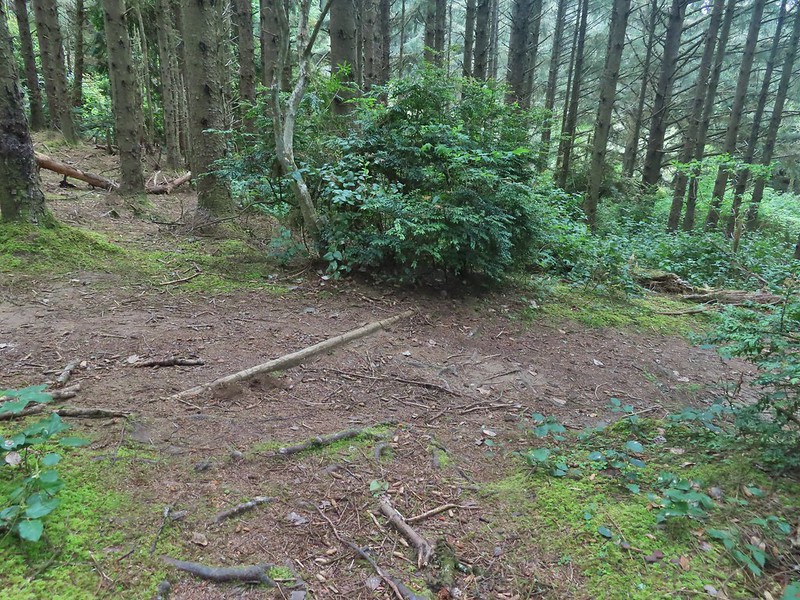
 Woolly bear caterpillar
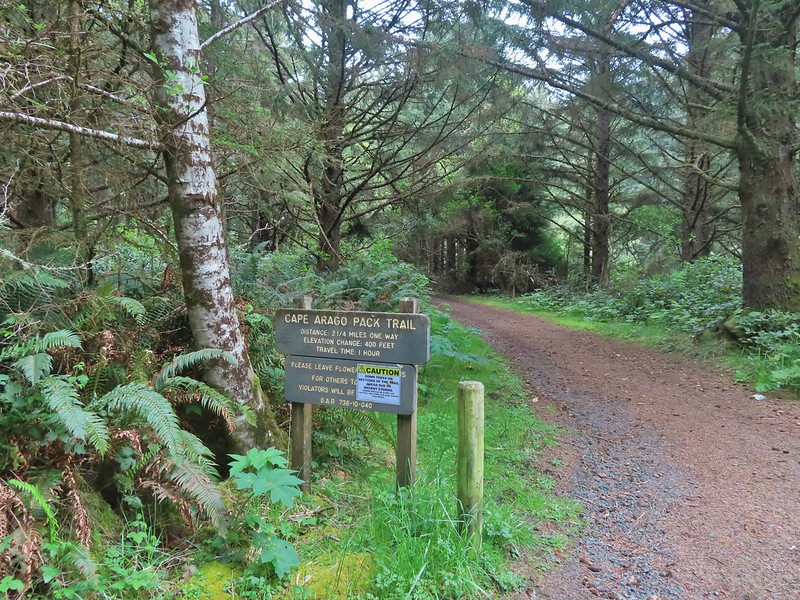 Looking back up the Pack Trail.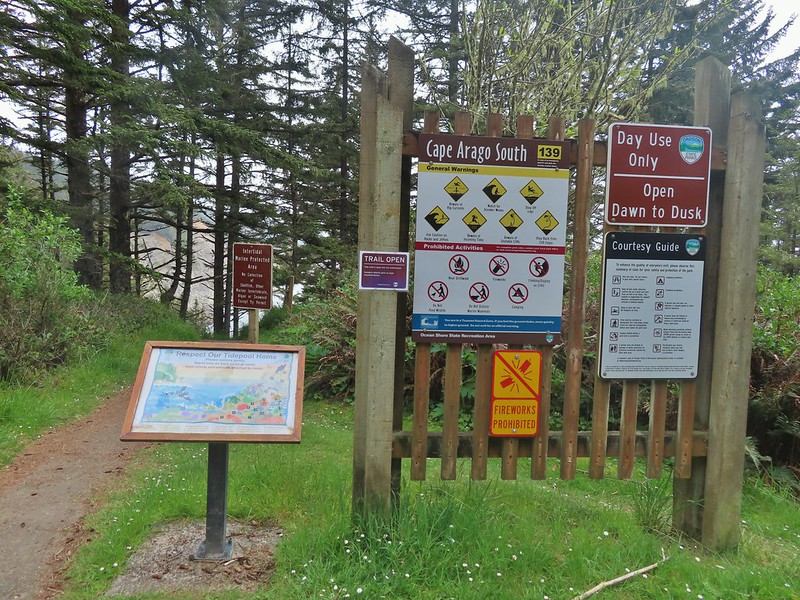

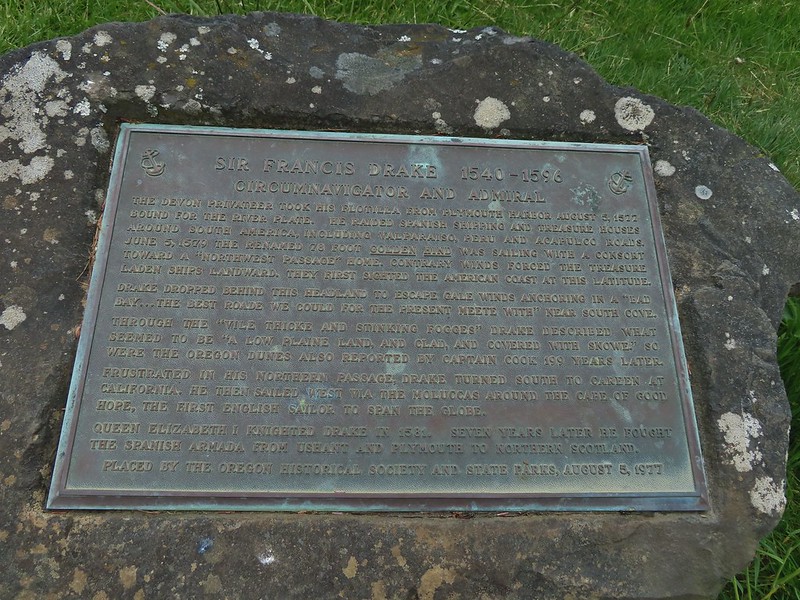 Plaque near the bench commermorating Sir Frances Drake’s visit to the area in 1579.
 Our stalker while we sat at the bench hoping we would leave some food behind (we didn’t).
 We thought we might be hearing things, but no it was a rooster crowing.
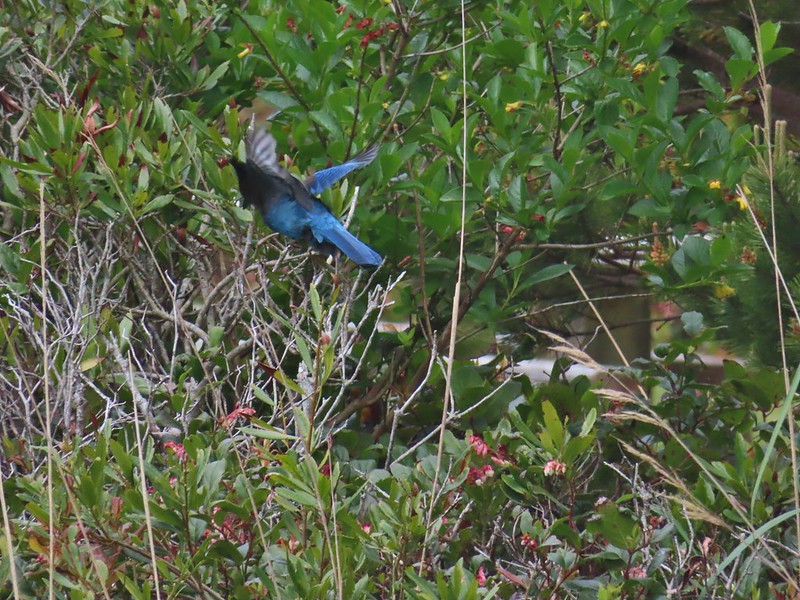 Stellar’s jay
 North Cove (A trail down to that beach was closed for the season.)


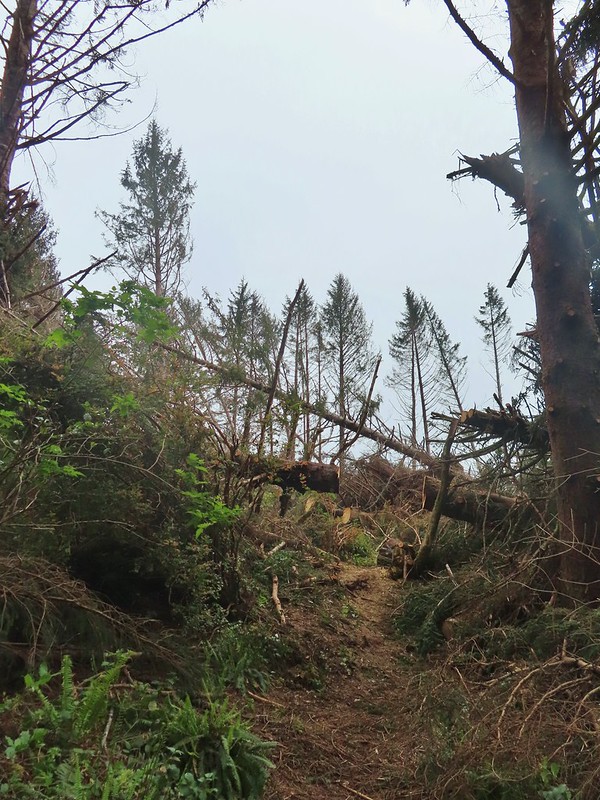

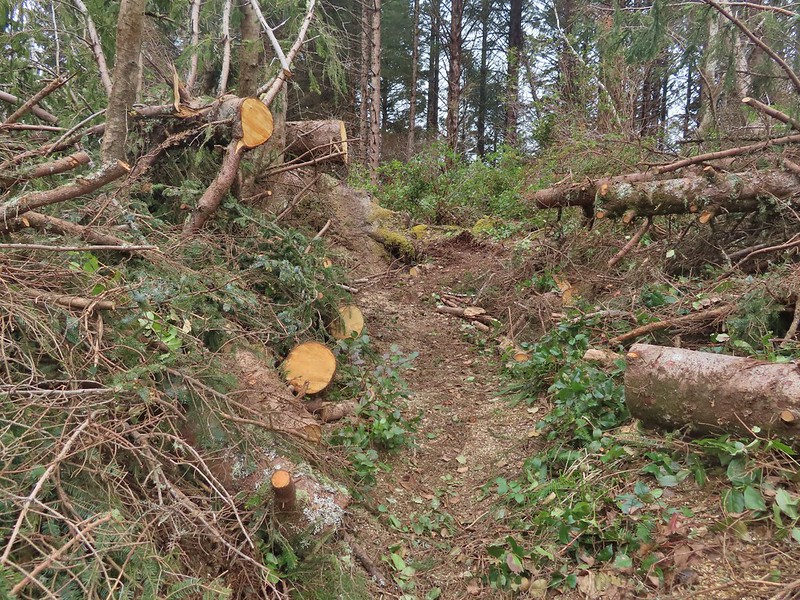
 Heading down.
 Going up.

 The Cape Arago Pack Trail at the highway.


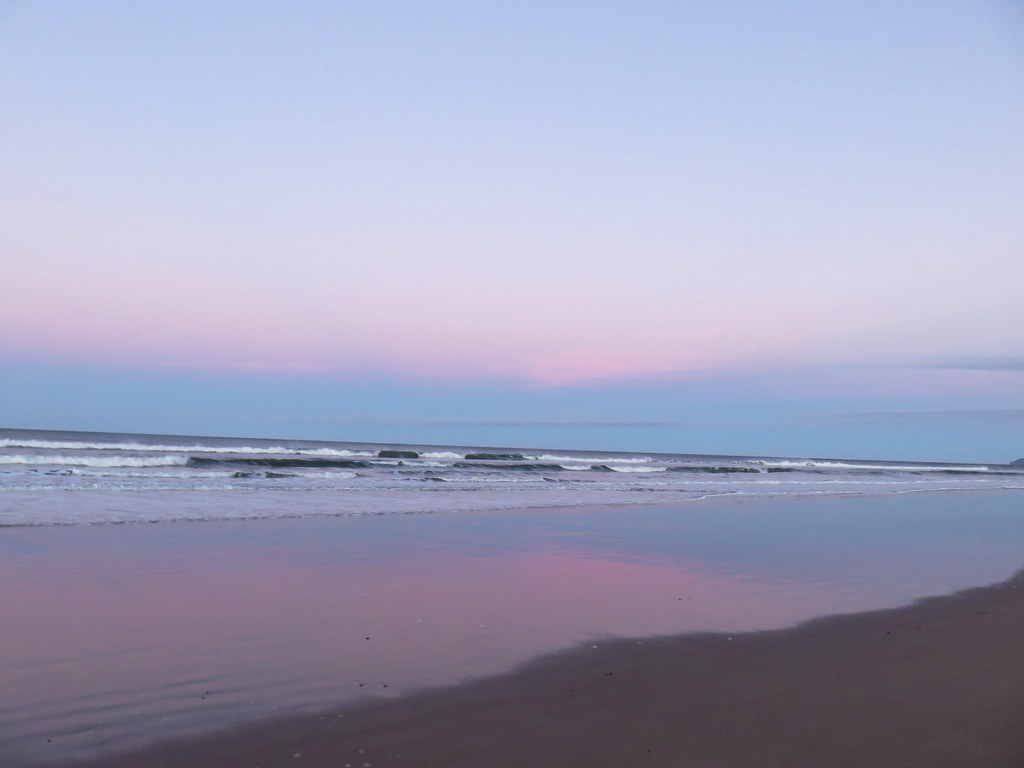


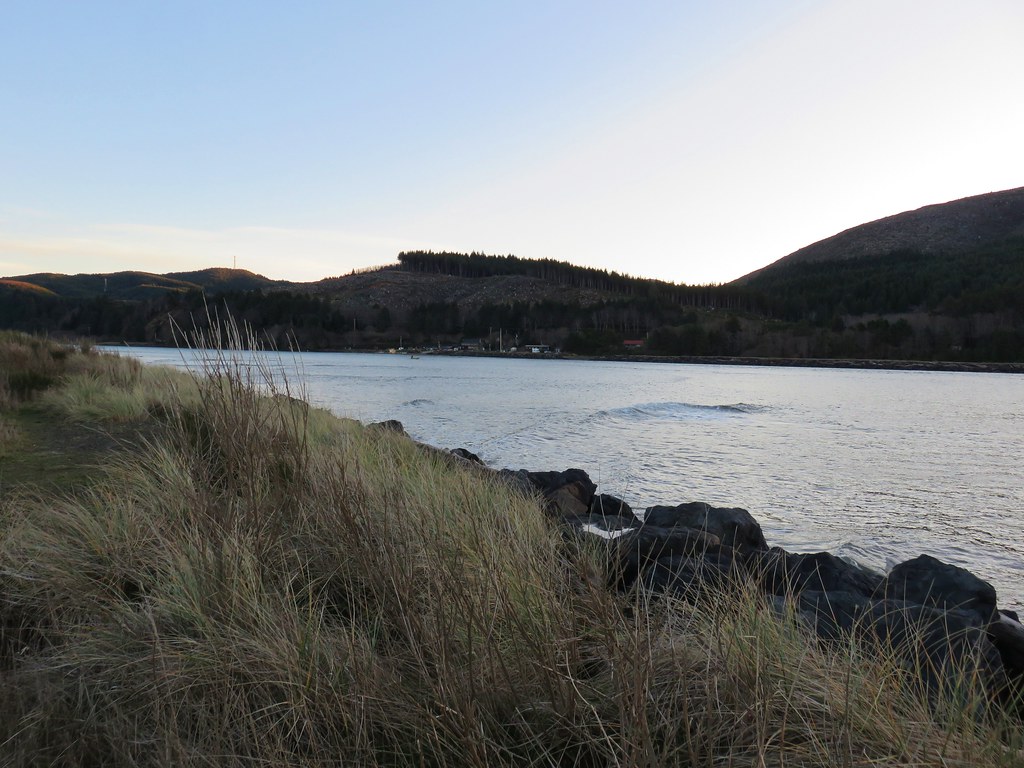
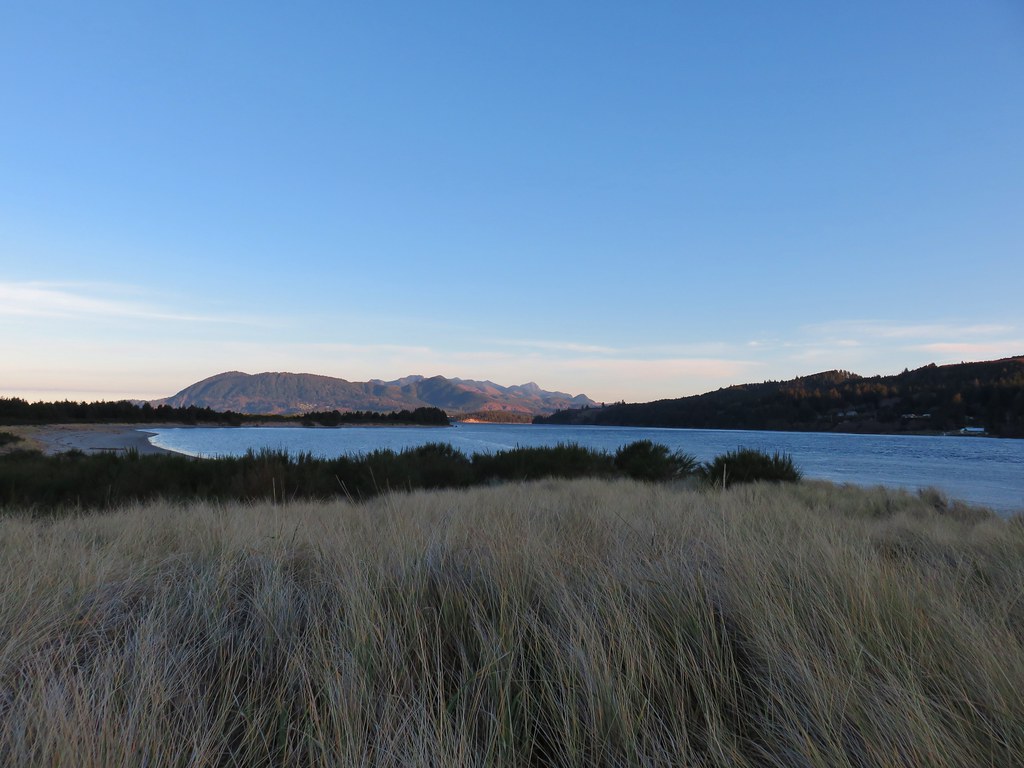 Nehalem Beach ahead




























 wanderingyuncks