I had a solo outing planned but not a destination. Going into the weekend rain showers and possible thunderstorms were in the forecast for the mountains so I once again turned to the Oregon Coast. No thunderstorms or even precipitation was called for south of Lincoln City and I’d had my eye on a hike from the Fogarty Creek State Recreation Area to the Gleneden Beach State Recreation Area.
I had decided to do this hike in reverse of the field guide description in order to make the crossing of Highway 101 before 6:30am when there would be few cars out. I hiked out the park entrance road to Highway 101 and made my way across.
On the far side of the highway I turned right on the sidewalk had headed north for 120-yards to Fishing Rock Street where I turned left and followed it for a tenth of a mile to the Fishing Rock State Recreation Site.
Small parking area at the recreation site.
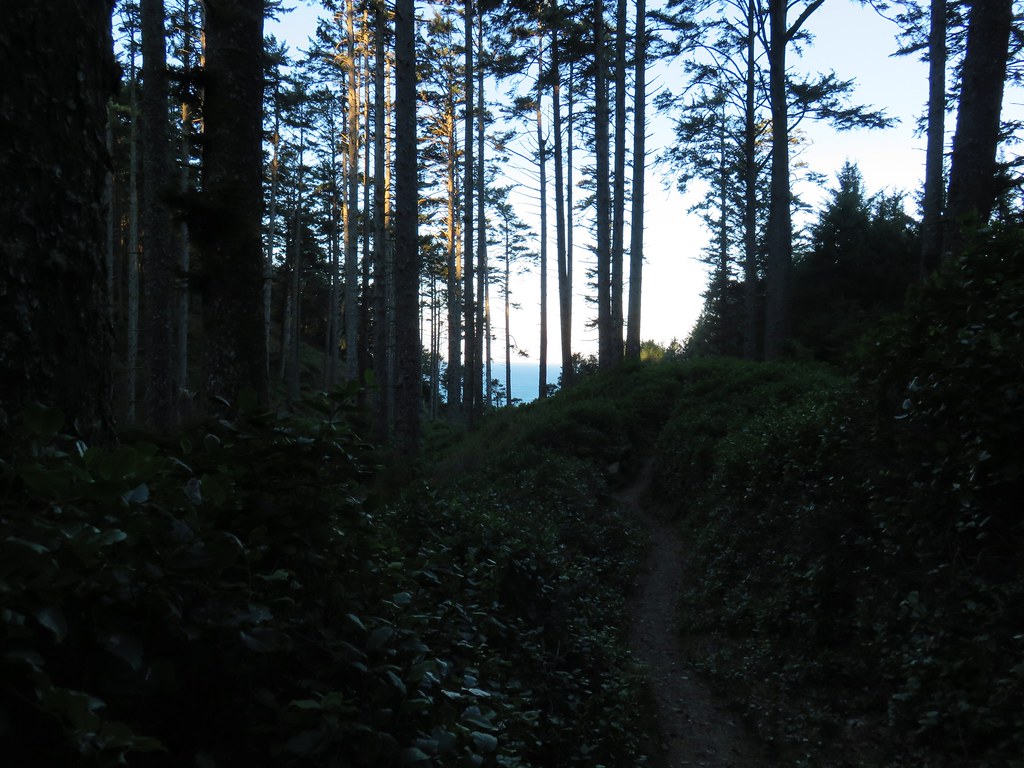
I picked up the Oregon Coast Trail next to a signboard and followed it into a dark corridor of trees.
I had to use the flash to get a picture.
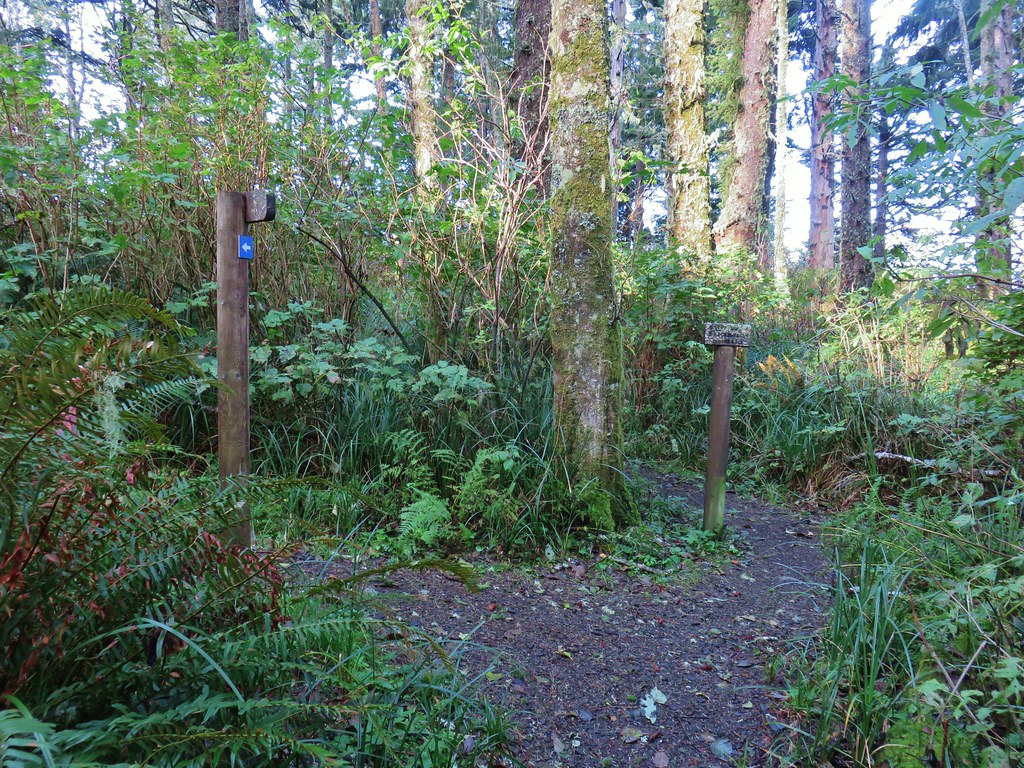
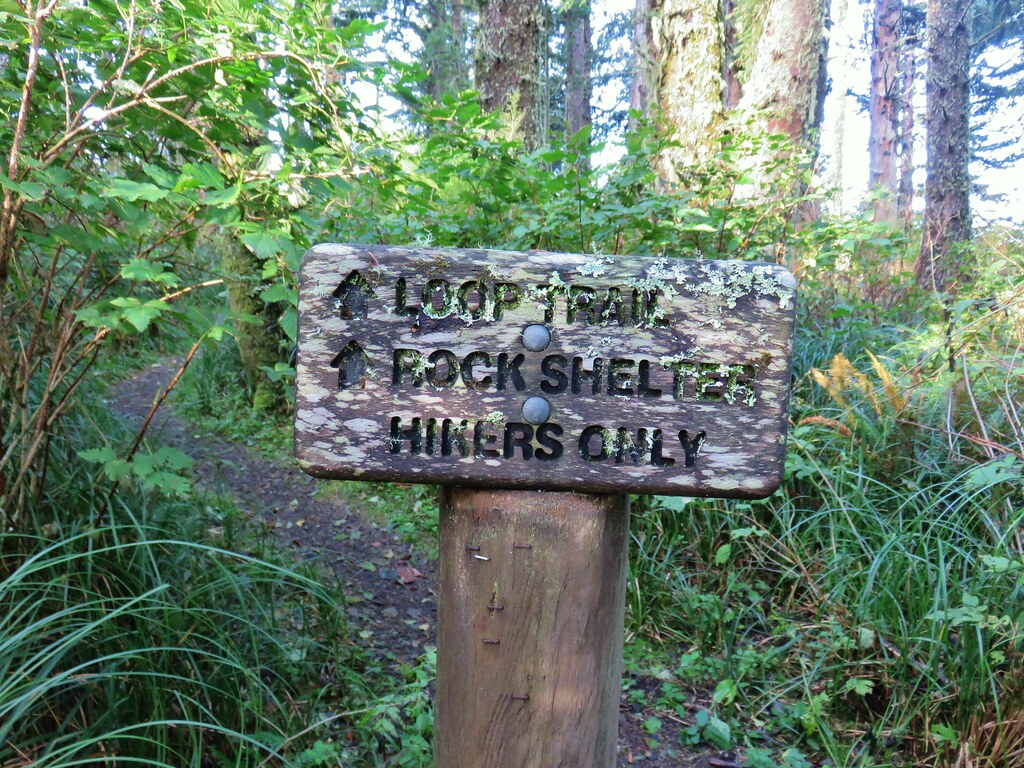
Soon after exiting the trees an Oregon Coast Trail pointer showed that trail veering off to the right.
The OCT pointer.
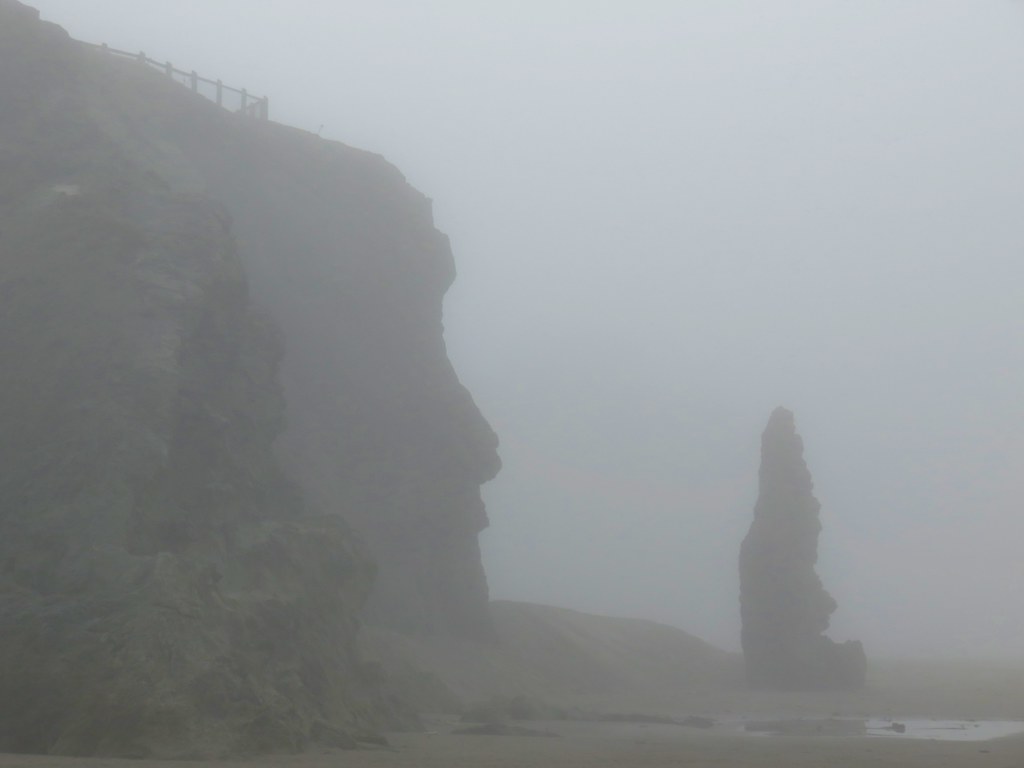
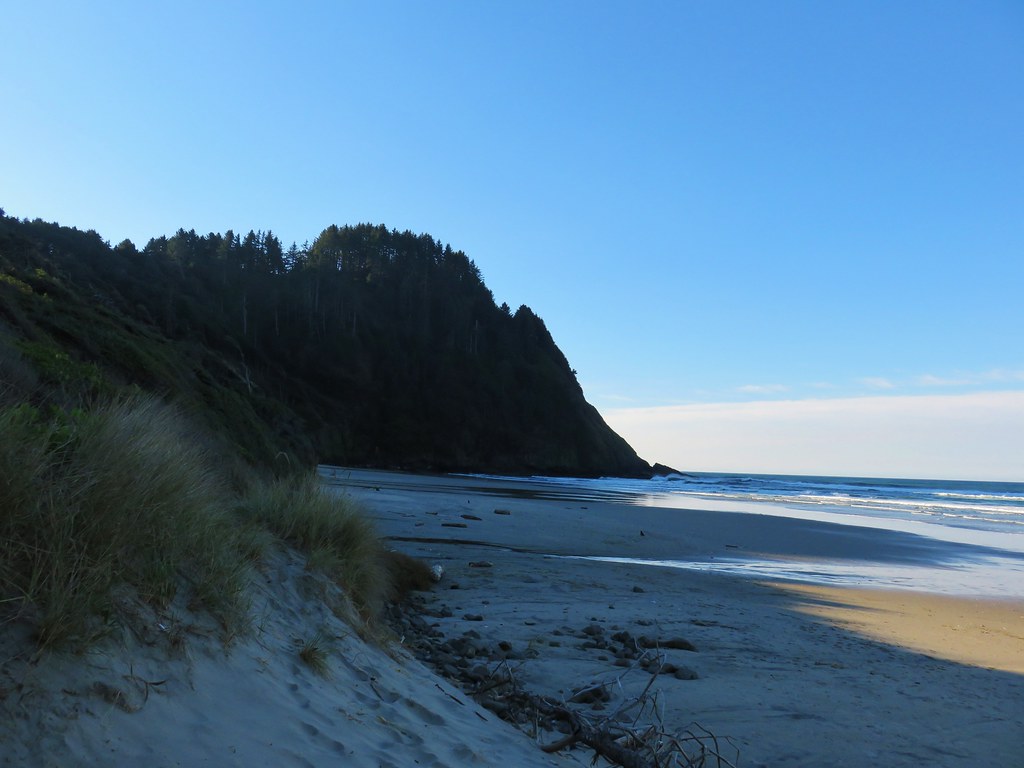
I stayed left and continued out the headland until I could see Fishing Rock, a small rock island just off the headland.
Pigeon guillemots
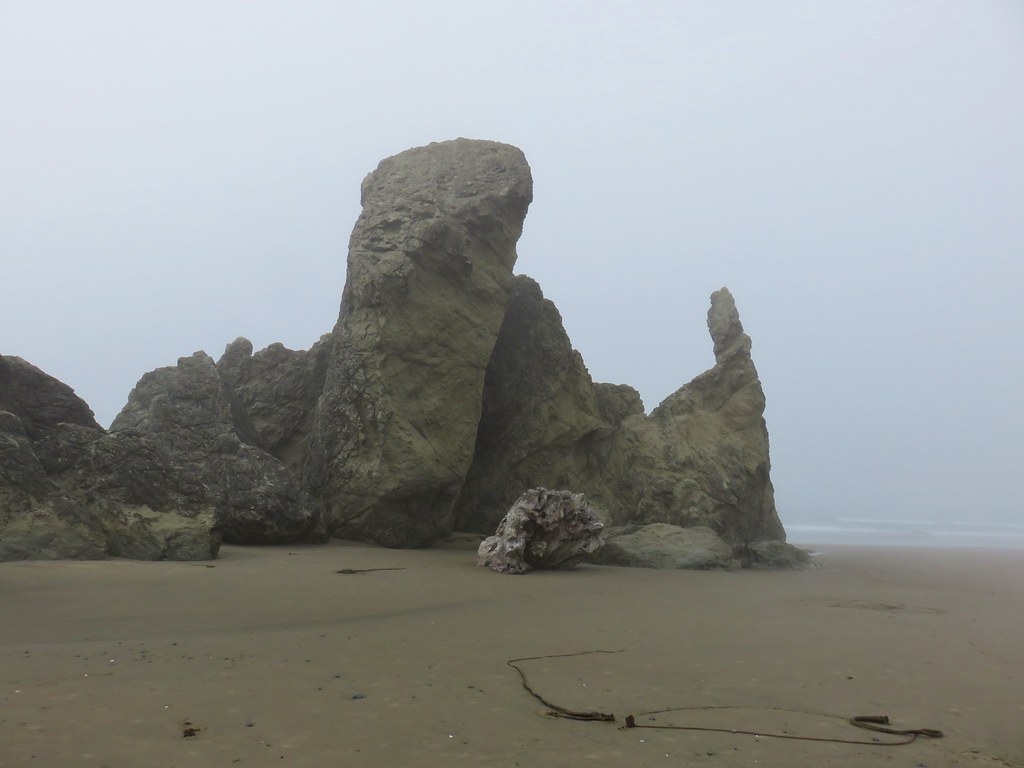
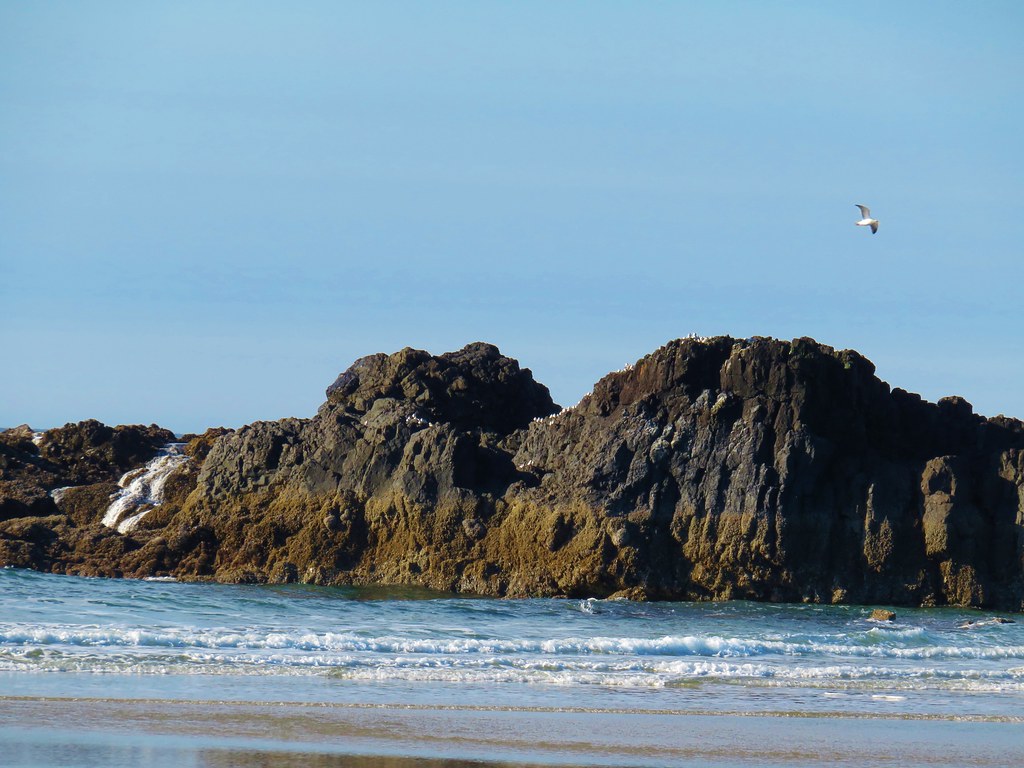
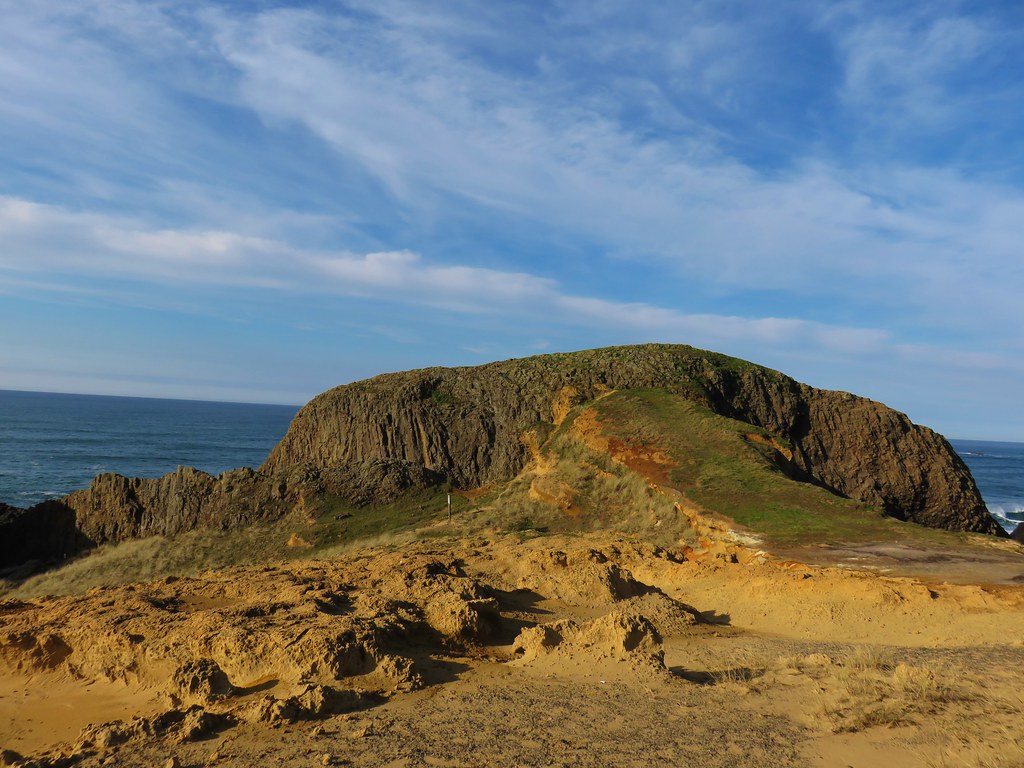
Fishing Rock just beyond the end of the headland.
I turned around and made my way back to the Oregon Coast Trail and followed it north off the headland and down to Lincoln Beach.
Seaside daisies near the beach.
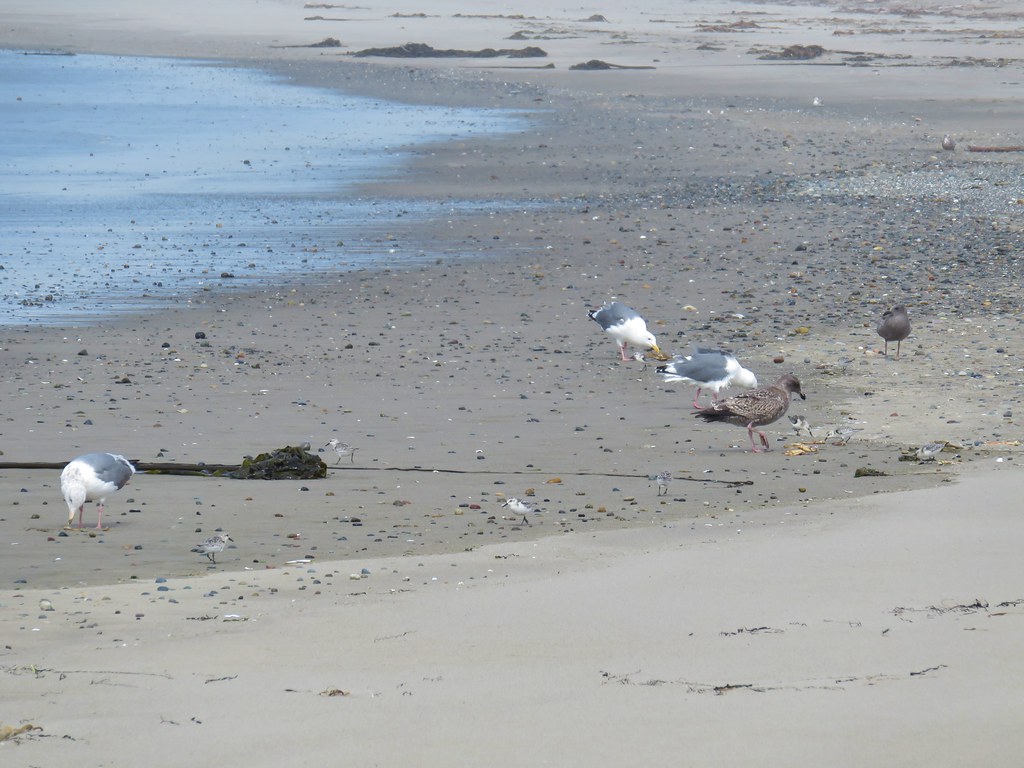
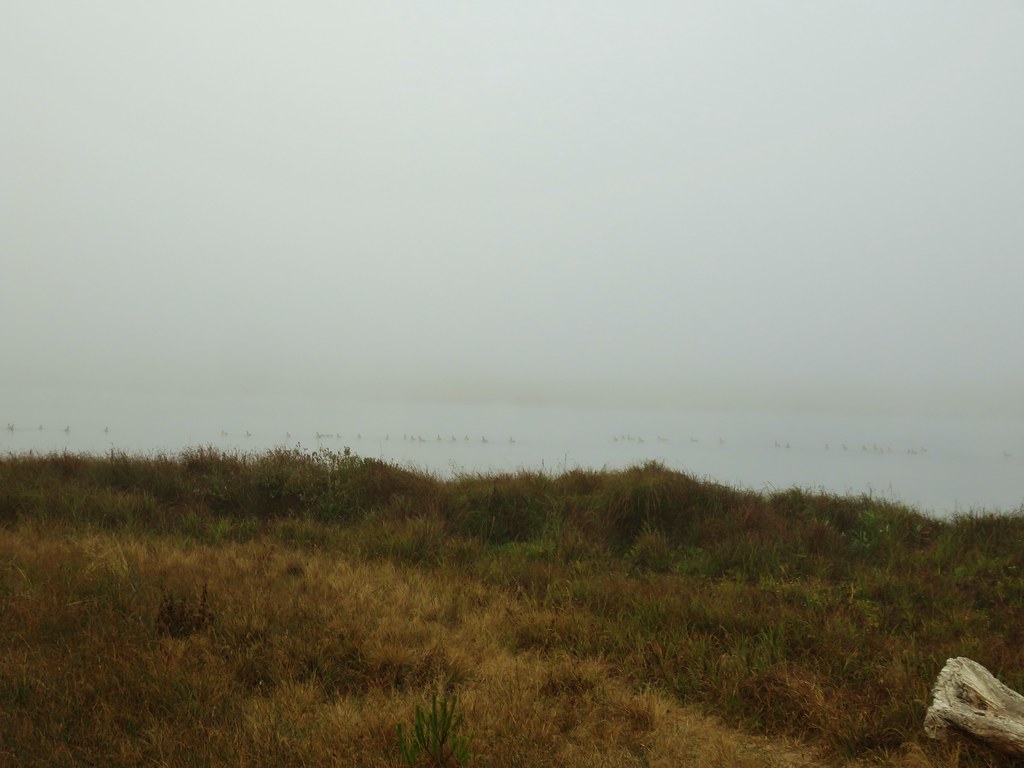
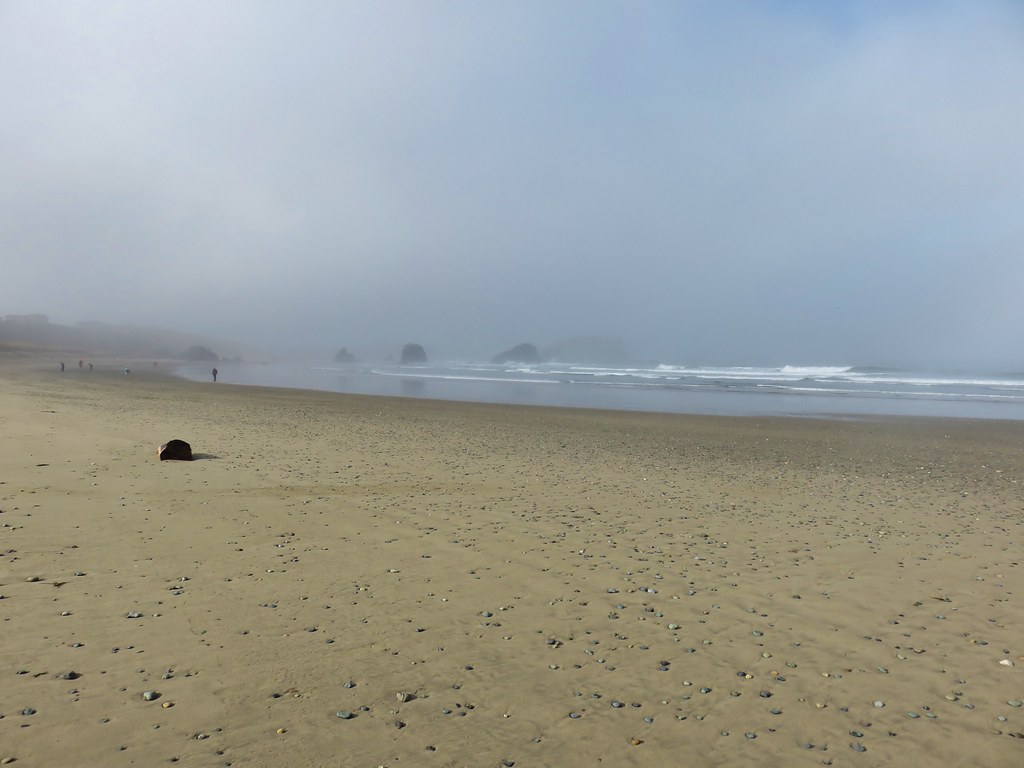
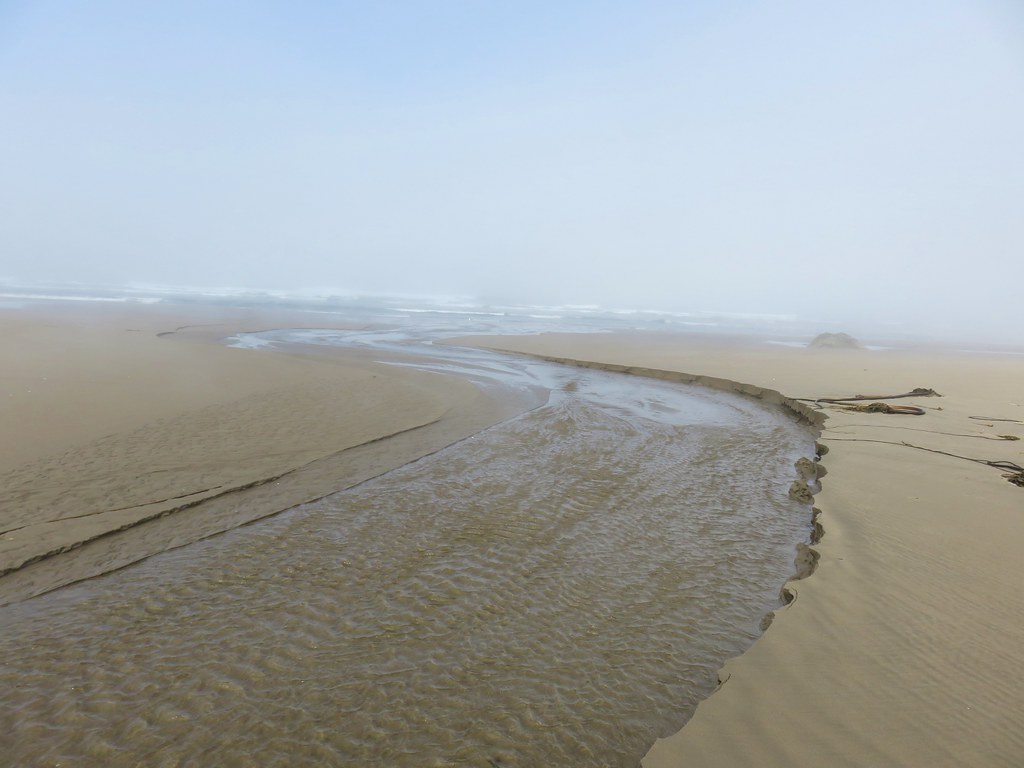
Once I was on the beach it was 2.25-miles to the Gleneden Beach State Recreation Area. It was another foggy morning so visibility was limited, but there were a number of shore birds in the surf.
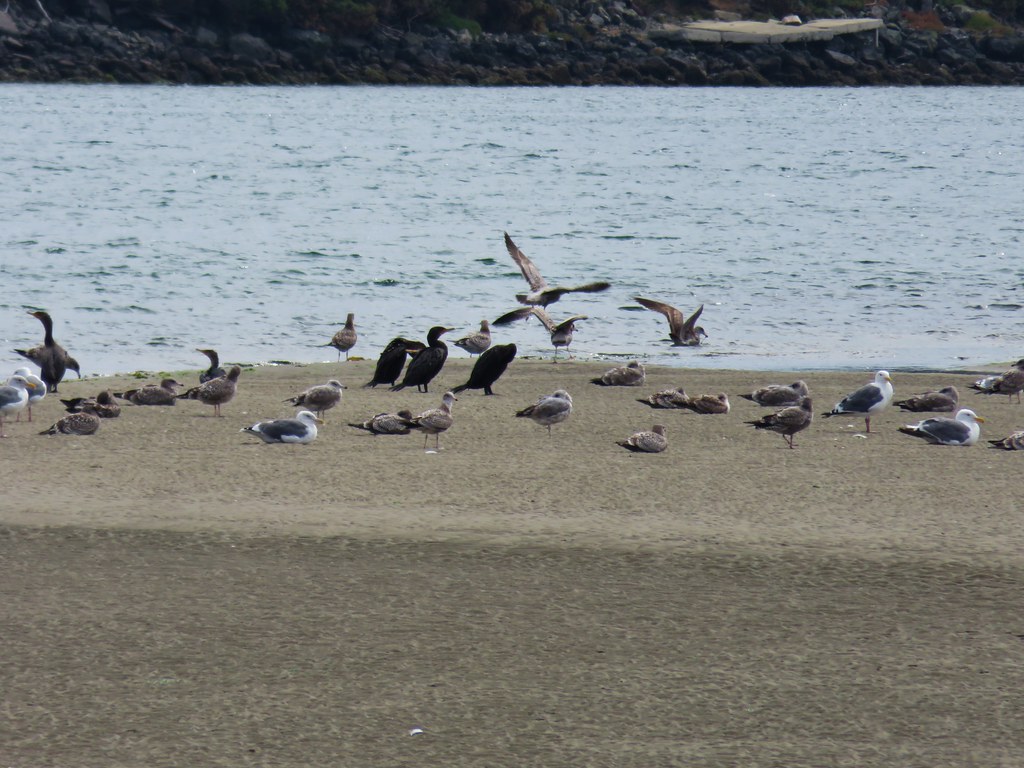
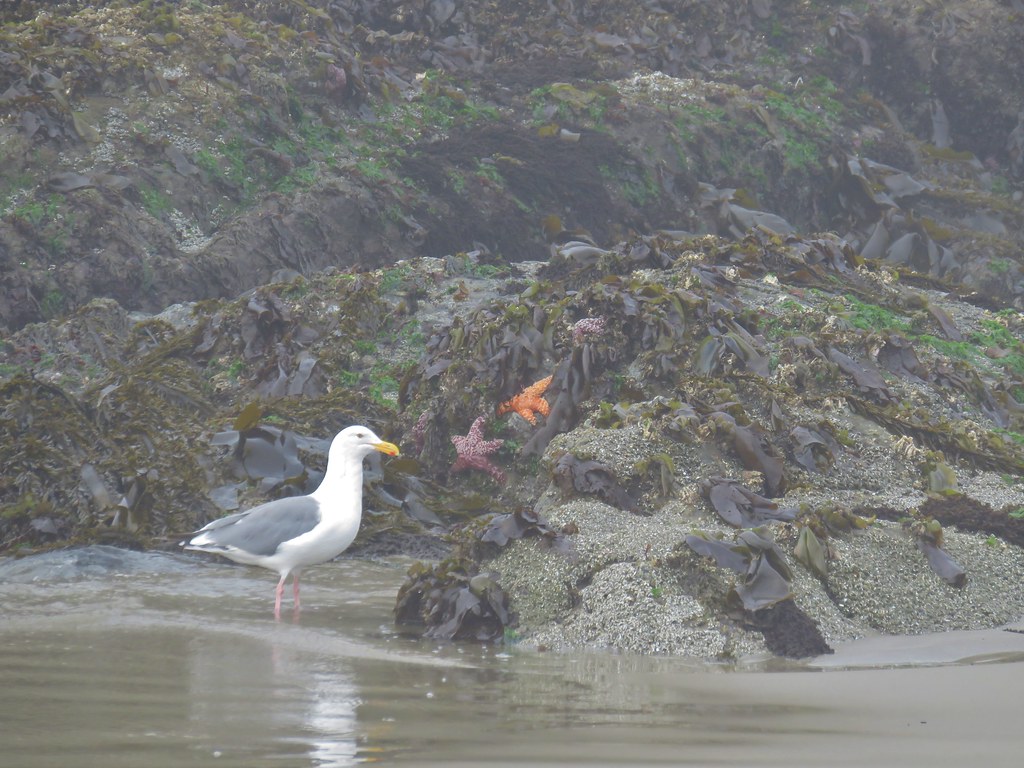
They weren’t all shore birds.
Seagulls
Sanderlings
Black-bellied plovers
The large group of trees marked the Gleneden Beach State Recreation Area.
I headed across the beach up the trail to make use of the facilities here. Back in 2015 we started our Salishan Spit hike here (post).
Aster
One of several rabbits I spotted.
I returned to the beach and headed back toward Fishing Rock. The visibility was still poor, but the tide was nearing the morning low tide which revealed some nice tide pools near the Fishing Rock.
Sand flea
Coming up on the headlands and Fishing Rock.
I followed the Oregon Crest Trail back up to the Fishing Rock Recreation Site and then turned onto gravel Fogarty Avenue.
OCT pointer at the recreation site.
The OCT follows Fogarty Avenue 0.2-miles to Highway 101.
At Highway 101 I followed another OCT pointer along the shoulder for 500′ where it dropped down to Fogarty Creek Beach.
Fireweed
Thistle
I headed north along this beach back toward Fishing Rock.
There were a number of seals on these rocks.
The field guide indicated that you normally can only go a short distance in this direction, however at the time of my visit it would have been possible to continue all the way to Fishing Rock.
I wasn’t sure how quickly the tide might come back in and cut off access, so I turned around after taking the photo above. Heading south I got as close to the ocean as possible attempting to get a better look at the seals, surf scooters and cormorants offshore.
Surf scooter
Cormorant
More surf scooters.
Fogarty Creek
Rabbit Rock sticking out into the Pacific.
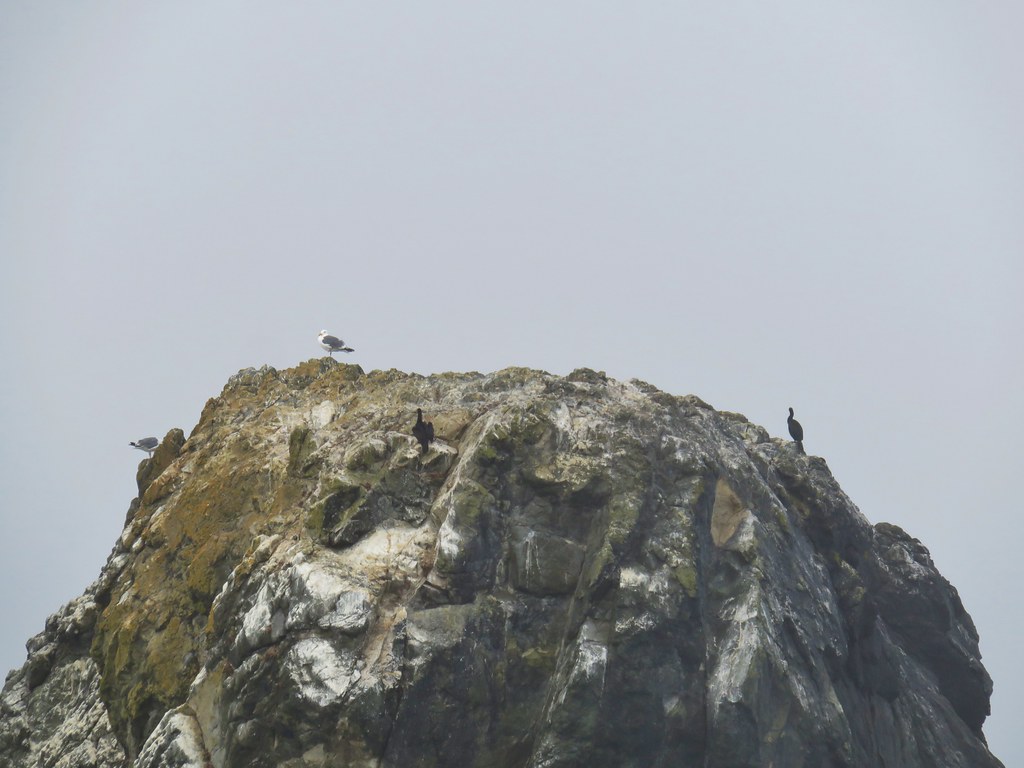
At the southern end of the beach I turned inland along the cliffs where a number of shorebirds were nesting.
Cormorants
I made way back inland toward Fogarty Creek eventually passing under Highway 101 on a paved path on the south side of Fogarty Creek.
I followed the paved path through a picnic area and to the South Fogarty Creek parking lot. On the far side of the lot is a gated gravel road which I hiked up 0.5-miles past a water tower to a saddle at the boarder of the State Park.
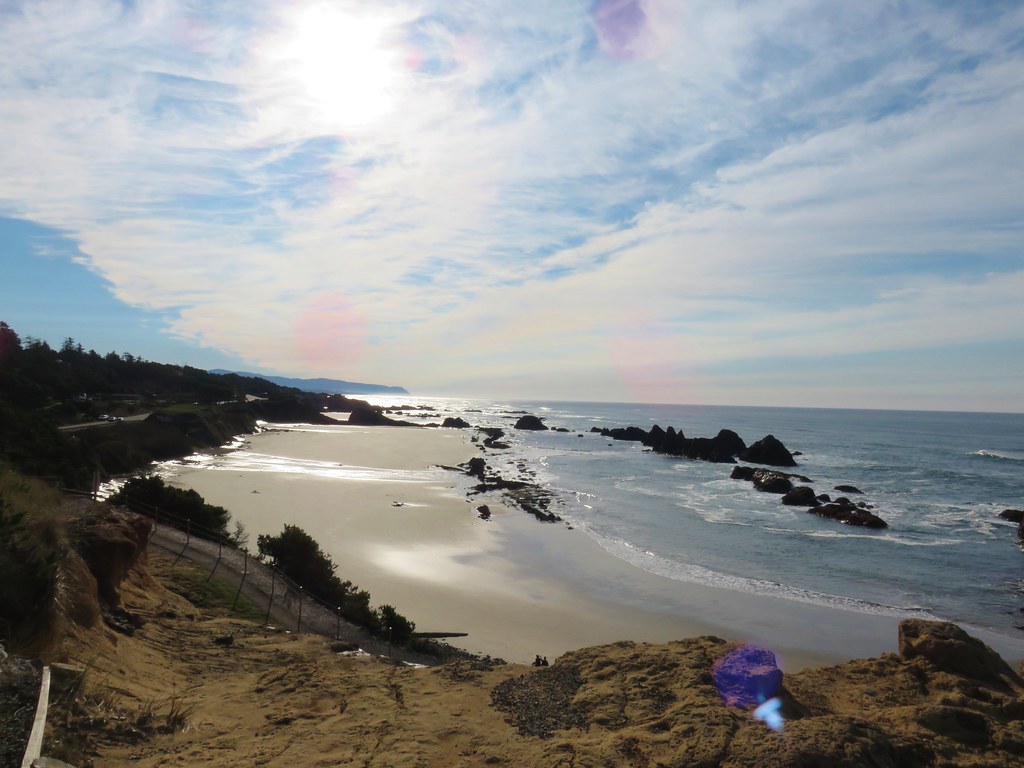
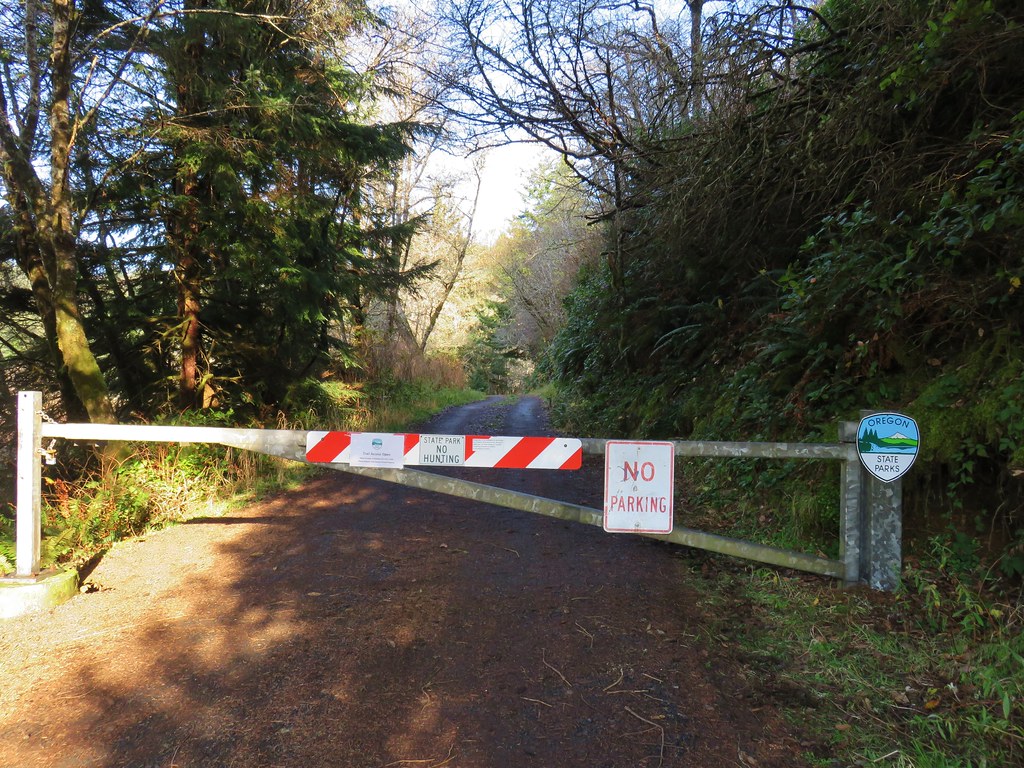
The gate maintenance road from the south parking area.
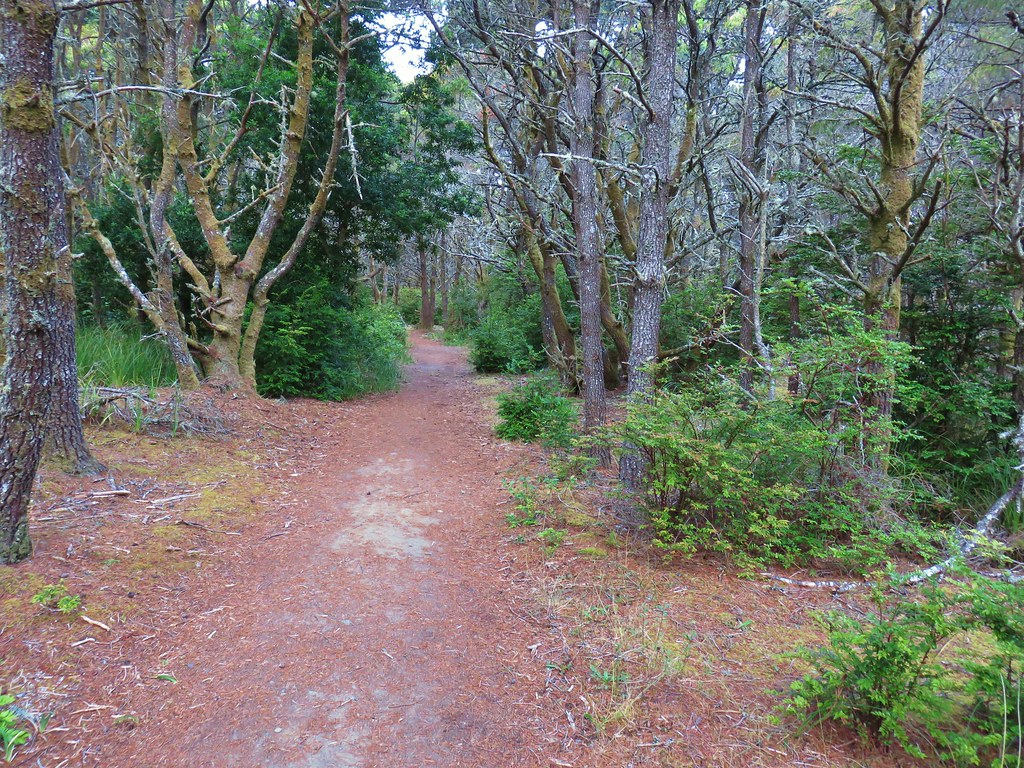
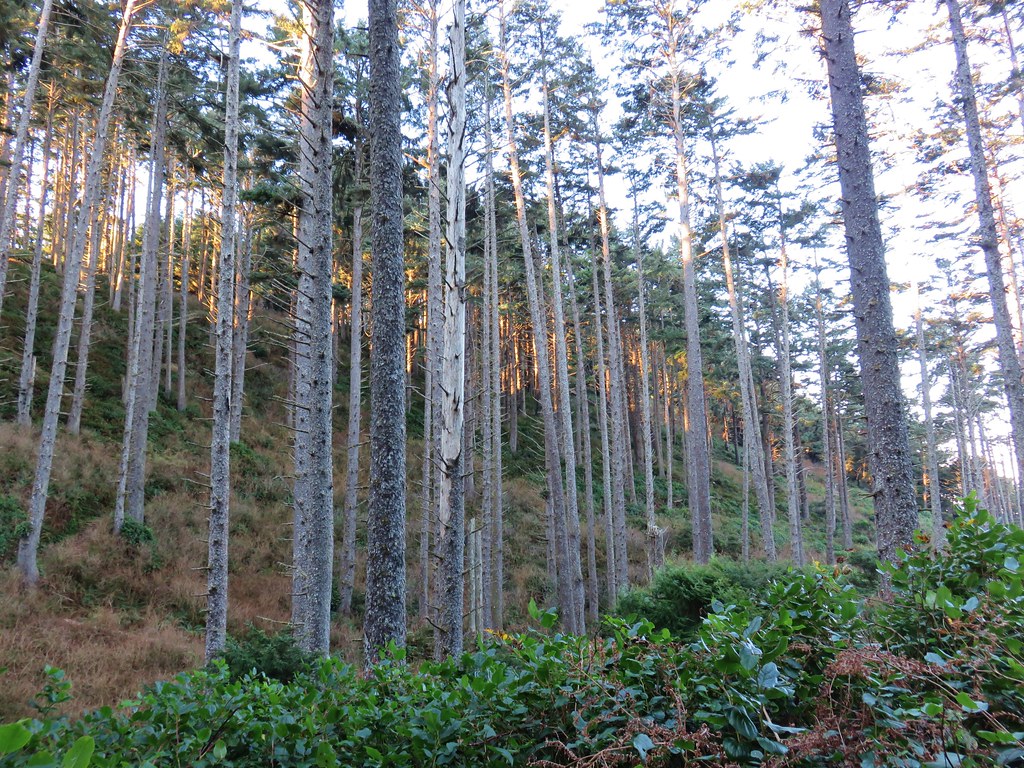
The road was pretty steep, but the forest was nice.
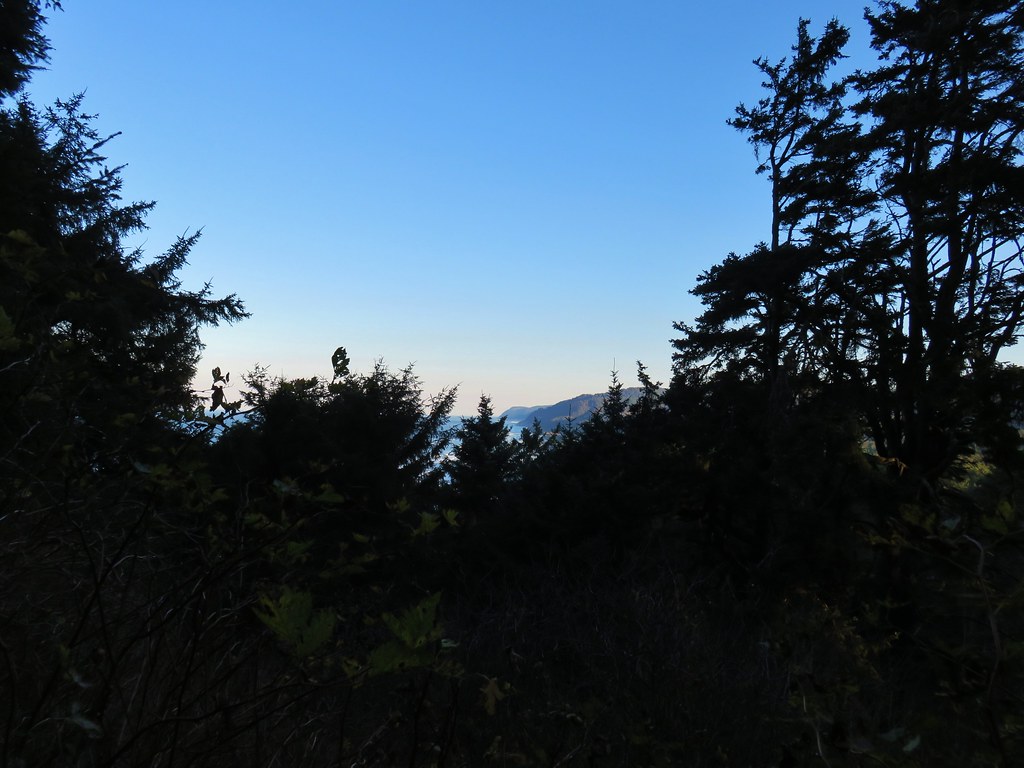
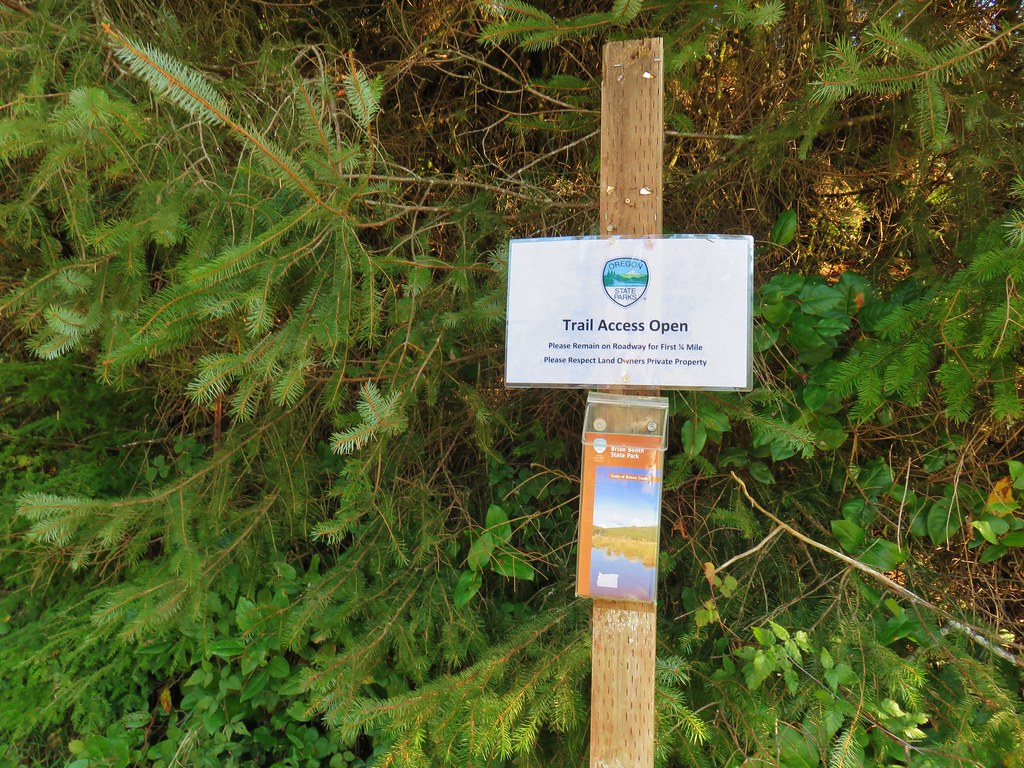
I assumed this gate was the park boundary. There were not any signs posted though so I continued up to the saddle to see if there was a view.
Unless you like looking at clearcuts there is no reason to climb past the water tower.
On my way down I circled the water tower and snacked on a few ripe berries.
Salal
Blackberries
Pearly everlasting
Coastal brook foam
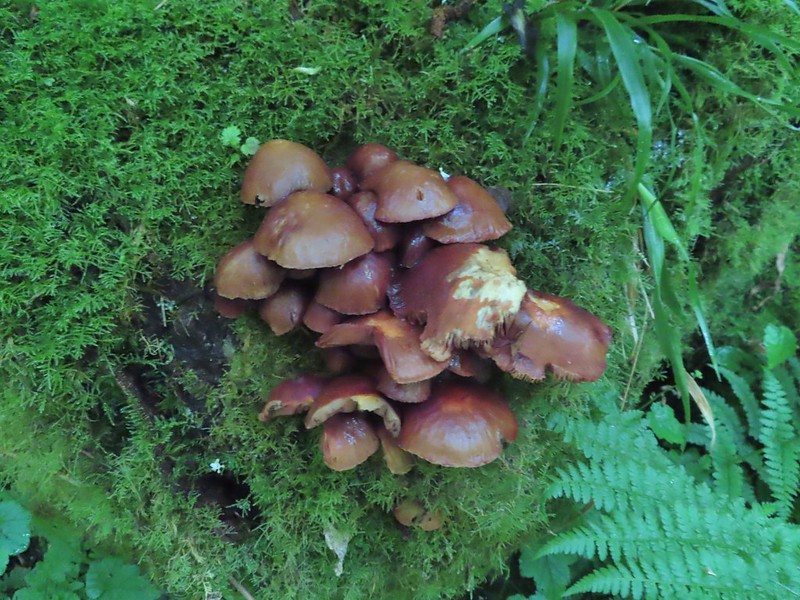
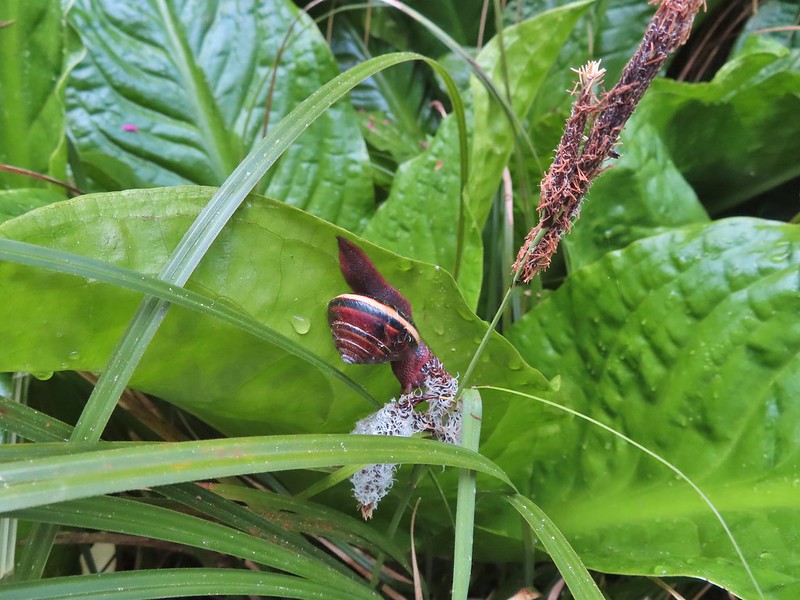
Slug on a shroom.
From the south parking area I turned right to cross Fogarty Creek on a footbridge then turned left to return my car in the north parking area.
Fogarty Creek
This hike came in at 8.4-miles with 350′ of elevation gain.
Combining it with a hike out Salishan Spit would have nearly doubled that distance and of course the hike could have been shortened in various ways. One could also avoid having to cross Highway 101 by going out to the beach along the creek and following the OCT along the highway in both directions.
This was a nice hike that benefited greatly from my visiting at low tide. Fogarty Creek especially would be a fun place to stop with kids. Happy Trails!
We had visited Neahkahnie Mountain in January 2014 (post) and had wanted to come back in Spring to hopefully see some wildflowers. The Oregon Coast Trail (OCT) crosses over Neahkahnie Mountain passing below a rocky viewpoint. In 2014 we had come from the north so this time the plan was to start from the south using a newer section of the OCT beginning in Manzanita, OR. Heather had other plans, so I was on my own for this outing, and decided that I would go up and over Neahkahnie Mountain and visit the Devil’s Cauldron before climbing back over to Manzanita.
The trailhead for the OCT is just a pullout on the shoulder of Neahlem Road. I had arrived just after 6:30am so it was still a little dark as I set off.
It was early enough that I didn’t have to worry much about traffic when I crossed Highway 101 from Nehalem Road to the signed Oregon Coast Trail.
This 2.1-mile section of the OCT was constructed in 2020 and passes through the Neahkahnie Headwaters Preserve managed by the Lower Nehalem Community Trust. Please respect private landowners wishes when recreating to ensure that public access continues to be allowed.
The trail began with a couple of ups and downs as it followed a powerline corridor. Looking back at the sunrise.
The trial eventually left the powerlines and passed through a few stands of trees before arriving at a clearcut. The trail continued climbing through the clearcut and then reentered the forest. Approximately two miles from the trailhead I arrived at a signboard along Road 38555 where I turned left, hiking downhill past a gate to the South Neahkahnie Mountain Trailhead.
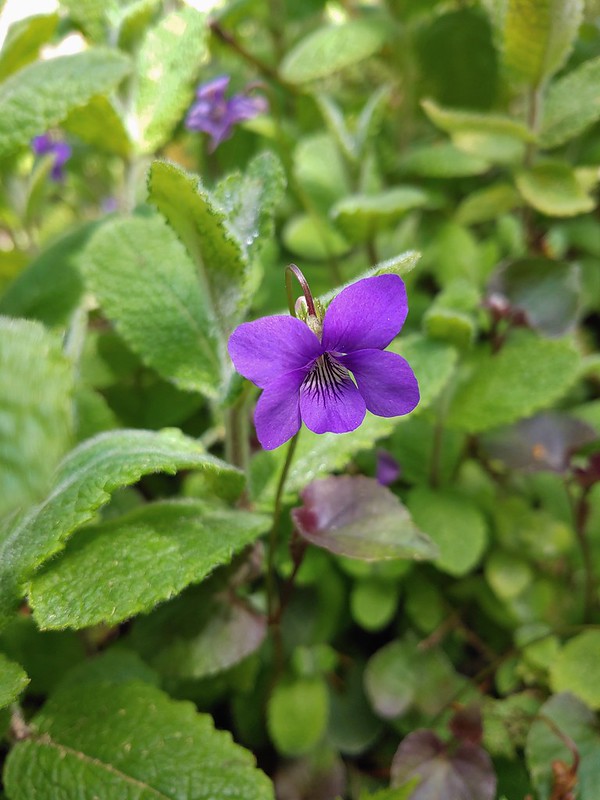
Violets and pink fawn lilies. These were the first pink fawn lilies I had seen, it seems that we hadn’t timed our coastal hikes right to catch their bloom in the past.
The trailhead was empty at 7:20am.
Trail signs identified the continuation of the OCT which began a series of approximately a dozen switchbacks through the forest.
Trillium
Fringecup
Toothwort
The switchbacks led to a 4-way junction with an old roadbed where the OCT continued on the opposite side.
For the next half mile the trail traversed along the hillside below the summit ridge of Neahkahnie Mountain.
I made use of this bench on the way back to take a break and do some stretching.
After the half mile the trail made a switchback. The trail here was a little sketchy.
It was obvious that there had been some work done to try and shore up this section of trail.
The trail continued to a saddle where a spur to the right led up a rocky spine to the viewpoint summit.
The view south from the viewpoint.
Cape Meares (post), Three Arch Rocks, and Cape Lookout (post).
Cascade desert parsley near the summit.
After taking in the view I returned to the OCT and continued north.
Looking up at the viewpoint from the OCT.
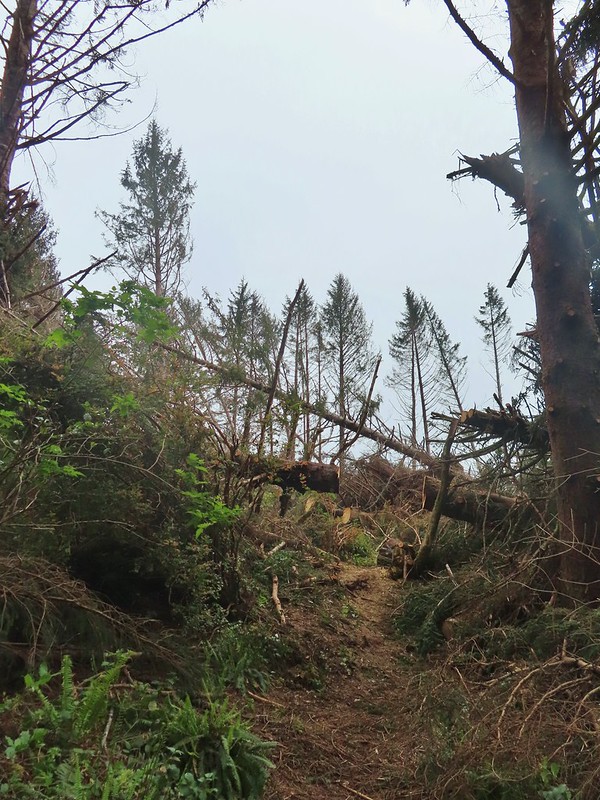
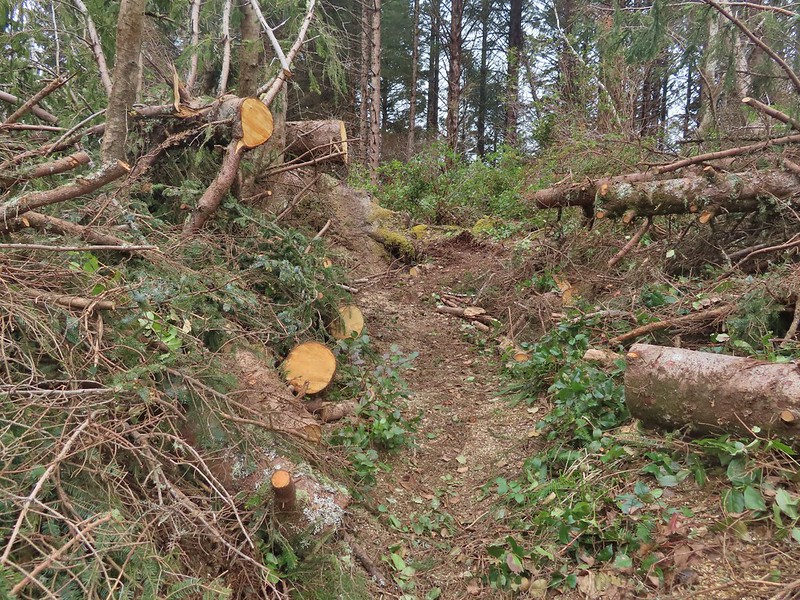
It was a little over 2-miles down to the North Neahkahnie Mountain Trailhead. A September 2020 windstorm had resulted in heavy blowdown to sections of this trail. The trail was closed until 2022 when crews were able to clear it. Trillium
This was the only obstacle that required any sort of maneuvering.
There are some great trees along the upper section of the trail.
Arriving at Highway 101 near the North Neahkahnie Mountain Trailhead.
I dashed across the highway to the trailhead and immediately spotted a few elk in the meadow below the highway.
From the trailhead I picked up the Elk Flats Trail and followed it a tenth of a mile to the Devil’s Cauldron Overlook Trail.
Another tenth of a mile brought me to the overlook.
After admiring Devil’s Cauldron I headed back. The climb back up to the saddle below the viewpoint was approximately 1400′, and after having climbed over 1600′ from Manzanita, and I felt the burn.
Snow queen
He may have been moving faster than I was.
There is nothing better than hearing wrens sing in the forest.
More creative trail in the storm damaged area.
Wood sorrel
The view if you don’t scramble up the spine.
Up to the point that I started back down from the saddle I’d passed 11 people on the trail, all of which were after having spent time at the viewpoint. On the way down I passed at least 30 people between the saddle and the South Neahkahnie Mountain Trailhead which was now packed with cars.
Trillium with a touch of pink.
Arriving at the packed trailhead.
Continuing on from the busy trailhead I only passed two more people before arriving back Nehalem Road and my lonely car. Leaving the crowds behind.
Big patch of pink fawn lilies.
Highway 101 from the powerline corridor.
Margined white
One of the more impressive trees in the preserve.
Nearing the Highway 101 crossing. I arrived just as a long line of traffic was passing by but was able to safely cross shortly afterward.
This hike came in at 11.6 miles and roughly 3000′ of elevation gain.
This was a good hike with quite a few wildflowers, some wildlife, and some nice views. It was also a good training hike for some of the alpine hikes with significant elevation gain later in the season. The various trailheads offer plenty of options for those who might not want to hike as far or climb so much, but even the shortest route (South Neahkahnie Mountain Trailhead) gains 840′ in 1.5-miles to the viewpoint. Happy Trails!
We started our day parking at the closed (stupid COVID) interpretative center at South Slough Reserve.
It looked like it would be full of good info and we’ll have to come back someday post pandemic when we can experience it. For now we settled for the trails walking behind the center and picking up the Ten Minute Loop Trail where we turned right.
After just a tenth of a mile we came to a junction with the Middle Creek Trail where we turned right detouring briefly to check out an opening where in better times talks are given by staff members.
We followed the Middle Creek Trail downhill through a coastal forest to a road crossing where the Hidden Creek Trail continued on the far side.
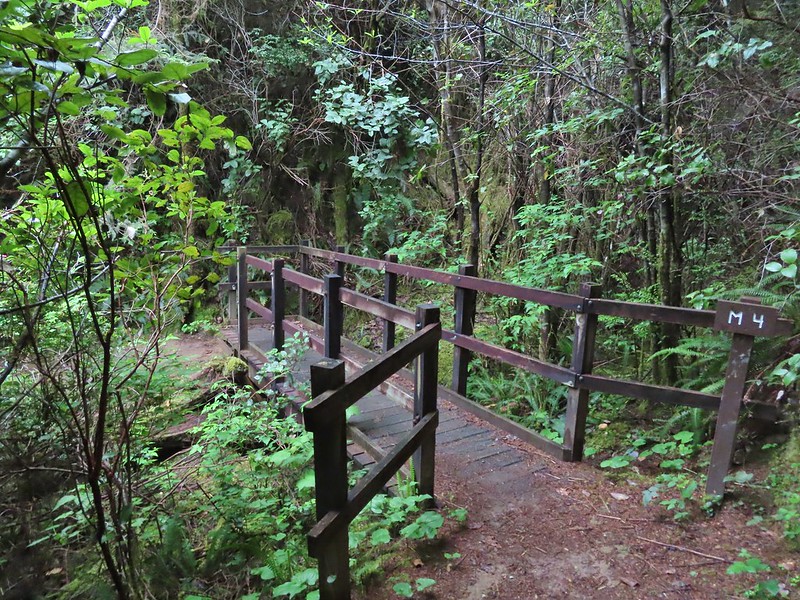
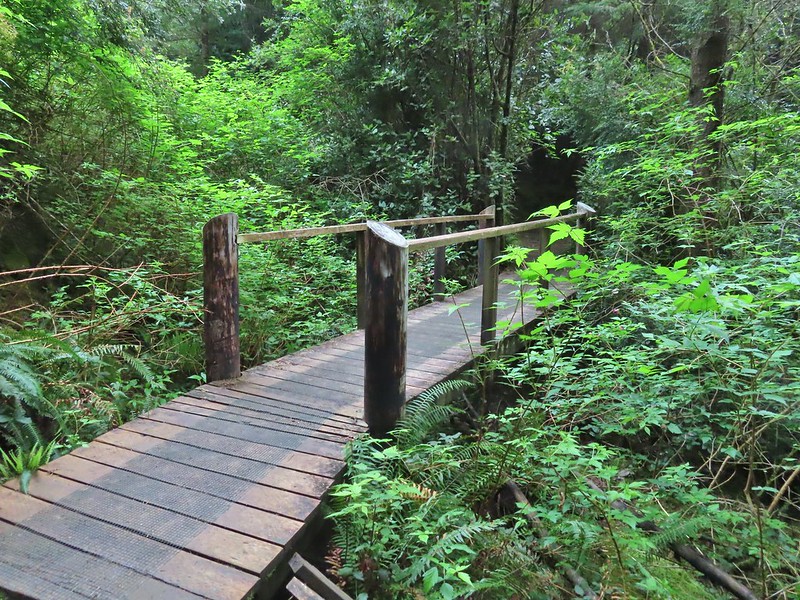
All the bridges had labels consisting of the first initial of the trail and then the bridge number making this the 4th bridge along the Middle Creek Trail.
Interesting seat.
That’s a fancy hat for a stump.
The Hidden Creek Trail continued downhill following the creek to Hidden Creek Marsh where a series of boardwalks passed through giant skunk cabbage patches. We stayed to the right each time the boardwalks split (they eventually rejoined along the way).
>
>
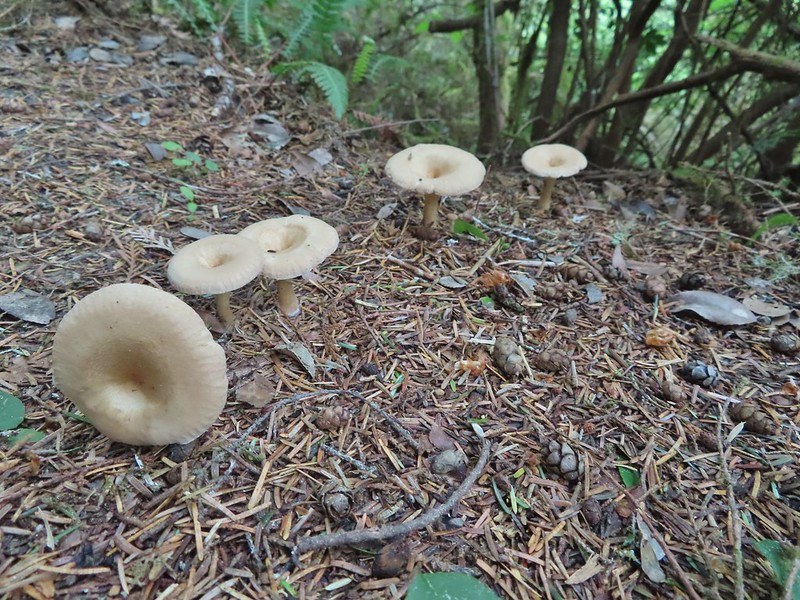
We saw a lot of rough skinned newts on the trails, but what we were really hopping for was a Pacific Giant Salamander. No luck there this time.
A few trillium still had petals.
Woodpecker
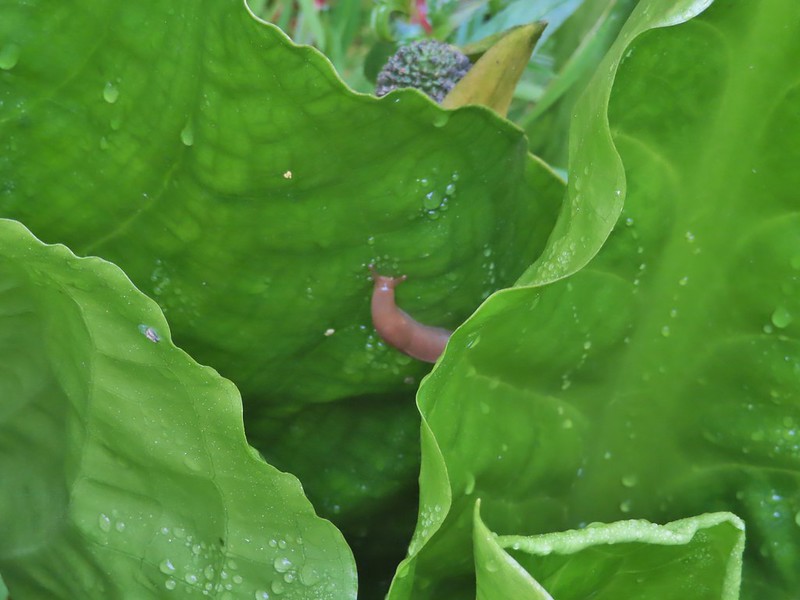
We heard a few frogs and we were looking in the skunk cabbage to see if we could spot any. We didn’t see any of the frogs but we did spot several others on the plants.
A hedgenettle
At the end of Boardwalk 2 the trail became the Tunnel Trail and headed back into the forest.
After a short climb we came to a nice big observation deck. The view was good but there wasn’t much to observe on this morning.
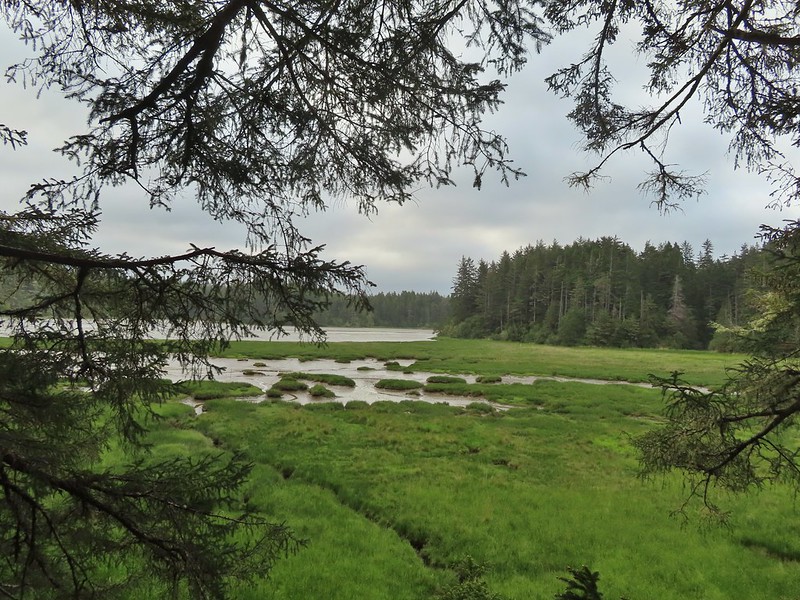
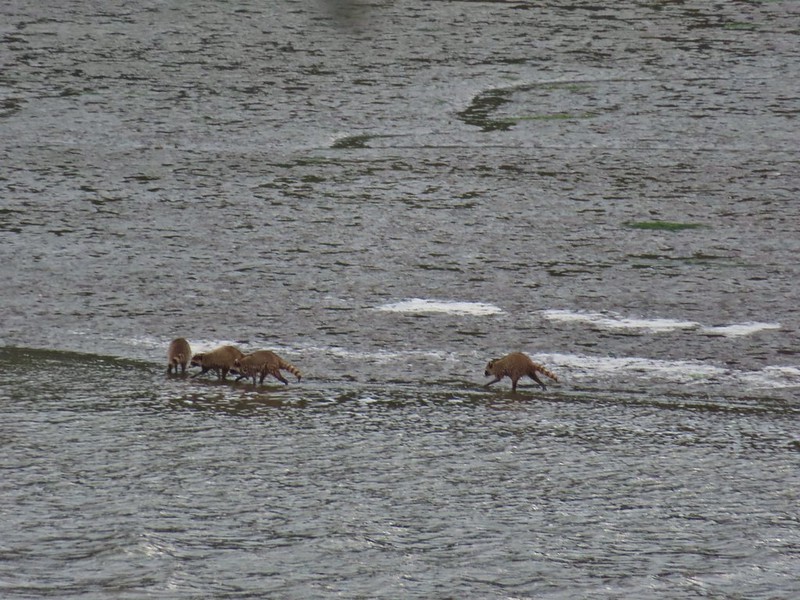
We ignored the Big Cedar Trail to the left when we passed it and continued on the Tunnel Trail passing a couple of more viewpoints out to the South Slough. While we had struck out at the observation deck we now could see movement which turned out to be over a half dozen raccoons crossing the mud flats in search of breakfast.
Tunnel Trail indeed.
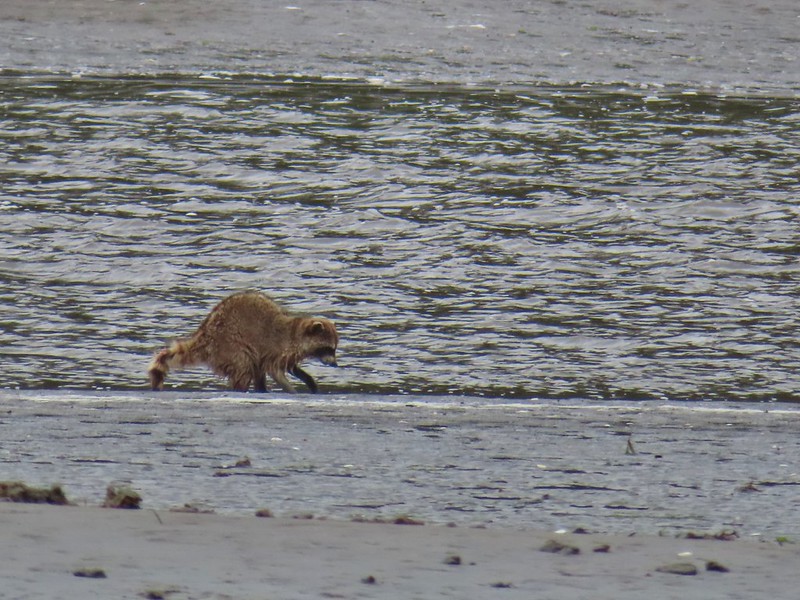
This marked the first time we’d seen raccoons on a hike and we had a lot of fun watching them search for snacks. Shortly after passing some restrooms the trail came to a junction where we headed downhill to a shed and another junction.
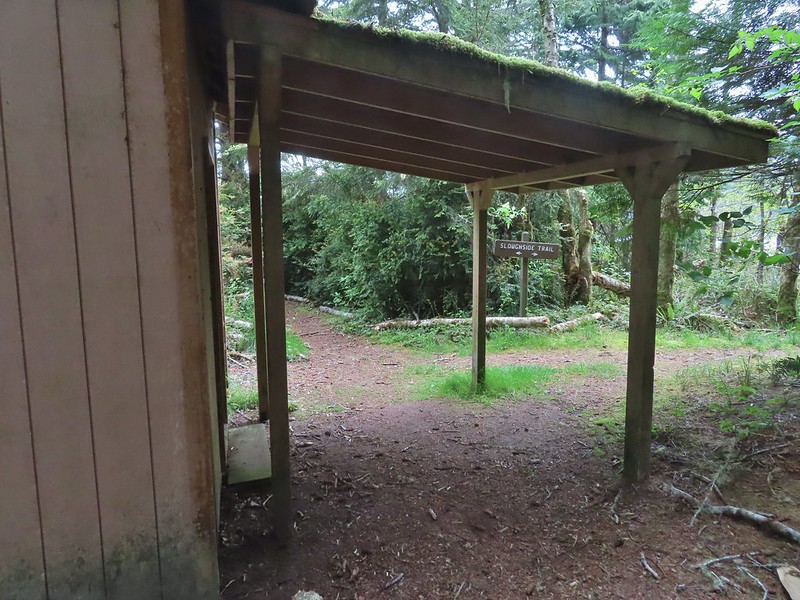
We turned right by the shed passing under an awning to the Sloughside Trail
We turned right first passing several wooden decks before the trail ended along the slough.
Castilleja ambigua – Estuarine Paintbrush
After watching more raccoons from the end of this spur we returned to the shed and took the left hand fork. This spur was a bit longer (still only .1 miles) and passed along a narrow strip between flats.
>End of the line.
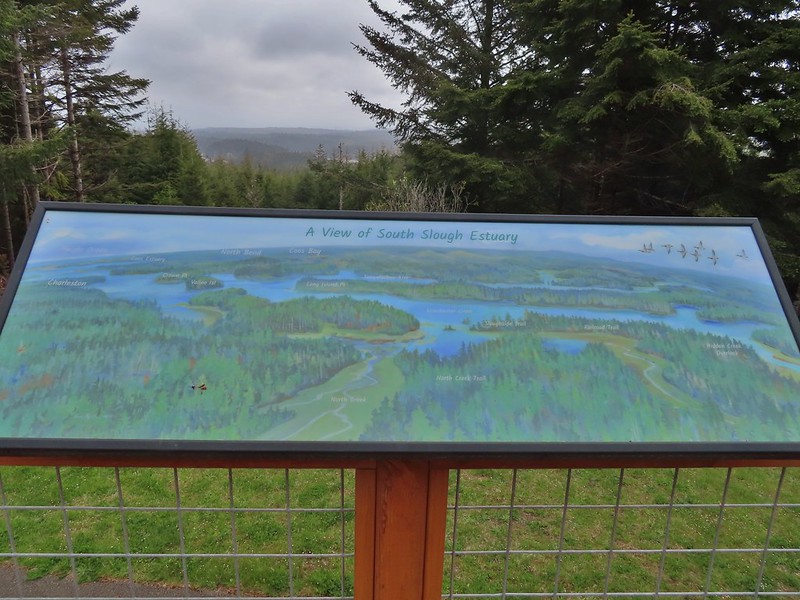
South Slough
It was interesting to see how this uprooted tree peeled back a layer of the ground.
We again returned to the shed staying to the right and crossing a nice bridge on the North Creek Trail.
Rhoades Marsh
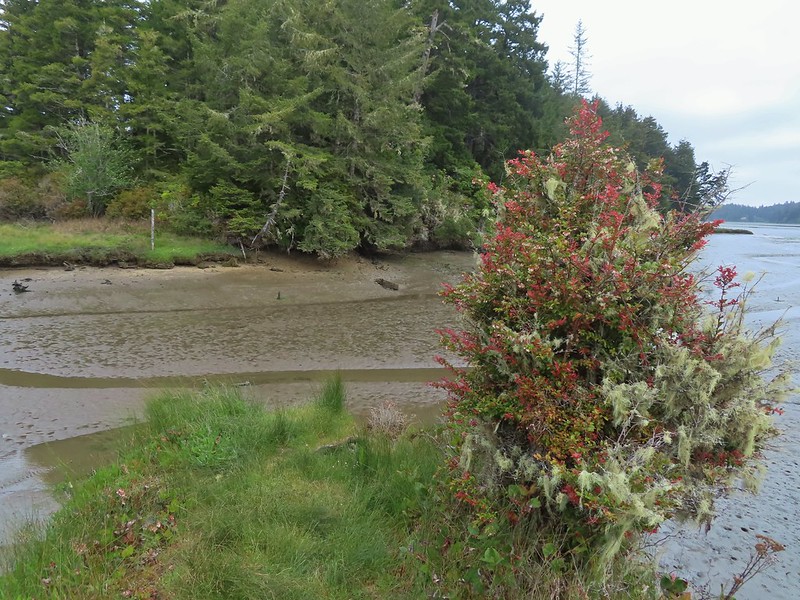
Sloughside Marsh
Rhododendron
A third of a mile along the North Creek Trail we came to the signed .15 mile North Creek Spur.
We decided to check it out and followed the short trail downhill to a different view of the Sloughside Marsh.
We returned to the North Creek Trail and followed it uphill back to the Ten Minute Loop Trail where we turned right for a tenth of a mile to the Interpretive Center. Bleeding heart, fairy bells, and youth-on-age.
This was an excellent 4 mile hike with 300′ of elevation gain.
South Slough Track
From the Interpretive Center we returned to Seven Devils Road and followed it north to Charleston were we turned left onto the Cape Arago Highway to Sunset Bay State Park, a total of 6.7 miles from the center. We parked at Sunset Bay Middle (there is a North, Middle, and South but we didn’t realize that before we parked) which added a tenth of a mile each way to our hike but we had a nice view of Sunset Beach and Bay.
We walked over to Sunset Bay South and picked up the Oregon Coast Trail at a bridge over Big Creek.
The trail climbed to the top of the cliffs overlooking the Pacific as it looped around a large grass clearing that in non-pandemic times acts as a group camp.
>
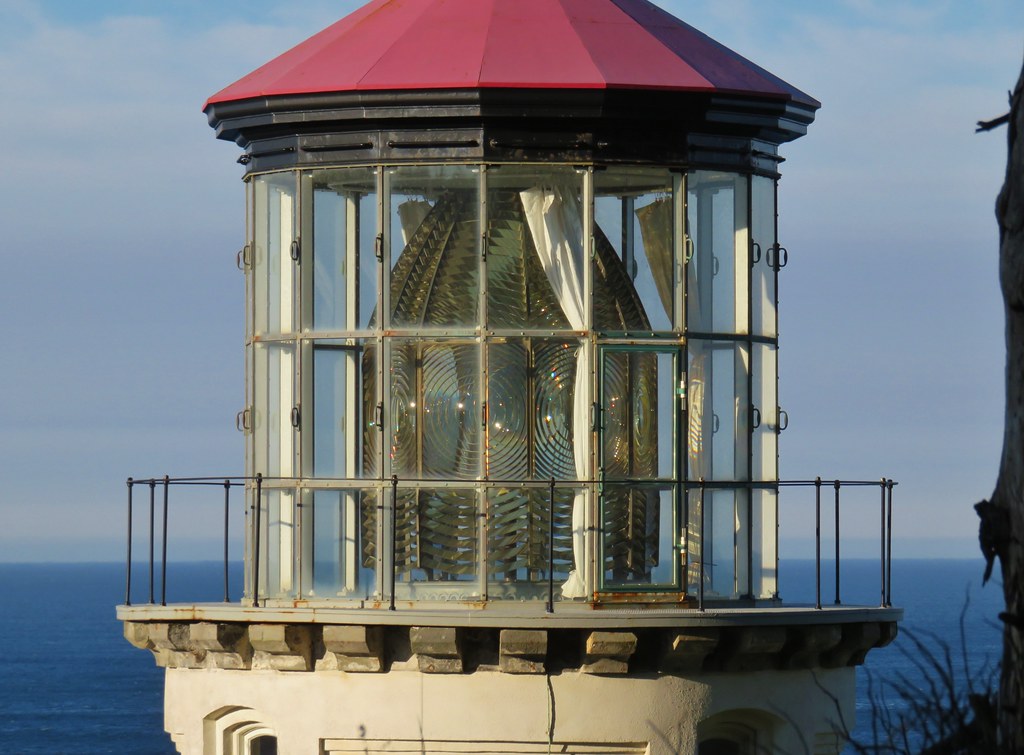
Cape Arago Lighthouse (not on Cape Arago) on Chiefs Island.
Salal
The group campsite.
We followed pointers for the Oregon Coast Trail which briefly followed the shoulder of Cape Arago Highway as it passed Norton Gulch.
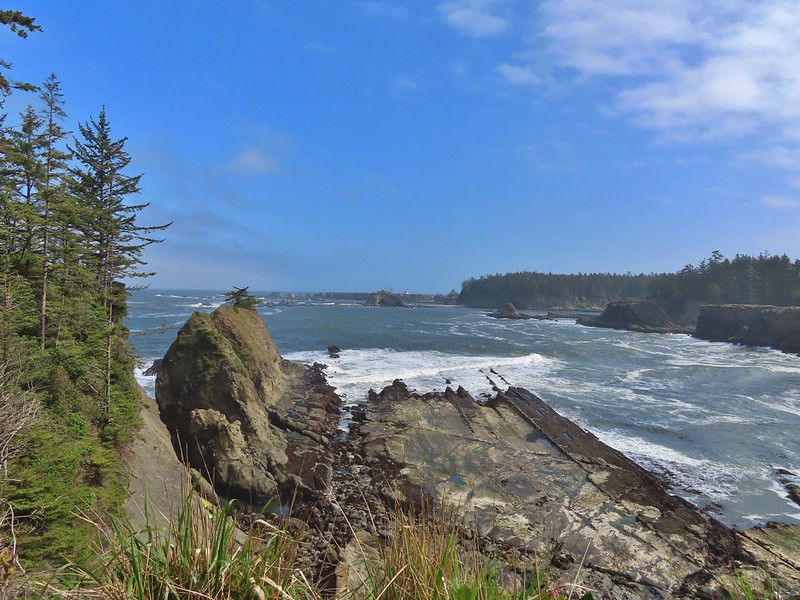
On the far side of the gulch the trail veered away from the highway and by staying right at junctions soon got back to the cliffs above the ocean providing some excellent views.
A long pause in our hike came when we stopped to watch some harbor seals on the rocks below us. Harbor seals in the lower right hand corner on the rocks.
Drama was unfolding in front of us as one pup repeatedly attempted to follow its mother up onto the rocks only to slide back into the water. It finally found success and then back into the water they went. Apparently it was just a practice run.
Success!
After tearing ourselves away from the seal show we continued south along the cliffs. Paintbrush
Sea thrift
Mariposa lilies
Iris
Just over two miles into the hike we came to the first noticeable remnants of the 1906 estate of timber baron Louis Simpson. Former tennis courts.
It was windy on the plateau and I couldn’t help but wonder how anyone could play tennis in the windy conditions that are often present on the coast.
View near the tennis courts.
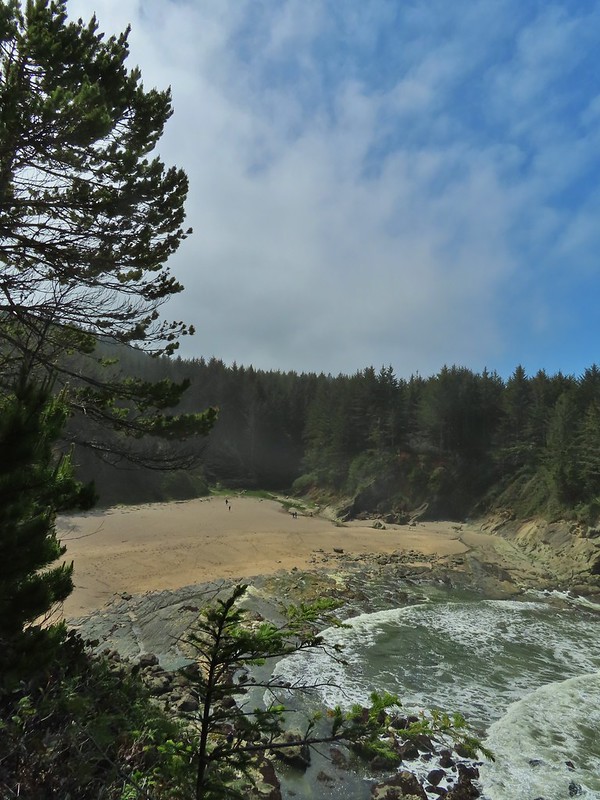
These roots explain how some of the trees that look like they should be plunging into the ocean don’t.
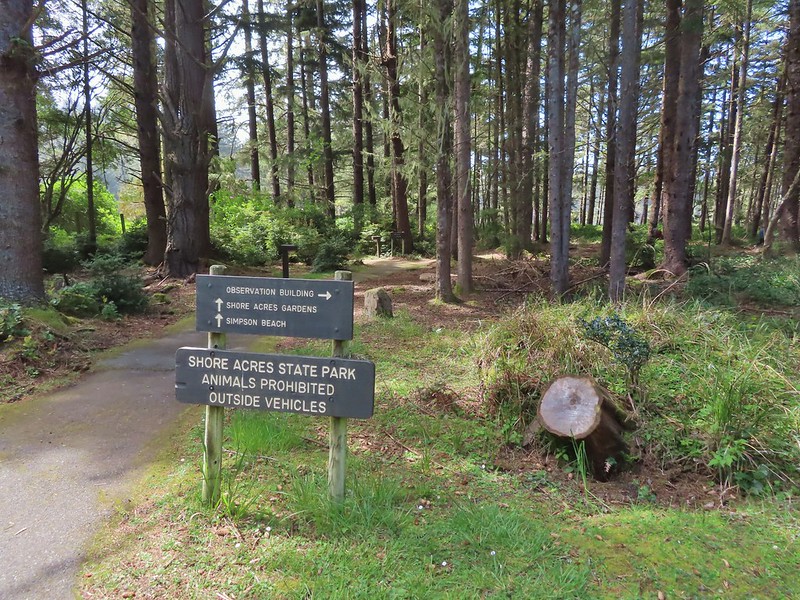
Observation Building ahead on the cliff.
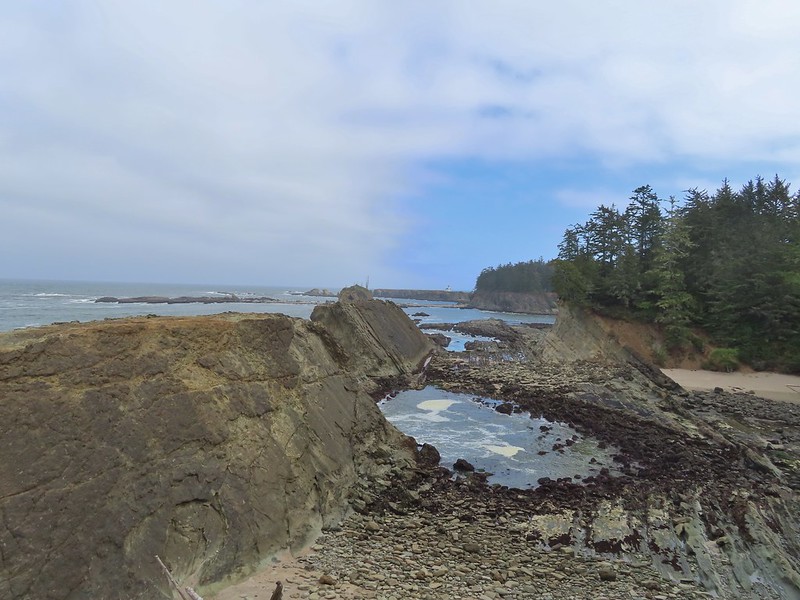
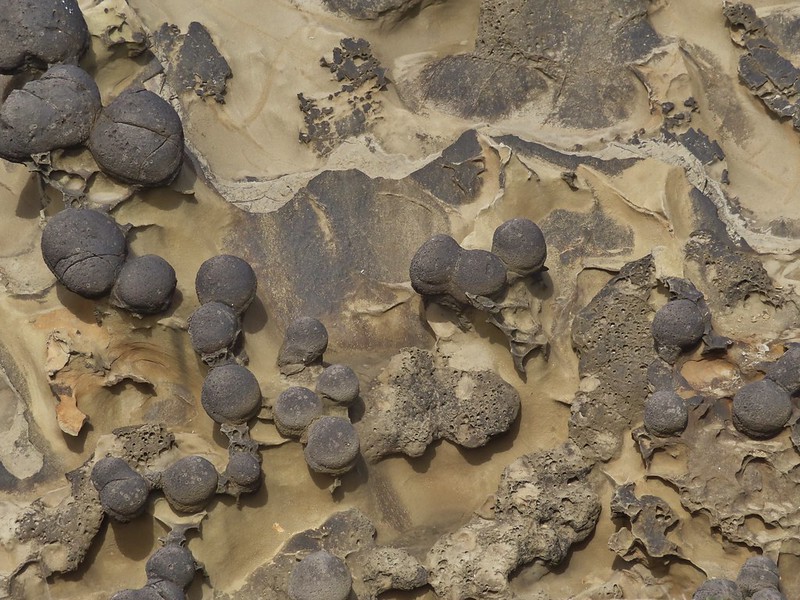
The rocks along the coastline here had been pounded and carved by the ocean into some interesting shapes and designs.
We walked past the Observation Building (closed due to COVID) to a viewpoint overlooking Simpson Cove.
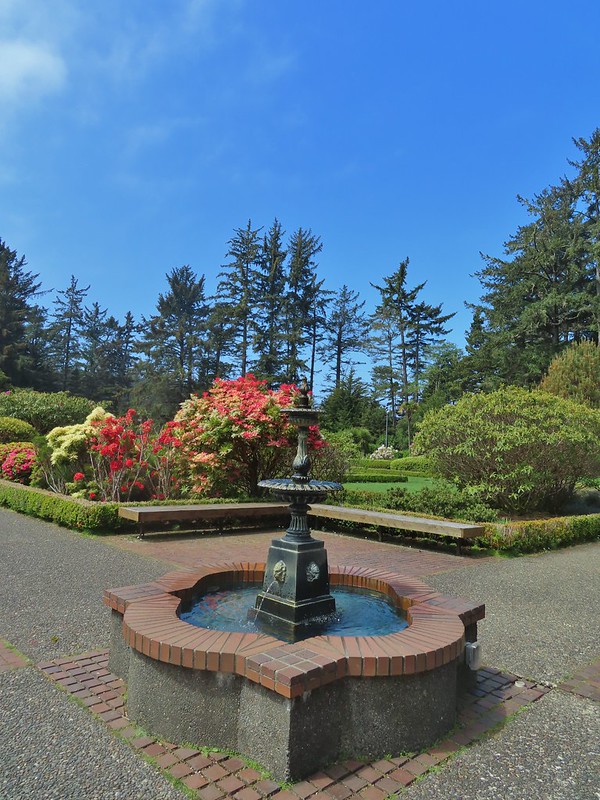
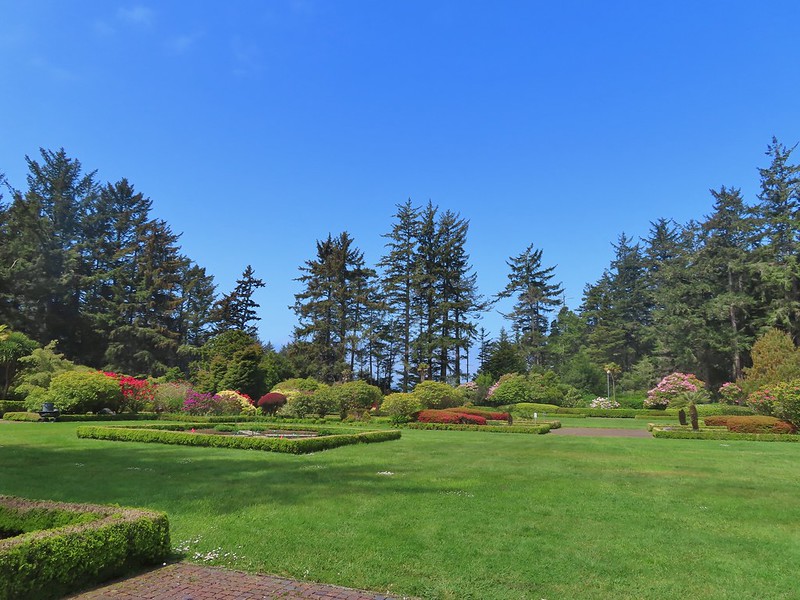
The Oregon Coast Trail dropped down to the cove before climbing again and continuing onto Cape Arago State Park but before we headed down we wanted to check out the Shore Acres Gardens which were open (limit of 75 persons at a time).
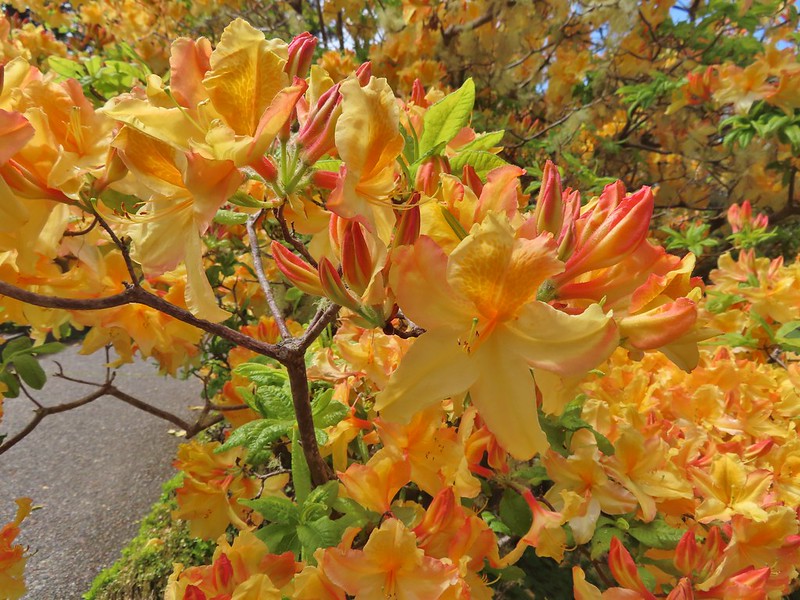
It was a little early yet for many of the flowers, especially the rose garden, but there was still a lot to see. The most impressive specimens to us were a plant and tree from South America.
>
Prickly Rhubarb from Chile
Monkey Puzzle Tree from South America
The yet to bloom rose garden.
After winding our way through the gardens we returned to the Oregon Coast Trail and followed it down to Simpson Beach.
After climbing up from the beach we came to an unsigned junction where we turned right continuing to follow the cliff south for .9 miles to an overlook along the Cape Arago Highway of Simpson Reef.
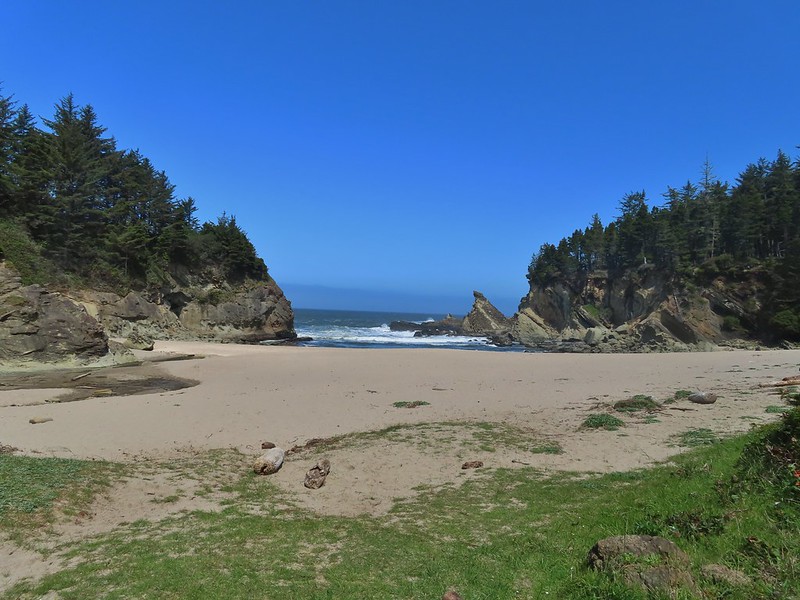
Looking back across Simpson Cove to the Observation Building.
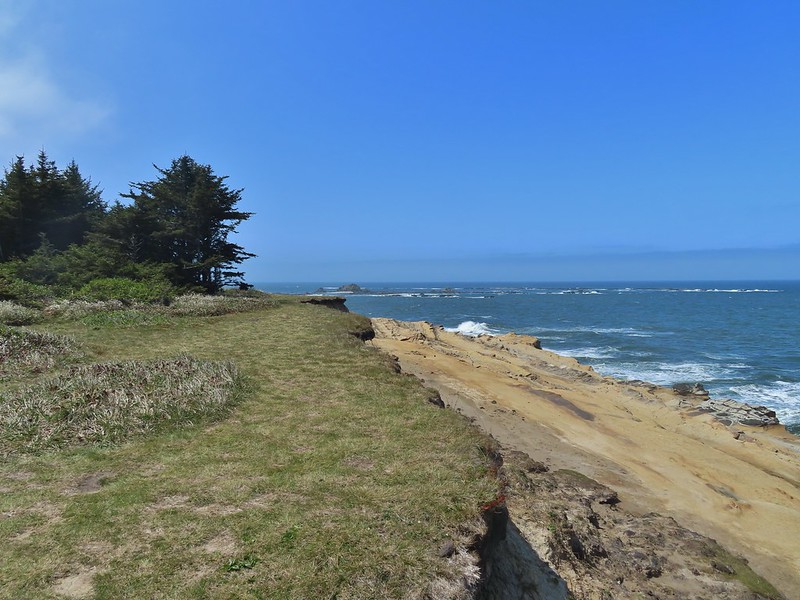
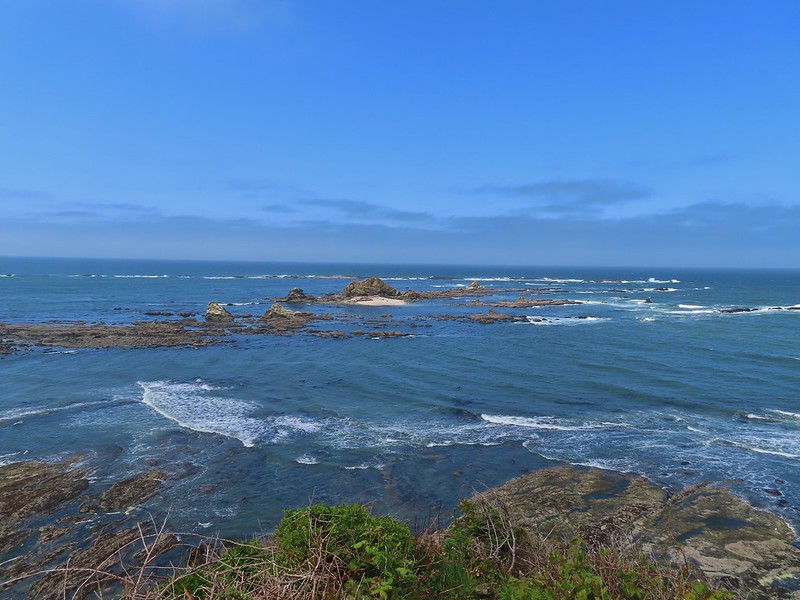
Simpson Reef extending into the Pacific.
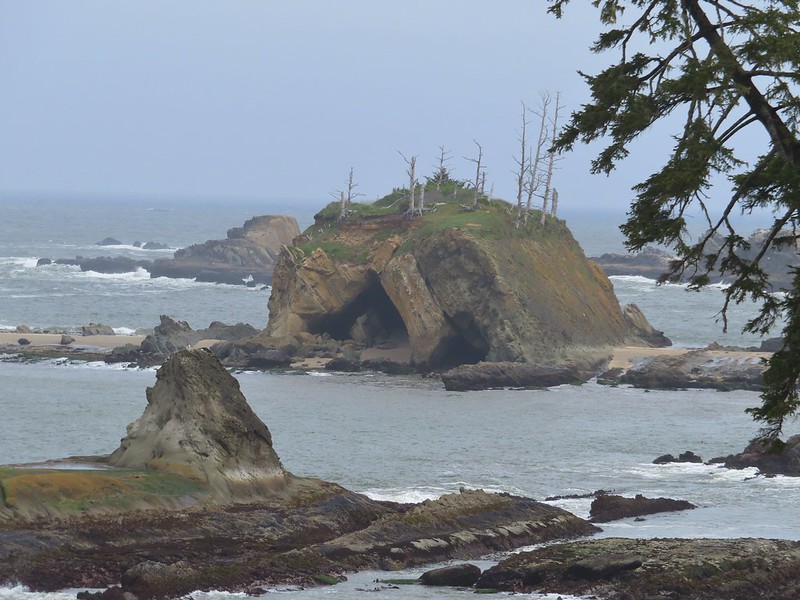
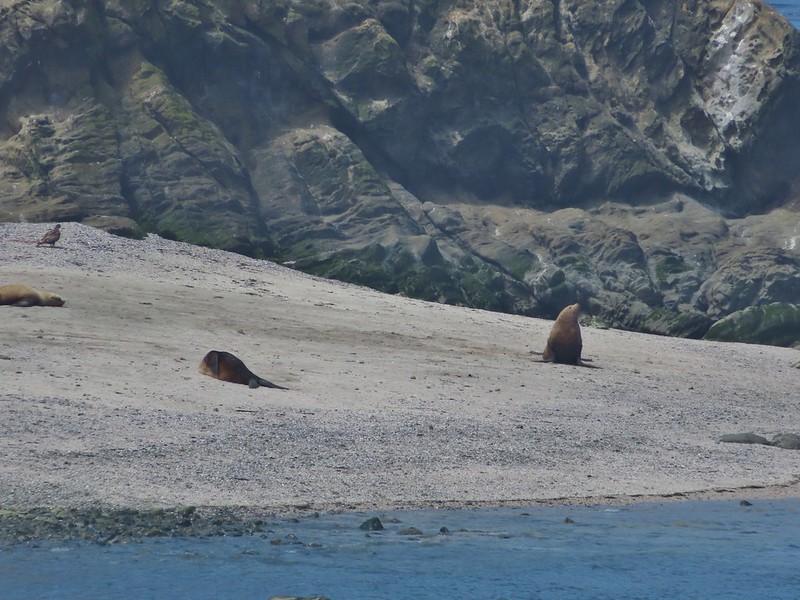
There was a lot of action going on out on the reef, in particular on Shell Island where sea lions barked and eagles engaged in aerial combat. Shell Island in the middle of Simpson Reef.
Sea lions and juvenile bald eagles on Shell Island.
Harbor seals on the reef.
After watching the action for awhile we continued on our trek by crossing the Highway onto a hiking trail marked by a post.
Coltsfoot
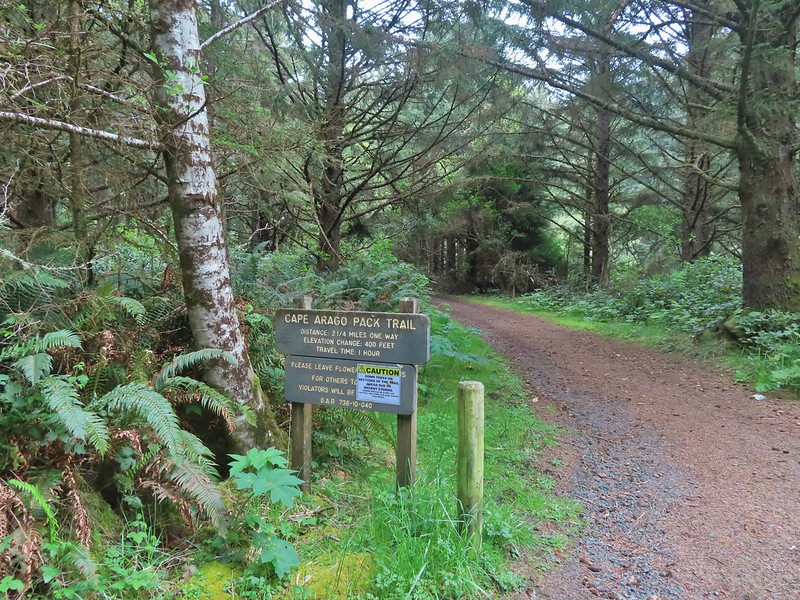
After a half mile on this trail we arrived at the Cape Arago Pack Trail.
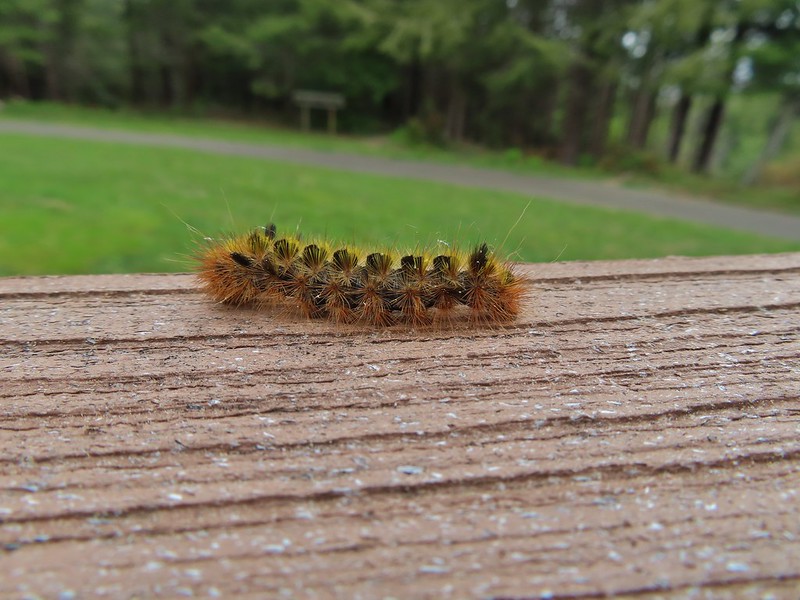
Left would loop us back to Shore Acres State Park while heading right would drop us into the main part of Cape Arago State Park. We turned right to check out more of the park and popped out near the South Cove of Cape Arago. Woolly bear caterpillar
Looking back up the Pack Trail.
A short trail led down to the beach in the South Cove (and possible tidepools) but we were starting to feel the effects of 3 straight days of hiking and having to climb back up from the cove just didn’t sound appealing so we opted to take a break at bench overlooking the cove in a picnic area.
Plaque near the bench commermorating Sir Frances Drake’s visit to the area in 1579.
Our stalker while we sat at the bench hoping we would leave some food behind (we didn’t).
After the break we continued to follow the parking area around Cape Arago passing Middle Cove and then arriving at the North Cove Trail.
We thought we might be hearing things, but no it was a rooster crowing.
Stellar’s jay
We decided to take this trail as it only lost a little elevation on its way to a ridgeend viewpoint with a view of a different side of Shell Island. North Cove (A trail down to that beach was closed for the season.)
From the North Cove Trail it was shorter to continue around the parking loop to reach the Pack Trail instead of backtracking so that’s what we did. The Cape Arago Pack Trail gained approximately 300′ in just under a mile to reach its high point at 530′. There had been caution signs regarding storm damage which we found near the high point where a clearcut had left trees overly exposed to winds causing several large ones to be uprooted. Luckily crews had cleared the trail beacuse the size and amount of trees down here would have been very problematic to get past.
The trail then descended to a small stream crossing before climbing again to a ridgetop. Heading down.
Going up.
On the ridge we turned left at a junction on an old roadbed which followed the ridge down to the highway passing an old WWII radar installation bunker near the highway.
The Cape Arago Pack Trail at the highway.
We recrossed the highway here into Shore Acres State Park.
Just five hundred feet after crossing the road we came to the unsigned junction where we had turned right earlier after climbing up from Simpson Beach only we both missed it. Luckily we realized our mistake less than fifty yards later and got onto the right path. At this point we had hiked 12.5 miles on the day and it was closing in on 3pm due to all our extended breaks and we were getting tired. We decided to take the straightest path back to our car instead of following the Oregon Coast Trail as we had done earlier. We followed the entrance road in Shore Acres to the fee booth where we turned left on an old roadbed that now acts as a trail.
Going this way shortened our return trip by nearly 3/4 of a mile but it meant missing the views along the cliffs where we had watched the seals earlier. When we reached the Oregon Coast Trail we turned right and followed it back to the group camp at Sunset Bay State Park. We shortened our hike even further here by cutting through the empty camp, a move that shaved another 1/2 mile off the hike. It was a good thing too because our feet were not happy with us when we finally made it back to our car.
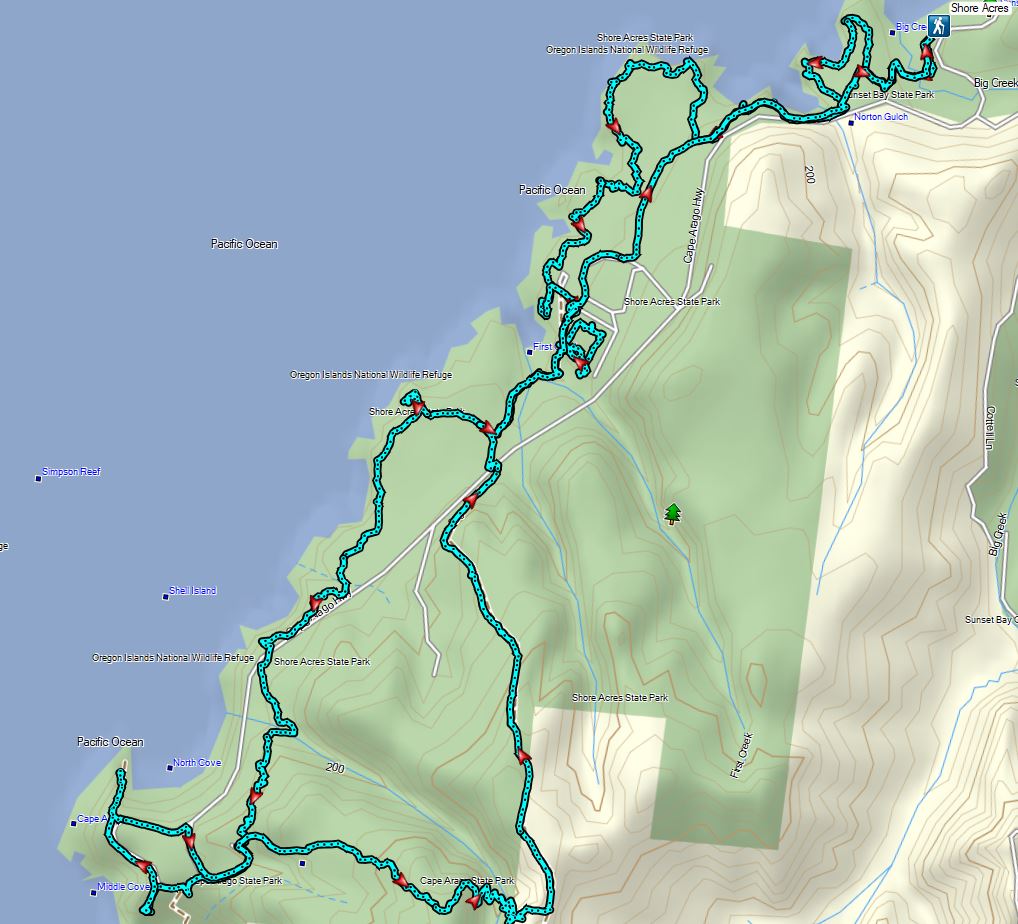
Our route through the parks
It had been a great day though with the two hikes combining for a 14.3 mile day. Happy Trails!
Our first big trip of the year was an extended weekend visit to the southern Oregon coast area to finish the remaining featured hikes from Sullivan’s “100 Hikes Oregon Coast & Coast Range” (3rd ed.) as well as a couple from his additional hikes section. For the first day of the trip we had set an ambitious goal of stopping at five different trailheads on the way to our motel in Gold Beach and after checking in continuing almost to the California border for a sixth hike on the Oregon Redwoods Trail. We got our typical early start driving from Salem to Eugene to take Highway 126 toward the coast and our first stop at the Mapleton Hill Pioneer Trailhead .
The short loop (0.6 miles) on the Pioneer Trail here follows portions of the historic North Fork Trail and Mapleton Hill Road which were early routes connecting Florence and Eugene.
The trail was in good shape and there were a some wildflowers in bloom to go along with the numerous interpretive signs along the loop.
Thimbleberry
Salmonberry
McLeod Creek
One of the sharp turns.
Fairy bells
Columbine
Bleeding heart
Monkeyflower
Sourgrass
Star flower
Trillium
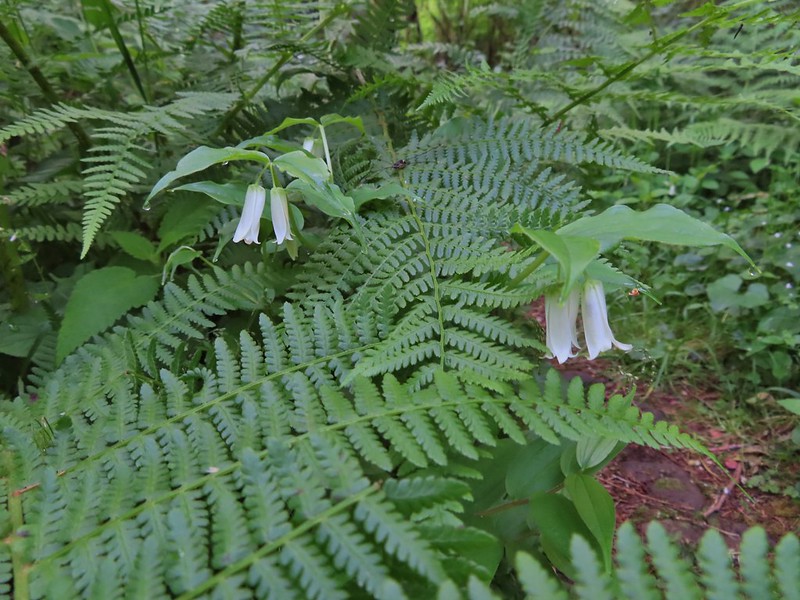
Star flower solomonseal
Twisted stalk
Wren – We heard lots of birds but didn’t see many of them.
Waterleaf
After completing the loop we drove west from the trailhead on Road 5070/North Fork Siuslaw Road to Road 5084 which we followed 5 miles to the Pawn Trailhead.
This was another short loop hike (0.8 miles) which combined with the Pioneer Trail make up featured hike #57 in the 3rd edition (they were moved to the additional hikes section in the 4th edition). This trail suffered some storm damage over the Winter and as of our hike had only been 80% cleared. It is also an interpretive trail but instead of signs there are markers which correspond to information on a brochure that can be downloaded from the Forest Service here. The name “Pawn” was derived from the last names of four families that settled in the area in the early 1900’s – the Pooles, Akerleys, Worthingtons, and Nolans.
While this trail was relatively close to the Pioneer Trail the presence of the old growth trees gave the hike a different feel.
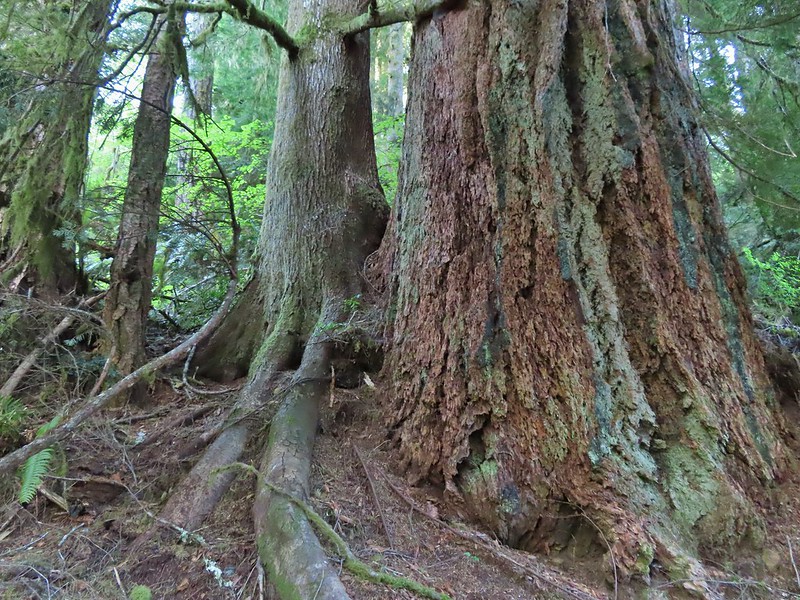
Marker for a fire scarred Douglas fir. According to the brochure the last major fire in the area was in the 1860s.
The storm damage proved to be a bit tricky but it appeared the Forest Service had started a reroute of the trail which we were able to follow.
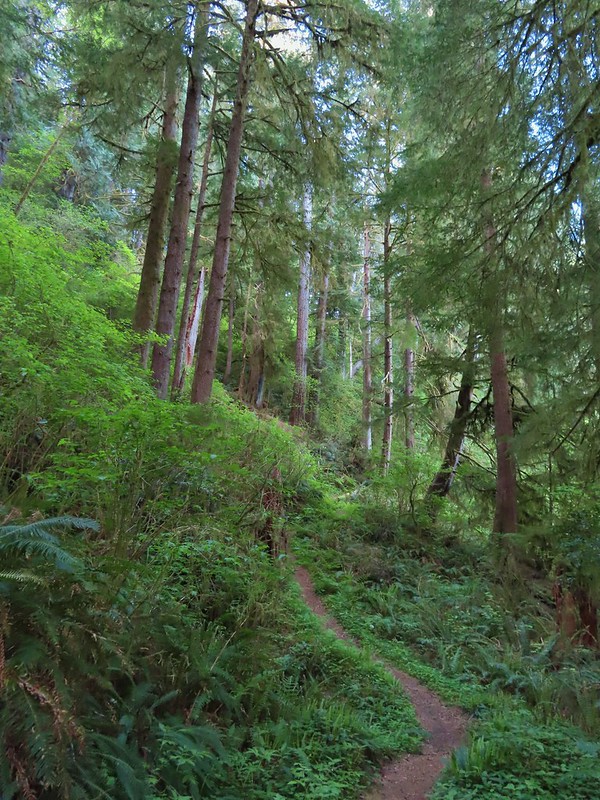
We had to climb over this big tree.
We lost the reroute after climbing over the big trunk and had to bushwack our way through some debris before climbing up on a second downed trunk and walking along it to the resumption of the trail. At one point Heather bumped a limb and pine needles exploded over her head like confetti giving us both a good laugh.
The loop ended shortly beyond the damage and we were soon back at the trailhead. From there we drove west on North Fork Siuslaw Road into Florence. From Florence we took Highway 101 south toward Coos Bay. We turned off a little north of North Bend at a sign for Horsefall Dune and Beach. Our next stop was yet another short loop trail, this time at Bluebill Lake. We parked at the Bluebill Trailhead and set off on the wide trail.
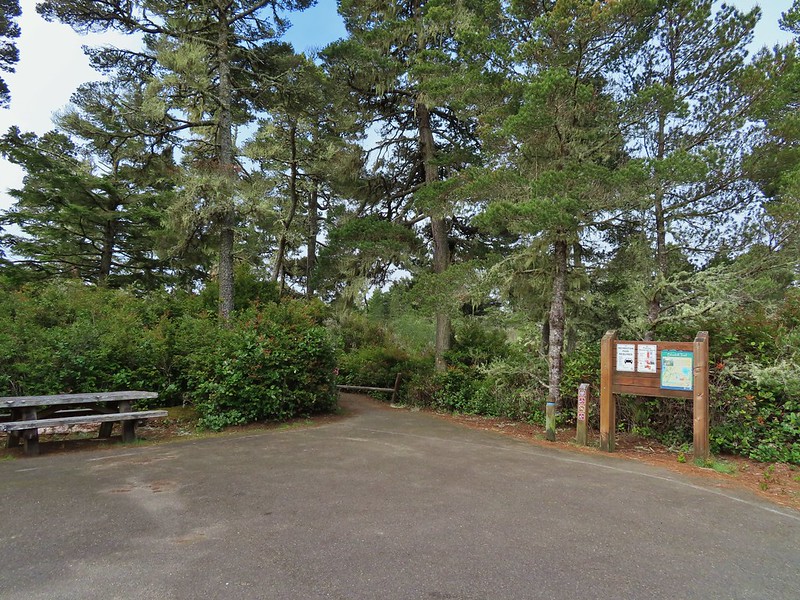
We went clockwise around the loop. The water level of the lake varies throughout the year but there was a good amount of water now but no flooding which can be an issue in late Winter/early Spring. Looking at the bridge at the north end of the lake.
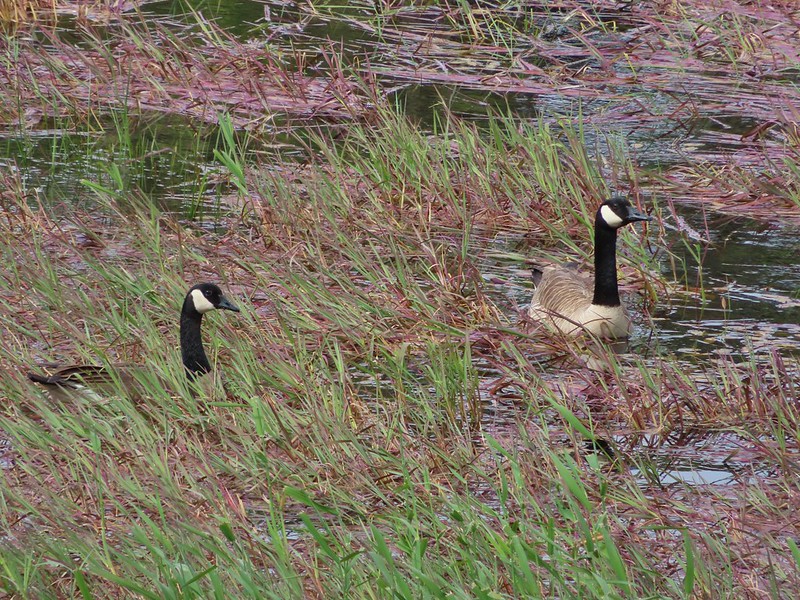
Canada geese
Cormorants flying above the lake.
Cormorant
Ring necked ducks
Rhododendron
Boardwalk at the south end of the lake.
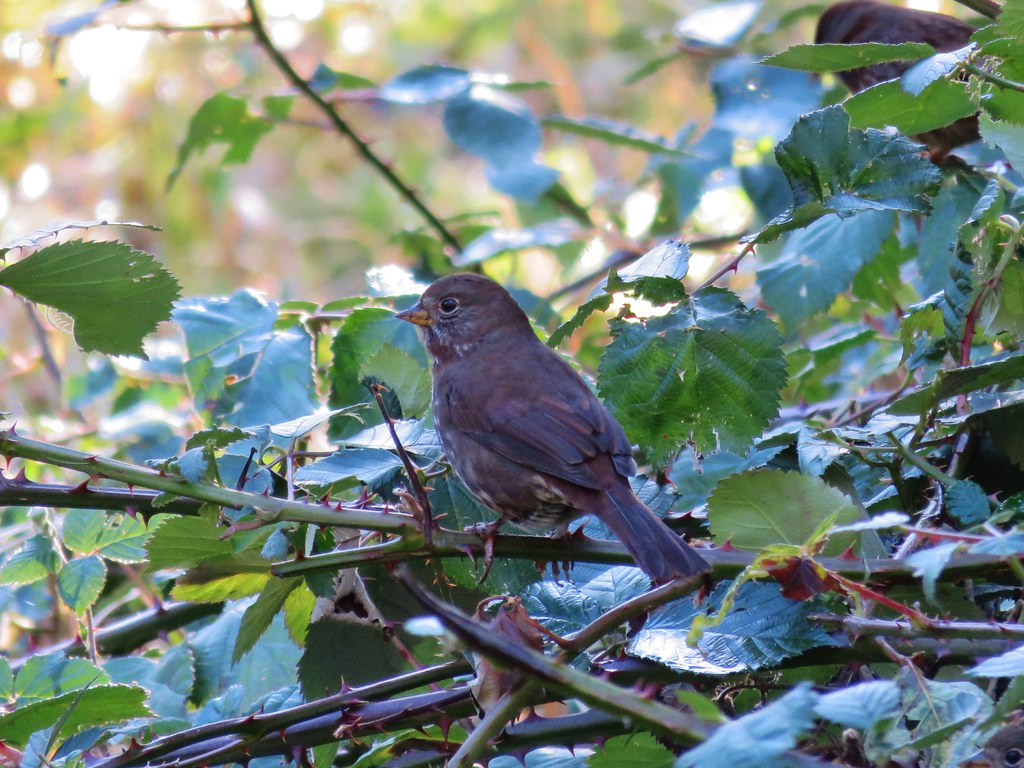
Sparrow
Coming up on the bridge at the north end.
Yellow rumped warbler
Finch
After completing the 1.5 mile hike here we returned to Highway 101 and continued south into Coos Bay where we detoured to our fourth stop of the day at Millicoma Marsh. This was an interesting trailhead given that it was right next to a middle school track and field. The trail on the far side of the track.
We followed the posted directions and kept to the outside of the grass as we walked around the track to the trail.
One of three panels on a signboard at the start of the trails.
Two tenths of a mile from the signboard the grassy track came to a junction. The loop continued to the left but a quarter mile spur trail to the right led to an observation bench. We hiked out to the end of the spur trail before continuing on the loop. This bench is at the junction.
Sparrow near the junction.
Heading to the observation structure.
Looking toward Coos Bay along the Coos River.
McCullough Memorial Bridge spanning Coos Bay.
Wetlands from the end of the spur.
We returned to the loop and continued counterclockwise around. There wasn’t much wildlife activity which was probably a matter of timing as it looked like an area where we might see quite a bit. In any case the hike was pleasant with nice scenery. Bitter cherry
Crow
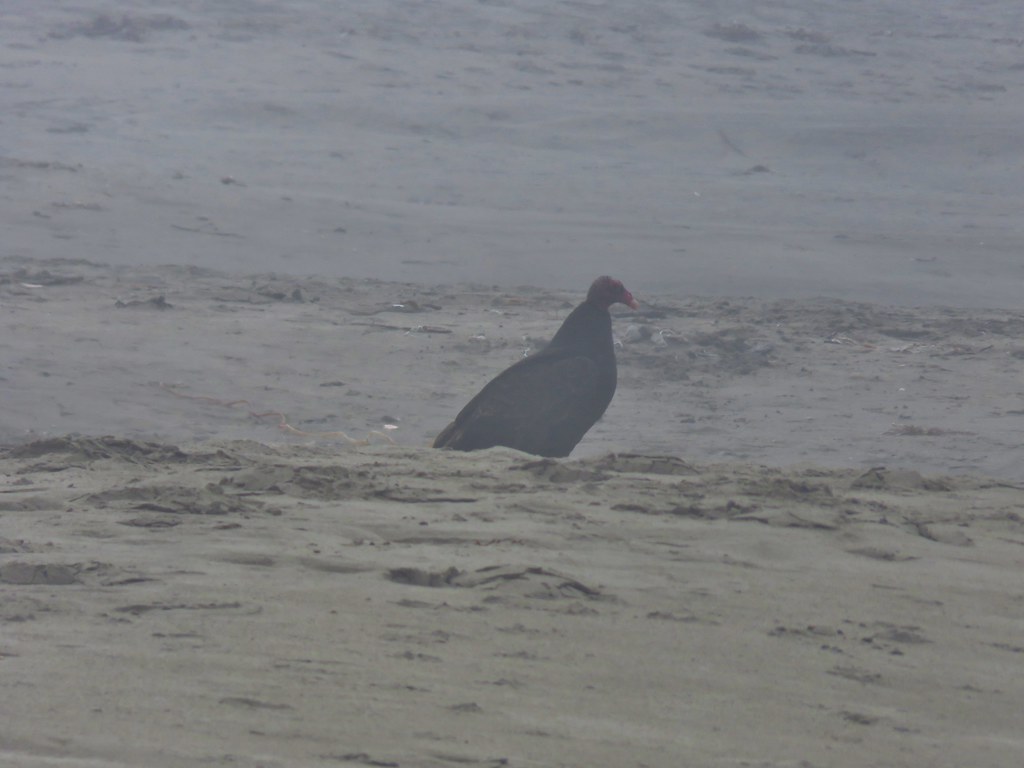
Turkey vulture
Cormorants overhead
Canada goose with goslings
Buttercups
Pale flax
Arriving back at the field.
Up to this point we had only passed one other hiker all day (at Bluebill Lake) but this area was popular and we ran into over a half dozen other users on this 1.8 mile jaunt.
From Coos Bay we continued south on Hwy 101 for 14.6 miles before turning right onto West Beaver Hill Road at a sign for the Seven Devils Wayside, our next stop. We parked in the large lot where only one other vehicle sat and promptly headed down to the beach.
Ground squirrel enjoying the view.
Twomile Creek
Our plan here was to hike south along the beach at least as far as Fivemile Point to complete another of Sullivan’s featured hikes. We hopped across the creek using rocks and logs and set off on what is considered possibly the windiest beach along the Oregon coast (it was windy). Shore bird in the creek.
The occupant of the other vehicle had headed north so we had this stretch of beach to ourselves, and a few feathered friends.
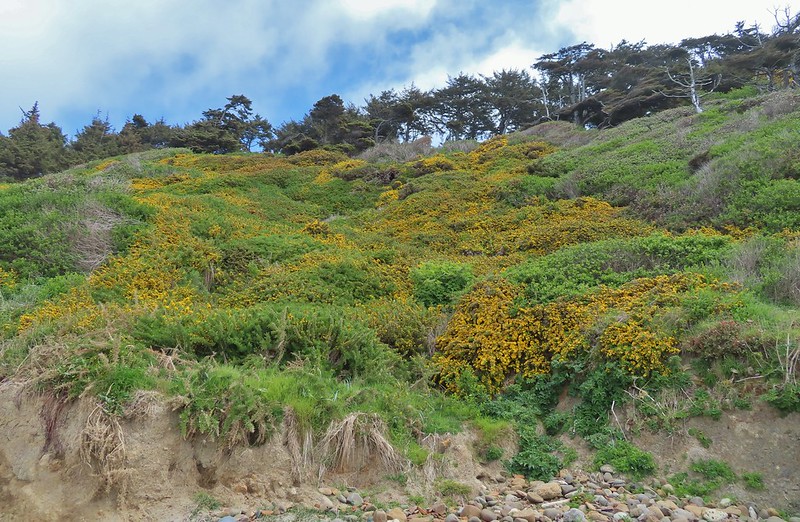
The hillside was covered with yellow gorse, an invasive but colorful shrub.
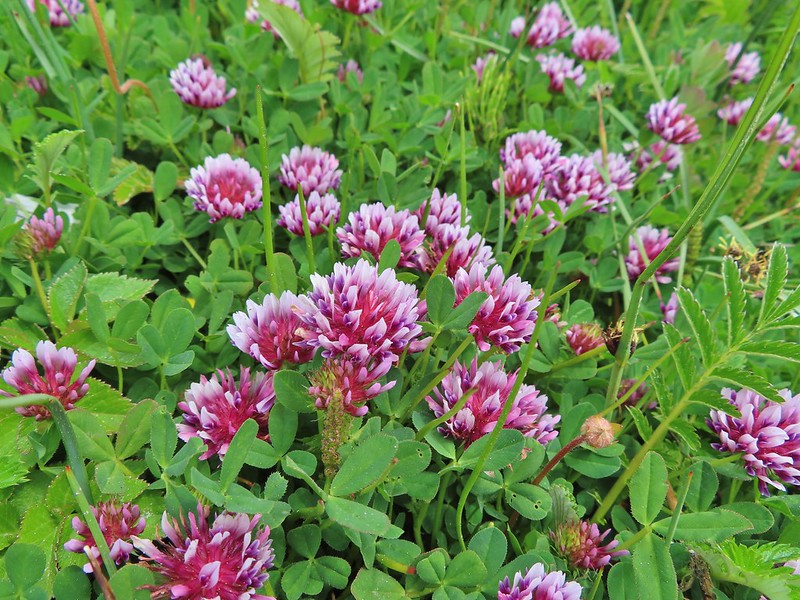
The gorse wasn’t the only yellow flowers present though. Brass buttons (another non-native)
We were looking for a side trail up to a viewpoint bench that Sullivan showed as .7 miles from the trailhead just beyond a brown outcrop. The brown outcrop a little way ahead with Fivemile Point further on.
We couldn’t pick out any trail just several stream beds and seeps so we kept going coming next to a rock spire a short distance from Fivemile Point.
We passed the spire and continued to Fivemile Point where the ocean was coming up to the rocks effectively creating our turn around point. Whiskey Run Beach lay on the other side of the rocks with another parking area 0.8 further south.
A cormorant off Fivemile Point
We turned back and headed north past the spire.
We were now walking into the stiff wind but from this direction Heather was able to spot some stairs in the vegetation marking the side trail to the bench.
We followed a good trail .2 miles to said bench.
View from the bench.
After a short break at the viewpoint we descended to the beach and returned to our car.
We returned to Highway 101 and drove south into Gold Beach where we checked into our motel and dropped our stuff off before hitting the road again. Our final stop of the day had us driving south of Brookings to the Oregon Redwoods Trailhead.
A 1.2 mile barrier free lollipop loop trail starts at the trailhead.
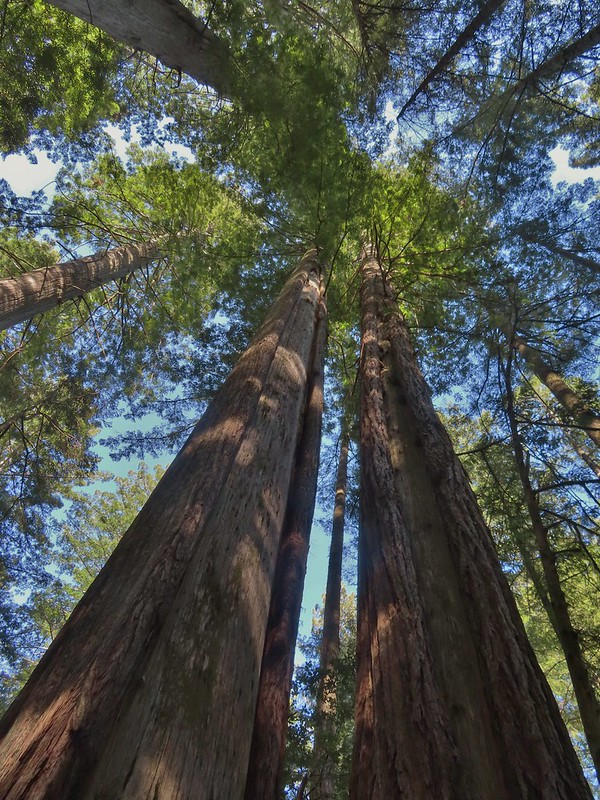
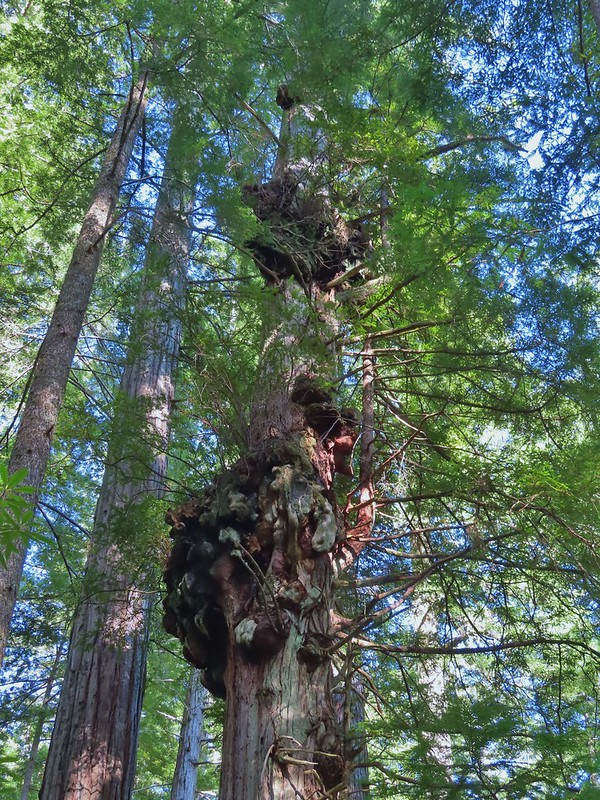
We were once again the only people on this trail which was especially nice given the setting amid the giant trees. Although the trees here aren’t as big as those found in California we were once again awestruck by them. We stayed right where the barrier free loop started which brought us to a hollowed out trunk with room for several people.
Coming up on the hollow trunk straight ahead.
Approximately a half mile into the loop portion of the trail the Oregon Redwoods Trail split off allowing for a longer (2.5 miles total) hike.
We set off on the Pioneer Trail at 7:19am and stepped off the Oregon Redwood Trail at 5:51pm. We logged 9.8 miles of hiking but nearly 147 miles (as the crow flies) separated the Oregon Redwoods Trailhead from the Pawn Trailhead (and another 70 miles home) making for a long but great day. We had gotten to see a great variety of scenery all in one day. To top it off we could now check three more featured hikes off our yet-to-do list. The only thing that could have made the day better would have been an actual knob on the cold water handle in the motel shower. Happy Trails!
We ended our 2020 hiking year by hiking a section of the Oregon Coast Trail from Yachats to Waldport (and back). Our final outing of the year also marked the 500th day with a hike since an ill prepared jaunt at Silver Falls State Park in 2006 gave us the hiking bug (post). I was extra excited for this outing having just received a replacement for our camera and looking forward to trying it out.
We headed north on the trail which passed between the rocky shore of the Pacific Ocean and several hotels.
Looking back south as the sunrise paints the clouds.
A house on the cliffs.
After three quarters of a mile, and crossing the private driveway of the house pictured above, the trail descends to a 6.3 mile stretch of beach between Yachats and the mouth of the Alsea River at Waldport.
It was a beautiful morning, chilly but not too cold. A slight chance of rain was in the forecast after 10am but that bank of clouds looked far off on the horizon as we struck off on the sand.
Seagulls outnumbered people in the early part of the day.
We arrived at Starr Creek shortly after descending to the beach.
One of the trickiest parts of beach hiking can be trying to judge the depth of the various creek crossings using satellite maps. This section of beach contained several named creeks so we had come prepared for barefoot fording if necessary. Starr Creek was narrow enough though that we were able to hop across with the assistance of our hiking poles.
Continuing north we passed some banded cliffs where the ocean had created a small arch.
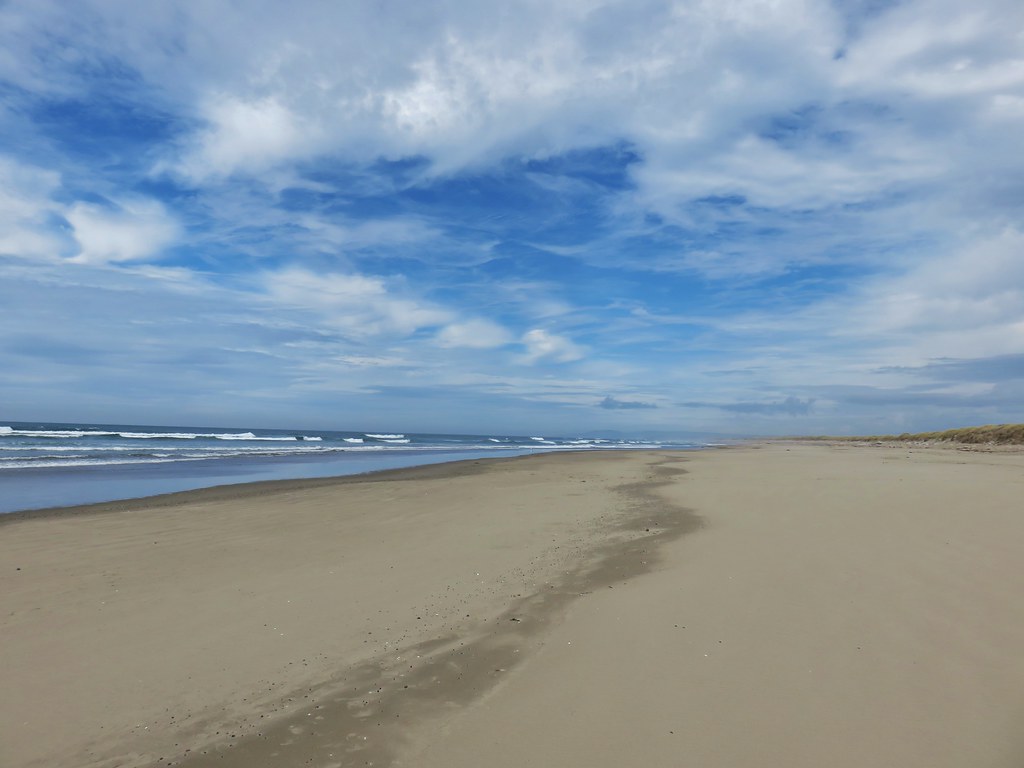
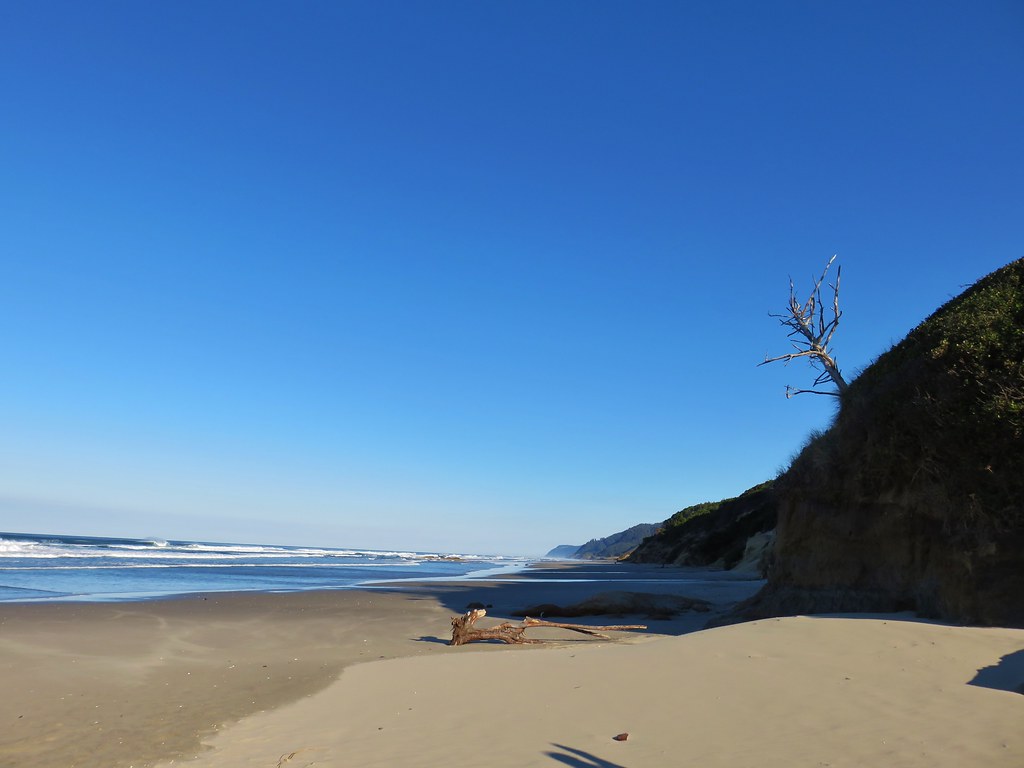
Beyond these cliffs the beach widened and we strolled along the hard packed sand looking for wildlife (both alive and not so much).
Vinge Creek, about a mile down the beach, was crossable on small rocks.
Geese flying overhead, we couldn’t make out what kind.
At first we thought there were two weather vanes on the houses, a whale on the right and a heron on the left.
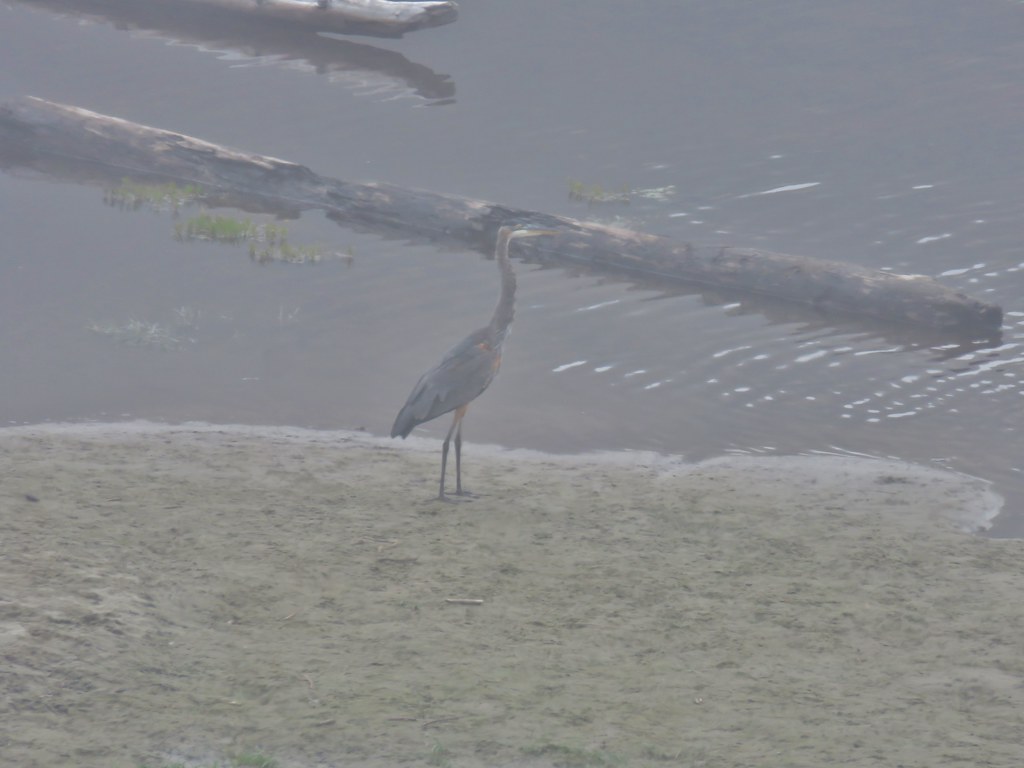
It turned out to be a real great blue heron (but the whale was a vane).
At Reynolds Creek (approximately 3 miles down the beach) we finally had to remove our shoes and socks for an ankle deep ford.
Wavy sand.
One of the most interesting sights came about 4.75 miles up the beach when we passed the “Big Stump“. The remains of an ancient redwood. The origins of the tree are unknown, it may have been part of an ancient redwood forest that was once present here or a transplant brought by the Pacific.
Not far beyond Governor Patterson we spotted the Alsea Bay Bridge spanning the Alsea River.
Testing the 40 zoom feature on the Canon SX740HS.
We made our way to a driftwood log near the mouth of the Alsea and took a seat. Heading for the log.
View from the log.
More testing of the zoom function. Seagulls on the near sandbar and seals on the one on the other side of the bridge.
It was a little after 10:15am when we started back. The bank of clouds offshore came creeping in as we made our way back to Yachats but rain never materialized. We spent much of our return trip watching seals and a few birds bob along in the surf. We also decided not to worry about letting our shoes get wet so we just went straight through the creeks on the way back and may have let the ocean get us once or twice too for good measure. Looking at the dark cloud bank over the Pacific.
Seal
A little more cloud cover to the south over Cape Perpetua.
Seagull shaking it off.
More cloud action.
Cormorant
Reynolds Creek after fording.
Finally starting to feel like it could start raining soon.
The advancing line of clouds.
Another look at the arch.
A kingfisher near the stairs up from the beach.
December blossoms on salal along the 804 Trail.
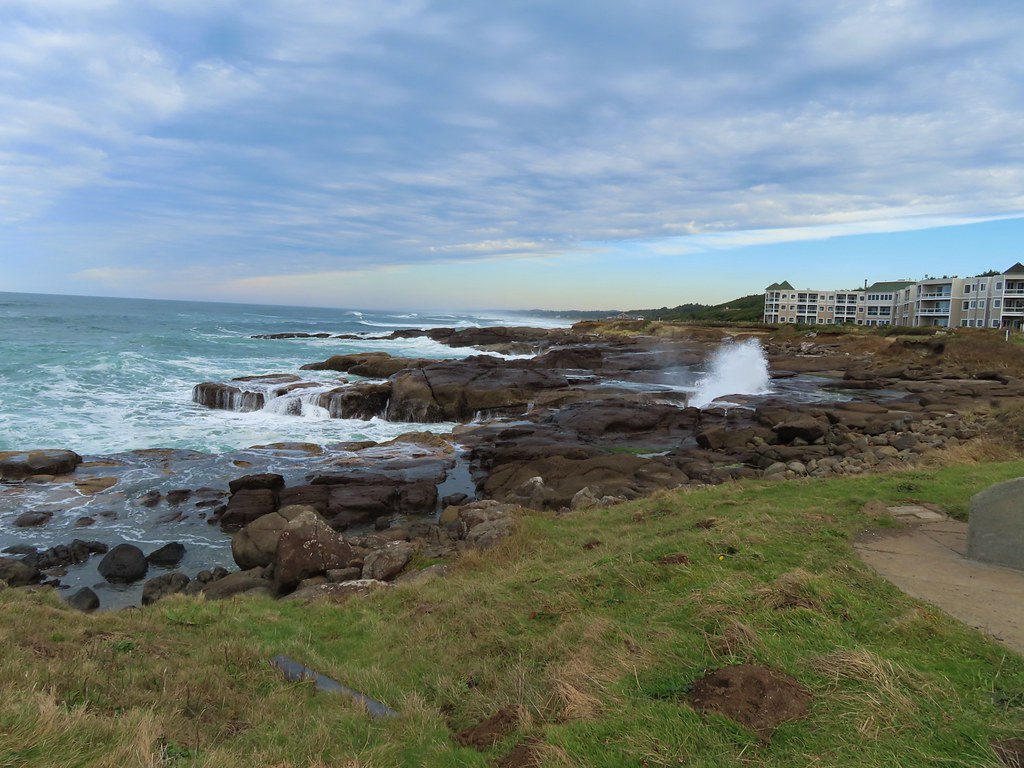
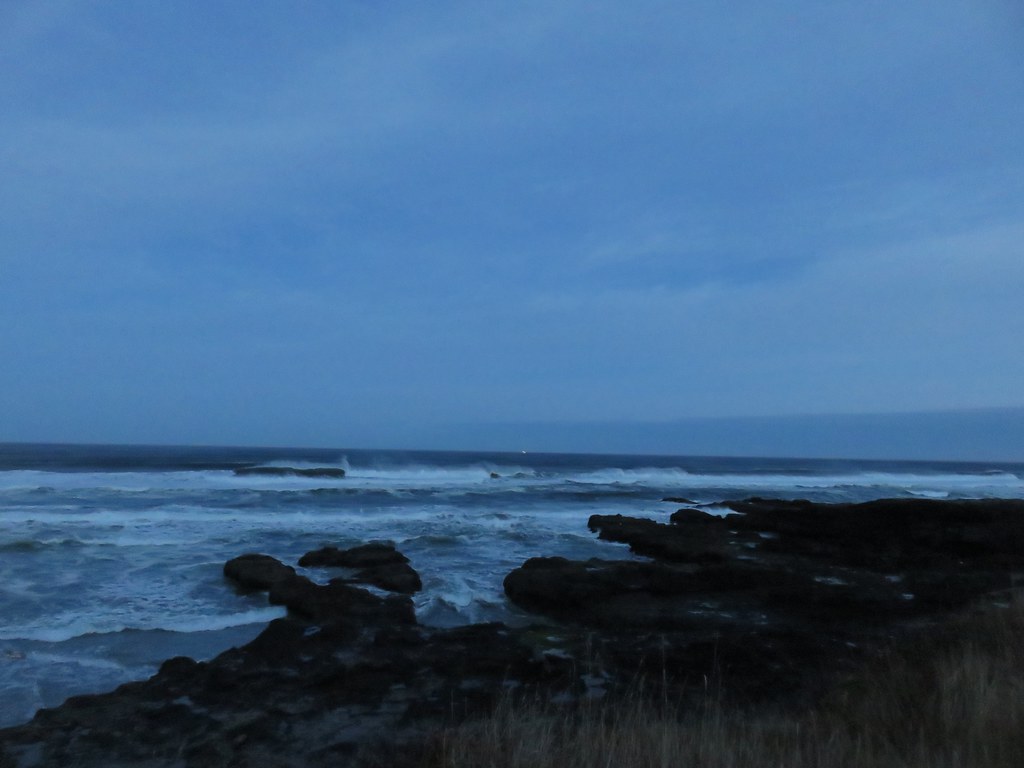
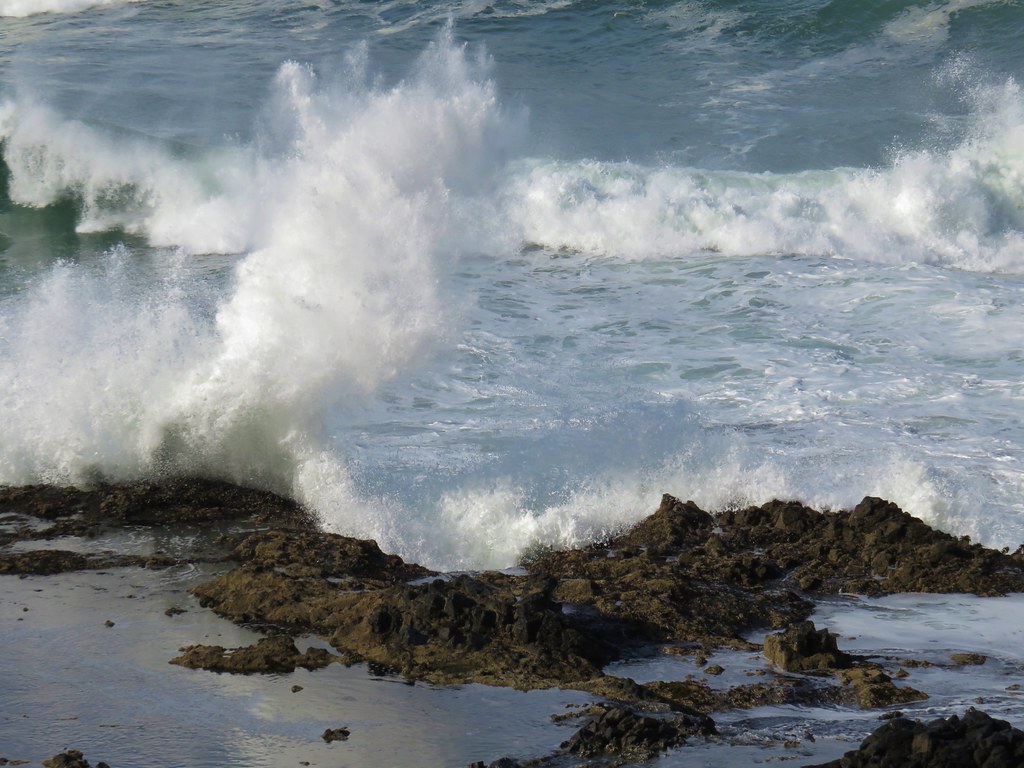
The tide was further in as we passed the rocky shoreline on the 804 Trail creating some dramatic wave crashes.
If not for our bladders we could have sat on one of the many benches along the 804 and watched the waves crashing into the rocks for hours but the restrooms at Smelt Sands beckoned. The weather had held up nicely and the hike was an entertaining one with just enough wildlife and sights not to be a tedious beach walk. It also helped that the sand was packed well and we never felt like we were having to work hard walking over it. Happy Trails!
As we approached the final hike of our official “hiking season” (May through October) we were playing a game of cat and mouse with the weather forecast. Our original plan had been a visit to Wahtum Lake between the Columbia Gorge and Mt. Hood but on Wednesday the forecast for Saturday was rain there so we began to look elsewhere. Our November hike (we try and do one a hike month in our “off-season”) was going to be a visit to Cape Perpetua via Amanda’s Trail so we checked the forecast for that area and it simply called for mostly cloudy conditions. We checked again on Thursday and the forecast for these locations had basically swapped and now Wahtum Lake looked better. Another check Friday night called for rain in both areas (more at Wahtum Lake) so we decided to check again in the morning before deciding where we would end up. The forecast the next morning was still calling for rain at both locations but not starting until 11am. With less precipitation expected at Cape Perpetua and views being less of a concern there we headed to Yachats on the Oregon Coast.
At the southern end of Yachats, after crossing over the Yachats River, we turned right on Ocean View Road which leads to the Yachats Ocean Road State Natural Site. The road passes along the natural site where there are several pullouts before looping back to Highway 101. We parked at a small dirt pullout near the southern end of the natural site and took our time getting going because we’d arrived a little before sunrise.
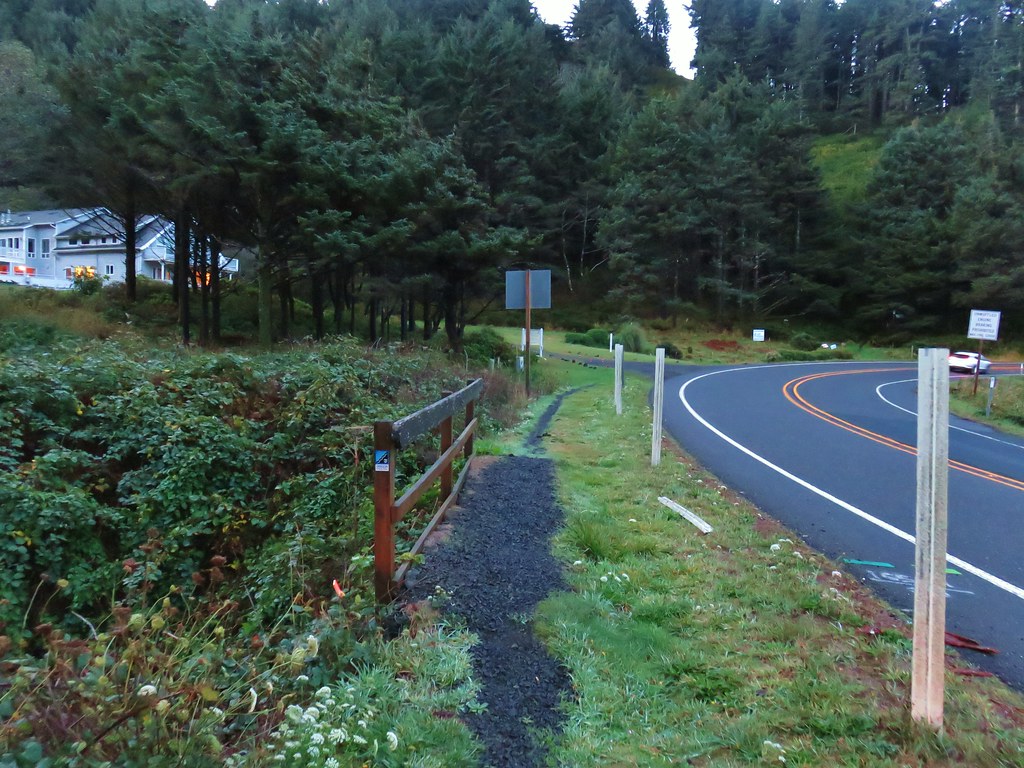
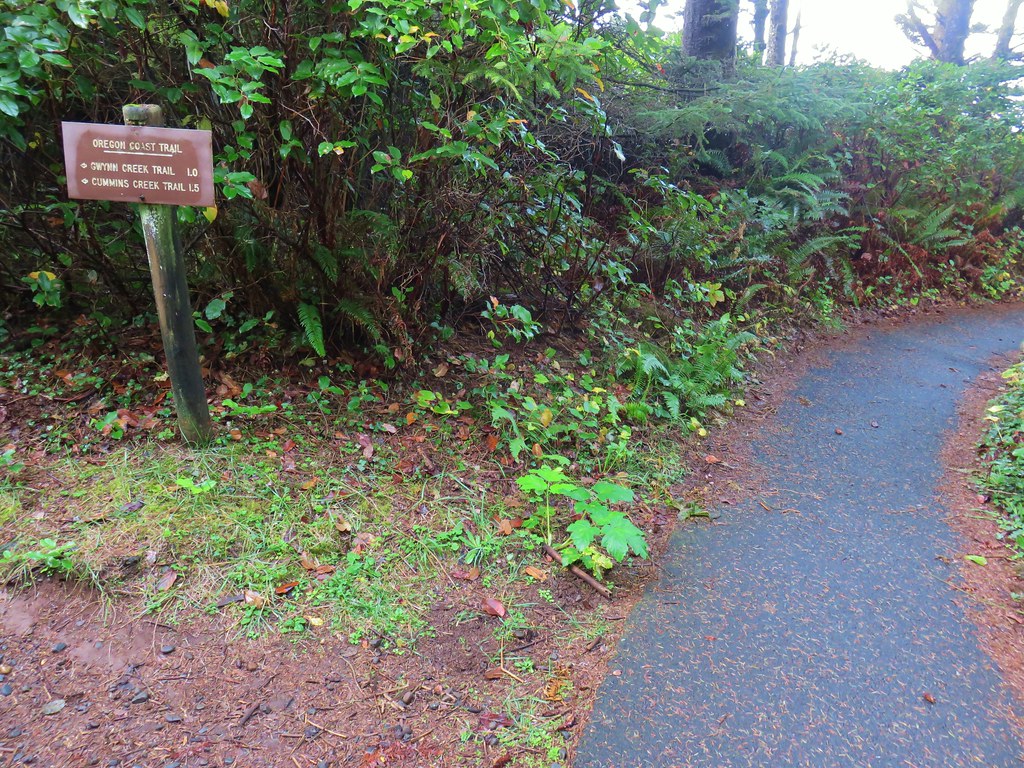
Luckily there was a decent amount of light being provided by the Moon so it didn’t take long before we headed further south along Ocean View Road to a post marking the Oregon Coast Trail (OCT).
We followed the posts south which brought us to the shoulder of Highway 101.
A little under a quarter mile beyond the first OCT post the trail crossed over the highway at Windy Way Street. We then climbed a bit away from the highway before dropping back down to a driveway for a bed and breakfast.
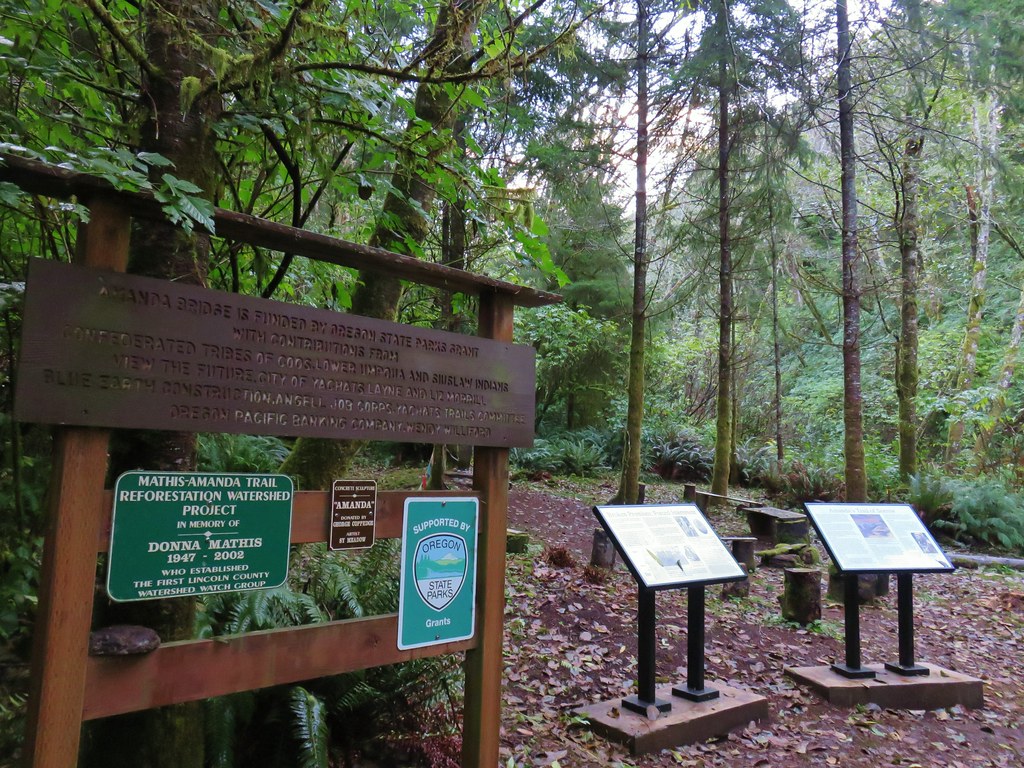
The first sign that this section of the OCT is Amanda’s Trail came on the far side of the B&B when the trail reentered the forest.
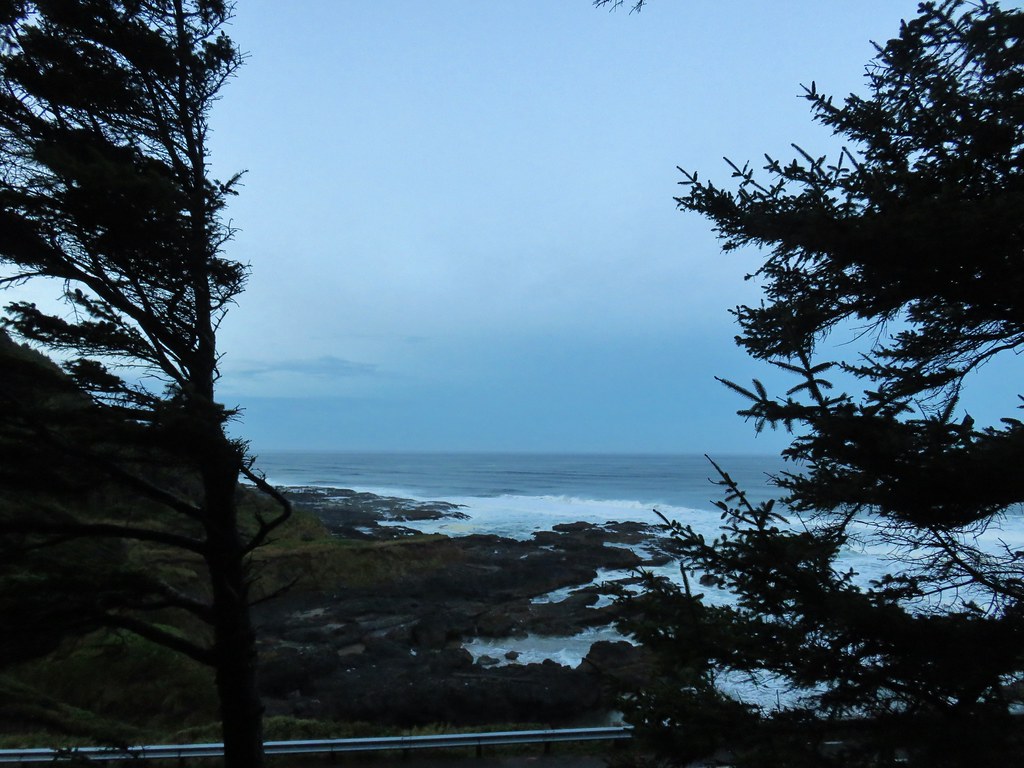
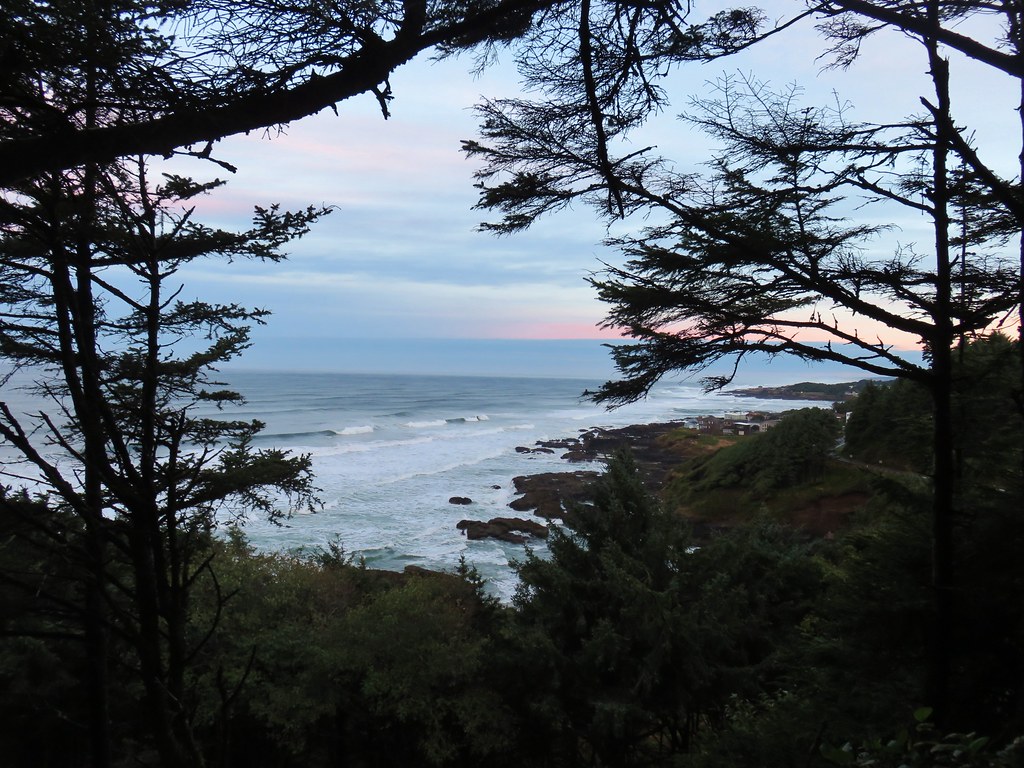
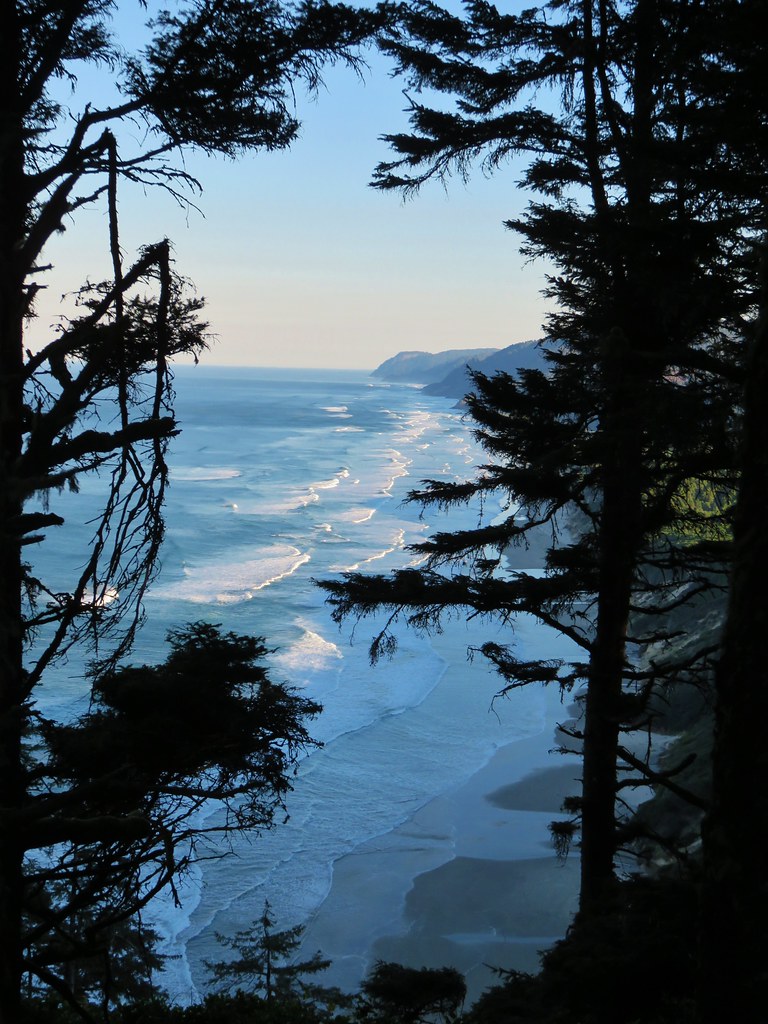
The trail once again climbed away from the highway as it rounded a hillside with a few ocean views.
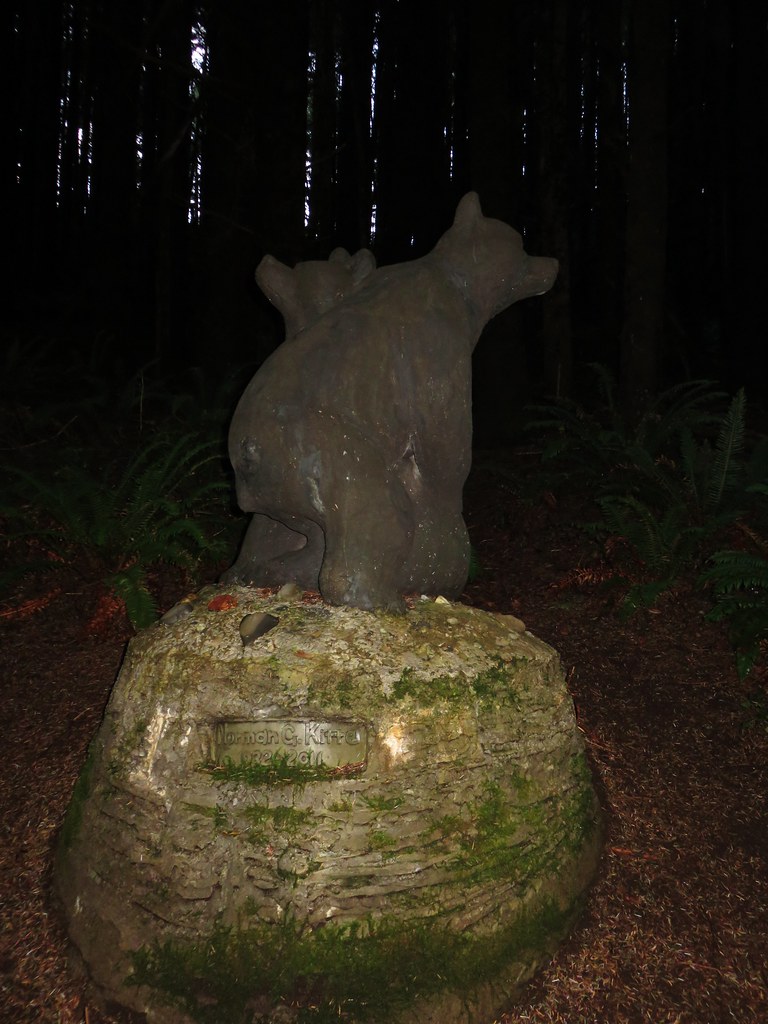
Approximately a half mile from the bed and breakfast we came to a statue of two bears representing an Alsea Indian myth that bears dance when the salmon come. Norman Kittle, whose name is on the statue, along with his wife Joanne were the first private landowners to donate a trail easement in the State of Oregon.
Beyond the bear statue the trail began a slight decent, crossing a gravel road, before arriving at the small grotto with Amanda’s Statue ( a quarter mile from the bears).
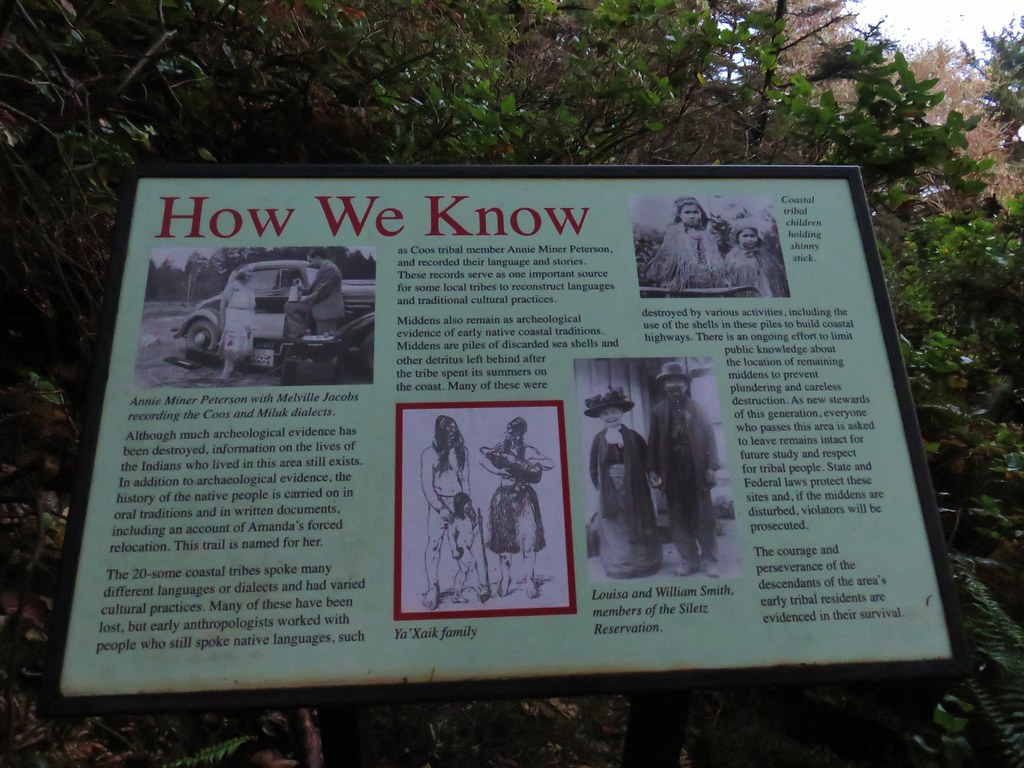
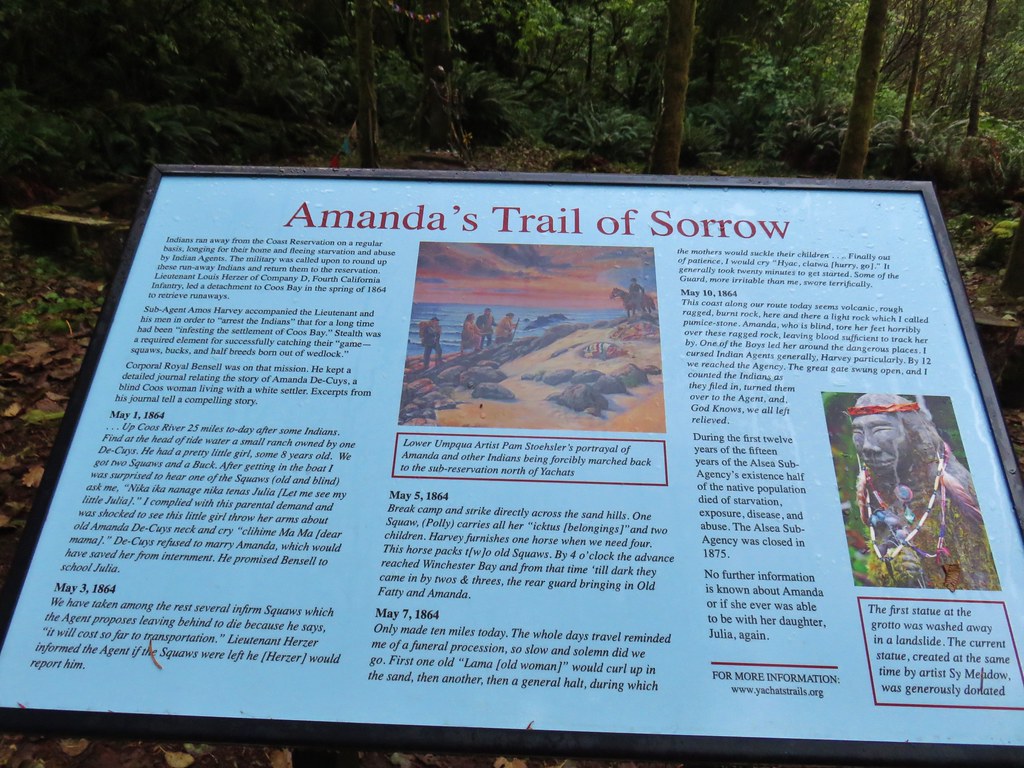
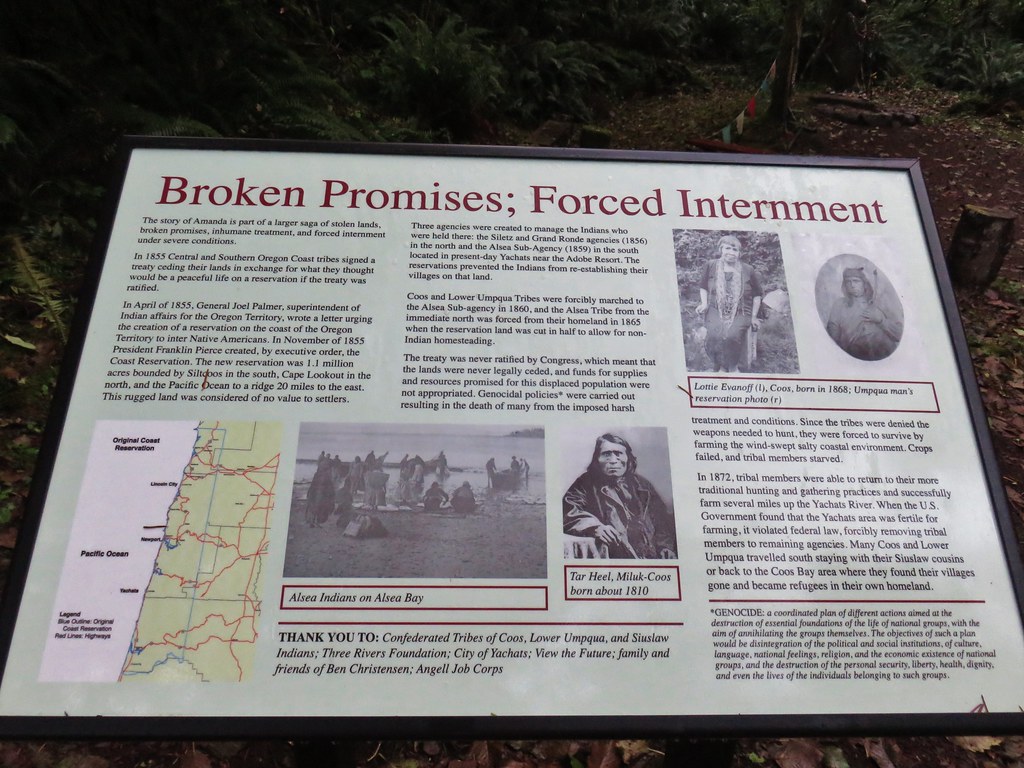
Interpretive signs here told of the blind woman’s forced march to the reservation.
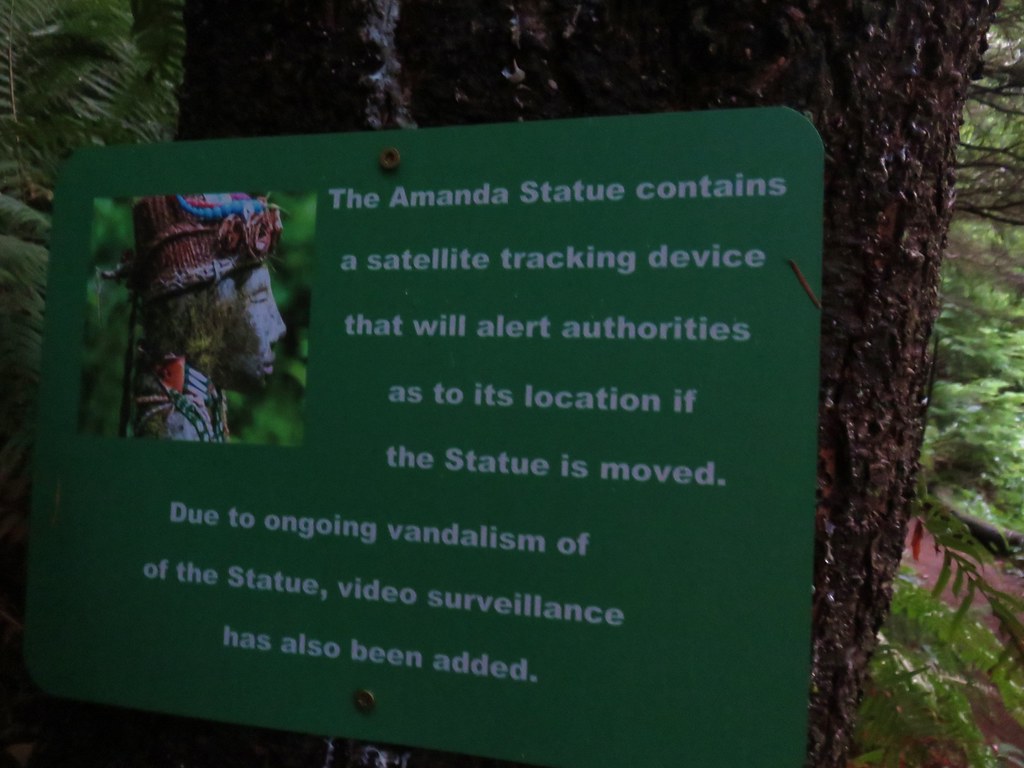
The present statue is not the original statue as it and a nearby footbridge were washed away in a 2016 flood. The current statue is one of two others completed by the same artist and was provided by its owners when the original statue was lost. This version was placed a bit higher to avoid any subsequent floods. Other precautions to protect the statue have been taken as well.
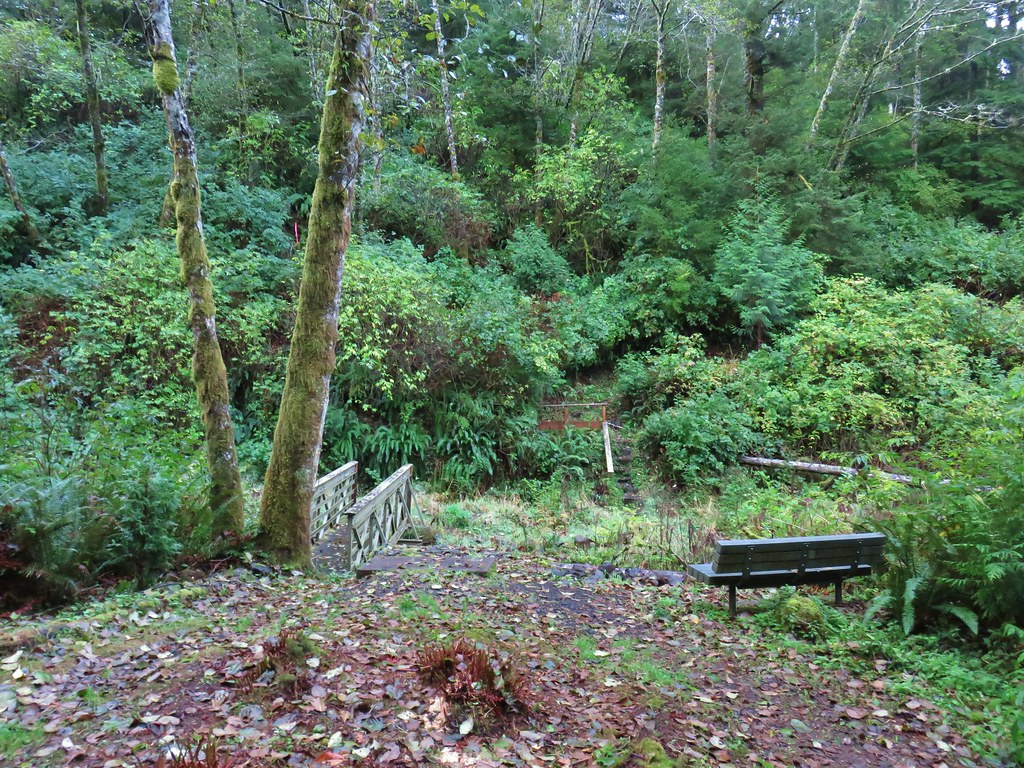
After visiting the statue we continued on across the replaced footbridge.
Beyond the creek the trail climbed nearly 750′ as it turned inland up a forested ridge.
A mile from the bridge we had left the ridge and traversed around a marshy area near the head of North Cape Creek.
After a little additional climbing on the other side of the creek the trail began to descend along this ridge toward the ocean. A mile and a quarter from North Cape Creek we arrived at a signed junction.
Here we stayed right following pointers for the Stone Shelter on what was now the Whispering Spruce Trail.
We had visited the shelter in 2013 (post) on what was part of the first outing featured in this blog.
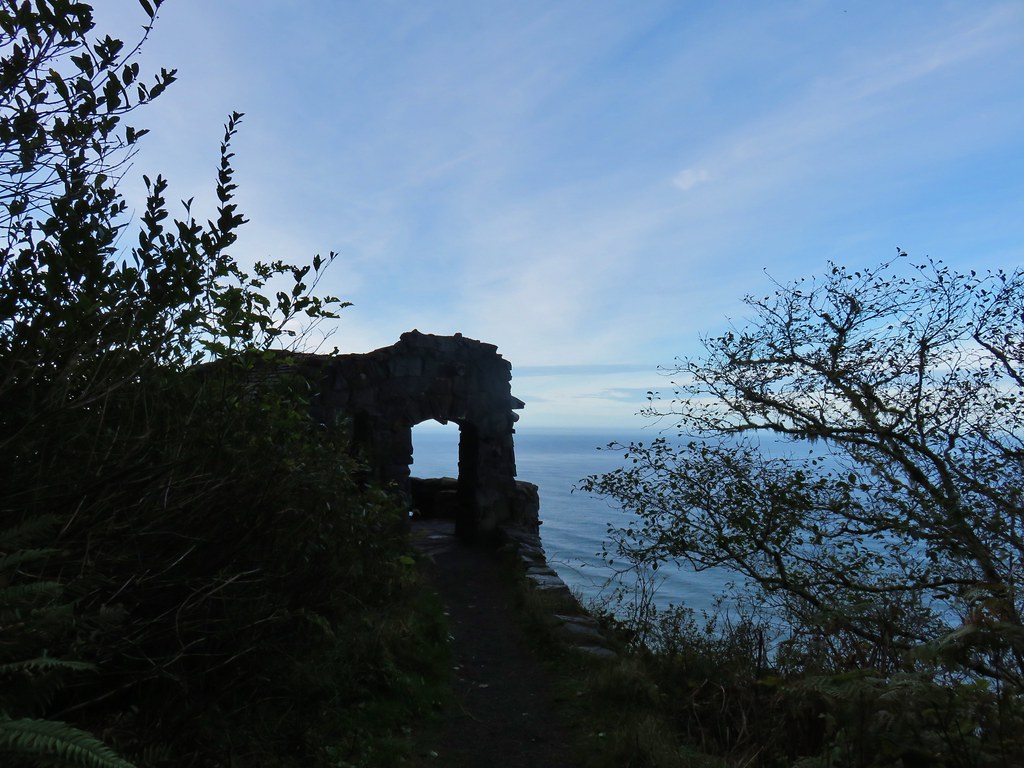
A little less than a quarter mile from the junction we arrived at the shelter.
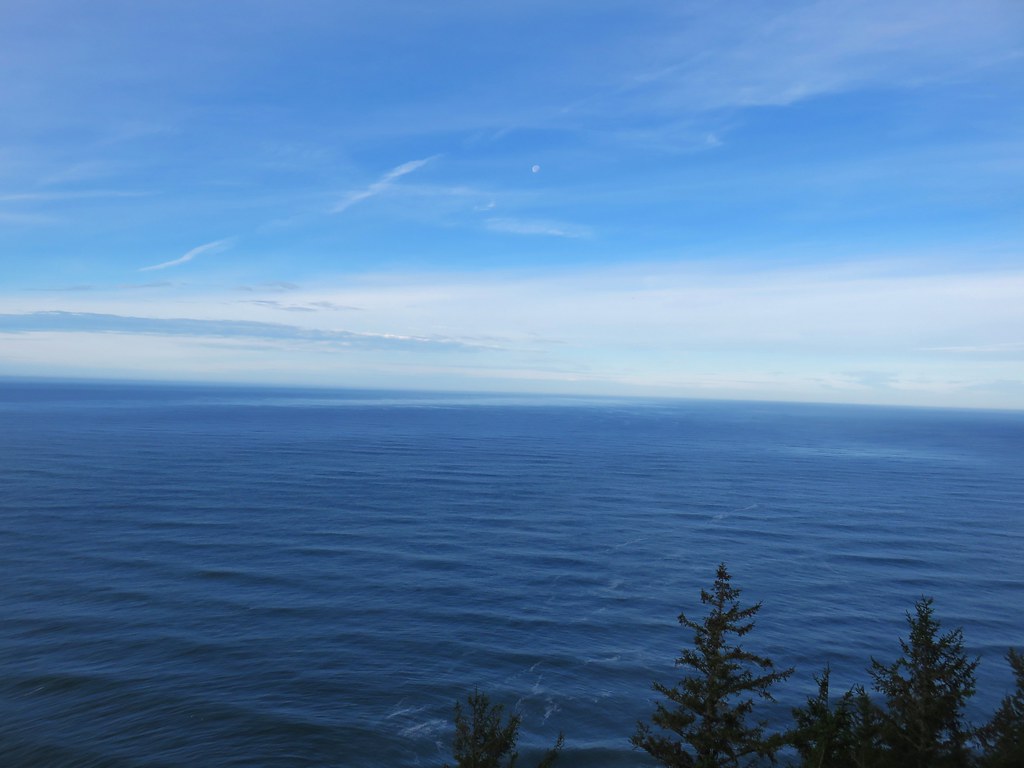
It was a surprisingly nice morning considering the forecast and we were happy to have a good view from the shelter.
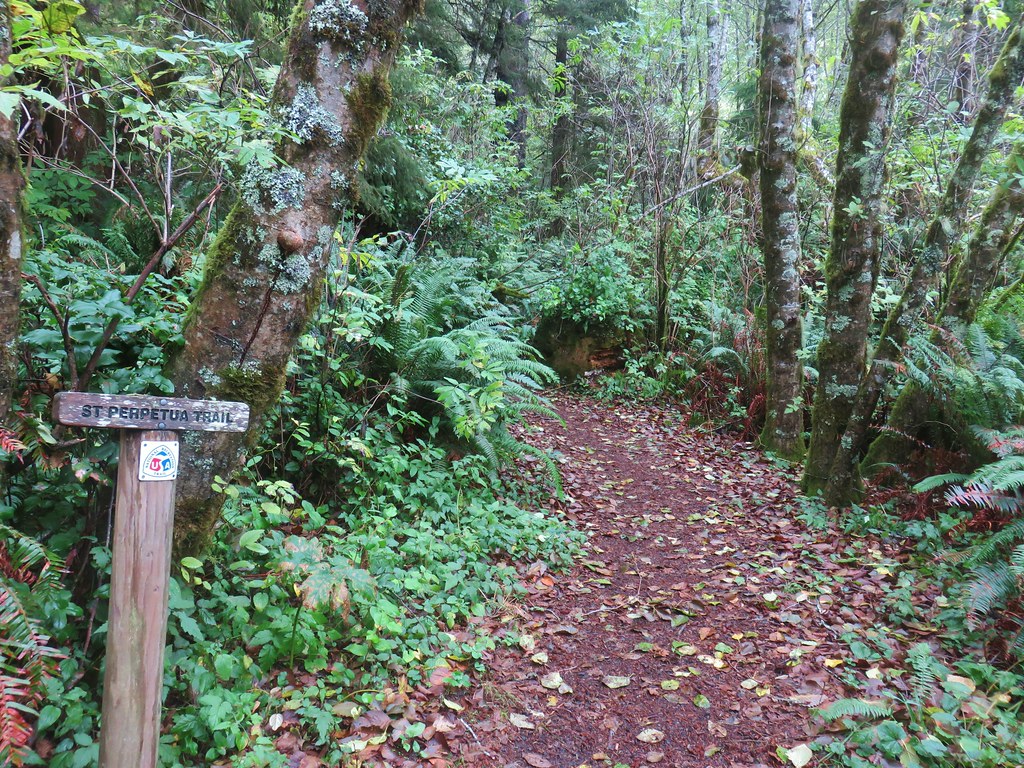
After a brief rest we continued on passing another viewpoint before reaching a junction with the St. Perpetua Trail.
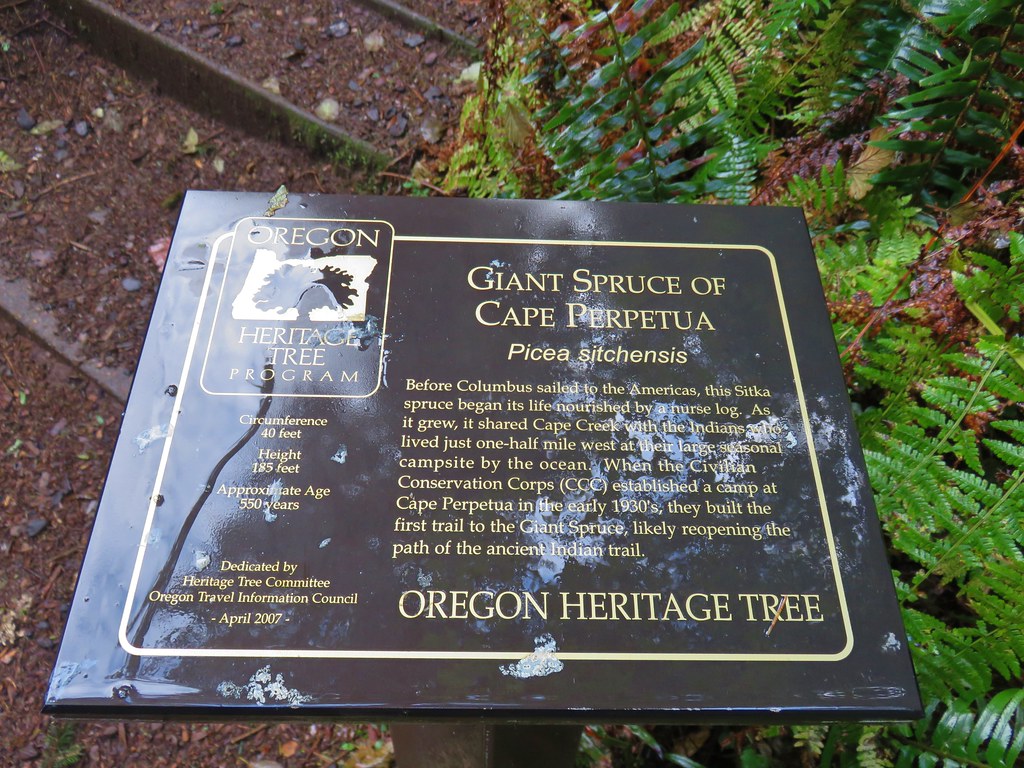
I mentioned that we had visited the stone shelter in 2013 but that had not been our first visit to the Cape Perpetua Scenic Area. In 2010 we had stopped here to visit the tide pools on the way home from a hike in the Drift Creek Wilderness (post). One thing we had not seen on either of our previous trips was the Giant Spruce, a nearly 600 year old State Heritage Tree.
With that goal in mind we took the St. Perpetua Trail downhill toward the Cape Perpetua Campground.
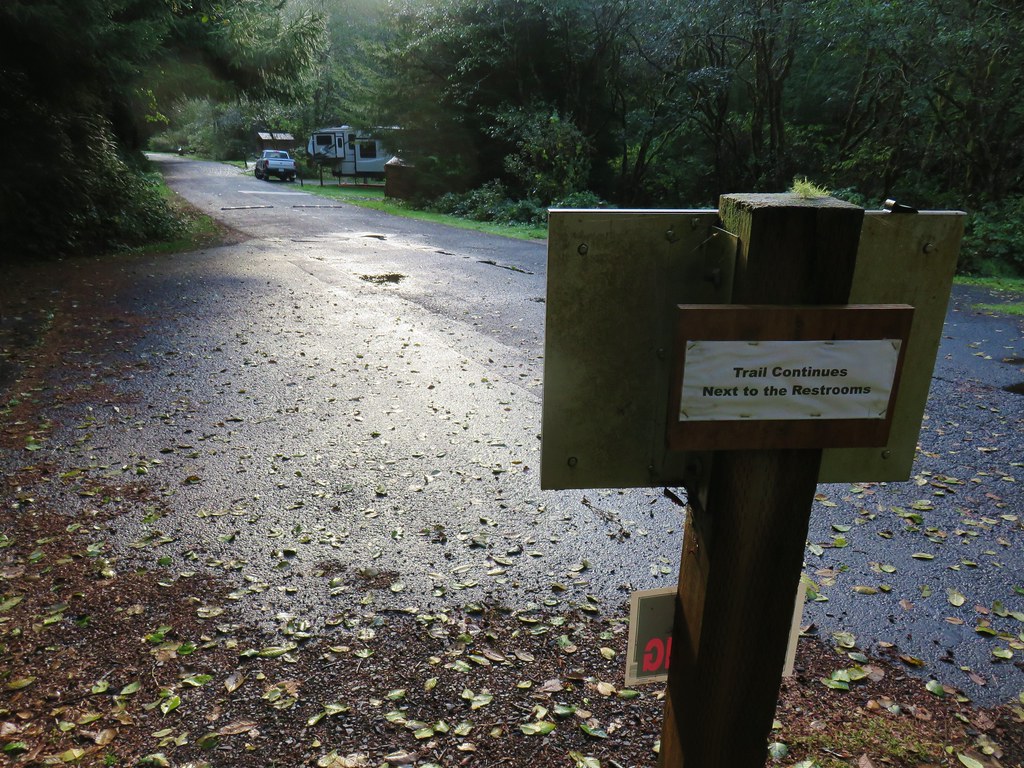
Shortly after crossing Overlook Road, which leads to a trailhead along the Whispering Spruce Loop, we arrived at the campground entrance road.
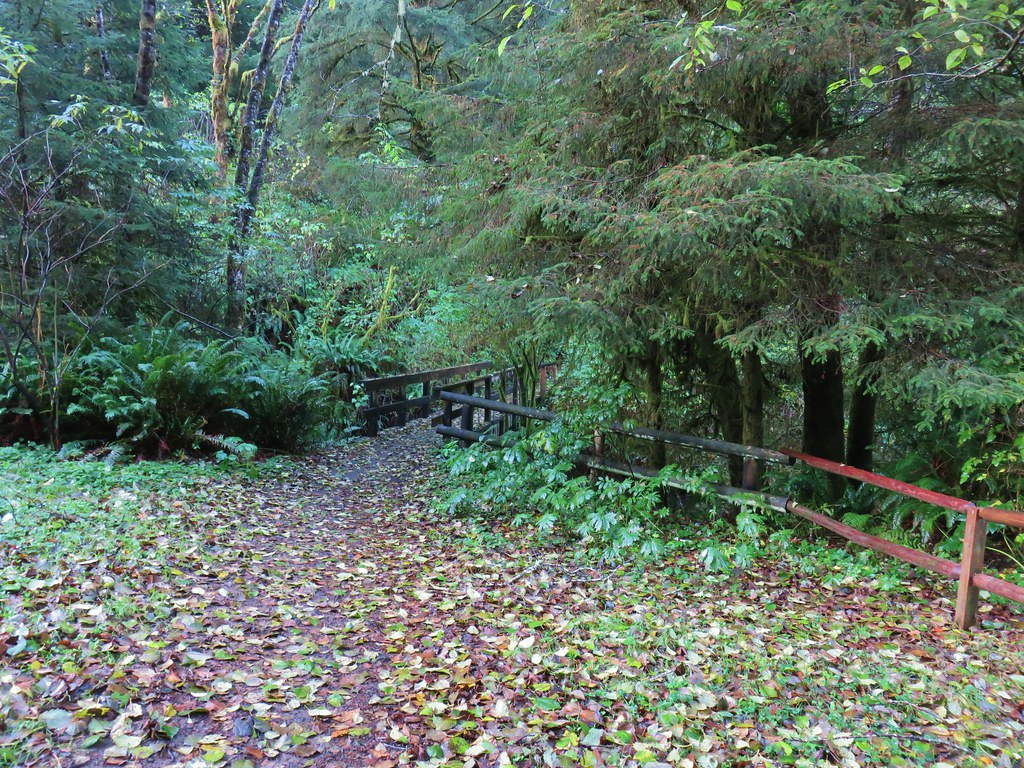
Behind the restrooms the trail continues across Cape Creek.
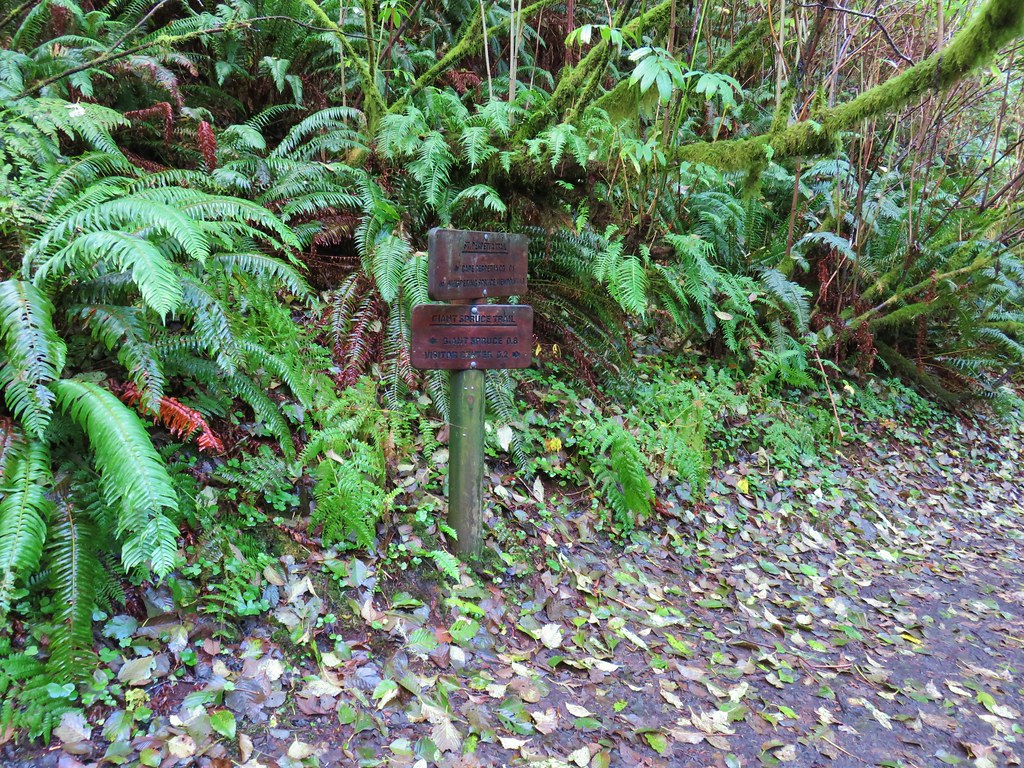
On the far side of the creek we turned left on the Giant Spruce Trail.
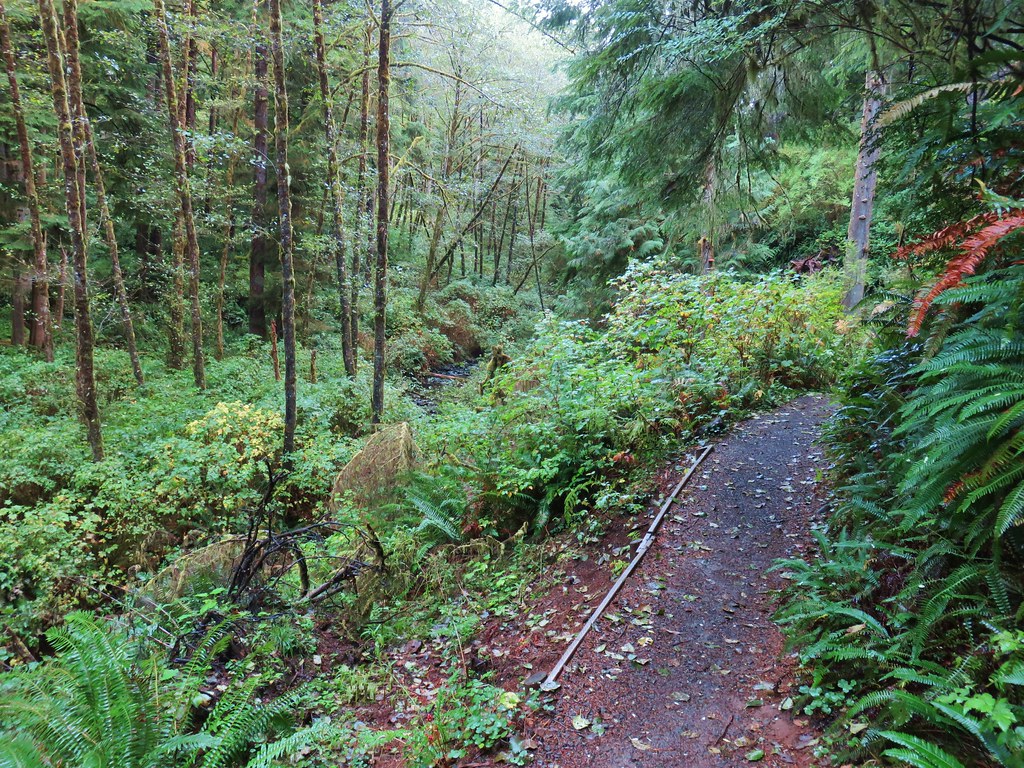
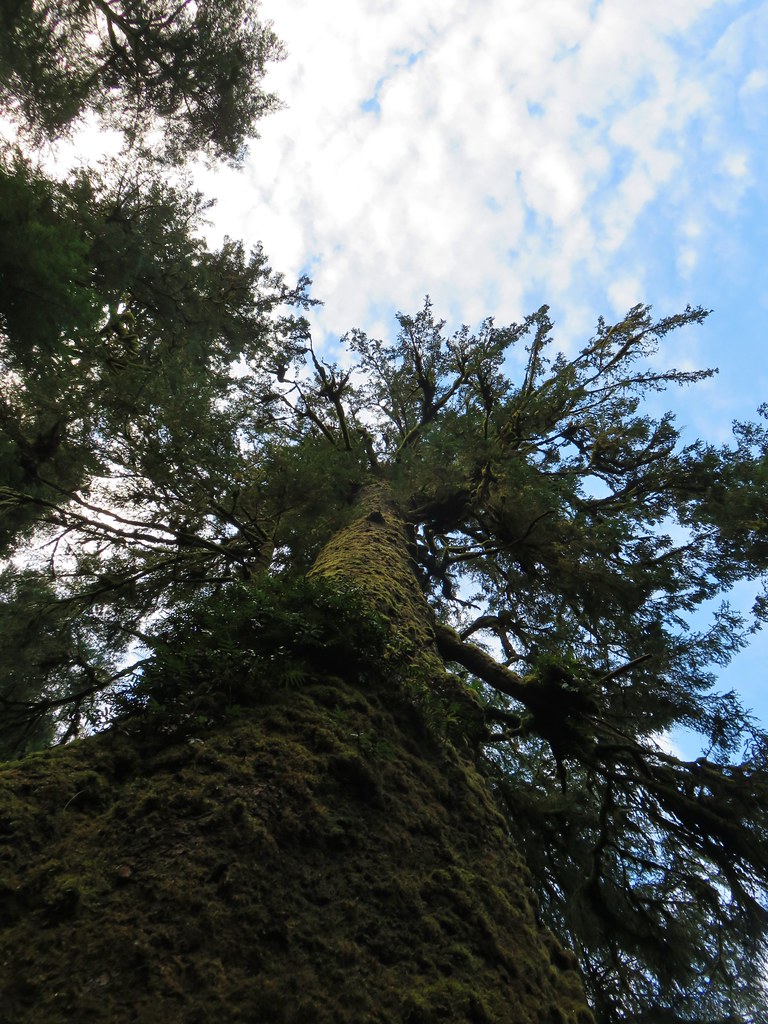
This trail followed the creek upstream for .8 miles to the 185′ high tree with a trunk circumference of 40′.
We are always awestruck when we visit any of the giant old trees in person. It’s nearly impossible to capture just how huge they really are in photos. In addition to their size their age always forces us to pause and try and picture the timeline of their growth. This tree would have likely been a sapling at the same time Christopher Columbus was lost looking for a route to Asia.
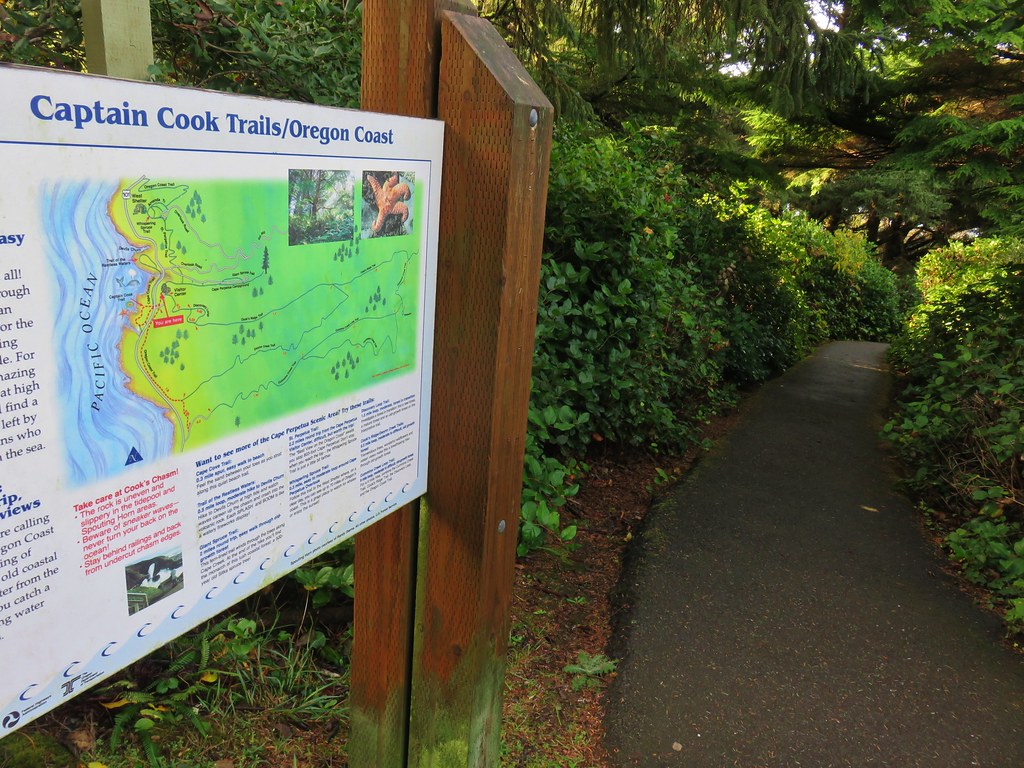
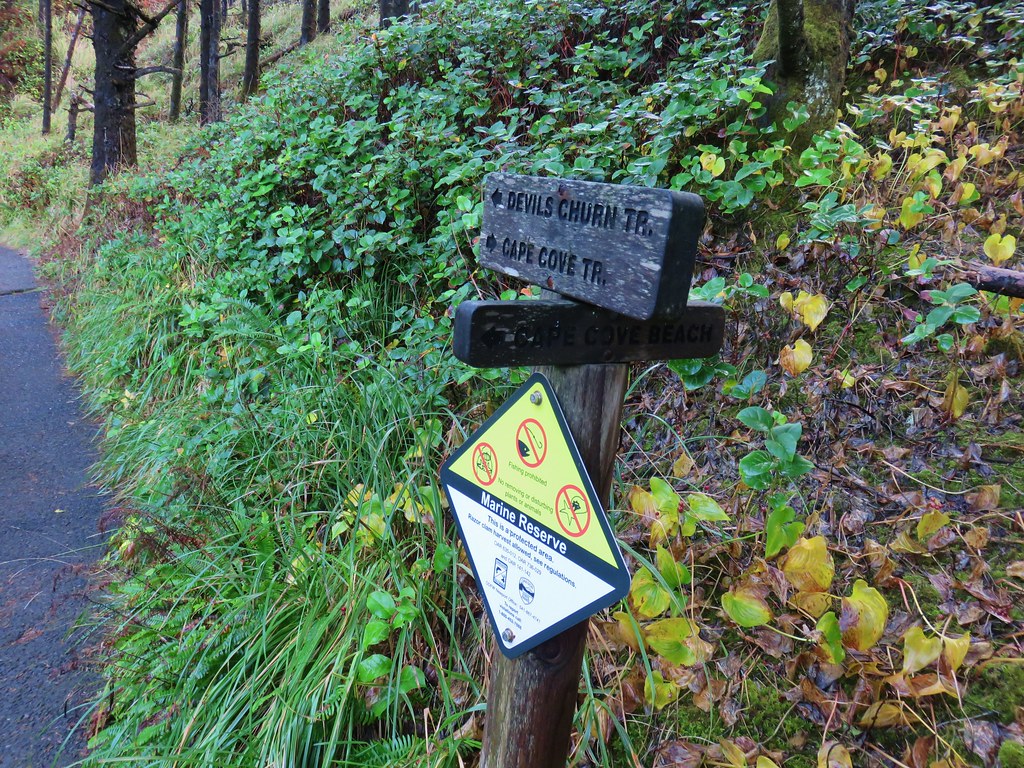
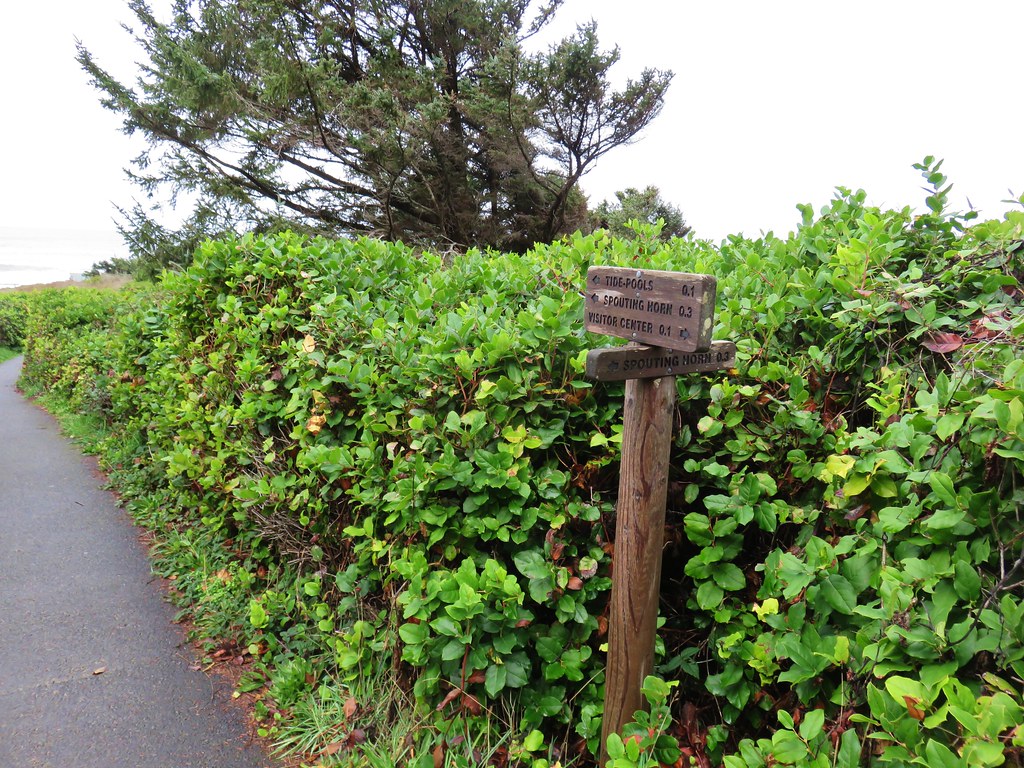
After visiting the tree we returned to the junction near the footbridge at the campground. The weather was holding nicely so we decided to check out the Spouting Horn and Devil’s Churn areas. We followed the Giant Spruce Trail .2 miles to the visitors center where we picked up the Captain Cooks Trails.
We followed this paved trail under Highway 101 to a viewpoint.
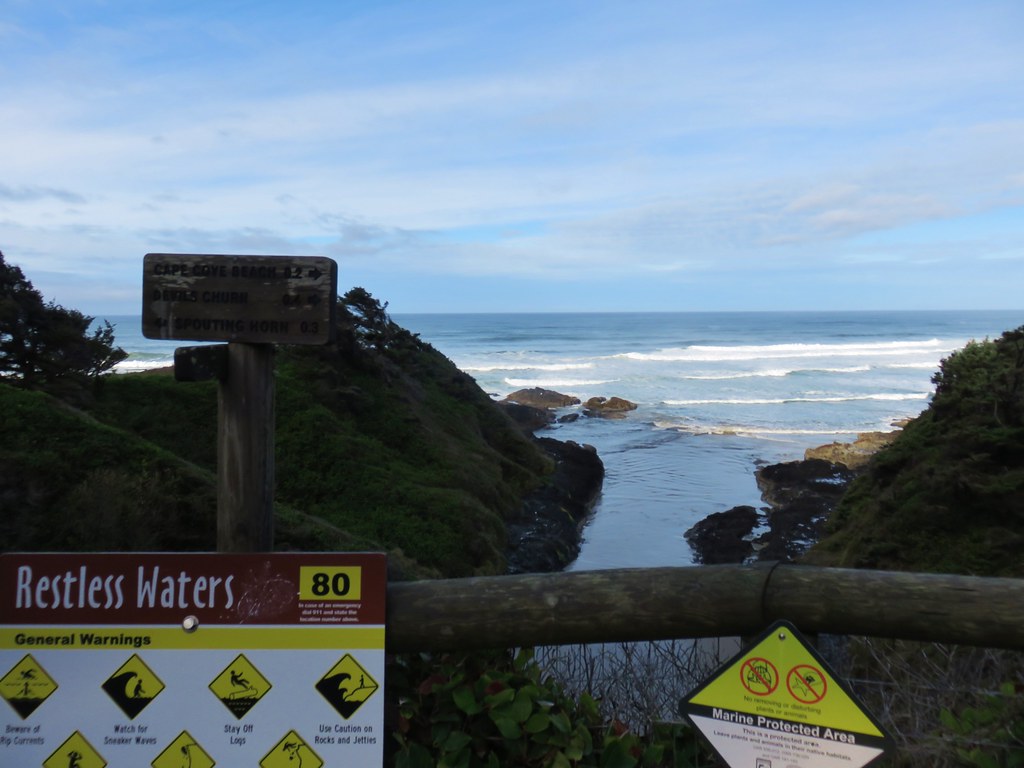
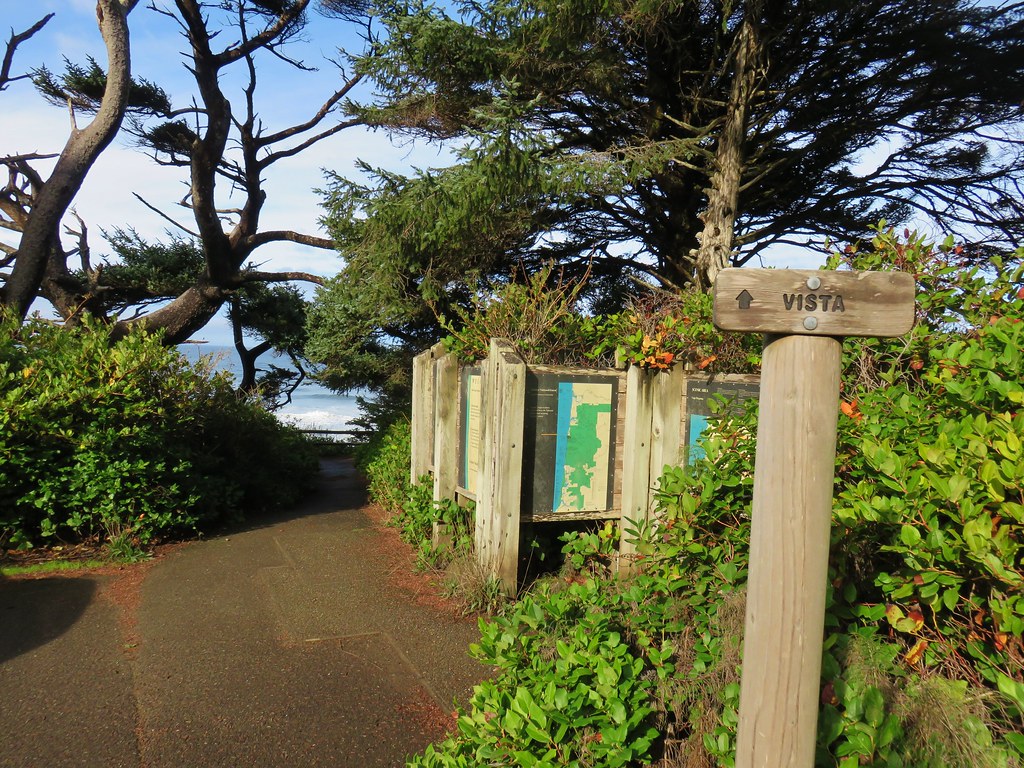
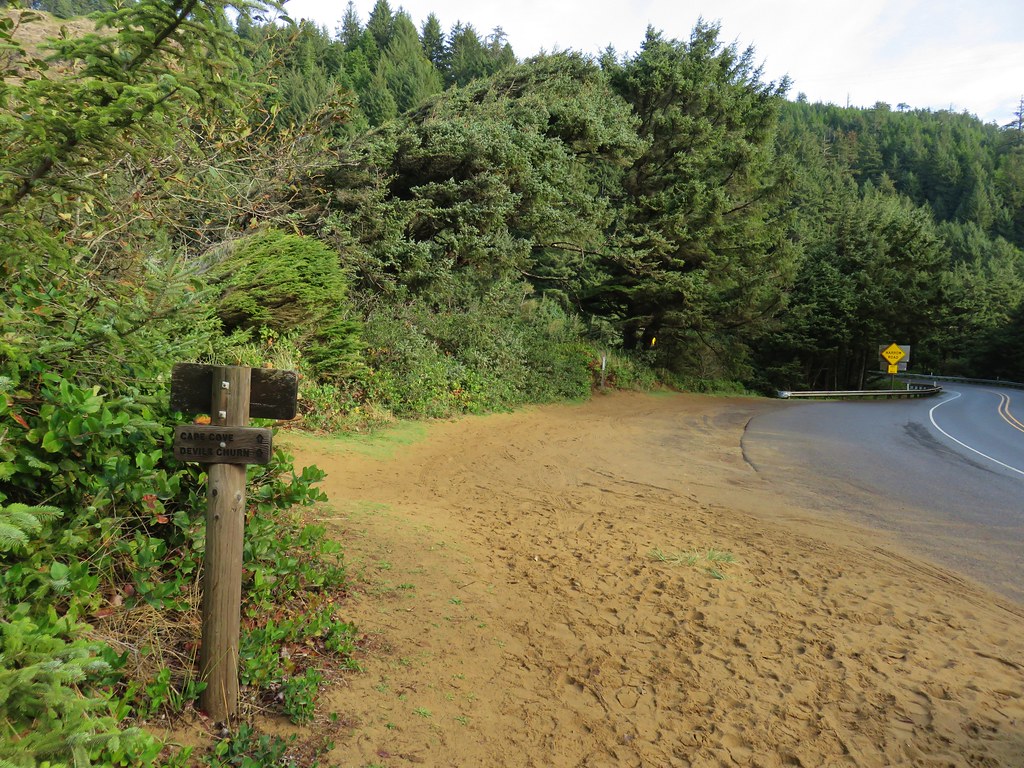
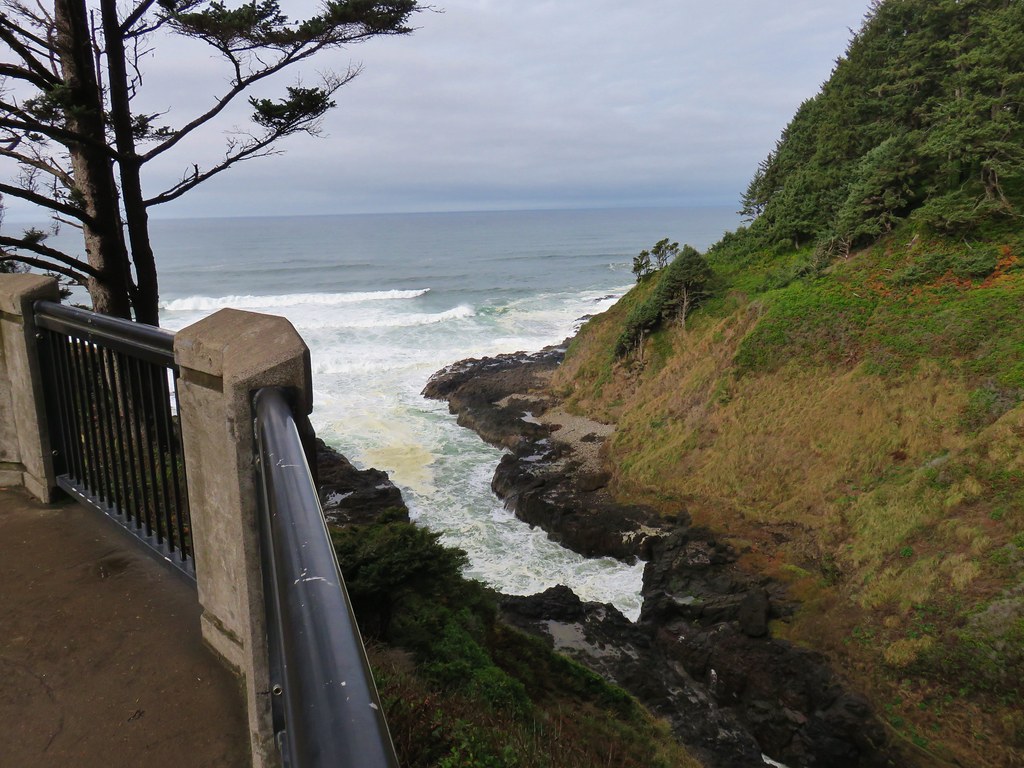
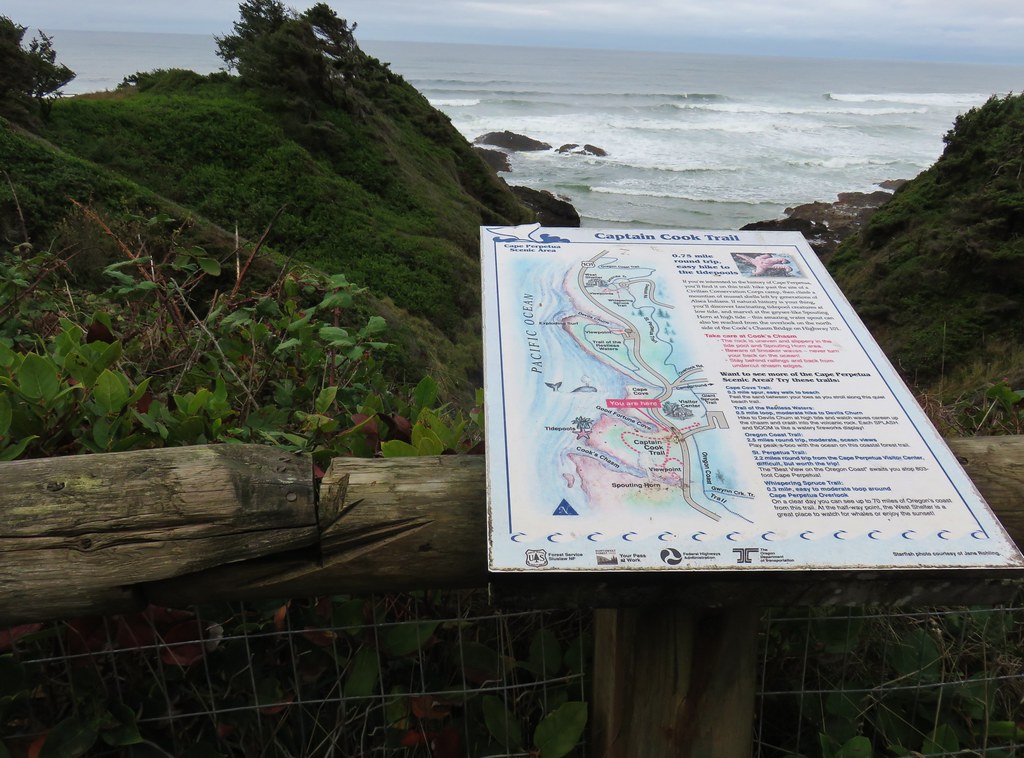
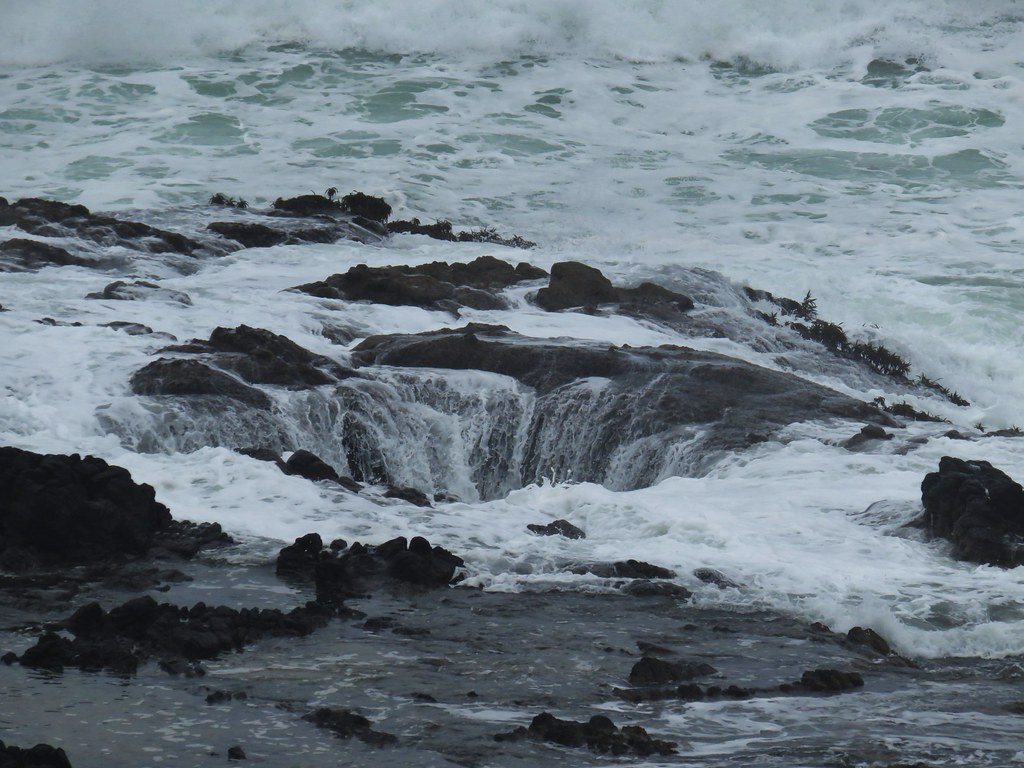
From the viewpoint the Captain Cook Trail went left making a loop with views of the Spouting Horn and Thor’s Well while the Trail of Restless Waters was to the right leading to Devil’s Churn. We decided to visit them in the opposite order of our 2010 visit and went right first. This trail briefly followed the shoulder of the highway past a small parking area and vista before dropping toward the ocean.
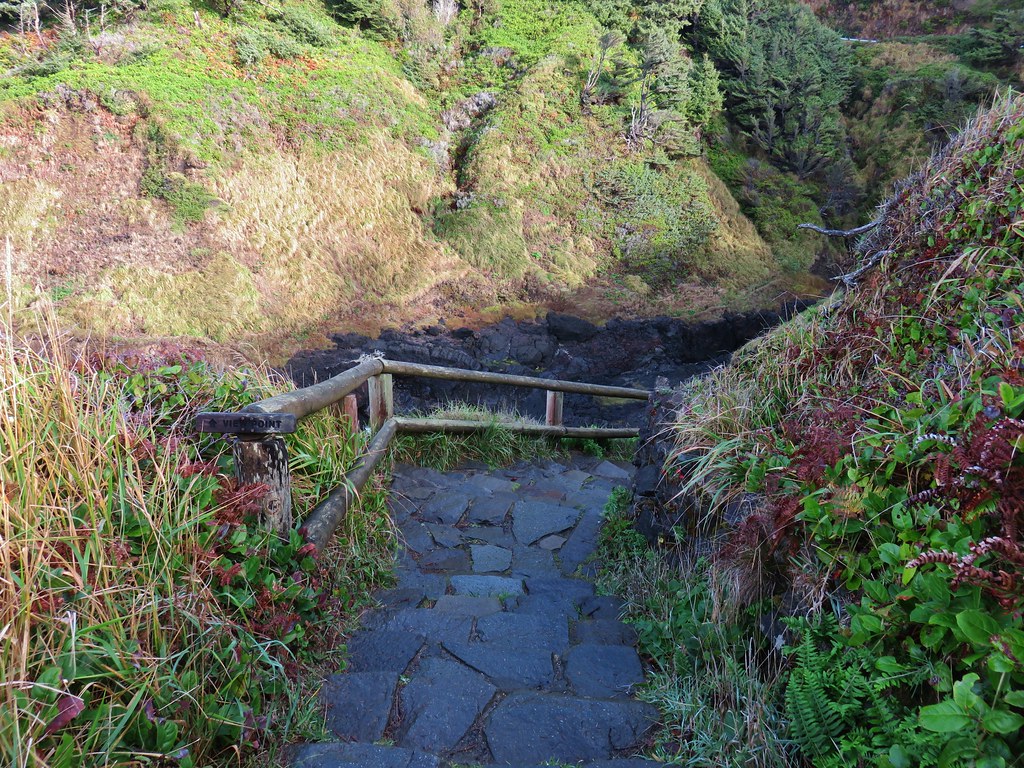
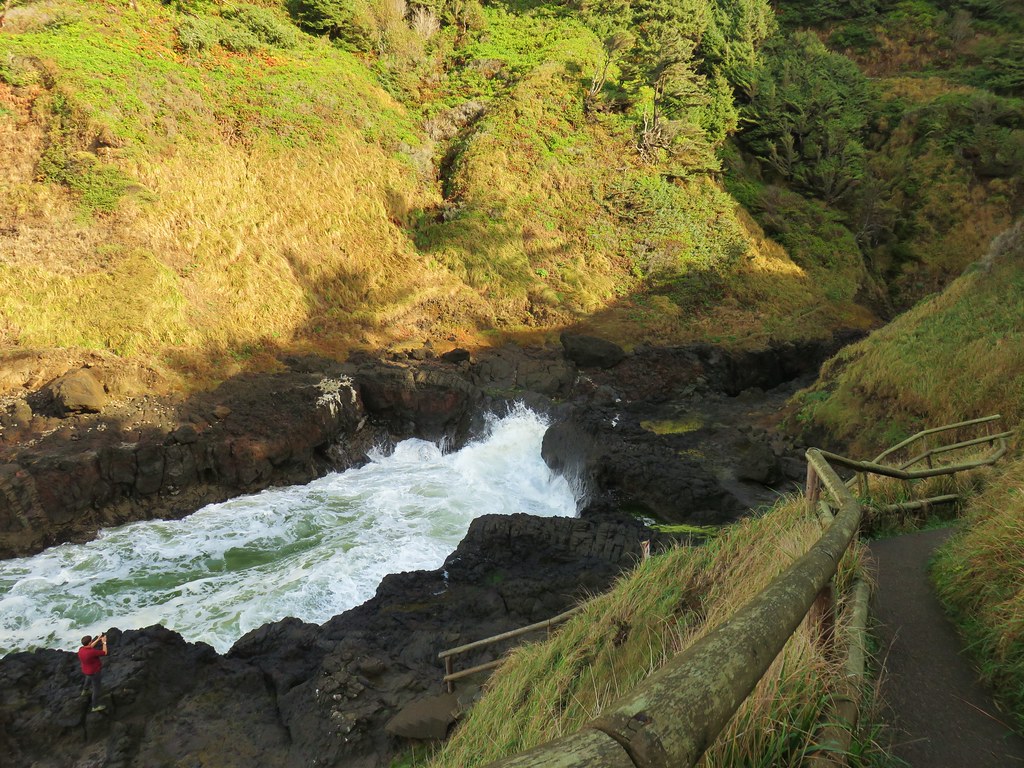
We crossed over Cape Creek and then followed the trail, keeping left at junctions, to a staircase down to Devil’s Churn.
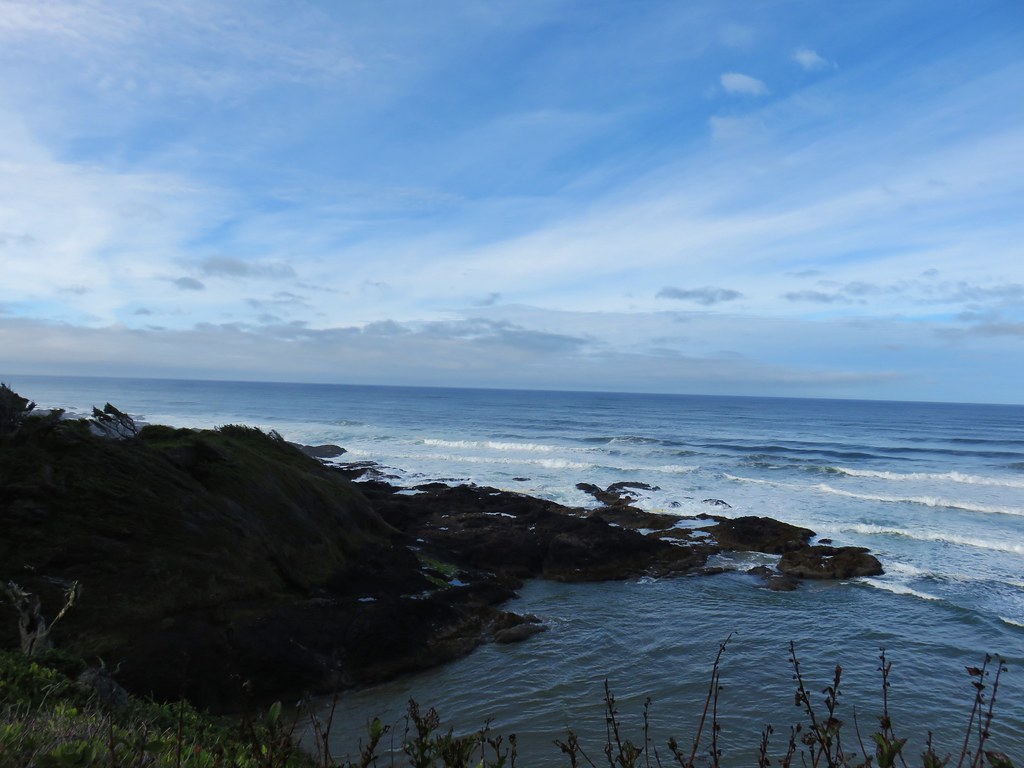
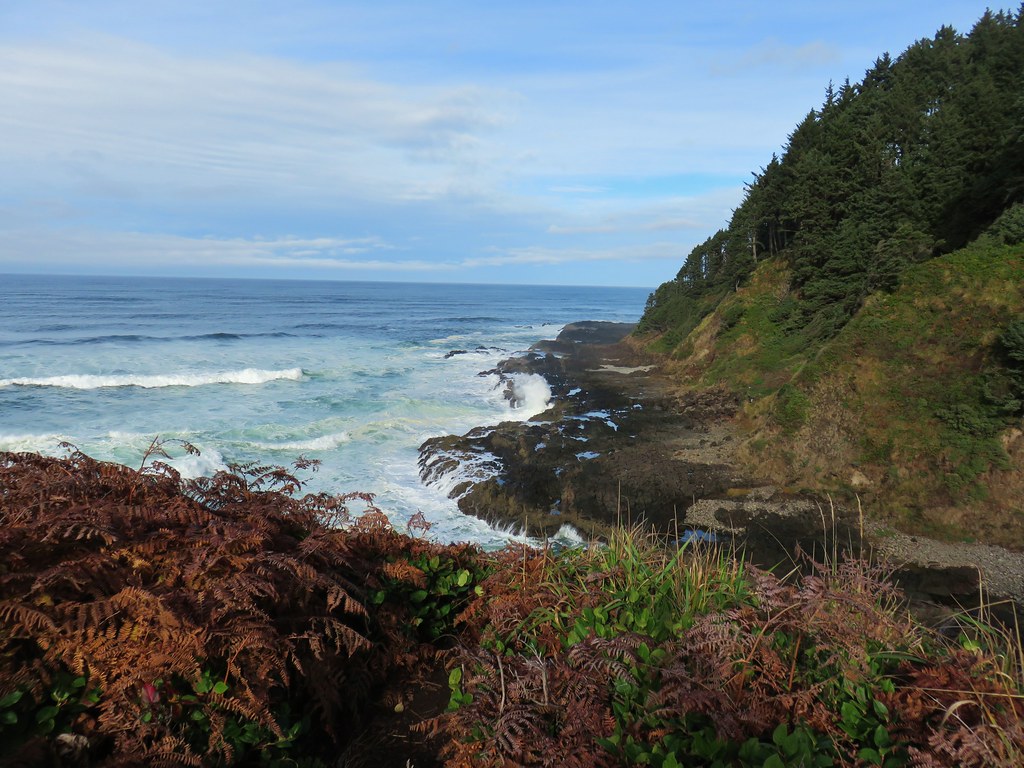
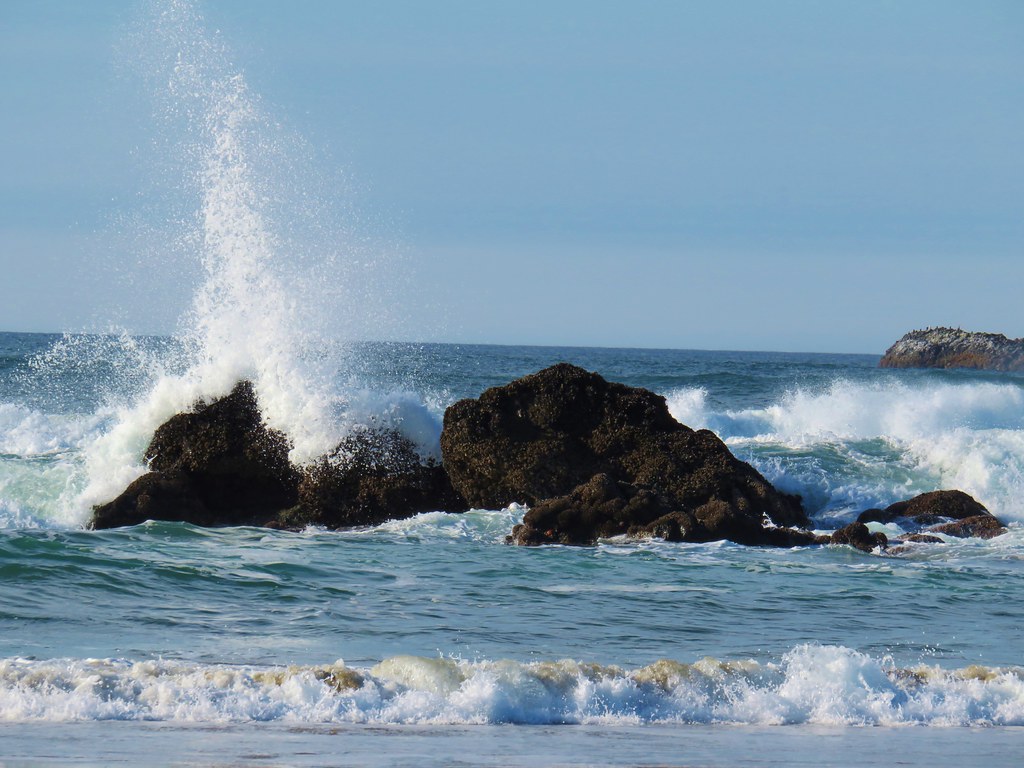
There was some decent wave action going on and we watched if for awhile.
The crashing waves didn’t seem to bother a lone cormorant that was hunting for food in the churn.
Speaking of food after we climbed back up the stairs we continued on a loop above Devil’s Churn to the Devil’s Churn Day Use Area where we wound up buying a lemon muffin from the concession stand there.
After splitting the muffin we completed the loop and returned to the Captain Cook Trail.
We stayed left at a fork in order to complete the loop clockwise.
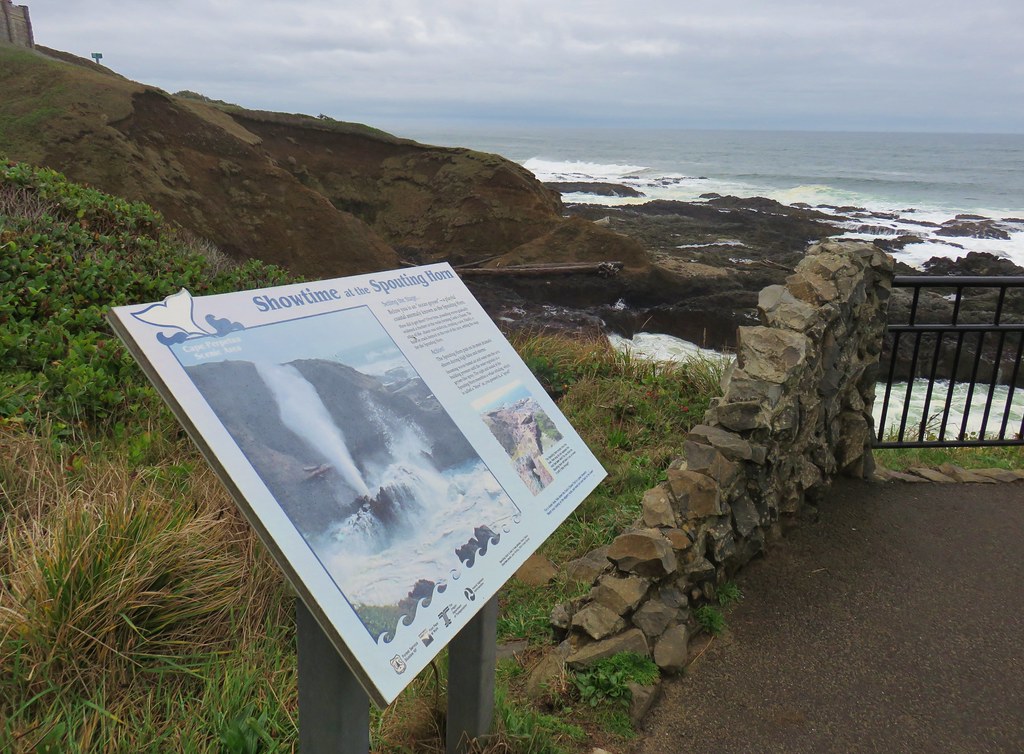
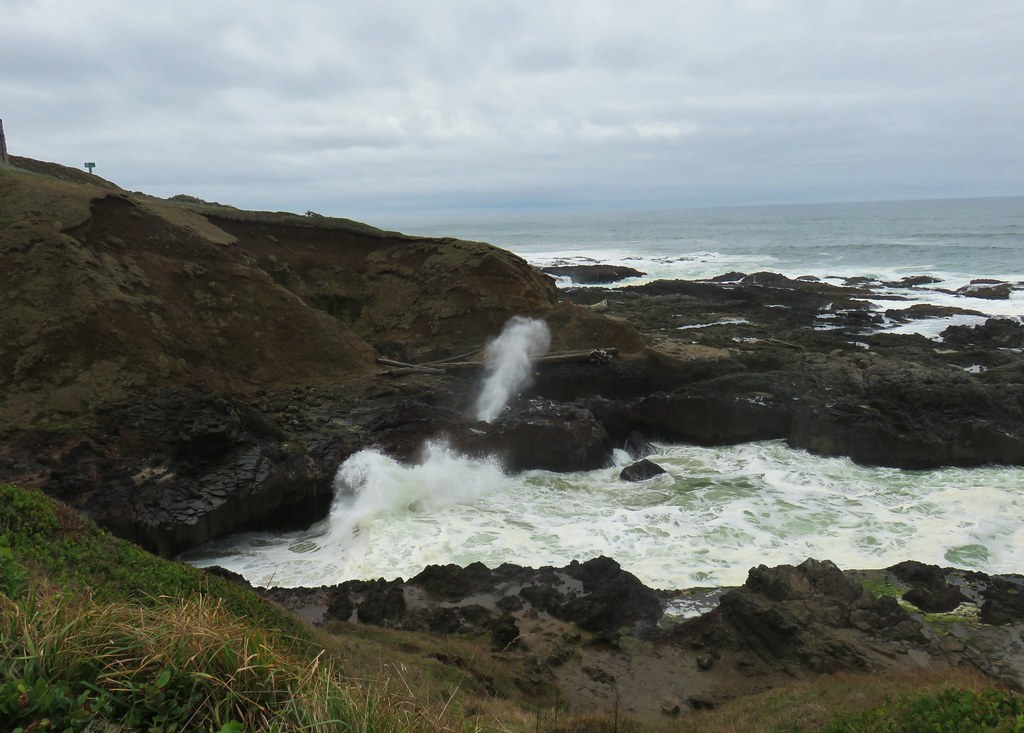
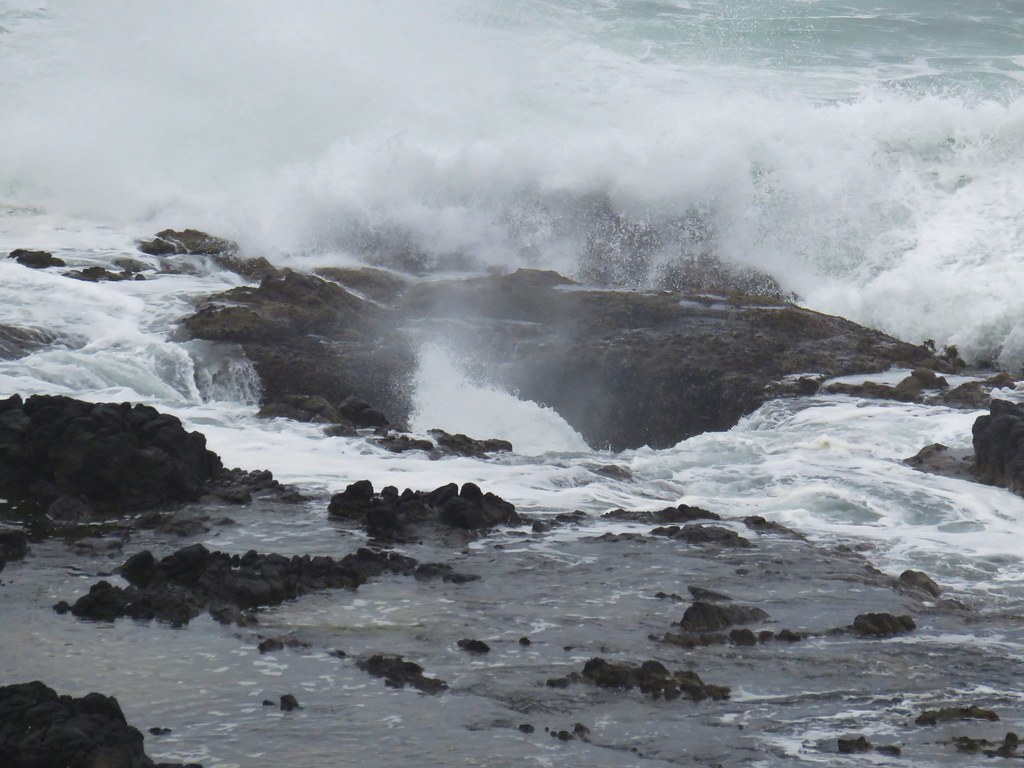
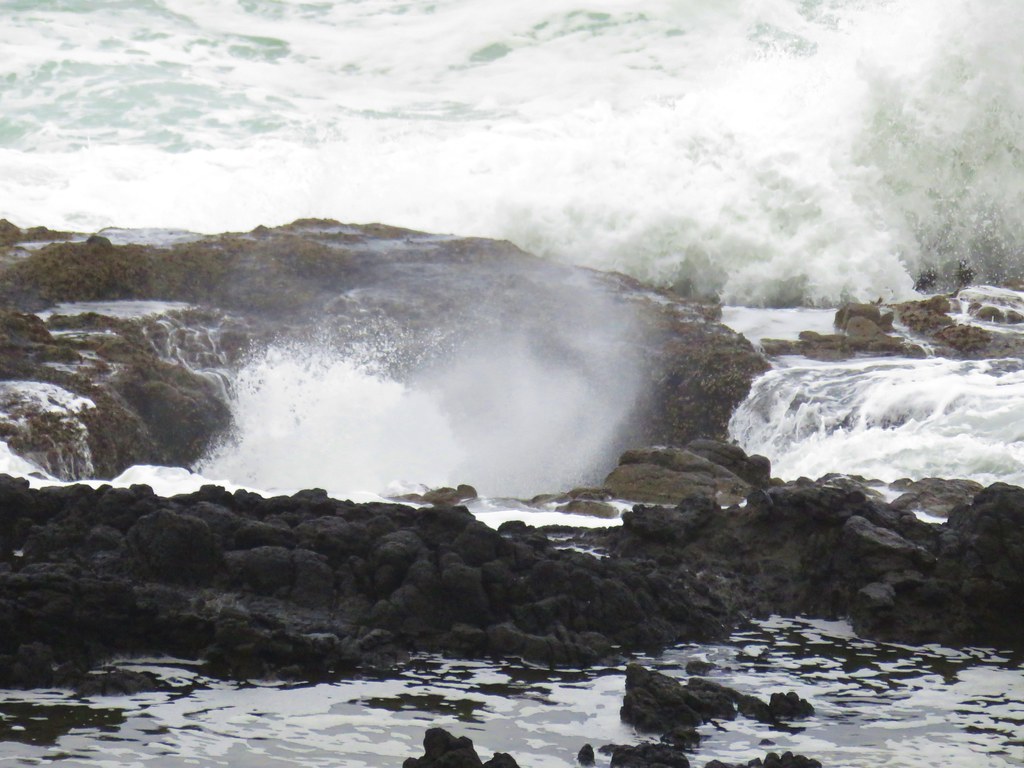
The tide had been out far enough on our previous visit that the Spouting Horn had not been spouting but today was different.
We also hadn’t even noticed Thor’s Well that day but this time we knew what we were looking for and the Ocean was more cooperative.
It was a bit of a zoo with people in the area though so we didn’t stay long and were soon heading back up the St. Perpetua Trail and past the shelter where the view had become much cloudier.
The rain mostly held off as we made the two and a quarter mile horseshoe through the forest along the ridges above North Cape Creek between the shelter and Amanda’s Statue.
By the time we reached the grotto, where we encountered a Boy Scout Troop, a steady light rain was falling. The rain continued to pick up as we made our way back to the Highway 101 crossing south of Yachats.
Overall it had been an excellent day, the rain had held off long enough for us to get some nice views and stay relatively dry without having to put on our rain gear. We got to finish up the trails in the Cape Perpetua Scenic Area and had unintentionally timed it better for the Spouting Horn and Thor’s Well. Oh and we also had that delicious lemon muffin mid-hike so yeah it was a pretty good way to end our 2018 hiking season. We do plan on getting a couple more hikes in this year but from November through April we drop down to just one outing (or so) a month. Happy Trails!
When we changed our plans from a backpacking trip in the Diamond Peak Wilderness to a long weekend in Bandon one of the more exciting prospects was being able to check off a visit to our 38th Oregon Wilderness Area – the Copper-Salmon Wilderness. We had attempted to visit that particular wilderness in 2017 but a washed out road denied us access to the Barklow Mountain Northeast Trailhead (post)
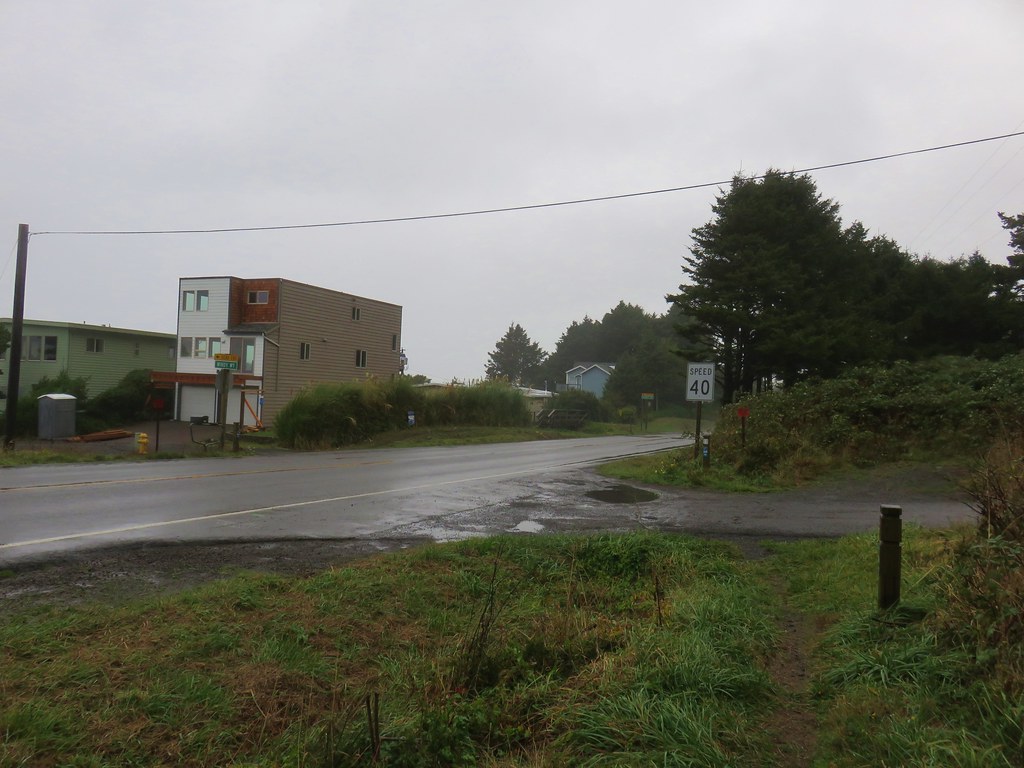
For this trip we would be using the Barklow Mountain West Trailhead. We used the Oregonhikers.com field guide entry here to reach the trailhead. The guide mentions that the road is prone to rockfall and slides and that it is best to wait for the dry months of Summer to attempt to reach the trailhead. Based on the conditions we encountered along the roads that is not an understatement.
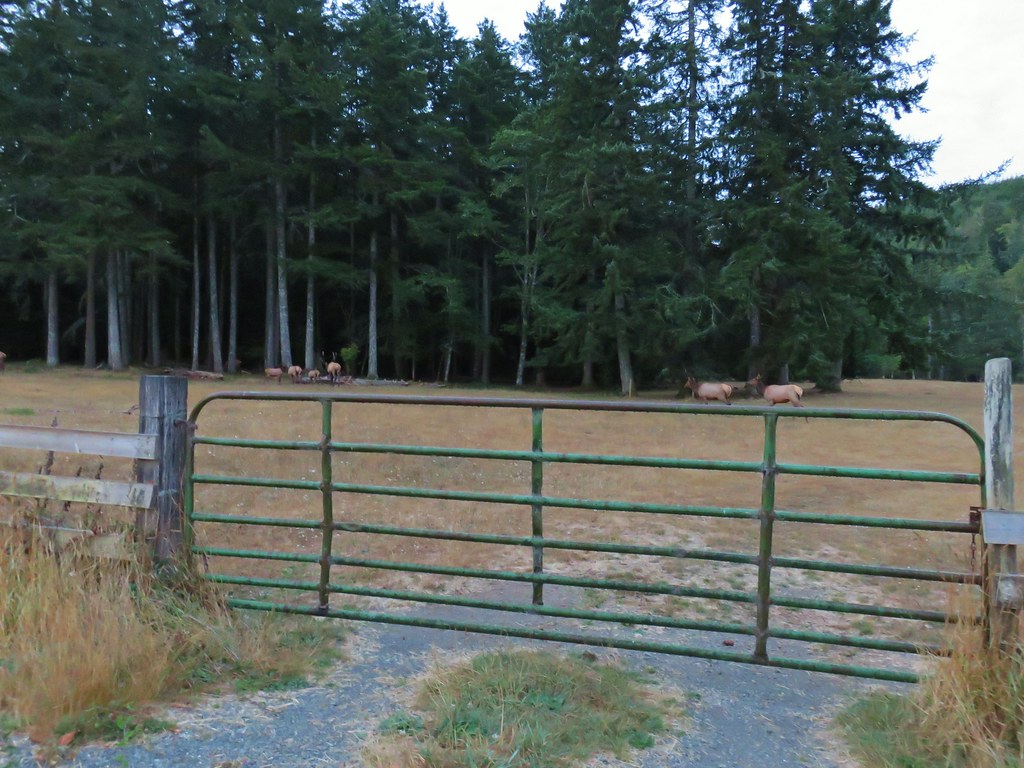
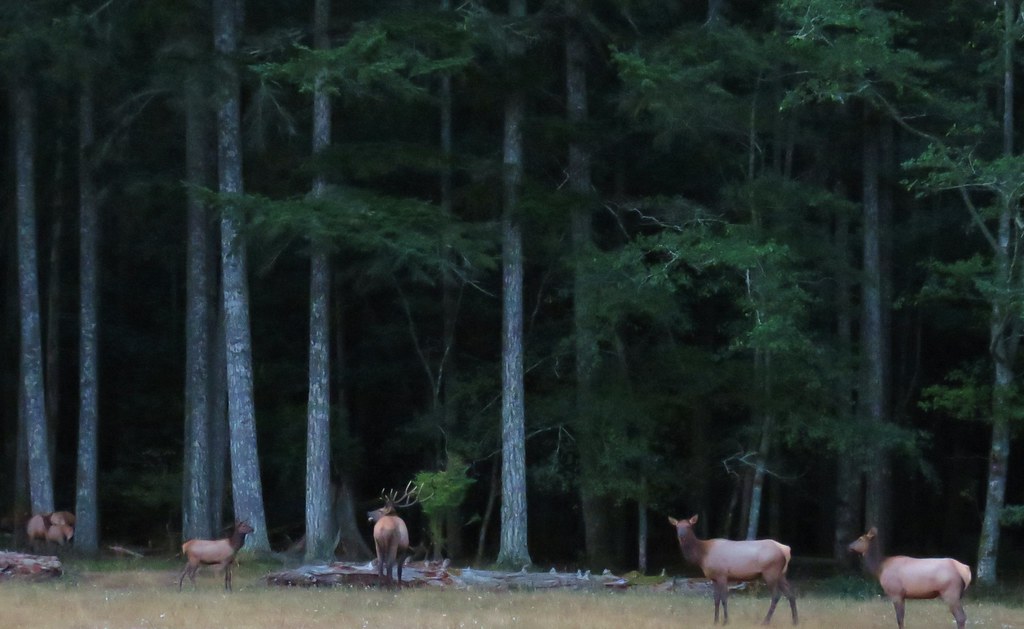
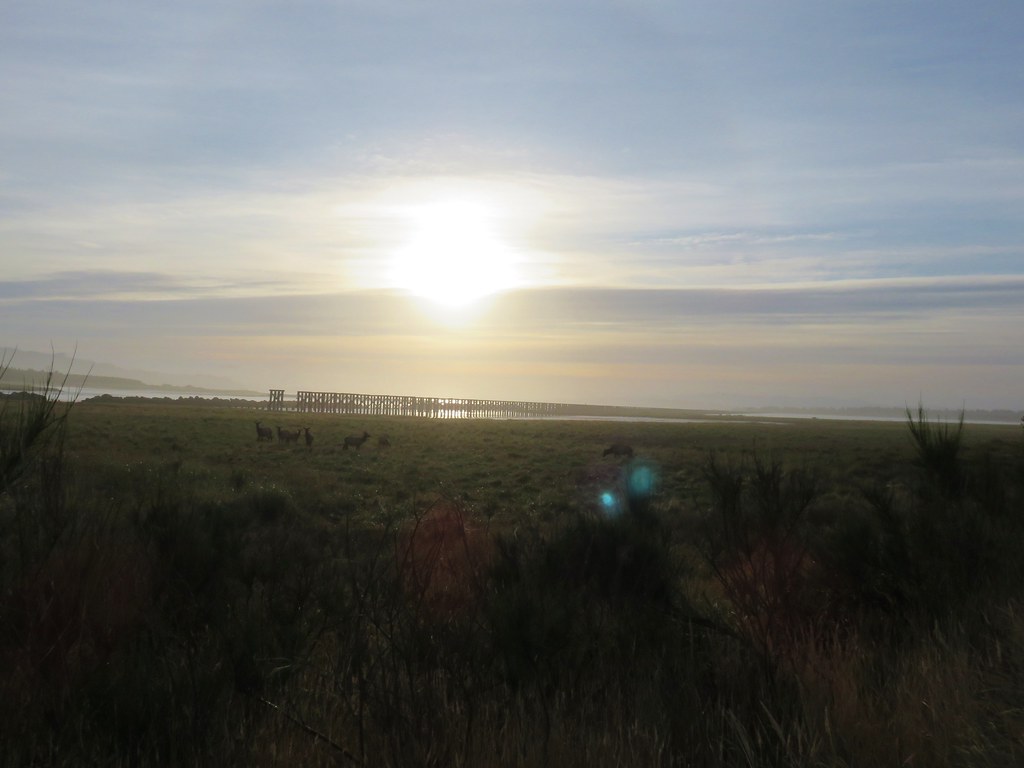
Prior to reaching the vehicular obstacle course that was the Forest Service Roads we spotted a small elk herd and a number of deer along Elk River Road. It was still a bit dark for pictures but we did our best from the idling car.
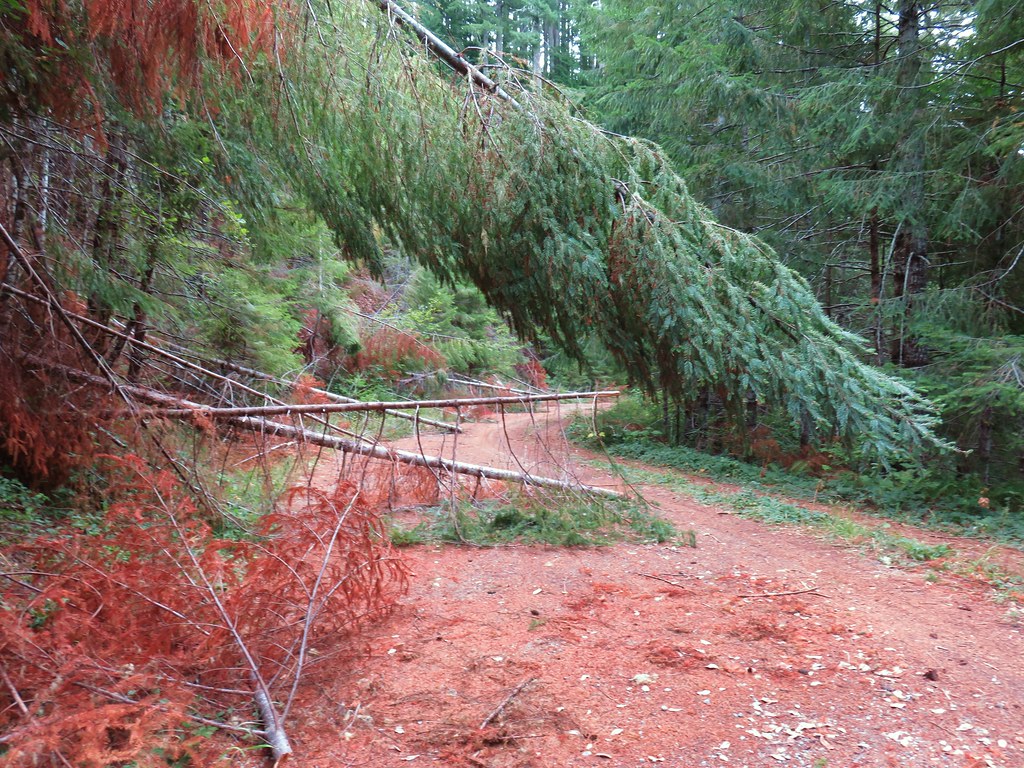
We parked at the small pullout that is the trailhead after a long drive (time wise) that included stopping a couple of times to remove small trees from the road and also at the junction with FR 390 because the 390 post was in the center of a fork and we didn’t want to be on that road but we couldn’t tell which one the post was referring to. (Hint – The left fork was FR 390 so we went right.) Barklow Mountain West Trailhead
The Barklow Mountain Trail dropped slightly from a closed road bed and quickly entered the Copper-Salmon Wilderness.
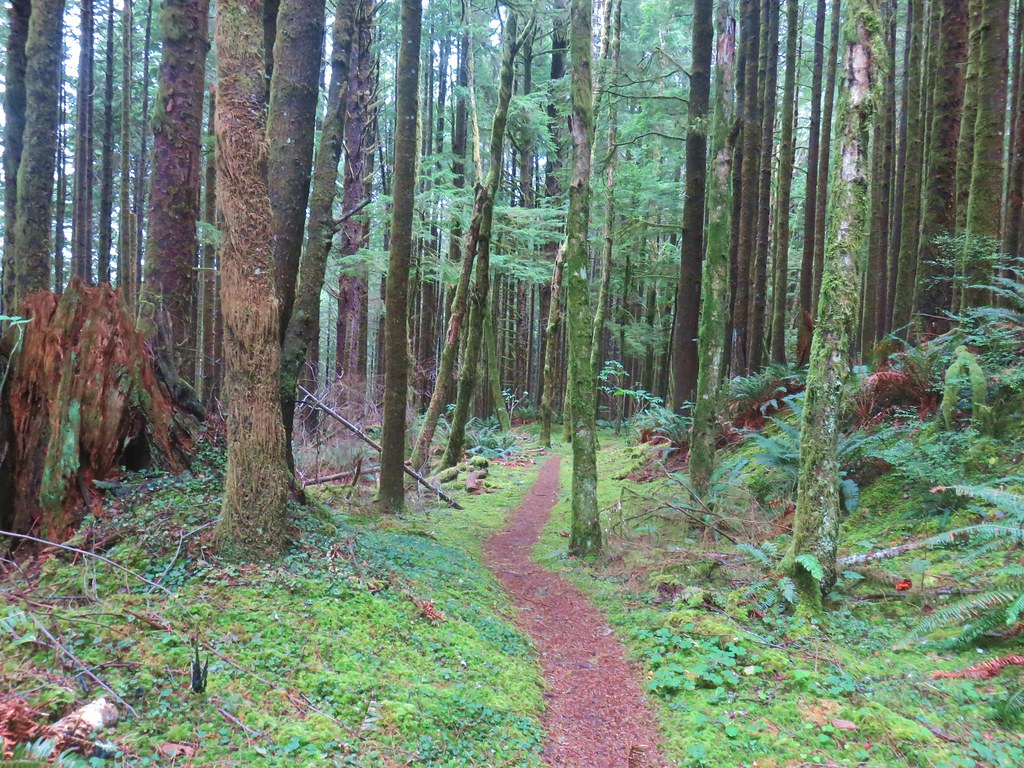
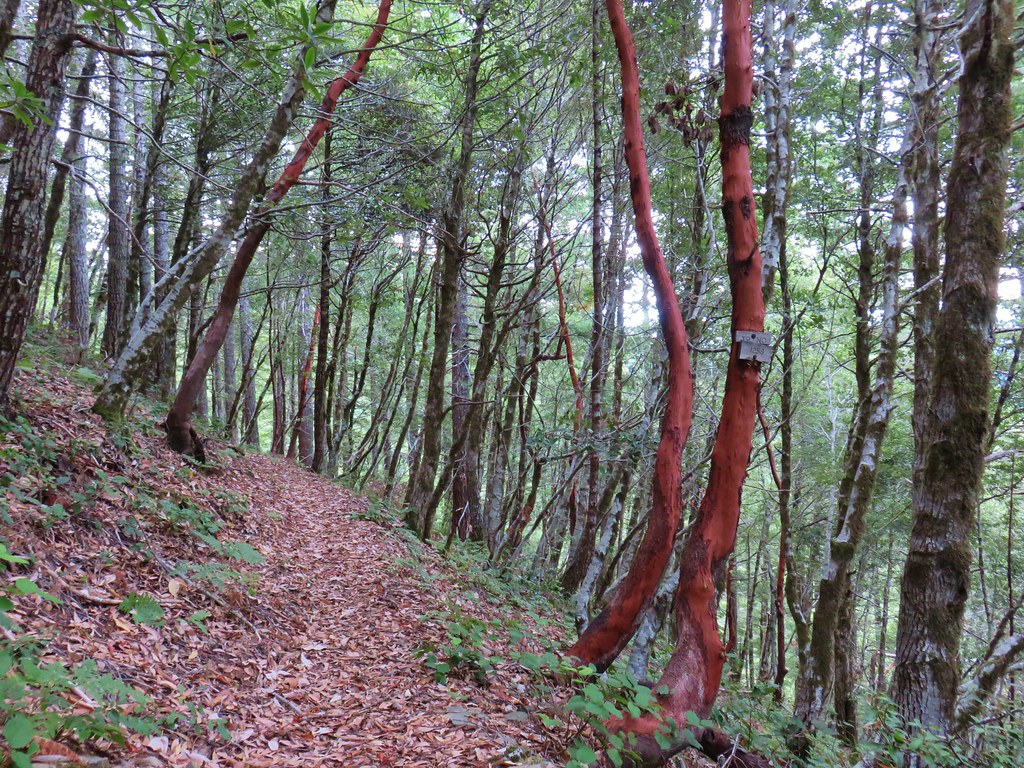
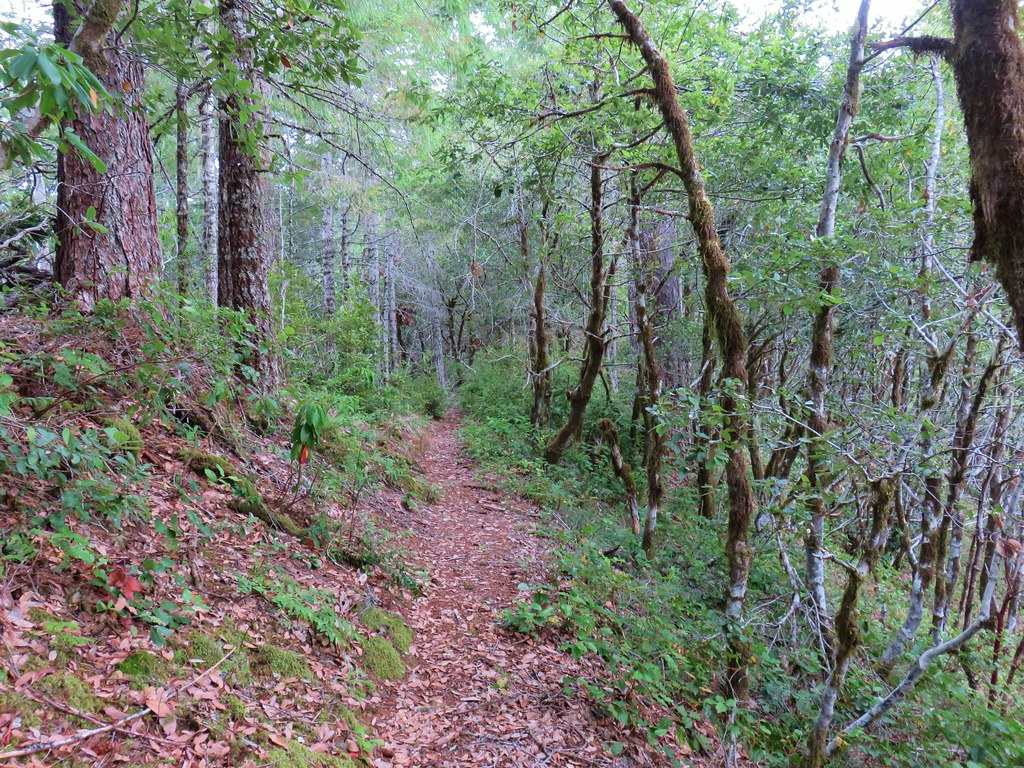
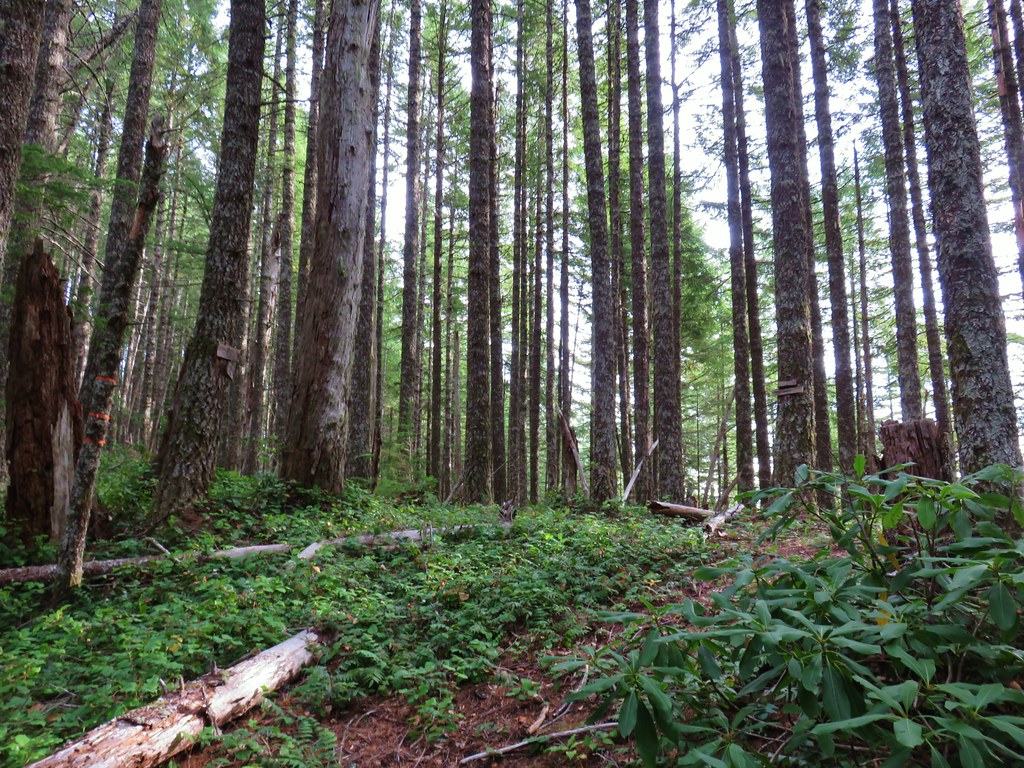
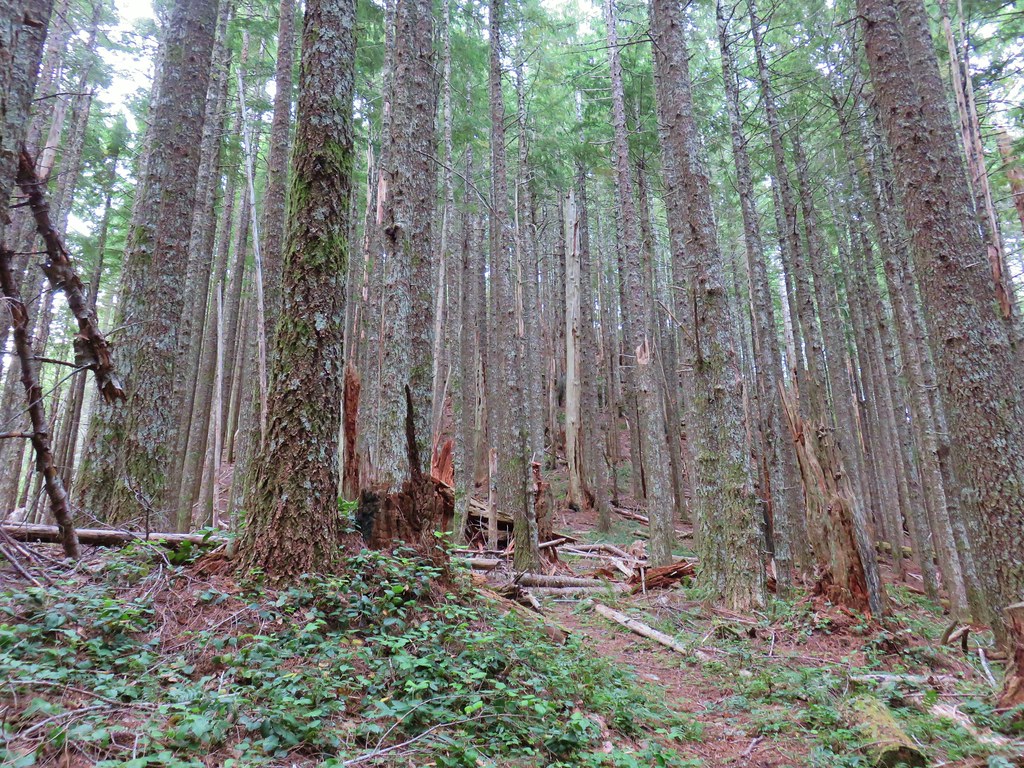
The forest along the trail was a mix of tanoak and madrone and some sections with fir and pine.
Not unlike the roads to the trailhead there were a few obstacles to maneuver around.
After a mile and a half of climbing, the trail arrived at a saddle junction.
The trail to the left led to Johnson Creek Road.
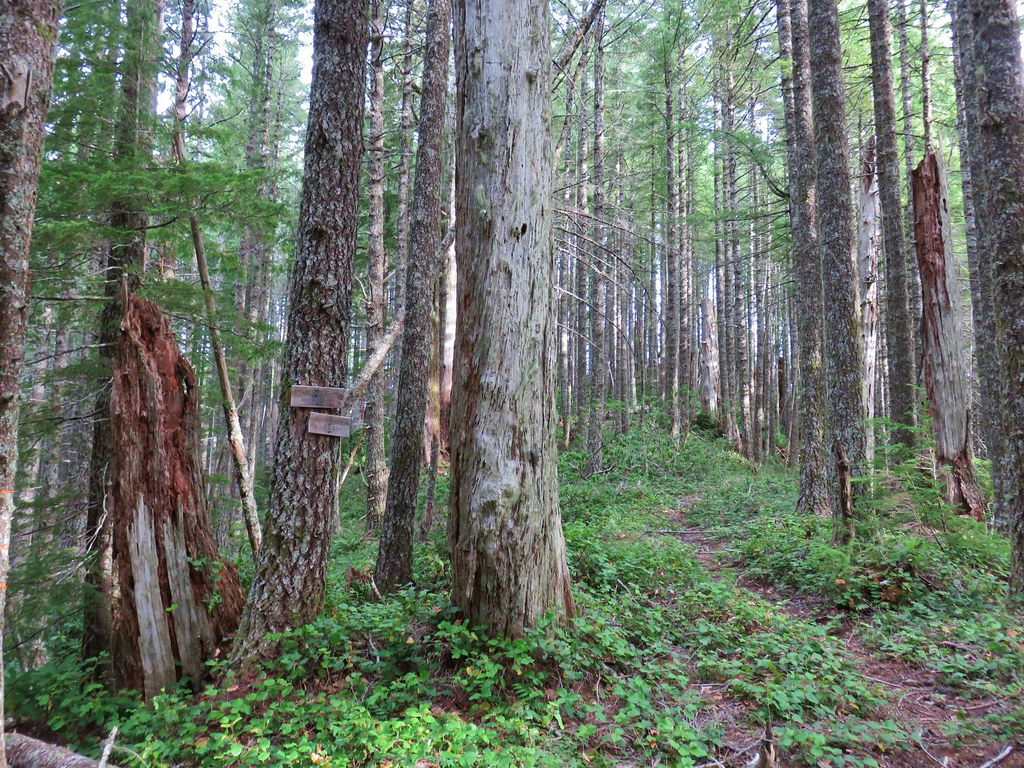
The trail to the right was the one we wanted. This trail would lead up up to the old lookout site atop Barklow Mountain.
Approximately .3 miles beyond the junction we came to an unmarked side trail heading downhill to the right.
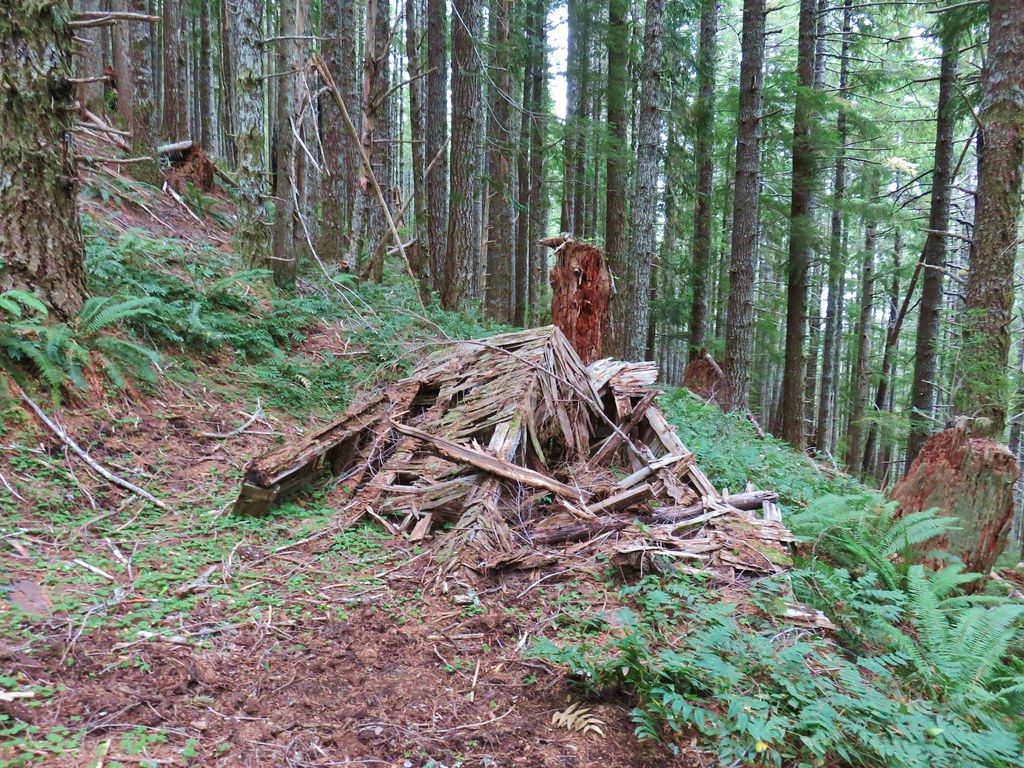
This short spur trail led down to the site of a now collapsed shelter.
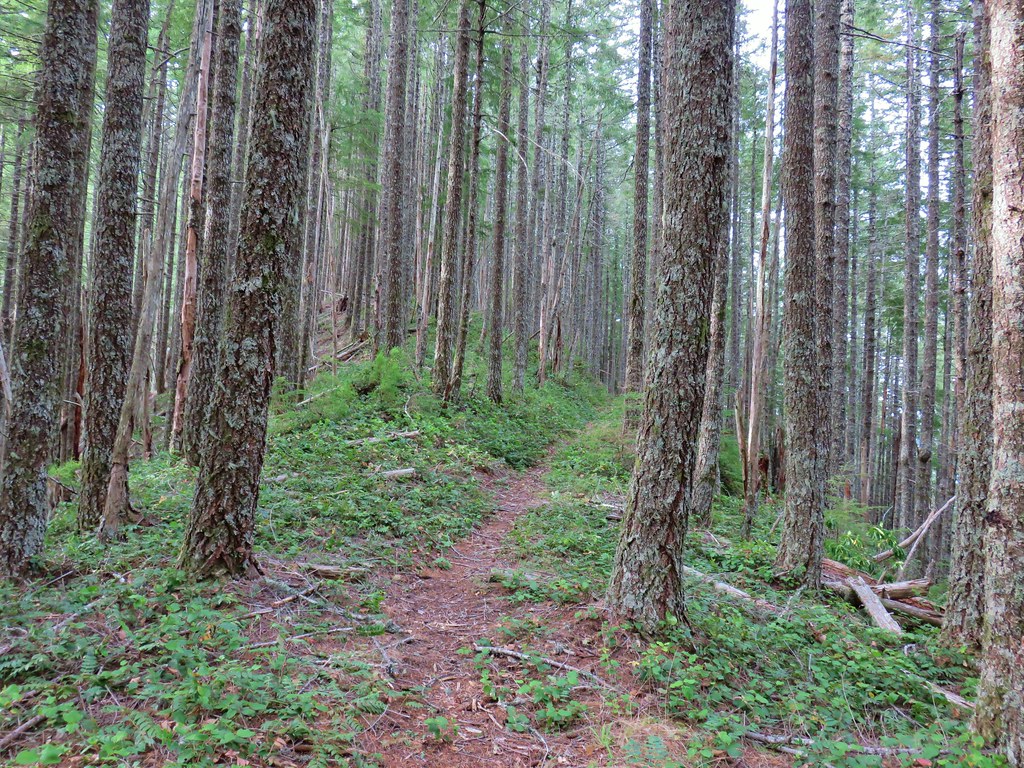
Beyond the shelter the trail steepened a bit as it wound beneath Barklow Mountain.
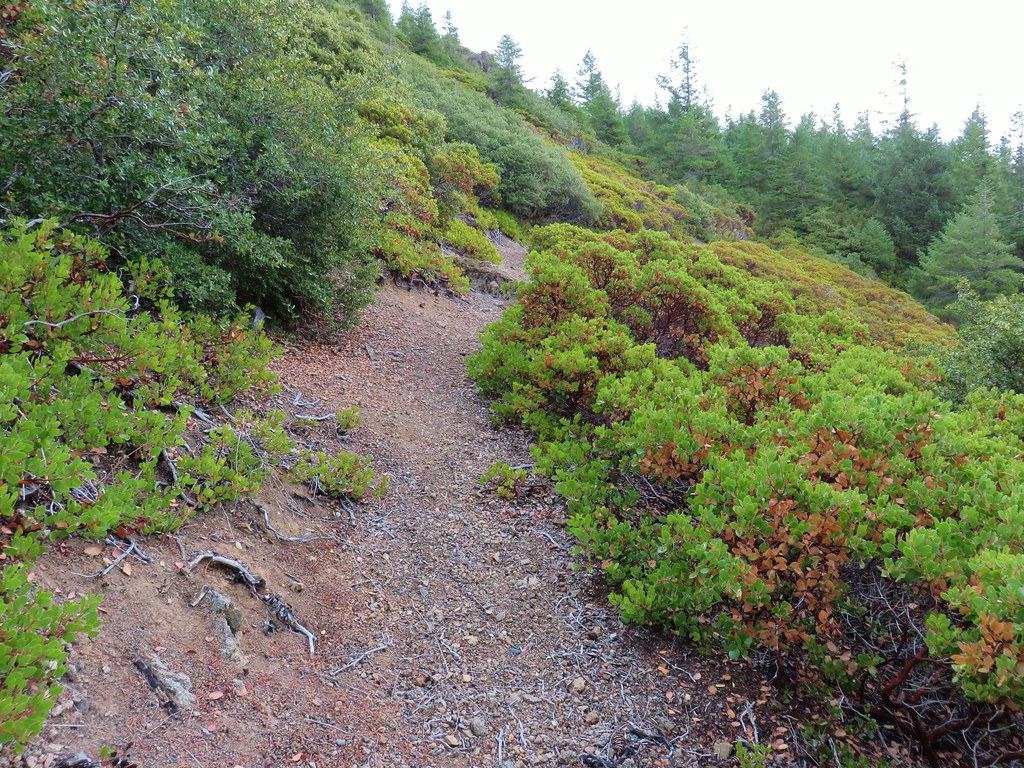
We passed through a patch of manzanita where we had a nice view south of nearby Copper Mountain.
A total of .4 miles from the old shelter we arrived at an unsigned junction on a ridge. Here we turned left to visit the lookout site.
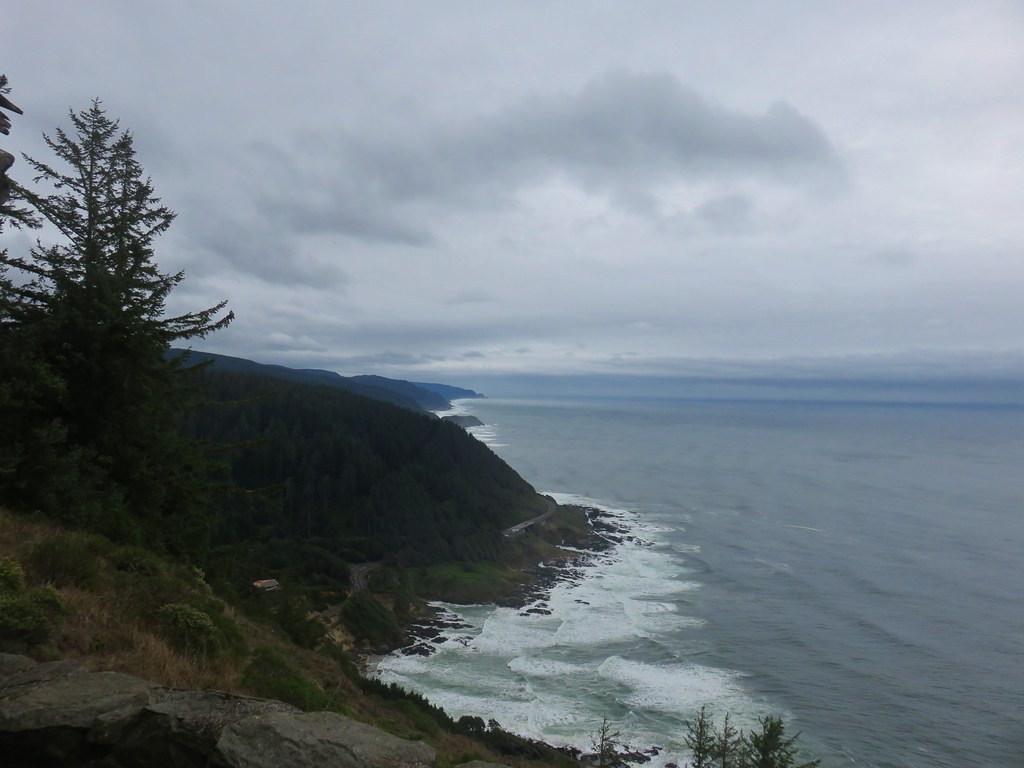
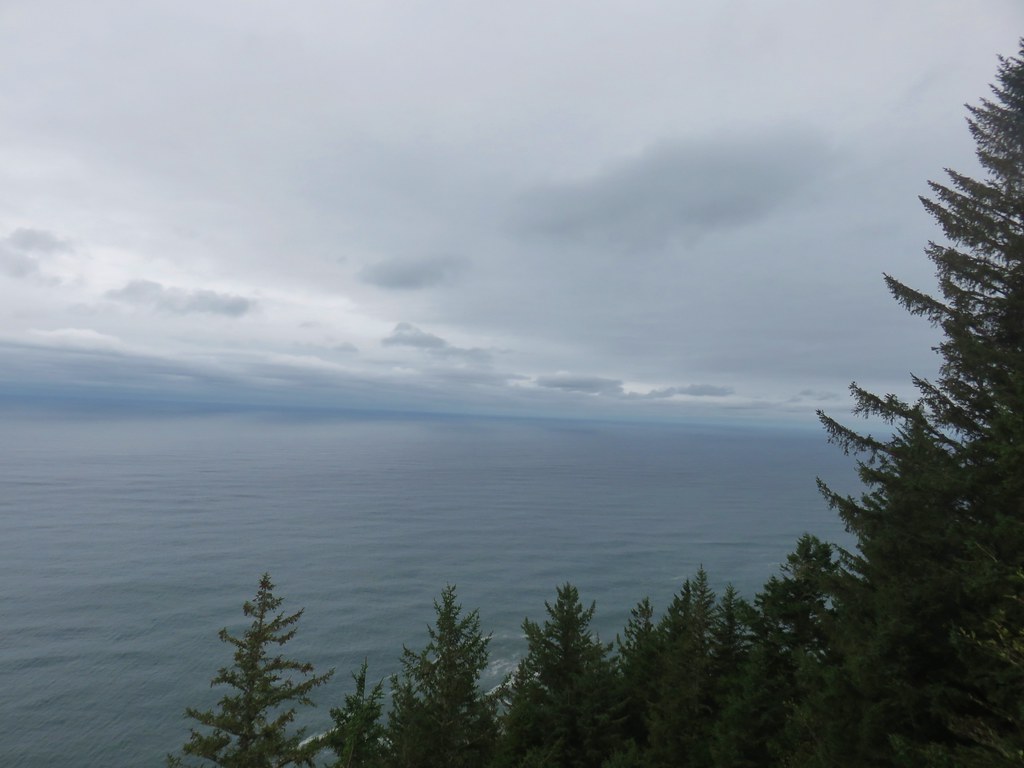
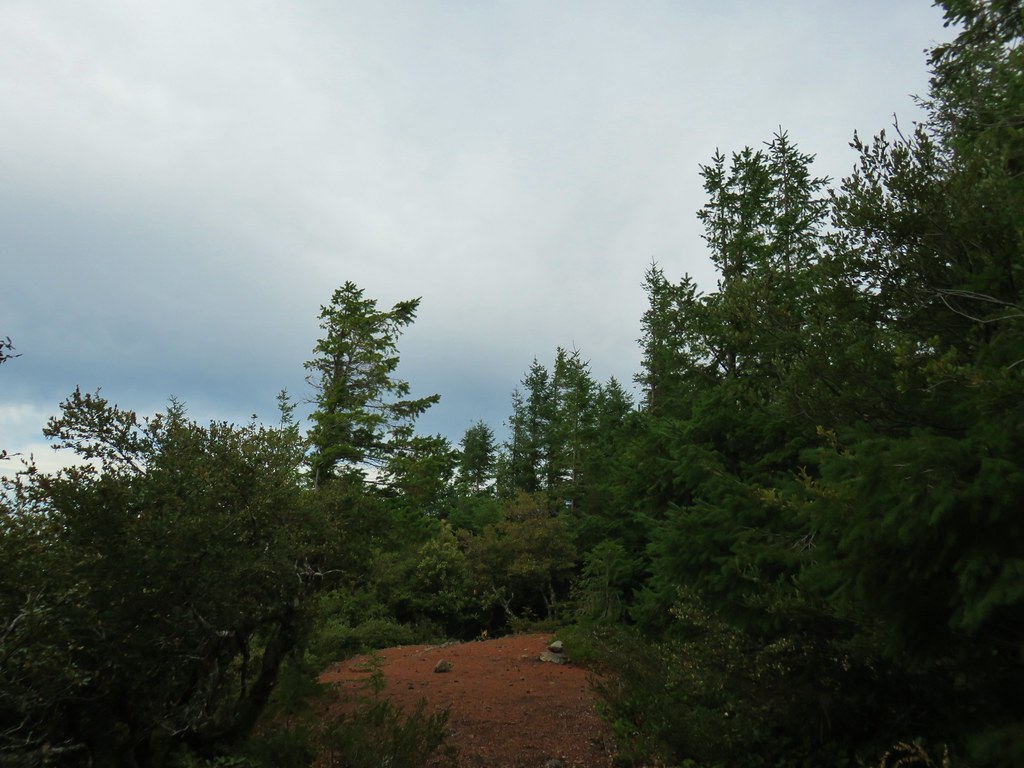
From the lookout site we could barely make out the Pacific to the SW along with Grassy Knob (post). Grassy Knob is on the horizon just to the left of the near trees.
Copper Mountain from the lookout site.
After a break we headed back to the car and navigated the obstacle course again. Fortunately we did not encounter any other cars until we were clear of the mess. We then drove back to Bandon, passed through town, and continued north on Highway 101 for three miles to the signed turn for Bullards Beach State Park.
We parked at the beach access parking lot which is located 1.3 miles from the highway.
Our plan was to hike a clockwise loop along the Coquille River, the north jetty, and the beach. From the parking lot we headed inland on a paved path signed for the campground.
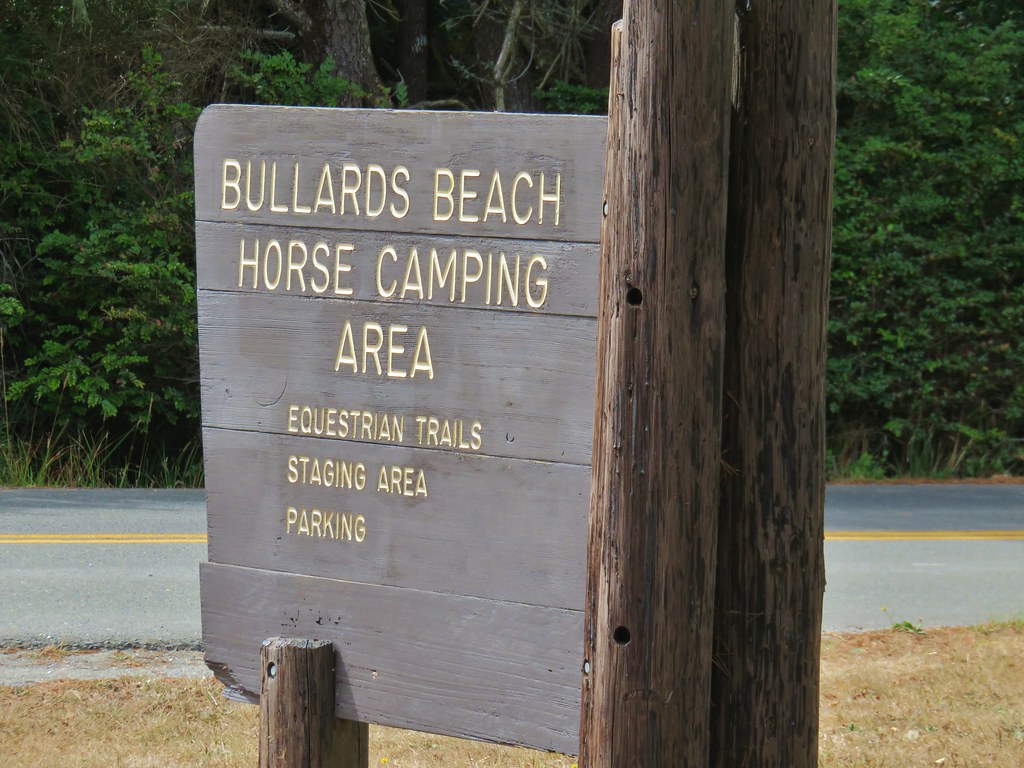
We followed this path until we had crossed the entrance to the Bullards Beach Horse Camping Area.
Just beyond that entrance (.4 miles from the beach parking area) we turned right off the paved path and crossed the paved park entrance road onto a dirt road which led us down to the Coquille River.
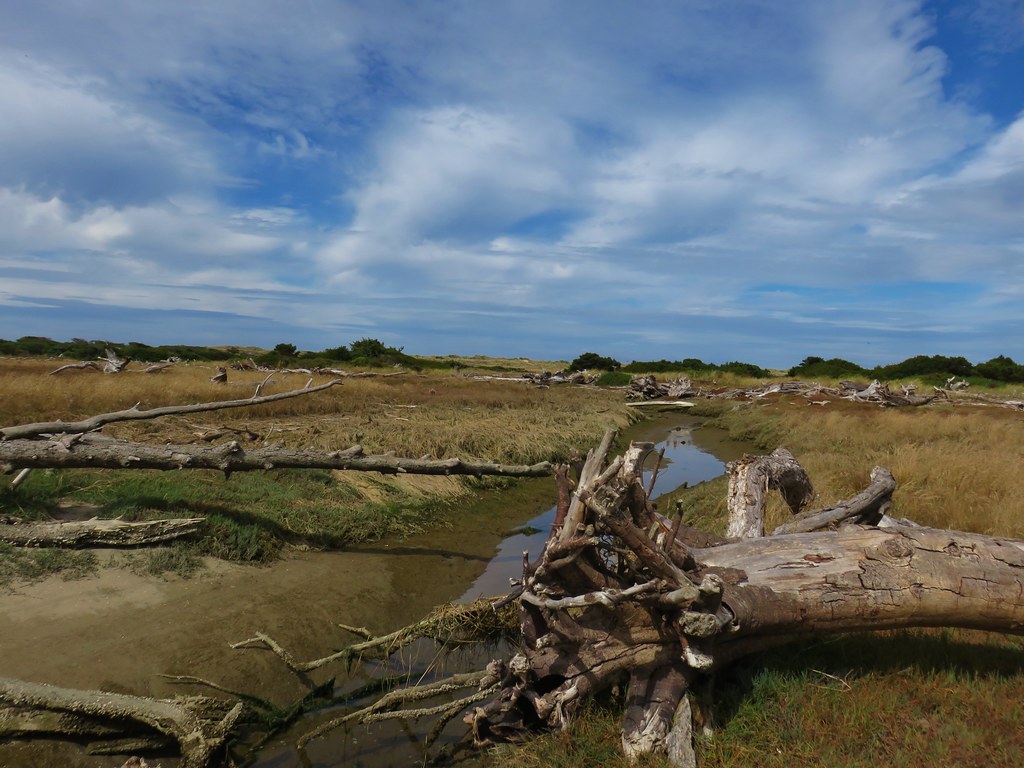
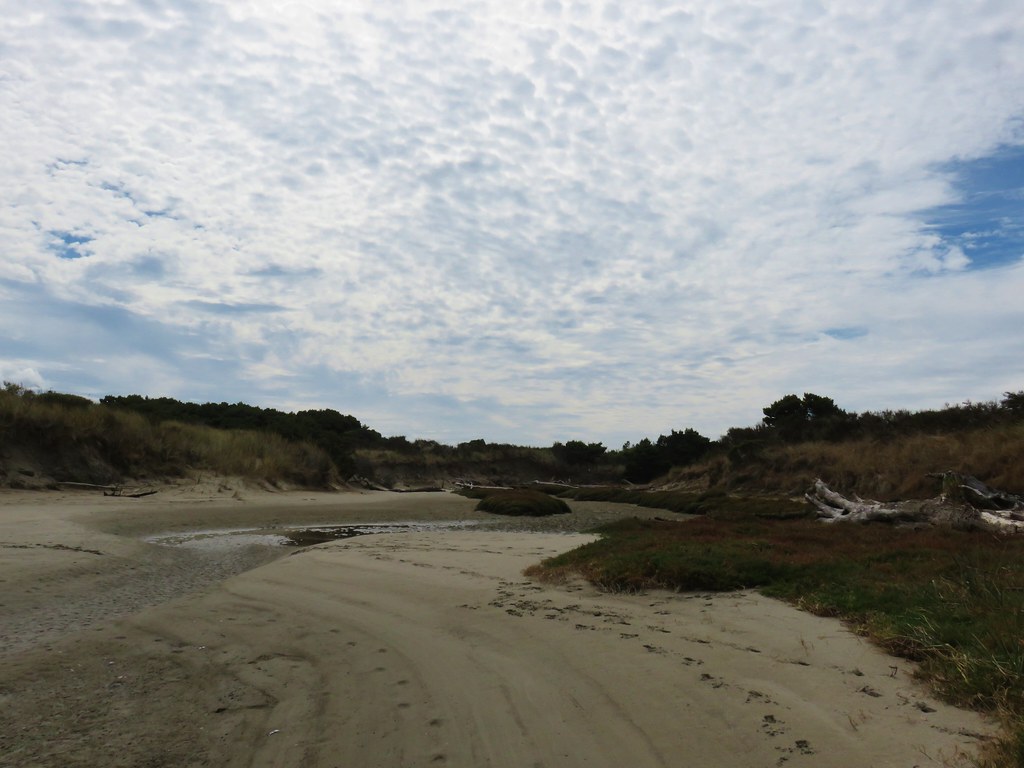
There was no actual trail along the river so we spent most of the next 2 miles walking along the sandy river bank. We were forced inland a couple of times in order to cross water on logs.
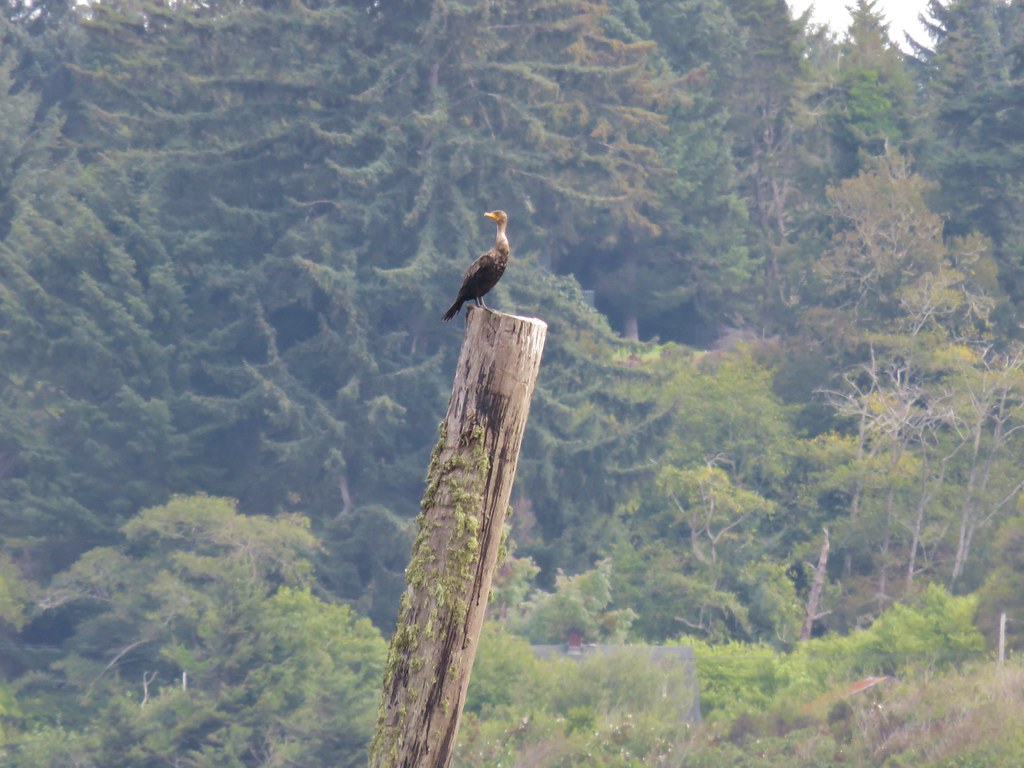
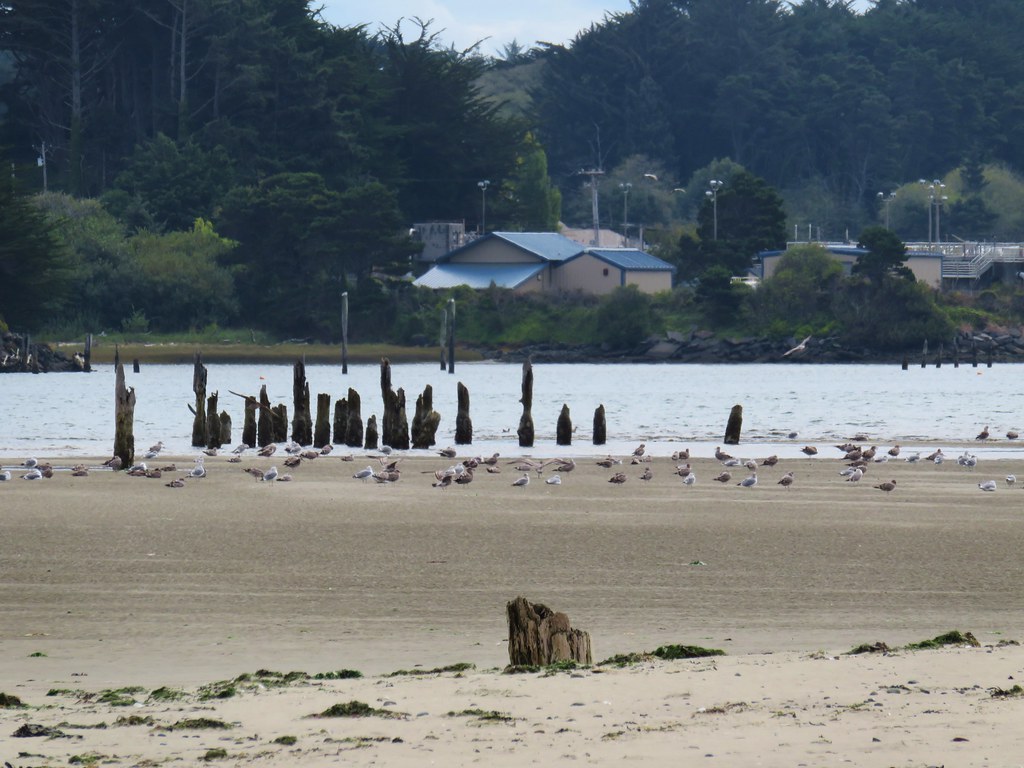
There was a lot of activity on the river between boats and birds.
As we neared the north jetty across from Bandon’s Old Downtown we turned inland at a sandy gap which led to a gravel road.
We followed this road for .4 miles staying left at a fork on a grassy track.
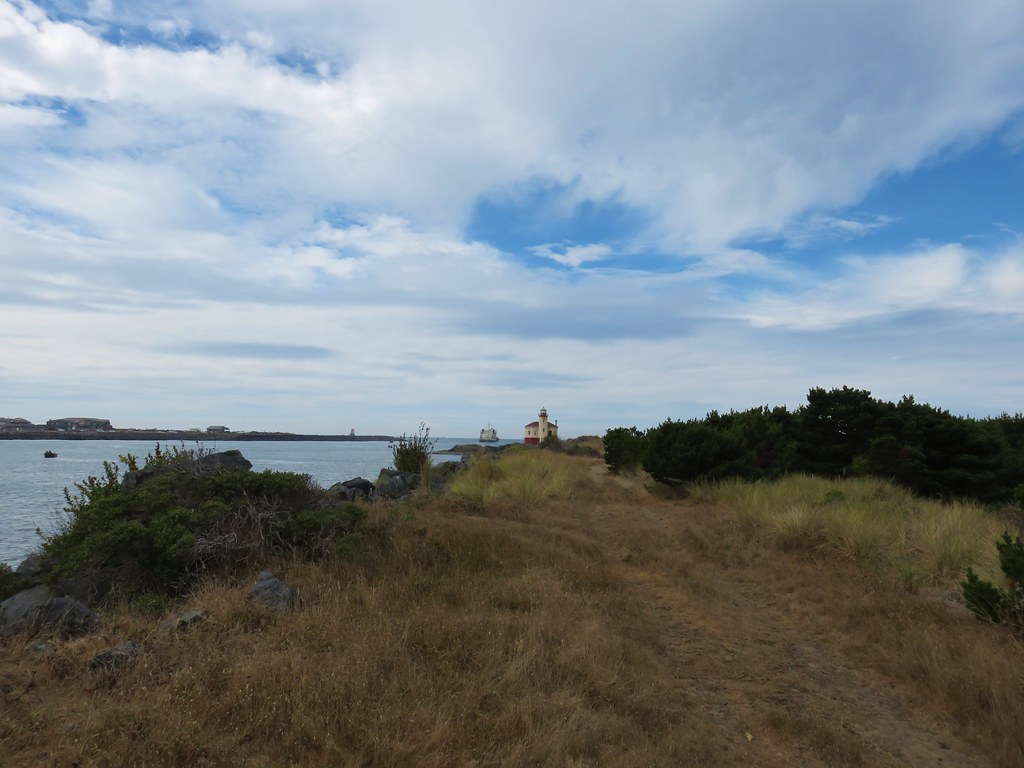
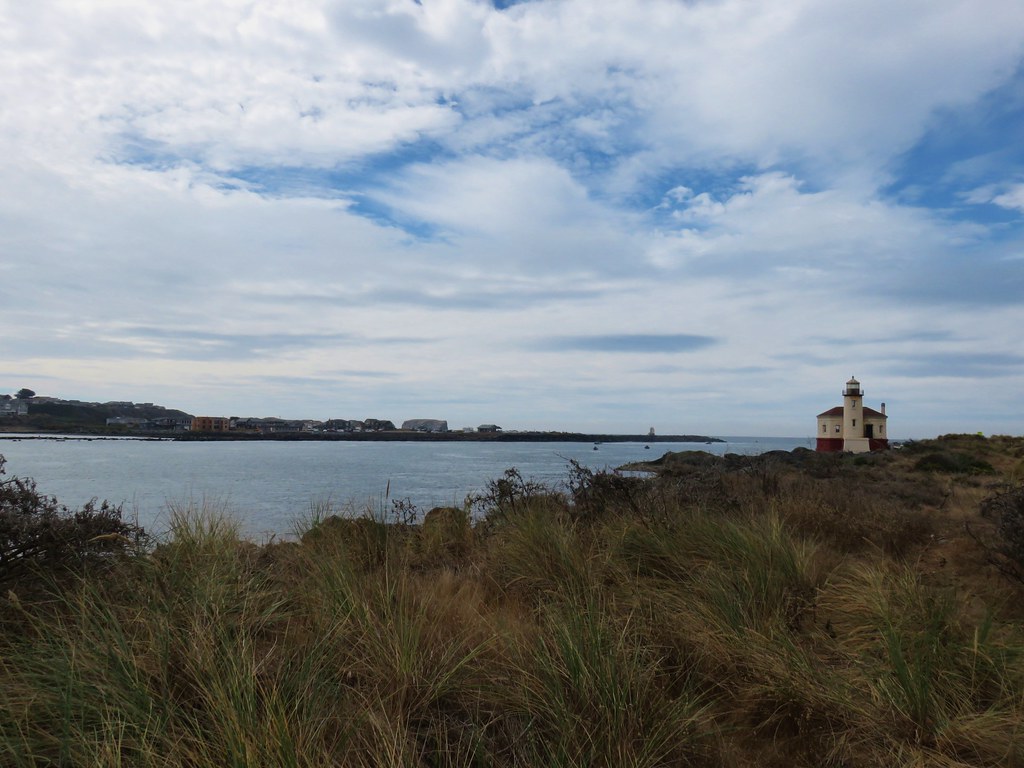
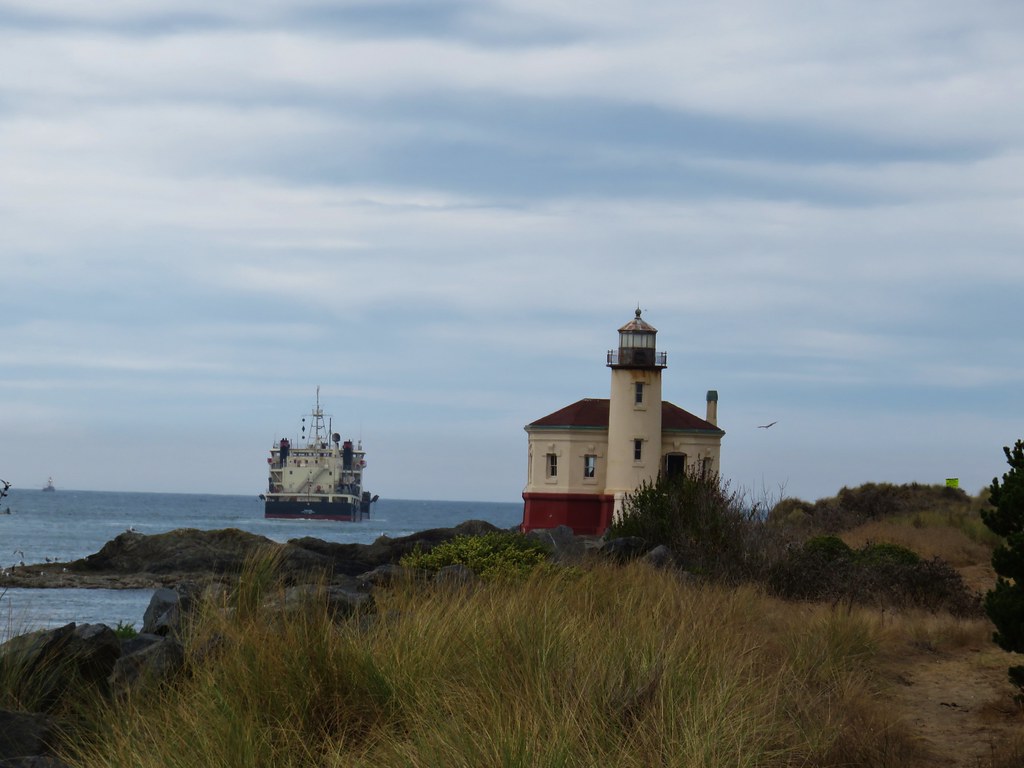
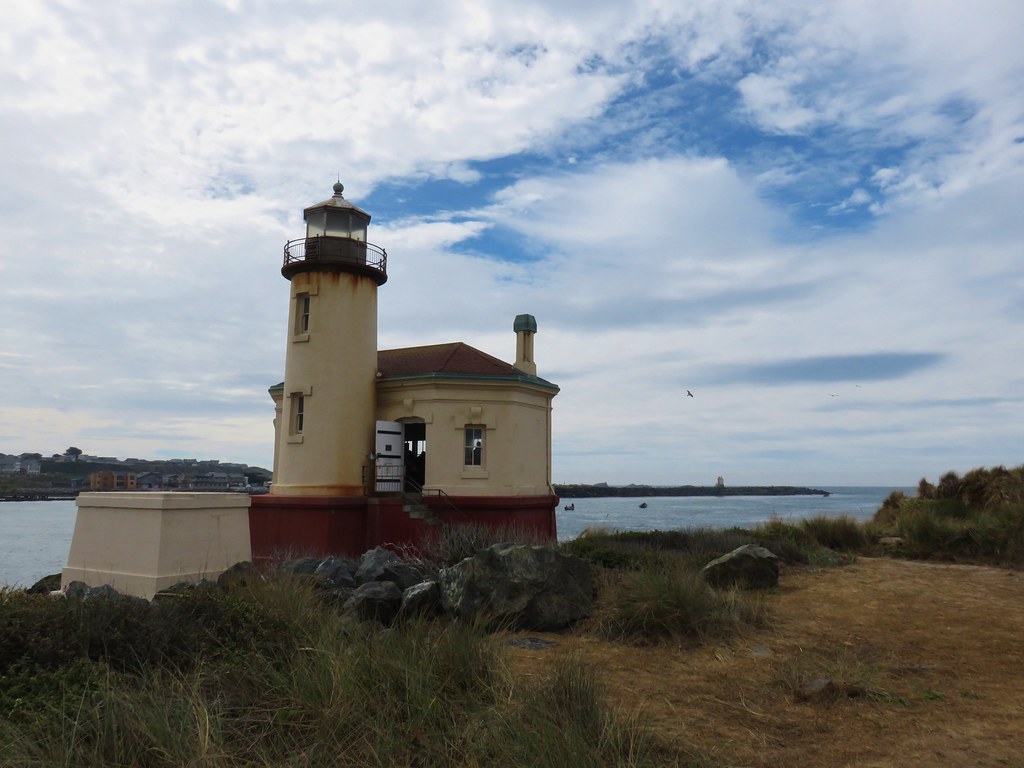
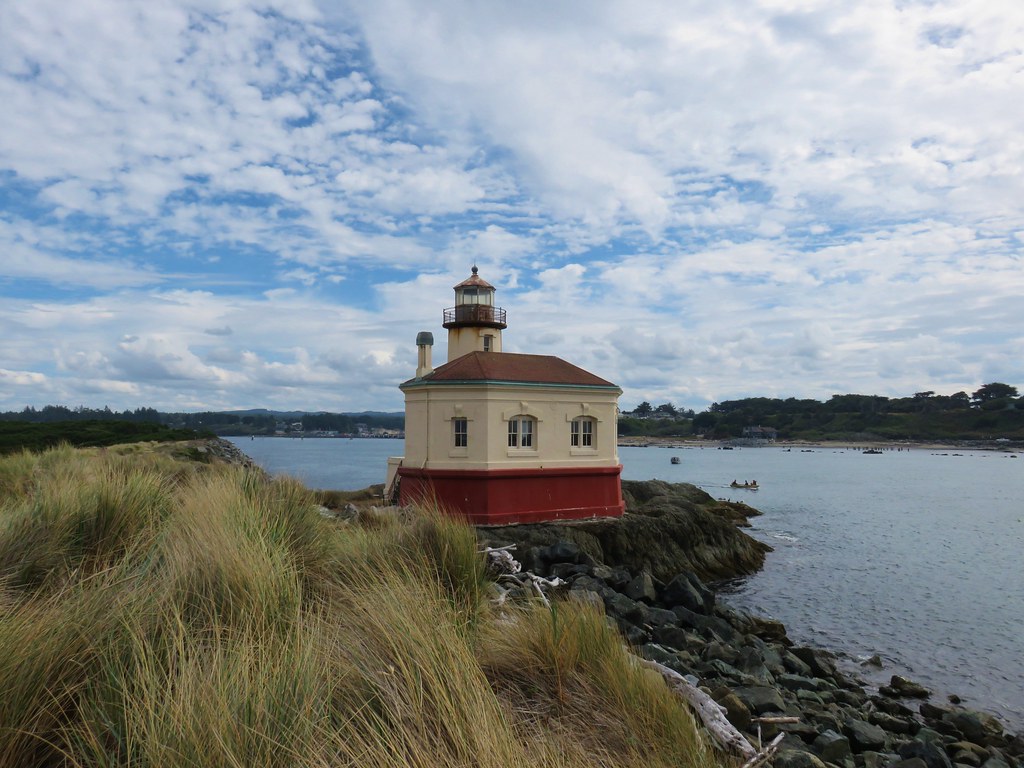
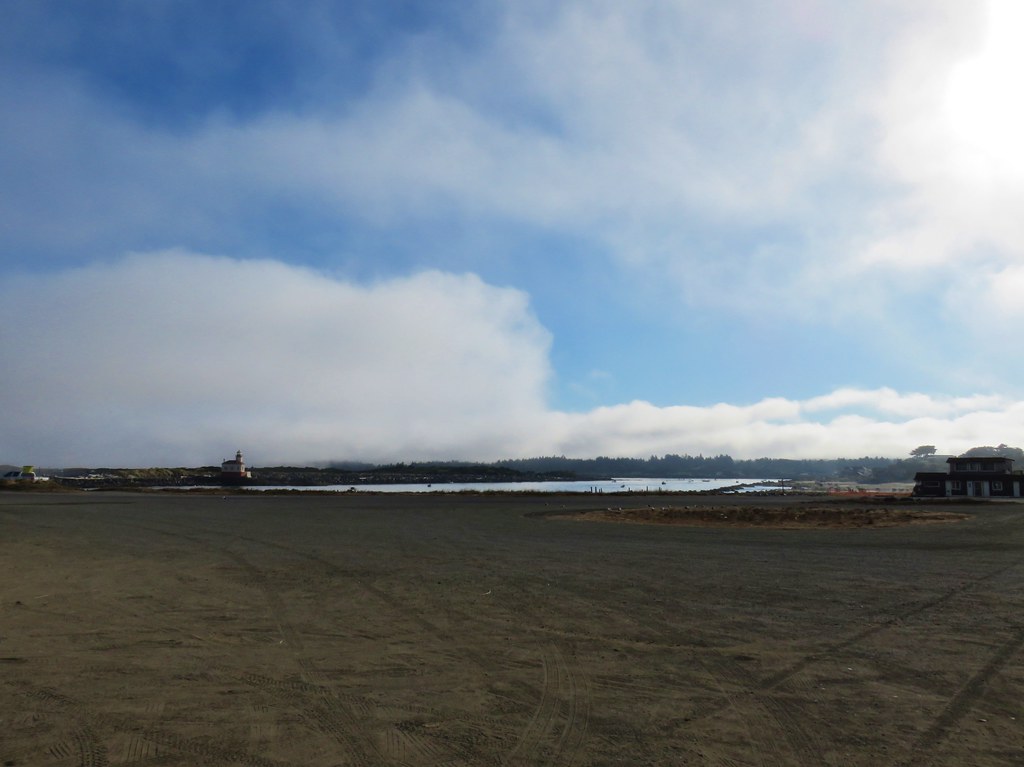
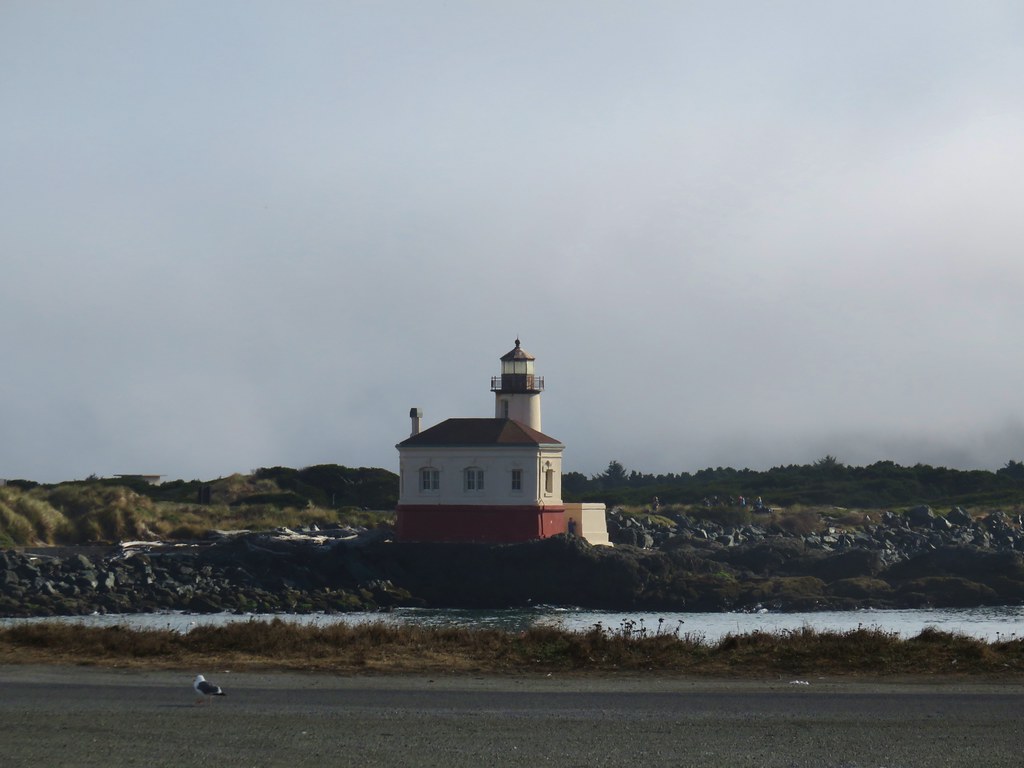
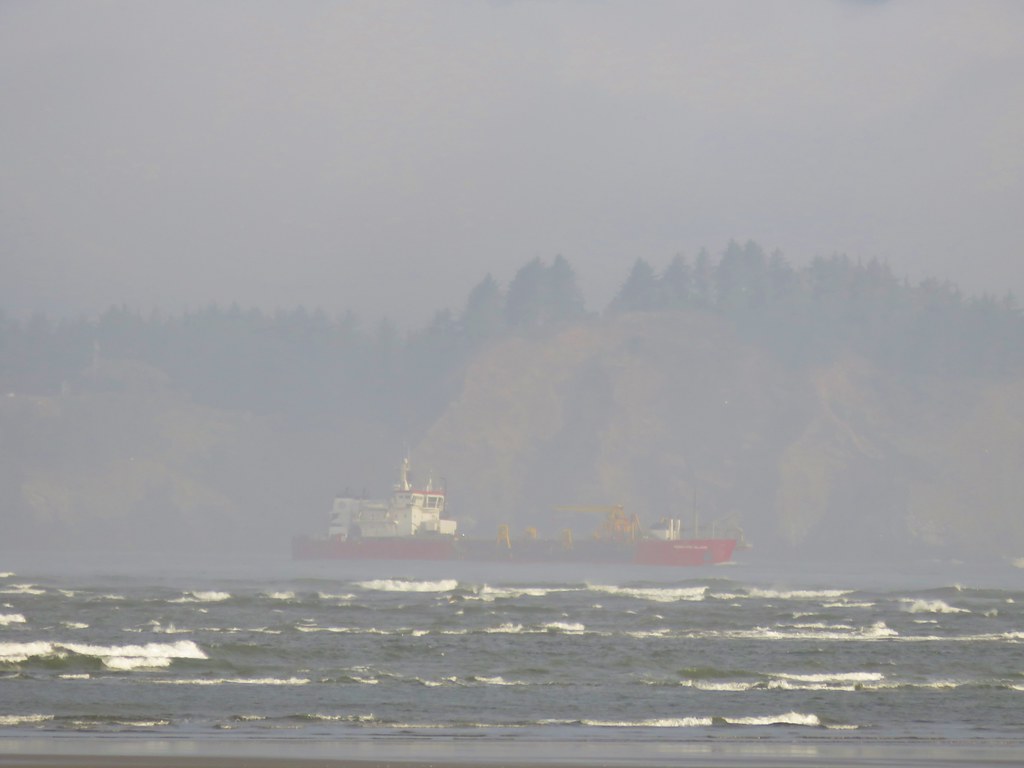
The road bed ended at the Coquille River Lighthouse. An Army Corps of Engineers ship was busily going back and forth near the mouth of the river.
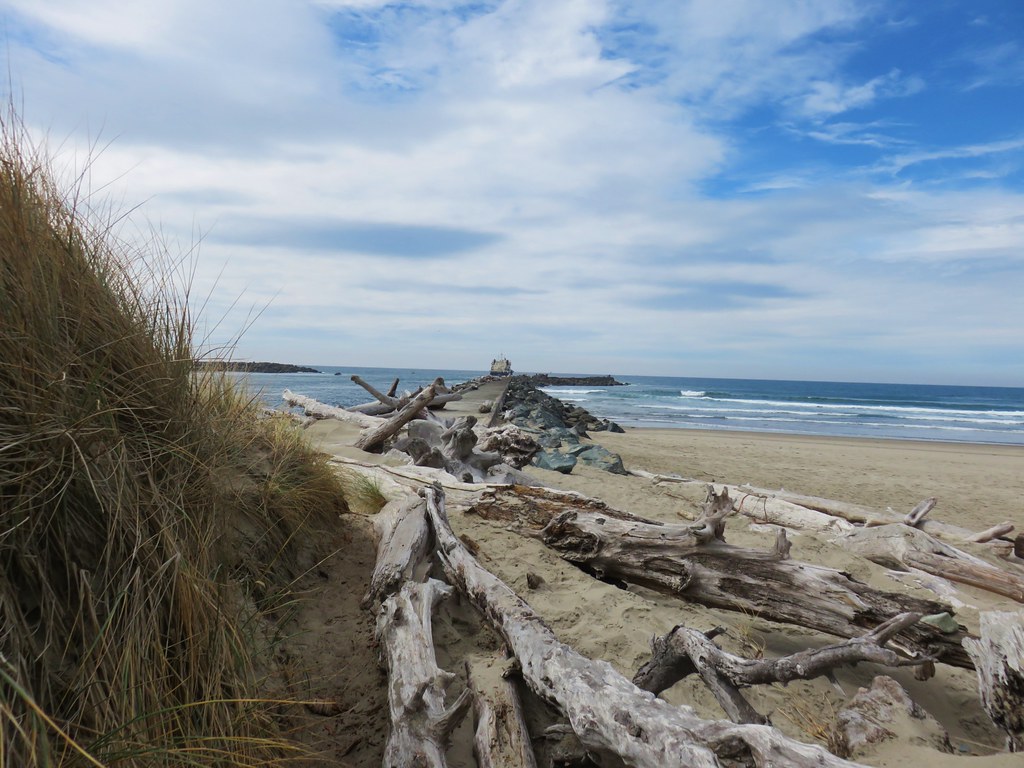
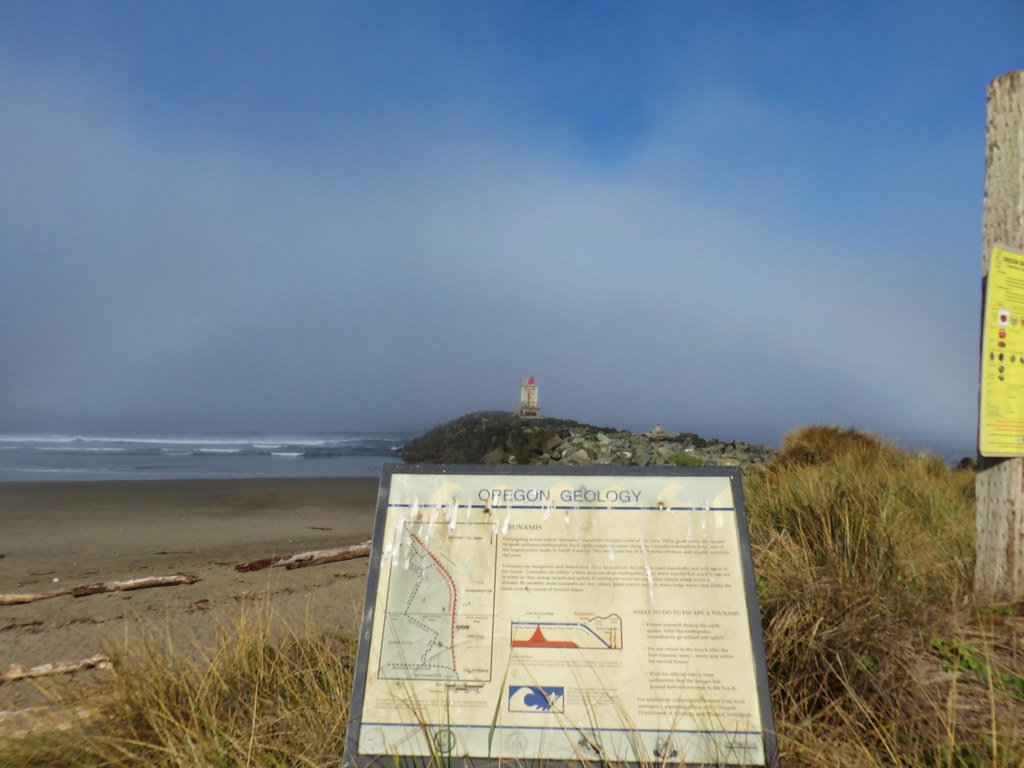
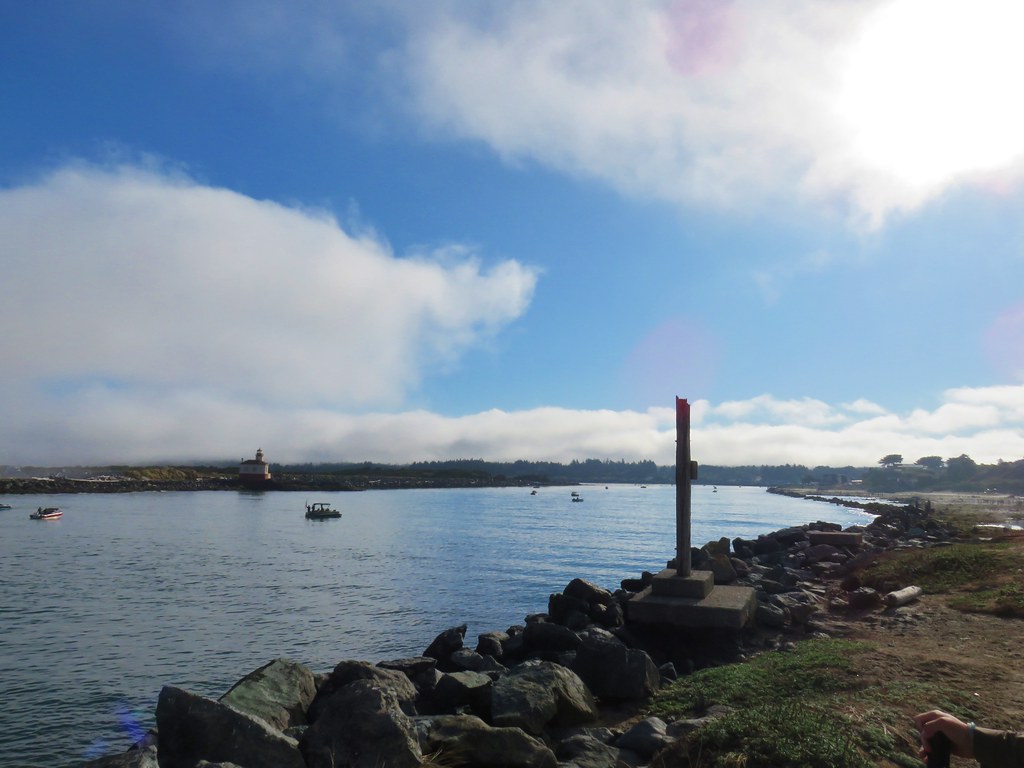
Once past the lighthouse we continued out along the north jetty for .2 miles.
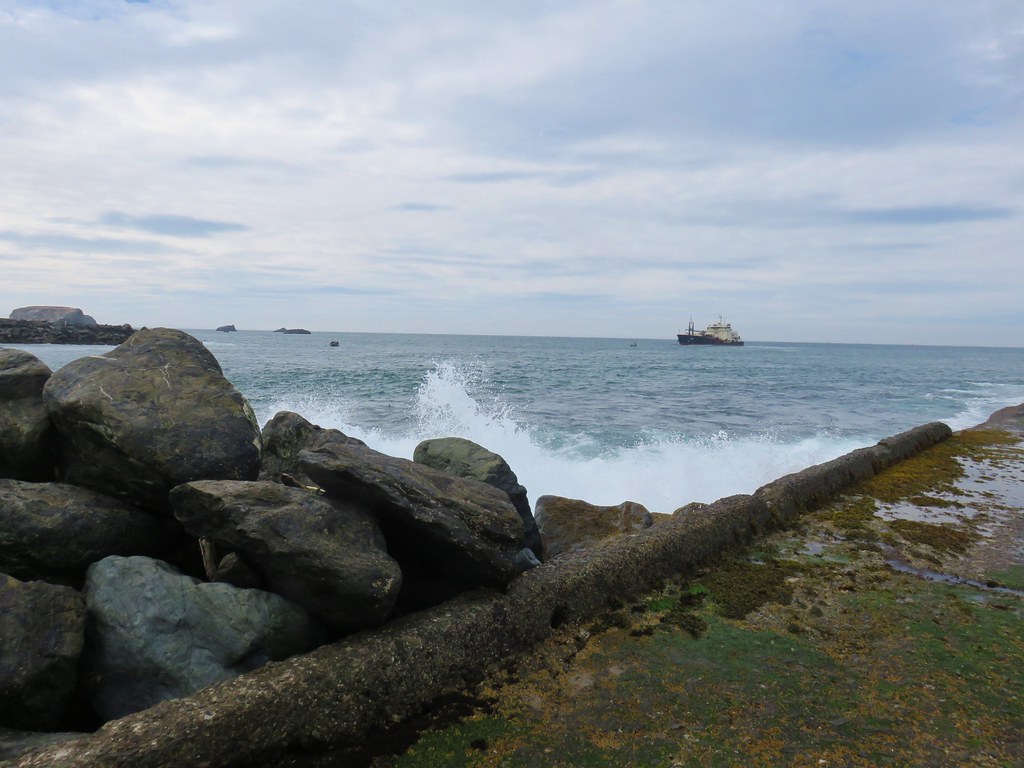
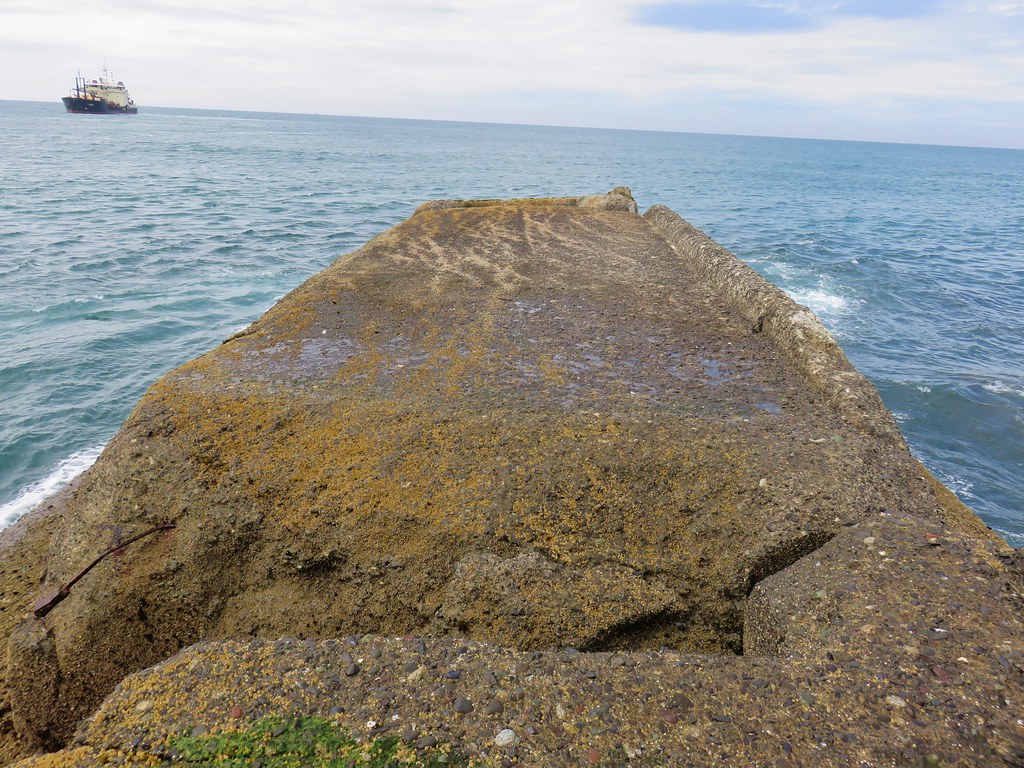
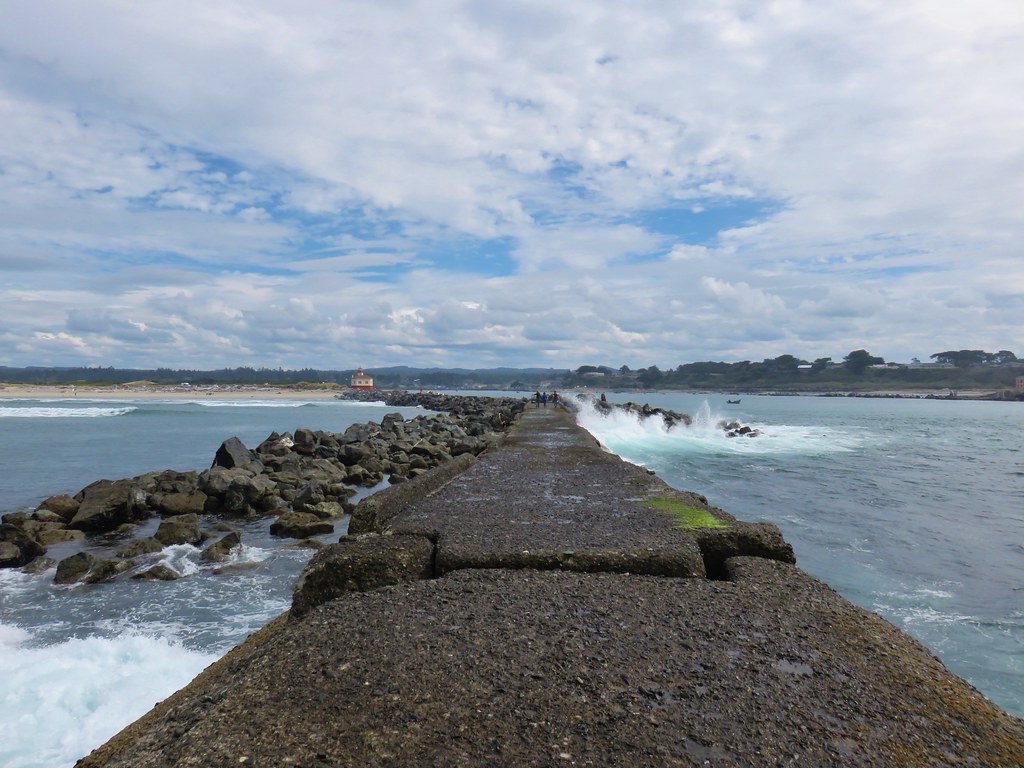
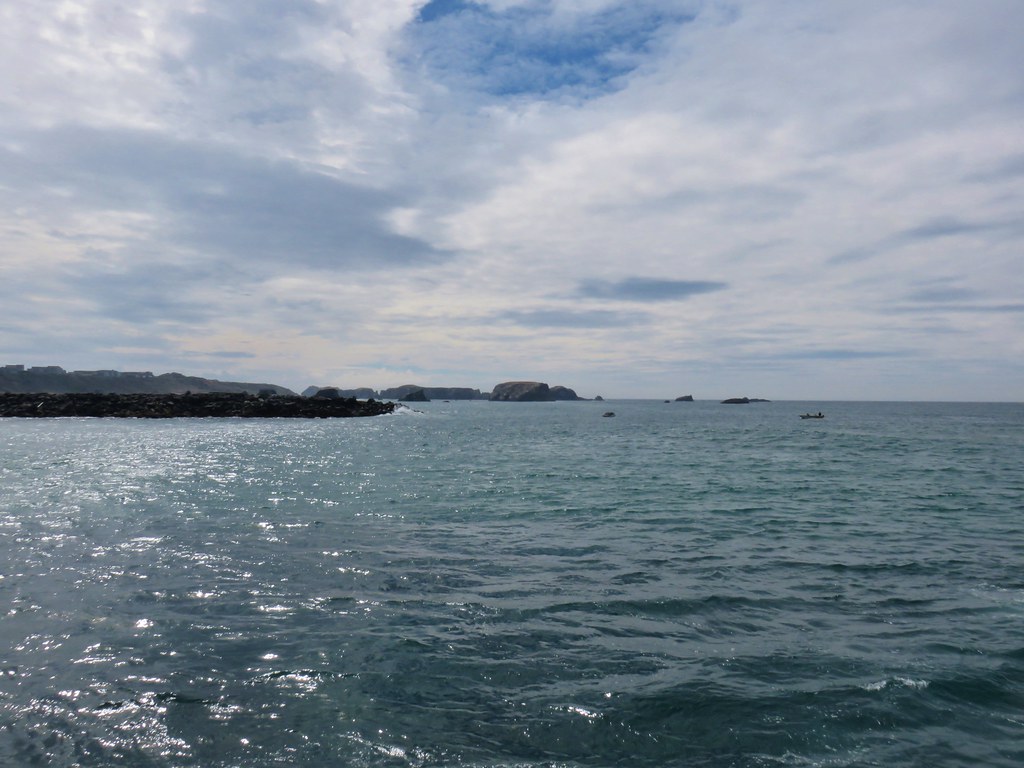
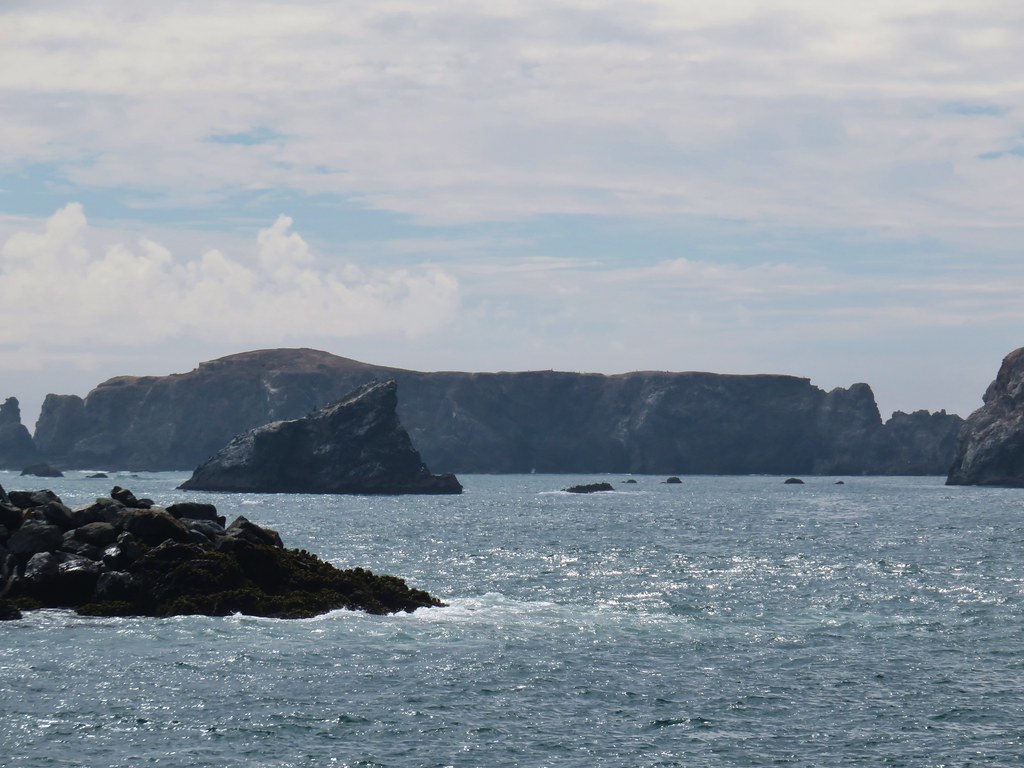
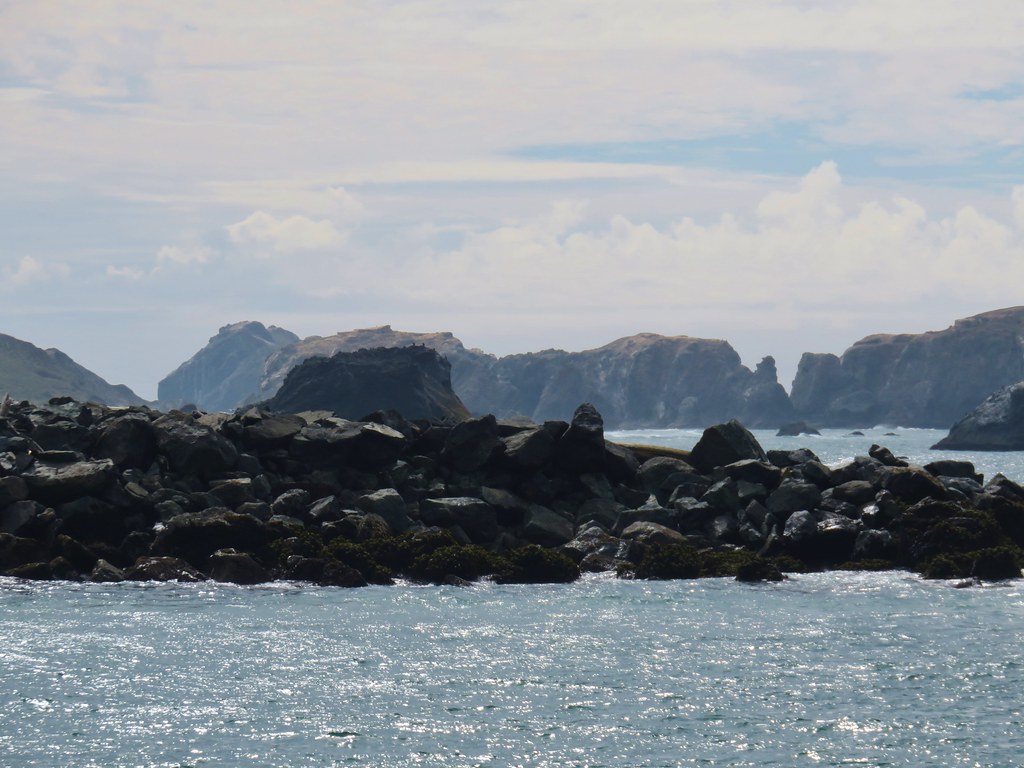
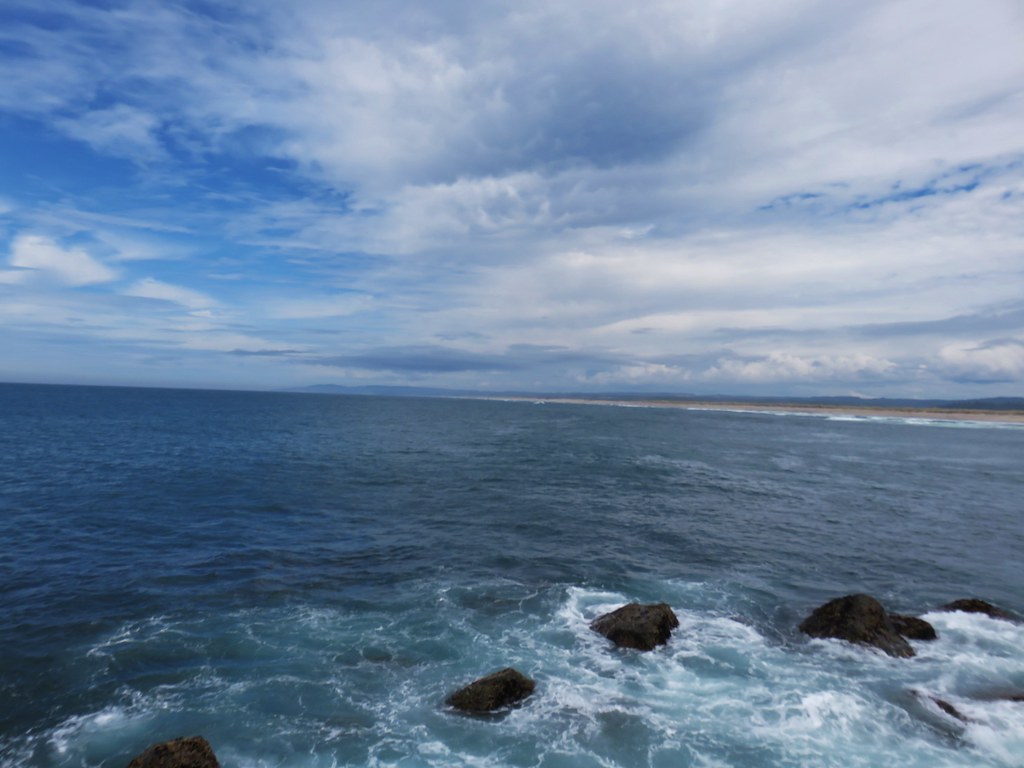
It was a much better day visibility wise than the previous one had been and from the jetty we got a decent look at some of the Bandon Islands on the other side of the river.
The view north was much less rocky.
After partaking of the view we headed back, hopping off the jetty and onto Bullards Beach.
After 1.5 miles along the beach we turned inland and climbed over the foredune to the beach access parking area.
After a shower and change of clothes we found ourselves wandering through the old downtown again. When it was time for dinner we decided to go back to Foley’s Irish Pub. After another good meal there and desert from Pastries and Pizzas we turned in for the night. We had agreed that Bandon had quickly become one of our favorite coastal towns and were already looking forward to our next visit. Happy Trails!
We had changed our mini-vacation plans from a four day backpacking loop around and up Diamond Peak to four days of hiking on the Oregon Coast due to the possibility of wet weather. Wet weather isn’t typically a big deal at the coast and drying off in a motel room is a lot more convenient than trying to keep your backpacking gear dry for multiple days. When we had looked at the forecast for Bandon the best looking day weather wise had been Friday with a forecast of mostly sunny and no chance of showers. We planned a pair of hikes for that day, first at the New River Recreation Area and then a walk along the beach starting at the Bandon South Jetty Park.
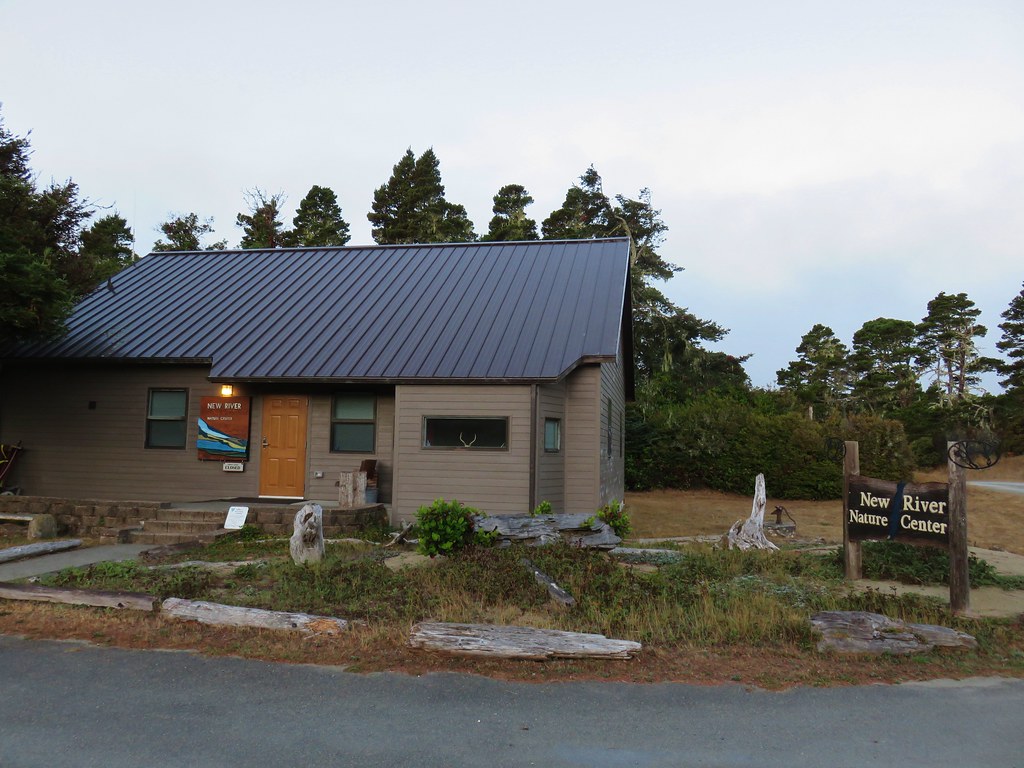
The BLM managed New River Recreation Area is located eight miles south of Bandon on Croft Lake Road. We parked near the New River Nature Center which hadn’t opened yet for the day.
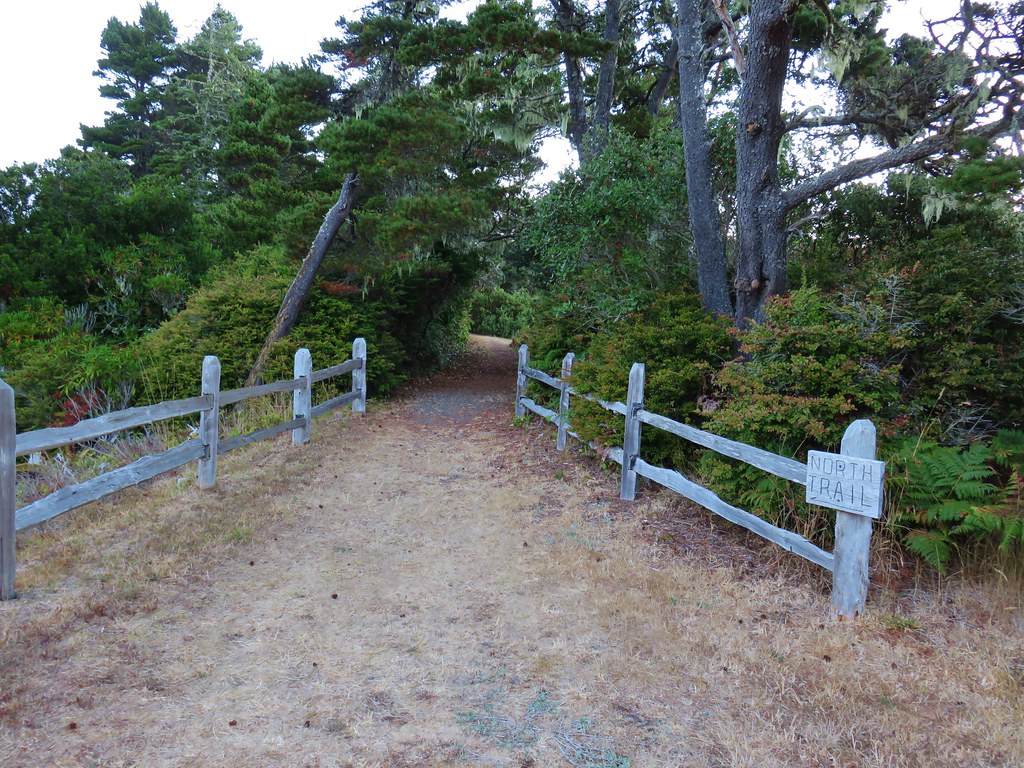
We headed north from the parking area onto the signed North Trail.
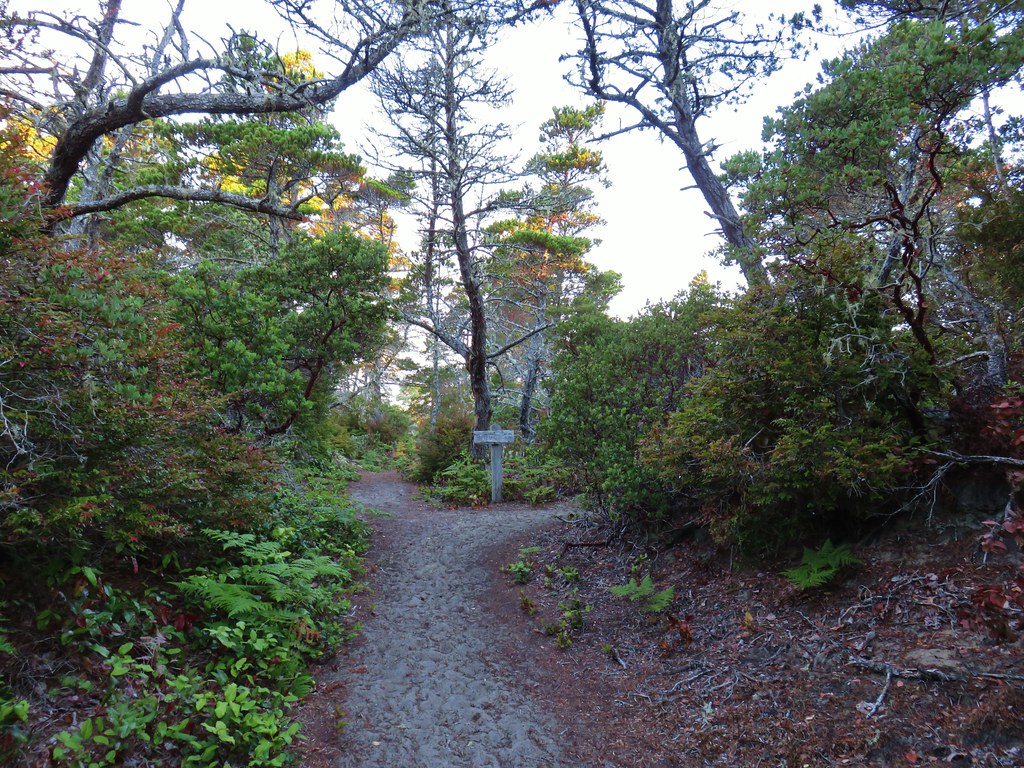
A little over a quarter mile along this forested path we came to a junction with the Ridge Trail.
We turned right onto this trail which made a .4 mile horseshoe along the top of an old dune now covered in vegetation including some madrone trees.
At a bench at the end of the Ridge Trail we turned right onto the Huckleberry Hill Trail (If we had gone straight at the North/Ridge Trail junction we would have wound up here in less than a tenth of a mile.)
We followed the Huckleberry Hill trail .4 miles down an increasingly sandy track to the Ocean View Trail where we turned left (the only choice).
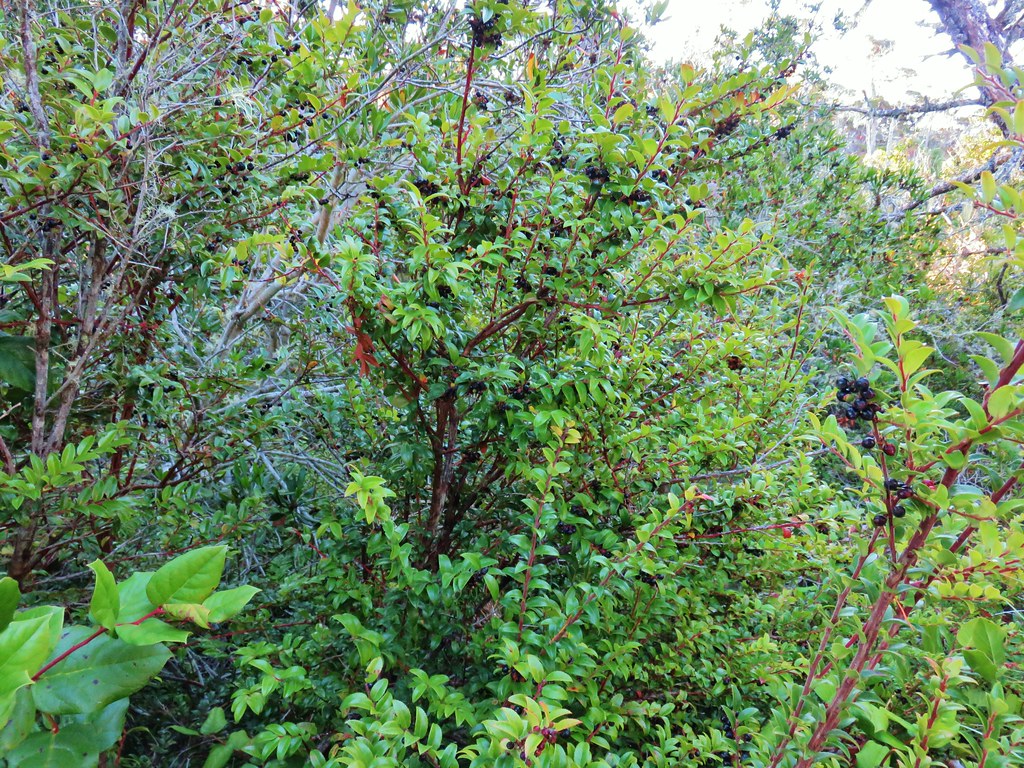
Huckleberries along the Huckleberry Hill Trail
After just 430′ on the Ocean View Trail we took a signed spur trail to the right to a viewpoint.
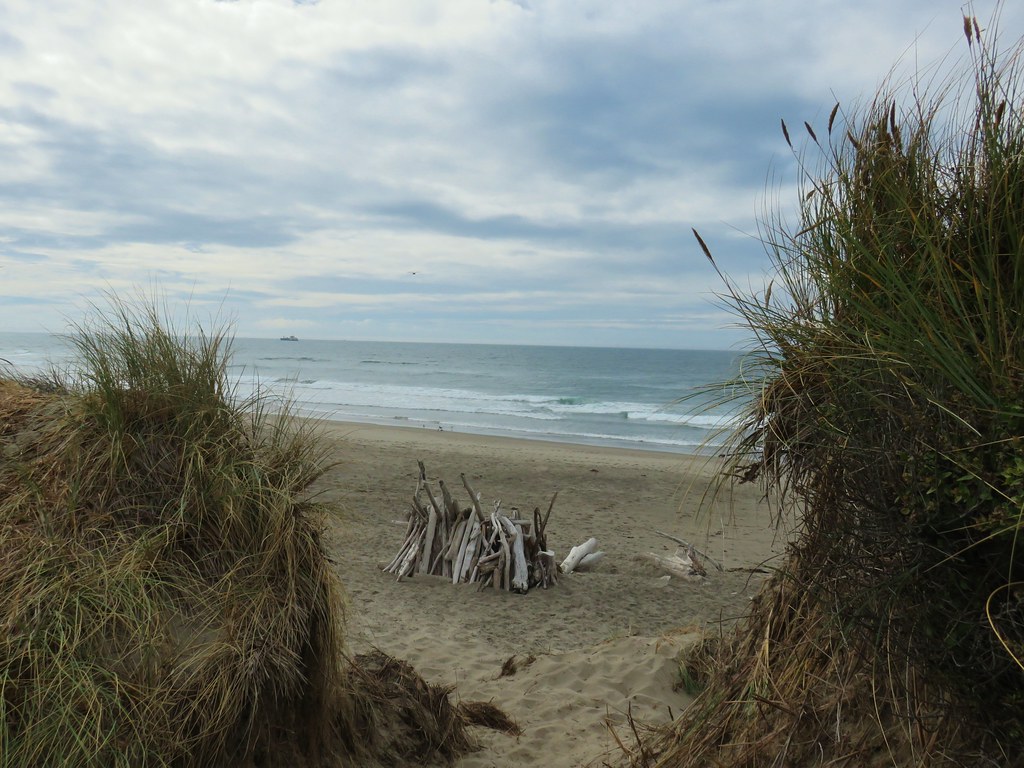
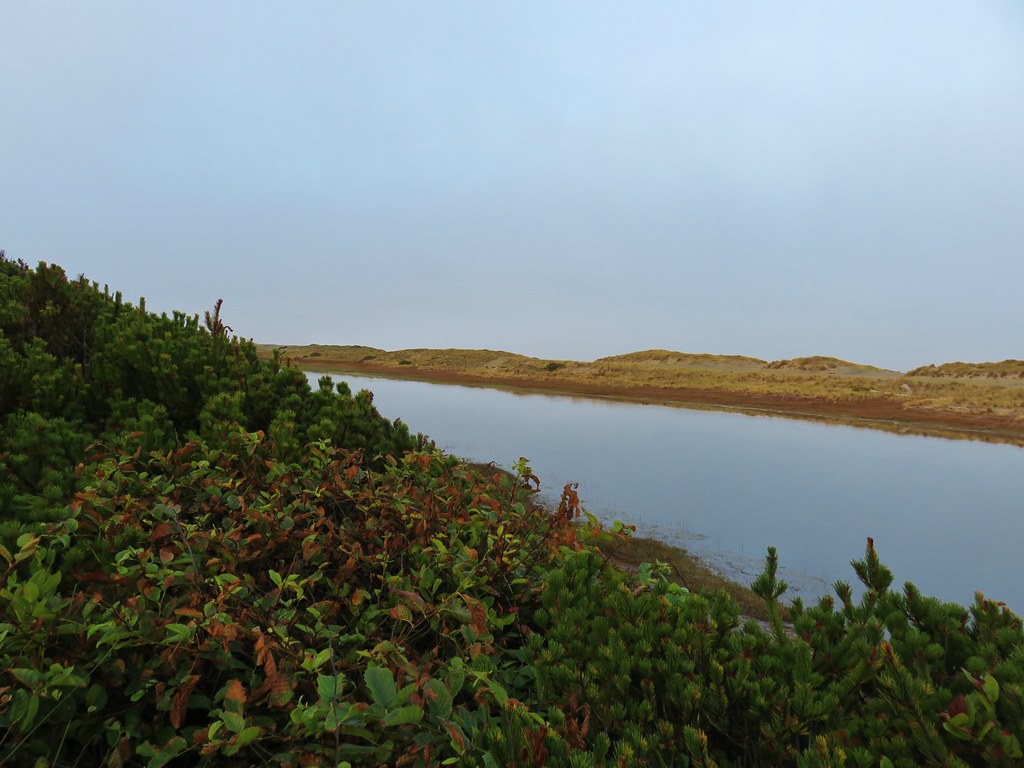
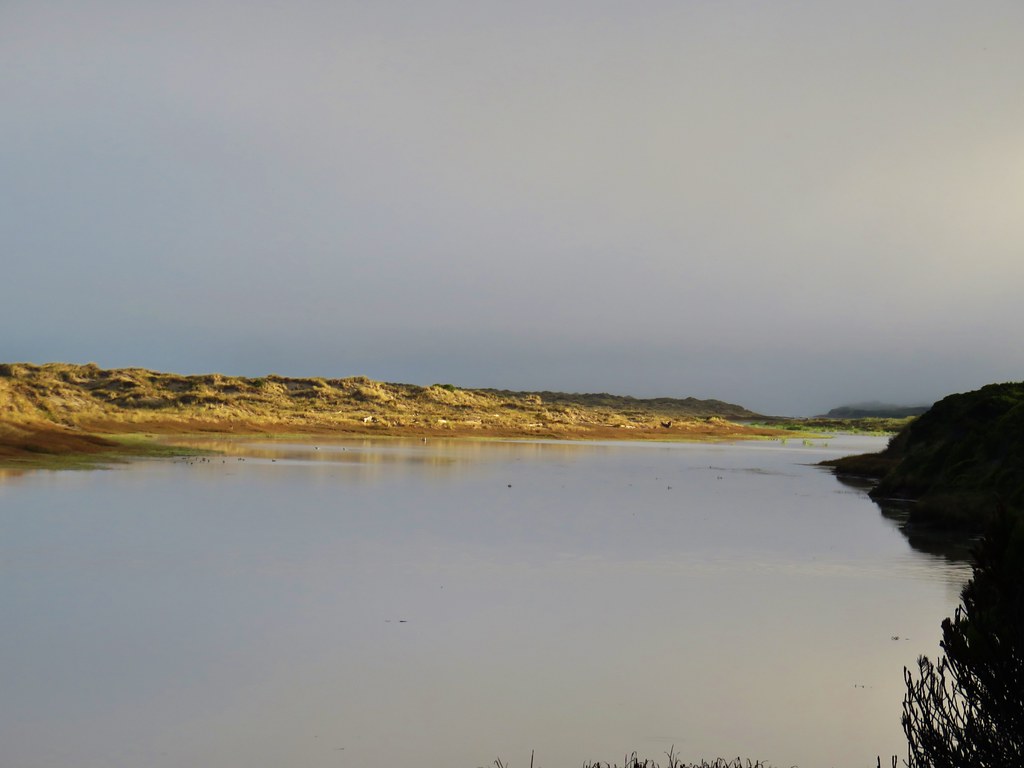
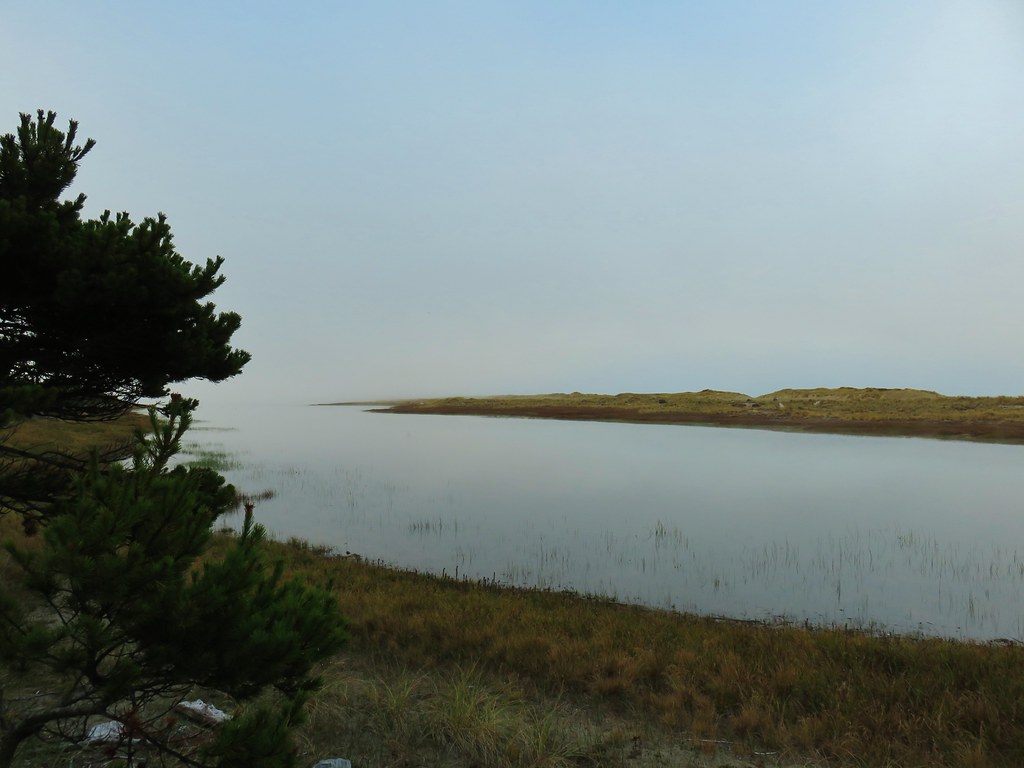
We arrived at the New River in less than 100 yards. The Ocean was barely visible on the other side of a low rise on the beach between the river and the Pacific.
We returned to the main trail and continued an additional .2 miles before arriving at the New River Boat Ramp.
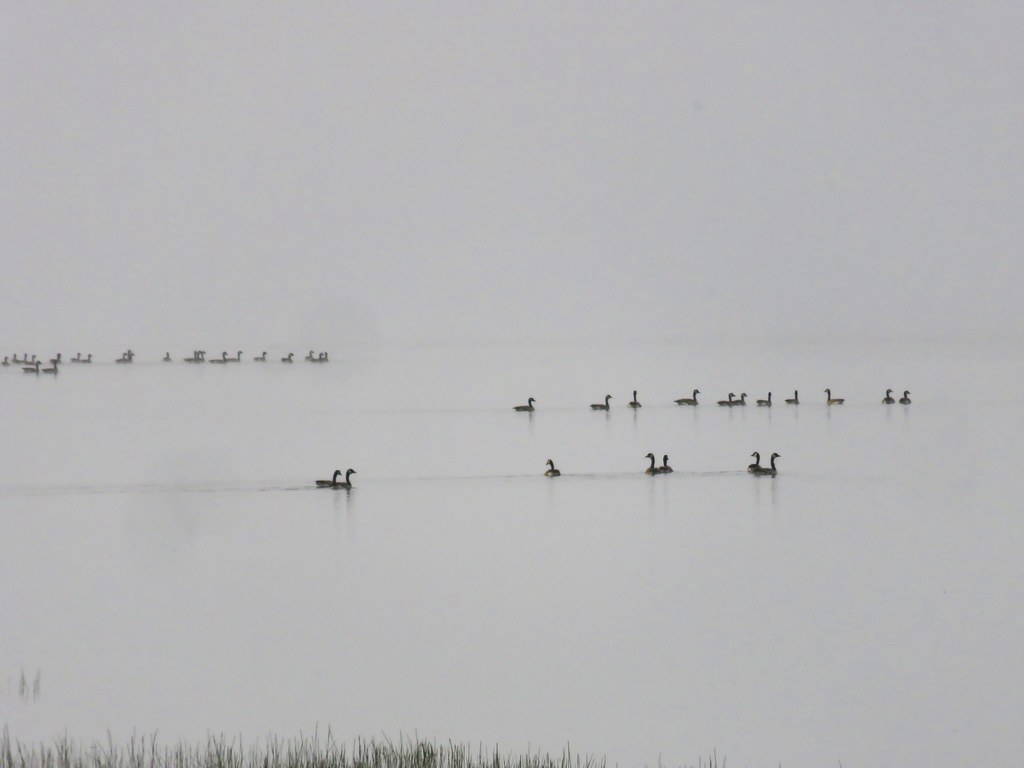
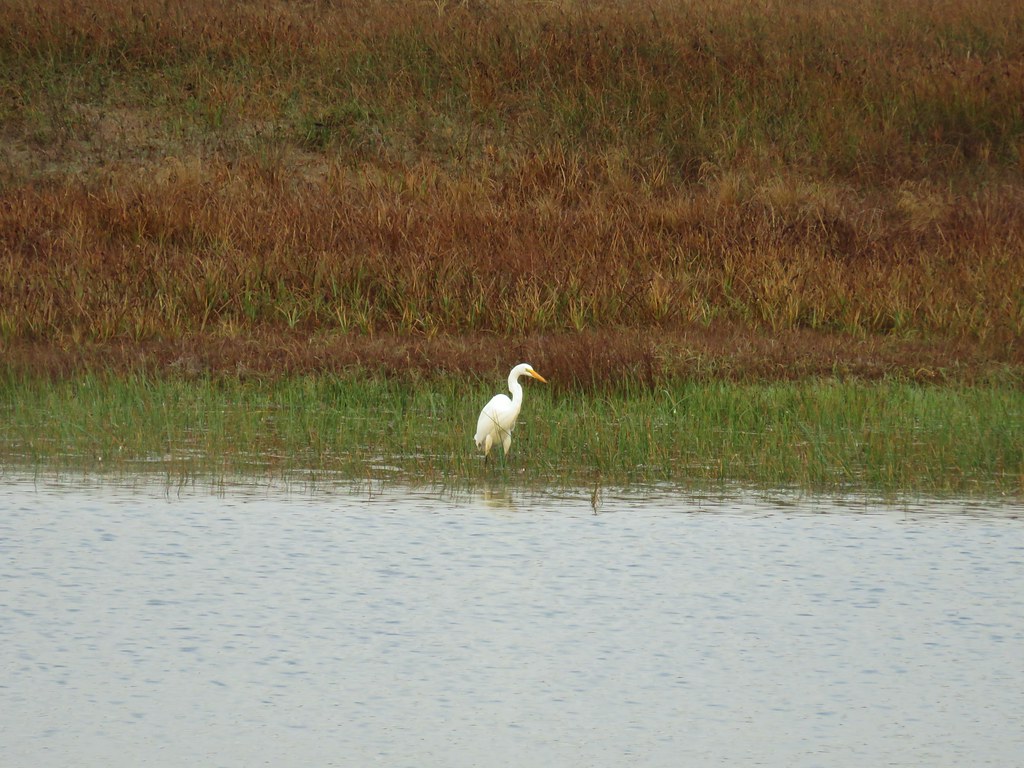
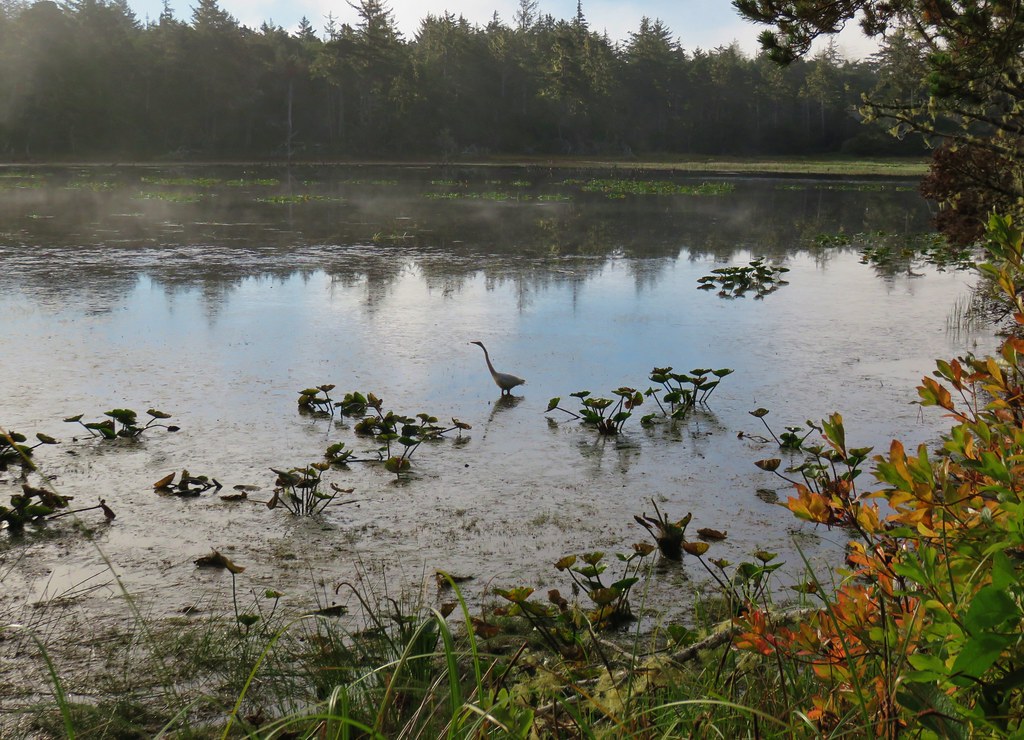
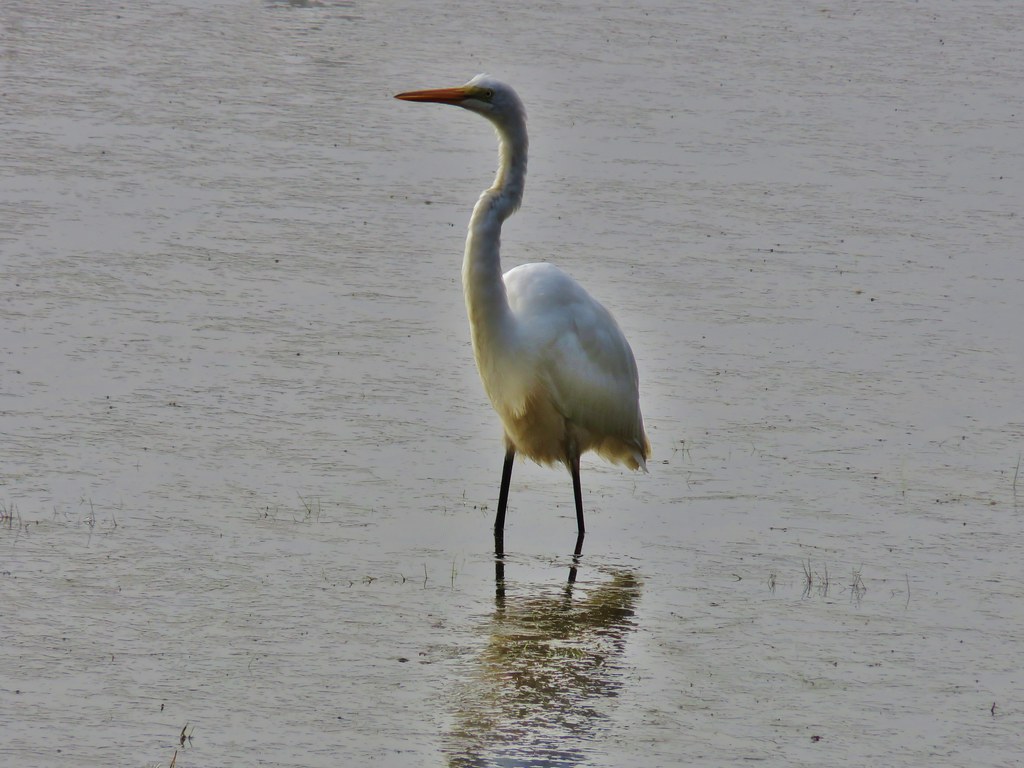
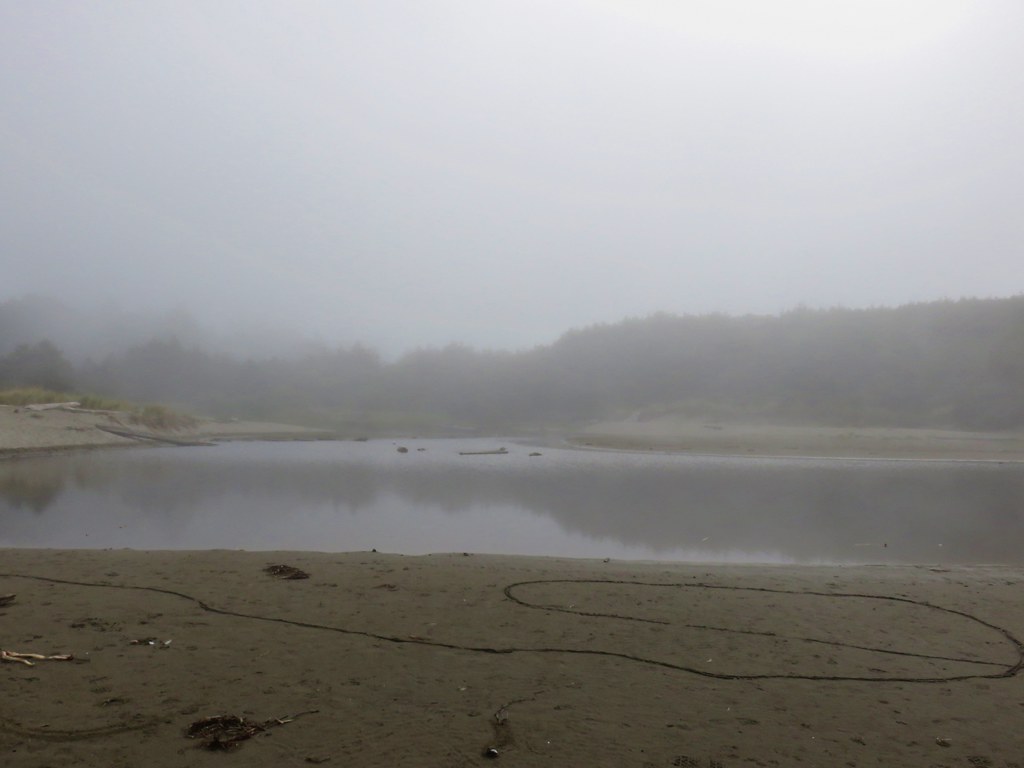
It was a little foggy but we could see quite a few Canada geese and an egret in the river.
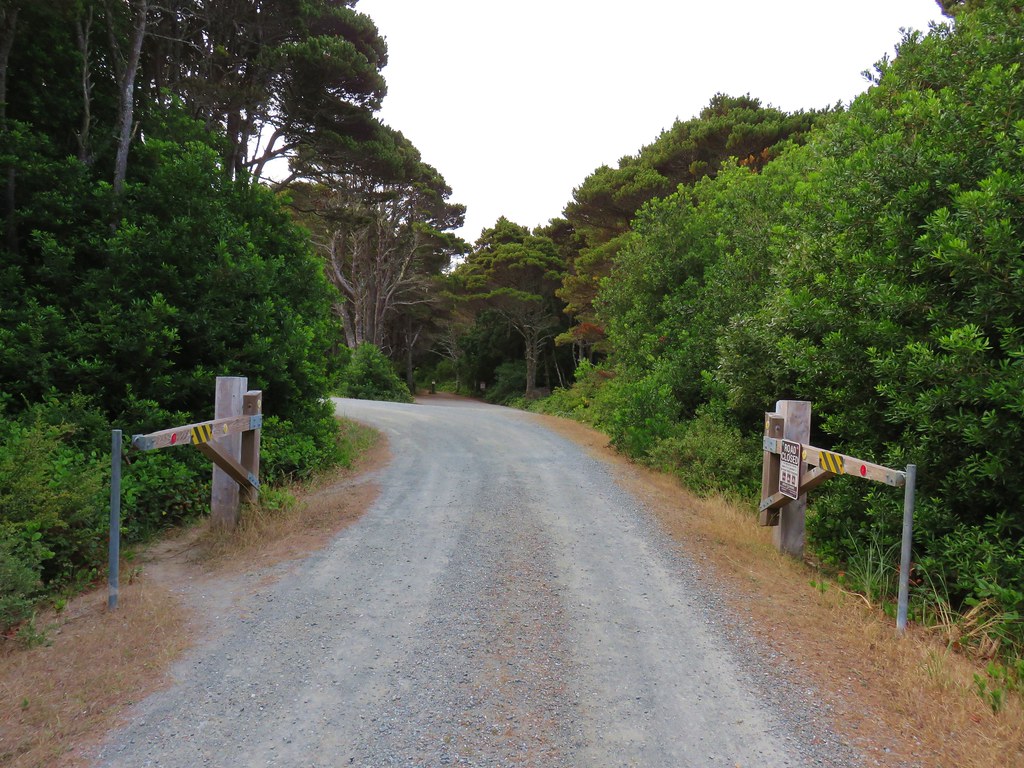
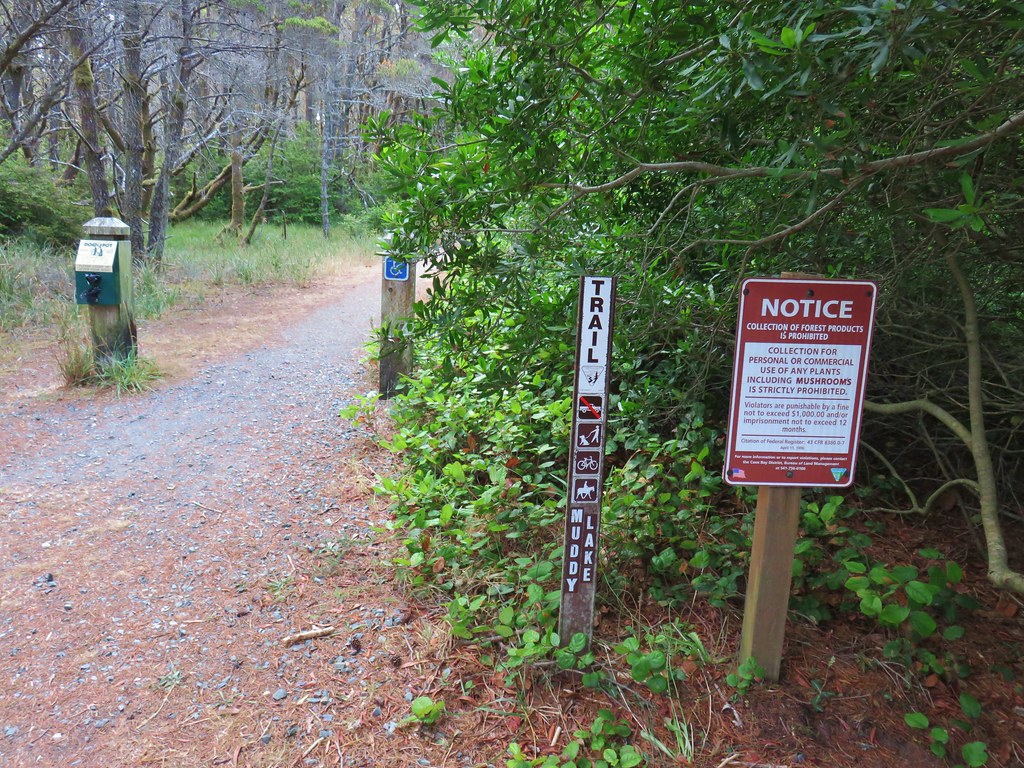
From the boat ramp we followed the road for .2 miles to the Muddy Lake Trail.
Two tenths of a mile from the road we turned right on the .1 mile New River Spur Trail.
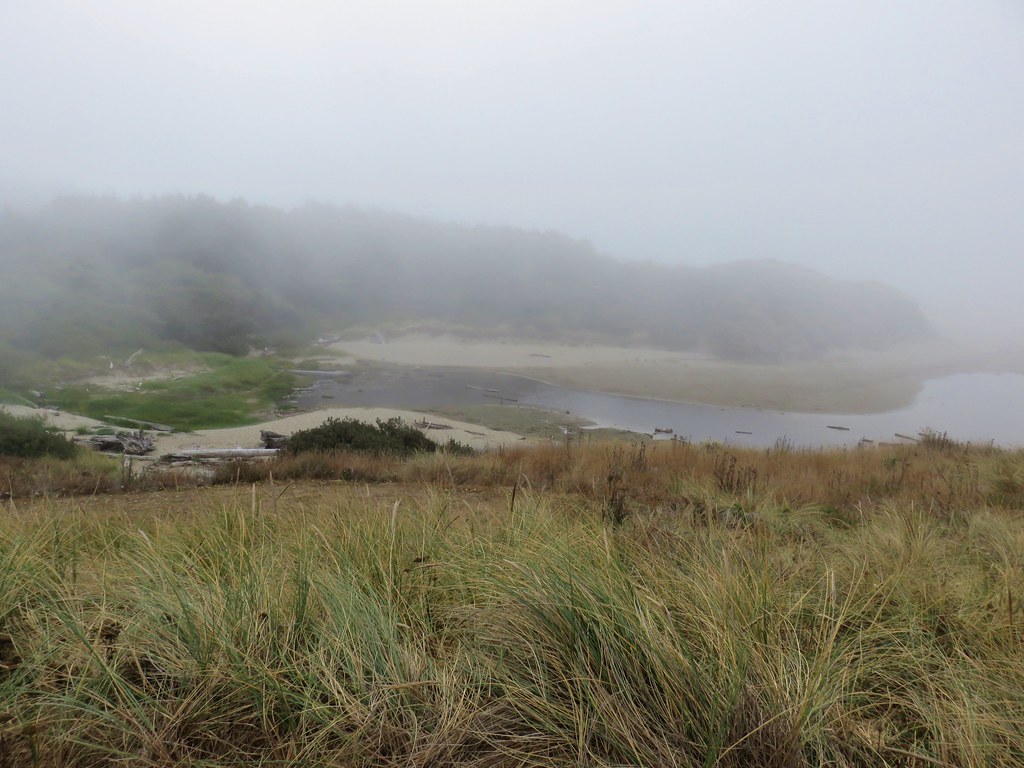
Instead of burning off we noticed that the fog was getting thicker when we arrived back at the river.
Canada geese
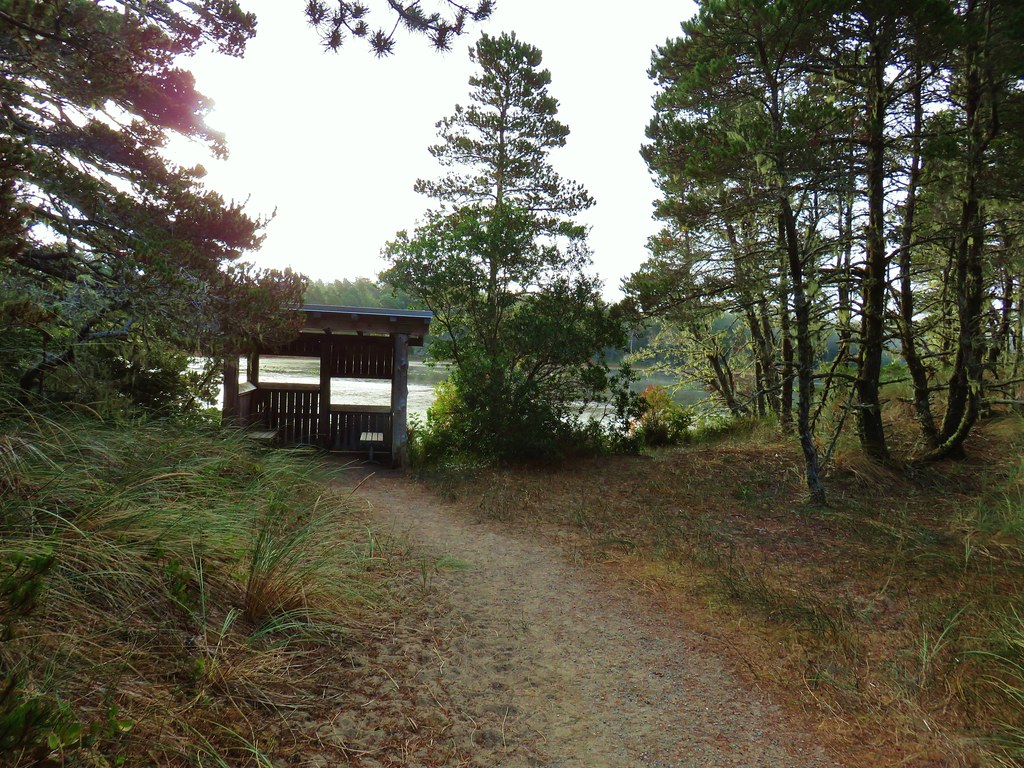
We headed back to the Muddy Lake Trail which we followed for about 110 yards, crossing over a boardwalk, to a very short spur trail leading to a bird blind at Muddy Lake.
We were fortunate enough to have a couple of different birds hunting their morning meal near the blind.
The egret seemed to be having quite a bit of success.
After watching the birds from the blind we continued on. A little over a quarter mile from the blind we came to another trail junction.
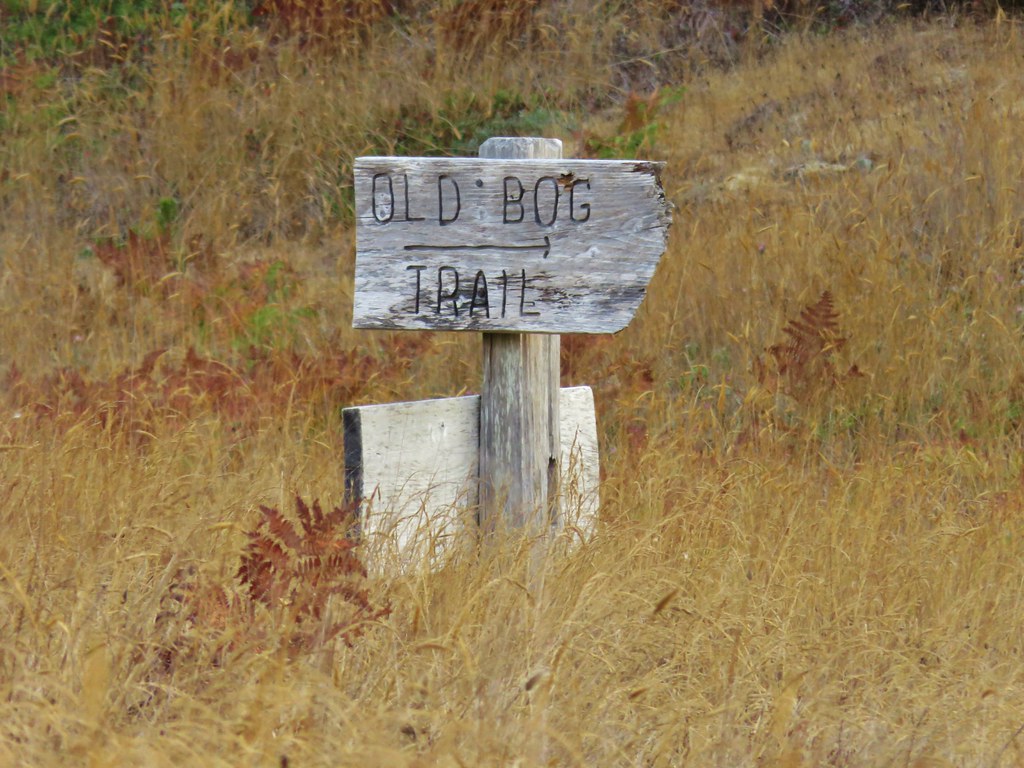
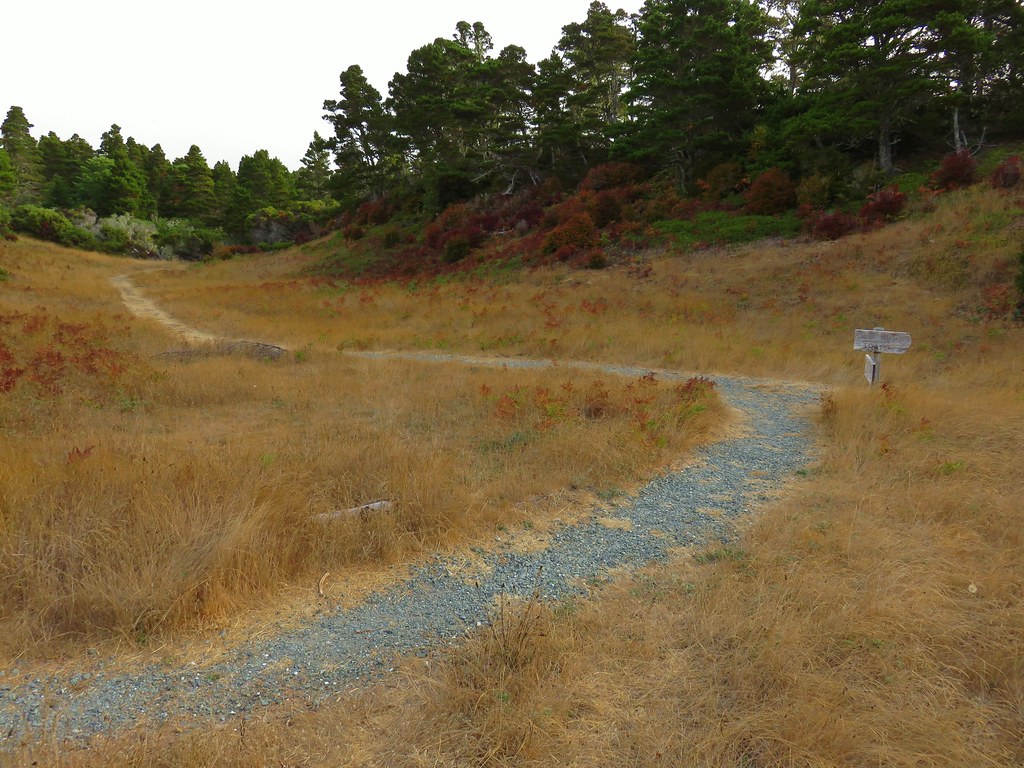
This first junction wasn’t signed but just over the small hill was a signed junction letting us know that this was the Old Bog Trail.
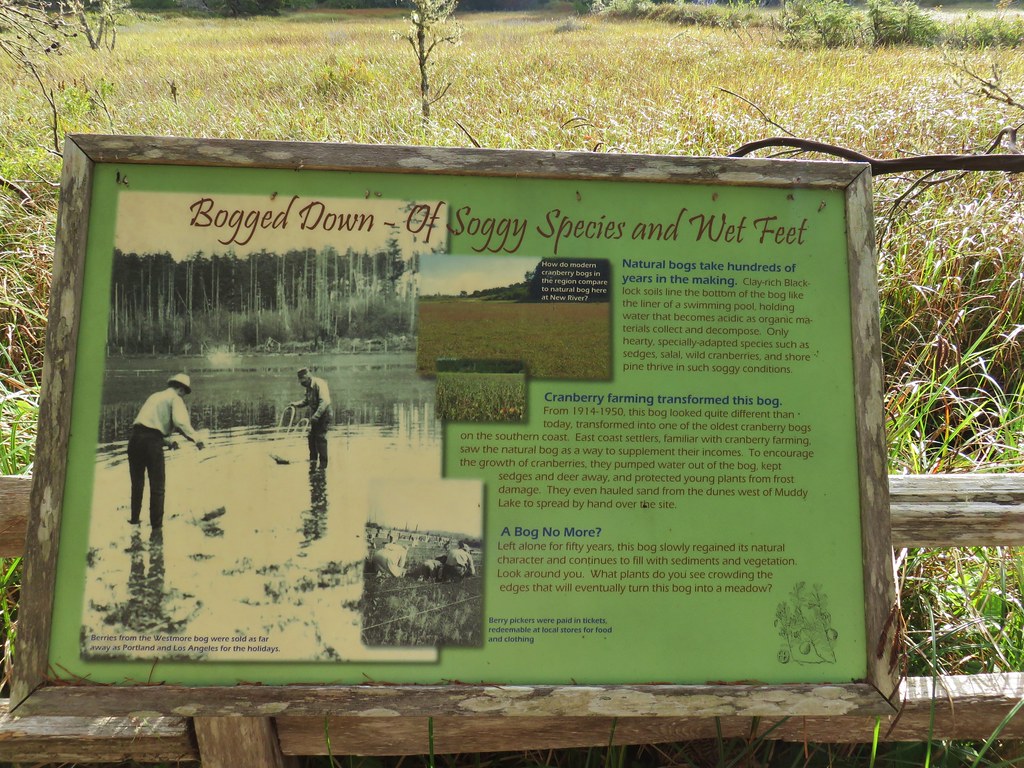
This .3 mile trail climbed up and over an old dune to the site of an old cranberry bog.
After reading the history of the bog we returned to the Muddy Lake Trail and followed it another .2 miles back to the New River Nature Center. Even with all the side trips this was only a 3.6 mile hike making it a good option for the kiddos.
We drove back north to Bandon and used the GPS to guide us through town to the Bandon South Jetty Park located at the end of Lincoln Ave. SW across the Coquille River from the Coquille River Lighthouse.
We headed down to the beach just south of the jetty. There was a little bit of blue sky to the north and inland to the east.
That was not the case however to the south where we were headed.
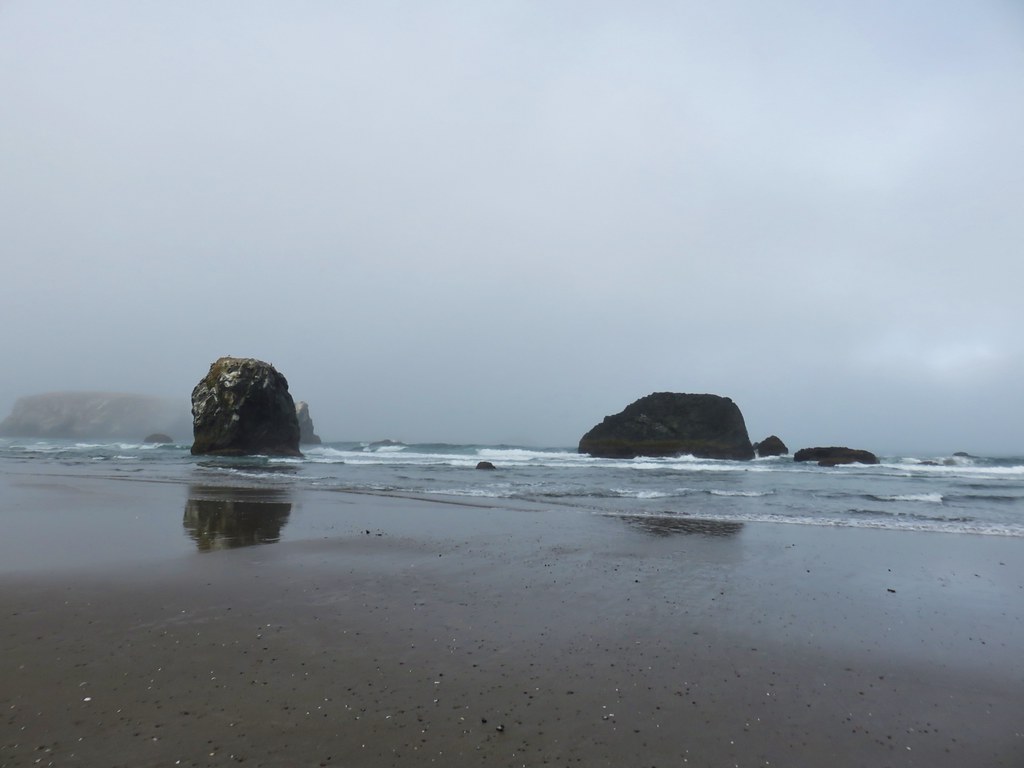
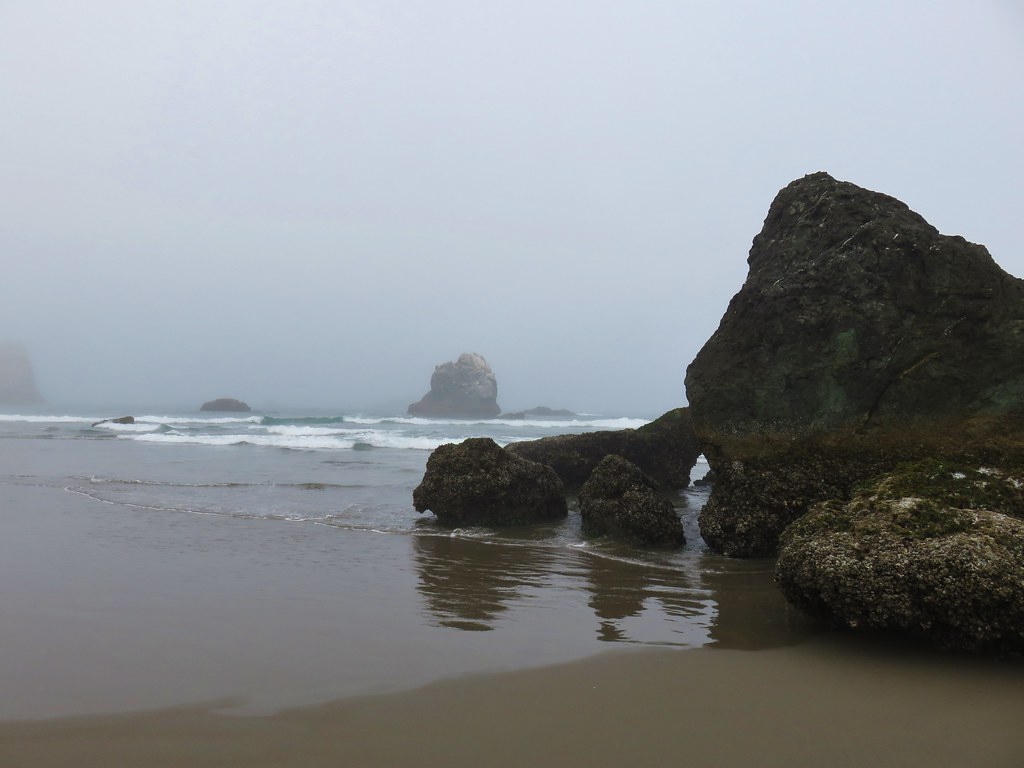
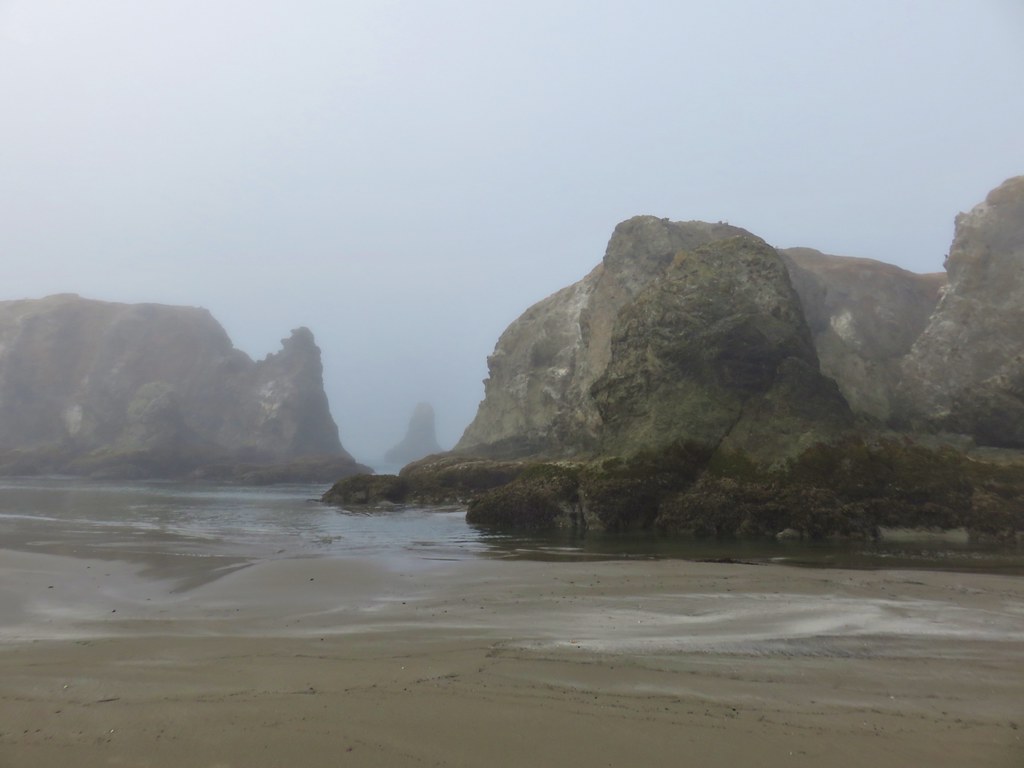
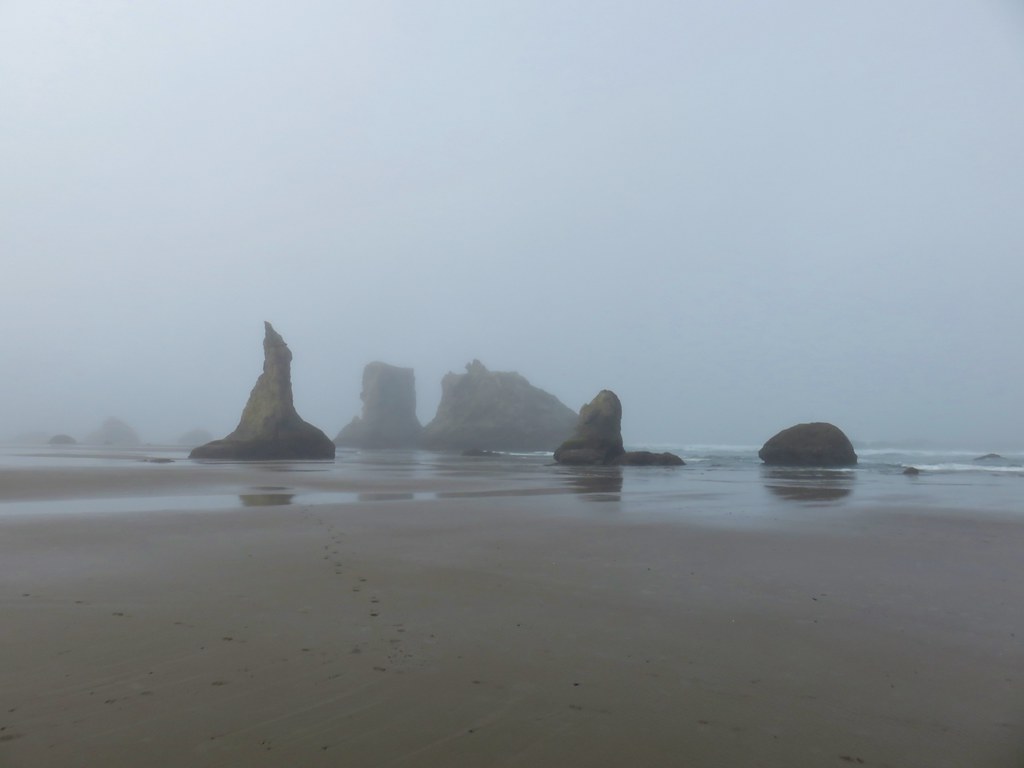
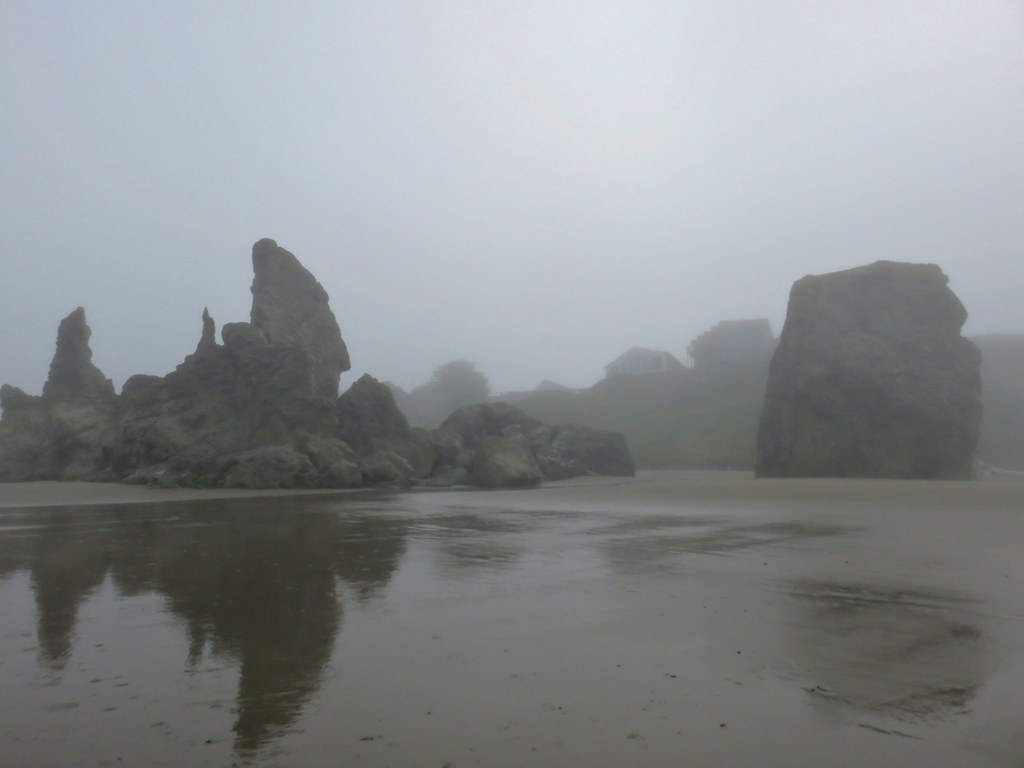
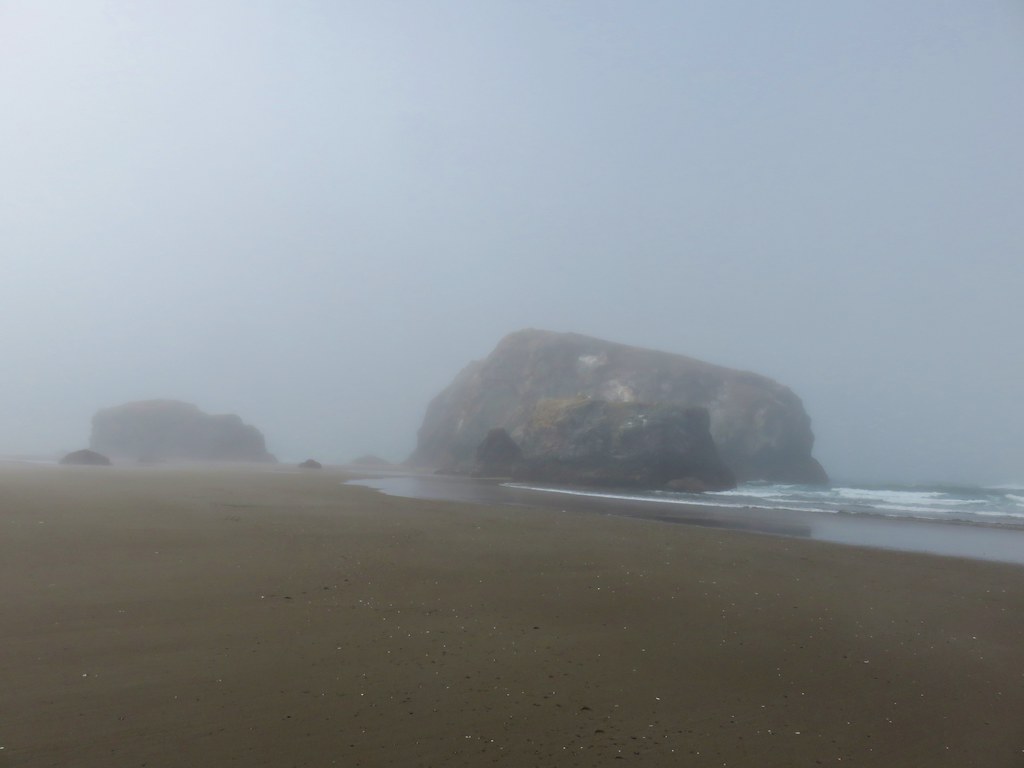
We would be passing by a series of ocean rocks and islands along a three and a half mile stretch of beach from the jetty to Devils Kitchen. We headed into the fog hoping that it would indeed burn off as the day progressed. In the meantime the tide was out allowing us to get a closer look at some of the rocks. Please note that climbing on any of the rocks and tidepooling is banned so keep your distance and use your binoculars or camera’s zoom.
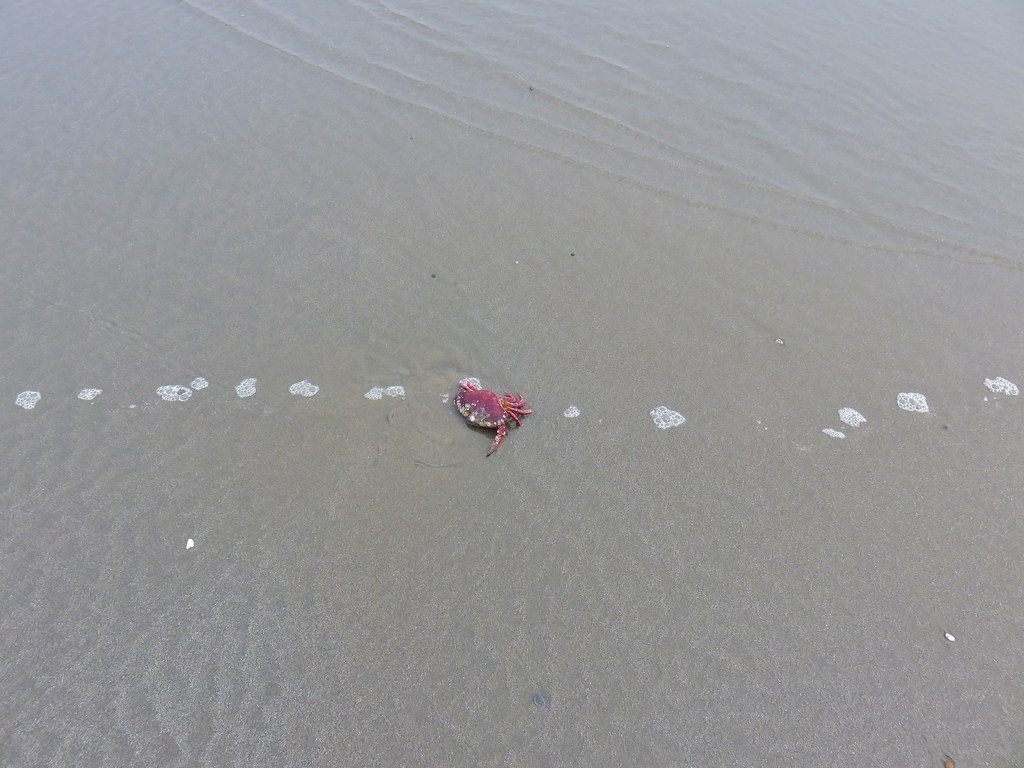
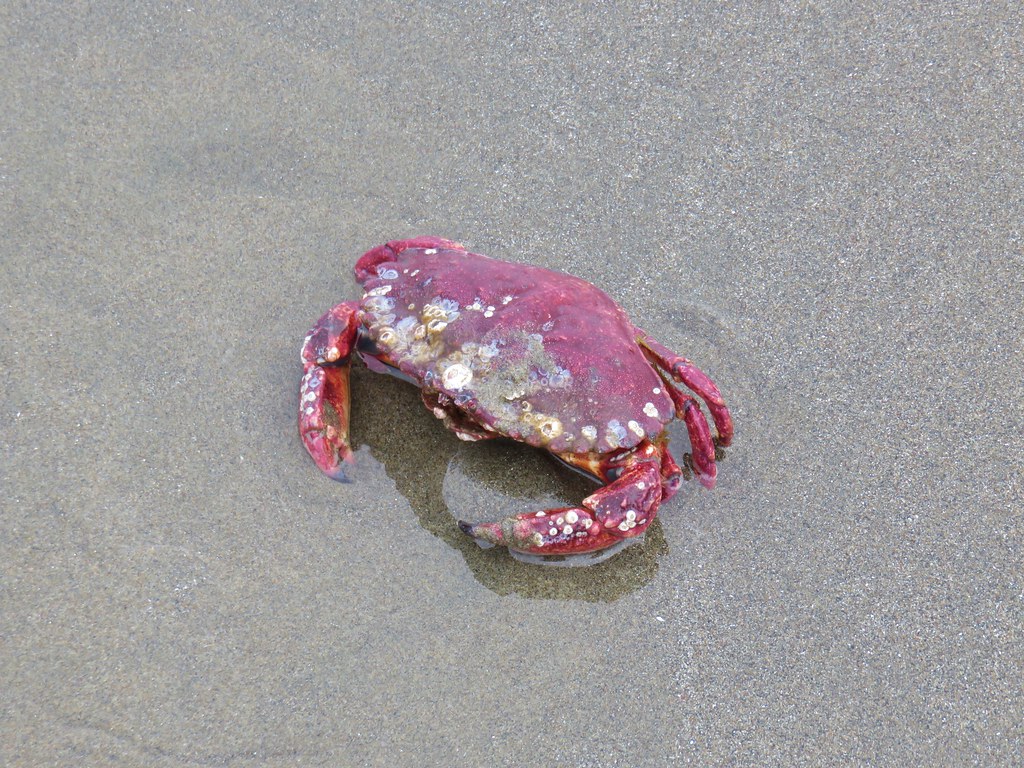
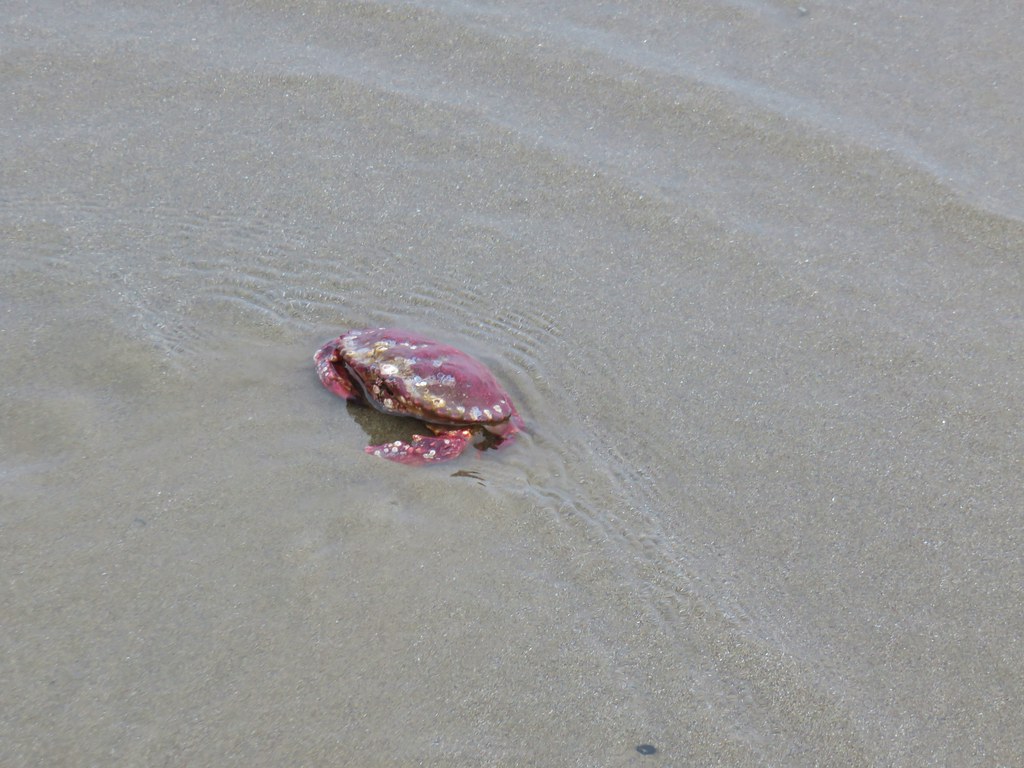
We got to see an actual live crab dig itself back into the sand.
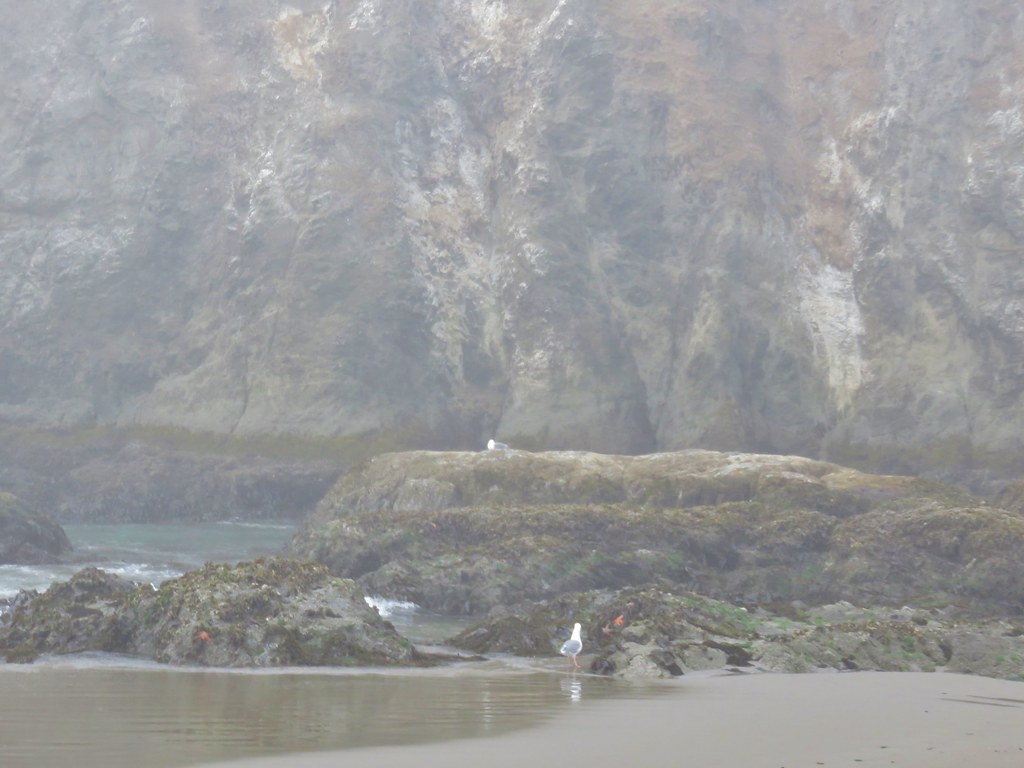
The rocky islands were neat but with the fog limiting visibility they weren’t as impressive as they should have been. For one thing we could only see the ones close by and couldn’t get a feel for just how many and how big they were.
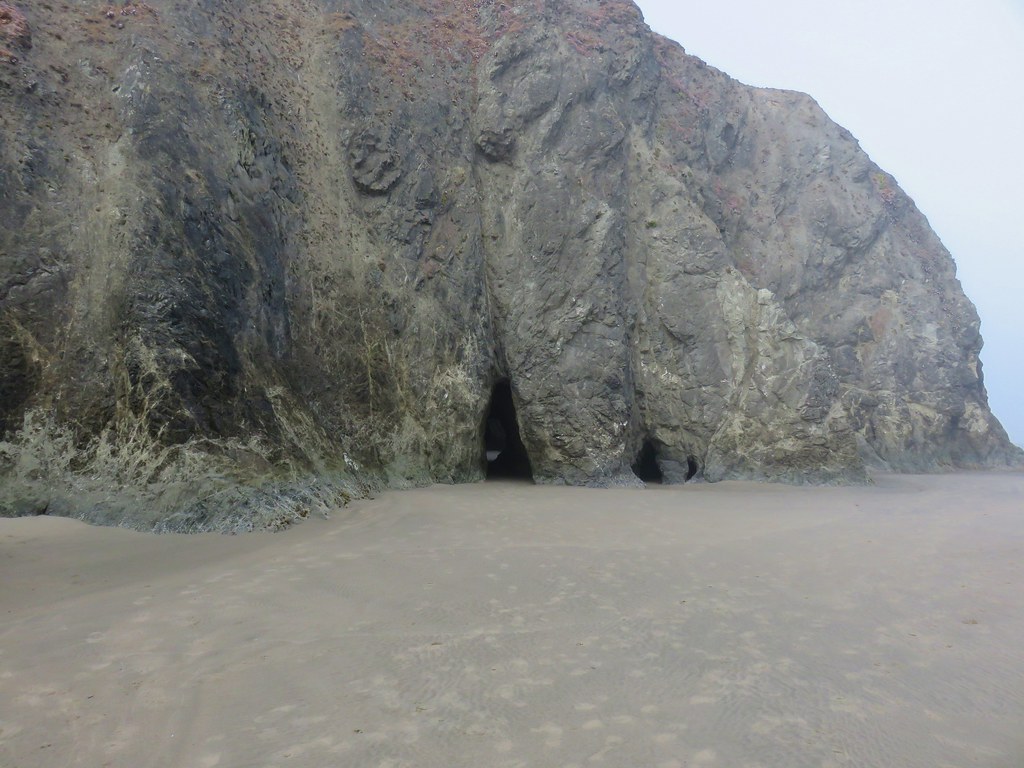
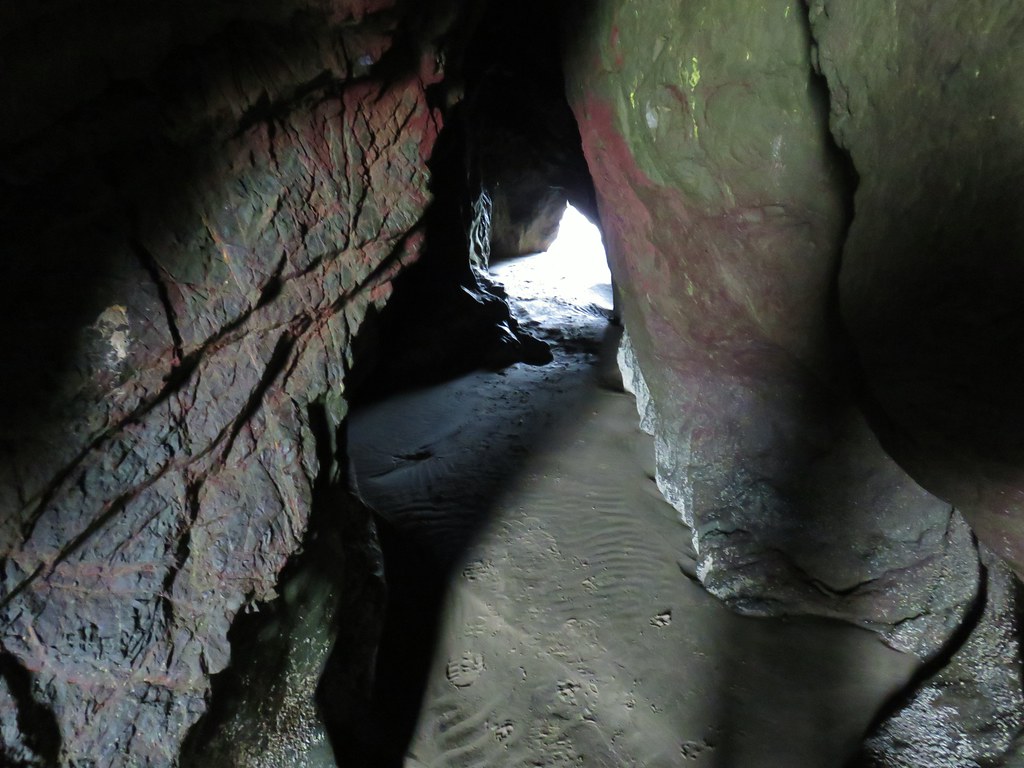
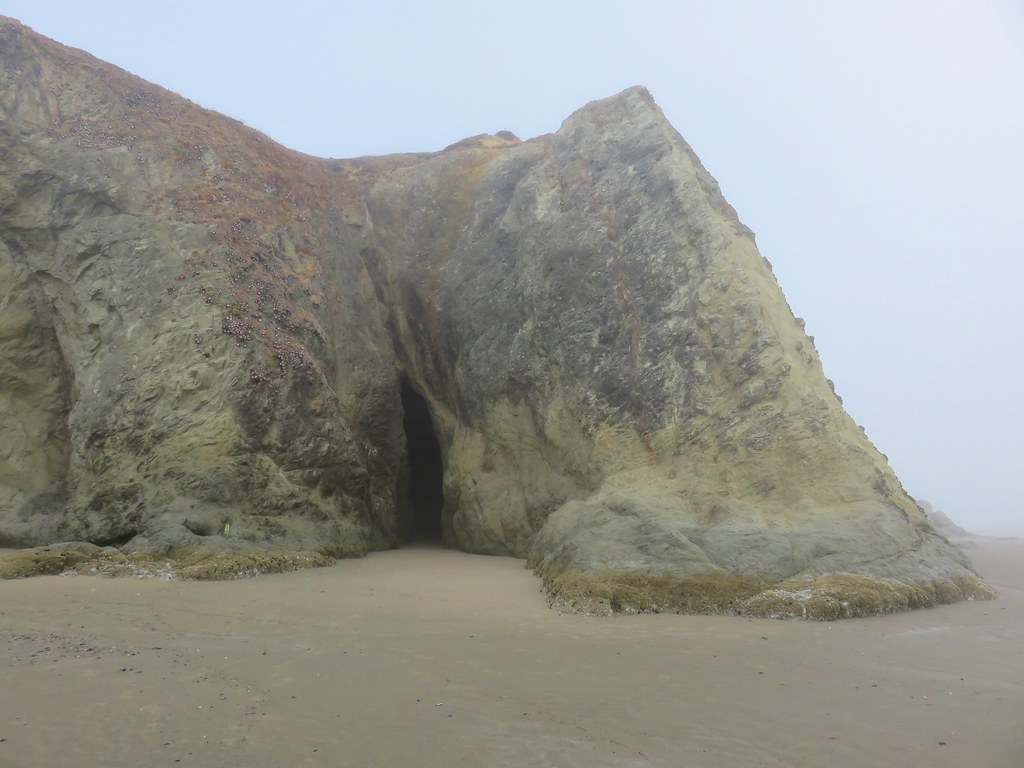
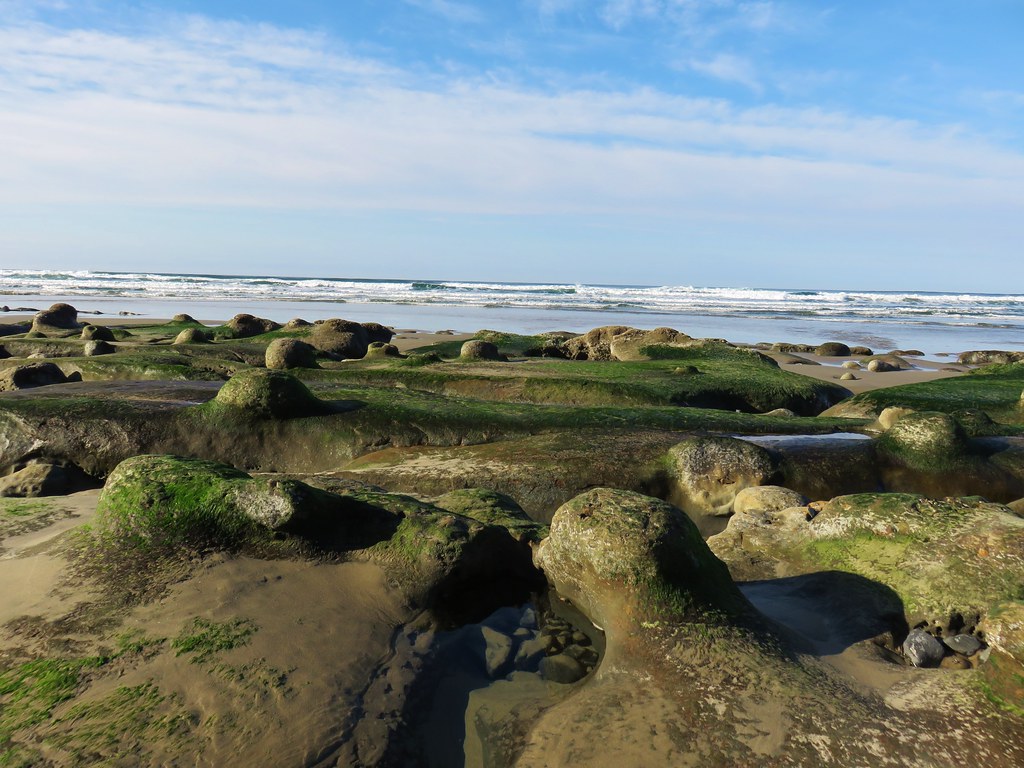
Near the two mile mark below the Face Rock State Scenic Viewpoint there were a few sea caves present at Grave Point.
Beyond Grave Point the number of sea stacks and islands dwindled as the beach flattened out. In the next 1.9 miles we crossed Johnson Creek and passed Fish Rock before arriving at Crooked Creek and Devils Kitchen.
We made use of a bench at a viewpoint above Devils Kitchen where we had a snack and took a break.
We were still hoping that the fog would burn off as promised as we headed back along the beach but alas it was not to be.
By the time we’d gotten back to the car we had decided that we would be trying this hike again the next time we were in the area. We have a few more hikes left to complete between Bandon and Coos Bay and the Bandon Islands will be a part of that trip.
After cleaning up in the motel we walked across Highway 101 into Bandon’s Old Town and did a little shopping. They were having a farmers market where we came away with a few goodies. After a hitting the farmers market and a few of the shops we stopped into Bandon Brewing for a beer and an appetizer, at least that had been the plan. We ordered the small Spinach Artichoke Stix from the bradsticks section of the menu. We had expected a few breadsticks with some dip, but it turned out to be more like a pizza and was quite a bit larger than we’d anticipated. That wasn’t a bad thing as they were delicious and we had no problem finishing them off. It ended up being our dinner which was fine because we had also picked up some pastries from Pastries and Pizzas which was located dangerously close to our motel.
The pastries hit the spot that night and we went to bed satisfied and ready for another day of hiking on Saturday. Happy Trails!
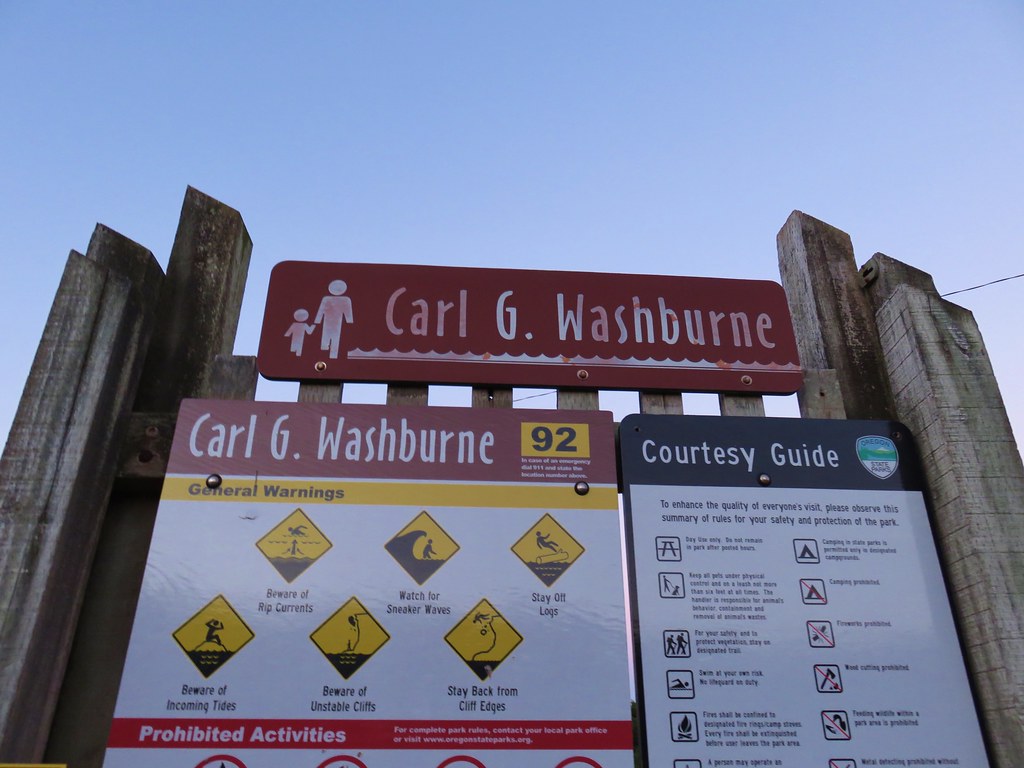
For our final outing of 2017 we returned to the Oregon Coast for three short hikes between Newport and Florence. We began our day by driving Highway 101 35 miles south of Newport (14 miles north of Florence) to the Carl G. Washburne Memorial State Park Day Use parking lot.
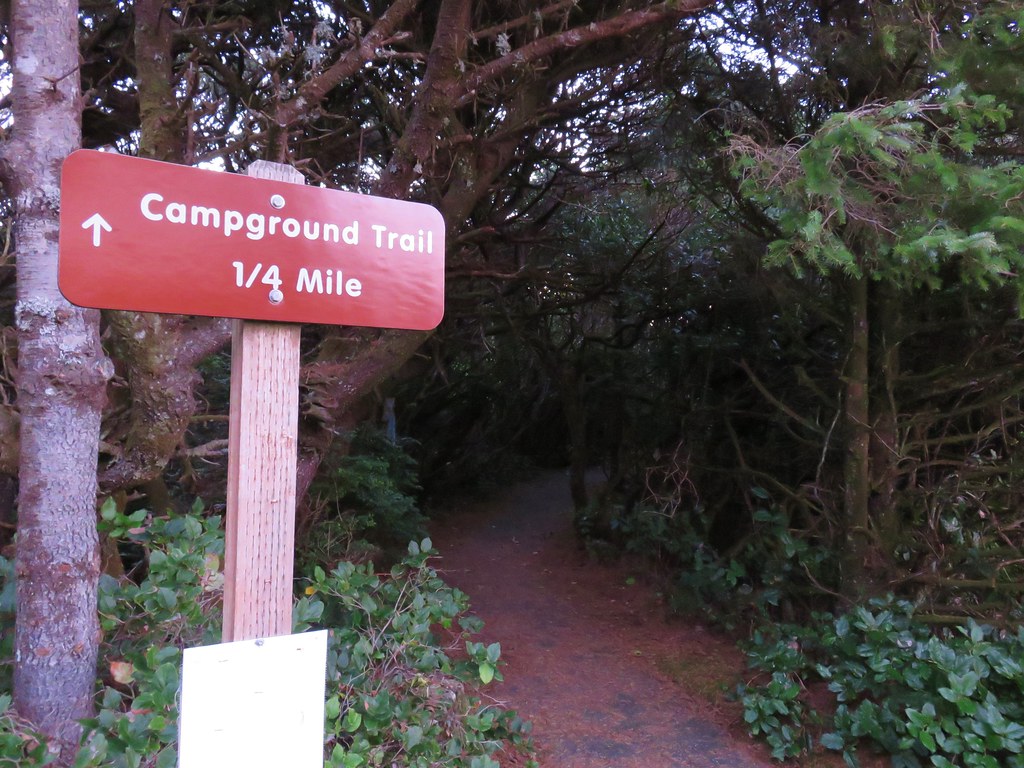
Our plan was to hike to the Heceta Head Lighthouse State Scenic Viewpoint and then return on a different route. In order to complete the loop portion of the hike we needed to cross Highway 101 twice. We decided to get the crossing done as soon as possible thinking that traffic would be less problematic earlier in the day. From the parking area we took a paved path east following a pointer for the Campground Trail.
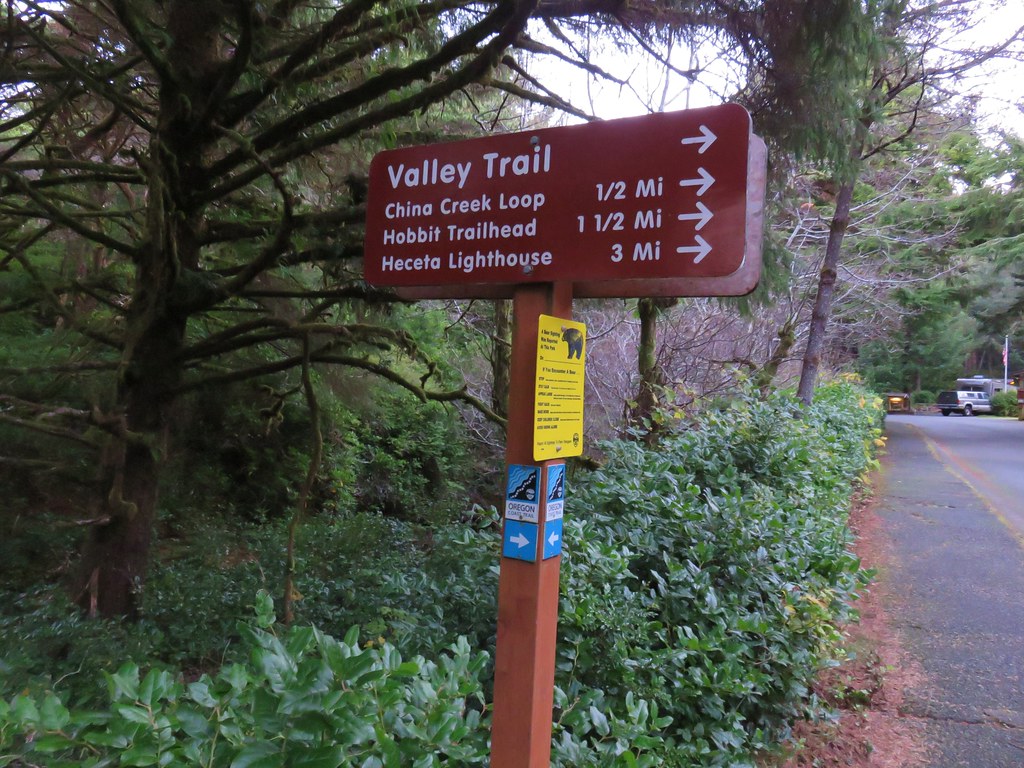
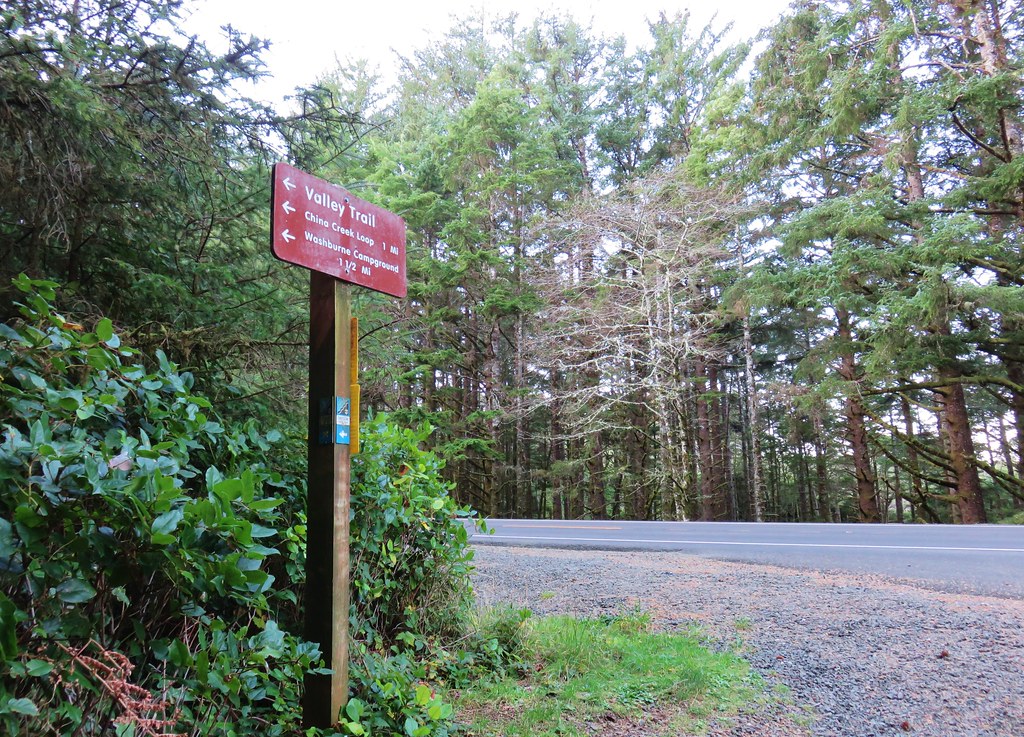
After a tenth of a mile we crossed the empty highway and continued on the campground entrance road for just over an additional tenth of a mile where we turned right at a signpost onto the Valley Trail.
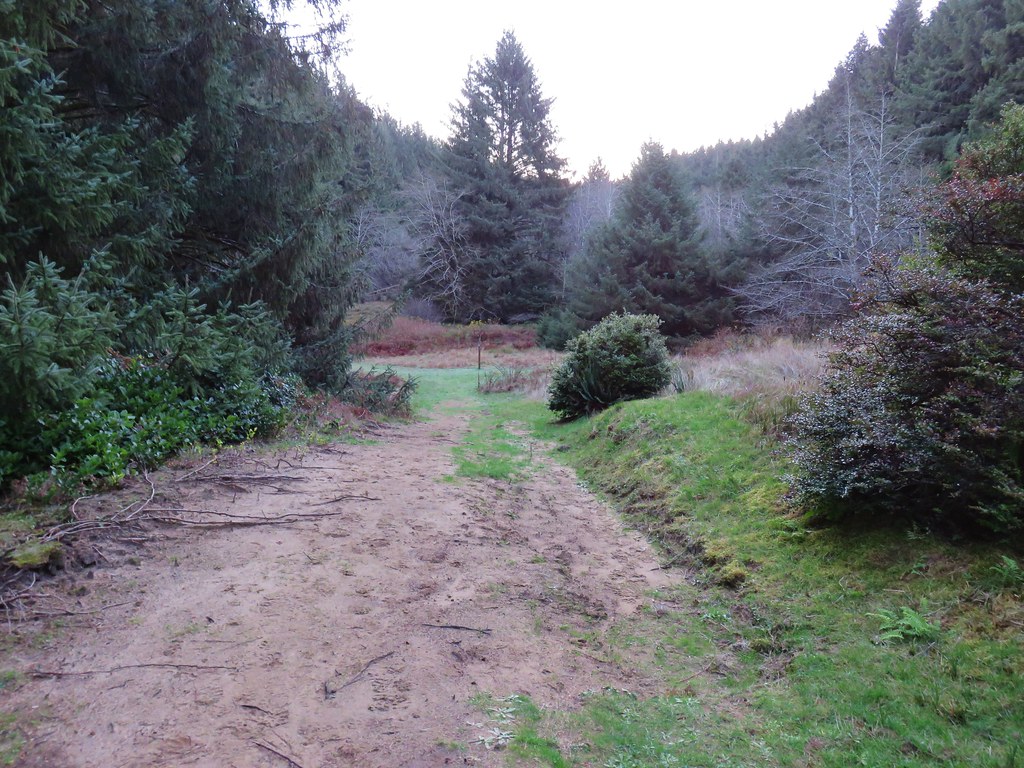
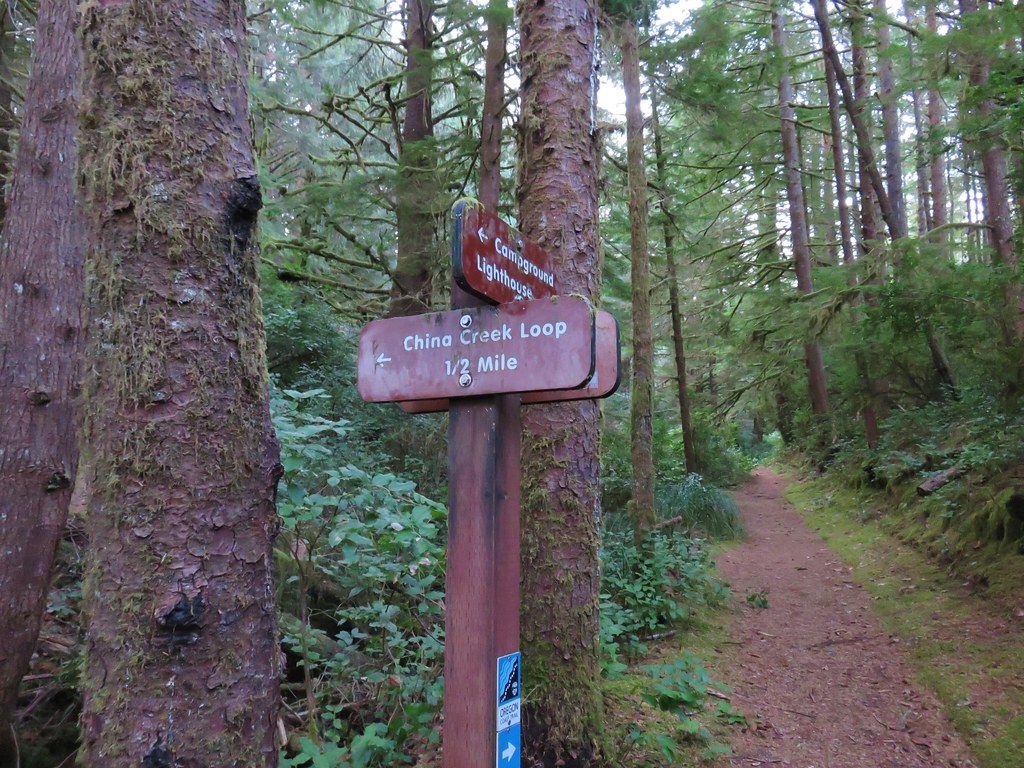
We followed this trail for three tenths of mile to a junction in a meadow with the China Creek Loop Trail.
The loop added a little distance to the hike but not enough to keep us from turning left and crossing China Creek on a footbridge.
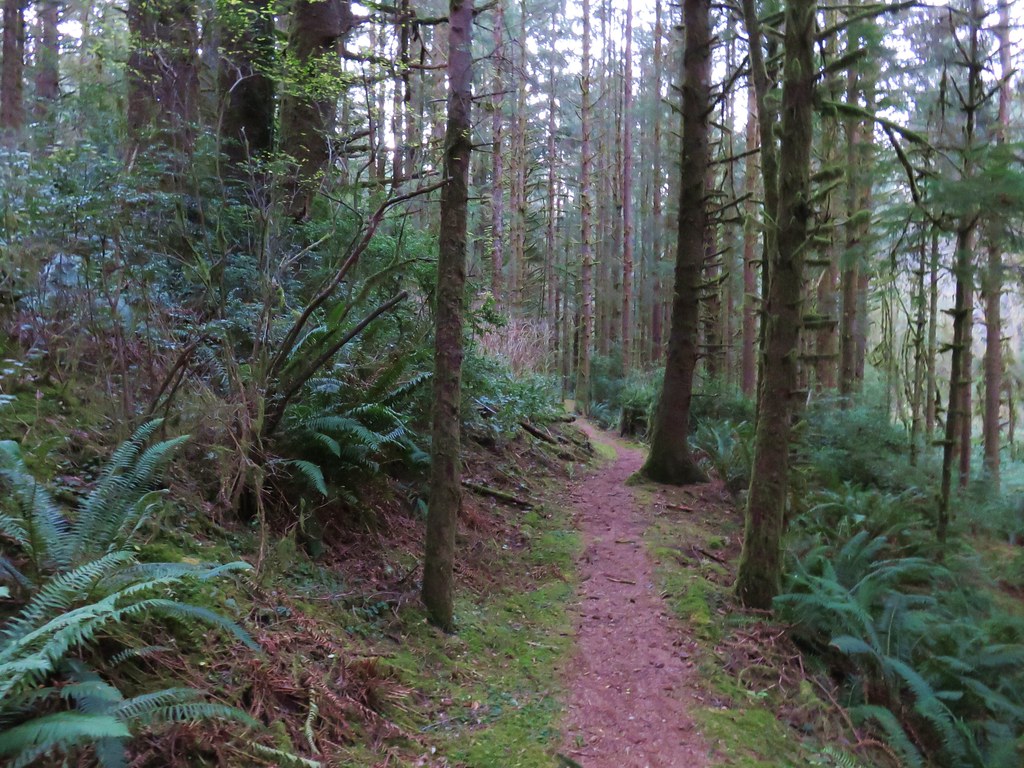
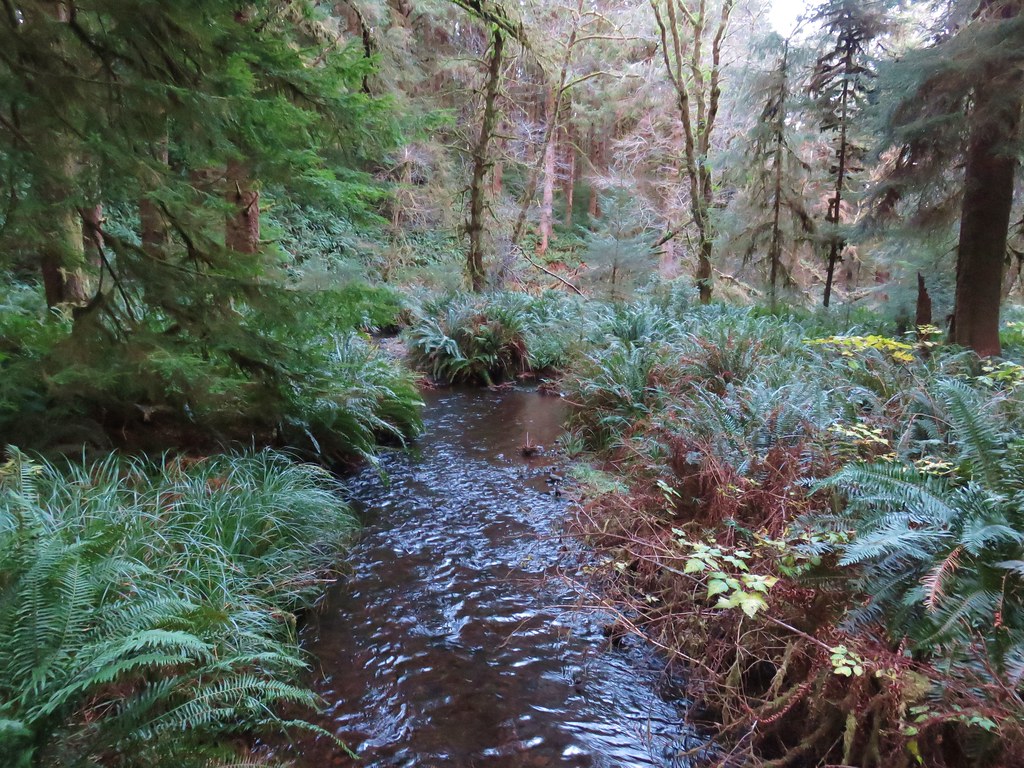
The China Creek Loop passed through a green coastal forest crossing China Creek again after .3 miles.
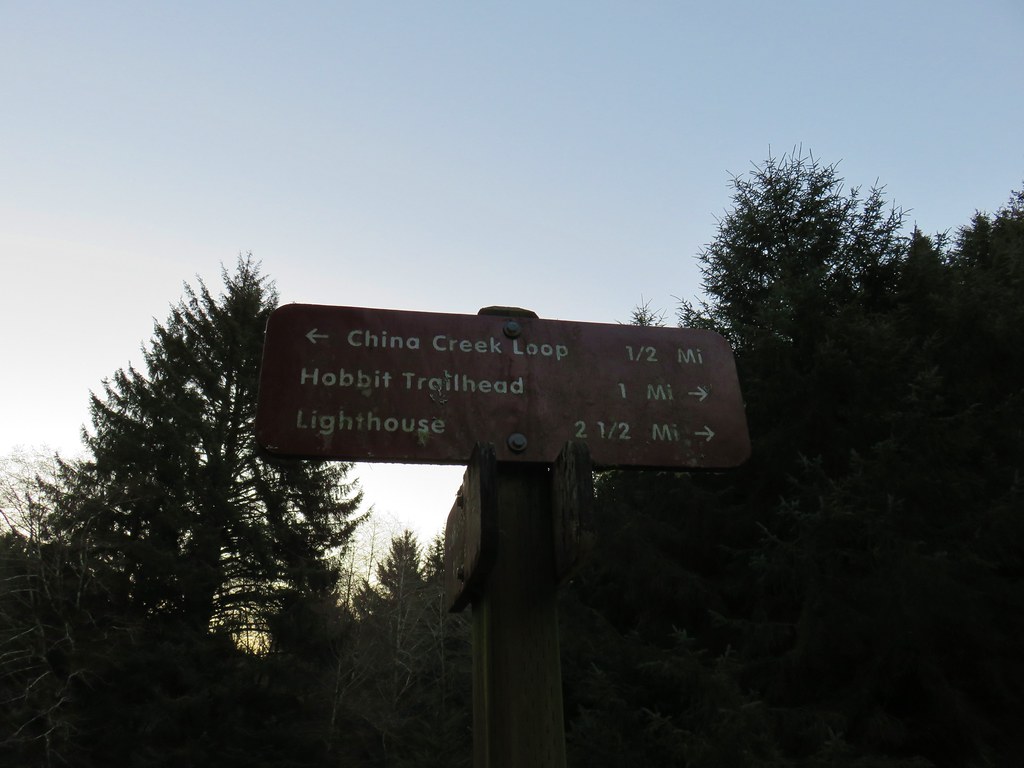
A half mile from the second crossing we found ourselves back at the Valley Trail where we turned left toward the lighthouse.
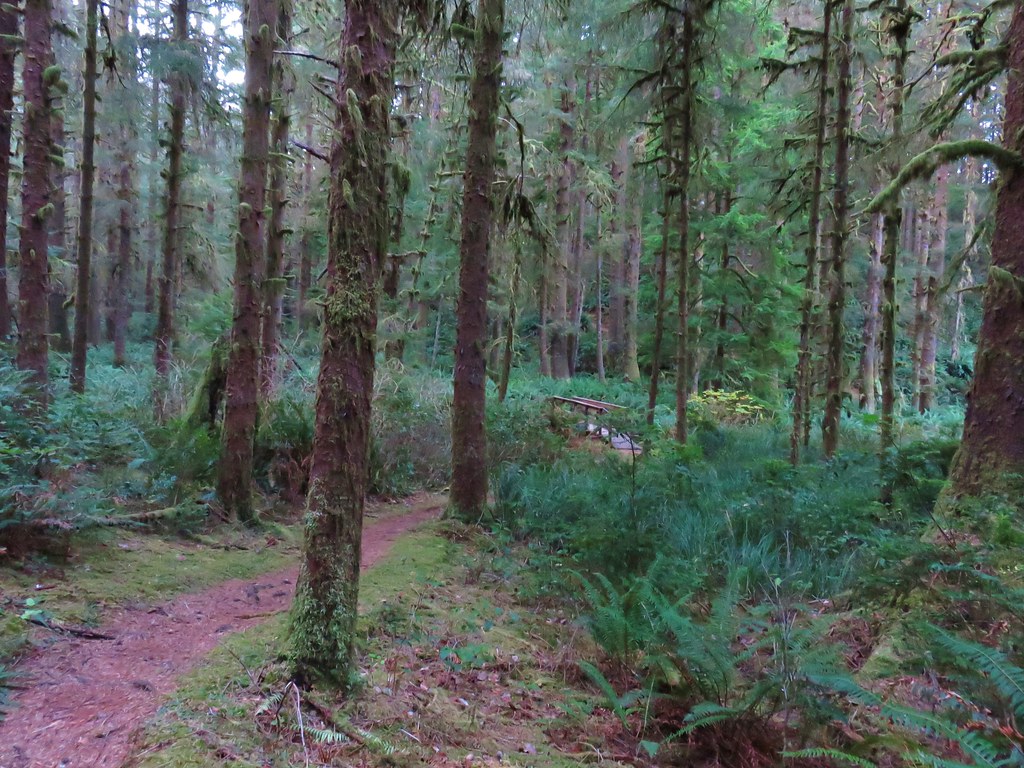
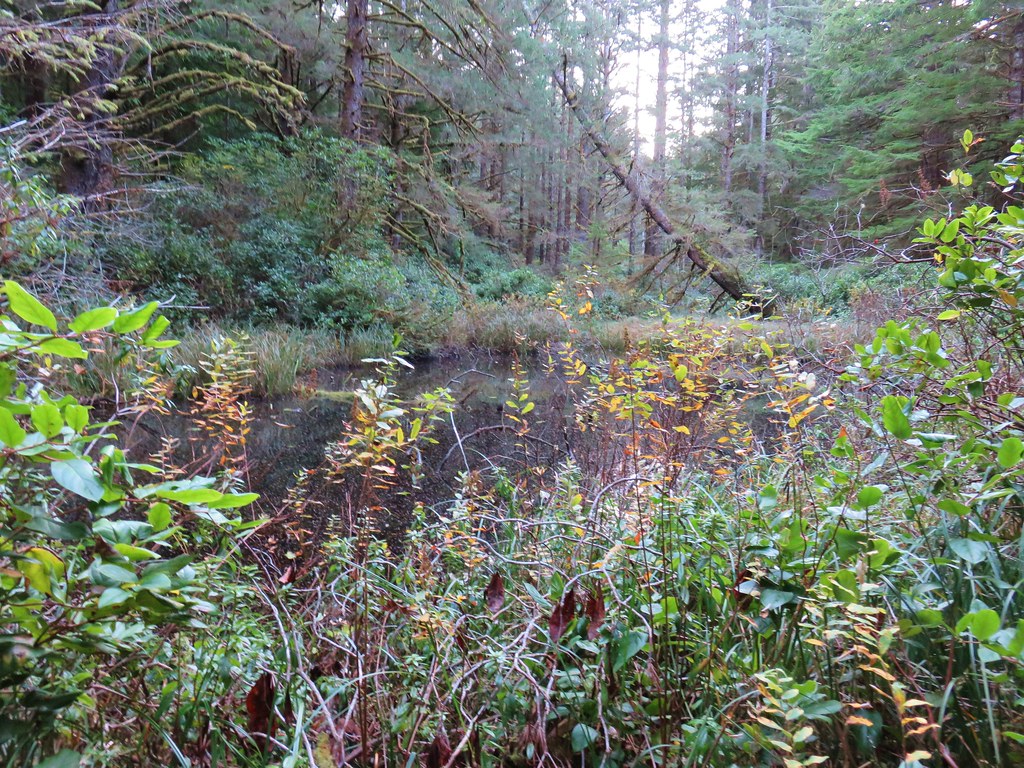
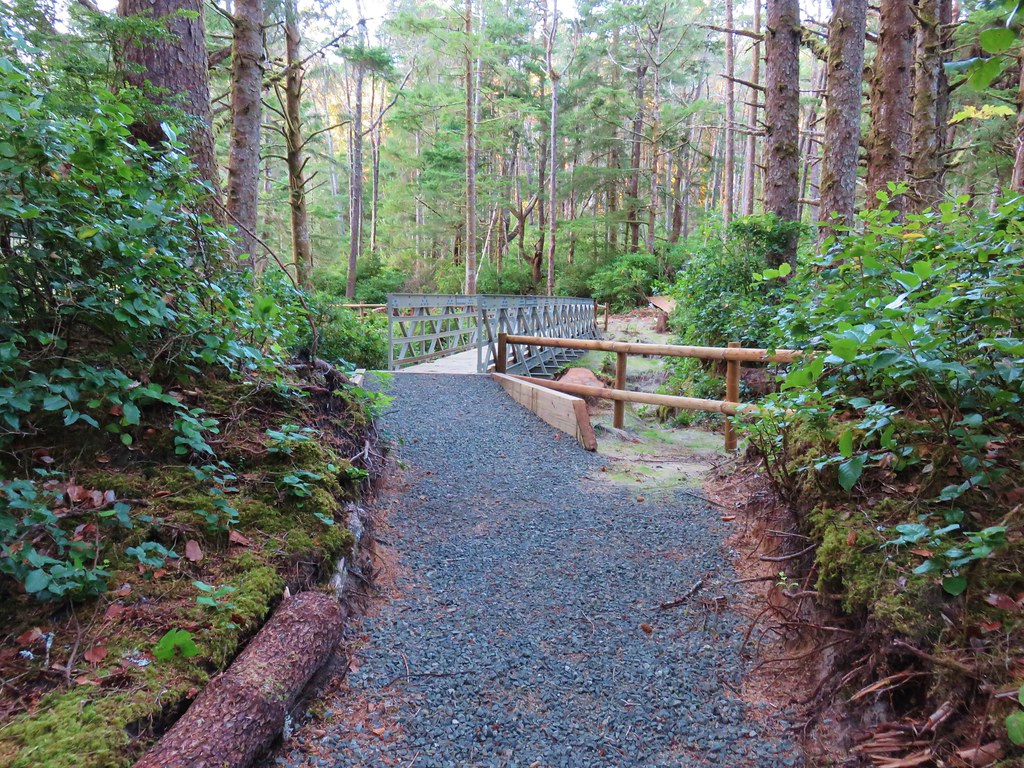
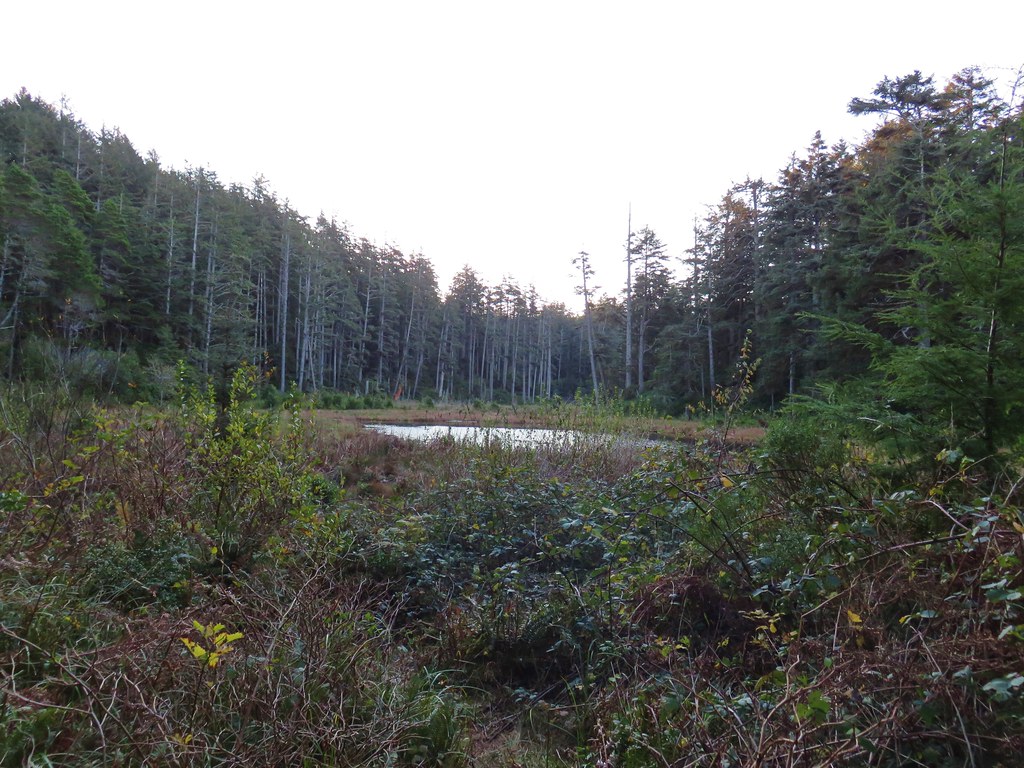
Over the next mile the trail passed two small ponds, crossed Blowout Creek on what appeared to be a recently installed footbridge, and skirted a beaver lake.
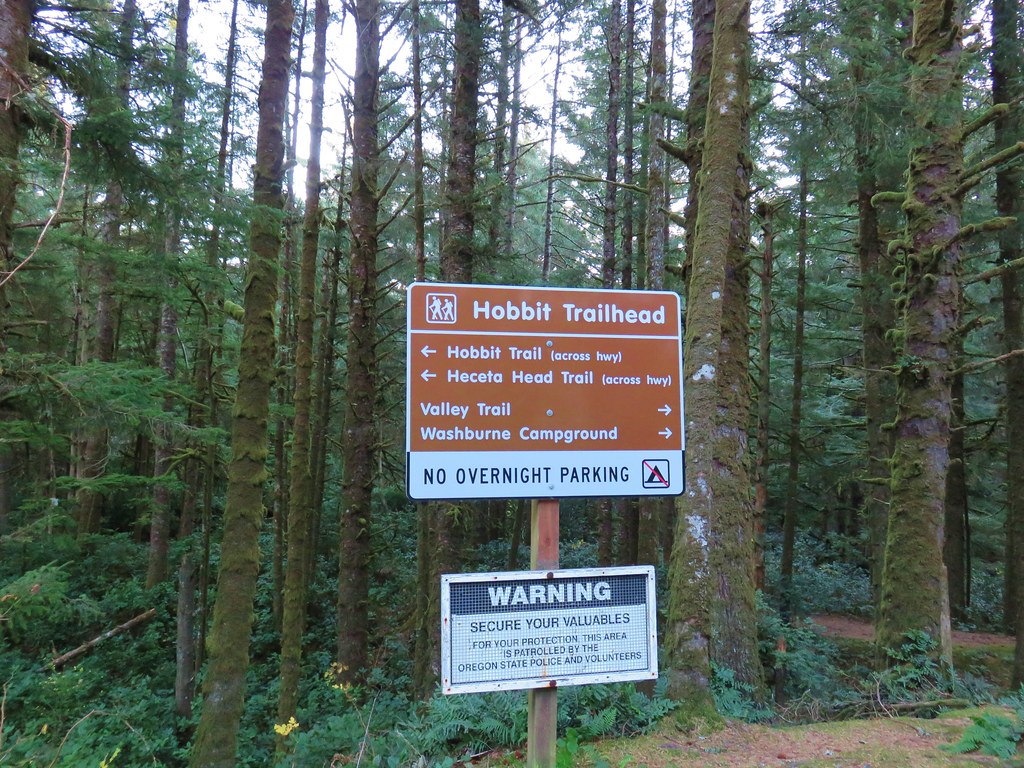
We were now at the second crossing of Highway 101 at the Hobbit Trailhead, another possible starting point.
On the other side of the highway the trail split, right was our return route via Hobbit Beach but first we turned left to visit the lighthouse. We were now following the route of the Oregon Coast Trail.
At first the trail remained near the highway but soon veered away toward the ocean as it began to climb up Heceta Head.
The trail climbed gradually and offered a few views north to Cape Perpetua.
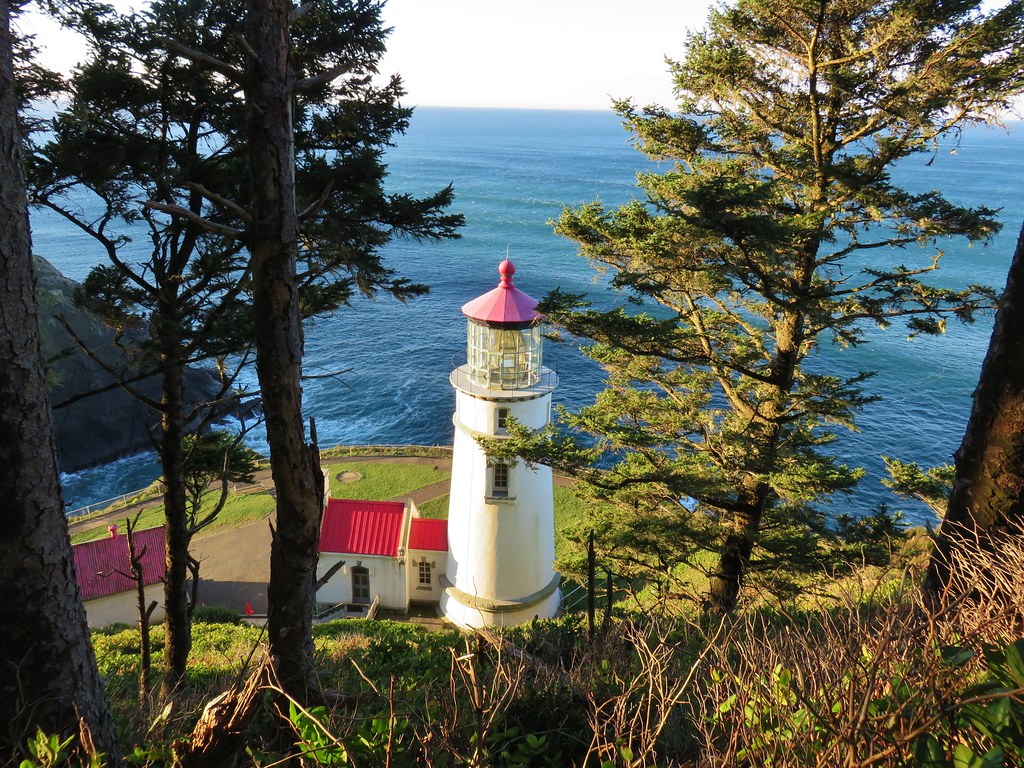
After reaching a saddle on the head, the trail descended to the south in a series of switchbacks before following a ridge and finally arriving above the lighthouse at the Heceta Head Lighthouse State Scenic Viewpoint.
Seal Lion Point jutted out to the south where the occasional bark of a sea lion drifted our way.
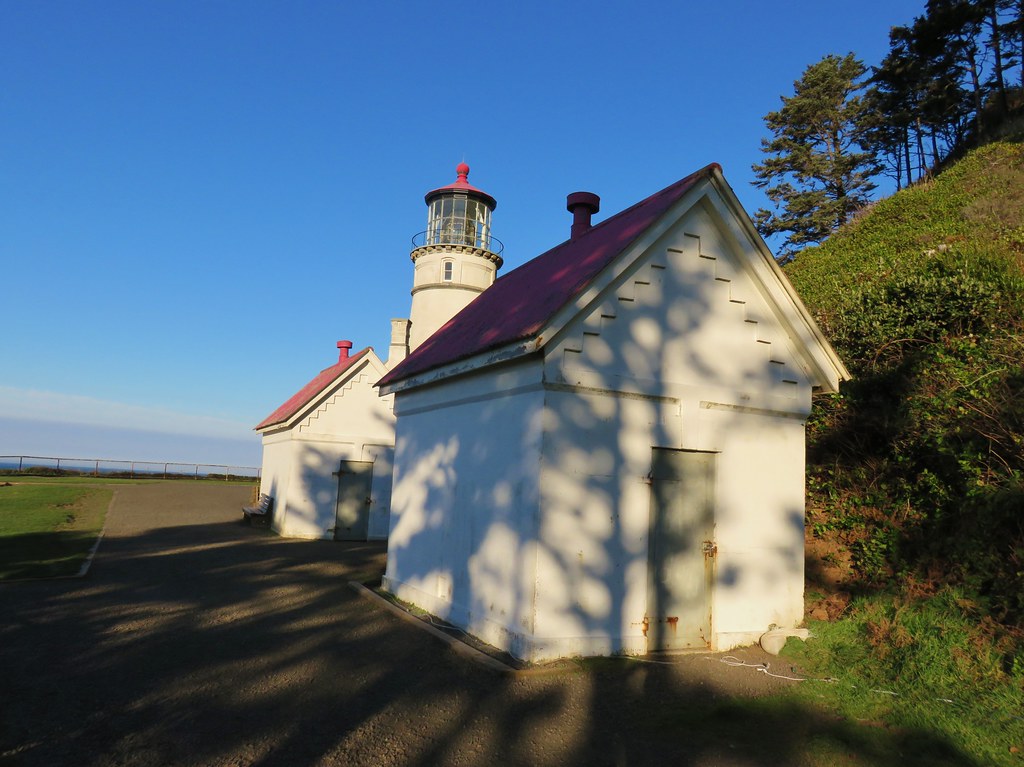
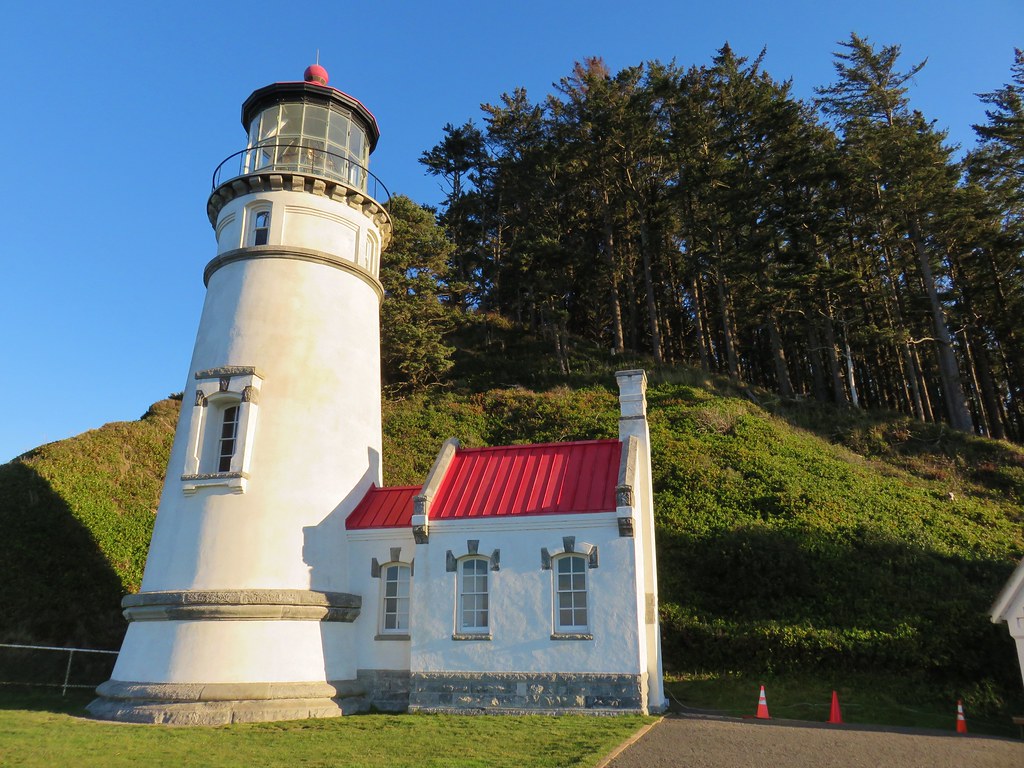
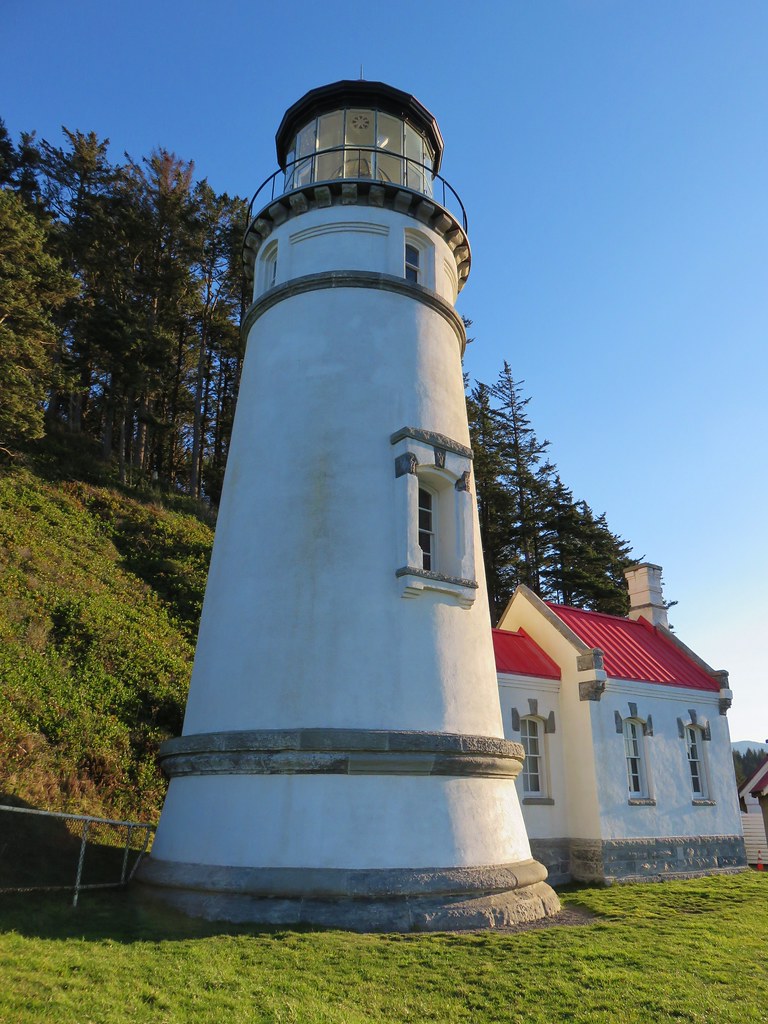
We made our way down to the lighthouse to get a closer look.
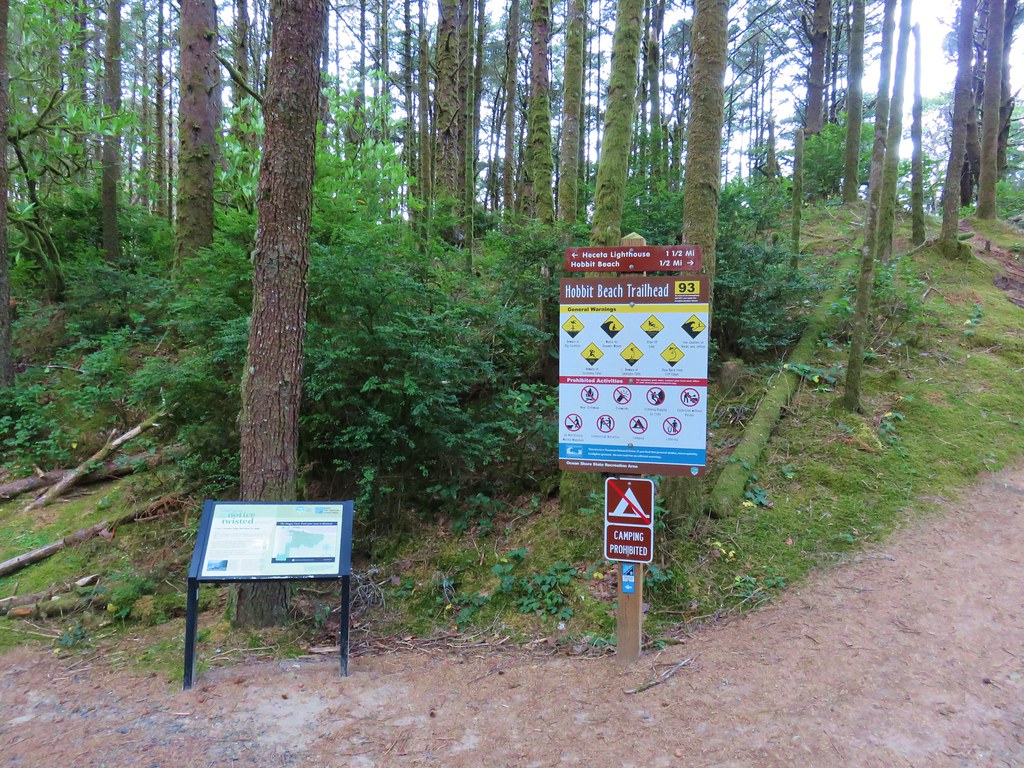
After a short break we returned the way we’d come to the fork and turned toward Hobbit Beach. We arrived at the beach in a little under half a mile.
A quiet 1.2 mile walk along the beach (and across Blowout Creek) brought us back to our car at the day use area.
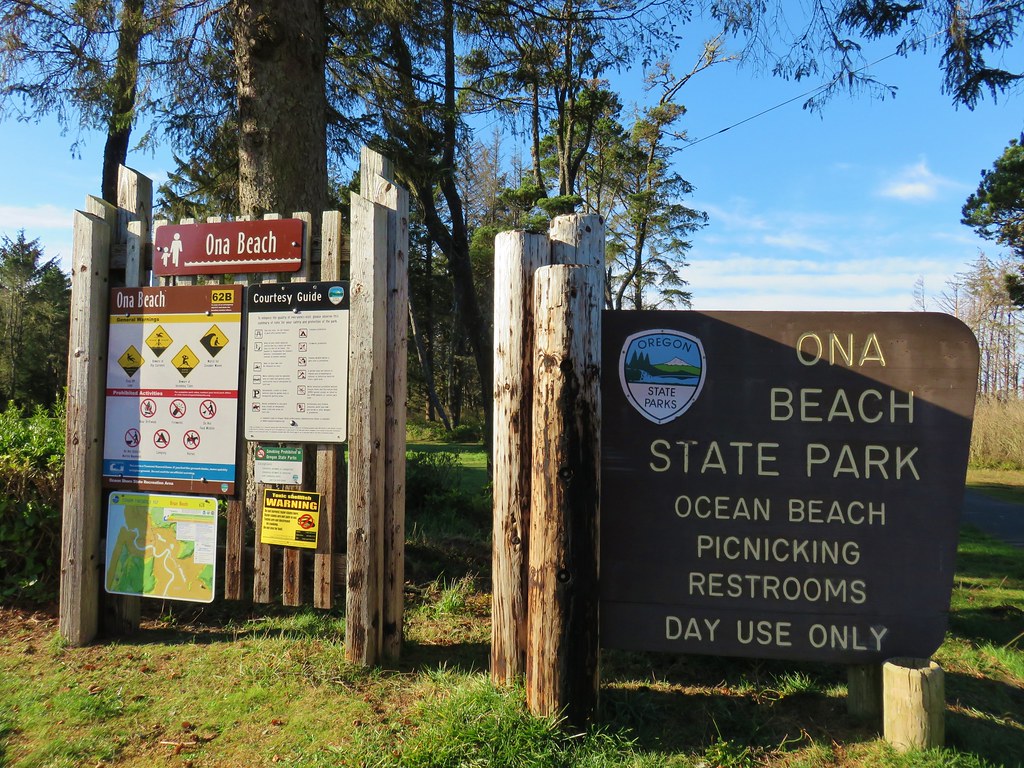
From there we drove north on Highway 101 for 28 miles to Ona Beach State Park, one of two units of Brian Booth State Park.
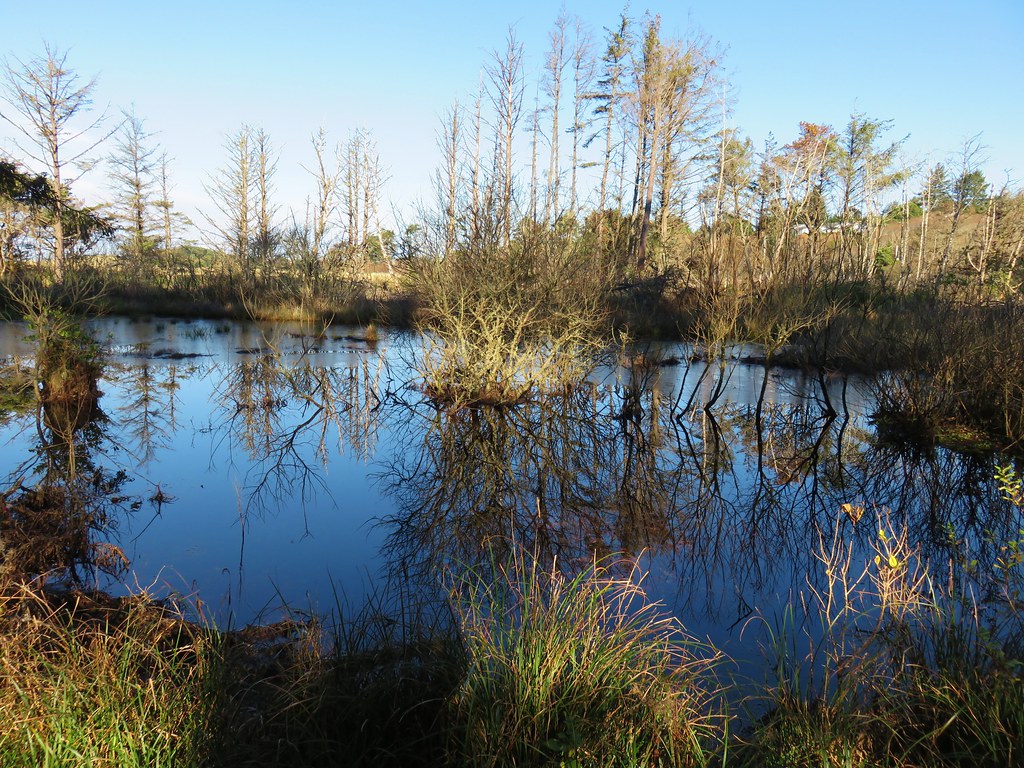
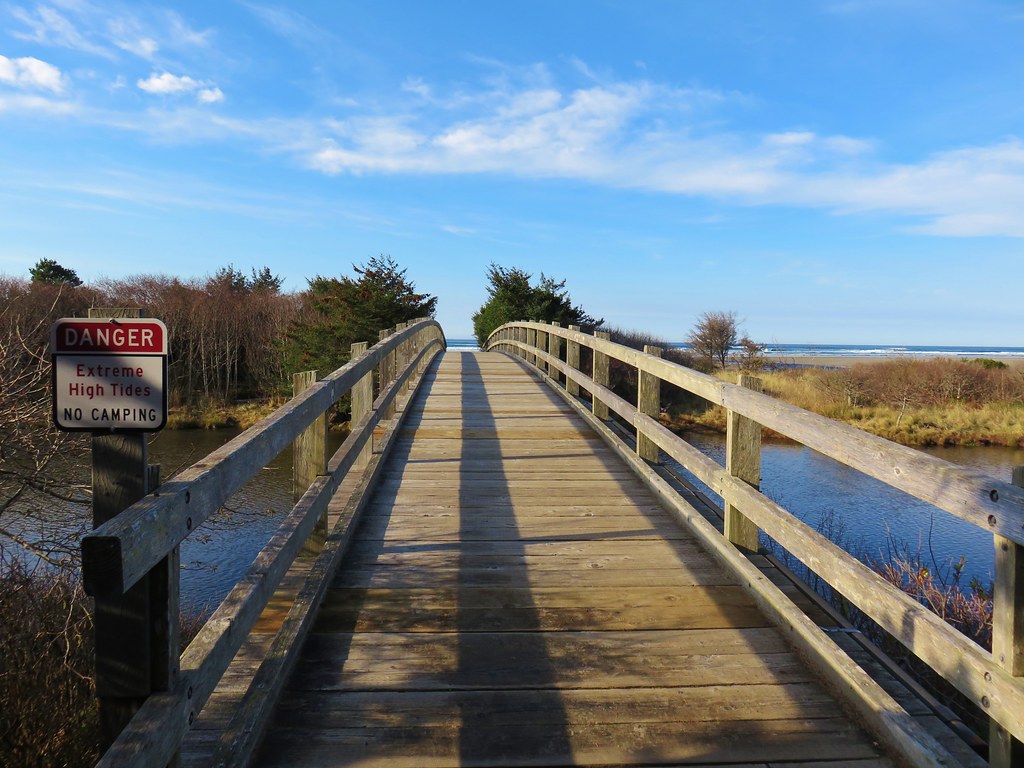
For this hike we planned on hiking along Ona Beach to Seal Rock and back. We passed through a large picnic area avoiding some flooded trails and arriving at a footbridge over Beaver Creek.
After crossing the creek we turned south along Ona Beach.
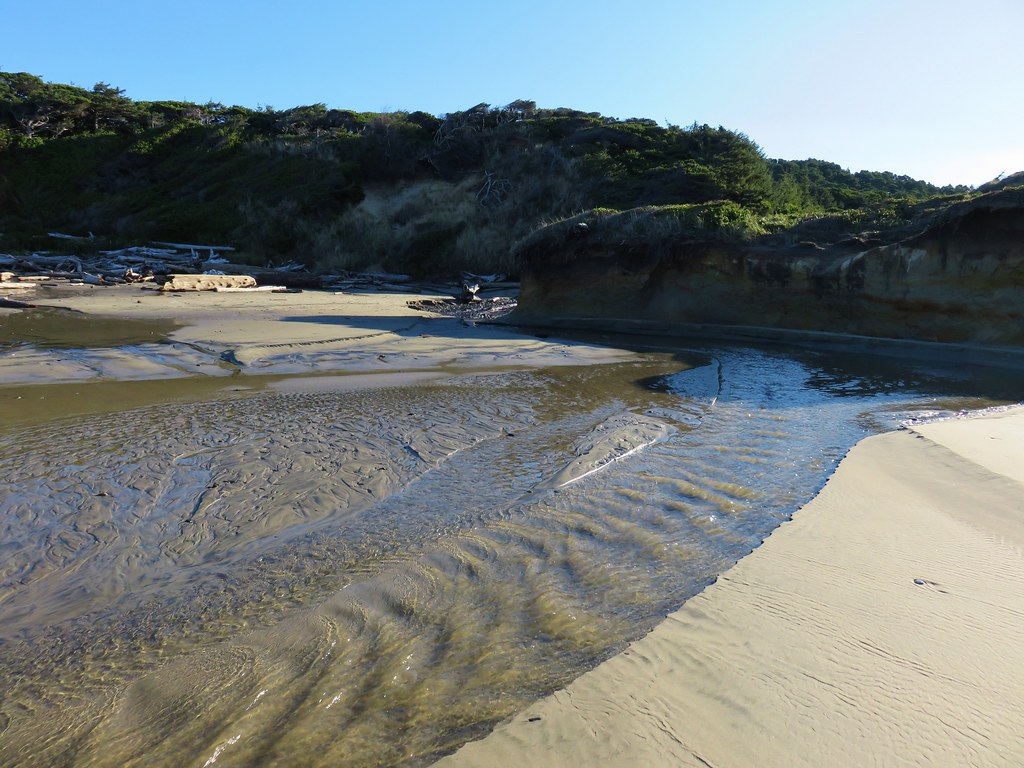
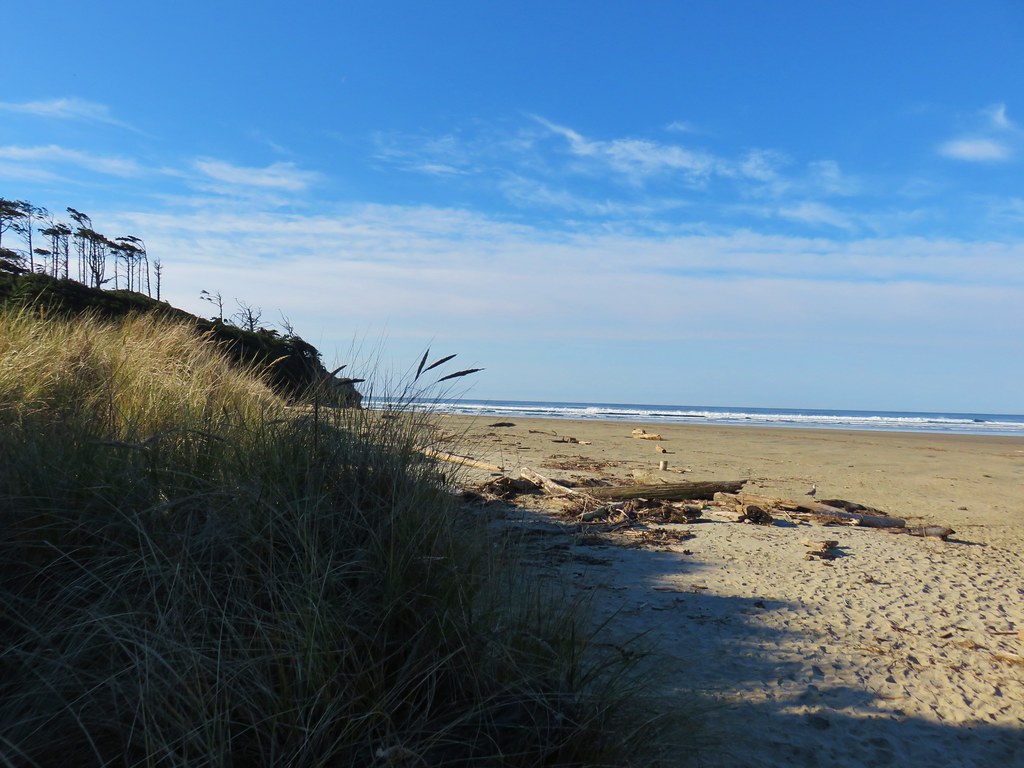
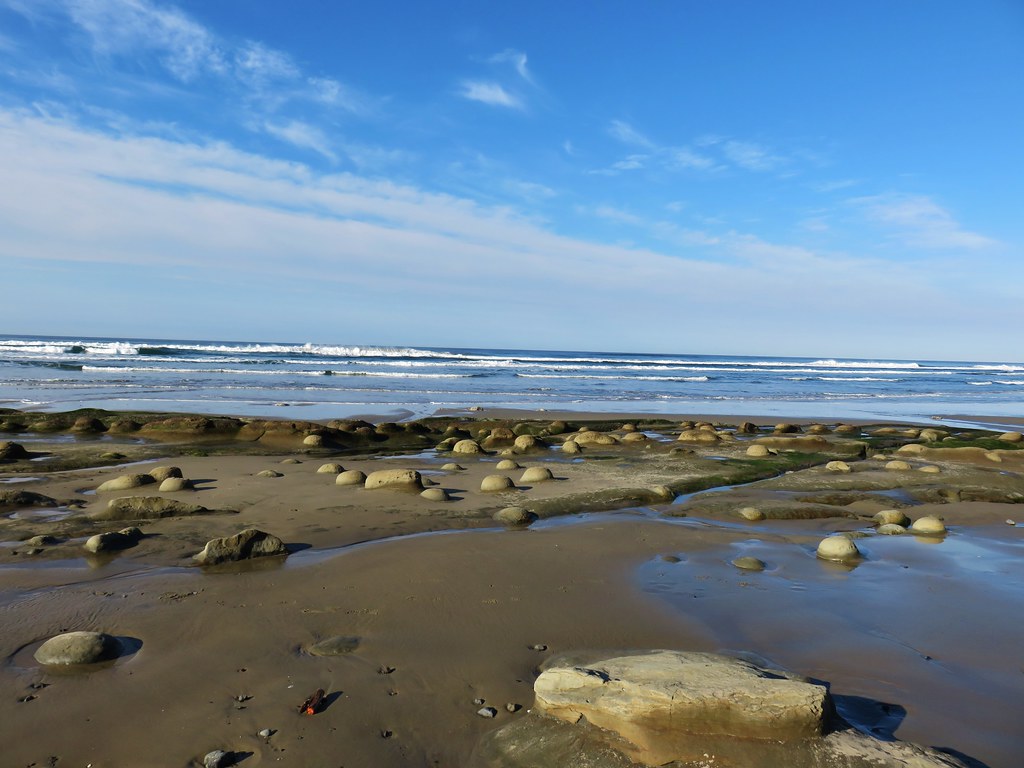
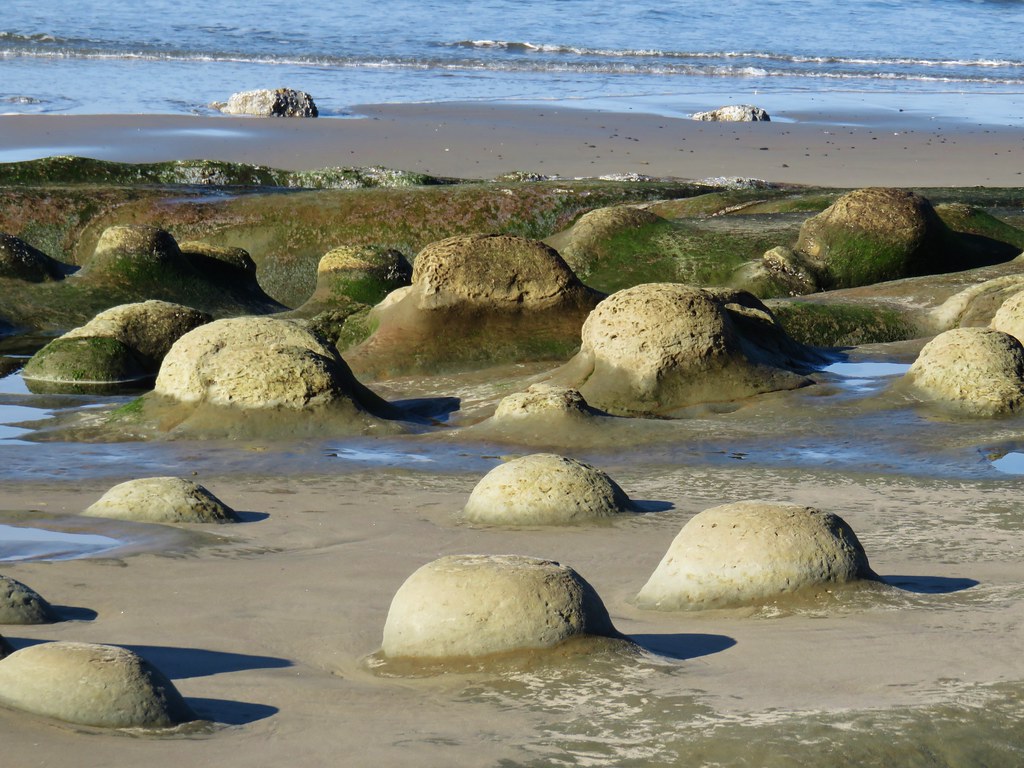
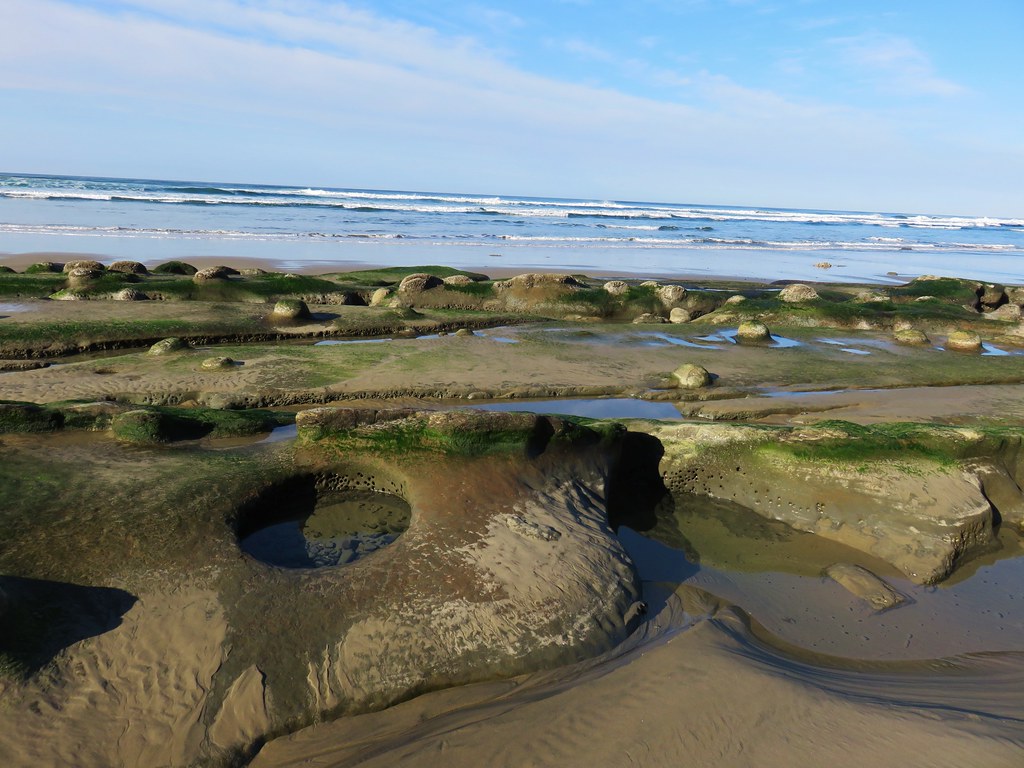
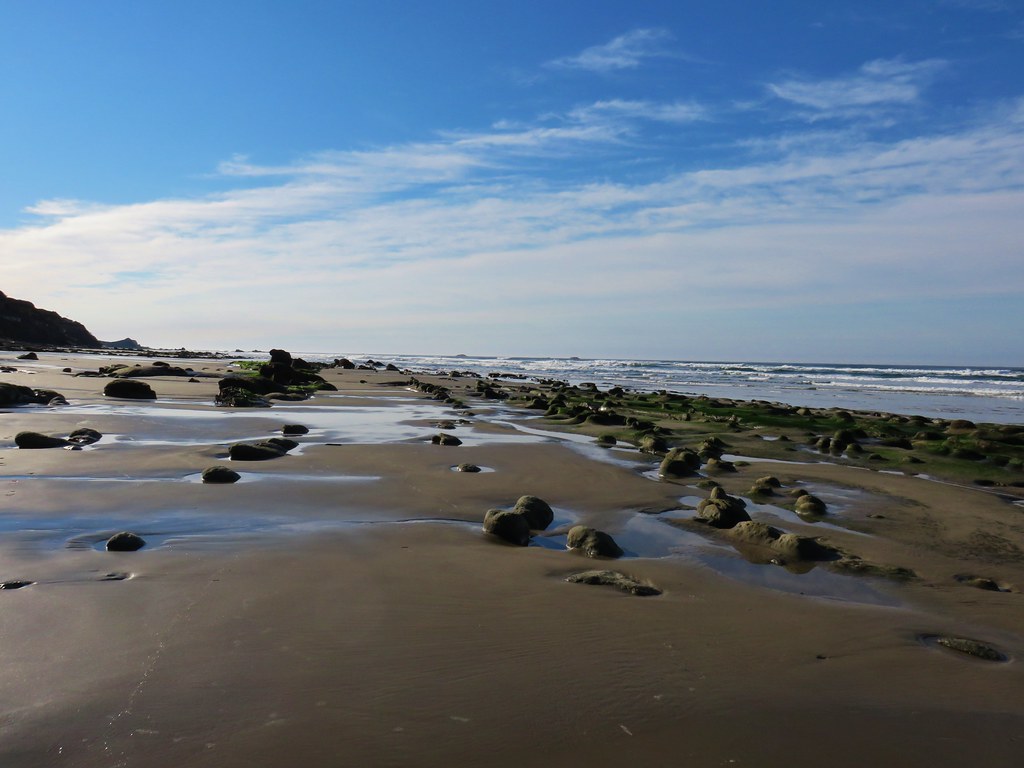
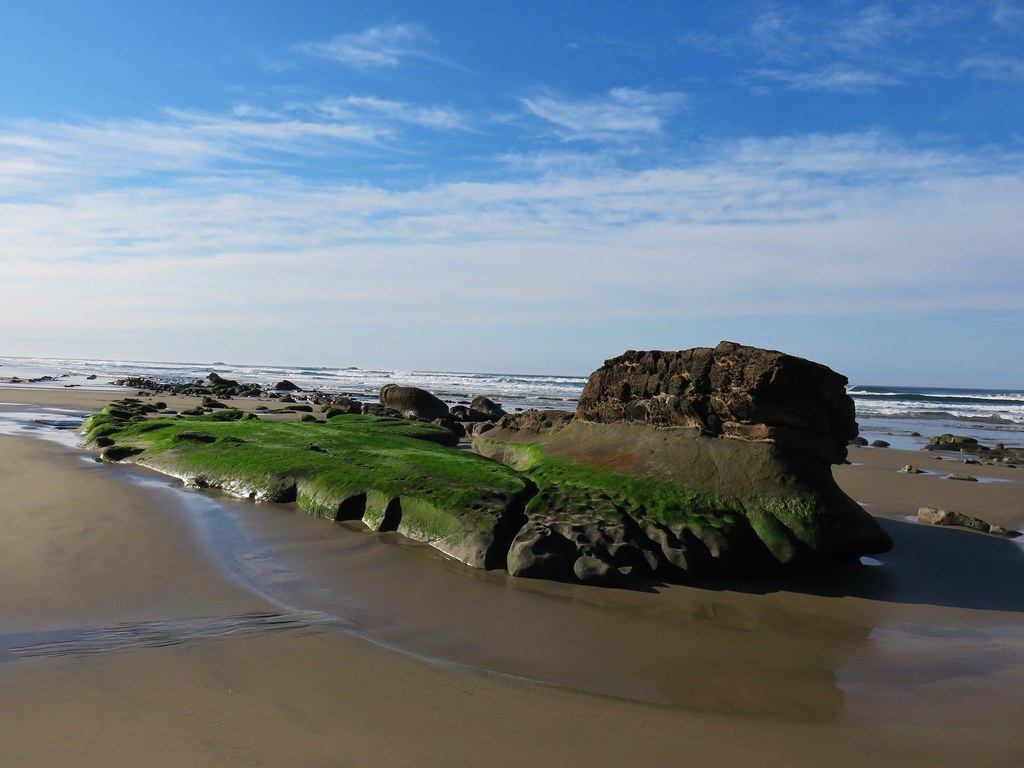
Portions of the beach can be impassible at high tide but we had arrived an hour and a half below low tide. Exposed rocks made the first stretch of beach very interesting.
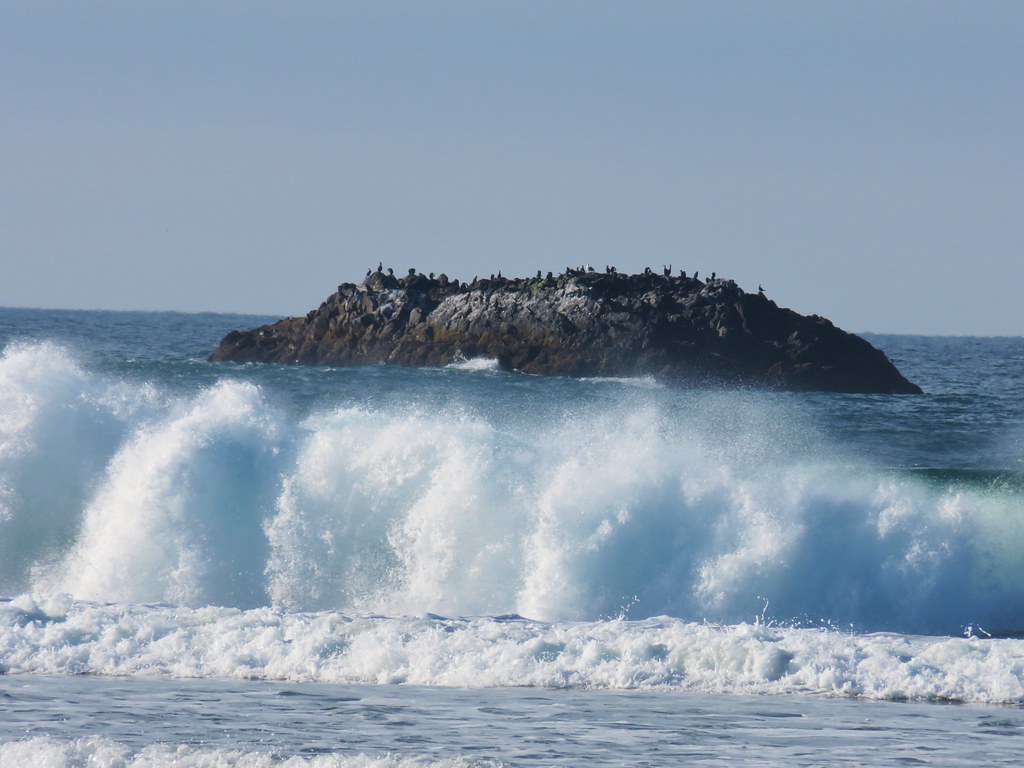
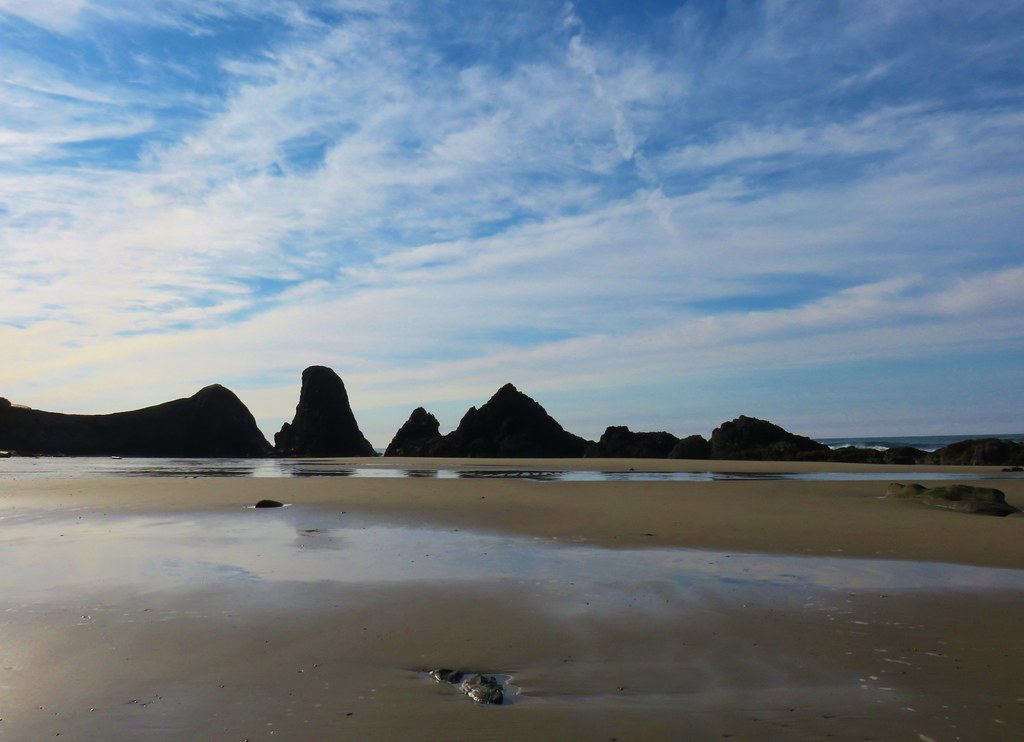
The rock along the beach eventually petered out but a number of ocean rocks just offshore held our interest.
Approximately 1.75 miles from the footbridge we turned inland along a small creek on an unmarked but obvious trail. We followed this path up to Highway 101 where a short road walk brought us to the entrance of the park.
We followed a paved path out to a viewpoint where much of the area was roped off for erosion control.
After admiring the views we returned the way we’d come and headed for our final stop at the Beaver Creek Natural Area, the second unit of Brian Booth State Park. To reach the winter trailhead for the Beaver Creek Loop from Ona Beach State Park we crossed Highway 101 onto N. Beaver Creek Road. After a mile we turned right onto S. Beaver Creek Road for another 1.1 miles and parked on the shoulder across from a gate.
We picked up a trail map and set off on the gated service road.
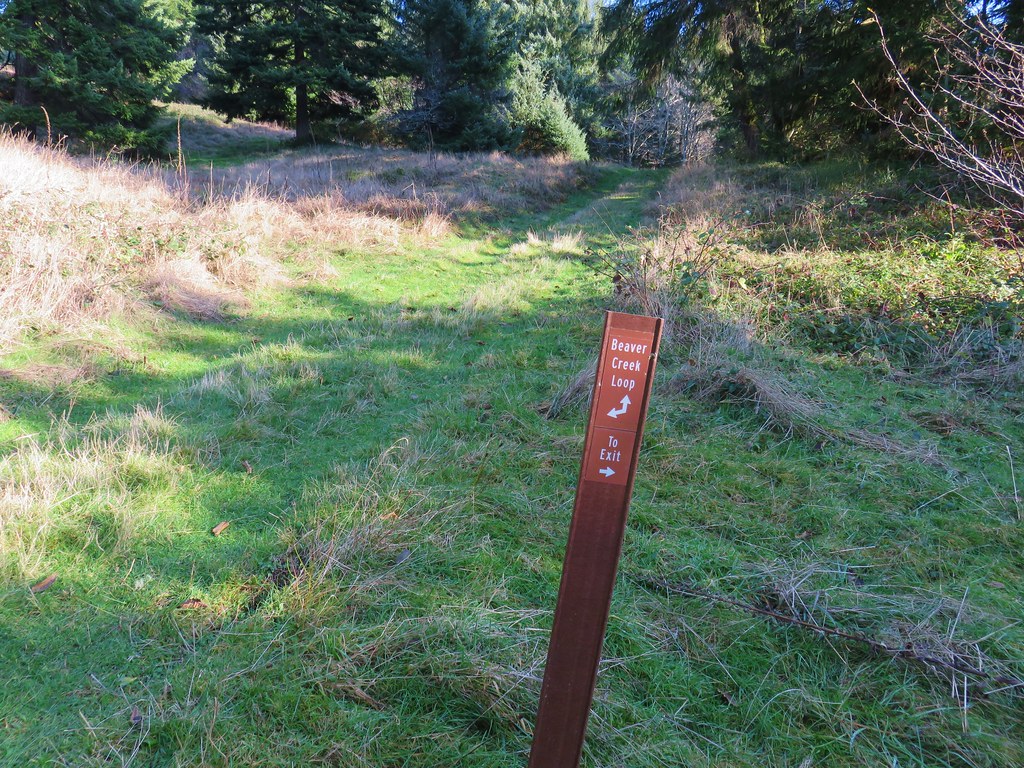
After .4 miles we turned uphill on a mowed path following posts for the Beaver Creek Loop.
Being the coast we’d seen a few flowers still blooming despite it being mid-December and even eaten a few huckleberries along the China Creek Loop earlier in the day. Here we found a few blackberry? blossoms.
After climbing for .3 miles we arrived at a saddle where we could have turned right on the Elk Meadow Trail for a half mile loop.
We already had enough mileage planned for the day so we saved that for another time and continued on the Beaver Creek Loop. After passing another trail to Snaggy Point we began to descend toward the marshes surrounding Beaver Creek.
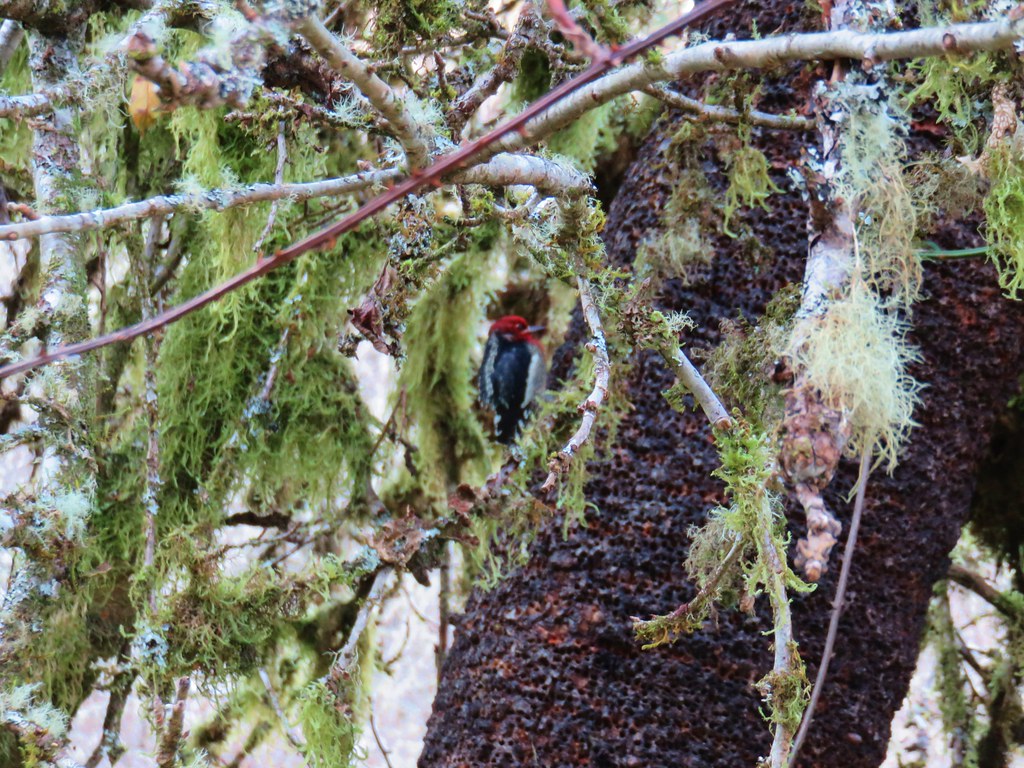
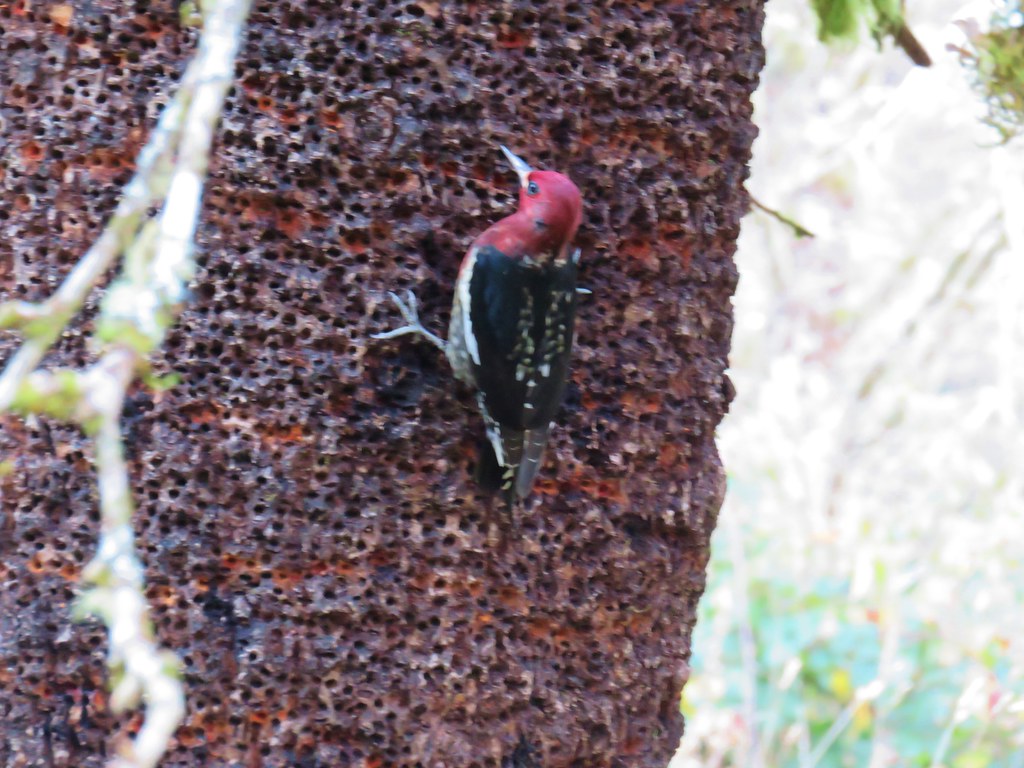
We stopped to watch a couple of woodpeckers circle a tree. They didn’t seem too bothered by us but they wouldn’t hold still long enough for a decent photo.
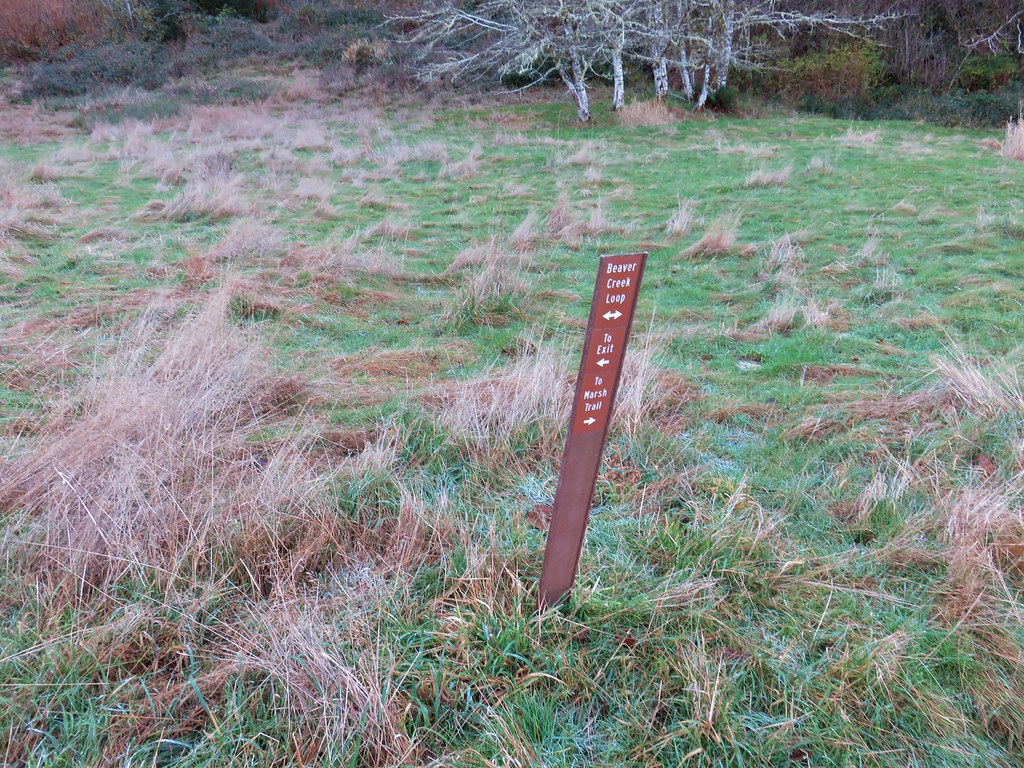
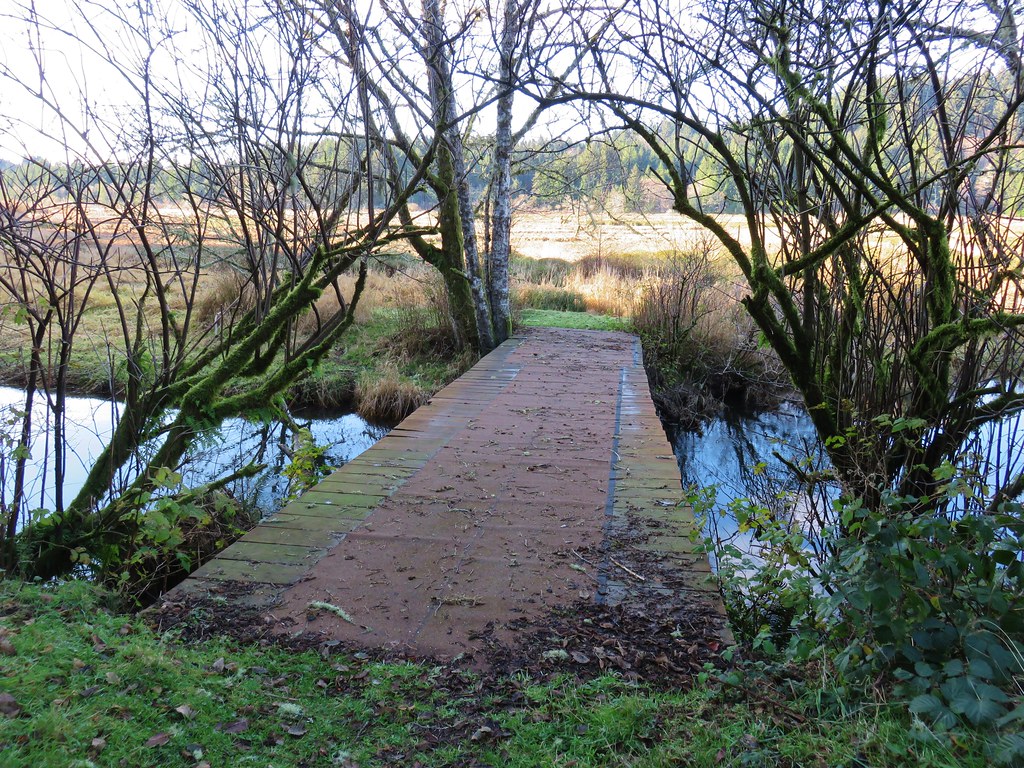
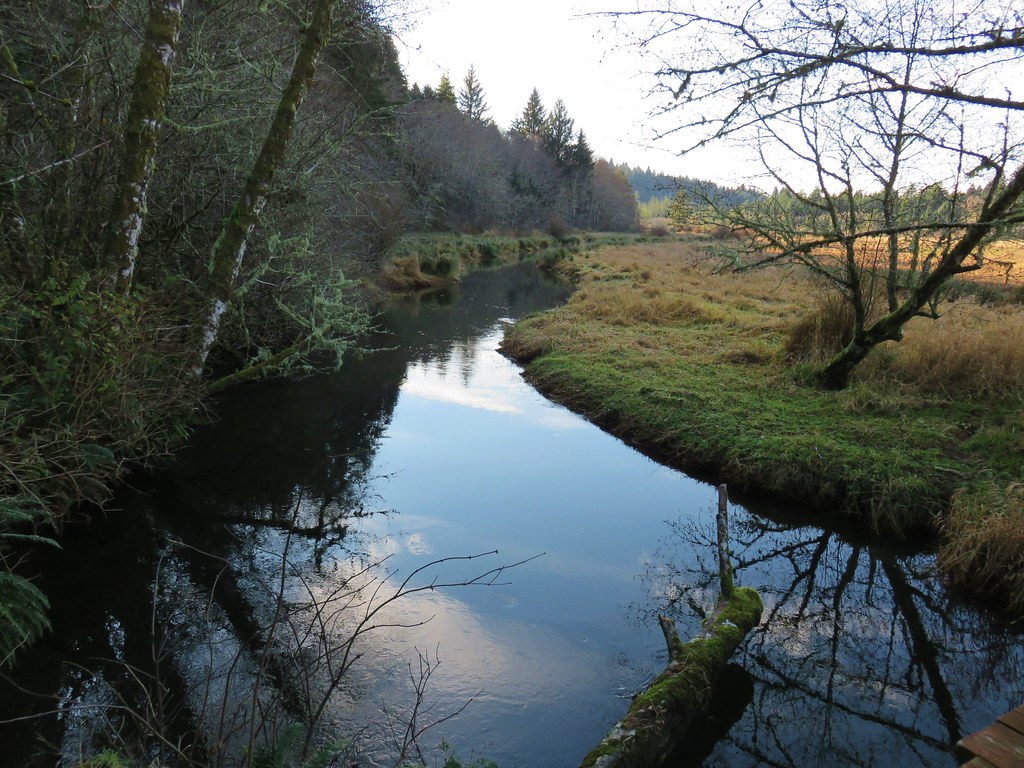
We briefly followed a pointer for the Marsh Trail which brought us to a footbridge over Beaver Creek. For about two months during Summer the marsh is apparently dry enough to cross without too much trouble.
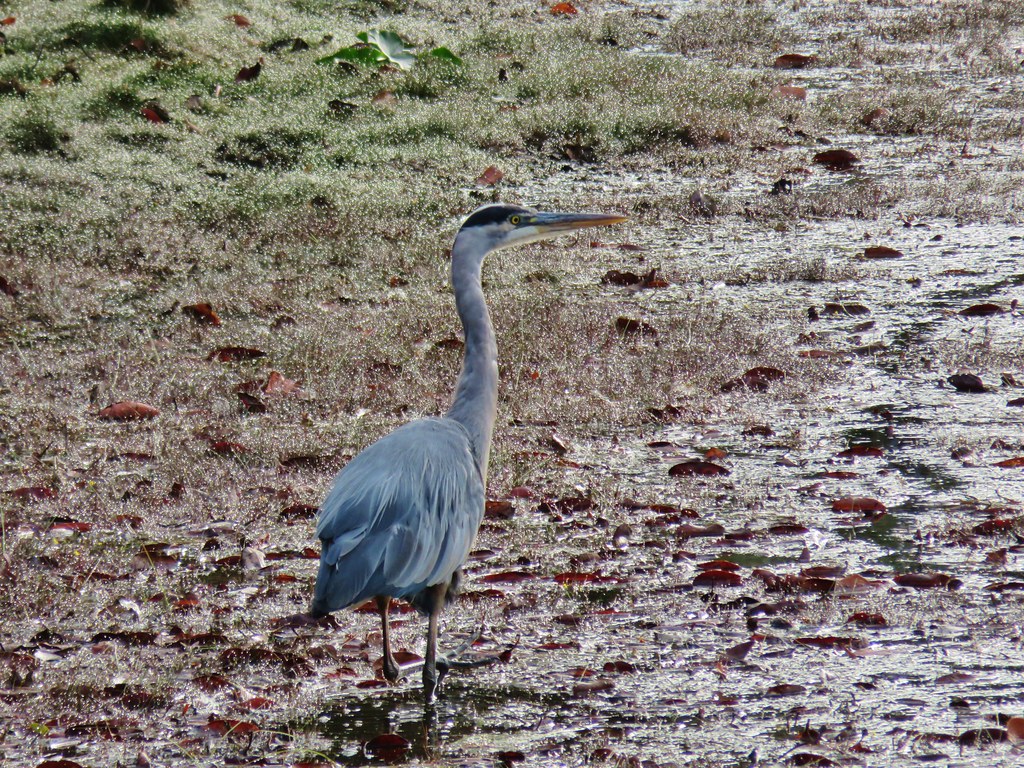
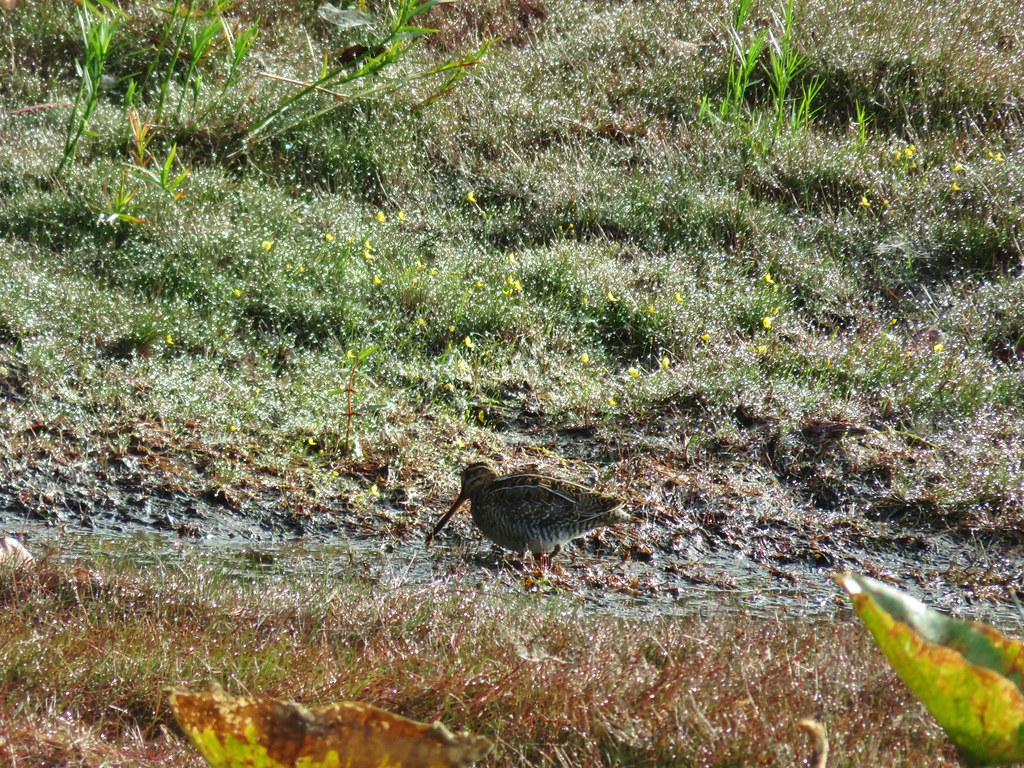
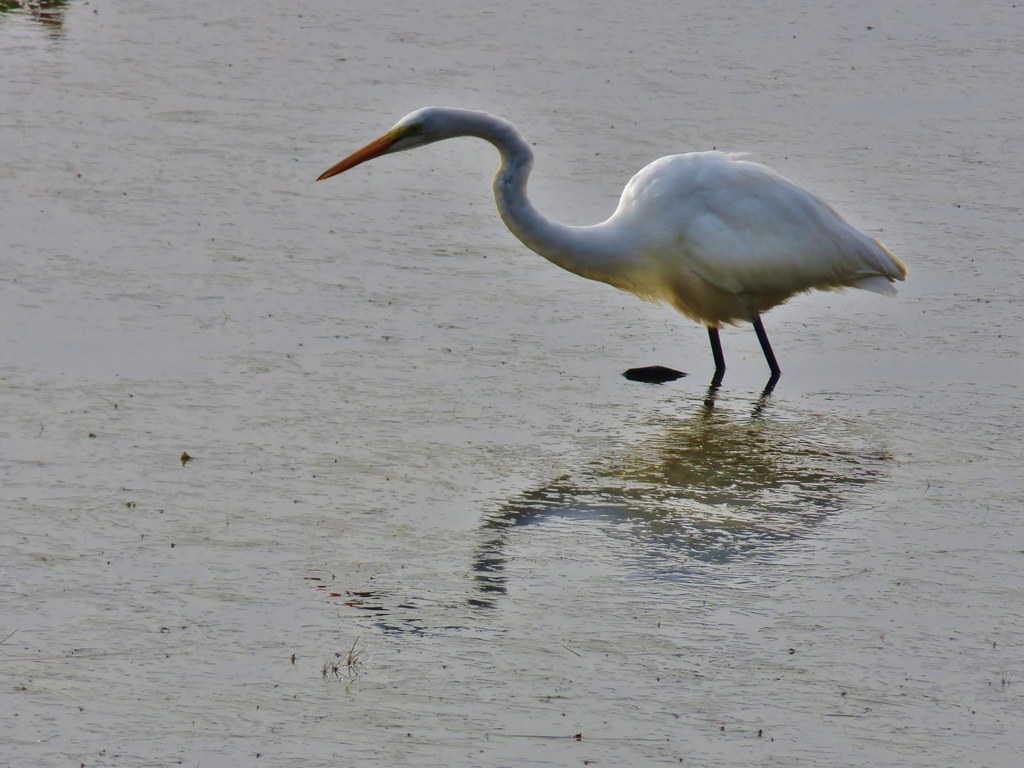
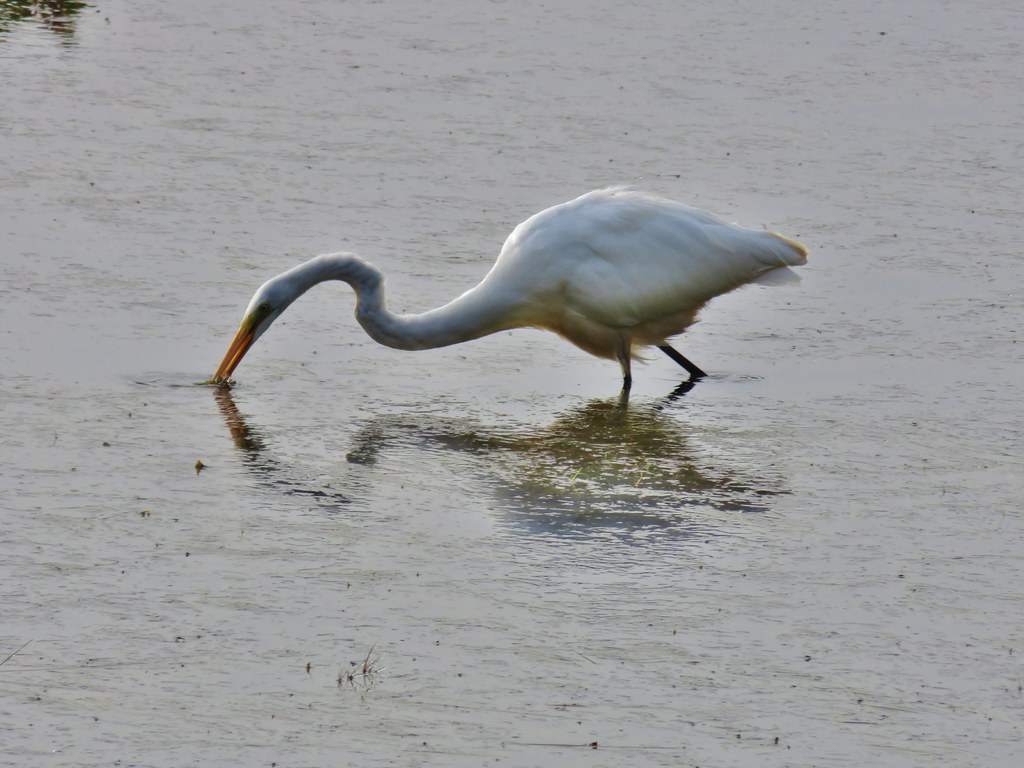
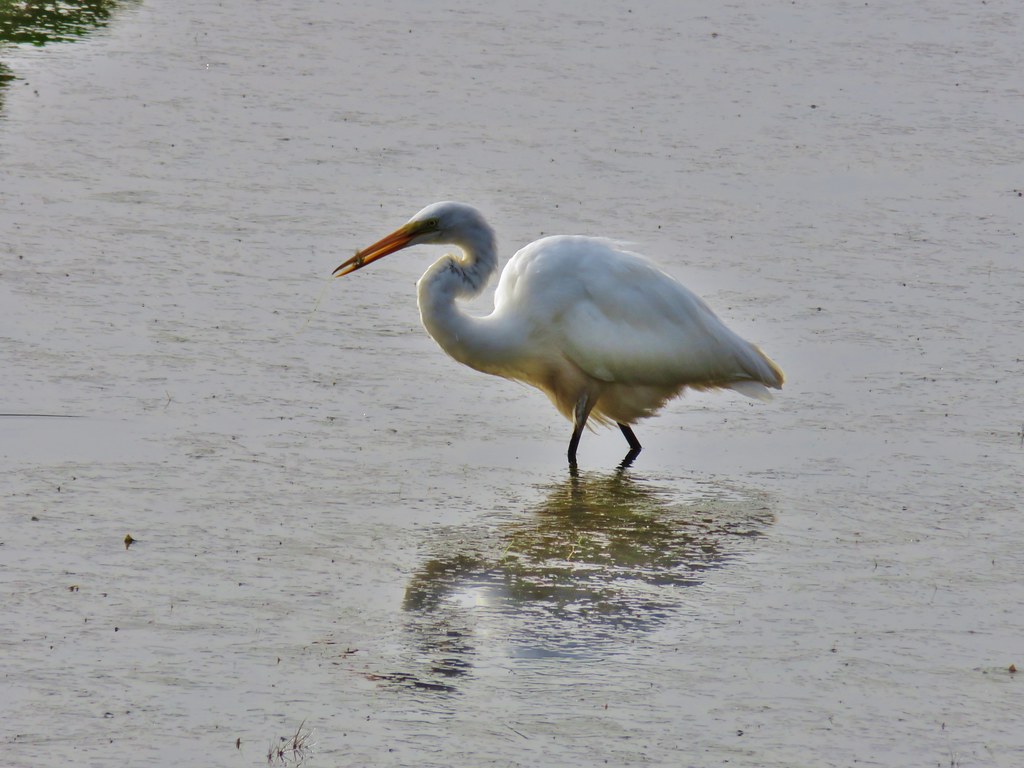
We heard some ducks and startled a great blue heron (a couple of times) as we continued along the loop. We also spotted a hawk, more woodpeckers, and some small birds before arriving at a pole barn at the end of the service road we’d started on that seemed to be undergoing some construction. Hawk flying off
From the barn it was only .2 miles back to the start of the loop. The hike here came in at an even three miles. Ona Beach to Seal Rock had been 4.6 miles round trip and our hike to Heceta Head was 6.6 miles giving us a total of 14.2 miles for the day. Each of the hikes would be worthy destinations on their own and there were several more trails to explore in the Beaver Creek Natural Area making a return visit tempting someday.
With our 2017 hikes completed it’s time to get to work on 2018. Happy Trails!
We continued our year of shuffling hikes on our latest mini-vacation. The string of wildfires starting in Northern California in the Klamath Mountains and continuing along the Cascade Range north to the Canadian Border had us looking for a last minute location for 4 days of hiking. We turned to the coast hoping to escape any possibly smokey conditions and wound up deciding on checking out the northern most part of the Oregon Coast as well as our first foray along the Washington Coast line.
We booked a room in Gearhart, OR and I began putting an itinerary together. We are still plodding along in our attempt to hike all of the featured hikes in Sullivan’s 100 Hikes guidebooks and there were several in the area we’d yet to tackle. I managed to fit eight of his featured hikes into the four days and even threw in an additional stop at Fort Columbia on our third day.
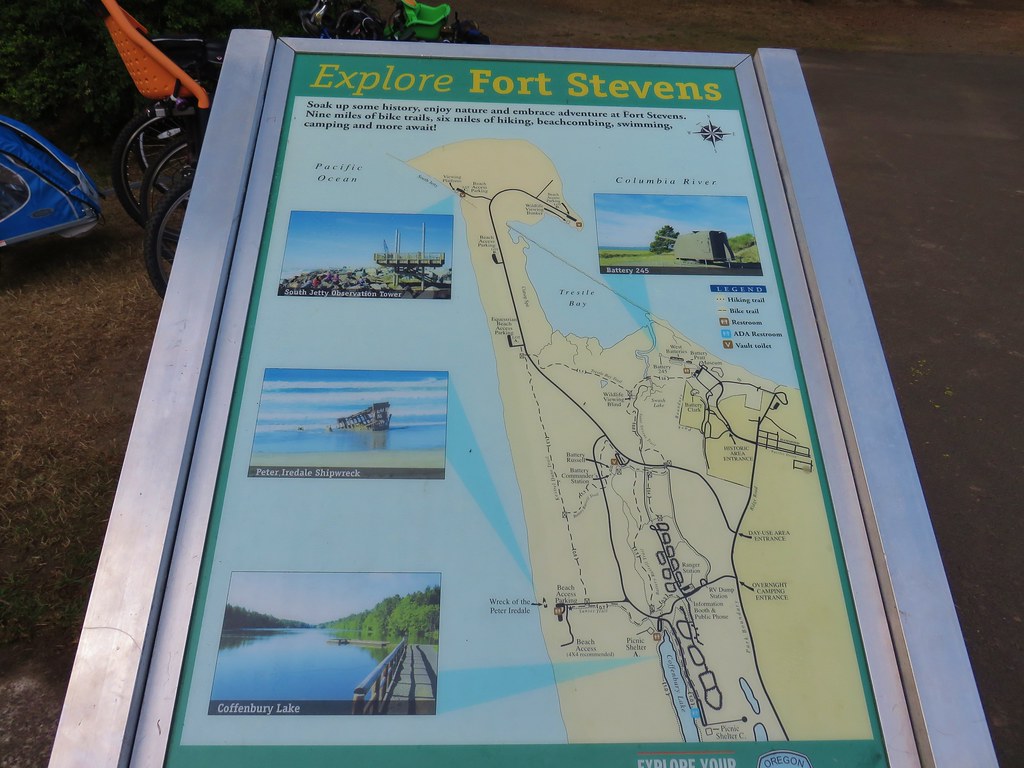
We set our sights on three of the hikes for our first day starting with a relatively short loop around Clatsop Spit. The spit is located inside Fort Stevens State Park at the mouth of the Columbia River and is the northern terminus for the Oregon Coast Trail.
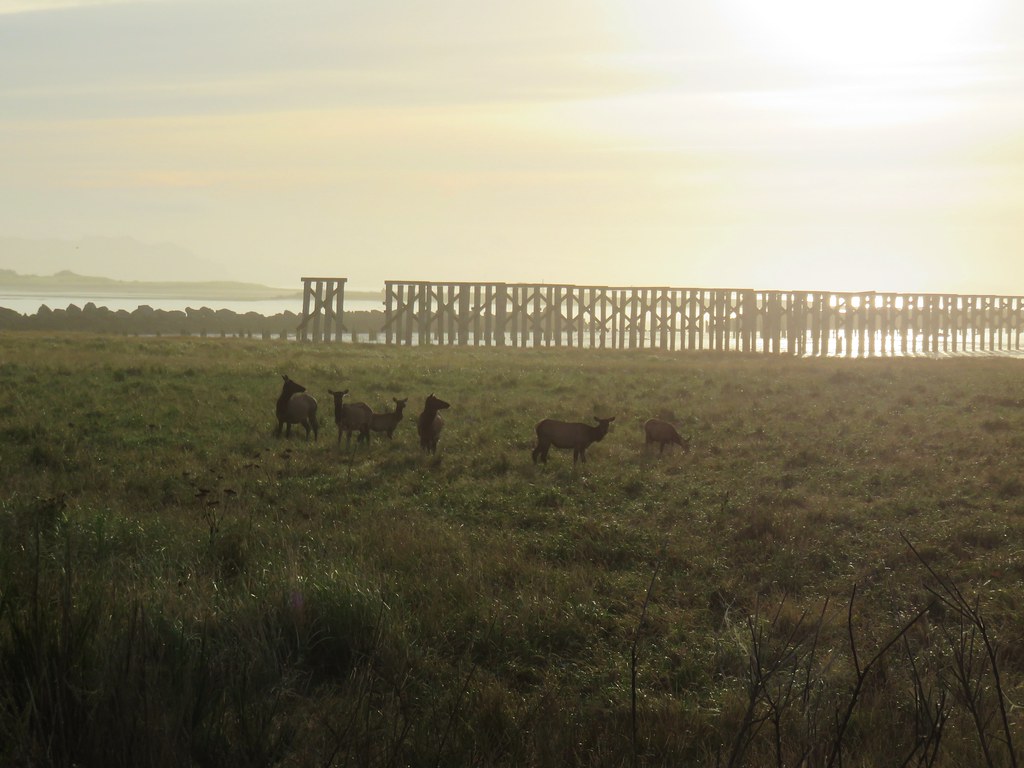
As we were driving to the spit along Jetty Road we spotted some elk and had to stop for a couple of photos.
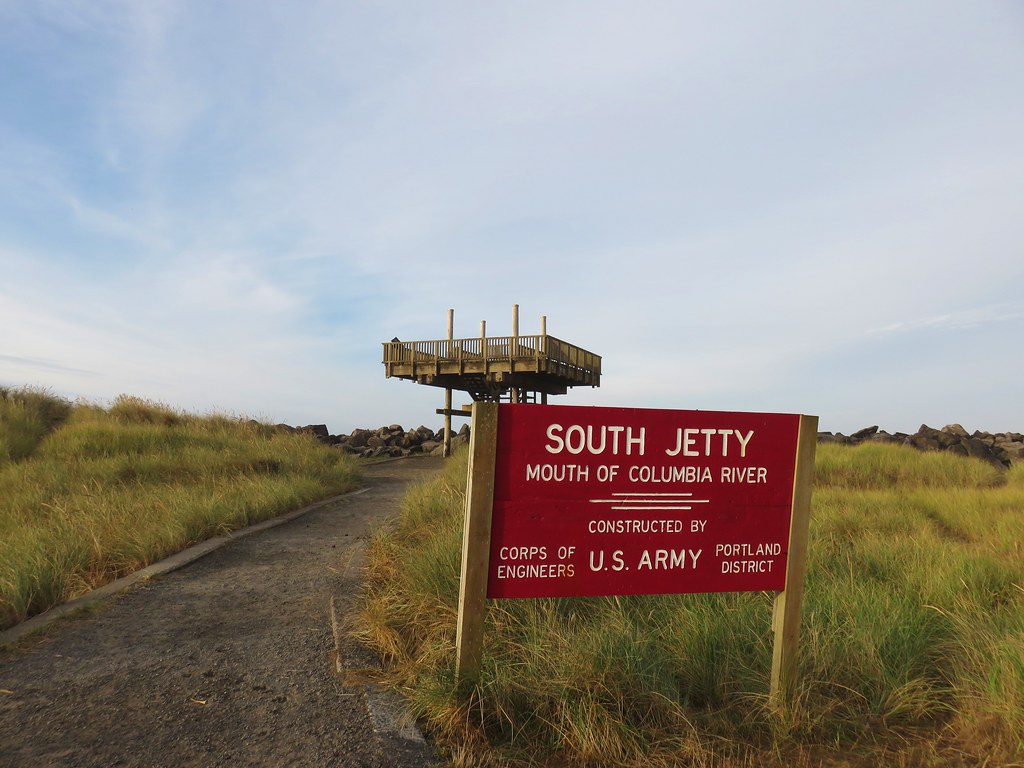
Once we had parked at the large parking area at the spit we checked out the view from the South Jetty observation platform.
We then headed west beside the jetty toward the Pacific.
We then turned north along the beach heading towards the Columbia River where we could see plenty of traffic on the water.
We turned inland at the river we had a view of the distant Megler Bridge.
We passed a host of people fishing along the shore but didn’t see anyone having any luck.
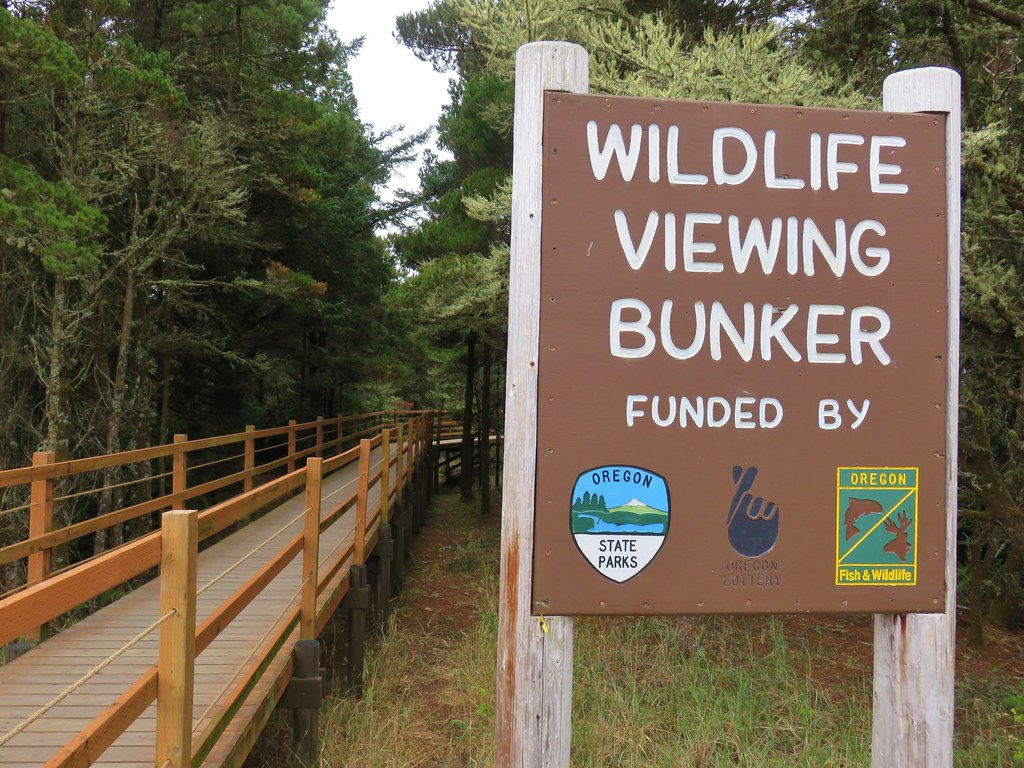
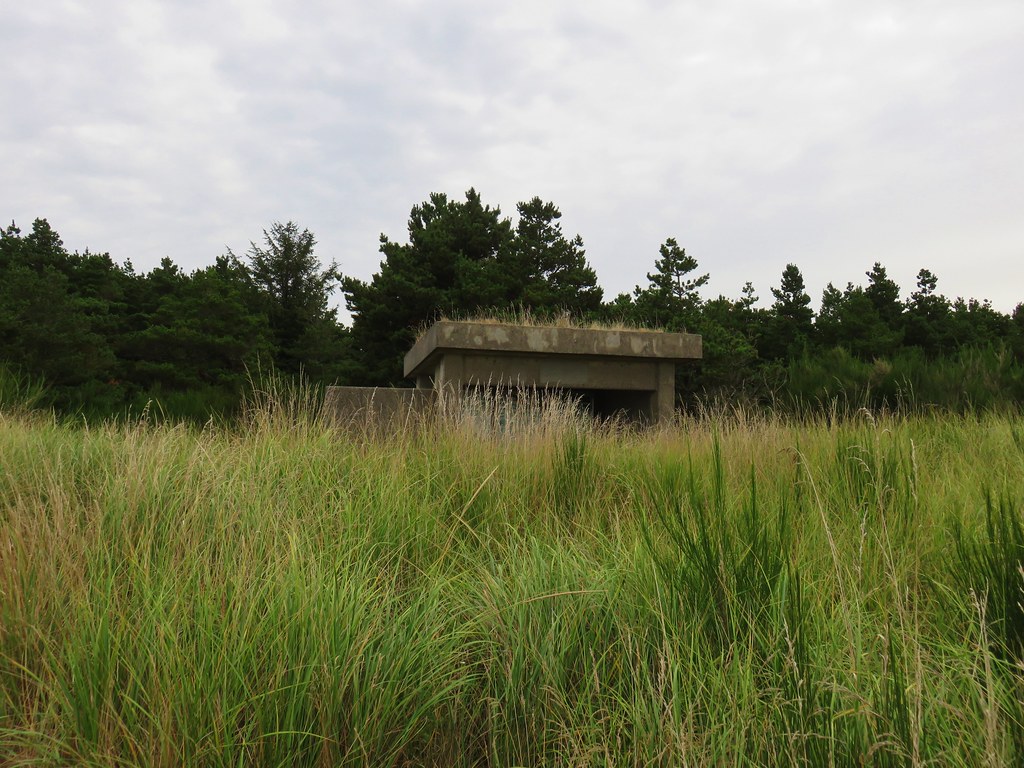
We looped around a peninsula near Jetty Lagoon and located the wildlife viewing bunker near the park’s Parking Lot D.
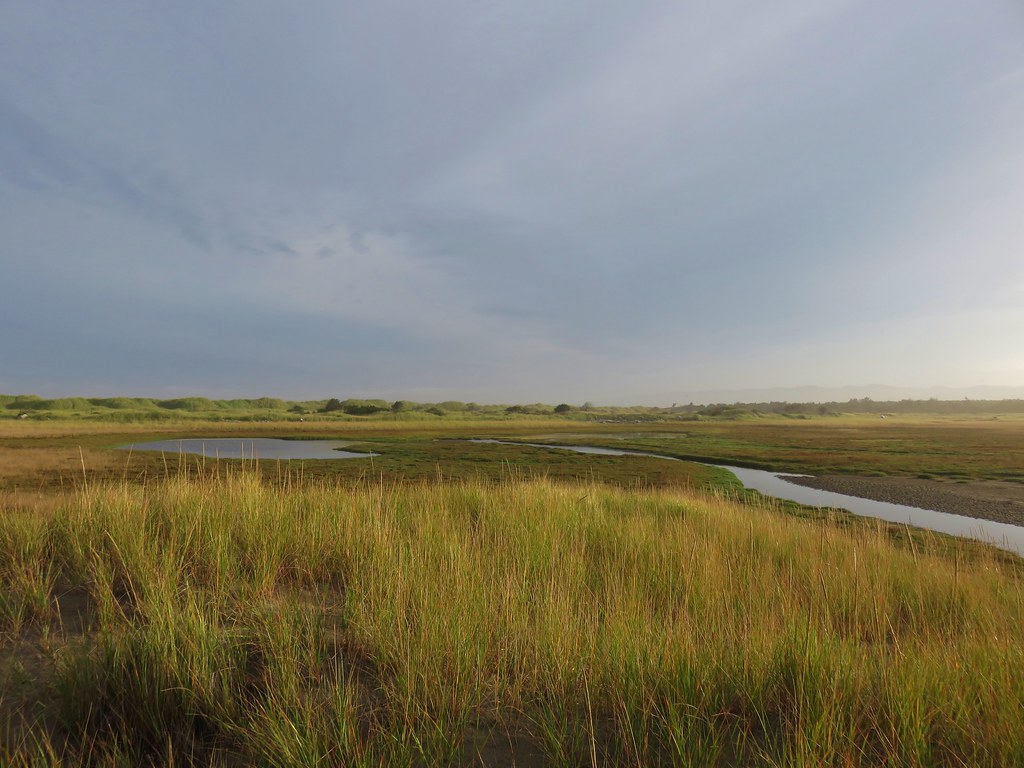
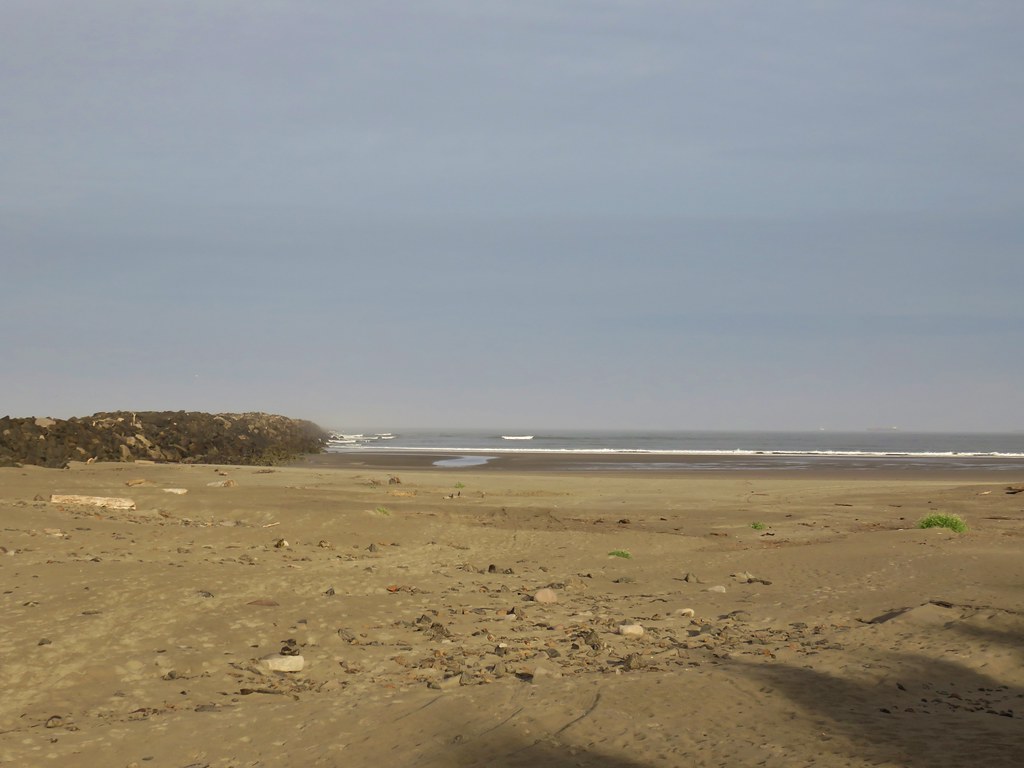
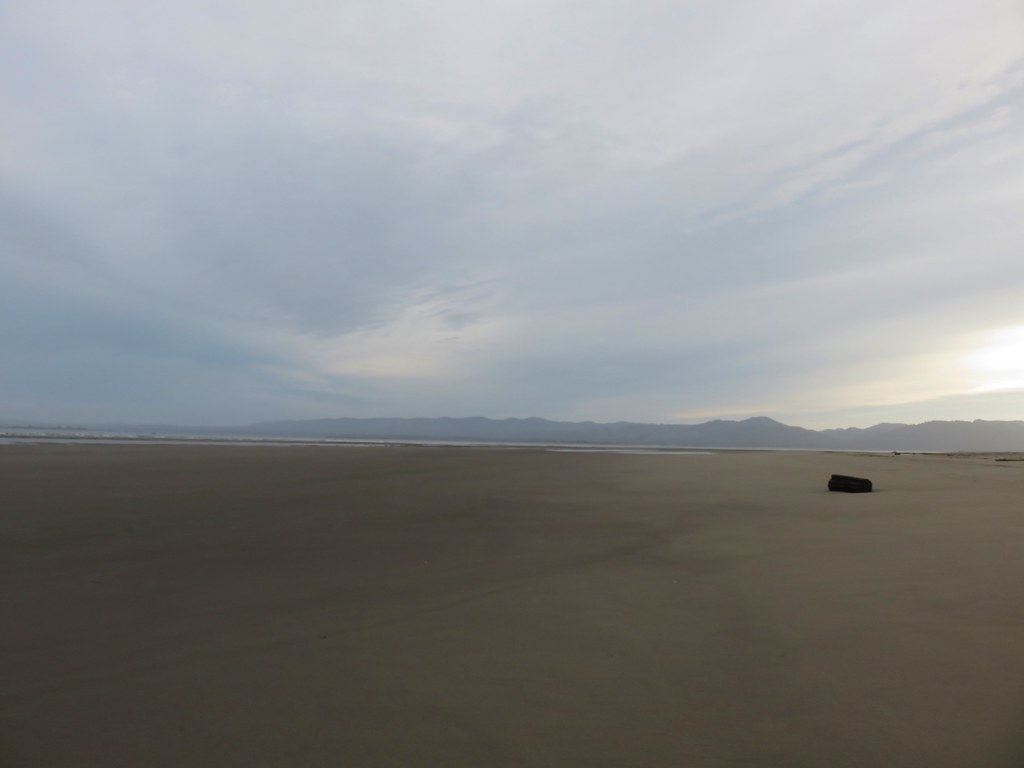
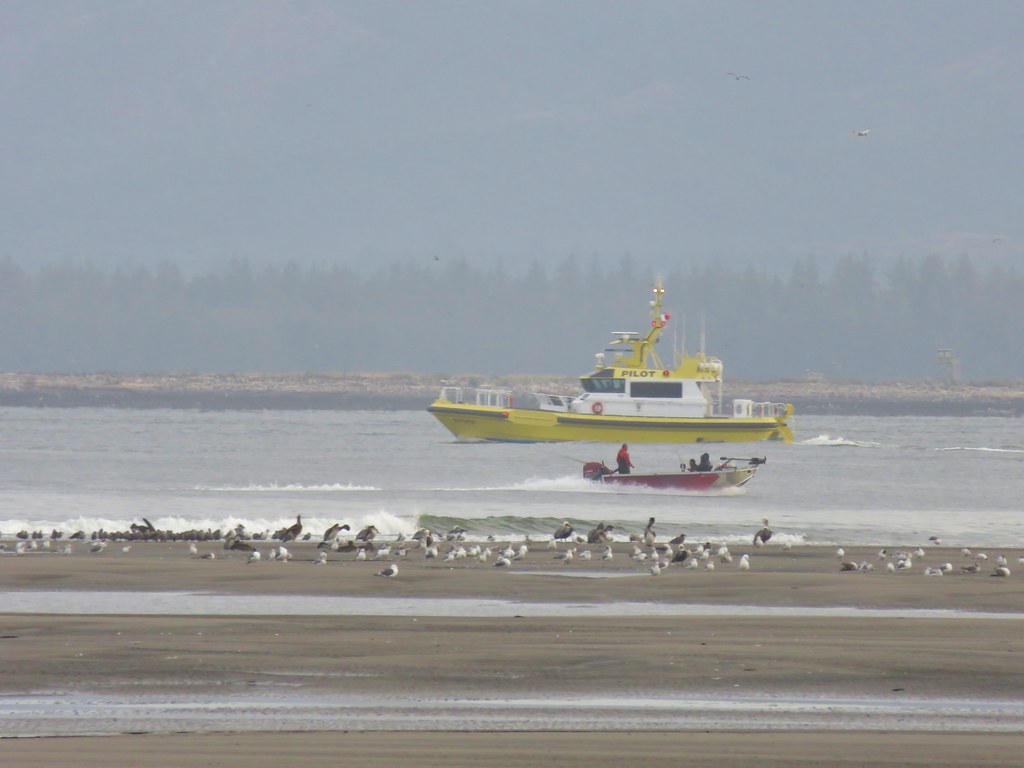
view from the bunker.
We crossed a footbridge to the parking lot and then had a 1.1 mile road walk back to the spit parking lot.
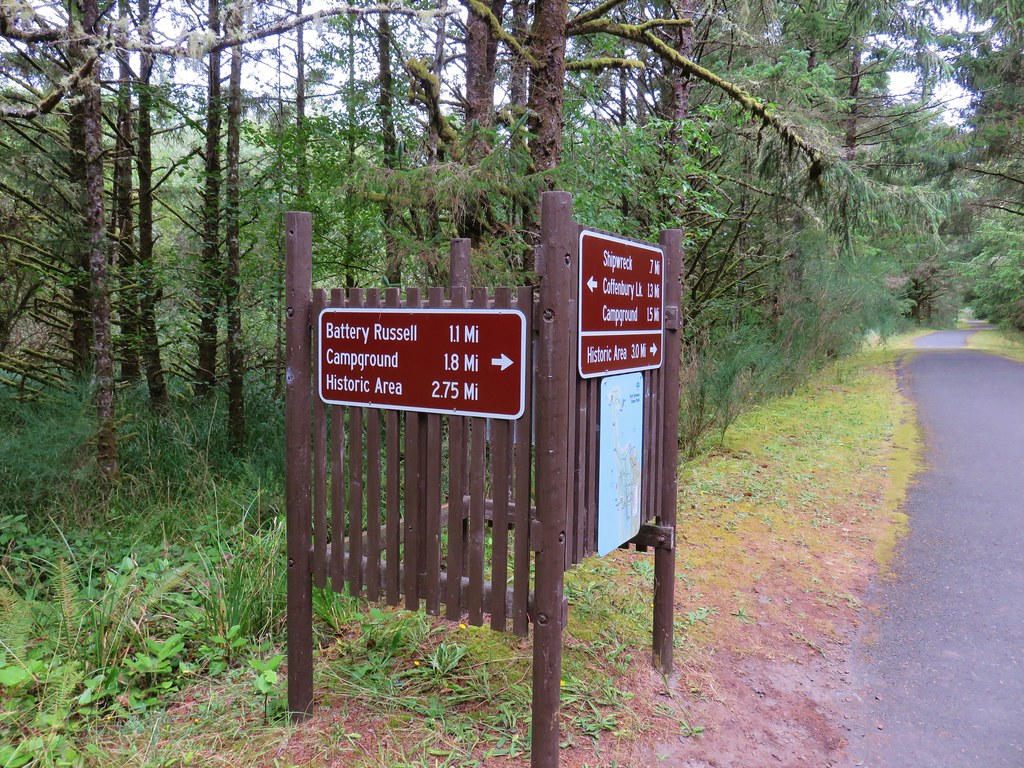
We drove back along Jetty Road and parked in a signed lot for Battery Russell.
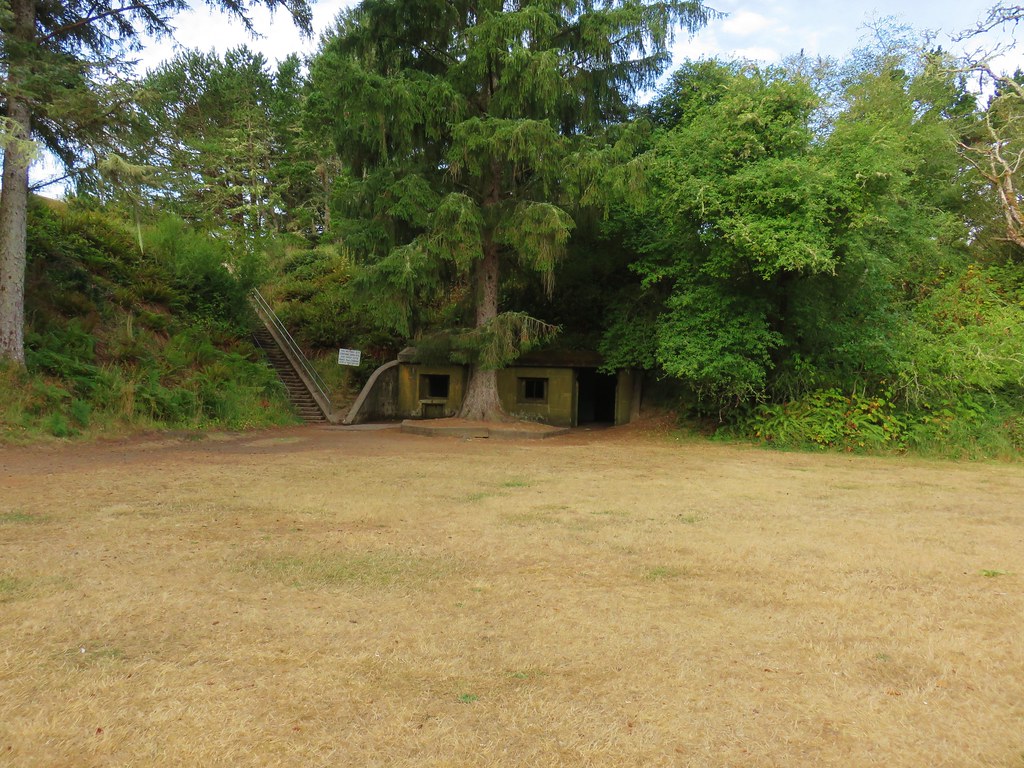
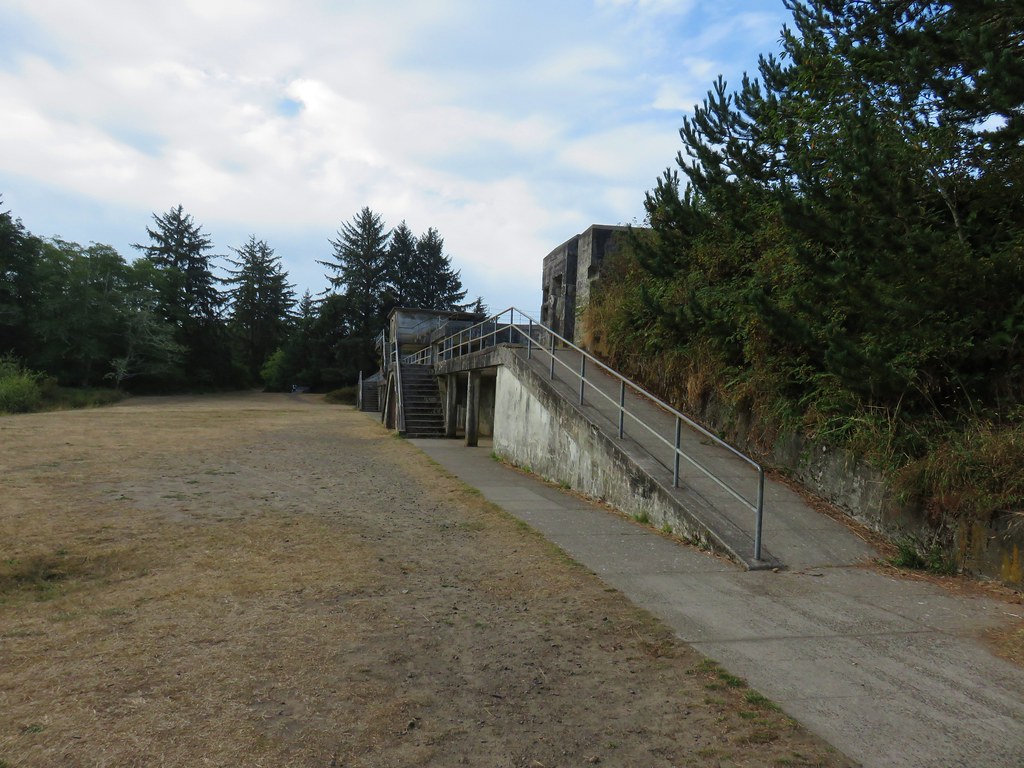
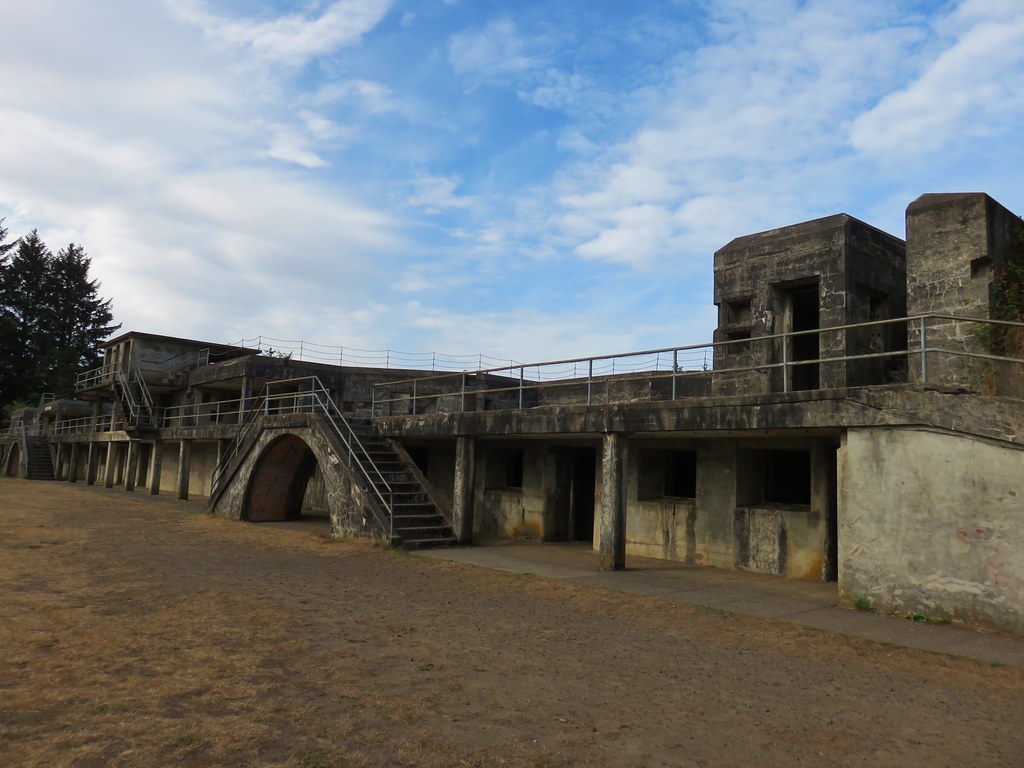
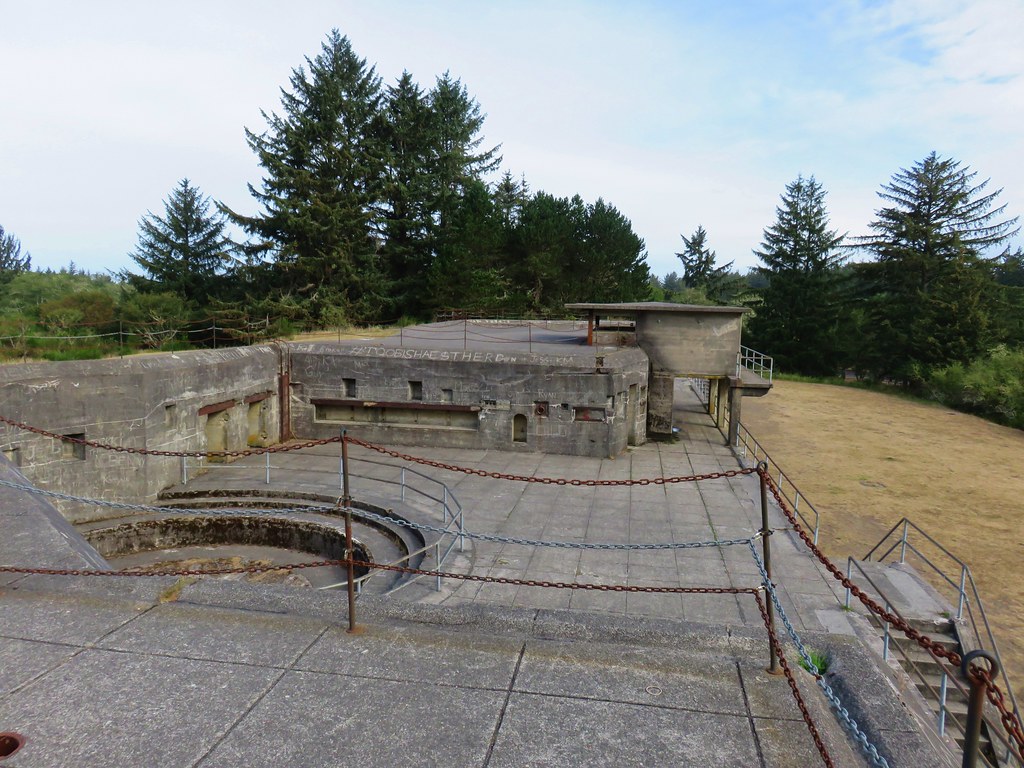
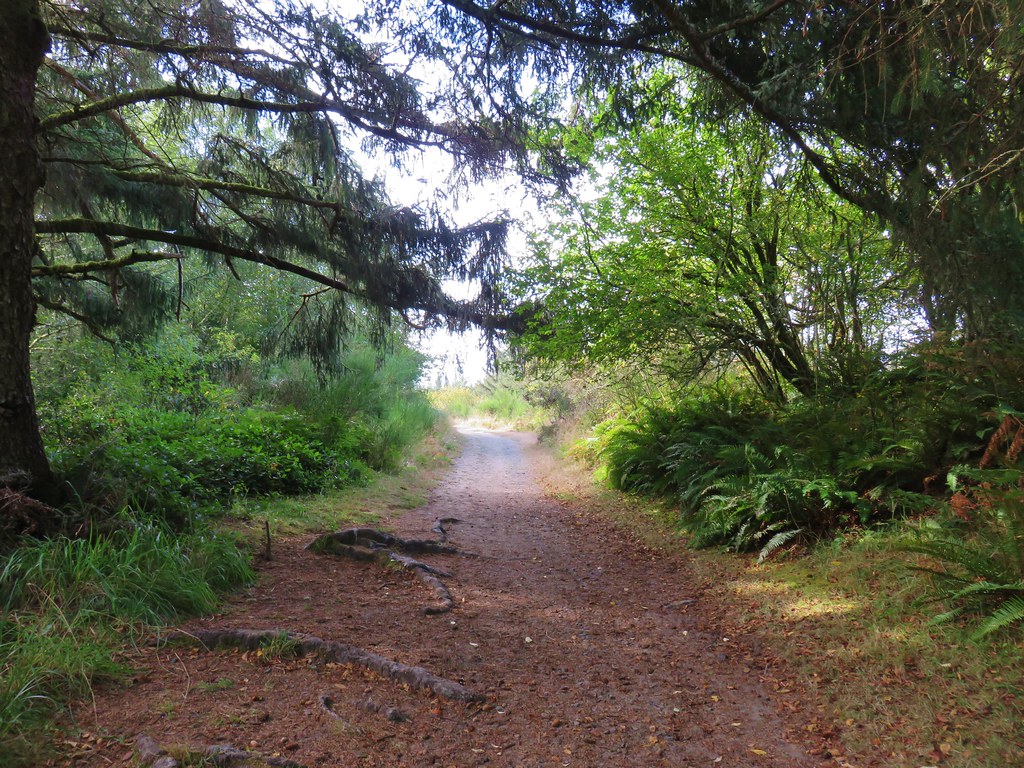
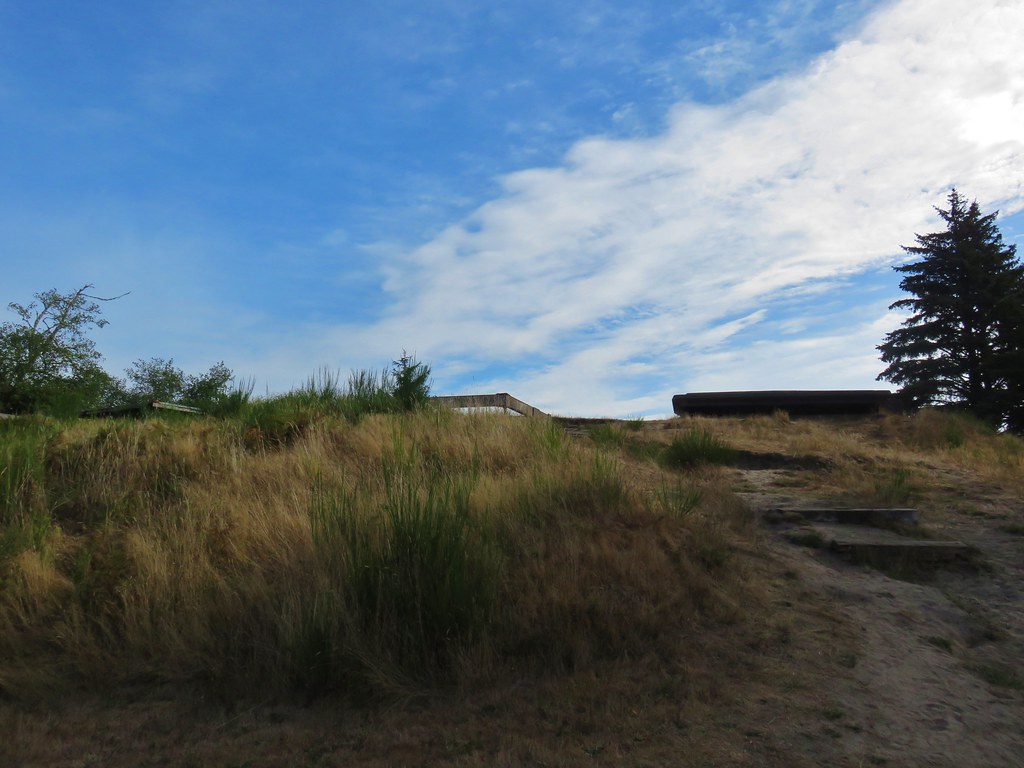
We took a set of stairs up to the concrete bunker.
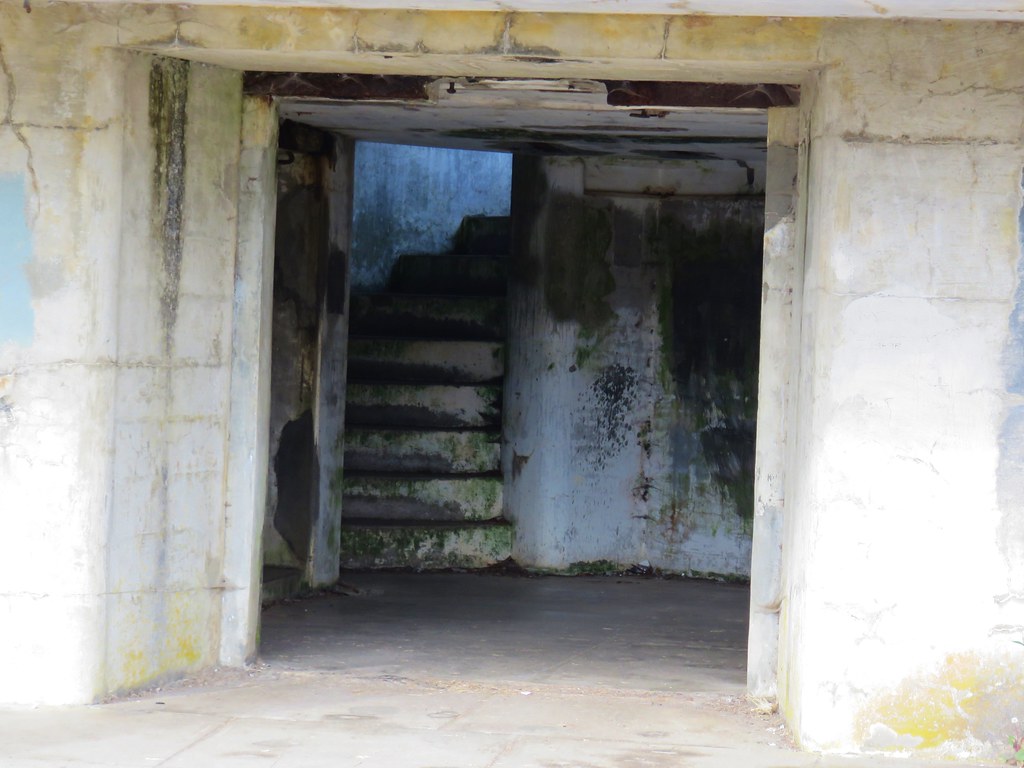
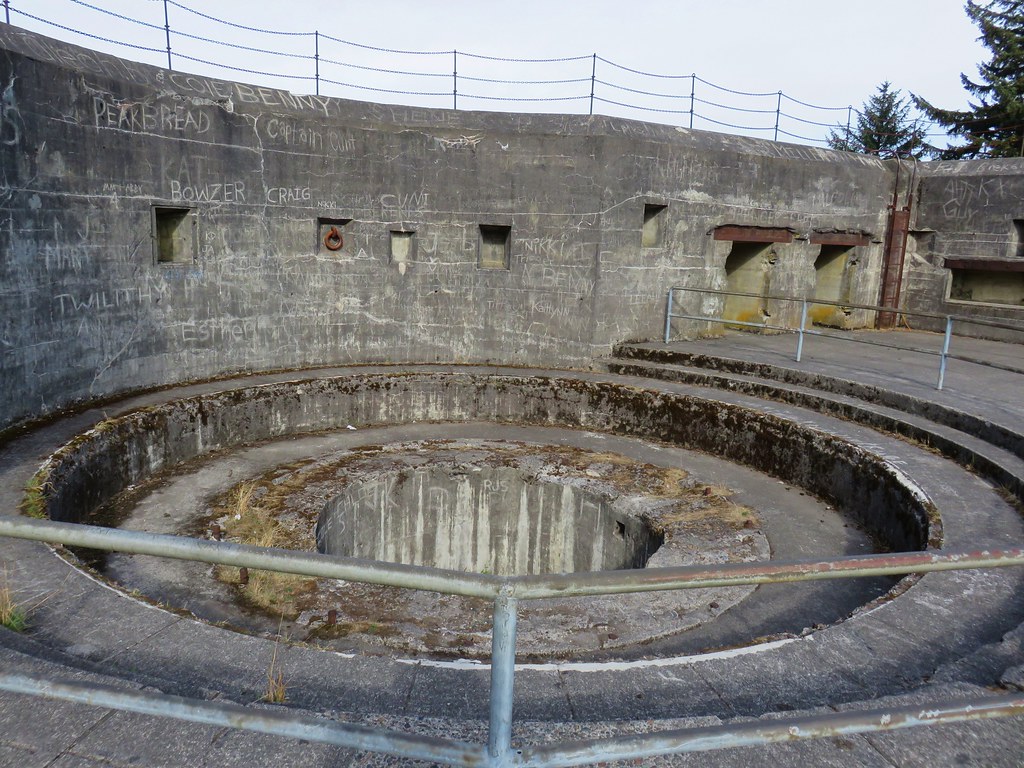
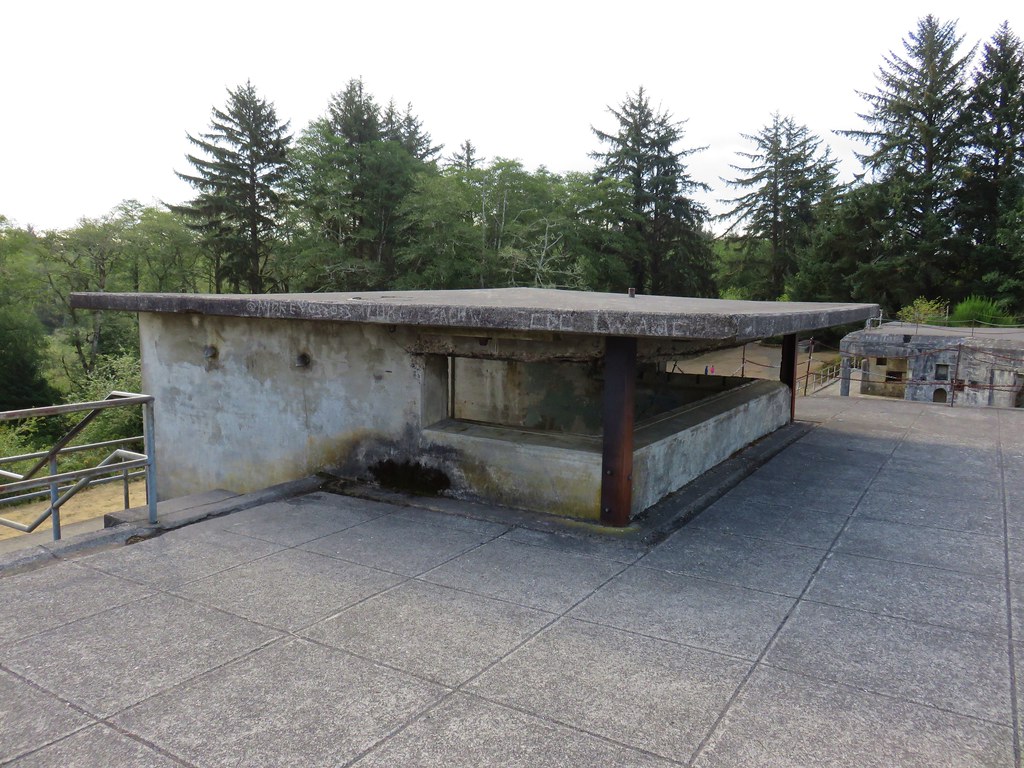
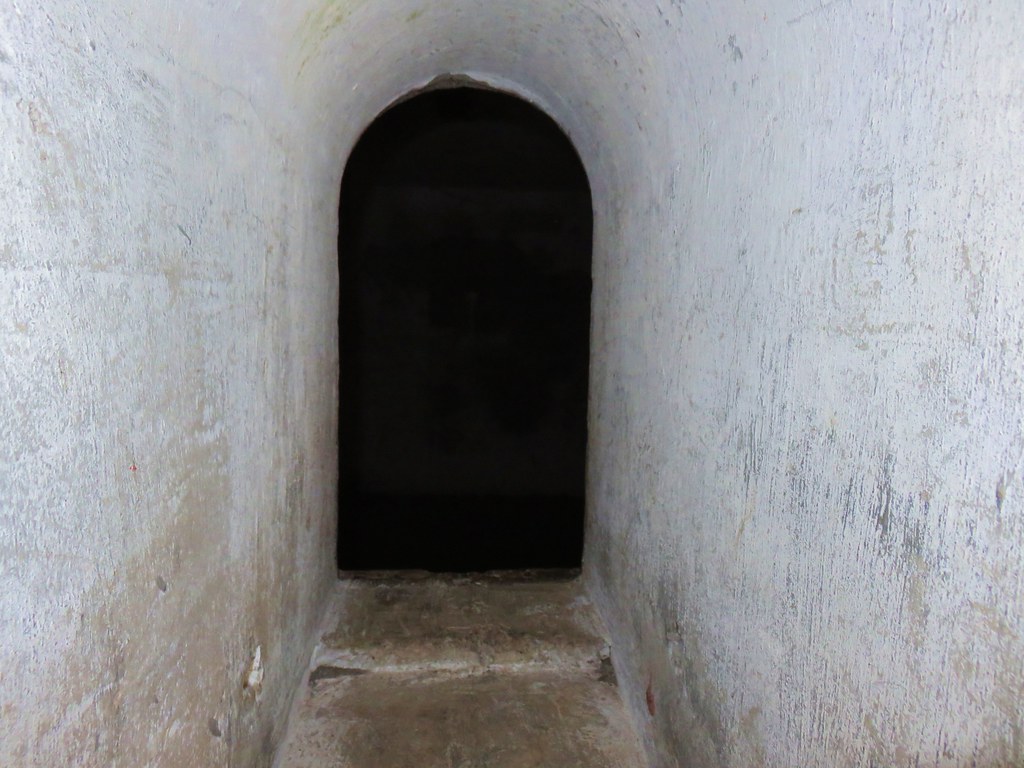
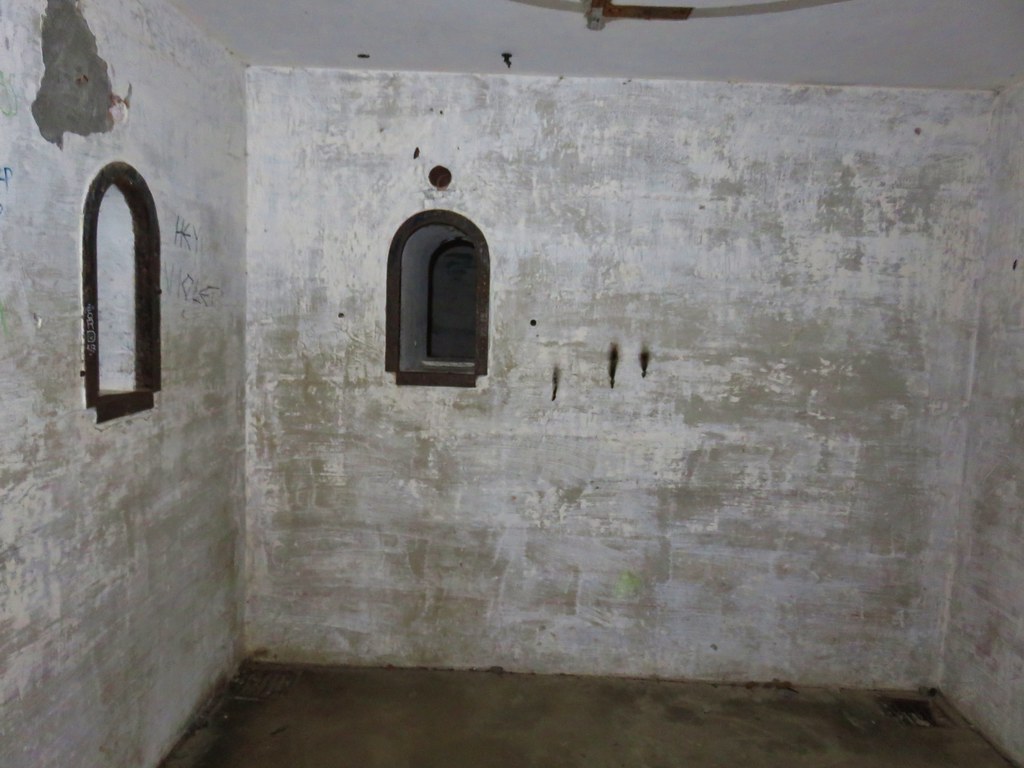
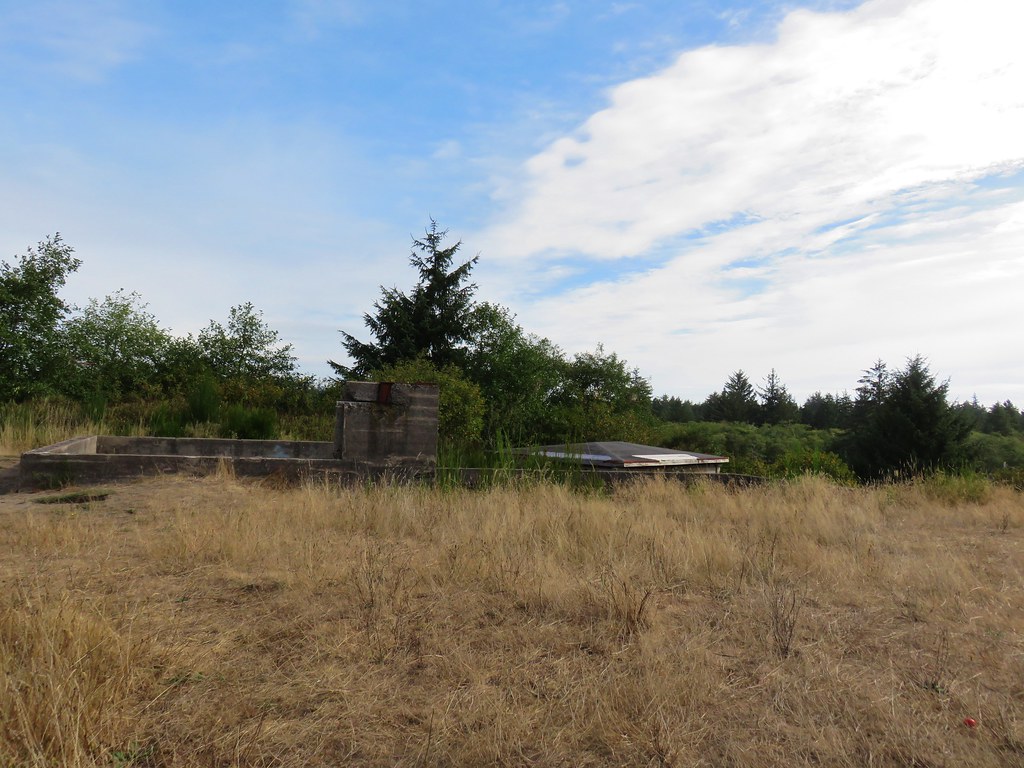
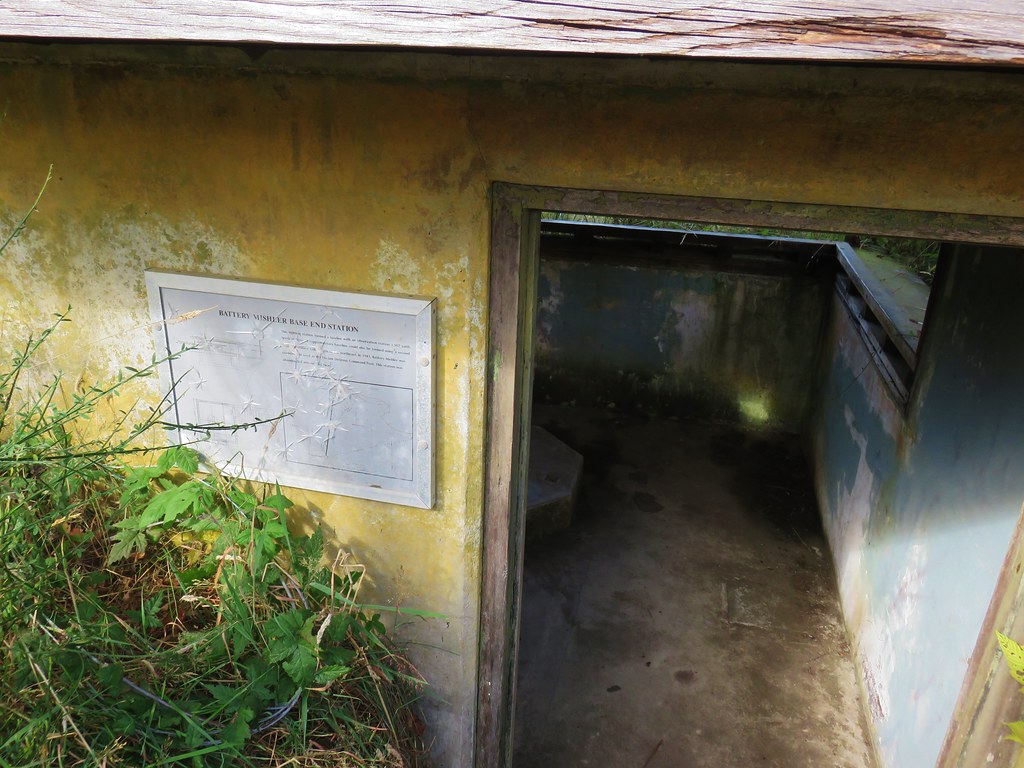
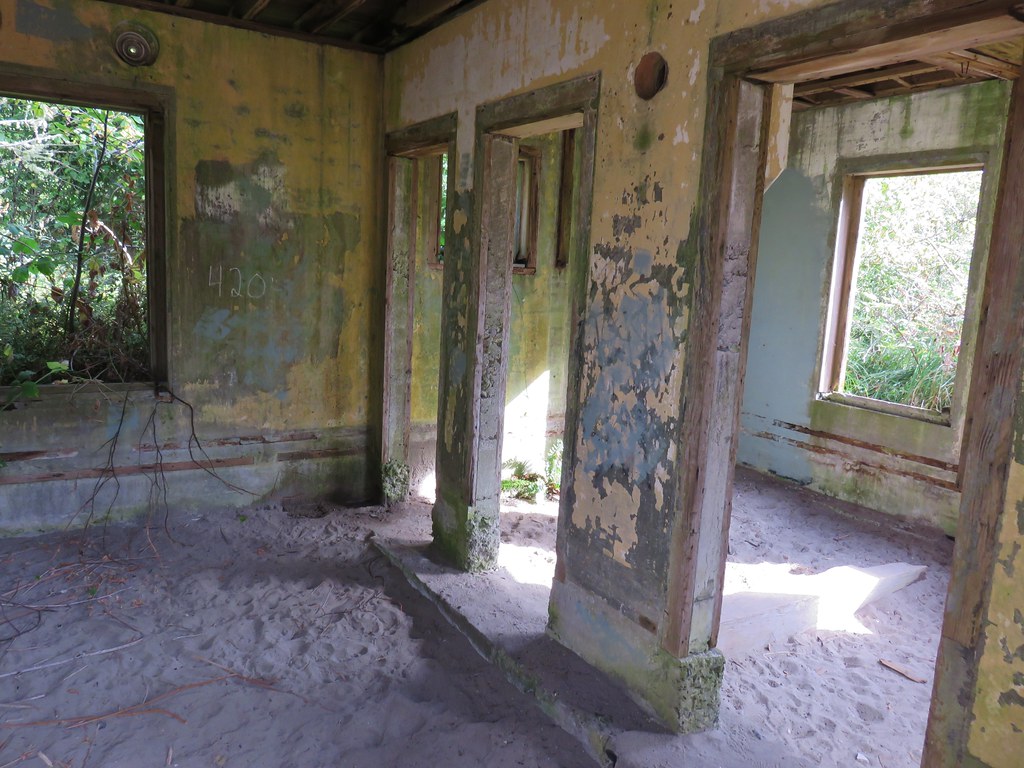
For forty years (1904-44) the battery guarded the Columbia River from enemy attacks. We spent quite a while exploring the old bunker. The history made it neat but too many video games and horror movies kept us imagining what might be hiding in the dark corners of the rooms.
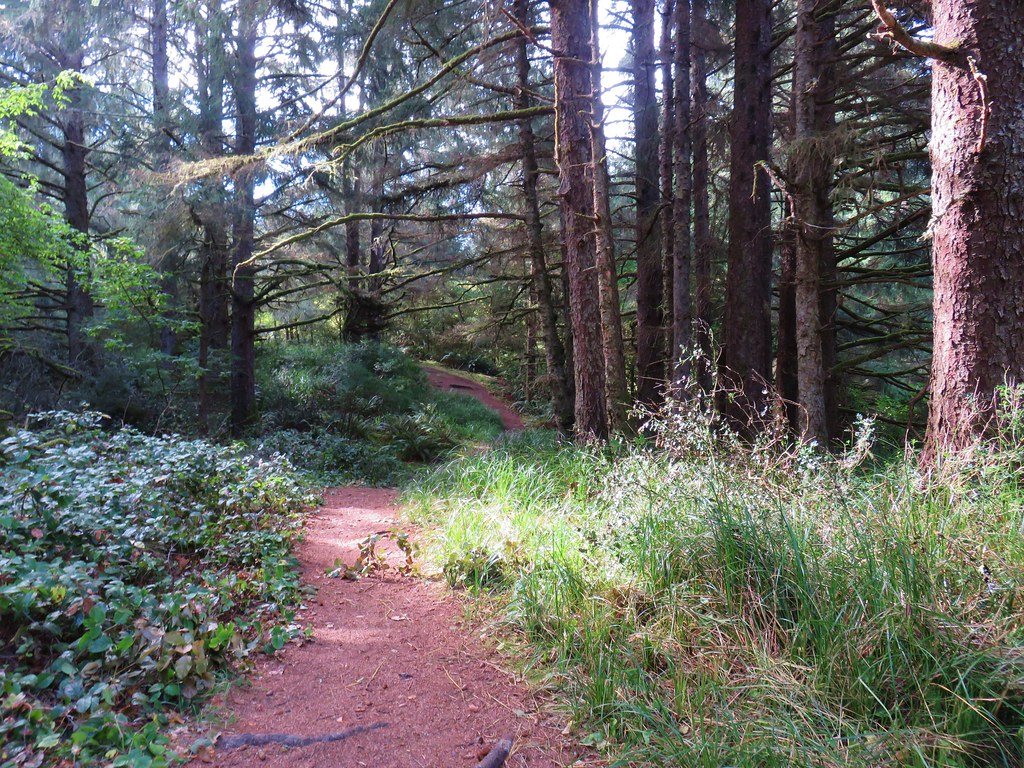
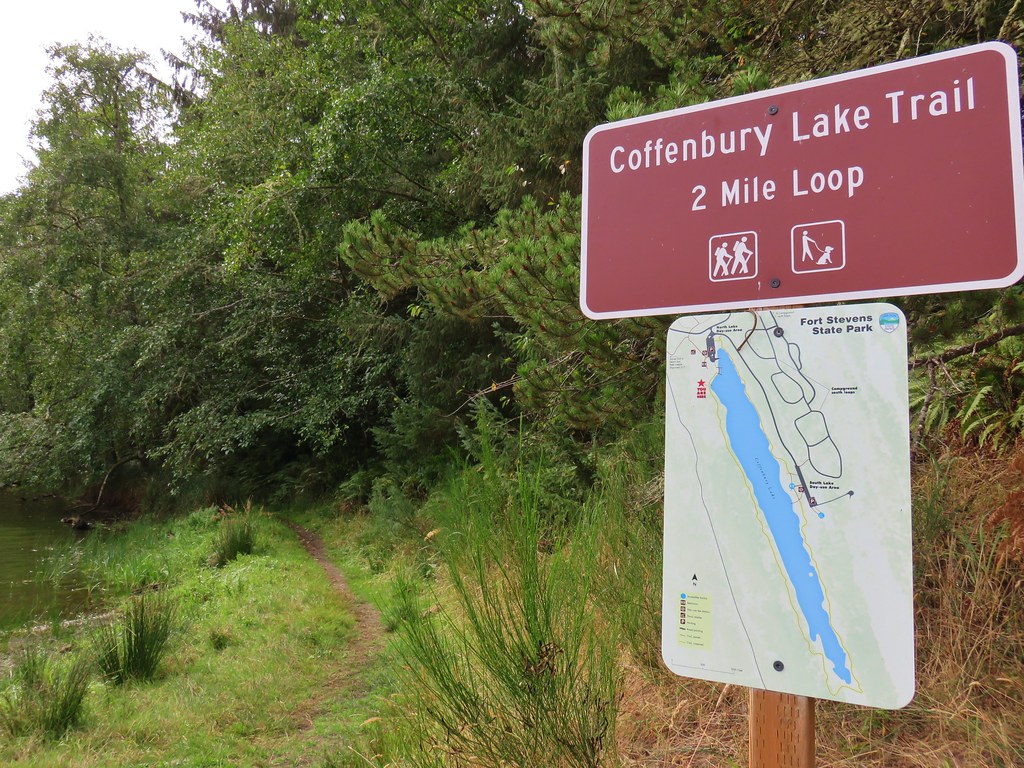
We followed a path at the far end of the bunker toward Coffenbury Lake.
The path passed another set of old buildings.
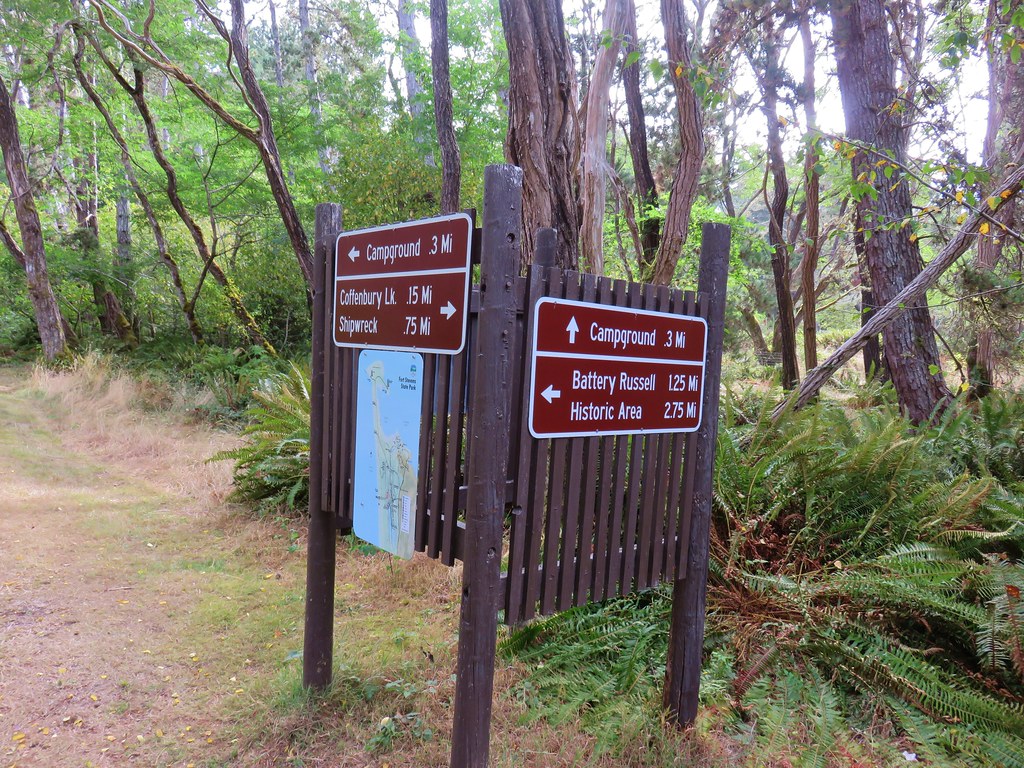
We continued on this path a total of 1.25 miles to a signed junction where we followed a pointer to the lake.
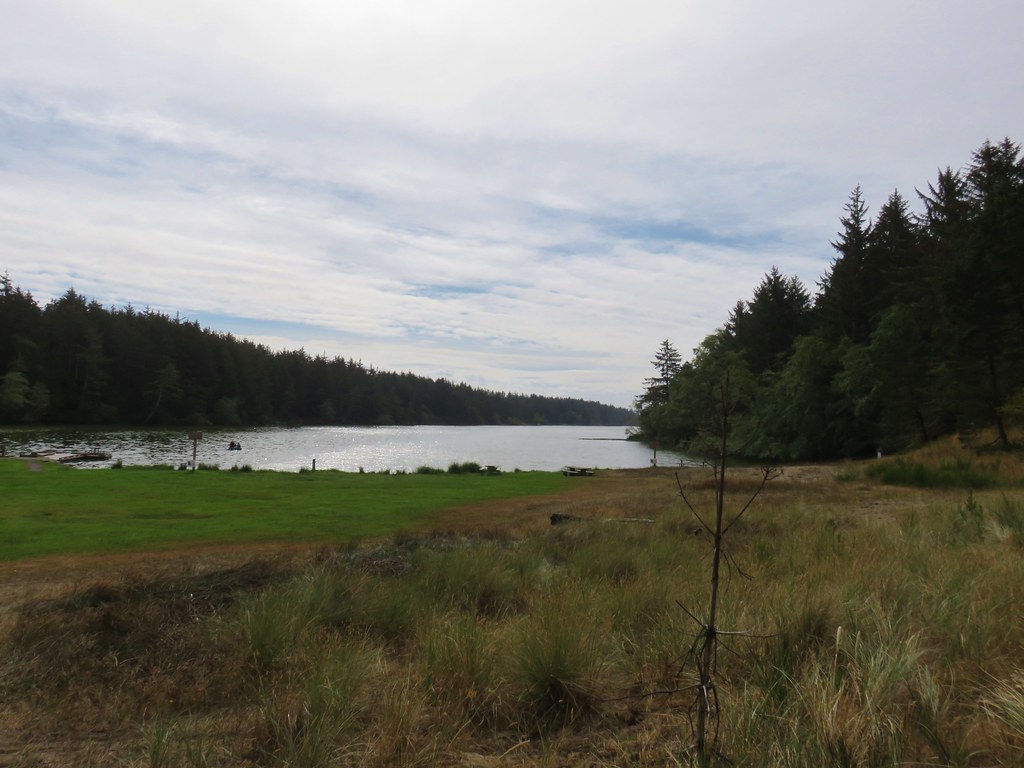
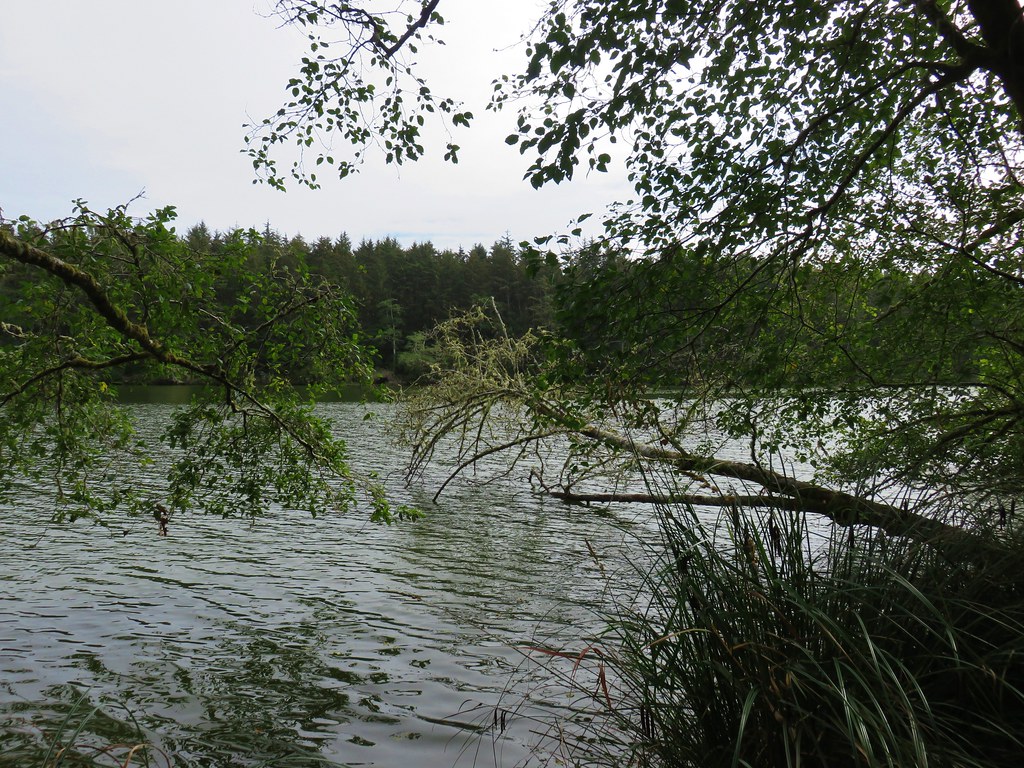
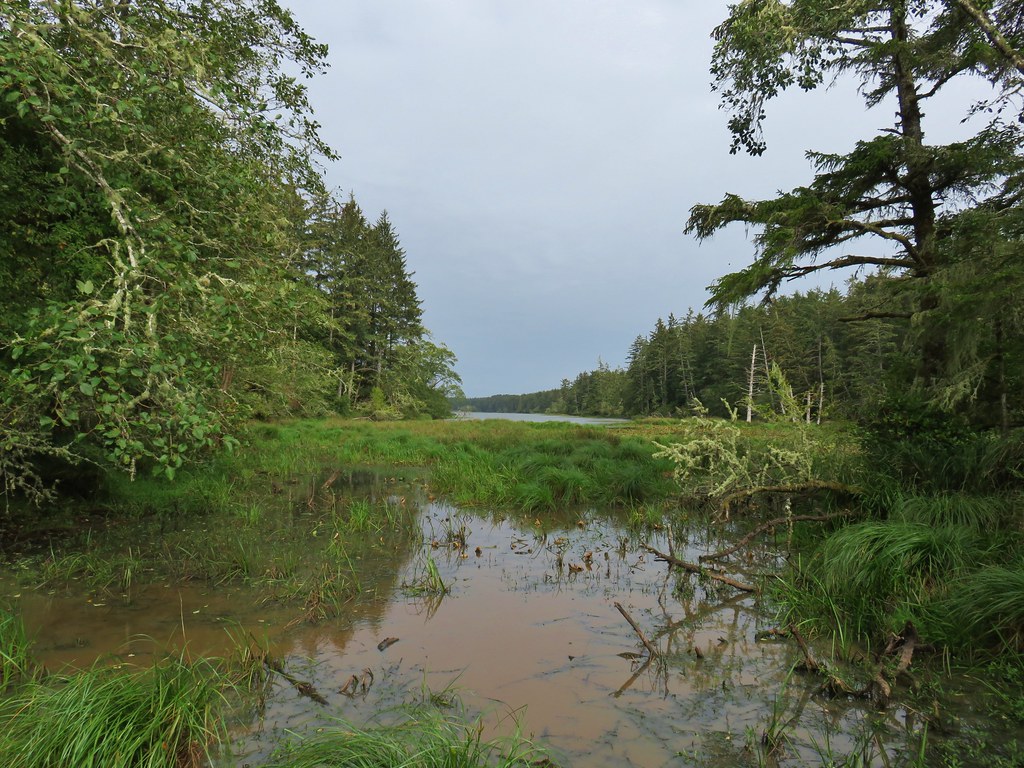
We headed around the lake counter-clockwise on a nice trail.
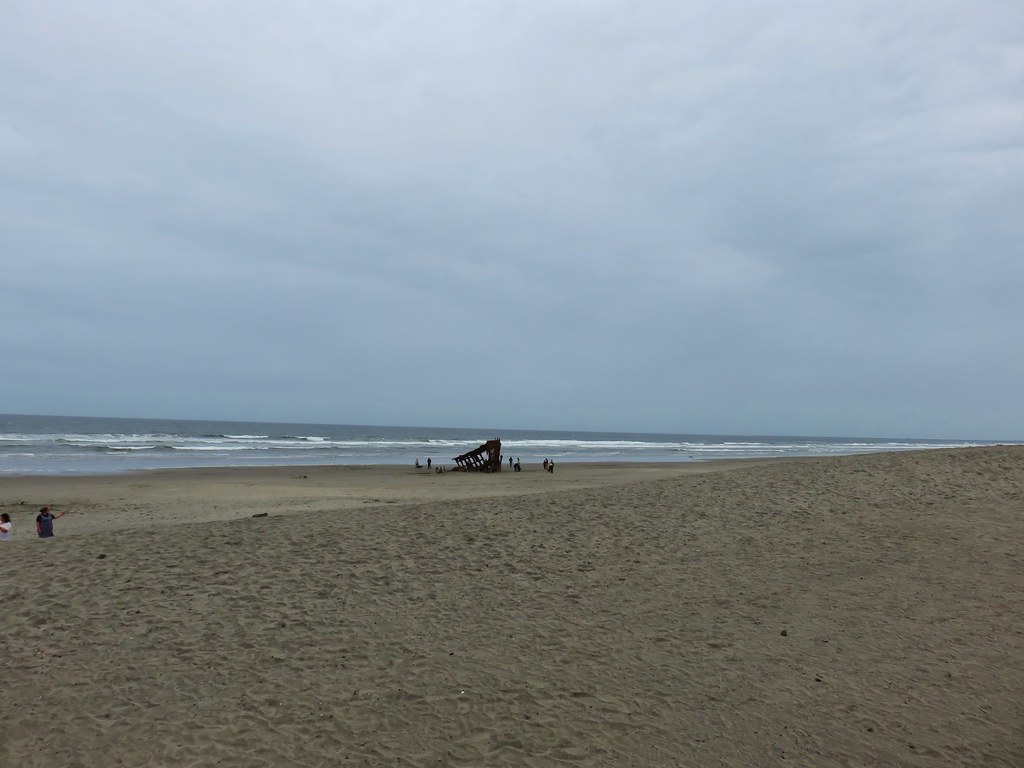
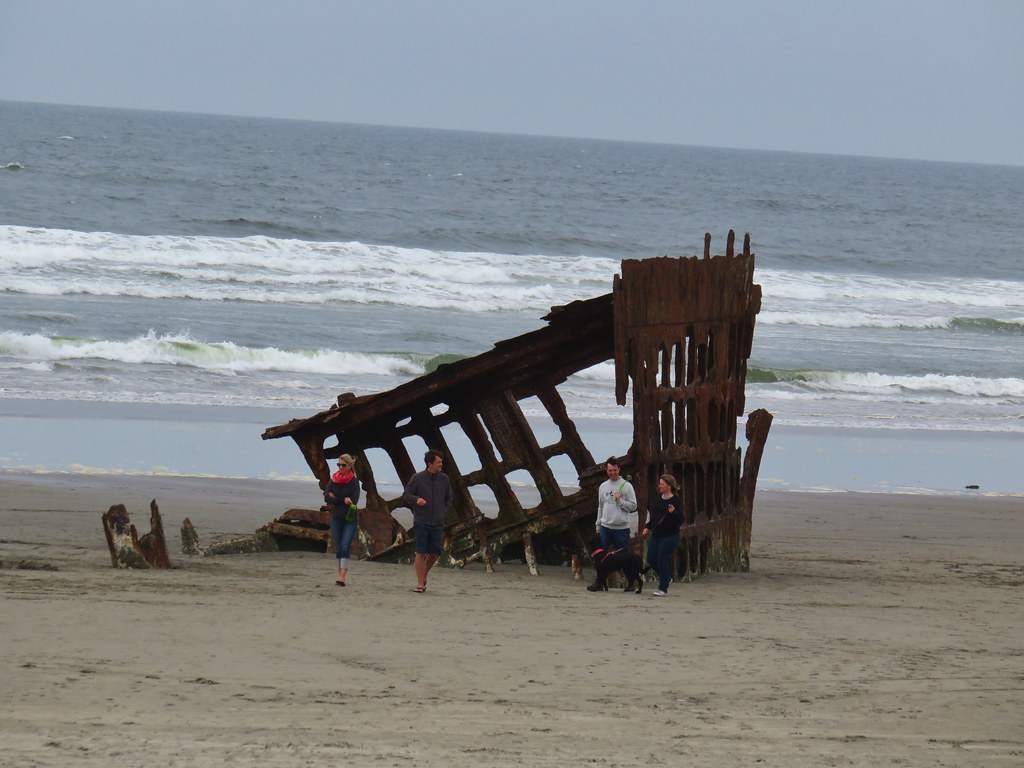
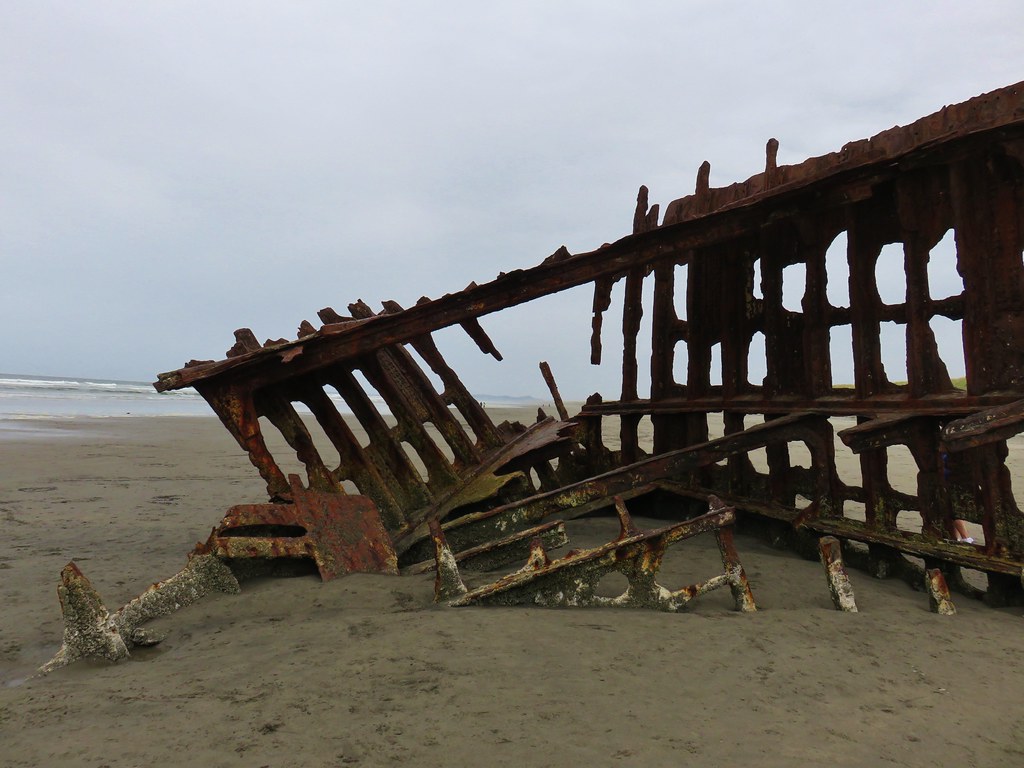
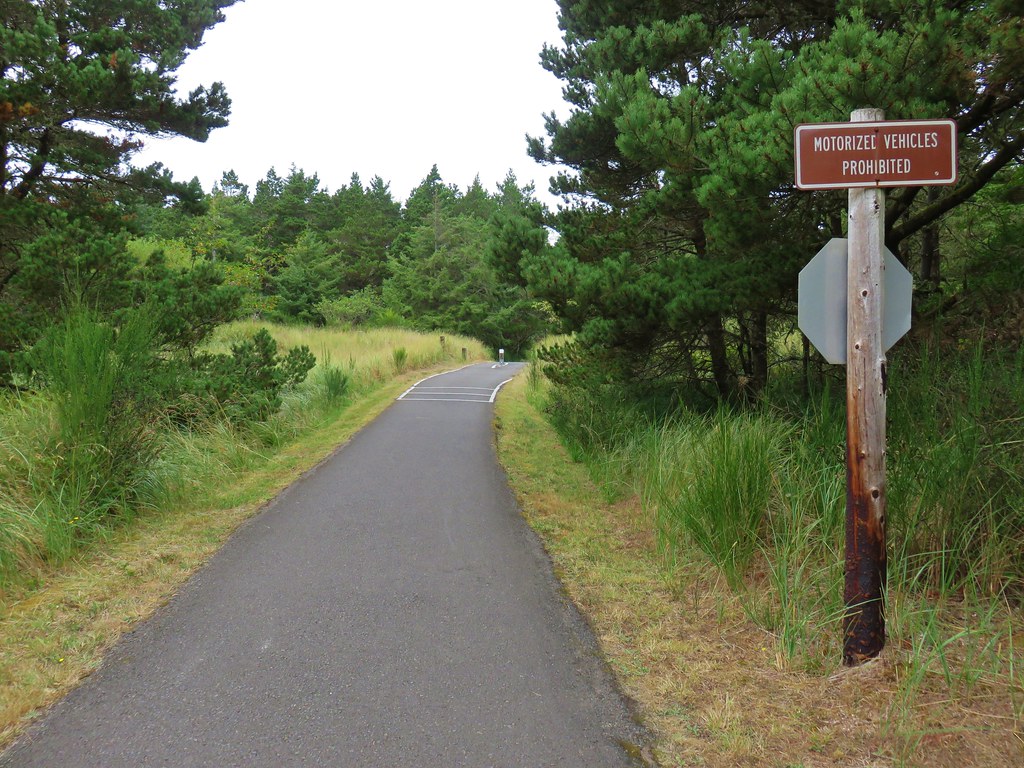
After completing the 2 mile loop around the lake we followed “Shipwreck” pointers for 3/4 of a mile to the beach and the remains of the Peter Iredale which ran aground in 1906.
We backtracked from the beach a short distance and turned left on a paved path at a pointer for Battery Russell (among other possible destinations).
We followed this path for a little over half a mile before turning right at another pointer for Battery Russell.
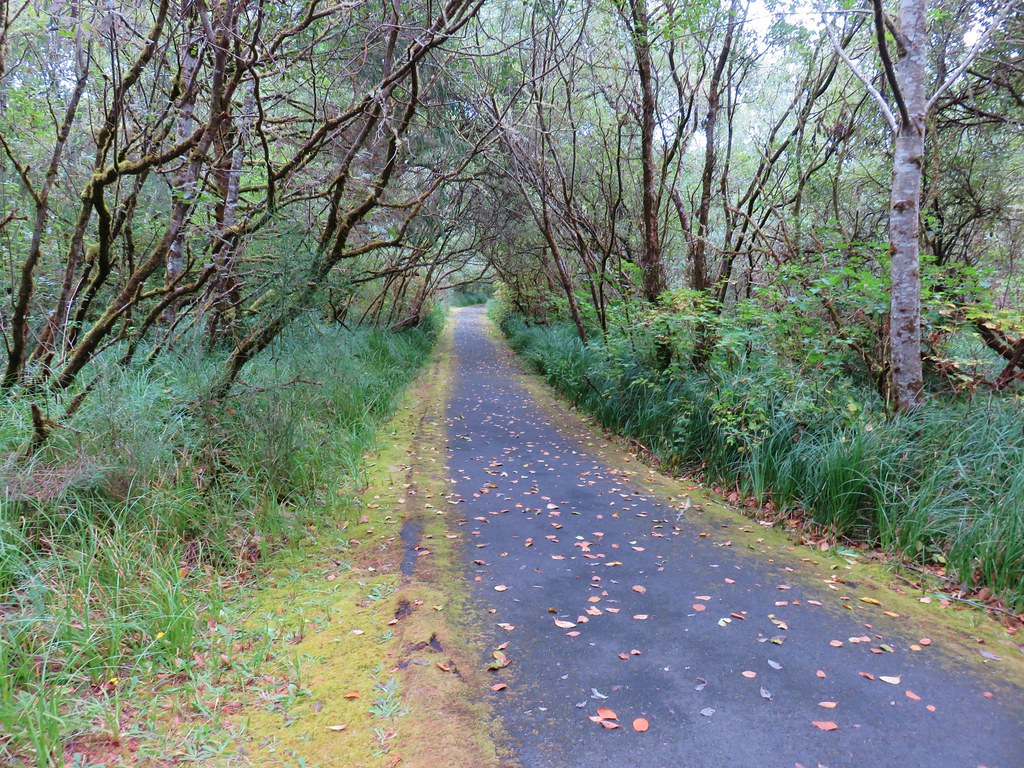
We followed this 1.1 mile paved path back to the parking lot.
The total distance of the Clatsop Spit hike had been 5 miles and this hike came in just under 7.5 miles. Twelve and a half miles is pretty good for a day, but due to our typical early start we were done with these two hikes before 1pm. Our check-in time wasn’t until four so we still had a few hours to kill.
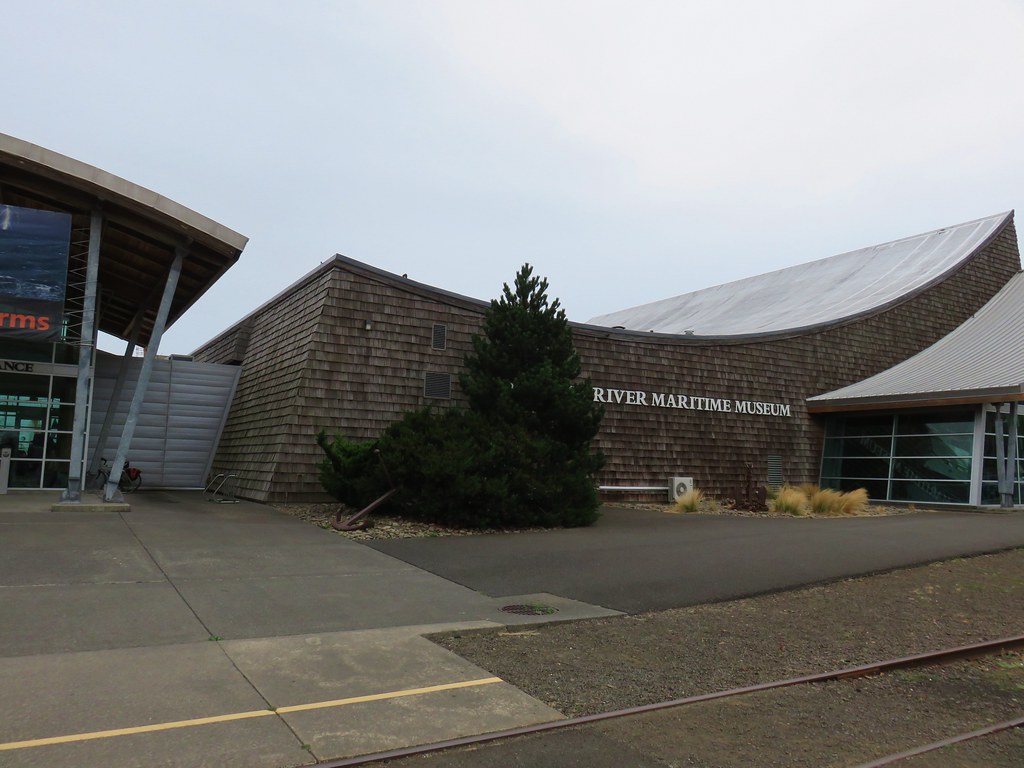
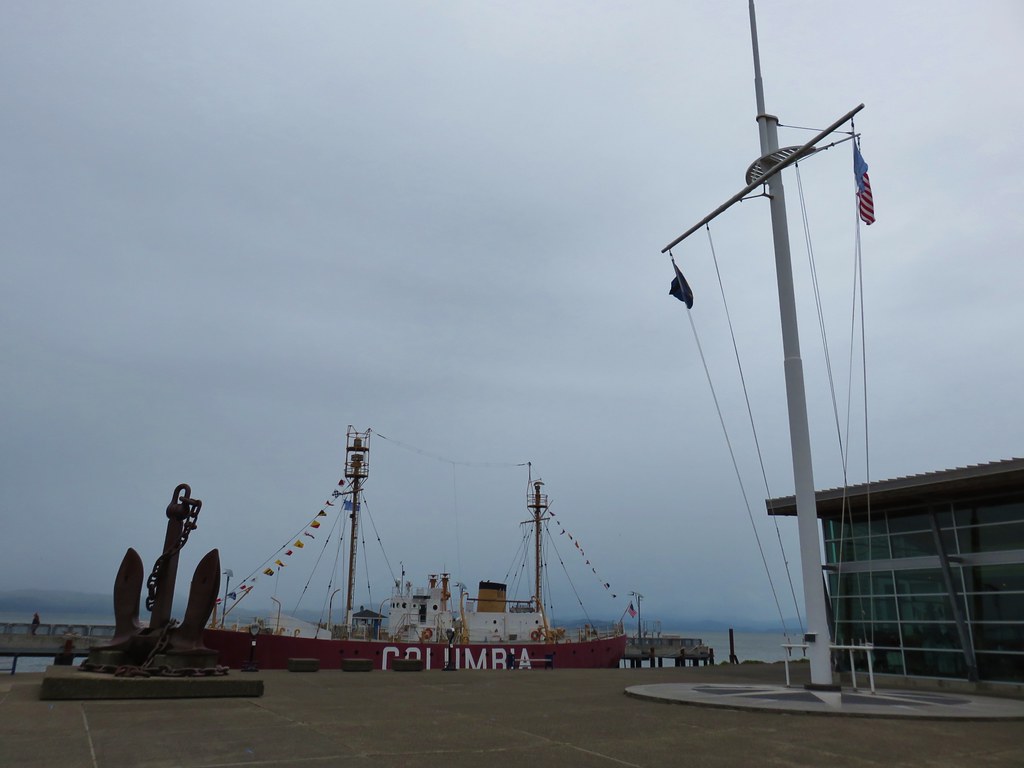
We had been prepared for that and headed north from Fort Stevens to Astoria where we parked at the Columbia River Maritime Museum
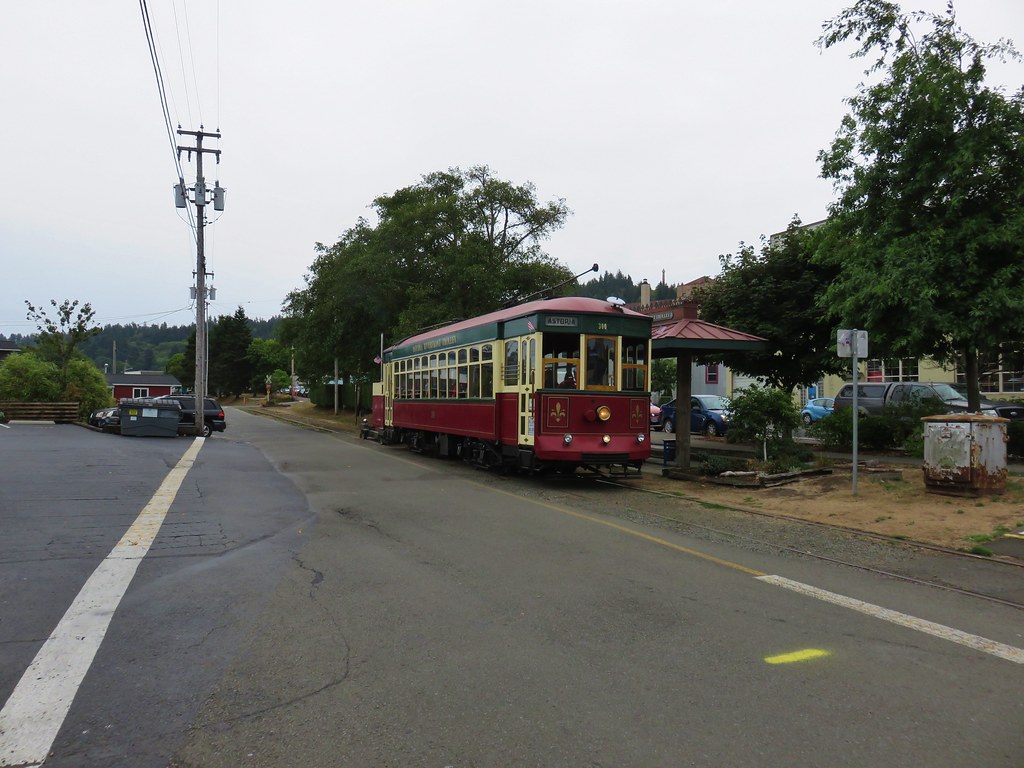
From the museum parking lot we headed west following the Riverfront Trolley line.
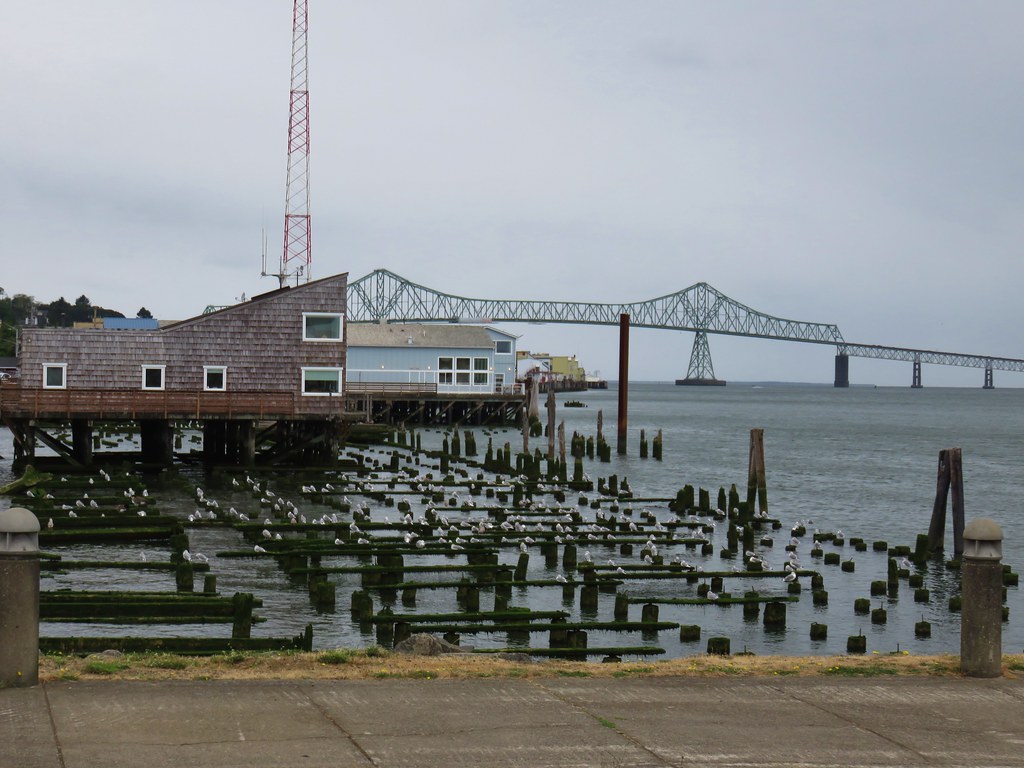
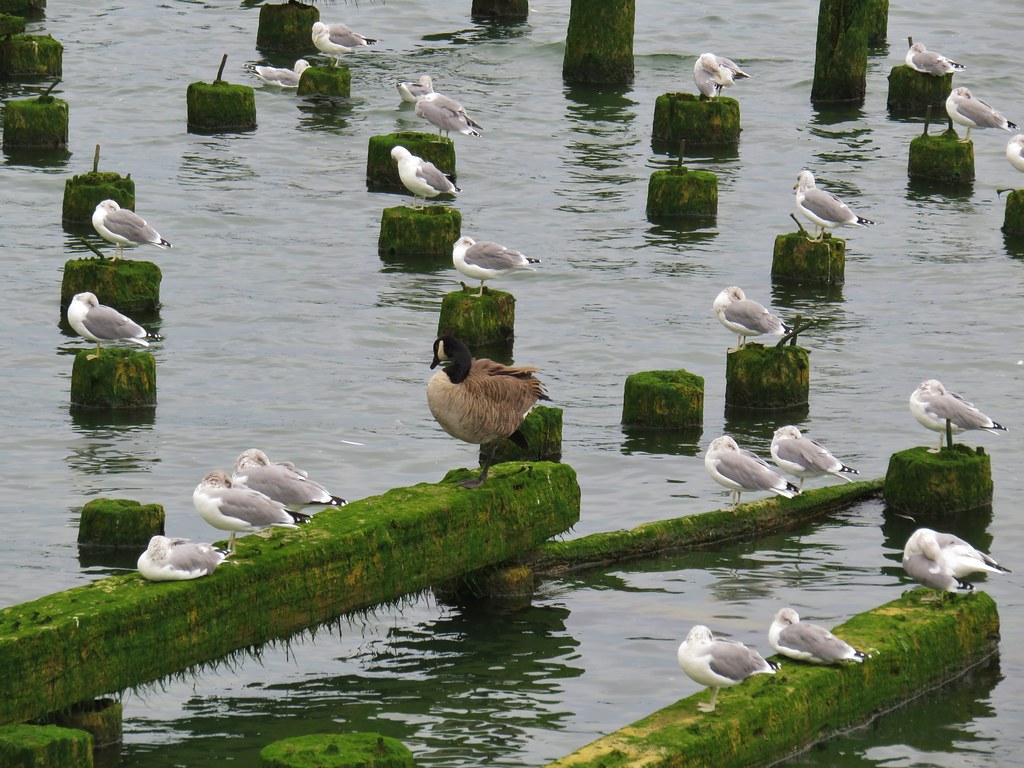
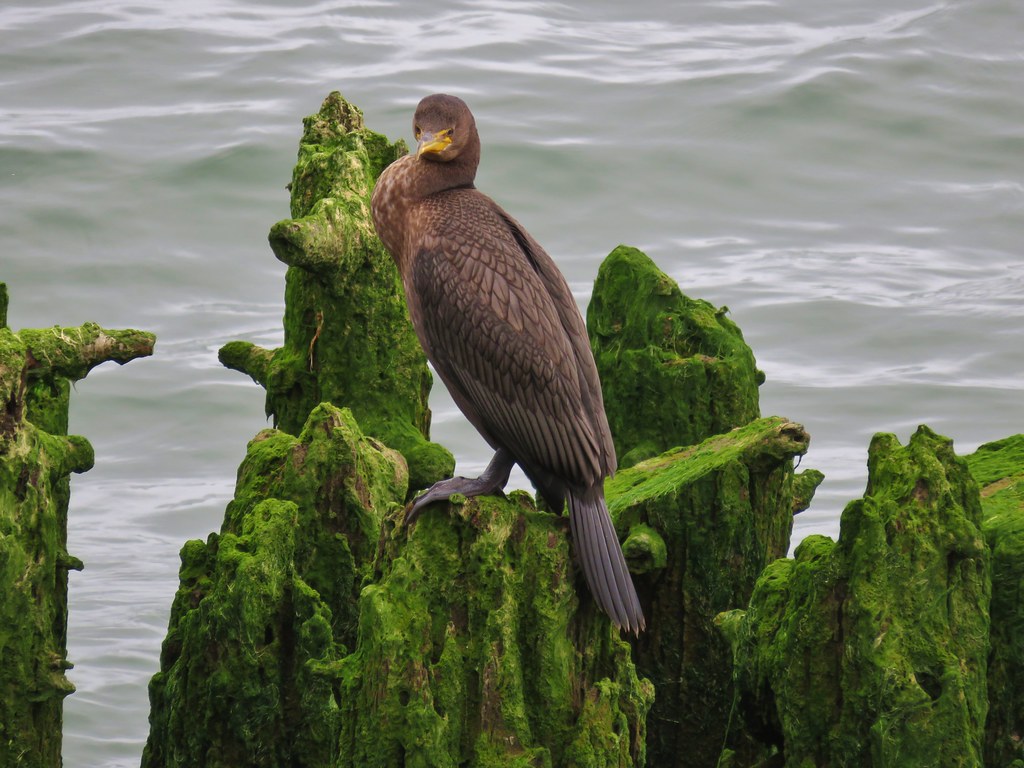
Seabirds lined the waterfront and we also heard some sea lions but never saw any.
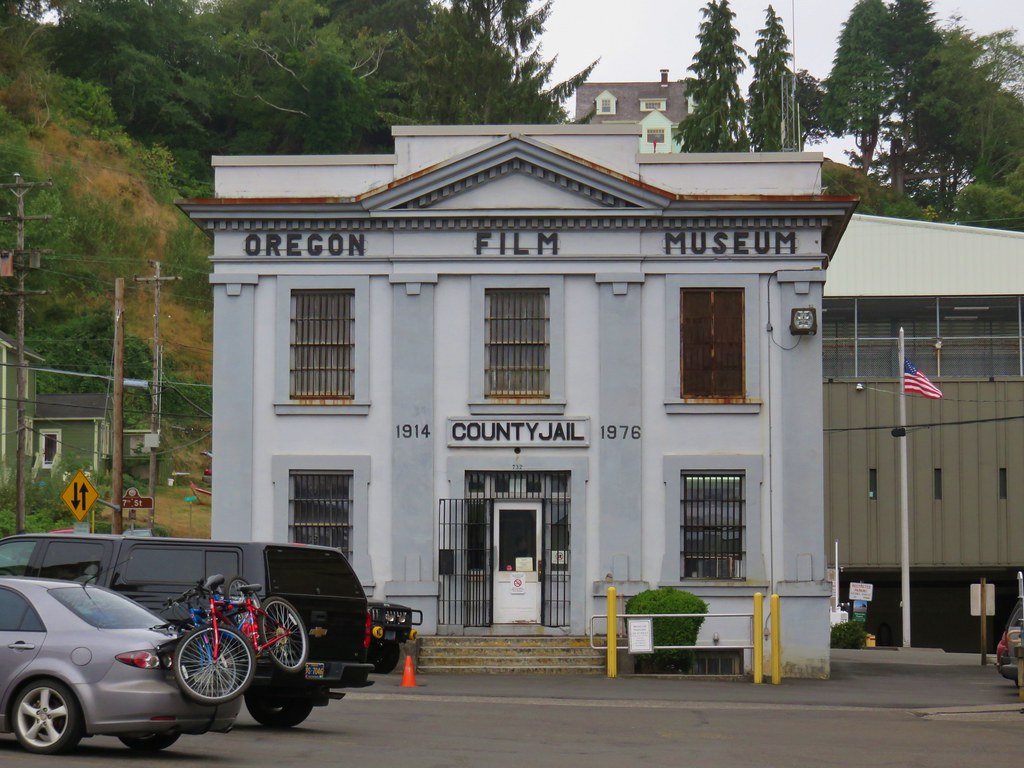
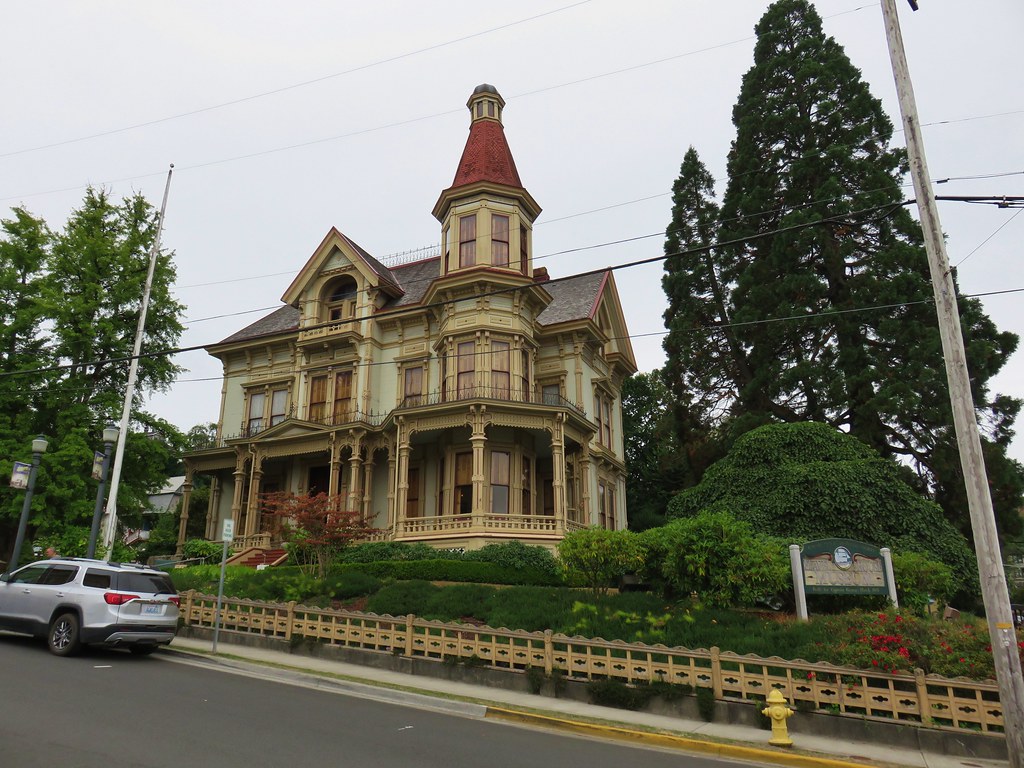
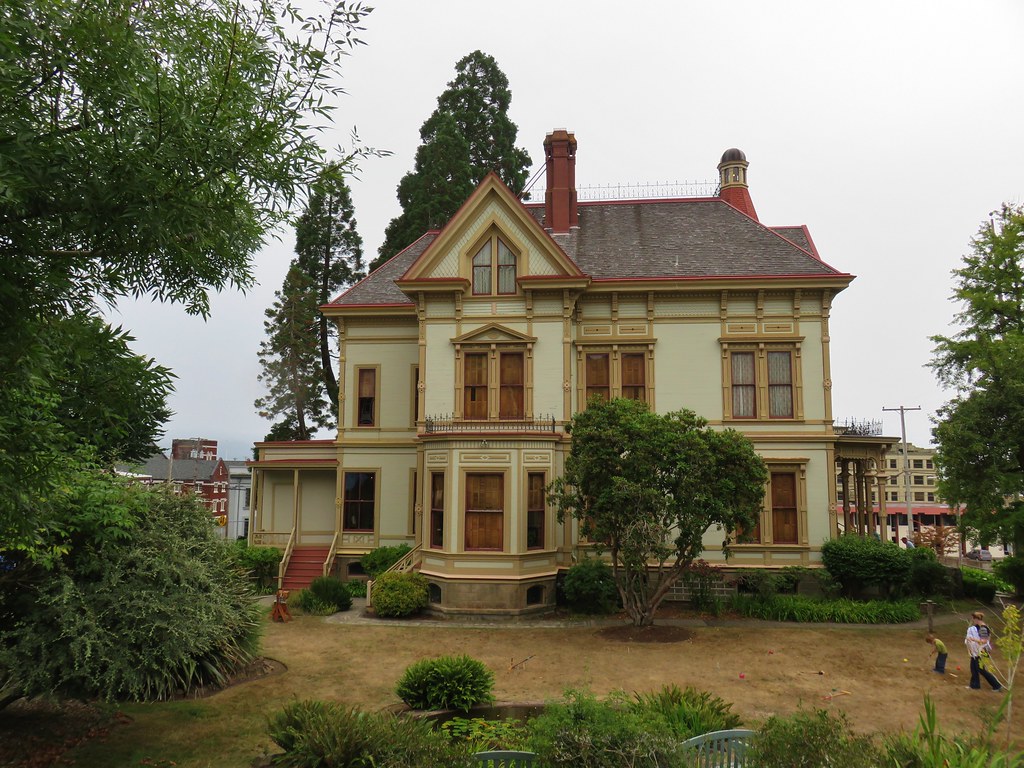
We more or less stuck to Sullivan’s described route (Hike #4 in the 4th edition of “100 Hikes/Travel Guide Oregon Coast & Coast Range) following the the trolley line to 6th St. then turning inland for three blocks before taking a left on Commercial St. After a block on Commercial St. we turned right on 7th for two blocks passing the Oregon Film Museum and the Flavel House.
We walked around the Flavel House and headed downhill on 8th St. turning right when we arrived back at Commercial St. We turned right several blocks later on 12th Street and right again a block later on Duane St. passing a Chinese Garden.
We continued zig-zagging through town passing numerous historic homes, churches, and other buildings. One home that stood out was an old run down home that had the quintessential haunted house look.
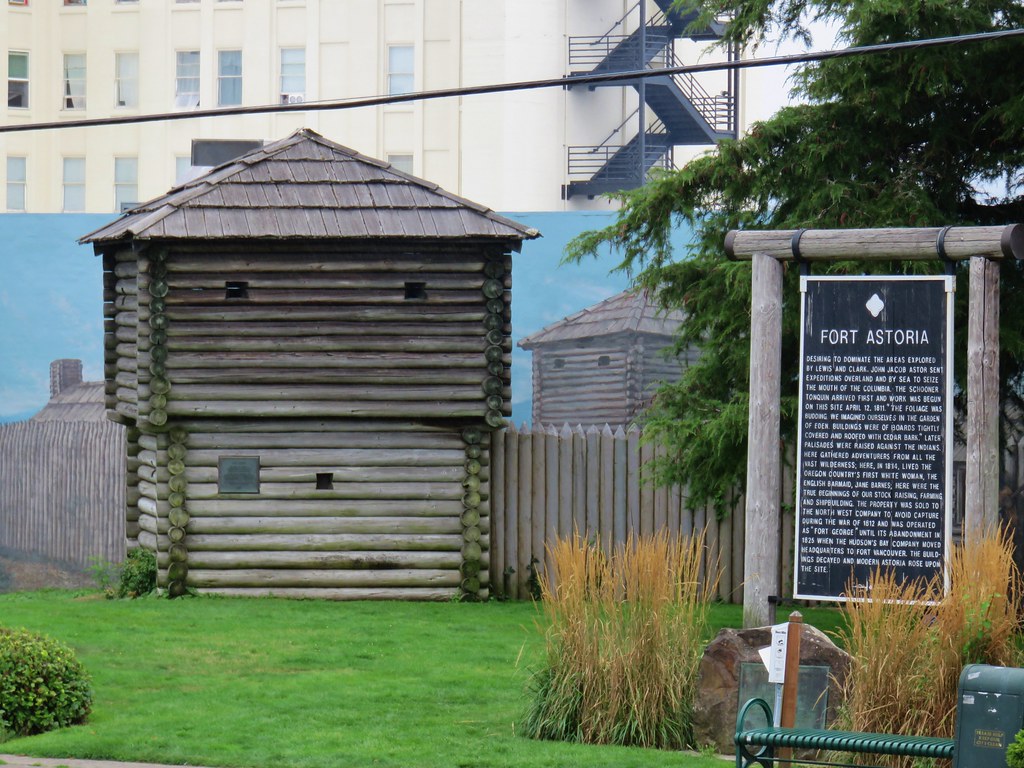
We also passed Fort Astoria on the corner of 15th and Exchange.
By the time we were done we wandered around town for a total of 3 miles.
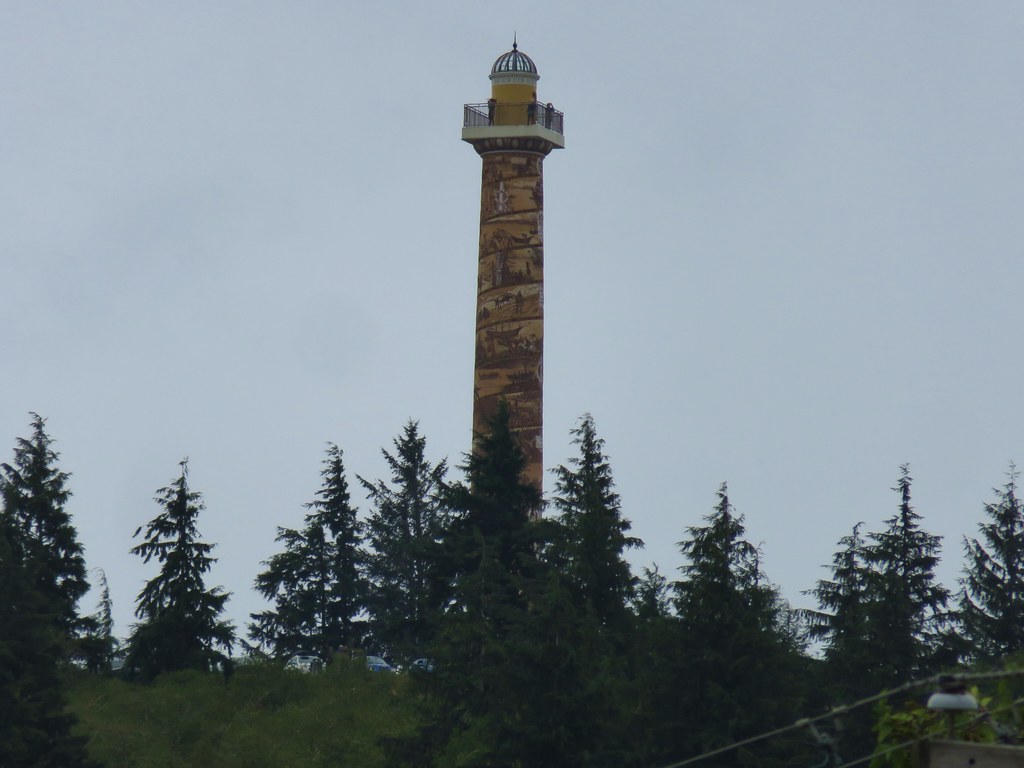
One of the landmarks not on the route was the Astoria Column. It was visible from the waterfront rising above the city. It was one of the times the 30x zoom on the camera came in handy.
We still arrived a little early at our hotel but luckily our room was ready. We had a nice view south to Tillamook Head.
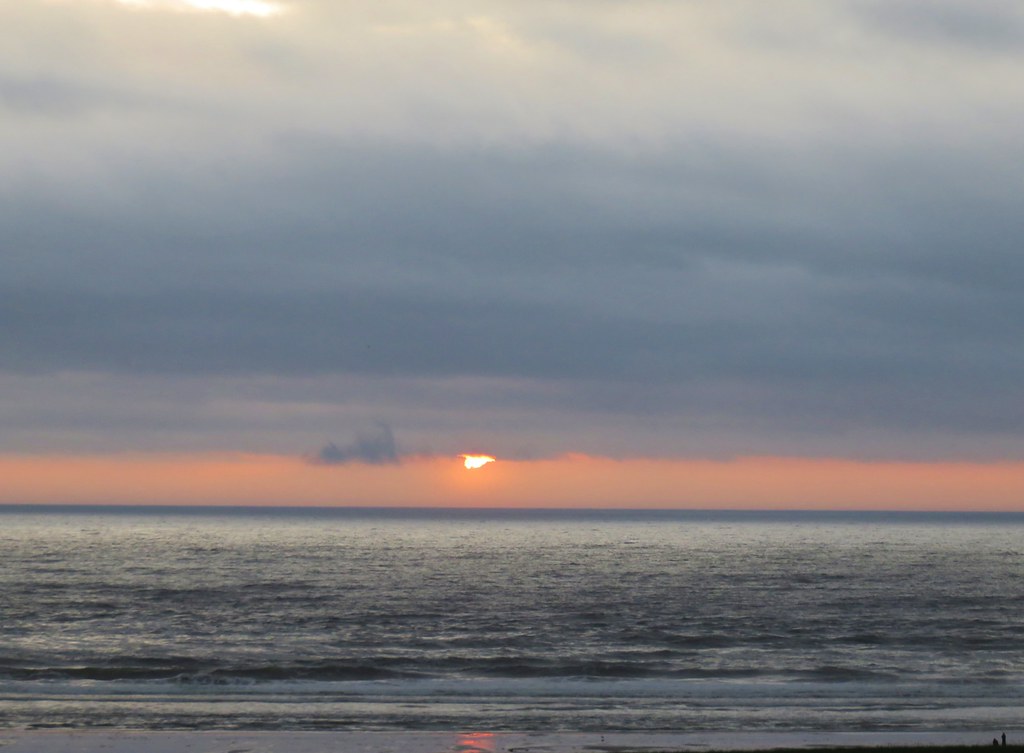
It had actually rained lightly on us in Astoria which was a wonderful change of pace. The sun went down behind the clouds that evening ending the first day of what was shaping up to be an interesting vacation.




 I had arrived just after 6:30am so it was still a little dark as I set off.

 Please respect private landowners wishes when recreating to ensure that public access continues to be allowed.
 Looking back at the sunrise.

 Entering the clearcut.
 Bleeding heart
 The OCT is well marked.
 Woodpecker
 Back in the forest.
 Interpretive signs in the preserve.
 Bench at a viewpoint.
 Nehalem Bay (
 Salmonberry blossom
 Leaving the preserve.
 Violets and pink fawn lilies. These were the first pink fawn lilies I had seen, it seems that we hadn’t timed our coastal hikes right to catch their bloom in the past.


 Trillium
 Fringecup
 Toothwort


 I made use of this bench on the way back to take a break and do some stretching.
 View to the north.
 Tillamook Head (
 It was obvious that there had been some work done to try and shore up this section of trail.
 The view south from the viewpoint.
 Cape Meares (
 Cascade desert parsley near the summit.
 Looking up at the viewpoint from the OCT.
 Trillium
 This was the only obstacle that required any sort of maneuvering.
 There are some great trees along the upper section of the trail.
 Violets
 Recent trail work.
 Anemones and violets.
 Entering the storm damaged area.
 Angora Peak (
 Getting creative with the trail route.
 Out of the storm damage.
 Skunk cabbage
 Cape Falcon from the trail.
 Pink fawn lilies
 Arriving at Highway 101 near the North Neahkahnie Mountain Trailhead.


 Snow queen
 He may have been moving faster than I was.
 There is nothing better than hearing wrens sing in the forest.
 More creative trail in the storm damaged area.
 Wood sorrel
 The view if you don’t scramble up the spine.
 Trillium with a touch of pink.
 Arriving at the packed trailhead.
 Leaving the crowds behind.
 Big patch of pink fawn lilies.
 Highway 101 from the powerline corridor.
 Margined white
 One of the more impressive trees in the preserve.
 Nearing the Highway 101 crossing. I arrived just as a long line of traffic was passing by but was able to safely cross shortly afterward.



 All the bridges had labels consisting of the first initial of the trail and then the bridge number making this the 4th bridge along the Middle Creek Trail.
 Interesting seat.
 That’s a fancy hat for a stump.


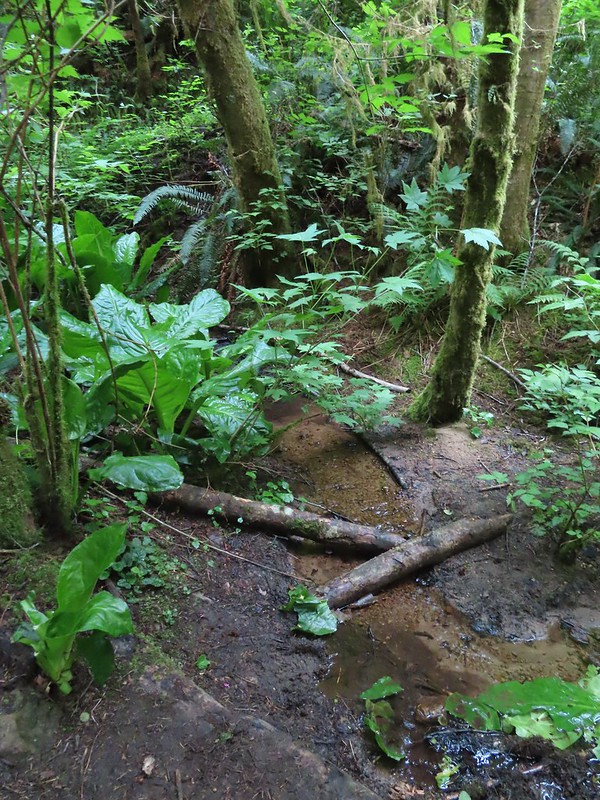


 We saw a lot of rough skinned newts on the trails, but what we were really hopping for was a Pacific Giant Salamander. No luck there this time.
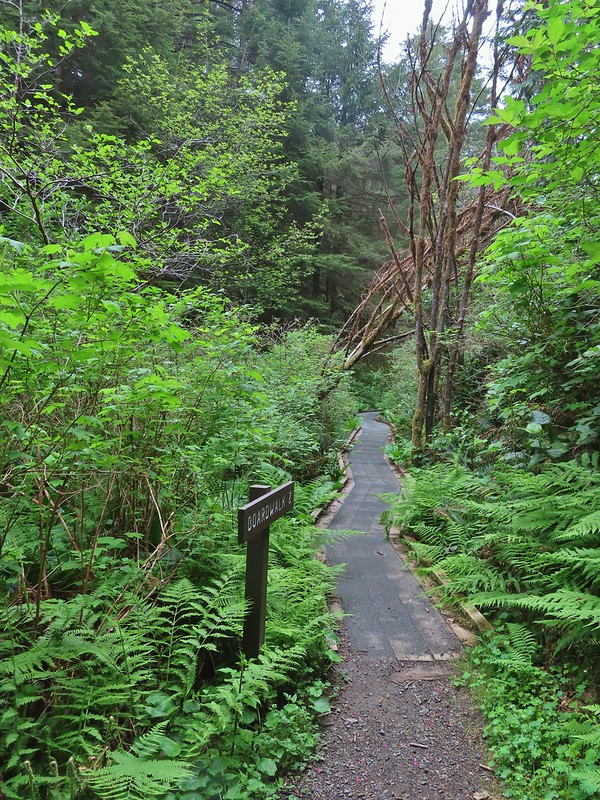
 A few trillium still had petals.
 Woodpecker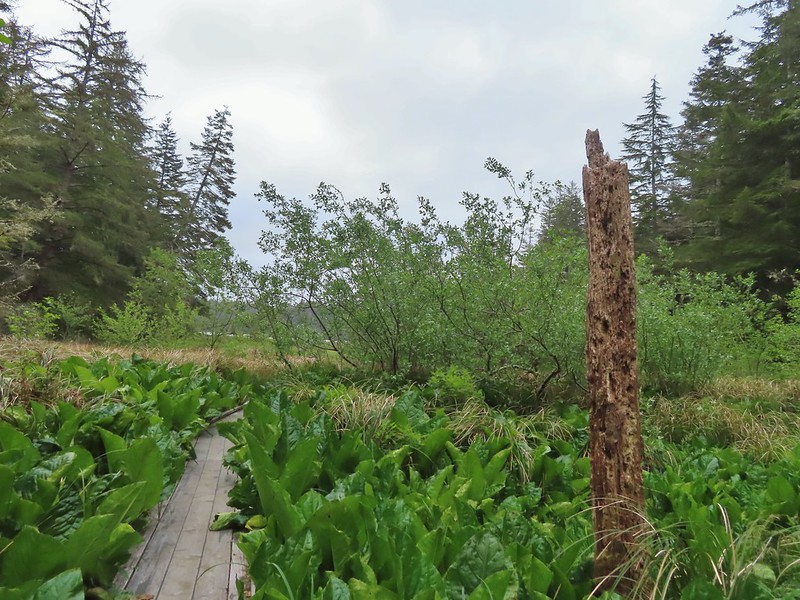


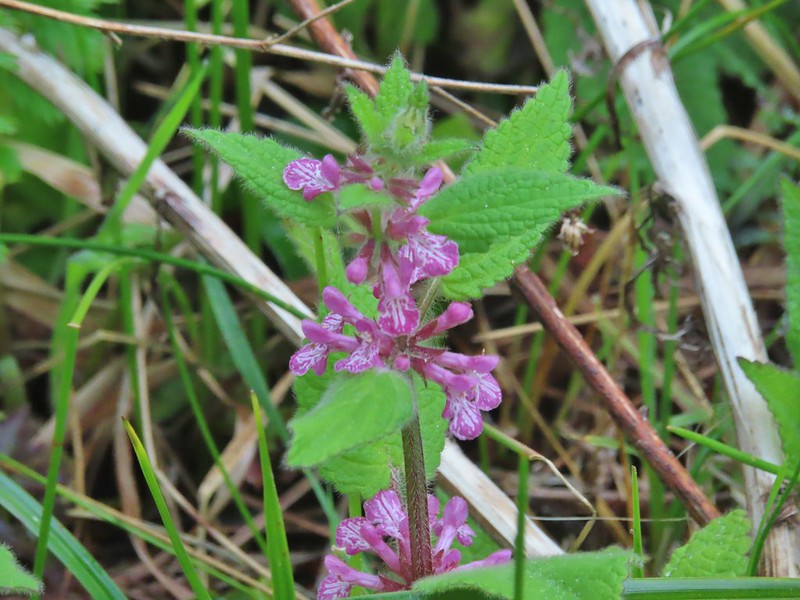 A hedgenettle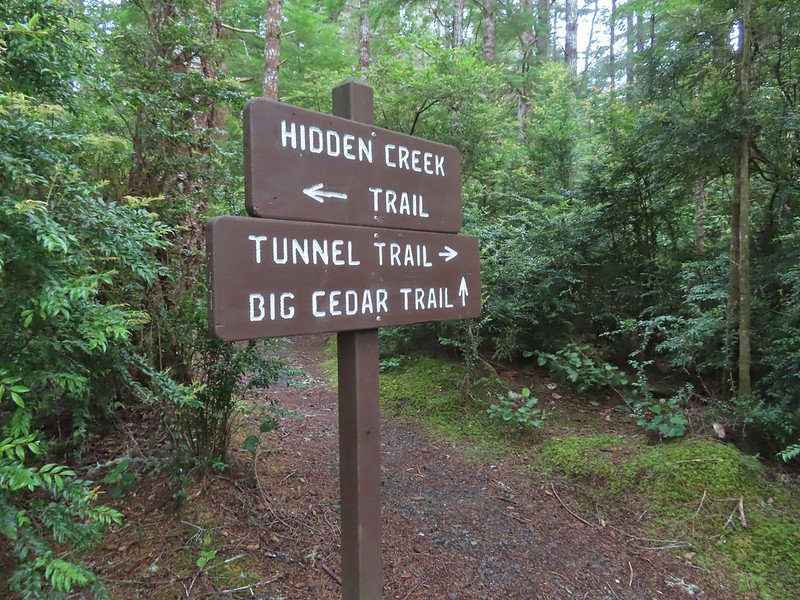


 Tunnel Trail indeed.




 Castilleja ambigua – Estuarine Paintbrush


 End of the line.
 South Slough
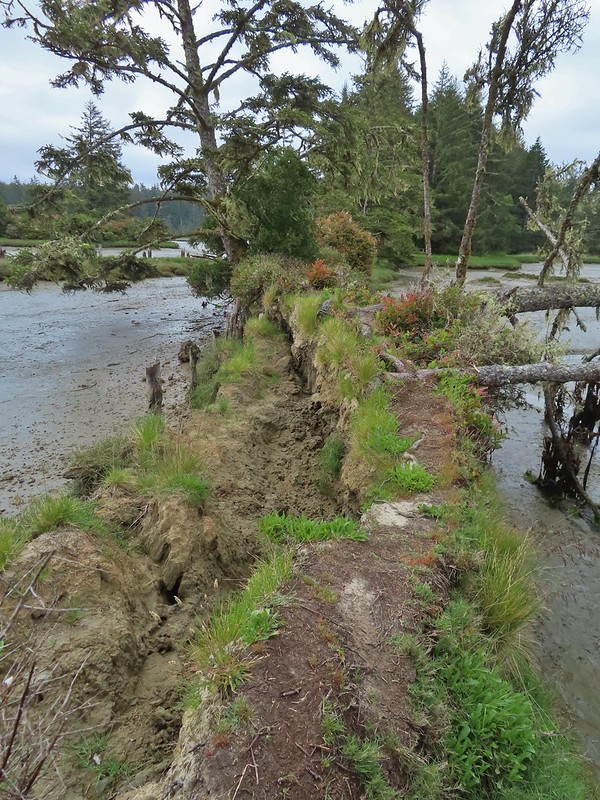 It was interesting to see how this uprooted tree peeled back a layer of the ground.
 Rhoades Marsh
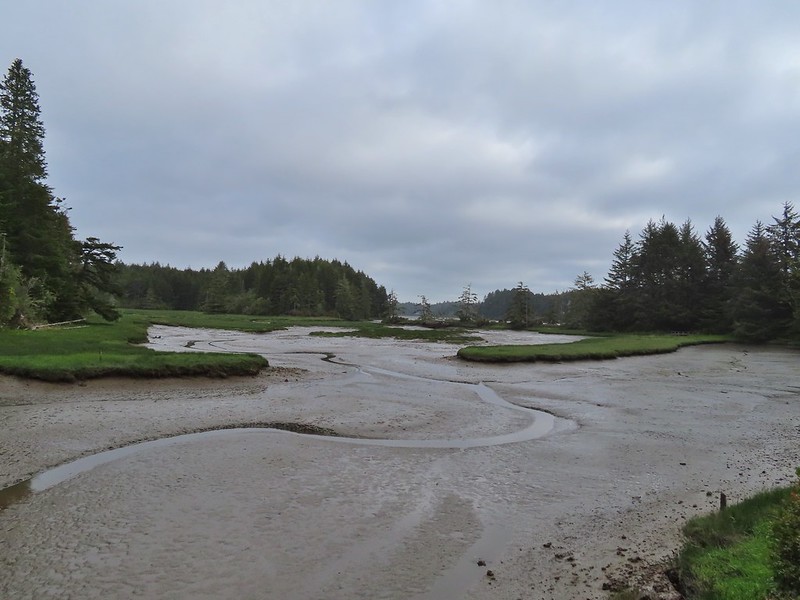 Sloughside Marsh
 Rhododendron


 Bleeding heart, fairy bells, and youth-on-age.


 Cape Arago Lighthouse (not on Cape Arago) on Chiefs Island.
 Salal
Salal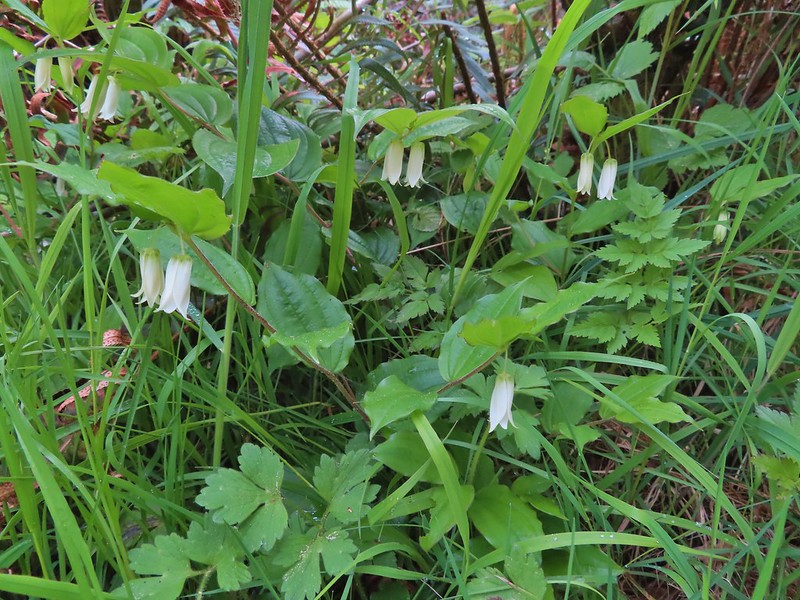
 The group campsite.
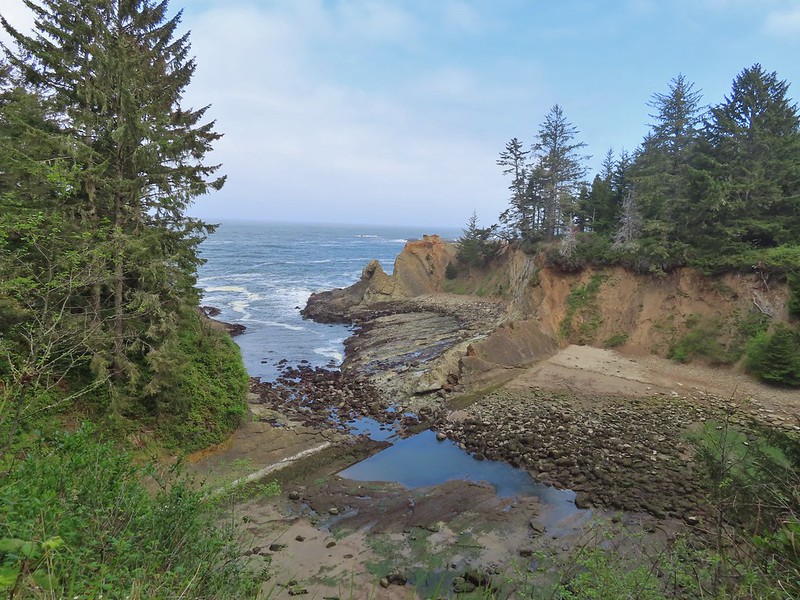





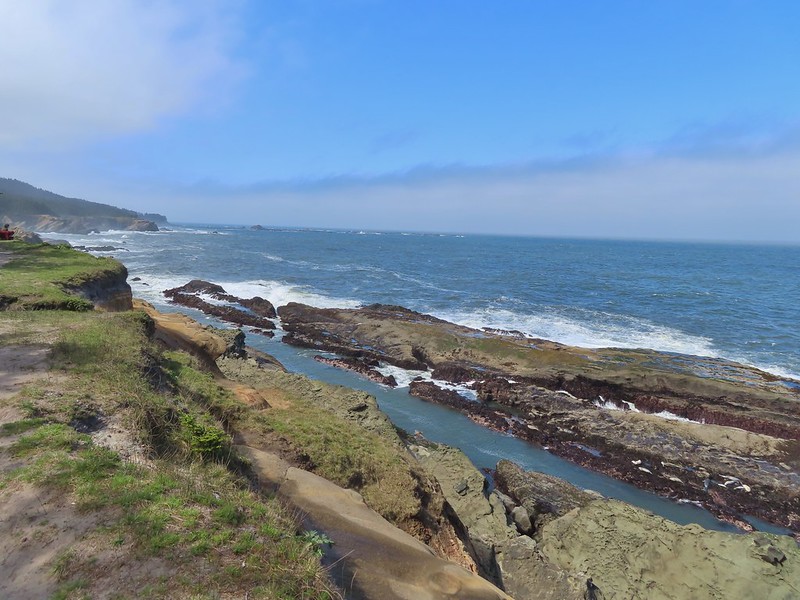 Harbor seals in the lower right hand corner on the rocks.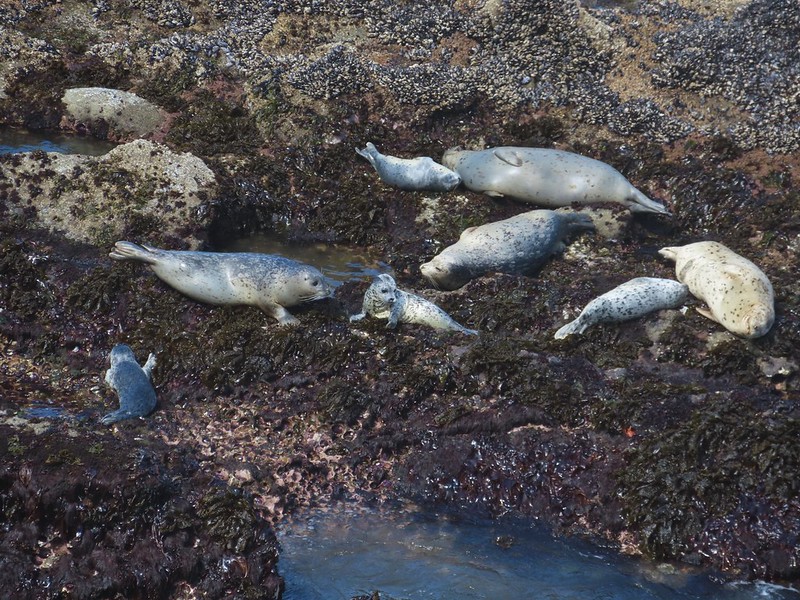

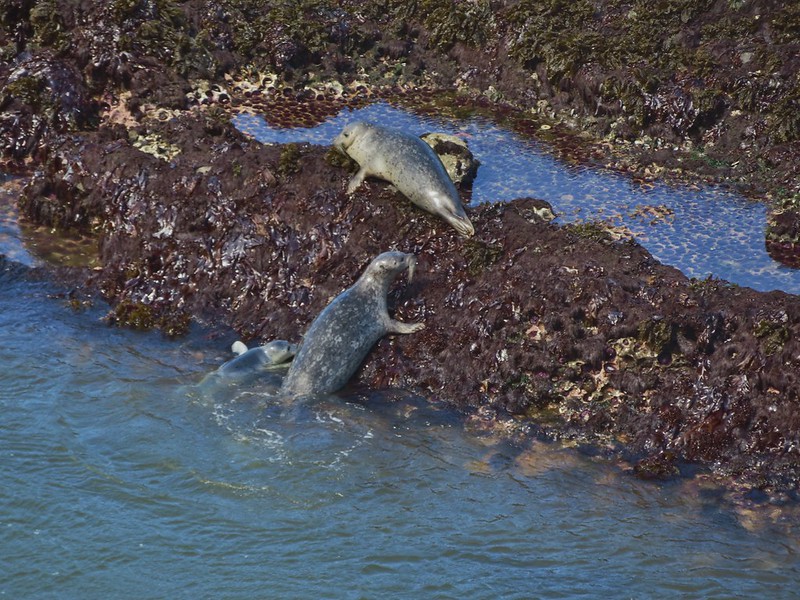
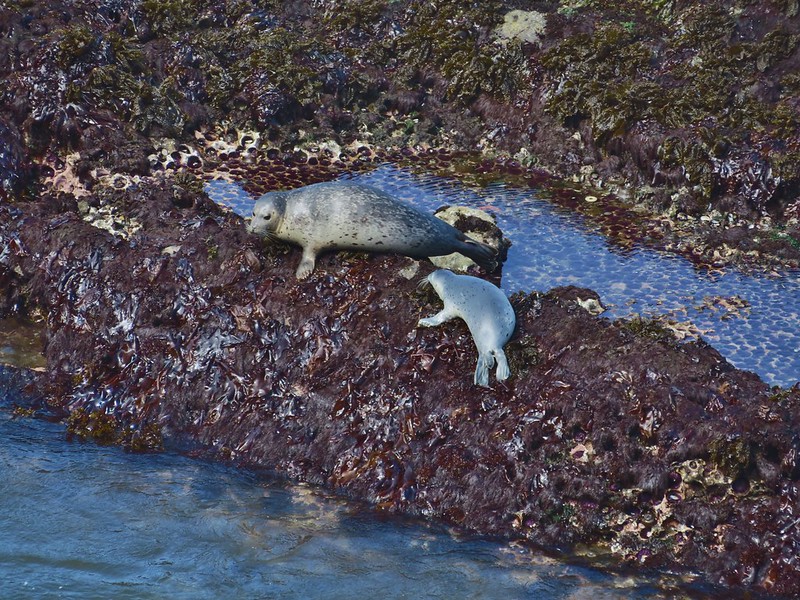 Success!
 Paintbrush
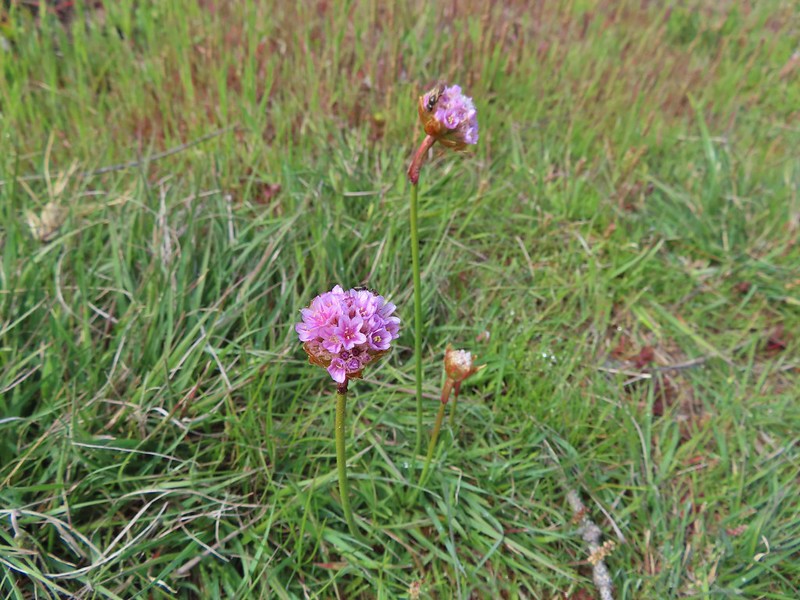 Sea thrift
 Mariposa lilies
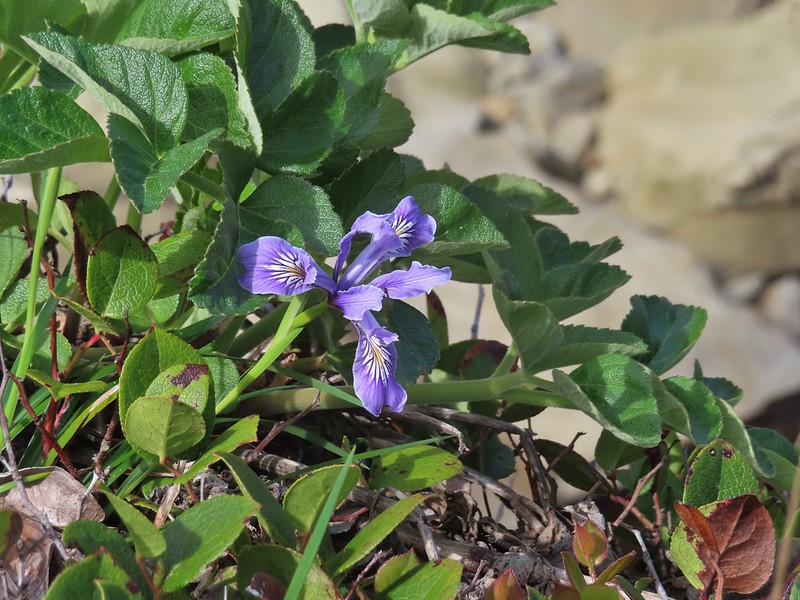 Iris
Iris Former tennis courts.
 View near the tennis courts.
 These roots explain how some of the trees that look like they should be plunging into the ocean don’t.
 Observation Building ahead on the cliff.









 Prickly Rhubarb from Chile

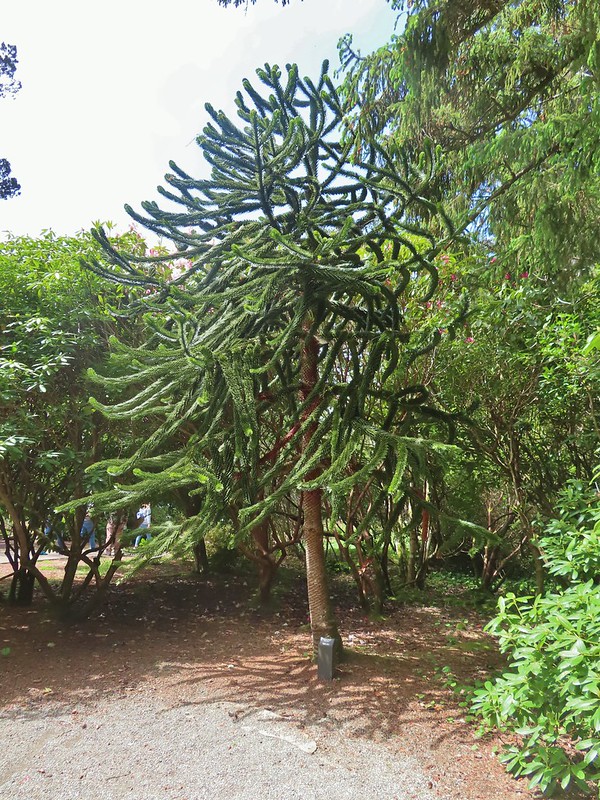 Monkey Puzzle Tree from South America
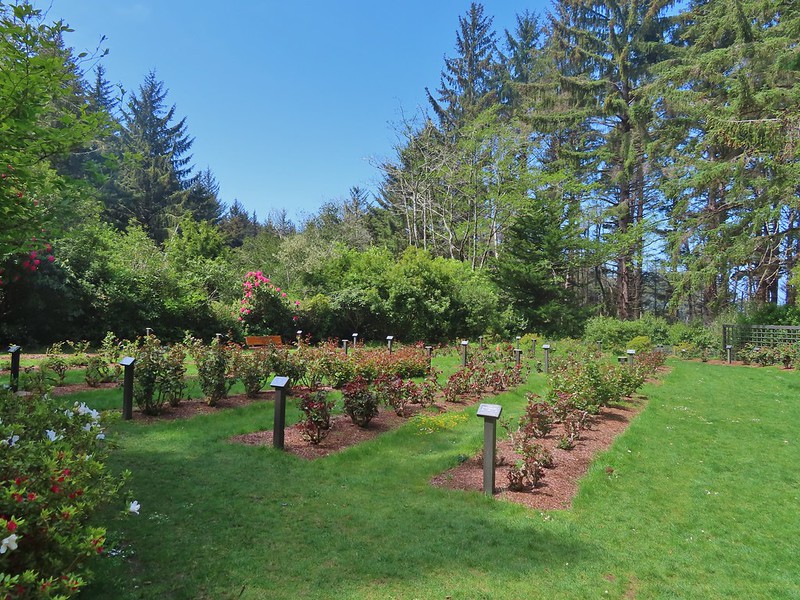 The yet to bloom rose garden.


 Looking back across Simpson Cove to the Observation Building.
 Simpson Reef extending into the Pacific.
 Shell Island in the middle of Simpson Reef.
 Sea lions and juvenile bald eagles on Shell Island.


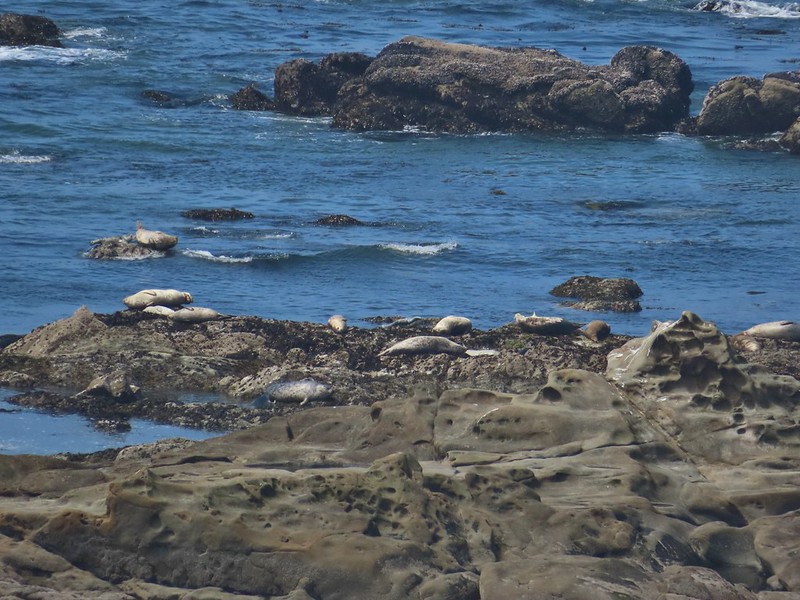 Harbor seals on the reef.

 Coltsfoot
 Woolly bear caterpillar
 Looking back up the Pack Trail.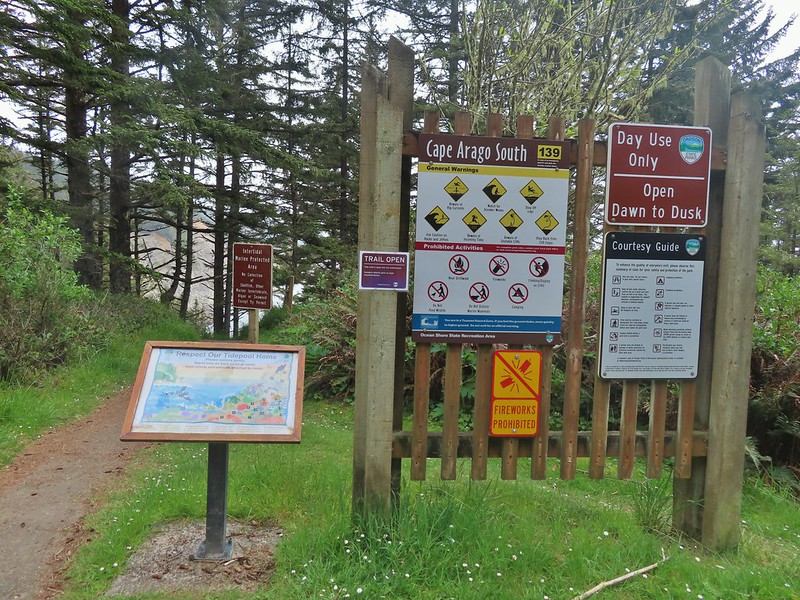

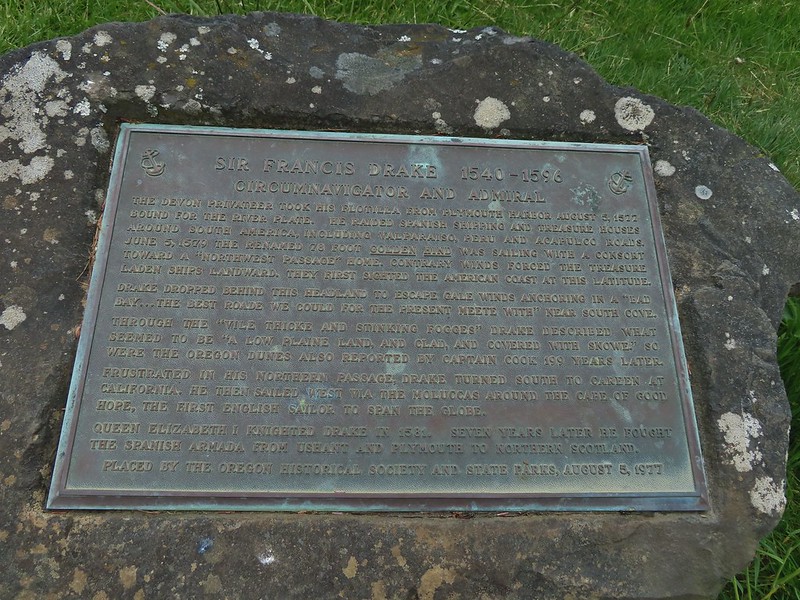 Plaque near the bench commermorating Sir Frances Drake’s visit to the area in 1579.
 Our stalker while we sat at the bench hoping we would leave some food behind (we didn’t).
 We thought we might be hearing things, but no it was a rooster crowing.
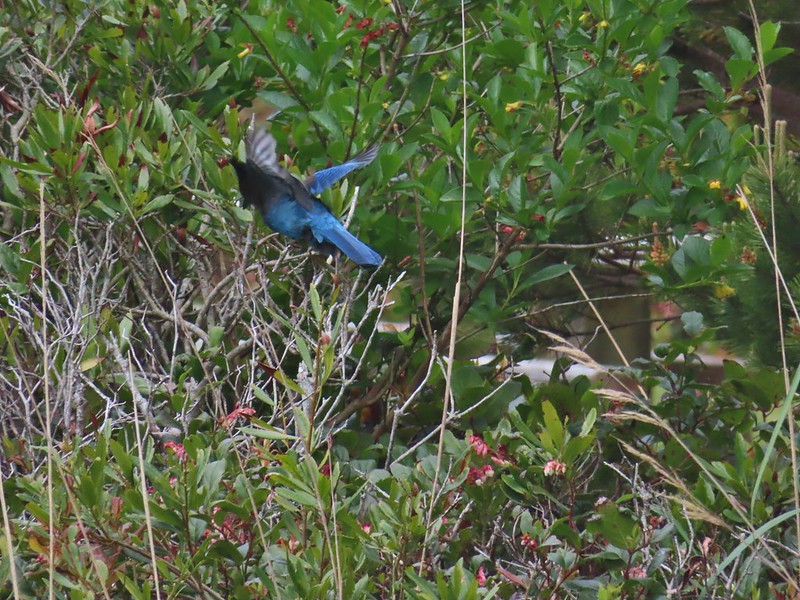 Stellar’s jay
 North Cove (A trail down to that beach was closed for the season.)



 Heading down.
 Going up.

 The Cape Arago Pack Trail at the highway.



 Thimbleberry
 Salmonberry
 McLeod Creek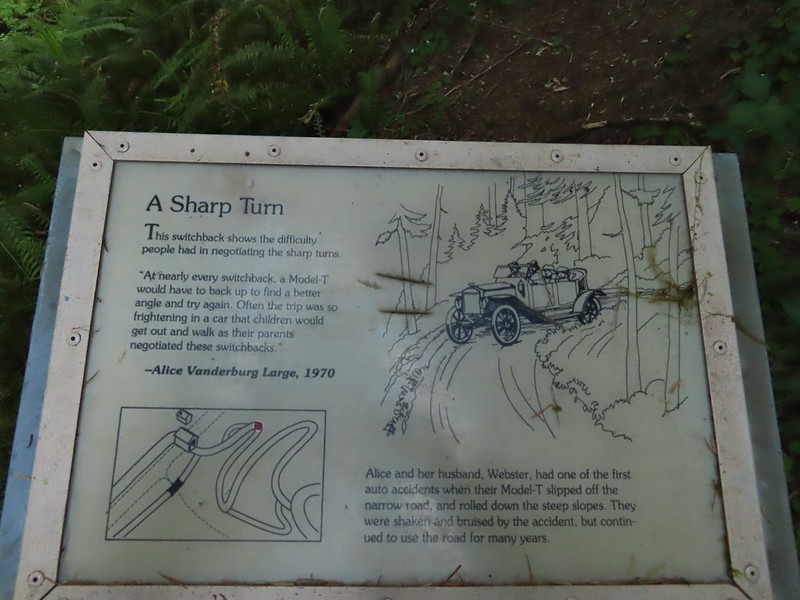
 One of the sharp turns.
 Fairy bells
 Columbine
 Bleeding heart
 Monkeyflower
 Sourgrass
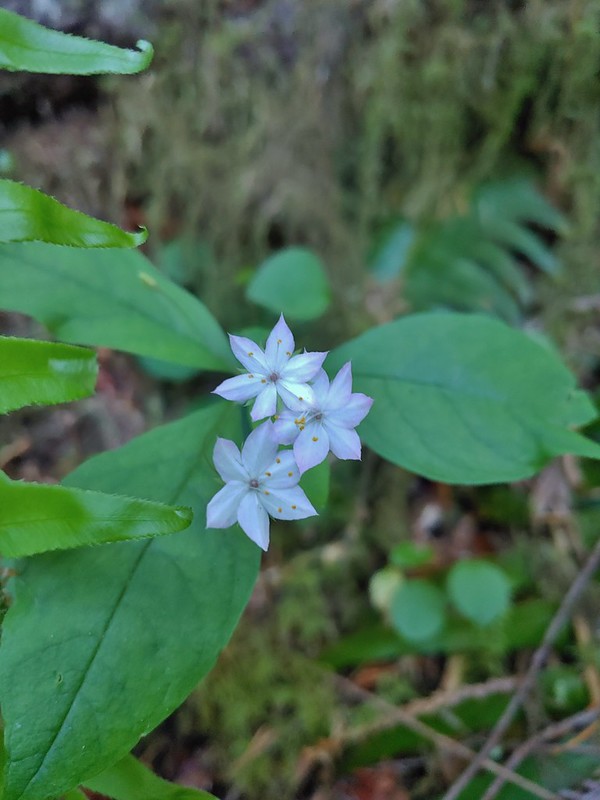 Star flower
 Trillium
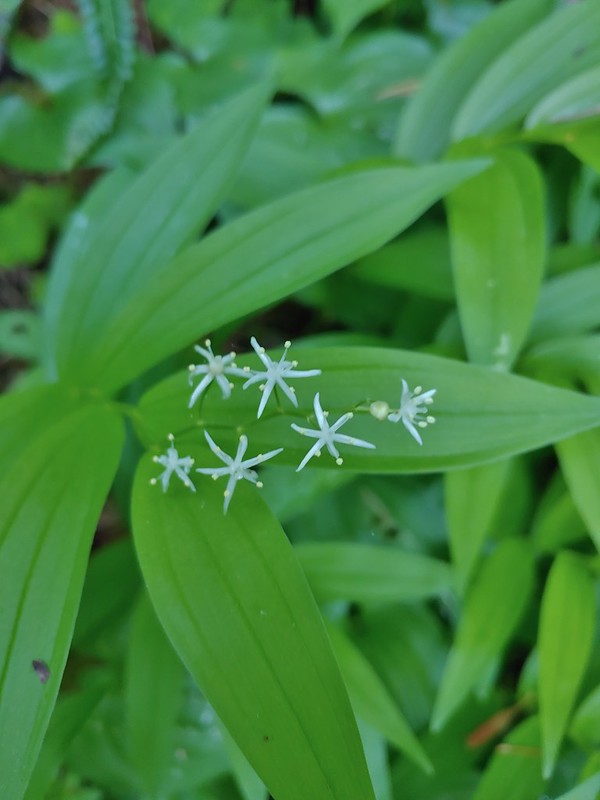 Star flower solomonseal
 Twisted stalk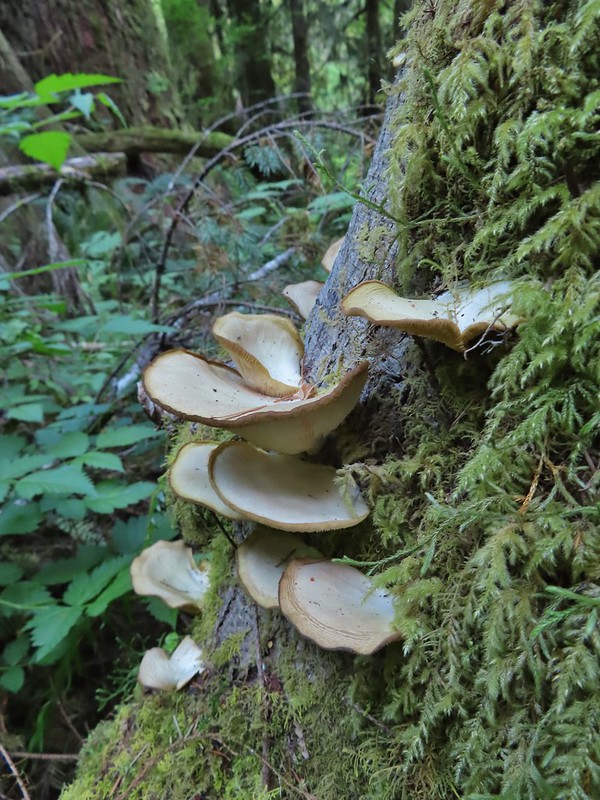
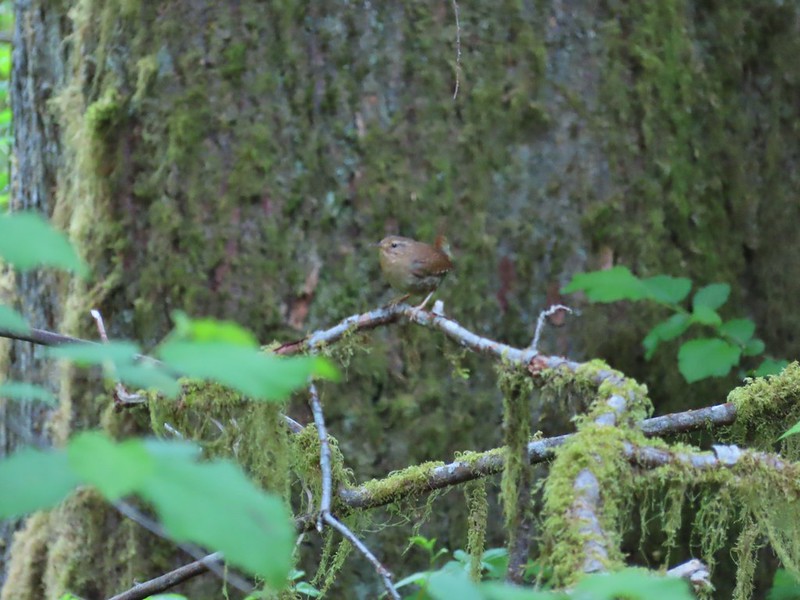 Wren – We heard lots of birds but didn’t see many of them.

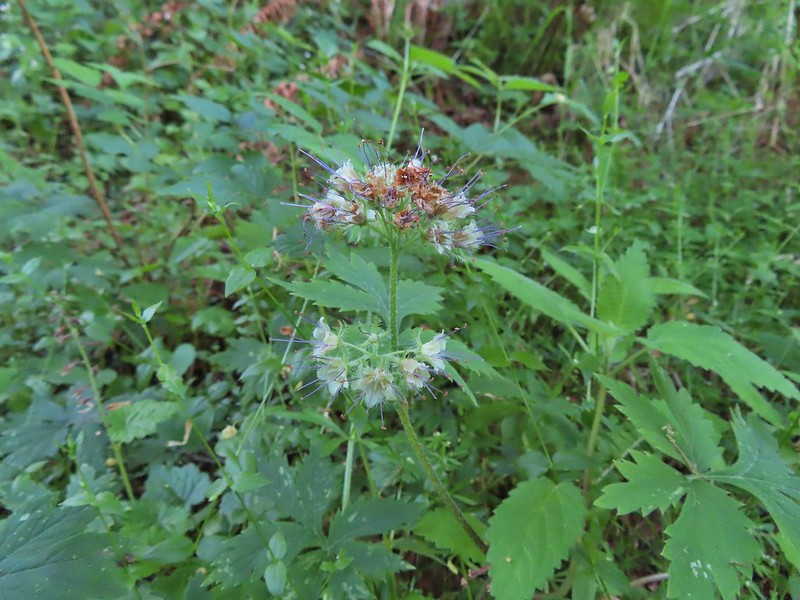 Waterleaf

 Marker for a fire scarred Douglas fir. According to the brochure the last major fire in the area was in the 1860s.

 We had to climb over this big tree.


 Looking at the bridge at the north end of the lake.
 Canada geese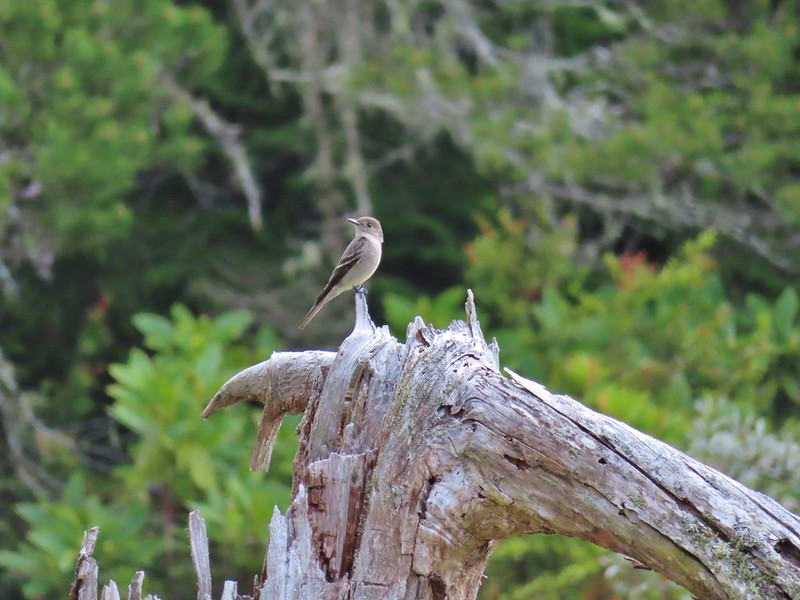
 Cormorants flying above the lake.
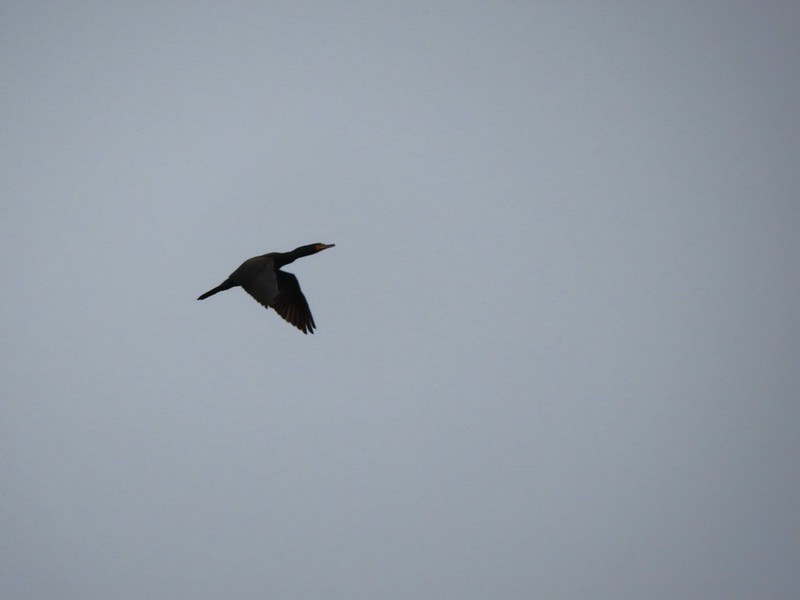 Cormorant
 Ring necked ducks
 Rhododendron
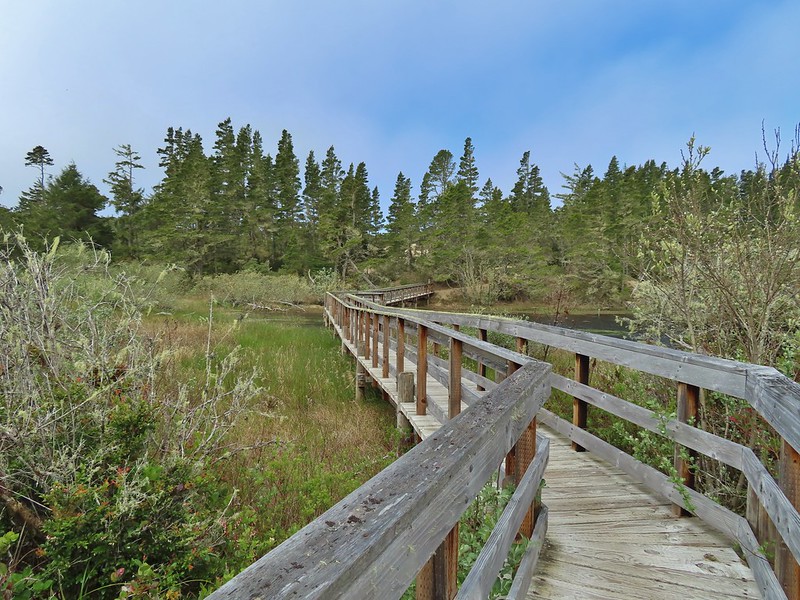 Boardwalk at the south end of the lake.
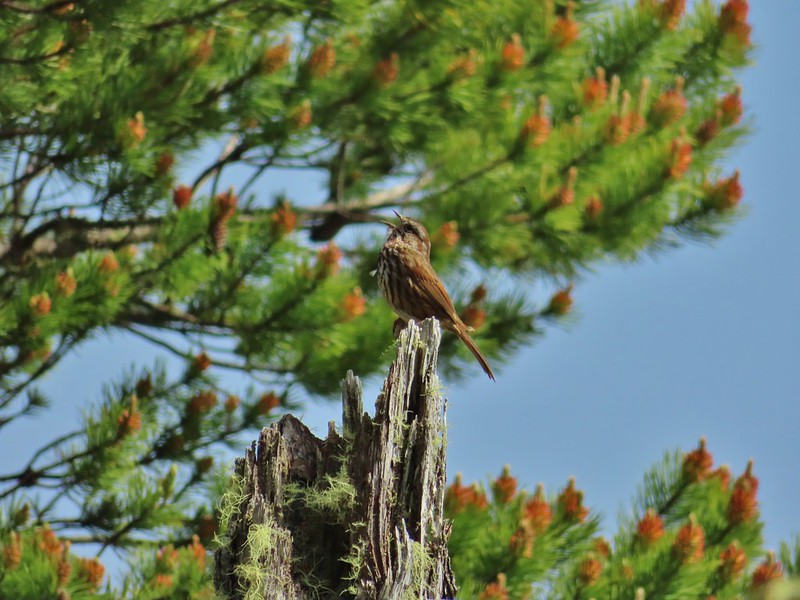 Sparrow
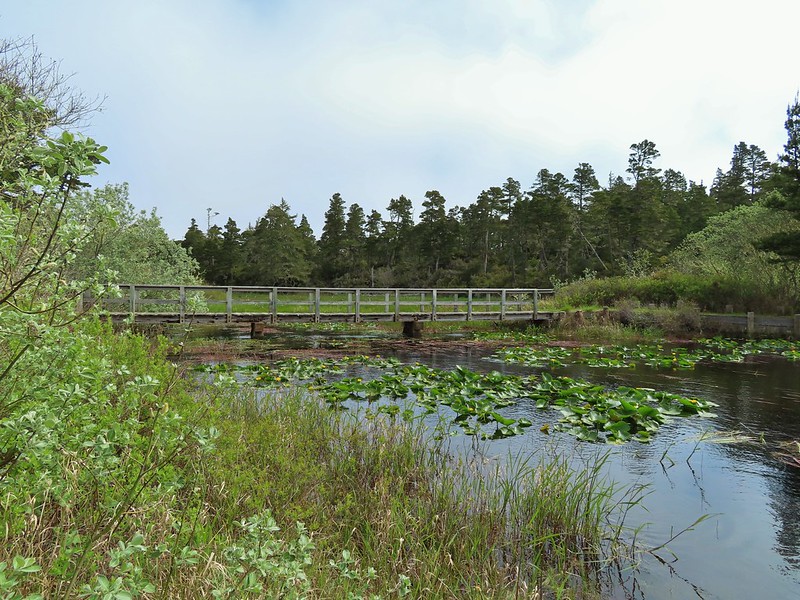 Coming up on the bridge at the north end.
 Yellow rumped warbler
 Finch
Finch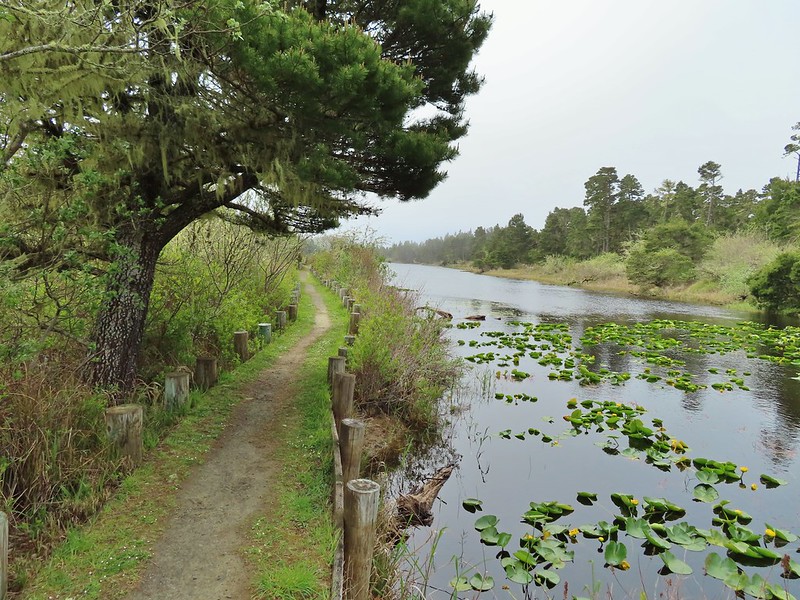
 The trail on the far side of the track.

 One of three panels on a signboard at the start of the trails.
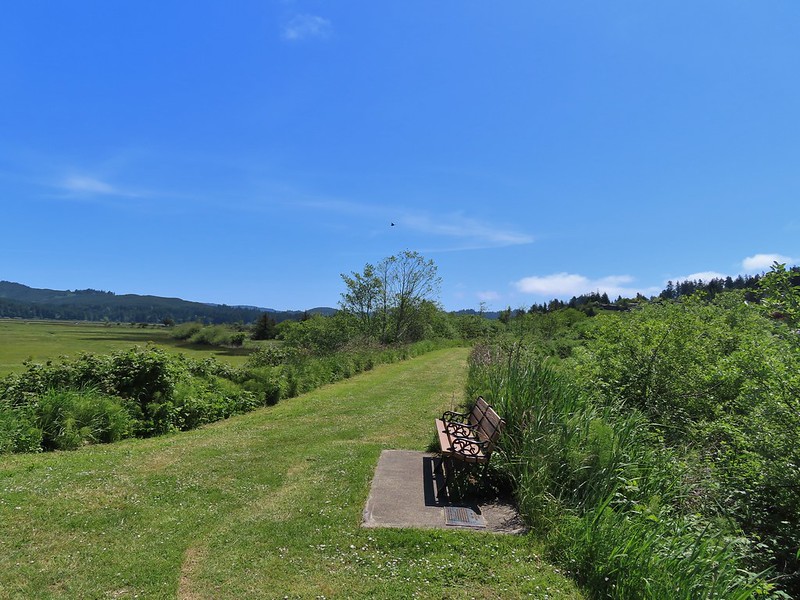 This bench is at the junction.
 Sparrow near the junction.
 Heading to the observation structure.
 Looking toward Coos Bay along the Coos River.
 McCullough Memorial Bridge spanning Coos Bay.
 Wetlands from the end of the spur.
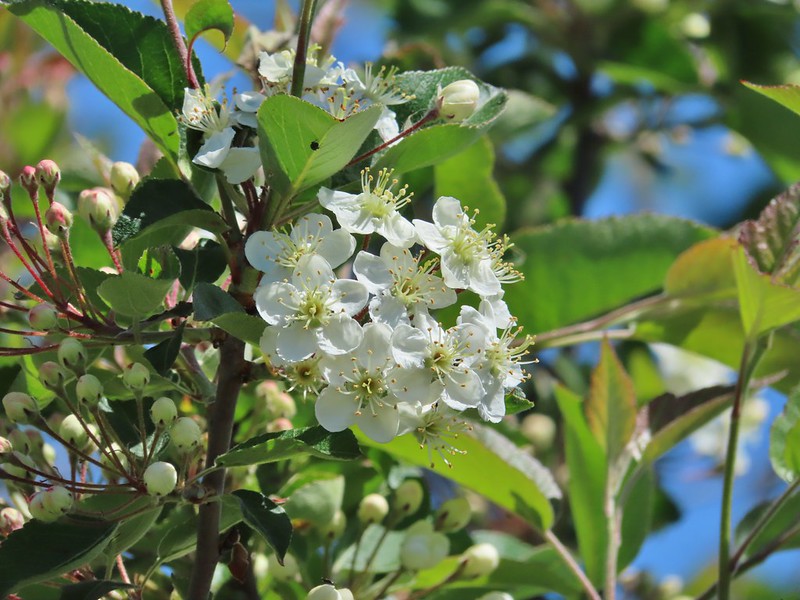 Bitter cherry
 Crow
Crow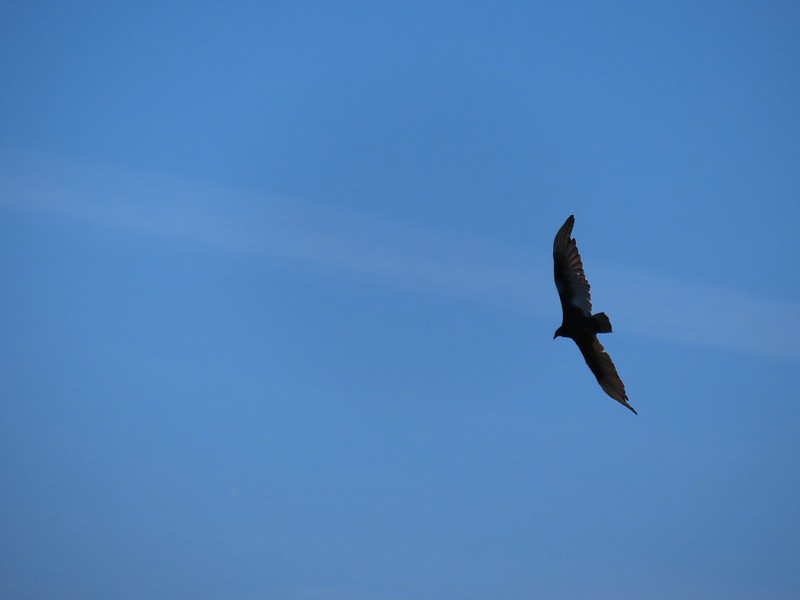 Turkey vulture
 Cormorants overhead
 Canada goose with goslings
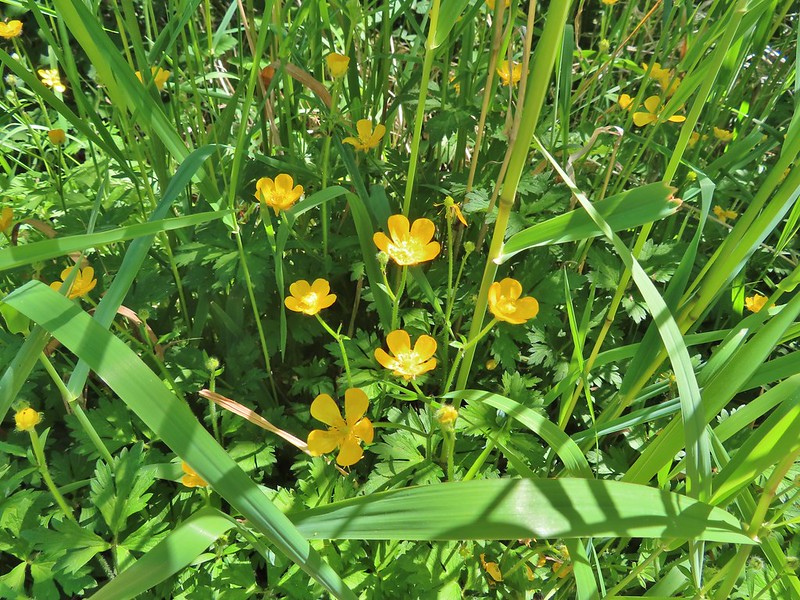 Buttercups
 Pale flax
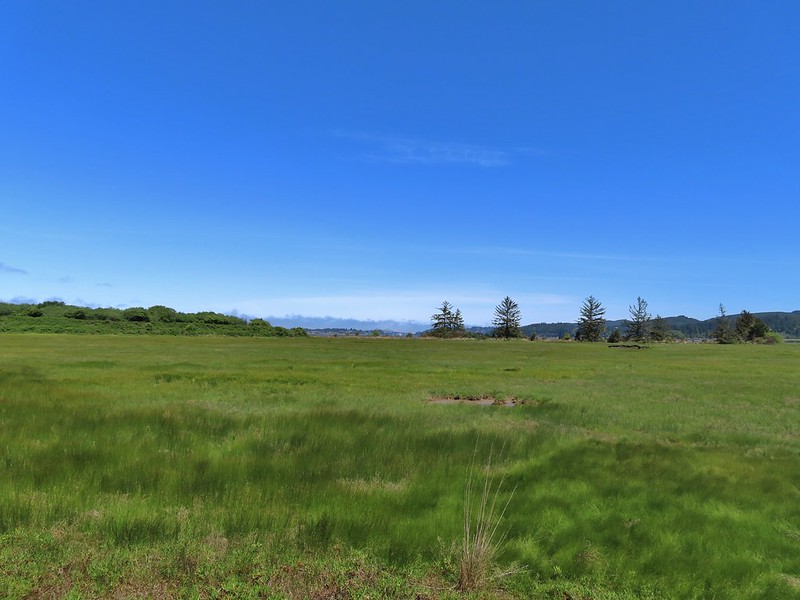
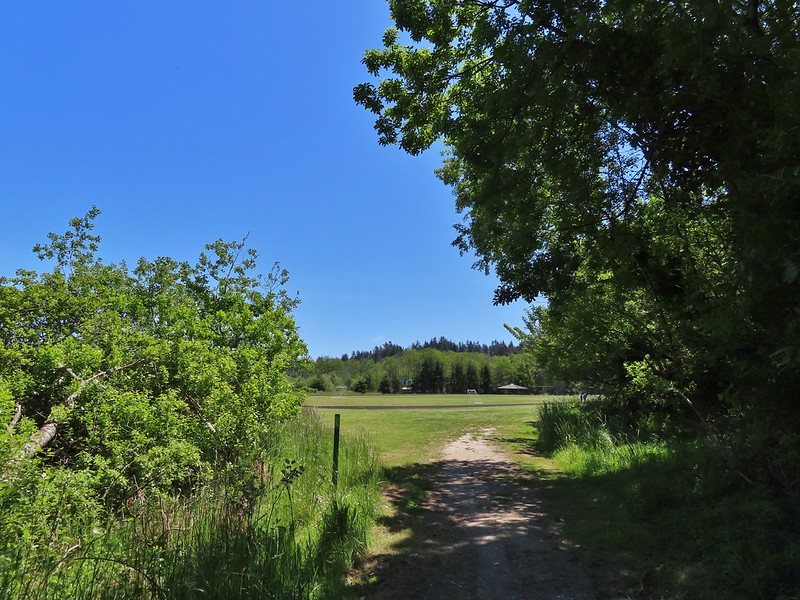 Arriving back at the field.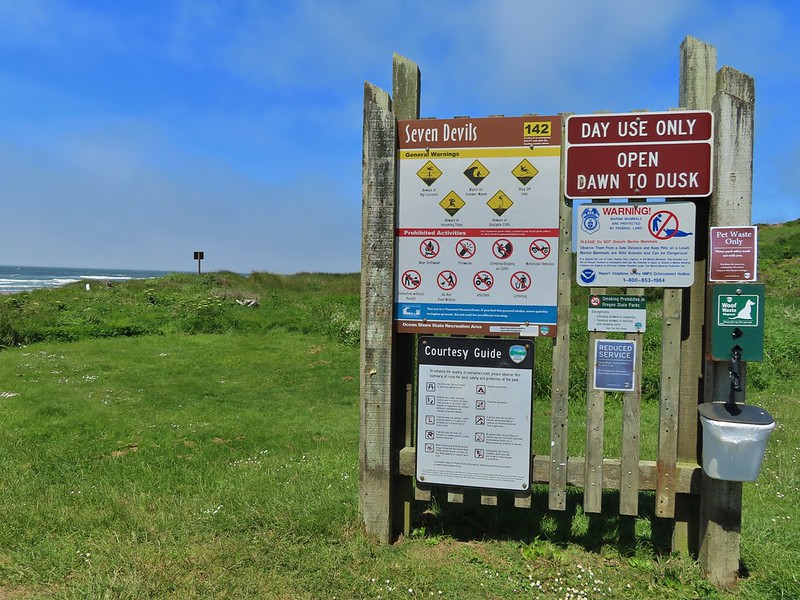
 Ground squirrel enjoying the view.
 Twomile Creek
 Shore bird in the creek.

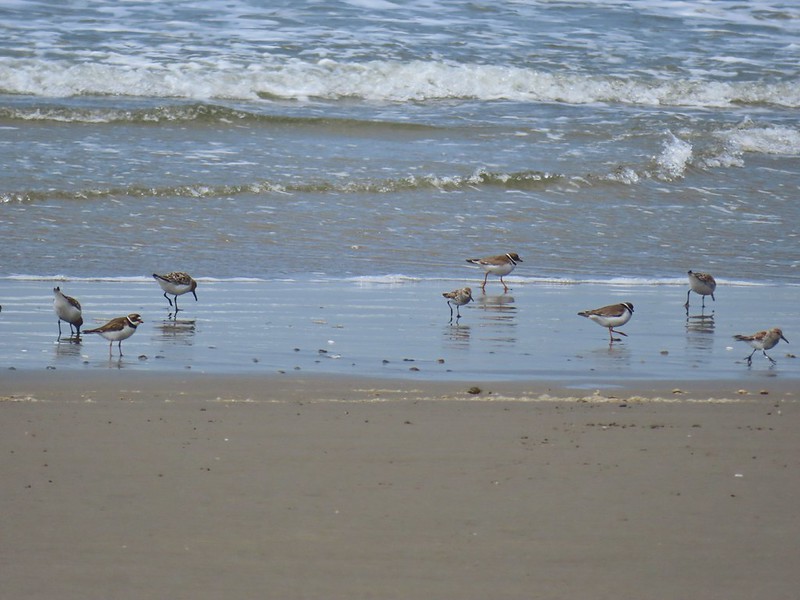

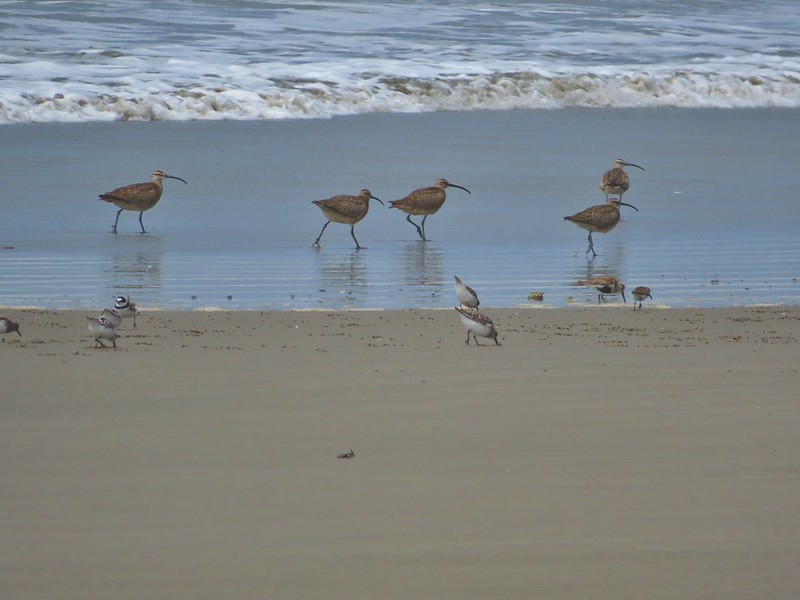
 Brass buttons (another non-native)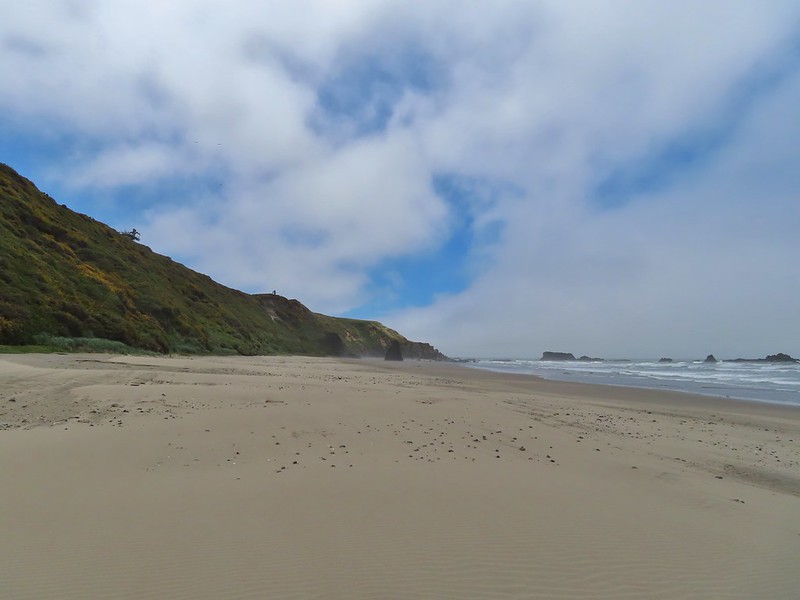


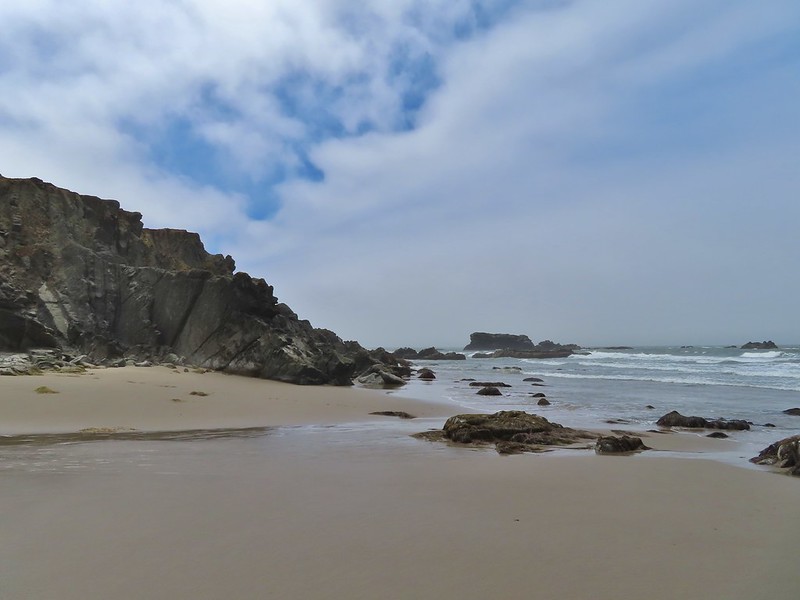 Whiskey Run Beach lay on the other side of the rocks with another parking area 0.8 further south.
 A cormorant off Fivemile Point



 View from the bench.


 Coming up on the hollow trunk straight ahead.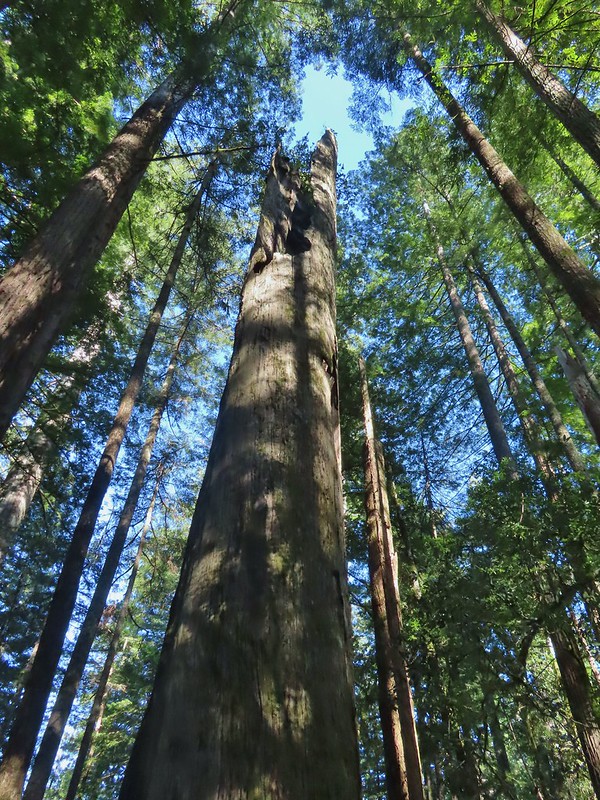




 Looking back south as the sunrise paints the clouds.
 A house on the cliffs.

 Seagulls outnumbered people in the early part of the day.


 Vinge Creek, about a mile down the beach, was crossable on small rocks.
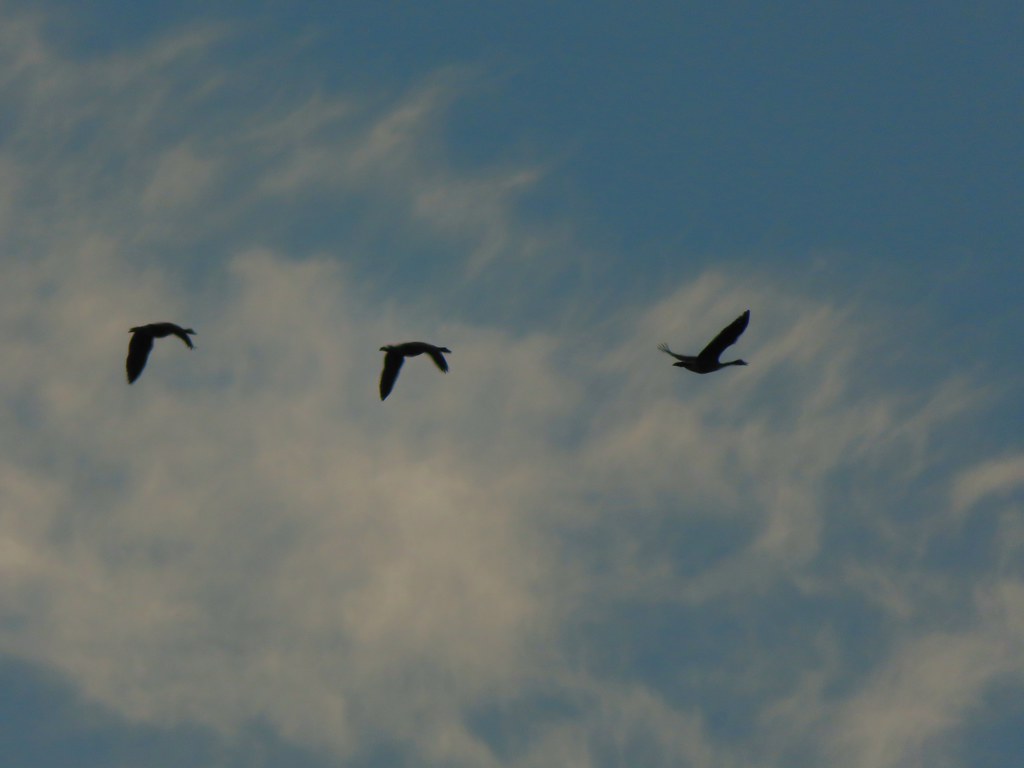 Geese flying overhead, we couldn’t make out what kind.
 At first we thought there were two weather vanes on the houses, a whale on the right and a heron on the left.
 It turned out to be a real great blue heron (but the whale was a vane).
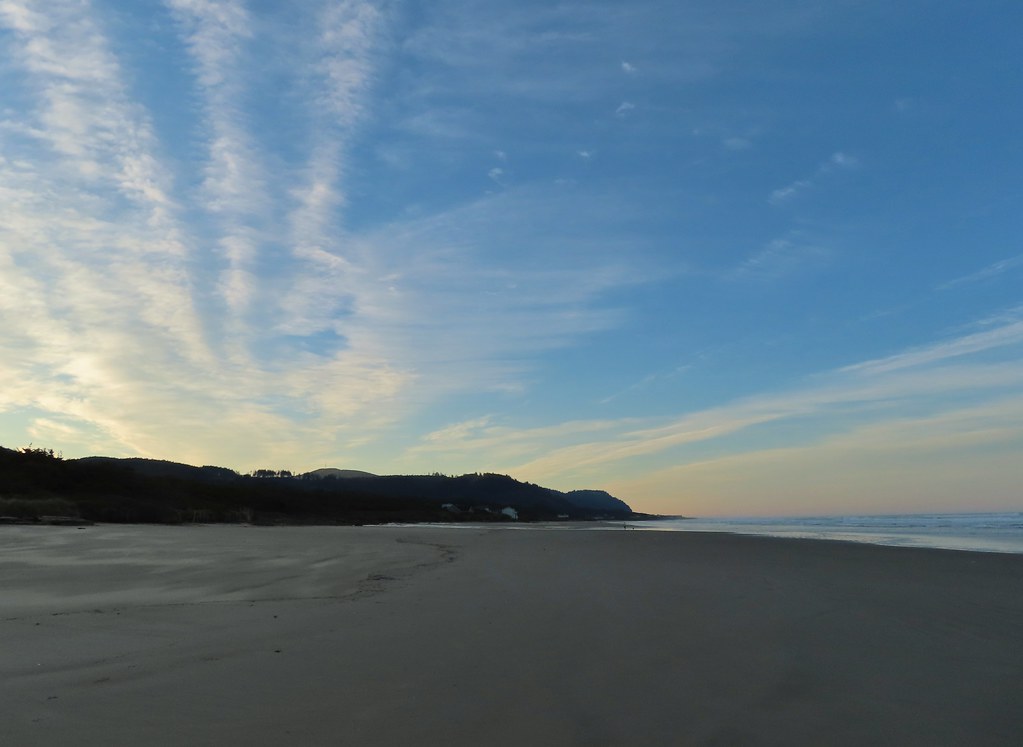 Looking south toward Cape Perpetua (
 View north.
 Sunlight on the wave tops.
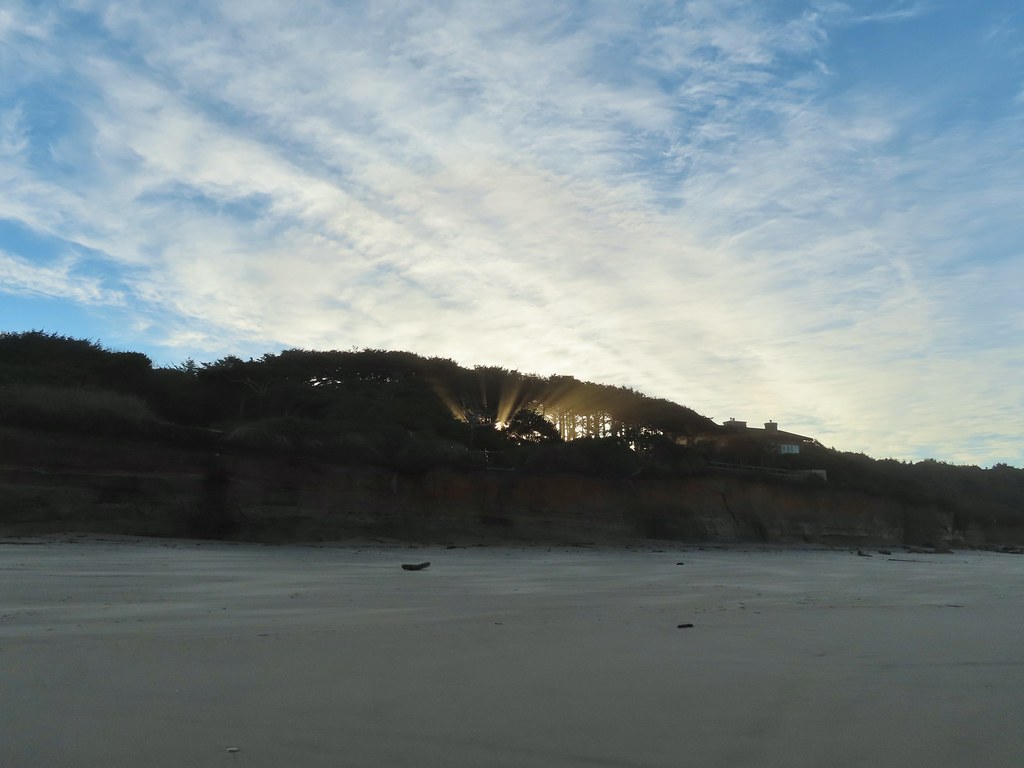 Sunlight bursting through the trees.
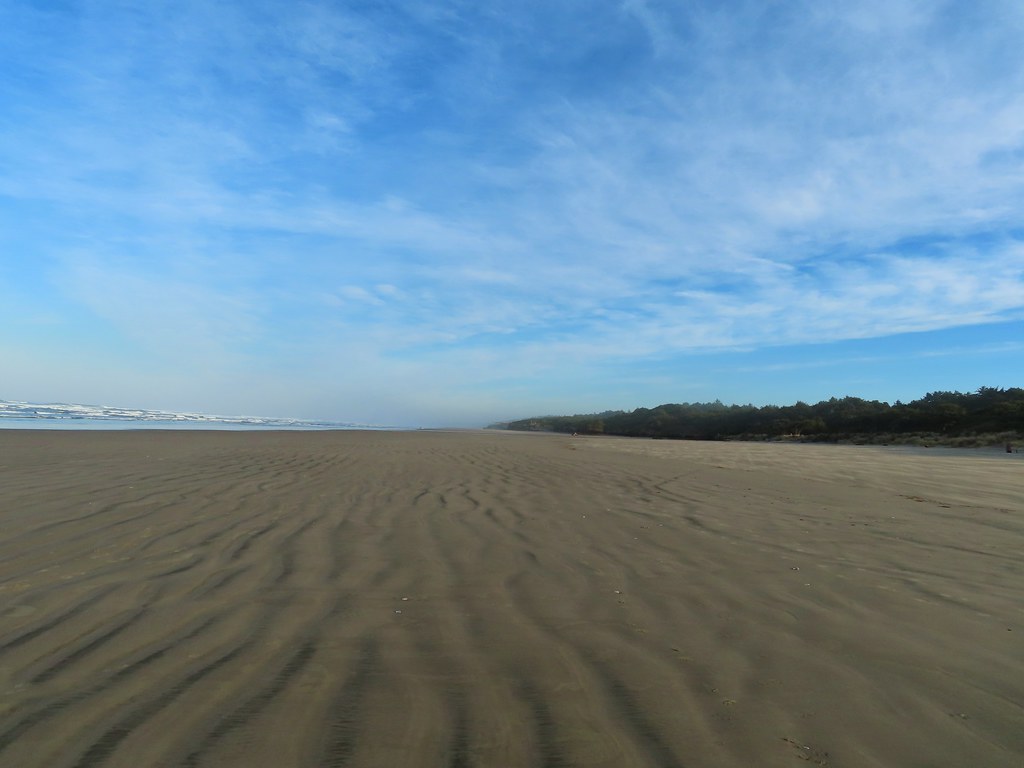 Wavy sand.

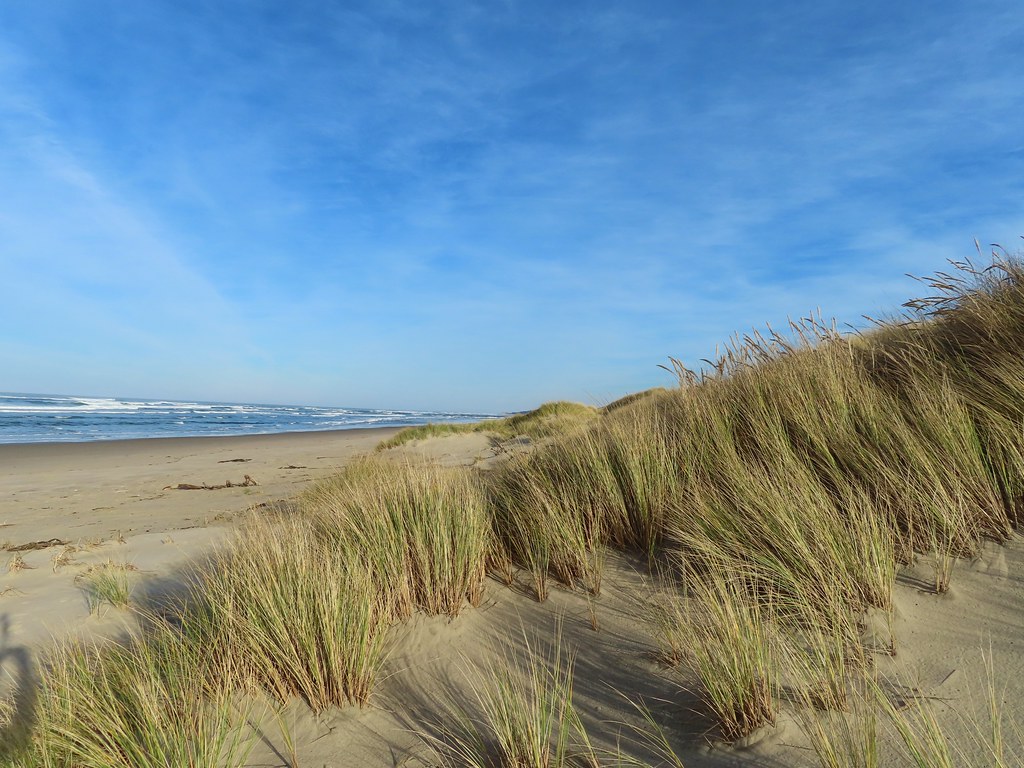
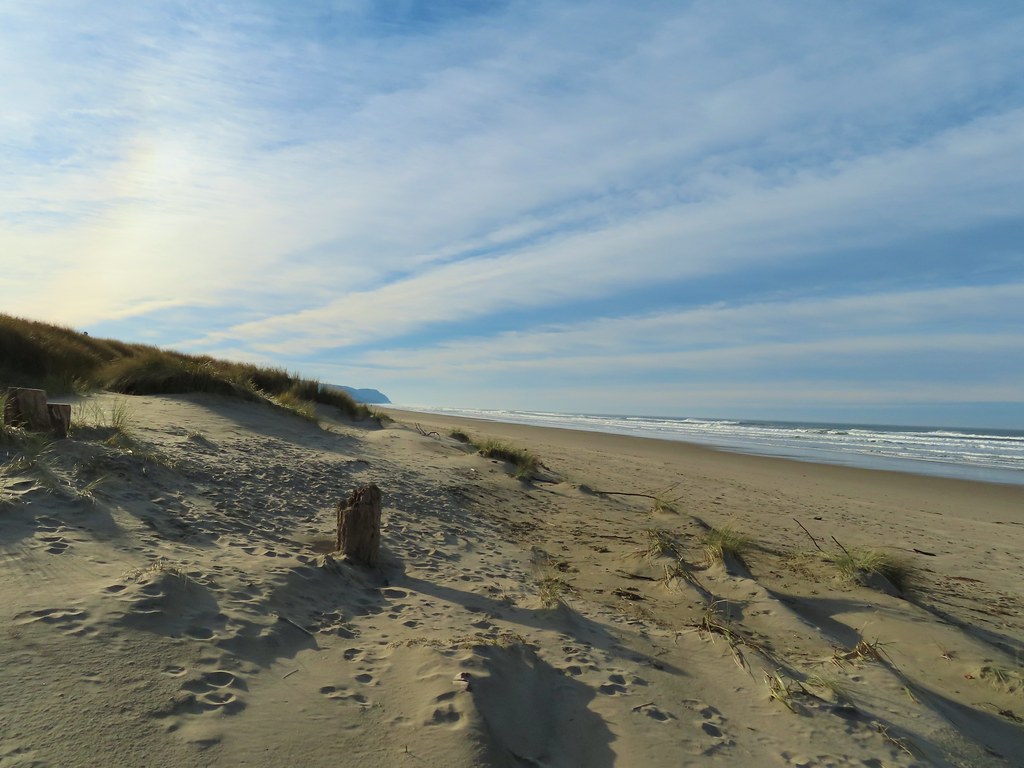 Cape Perpetua from the dunes.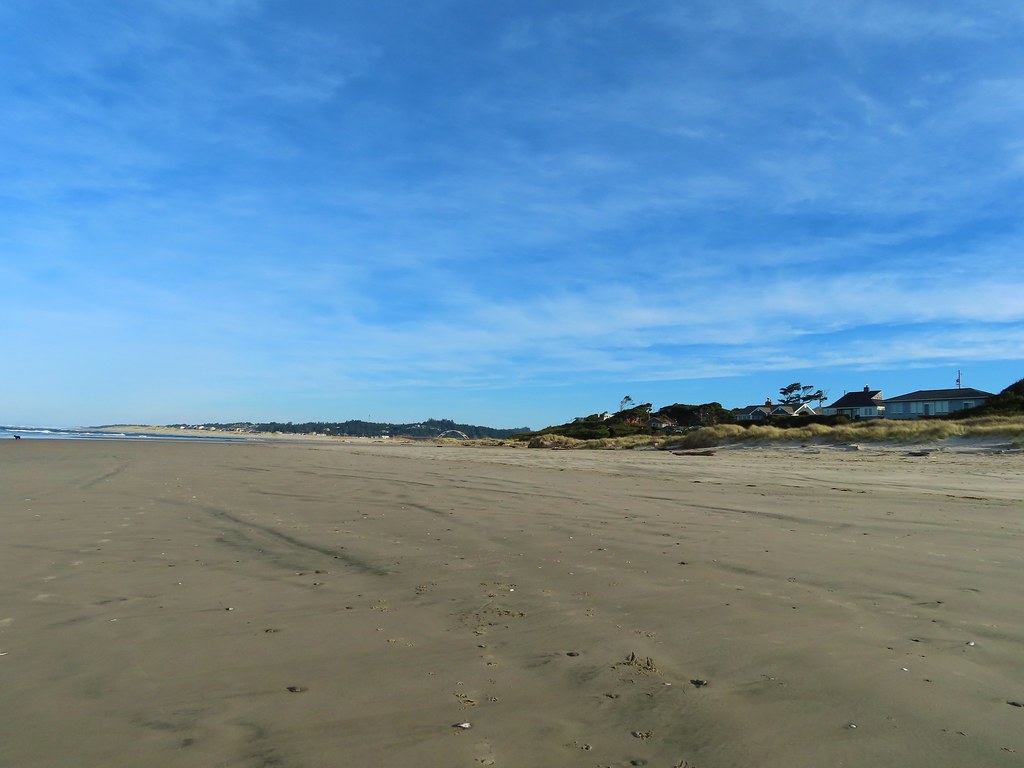
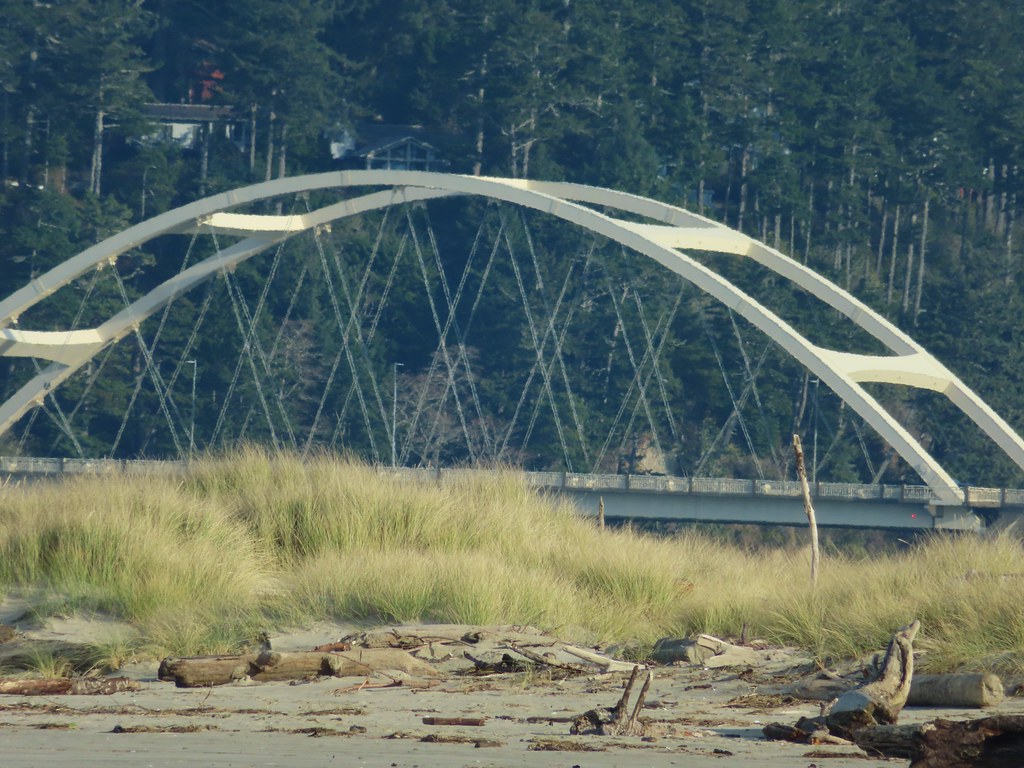 Testing the 40 zoom feature on the Canon SX740HS.
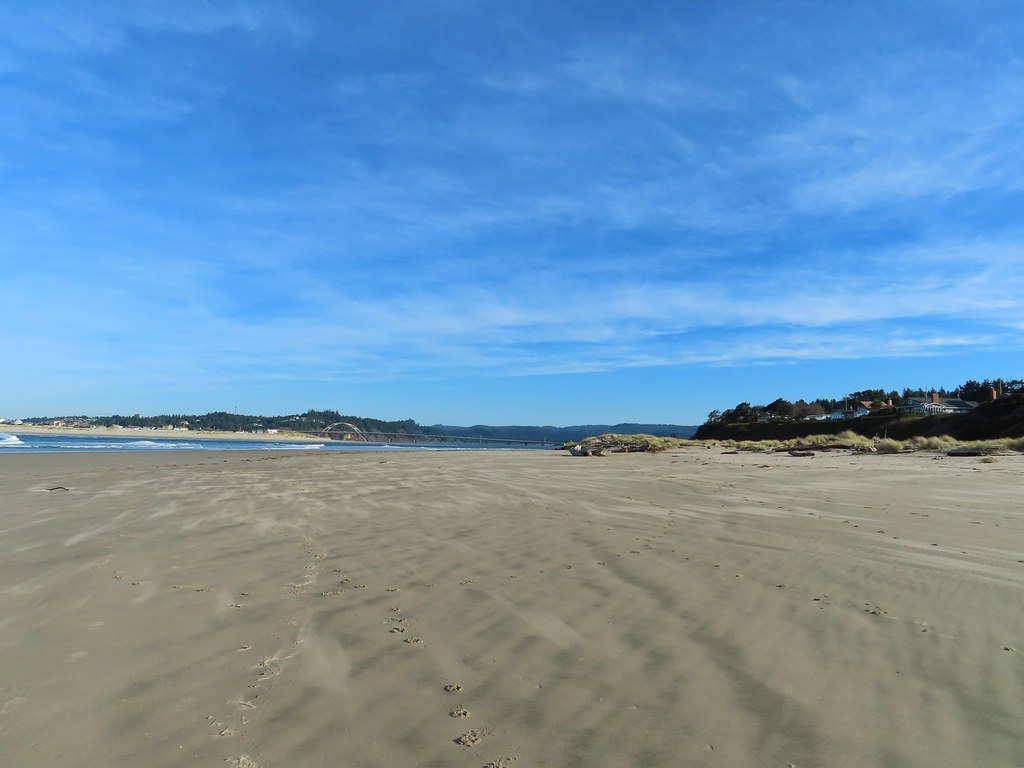 Heading for the log.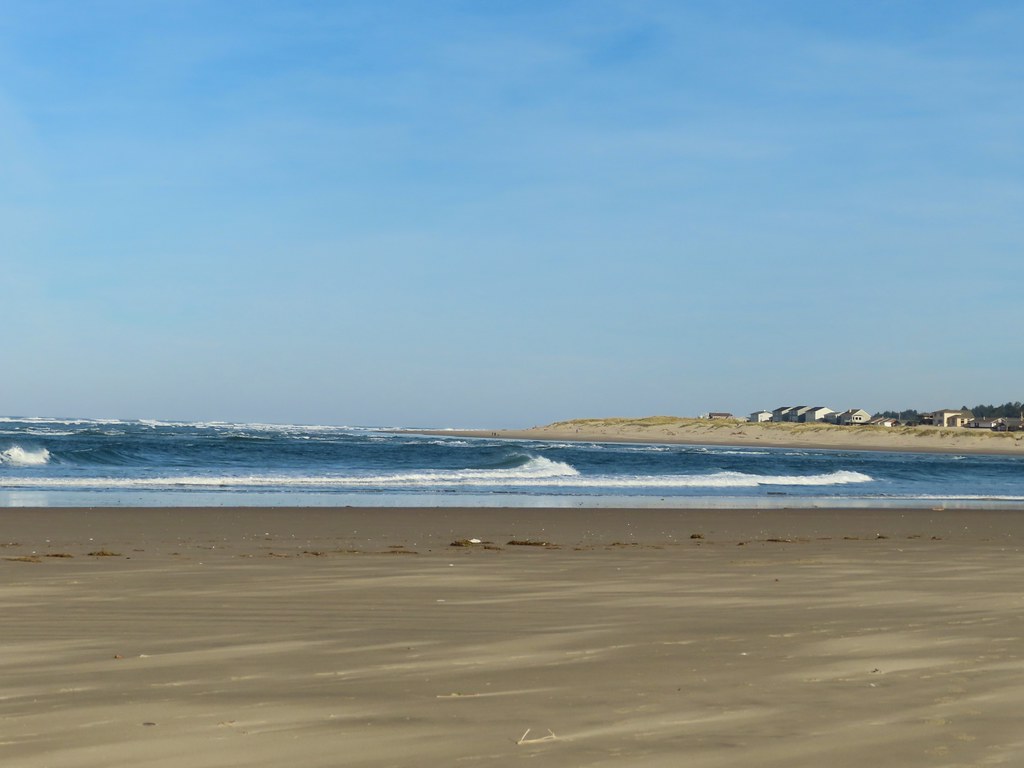
 View from the log.
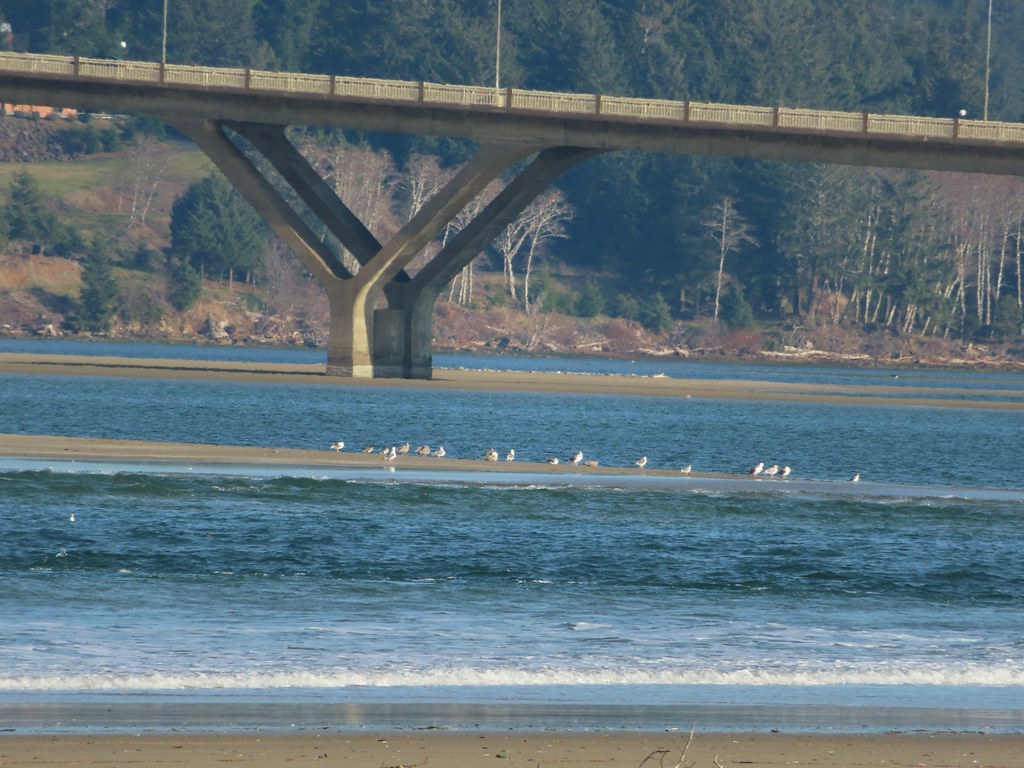 More testing of the zoom function. Seagulls on the near sandbar and seals on the one on the other side of the bridge.
 Looking at the dark cloud bank over the Pacific.
 Seal
Seal A little more cloud cover to the south over Cape Perpetua.
 More cloud action.
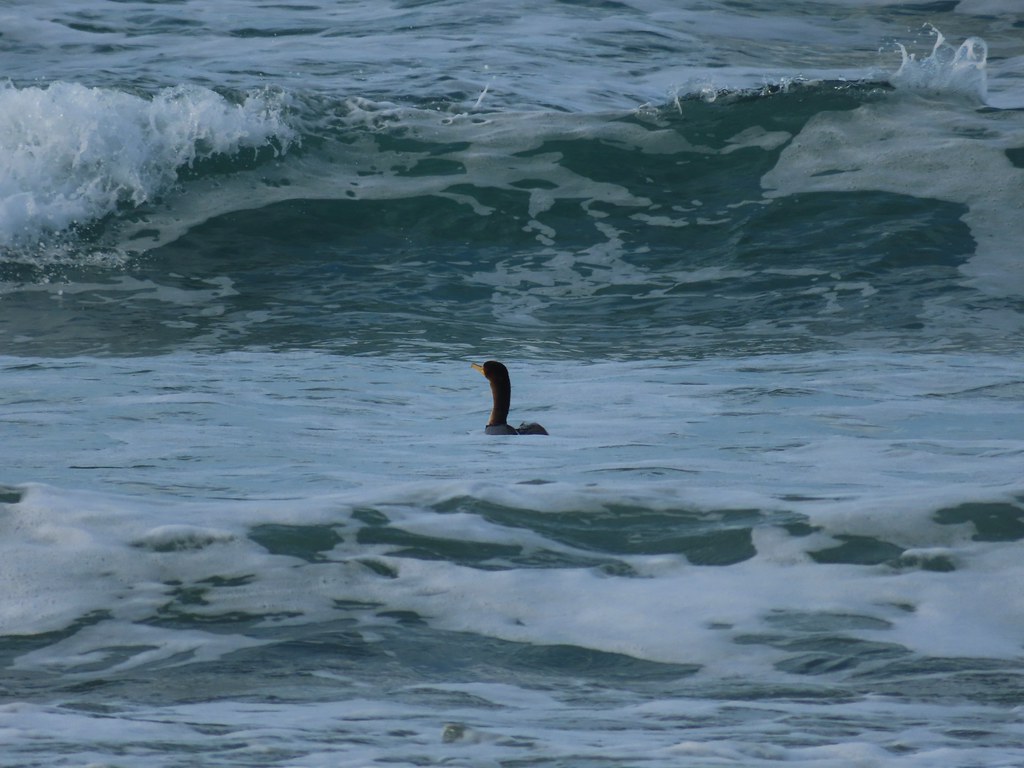 Cormorant
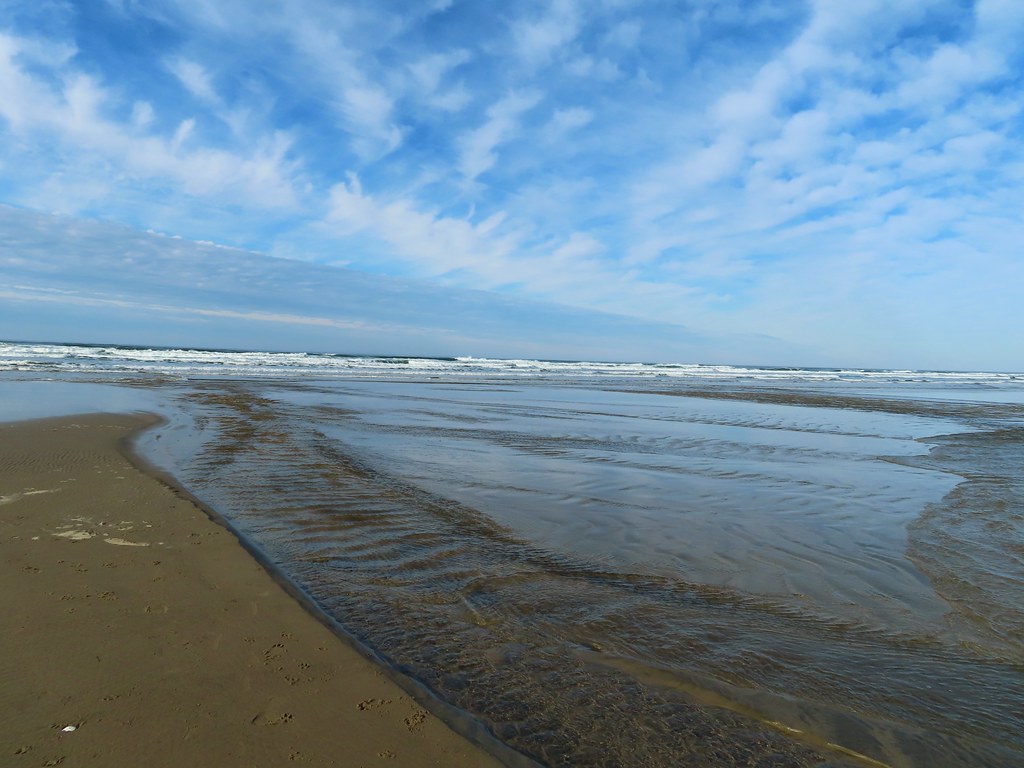 Reynolds Creek after fording.
 Finally starting to feel like it could start raining soon.
 The advancing line of clouds.
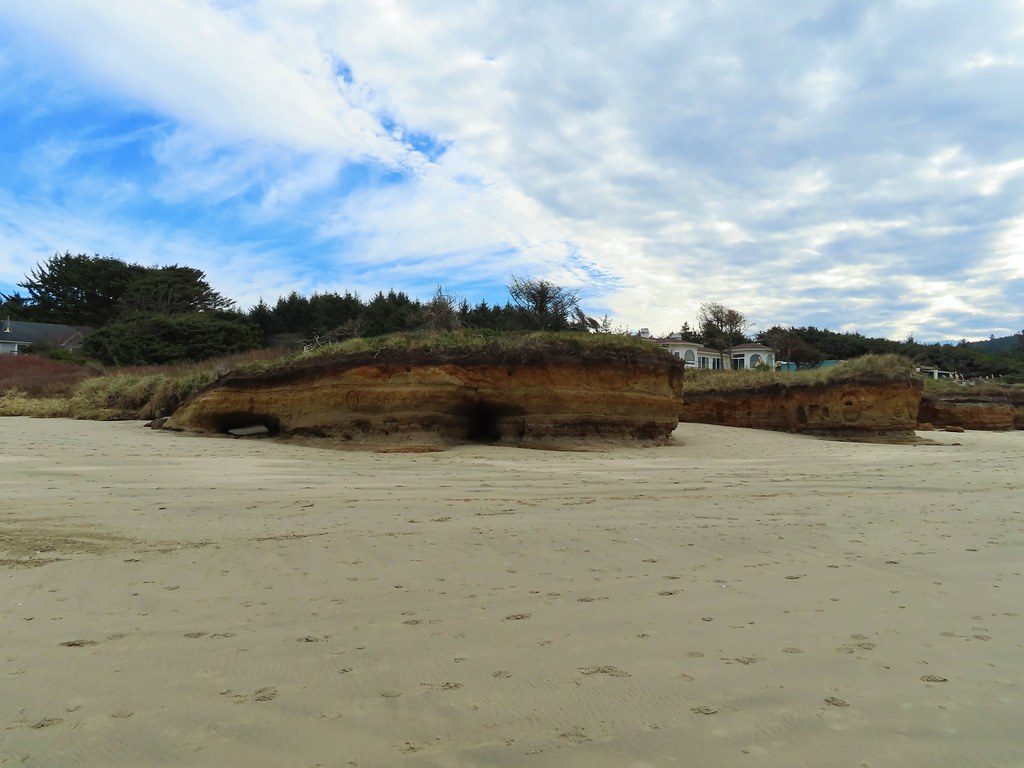 Another look at the arch.
 A kingfisher near the stairs up from the beach.
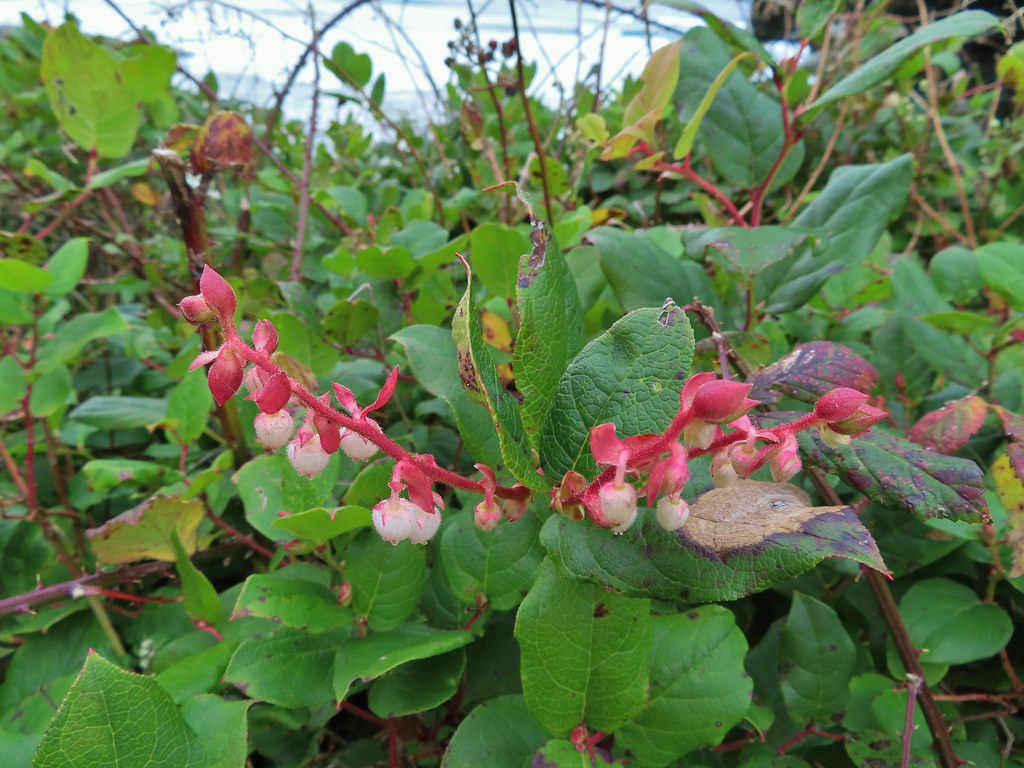 December blossoms on salal along the 804 Trail.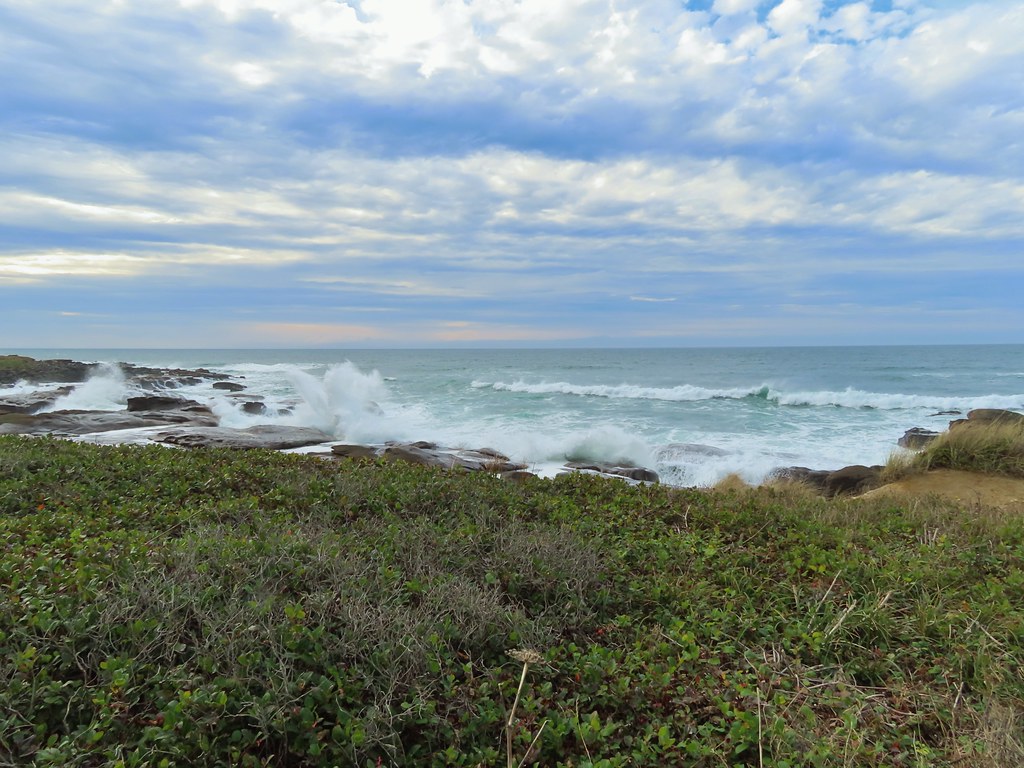







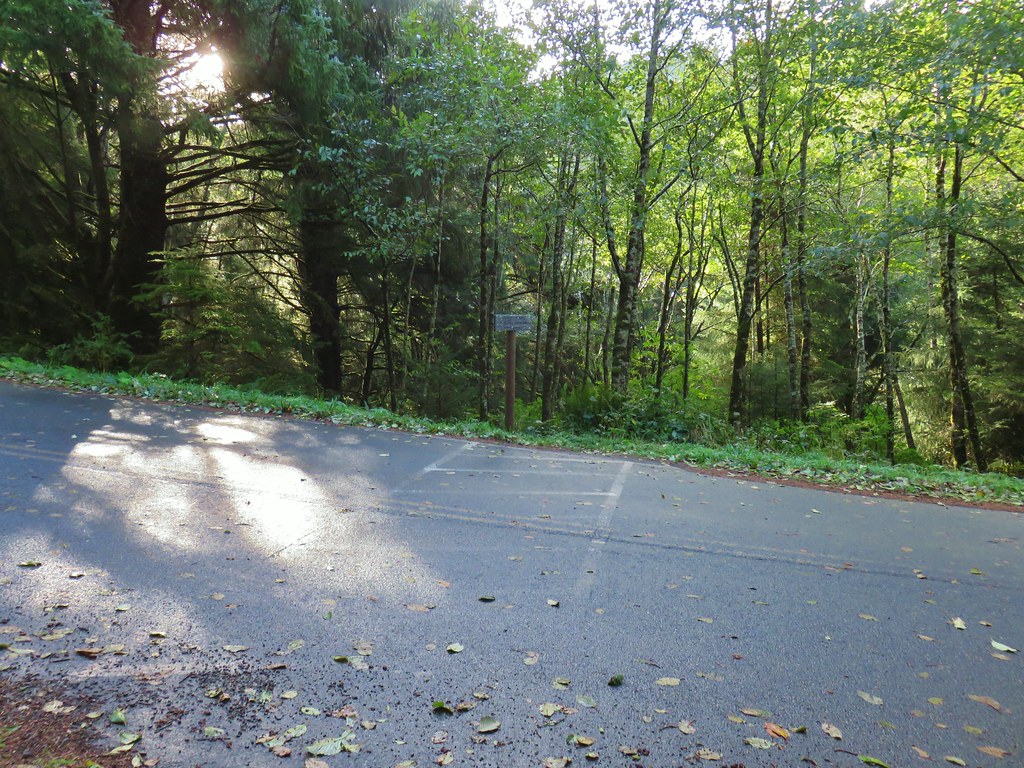










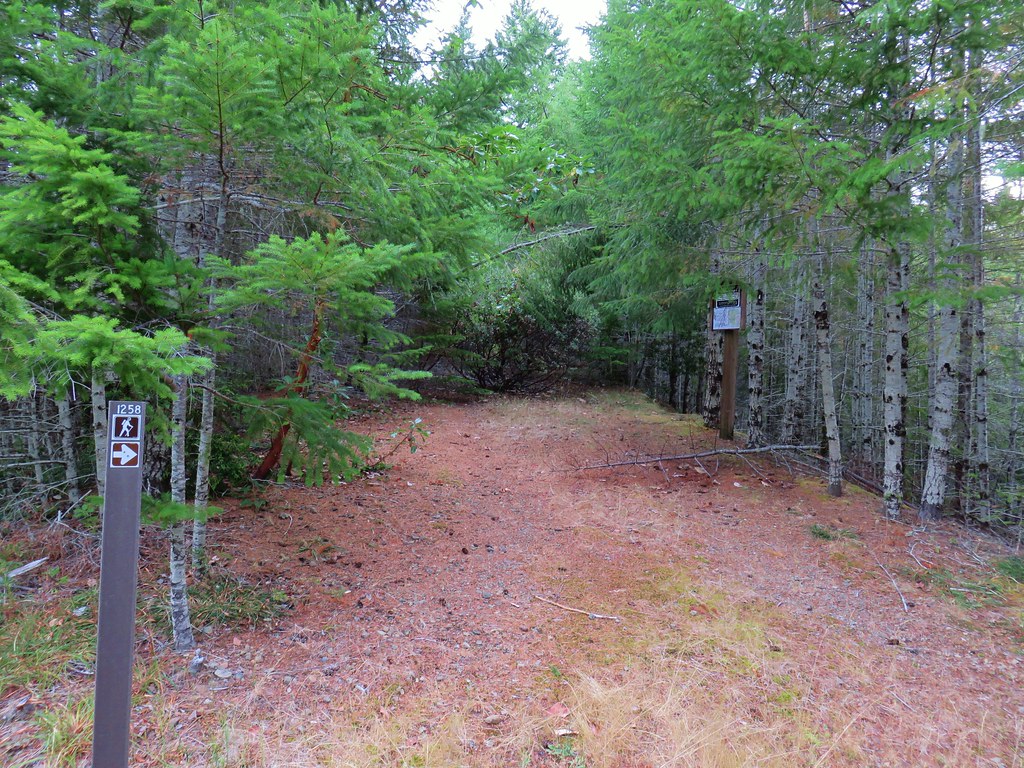 Barklow Mountain West Trailhead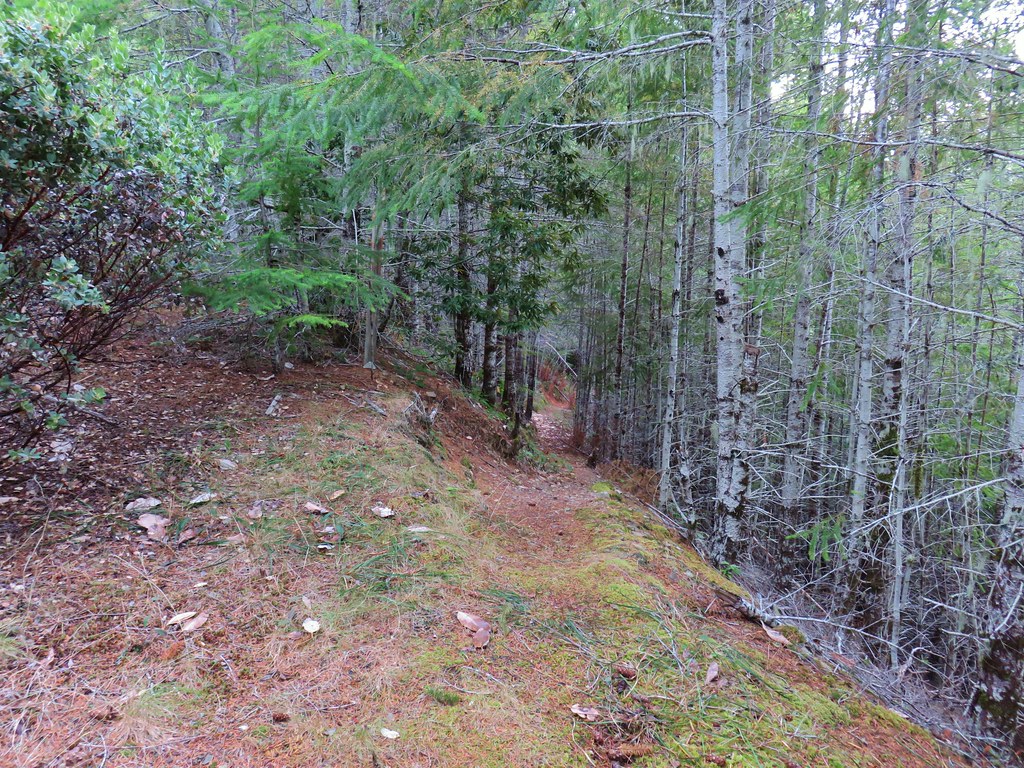

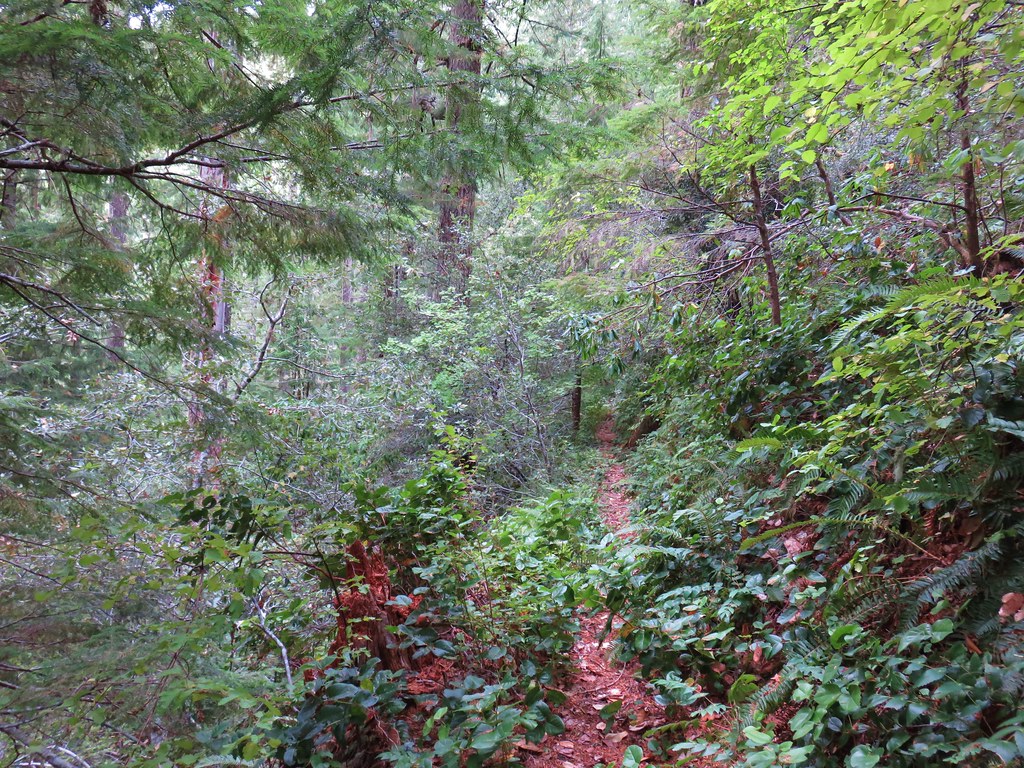
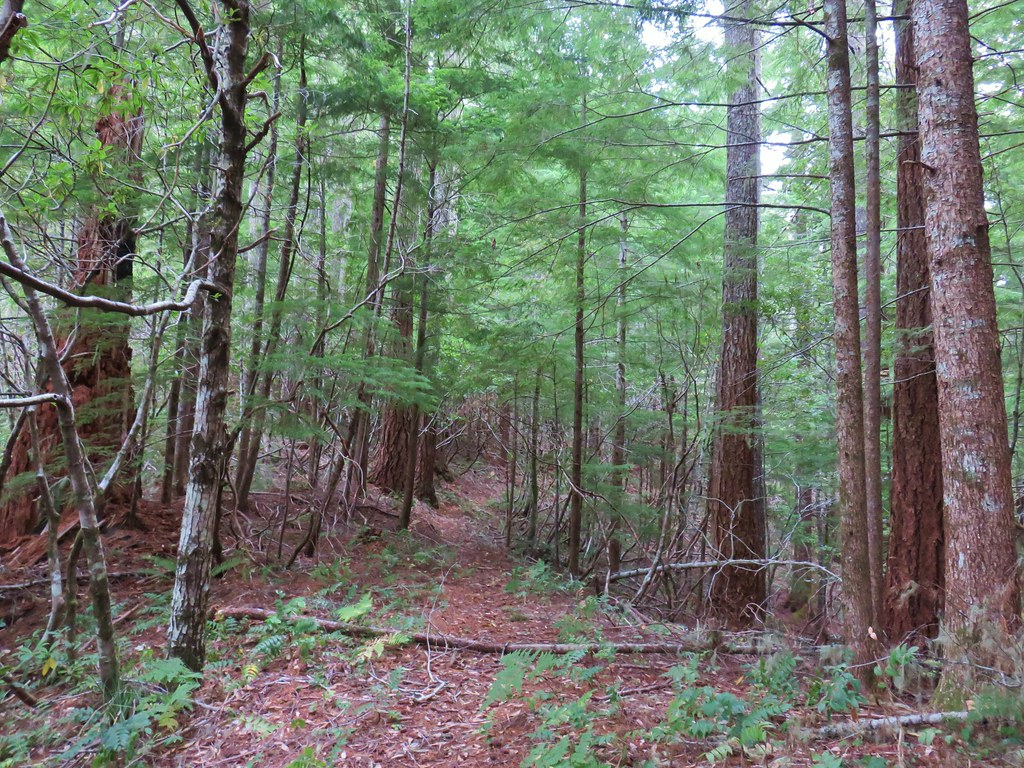
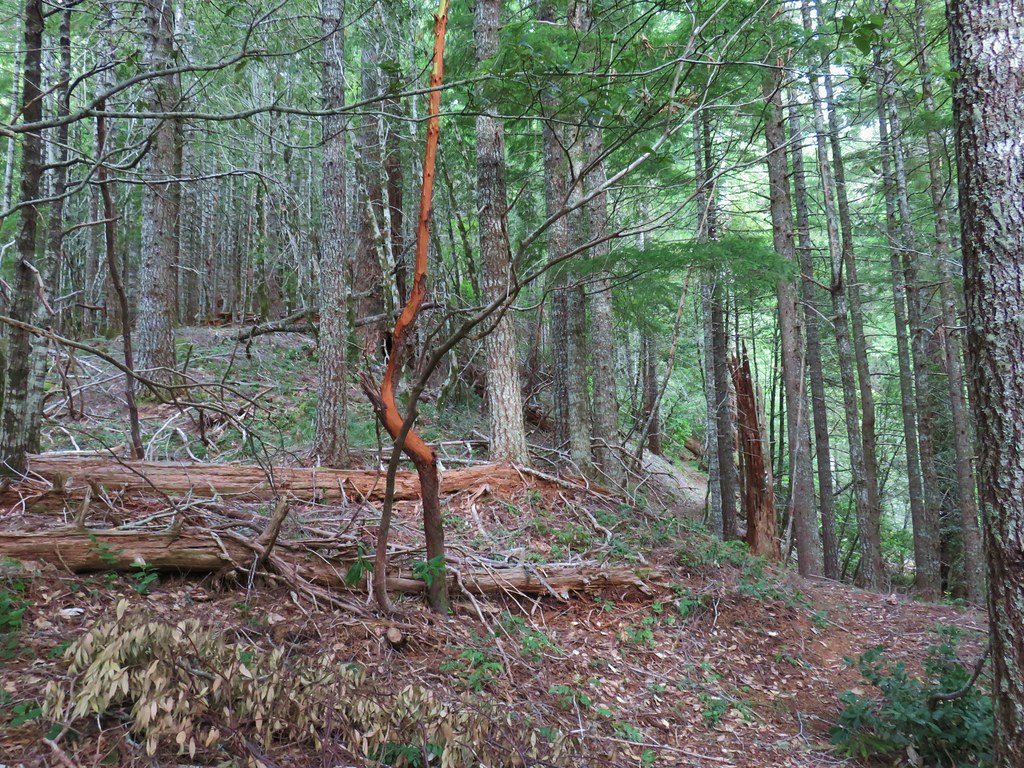
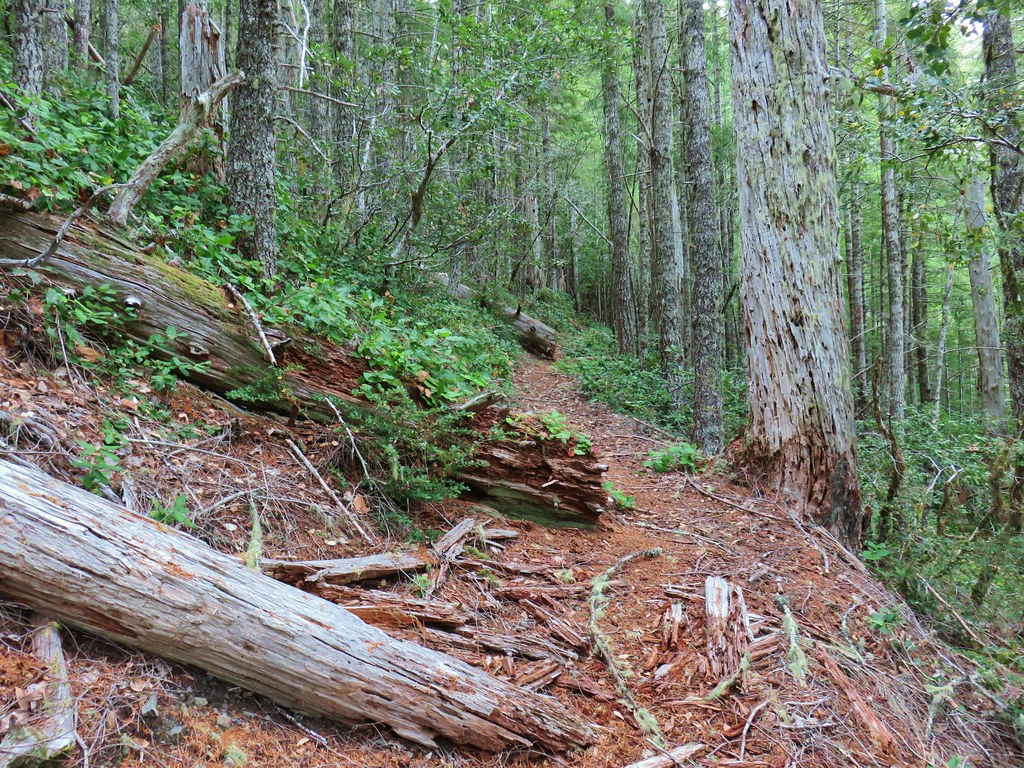


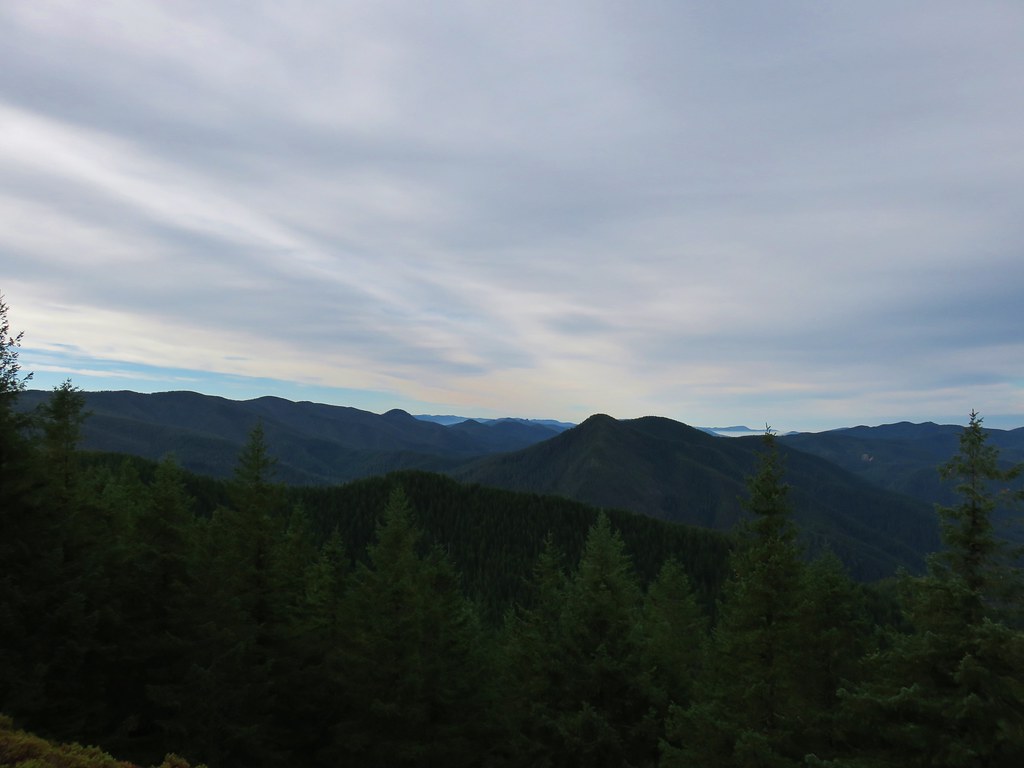
 Grassy Knob is on the horizon just to the left of the near trees.
 Copper Mountain from the lookout site.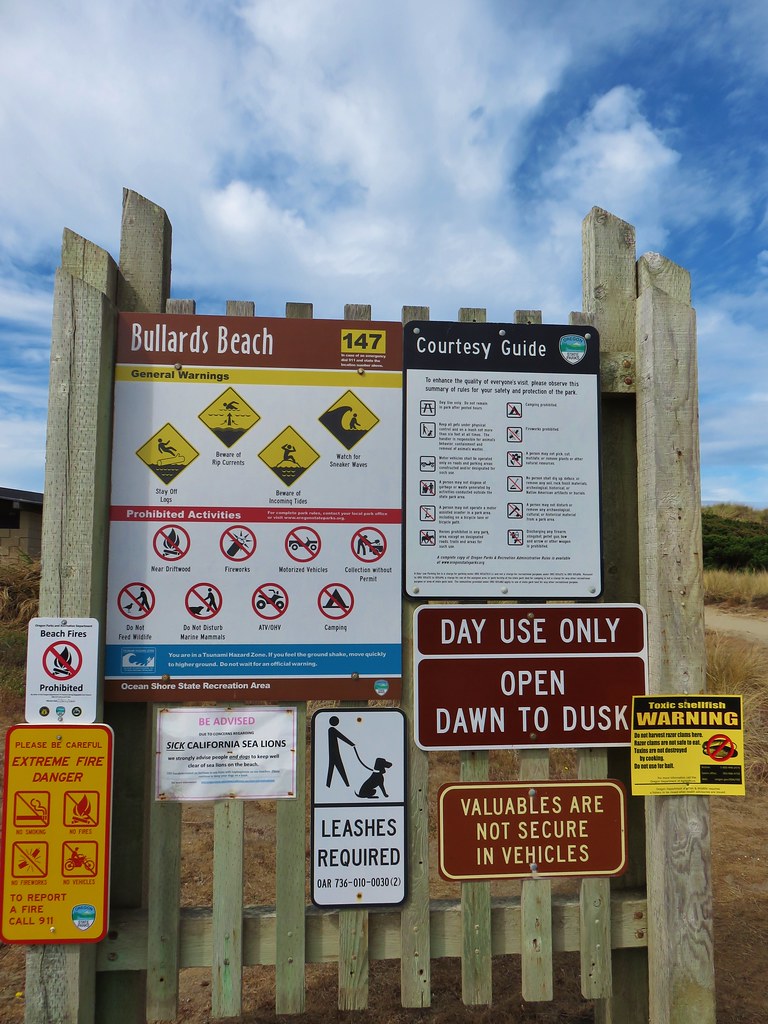

























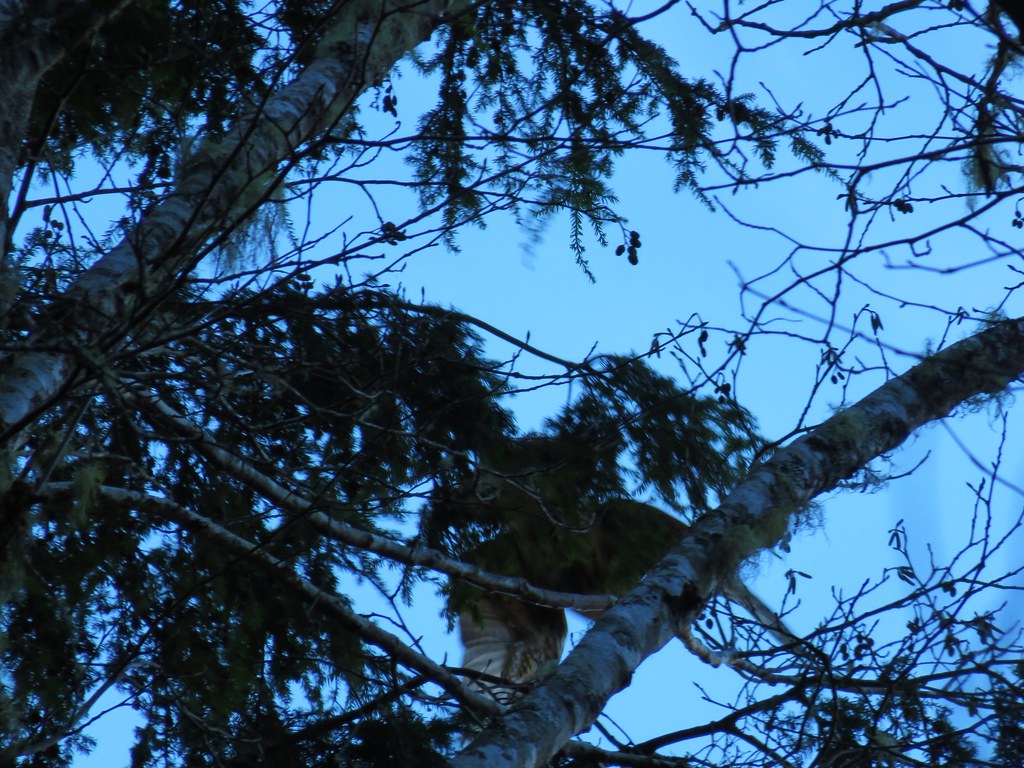 Hawk flying off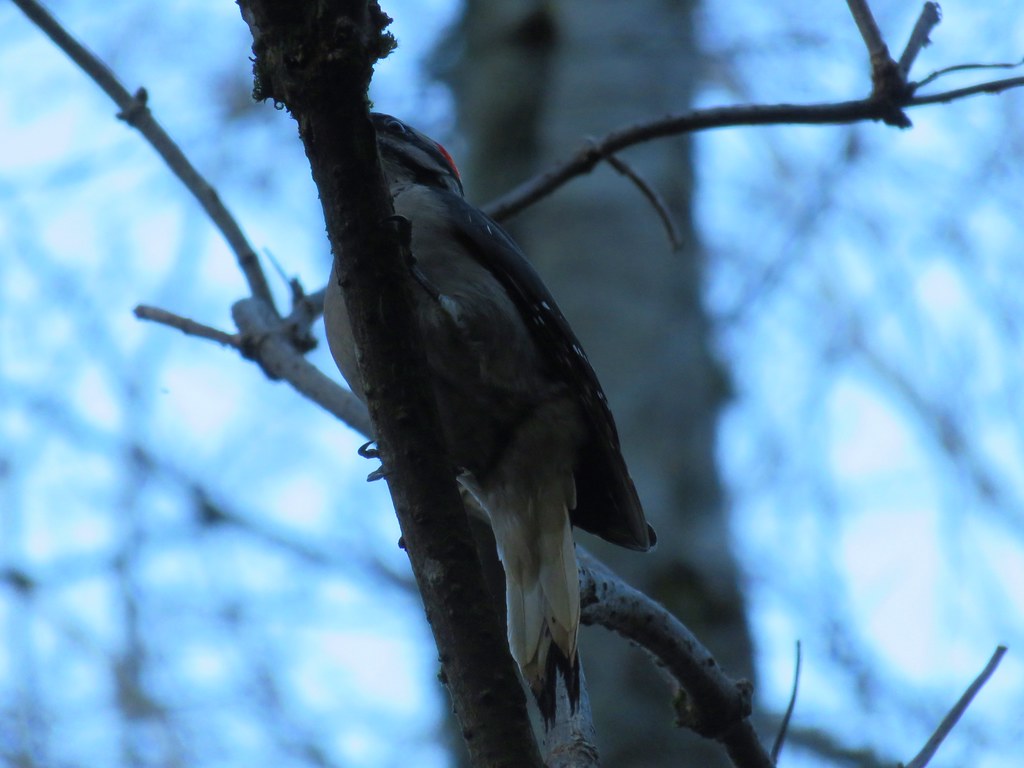

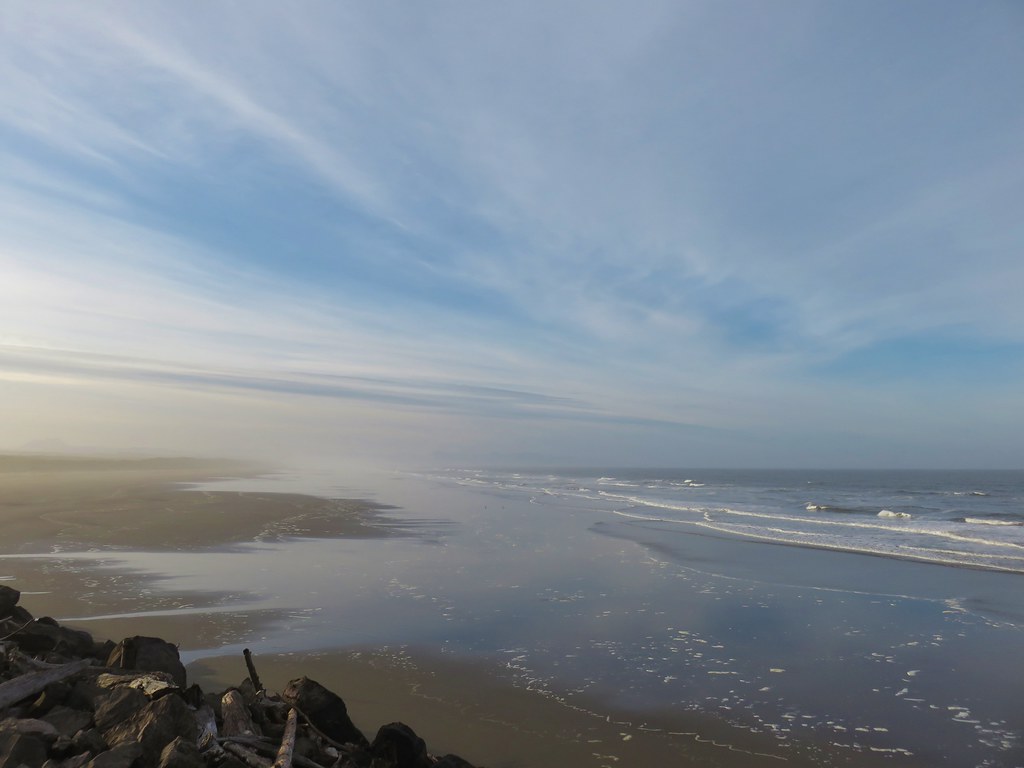
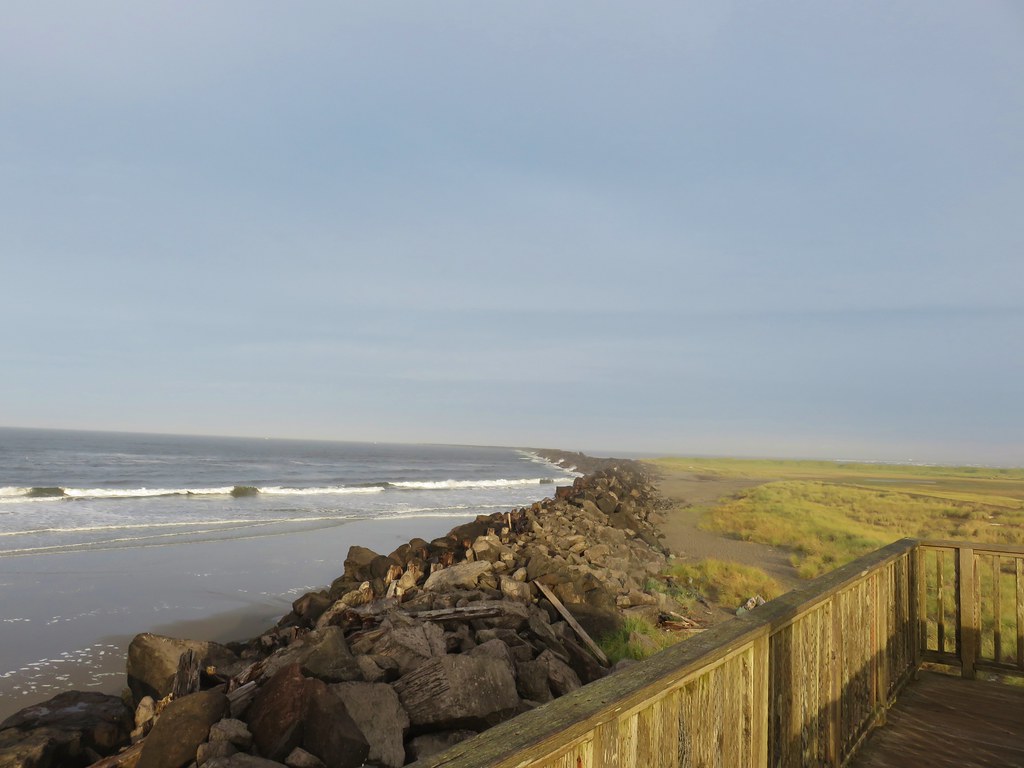
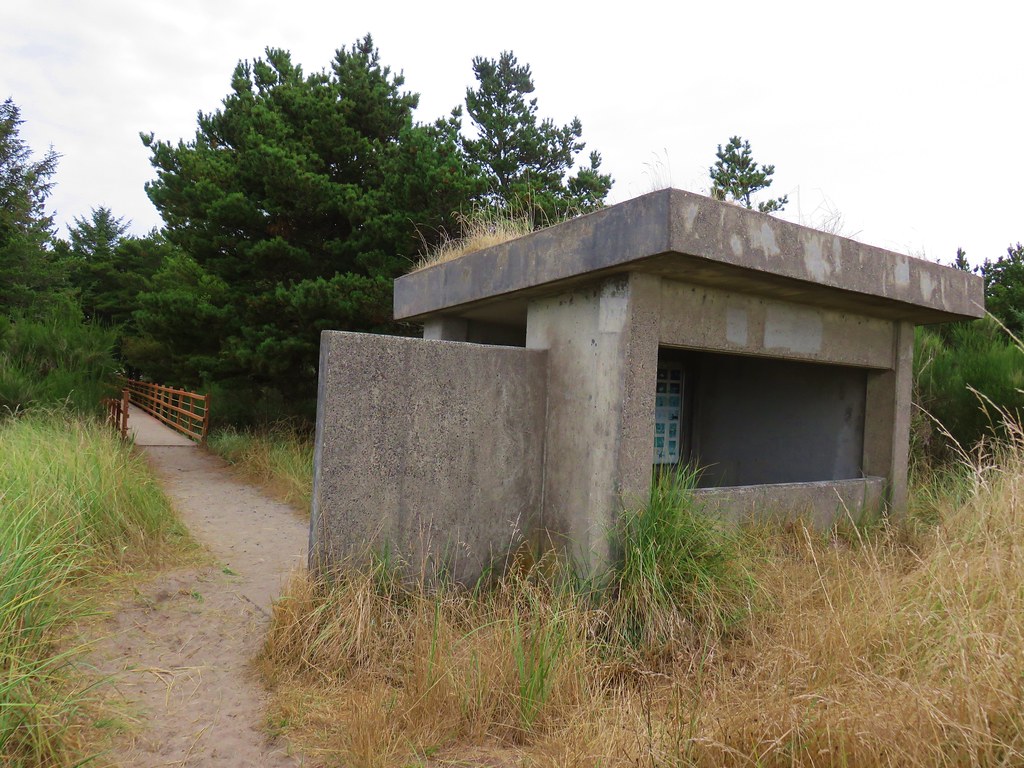
 view from the bunker.