Categories
Hiking Oakridge Area Old Cascades Oregon Trip report

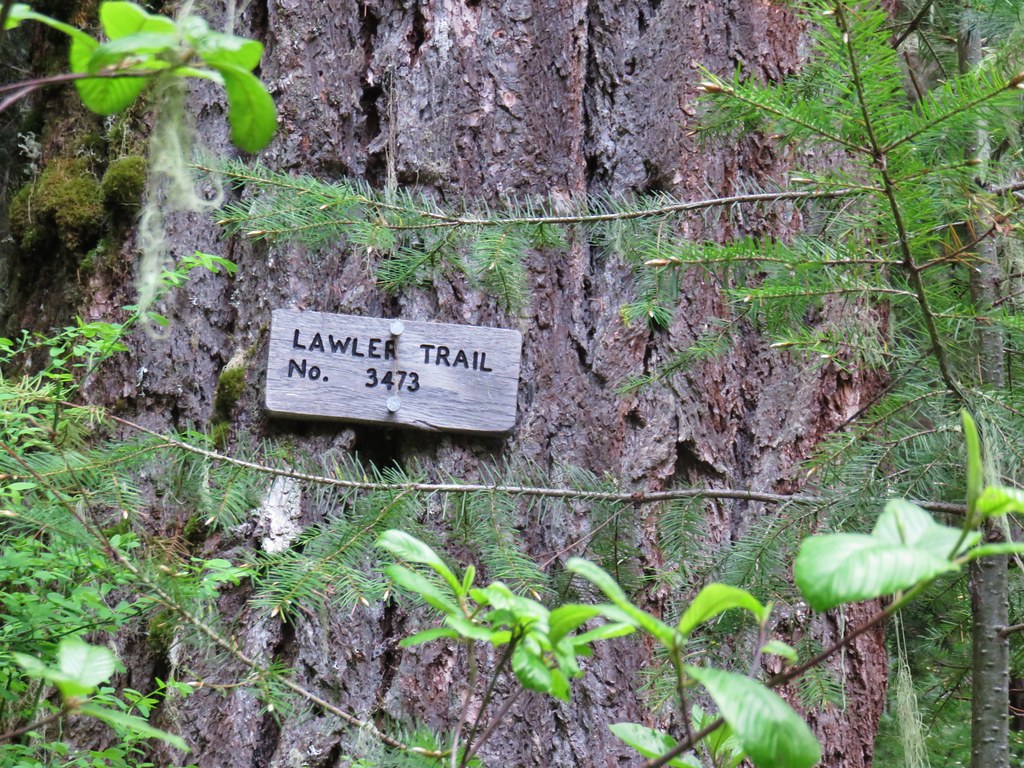
Lawler Trail to Patterson Mountain

For our first hike in May we headed east of Eugene, OR on Highway 58 to the Lawler Trail. The 5.5 mile trail gains over 2700′ to the Lone Wolf/Patterson Mountain Trail. Our plan was to start at the Lawler Trailhead.

The forest service website mentioned a slide about .75 miles from the trailhead and that turning around was difficult for passenger cars so we were expecting some interesting driving conditions. We turned off of Highway 58 onto Patterson Mountain Road (Forest Service Road 5840) and then left onto FS Road 531 after a short climb uphill. Not long after turning onto this road we passed a trail and hiker sign on the right. As we passed a second signed trail just east of Duval Creek, there was also space for a couple of vehicles. These were part of the Lawler Extension Trail that extends between the Lawler Trailhead and the Eula Ridge Trailhead. None of these possible starting points were options for us since they would have required over 20 miles of hiking (nearly 25 round trip from the Eula Ridge TH).

Just beyond the trail at Duval Creek we came upon a small tree across Road 531. We carry a small saw and ax with us just in case we need to do some clearing and I thought I was finally going to get to us them, but it turned out that the tree was not stuck in the ground and it was small enough that I was able to drag it off to the side so we could continue. After a little over 2 miles on Road 531 we veered uphill to the right on Road 535. This was the road with the slide and it was narrow. We were driving slowly looking for the slide when we arrived at a small turnaround and a hiker sign.IMG_2845
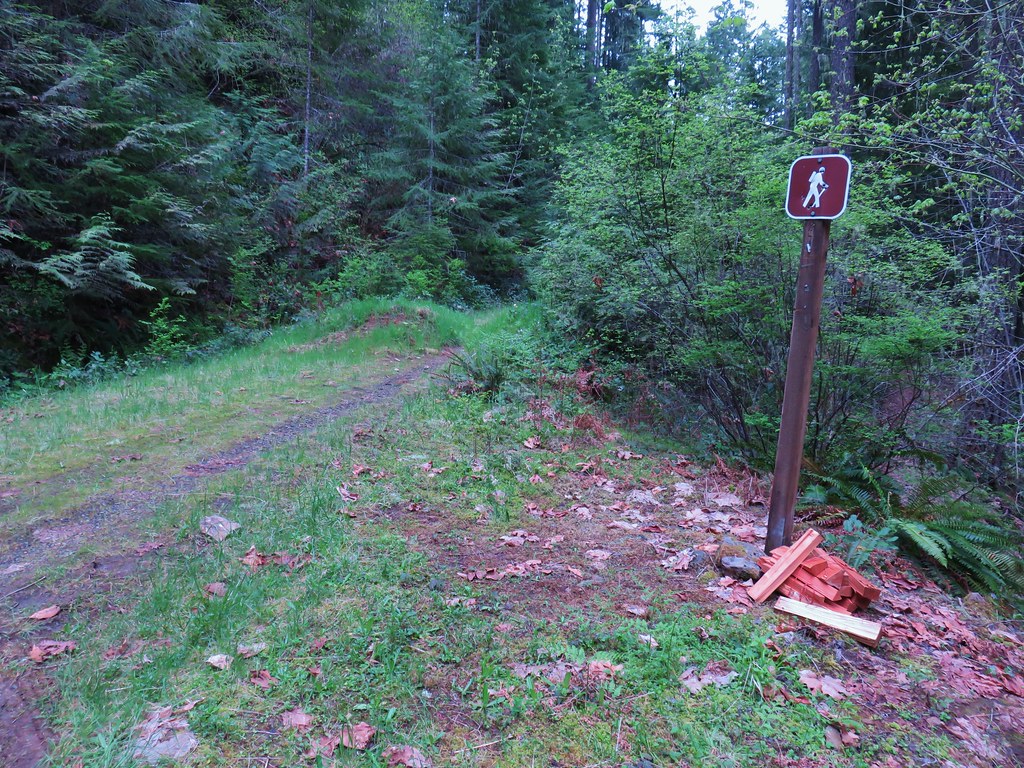
We still aren’t sure if the slide had been cleared or if the note about the slide was old and this spot was actually the site of it. It clearly wasn’t the original trailhead because we had to walk up the old road bed to reach the start of the actual trail. We came upon some wood that had been laid across the road marking the location of the Lawler Extension Trail coming up from below.IMG_2848
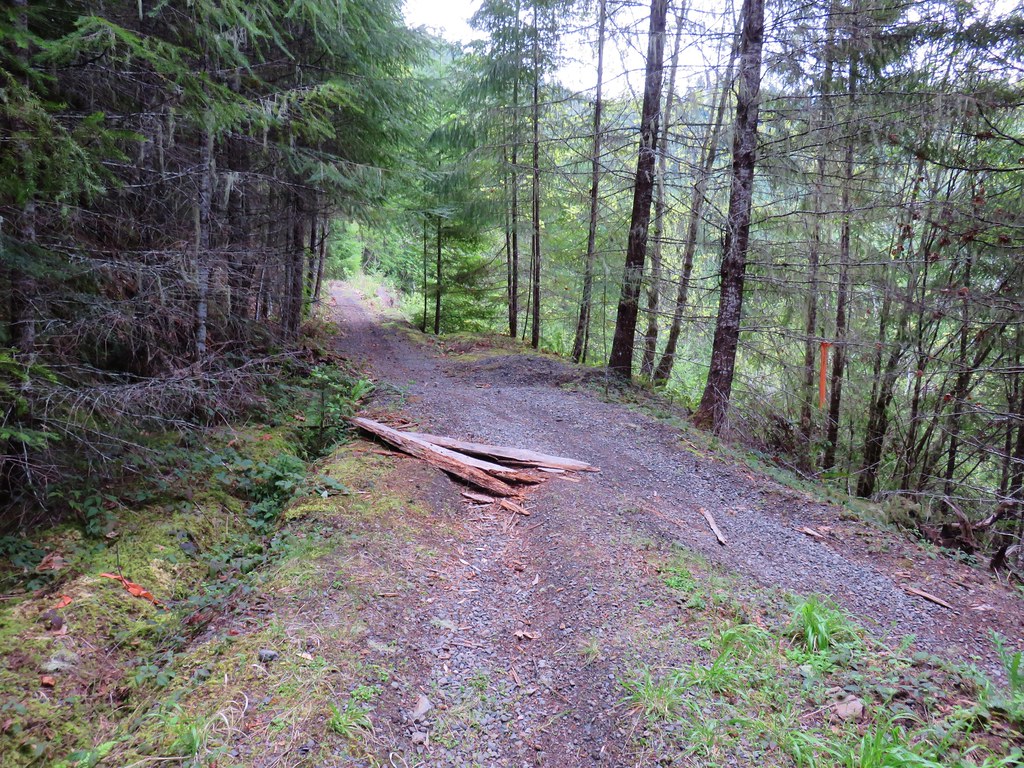
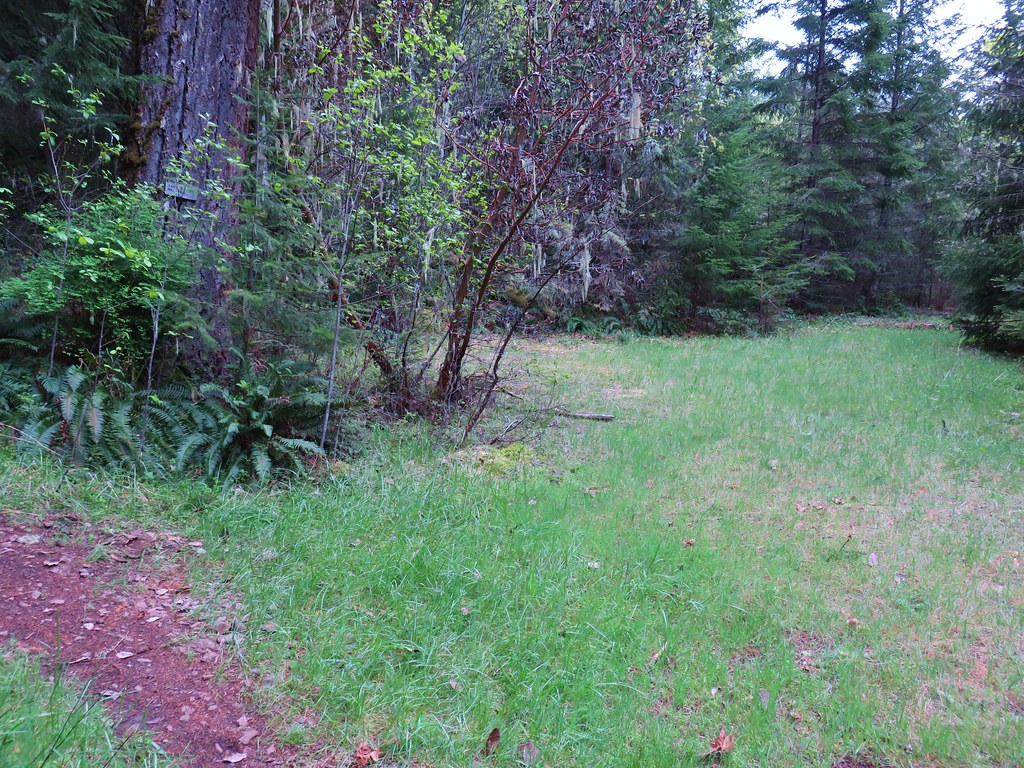
Instead of being .75 miles from the trailhead we arrived at then end of the old road bed and the start of the trail in just over .25 miles.IMG_2852
IMG_2854

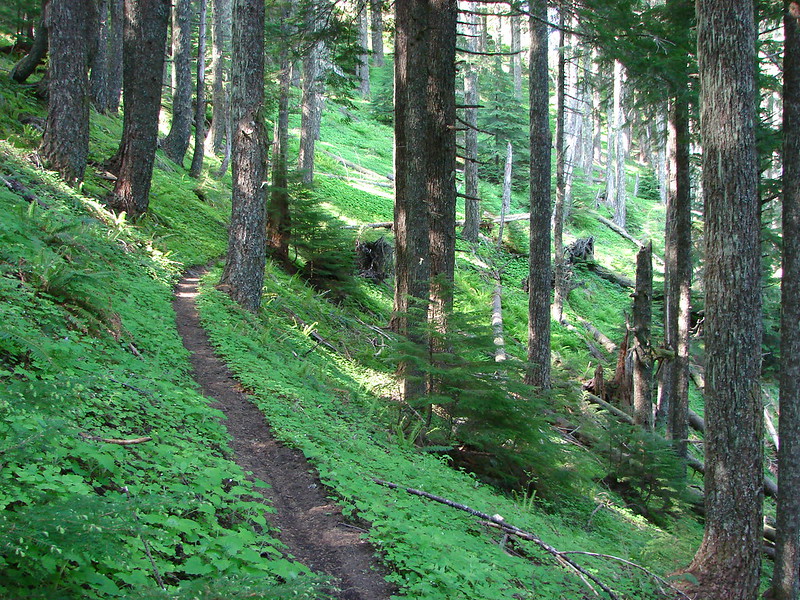
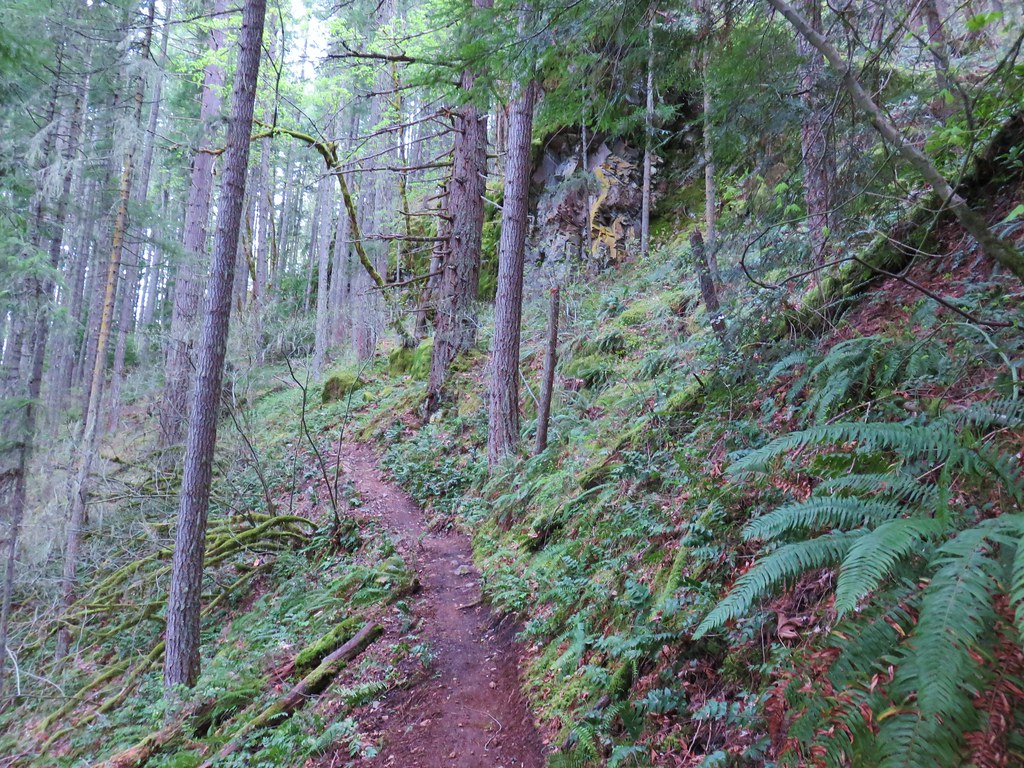
We turned onto the trail which quickly began to climb into the forest.IMG_2855
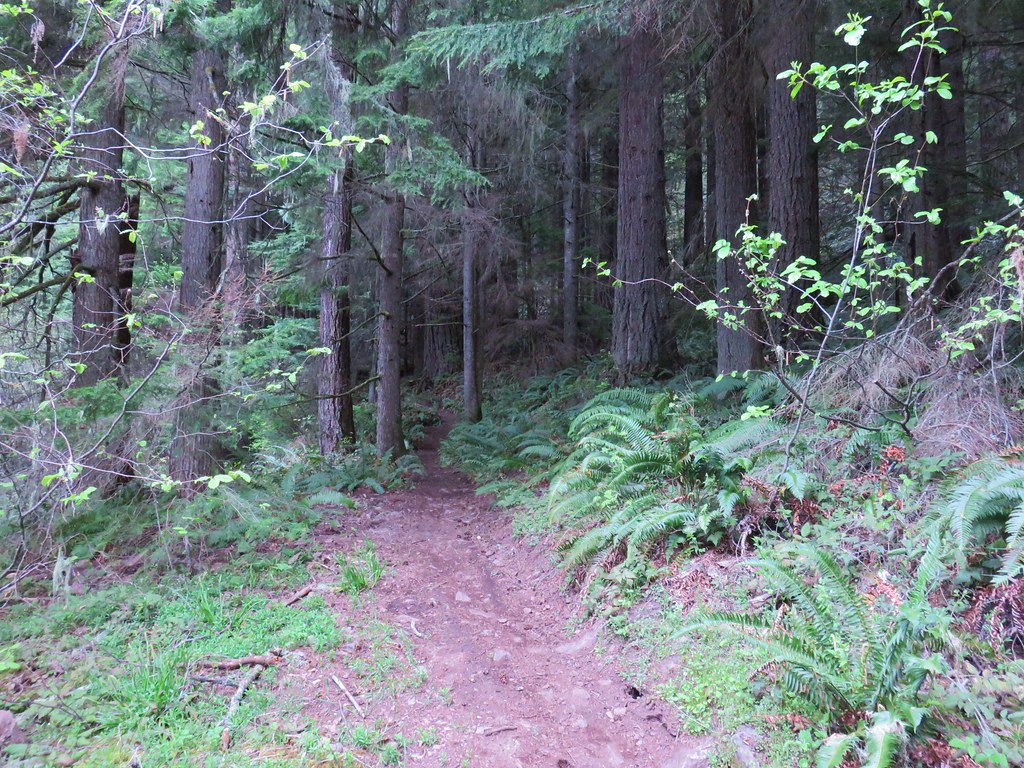
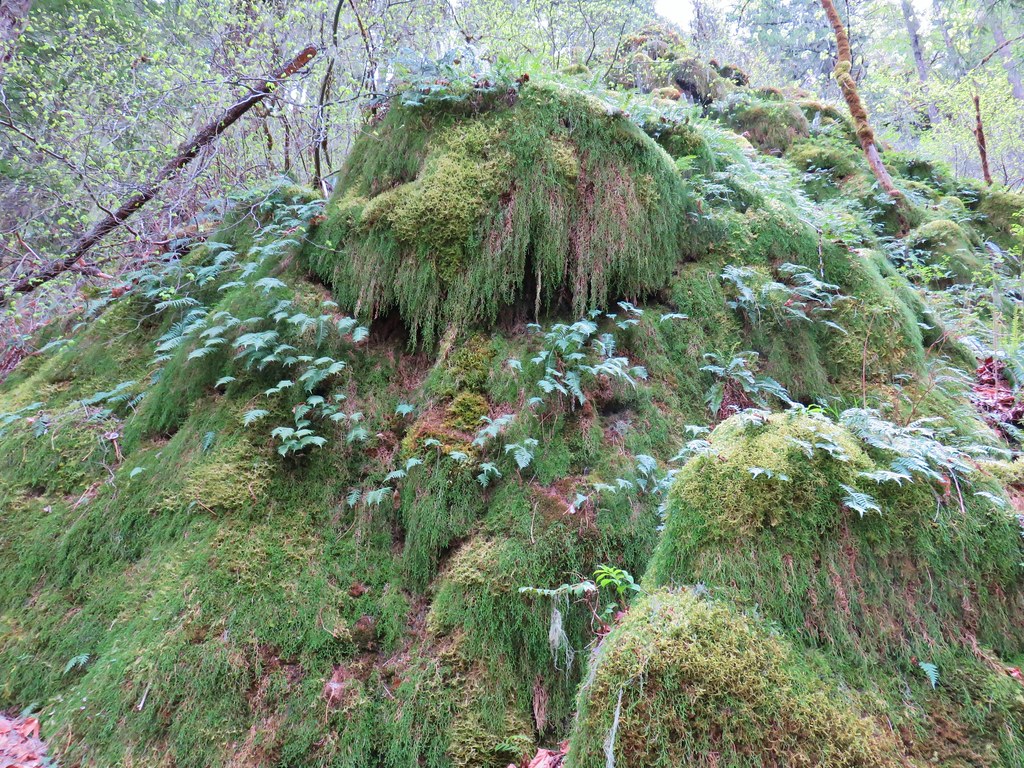
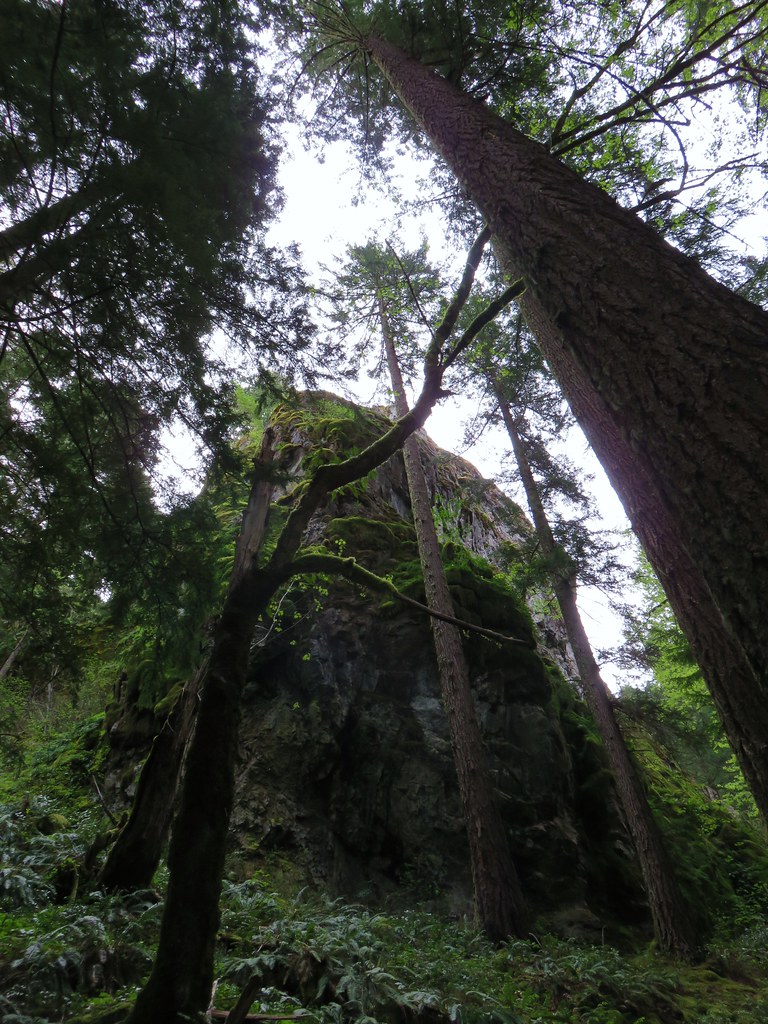
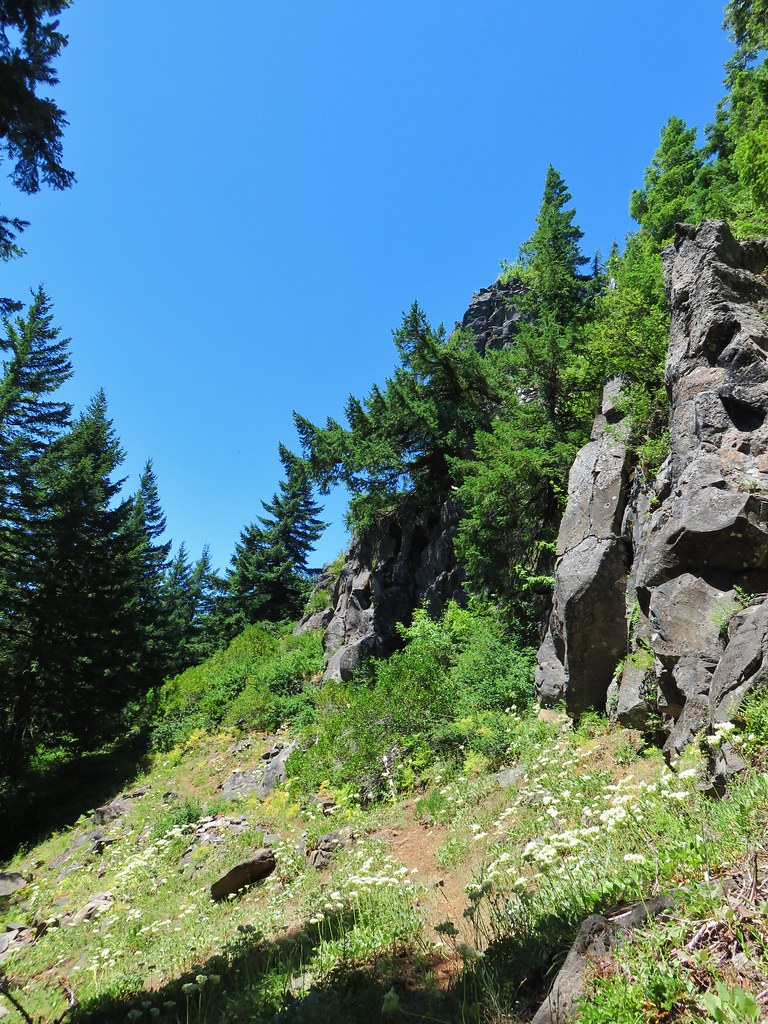
A first series of switchbacks passed beneath some large rock outcroppings.IMG_2864
IMG_2863

IMG_2862

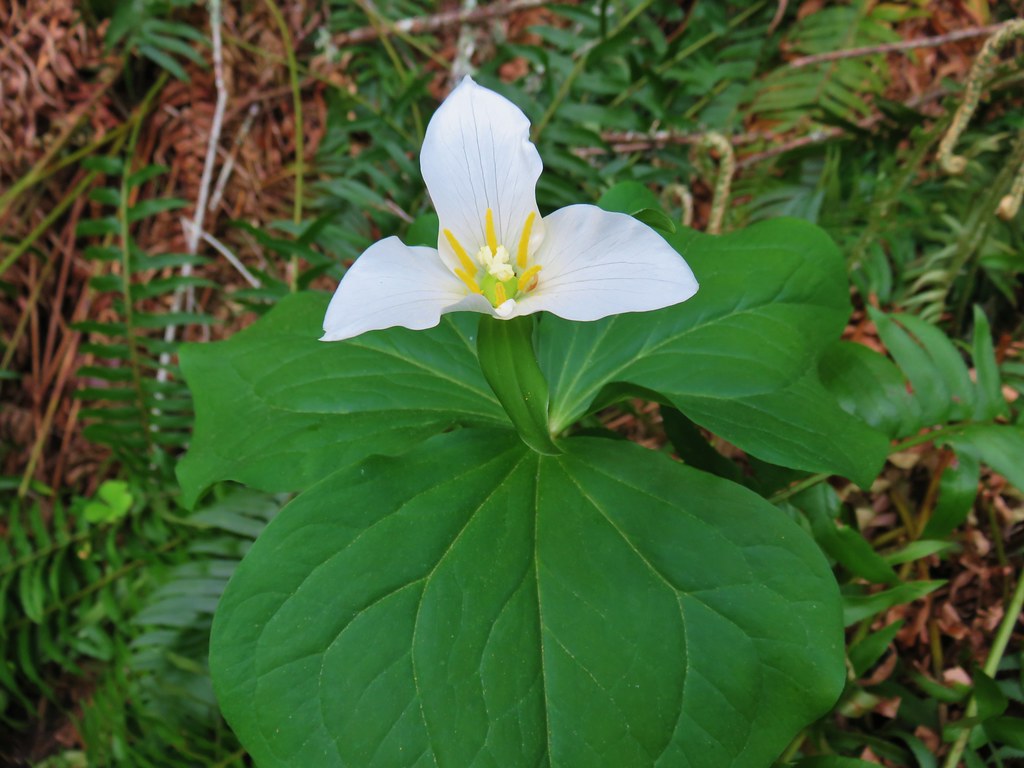
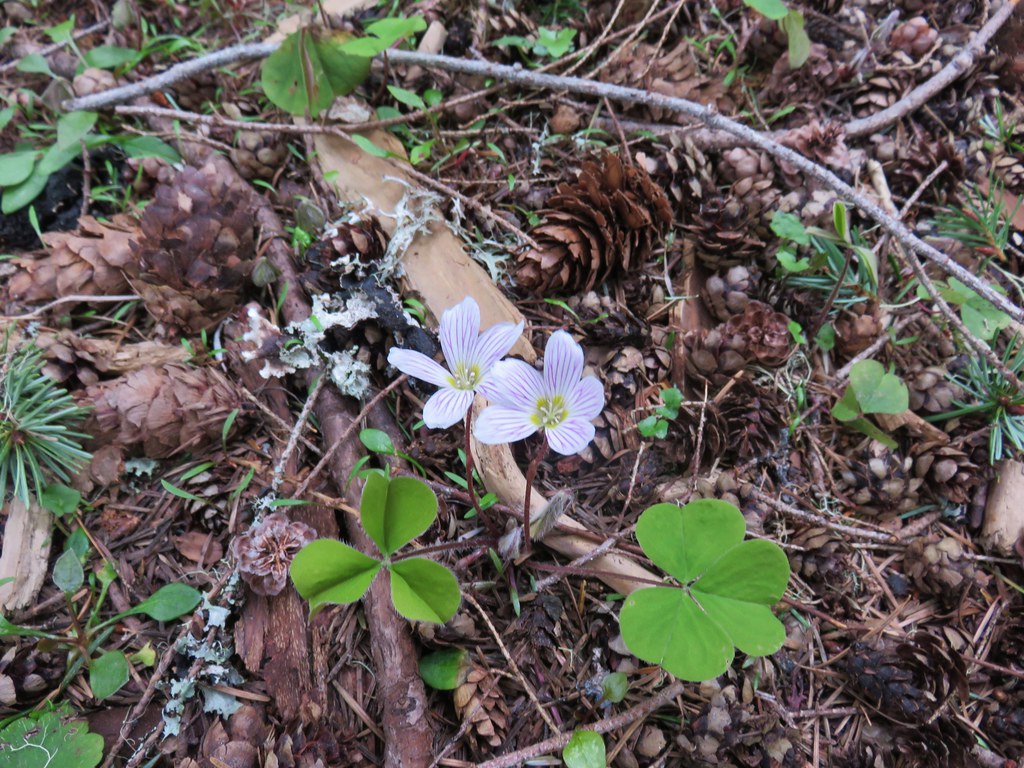
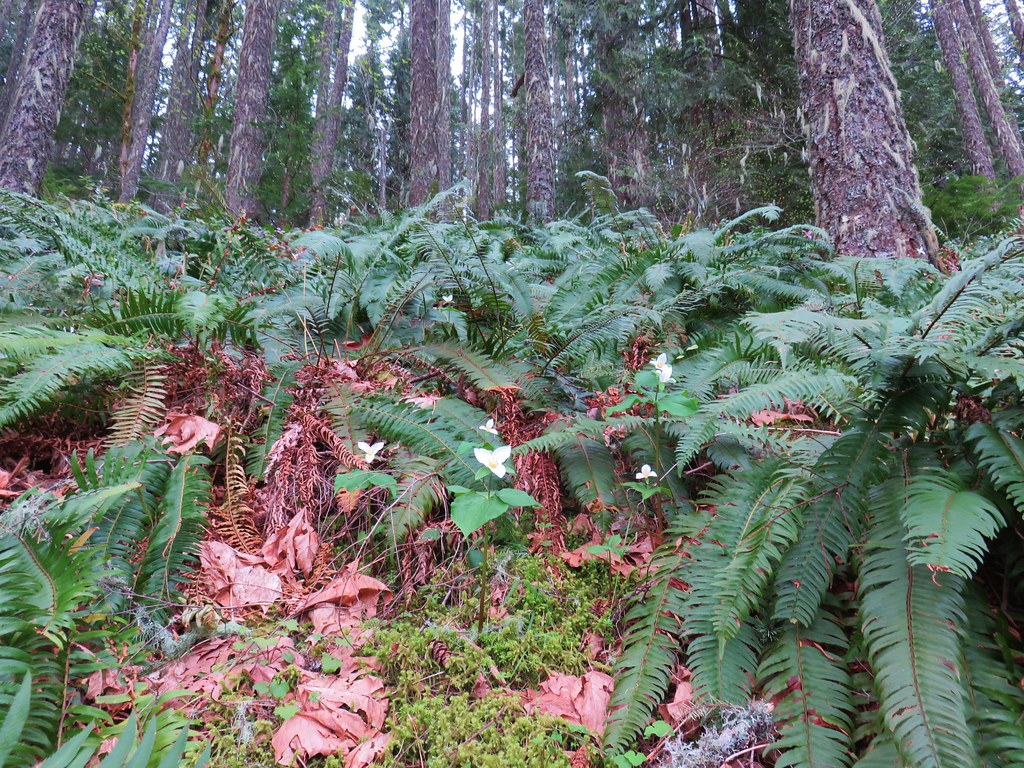
After getting past the rocks the trail swung back around climbing above them to another series of switchbacks. Along the way the forest was dotted with white trillium.IMG_2875
IMG_2869

We also spotted a green frog.IMG_2884

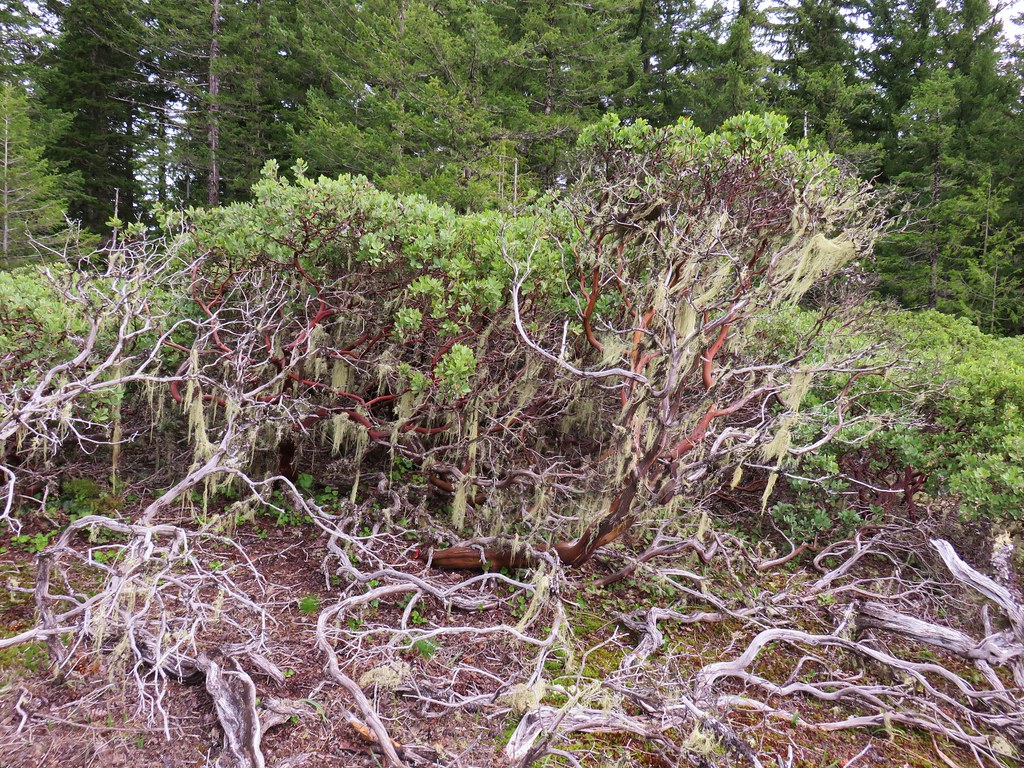
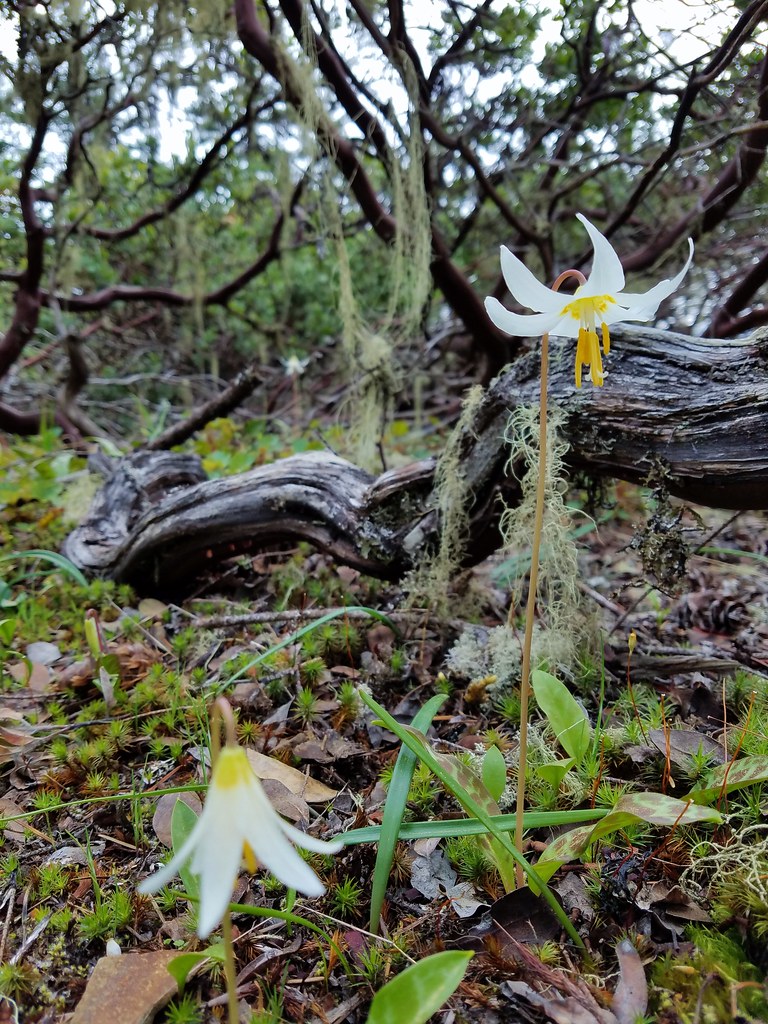
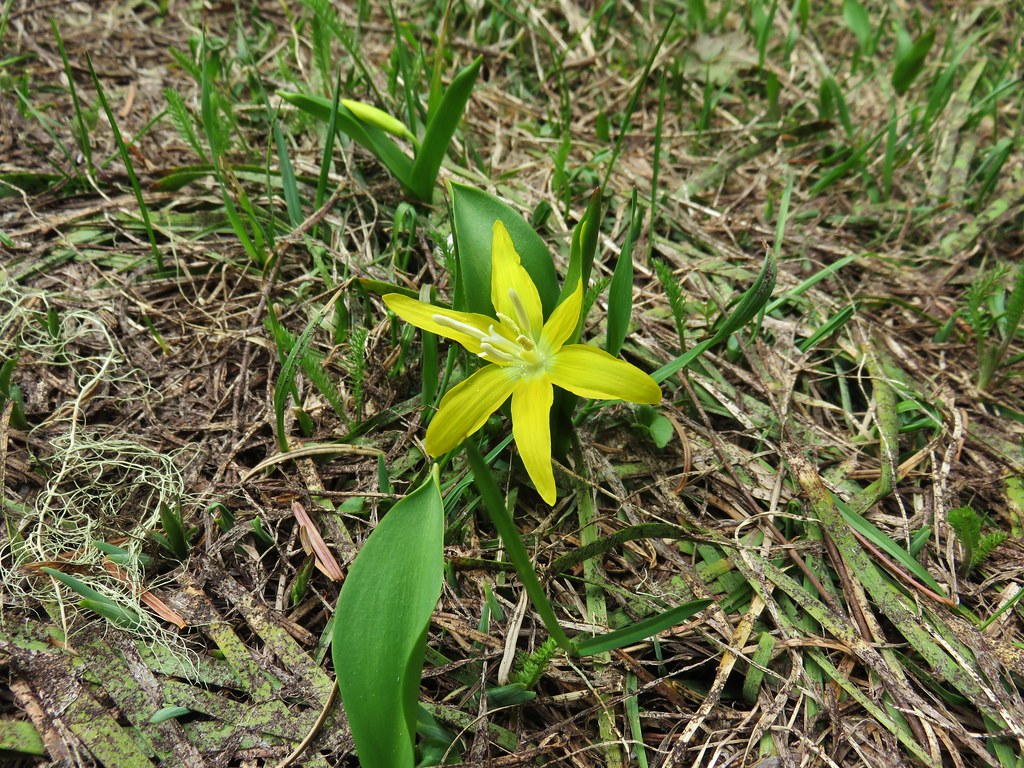
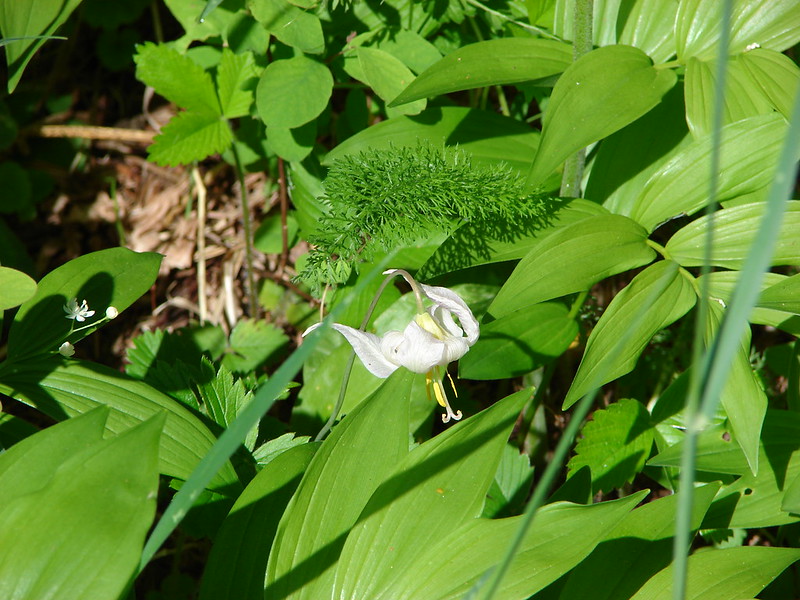
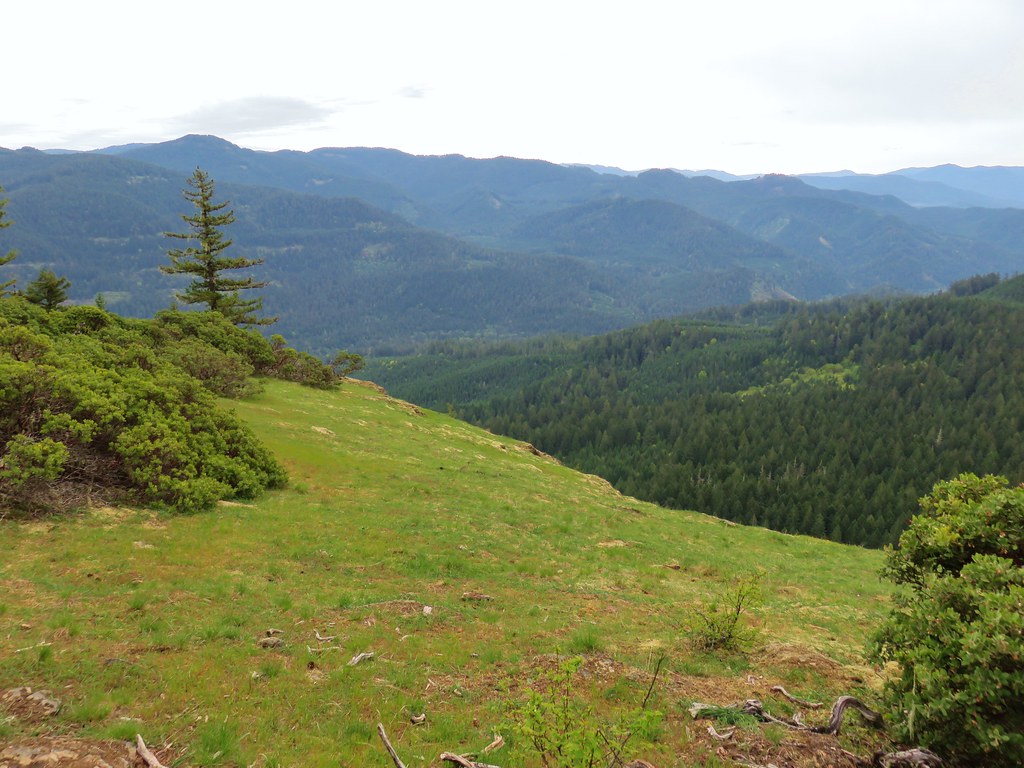
After approximately 1.75 miles we gained a ridge. Soon we came to a grassy viewpoint amid manzanita bushes and fawn lilies.IMG_2895
IMG_2902

20180505_081215

IMG_2894

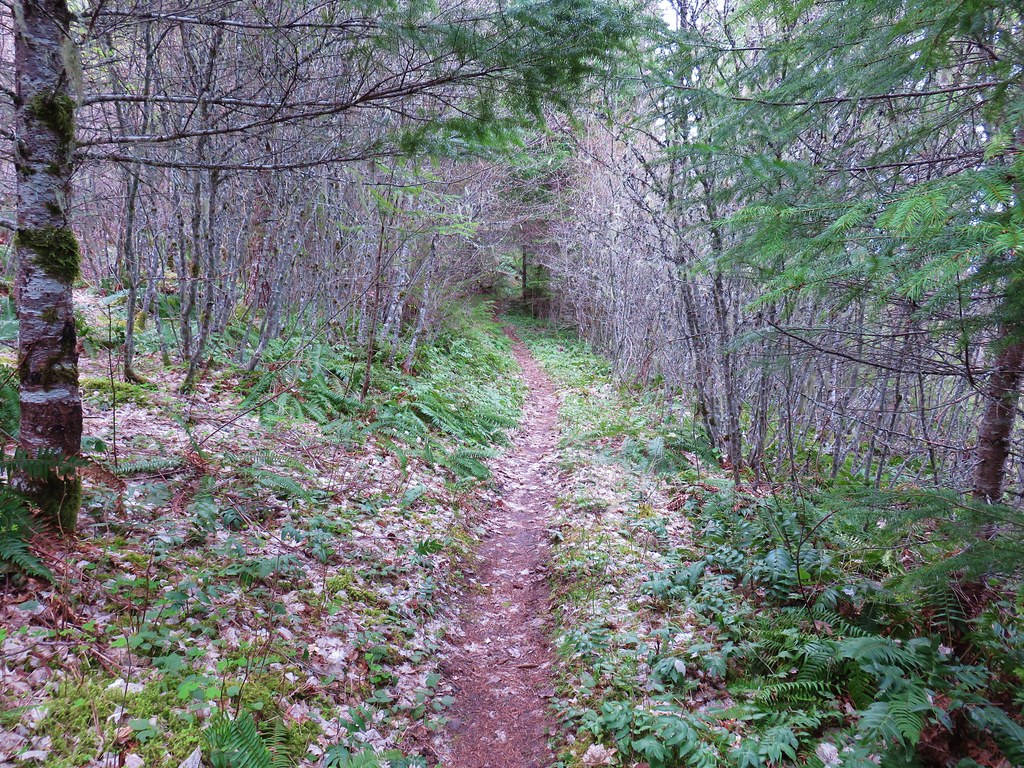
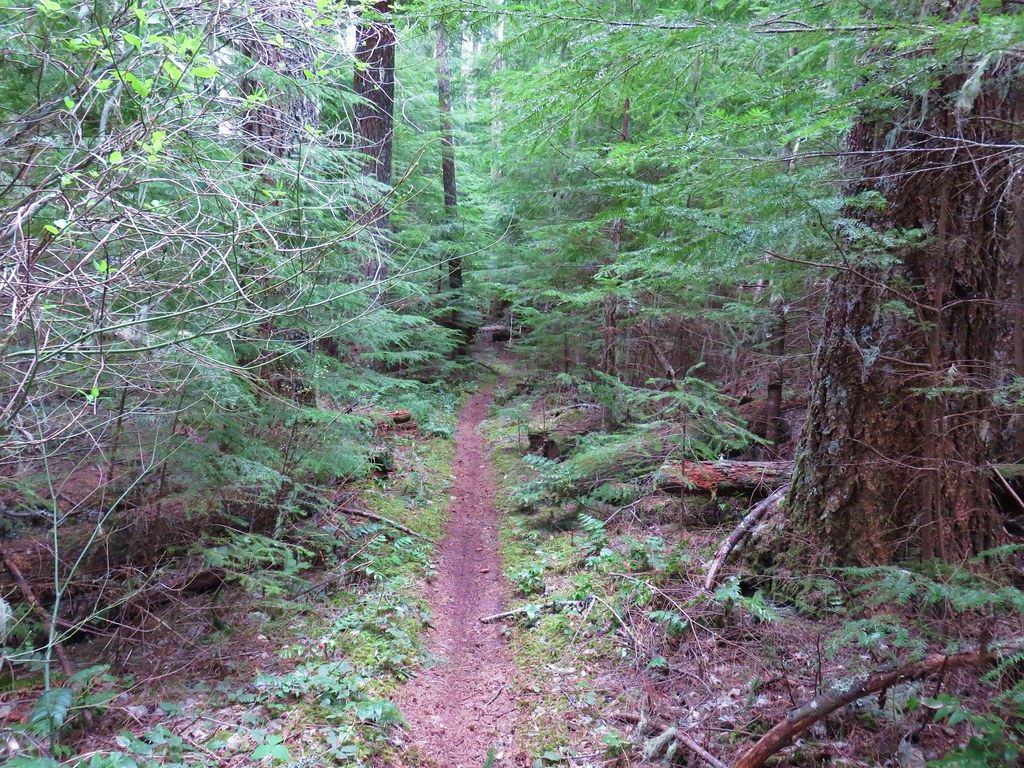
The trail followed the ridge through shifting forests and past more early wildflowers.IMG_2904
IMG_2917

IMG_2906

20180505_082924

IMG_2922

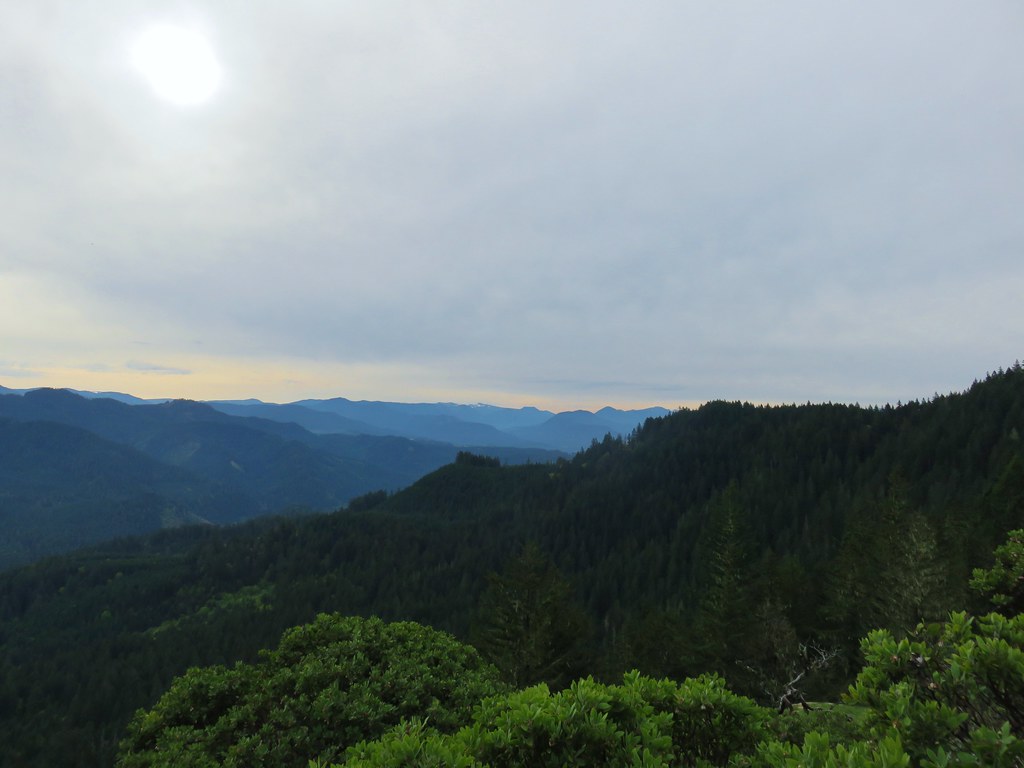
A quarter mile from the viewpoint the trail dropped to a saddle before climbing back up to another viewpoint .7 miles from the first. The view from the previous viewpoint was to the NE while this one looked west.IMG_2932
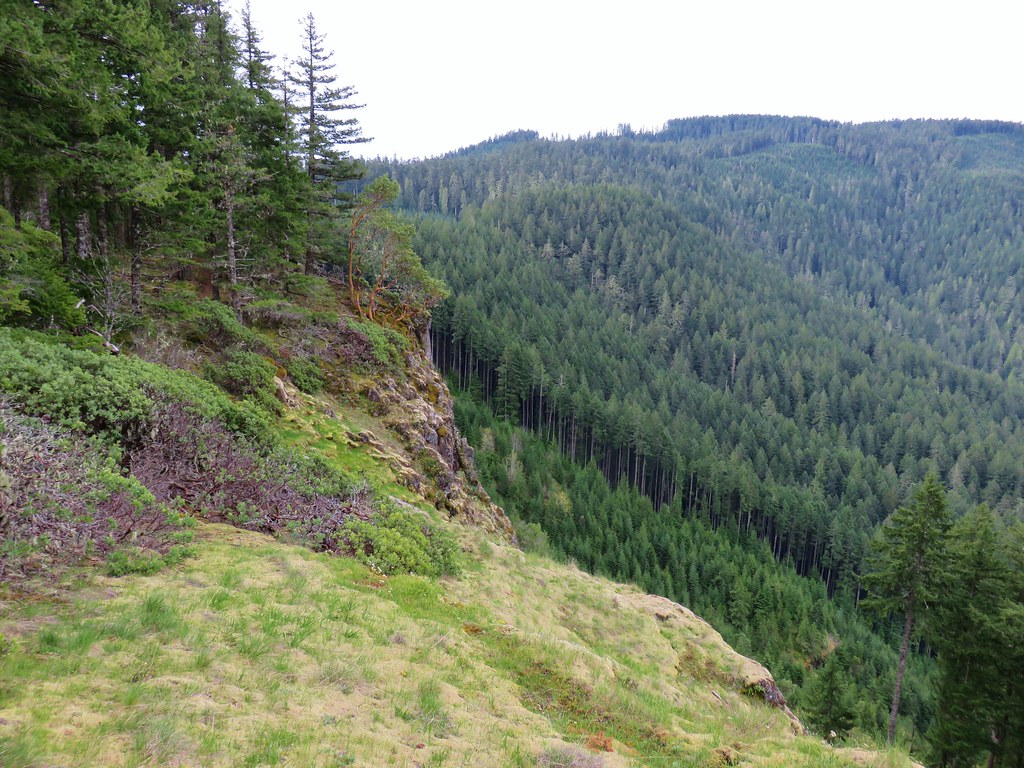
IMG_2936

Patterson Mountain in the upper left hand corner and Hardesty Mountain on the right.
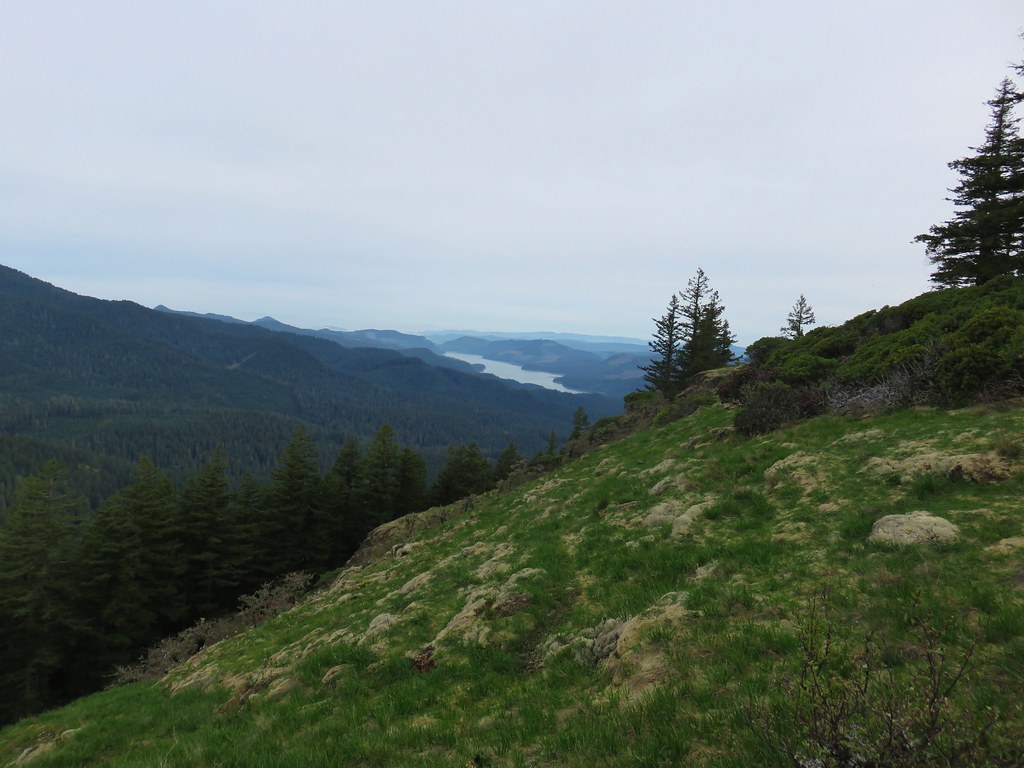
IMG_2934

Lookout Point Reservoir

There was a nice madrone tree at the western end of the grassy opening.IMG_2941
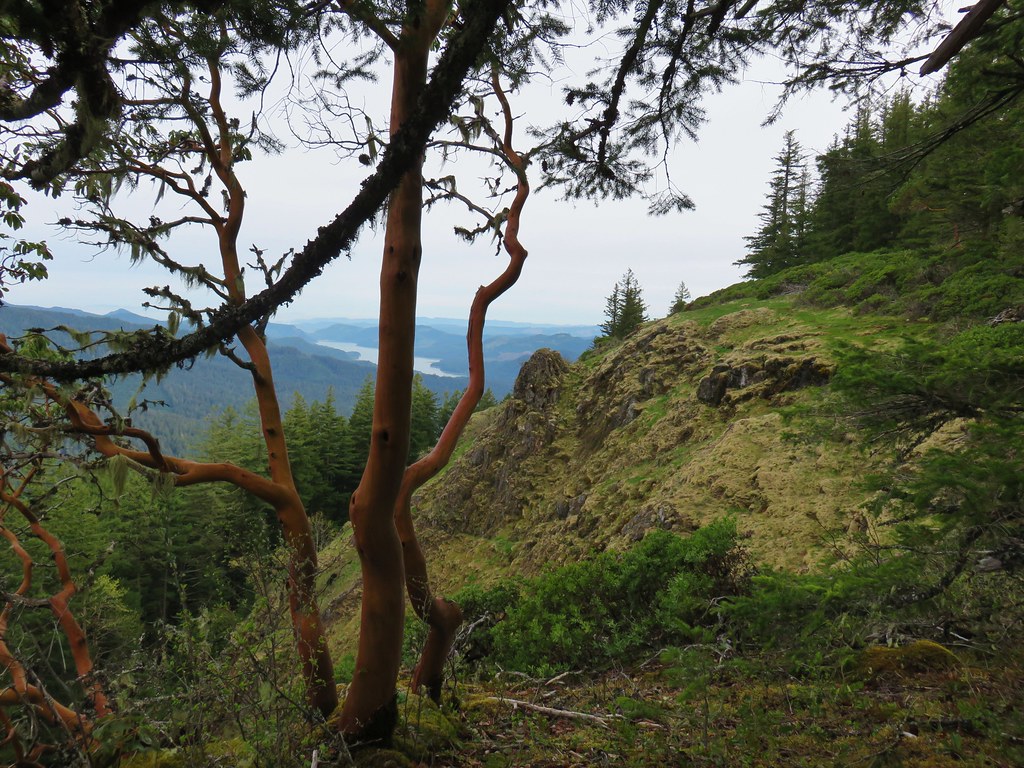
After taking in the view we continued along the ridge passing a cool rock pinnacle.IMG_2943
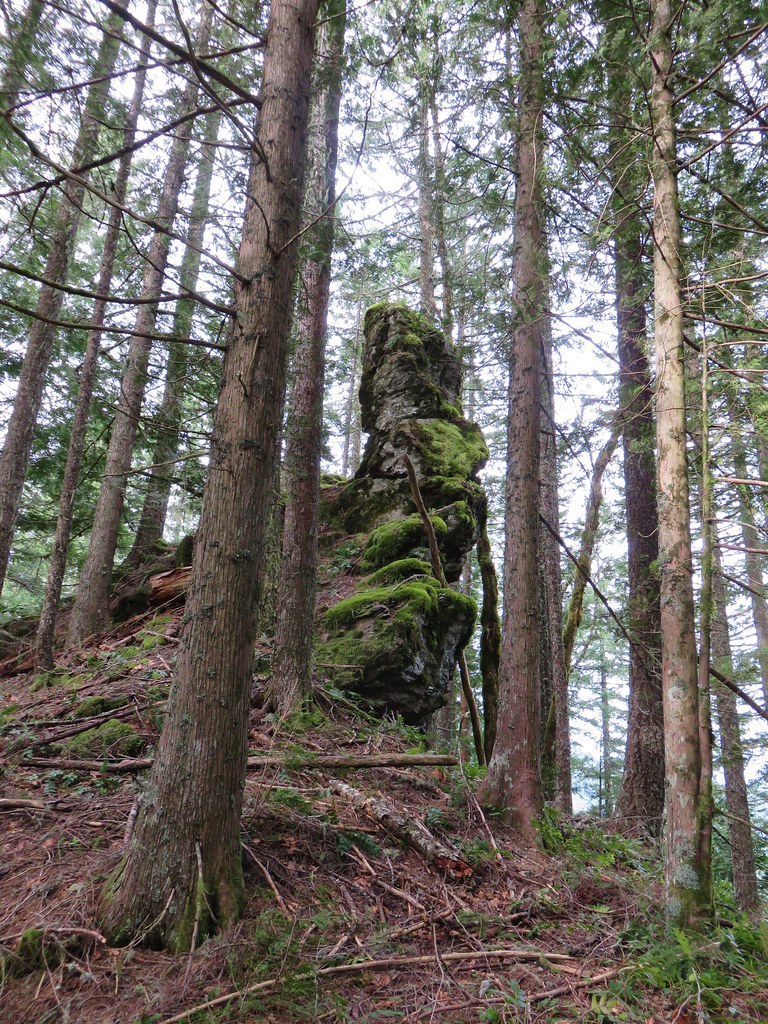
Beyond the pinnacle the trail dropped to another saddle and the first of three road crossings.IMG_2951
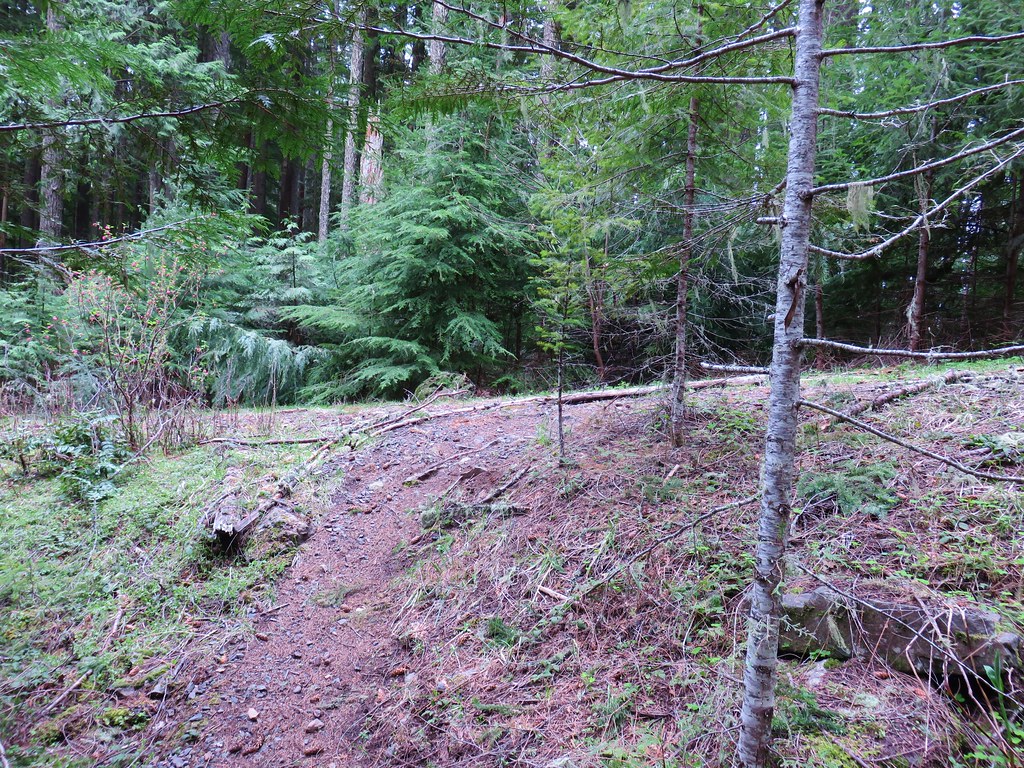
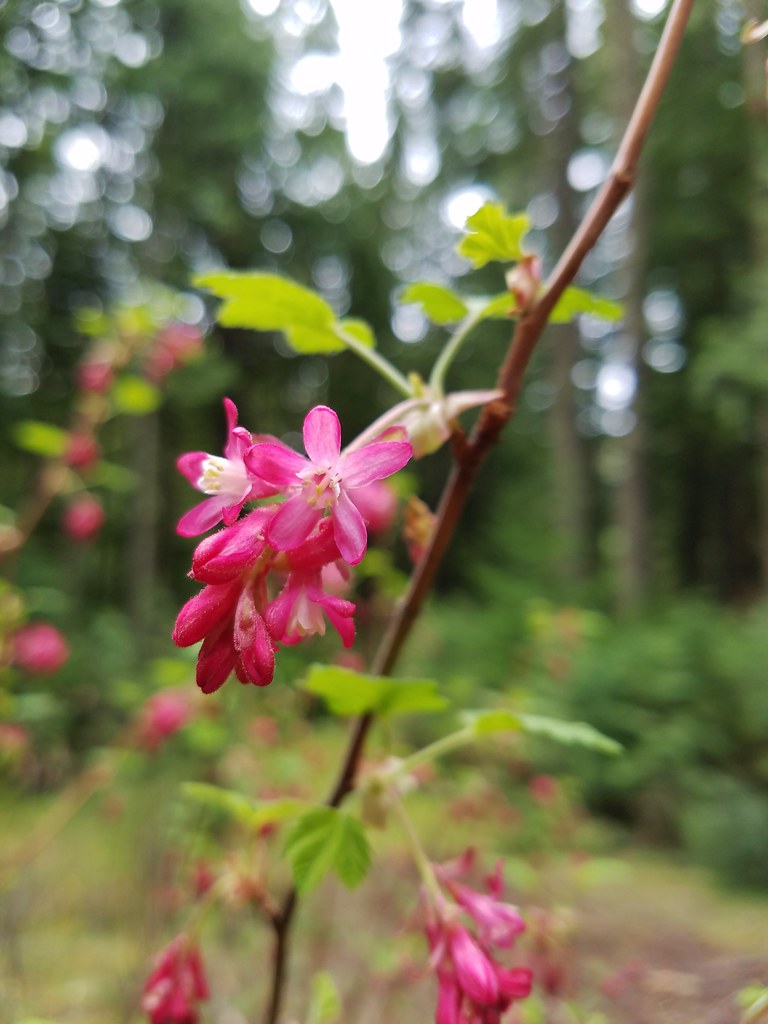
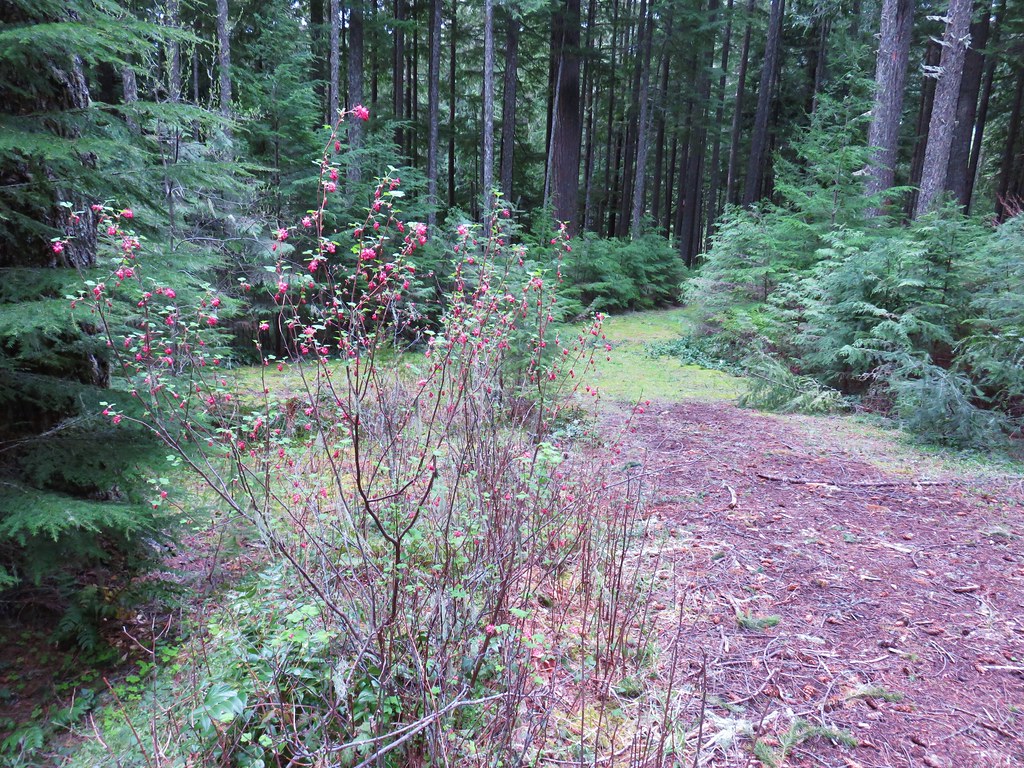
Road 213 was clearly no longer in use but there was a nice red flowering current at the junction.IMG_2952
20180505_085554

The Lawler Trail climbed from the saddle into a small section of forest that had experienced a burn at some point. It was either a small forest fire or possibly from a burnout operation during the Deception Fire of 2014.IMG_2956

Beyond the burn area we began to encounter some minor blowdown which was all manageable.IMG_2960
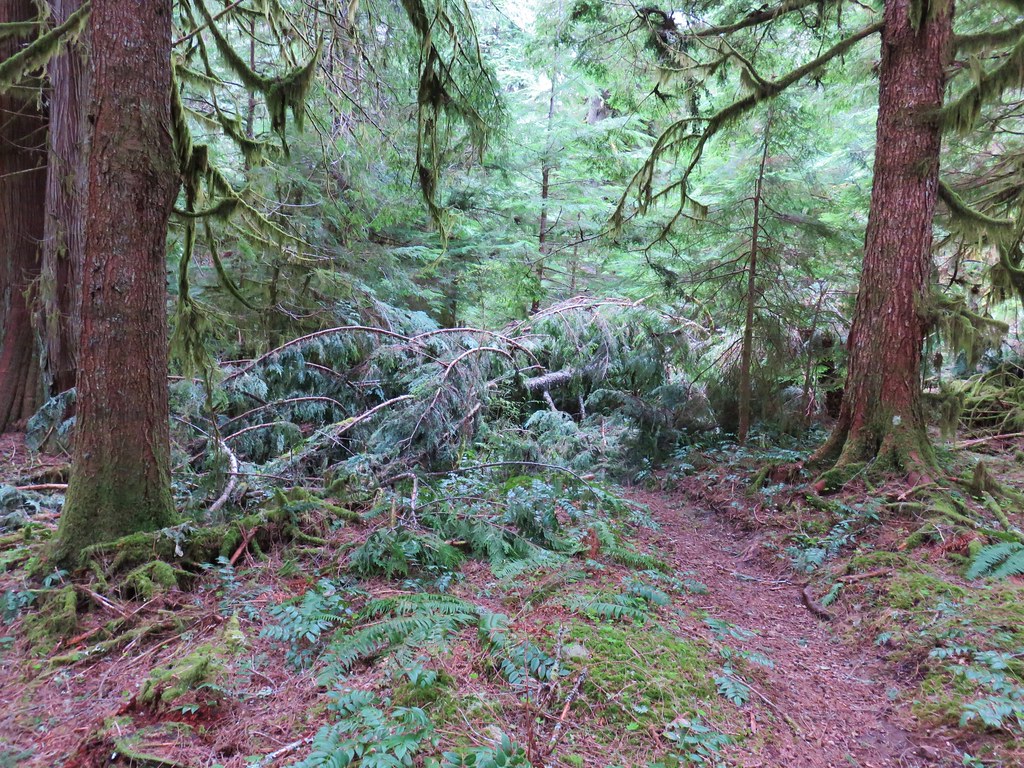
An eighth of a mile after crossing Road 213 we arrived at another decommissioned road, FS 542.IMG_2961
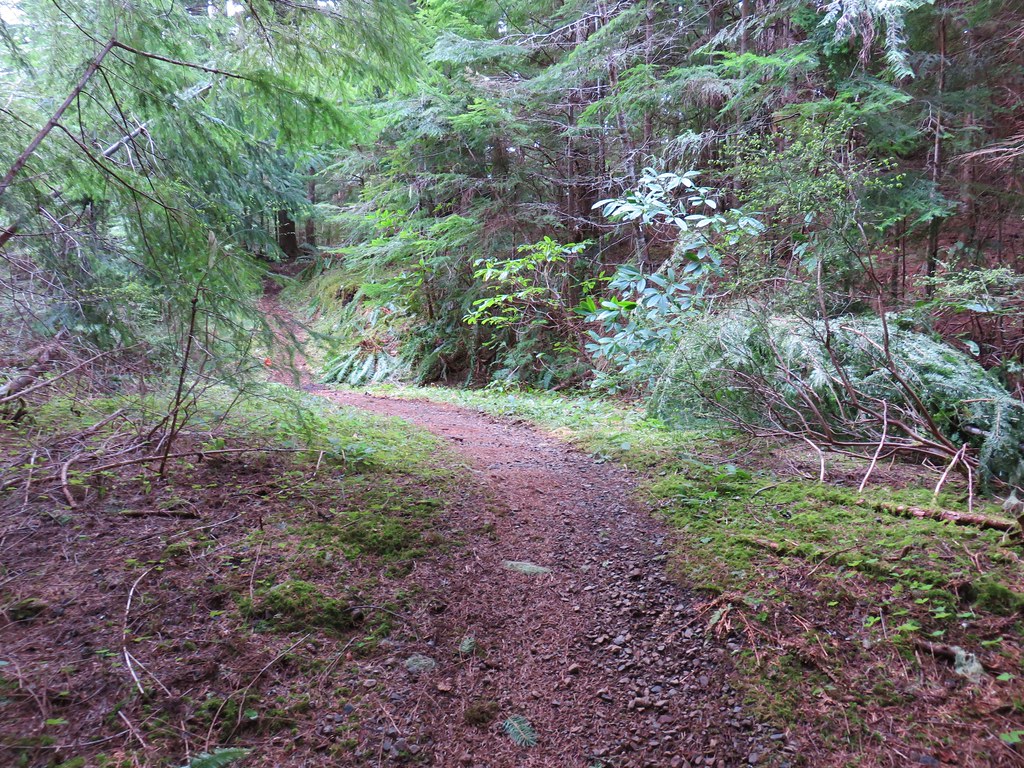
Another .3 miles of climbing brought us to the third road crossing, FS 543, which appeared to still be in use.IMG_2968

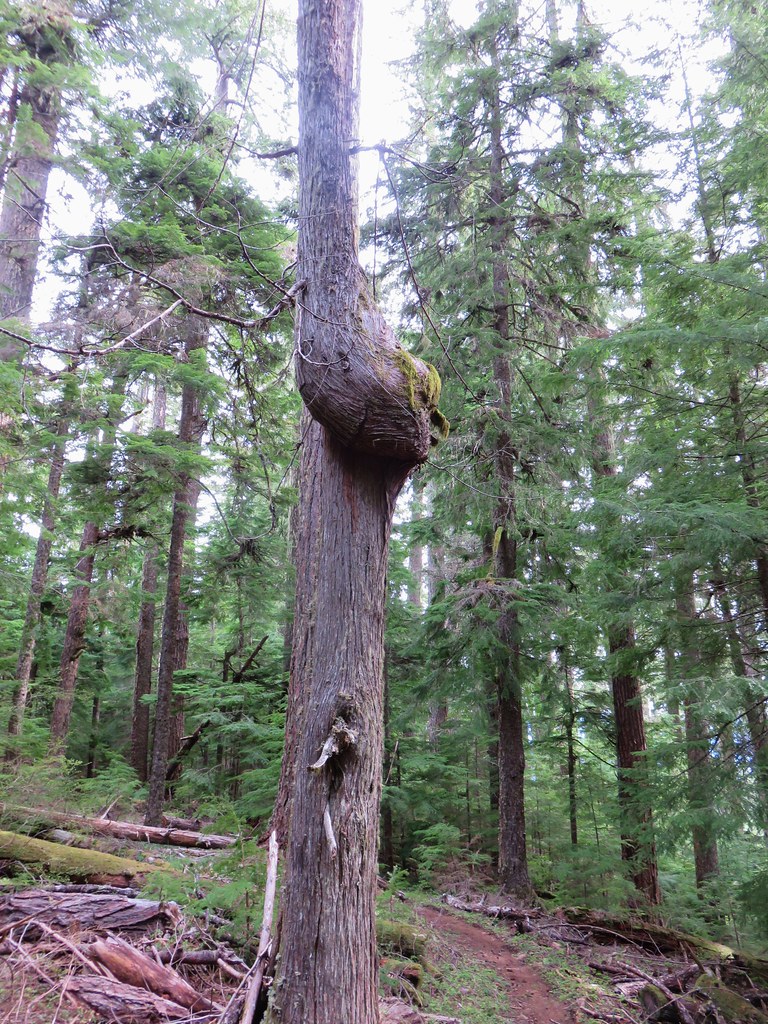
Between these two crossing we passed one of the oddest looking trees we’ve seen. As we approached it looked as if its trunk was shaped in a loop.IMG_2965
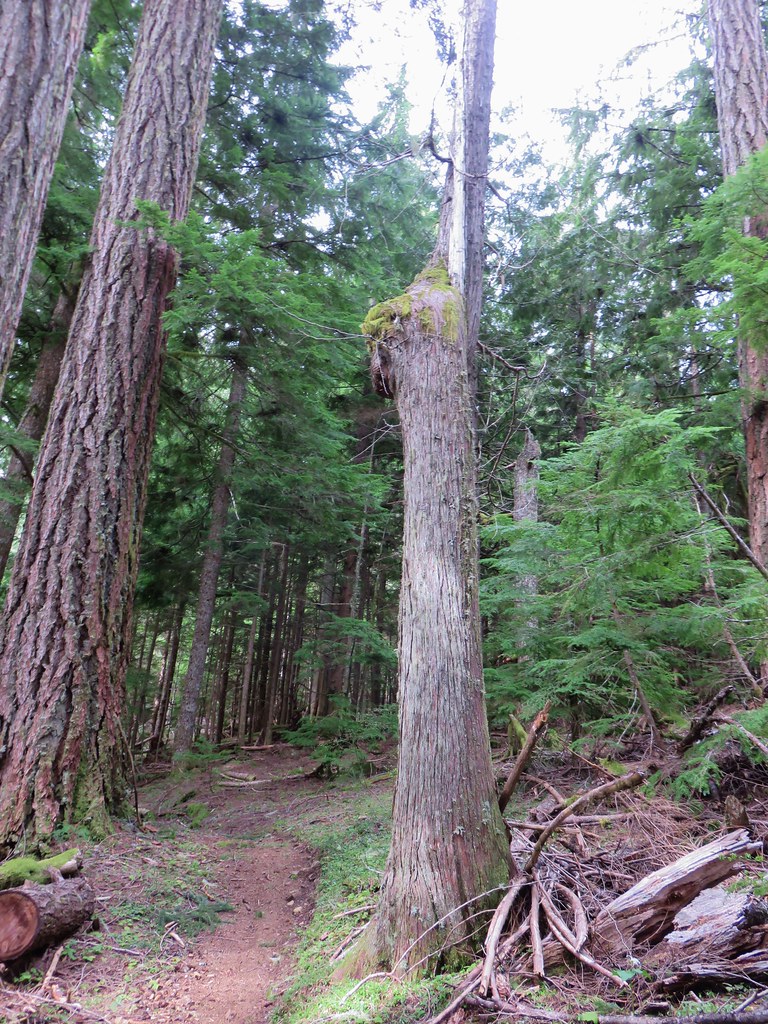
Looking at if from the other side showed that it wasn’t quite a loop but it had grown in some interesting directions.IMG_2964
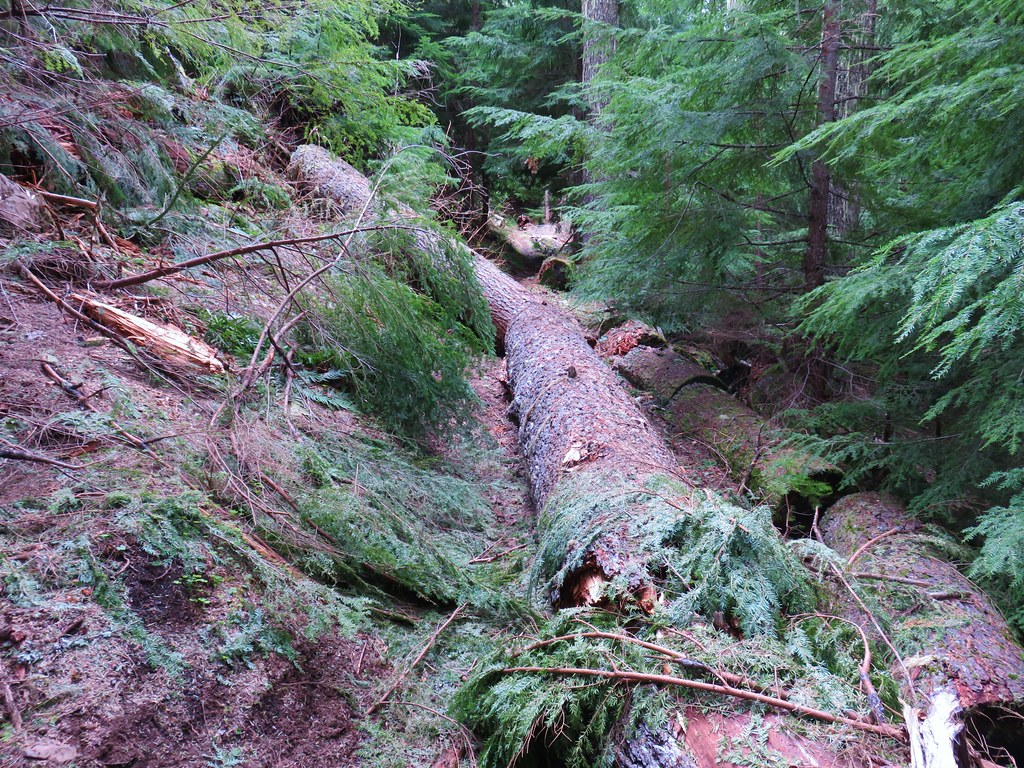
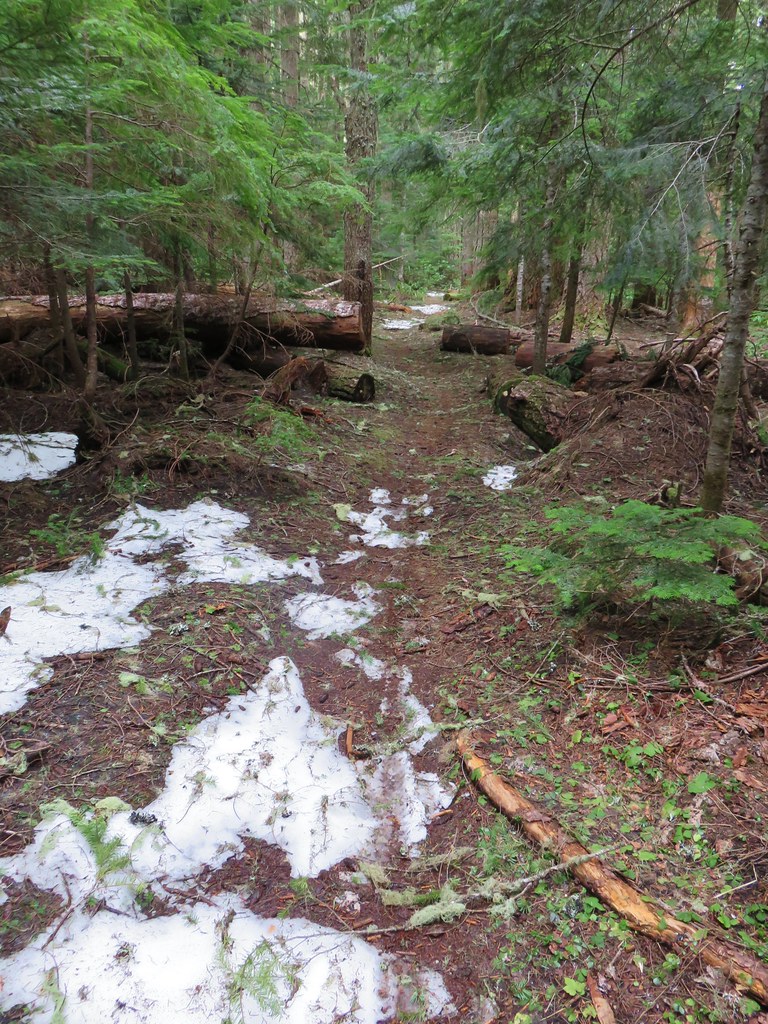
The trail continued climbing beyond FS 543 and we began running into small patches of snow and more blowdown.
IMG_2983

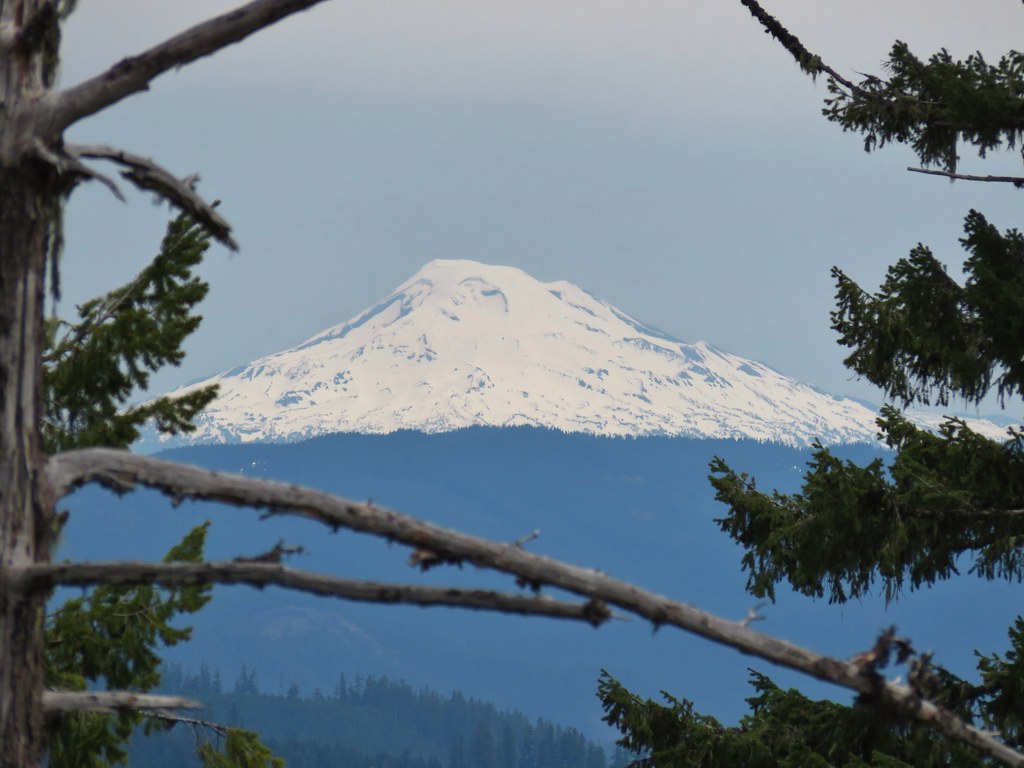
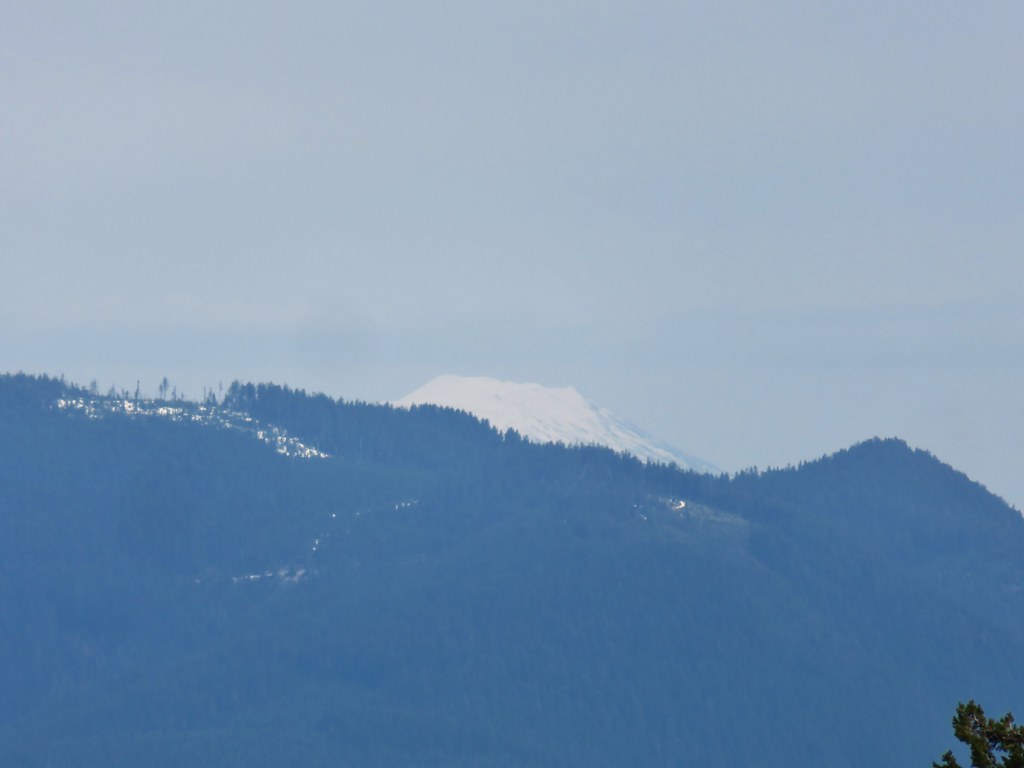
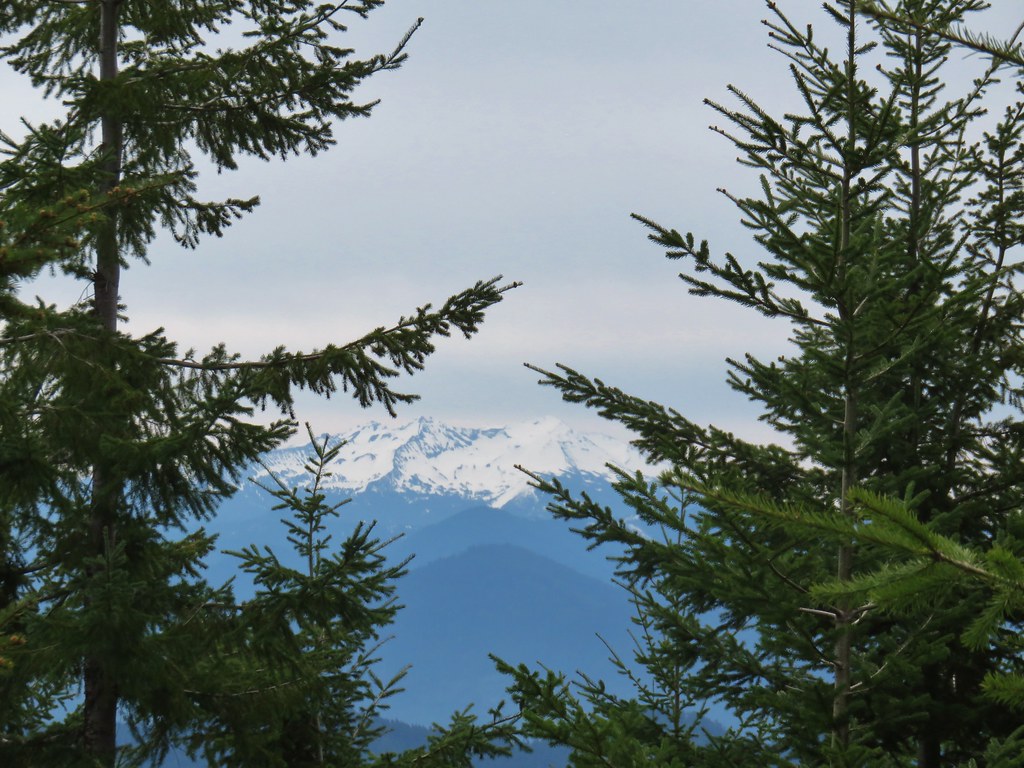
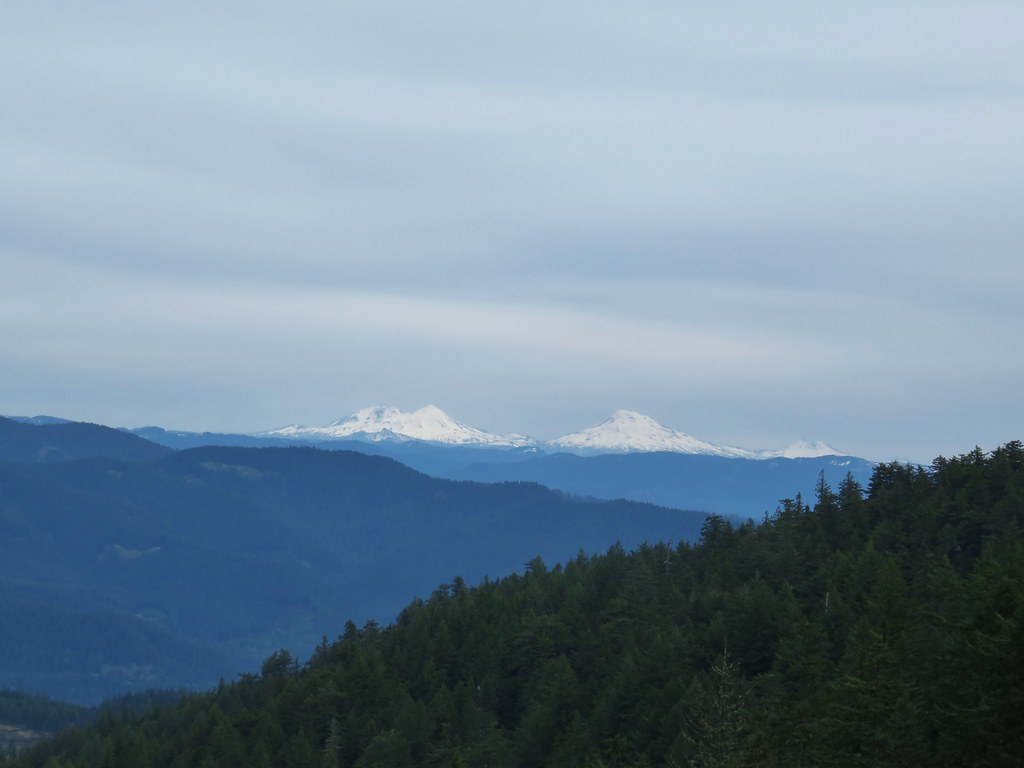
A little over a half mile beyond the road we gained another ridge and headed up it. The ridge provided some views of several Cascade snow peaks.IMG_3000
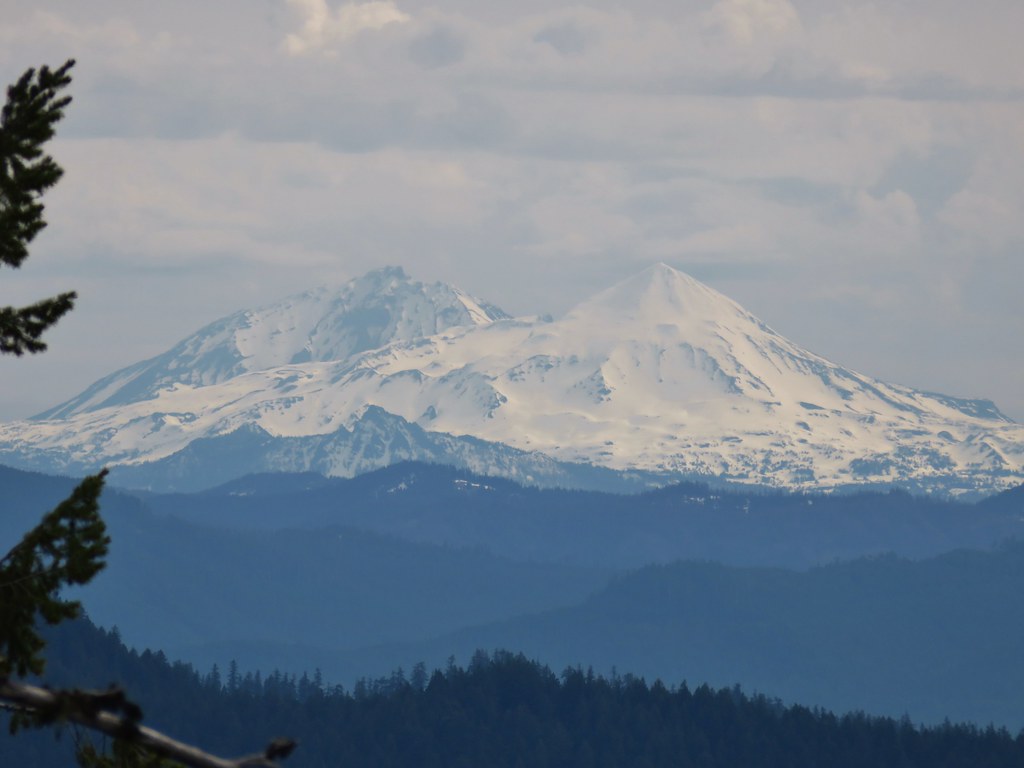
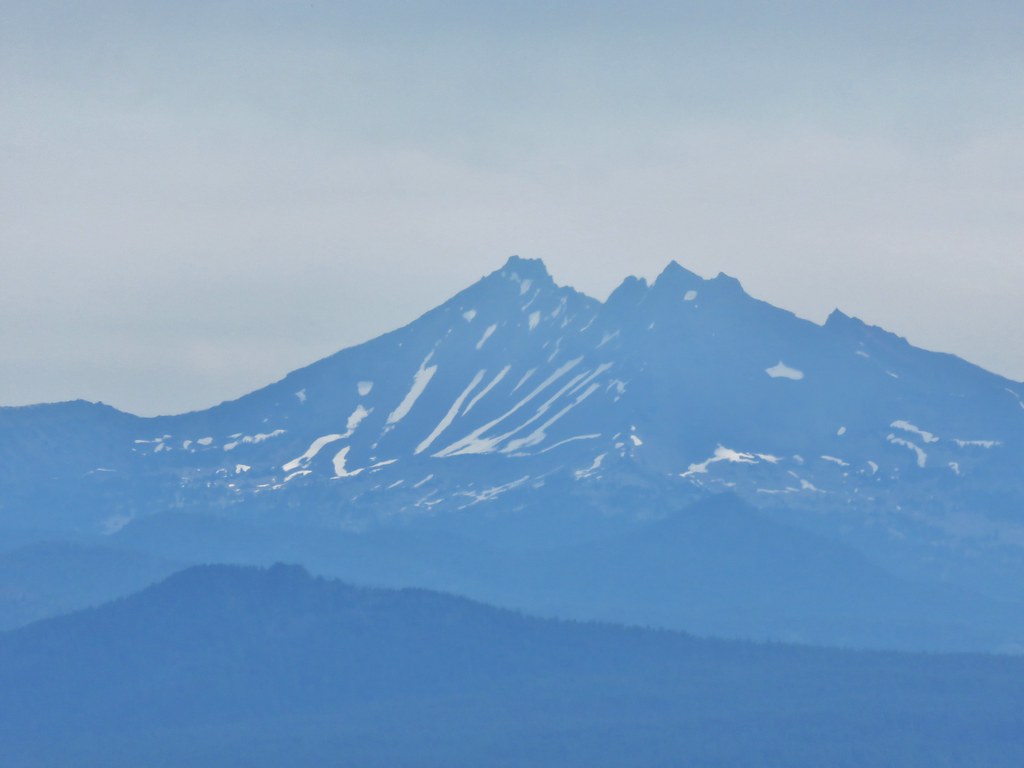
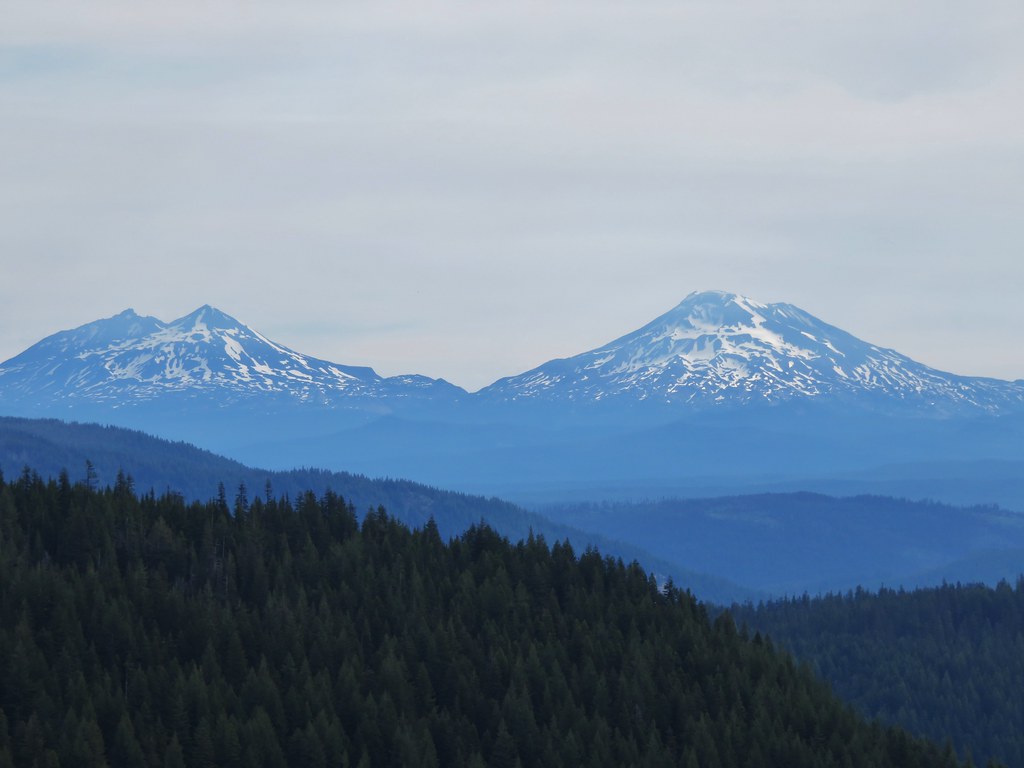
North & Middle Sister

IMG_3106

South Sister

IMG_3116

Broken Top

IMG_3113

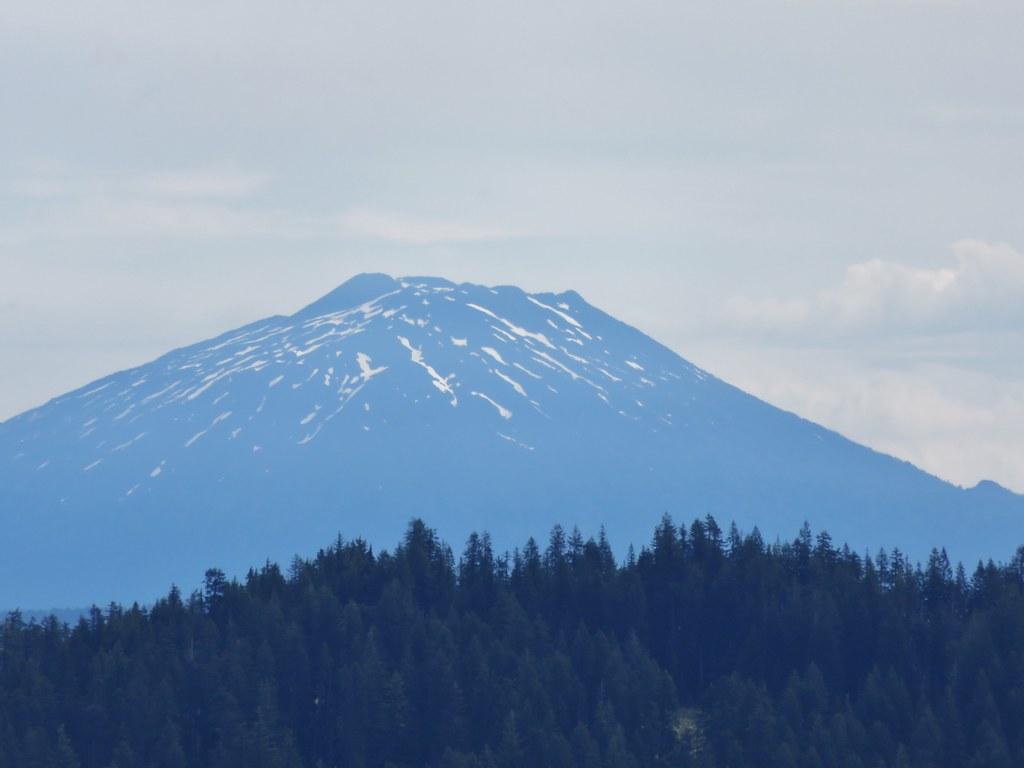
Mt. Bachelor

IMG_2994

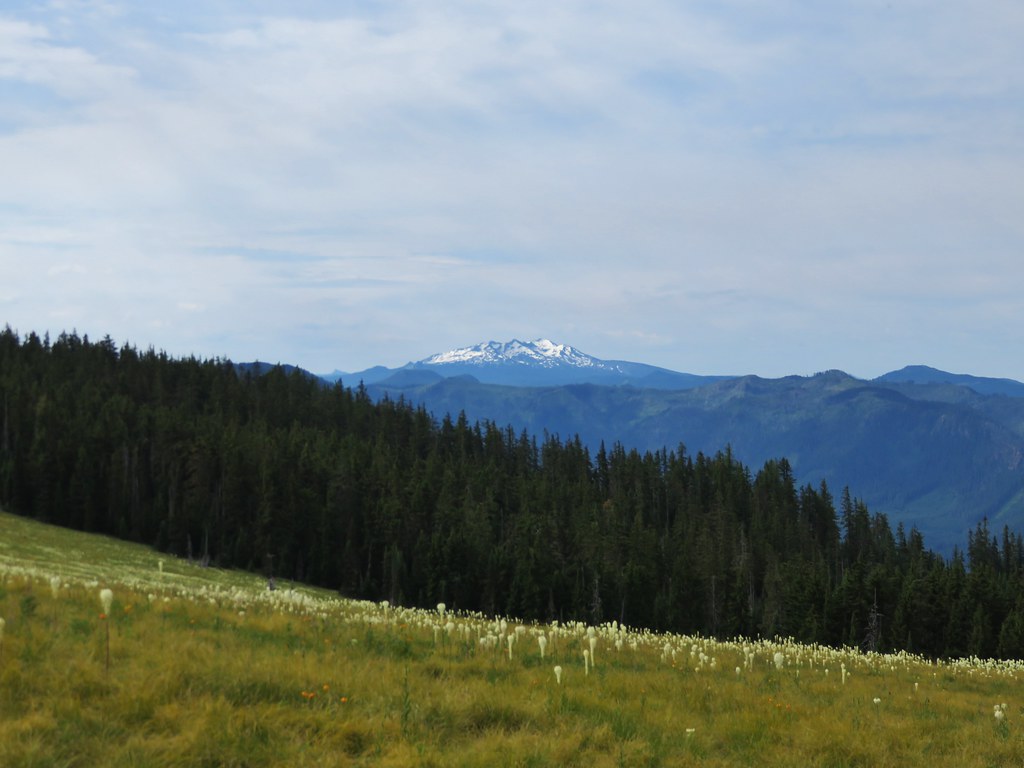
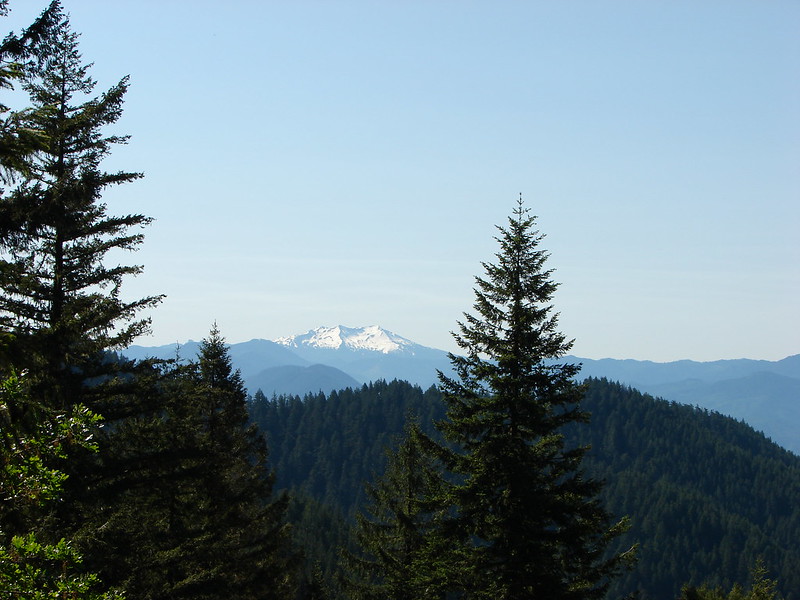
Diamond Peak

We continued along the ridge which became broader, more forested, and snowy to the signed junction of the Lawler and Lone Wolf/Patterson Mountain Trails.IMG_3010
IMG_3015

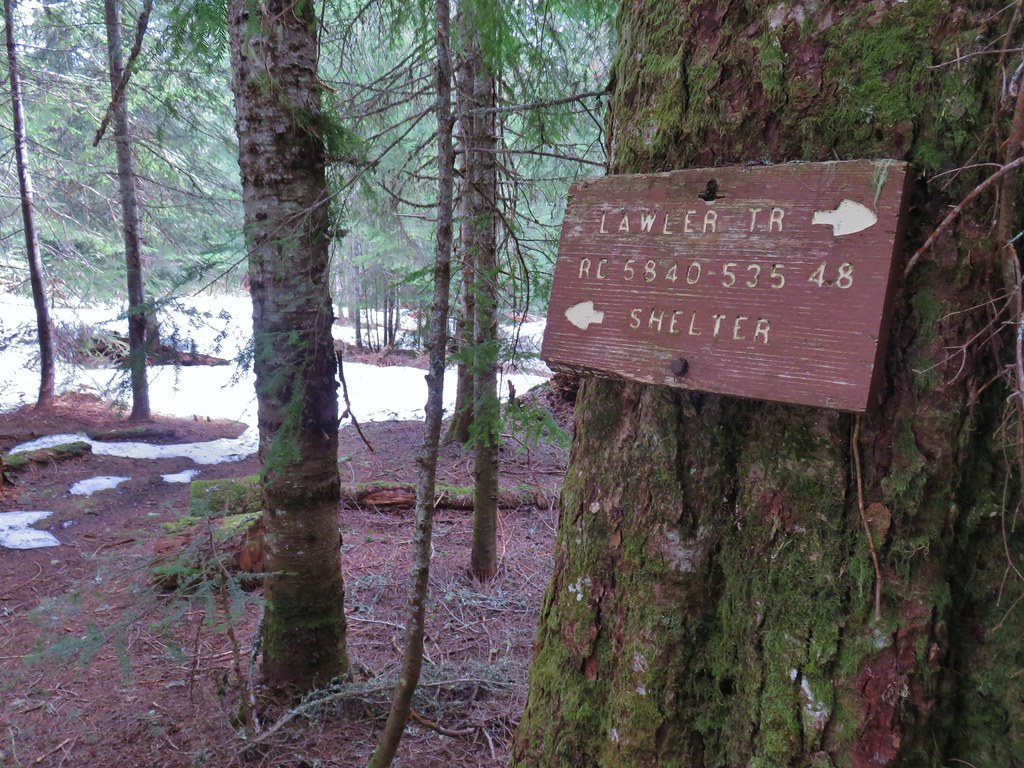
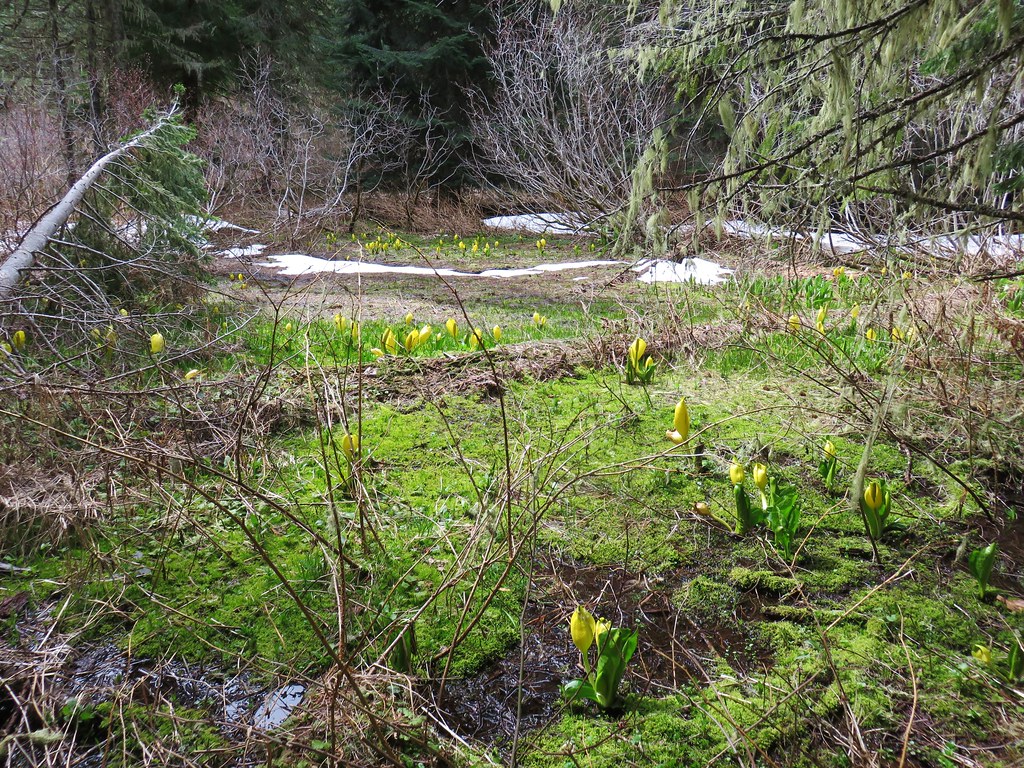
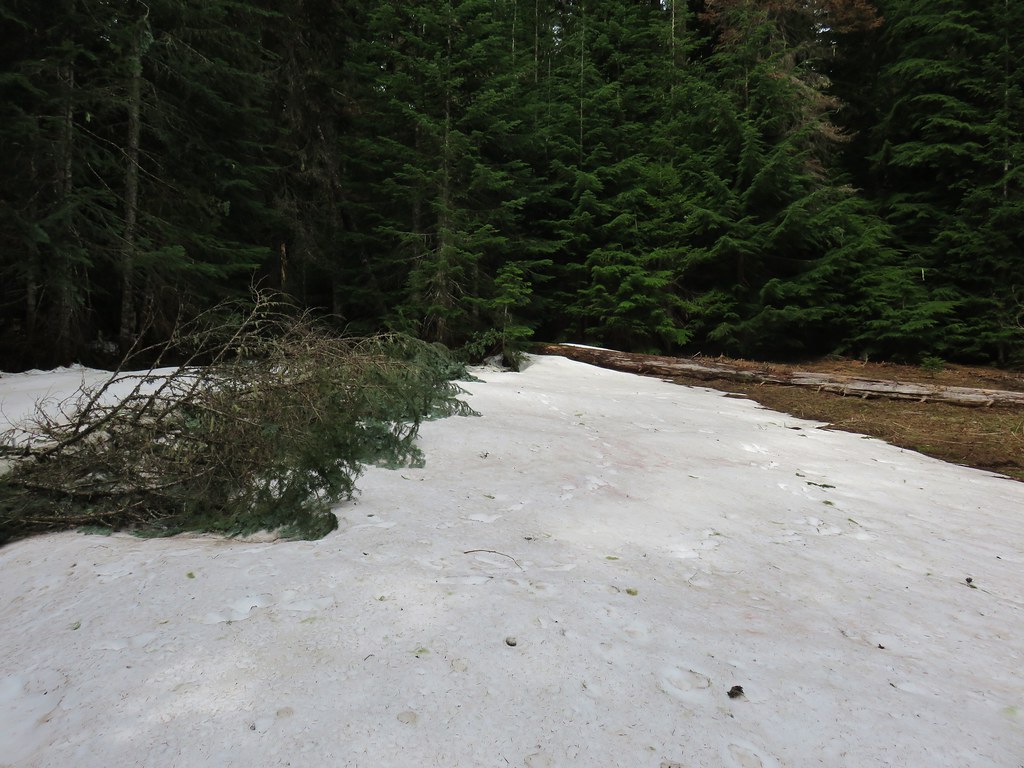
We turned right at the junction passing between a large snow patch and the skunk cabbage filled southern end of the Lone Wolf Meadow.IMG_3019
IMG_3022

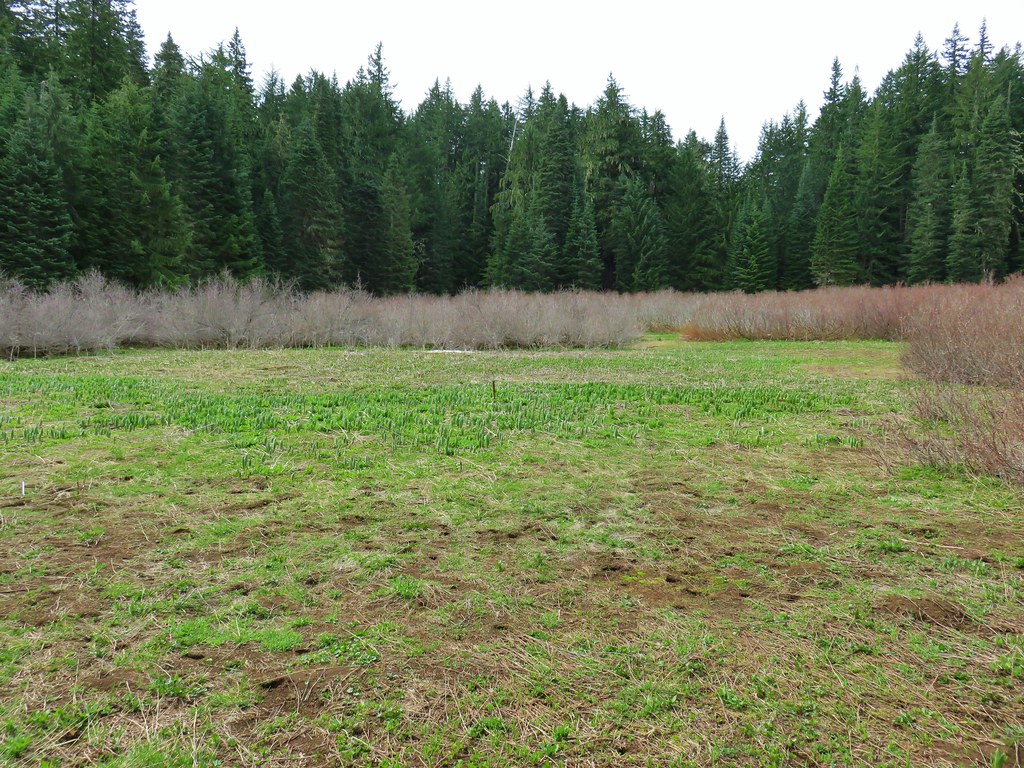
This trail took us along the Lone Wolf Meadow for half a mile to another junction. The hellebore was just beginning to come up in the meadow which was apparently full of frogs. We never saw any but boy could we hear them.IMG_3027
IMG_3028

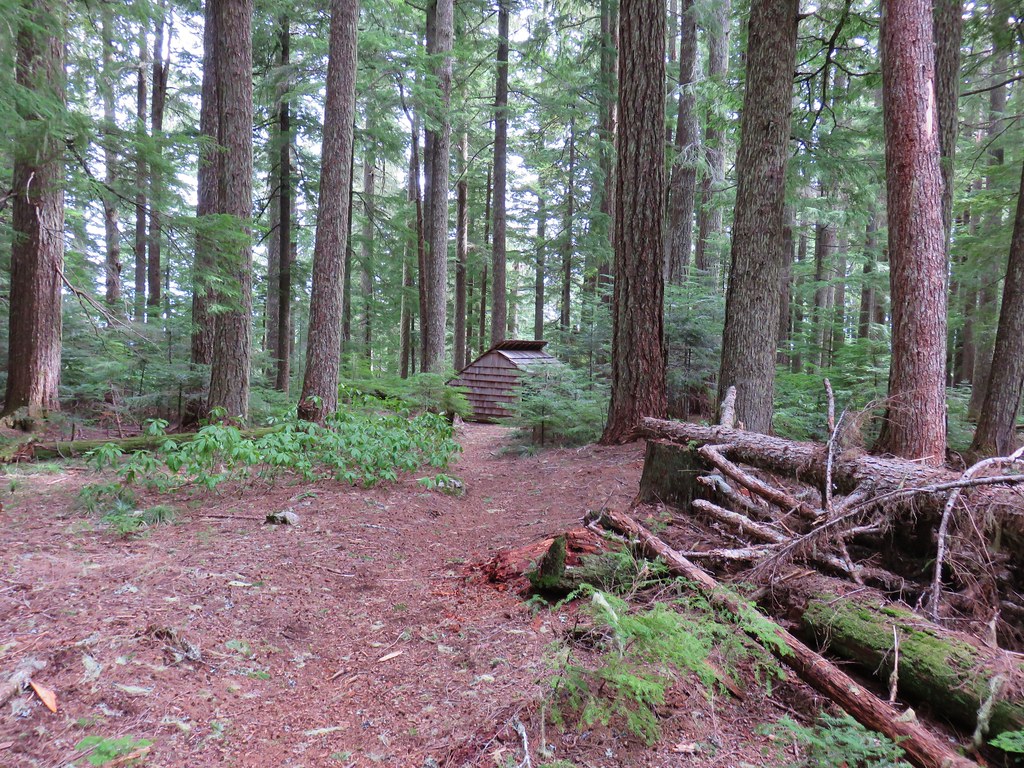
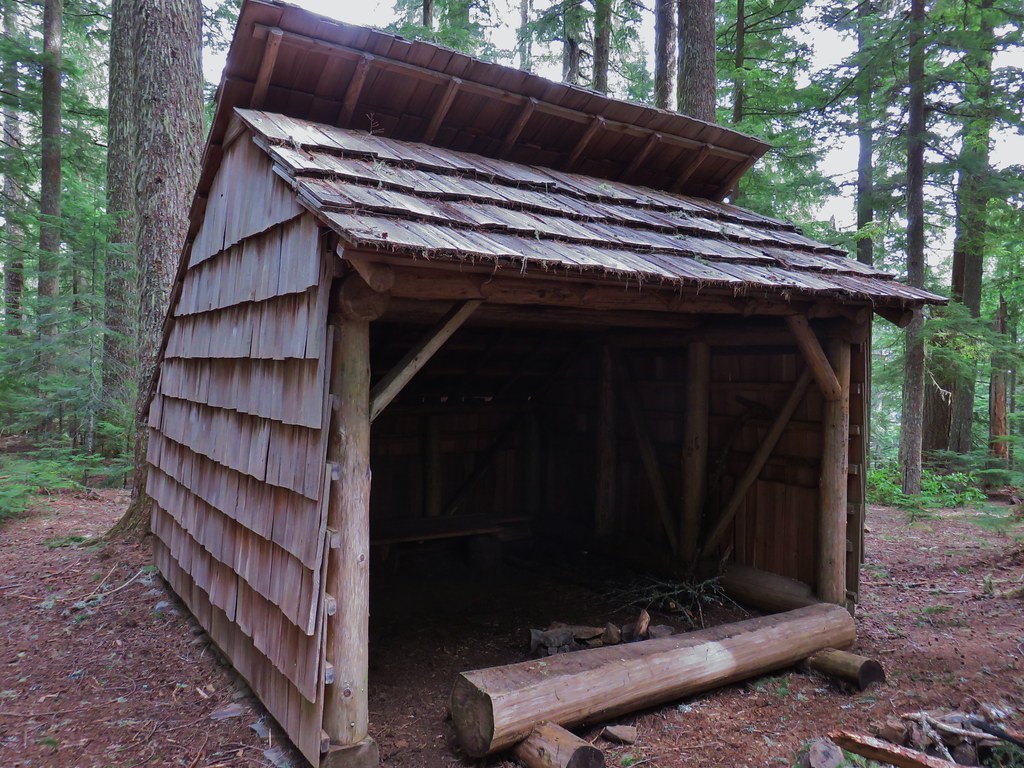
At the junction we turned right to visit the Lone Wolf Shelter.IMG_3032

IMG_3033

IMG_3035

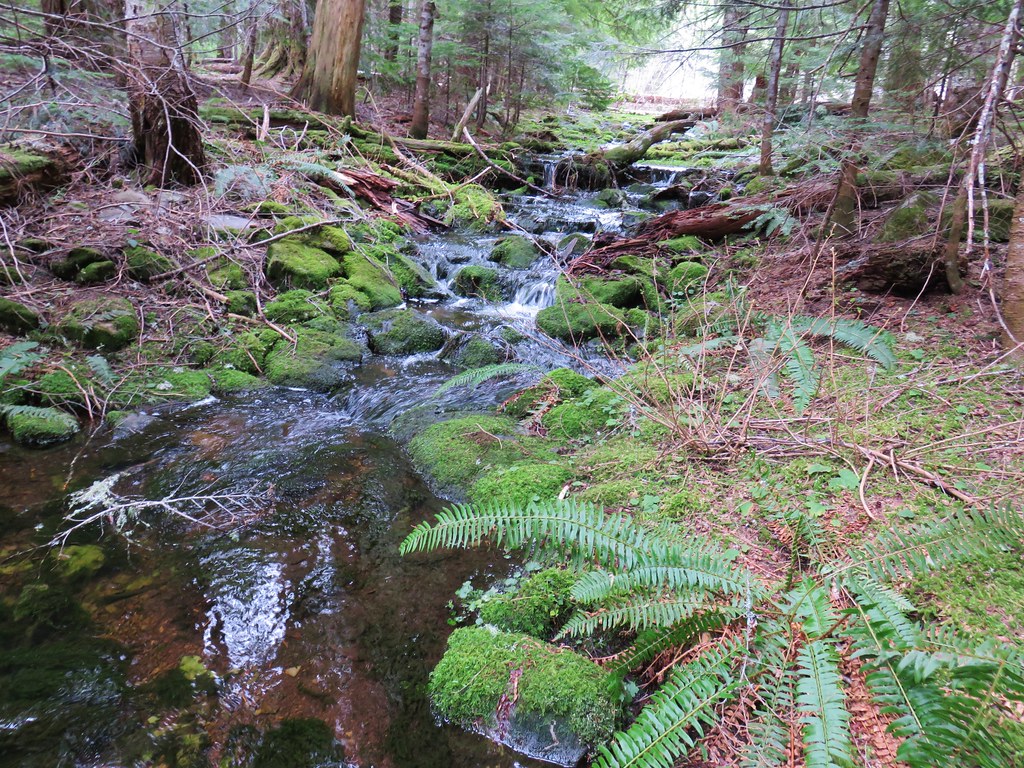
We took a break at the shelter listening to the chorus of frogs mix with the sounds of stream flowing from the meadow and the various birds calling from the trees.IMG_3044
After our relaxing rest at the shelter we continued on toward the summit of Patterson Mountain. The trail passed above another meadow that was full of more yellow skunk cabbage.IMG_3048

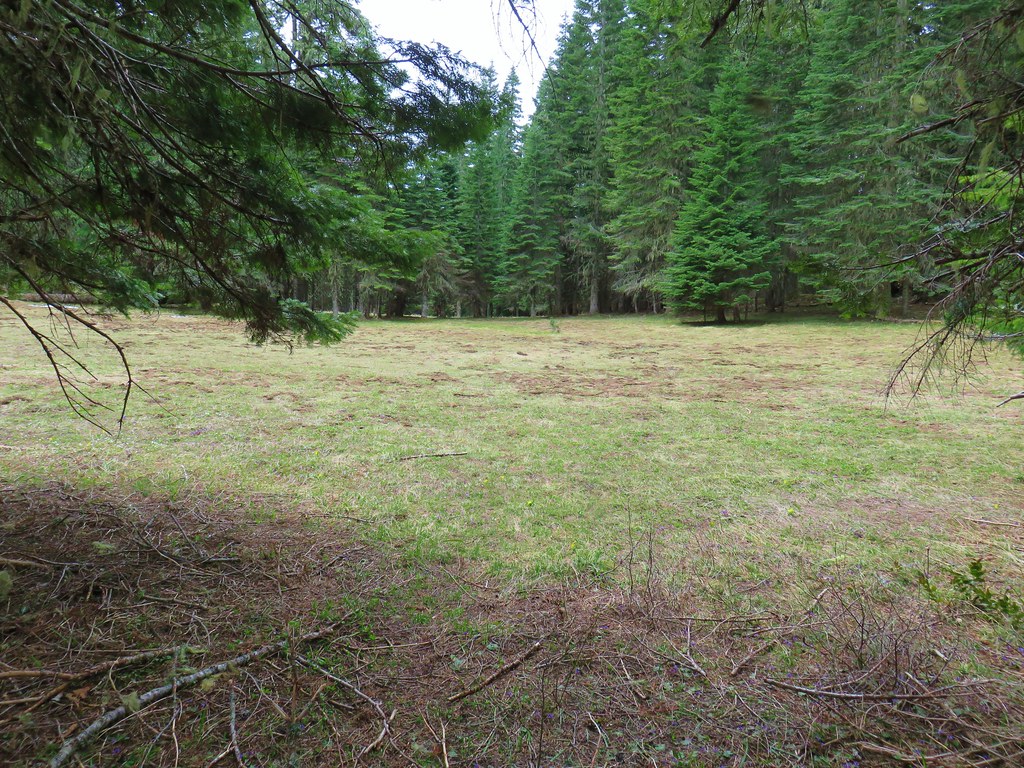
After passing the forested summit of Patterson Mountain the trail dropped slightly to a saddle with a small meadow.IMG_3057
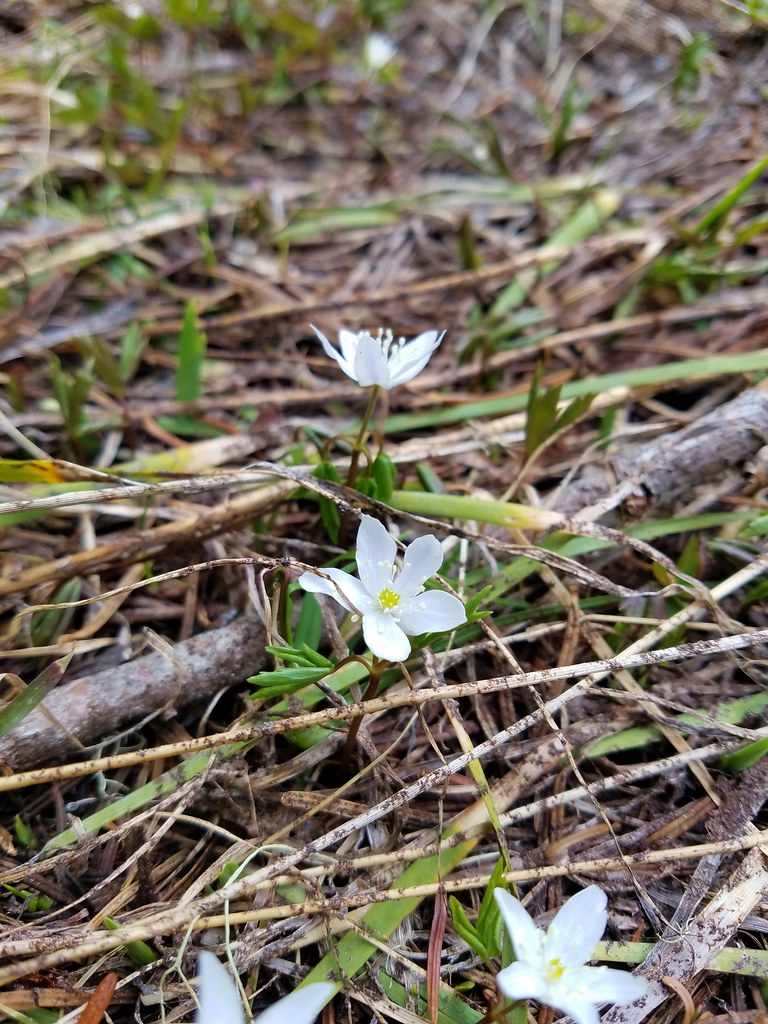
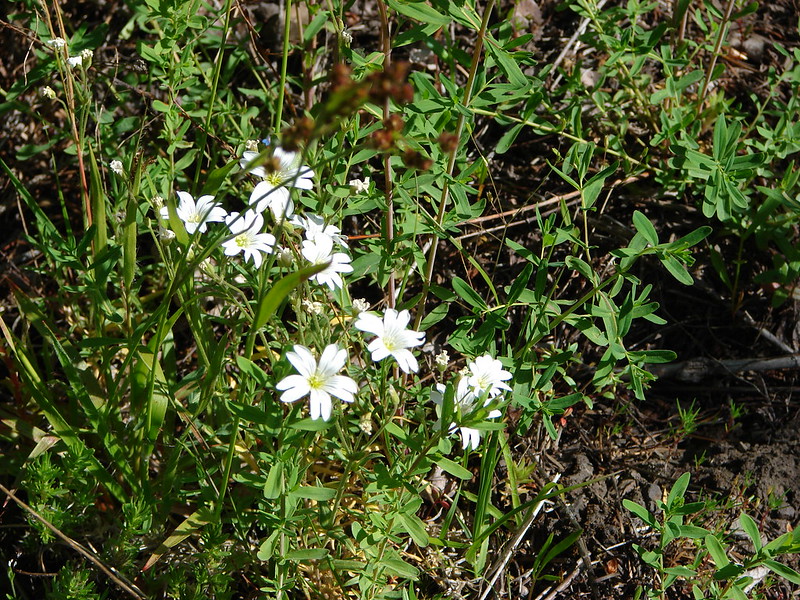
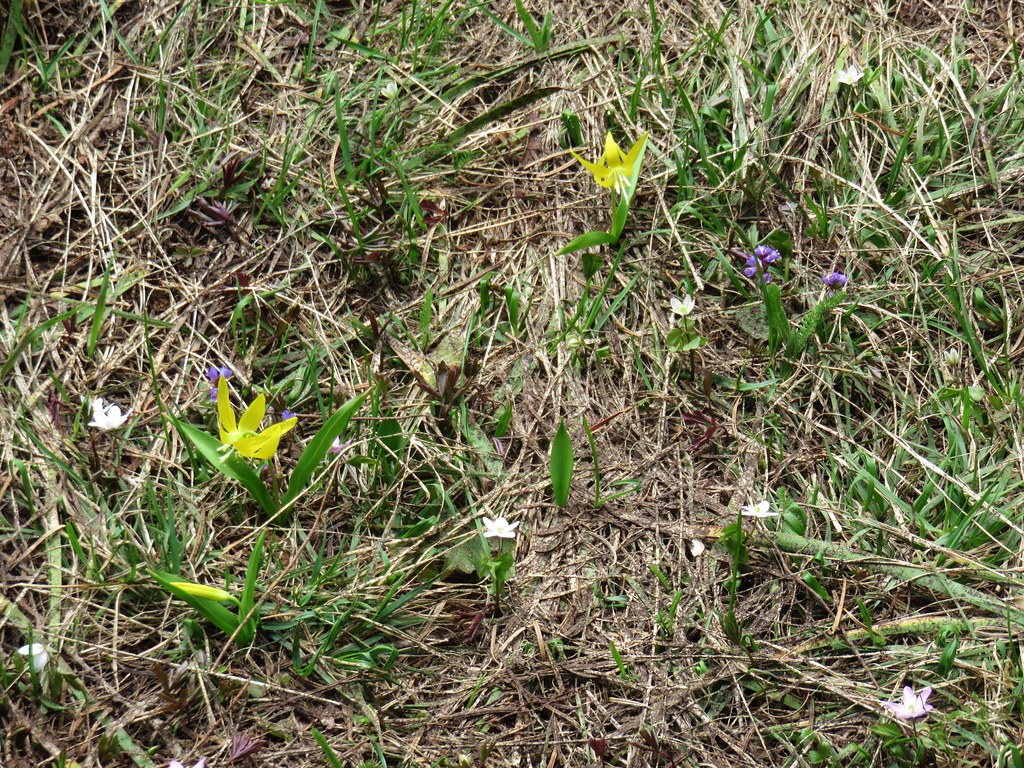
Here a few yellow glacier lilies mixed with purple snow queen and some small white flowers.IMG_3062
IMG_3058

20180505_112239

A final quarter mile of hiking brought us to the end of the trail and a bench at a rocky viewpoint.IMG_3065
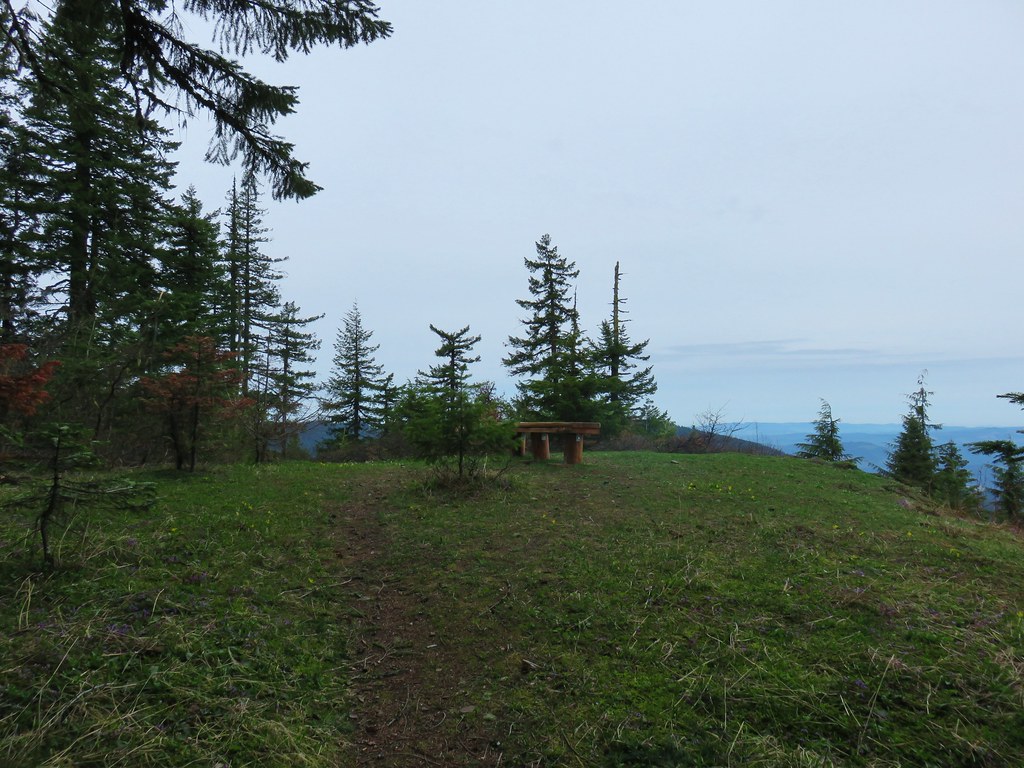
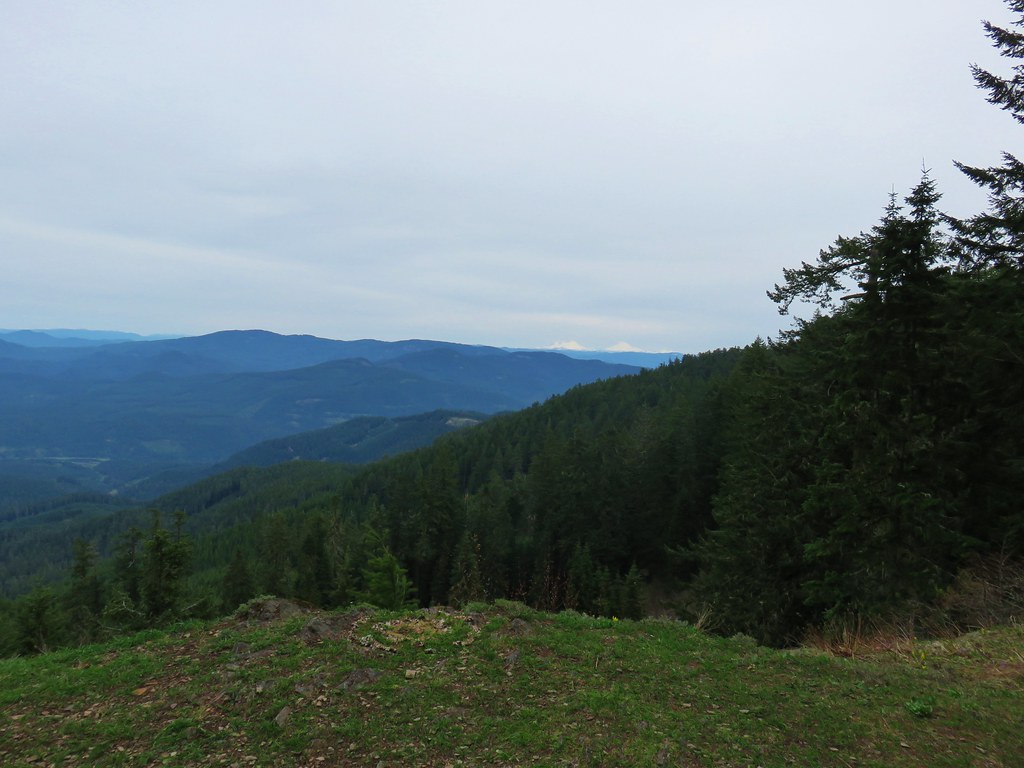
From here views extended west past Hardesty Mountain and Lookout Point Reservoir to the Willamette Valley.IMG_3081
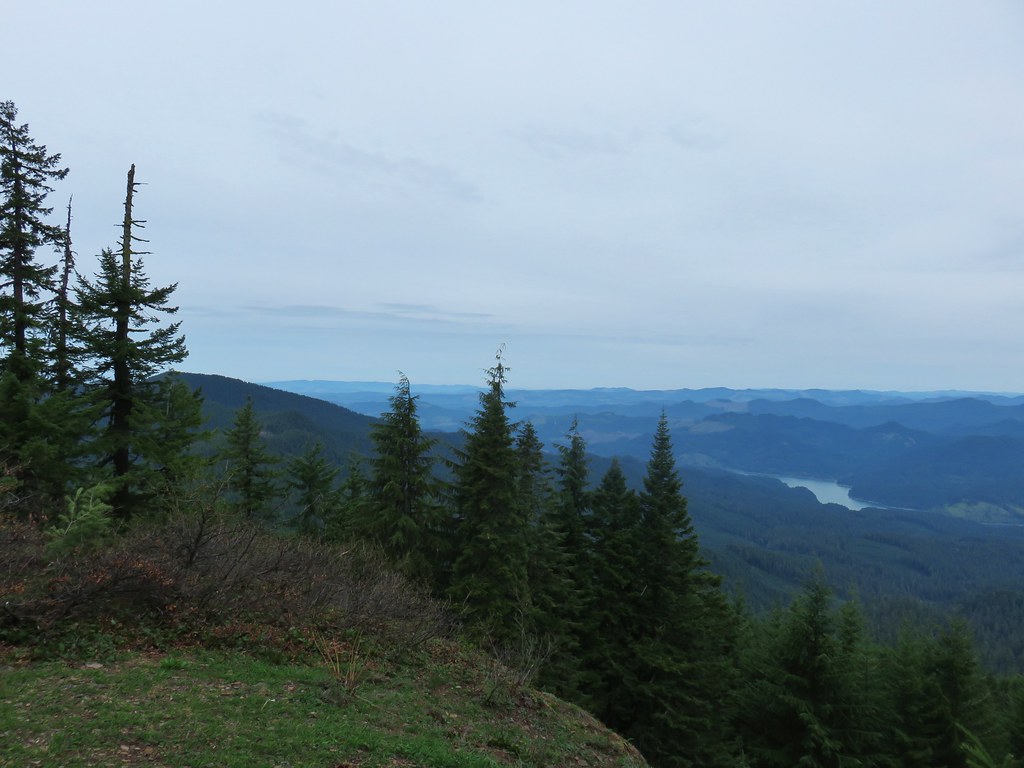
The Three Sisters and Broken Top could be seen to the NE.IMG_3070
IMG_3072

We sat on the bench for a bit. The only sounds were of the occasional bird and it was wonderfully peaceful. We pulled ourselves away at 11:45 and started back. We had only seen a couple of mountain bikers up to that point but as we made our way back to the shelter we began to see a few more people. We passed a couple of families who had started from the Lone Wolf/Patterson Trailhead which allowed for a kid friendly 5 mile round trip to the bench viewpoint.

Once we were back on the Lawler Trail we passed some equestrians on their way up and were passed by a handful of mountain bikers on their way down. Some of the wildflowers had opened up as the day moved on adding some sights to the decent that we had not seen earlier.20180505_114836

Toothwort

IMG_3101

Sour grass

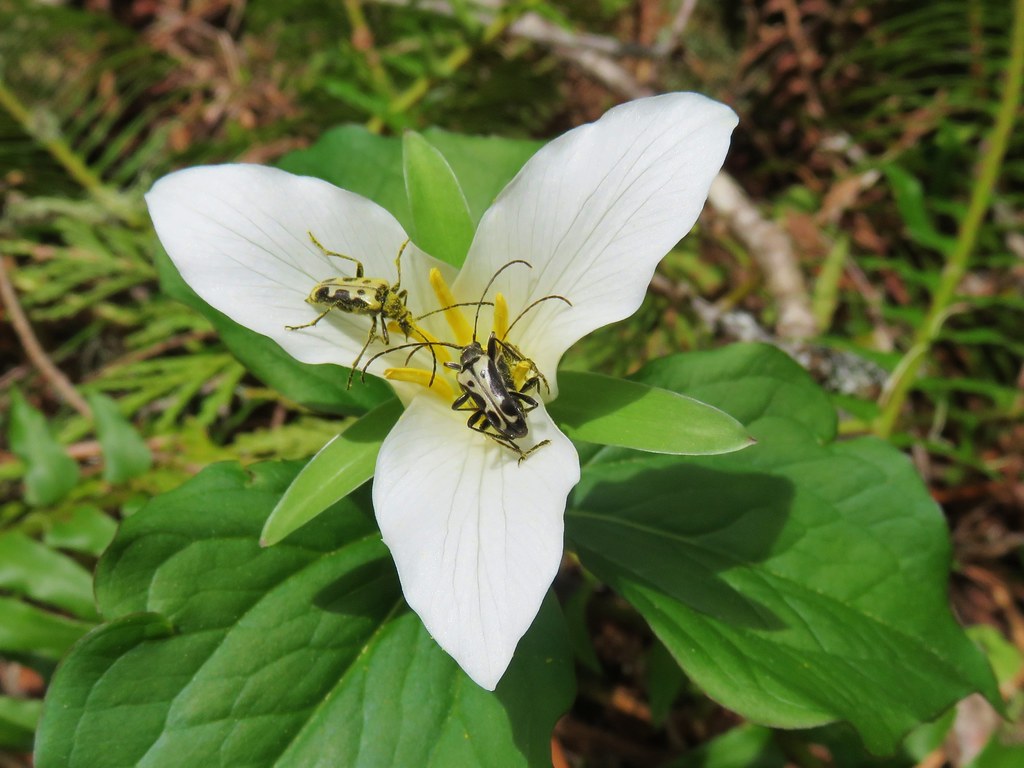
The insects were a little more active as well.IMG_3120
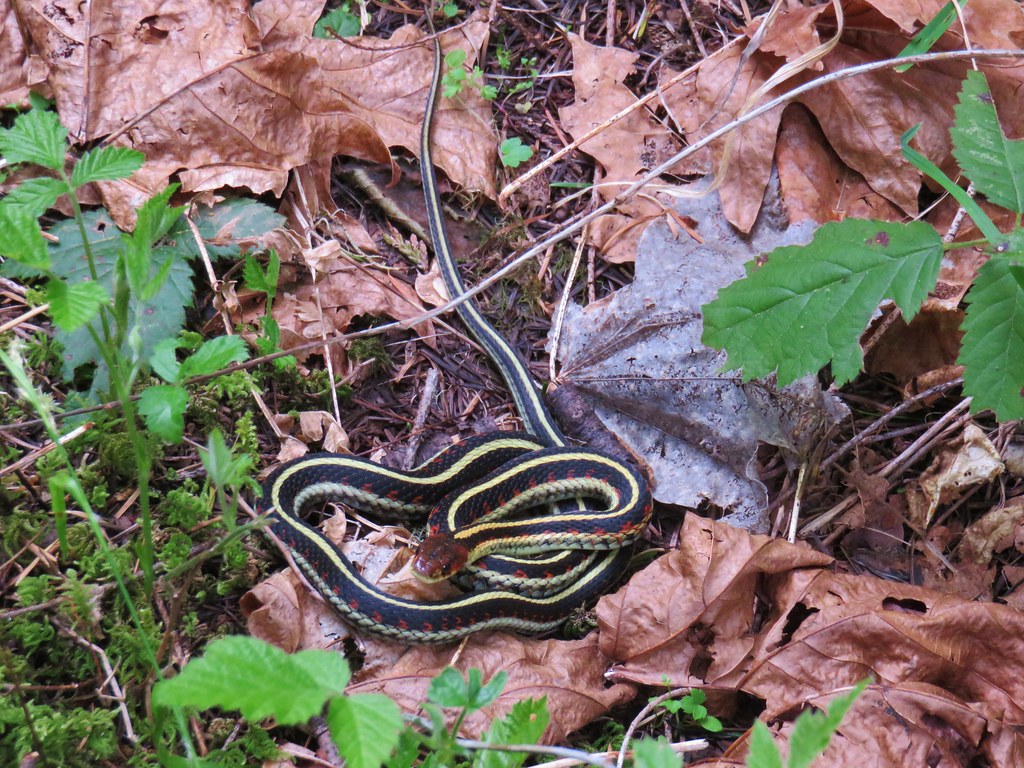
As we were finishing our hike along the old road bed I spotted a little garter snake curled up by the trail.IMG_3138
We were still the only car parked on Road 535 which was good because we had been slightly concerned about getting penned in if more people parked there. As we drove out it appeared that the equestrians had parked at Duval Creek and the Mountain Bikers had likely either parked at the Eula or Hardesty Trailheads.

The hike was on the longer side coming in a little over 16 miles and had a cumulative elevation gain over 3000′ putting it squarely in the difficult category, but it had been worth the effort. The various viewpoints helped provide breaks along the way and in the end we encountered less than 20 other people. While the shorter option of starting at the Lone Wolf/Patterson Trailhead is surely the choice of most hikers this longer option would be a great training hike for those seeking one. Happy Trails!

Flickr: Patterson Mountain

Categories
Hiking Oakridge Area Old Cascades Oregon Trip report

Deception Butte and Dead Mountain Trails

Our latest outing was a microcosm of our year so far. Several days of rain and snow coupled with overnight temperatures in the mid 20’s had our plans in flux until the night before our hike. In the end we wound up having a great time but the planning and process were anything but smooth.

In the end we decided to try the Deception Butte Trail . The trailhead elevation was low enough that we didn’t need to worry about icy roads in the morning which was our biggest concern in determining our destination.

We weren’t sure what to expect from the Deception Butte Trail. In 2014 the Deception Fire had closed and burned some of the trail. The trail description on the Forest Service page didn’t say anything about the trail still being closed, but it did contain a map from 2014 showing the closure. The map description states “This map shows the open and closed sections of the trail resulting from damage from the Deception Fire in 2014.” It was unclear whether that was just to let the reader know that the map was old and that was why there were red and green sections of the trail or if it was to inform the reader that the trail remained closed. Spoiler alert it was the latter.

We started our morning at the Lower Deception Butte Trailhead which is located 3 miles west of Oakridge, OR one hundred yards up Deception Creek Road.
Deception Butte Trailhead

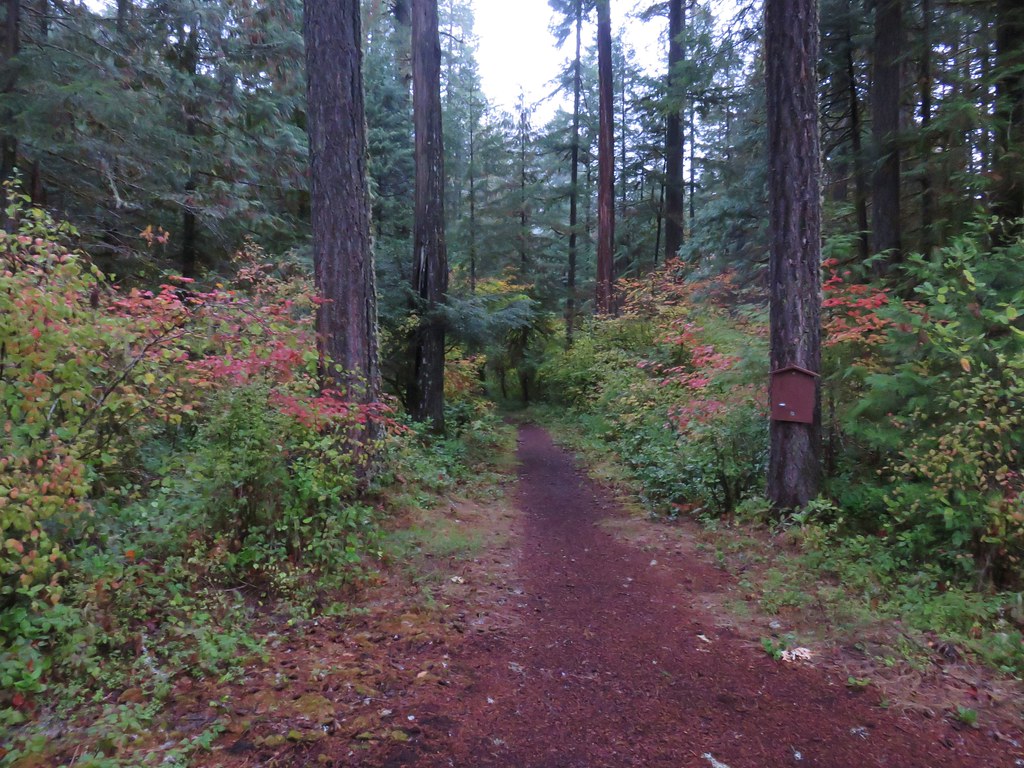
We were encouraged by the lack of any signage to indicate that part of the trail remained closed as we set off into the forest.
Deception Butte Trail

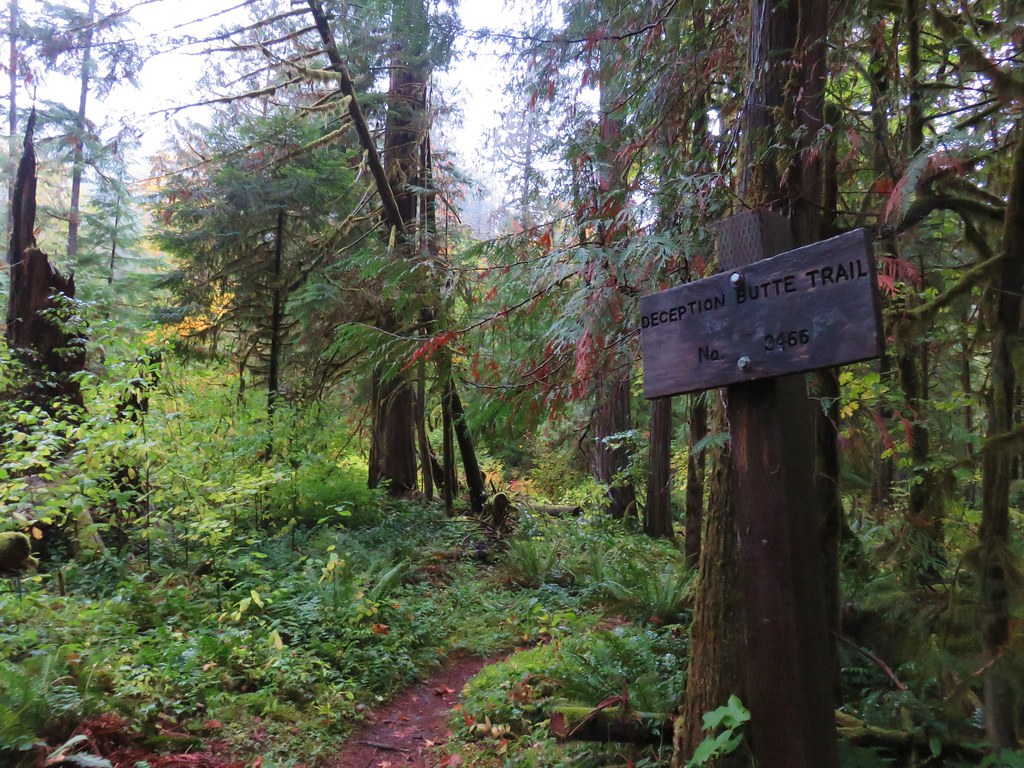
We followed the Deception Butte Trail sign.
Deception Butte Trail

The trail passed through a lush forest as it bent around a hill where it began to follow along Deception Creek.
Deception Butte Trail

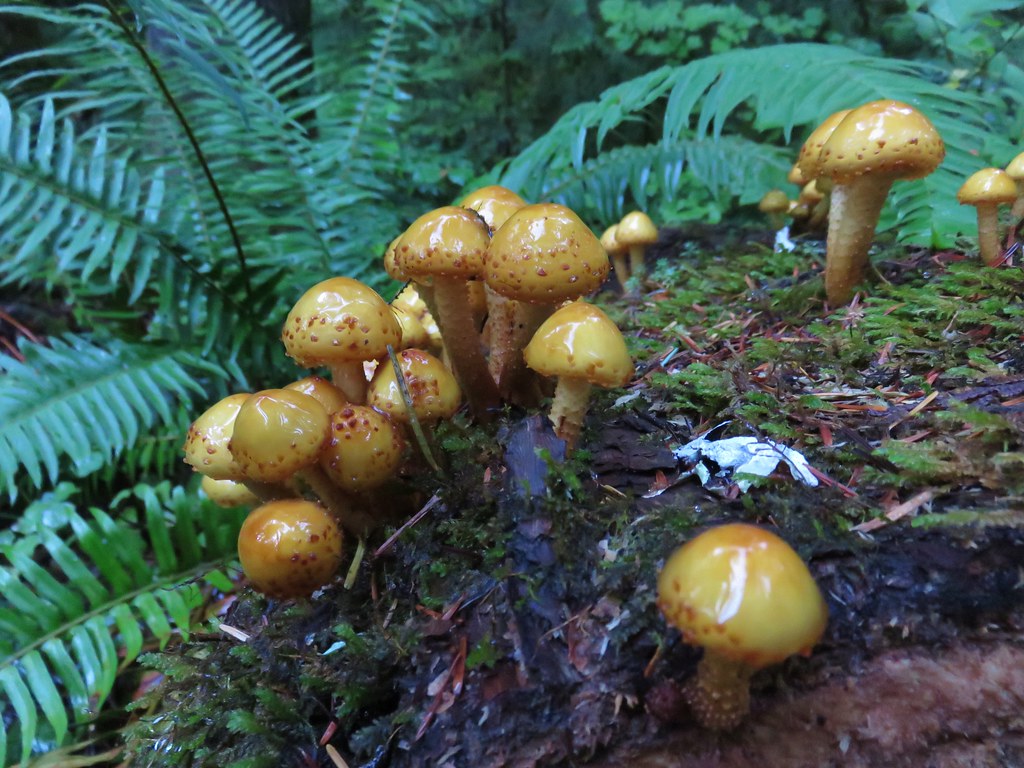
Mushrooms on a log

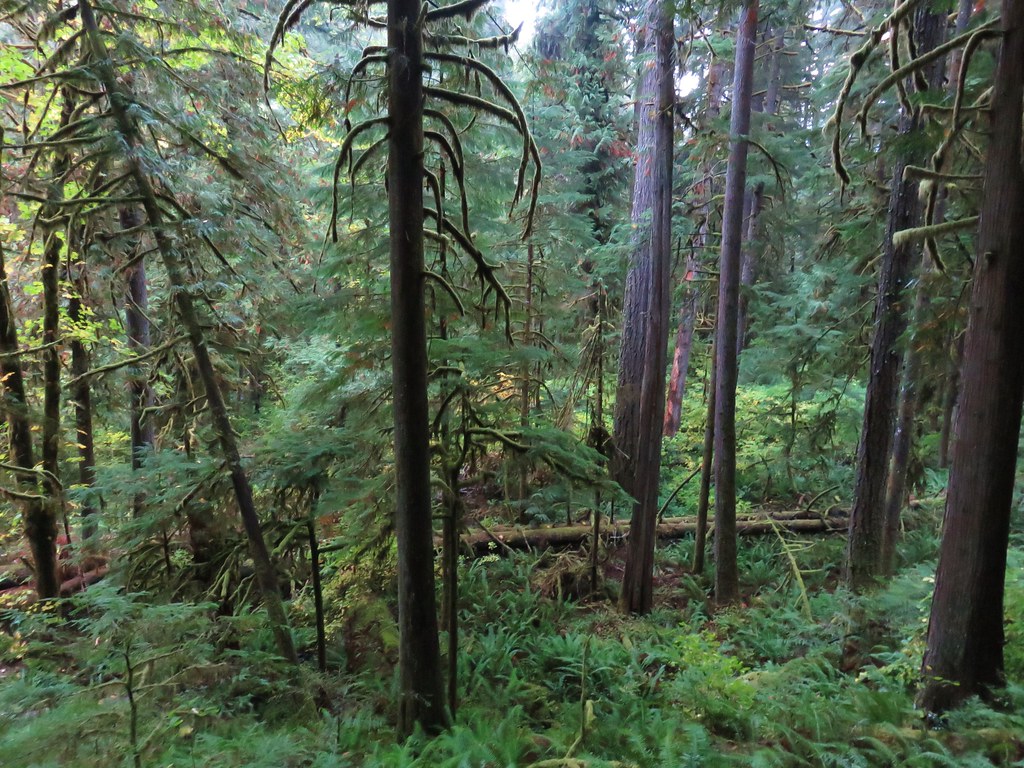
Forest along the Deception Butte Trail

Deception Creek from the Deception Butte Trail

The trail dropped a bit to the creek which was flowing fairly well due to all the recent precipitation.
Deception Creek

Deception Butte Trail

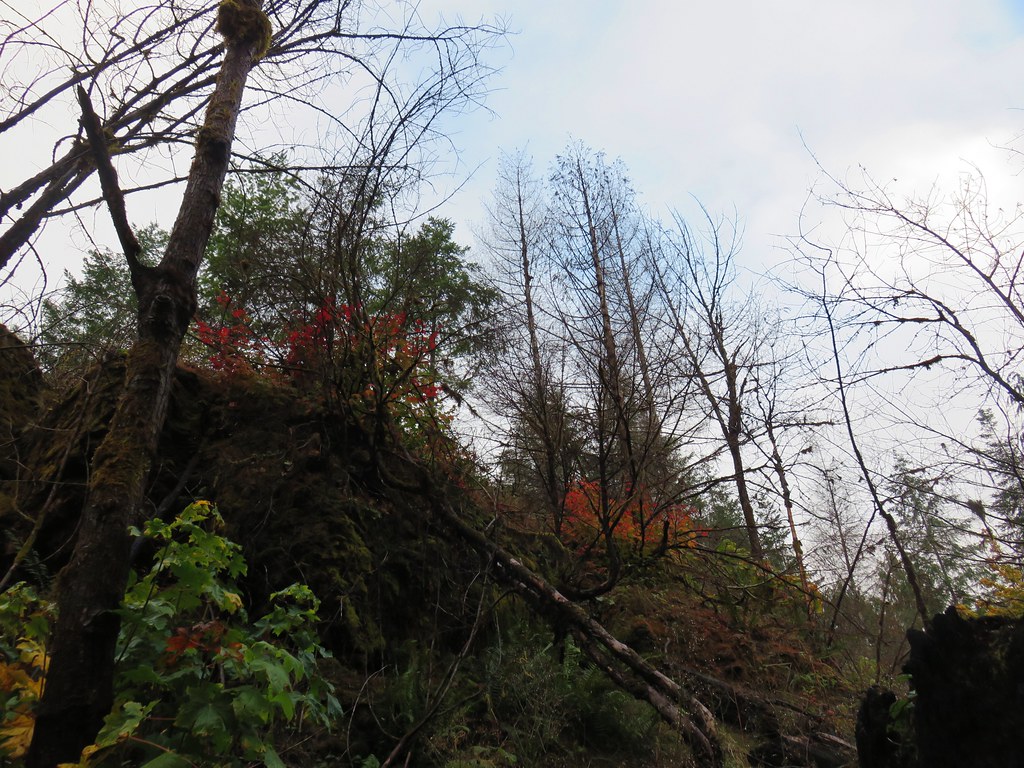
Signs of the 2014 fire could be seen on the hillside above the trail.
Burned forst above the Deception Butte Trail

At the 1.75 mile mark we came to a footbridge over Deception Creek.
Footbridge along the Deception Butte Trail

Deception Creek

There still had been no signs warning of a trail closure so we crossed the bridge and continued on. Not even a tenth of a mile beyond the bridge we came to a rocky ridge and entered the burn area.
Deception Butte Trail

Vine maple

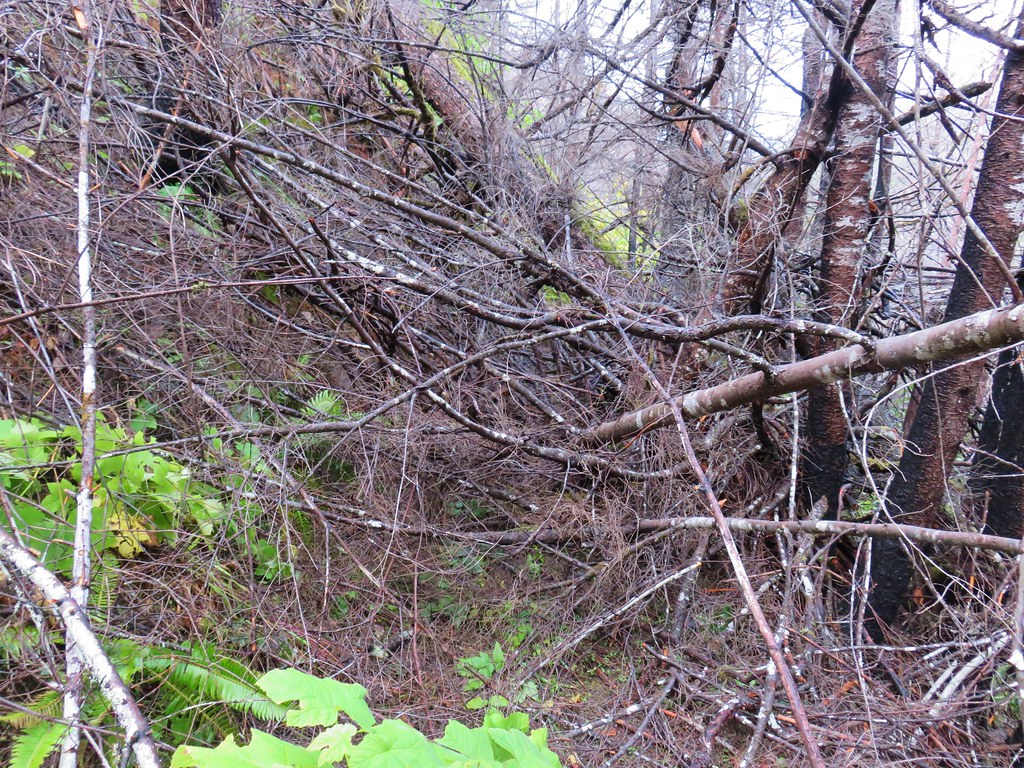
We began to encounter blowdown almost immediately. The first couple of obstacles were navigable but then we came to this.
Blowdown over the Deception Butte Trail

The steepness of the hillside made going around the jumble of debris impossible so we turned back. Even though there had been no notices of the trail being closed it clearly wasn’t being maintained. We had made it 1.8 miles before heading back making this a 3.6 mile round trip. The forest along Deception Creek was nice and so was the creek so the trail is still good for a quick leg stretcher or easy day hike.

For us the hour and a half hike wasn’t going to be enough to justify the hour and forty five minute drive each way so we turned to our contingency plan, the Dead Mountain Trail.
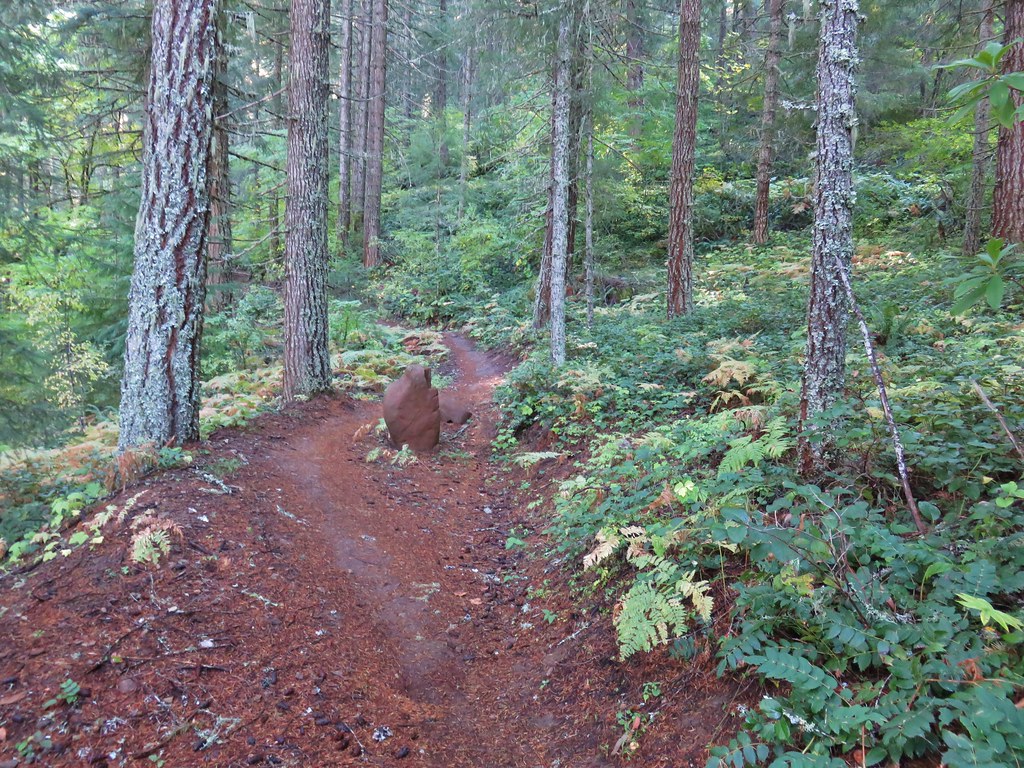
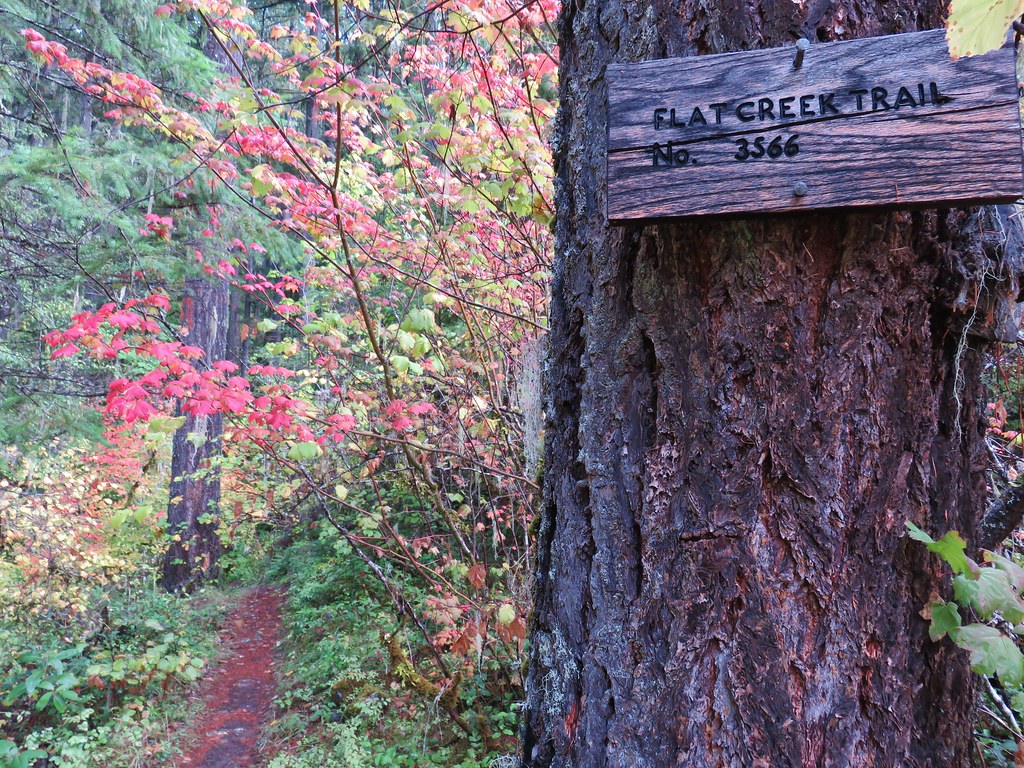
Formerly the Flat Creek Trail, the trail and name were changed in 2015 when it was extended from 4.3 miles to 6.3 miles. Sections were added at both ends to connect the trail from the Salmon Creek Trail up to the summit of Dead Mountain. Our guidebook was written prior to the trail extension so instead of parking at the new lower trailhead 2 miles outside of Oakrdige on Forest Service Road 24 (Salmon Creek Road), the hike description we had said to start .7 miles along Forest Road 2404 (Flat Creek Road) which was only 1.75 miles outside of Oakridge.

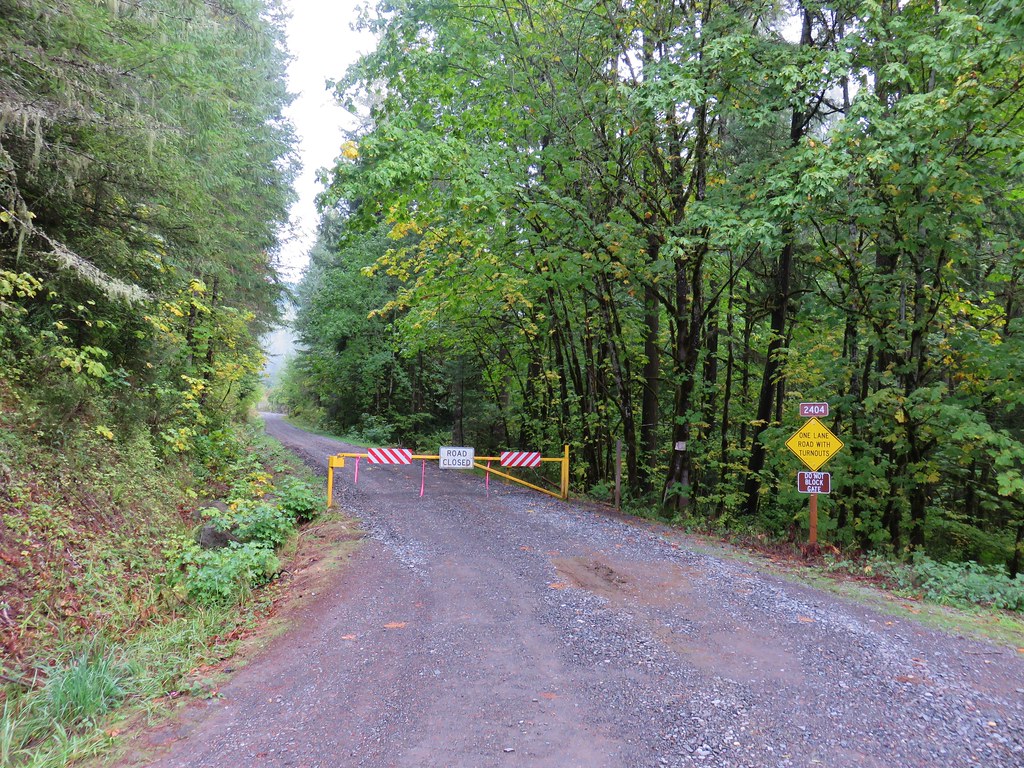
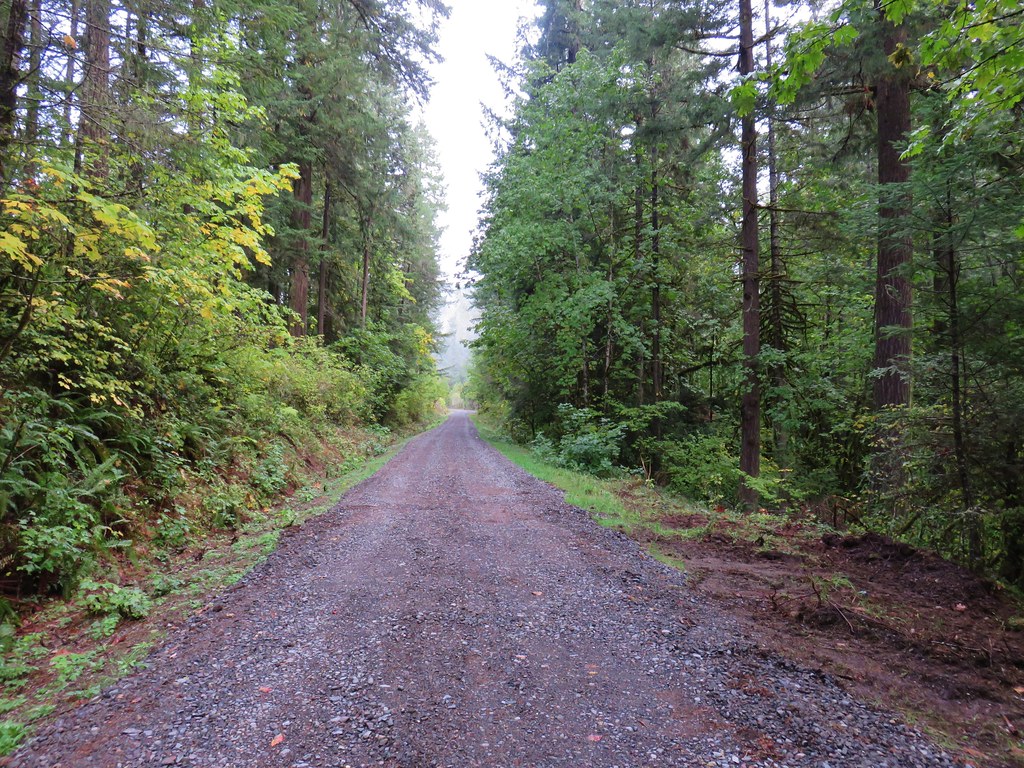
Flat Creek Road was gated shut so we parked on the shoulder and began hiking up the road.
Flat Creek Road

Flat Creek Road

As we were walking up the road we spotted a runner cross the road from the left to the right then recross the road a short time later. We were about a half mile from the gate when we came to the spot where the runner had crossed. A trail was visible on both sides of the road but it was unsigned and not shown on the GPS leaving us to wonder what it was and where it went. We continued on the road for another .2 miles where we came to the former Flat Creek Trailhead marked by a hiker symbol on a tree.
Dead Mountain Trail at Flat Creek Road
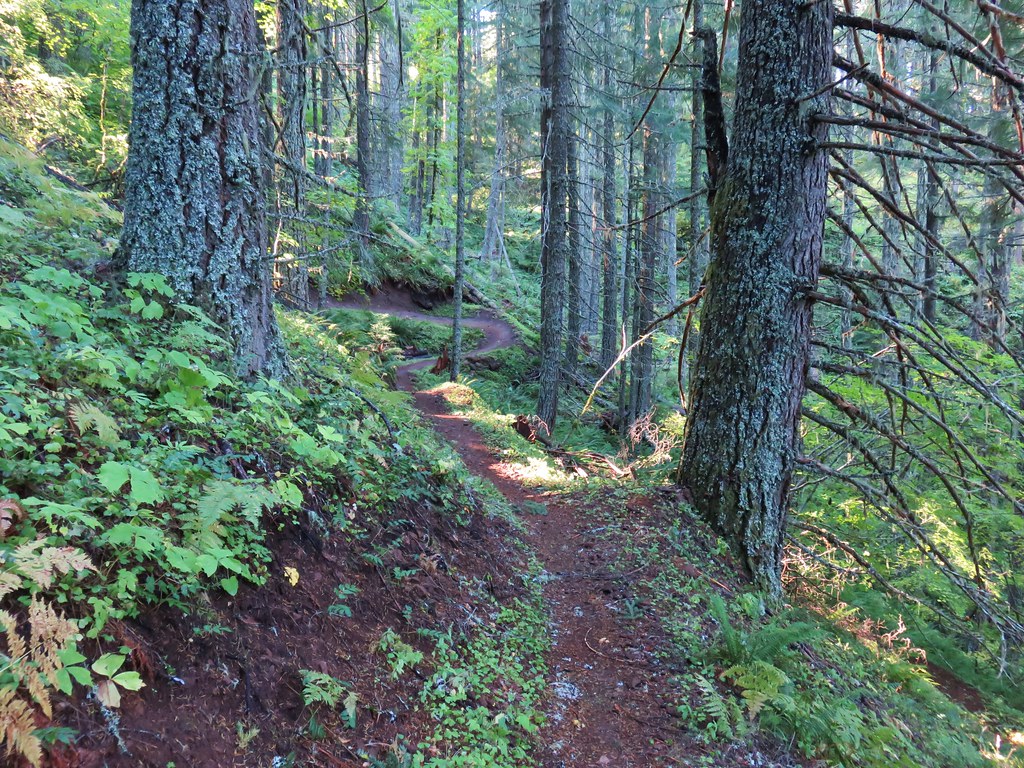
We had noticed other runners on a trail that was running parallel with the road which helped us realize that the trail we had crossed back on the road was an extension of the Flat Creek/Dead Mountain Trail. We began to suspect there was some sort of trail race happening since they were wearing numbered bibs. We joined that trail and turned right heading uphill.
Dead Mountain Trail
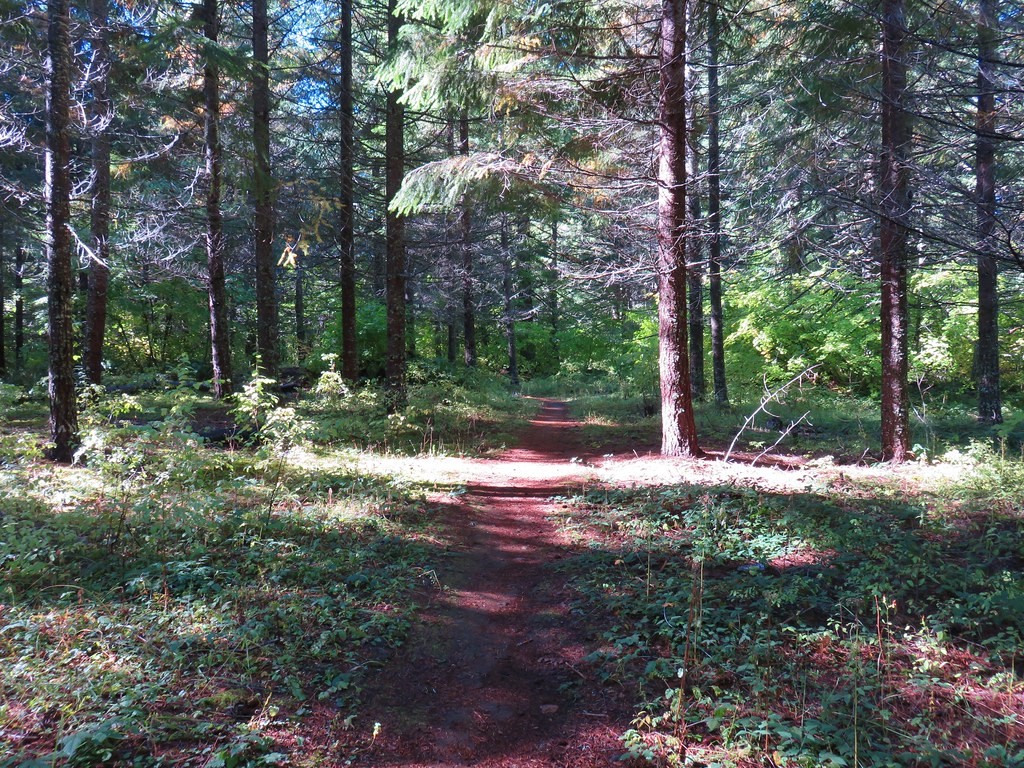
Dead Mountain Trail
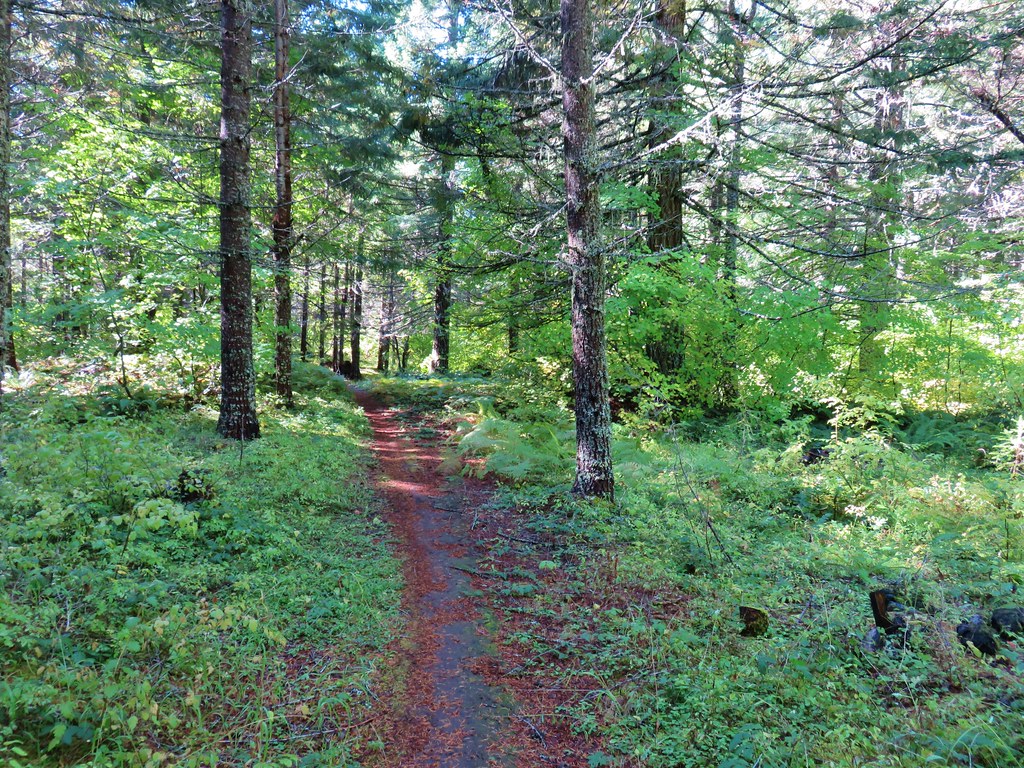
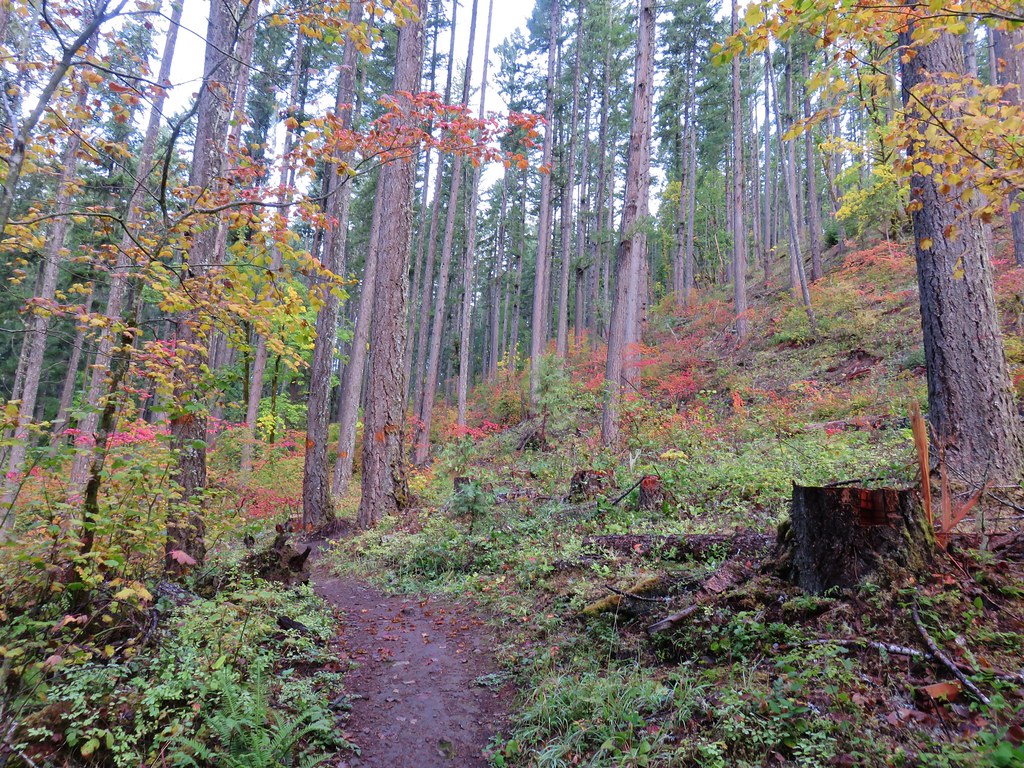
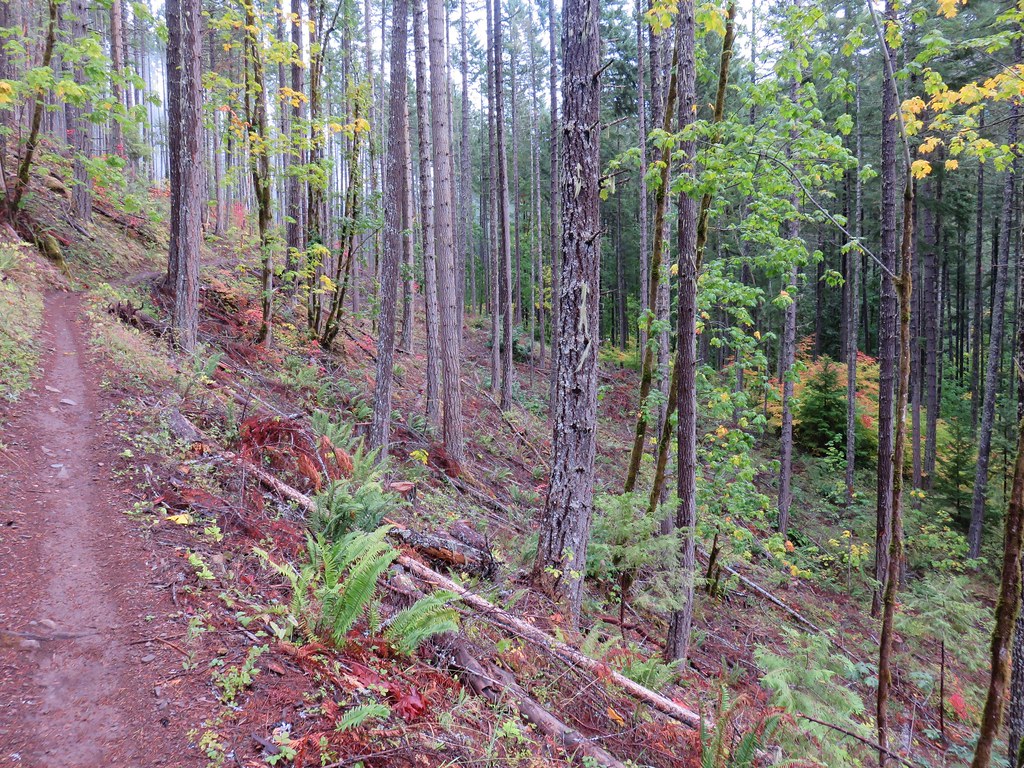
The trail is open to hikers, equestrians, mountain bikes and motorcycles and is heavily used so it was in really good shape as it climbed through a thinned forest full of fall colors.
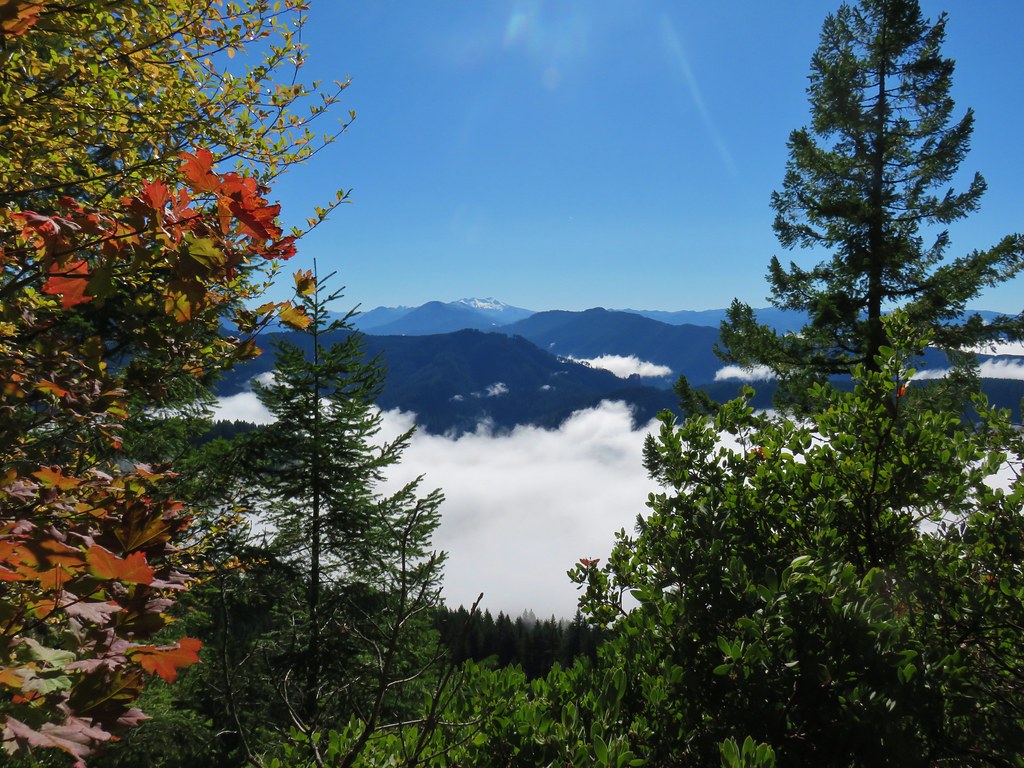
Dead Mountain Trail

Dead Mountain Trail

Dead Mountain Trail

Dead Mountain Trail

There were also a few madorne trees along the trail.
Dead Mountain Trail

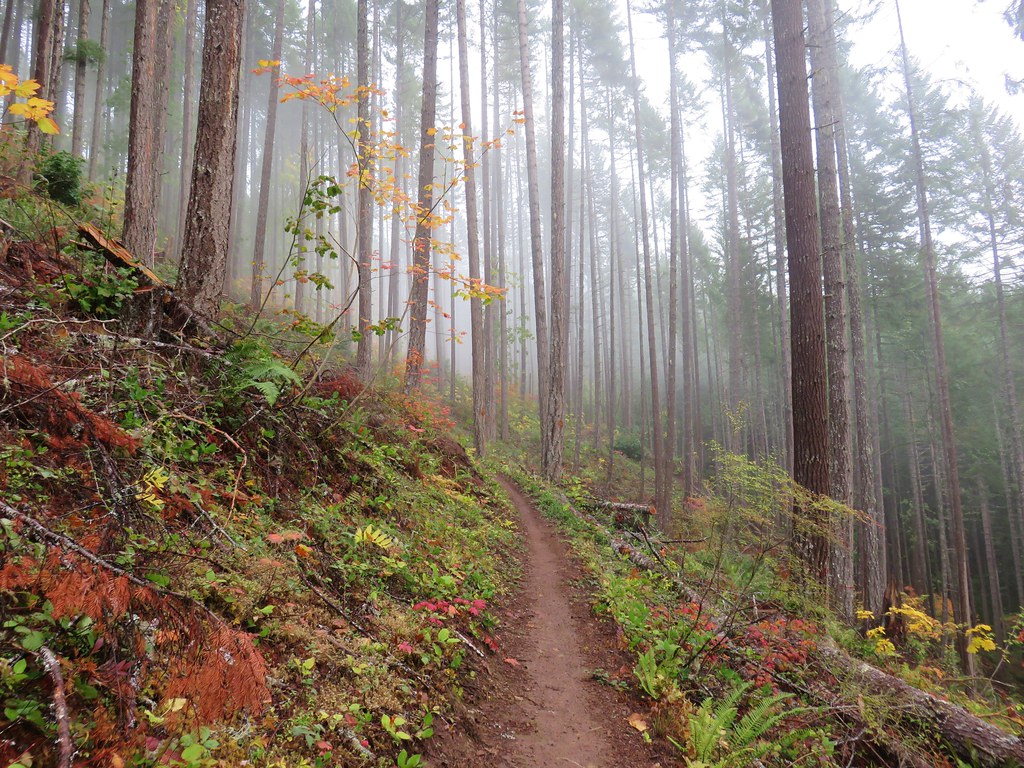
The forecast had been for sun but we had been stuck under low clouds or in fog on both trails. As the morning wore on signs pointed to clearing skies.
Clouds breaking up from the Dead Mountain Trail

About two miles from the gate as we neared the end of the thinned forest we finally broke out of the fog.
Dead Mountain Trail

The trail then promptly entered a denser forest.
Dead Mountain Trail

Dead Mountain Trail

Dead Mountain Trail

The trail crossed an old road before arriving at another road junction a quarter of a mile later where an aid station was set up for the trail race. We asked the volunteers what race it was and they explained that it was the Oakridge Triple Summit Challenge, a three day event where runners make three different summit ascents.

Our guidebook would have had us turn uphill to the right on Dead Mountain Road at this junction but with the extension of the trail we crossed the road and continued on a path that had been clearly designed to be a mountain bike trail.
Dead Mountain Trail

Dead Mountain Trail

The trail had many ups and downs and hairpin corners as it climbed toward the summit.
Dead Mountain Trail

Just over 1.75 miles from the road junction the trail crossed Dead Mountain Road.
Dead Mountain Trail

After another tenth of a mile of climbing we arrived at the broad flat summit of Dead Mountain.
Dead Mountain Trail

Dead Mountain Trail

The trail wound around the summit to the Upper Dead Mountain Trailhead at the end of Dead Mountain Road.
Dead Mountain Trail

Several radio and cell towers were located near the upper trailhead and it was in this area where we were finally able to get a mountain view.
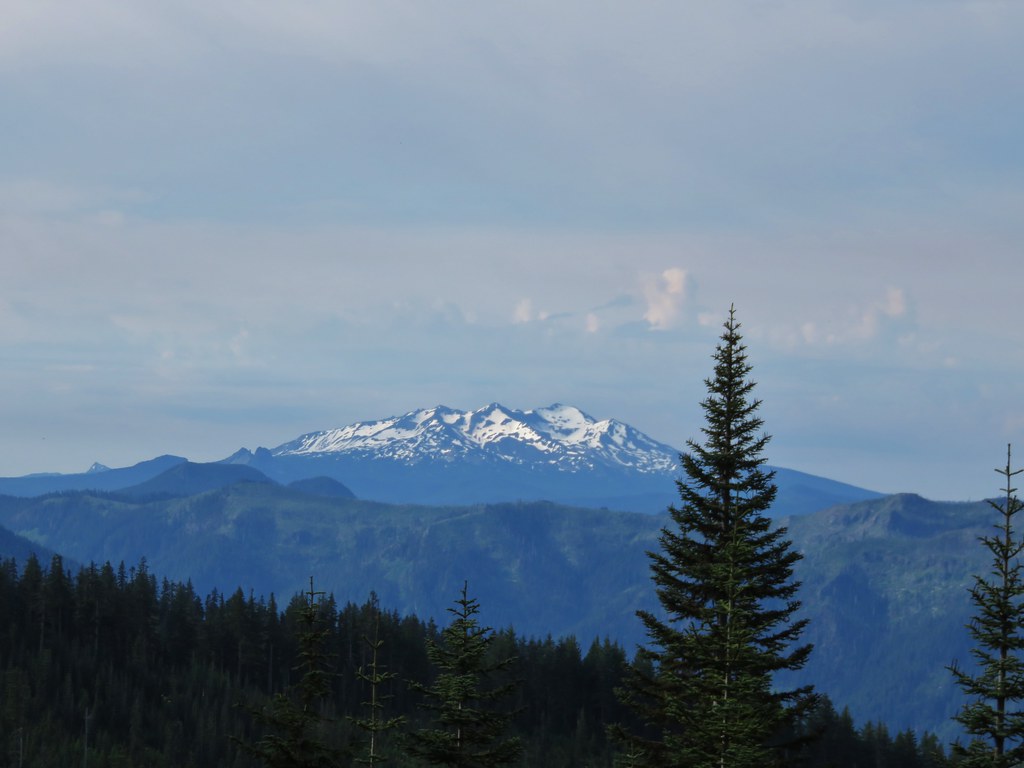
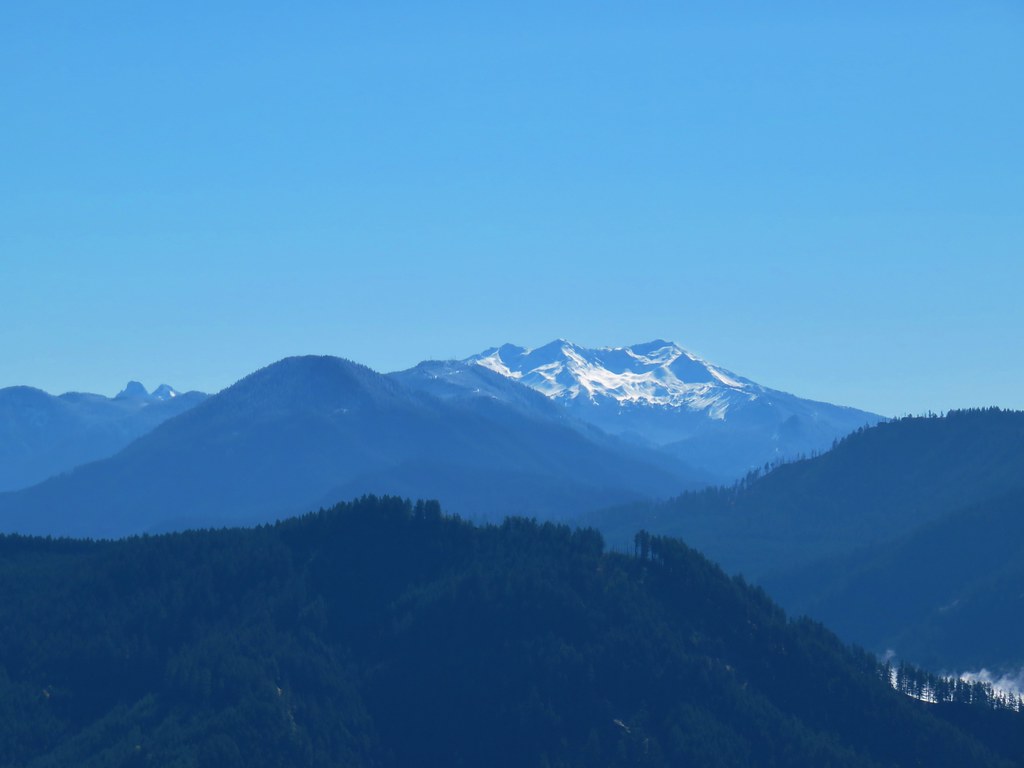
Diamond Peak

Diamond Peak
Diamond Peak

We did a little exploring and headed downhill on a road track which led to a path that headed out onto a narrow ridge with even better views. It was a great view but definitely not a spot for anyone with a fear of heights.
Ridge on Dead Mountain

View from Dead MountainLooking SW

View from Dead MountainHills Creek Reservoir (behind the tree)
Diamond Peak

Diamond PeakMount Yoran and Diamond Peak
Waldo MountainWaldo Mountain

We decided to follow Dead Mountain Road down for a bit which was the route that the runners had followed.
Dead Mountain Road

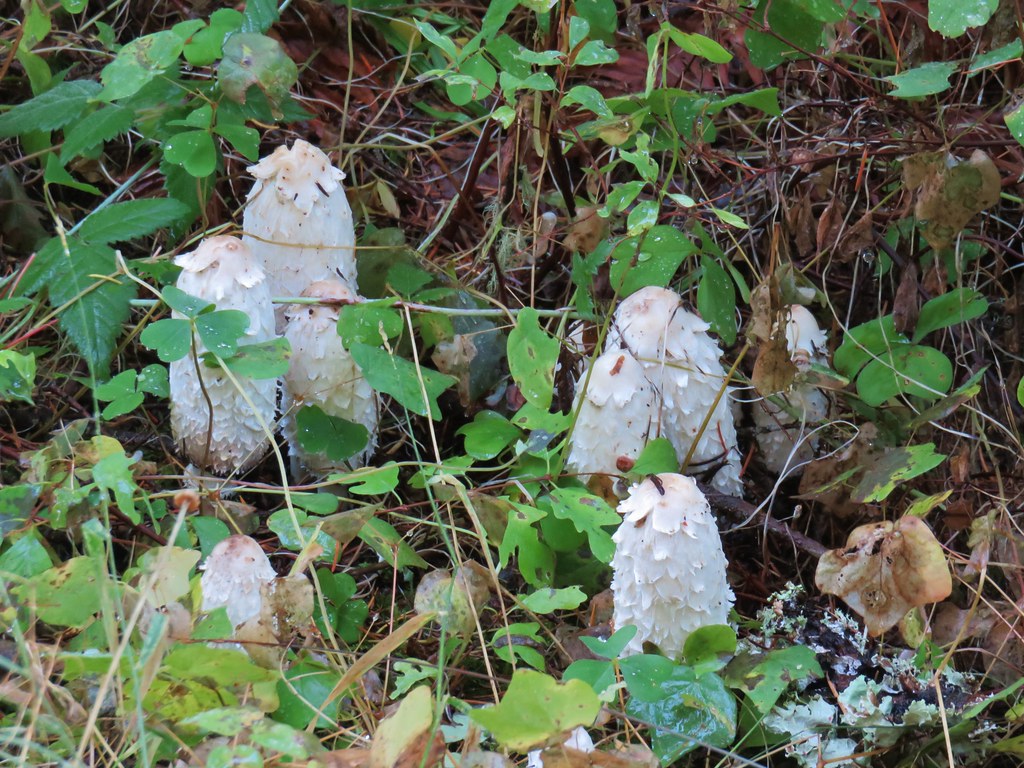
There were some interesting white mushrooms along the road.
Mushrooms on Dead Mountain

We followed the road for approximately three quarters of a mile passing a “Road Work Ahead” sign along the way.
Road work sign on Dead Mountain Road

After the three quarters of a mile we forked right on another old road bed then took a short trail which had been marked for the race back to the Dead Mountain Trail.
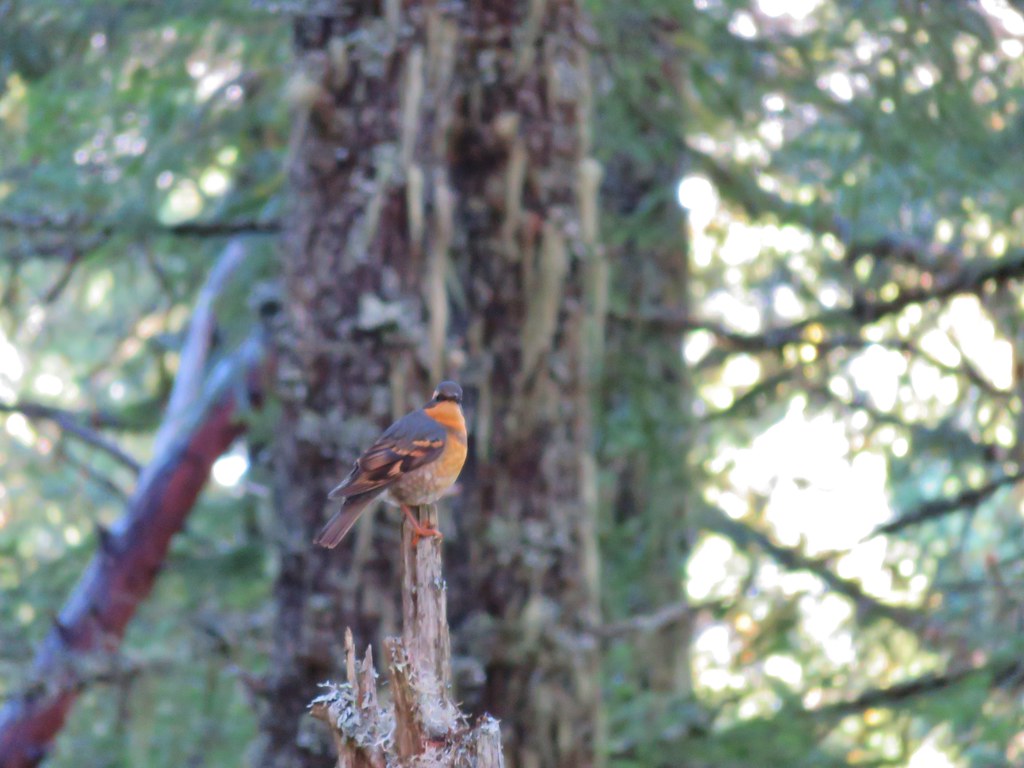
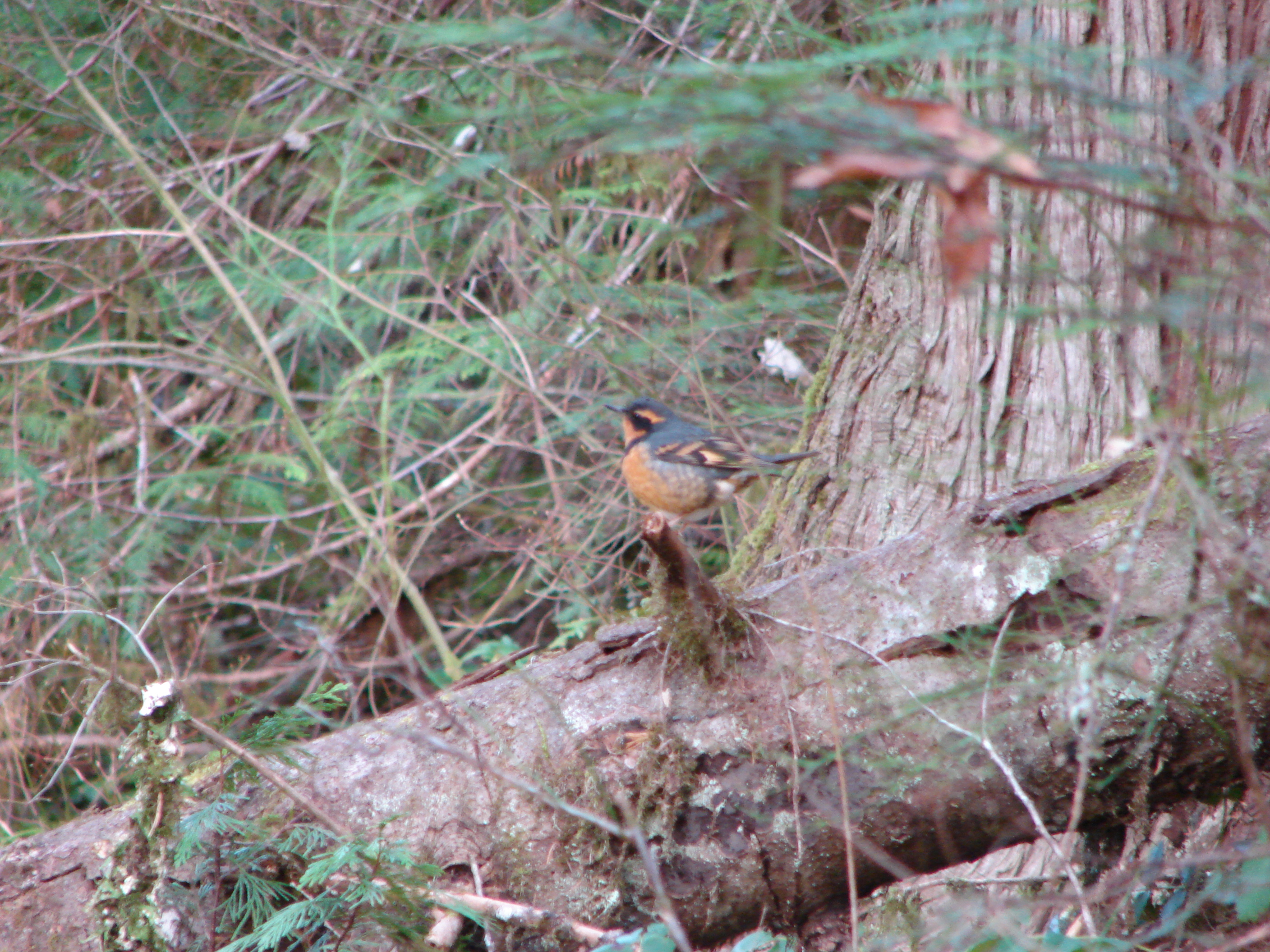
Along the way we had an encounter with my old nemesis, the varied thrush. We see quite a few of these colorful birds on the trails but I am rarely able to get an even remotely decent photo. They move around a lot and they always seem to be in poorly lit areas. After a couple of attempts at this particular thrush it finally sat still long enough for a slightly blurry photo.
Varied thrush

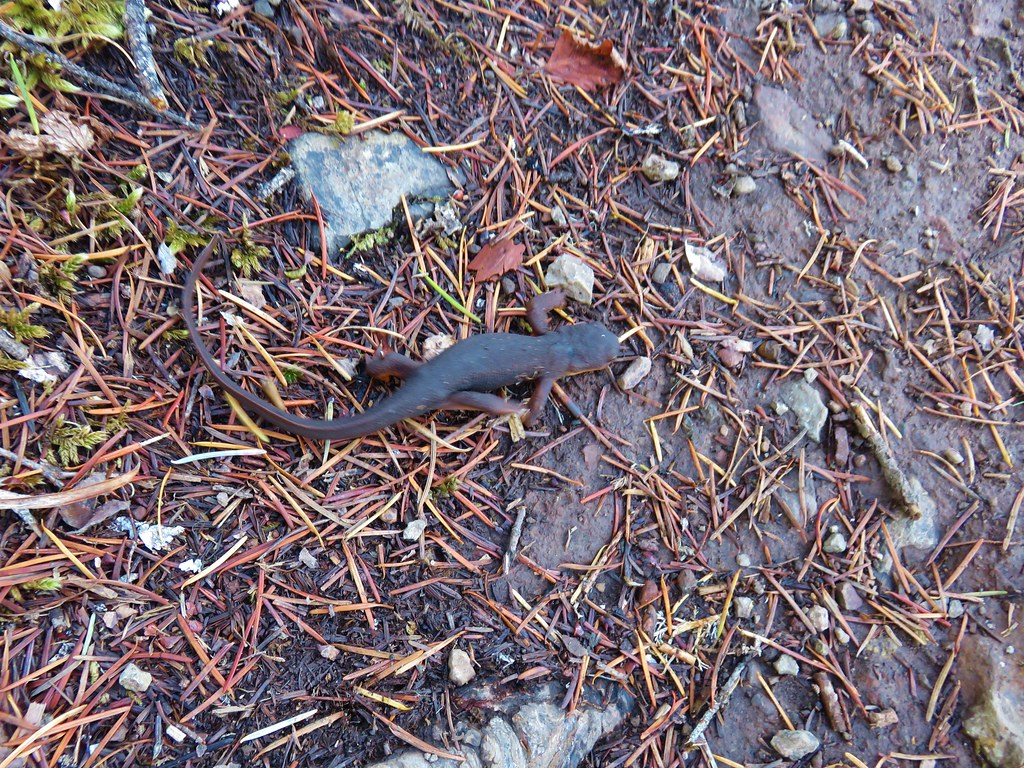
The aid station had been packed up and removed by the time we arrived back at the road junction and the runners on the trail had been replaced by other hikers and mountain bikers (and one speedy newt) as we made our way down.
Rough skinned newt

With the fog gone the fall colors were on full display in the thinned area.
Fall colors along the Dead Mountain Trail

Vine maple

Dead Mountain Trail

Vine maple

We followed the Dead Mountain Trail past where we had joined it from Flat Creek Road earlier but didn’t take the portion between Flat Creek Road and Salmon Creek Road due to not knowing for sure how long it was nor how far it might leave us from our car.
Dead Mountain Trail

Our route for this hike wound up being a total of 10.7 miles with over 2000′ of elevation gain. The trail made for a nice hike but given it’s design as a mountain bike trail and heavy use might not always be the most peaceful hike.

As our hiking season winds down we’ve done few of the hikes we’d planned on but those that have taken their places have turned out well and today was no different. Happy Trails!

Flickr: Deception Butte and Dead Mountain Trails

Categories
Hiking Oakridge Area Old Cascades Oregon Trip report

Chucksney Mountain to Grasshopper Meadow – Overnight

**Note the 2024 Young Grasshopper Fire burned over a portion of this hike including Grasshopper Meadow.**

After cancelling our first two planned backpacking trips in June we finally got out for an overnight trip. Originally on the schedule for the last week in June, we moved our visit to Grasshopper Meadow back three weeks to let the snow finish melting off, we just hoped we hadn’t waited too long to see the wildflowers.

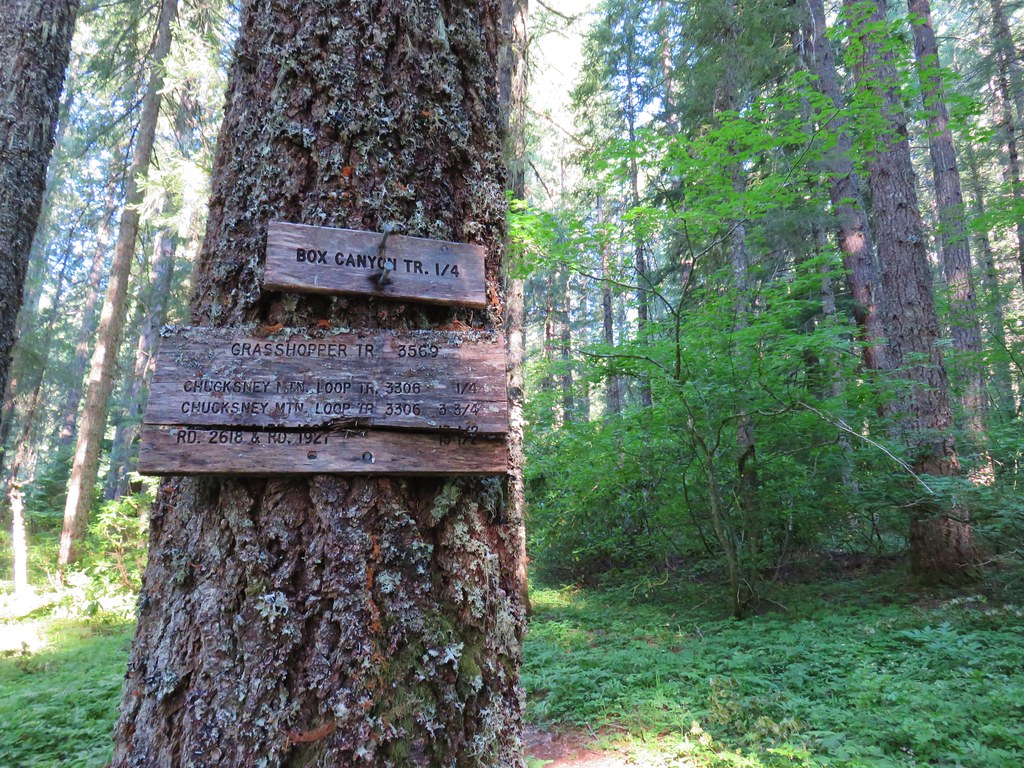
Our plan for this trip was to start at Box Canyon Horse Camp and hike to Grasshopper Meadow via the Chucksney Mountain and Grasshopper Trails.

Box Canyon Horse Camp is located just off paved Forest Road 19 (Aufderheide Road) and can be reached by driving south from Highway 126 (4 miles east of Blue River) or north from Highway 58 (3 miles west of Oakridge).

After turning at a sign for the Horse Camp we forked right and parked in a large unmarked parking area where a post marked the start of our trail.

Trail from the car parking at Box Canyon Horse Camp

The trail led uphill and left to a signed trail junction just above the corral at the horse camp where we picked up the Grasshopper Trail.

Grasshopper Trail

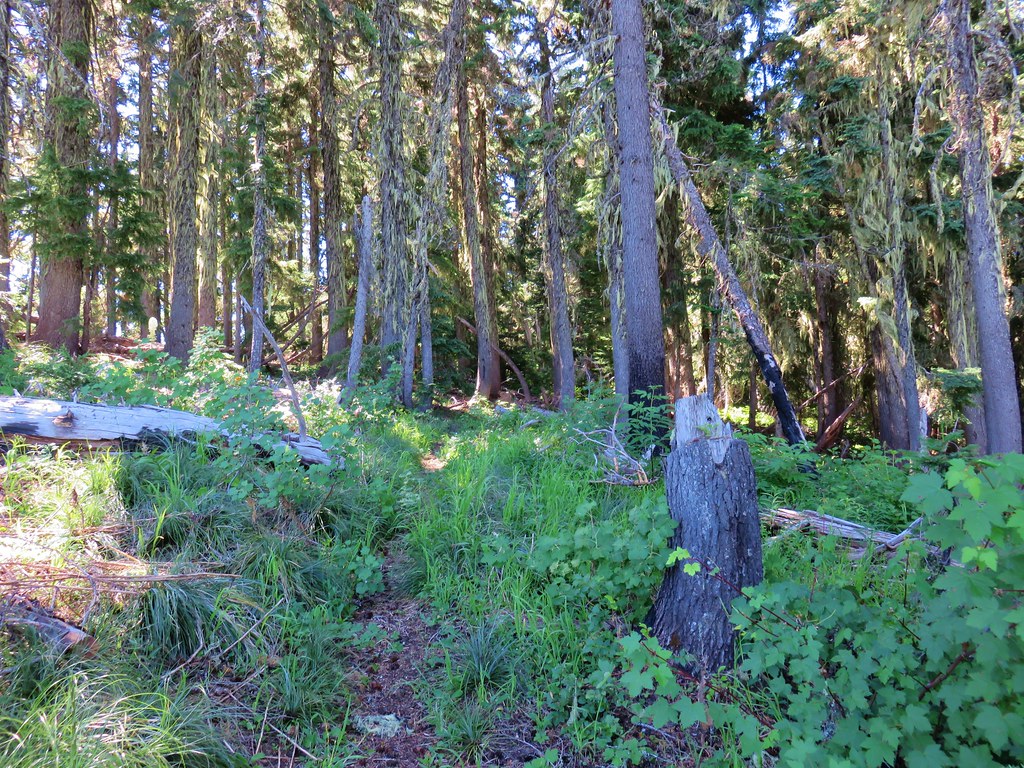
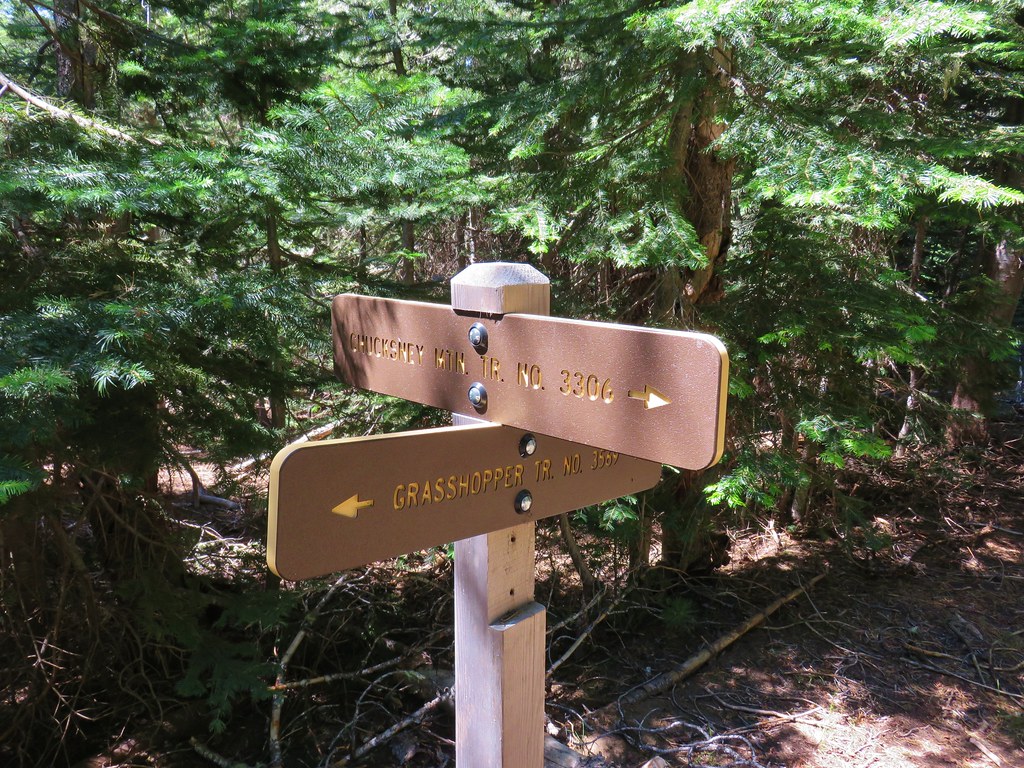
Mosquitoes were a bit of a nuisance here, and they would be so off and on for the entire trip. We turned uphill passing the Box Canyon Trail which forked to the left before arriving at the signed junction with the Chucksney Mountain Tail. Here we turned right onto the Chucksney Mountain Trail which would lead us to the 5756′ summit in a little under 5 miles. The trail passed through a variety of scenery as it climbed.

Chucksney Mountain Trail

Chucksney Mountain Trail

Chucksney Mountain Trail

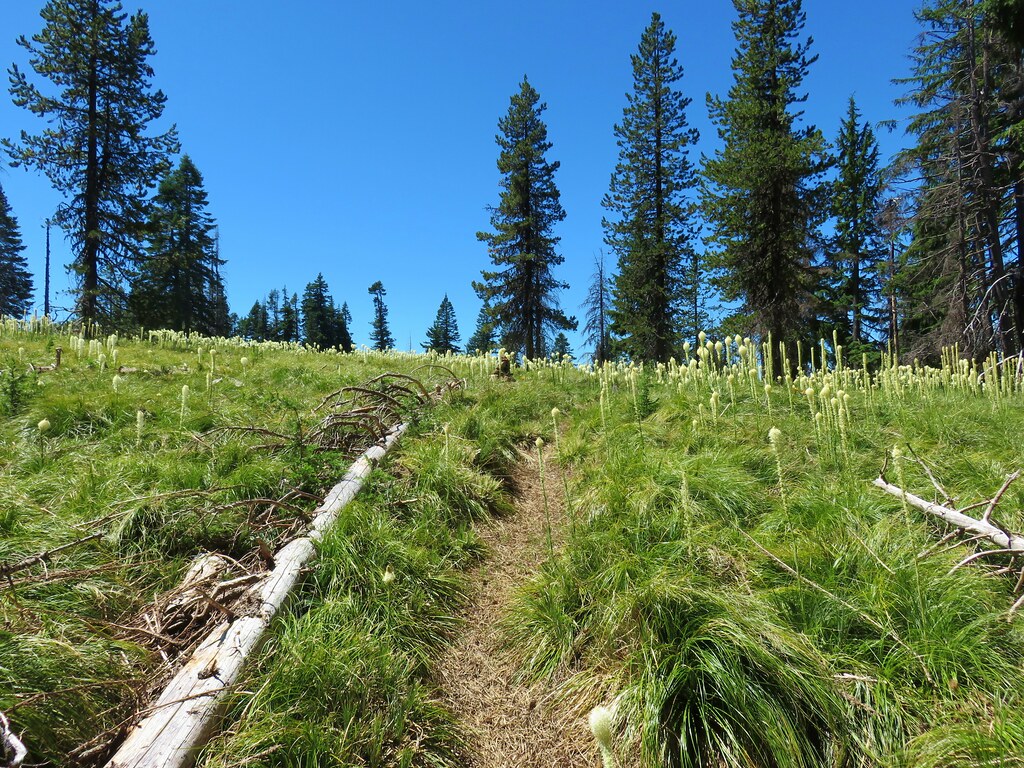
Beargrass and a small burn along the Chucksney Mountain Trail

Chucksney Mountain Trail

In the first 3.5 miles from the trailhead we’d climbed about 1500′ reaching an elevation of 5200′ then the trail dropped a bit and leveled out for about a half mile. The level area held a couple of snow melt ponds and some green meadows which gave rise to plenty of mosquitoes so there wasn’t much stopping for photos as we zipped through. When the trail began climbing again we were approximately 600′ below the summit of Chucksney Mountain.

The trail made up the elevation in a half mile by using a long switchback. As we climbed the number of trees lessened and we passed an increasing number of wildflowers.

Lupine along the Chucksney Mountain Trail

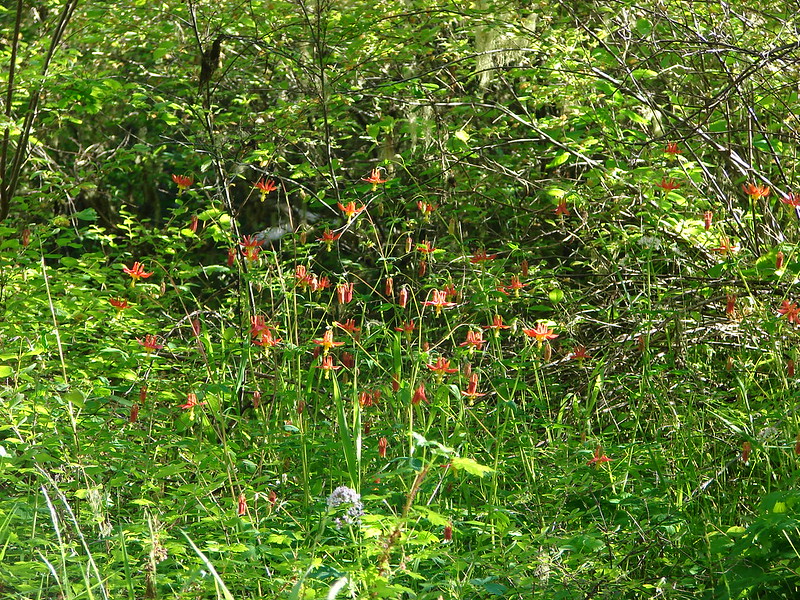
Tiger lilies

Tiger lilies along the Chucksney Mountain Trail

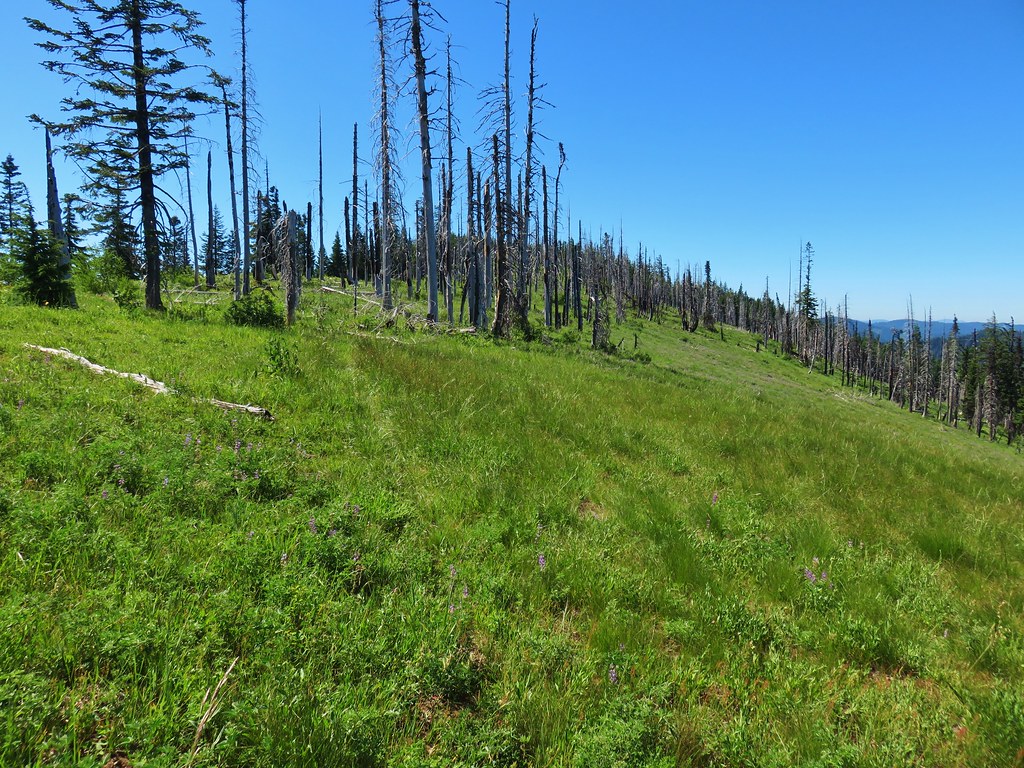
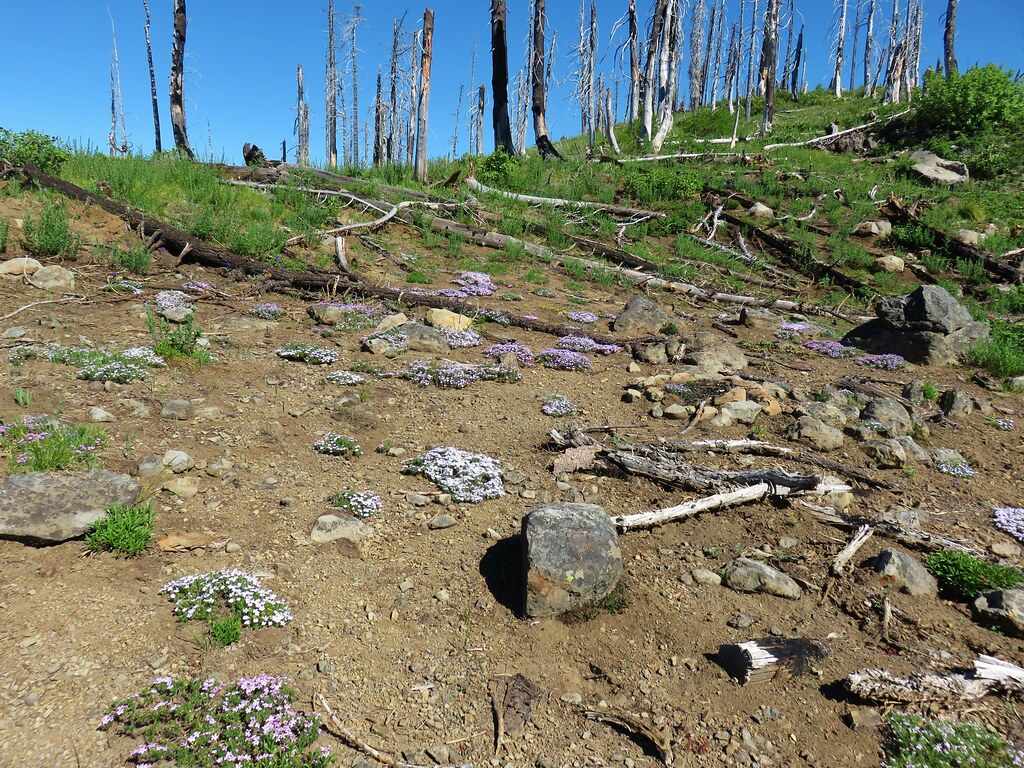
The trail crested a ridge below the summit in an old burn area which left plenty of exposure for wildflowers as well as open views.

Chucksney Mountain Trail

Phlox

View from Chucksney Mountain Trail

The Three Sisters, Broken Top and Mt. Bachelor

The Chucksney Mountain Trail didn’t actually reach the summit but an easy .1 mile climb along the ridge brought us to the summits survey marker.

Wildflowers on Chucksney Mountain

Survey marker on Chucksney Mountain

A nice variety of wildflowers covered the ridge.

Owl's head clover

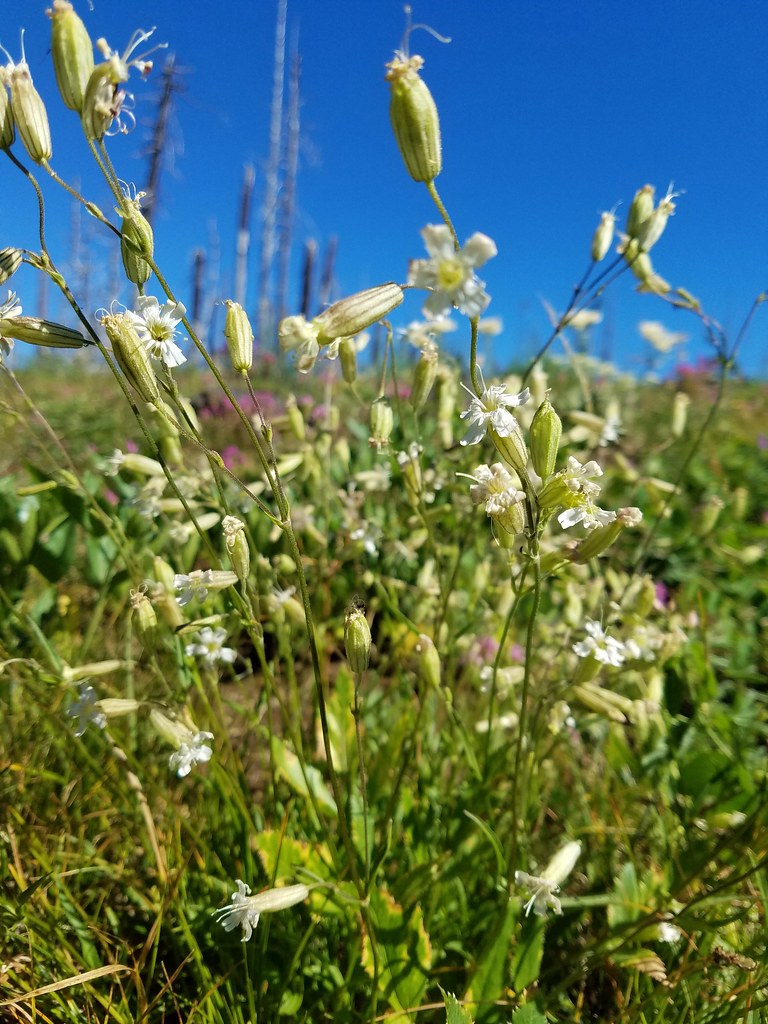
Catchfly

Wildflowers on Chucksney Mountain

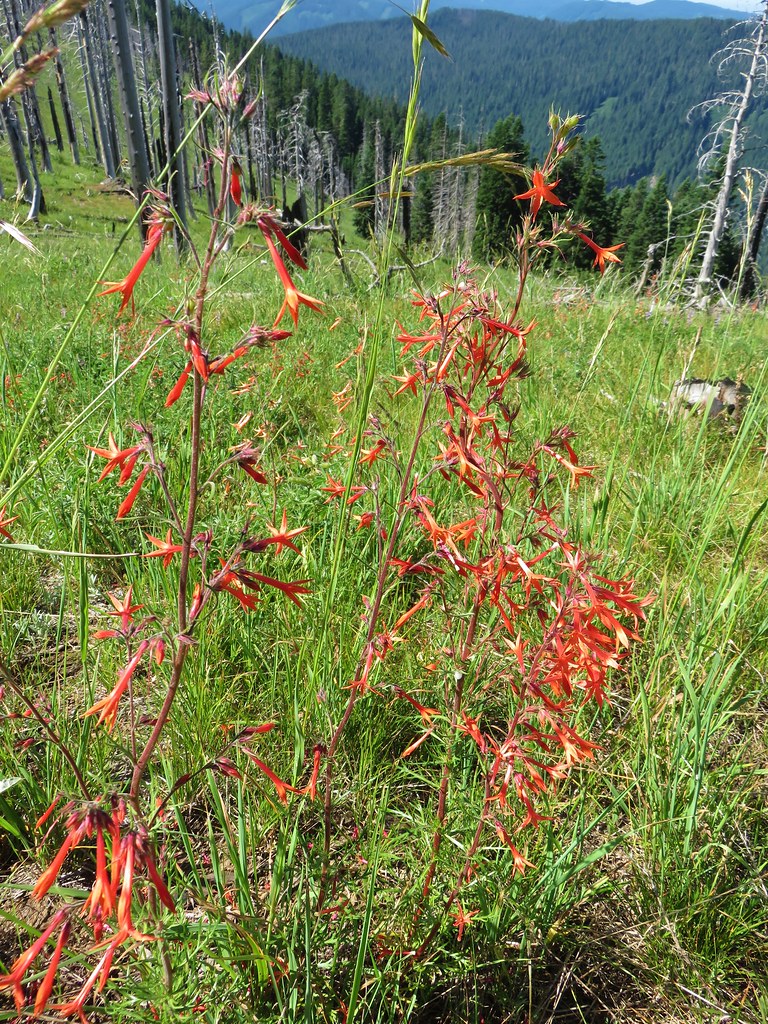
Scarlet gilia

From the summit we could see eight of the Cascade volcanoes from Mt. Jefferson in the north to Diamond Peak in the south.

Mt. Jefferson and Three Fingered Jack from Chucksney MountainMt. Jefferson & Three Fingered Jack

The Three Sisters, Broken Top and Mt. Bachelor from Chucksney MountainThe Three Sisters, Broken Top, and Mt. Bachelor

Diamond Peak from Chucksney MountainDiamond Peak

After a short break at the summit we returned to the trail which turned south along a long ridge where the tread became faint as it passed through a meadow.

Chucksney Mountain Trail

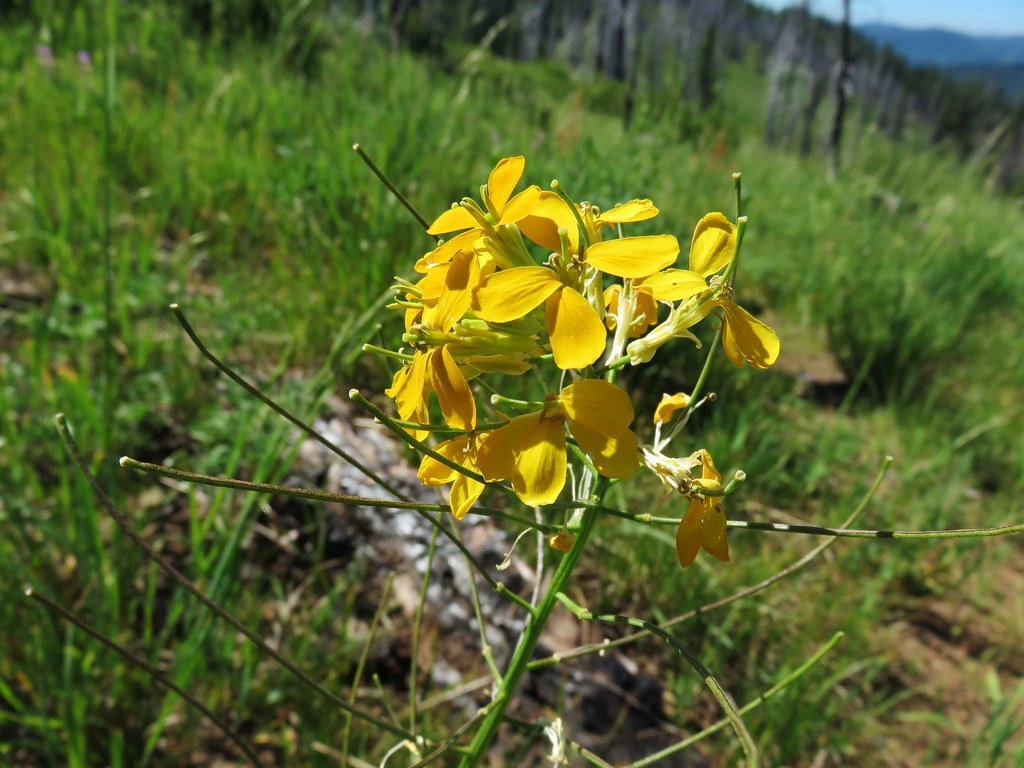
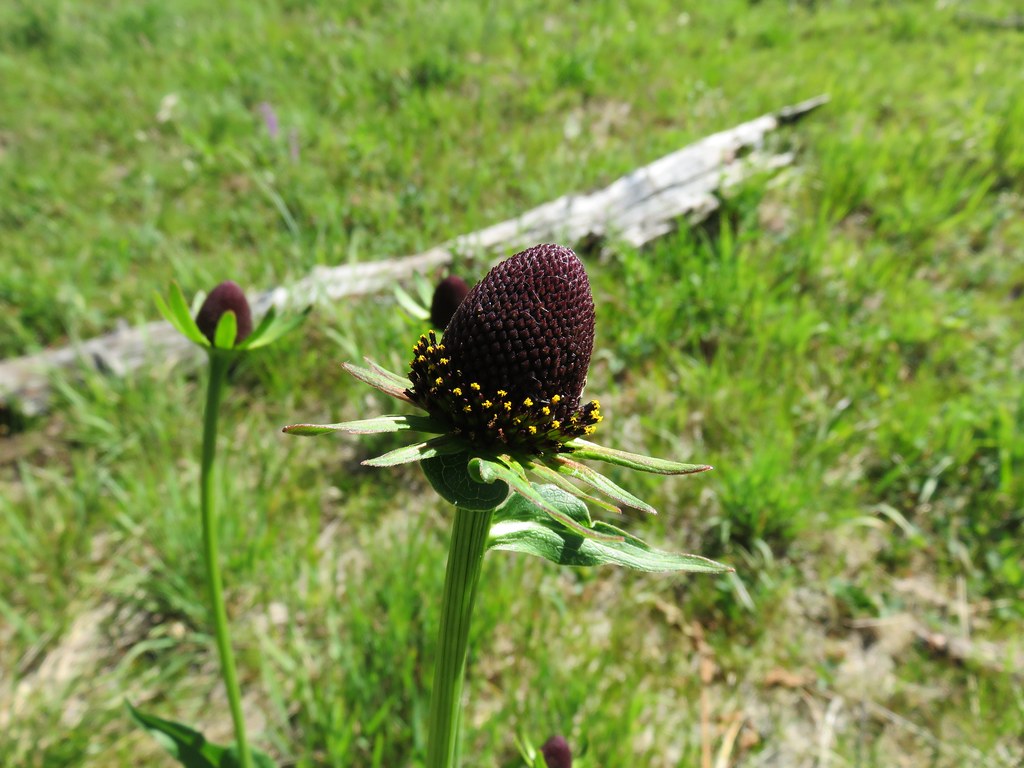
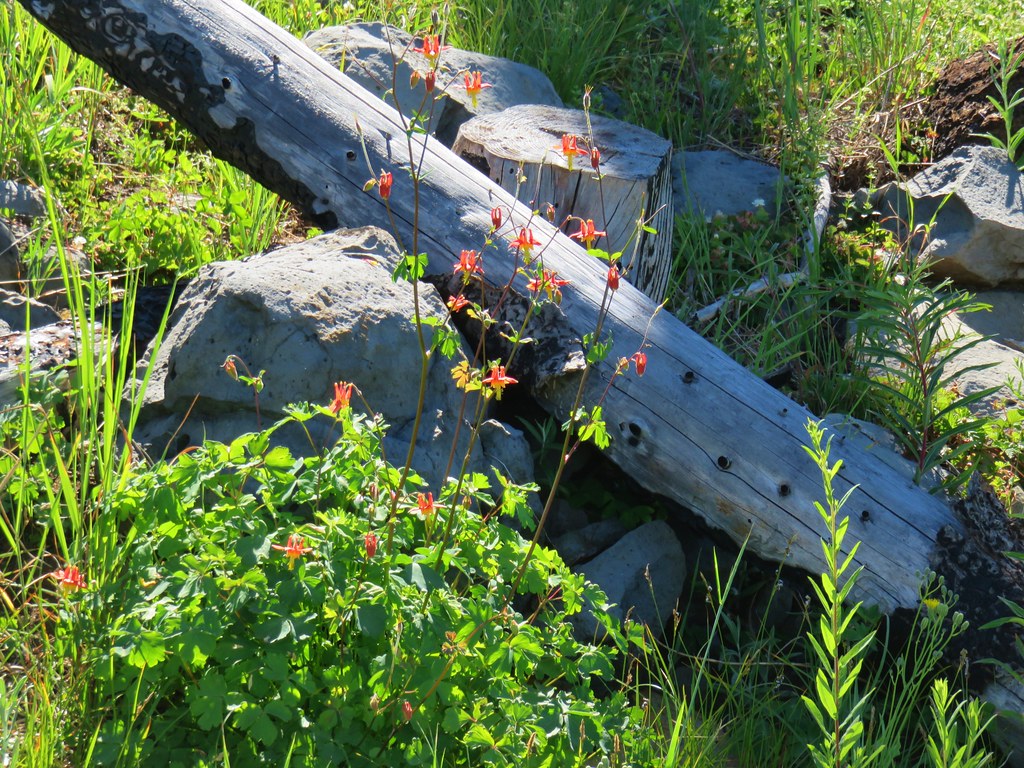
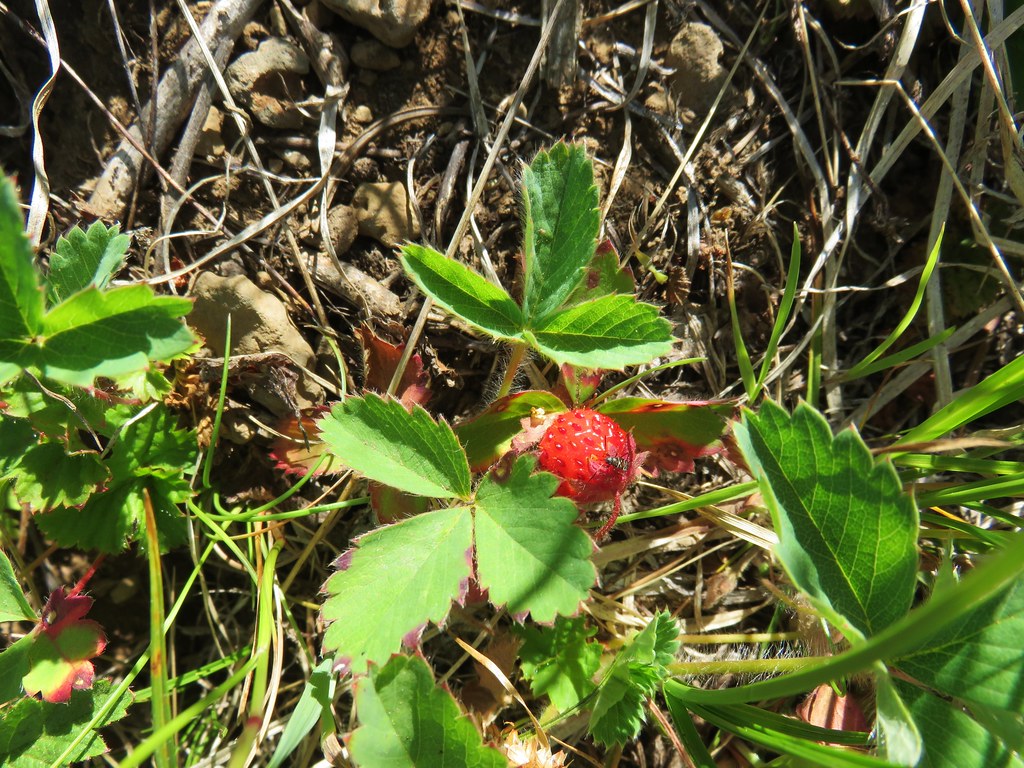
We spotted some other types of wildflowers along the ridge as well as some nice ripe strawberries.

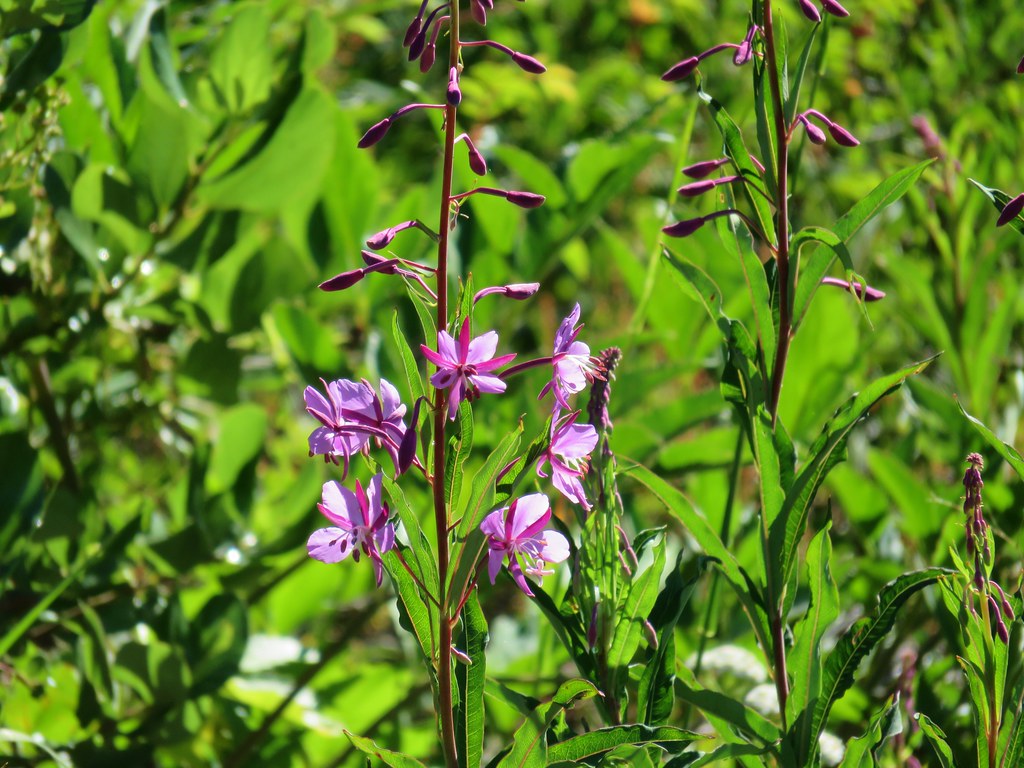
Fireweed

Grand collomia

Wallflower

Coneflower

Columbine

Strawberry

The trail reentered the trees as it began a hillside traverse to its end at the Grasshopper Trail.

Chucksney Mountain Trail

The trail passed along another section of burned forest just before reaching the signed junction.

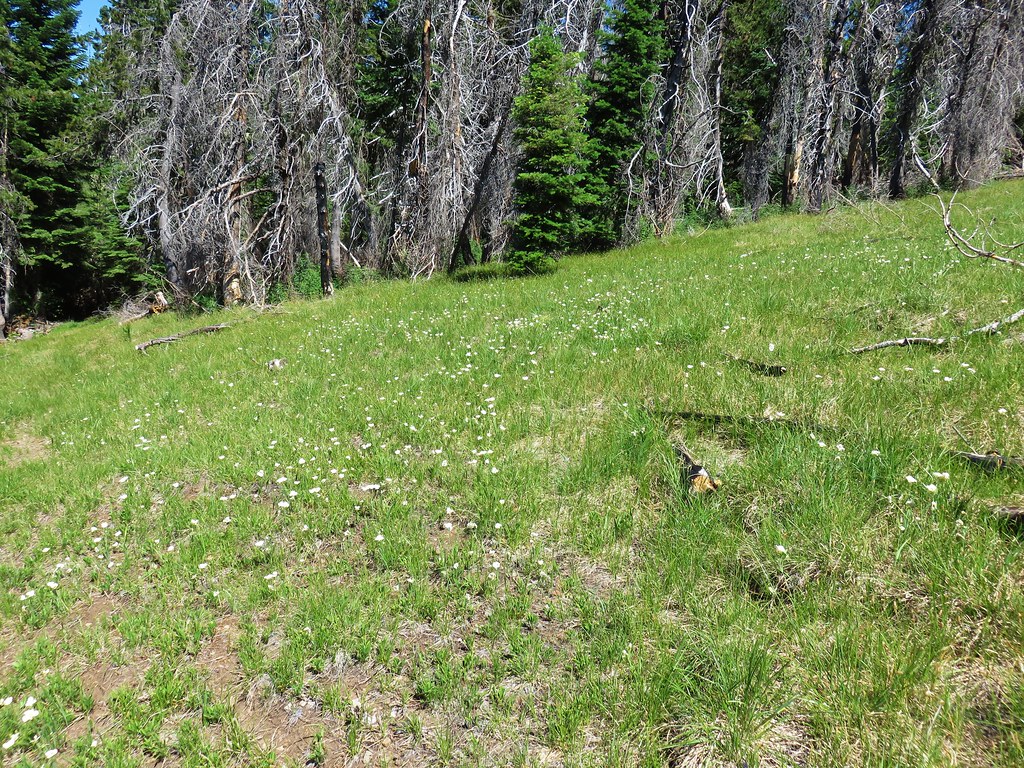
Meadow along the Chucksney Mountain Trail

Chucksney Mountain Trail junction with the Grasshopper Trail

Turning left here would have led us back to the down to the Box Canyon Trailhead in 3.9 miles but we were saving that section of trail for our return the next day. We turned right and headed east along the Grasshopper Trail which promptly began to descend through and then along a meadow with lots of cat’s ear lilies and a view of Diamond Peak.

Meadow along the Grasshopper Trail

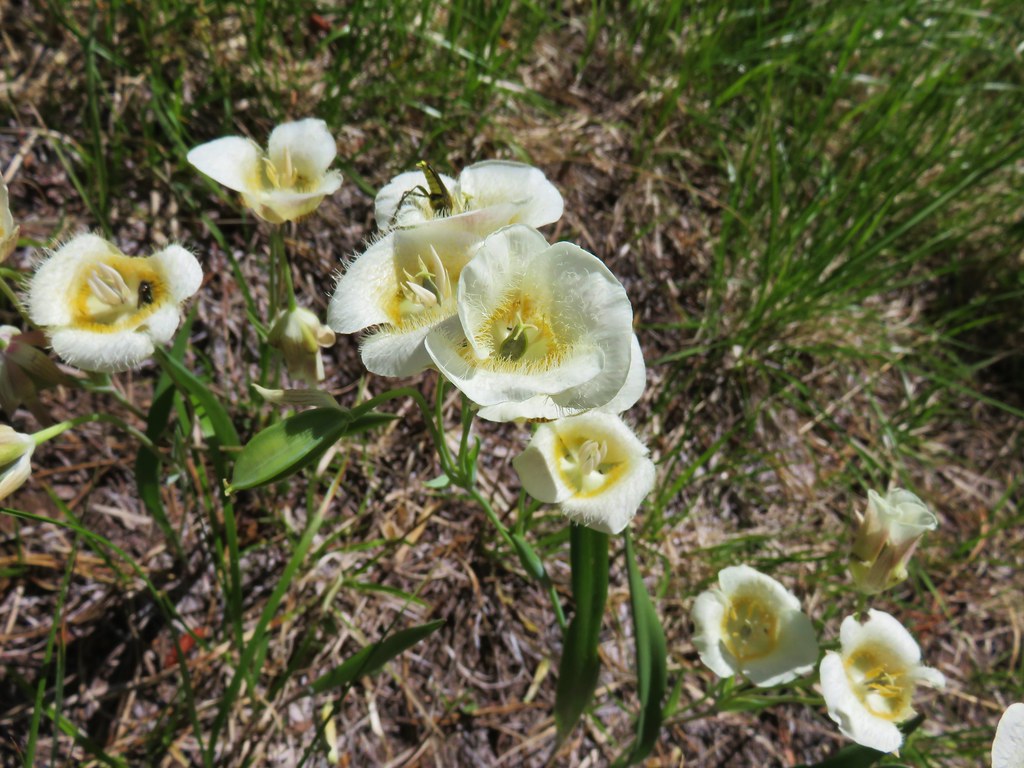
Cat's ear lilies

Cat's ear lilies

Diamond Peak

Diamond Peak

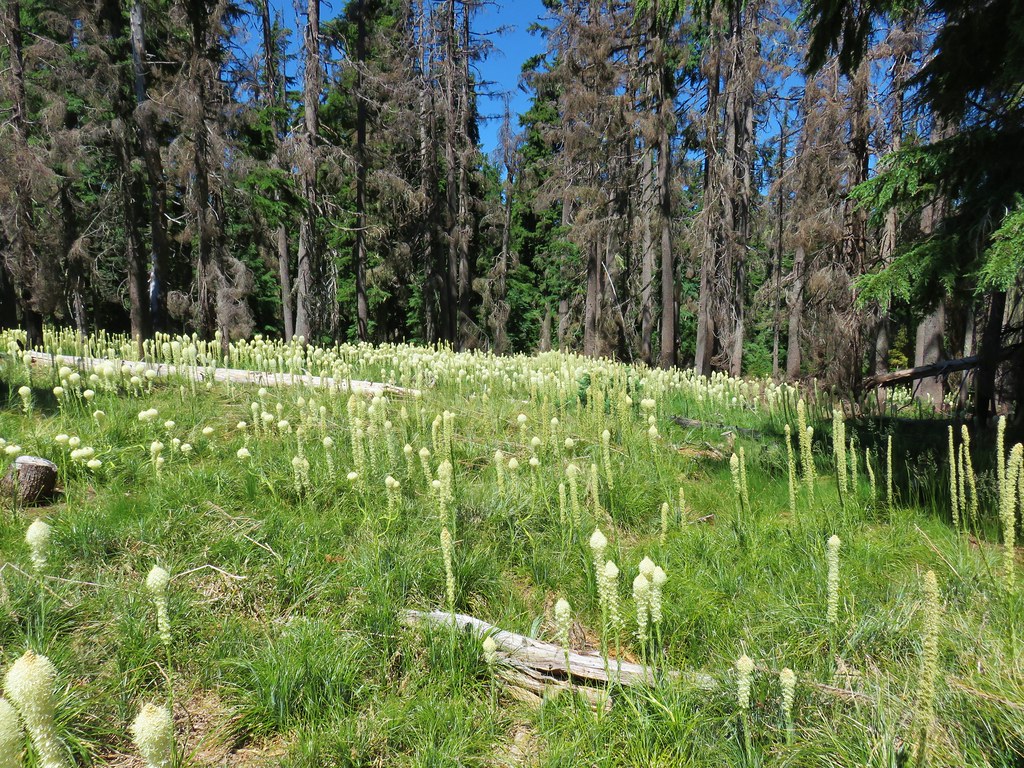
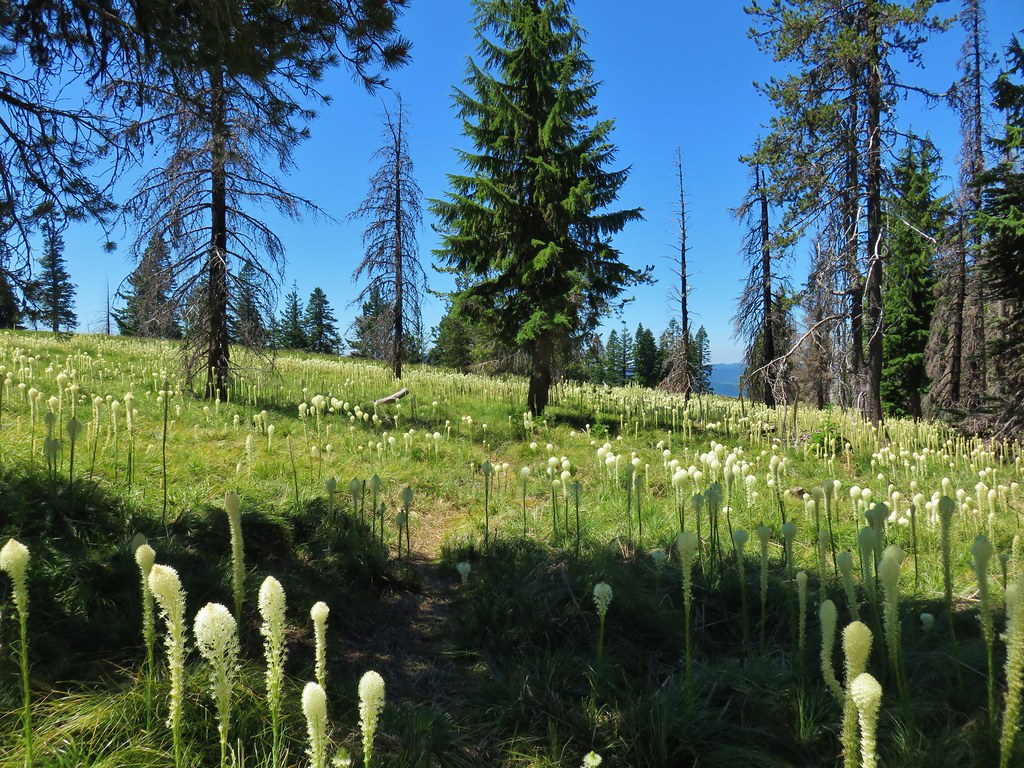
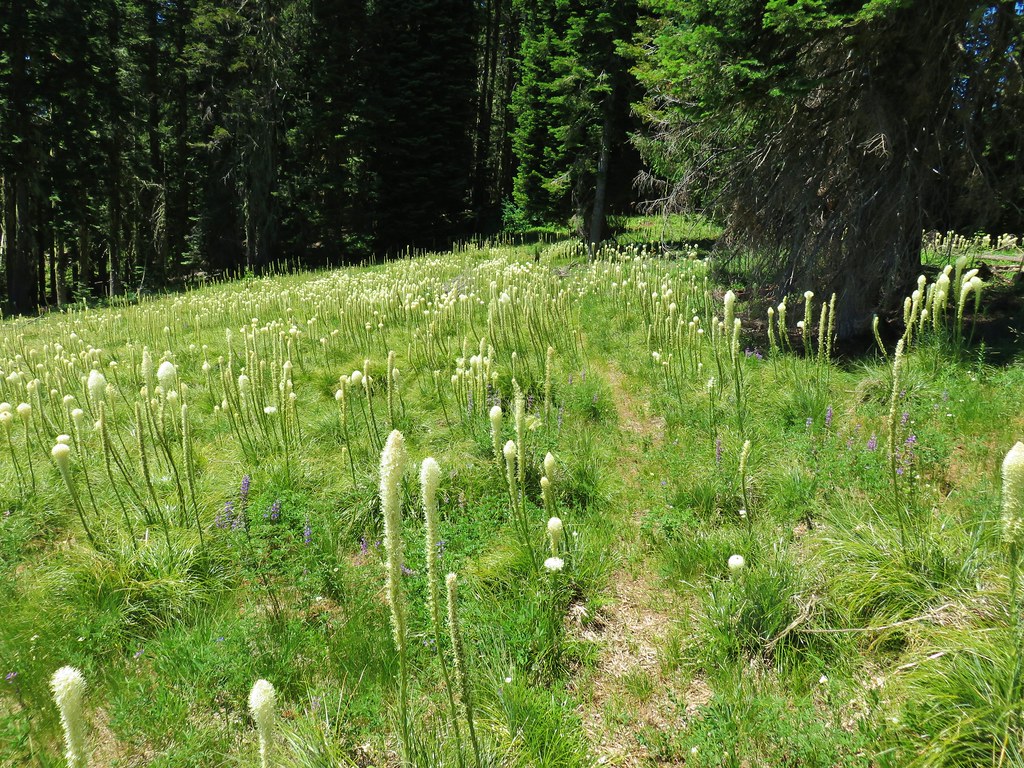
The trail lost a little over 500′ of elevation as it followed the forested ridge east. A little over a mile from the junction we finally hit the low point in a saddle just under 5000′ in elevation. We then began regaining nearly all of the elevation we had lost in the next mile. This climb contained the steepest section of the hike and ended in a beargrass filled meadow.

Grasshopper Trail

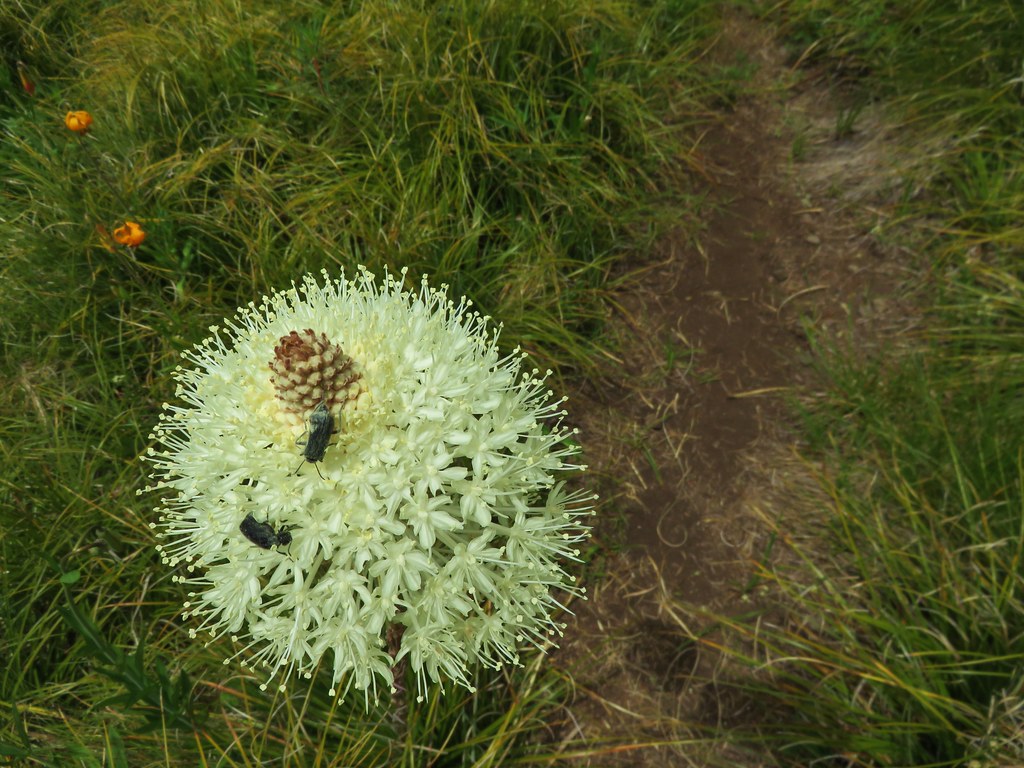
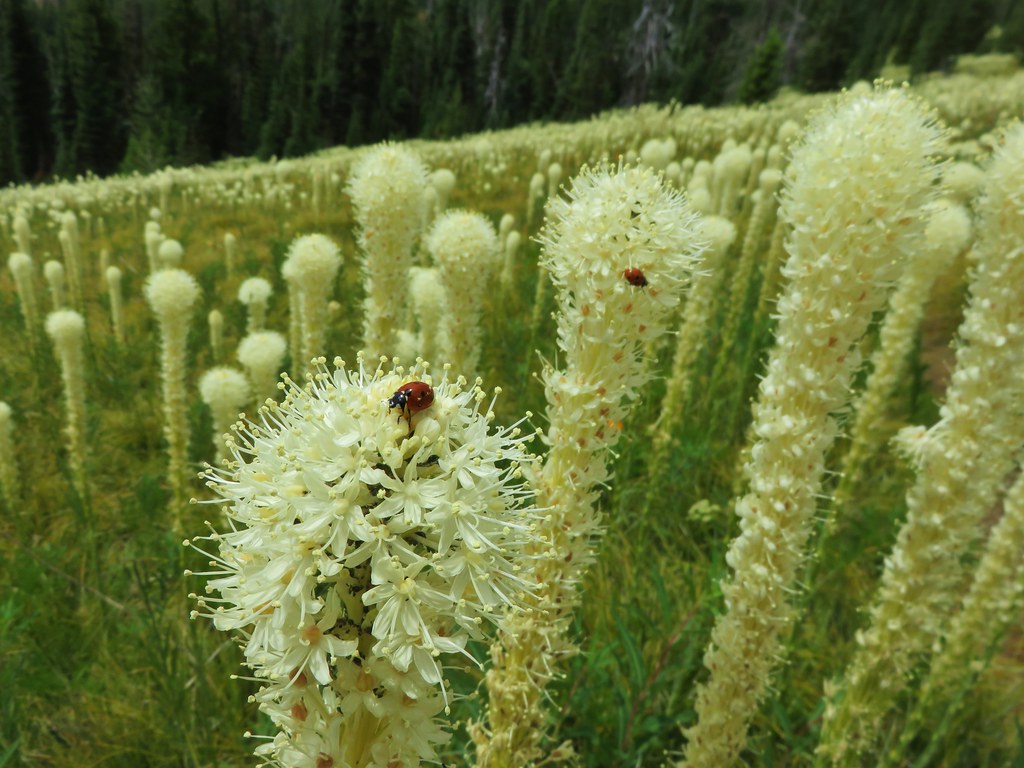
Beargrass

Beargrass meadow along the Grasshopper Trail

Grasshopper Trail

A brief exploration of the meadow revealed some blocks in the ground of unknown origin.

Blocks in a meadow along the Grasshopper Trail

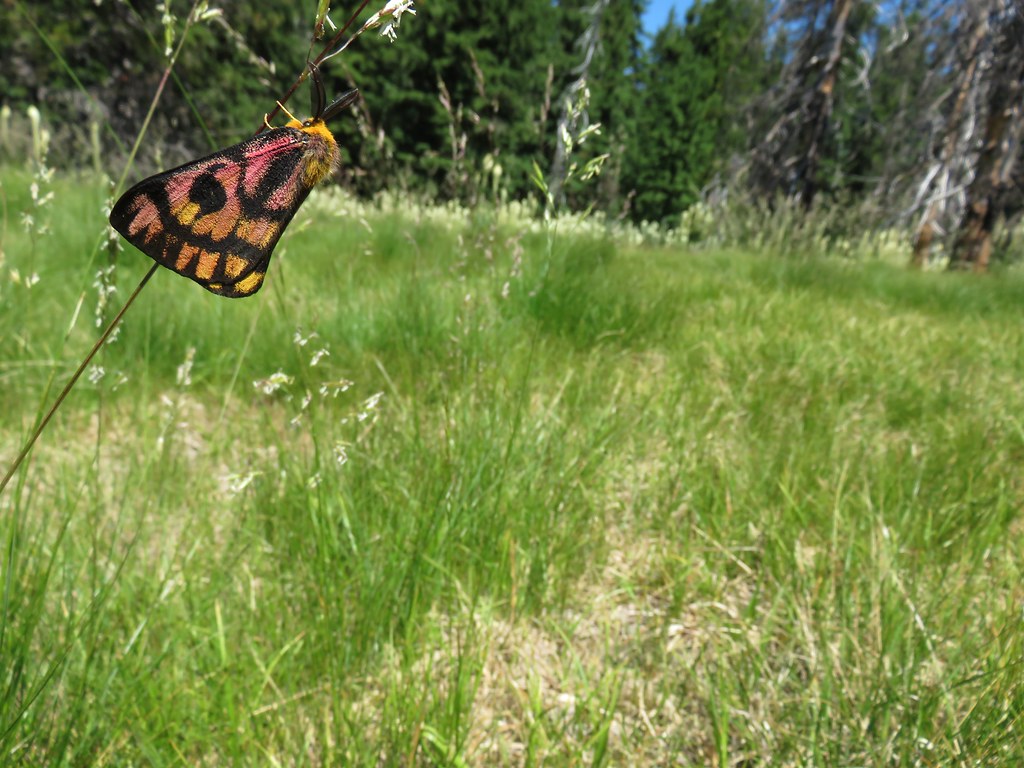
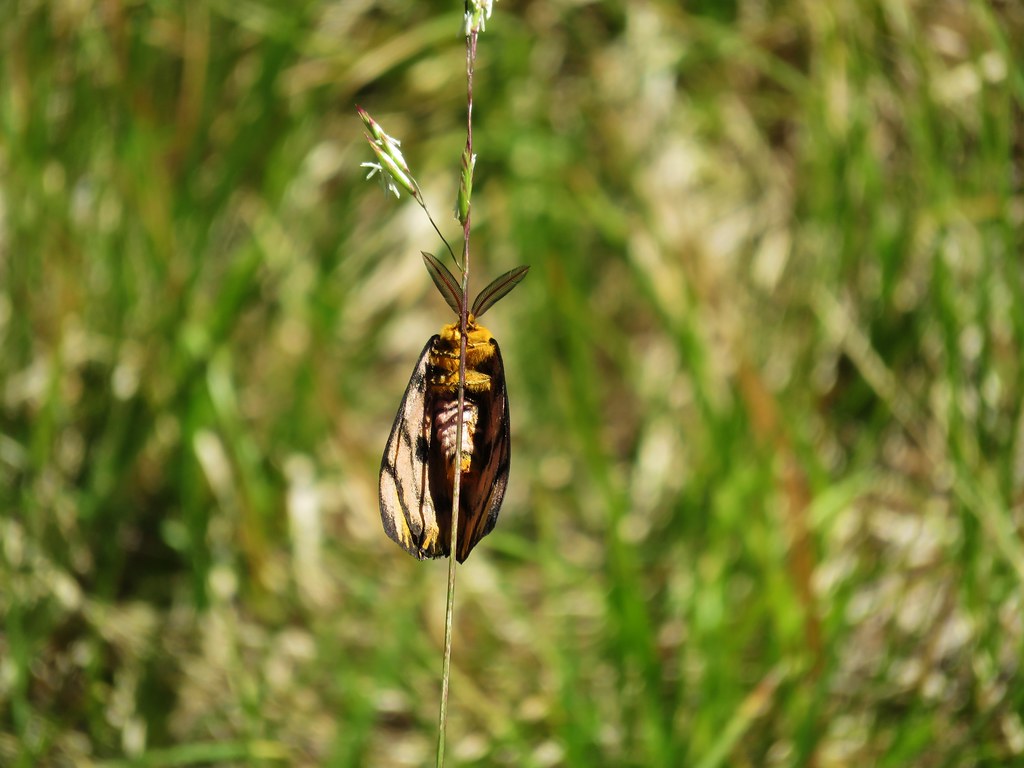
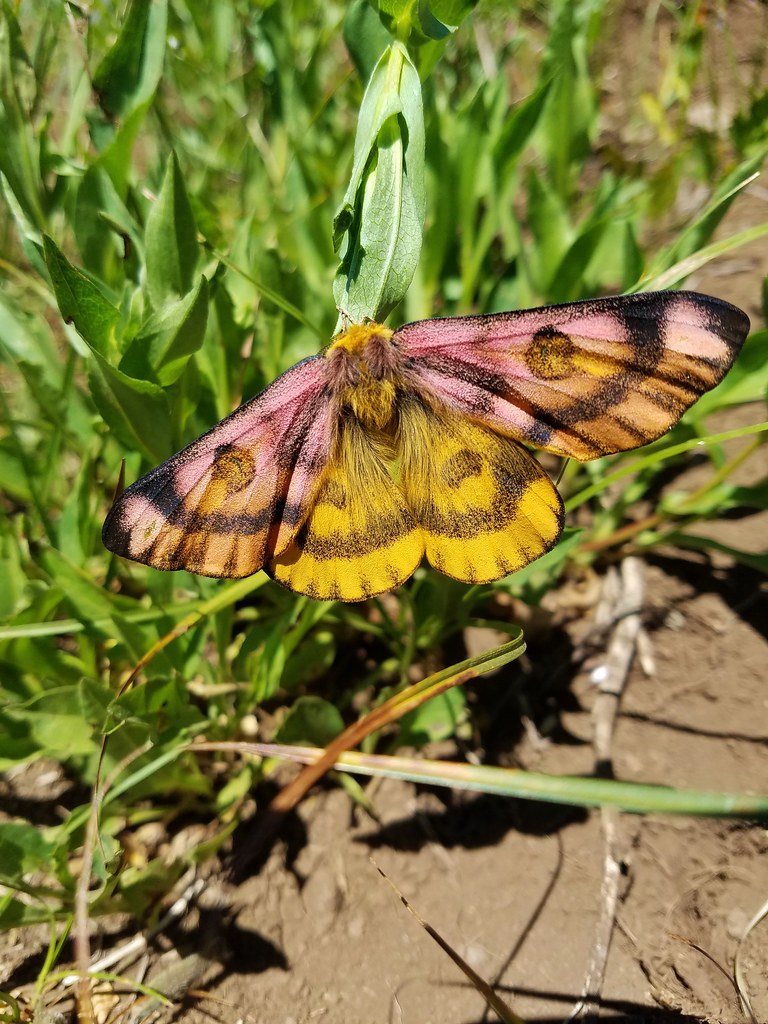
We also spotted a fairly good sized and very colorful moth which we later identified as a common sheep moth thanks to some help from the folks at Oregonhikers.org.

Sheep Moth

Sheep Moth

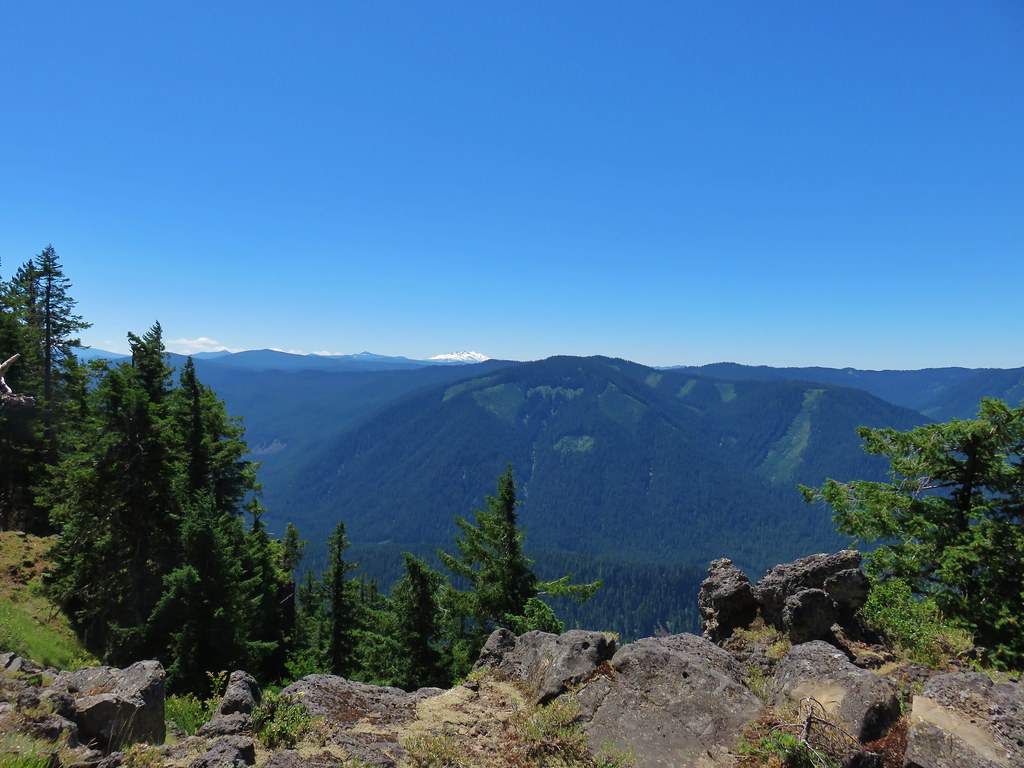
We had thought this meadow might be Grasshopper Point but after consulting the map it was clear we had a way to go yet before we’d reach that feature. We continued on the trail, which for the next quarter mile traveled along some rocky cliffs offering more views of Diamond Peak.

Diamond Peak

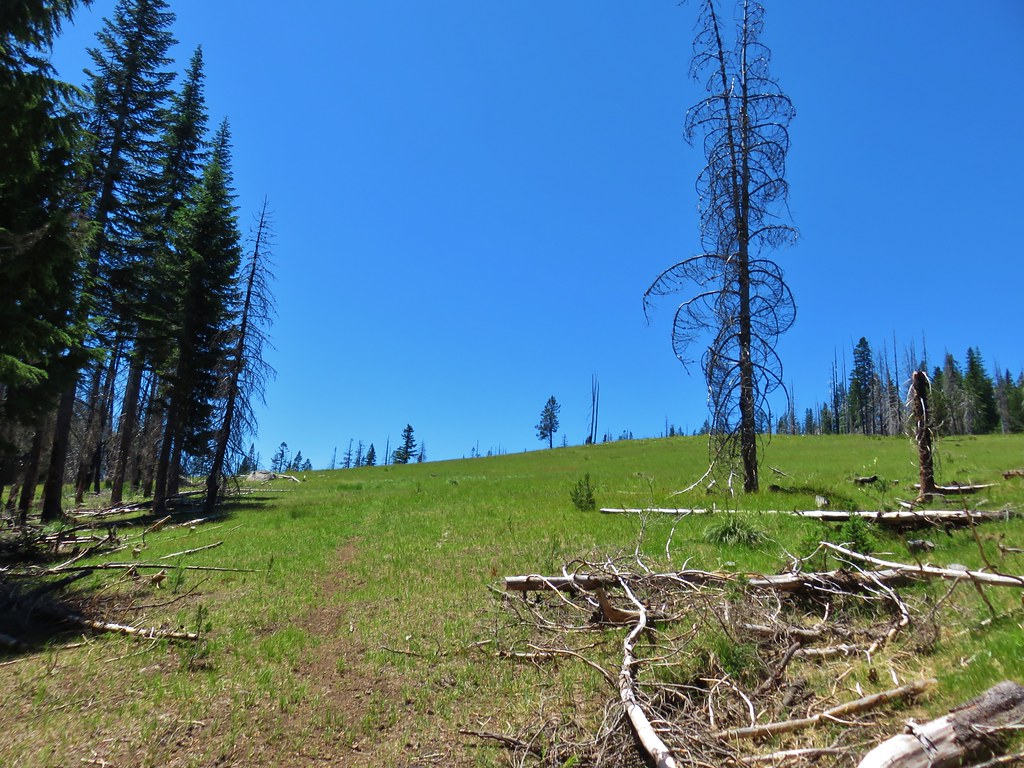
Beyond the cliffs the trail turned north as it began to contour around a creek drainage. Up until this point the the trail had been in good shape with signs of recent maintenance where logs had been cut. The Chucksney Mountain Trail had been a bit faint through the meadow along the ridge but it had still been relatively easy to follow. Here we came to a large meadow with signs of another fire but no sign of the trail at first.

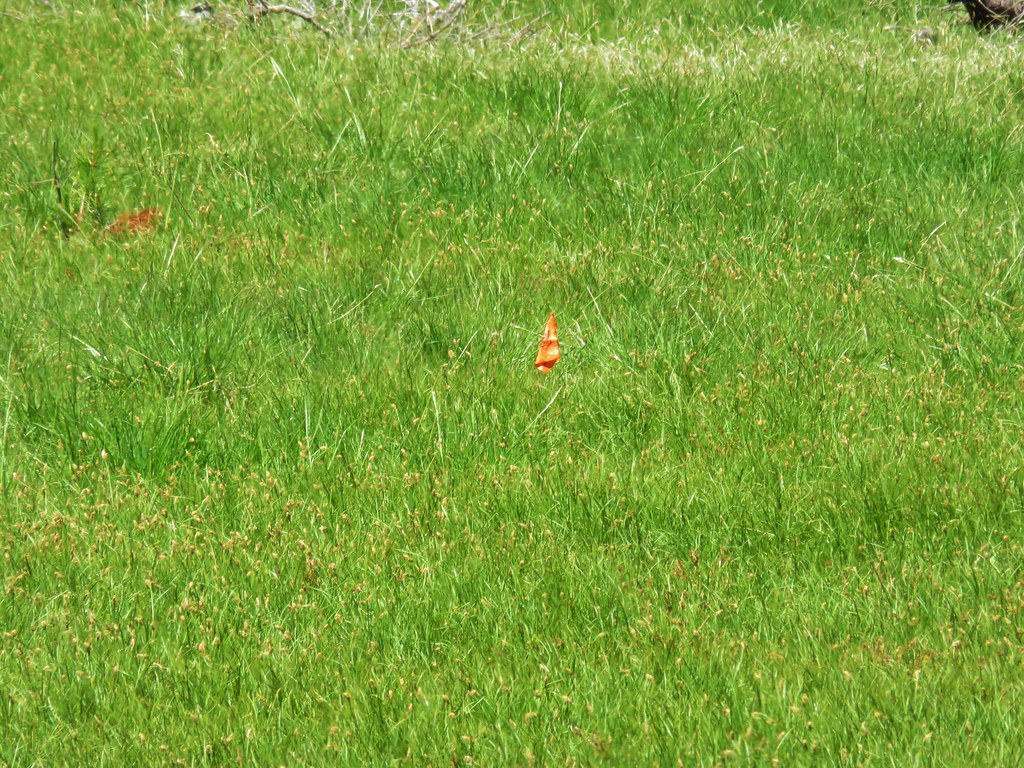
The Grasshopper Trail was not visible through this meadow, a few Forest Service flags helped mark the way.

We finally spotted a small orange flag in the middle of the grass and made our way towards it.

Forest Service Flag marking the Grasshopper Trail

It was a Forest Service “Trail” Flag so we looked for a second one. We did spot one, but it was next to a small tree next to the trail we’d just come from. We scanned for any signs of a trail: flagging, cairns, blazes but there was nothing. Time for the maps. The Garmin, Forest Service, and topographic maps all showed the trail swinging around to the NE so we began using the GPS to stick close to where it showed the trail was supposed to be. We spread out a bit in hopes of rediscovering the trail. We both spotted different flags at about the same time.

Forest Service Trail flag

There wound up being three flags at the lower end of the meadow which led us to the continuation of the trail as it reentered the trees. After a short stint in the trees the trail began to climb out of the valley into another meadow.

Grasshopper Trail

The trail was faint at times in this meadow as well, but there were large rock cairns to help guide us this time.

Grasshopper Trail

Looking back from this meadow gave us a good look at another meadow across the valley.

Meadows along the Grasshopper Trail

The meadow gave way to a wildflower rock garden as the trail regained the ridge.

Grasshopper Trail

Owl's head clover

Scarlet gilia

Wildflowers along the Grasshopper Trail

Penstemon

In the next half mile the trail passed through two small meadows, the first filled with lupine and the second more beargrass. The trail was once again very faint in the lupine meadow.

Grasshopper Trail

Lupine

Grasshopper Trail

Grasshopper Trail

The trail then dipped off the ridge, first on the north side, then after climbing back up to a saddle, to the south side to avoid some rock outcrops.

Grasshopper Trail

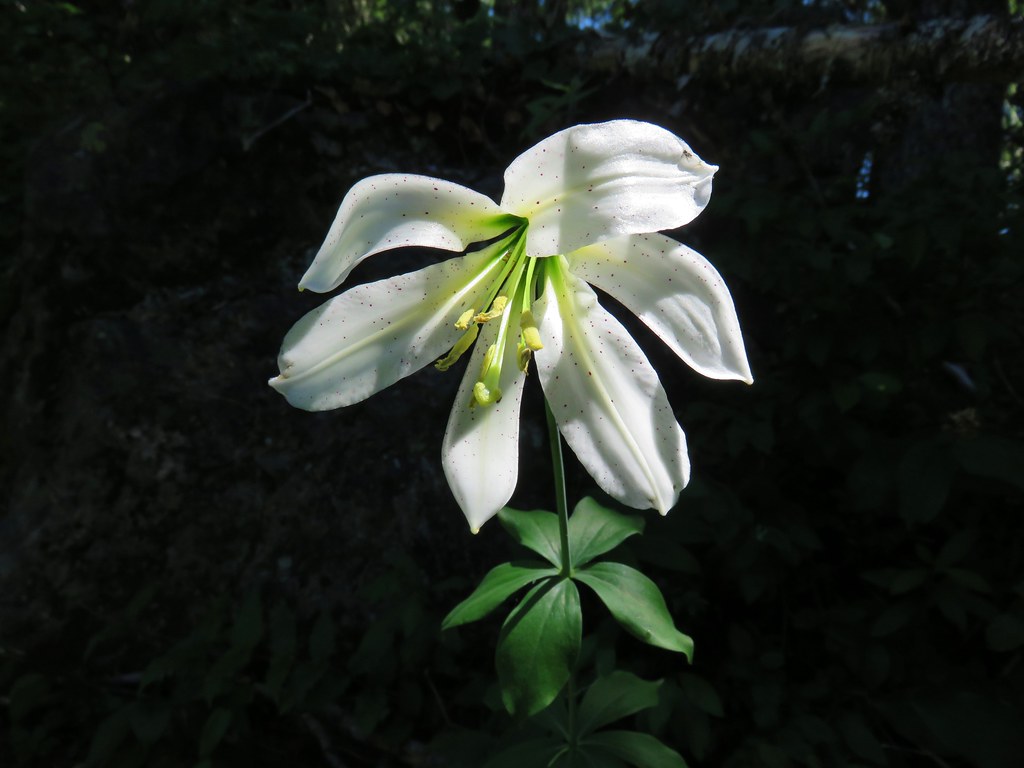
Beyond the outcrops was a short forested section of the ridge where some fragrant Washington lilies were in bloom.

Washington lily

Washington lily

A total of 5.2 miles from the Chucksney Mountain Trail junction we arrived at the meadow near Grasshopper Point.

Grasshopper Trail

Grasshopper Trail

We spotted a patch of bare ground at the edge of the meadow near the trees where we decided to set up camp.

Lupine meadow

Camp site along the Grasshopper Trail

The meadow was filled with flowers and provided views of Diamond Peak, especially on the rocks of Grasshopper Point.

Wildflower meadow along the Grasshopper Trail

Diamond Peak

After setting up camp and taking a nice break at Grasshopper Point we continued east on the Grasshopper Trail to the large Grasshopper Meadow.

Grasshopper Trail

Grasshopper Meadow

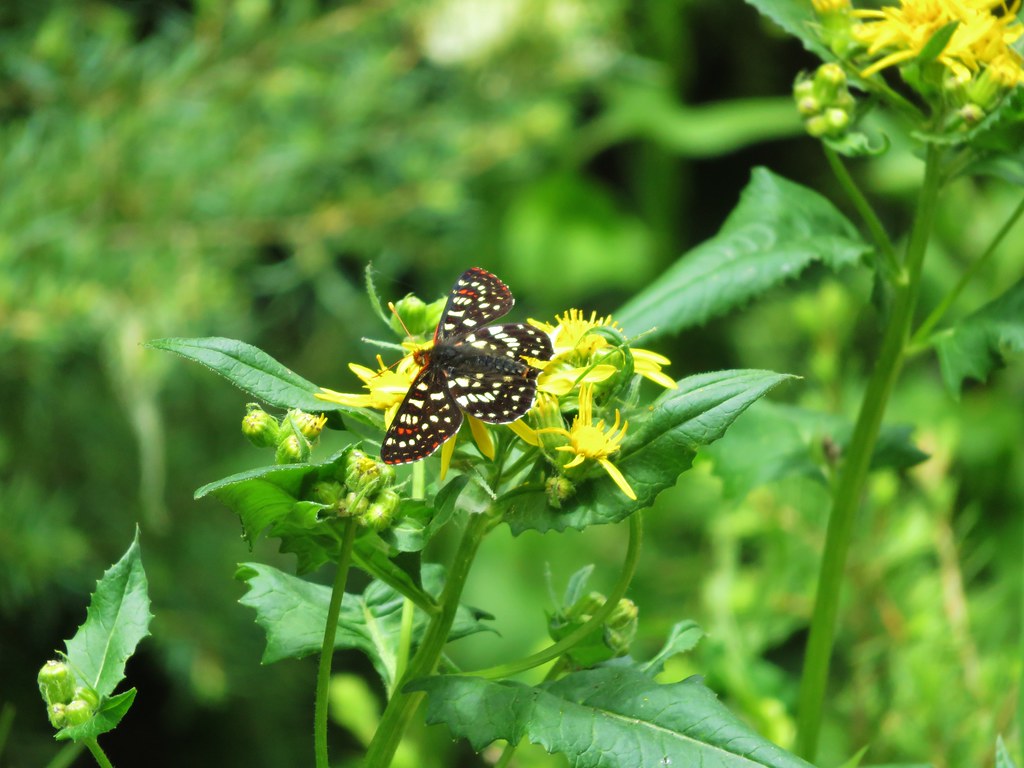
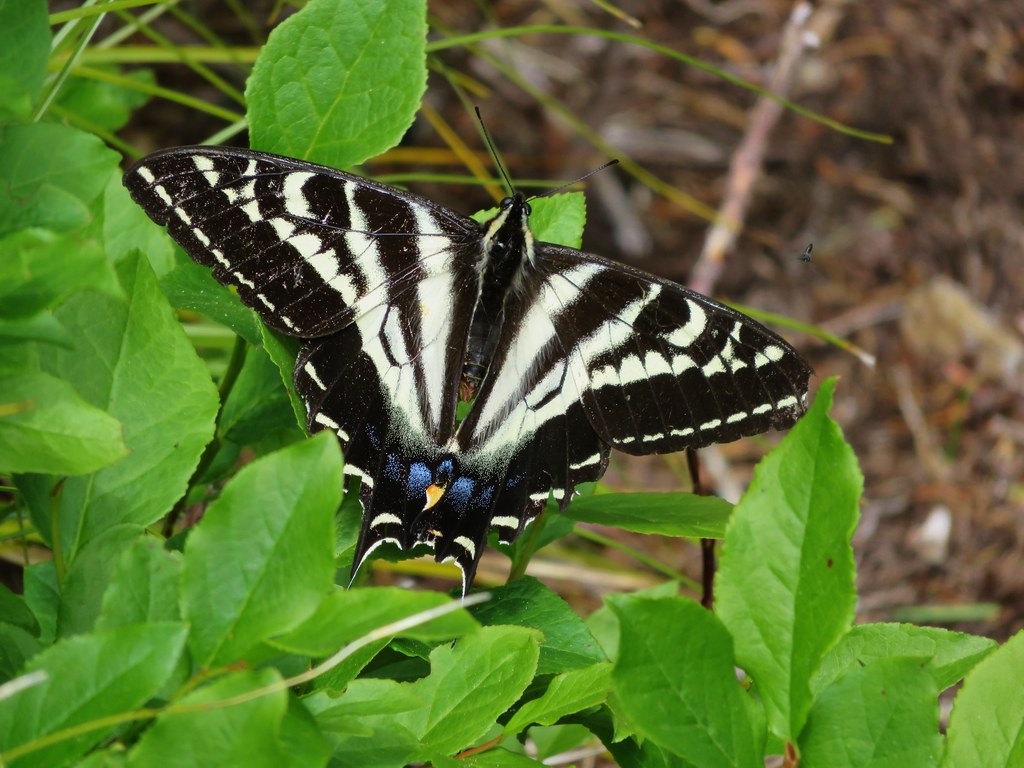
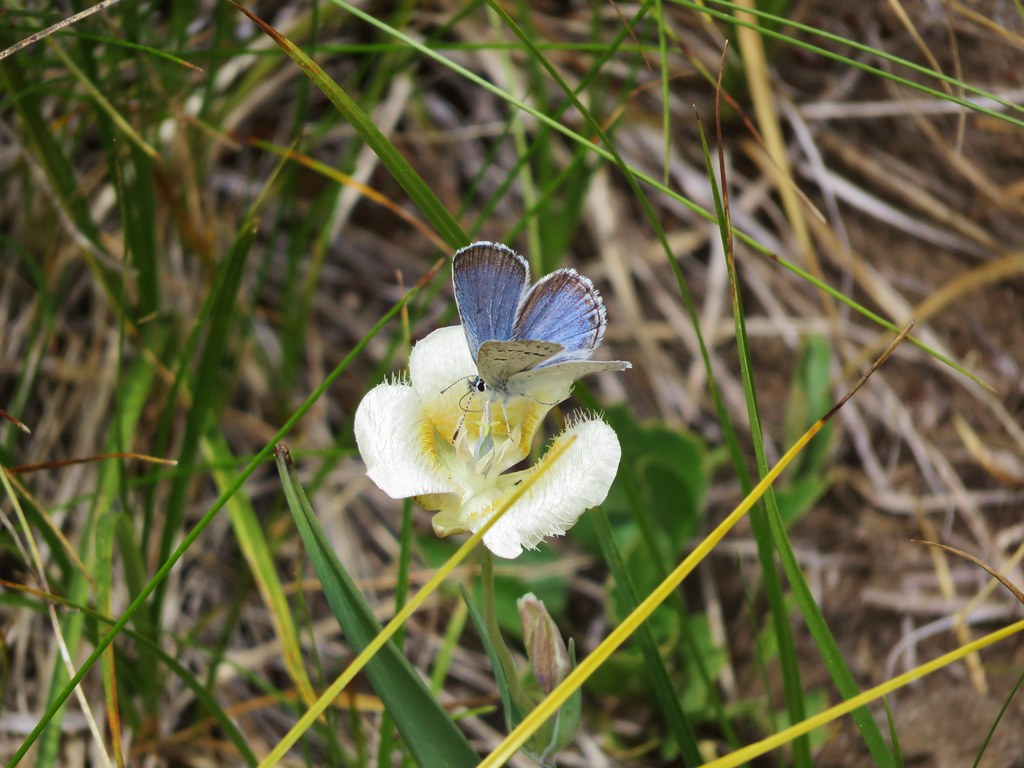
Grasshopper Meadow (and Grasshopper Point for that matter) lived up to their name as dozens of grasshoppers jumped with every step. The number of grasshoppers was impressive but more impressive was the variety of butterflies we were seeing.

Checkerspot butterfly

Swallowtail on tiger liliy

Mountain parnassian

Butterfly in Grasshopper Meadow

Fritillary butterflies

Butterflies in Grasshopper Meadow

Blue copper

There was even another common sheep moth.

Sheep moth

We were so busy looking at the butterflies and flowers we missed the fork in the trail that would have led down to a spring which is where we had planned on heading. We had brought our dinner with us and had planned on finding a place to eat near the spring so we could refill our water afterward since it was the only source of water around. When we reached a saddle where the trail began to descend to the north of Grasshopper Mountain we realized our mistake. From the saddle the Grasshopper Trail follows Hiyu Ridge for 4 miles to the Grasshopper Trailhead.

The view from the saddle included Diamond Peak to the SE and the Three Sisters, Broken Top, and Mt. Bachelor beyond Chucksney Mountain to the NE.

Diamond Peak from Grasshopper Meadow

The Three Sisters and Broken Top

We momentarily considered attempting to bushwack up to the former lookout site atop Grasshopper Mountain but the brush near the summit looked thick and in the end we decided not to exert the effort.

Grasshopper Mountain

Instead we decided to head cross country downhill and use the GPS to locate the spring.

Grasshopper Meadow

From higher up in the meadow we’d seen something near a boulder below and on our way to the spring we took a closer look.

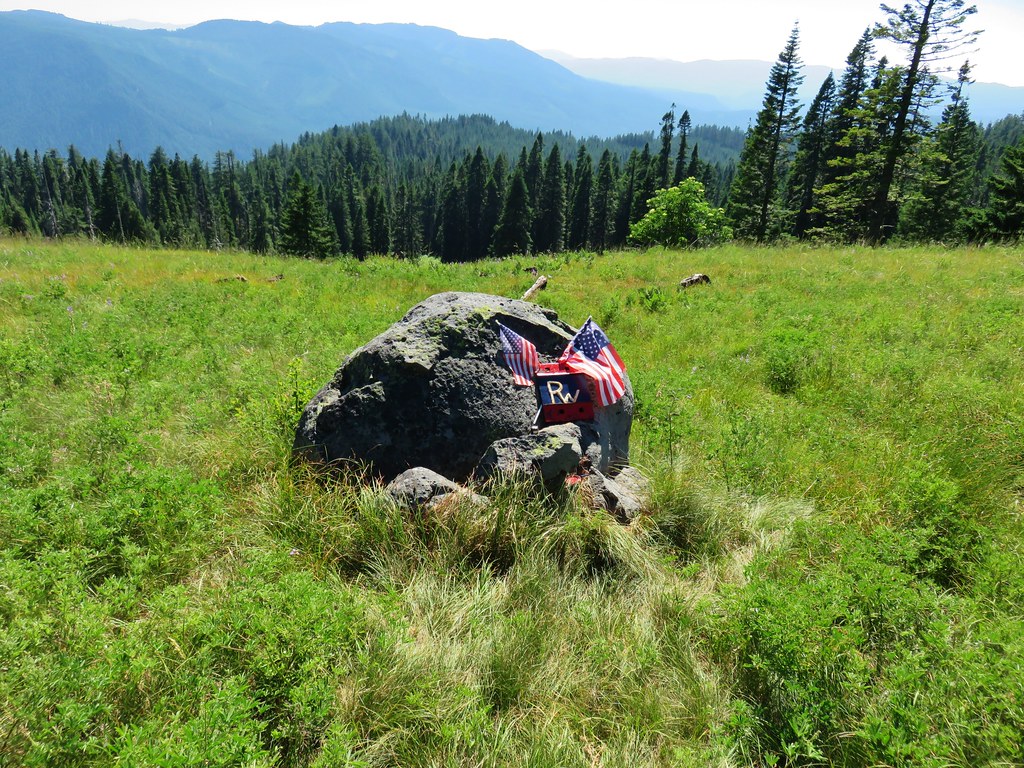
Some sort of memorial in Grasshopper Meadow

Not sure if it was some sort of memorial or what but after satisfying our curiosity we continued steeply downhill to the SE where we managed to find the spring flowing out of a pipe amid a clump of yellow monkey flower and a swarm of blue copper butterflies.

Spring in Grasshopper Meadow

Blue copper butterflies

We filled all our containers from the spring and then picked up a trail just a few feet east of the spring climbing steeply uphill. This trail starts just .7 miles from the spring along Forest Road 1929 and is the described route in William Sullivan’s 4th edition “100 Hikes in the Central Oregon Cascades”.

The terrain was too steep to provide any place for us to fix dinner so we began climbing back up toward the Grasshopper Trail. The trail was faint but visible as we climbed. Along the way we spotted a huge Washington lily blooming in the meadow.

Washington lily in Grasshopper Meadow

Washington lily

Washington lily

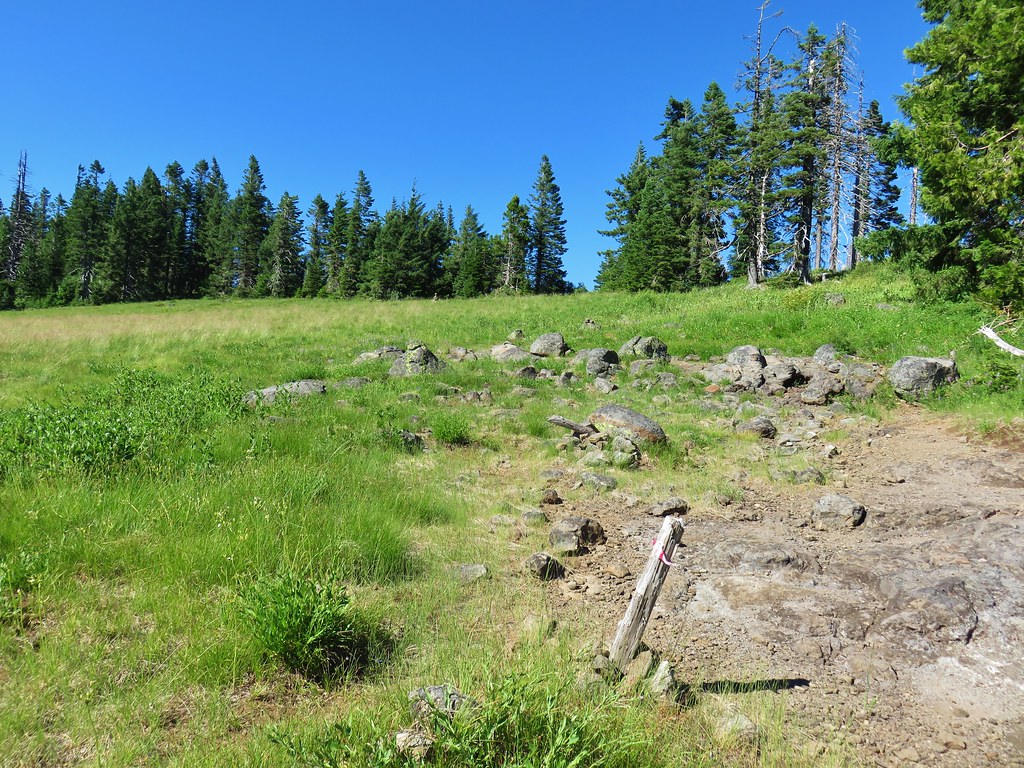
We were curious to find out where we’d missed this trail earlier when we passed by. It turned out that the path led over a rocky area where the tread vanished leaving a lone post and small rock cairn as it’s only identifiers.

Grasshopper Trail

We decided to return to Grasshopper Point and set up our stove on the rocks there. We fixed dinner then relaxed as we enjoyed the view and listened to the birds.

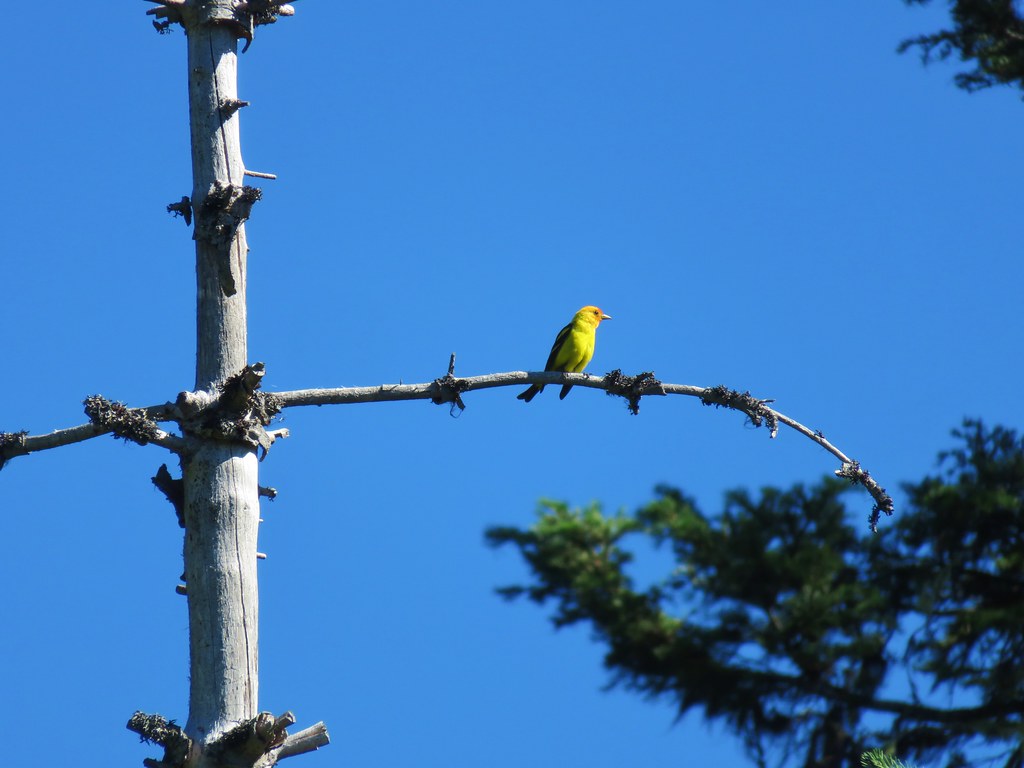
Western tanager

White crowned sparrow

We turned in for the night after having put in a little over 15 miles for the day. After a good nights sleep we awoke early and began preparing to depart. The mosquitoes were out in force, (they had been mostly absent in the meadows during the heat of the previous day) and we were dealing with a fair amount of condensation due to setting up next to the meadow.

Lupine in the morning light

After packing up and applying some DEET we headed back. We had talked about the possibility of seeing some sort of animals in the meadows that morning and sure enough we did spot three deer just as we entered one of the meadows, but they quickly retreated into the trees.

While we hadn’t seen anyone else yet on this trip we did spot some fresh mountain bike tracks as we neared the junction with the Chucksney Mountain Trail. We reached that junction after a little over five miles. We passed that trail and continued straight on the Grasshopper Trail.

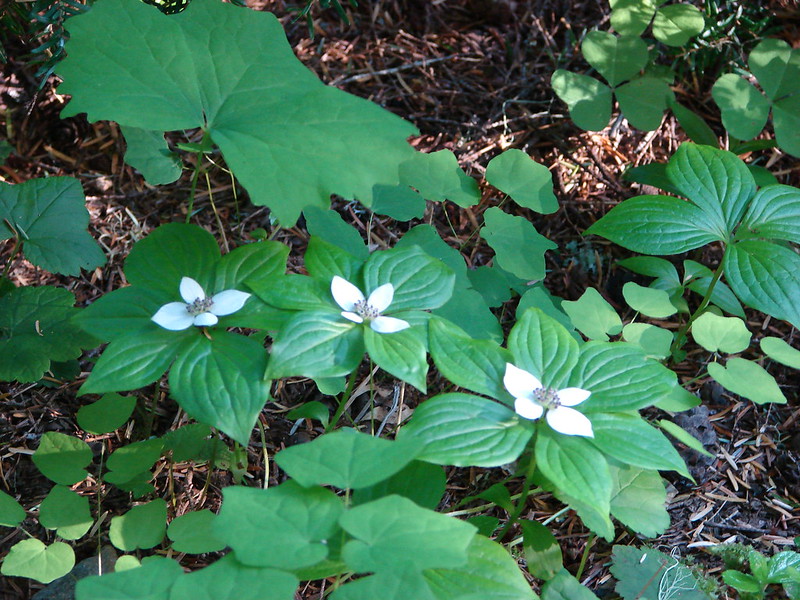
Our shoes were soaked from the dew in the meadows and the mosquitoes were ready to pounce whenever we paused, so even though the next 3.6 miles of the Grasshopper Trail was new for us, we kept a brisk pace. The trail wound it’s way downhill through the forest where there were still many of the typical white flowers found amid the trees; bunchberry, anamone, queen’s cup, twin flower, and we even spotted a pair of trillium still in bloom.

Trillium

After a wide switchback we crossed a stream flowing down Box Canyon and in another quarter mile arrived back at the lower junction with the Chucksney Mountain Trail.
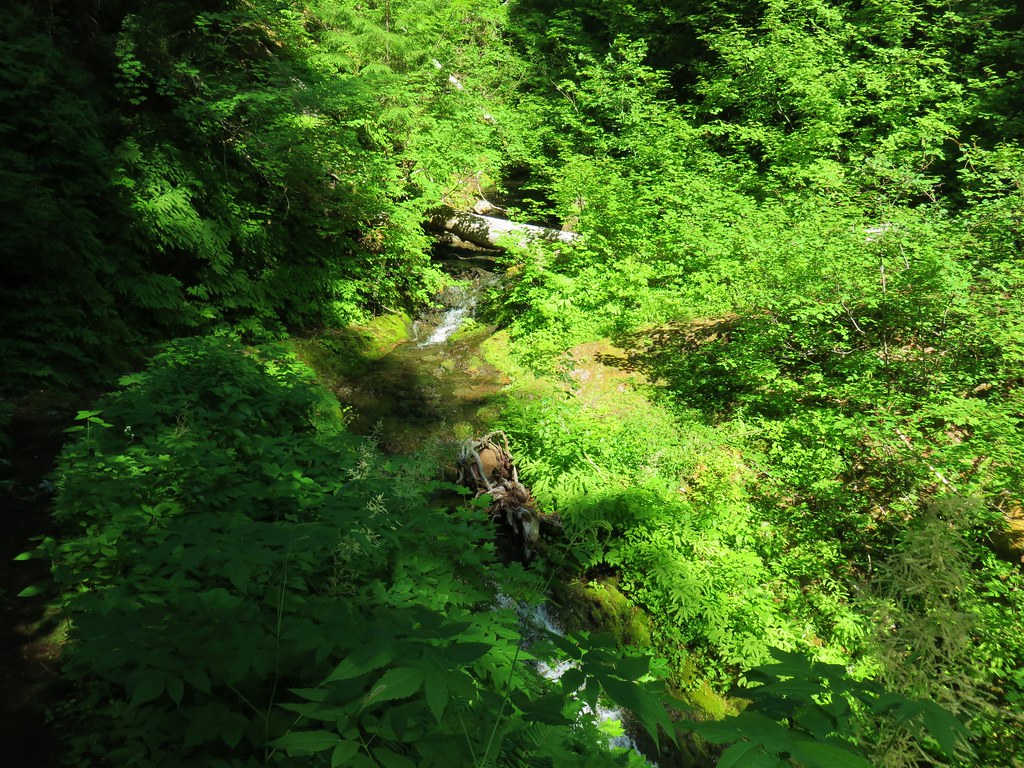
Stream in Box Canyon

Grasshopper Trail junction with the Chucksney Mountain Trail

A final .3 miles brought us back to our car which was being patrolled by a squadron of mosquitoes. We quickly tossed our packs in the back of the car and hopped inside to change. We never did wind up seeing anyone else on the trails which made the fourth hike in a row where we didn’t see another person on the trails.

The trails had been amazingly clear of debris, we only stepped over two logs and one young bent tree, but the faint sections through the meadows required some navigational skill. The relative lack of water along the route make it an unlikely backpacking destination but it worked out well for us. That being said the views and the wildflowers make either Chucksney Mountain or Grasshopper Meadow a worthy early summer day hike destination. Happy Trails!

Flickr: https://www.flickr.com/photos/9319235@N02/albums/72157683128711132

Categories
Hiking Oakridge Area Old Cascades Oregon Trip report

Blair Lake Trail

**Note a portion of this hike burned in the 2022 Cedar Creek Fire.**

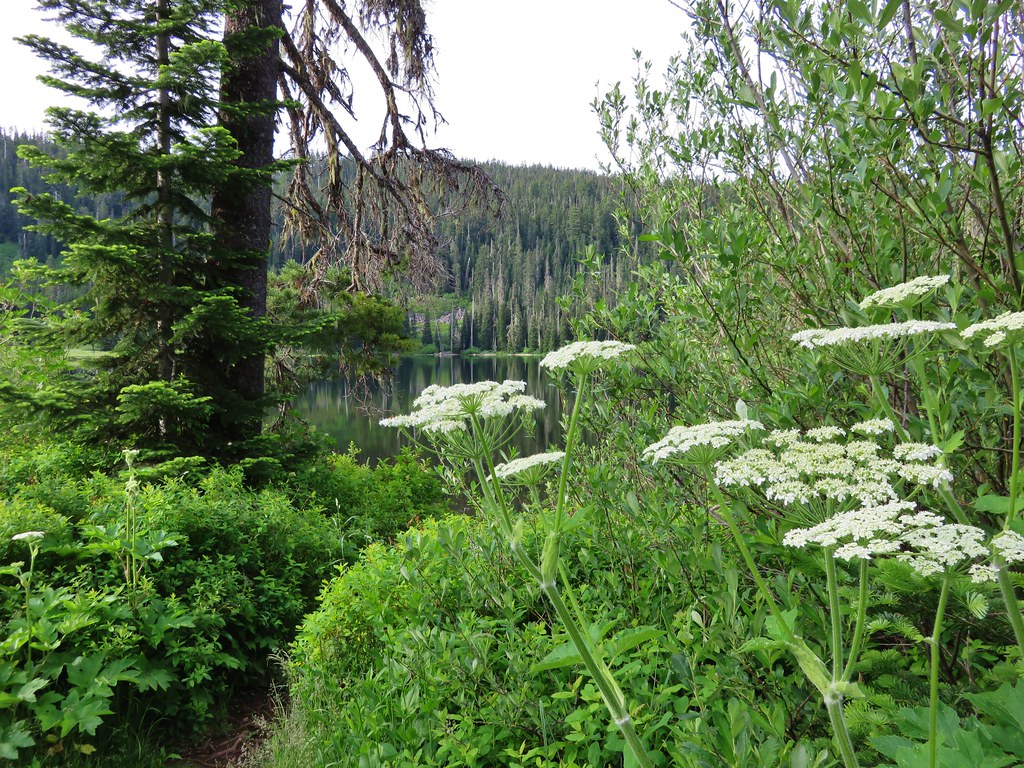
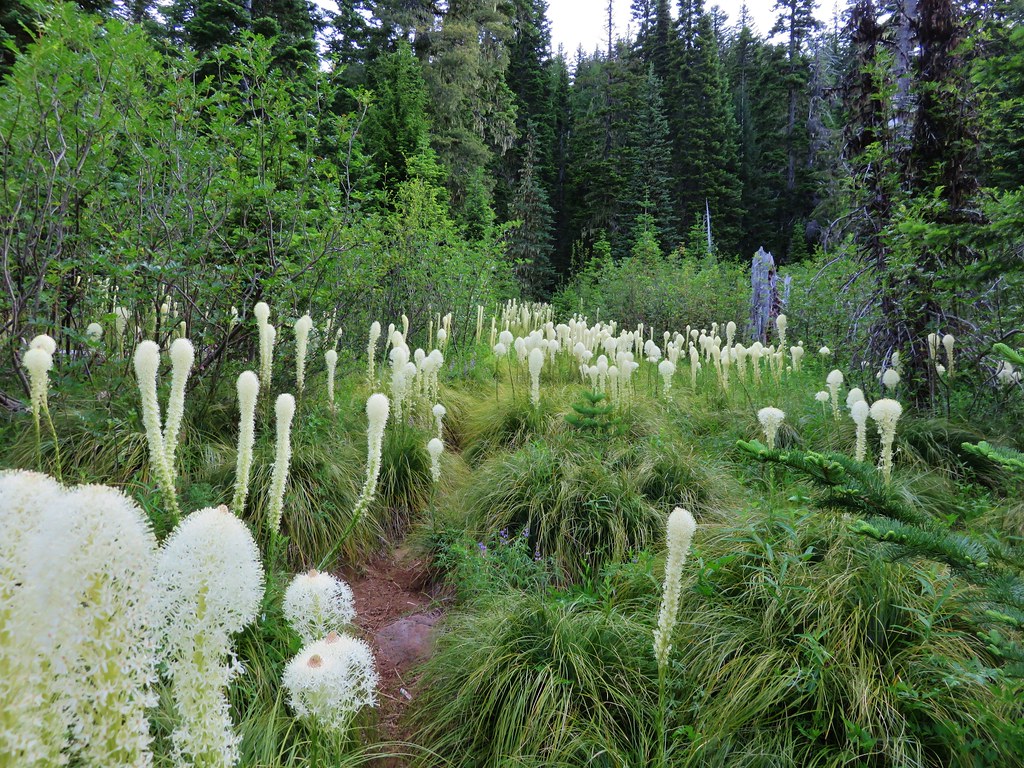
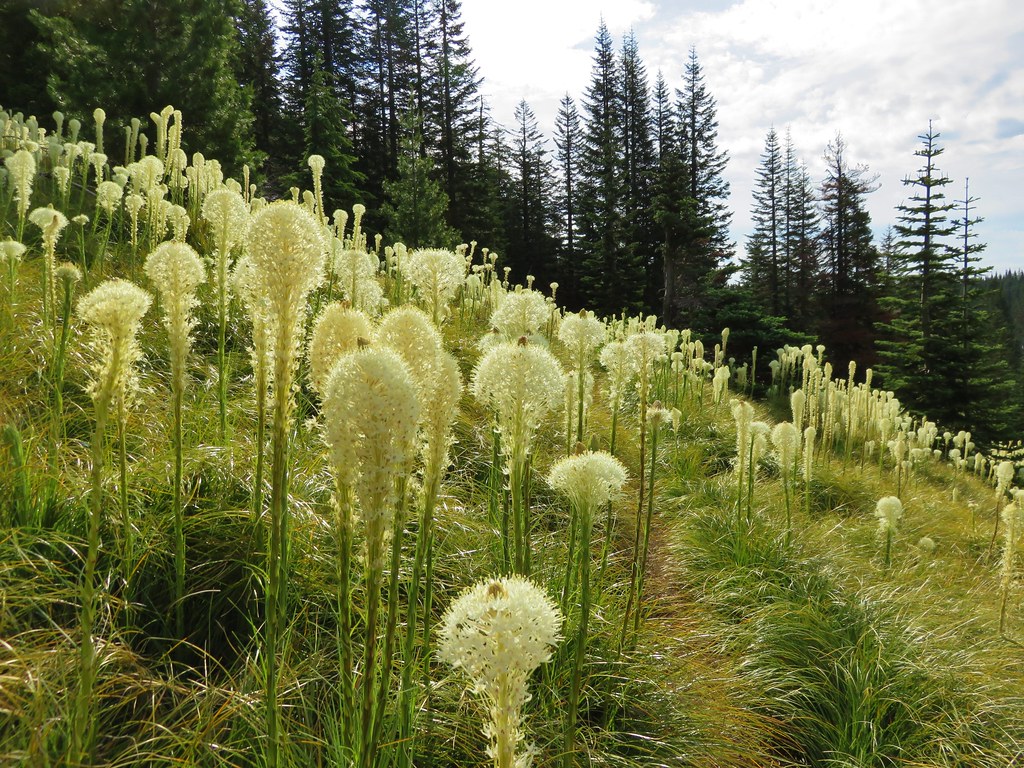
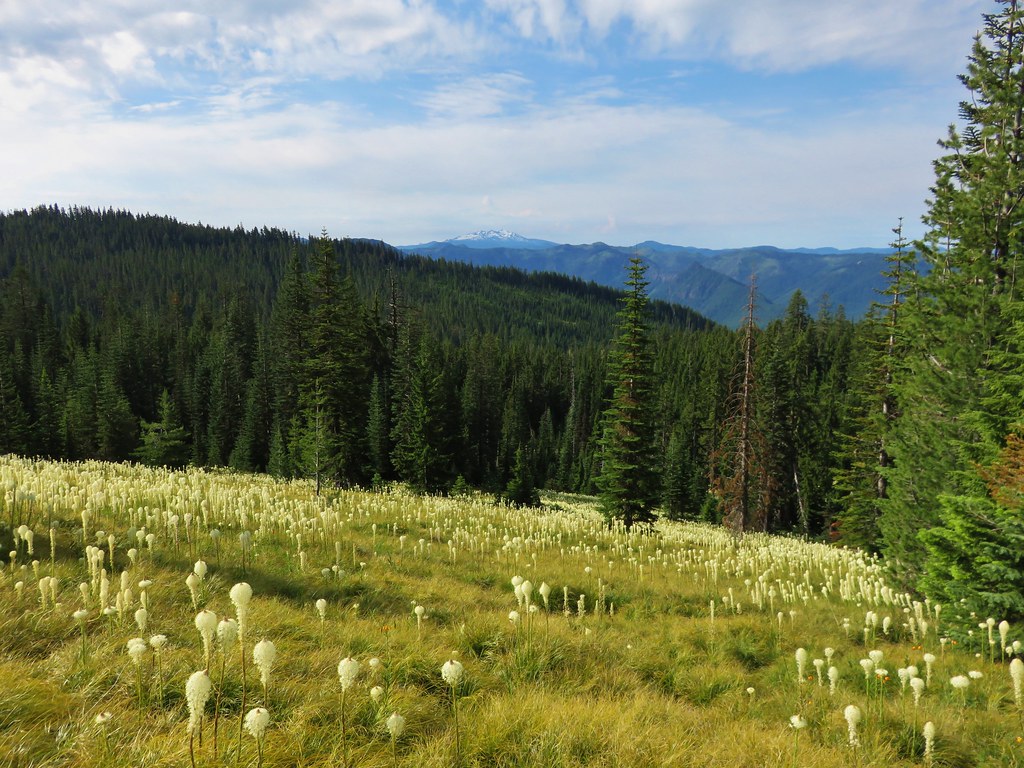
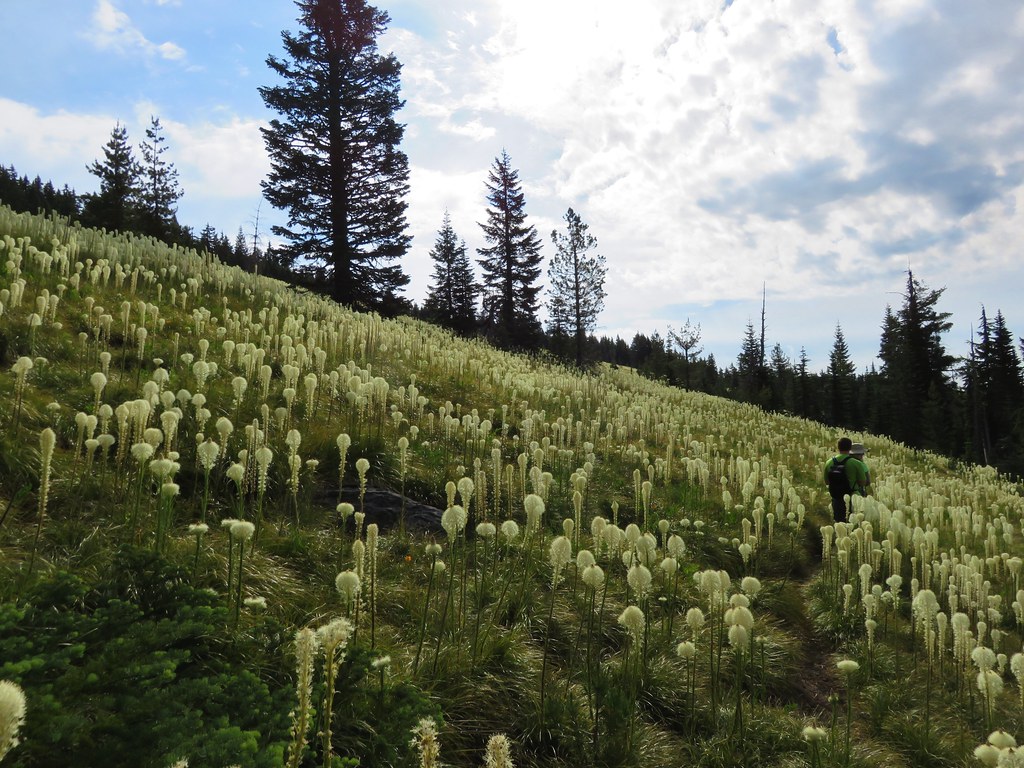
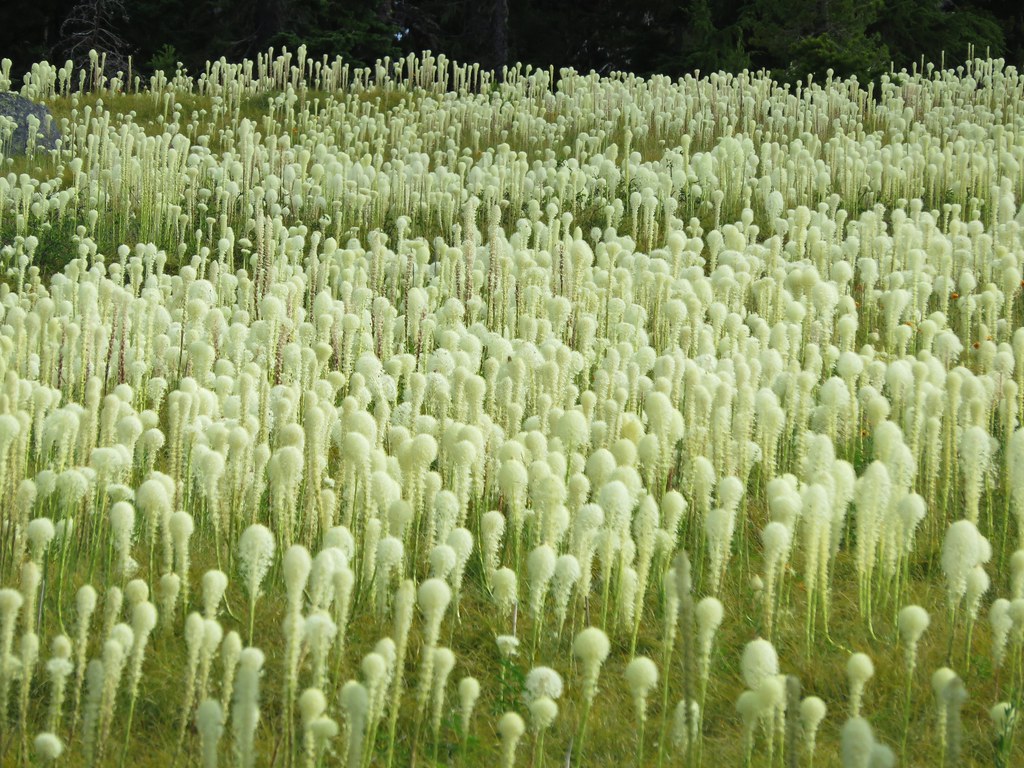
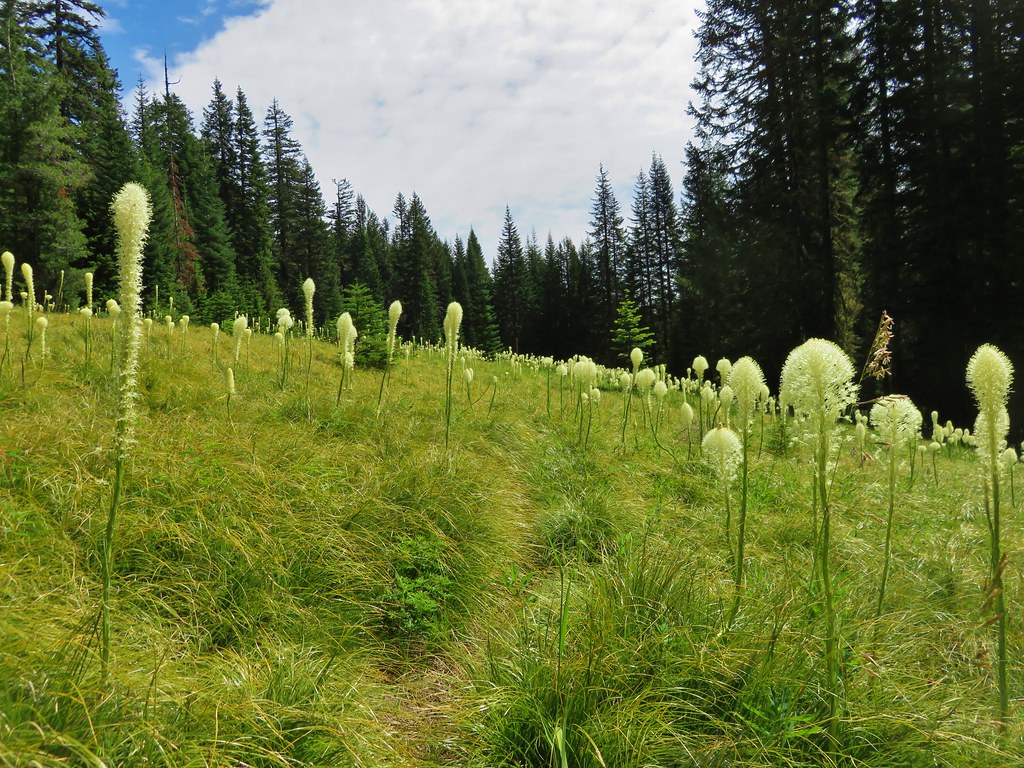
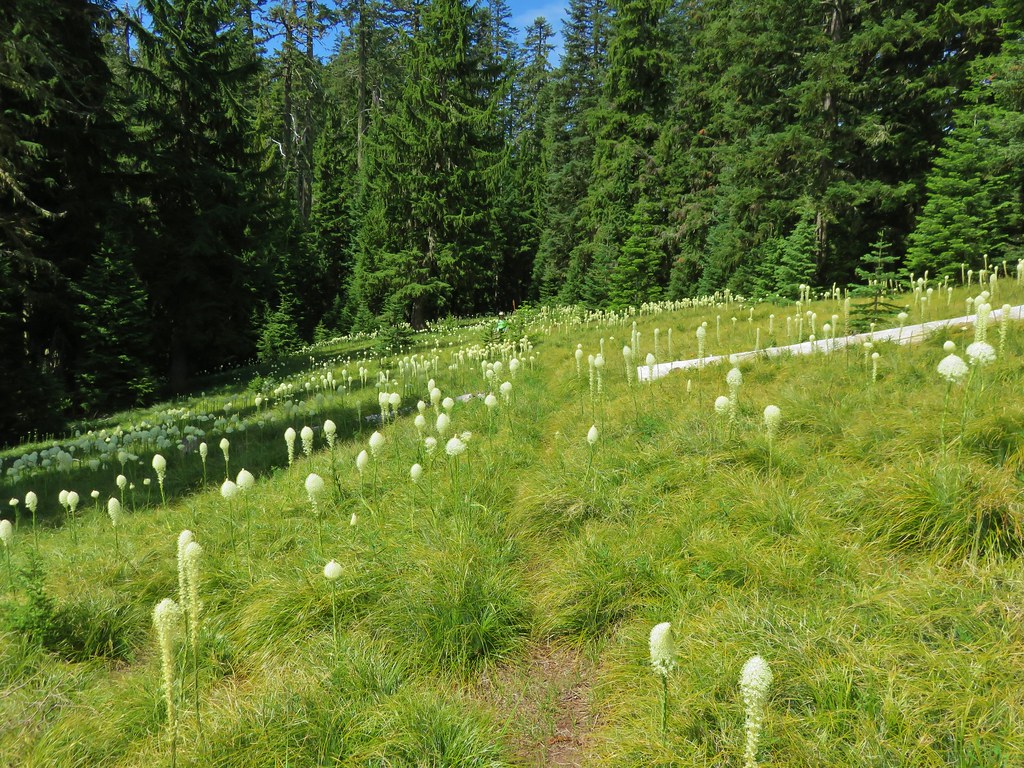
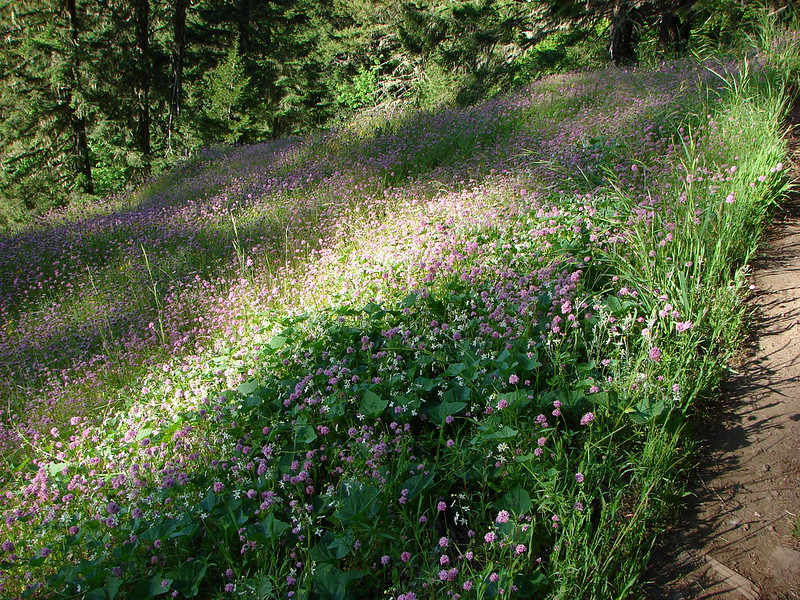
On Fathers day we headed to Blair Lake outside of Oakridge, OR hoping to see some wildflowers. My parents had done this hike two years before on June 11th. In 2013 there were still patches of snow in the area and the majority of flowers were still a few weeks away. With the low snow pack we had this year we were hoping that we weren’t going to be too late. As it turned out the beargrass was spectacular and there were quite a few other flowers along the way. We encountered a few mosquitoes (most of them found Heather), but they were not too bad. There were a few people camped at Blair Lake Campground and another group set near the meadow at Spring Prairie but we didn’t see any other hikers on the trail.

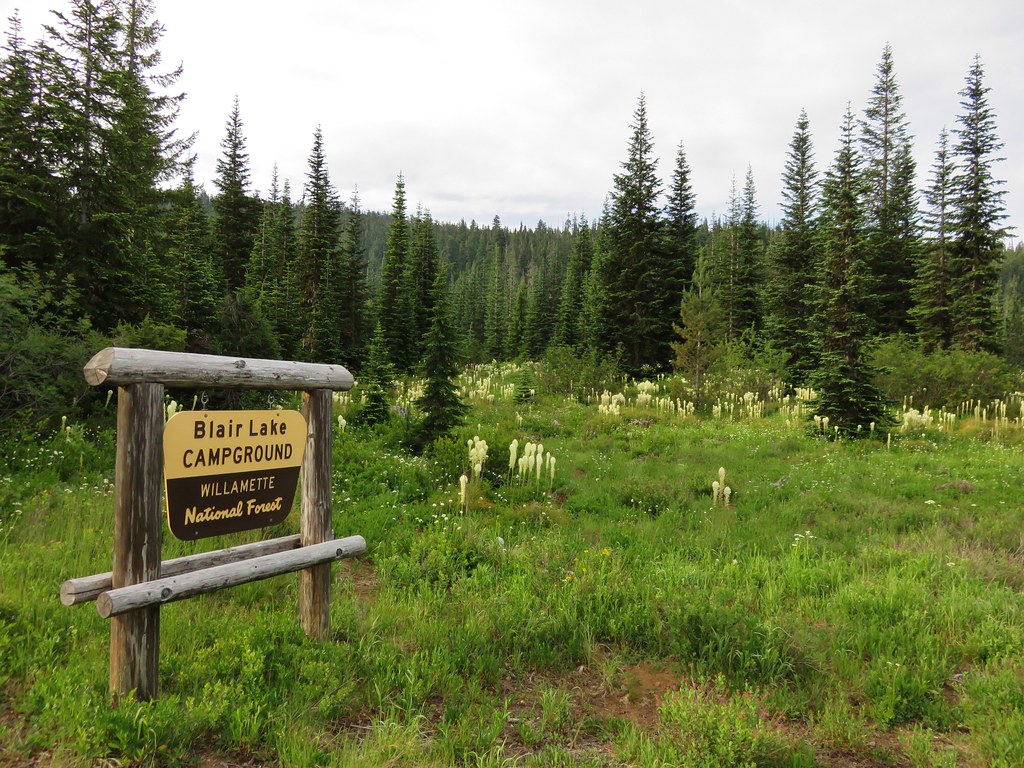
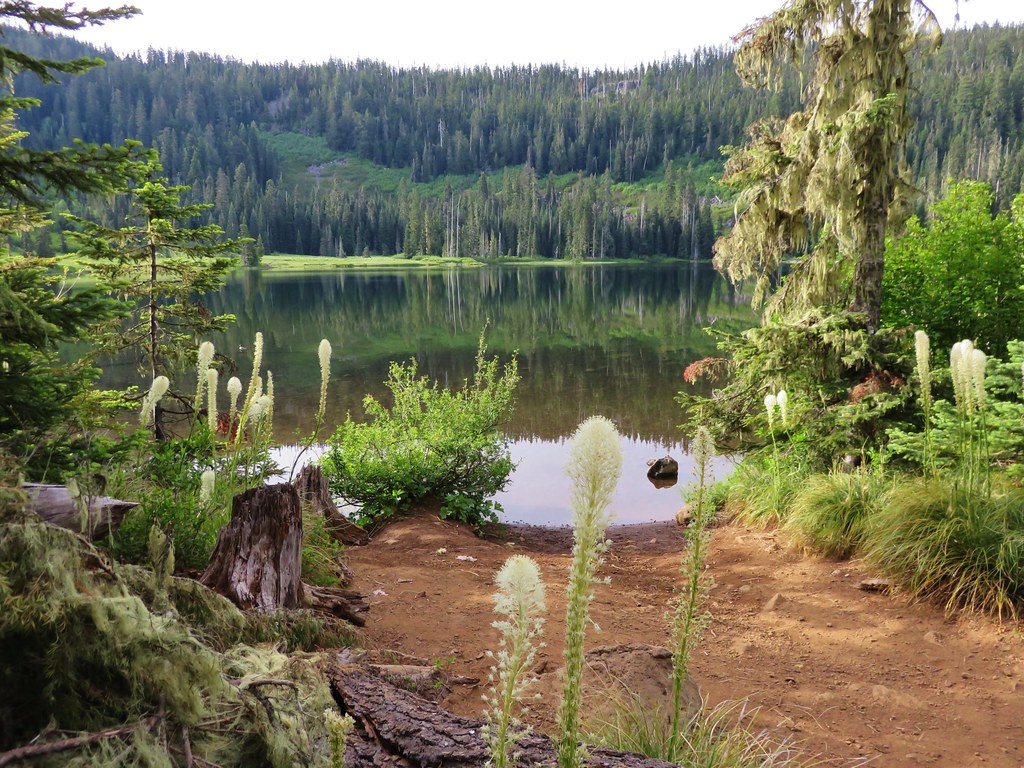
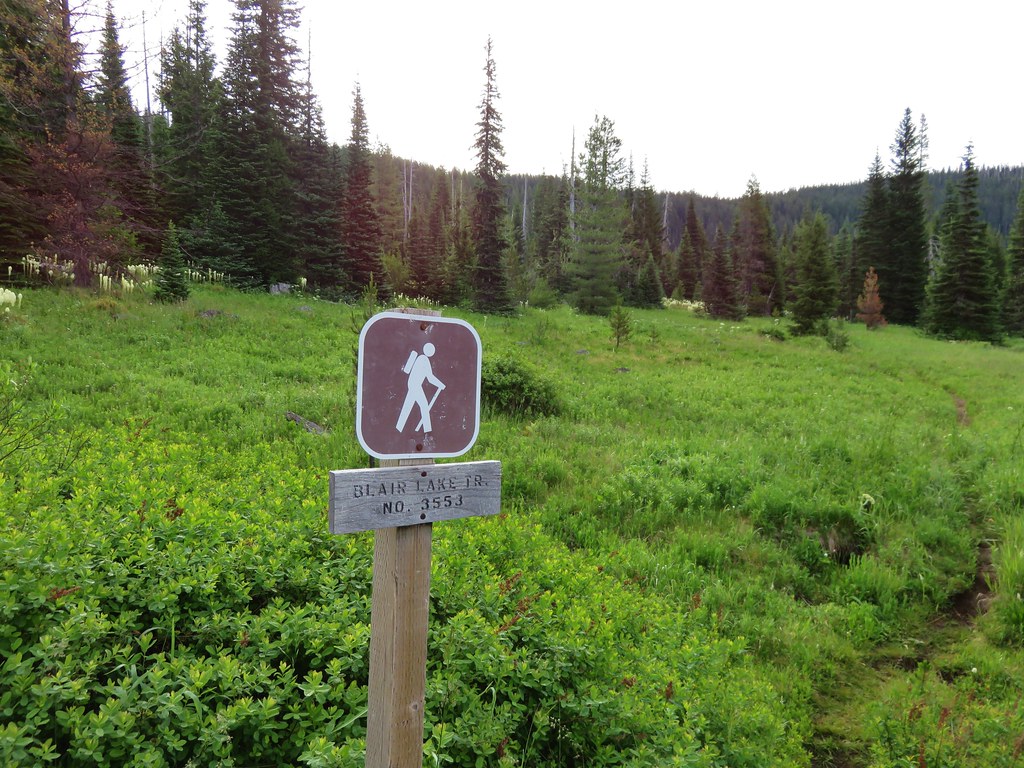
We parked at the campground and took the short trail to Blair Lake first then walked back .4 miles along roads to the start of the Blair Lake Trail.
IMG_4434

IMG_4418

IMG_4419

IMG_4427

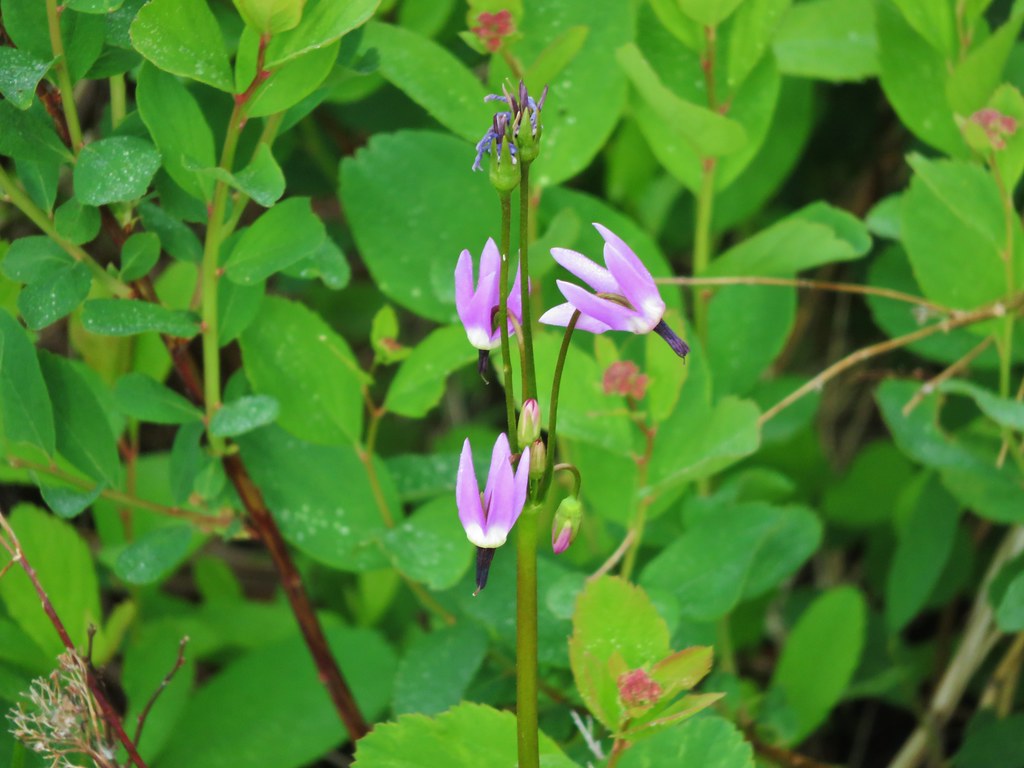
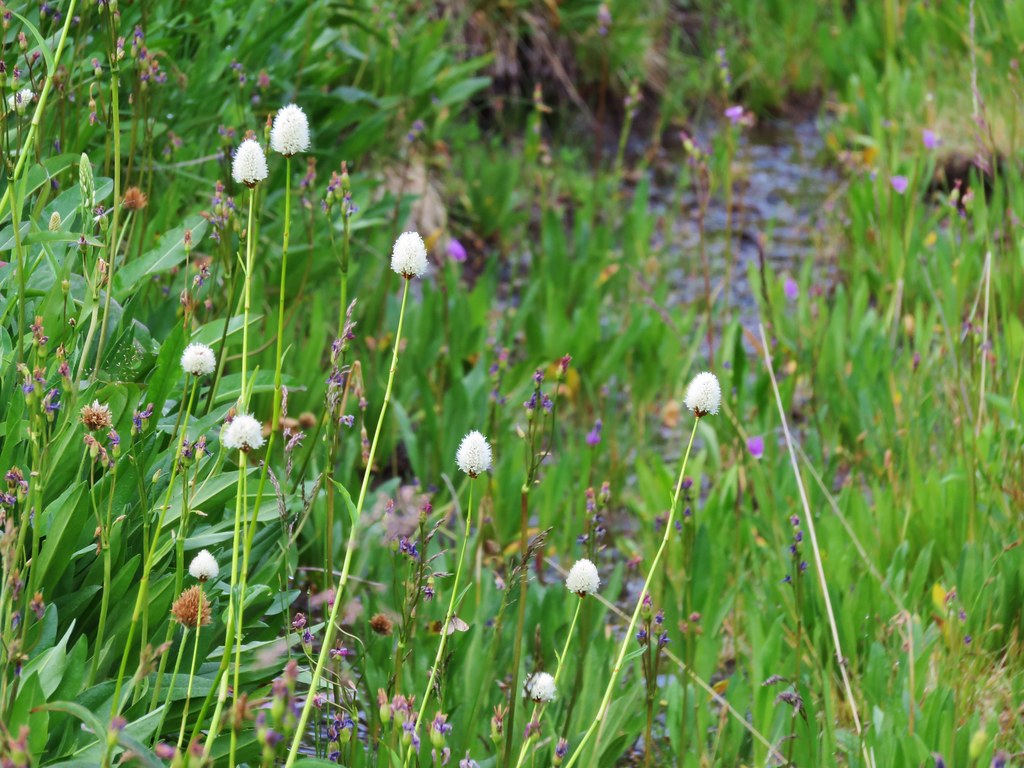
The trail starts in a damp meadow where we spotted a large variety of flowers.
IMG_4454

IMG_4451

IMG_4458

IMG_4459

IMG_4469

IMG_4479

IMG_4476

IMG_4487

IMG_4484

IMG_4494

IMG_4495

IMG_4497

IMG_4853

IMG_4856

IMG_4850

IMG_4833

IMG_4859

Additional flowers appeared as we left the meadow and entered the forest.
IMG_4500

IMG_4505

IMG_4510

IMG_4523

IMG_4826

After climbing for about a mile and a half we arrived at a rocky viewpoint and our first good look at Diamond Peak for the day.
IMG_4532

IMG_4533

IMG_4819

IMG_4529

IMG_4537

IMG_4820

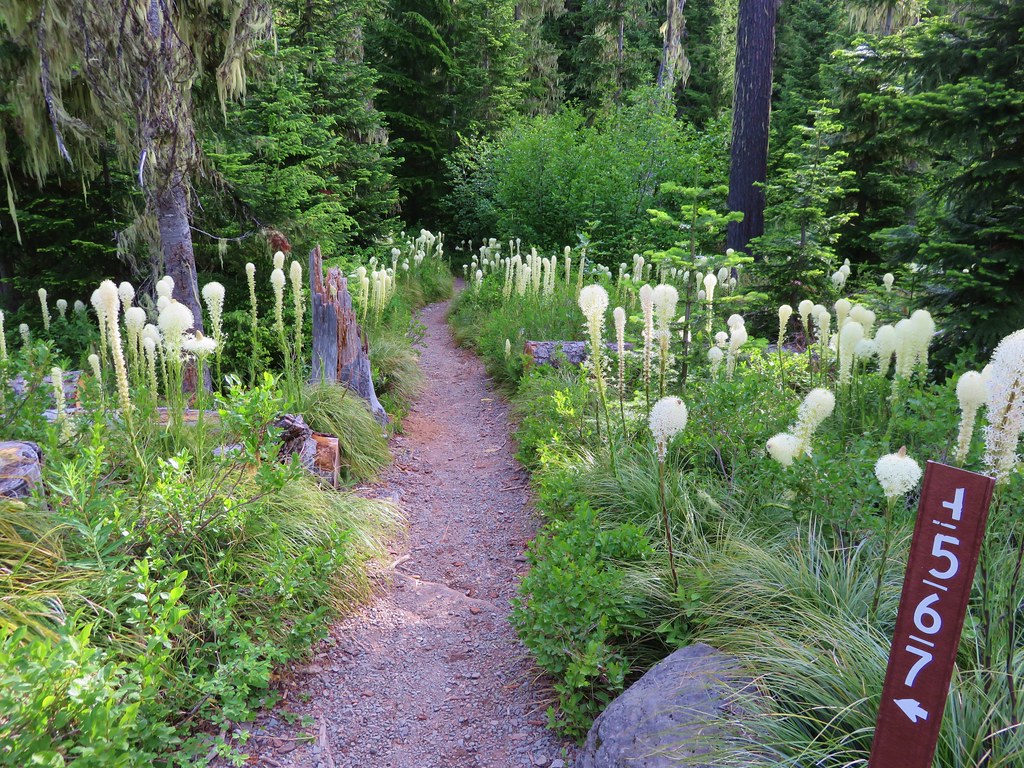
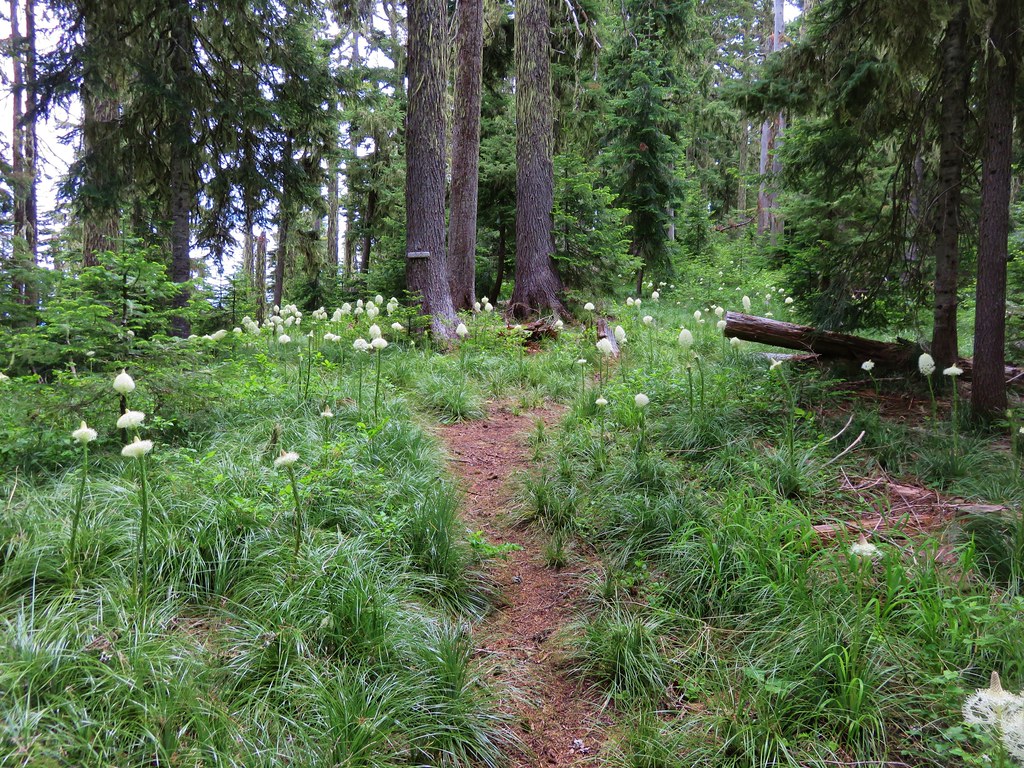
Just after the rocky viewpoint the trail entered one of the best beargrass meadows we’d seen. Beargrass blooms in cycles so it could be several years before the meadow looks like this again, but we seemed to have chosen the right year and right time as most of the stalks were either in full bloom or nearly there.
IMG_4545

IMG_4546

IMG_4559

IMG_4565

IMG_4567

IMG_4576

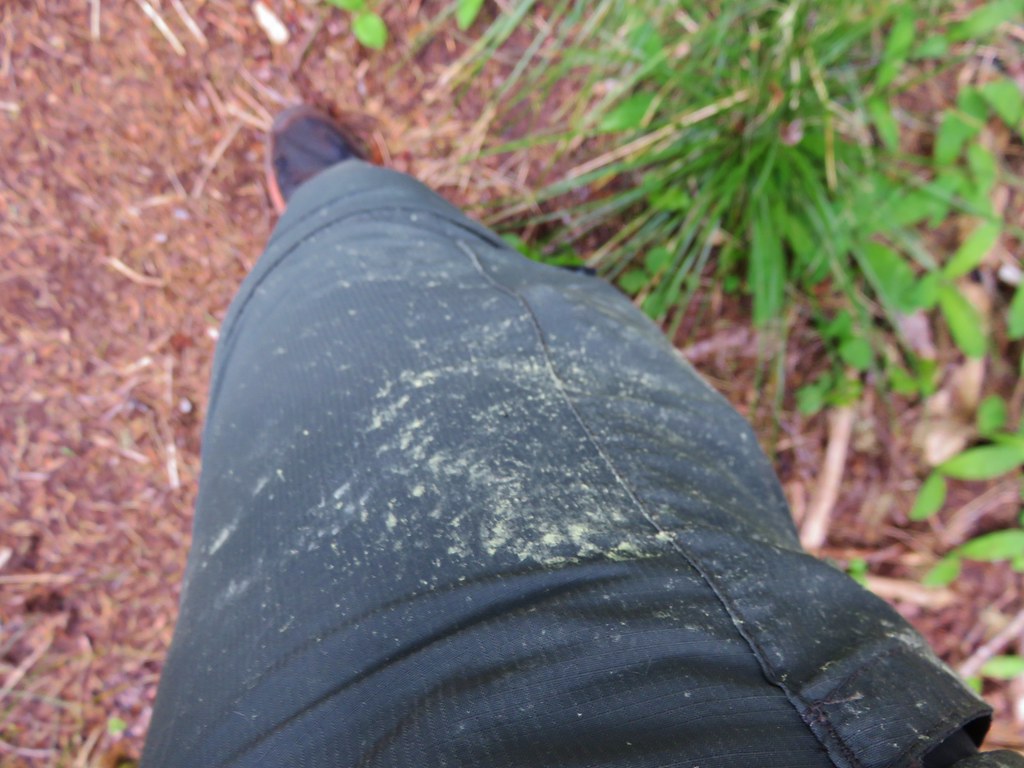
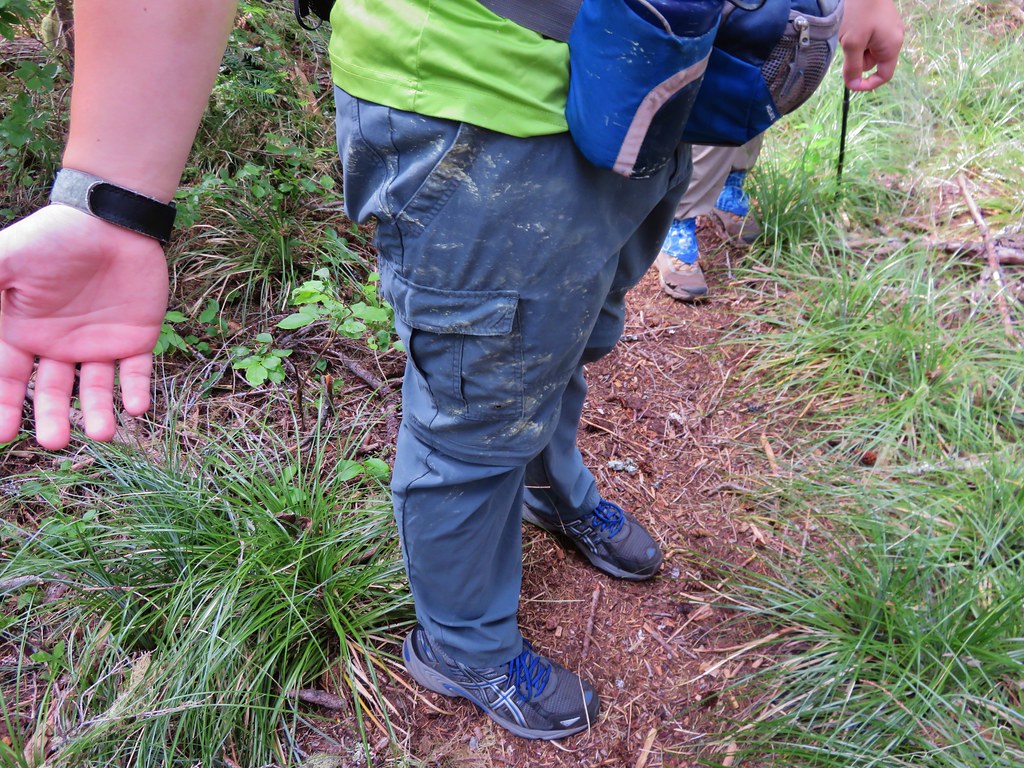
We came out of the meadow with a light coating of pollen.
IMG_4590

IMG_4591

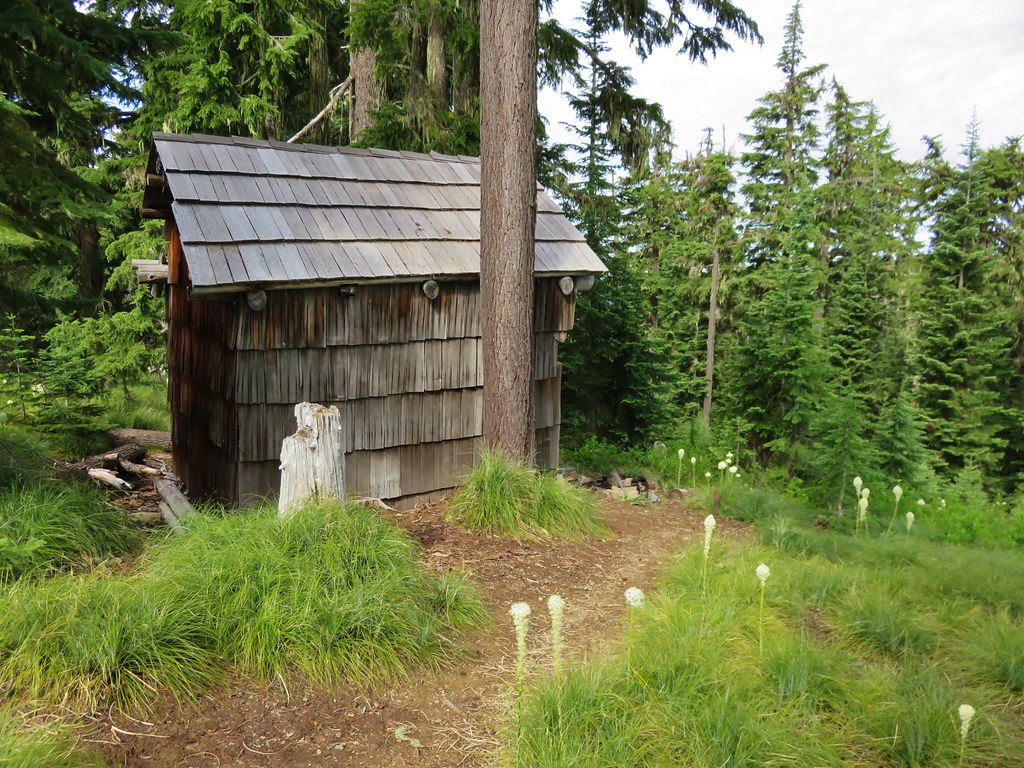
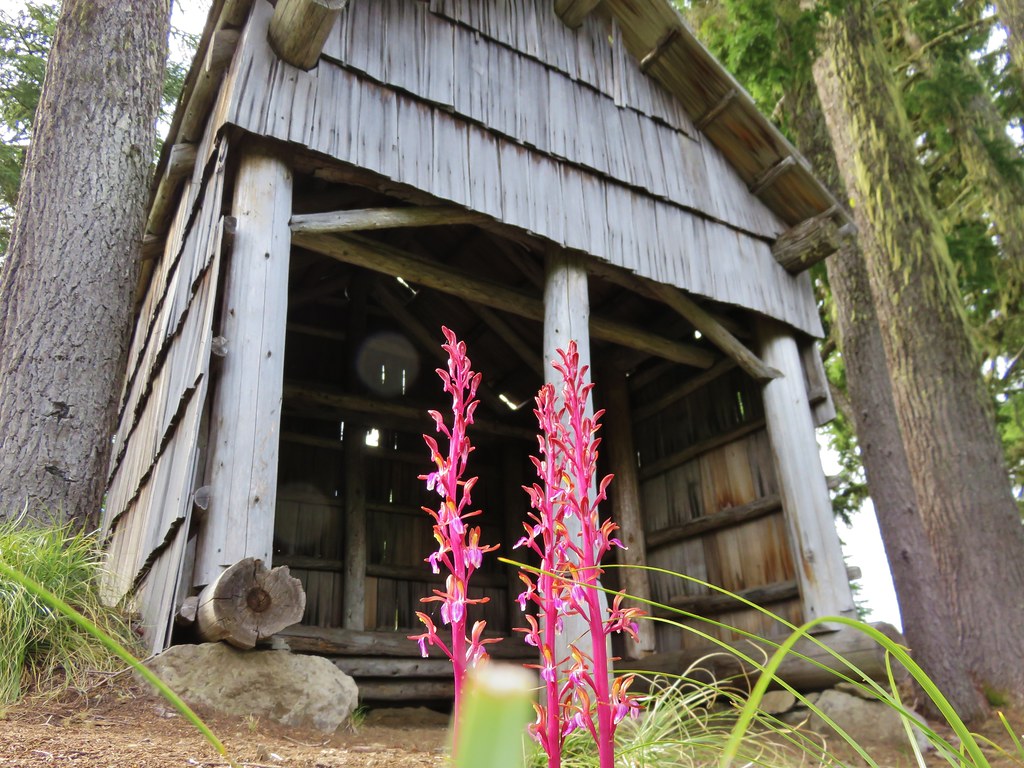
After the amazing beargrass display we climbed another mile to road 730 at Spring Prairie and the old Mule Mountain Shelter. We could have driven here just like the group camping had, but then we wouldn’t have passed through either wildflower meadow.
IMG_4600

IMG_4602

The views from Spring Prairie included a string of Cascade peaks from Diamond Peak to Mt. Jefferson and more beargrass.
IMG_4608

IMG_4612

IMG_4614

Mt. Bachelor
IMG_4615

Broken Top
IMG_4616

The Three Sisters
IMG_4617

Mt. Washington
IMG_4618

Three Fingered Jack
IMG_4619

Mt. Jefferson
IMG_4620

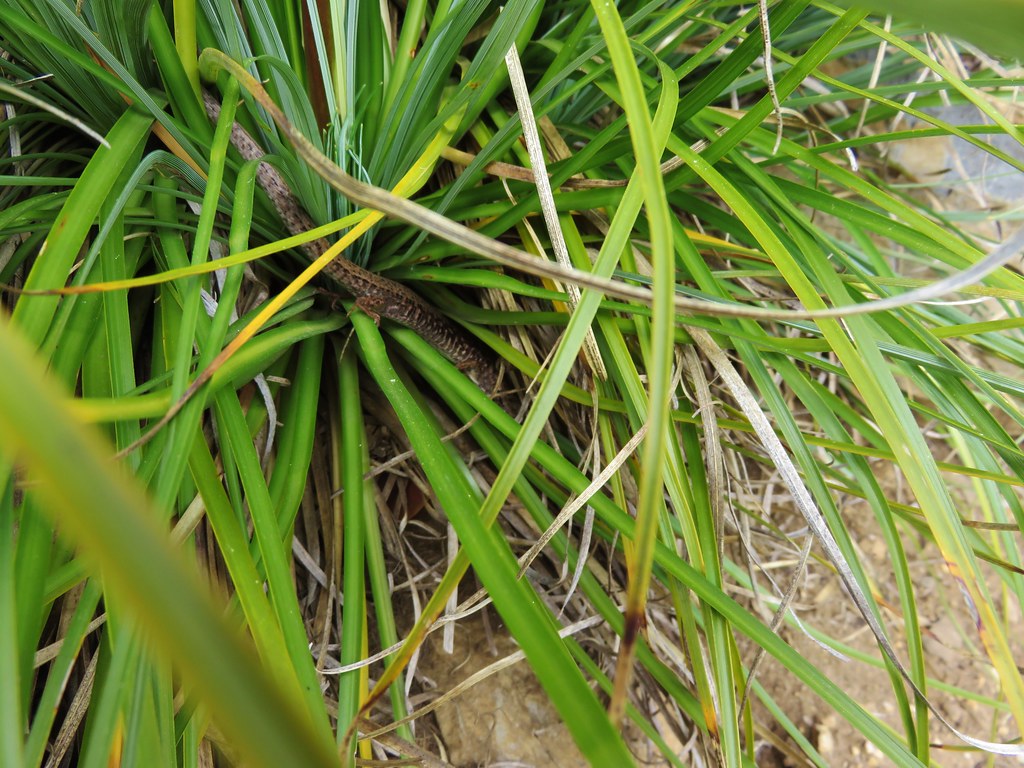
There were a few more flowers here and as we were looking around I spotted a lizard that scurried into a clump of beargrass. It was one we had not seen before, a northwestern alligator lizard. He was hiding in the grass which made it difficult to get a decent picture but still a neat find.
IMG_4636

IMG_4640

Northwestern Alligator Lizard

We continued past Spring Prairie on Road 730 to the continuation of the Blair Lake Trail then at a fork headed right to visit the site of the former lookout which was .6 miles away.
IMG_4754

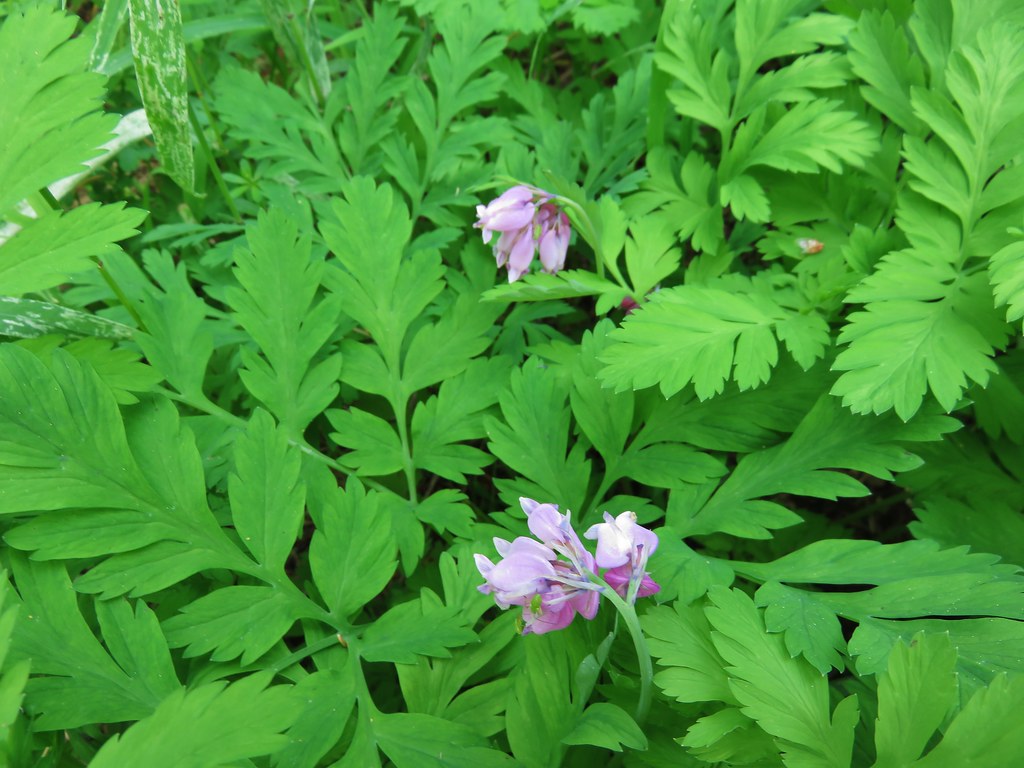
We found some different flowers along this path including bleeding heart and yellowleaf iris, but the views were inferior to those at Spring Prairie.
IMG_4648

IMG_4649

IMG_4650

IMG_4660

IMG_4652

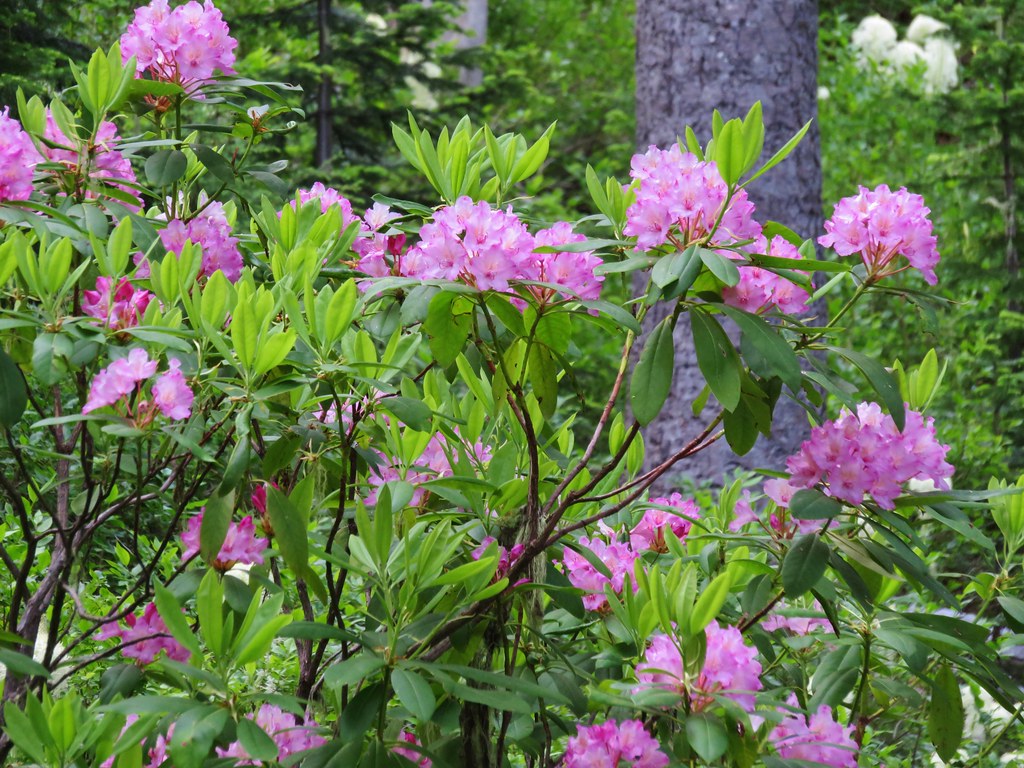
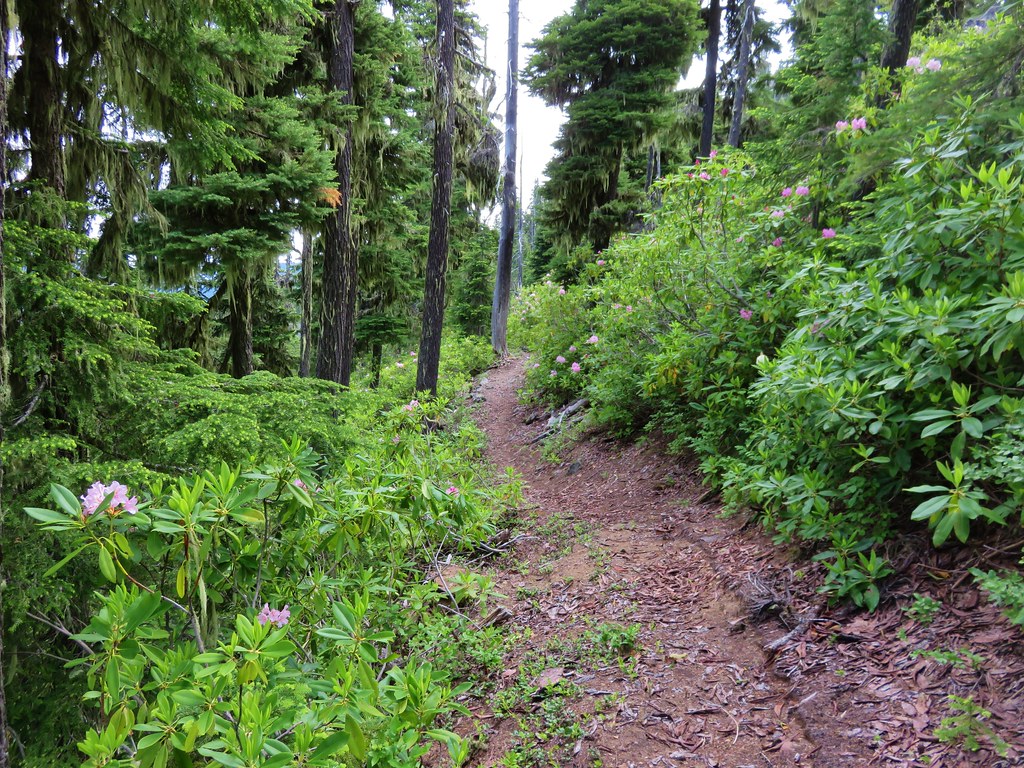
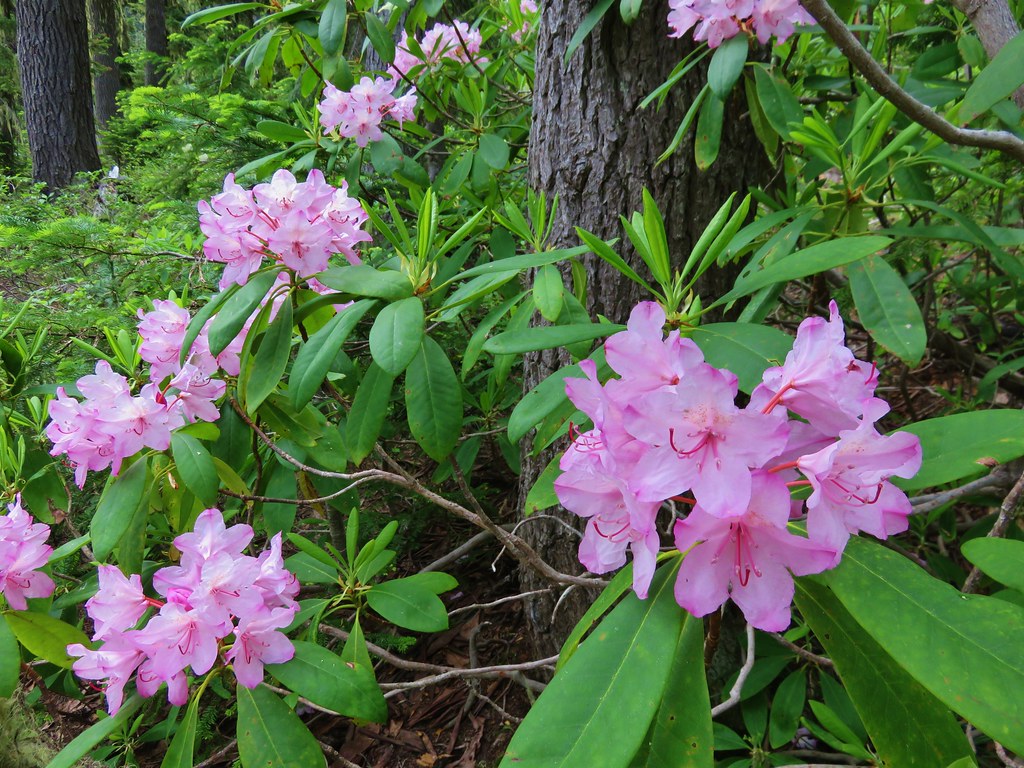
When we got back to the fork we decided to continue on the Blair Lake Trail for another couple of miles just to see what it was like. The trail itself continues all the way into the Waldo Lake Wilderness and connects with trails near the Eddeeleo Lakes. The trail lost quite a bit of elevation in the first 3/4mi before leveling out somewhat. We were now in a rhododendron filled forest.
IMG_4667

IMG_4669

IMG_4672

IMG_4674

IMG_4677

IMG_4676

IMG_4679

IMG_4685

We went about 2 miles along this portion of trail before deciding to turn around. The trail was beginning to descend a bit to another road crossing and we didn’t want to have anymore elevation to gain. The highlight of the 2 mile extension was another beargrass meadow. This one was much smaller but still very nice.
IMG_4692

IMG_4693

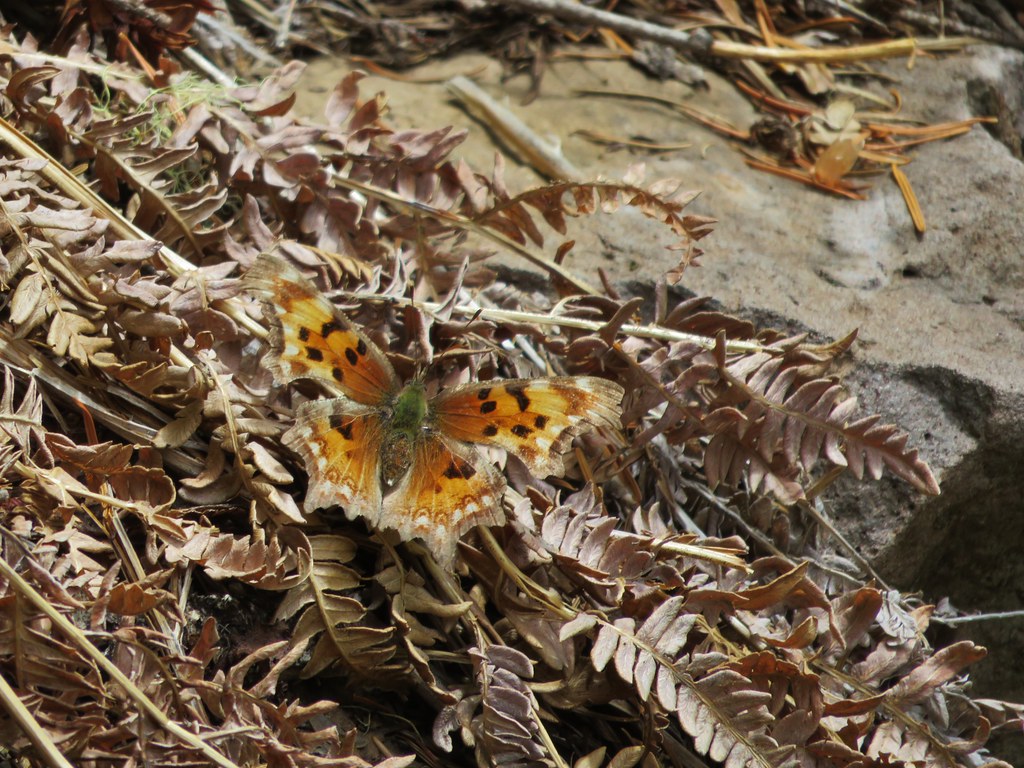
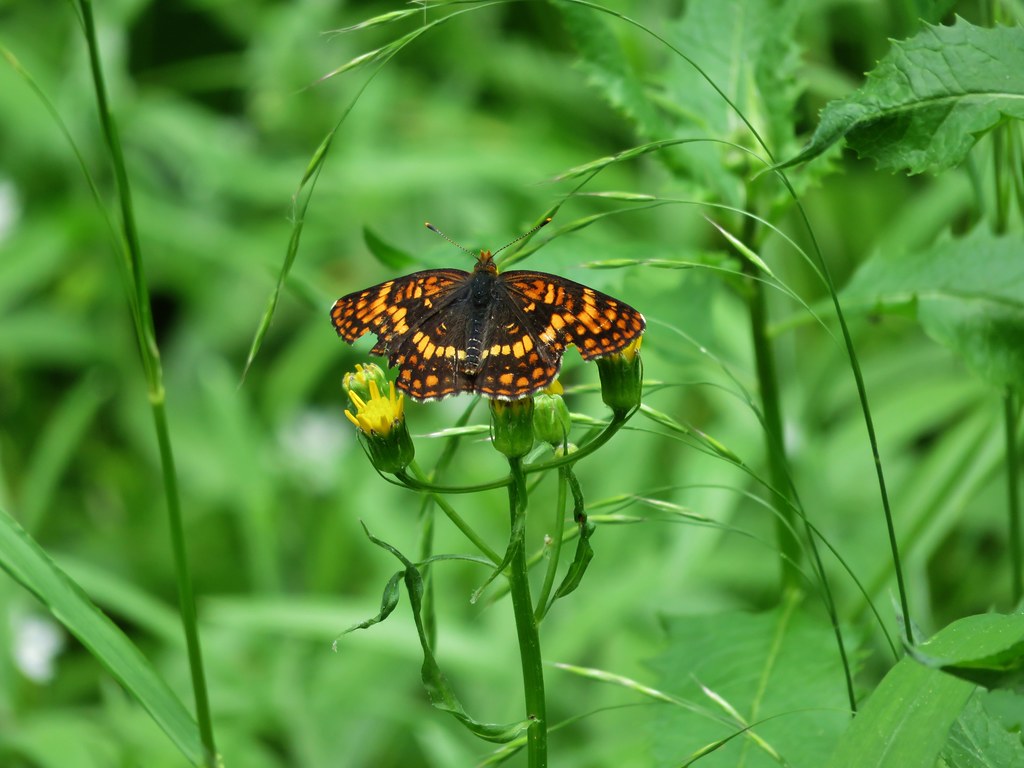
On our way back the butterflies and other insects were out giving us something new to look for as we returned to the trailhead.
IMG_4727

IMG_4736

IMG_4746

IMG_4750

IMG_4757

IMG_4758

IMG_4760

IMG_4784

IMG_4800

IMG_4804

IMG_4809

IMG_4858

IMG_4844

We wound up covering 12.6 miles but shorter hikes would still yield plenty of flowers and longer hikes could lead to backpacking trips into the Waldo Lake Wilderness. The variety of flowers in the first meadow make this a worthy wildflower hike and if you happen to hit a beargrass year as we did then it’s like hitting the jackpot. Happy Trails!

Categories
Hiking Oakridge Area Old Cascades Oregon Trip report

Tire Mountain

**Note the 2024 Tire Mountain Fire burned over a small portion of this hike.**

June wildflowers and a “possible” waterfall were are goal for our recent trip to Tire Mountain near Oakridge, OR. Our guidebook showed a 7.6 mile hike starting from the Alpine Trailhead, linking up to the Tire Mountain trail, and turning around after reaching the summit of Tire Mountain. Looking at the forest service maps of the area I noticed that the Tire Mountain trail continued west beyond the junction with the summit trail to a trailhead on road 5824. Along that portion of the trail was a creek crossing where it appeared there might be a waterfall. Thinking that a 7.6 mile hike was a little short for a 2 1/2 hour drive I thought we could investigate the possible waterfall for a little extra exercise.

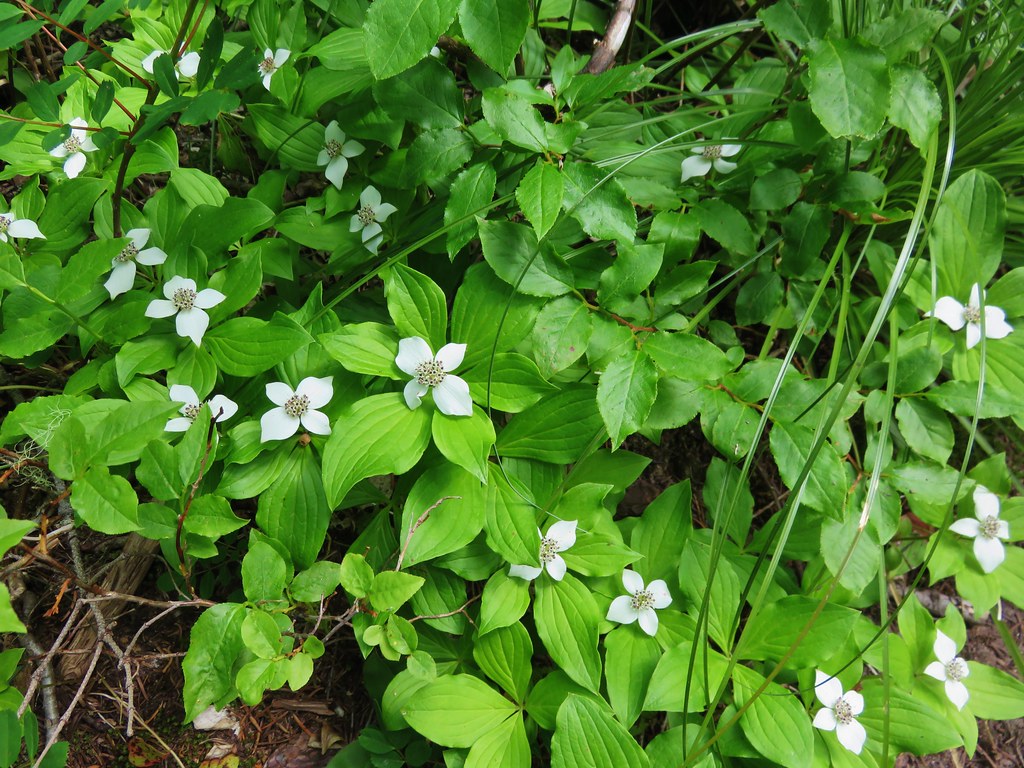
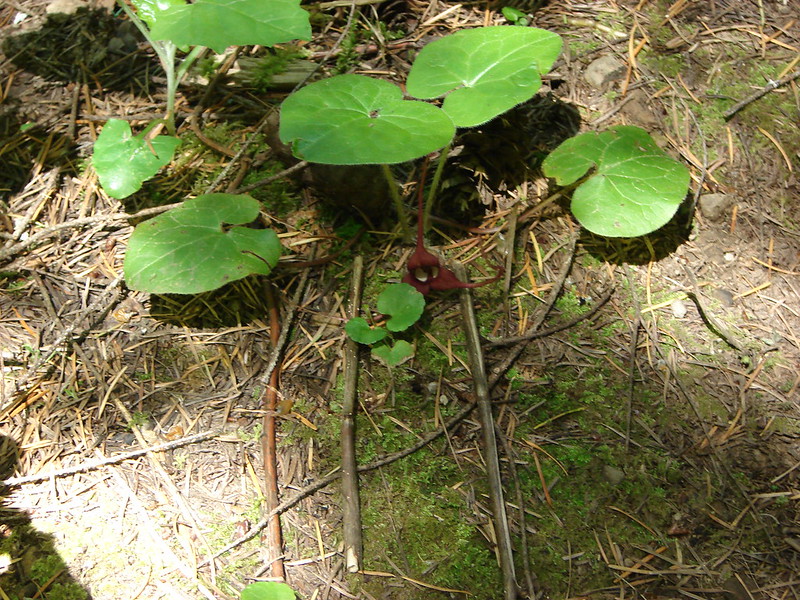
The Alpine trail started off uphill on a forested ridge where the path was lined with small rocks. The usual woodland flowers were present including vanilla leaf, solomonseal, candyflower, and bunchberry. We also spotted some wild ginger.
DSC07135
DSC07137
DSC07688
DSC07136
DSC07729

Just a bit over half a mile in the trail entered the first of the meadows. The flowers did not disappoint and as an added bonus several cascade peaks were visible from this meadow.
DSC07156
DSC07149
Diamond Peak
DSC07165
Mt. Bachelor
DSC07158
Broken Top
DSC07160

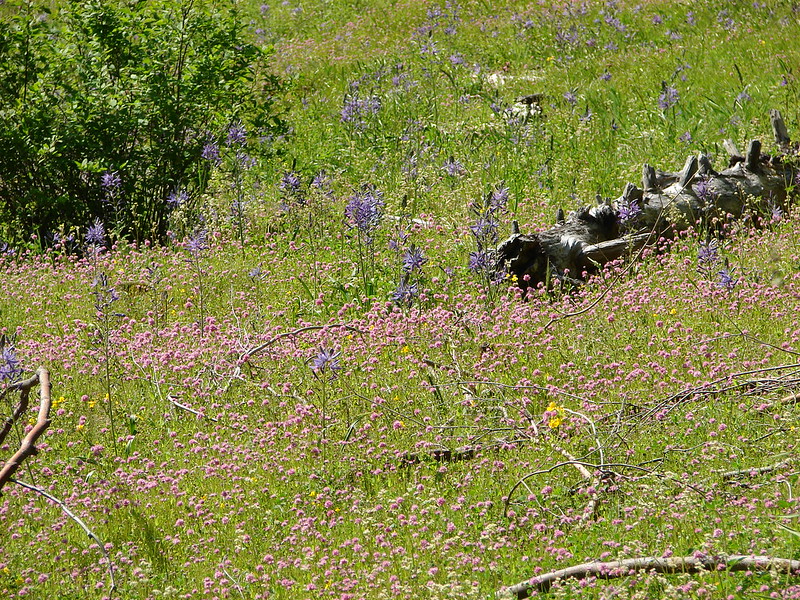
The flower show continued as we passed through more meadows on the way to the junction with the Tire Mountain trail. Along the way The Three Sisters joined the view.
DSC07191
DSC07204
DSC07179
DSC07190

At the 1.2 mile mark we found the Tire Mountain trail and turned right. We passed through several smaller meadows which were home to a variety of different flowers, some of which were unknown to us.
Columbine
DSC07233
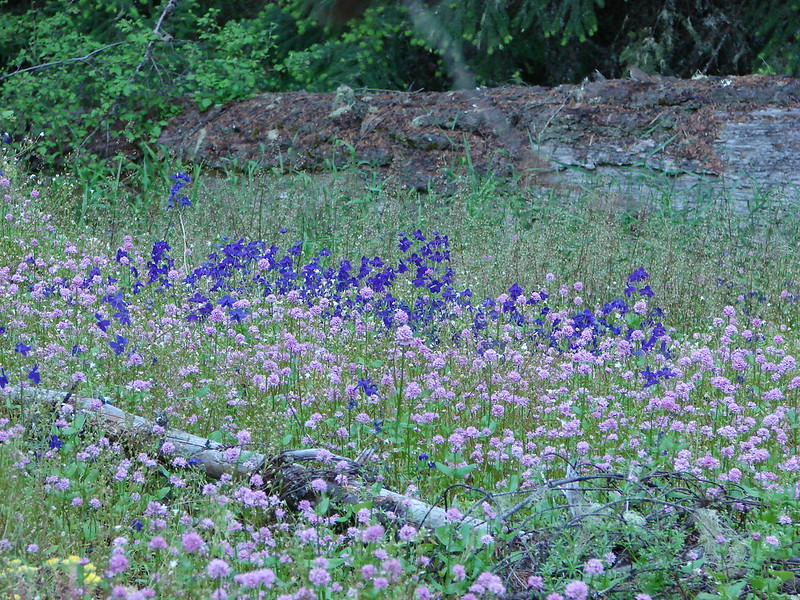
Plectritis & Larkspur
DSC07235
Plectritis & Yellow Monkeyflower
DSC07236
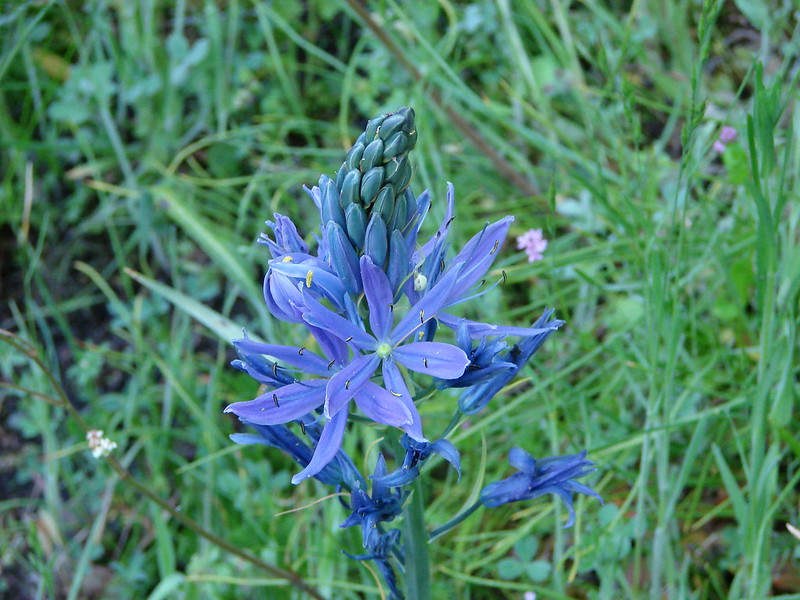
Camas
DSC07249
Paintbrush
DSC07261
Coastal Manroot & ?
DSC07263
Cat’s Ear Lily
DSC07265
Another unknown
DSC07267
Possibly Oregon Sunshine
DSC07270
Giant Blue-Eyed Mary, Plectritis & unknown
DSC07306
Buttercups
DSC07296
Wild Iris
DSC07241

We were amazed at the number of flowers and we could see that there were even more higher up on the hillsides.
DSC07253
DSC07291

After the series of smaller meadows the trail entered the largest meadow of the day. Here balsamroot joined the flower bonanza.
DSC07649
Ookow
DSC07647
Wallflower
DSC07655
Unknown
DSC07613
Blue Gilia
DSC07362

When we left the meadow I remarked that we hadn’t seen any lupine at all. As soon as we hit the next small meadow that was no longer the case.
DSC07468
From this meadow we also got a good view of Tire Mountain and Diamond Peak again.
DSC07462
DSC07498

The trail then entered the forest before splitting. To the left was the 1/2mi path to the summit while the right fork headed down toward road 5824. We headed up to the summit to check out the former lookout site. The trail was nice despite there being a few downed trees to maneuver around.
DSC07504
When we reached the brushy summit we found a number of additional flower types.
DSC07509
Unknown
DSC07507
Fawn Lily
DSC07514
Unknown
DSC07518
Wild onion
DSC07519
Phlox
DSC07521
Buscuitroot
DSC07522

Despite being a former lookout site there was no view from the summit. In fact the lookout had been placed up in a tree in order to have a view of the surrounding area. We explored a bit before heading back down to the trail split and starting our search for the waterfall.

From the split, the Tire Mountain trail descended fairly quickly through a series of switchbacks. Several bridges crossed seasonal streams amid the large trees.
DSC07529
DSC07536

It was a lot further down to the creek I was looking for than I had anticipated and we were all dreading the climb back up. We finally rounded a ridge end and spotted the bridge that crossed the creek I was looking for. There was indeed a waterfall but after seeing it we knew why the guidebook doesn’t mention continuing on to it. It was a pretty sad display lol.
DSC07546

After soaking in the torrent we started our climb. We did our best to focus on the ever present bird song as we trudged along. Grey jays, varied thrushes, and at least one woodpecker flew from tree to tree. The woodpecker was the only one that stayed still long enough for me to get a picture.
DSC07549

The meadows were just as impressive on the return trip. The only real bummer for the day was seeing a layer of smoke over the Three Sisters and Mt. Bachelor. Alas the fire season started early this year with the Two Bulls Fire burning near Bend, OR. 😦
DSC07717
Hopefully it isn’t a sign of things to come. Happy (and fire free) trails!

flickr:https://www.flickr.com/photos/9319235@N02/sets/72157644669235877/
Facebook:https://www.facebook.com/media/set/?set=a.10204185599747388.1073741882.1448521051&type=3

Categories
Hiking Oakridge Area Old Cascades Oregon Trip report

Goodman Creek to Eagles Rest

500 miles! Heather and I reached that hiking milestone for 2013 this past weekend. We hadn’t started out with that accomplishment in mind but as the year progressed added hikes and added distances (What’s down that trail?) made it a reachable goal. It’s amazing to us to think that all that hiking isn’t even 1/5 of what it would take to complete the entire 2,650 miles of the Pacific Crest Trail. Even so it was a nice feeling to hit that mark before the year was over.

On to the hike that put us over the top. We headed back down to the Eugene area for another creek hike. We had hiked both Larison and Fall Creek in the same area back in March, and this time we had our sights set on Goodman Creek in the Willamette National Forest. This trail offered a chance to climb up Eagles Rest to a viewpoint overlooking the Lost Creek Valley. We woke up to some pretty heavy morning fog and weren’t sure what we would find at the trail head, but shortly after leaving Eugene on Highway 58 we rose above the fog to a nice bright morning. The Goodman Creek Trail actually starts on the Hardesty Mountain Trail near milepost 21 on Hwy 58.

The trail set off in an old growth forest full of moss and mushrooms and soon split with the left fork heading up to Hardesty Mt. and the right fork to Goodman Creek.

005

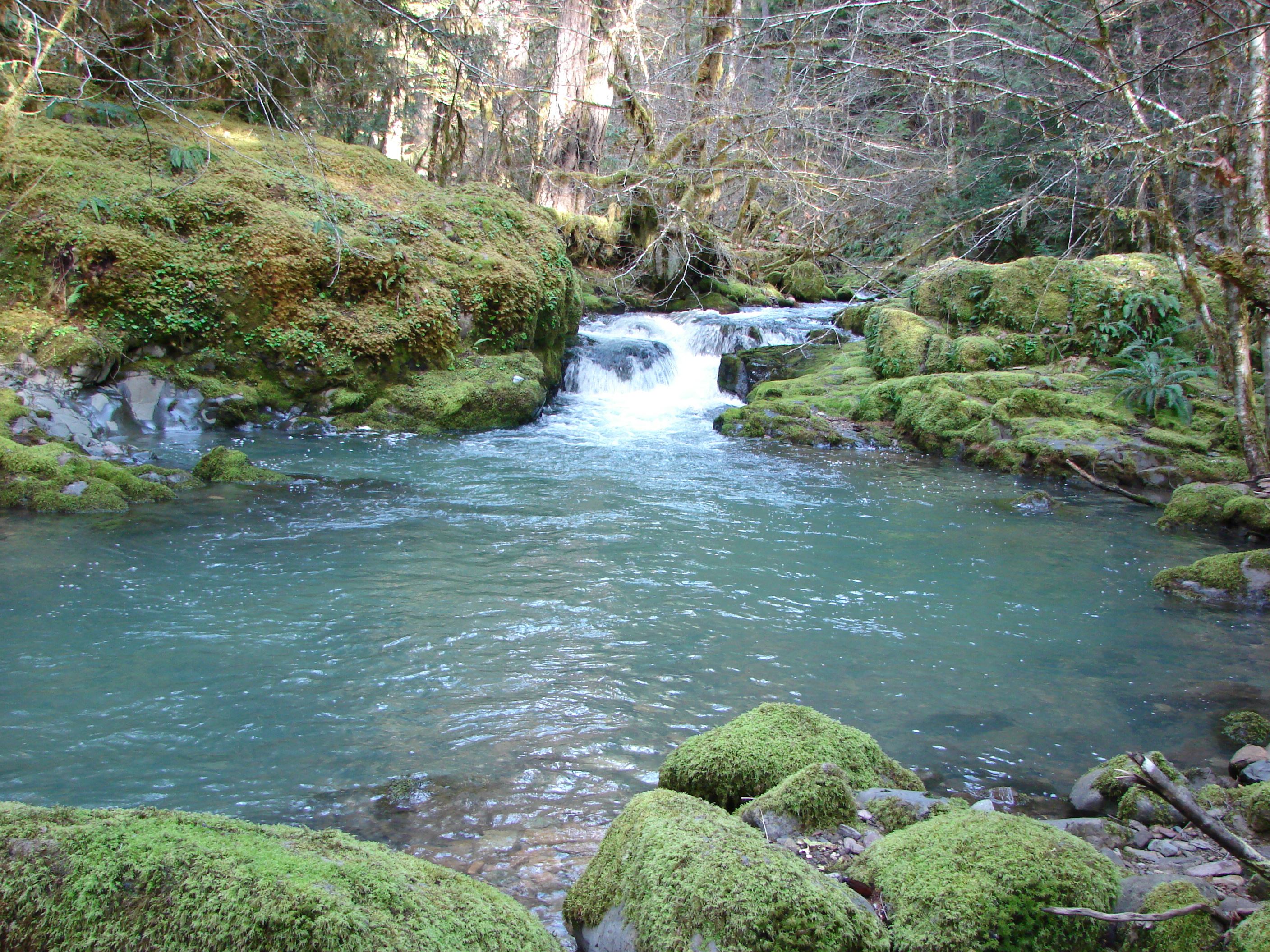
The trail slowly climbed at a distance from Goodman Creek for 2 miles where a small creek joined the main branch of Goodman Creek. Just before the confluence there was a side trail at the back of a campsite leading down to the small creek and a pair of scenic small falls.

022

034

After visiting the falls we crossed Goodman Creek on a log footbridge and continued another 2.2 miles to another trail head on Goodman Creek Rd.

Goodman Creek Crossing
Trail leading to a log crossing on a branch of Goodman Creek

From the road the trail then continued to climb through the forest to the Ash Swale Shelter. We saw several rough skinned newts in this section. The shelter was in good shape and offered a nice spot to sit and have a bite to eat.

Approaching the shelter
View from the Ash Swale Shelter

From the shelter it was another mile to the former lookout site atop Eagles Rest. The trail crossed paved Eagles Rest Road just .3mi from the shelter. The forest changed dramatically after crossing the road. Until then the forest had been damp and full of moss, ferns, and various mushrooms and fungus. On this side of the road the forest was much drier and the undergrowth more sparse. Sunlight began filtering through the trees and soon we reached a viewpoint overlooking the Lost Creek Valley.

108

109

We continued up the trail to the better viewpoint atop Eagles Rest. Here we could see Hardesty Mountain and Mount June to the east (A hike we had done at the beginning of June). To the west the valley still appeared to be fogged in. There were several burns taking place in what looked to be clear cut areas in the valley leaving a bit of a haze but it remained a decent view.

Hardesty Mountain and Mount June (from left to right)
Valley clouds
Valley clouds
Lost Creek Valley
Lost Creek Valley

We hadn’t seen any people all day and the forest had been full of peace and quiet up until the target shooting began down in the valley. With that we decided it was time to head back down the trail and make our back to the car. The forest had brightened as the Sun passed overhead making the forest colors even more striking.

139

140

The trail was in good condition and well used although we didn’t run into very many people until the final two miles. Given it’s low elevation (starting @ 1000′ and topping out @ 3024′) and easy trail head access this hike is an option much of the year making it a good choice for late fall or early spring.

Our other goal for the year was to do at least one hike a month (January was lost due to our passing the flu around) so we’re hoping to get out at least once more this year. Until then Happy Trails.

Facbook Photos: https://www.facebook.com/media/set/?set=a.10202612354697245.1073741864.1448521051&type=3
Flickr: http://www.flickr.com/photos/9319235@N02/sets/72157637535657125/

Categories
Hiking Oakridge Area Old Cascades Oregon Trip report

Mount June

Ah the elusive view. One of my favorite rewards on a hike is reaching that spot where the view simply takes your breath away. It could be the sudden appearance of a giant snow covered mountain that looks so close that you could reach out and touch it or a wildflower meadow that seems to have been painted by the Creator himself or a panoramic view that is so immense that you can barely take it all in. We’re lucky enough to live in an area where there are plenty of places to hike where these types of views are possible. Possible but not guaranteed. We were reminded of that once again on our recent hike up Mount June.

There are a number of things that can end your chances to have the view you had hoped for. Hazy skies, forest fires, fog and clouds can all conspire against you. Unfortunately it was fog and clouds that proved our nemesis on Mount June. We had heard that the area is known for it’s fog but had also heard that often the rocky summit of Mount June rises above it to offer a view of a string of Cascade peaks. The forecast had called for a partly cloudy/mostly sunny morning with clear skies starting around 1:00pm.

We were the first to arrive at the trail head on this morning and were immediately struck by the darkness of the forest as soon as we stepped on the trail. Within a short distance we entered the fog which we had heard about.
009
We noticed a number of the same Spring flowers we had seen over a month earlier at lower elevations blooming here now. Trillium, sourgrass, and wood violets add color to the forest along with a good number of fawn lilies. Once again we were too early for the rhododendron & beargrass displays even though these were in bloom along the road at the trail head.

It appeared to be raining most of the time we were in the forest but upon reaching a series of meadows near Sawtooth rock we realized it was not in fact raining. The fog was so damp that the condensation was falling from the trees creating the rainy affect. The meadows here were filled with wildflowers glistening with water droplets. The foggy conditions meant no views and even made it hard to make out large Sawtooth rock at the far end of the meadows. We skipped a short side trail to it’s base hoping that on our way back the skies might be clearer.

We continued on the Sawtooth trail toward Hardesty Mountain. Our plan was to make a short loop on it’s summit and visit the sight of a former lookout tower. As we reached our furthest point a hint of blue sky seemed to be just a little further to the North just out of our reach. We had a snack at the former lookout site and then completed the loop and headed back hoping that blue sky might be waiting for us on Mount June.

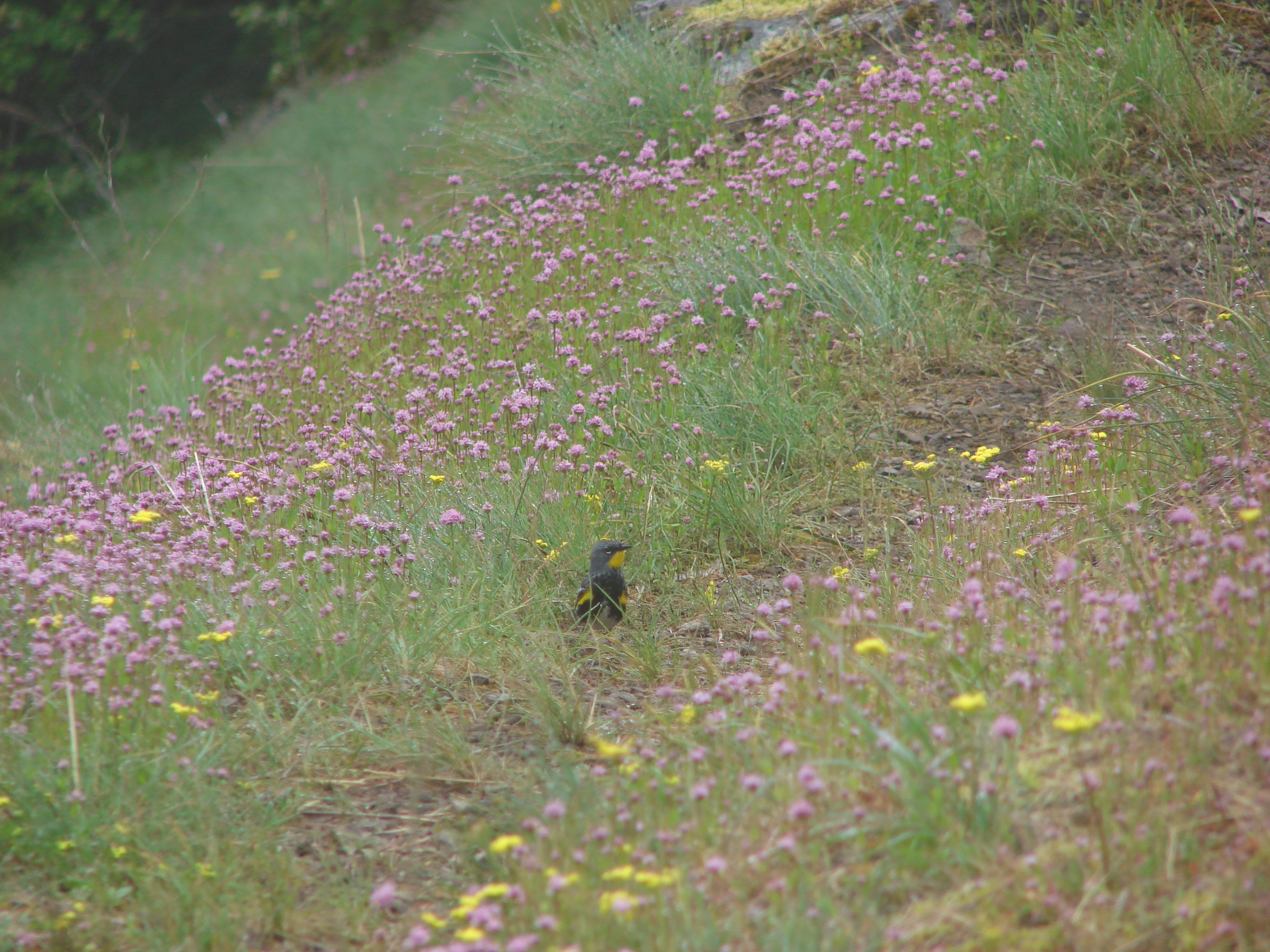
This time we took the trail to the base of Sawtooth rock where the conditions were slightly improved. Many birds were now flying around the meadows and we spotted one with some bright yellow coloring. It turned out to be a yellow-rumped warbler.
165
The fog had lifted some and there was even a short lived opening giving us a view of the forest below, but Mount June was still hidden in the clouds.

We took the .5 mile climb to Mount June’s rocky summit which was for some reason particularly tough on this day. I don’t know if it was due to it being toward the end of the hike or the cumulative effect of a week of hiking but it was a trudge. Much to our disappointment the we found the same clouds and fog on the summit as we had been in all day. We decided to have some lunch and hope that the sunny skies that had been forecast would materialize since it was just now 1:00pm. The clouds kept rolling past us and all we managed were a couple of very short glimpses of Mt. Bailey and the ghostly outline of Mt. Thielsen to the SE.
246
The view had eluded us once again, simply teasing us with a small brief sample of what could have been.

It was a good example of just why the elusive view is one of the most rewarding things for me on a hike. The mountains and forests don’t move but there is never a guarantee that they will be there to be seen. The view must be pursued and caught to be enjoyed.

After lunch we returned to the car where fluffy white clouds floated by in the blue sky. As we drove away there was no missing Mount June, it was the only peak with a cloud draped over it’s summit. We have many more hikes planned where we will have a chance to capture the elusive view, and after Mount June it will be even sweeter when we finally do. Happy Trails
foggy photos on facebook:https://www.facebook.com/media/set/?set=a.10201288913212035.1073741835.1448521051&type=1
flickr:http://www.flickr.com/photos/9319235@N02/sets/72157633890026592/

Categories
Hiking Oakridge Area Old Cascades Trip report

Fall Creek

**Note a portion of this hike burned in the 2023 Bedrock Fire.**

We hope everyone had a happy Easter weekend. After attending a Saturday worship service we took advantage of some great weather and headed South to Fall Creek. This was our second hike in a row along a creek in the Willamette National Forest East of Eugene.

The forecast had been for a few showers throughout the day but lucky for us the weatherman was way off. Temps were in the low 50’s when we set off and it wound up being a warm and sunny day. The trail sets off on the Southern bank of Fall Creek through an old growth forest. The first few miles follow Fall Creek through this damp and mossy forest crossing several scenic side creeks on footbridges. This portion of the trail was fairly muddy in spots. Fall Creek was much larger than Larison Creek (our previous hike) with many deeper pools, and the clear water made for some great views. Our timing was good as many of the spring flowers were in bloom carpeting in the forest floor in yellow, purple, and white. The Trillium blooms were particularly pretty.
263

After 3.5 miles the old growth gives way to a section of forest that was burned in 2003. This burnt section housed many different wildflowers that prefer the direct sunlight afforded by the fire. It wasn’t long before that direct sunlight had us needing to remove some clothing layers. After a brief pit stop we were off again, now on the Northern side of the creek after crossing on a bridge.

Our goal had been Slick Creek Cave but we decided to continue another half a mile to Bedrock Campground just in case anyone wanted to use the facilities. When we first crossed Slick Creek we completely missed the side trail up to the cave despite my taking several pictures of the cliffs that housed it. When we reached the trail fork for the campground loop we realized we had missed it. The creek bed near the campground was very colorful and worth the extra distance.
215

We also came across a type of lily that we had not encountered before.
232

When we reached Slick Creek on our way back the side trail had magically appeared. We took the short obvious (this time) trail up to the cave which is basically a recess in the cliff. Apparently it was used by Native Americans for shelter at one point and made for a nice side trip.

Overall this turned out to be a really nice hike. In addition to the various wildflowers we saw a decent amount of wildlife. In the old growth section we came across several snails, slugs, birds, and a Rough Skinned Newt. The burnt section offered geese, ducks, an osprey, several lizards, and a snake. Although this is a heavy use trail we only ran into a handful of people on the trail on this day. Due to the various campgrounds along Big Fall Creek Road which follows the creek on the opposite side there was some car traffic and a number of campers across the water.

As usual I took way too many pictures which can be viewed in full on Flickr http://www.flickr.com/photos/9319235@N02/sets/72157633132796203/
or in condensed version on Facebook http://www.facebook.com/media/set/?set=a.10200914954943312.1073741826.1448521051&type=3

Categories
Hiking Oakridge Area Old Cascades Oregon Trip report

Larison Creek

It’s been a few weeks since our last hike. We usually do several races between February and May and the training for those leaves us a little less time for hiking. Really it is nice to have the running because a lot of the trails are still snowed under and the weather isn’t always conducive to hiking. We are trying to fit a hike in every few weeks though to get prepared for our peak hiking season. Our most recent hike was up Larison Creek which is just East of Oakridge, OR. Larison Creek
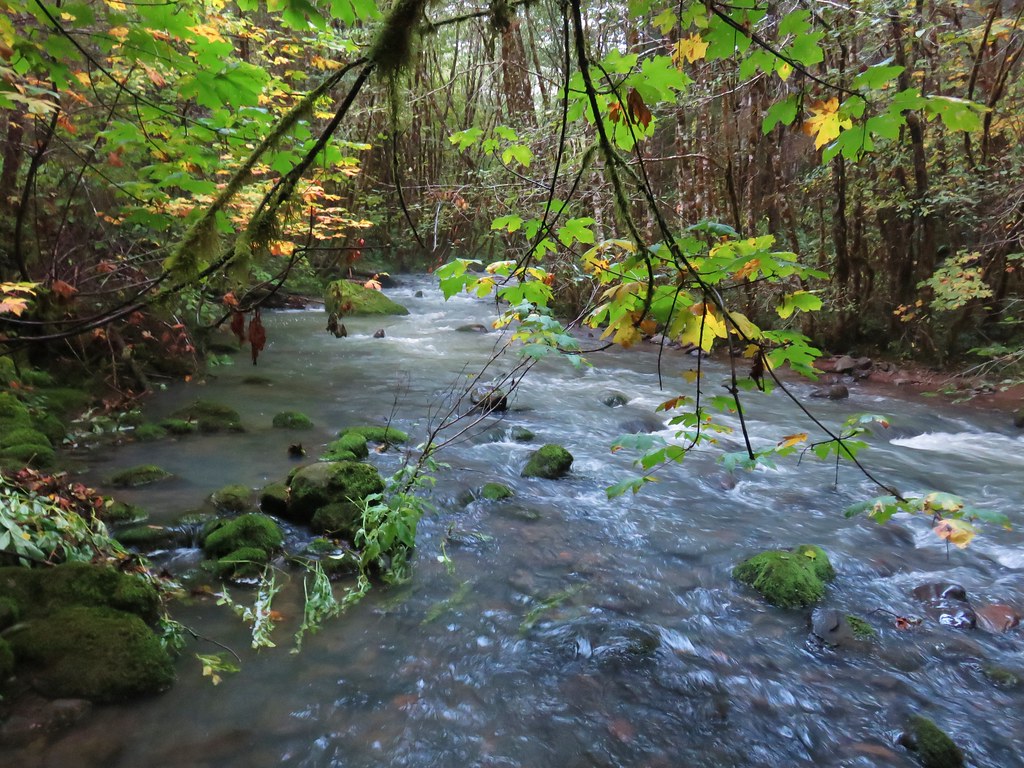
We had not done any hiking near Eugene or along Hwy 58 yet and were looking forward to exploring a new area. The weather cooperated and we had a dry and mostly sunny day. It was a chilly 31 degrees when we set out, but (Aside from some chilly fingers which was our fault for not bringing the proper gloves.) it didn’t seem that cold. The hike starts next to Larison Cove which is a milky green color. This is partly due to Blue-Green Algae.

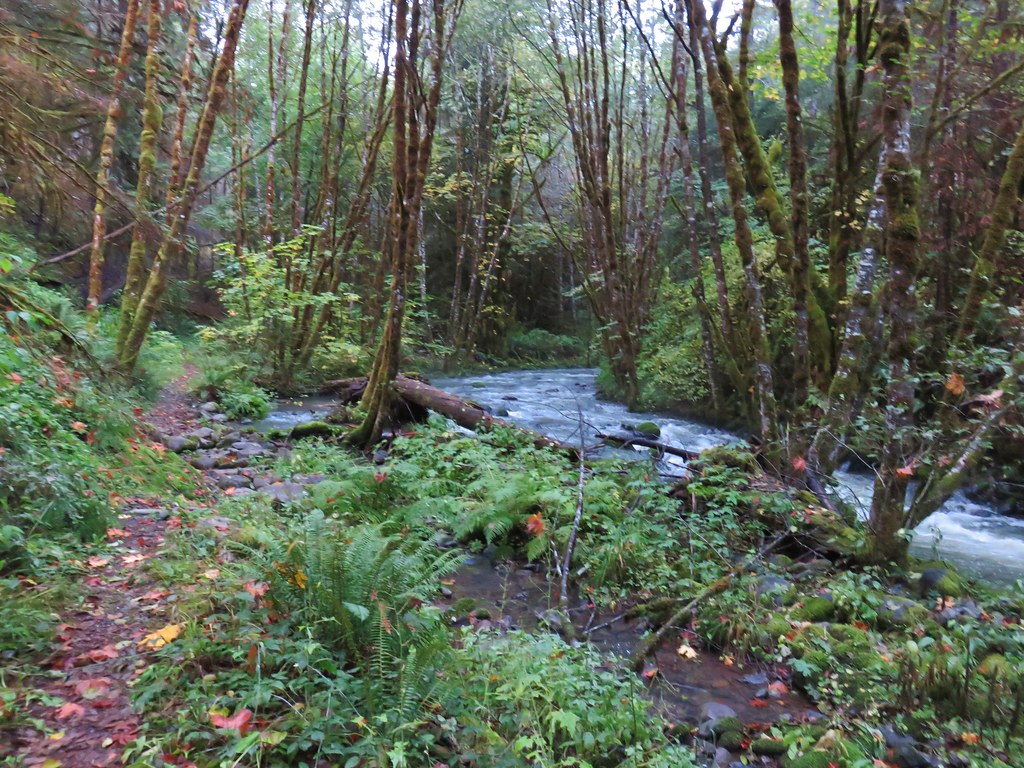
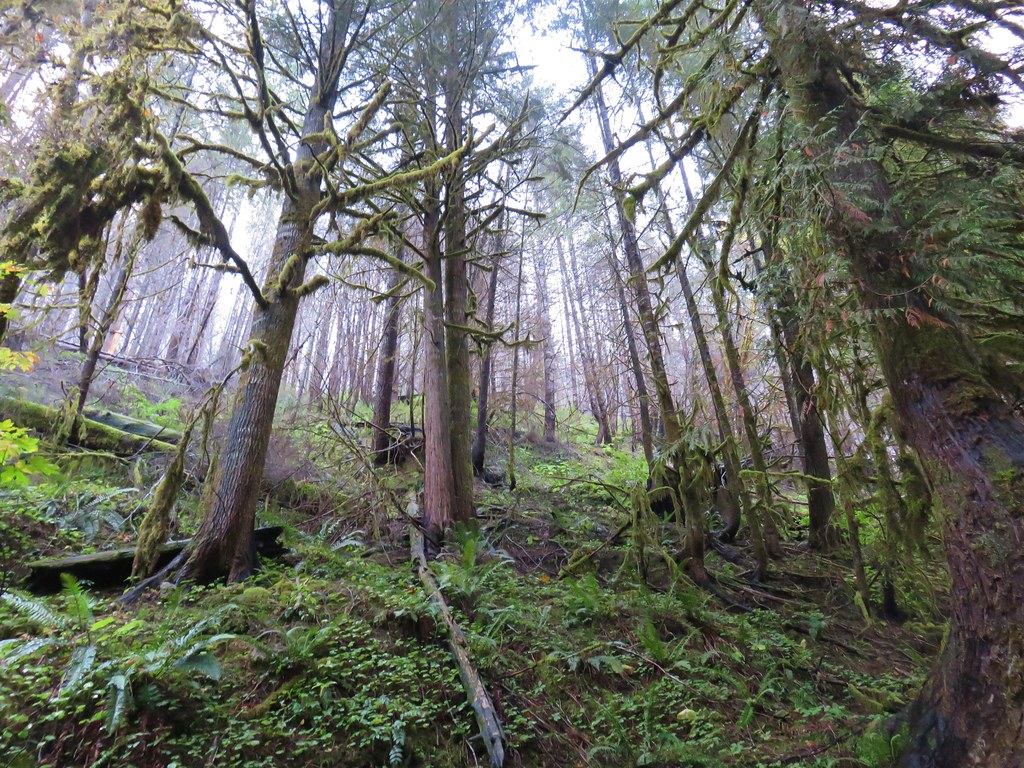
The trail slowly climbs along the creek through a moss covered forest. At times the forest floor seemed as if a layer of green snow had fallen covering everything. Small Snow Queen flowers bloomed along the first portion of the trail adding a splash of purple to the greens and browns. Larison Creek flowed within earshot, and was often in view. A couple of short paths led to clear pools below small slides or chutes that were worth the slight detour. As we gained elevation beargrass and rhododendrons became more common, but it was too early for them to be in bloom. We eventually ran into some patches of snow displaying the transition from Winter to Spring.

Wildlife was limited to birds, most notably the first Varied Thrush we had seen. Despite his posing for some pictures I was able to get a very clear shot as you can see here. Varied Thrush

Facebook album (selected photos) http://www.facebook.com/media/set/?set=a.10200791264571130.1073741825.1448521051&type=3

Flickr album (all photos) http://www.flickr.com/photos/9319235@N02/sets/72157632972427272/