
A heat dome was forecasted to arrive on Independence Day with the hottest temperatures expected over the weekend. We were hopeful that we could sneak our traditional 4th of July hike in before the heat arrived as it had been a fairly mild week leading up to the holiday. The hike we had planned was to take the Olallie Trail to Horsepasture Mountain starting at the Olallie North Trailhead.

We had visited Horsepasture Mountain back in 2018 via the Saddle Trail (post) which is a shorter approach by approximately five miles with 1000′ less elevation gain. Shorter still is starting at the Horsepasture Trailhead, but that is a longer drive and would have meant missing out on the section of the Olallie Trail that we hadn’t hiked before.
 Trail map at the trailhead.
From the trailhead the Olallie Trail switchbacked up a ridge through a mixed forest before straightening out and following the ridge SE.

 Rhododendron

Scouler’s bluebells

 Twinflower and fringed pinesap
 Sugar sticks
A section of the trail passed through the 2017 Avenue fire scar, but the tread was in good shape and all trees were cleared from the trail.


Mt. Washington was the first high Cascade Peak we obtained a view of.
 North and Middle Sister followed next.
 The trail spent some time on top of the ridge as well as each side as it gradually climbed.

Tiger lilies

Washington lilies were blooming along a section of the trail.
 Washington lilies

 Paintbrush
 Northern phlox
 Penstemon
 Garter snake
 Mt. Jefferson and Three Fingered Jack
 Entering trees that survived the 2017 fire.
 The hillsides that the trail traverses are pretty steep.
 Common whipplea

Regaining the ridge top.
 Better view of Mt. Jefferson and Three Fingered Jack with Maxwell Butte (post) and South Cinder Peak (post) in between.
Shortly after leaving the fire scar the trail began to steepen a bit.

 Bunchberry, queen’s cup, and foam flower.
Near the 3.5-mile mark the trail crossed an abandoned forest road and steepened again

It had been warming up quickly and Heather and I had decided to split a little below this road crossing. Despite not being able to spell “Heather” without “Heat” it is her hiking nemesis. We set a time that would be the latest I headed back at and chose the road crossing as a meeting point. Heather planned on continuing but wasn’t sure how far she would feel comfortable going. We set the road as a meeting point so that if she didn’t make it up Horsepasture Mountain before I headed back I would know I’d missed here somewhere along the trail if I got to the road and she wasn’t there.
A tenth of a mile beyond the road crossing the O’Leary Mountain Trail joined from the right.
 We had hiked to MacDuff Mountain on the O’Leary Trail just a few weeks earlier (post).
Beyond the junction the Olallie Trail leveled out then slowly descended 200′ over the next 1.1 miles to a junction with the Saddle Trail. The hillsides along this section were fairly exposed to the Sun which warmed things up even more, but also provided some nice wildflower displays.

This section also had a few smaller trees down over it.

 Columbine
 Mt. Hood, Mt. Jefferson, Three Fingered Jack, Mt. Washington, and Scott Mountain (post).
 Trillium
 Valerian
 Wallflower and buckwheat
 Purple larkspur, yellow cinquefoil, and white sub-alpine mariposa lilies

 Paintbrush and lupine
 North and Middle Sister with Horsepasture Mountain on the right.

 Oregon bluebells
 Penstemon
 Butterfly on bistort
 Musk monkeyflower
 A stalk of beargrass along the trail.
 Jacob’s-ladder
 Bane berry and solomonseal
 Vanilla leaf
 The Saddle Trail arriving from the right.
One hundred yards downhill from the Saddle Trail junction I arrived at a 4-way junction with the Horsepasture Mountain Trail.
 Downhill to the left is the Horsepasture Trailhead, uphill to the left is Horsepasture Mountain and the Olallie Trail continues along the righthand fork.
From the junction the Horsepasture Mountain Trail climbs over 850′ in a little under a mile and a half. The trail begins with a steady traverse along the side of Horsepasture Mountain before switching back after a litte more than three quarters of a mile.

 Arnica, bunchberry and vanilla leaf

 Fleabane

Often switchbacks allow for a more gradual climb but here the trail launched steeply uphill through small meadows switching back two more times before heading steeply up the open shoulder of Horsepasture Mountain.
 It was not a big year for beargrass but if you pick the right year there is an impressive amount along this trail.
 Second snake of the day. I wound up seeing three on the day which was two more than other trail users, excluding Heather.

If you look closely you might pick out the blue shirt worn by the only other hiker I encountered.

Mt. Bachelor from the shoulder of Horsepasture Mountain.

Final pitch to the top.
The wildflowers were near peak, and the hillside was literally buzzing with pollinators busy flying from flower to flower. The views extended from Mt. Hood in the north and south to Diamond Peak.
 Pollinator photobomb in the upper left.


Diamond Peak to the south.
 The Three Sisters and Mt. Bachelor on the horizon.
 Lupine, bluehead gilia, paintbrush, and pussytoes?

 The former lookout site with Mt. Hood and Mt. Jefferson behind.
 The summit
 Survey marker
 Diamond Peak from the summit.
 The Three Sisters
 Mt. Washington, Scott Mountain, Belknap Crater (post), and Black Crater (post).
 Mt. Hood, Mt. Jefferson, and Three Fingered Jack
I had passed the other gentleman on the switchbacks, but we spoke briefly at the summit. He remarked how it isn’t often that you get both a great view and peak wildflowers on the same hike in Oregon. We both searched out spots with a little shade for a much-needed respite from the heat. While I put on a new pair of socks and had a snack I was able to message with Heather who was almost to the switchbacks. I wandered around the summit for a few minutes admiring the flowers and then got another message from Heather that she was wisely not going to attempt the final steep climb so I headed back to her.

 Scarlet gilia
 Buckwheat and bluehead gilia
 An aster or fleabane
 Paintbrush with penstemon in the background.
 Butterfly on bluehead gilia
 Butterfly and bees
 I believe this is a persius duskywing (Erynnis persius)
 Vetch?
 This outcrop is just slightly lower than the summit.

 Cliff beardtongue on the rocks with the Three Sisters and Mt. Bachelor behind.


 Phlox
Phlox
 Bastard toadflax
I met Heather at the switchbacks and we headed back together. We stopped at the 4-way junction for a short break which I used to hike 50 yards down to the Horsepasture Trailhead.


The 200′ climb from the 4-way junction to the O’Leary Trail junction was hot, but thankfully that was it as far as climbing went for the day and the remaining 3.5-miles were downhill. The combination of going downhill and a slight breeze provided a little relief to the heat.
 Passing the Saddle Trail on the way back.
 Eight-spotted forester
 Blue-eyed Mary
 Horsepasture Mountain
 Waterleaf
 Mt. Hood, Mt. Jefferson, Three Fingered Jack, and Mt. Washington
 North and Middle Sister
 Larkspur

Anemones and spotted coralroot
 Pink pyrola
 Clodius parnassian on a tiger lily.
 Fireweed

The lower portion of the trail included some madrone trees.
 It was right around 90 degrees at the trailhead when we got back at 2:30pm.
I had expected this hike to be a little under 12 miles with approximately 3200′ of elevation gain. My GPS ended up with 12.5 miles, most of which can be attributed to my wandering around at the summit. The detour down to the Horsepasture Trailhead added less than a tenth of a mile.

This was a great hike that only missed spectacular due to how hot it was. The Olallie Trail was in good shape and the climb was extremely well graded. The view from Horsepasture Mountain is a good one and hitting the peak wildflower display only enhances it. We were really shocked to have only seen the one other person, but maybe, just maybe most other people are smarter than we are. With the heat dome expected to continue for several days the 2024 wildflower show will most likely be over quickly, but there is always next year. Happy Trails!
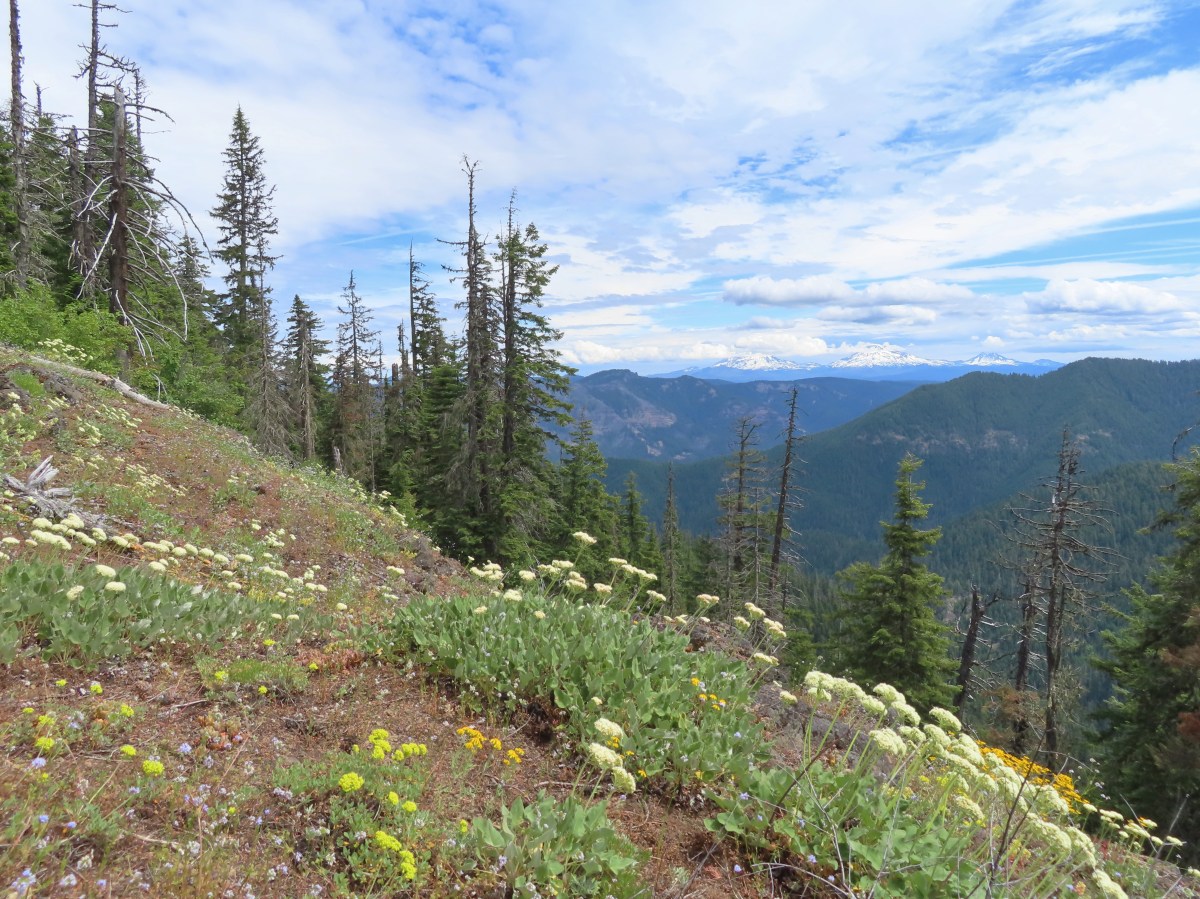

 Valerian along the trail.
 Vanilla leaf and anemones carpeting the forest floor.
 Star-flowered false solomonseal.
 Coneflower with lupine behind.
 Penstemon


 Monkeyflower
 Lupine
 Sub-alpine mariposa lily
 Moth on fleabane.
 Waterleaf
 Tiger lily
 Pussytoes
 From left to right the peaks with snow are: The Twins (
 Diamond Peak
 Grasshopper Mountain above the meadow.
 The post in the rocky area.
 When we visited in 2017 it had been mid-July, and the larkspur show was over.
 A cairn marks the Grasshopper Mountain Trail.

 Looking out over the meadow.
 Fuji Mountain and Diamond Peak
 The saddle below Grasshopper Mountain.
 The Three Sisters and Broken Top
 Mt. Bachelor
 The last of the snow, at least it is all we saw.
 Glacier lilies near the tiny snow patch.
 It was evident that the trail does get maintained on occasion, but none of it appeared recent near Grasshopper Mountain.
 Anemone
 Violets
 Bleeding heart
 Oregon bluebells
 The Three Sisters and Broken Top were visible from this area.
 Back on the slightly overgrown trail.
 Mt. Jefferson and Three Fingered Jack
 Bears appear to use the trail more than hikers. This was the largest of three piles we’d pass on the day.
 Arnica
 This is both the trail and a front (back) door.
 Valerian and tall bluebells
 Fairy bells
 Meadowrue
 Moth on valerian.
 Jacob’s-ladder
 While the trail was overgrown in places it was passable and the tread was in pretty good shape.
 Fringecup
 Possibly a speedwell but unsure and it was the only one we saw.
 More blowdown to maneuver around.
 Edith’s checkerspot
 Trail passing through an area full of monkeyflower and larkspur.
 Cinquefoil, larkspur, and buckwheat
 Scarlet gilia
 Paintbrush
 Bluehead gilia and silverleaf phacelia
 The rocky area from the trail as it crossed the ridge.
 Columbine crowding the trail.
 The wildflower covered rocks on the way back.
 Arrowleaf buckwheat and Oregon sunshine
 The Three Sisters and Broken Top with some clouds moving in.

 Paintbrush surrounded by buckwheat, bluehead gilia, and stonecrop.
 Scarlet gilia
 Wallflower
 Wild rose
 Beargrass near the outcrop.
 The outcrop from the trail.
 Blowdown
 More blowdown
 Western meadow fritillary
 Bunchberry
 Recent trail maintenance! There were a couple of cut trees in the final mile, but there were also still many to step over.
 The trail dropped low enough that there were several rhododendron blooming.
 Queen’s cup.
 South Sister (

 Had I not just come down the trail I might not have even noticed it was there.
 Cardwell’s penstemon
 Starflower
 Ginger
 Mt. Bachelor through the trees.
 Musk monkeyflower
 Grasshopper Mountain from the outcrop.
 Cliff beardtongue
 Blue-eyed Mary
 Cicada, not a pollinator but interesting to see.
 Solomonseal
 Variable-leaf collomia
 Honeysuckle
 Oregon grape
 Pollinator 1
 Pollinator 2
 Pollinator 3 (Clodius parnassian)
 Bees on bastard toadflax
 Checkerspot on groundsel
 Naked broomrape (Aphyllon purpureum)
 Penstemon
 Our guess is this is mile three from Grasshopper Saddle. We didn’t notice any other numbers and missed this one on our first pass.
 Dwarf bramble
 Strawberry
 Cinquefoil
 It started clouding up in the afternoon.
 Back at the saddle below Grasshopper Mountain.
 Great artic butterfly. There were a lot of these flying about. Their dorsum is a bright orange, but they rarely would open their wings when they landed.
 The checkerspots on the other hand are happy to open their wings.
 False hellebore
 It clouded up over Diamond Peak as well.
 Lewis flax
 Orange agoseris
 A Lycaendae on a lupine leaf.
 Moth on a mariposa lily.
 Butterflies gathering at the spring.
 The Prius at the TH. We parked on the shoulder in a pullout.


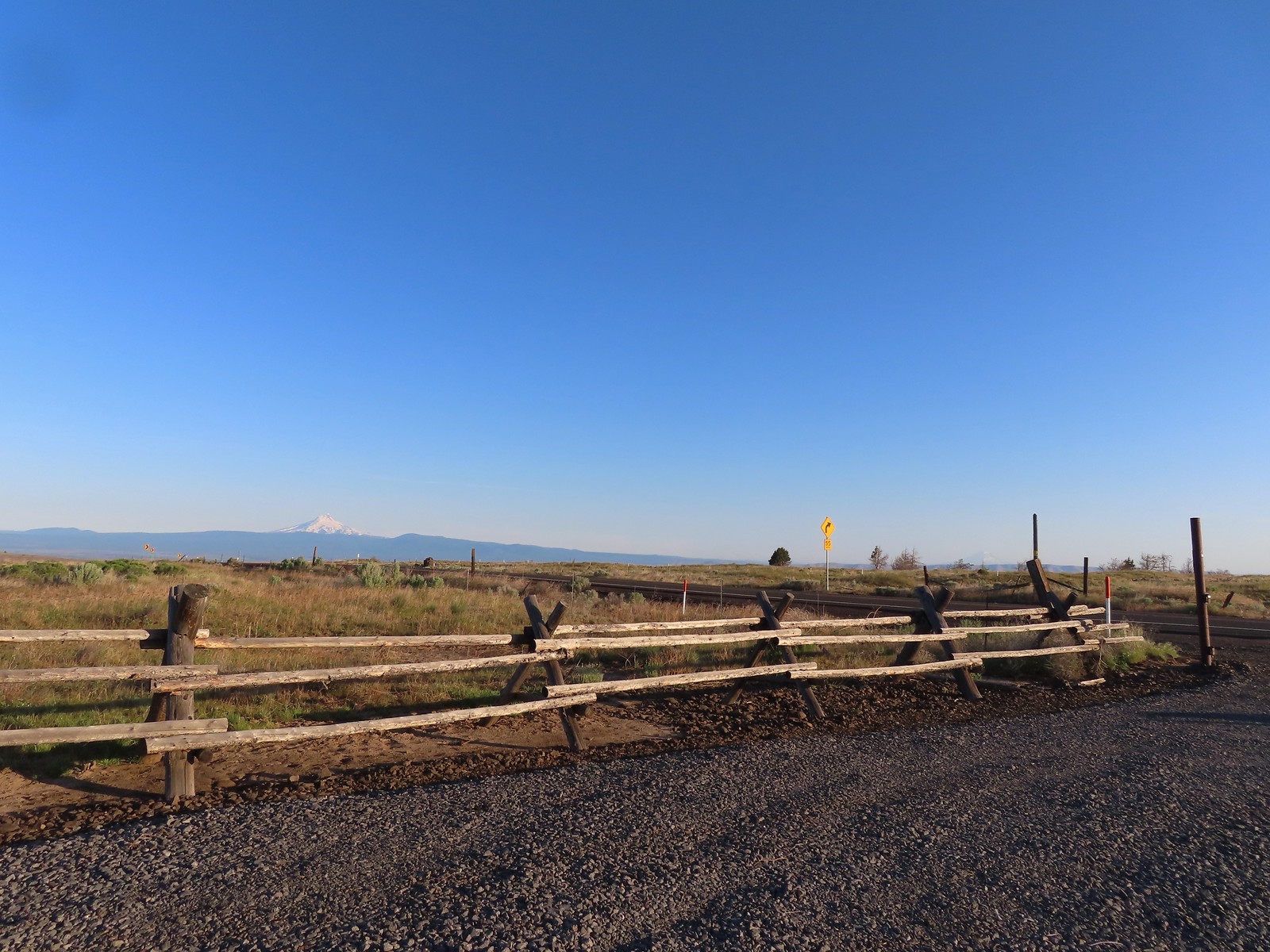 Mt. Hood and Mt. Adams from the trailhead which is the high point of the hike.
 Mt. Hood
 Cattle sometimes graze in the area and the combination of their hooves with the unmaintained roads makes for some pretty rough surfaces.
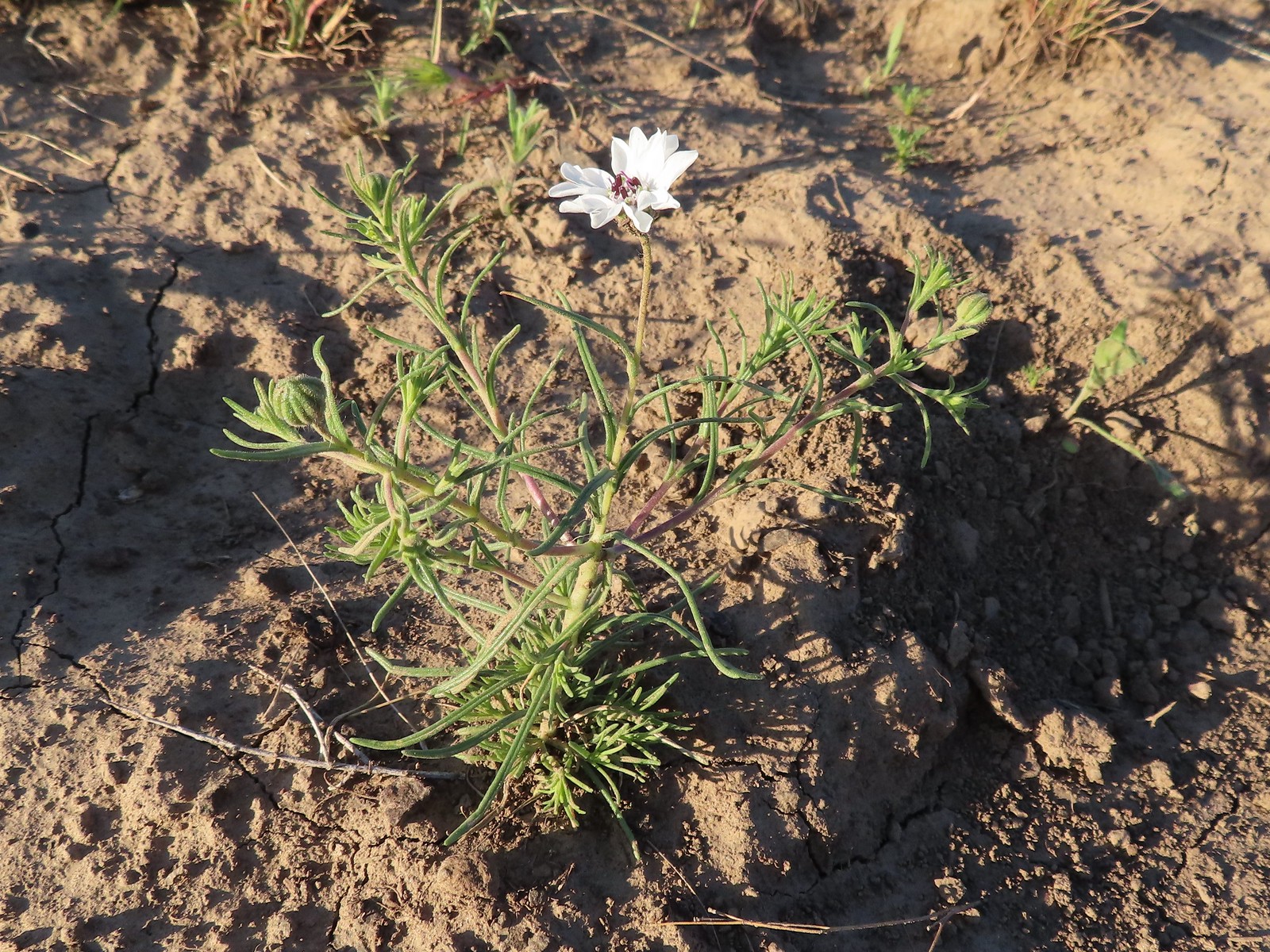 Rough-eyelashweed. There was a lot of this blooming along the road.
 A couple of lomatiums.
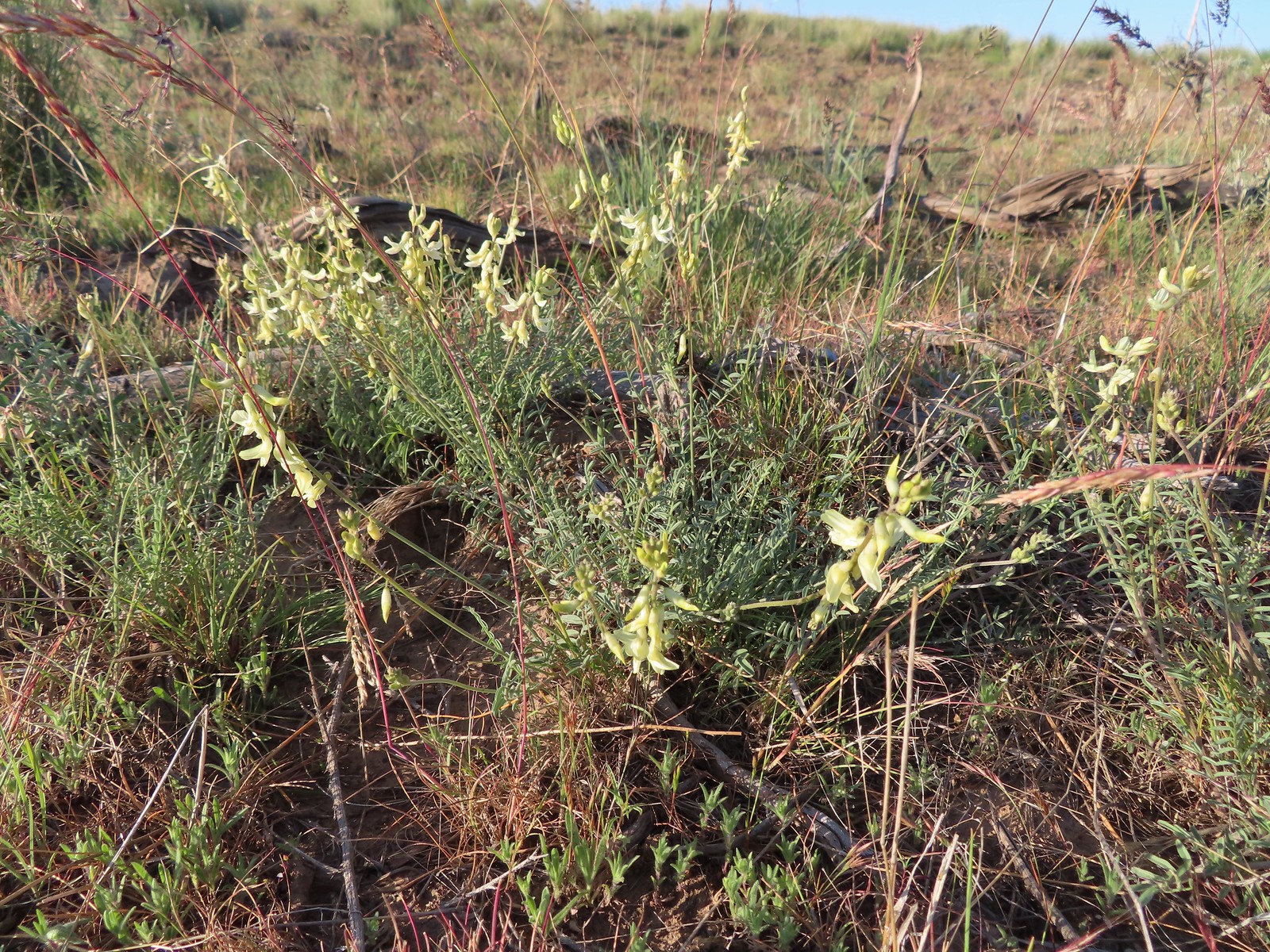 Howell’s milkvetch
 Idaho milkvetch
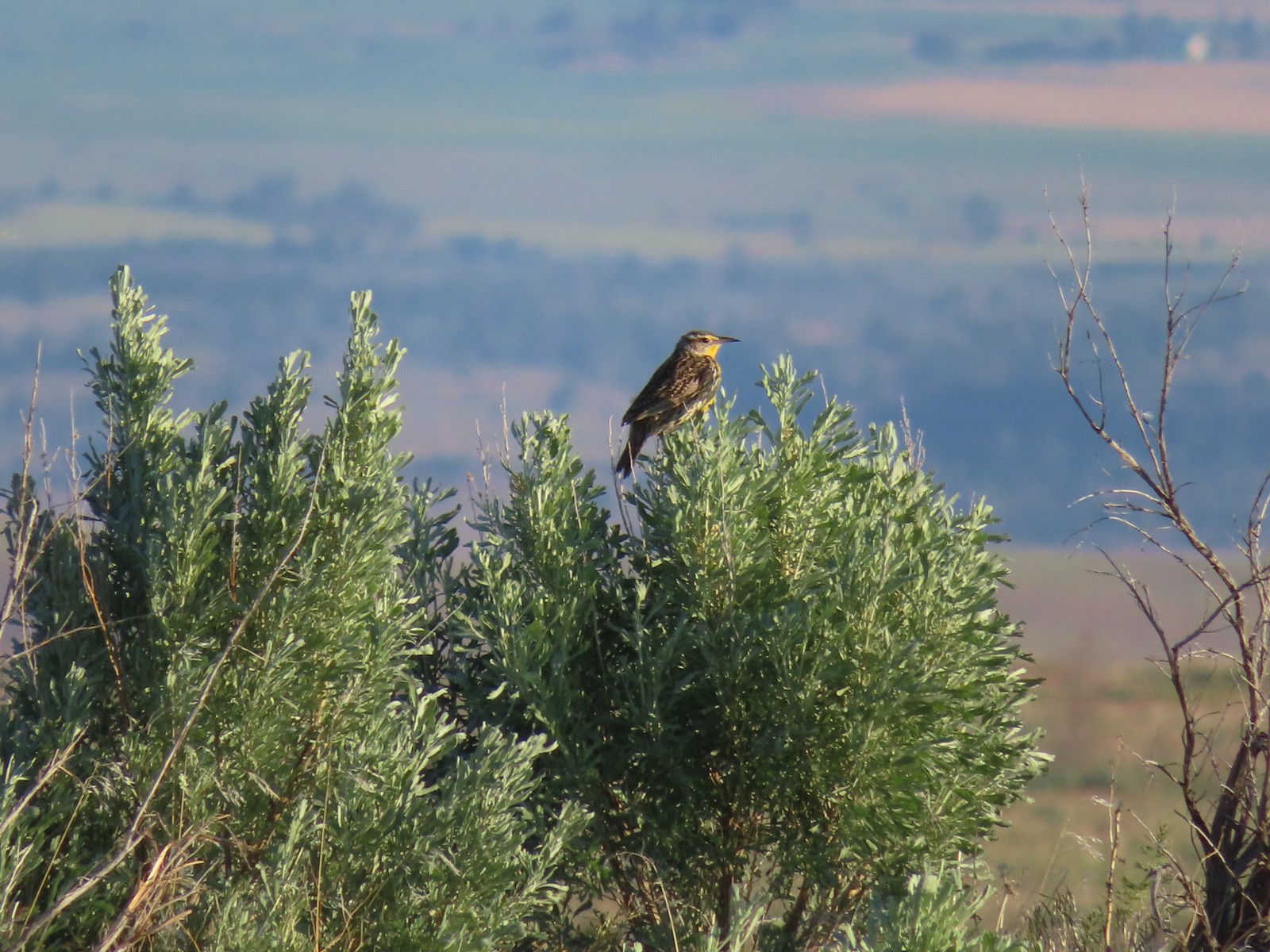 Western meadowlark
 A buckwheat
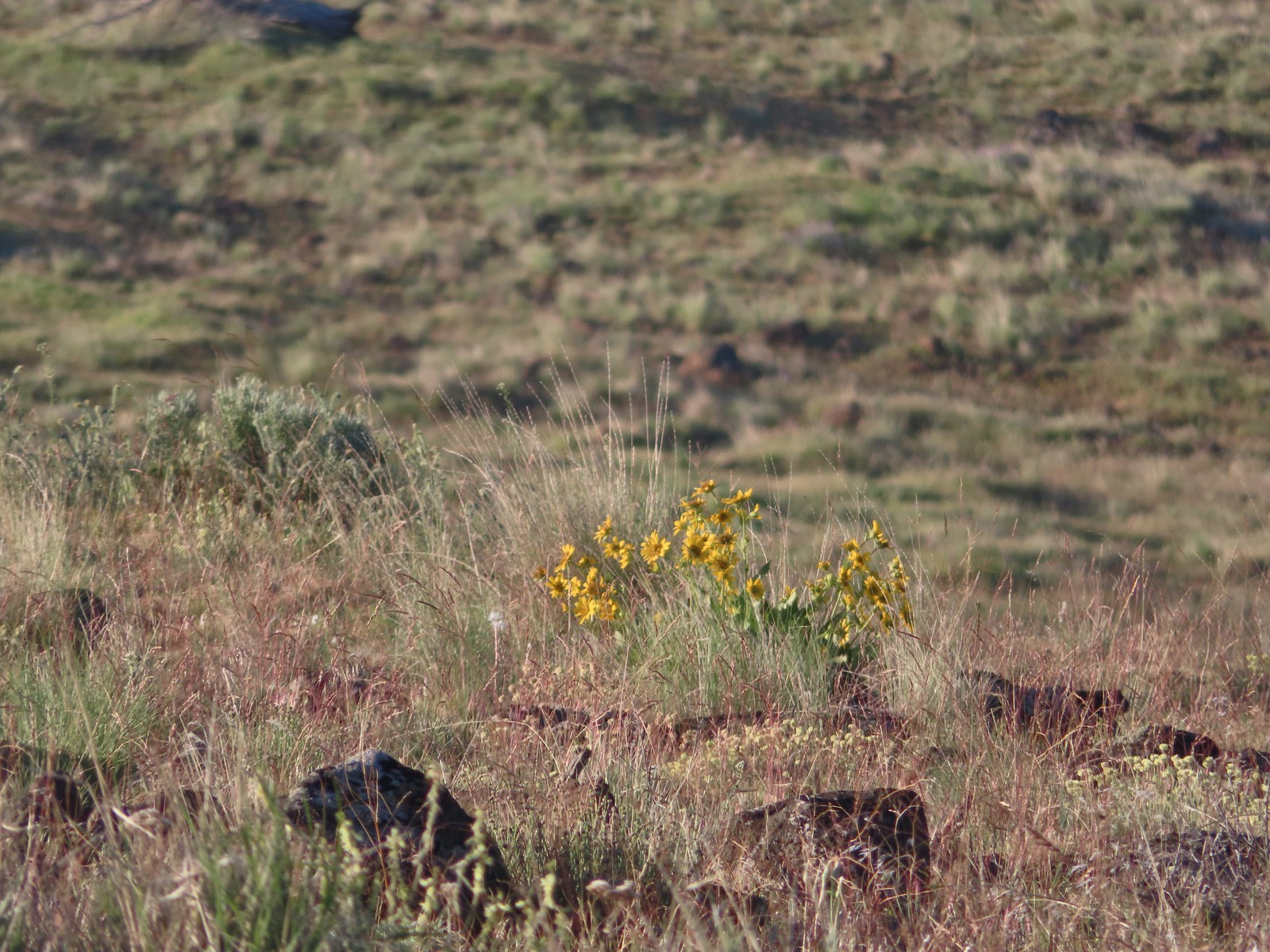 Carey’s balsamroot
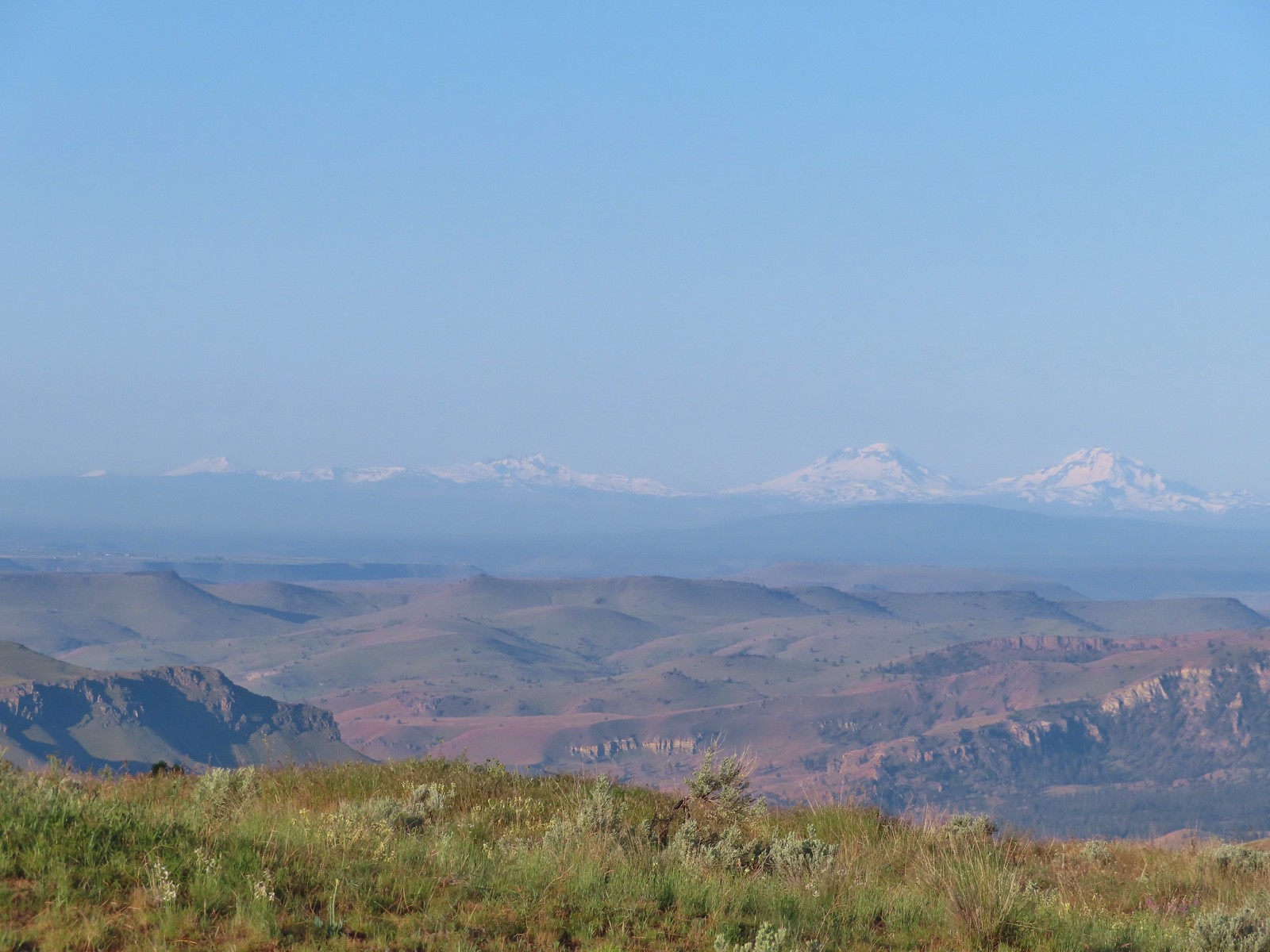 Mt. Bachelor, Broken Top and the Three Sisters
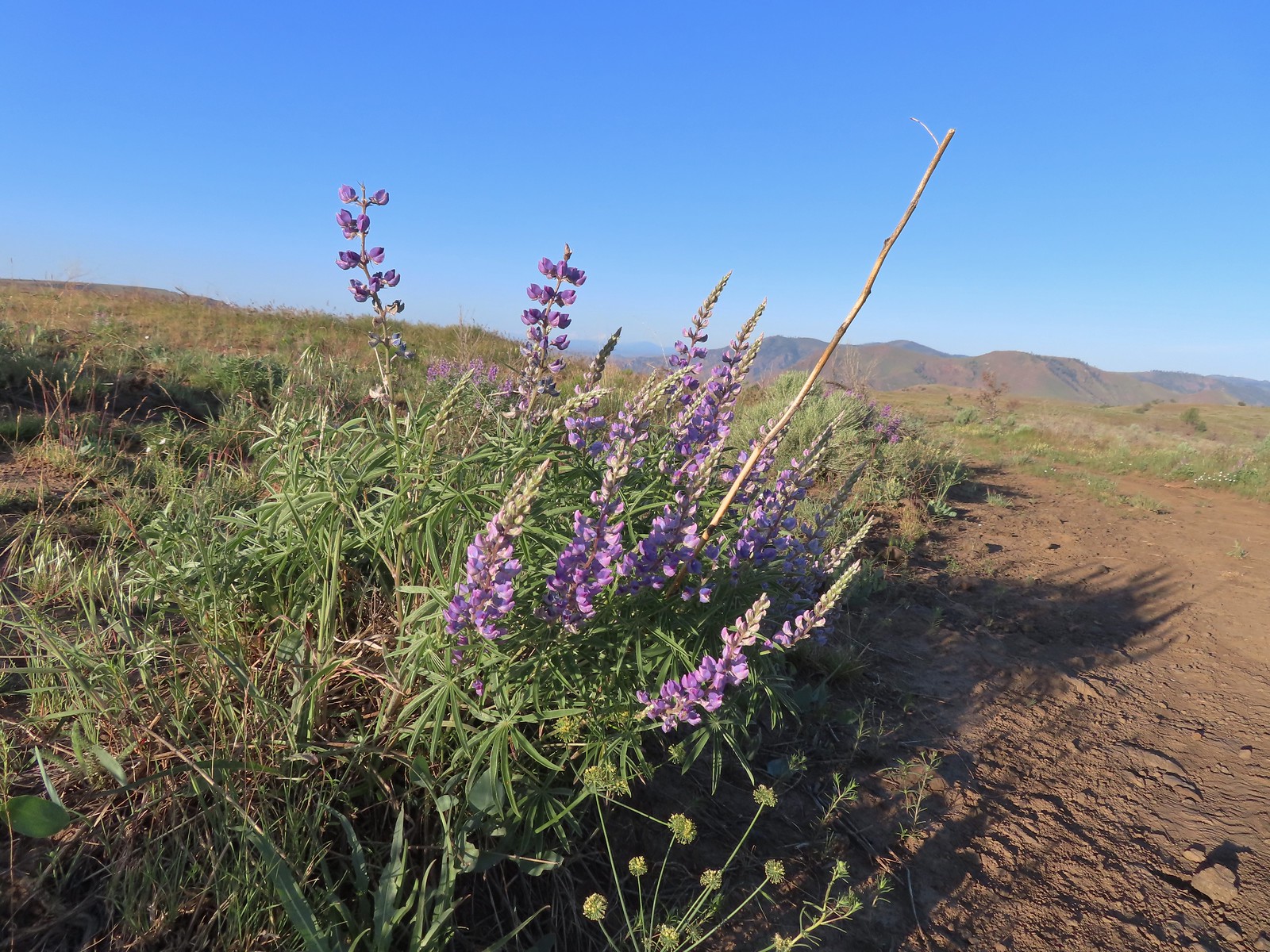 Lupine
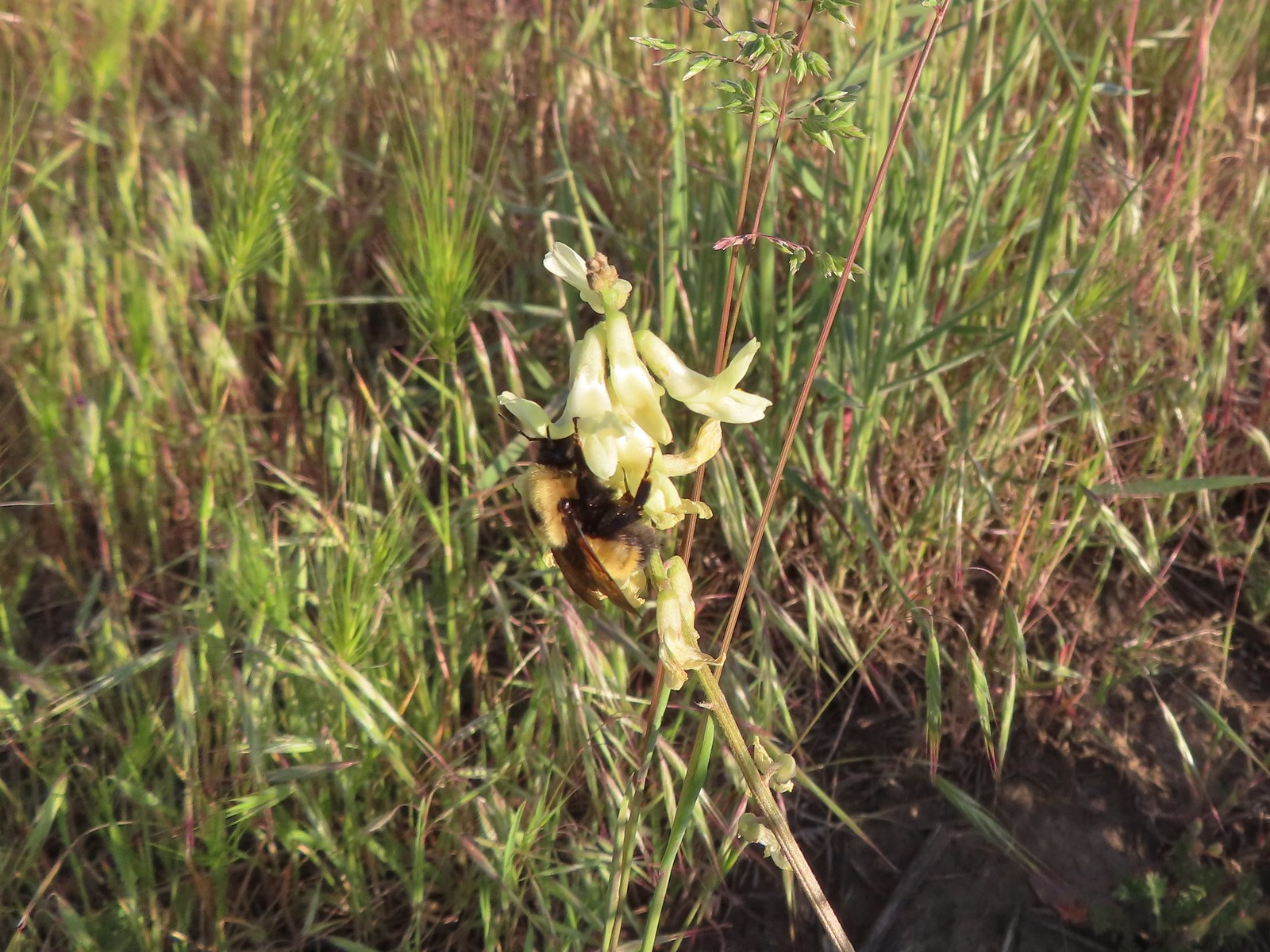 Bumble bee on Howell’s milkvetch
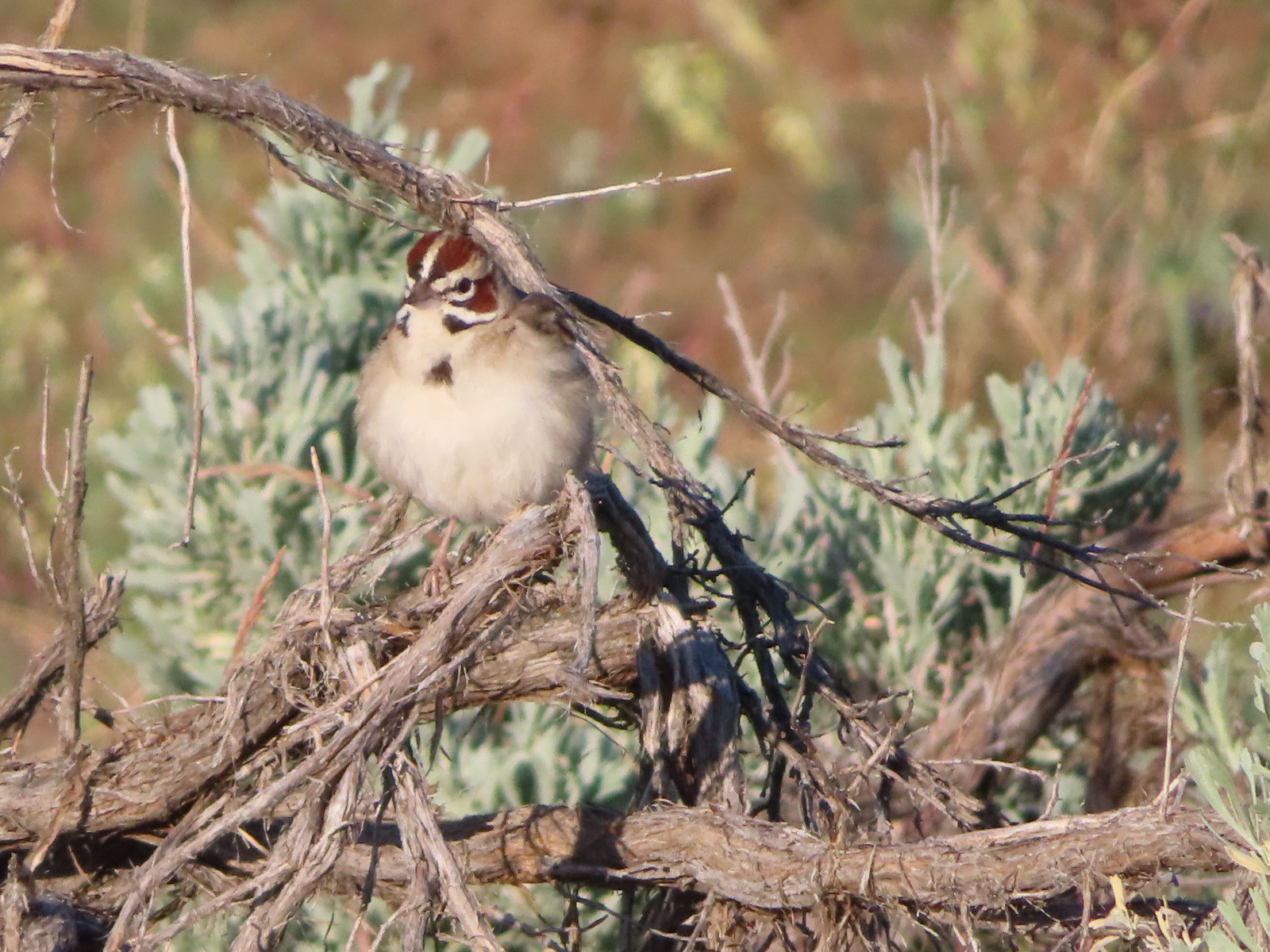 Lark sparrow
 We spent a lot of time heading toward Mt. Hood.
 Sparrow?
 Mt. Adams
 Mt. Hood
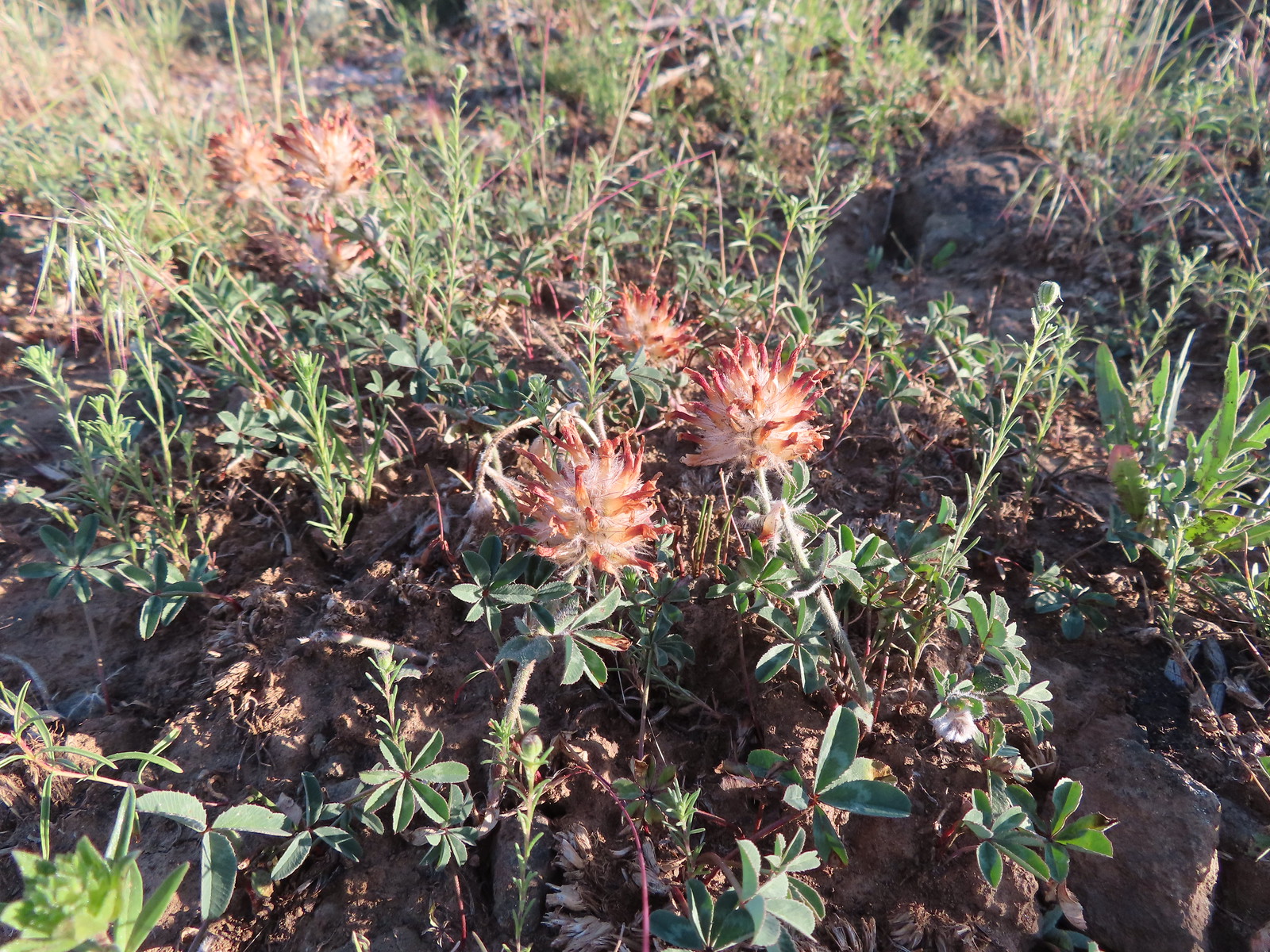 We were a little too late for the large-head clover.
 Western meadowlark giving a performance.
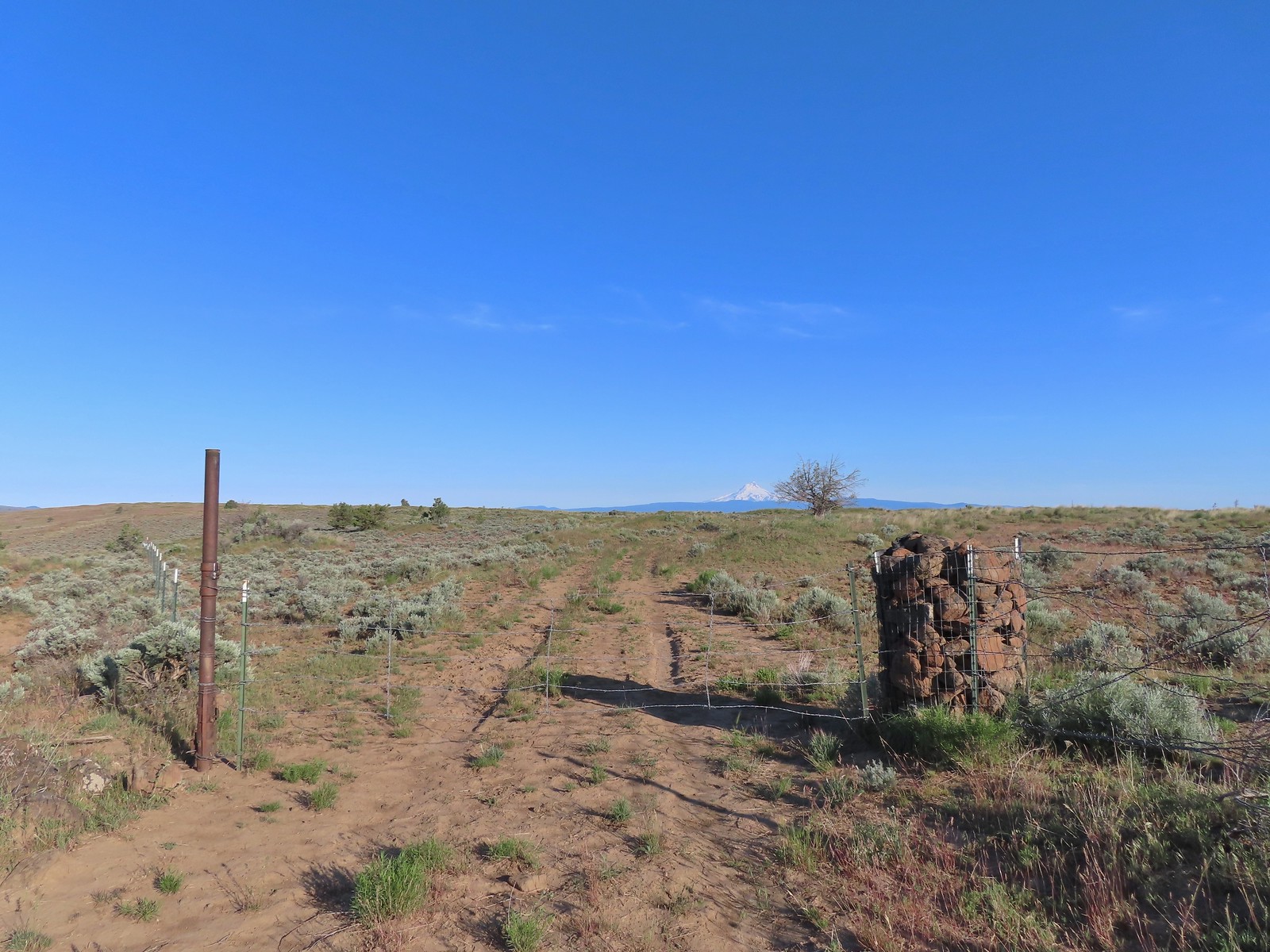 The third gate with Mt. Hood in the distance.
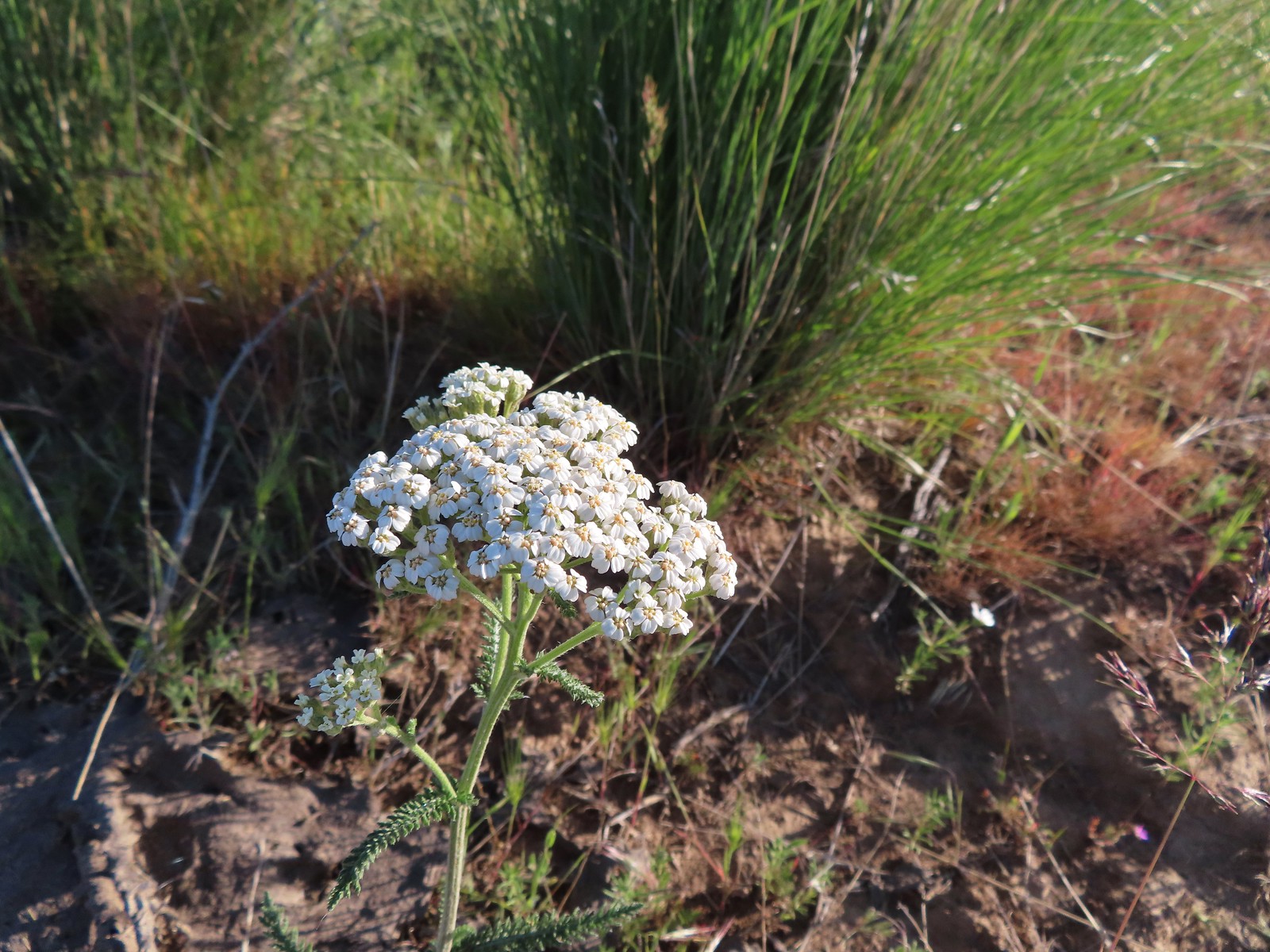 Yarrow
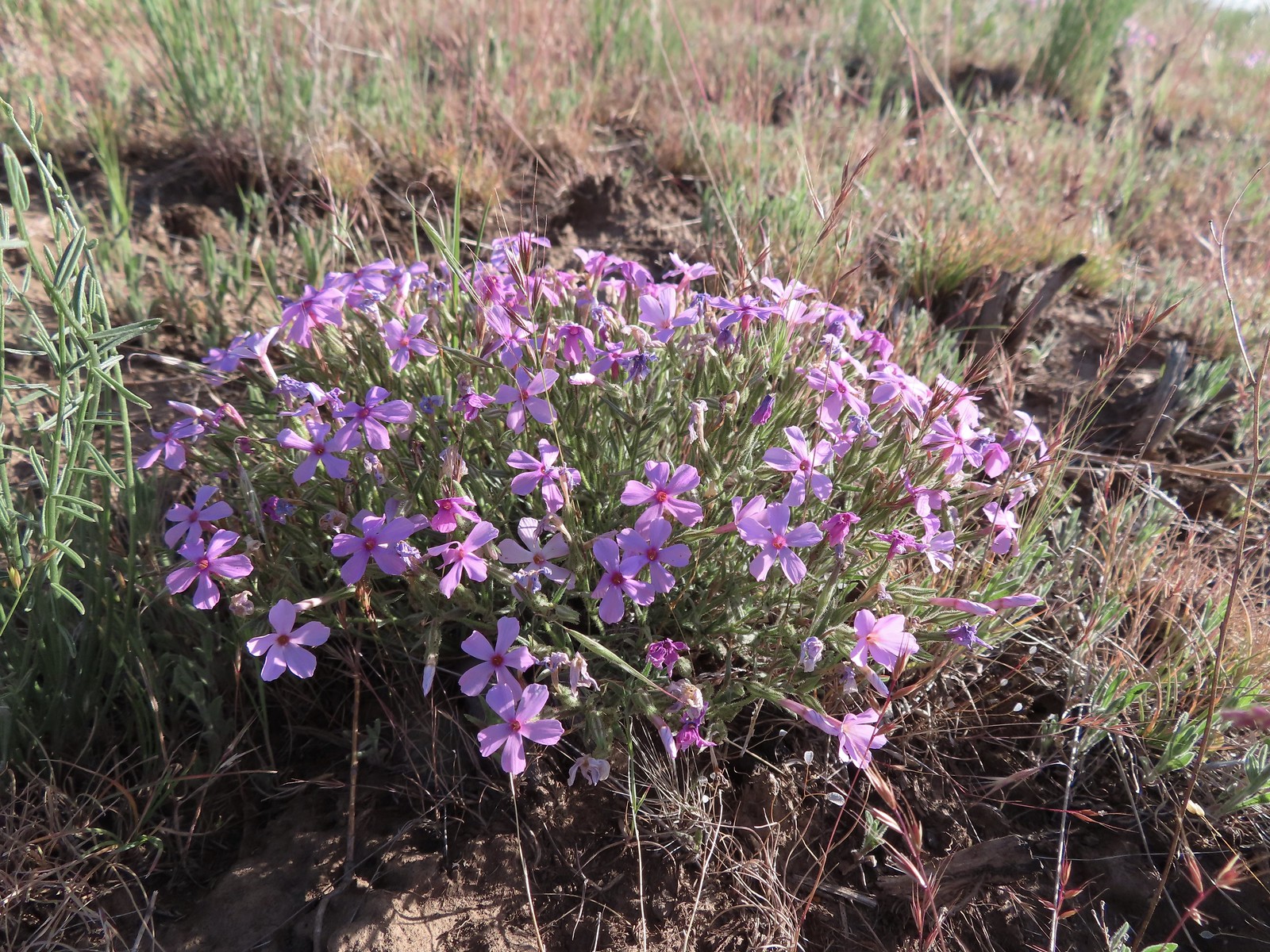 Phlox
Phlox The Deschutes River winding through the valley below.
 Rough eyelashweed and lupine with Mt. Hood behind.
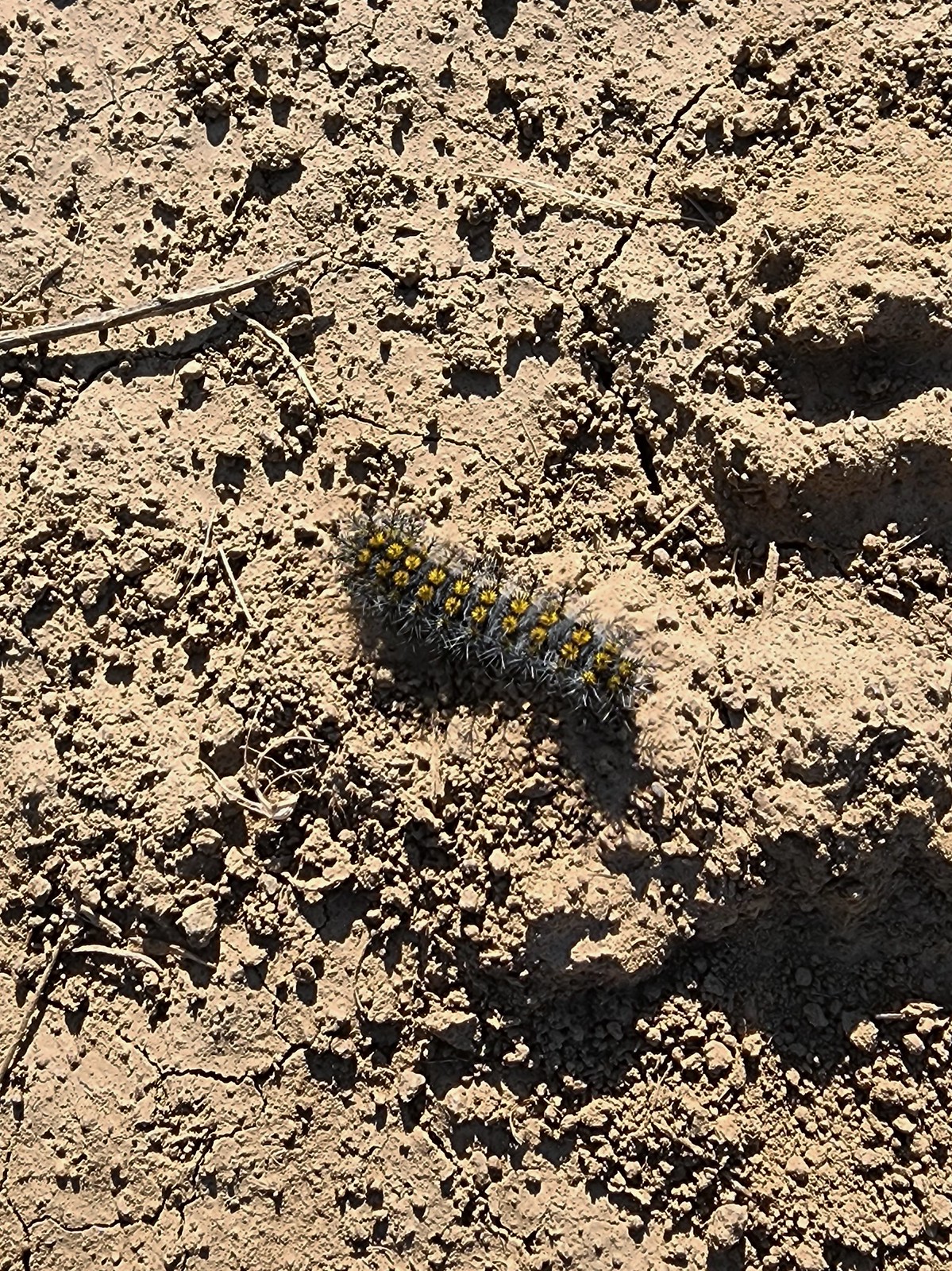 Caterpillar
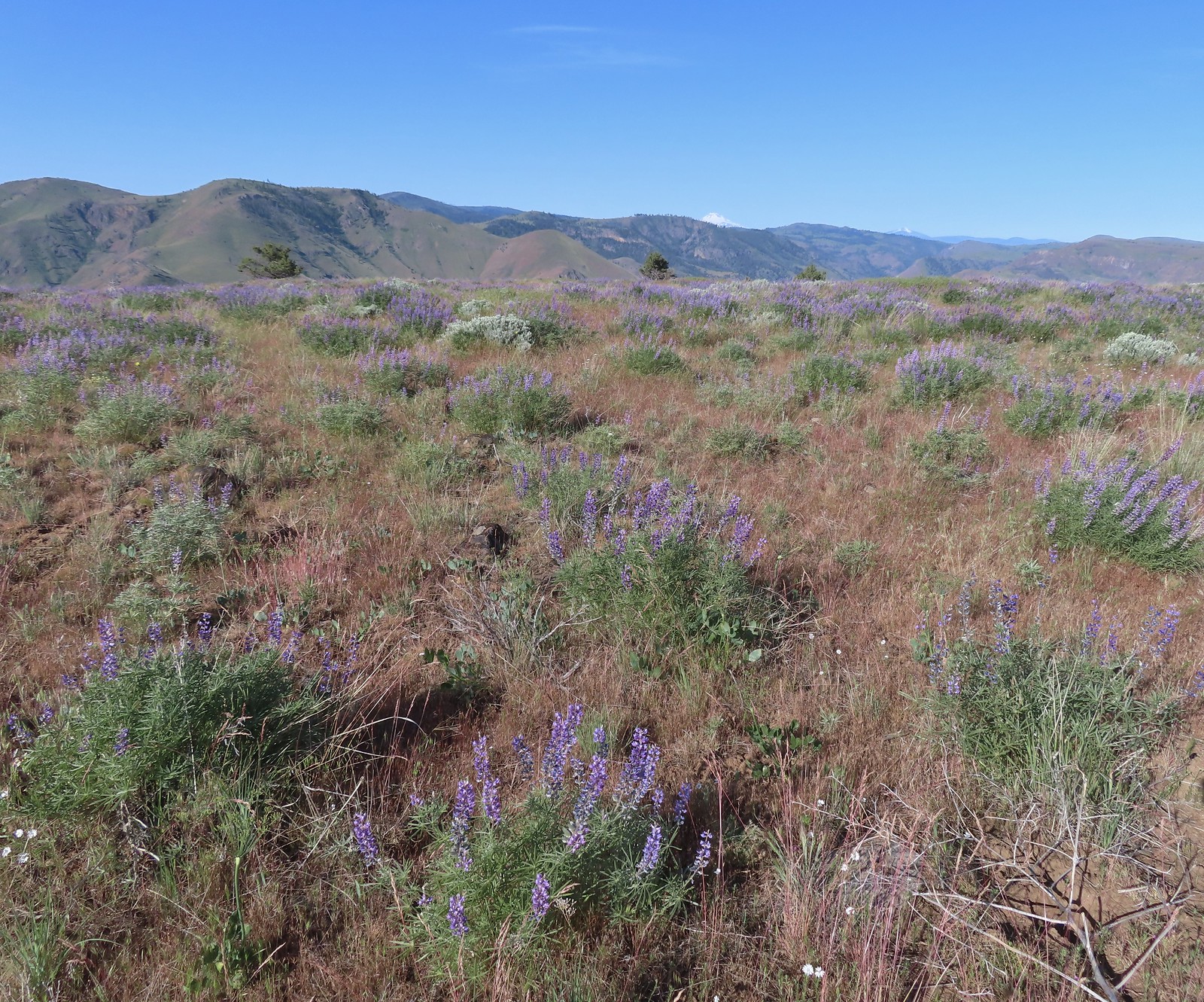 Lupine with Mt. Jefferson in the background.
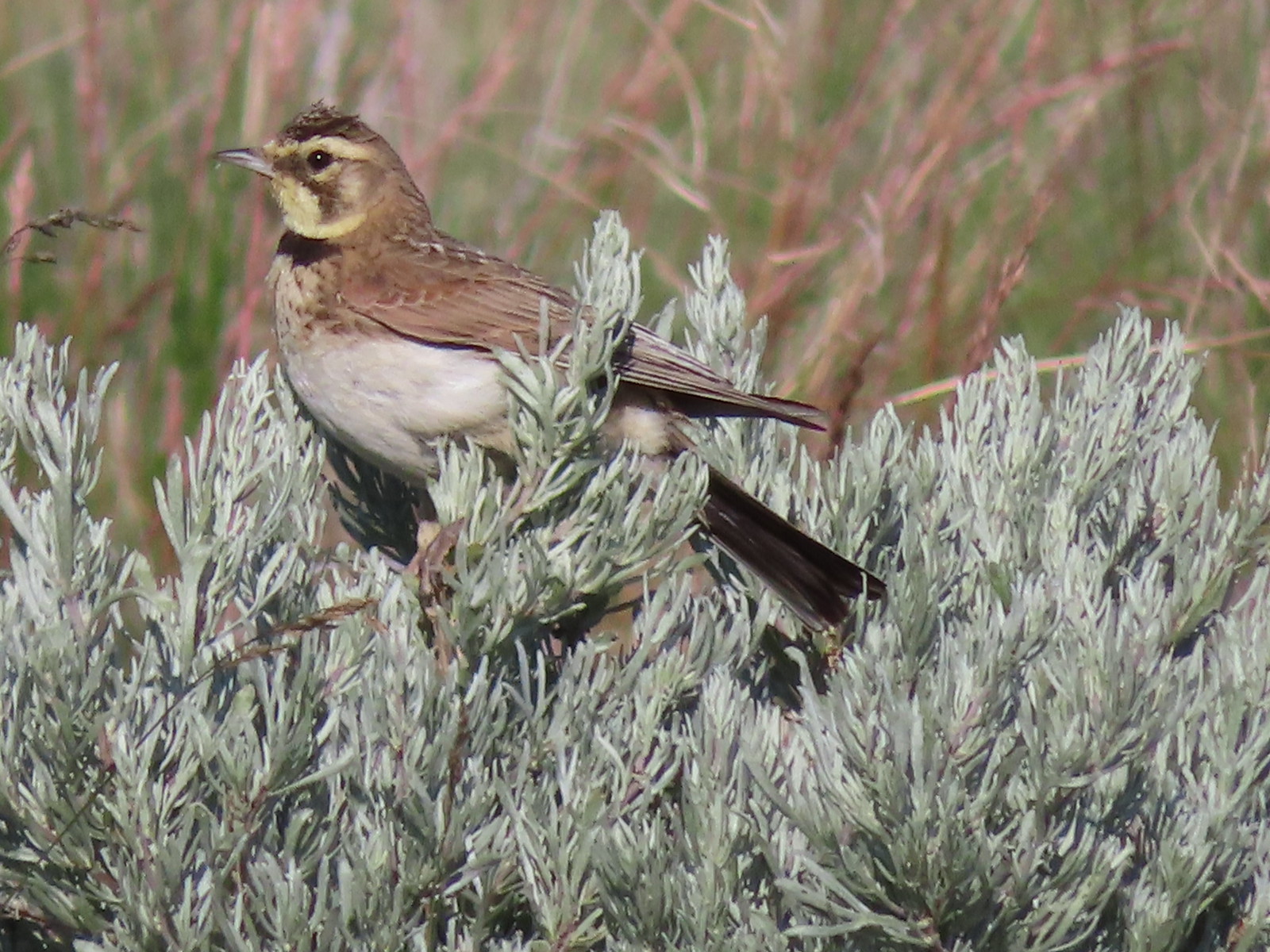 Horned lark
 Mt. Jefferson behind the abandoned trailer.
 Mt. Jefferson was hidden at times but this gap in the hills provided a nice view.
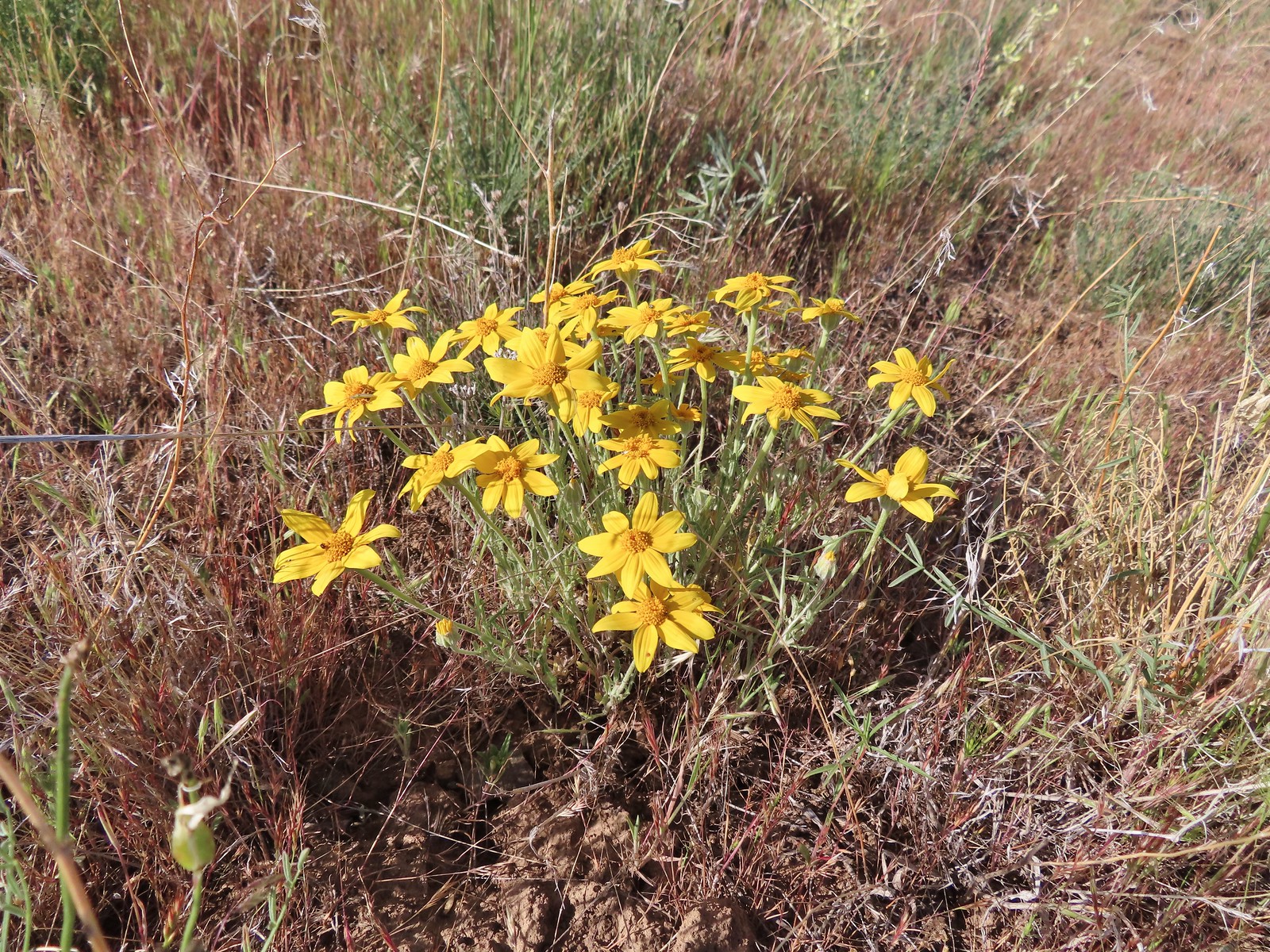 Oregon sunshine
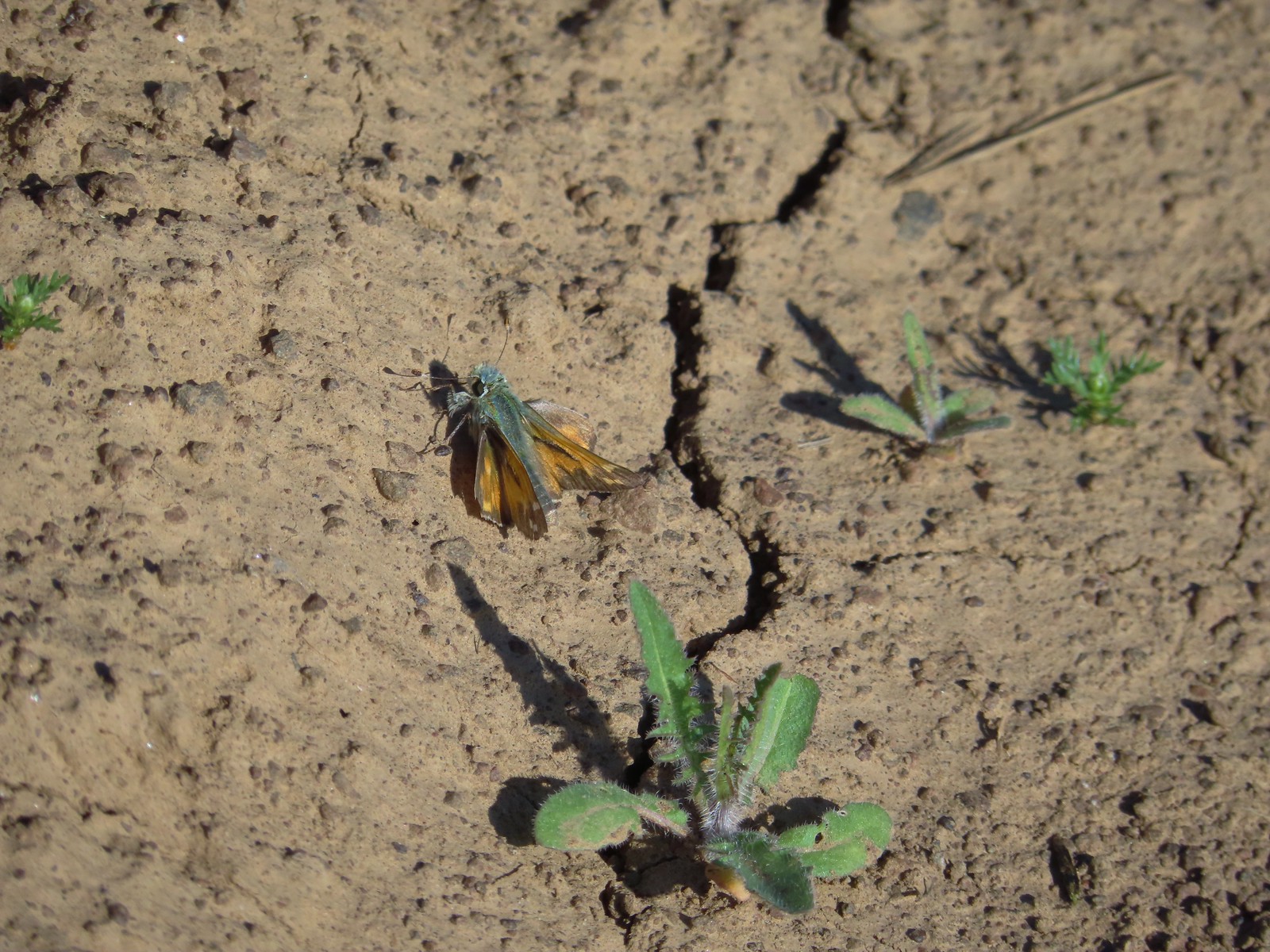 Skipper
 Mt. Jefferson and Olallie Butte (
 A small watering hole.
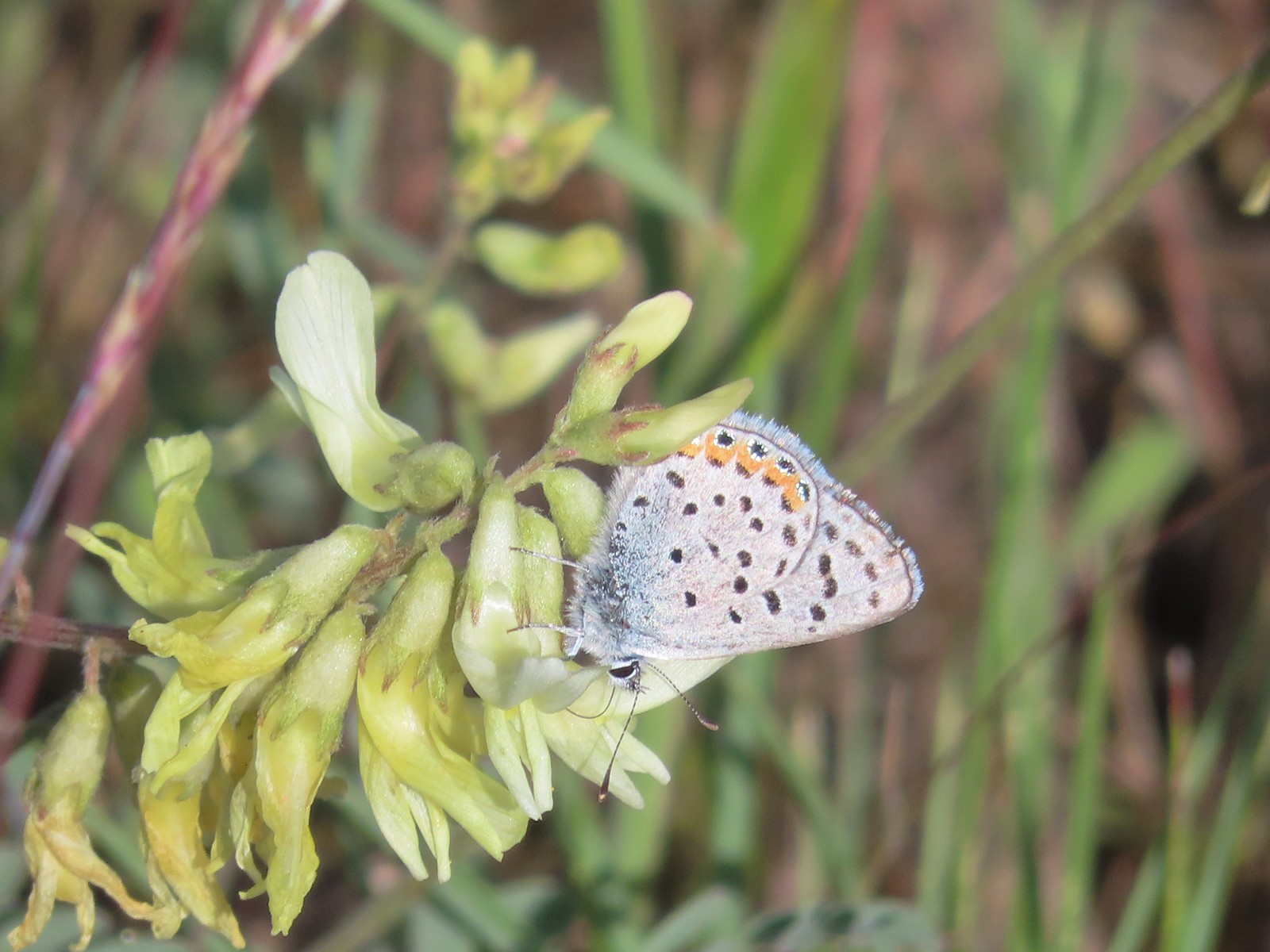 Leaning toward an Acmon blue but not sure.
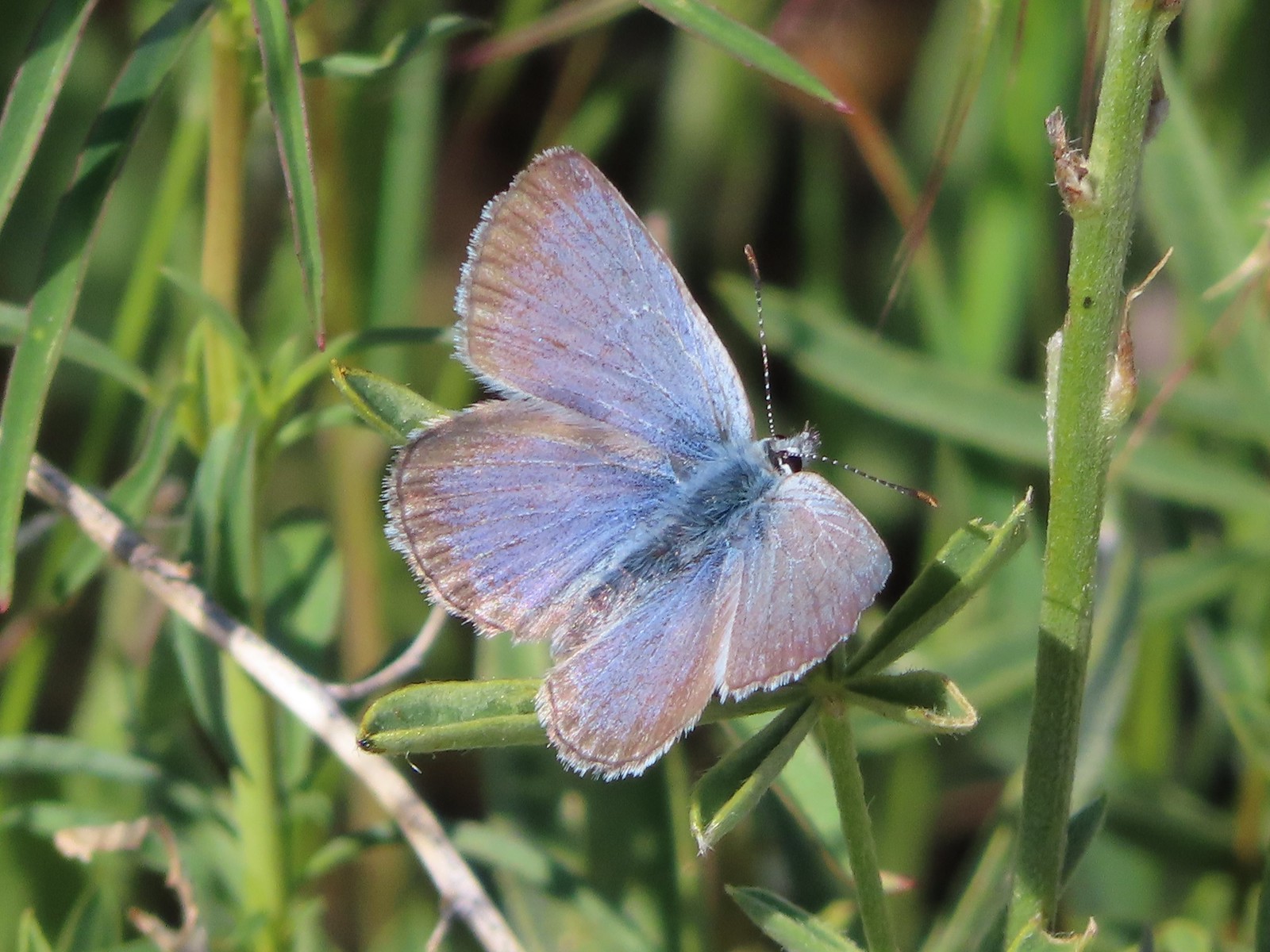 Another in the Lycaenidae family.
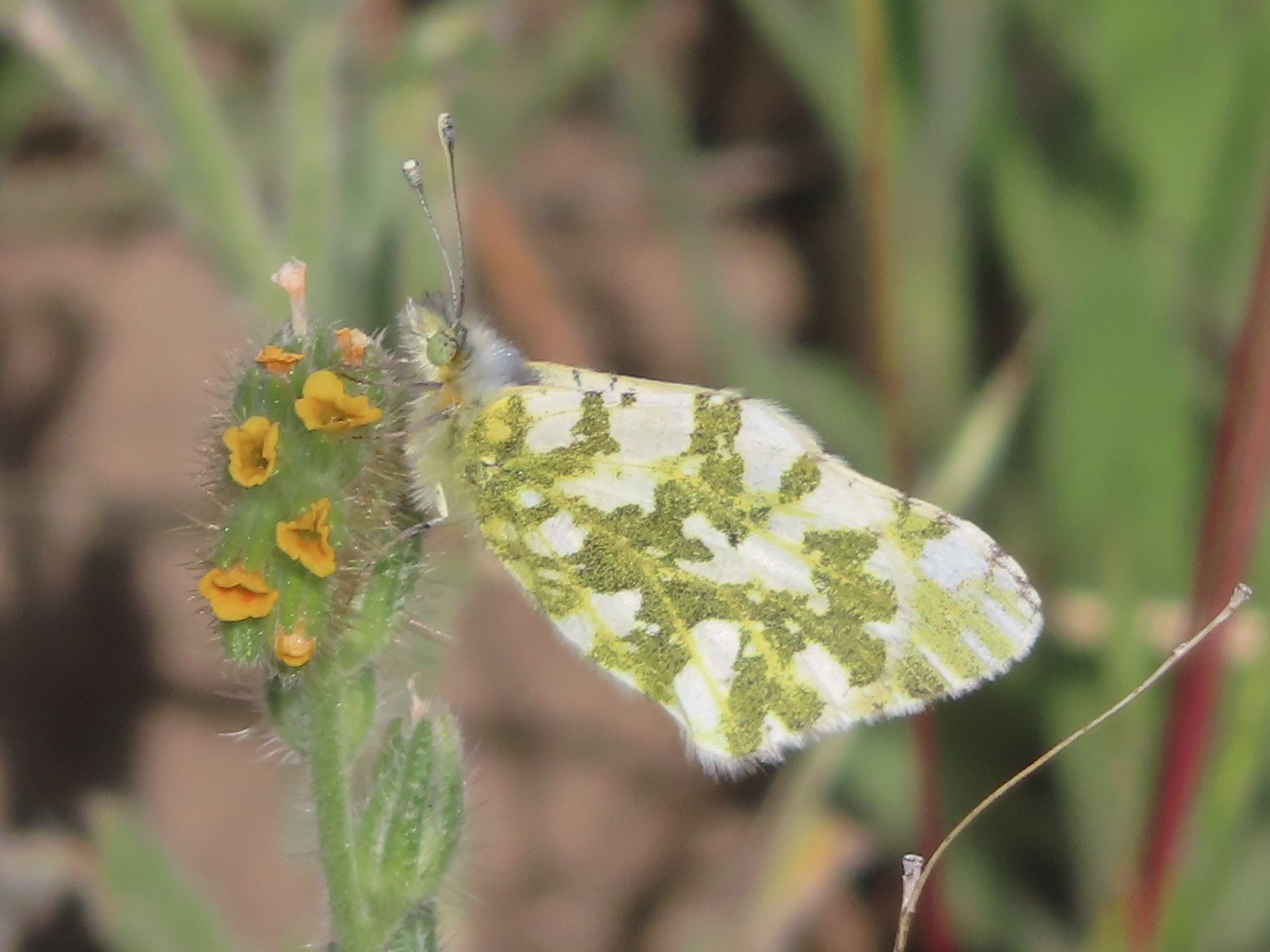 Large marble on a fiddleneck.
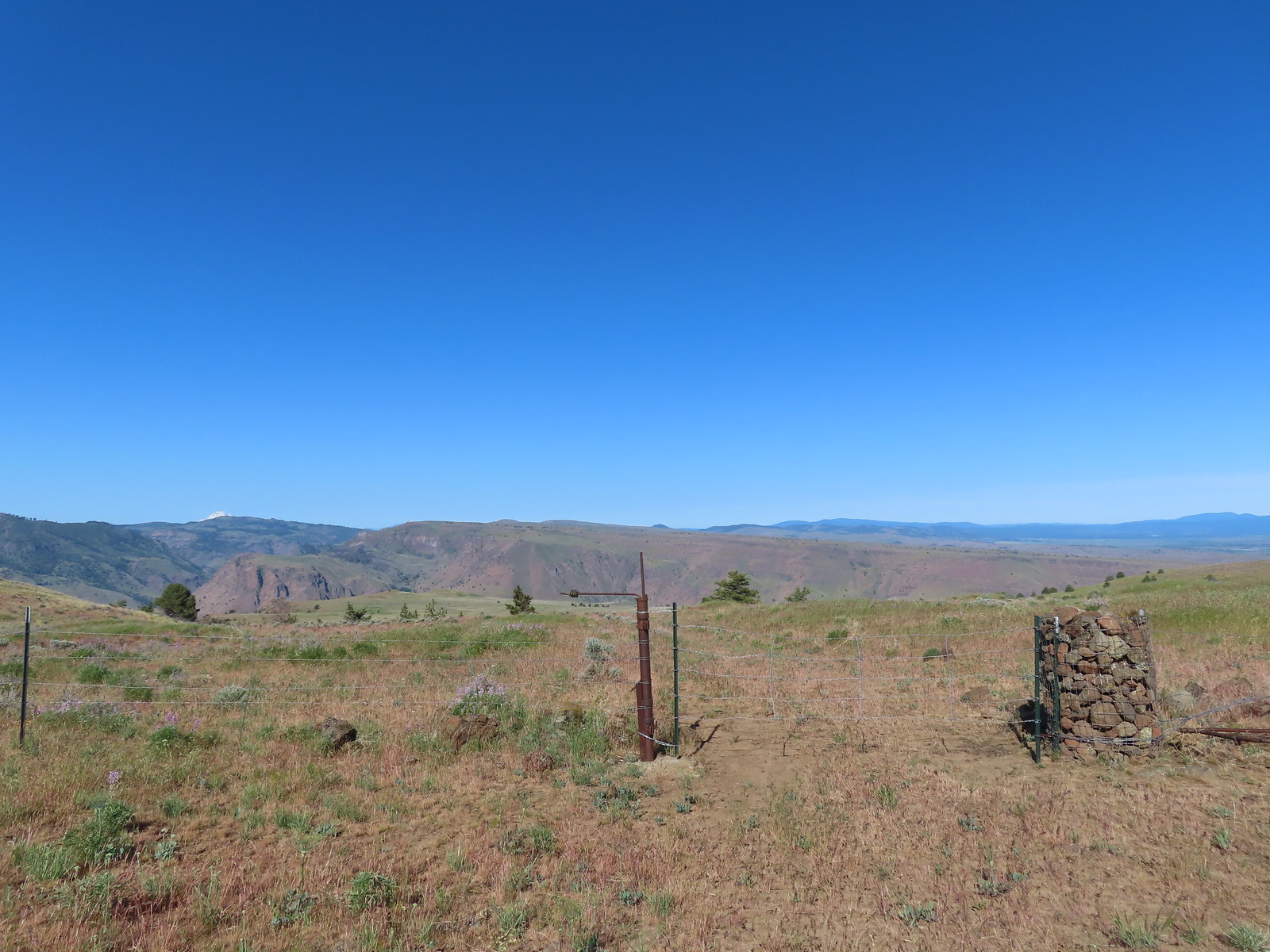 The fourth gate at the 4-way junction.
 Mourning dove
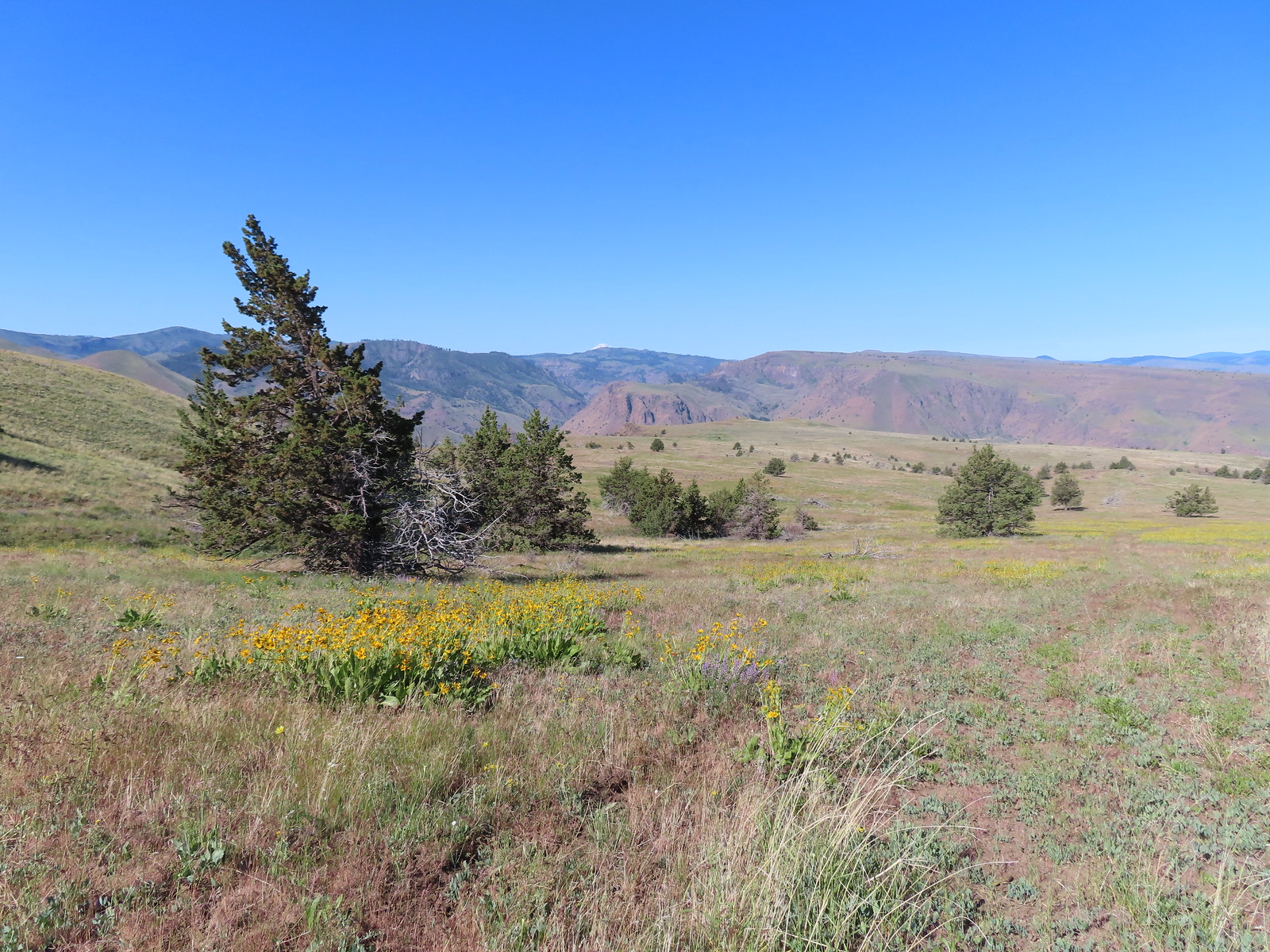
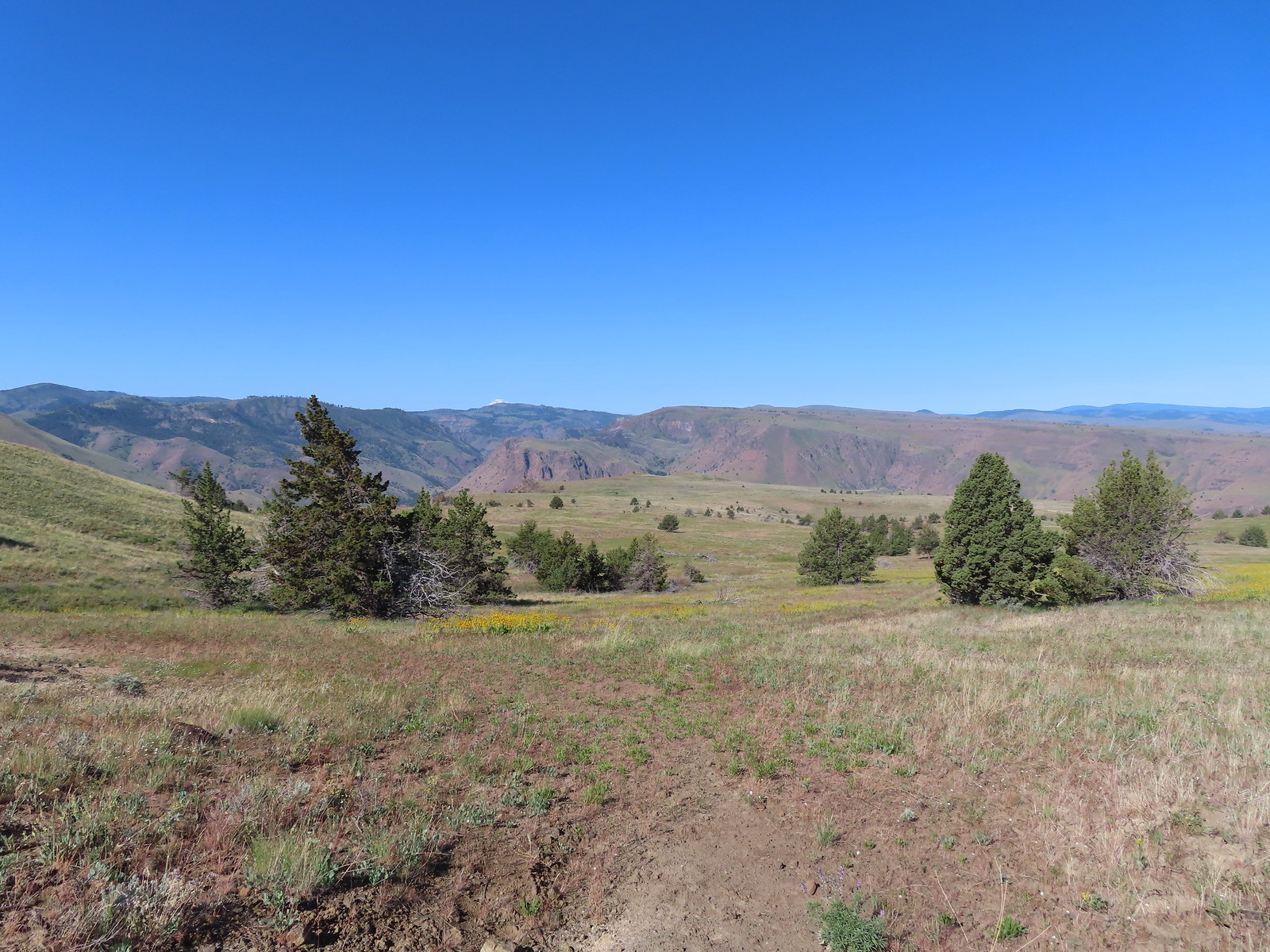 The more “obvious” jeep track curving left.
 The fainter track angling slightly right.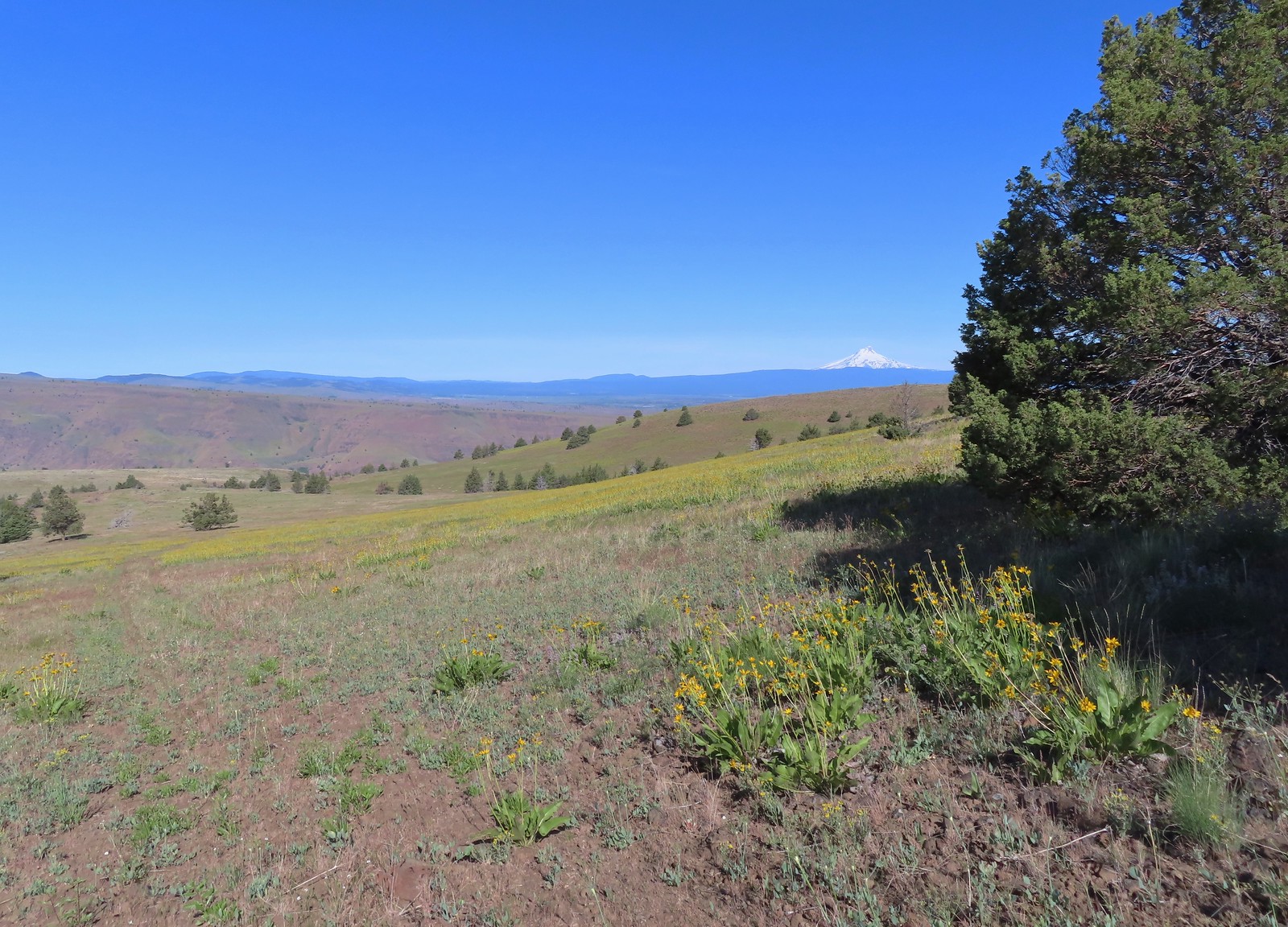
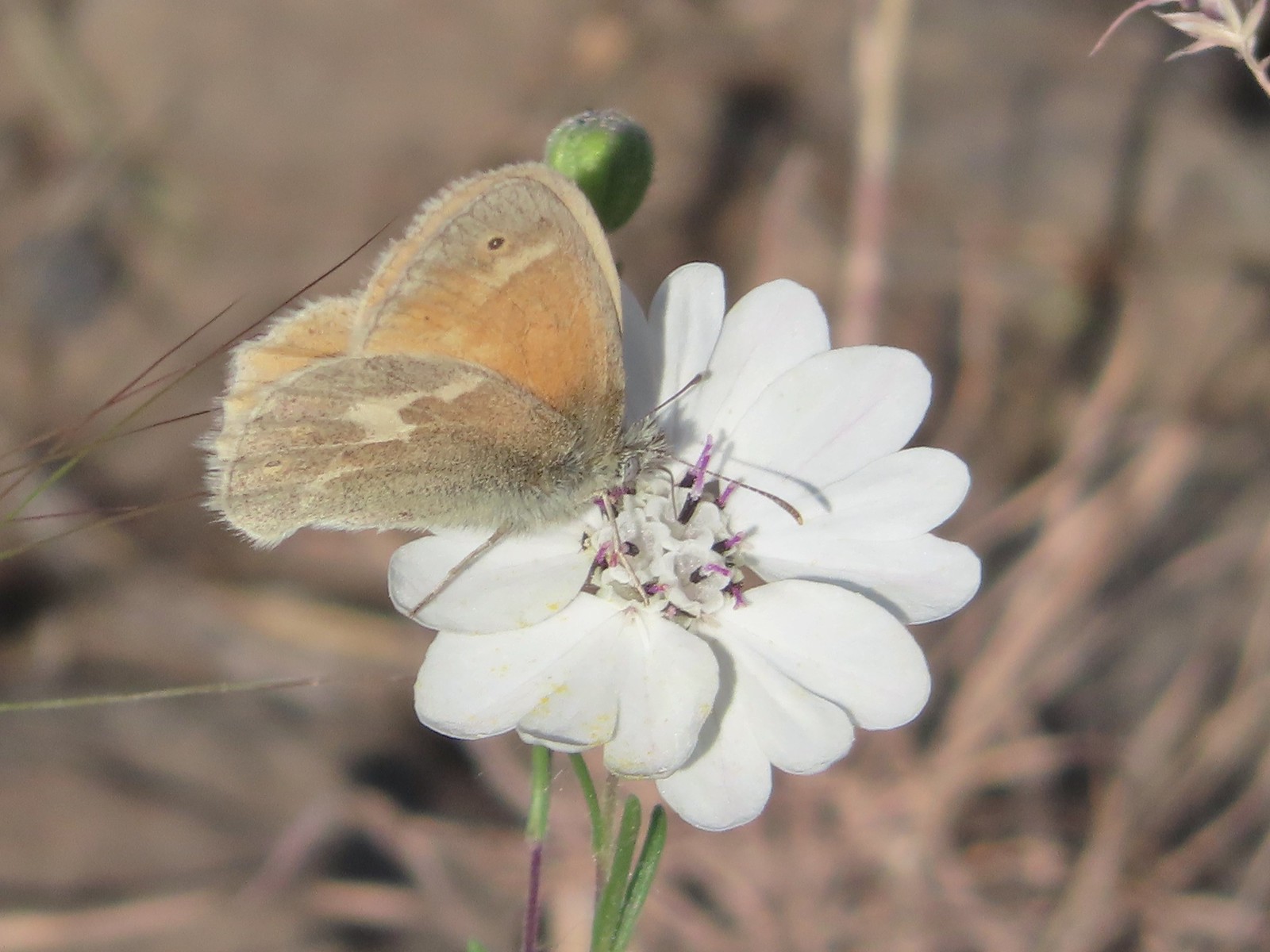 Ochre ringlet on rougheyelashweed.

 Zerene fritillary
 Zerene fritillary on salsify
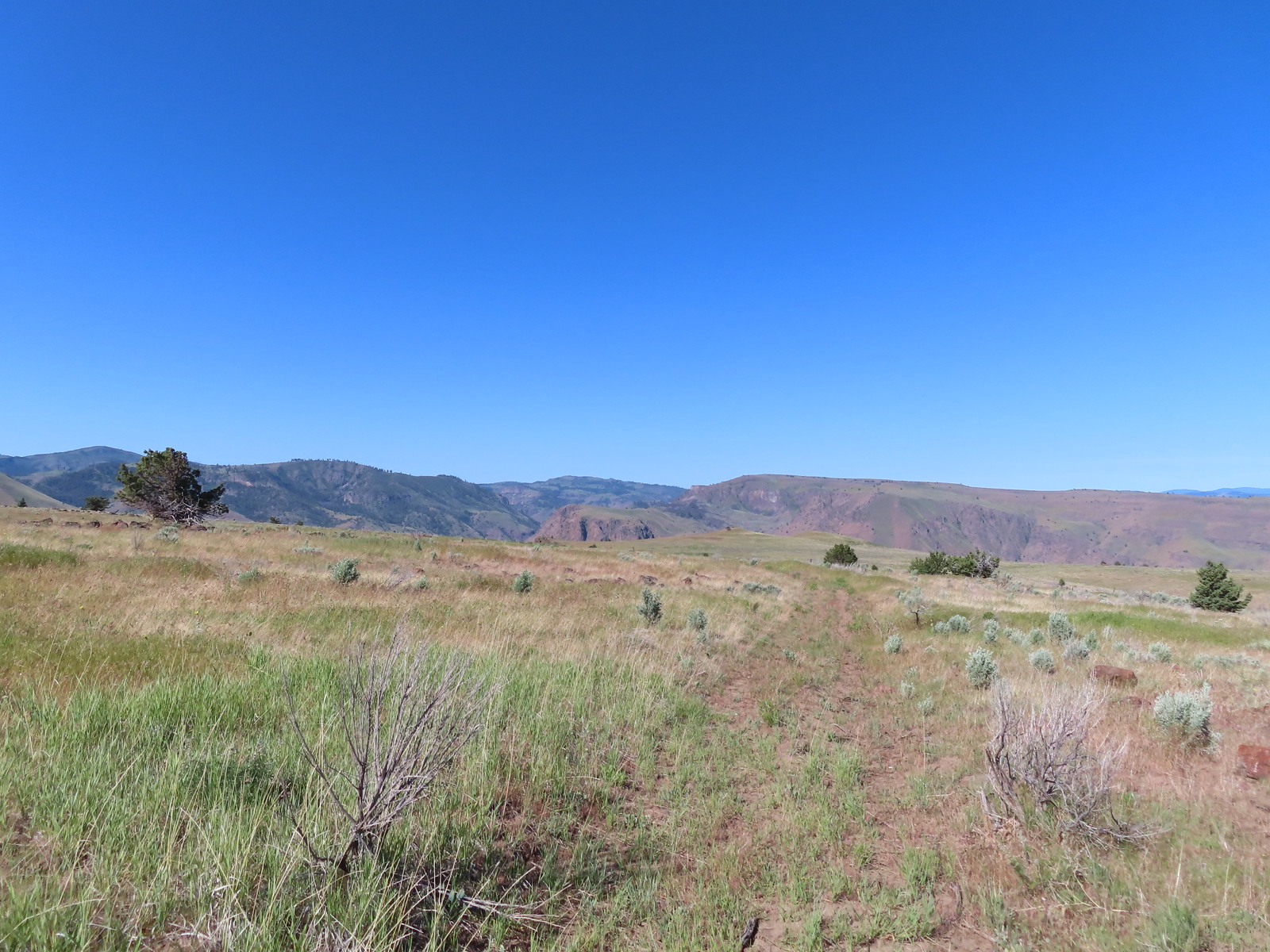 We thought we spied the post and used the camera to zoom in and confirm.
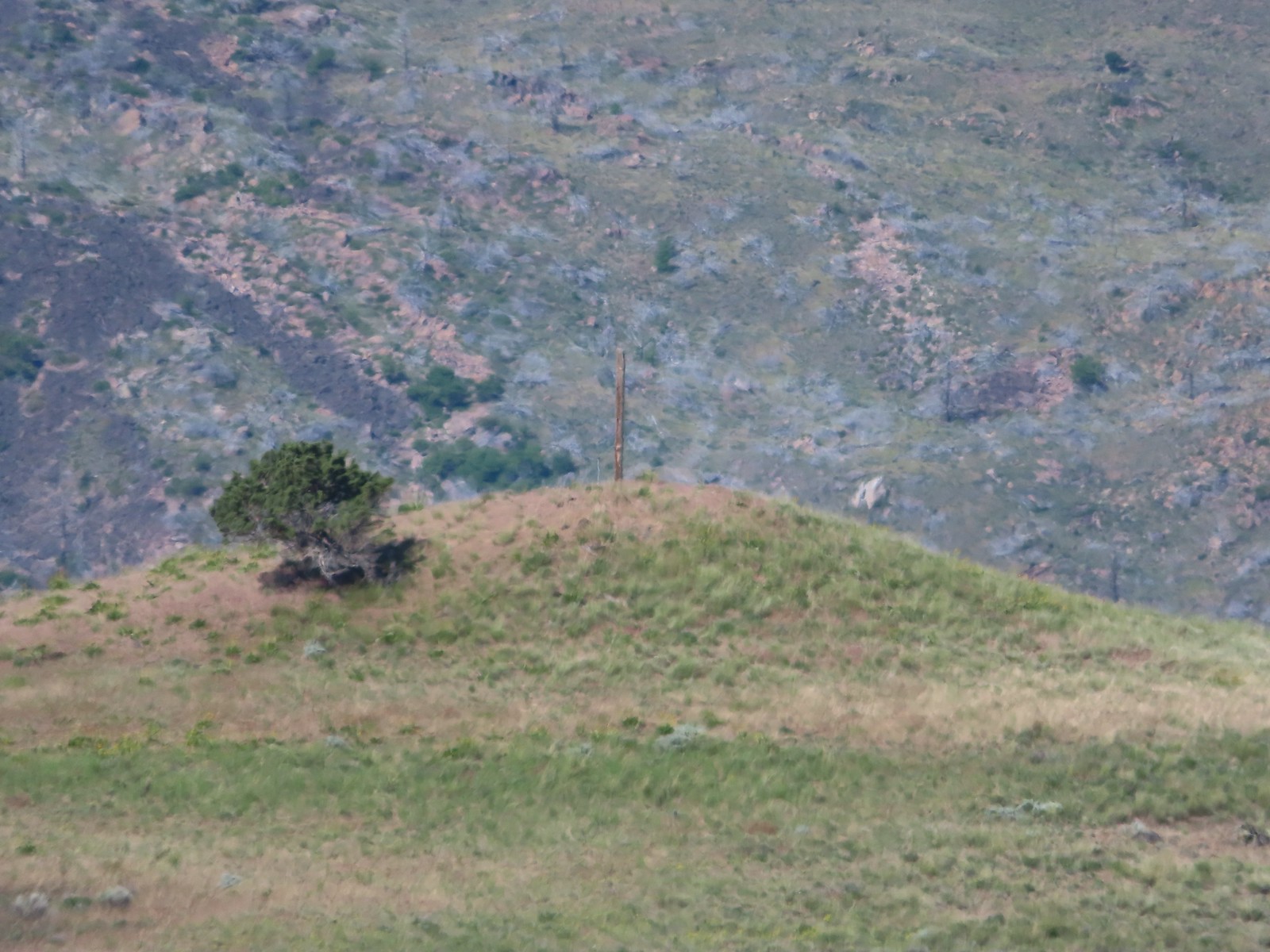 This was the only knoll with a juniper as well as the post.
 Largeflower hawksbeard
 Paintbrush
 To reach Stag Point we had to go cross country, so we looked for the most gradual looking climb.
 Mt. Hood from Stag Point.
 The Deschutes River from Stag Point.
 Mt. Hood and Mt. Adams from Stag Point.
 Looking back over the route we’d come down.
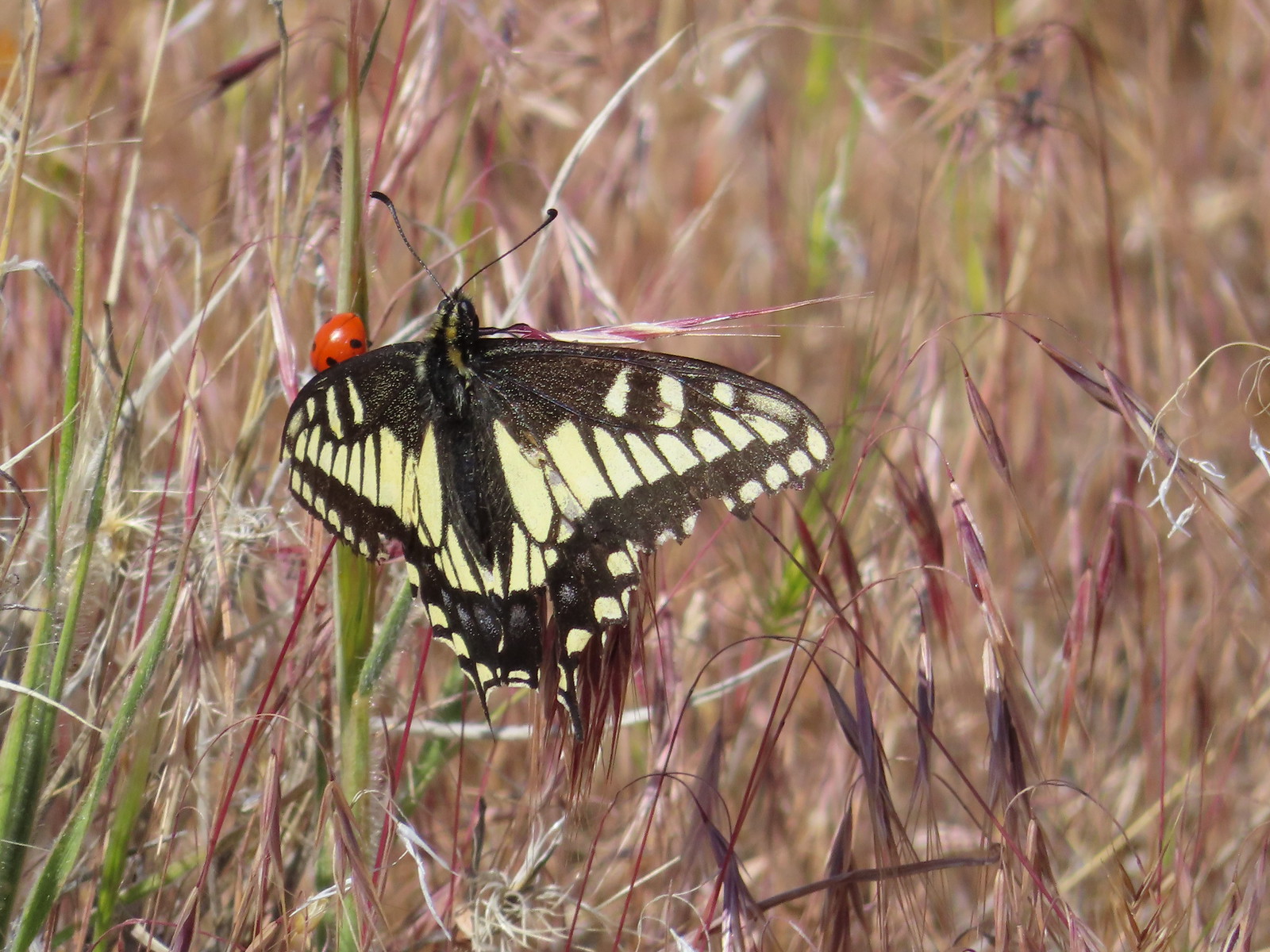 Ladybug and an Oregon swallowtail.
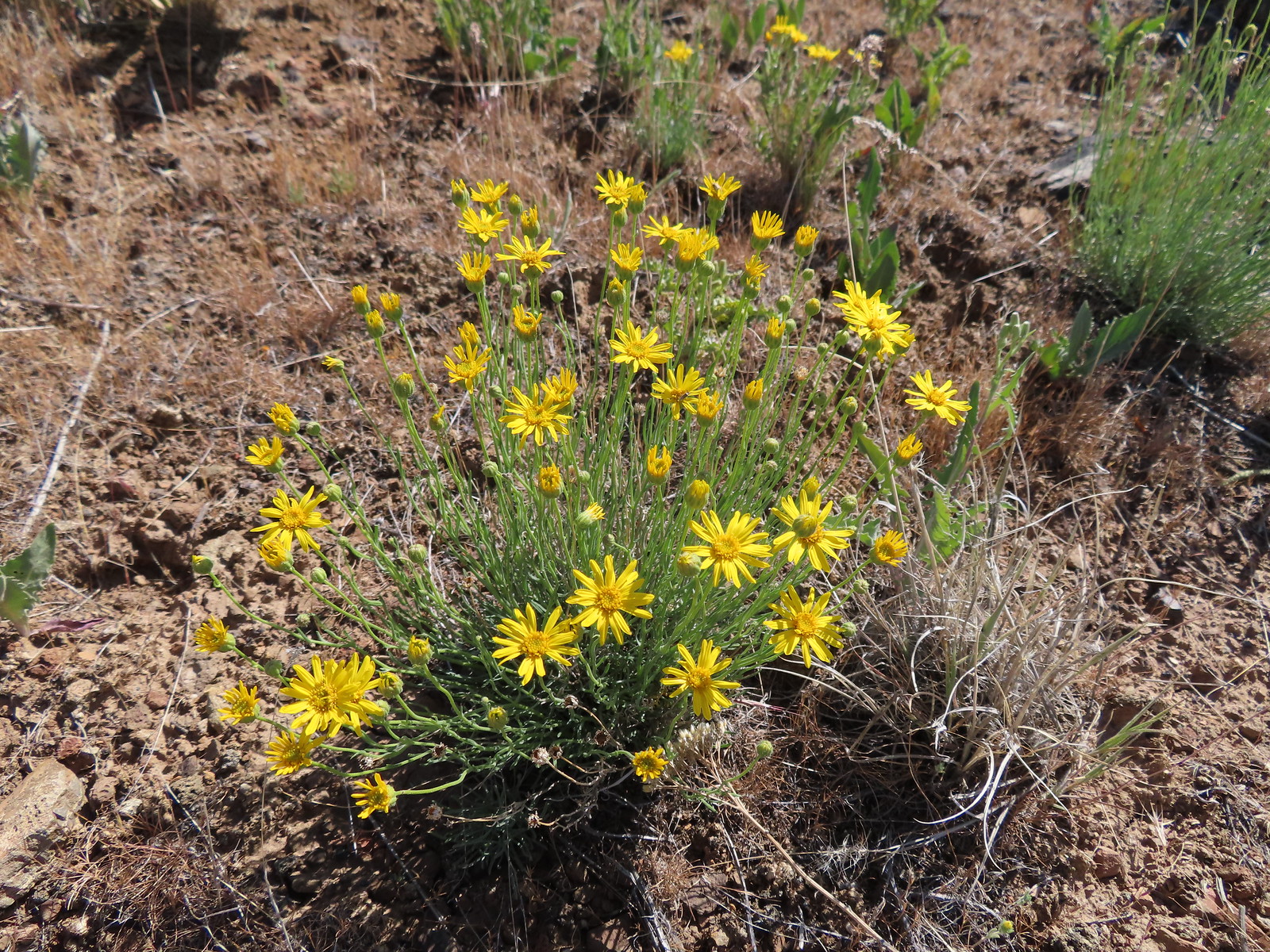 Desert yellow fleabane
 Heading out to the rock outcrop.
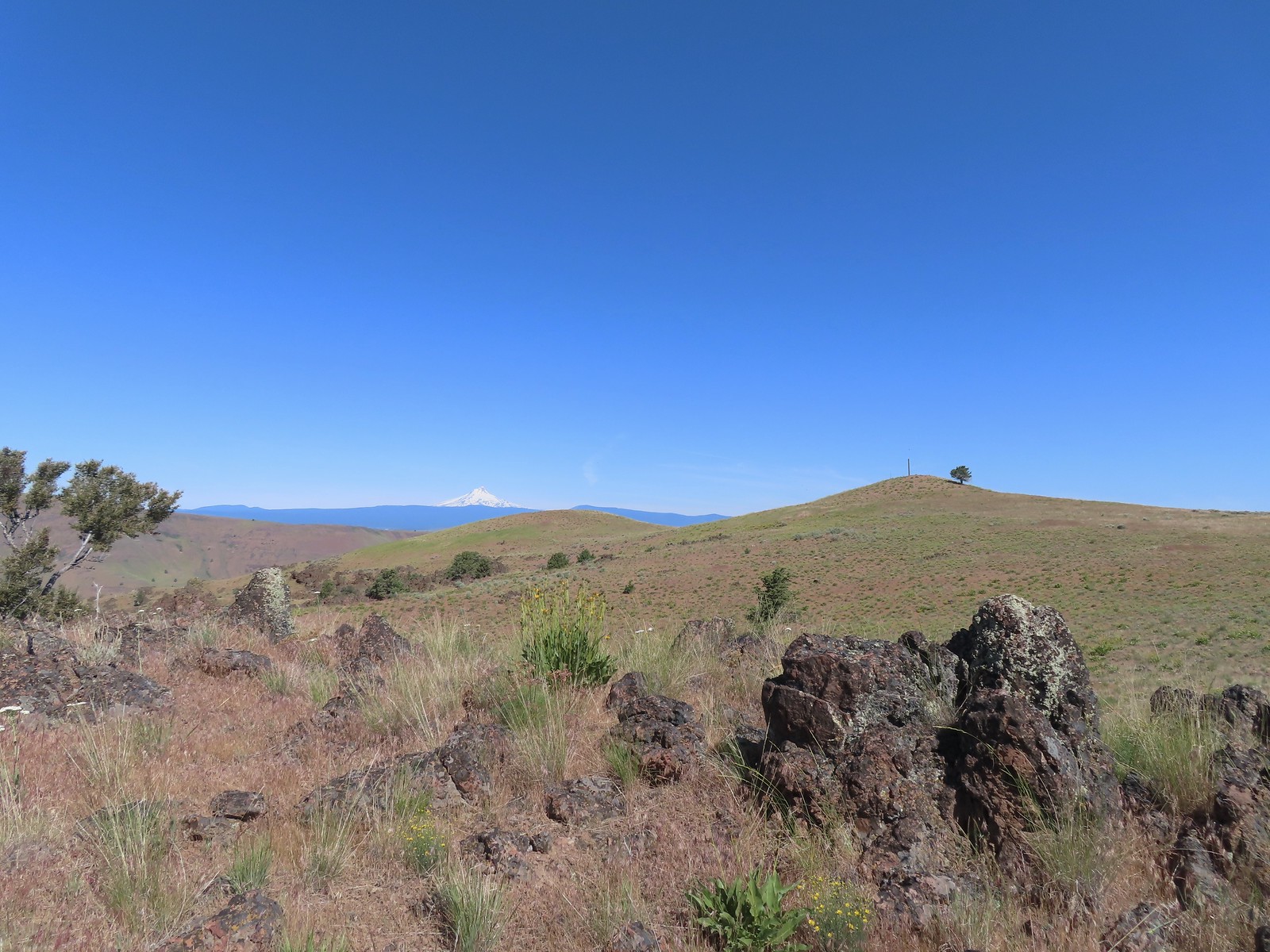 Mt. Hood and Stag Point from the outcrop.
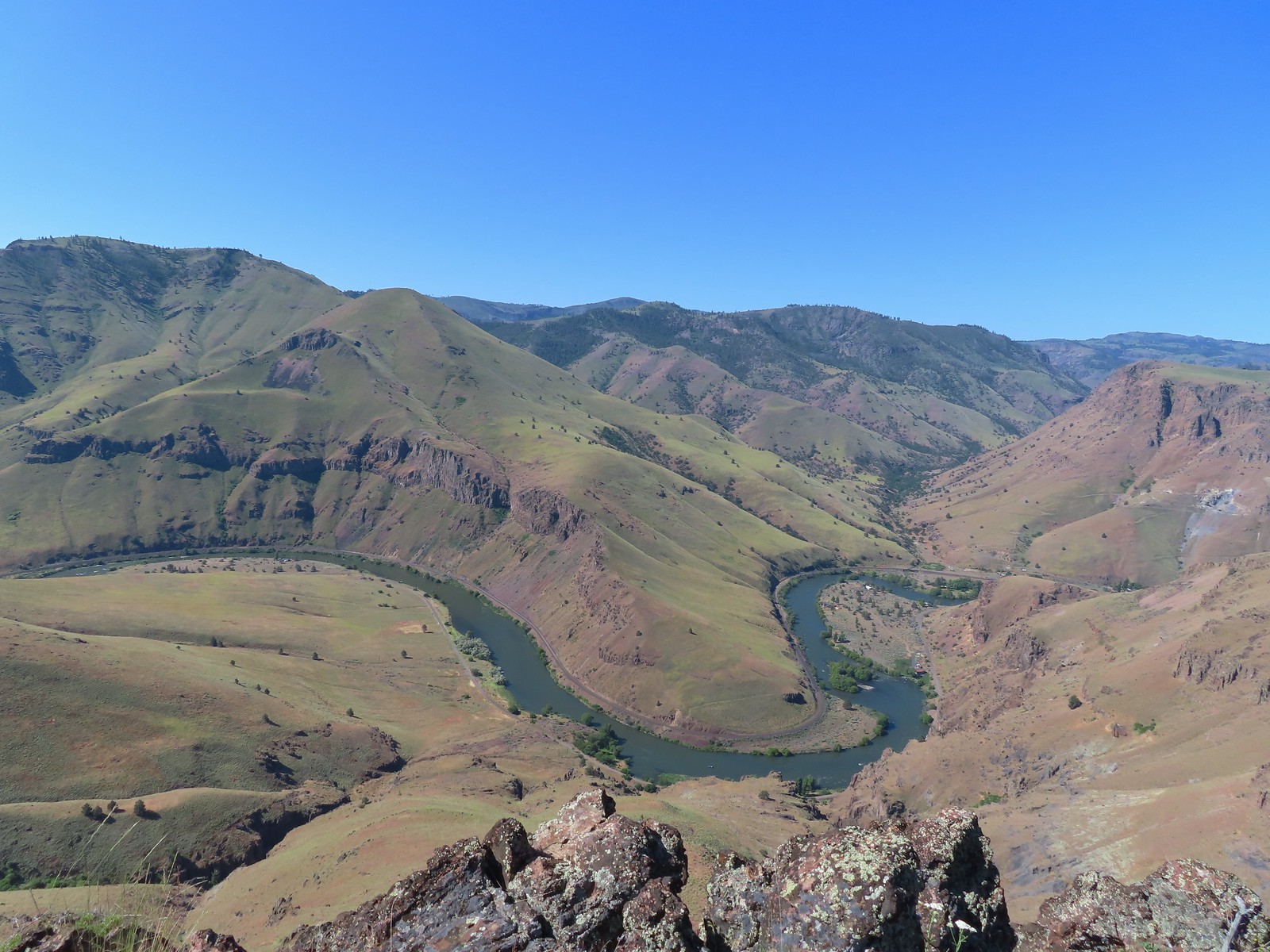 A better view of the Deschutes.
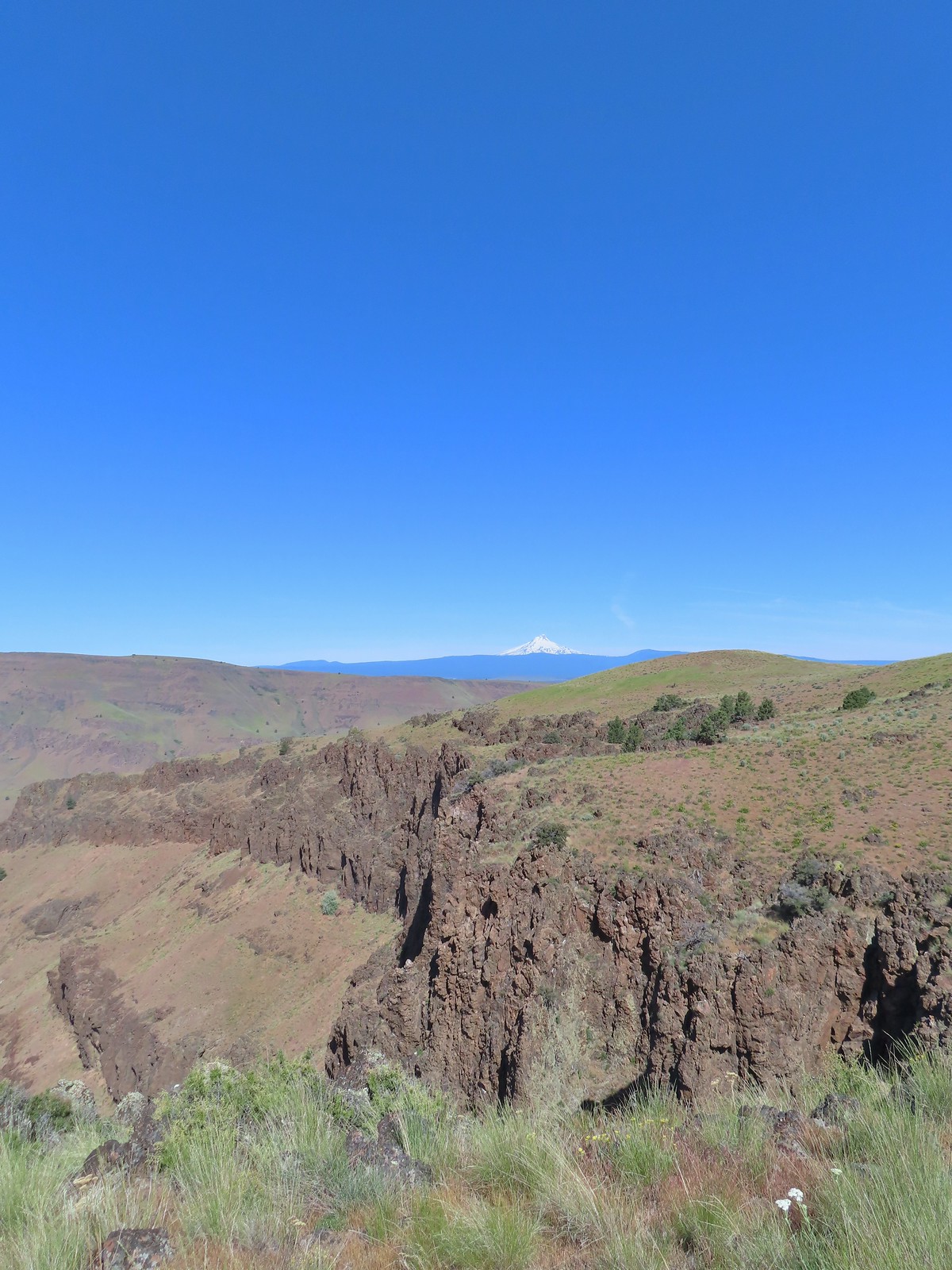 Mt. Hood beyond the cliffs.
 A buckwheat
 Stink bug
 Silverleaf phacelia
 Back on the jeep track.
 Lupine and balsamroot
 The cows had really chewed this section of the jeep track up.
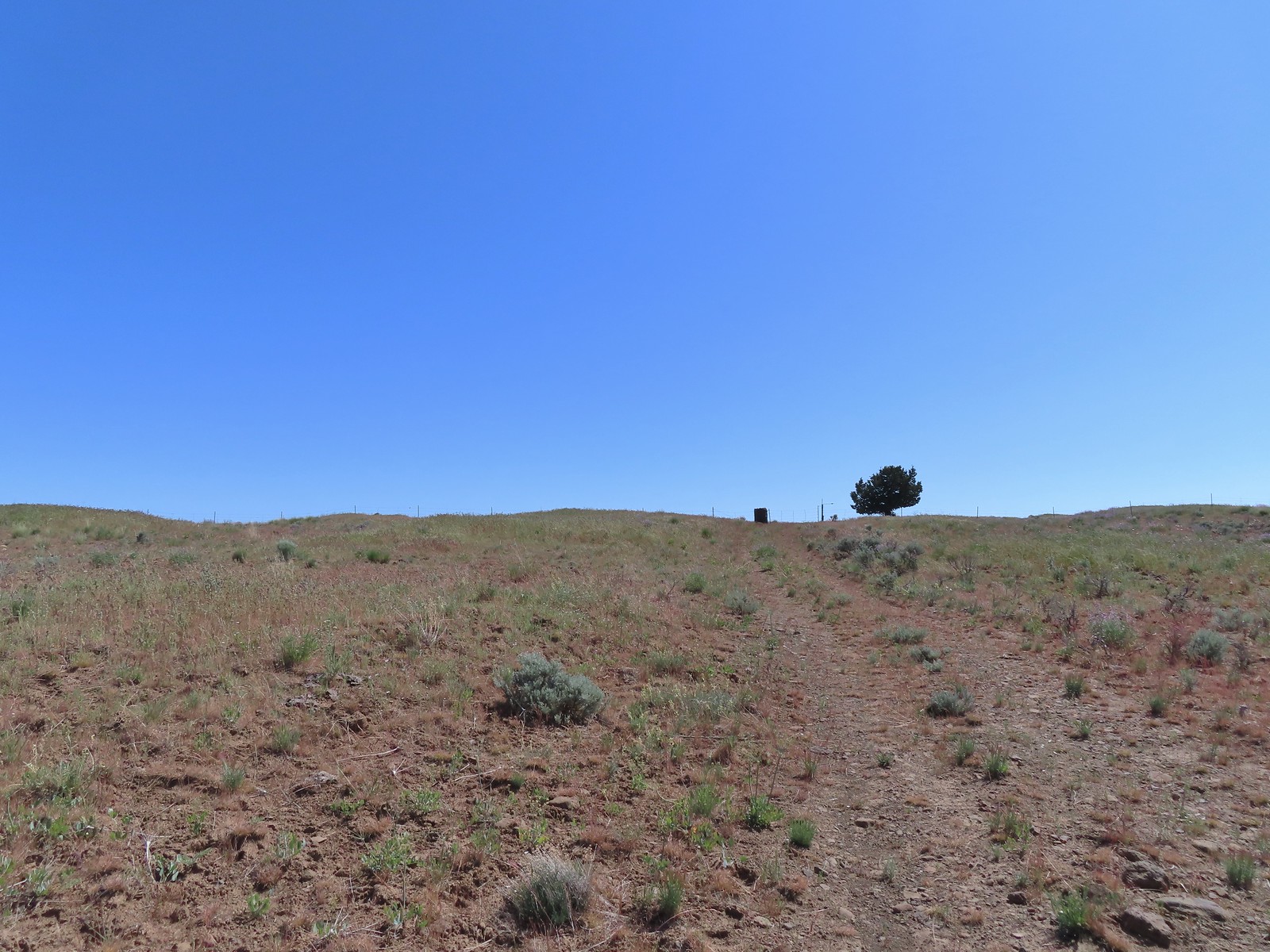 The gate ahead.
 Horned lark guarding the gate.
 Mt. Jefferson and Olallie Butte
 Grand collomia
 Time for some sun.
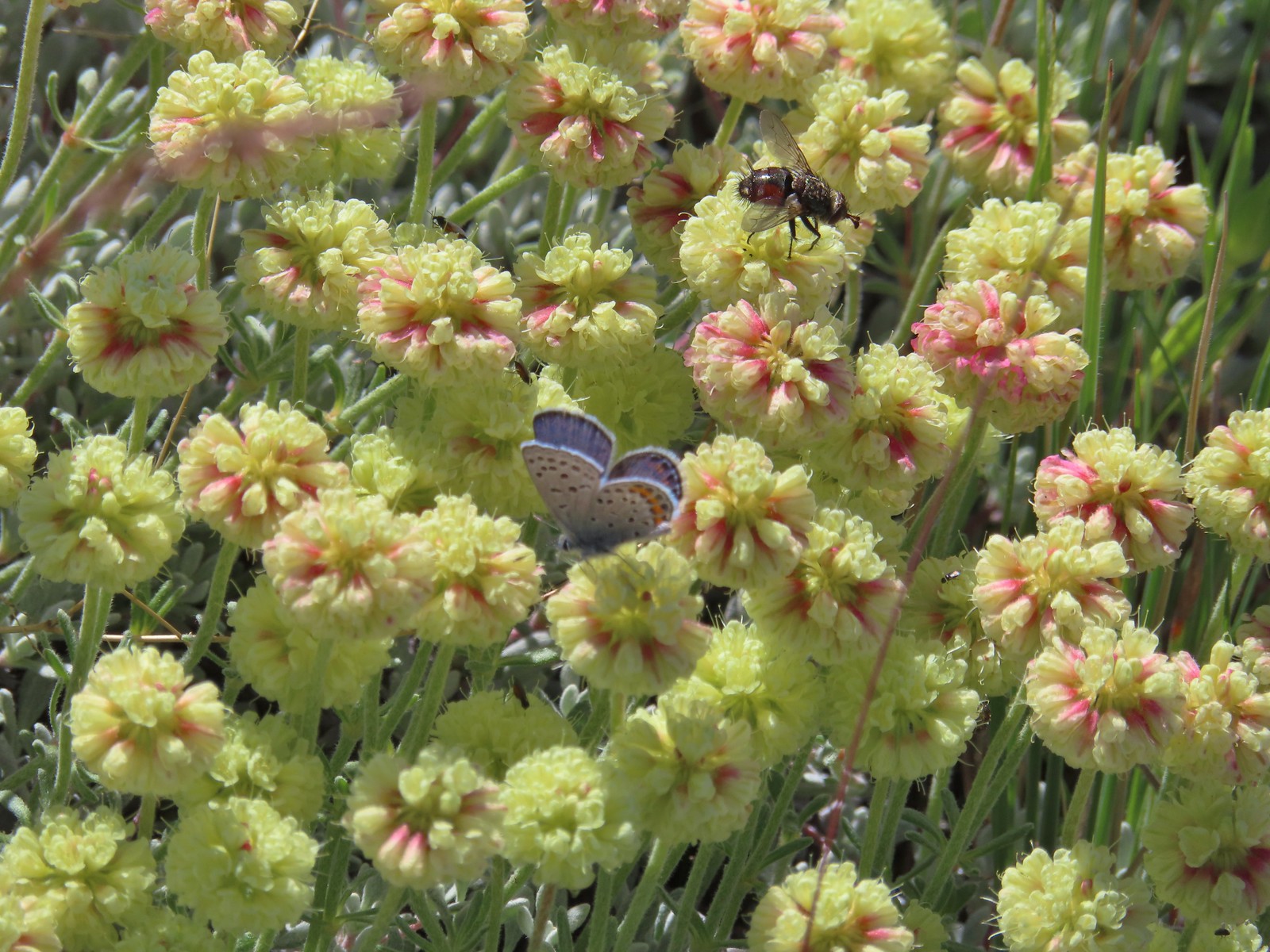 A butterfly and fly.
 Three butterflies and a fly.
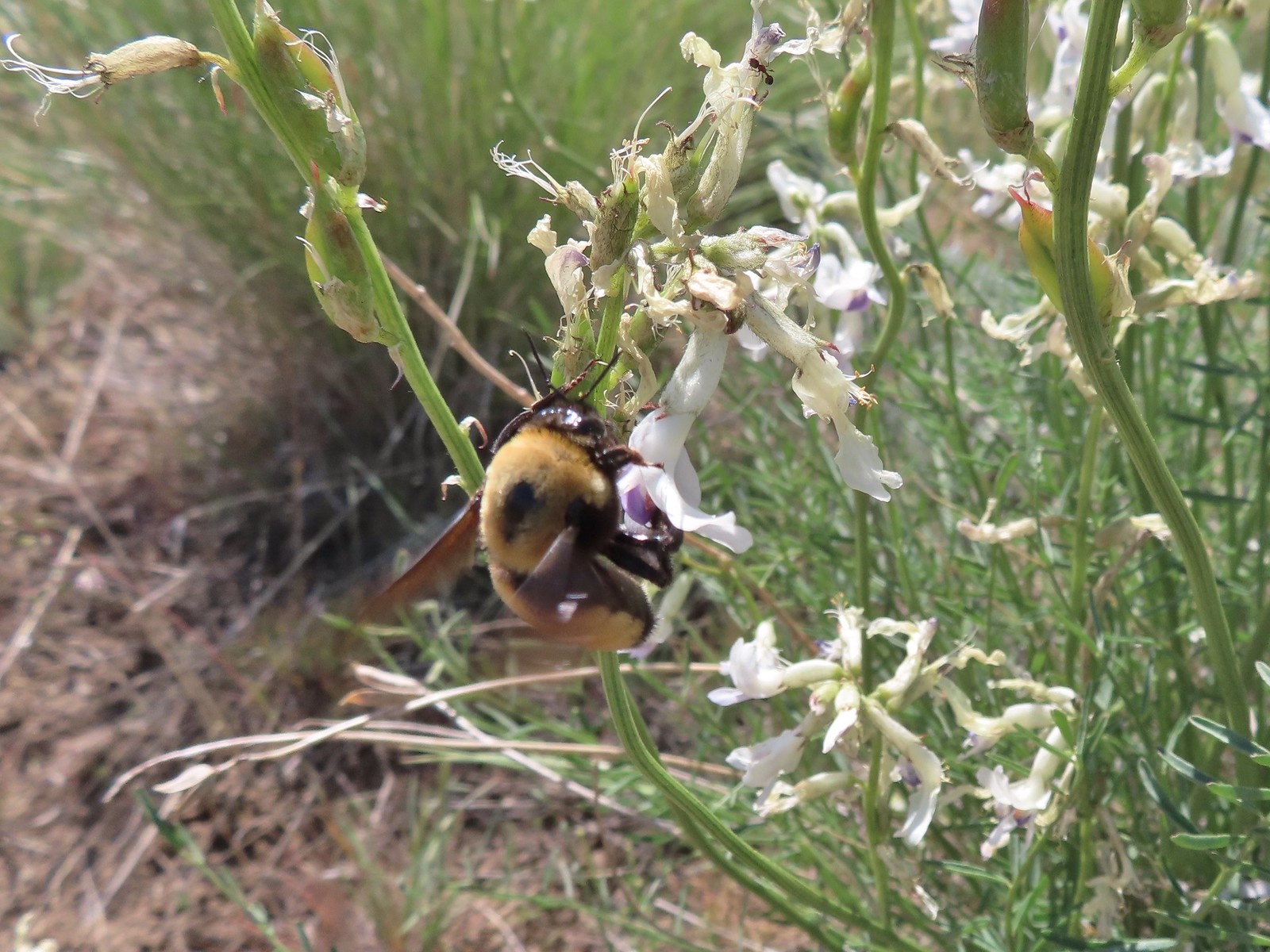 Busy bee
 This swallowtail was a little rough around the edges.
 Another horned lark on lookout.
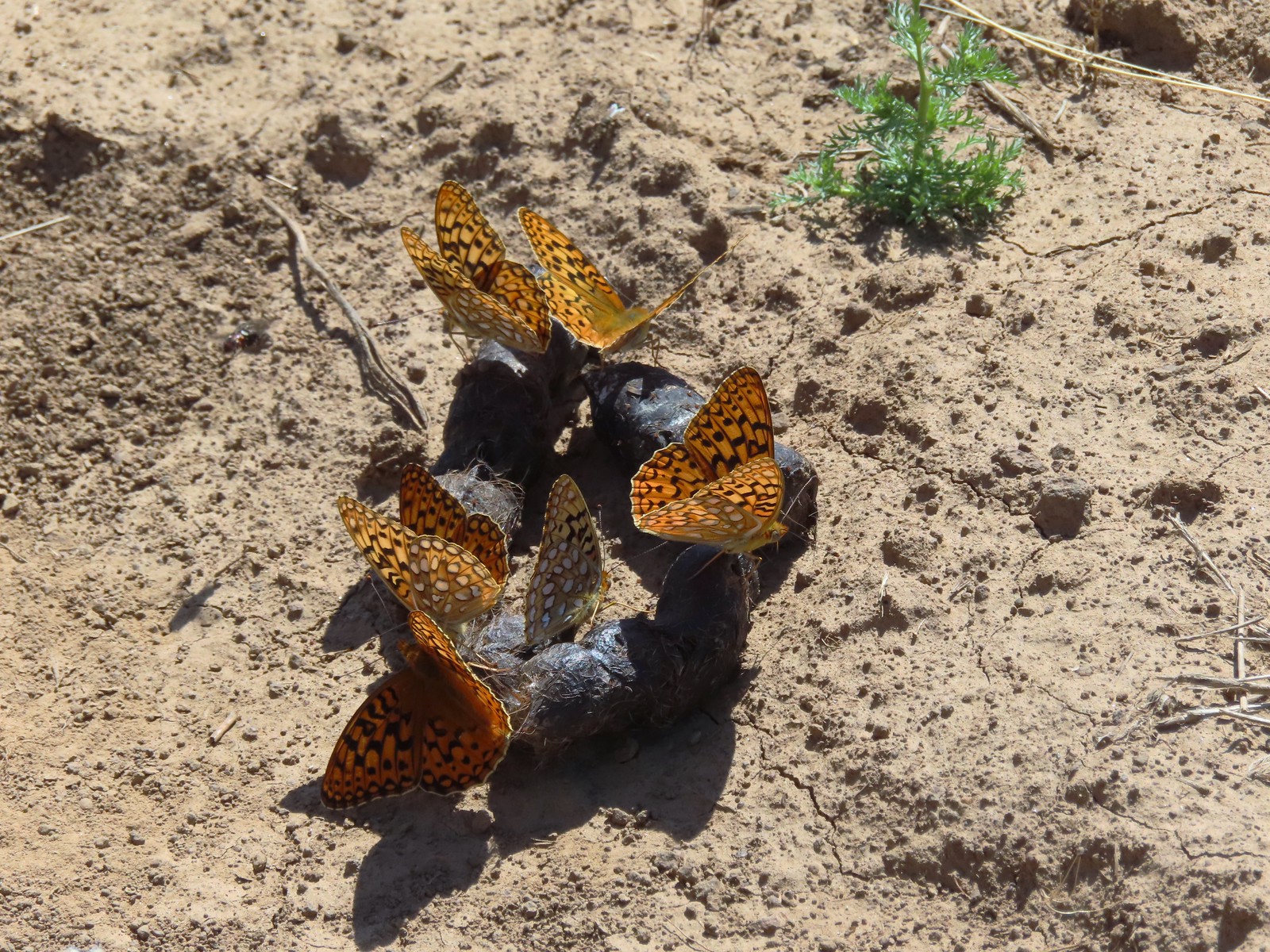 Nothing brings fritillary butterflies together like a good pile of scat.
 Another option for another time. We were just happy to have solved that mystery.
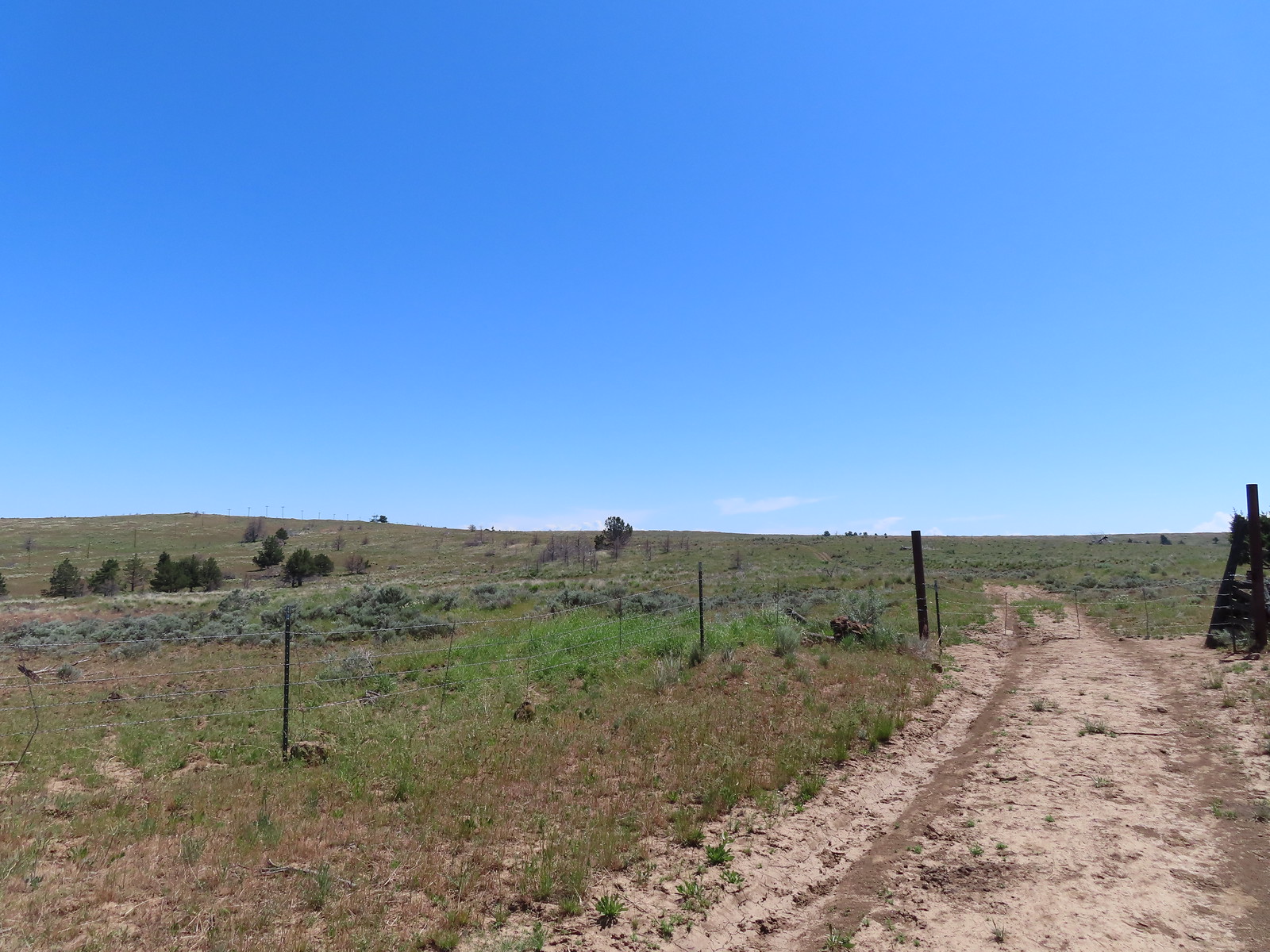 The Radio Towers on the hill were right next to the trailhead.
 The Three Sisters (from this angle it looks like two)
 Three butterflies and a beetle on buckwheat.
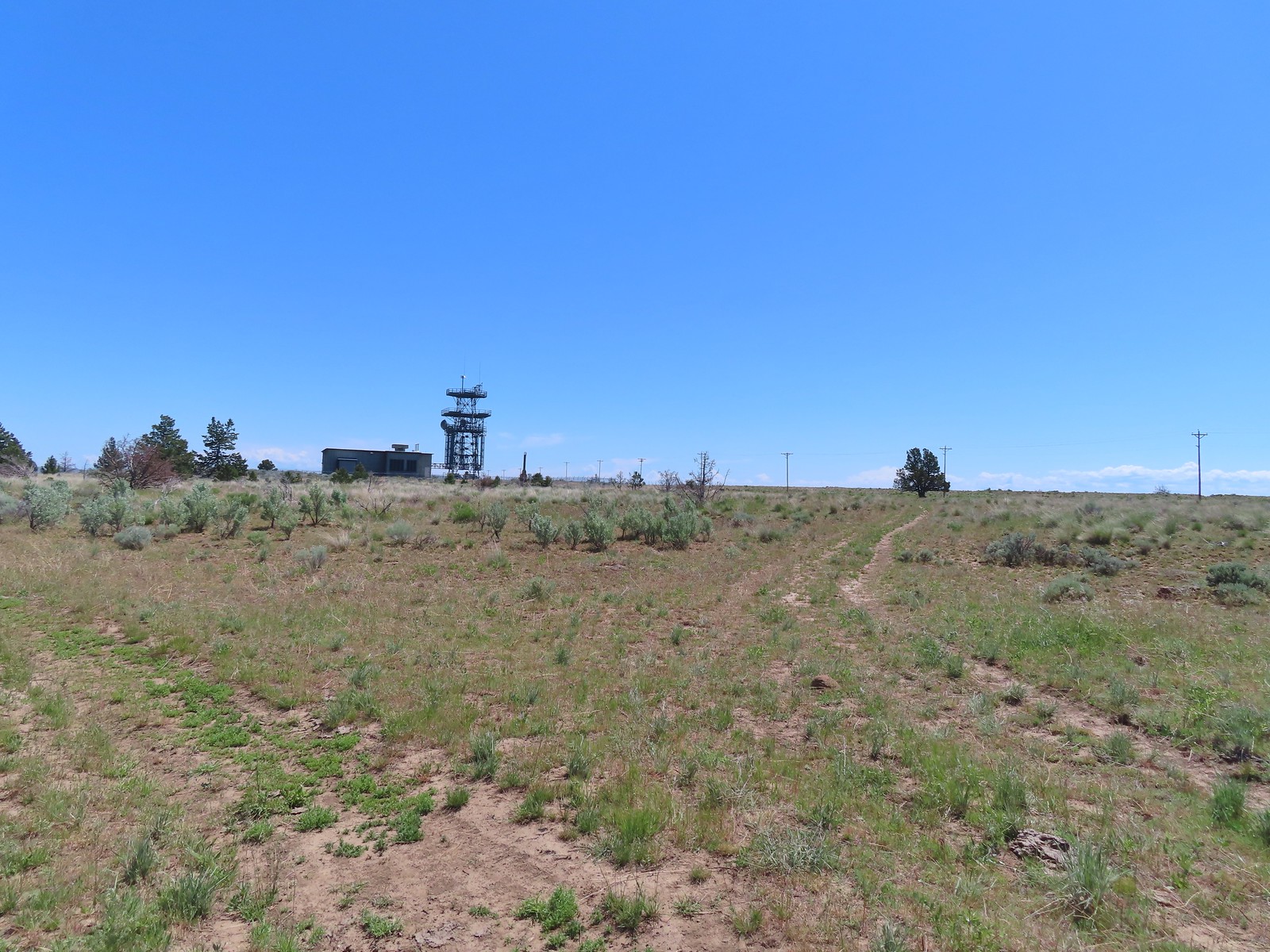 Another mystery was where did the trail from the South Trailhead (just on the other side of the radio towers) connect. We’d missed the track on the right on our first pass, another question answered.
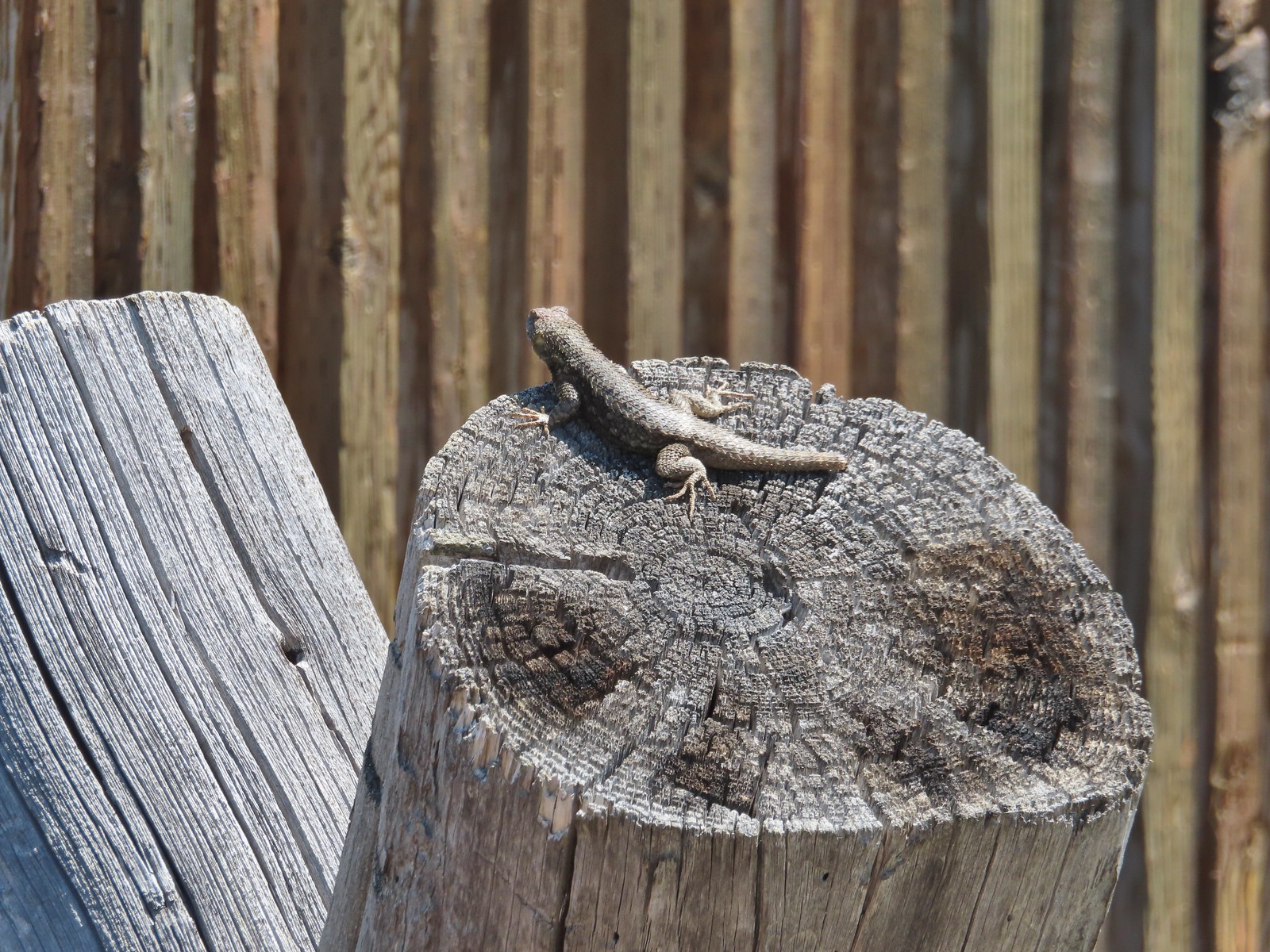 Lizard with half a tail at the trailhead.
 This mountain bluebird was acting odd when we arrived at the gate. It was flying back and forth with something in its mouth. (Mt. Adams is in the background.)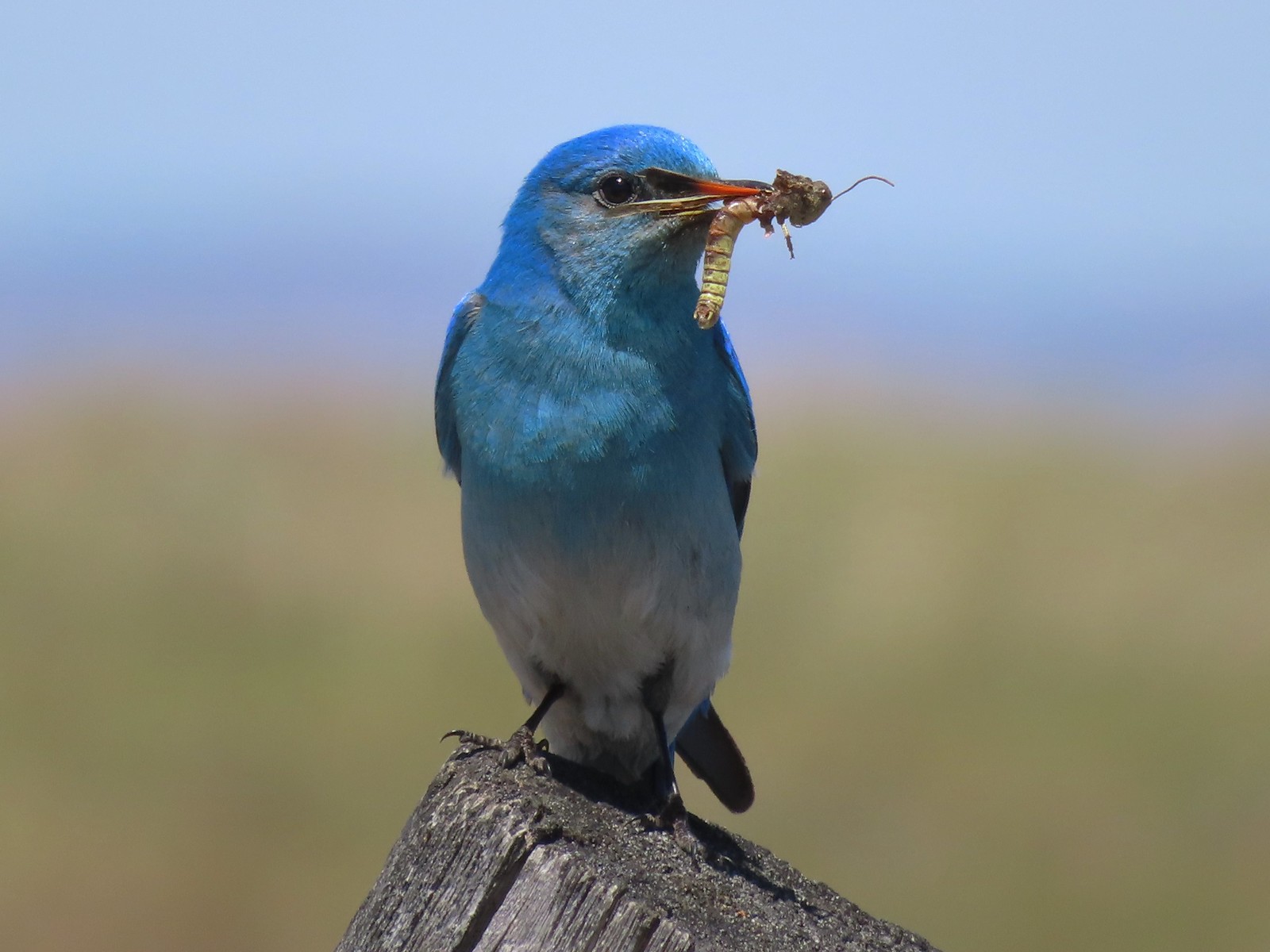

 wanderingyuncks