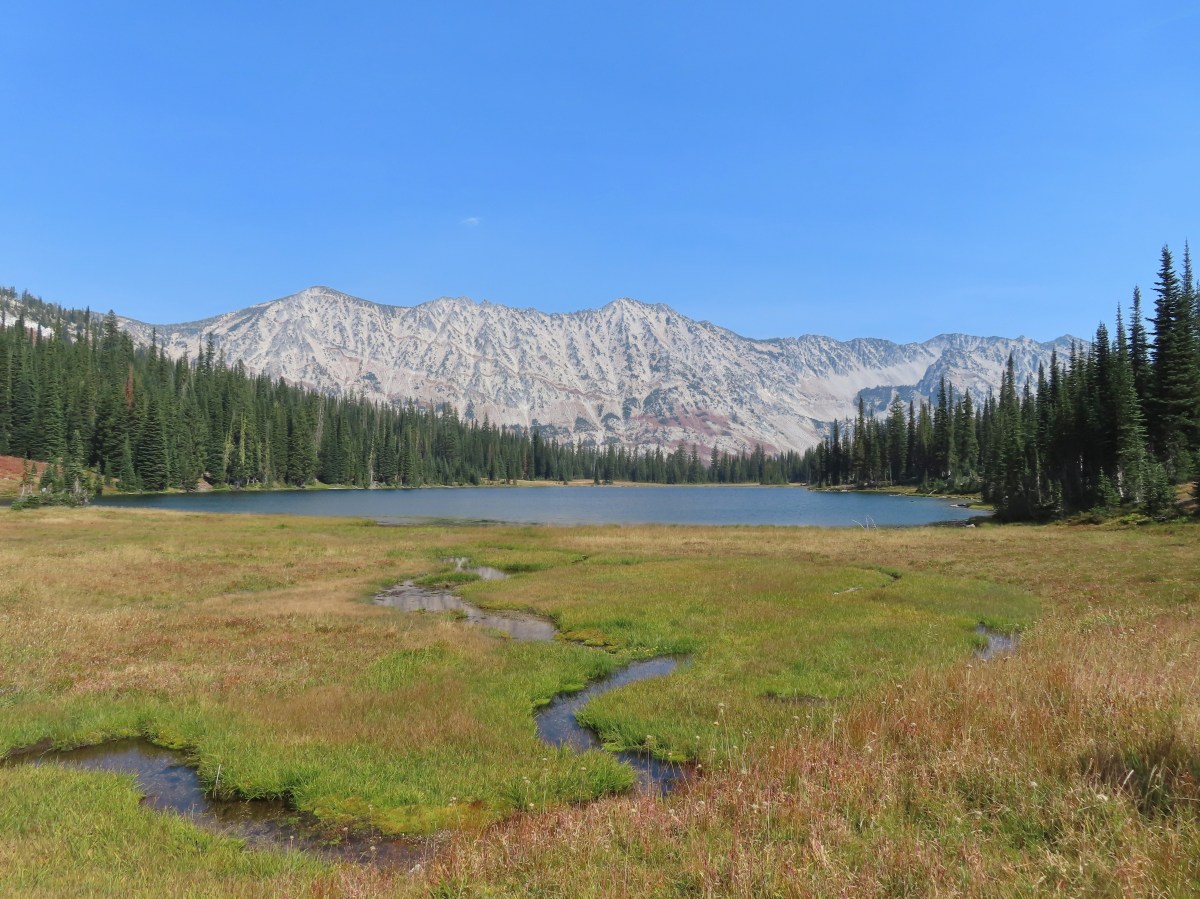
After delaying the start of our planned backpack to Hidden Lake by a day (post) due to a Fire Weather Warning we had a two-day window of sunny, but smokey, weather before the next chance of thunderstorms was forecast to roll in. That was all the time we needed though to allow us to finish the 100th featured hike from William L. Sullivan’s “100 Hikes Eastern Oregon” (2022 1st edition).
It would also mark the culmination of our goal of hiking at least a portion of all 100 featured hikes from a single edition of each of the five areas Sullivan splits his guidebooks into: Eastern Oregon, Central Oregon Cascades, Oregon Coast & Coast Range, Northwest Oregon & Southwest Washington, and Southern Oregon & Northern California (post). We set our sights on that goal way back in 2016, but we started using Sullivan’s guidebooks six years earlier. We will be covering completing the Eastern Oregon book and completing our goal in separate posts later, but first we needed to hike the East Eagle Trail.
Our plan was to begin at the East Eagle Trailhead and follow the East Eagle Trail to the Hidden Lake Trail (approx. 7 miles) where we would look for a campsite not far after crossing East Fork Eagle Creek. We had been told that there was a spot or two there by a fellow hiker we’d run into during our Maxwell Lake hike in August (post). While camping at the lake sounded nice climbing 1000′ in 1.4 miles with full packs on didn’t.
We arrived at the trailhead to find a few cars parked along the turnaround loop. After filling out a free wilderness permit we followed a pointer for the East Eagle Trail.

 The first 0.2-miles followed a rough spur road.
 The trail starting at the 0.2-mile mark.
The trail quickly entered the Eagle Cap Wilderness as it gradually climbed, with a few short downhills, along East Fork Eagle Creek.


It was evident that Winter avalanches are common in this valley based on the amount of downed and damaged trees. Despite that the trail was in pretty good condition although there were a few obstacles to detour around.

There were still a few flowers blooming along the way.
 An aster or fleabane
 Nettle-leaf giant hyssop

 Haze from wildfires burning in the Pacific Northwest.


A little over 2.5-miles from the trailhead we passed small corkscrew falls.
 Corkscrew Falls
 One of the few trees that proved a little tricky.
We also had to be wary of falling fir cones. The resident squirrels were busy dropping them to the ground to add to their Winter stores.


 Smoke hanging over the East Fork Eagle Creek Valley.
 Penstemon
 The different shapes and colors of the peaks in the Wallowa Mountains never cease to impress.
 This section of trail appeared to have fallen victim to an avalanche that came down from the far side of the creek then up this one.

 Paintbrush

 Unnamed waterfall along East Fork Eagle Creek.
 The view improved a little as the day progressed.
 Coneflower along the trail.
 Fireweed
 Last of the mountain coyote mint.


 California tortoiseshell

 Fritillary butterfly
 Post marking the junction with the Hidden Lake Trail.
We turned down the Hidden Lake Trail and rock hopped across the creek. After navigating through some more downed trees we spotted an established campsite a little off the trail.


After setting up camp we switched to our day packs and started the climb up to Hidden Lake.

 View back across the East Fork Eagle Creek Valley.
 More obstacles were present along the Hidden Lake Trail.

 More trail damage.
A mile and a quarter from our camp we arrived at Moon Lake.


 Gentians
After a brief break at Moon Lake we followed the trail steeply uphill to a pass.


 Looking back down at Moon Lake.
The trail leveled out for a bit at the pass and a short spur trail on the left led to an unnamed lake.


 On the other side of the ridge is Eagle Lake which we visited in 2023 (post).
Beyond the pass the trail descended briefly to an unnamed creek.


Sullivan’s description said to follow the trail to its end at the creek then cross the creek and head right over a small ridge to find Hidden Lake. I had gone ahead of Heather from Moon Lake so I arrived at the creek first and was a little confused to find a clear trail heading across but an even clearer tread continuing on the near side of the creek.

Since the Hidden Lake Trail didn’t appear to end here I thought the trail to the right simply went to a campsite and continued along the creek.
 The Hidden Lake Trail continuing along the unnamed creek.
The trail followed the creek through a meadow then curved away from Hidden Lake and petered out with a view of another unnamed lake.

 There were still a few mountain heather blossoms.
 The unnamed lake.
I took a quick look at the GPS and realized that I was almost past Hidden Lake now so I cut cross country and found myself on a ridge about 50′ above the lake.
 Heading cross country looking for the path of least resistance.
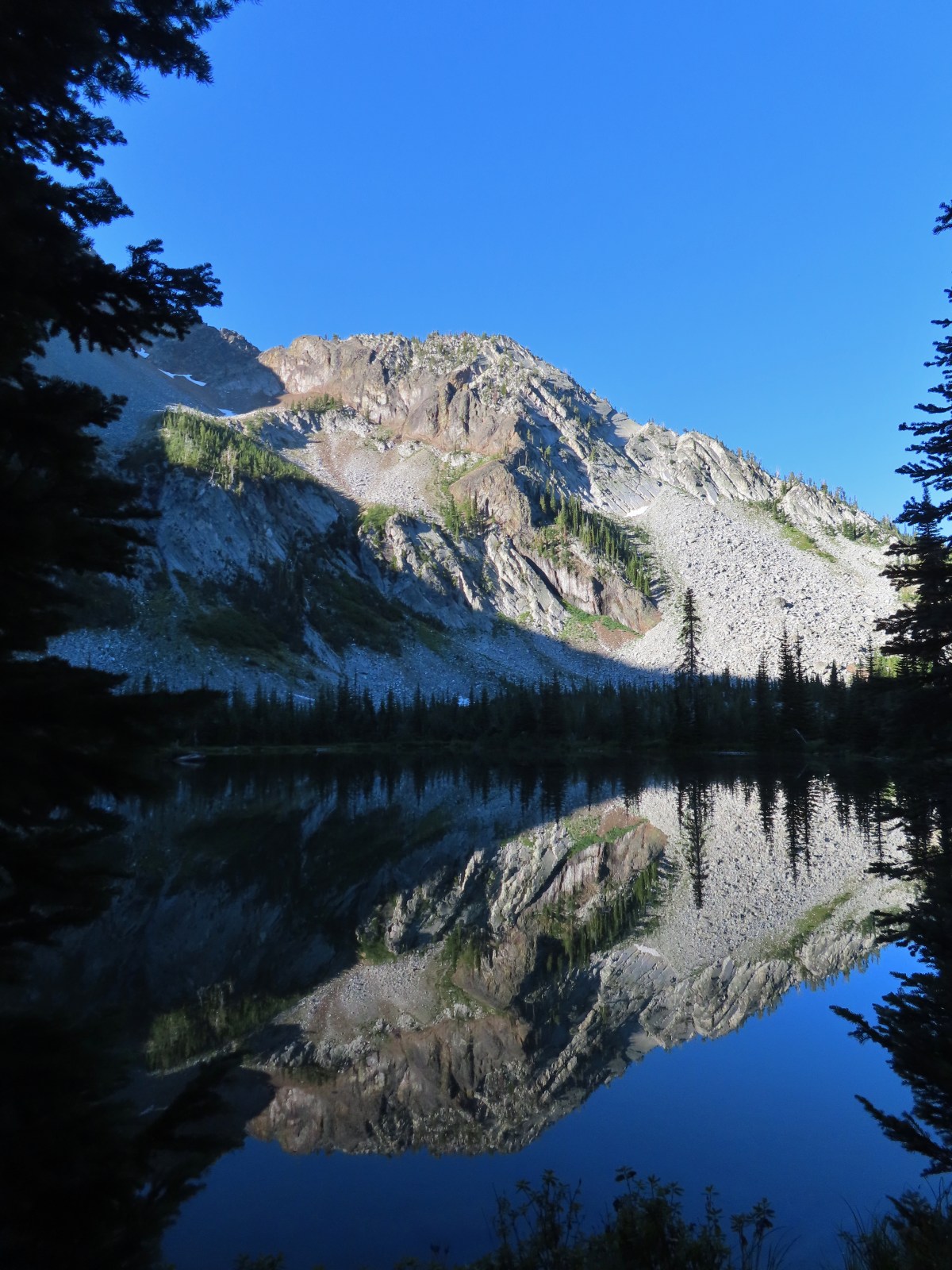
 My first view of Hidden Lake.
I made my way steeply down to the lake and picked up a use trail which led me to a meadow at its western end.

 Eagle Cap (post) on the left, Galcier Peak at center, and Hawkins Point to the right.
The views were amazing, but I quickly realized that Heather might have the same issue with deciding which fork to take when she arrived at the creek. We had planned to meet at the lake, but it was good sized with a network of user trails which would have made it pretty easy to miss each other. I hiked along the lake shore for a bit then cut away from the lake and made my way to the fork and waited there for Heather to arrive.

Luckily Heather had taken an extended break at Moon Lake so I hadn’t missed her. When she arrived we headed down to the lake together then I led her to the meadow so she could enjoy that view as well.

 Monkeyflower
We’d brought our dinner with us so we picked out a spot along the lake where we could relax and possibly prepare dinner when it was time. We had seen two people coming off the Hidden Lake Trail near the junction with the East Eagle Trail, but we appeared to be the only people at the lake so we had our pick of spots.

 We set up for the afternoon.
 The lake looked to get pretty deep quickly.
 View from our dinner area.
I followed a use trail to the eastern end of the lake before settling down.


 Gentians
We spent a little over 2:30 hours at Hidden Lake before starting back to camp.
 Last look at the lake.
 Grass of parnassus

 Hawkins Point on the left and Jackson Peak on the right.
 Moon Lake
 Big cricket

 Doe
Doe

We got back to camp at a quarter to six and relaxed there for a bit until we got too chilly and decided to turn in instead of adding more layers of clothing.
 Unnamed creek near our campsite.
Before we turned in we’d set up a trail cam that we’d finally remember to bring on a backpacking trip. Unfortunately we didn’t refamiliarize ourselves with how to operate it and we accidently switched it to “Test” mode instead of “On”. This turned out to be a real bummer because when nature called around 1:30am and I left the tent my headlamp picked up a pair of eyes at the far side of the small meadow that the camera was facing. It would have been fun to have gotten to see what was prowling around our camp, but at least we remembered to bring it this time.
When we got up at 5am there was no sign of the visitor as we began packing up for the hike out. It was quite a bit smokier as we set off.
 View from camp in the morning. The eyes were looking at me from near the tree in the foreground to the left.
 Recrossing East Fork Eagle Creek.
 Heading into the haze.
 A healthy looking paintbrush.
We spend a lot of time fruitlessly scanning terrain for wildlife, but every once in a while, it pays off. About ten minutes to 8am I spotted something crossing a granite outcrop across the creek. It was pretty far away, but it was clearly a black bear. I couldn’t explain to Heather where it was before it disappeared, but I did get a few very grainy photos.
 The bear had been walking up the outcrop in the shade in the middle of the picture.
 The bear is the black blotch on the rock in front of the tree at center.
 The bear just before it vanished behind the outcrop.
That was the last of the excitement for the morning. The views got a little better as the morning progressed.

 Hawk in a snag.

 Corkscrew Falls
 Granite Cliff
 “Papa’s Camp” was located at the end of the 0.2-mile spur road.
 East Fork Eagle Creek from an old bridge near Papa’s Camp.
 Granite Cliff rising above East Fork Eagle Creek from the spur road to the trailhead.
It was 10:30am when we finished the 7-mile hike back to our car. My first day had been just over 12-miles with approximately 2670′ of elevation gain giving us a little over 19-miles for the trip.

This was a good trip with nice scenery and Hidden Lake was beautiful despite the hazy conditions. We can always count on a nice variety of wildlife in the Wallowas, and this trip was no exception. It was a great way to cap off our 500 featured hike goal. Happy Trails!
Flickr: Hidden Lake Backpack
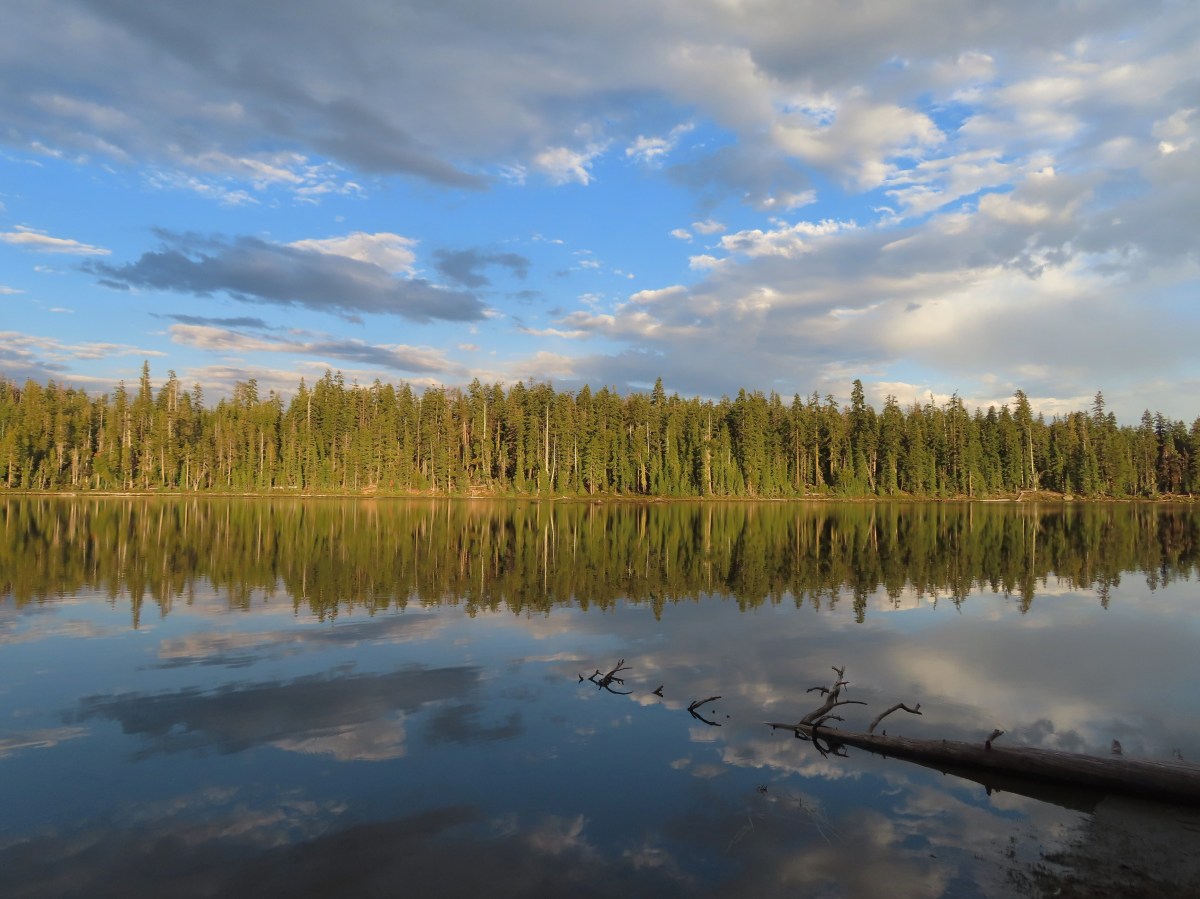


 There were hundreds of dragonflies along the trails which were much more welcome than the mosquitos that are a problem here in July and early August.
 The trail entering the wilderness.
 To the left through the trees is Mt. McLoughlin (
 The currently dry outlet creek of South Puck Lake.
 South Puck Lake from the Nannie Creek Trail.
 Someone had taken it upon themselves to craft their own sort of sign for the Puck Lakes Trail.

 The southern end of the lake was closed to camping for site restoration.
 South Puck Lake
 Use trail around the lake. The alignment of the former Puck Lakes Trail is further back from the lake.
 Two of three common mergansers that seemed to be calling the lake home for now.
 Our campsite for the night.
 Just after the trail began its descent it crossed a talus field.
 Mt. McLoughlin behind Luther Mountain.
 Shale Butte and Lucifer Peak (double hump is Lucifer).
 Pelican Butte straight ahead with peaks in the Mountain Lakes Wilderness (
 A faint Mt. Shasta through the haze.
 Agency Lake

 A good representation of the trail conditions between the talus slope and the Snow Lakes Trail. Nothing was overly problematic, but it did mean more effort on our part which in turn made it feel even warmer.
 Rock cairn marking the junction with the Snow Lake Trail.
 Looking back at the hillside we’d descended.
 One of several grouse that crossed the trail in front of us.
 Entering the fire scar from the 2014 “790 Fire”.
 Northwestern Rabbit-tobacco
 Martin Lake
 Pair of Lewis’s woodpeckers.
 One of the Snow Lakes below Luther Mountain.
 One of the Snow Lakes.
 After 1.4-miles we came to a junction with the Donna Lake Trail on the left. (Deep Lake is the lake visible below through the trees.) We’d turned down that trail on our previous visit, so we stayed right this time.
 One of several small, unnamed, bodies of water between the Donna Lake Trail junction and Margurette Lake.
 Blue beetle
 Hardhack
 Margurette Lake
 Margurette Lake
 Coming up on the junction.
 The Sky Lakes Trail.
 Trapper Lake
 The Donna Lake Trail to the right.
 Donna Lake

 Luther Mountain from Deep Lake.
 Tiny western toad
 Signs of Fall.
 Lousewort
 Young grouse

 Martin Lake
 Back at the Nannie Creek Trail junction.
 It was increasingly looking like a shower or two might happen.
 A deep zoom in at Mt. Shasta.

 Pine white
 Spotted sandpiper
 The three resident mergansers.
 The abandoned Puck Lakes Trail.
 A dark cloud passing over the Puck Lakes (no rain).
 North Puck Lake
 North Puck Lake


 Heather in the tent packing up.
 A sliver of the Moon reflecting in the lake at 5:48am.
 6:06am
 North Puck Lake at 6:22am as we set off.
 Luther Mountain from the Nannie Creek Trail in the morning.
 Dark blue = day one, magenta = day two, light blue = previous visit.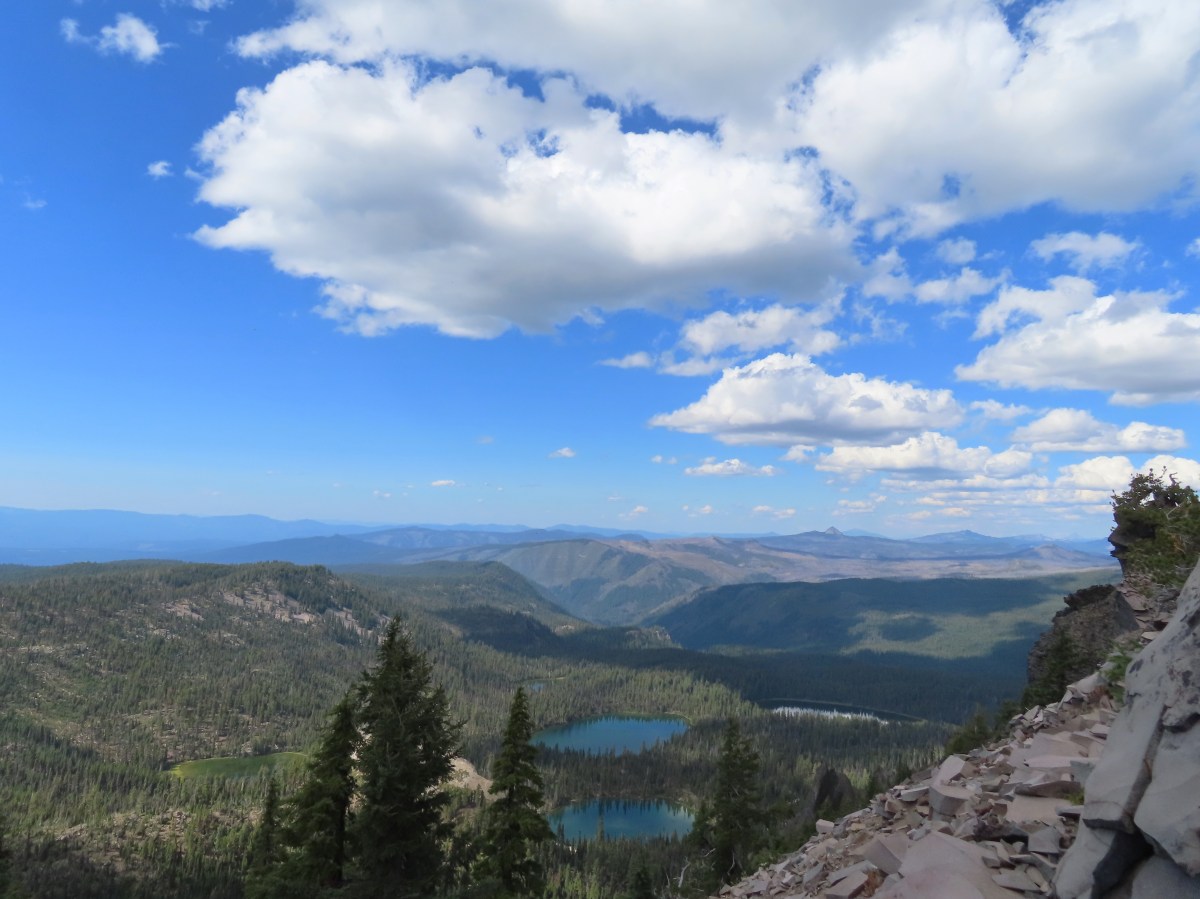
 Sevenmile Marsh Trailhead
 Sevenmile Creek
 Entering the wilderness
 Sevenmile Marsh
 Lodgepole pines were the dominate trees along the first part of the trail.
 Mountain hemlock took over as the trail gained elevation.
 Junction with the PCT.
 There were a few downed trees along this section but nothing difficult to get around.
 This twisted tree caught our attention.
 Nice blue sky.
 Lewis’s woodpecker way up in a snag.
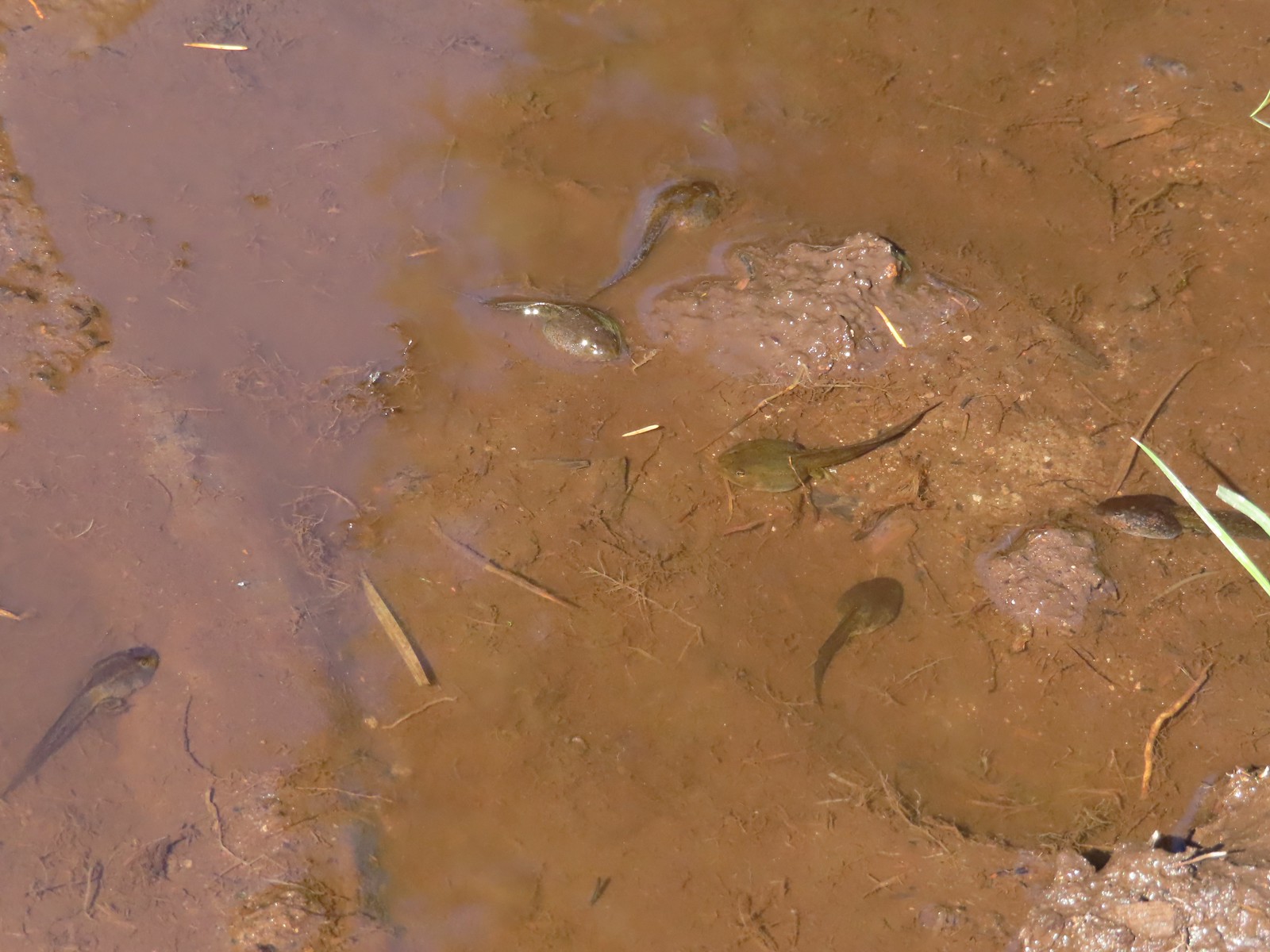 Tadpoles
 Frog in the water.
 Trail sign ahead on the right.
 Unnamed creek along the PCT. We were surprised at how many of the seasonal creeks still had flowing water.
 Grass-of-parnassus
 Huckleberries, there were a lot of these around the basin which we happily sampled.
 Devil’s Peak poking up above the trees.
 The Cliff Lake Trail.
 Prince’s pine
 Another flowing seasonal creek.
 Crater Lake collomia (Collomia mazama)
 The Seven Lakes Trail arriving on the right.
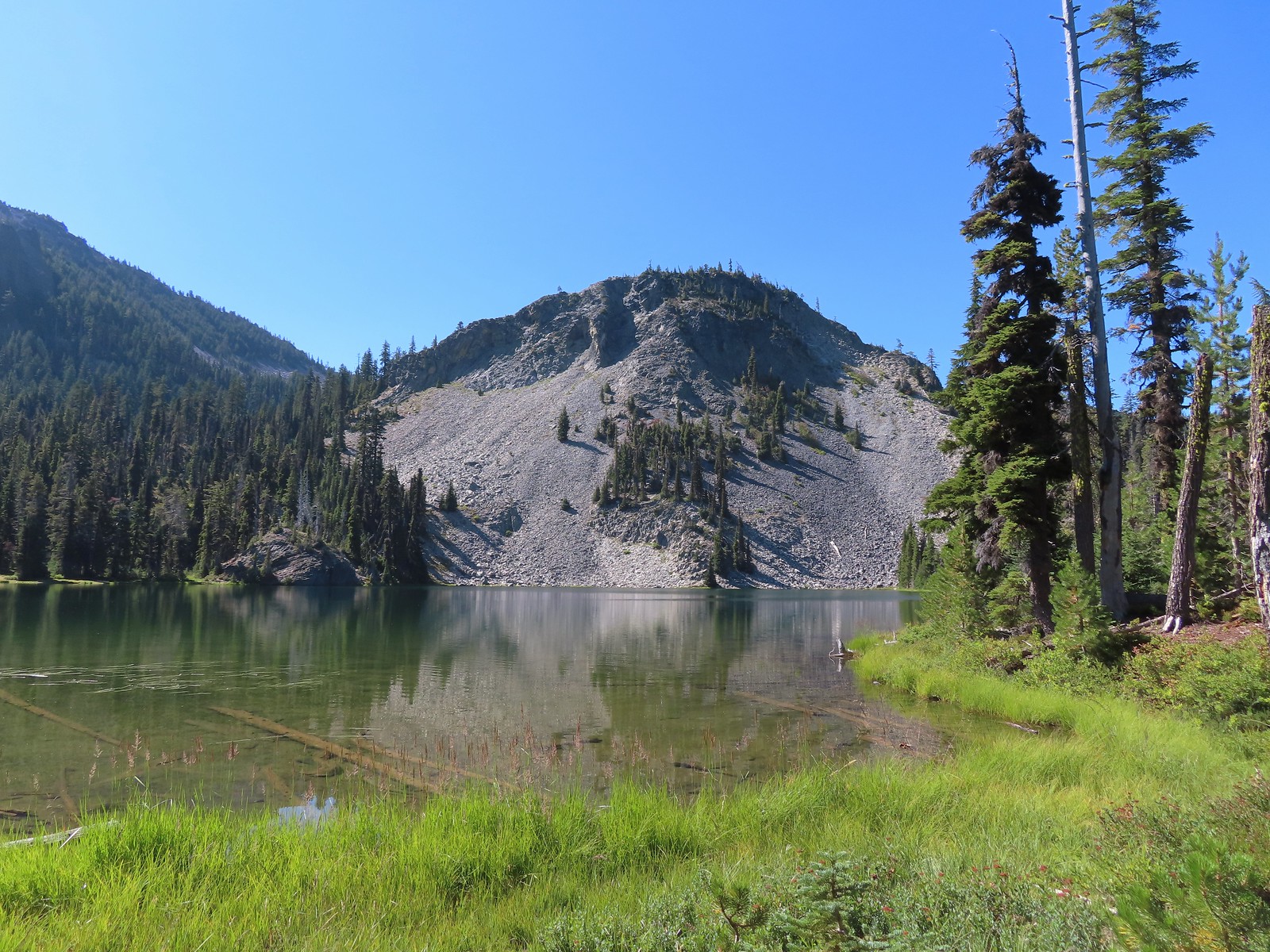 Cliff Lake
 Arnica
 Aster
Aster
 Splash in Cliff Lake from one of many fish that were feeding on insects.
 Camp
Camp Huckleberry bushes along the Cliff Lake Trail.
 Anywhere there was water nearby there were lots of tiny Cascade toads to watch out for.
 Back at the PCT.
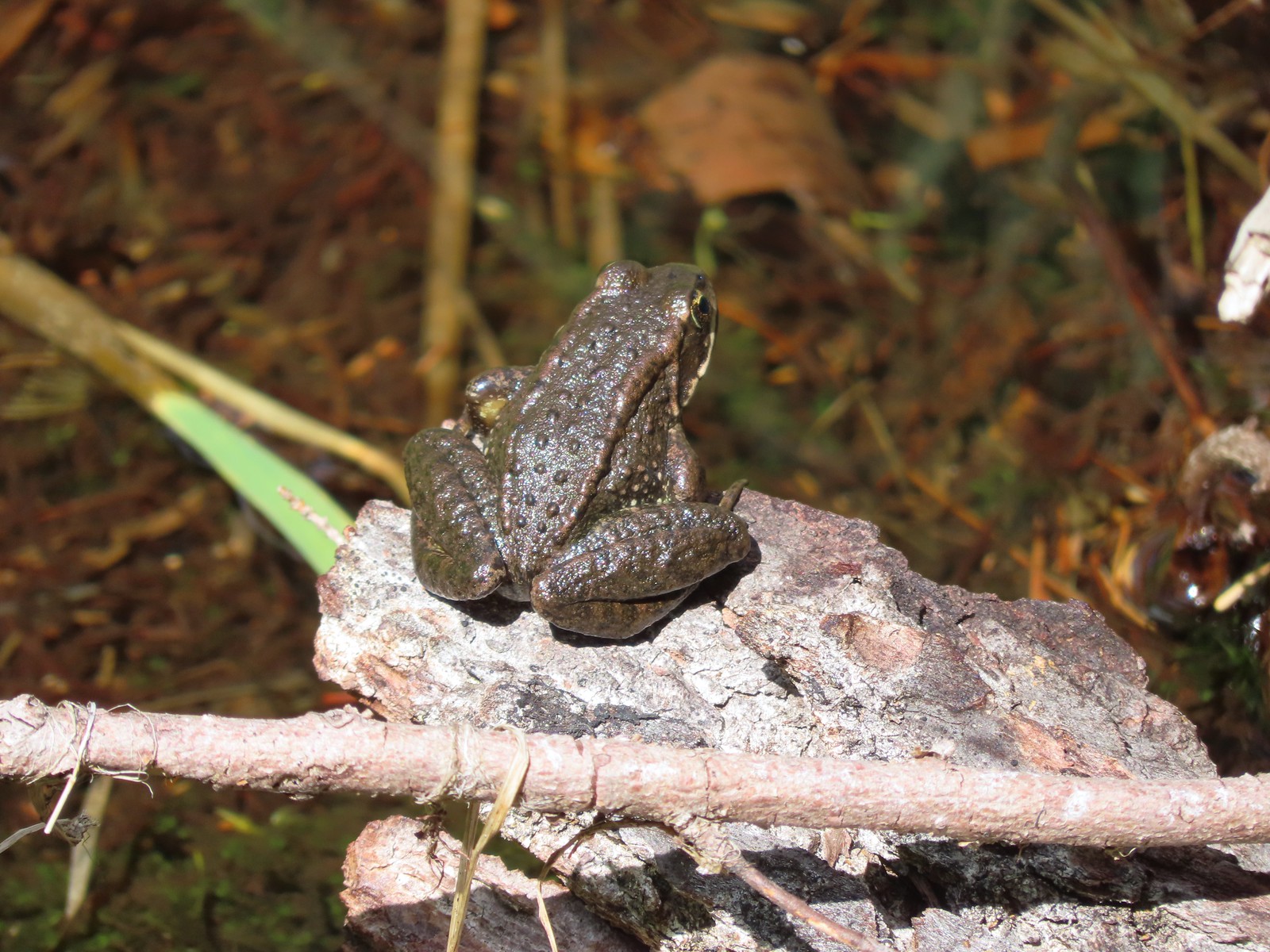 Larger frog
 Monkshood
 More grass-of-parnassus
 Not only were the toads tiny, they also were well camouflaged.
 Mount Scott (
 Mount Scott
 The Watchman (
 The Watchman and Hillman Peak
 Devil’s Peak
 Union Peak (
 Cliff Lake with Violet Hill beyond.
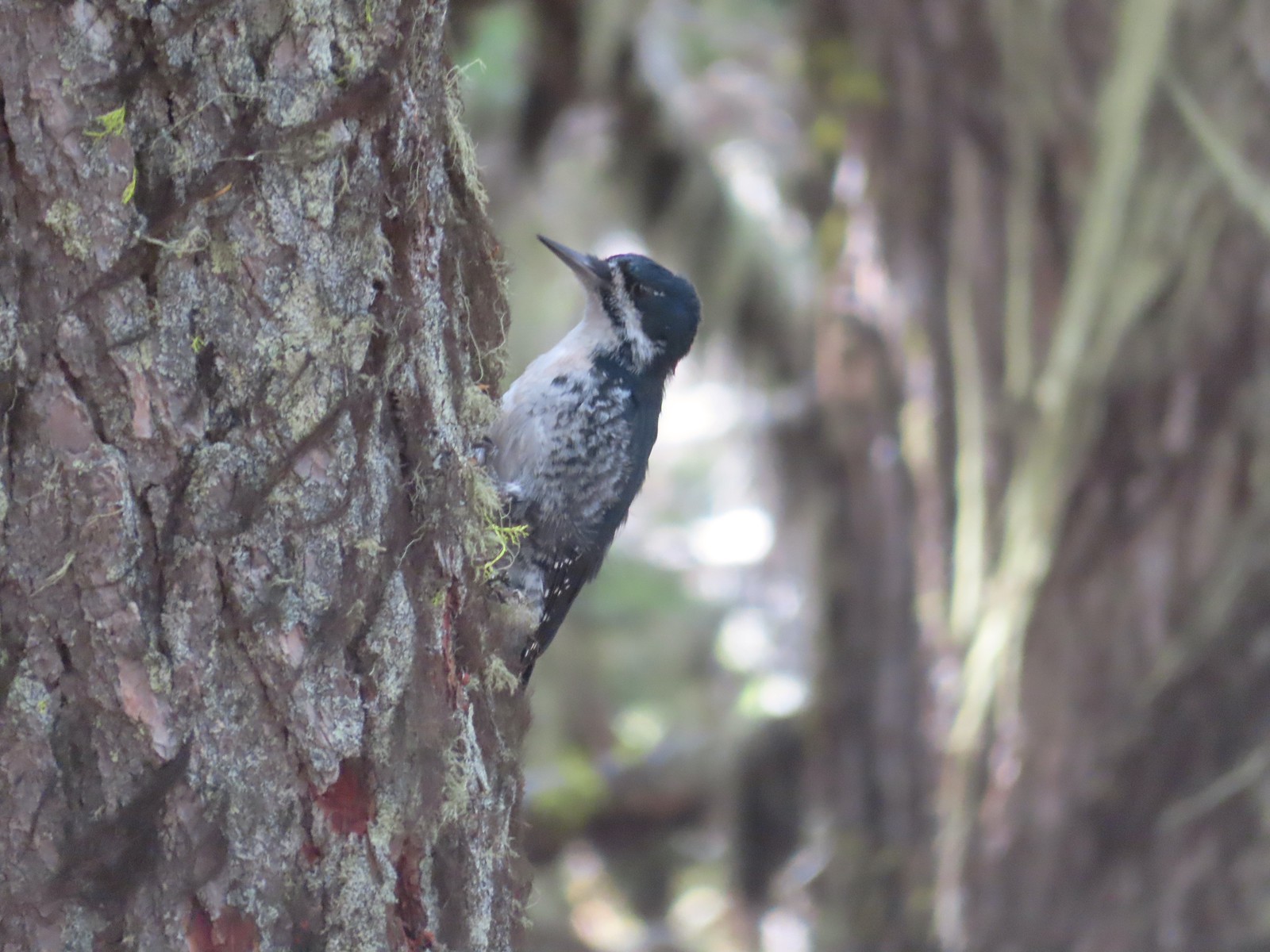 Black backed woodpecker
 Getting closer to Devil’s Peak.
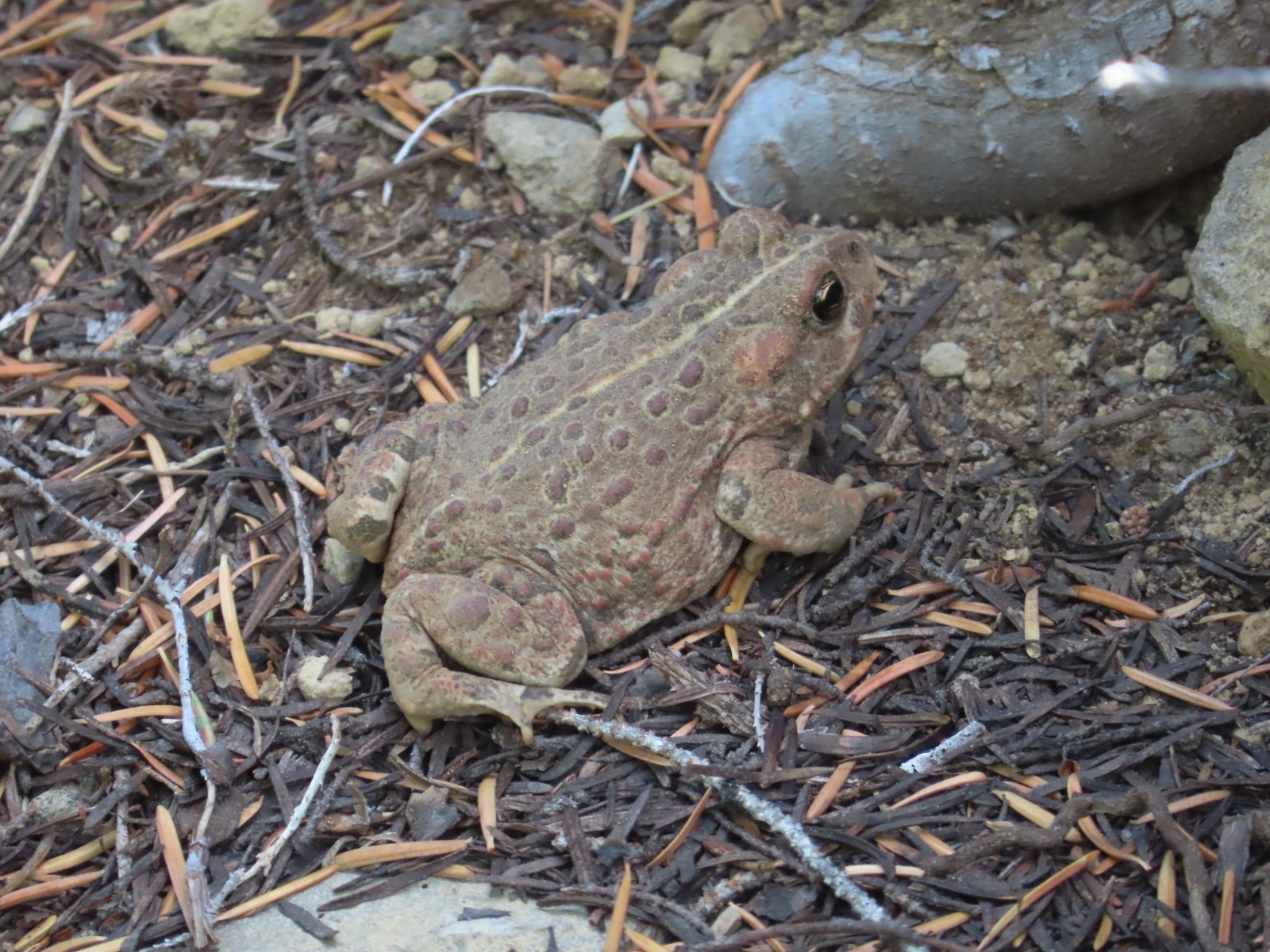 A much bigger Cascade toad.


 Mt. Thielsen (
 Union Peak with Mt. Bailey (
 Lots of neat rock formation on Devil’s Peak.
 Western pasque flower seed heads.
 Buckwheat
 Views to the South opened up at the pass including Klamath Lake and Pelican Butte.
 Klamath Lake
 Devil’s Peak and the PCT coming up to the pass from the North.
 Klamath Lake, Pelican Butte, Aspen Butte (
 Mt. McLoughlin
 A faint Mt. Shasta which, given the wildfires burning in NW California was a bit of a surprise to be able to see.
 The view North.
 Goose Egg and Ethel Mountain in the forefront with Llao Rock, Mt. Thielsen, and Garfield Peak (
 Devil’s Peak
 We were a little concerned at first that it might be picking up water for a new fire but there wasn’t anything hanging from the helicopter so we have no idea what it was actually doing.
 The use path to Devil’s Peak on the right and the PCT on the left.
 The rather ominously named Lucifer from the use trail.
 A second use trail coming up from the opposite side.
 Western pasque flowers on the hillside above the use trails.
 The summit of Devil’s Peak ahead.
 Looking North toward Crater Lake and Mt. Thielsen
 Lucifer, Jupiter, and Venus
 Lee Peak above the pass.
 Luther Mountain (
 Remains of a former lookout.
 The PCT below Devil’s and Lee Peaks.
 Goose Egg, Llao Rock, and Mt. Thielsen
 Mt. Scott
 Mt. Shasta to South through a little smoke but again we felt fortunate to be able to see the mountain at all.
 Colorful grasshopper at the summit.
 American pipit
 The Seven Lakes Basin from the use trail down.
 South, Middle, North, and Grass Lakes
 Heading down the use trail.
 Looking back up the use trail.
 Western snakeroot along the PCT.
 A comma butterfly on western snakeroot.
 Painted lady
 Venus from the Devil’s Peak Trail.
 Looking back at Devil’s Peak.
 Looking North across the Seven Lakes Basin.
 Lake Alta in a bowl below Violet Hill.
 Pond along the Devil’s Peak Trail.
 Coming up to the Seven Lakes Trail junction. A rock cairn was the only marker.


 I was still only about halfway along the lake after the quarter mile. There used to be a campground at the North end.
 Common merganser
 The southern end of Lake Alta.
 Cliff Lake below Devil’s Peak and Middle Lake.
 Middle and Grass Lakes
 I could hear several pikas in the rocks below the cliffs but the only thing I spotted was a chipmunk.
 Chipmunk
 Sulphur butterfly on aster.
 Gentian
 Fireweed
 South Lake
 Devil’s Peak from the trail. There were more pikas “meeping” from the rocks here but again we failed to spot any of them.

 Devil’s Peak in the evening.
 So many fish in the evening.
 Devil’s Peak in the morning.
 Seven Lakes and Cliff Lake Trail junction.

 We detoured left at the northern end of the lake following a pointer for Lake Ivern to find a view back across Middle Lake.
 Devil’s Peak from Middle Lake.
 Stream crossing.
 Monkshood and grass-of-parnassus
 Grass Lake
 Arriving at the PCT.

 Golden-mantled ground squirrel
 Sevenmile Trail at the PCT to return to the Sevenmile Marsh Trailhead.
 Exiting the Sky Lakes Wilderness.


 It was a little before 6am when I started up to the lakes.
 There was an interesting amount of sagebrush along the lower portion of this hike.
 There was still some smoke in the air, but it was quite a bit less than it had been the day before.
 The trail initially seemed like it is heading up this valley before it crosses over a ridge and heads for the Echo Lake basin.
 From this trail the route of the Tombstone Lake Trail was visible.
 Waterfall along Olive Lake’s outlet creek. One of the switchbacks along the Tombstone Lake Trail is just to the right.
 Tasselflower brickellbush
 There was a lot of paintbrush along the trail.
 Paintbrush and I believe fading false sunflowers.
 Penstemon and paintbrush
 Western snakeroot
 Pika!
Pika!
 View across the valley.
 The trail approaching the outlet of Echo Lake.
 Above Echo Lake Falls which wasn’t visible from this trail.
 Groundsel, lupine, and fireweed along the creek.
 Sunrise in the basin.


 The pond.
 Gray sagewort
 Looking back toward the valley and pond.


 The spur trail.
 Spotted sandpiper


 Spirea
 A no fires beyond this point sign. Several of the lakes in the Eagle Cap Wilderness are in no campfire zones.
 Fleabane or aster lining the trail.
 Two types of lousewort.
 Echo Lake hidden by the trees.
 Pearly everlasting along the trail.
 Looking down at that trail from above the blowdown.
 Bluebells
 Echo Lake from the ridge end.
 The Elkhorn Mountains (
 Arriving at Traverse Lake.

 Golden-mantled ground squirrel
 Yellow Wallowa Indian paintbrush
 Columbian ground squirrel
 Cusick’s speedwell
 Remember that no fires sign? (Sigh)


 Monkeyflower
 Globe penstemon
 Gentians along the lake.
 A lone paintbrush.
 The blowdown at the far end of the boulder field.
 White mariposa lily
 Arnica
 Swamp onions
 Echo Lake
 The pond below on the left.
 Passing through the meadow.
 Paintbrush and fireweed
 Above Echo Lake Falls.
 West Eagle Meadows in the valley in the distance.
 Zoom in on West Eagle Meadows.
 Looking down at the switchbacks.
 Heather had also warned me about this blowdown over one of the switchbacks. There was a steep reroute that bypassed the trees.
 There were some interesting cloud formations on the way back.
 There was also an increase in the smoke.
 Can you spot the pika?
 Pika (possible the same one from earlier given the location).
 Paintbrush and buckwheat
 Yellow columbine

 Another pika at the end of this switchback.
 The Tombstone Lake Trail junction ahead.

 Swallowtail photo bomb.
 West Eagle Creek Crossing.
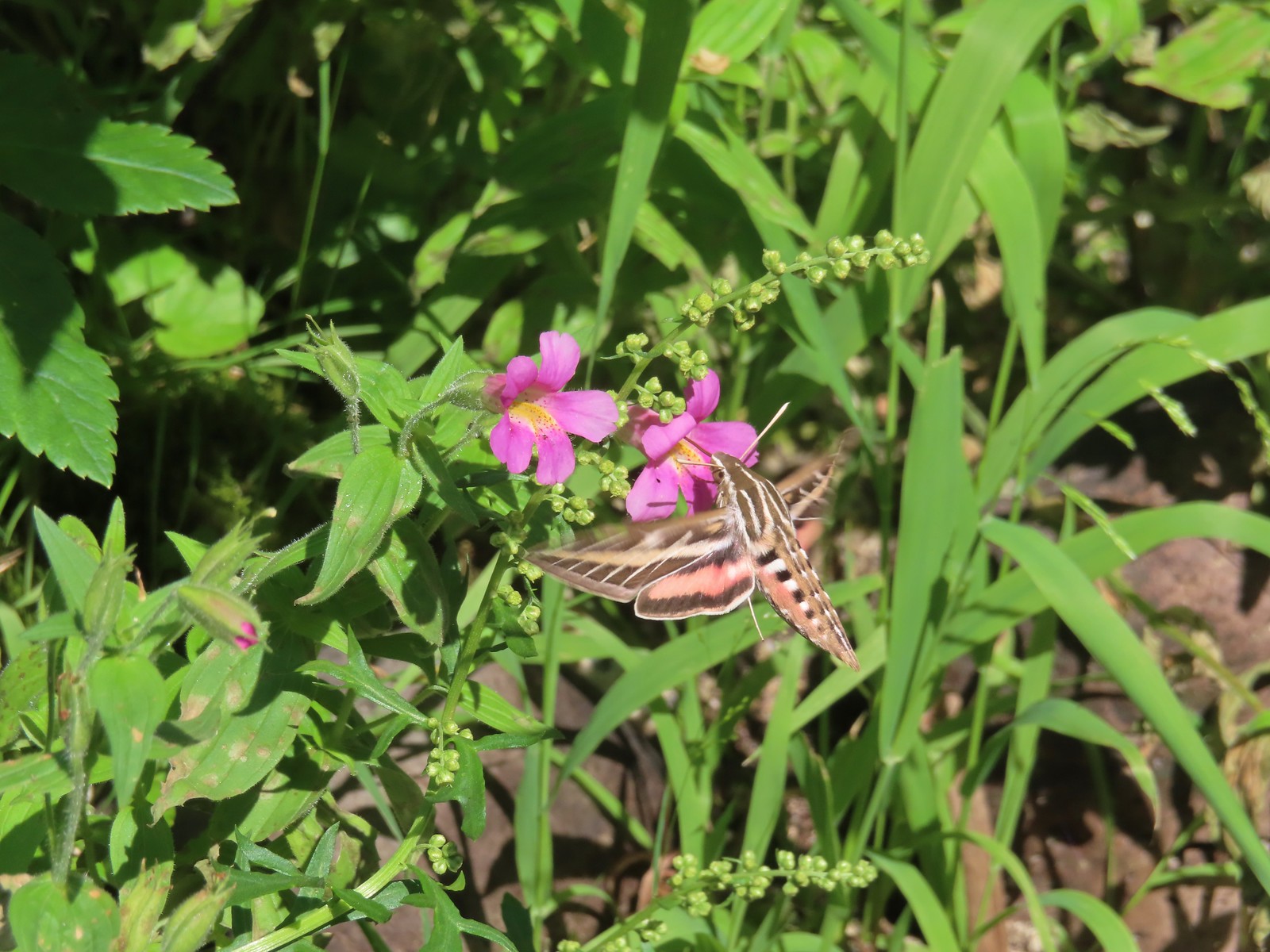 Sphinx moth
 Leaving the Eagle Cap Wilderness.
 Squirrel
 West Eagle Meadows
 It’s hard to see here but there is a trail post at this fork with a point to the left. This is for the horse camp and not the way back to the
  The trailhead in sight.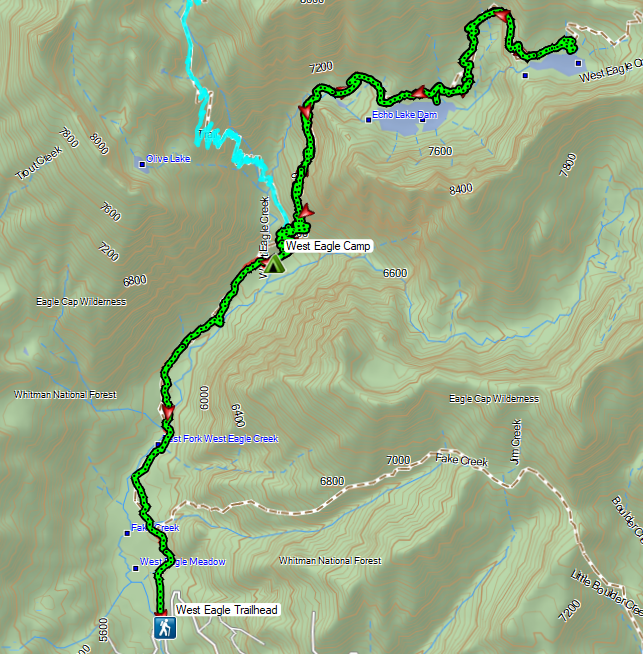
 Flax
Flax Jacob’s ladder
 The path from camp meeting the West Eagle Trail.
 It was a little before 6:30am when I started.
 Switchbacks would be a theme for these last two days.
 The trail junction on the ridge ahead.


 The West Eagle Creek crossing.
 There was a large waterfall on West Eagle Creek flowing from Echo Lake’s basin on the right.
 Echo Lake Falls
 There was a waterfall ahead at the end of the switchback here, but it was mostly obscured by vegitation.
 It was fairly smokey looking ESE in the morning.
 Wildflowers along the trail.
 Several switchbacks were along this tributary of West Eagle Creek. This particular spot would provide me with much needed water on my descent.
 It looked like there might be a bit of a waterfall along this stream as well.
 Looking up the stream at another cascade.
 The upper portion entered an old fire scar and sunlight which heated things up quickly.
 Northern flicker
 Every time I thought I was at the basin the trail would switchback to find more hillside.
 Mountain bluebird
 Surely that is the crest.
 It was not, up I go.
 Smoke to the South.
 Echo Lake across the valley.
 Finally done with the switchbacks I could see the next climb in the distance ahead, but for now I had a bit of a reprieve.
 Lousewort
 Columbian ground squirrel
 Gentians, one of my favorite wildflowers.
 The larger meadow ahead.
 Their camp was uphill to the left. The stream here was lined with wildflowers.
 Lewis monkeyflower, aster (or fleabane), and fringed grass of parnassus.
 The trail all but disappeared on the far side of the stream, but small cairns helped mark the way.
 Cairns along the trail through the meadow.
 Yellow Wallowa Indian paintbrush
 Heading up again.

 Larkspur
 White mariposa lily
 Looking back down into the basin.
 False hellebore
 Coiled lousewort
 View of the basin headwall.
 View back down the valley.
 Phlox
Phlox Chipmunk
 Golden-mantled ground squirrel
 Arriving at the pass.
 Smokey view from the pass.
 Tombstone Butte, Swabb Mountain, with Granite Butte behind in between, and China Cap to the right.
 The pass at nearly 8200′.
 Tombstone Lake below.
 Sturgill Peak

 Tombstone Lake is a series of connected bodies of water.
 A phacelia.
 Rosy paintbrush
 Finally at the lake.

 Gentian along the lakeshore.
 Swamp onion along the shore of one of the smaller bodies of water.
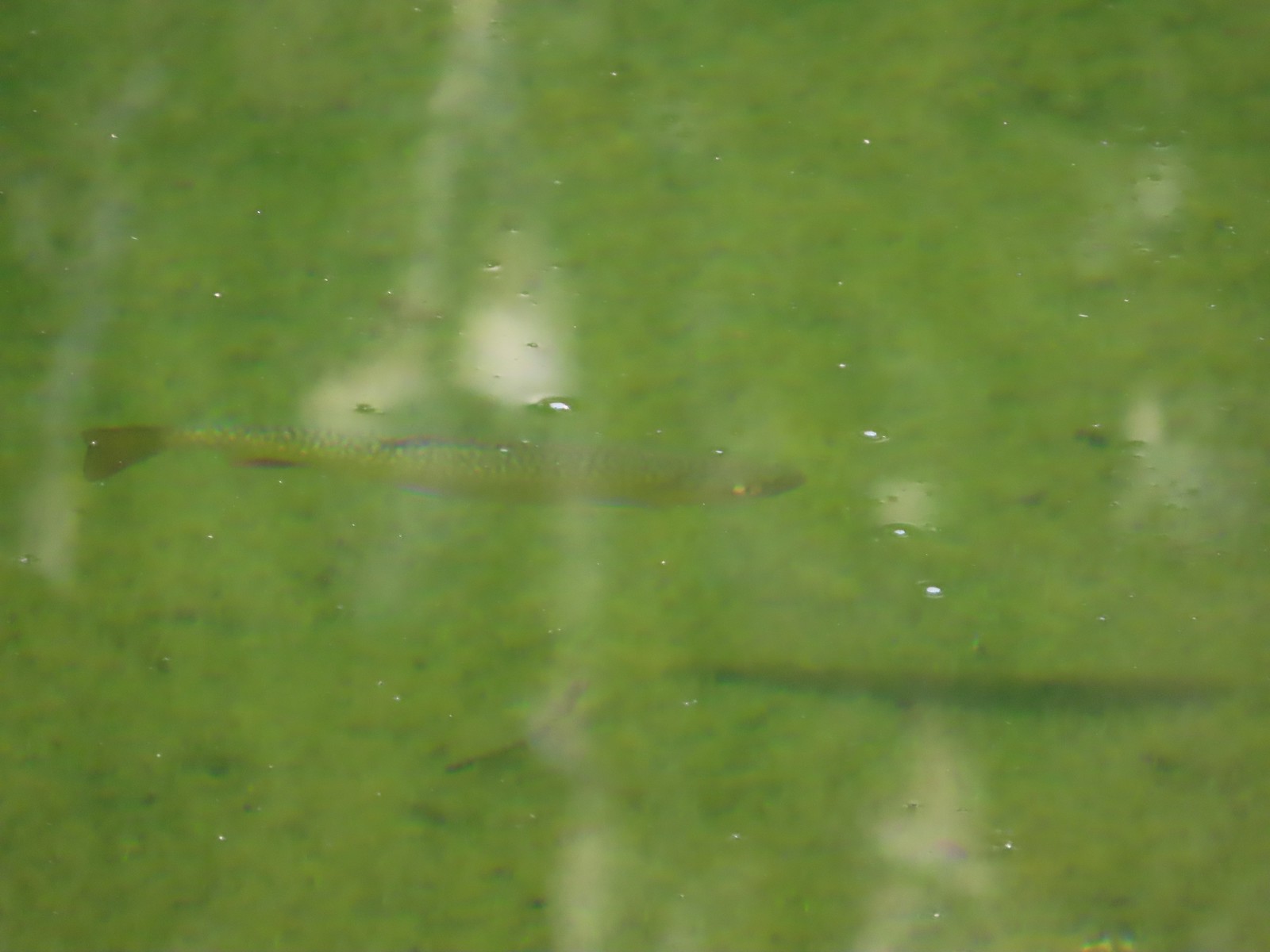 Trout
Trout

 Pika!
Pika! The Tombstone Lake Trail from the gap.
 Eagle Cap in the middle and Needle Point in the distance to the right.
 Eagle Cap (
 The East Fork Elk Creek valley below.

 Starting the switchbacks down.


 Hawk
Hawk Sphinx moth visiting some Lewis monkeyflower
 Some nice paintbrush
 Clumps of gentians
 Gentians
 Swamp onion
 Leaving the basins to start the giant set of switchbacks down.


 This little cascade was perfect for filling the bladder.

 Echo Lake Falls straight ahead.
 Recrossing West Eagle Creek.
 One last look up at where I’d come from.

 Small unnamed waterfall on an unnamed creek.
 Sphinx moth at camp.
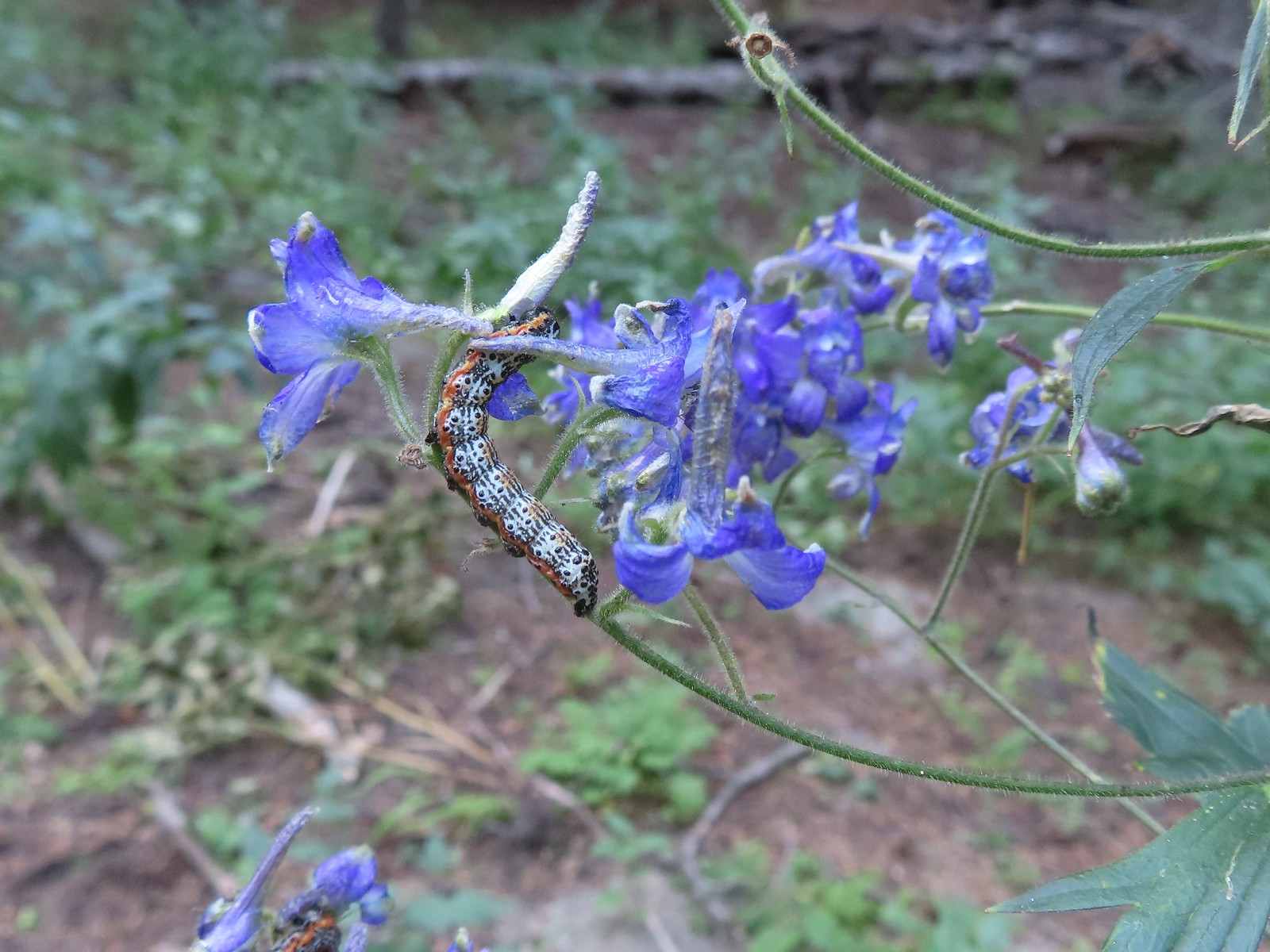 Not sure what type of caterpillar this is but it was pretty. It was on the same larkspur the sphinx moth was visiting.
 While we don’t intentionally feed the wildlife this green comma seemed to like the sweaty socks.

 Doe on the other side of Eagle Creek.
 I started out on the small logs shown here.
 Here comes the Sun.
 Shade for us for now though.
 The junction up ahead.
 We arrived at the junction roughly three quarters of a mile and 650′ up from camp.
 Not many mushrooms of fungi along the trails but we spotted a few along this trail.
 Globe penstemon

 Cairn marking the trail to Culver Lake.

 Snow patch along Culver Lake.

 Needle Point from the trail.
 Nuttall’s linanthus
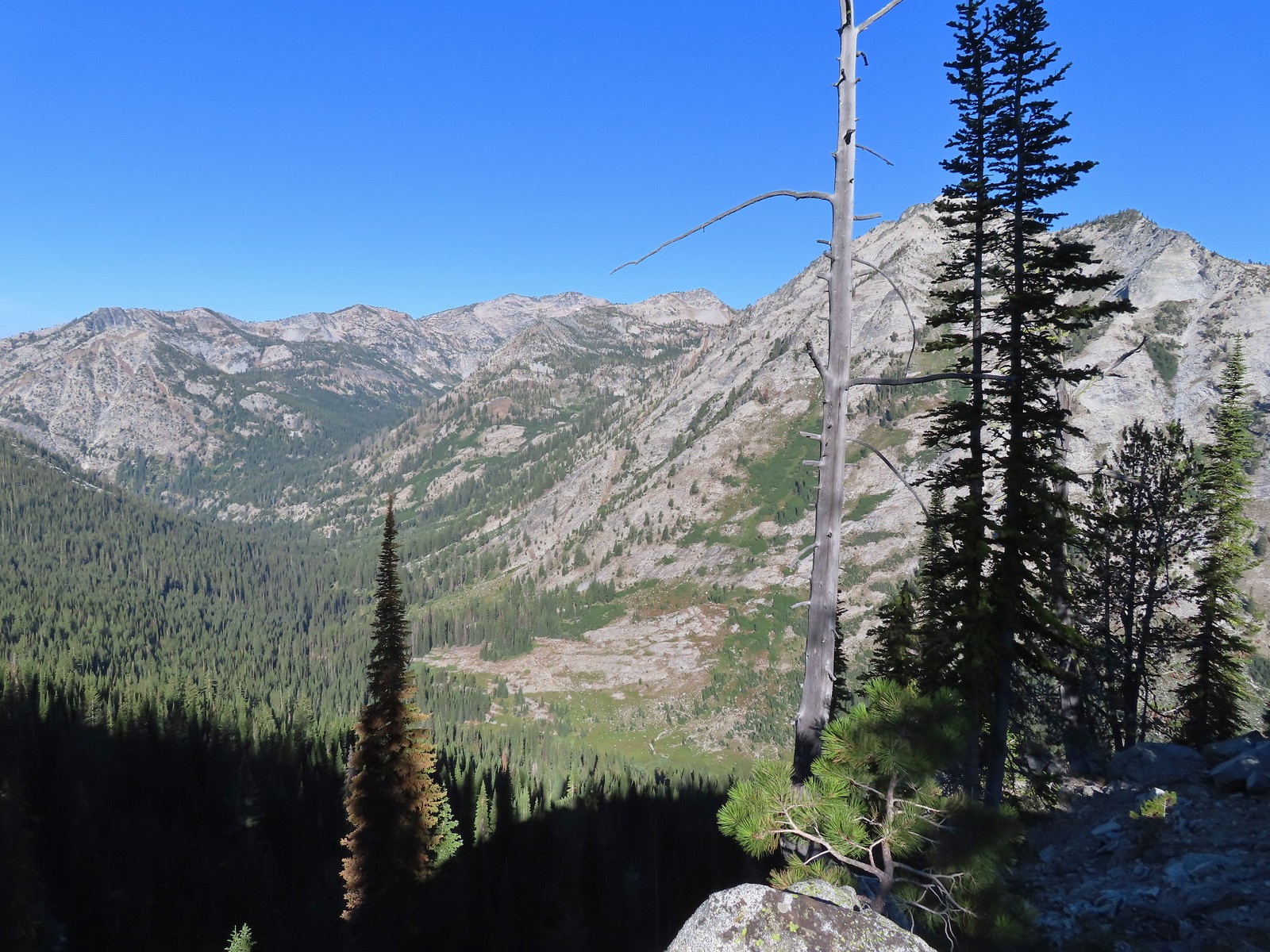 Arrow Lake is somewhere up in the mountains on the other side of the valley.
 View down the Eagle Creek Valley.
 Rock Creek Butte in the Elkhorns (
 Heading down.
 Bear Lake
 Mountain heather.
 Cusick’s speedwell
 Aster and swamp onion
 Arnica and possibly alpine leafybract aster.
 A bunch of globe penstemon.
 Meadow at the eastern end of Bear Lake.
 Needle Point from Bear Lake.
 Looking toward Eagle Lake in the basin behind and right of Needle Point.
 Eagle Creek is down there somewhere.
 Eagle Creek Meadow. The Main Eagle Trail can be seen crossing the granite slope at the far end of the meadow.
 Allum root
 White mariposa lily
 The Sun had reached the valley by the time we were nearing Eagle Creek.
 The Eagle Creek crossing going the other direction. I’m happy (and amazed) to report that I managed a fourth dry crossing.
 Lupin along Eagle Creek where we topped off our water.
 Hummingbird Mountain
 Mountain coyote mint
 Falls on the far side of the valley. Probably the outlet creek of Lookingglass Lake.
 Nearing the Bench Trail junction.
 Copper Creek Falls from the trail.
 Small cascade along the trail.
 Wallflower, this was the only one we spotted all trip.
 Damaged footbridge over Eagle Creek.
 Buck crossing the trail.
 Swallowtail on nettle-leaf giant hyssop.
 Bridge over Eagle Creek.

 Back at the Main Eagle Trailhead.
 West Eagle Trail
 One of the campsites.
 Mule Peak behind to the right and Wolf Point furthest back center.
 Nettle-leaf giant hyssop
 Painted lady on the hyssop.
 Frittilary butterfly
 Approaching the trees.
 The decommissioned Fake Creek Trail to the right at the 0.6-mile mark.
 Fake Creek crossing.
 Squirrel
 Unnamed creek crossing.
 Lewis monkeyflower
 Entering the
  West Eagle Creek Crossing. I almost made it across this one dry footed too but one of the rocks on the far side was unstable causing me to drag my right toe in the creek.
 Trail maintenance.
 Coneflower
 Reentering the trees after passing through a meadow.
 West Eagle Creek
 Another small meadow.
 West Eagle Creek near the second crossing.


 The trail briefly followed an old roadbed.
 Log bridge over Boulder Creek.


 Sierra larkspur
 Paintbrush lined trail
 We were in the shade for most of the morning.
 Entering the Eagle Cap Wilderness.
 We had to leave the trail to get a view of the falls which we could hear from the trail.

 Buckwheat and nettle-leaf giant hyssop
 At the 2.7-mile mark the trail again crossed Eagle Creek, this time on a damaged footbridge.
 Part of the falls were visible from the trail.
 Copper Creek Falls
 Penstemon
 Fringed grass of parnassus and some fading arnica.
 Flowers below the falls.
 The Bench Trail is ahead on the left of the Main Eagle Trail.
 View up the valley.
 Looking back at the hillside the Bench Trail climbs to Heart and Arrow Lakes.
 Looking across the valley.
 There was quite a bit of western snakeroot along the trail.
 Scarlet gilia
 Hummingbird Mountain
 Granite hillside and peaks above the trail.
 Trail signs at the Lookingglass Lake/Main Eagle Trail junction.
 Needle Point on the left from Eagle Creek Meadow.
 Hummingbird Mountain from the campsite.
 Eagle Creek near camp.
 Lewis monkeyflower

 Columbian ground squirrel
 Pearly everlasting and Scouler’s St. John’s wort.
 White mariposa lilies
 White mariposa lilies
 Orange agoseris
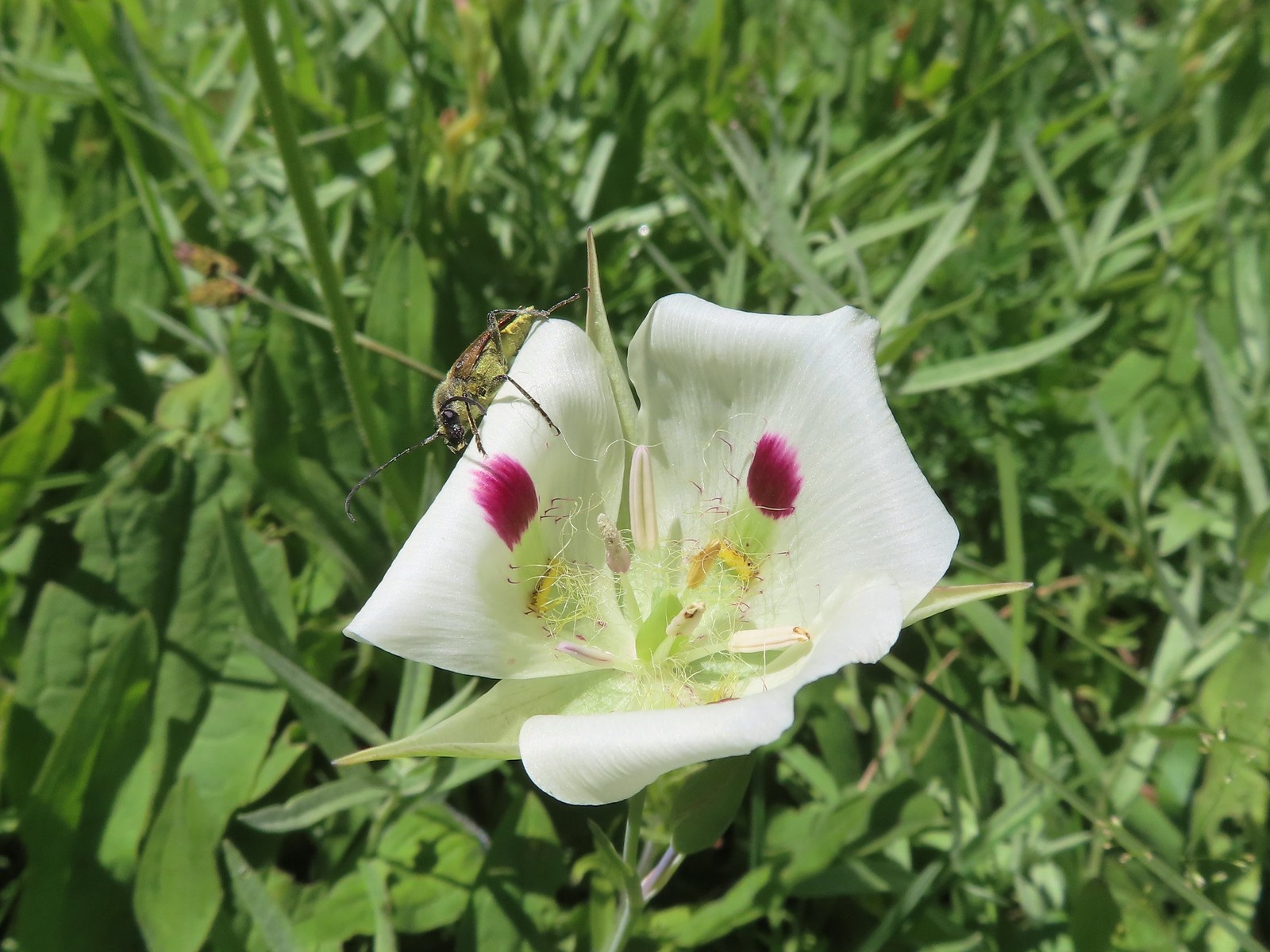 Beetle on a white mariposa lily
 Hillside along the trail.
 Butterfly (Boisduval’s blue?) on pearly everlasting.
 Monkshood
 Heading toward Needle Point.
 One of the switchbacks.
 This junction was just under 2-miles from the Lookingglass Lake Trail junction.
 Wildflowers along the trail.
 Looking back down the valley.
 Hawk
Hawk Fireweed along the trail.
 Shrubby cinquefoil and paintbrush
 Wildfire smoke creating a slight haze of the valley.
 Granite near Eagle Lake.
 Eagle Lake
 Eagle Creek flowing below the dam at Eagle Lake.


 Paintbrush
 While sitting in the shade we spotted a herd of elk on the hillside across the valley.
 Blurry photos due to the distance but it was fun to watch them.

 Golden-mantled ground squirrel
 Shade!
 American saw-wort
 Fawns
Fawns Our campsite in the trees from the Main Eagle Trail.
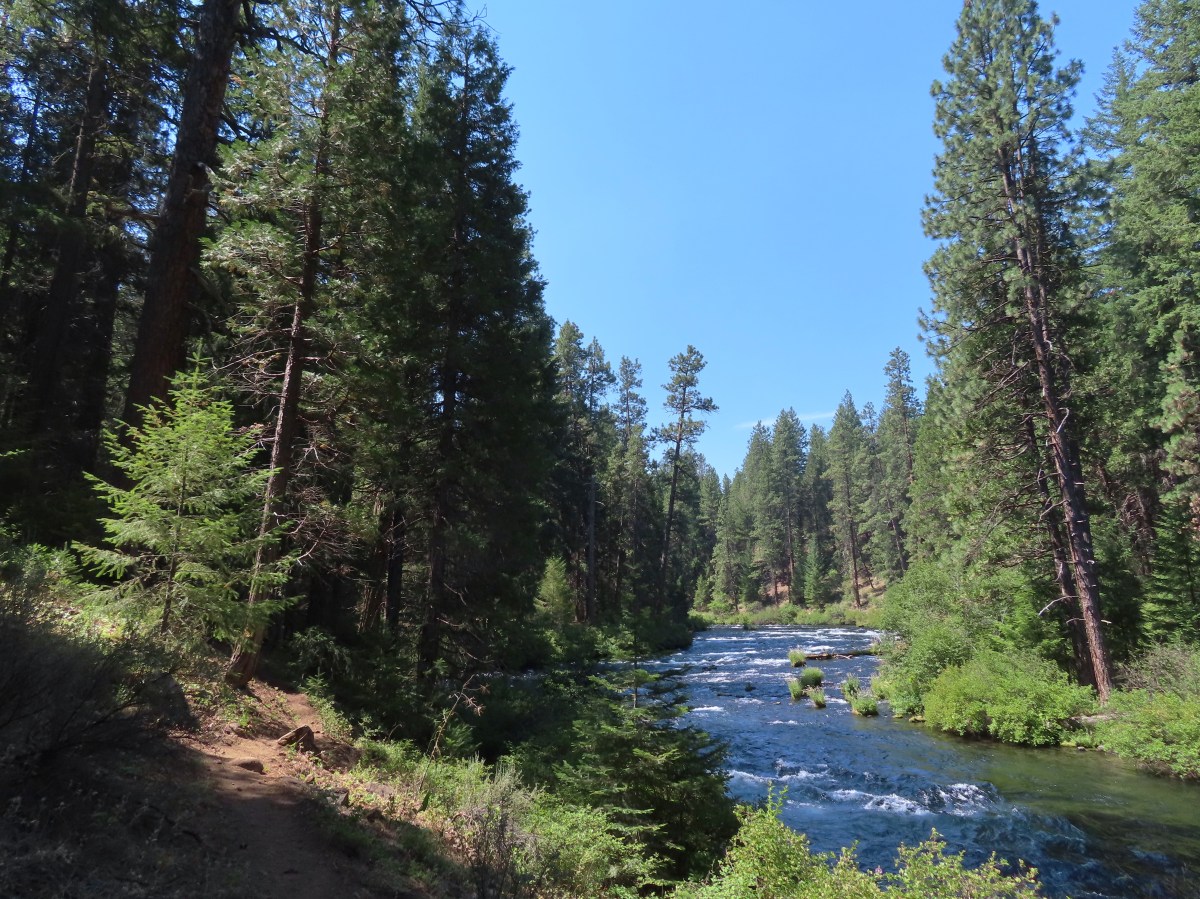


 The sign is visible from the campground road.


 Common mergansers
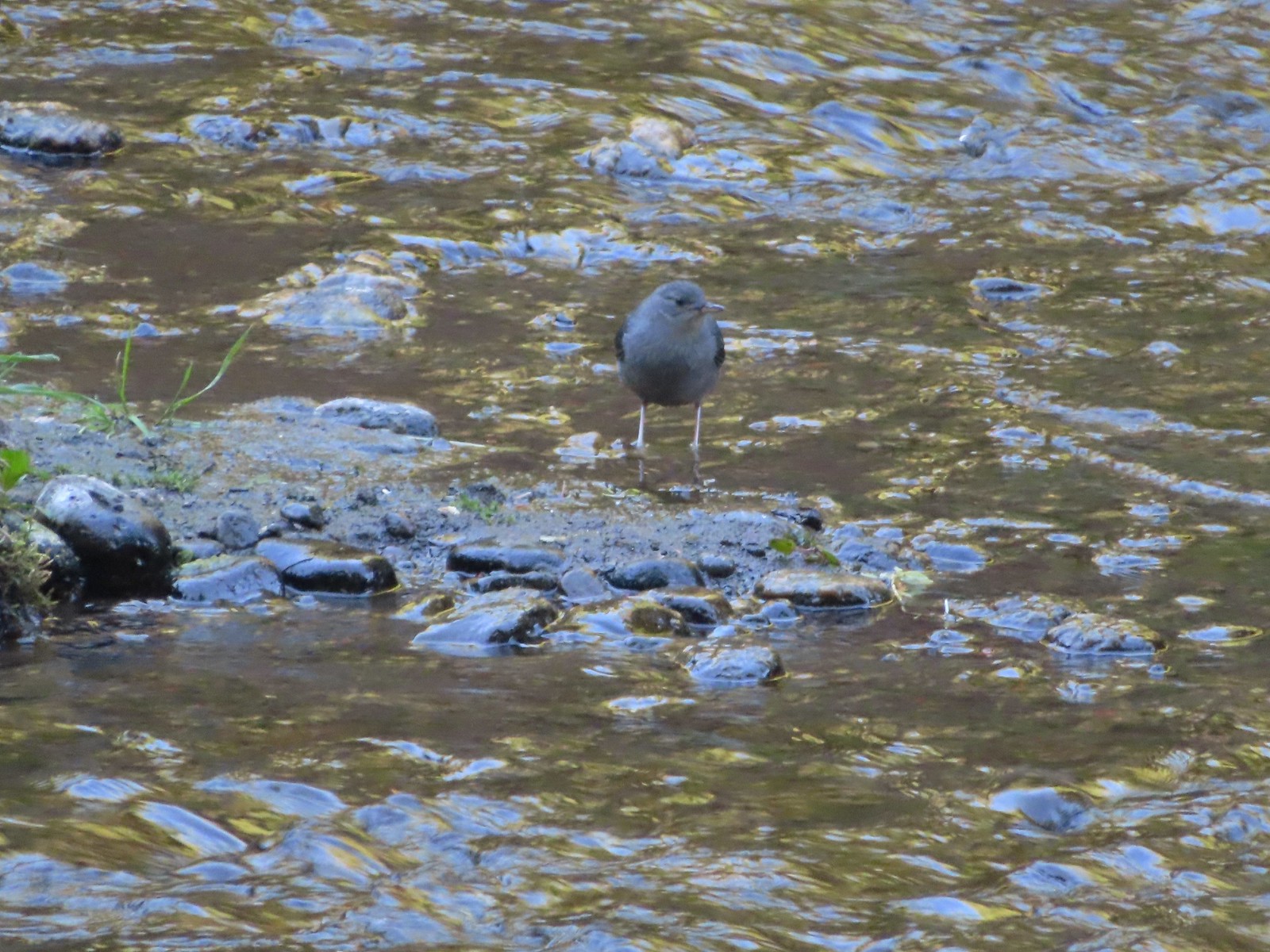 Ouzel
Ouzel Goldenrod
 Passing some of the campsites.
 The Candle Creek Campground across the Metolius.
 We actually went left below the stump here but, on the way back wound up coming downhill by the stump.
 More campsites.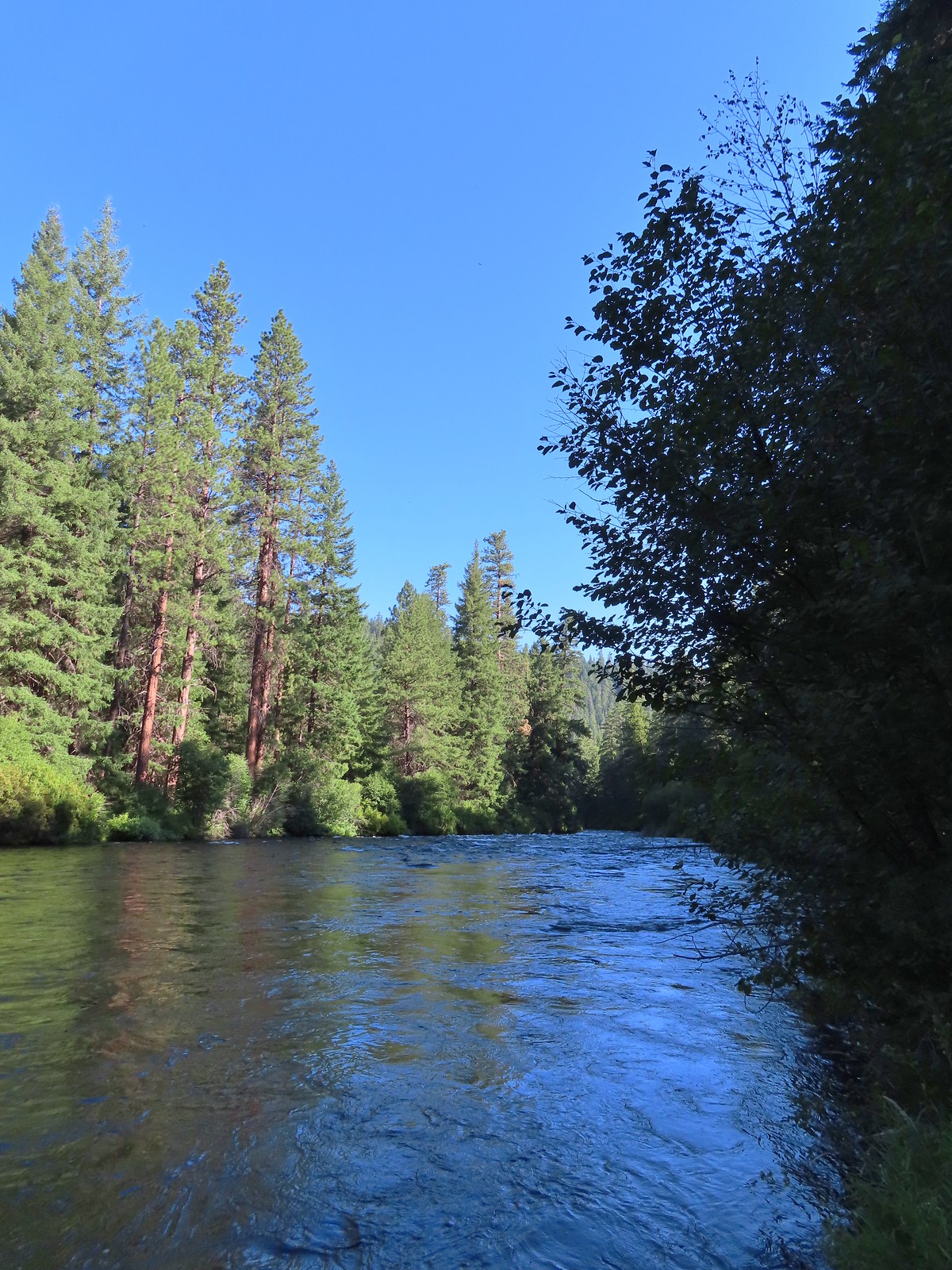
 As we got further from the campground we encountered more and more brushy sections.
 Another section with an increased number of obstacles.
 Getting a bit brushier.
 We left the river for the road at this bend.
 Heading up to the road.
 The use trail from the road.
 We wondered what this post signified.
 They were way past blooming but there were several mountain lady slippers along the road.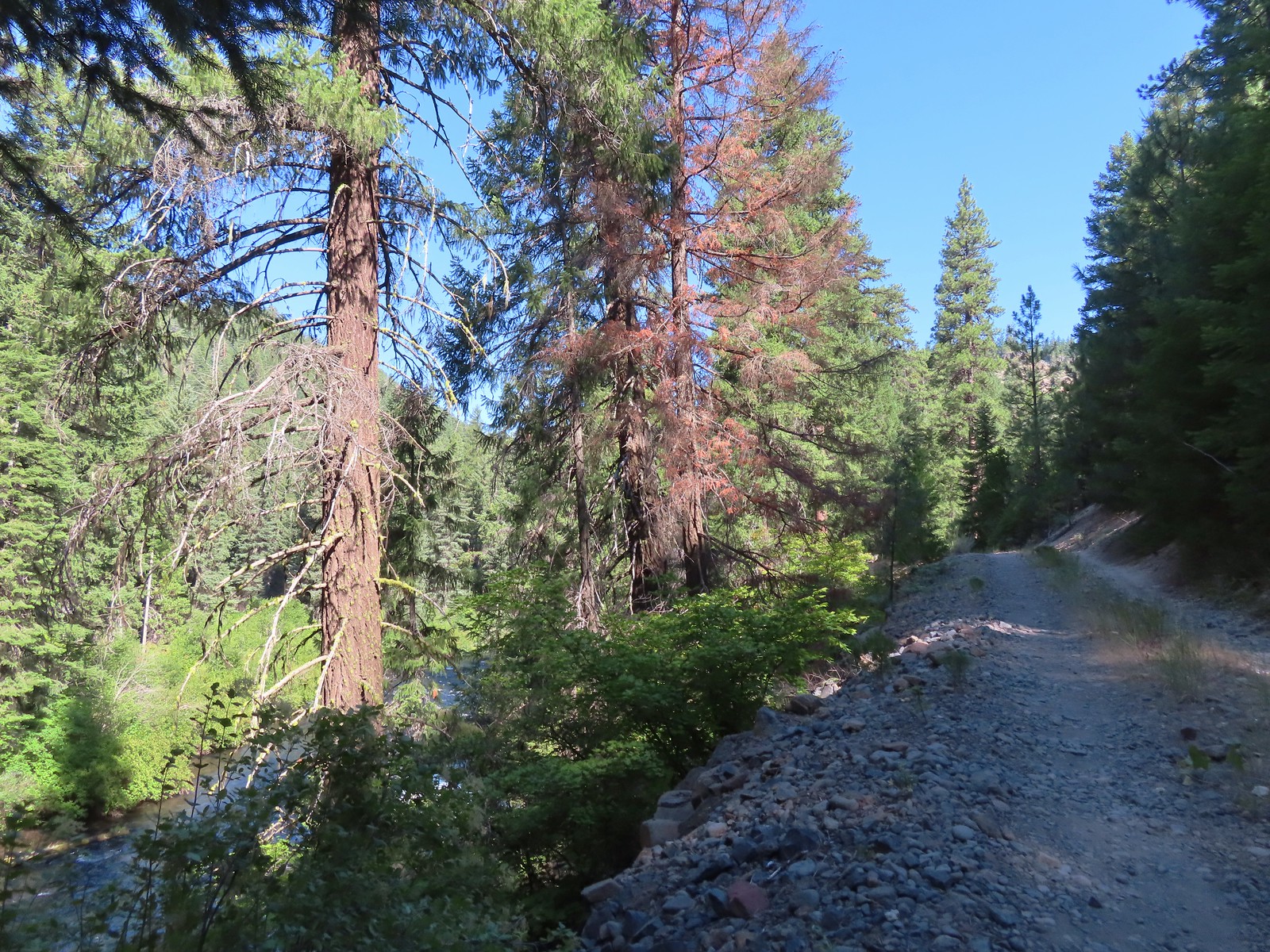
 Osprey nest
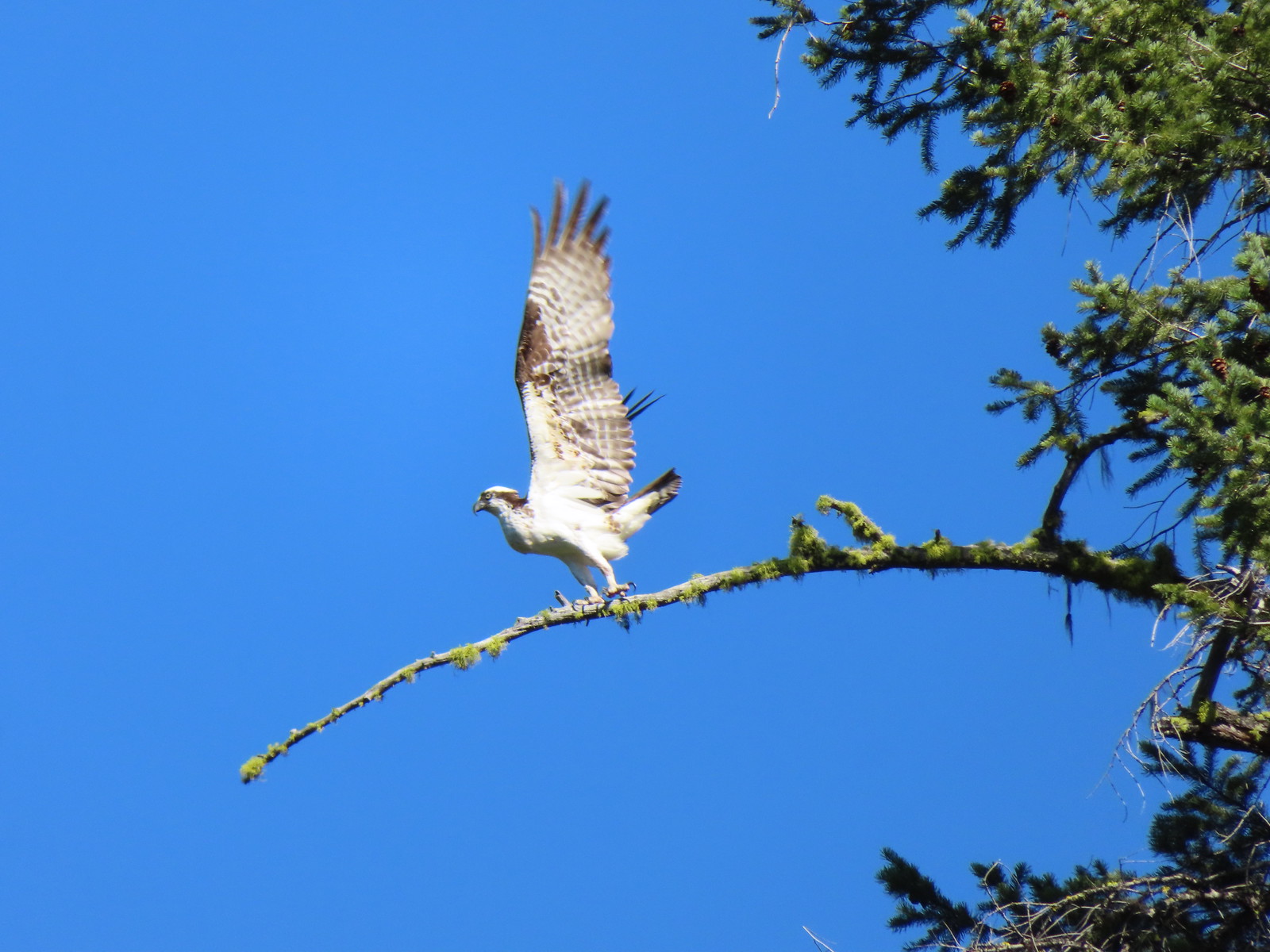
 Rock spire on lower section of Green Ridge. There are several interesting rock features higher up on the northern end of Green Ridge that were not visible from the road.
 Orchid
 Scarlet gilia
 Some of the private cabins from the road.


 A couple more cabins.
 The end of the private land.
 The clear water allows for nice views of the rocks making up the riverbed.
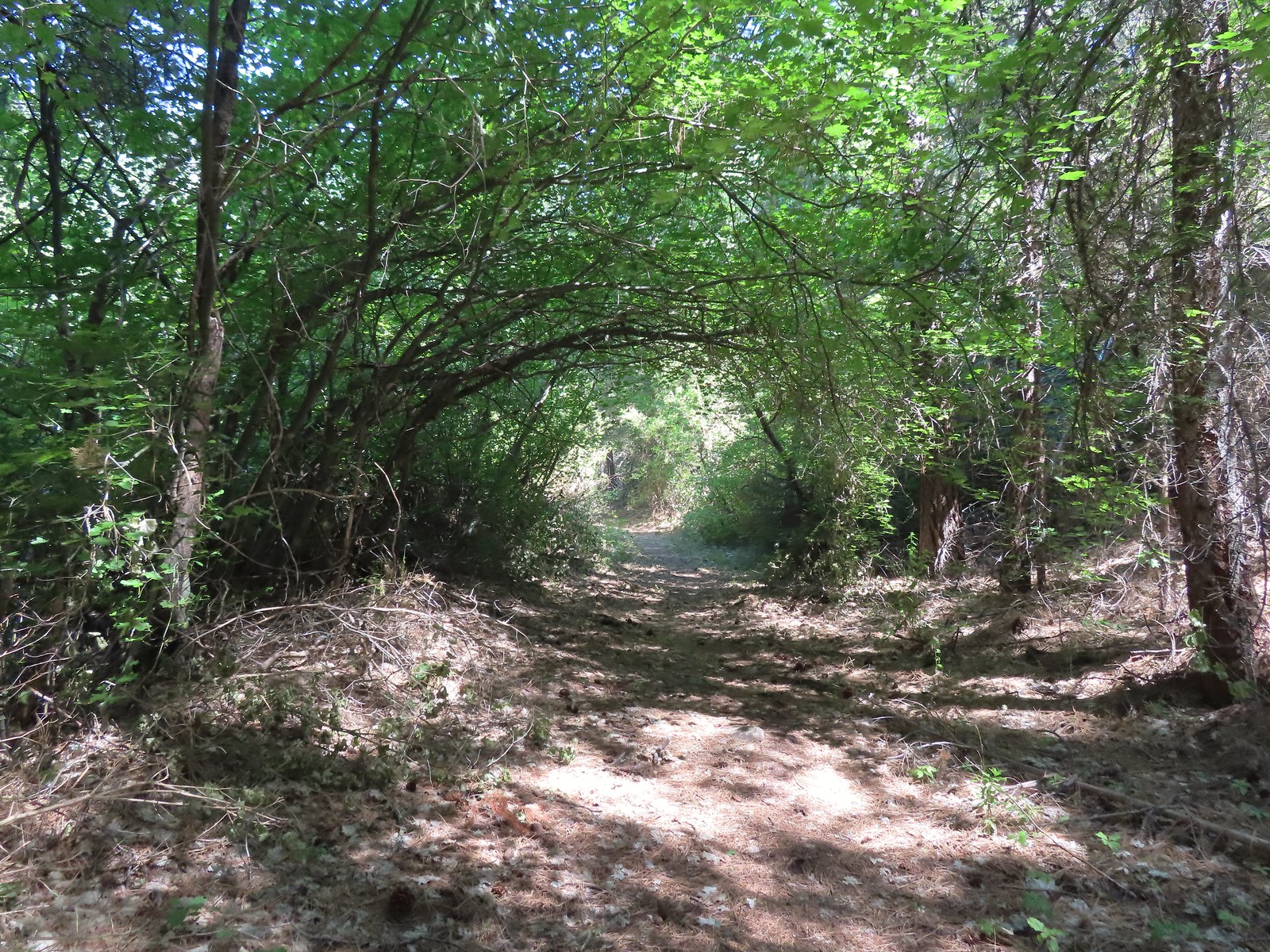
 Even though it had received maintenance the road was not in good enough condition for larger vehicles.

 Pink monkeyflower

 Lorquin’s admiral
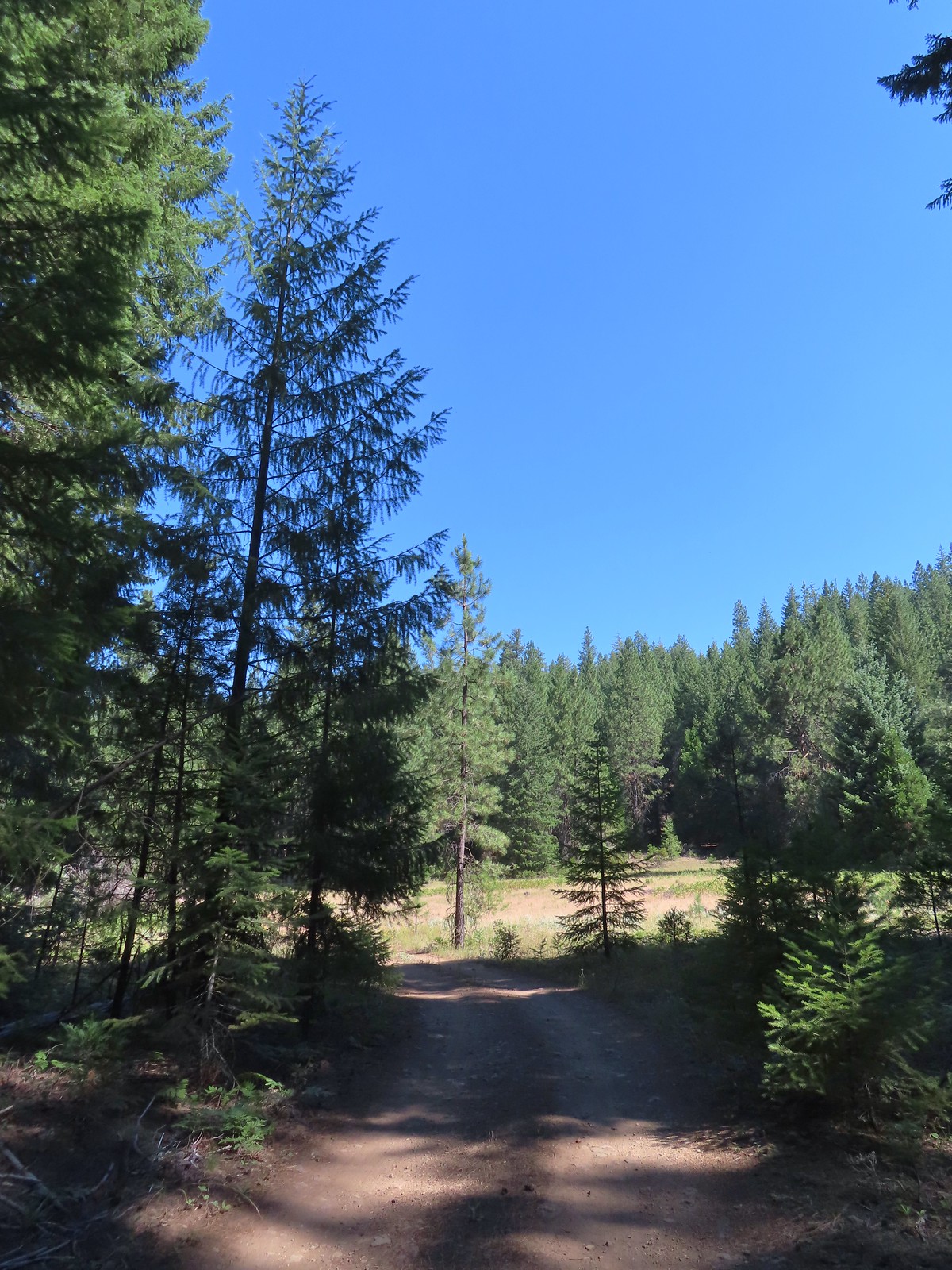
 The forest opened up near the end of the road where we set up camp.
 Campsite
 Yellow monkeyflower
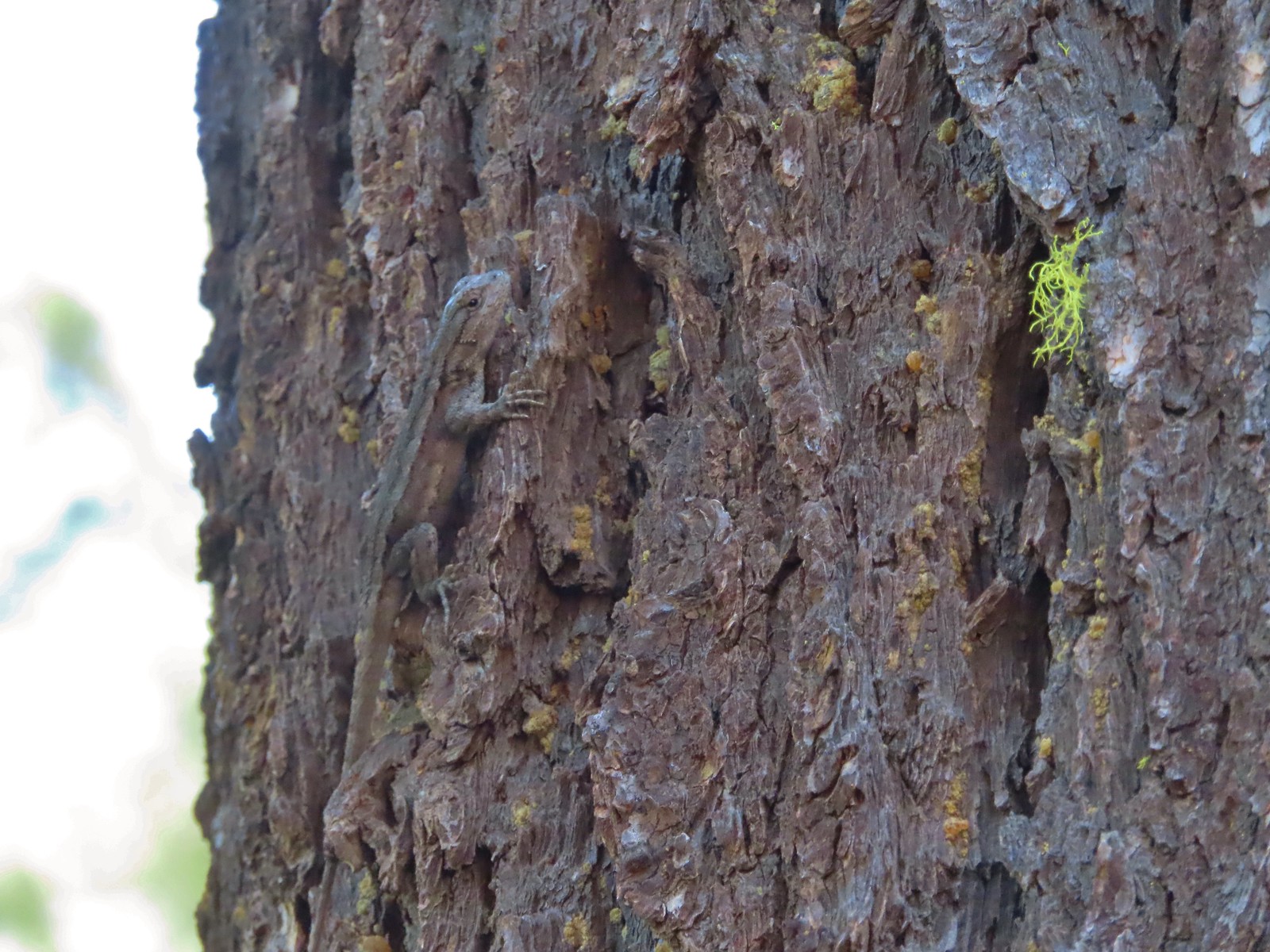 Lizard hanging out near the campsite.

 Grouse
 The answer to the questions is yes bears do.
 The Metolius through the trees.
 Sagebrush mariposa lily. There also tire tracks in the trail behind.
 Recent brushing had been performed through this area.
 Looking up the end of Green Ridge.
 This large tree had been cut fairly recently.
 Flagging marking a reroute around a downed tree.
 Starting to get brushy.
 View across the river to the Warm Springs Indian Reservation.
 Flowers along the Metolius.
 The Whitewater River was behind the rock formation on the far side. The Whitewater River begins at the Whitewater Glacier on Mt. Jefferson and flows roughly 7.5 miles through the Warm Springs Reservation to the Metolius.
 More clear water.
 Fireweed
 Thimbleberries provided us with a few after dinner snacks.
 Hedgenettle
 The Shut-In Trail traveled right along the riverbank at times.
 There was a small set of boards nailed together to assist with crossing the sketchiest part, but they were just lying on the hillside and not anchored in any way.
 The Shut-In Trail from CR-64.
 CR-64
CR-64
 Frog on a skunk cabbage leaf. There were a few wet areas along the Shut-In Trail which meant a few mosquitos were present.
 The Sun going down as we approached camp.
 Pinedrops
 Squirrel
 Bee sleeping on thistle.
 Large boykinia
 We t
We t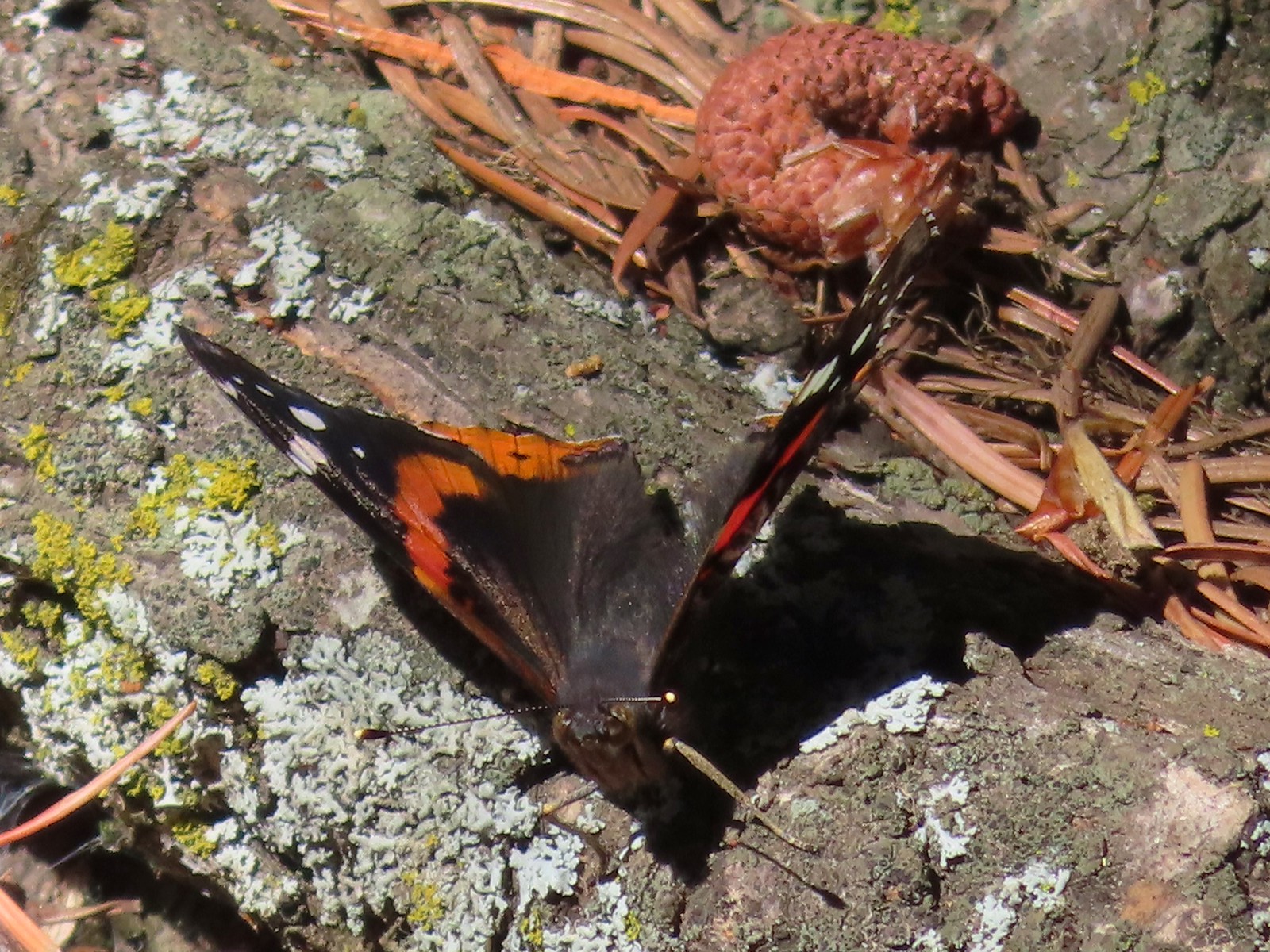 Red admiral. As far as I know this is the first one of this species of butterfly that we’d seen.
 Common wood nymph
 Across from the Candle Creek Campground.
 Green Ridge through some smoke. A couple of new fires, one on the Warm Springs Reservation and one East of Eugene had started over the weekend.
 Love the colors of the Metolius.
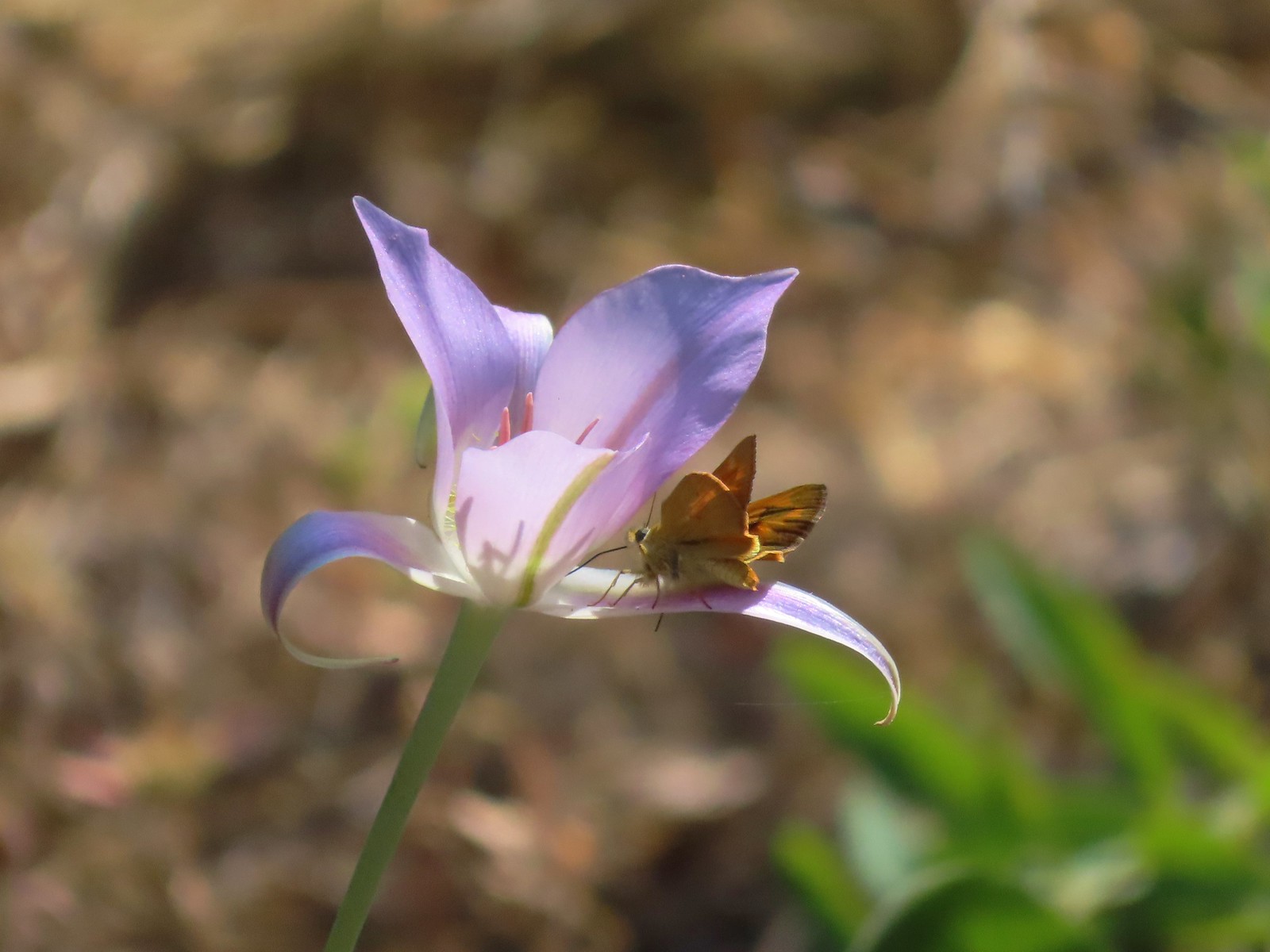 Skipper on a mariposa lily.
 Lower Bridge Campground is ahead to the left in the trees.
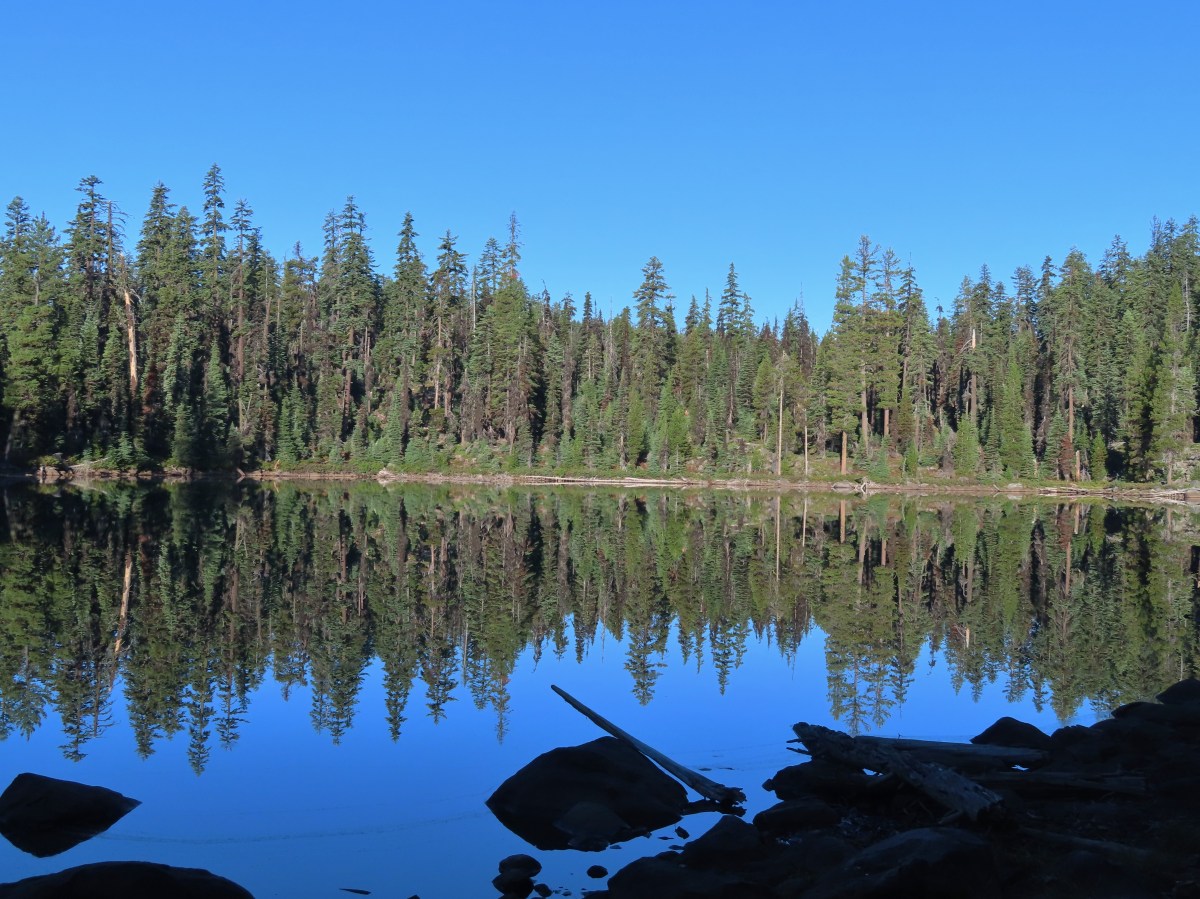
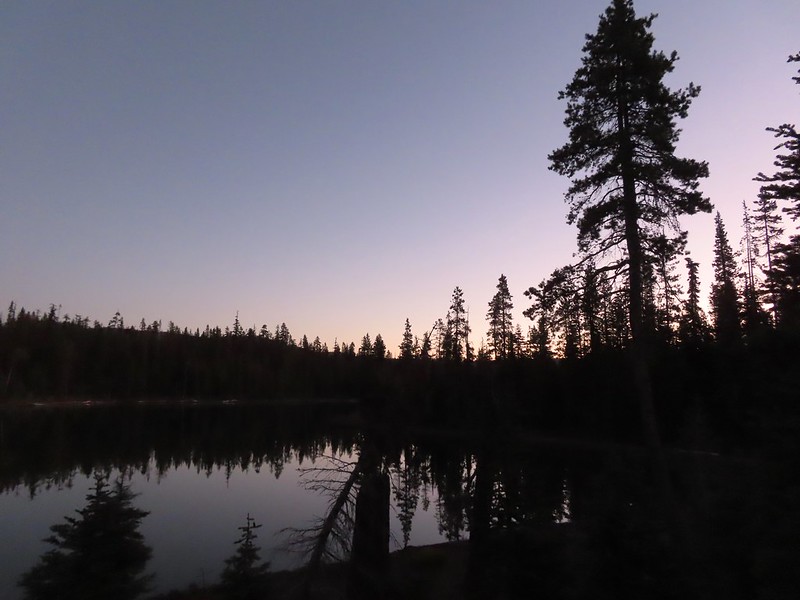
 Low-light at Trapper Lake.
 Sunrise from the trail.
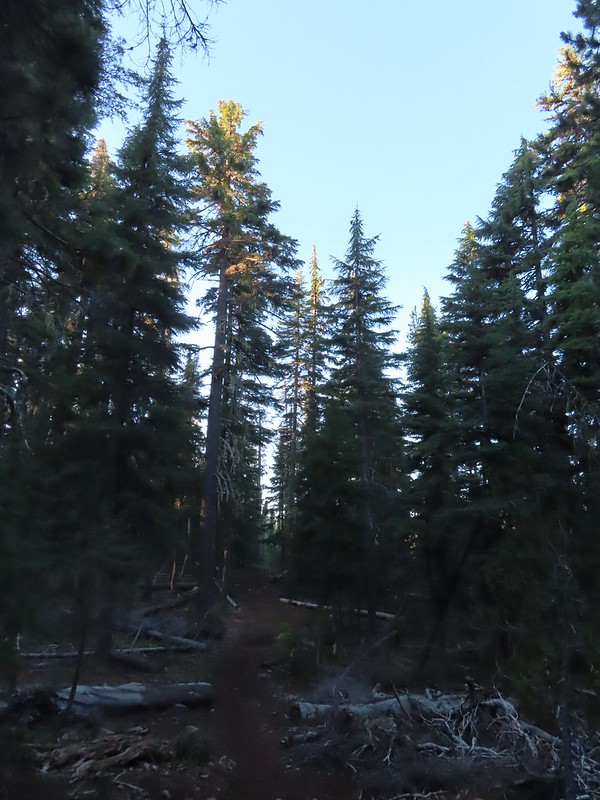 Sunlight hitting the tops of trees.
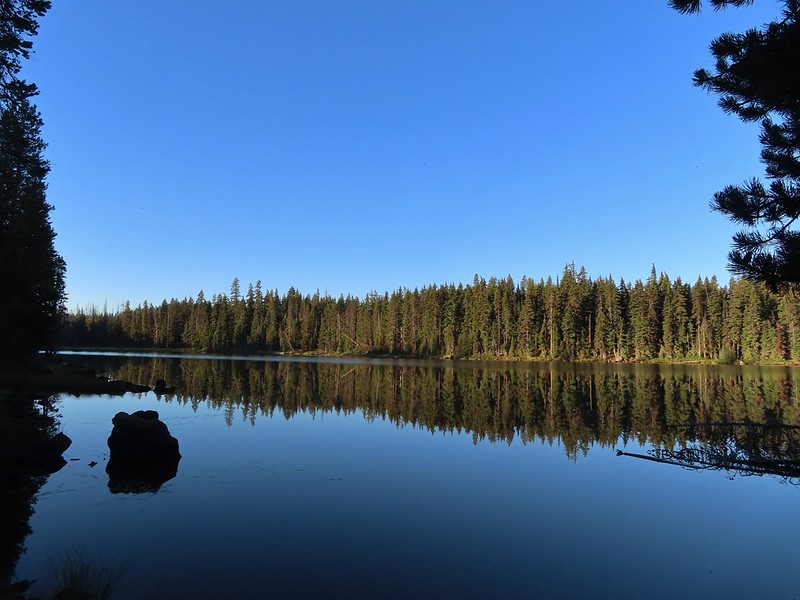

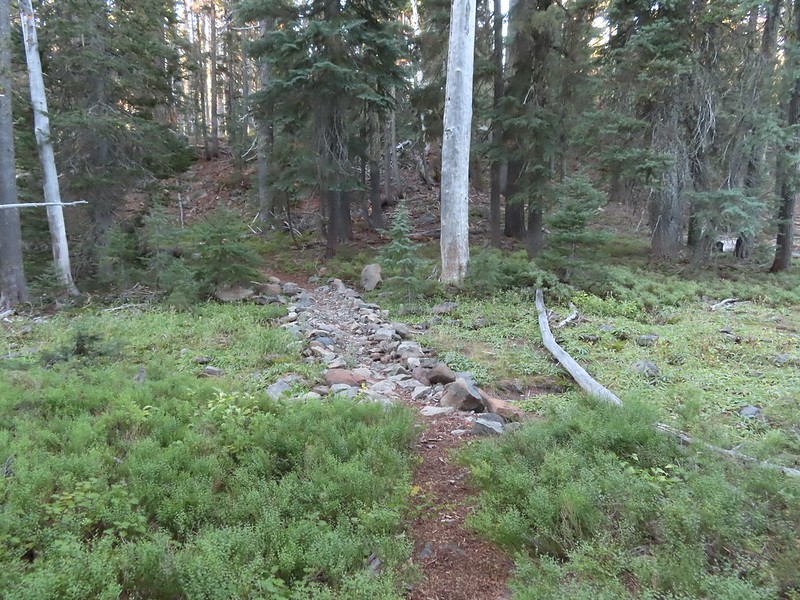
 Heading up to the bluff.
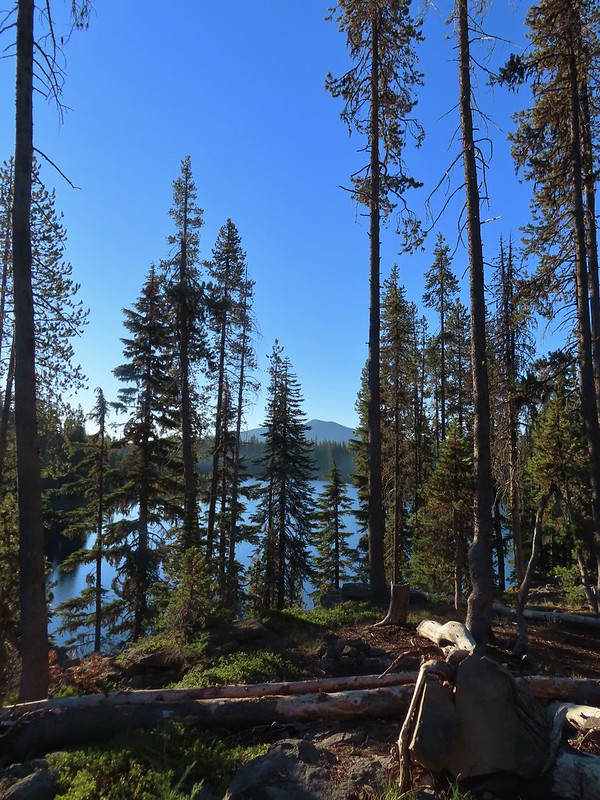 Pelican Butte beyond Isherwood Lake.
 Fall foliage above Isherwood Lake.
 Heading for Lake Liza through a dry bed.
 Great reflection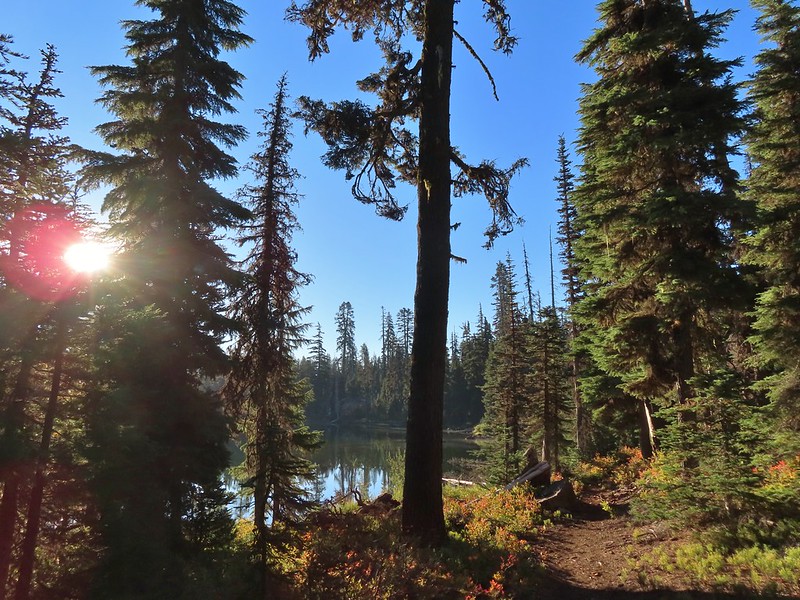

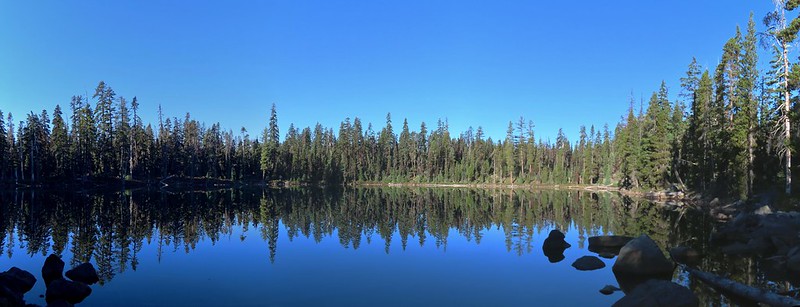 Lake Notasha
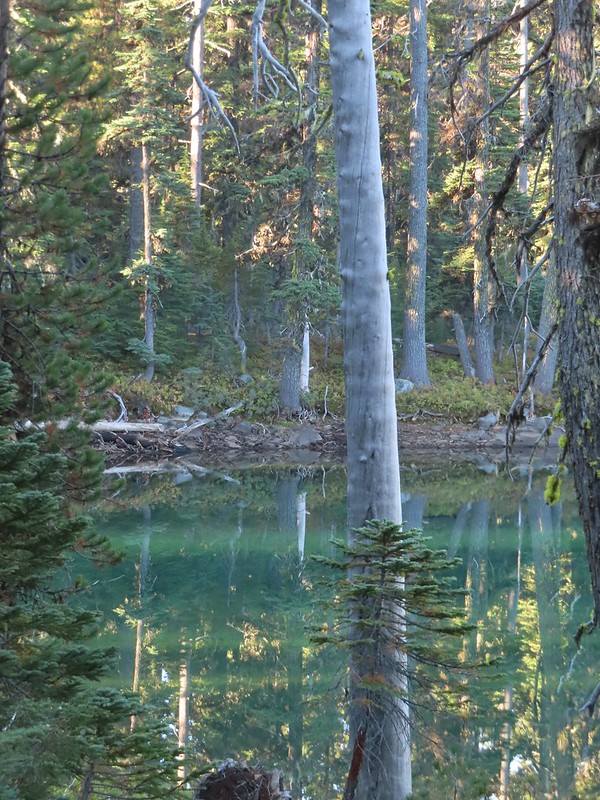 Depending on the angle the water was a beautiful green.


 Parts of the latter half of this trail passed through the 2017 fire scar.
 Fireweed seeds
 Pelican Butte as we descended toward the junction.
 Leaving the
  Dark-eyed junco seeing us off.
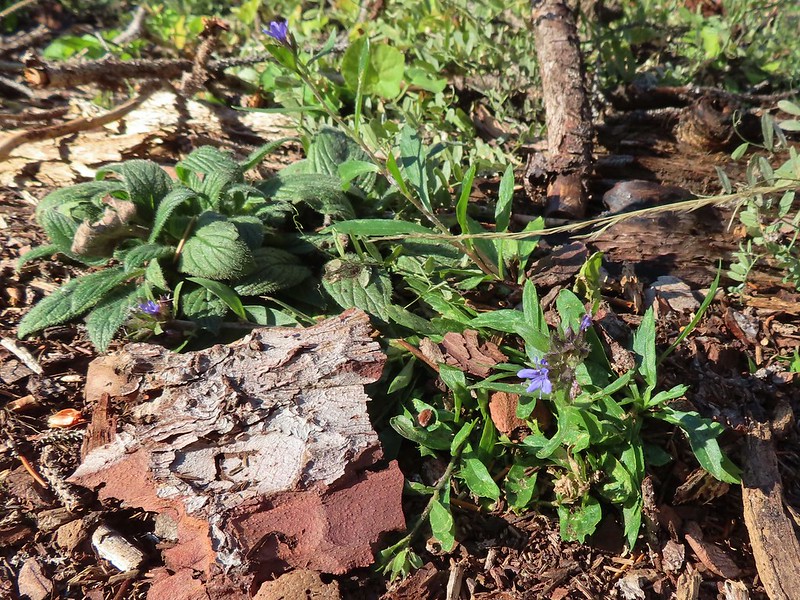 An as of yet unidentified flower.
 Another unidentified flower.
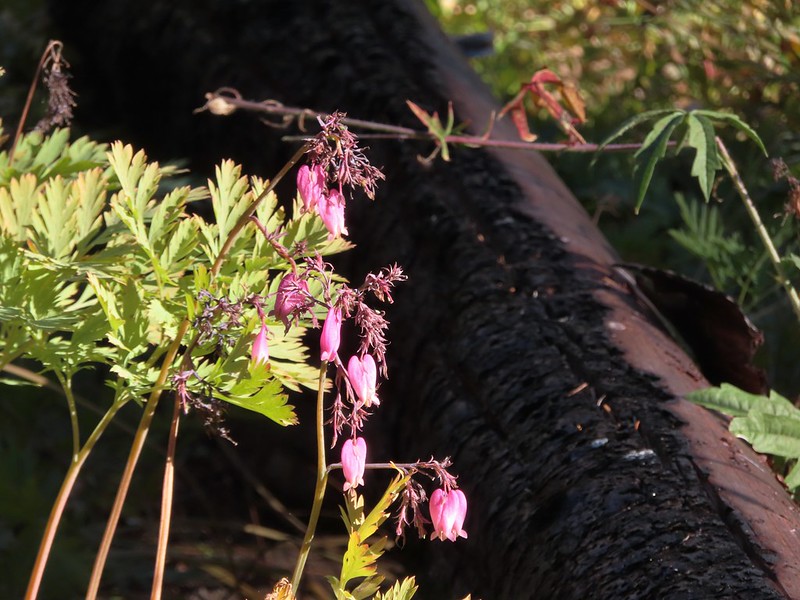 I do know this one – bleeding heart.
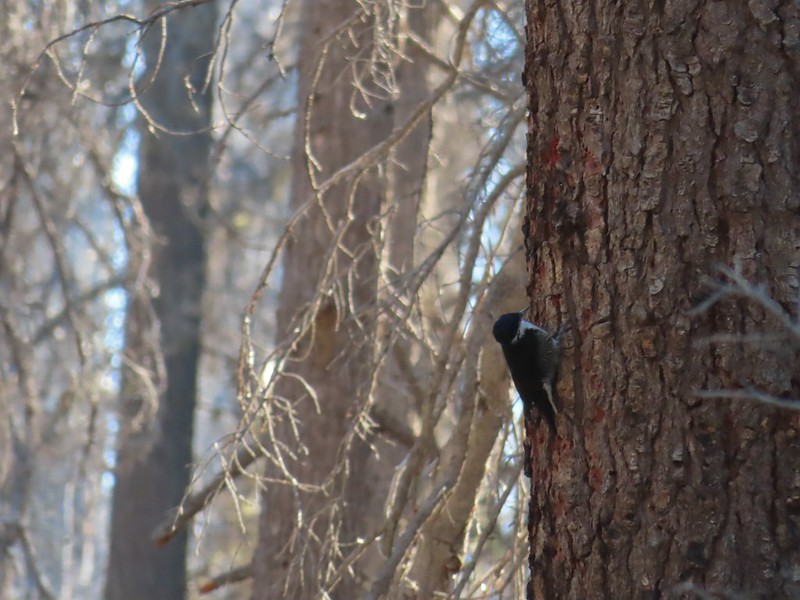 Woodpecker (it was a busy final 0.6 miles).
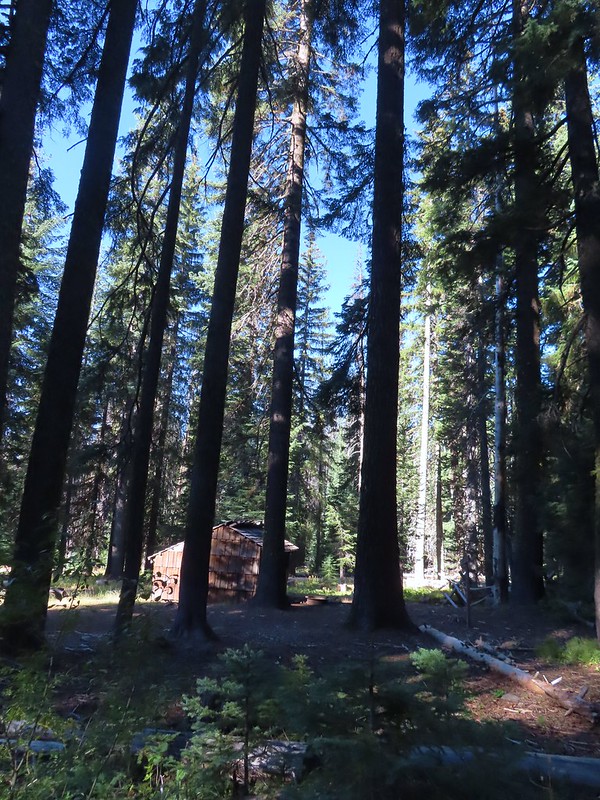 Back at the shelter and trailhead.
 Continuing along the Waterman Ditch.
 If this trail sign was marking a junction it wasn’t clear where the other trail was.
 Campsite at the saddle.
 The Rim Trail sign on a tree trunk.

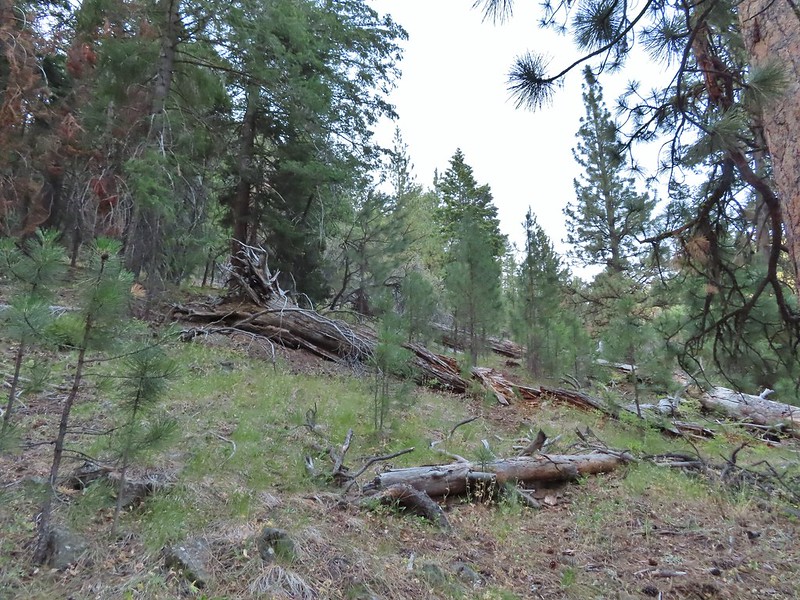
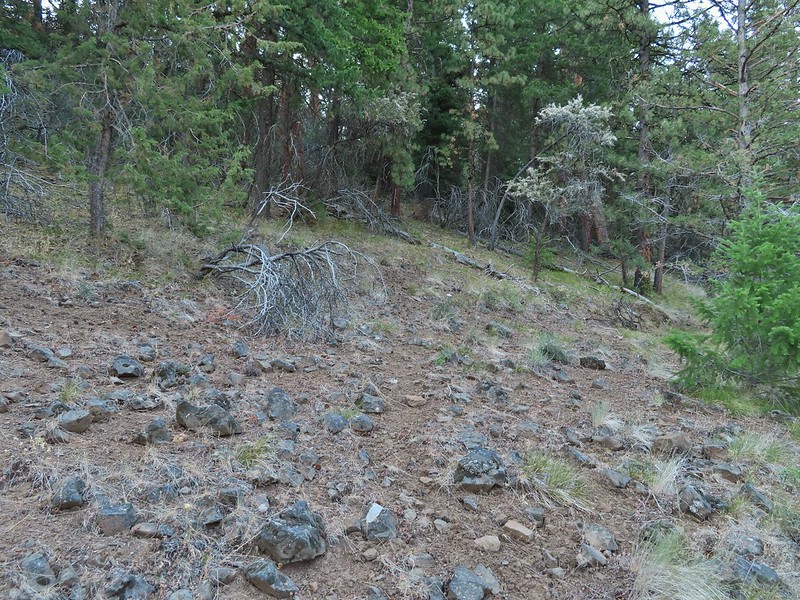
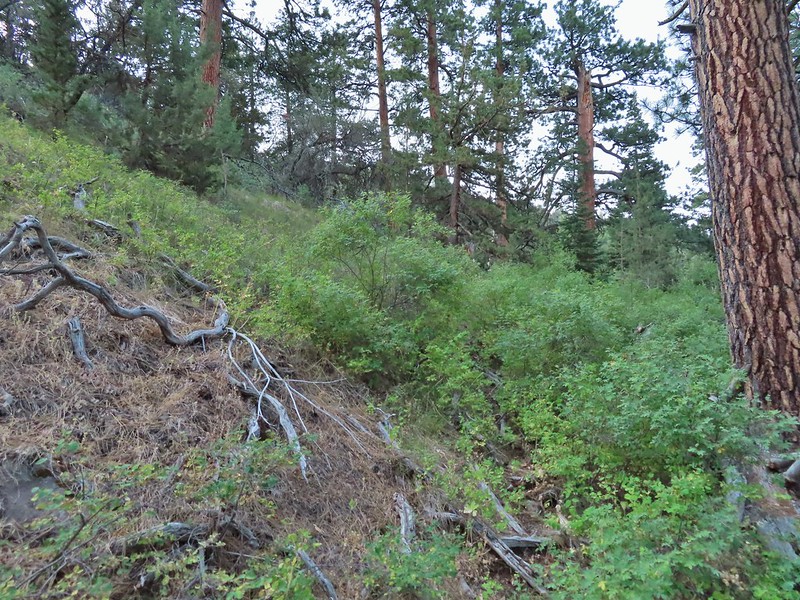
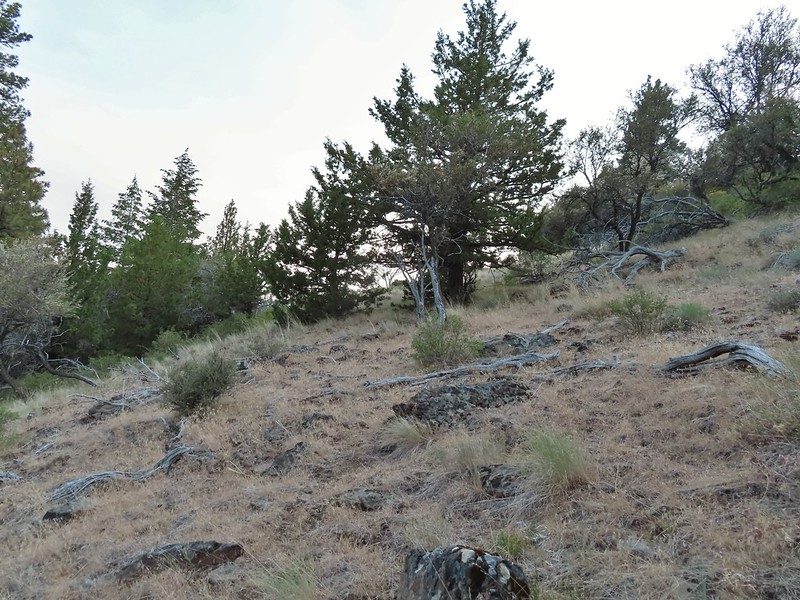



 Rock Creek Lake
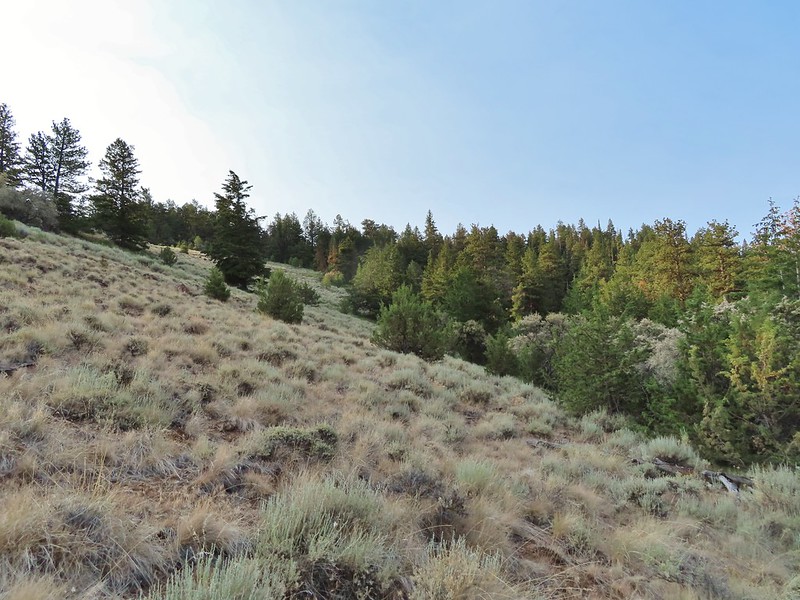
 Gaining the ridge.

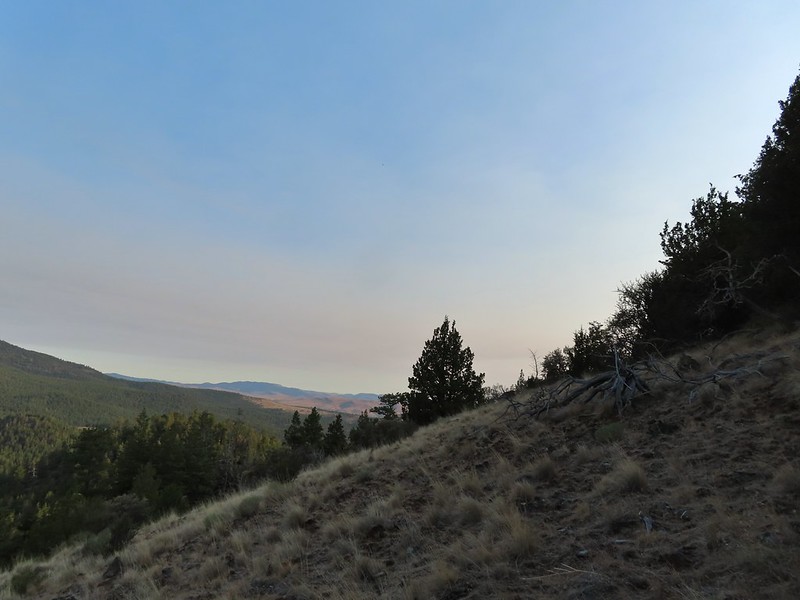
 View from the rim.
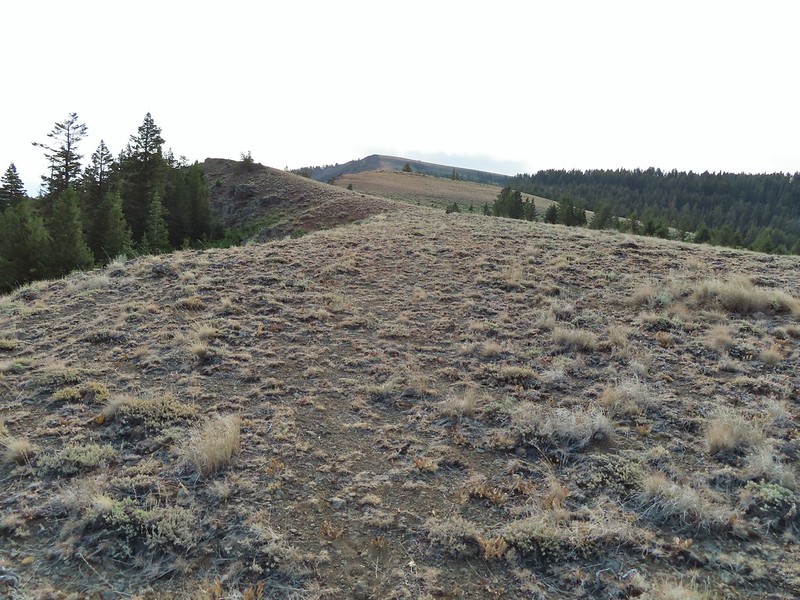 Spanish Peak
 A local
 Astter
 Some sort of delphinium I think.
 Downed trees across the trail ahead.
 Interestingly camouflaged beetle on the upper onion.
 Lupine
 A checkermallow
 Some more downed trees that we had to go around.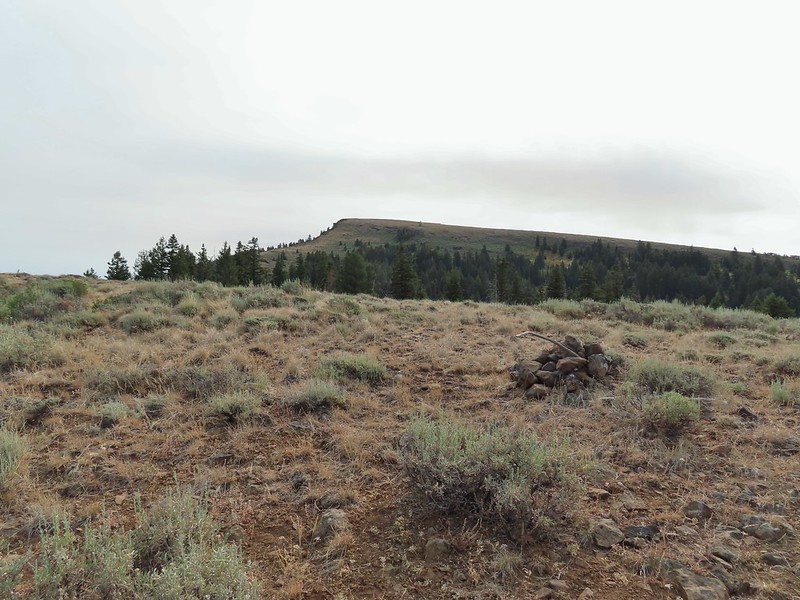


 We left the trail here, note the small cairn on the left.
 Heading uphill.
 Scarlet gilia
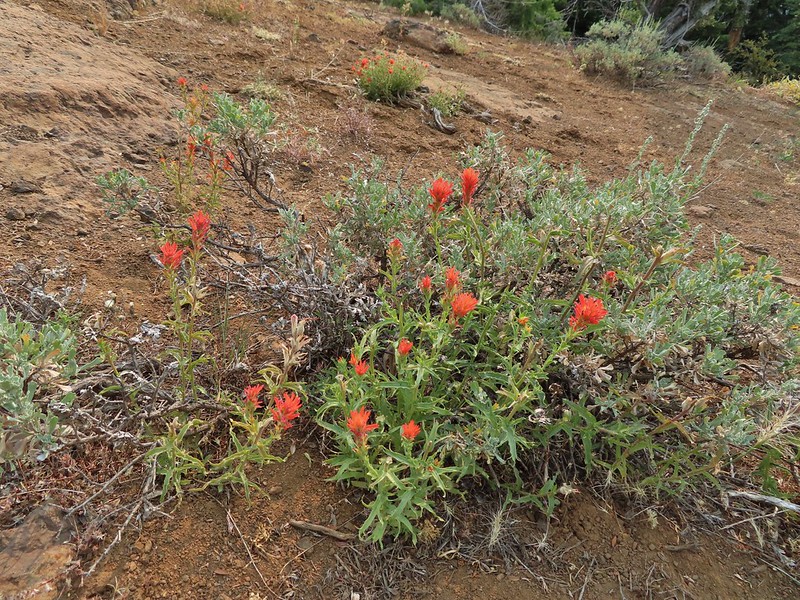 Paintbrush
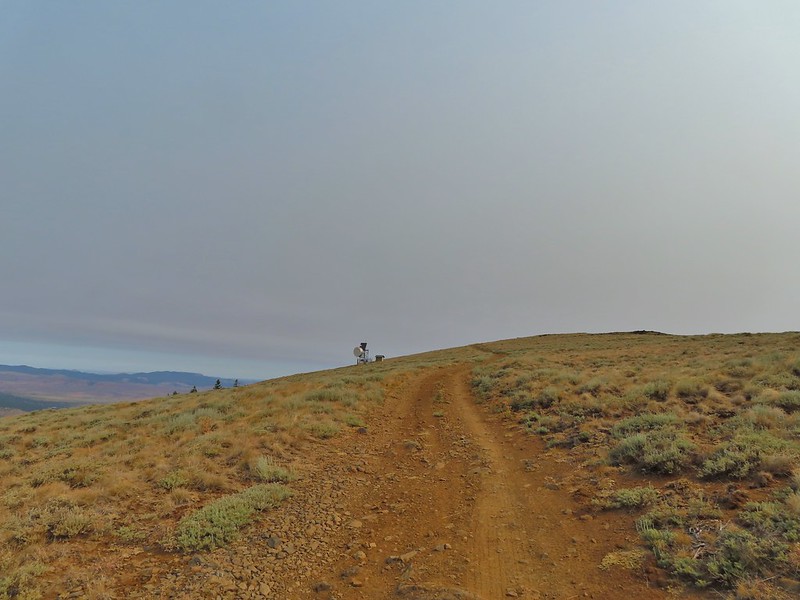
 The site of the former lookout.
 Looking out toward the John Day River valley.
 SE to Windy Point.
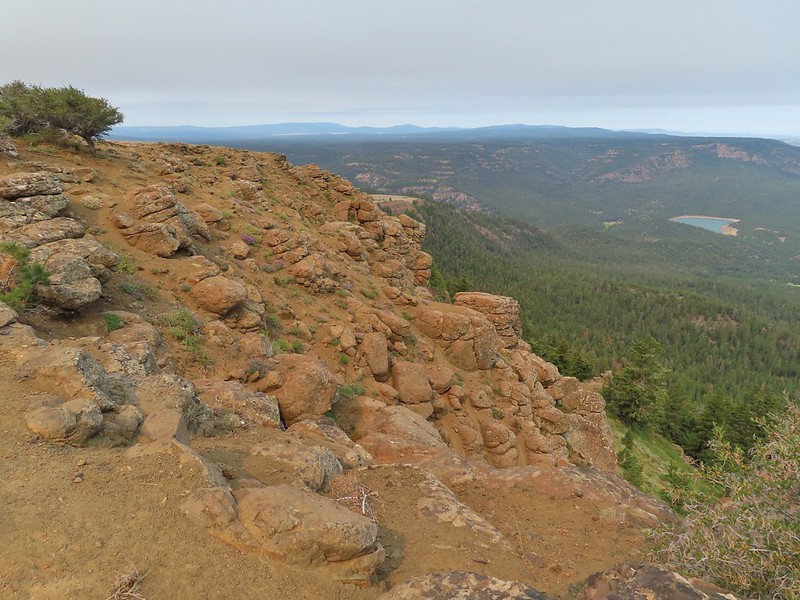 West to Rock Creek Lake and on the horizon the flat topped Lookout Mountain (
 NE to the John Day River Valley.
 Lookout and Round Mountain and the rim that we had hiked up below Spanish Peak.
 The Pisgah Lookout on the far side of the Bridge Creek Wilderness (
 A hazy Mount Hood to the NW.
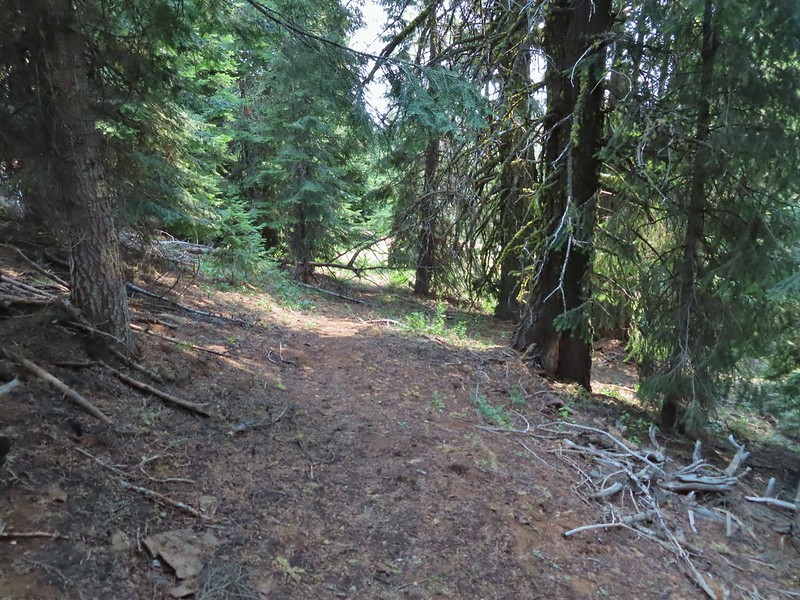

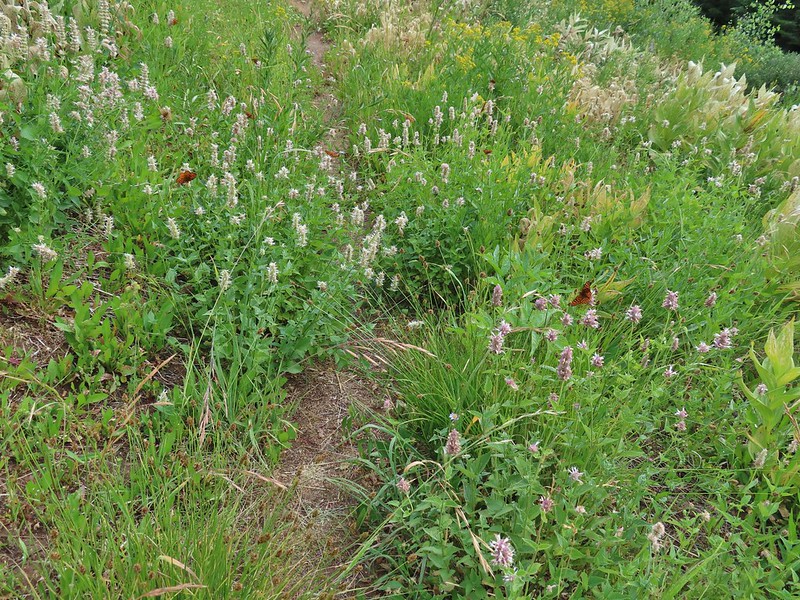
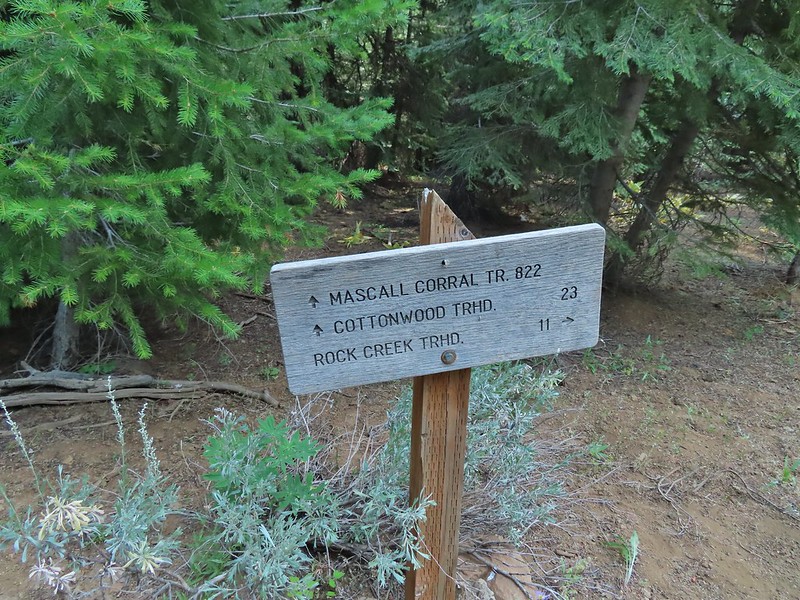

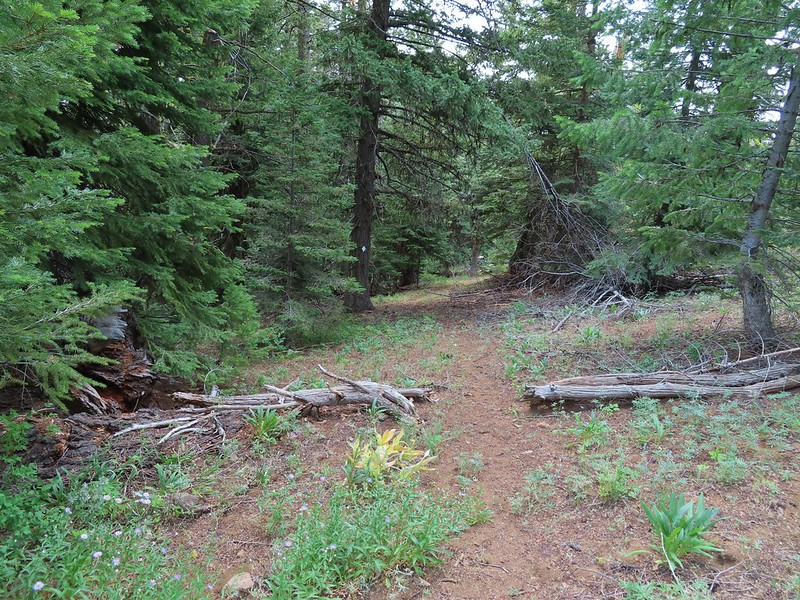
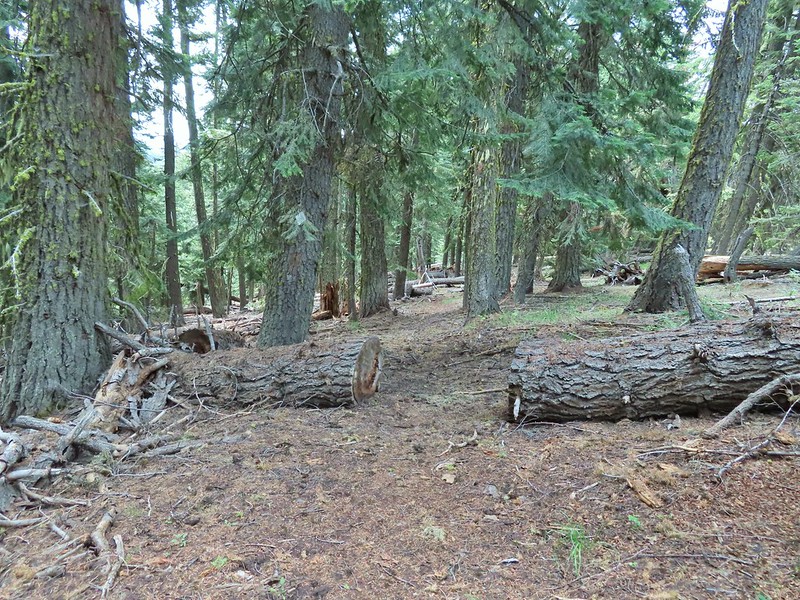
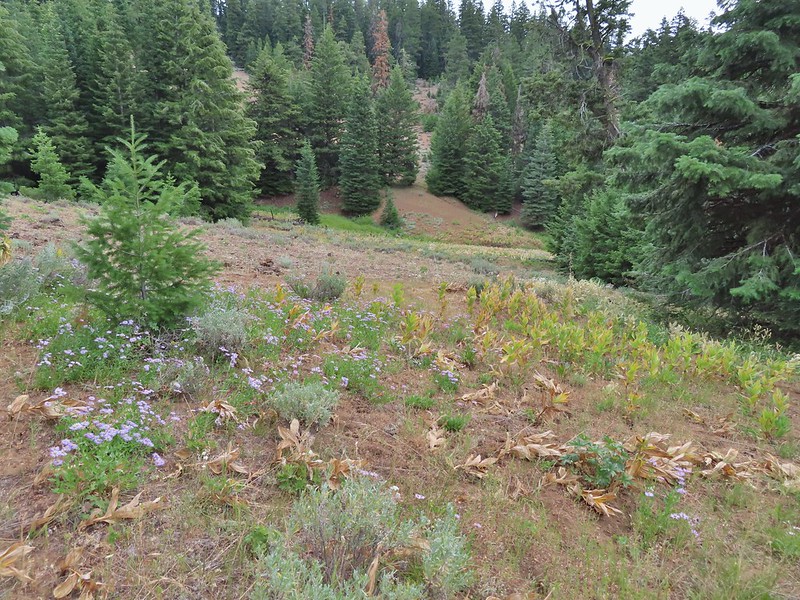 Baldy Creek was on our left.
 Red-tailed hawk
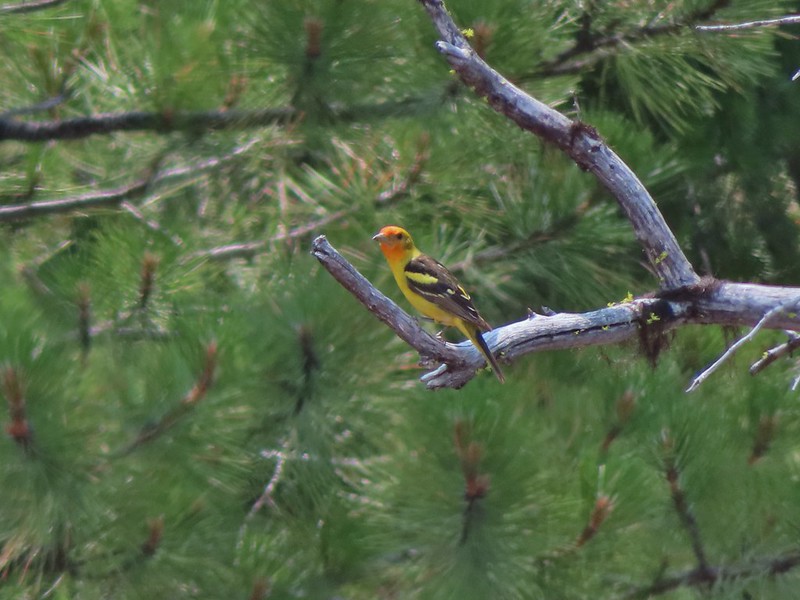 Western tanager
 Arriving at the trailhead.
 Signage at the trailhead.
 Baldy Creek below FR 3820.
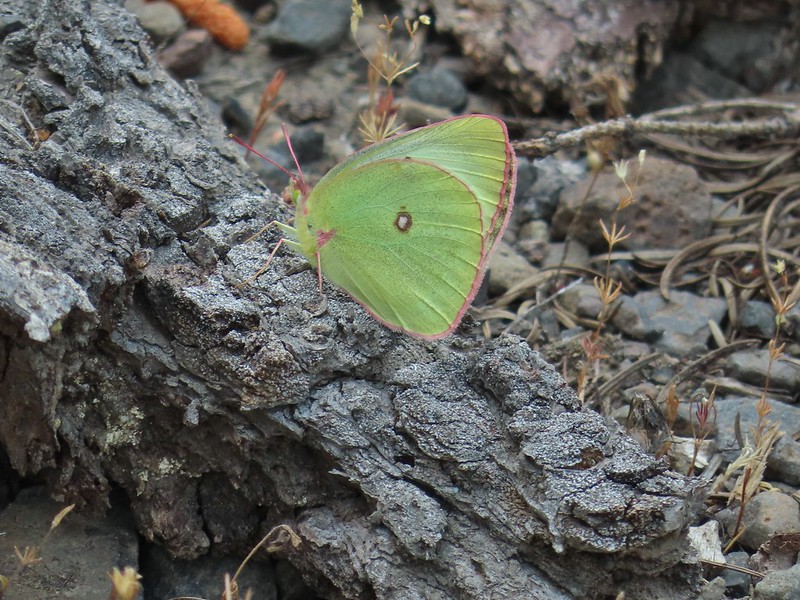 A sulphur butterfly of some sort.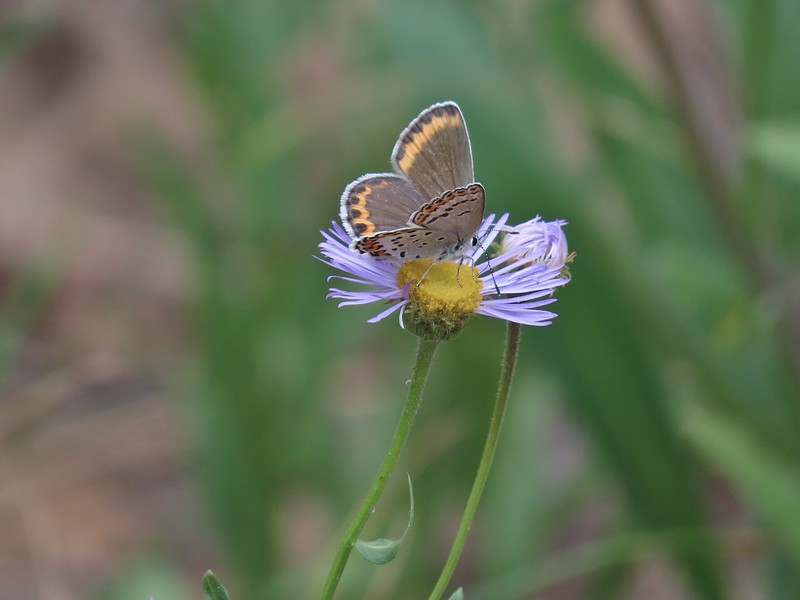
 A watermellon or June bug as we called them growing up.
 FR 3820 meeting Arvid Nelson Road.
 Spanish Peak from Arvid Nelson Road.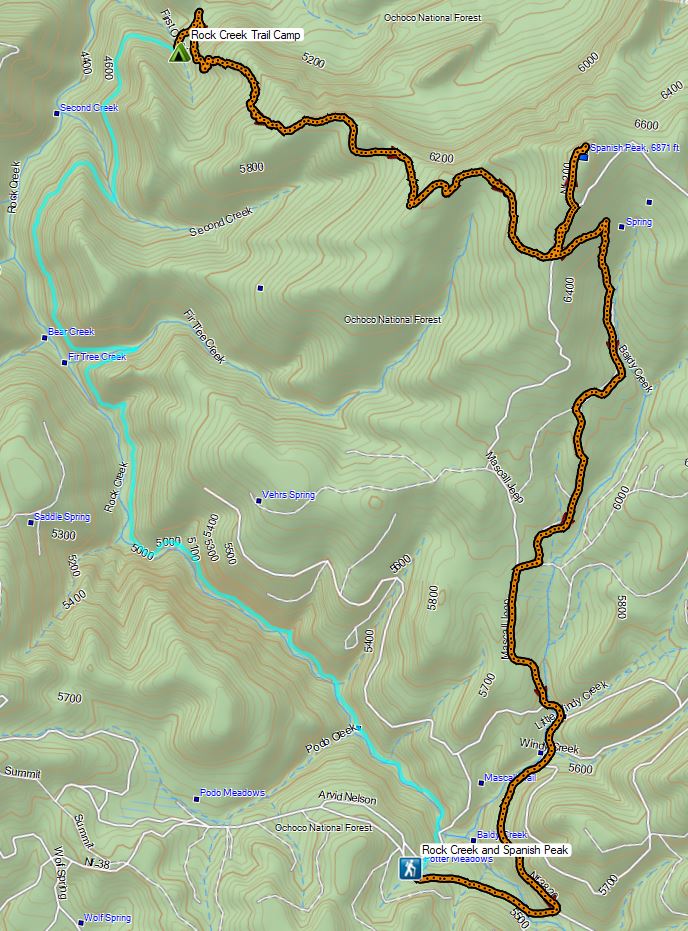
 wanderingyuncks