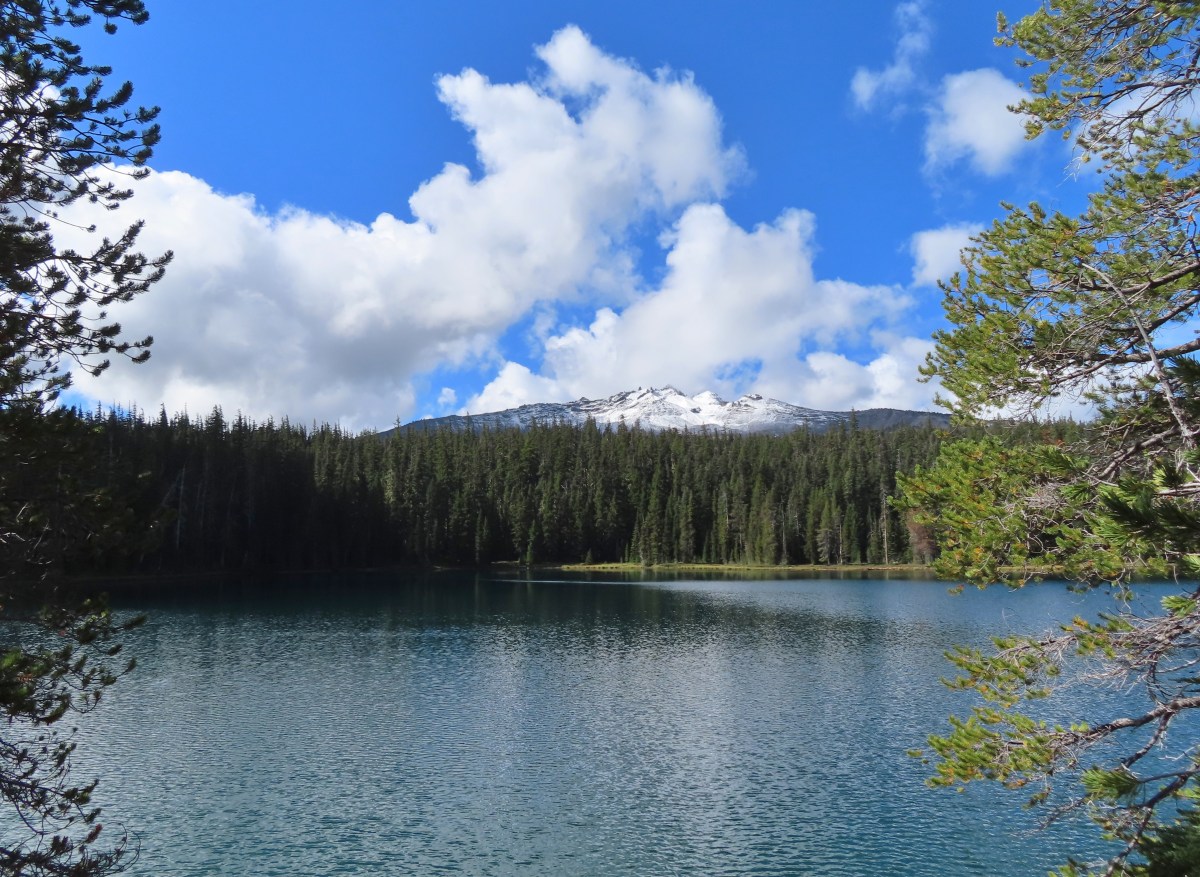
September began with some much-needed precipitation including snow at higher elevations. Checking the forecast for a hike to start the Labor Day weekend revealed that the Willamette Pass area was expected to be partly sunny Saturday morning before a chance of showers and thunderstorms developed later in the day. I narrowed it down to two loops, one in the northern end of the Waldo Lake Wilderness the other in the northern end of the Diamond Peak Wilderness. Both loops would have us visiting multiple lakes however the northern end of the Waldo Lake Wilderness has been through two large fires in the past 30 years while the northern end of the Diamond Peak Wilderness has not endured a large fire. There would be more views hiking through the fire scars, but we weren’t sure if the partly sunny forecast meant that the Cascade Peaks would be visible, so we opted for the Diamond Peak Wilderness.
The loop we’d chosen was Midnight and Yoran Lake, a hike we’d done back in 2014 post. We also hiked half of the loop on our longer loop around Diamond Peak (post). For both of those outings we’d parked at the Trapper Creek Trailhead. To mix things up a bit (and cut 1.4-miles from the total distance) we decided to begin the loop from the Pengra Pass Trailhead located near the Pacific Crest Trail.

The next decision to make was which direction to hike the loop in. We chose clockwise for two reasons. The first being that we would be starting out on a short downhill which would allow us to warm up a bit versus starting with a climb. The second reason was that the longest stretch without passing near a lake at almost 4-miles and we prefer getting the less exciting stretches done first. Speaking of less exciting the first 0.2-miles followed a gravel road before reaching the Whitefish Creek Trail.


The Whitefish Creek Trail coming up from the left. The trail briefly followed the road before heading uphill.

The Whitefish Creek Trail leaving the road.
The Whitefish Creek Trail immediately entered the Diamond Peak Wilderness and gradually climbed for 0.7-miles to a junction with the Yoran Lake Trail.
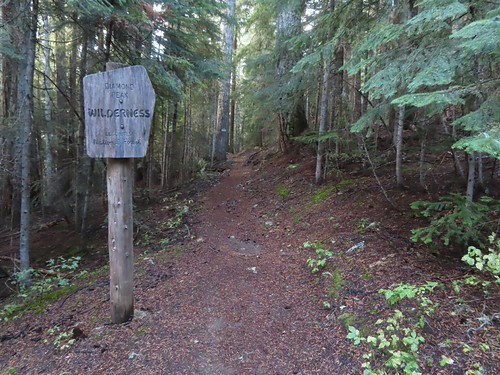

Footbridge over Whitefish Creek. There was a very small amount of water flowing down the creek.


The Yoran Lake Trail junction.
We turned right onto the Yoran Lake Trail and climbed steadily for 2.8-miles to the first (unnamed) lake.
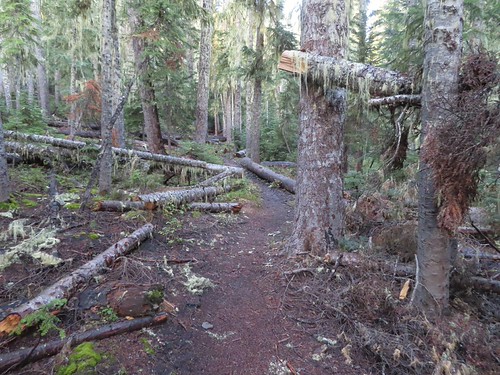
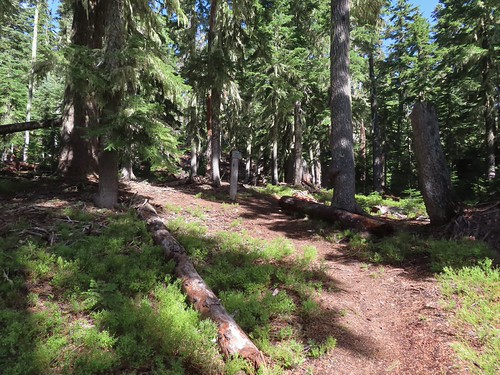
The Yoran Lake Trail was well maintained with no trees down across the trail.

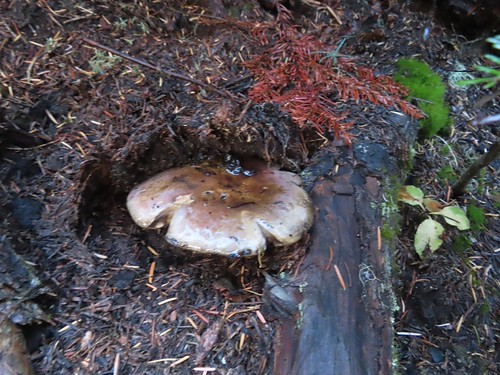
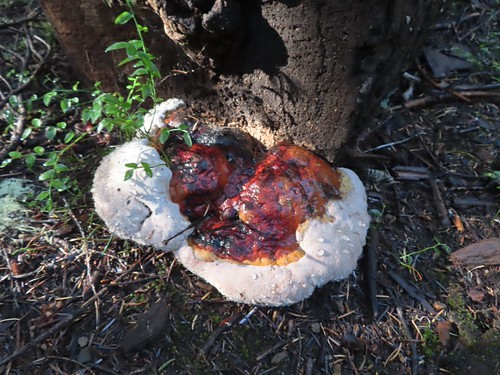
Coral fungus

Blue sky above.


Despite the recent precipitation the creek beds were mostly dry.

The snowy top of Diamond Peak was visible over the trees.

Diamond Peak with fresh snow.

The unnamed lake.

We continued past the unnamed lake and in just over a mile came to a familiar unsigned junction next to a dry creekbed.

The trail crosses the dry creek bed a half mile from the unnamed lake.


The unsigned junction.
The trail to the right was a user created trail until 2019 when the Forest Service officially decided to connect the Pacific Crest Trail near Lils Lake with the Yoran Lake Trail. Before continuing on the Yoran Lake Trail we veered left and climbed steeply up the hillside to Karen Lake.

We’d camped at this lake on the final night of our loop around the mountain. We took a break along the lake shore near where we’d camped before and waited to see if Diamond Peak, which was now partly shrouded by a cloud, would make a full appearance.


We spent half an hour at the lake watching the clouds tease a reveal only to have more arrive.


So close.
After 30-minutes we were starting to get cold from not moving around so we continued on our loop hoping that maybe things would clear up when we reached Yoran Lake which was less than a quarter mile away.


The trail forks near Yoran Lake. The lefthand fork leads to some campsites while the righthand fork is the official trail. We went right and soon had a view across the lake to Diamond Peak.


Mount Yoran behind the trees to the left.
The trail climbs above the lake on a rocky shelf where we again stopped to give the clouds some time to move on. It took about 15-minutes for that to happen, and we finally had a view of the full mountain.

Mount Yoran was not dealing with clouds.


Finally, a full view.
After getting the view we’d been hoping for we continued on. The trail passed several more viewpoints above Yoran Lake before passing through the forest and arriving at Lils Lake.


Island in Yoran Lake.


Pond between Yoran Lake and Lils Lake.

Lils Lake
We followed the trail past Lils Lake to its end at the Pacific Crest Trail (PCT).


Signpost at the junction.
We turned right onto the PCT and started a stretch of trail that passed a number of named and unnamed bodies of water.

Diamond Peak and Lils Lake from the PCT.

The PCT passing a pond.

Maiden Peak (post) beyond the trees.
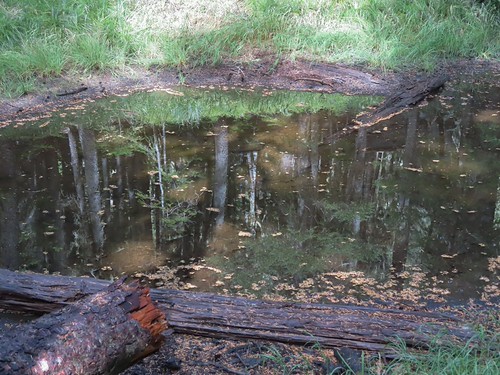
Another small pond.

The first named lake was Hidden Lake which was just off a spur trail to the right, 0.6-miles from the PCT junction.


Hidden Lake
After visiting Hidden Lake we continued on the PCT passed several more unnamed bodies of water before arriving at Arrowhead Lake a mile from Hidden Lake.


Unnamed lake


One of several ponds.

Stellar’s jay

Junction with the Deer Creek Trail.


Arrowhead Lake
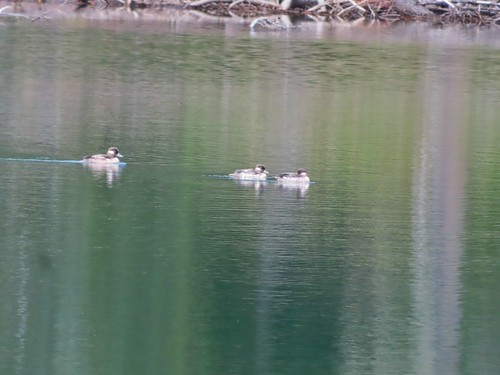
Buffleheads on Arrowhead Lake.
From Arrowhead Lake it was 1.4 more downhill miles to a signed spur trail for Midnight Lake, the last of the named lakes.
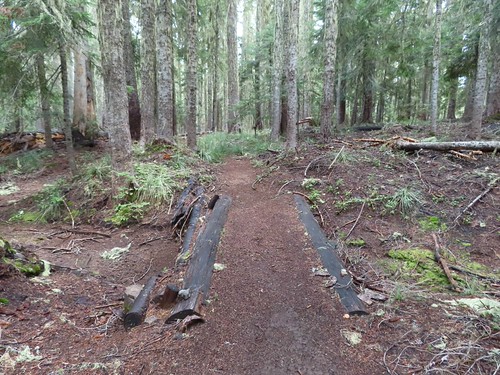

Foamflower, one of the few blooming flowers remaining.

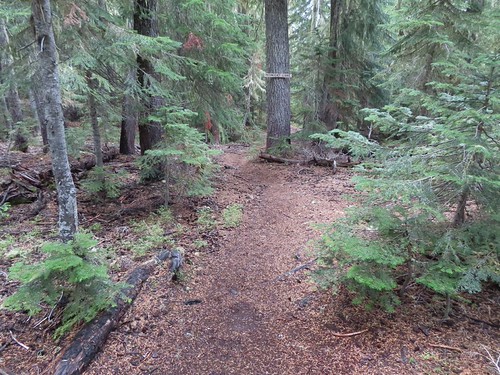
Midnight Lake sign on the spur trail.

Midnight Lake
After a short break at Midnight Lake we continued our loop. It was 0.2-miles from the lake to a junction with the Midnight Lake Trail and then another 0.9-miles to the Pengra Pass Trailhead.

The Midnight Lake Trail on the left.

Another unnamed lake at the trail junction.

I was just a bit too slow to get a picture of this belted kingfisher before it took flight.
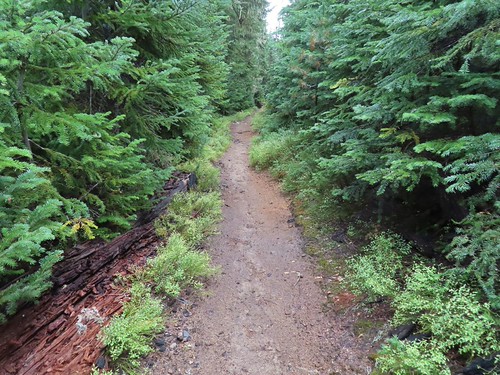

Rhododendron along the PCT.

Ski runs at the Willmaette Pass Ski Are on the far hillside.

Fuji Mountain (post)

Leaving the wilderness area near Pengra Pass.

Wilderness permit kiosk at Pengra Pass.

The trail dropping down to the trailhead.
This loop came in at 10.8-miles with approximately 1300′ of elevation gain.

This is a nice loop with a variety of lakes and few good mountain views (when the clouds cooperate). We were a little surprised to have only run into 9 other hikers all day. The trails were also in excellent shape with only a couple of small logs to step over. The fresh snow on Diamond Peak was a nice bonus and a good reminder that Fall is on the way. Happy Trails!
Flickr: Yoran and Midnight Lakes


 Trail signs for the Benson-Ruckle Trail.


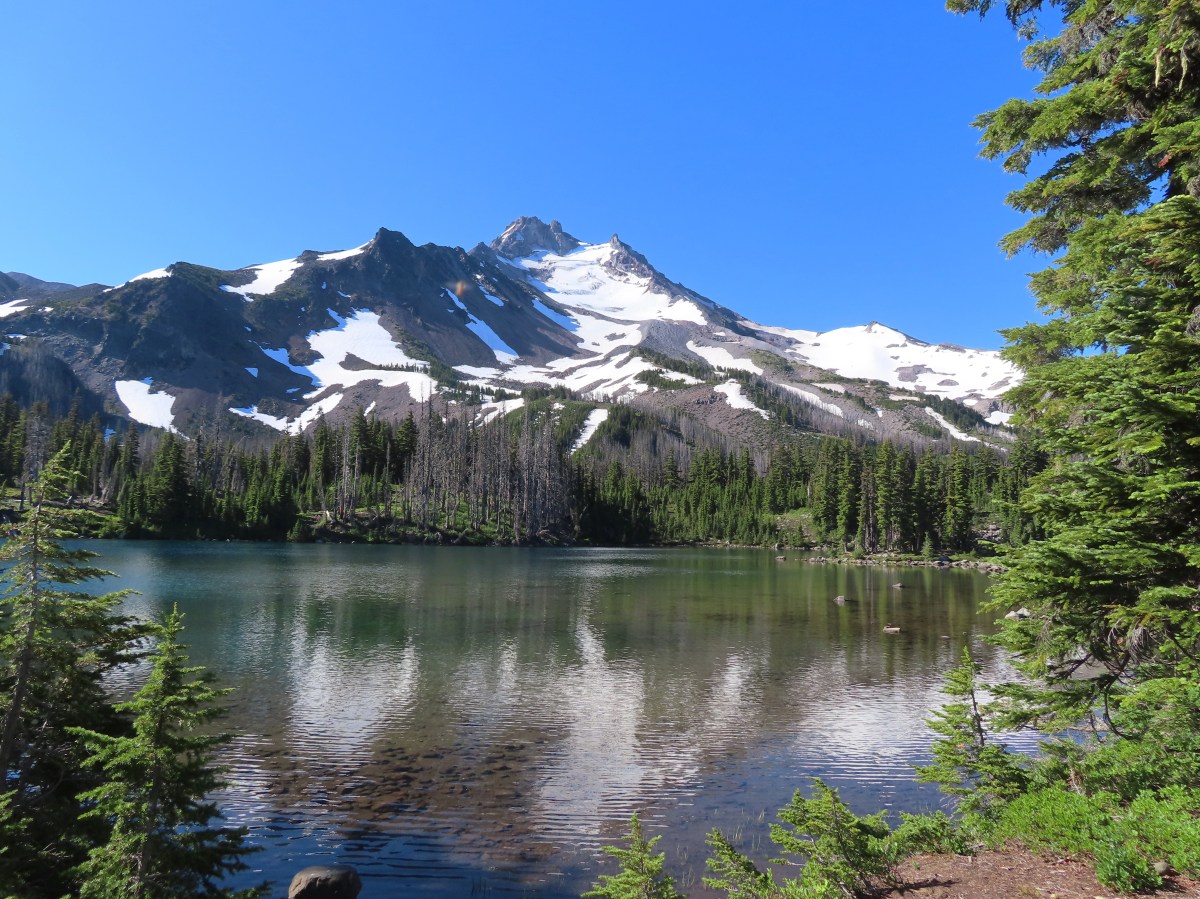


 We had also parked here in 2021 for our Barlow Butte hike (


 The colors of Fall.
 Tom, Dick, and Harry Mountain (
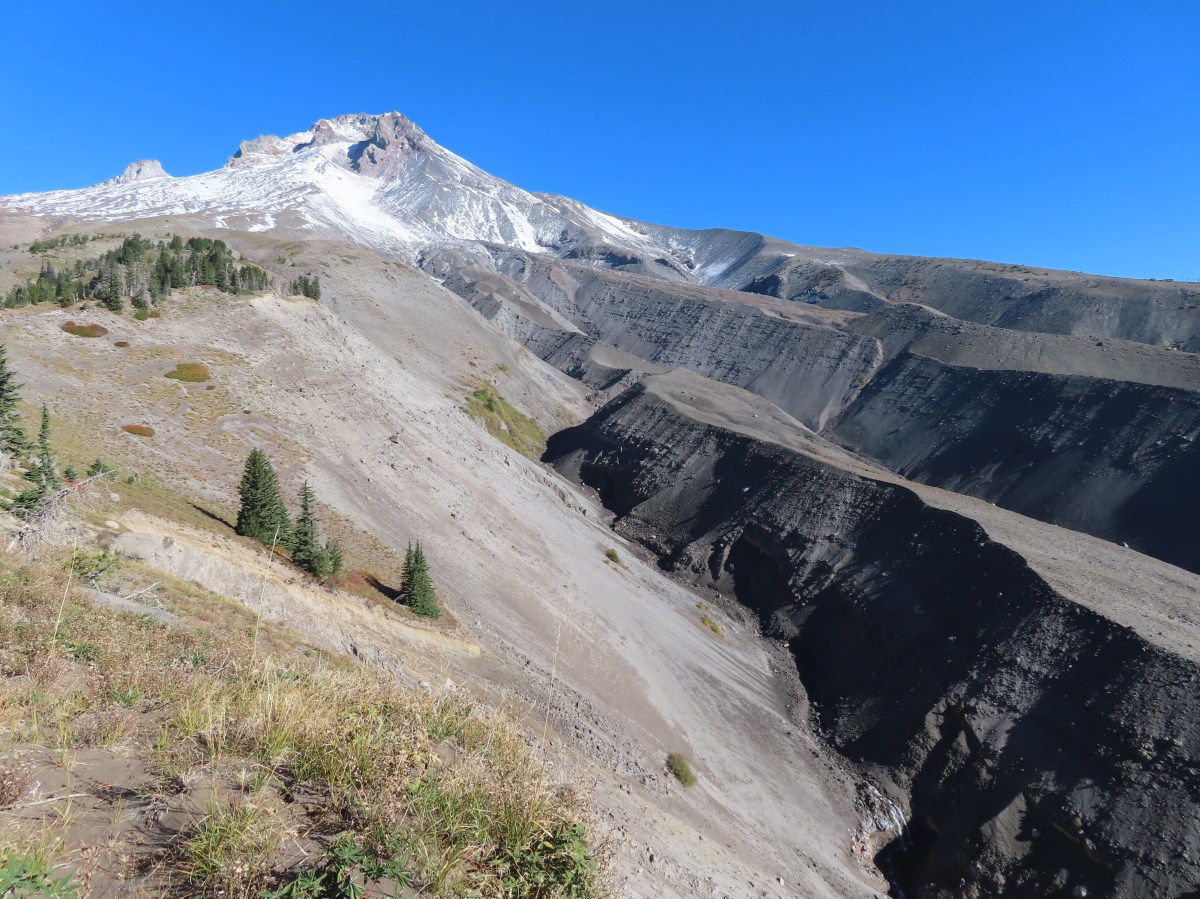
 Mt. Hood teased an appearance a couple of times along the lower portion of the PCT. It was enough to see that there was a dusting of fresh snow on the mountain.
 The signed junction with the Yellowjacket Trail.
 The wet brush had me whishing I’d worn boots.
 The Yellowjacket Trail passing a small meadow.
 Makeshift footbridge along the trail.


 New snow on Mt. Hood.
 The valley is the result of an eruption around 250 years ago.
 Pacific lupine
 At the end of the levee the route climbed a moraine then continued its gradual ascent to the Timberline Trail.
 Dark-eyed junco. There was a good variety of birds along the moraine, but this was the only one that sat still long enough to have its picture taken.
 Frost on a log. It was really nice to be hiking in the crisp cool air.
 Boy Scout Ridge from the moraine.
 The unsigned junction with the Timberline Trail.
 Mt. Hood from the junction.
 Sign for the PCT nearly absorbed by the tree.
 Lupine (broadleaf?)
 A few remaining blooms on the goldenrod.
 Signpost at the PCT junction ahead.


 The coyote with Mt. Hood looming behind.
 Mt. Jefferson to the south with the Three Sisters behind to the left.
 The Three Sisters and Mt. Jefferson
 The round peak along the far ridge is Gunsight Butte (
 We’d lost sight of the coyote until it ran across the trail not too far in front of us.
 More lupine
 A few remaining aster blossoms in the foreground.
 Timberline Lodge across the Salmon River Canyon.
 Looking back down the White River Valley. Barlow Ridge is the near hump on the right.
 Another look at Timberline Lodge.
 Despite all the cars at the lodge we would only encounter a half dozen other trail users until we were back at the Barlow Pass Trailhead.
 Small waterfall below the ridge.
 I turned around here where the Timberline Trail headed across the Salmon River drainage. The Silcox Hut is straight ahead on the side of the mountain.
 Looking back at the high point where Heather had stopped.
 Mt. Hood’s summit.
 The waterfall looking pretty small far below the mountain.
 It took us a moment to decide what the dark rounded peak straight ahead in the distance was. We eventually correctly identified it as Black Butte (
 Olallie Butte (
 Birds on mountain ash.
 The Timberline Trail junction.
 Beargrass meadow, there hadn’t been any blooms this year.
 Lousewort
 It was nearly 2-miles between the Timberline and Yellowjacket trail junctions.
 We were shocked to see a bunchberry that still had some petals, even if they were in sad shape.
 Mushrooms and fungi are not surprising this time of year.
 Highway 35
 Arriving at the Barlow Road.
 Our various hikes around the mountain. There are still a few areas where we could add a track or two. Happy Trails!

 Another reminder that overnight permits are required in the wilderness.
 Low clouds in the valley.
 Mt. Jefferson through some of the snags with a few surviving trees on the right.
 Mt. Jefferson from the junction, note the rock cairn on the left marking the PCT.
 The cairn at the junction.
 Triangulation Peak (
 Whitewater Lake
 Triangulation Point and Bocca Cave (Trailheads still closed.)
 Tarn 0.3-miles from the junction.
 Mt. Jefferson reflecting in the tarn.
 Ducks on the tarn.
 The Sentinel Hills with Park Butte behind to the right. The Whitewater Trail (
 The fires did open up fairly consistent views of the mountain.
 A few remaining penstemon blossoms.
 Heading down to the Russell Creek crossing.
 This can be a tricky crossing at times, but there was a makeshift bridge which made it fairly easy this time.
 Aster and pearly everlasting near the creek.
 We started seeing more trees that had survived the fire as we got closer to Jefferson Park.
 Gentians and aster
 Grass-of-parnassus
 There were patches of burned forest along this stretch.
 Approximately 0.4-miles from the junction the trail crosses Whitewater Creek.
 From the other side of Whitewater Creek the views of Mt. Jefferson are amazing.
 Based on the barred sides I believe this is a black-backed woodpecker.
 Unofficial use trails are an issue in Jefferson Park which has prompted the Forest Service to install a number of “Closed for Rehabilitation” sign such as the one on the left side of the trail.
 They’ve also added quite a few signs to indicated sanctioned trails. Typically in wilderness areas the Forest Service tries to keep signage to a minimum, but overuse has led them to add additional signs.
 Another sign with Park Butte in background.
 The last of the pointers for Scout Lake.
 PCT heading for Park Butte and Park Ridge.
 Russell Lake pointer.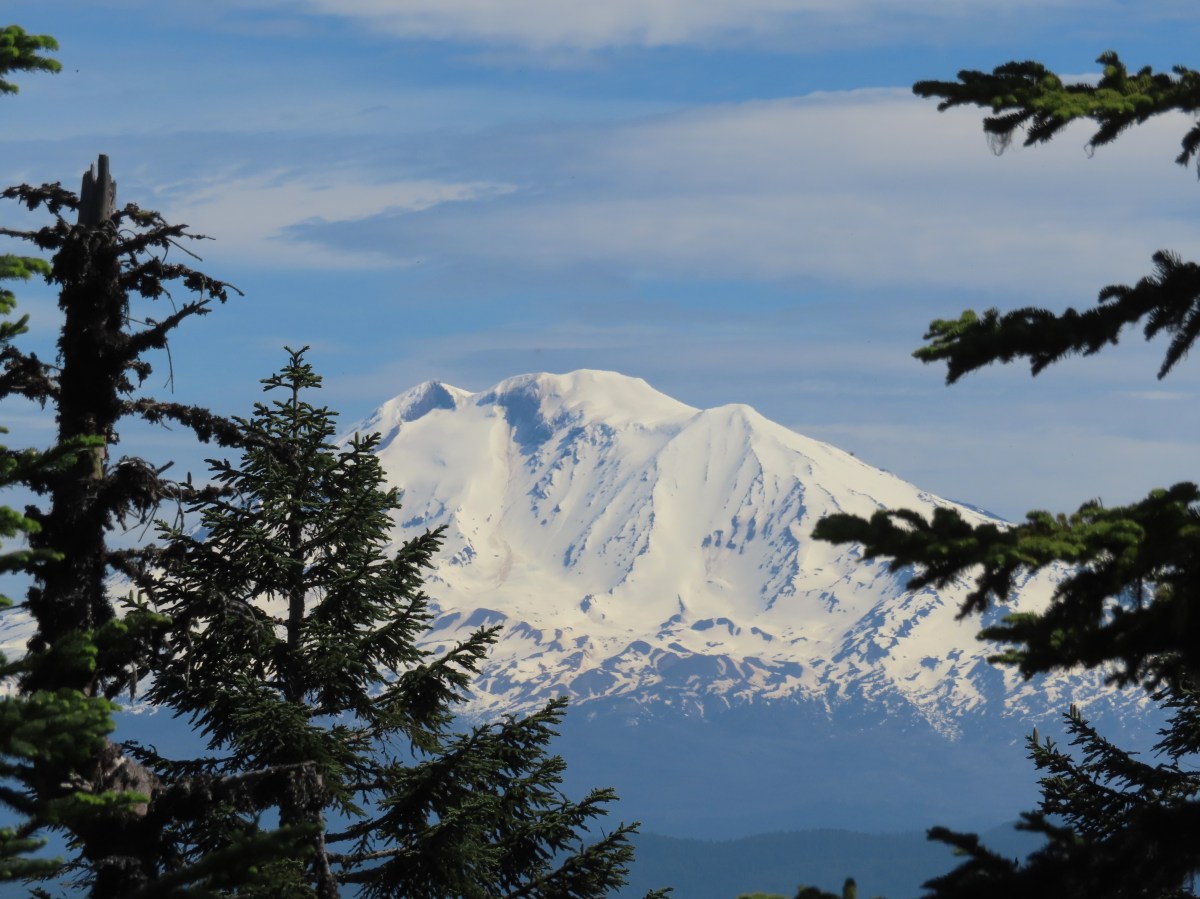
 Looking down at the pullout from the PCT on the way back.


 Phantom orchid
 Spotted coralroot
 Finetooth beardtongue
 Mt. Hood through a window in the trees.
 Finetooth beardtongue along the trail.
 White spiraea
 Bluehead gilia
 Paintbrush
 Some yellow balsamroot along the trail.
 Columbine
 Inside-out flower
 Queen’s cup
 Bunchberry
 Vanilla leaf
 Arnica
 Approaching the landslide area.
 Starting at the green up to the left is Augspurger Mountain (
 Mt. Hood from the viewpoint.
 Lomatium, bluehead gilia, and arrowleaf buckwheat in the bowl.
 Honeysuckle


 Wild onion mixed in with bluehead gilia.
 Bluehead gilia
 Lupine
 Catchfly
 Arnica and beargrass in the forest.
 Nearing one of the little meadows.

 Sub-alpine mariposa lilies
 Bluehead gilia
 Sub-alpine mariposa lilies
 A closer look shows why these are also known as cat’s ear lilies.
 Buckwheat
 Onion
Onion
 Bastard toadflax behind a cat’s ear lily.
 Rosy pussytoes
 Yarrow
 Looking back from the meadow.
 I believe these are some type of microseris.
 Boundary sign for the
  Broadleaf arnica
 Star-flowered false solomonseal
 The Cedar Creek Trail coming up from the right.
 Anemones
 Wallflower
 White groundsel
 Cliff beardtongue
 Cliff beardtongue
 Wild rose
 Larkspur
 Mt. Hood from the viewpoint.
 Spotted coralroot
 Oregon sunshine and wild onions
 Chickweed
 Arriving at another small clearing with flowers.
 Phlox, penstemon, lomatium, onion, and mariposa lilies.
 Another little meadow.
 Larkspur and balsamroot
 This was the only time we spotted Mt. St. Helens on the hike.


 Mt. Adams from the former lookout site.
 There was a lot of phlox in bloom.
 Table Mountain (
 Mt. Hood
 Mt. Hood with Mt. Jefferson behind to the right.
 Balsamroot and groundsel
 Mt. Adams
 Phlox
Phlox
 Paintbrush and cliff beardtongue
 Another view of Mt. Hood.

 Sandwort
 Chickweed
 Balsamroot
 Some of the smaller flowers present on the summit.
 Finetooth beardtongue
 Wallflower
 Wild onion
 The end of the ridge is about three quarters of a mile from the lookout site.
 Heather on the outcrop.
 Painted lady
 Larkspur
 Swallowtail
 Chickweed in some phlox.

 Wallflower
 Colubmine
 Bluehead gilia
 Beargrass along the PCT.
 Heading down to the trailhead.
 Sevenmile Marsh Trailhead
 Sevenmile Creek
 Entering the wilderness
 Sevenmile Marsh
 Lodgepole pines were the dominate trees along the first part of the trail.
 Mountain hemlock took over as the trail gained elevation.
 Junction with the PCT.
 There were a few downed trees along this section but nothing difficult to get around.
 This twisted tree caught our attention.
 Nice blue sky.
 Lewis’s woodpecker way up in a snag.
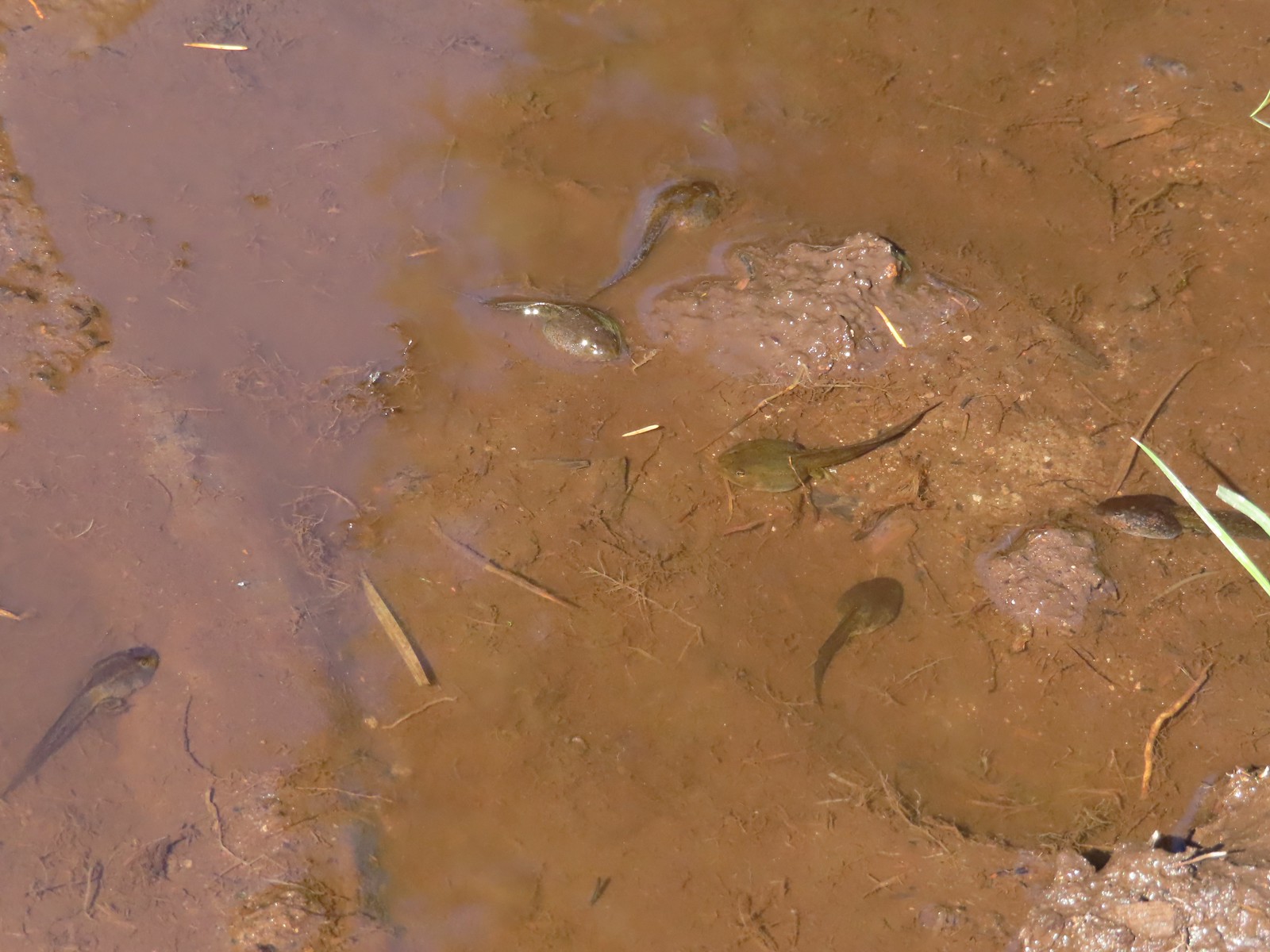 Tadpoles
 Frog in the water.
 Trail sign ahead on the right.
 Unnamed creek along the PCT. We were surprised at how many of the seasonal creeks still had flowing water.
 Grass-of-parnassus
 Huckleberries, there were a lot of these around the basin which we happily sampled.
 Devil’s Peak poking up above the trees.
 The Cliff Lake Trail.
 Prince’s pine
 Another flowing seasonal creek.
 Crater Lake collomia (Collomia mazama)
 The Seven Lakes Trail arriving on the right.
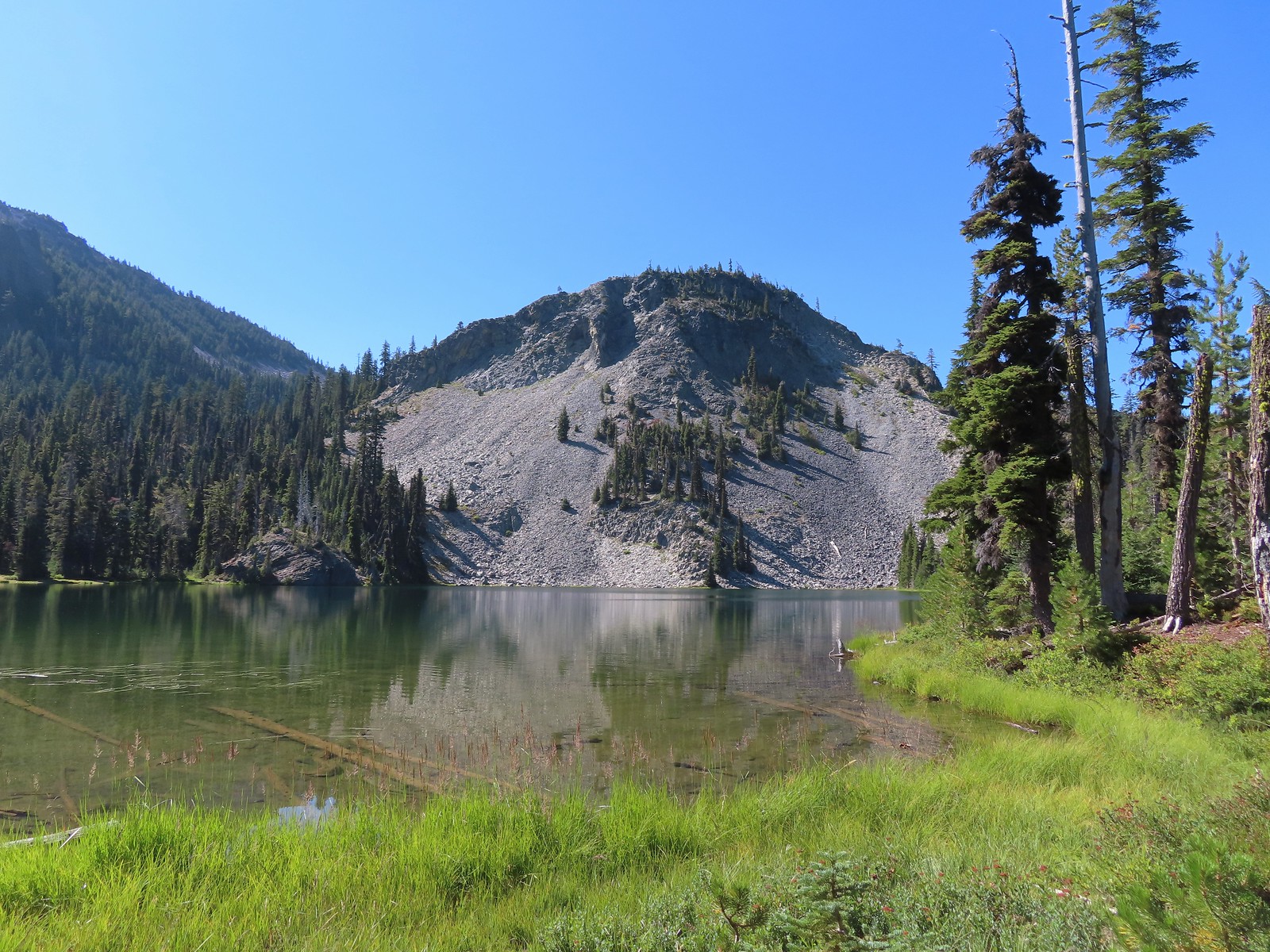 Cliff Lake
 Arnica
 Aster
Aster
 Splash in Cliff Lake from one of many fish that were feeding on insects.
 Camp
Camp Huckleberry bushes along the Cliff Lake Trail.
 Anywhere there was water nearby there were lots of tiny Cascade toads to watch out for.
 Back at the PCT.
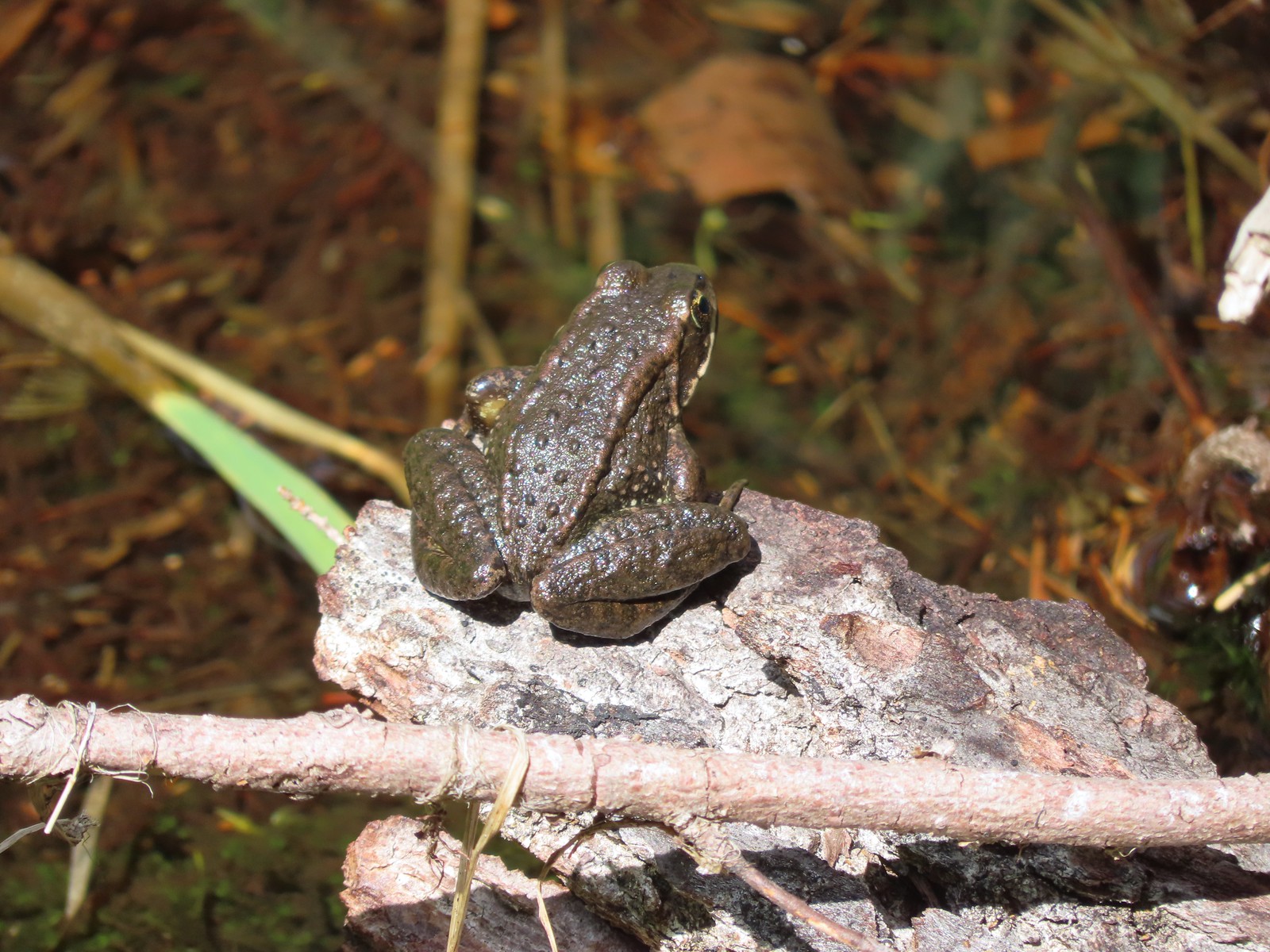 Larger frog
 Monkshood
 More grass-of-parnassus
 Not only were the toads tiny, they also were well camouflaged.
 Mount Scott (
 Mount Scott
 The Watchman (
 The Watchman and Hillman Peak
 Devil’s Peak
 Union Peak (
 Cliff Lake with Violet Hill beyond.
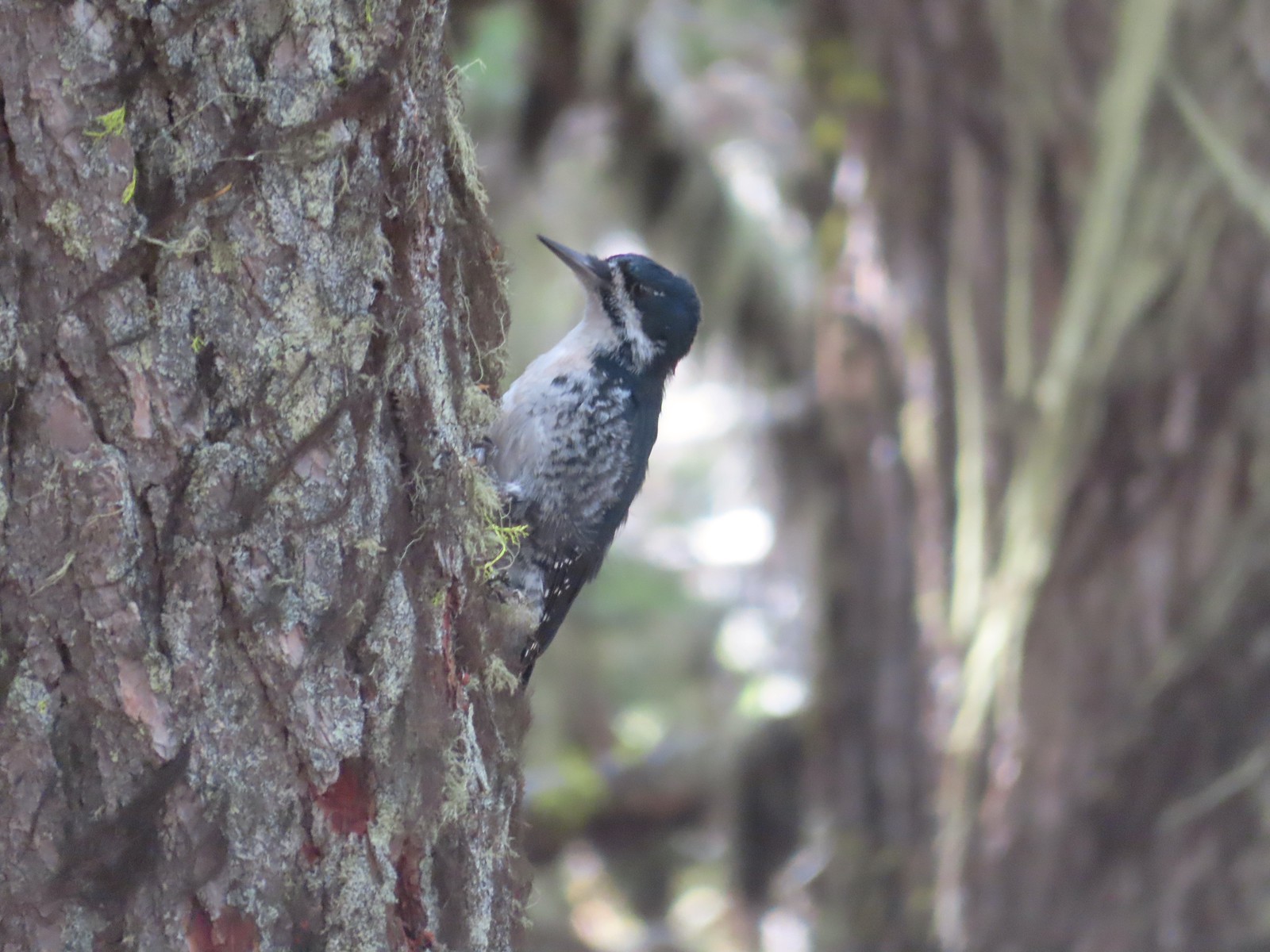 Black backed woodpecker
 Getting closer to Devil’s Peak.
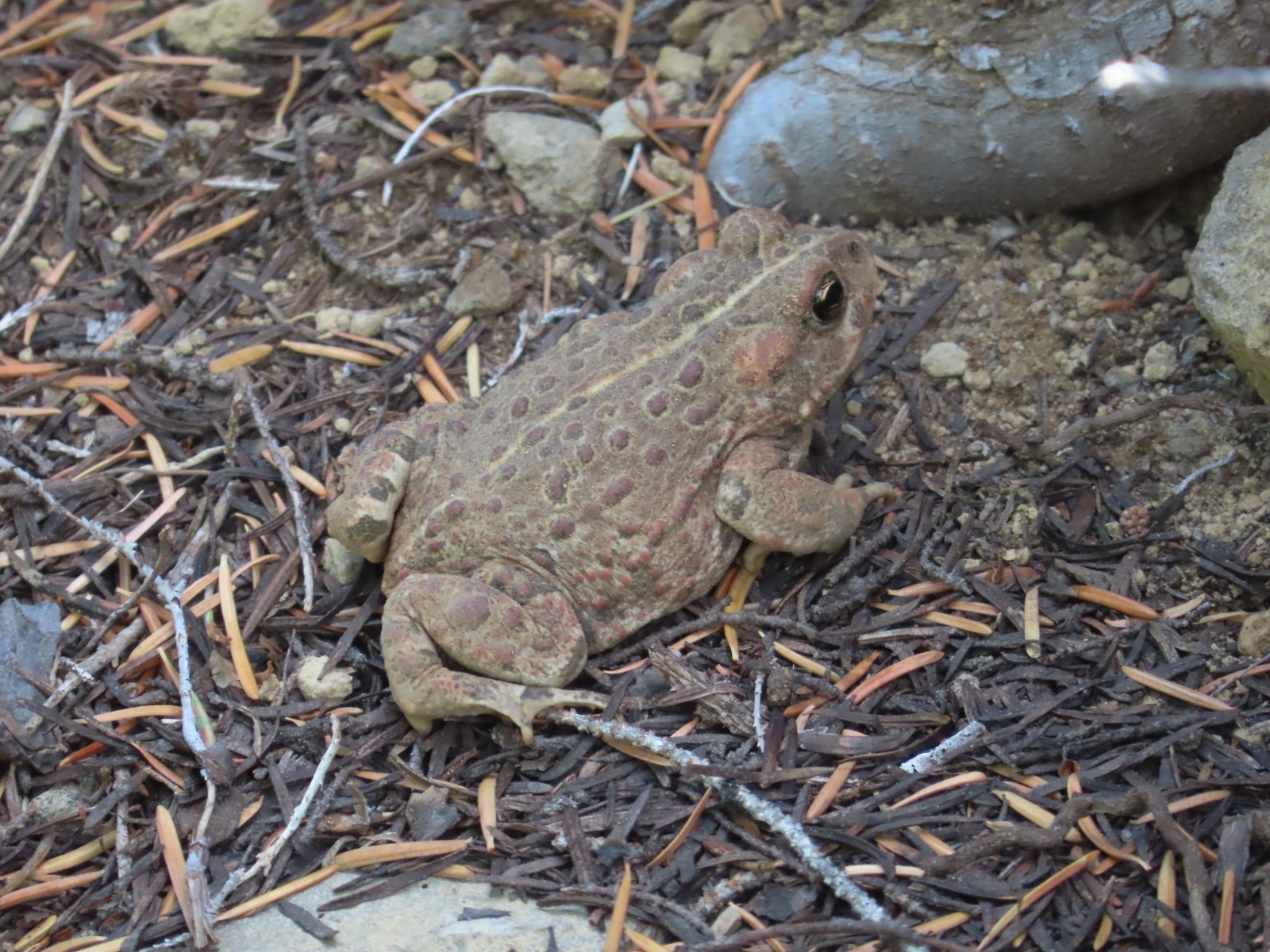 A much bigger Cascade toad.


 Mt. Thielsen (
 Union Peak with Mt. Bailey (
 Lots of neat rock formation on Devil’s Peak.
 Western pasque flower seed heads.
 Buckwheat
 Views to the South opened up at the pass including Klamath Lake and Pelican Butte.
 Klamath Lake
 Devil’s Peak and the PCT coming up to the pass from the North.
 Klamath Lake, Pelican Butte, Aspen Butte (
 Mt. McLoughlin
 A faint Mt. Shasta which, given the wildfires burning in NW California was a bit of a surprise to be able to see.
 The view North.
 Goose Egg and Ethel Mountain in the forefront with Llao Rock, Mt. Thielsen, and Garfield Peak (
 Devil’s Peak
 We were a little concerned at first that it might be picking up water for a new fire but there wasn’t anything hanging from the helicopter so we have no idea what it was actually doing.
 The use path to Devil’s Peak on the right and the PCT on the left.
 The rather ominously named Lucifer from the use trail.
 A second use trail coming up from the opposite side.
 Western pasque flowers on the hillside above the use trails.
 The summit of Devil’s Peak ahead.
 Looking North toward Crater Lake and Mt. Thielsen
 Lucifer, Jupiter, and Venus
 Lee Peak above the pass.
 Luther Mountain (
 Remains of a former lookout.
 The PCT below Devil’s and Lee Peaks.
 Goose Egg, Llao Rock, and Mt. Thielsen
 Mt. Scott
 Mt. Shasta to South through a little smoke but again we felt fortunate to be able to see the mountain at all.
 Colorful grasshopper at the summit.
 American pipit
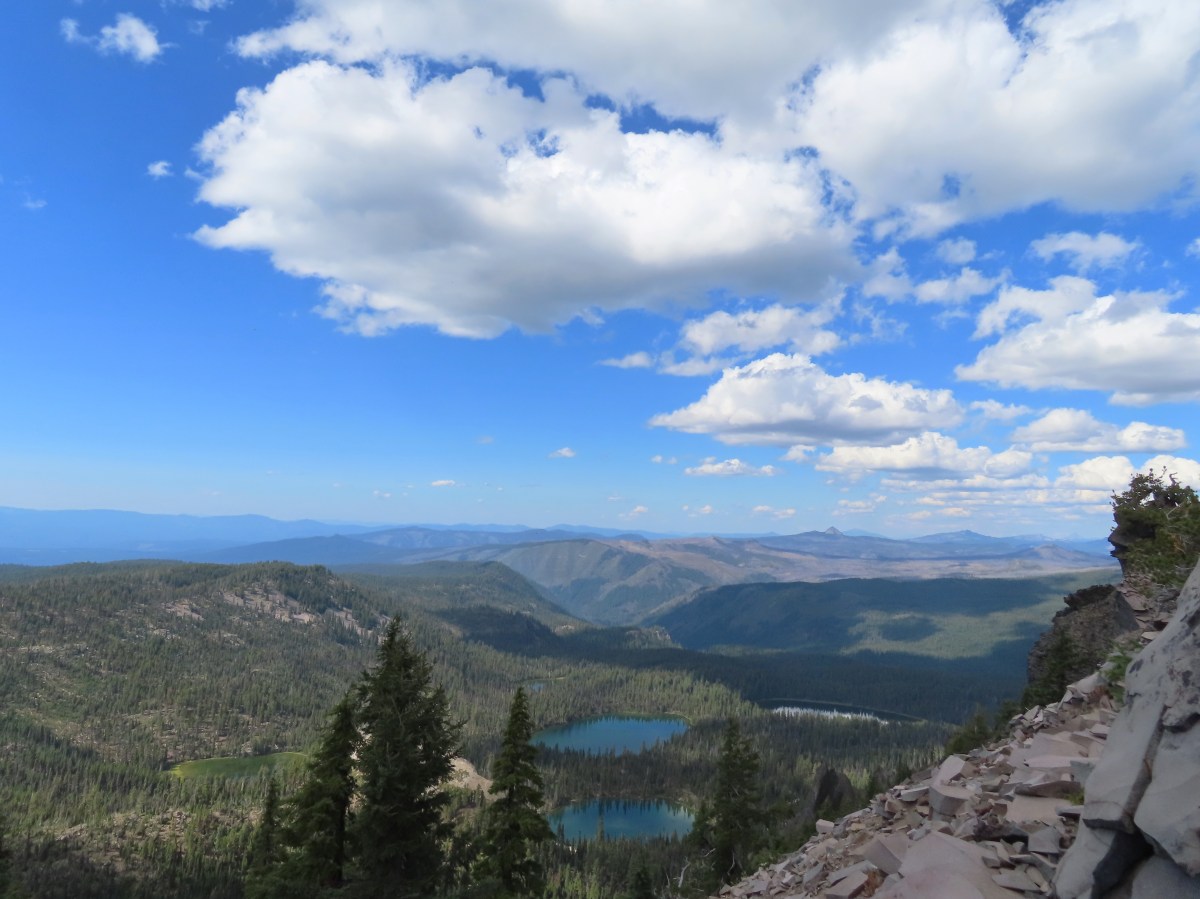
 The Seven Lakes Basin from the use trail down.
 South, Middle, North, and Grass Lakes
 Heading down the use trail.
 Looking back up the use trail.
 Western snakeroot along the PCT.
 A comma butterfly on western snakeroot.
 Painted lady
 Venus from the Devil’s Peak Trail.
 Looking back at Devil’s Peak.
 Looking North across the Seven Lakes Basin.
 Lake Alta in a bowl below Violet Hill.
 Pond along the Devil’s Peak Trail.
 Coming up to the Seven Lakes Trail junction. A rock cairn was the only marker.


 I was still only about halfway along the lake after the quarter mile. There used to be a campground at the North end.
 Common merganser
 The southern end of Lake Alta.
 Cliff Lake below Devil’s Peak and Middle Lake.
 Middle and Grass Lakes
 I could hear several pikas in the rocks below the cliffs but the only thing I spotted was a chipmunk.
 Chipmunk
 Sulphur butterfly on aster.
 Gentian
 Fireweed
 South Lake
 Devil’s Peak from the trail. There were more pikas “meeping” from the rocks here but again we failed to spot any of them.

 Devil’s Peak in the evening.
 So many fish in the evening.
 Devil’s Peak in the morning.
 Seven Lakes and Cliff Lake Trail junction.

 We detoured left at the northern end of the lake following a pointer for Lake Ivern to find a view back across Middle Lake.
 Devil’s Peak from Middle Lake.
 Stream crossing.
 Monkshood and grass-of-parnassus
 Grass Lake
 Arriving at the PCT.

 Golden-mantled ground squirrel
 Sevenmile Trail at the PCT to return to the Sevenmile Marsh Trailhead.
 Exiting the Sky Lakes Wilderness.

