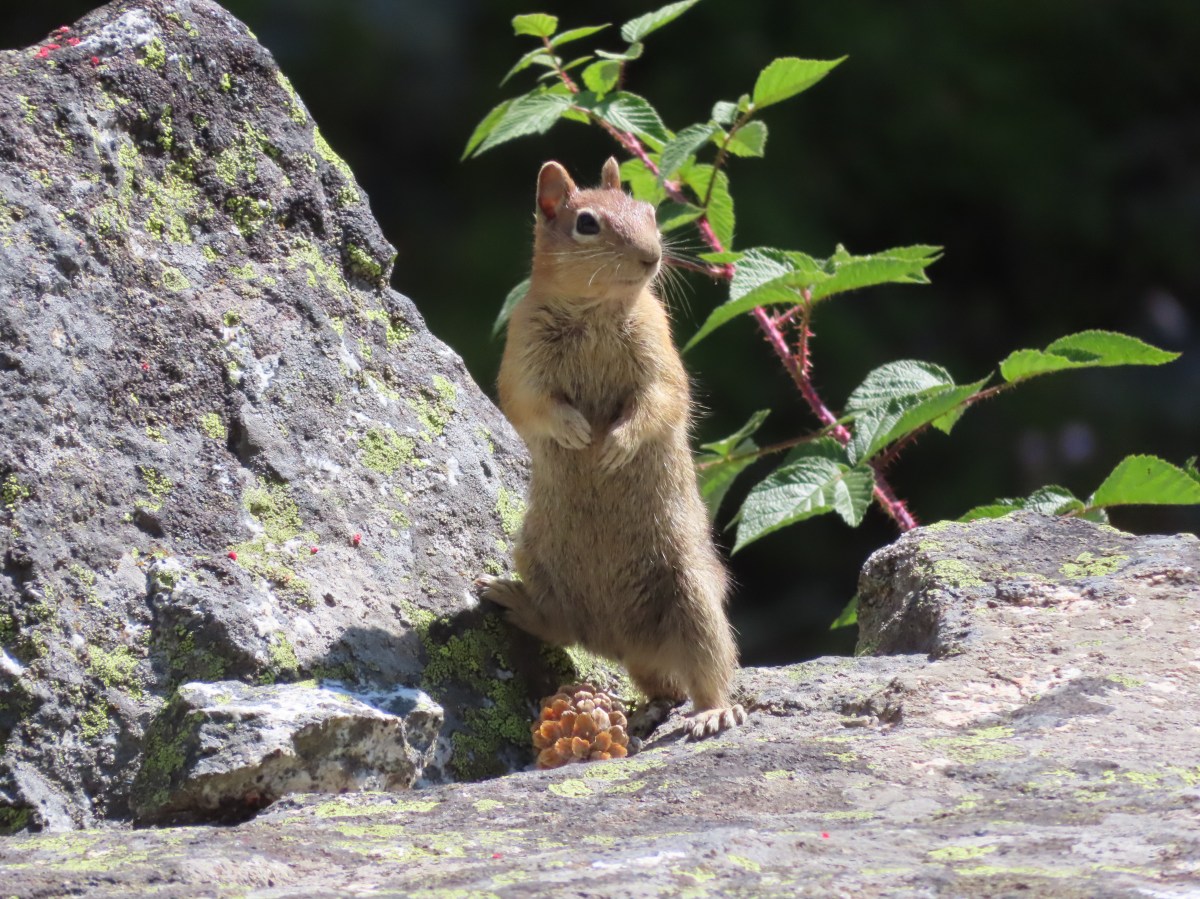
This is part 2 of our 2024 wildlife phots. Please click here for our feathered friends gallery. As with all our wildflower and wildlife posts any corrections or additions to our attempts at identifying what we’ve photographed are greatly appreciated. One other note, while we really enjoy taking pictures as a way to record what we see on our hikes, we are by no means photographers. We use our phones and a point and shoot camera on the auto setting, so the pictures are far from professional, but we hope you enjoy them. Finally, we do practice Leave No Trace Principles including Principle 6: Respect Wildlife which means observing from a distance, never feeding, and respecting any area wildlife closures. We urge others to do the same and recreate responsibly.
It was a pretty good year for wildlife. While we spotted several species of birds that were new to us this year, we didn’t add any new mammals, reptiles, or amphibians to those we’d seen in previous years. Below are photos representing many of the different critters that we saw, including a number of insects on flowers that we only realized were there after viewing the photos.
 Starfish, anemones, and mussels – 5/11/24 Crescent Beach, OR
 Crab – 5/11/24 Crescent Beach, OR
 Trout – 7/13/24 Joyce Lake, OR
 Fish – 10/7/24 Salmon River, OR
 Frog – 9/13/24 Sprague Lake (Mt. Jefferson Wilderness), OR

Tree frog – 5/26/24 Madison Butte Trail, OR
 Toad – 8/31/24 Deep Lake (Sky Lakes Wilderness), OR
 Western toad – 7/23/24 McCully Creek Trail (Eagle Cap Wilderness), OR
 Rough-skinned newt – 1/27/24 Corvallis to Coast Trail, OR
 Sagebrush lizard – 6/19/24 Deception Butte, OR
 Western fence lizard – 5/25/24 Barnes Butte Recreation Area, Prineville, OR
 Snake – 6/8/24 Tillamook State Forest, OR
 Snake – 6/8/24 Tillamook State Forest, OR
 Snake – 7/4/24 Horsepasture Mountain Trail, OR

Not sure if this is a vole or a pocket gopher? – 6/8/24 Tillamook State Forest, OR
 Townsend’s chipmunk – 9/13/24 Mt. Jefferson Wilderness, OR
 Least chipmunk – 8/20/24 Eagle Cap Wilderness, OR
 Golden-mantled ground squirrel – 8/20/24 Eagle Cap Wilderness, OR
 Columbian ground squirrels – 8/18/24 Eagle Cap Wilderness, OR
 California ground squirrel – 5/25/24 Willow Creek Trail, Madras, OR
 Red squirrel – 9/9/24 Eagle Cap Wilderness, OR
 Douglas squirrel – 2/3/24 Forest Park, Portland, OR
 Yellow-bellied marmot – 5/25/24 Willow Creek Trail, Madras, OR
 Leaning toward muskrat but it could be a nutria. – 10/10/24 William L. Finley National Wildlife Refuge, OR
 This one is for sure a nutria (invasive). – 2/24/24 Fernhill Wetlands, OR
 Pika – 7/24/24 Eagle Cap Wilderness, OR
 Cottontail – 9/8/24 National Historic Oregon Trail Interpretive Center, Baker City, OR
 Rabbit – 2/24/24 Fernhill Wetlands, OR
 Roosevelt elk – 5/11/24 Ecola State Park, OR
 Black-tailed deer – 3/30/24 Corvallis, OR
 Black-tailed deer – 10/10/24 William L. Finley National Wildlife Refuge, OR
 Mule deer – 8/22/24 Eagle Cap Wilderness, OR
 Mountain goat – 8/19/24 Eagle Cap Wilderness
 Coyote – 10/5/24 Mt. Hood Wilderness, OR
 Black bear – 8/22/24 Eagle Cap Wilderness, OR
 Cows – 5/27/24 Crooked River Wetlands, Prineville, OR

Slugs – 4/13/24 Wind Mountain Trail, WA
 Snail – 6/19/24 Buckhead Nature Trail, Westfir, OR
 Beetle – 6/8/24 Tillamook State Forest, OR
 Beetle – 8/31/24 Sky Lakes Wilderness, OR
 Beetles – 7/22/24 Hurricane Creek Trail (Eagle Cap Wilderness), OR
 Cricket – 9/9/24 Eagle Cap Wilderness, OR
 Cicada – 6/29/24 Grasshopper Mountain, OR
 Crane flies – 3/16/24 Middle Fork Path Eugene, OR
 Dragon fly – 6/19/24 Deception Butte Trail, OR
 Dragonfly – 8/31/24 Sky Lakes Wilderness, OR
 Dragonfly – 10/10/24 William L. Finley National Wildlife Refuge, OR
 Flying ants – 7/13/24 Nasty Rock, OR
 A pollinator – 6/29/24 Grasshopper Mountain, OR
 A pollinator – 6/29/24 Grasshopper Mountain, OR
 Seet bee – 8/18/24 Cliff Creek Trail, OR
 Bees – 6/29/24 Grasshopper Mountain, OR

Bumble bee – 8/19/24 Pine Creek Trail, OR
 Spider – 4/13/24 Sams-Walker Day Use Area
 Find the crab spider (hint: one of the white blooms). – 7/4/24 Olallie Trail, OR
 Spider hunting a moth. – 7/22/24 – Hurricane Creek Trail (Eagle Cap Wilderness), OR
 Millipede – 6/19/24 Deception Butte, OR
 Caterpillar – 6/22/24 Big Huckleberry Mountain, OR
 Caterpillars – Pine Lakes Trail, OR
 Woolly bear caterpillar – 10/10/24 William L. Finley National Wildlife Refuge, OR
 Crescent butterfly and another pollinaotr – 7/23/24 McCully Creek Trail, OR
 Skipper and flies – 5/25/24 Barnes Butte Recreation Area, Prineville, OR
 Arctic skipper – 6/1/24 Cook Hill, WA
 Northern cloudywing – 6/19/24 Deception Butte, OR
 Persius duskywing (Erynnis persius) – 7/4/24 Horsepasture Mountain, OR
 Possibly a Pacuvius duskywing – 7/23/24 McCully Creek Trail (Eagle Cap Wilderness), OR
 Western meadow fritillary – 6/29/24 Grasshopper Mountain, OR
 Fritillary – 7/13/24 Nasty Rock, OR
 Fritillary – 8/22/24 Eagle Cap Wilderness, OR
 Myllita crescent (female) – 7/22/24 Eagle Cap Wilderness, OR
 Myllita crescent (male) – 7/24/24 Eagle Cap Wilderness, OR
 Field crescent – 9/13/24 Mt. Jefferson Wilderness, OR
 Edith’s checkerspot – 6/29/24 Grasshopper Mountain, OR
 Snowberry checkerspot (male) – 7/13/24 Nasty Rock, OR
 Snowberry checkerspot (female) – 7/13/24 Nasty Rock, OR
 Green comma – 8/20/24 Eagle Cap Wilderness, OR

Hoary comma – 7/23/24 Eagle Cap Wilderness, OR
 Painted lady – 9/13/24 Mt. Jefferson Wilderness, OR
 California tortoiseshell – 7/23/24 Eagle Cap Wilderness, OR
 Milbert’s tortoiseshell – 5/26/24 Madison Butte, OR
 Common woodnymph – 7/22/24 Eagle Cap Wilderness, OR
 Great arctic – 6/29/24 Grasshopper Mountain, OR
 Monarch butterfly – 7/24/24 Eagle Cap Wilderness, OR
 Orange tip – 5/26/24 Madison Butte, OR
 Pine white – 8/31/24 Sky Lakes Wilderness, OR
 Becker’s white – 8/18/24 Cliff Creek Trail, OR
 Clodius parnassian – 6/29/24 Grasshopper Mountain, OR
 Margined white? – 7/23/24 McCully Creek Trail, OR
 Not sure which sulphur this is – 7/22/24 Hurricane Creek Trail (Eagle Cap Wilderness), OR
 Also unsure which sulphur this is – 8/20/24 Chimney-Wood Trail (Eagle Cap Wilderness), OR

Ochre ringlet – 5/25/24 Barnes Butte Recreation Area, Prineville, OR

Cedar hairstreak – 5/25/24 Barnes Butte Recreation Area, Prineville, OR
 Oregon swallowtail – 5/26/24 Madison Butte, OR
 Western tiger swallowtail – 7/23/24 McCully Creek Trail, OR
I rarely ever attempt a guess at the gossamer wings.
 6/29/24 Grasshopper Mountain, OR
 6/29/24 Grasshopper Mountain, OR
 8/18/24 Cliff Creek Trail, OR
 7/22/24 Hurricane Creek Trail (Eagle Cap Wilderness), OR
 7/24/24 Eagle Cap Wilderness, OR

7/24/24 Eagle Cap Wilderness, OR
 8/20/24 Chimney-Wood Trail (Eagle Cap Wilderness), OR
 7/23/24 McCully Creek Trail, OR
 Echo azure? – 4/13/24 Beacon Rock State Park, WA
 Moth – 06/08/24 Tillamook State Forest, OR
 Moth – 6/29/24 Grasshopper Mountain, OR
 Moth – 6/29/24 Grasshopper Mountain, OR
 Moth – 7/21/24 Hat Point, OR
 Eight-spotted forester moth – 7/4/24 Olallie Trail, OR

Police car moths – 7/24/24 Eagle Cap Wilderness, OR
 Acorn woodpecker – 3/30/24 Mulkey Ridge Trail, Corvallis, OR
 Lewis’s woodpecker – 8/31/24 Sky Lakes Wilderness, OR
 Northern flicker – 6/19/24 Deception Butte, OR
 Black-backed woodpecker? – 9/13/24 Mt. Jefferson Wilderness, OR
 Hairy? woodpecker (I have a hard time with Hairy vs Downy woodpeckers) – 6/19/24 Deception Butte Trail, OR
 Anna’s hummingbird – 2/24/24 Fernhill Wetlands, Forest Grove, OR
 Rufous hummingbird – 8/3/24 Crater Lake National Park, OR
 American goldfinch – 4/20/24 Jackson Bottom Wetlands, Hillsboro, OR
 American robin – 4/20/24 Jackson Bottom Wetlands, Hillsboro, OR
 American dippers (ouzels) – 5/12/24 Lee Wooden Fishhawk Falls County Park, Clatsop County, OR
 Black-headed grosbeak – 6/8/24 Cedar Butte (Tillamook State Forest), OR
 Bullock’s oriole (top of photo) – 5/25/24 Willow Creek Trail, Madras, OR
 LOL! This is the best photo of a varied thrush I could get this year. 2/3/24 Forest Park, Portland, OR
 Hermit thrush – 6/15/24 O’Leary Mountain Trail (Willamette National Forest), OR
 Chickadee – 9/9/24 Hidden Lake Trail (Eagle Cap Wilderness), OR
 Dark-eyed junco – 3/30/24 Mulkey Ridge Trail, Corvallis, OR
 Common yellowthroat – 5/28/24 Baskett Slough National Wildlife Refuge, OR
 Dusky flycatcher – 8/19/24 Pine Lakes Trail (Eagle Cap Wilderness), OR
 Hammond’s flycatcher – 8/22/24 East Fork Wallowa River Trail (Eagle Cap Wilderness), OR
 Ash-throated flycatcher – 5/25/24 Willow Creek Trail, Madras, OR
 Lazuli bunting – 5/25/24 Willow Creek Trail, Madras, OR
 Mountain bluebirds – 8/18/24 Cliff Creek Trail (Eagle Cap Wilderness), OR
 Western bluebirds – 3/16/24 Middle Fork Path, Eugene, OR
 Cedar waxwing – 5/28/24 Baskett Slough National Wildlife Refuge, OR
 California jay – 3/30/24 Mary’s River Natural Park, Corvallis, OR
 Canada jay – 6/19/24 Deception Butte Trail, OR
 Stellar’s jay – 10/10/24 William L. Finley National Wildlife Refuge, OR
 Crow – 4/20/24 Jackson Bottom Wetlands, Hillsboro, OR
 Raven – 5/11/24 Ecola State Park, OR
 Sage thrasher (new sighting for us) – 9/8/24 National Historic Oregon Trail Interpretive Center, OR
 Western meadowlark – 5/28/24 Baskett Slough National Wildlife Refuge, OR
 Western tanager – 7/24/24 Tenderfoot Wagon Road Trail (Eagle Cap Wilderness), OR
 Pine siskins – 8/20/24 Chimney-Wood Trail (Eagle Cap Wilderness), OR
 Ruby-crowned kinglet – 3/16/24 Middle Fork Path, Eugene, OR
 Spotted towhee – 5/28/24 Baskett Slough National Wildlife Refuge, OR
 Townsend solitaire – 9/13/24 Mt. Jefferson Wilderness, OR
 Yellow-rumped warbler – 4/20/24 Jackson Bottom Wetlands, Hillsboro, OR
 Orange-crowned warbler – 4/20/24 Jackson Bottom Wetlands, Hillsboro, OR
 Wilson’s warbler – 6/8/24 Kilchis Forest Road (Tillamook State Forest), OR
 Purple martins – 4/20/24 Jackson Bottom Wetlands, Hillsboro, OR
 Tree swallows – 4/20/24 Jackson Bottom Wetlands, Hillsboro, OR
 Barn swallows – 5/11/24 Fort Stevens State Park, OR
 European starling – 2/24/24 Fernhill Wetlands, Forest Grove, OR
 Brewer’s blackbird – 5/27/24 Crooked River Wetlands, Prineville, OR
 Yellow-headed blackbird – 5/27/24 Crooked River Wetlands, Prineville, OR
 Red-winged blackbird – 2/10/24 Wapato Lake National Wildlife Refuge
 Bushtit – 7/6/24 Independence River Front Park, Independence, OR
 Brown creeper – 6/19/24 Deception Butte Trail, OR
 White-breasted nuthatch – 3/16/24 Middle Fork Path, Eugene, OR
 Red-breasted nuthatch – 7/23/24 McCully Creek Trail (Eagle Cap Wilderness), OR
 Pacific wren – 3/16/24 Middle Fork Path, Eugene, OR
 Marsh wren – 5/27/24 Crooked River Wetlands, Prineville, OR
 Rock wren – 5/25/24 Willow Creek Trail, Madras, OR
 Golden-crowned sparrow – 4/20/24 Jackson Bottom Wetlands, Hillsboro, OR
 Savanah sparrow – 4/20/24 Jackson Bottom Wetlands, Hillsboro, OR
 Song sparrow – 4/20/24 Jackson Bottom Wetlands, Hillsboro, OR
 Chipping sparrow – 4/13/24 Sams-Walker Day Use Area, WA
 White-crowned sparrow – 4/13/24 Sams-Walker Day Use Area, WA
 House finch – 5/28/24 Baskett Slough National Wildlife Refuge, OR
 Cassin’s finch – 8/4/24 Crater Lake National Park, OR
 Cassin’s vireo – 8/21/24 Maxwell Lake Trail (Eagle Cap Wilderness), OR
 American kestral – 2/24/24 Fernhill Wetlands, Forest Grove, OR
 Peregrine falcon – 10/10/24 William L. Finley National Wildlife Refuge, OR
 Copper’s hawk – 3/16/24 Middle Fork Path, Eugene, OR
 Red-tailed hawk – 5/25/24 Willow Creek Trail, Madras, OR
 Northern harrier – 5/28/24 Baskett Slough National Wildlife Refuge, OR
 Osprey – 5/27/24 Crooked River Wetlands, Prineville, OR
 Bald eagles – 2/24/24 Fernhill Wetlands, Forest Grove, OR
 Turkey vulture – 3/16/24 Middle Fork Path, Eugene, OR
 Dusky grouse – 7/23/24 McCully Creek Trail (Eagle Cap Wilderness), OR
 Sooty grouse – 8/31/24 Sky Lakes Wilderness, OR
 Ruffed grouse – 11/28/24 Silver Falls State Park, OR
 California quail – 10/10/24 William L. Finley National Wildlife Refuge, OR
 Dove – 5/27/24 Crooked River Wetlands, Prineville, OR
 Pigeons – 9/8/24 National Historic Oregon Trail Interpretive Center, OR
 Band-tailed pigeons – 6/8/24 Kilchis Forest Road (Tillamook State Forest), OR
 Pigeon guillemont – 5/11/24 Ecola State Park, OR
 Oyster catcher – 5/11/24 Ecola State Park, OR
 Whimbrel – 5/11/24 Ecola State Park, OR
 Seagull – 5/11/24 Ecola State Park, OR
 Spotted sandpiper – 7/24/24 Bonny Lakes (Eagle Cap Wilderness, OR
 Wilson’s phalarope (another first for us) – 5/27/24 Crooked River Wetlands, Prineville, OR
 Double-crested cormorant – 2/24/24 Fernhill Wetlands, Forest Grove, OR
 American bittern – 5/28/24 Baskett Slough National Wildlife Refuge, OR
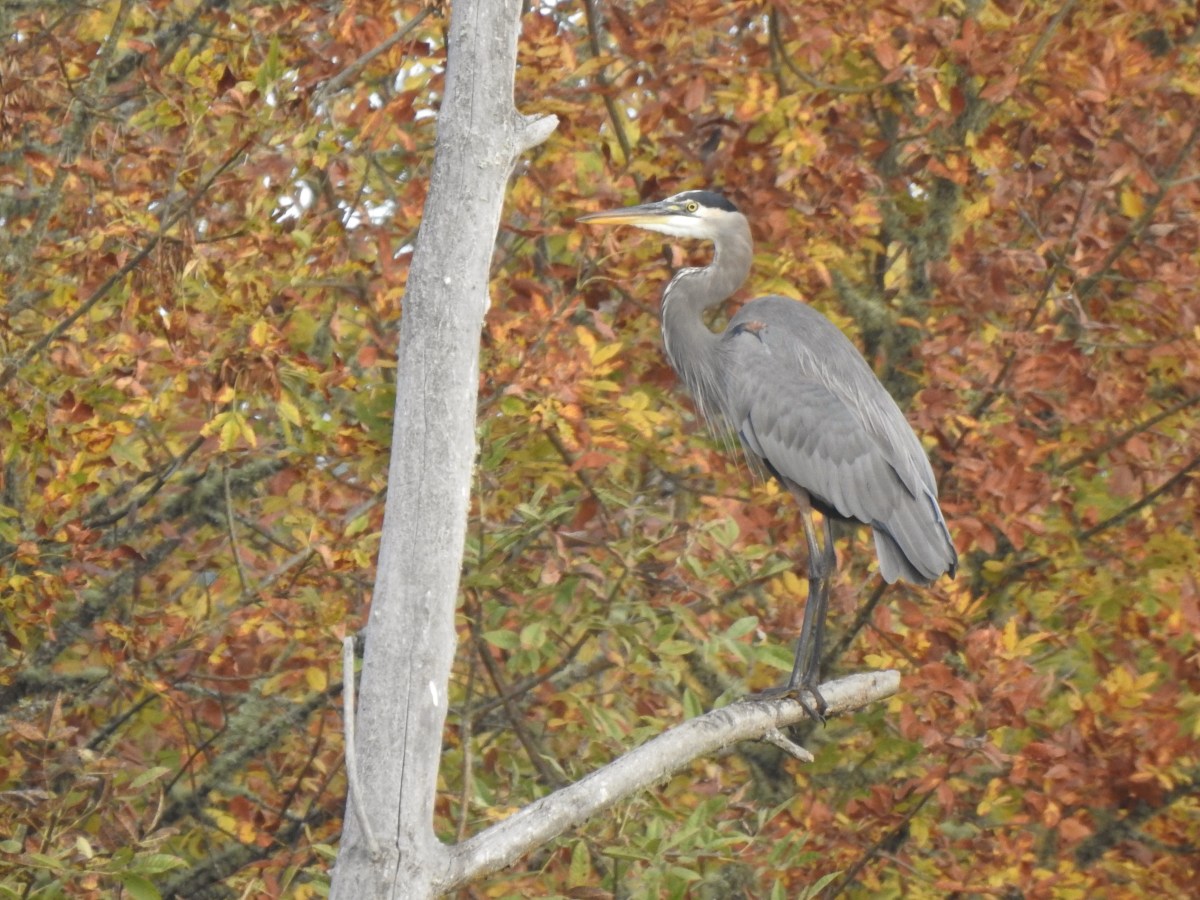
 Great egret, female mallard, and great blue heron – 10/10/24 William L. Finley National Wildlife Refuge, OR
 Mallard drake – 2/24/24 Fernhill Wetlands, Forest Grove, OR
 Ruddy ducks – 2/24/24 Fernhill Wetlands, Forest Grove, OR
 Northern shoveler – 2/24/24 Fernhill Wetlands, Forest Grove, OR
 Buffleheads – 2/24/24 Fernhill Wetlands, Forest Grove, OR
 Green-winged teal – 2/24/24 Fernhill Wetlands, Forest Grove, OR
 Northern pintail and American wigeons – 2/10/24 Wapato Lake National Wildlife Refuge
 Canvasbacks (first time sighting for us) – 2/10/24 Wapato Lake National Wildlife Refuge
 Common merganser drake – 3/16/24 Middle Fork Path, Eugene, OR
 Hooded mergansers – 3/16/24 Middle Fork Path, Eugene, OR
 Cinnamon teal – 4/20/24 Jackson Bottom Wetlands, Hillsboro, OR
 Lesser scaups – 4/20/24 Jackson Bottom Wetlands, Hillsboro, OR
 Greater scaup – 5/11/24 Skippanon River, Warrenton, OR
 Ring-necked duck – 5/26/24 Bull Prairie Lake (Umatilla National Forest), OR
 Gadwalls – 5/27/24 Crooked River Wetlands, Prineville, OR
 Barrow’s goldeneye – 9/11/24 Pyramid Lake (Mt. Hood National Forest), OR
 American coot – 2/24/24 Fernhill Wetlands, Forest Grove, OR
 Pie-billed grebe – 2/24/24 Fernhill Wetlands, Forest Grove, OR
 Eared grebe – 5/26/24 Bull Prairie Lake (Umatilla National Forest), OR
 Horned grebe – 2/10/24 Wapato Lake National Wildlife Refuge
 Canada geese – 4/20/24 Jackson Bottom Wetlands, Hillsboro, OR
 Cackling geese – 2/24/24 Fernhill Wetlands, Forest Grove, OR
 Tundra swans (first sighting for us) – 2/24/24 Fernhill Wetlands, Forest Grove, OR


 Shellburg Creek
 Trail sign ahead on the right marking the resumption of the Shellburg Falls Trail.

 May 2011 view.
 First sunlight hitting the rocks above the trail.
 Barricade and sign marking the closed section of trail.

 Some survivors on the far hillside.
 I heard a number of woodpeckers throughout the day, but this was the only one I was able to spot.
 Outhouse at the day use area up ahead.
 Parking spots at the day use area along with the shelter. The trails on the left and right are the Vine Maple Trail, the shortest loop option at about 1-mile.
 The only tree I had to step over on a trail all morning.
 Arriving at the 4-way trail junction with the Shellburg Creek, August Mountain, and southern portion of the Vine Maple Trail.

 I saw a good number of varied thrushes including 4 or 5 in this spot, but once again I failed at getting a clear picture.
 The forest along the creek held up pretty well in the fire.


 Frosty leaves


 End of the line. I briefly searched for old tread before deciding that this was not in fact the Lost Creek Trail.
 The T-junction
 Heading uphill from the Shellburg Creek Trail.
 As near as I can tell the decommissioned section of trail was the Lost Creek Trail as some maps show both the Lost Creek and Snag Loop Trails.
 Arriving at the road crossing.
 Shellburg/Ayers Creek Road (depending on the map)
 On the other side of the intersection.

 Some of the forest up higher had survived the fire as well.
 Arriving at Lookout Mountain Road.
 Gate at the border of Silver Falls State Park.
 The unmistakable flat top of Coffin Mountain (
 Evergreen violets – Viola sempervirens
 Snow queen

 While the Sun was out and it had warmed up a bit the shady areas were still frosty.


 While not unobstructed, the fire had opened up partial views of Mt. Jefferson.
 Mt. Jefferson through the trees.
 Two of the deer.

 Stassel Falls
 Lower Shellburg Falls
 2011
2011


 Rainbow and ice below Shellburg Falls.
 Icicles on the rocks above Shellburg Creek.
 August Mountain Trail on the left.


 We started with this hike in part due to it being the first day of the final king tides, abnormally high tides, for the season. High tide for Smelt Sands was going to be 9:45am so we were hoping to see some of the wave action.
 It was just before 8am as we hiked the 804 Trail.
 We made a mistake and turned right on the paved path here, but we should have continued beyond the large signboard to a second path marked by a wooden post. You can see the small white and black to the left of the green signboard. We may have been distracted by “Free Coffee” being printed on the bottom of the green sign.
 This post is similar to the one along the 804 Trail where we should have turned right.


 Boardwalk over Mitchell Creek.
 Grandmother Spruce
 The upper end of the preserve trail.

 Mushrooms
 Approaching Starr Creek.
 Starr Creek
 The upper gate at the junction.
 Ya’Xaik Trail
 The right hand fork here is the trail leading down to the fire station that dog owners can use to make a loop. A local had warned us that this trail can be pretty slick. We went left to remain on the Ya’Xaik Trail.
 There was a little climbing involved before the trail headed down to Diversity Drive.


 The Ya’Xaik Trail at Diversity Drive.


 The Woodland Trail continues to the left while the right connects up to a road.


 A footbridge over the Red River below with a disc golf hole on the opposite ridge. We were able to use the OregonHikers Field Guide map to identify this connector trail as one we did not want to take. That map had many of the connector trails identified in red which helped keep our position located as well as keep us on the correct route.


 The old roadbed at the bottom of the switchbacks.
 Woodland Trail on the left and our next stop, the Lint Slough Trail, on the right.


 Memorial plaque
 There was a bypass uphill for this short flooded section.
 There were a number of bufflehead ducks, a pair of geese, and one noisy great blue heron at the slough. All of the wildlife seemed to be positioned as far away from the trail as possible.
 The great blue heron in a tree across the slough.
 This little group of buffleheads was the exception.
 I turned around at this bench due to not seeing an obvious continuation of the trail here. I had also lost Heather who had stayed up to avoid the flooded section and instead of returning to the trail I was on, on the other side of the flooded bench, stayed up on the higher path. That path began leading up uphill away from the actual trail without another way to get back to the correct path. She wound up backtracking and we met shortly after I had started back.
 The slough from my turn around point.
 Yarrow
 Bull thistle (non-native)
 Rose (probably non-native)


 Looking north along the beach.
 The view south.
 The wet sand and debris from the high tide was up to the vegetation along much of the beach.
 We decided to turn back at the creek partly to avoid crossing it, but also because we had been walking into the wind. It wasn’t a particularly cold day, but the wind chill was almost making it uncomfortable.
 Seagull with a crab.
 Cape Perpetua (
 Buckley Creek
 We had to ford Buckley Creek which was only a couple of inches deep at most.
 Semipalmated plovers
 Western gull
 Heading back north.
 The path back up to the parking area at Driftwood Beach.

 Ocean spray – August 4th – Wizard Island (Crater Lake NP), OR
 Olympic onion – June 8th – Cedar Butte, OR
 One-sided wintergreen – July 25th – Minam River Trail, OR
 Tapertip onion – July 21st – Granny View Overlook (Hells Canyon), OR
 Ookow – June 1st – Cook Hill, WA
 Orange agoseris – June 29th – Grasshopper Mountain, OR
 Orange globe mallow- May 25th – Barnes Butte (Prineville), OR
 An orchid – July 22nd – Hurricane Creek Trail (Eagle Cap Wilderness), OR
 Oregon bluebells – June 29th – Grasshopper Mountain Trail, OR
 Oregon grape – March 30th – Mulkey Ridge Trail (Corvallis), OR
 Oregon sunshine – July 13th – Nasty Rock Trail, OR
 Pacific coralroot – July 13th – Joyce Lake Trail, OR
 Pacific hound’s tongue – March 30th – Mulkey Ridge Trail (Corvallis), OR
 Pacific waterleaf – May 12th – Cathedral Tree Trail, OR
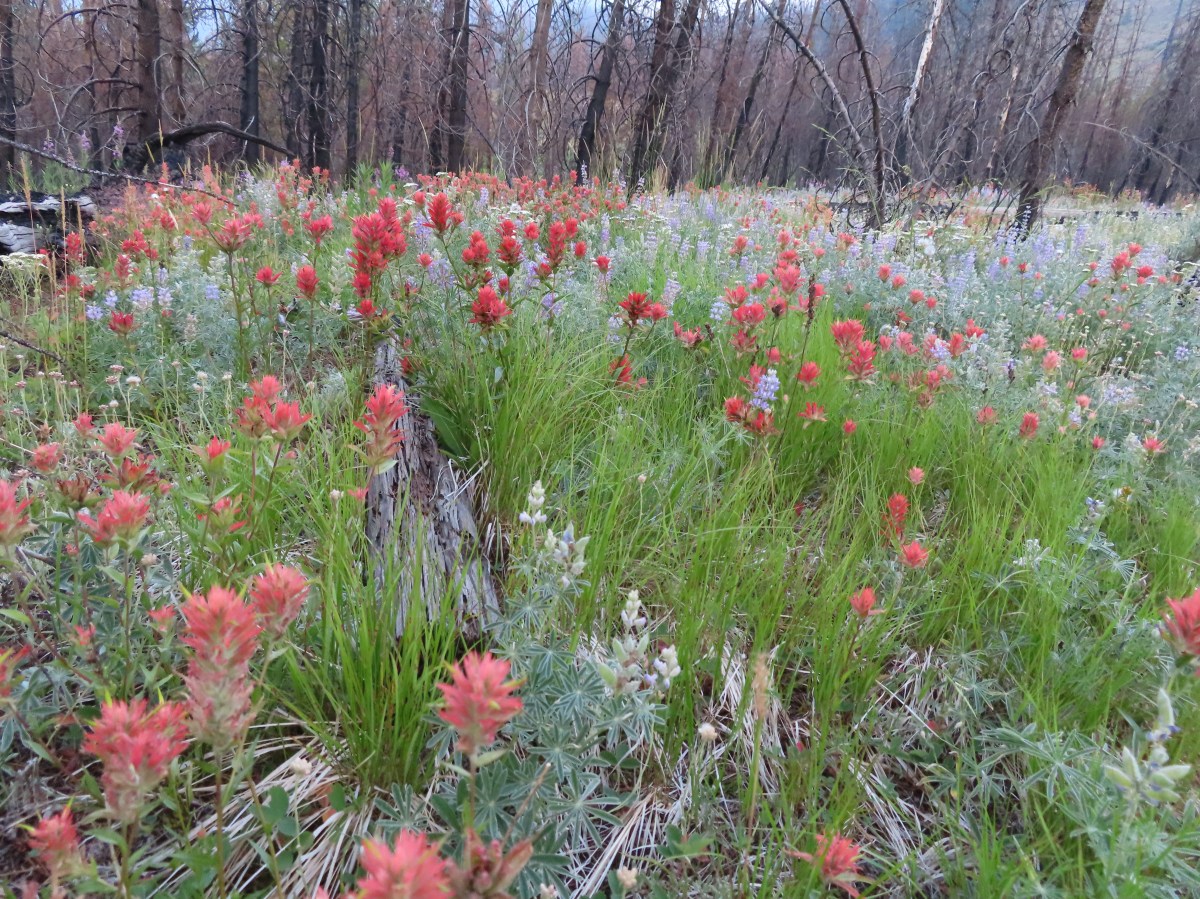
 Indian paintbrush – May 25th – Willow Creek Canyon, OR
 Paintbrush – probably scarlet (Castilleja miniata) – August 18th – Cliff Creek Trail (Wallowa-Whitman National Forest), OR
 Parry’s arnica – July 21st – Hat Point, OR
 Patridge foot – September 13th – Pacific Crest Trail (Mt. Jefferson Wilderness), OR
 Gray sagewort – July 21st – Granny View Overlook (Hells Canyon), OR
 Pea-vine – May 26th – Madison Butte, OR
 Pearly everlasting – June 19th – Deception Butte Trail, OR
 Woolly head clover – July 24th – Tenderfoot Wagon Road Trail (Eagle Cap Wilderness), OR
 Pennycress – July 23rd – McCully Creek Trail (Eagle Cap Wilderness), OR
 Penstemon – May 25th – Barnes Butte (Prineville), OR
 Penstemon – June 1st – Cook Hill, WA
 Pestemon – July 13th – Nasty Rock Trail, OR
 Venus penstemon – July 21st – Granny View Overlook (Hells Canyon), OR
 Globe penstemon – July 24th – Tenderfoot Wagon Road Trail (Eagle Cap Wilderness), OR
 A phacelia – July 26th – East Peak (Eagle Cap Wilderness), OR
 Phantom orchid – June 1st – Cook Hill, WA
 Phlox – June 1st – Cook Hill, WA
 Pinedrops – August 3rd – The Pinnacles Trail (Crater Lake NP), OR
 Pink pyrola – June 19th – Deception Butte Trail, OR
 Pioneer violet – April 13th – Wind Mountain, WA
 Woolly goldenweed? (If so this was a first for us.) – May 26th – Madison Butte, OR
 Prairie smoke – May 26th – Bull Prairie Lake, OR
 Prince’s pine – July 22nd – Hurricane Creek Trail (Eagle Cap Wilderness), OR
 Purple dead-nettle – February 24th – Fernhill Wetlands, OR
 Purpleflower honeysuckle – June 29th – Grasshopper Mountain, OR
 Pussypaws – July 26th – Mount Howard, OR
 Pussytoes – July 13th – Nasty Rock Trail, OR
 Queen’s cup – June 22nd – Big Huckleberry Mountain, WA
 Raceme pussytoes – June 29th – Grasshopper Mountain, OR
 Rosy pussytoes – June 22nd – Big Huckleberry Mountain, WA
 Ragwort – May 26th – Madison Butte, OR
 Red clover – July 24th – Tenderfoot Wagon Road Trail (Eagle Cap Wilderness), OR
 Red flowering currant – April 13th – Wind Mountain, WA
 Rhododendron – June 15th – O’Leary Mountain Trail, OR
 Rockcress – May 26th – Madison Butte, OR
 Rose campion (non-native) – June 19th – Buckhead Nature Trail, OR
 Rosy bird’s-foot trefoil – June 8th – Kilchis Forest Road, OR
 Salal – June 8th – Kilchis Forest Road, OR
 Salmonberry – April 13th – St. Cloud Trail, WA
 Sandwort – July 24th – Bonny Lakes Trail (Eagle Cap Wilderness), OR
 Saxifrage – July 24th – Tenderfoot Wagon Road Trail (Eagle Cap Wilderness), OR
 Scarlet gilia – July 4th – Horsepasture Mountain, OR
 Scouler’s bluebell – June 19th – Deception Butte Trail, OR
 Scouler’s corydalis – April 13th – Lower Archer Falls, WA
 Scouler’s woollyweed – July 24th – Bonny Lakes Trail (Eagle Cap Wilderness), OR
 Seaside bittercress – May 11th – Ecola State Park, OR
 Self-heal – June 19th – Deception Butte Trail, OR
 Serviceberry – May 26th – Madison Butte, OR
 Shooting star – May 26th – Madison Butte, OR
 Silverleaf phacelia – May 25th – Willow Creek Canyon, OR
 Silvery raillardella (new to us) – August 4th – Crater Lake National Park, OR
 Sitka mist-maidens – April 27th – Wahkeena Trail, OR
 Skunk cabbage – May 11th – Ecola State Park, OR
 Slender phlox – May 26th – Madison Butte, OR
 mall-flowered woodland-star – May 26th – Madison Butte, OR
 Small bluebells – May 26th – Madison Butte, OR
 Snowberry – June 19th – Deception Butte Trail, OR
 Solomonseal – April 20th – Jackson Bottom Wetlands, OR
 Oregon oxalis – April 13th – Lower Archer Falls, WA
 Spirea betulifolia – June 22nd – Big Huckleberry Mountain, WA
 Spiraea douglasii – July 6th – Independence Riverfront Park, OR
 Spiraea splendens – July 25th – Minam River Trail, OR
 Spotted coralroot – June 1st – Cook Hill, WA
 Spreading dogbane – July 22nd – Hurricane Creek Trail (Eagle Cap Wilderness), OR
 Spreading stickseed? – June 1st – Cook Hill, WA
 Star-flowered false solomonseal – June 8th – Cedar Butte, OR
 Starflower – June 1st – Cook Hill, WA
 Stonecrop – June 1st – Cook Hill, WA
 Wormleaf stonecrop – July 13th – Nasty Rock, OR
 Strawberry – March 30th – Mulkey Ridge Trail (Corvallis), OR
 Streambank globe-mallow – July 24th – Tenderfoot Wagon Road Trail (Eagle Cap Wilderness), OR
 Sub-alpine mariposa lily – June 19th – Deception Butte Trail, OR
 Sugar sticks – July 4th – Olallie Trail, OR
 Swamp onion – July 24th – Bonny Lakes Trail (Eagle Cap Wilderness), OR
 Sweet coltsfoot – April 27th – Wahkeena Trail, OR
 Tall bluebells – June 29th – Grasshopper Mountain Trail, OR
 Tansy ragwort (non-native) – July 6th – Independence Riverfront Park, OR
 Tasselflower brickellbrush – July 22nd – Hurricane Creek Trail (Eagle Cap Wilderness), OR
 Thimbleberry – April 20th – Jackson Bottom Wetlands, OR
 Thistle – June 8th – Kilchis Forest Road, OR
 Thistle (non-native) – July 6th – Independence Riverfront Park, OR
 Greene’s thistle (Cirsium inamoenum) – July 26th – Mount Howard, OR
 Threadleaf phacelia – May 25th – Barnes Butte (Prineville), OR
 Tiger lilies – June 19th – Deception Butte Trail, OR
 Dalmation toadflax (non-native) – May 25th – Willow Creek Trail (Madras), OR
 Tolmie’s mariposa lily – June 19th – Deception Butte Trail, OR
 Toothwort – March 30th – Mulkey Ridge Trail (Corvallis), OR
 Trillium – March 30th – Mulkey Ridge Trail (Corvallis), OR
 Twinberry – April 20th – Jackson Bottom Wetlands, OR
 Twin flower – July 4th – Olallie Trail, OR
 Valerian – June 8th – Kilchis Forest Road, OR
 Vanilla leaf – June 1st – Cook Hill, WA
 Variable-leaf collomia – June 8th – Cedar Butte Road, OR
 Vetch – May 28th – Baskett Slough National Wildlife Refuge, OR
 Vine maple – April 13th – Lower Archer Falls, WA
 Violet – March 6th – Dorris Ranch (Eugene), OR
 Violet – July 25th – Minam River Trail, OR
 Canary violet – May 26th – Madison Butte, OR
 Hookedspur violets – May 26th – Madison Butte, OR
 Wallflower – June 8th – Kilchis Forest Road, OR
 Wallowa paintbrush – July 25th – Minam River Trail, OR
 Washington lily – July 4th – Olallie Trail, OR
 Western buttercups – March 16th – Middle Fork Willamette Path (Eugene), OR
 Western clematis – August 19th – Pine Lakes Trail (Eagle Cap Wilderness), OR
 Western featherbells – July 13th – Nasty Rock Trail, OR
 Western Labrador tea – July 25th – Minam River Trail, OR
 Western meadowrue – April 27th – Angel’s Rest Trail, OR
 Western snakeroot – August 4th – Wizard Island (Crater Lake NP), OR
 White mariposa lily – July 24th – Bonny Lakes Trail (Eagle Cap Wilderness), OR
 Bushy blazing-star (Mentzelia dispersa) – July 24th – Tenderfoot Wagon Road Trail (Eagle Cap Wilderness), OR
 Tough-leaved iris – March 30th – Mulkey Ridge Trail (Corvallis), OR
 Wild onion (Tolmie’s?) – May 26th – Madison Butte, OR
 Wild roses – May 28th – Baskett Slough National Wildlife Refuge, OR
 Willowherb – July 24th – Tenderfoot Wagon Road Trail (Eagle Cap Wilderness), OR
 Wintergreen – July 13th – Nasty Rock Trail, OR
 Possibly woolly groundsel – July 24th – Tenderfoot Wagon Road Trail (Eagle Cap Wilderness), OR
 Yarrow – June 22nd – Big Huckleberry Mountain, WA
 Yellow bell – May 26th – Madison Butte, OR
 Yellow columbine – July 22nd – Hurricane Creek Trail (Eagle Cap Wilderness), OR
 Yellowleaf iris – June 15th – O’Leary Mountain Trail, OR
 Yellow sweet clover (non-native) – Hurricane Creek Trail (Eagle Cap Wilderness), OR
 Youth-on-age – June 8th – Kilchis Forest Road, OR
 Zigzag groundsmoke – August 3rd – The Pinnacles Trail (Crater Lake NP), OR
 Invasive Queen Anne’s Lace lower right corner.

 Agoseris – July 26th – Mount Howard, OR
 Allumroot – July 26th – Mount Howard, OR
 Alpine pennycress – June 1st – Cook Hill, WA
 American Sawwort (Saussurea americana) – July 24th – Bonny Lakes Trail (Eagle Cap Wilderness), OR
 Arnica – July 24th – Tenderfoot Wagon Road Trail (Eagle Cap Wilderness), OR
 Drummond’s anemone seedhead – August 4th – Crater Lake National Park, OR
 Columbia windflower (Anemone deltoidea) – June 1st – Cook Hill, WA
 Apple blossoms – April 13th – St. Cloud Trail, WA
 Heartleaf arnica – May 26th – Bull Prairie Lake, OR
 Broadleaf arnica – June 22nd – Big Huckleberry Mountain, WA
 Arrowleaf buckwheat – July 13th – Nasty Rock, OR
 Western mountain aster – July 13th – Nasty Rock, OR
 Showy? aster – August 22nd – East Fork Wallowa River Trail (Eagle Cap Wilderness), OR
 Thick-stemmed aster and buckwheat – July 21st – Granny View Overlook (Hells Canyon), OR
 Another aster (or fleabane) – August 20th – Bowman Trail (Eagle Cap Wilderness), OR
 Largeleaf avens – June 8th – Kilchis Forest Road, OR
 Bachelor buttons (non-native) – June 1st – Cook Hill, WA
 Ballhead sandwort – July 24th – Bonny Lakes Trail (Eagle Cap Wilderness), OR
 Ballhead waterleaf – May 26th – Madison Butte, OR
 Carey’s balsamroot – May 25th – Willow Creek Canyon, OR
 Arrowleaf balsamroot – May 26th – Madison Butte, OR
 Baneberry – May 18th – Wilson River Trail, OR
 Bastard toadflax – June 29th – Grasshopper Mountain, OR
 Woodland beardtongue – July 13th – Nasty Rock, OR
 Beargrass – June 8th – Cedar Butte, OR
 Bigleaf maple – March 30th – Mulkey Ridge Trail (Corvallis), OR
 Bindweed – August 18th – Cliff Creek Trail (Wallowa-Whitman National Forest), OR
 Barestem biscuitroot – May 26th – Madison Butte, OR
 Trailing blackberry – June 19th – Deception Butte Trail, OR
 Bleeding heart – April 27th – Devil’s Rest Trail, OR
 Blue-eyed Mary – April 13th – Wind Mountain, WA
 Bluebell-of-Scotland – July 13th – Nasty Rock, OR
 Bluehead gilia – June 22nd – Big Huckleberry Mountain, WA
 Bog Orchid – July 23rd – McCully Creek Trail (Eagle Cap Wilderness), OR
 Bolander’s Ragwort – June 22nd – Big Huckleberry Mountain, WA
 Daisies (non-native) – June 19th – Buckhead Nature Trail, OR
 Sulphur-flower wild buckwheat (Eriogonum umbellatum) – July 13th – Nasty Rock, OR
 Barestem wild buckwheat (Eriogonum nudum) – July 13th – Nasty Rock, OR
 Cushion wild buckwheat – July 26th – Mount Howard, OR
 Alpine wild buckwheat – August 4th – Crater Lake National Park, OR
 Buek’s groundsel – July 26th – Mount Howard, OR
 Carolina bugbane – July 24th – Tenderfoot Wagon Road Trail (Eagle Cap Wilderness), OR
 Bunchberry – July 13th – Joyce Lake Trail, OR
 Buttercup – June 8th – Kilchis Forest Road, OR
 Bistort – July 4th – Olallie Trail, OR
 California-tea – June 19th – Deception Butte Trail, OR
 California cornlily – July 24th – Tenderfoot Wagon Road Trail (Eagle Cap Wilderness), OR
 Camas – April 20th – Jackson Bottom Wetlands, OR
 Canadian milk-vetch – July 24th – Tenderfoot Wagon Road Trail (Eagle Cap Wilderness), OR
 Candy flower – April 13th – Sams-Walker Day Use Area, WA
 Cardwell’s penstemon – June 8th – Tillamook State Forest (Road FB3), OR
 Catchfly – June 22nd – Big Huckleberry Mountain, WA
 Ceanothus – June 15th – O’Leary Mountain Trail, OR
 Chocolate lily – April 13th – Doetsch Ranch, WA
 Meadow checker-mallow – May 28th – Baskett Slough National Wildlife Refuge, OR
 Rose checker-mallow – May 28th – Baskett Slough National Wildlife Refuge, OR
 Oregon checker-mallow – July 24th – Tenderfoot Wagon Road Trail (Eagle Cap Wilderness), OR
 Chickweed – June 1st – Cook Hill, WA
 Cinquefoil – June 29th – Hiyu Ridge, OR
 Shrubby cinquefoil – July 21st – Hat Point, OR
 Farewell to spring (Clarkia amoena) – June 1st – Cook Hill, WA
 Cliff beardtongue – June 22nd – Big Huckleberry Mountain, WA
 Coyote mountain mint – July 13th – Nasty Rock, OR
 Clover – August 22nd – East Fork Wallowa River Trail (Eagle Cap Wilderness), OR
 Coastal manroot – May 11th – Crescent Beach Trail, OR
 Columbian larkspur – March 16th – Middle Fork Willamette Path (Eugene), OR
 Columbine – June 29th – Hiyu Ridge, OR
 Common butterwort? – July 22nd – Hurricane Creek Trail (Eagle Cap Wilderness), OR
 Common madia – May 28th – Baskett Slough National Wildlife Refuge, OR
 Common whipplea – June 19th – Deception Butte Trail, OR
 Coneflower – August 17th – Emigrant Springs State Heritage Area, OR
 Cusick’s speedwell – July 23rd – McCully Creek Trail (Eagle Cap Wilderness), OR
 Cut-leaf thelypody – May 25th – Willow Creek Trail, OR
 Cutleaf anemone – July 24th – Bonny Lakes Trail (Eagle Cap Wilderness), OR
 Death camas – May 26th – Madison Butte, OR
 Desert yellow fleabane – May 25th – Willow Creek Trail, OR
 Devil’s club – June 8th – Kilchis Forest Road, OR
 Dogwood – April 20th – Rood Bridge Park, OR
 Dusty maidens – July 26th – East Peak (Eagle Cap Wilderness), OR
 Dwarf alpinegold – August 4th – Crater Lake National Park, OR
 Dwarf lupine – August 4th – Crater Lake National Park, OR
 Elderberry – June 29th – Grasshopper Mountain, OR
 Elephants head – July 25th – Minam River Trail, OR
 Elkhorn clarkia – July 21st – Granny View Overlook (Hells Canyon), OR
 Engilish plantain (non-native) – May 11th – Fort Stevens State Park, OR
 Explorer’s gentian – September 21st – Black Wolf Meadows, OR
 Fairy bells – April 27th – Wahkeena Trail, OR
 Fairy lanterns – June 8th – Kilchis Forest Road, OR
 Fairy slipper – April 13th – Wind Mountain, WA
 Fawn lilies – March 30th – Mulkey Ridge Trail (Corvallis), OR
 Felt-leaf everlasting – August 4th – Crater Lake National Park, OR
 Finetooth beardtongue – June 22nd – Big Huckleberry Mountain, WA
 Fireweed – July 24th – Tenderfoot Wagon Road Trail (Eagle Cap Wilderness), OR
 False hellebore – July 24th – Bonny Lakes Trail (Eagle Cap Wilderness), OR
 A fleabane? – June 29th – Grasshopper Mountain, OR
 Showy? fleabane – July 22nd – Hurricane Creek Trail (Eagle Cap Wilderness), OR
 Flett’s ragwort – June 8th – Kilchis Forest Road, OR
 Ground-ivy (non-native) – April 13th – Sams-Walker Day Use Area, WA
 Foam flower – June 1st – Cook Hill, WA
 Fringecup – April 13th – Lower Archer Falls, WA
 Fringed pinesap – July 4th – Olallie Trail, OR
 Gentian – August 19th – Pine Lakes Trail (Eagle Cap Wilderness), OR
 Geranium – July 22nd – Hurricane Creek Trail (Eagle Cap Wilderness), OR
 Ghost pipe – August 22nd – East Fork Wallowa River Trail, OR
 Giant purple wakerobin (Trillium kurabayashii) – April 20th – Jackson Bottom Wetlands, OR
 Giant white wakerobin (Trillium albidum) – April 20th – Jackson Bottom Wetlands, OR
 Wild ginger – June 1st – Cook Hill, WA
 Glacier lilies- May 26th – Madison Butte, OR
 Rocky Mountain goldenrod – July 22nd – Hurricane Creek Trail (Eagle Cap Wilderness), OR
 Gold stars – April 27th – Wahkeena Trail, OR
 Grass-of-parnassus – July 24th – Tenderfoot Wagon Road Trail (Eagle Cap Wilderness), OR
 Grass widows – May 26th – Madison Butte, OR
 Gray’s licorice-root – August 3rd – Castle Crest Wildflower Trail (Crater Lake NP), OR
 Greene’s goldenbush – August 3rd – The Pinnacles Trail (Crater Lake NP), OR
 Groundsel – June 1st – Cook Hill, WA
 Harebells – July 22nd – Hurricane Creek Trail (Eagle Cap Wilderness), OR
 Hedgenettle – June 8th – Kilchis Forest Road, OR
 Hoary Cress (non-native) – May 25th – Barnes Butte (Prineville), OR
 Honeysuckle – June 29th – Hiyu Ridge Trail, OR
 Hooded ladies tresses – August 20th – Chimney Lake Trail (Eagle Cap Wilderness), OR
 Idaho licorice-root – July 24th – Tenderfoot Wagon Road Trail (Eagle Cap Wilderness), OR
 Inside-out-flower – June 8th – Kilchis Forest Road, OR
 Royal Jacob’s ladder – July 4th – Olallie Trail, OR
 Jacob’s ladder – July 24th – Bonny Lakes Trail (Eagle Cap Wilderness), OR
 Jessica’s stickseed – July 4th – Olallie Trail, OR
 Lance-leaf spring beauty – May 26th – Madison Butte, OR
 Large-flower triteleia – June 1st – Cook Hill, WA
 Largeleaf sandwort – June 29th – Grasshopper Mountain Trail, OR
 Menzies’ Larkspur (Delphinium menziesii) – July 4th – Olallie Trail, OR
 Possibly rockslide larkspur (Delphinium glareosum) – July 13th – Nasty Rock, OR
 Sierra larkspur (Delphinium glaucum) – July 24th – Bonny Lakes Trail (Eagle Cap Wilderness), OR
 Leafy fleabane – June 19th – Deception Butte Trail, OR
 Leafy miterwort – May 18th – Wilson River Trail, OR
 Lemon-scented madia – May 25th – Willow Creek Canyon, OR
 Lewis flax – June 29th – Grasshopper Mountain, OR
 Lewis monkeyflower – August 3rd – Castle Crest Wildflower Trail (Crater Lake NP), OR
 False lily of the valley – April 20th – Rood Bridge Park, OR
 Littleleaf montia – June 8th – Kilchis Forest Road, OR
 Little prince’s pine – June 15th – O’Leary Mountain Trail, OR
 Longhorn plectritis – May 26th – Madison Butte, OR
 Sickletop louswort – July 4th – Olallie Trail, OR
 Coiled lousewort – July 23rd – McCully Creek Trail (Eagle Cap Wilderness), OR
 Lupine – May 18th – Wilson River Trail, OR
 Lupine – July 24th – Tenderfoot Wagon Road Trail (Eagle Cap Wilderness), OR
 Lyall’s goldenweed – July 26th – Mount Howard, OR
 Microseris – June 22nd – Big Huckleberry Mountain, WA
 Basalt? milk-vetch – May 25th – Barnes Butte (Prineville), OR
 Mock orange – July 22nd – Hurricane Creek Trail (Eagle Cap Wilderness), OR
 Common monkey-flower (Erythranthe guttata) – June 1st – Cook Hill, WA
 Chickweed monkey-flower (Erythranthe alsinoides) – June 8th – Cedar Butte Road, OR
 Coastal monkey-flower (Erythranthe dentata) – June 8th – Kilchis Forest Road, OR
 Monkshood – July 24th – Tenderfoot Wagon Road Trail (Eagle Cap Wilderness), OR
 Mountain ash – July 22nd – Hurricane Creek Trail (Eagle Cap Wilderness), OR
 Mountain death camas – July 22nd – Hurricane Creek Trail (Eagle Cap Wilderness), OR
 Mountain heather – July 24th – Bonny Lakes Trail (Eagle Cap Wilderness), OR
 Musk monkey-flower (Erythranthe moschata) – July 4th – Olallie Trail, OR
 Naked broomrape – June 29th – Grasshopper Mountain, OR
 Nettle-leaf giant hyssop – July 21st – Granny View Overlook (Hells Canyon), OR
 Northern phlox – June 15th – O’Leary Mountain Trail, OR
 Northwestern rabbit-tabbaco – September 13th – Pacific Crest Trail (Mt. Jefferson Wilderness), OR
 Northwestern twayblade – July 13th – Nasty Rock Trail, OR
 Nuttall’s linanthus – July 25th – Minam River Trail, OR


 In July we took the Wallowa Lake Tramway up Mount Howard (
 In August we traveled by boat to Wizard Island in Crater Lake National Park (
 The Town Gulch Fire near Carson, OR was dangerously close to blocking our access to one of the featured hikes we needed to do to finish our goal (
 January – Corvallis to Sea Trail
 February – Sunrise from Maple Creek Road
 March – Mary’s Peak from Fitton Green
 April – Bridal Veil Falls
 May – Fishhawk Falls
 May – Willow Creek Trail
 May – Juniper Hills Preserve (The trails here were/are closed so we simply parked along the road and took pictures.)
 May – Madison Butte
 June – Cook Hill
 June – Deception Butte Trail
 June – Mt. Adams from Big Huckleberry Mountain
 June – Grasshopper Meadow (Unfortunately this area burned by the Young Grasshopper Fire in September.)
 July – Horsepasture Mountain
 July – Nasty Rock Trail
 July – Lower Bonny Lake
 July – Minam Lake
 July – Mount Howard
 August – The Pinnacles
 August – Downing Creek Falls
 August – Schneider Cabin
 August – Pine Lakes Trail
 August – Laverty Lake
 August – Aneroid Lake
 September – Hidden Lake
 September – Mt. Jefferson from Sprague Lake
 September – Black Wolf Meadows
 October – White River Canyon
 October – Kinzel Lake
 October – Sawtooth Trail
 October – William L. Finely National Wildlife Refuge
 October – Gold Lake Shelter
 November – Silver Falls State Park
 December – McKenzie River Trail
 The trailhead.
 The caution sign was related to some pile burning that the Forest Service had been doing.
 McKenzie River
 Mushrooms
 National Recreation Trail symbol on a tree to the left.


 Private Road sign on Duffy Rd.
 There was quite a bit of witches’ butter fungus along the trail.
 There were a lot of other mushrooms too.
 Unnamed creek crossing.


 Ruby-crowned kinglet. We didn’t see much wildlife on this hike but there were several kinglets flitting among the trees here. This was the only photo of one I managed to get though.
 We had not expected any blue sky so this was a treat. It had rained for most of the drive and sprinkled for a minute shortly after we started hiking, but it had been dry otherwise.
 The trail switching back up a small hill.
 The most significant elevation change was this decent to a footbridge over Lost Creek.
 Coral fungus
 Lost Creek
 The footbridge over Lost Creek was a little over 4.5-miles from the Lower McKenzie Trailhead.
 Lost Creek
 Willamette National Forest Boundary
 Approximately 5.25-miles from the trailhead we crossed Belknap Hot Springs Road.
 Sign for the
 Unnamed seasonal stream.
 Footbridge over Scott Creek.
 Scott Creek
 Mushrooms
 Footbridge over Boulder Creek.
 Highway 126 bridge over Boulder Creek from the footbridge.
 Boulder Creek flowing into the McKenzie River.
 Forest Road 2650.
 Boat ramp at Forest Road 2650.
 The river from Forest Road 2650.

 This short section along the road is just east of Belknap Springs Road.
 Madrones
 A little sunlight on the forest floor.
 Rain shower falling over Lost Creek. It wasn’t raining hard enough to convince me to pull my rain gear back out.
 I spotted Heather with a little over three and a quarter mile left back to the trailhead. (Look for a little orange in the trees ahead and to the right of the trail.)


 Ours was the only car at the trailhead when we got back.
 Red – Clear Lake, June 2014 (


 The North Rim Trail heads left at a fork with the Twin Falls Trail a short distance from the parking lot.
 I stuck to the North Rim Trail here leaving another (short) trail to do next time.
 The Nature Play Area along the loop trail I didn’t take.
 One of two bridges along the North Rim Trail.
 Railing near the North Falls Viewpoint.
 North Falls from the viewpoint.
 North Falls
 Map located at the North Falls Trailhead.
 Upper North Falls from the Upper North Falls Trail.
 Upper North Falls.
 The split in the Trail of Ten Falls where the Canyon Trail heads down to North Falls.
 North Falls
 Trail behind North Falls.
 Behind North Falls.
 I will always take pictures of these large boulders in the creek.
 Trail marker at the Twin Falls Trail junction.
 Twin Falls
 Twin Falls is a tough one to get a good clear view of the full waterfall. Recent rainfall had provided good flow for this fall which helps with the visibility.
 This is Twin Falls on July 7, 2006.
 All the rain had the side creeks and falls flowing as well.
 Nearing the Winter Falls Trail and its bridge over the creek.
 The view from the bridge.
 Winter Falls from the Winter Falls Trail.
 Winter Falls

 The forecast had called for sunny skies, but we were also dealing with an air stagnation warning. For a brief moment I thought the fog might burn off, but that never materialized and by the time I arrived at South Falls more fog had rolled in.
 There are some nice big trees scattered throughout the park.


 Trail of Ten Falls/Canyon Trail above South Falls.
 South Falls
 Behind South Falls
 For a short loop just to South Falls you can cross the bridge and return to the rim.

 The trail below heading for Lower South Falls.
 From behind Lower South Falls. I scared a poor woman so badly as I neared the falls. She was setting her phone up on a tripod for a selfie and didn’t see me coming nor could she hear me with the roar of the falls until I was just a couple of feet away. When I said that I was just going to sneak behind her she let out the loudest scream I’ve heard in a while.
 Ankle deep pools behind the falls.
 Lower South Falls
 The mile long Maple Trail (right) allows for a shorter loop to both the falls on South Fork Silver Creek.
 This is now the North Fork Silver Creek.
 Unnamed falls on a side creek.
 The footbridge over the North Fork Silver Creek.
 Pool below the bridge.
 Lower North Falls
 Footbridge over Hult Creek and the spur trail to Double Falls.
 Double Falls
 Back on the Canyon Trail.
 More fog.
 Drake Falls
 Middle North Falls
 Spur trail (right) to Middle North Falls.
 Behind Middle North Falls.
 Splash pool
 The Winter Falls Trail footbridge spanning the creek ahead on the right.
 Chipmunk.
 Twin Falls again which meant I was nearly to the Twin Falls Trail.
 Twin Falls Trail junction.

 The Twin Falls Trail leveled out near its end.
 Arriving back at the junction with the North Rim Trail.
 The Star Wars Trading post was a must stop for us.
 I had to get a picture of this butterfly to help it feel more like a hike.
 A couple of the areas in the park were closing early in preparation for the reopening of the former Splash Mountain ride as Tiana’s Bayou Adventure on Friday.
  Some of the Christmas decorations were already up.
 Rise of the Resistance entrance.
 First Order troops.
  The Millennium Falcon
 Big Thunder Mountain
 Rivers of America
 Jungle Cruise
 Construction of what looked like it will be an amazing Fast and the Furious roller coaster was ongoing (expected to open in 2026).
  The Wizarding World of Harry Potter
 We were the first ones on Harry Potter and the Forbidden Journey.
 View from Universal Studios.
 WaterWorld

 The Incredicoaster
 Overcast sky over Cars Land. The clouds broke up and gave way to blue sky.
  There were some really cool cacti and other plants around the Radiator Springs Racers ride (the ride was really fun too).
 Grizzly Peak
 I am Groot
 Another highlight was a holiday story from Deadpool.
 We hadn’t expected to see a unicorn on this trip.
 Our first Wolverine sighting.
 The Guardians tower and Avengers Headquarters all lit up.


 The Redwood Creek Challenge Trail was a good proxy for a hike.
 Waterfall along the challenge trail.


 It’s a Small World was really lit up.
 The back side of Cinderella’s Castle.
 Walking through the queue for Tiana’s Bayou Adventure.
 View of the final drop from the ride.
  One of the rides was It’s a Small World which was impressively decorated inside for the holidays.


 Santa!
 The Matterhorn from the Alice in Wonderland ride.
 The first snow fall over Main Street after the lighting of Cinderella’s Castle.
 Part of the fireworks show.
