Categories
Corvallis Hiking Oregon Trip report Willamette Valley

Bald Hill & McCulloch Peak

Our latest outing took us to the Bald Hill Natural area and the McDonald Dunn Forest. (Hike #48 in William L. Sullivan’s “100 Hikes/Travel Guide Oregon Coast & Coast Range” 4th edition.) This pair of hikes near Corvallis, OR was a recent substitution in our hiking schedule. We were looking for a hike closer to home for the day after attending the homecoming game at my alma mater – Western Oregon University (It was Western Oregon State College back in my day) with my college roommate and his family. My roommate Tim and his wife Erin had already been dating when Heather and I began seeing each other so the four of us had spent quite a bit of time together in those days. We spent all day Saturday reminiscing starting with an alumni breakfast and ending with dinner at Mendi’s Pizza.

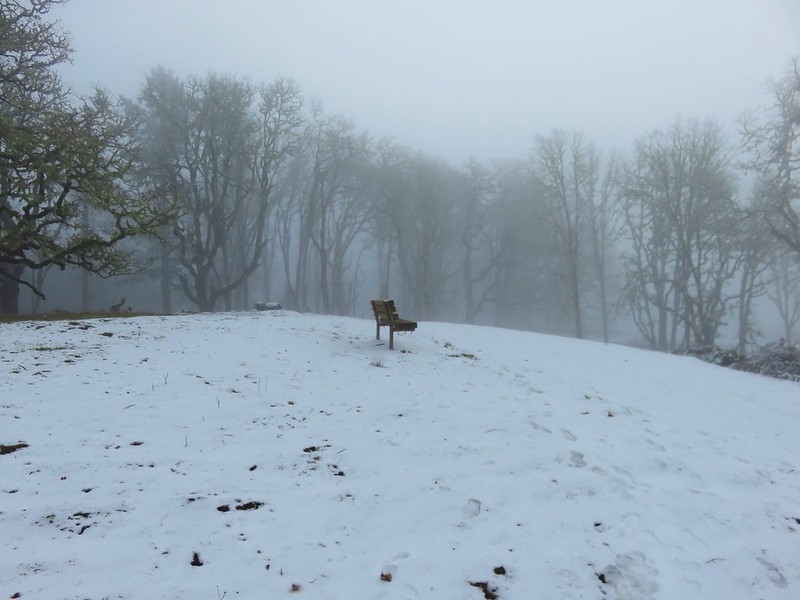
We were able to sleep in a little on the day of the hike since the drive was just under an hour and it hadn’t been getting light out until almost 7:30am. We took Highway 99W to Corvallis then turned right (west) onto NW Walnut Blvd for 4.3 miles to NW Oak Creek Drive where we once again turned right. Both of the days trailheads were located along this road and we hadn’t yet decided which we were going to start with. We had been waiting to see what the weather was like. It had been extremely foggy the prior morning and we didn’t want to head up Bald Hill (the shorter of the two hikes) if there was no visibility because the guidebook indicated that it had the better views. The forecast for the day called for patchy morning fog and a 20% chance of showers before 11am, but as we neared the Bald Hill Natural Area .8 miles along NW Oak Creek Dr. there was no fog just some higher clouds so we pulled into the already busy parking lot.

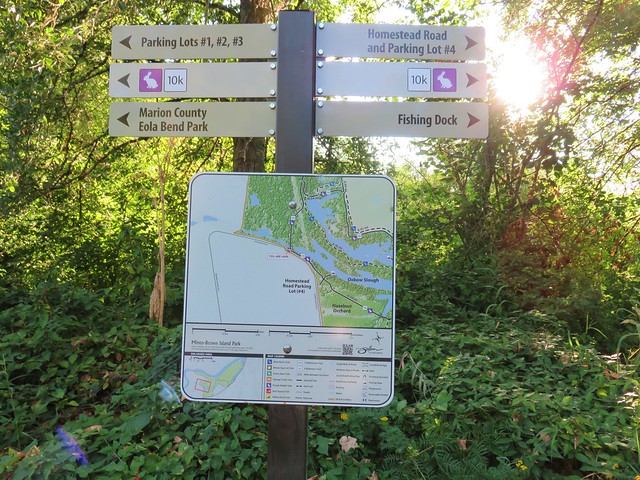
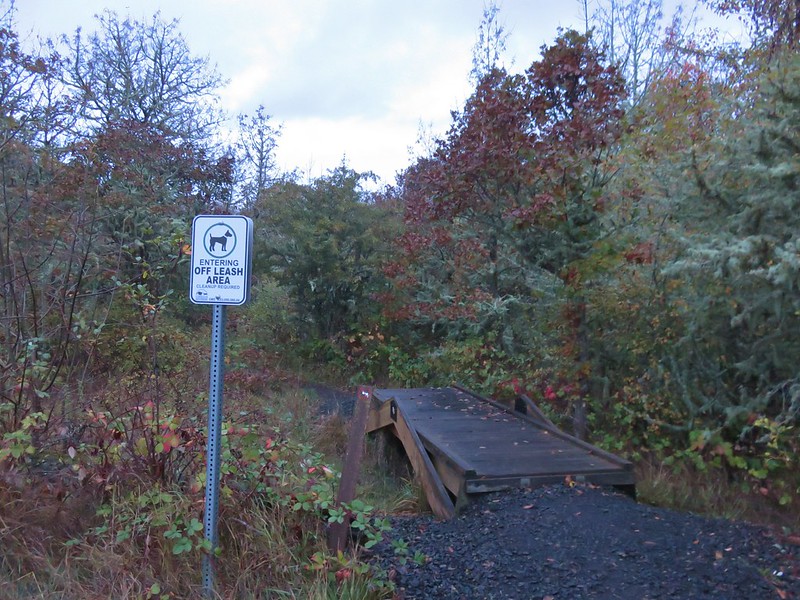
The majority of cars seemed to belong to runners and the rest dog owners. The area offers numerous trails, some paved and some not, as well as an off leash dog area. It reminded us a bit of Minto-Brown Island Park in Salem except there were hills instead of a river.

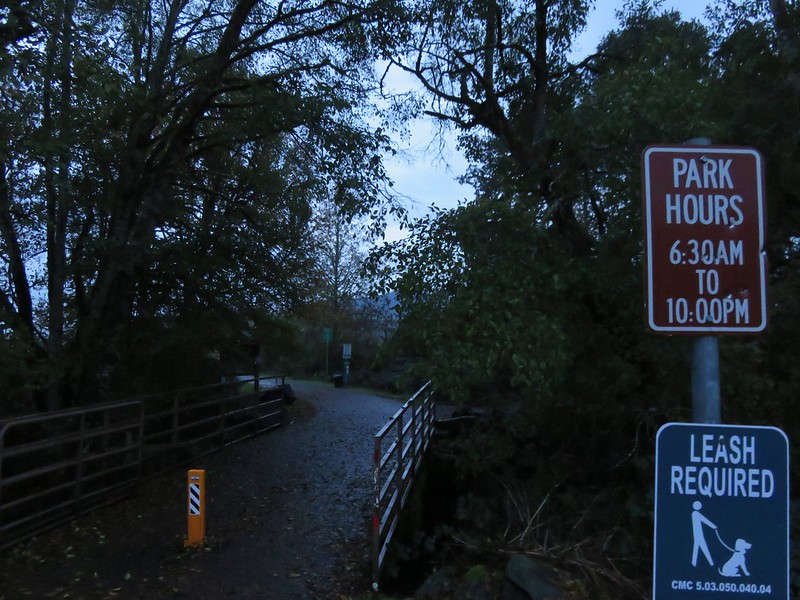
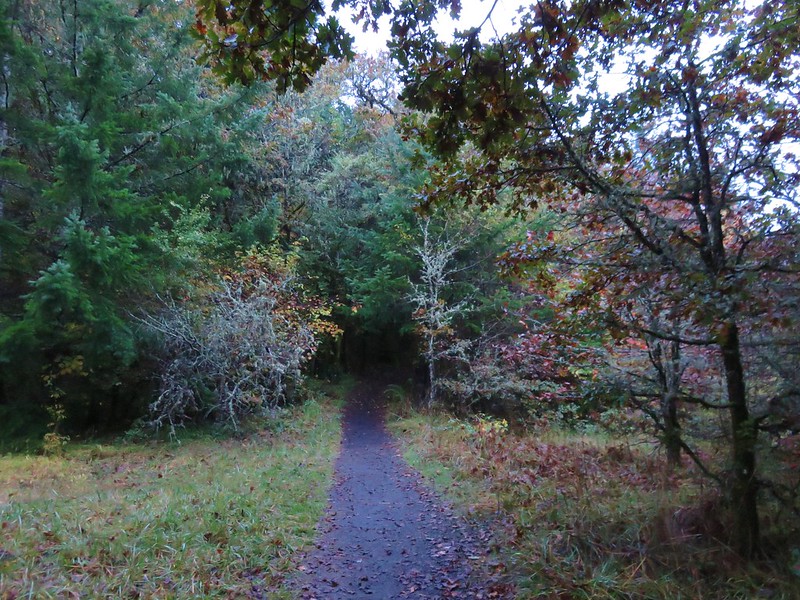
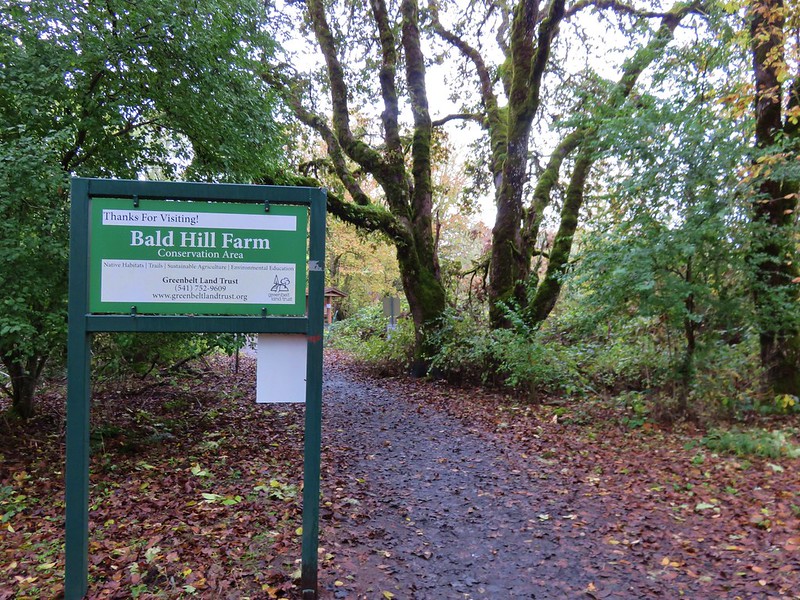
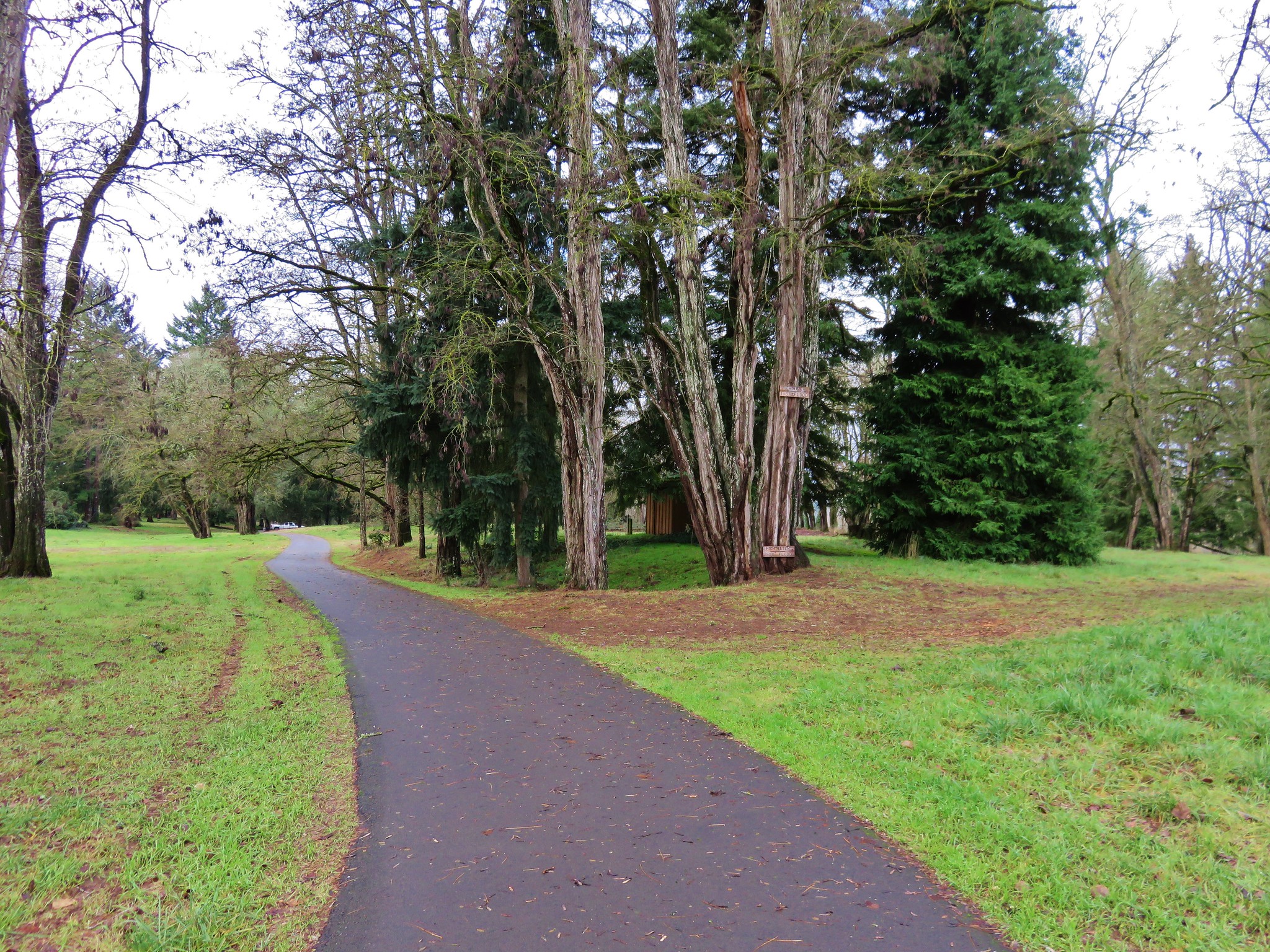
We set off from the parking area crossing Oak Creek on a footbridge and heading straight out a wide paved path.
IMG_7537

IMG_7539

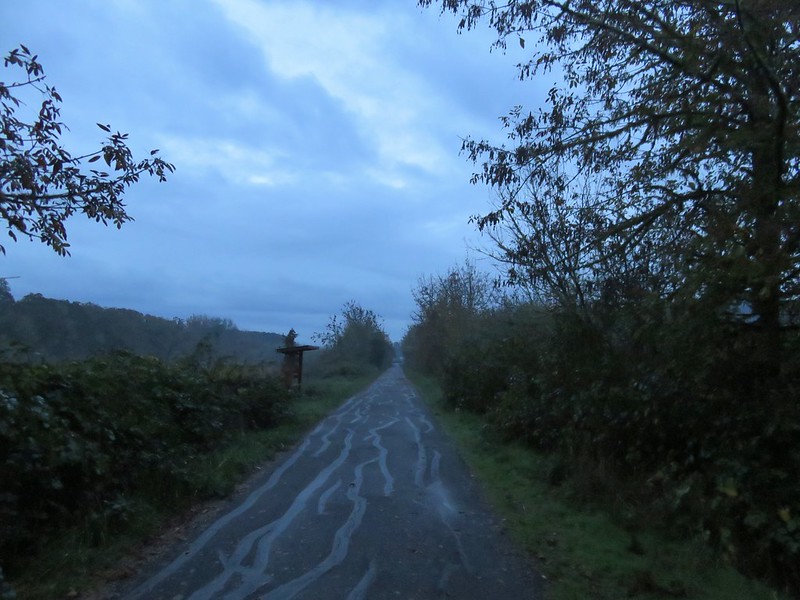
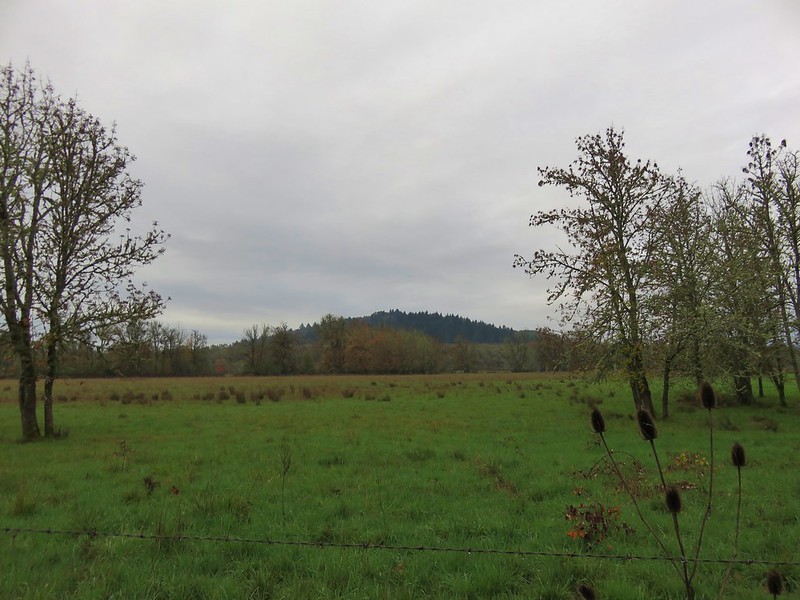
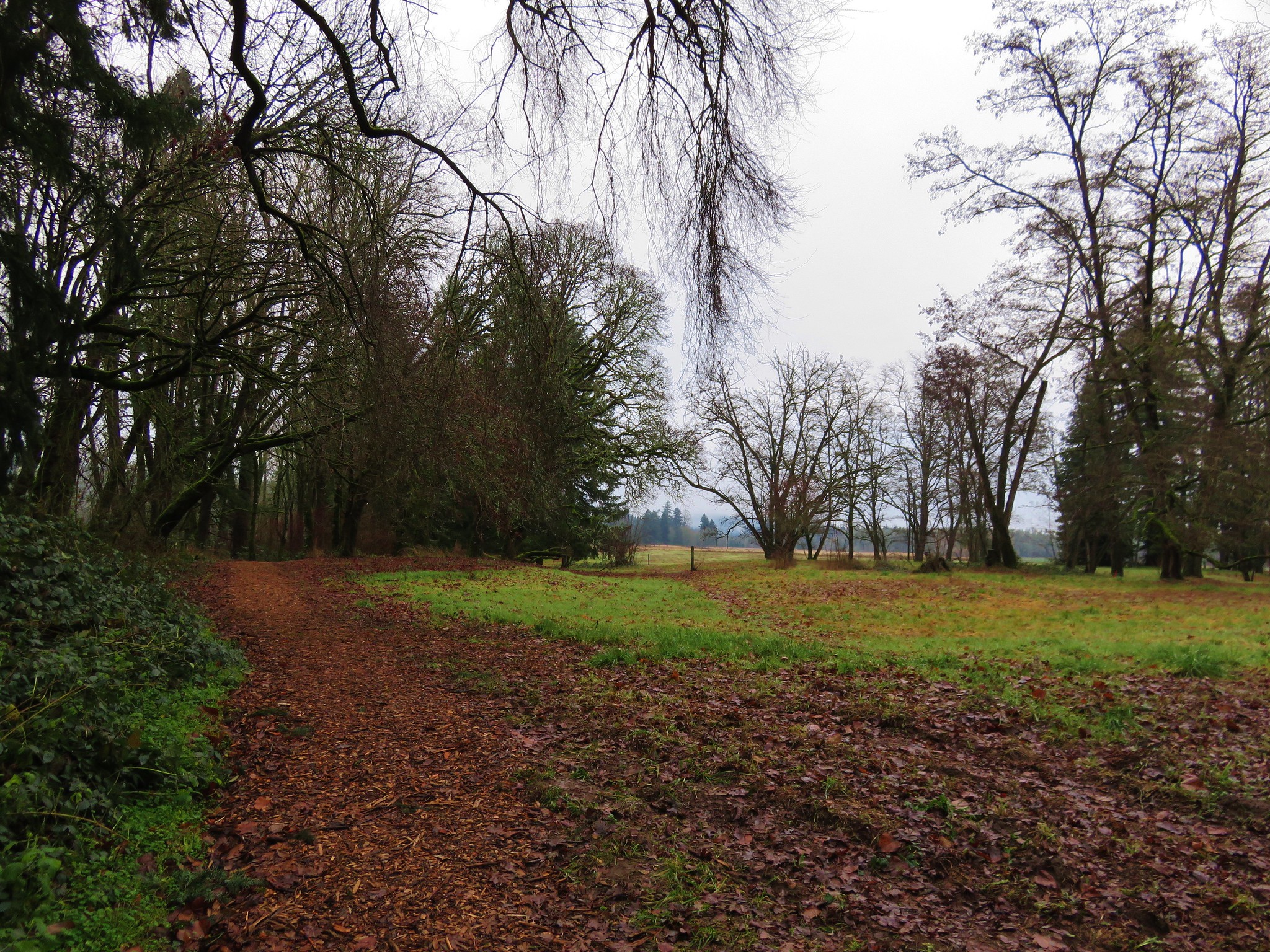
As the path began to curve through the wetlands Bald Hill came into view.
IMG_7541

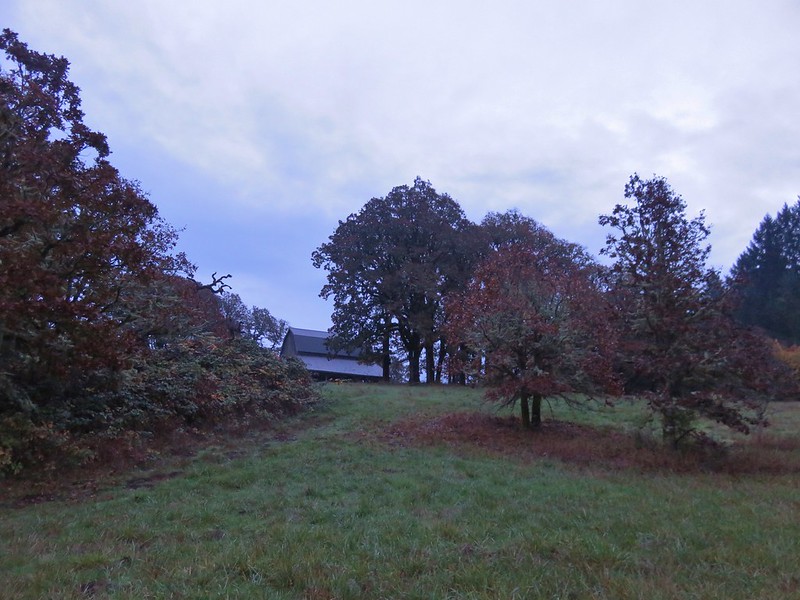
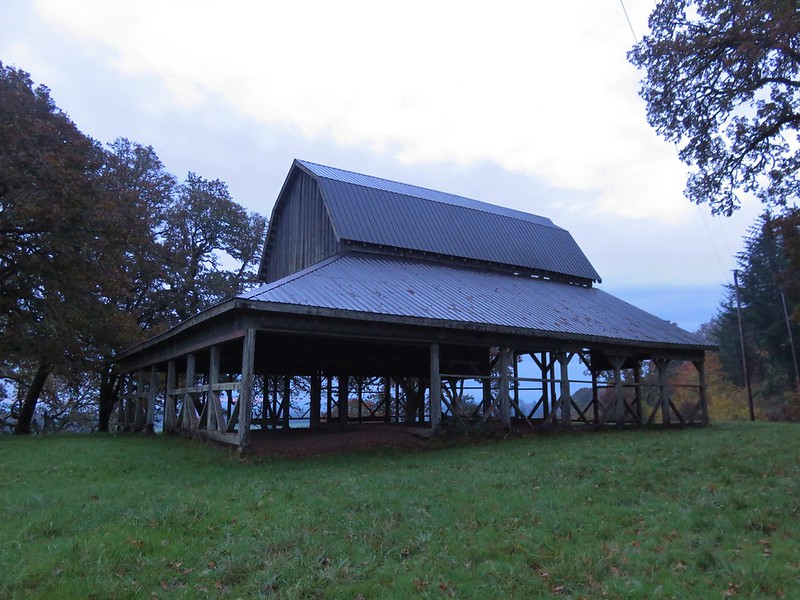
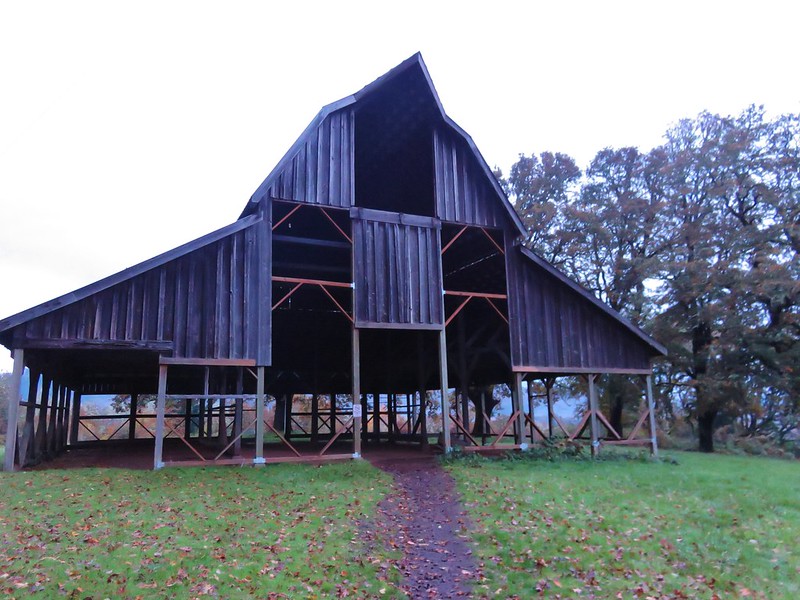
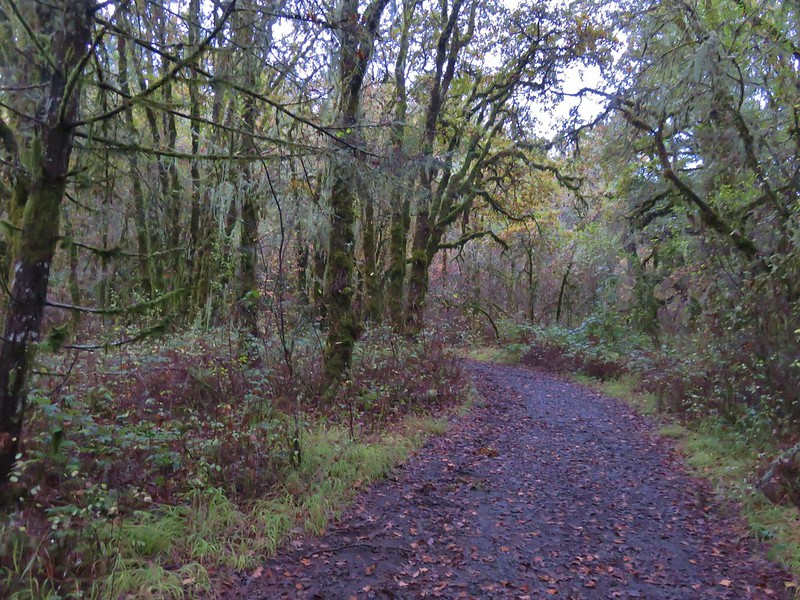
The route suggested by Sullivan turns right off the paved path after a half mile passing an old barn on the right. We wound up turning right one path too soon though and found ourselves passing through a field with the barn up on a hill to our left.
IMG_7542

IMG_7546

We followed a faint path up through the field to the barn where we picked up the correct trail.
IMG_7547

IMG_7548

IMG_7549

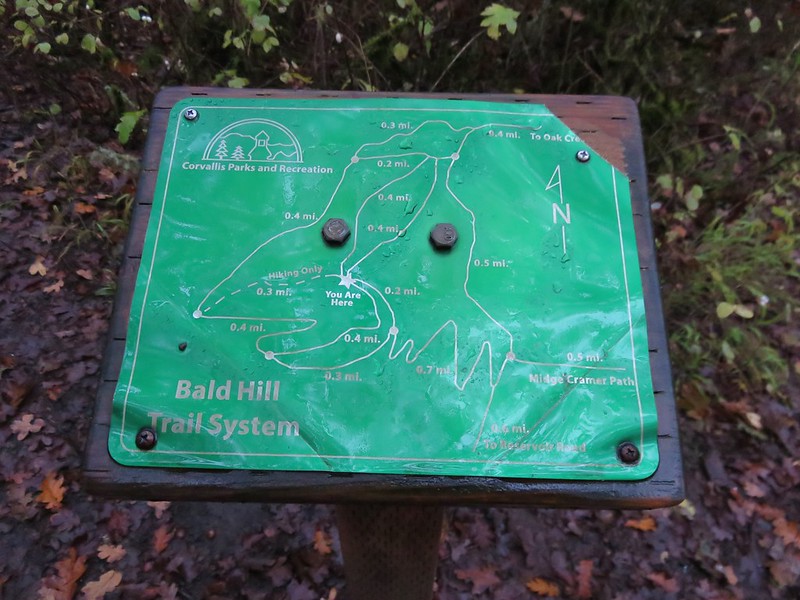
With the aid of trail maps at junctions we were able to stay on Sullivan’s route climbing .8 miles to the summit of Bald Hill.
IMG_7551

IMG_7552

IMG_7557

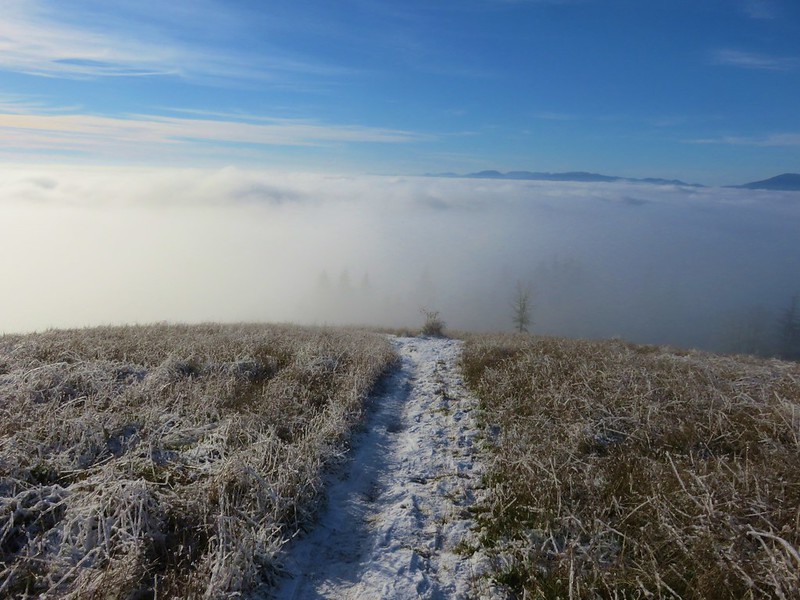
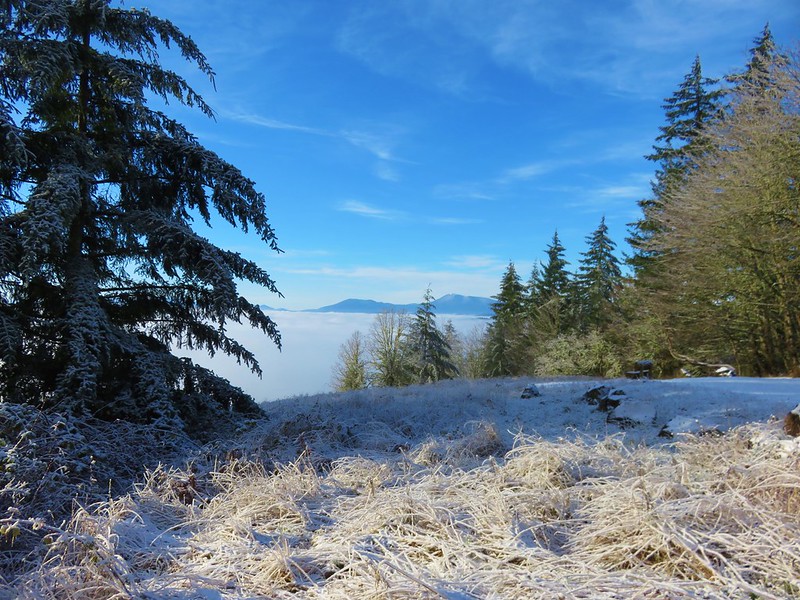
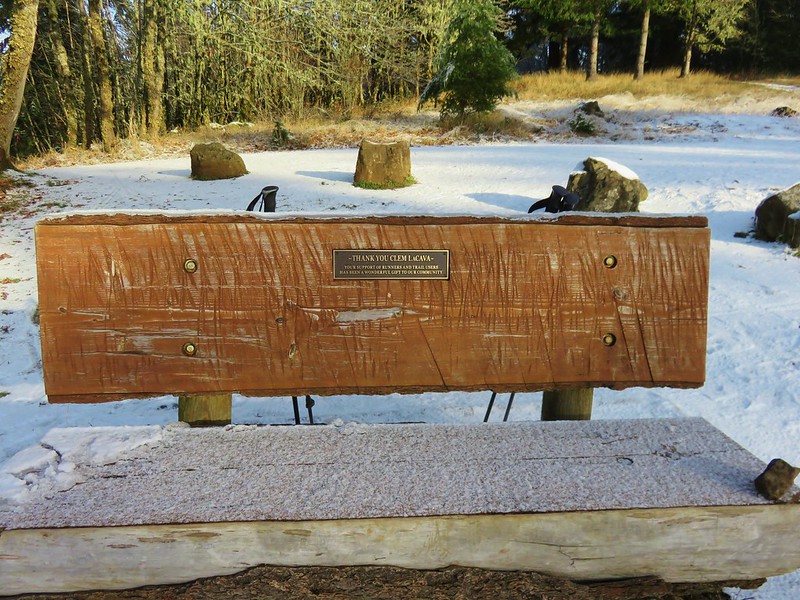
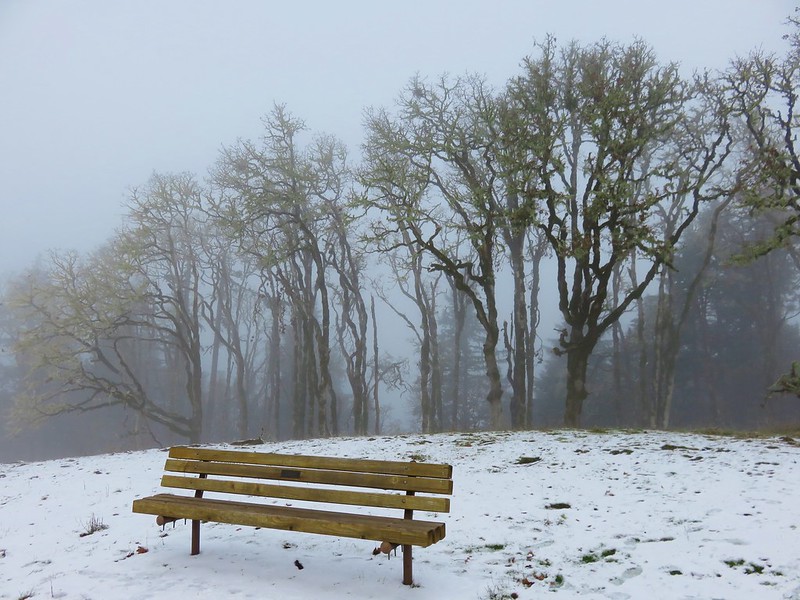
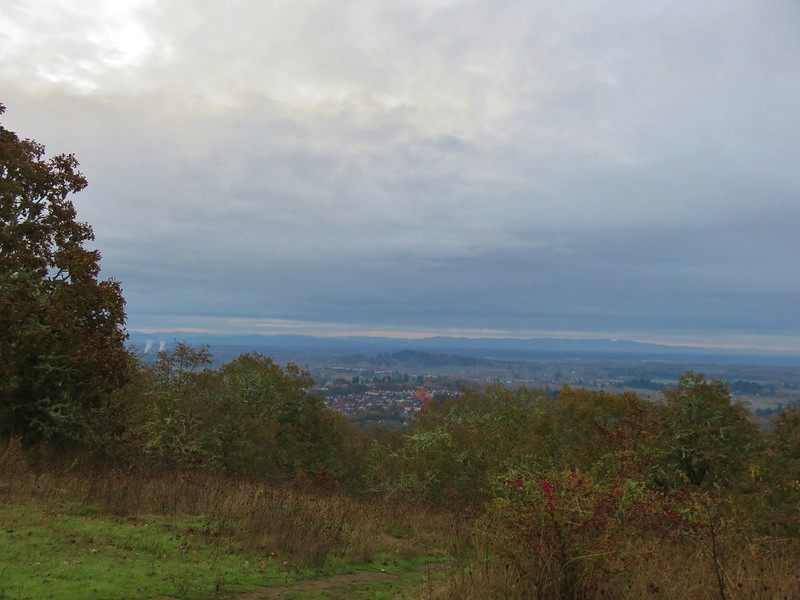
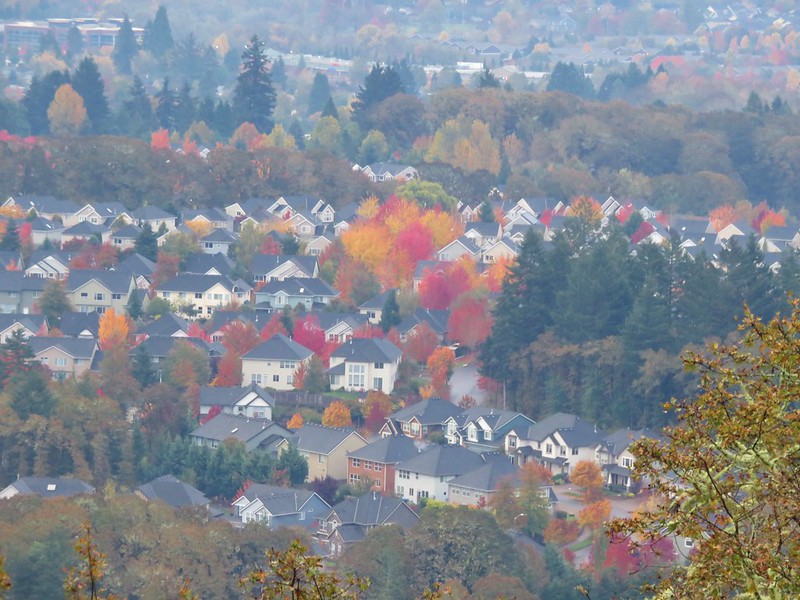
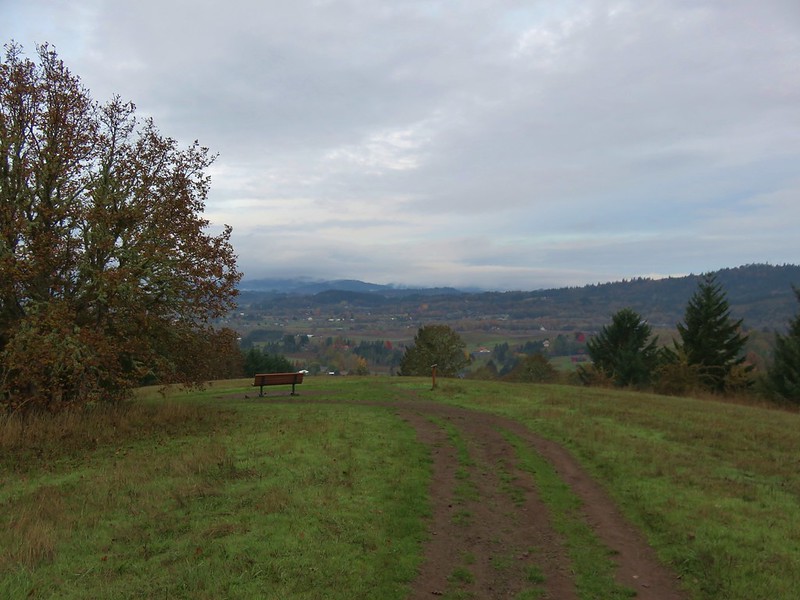
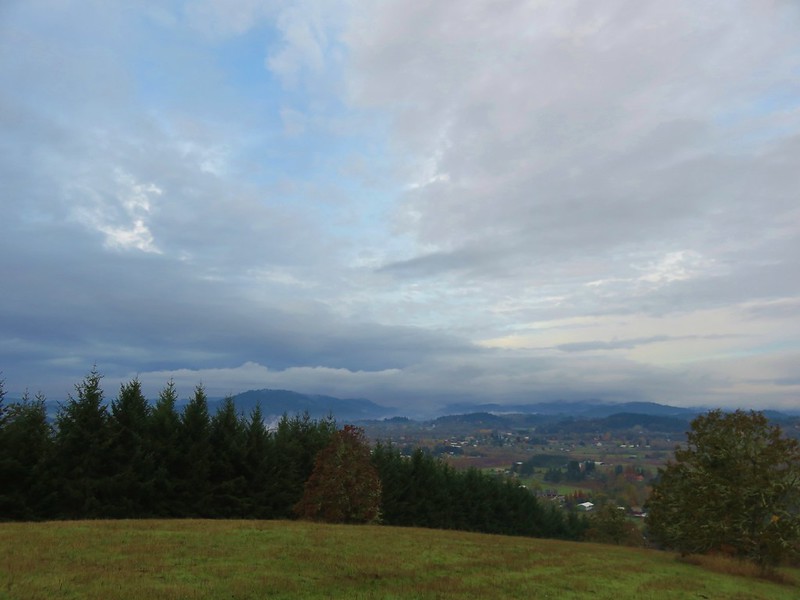
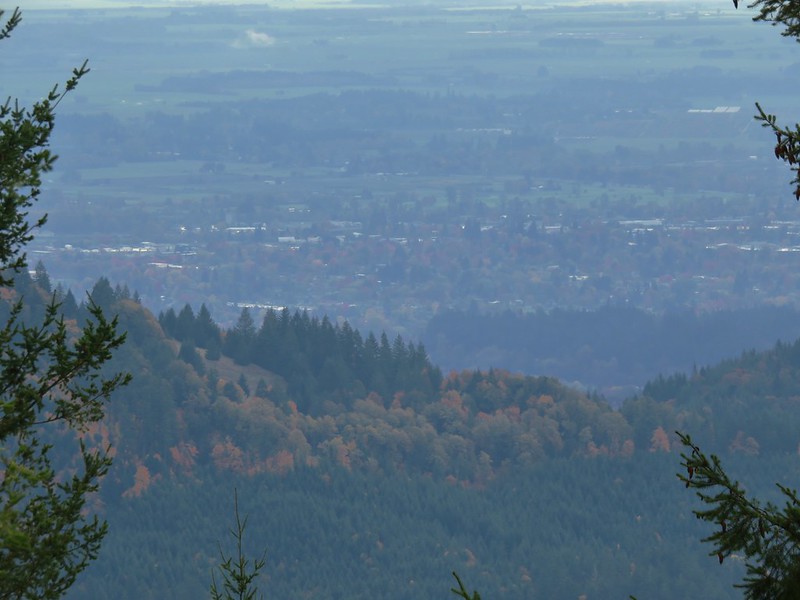
For a cloudy day the view was very nice. The first of two benches on the hill overlooked the southern end of Corvallis where trees blazed with fall colors amid the houses.
IMG_7561

IMG_7558

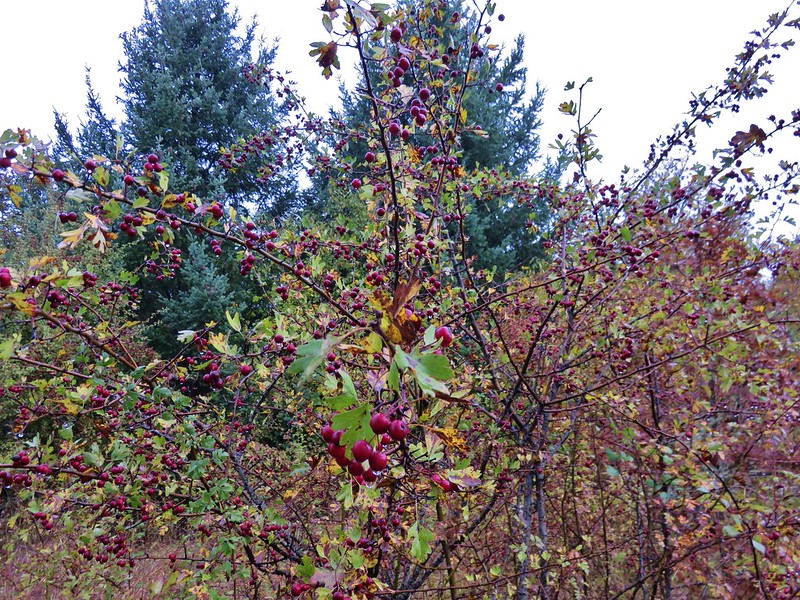
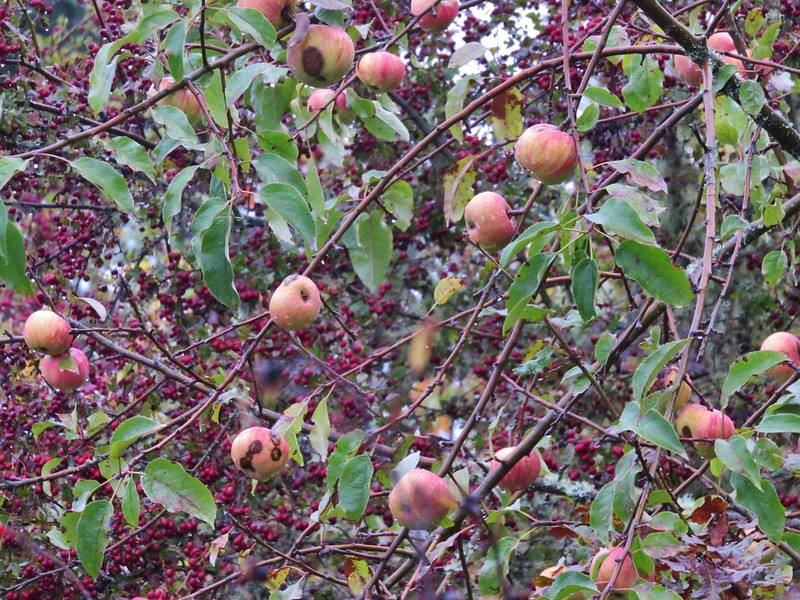
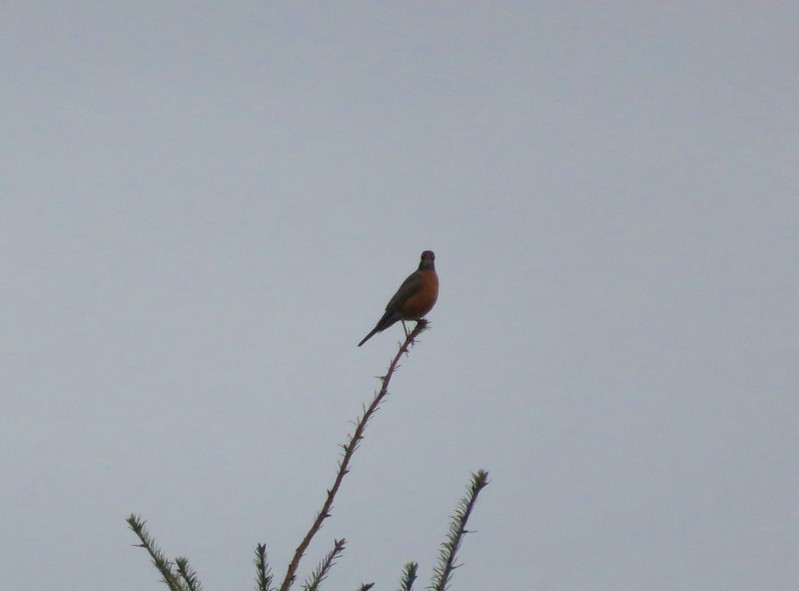
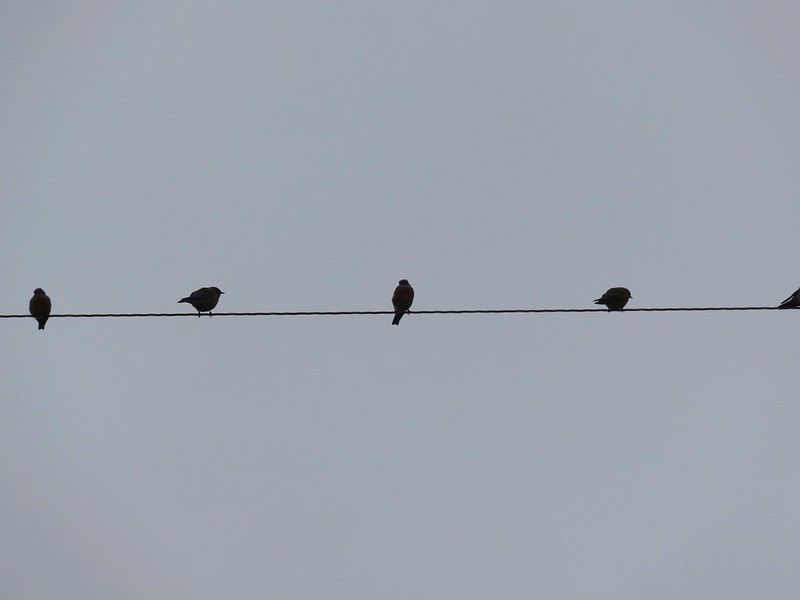
Various fruit trees lined the trail at the summit drawing birds to the area.
IMG_7553

IMG_7564

IMG_7567

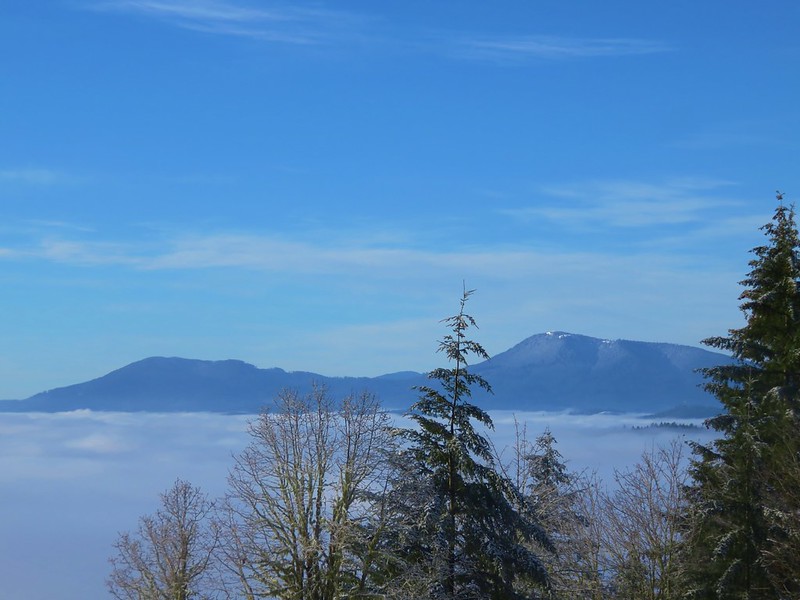
The second bench looked to the SW towards Mary’s Peak which was mostly hidden by clouds.
IMG_7566

IMG_7568

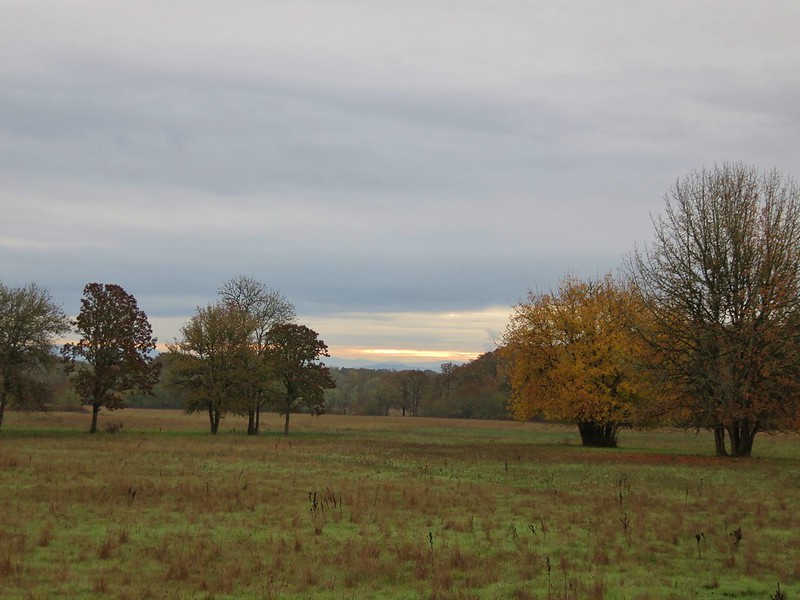
After passing the second bench we continued on our loop 1.9 miles passing farmland and more birds on the way back to the parking lot.
IMG_7582

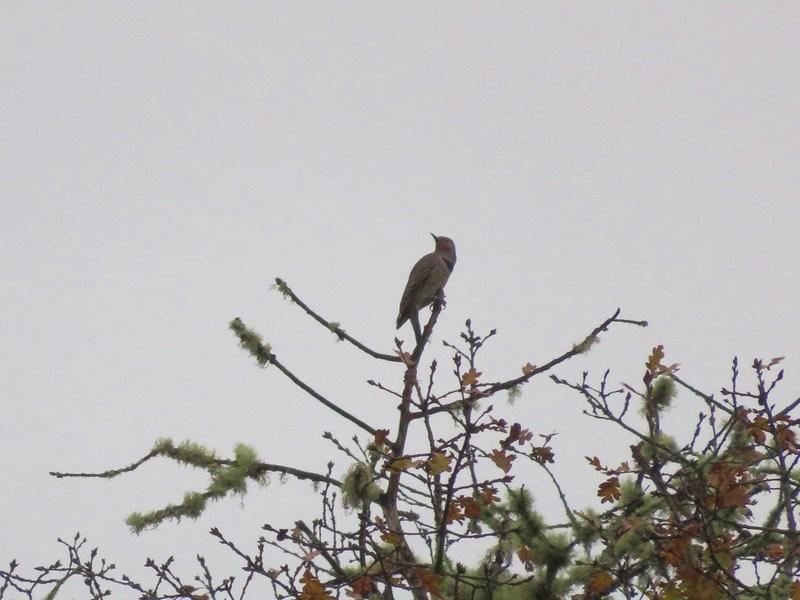
Northern Flicker
IMG_7575

IMG_7579

IMG_7585

IMG_7583

IMG_7586

The loop was 3.3 miles which was a nice warm up for our next stop which was to be a 9.5 mile loop in the McDonald Dunn Forest with a stop atop 2154′ McCulloch Peak. From the Bald Hill parking lot we continued west on NW Oak Creek Drive following it to the right at a fork after 1.1 miles and continuing to a parking area at the roads


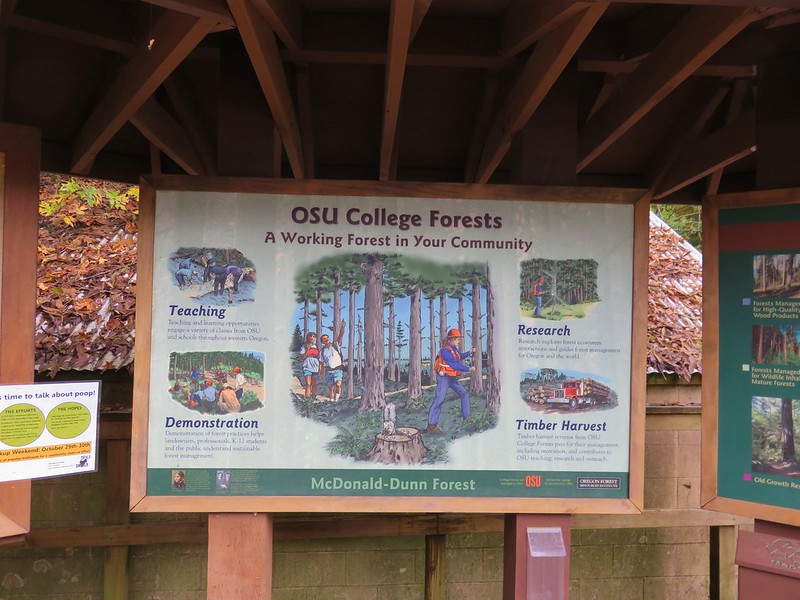
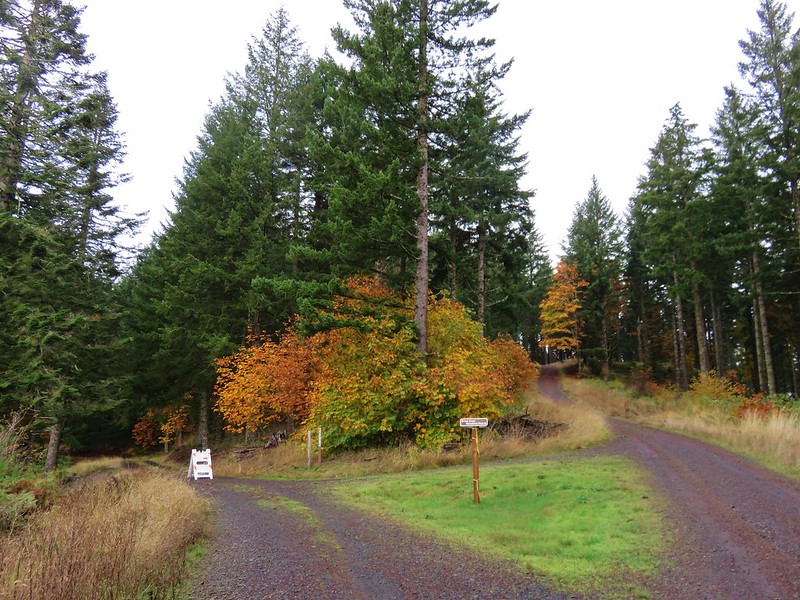
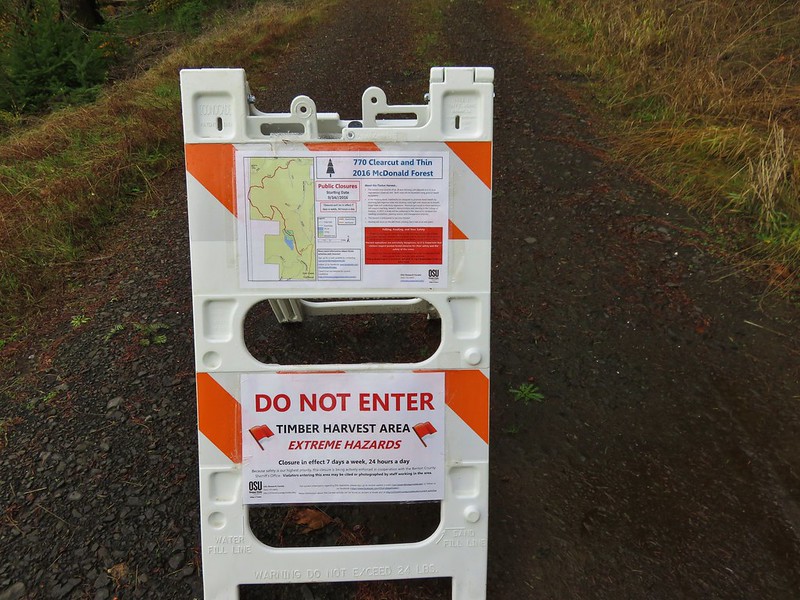
gated end. The McDonald-Dunn Research Forest consists of approximately 11,250 acres largely used by Oregon State University for instruction and research. Various trails and roads are open to hikers, bikers, and equestrians although occasional closures do occur due to forestry activities. Despite having checked the forest website the night before we noticed a sign at the trailhead stating that our planned return route (Road 770) was currently closed due to a timber harvest. The route up to McCulloch Peak was open though and there appeared to be a couple of other ways to return using different roads and/or trails so we sallied forth.
IMG_7587

IMG_7590

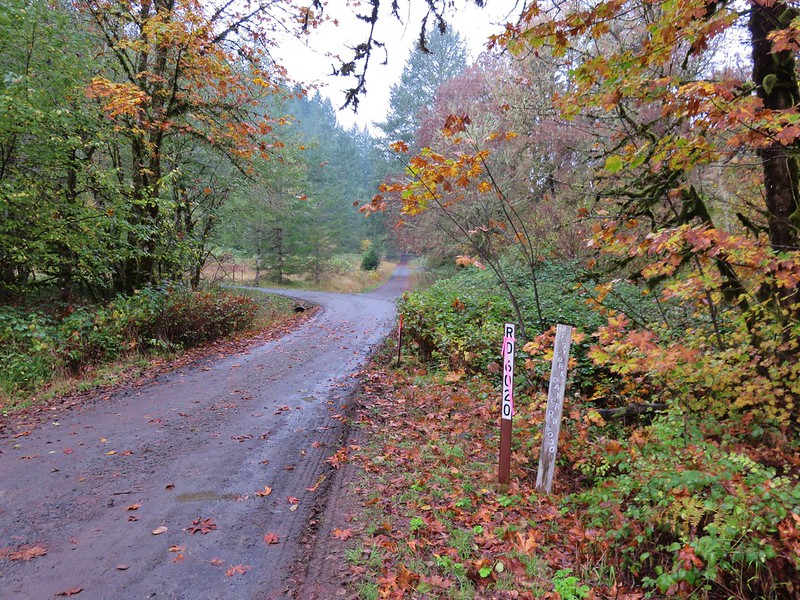
We followed Patterson Road from the gate just over half a mile to a junction with road 6020.
IMG_7593

Near the junction was the beginning of the Extendo Trail.
IMG_7595

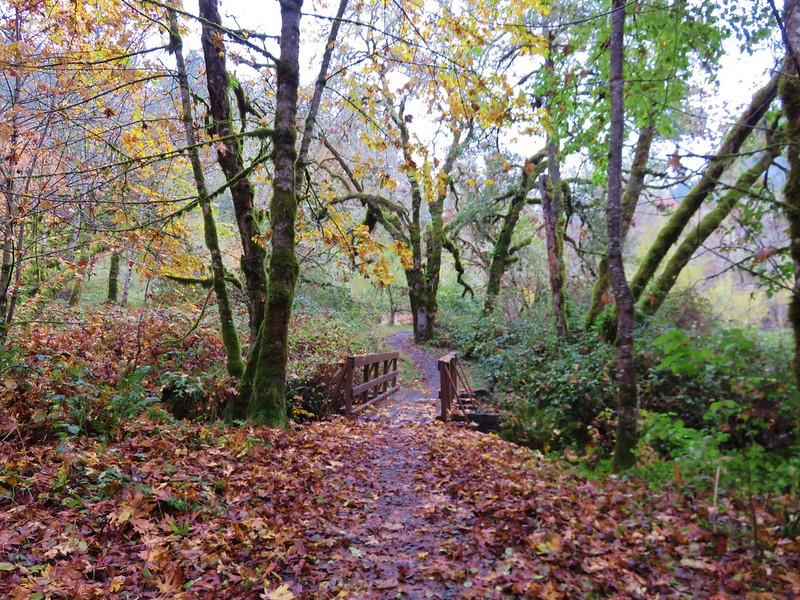
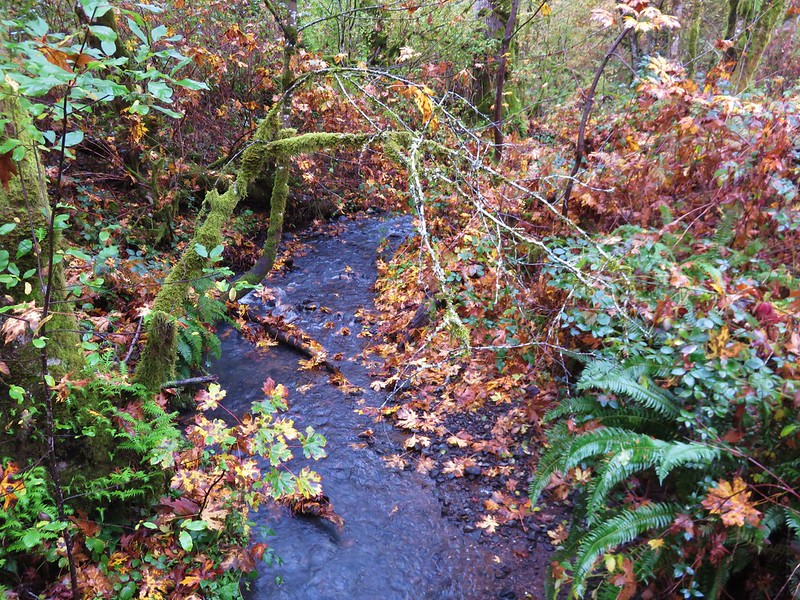
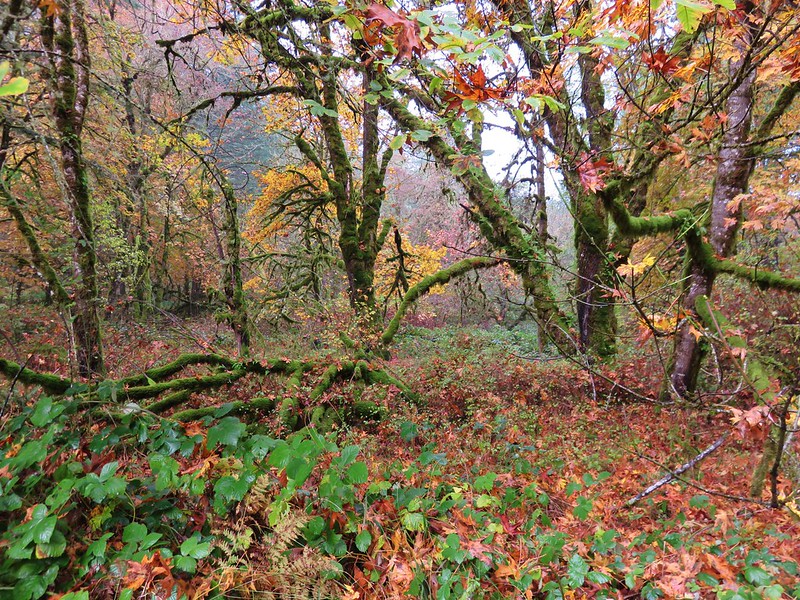
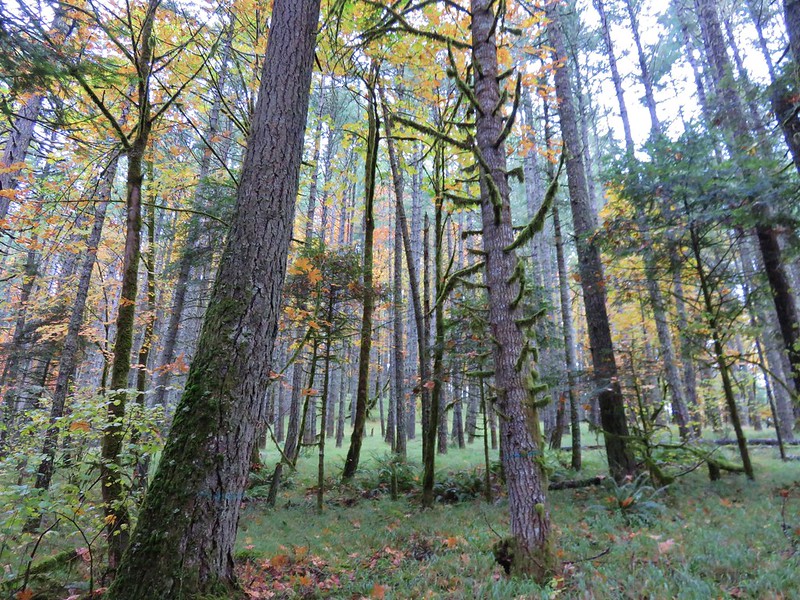
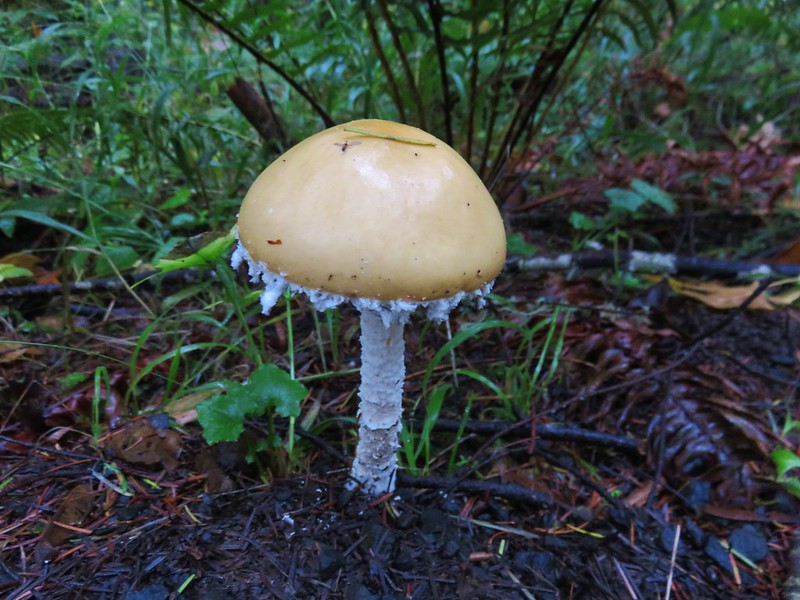
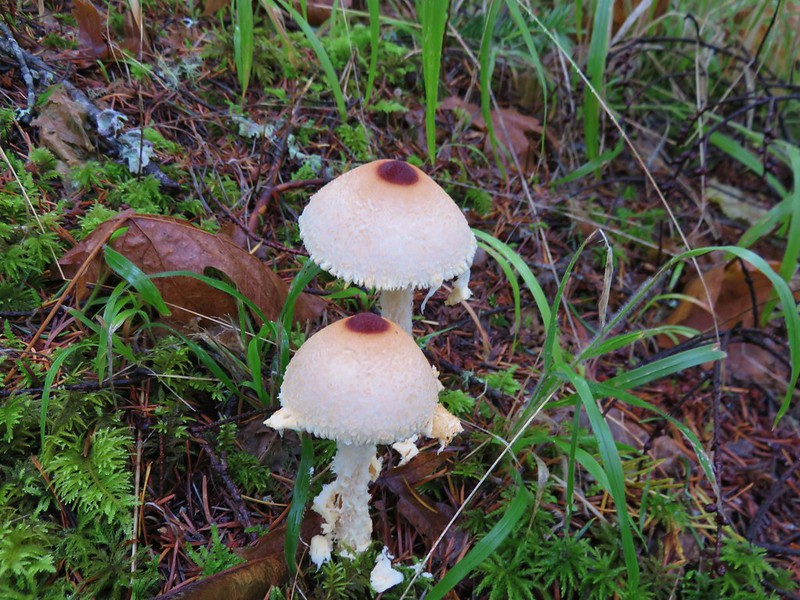
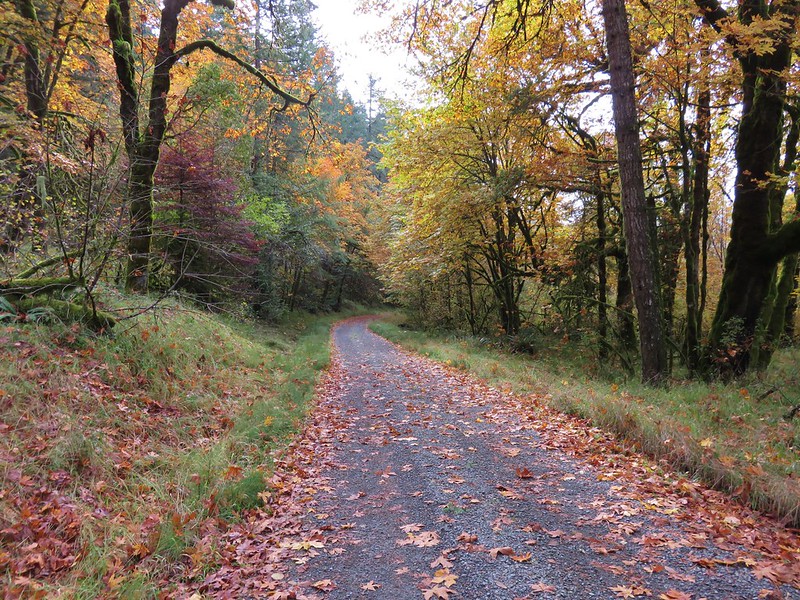
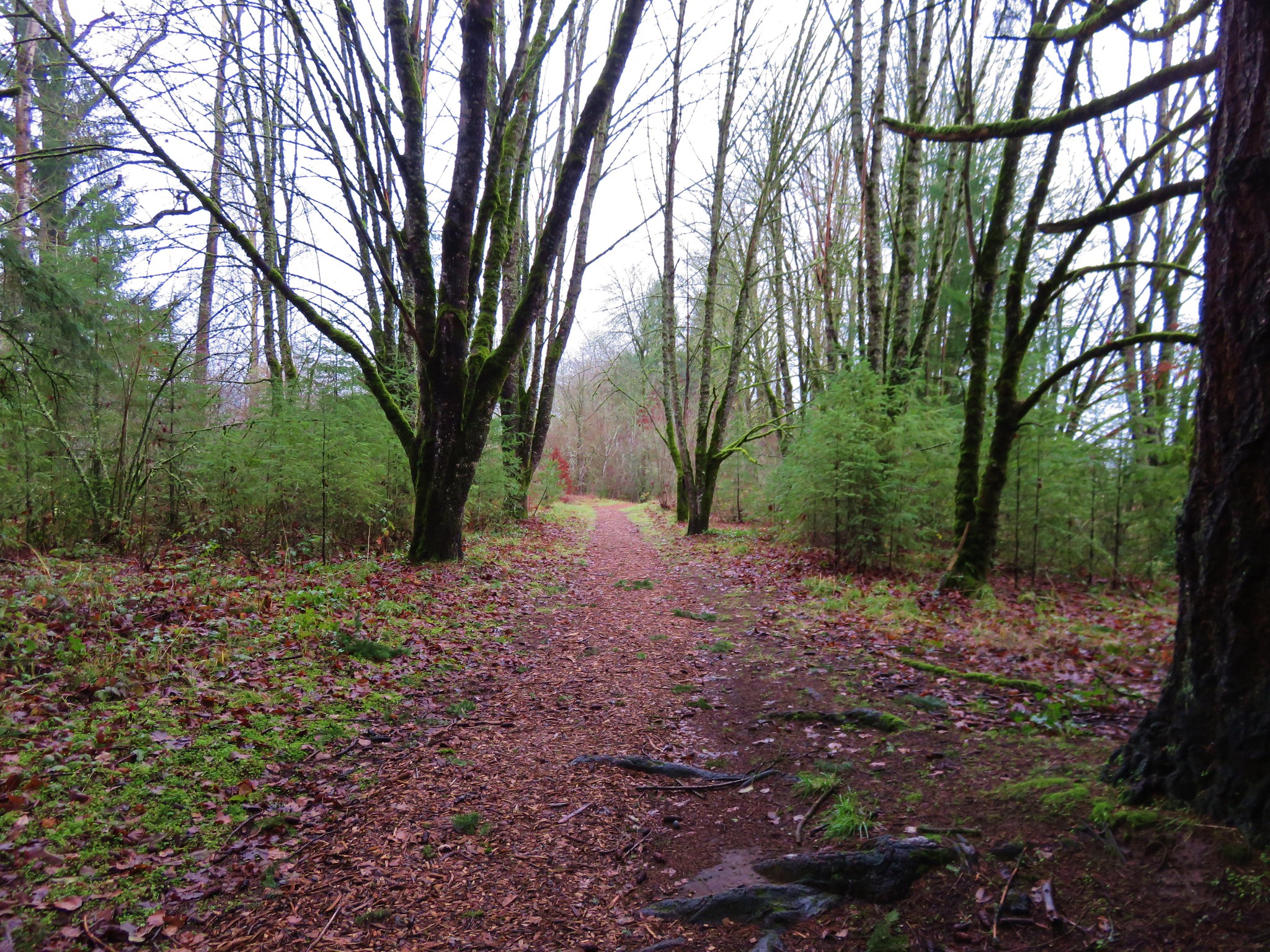
The Extendo Trail is open to Bikes, horses, and hikers from April through October and then to hikers only from November through March. We followed this trail across Oak Creek and then uphill for almost 1.5 miles. Fall was on full display in the forest along the trial with colorful leaves and plenty of mushrooms to be seen.
IMG_7597

IMG_7600

IMG_7601

IMG_7602

IMG_7603

IMG_7606

IMG_7610

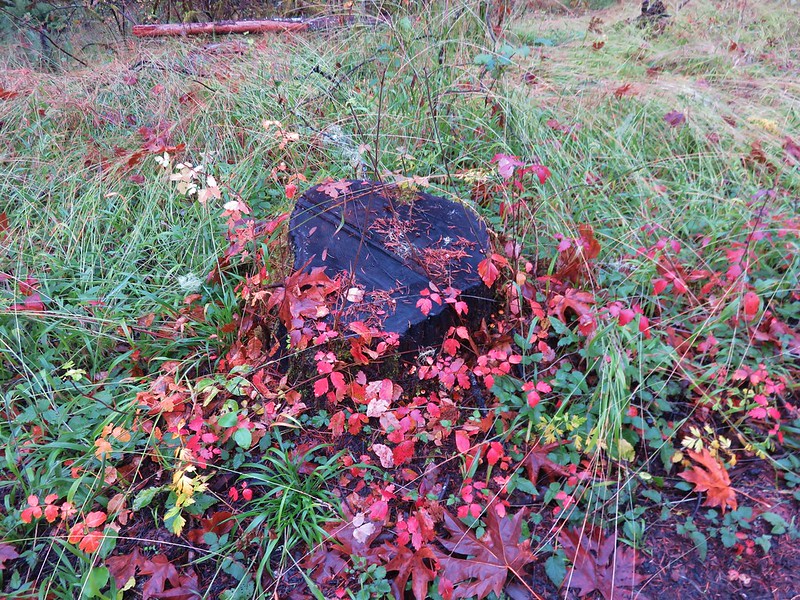
Some of that fall color was attributable to poison oak which we were keeping a close eye out for.
IMG_7615

IMG_7616

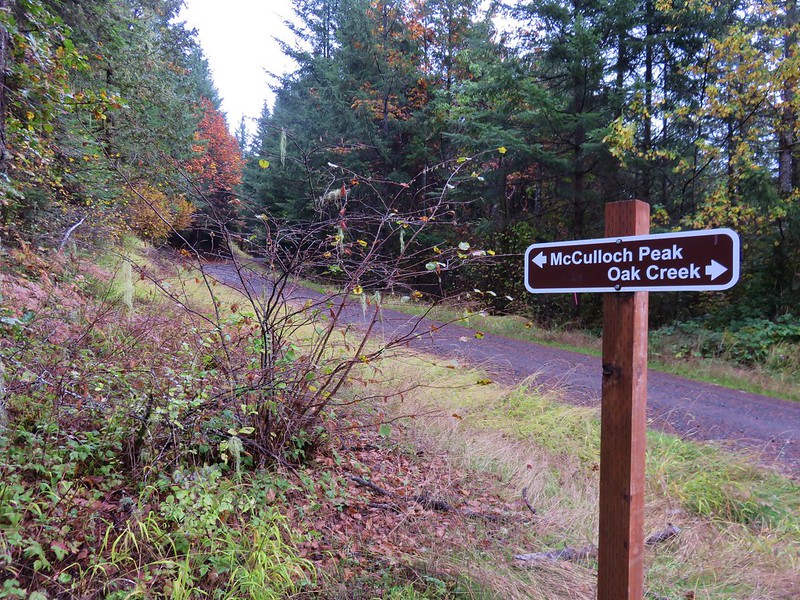
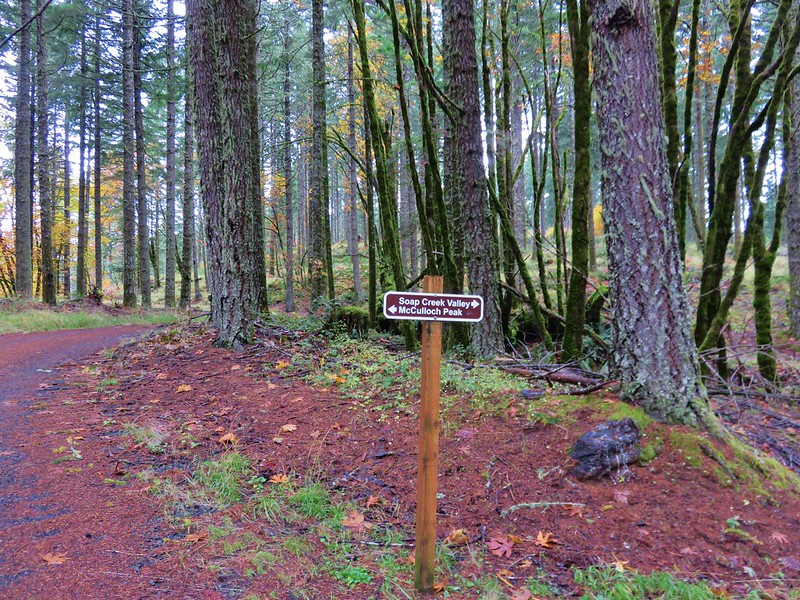
The Extendo Trail ended at a 4-way junction. To the left was the Uproute Trail which headed back downhill to Road 6020. An unofficial (illegal) path continued straight uphill and to the right was gravel Road 680 and a pointer for McCulloch Peak.
IMG_7619

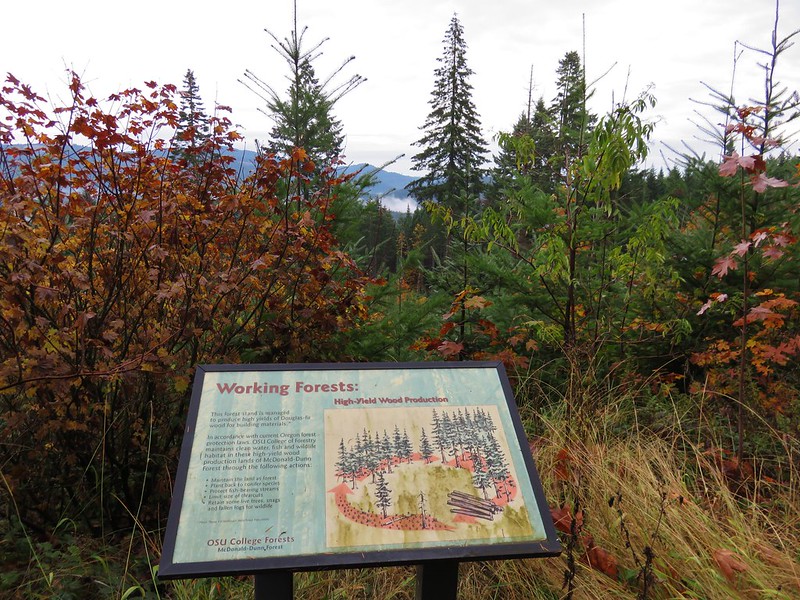
We followed road 680 uphill to a clearcut saddle with an interpretive sign and a bit of a view to the NW.
IMG_7620

IMG_7621

IMG_7623

IMG_7626

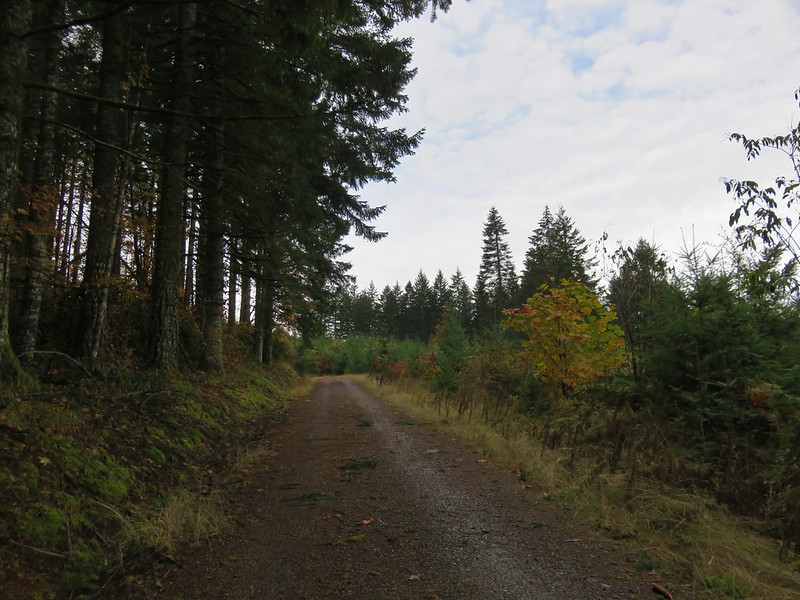
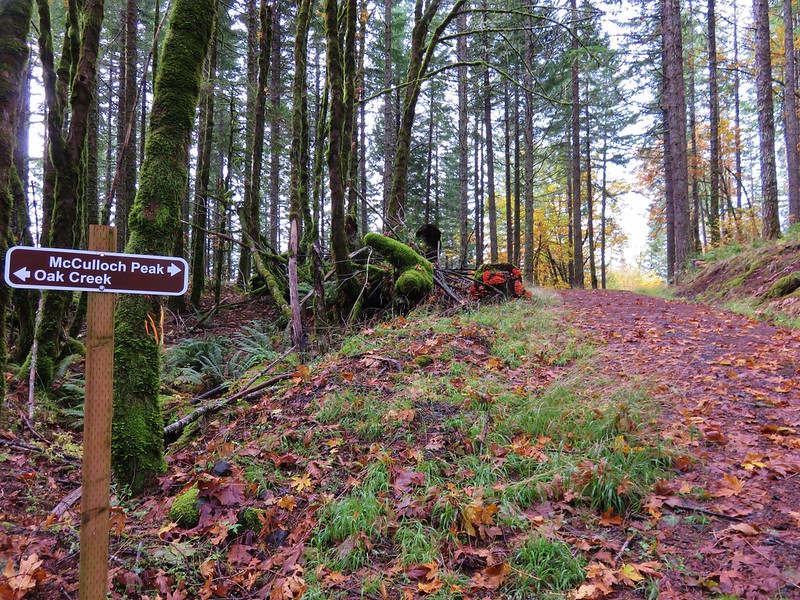
Beyond the saddle Road 680 came to an end at Road 700 where we followed another pointer for McCulloch Peak.
IMG_7629

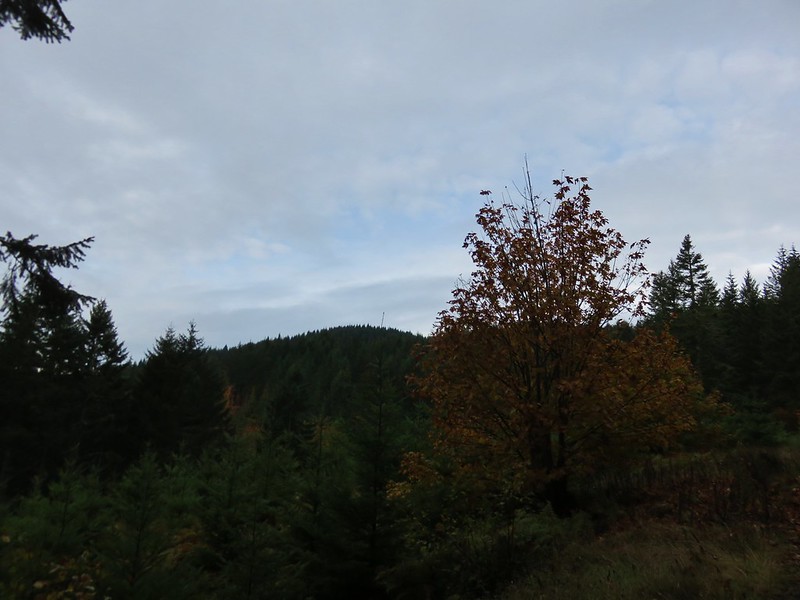
Just before reaching the junction with Road 770 we got a clear look at our destination, McCulloch Peak.
IMG_7630

We passed closed road 770 1.1 miles from the Extendo Trail.
IMG_7631

IMG_7632

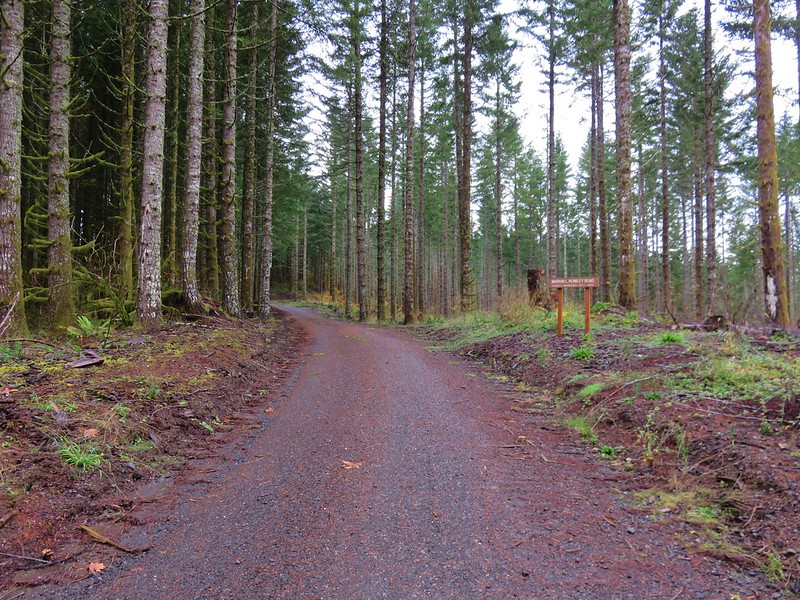
We passed several roads sticking to Road 700 until we reached Road 790 which was also signed Marvin L. Rowley Road (named after the former Forest Manager).
IMG_7639

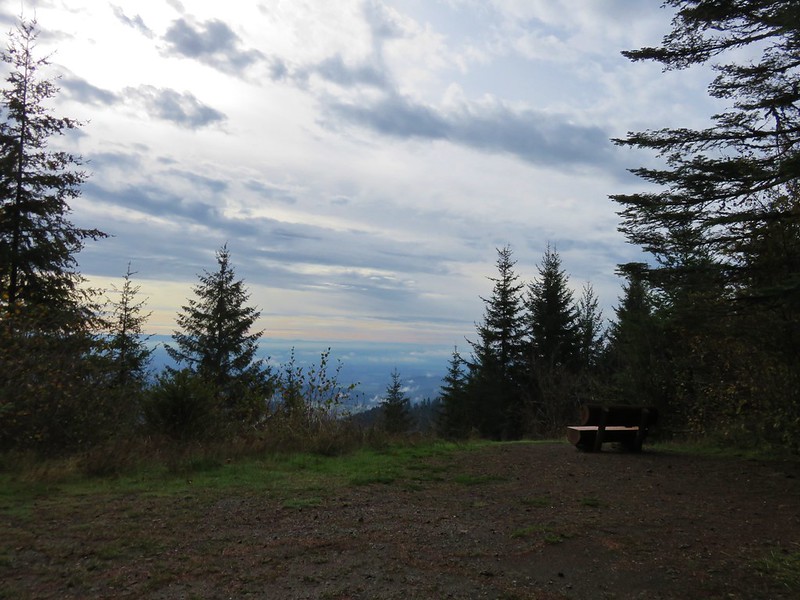
We reached the summit a little over a mile from Road 770 where a small bench awaited.
IMG_7645

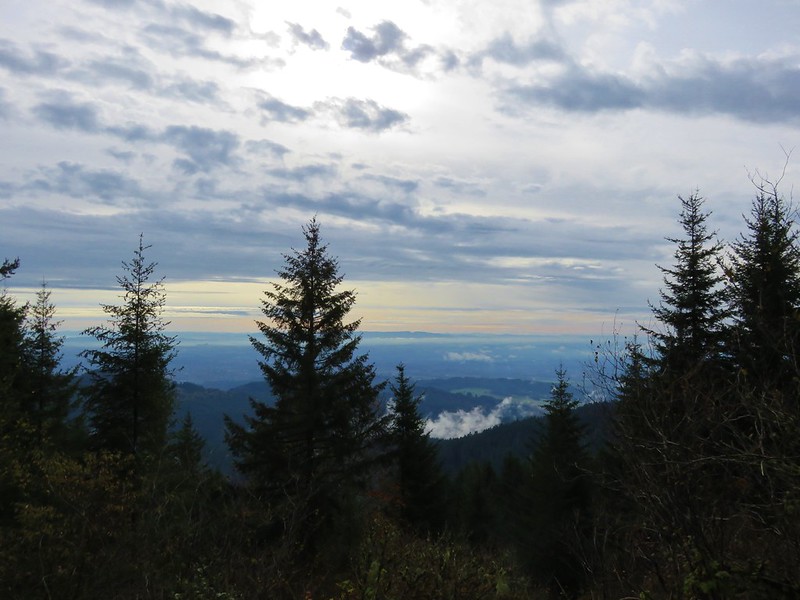
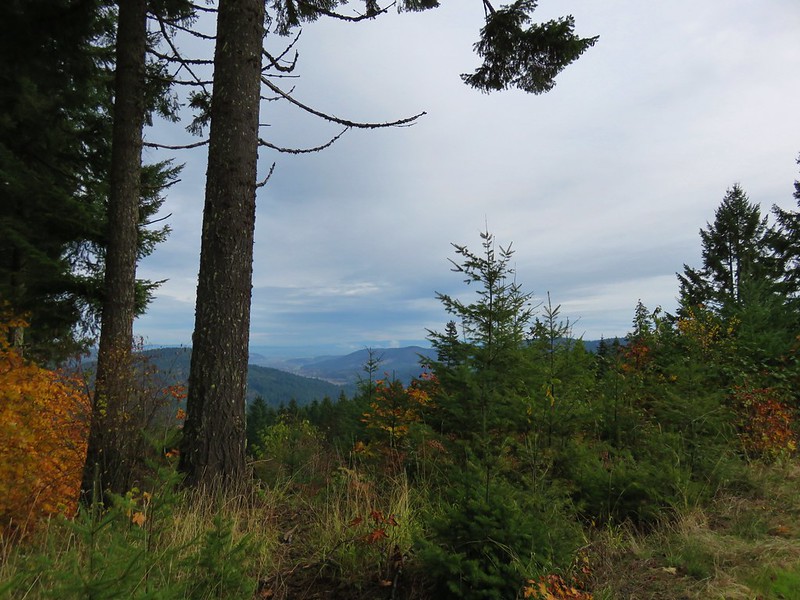
Although it wasn’t wide, the view was nice enough.
IMG_7646

IMG_7648

IMG_7649

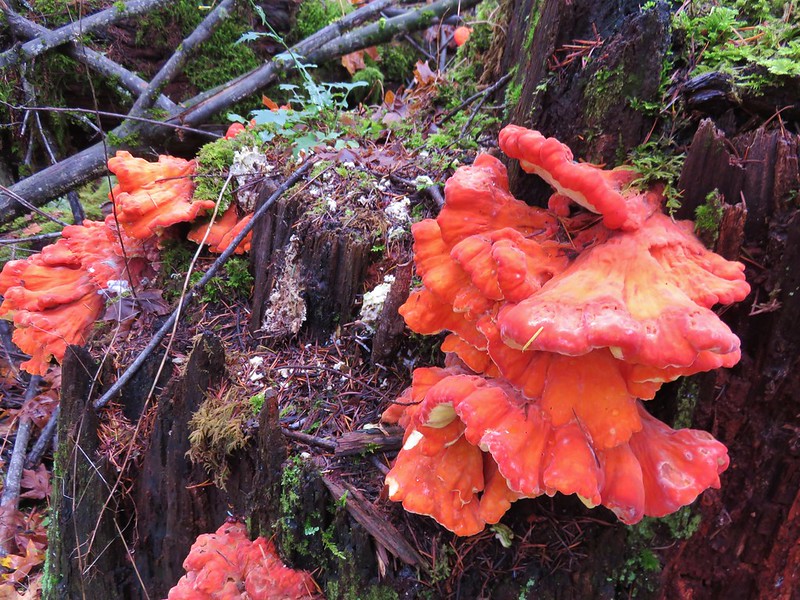
After a brief break we headed back downhill. Since our planned return route was closed we decided to look at the map and see what other options we had. First we turned left when we got back to Road 700 following it for a quarter mile to Road 740 which looped around a small knoll before rejoining Road 700 after another quarter mile. Near the end of Road 740 we passed a stump covered with Chicken of the Woods mushrooms.
IMG_7658

IMG_7660

IMG_7664

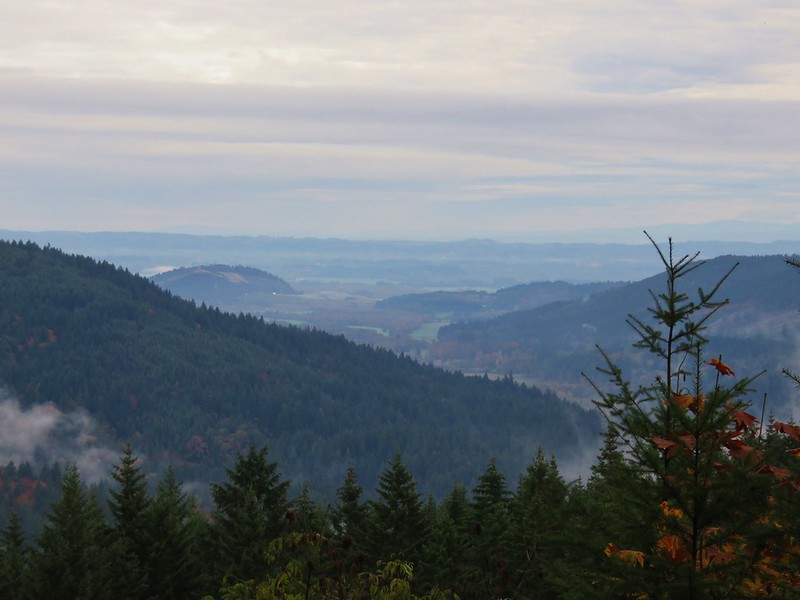
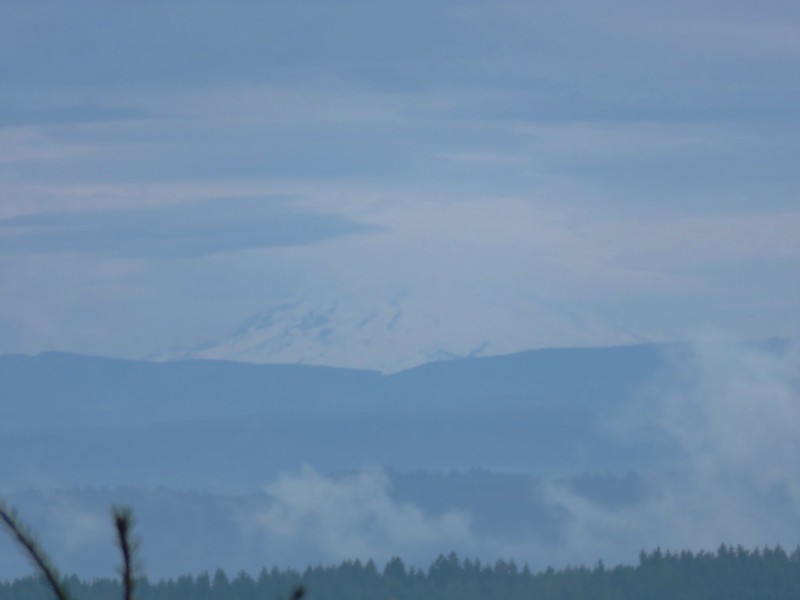
We then retraced our path down Road 700 to Road 680. At the clearcut viewpoint on Road 680 we spotted a faint Mt. Jefferson against the clouds.
IMG_7665

IMG_7668

We had a choice when we reached the junction with the Extendo and Uproute Trails. We could return on either of those trails or stay on Road 680 and follow it down to Patterson Road. We decided on following the road which swung out to the west for .6 miles to Patterson Road just over a mile from where we had turned off it earlier to take to Extendo Trail uphill. It was a pleasant walk through the woods back to the trailhead.
IMG_7675

The hike wound up being a little over 9 miles giving us a total of 12.4 miles for the day. The trails (and roads) in both of the areas were in excellent shape and the number of options and year round accessibility makes them nice options anytime of the year. They will be on our list of nearby alternatives when we want to get outside but don’t want (or can’t get) too far from home.

Happy Trails!

Flickr: https://www.flickr.com/photos/9319235@N02/albums/72157674433573180

Categories
Coastal Range Hiking Oregon Salem/Albany Trip report Willamette Valley

Minto-Brown Island Park and the Banks-Vernonia State Trail

We didn’t have any hikes planned for awhile after our visit to Tamanawas Falls due to Heather having a half-marathon to run on April 10th. Her half-marathon wound up being an opportunity for a pair of short hikes on race weekend though.

On the day before the race we made the short trip to Salem’s Minto-Brown Island Park for a short walk to help make sure Heather stayed loose. We’ve spent quite a bit of time in the park, sometimes walking and other times passing through on runs. This was the first time I’d brought the camera along to get some photos though.

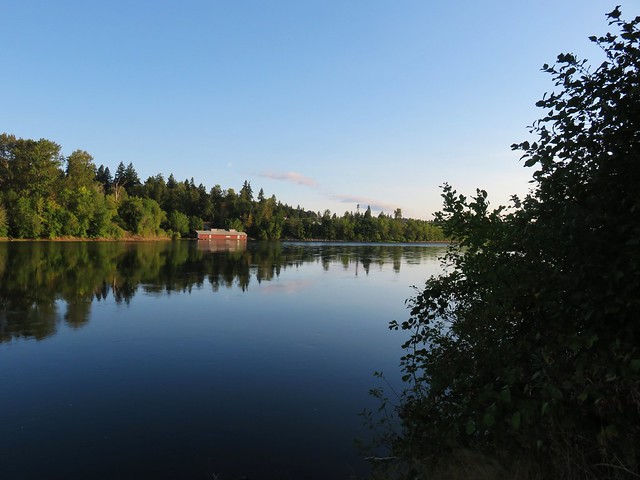
The area used to be islands in the Willamette River but flooding changed the course of the river so that the former islands are connected to the rest of Salem. At more than 1200 acres, the park contains 19 miles of trails, a playground, a 30 acre off-leash dog area, and fishing opportunities.

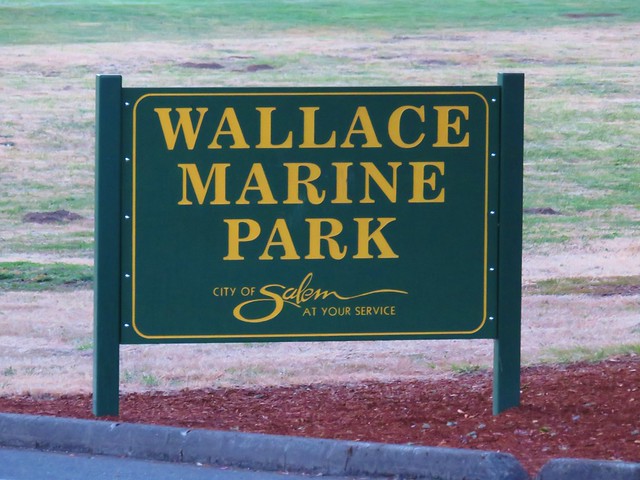
The paths are a mix of paved and soft surface trails making the park a popular place to run, walk, or bike. High water does close some of the trails at times but there is almost always a few that remain passable. Later this year a footbridge connecting this park to Salem’s Riverfront Park will make it possible to visit both of these parks as well as Wallace Marine Park without setting foot on a road.

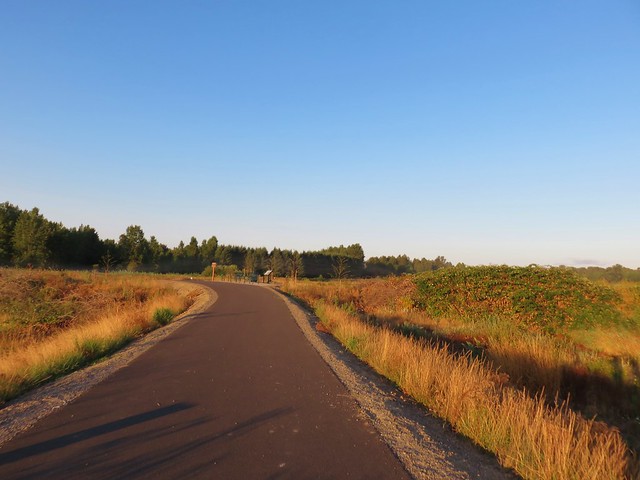
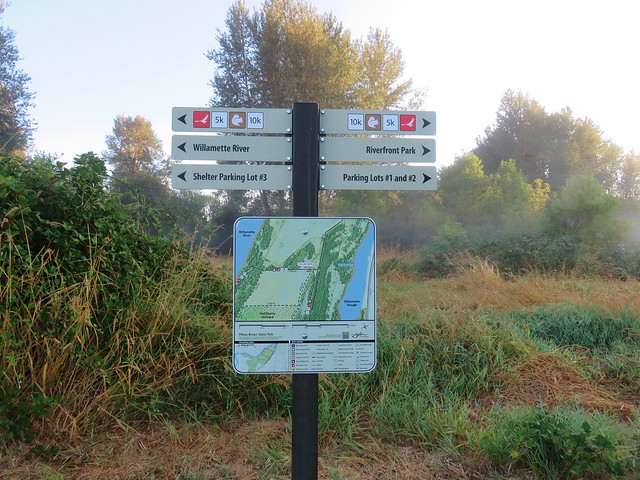
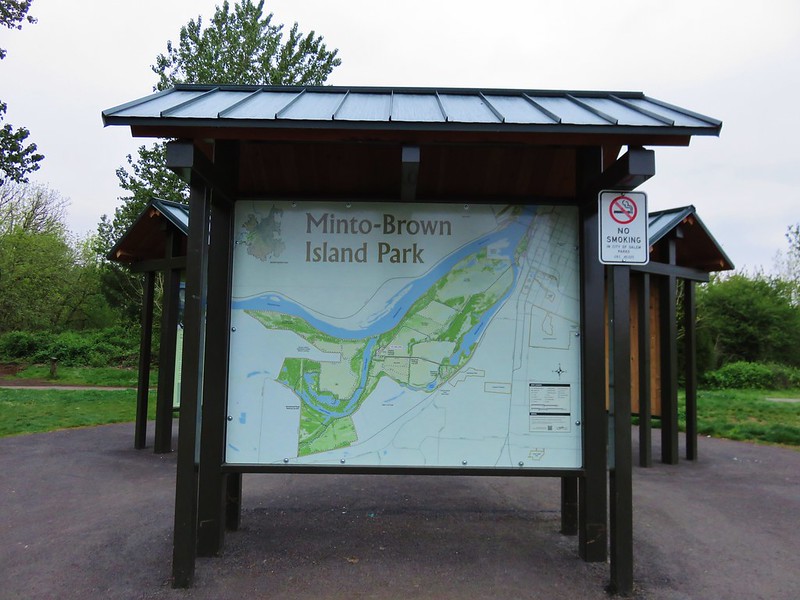
We parked at the Shelter Parking Lot at the end of Minto Island Road SW and set off toward the shelter following signs for the Blue Heron Loop. The park has plenty of signboard maps as well as trail pointers throughout.
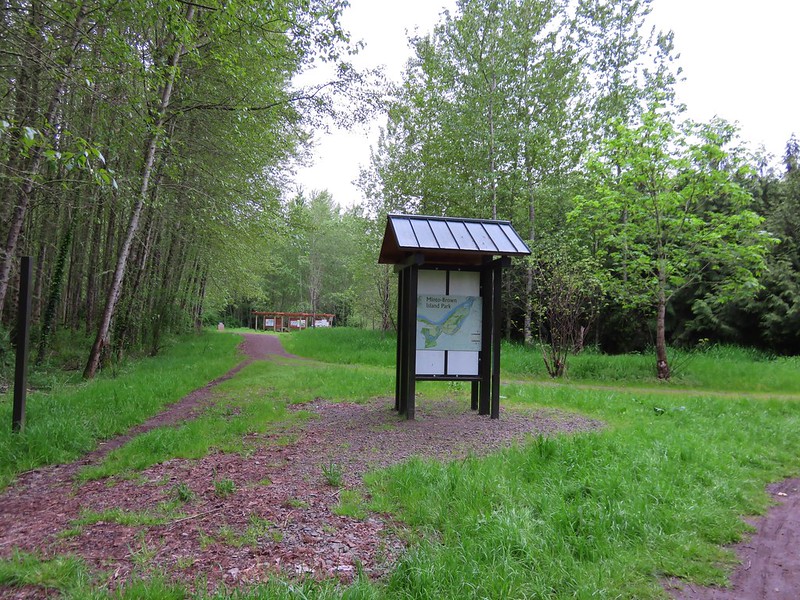
Signboards at the parking lot near the gazeebo.

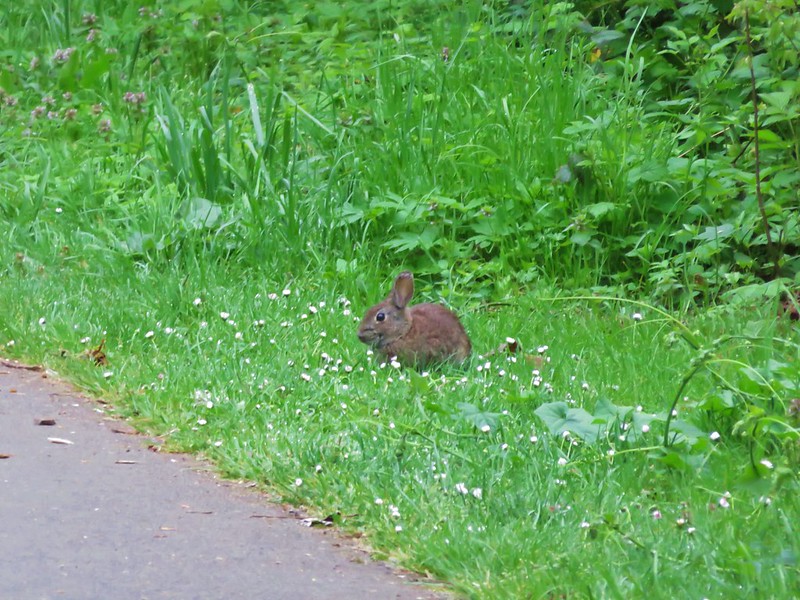
Rabbits are plentiful and often spotted in the strips of grass along the paths.
Lots of little rabbits in the park

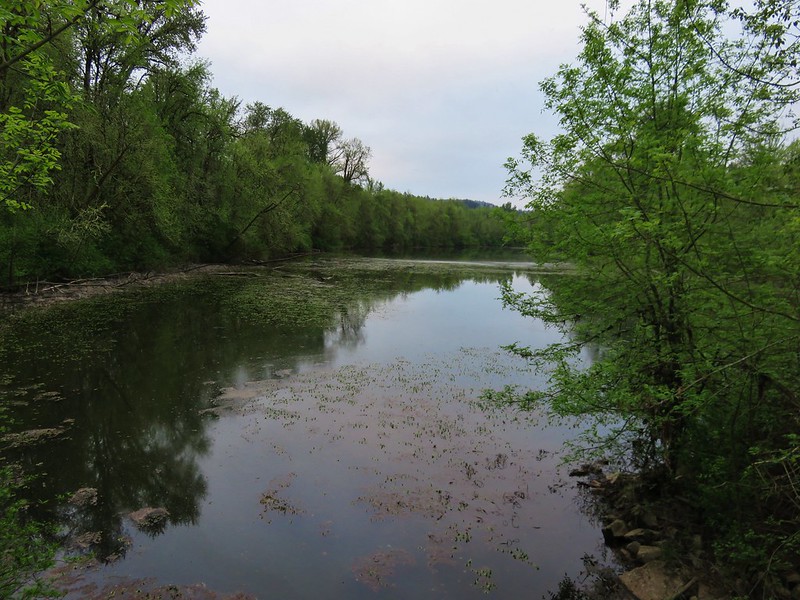
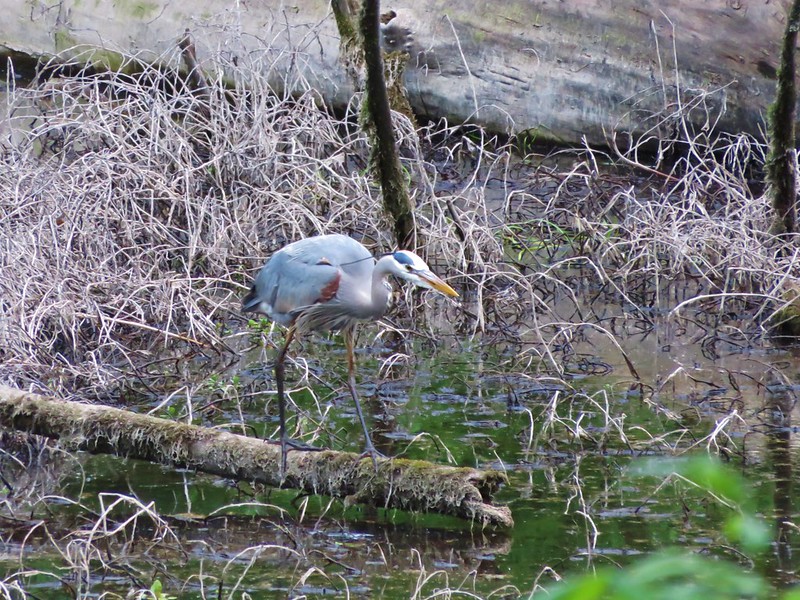
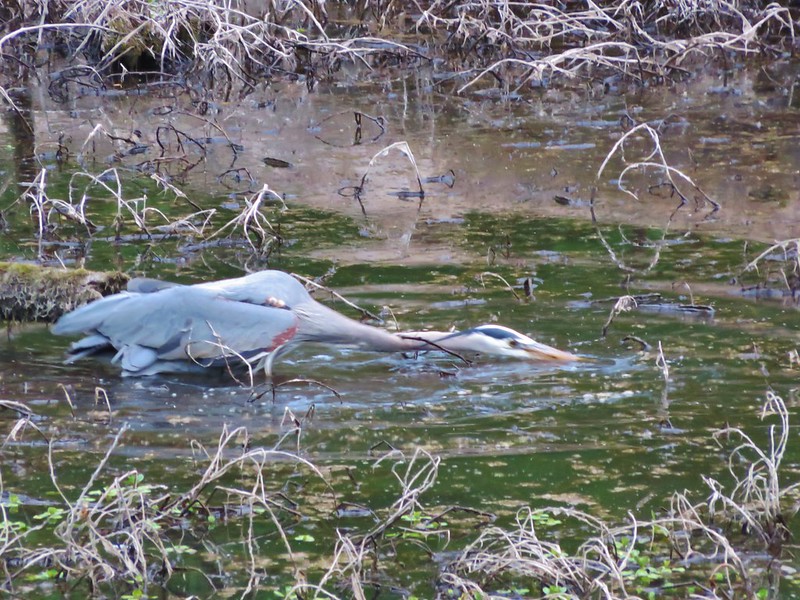
The Blue Heron Loop leads across a footbridge between a pair of sloughs where we spotted a Great Blue Heron searching for snacks.
Slough in Minto-Brown Island Park

Great Blue Heron

Great Blue Heron going after a treat

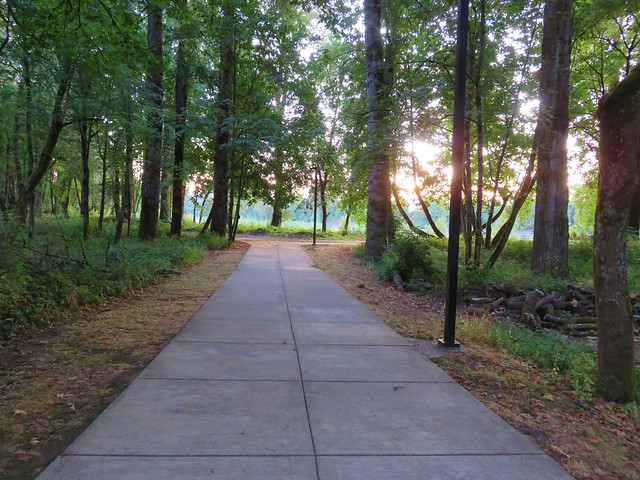
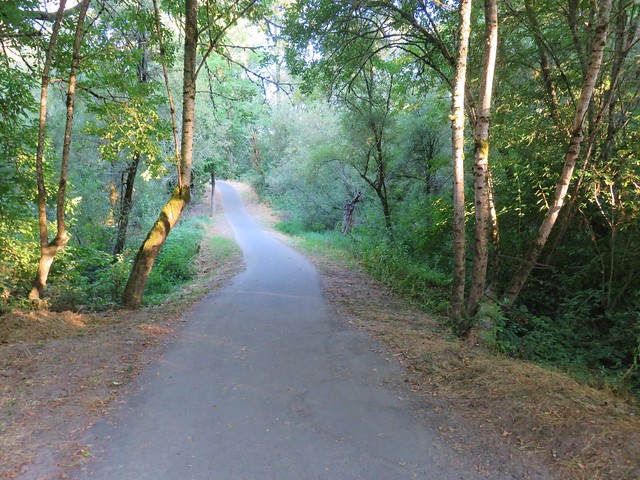
Shortly after crossing the bridge a sign for the Blue Heron Loop led us off the paved path and onto one of the parks soft surface trails.
Trail in Minto-Brown Island Park

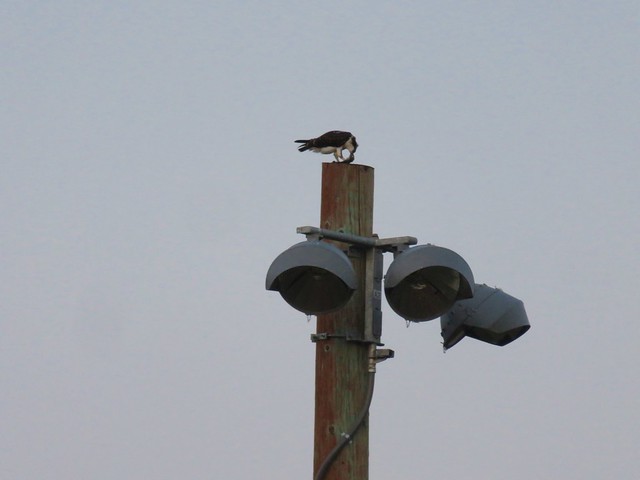
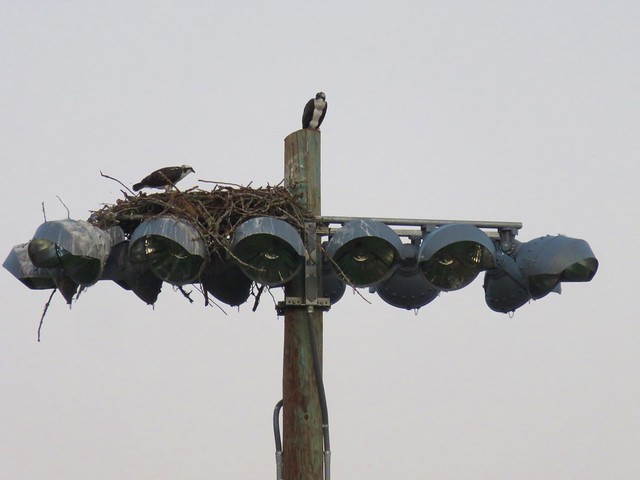
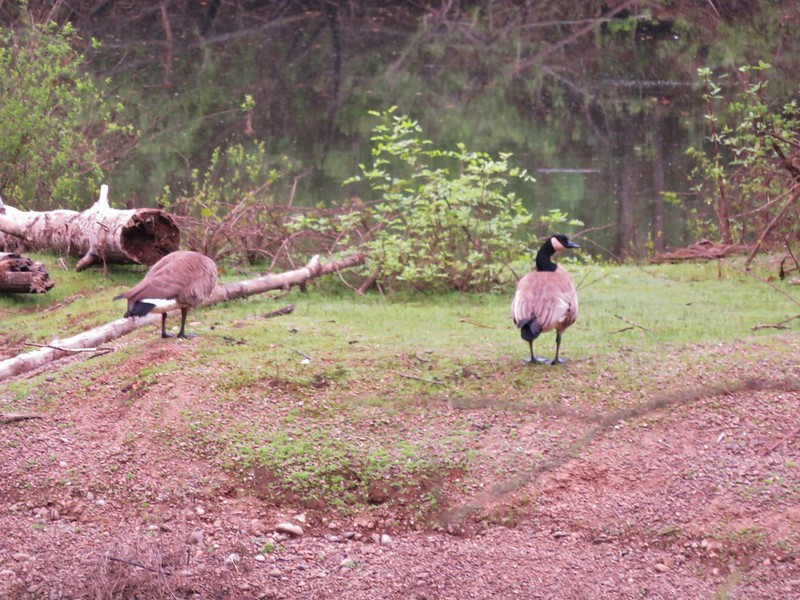
This portion of trail passed another slough on the right where we spotted Canadian Geese, a pair of wood ducks (not pictured due to fast swimming), and an Osprey sitting in its nest.
Canada Geese

Osprey in its nest

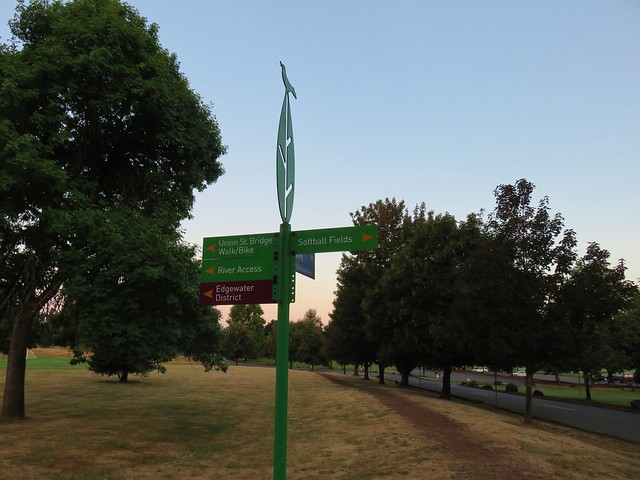
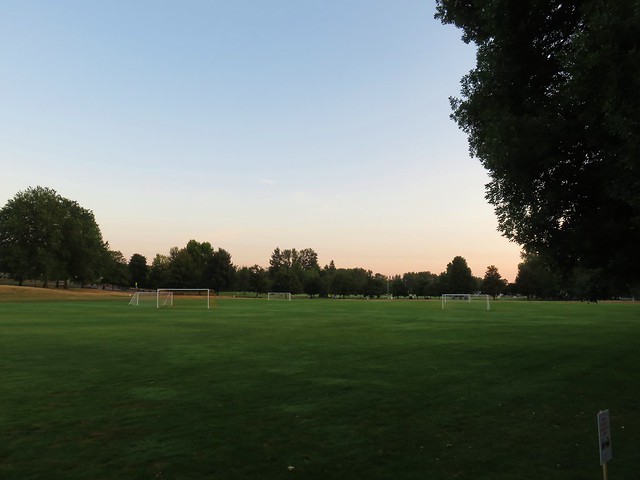
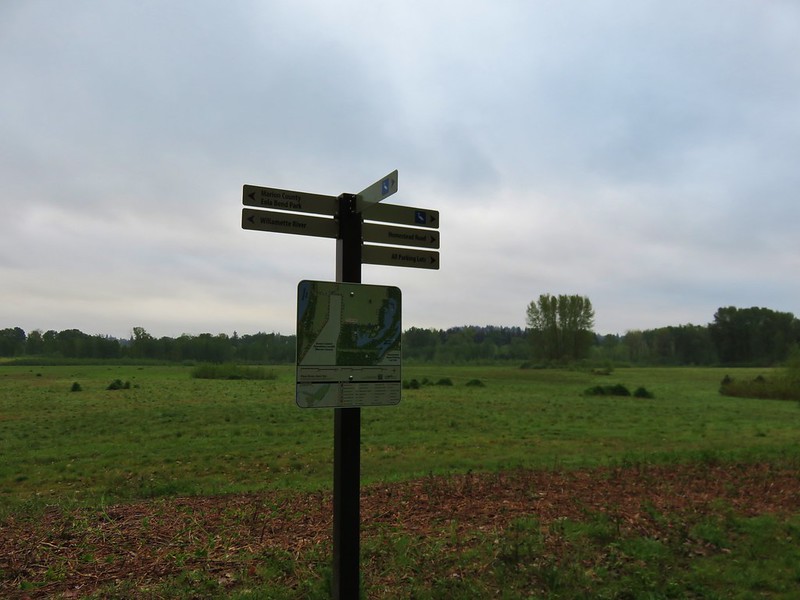
We left the wooded path and came to a trail sign at a junction near one of the many fields in the park.
Trail signs in Minto-Brown Island Park

We left the Blue Heron Loop here and headed for the Brown Island Landfill (the park has a little of everything it would seem). We skirted around it to pick up the Turtle Loop running along the north side of the landfill.
There are several connector trails running between the Turtle Loop trails making several different distances possible. We took one of these through the field to rejoin the Turtle Loop along the Willamette River. Here we found some recent beaver work.
Minto Brown Island Park

Recent beaver work

We followed the Turtle Loop back along the river to the shelter parking lot and our car. Even though the park is in Salem its size and the variety of trails makes it a nice spot to “get away” and you are almost certain to see some wildlife along the way.

On race day we headed to the Banks Middle School in Banks, OR where Heather’s race would finish and she would catch a bus up to the starting line at L.L. Stub Stewart State Park. The race would follow the Banks-Vernonia State Trail which is a converted rail bed, Oregon’s first rail-to-trail. Heather hopped on a bus at 7am and I had a couple of hours to kill before the race would start at 9am. So I took the opportunity to hike a section of the trail. I had decided to be at the Buxton Trailhead, one of several possible traileheads to access the trail, which was near the 6 mile mark of the half-marathon.

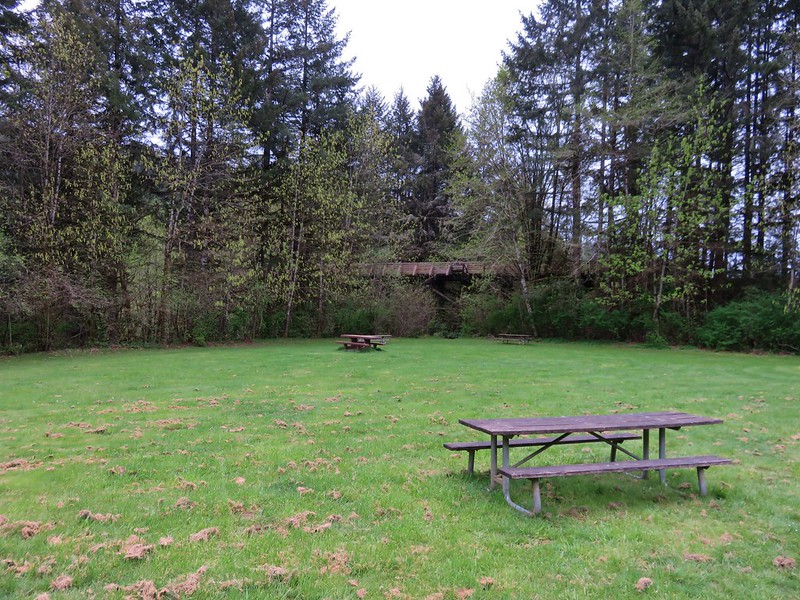
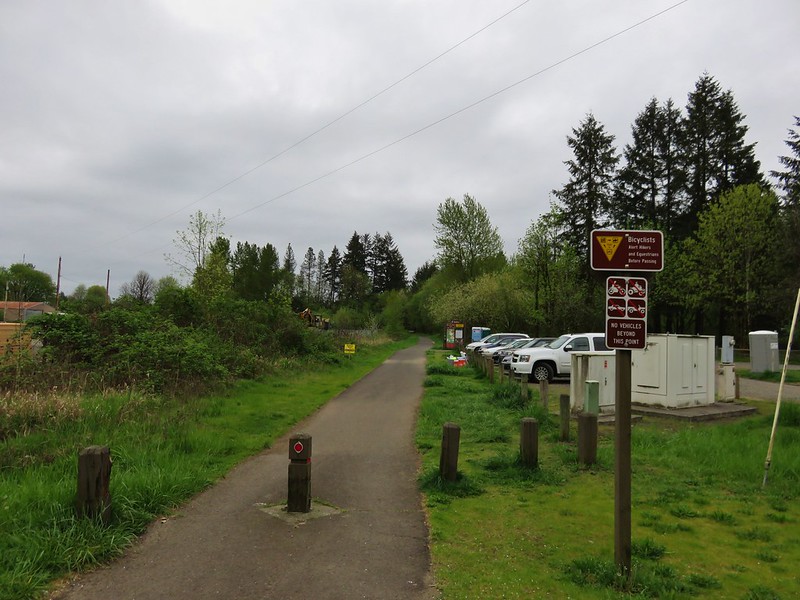
The trailhead had a large parking area with picnic tables, and a shelter.
Buxton Trailhead

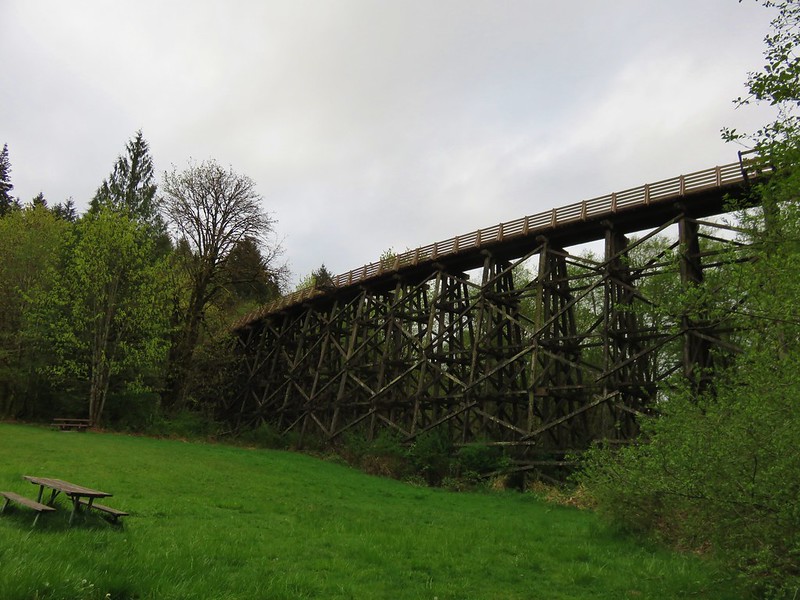
Buxton Tressel from the trailhead

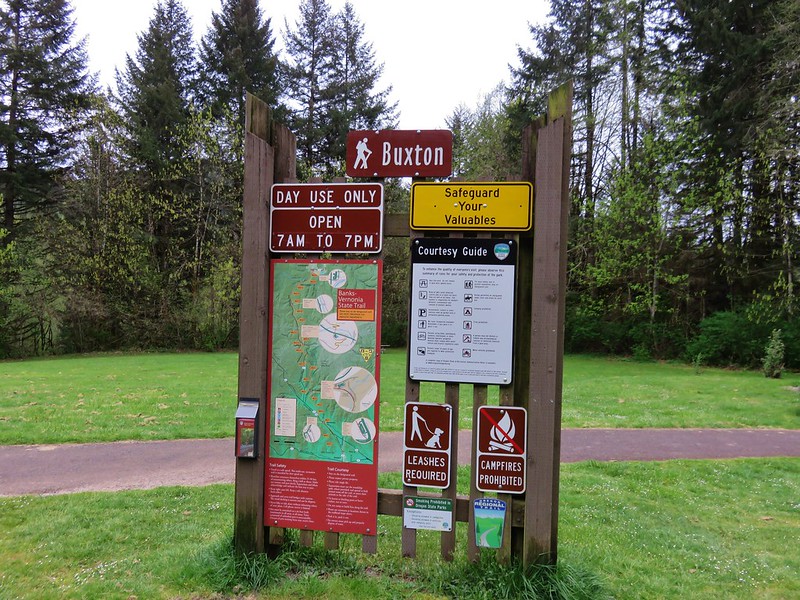
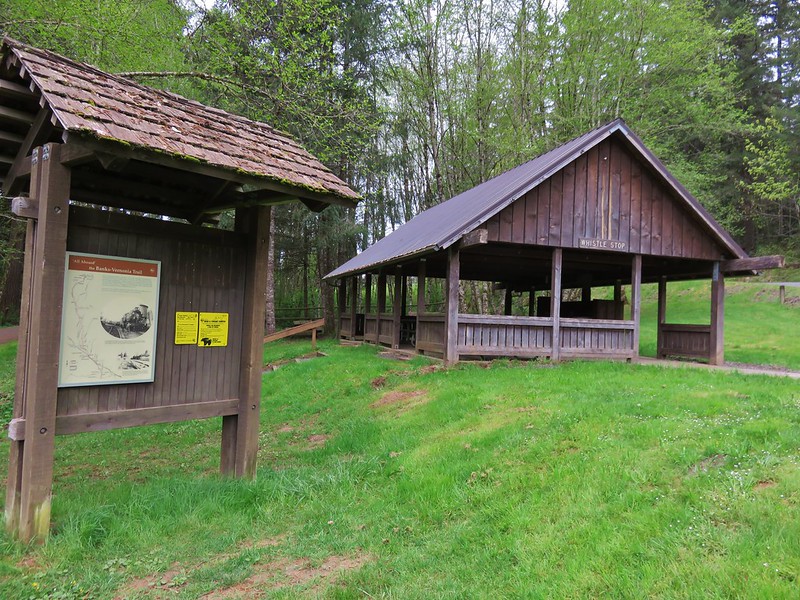
Building and sign at the Buxton Trailhead

I had calculated that Heather would be passing by that spot a little before 10am so I had about 2 1/2 hours available to hike. I took a path to the left of the parking lot down to a creek crossing below the Buxton Trestle.
Footbridge over Mendenhall Creek

Mendenhall Creek

Buxton Trestle

The path then led uphill joining the Banks-Vernonia State Trail just beyond the trestle.
Trail heading up to the Buxton Trestle

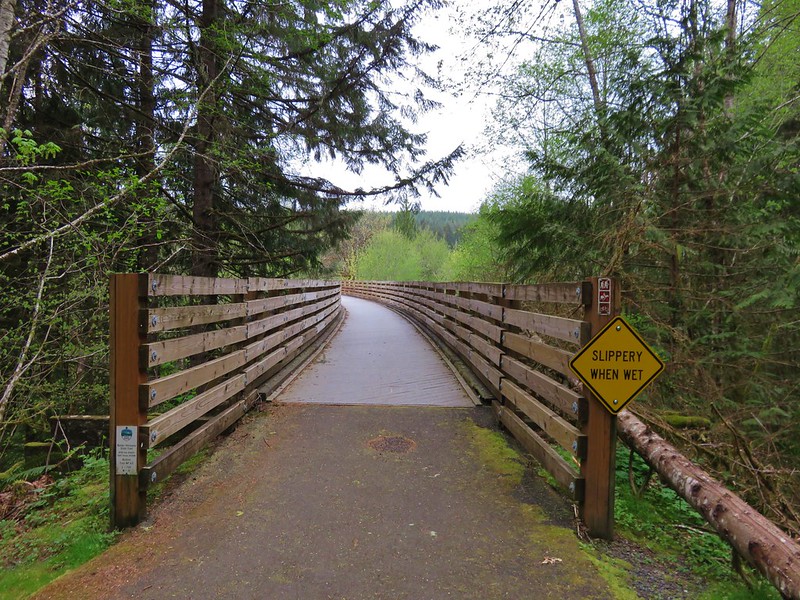
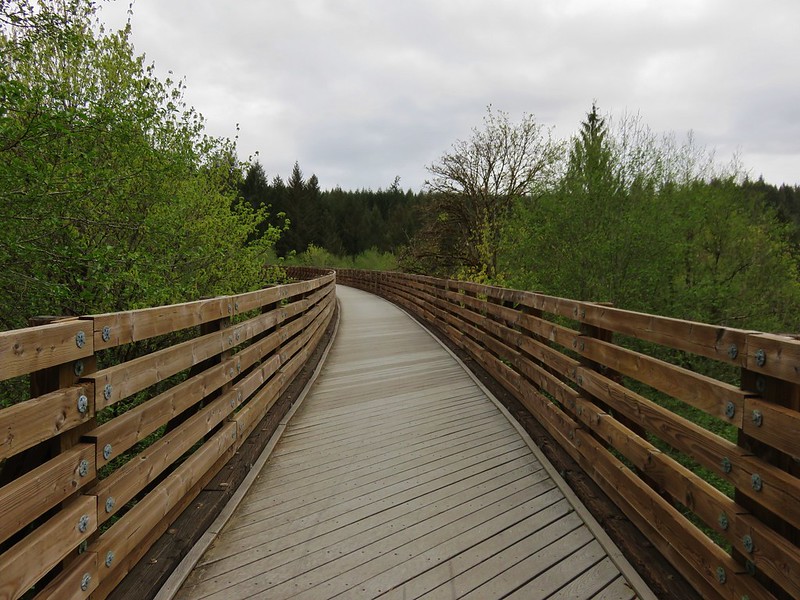
My plan was to head east toward the Banks end of the trail for an hour and then head back to the trestle to wait for Heather, but before I headed down the trail I wandered out onto the trestle.
Buxton Trestle
Buxton Trestle

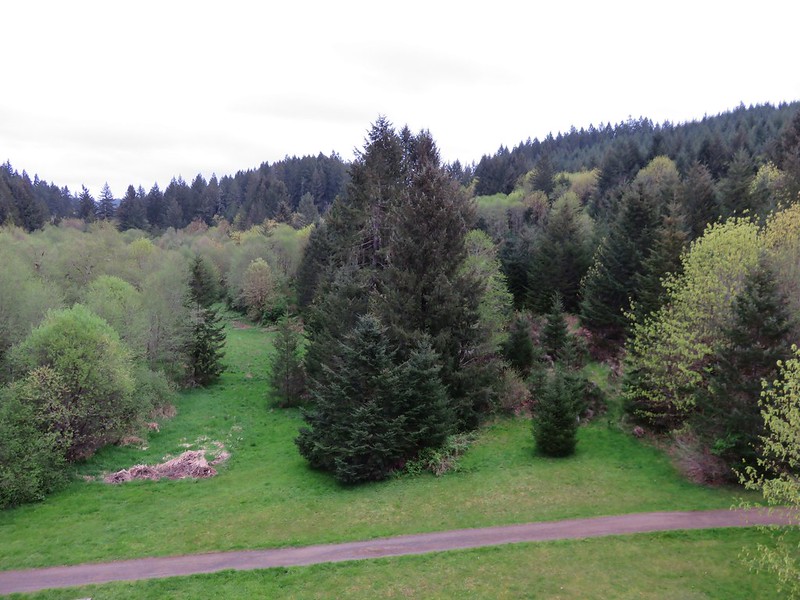
View from the Buxton Trestle

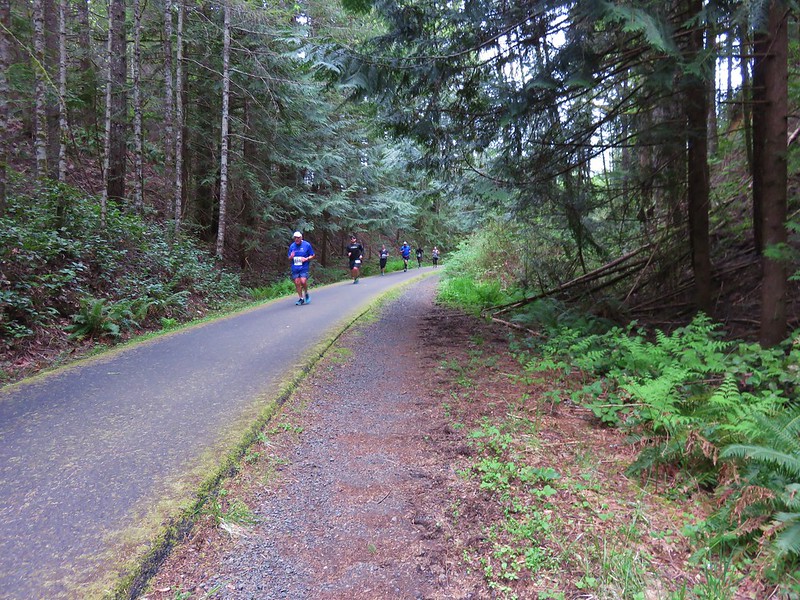
The entire 21 miles of the trail are paved which makes it popular with bicyclists, runners, walkers, and it also sees some equestrian traffic. It was still pretty early though so for the first 45 minutes I saw more wildlife than people.
Starling

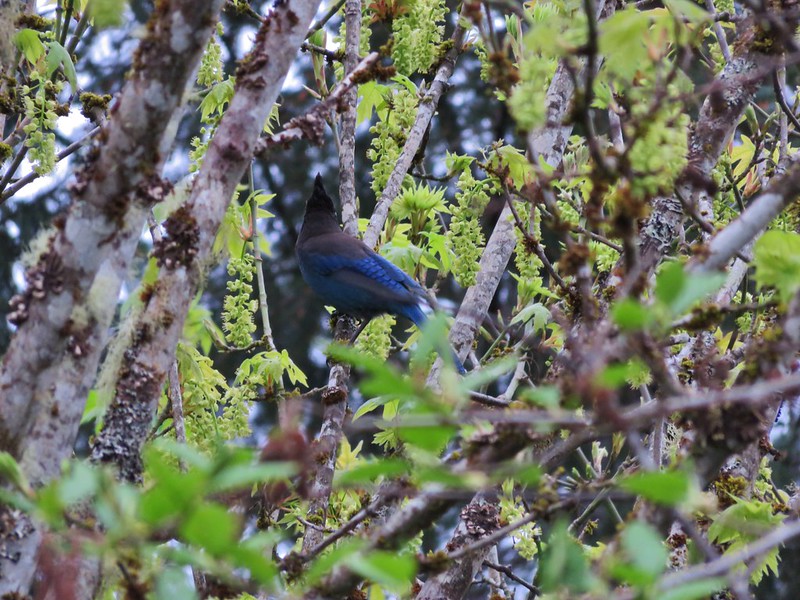
Stellars Jay

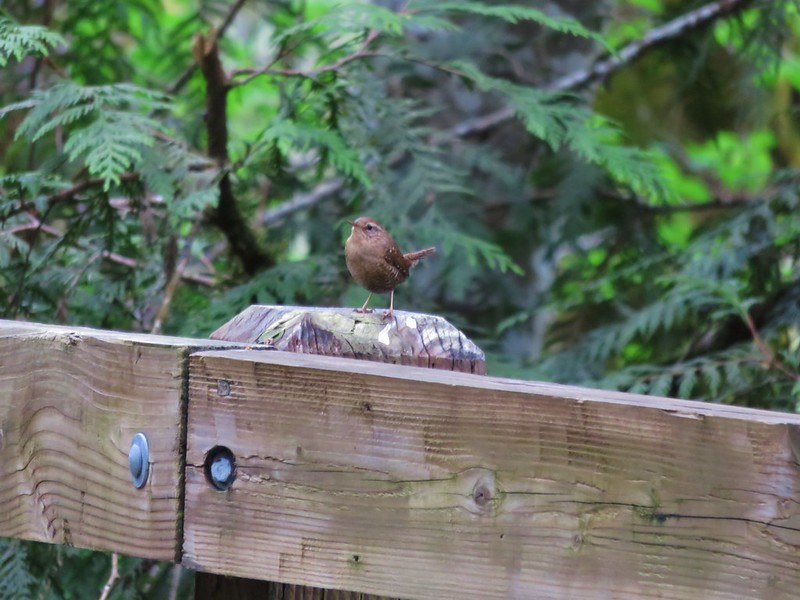
Wren

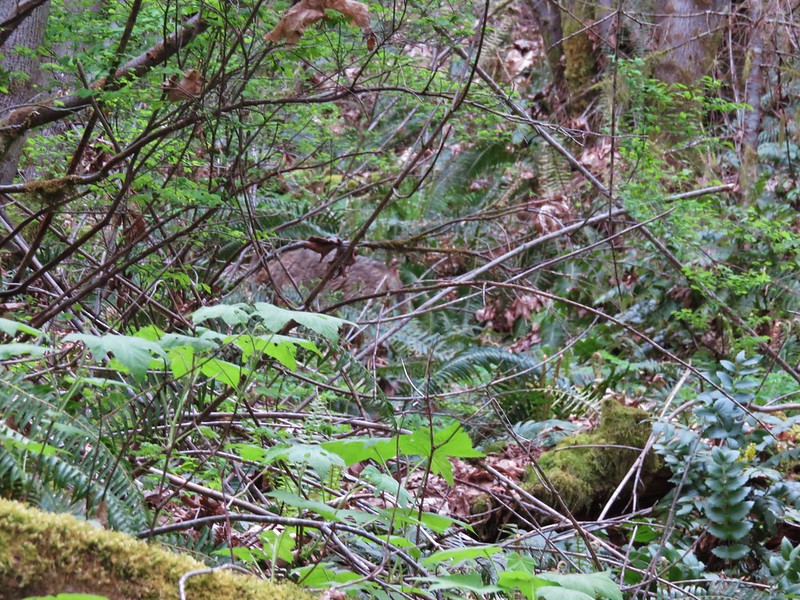
The highlight happened as I passed a draw to my left and noticed something moving up the hillside through the brush. It was a decent size but it had its head down making it hard to tell what I was seeing. When it finally raised its head I could see it was a coyote. It blended really well with the brush and wouldn’t stop moving making it extremely difficult to get a decent picture. I finally made a little noise to get its attention hoping it would pause long enough for a photo, but it was quicker than I was and darted off as soon as we made eye contact.
Coyote

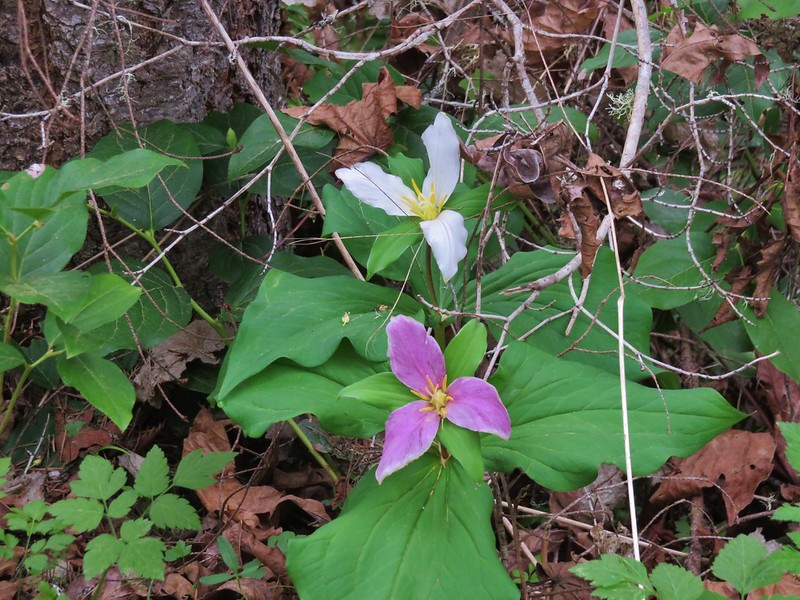
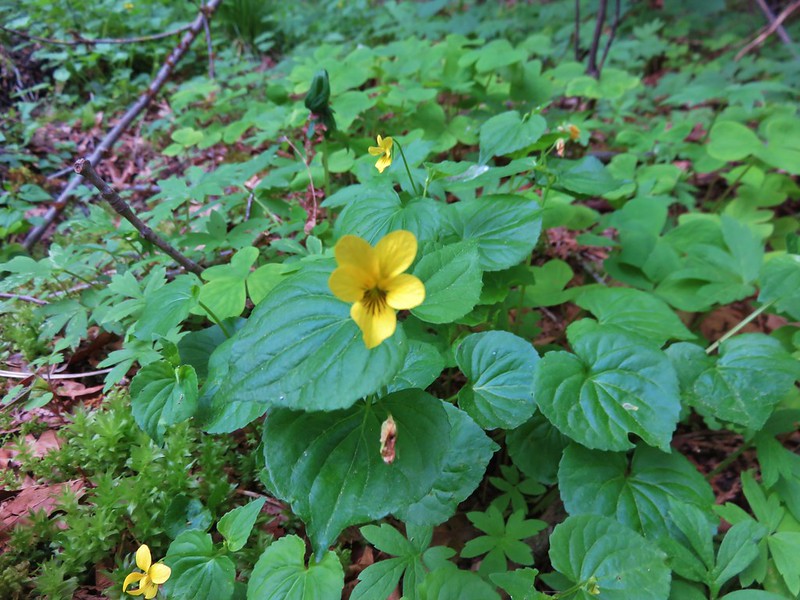
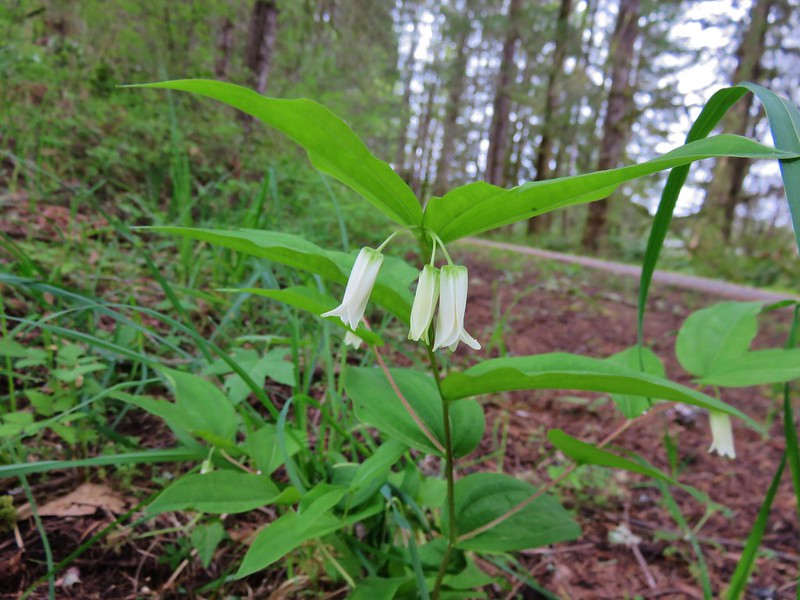
In addition to the wildlife there were plenty of Spring wildflowers along the trail. The forested hillside was dotted with trillium, bleeding heart, pioneer violets, and a few fairy bells.
Trilliuims

Bleeding heart

Violet

Fairybells

From the trestle the trail had gradually descended to a gravel road crossing where it left the trees and leveled out as it began to pass between pastures.
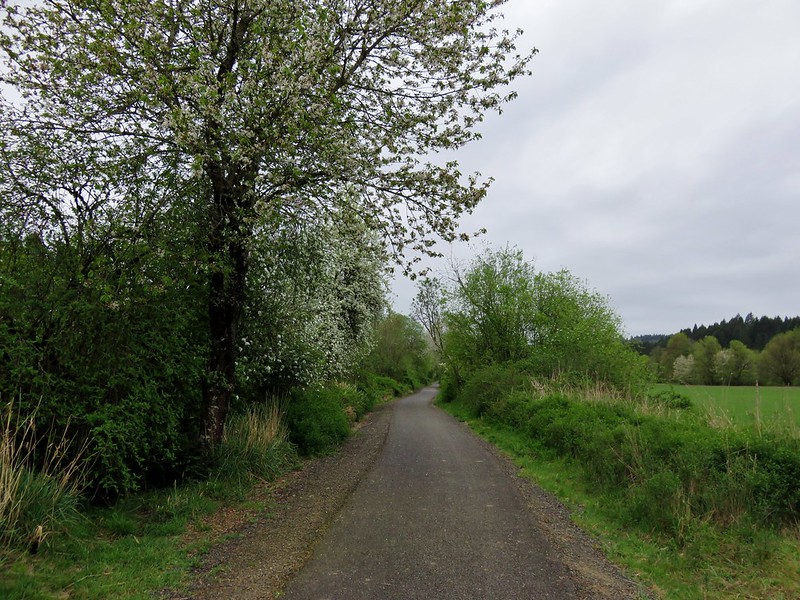
Banks-Vernonia State Trail

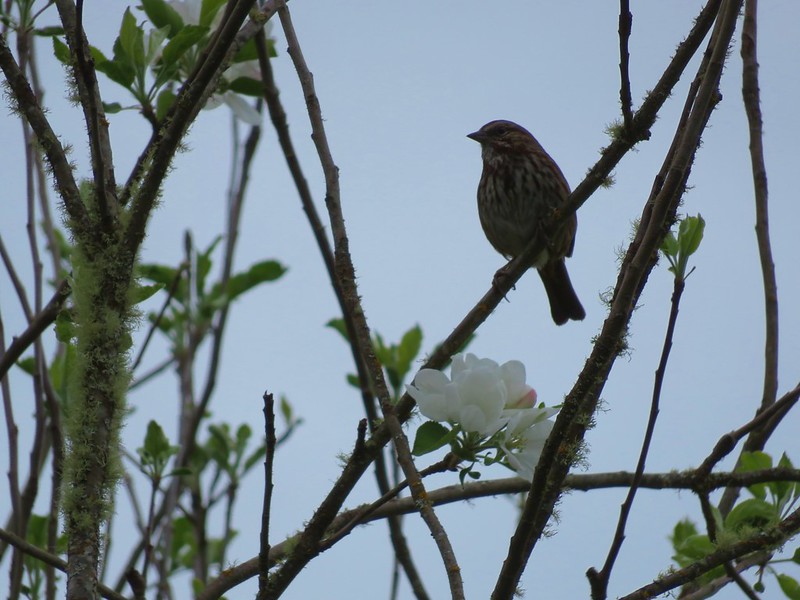
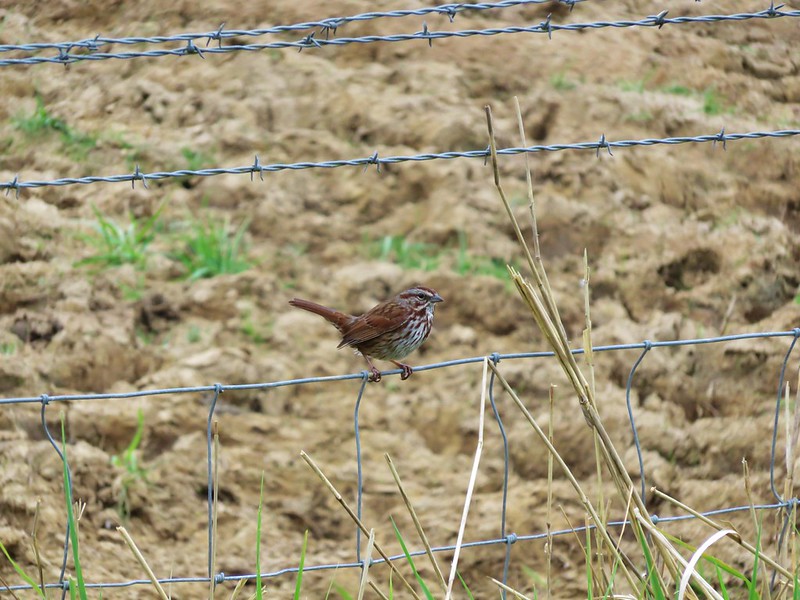
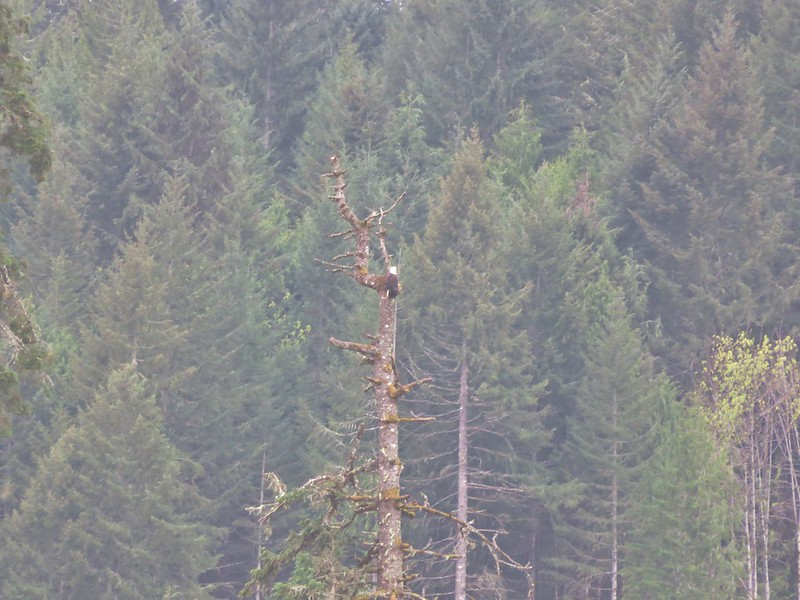
Birds were abundant, mostly sparrows, swallows, and robins but across one of the fields I spotted a bald eagle flying between trees.
Sparrow

Sparrow

Bald Eagle

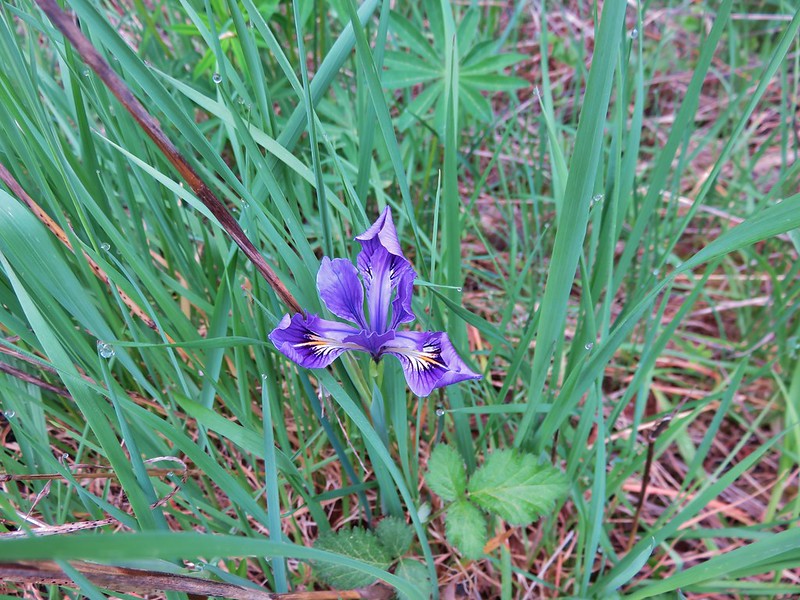
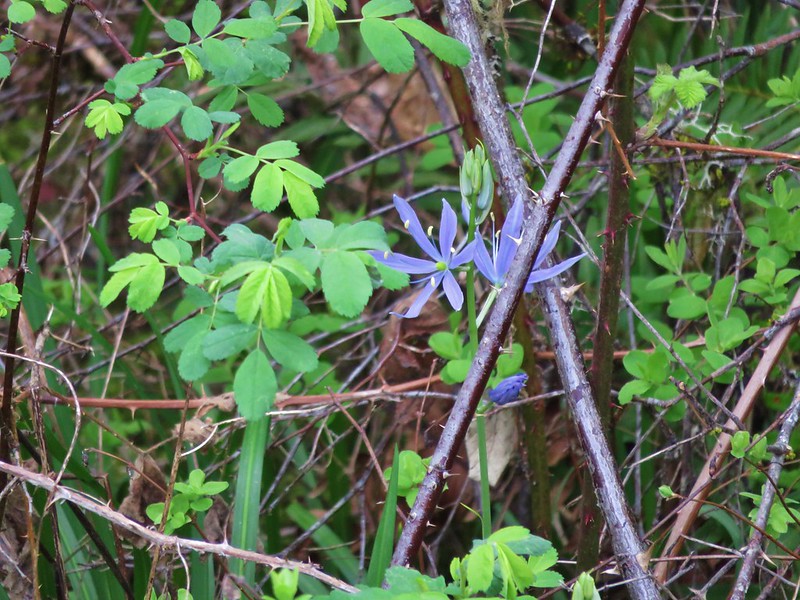
I also spotted a single tough leafed iris and a couple of camas blossoms.
Wild iris

Camas

By 8:30am the trail had become quite a bit busier, especially as I neared the Manning Trailhead which I reached just as it was time to turn around and head back.
Manning Trailhead

I had just crossed the Buxton Trestle when the first runners passed by on their way to Banks. These were the sub 6 minute milers so I figured I had about 15 to 20 minutes before Heather would be passing by. I grabbed a snack and waited along the trail for her to pass by which she did right on schedule.
IMG_4015

After cheering her on I hopped back in the car and headed for the finish line to meet her. Her goal for this racing season was to break 2hrs in a half-marathon which she managed to do finishing in 1:52:42. With the race completed and her goal accomplished our attention now turns to our hiking season which will last for the next 6+ months. Happy Trails!

Flickr: Minto-Brown- https://www.flickr.com/photos/9319235@N02/sets/72157666808908512

Banks-Vernonia – https://www.flickr.com/photos/9319235@N02/albums/72157666857451492

Categories
Hiking Oregon Salem/Albany Trip report Willamette Valley

Champoeg Heritage Area

Since 2010 we have been closing out the year by taking our final hike along the coast or in the coastal mountain range, but this year that streak came to an end. Recent storms and heavy rains that damaged roads and left creeks and rivers swollen caused us to rethink our original plan to visit Fort Clatsop near Astoria Oregon. Instead we decided to put our fallback hike into play and visit Champoeg State Park.

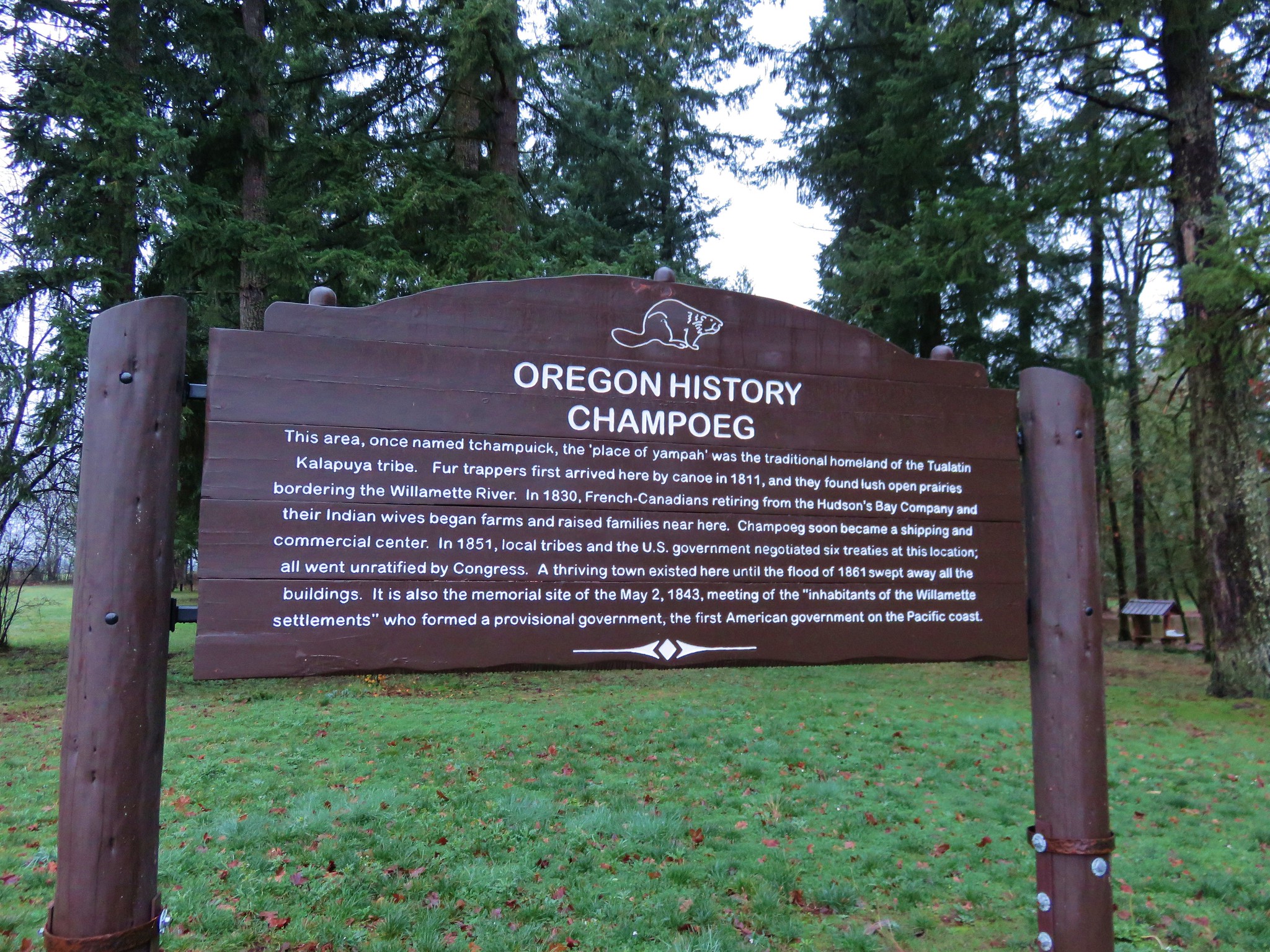
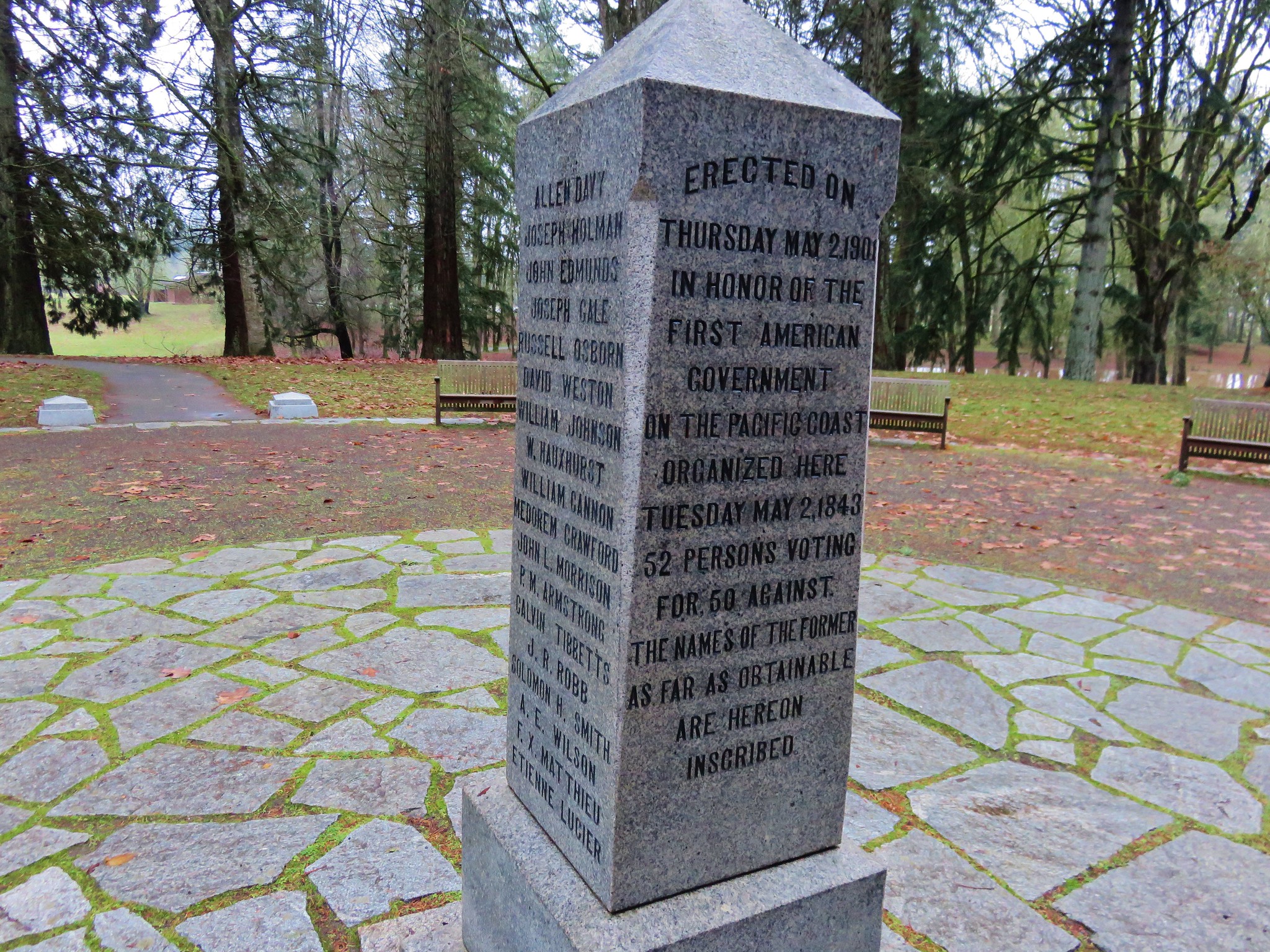
Champoeg State Park is located along the Willamette River less than a ten minute drive from Interstate 5 at the Donald exit between Portland and Salem. The 622 acre park is at the site where Oregon’s first provisional government was formed by vote in 1843. On May 2nd of that year 100 men arrived at the Hudson’s Bay store to decide if they would form an American style government or stay aligned with Britain. The group consisted of Americans, Britons, and French-Canadians. The vote was initially tied 50/50, but two undecided French-Canadians eventually chose to vote with the Americans breaking the tie.

By 1860 Champoeg consisted of 200 buildings but in December of 1861 the river flooded when it rose by 55 feet and effectively wiped out the townsite. No lives were lost in the flood but it marked the end of the bustling town.

We parked in the Riverside Parking area located at the northeast end of the park planning on starting our hike on the .5 mile riverside loop.
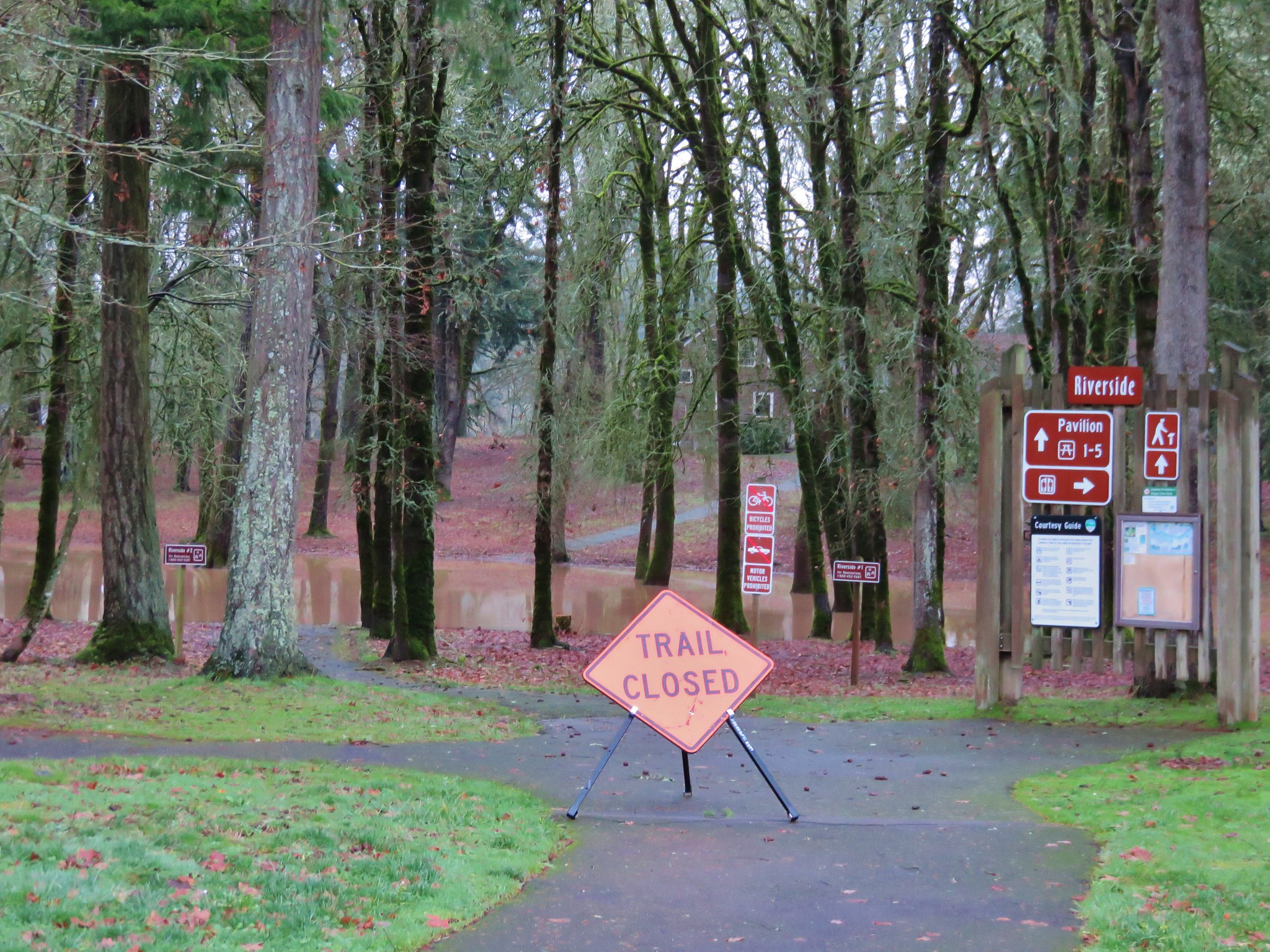
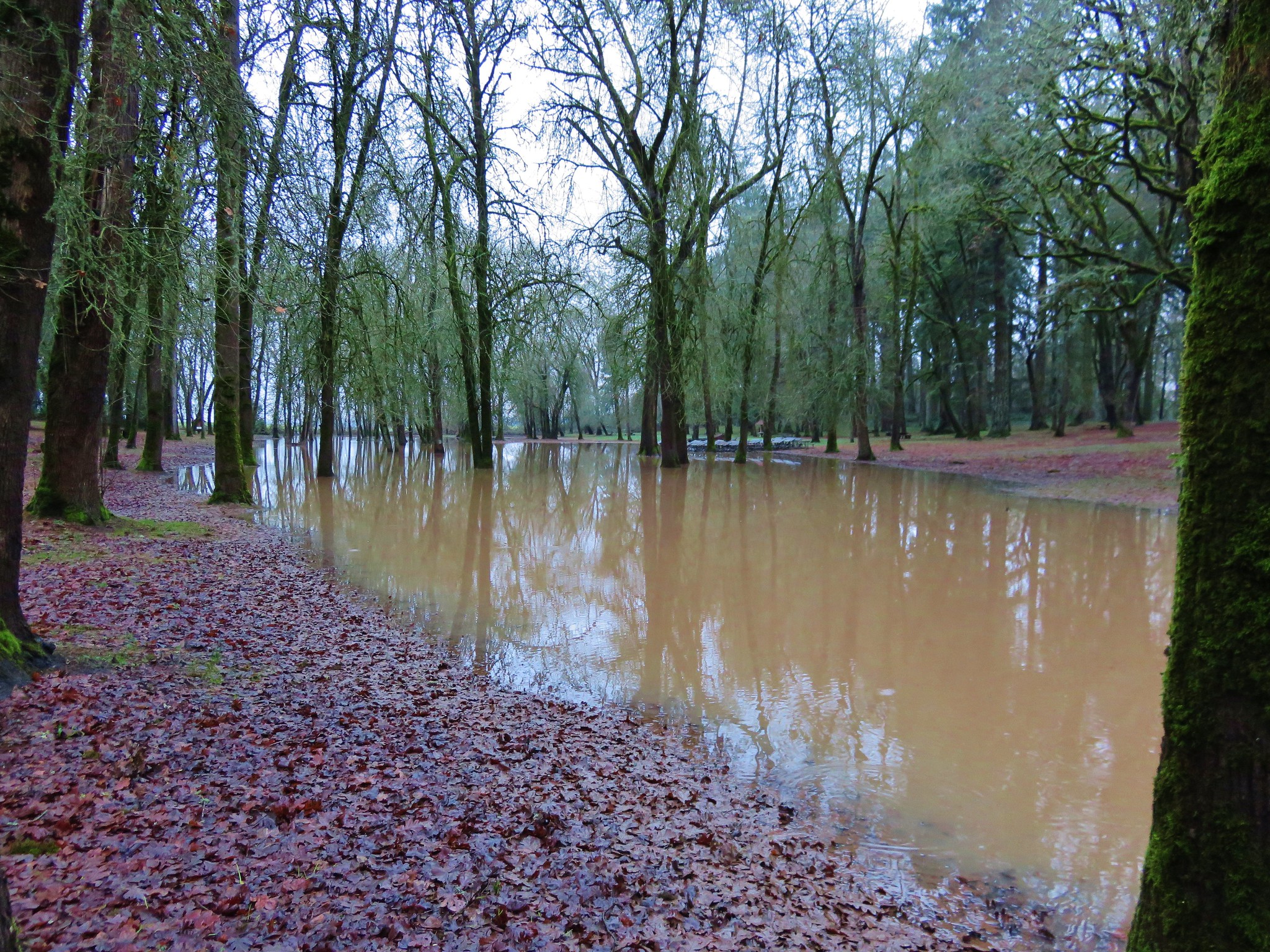
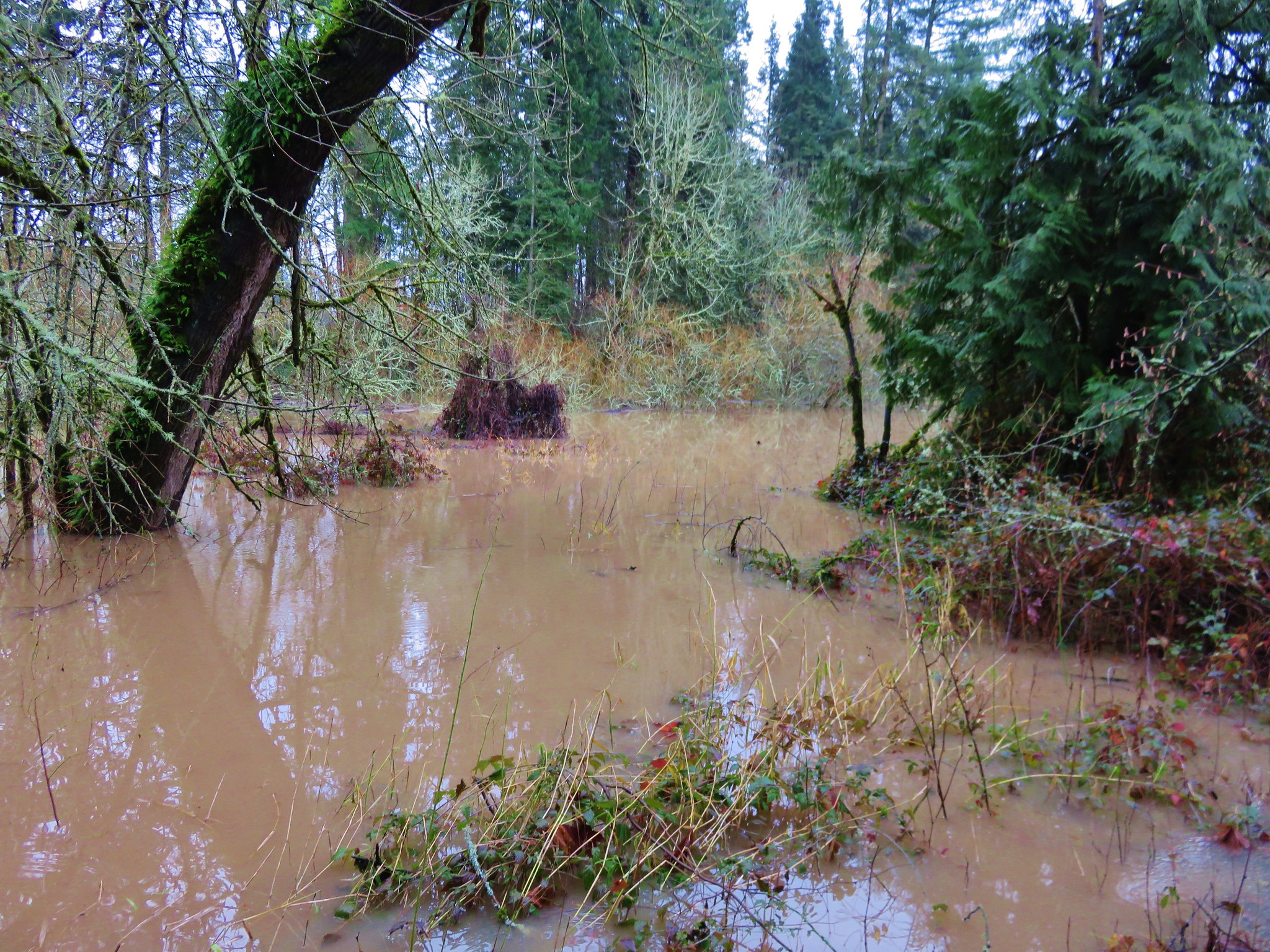
Champoeg Heritage Area Trailhead The recent rains had left the park a bit waterlogged and we found portions of the trail underwater. IMG_2733

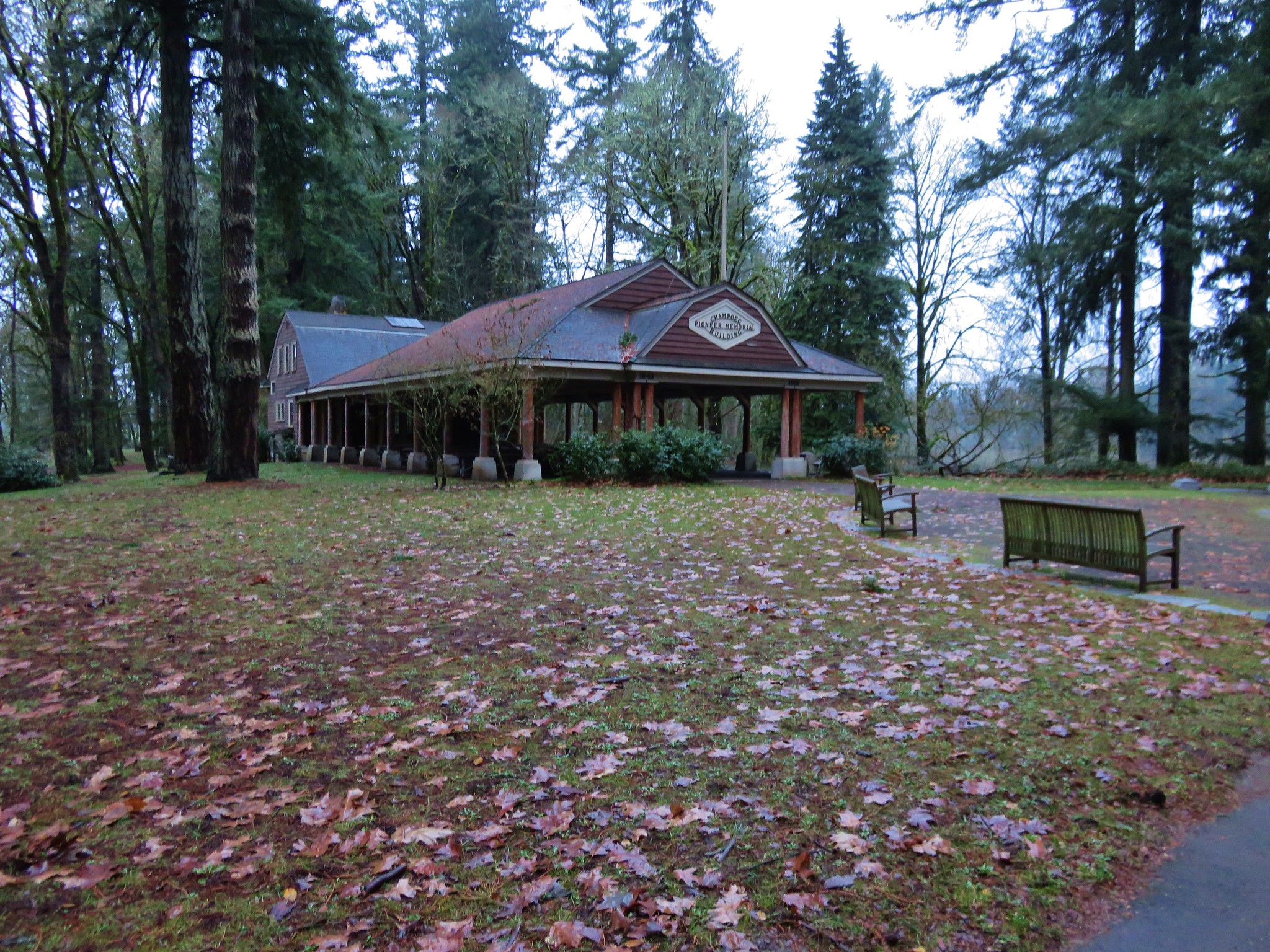
IMG_2734 We made our way around this first obstacle and climbed a small hill to the Pioneer Memorial Building. Champoeg Pioneer Memorial Building

A 1901 memorial commemorating the 1843 vote sits in front of the building.
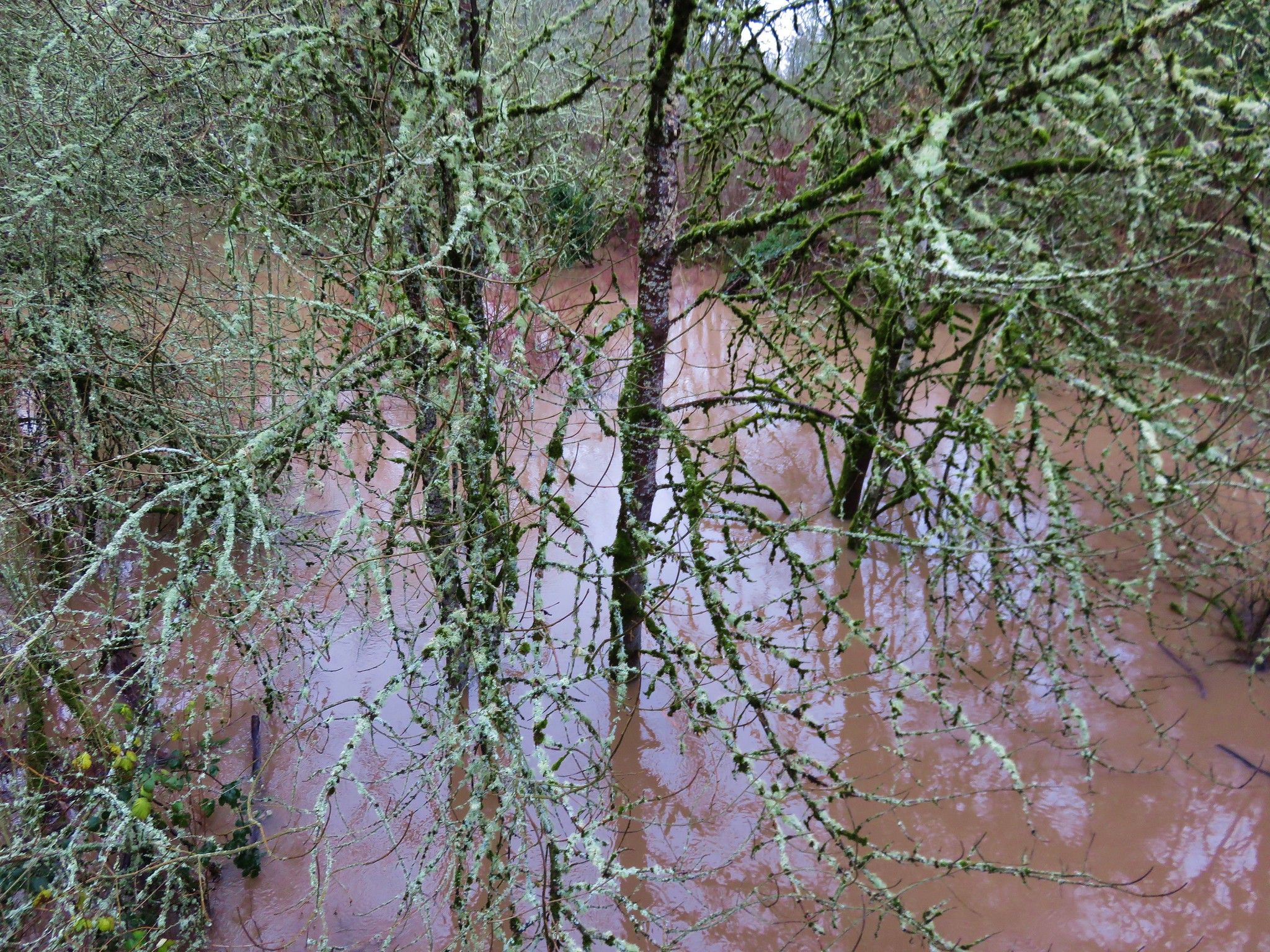
IMG_2738 We set off on the Riverside Loop next to a muddy and swollen Willamette River. IMG_2745

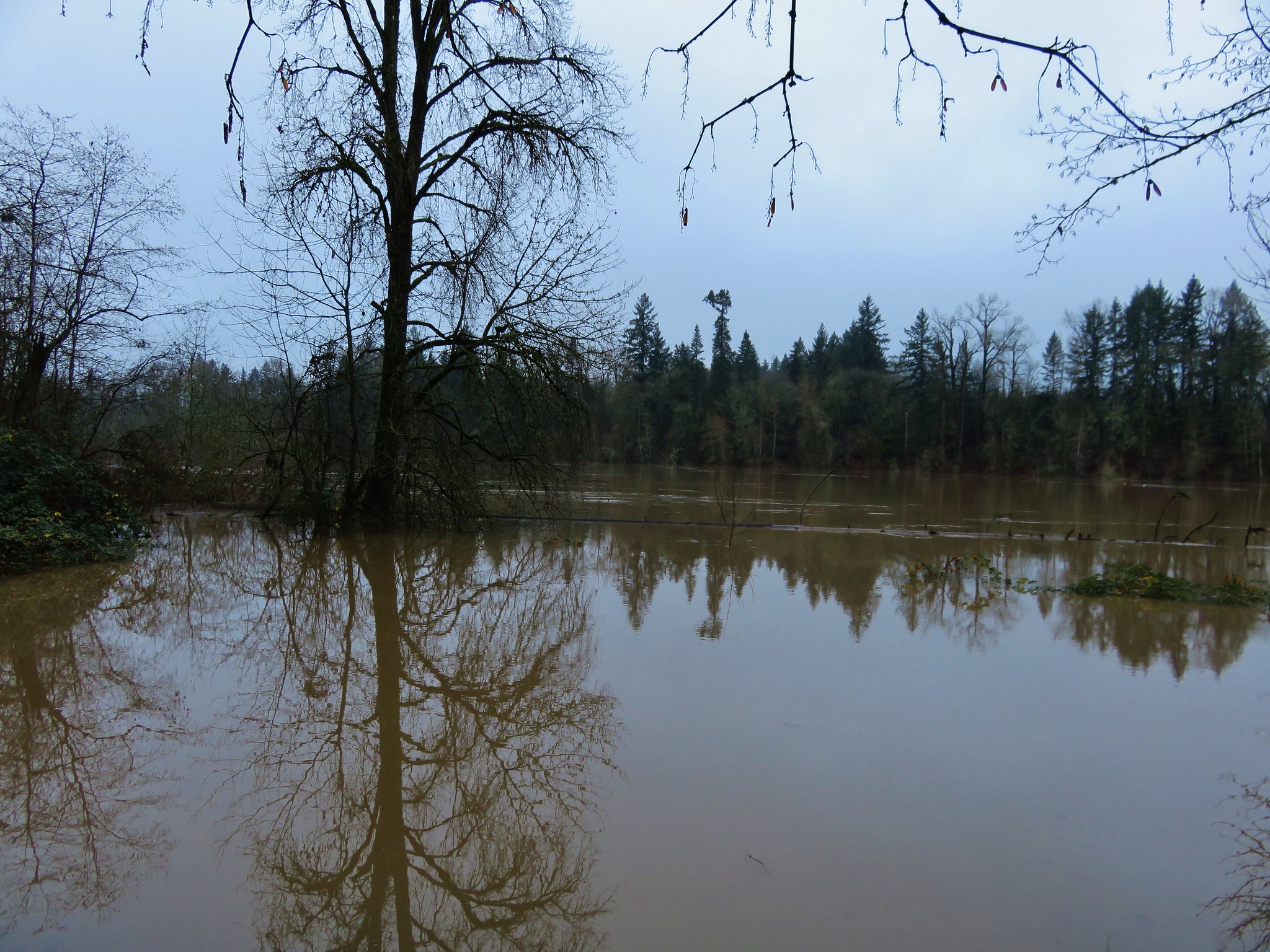
IMG_2743 The loop wasn’t possible on this day due to several flood portions, but we walked the portions that were accessible. Flooded trail in Champoeg State Park

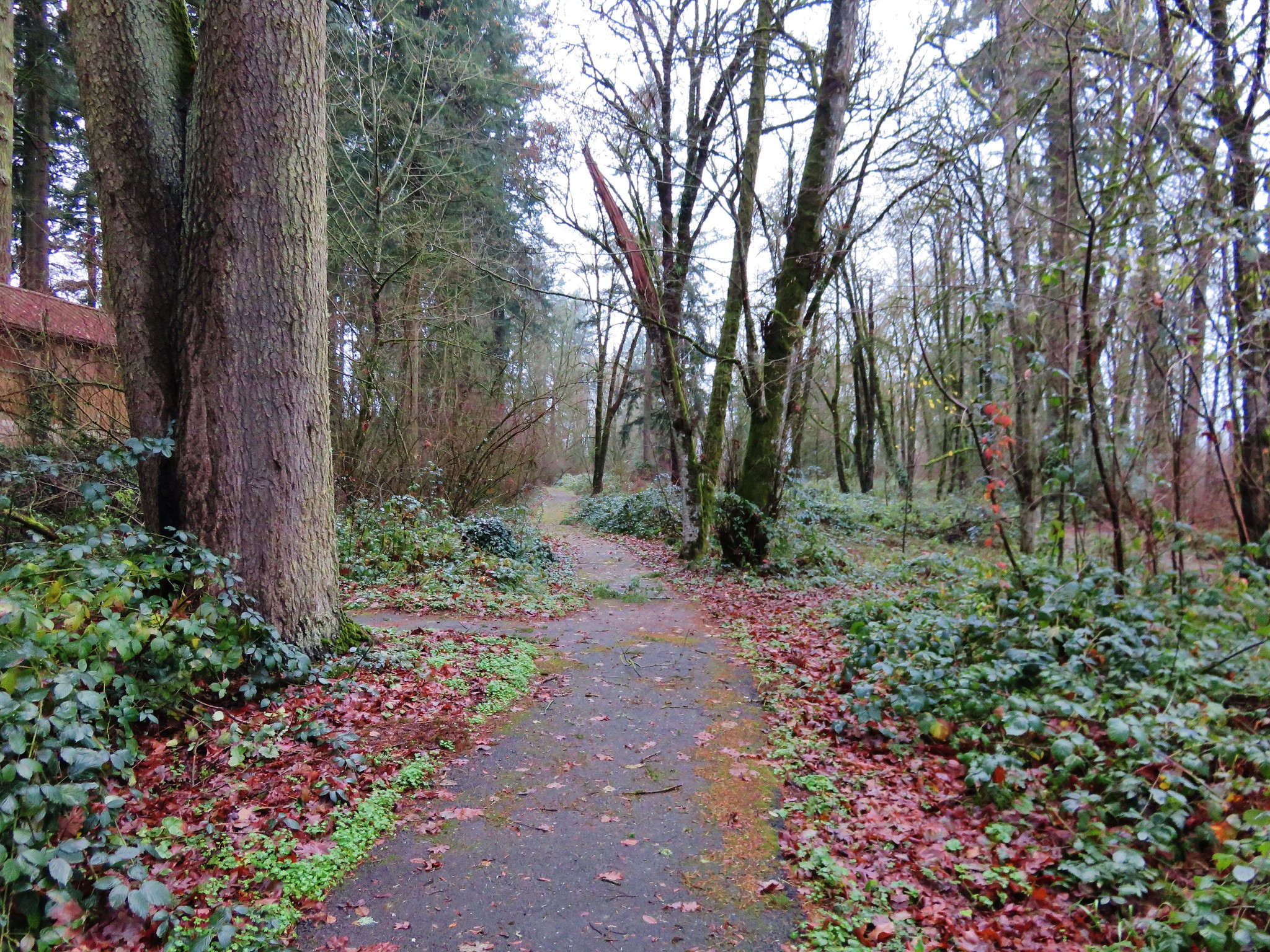
We returned to the memorial and headed west on the Townsite Trail, a 1.5 mile barkdust path that led to the Park’s campground.
IMG_2754 IMG_2756

Townsite Trail We followed the path to a backed up Champoeg Creek and crossed on the road bridge leading to the campground. IMG_2763

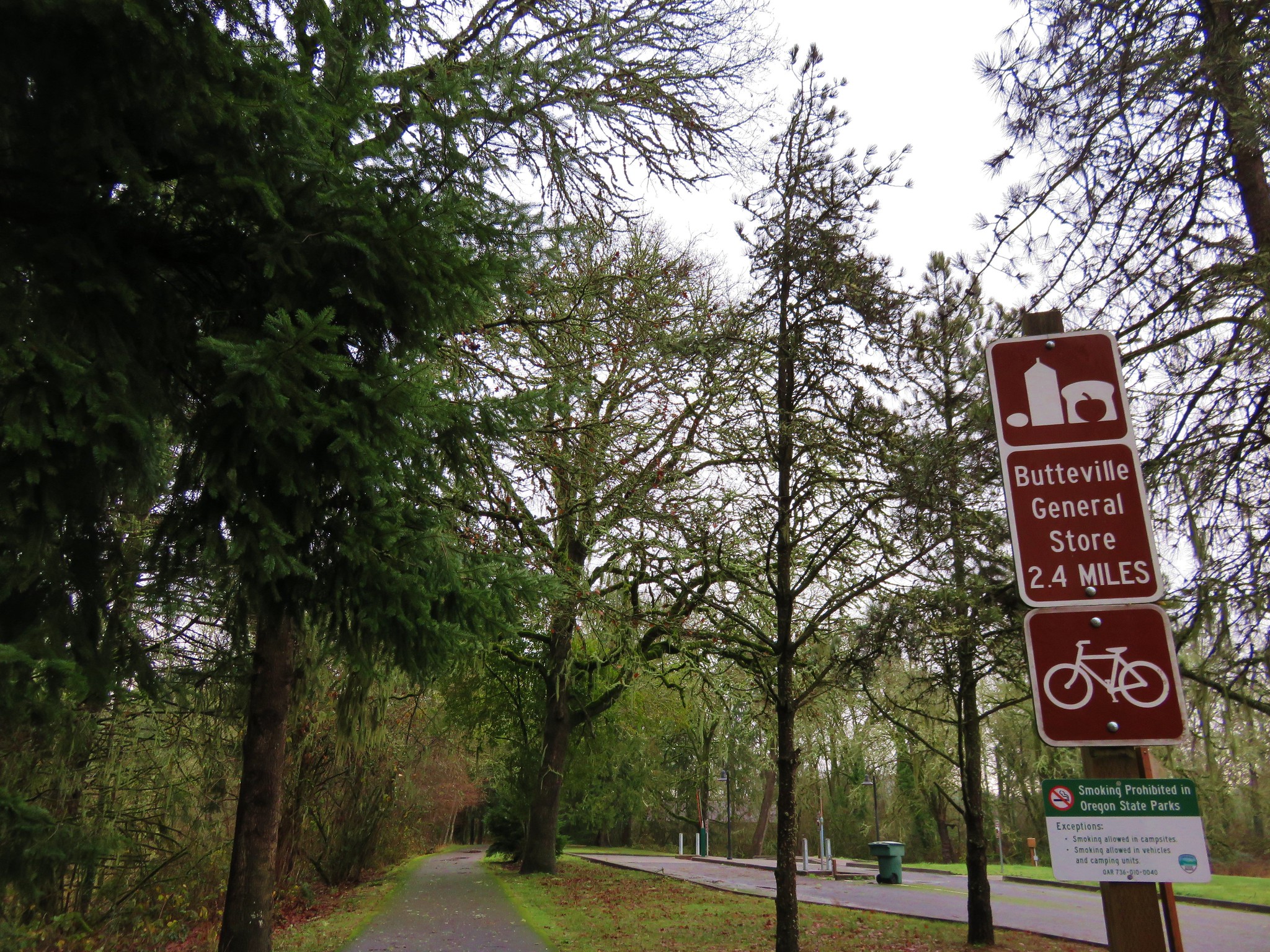
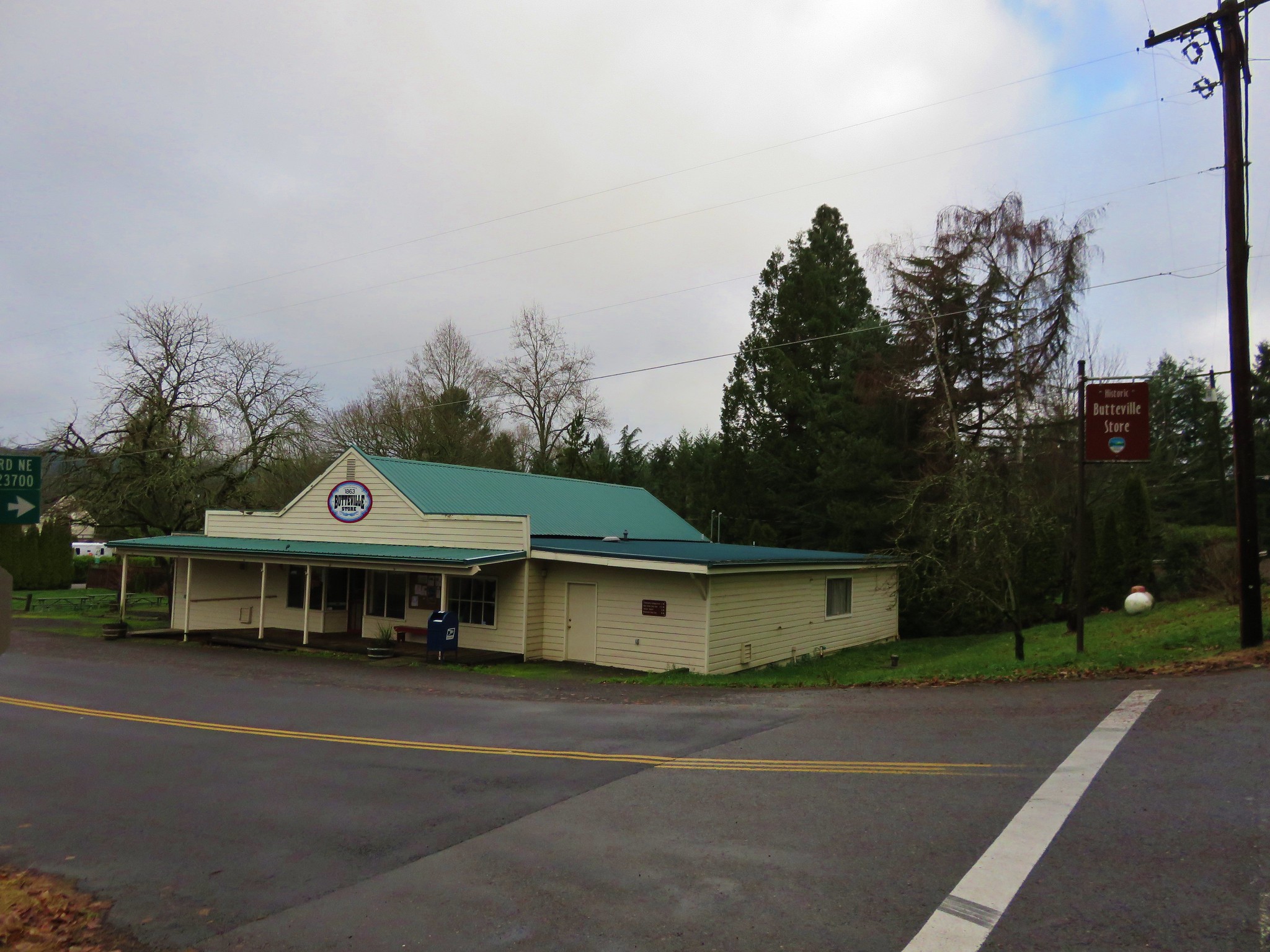
IMG_2765 From the campground a paved bike path leads 2.4 miles to the Historic Butteville Store. Established in 1863 it the oldest operating store in the State although it closes in the winter. IMG_2766

Two short hiker only side trails split from the bike path near the far end of the campground.
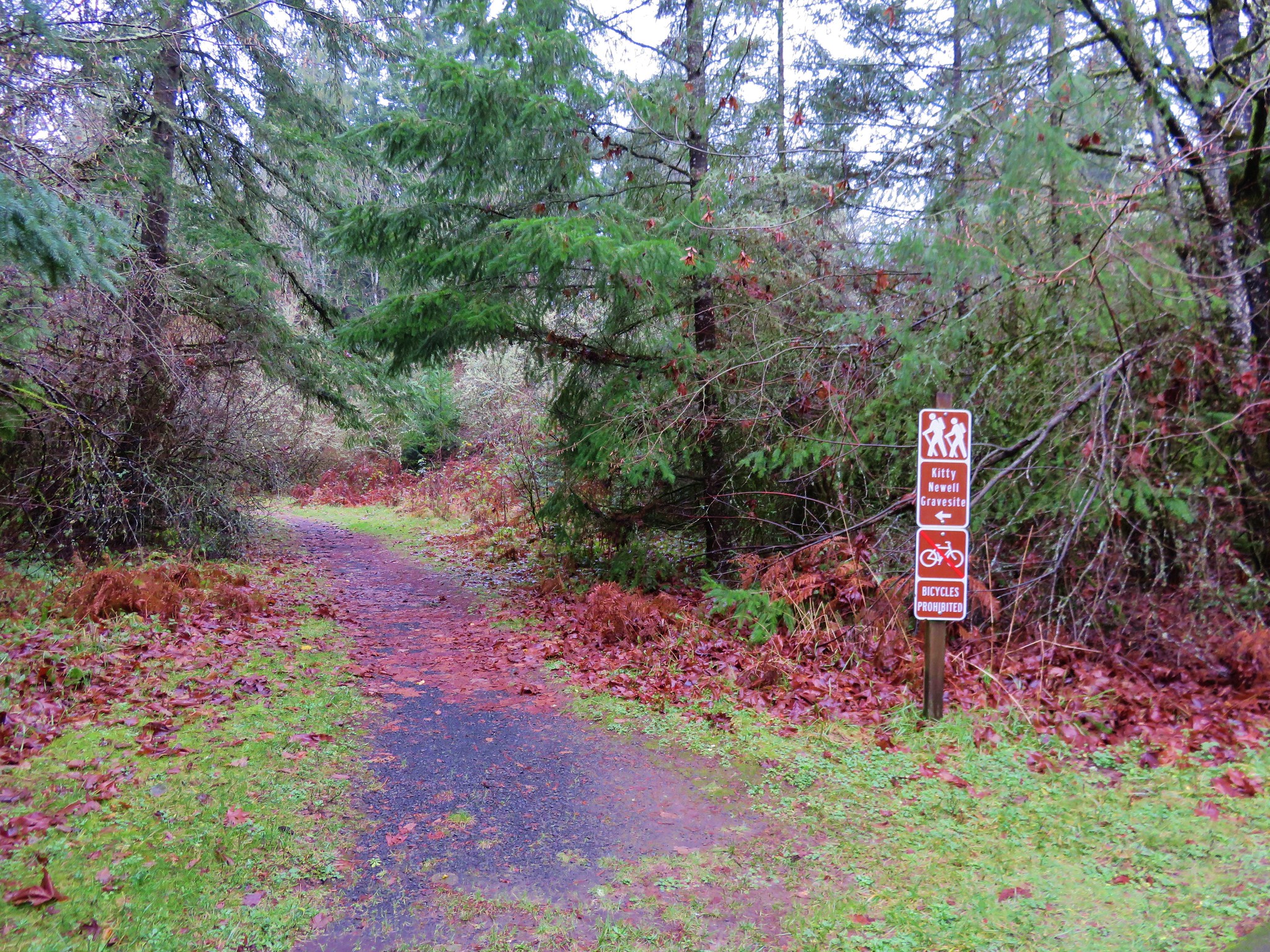
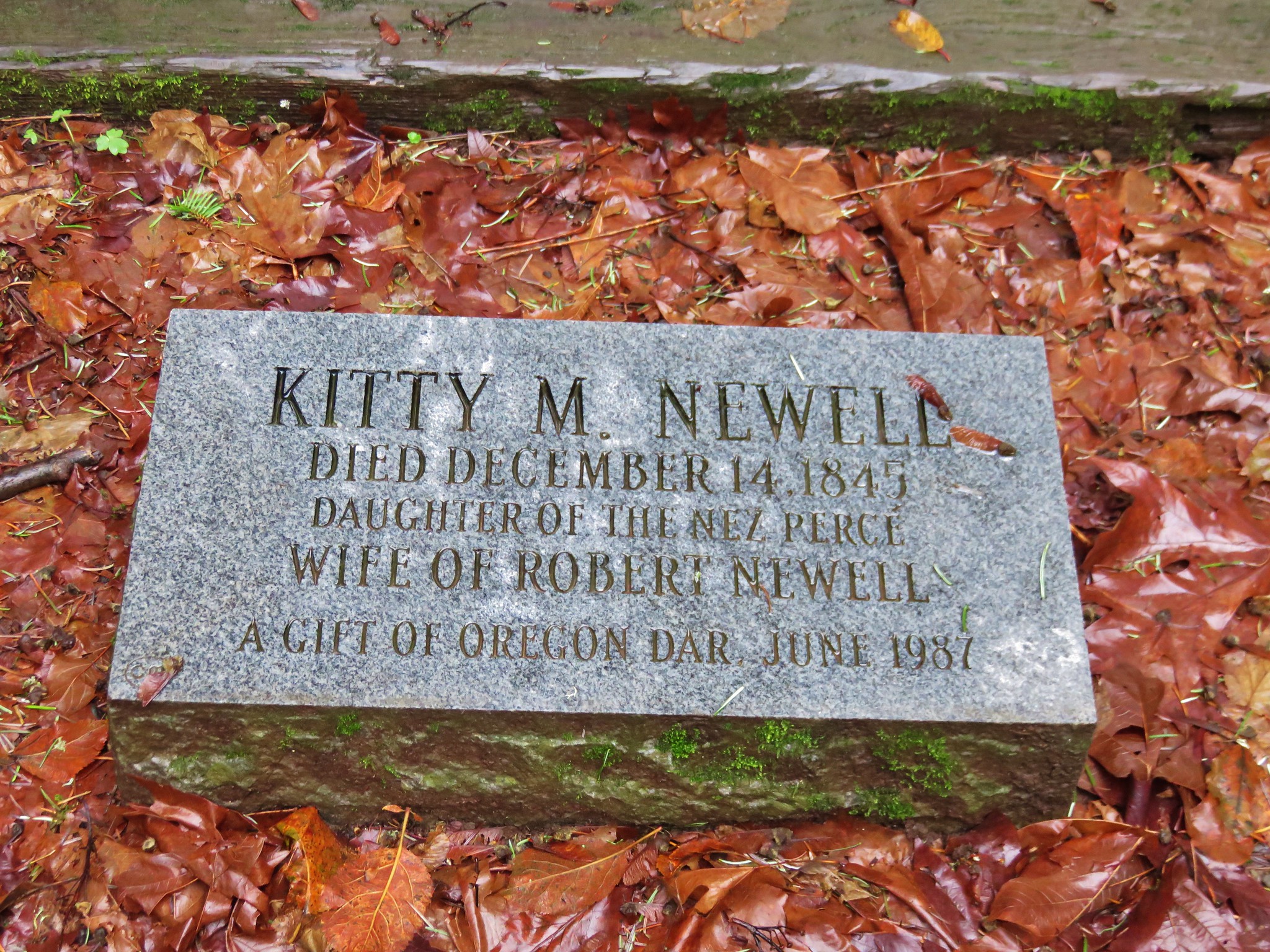
IMG_2769 The first led to the grave site of Kitty Newell while the other was the short .4 mile Nature Trail Loop. IMG_2771

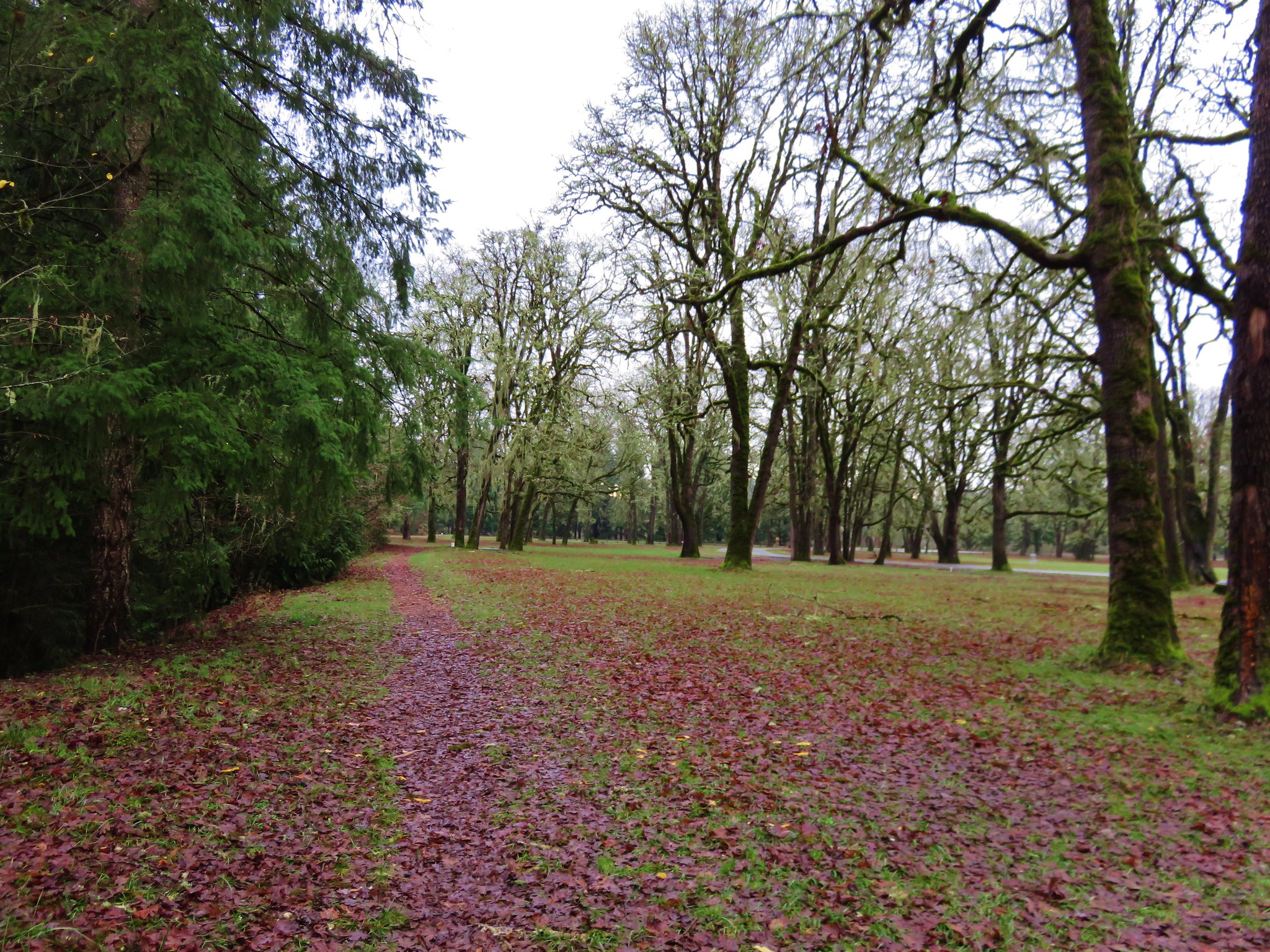
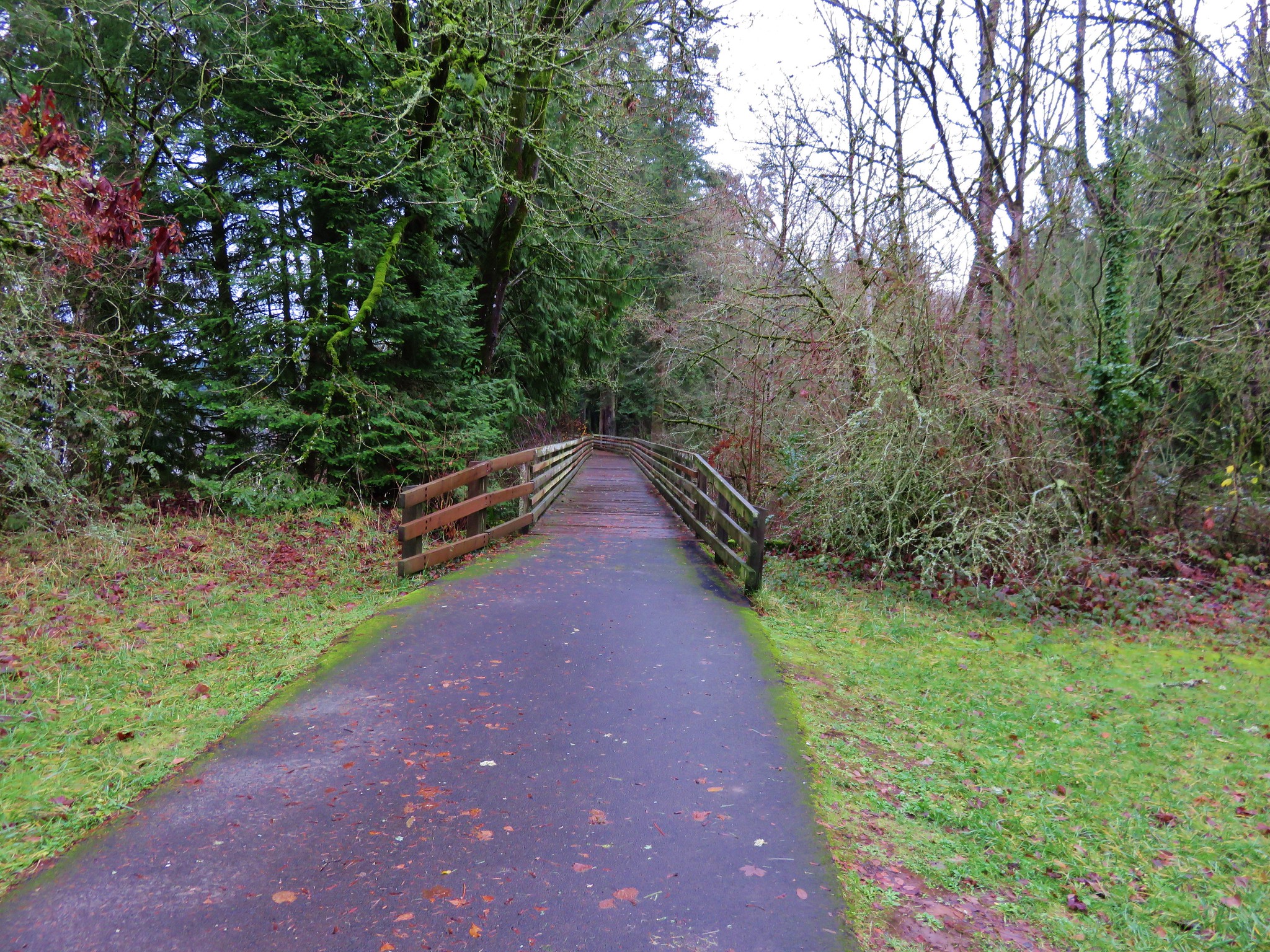
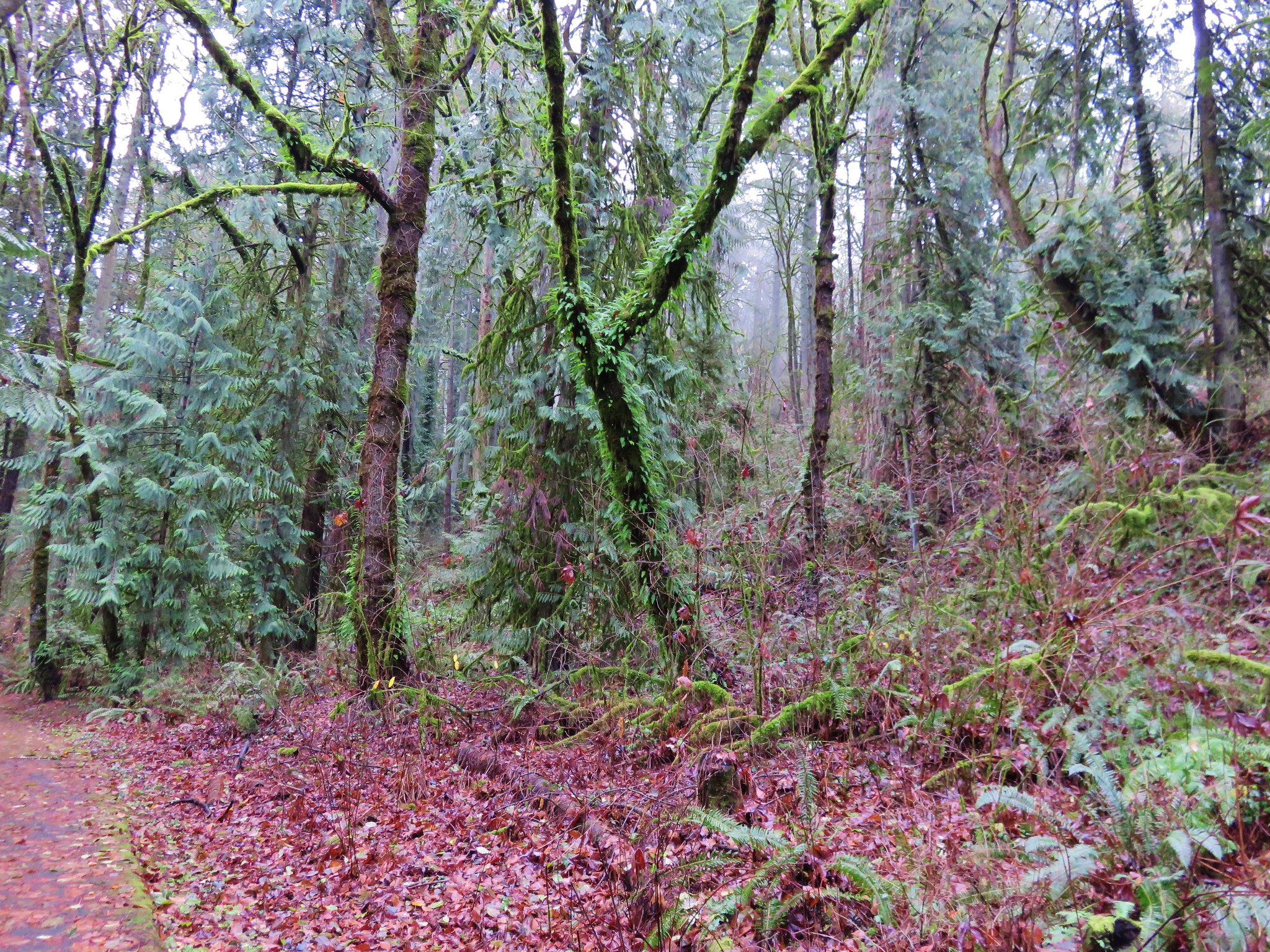
The bike path was clear of water and we followed it along the Willamette. Houses lined the far side of the river, but on our side was a mossy forest.
IMG_2778 IMG_2781

The final .6 miles to the store require some road walking, first along narrow Schuler Rd then downhill on what was a busy Butteville Rd.
IMG_2782 On our way back we remained on the paved bike path after recrossing Champoeg Creek. This route would bring us back on a loop around open farmland and the park’s Frisbee golf course. IMG_2797

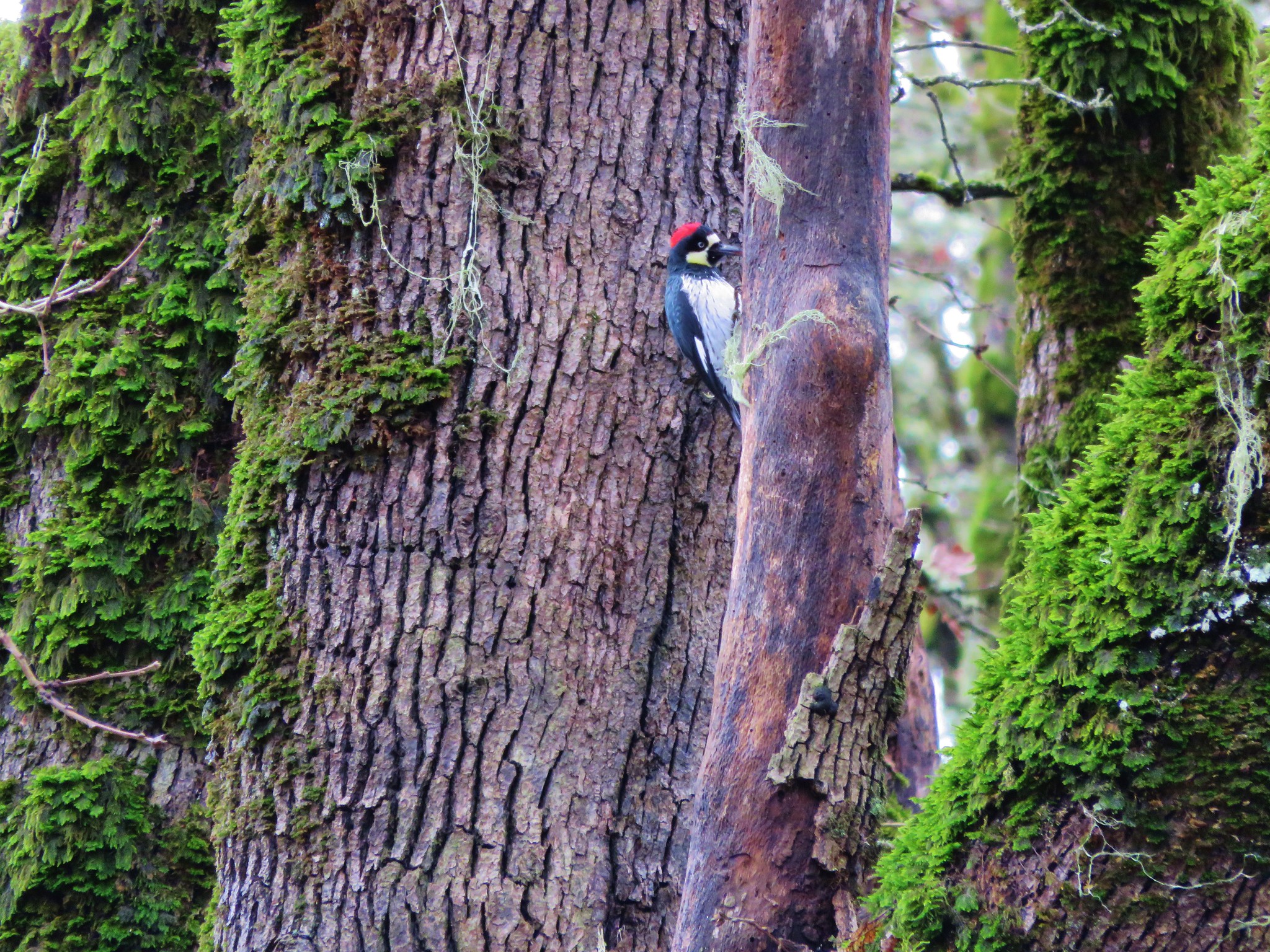
We spotted a number of birds along this portion including an Acorn Woodpecker.
IMG_2788 Acorn Woodpecker

IMG_2803 Near the end of the loop we spotted a tree with markers showing the water levels during the 1861 flood and the more recent 1996 flood. IMG_2804

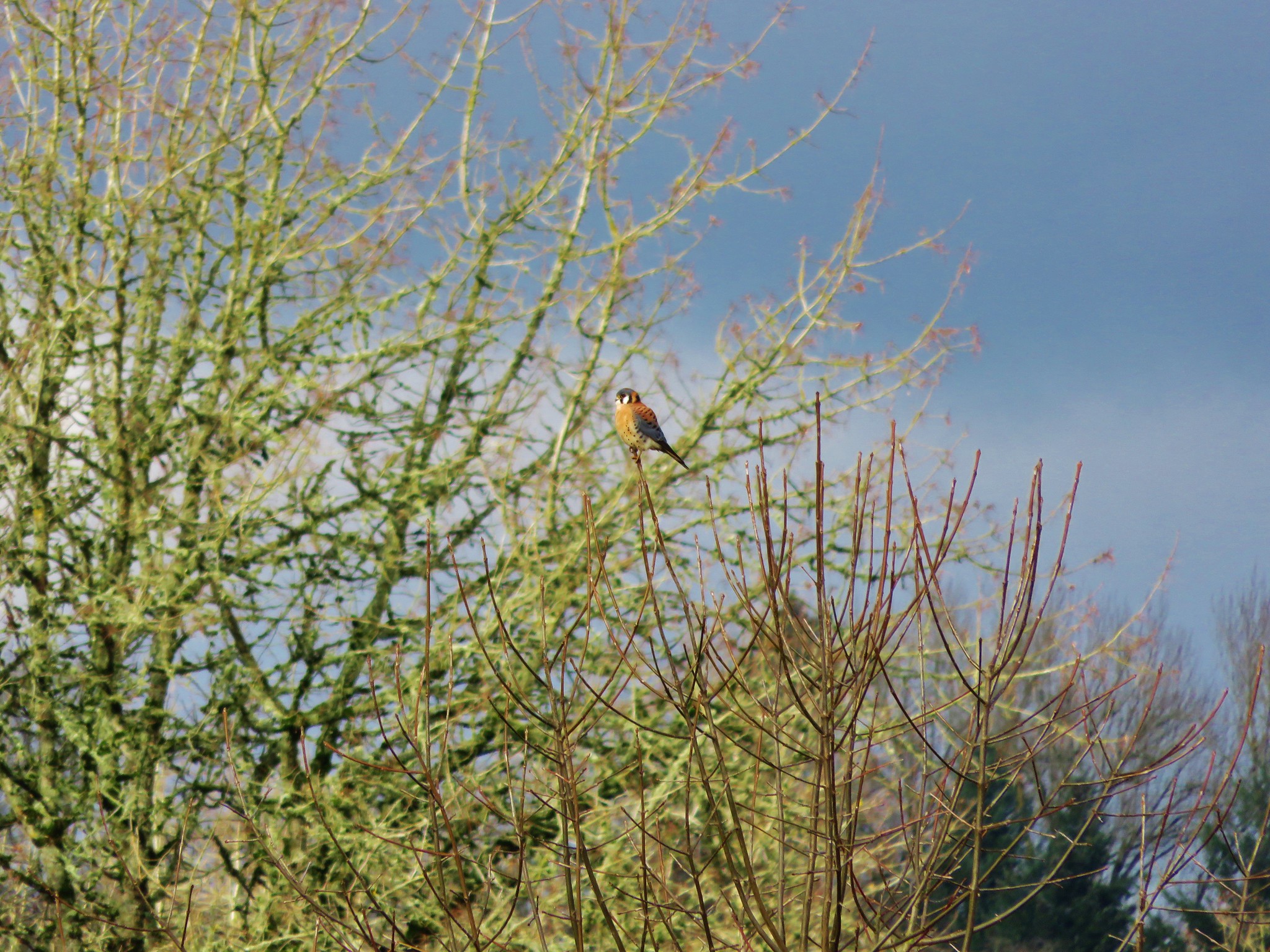
Highwater makers for the 1861 & 1996 floods. We lived in Monmouth, OR in 1996 so we remembered the 1996 event. It was hard to fathom how much more water there would have needed to be to reach that 1861 mark. We finished up our hike and began to drive back out of the park, but as we were sitting at a stop sign I looked out the passenger window to see an American Kestrel sitting in a tree only 10 feet away. I reached back for the camera only to realize I had put it in the back of the car. As a rule I keep it in the back seat because of the amount of wildlife we seem to wind up seeing from the car instead of on the hikes, but I hadn’t this time. The kestrel flew off and landed in another tree a little further away, so I hopped out and got the camera out of the back in hopes of getting a picture. It changed trees one more time before I was able to jog over to the bike path (which just happened to pass near the road here) and get a semi decent photo. Americn Kestrel

This wasn’t one of our typical hikes, but knowing the history of the area made it an interesting hike. If you’re interested in more information on this area or for other historical Oregon hikes check out Hiking Oregon’s History by William L. Sullivan.

Happy Trails and Merry Christmas!
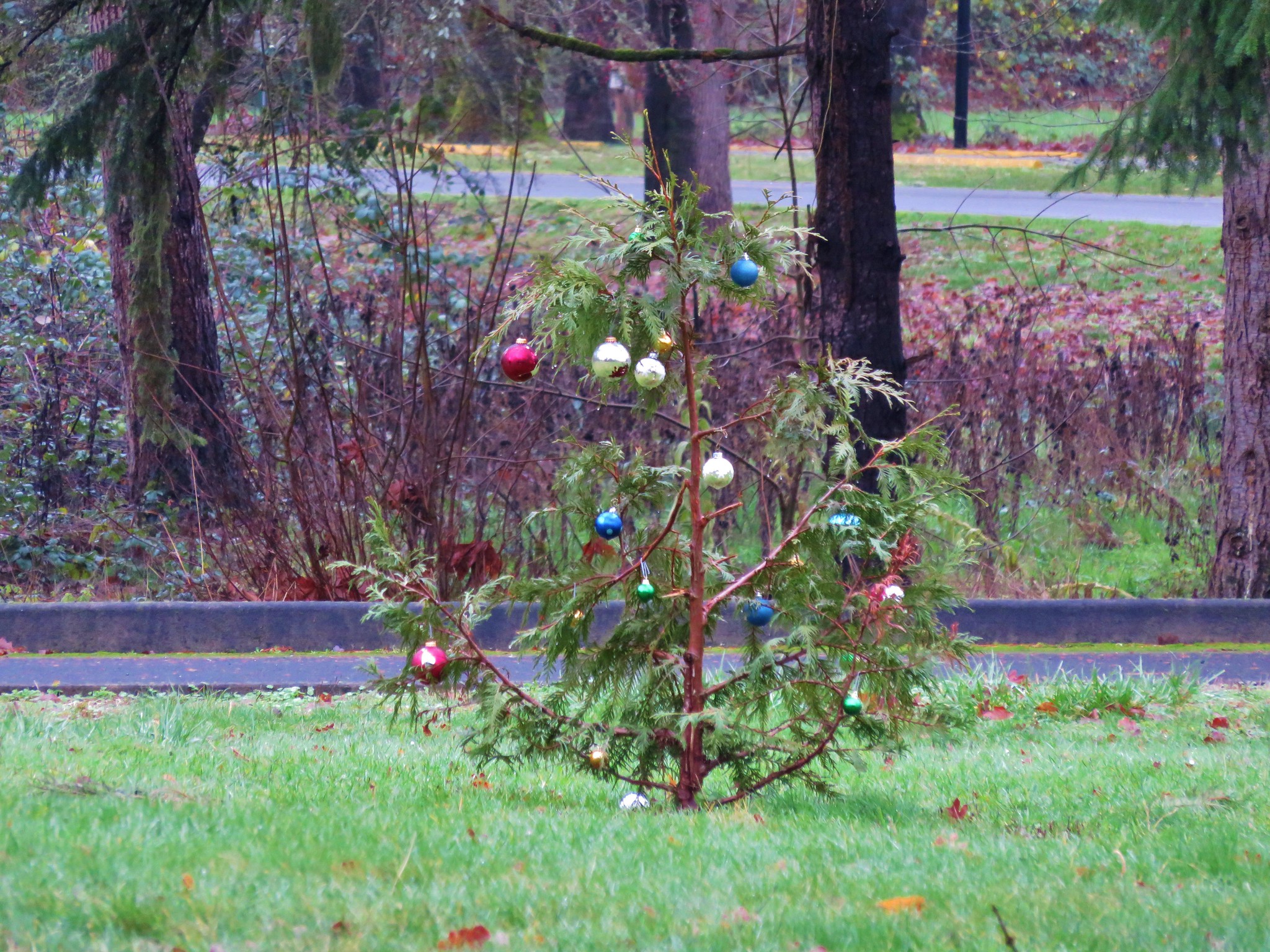
Little Christmas Tree in Champoeg State Park

Flickr: https://www.flickr.com/photos/9319235@N02/albums/72157660242747654


Categories
Hiking Oregon Roseburg Area Trip report Willamette Valley

North Bank Habitat

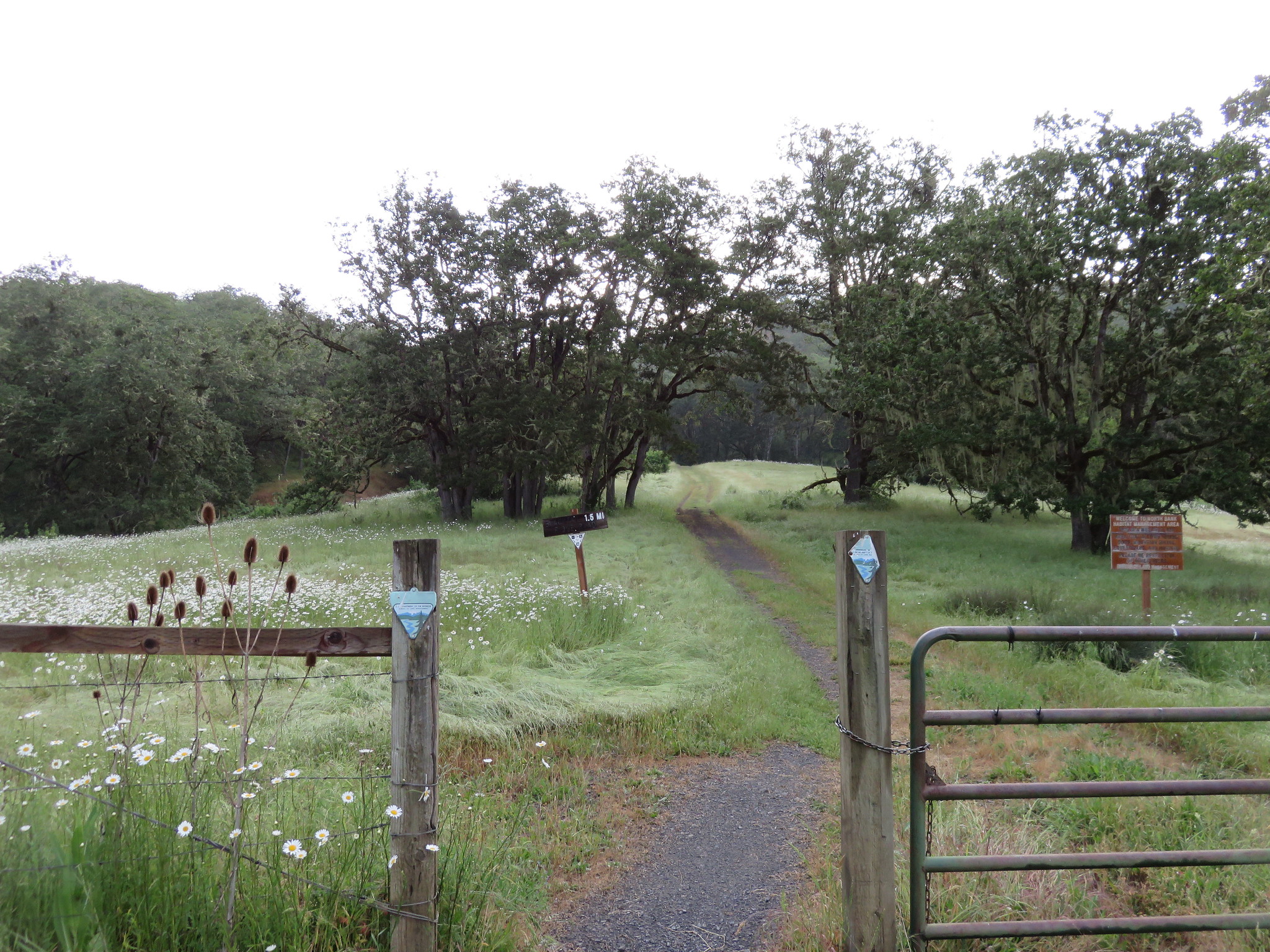
We recently headed down to Ashland, OR on vacation for a few hikes and to catch a play at the Oregon Shakespeare Festival.  On our way down south we stopped at the BLM managed North Bank Habitat just north of Roseburg for a quick hike to break up the drive.  The primary goal of the habitat is to  provide secure habitat for the Columbia white-tailed deer and other special status species.

The 10-mile square area has several access points and trail possibilities, although some access points are only open during certain days/hours so check ahead.  We started our hike at the West Access and headed up the Blacktail Ridge Road Trail.
002

005

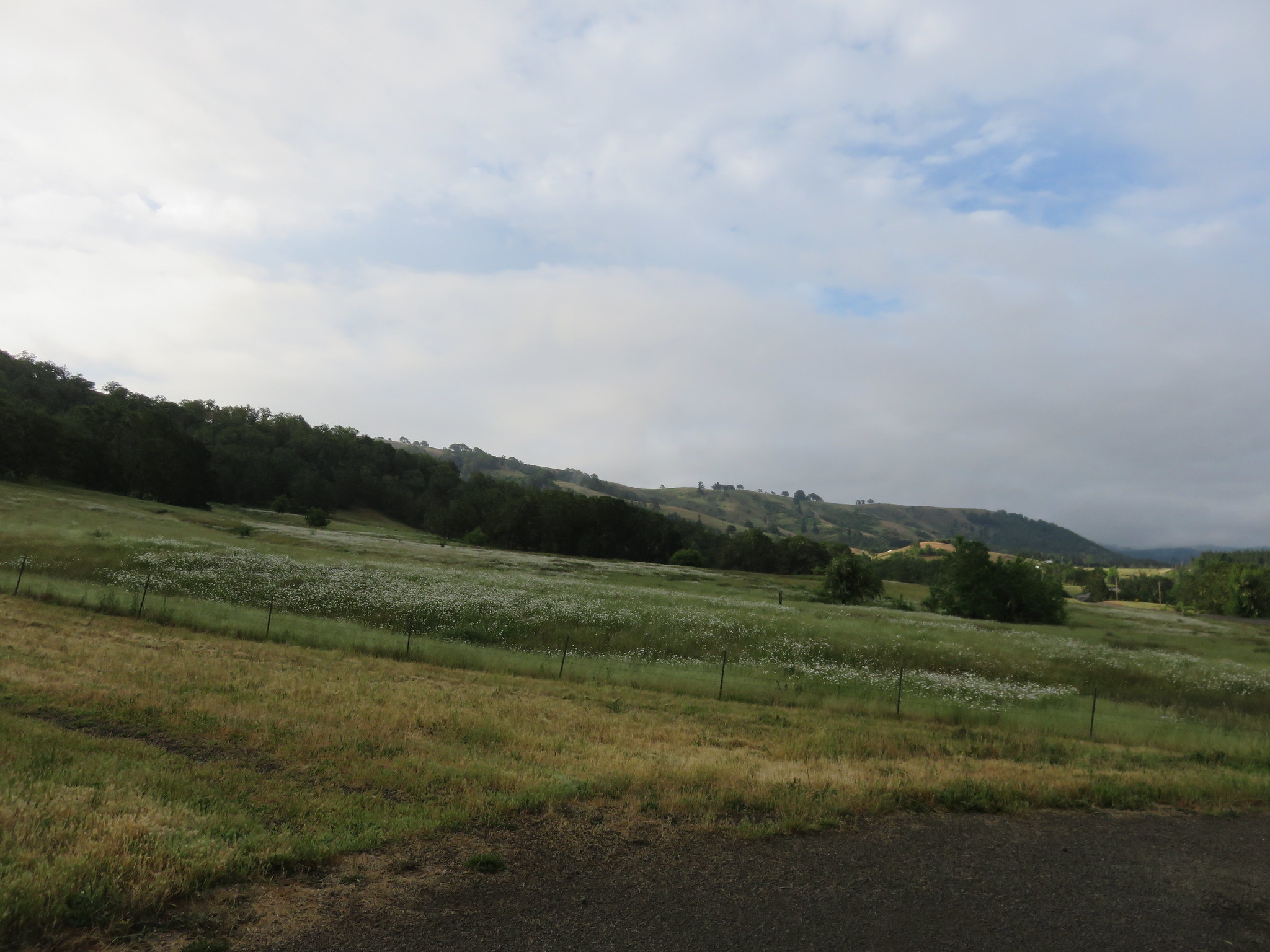
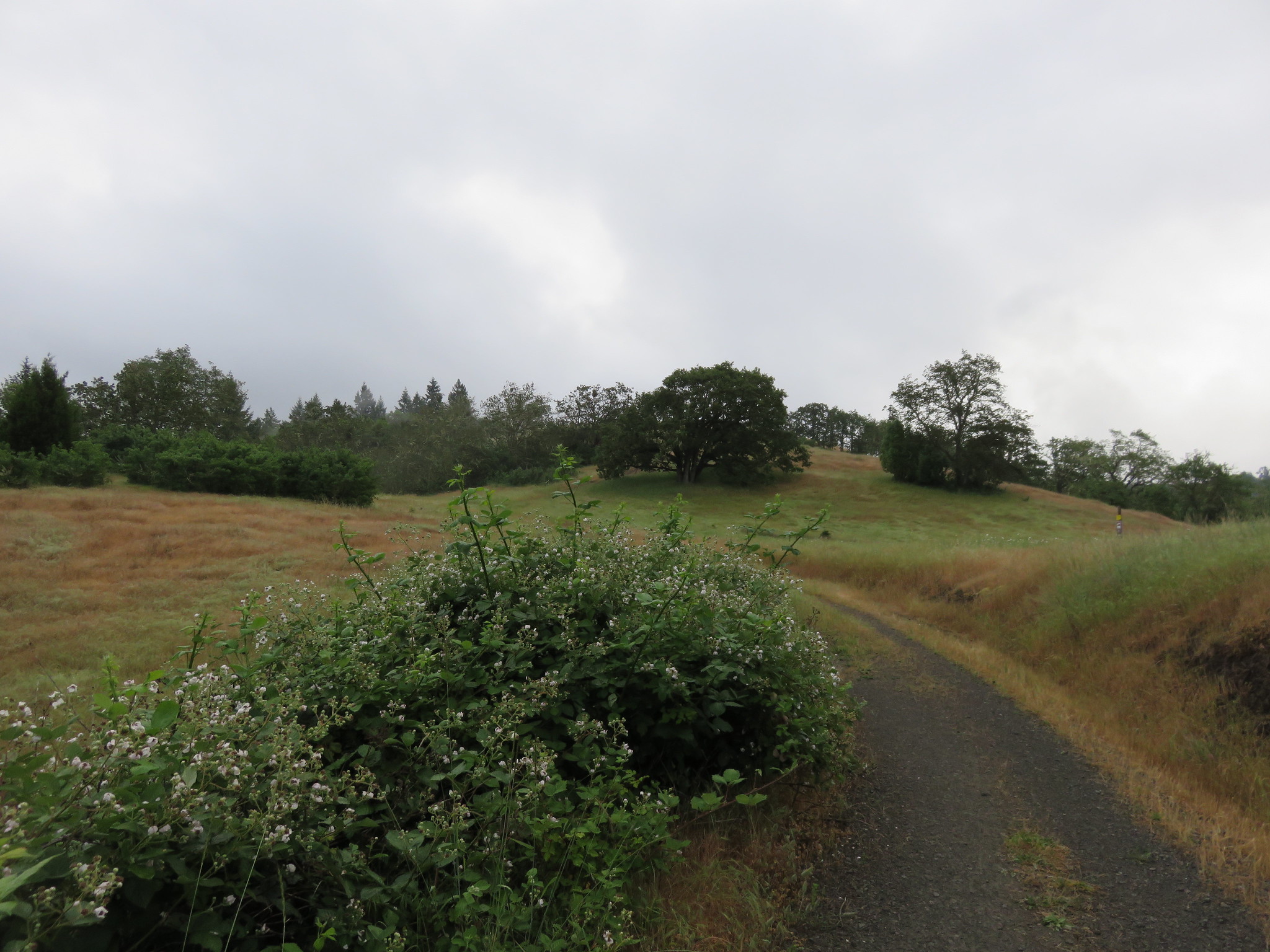
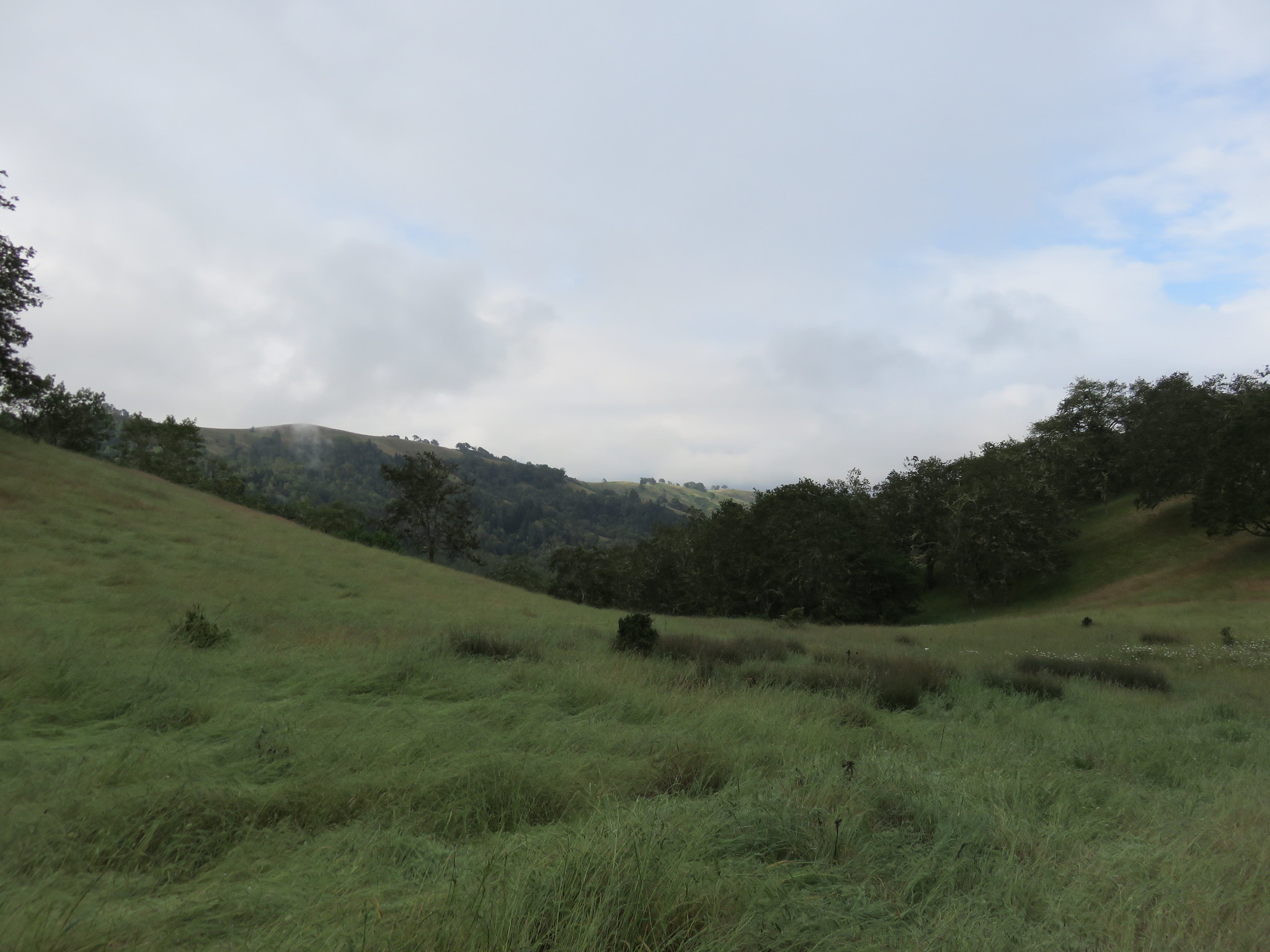
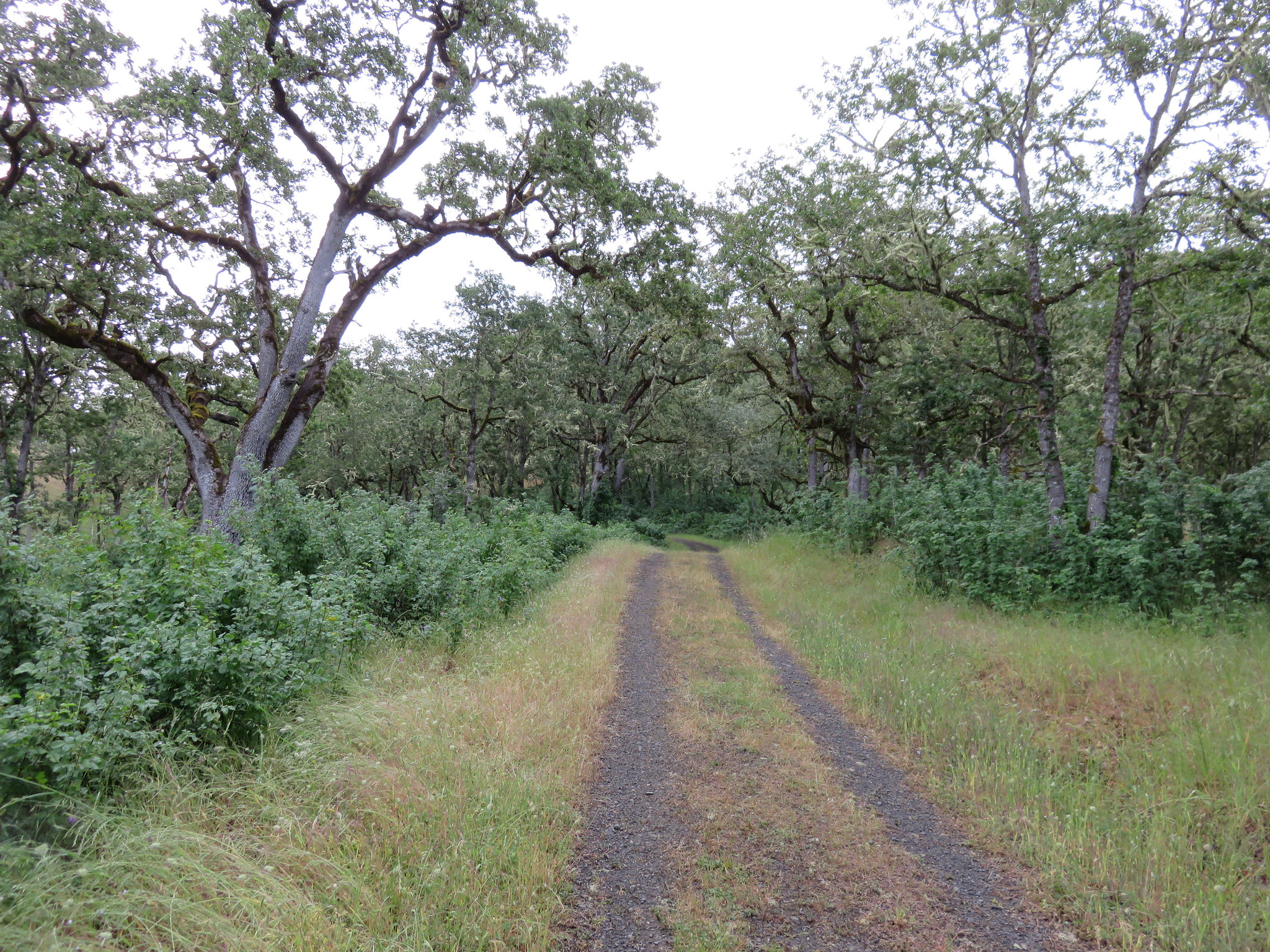
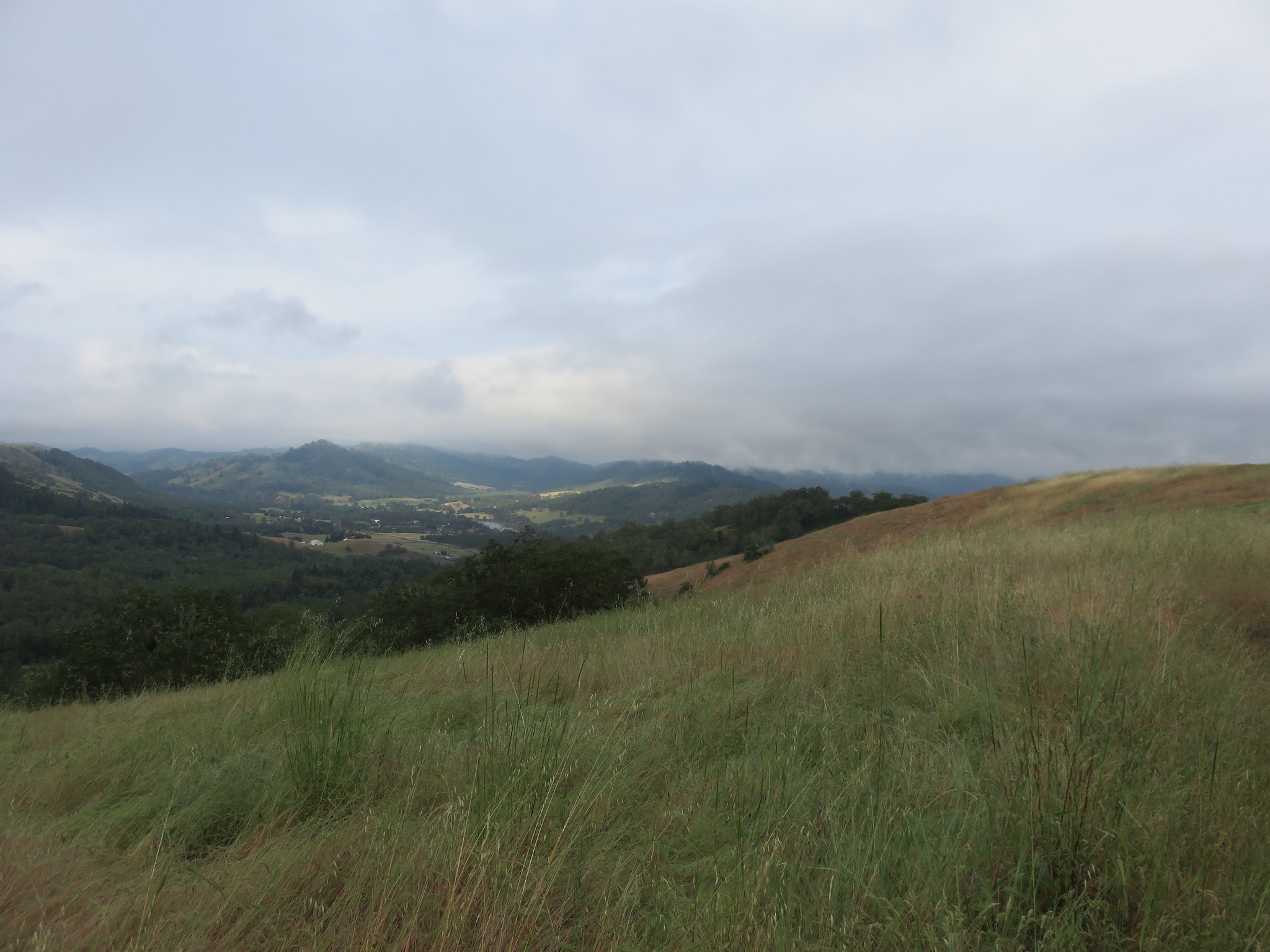
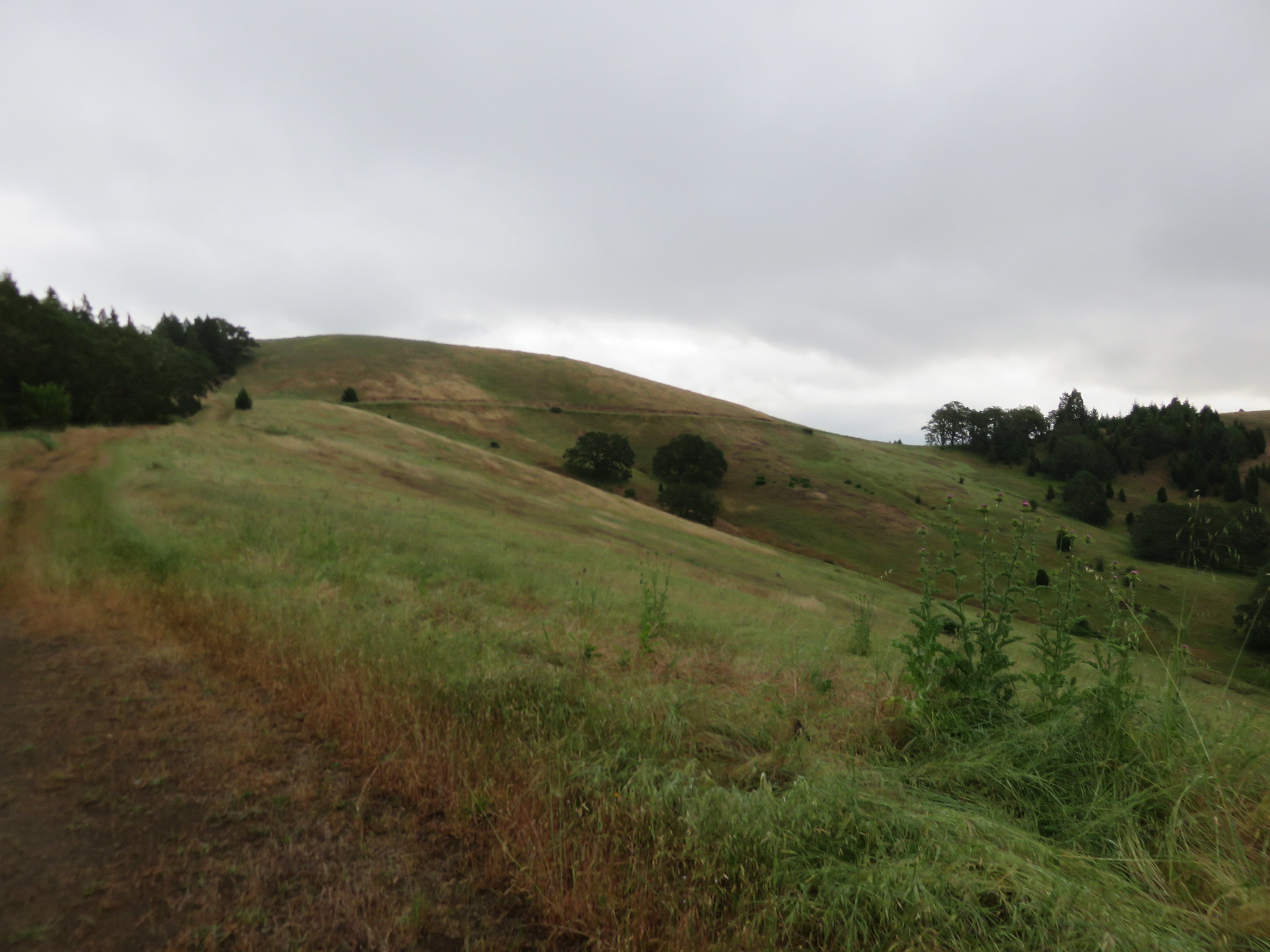
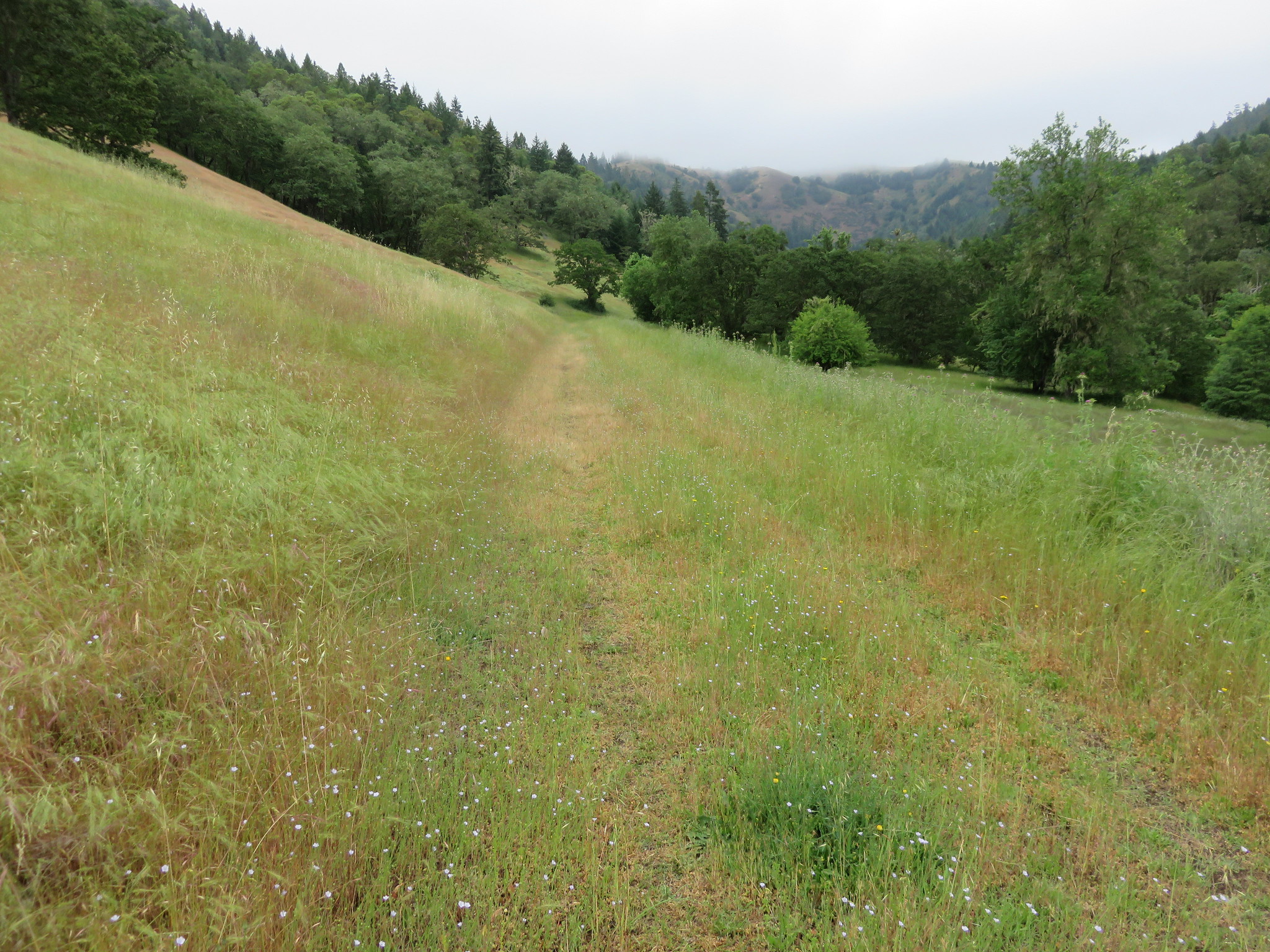
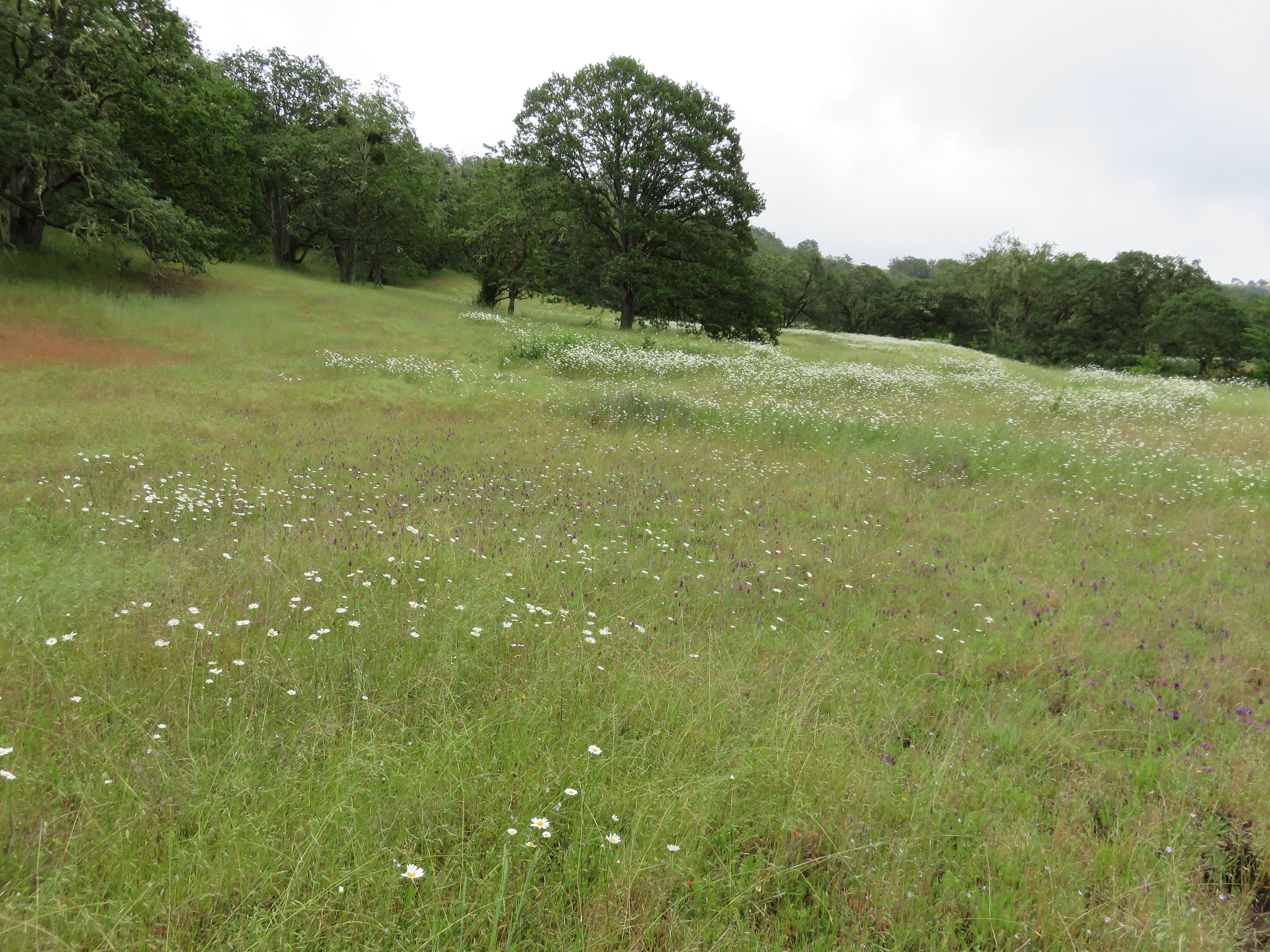
The area which had been a farm/ranch? was very different than any of the places we have visited.  Rolling hills of grass and oak trees along with valleys filled with forest.
004

054

056

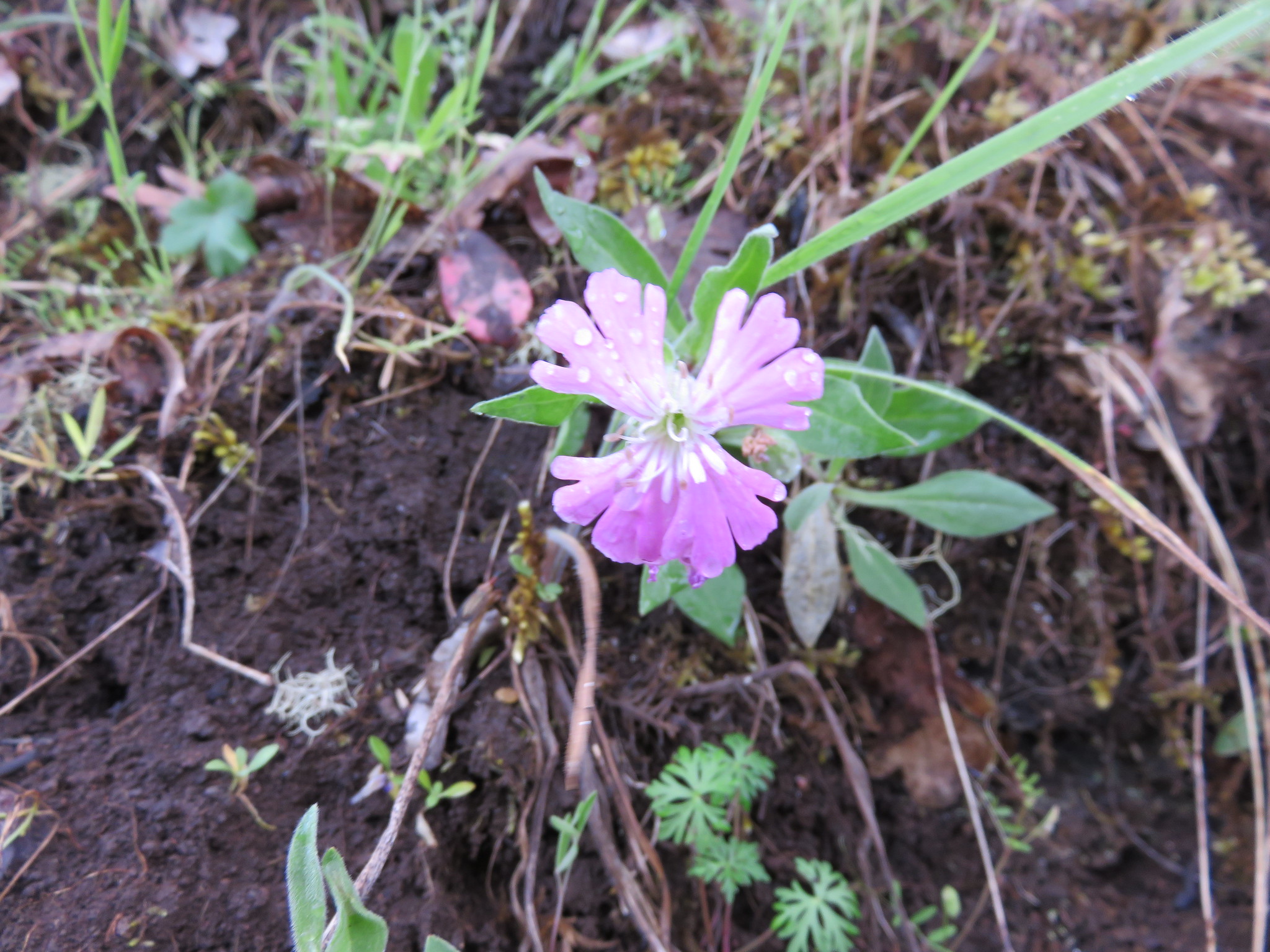
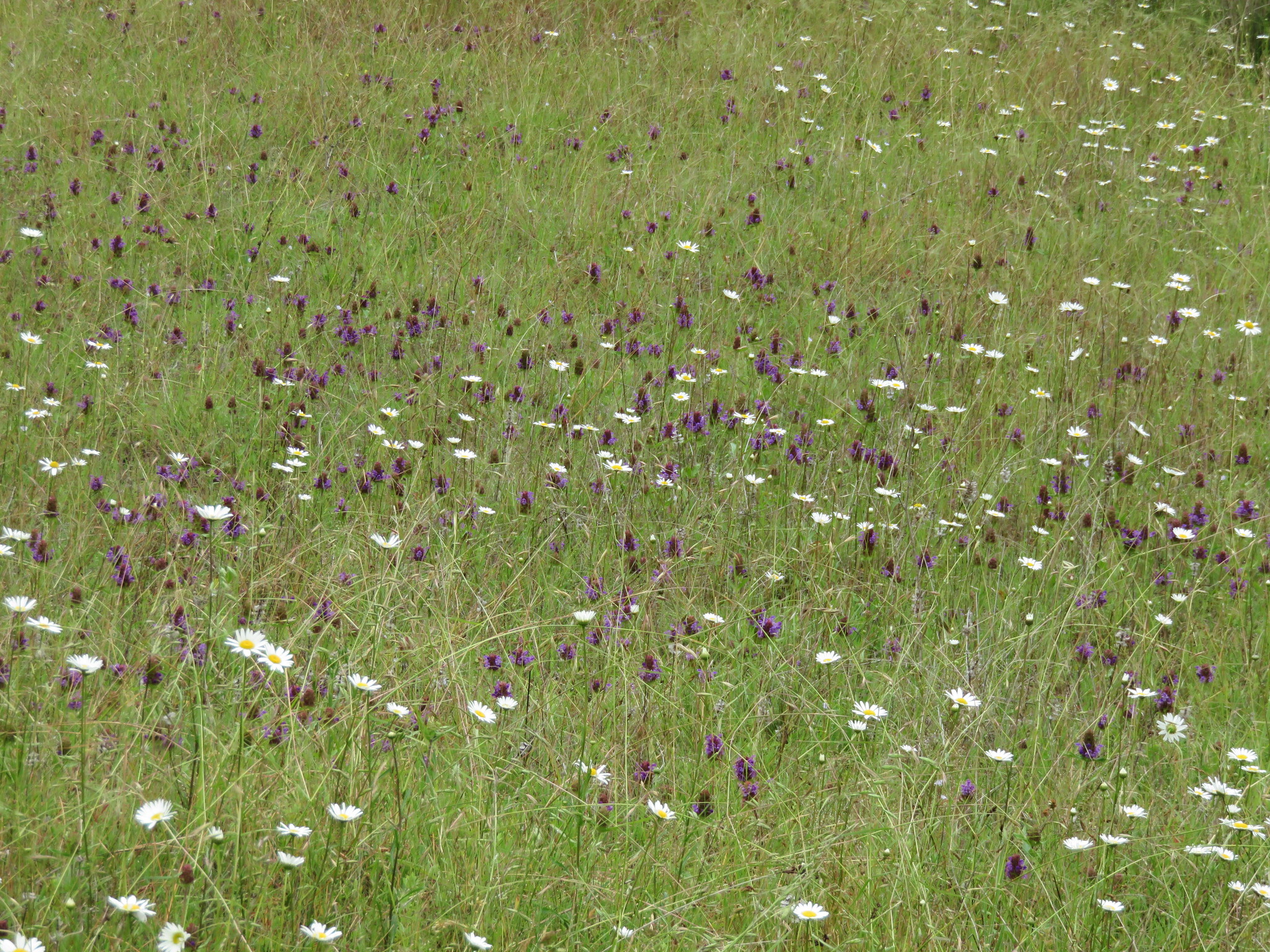
There were also a lot of flowers, many that were unfamiliar to us.  The only issue was having to watch out for the poison oak that seemed to be everywhere along the way.
010

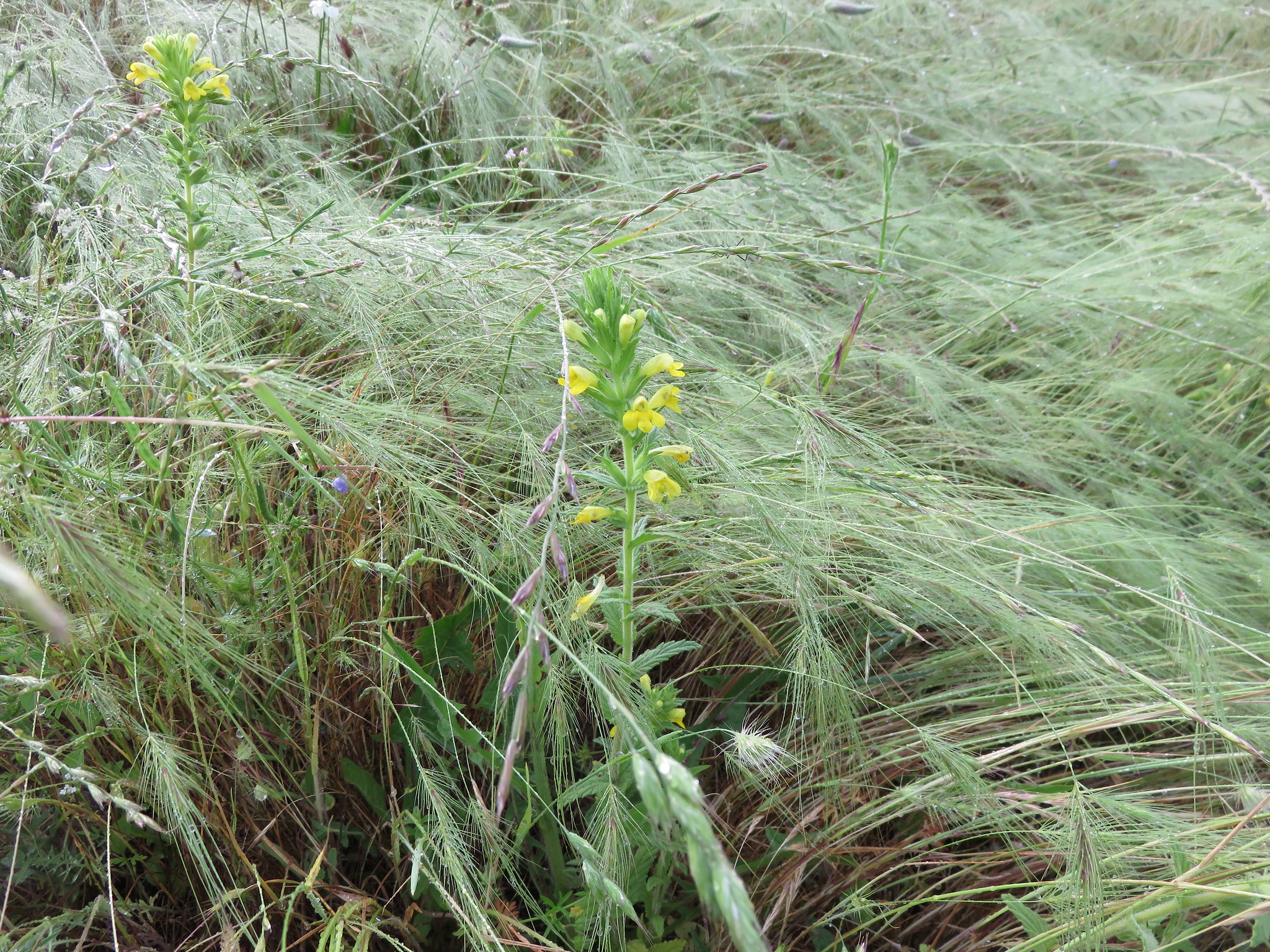
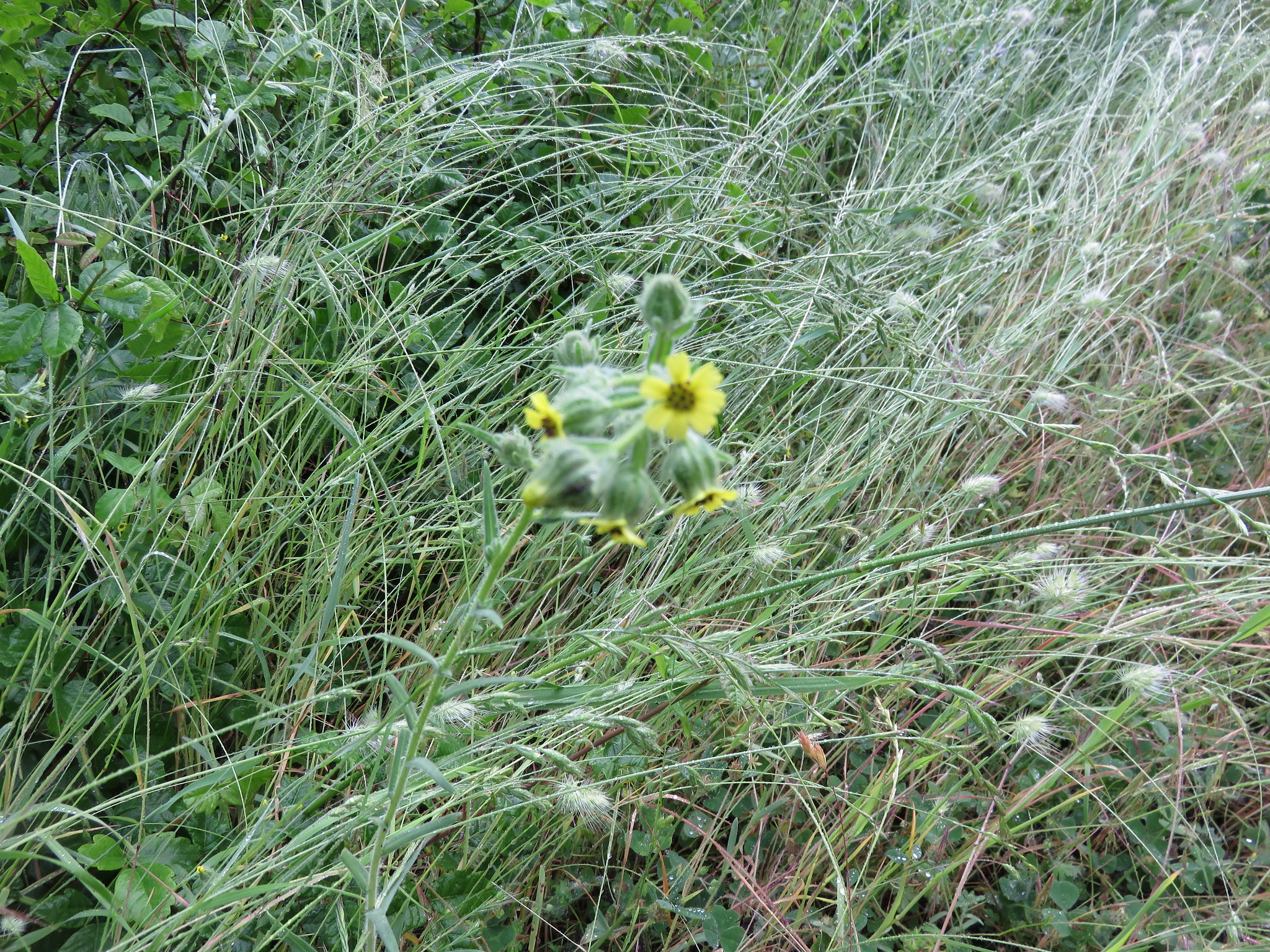
Yellow Glandweed
016

031

036

042

051

Poison Oak lining the old road
044

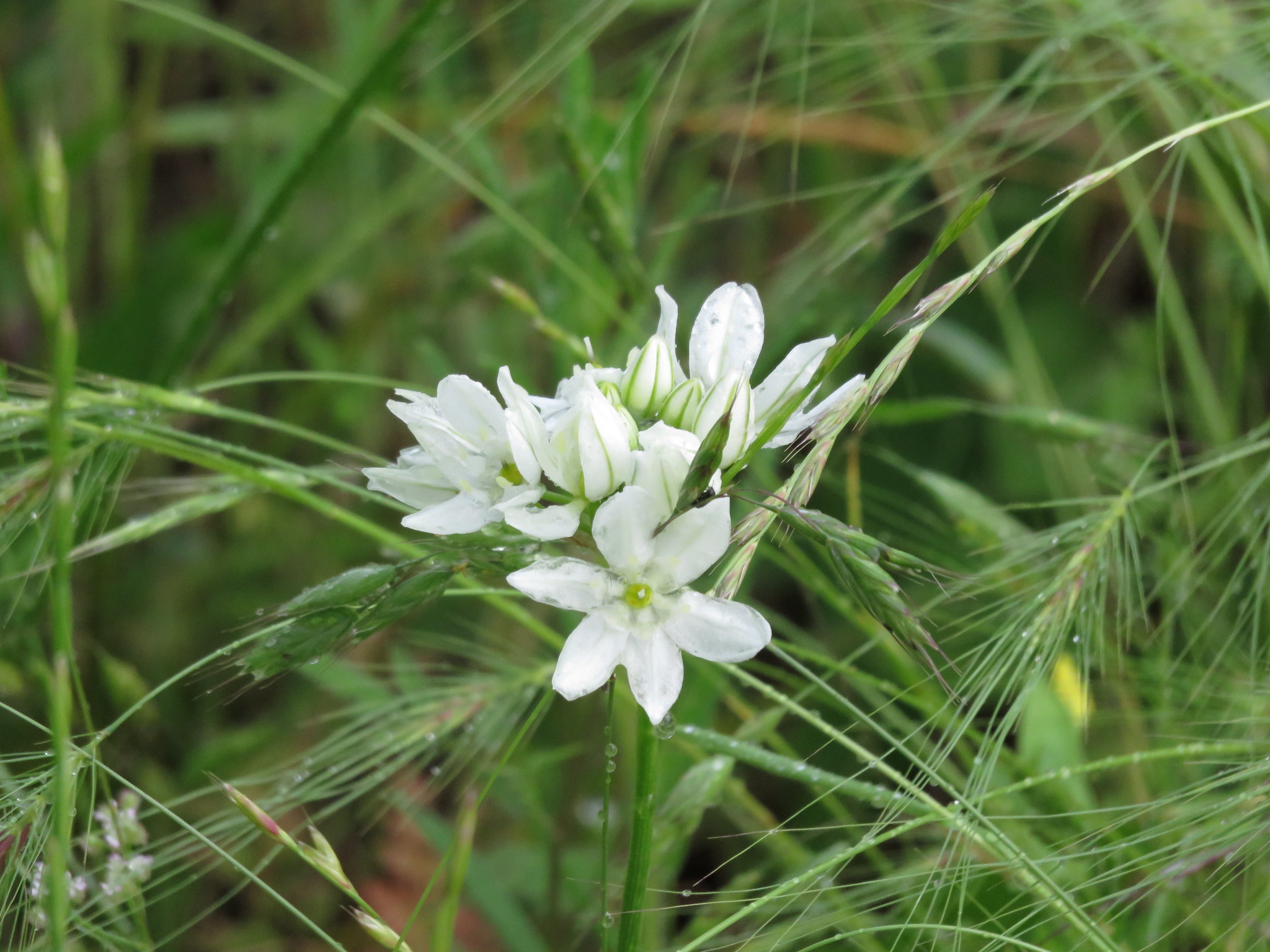
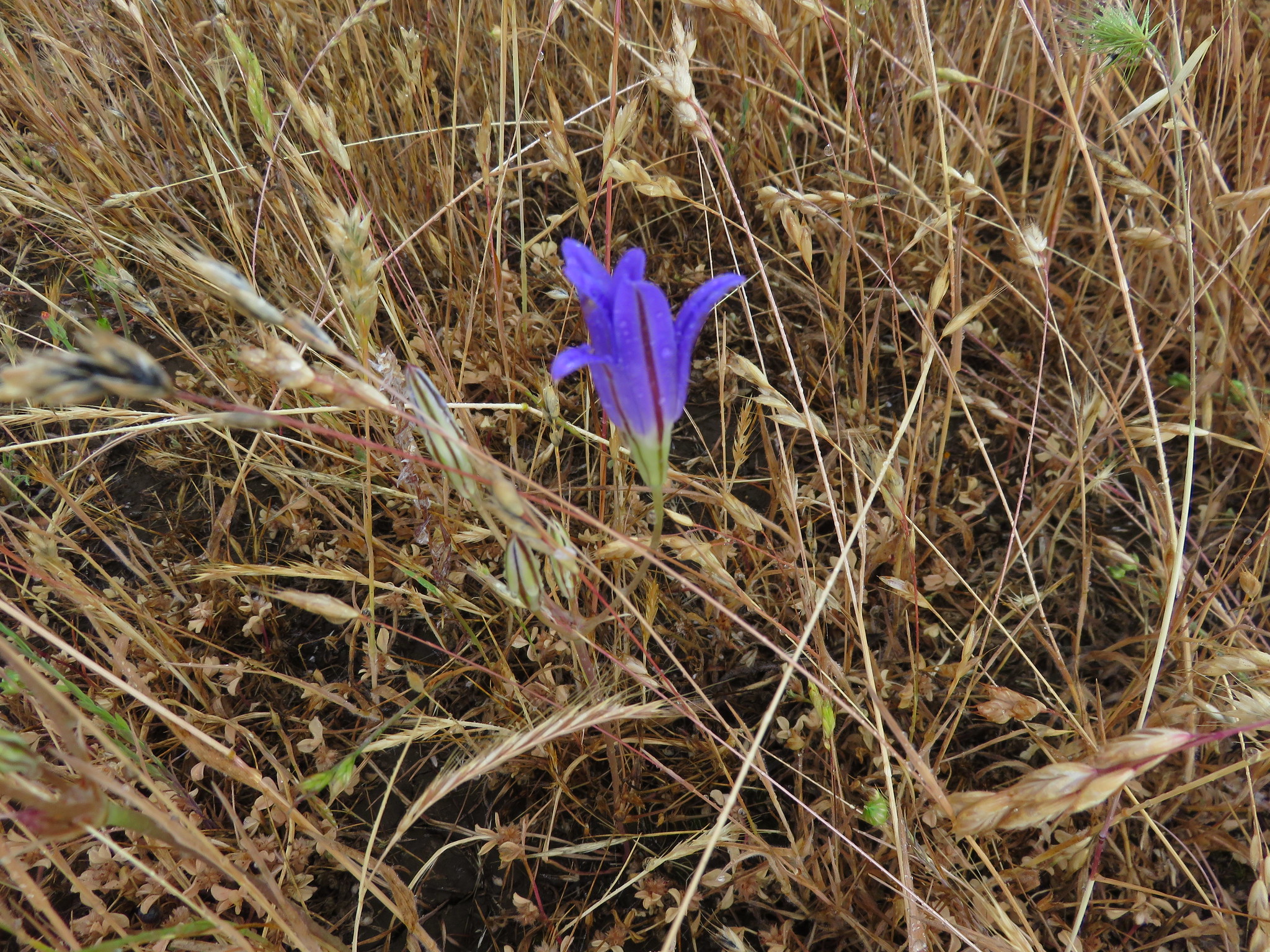
Elegant Brodiaea
064

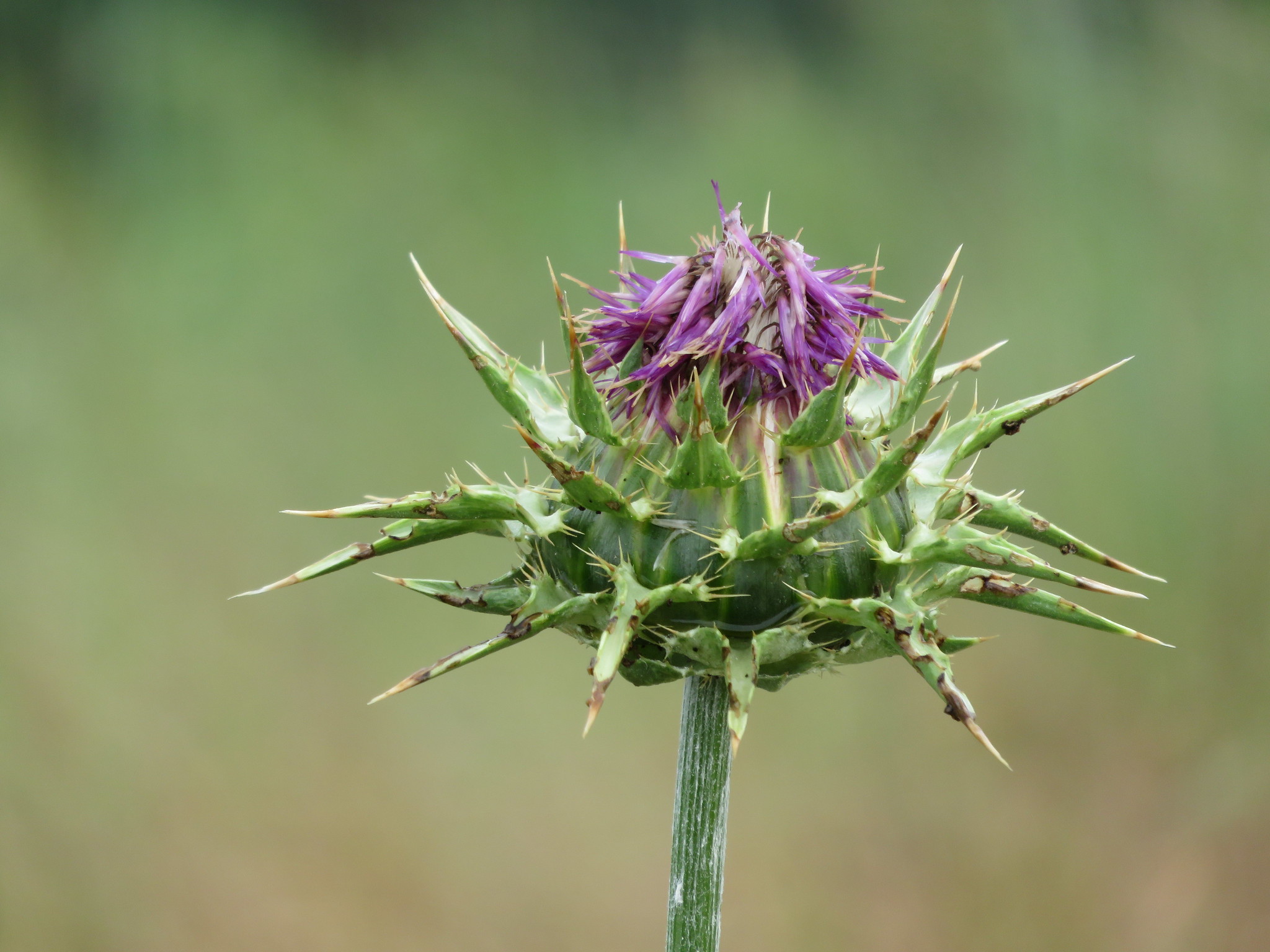
Blessed Milk Thistle
070

Despite it being a cloudy day there were views all along the ridge.  We kept our eyes open for deer on the surrounding hillsides but weren’t having any luck. The only signs of wildlife so far were some blackbirds at the trailhead and lots of birdsong from the trees.
077

096

We followed the Blacktail Ridge Road Trail to a junction with Middle Ridge Trail to a second junction the Thistle Ridge Trail.  Some of the best views were along the Middle Ridge Trail (which we were now on) just after the Thistle Ridge junction. It was here that we began spotting wildlife.  First a hawk
106

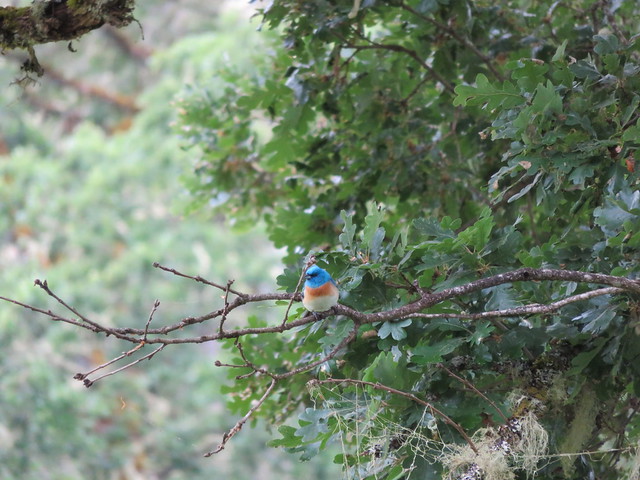
Then a small blue bird
114

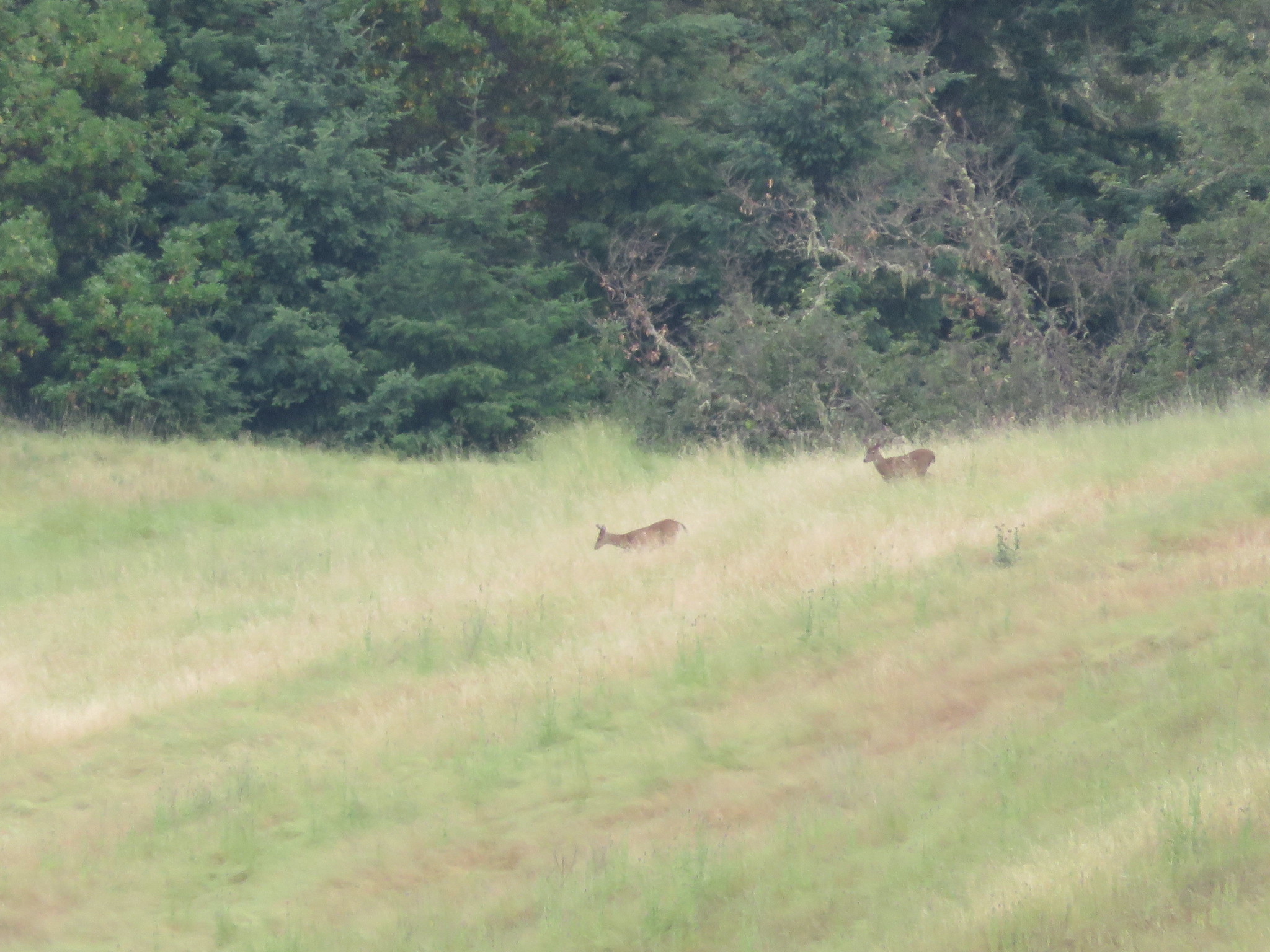
and finally some deer.
126

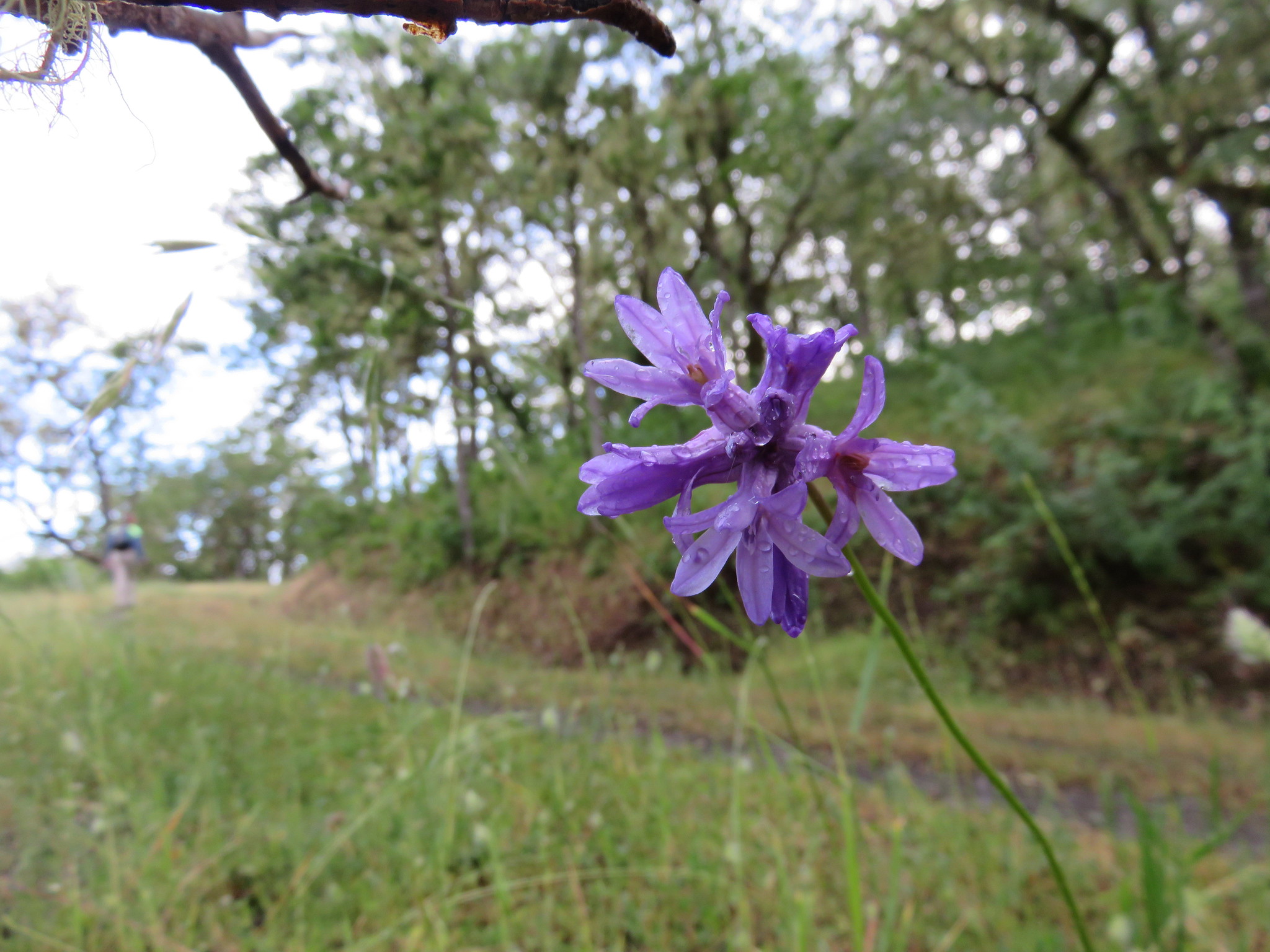
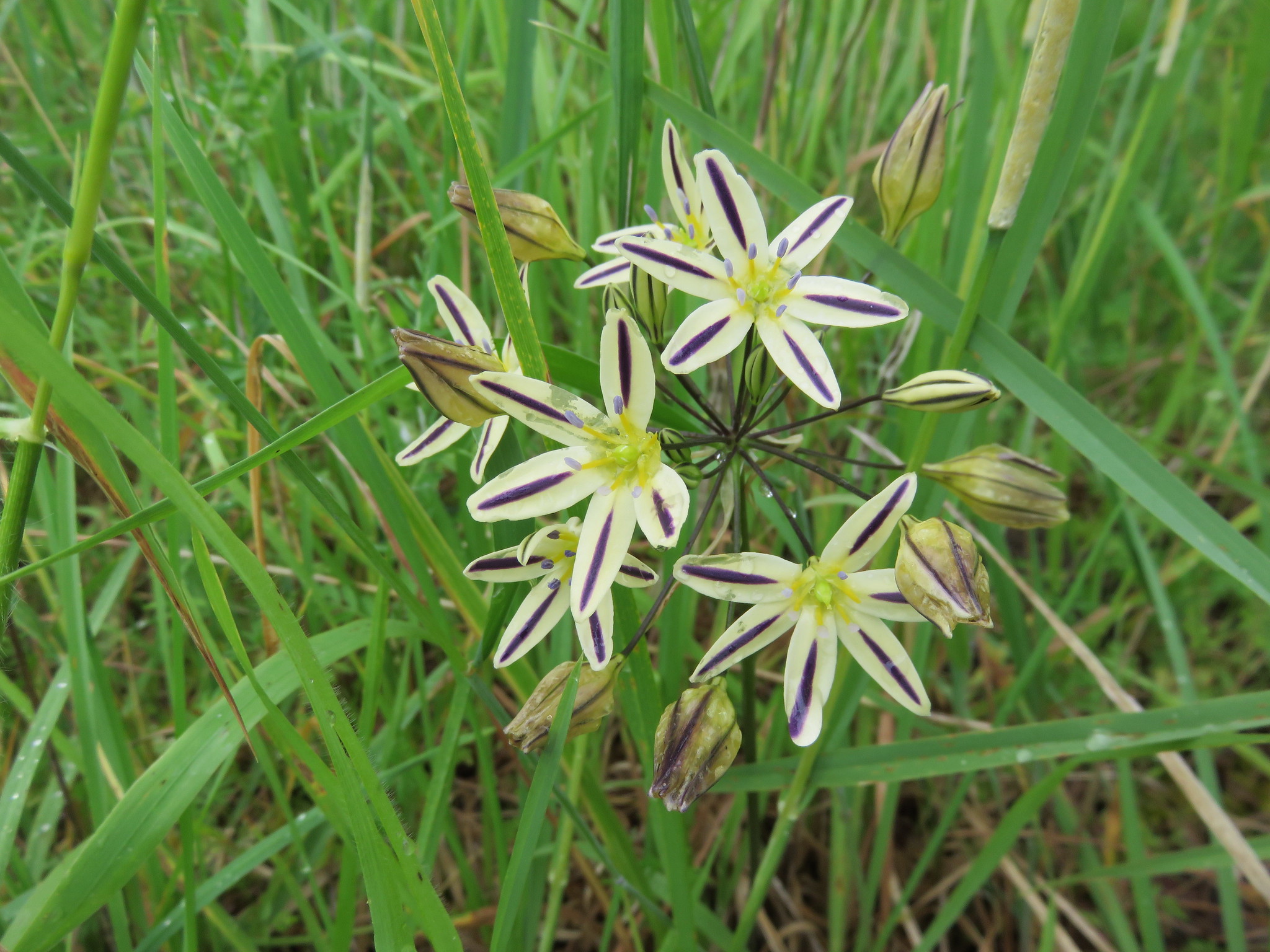
They were a ways off but there appeared to be a pair of black-tailed deer not the Columbian white-tailed but they were deer none the less. We continued to spot new flowers as well including several Henderson’s stars which were really unique.
139

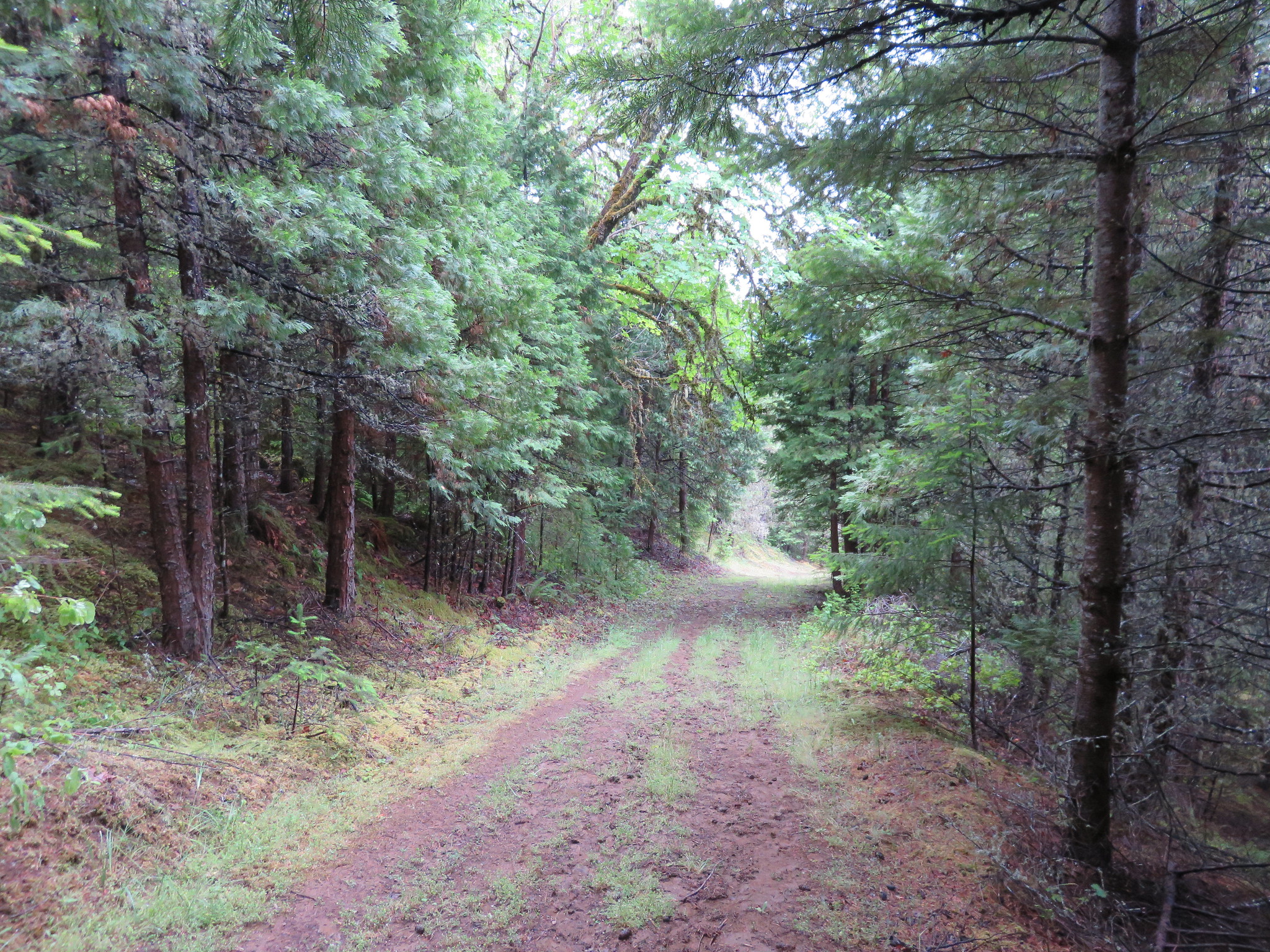
Eventually we reached a junction with the Chasm Creek Road Trail. Here we turned left and headed steeply down the old muddy road.
169

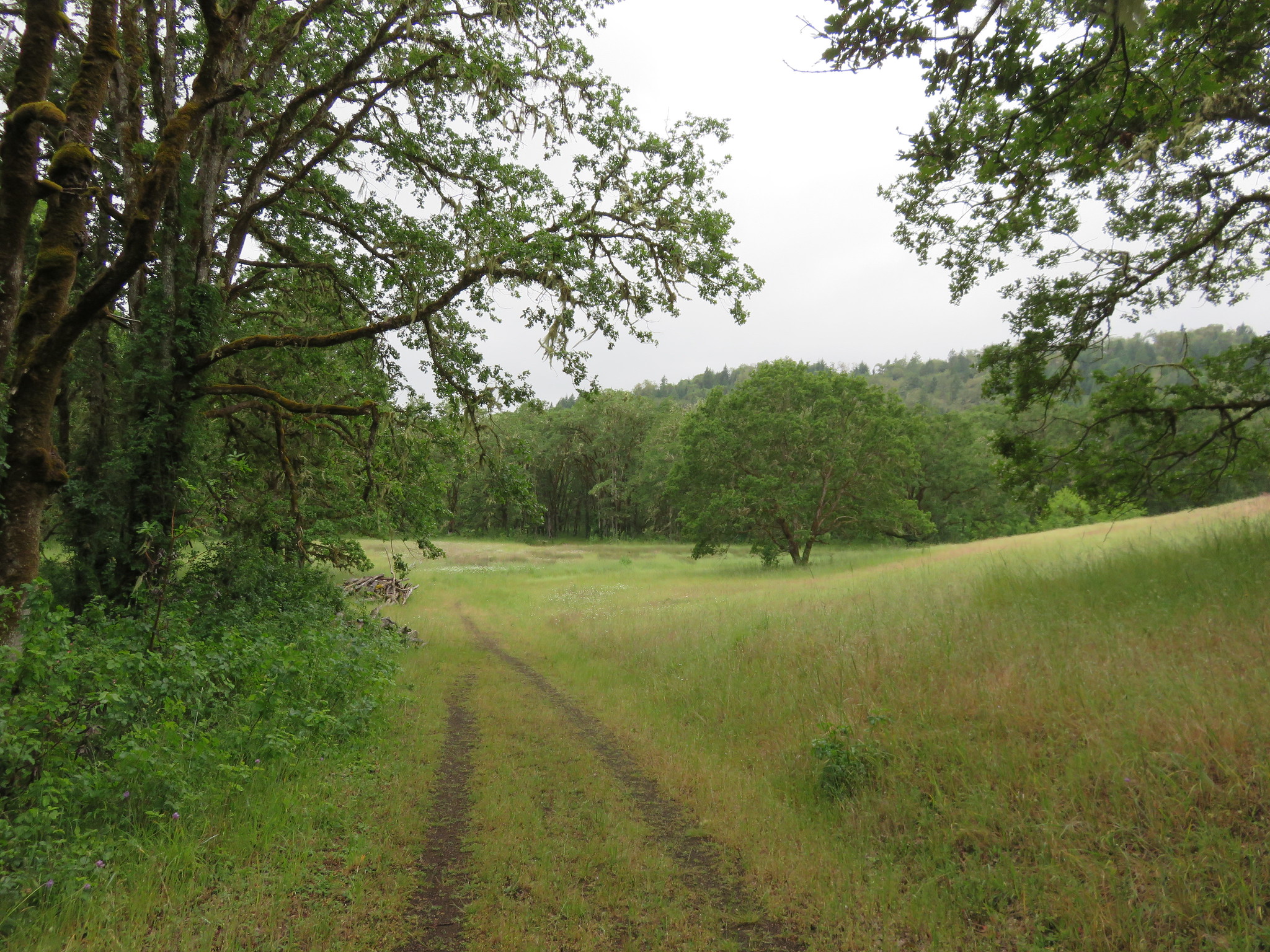
The trail eventually leveled off and we strolled through mores open grassland to the border of the Jackson Ranch where we turned left on  the Jackson Ranch access road.  This area was filled with birds including this beautiful western bluebird.
235

202

229

Just before reaching North Bank Road at the gated Jackson Ranch access road we turned left again along a short path lined with daisies and purple self-heal to return to the West Access Parking area.
257

258

Granted it was a Monday morning but we didn’t see another person during the 6.2 mile loop.  It was a perfect way to kick off a week of vacation. Happy Trails!

flickr: https://www.flickr.com/photos/9319235@N02/sets/72157653672903899

Categories
Hiking Oregon Salem/Albany Trip report Willamette Valley

Ankeny Wildlife Refuge

Greetings! I know we weren’t supposed to be hiking again until after our marathon this coming weekend, but we managed to sneak a quick one in. We took advantage of a scheduled cross-training day to head out to the Ankeny Wildlife Refuge just south of Salem. This is the first hike listed in William Sullivan’s 100 Hikes in the Central Cascades book and according to the description April is one of the peak migratory months for the various birds that can be spotted there. A flat 2 mile loop along the Rail Trail worked perfectly for our cross-training needs so it seemed like the ideal time to finally go check out the refuge.

We parked at the Rail Trail parking area and set off on a gravel path heading to the start of the loop.
Ankeny Wildlife Refuge

Trail in Ankeny Wildlife Refuge

After a couple of hundred yards we reached the start of the loops where we took a right onto the Rail Trails raised boardwalk.
Boardwalk Trail

The boardwalk is necessary as the trail passes through a wetlands that is either under water or too muddy for passage.
Pond in Ankeny Wildlife Refuge

There were many small birds present as we approached the bird blind located just over half a mile along the boardwalk. Most of them wouldn’t sit still long enough for a picture but a curious Bewick’s Wren paused long enough for a shot.
Wren

We didn’t stay long at the bird blind due to the fact that we were supposed to be cross-training but the blind overlooked a marshy pond where ducks and red-winged blackbirds moved about.
Bird blind in Ankeny Wildlife Refuge
Red-winged blackbird

Shortly after leaving the blind a pair of noisy geese expressed their displeasure with our presence.
Canada Geese

We discovered the reason for their annoyance was the nest they had built near the trail.
Goose nest

The boardwalk ends at an old dike road where the loop turns left and follows the dike back around to the parking area. Being as early as it was in the year (the dike is only open from April 1st – September 30th) the dike was covered in damp vegetation.
Ankeny Wildlife Refuge

We encountered numerous red-winged blackbirds as we travelled along the dike and we also spotted a good variety of ducks in the many ponds.
Red-winged Blackbird
Ring-necked ducks (at least most of them were)
Cinnamon Teal
Mallard

Other than our feet getting a lot wetter than we had planned due to the wet grass along the dike it was a peaceful trail. We had a bit of trouble locating the correct place to turn back toward the parking area and had to pass through about 10 feet of saturated ground to get back but that just helped make it feel more like a hike :). Ankeny Wildlife Refuge would be a great place to go if you’re interested in bird watching. Someday we’ll have to go back and spend more time standing still and waiting for the birds to come to us. Until next time – Happy Trails!

flickr photos: https://www.flickr.com/photos/9319235@N02/sets/72157643529661063/
Facebook: https://www.facebook.com/media/set/?set=a.10203706476249600.1073741870.1448521051&type=3