Categories
Bend/Redmond Central Oregon Hiking Oregon Trip report

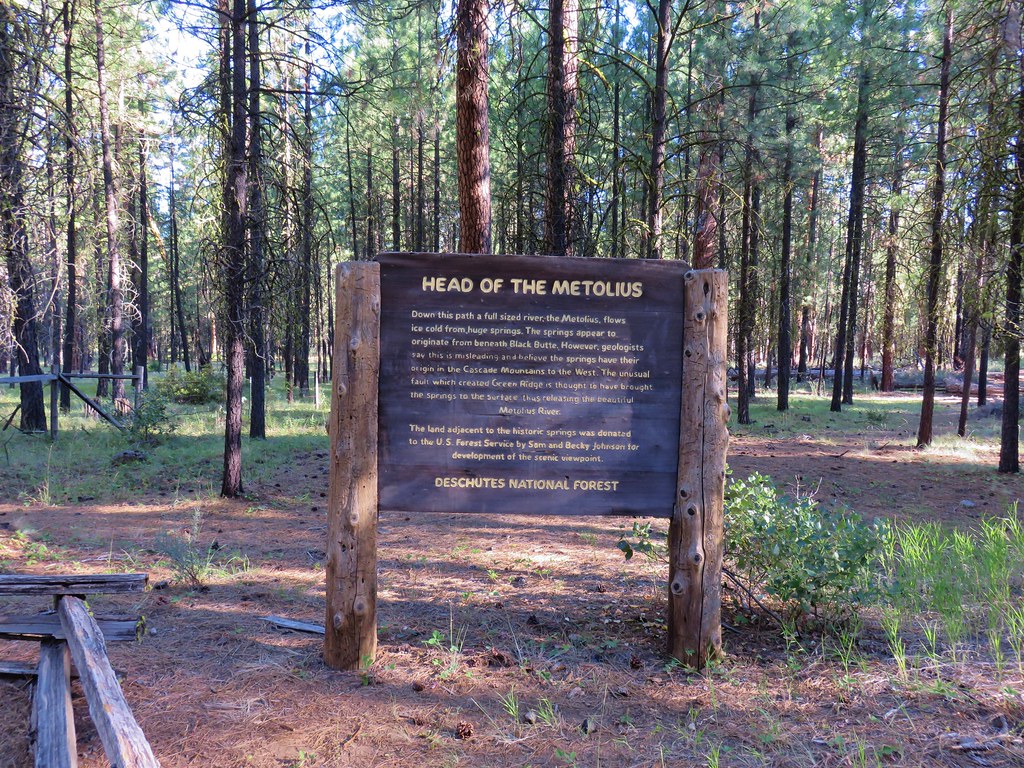
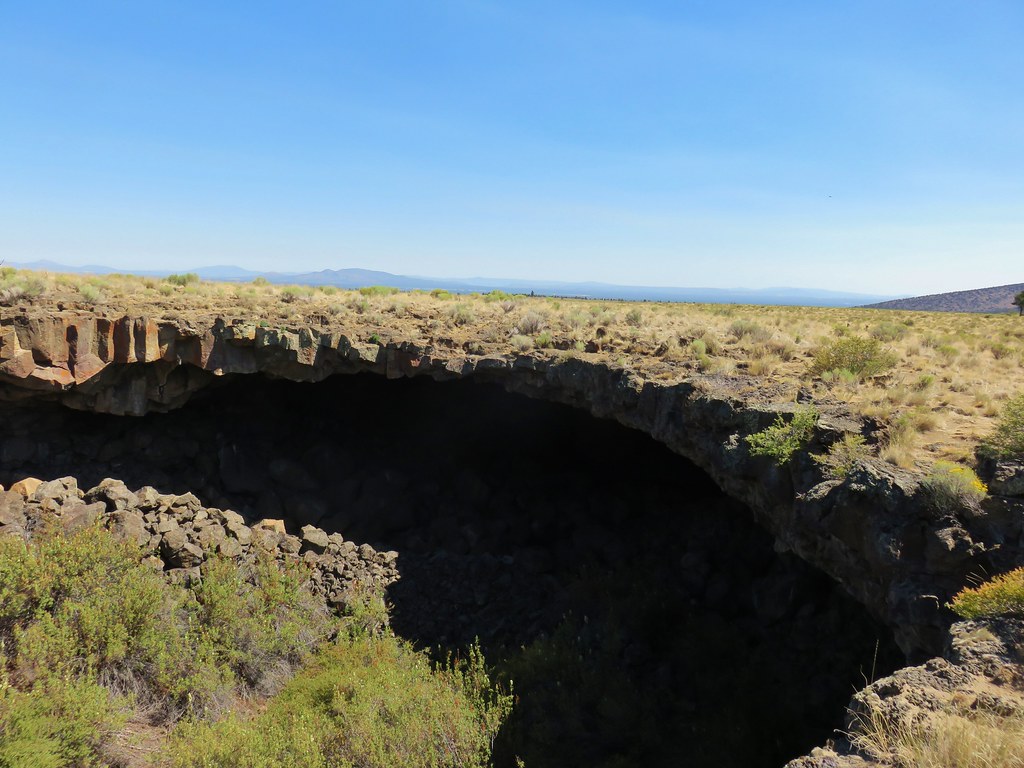
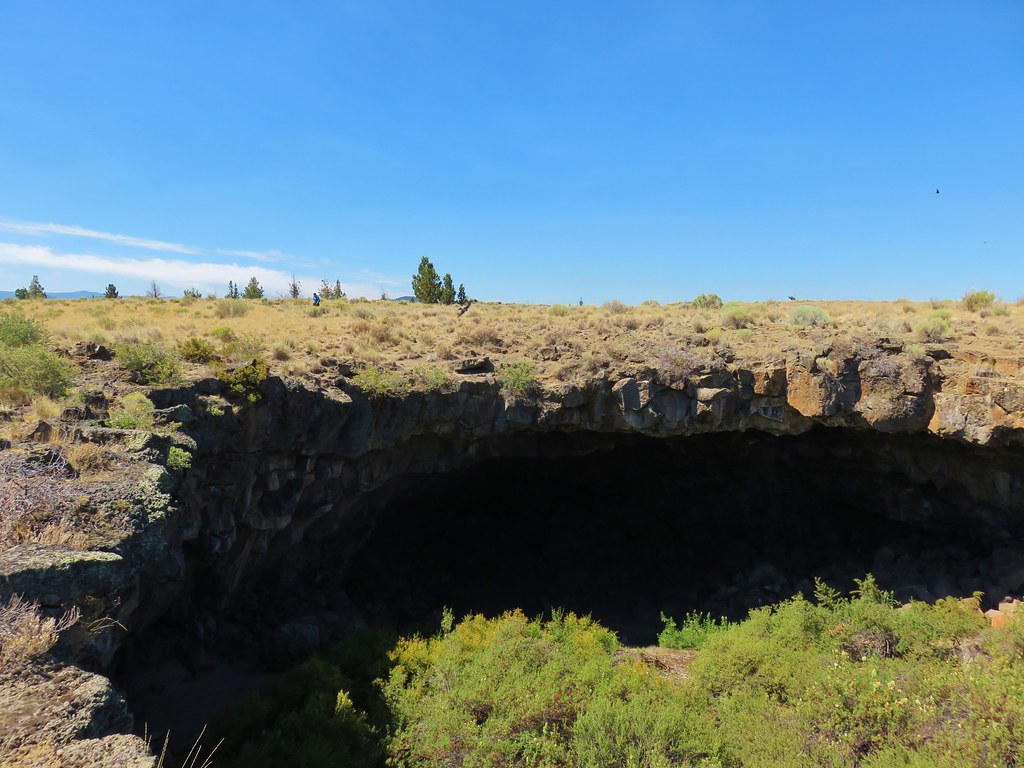
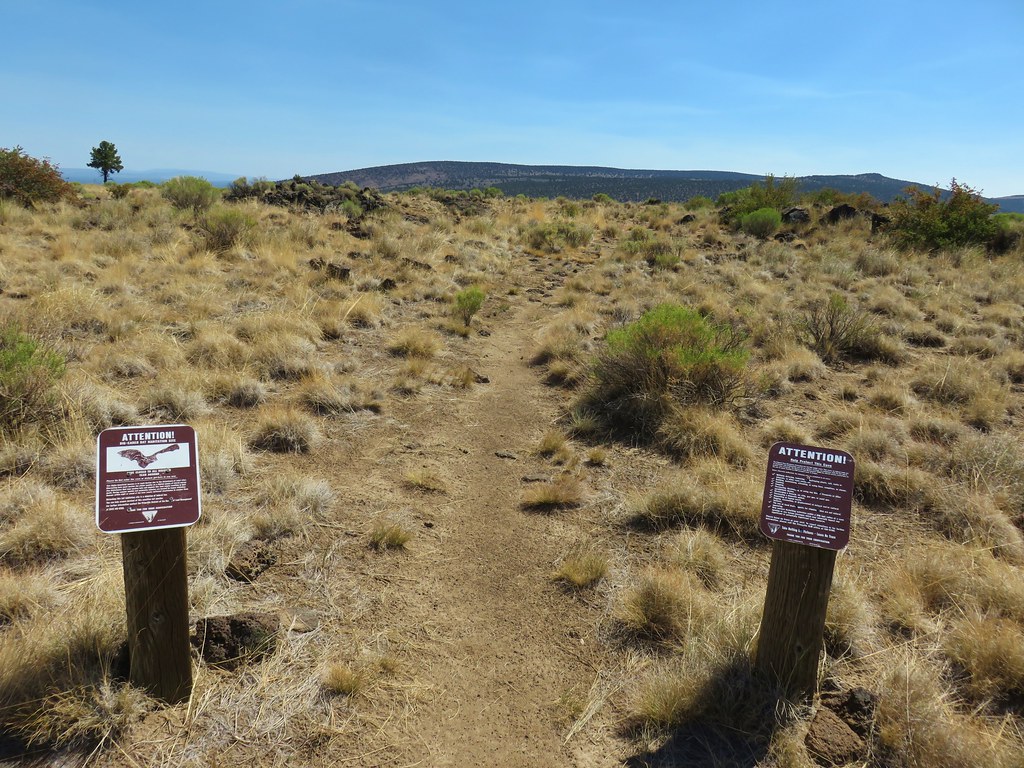
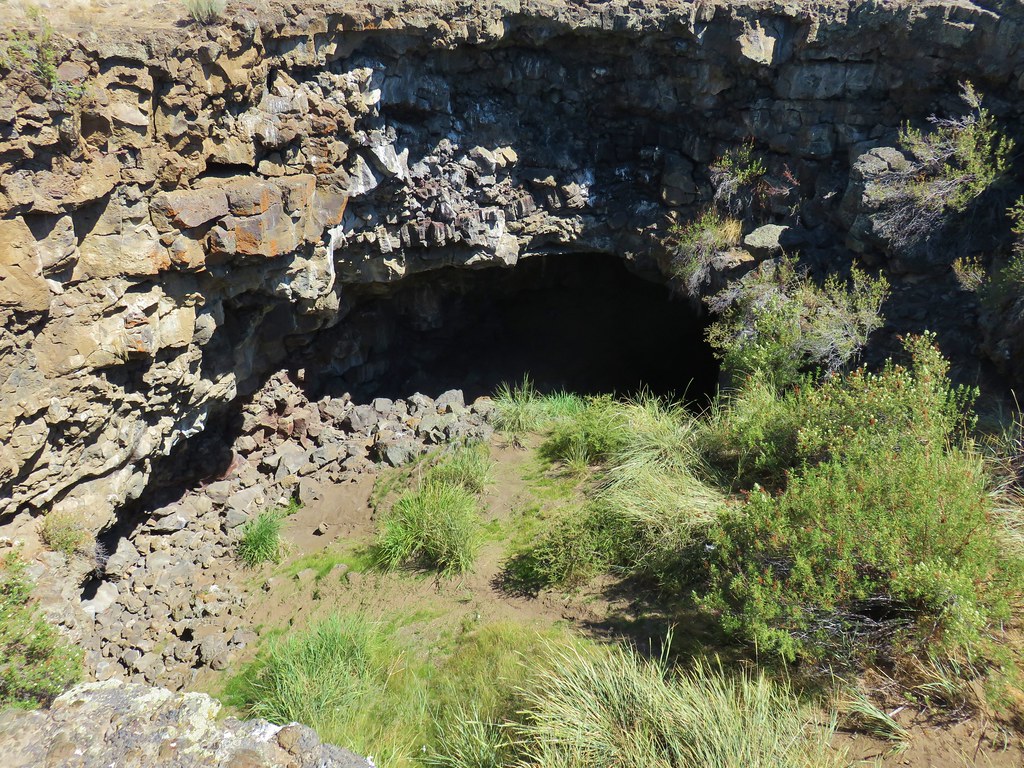
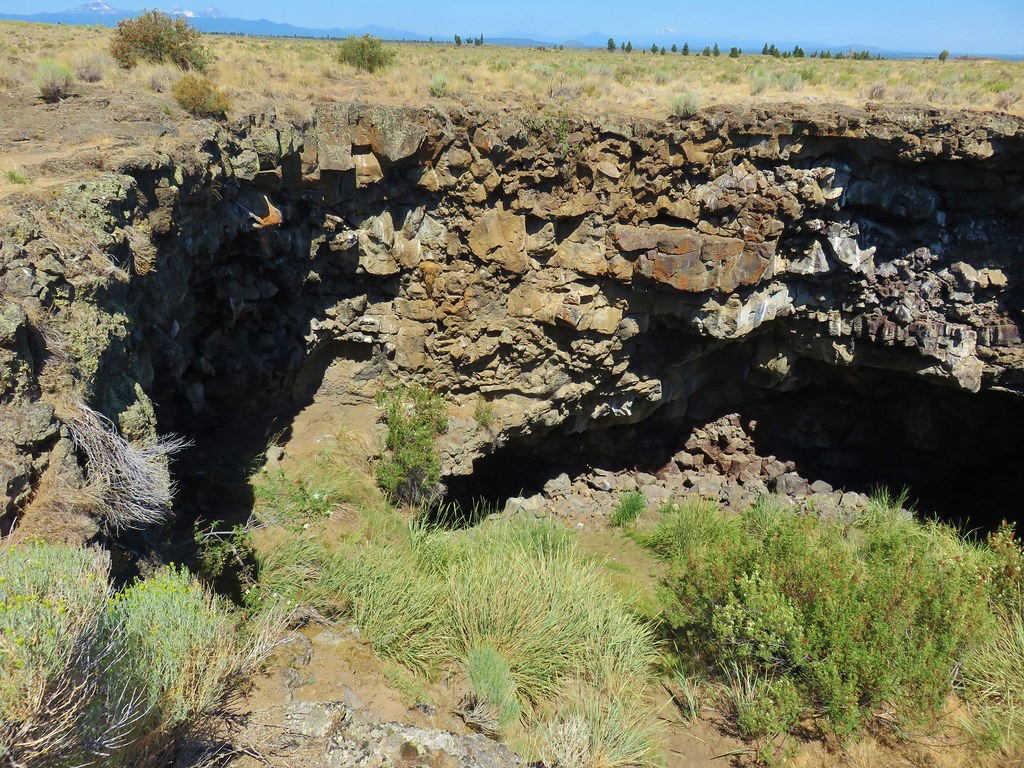
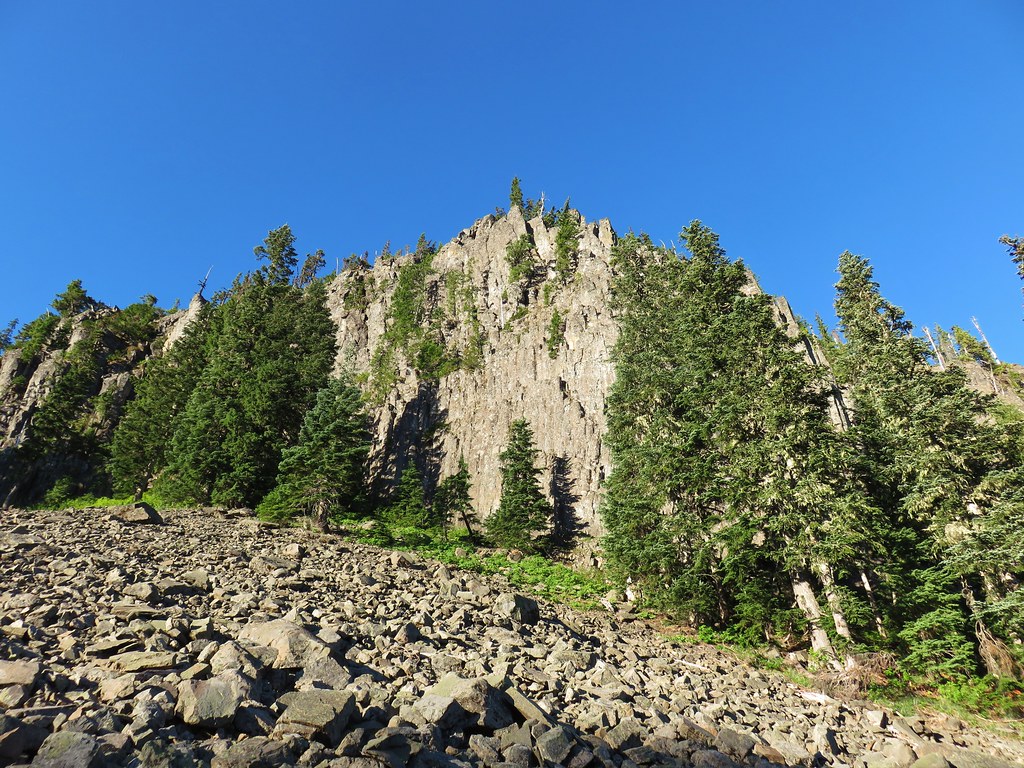
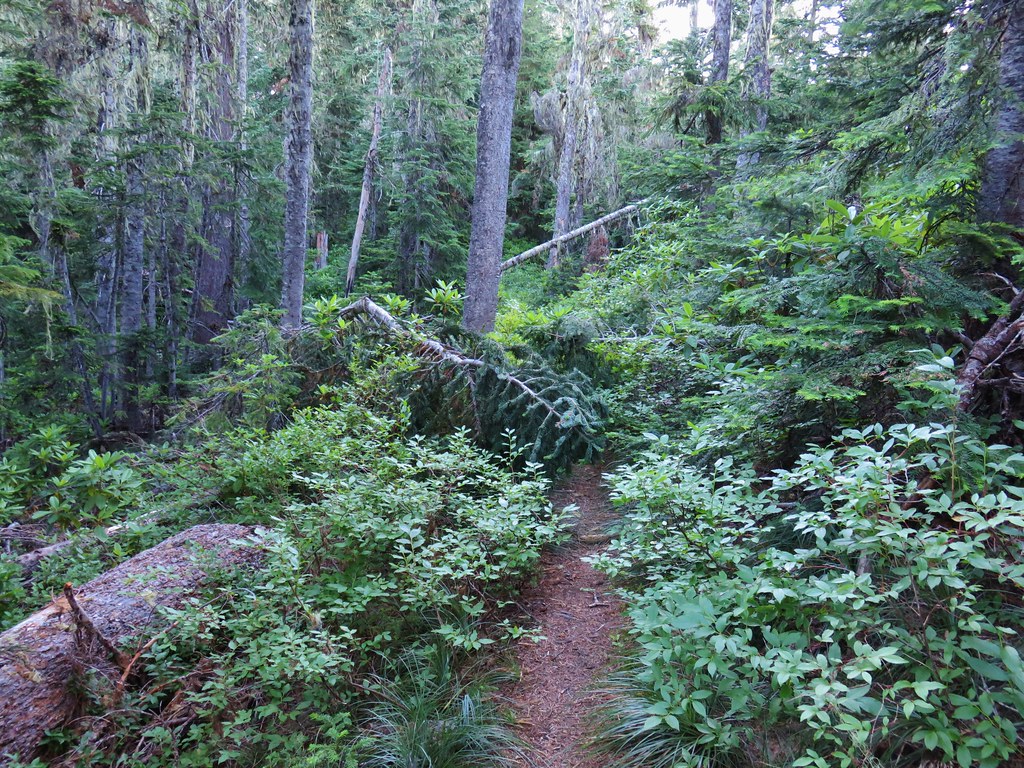
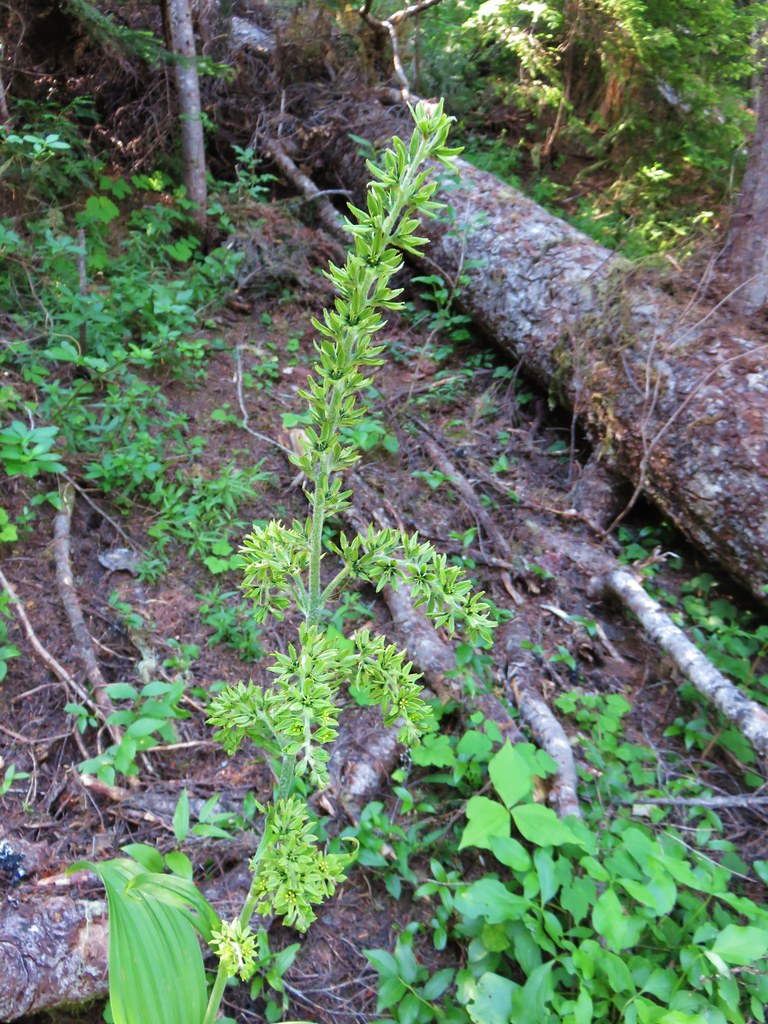
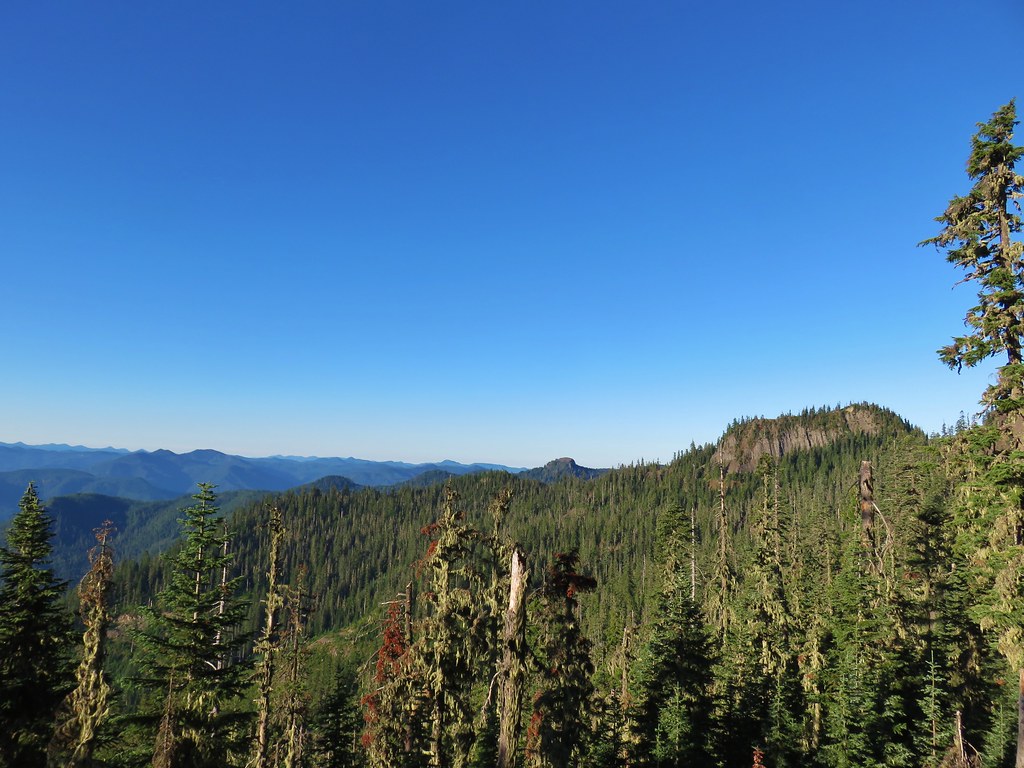
Head of the Metolius

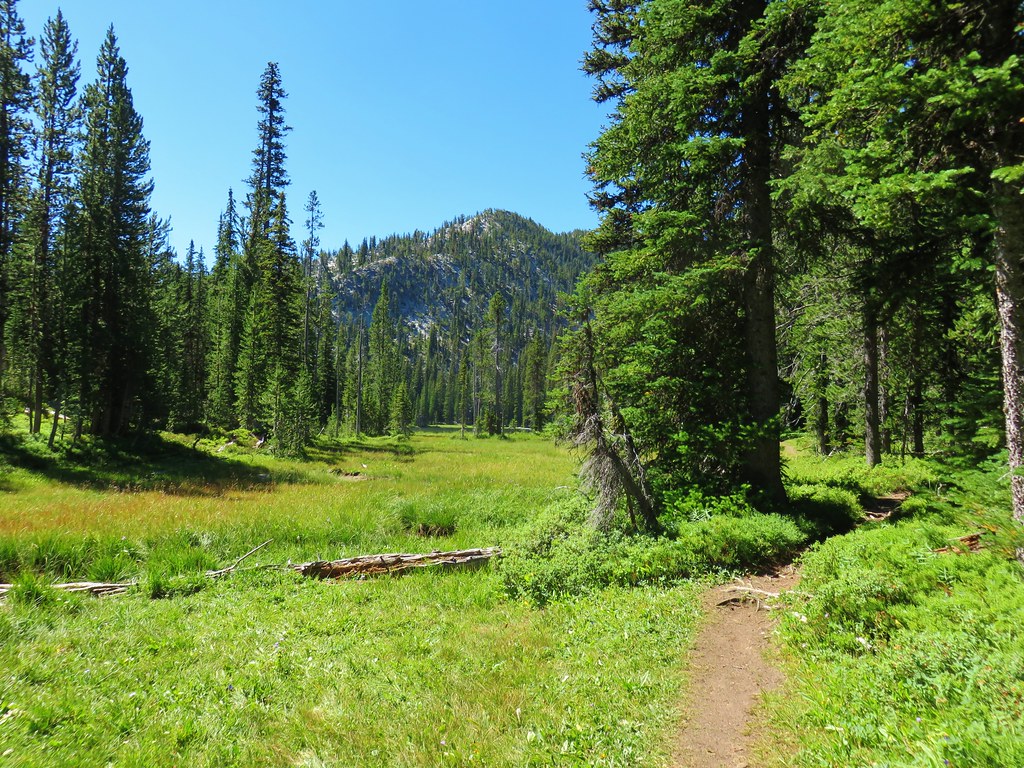
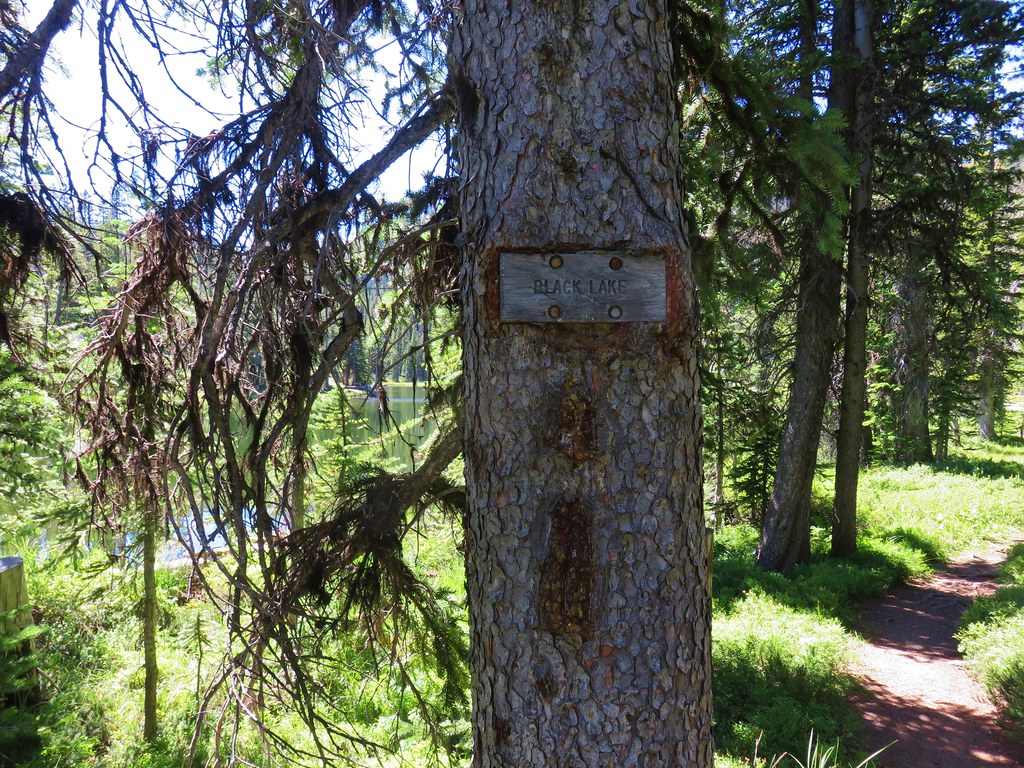
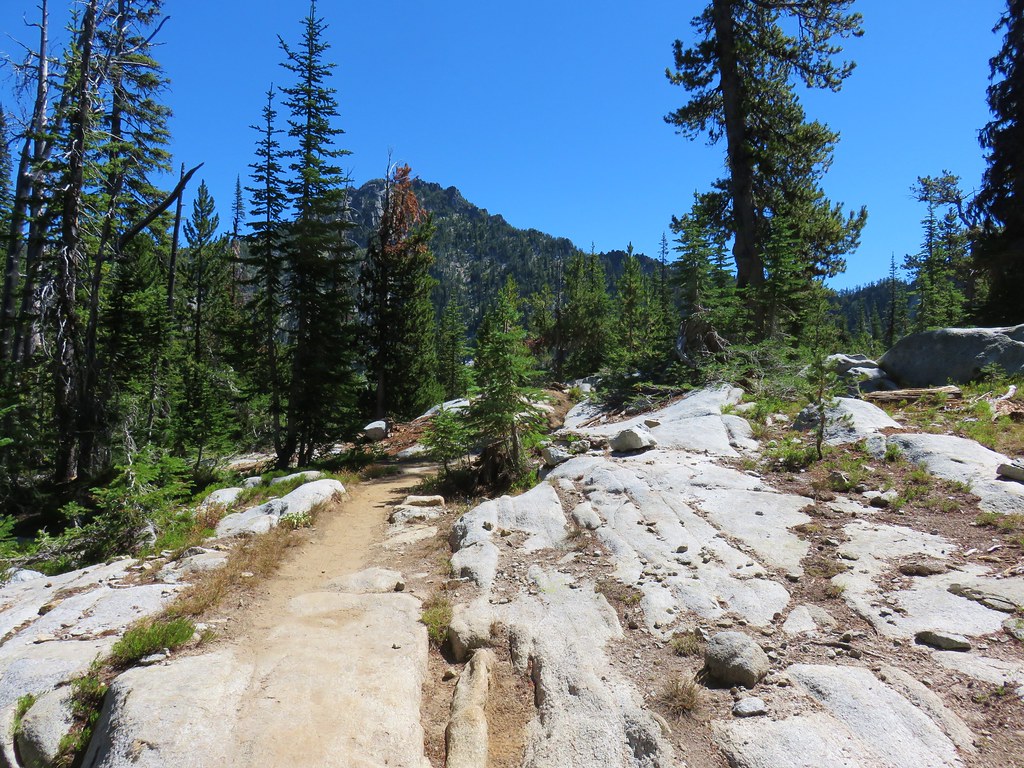
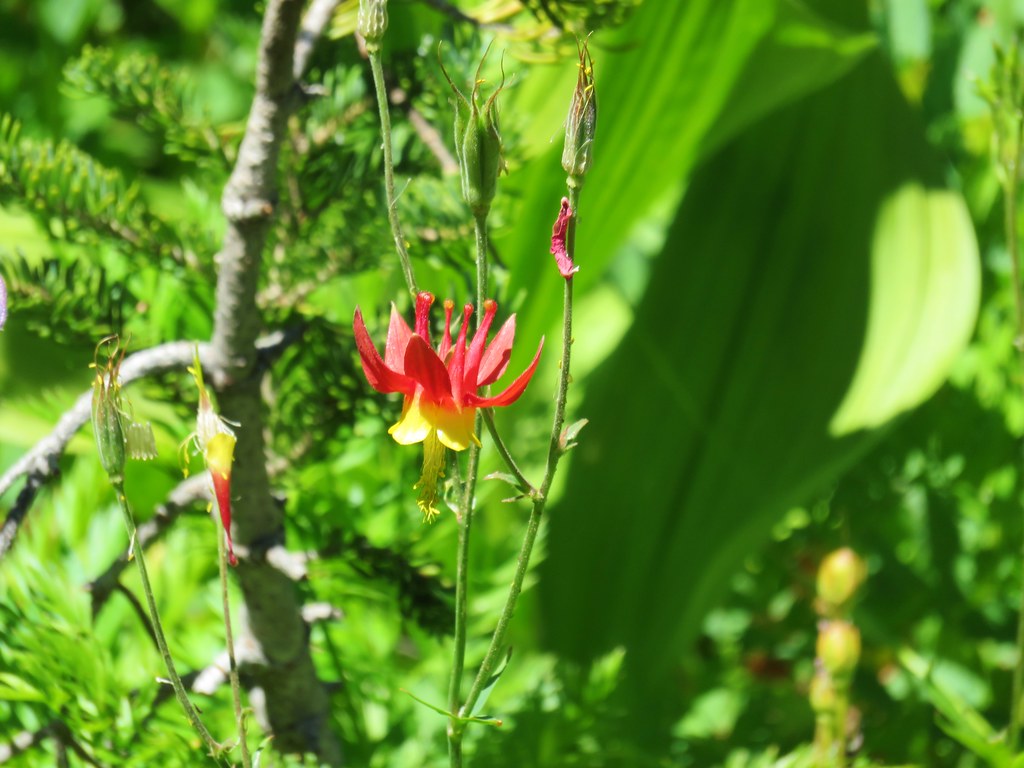
As an epilogue to our Strawberry Mountain Wilderness backpacking trip (Day 1, Day 2, Days 3 &4) we visited the head of the Metolius River on our way home after spending a night in Bend.

Our original plan had been an overnight trip in the Mt. Thielsen Wilderness but neither of us were left with the energy to tackle such an outing, but the quarter mile paved path the the headwaters of the Metolius sounded doable.

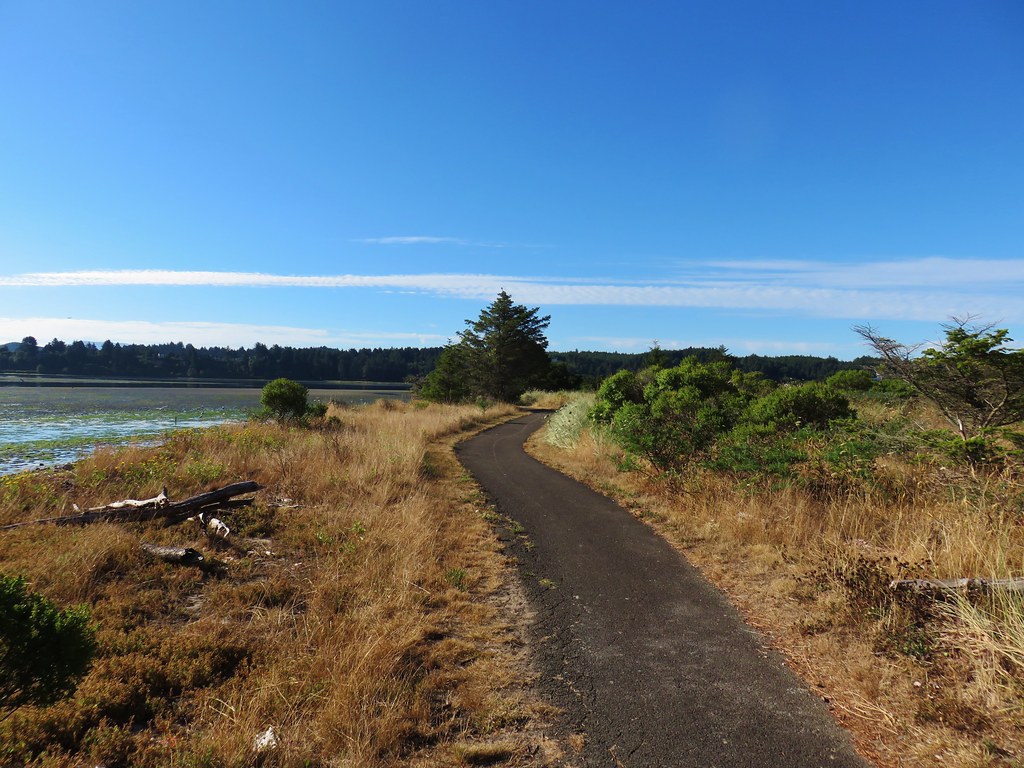
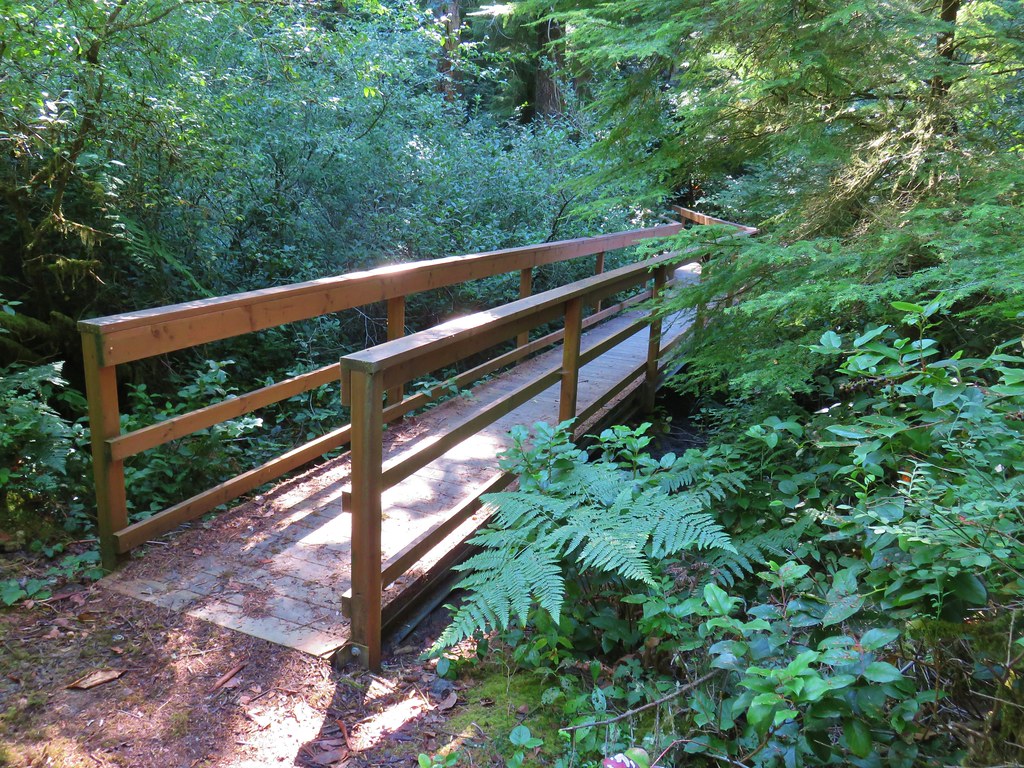
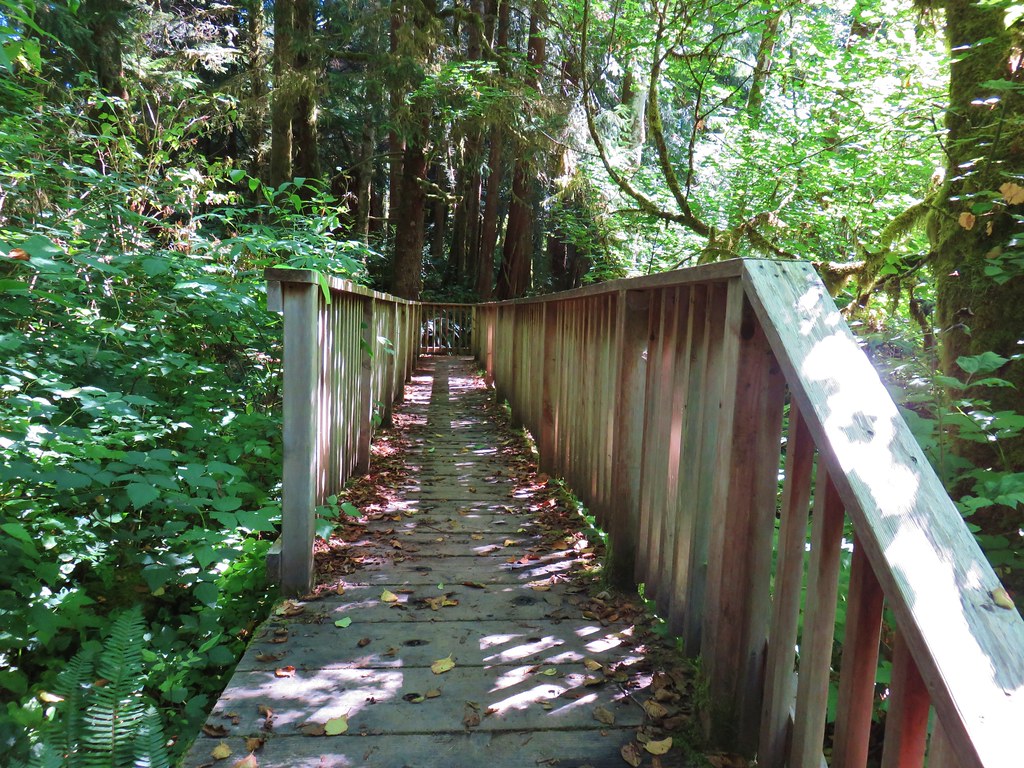
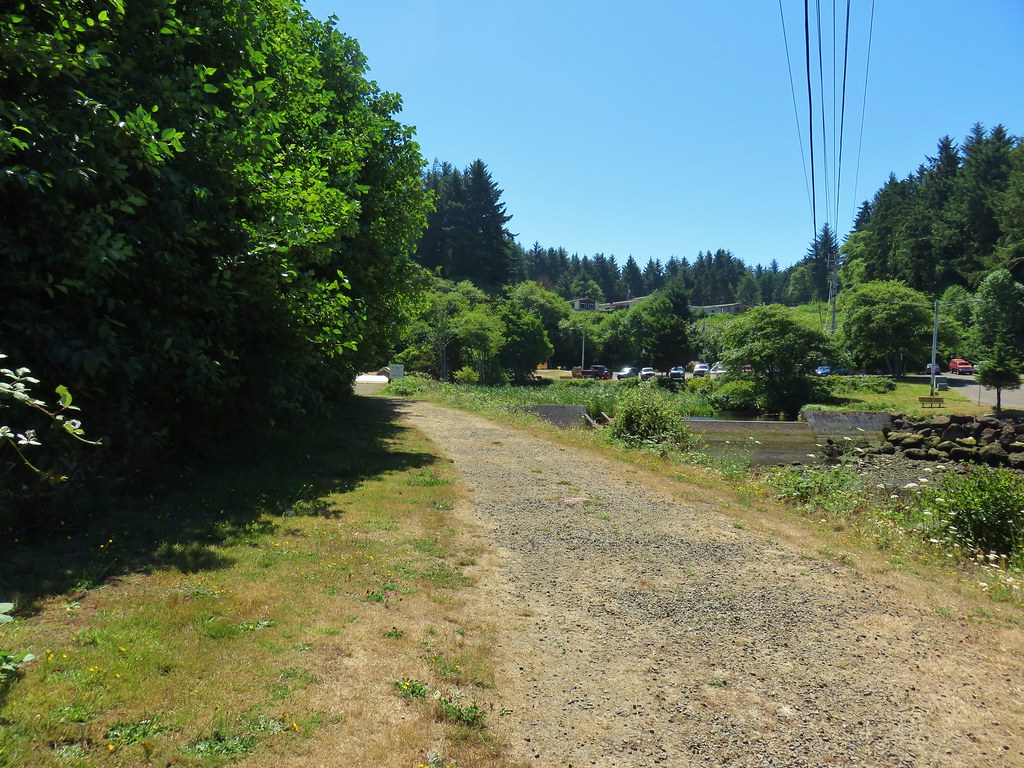
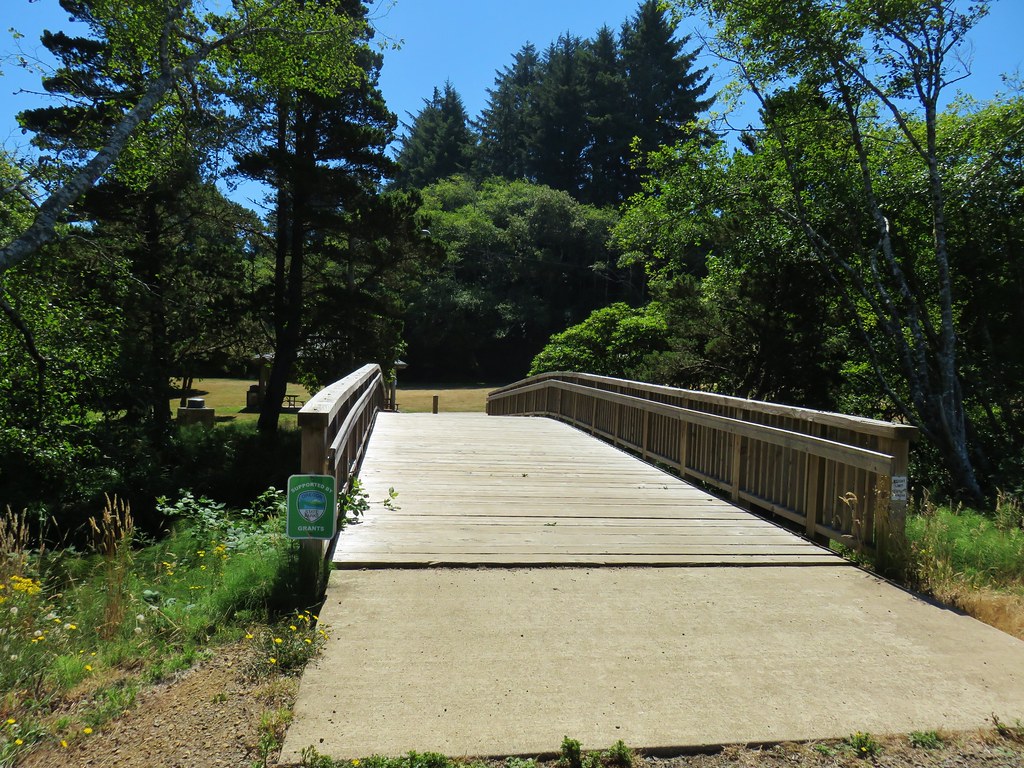
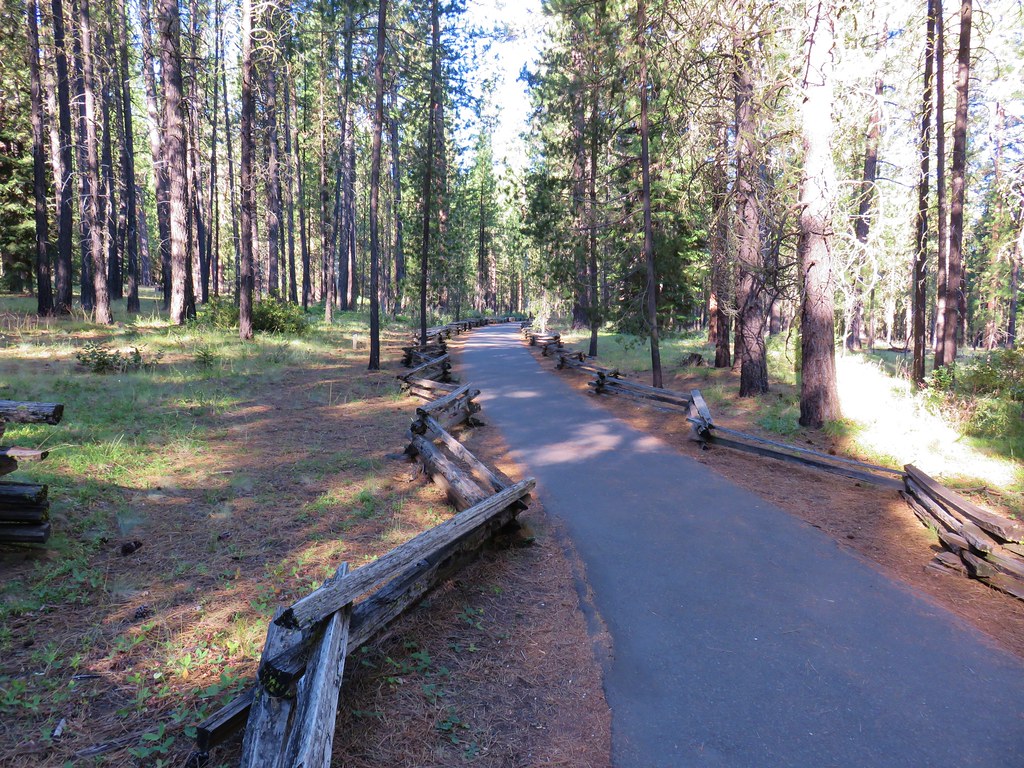
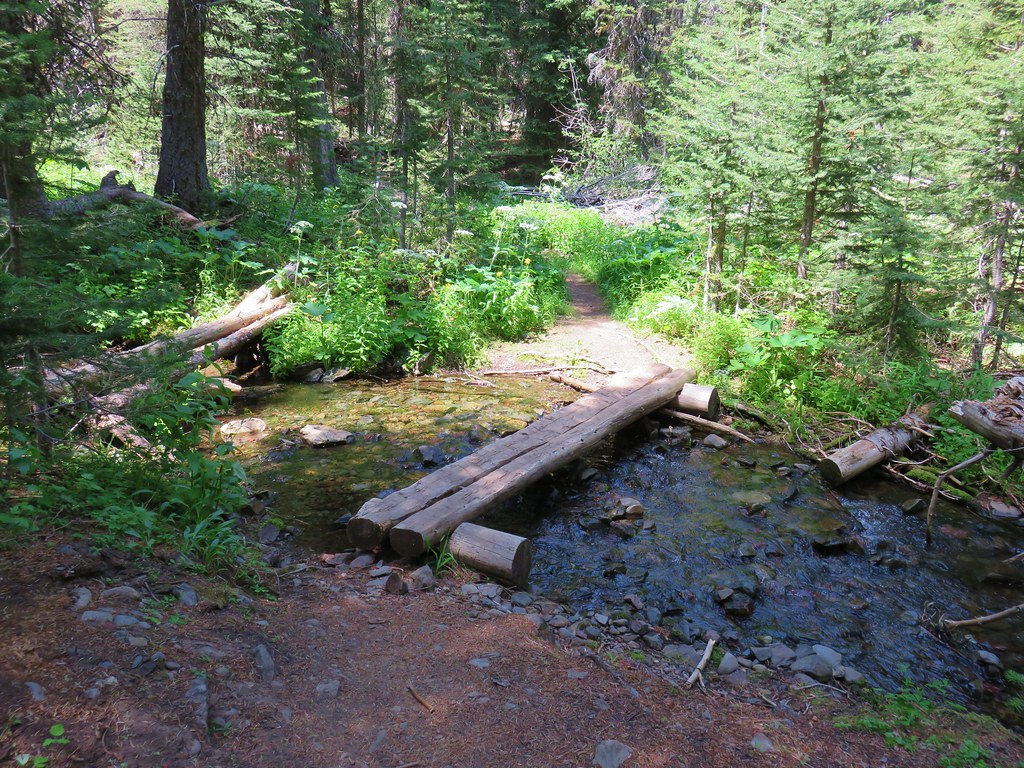
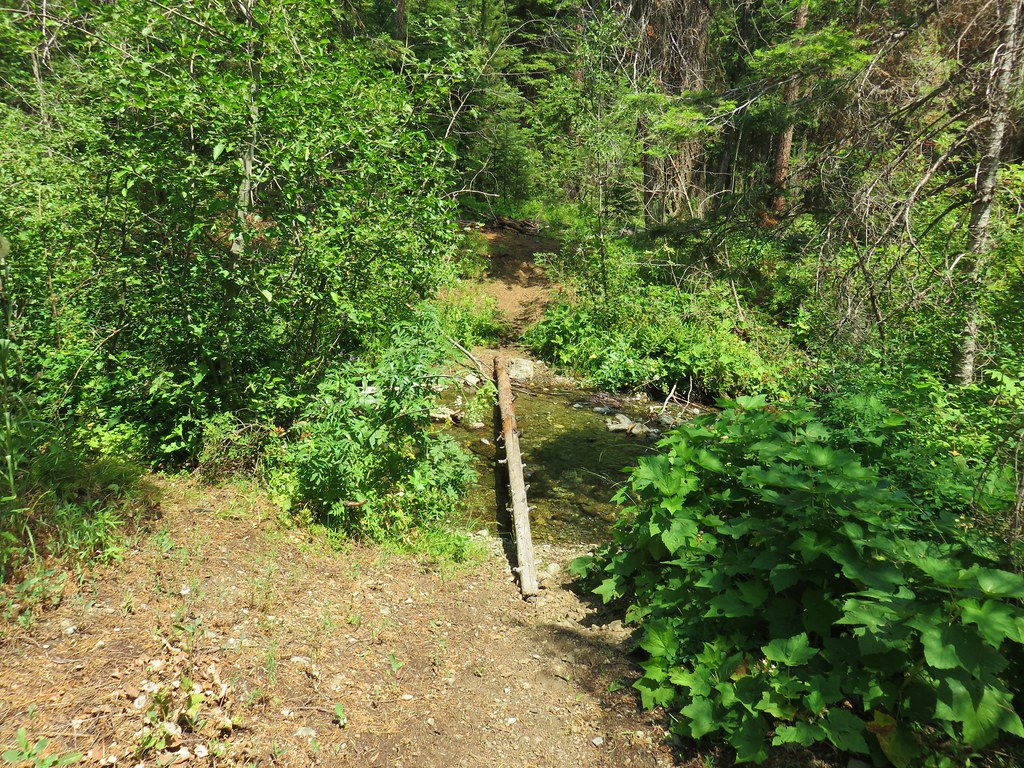
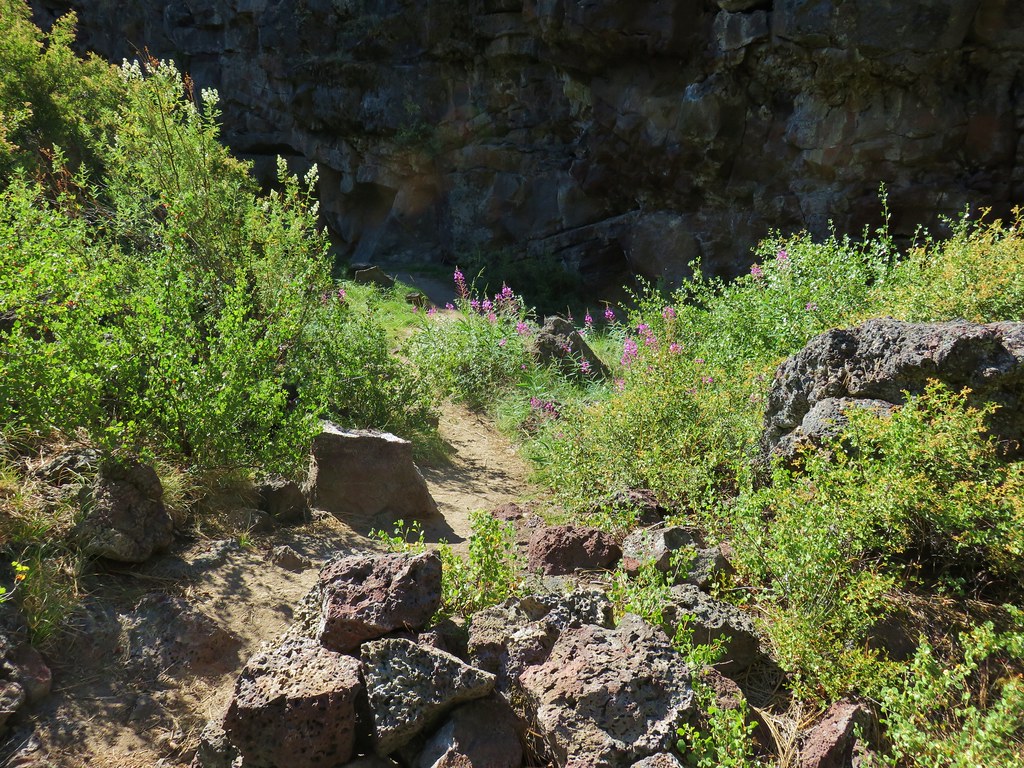
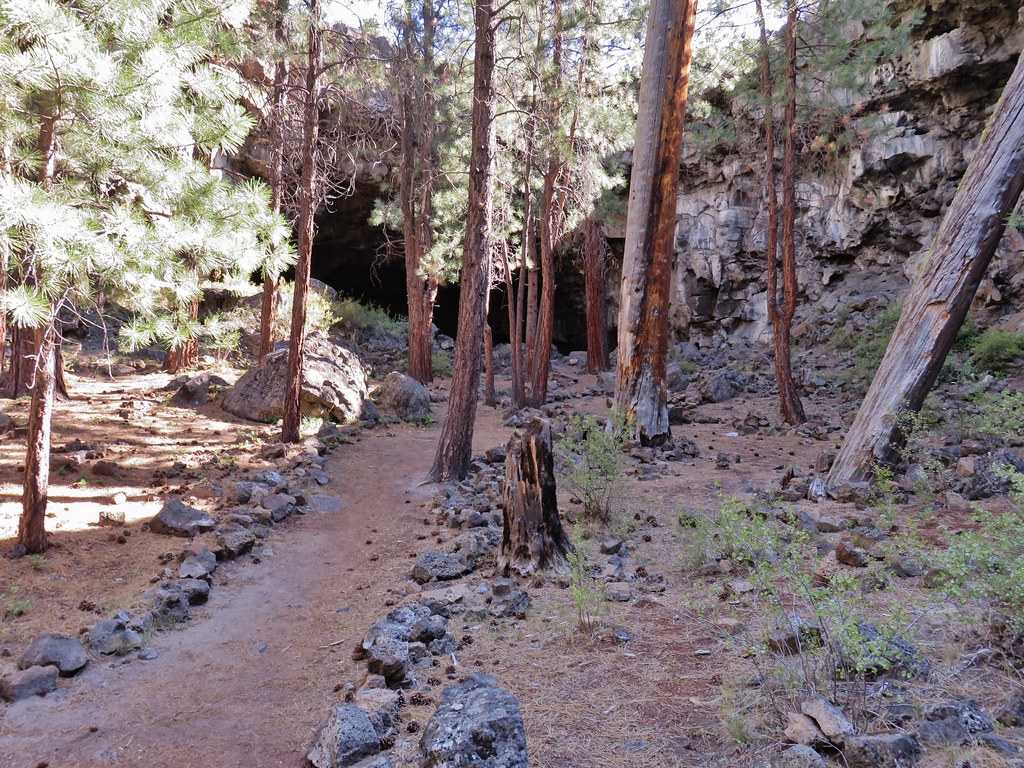
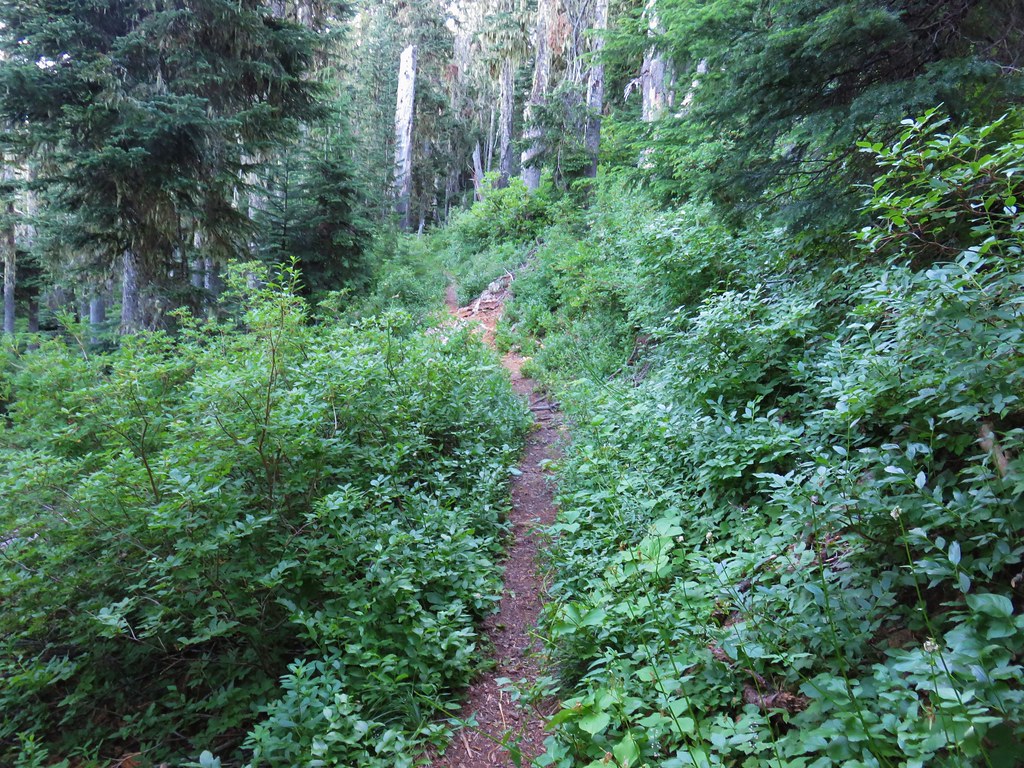
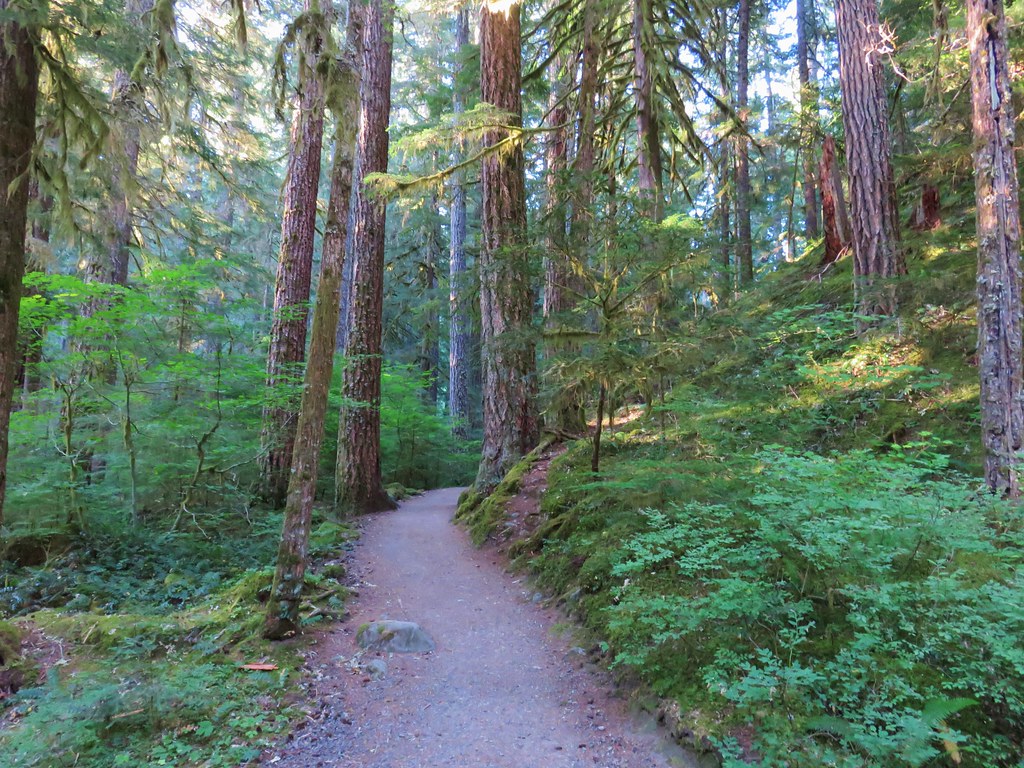
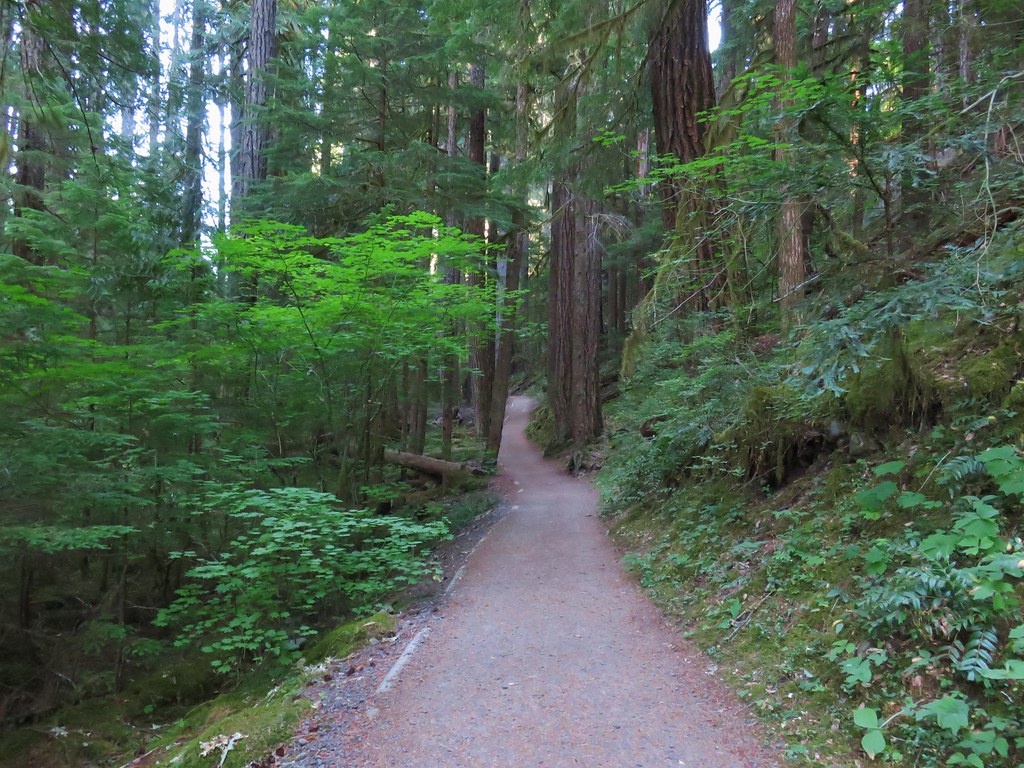
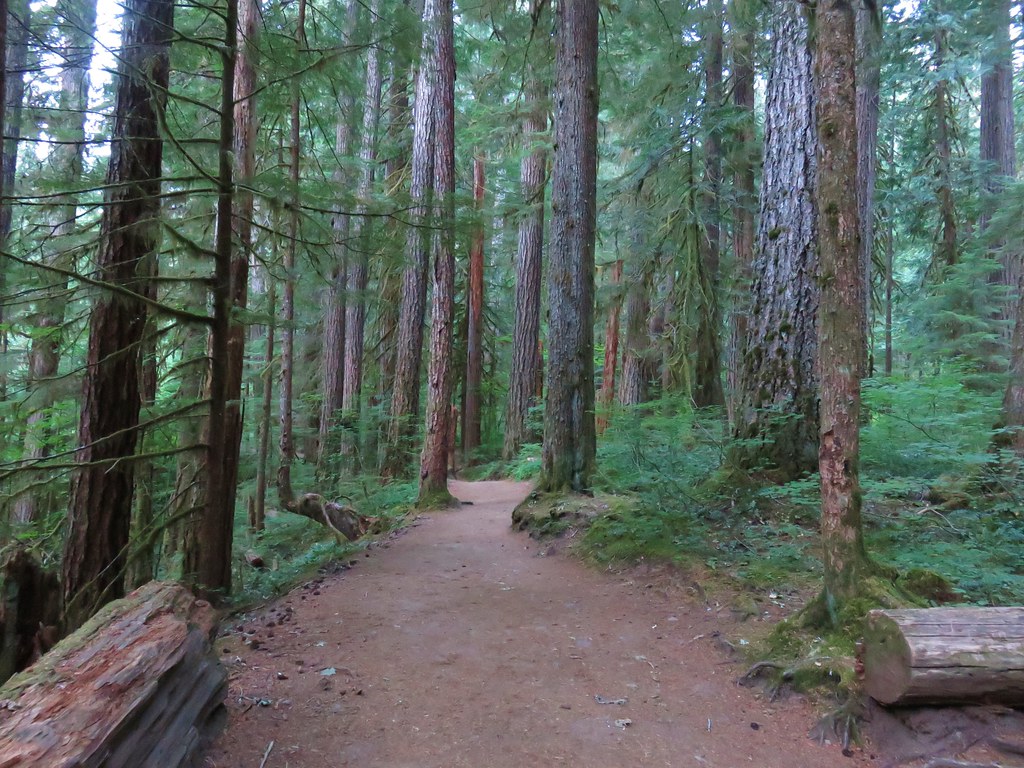
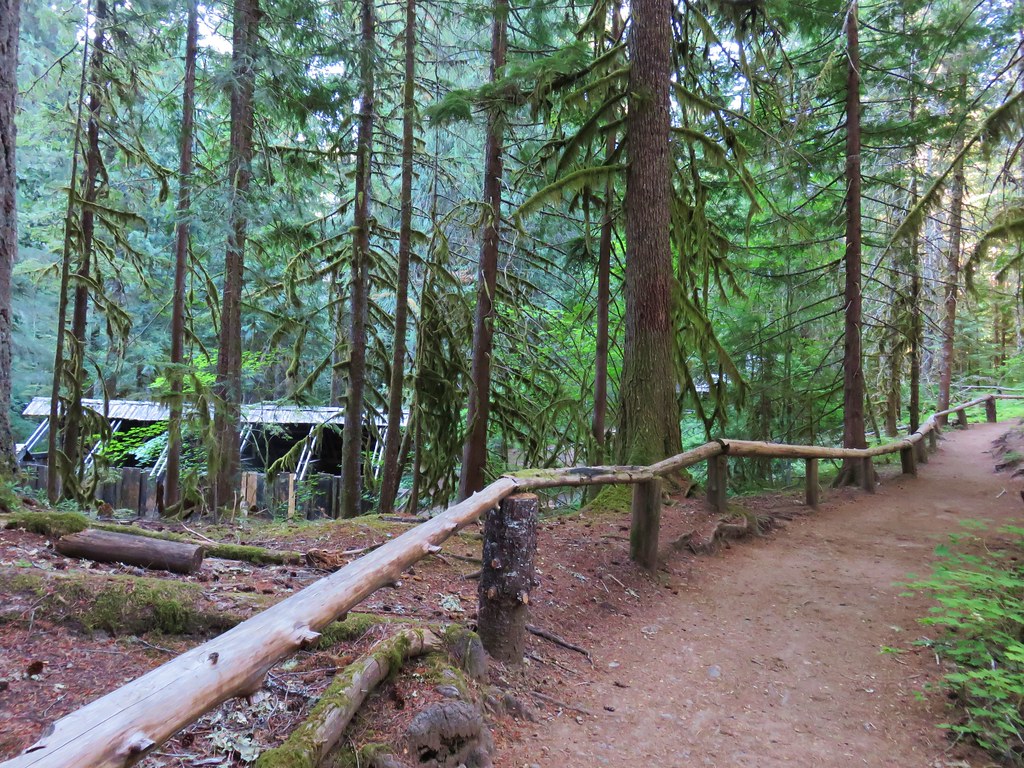
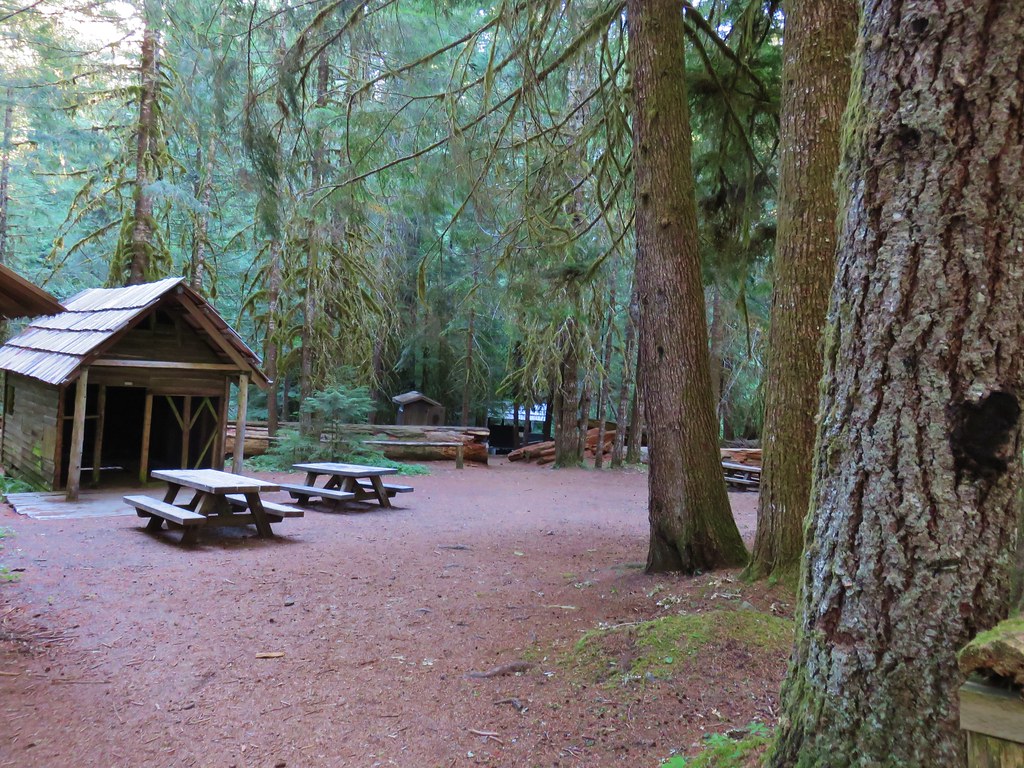
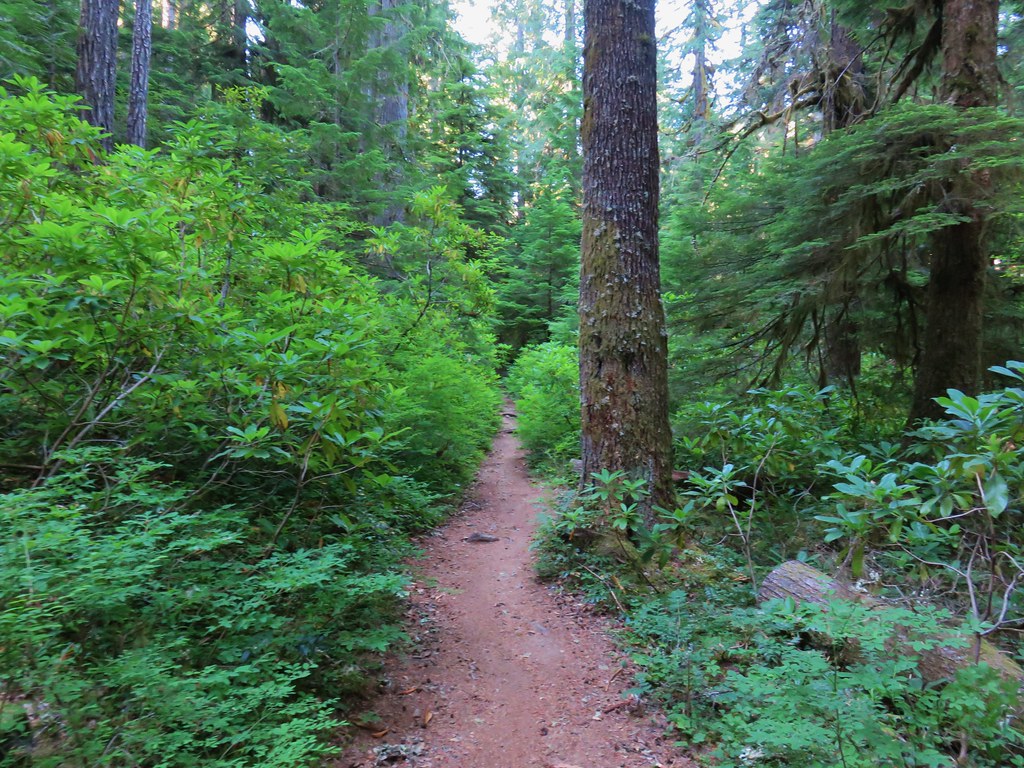
We arrived at the trailhead along Forest Road 14 just after 8am and started down the short paved path.
IMG_9659

IMG_9660

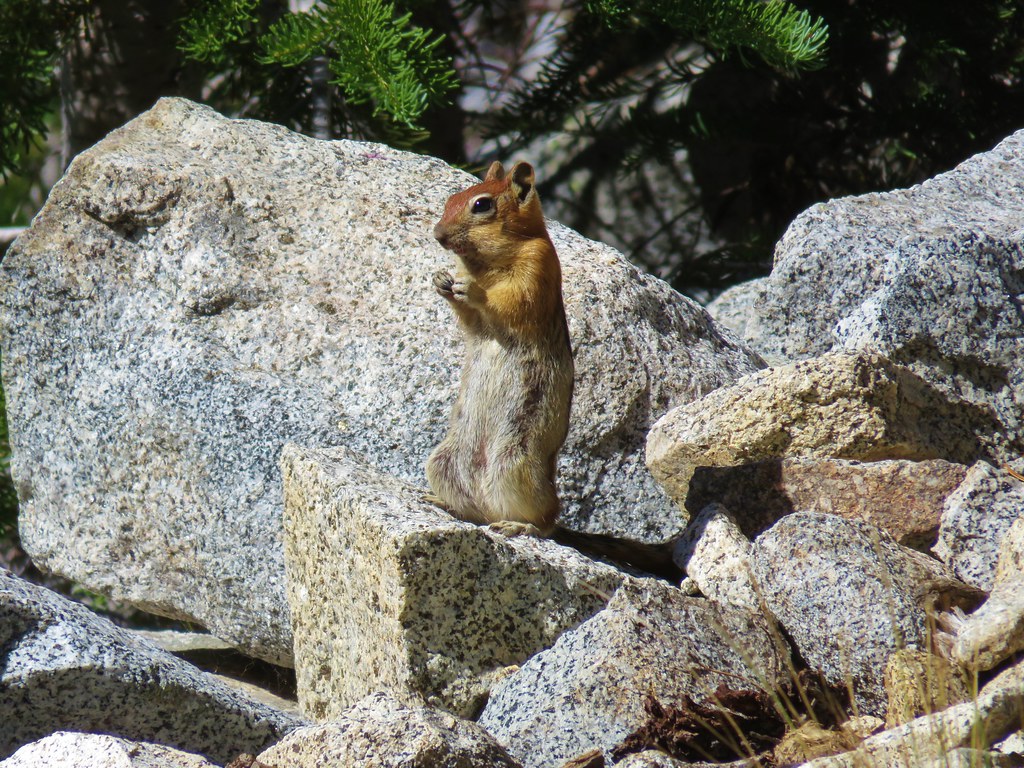
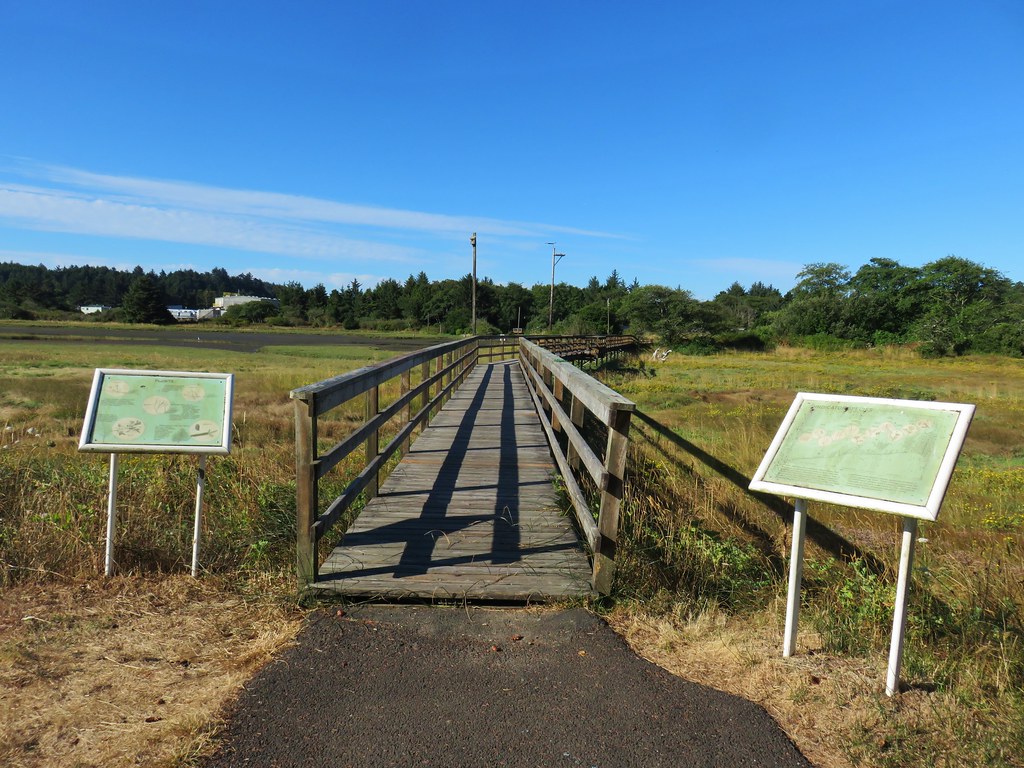
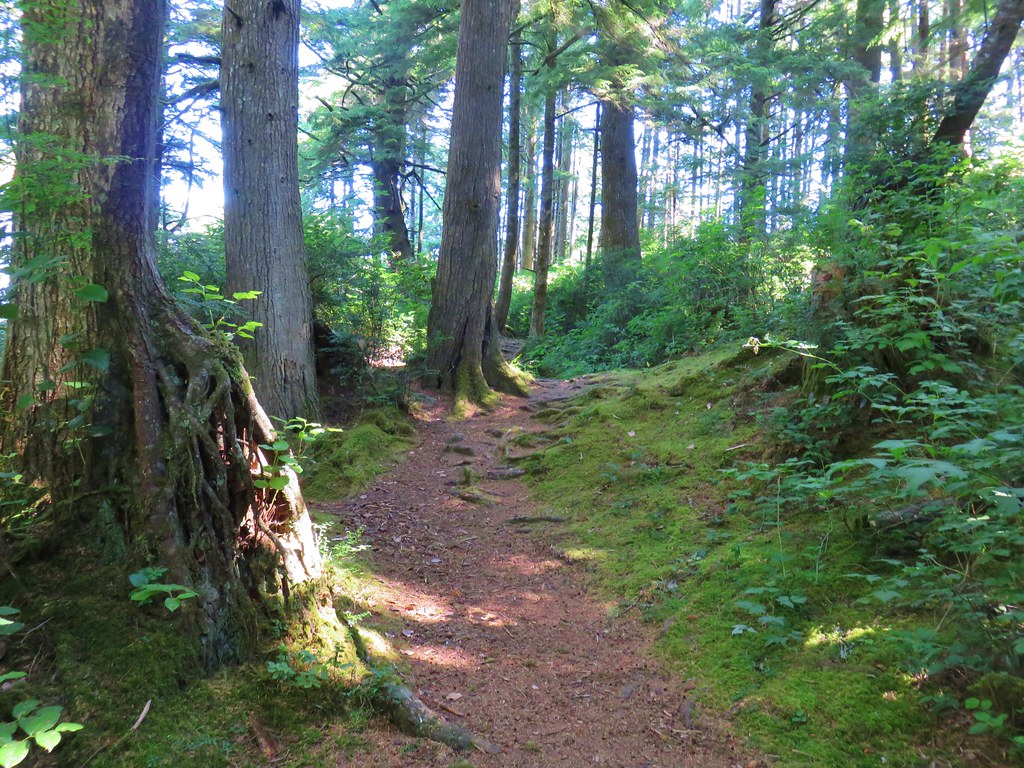
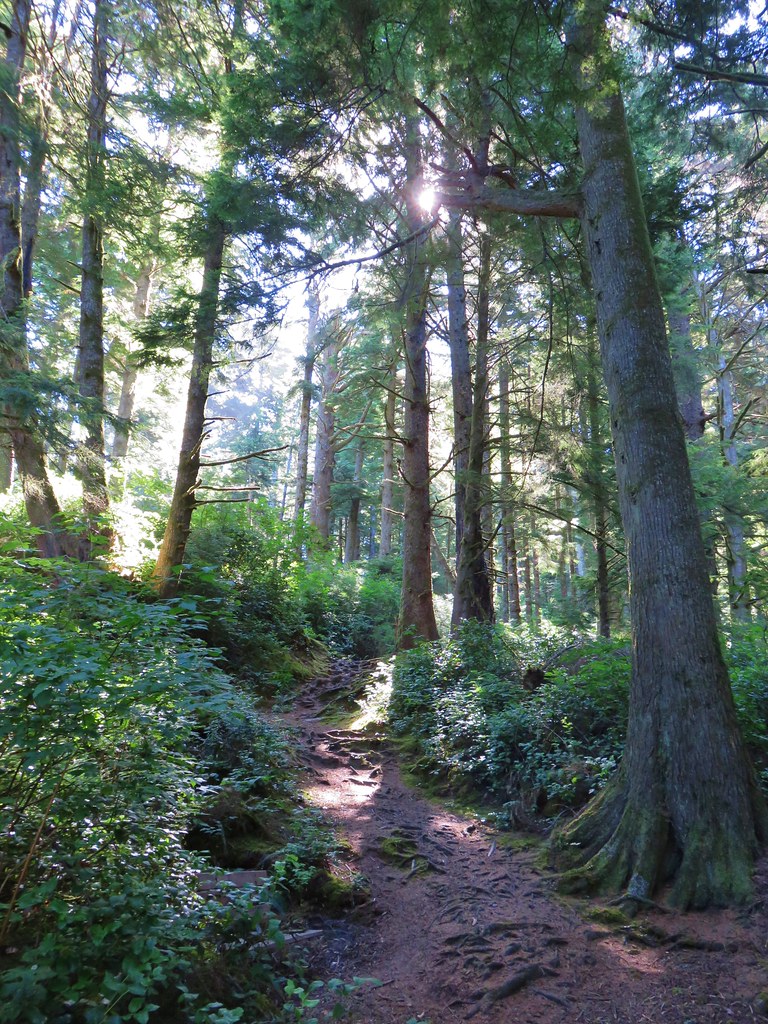
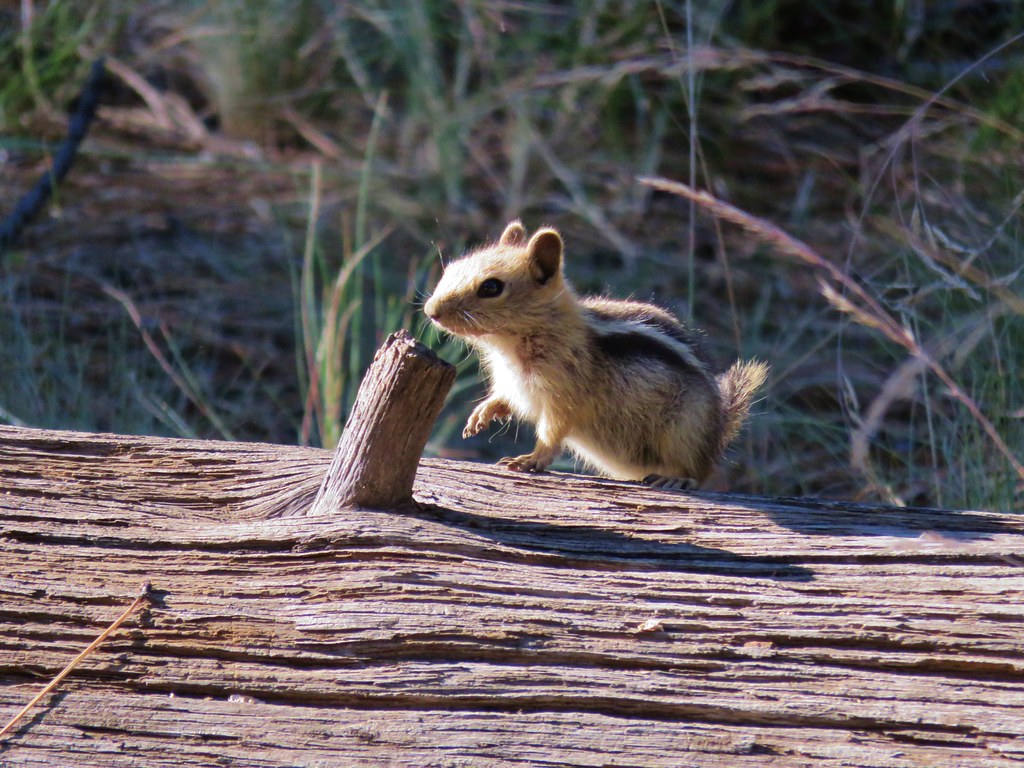
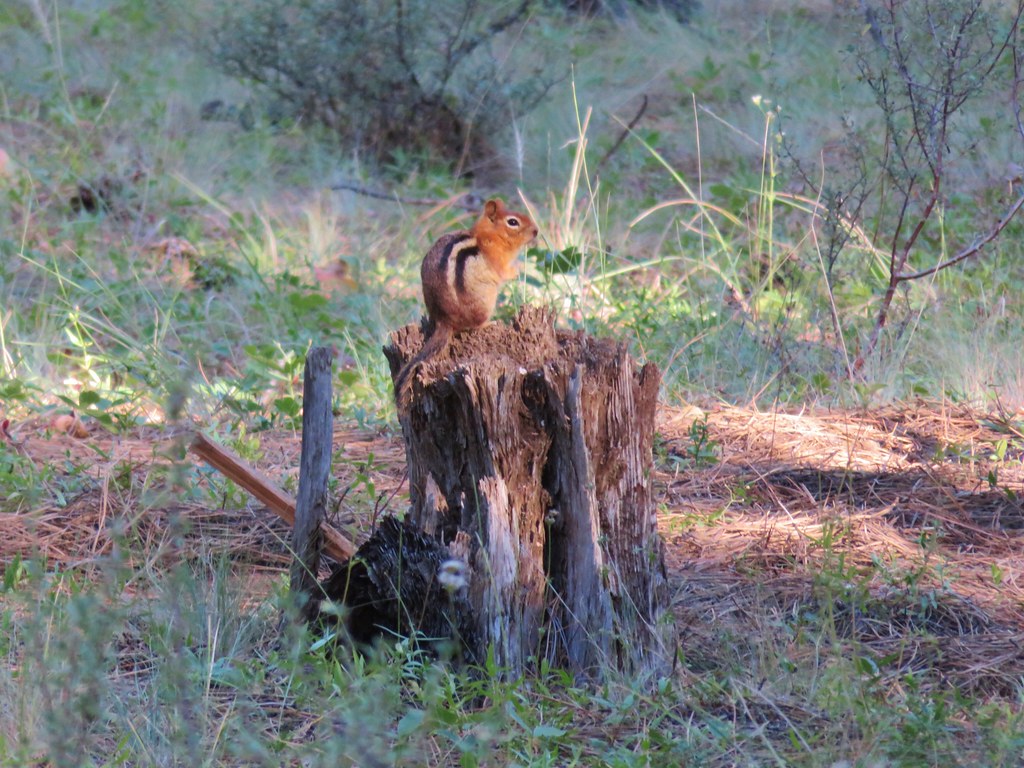
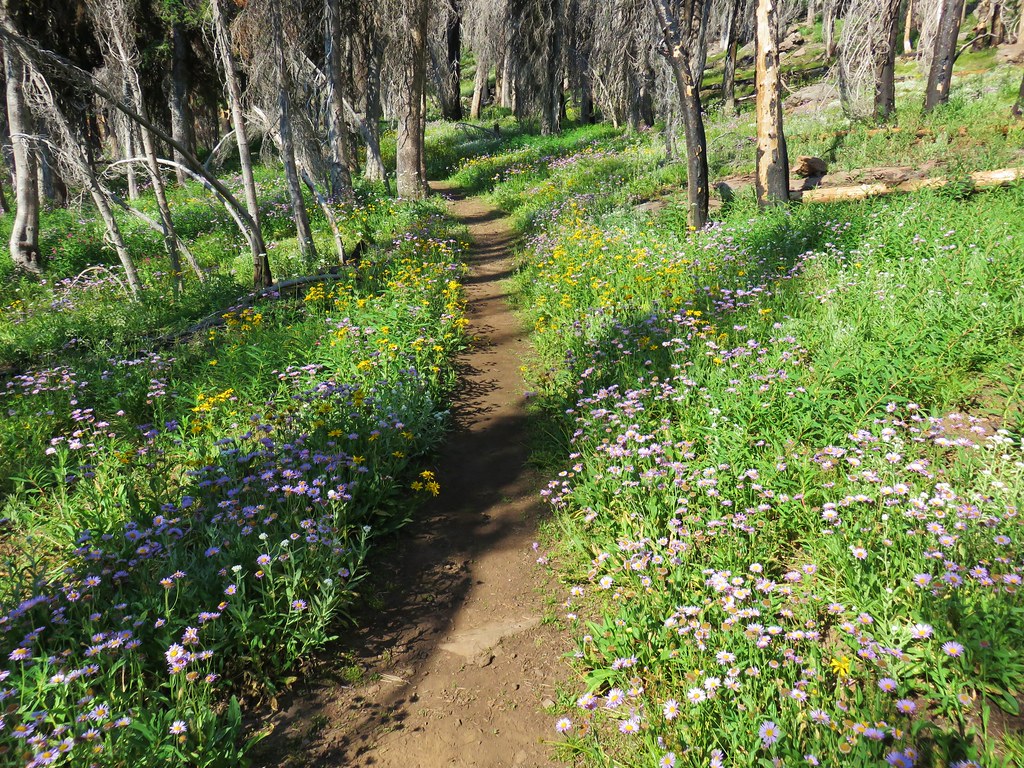
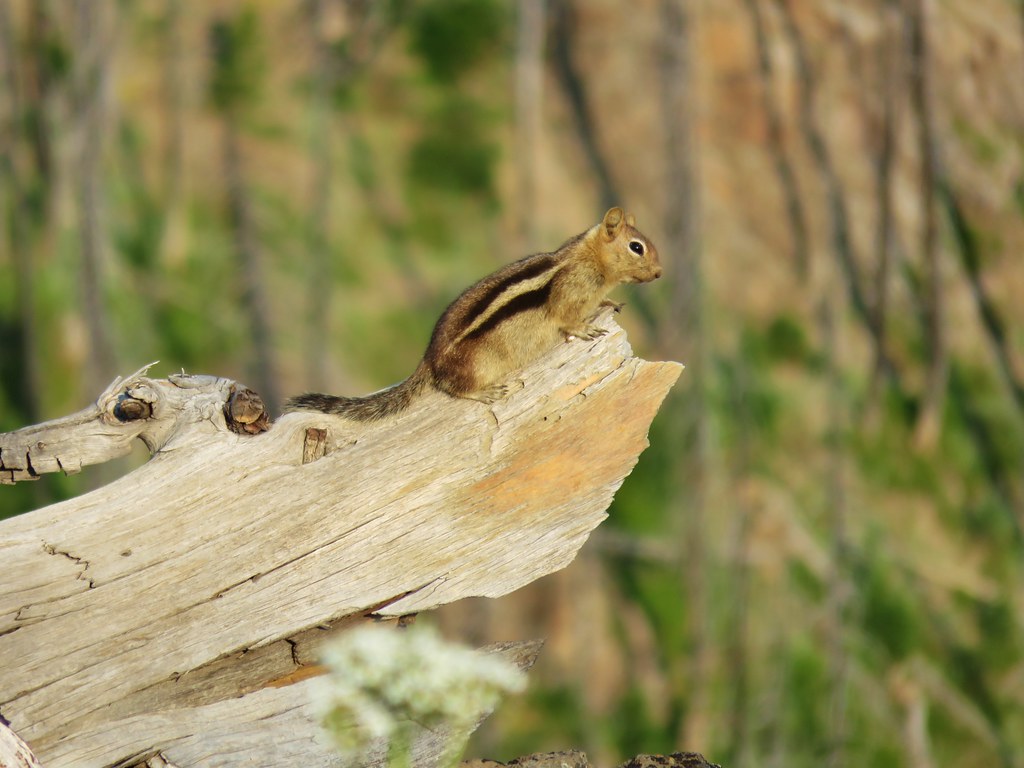
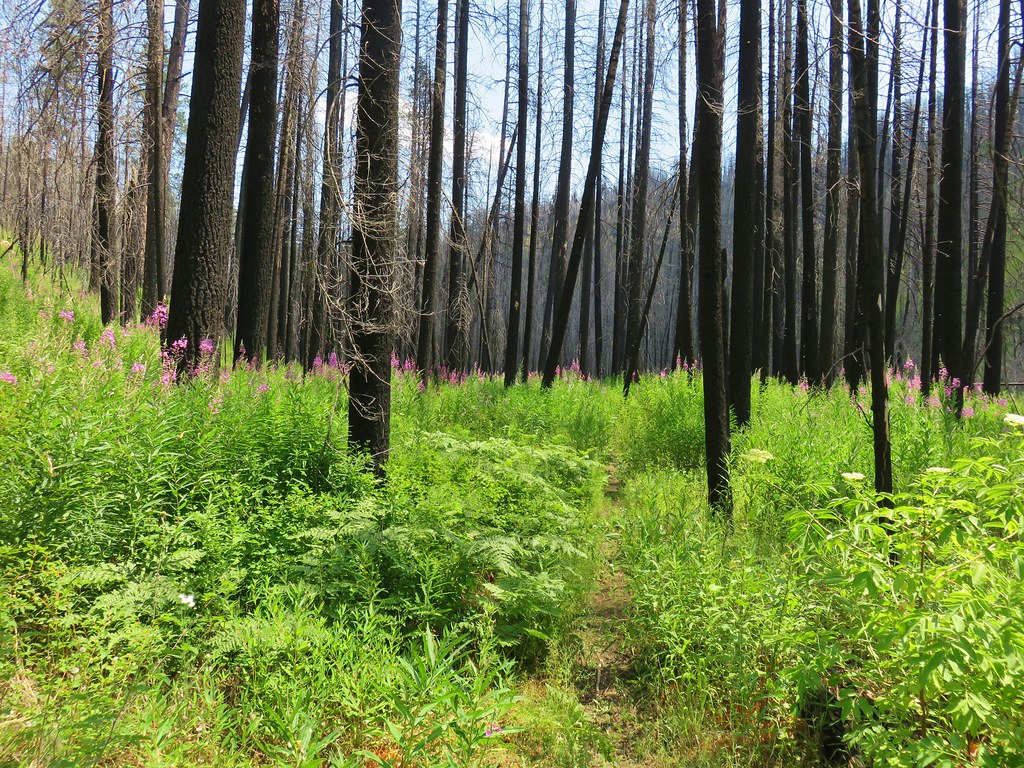
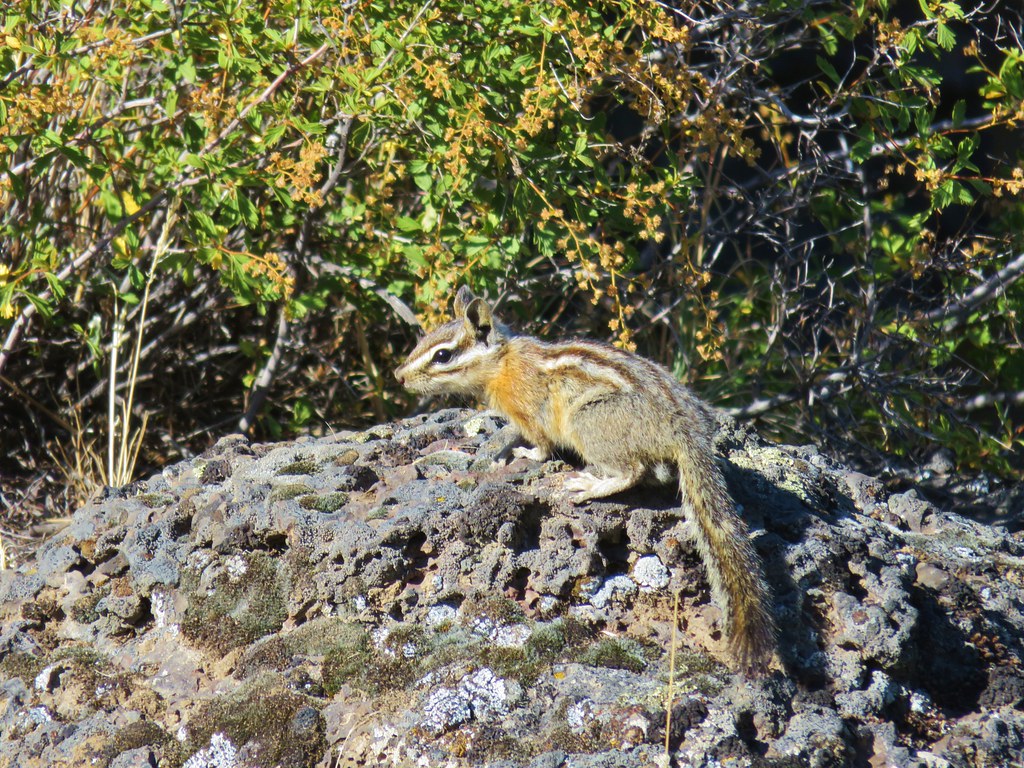
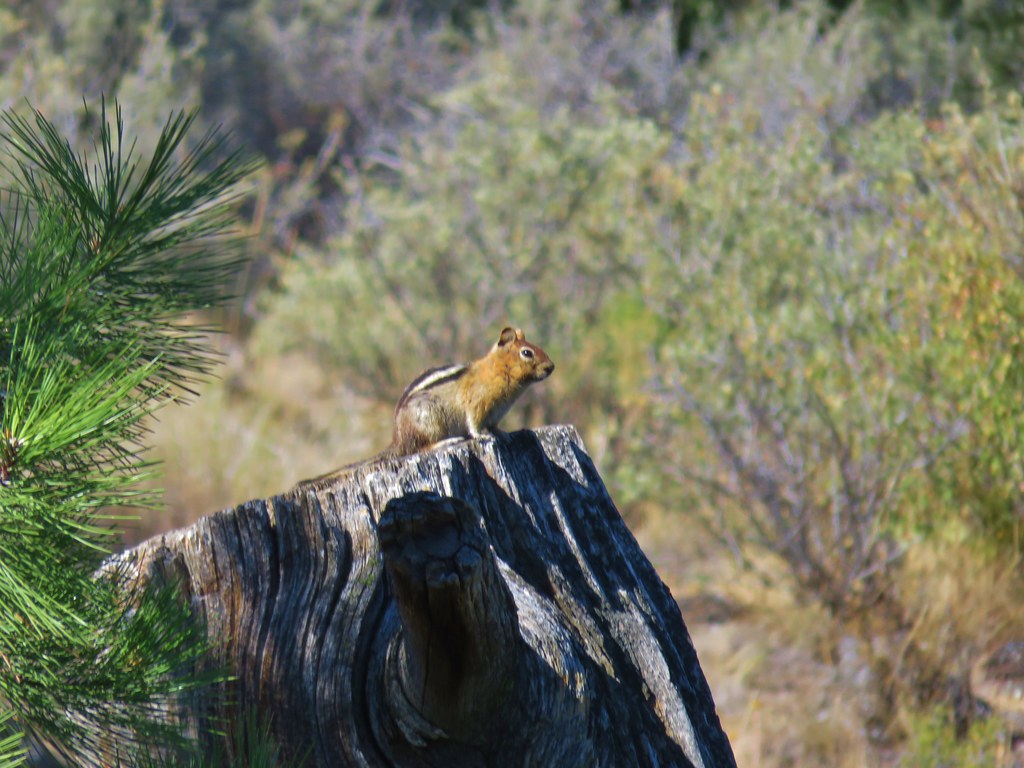
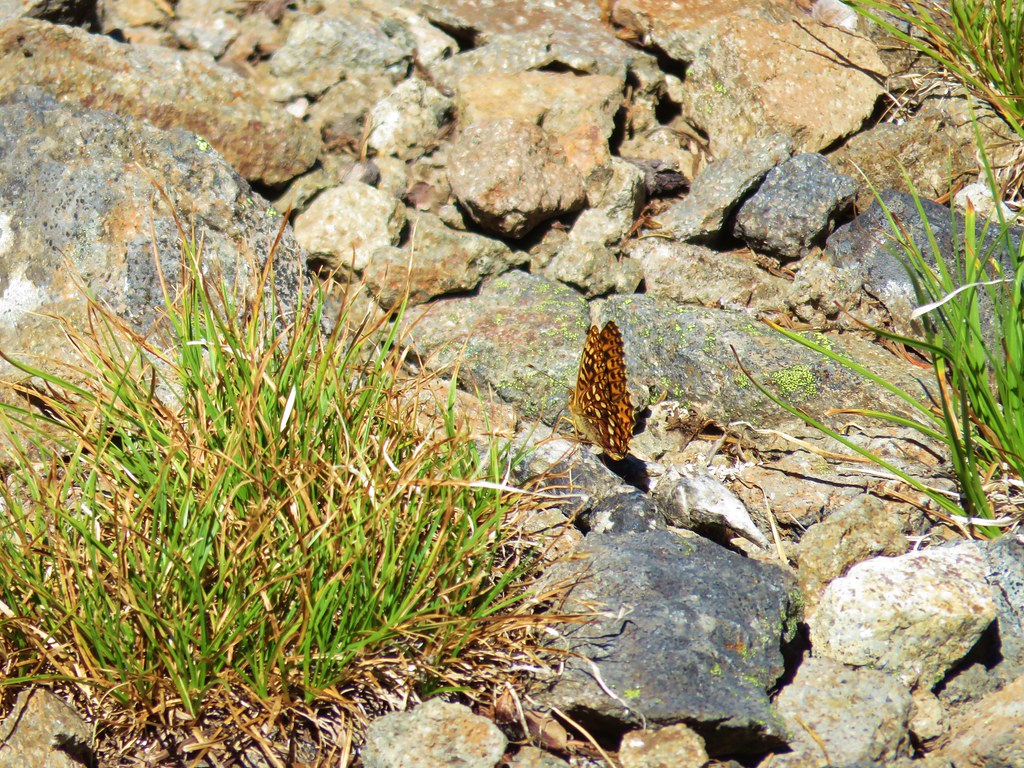
It was a gloriously crisp 55 degrees which felt much cooler than it had at any time during our backpacking trip. Golden-mantled ground squirrels scurried about as we made our way to the viewing area.
IMG_9677

IMG_9663

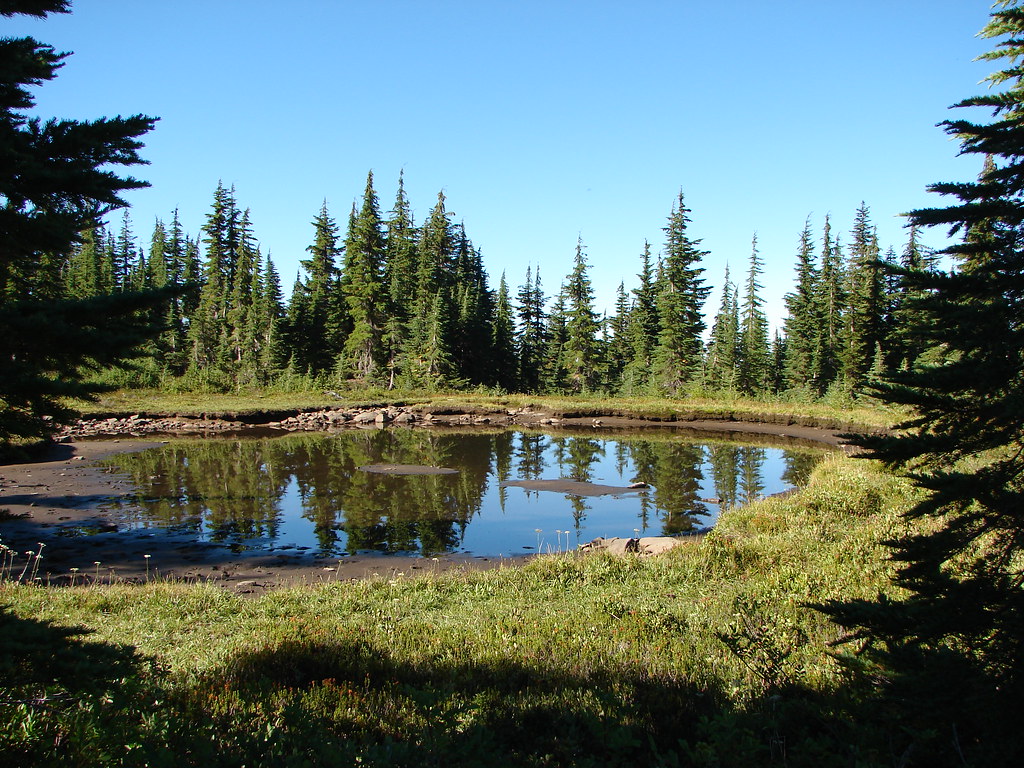
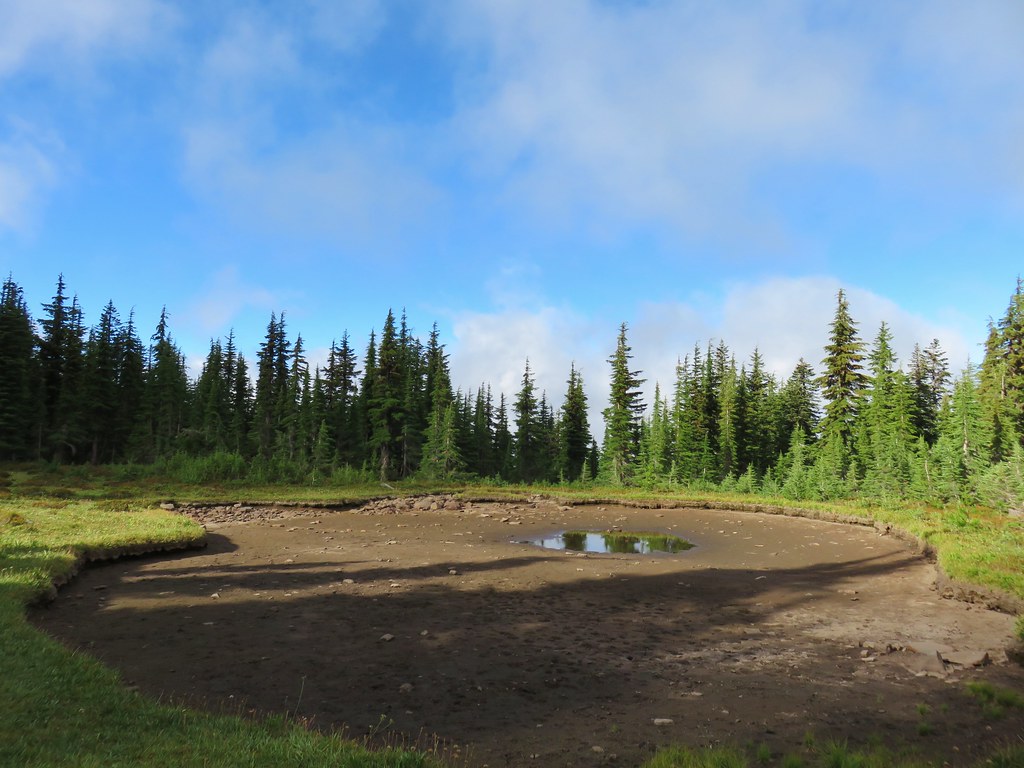
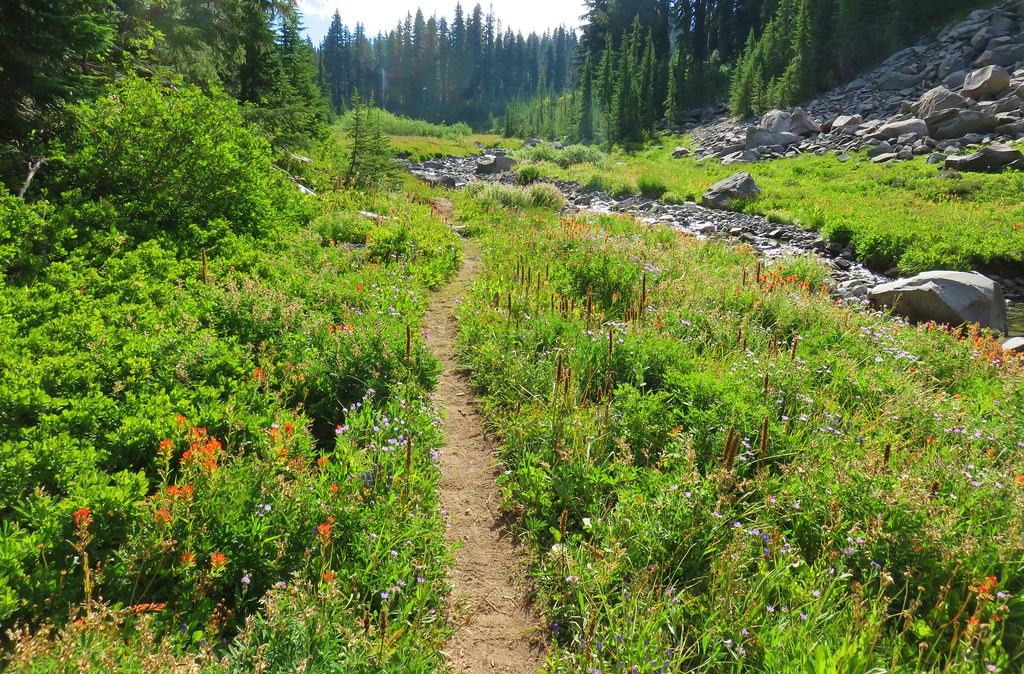
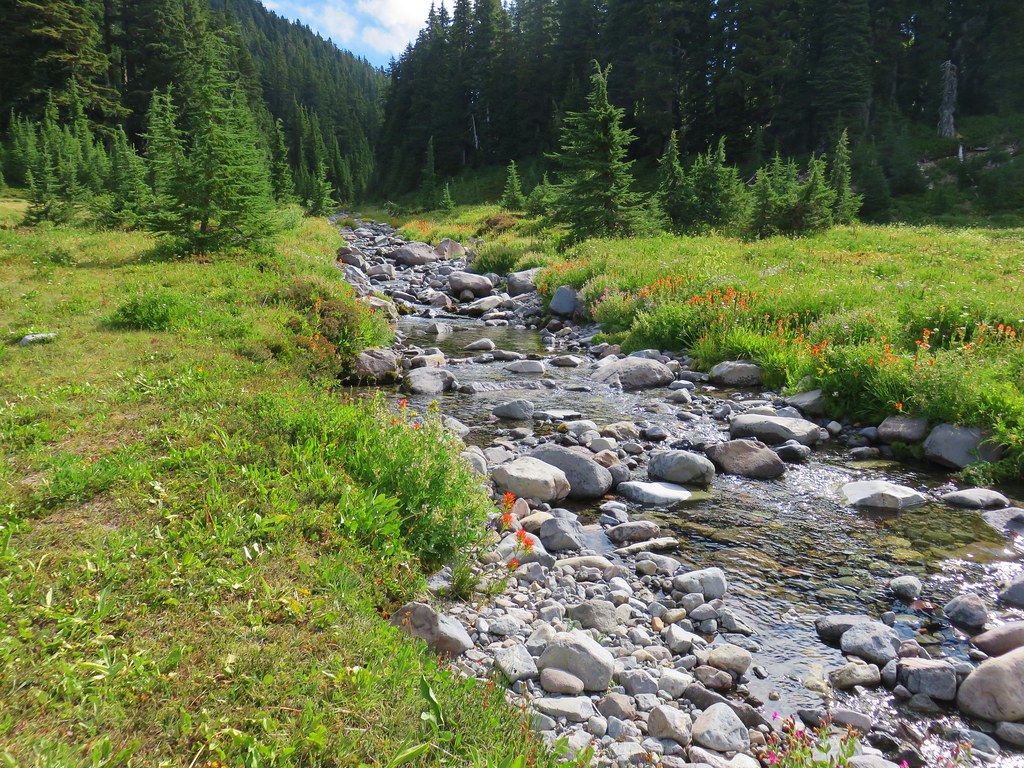
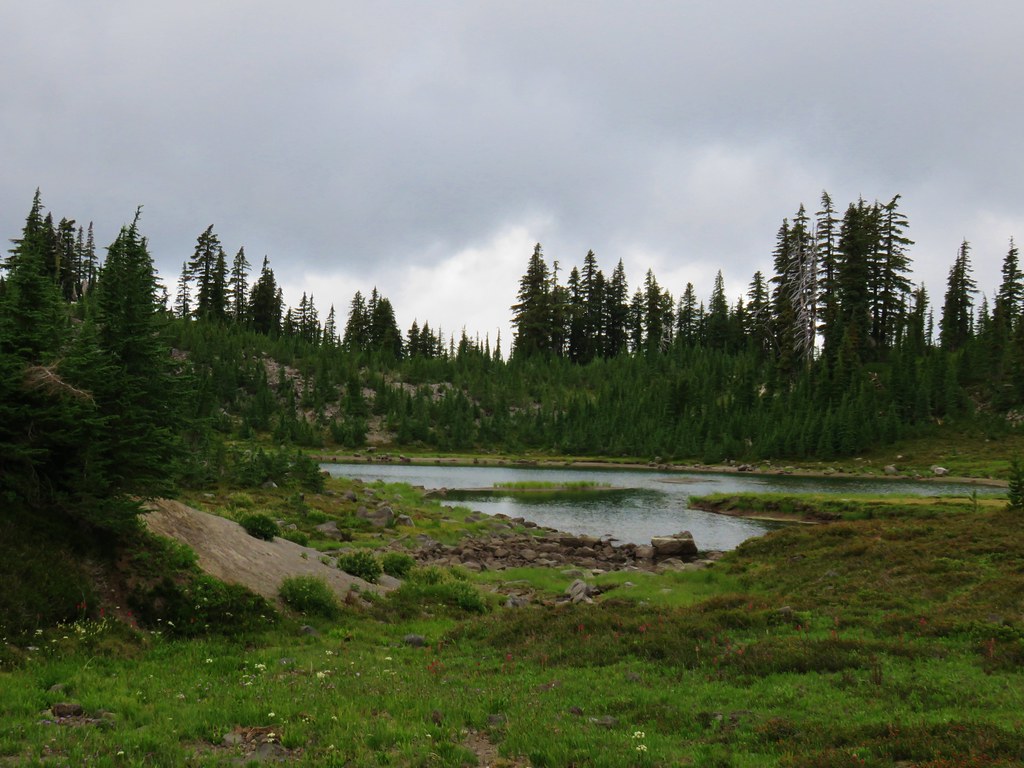
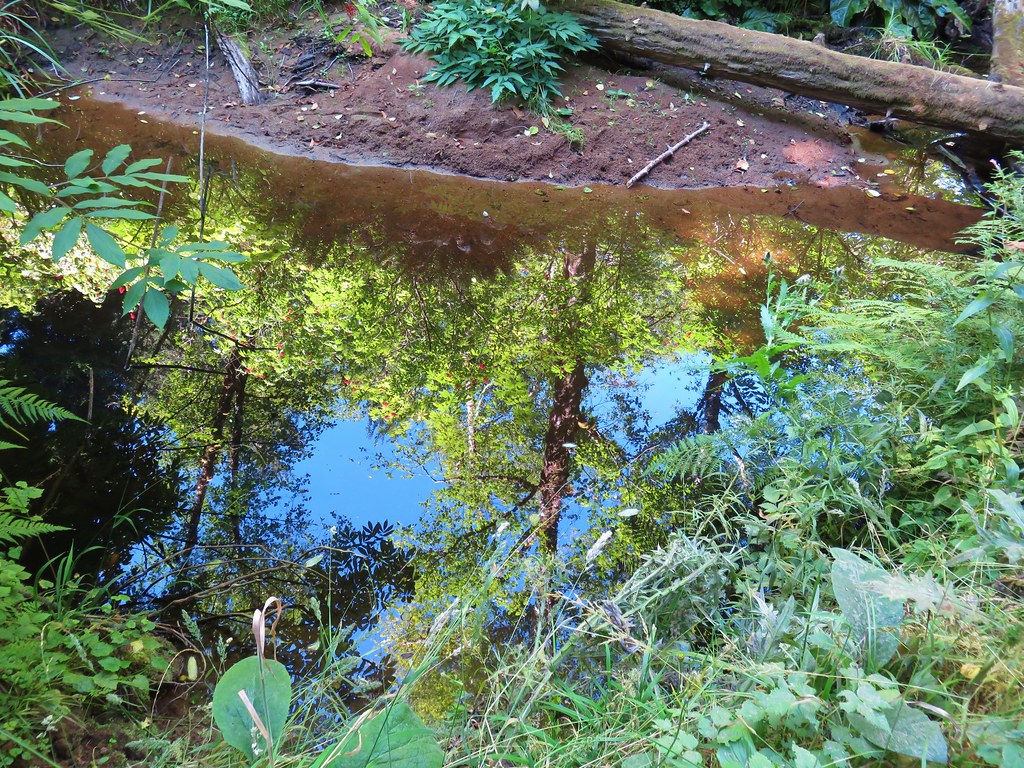
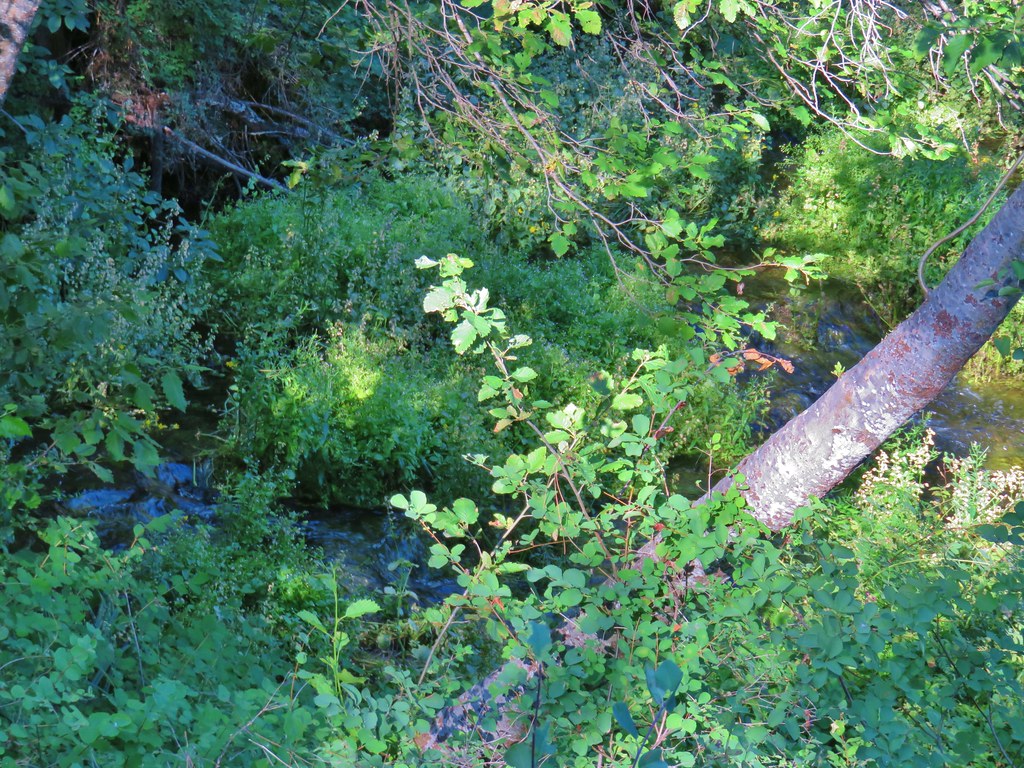
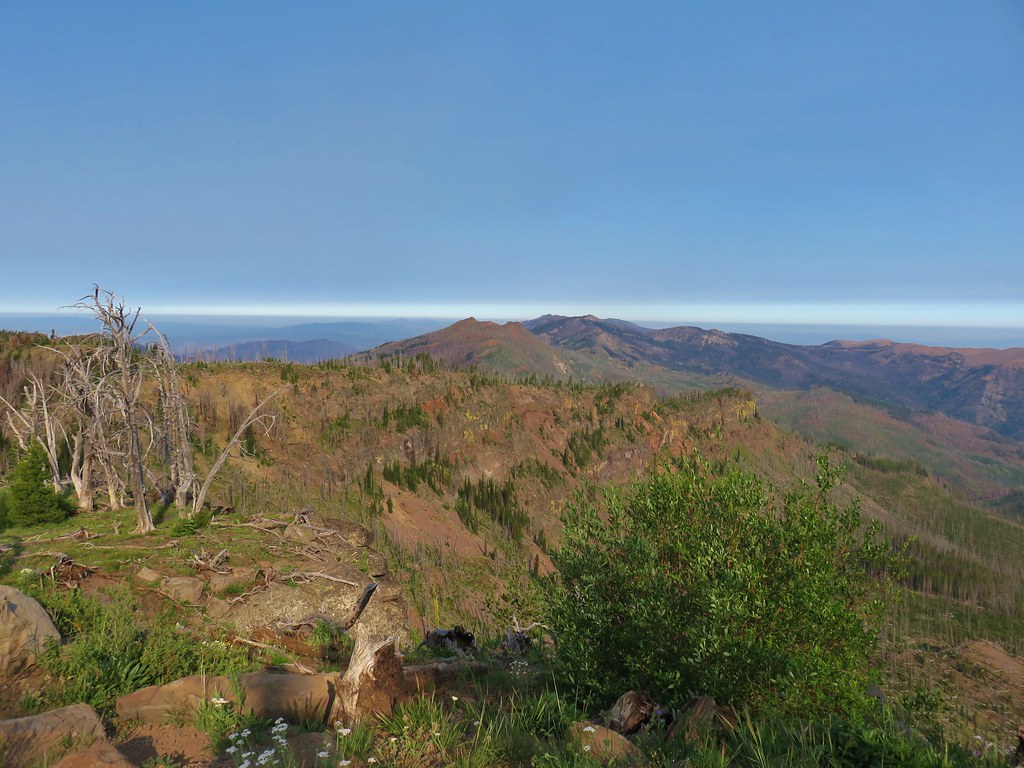
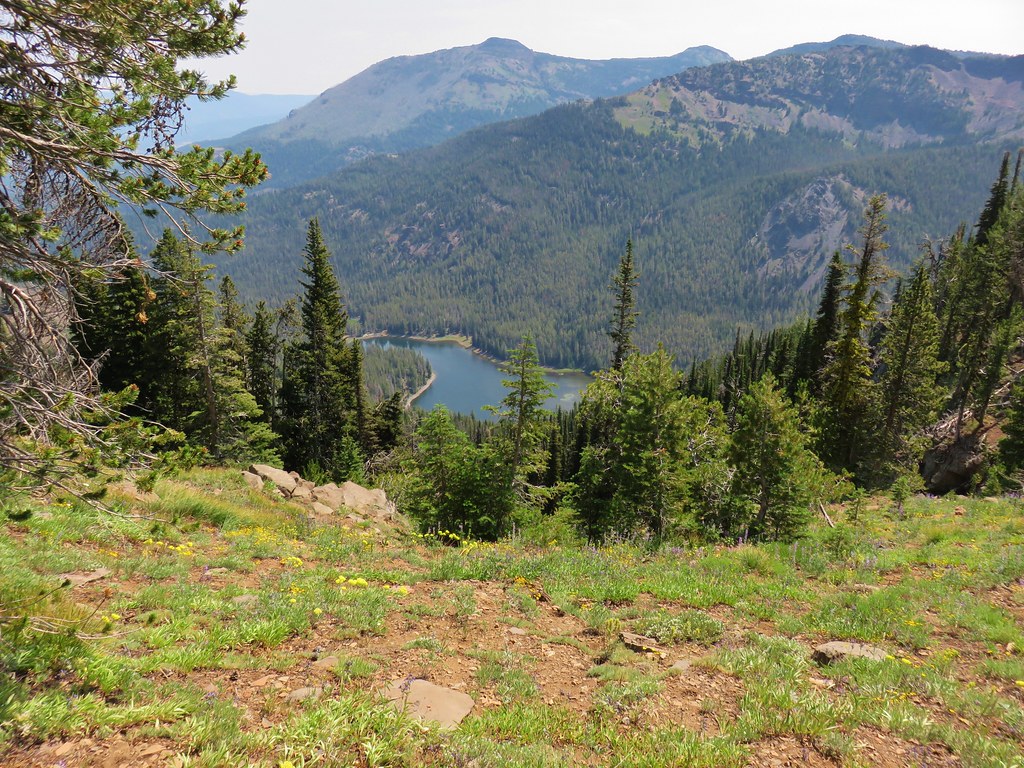
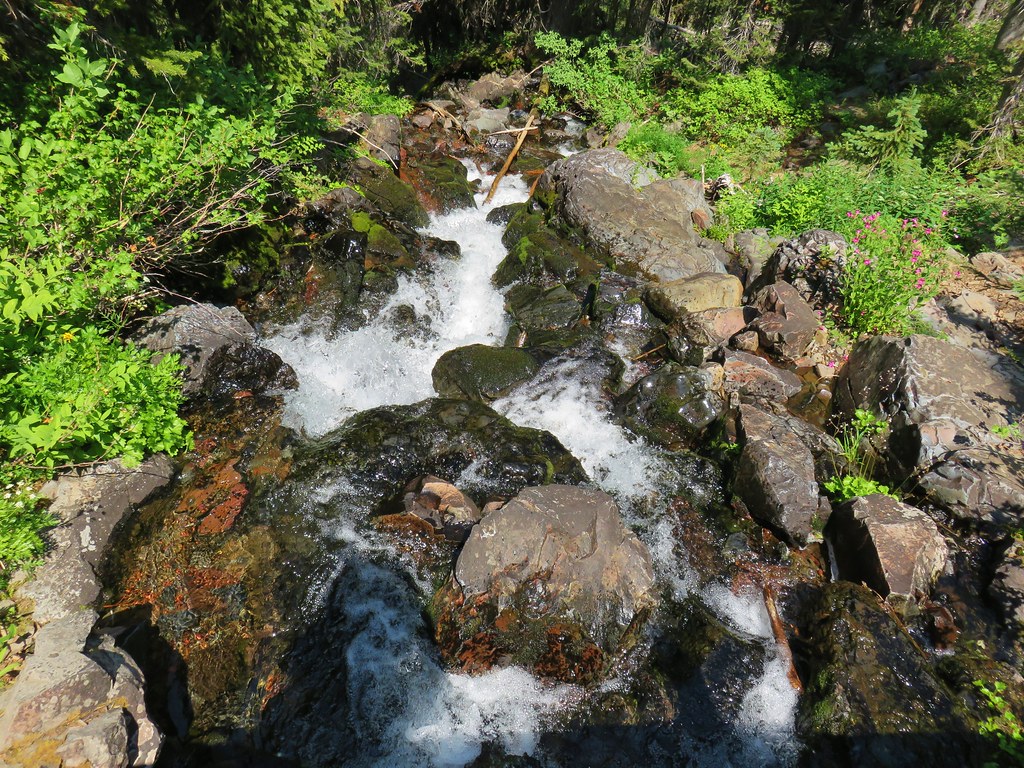
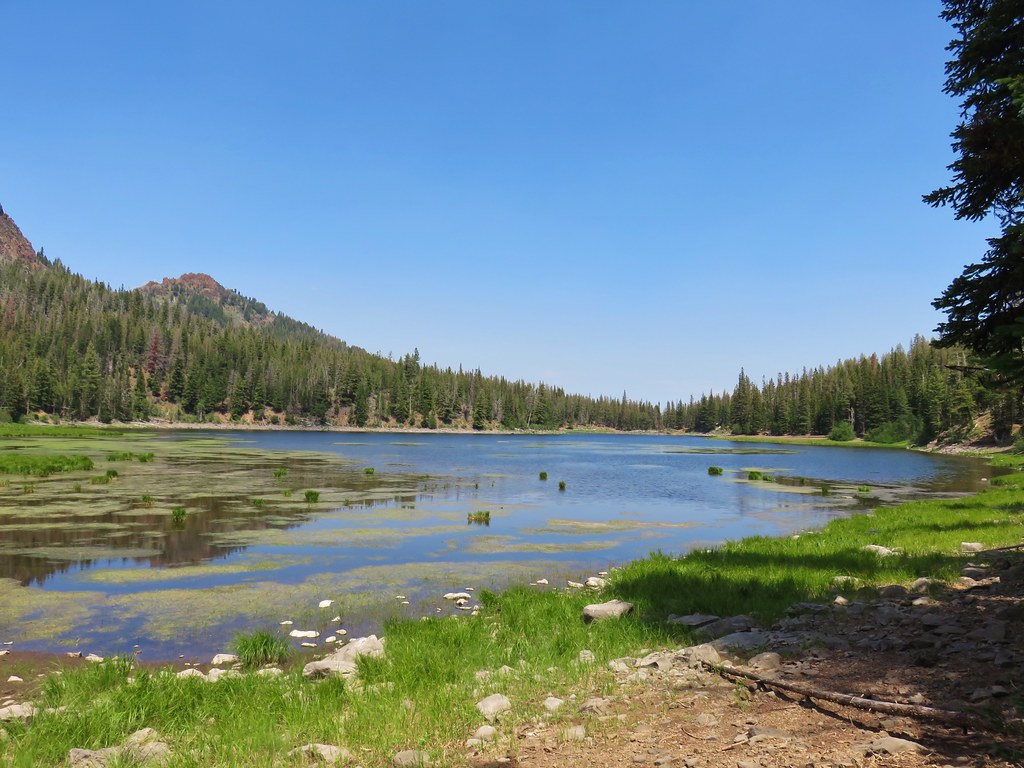
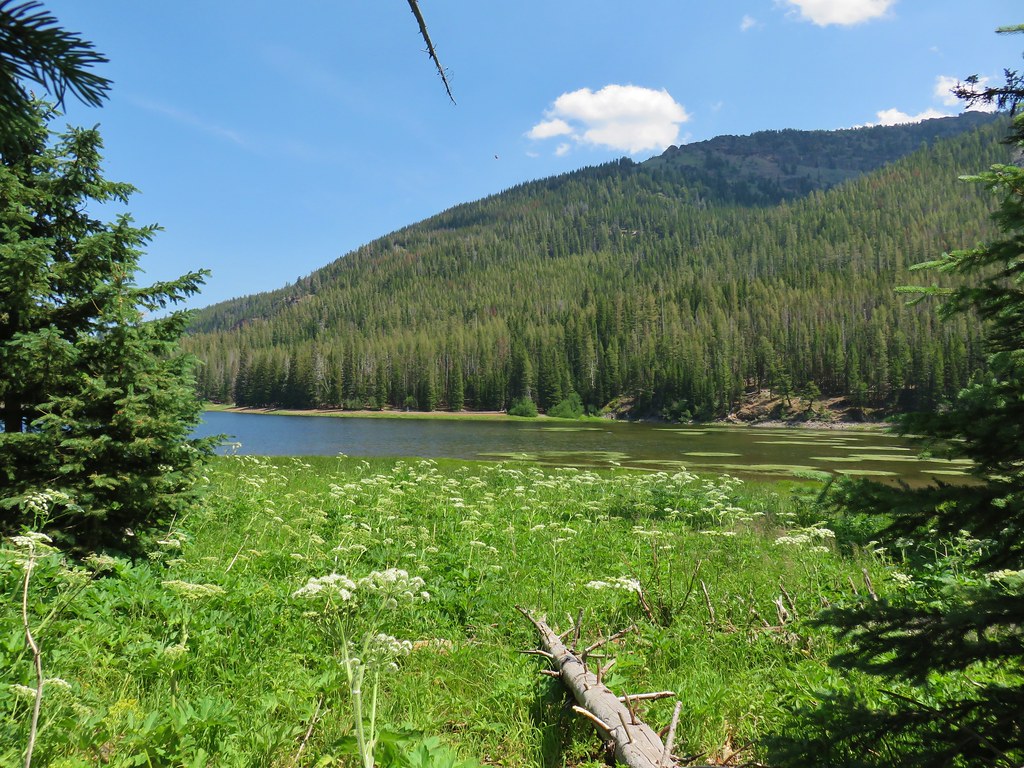
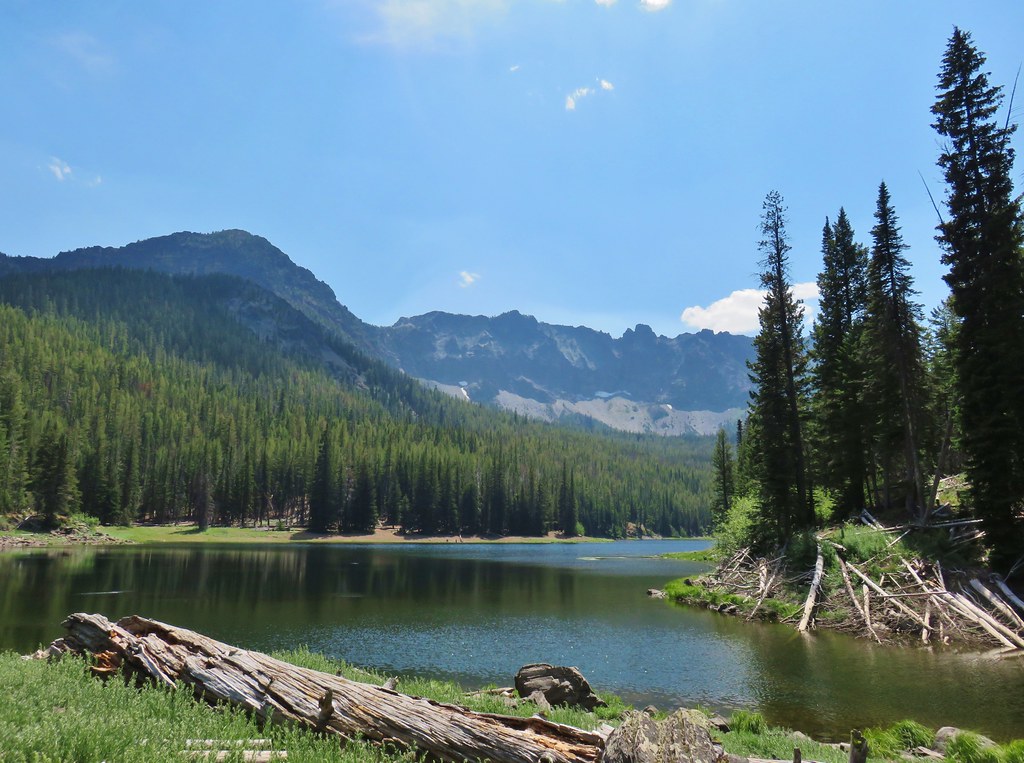
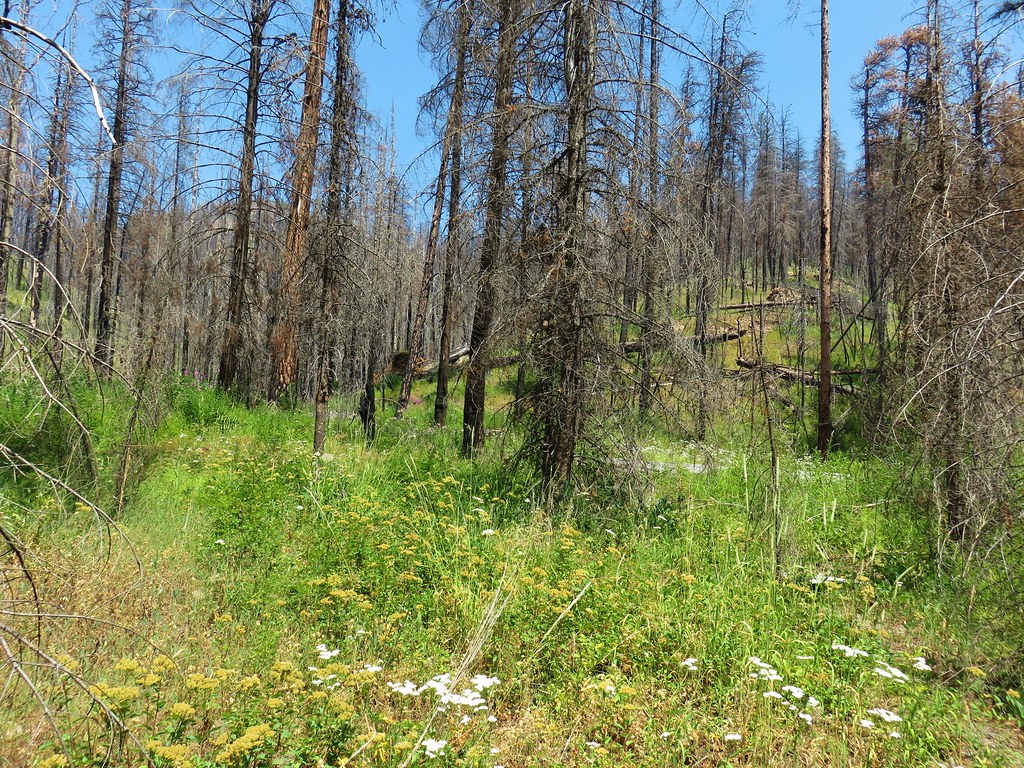
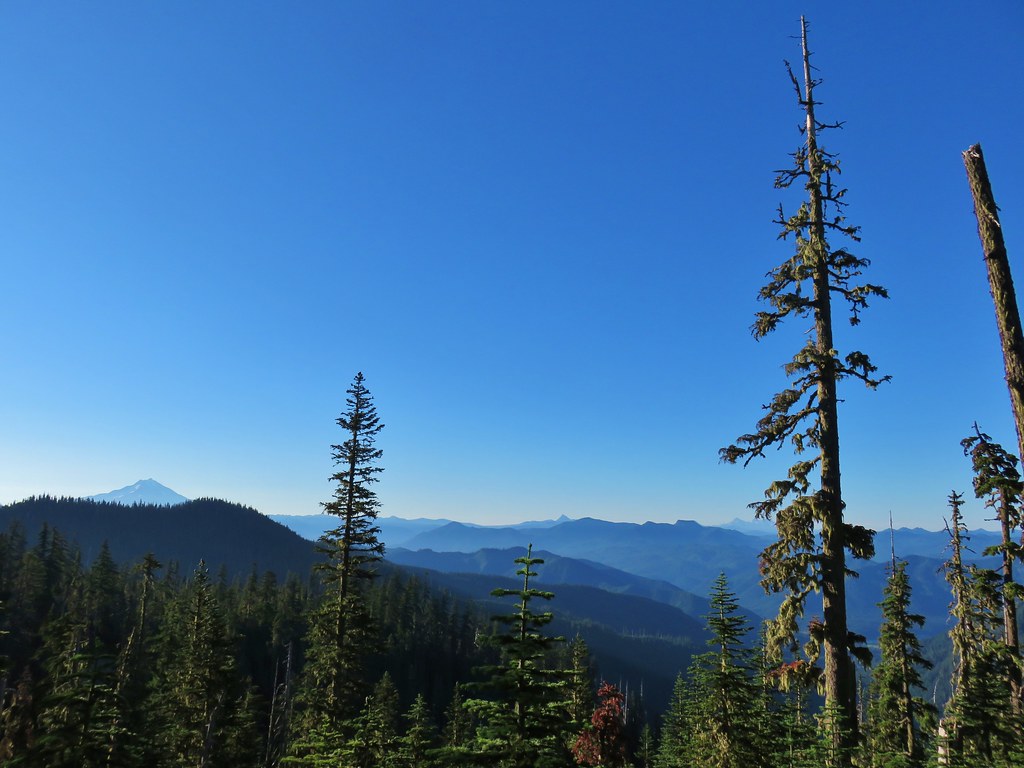
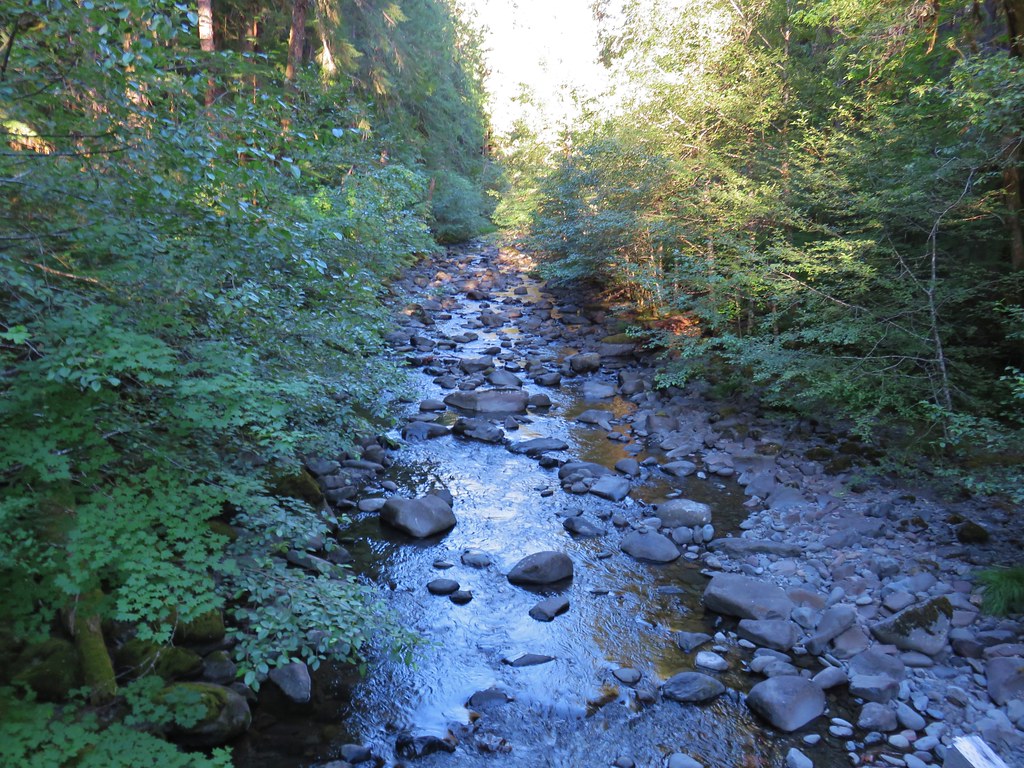
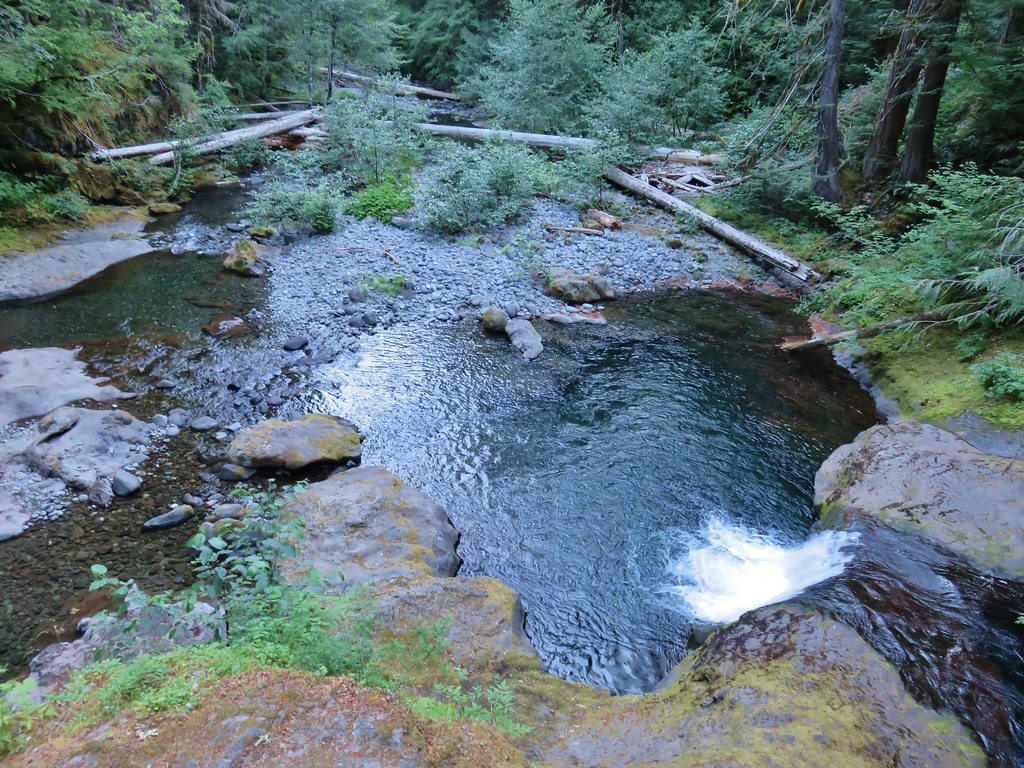
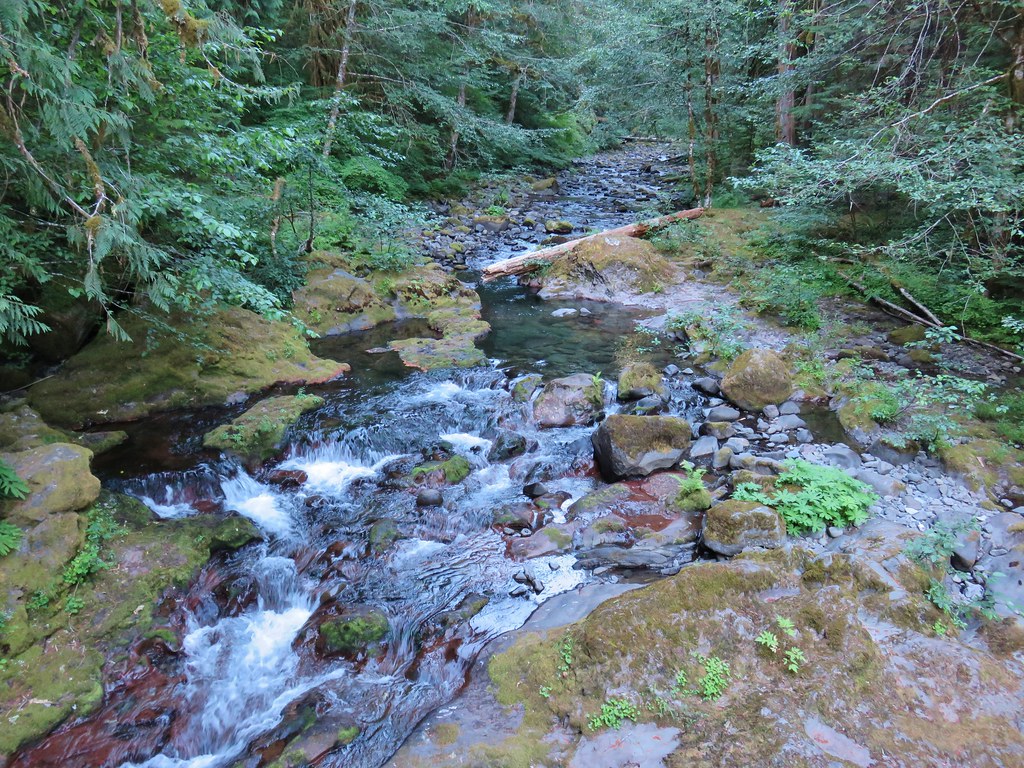
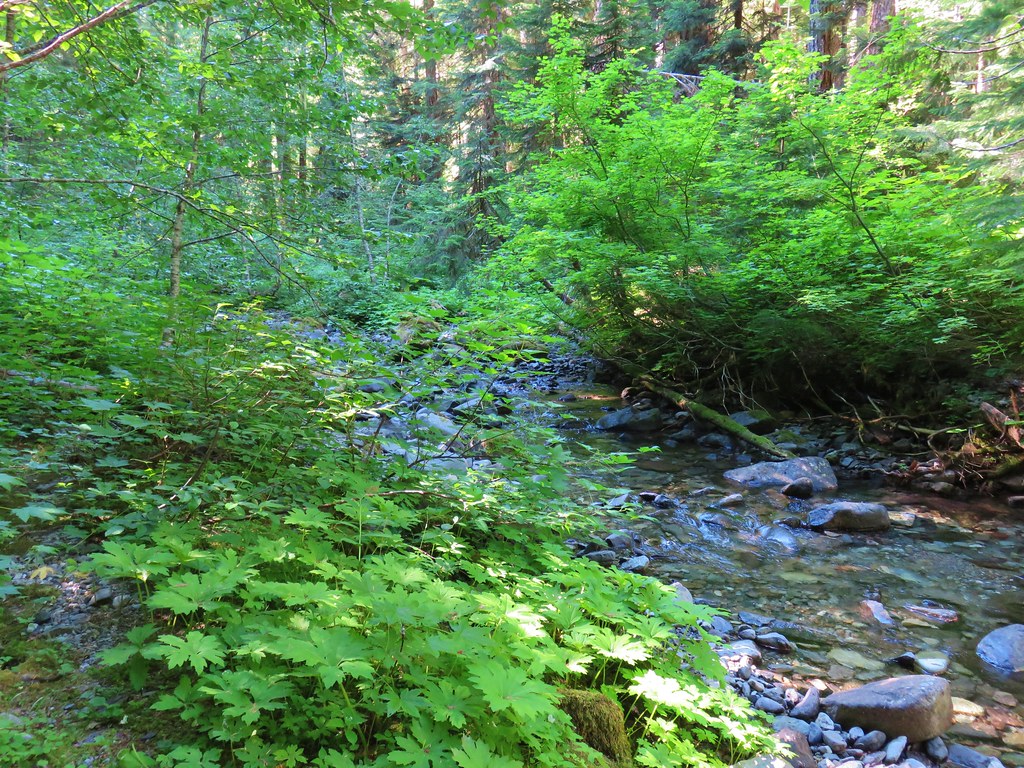
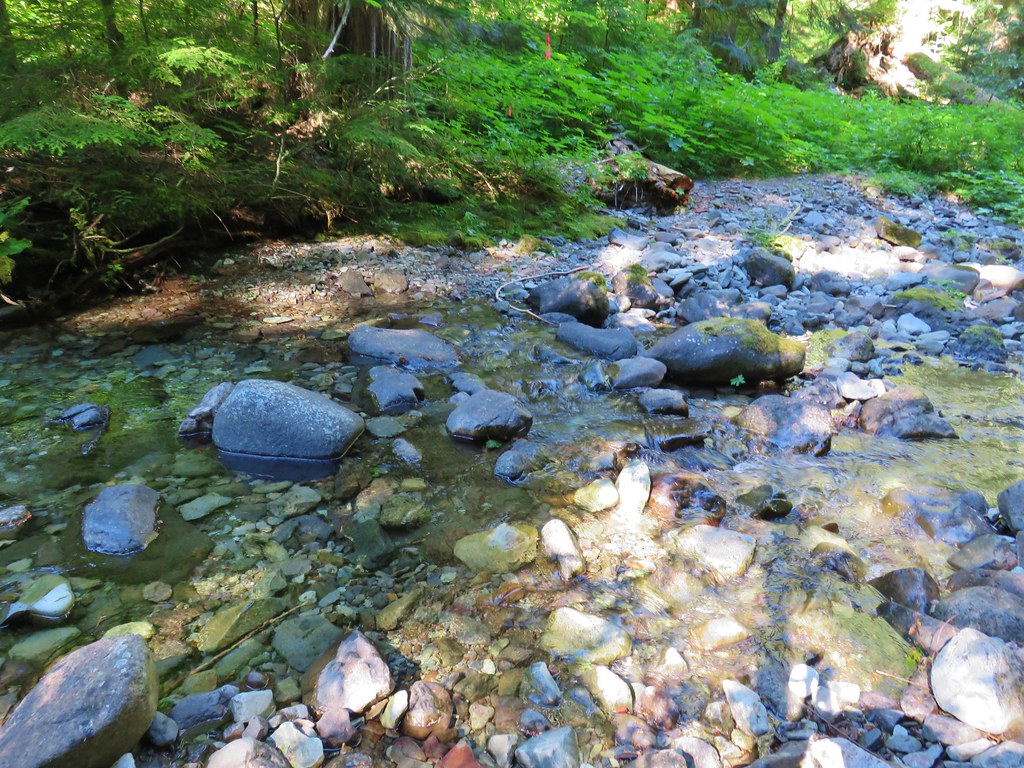
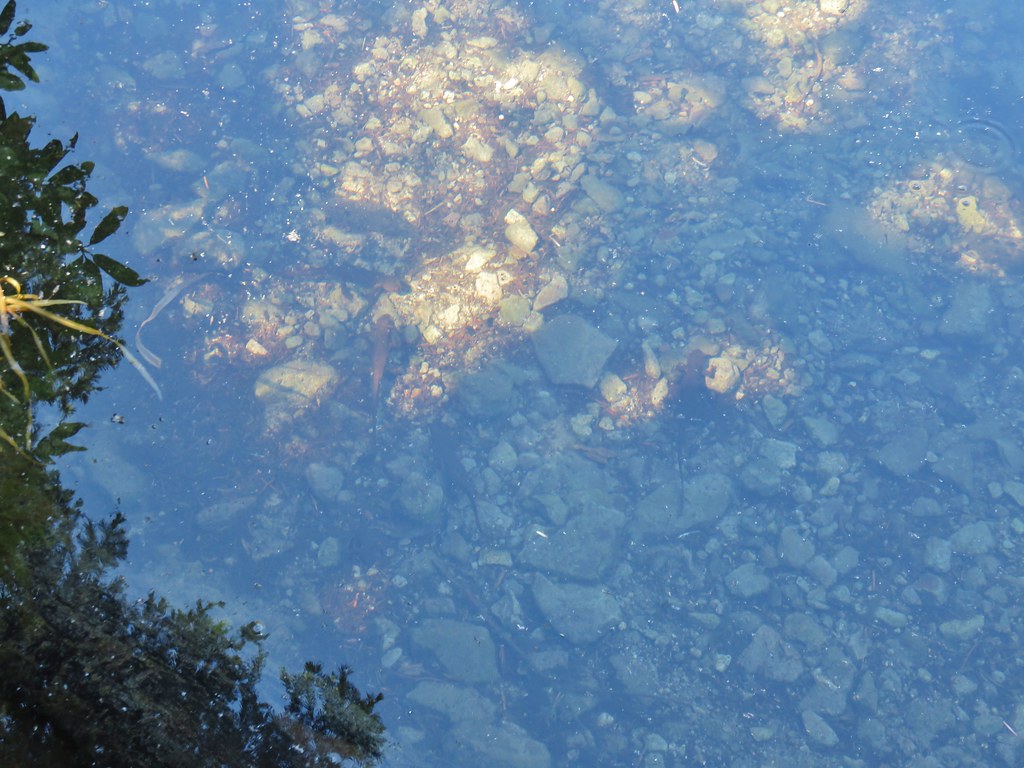
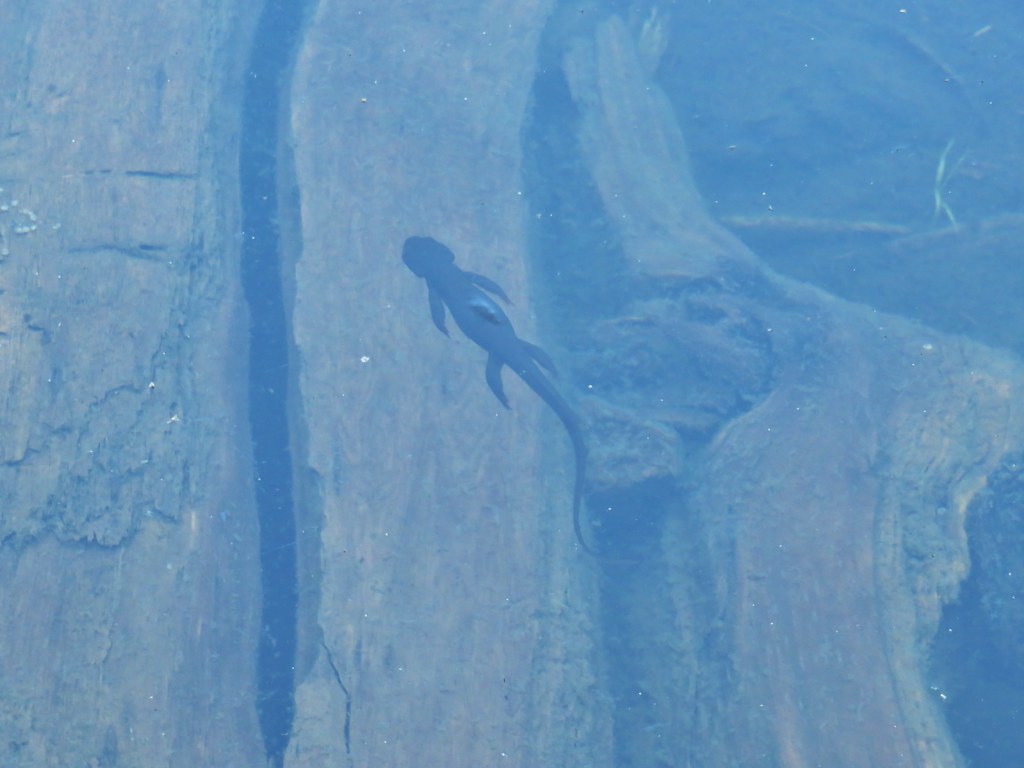
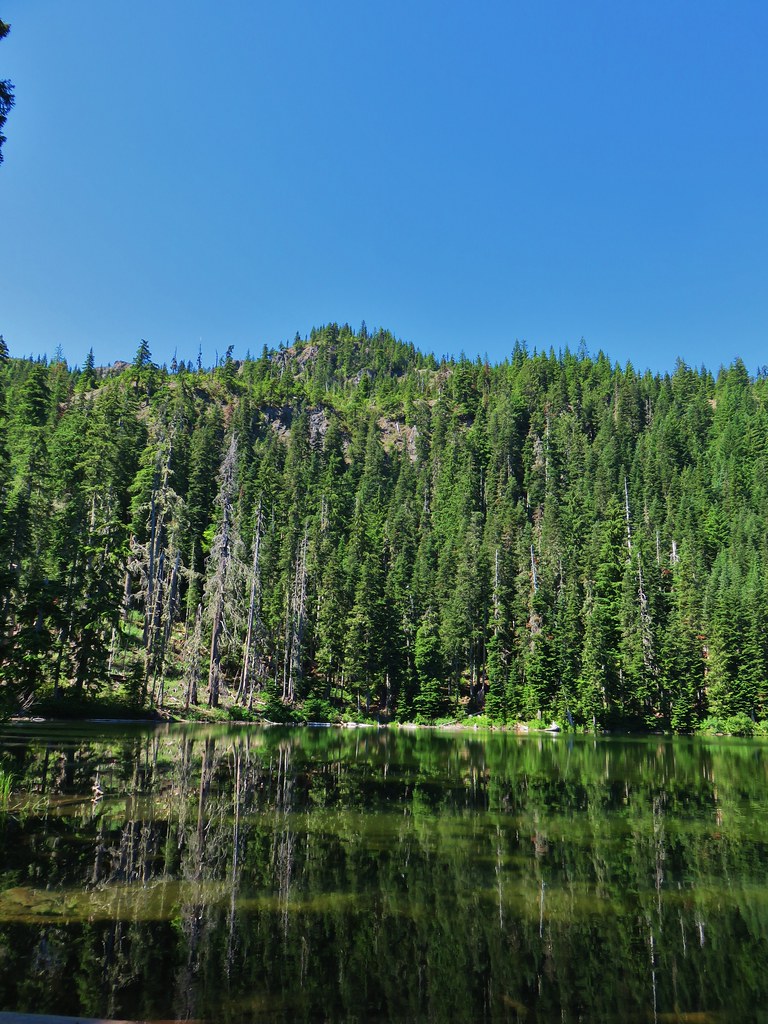
The Metolius emerges from the springs as a fully formed river flowing north toward the Cove Palisades State Park (post).
IMG_9674

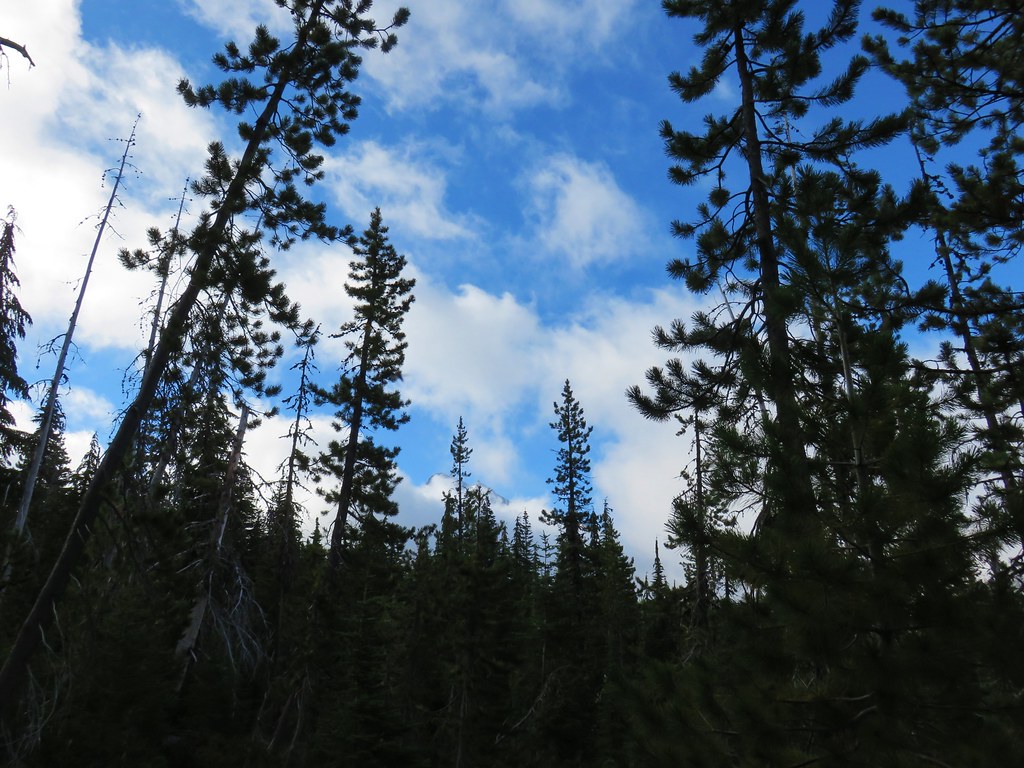
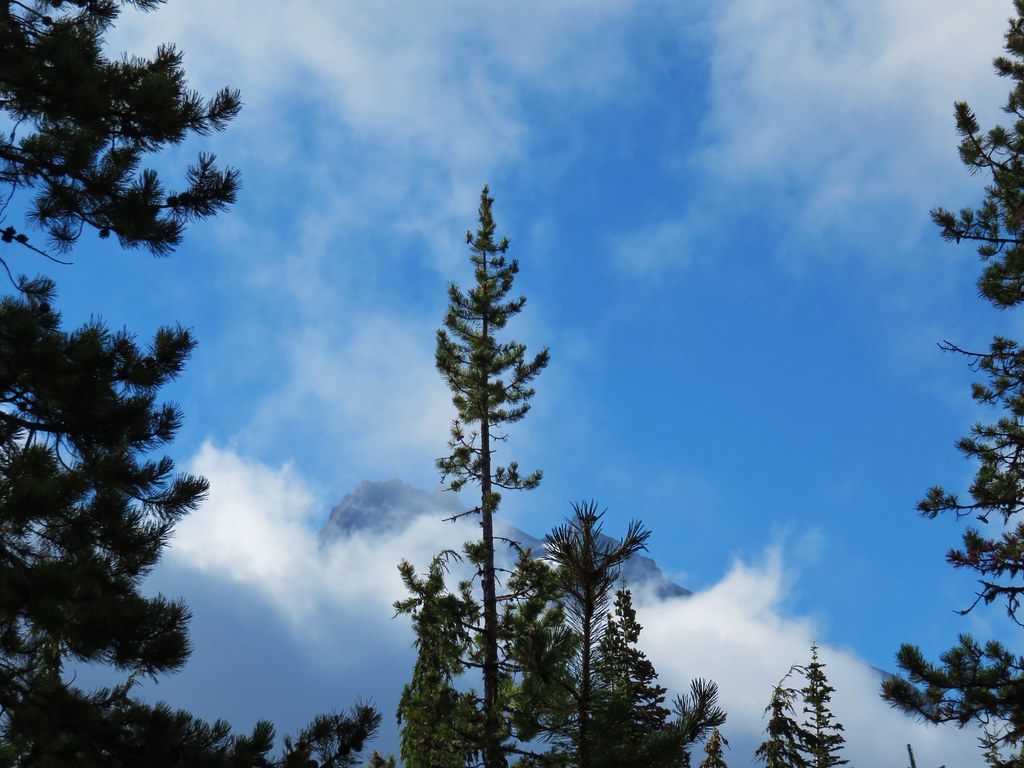
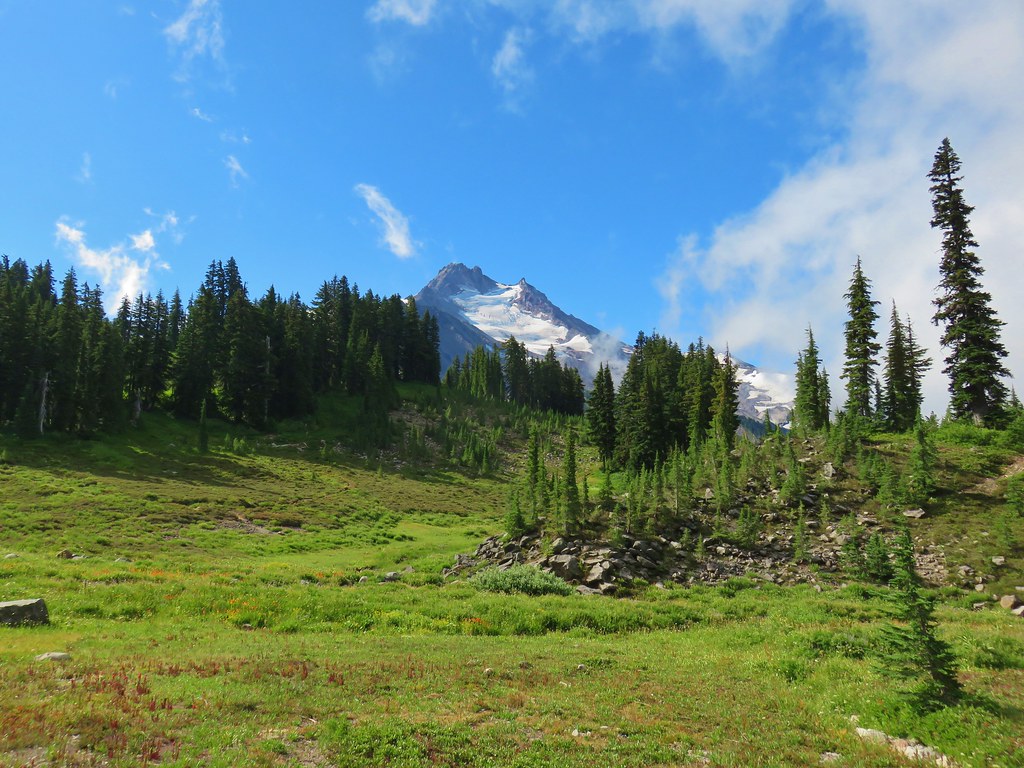
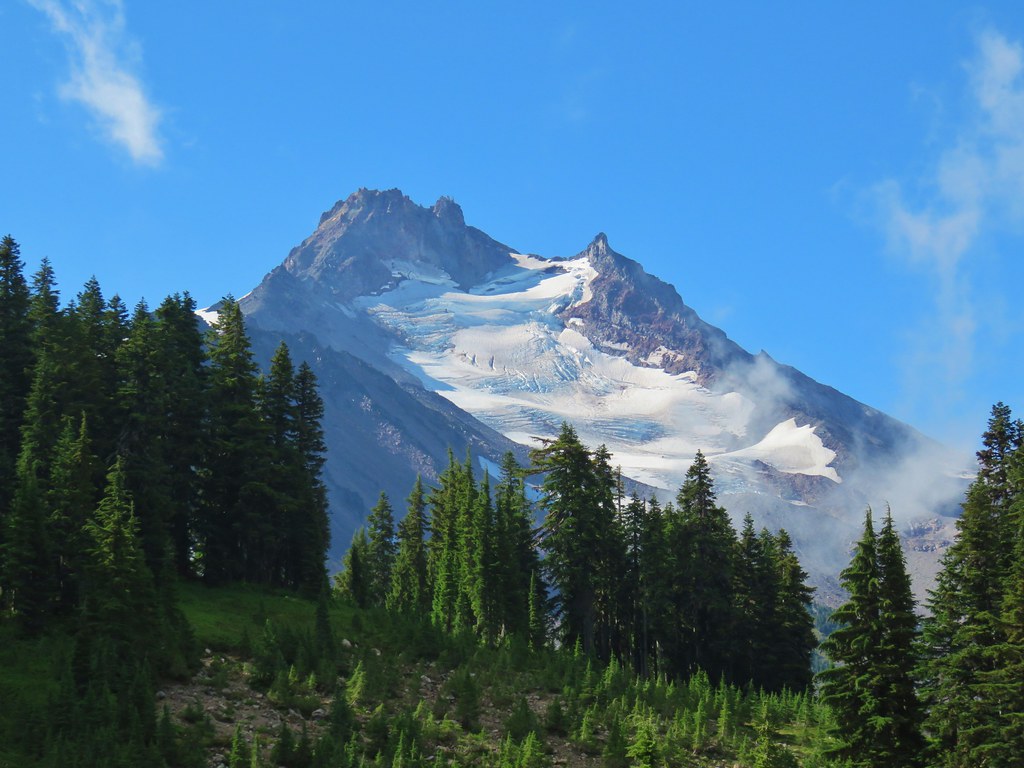
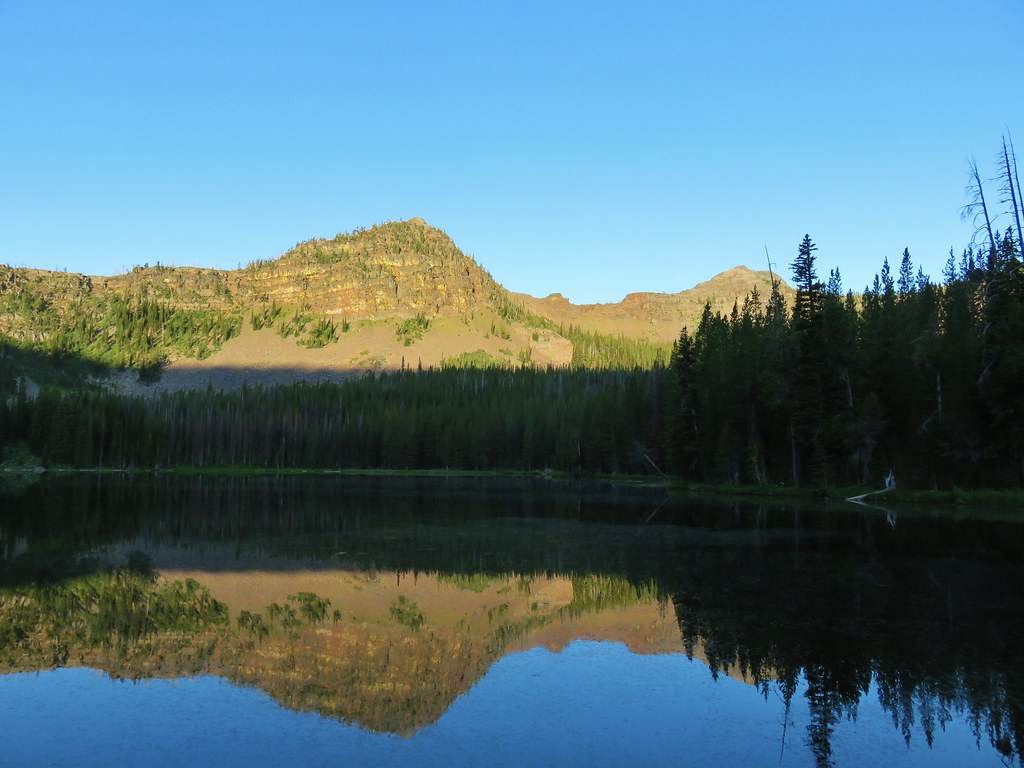
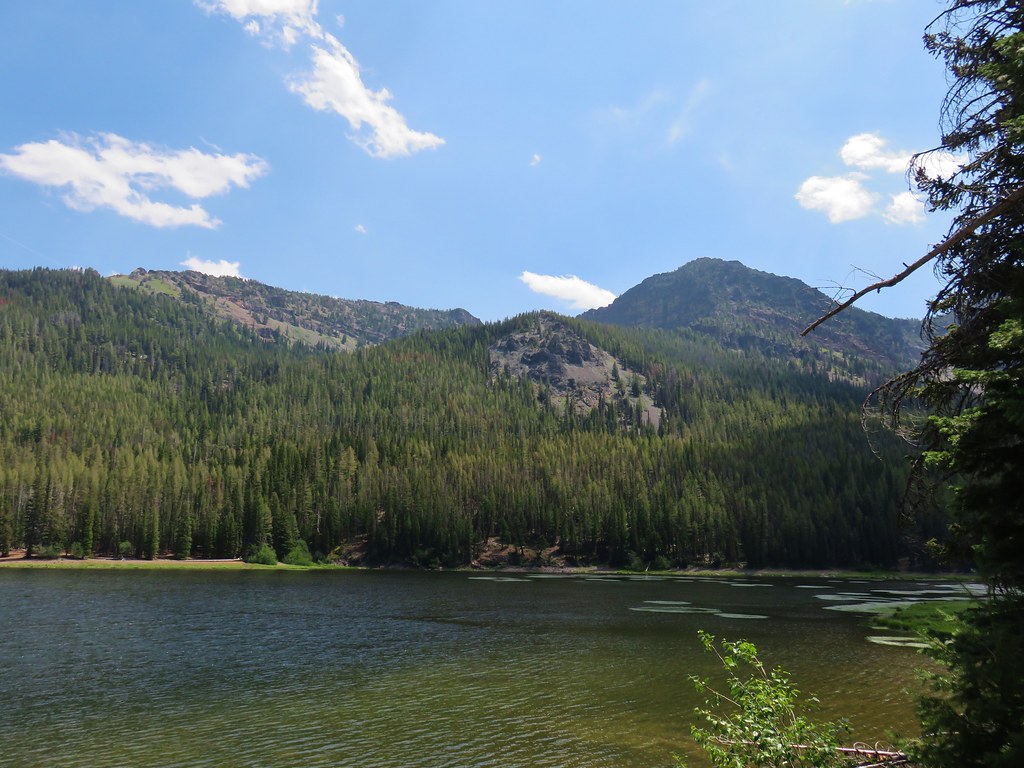
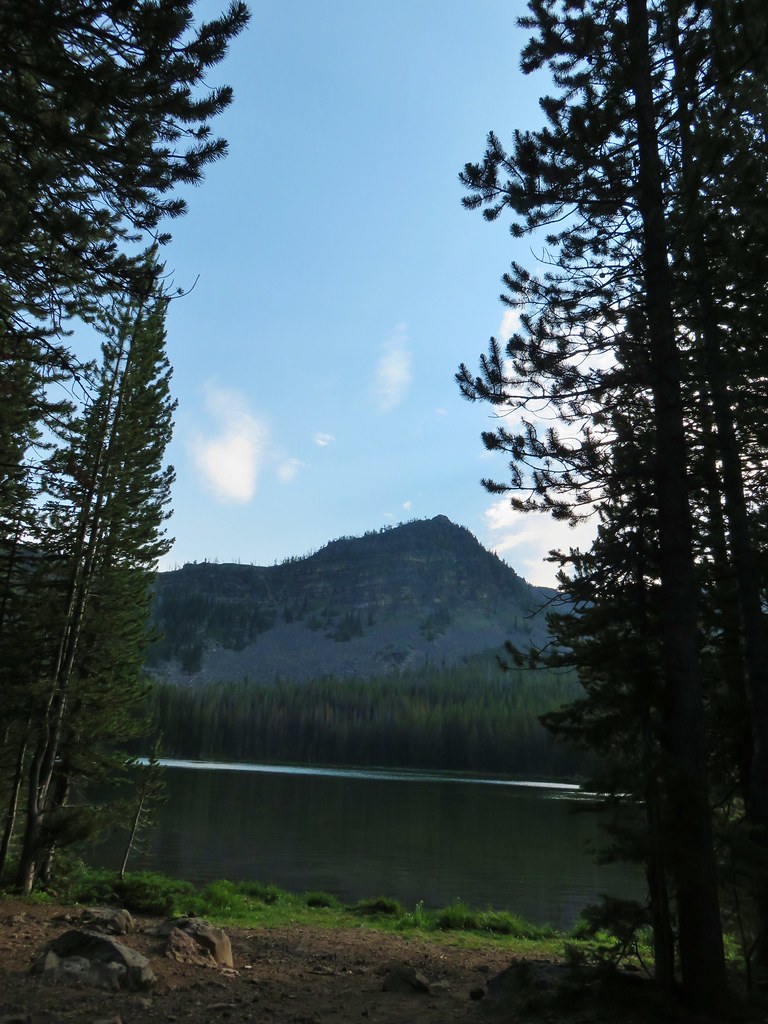
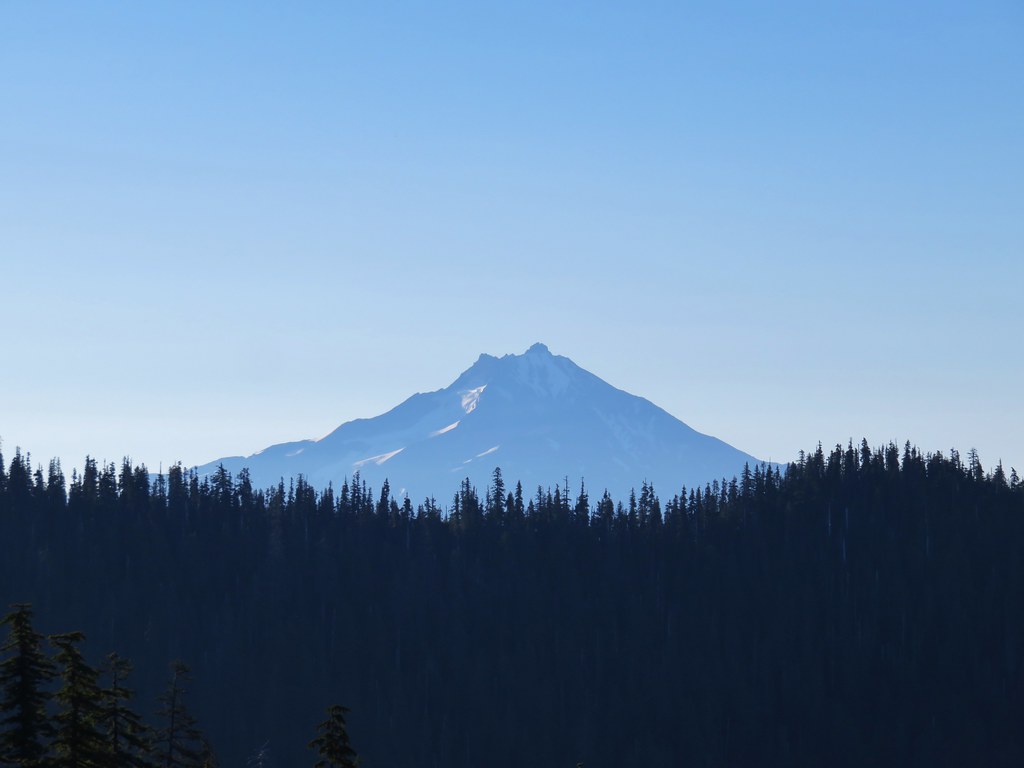
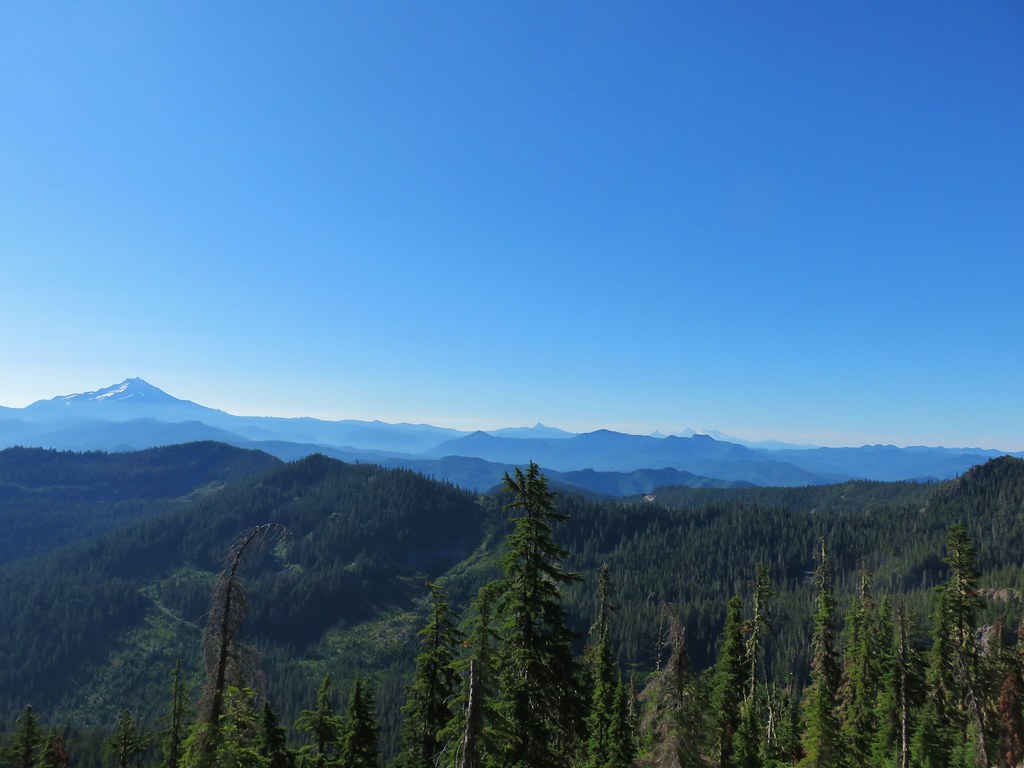
IMG_9668Mt. Jefferson rising above the Metolius River
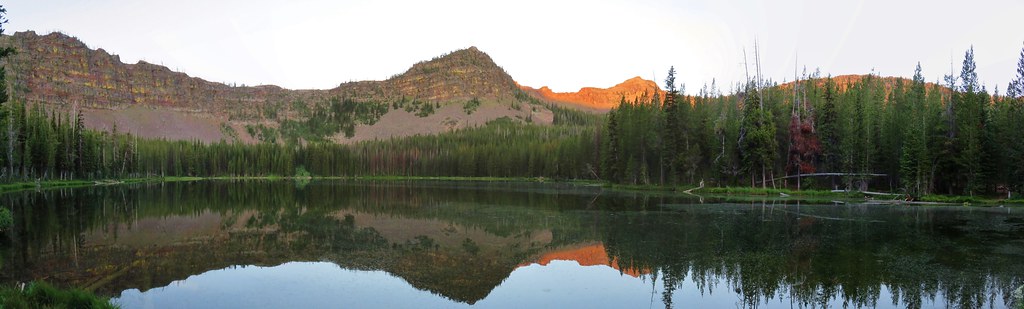
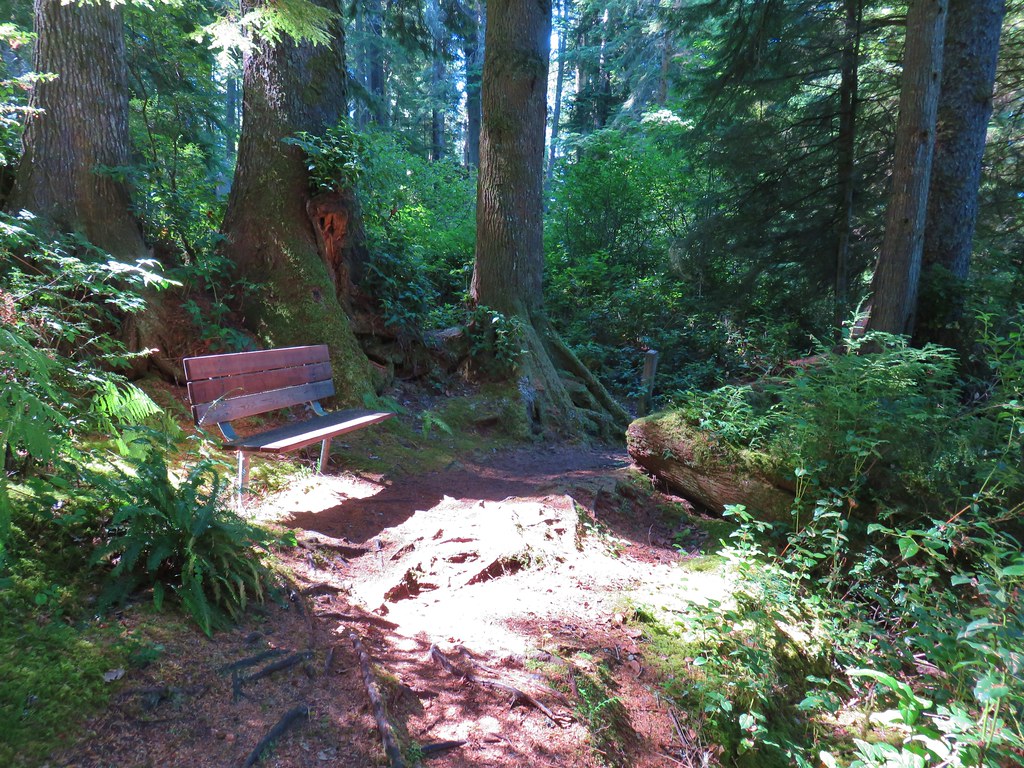
It may have only been a half mile hike but it was just what we’d needed before we headed home. Happy Trails!

Flickr: Head of the Metolius

Categories
Central Oregon Hiking John Day Oregon Trip report

Strawberry Mountain Wilderness Days 3 & 4 – Slide Lake to East Fork Canyon Creek TH

Hope springs eternal and it was with new hope that we got up on the third day of what had so far been the most grueling backpacking trip we’d undertaken. On paper it didn’t look much different than some of our other trips but the big difference maker had been the heat. It had been hot during the afternoon on some of our previous trips but this trip was different. Not only was it hot during the day but it wasn’t really cooling down at night which meant it was still warm in the morning. Day 3 was no different.

We had an early breakfast in front of a beautiful view of Slide Lake.
IMG_9360_stitch

As we were finishing up we were joined by a doe who was cautiously grazing nearby.
IMG_9365

IMG_9374

As we watched the sunlight overtake more of the cliffs above the lake we noticed our route for the day cutting across the rocks below the far cliffs.
IMG_9377

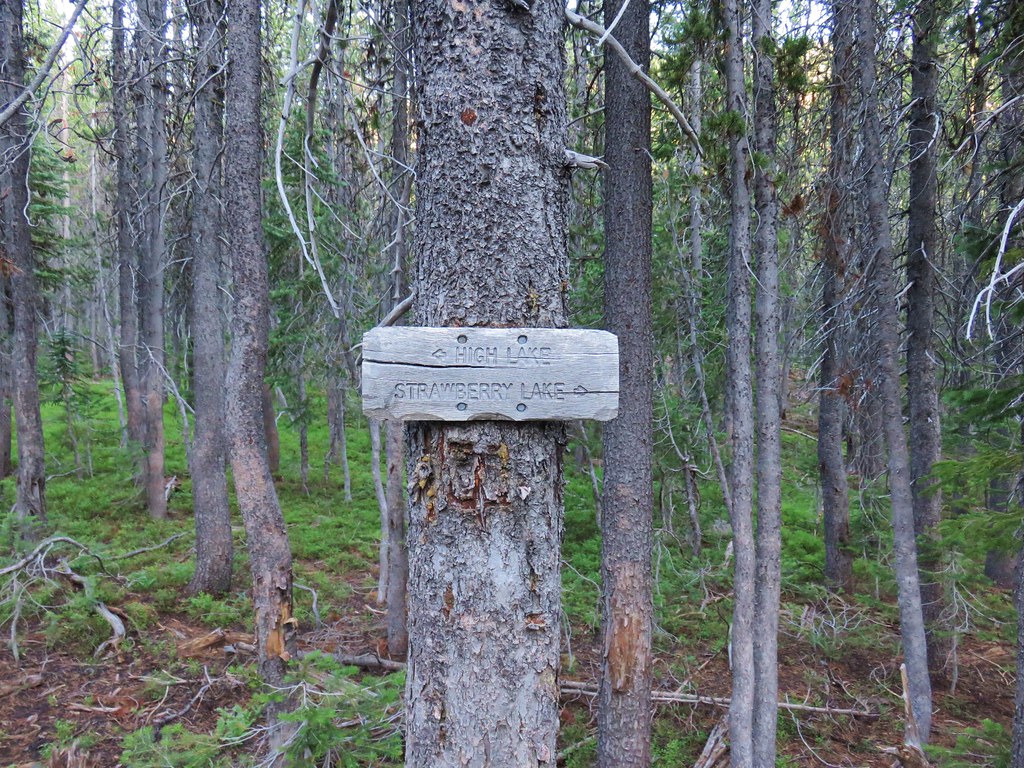
Seeing the trail produced two thoughts, first it reminded us that we were facing a nearly 1000′ climb out of the Slide Lake Basin, and secondly that the climb would be in full sunlight. We left Slide Lake shortly before 7am and hiked the quarter mile back to the junction with the Sky Line Trail where we turned left following a pointer for High Lake.
IMG_9380

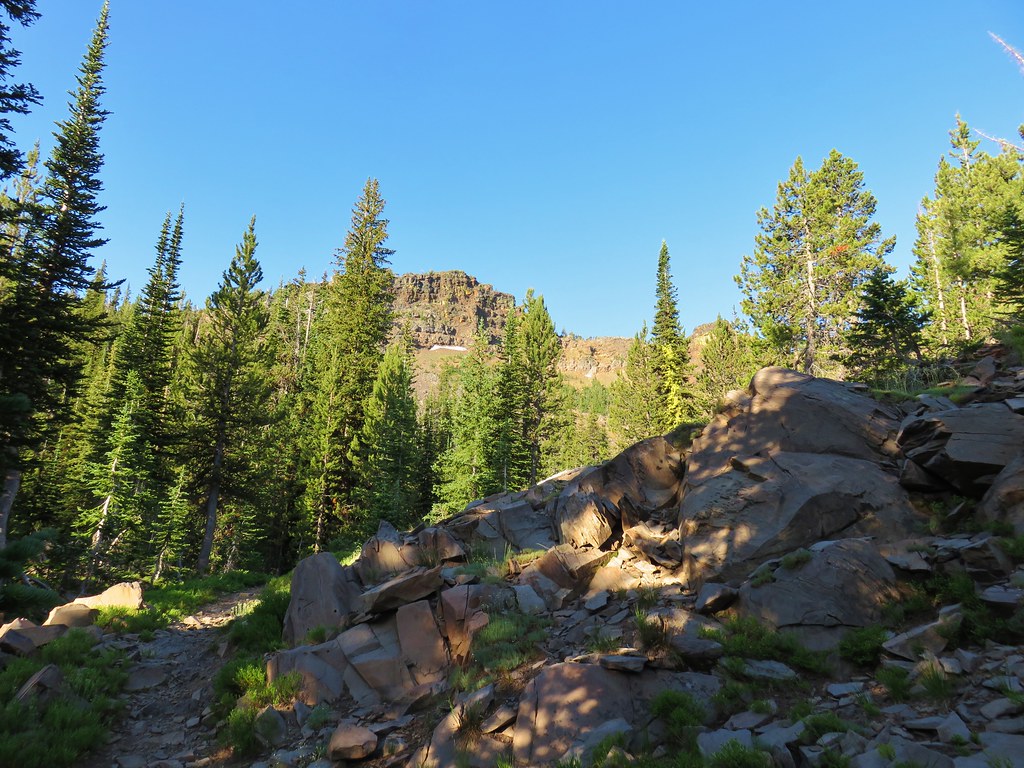
After an all to brief stint in the trees which provided some shade the trail entered rockier terrain where the Sun was already heating things up.
IMG_9381

IMG_9384

IMG_9385

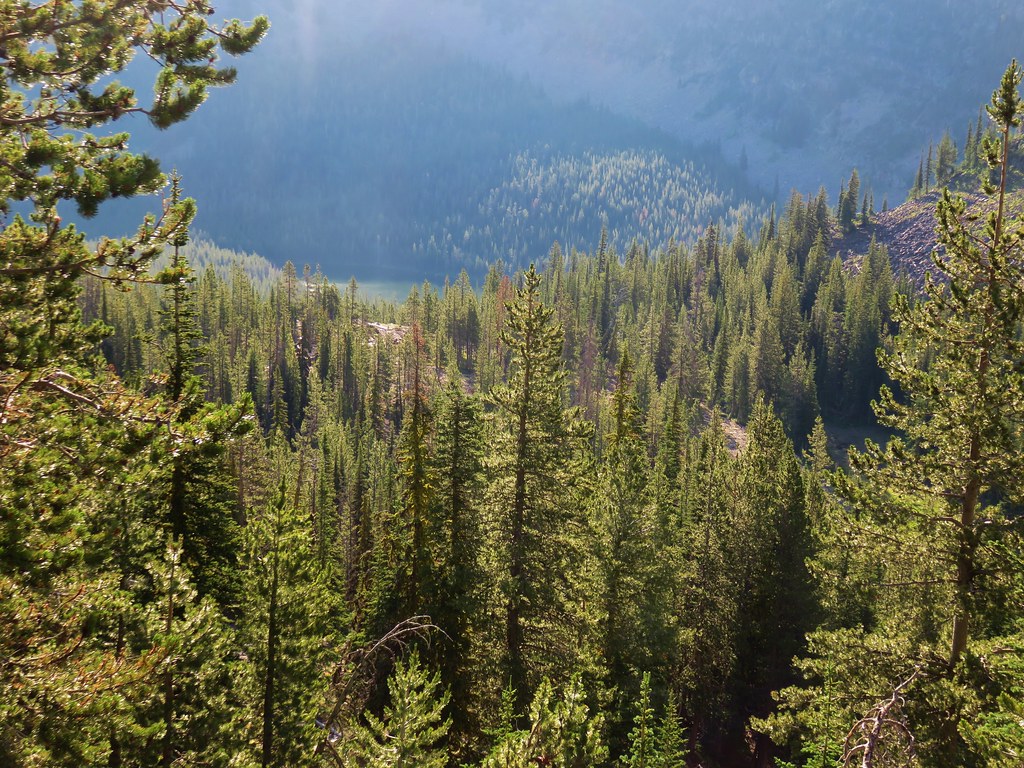
Some years there is a snow patch that remains over the trail into August which requires a bypass nearly straight up the hillside but with this being a low snow year there was no need for us to climb any more steeply than necessary. By 7:30am Slide Lake already looked far away.
IMG_9388

It was also already officially hot. Luckily after a a quarter mile of switchbacks at the 1 mile mark the climb became much more gradual.
IMG_9393

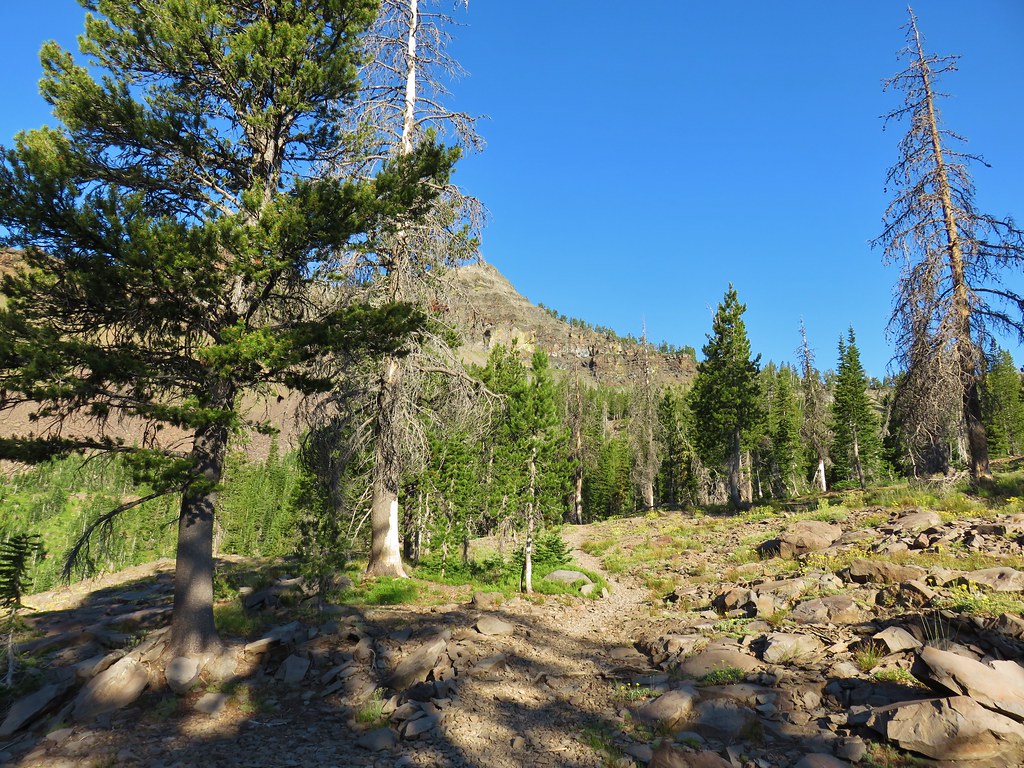
It was still hot but at least we weren’t having to work as hard as we traversed below the cliffs.
IMG_9416

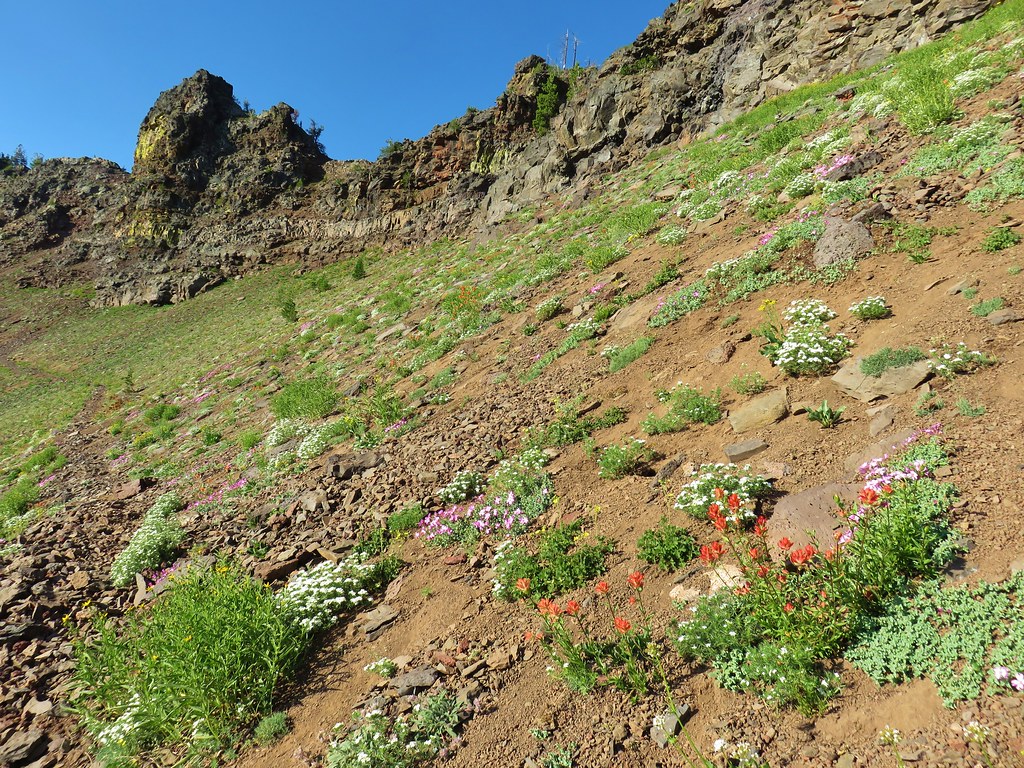
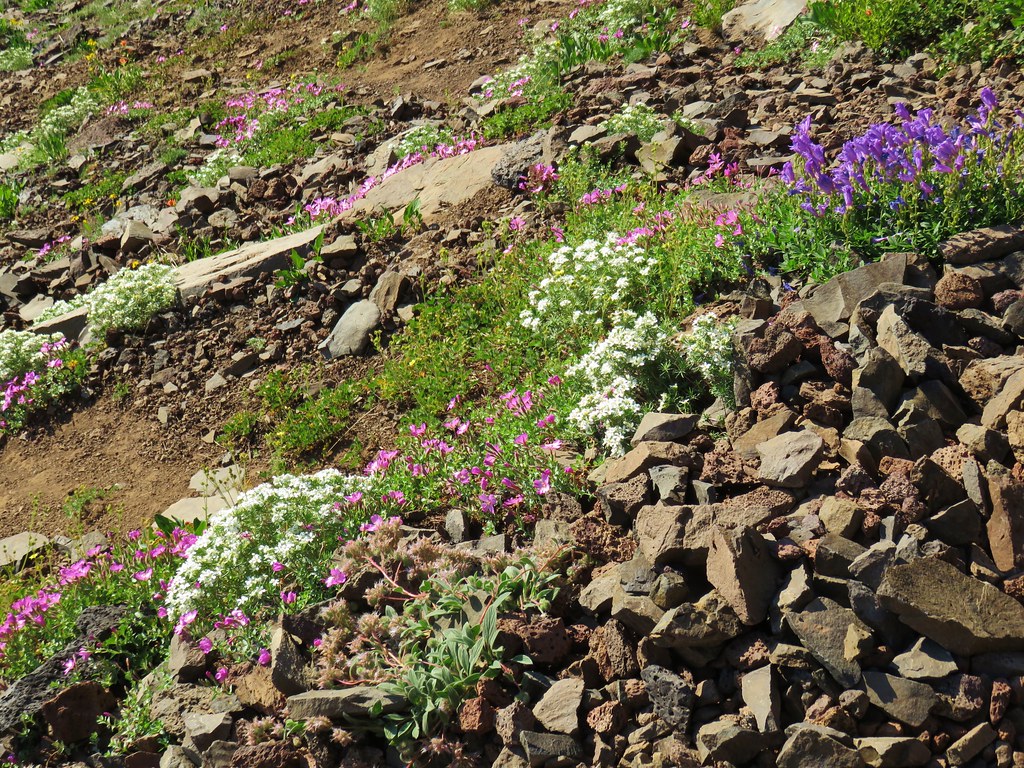
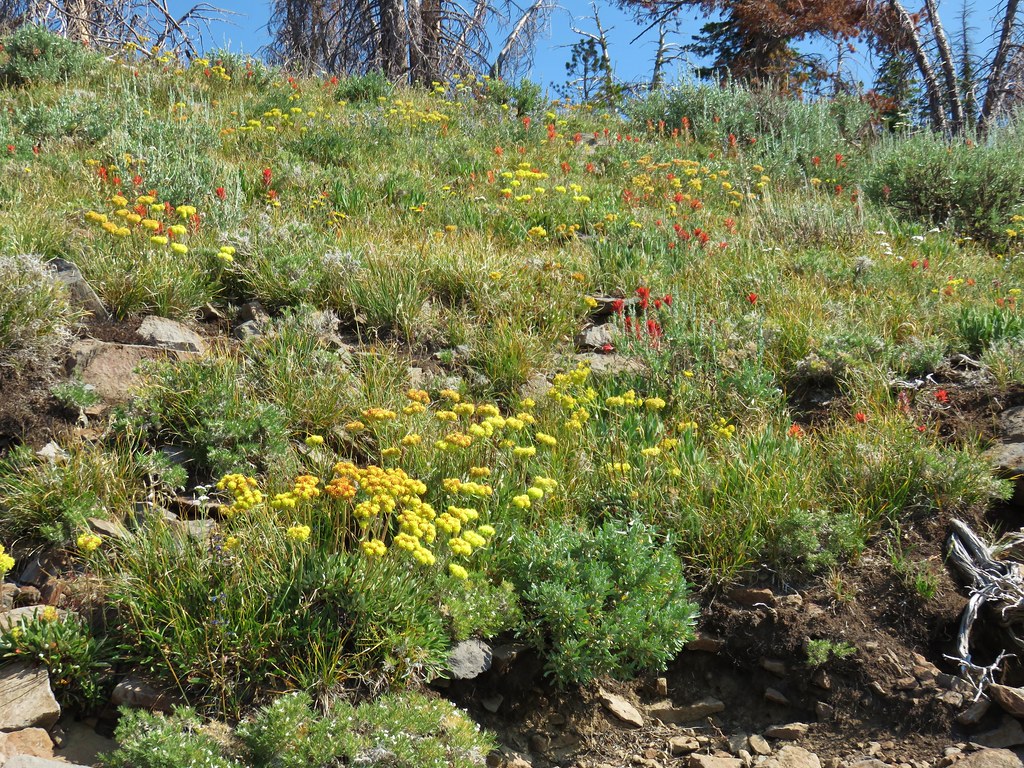
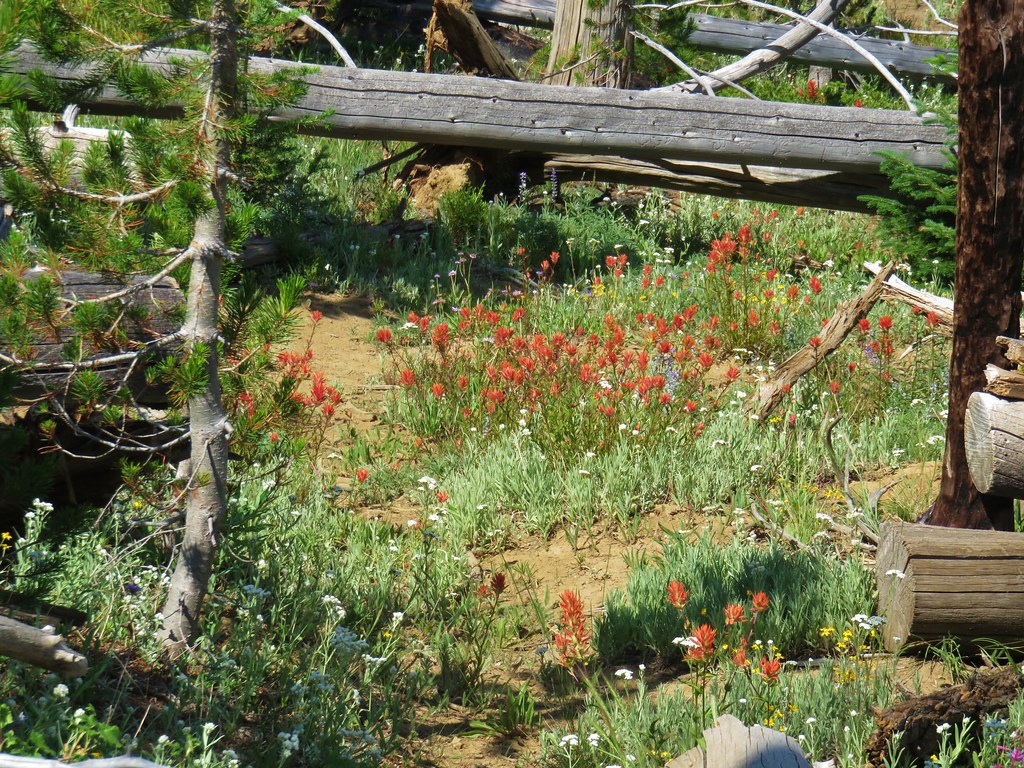
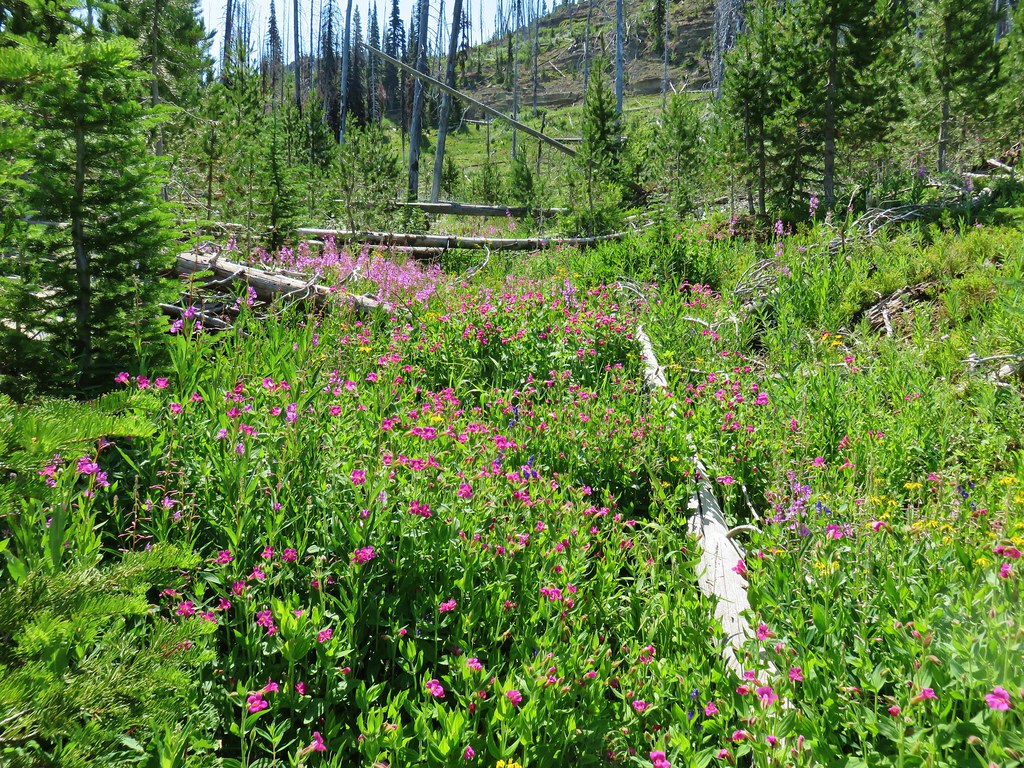
A nice variety of wildflowers splashed the hillside with color.
IMG_9397

IMG_9400

IMG_9406

IMG_9414

IMG_9413

After following the Skyline Trail a little over a quarter of a mile we arrived at junction with the Mud Lake Trail.
IMG_9420

The Mud Lake Basin was heavily burned which revealed both Little Mud Lake which I thought looked like Pacman and the larger Mud Lake.
IMG_9427

IMG_9434

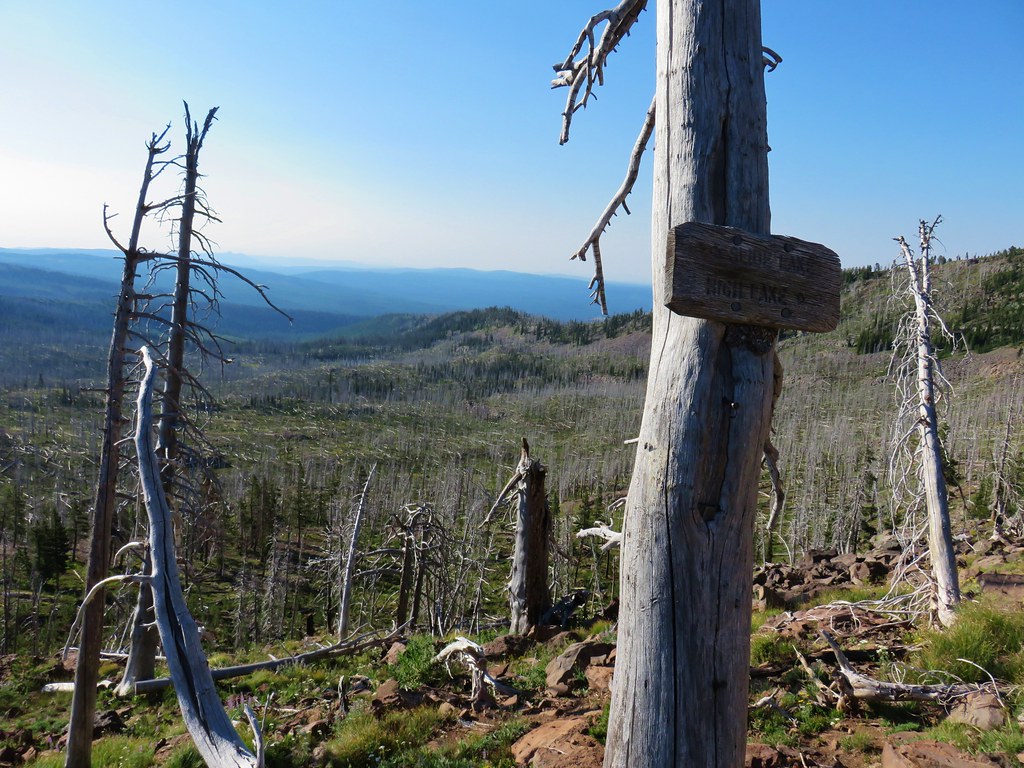
At the junction the Skyline Trail turned right and steepened as it climbed past wildflowers to a ridge end above High Lake.
IMG_9424

IMG_9425

IMG_9430

IMG_9436

The 1.6 mile descent from this ridge end down to High Lake was one of the more pleasant stretches of trail on the trip. It was downhill and the ridge blocked the sunlight leaving it a little cooler than it had been on the other side. There were also plenty of wildflowers and views across the basin to the back side of the Rabbit Ears.
IMG_9440

IMG_9444

IMG_9453

IMG_9449

IMG_9450

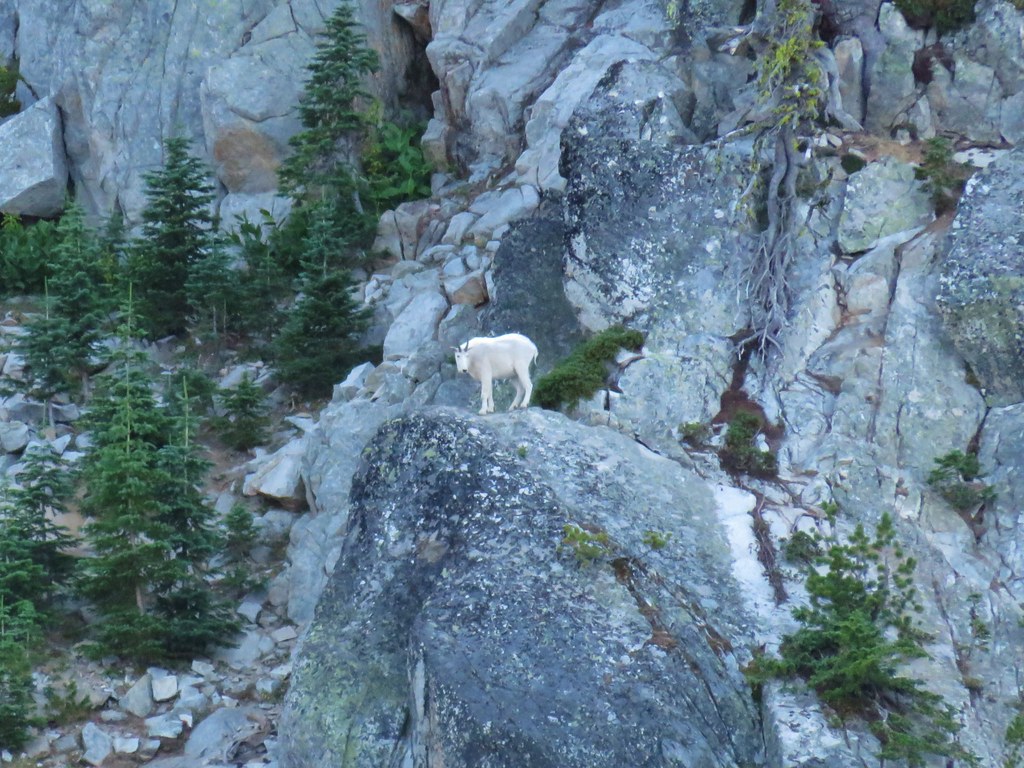
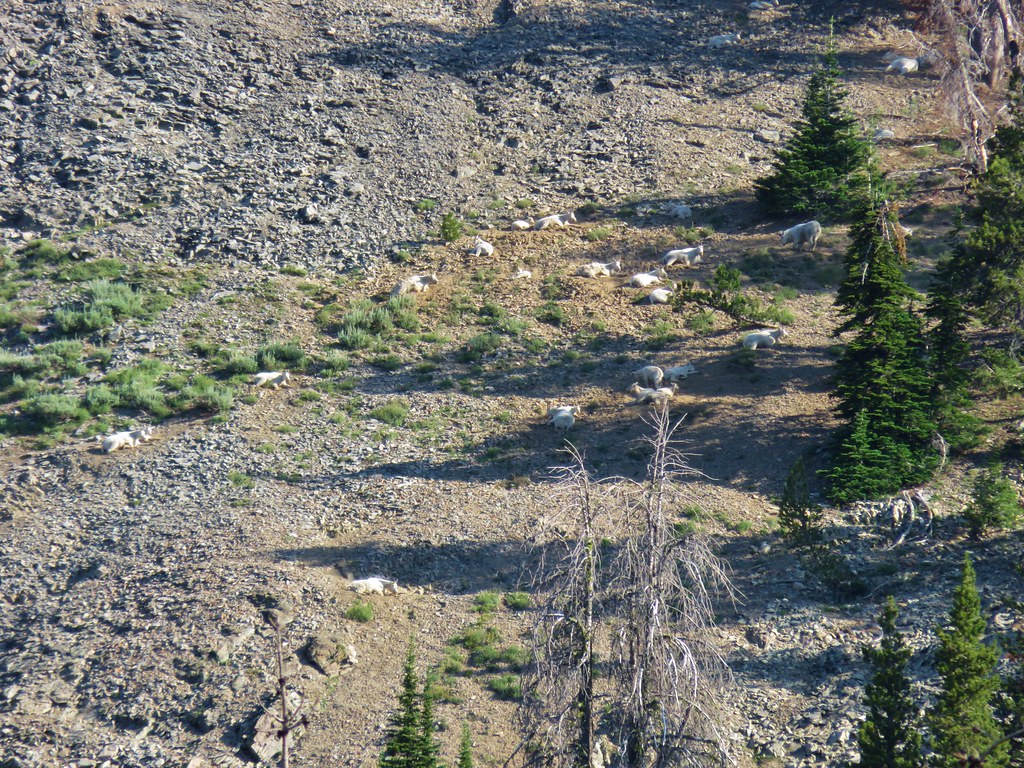
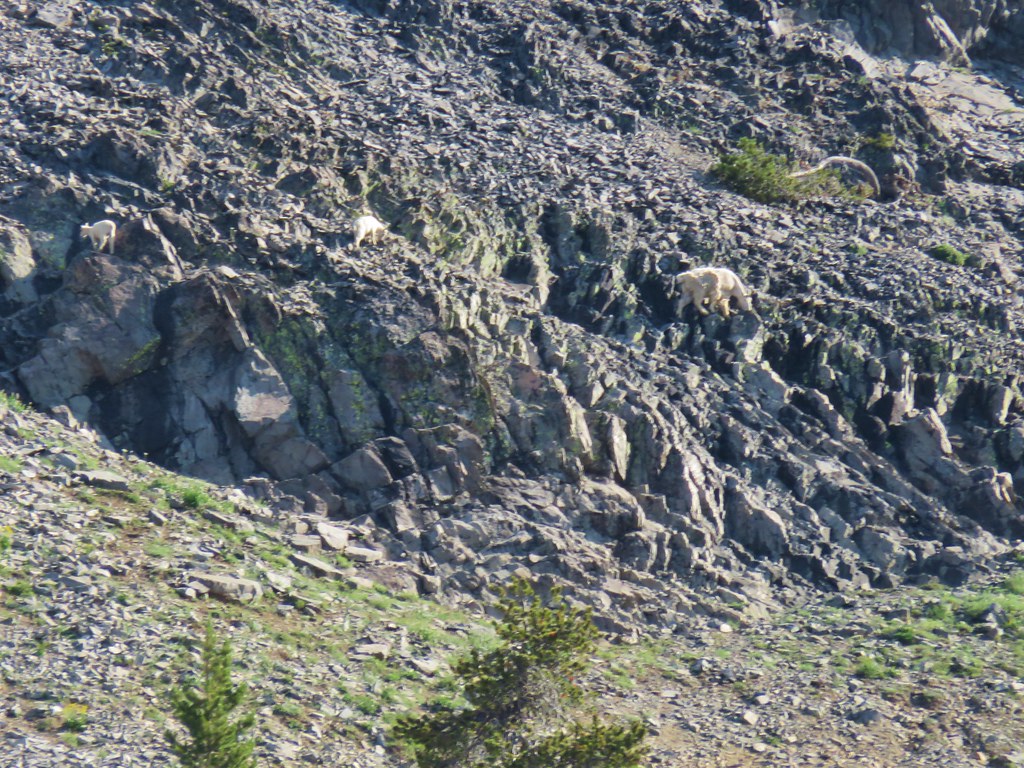
We had been scanning the cliffs for animals, in particular California big horn sheep, which the Forest Service Map mentioned as a possible sighting in the wilderness along with deer, elk, and pronghorn. One thing the map didn’t mention was mountain goats so we were a little surprised when we spotted what appeared to be mountain goat fur in a small pine tree.
IMG_9446

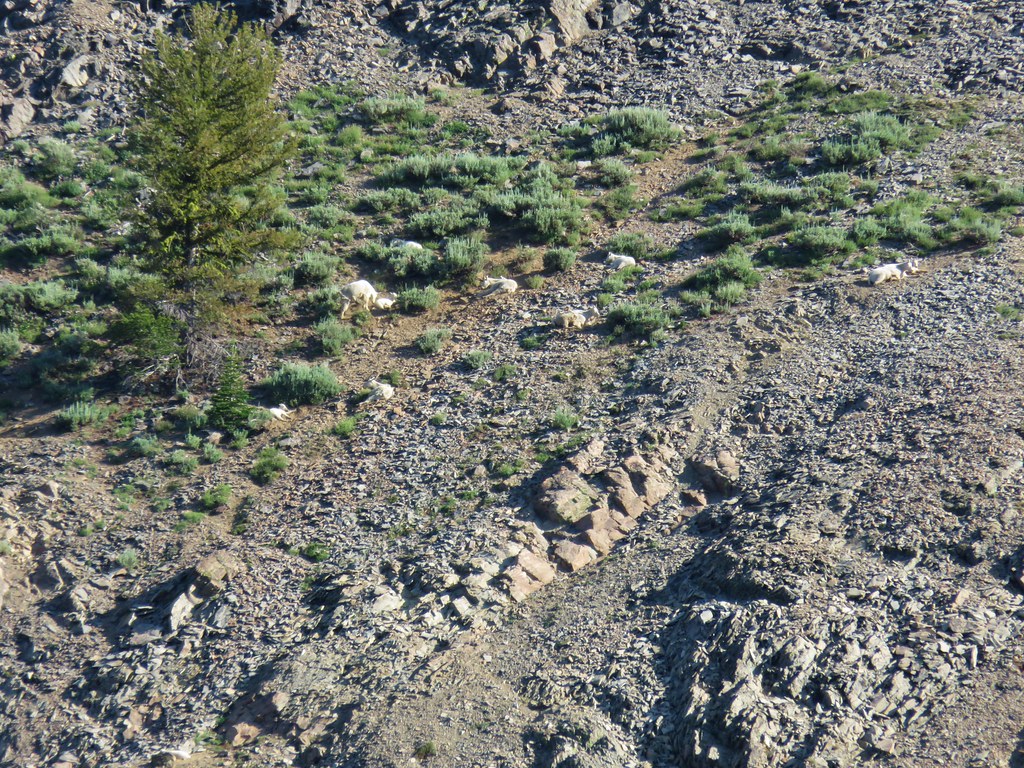
Fifteen minutes later we spotted them way up on the hillside ahead of us.
IMG_9459

IMG_9456

IMG_9467

IMG_9458

It is always amazing to watch these animals maneuver on the rocky hillsides.
IMG_9495

We watched them as we made our way to High Lake which we arrived at ten minutes later.
IMG_9474

IMG_9477

IMG_9481

IMG_9483

IMG_9486

We took a nice break at the lake and replenished our water supply before continuing on. We crossed the outlet creek and soon began climbing out of the basin.
IMG_9487

IMG_9489

IMG_9491

IMG_9500

The 1.3 mile climb out of the basin gained approximately 550′ while it passed some of the best wildflower displays of our visit.
IMG_9502

IMG_9504

IMG_9509

IMG_9512

IMG_9514

IMG_9515

IMG_9518

After climbing out of the basin we arrived at the High Lake Rim Trailhead.
IMG_9530

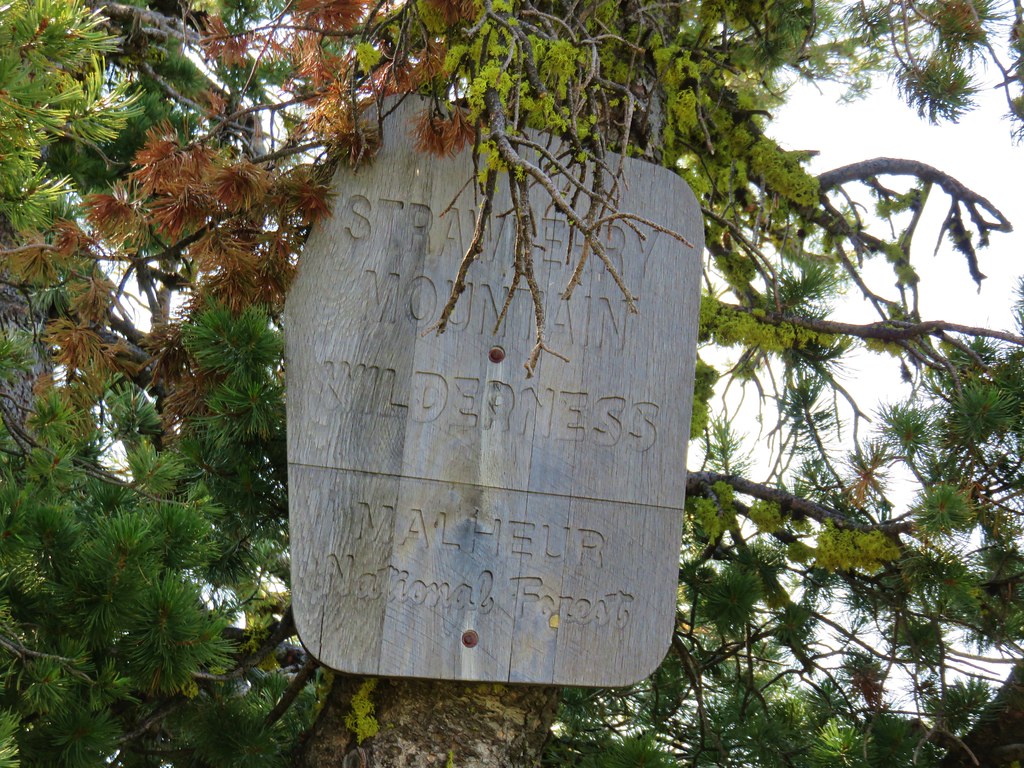
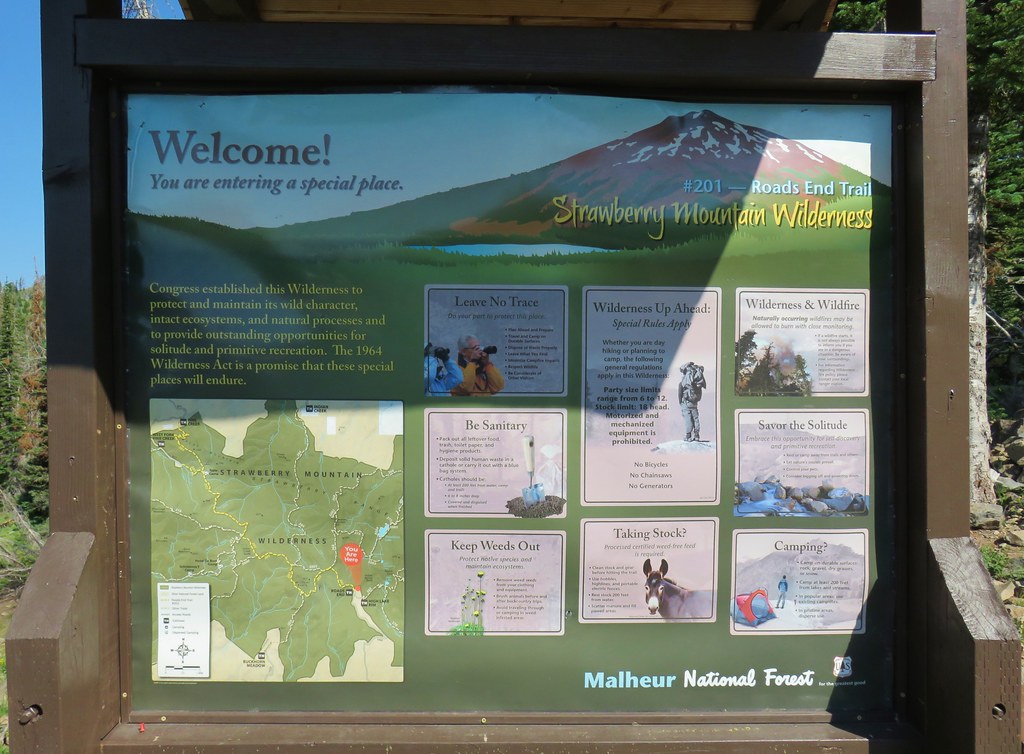
Here I was excited to see a wilderness sign.
IMG_9526

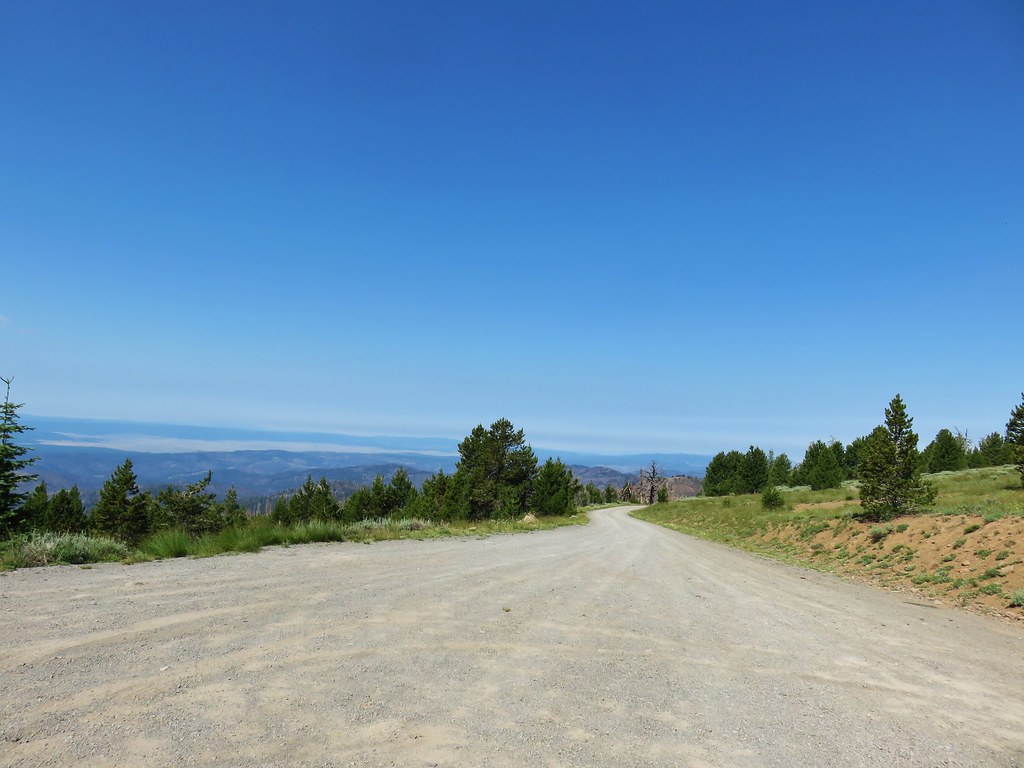
I have been trying to collect pictures of signs for each wilderness area we visit and there hadn’t been a sign along the East Fork Canyon Creek Trail. That sign most likely burned in the 2015 fire. From the trailhead we faced a .4 mile road walk to the Roads End Trailhead.
IMG_9533

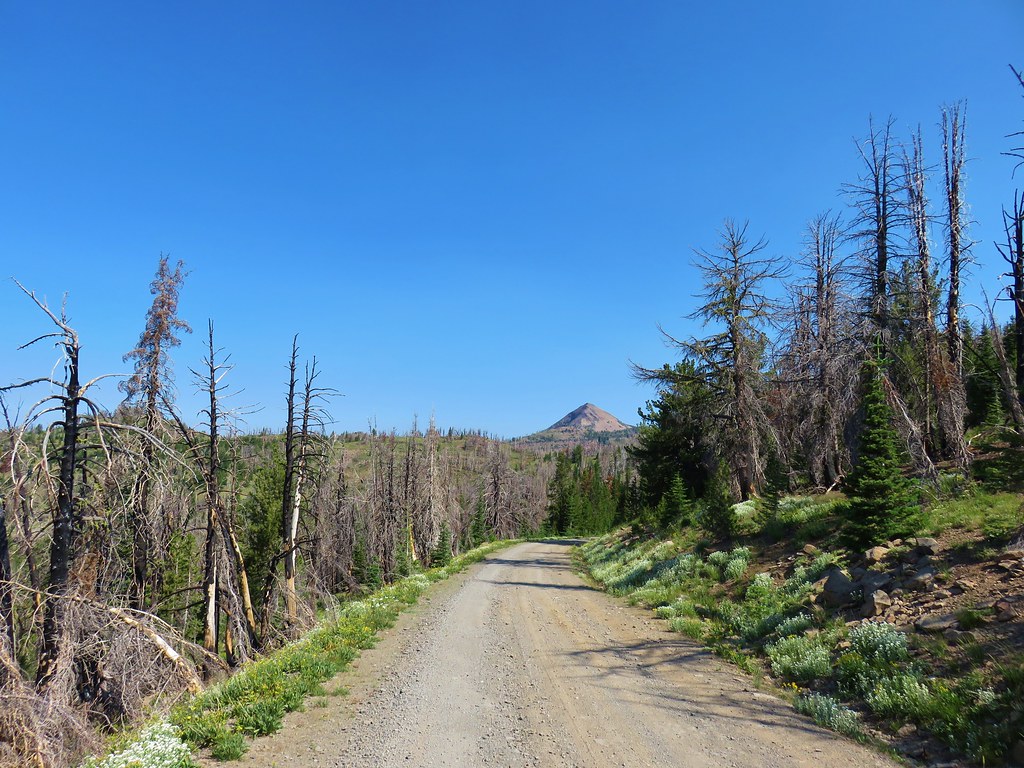
IMG_9539Strawberry Mountain from FR 1640.

IMG_9540

IMG_9541

The Roads End Trail follows a closed roadbed for 1.2 miles to the junction with the Onion Creek Trail which we had been at the day before. (post)
IMG_9546

As far as road walks go this one provided some nice scenery that we could have appreciated even more if had been a bit cooler out.
IMG_9548

IMG_9550

IMG_9555

IMG_9552

Near the end of the old roadbed the ground became muddy due to the presence of a series of seeps.
IMG_9556

At the unsigned junction a small cairn marked the familiar path downhill to a saddle.
IMG_9557

We turned left for .3 miles to a signed junction where we turned right onto the Indian Creek Trail.
IMG_9559

The day before we had come from the left having stayed the night in Wildcat Basin. By going right here would complete a loop back to the Pine Creek Trail. It was also 1.3 miles shorter than it would have been to retrace our steps through Wildcat Basin.

After a brief initial climb we gained a view of Indian Creek Butte.
IMG_9562

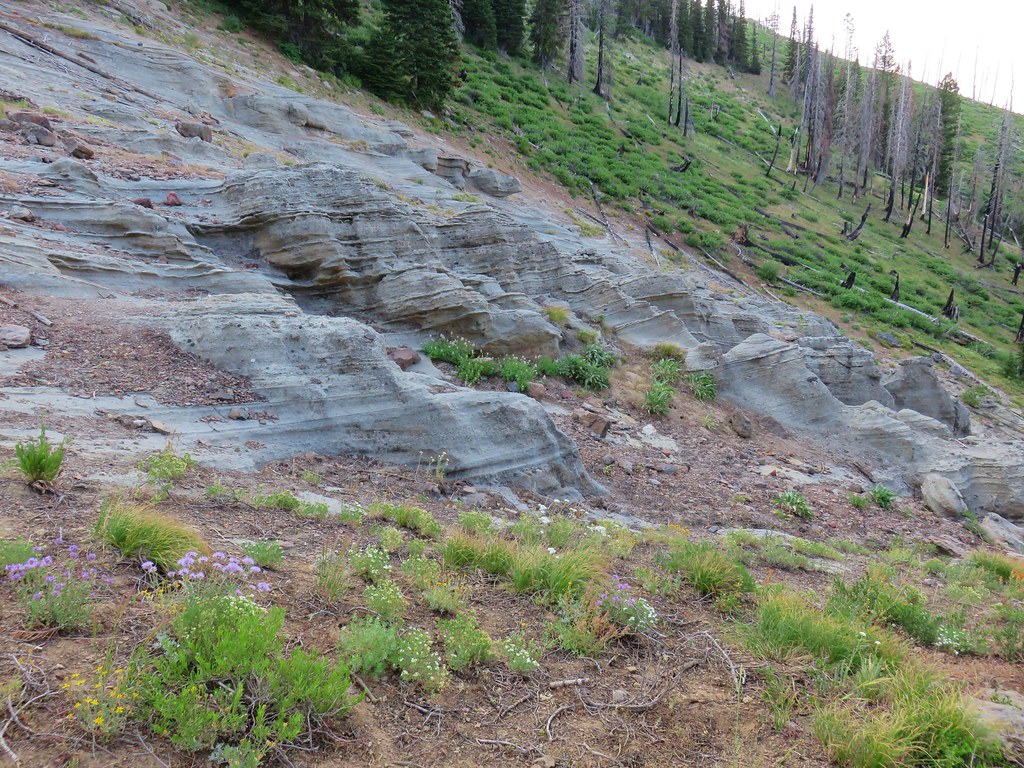
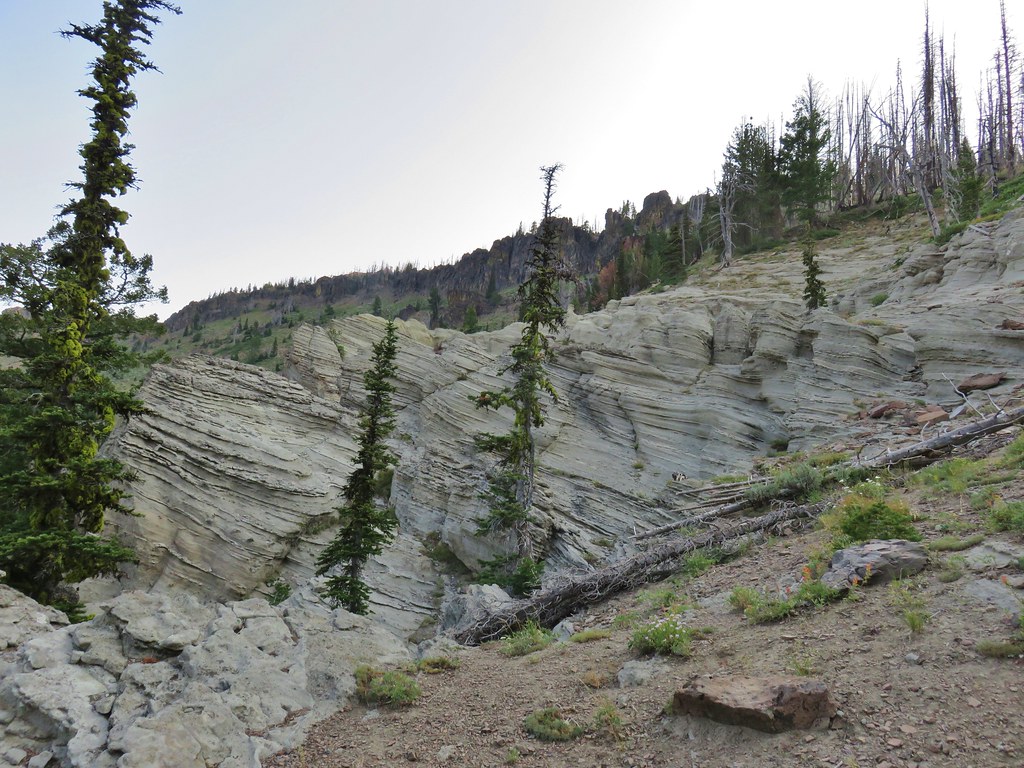
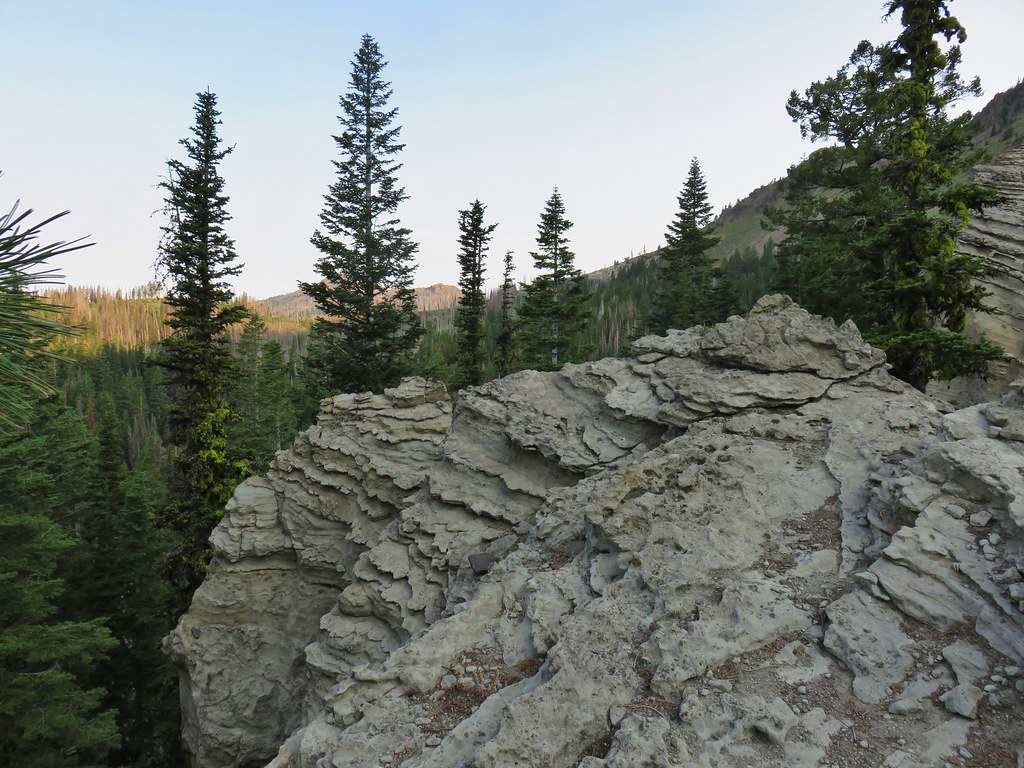
The trail then descended past some more volcanic ash formations similar to the ones we’d seen near Wildcat Basin.
IMG_9563

IMG_9564

IMG_9567

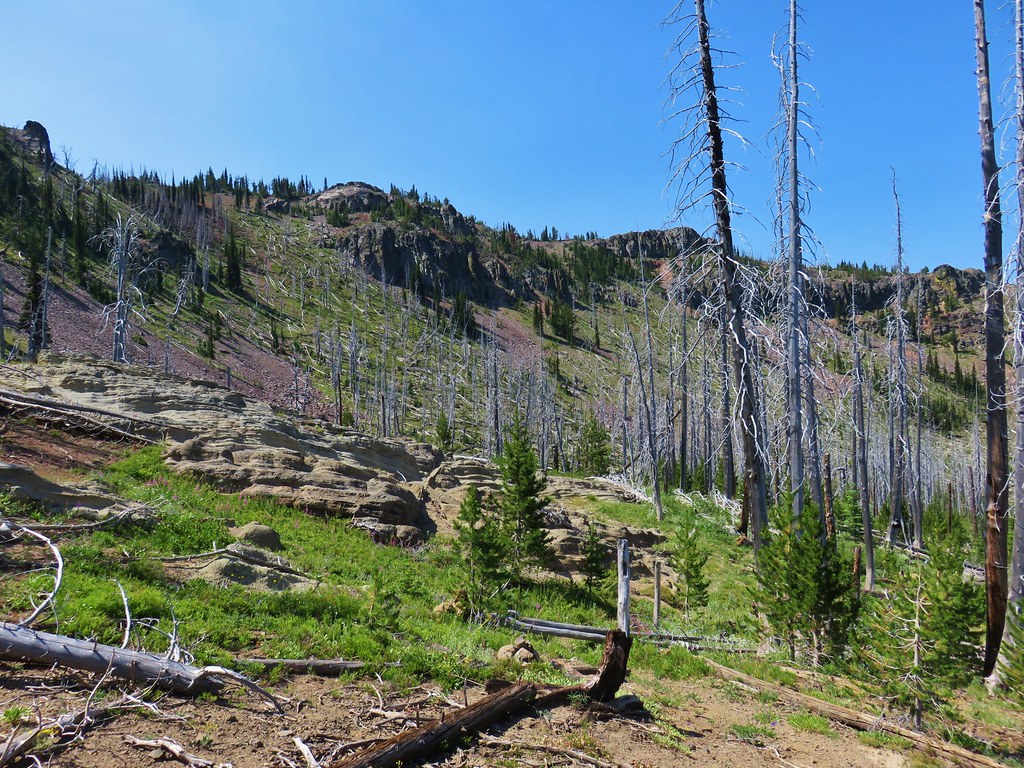
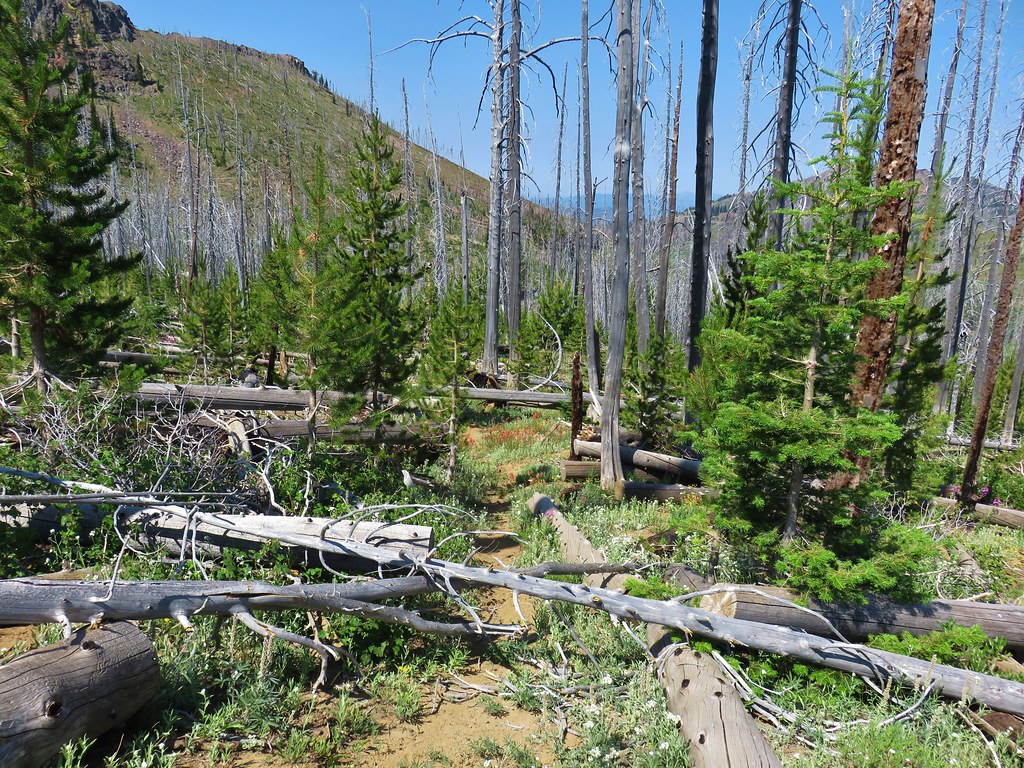
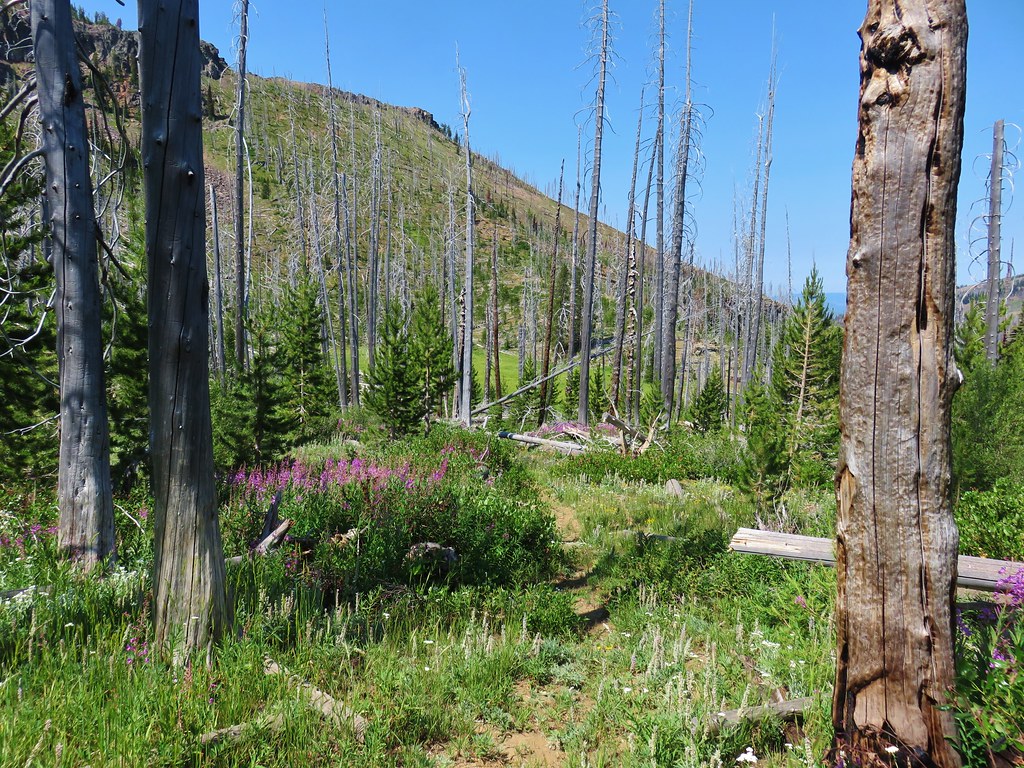
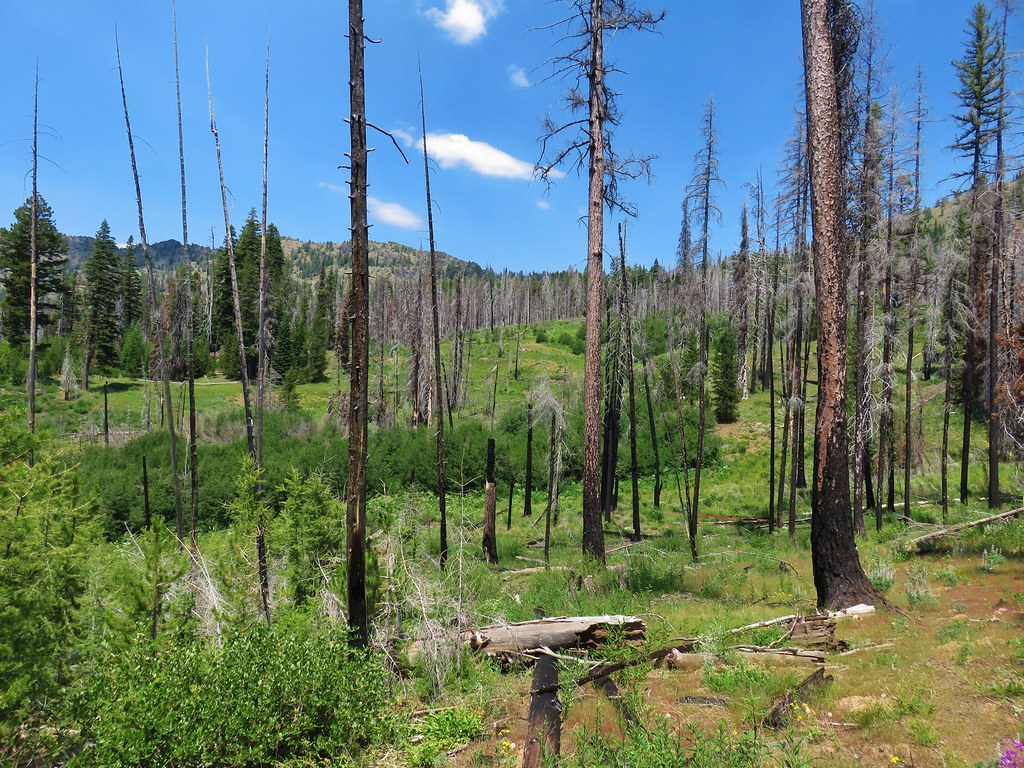
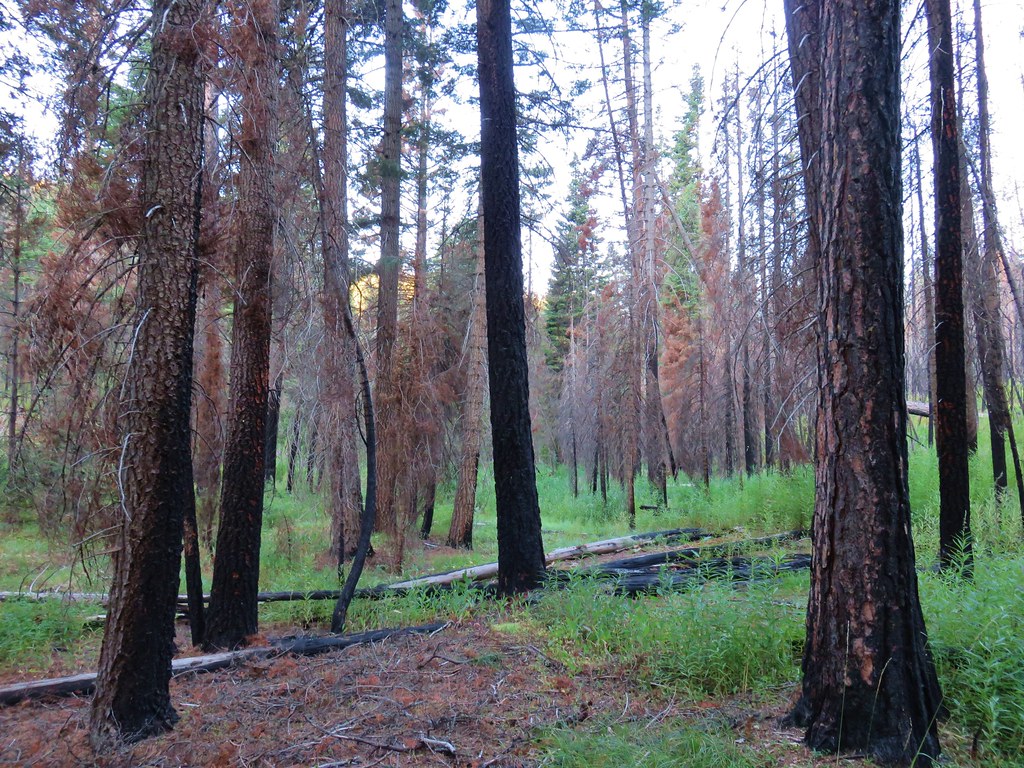
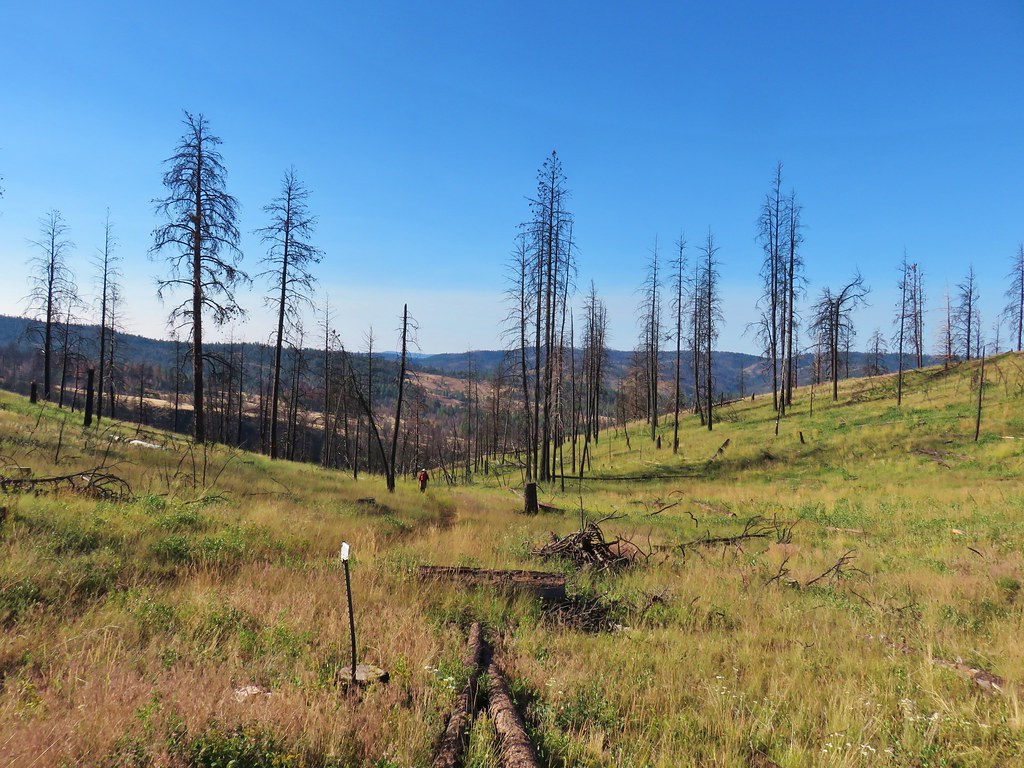
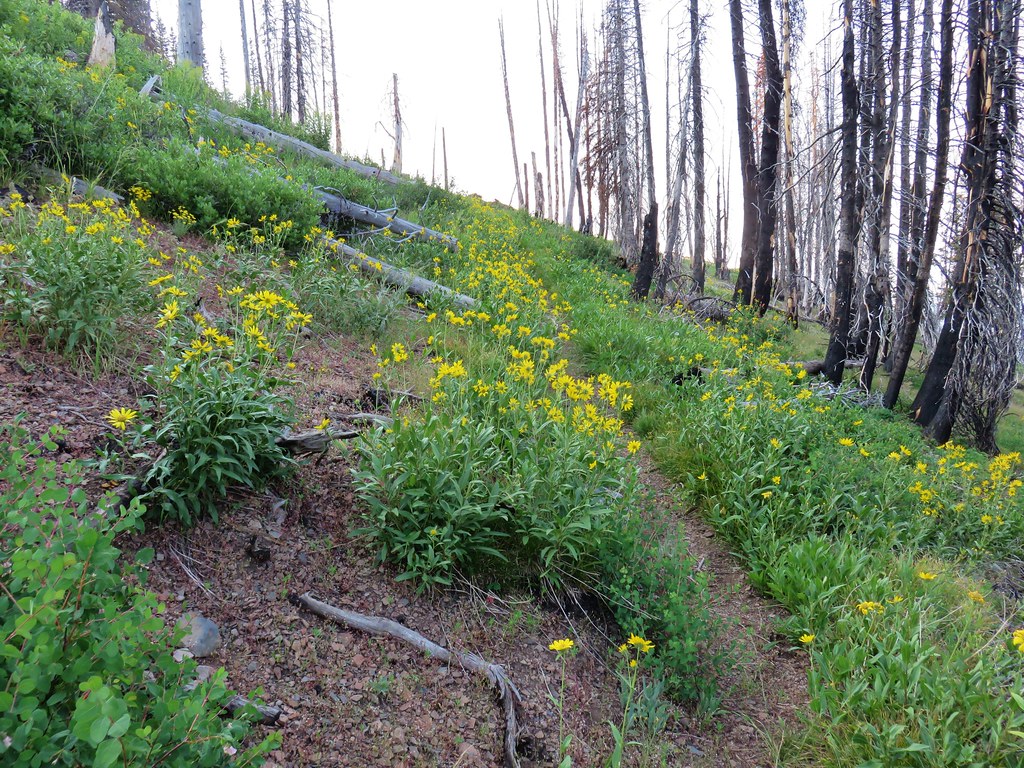
This was another area affected by fire and there were a number of trees down across the trail.
IMG_9568

IMG_9569

A little past the ash formations the trail approached a marsh filled with tall onions.
IMG_9570

IMG_9572

IMG_9574

A couple of small cairns helped guide us through the marsh but on the far side we missed a sharp right turn and continued straight. We soon realized we were no longer following a trail but that wasn’t anything new during this trip and we could see the saddle we were aiming for straight ahead so we kept going for a bit. Two tenths of a mile from where we should have taken the sharp right downhill we ran into a cliff where we were unable to continue forward. The GPS showed the actual trail as being a tenth of a mile away and 150′ below us. At that point we didn’t know about the sharp right and couldn’t figure out how we got so far off course but there we were. We found a game trail and followed steeply downhill in the general direction of the real trail.
IMG_9576

IMG_9578Our route down.

From above it didn’t look like it was going to be too difficult to go cross country but once we were down in the basin we realized it was going to be a lot harder than we’d thought.
IMG_9579

There were some surprising displays of flowers to be found in the gullies as we crashed through the brush and over numerous downed trees.
IMG_9580

IMG_9581

IMG_9582

After a lot of sweat, a little blood, and no tears (we didn’t have the moisture left to make any) we found the actual trail.
IMG_9585

A hundred foot climb brought us up to the saddle where we rejoined our path from the first day at a signed junction.
IMG_9586

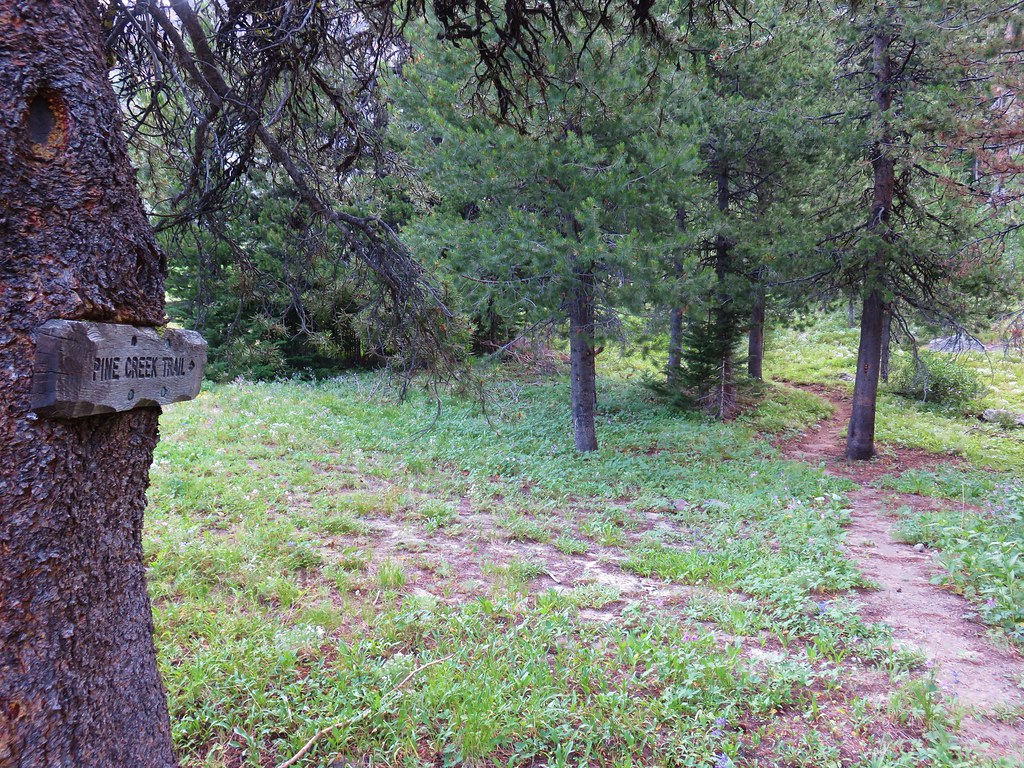
We turned right and headed toward Indian Creek Butte on the faint Pine Creek Trail.
IMG_9587

It was less hazy than it had been the previous two days allowing for some clearer views from the trail.
IMG_9589_stitchIndian Creek Butte, the John Day Valley, and Strawberry Mountain

It was 1.4 miles to a junction on the east side of Indian Creek Butte where we had the choice of staying to the right on the Pine Creek Trail for .9 miles then turning left on the East Fork Canyon Creek Trail for another 1.3 miles to the spring where we had eaten our dinner on the first day. The other option was to go back the way we’d come up the first day around the south side of the butte. This second option was three quarters of a mile shorter and the condition of the trail, albeit is sad, was known to us. We’d had enough surprises for one trip so we deiced to go with the known option.

Even though we had seen this area before there were some new sights to be had.
IMG_9597

IMG_9602

When we reached the series of rock cairns in the green trees on the SW flank of the butte we attempted to use the GPS to follow the actual route of the trail this time.
IMG_9599

That proved to be mostly futile as the brush was just too dense and the tread too light to allow us to stay on course.
IMG_9606

Other than the rare sighting of a cut log we had no idea where the trail was actually supposed to be.
IMG_9608

In the end we wound up aiming for our previous track as shown on the GPS and eventually managed to pick up the actual trail at the same place we’d lost it on the first day. We made our way back to the spring and once again took a break near the lawn chairs.
IMG_9610

This time Heather discovered a mylar pumpkin balloon which we stuffed into our garbage and packed out. We took an extended break in some shade here before setting off on what we had planned on being our last mile for the day down to Hotel De Bum Camp. As we neared the meadow near the camp though we heard the neighing of horses. A good sized group of equestrians had ridden up to the camp and were spending the night there. There really wasn’t any room for us so we decided that we’d just keep going and stop at the next good camp site.
IMG_9614A horse in the meadow at Hotel De Bum Camp

I had thought there might be a couple of spots near Miners Creek when I had checked that area out on the first day but after descending 1.4 miles from Hotel De Bum Camp a closer inspection of the area resulted in us deciding against trying to force a site there. We decided to take another break, have dinner, get more water, and look at the map to see about other potential spots.

The next camp shown on the forest service map was Grindstone Y Camp which looked to be a half mile down the trail. When we arrived in the area we spotted what appeared to be a camp where there were all kinds of supplies stashed in the nearby trees. There really didn’t seem to be a viable tent site though and with all the items about it had an off-putting vibe so we pressed on.

Nearly a half mile later we came to a fork in the trail. On the first day we had come up from the right hand side (north side of the creek) but the equestrians had clearly come up from the right hand fork. We determined that the right hand fork was the trail we should have been on to avoid the ugly bushwhack across East Brookling Creek. We took the right hand fork and promptly crossed East Fork Canyon Creek.
IMG_9616

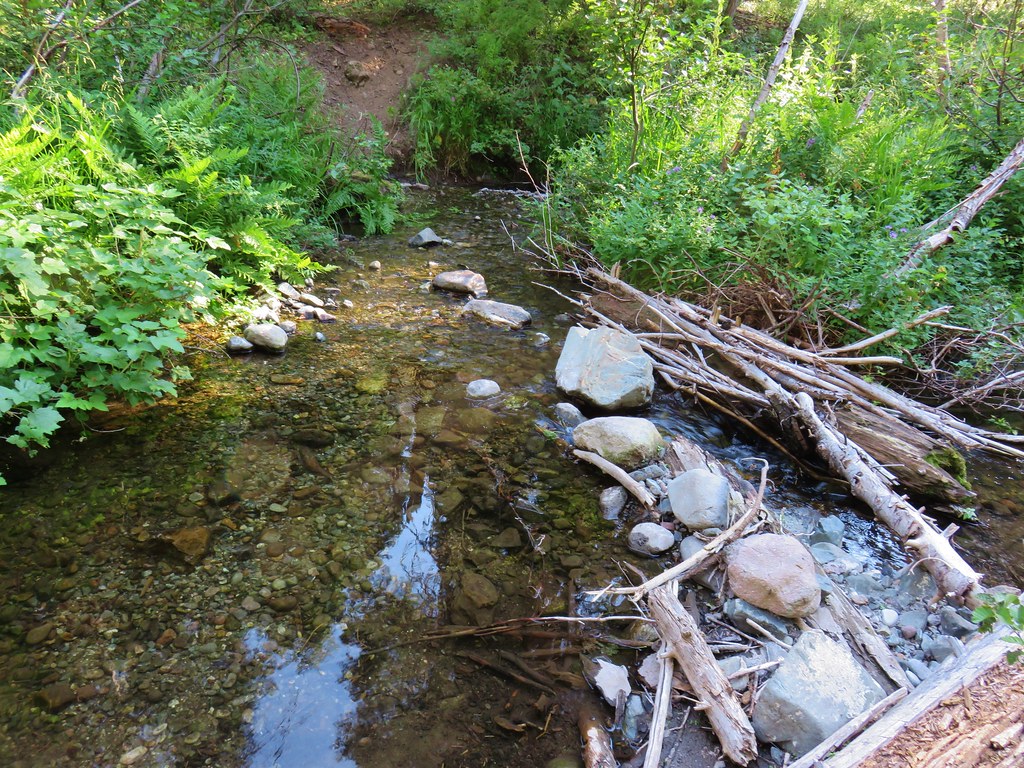
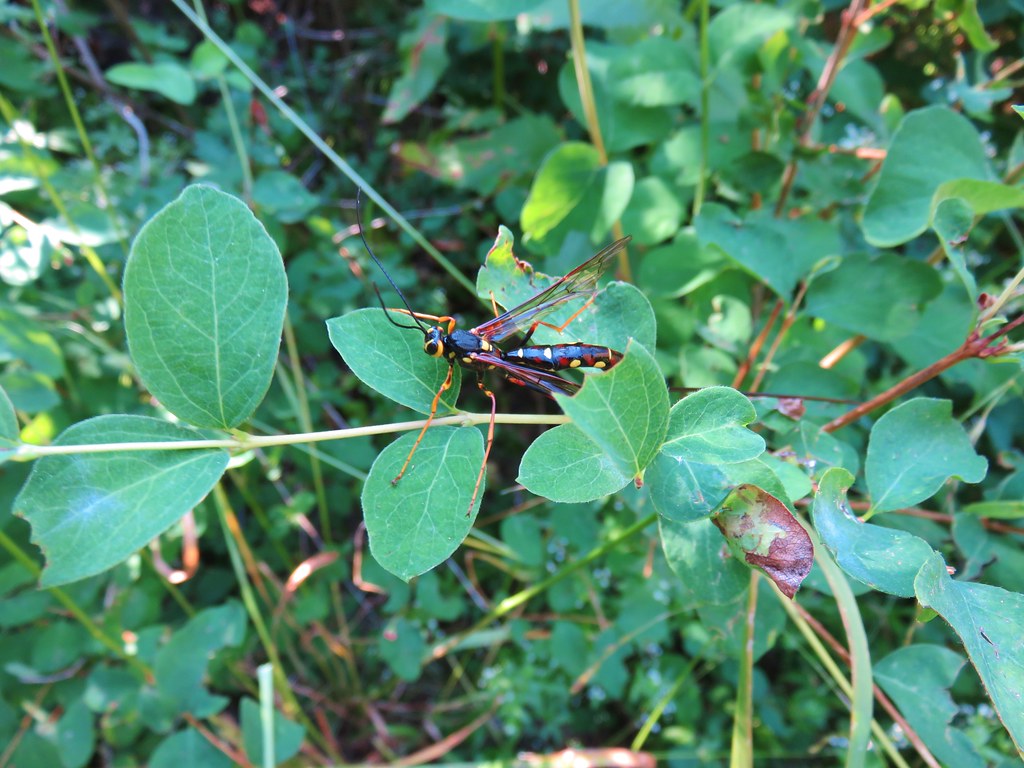
The trail remained on the south side of the creek for nearly a half mile before recrossing the creek. Near this crossing we spotted the biggest wasp either of us had ever seen.
IMG_9620

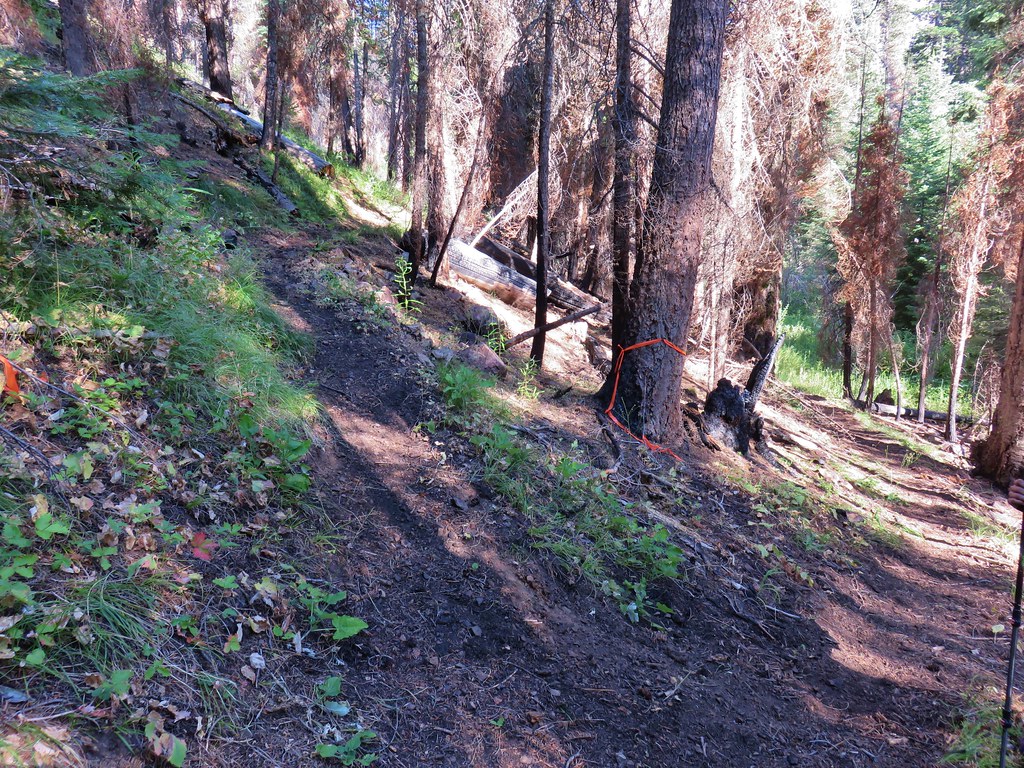
A short climb up from the creek brought us to the orange flagging where we had taken the uphill fork on the first day.
IMG_9622

That mystery was solved but the more pressing mystery was where were the decent camp sites. A half mile later (and over three and a half miles from Hotel De Bum Camp) we finally found enough clear level ground to pitch our tent.
IMG_9624

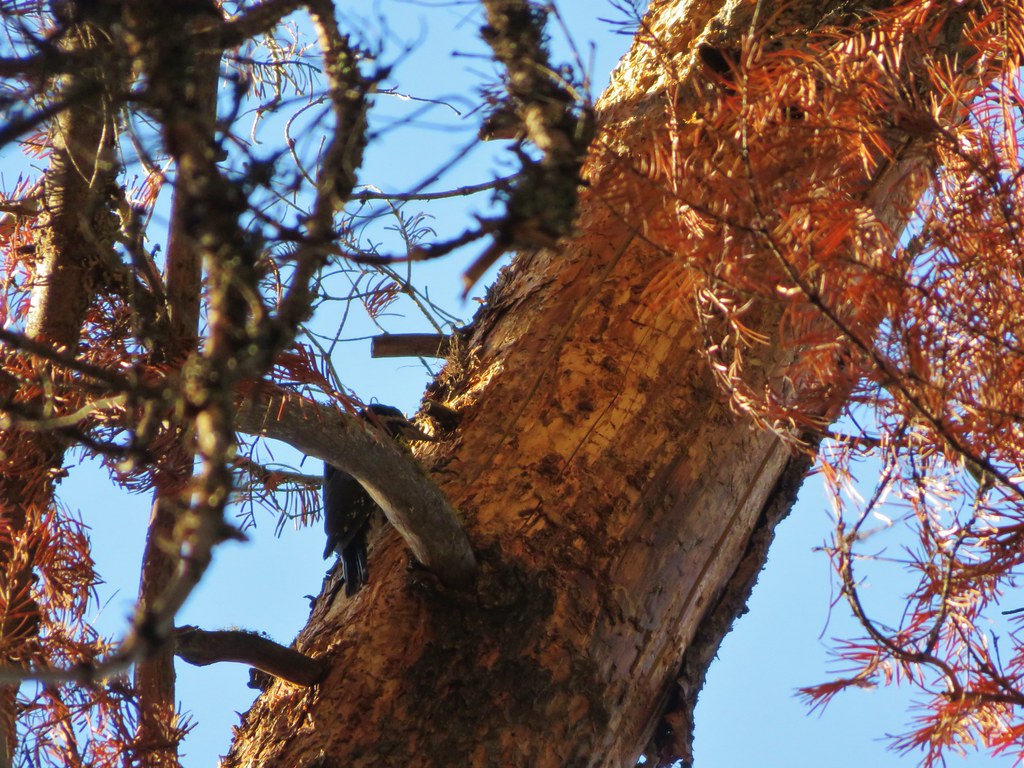
We were somewhere in the vicinity of Bingham Camp and only a tad over four miles from the trailhead. It had been a 15.2 mile day and once again we were beat. We sat in our chairs for a couple of hours while a woodpecker dropped debris on us.
IMG_9630

It was slightly cooler that night and the next morning but still not as cool as we’d have liked as we set off for the final 4.2 miles back to our car at 6:30am.
IMG_9635

The Sun chased us from behind as we followed the creek downstream through the forest.
IMG_9640

IMG_9653

We arrived back at the rental car around 8:15am thankful that we would soon feel the cool breeze of air conditioning.
IMG_9655

Our original plans had been to return to Bend, stay the night with Heather’s parents, and then head to the Mt. Thielsen Wilderness for a single night in hopes of visiting an off trail waterfall (Bruce knows the one), but after the brutal heat we’d hiked through for the previous four days neither of us had anything left. We scrapped those plans and decided to simply head home after the night in Bend.

This was by far the hardest backpacking trip we’ve done, so much so that we weren’t able to fully appreciate the beauty that we were seeing. We had timed the trip well for the flowers it was just unfortunate that it was during a heat wave. One thing is for sure we’ll never forget our first visit to the Strawberry Mountain Wilderness. Happy Trails!

Flickr: Strawberry Mountain Wilderness Days 3 & 4

Categories
Central Oregon Hiking John Day Oregon Trip report

Strawberry Mountain Wilderness Backpack Day 2 – Wildcat Basin to Slide Lake

After a long, hot day the day before we were hoping to wake up to some crisp mountain air. Alas it was not to be as the temperature didn’t seem to have dropped all that far overnight. It was cooler than it had been but we could tell it was going to be another hot one.

After applying a little Deet to deter the mosquitoes that had been waiting for us to wake up we had breakfast in a small meadow near our campsite.
IMG_9146

After breakfast we packed up and headed out of Wildcat Basin via the Pine Creek Trail.
IMG_9151

One of the reasons we were hoping it would have been colder was that the Pine Creek Trail gained nearly 800′ in less than three quarters of a mile as it steeply climbed out of Wildcat Basin.
IMG_9154

As it climbed we passed some interesting ash formations.
IMG_9156

IMG_9158

IMG_9160

We had read that above these ash formations the trail would become obscured by brush for a short distance. After the previous days bushwacking around Indian Creek Butte (post) we were fearing the worst but it turned out to not be anywhere near as bad as that had been. It was a much shorter stretch and there were less obstacles to maneuver around. We hadn’t been at it long before Heather spotted the trail veering to the right into burned trees.
IMG_9163

IMG_9164

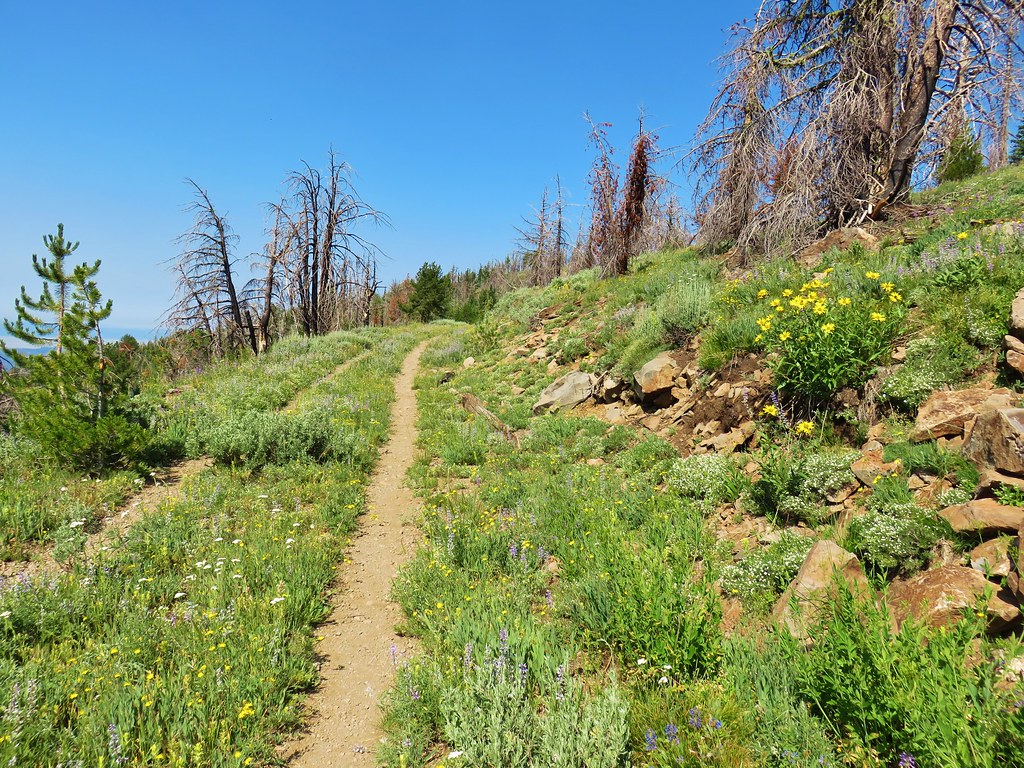
The trail leveled out a bit as it crossed a ridge top where we spotted the first of the yellow paintbrush that is plentiful in the area.
IMG_9169

IMG_9173

The trail bent around to the north as it crossed the ridge and soon Strawberry Mountain came into view.
IMG_9176

Our plan was to take a side trip up to the summit once we made it to the saddle below the peak, but for now we were focused on the trail at hand which was passing through some nice wildflowers.
IMG_9180

IMG_9179

IMG_9181

IMG_9182

IMG_9186

We also flushed out several deer but they escaped before I could get any photos.

A mile and a half from Wildcat Basin we arrived at a junction with the Indian Creek Trail #5001.
IMG_9191

Here we turned right crossing a saddle and climbing for .3 miles to another junction, this time with the Onion Creek Trail #368. The view from the old roadbed here was good and we could see Indian Creek Butte as well as Strawberry Mountain.
IMG_9199Indian Creek Butte

IMG_9198Strawberry Mountain

We took a short break in some shade near the junction having already climbed nearly 1200′ on the day. From this spot we had another 450′ to gain over the next 1.4 miles just to reach the saddle below Strawberry Mountain.

A golden-mantled ground squirrel came out to check on us as we recovered.
IMG_9203

Fortunately some of this section of trail was still shaded from the Sun and once again there was a nice display of wildflowers to help distract us.
IMG_9207

IMG_9208

IMG_9209

IMG_9211

IMG_9214

We arrived at the saddle just after 9am. To reach our goal for the day, Slide Lake, we needed to take the right hand Strawberry Basin Trail toward Strawberry Lake.
IMG_9218

Before we did that though we wanted to summit the 9038′ Strawberry Mountain which was to the left.
IMG_9217

Since we would have to come back by this junction after summiting the mountain we pulled our daypacks out and stashed our backpacks in a group of nearby trees. The lighter packs felt great as we traversed across the rocky terrain below the summit.
IMG_9220

IMG_9224

IMG_9225

The trail climbed gradually across the shaley rocks about a half mile before entering a stand of white bark pines.
IMG_9227

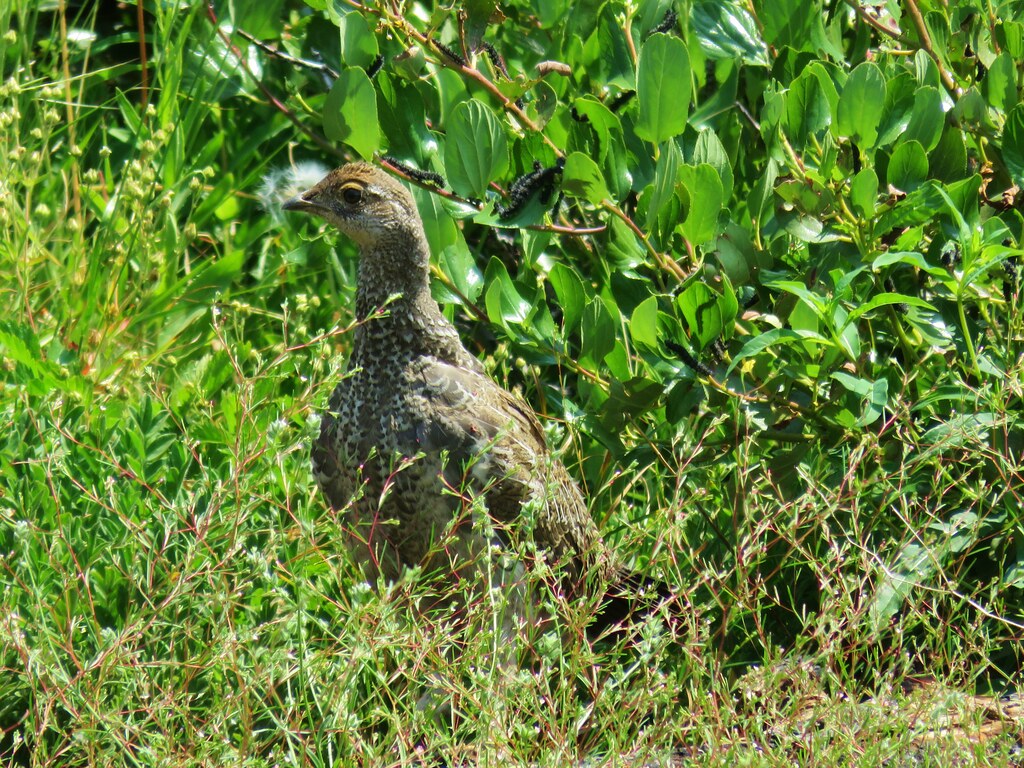
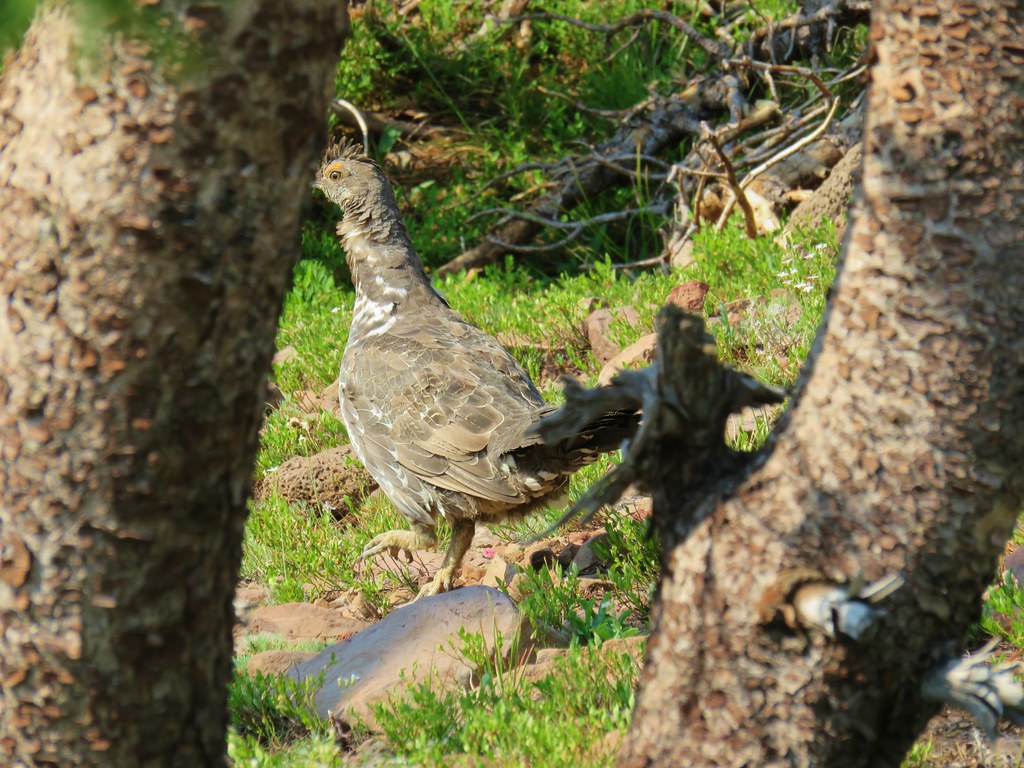
Several grouse were present in this area.
IMG_9231

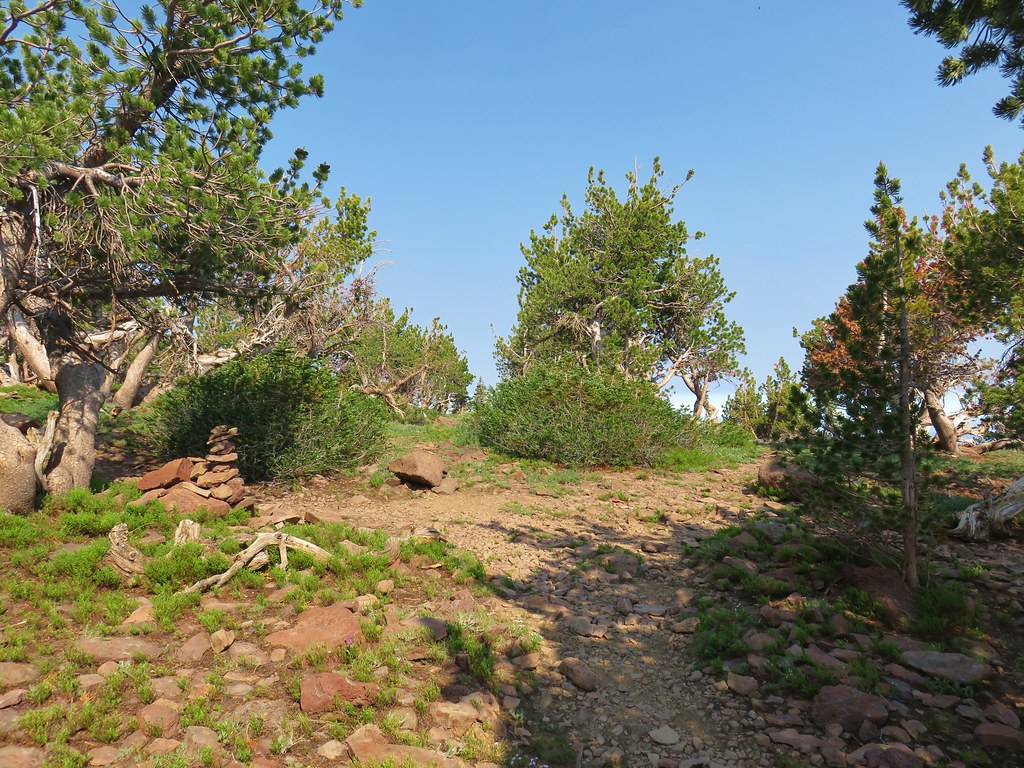
Three quarters of a mile from the junction we arrived at the junction with the summit trail marked by rock cairns.
IMG_9232

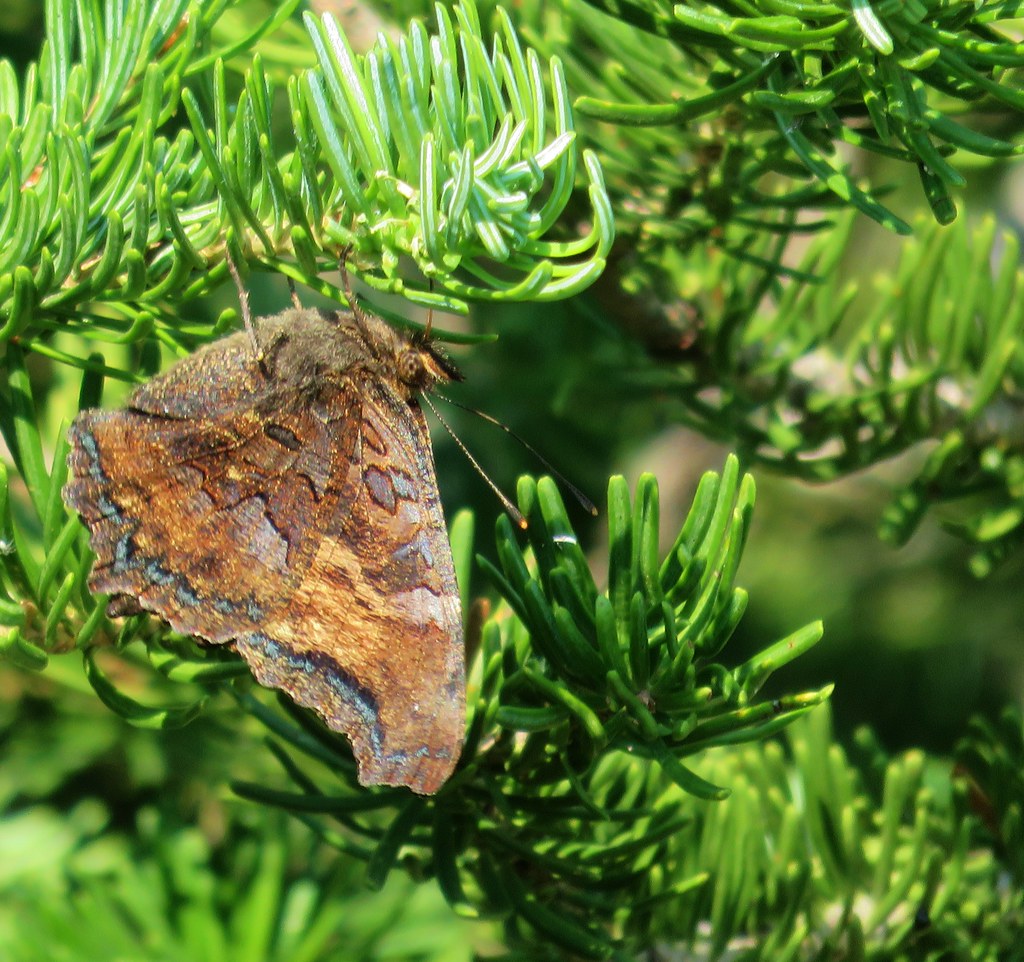
We took another short break in the shade of the white bark pines watching the many butterflies that were flitting about.
IMG_9235

After catching our breath we headed up the left hand fork for the final .4 miles and 350′ to the former lookout site atop Strawberry Mountain.
IMG_9233

IMG_9236

IMG_9237

Butterflies were swirling around atop the summit, never sitting still for long. The views were good but not great due to the presence of smoke from wildfires. We weren’t sure which fires the smoke was from but with a number of them burning across the northwest it wasn’t a surprise to have hazy skies. It unfortunately seems to be the new default for the summer months.
IMG_9244Looking north toward the John Day Valley

IMG_9239Looking SW toward Wildcat Basin

IMG_9238View west toward Indian Creek Butte and Canyon Mountain

IMG_9241Looking NE

IMG_9247View east

With all the haze it was tough to make out much in the distance but we were able to make out the Elkhorn Range off to the NE.
IMG_9249

It was a little cooler at the summit where we rested once again before starting back down. As we were traversing the rocky hillside on the way back we encountered another group of hikers on their way up to the summit. They mentioned that they had stashed their packs as well after coming up the Strawberry Basin Trail. They let us know that some of the trail to Slide Lake had suffered from a near washout so there might be a little exposure along that stretch. After thanking them for the heads up we returned to the saddle and retrieved our packs.

It was just before 10:45am when we started down the Strawberry Basin Trail. There was a nice view of Strawberry Mountain as we dropped into the basin.
IMG_9257

After approximately .4 miles of descending the trail leveled out somewhat and we passed the ruins of a cabin and a minute later Strawberry Spring.
IMG_9260

IMG_9261

This was followed by a series of meadows, some filled with wildflowers as well as views back to Strawberry Mountain.
IMG_9263

IMG_9264

IMG_9267

IMG_9269

IMG_9271

IMG_9275

We got our first look at Strawberry Lake as the trail began to bend around a ridge.
IMG_9270

We were now heading south, continuing our descent into the Strawberry Basin. Across the valley were the rock formations known as the Rabbit Ears over Little Strawberry Lake which was hidden in the trees.
IMG_9277

Although this side of the ridge was drier than the north side had been there were still some good displays of color.
IMG_9278

IMG_9280

The Strawberry Basin Trail wrapped around the basin eventually reaching the side trail to Little Strawberry Lake, two and a half miles from the saddle junction with the Onion Creek Trail.
IMG_9281

IMG_9282

IMG_9283

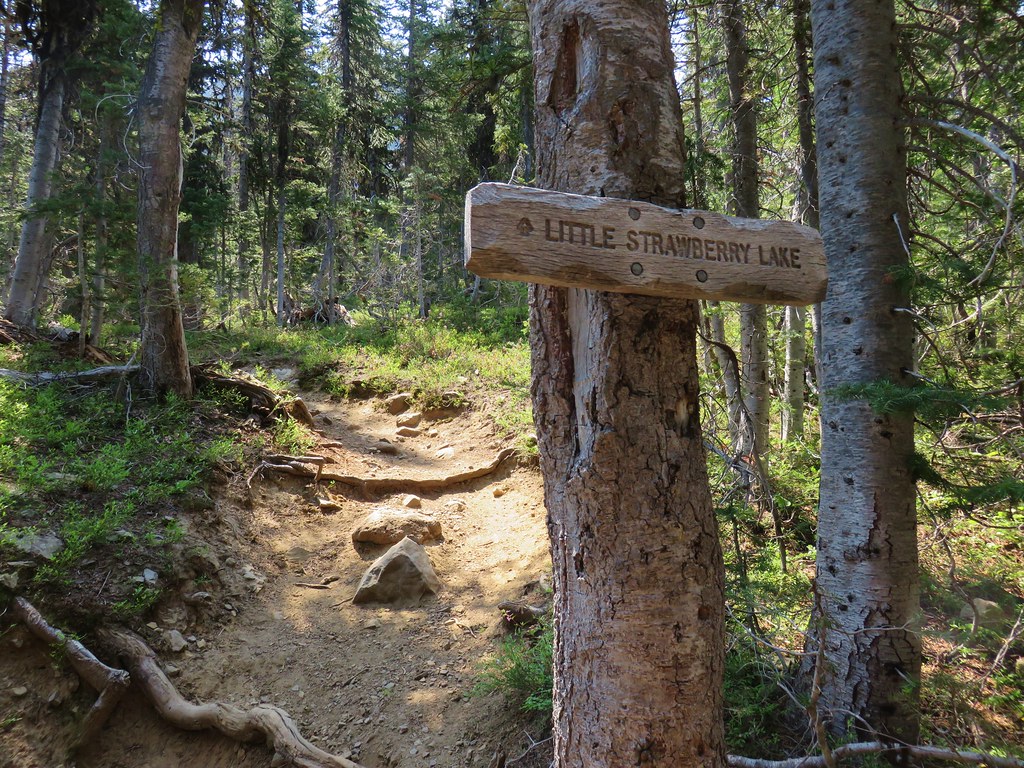
We turned right onto the Little Strawberry Lake Trail for the .6 mile side trip (1.2mi round trip) to the lake. Heather asked about stashing our packs again but I chose poorly and we kept them on. The trail crossed Strawberry Creek and climbed about 150′ through the forest to the little lake.
IMG_9284

IMG_9285

IMG_9290

That shouldn’t have been too difficult a trek but it was so hot (How hot was it?) that we truly regretted not having left our full packs back near the junction. It was also pretty hazy in the basin here so our views of the cliffs backing Little Strawberry Lake were not clear.
IMG_9293

IMG_9295

IMG_9299

The water however was clear which made it really easy to watch the fish swim about.
IMG_9297

IMG_9288

After another short break we strapped on our packs again and returned to the Strawberry Basin Trail. It was obvious by the state of the trails and the number of other people we were seeing that this part of the wilderness is significantly busier than the eastern end.

We turned right and promptly crossed Strawberry Creek again.
IMG_9301//embedr.flickr.com/assets/client-code.js

IMG_9303

We were just a bit above Strawberry Falls here and I suddenly thought we might not get to actually see the waterfall.
IMG_9304

My fears were eased when Heather correctly pointed out that the trail switchbacked down to the base of the falls.
IMG_9306

IMG_9307

The base of Strawberry Falls was by far the most comfortable spot we would be in during the entire trip. We took our packs off again and allowed the mist from the falls to cool us down. Unfortunately we could not take that feeling with us and shortly after leaving that heavenly place we were once again sweating profusely.

After descending a little over half a mile form the falls we came to a fork in the trail near Strawberry Lake.
IMG_9313

Both trails led around the lake with the right hand fork being the shorter but the left hand fork reportedly having the better views. We opted for the left hand fork and descended to the southern end of Strawberry Lake.
IMG_9315

A series of stream crossings followed as we worked our way around to the western side of the lake.
IMG_9317

IMG_9318

IMG_9319

Eventually the Rabbit Ears came into view across the lake.
IMG_9322

It was time for yet another break once we reached the northern end of the lake but here even in the shade it was stupid hot.
IMG_9329

Since there was no real relief from the heat we quickly decided to press on. After crossing the lakes outlet we turned left and then followed pointers for Slide Lake.
IMG_9331

We climbed gradually for nearly a mile gaining 360′ from Strawberry Lake.
IMG_9333

We were struggling with the gradual climb and now the Slide Basin Trail launched more steeply uphill gaining an additional 350′ over the next half mile. After cresting a ridge we arrived a split in the trail where a horse trail went left and a hiker only trail right.
IMG_9335

Thankfully the trail leveled out quite a bit on this side of the ridge as it traversed the hillside.
IMG_9339

The bad news was we were now out of water, tired, hot, and the trail was indeed semi-washed out in spots. We were almost too miserable to enjoy the scenery which included quite a few wildflowers of which I took almost no pictures.
IMG_9341

We had two overriding goals. First was to stay on the trail and second was to find water. There was a spring shown our our map about three quarters of a mile from the fork but it was dry. To make matters worse we could hear and see Slide Falls in the valley below. It was taunting us with all that water.
IMG_9342

IMG_9345

The trail reentered the trees just after being rejoined by the horse trail.
IMG_9346

A short distance later we came to the Slide Lake Trail.
IMG_9348

We veered left for a quarter mile to the lake.
IMG_9349

We claimed a campsite just across the outlet creek and Heather set about refilling our water supply while I set up the tent.
IMG_9352

When we arrived at Wildcat Basin the night before Heather had been done, tonight it was my turn. After setting up the tent I set up my camp chair and just sat there. IMG_9354View from the chair.

It was only 3:30pm but I was done for the day. Heather would later ask if I wanted to do the 1 mile loop around the lake and I said no. That was when she knew I really was wiped out, I rarely pass up a side trip but at that point I had no desire to get up. We had covered 14 miles and climbed over 3700′ that day and that was enough.

As I was getting ready to start dinner I thought I heard voices and assumed that there were other people camped to our left along the lake. After dinner a woman from the group of hikers we’d run into on our way down from Strawberry Mountain showed up. She said that they were equally finished for the day having gone to High Lake after summiting the mountain. She said that they had gotten to High Lake at 1:30pm, took a swim and a nap, then decided to push on to Slide Lake for the night. They set up camp somewhere on the opposite side of the outlet creek and we never did see them again. The next day Heather solved the mystery of the voices I had heard when she suggested that it may have been this group coming down the trail from High Lake which was located in the same direction that I had heard the voices from.

We stayed in our chairs until a little before 7pm. Out of nowhere a host of small insects appeared which we took as are queue to turn in for the night. It was another warm night which told us we were in for more of the same the following day, we just weren’t sure we were ready for it. Happy Trails!

Flickr: Strawberry Mountain Wilderness Day 2

Categories
Central Oregon Hiking John Day Oregon Trip report

Strawberry Mountain Wilderness Backpack Day 1 – East Fork Canyon Creek to Wildcat Basin

After our less than stellar end to our Sunday exploring caves off of China Hat Road near Bend (post)we were facing a later than planned start for our drive to the Strawberry Mountain Wilderness. Typically we’d be on the road by 5am but we had to wait until 7:30 to pick up a rental car before we could leave Bend. The folks at Enterprise were quick though and we were on our way a little before 8am.

Our entry point for our four day trip was the East Fork Canyon Creek Trailhead. From Bend we drove to Burns then north no Highway 395 just over 60 miles to County Road 65 where we turned right for 3 miles to a sign for Alder Gulch and Fawn Spring. Here we turned left onto Forest Road 6510 following the good gravel road for 1.5 miles. We then turned right onto another good gravel road, FR 812 which we followed an additional 2.8 miles to its end where we found a large group of equestrians just setting off on the trail.

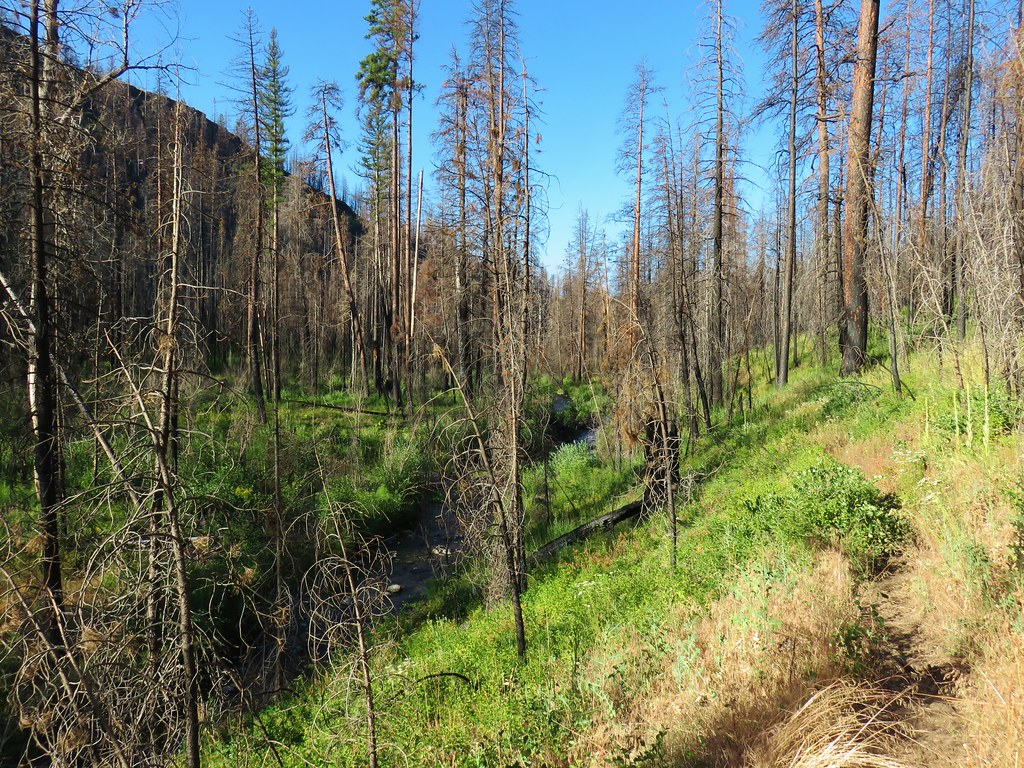
The entire area along the drive and much of the East Fork Canyon Creek Trail burned in 2015 so there wasn’t much in the way of signage for the start of the trail.
IMG_8905

It was just after 11:30 when we set off and it was already rather warm. The trail began by losing a bit of elevation before leveling off as it passed below some rocky cliffs.
IMG_8917

The lack of tree cover due to the fire didn’t help the heat situation but we did our best to distract ourselves from the heat by listening to the creek and looking at the flowers
IMG_8907

IMG_8919

IMG_8921

IMG_8923

For the first two and a half miles the trail passed through grassy meadows a bit away from the creek as it gradually climbed up the canyon.
IMG_8926

IMG_8927

IMG_8929

A little over two miles from the trailhead we spotted the equestrians setting up camp at the Yokum Corrals Camp.
IMG_8933

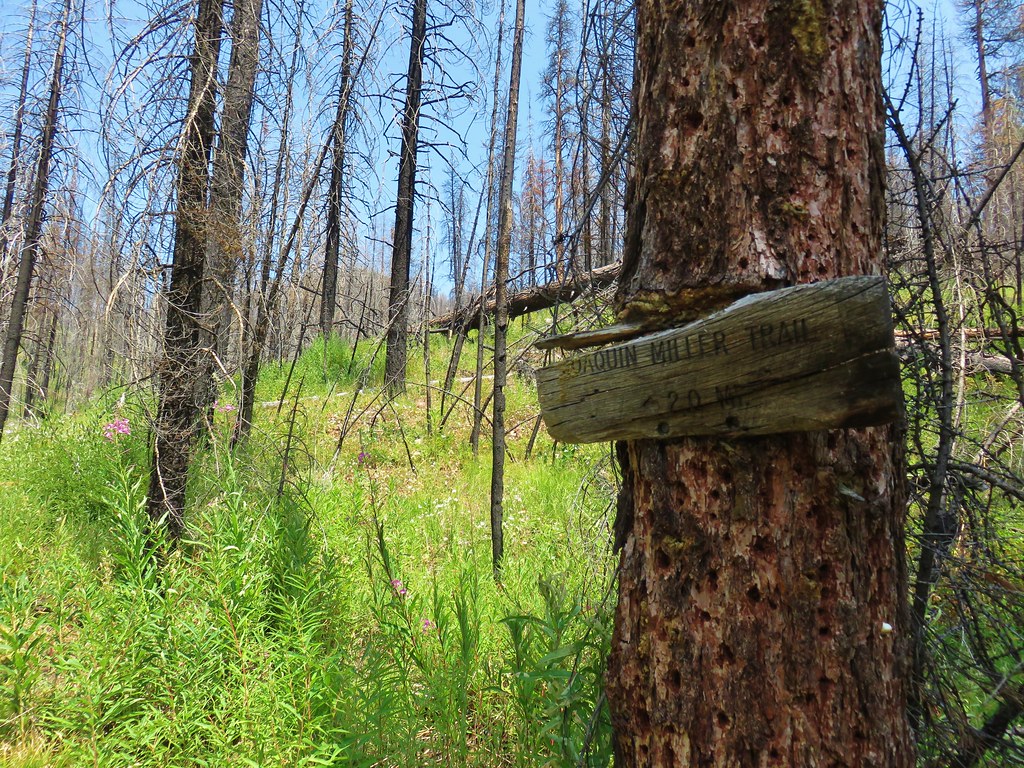
Three tenths of a mile from Yokum Corrals we came to a junction with the Tamarack Trail which led uphill to the Joaquin Miller Trail.
IMG_8938

IMG_8937Looking in the direction of the Tamarack Trail

The East Fork Canyon Creek Trail was becoming more and more overgrown in spots beyond the corrals.
IMG_8947

The vegetation wasn’t too difficult to push through but there were some thistles to avoid and I wound up with a few ticks on my pant legs. Heather was trying out a new pair of Insect Shield tights and they seemed to do the trick as we never did spot any attached to her. (She did wind up with a few mosquito bites during the trip tough.)
IMG_8947

Near the three mile mark we came to Brookling Creek.
IMG_8950

I made it across the creek dry footed but Heather decided to cool off by slipping on a rock and splashing down into the water. Luckily she wasn’t hurt, just wet and after wringing out her socks a bit we continued on. Approximately 1.7 miles from Brookling Creek we came to a fork in the trail where there was some orange flagging attached to a couple of trees.
IMG_9622

The flagging appeared to have at one time blocked off the left hand fork but it was now broken. According the Garmin and our guidebook the trail stayed on the left hand side of the creek and the right hand fork here seemed to just go down to the creek so we took the left hand fork. The trail was fine for a quarter of a mile but when we arrived at East Brookling Creek we couldn’t see where it was supposed to cross or where it continued on the far side. To make matters worse the creek was choked with debris and the far bank was rather steep so our options of where to cross were limited. We managed to find some logs that got us across the creek and then we crashed uphill through the brush.
IMG_8969

IMG_8971

We were able to pick up the tread again with the help of some green flagging but noticed that there was also a trail on the south side of East Fork Canyon Creek.
IMG_8972

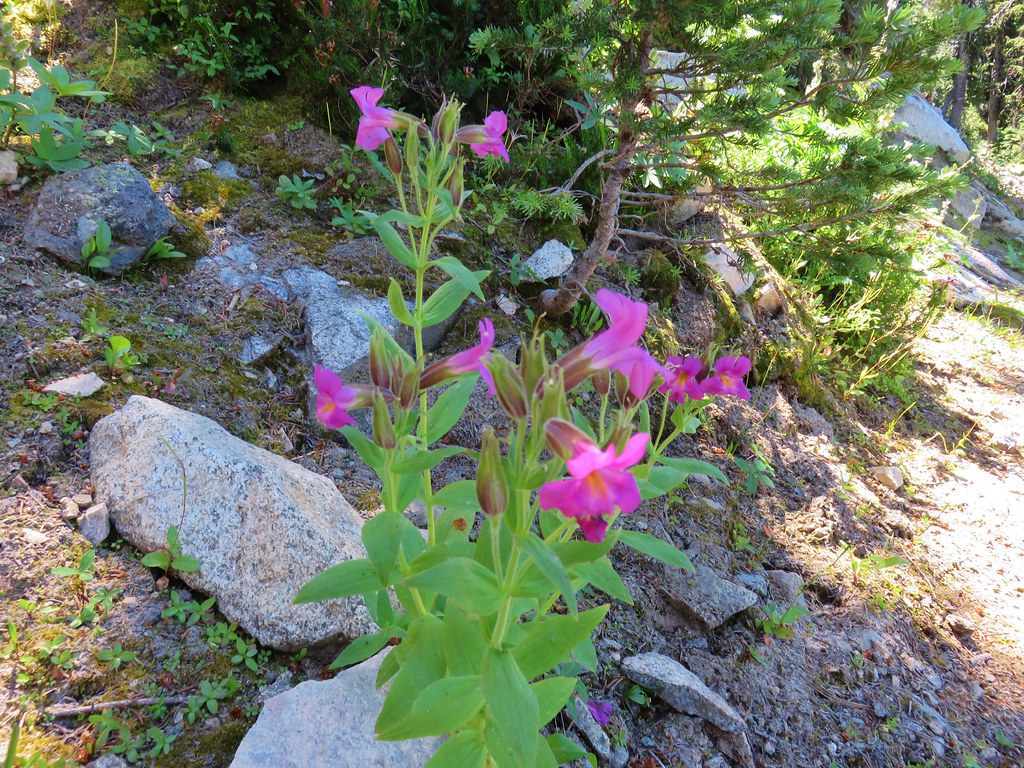
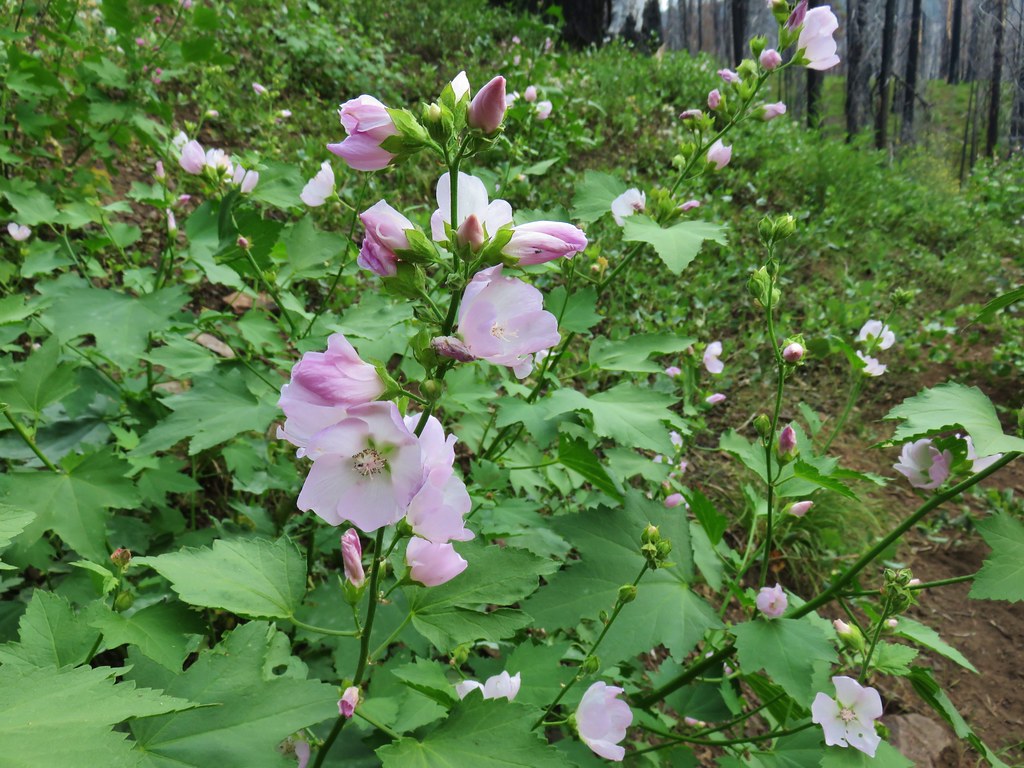
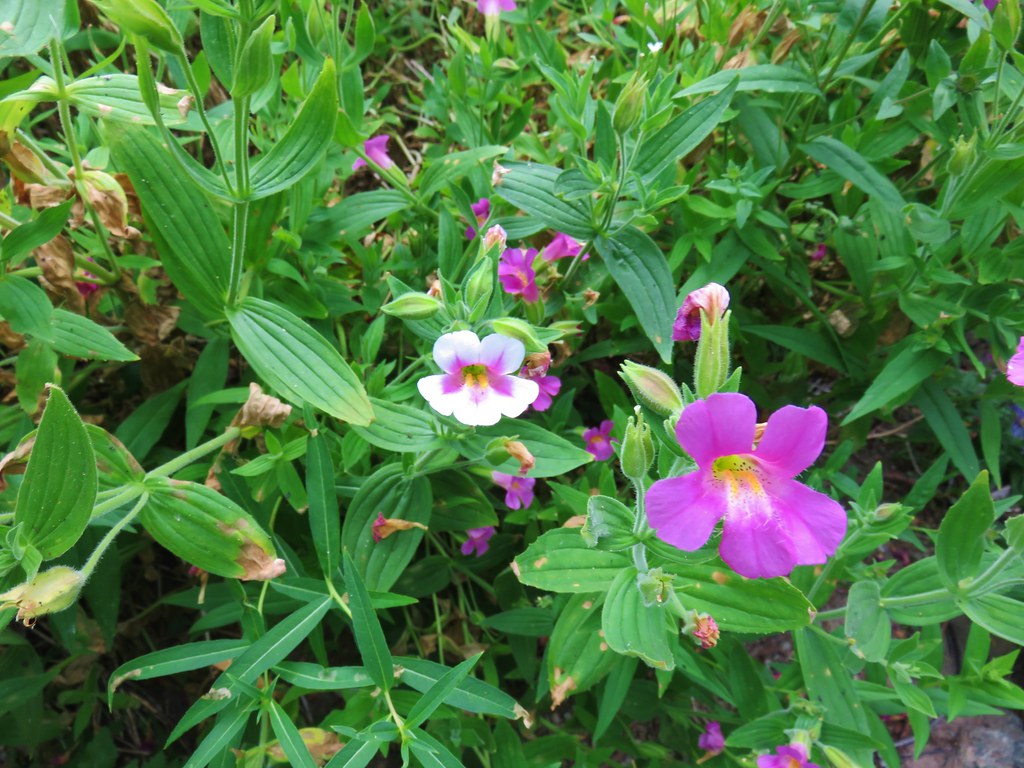
By that time we had already forgotten about the fork with the orange flagging and thought we had missed something near East Brookling Creek. A quarter mile beyond East Brookling Creek that trail recrossed East Fork Canyon Creek and rejoined the trail we were on. We were spotting more blooming flowers now including some light pink streambank globe mallow and dark pink monkeyflower.
IMG_8980

IMG_8995

IMG_8976

IMG_8979

IMG_8989

About a mile from East Brookling Creek we once again found ourselves on the wrong side of a creek,this time Miners Creek. This time we were on the south side when we should have stayed on the north side. We were doing our best to bushwack up the creek to a point where the trail was supposed to make a hairpin turn across the creek. It finally dawned on me that the trail was only 30 to 50 feet above us as it ran SW for a short distance after the 180 degree turn before rounding a ridge end and continuing NE. It was a steep climb but we managed to link back up with the actual trail. I headed downhill to the hairpin turn to see if there were possible campsites for our last night near the creek and thought I saw a couple of options. As I headed back up to Heather I regretted my choice as it was nearing 3pm and it was really getting hot out.

After climbing for another 1.2 miles we arrived at Hotel De Bum Camp. A large meadow with a campsite where it almost appeared a bum had lived. Someone had left lawn chairs and freeze dried meals at the site. By the looks of them they had been there awhile.
IMG_9001

IMG_9002

The meadow was nice though and our plan was for this to be our campsite for our final night of the trip. From the meadow there was a view of Indian Creek Butte which was a pretty sight but we also knew our destination for the day, Wildcat Basin, was over two and a half miles on the other side of it.
IMG_9003

From Hotel De Bum Camp the trail gained 500′ over the next mile to another meadow below Indian Creek Butte where there was supposed to be a trail junction.
IMG_9017

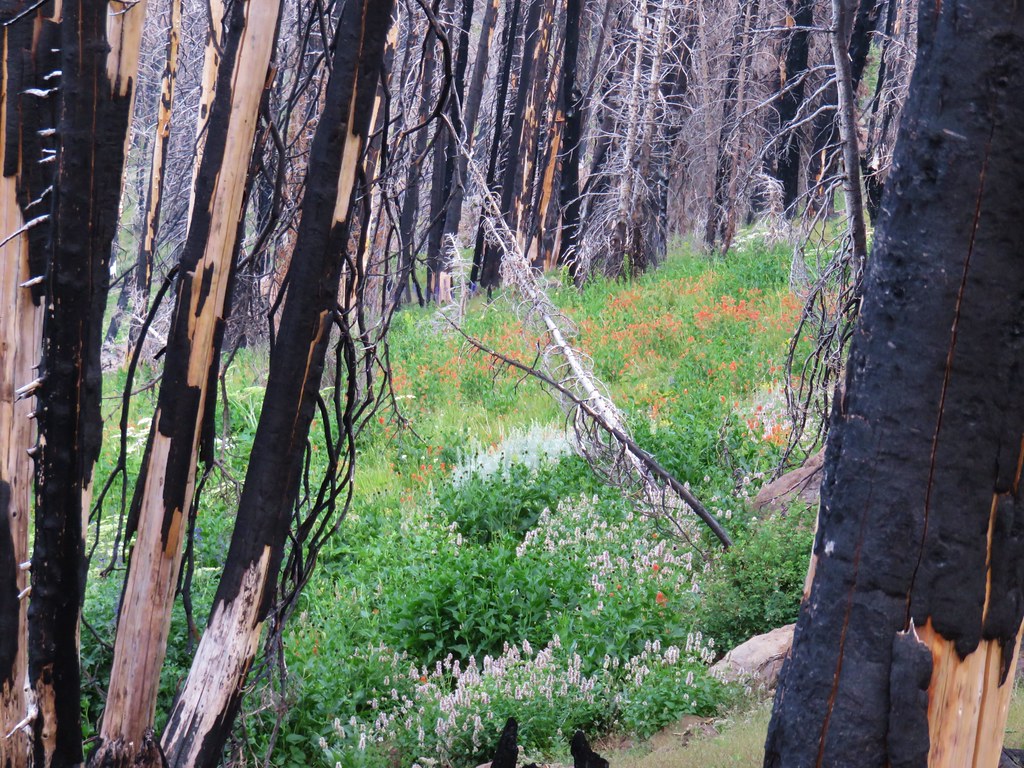
A nearby spring allowed for dense green vegetation and numerous wildflowers which appeared to have overtaken the trails in the area. We did find another set of lawn chairs at a nearby campsite and decided to take a short break and have dinner as well as try and cool down before pushing on.
IMG_9023

IMG_9018

IMG_9029

IMG_9020

When it was time to move on we did our best to follow some blue flagging through the vegetation, across the spring to the right.
IMG_9022Blue flagging is attached to a small burned tree 3/4 up the left hand side of the photo.

The next obstacle was a series of bent trees hanging over the trail.
IMG_9030

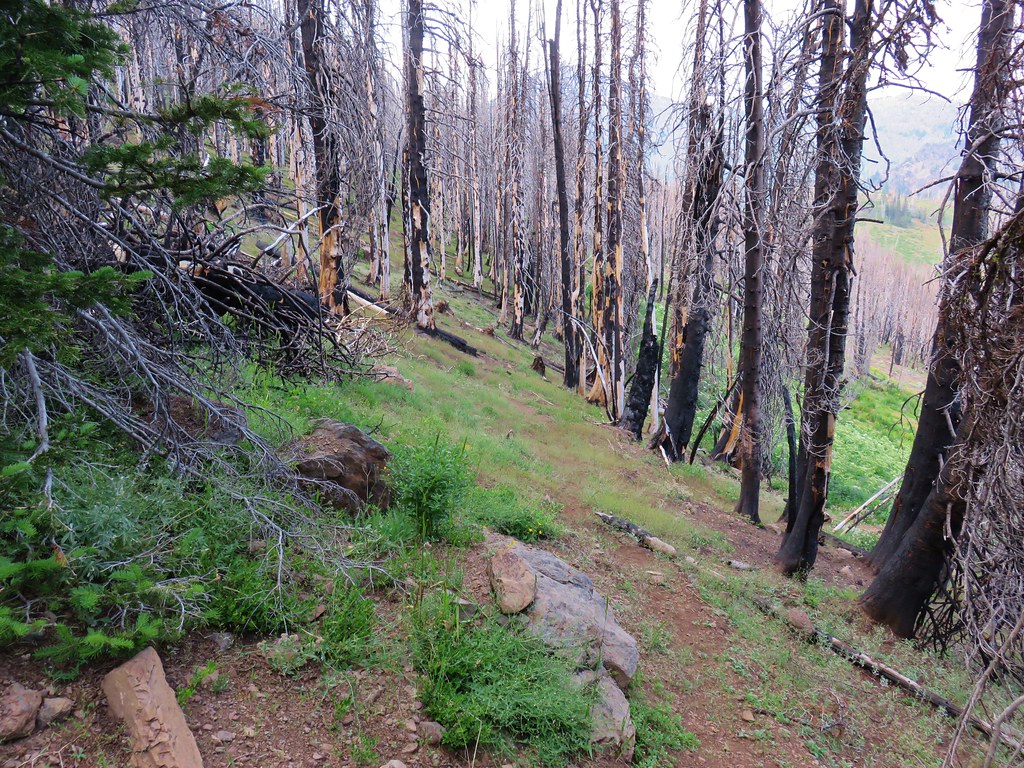
The trail then became a little easier to follow as it reentered the burned forest.
IMG_9031

We were on the .6 mile section of the Table Mountain Trail. After the .6 miles our route was to turn right up the Table Mountain A Trail (Trail 5000) which is a mile long connector between the Table Mountain and Pine Creek Trails. We missed the faint unsigned junction at first but quickly realized our mistake (we would do the same thing on the way back three days later).
IMG_9034

The Table Mountain A Trail was a mess at this end. Faint tread lead through tall brush with sporadic flagging or an occasional cut log as the only real indication that we were still on the right course.
IMG_9035

That only lasted about a tenth of a mile and then the tread completely vanished.
IMG_9041

We waited a little too long before consulting the GPS and wound up swinging too far to the SE and adding a tenth of a mile to our hike. After checking the GPS we worked our way back toward the trail (as far as we could tell it really was where the GPS said it was this time) and managed to pick it back up at some cairns amid unburnt trees.
IMG_9047

IMG_9050

It was after 6pm now and some clouds were helping to cool things down as we made our way around the SE side of Indian Creek Butte.
IMG_9051

IMG_9054

The trail was faint here too but were able to stick relatively close to it as we passed some nice wildflowers which we were too hot and tired to fully enjoy at that point.
IMG_9056

IMG_9057

IMG_9073

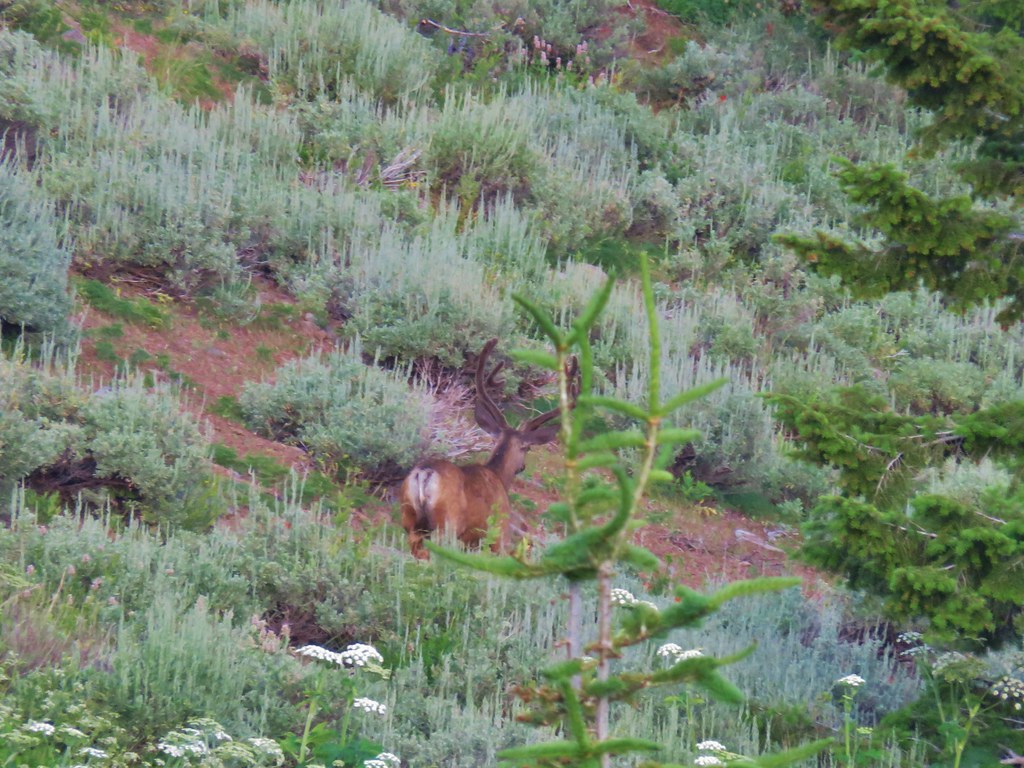
We did however stop to watch a nice buck pass through the brush below us.
IMG_9060

IMG_9064

At 6:45pm we spotted a downed trail sign in the distance marking the junction with the Pine Creek Trail.
IMG_9076

IMG_9078

Here we turned right onto the similarly faint Pine Creek Trail.
IMG_9083

Once again the wildflowers were nice but we were now on a mission.
IMG_9085

IMG_9088

IMG_9094

Just over half a mile from the junction we came to a viewpoint with a good look at Strawberry Mountain.
IMG_9107

The trail continued along a ridge with Indian Creek Butte and the Sun behind us and a rocky ridge top and the Moon ahead.
IMG_9117

IMG_9118

Wildcat Basin was on the other side of that rocky ridge. A total of 1.4 miles from the previous junction we arrived at another junction.
IMG_9119

We stayed right keeping to the Pine Creek Trail and passed to the SE of the rocky ridge.
IMG_9120

The trail descended past some white volcanic ash formations.
IMG_9122

IMG_9124

Soon the trail found some green trees below striped cliffs.
IMG_9132

A mile from the junction we arrived at the meadows of Wildcat Basin and another trail junction.
IMG_9139

IMG_9141

A very short distance to the east from the junction was Wildcat Spring and a campsite where we eagerly refilled our now empty bladders and set up our tent.
IMG_9142

IMG_9145

It was a little after 8pm by the time we were settled and we went straight to bed hoping that the going would be a little easier on day 2 with an earlier start and better traveled trails. Despite the issues it was still nice to see all the new scenery and wildflowers. Happy Trails!

Flickr: Strawberry Mountain Wilderness Day 1

Categories
Bend/Redmond Central Oregon Hiking Oregon Trip report

Boyd, Arnold, Hidden Forest, and Pictograph Caves (sort of)

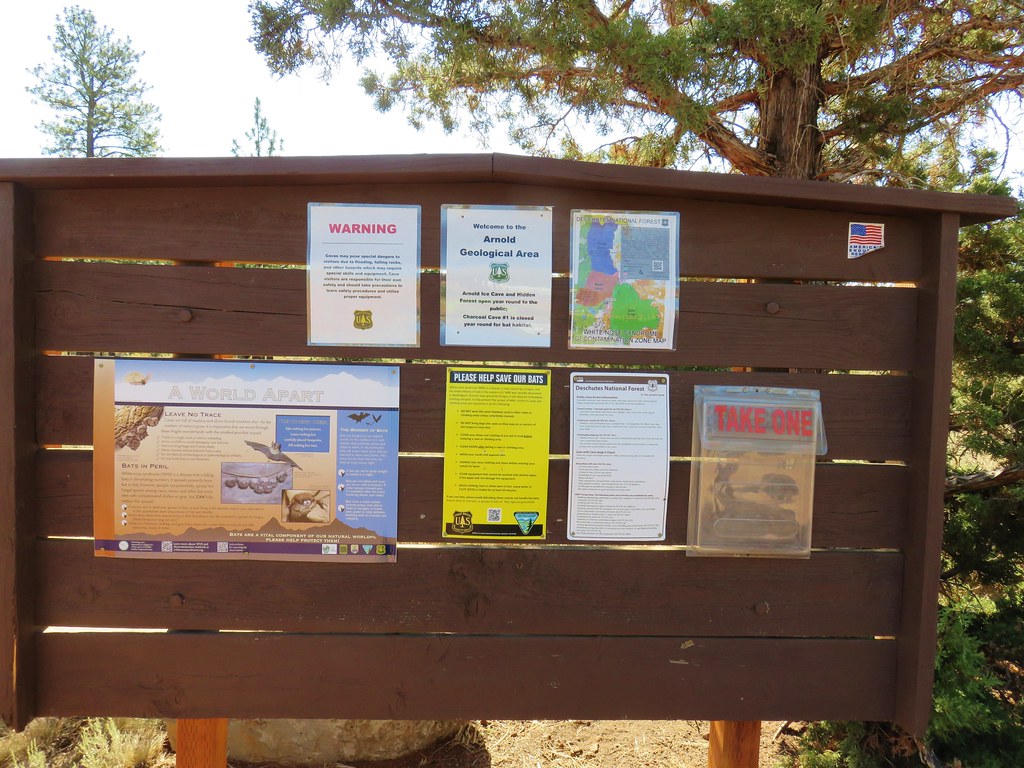
Our hike along French Creek Ridge (post) officially kicked off our July vacation it was the following day that we left home and headed for Central Oregon. We were ultimately heading to the Strawberry Mountains but we stopped in Bend to visit Heather’s parents and also to check out a few of the caves off China Hat Road. (Whenever visiting caves please be aware of White-Nose Syndrome and help protect bats.)

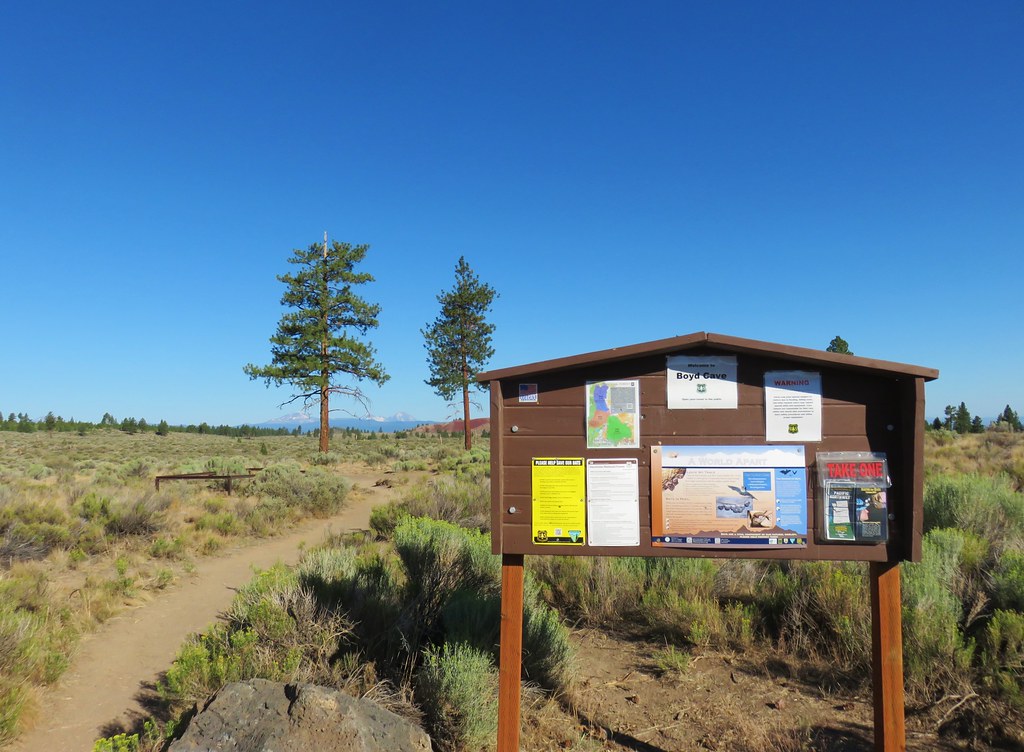
Our first stop was Boyd Cave.
IMG_8788

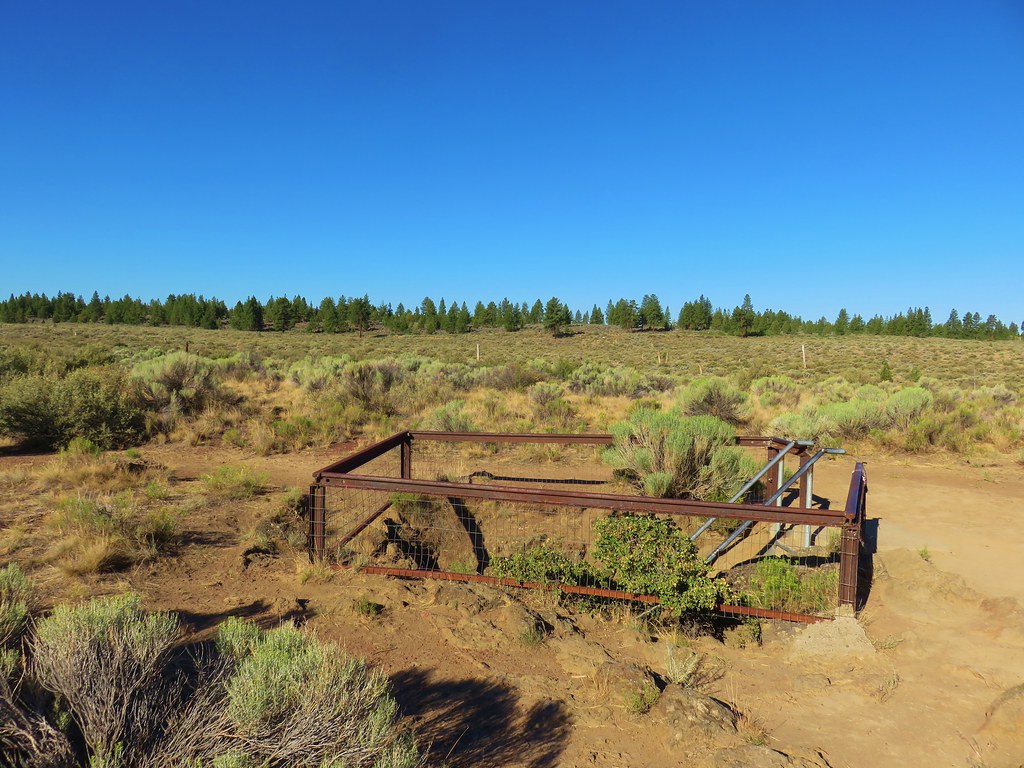
A short dirt path from the day use area led to the railed entrance of the lava tube.
IMG_8791

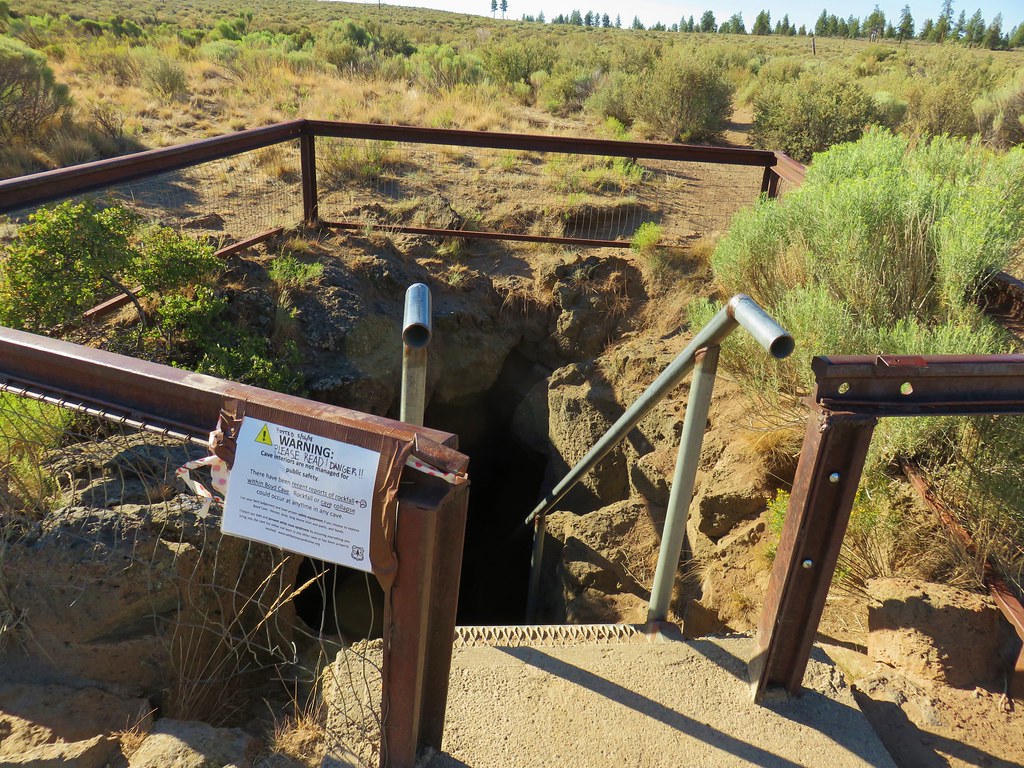
There was a rockfall warning at the entrance dated 5/26/18.
IMG_8792

We proceeded with caution down into the cave.
IMG_8795

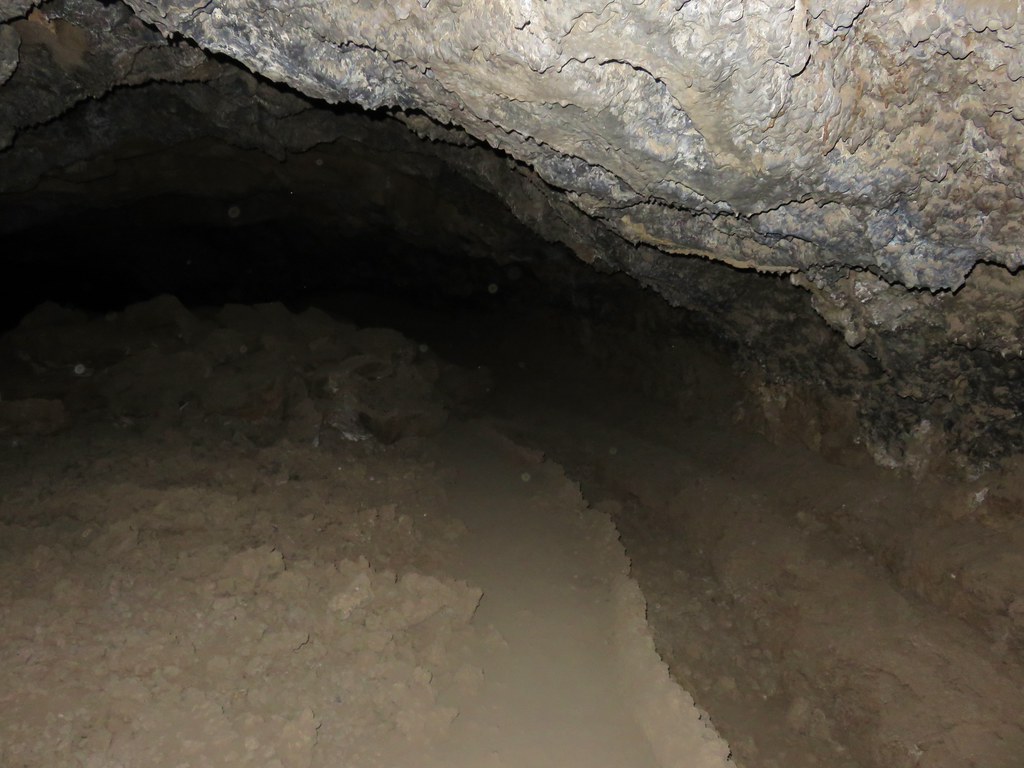
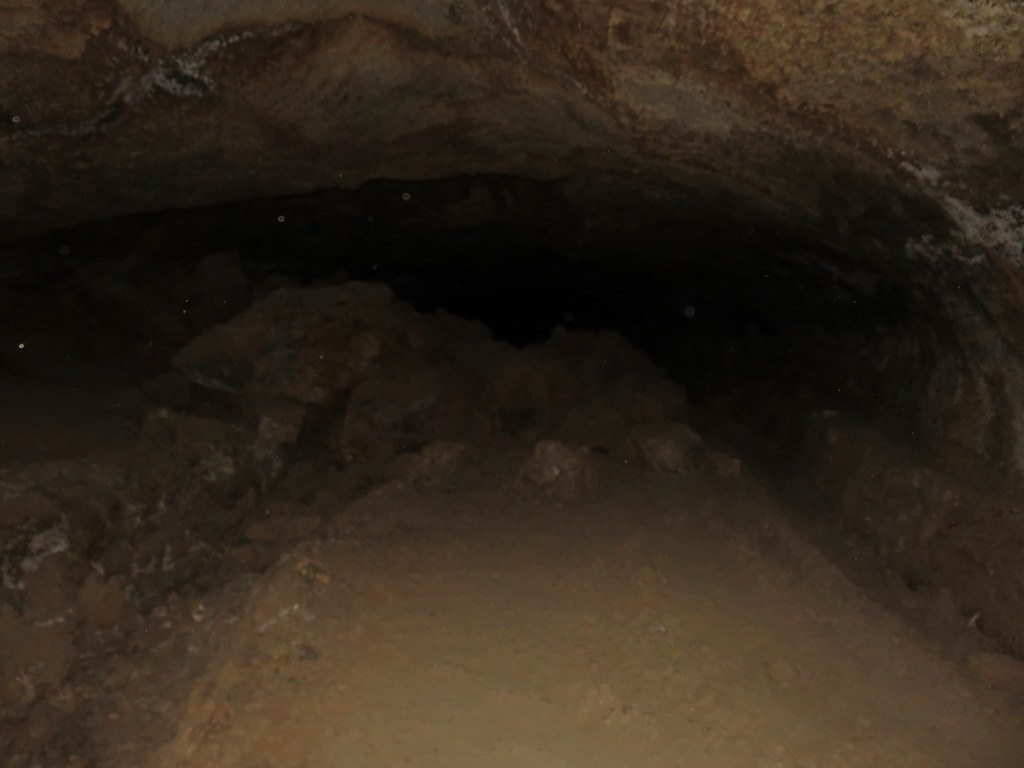
The cave was spacious with varying terrain on the cave floor.
IMG_8799

IMG_8803

IMG_8804

The cave extends for about half a mile to the left from the entrance and a very short distance to the right.
IMG_8815

We explored as quickly as the terrain allowed given the warning at the entrance and then headed for our next stop at Arnold Ice Cave. To reach the parking area from Boyd Cave we continued east on China Hat Rd. an additional 3.1 miles and turned right onto FR 300 for half a mile to a parking area at a signboard.
IMG_8816

The entrance to Arnold Ice Cave is located just beyond and to the left of the parking area.
IMG_8817

A path led down to the entrance where a semi-steep scramble past the remains of a staircase led down to the cave floor.
IMG_8819

IMG_8829

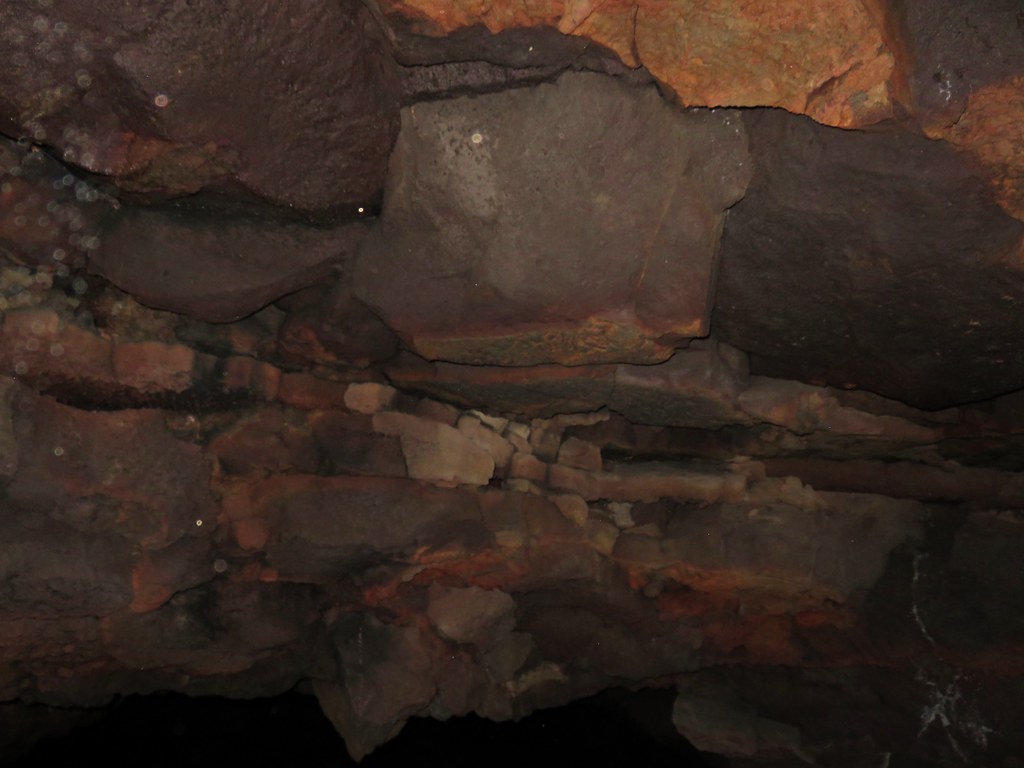
In the early half of the 1900’s ice from the cave was harvested for use by locals but that ended with the advent of refrigeration and since then at least a half-mile of the cave has become inaccessible as the ice has reclaimed that portion. It was too warm for any ice in the accessible part of the cave during our visit but there were some interestingly colored rocks along the ceiling.
IMG_8824

The cave extended just far enough to lose the light of the entrance before forcing us to turn around and climb back out.
IMG_8826

IMG_8831

A more interesting cave (at least nowadays) was our next goal. Hidden Forest Cave is approximately a quarter mile from Arnold Ice Cave. To reach the cave we followed a dirt track south from Arnold Ice Cave.
IMG_8835

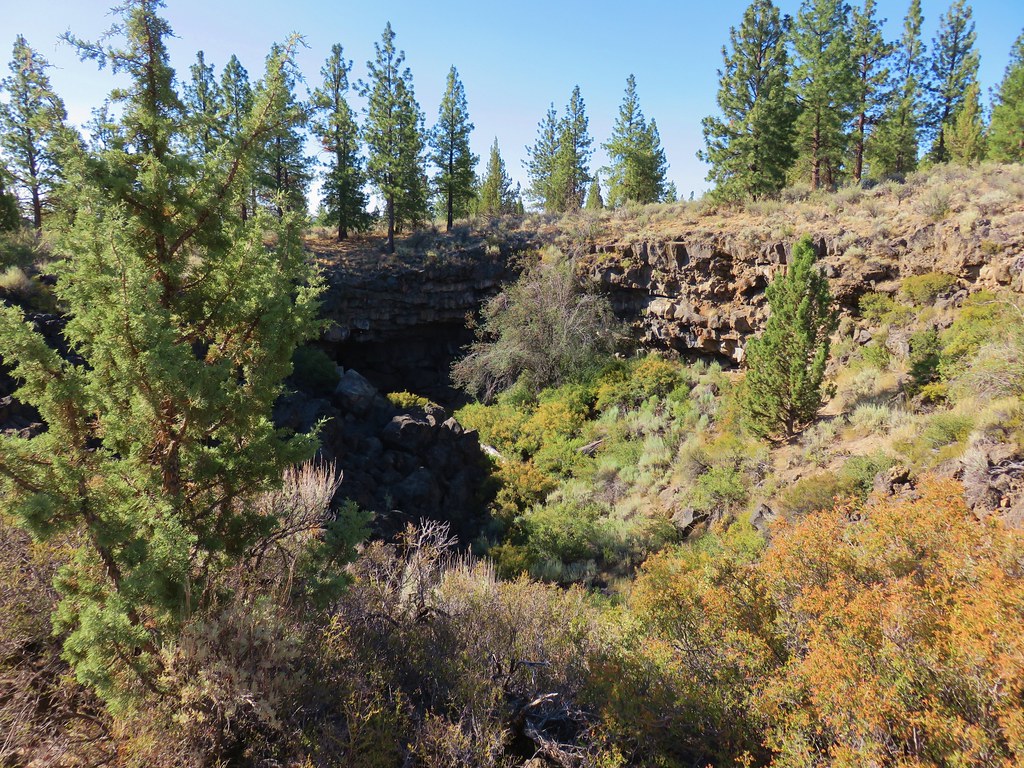
This path quickly passed to the left of a pit where we kept straight on what became a narrower footpath after crossing another old roadbed. Soon we passed a second pit on our right.
IMG_8838

We kept close to the rim of this pit on the left then shortly after passing the second pit we crossed a second sandy roadbed and arrived alonside a third pit.
IMG_8840

The entrance to Hidden Forest Cave lay at the NE end of the pit but the way down into the pit lay at the opposite end. We walked along the rim past a really colorful tree trunk and met a few of the locals.
IMG_8846

IMG_8842

IMG_8843

IMG_8844

We followed a path down into the pit where we found a few wildflowers blooming.
IMG_8848

IMG_8849

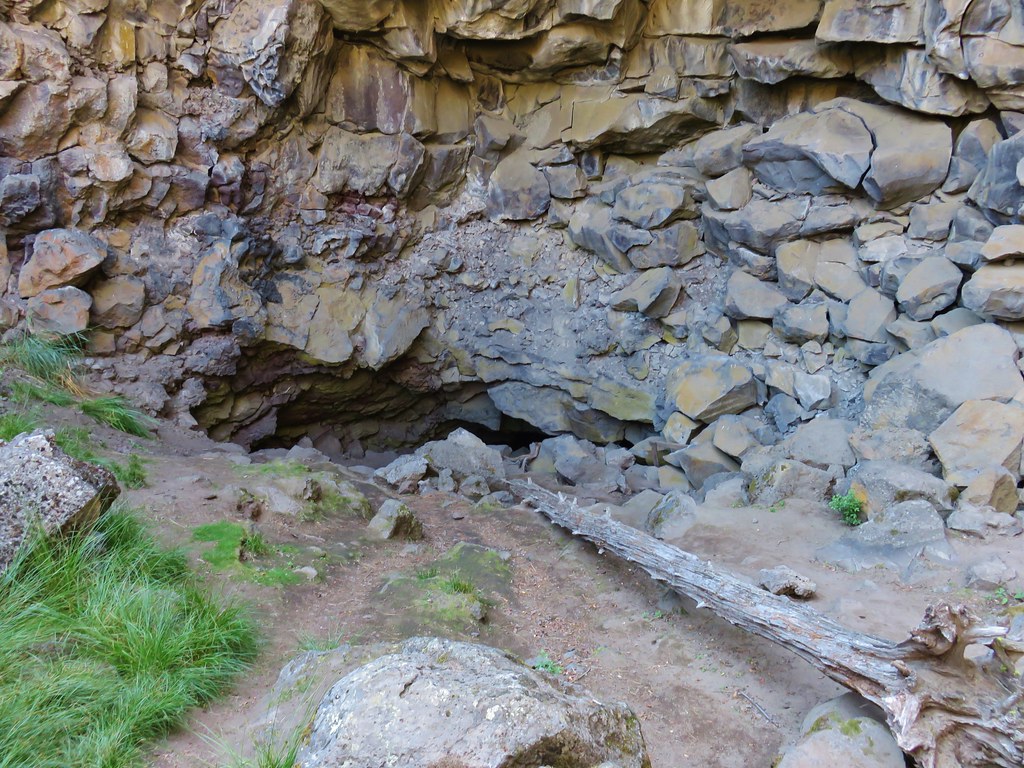
At the far end of the pit was the entrance to the cave.
IMG_8855

IMG_8857

The cave was a fairly short scramble to a small opening.
IMG_8859

Climbing out of this opening brought us to the floor of the second pit we had passed.
IMG_8860

IMG_8861

After exploring this “hidden forest” we returned through the passage and headed back to our car.
IMG_8863

Our final stop for the day was along the closed Wind Cave entrance road. The small parking area is located along FR 200 which was just over a half-mile back along China Hat Road from FR 300 (2.5 miles east of the Boyd Cave entrance road). A stop sign on the north side of China Hat Road marks the correct road.
IMG_8865

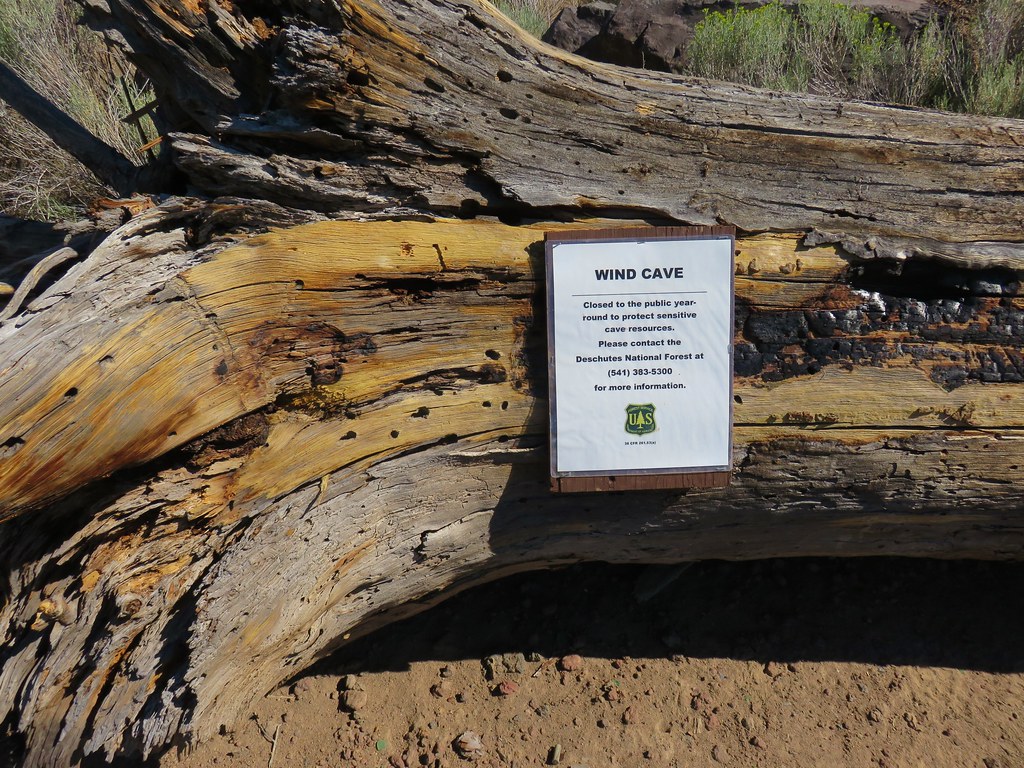
Wind Cave is closed year round to the public for bats but we hoped to visit Pictograph Cave which according to our guidebook and everything we could find online was only closed from October 15th – May 1st. In order to reach Pictograph Cave we followed the closed road for half a mile to the Wind Cave Parking area. Along the road we spotted some really bright Indian Paintbrush amid the sagebrush.
IMG_8867

IMG_8869

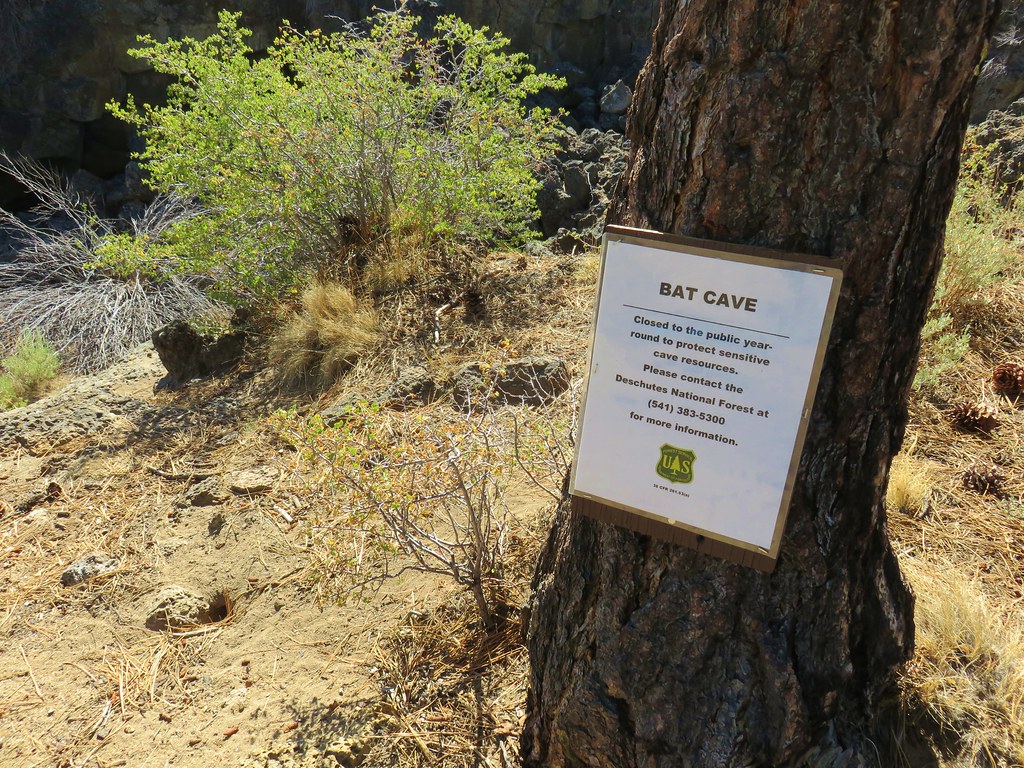
We also found the Bat Cave but there was no sign of Batman.
IMG_8873

IMG_8874

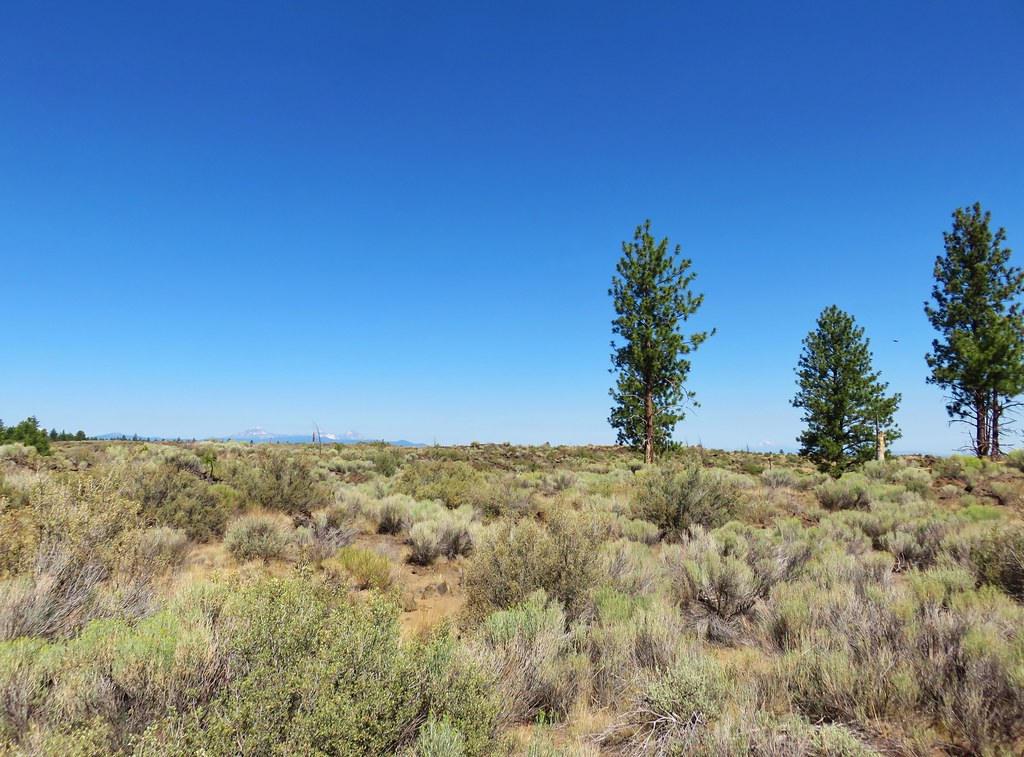
There was also a nice view of the snowy Cascades across the sagebrush of the high desert.
IMG_8875

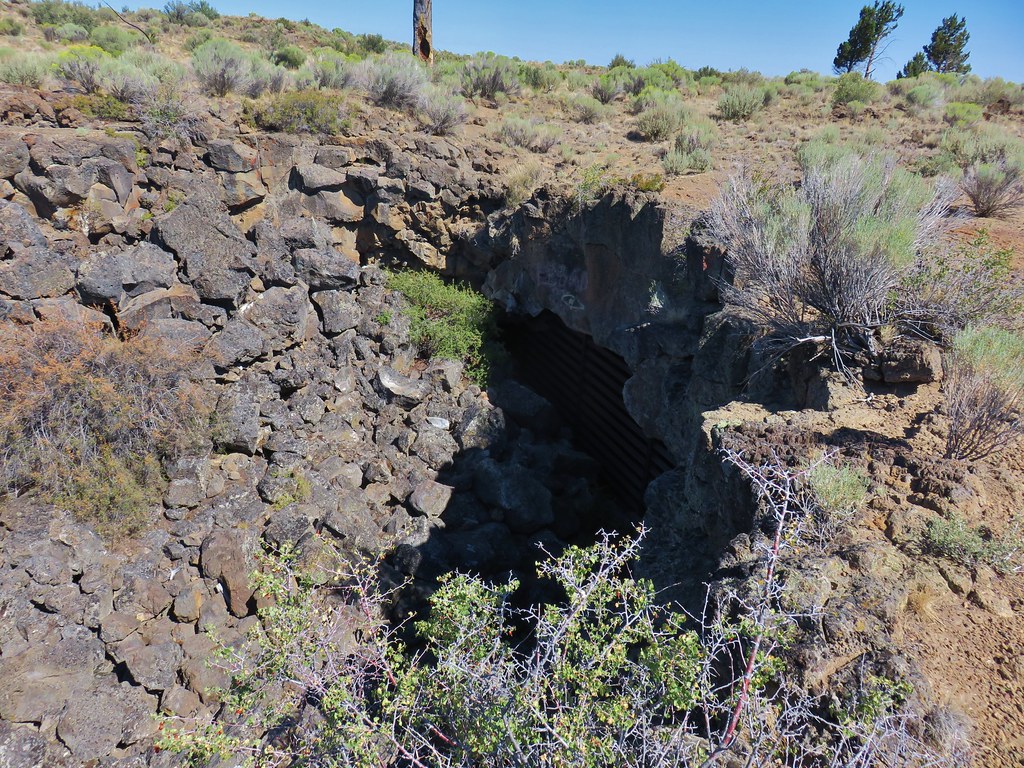
We arrived at the gated Wind Cave where our guidebook directed us to “..continue NE on the sandy double track road..”.
IMG_8876

IMG_8877

This is where our day began to get really interesting. The correct sandy double track was blocked by the log where the Wind Cave closure sign was attached as well as several boulders. A second sandy double track led directly north from Wind Cave past the covered entrance to its skylight.
IMG_8880

We hadn’t seen the correct track and hadn’t paid enough attention to the N versus NE direction this track was heading in and we just kept walking. We were supposed to follow the double track for approximately .7 miles to a gate with a railroad tie. After passing through the gate we were supposed to veer left and quickly pass through another barbwired fence before passing between two signed caves. The guidebook also said that if we crested a rise and could see the Cascade Mountains we’d gone too far. That last part had us really confused because we had been able to see the mountains the whole time as we followed the track we’d chosen. There was another set of footprints in the sand though so we followed them as the track became fainter. The scenery was nice and we spotted several birds including a few hawks and Heather noticed a pygmy short horned lizard.
IMG_8881

IMG_8882

After about fifteen minutes we’d completely lost the track and footprints and realized we’d done something wrong. I should have set up a waypoint on our GPS marking the cave location but hadn’t so using it was no real help. Luckily Heather had signal just long enough to pull it up on Google Maps on her phone. We used her phone to navigate towards the caves location but it wasn’t ideal. First off it was a lot harder to see exactly where we were in relation to the cave location using the phone vs the Garmin and secondly locations on Google Maps are not always correct (sometimes they are way off). We had already gone a little over half a mile and we wandered for another .9 miles in a wide arc in the direction shown on the phone before seeing what looked like it might be a cave near a barb wired fence.
IMG_8886

It didn’t seem to match the description in the book but it was near the point shown on Google so we headed over to check it out.
IMG_8888

It turned out to be a very shallow overhang.
IMG_8890

At some point Heather’s phone ran out of power so we were once again left with only the Garmin which was still no help in this case. The immediate area we were in had several promising looking features and we wandered to the NE a bit checking possibilities. I finally spotted what appeared to be two sets of short sign posts amid the sagebrush way off in the distance. We headed over to check them out since the book had mentioned such signs. As we approached the nearest pair we spotted a large pit.
IMG_8894

IMG_8895

That was the SW opening with no way down. Just across from it was the NE pit which is the explore-able one only the restrictive sign indicated that the cave was now closed year round to protect bat habitat.
IMG_8899

We stopped at the pits edge honoring the closure sign and were not able to pick out the pictographs near the right hand tunnel. At the time we weren’t entirely certain that these were indeed Pictograph Cave due to year round closure and not having followed the directions to get there.
IMG_8900

IMG_8901

We were hot and dusty and had hiked two and a half miles on what was supposed to be a 2.4 mile hike. At least from the cave we were able follow the guidebook directions backwards. We followed a dirt track SSE for .4 miles where we arrived at a railroad tie gate. Before passing through the fence we followed another track east now not being able to remember if after passing through the gate the guidebook had said veer left or right (we had left the book in the car opting to rely on pictures taken with the now dead cell phone). After a short distance we decided that we were on a wild goose chase and the pits we had seen must have been Pictograph Cave. We hiked back to the gate and passed through continuing on the sandy track. We soon ran into a family who asked us if this was the way to Pictograph Cave. We said we thought so explaining that we’d taken a wrong turn and come in form another direction, but there were two signed pits along the track. We continued on eventually arriving back at the Wind Cave turnaround where we discovered how we’d missed the correct sandy track.

We walked back along the road to our car and began to head back toward Bend. We had been hoping to go to the High Desert Museum after the hikes. Despite having spent a lot more time hiking to Pictograph Cave we still would have had 4 plus hours to spend there but two things happened on the drive back, a fire broke out near Bessie Butte along China Hat Road and our battery warning light came on. The fire was far enough off the road that it wasn’t closed yet as we passed by the first firetrucks on scene. Luckily the fire was controlled quickly and didn’t become a major incident.

The battery light was more of an issue. It was Sunday so many places weren’t open and all our user manual said was to stop driving immediately and call a dealer. That wasn’t an option on a forest service road with a fire nearby so we drove into Bend and stopped at the Toyota dealer but they didn’t have any mechanics on duty and couldn’t help. Next we tried a Valvoline Instant Oil but their battery tester was dead. From there we stopped at Baxter Auto where the store clerk was able to test the battery which was low, but that wasn’t necessarily the problem. It could be any number of things related to the electrical system but without a mechanic to check we couldn’t be sure. We then drove to a second Valvoline where, even though it was a long shot, we replaced the battery in hopes that it might work. It didn’t which meant it was likely the alternator. Our vacation plans were suddenly in flux.

We decided to rent a car Monday morning and go ahead with our planned backpacking trip and then we would try and get the car fixed at the end of the week when we returned. Thankfully Heather’s parents offered to take the car in Monday morning for us though and have any necessary repairs done while we were away.

With the plan set we reserved a rental to be picked up at 7:30 from Enterprise and then we realized that we hadn’t remembered our water filter. It was getting close to closing time for the few stores that were still open on a Sunday evening and Heather ran out to Big 5 in hopes of picking up a spare filter. They didn’t have any in stock so she wound up with Potable Aqua Water Purification Tablets. We hadn’t used the tablets before so this was going to be interesting. It was starting out to be quite the memorable vacation. Happy Trails!

Flickr: Boyd, Arnold, Hidden Forest, and Pictograph Caves

Categories
Bull of the Woods/Opal Creek Hiking Old Cascades Oregon Trip report

French Creek Ridge

**Note the 2020 Beachie Creek Fire burned the area covered by this hike.**

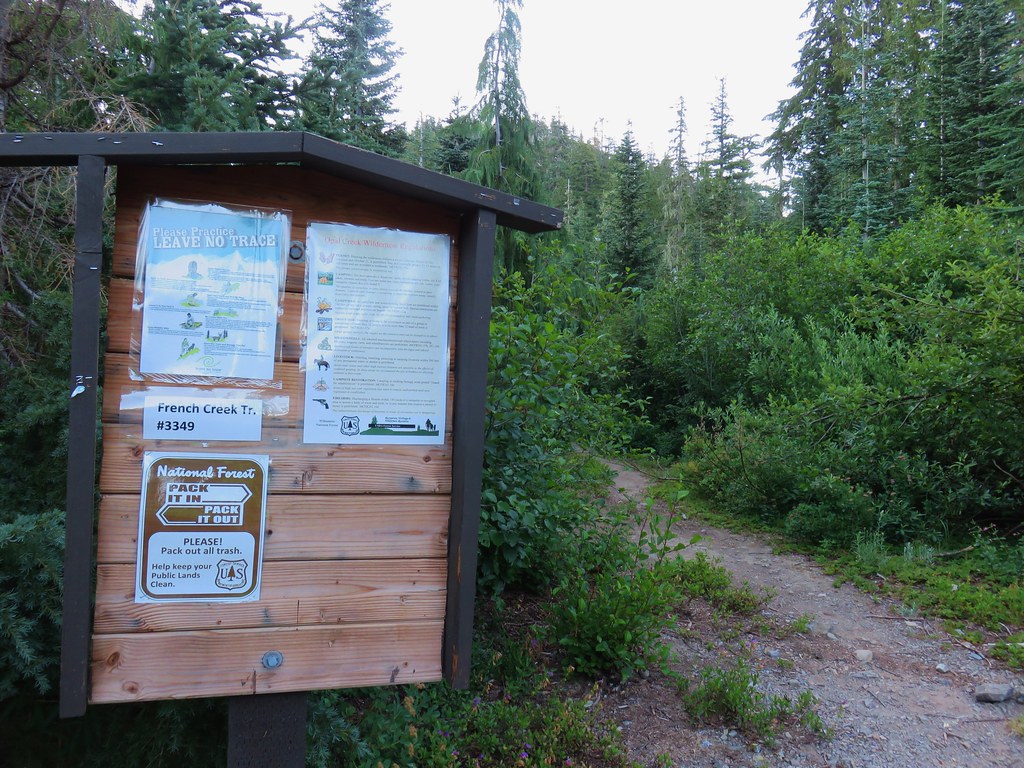
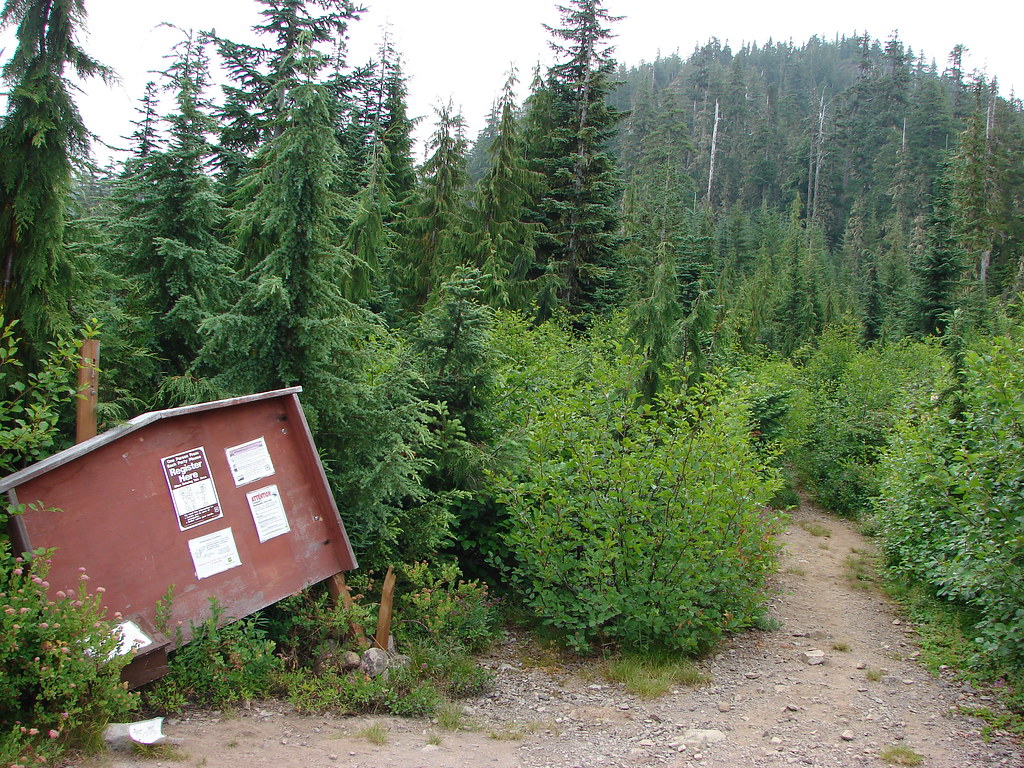
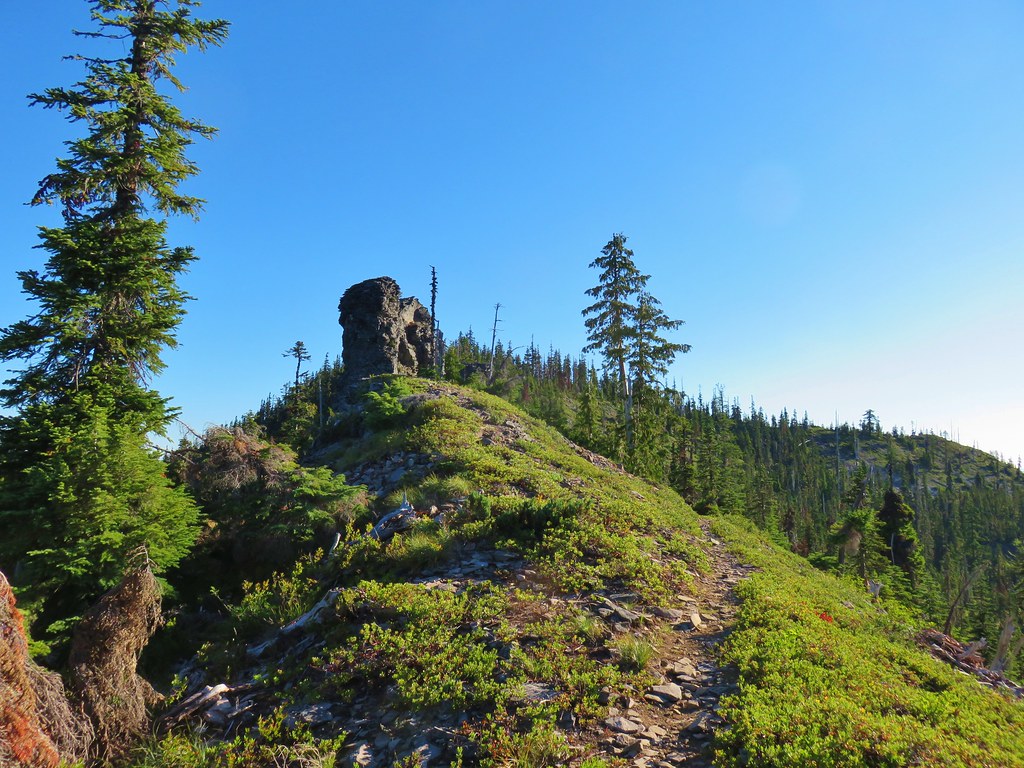
After visiting the Bull of the Woods Wilderness on our previous hike we paid a visit to the neighboring Opal Creek Wilderness. Our choice of trail was the French Creek Ridge Trail staring at the west trailhead. We had been to this trailhead before when we headed east from the trailhead to Phantom Bridge in 2011. (post) The road to the trailhead was in worse shape than we’d remembered including a short section of narrow road along a steep drop off with some trenching and potholes. It was only a couple hundred feet but it didn’t look like it would take much for that section of FR 2207 to become impassible.

Road 2207 was worse for the ware but that wasn’t the case at the trailhead where the sign board was in better shape than the one that had been present in 2011.
IMG_8579

French Creek Ridge Trailhead

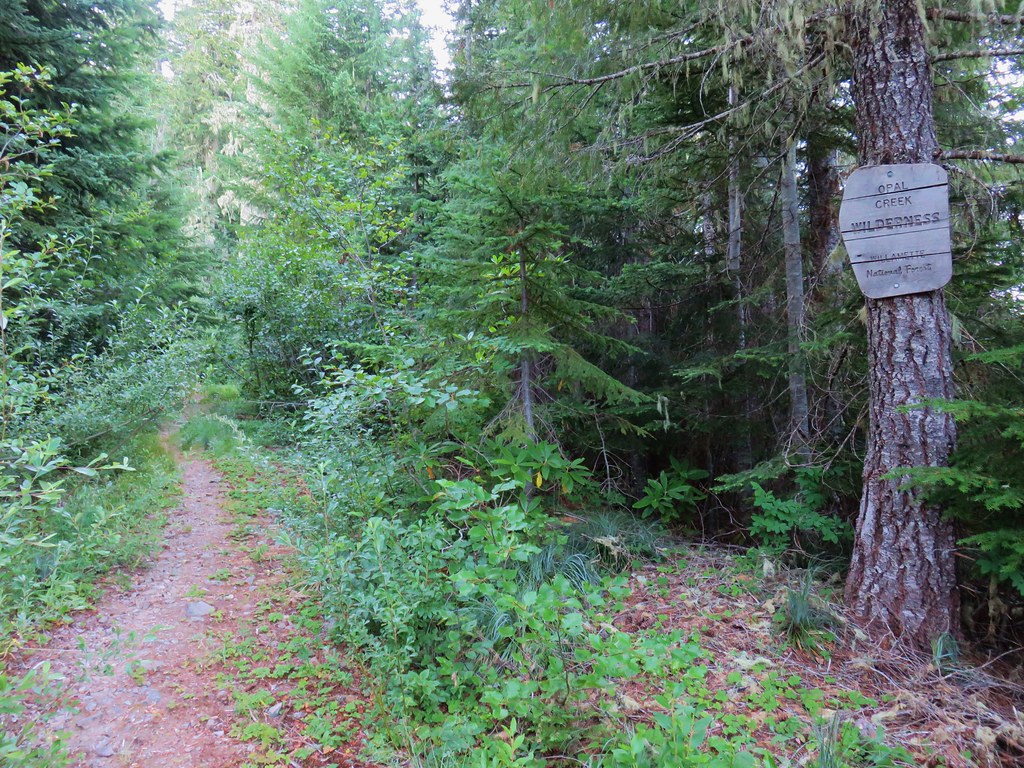
We headed down the trail following an old roadbed into the Opal Creek Wilderness.
IMG_8582

The lightly used trail suffers a bit from a lack of maintenance but there were some signs that the first bit of trail had seen some recent brush removal.
IMG_8589

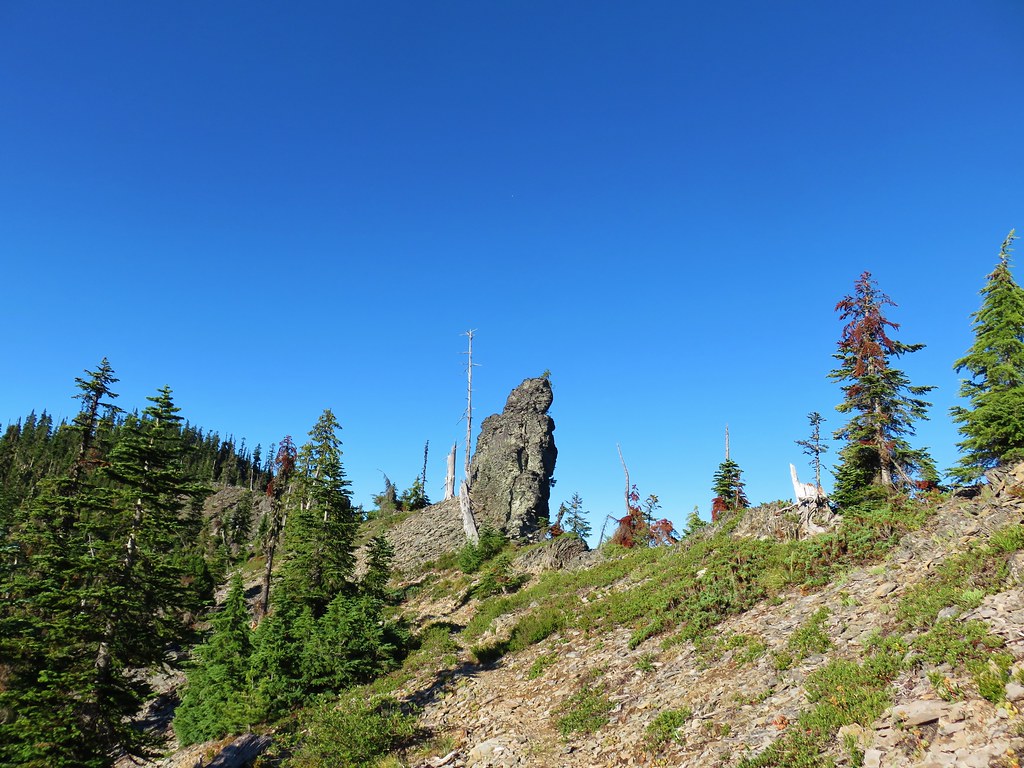
The trail passes the Marten Buttes on the north side of the ridge beneath some impressive basalt cliffs. Along this stretch were some open views across the Opal Creek Wilderness.
IMG_8596

IMG_8598

IMG_8599

IMG_8604

When the trail was crossing over talus slopes it passed through a mixed forest with a few remaining wildflowers.
IMG_8609

IMG_8611Washington lilies

IMG_8774Penstemon

IMG_8782False hellebore

After a mile and a half we crossed over a saddle to the south side of the ridge. Looking back to the west we could see one of the Marten Buttes.
IMG_8638

Views from this side of the ridge also included several Cascade peaks.
IMG_8646

IMG_8644Mt. Jefferson

IMG_8635Mt. Washington, Broken Top and the Three Sisters with Coffin Mountain in the foreground.

The brushing out of the trail only covered a bit of the trail at the beginning and now it was a bit more overgrown when it wasn’t passing through the rockier sections.
IMG_8647

Luckily much of the trail did pass through rocky sections as it bounced from the south to north side of the ridge then back to the south again.
IMG_8673

IMG_8682

IMG_8685

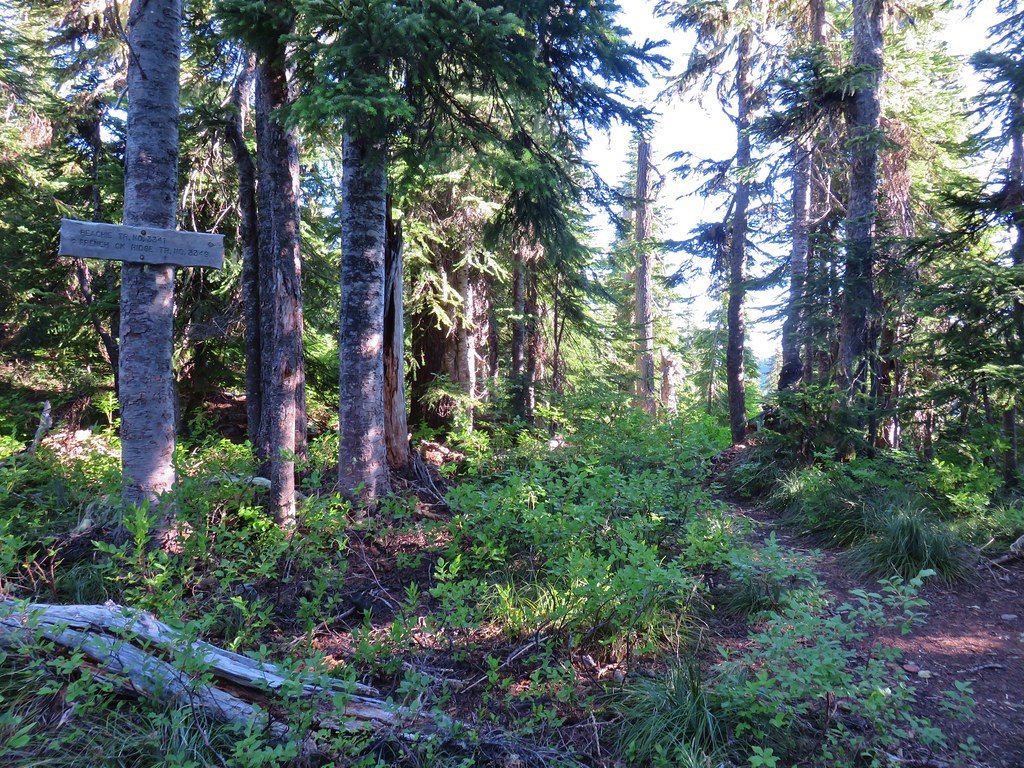
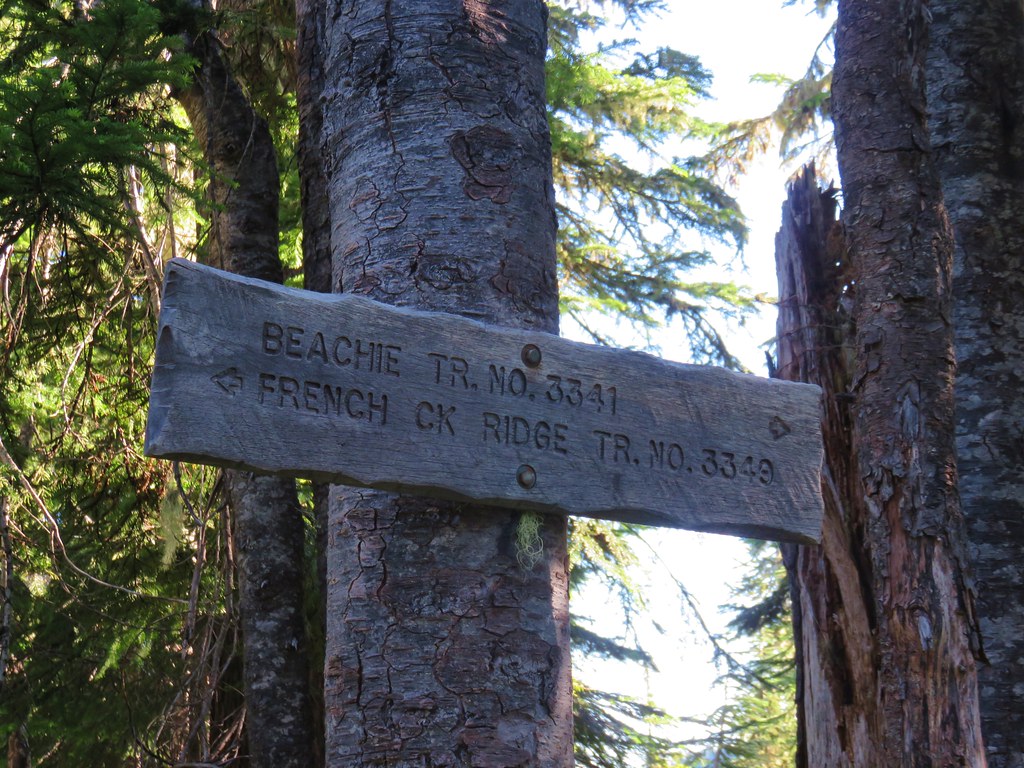
After approximately 2.75 miles we arrived at a signed junction with the Beachie Trail.
IMG_8692

IMG_8690

We took the left fork and followed the Beachie Trail steeply downhill for a little over a quarter mile before climbing an additional quarter mile back to the ridge top. This section was extremely overgrown but well marked by pink flagging.
IMG_8695

IMG_8710

We then followed the trail uphill along the ridge for another .7 miles. The official trail bypasses the summit of Mount Beachie but not by much and a short bushwack led us to the small flat summit.
IMG_8736

Smoke from wildfires made for a hazy view but with the naked eye peaks from Mt. Adams south to Diamond Peak were visible except for Mt. Hood which was hidden behind Battle Ax Mountain in the Bull of the Woods Wilderness (post)
IMG_8730Mt. Adams

IMG_8724

IMG_8728Battle Ax Mountain

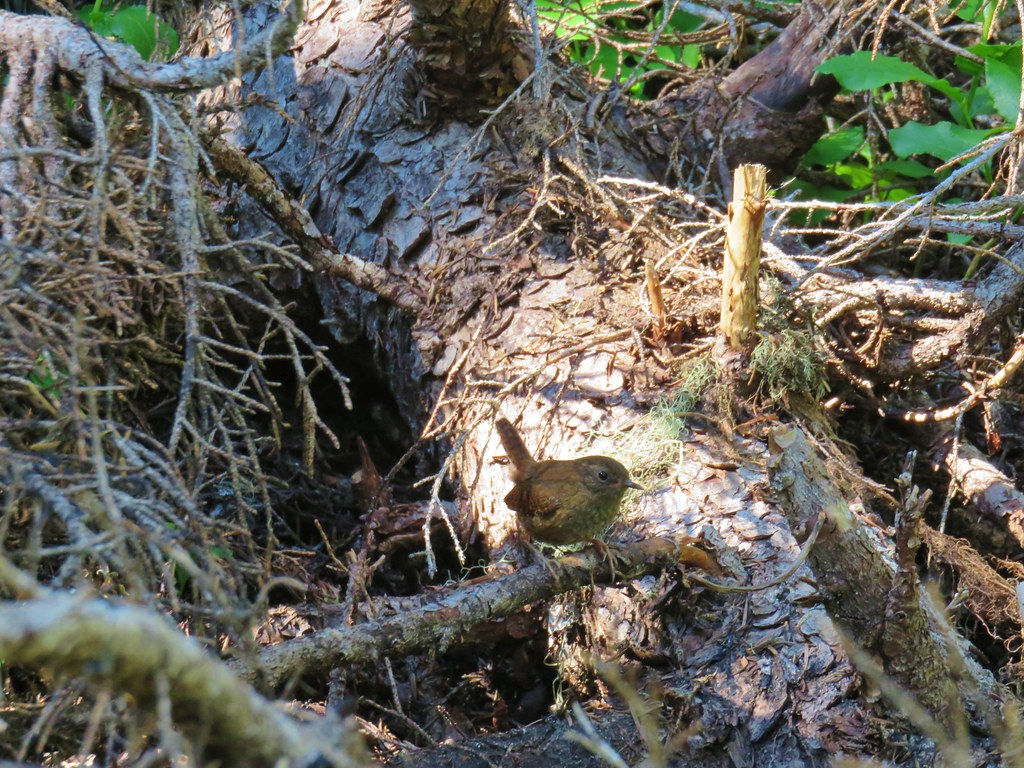
We sat at the summit for a bit before heading back. On the return trip the butterflies were out and so was a friendly wren who posed for a bit before disappearing into the forest.
IMG_8705

IMG_8767

IMG_8777

IMG_8762

The round trip was approximately 8 miles with just under 2000′ of cumulative elevation gain. Most of the flowers were past so an early July visit would likely be better timing for those. There were a few mosquitoes present making stopping in the trees a bad idea but they were less of a bother along the open rocky slopes. A nice trail and one that you’re likely to have all to yourself. Happy Trails!

Flickr: French Creek Ridge

Categories
Bull of the Woods/Opal Creek Hiking Old Cascades Oregon

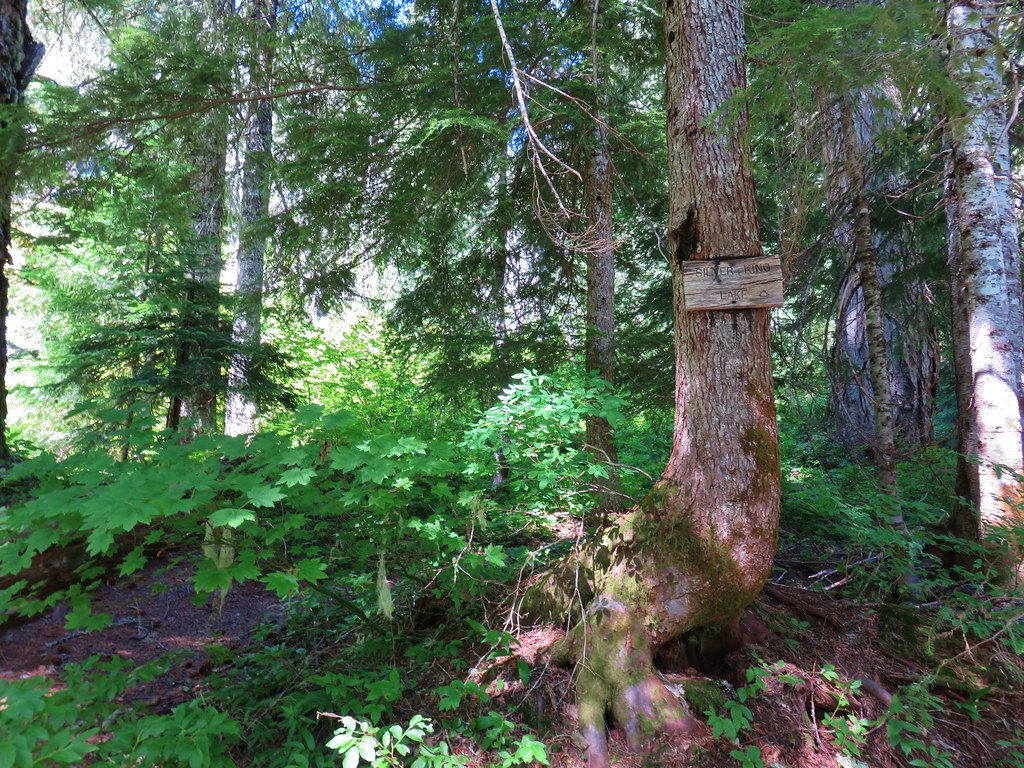
Bagby Trail to Silver King Lake

**Note a portion of this hike burned in the 2021 Bull Complex.**

There are a number of trailheads that have earned bad reputations due to the frequency of car break-ins and for years the Bagby Hot Springs Trailhead has been near the top of the list. In 2012 the Mt. Hood National Forest contracted with a private company to manage the hot springs which came with a $5 per person fee to soak in the hot springs (parking at the TH is free if you’re just hiking along the Bagby Trail), but it also allowed for someone to keep an eye on the trailhead parking lot from May through October. Even with someone patrolling the parking area we made sure to leave nothing of value in our car as we set off toward Bagby Hot Springs.
IMG_8430

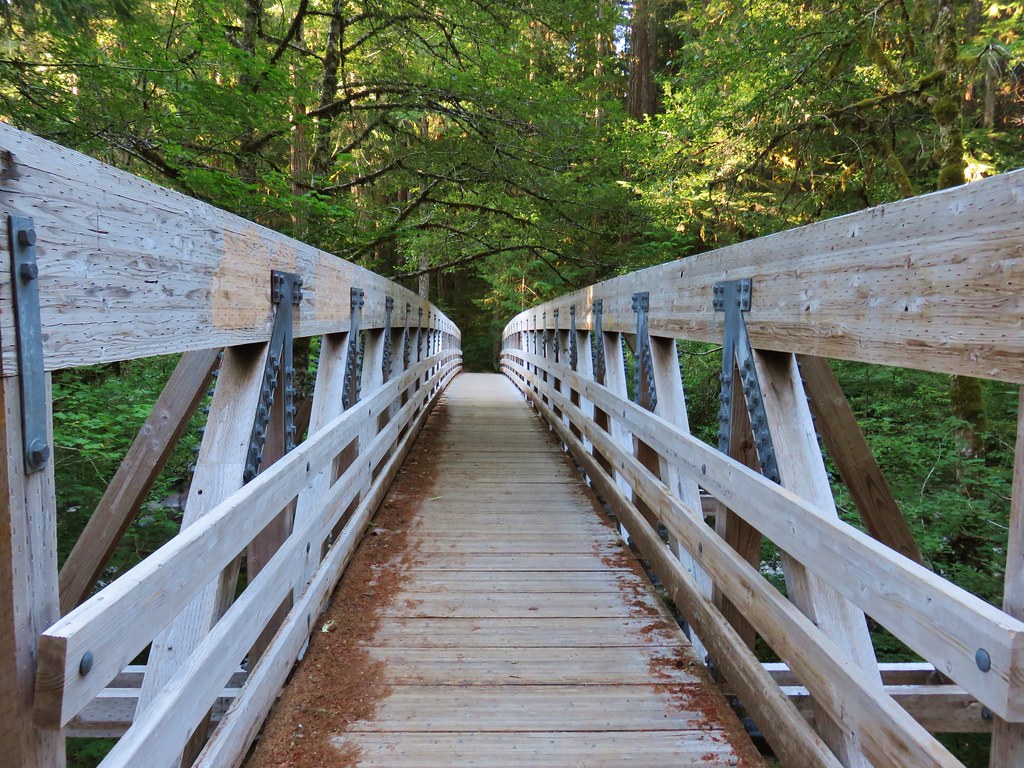
The trail almost immediately crossed Nohom Creek on a nice footbridge.
IMG_8433

IMG_8434

IMG_8435

The wide trail then passes though a nice old growth forest.
IMG_8437

IMG_8438

IMG_8444

Unfortunately the beauty of the scenery was somewhat lessened by the presence of glitter (why), graffiti, tree carvings, and toilet paper along this section. It was quite obvious that a portion of the people drawn to the hot springs had no regard or respect for the forest itself. Luckily the hot springs were only 1.5 miles up the trail and beyond them we didn’t see these types of issues.

Shortly before the hot springs the trail crossed the Hot Springs Fork of the Collawash River on another long footbridge.
IMG_8452

IMG_8455

IMG_8457

Less than a quarter mile from the bridge the trail arrived at the Bagby Hot Springs Forest Camp. Several buildings remain from the forest camp with the bathhouse, picnic area, and hot tub on the eastern side of the trail.
IMG_8461

IMG_8463

IMG_8470

Beyond the forest camp the trail entered the Bull of the Woods Wilderness.
IMG_8471

The trail remained fairly wide as it made it’s way to Shower Creek Falls near the two mile mark.
IMG_8475

IMG_8478

IMG_8481

The trail traversed the hillside above the Hot Springs Fork passing several campsites closer to the river below. Views were limited by the presence of the old growth forest which is a fine trade-off.
IMG_8485

IMG_8487

IMG_8506Whetstone Mountain (post)

We did pass through a couple of areas where there had been fire activity at some point. In these areas the huckleberries were abundant.
IMG_8488<

IMG_8490

IMG_8496

The trail crossed many side creeks, some dry, others not, before arriving at a crossing of the Hot Springs Fork near the six mile mark.
IMG_8523

The water level was low enough that we were able to rock hop across keeping our feet dry.
IMG_8524

Not long after the crossing we spotted a waterfall through the trees. We decided to attempt to bushawack over to it to get a closer look and were rewarded with what wound up being the highlight of the hike.
IMG_8526

IMG_8532

The trail had been gradually climbing with a few ups and downs prior to crossing the Hot Springs Fork. The gradual climb continued for approximately another half mile and then the Bagby Trail decided it needed to gain some elevation. Over the next mile the trail gained nearly 550′. At the 7.5 mile mark we arrived a junction with the Silver King Lake Trail.
IMG_8542

We followed this .2 mile trail uphill to Silver King Lake.
IMG_8546

IMG_8550

The campsite at the lake was unoccupied but the lake itself was full of rough skinned newts.
IMG_8552

IMG_8558

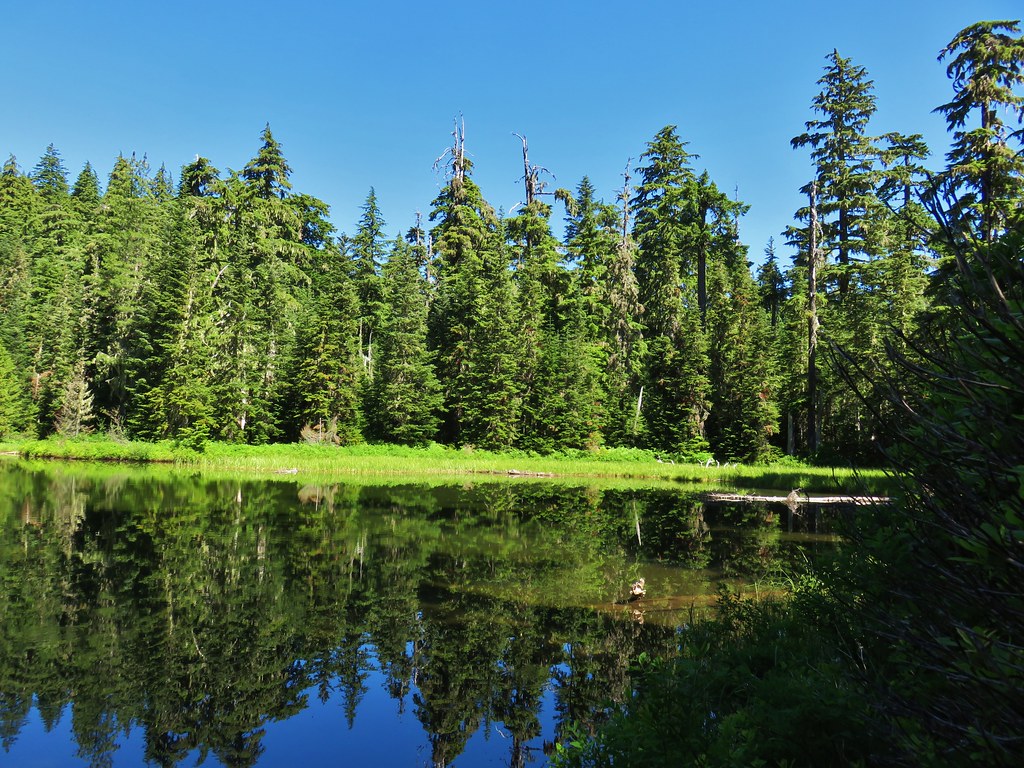
There wasn’t much of a view from the lake but from the NE side there was a good view of Sliver King Mountain across the water.
IMG_8555

We rested on some logs at the campsite since there wasn’t really anywhere to sit along the brushy lake and there were a few more mosquitoes closer to the water. After a snack and some stretching we headed back the way we’d come. It was a fairly uneventful return trip. We had expected to see quite a few more people on the way out after only seeing a couple of people at the bathhouse and two backpackers at campsites further along that morning. We did pass a couple of hikers prior to reaching Shower Creek Falls where we encountered a small group cooling off in the falls. There were several more people at Bagby Hot Springs but it didn’t seem crowded which we attributed to the heat thinking that hot springs didn’t seem as appealing on such a hot day. We passed a handful of people between the hot springs and the trailhead where there were still plenty of parking spaces left and our car had been untouched.

Our hike was a little over 16 miles round trip due to some of the off trail activity making for a long hike but it was a nice one. The Bagby Trail beyond the hot springs was at times overgrown and had some blowdown along it, but it offered a feeling of solitude which is always a plus to us. Happy Trails!

Flickr: Bagby Trail to Silver King Lake

Categories
Hiking McKenzie River Old Cascades Oregon Trip report
Horsepasture Mountain

After our last two hikes coming from Matt Reeder’s 101 Hikes in the Majestic Mount Jefferson Region we went back to work on our goal of completing all of the featured hikes in William L. Sullivan’s 100 Hikes guidebooks. We are just over 75% through his 100 Hikes in the Central Oregon Cascades 4th edition and had our eyes set on checking off one more with a visit to the former lookout site atop Horsepasture Mountain.
The hike up Horsepasture Mountain provided a bit of a logistical challenge for a couple of reasons. First is our self imposed guideline of trying not to spend more time in the car than we do on the trail and the 1.4 mile length of the Horsepasture Mountain Trail meant we’d need to come up with some additional trail time. The second issue was the continued closure of a section of Forest Road 1993 which adds nearly 45 minutes to the drive to the Horsepasture Trailhead. Prior to the closure the drive to that trailhead would still have been over two and a half hours but with the detour Google put the time at three hours and fifteen minutes. We also have a rule against driving over three hours to any trailheads for day hikes so I began looking for alternatives. A little online research led me to a solution, the Saddle Trail which is part of the O’Leary Trail Complex.

The trail begins at the East Fork Upper Trailhead which brought the drive time from Salem under two and half hours. We parked at a small pullout on the right side of FR 1993 across from the signed Saddle Trail.
IMG_8169

There was a caution sign on the post regarding a burn area but that was referencing portions of the O’Leary Trail Complex burned in 2017 which did not include either the Saddle Trail or the Horsepasture Mountain Trail. We were facing a nearly 1700′ climb over the next two miles to a junction at Horsepasture Saddle. Luckily the trail was well graded and in good shape as it switchbacked up through a green forest.
IMG_8172

IMG_8187

IMG_8191

Wildflowers in the forest included a few washington lilies, penstemon, northern phlox and tiger lilies along with the typical group of white flowers.
IMG_8182

IMG_8204

IMG_8197

IMG_8207

As far as markers went on this trail it did cross closed Forest Road 590 after .4 miles and passed a single rocky viewpoint near the 1.75 mile mark.
IMG_8179

IMG_8218

IMG_8220

Near its end the Saddle Trail passed through a small meadow with a few remaining wildflowers.
IMG_8227

IMG_8231

IMG_8236

IMG_8420

The trail ended at a signed three way junction with the Olallie Trail.
IMG_8240

Here we turned right passing through thimbleberry bushes for a little over 100 yards to a four-way junction.
IMG_8242

IMG_8247

IMG_8243

IMG_8257

IMG_8258

We turned onto the Horsepasture Mountain Trail which climbed gradually at first.
IMG_8260

IMG_8272

Flowers here included lupine, lousewort, wallflower, valerian, and fleabane.
IMG_8269

IMG_8273

IMG_8279

IMG_8263

IMG_8280

After nearly three quarters of a mile of gradual climbing the trail steepened as it climbed through meadows with beargrass. It wasn’t quite the beargrass display we had been hoping for but there were some nice blooms along the way.
IMG_8285

IMG_8288

IMG_8290

Other flowers in these meadows included coneflower, owls clover, and cat’s ear lilies.
IMG_8283

IMG_8289

IMG_8291

After 1.2 miles the Horsepasture Mountain Trail began to climb the mountain’s south side through a drier wildflower meadow.
IMG_8300

The Three Sisters and Mt. Bachelor were visible to the east as was snowy Diamond Peak to the south.
IMG_8304Middle Sister

IMG_8323Three Sisters and Mt. Bachelor

IMG_8326Diamond Peak

There was a nice variety of wildflowers on display.
IMG_8402

IMG_8309

IMG_8312

A large cairn and remains of the old lookout marked the summit.
IMG_8332

IMG_8336

The view from the summit included Cascade peaks from Mt. Hood to the barely visible tip of Mt. Thielsen.
IMG_8337Mt. Hood, Mt. Jefferson, Three Fingered Jack, and Mt. Washington.

IMG_8381The Three Sisters (with the top of Broken Top over South Sister’s southern shoulder) and Mt. Bachelor.

IMG_8345Diamond Peak(Mt. Thielsen is out there too)

IMG_8385Cowhorn Mountain on the left and the tip of Mt. Thielsen to the right.

We took a nice long break at the summit enjoying the views and the flowers. Birds and insects were our only company.
IMG_8353

IMG_8356

IMG_8368

IMG_8388

IMG_8359

IMG_8363

IMG_8352

IMG_8400

The only negative was seeing the fire scars left in the Three Sisters Wilderness from the awful 2017 fire season. We returned the way we’d come passing two other sets of hikers making their way up the Horsepasture Mountain Trail. We also ran into a family of grouse. A single chick flew across the trail then mama landed in the trail.
IMG_8408

Her display of feathers and her posturing let us know that she had other chicks in the area so we stopped and waited until two more flew across the trail.
IMG_8411

She then flew up into a tree to let us pass. The remainder of the hike was uneventful as we descended the Saddle Trail back to the trailhead. The seven mile hike and extended stay on the summit kept us within our driving to hiking time ratio but more importantly the hike had been really nice. Good views and wildflowers combined with solitude made for another great day in the Willamette National Forest. Happy Trails!

Flickr: Horsepasture Mountain

Categories
Hiking Middle Santiam Old Cascades Oregon Trip report

Browder Ridge Trail to Heart Lake

It has become a tradition to spend the first half of our 4th of July hiking. This year we revisited the rocky viewpoint on Browder Ridge which we had previously hiked to via the Gate Creek Trail on 9/18/2012 (post). This time around we decided to start at the Browder Ridge Trailhead based on Matt Reeder’s hike description in his 101 Hikes in the Majestic Mount Jefferson Region guidebook.

The Browder Ridge Trail set off from paved Forest Road 15 near a small parking area.
IMG_7732

The trail climbed gently through a forest for the first half mile before steepening as it entered a series of large meadows.
IMG_7735

IMG_7738

IMG_7753

These lower meadows were filled with ferns and a smattering of wildflowers.
IMG_7758

IMG_7759Cone flower and columbine

IMG_7761Tiger lily

IMG_7764

IMG_7770

After two sets of switchbacks the trail began to traverse SE along the hillside below the ridge top. The wildflower display really picked up along this traverse. Purple larkspur, red paintbrush, blue gilia, and white cat’s ear lilies joined several varieties of yellow wildflowers to paint the hillside with color.
IMG_7786

IMG_7787

IMG_7790

IMG_7800

IMG_7819

IMG_7822

IMG_7827

IMG_7831

IMG_7858

IMG_8115

The Three Sisters could be seen at times as the trail alternated between forest and meadows.
IMG_7812

IMG_7807

IMG_7828

The flower combinations always seemed to be a little different in each of the meadows. At the 3 mile mark the trail entered a short stretch of burned forest along the ridge top.
IMG_7892

Just beyond the four mile mark there was a short side trail to a rocky viewpoint.
IMG_7904

IMG_7906

Beyond the viewpoint the trail climbed gradually for three tenths of a mile to its end at an unsigned junction with the Gate Creek and Heart Lake Trails.
IMG_7912

Here we turned left regaining the ridge crest in the forest where we encountered the first downed trees of the hike and a huge cascade toad.
IMG_7927

20180704_113516

The Heart Lake Trail then dropped over the ridge to the NE passing beneath some basalt cliffs through another wildflower meadow.
IMG_7928

IMG_7935

IMG_7962

The trail climbed through the meadow to a forested saddle a mile from the trail junction.
IMG_7963

The saddle is the official end of the Heart Lake Trail. Here we faced a choice, we could turn left on the unofficial continuation of the Heart Lake Trail and climb up the rocky ridge crest to a summit viewpoint or we could attempt to visit Heart Lake. Heart Lake was a little under three quarter miles to the north and 750′ below the saddle. In the guidebook Reeder used the terms “not for the faint of heart” and “hell on the knees” to describe the trip down to the lake on the abandoned portion of trail. Heather had been dealing with a calf strain and it had been acting up on the hike so she decided against the side trip but I was feeling adventurous. She would head up to the summit and wait for me there so we set a time that she should expect me to meet up with her. I gave myself an hour and a half figuring that we typically hike at a 2 – 2.5 mile per hour pace and the round trip to Heart Lake should have only been about 1.5 miles.

I set off downhill from the saddle on a well defined trail.
IMG_7965

In the first quarter of a mile the trail dropped into a basin losing 150′ at a not too steep grade. Being on the north facing side of the ridge at an elevation of 5400′ meant that there was still a decent amount of snow in this area though.
IMG_7967

I quickly lost the tread so I turned to the Forest Service Map loaded on the GPS unit in an attempt to re-find the trail. Unfortunately this was one of those instances where the location of the trail on the map is inaccurate. Reeder had included a GPS track on the topographic map in the guidebook but I’d left that with Heather so I didn’t immediately realize that the Forest Service map was wrong. The Forest Service map showed the trail passing through a meadow (where I found some marsh marigolds and shooting stars).
IMG_7974

IMG_7975

IMG_7972

At the far end of the meadow I spotted a couple of old fire rings amid the trees which made me think that maybe I was on the right track but less than 20 yards from the meadow I came to a line of impassable cliffs. Using the GPS I wandered to the right then back to the left several times looking for where the trail might possibly be. According to the GPS I had crossed and recrossed the trail multiple times but there was no way anyone was getting down that cliff. I was just about to give up when I suddenly remembered to use my brain. I thought I remembered that the track in the guidebook spent most of the time to the left of a creek and when I zoomed out a bit on the GPS I could see a creek to my left. I decided to bushwack over toward the head of the creek to see if I might be able to find something there. I could also see that the trail on the Forest Service map crossed the creek further downstream so if nothing else I might be able to follow the creek down to that point. As I neared the creek the forest opened up and I was able to spot what appeared to be a blaze on a tree on the opposite side.
IMG_7979

I crossed the creek on a log and sidehilled my way down past the blaze where I once again spotted trail.
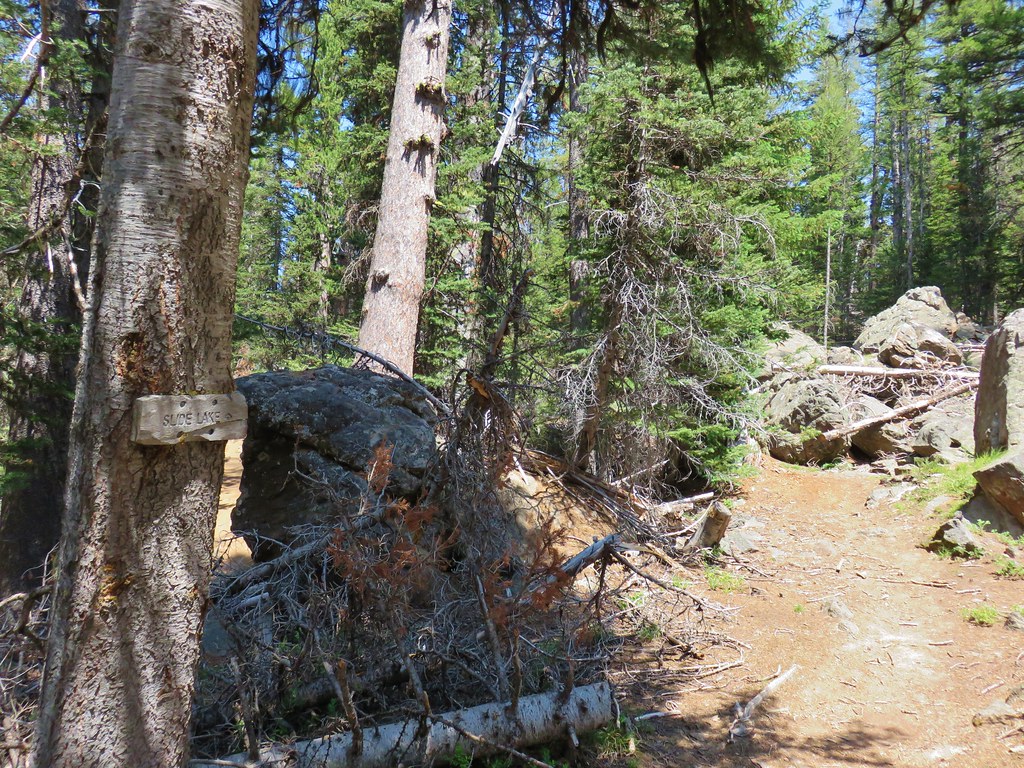
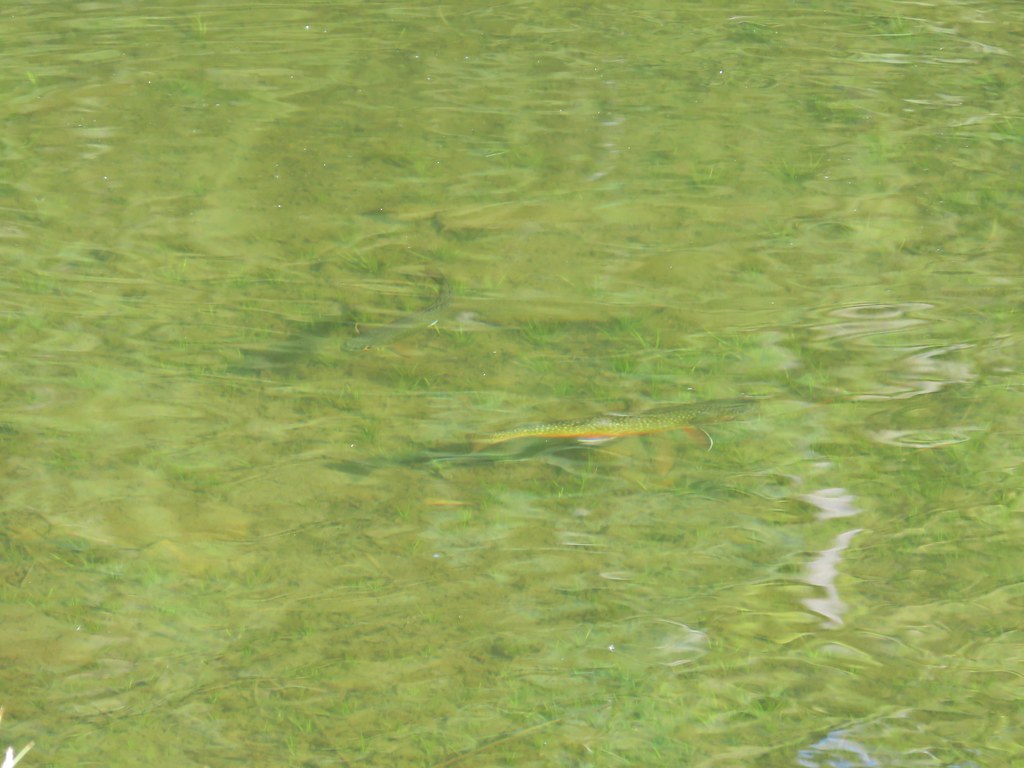
IMG_7981

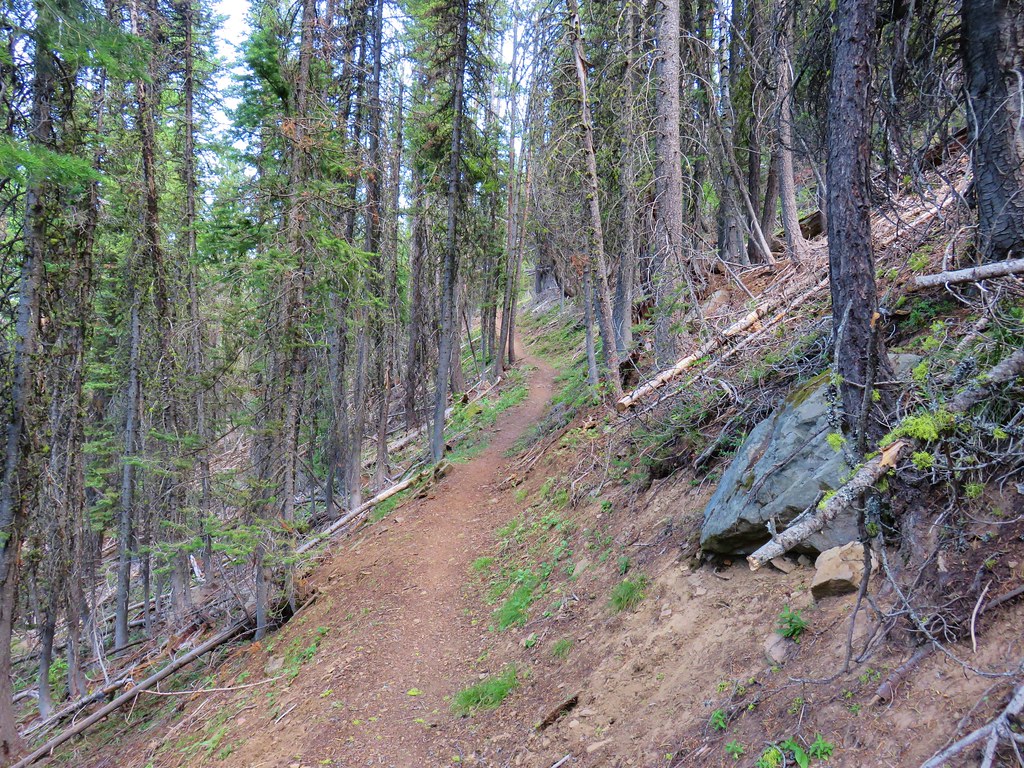
Once I had re-found the trail it was easy enough to follow. The tread was faint but visible with little blowdown and there were some remains of pink flagging to assist me.
IMG_7986

I disturbed a family of grouse as I descended.
IMG_7984

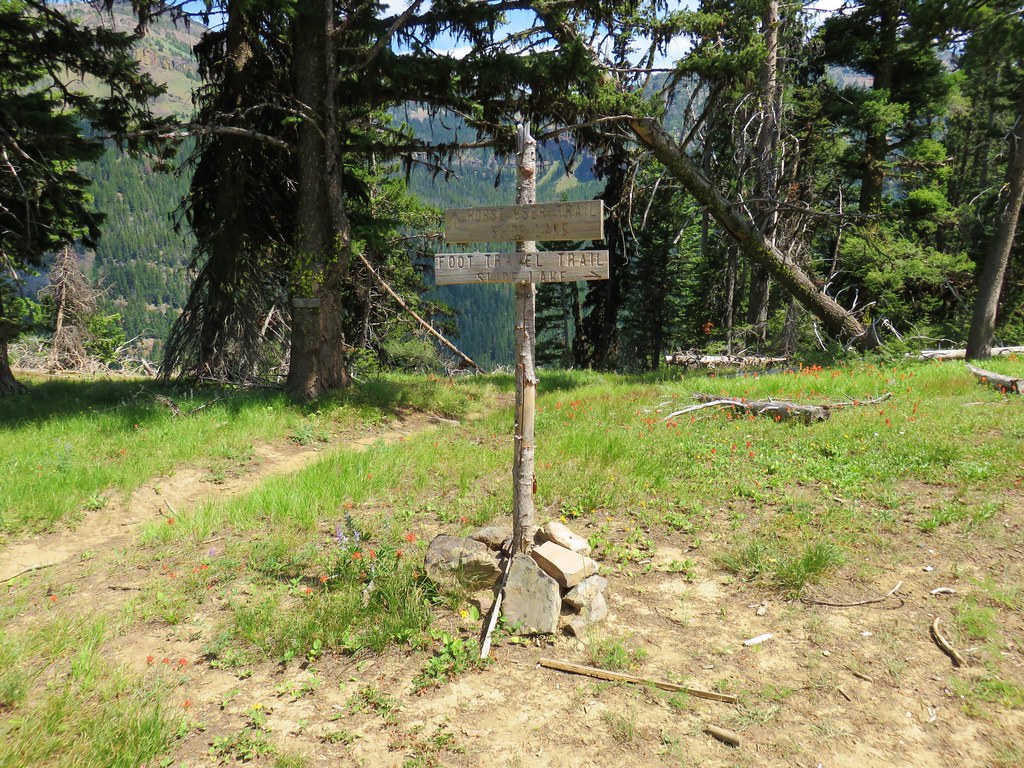
It was quite a descent too! This was one steep trail which mostly just headed straight down a ridge-line for about a quarter mile before beginning to level out as it neared a large meadow to the south of Heart Lake.
IMG_7987

Elephant head flowers bloomed in the marshy meadow along with some other wildflowers.
IMG_7990

IMG_7994

IMG_7995

The area was damp but I was able to find enough dry spots to make my way down to Heart Lake.
IMG_8003

IMG_8008

IMG_8009

The old trail shown on the map had passed around the lake on its west side to a campsite on the northern end. I found a brushy path that I was able to follow through more marshy meadows and a tangle of trees to that campsite.
IMG_8019

IMG_8012

IMG_8016

Due to all the wandering around I had done in the basin looking for the trail it had taken me nearly 40 minutes to reach the campsite which was 1.2 miles from the saddle. I wasn’t sure how long it was going to take me to climb back up so I didn’t stay at the campsite long before heading back. The climb back up was brutal but it only took me a half an our to reach the saddle but I still had a .3 mile climb up the ridge before I reached Heather.
IMG_8023

I managed to make it with a little under 15 minutes to spare. The meadow at the summit didn’t have quite the impressive flower display as the lower meadows had had but the view was nice even though it was a bit hazy.
IMG_8033Mt. Hood, Mt. Jefferson and Three Fingered Jack

IMG_8070Mt. Jefferson

IMG_8030Mt. Washington, the Three Sisters, and Mt. Bachelor

IMG_8040Diamond Peak to the south

IMG_8041Diamond Peak

IMG_8044Owls clover

IMG_8045Penstemon

IMG_8047Orange agoseris

IMG_8055Phlox

After catching my breath we headed back returning the way we’d come. On the way back several flowers were now open making the view a little different.
IMG_8098Lewis flax

IMG_8096Jacob’s ladder

IMG_8120Candyflower

The pollinators were also now busy doing their things.
IMG_8123

IMG_8116

IMG_8088

IMG_8097

We only encountered 8 other people, all on our way back to the car, which was surprising to us given how great the wildflowers were. We both preferred this approach to the shorter Gate Creek Trail, but to be fair it was a different time of year. Either way the views at the top are great and for those wanting some extra adventure there’s the option to visit Heart Lake. All in all another great hike in the Pacific Northwest. Happy Trails!

Flickr: Browder Ridge Trail and Heart Lake

Categories
Bull of the Woods/Opal Creek Hiking Old Cascades Oregon Trip report

Elk Lake Creek – Bull of the Woods Wilderness

**Note a portion of this hike burned in the 2021 Bull Complex.**

While we continue to work on completing all of the featured hikes in William L. Sullivan’s guidebooks we occasionally take a break from that pursuit and take a hike recommended from another source. Our recent hike along the Elk Lake Creek Trail was one such outing.

Using Matt Reeder’s “101 Hikes in the Majestic Mount Jefferson Region” we drove to the northern end of the Elk Lake Creek Trail.
Elk Lake Creek Trailhead

After a short forested section the trail traversed a burnt hillside above Elk Lake Creek.
Elk Lake Creek Trail

Washington Lilies above the Elk Lake Creek Trail

Washington lilies

Elk Lake Creek

As the gap between the creek and trail narrowed we passed a pair of small waterfalls leading into green pools. A small amount of bushwhacking was required to get the best views.
Elk Lake Creek

Elk Lake Creek

The burned section ended just before entering the Bull of the Woods Wilderness near Pine Cone Creek at the 1.1 mile mark.
Elk Lake Creek Trail

Elk Lake Creek Trail entering the Bull of the Woods Wilderness

Pine Cone Creek

Beyond Pine Cone Creek the trail entered a fir forest with rhododendron and ripening huckleberries.
Elk Lake Creek Trail

Just before the two mile mark we arrived at a crossing of Knob Rock Creek.
Sign for Knob Rock Creek

Knob Rock Creek

Knob Rock Creek

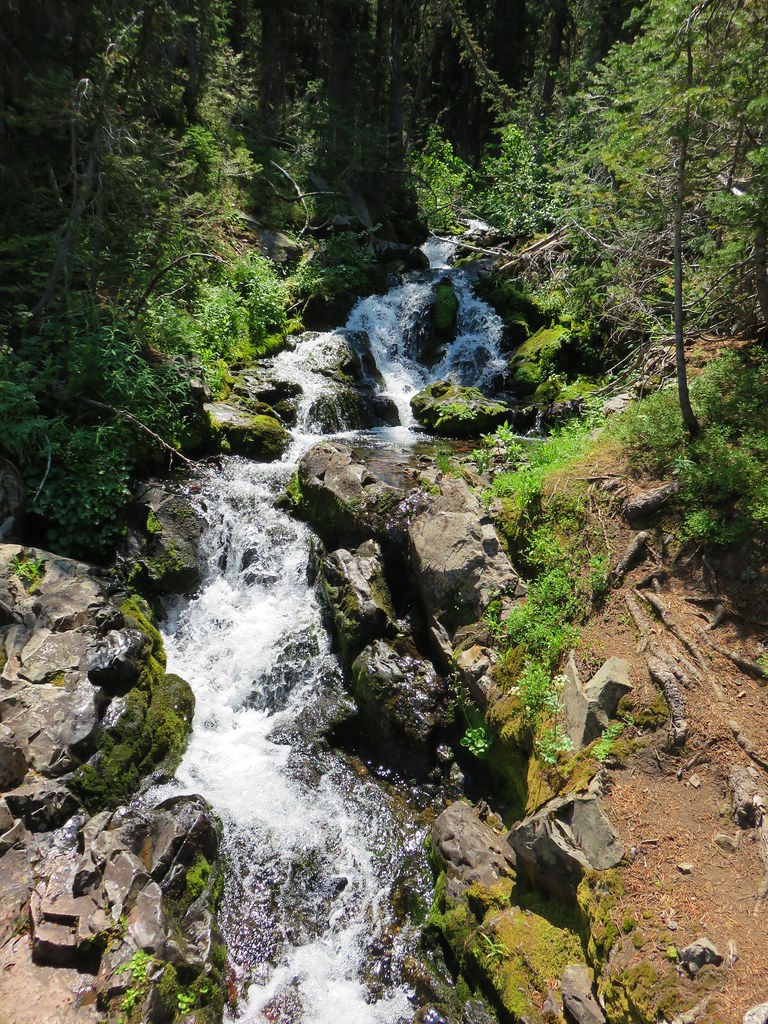
Just around a ridge end from Knob Rock Creek was Welcome Creek which had a couple of nice little waterfalls.
Welcome Creek

Waterfall on Welcome Creek

Waterfall on Welcome Creek

A short climb from Welcome Creek brought us to a junction with the Welcome Lakes Trail.
Welcome Lakes Trail

Welcome Lakes Trail sign

That trail climbs 2000′ in three miles through mostly burned forest to Welcome Lakes, a trip for another time. We stayed straight on the Elk Lake Creek Trail (Trail 559).
Elk Lake Creek Trail

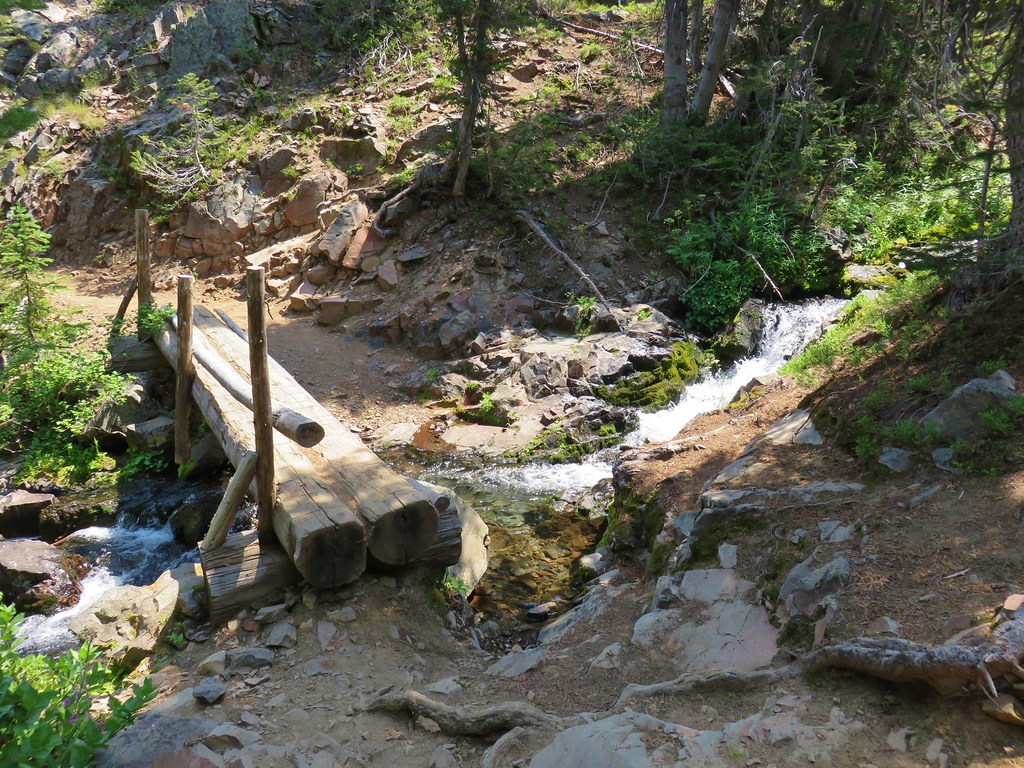
From the junction the trail descended for two tenths of a mile to a ford of Elk Lake Creek. We had originally planned to do this hike last June but the high snow pack had left creek running high well into June making the fords of Elk Lake Creek dangerous. With a much lower snow pack this year the ford was only knee deep and not swift.
Elk Lake Creek ford

Elk Lake Creek

Elk Lake Creek ford

On the far side of the creek I nearly stepped on a rough skinned newt. He high tailed it off the trail and tried to disguise himself as a piece of bark.
Rough skinned newt

Rough skinned newt

For the next three quarters of a mile the trail passed through old-growth forest just a bit away from the creek but it was always within earshot and often eye sight.
Elk Lake Creek Trail

Elk Lake Creek

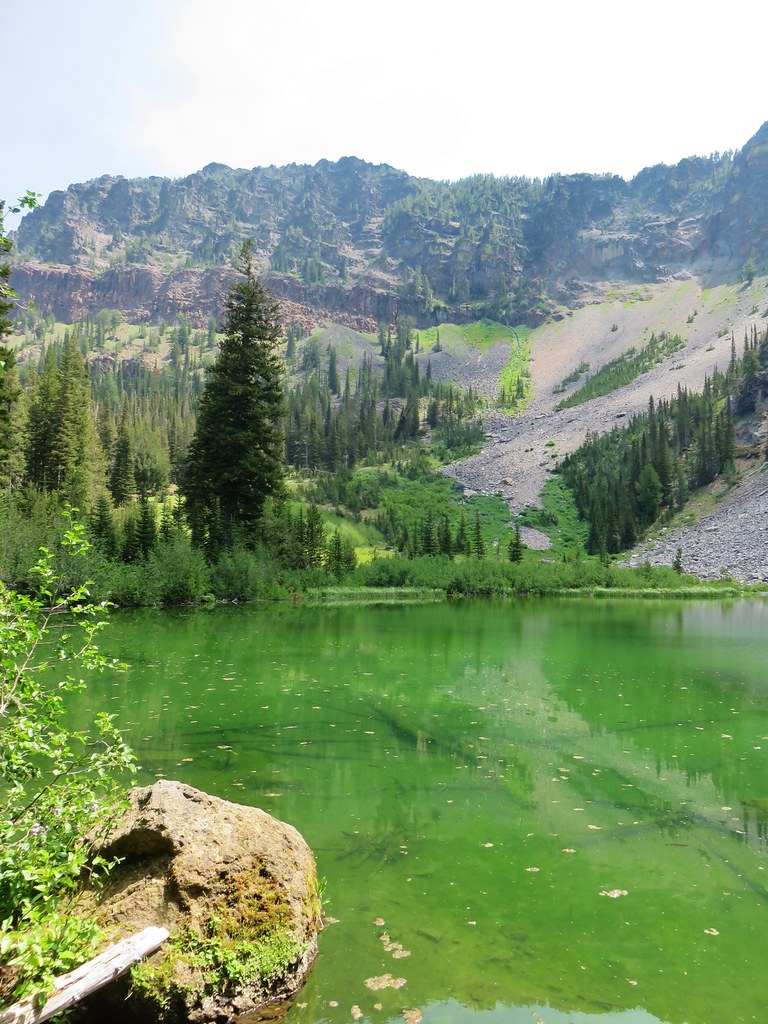
Just over 3.25 miles from the trailhead the trail arrived at a viewpoint above an emerald pool.
Elk Lake Creek

Emerald Pool

Emerald Pool on Elk Lake Creek

Emerald Pool

We spent a good deal of time marveling at the colors here on the creek before continuing on. Beyond the emerald pool a small section of trail had been claimed by a stream.
Elk Lake Creek Trail

We reached the second knee deep ford of Elk Lake Creek 0.4 miles from the pool.
Elk Lake Creek

On the far side, the trail became a bit brushy as it continued near the creek skirting a hillside of rocks.
Elk Lake Creek Trail

Hillside above the Elk Lake Creek Trail

As soon as we were past the rock fields the trail reentered the forest.
Elk Lake Creek Trail

We faced another ford near the 5 mile mark, this time of Battle Creek.
Battle Creek

Battle Creek

Just two tenths of a mile later we had reached our original goal – the junction with the Mother Lode Trail (Trail 558).
Elk Lake Creek Trail junction with the Mother Lode Trail

Mother Lode Trail

The Elk Lake Creek Trail continued from the junction and would have eventually brought us to Elk Lake after nearly another 4 miles but continuing from the junction meant climbing up a ridge. Instead of turning back here though we decided to hike a short distance up the Mother Lode Trail to visit Mother Lode Creek. This looked to involve much less climbing so off we went to yet another ford of Battle Creek.
Battle Creek

We soon entered forest burned in the 2010 View Lake Fire Complex and after a half mile on this trail came to a junction with the now abandoned Geronimo Trail.
Mother Lode Trail junction with the abandoned Geronimo Trail

What appeared to be a homemade sign marked that trail and its tread was still visible heading uphill into the burn.
Old Geronimo Trail

Mother Lode Creek was just a short distance away and we hiked down to it before turning back.
Sign for Mother Lode Creek

Mother Lode Creek

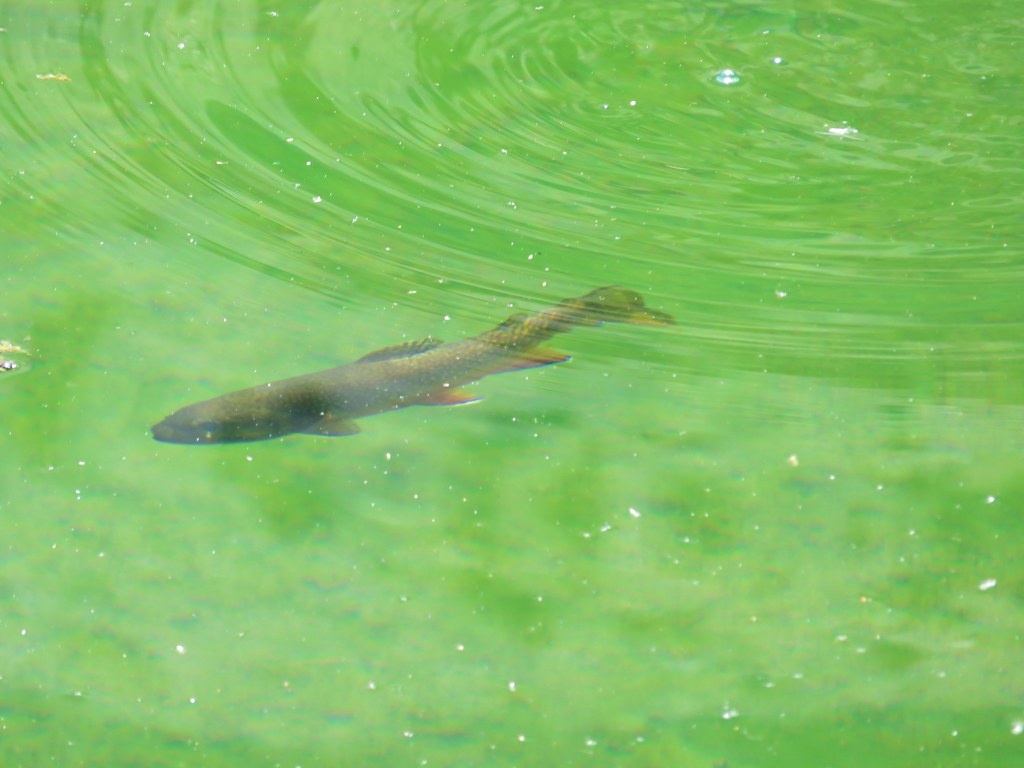
We returned the way we’d come stopping again at the emerald pool which was now in the sunlight. We watched fish swimming in the clear water for a bit before continuing on.
Emerald pool

Emerald Pool on Elk Lake Creek

Fish

The hike was a little over 11.5 miles with approximately 1500′ of total elevation gain and 5 fords (I forded Mother Lode Creek to get a picture of its sign). One of the things we really enjoyed about the hike was that there were several “attractions” along the way with the small waterfalls, the emerald pool, and the old-growth forest in general. There were a few mosquitoes around but one spraying of DEET seemed to keep most of them at bay. This makes for a great early summer hike as long as the water levels make the fords possible. Happy Trails!

Flickr: Elk Lake Creek