Categories
Hiking Oregon Portland Trip report Willamette Valley

Mt. Tabor, Mt. Talbert, Scouters Mtn., & Hidden Falls Parks – 12/16/2023

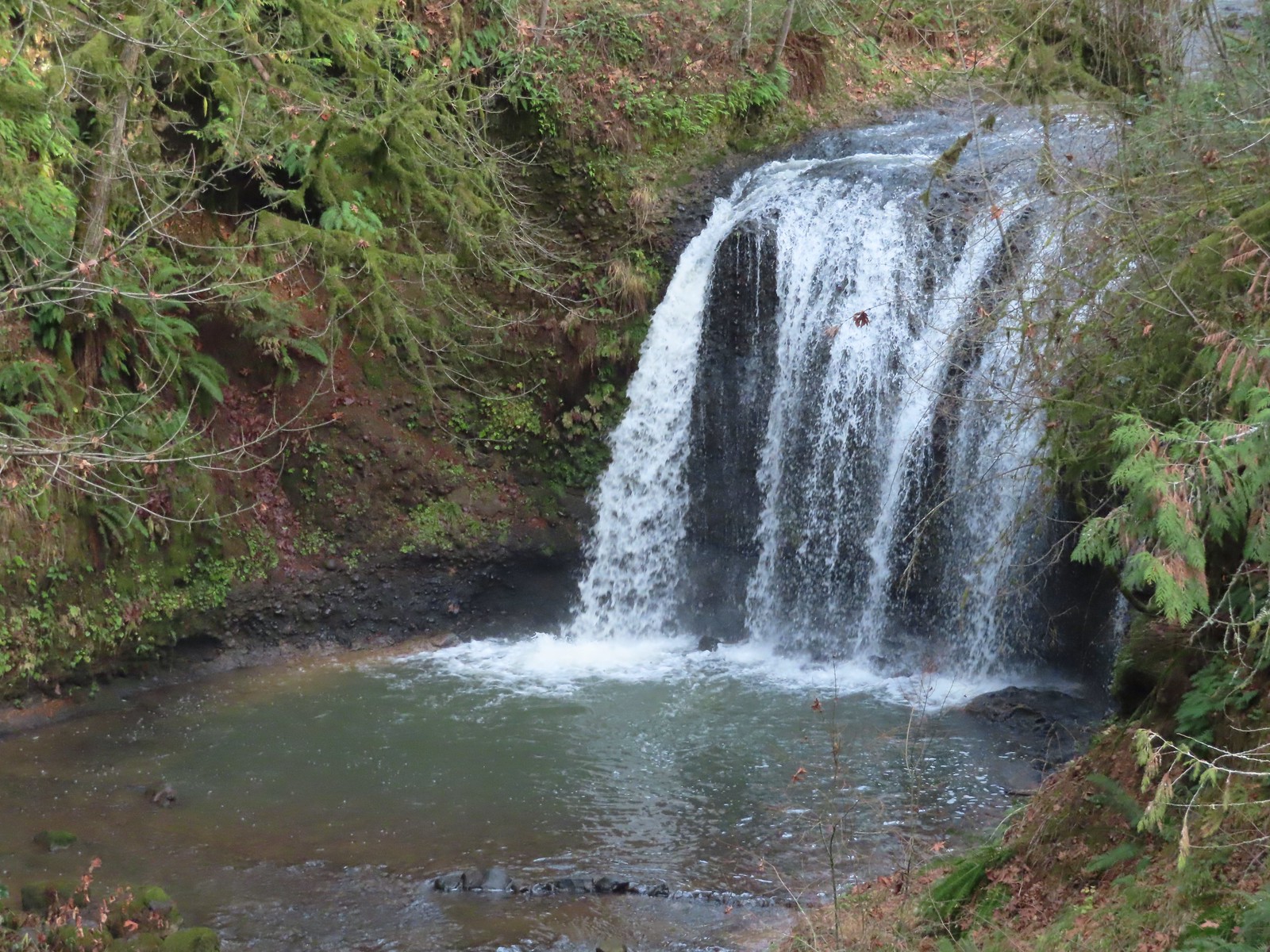
For our final outing of 2023 we headed to Portland to visit some Boring volcanoes. Not to be confused with boring, the Boring Volcanic Field which consists of more than 80 small volcanic vents and associated lava flows dispersed throughout the greater Portland-Vancouver metropolitan area. Several of the resulting cinder cones are home to parks providing hiking opportunities and we planned on visiting three of these along with a city park with a 15′ waterfall.

We began our morning at Portland’s Mt. Tabor Park. We parked in in the lot next to the Mount Tabor Visitors Center and set off toward the playground.
IMG_2023The playground behind and to the right of the signboard at the Visitors Center.

We were attempting to follow, as closely as possible, the route described by Matt Reeder in “PDX Hiking 365”. (His hike has a different starting point but loops through the parking area where we were starting.) After a little confusion near the playground we located the red trail and followed it to the Mount Tabor Stairs where we turned right.
IMG_2027The red trail continuing on the far end of the playground.
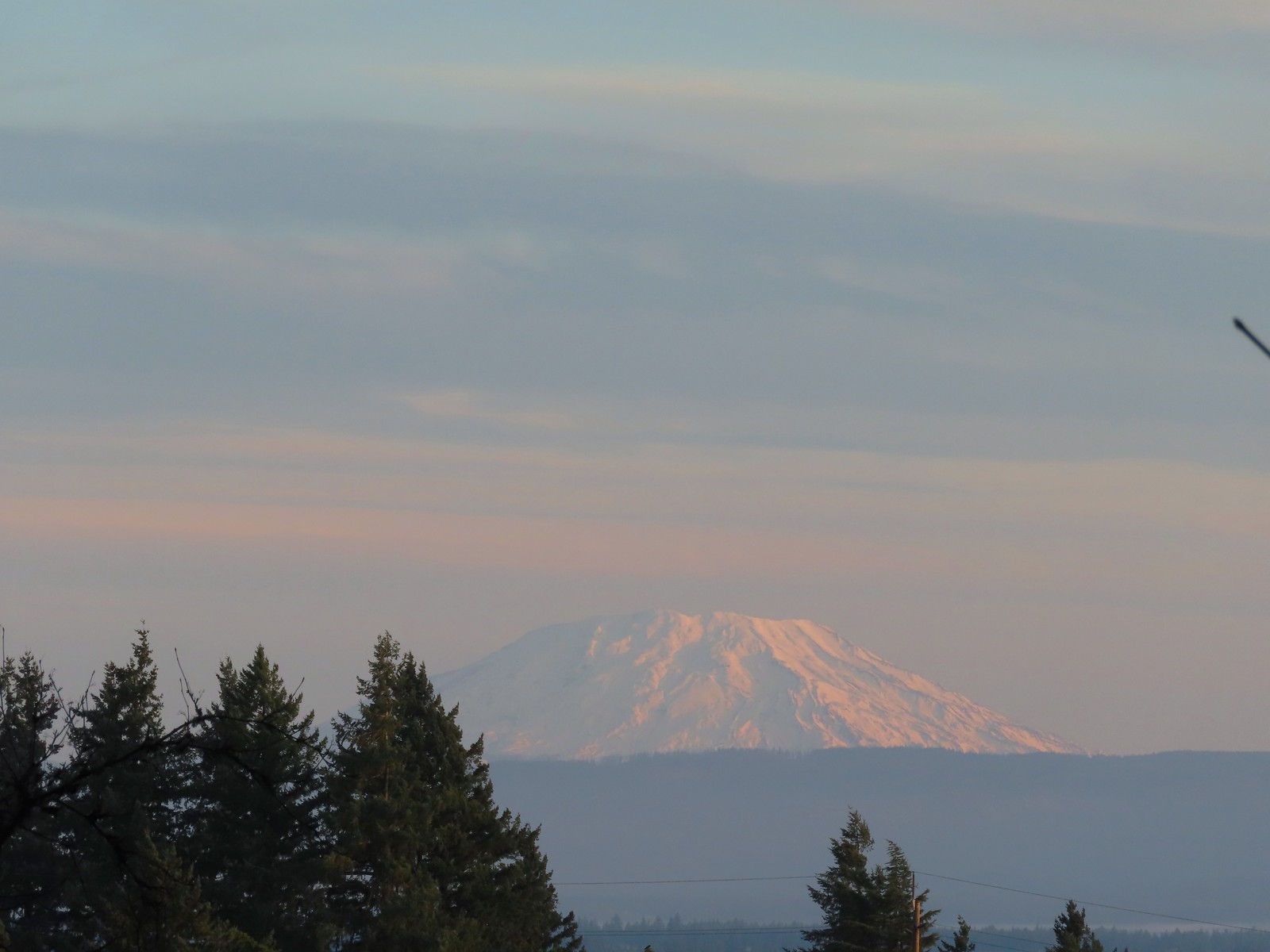
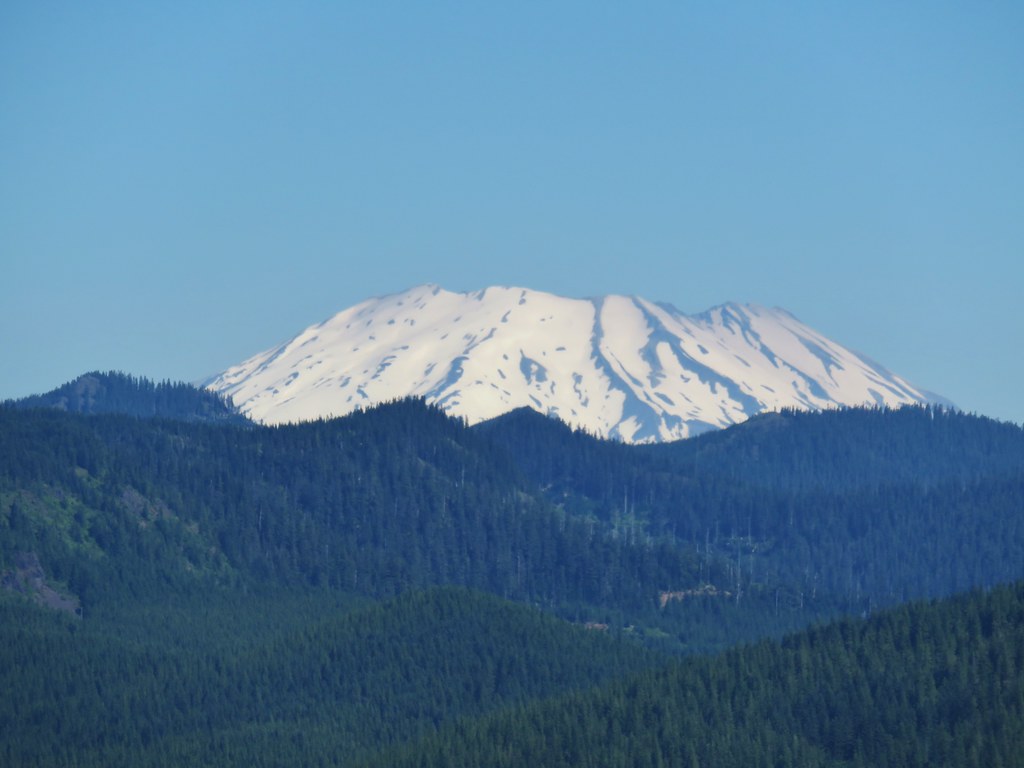
IMG_2028Mt. St. Helens from the playground.

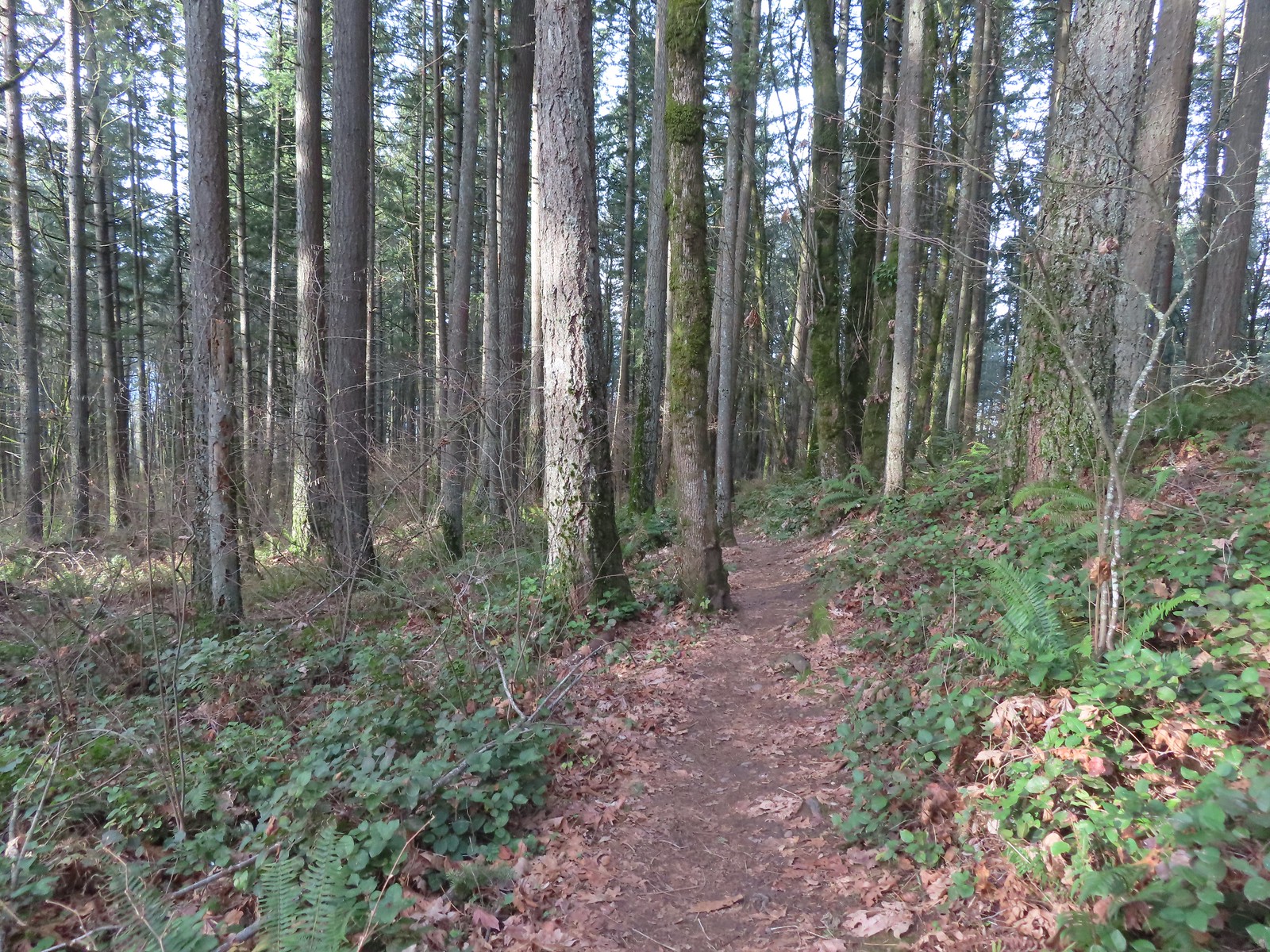
IMG_2031On the red trail.

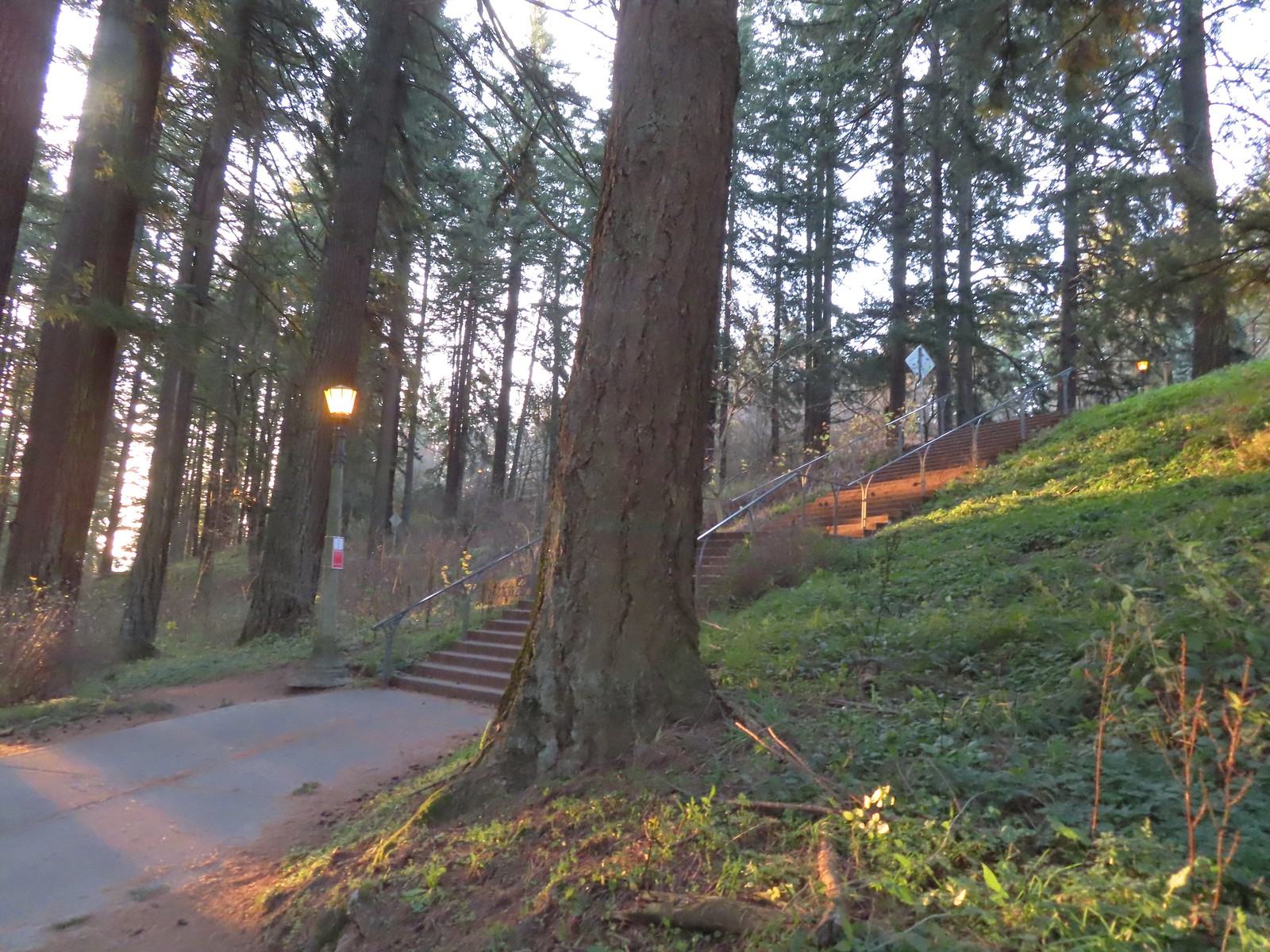
IMG_2032The Mount Tabor stairs extend from the park border up to the summit.

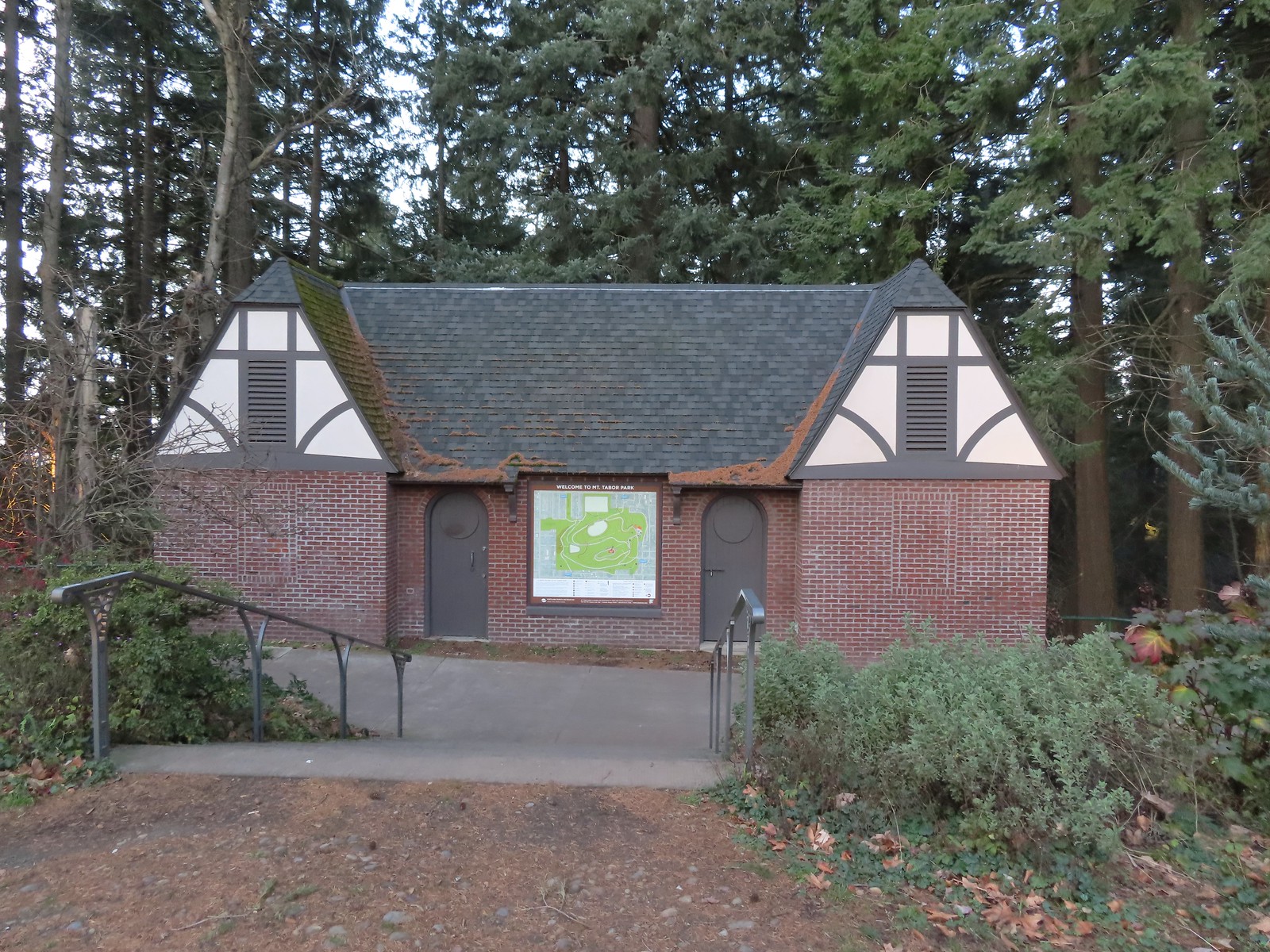
IMG_2034Summit restrooms

IMG_2036The restrooms were reopened in 2017 after being renovated.
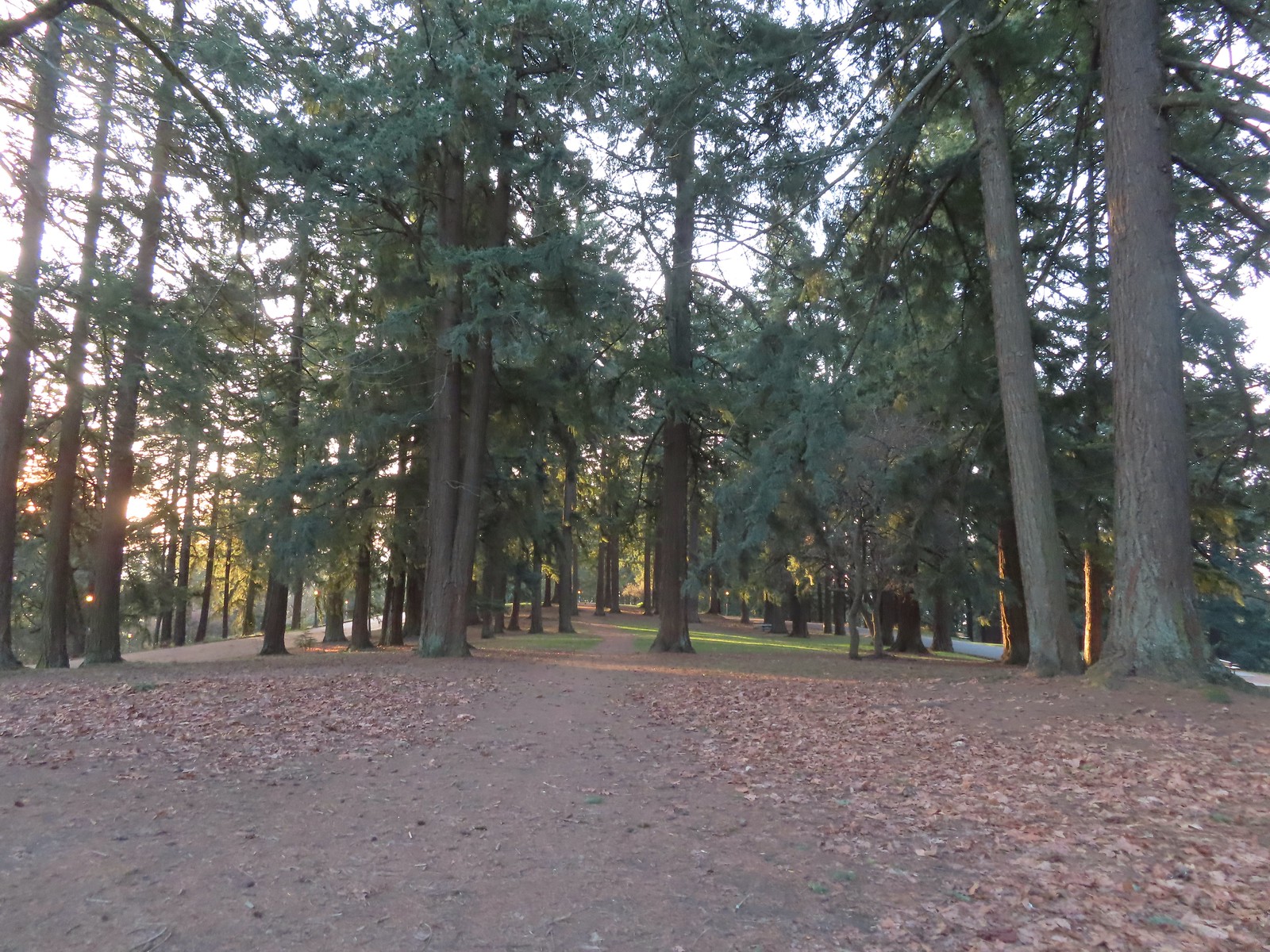
IMG_2041Mount Tabor summit

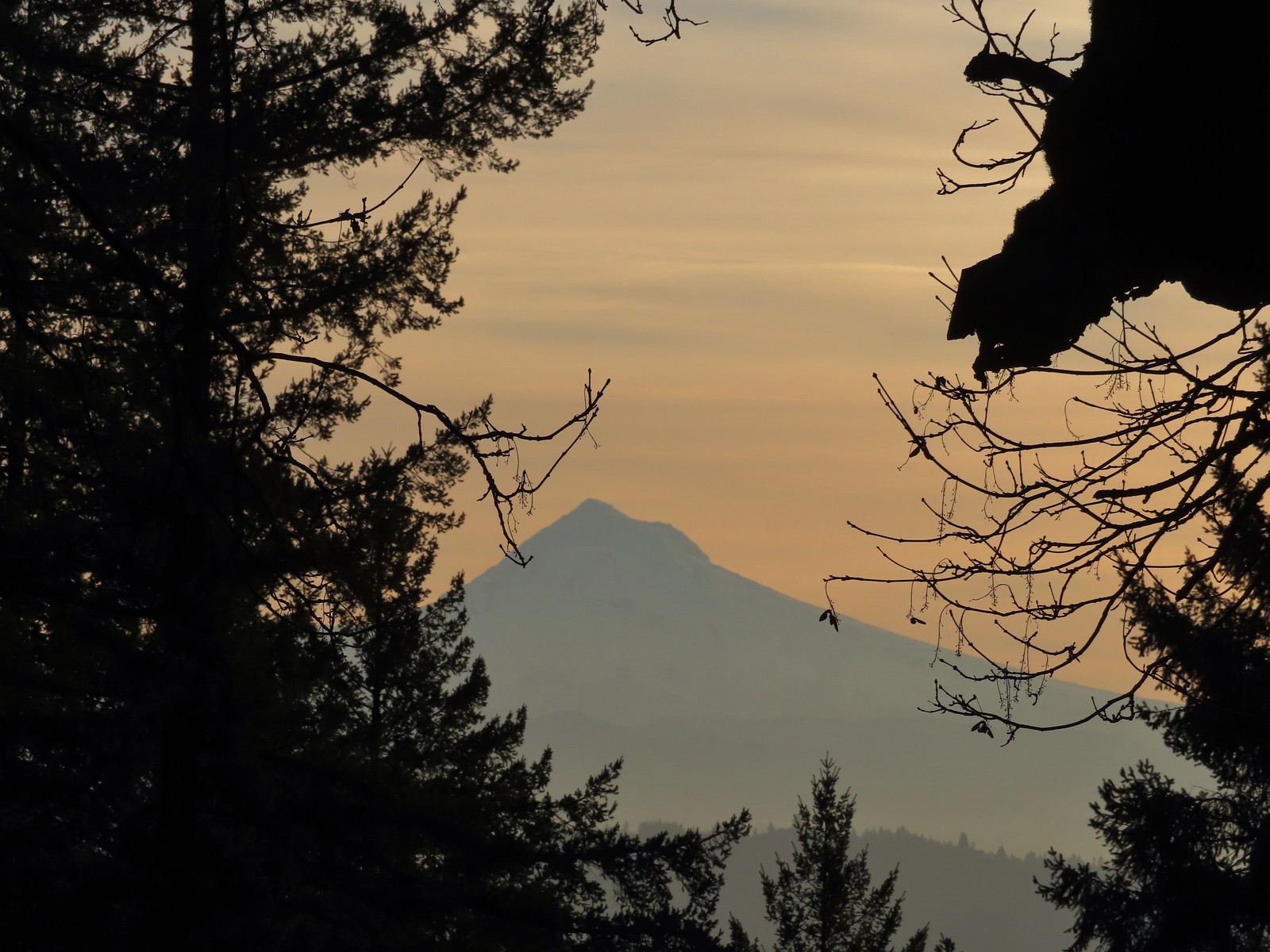
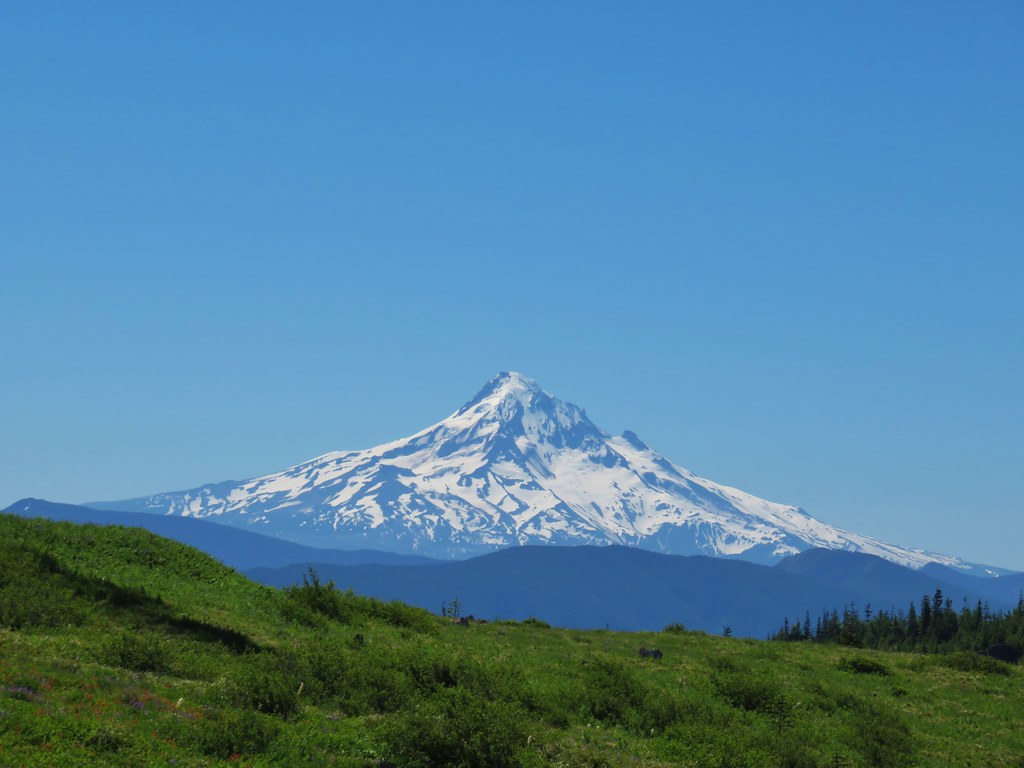
IMG_2040Mt. Hood from the summit.

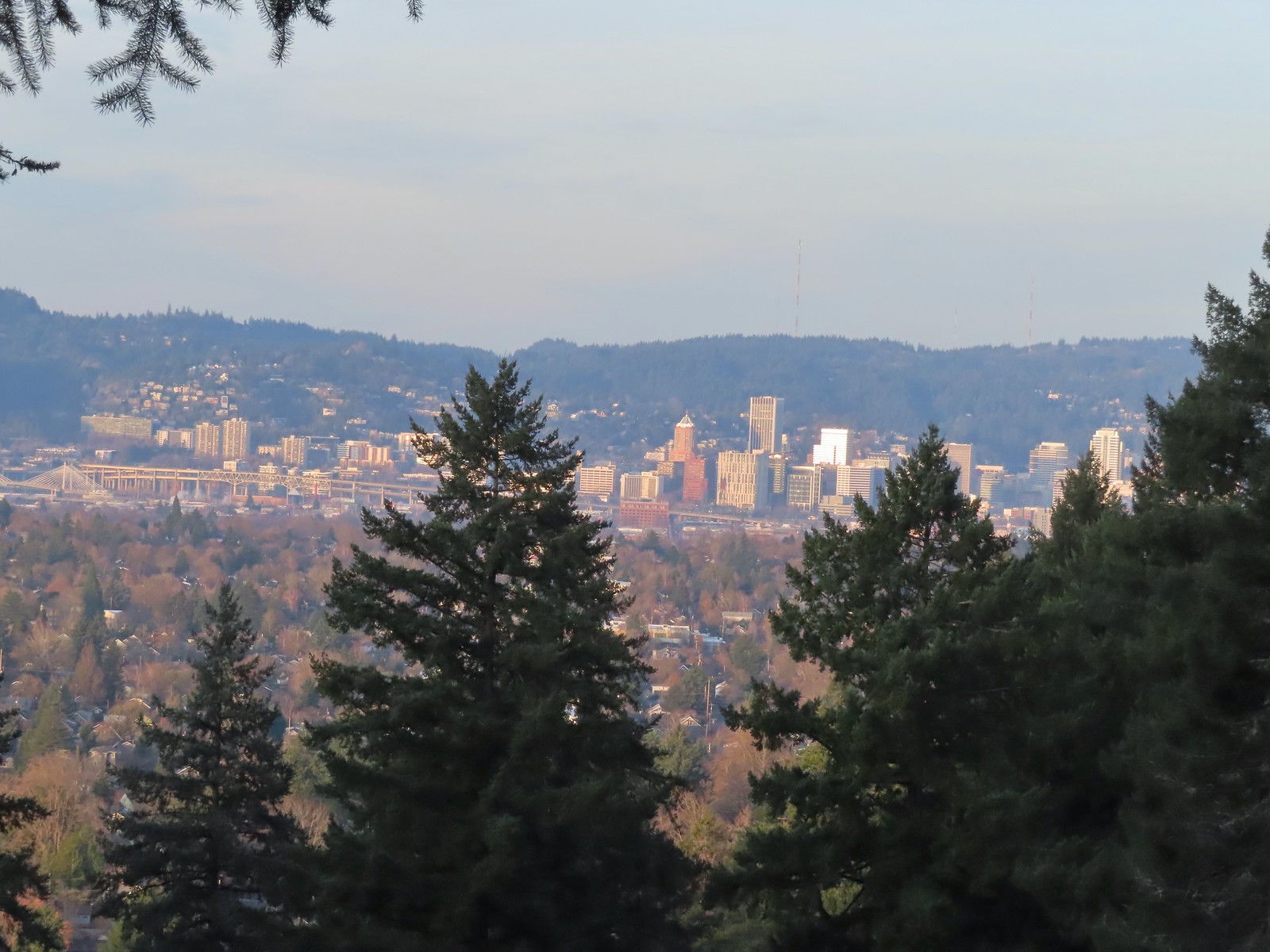
IMG_2044Downtown Portland

At the southern end of the summit, near the former site of a statue of Harvey W. Scott (and later a bust of York), we headed downhill on a steeper trail.
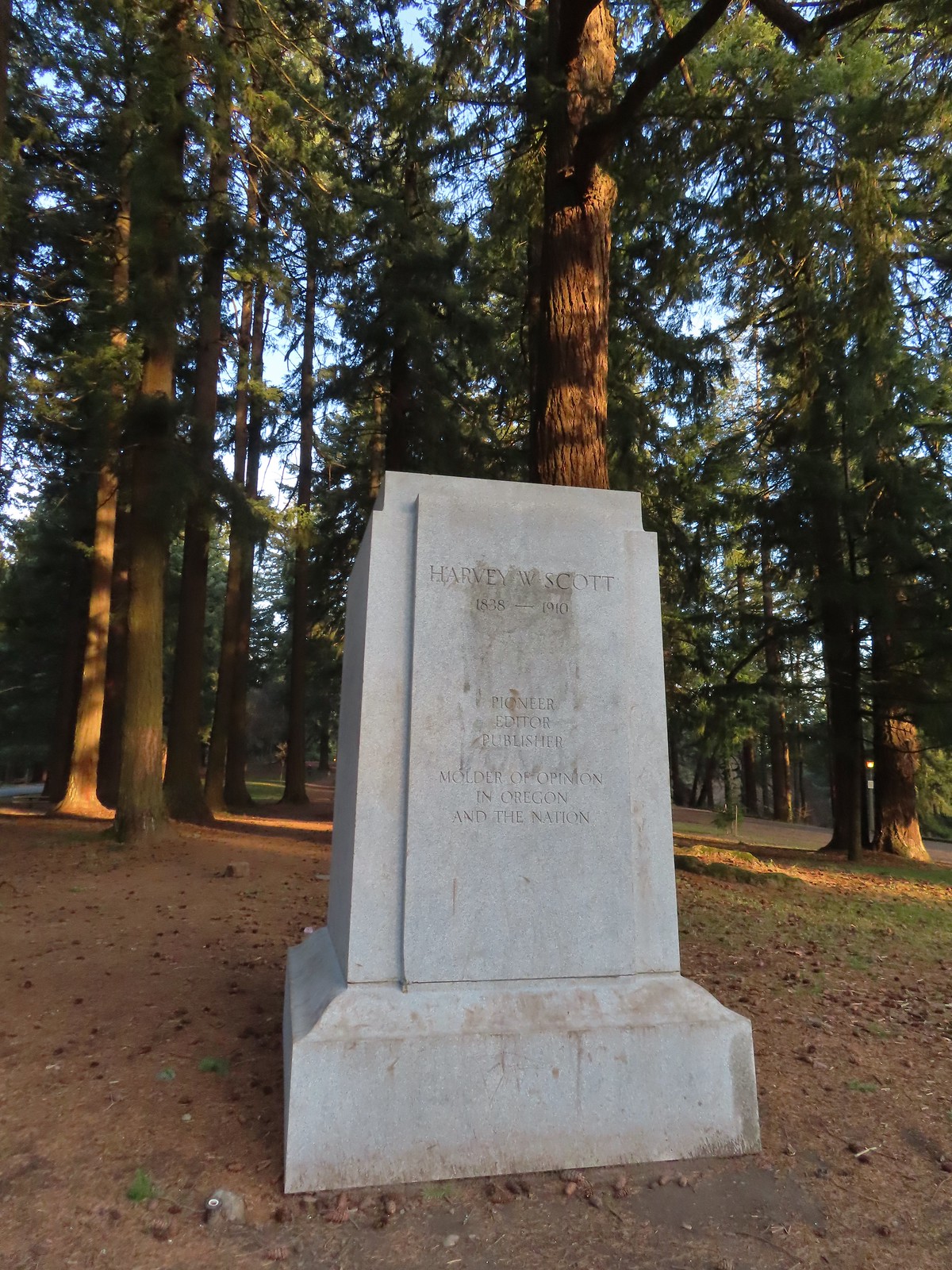
IMG_2046

IMG_2048

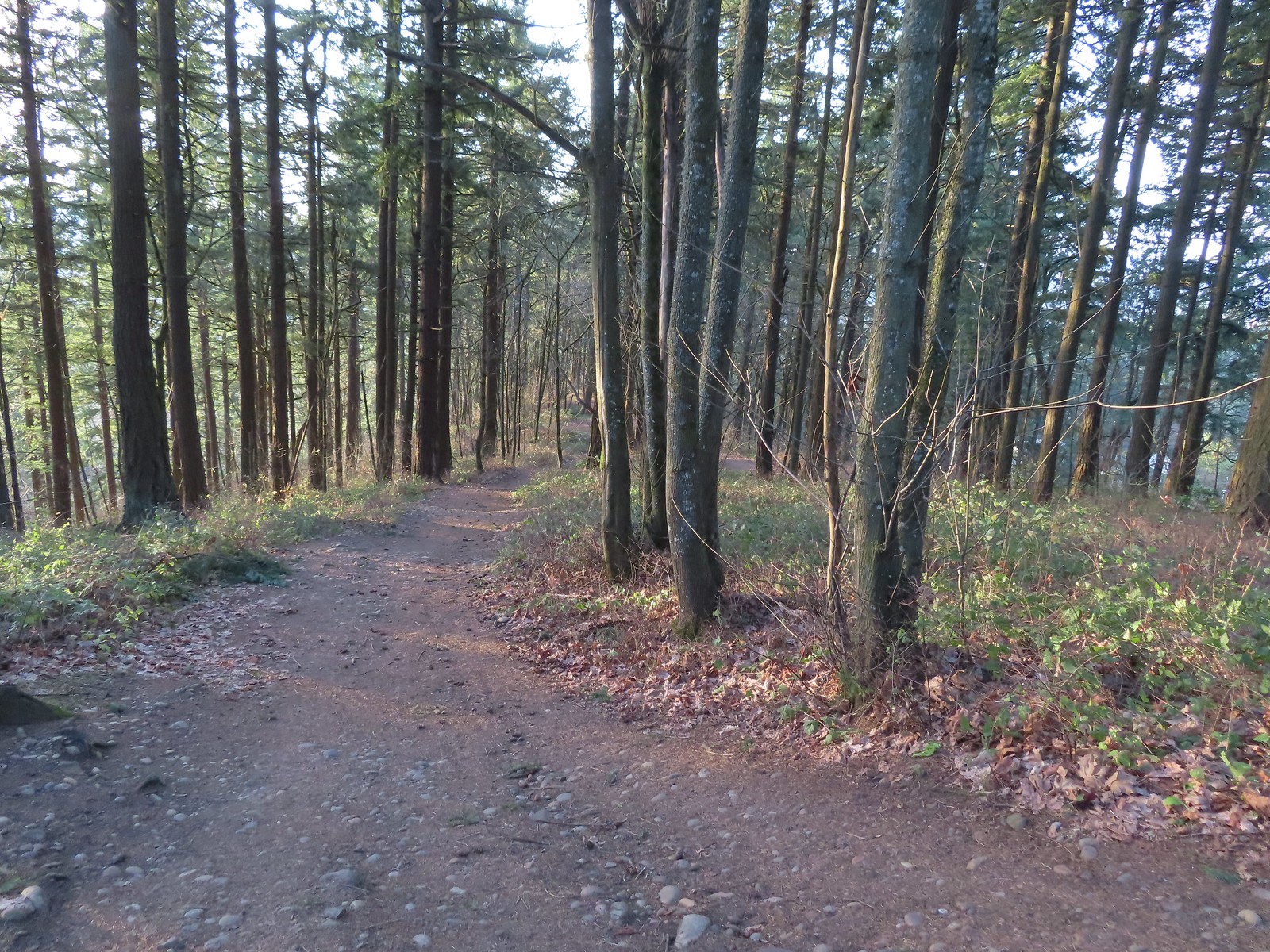
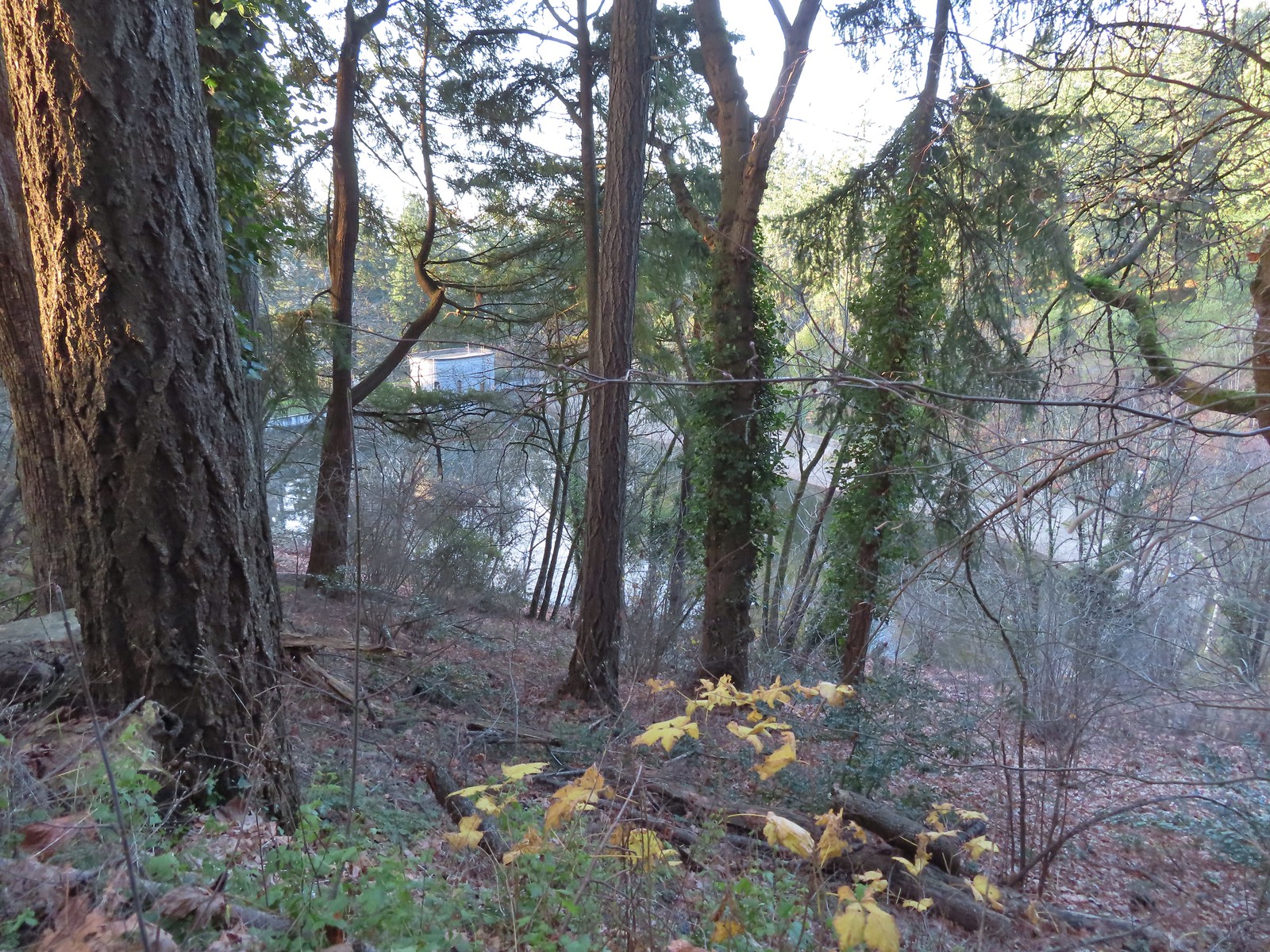
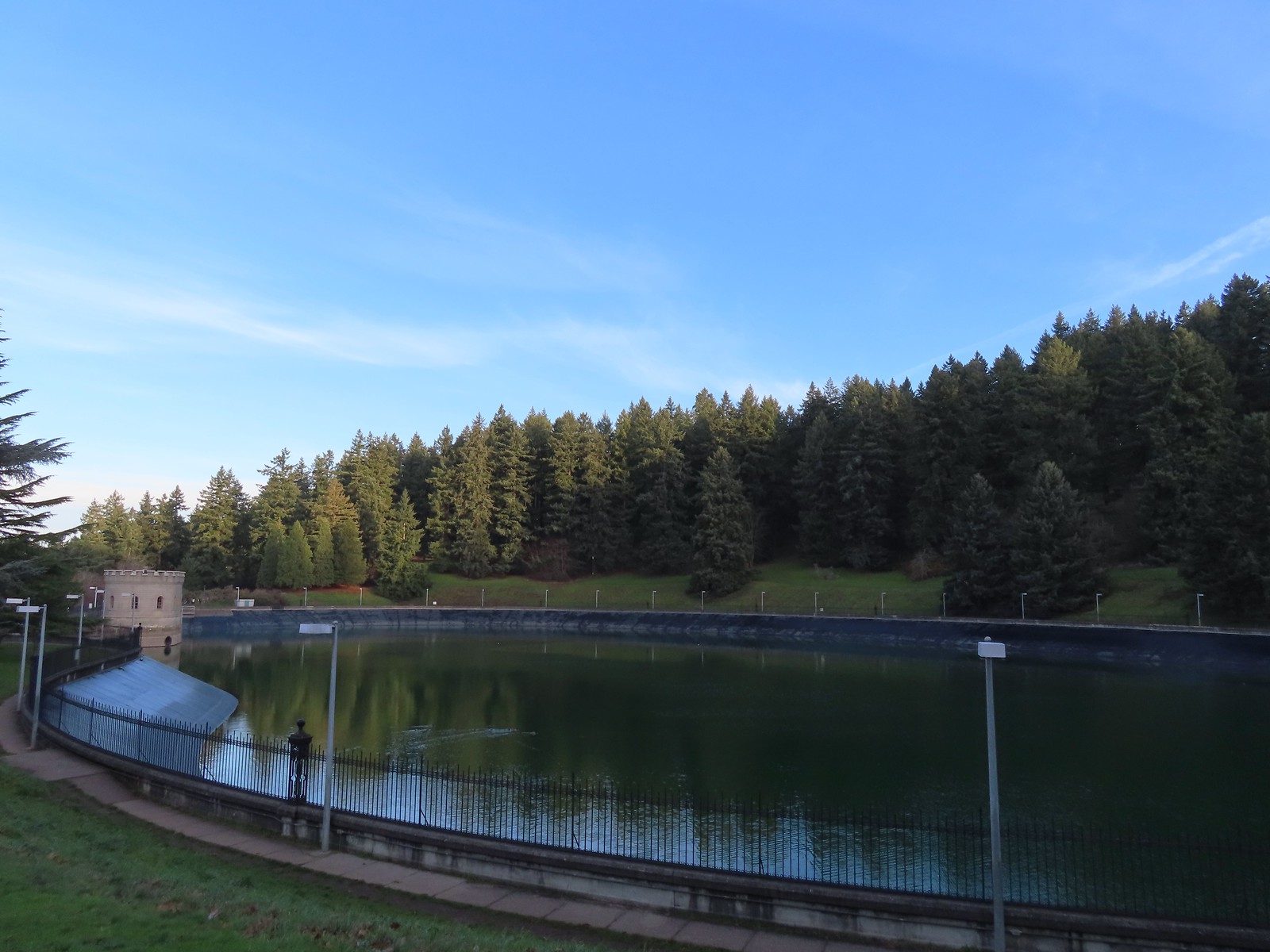
At a wide junction we turned right onto the Red Trail and passed above Reservoir No. 1.
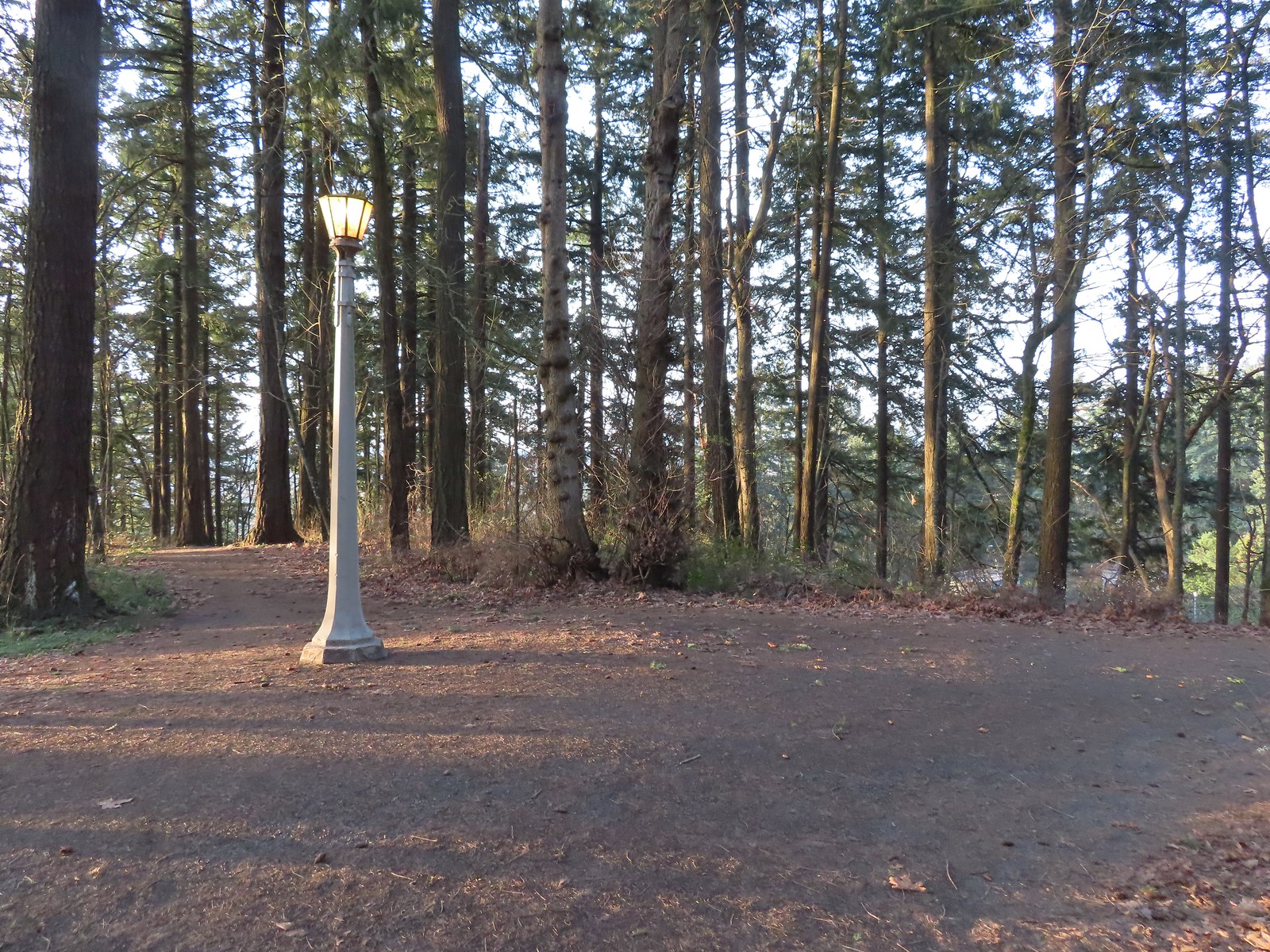
IMG_2049

IMG_2050

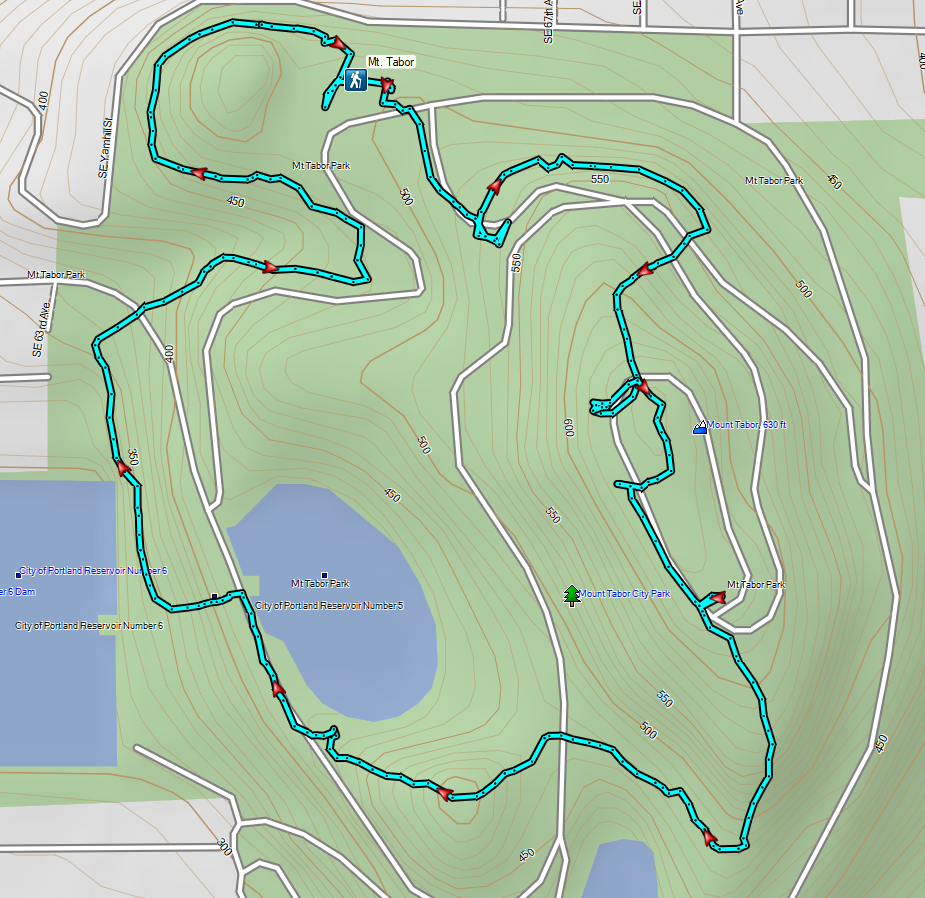
At Reservoir Loop Road we veered left staying on the Red Trail climbing up and over Poison Oak Hill. The trail then dropped back down to the loop road near Reservoir No. 5.
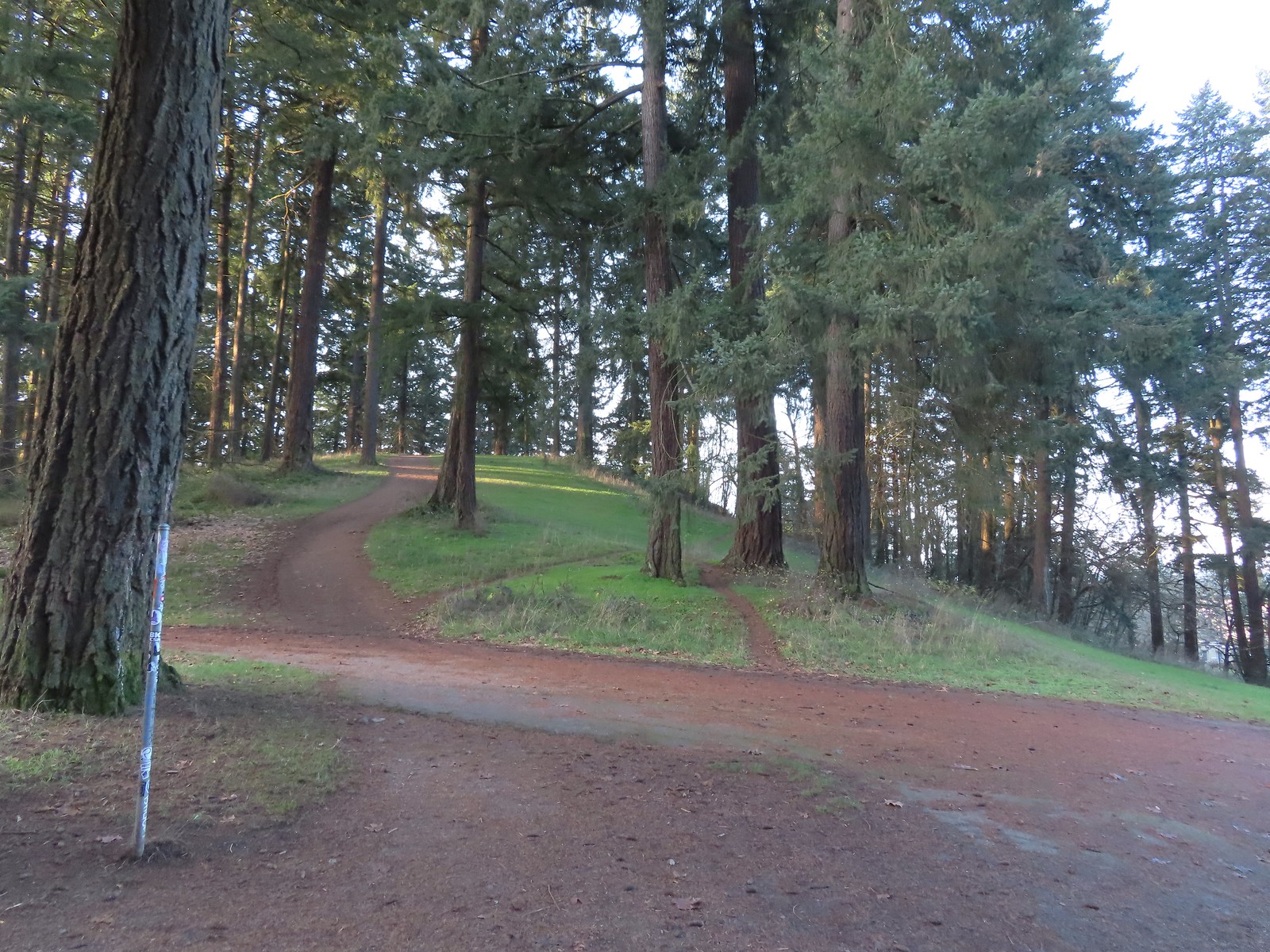
IMG_2058

IMG_2059

IMG_2060

IMG_2061Mallards

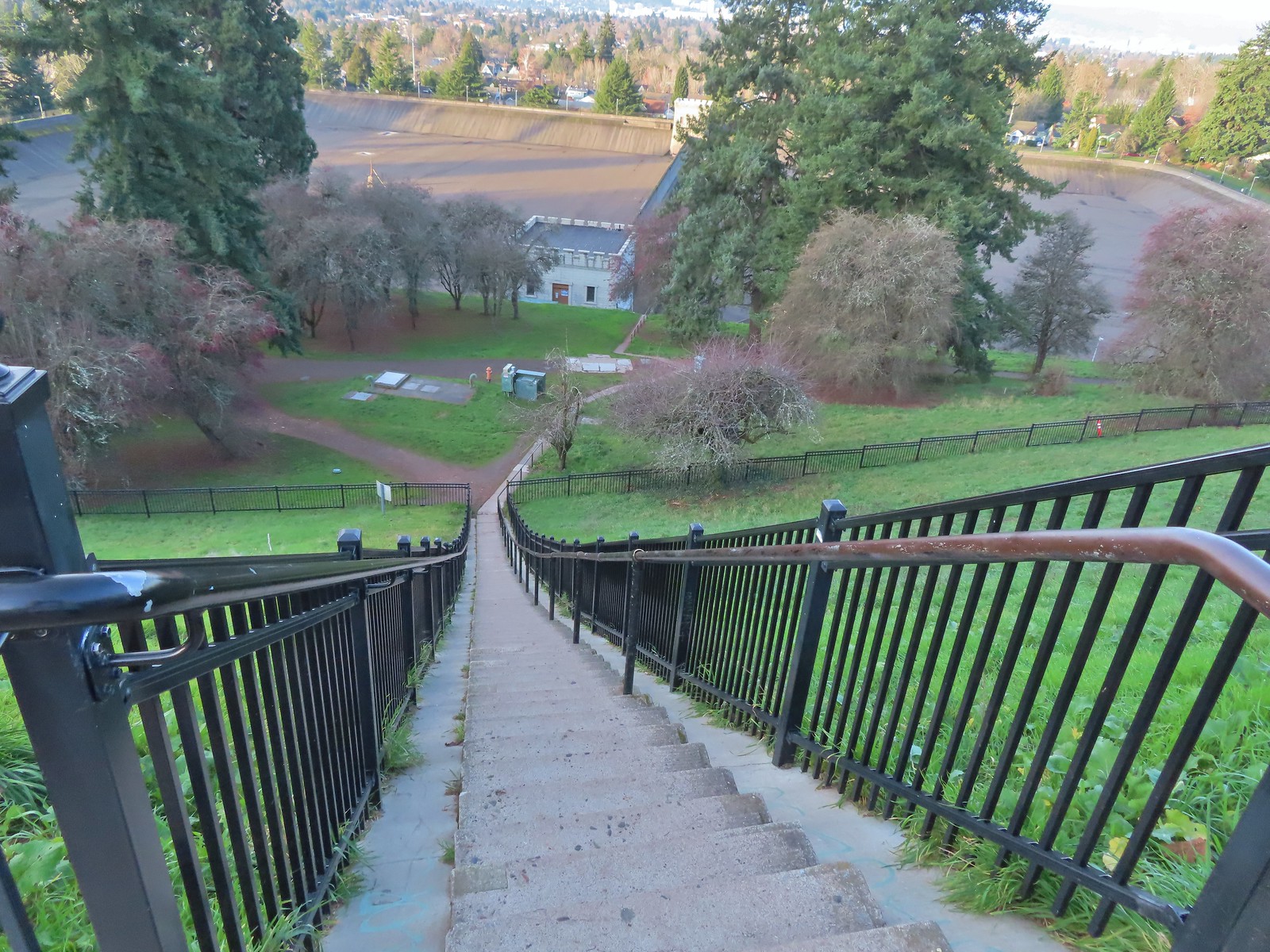
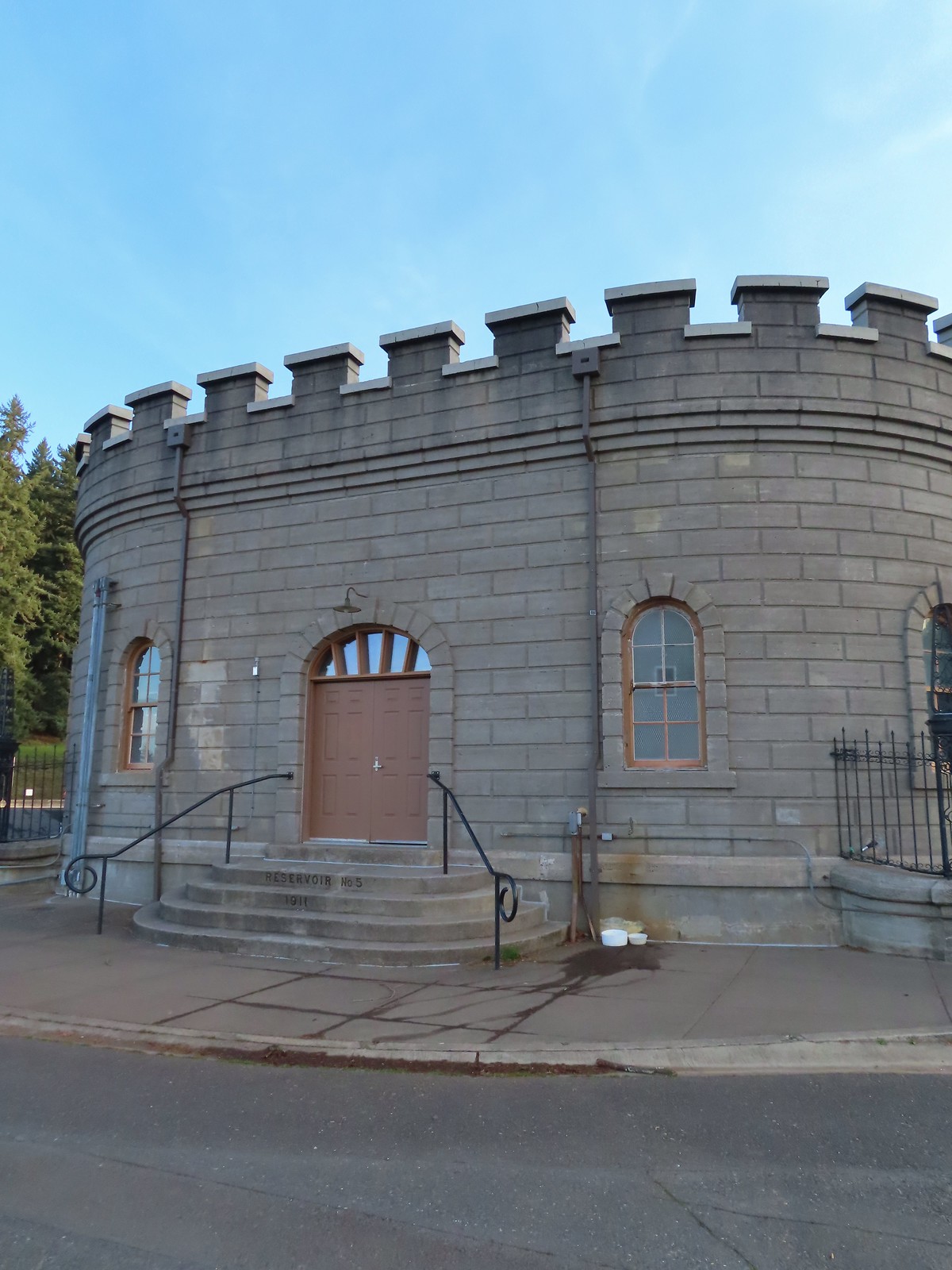
We walked along reservoir road to a small building then crossed the road and headed down a long flight of stairs.
IMG_2065

IMG_2064

IMG_2066

IMG_2067

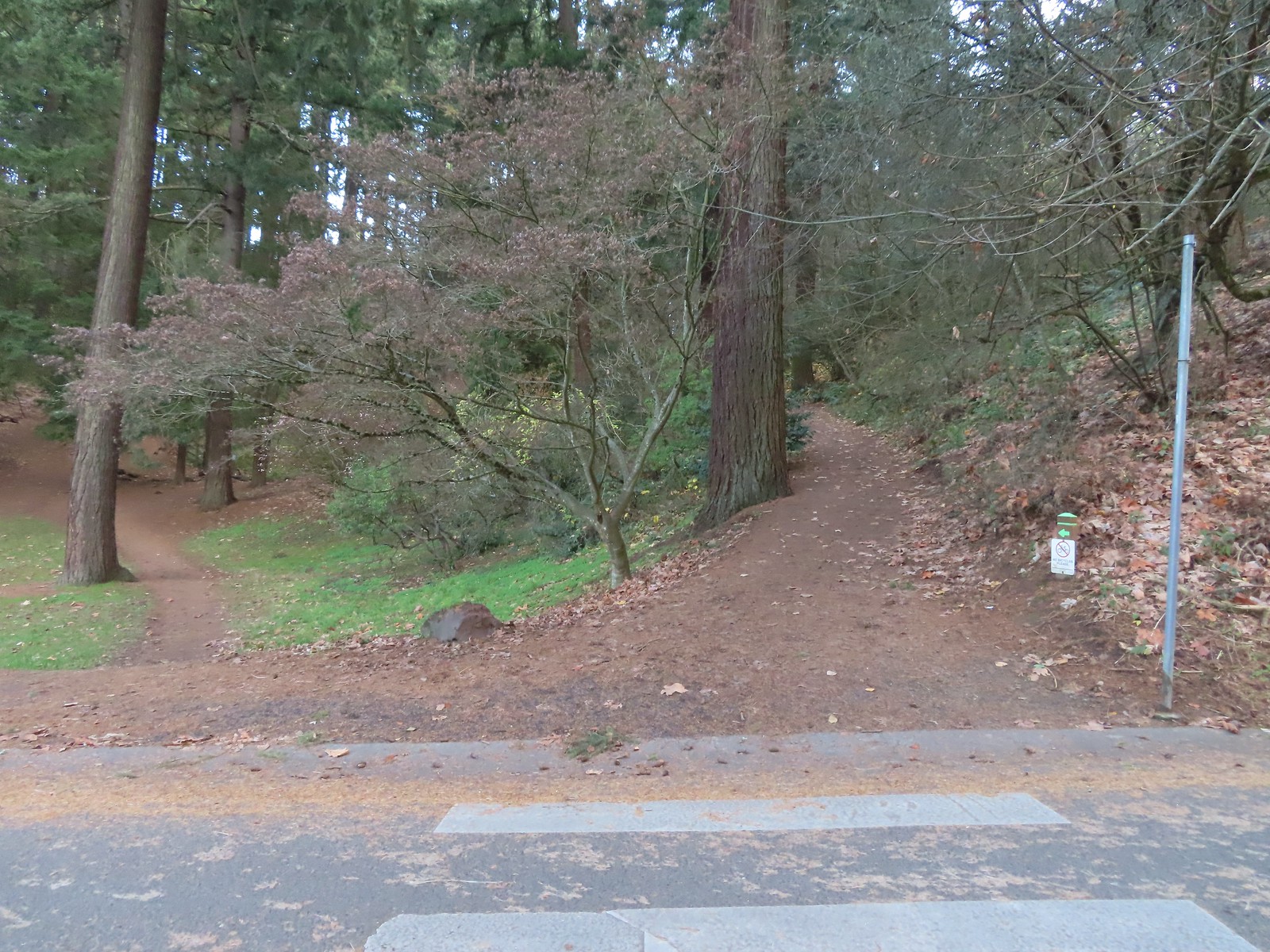
At the bottom of the stairs we turned right on the Green Trail and followed it past some tennis courts before turning uphill. We stuck to the Green Trail as it neared the parking area and followed it back behind The Crater before arriving back at the Visitors Center.
IMG_2070

IMG_2073We forked right at this junction sticking to the green pointers.

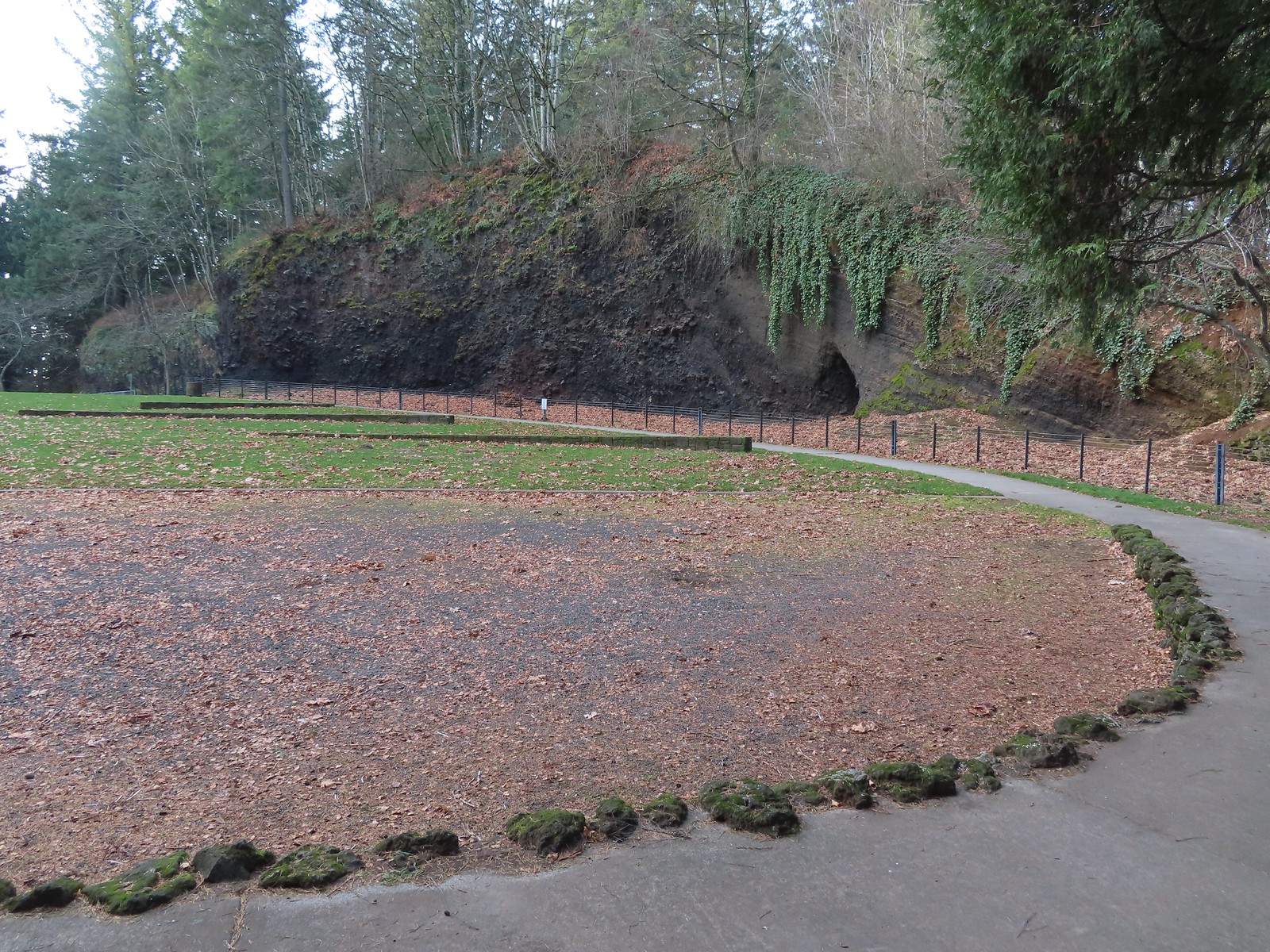
IMG_2076Arriving at The Crater.

IMG_2077Coming around The Crater near the Visitors Center.

This was just over a two-mile loop with approximately 350′ of elevation gain.
From Mount Tabor we made the nine-mile drive to the Sunnyside Road Trailhead for the Mount Talbert Nature Park.
IMG_2078

We set off on a gravel path that descended to a metal bridge over Mount Scott Creek.
IMG_2079Mount Talbert from the path.

IMG_2081

IMG_2082Mount Scott Creek

Beyond the creek the forested trail began to climb Mount Talbert. We passed a junction with the Cedar Park Trail joining from the left and after 0.4-miles arrived at a T-junction with the Park Loop Trail.
IMG_2083

IMG_2086

IMG_2088The Park Loop Trail junction just uphill.

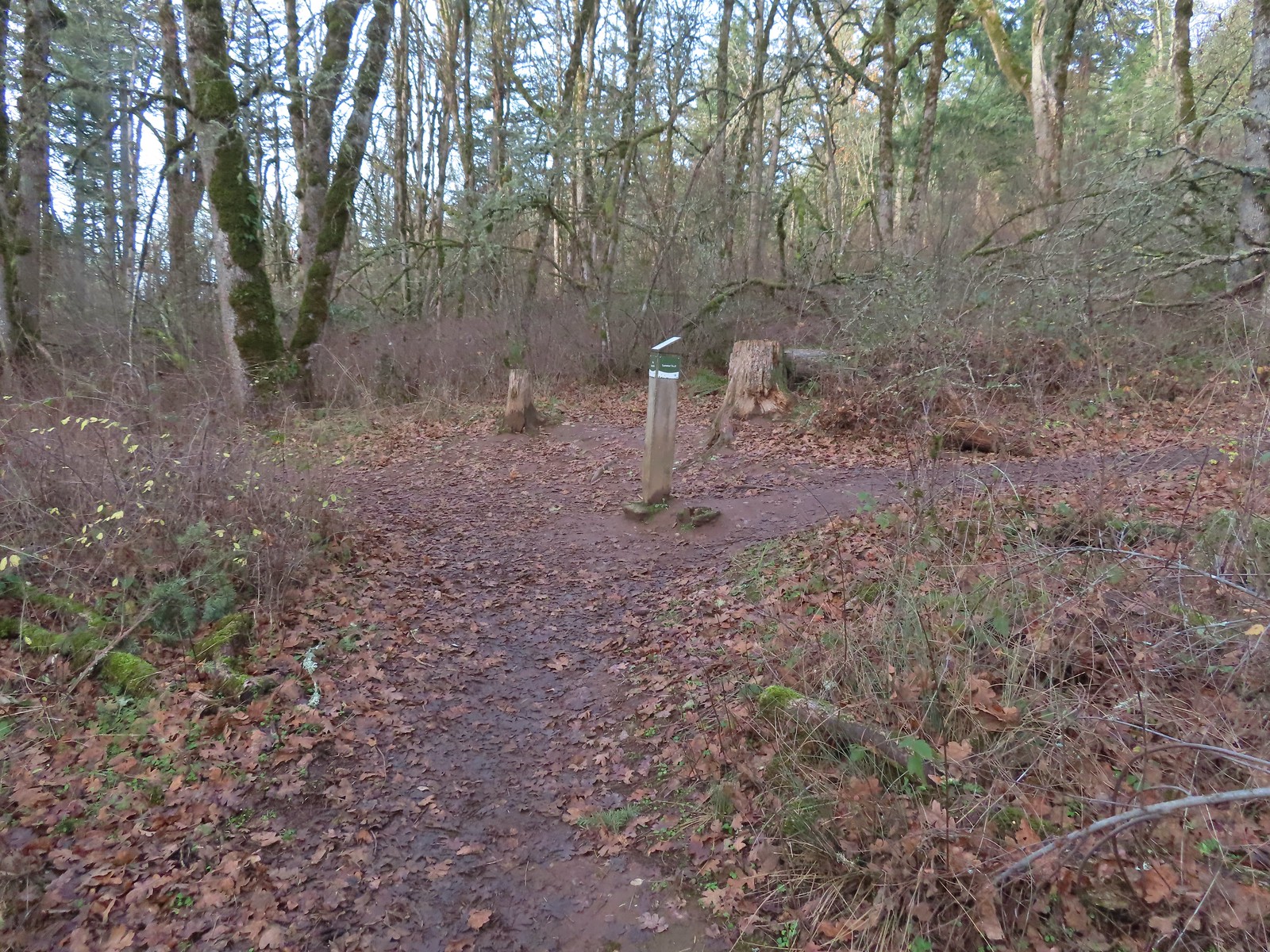
Mount Talbert is an Oregon Metro park which meant well marked junctions complete with small maps.
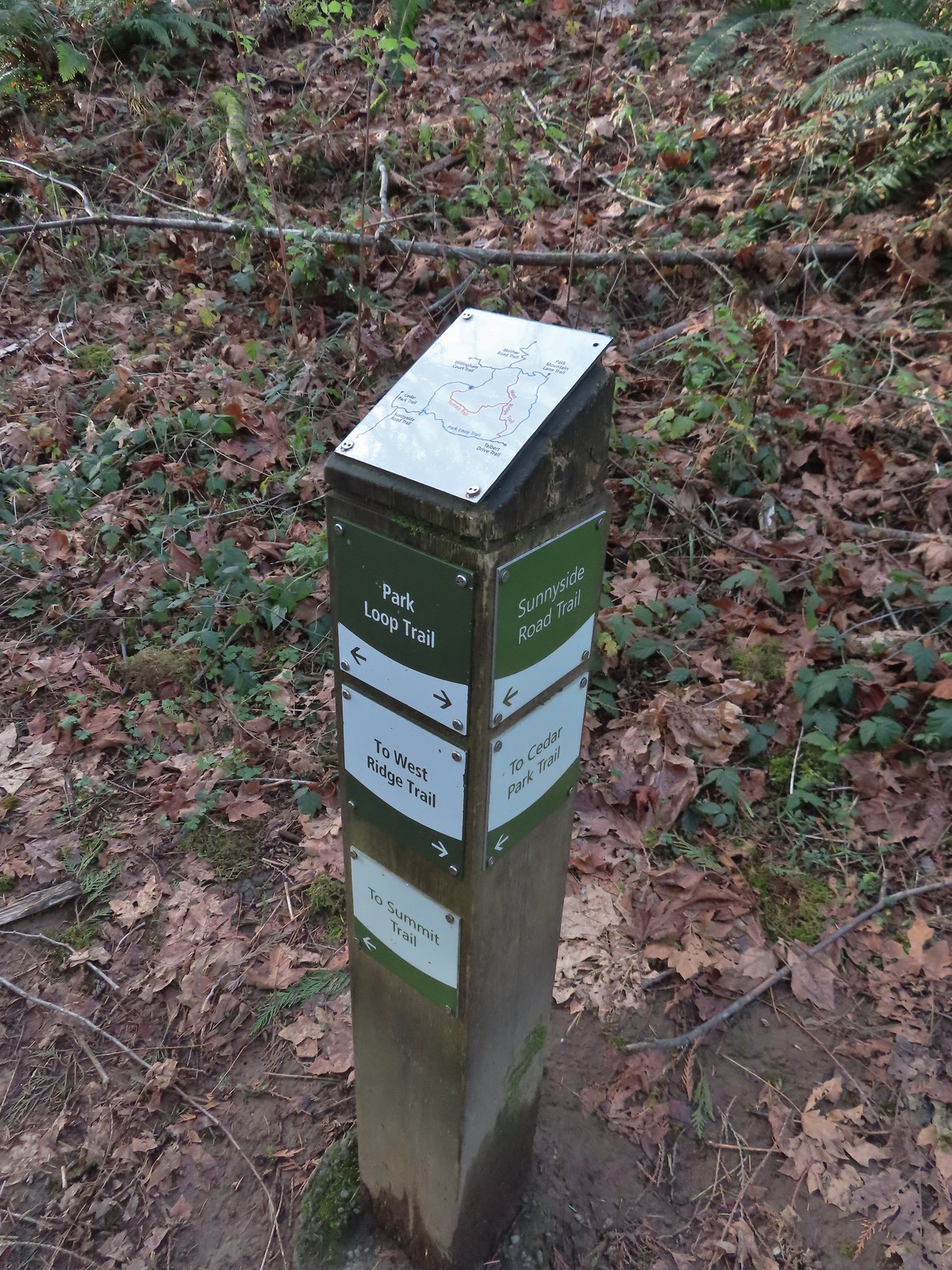
IMG_2089Note that the map at the Park Loop/Sunnyside Road Trail junction mis-identifies the location with the “You Are Here” star located at the Park Loop/Summit Ridge junction.

We turned left onto the Park Loop Trail and followed it further uphill to the actual Summit Ridge Trail junction.
IMG_2091

IMG_2093

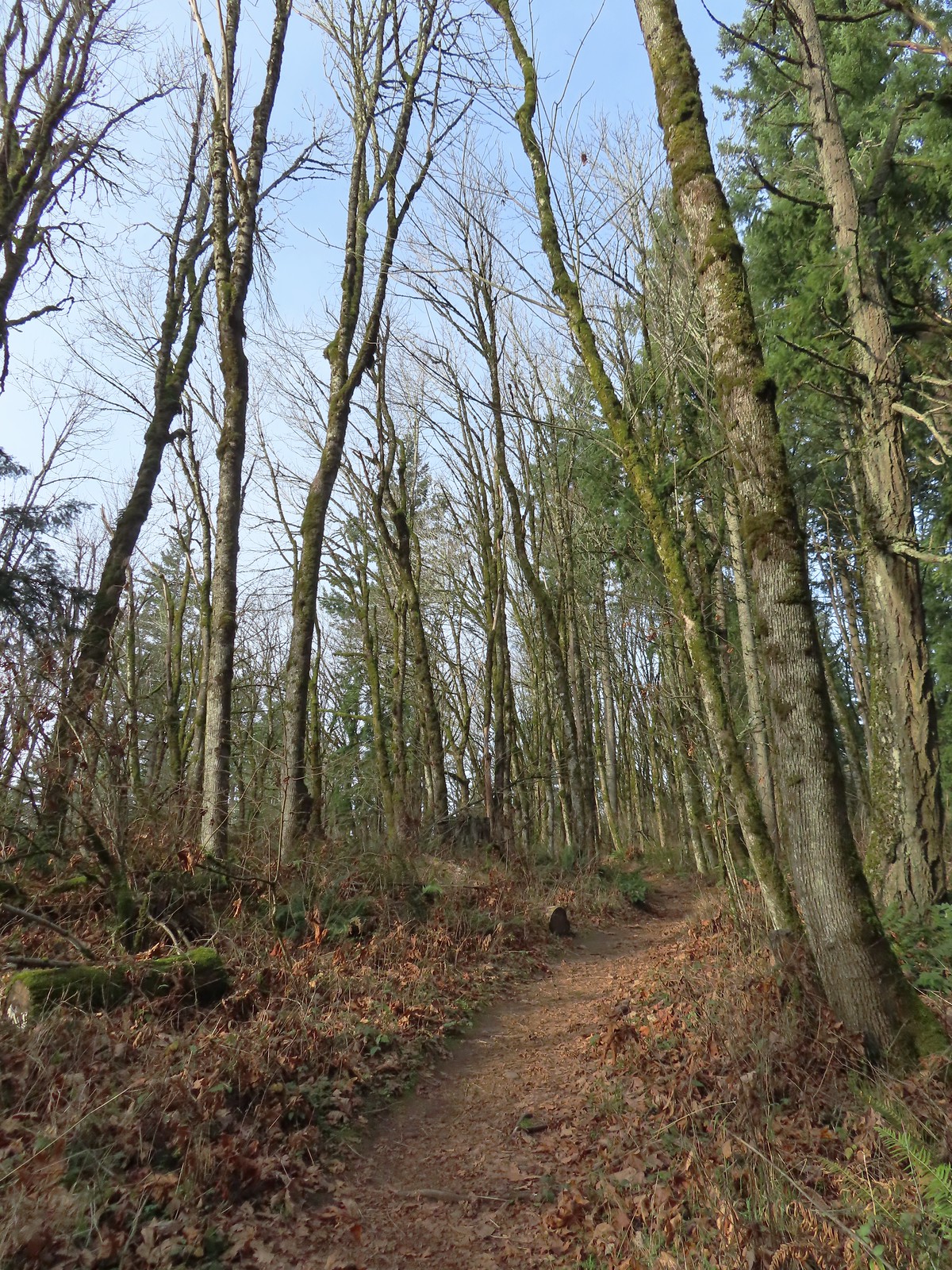
We turned right onto the Summit Ridge Trail and followed it up and over the wooded summit to the West Ridge Trail.
IMG_2096

IMG_2098

IMG_2099Arriving at the West Ridge Trail junction.

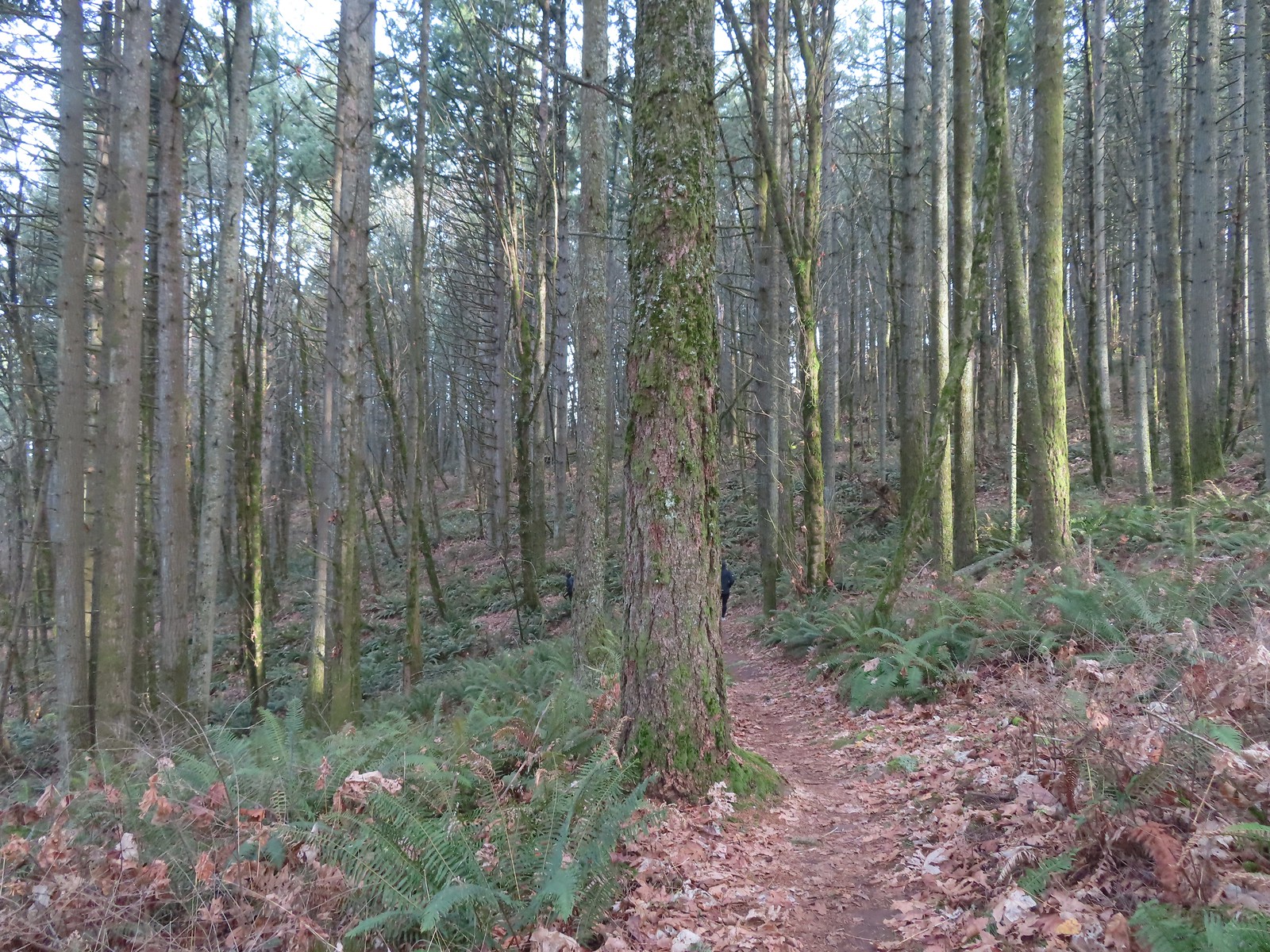
We turned right again and followed the West Ridge Trail as it traversed the hillside brining us back to the Park Loop Trail.
IMG_2101

IMG_2103Rejoining the Park Loop Trail.

We completed the loop and turned down the Sunnyside Road Trail to return to our car to complete this 2.5-mile (and 700′ gain) hike.
IMG_2108Mt. Adams was visible through the web of small branches.
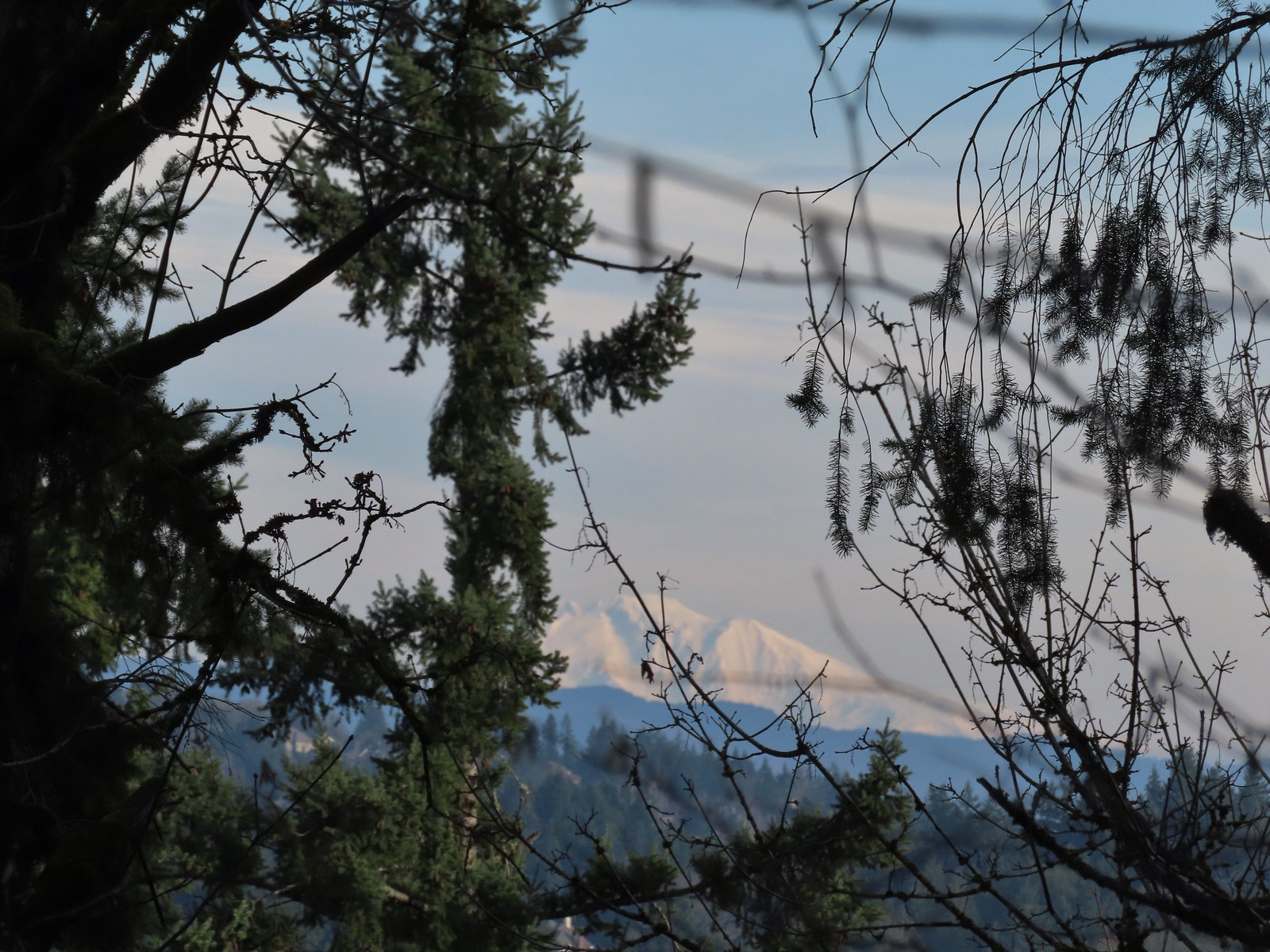
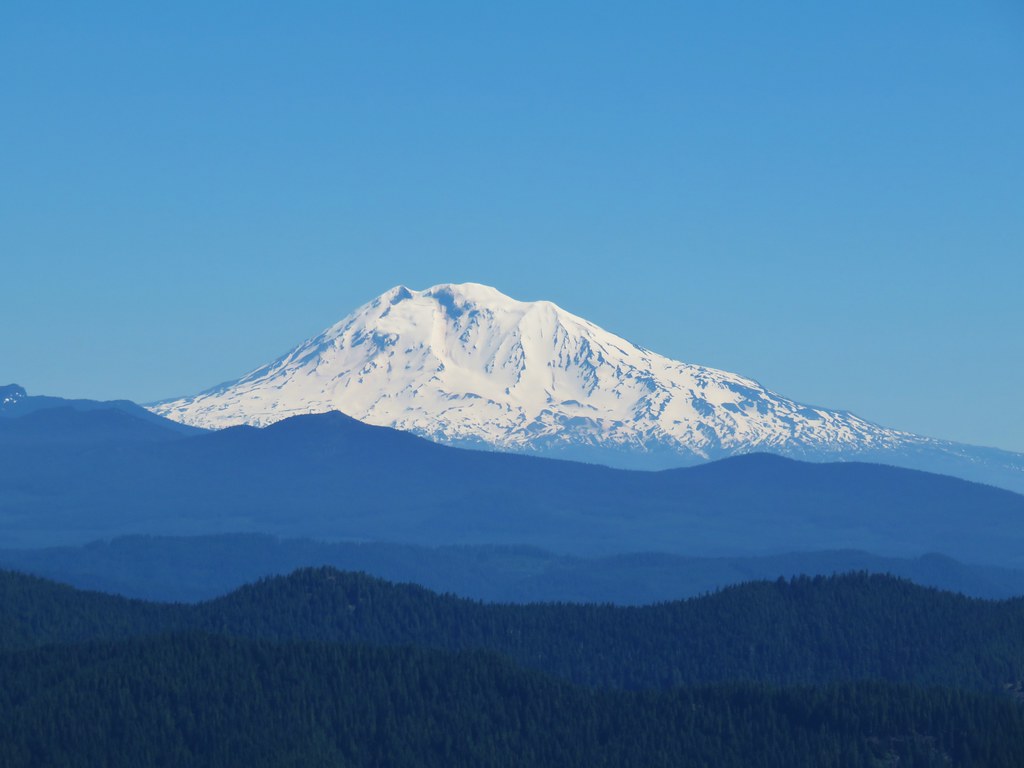
IMG_2110A snowy Mt. Adams.

IMG_2113Back at the Sunnyside Road Trail.

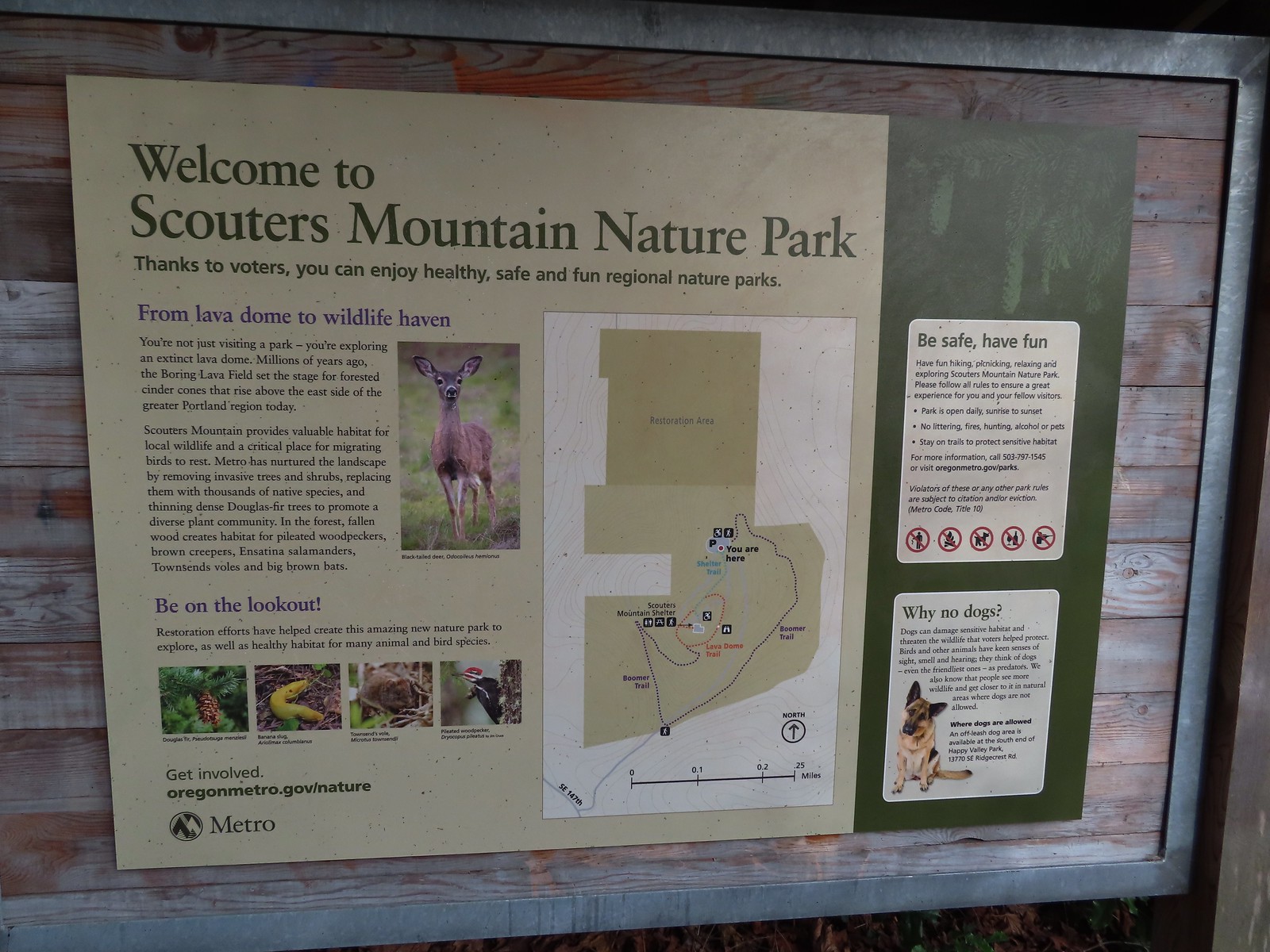
From the Sunnyside Road Trailhead it was just a 3.5-mile drive to the parking area at Scouters Mountain Nature Park.
IMG_2115

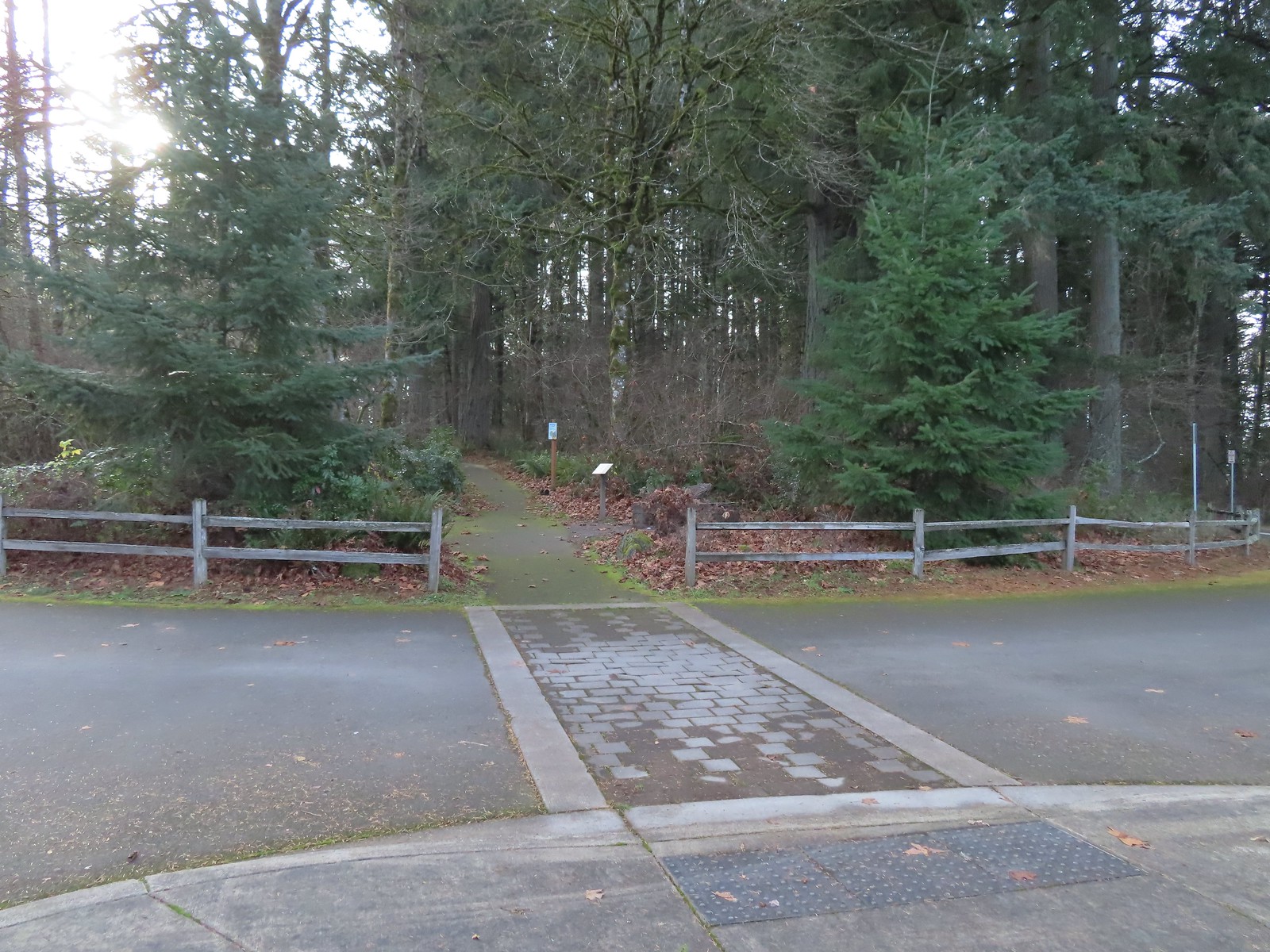
From the parking area we set off on the paved Shelter Trail toward the summit.
IMG_2114

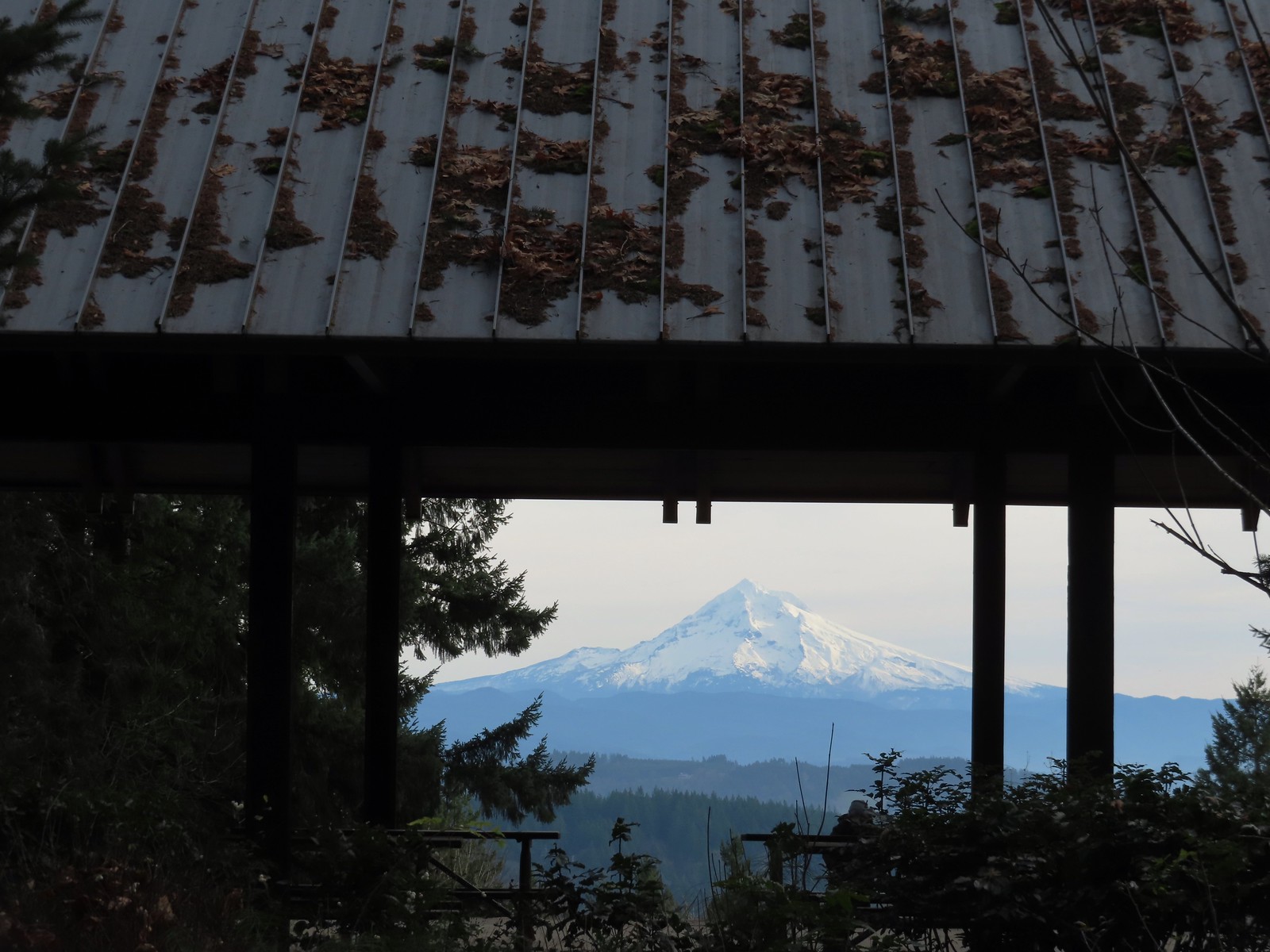
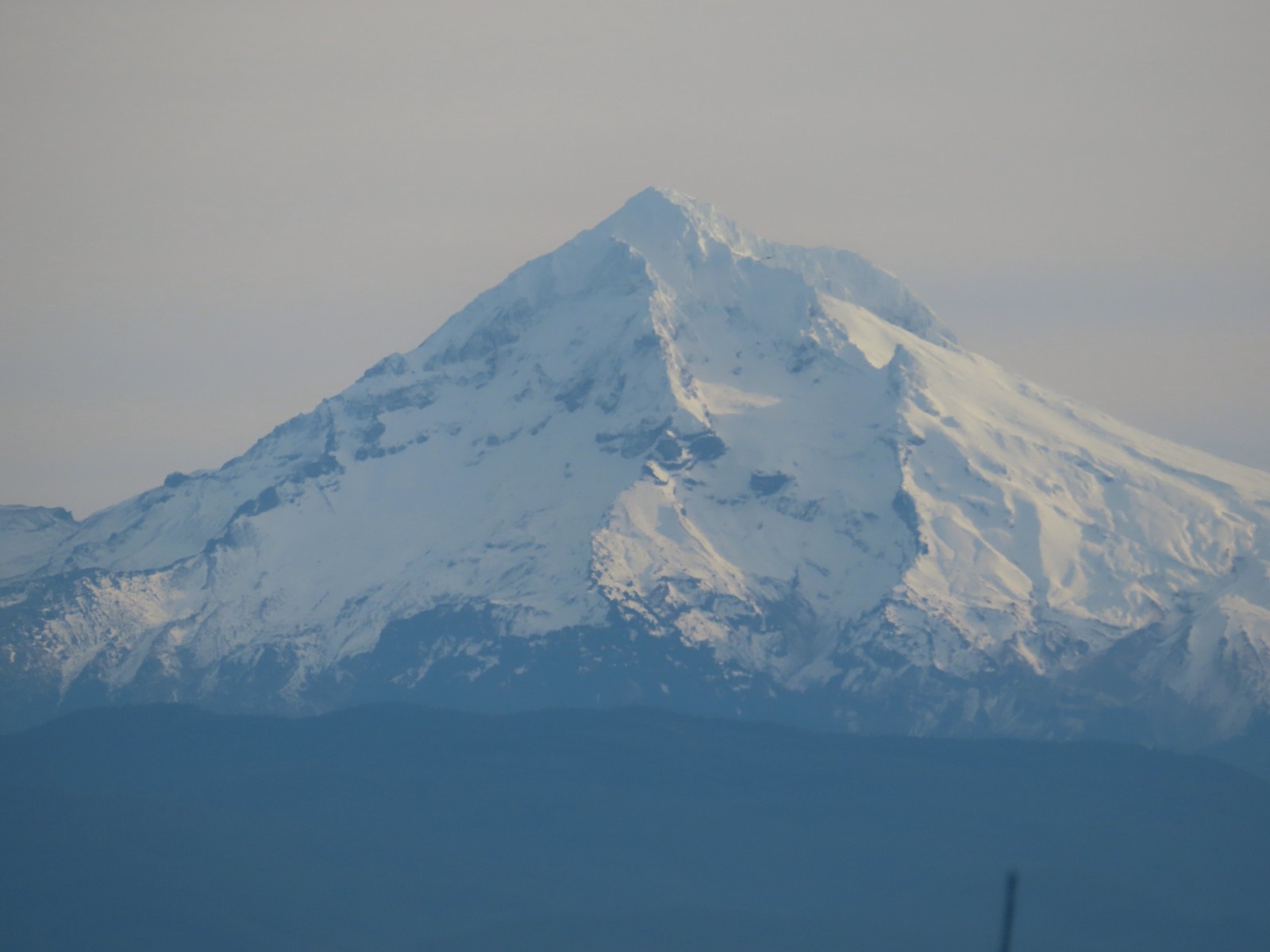
After just 0.2-miles we arrived at the shelter and a great view of Mt. Hood.
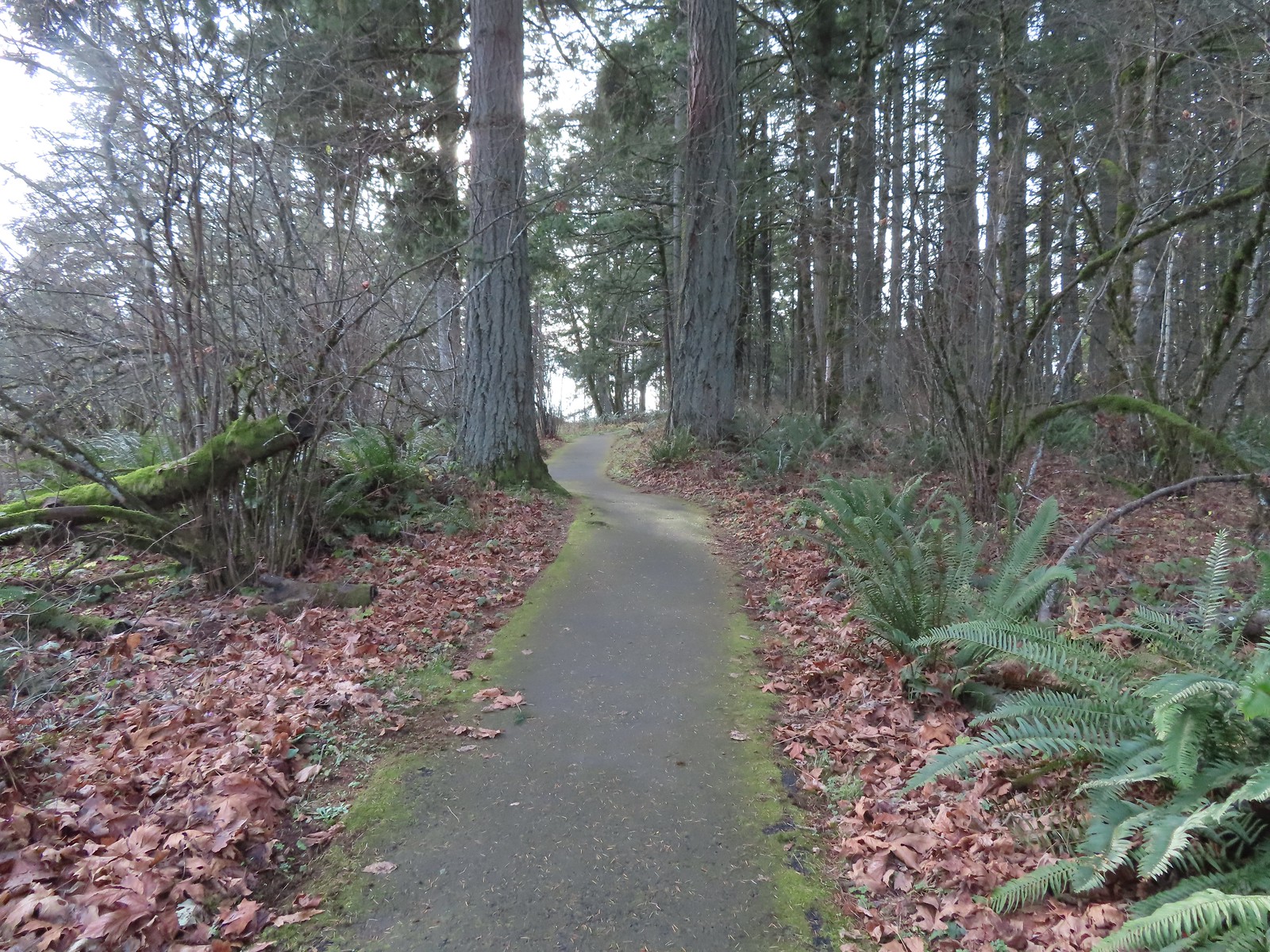
IMG_2119

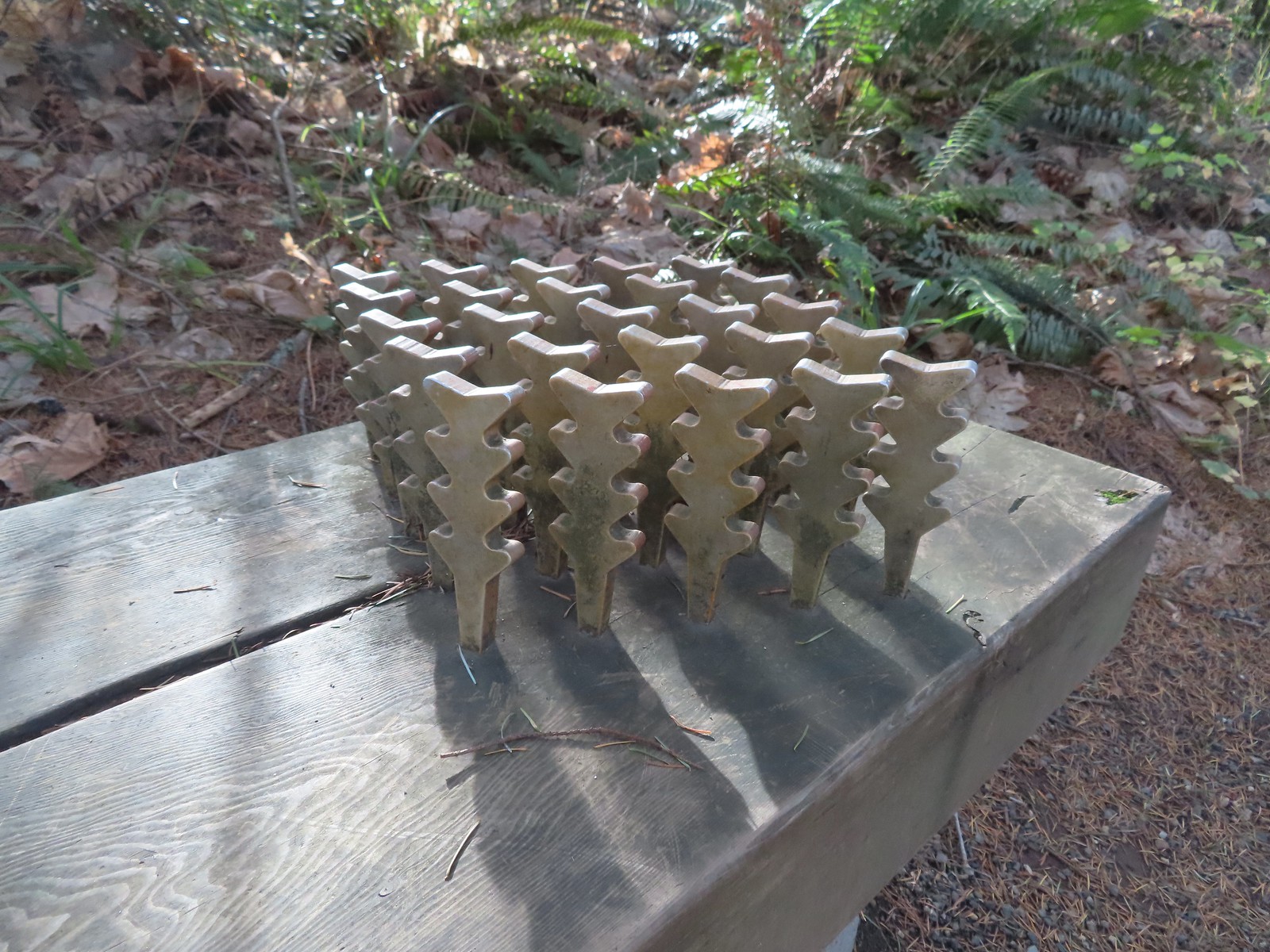
IMG_2122The benches throughout the park contained various nature sculptures, this one is “Moss Group”.

IMG_2126

IMG_2128

IMG_2127

After admiring the mountain we made a small loop on the summit then continued on our larger loop by taking the Boomer Trail at the southern end of the summit downhill and looping around the East side of the mountain to return to the parking area.
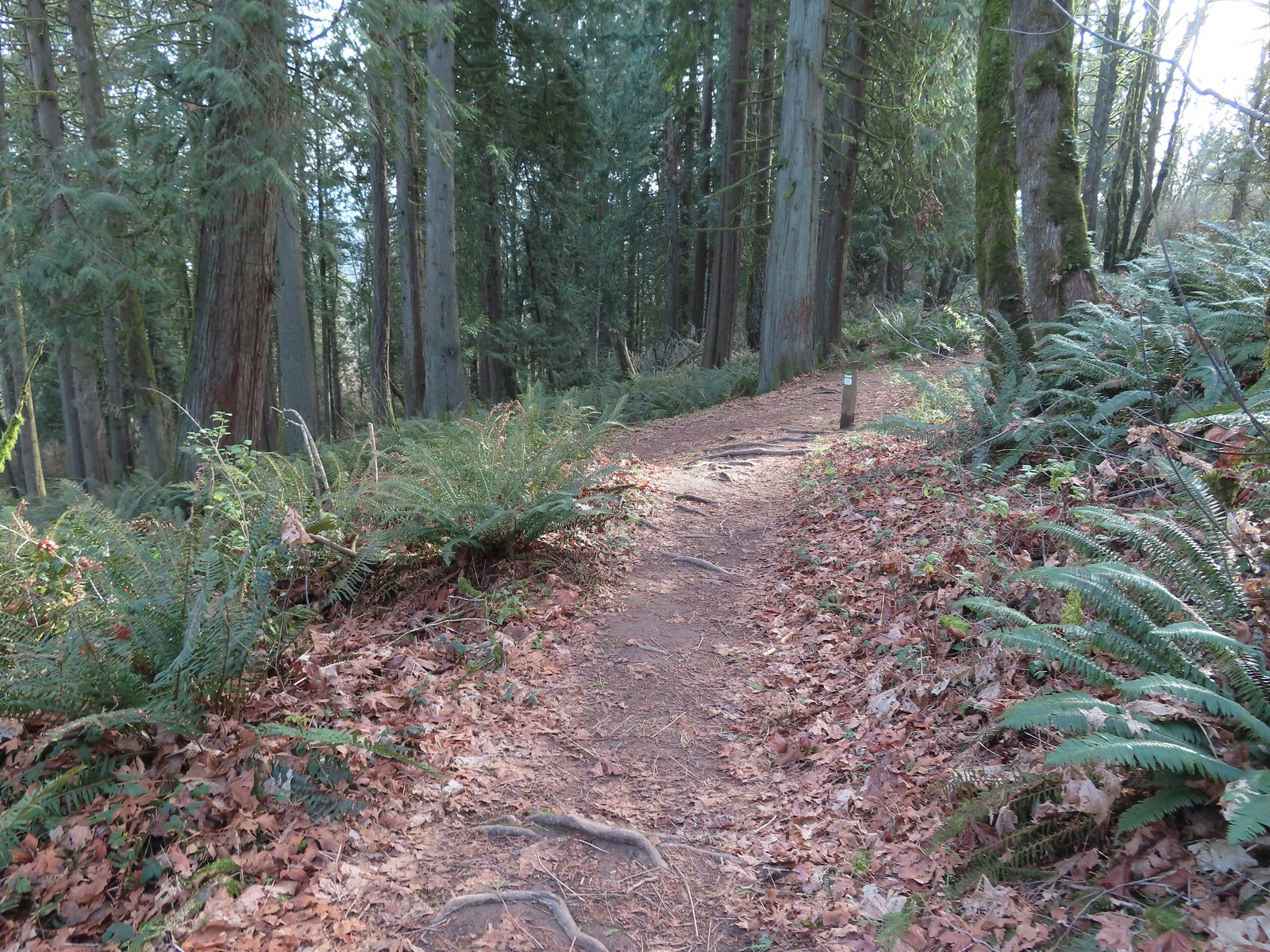
IMG_2148On the Boomer Trail.

IMG_2150The Boomer Trail turned left at the bottom of these stone steps.
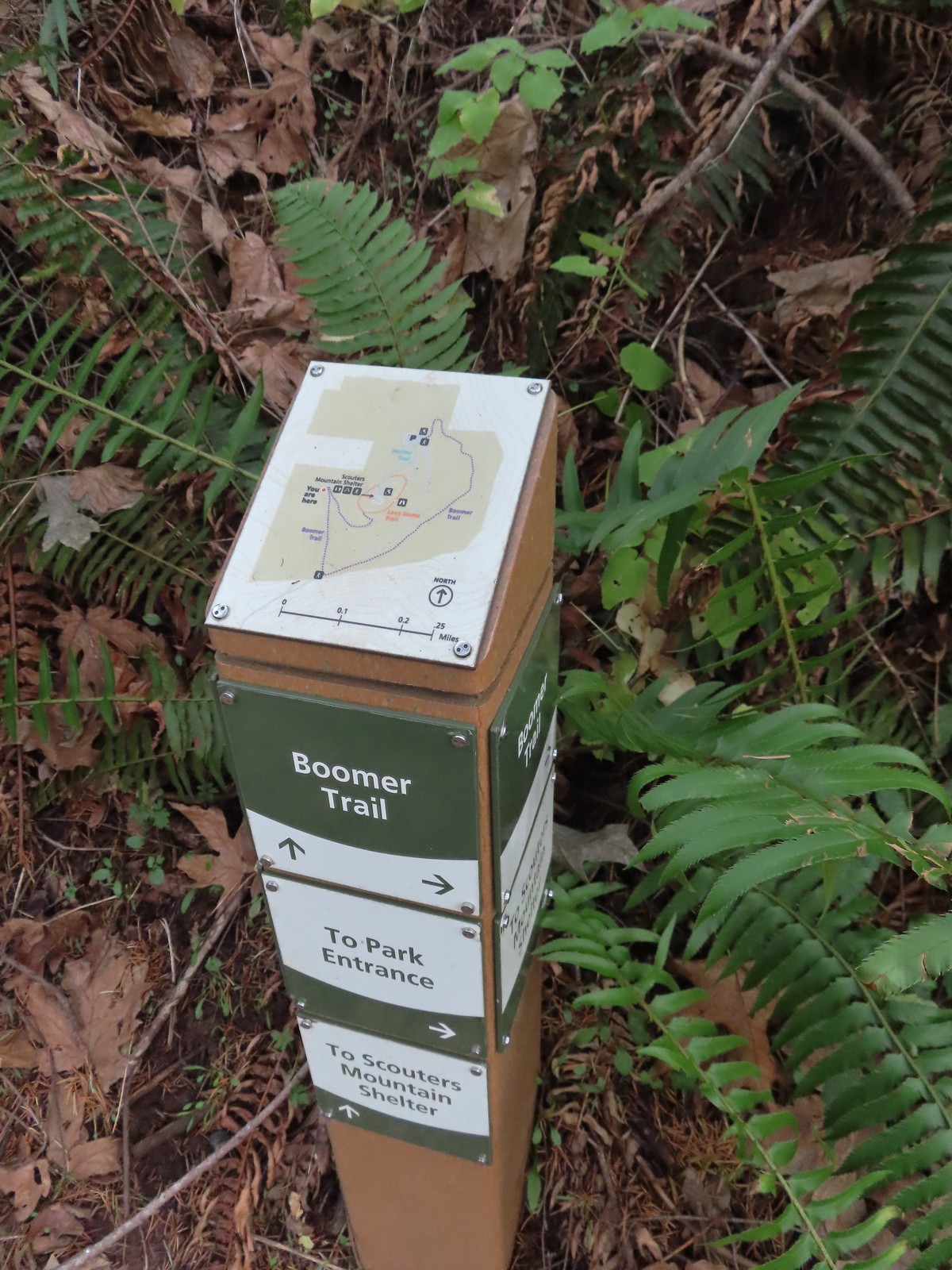
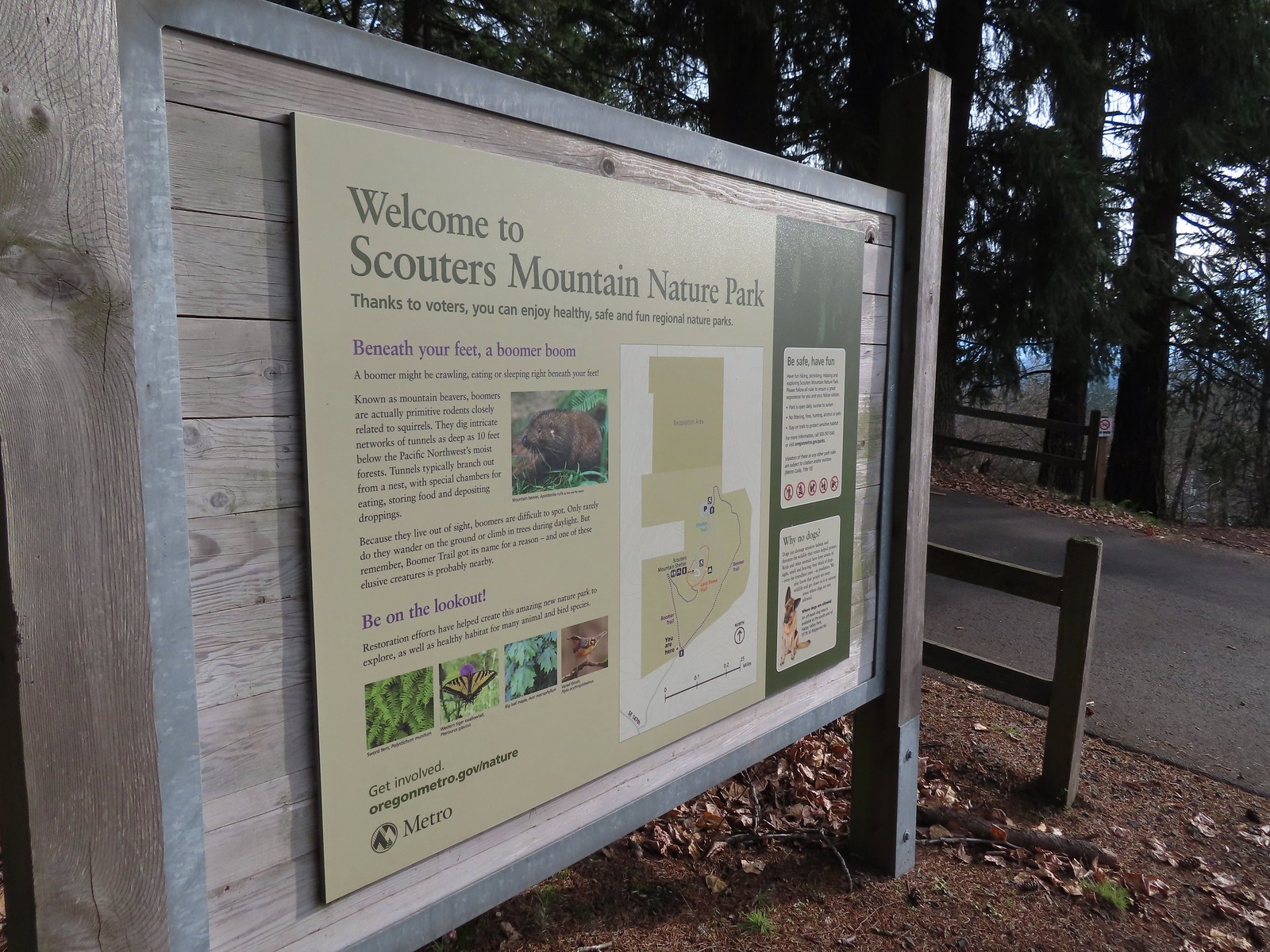
IMG_2151Another Metro trail map and pointers.

IMG_2152The Boomer Trail, named for Mountain Beavers which are sometimes called boomers, crossed the entrance road before climbing back up to the parking area.

IMG_2156This was an impressive root system.

IMG_2160A less obstructed view of Mt. Adams. (Mt. St. Helens was also briefly visible from this section of trail.)

IMG_2161Slightly clearer shot of Mt. Adams.

IMG_2162Back at the trailhead.

This was just a 1.3-mile loop with 200′ of elevation gain, and it was still early enough that we could easily fit one more stop in. From Scouters Mountain we drove another 4.5-miles to Hood View Park

At the far end of the parking area we followed a service road down to SE 162nd Ave and followed it right to its end at a sign for the Hidden Falls Nature Park.
IMG_2163

IMG_2164Mt. St. Helens from the service road. Mt. Hood was also visible to the right through some fences around the ball fields.

IMG_2166

IMG_2167

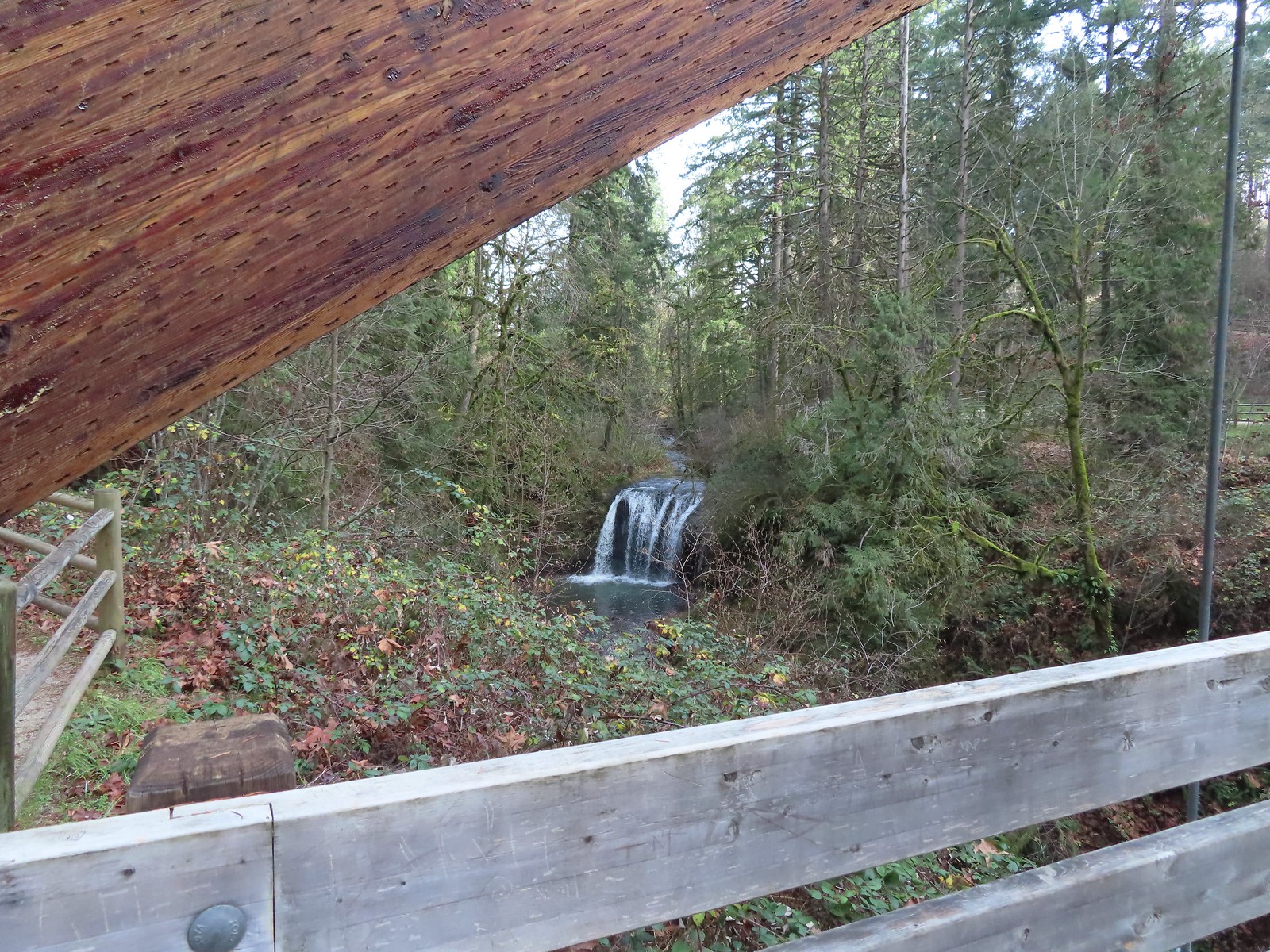
A wide path led somewhat steeply downhill a third of a mile to an impressive bridge over Rock Creek and a view of Hidden Falls.
IMG_2168

IMG_2170The large area to the right didn’t offer much of a view of the falls, but the view from the bridge was great.
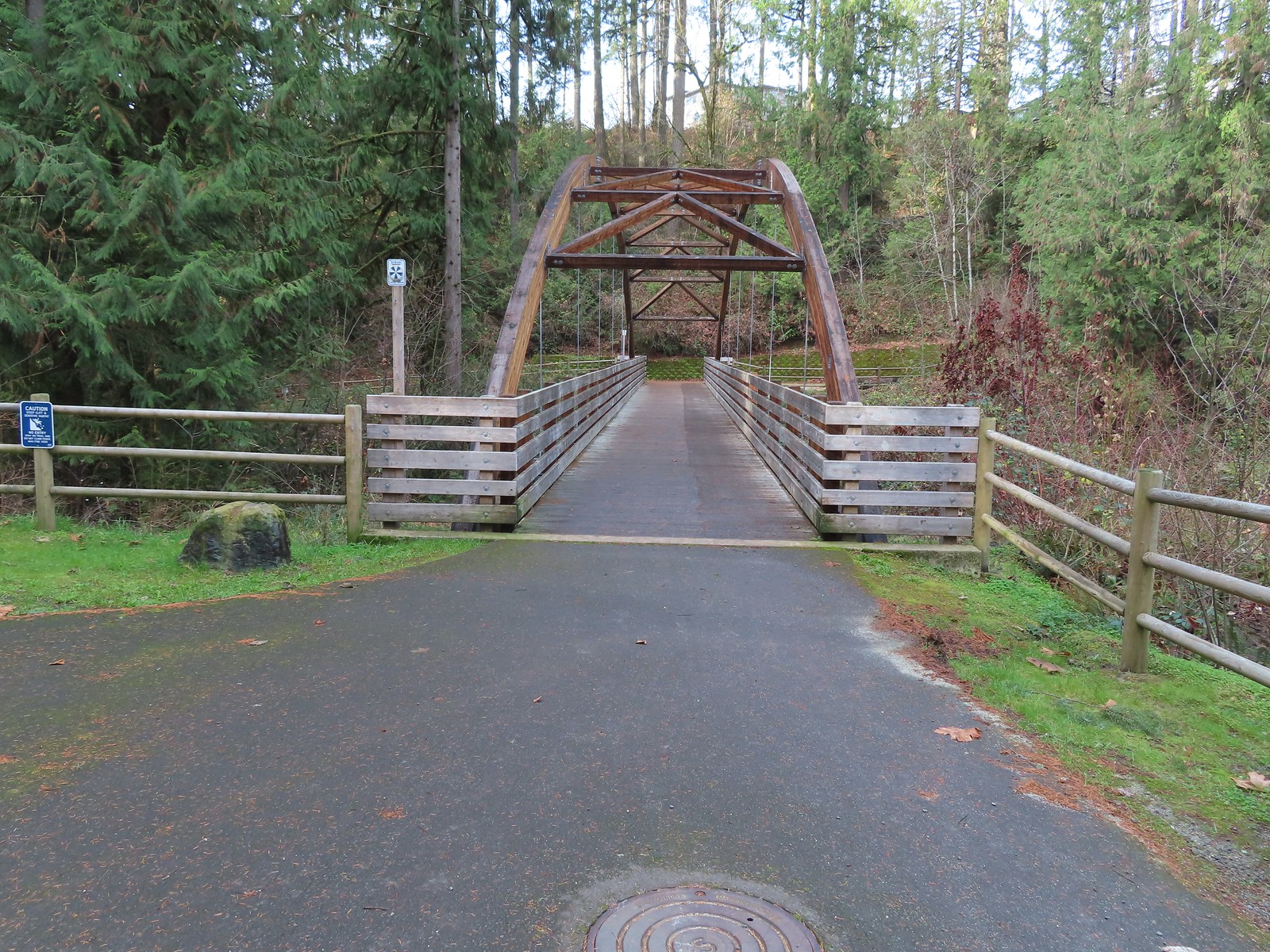
IMG_2172

IMG_2176

IMG_2183

IMG_2179

We continued past the bridge a short distance along Rock Creek before turning around when the path veered away to climb up into another neighborhood.
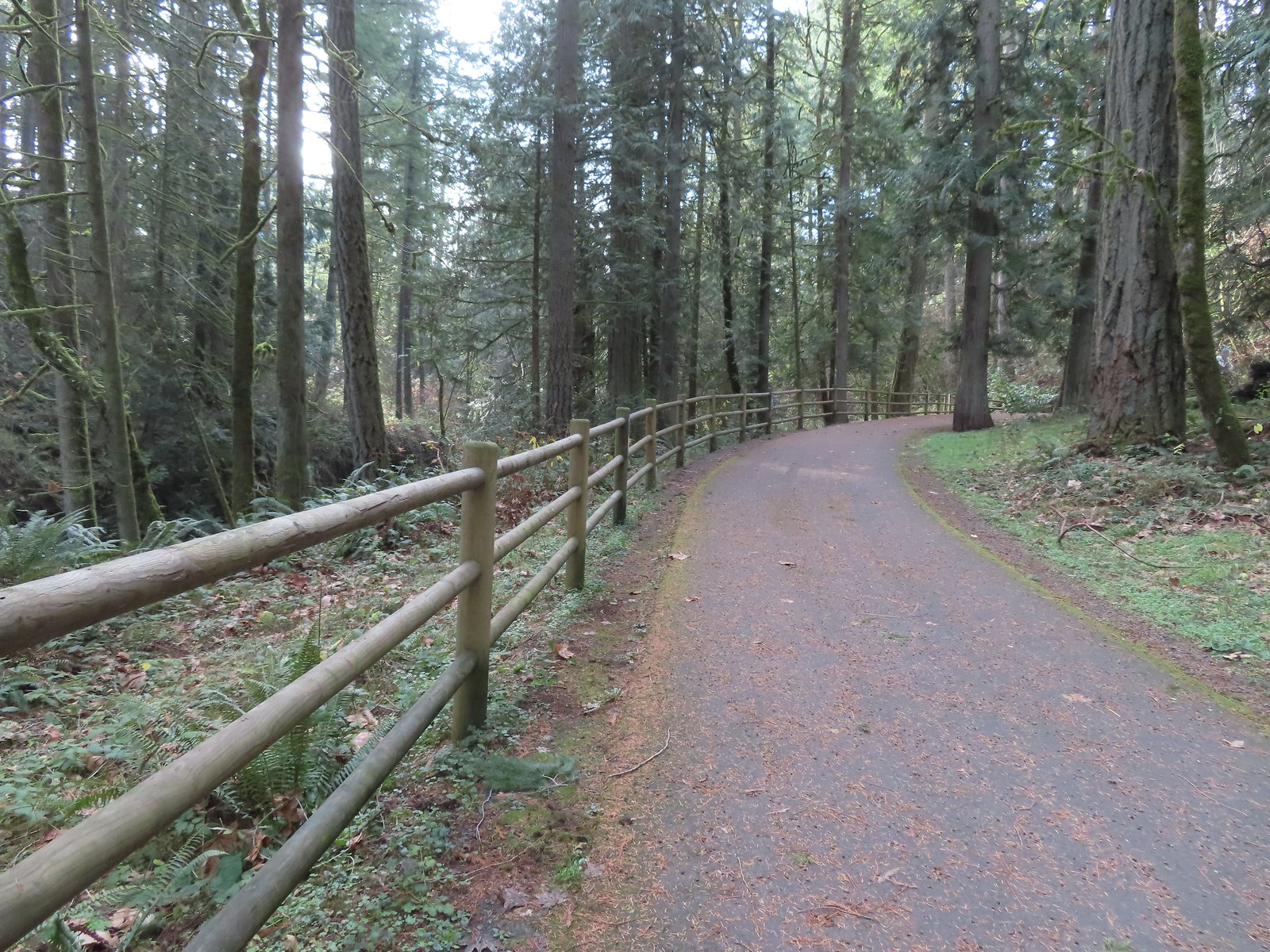
IMG_2186

IMG_2187

The Oregon Hikers Field Guide describes a 4.1-mile loop that visits some other parks while also passing through several neighborhoods. We were content with seeing the falls and headed back making this just a 1.2-mile out-and-back with a couple hundred feet of elevation gain. For the day we logged 7.2-miles and 1475′ of cumulative elevation gain. It was a nice relaxing way to end our 2023 hiking season. Happy Trails and Merry Christmas!
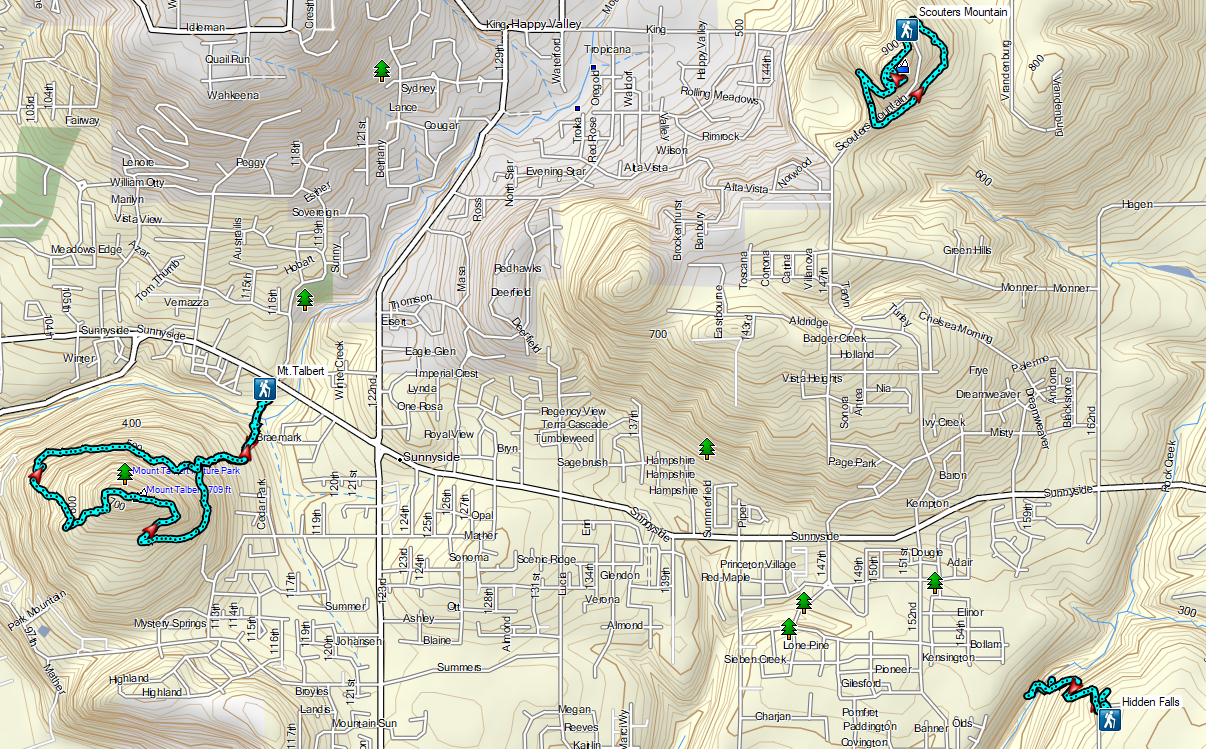
Our final three hikes.
Categories
Hiking Oregon Trip report Wallowas

Imnaha Falls – 06/12/2023

Our arrival in Enterprise coincided with the arrival of a couple of days with forecasted afternoon thunder storms. We did some rearraigning of the order of our hikes to avoid the storms and decided on Imnaha Falls as our Monday hike. We began at the Indian Crossing Trailhead located in the Hells Canyon National Recreation Area.
IMG_9800Indian Crossing Trailhead

IMG_9793

IMG_9798Imnaha River at the trailhead.

There were quite a few wildflowers blooming at the trailhead.
Jessica's stickseedJessica’s stickseed

IMG_9801Hooked spur violet

IMG_9803Woodland star

IMG_9804Valerian

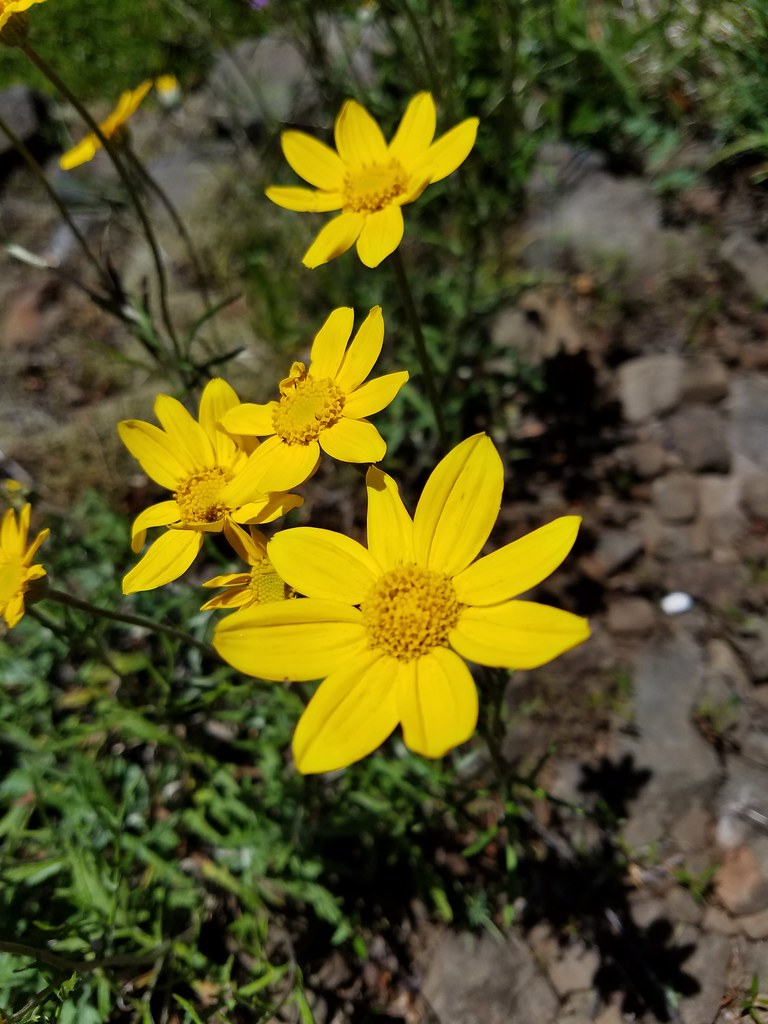
IMG_9805Arnica

We took the South Fork Imnaha Trail #1816 following pointers for Blue Hole and Twin Lakes.
IMG_9792

IMG_9810

IMG_9809Violets

IMG_9823We passed a pack station in the forest on our right.

IMG_9815Ballhead waterleaf

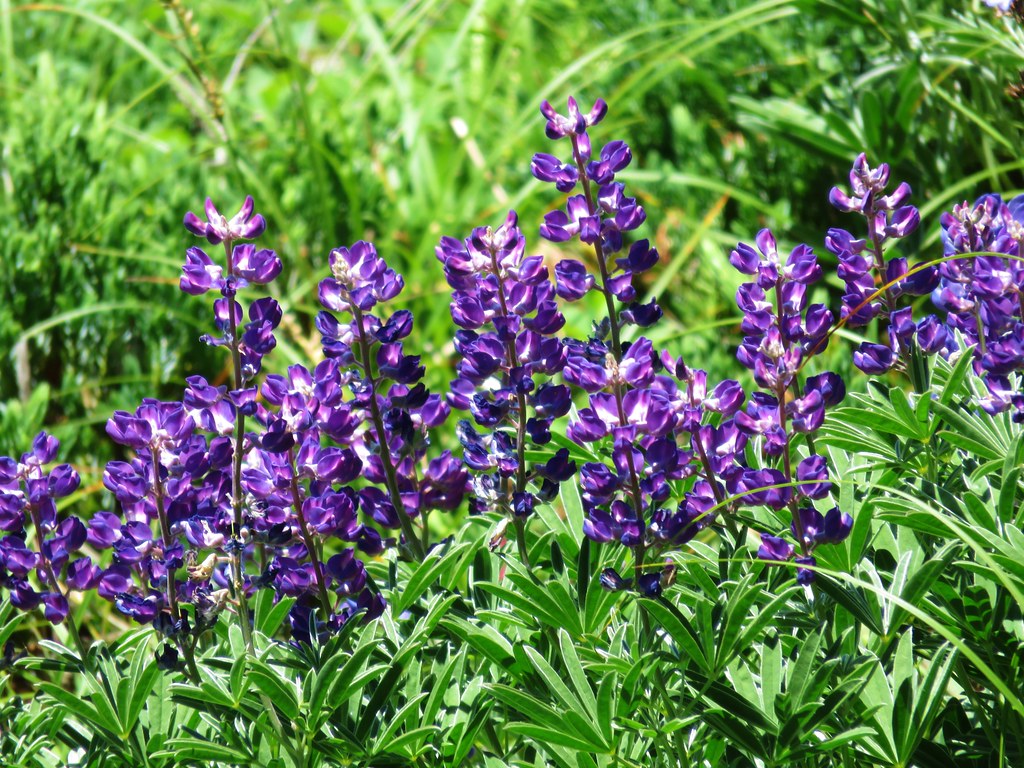
IMG_9830Lupine along the trail

IMG_9835Anemone

IMG_9836Western meadowrue

We passed a trail sign at junction with a spur trail joining from the pack station and soon after we entered the Eagle Cap Wilderness.
IMG_9841

IMG_9851Paintbrush along the trail.

IMG_9853Larkspur, lupine, and Jessica’s stickseed

After three quarters of a mile we entered a previously burned forest where the views opened up some.
IMG_9859

IMG_9861Chipmunk

IMG_9863

IMG_9864A nice patch of lupine.

IMG_9869

IMG_9872Snow patches high up on the ridge.

IMG_9876The Imnaha River below the trail.

IMG_9877One of many small unnamed stream crossings.
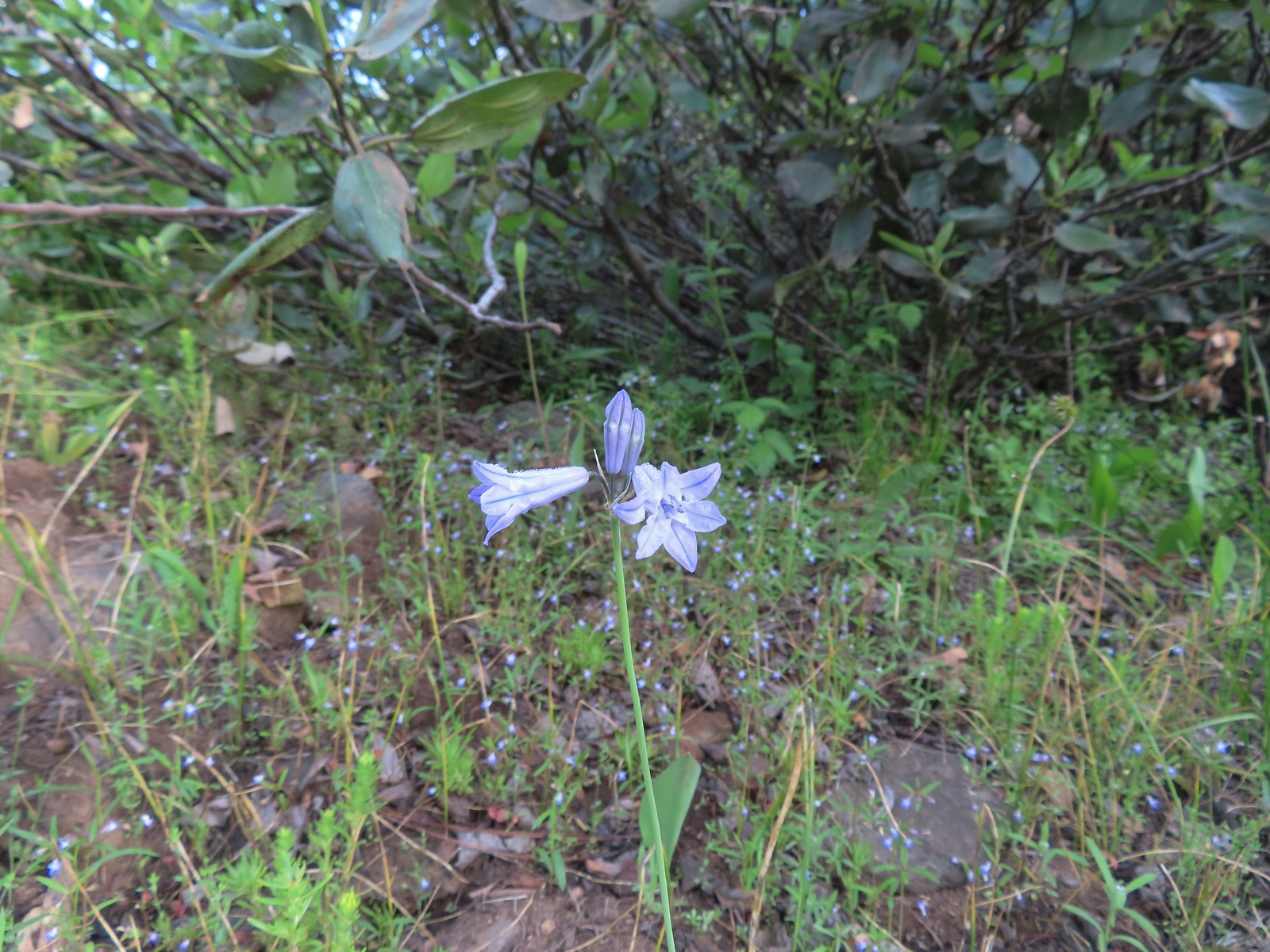
IMG_9882Large-flower triteleia

IMG_9884A ponderosa pine that survived the fire.

IMG_9887Robin

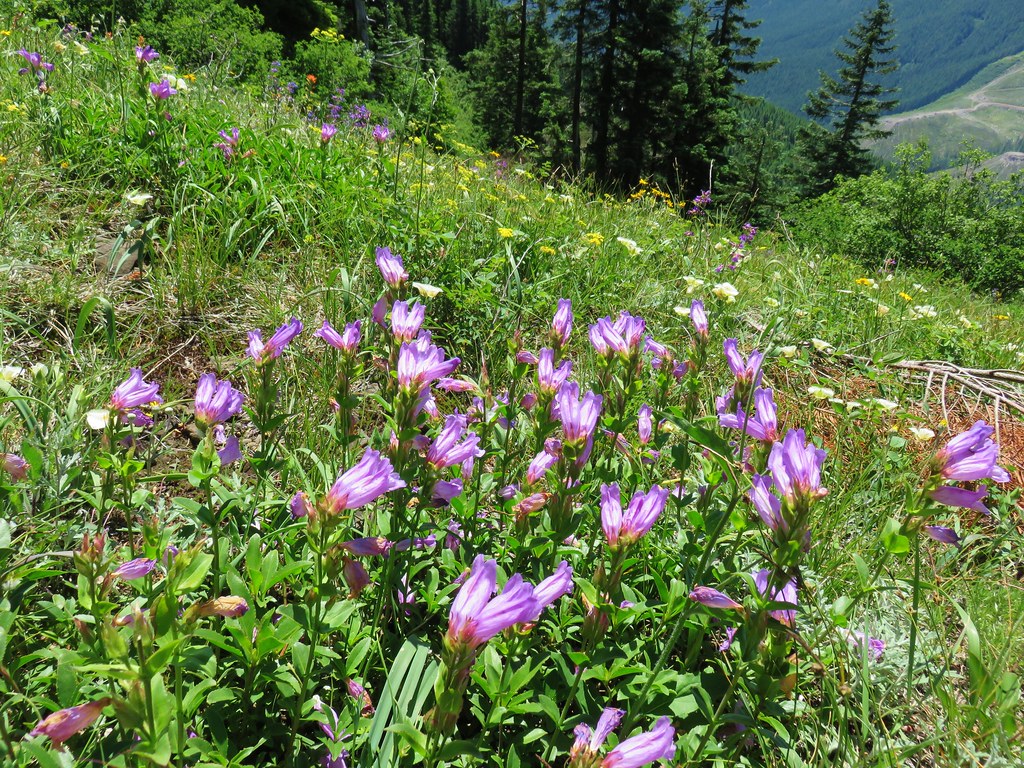
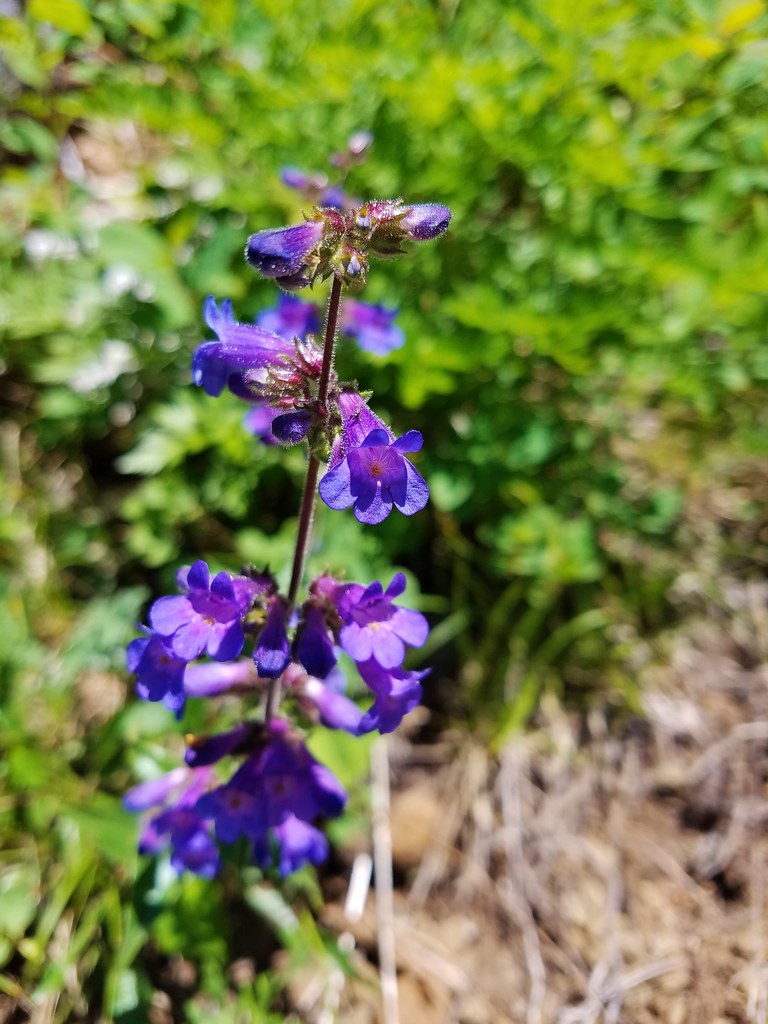
IMG_9891One of several types of penstemon along the trail.

IMG_9892We were just sure that there should be elk, deer, or a bear down along the river here.

IMG_9896There were quite a few of these millipedes in the trail.

IMG_9901In some cases the creeks had taken over the trail.

IMG_9905Cinquefoil

IMG_9907A brushy section of the trail.

IMG_9908Tall bluebells

IMG_9912Two-tailed tiger swallowtail

At the two-mile mark we came to a signed junction for Twin Lakes Trail and Blue Hole where we detoured left.
IMG_9916

We followed this trail downhill for a tenth of a mile to an impassable ford of the Imnaha River just below the Blue Hole.
IMG_9919

The river was running high still so we couldn’t get a view of Blue Hole from the ford. Instead we climbed the rocks which squeeze the river through a narrow gorge before it empties into Blue Hole.
IMG_9920

IMG_9925Blue Hole, not exactly blue this time of year due to the amount of silty snowmelt water swelling the river.

IMG_9929Wildflowers above the gorge.

IMG_9933

IMG_9941The Imnaha emerging from the gorge into Blue Hole.

After a nice break at Blue Hole we returned to the South Fork Imnaha Trail and continued further into the wilderness.
IMG_9947Arnica along the trail.

IMG_9948Coming up on a small stand of aspen.

IMG_9955A rockcress

IMG_9961Juba skipper

IMG_9963Roundleaf alumroot

Painted ladyPainted lady on Oregon sunshine.

IMG_9974

IMG_9979Glacier carved rock outcrops provided some excellent views and good habitat for wildflowers.

IMG_9982

IMG_9984

IMG_9986

IMG_9989Scabland penstemon

IMG_0004Paintbrush

IMG_0012Not a flower but very colorful.

IMG_0018Bush penstemon

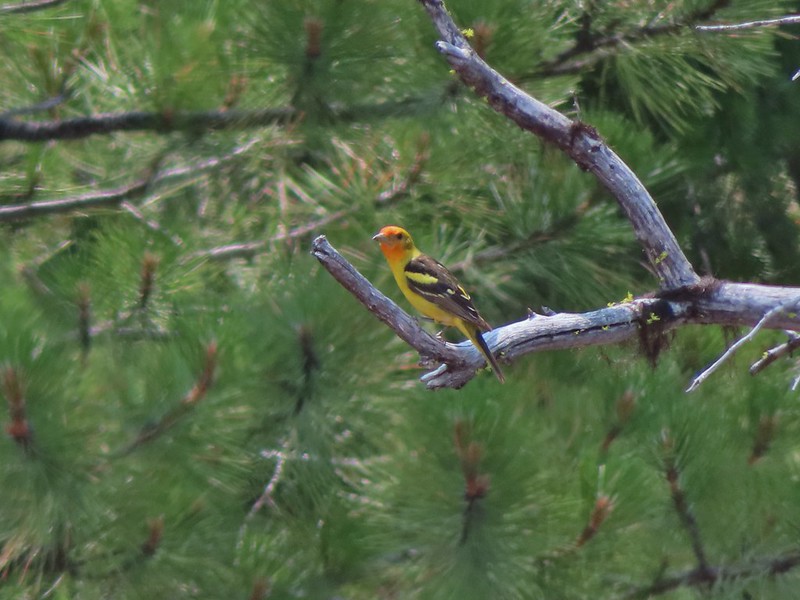
IMG_0020Western tanager

IMG_0021Western blue clematis

IMG_0025Brown creeper on a tree trunk.

IMG_0032Left is Marble Mountain and to the right further back is Honeymoon Summit.

IMG_0040Larkspur along the trail.

Heartleaf springbeautyHeartleaf springbeauty

IMG_0048Another flooded section of a the trail.

IMG_0049Western tiger swallowtails on chokecherry.
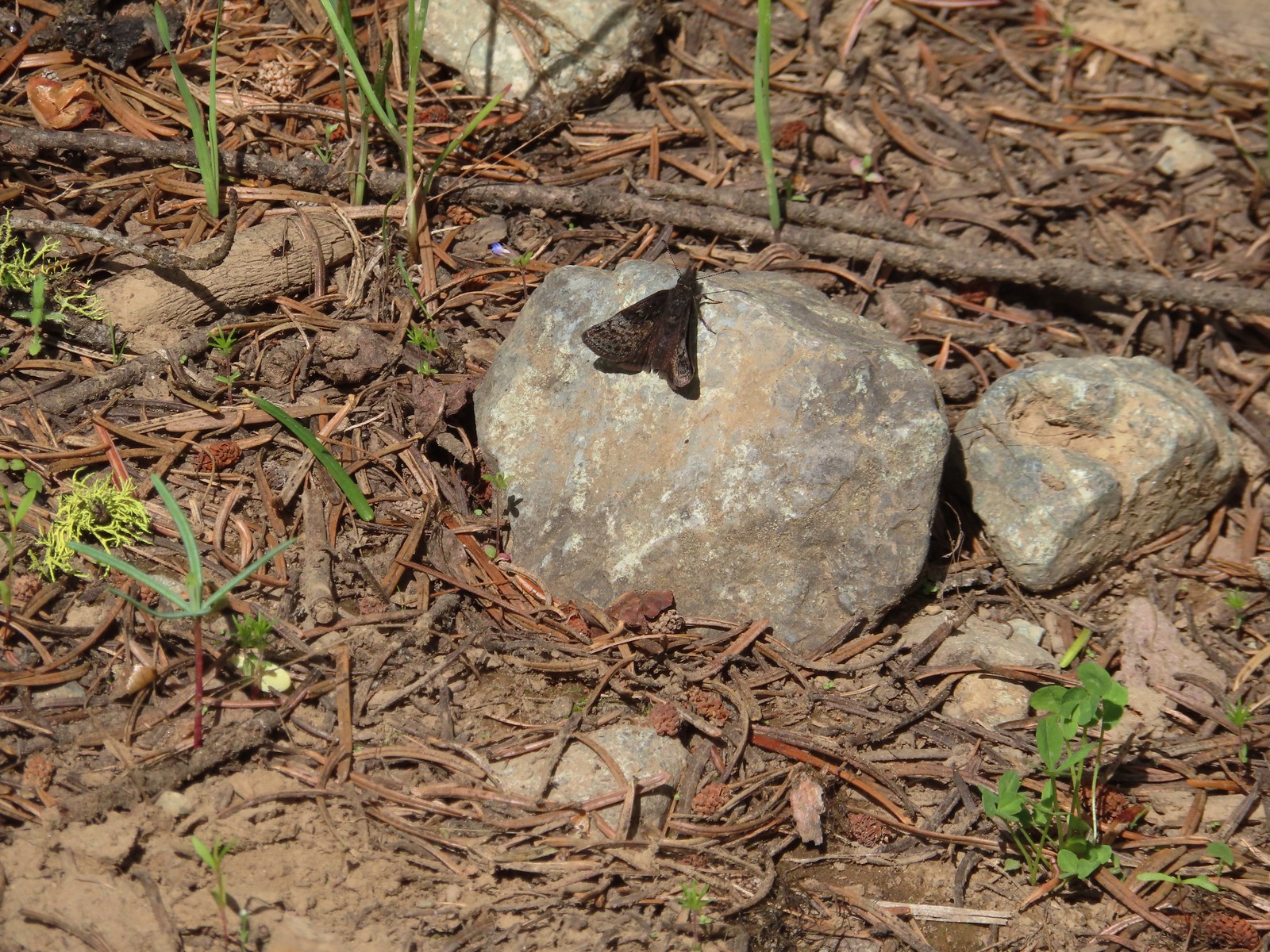
Dreamy duskywingDreamy duskywing

IMG_0056Threeleaf lewisia

IMG_0065We were too late for the Brown’s peony blooms.

IMG_0068Balsamroot and paintbrush

Three and a third miles beyond the Twin Lakes Trail junction we left the trail to see another gorge.
IMG_0072

IMG_0082On the opposite side, with a series of drops, is Rock Creek flowing into the Imnaha.

IMG_0074The Imnaha River leaving the gorge.

IMG_0076

IMG_0093Rock Creek cascading down through the forest.

After another short break we returned to the trail and continued another third of a mile where we left the trail again to find Imnaha Falls.
IMG_0097

IMG_0101Another creek cascading down.

IMG_0102

IMG_0103Marble Mountain

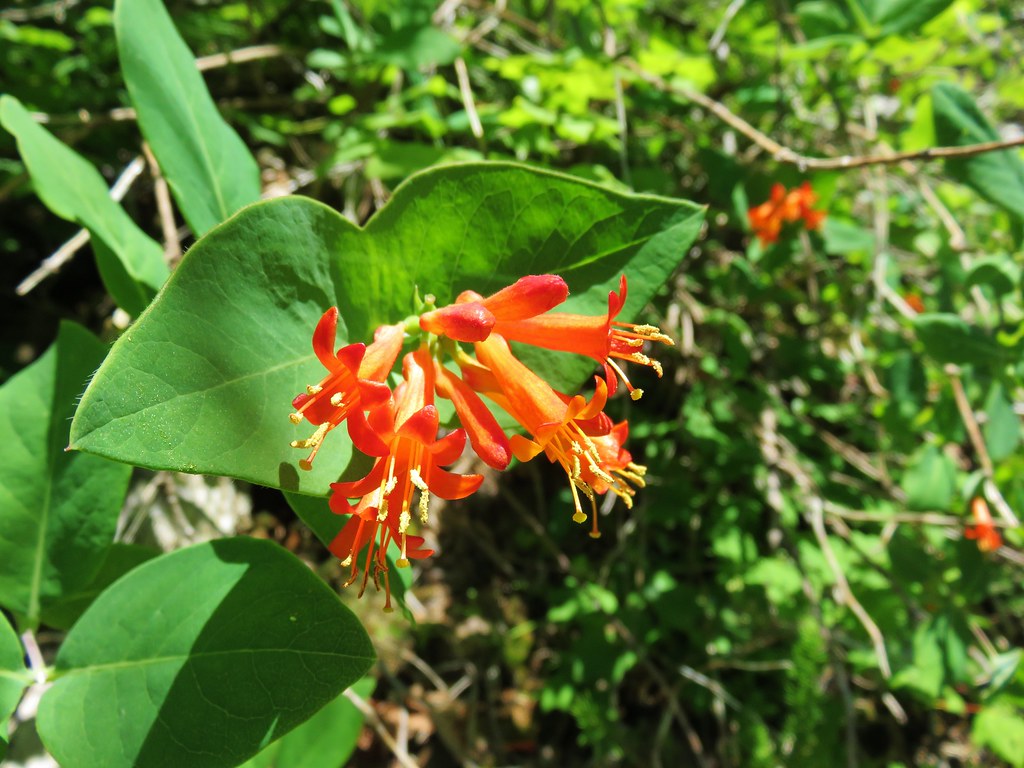
IMG_0111Twinberry honeysuckle

Marsh violetMarsh violet

IMG_0115Rock outcrop above Imnaha Falls

The 8′ Imnaha Falls was difficult to get a good view of. There was a large gap in the rocks that I eventually had to climb down into and out of to get to the edge of the rock outcrop above the river.
IMG_0119I tried going down river first to see if I could get a view back up to the falls, but the water level was into the brush along the riverbank.

IMG_0123The falls were just upriver from this bench with a couple of campsites.

IMG_0134The gap in the outcrop.

IMG_0126Imnaha Falls.

The falls were more of a rapids which might have been caused by the volume of water this time of year.
IMG_0138

We took a final break on the rocks here and then headed back toward the trailhead. We kept a lookout for any flowers we’d missed on the first pass.
Utah honeysuckleUtah honeysuckle

IMG_0150

IMG_0167Bee on a dandelion

IMG_0177Nettle-leaf giant hyssop

IMG_0178Slender phlox

IMG_0182Silverleaf phacelia

IMG_0191Vetch

IMG_0194
Diffuse-flower evening-primrose surrounded by blue-eyed Mary.

IMG_0203Osprey, the fishing here must have been good because we’d seen a bald eagle in this area in the morning.

IMG_0217Fairy slipper

IMG_0223Arriving back at the trailhead.

We saw three other people on the return to the trailhead. The first gentleman we encountered asked us how far it was to the lakes. He’d already passed the Twin Lakes Trail, not that he could have forded the river there, and the next closest lake was probably Fish Lake which was a good 7-8 miles away. We let him know that there weren’t any lakes nearby but that Imnaha Falls was a couple of miles further along the trail. He didn’t have much with him but he continued on after looking at the gathering clouds and saying he thought he had time to make it there. The next couple we passed after Blue Hole and they didn’t appear to be carrying any type of food, water, or gear. The number of unprepared and uninformed people we pass on trails really makes us wonder how there aren’t more rescues/deaths every year.

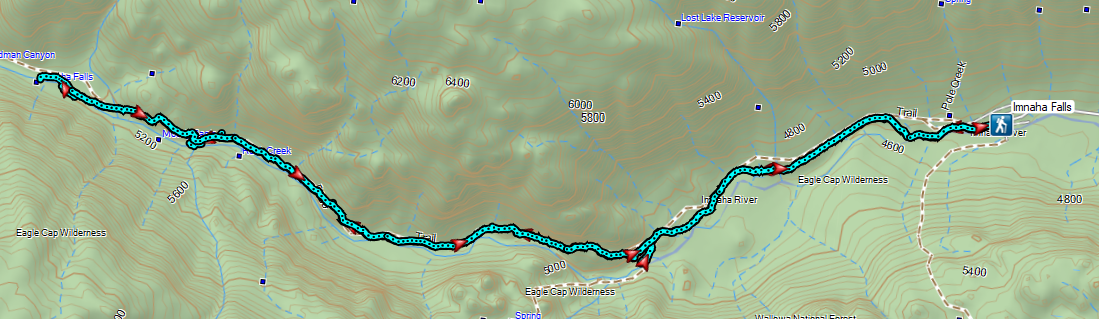
Our hike came in at 12.2 miles due to some extra exploring along the river with approximately 800′ of elevation gain.

We drove back to Enterprise, got cleaned up, and headed out for an early dinner. When we opened the motel room door we were greeted by a heavy rain shower. We had planned on eating at Terminal Gravity Brewing but when we got out of the car a lightning bolt immediately followed by thunder convinced us that outdoor dining was not a good idea at the moment. We decided to save Terminal Gravity for later in the week and instead got some tasty Pad Thai to go from Thai Enterprise and took it back to our room where we listened to the evening thunderstorms roll past.

Tuesday’s forecast was for more of the same with a slightly higher chance for showers so we’d planned to do a short hike in the morning followed by some time sightseeing in Joseph. Happy Trails!

Flickr: Imnaha Falls

Categories
Central Oregon Hiking Ochoco Mountains Oregon Trip report

Rock Creek to Spanish Peak – 07/20/2021

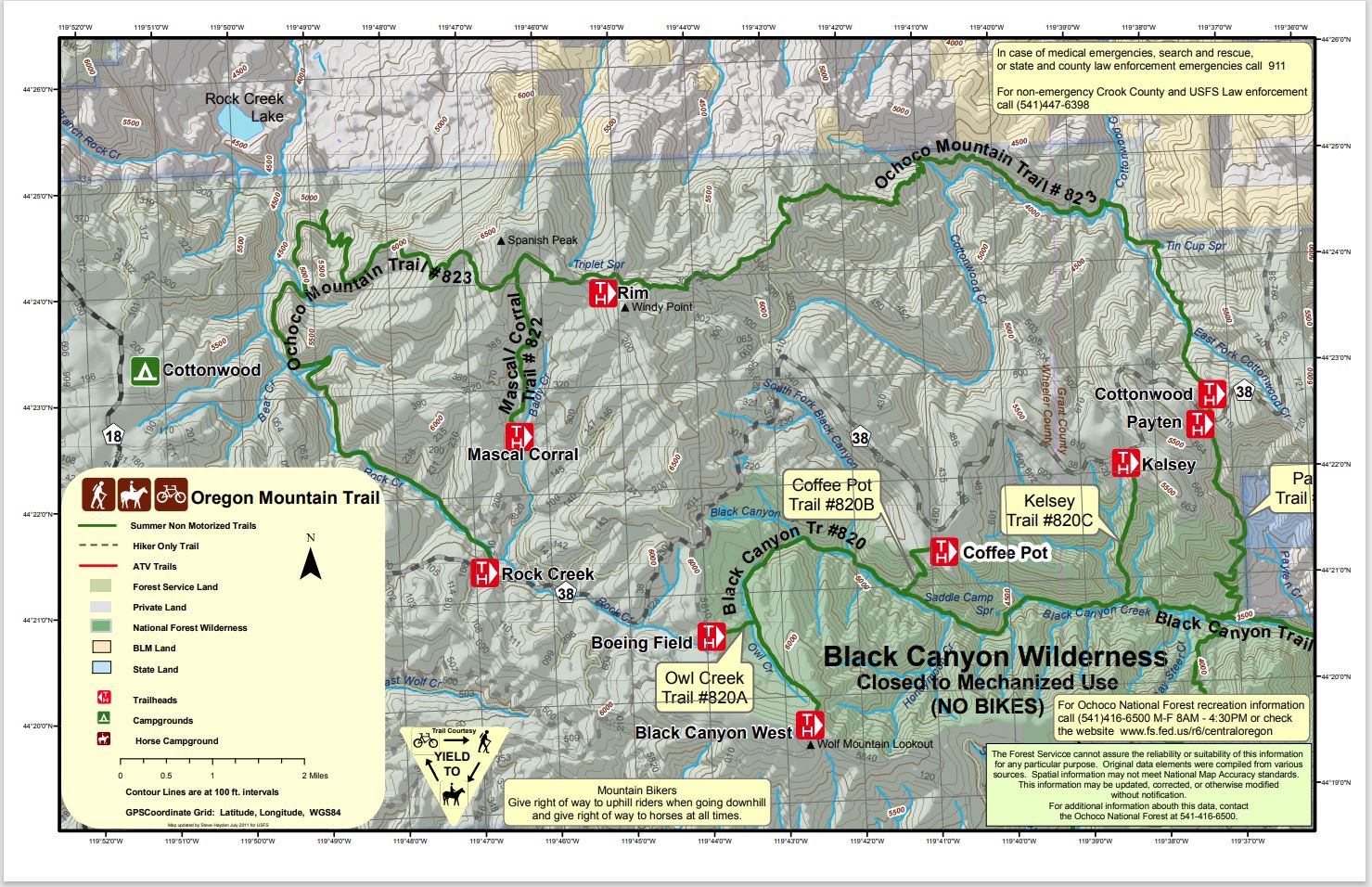
After spending the night camped near First Creek along the Rock Creek/Ochoco Mountain Trail we got an early (6:30am) start to hopefully climb up the 2000 plus feet to the summit of Spanish Peak before the day got too hot. According to Sullivan’s map (which matched the Forest Service’s map) it was 5.3 miles to the summit.

Forest Service Map

Just 0.2 miles from where we had made our makeshift campsite we came to an established campsite in a saddle near where the Ochoco Mountain Trail supposedly turned uphill to start the climb.
IMG_0375Continuing along the Waterman Ditch.

IMG_0376If this trail sign was marking a junction it wasn’t clear where the other trail was.

IMG_0380Campsite at the saddle.

There was no clear tread other than the continuation of the Rock Creek Trail to the north where it ends at the National Forest Boundary in another mile. There was however a sign for the “Rim Trail” on a tree uphill from the trail.
IMG_0378The Rim Trail sign on a tree trunk.
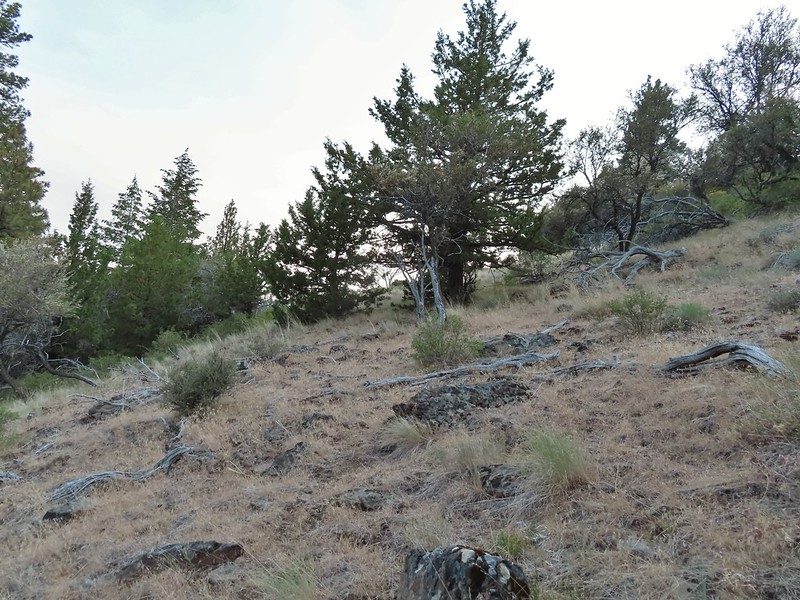
We headed uphill to the sign and picked up what appeared to be a rough trail but it also looked like it could have been an elk trail.
IMG_0381

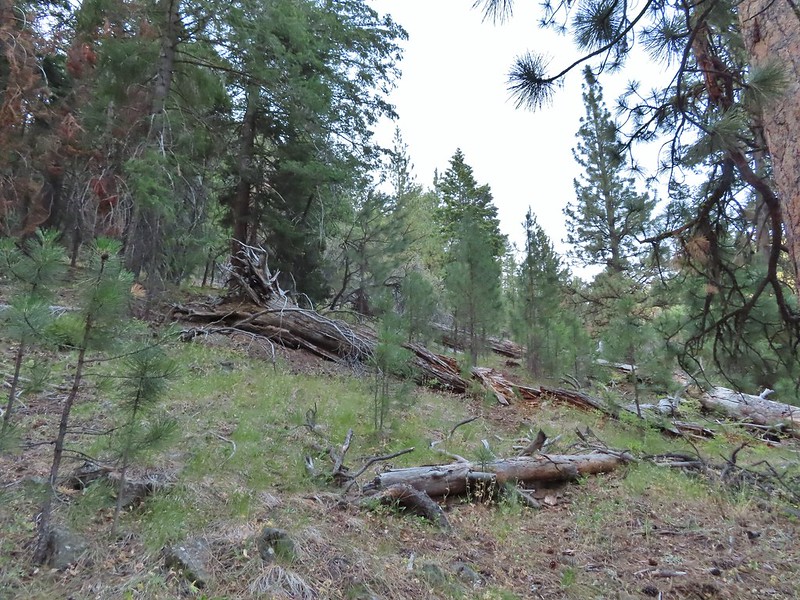
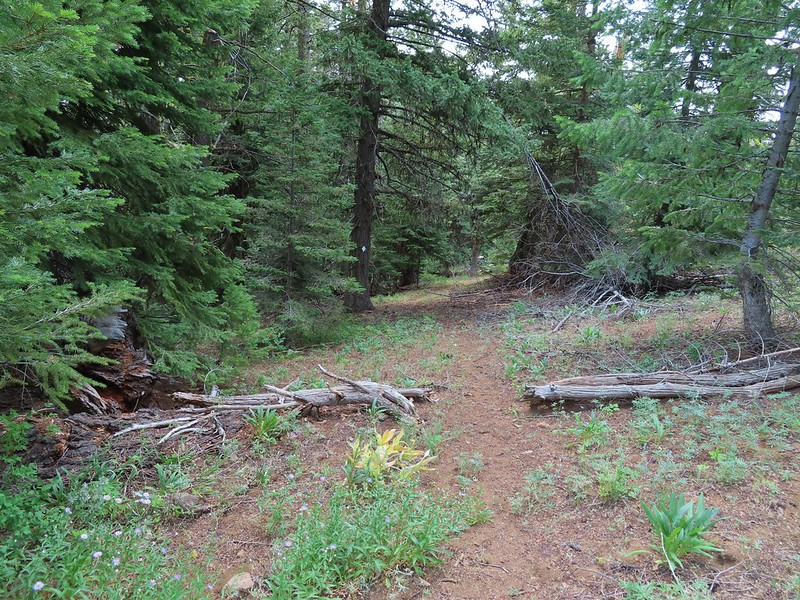
We tried our best to follow it uphill but there were no blazes, flagging, or cut logs to indicate that it really was an actual trail and in less than a half mile we lost it in brush.
IMG_0383

IMG_0384

IMG_0386

IMG_0388

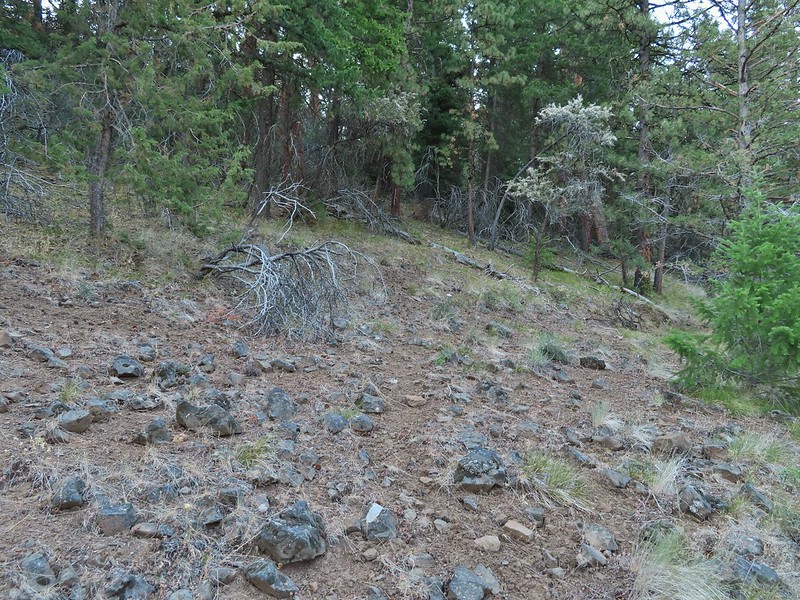
The hike had suddenly become an off-trail adventure. Between the Sullivan’s and the Forest Service map we knew the general route that the trail supposedly took so we did our best to recreate it at first. That meant a series of switchbacks up a steep hillside through a sagebrush meadow above First Creek.
IMG_0390

IMG_0391

IMG_0392

IMG_0395

IMG_0397

The trail then supposedly wrapped around the ridge between First and Second Creeks arriving at a rock cairn along a rim 2.5 miles from the saddle. We thought that we might rediscover the tread as we switchbacked up, but we did not. As we compared the maps with our GPS we noticed that we weren’t that far below the top of the ridge and that it might be possible to simply climb over the ridge taking a more direct route to the rim cairn. We decided that was our safest bet as we weren’t sure if we would find the trail wrapping around the ridge and even if we did a large downed tree in the wrong spot could make it impassable. We followed game trails through a small stand of trees into more sagebrush on top of the ridge.
IMG_0400

IMG_0402Rock Creek Lake

IMG_0403Gaining the ridge.

We found the trail again on top of the ridge and were soon following rock cairns to the rim.
IMG_0404

IMG_0405

IMG_0407View from the rim.

IMG_0408Spanish Peak

IMG_0419A local

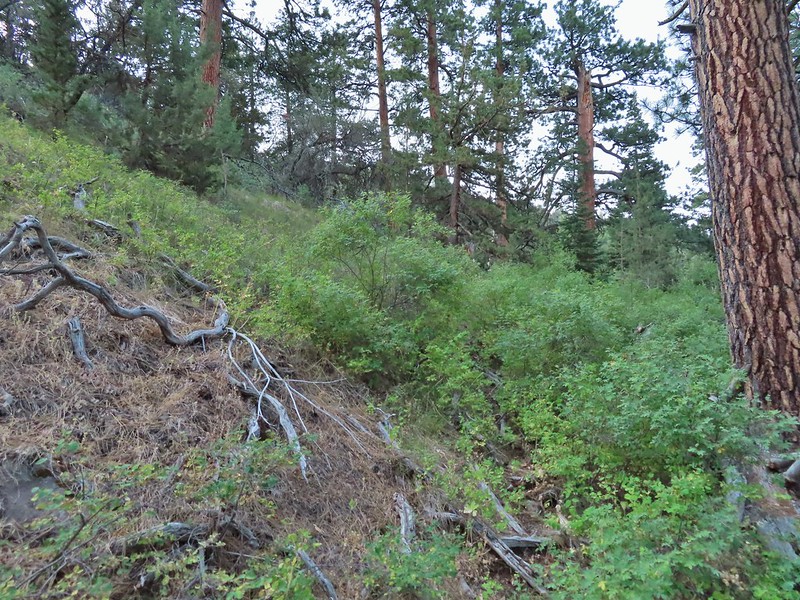
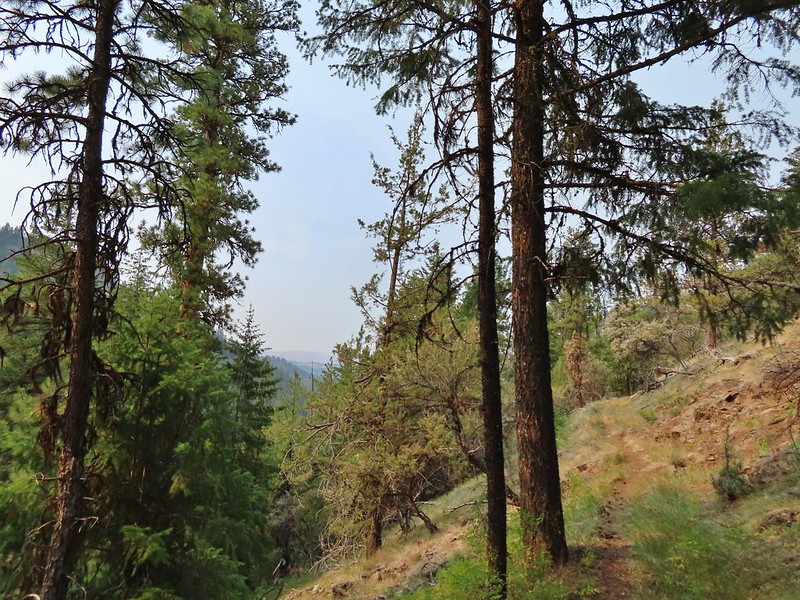
The trail was easy to follow along the rim but soon it came into some trees (and past a few wildflowers) where it appeared maintenance hadn’t been performed for a bit.
IMG_0430Astter

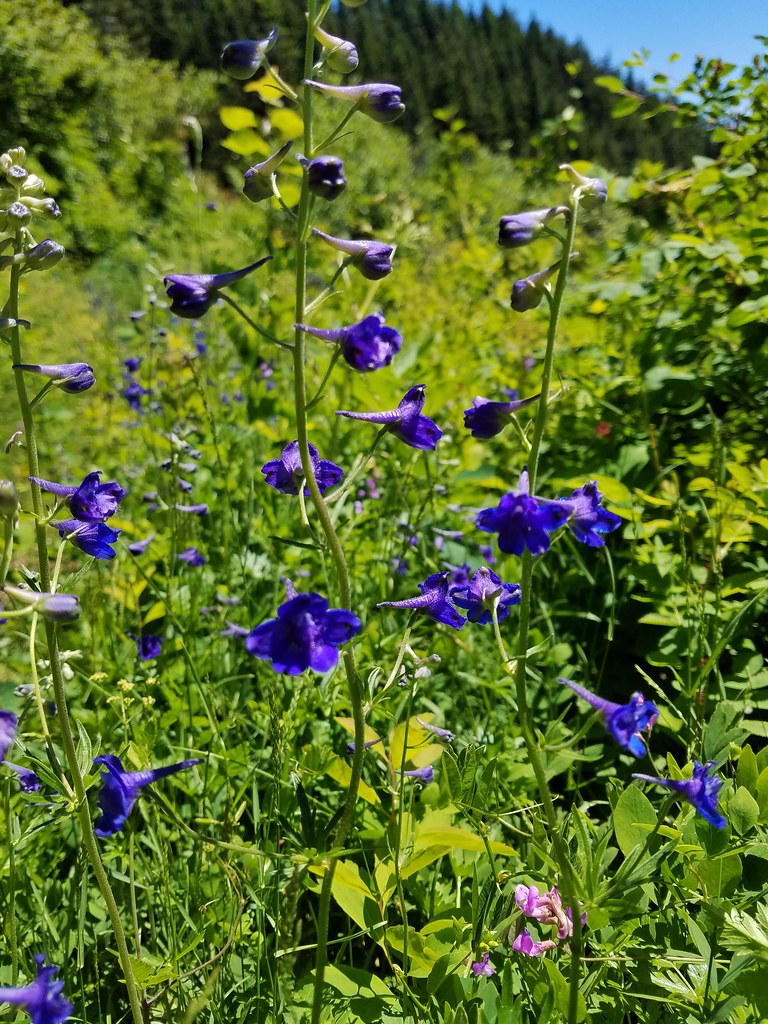
IMG_0431Some sort of delphinium I think.

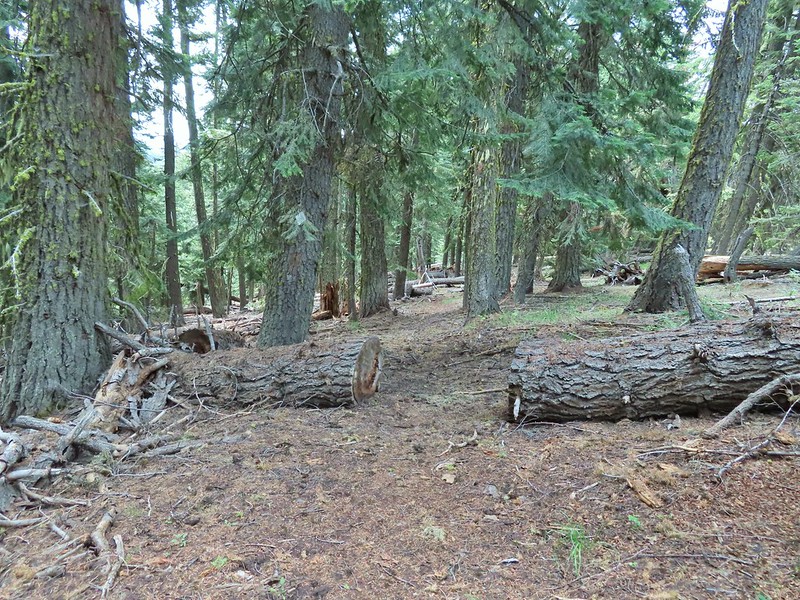
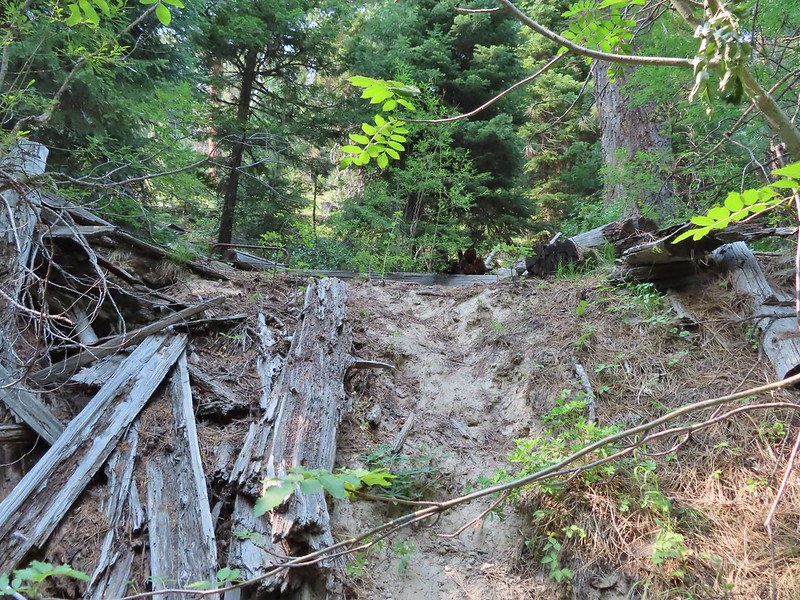
IMG_0433Downed trees across the trail ahead.

IMG_0434Interestingly camouflaged beetle on the upper onion.

IMG_0438Lupine

20210720_084339A checkermallow

IMG_0439Some more downed trees that we had to go around.
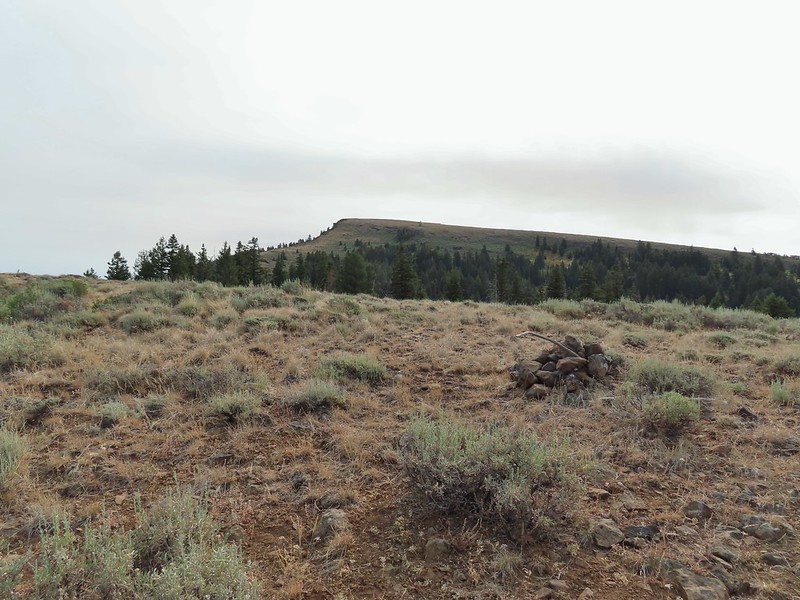
We briefly left the trees and were back to cairns in the sagebrush but soon reentered the trees and encountered more obstacles.
IMG_0442

IMG_0445

IMG_0448

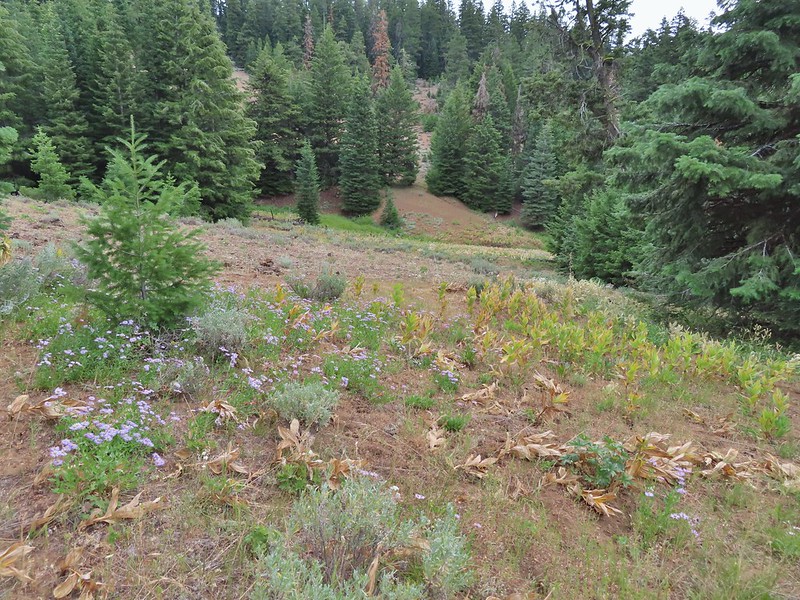
After passing through a couple of meadows we came to a rocky hillside below Spanish Peak where we left the trail and headed uphill following a few scattered cairns along what was shown on the GPS as the “Mascall Jeep Track”.
IMG_0449

IMG_0452

IMG_0456We left the trail here, note the small cairn on the left.

IMG_0457Heading uphill.

IMG_0453Scarlet gilia

IMG_0458Paintbrush

After a third of a mile we came to Spanish Peak Road, a dirt track to the radio tower and former lookout site atop Spanish Peak.
IMG_0460//embedr.flickr.com/assets/client-code.js

We turned left on the road and followed it another 0.3 miles up to the summit.
IMG_0465

IMG_0467The site of the former lookout.

The view was impacted by the “widespread haze” that had been forecasted but we could still make out quite a bit (and at least it didn’t smell smokey).
IMG_0469 Looking out toward the John Day River valley.

IMG_0470SE to Windy Point.

IMG_0472West to Rock Creek Lake and on the horizon the flat topped Lookout Mountain (post) and pointier Round Mountain (post) in the Ochocos.

IMG_0474NE to the John Day River Valley.

IMG_0477Lookout and Round Mountain and the rim that we had hiked up below Spanish Peak.

IMG_0480The Pisgah Lookout on the far side of the Bridge Creek Wilderness (post).

IMG_0484A hazy Mount Hood to the NW.

After taking a break at the summit we returned down the road to the jeep track and followed it back down to the Ochoco Mountain Trail where we turned left into some trees.
IMG_0486

IMG_0487

We passed through a meadow filled with fritiallry butterflies who were loving the remaining hyssop blossoms.
IMG_0490

IMG_0495

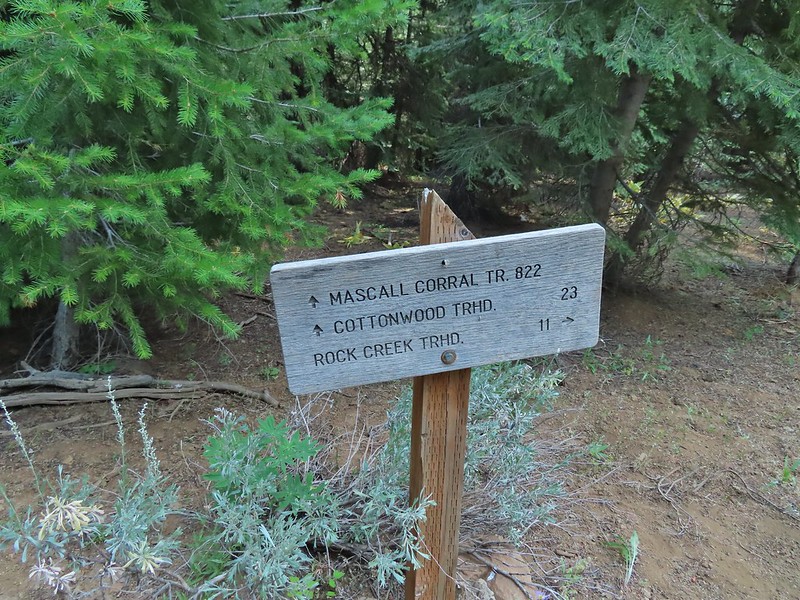
After 0.3 miles back on the Ochoco Mountain Trail we came to a signed junction with the Mascall Corral Trail.
IMG_0499

Here we made a hard right and headed steeply downhill along the Baldy Creek drainage.
IMG_0498

This trail was in a little better shape having seen some maintenance.
IMG_0502

IMG_0503

IMG_0504Baldy Creek was on our left.

The trail soon followed old roadbeds, including another section of the Mascall Jeep Track and just under three miles from the junction arrived at the Mascall Corrals Trailhead
IMG_0511

IMG_0506Red-tailed hawk

IMG_0514

IMG_0519Western tanager

IMG_0527Arriving at the trailhead.

IMG_0529Signage at the trailhead.

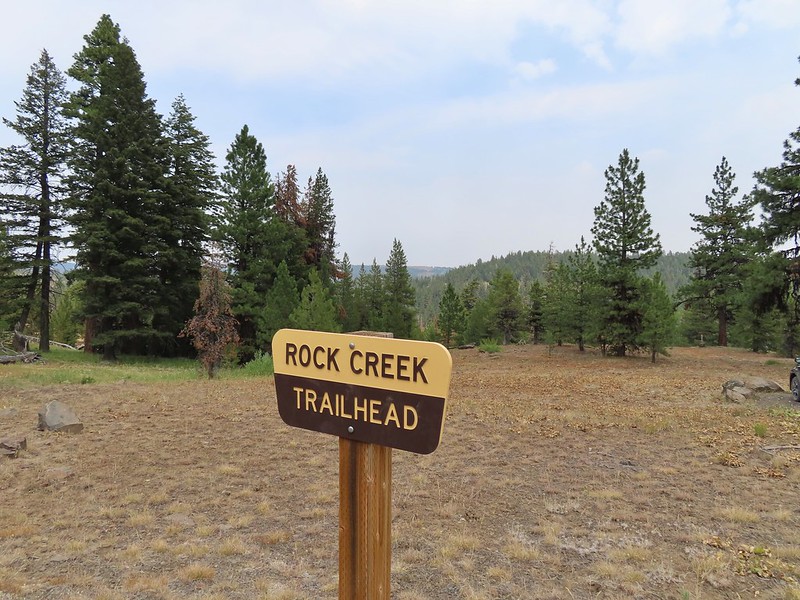
From this trailhead we turned right and followed Forest Road 3820 one and a quarter miles (some of which was disappointingly uphill) to Arvid Nelson Road where we turned right for another 0.8 miles to the Rock Creek Trailhead and our waiting car.
IMG_0532Baldy Creek below FR 3820.

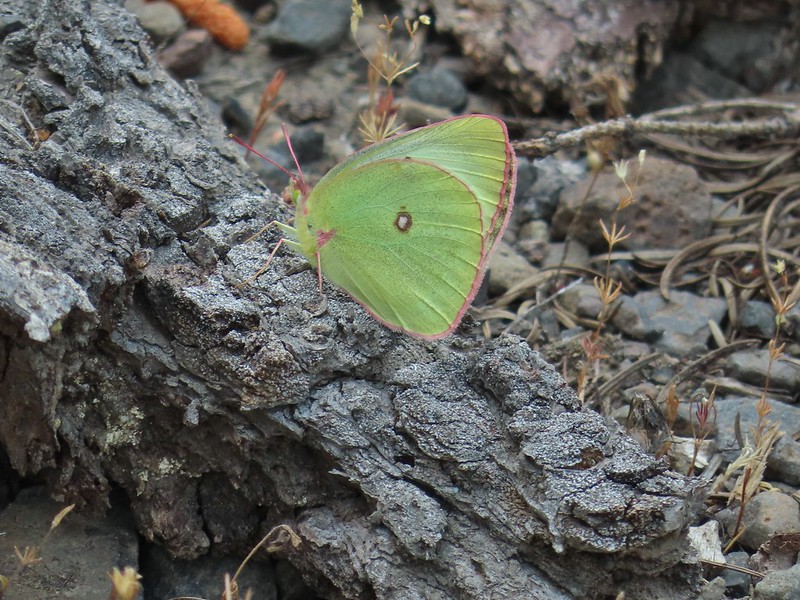
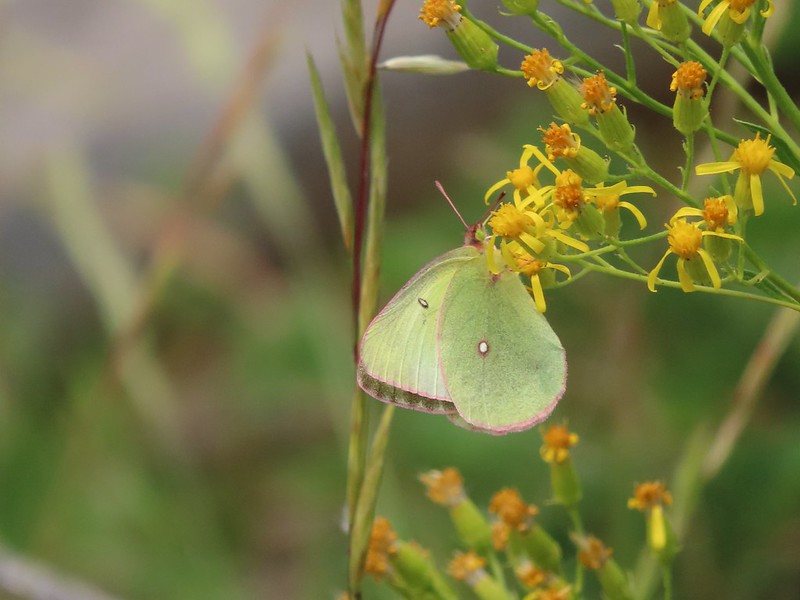
IMG_0535A sulphur butterfly of some sort.

IMG_0543

IMG_0546A watermellon or June bug as we called them growing up.

IMG_0549FR 3820 meeting Arvid Nelson Road.

IMG_0550Spanish Peak from Arvid Nelson Road.
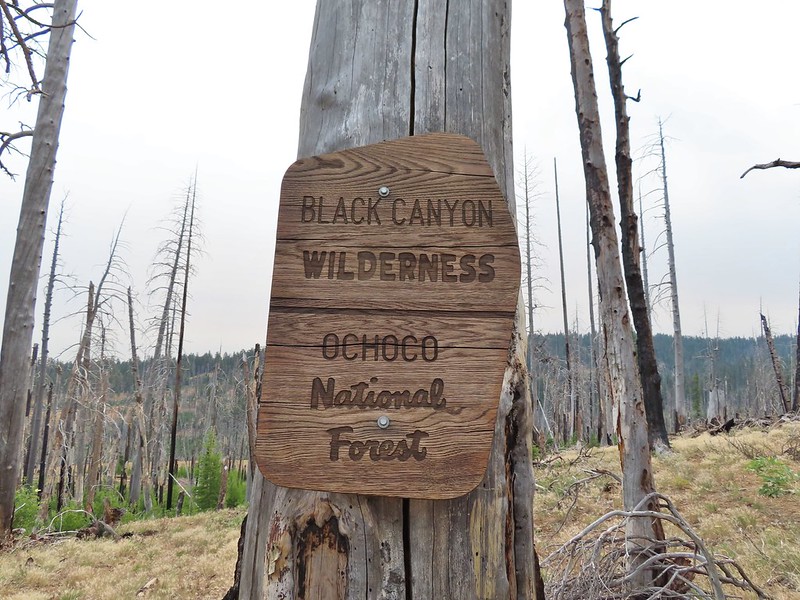
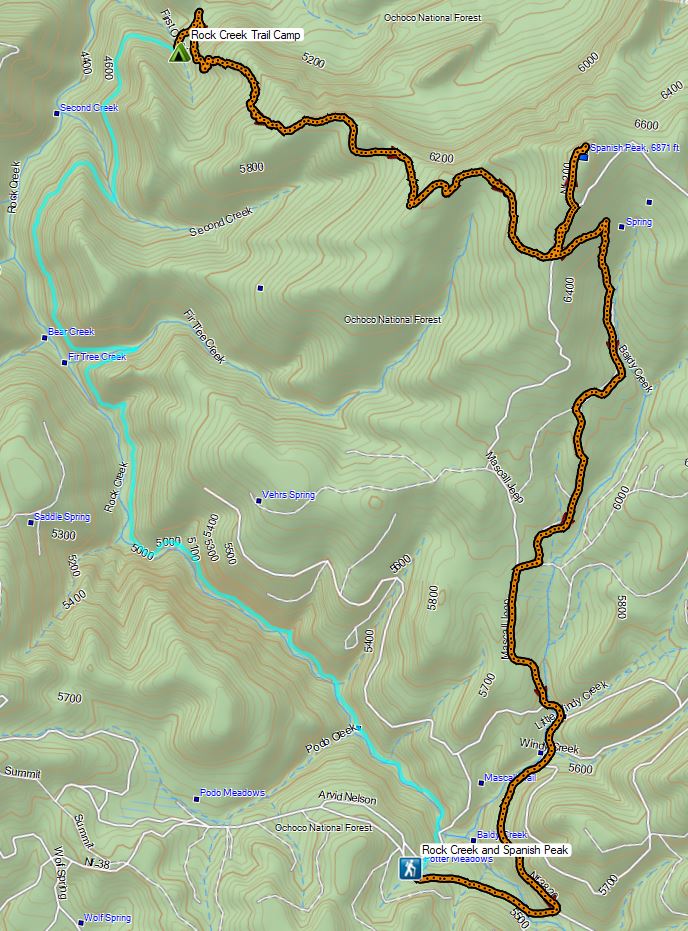
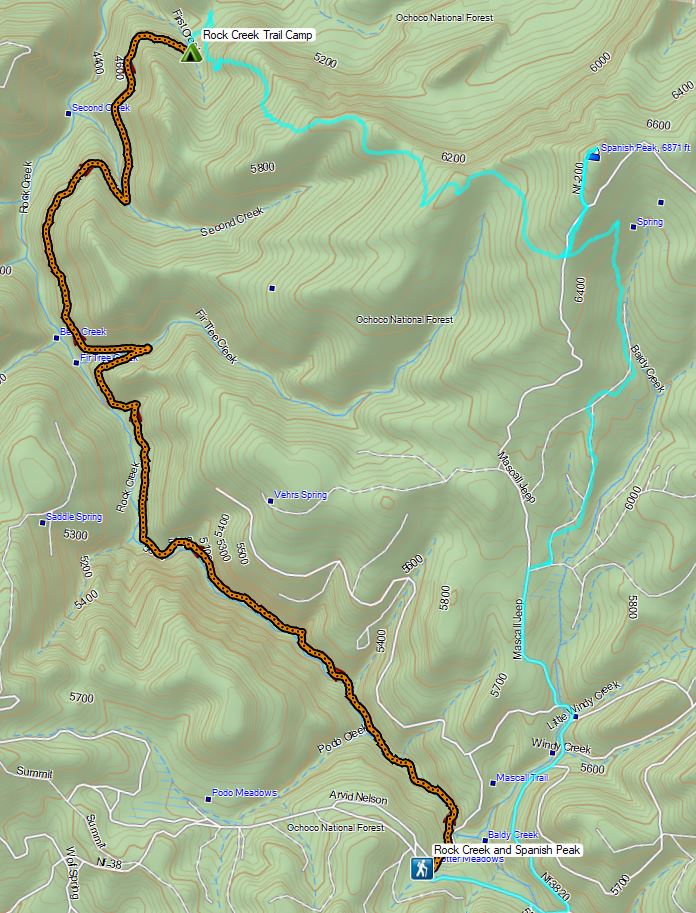
This was an 11.5 mile hike with almost 2500′ of elevation gain. The off-trail scramble above First Creek had made the hike a lot more difficult than planned, made more so by having our full backpacks instead of a lighter day pack, but it had been fun (mostly) and despite the haze we had decent views on the day.

Our track in orange

From the Rock Creek Trailhead we drove to Highway 26 then headed east to John Day where we checked into the Dreamers Lodge then had a nice dinner at the Outpost Pizza Pub & Grill before turning in for the night. Happy Trails!

Flickr: Spanish Peak

Categories
Central Oregon Hiking Ochoco Mountains Oregon Trip report

Black Canyon Wilderness and Rock Creek – 07/19/2021

**Note the 2024 Rail Ridge Fire burned over the Black Canyon Wilderness.**

Every year we pick our vacation time in January/February (due to work) so we never know what the conditions will be when we choose. We had a week scheduled in July for a trip to the John Day area in hopes to make further headway on the 100 featured hikes in Sullivan’s “100 Hikes/Travel Guide Eastern Oregon” (post) and to complete our goal of visiting all of Oregon’s designated wilderness areas (minus the two that are closed to human visitors) (post).

With severe drought conditions present all of the West and multiple wildfires burning in Oregon we kept an eye on the forecast and made daily checks with the relevant National Forests to make sure the hikes that we had planned remained open. While all of the trails were open a red flag warning for possible scattered thunderstorms Monday and Tuesday for the Blue Mountains had us a little concerned. The forecast also called for “wide spread haze” every day but fortunately not for “smoke” which meant we’d probably not have much in the way of views on the trip. We could deal with the haze, it was the possibility of new lightning caused fires that could quickly end our trip and our two days of hiking (Monday & Tuesday) involved our first overnight backpacking trip of the year.

Monday we left Salem and drove to the Boeing Field Trailhead, the first of two stops in the eastern portion of the Ochoco Mountains.
IMG_0114

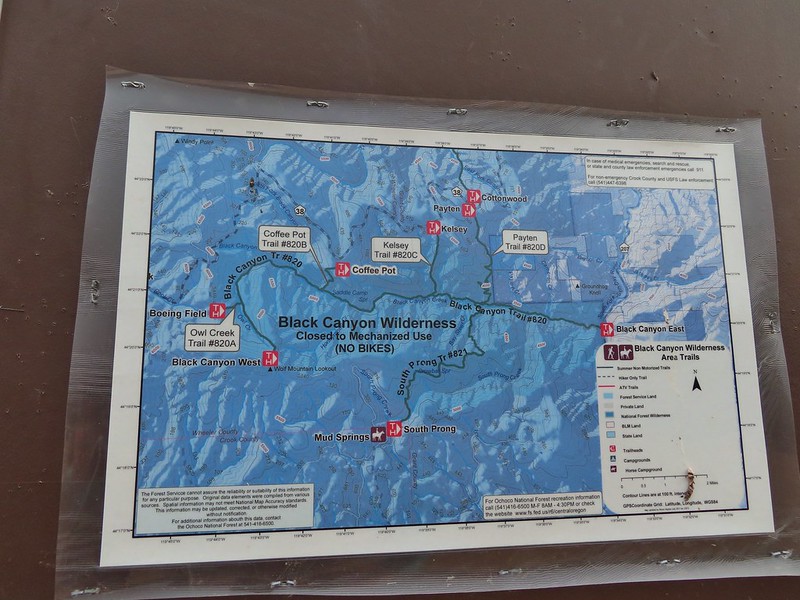
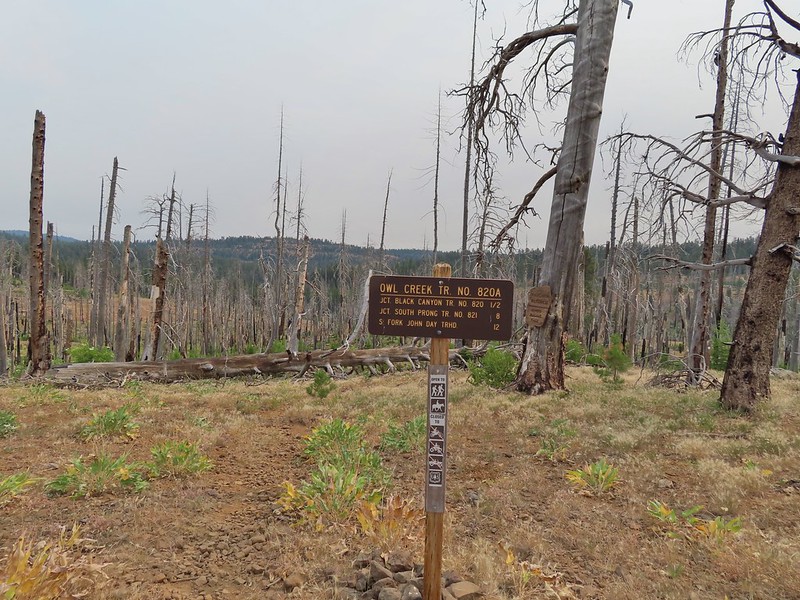
This trailhead, named in honor of a B-18 bomber that crashed nearby during a WWII training flight killing all four crew members, provides access to the Black Canyon Wilderness via the Owl Creek Trail.
IMG_0117

We headed down the Owl Creek Trail and quickly entered our 45th Oregon wilderness area.
IMG_0120

IMG_0123

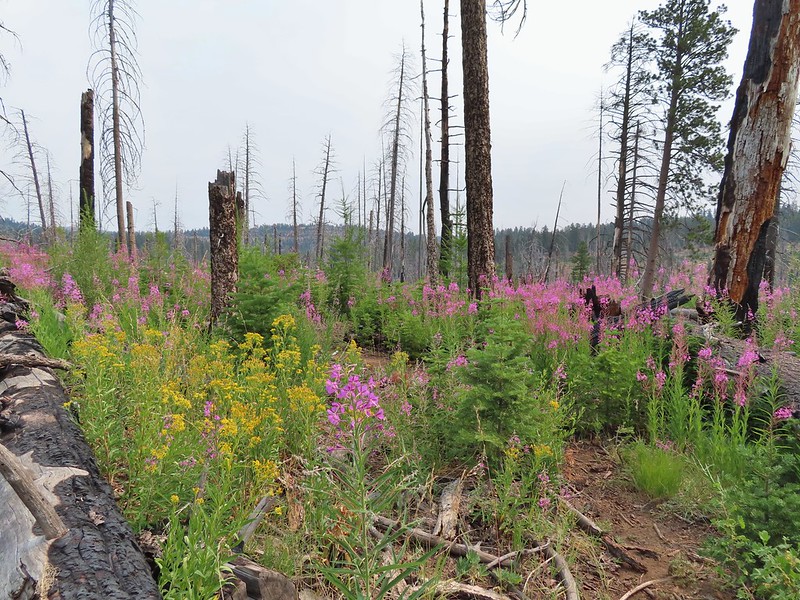
We descended to the nearly dry bed of Owl Creek in the scar of a 2008 wildfire and in a half mile reached the Black Canyon Trail.
IMG_0124

IMG_0129Aster, paintbrush, and fireweed.

IMG_0134Fireweed, aster, and pearly everlasting.
IMG_0144

IMG_0150Clouds and smoke mixing in the sky made it hard to tell if any thunderstorms might be developing.
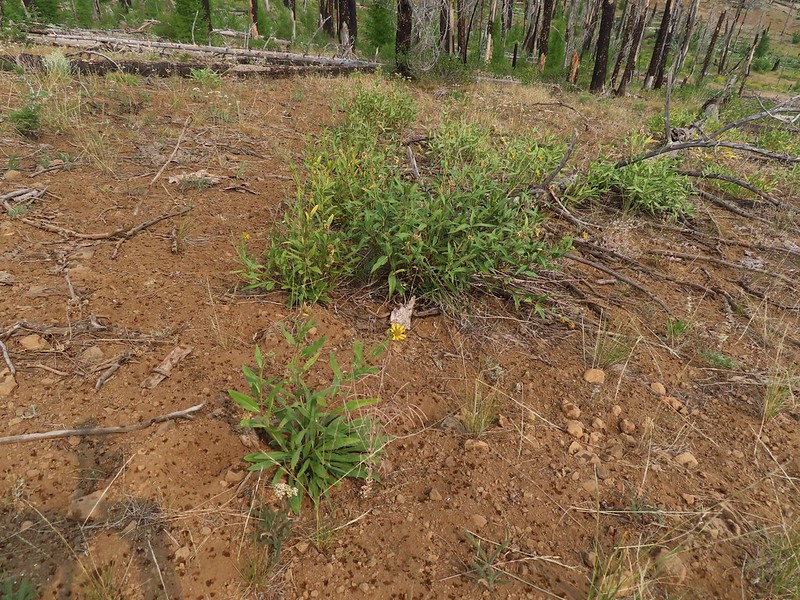
IMG_0147We never heard any thunder but we did briefly get sprinkled on.

IMG_0151Ground squirrel.

IMG_0156Columbine

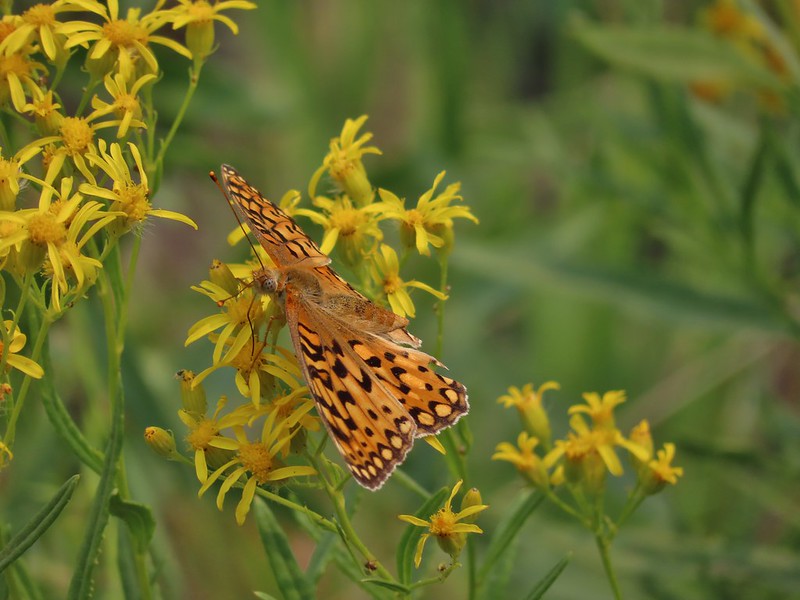
IMG_0158Fritillary butterfly

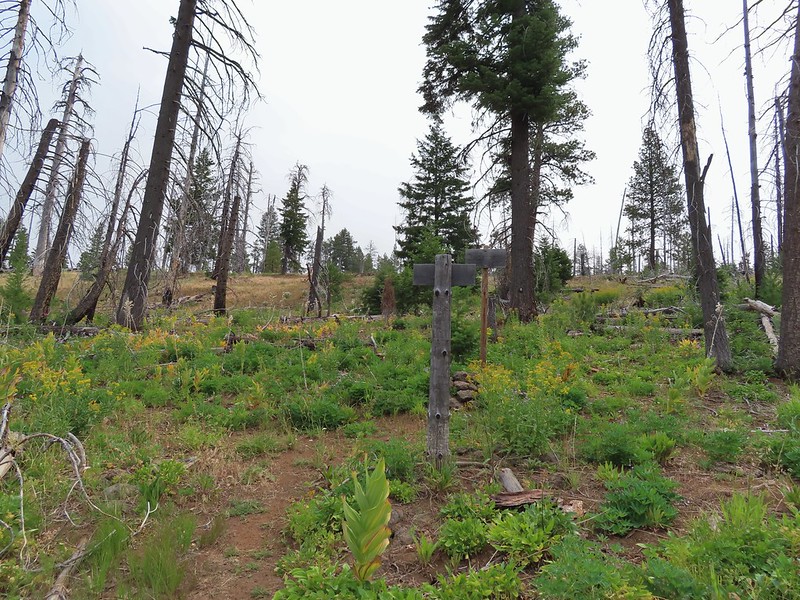
IMG_0159Black Canyon Trail junction.

We turned left onto the Black Canyon Trail and followed it down into Black Canyon along Owl Creek soon leaving the fire scar behind.
IMG_0162

IMG_0167

IMG_0169

IMG_0172Owl Creek crossing approximately 1.5 miles from the junction.
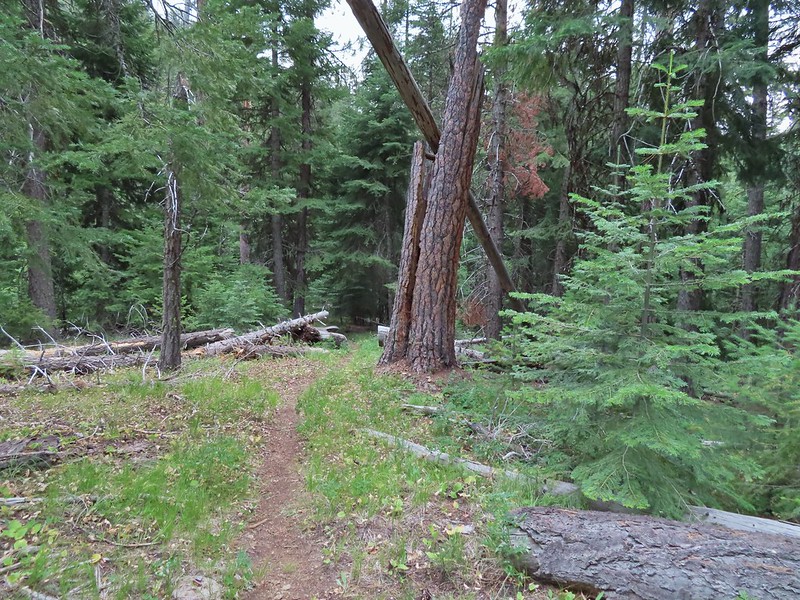
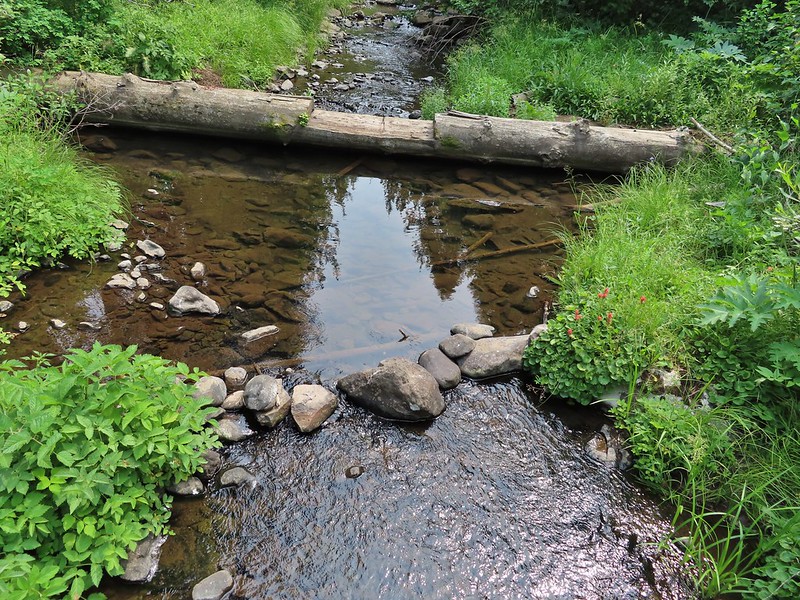
In another half mile we arrived at Black Canyon Creek which we easily crossed on small logs.
IMG_0180

IMG_0179

IMG_0184

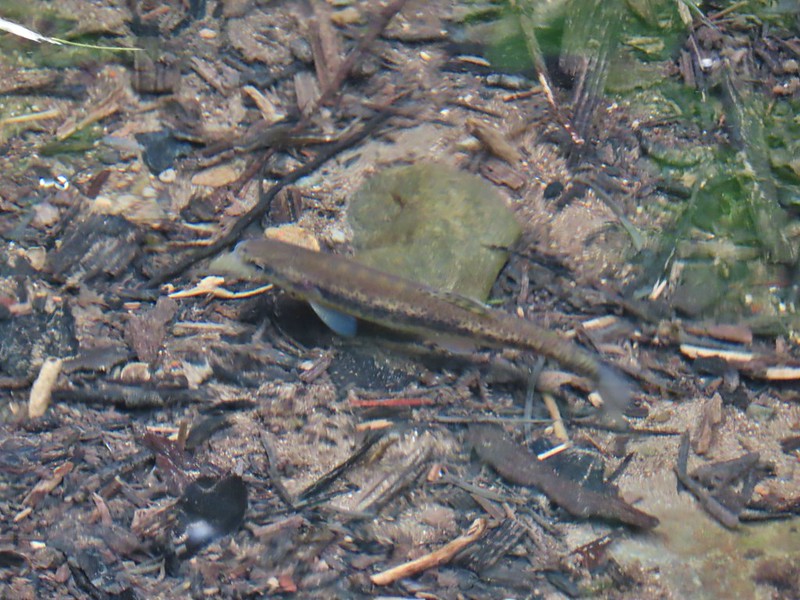
IMG_0185Fish in Black Canyon Creek

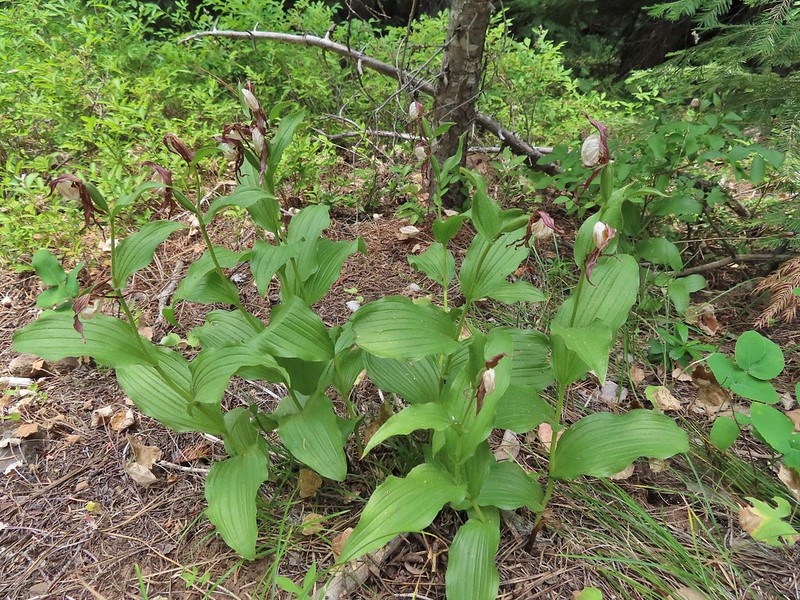
We were seeing a lot of mountain lady slipper orchids but unfortunately they were all past.
IMG_0217

Three quarters of a mile after crossing Black Canyon Creek we passed the Coffee Pot Trail and soon entered another fire scar, this one from 2002.
IMG_0189

IMG_0190

IMG_0196

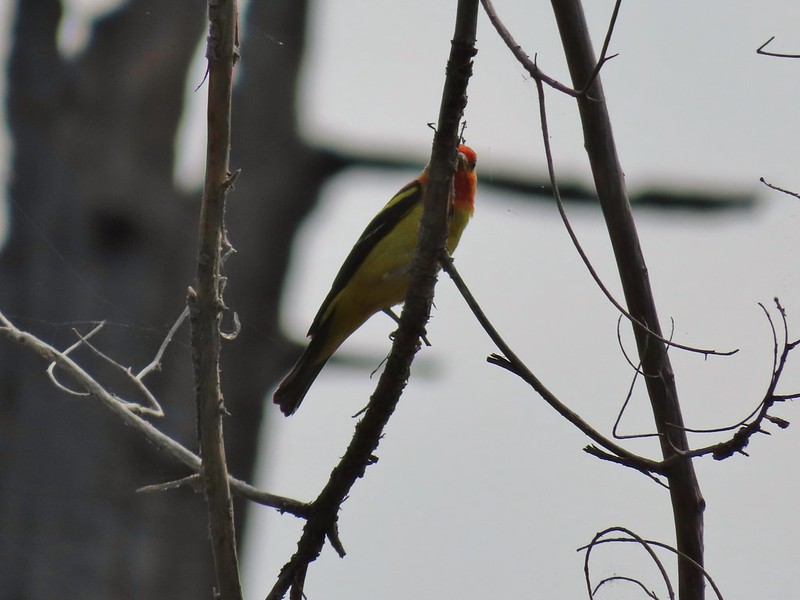
IMG_0201Western Tanager

IMG_0203

Just under 4 miles into the hike we came to the second crossing of Black Canyon Creek and our turnaround point for the day.
IMG_0210

IMG_0214California tortioseshell

Western Jacob's ladderWestern Jacob’s ladder

IMG_0211Black Canyon Creek

After a short break on a log spanning the creek we headed back to the car stopping occasionally along the way to watch pollinators busy at work.
IMG_0237

IMG_0244

IMG_0253

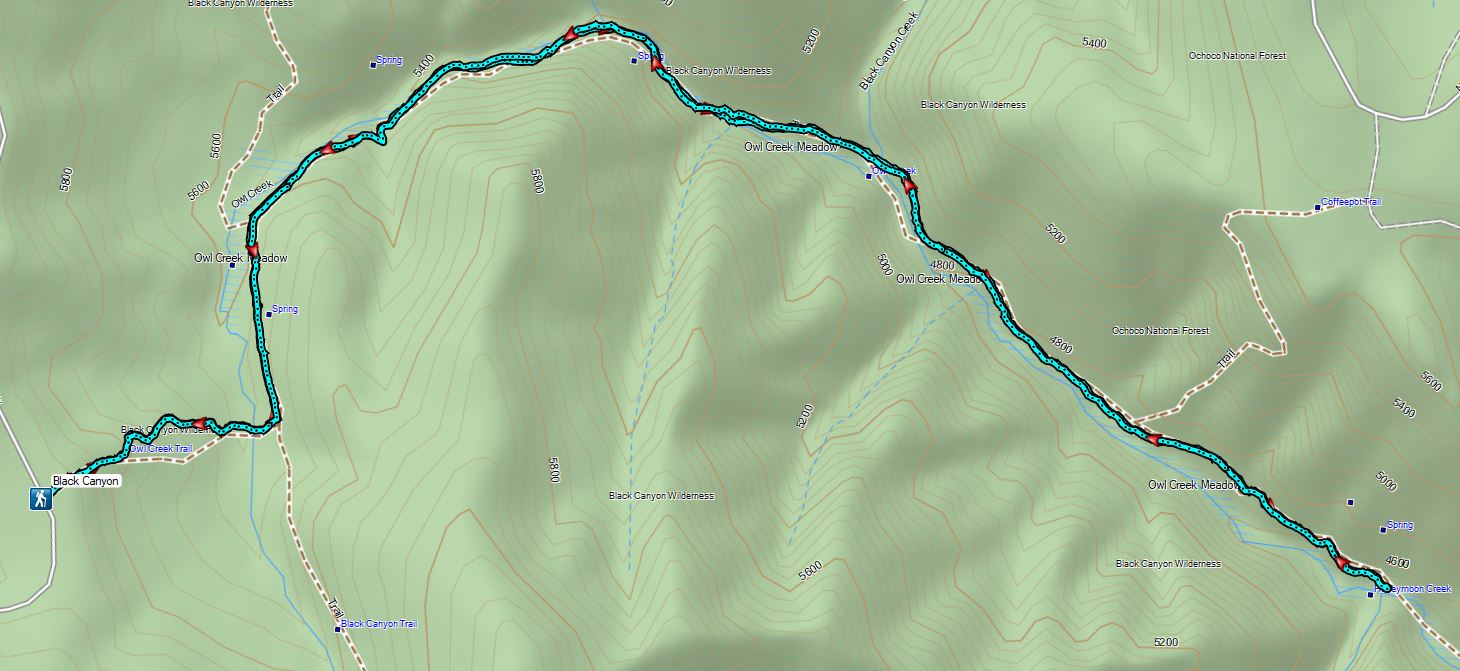
This was an eight mile out and back with almost 1600′ of elevation gain, mostly on the way back.

Black Canyon Track

From Boeing Field we drove back the way we’d come 4.3 miles to the Rock Creek Trailhead.
IMG_0264

Here we threw on our full backpacks as our plan was to camp somewhere along Rock Creek and then return on a loop the next day by hiking up to Spanish Peak the next day following the route of the Ochoco Mountain Trail and Mascall Corral Trail.

Forest Service Map

IMG_0266

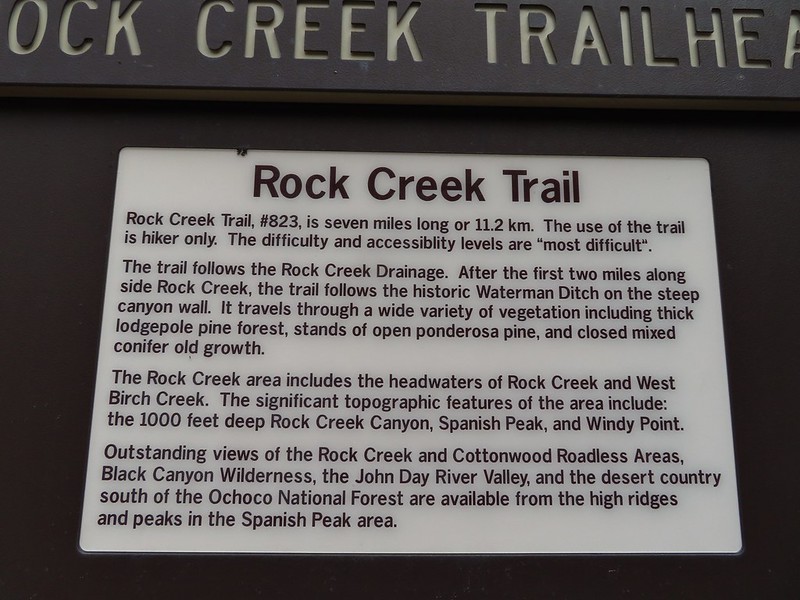
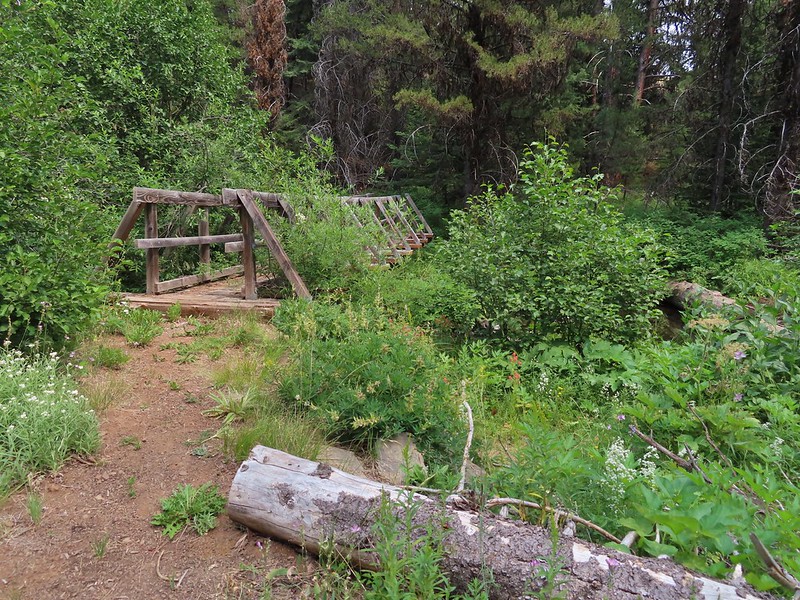
From the trailhead the trail descended to Rock Creek crossing it on a nice footbridge.
IMG_0267

IMG_0273

IMG_0277

IMG_0282

IMG_0286

IMG_0288The number of insects on the blossoms and their size differences were fascinating.

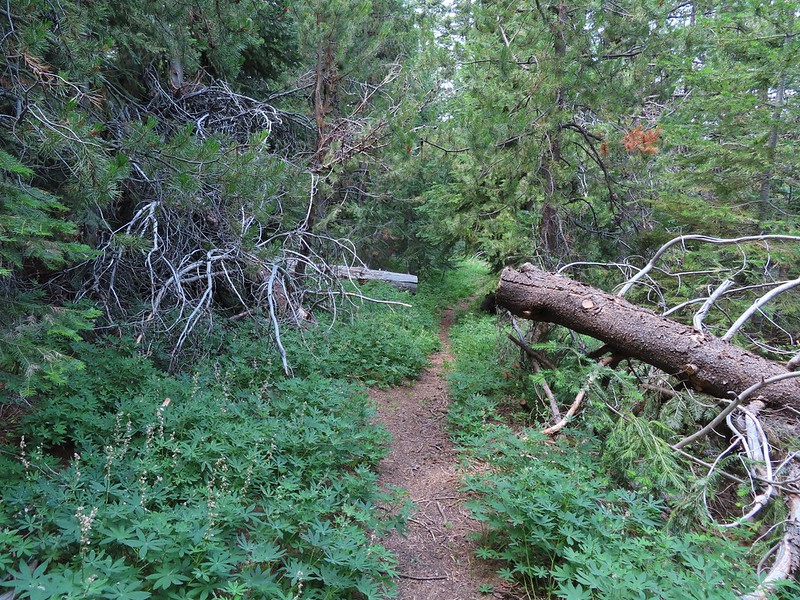
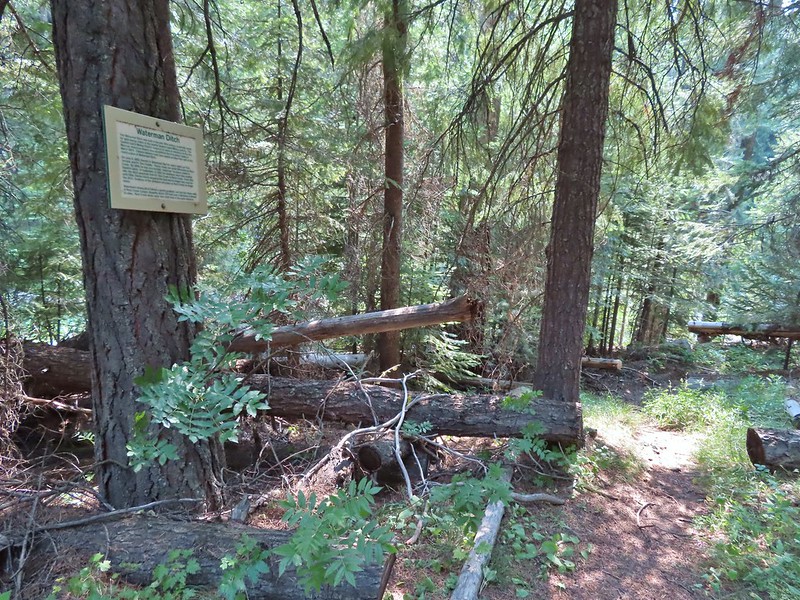
The trail then followed along Rock Creek for a bit before the creek began descending more steeply than the trail. At the 2.4 mile mark we arrived at a sign announcing the Waterman Ditch.
IMG_0291

IMG_0301Snacks

IMG_0305

IMG_0308

IMG_0310Lorquin’s adrmiral

IMG_0313

IMG_0320

IMG_0321A little light on the tread in this section.
IMG_0322

IMG_0323

The trail then followed the old ditch passing the remains of a cabin next to Fir Tree Creek in 1.4 miles.
IMG_0327

IMG_0328

IMG_0335

IMG_0348Fir Tree Creek

IMG_0349Butterflies on coneflower

IMG_0351The cabin ruins.

We continued on heading for Second Creek which was just over 1.5 miles beyond Fir Tree Creek where we hoped we might find a spot to camp or at least refill our water supply.
IMG_0355

IMG_0358Coming around a ridge end toward Second Creek.
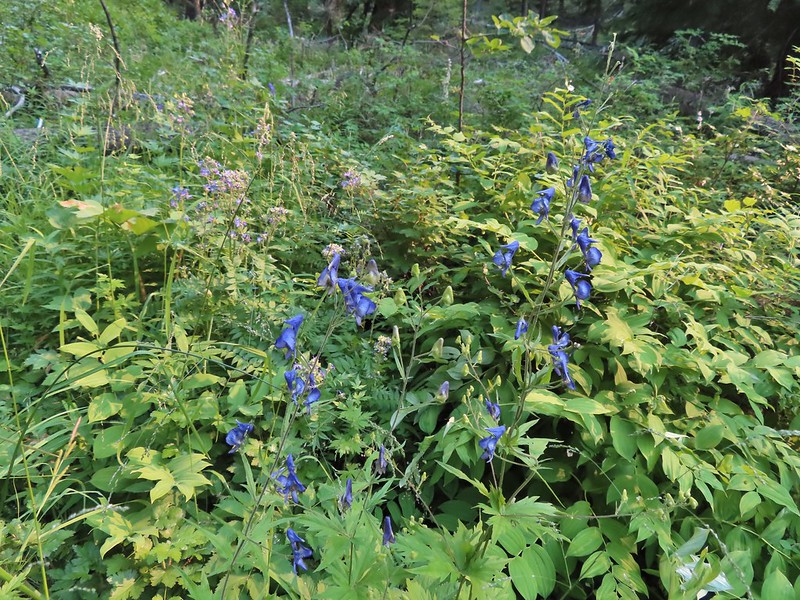
IMG_0363Monkshood at Second Creek

IMG_0365This little guy oversaw our water pumping.
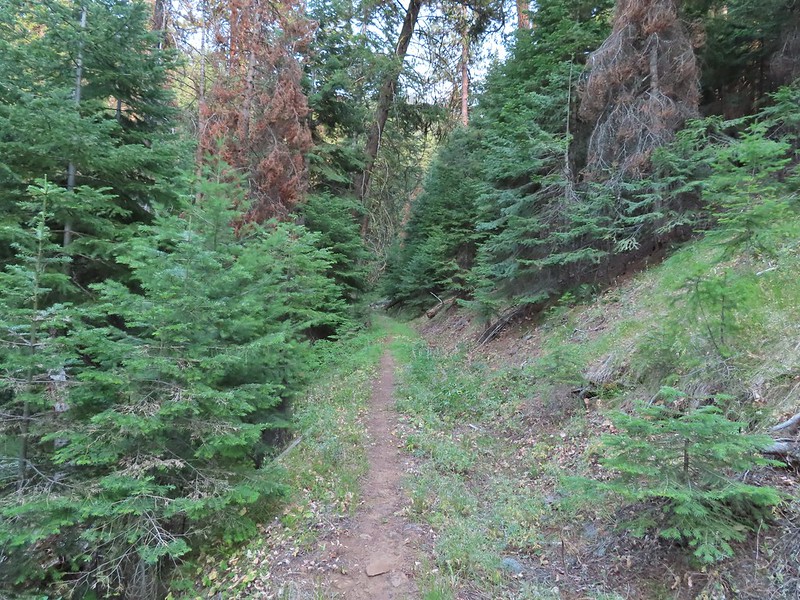
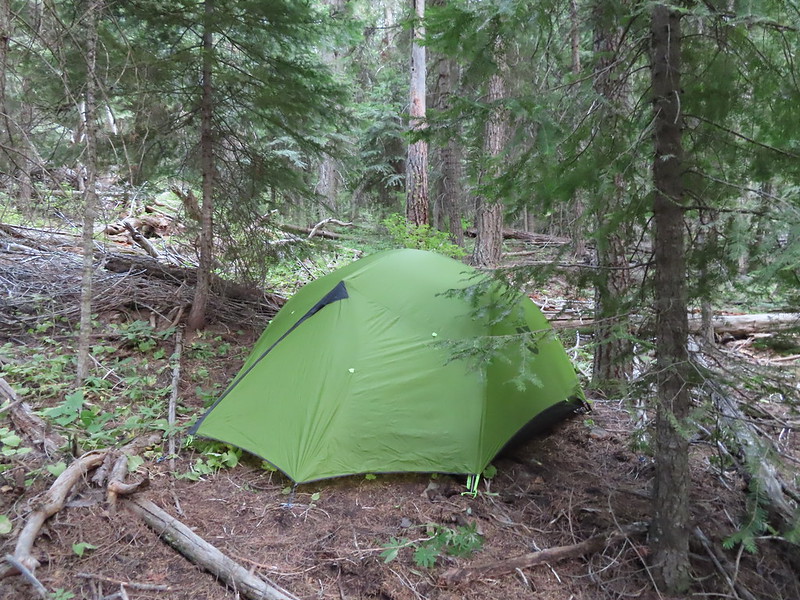
There wasn’t a lot of water in Second Creek and the crossing where the most obvious spot to get water was had a whole lot of yellow jackets flying around. We had to do a little hunting up and down the creek in thick vegetation to find a pool deep enough for our pump but finally managed to. What we couldn’t find was a place for our tent or a spot to cook dinner away from the yellow jackets and mosquitos so after getting water we reluctantly continued hiking. After nearly 1.5 more miles we arrived at First Creek where there was almost no water but there was a suitable spot for a tent.
IMG_0367

IMG_0368

It had been a long day with this hike coming in a little over 7 miles making it a 15+ mile day for us.

Rock Creek Track (orange)

It was also a warm evening and we had the rainfly on due to the slight chance of rain which made it even warmer. It did finally cool off enough overnight to warrant pulling our sleeping bag/quilt over us and we managed to get some sleep. I woke up once when something fairly big cracked it’s way through the trees below our camp and a couple more times when a pair of nearby owls were trading hoots. It was a more difficult start to our trip then we had anticipated but a good day none the less. Happy Trails!

Categories
Blue Mountains - South Hiking Oregon Trip report

Elkhorn Crest Trail Day 2

The second day of our Elkhorn Crest backpacking trip began with a welcome chill in the morning. It was actually cold enough to break out the beanie, Buff, and gloves.
IMG_0198

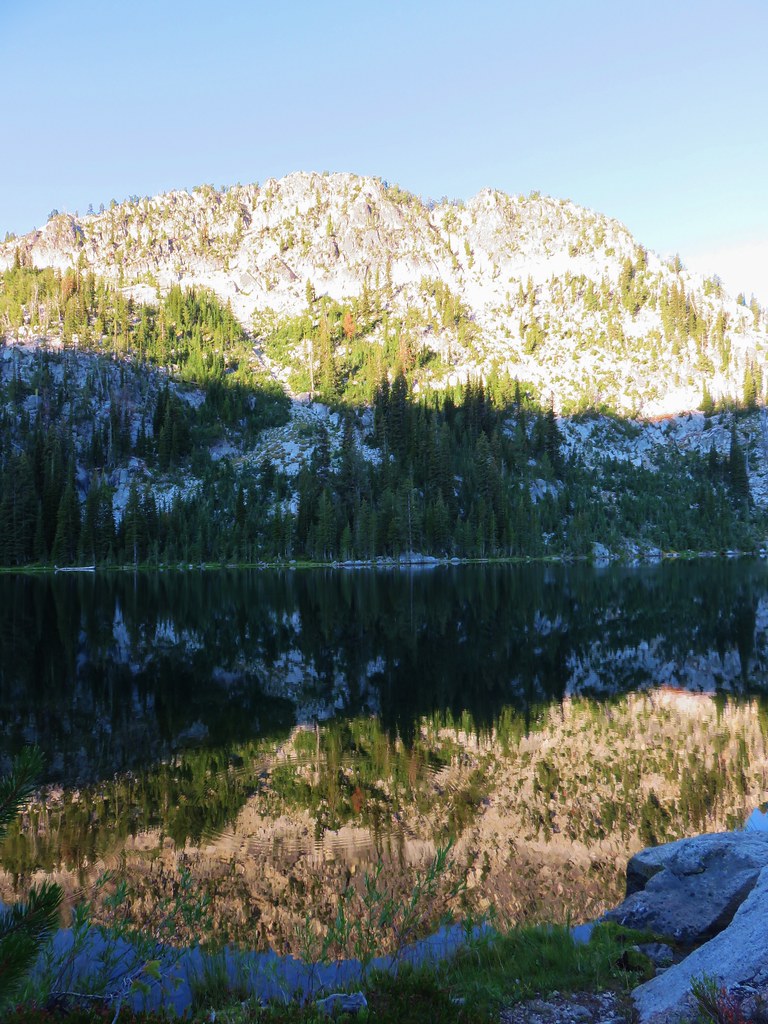
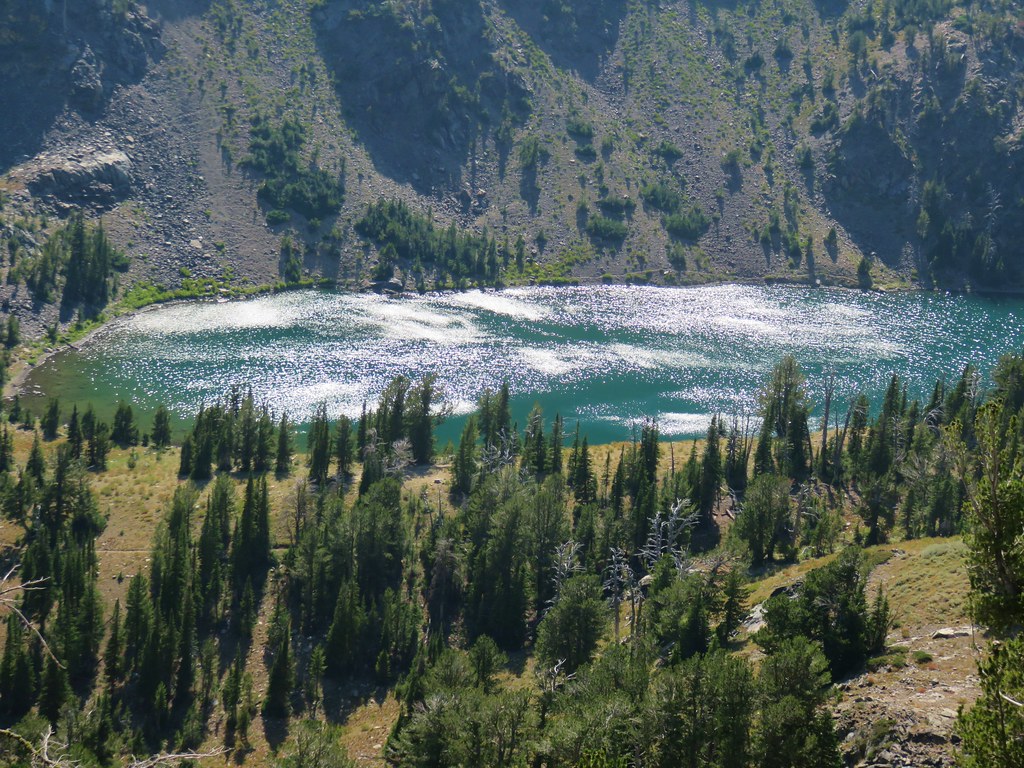
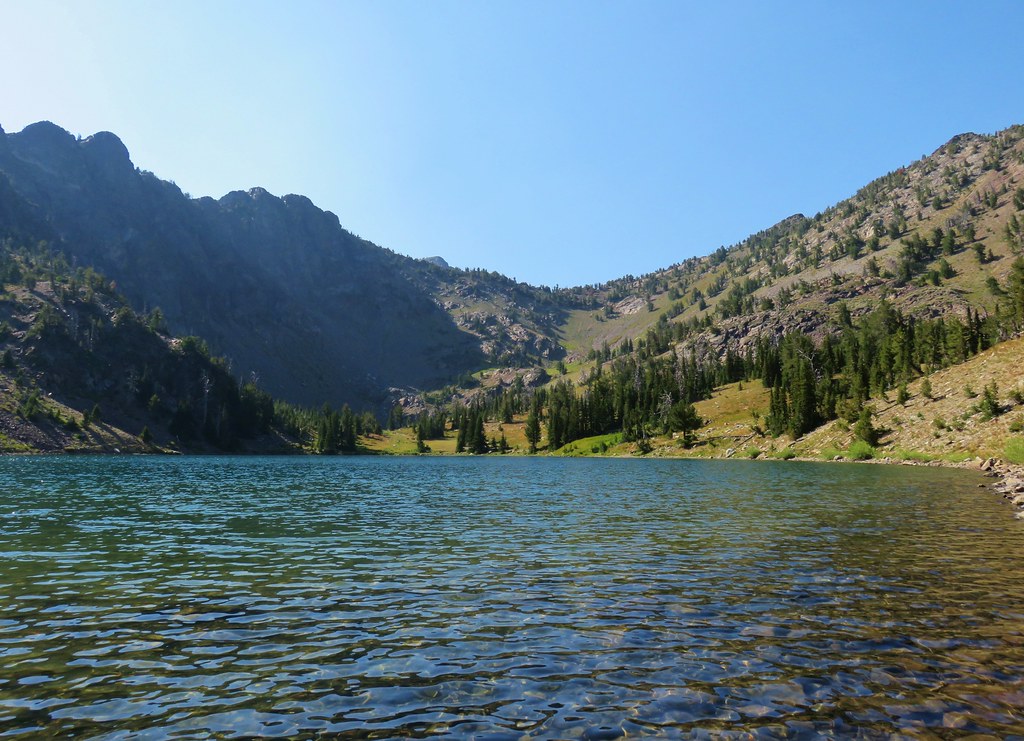
We ate breakfast as the Sun came up creating a nice reflection in Summit Lake.
IMG_0202

IMG_0203

After packing up we decided to continue around the lake counter-clockwise to complete a loop around the shore. We crossed a small inlet in a meadow at the southern end of the lake.
IMG_0209

Beyond the meadow the trail passed a couple of other campsites with views to the north across the water.
IMG_0211

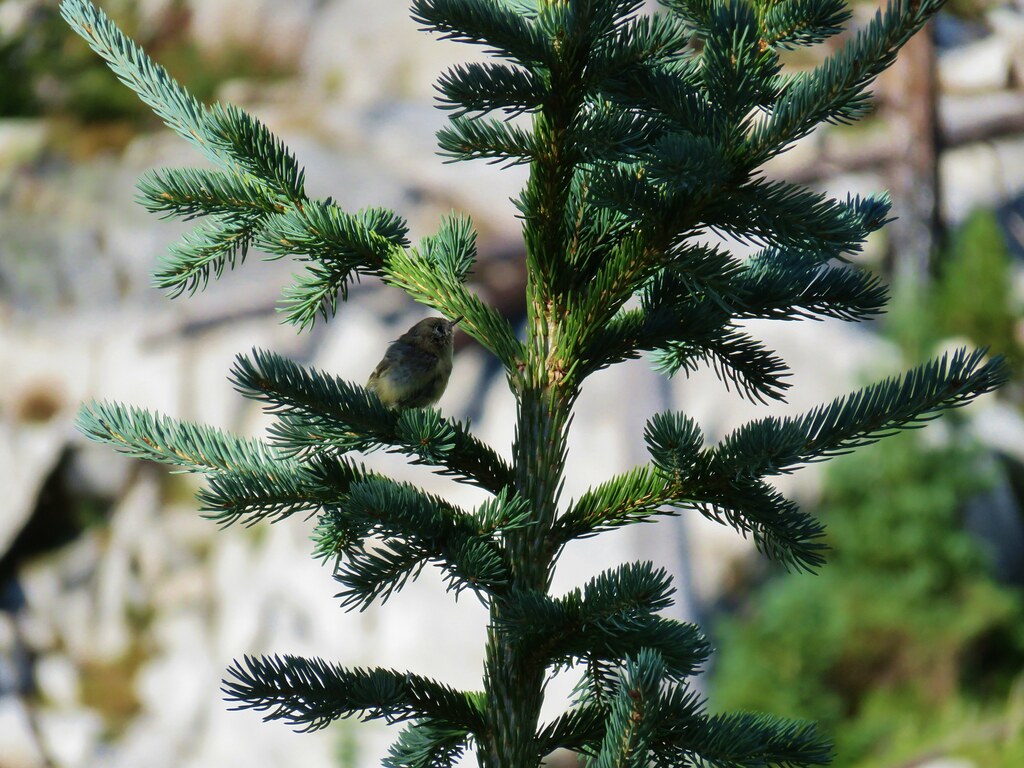
Birds were busily flying from tree to tree but one sat still long enough for a photograph.
IMG_0214

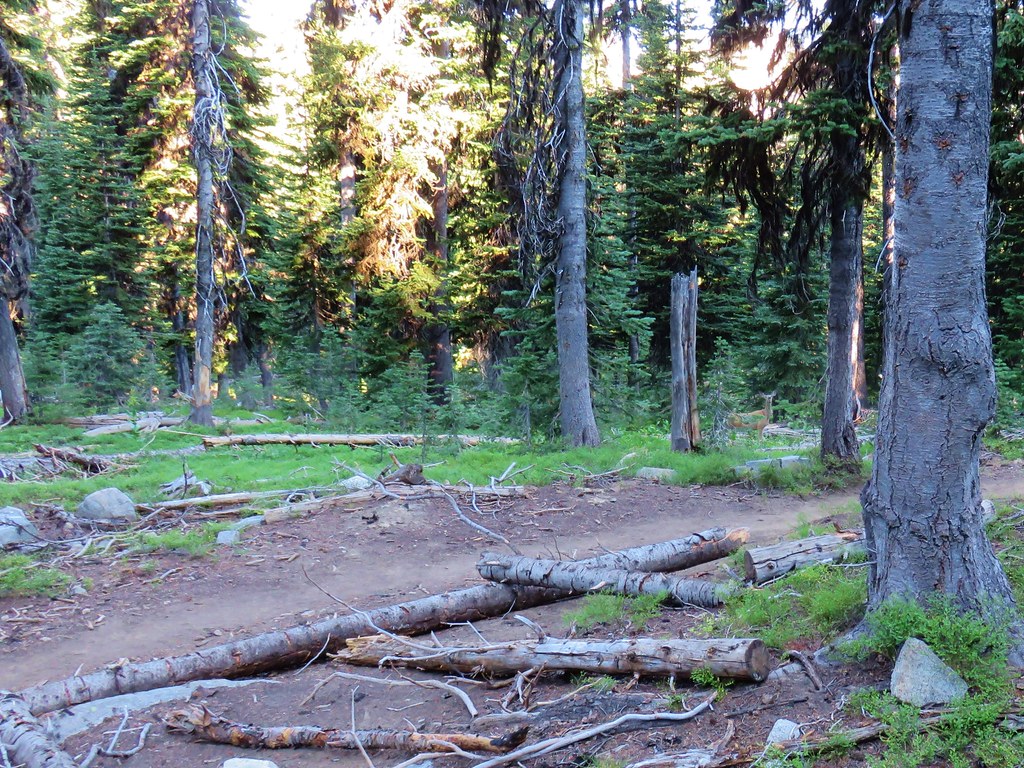
After completing the loop we began the 1.5 mile climb back to the Elkhorn Crest Trail. The trail crossed over several small streams and meadows as it passed through a forested section. We spotted two does and a fawn in the area.
IMG_0220One of the does (the fawn dashed by moments later)
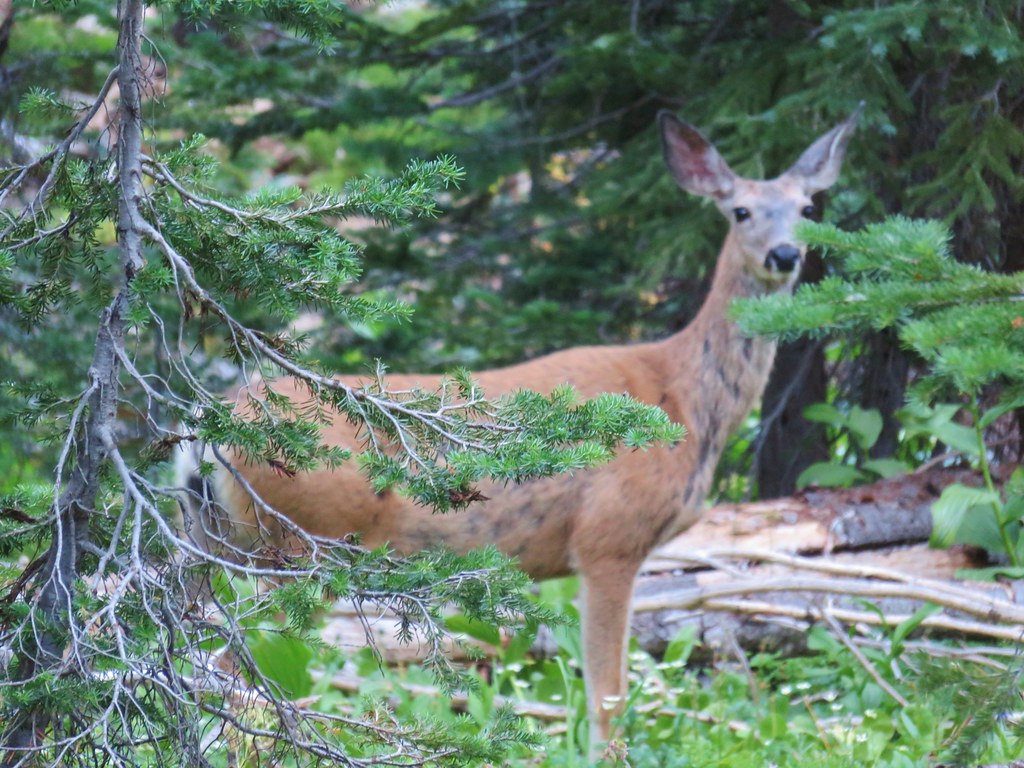
IMG_0218Close-up of the doe
As we continued along we were hailed by the group of hikers we had passed early on the first day who had said they were aiming for Summit Lake as well. They wound up running out of gas they said so they set up camp on a rocky overlook of the valley below. After talking with them briefly we continued on to the cairn marking the junction with the Elkhorn Crest Trail where we turned left.
IMG_0222

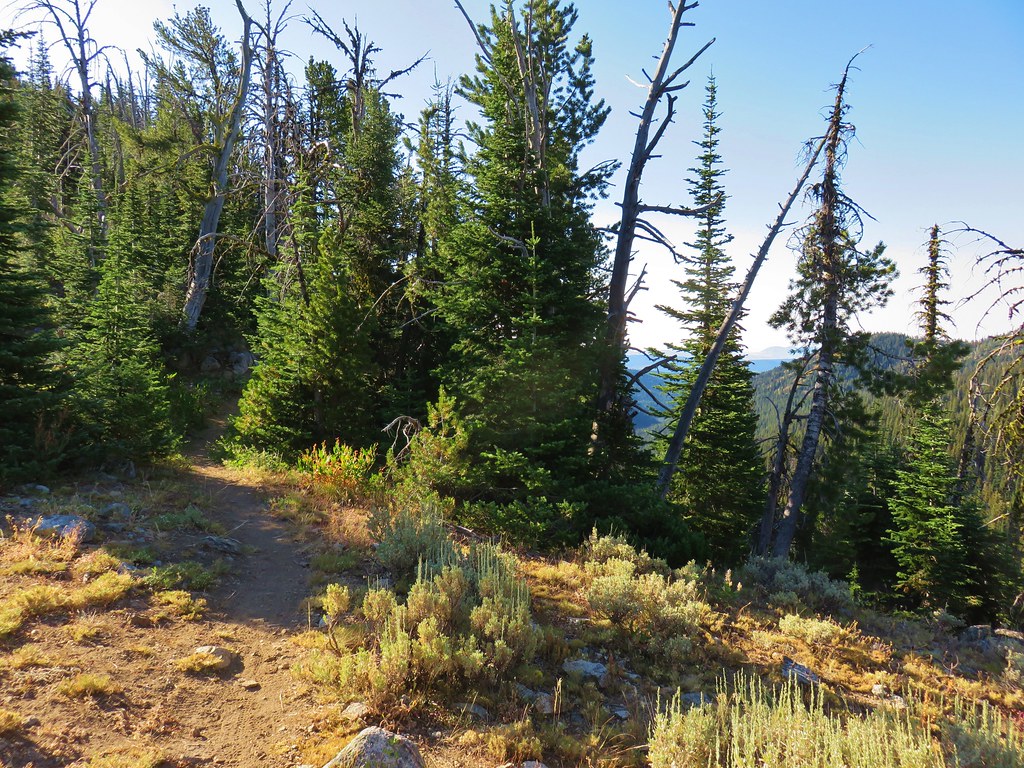
Our goal for the day was Twin Lakes but we also planned to summit Rock Creek Butte, the highest peak in the Elkhorn Range. We were leaving our options open though. The route up was 9.5 miles away and we weren’t sure if it would be better to wait and attempt it the next day when it would be earlier in the day and likely cooler or if doing it today would be better since the sky was still relatively smoke free in the immediate area. Either way we had time to decide as we followed the trail along the western side of the crest.
IMG_0227

IMG_0229

IMG_0239

We were very interested in a peak on the horizon to the south. It was clearly separated from the Strawberry Mountains further west and we weren’t sure what it was. When we returned home it was one of the first things I looked up and it turned out to be Ironside Mountain.
IMG_0224

We spotted a number of animals along the crest in the morning including the biggest caterpillar either of us had ever seen digging in the dirt.
IMG_0243

IMG_0242

Approximately a mile and a half from the junction with the Summit Lake Trail we came across the only water we would encounter along the entire Elkhorn Crest Trail. A small flower lined stream heading down into Sardine Gulch to join Cracker Creek.
IMG_0250

IMG_0249

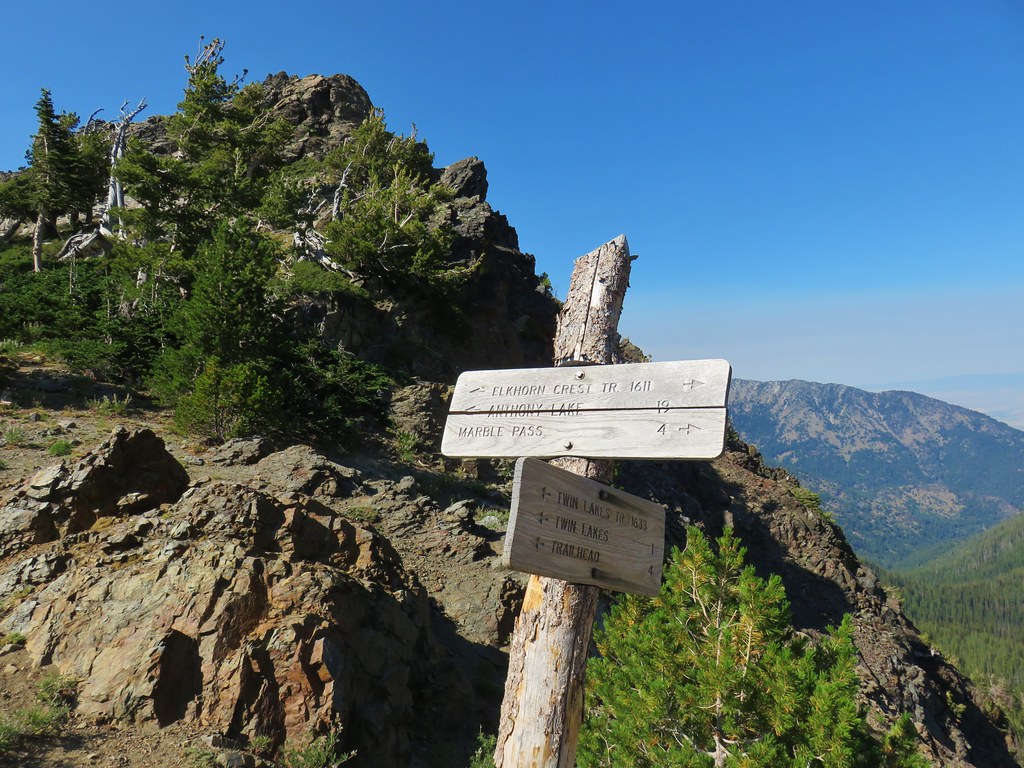
The trail had left the North Fork John Day Wilderness at Cracker Saddle and we began seeing the difference at a hairpin turn around a ridge.
IMG_0267

From above we couldn’t read the sign without the aid of the camera zoom.
IMG_0268

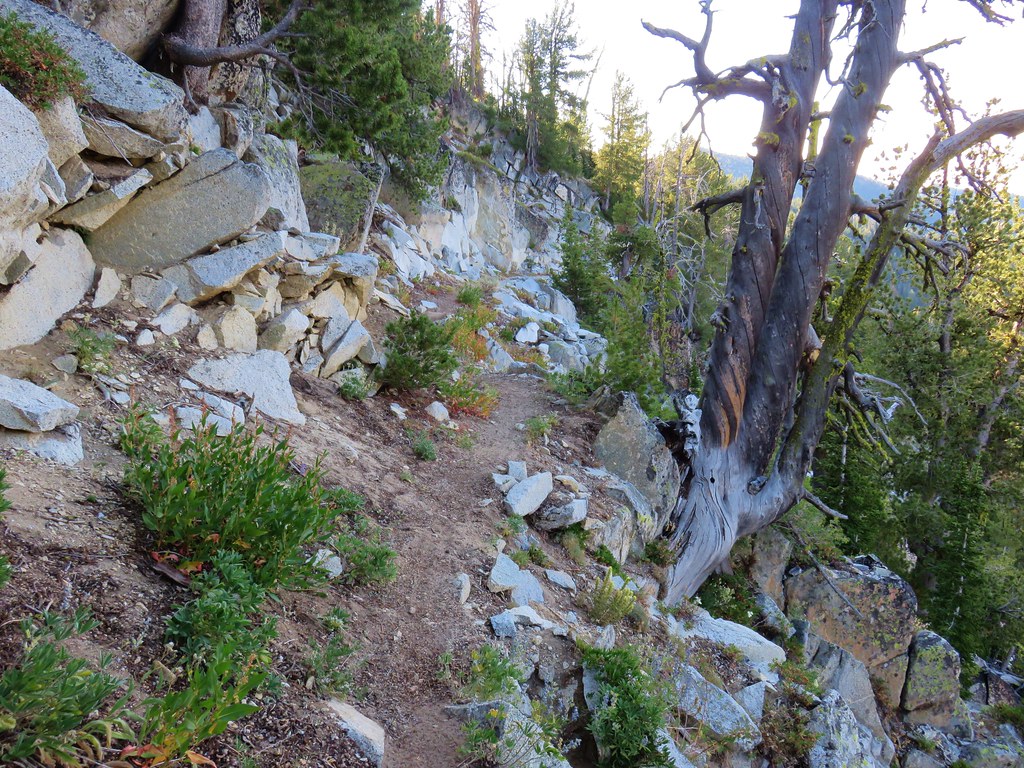
Someone clearly put some work into that. A little further along the trail we started noticing mining operations along the hillside. We could also see 9106′ Rock Creek Butte further along the ridge.
IMG_0274

IMG_0276

The trail spent a short while along a wide section of the ridge top before returning to the western side of the crest.
IMG_0280

IMG_0282

We would again gain the ridge top with a nice view down the Rock Creek Valley to the east.
IMG_0287

Nearly seven miles from the Summit Lake Trail junction we came to the Pole Creek Ridge Trail which headed faintly downhill along a ridge.
IMG_0291

IMG_0292

By the time we’d reached this junction we had decided to attempt Rock Creek Butte on the way by instead of waiting for the next day. It wasn’t too hot and more importantly it looked like smoke was creeping towards us from both sides so we thought we’d better get what views we could while the getting was good. It was still a little over two and a half miles to the SW ridge of Rock Creek Butte where we would turn up for the climb.
IMG_0295

We were having a hard time coming from the direction that we were determining which peak ahead was actually Rock Creek Butte. We were hoping that the closest rounded peak was our goal and not the larger one further away. From the angle we were at they appeared to be somewhat similar in height.
IMG_0296

When we gained the ridge top again though we could just make out Rock Creek Lake in the basin below the further peak which told us that was our next goal.
IMG_0298

As it turned out the peak we had hoped was Rock Creek Butte was 500′ shorter although it did seem to have a possible route up.
IMG_0309Looking up “not” Rock Creek Butte

IMG_0310Rock Creek Butte is still a little ways away.
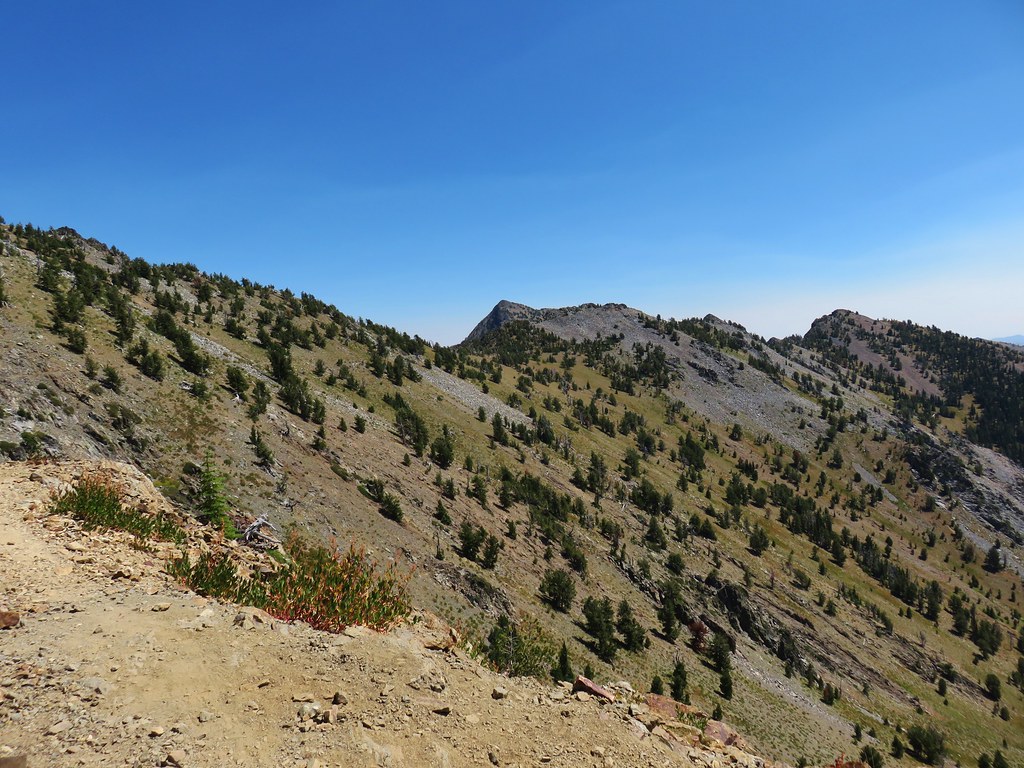
It took another mile and a half to reach the saddle where we would turn up the SW ridge of Rock Creek Butte.
IMG_0327Looking ahead to the saddle.

IMG_0330Nearing the saddle.

At the saddle we left the trail and ditched are backpacks in a group of trees in favor of our day packs.
IMG_0331

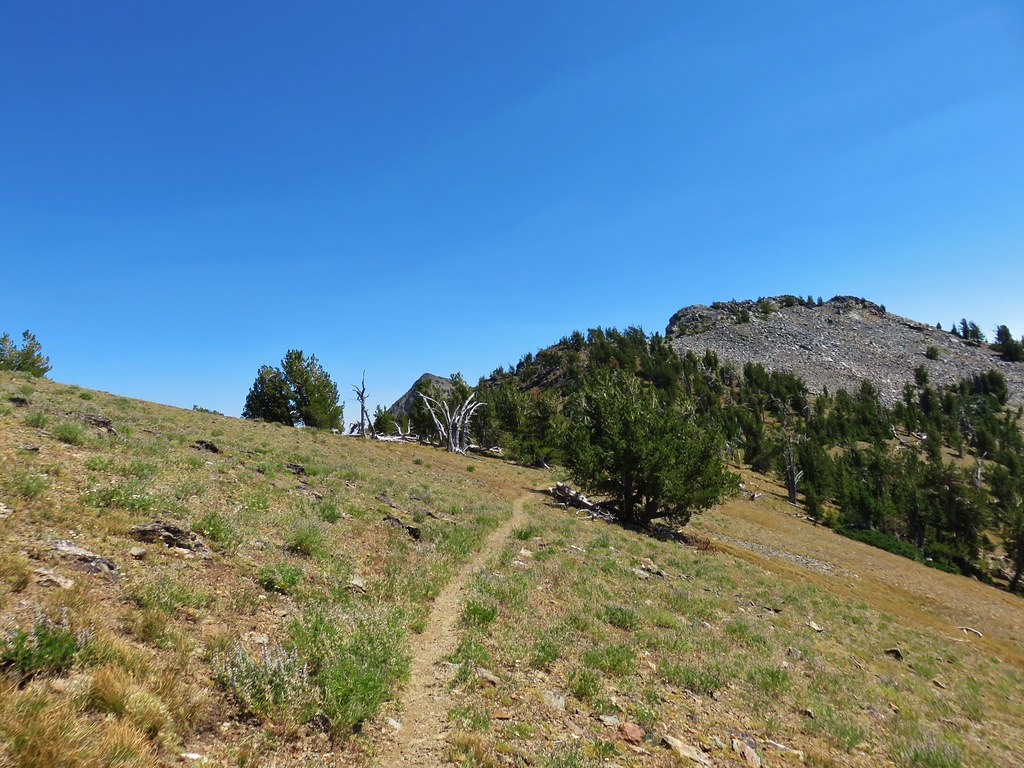
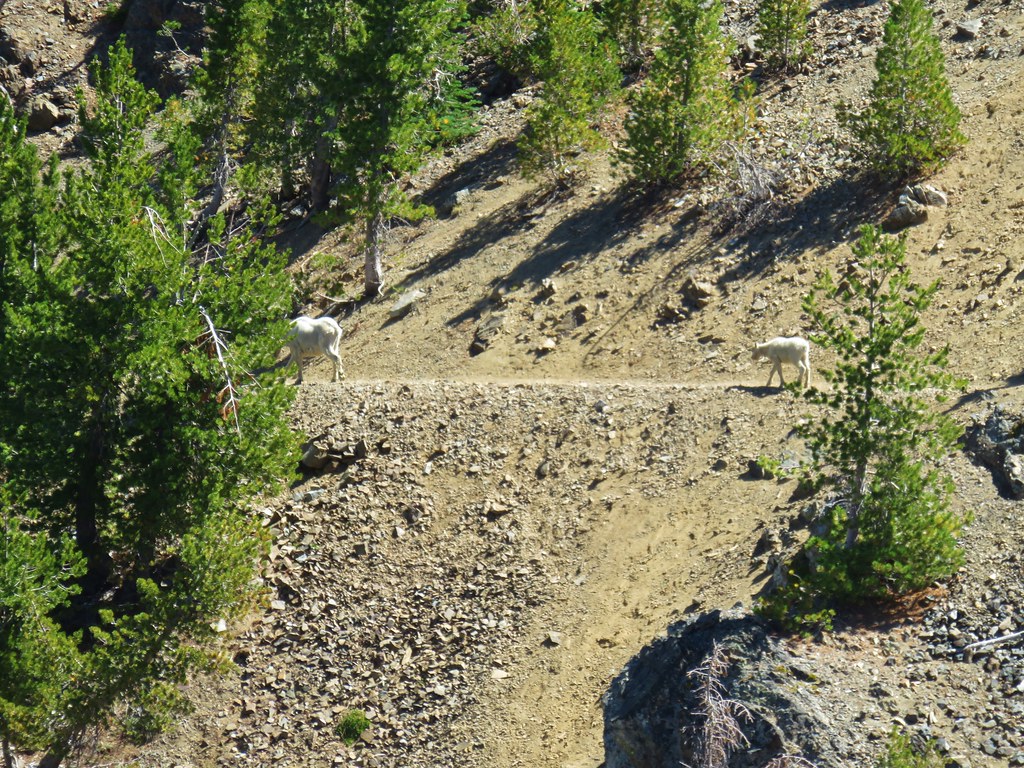
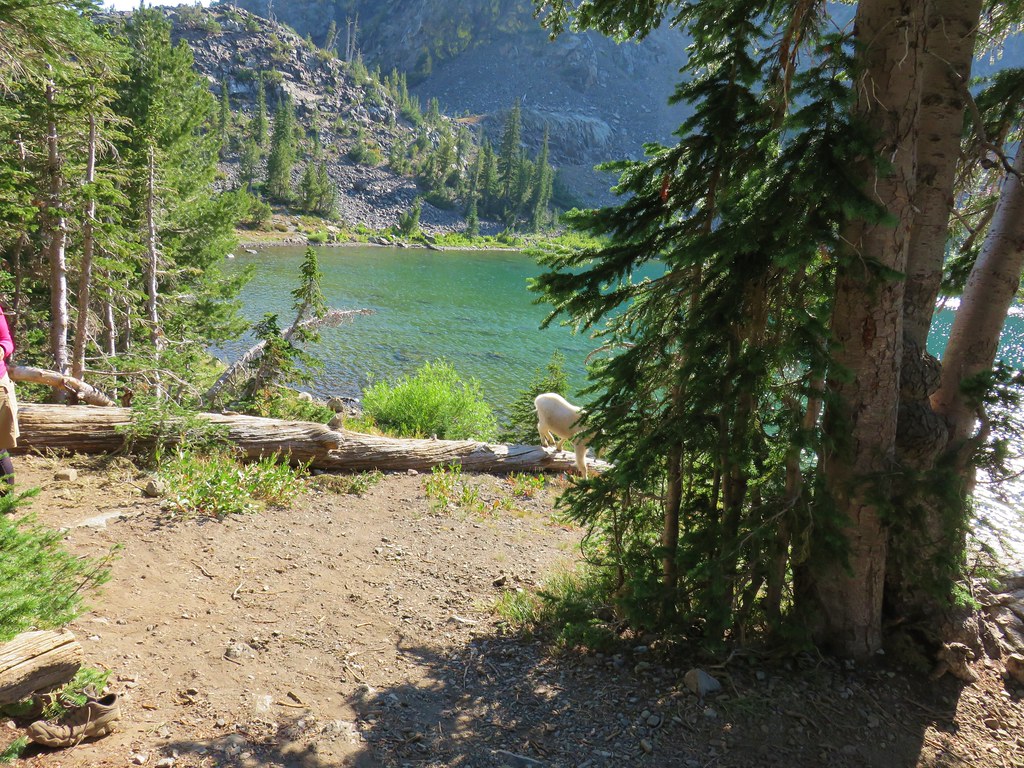
Before starting the climb we noticed that we weren’t the only ones traveling south on the Elkhorn Crest Trail. A pair of mountain goats could be seen walking along the trail.
IMG_0335

IMG_0337

After watching the goats head over the ridge toward Twin Lakes we began our ascent.
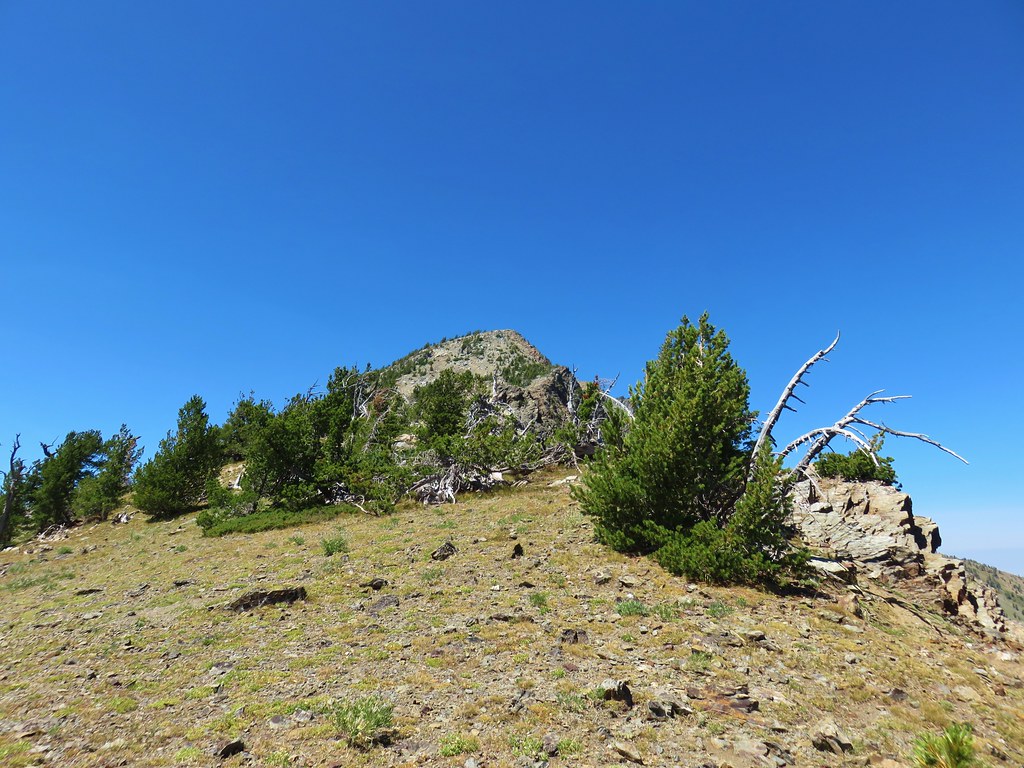
Mountain goat sign was everywhere along the rocky ridge and there was no discernible path, although we did occasionally spot a human foot print in the dirt.
IMG_0340

IMG_0342

IMG_0346

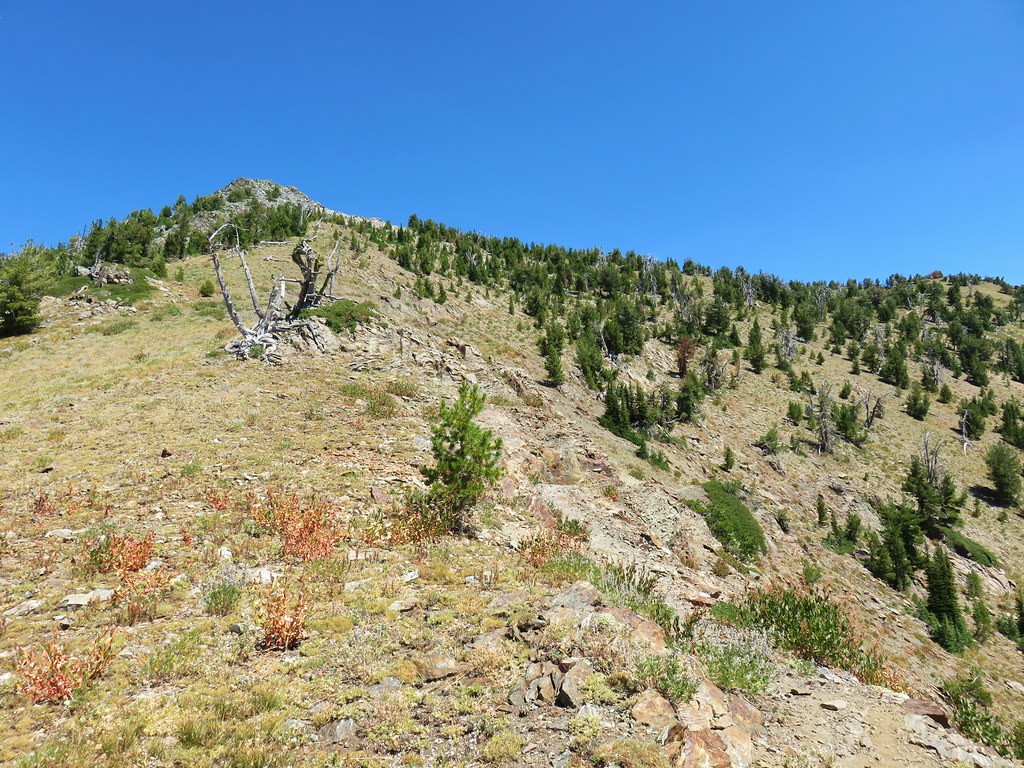
The half mile route gains roughly 600′ with the final tenth of a mile being the steepest portion.
IMG_0349

A large cairn and register box sit atop the peak.
IMG_0353

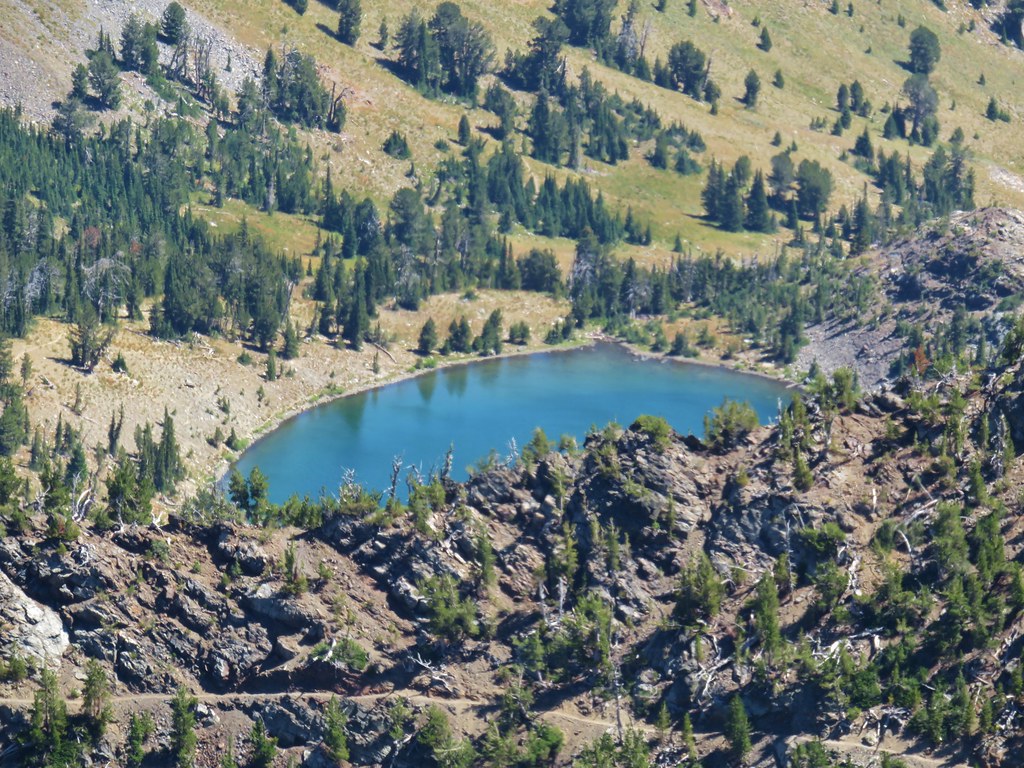
From the summit Lower Twin Lake was visible to the south.
IMG_0376

IMG_0356

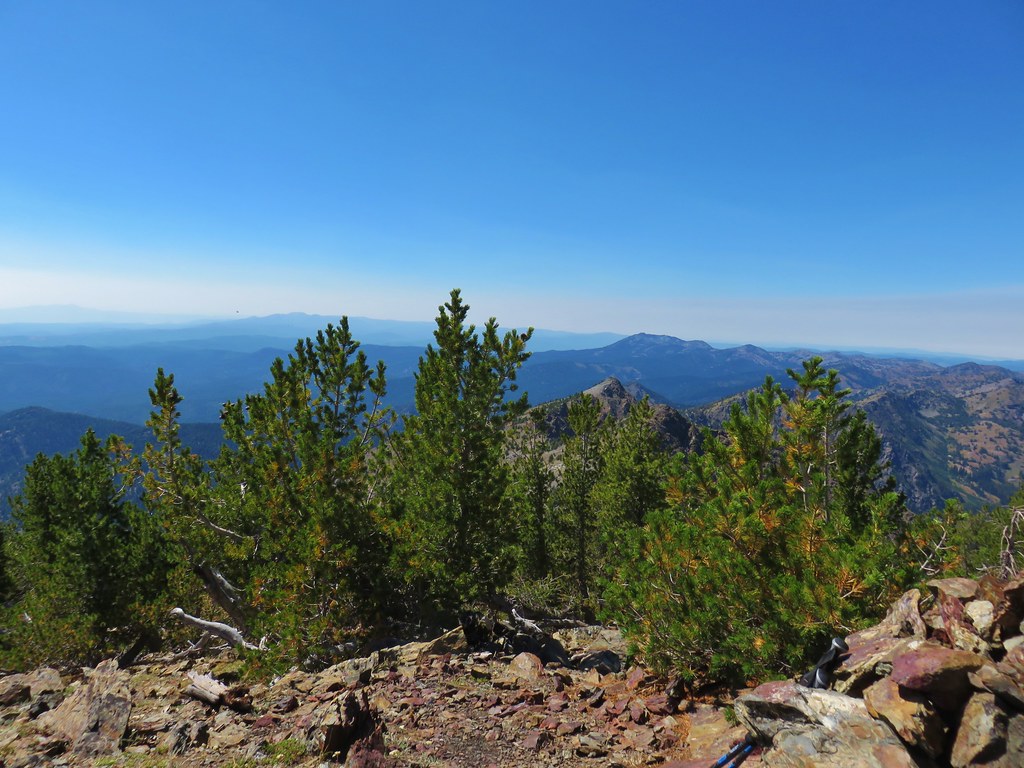
Mt. Ireland and Vinegar Hill lay to the west.
IMG_0360

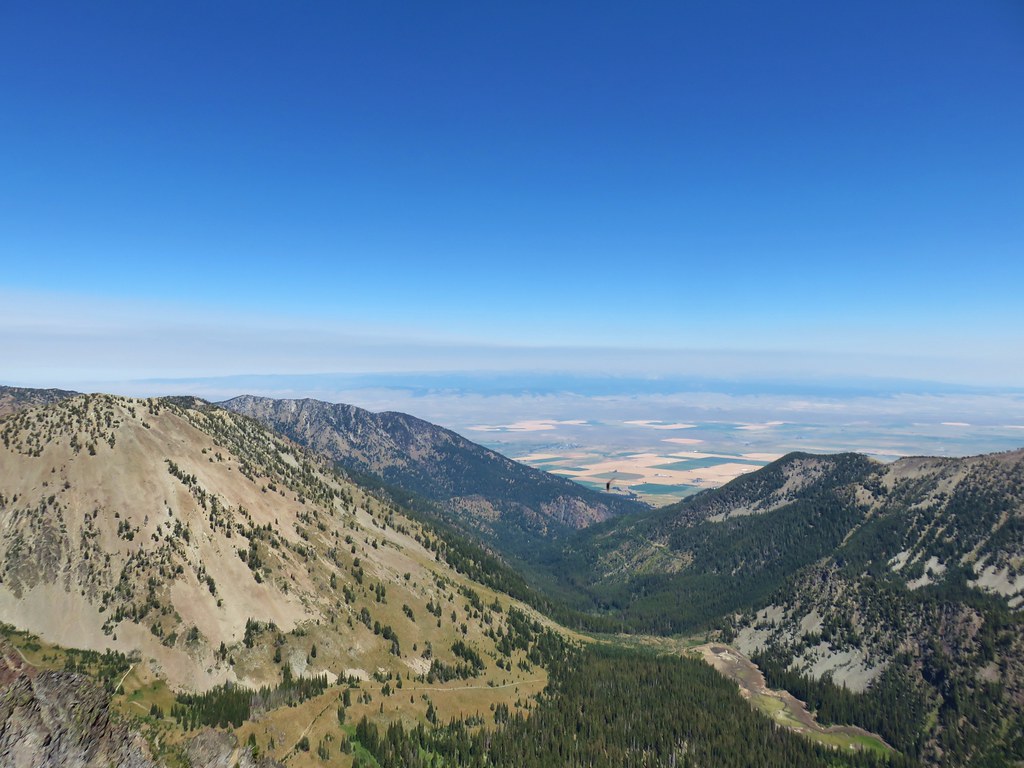
To the NE should have been the Wallowas but smoke appeared to have overtaken them.
IMG_0358

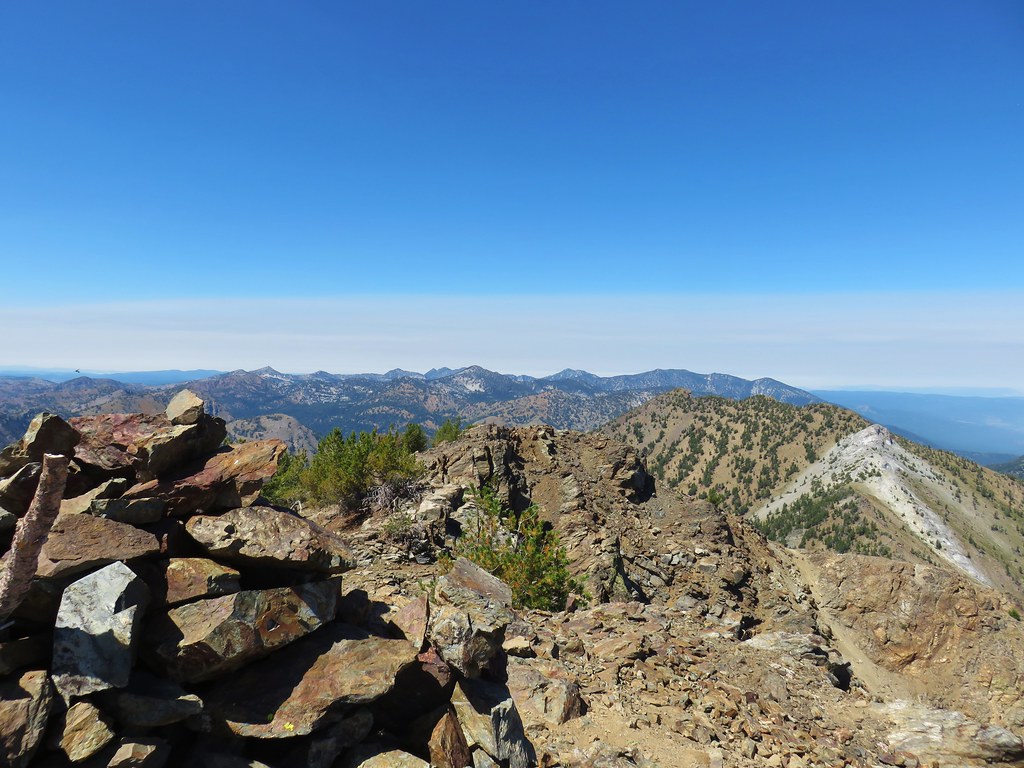
The view to the north included many of the peaks of the Elkhorn Range but there was no view of Rock Creek Lake due to the broad summit.
IMG_0354

A 500′ stroll across the summit though revealed the gorgeous lake below.
IMG_0371

IMG_0370Notice the golden-mantled ground squirrel sitting atop the large rock overlooking the lake.
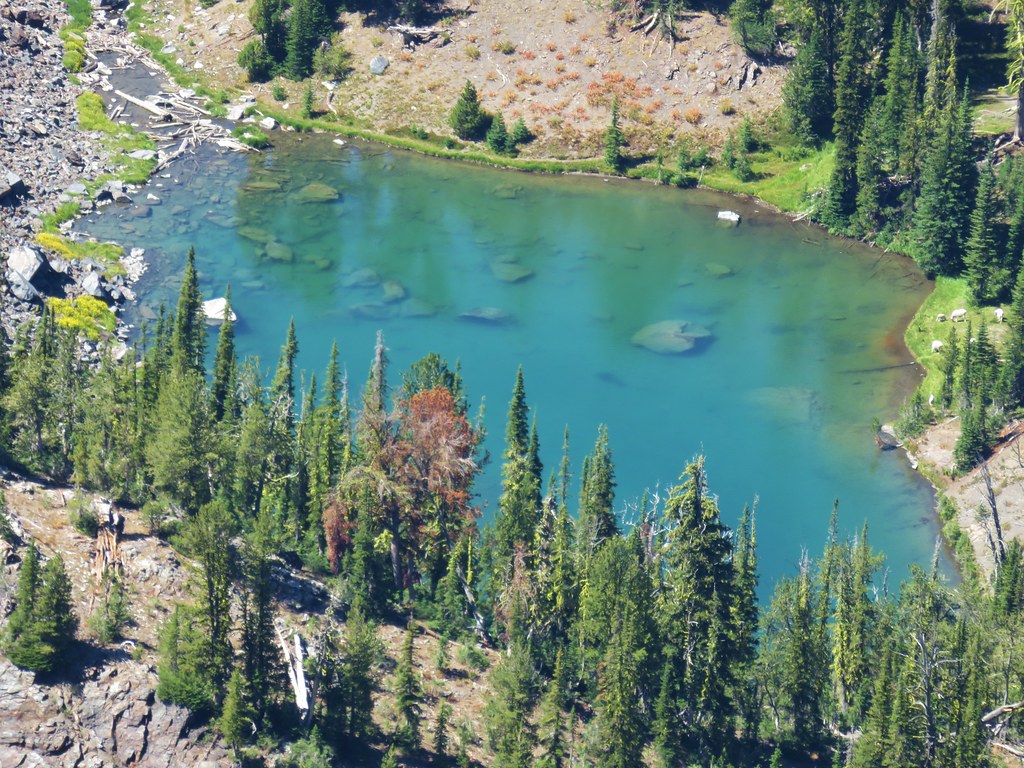
Mountain goats were grazing in some green grass by a smaller body of water near the lake.
IMG_0375 (Full disclosure neither of us noticed the goats until I was looking through the pictures at home.)

IMG_0373Looking back at the summit cairn from the Rock Creek Lake overlook.
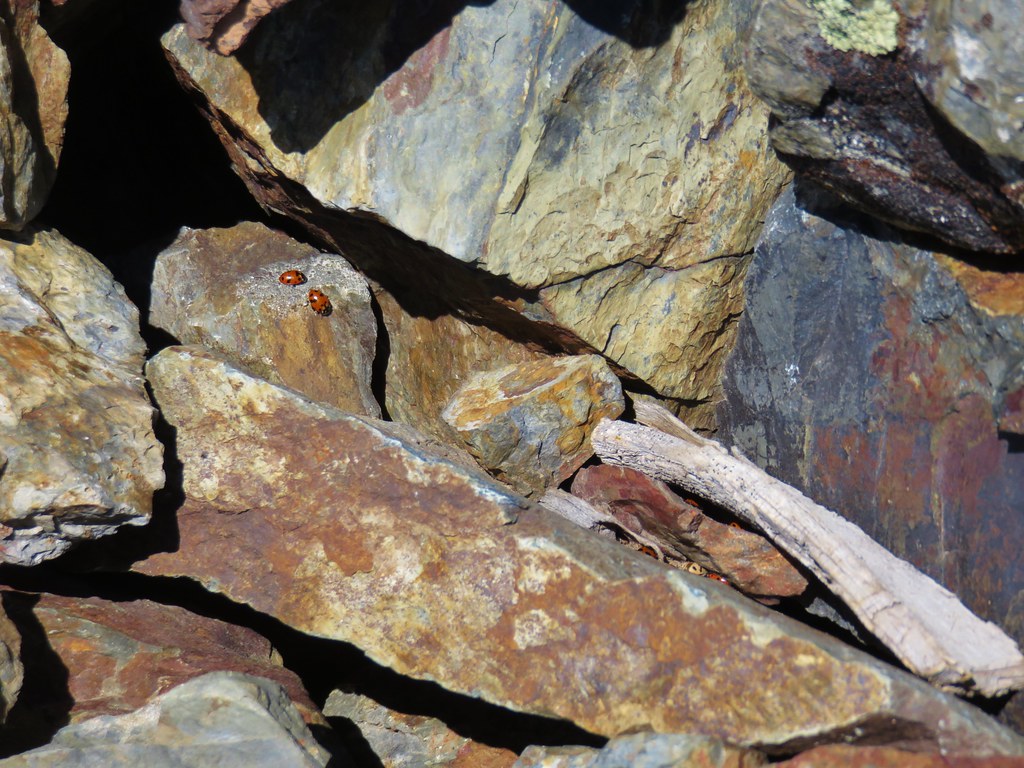
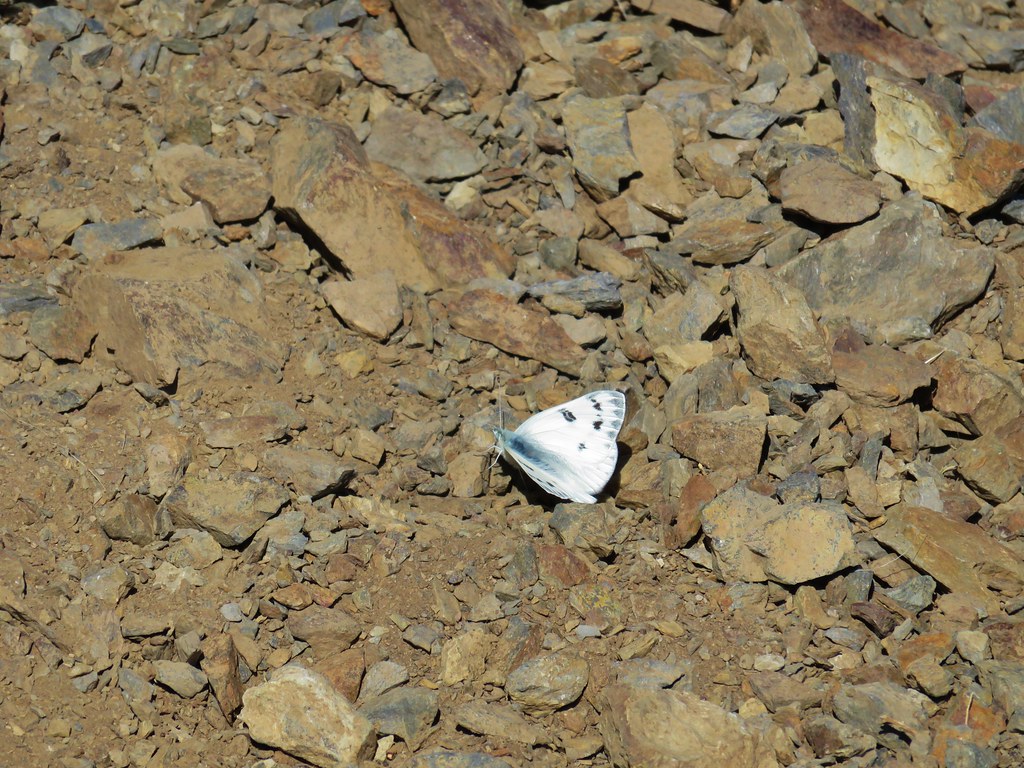
There were a lot of flying ants on the cairn as well as several lady bugs and some butterflies nearby.
IMG_0362

IMG_0363

After recovering from the climb up we started back down just as another hiker was closing in on the summit. It turned out that he had been the other person besides us camped at Summit Lake the night before. We left him to the summit and slowly picked our way back down to our backpacks. After retrieving them we returned to the Elkhorn Crest Trail following a section of trail that had been blasted out of the rocks.
IMG_0379

IMG_0378

IMG_0380

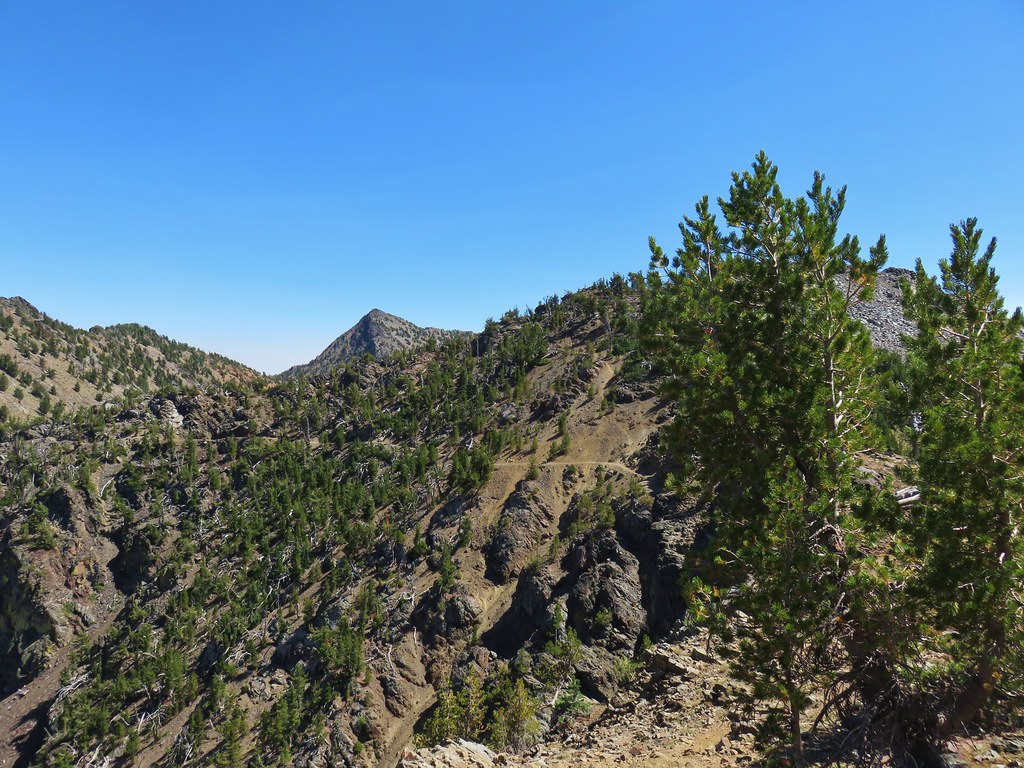
Soon Lower Twin Lake came into view followed by Upper Twin Lake.
IMG_0381

IMG_0385

The trail made a sweeping curve for the next three quarters of a mile above the lakes bringing around to the opposite end of them before arriving at a junction with the Twin Lakes Trail.
IMG_0387

IMG_0392

Although the lakes are only about 350′ below the junction the Twin Lakes Trail takes its own sweet time getting down to them via a series of long switchbacks.
IMG_0393

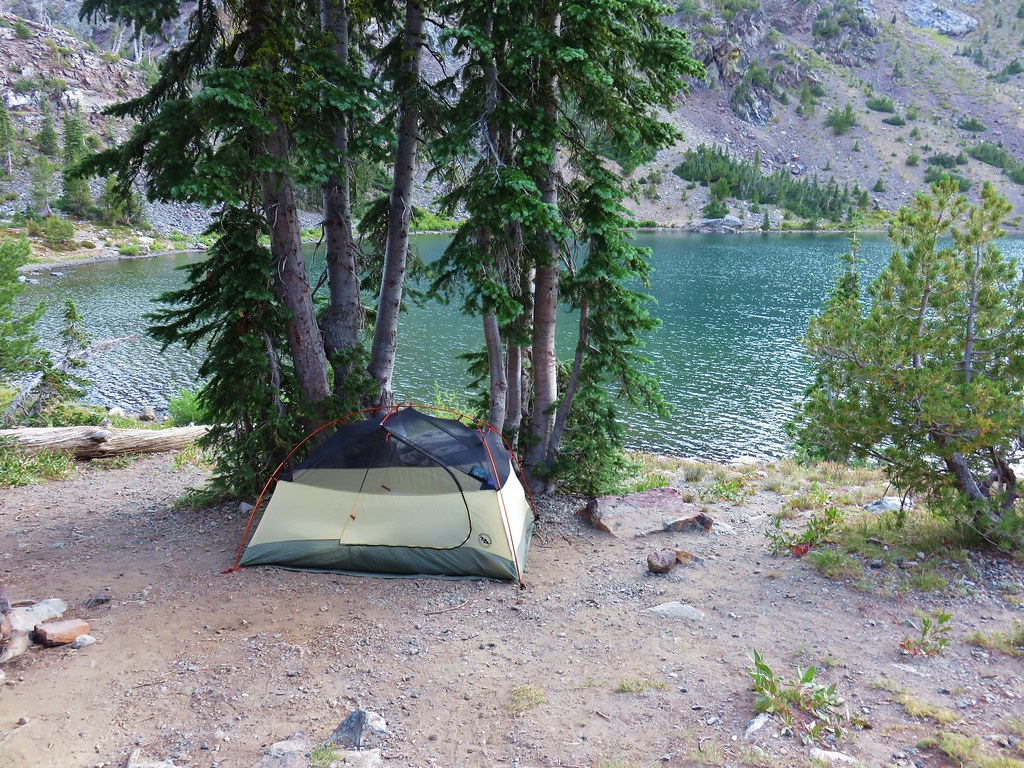
They made for a relatively easy climb out the next day but I was ready to be done for the day and became rather impatient with the slow decent. After a little over a mile we arrived at the lake and chose a camp stie.
IMG_0400

IMG_0492

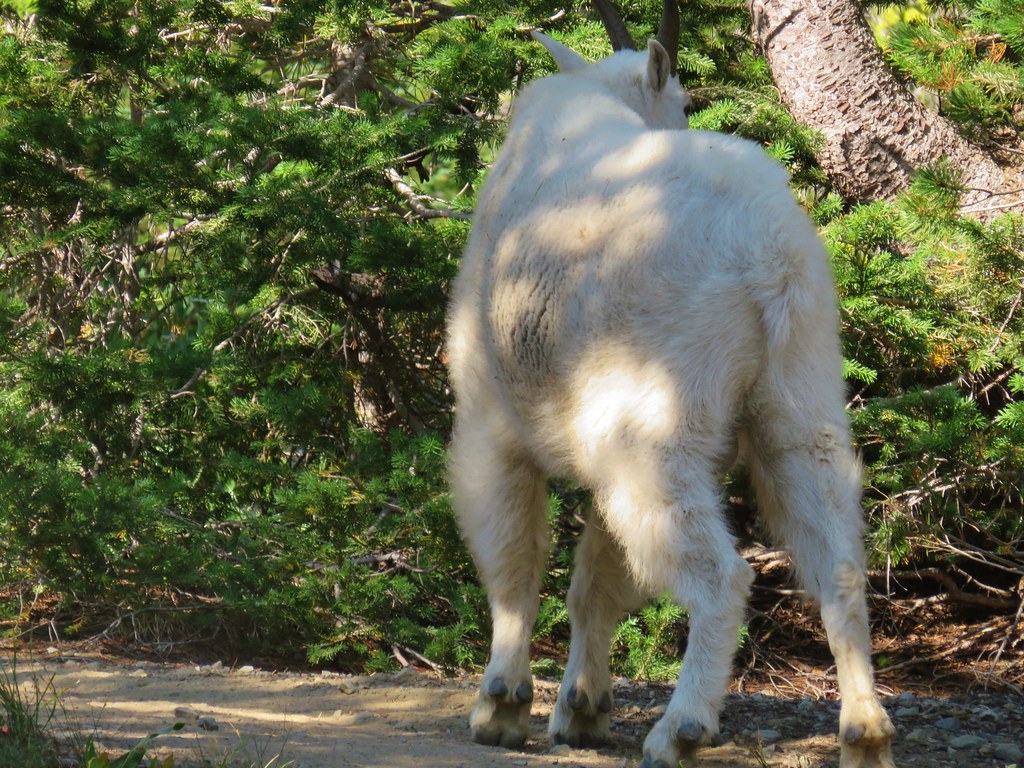
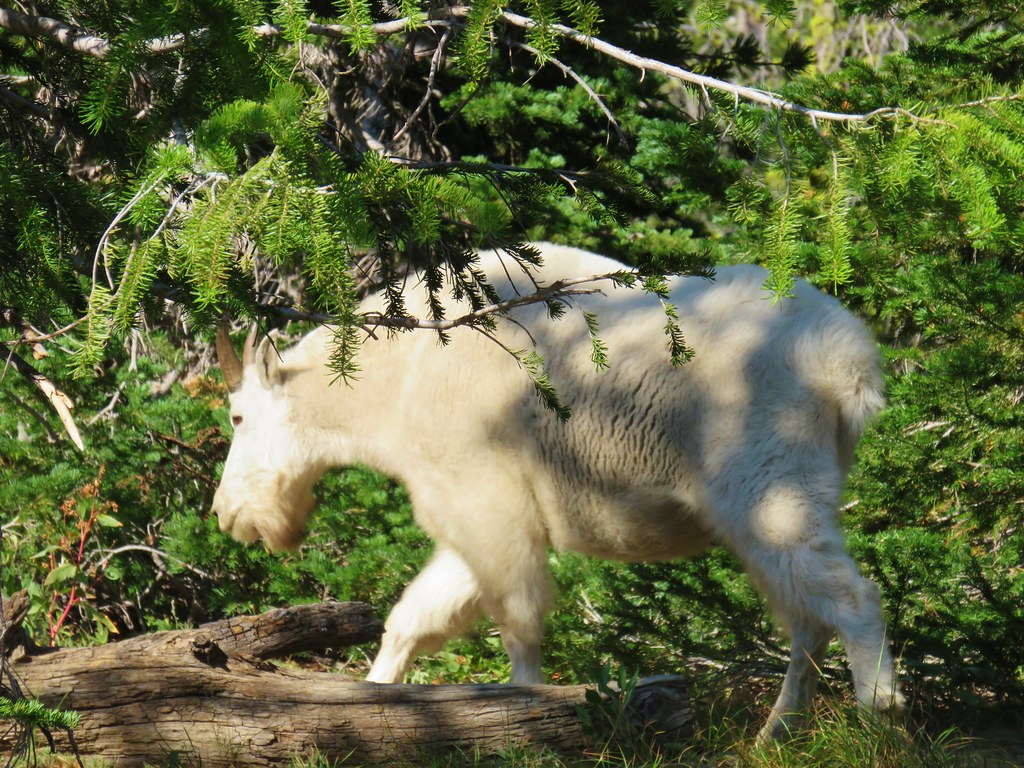
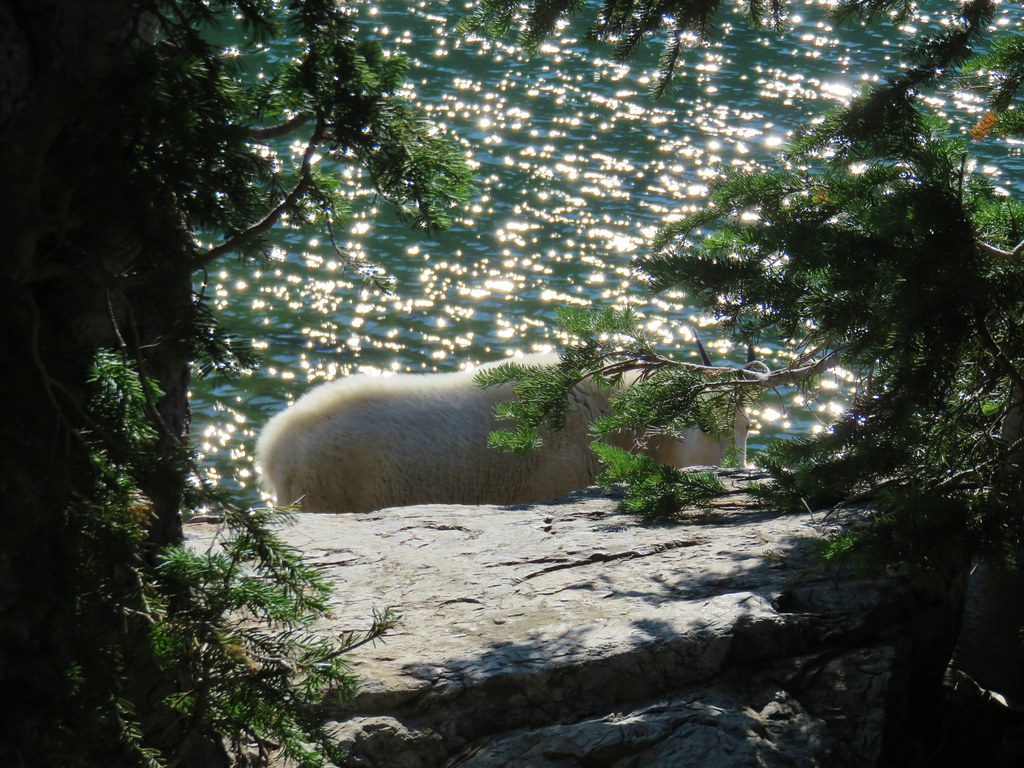
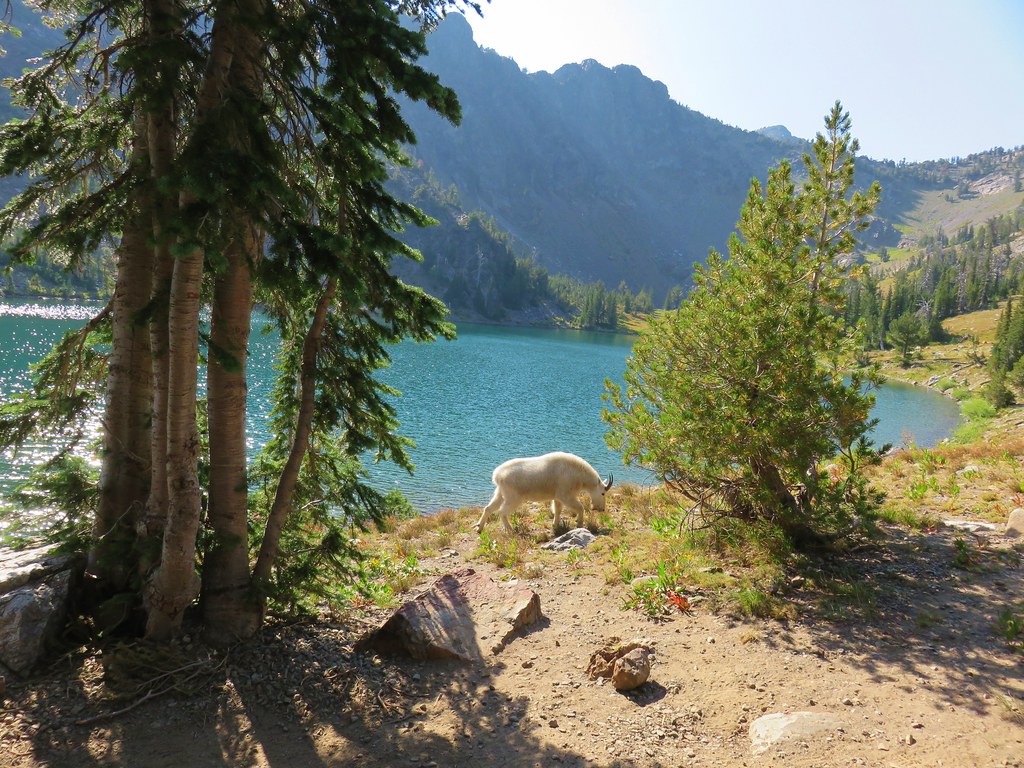
Both our guidebook and signs at the trailheads had warned about the mountain goats in the area being habituated to humans. A good reminder of why people shouldn’t feed wildlife, without the fear of humans the goats have been known to nibble on tents, clothing and backpacks in search of salt. We made sure not to leave anything lying around outside the tent but it wasn’t long before the first goat passed nearby.
IMG_0407You can see Heather’s arm on the left side of the photo.
IMG_0408

IMG_0410

About a half hour later a second goat followed.
IMG_0422

IMG_0425

After dinner we watched a nanny and kid circle around the lake and graze nearby.
IMG_0434

IMG_0451

IMG_0459

We did leave our tent for about 45 minutes to visit Upper Twin Lake which was just .3 miles away.
IMG_0474

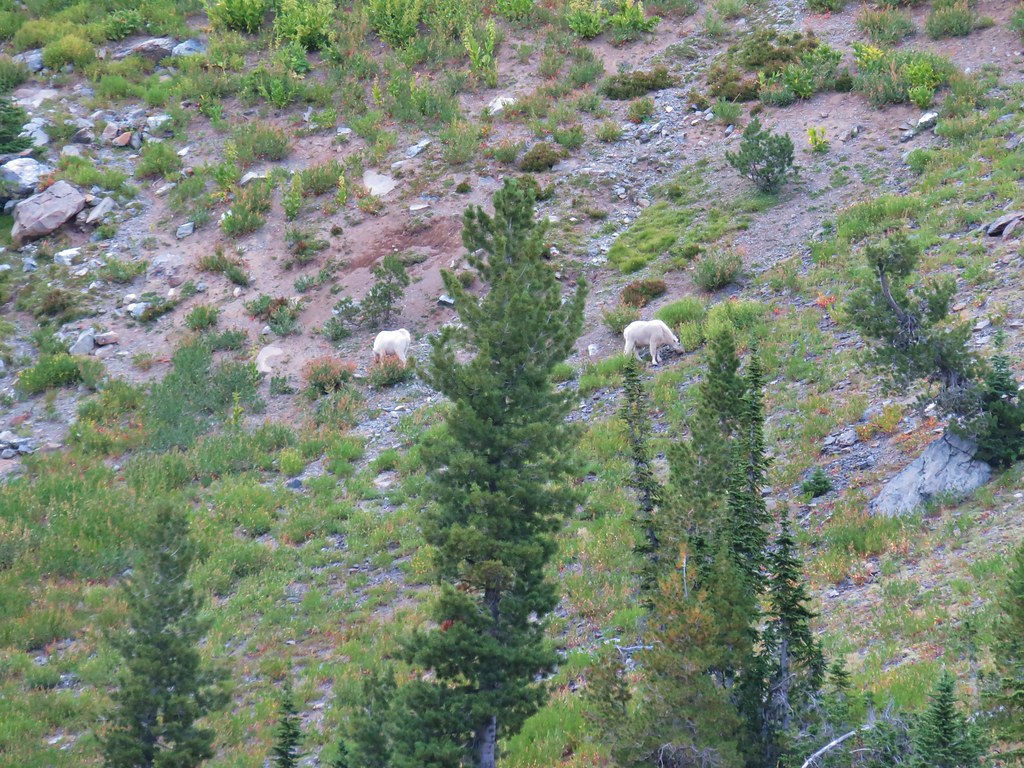
More mountain goats were grazing on the hillsides above this lake.
IMG_0479

The goats left our tent alone and we turned in for the night after what would be the longest day of our trip at 15.9 miles. Our original plan had been to return to Summit Lake the next day and stay there again but we were now considering camping along the Summit Lake Trail like the other group we had met had done. The nearby streams would allow us to get water and it would shave off a little distance both the next day and the day after when we were planning on heading from Summit Lake to Dutch Flat Lake. We decided to play it by ear the next day and turned in for the night halfway expecting to wake up to a mountain goat staring at us through the mesh on our tent. Happy Trails!

Flickr: Elkhorn Crest Trail Day 2

Categories
Columbia Gorge North Hiking Trip report Washington

Three Corner Rock to Table Mountain

What do we do when the temperatures are going to be nearing triple digits in the Willamette Valley? Take a 23.9 mile hike of course! Okay so that wasn’t our original plan, but due to some navigational errors that’s exactly what happened.

We were headed to Three Corner Rock and then hopefully onto Table Mountain via the Pacific Crest Trail. We’d visited Table Mountain in 2013 starting from the currently closed trailhead near the privately owned Bonneville Hot Springs. Our plan for this hike was to start at the Rock Creek Pass Trailhead where the PCT crosses CG-2090.

After purchasing a Washington Department of Natural Resources Discover Pass online we headed to the Columbia Gorge and crossed into Washington on the Bridge of the Gods in Cascade Locks, OR. From there we followed the directions from the Oregonhikers.org field guide to the trailhead.

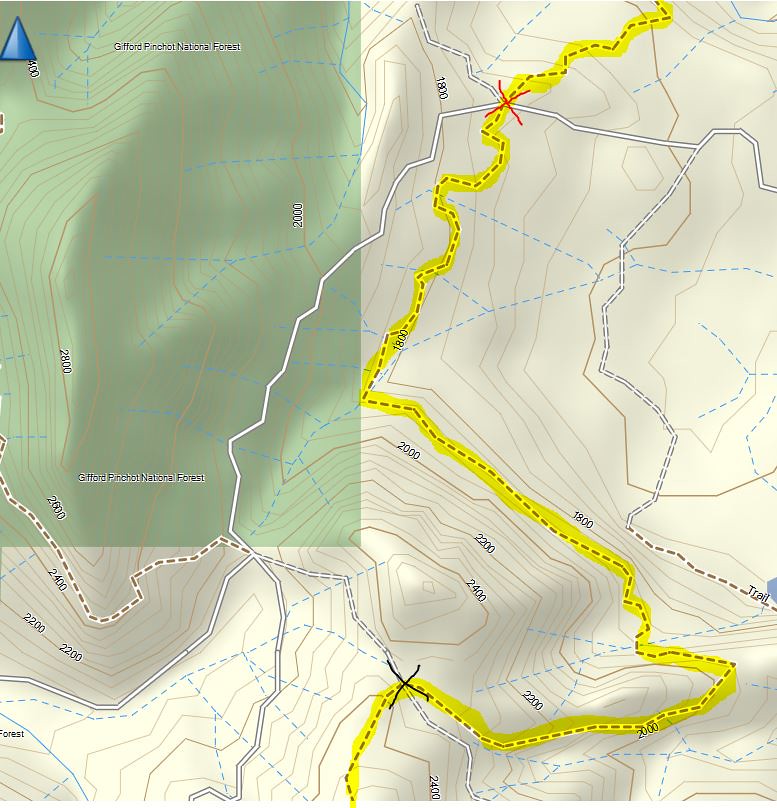
Our first (and biggest) error of the day happened as we set off on the PCT. Not only does the trail cross CG-2090 but it also crosses CG-2000, which we took to reach the trailhead, further to the north. On the map below the black “x” is the Rock Creek Pass TH and the red “x” marks the PCT crossing of CG-2000.

Rock Creek Pass TH

We hadn’t noticed the PCT crossing of CG-2000 on the drive to the TH and for some reason I had it stuck in my head that our starting point was the red “x”. So based on the direction we had driven to the spot from, we needed to take the PCT to the left to be heading south toward Three Corner Rock. Had we stopped to question why the Sun was nearly straight ahead as we started on the PCT we may have realized our mistake.

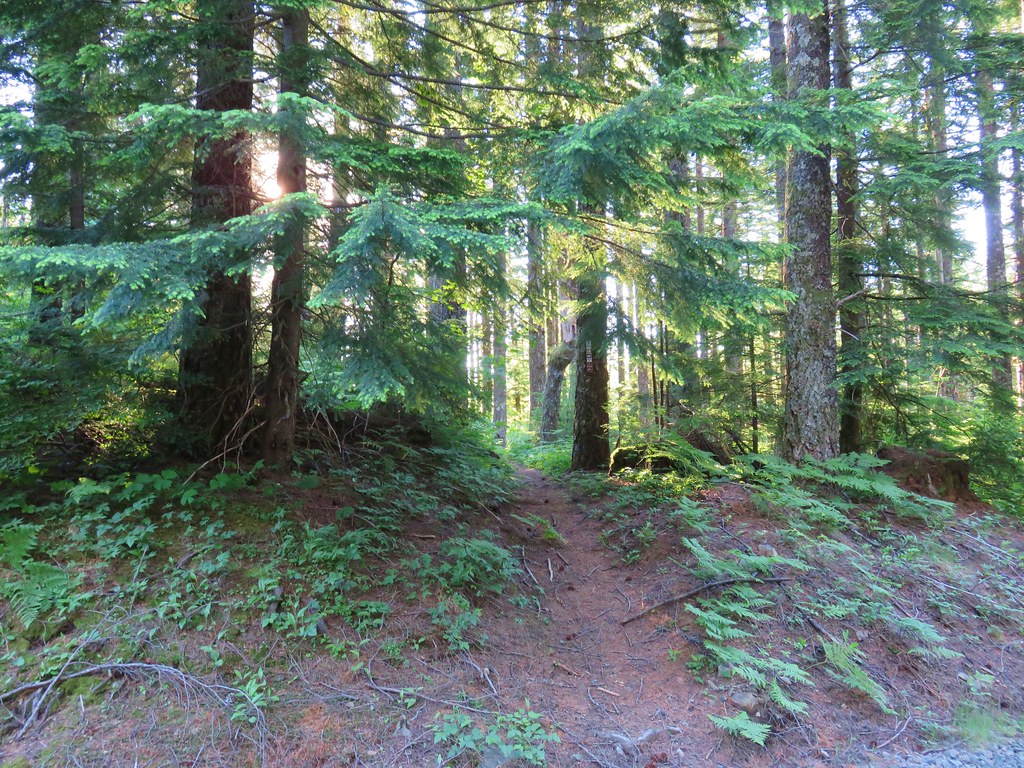
IMG_3299

We also hadn’t paid enough attention to the guidebook stating to go right on the PCT from the trailhead so off we went blissfully going the wrong way. From the Rock Creek Pass Trailhead it should have been 1.5 miles to the junction with the Three Corner Rock Trail which meant we had expected to reach it between 45 minutes to an hour into the hike. Instead about an hour into the hike we crossed CG-2000. That didn’t tip us off because based on where we thought we had started and the direction we thought we were heading our route would have included a crossing of CG-2090 which we mistook this crossing for.

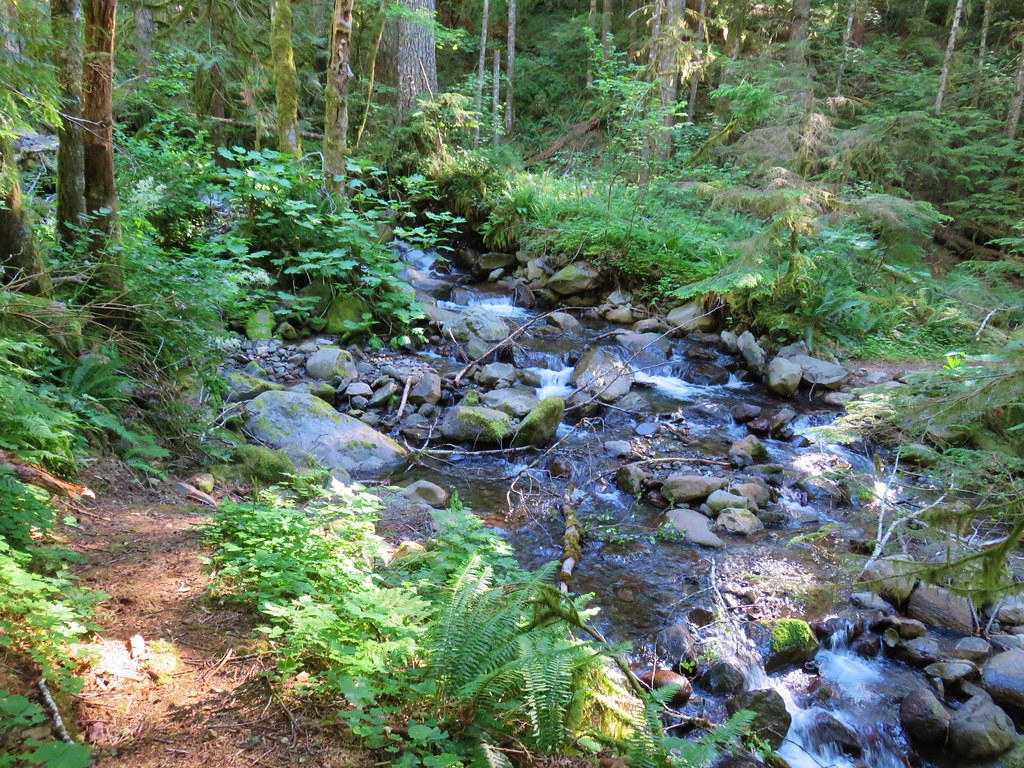
Heather had been questioning things for a while but it would have been impossible to be going north by following the PCT in the direction we had from where we thought we started, and we figured if we somehow failed to spot the Three Corner Rock Trail we’d just do it on the way back from Table Mountain instead. The forest along the trail was nice and we eventually came to a footbridge across what we soon realized was Rock Creek.

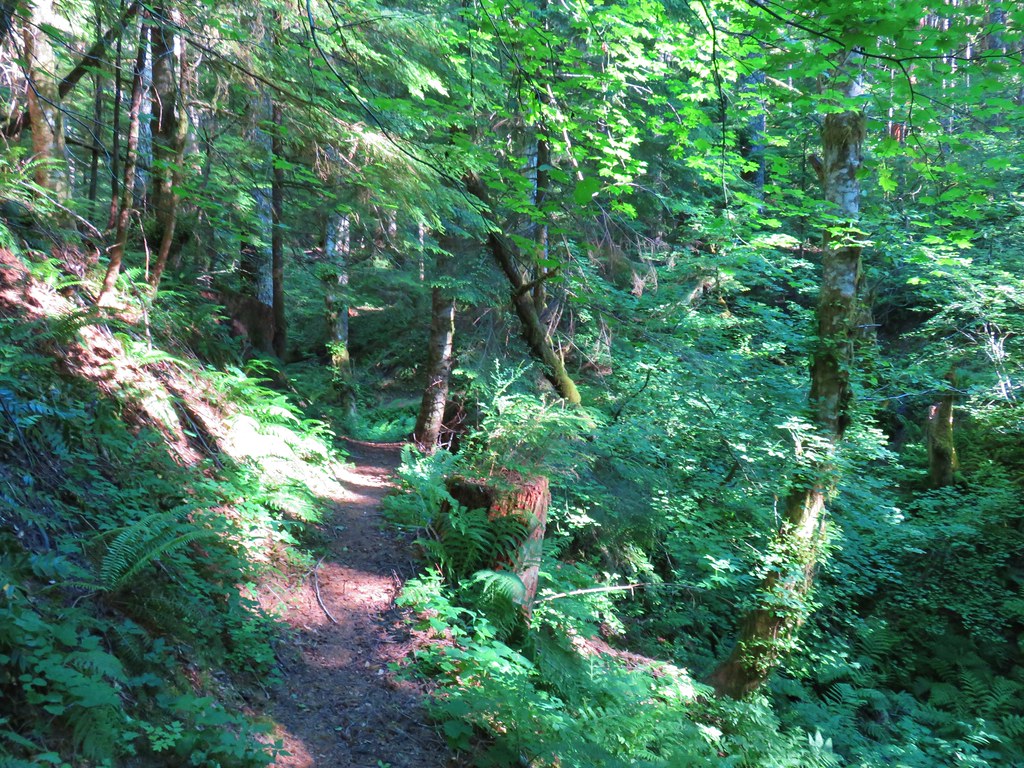
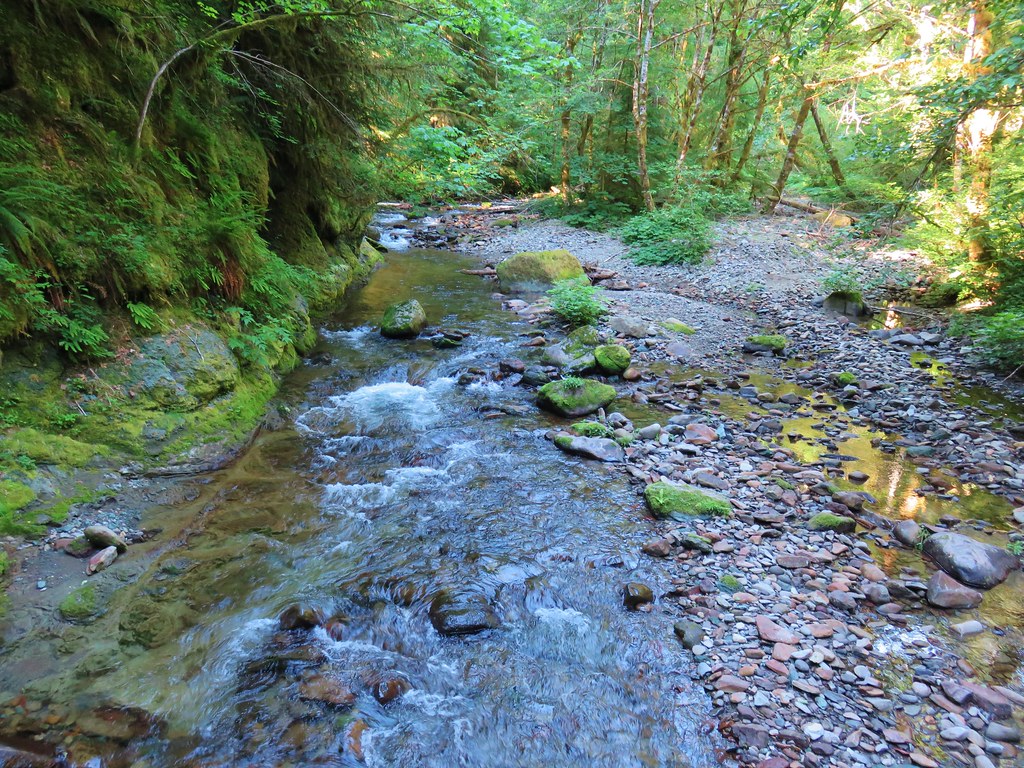
IMG_3331

IMG_3338

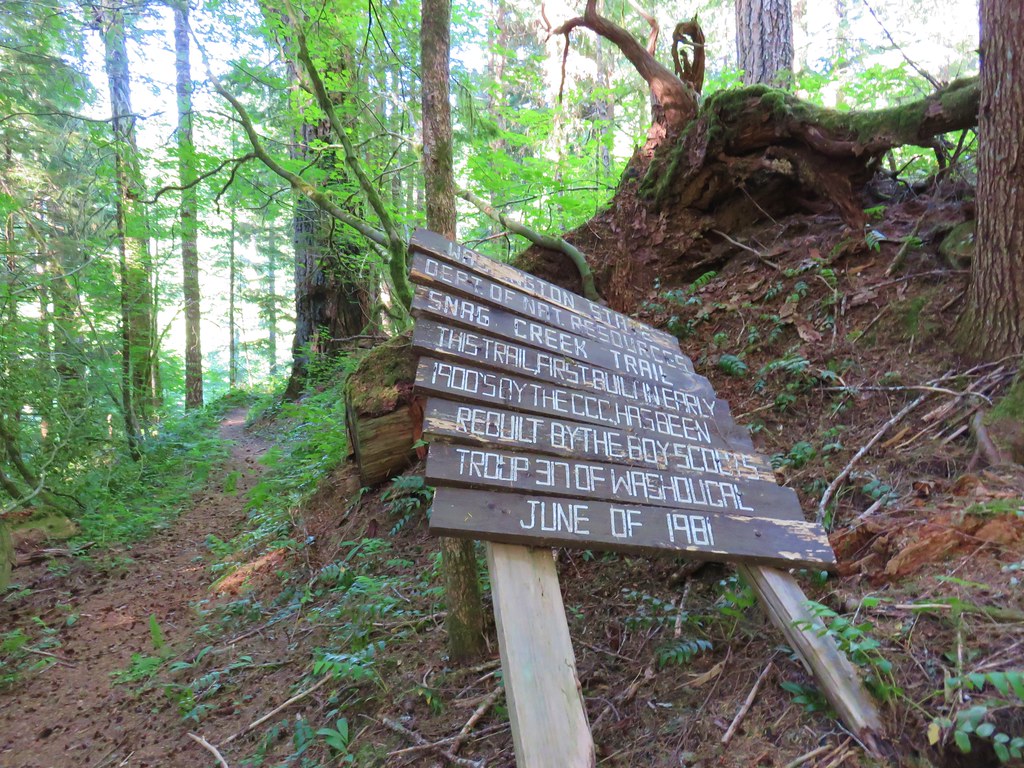
Soon after crossing Rock Creek we came to a junction with the Snag Creek Trail quickly followed by Snag Creek itself.

IMG_3341

IMG_3342

Neither of us remembered anything about having to ford a creek on our planned route but across we went. We were just over an hour and a half into the hike and now we were both having serious doubts about our direction. We pulled the map out again and this time I also zoomed out on the GPS far enough to see the Columbia River on the display which we had clearly been moving away from. It still took me a few minutes to realize what we’d done. I just kept thinking it was impossible to have gone left at the trailhead and be heading north until it finally sunk in that the trailhead wasn’t where I thought it was. Back we went having to retrace three plus miles and regain nearly 1000′ of elevation.

It was 10am when we made it back to the trailhead, nearly 3 hours after we’d set off in the wrong direction. This time we headed south.

IMG_3348

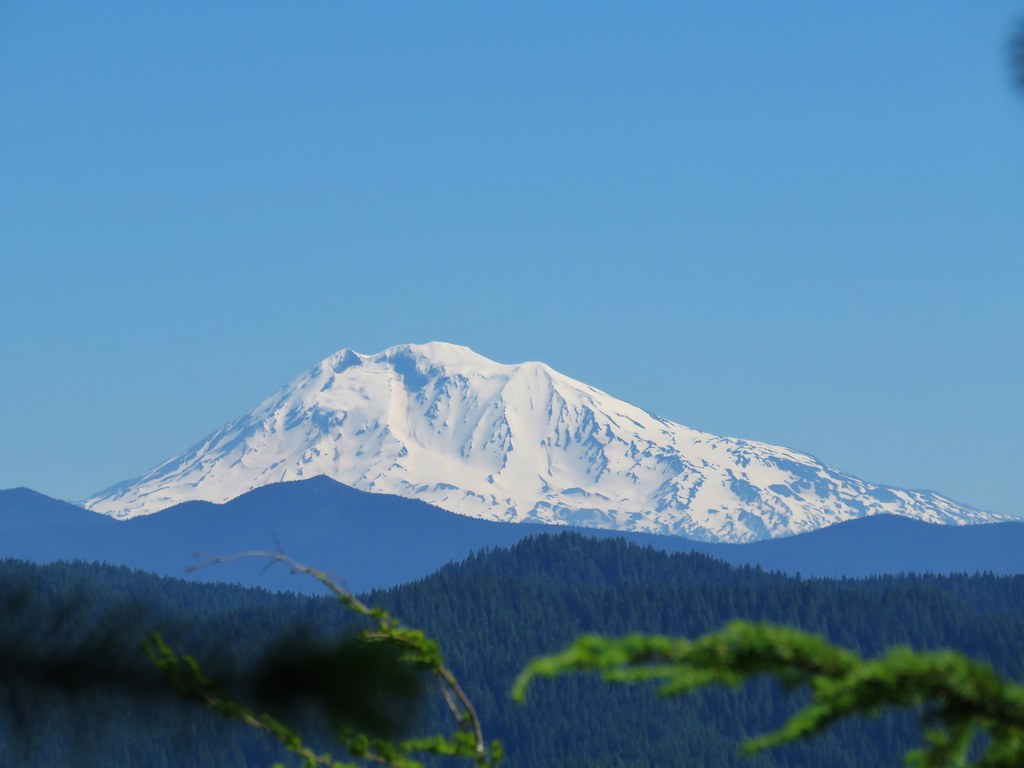
The funny thing was even though by that point I knew we’d gone the wrong way for at least the next hour I couldn’t shake the feeling that we were headed north. The PCT climbed away from Rock Creek Pass gaining views of Mt. Adams through the trees.

IMG_3354

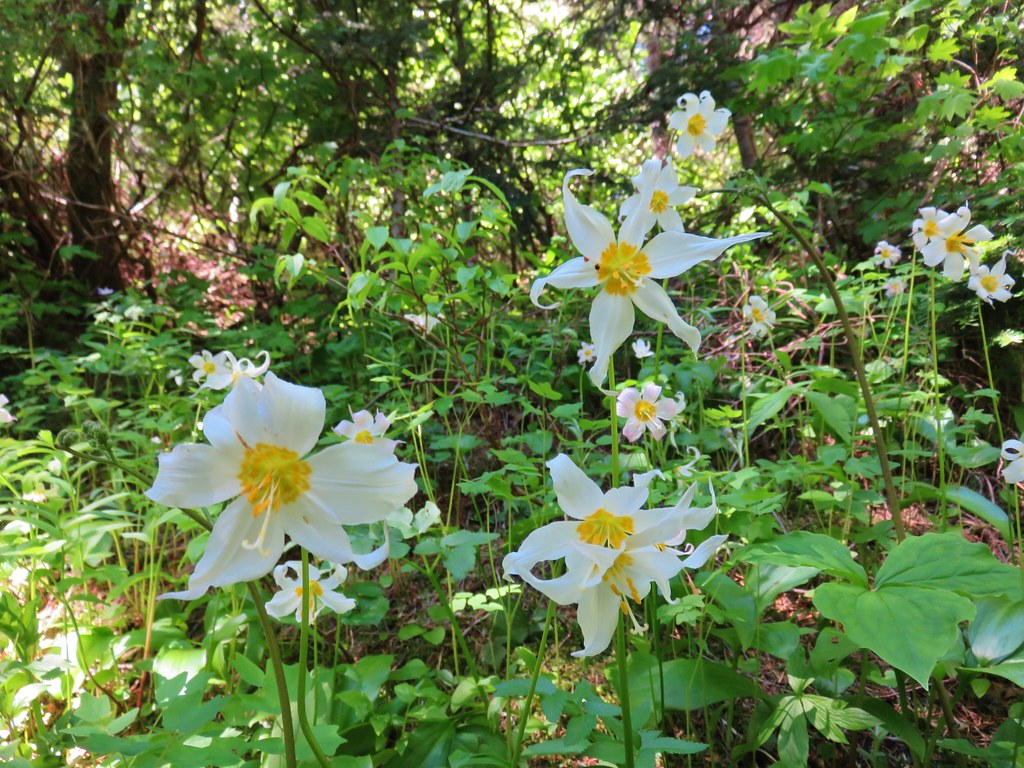
Near the junction with the Three Corner Rock Trail many avalanche lilies were still in bloom.

IMG_3364

IMG_3370

We turned right onto the Three Corner Rock Trail which popped out onto an old road bed after approximately .4 miles.

IMG_3374

We followed the road uphill just under a quarter mile to Three Corner Rock.

IMG_3380

IMG_3414

It was really windy on the open ridge and on Three Corner Rock which was once home to a lookout tower.

IMG_3406

It was a five volcano day with a bonus view of Goat Rocks thrown in.
IMG_3386Mt. Hood

IMG_3390Mt. Jefferson

IMG_3394Mt. St. Helens

IMG_3395Mt. Rainier

IMG_3399Mt. Adams

IMG_3398Goat Rocks
To the SE a small section of the Columbia River was visible between Wind and Dog Mountain in Washington and Mt. Defiance in Oregon.

IMG_3411

Despite the wind the views were great, but it did make it difficult to take pictures of the wildflowers in the area.

IMG_3381

IMG_3418

After a short break we headed back to the PCT where we decided to continue south toward Table Mountain. We told ourselves we’d play it by ear and could turn around at any time but we’re both stubborn and it was pretty much a foregone conclusion that we’d wind up making it all the way there.

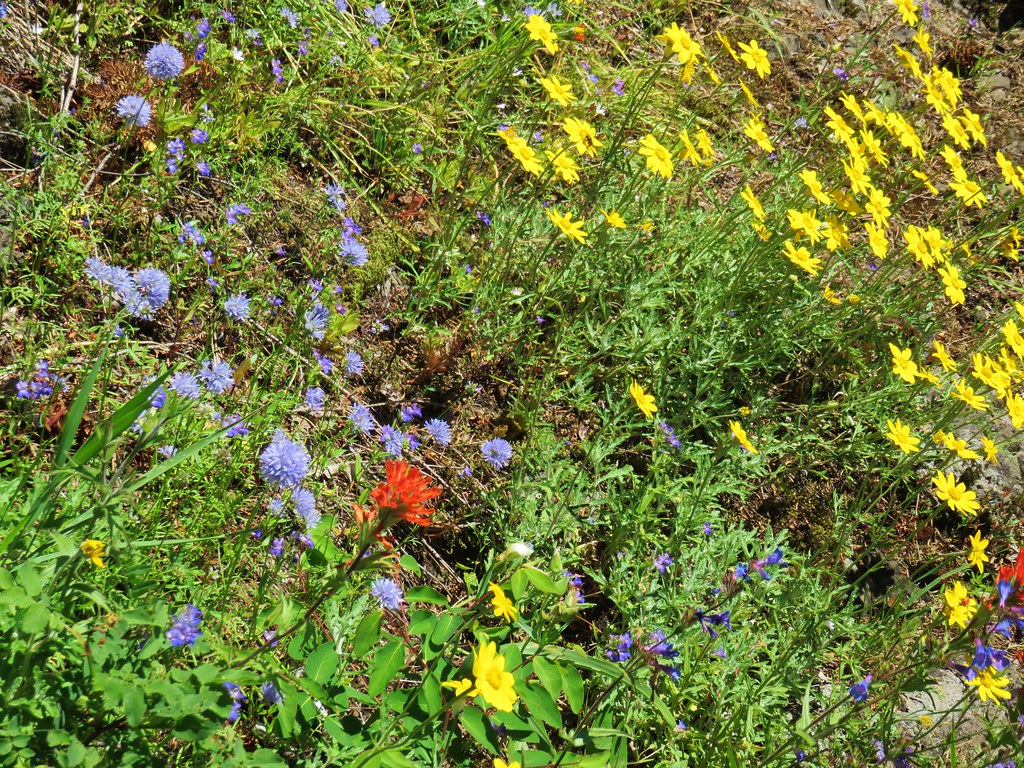
From the Three Corner Rock Trail junction the PCT gradually descended for 1.25 miles to a road crossing at a saddle with a spectacular display of paintbrush and penstemon. Along the way the trail crossed a rough 4wd track and passed along a ridge still showing evidence of the 1902 Yacolt Burn.

IMG_3424

IMG_3429

IMG_3432

IMG_3434

2017-06-24 11.57.12

From the road the PCT traversed along the east side of a ridge through the forest for a mile before arriving at a large clear cut.

IMG_3438

Three Corner Rock was visible behind us.

IMG_3439

The trail climbed through the clear cut for about a half mile before reentering the trees.

IMG_3440

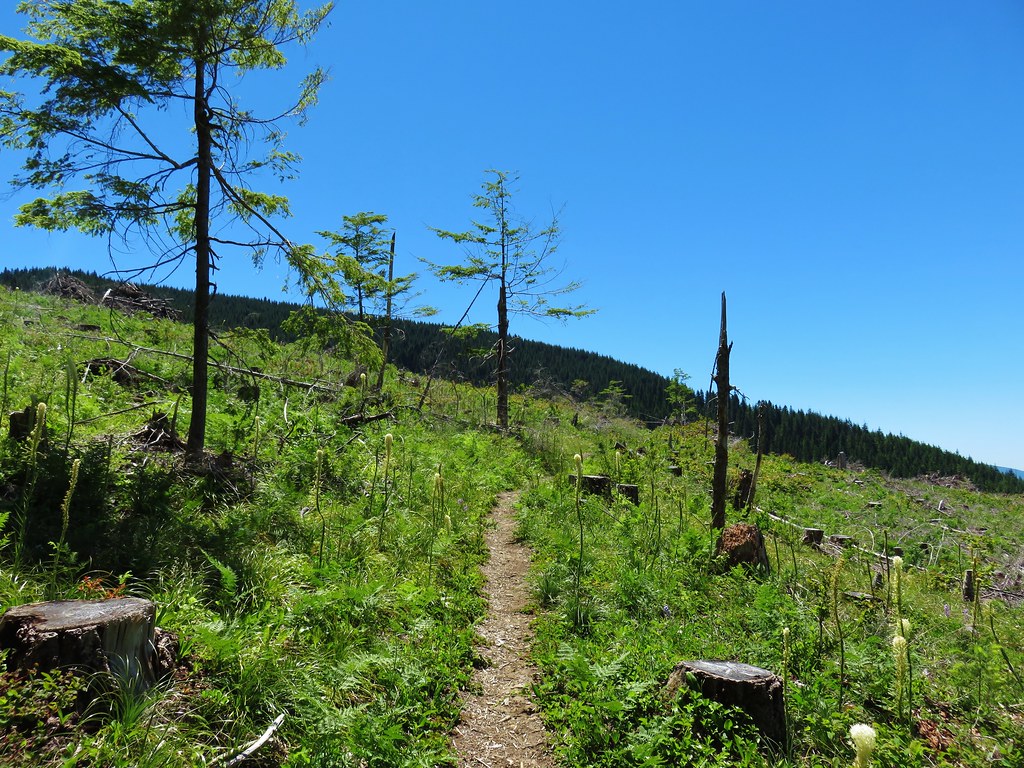
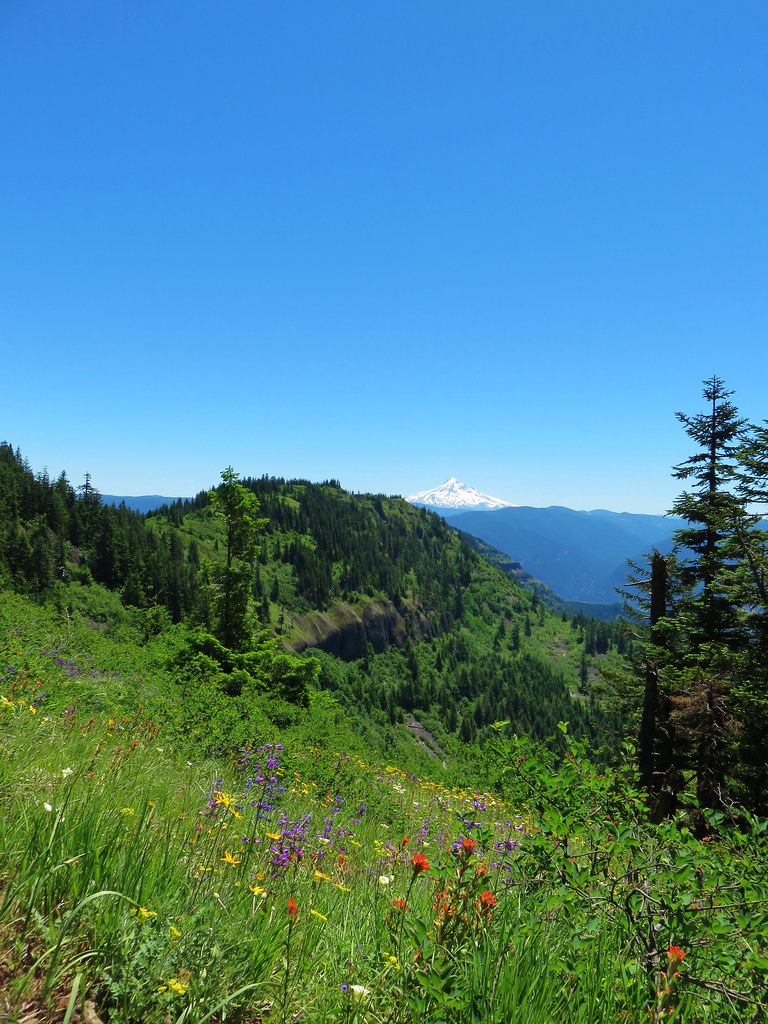
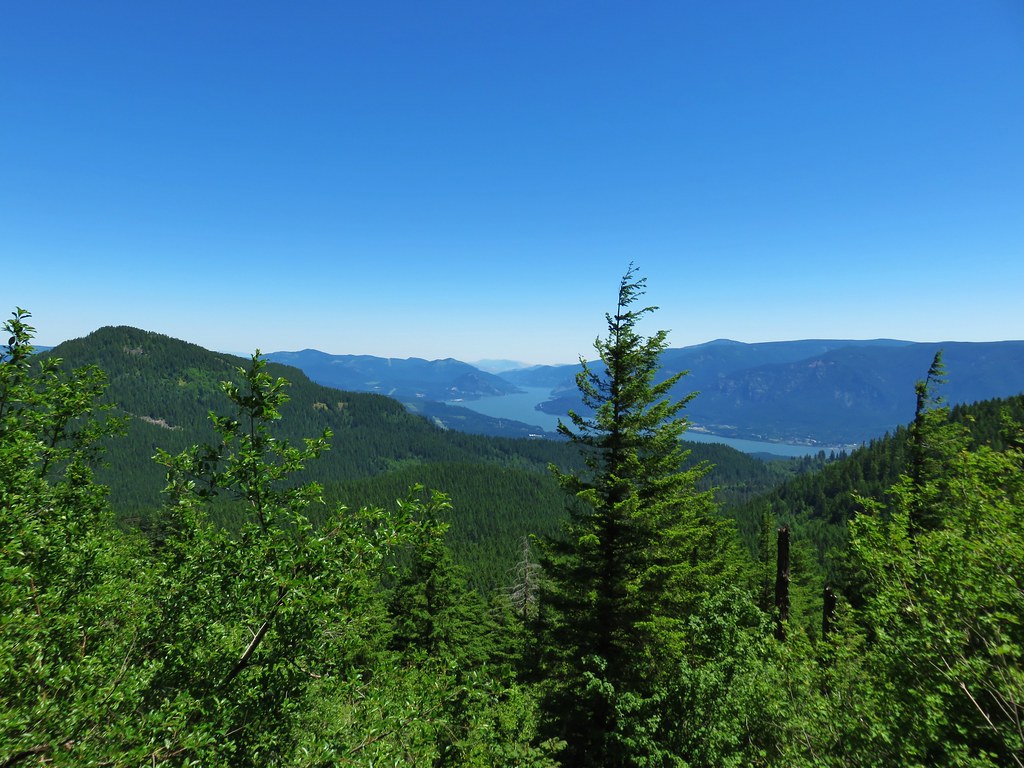
For the next 1.25 miles the PCT passed through a series of wildflower meadows, first on the west side of a ridge with views to the south of Table Mountain and Mt. Hood, then onto the east side of the ridge with a view of Mt. Adams and the Columbia River.

IMG_3453

IMG_3517

IMG_3536

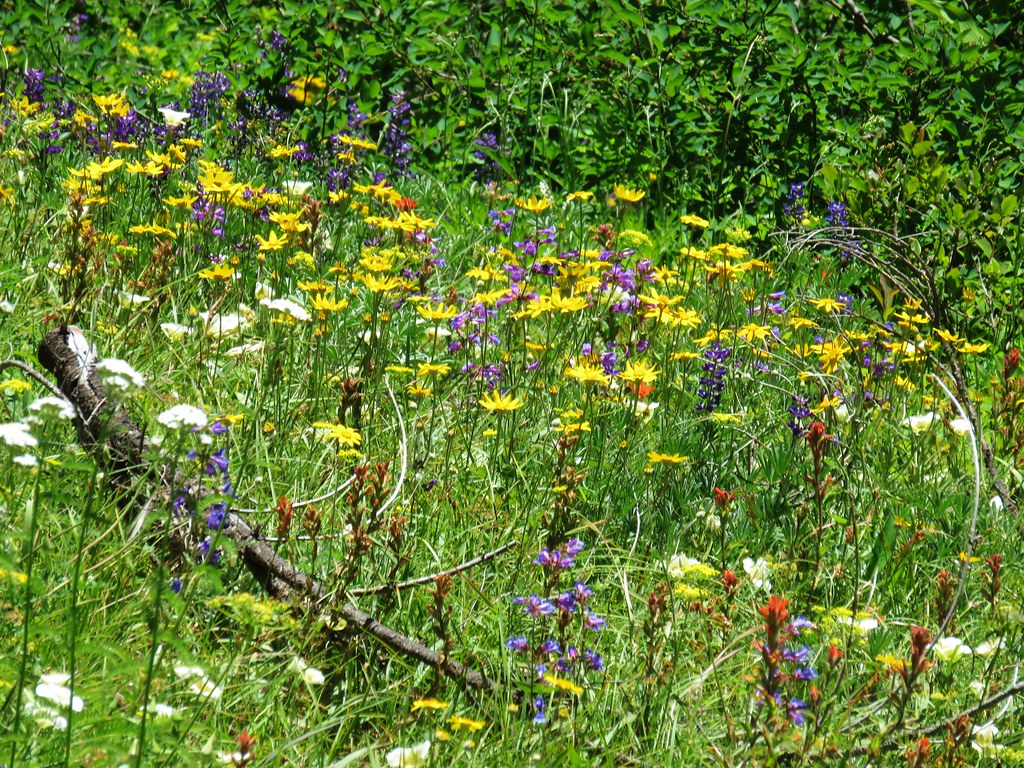
The views were nice but we spent most of our time focused on the many wildflowers along the trail.

IMG_3451

IMG_3457

IMG_3473

2017-06-24 12.44.26

IMG_3466

2017-06-24 12.47.35

IMG_3475

2017-06-24 12.51.18

2017-06-24 12.48.27

IMG_3490

IMG_3501

IMG_3504

IMG_3512

IMG_3527

IMG_3528

2017-06-24 13.42.25

2017-06-24 13.42.59

IMG_3550

The variety of colors of penstemon was particularly impressive.

IMG_3514

2017-06-24 12.42.58

2017-06-24 12.43.06

IMG_3455

We had hoped to hop off of the PCT at a sharp right turn just uphill from some power lines and hook up to a dirt road just on the other side of the lines at a saddle. As we came around the ridge end though we couldn’t see any obvious signs of a connector trail so we stuck to the PCT as it began to quickly lose elevation. After looking at the map and realizing that following the PCT all the way to the road would add almost two miles and another 500′ of elevation gain we went back to look again for a connection. After a brief off-trail excursion on a steep slope with thick brush, we bit the bullet and took the PCT down to the road.

IMG_3554

We had to walk back uphill on the road and it was warm. We had benefited from a nice breeze most of the day which helped keep the temperature bearable but there was none along the road. When we arrived at the saddle we spotted a sign near an overgrown roadbed pointing 1.4 miles to Table Mountain.

IMG_3556

We followed the old roadbed for about half a mile to its end where a faint, and at times very brushy, trail continued along the north ridge of Table Mountain.

IMG_3563

When the trail wasn’t overgrown it too was lined with wildflowers.

IMG_3560

IMG_3561

IMG_3569

IMG_3571

IMG_3570

Not only was the route a bit of a challenge to follow due to the brush but it was steep at times, especially on two rocky climbs, the last of which brought us to the plateau of Table Mountain.

IMG_3573

IMG_3580

Three Corner Rock was visible to the left of the ridges we’d followed to reach the plateau as were the power lines running over the saddle a mile away.

IMG_3618

We picked up the Table Mountain Trail on the plateau and followed it south to the viewpoint above the cliffs overlooking the Columbia River.

IMG_3588

IMG_3595

IMG_3600

IMG_3614

IMG_3612

IMG_3608

We sat in some shade near the cliffs and took off our shoes and socks to give our feet a bit of a break while we ate a snack. We had no idea how far we’d gone (it was almost 16 miles already) but we knew our feet were sore and we were both developing blisters. We were also getting low on water but thankfully Heather had brought our water filter and we’d passed what I thought would be a sufficient water source in the meadows between the saddle and the clear cut.
We started back at 3:15pm hurrying as quickly as our protesting feet would allow. We both ran out of water shortly before arriving at the seep where the water was just deep enough to use our filter to get some much needed wonderfully cold water. We arrived back at our car at 6:48, almost 11 hours and 45 minutes since we’d set off that morning.

It certainly hadn’t gone as planned but we’d at least come prepared with enough food and water to make it through the day. In addition to some great mountain views and wildflowers meadows we’d learned a valuable lesson about how important it is to make sure you know where your starting point is and to consider everything when determining where you’re at. Had we taken the position of the sun and the description of the hike as beginning uphill to the right of the TH we might have realized much more quickly that we’d misidentified the location of the trailhead on the map. Happy Trails!

Flickr: Three Corner Rock to Table Mountain

Categories
Central Coast Hiking Oregon Oregon Coast Trip report

Baker Beach and Rock Creek Wilderness

Since 2013 our first hike of the year has been somewhere along the Oregon Coast.  Often the weather at the coast during January is nicer than other parts of the State making it a great time to visit.  This was certainly the case this year as the first part of January saw near record snows and freezing temperatures over much of the State.  The coast had not escaped the weather entirely but by the time we headed out for our first hike of the year, things were much nicer there than at home in the Willamette Valley.

Our destination was Baker Beach Camp just north of Florence, OR. This was a change (already) to our plans for 2017 but the forecast for the area was just too good to pass up. Mostly sunny skies and a high of 48 degrees was what was being called for so we left 23 degree Salem early in the morning and headed down to Eugene then west to Florence on Highway 126.

Baker Beach Camp is located at the end of Baker Beach Road, 7 miles north of Florence along Highway 101.  The only signage along the highway was a small green street sign which I noticed just as we passed by it. After quickly turning around we turned onto the gravel road and followed it .5 miles to the camps parking area.

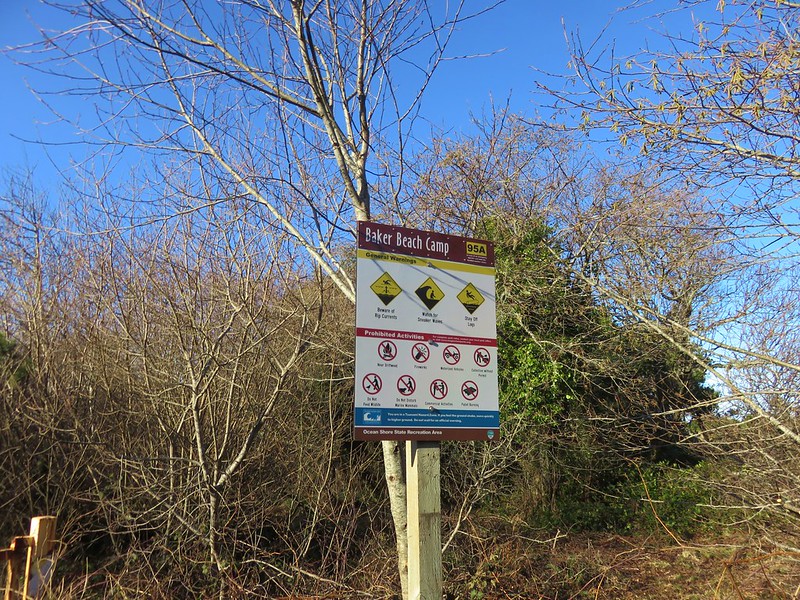
Baker Beach Camp

Baker Beach Camp sign

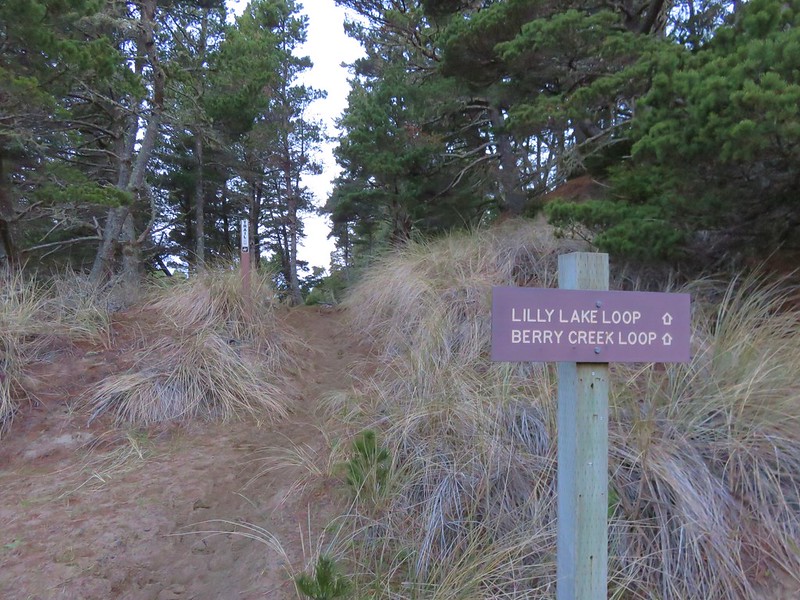
To start our hike we walked a short distance back along the road and turned left at a trail sign for the Lily Lake Loop.

Start of the Lily Lake Loop

A short sandy climb brought us to a trail junction at the top of a sandy ridge.

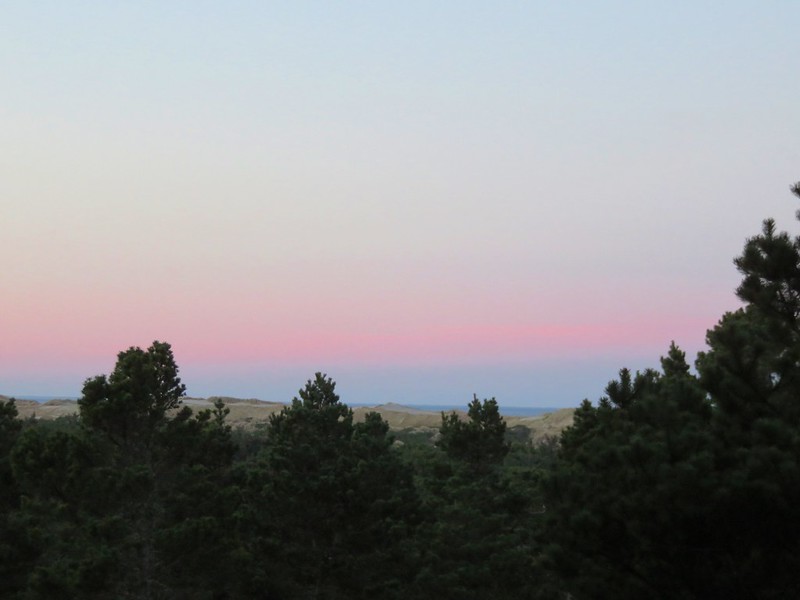
Pacific Ocean from the Lily Lake Loop Trail in the morning

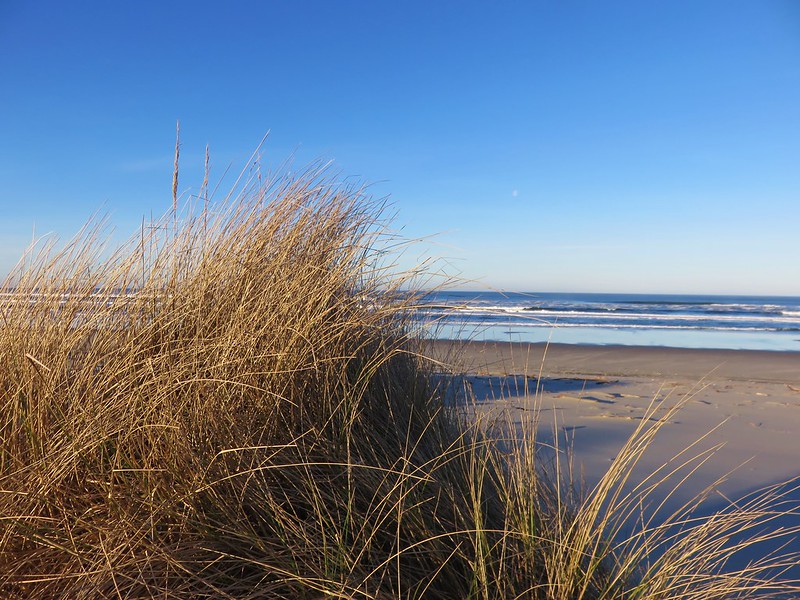
The Pacific Ocean was visible beyond Baker Beach and the sand dunes.

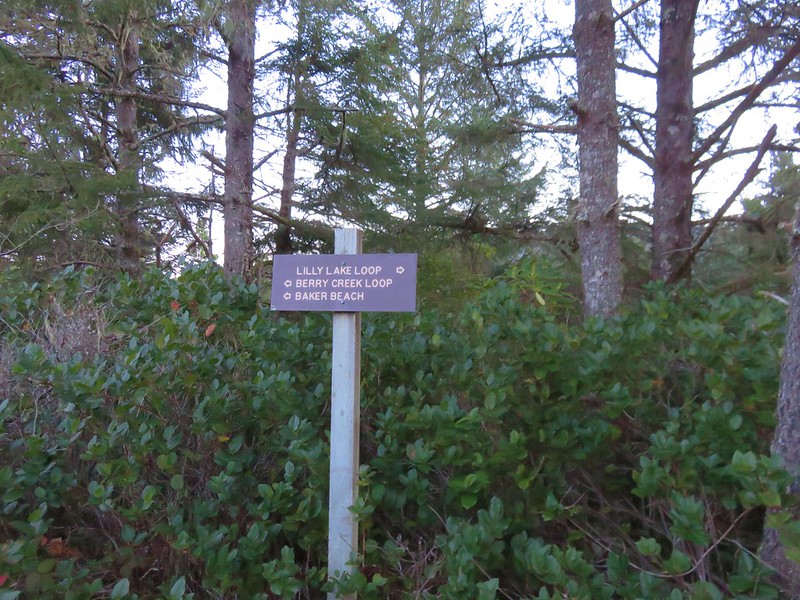
Trail signs along the Lily Lake Loop

The Berry Creek Loop would have kept us up on the sandy ridge while the Lily Lake Loop dropped down and passed near Lily Lake before climbing back up to the ridge top and rejoining the Berry Creek Loop Trail. We wanted to see the lake so we followed the Lily Lake pointer passing through a salal filled forest before things opened up along the lake.

Lily Lake Loop Trail

Trail along Lily Lake

We stayed on the paths closest to the lake thinking that one would bring us right to it but instead the lake remained mostly hidden behind first a row of trees then by a reed filled marsh near it’s outlet.

Lily Lake

We could see that there was quite a bit of activity on the lake with several types of ducks and some Canada geese floating on the water, but it was hard to get any clear photos with the vegetation in the way.

Canada geese on Lily Lake

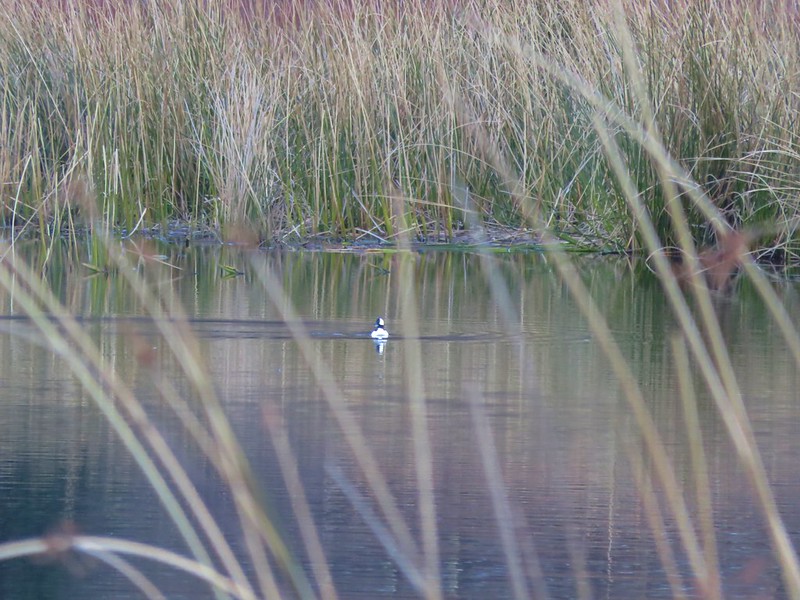
Bufflehead

Bufflehead on Lily Lake

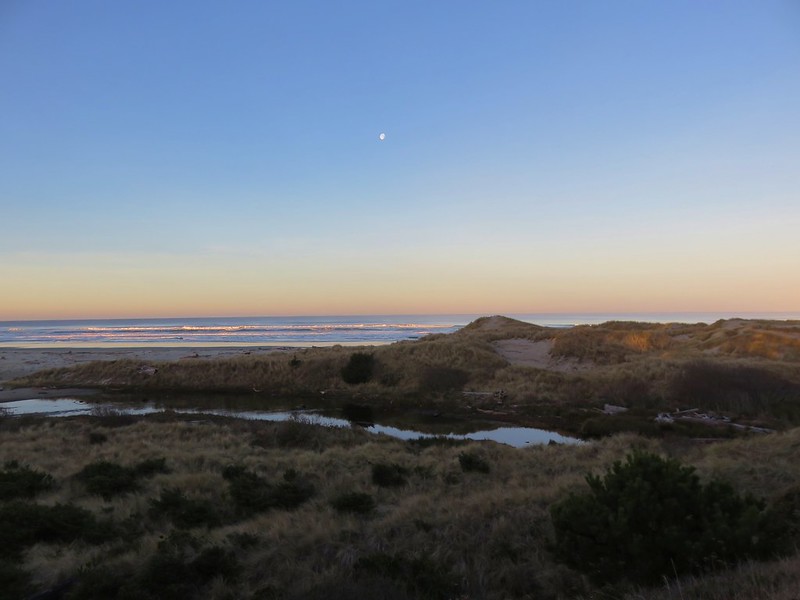
From the lake we climbed back up to the top of the Sandy Ridge which overlooked a small pond and Berry Creek flowing out toward the Pacific.

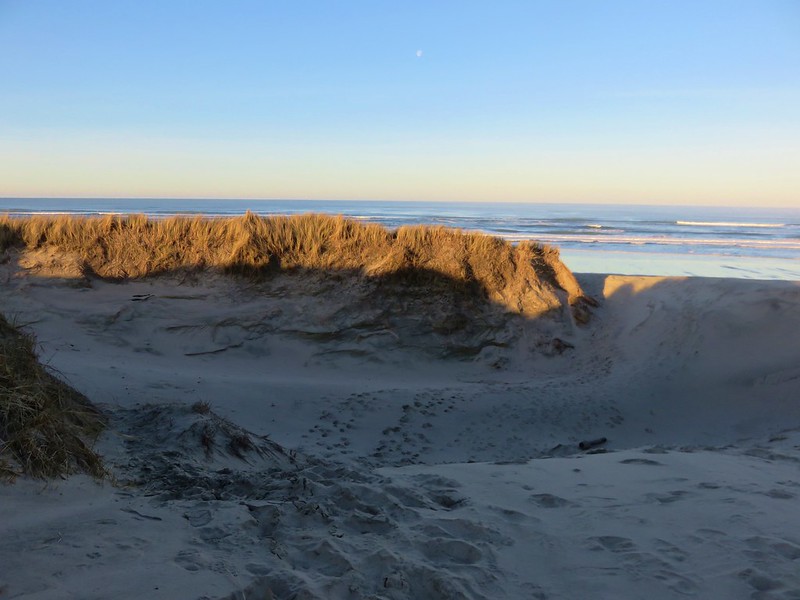
Moon over the Pacific Ocean

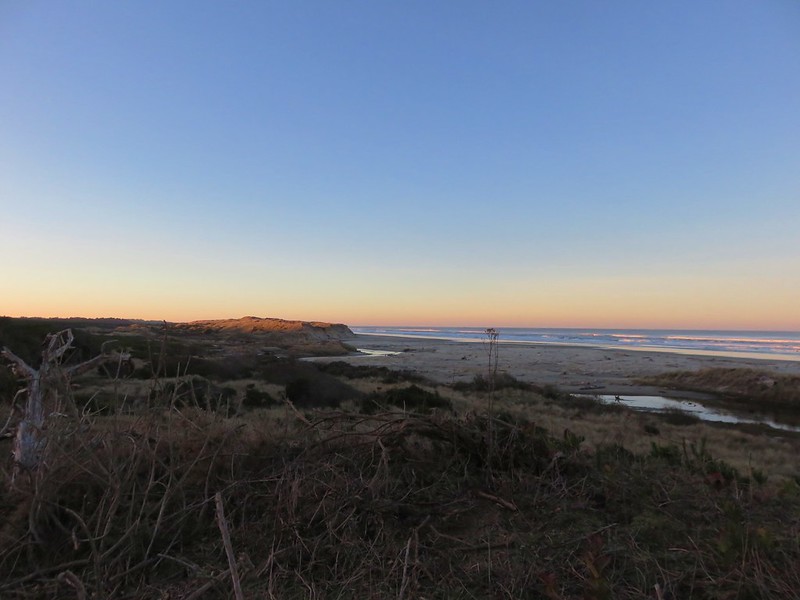
Berry Creek flowing toward the Pacific

There was no sign here and we could have followed the sandy ridge back to the junction we’d been at earlier, but instead we followed a path down to the base of the ridge which led us back to the start of the Baker Beach Trail at Baker Beach Camp. This little loop was just under 1.5 miles.

Baker Beach Trail

Here we turned right following the pointer for Baker Beach. (The Lily Lake/Berry Creek Loop continued from this junction creating an additional 1.7 mile loop to the north of the camp.)

The trail passes through a deflation plain behind the beaches foredune for .4 miles.

Foredune at Baker Beach

Looking north along the Baker Beach Trail

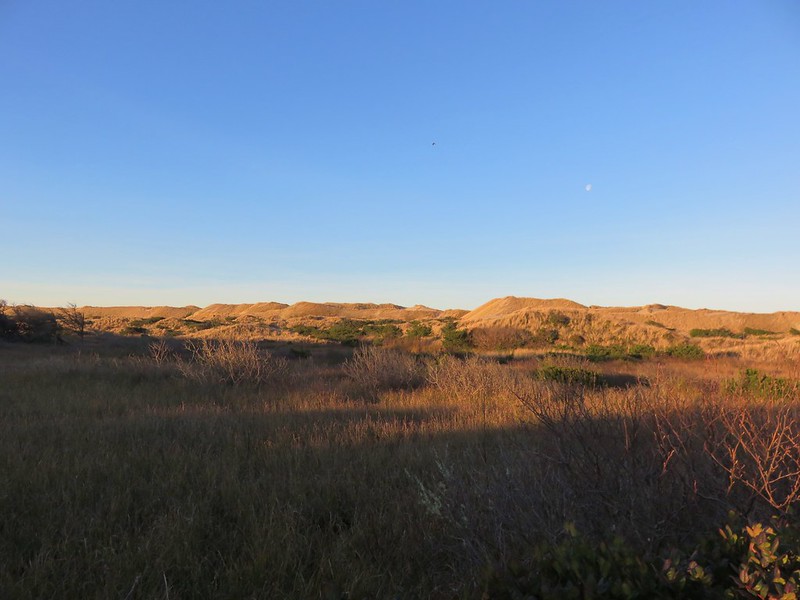
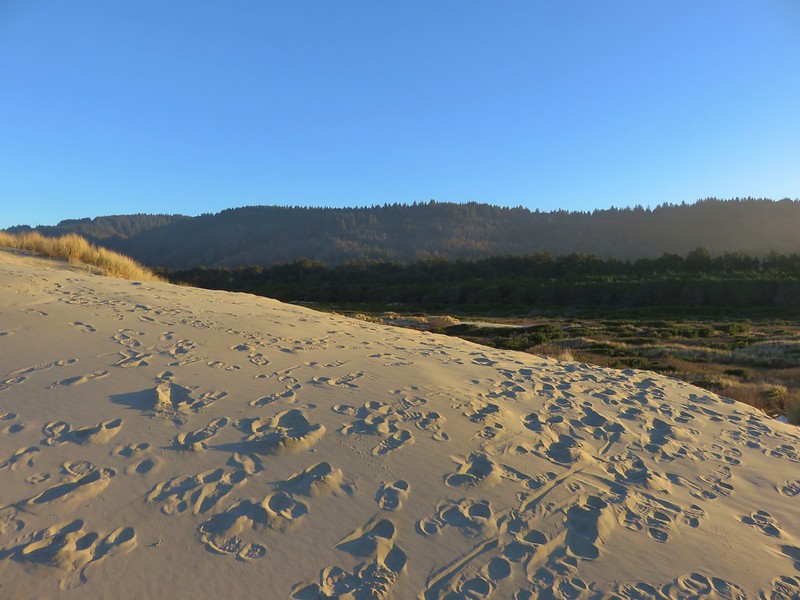
The deflation plain is the result of the dunes no longer expanding due to the loss of additional sand being blown from the beach. European bunchgrass which was introduced in the early 1900’s to help stabilize jetties but spread along the beaches and began stopping the blowing sand from leaving the beach which created the foredunes denying the dunes further inland any additional sand.

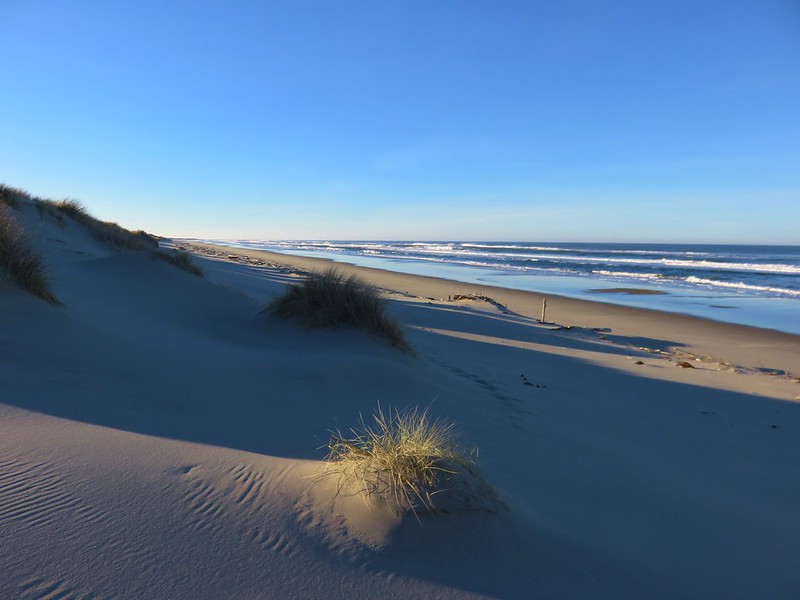
Baker Beach

Pacific Ocean from the foredune at Baker Beach

Cape Mountain from the foredune at Baker Beach

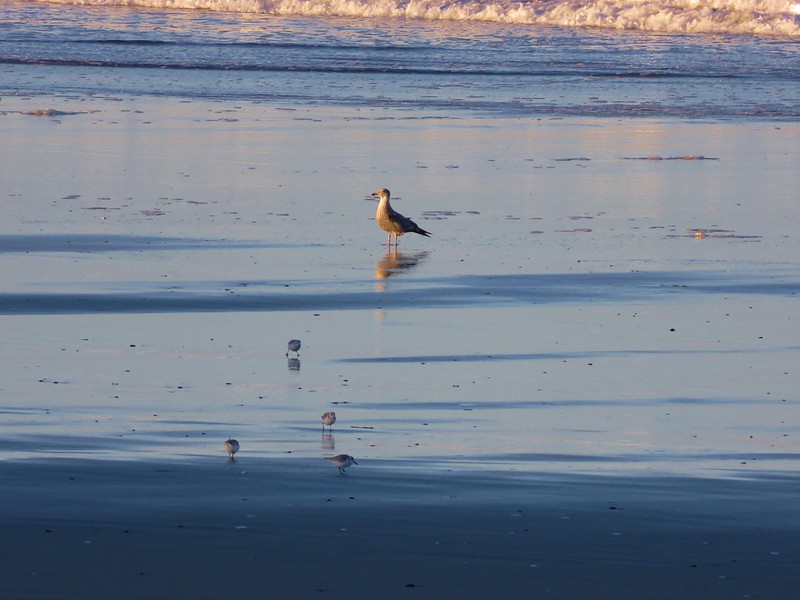
When we reached the beach we turned south heading toward Sutton Creek which was 3 miles away. Aside from a few birds we had the beach to ourselves.

Sanderlings on Baker Beach

Seagull and sanderlings

After about 3/4 of a mile along the beach we climbed back up the foredune to get a look at Sutton Creek which we had visited the previous February.

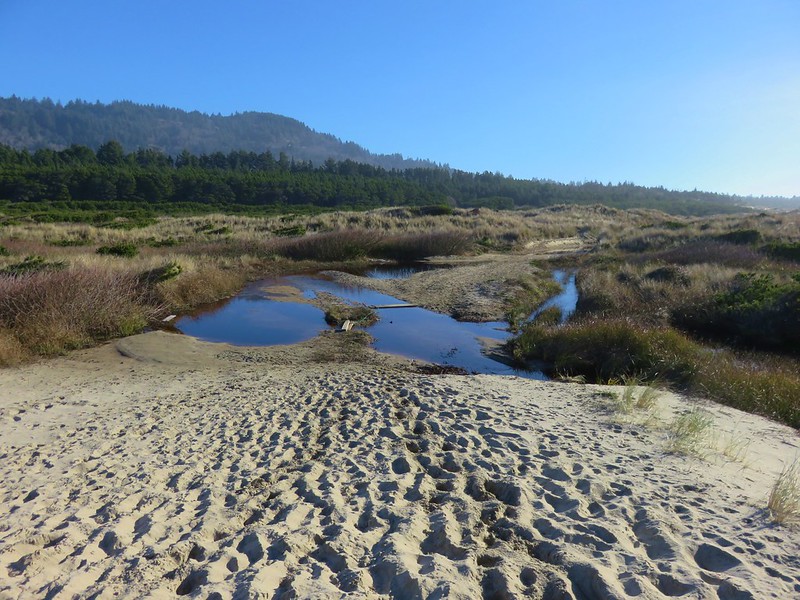
Sutton Creek behind the foredune

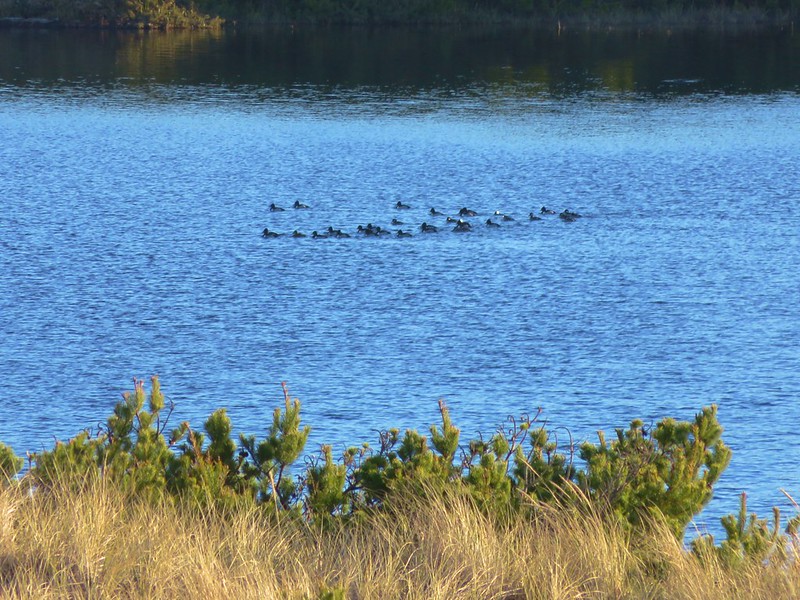
Ducks on Sutton Creek

We traveled along the foredune for a bit before dropping back down to the beach.

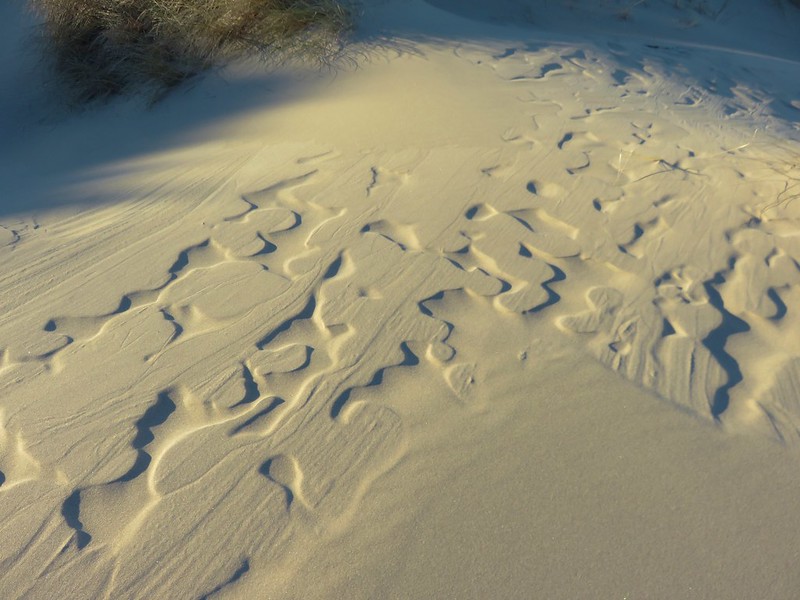
Patterns in the sand
Baker Beach

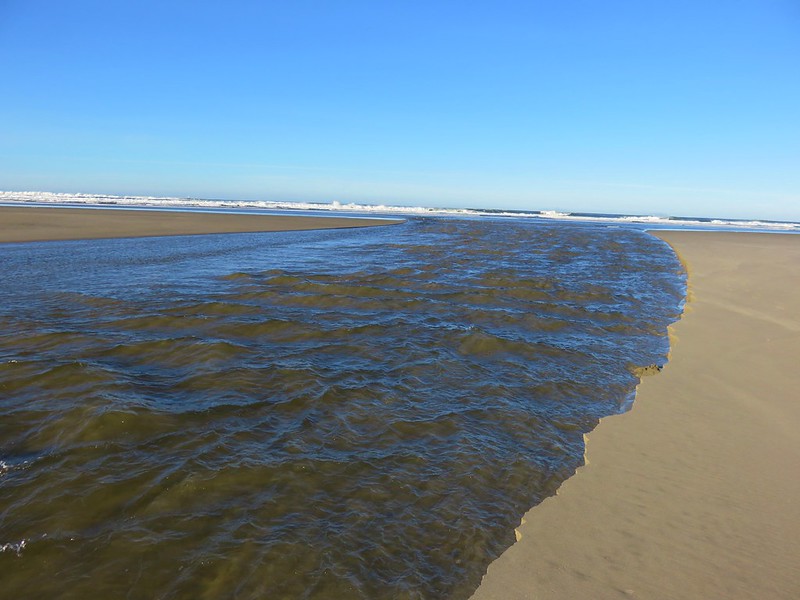
We had been considering crossing Sutton Creek and continuing south along Heceta Beach another 2.5 miles to the Siuslaw River but the creek was wide and it wasn’t that warm out.

Sutton Creek

Sutton Creek

After watching several large chunks of sand fall into the creek we headed back with the Heceta Head Lighthouse blinking in the distance to the north.

Heceta Head Lighthouse from Baker Beach

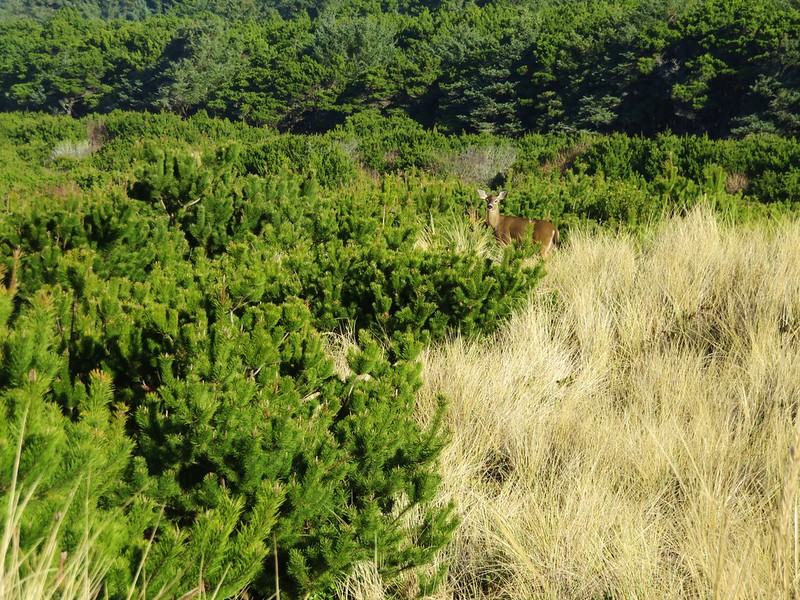
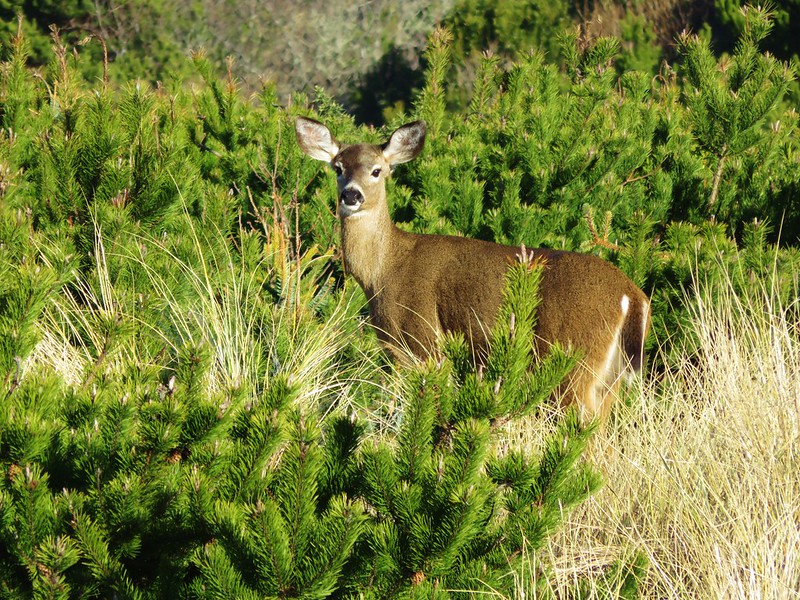
As we were recrossing the deflation plain we spotted a doe amid the grass and pines.

Heading back toward Baker Beach Camp

Doe

Doe

Since we’d cut our hike short (8.2 miles instead of the 13.2 planned) we had time to do another. We could have hiked Heceta Beach like we had planned by driving back to Florence and parking at the end of South Jetty Road, but we had noticed that that beach was already busy when we were at Sutton Creek earlier. We preferred something a little less crowded which led us to the Rock Creek Wilderness.

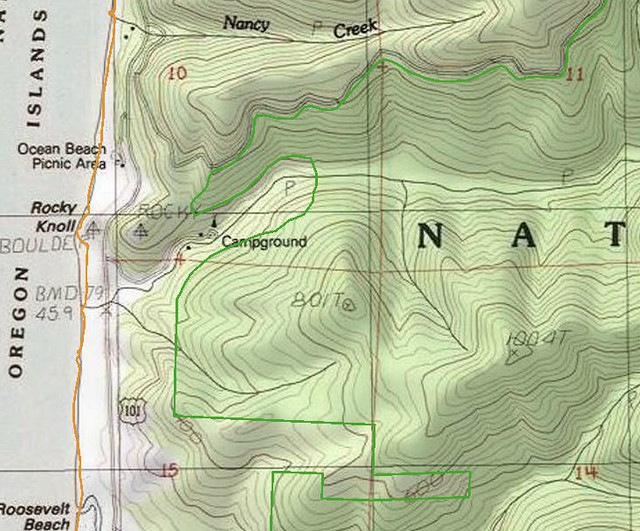
This was one of the wilderness areas that we had yet to visit and it was just another 8 miles north on Highway 101 from Baker Beach Road. We hopped in our car and drove to the gated entrance to the Rock Creek Campground.

Rock Creek Campground sign along Highway 101

The campground was closed for the season so we had to walk along the paved entrance road for approximately .4 miles.

Road to Rock Creek Campground

There had been one other vehicle parked at the gate and we passed it’s owner on his way back up from the campground area. The little campground was located right along Rock Creek.

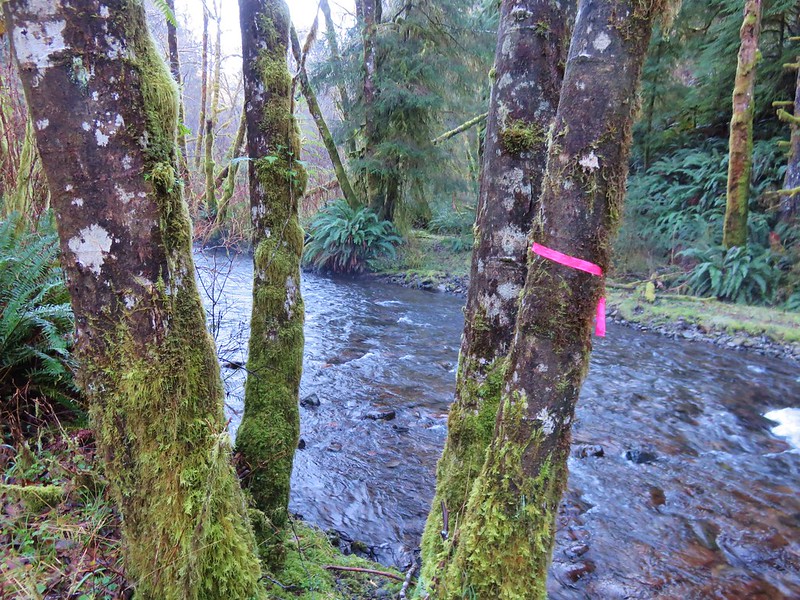
Rock Creek

Rock Creek

The 7,486 Rock Creek Wilderness was designated as such in 1984 and has no Forest Service developed or maintained trials. That being said there is a use trail leading from the end of the Rock Creek Campground that can be followed into the wilderness.

Use trail leading from the Campground into the Rock Creek Wilderness

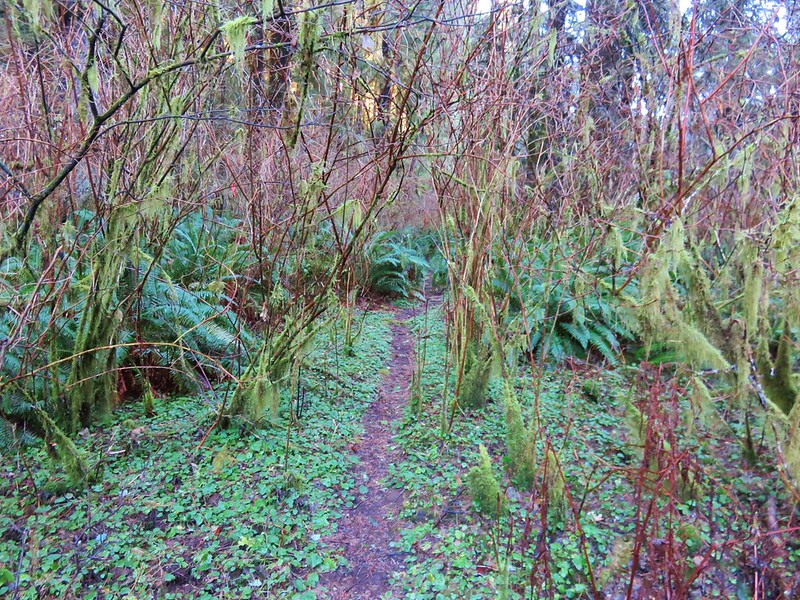
The path was brushy and narrow but passable as it followed along the creek.

Use trail in the Rock Creek Wilderness

Rock Creek Wilderness

Rock Creek

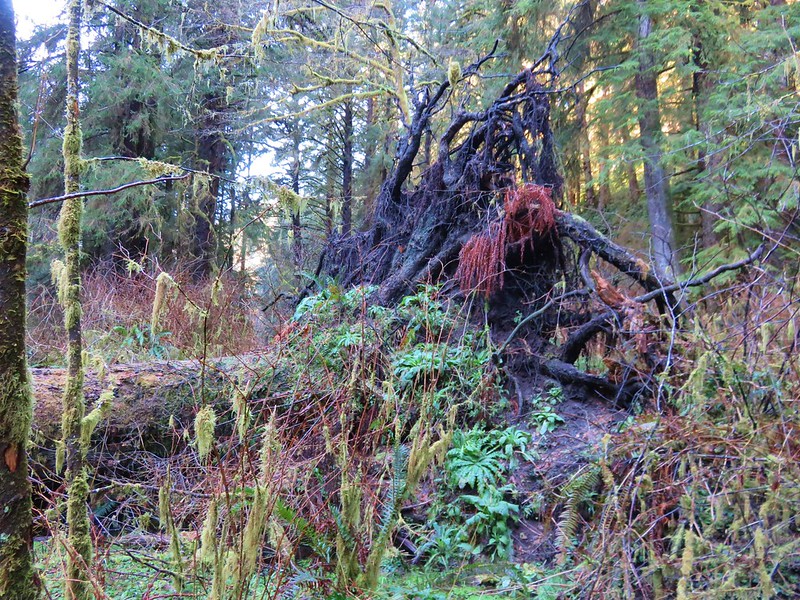
Occasional flagging was present but really unnecessary as the brush was so thick that we had to follow the path in order to keep moving forward. The only real obstacle to speak of was a large downed tree that had fallen over the best path, but game trails led around the root ball.

BIg tree down in the Rock Creek Wilderness

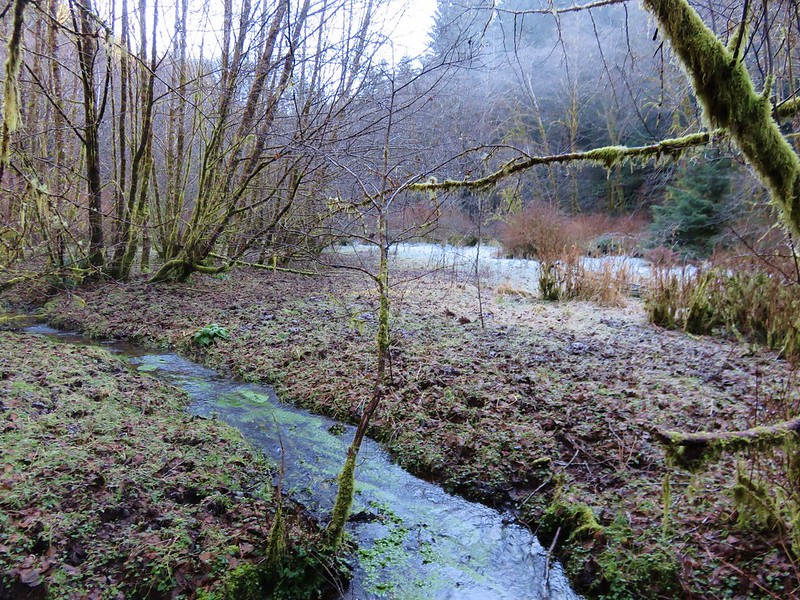
Without an official trail there were no signs to mark the beginning of the wilderness area so we just followed the path as long as we could. After awhile the path led into a frosty meadow where the canyon widened.

Frosty meadow in the Rock Creek Wilderness

It was a muddy in spots but enough of the ground was still frozen to make it passable. Elk and deer sign were everywhere. It was a beautiful spot with the white frost contrasted against the green of a coastal forest while rays of sunlight attempted to penetrate the canopy.

Frosty meadow in the Rock Creek Wilderness

Sunlight through the trees in the Rock Creek Wilderness

The sound of water flowing on every side only added to the ambiance. There was more flagging at the far end of the meadow and some on the far side of Rock Creek but again this wasn’t a day for fording creeks so we declared victory here and turned around.

Our turn around point (too cold to ford the creek today)

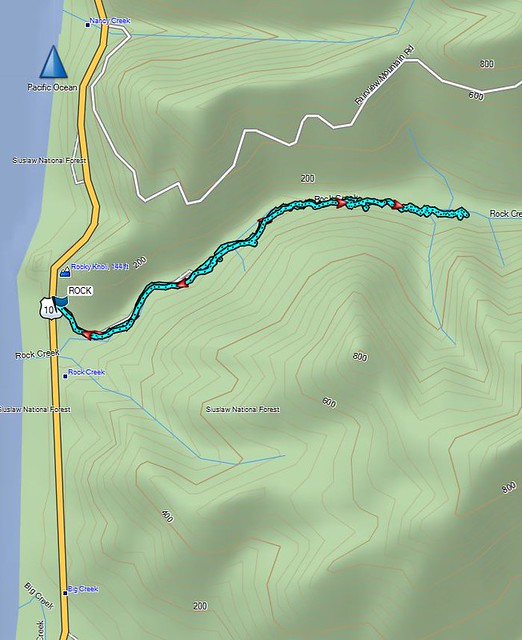
When we got home I wanted to make sure we’d actually made it into the wilderness so I pulled up the interactive map on Wilderness.net. The actual wilderness boundary bows away from the Rock Creek Campground making it further up along the creek than I had thought, but comparing our GPS track to that map showed we had managed to get about .4 miles into the Rock Creek Wilderness.

The Wilderness.net map

Rock Creek Wilderness

Our GPS track

Rock Creek Wilderness Track

On a warmer day when you don’t mind spending some time in the creek it’s possible to get further into the wilderness as this trip report indicates.a href=”http://www.cascadiahiking.com/2012/08/rock-creek-wilderness-no-trail-no.html” target=”_blank”>Cascadia Hiking

Our adventure was only 2.2 miles round trip including the road walk to and from the campground but the solitude and remote feeling of the Rock Creek Wilderness made it seem much more removed from civilization.

With that our 2017 hiking year is officially under way. We checked off our 27th Oregon Wilderness Area and still have 18 to go, 4 more of which are planned this year. Happy Trails!

Flickr: https://www.flickr.com/photos/9319235@N02/albums/72157679106715756