Categories
Central Coast Hiking Oregon Oregon Coast Trip report

Cape Lookout State Park – 01/24/2026

While a winter storm was impacting much of the country the Oregon Coast was experiencing clear skies and high in the low 50’s, which was too good to pass up so I headed out for another solo hike. I decided to head out to Cape Lookout State Park to check out the recently reopened North Trail along with the Cape and South Trails. Heather and I had visited the park way back in November 2011 but had not hiked the North Trail that day (post).

A section of the North Trail was closed in December 2024 after a tree fell and damaged the suspension bridge over Cape Creek and as of this post both the Oregon Hikers Field Guide and AllTrails still show the trail as closed, but when I checked the park’s website there was no longer a closure notice for the trail. (There is a notice that the park will be closed starting April 1st for improvements which will likely last into the Summer.) With no closure notice listed on the website I was pretty confident that the trail had been reopened. Worst case scenario would be that there would be notices posted at the trailhead in which case I would still be able to hike the Cape and South Trails allowing me to still get plenty of hiking in.

I made the hour and a half drive from Salem to the Cape Lookout Trailhead which is open from either 7am to 9pm or Dawn to Dusk depending on who you ask. Regardless with first light not being until 7:12am and sunrise at 7:44am I had timed my departure to arrive in between and was ready to set off just before 7:30am.IMG_4079

The trailhead signboard says Dawn to Dusk.

Unsurprisingly I was the first car in the lot and after double checking for any closure notices for the North Trail I started off on the Cape Trail.IMG_4081

My plan was to hike the Cape Trail out to the end of Cape Lookout first to avoid the crowds that would surely be arriving later. After hiking the Cape Trail I would take the North Trail to the Cape Lookout Day Use Area where Heather and I had parked for our Netarts Spit hike in 2020 (post). Assuming I had anything left in the tank after returning from the North Trail I planned on hiking the South Trail down to the beach for the up-close view of the basalt cliffs of Cape Lookout’s southern side. It’s 2.4 up and down miles to the end of Cape Lookout with occasional views to both the north and south.IMG_4085

In between views the trail passes through a coastal forest.

IMG_4089

Looking SE toward Sand Lake.

IMG_4093

IMG_4094

Looking south to Haystack Rock and Cape Kiwanda (post) with Cascade Head further south (post).

IMG_4099

Haystack Rock with the tip of Cape Kiwanda to its left. Cascade Head is next and the headland furthest south is Cape Foulweather.

A little over a mile and half in the trail passes a memorial plaque for an Army Air Force plane that crashed nearby claiming the lives of nine members of the ten man crew.IMG_4100

The trail is almost always muddy in spots and downed trees sometimes require less than ideal reroutes of the trail.IMG_4103

IMG_4108

Coming up to the first view to the north.

IMG_4109

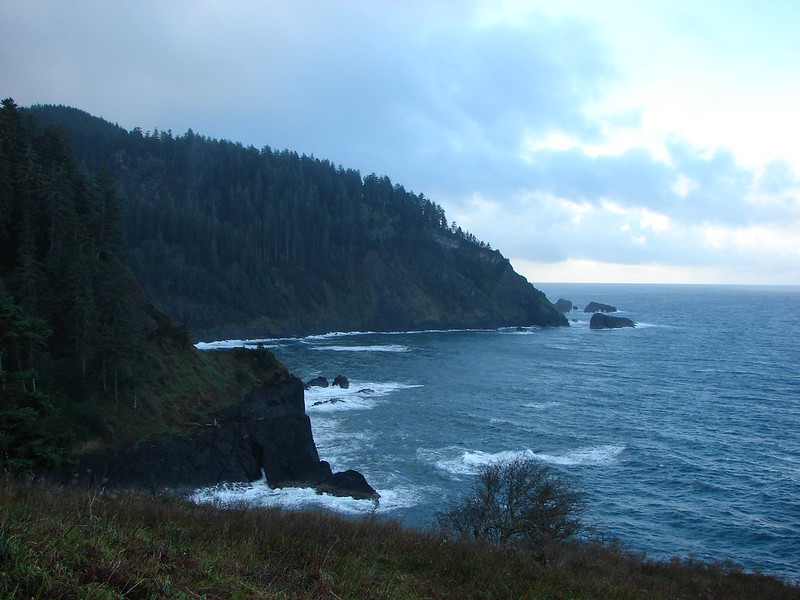
View north along the coast.

IMG_4110

Three Arch Rock across from Oceanside (post) followed by Cape Meares (post), and then Cape Falcon (post). The inland peaks starting with the rounded one of the left are Neahkahnie Mountain (post), Angora Peak, Rock Mountain, West Onion Peak and Onion Peak.

IMG_4116

Wells Cove

IMG_4119

It was close to freezing so the trails weren’t as muddy as they can be on warmer days. The good news was there was no ice to deal with.

IMG_4129

Here comes the sun.

IMG_4130

IMG_4134

Along this section I heard a blowing sound in the ocean below.

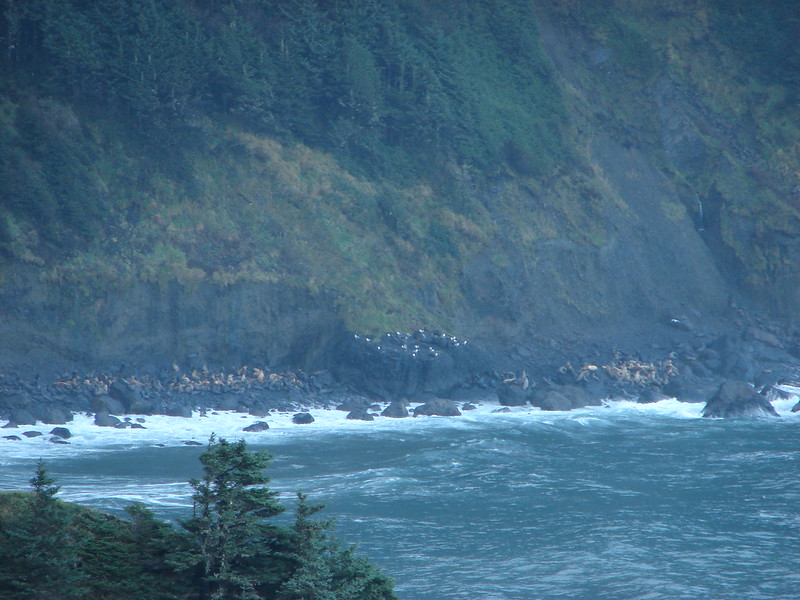
At 400′ above the water I could see something swimming around but couldn’t make out what it was. I had the larger camera that I like to use at the wildlife refuges in my pack, so I pulled it out and started taking pictures. The way it was coming up out of the water and making a blowing sound I mistook it for a small whale, but it turned out to be a sea lion.DSCN7787

The sea lion was attracting seagulls which began arriving en masse.DSCN7799

The sea lion eventually moved on and so did I.IMG_4139

DSCN7801

Seagulls and cormorants.

IMG_4140

Barrier at the end of Cape Lookout.

There is a small bench and viewpoint at the end of the trail where I paused briefly to appreciate the views.IMG_4141

View south.

IMG_4142

View north.

I headed back toward the trailhead stopping to get a few pictures with the bigger camera now that it was unpacked.DSCN7809

American kestral

DSCN7812

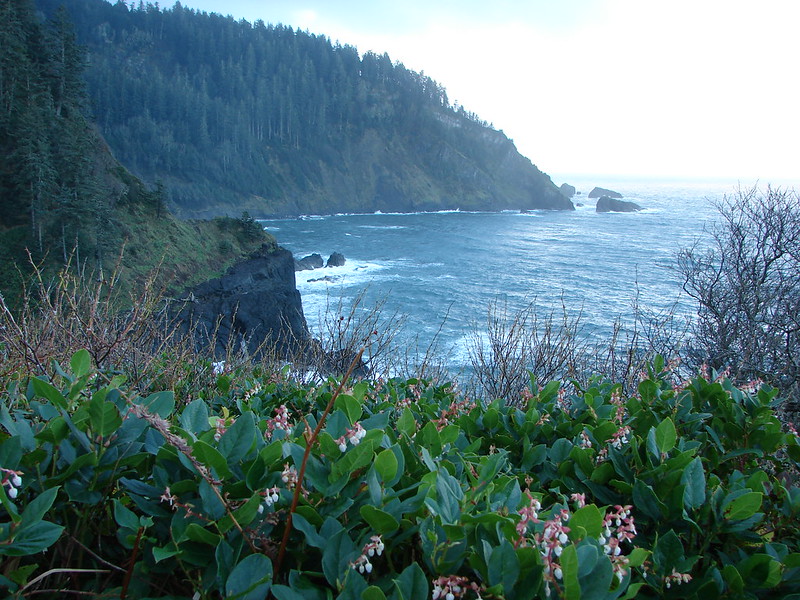
I’m fairly certain this is a ruby crowned kinglet in the salal.

DSCN7820

Hermit thrush

DSCN7824

Three Arch Rocks

DSCN7831

Varied thrush

Back at the trailhead I turned left and headed down the North Trail.IMG_4152

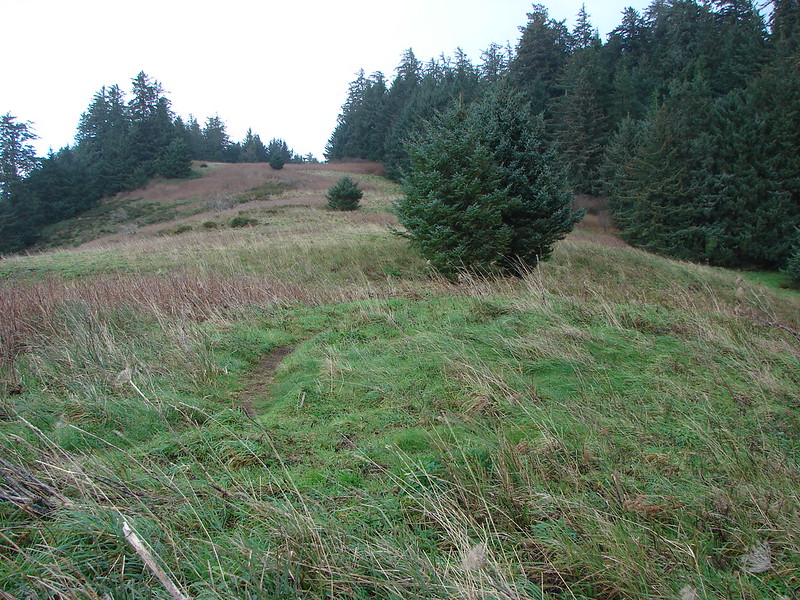
It was clear from the trail tread that this trail hadn’t been used much recently however there were signs of recent trail maintenance. Aside from a few trees that I needed to watch my head going under the trail was clear as it dropped down to the suspension bridge over Cape Creek.IMG_4154

IMG_4156

IMG_4162

There was a lot of blowdown, mostly older, along this section.

IMG_4163

Reenforced trail along this switchback.

IMG_4166

It was 0.8-miles to the bridge with an elevation loss of 550′, but the bridge is worth seeing and would be a worthy turnaround point for a shorter hike.

IMG_4167

IMG_4168

Camp Creek

The trail made a quarter mile climb on the north side of Camp Creek to a signed junction at an old roadbed.IMG_4170

IMG_4172

Sea stack out on the ocean.

IMG_4173

IMG_4174

This junction is where the trail had been closed coming from the day use area.

IMG_4175

I double checked to make sure it wasn’t still signed closed at this end.

Most of the next 1.2-miles to the day use area followed the old roadbed as it descended to the beach. This section was in good shape except for a short section along a slide approximately a half mile from the day use area.IMG_4176

IMG_4179

Netarts Spit and Bay.

IMG_4181

A rerouted section of trail near the slide area.

IMG_4183

This small stream appears to be the reason for the slide which is now being funneled over the hillside. On the far side the trail drops steeply down wet rocks next to wire covered rocks.

IMG_4184

Looking down at the continuation of the trail on the far side of the stream.

IMG_4186

Looking back up from the bottom. Coming down this was a lot harder than going back up due to how slick the damp rocks were.

After getting past the slide it was an easy half mile down to the day use area.IMG_4188

IMG_4190

The sign of a good coastal trail is it going through a tree.

IMG_4191

IMG_4197

IMG_4198

Bridge over Jackson Creek.

IMG_4199

Jackson Creek

IMG_4202

The parking lot at the day use area.

I took some time to read some of the interpretive signs/plaques and take a short break at one of the picnic tables before starting back.IMG_4201

Cape Lookout from the day use area.

IMG_4203

IMG_4206

IMG_4207

I made the 2.2-mile, 800′ plus elevation gain return trip to the Cape Lookout Trailhead and decided that I would go ahead and hike down the South Trail as well. That trail started a little under 100 yards from trailhead where it split off from the Cape Trail.IMG_4215

IMG_4216

Turning onto the South Trail.

Like the North Trail the South Trail loses over 800′ to reach the ocean which it does in 1.8-miles.IMG_4217

DSCN7835

Spotted towhee

IMG_4218

Good use of switchbacks keeps the trail from ever being too steep.

Halfway down the trail passes a bench with a nice view of Cape Lookout through the trees.IMG_4220

IMG_4221

IMG_4223

Camp Clark (Scouting America) below the trail to the south.

IMG_4225


Getting closer to the beach.

IMG_4227

Self-heal

IMG_4232

DSCN7843

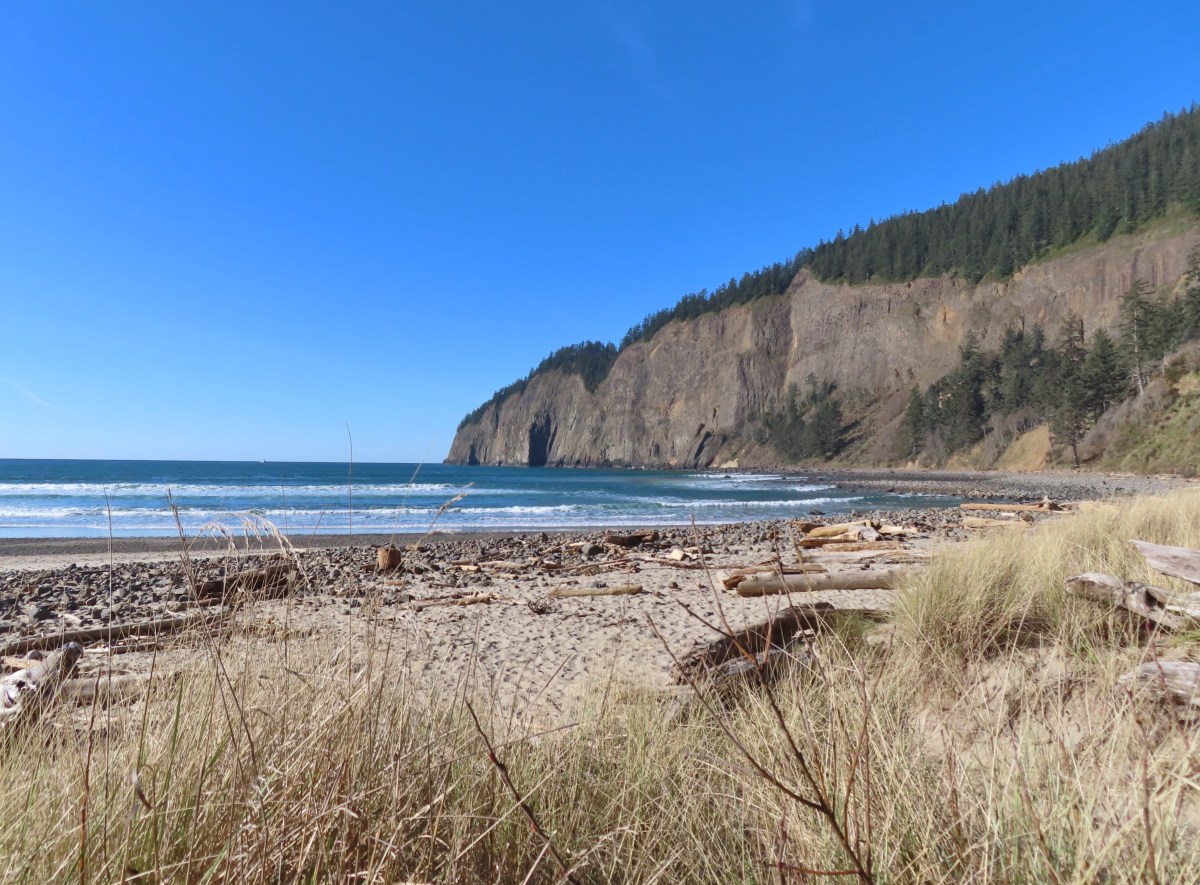
Columnar basalt on Cape Lookout.

IMG_4234

The view south towards the sun.

When Heather and I visited in 2011 we continued a little to the south so this time I headed north toward Cape Lookout and then found a nice rock to take a seat on.IMG_4236

My view.

DSCN7838

One of three bald eagles that flew over.

After resting and psyching myself up for the climb I headed back.IMG_4242

The trail is marked by a colorful buoys and ropes.

IMG_4243

Today’s hike came in at 13.2-miles with approximately 2000′ of cumulative elevation gain.Screenshot 2026-01-24 152148

Of course, there are plenty of shorter options available, but you could also go further by heading north along Netarts Spit or south along the beach to Sand Lake. If you do visit be prepared for muddy conditions and crowds on the Cape Trail. Having been the first car at the trailhead I didn’t see anyone until I was headed back from the end of the cape. I passed just eight people on the way back, but it wasn’t yet 9:30am when I turned onto the North Trail. I only saw three people on the that trail and then another eight on the South Trail, plus a few more on the beach itself. By the time I was ready to leave at 1:15pm the trailhead was overflowing and cars were parked along the shoulder out to Cape Lookout Road. Score another one for early starts. Happy Trails!

Flickr: Cape Lookout State Park
Categories
Hiking

Blowout Arm Suspension Bridge and Metolius Preserve – 05/27/23

For Memorial Day weekend we headed for Bend to visit Heather’s parents and check out some new trails. We had two stops planned on the way from Salem to Bend. Originally those stops were to visit a suspension bridge over part of Detroit Lake and the Peterson Ridge Trail system in Sisters. As the weekend neared, I started questioning the wisdom of stopping at the popular trailhead in Sisters on a holiday weekend. As I was scanning Google Maps for inspiration for a new-to-us trail along Highway 20 I noticed a couple of trailheads for the Metolius Preserve. Somehow this had flown under our radar but with over 10 miles of trails and the multiple loop options it looked like a good option.

With the new plan set we got an early start Saturday morning and headed for Detroit Lake’s Blowout Arm. We were working out of Matt Reeder’s “101 Hikes in the Majestic Mount Jefferson Region” guidebook and followed his driving directions to the trailhead.
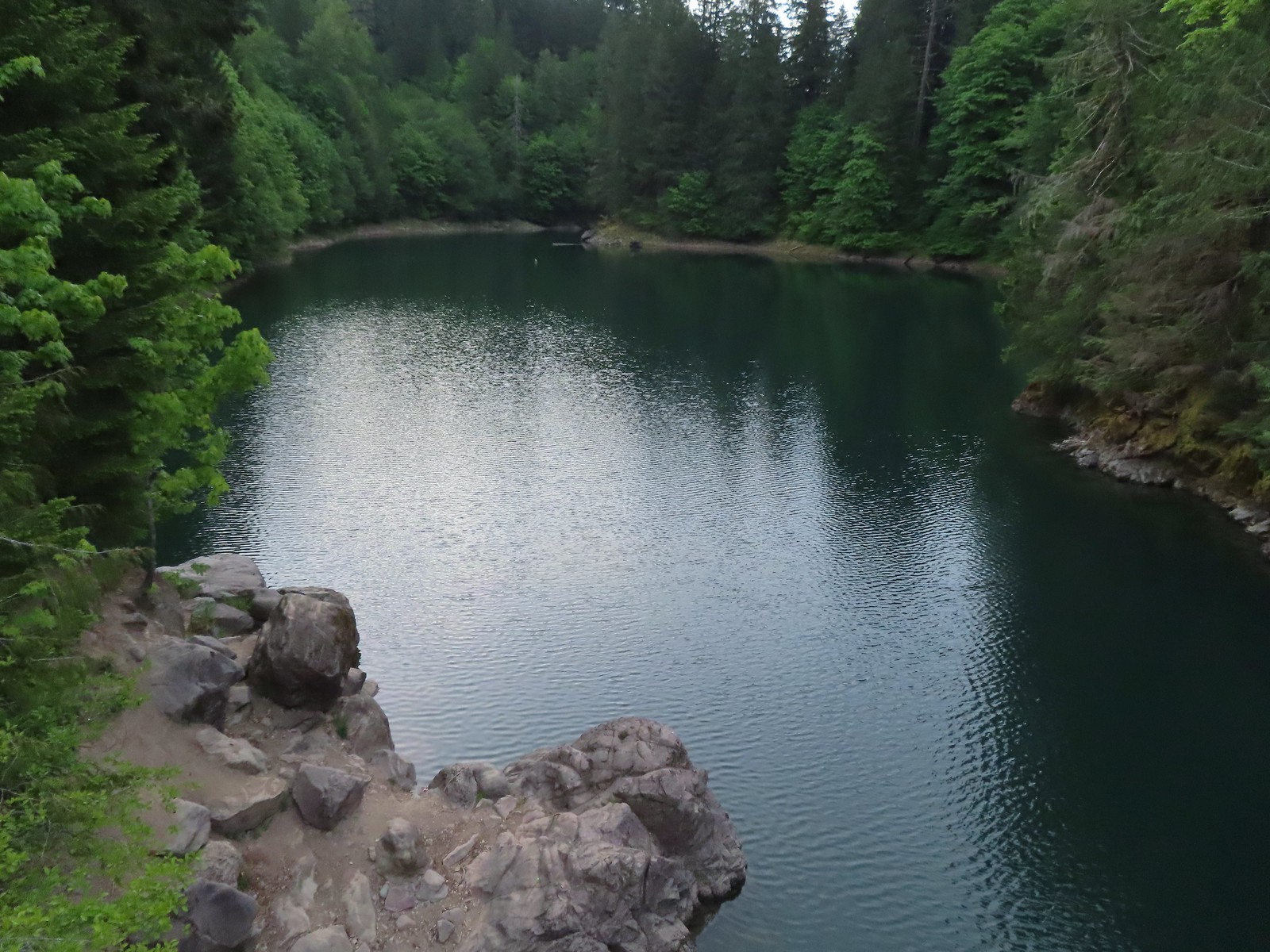
IMG_8177

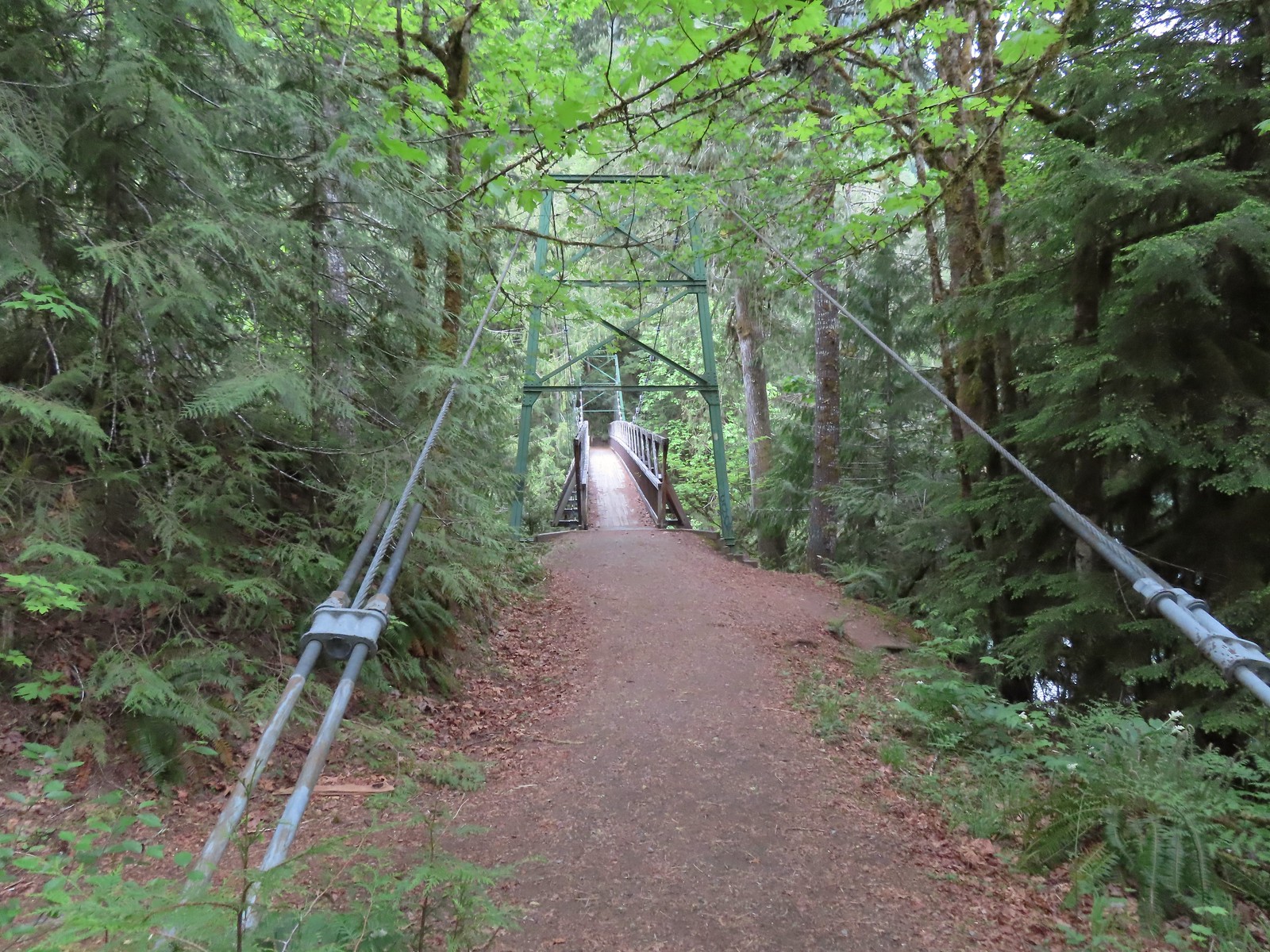
A reportedly popular spot for swimming we thought this was a good time of year (and time of day) to avoid the crowds and that proved to be correct. We followed the trail downhill for approximately 0.2-miles to the bridge.
IMG_8178Our first rhododendron blossom of the year.
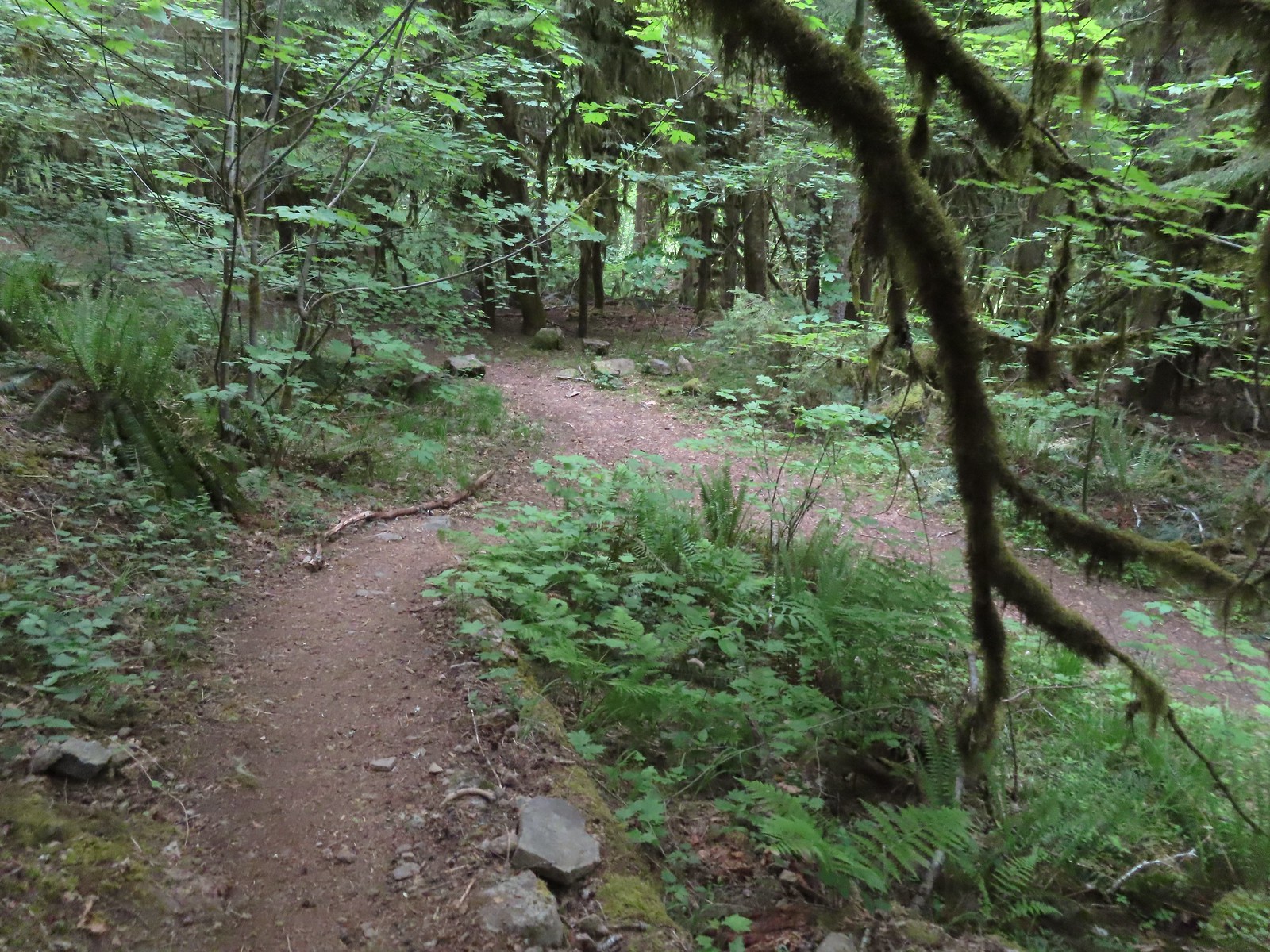
IMG_8183We turned right when the trail met an old logging road.
IMG_8184

IMG_8189

IMG_8190

IMG_8191Blowout Arm

IMG_8193Blowout Creek flowing into Blowout Arm.

A little post-hike research led me to a post on Oregonhikers.org by justpeachy which revealed that this had once been part of the “Volcano” Trail and connected to several other trails above Detroit Lake, but these days the trail ends not far beyond the bridge.
IMG_8198We found our first beargrass on the other side of the bridge.
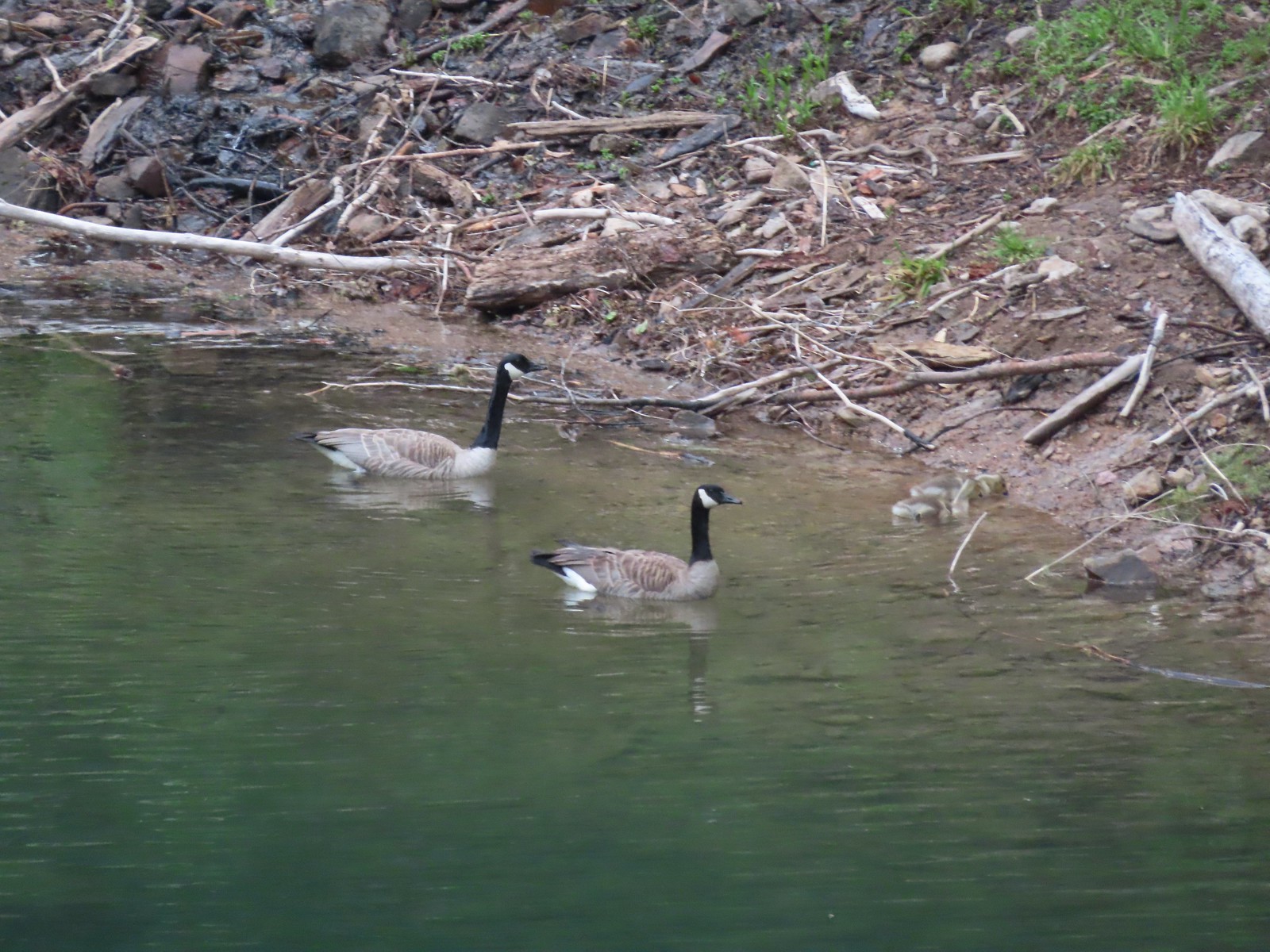
IMG_8203

IMG_8205Swimmers at Blowout Arm.

After not being able to cross the suspension bridge over the Illinois River earlier this month (post) it was nice to be able to do so here. After returning to the car we continued East on Highway 20 to Jack Lake Road (Forest Road 12) where we turned left and headed for the Metolius Preserve‘s North Trailhead.
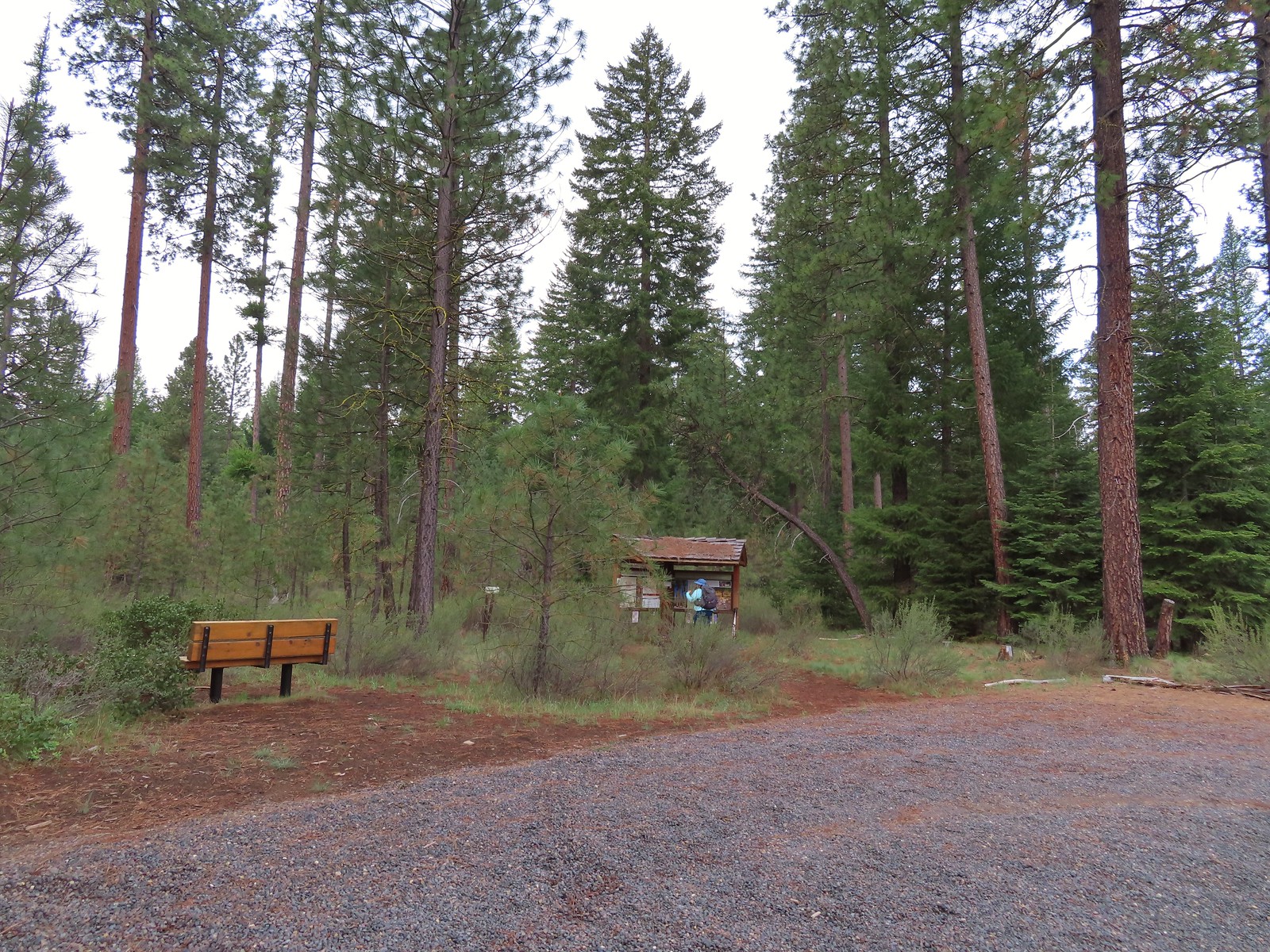
IMG_8215

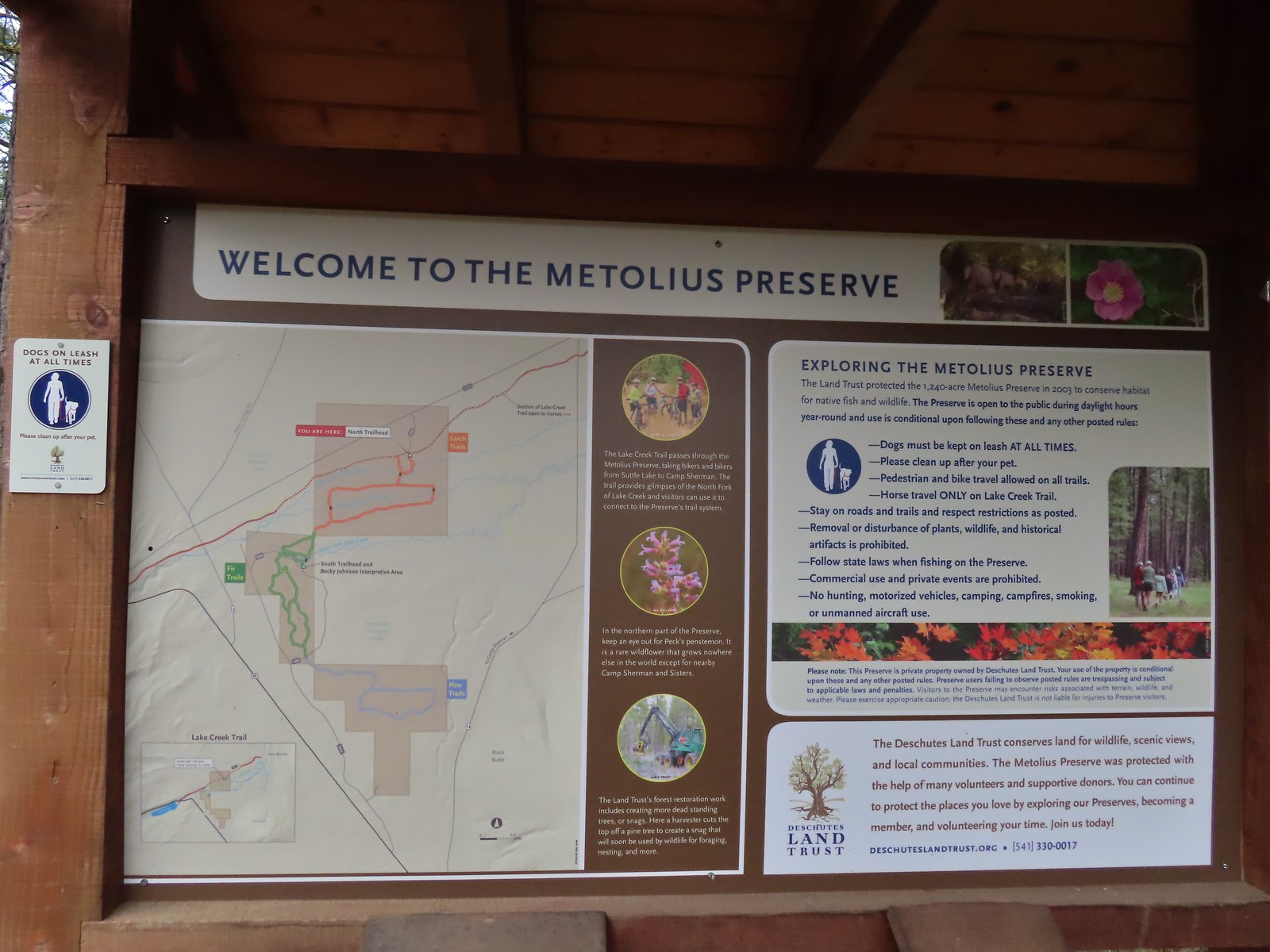
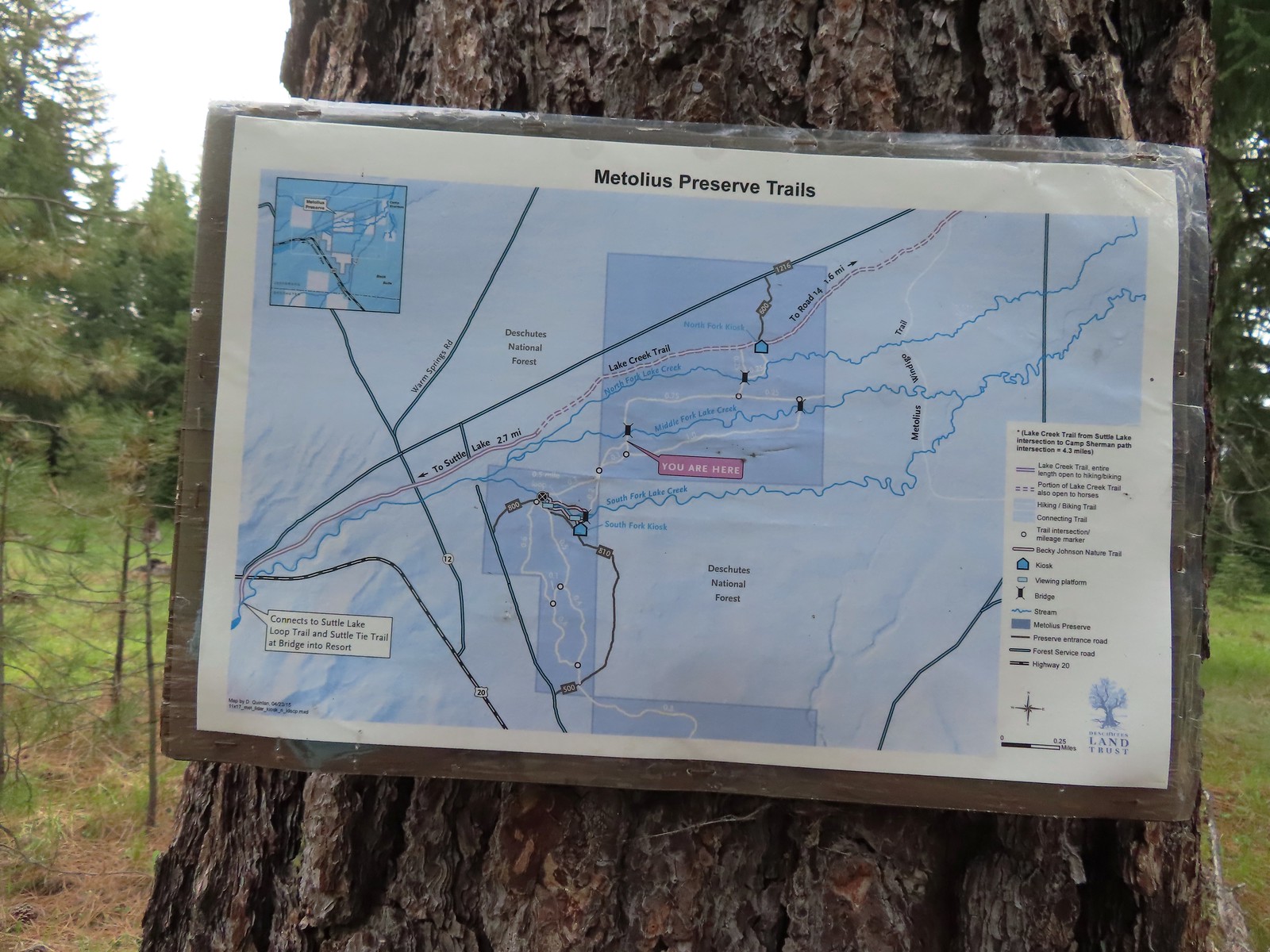
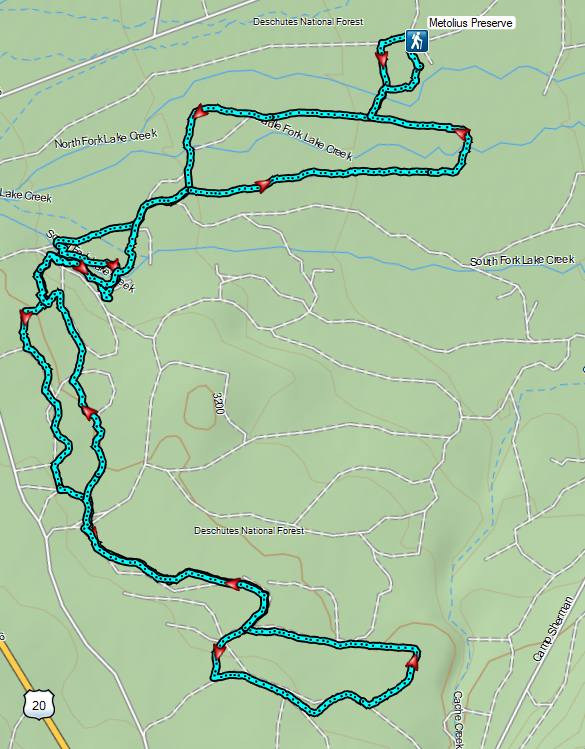
Acquired by the Deschutes Land Trust in 2003, the Preserve is 1,240 acres with over 10 miles of trails. Our plan here was to hike the Larch, Fir, and Pine trails, each of which includes at least one loop by staying right at all trail junctions.
IMG_8216

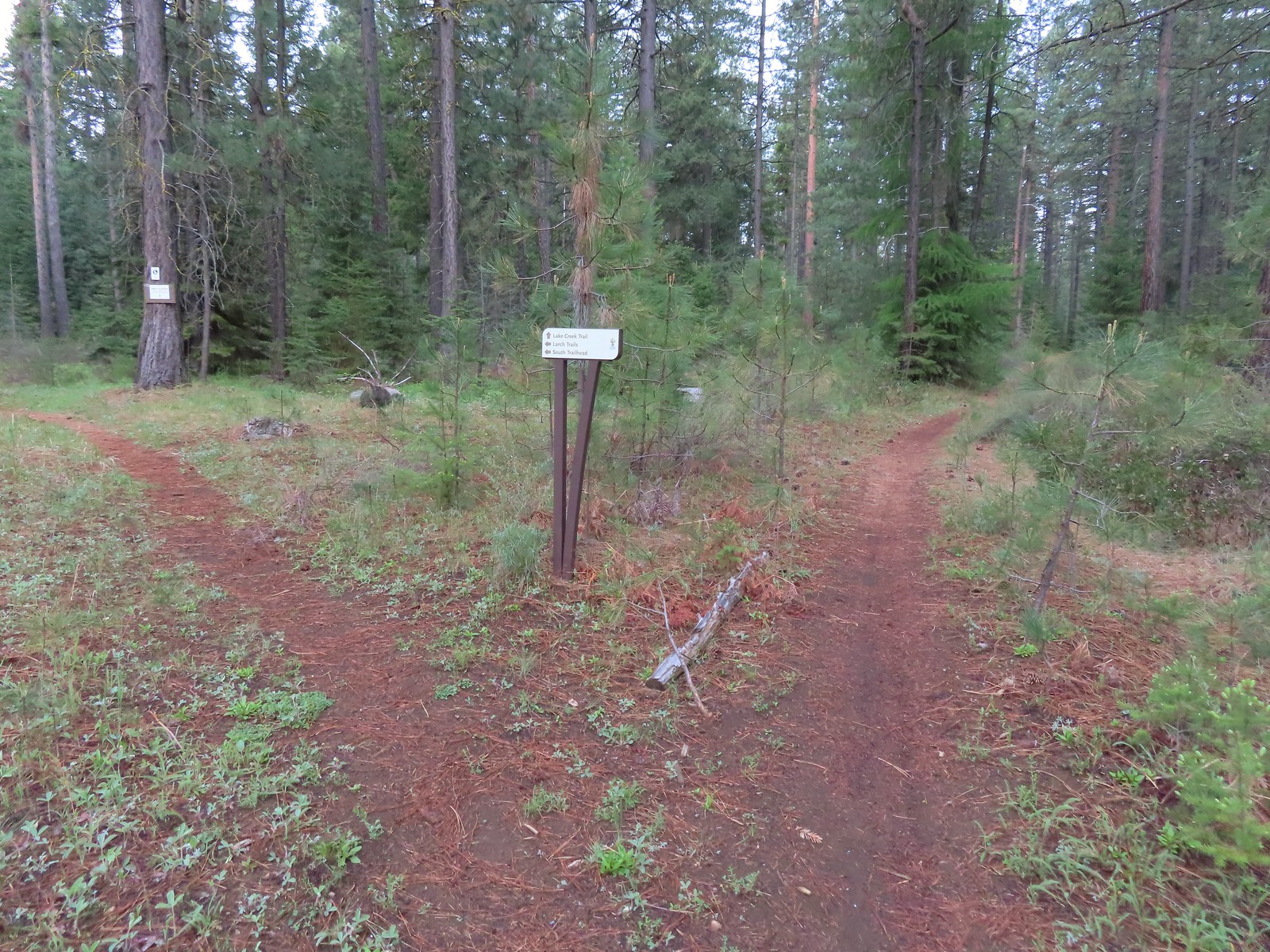
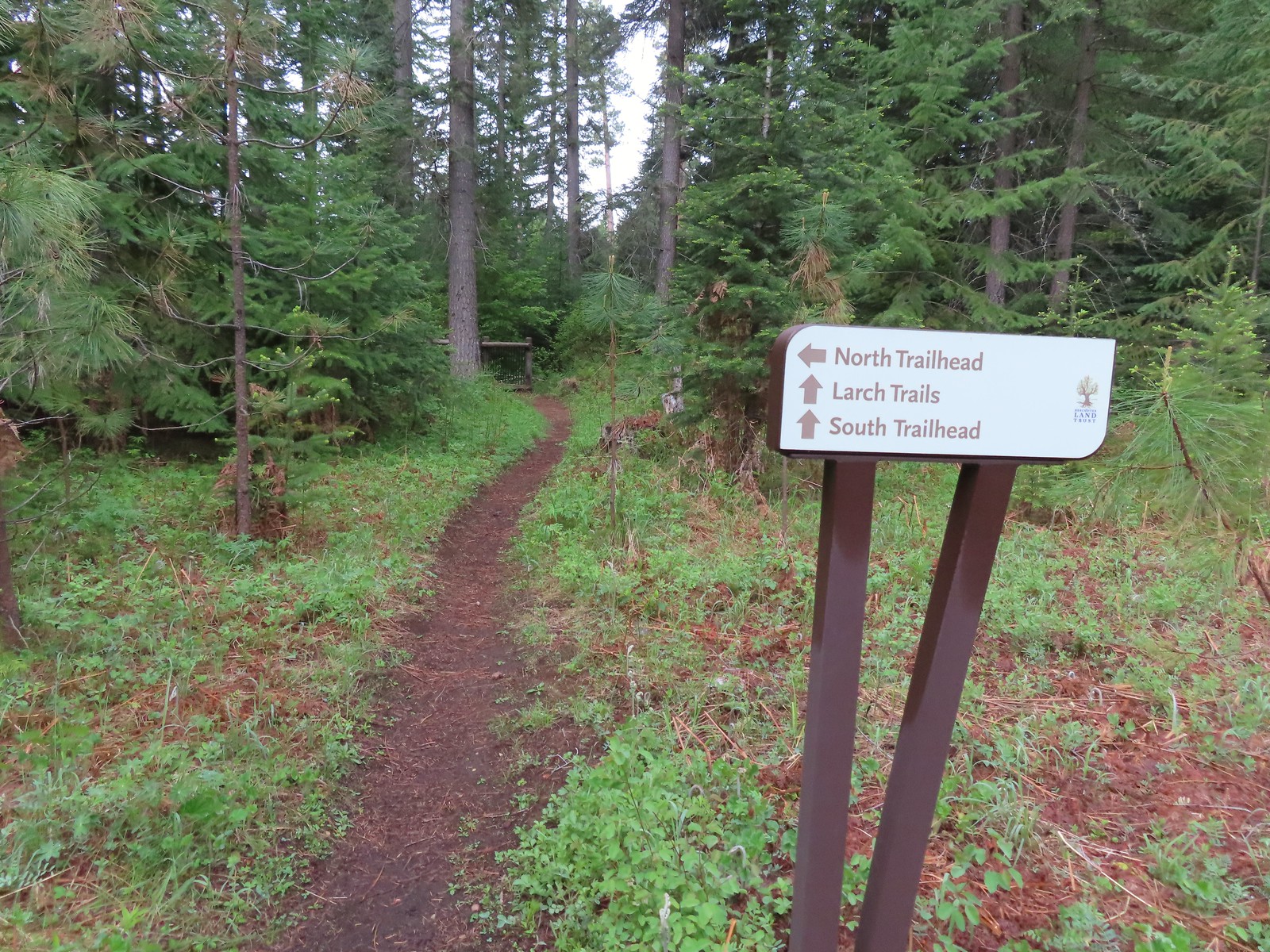
After looking over the trailhead signboard we walked back to the parking lot entrance which crossed the Lake Creek Trail, the only trail in the Preserve open to horses. Bike and dogs (on leash) are allowed on all trails. Following a point for the Larch Trails we started along the Lake Creek Trail and soon turned left at another pointer for the Larch Trails.
IMG_8218Sign for the Lake Creek Trail.

IMG_8224Lake Creek Trail

IMG_8225Pointer for the Larch Trails.

Just before reaching a footbridge across the North Fork Lake Creek we passed a junction with a return trail to the North Trailhead.
IMG_8226Violets

IMG_8228Star-flowered solomonseal

IMG_8229Serviceberry

IMG_8231

IMG_8232

IMG_8233North Fork Lake Creek

At another junction just beyond the bridge we turned right and followed the Larch Trail passing over the Middle Fork Lake Creek before reaching the next junction.
IMG_8241

IMG_8242

IMG_8244Middle Fork Lake Creek

IMG_8247Between the pointers at junctions and a few well-placed maps it was relatively easy to stay on course, as long as we were paying attention.
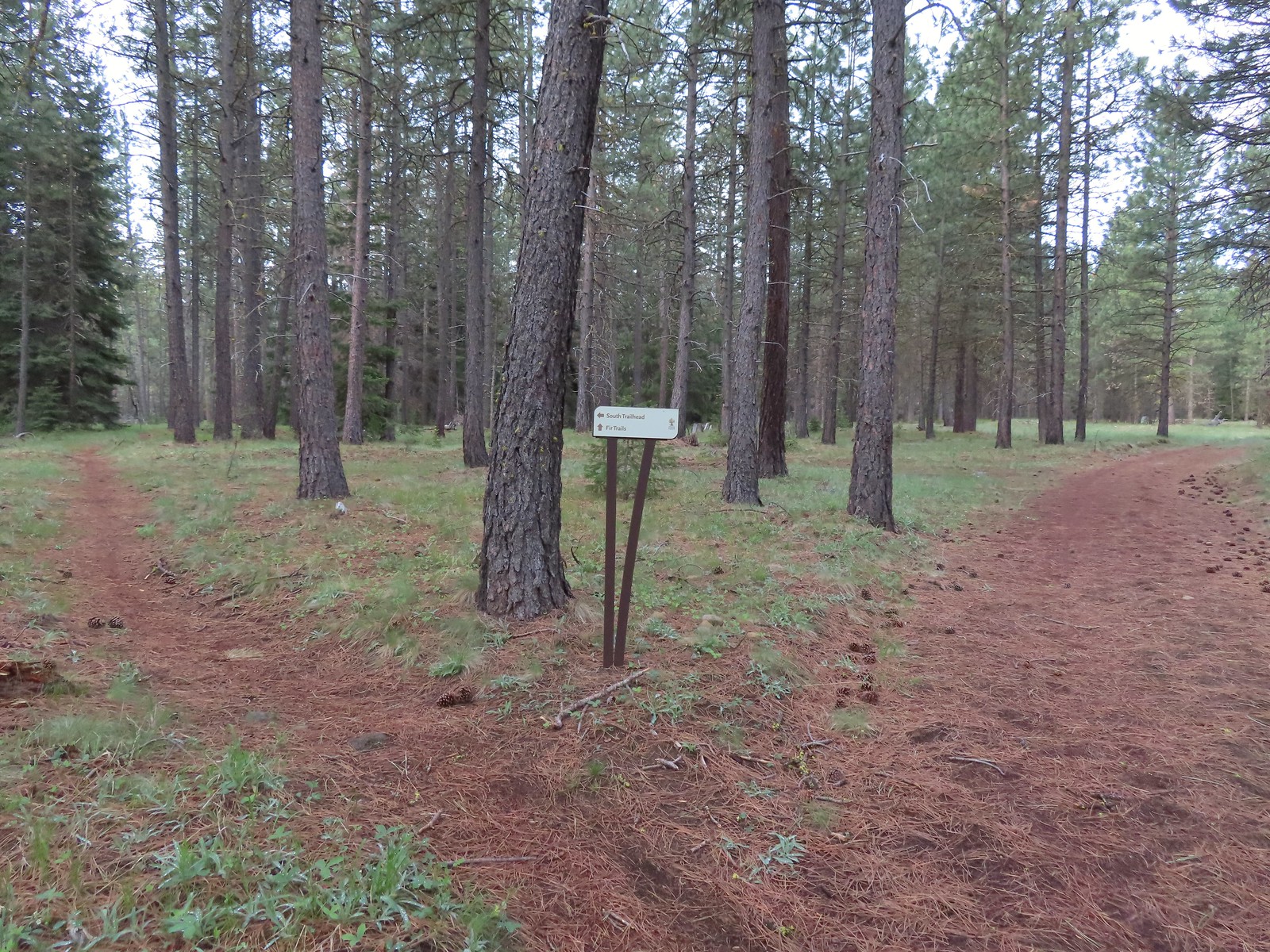
IMG_8251We stayed right again here at the start of the Fir Trails.

IMG_8256A seasonal tributary of Middle Fork Lake Creek.

IMG_8261

IMG_8264Balsamroot

IMG_8267Fir Trail reaching a bridge over the South Fork Lake Creek.

IMG_8269Interpretive sign at the South Fork Lake Creek.
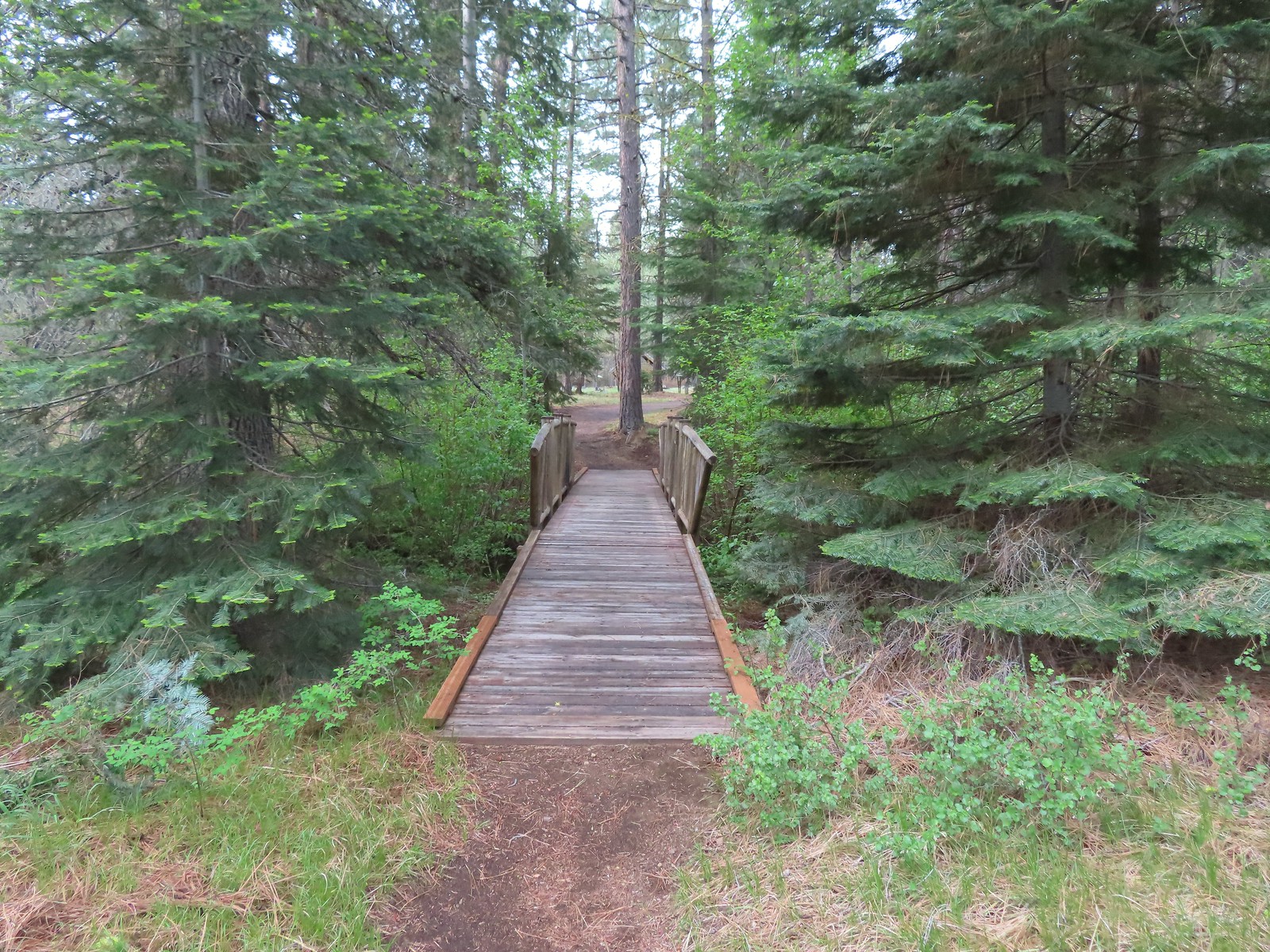
IMG_8273A second footbridge over another branch of the Lake Creek.
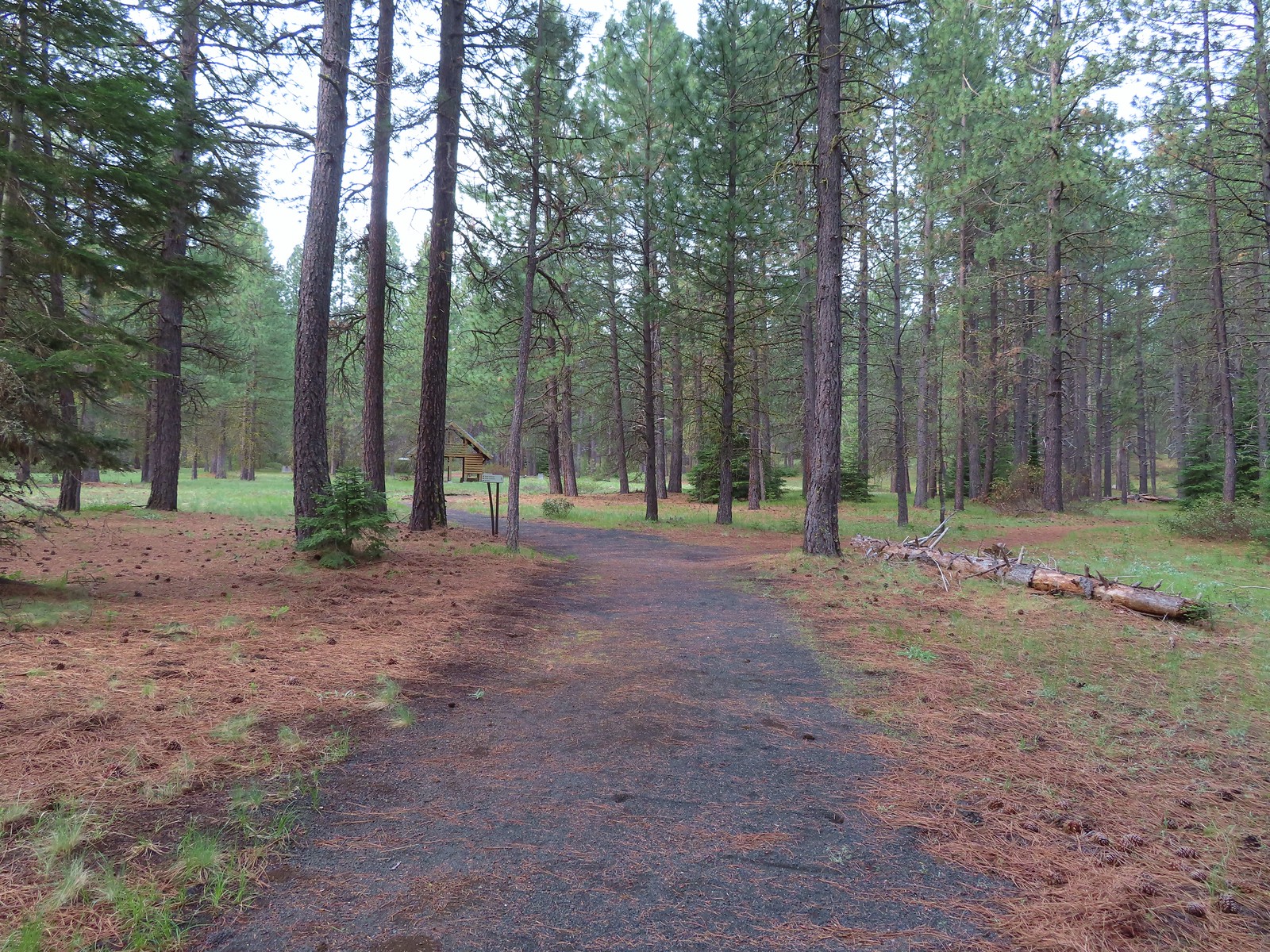
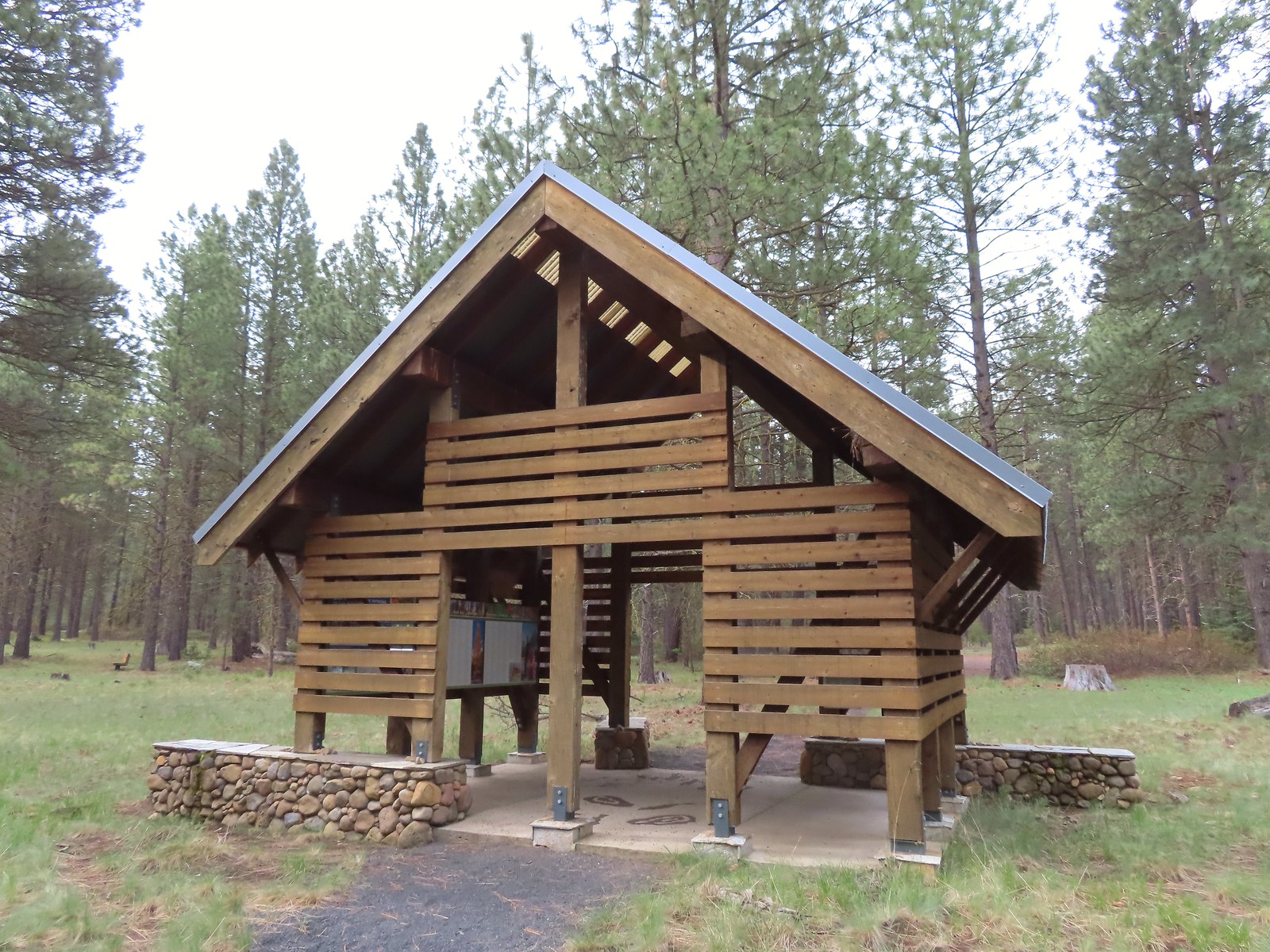
On the far side of the South Fork Lake Creek was the South Trailhead.
IMG_8275

IMG_8276Shelter at the South Trailhead

After a short break at the South Trailhead we continued on the Fir Trails following pointers for the Creek Overlooks.
IMG_8278

IMG_8279The first overlook didn’t have much of a view of the creek but the second one did, along with a nice bench.
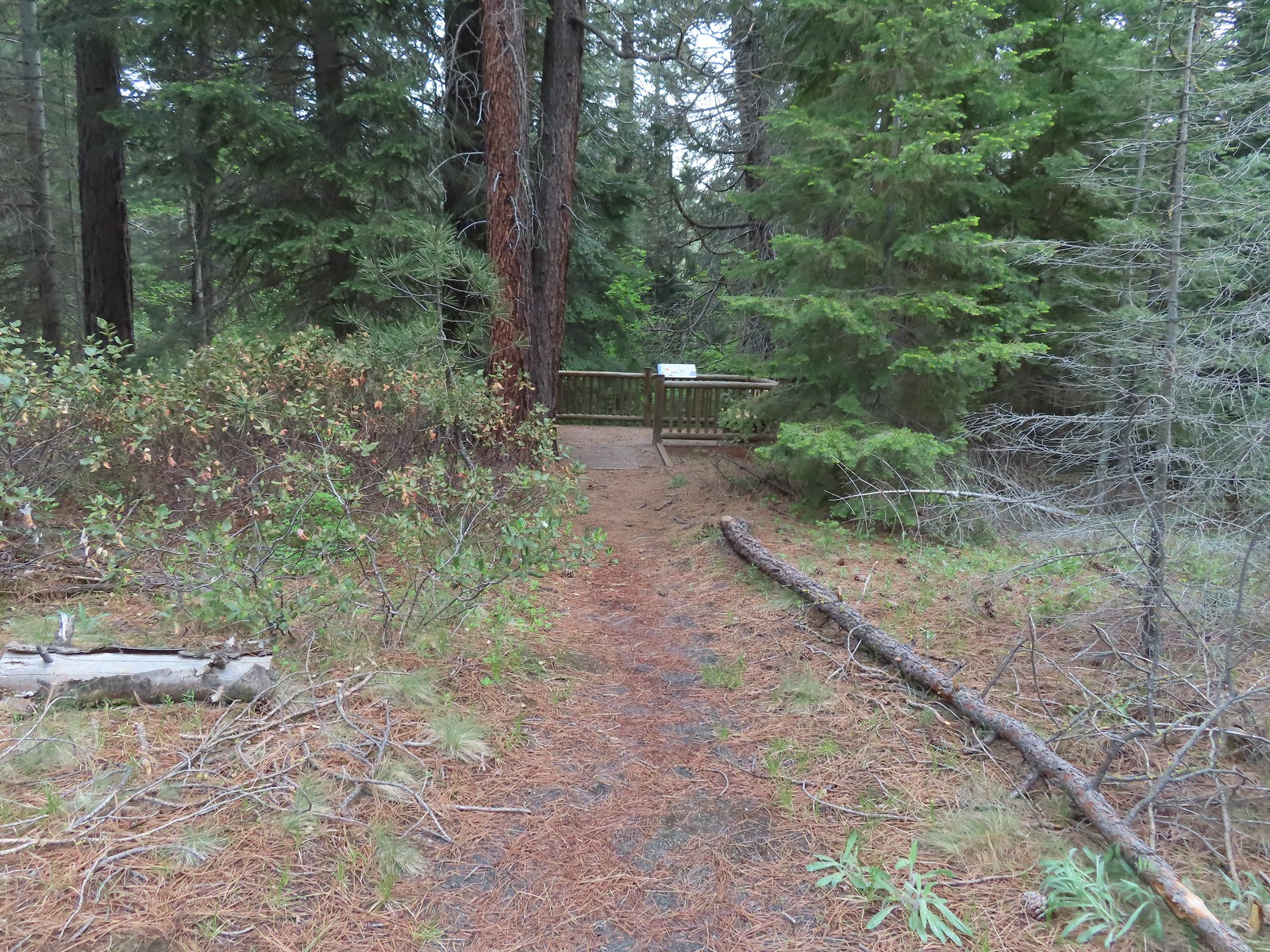
IMG_8283The second overlook.

IMG_8284Interpretive sign at the second overlook.

IMG_8285South Fork Lake Creek

We continued from the overlooks staying right on the marked trails (there were some roadbeds that we did not turn right on).
IMG_8292

IMG_8293

IMG_8296Hound’s tongue with a caterpillar.

IMG_8300

IMG_8303

IMG_8311The Fir Trails end at Road 500 (the entrance to the South Trailhead) and the Pine Trails start on the far side.
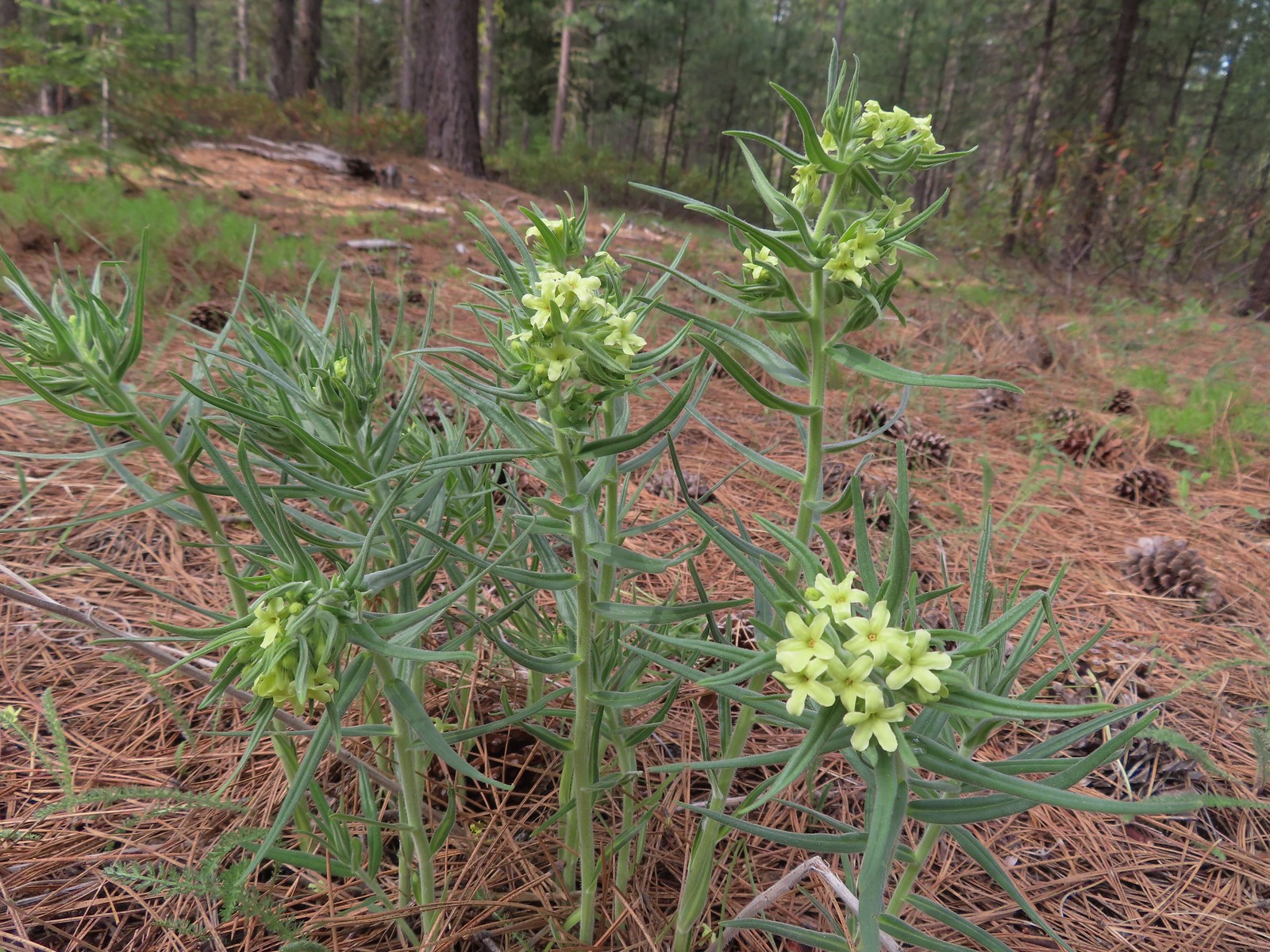
IMG_8316Western stoneseed

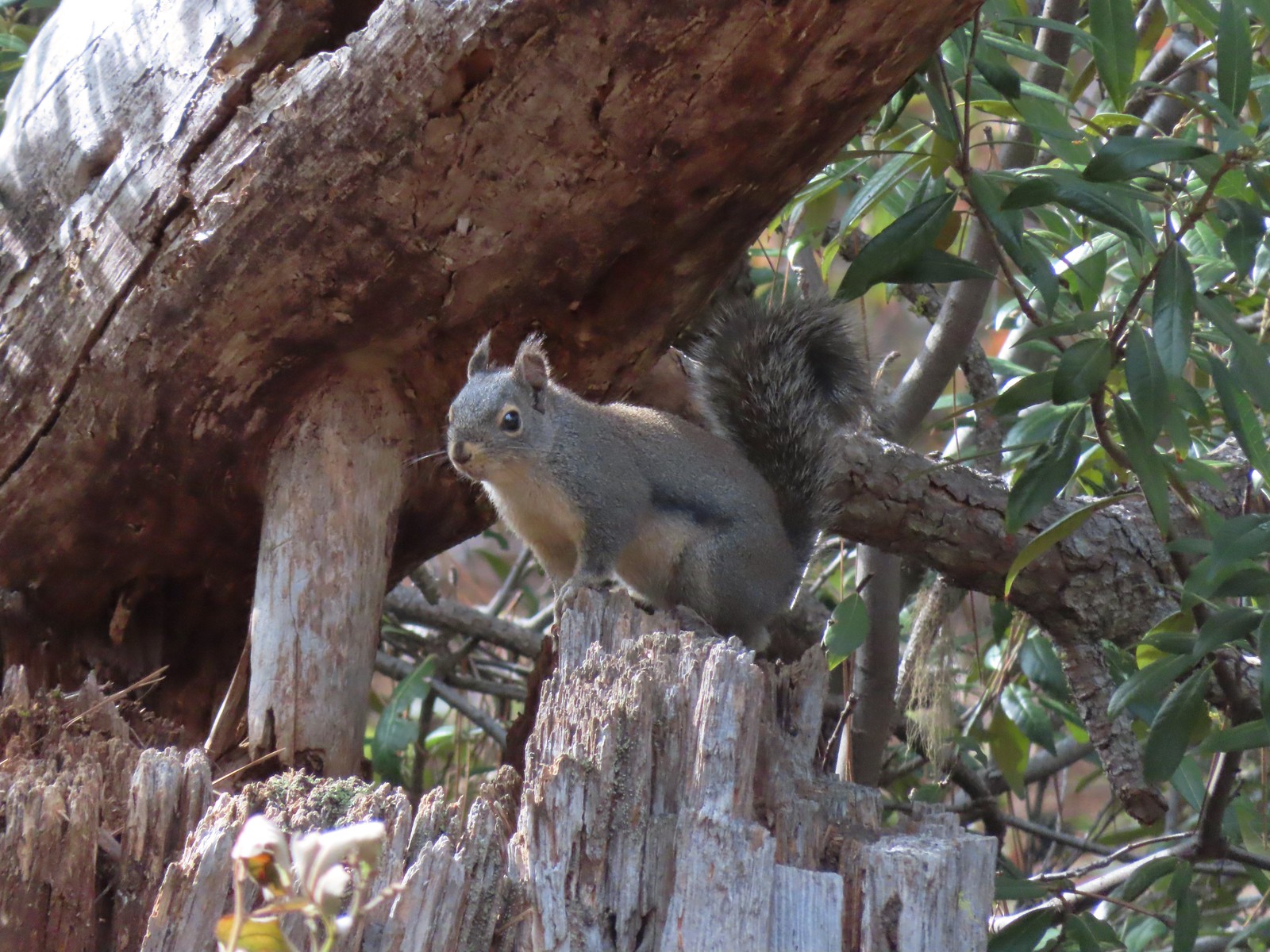
IMG_8320Squirrel

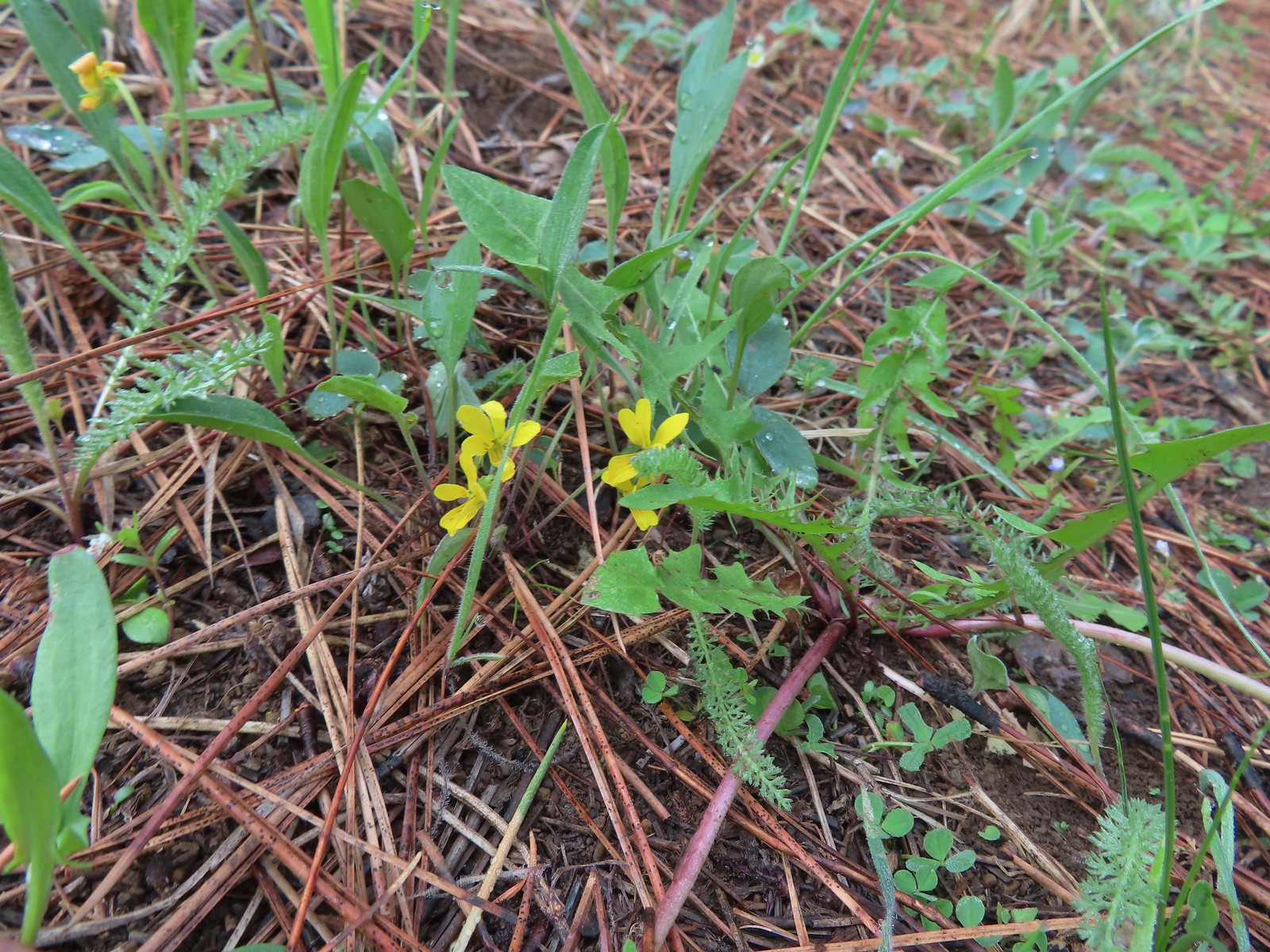
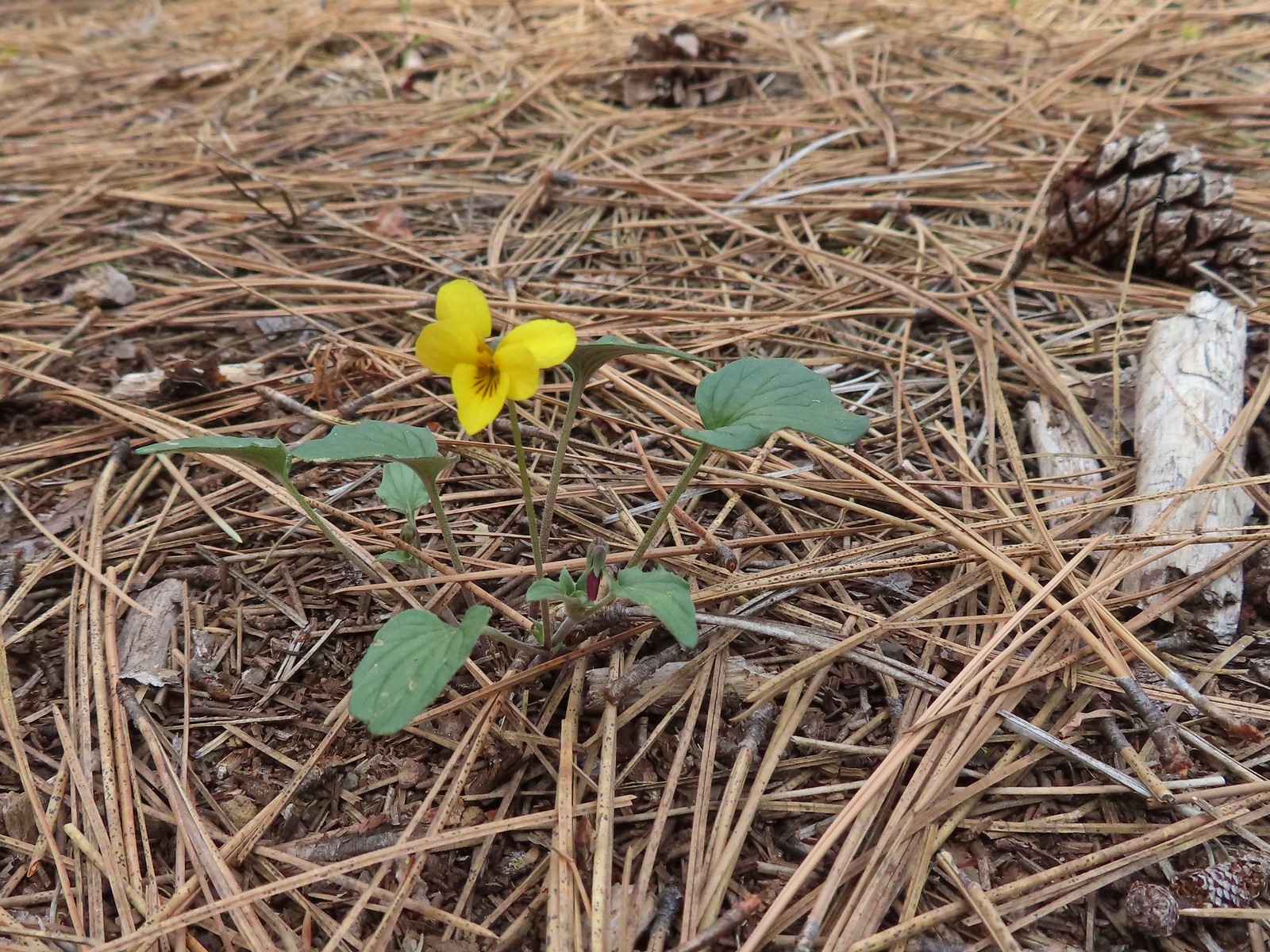
IMG_8323Goosefoot violet

IMG_8326One of the non-trail roadbeds to the right along the Pine Trails.

IMG_8339Balsamroot along the Pine Trails.

IMG_8344There had been some fairly recent thinning happening along the Pine Trails.

IMG_8351Chirpping sparrows

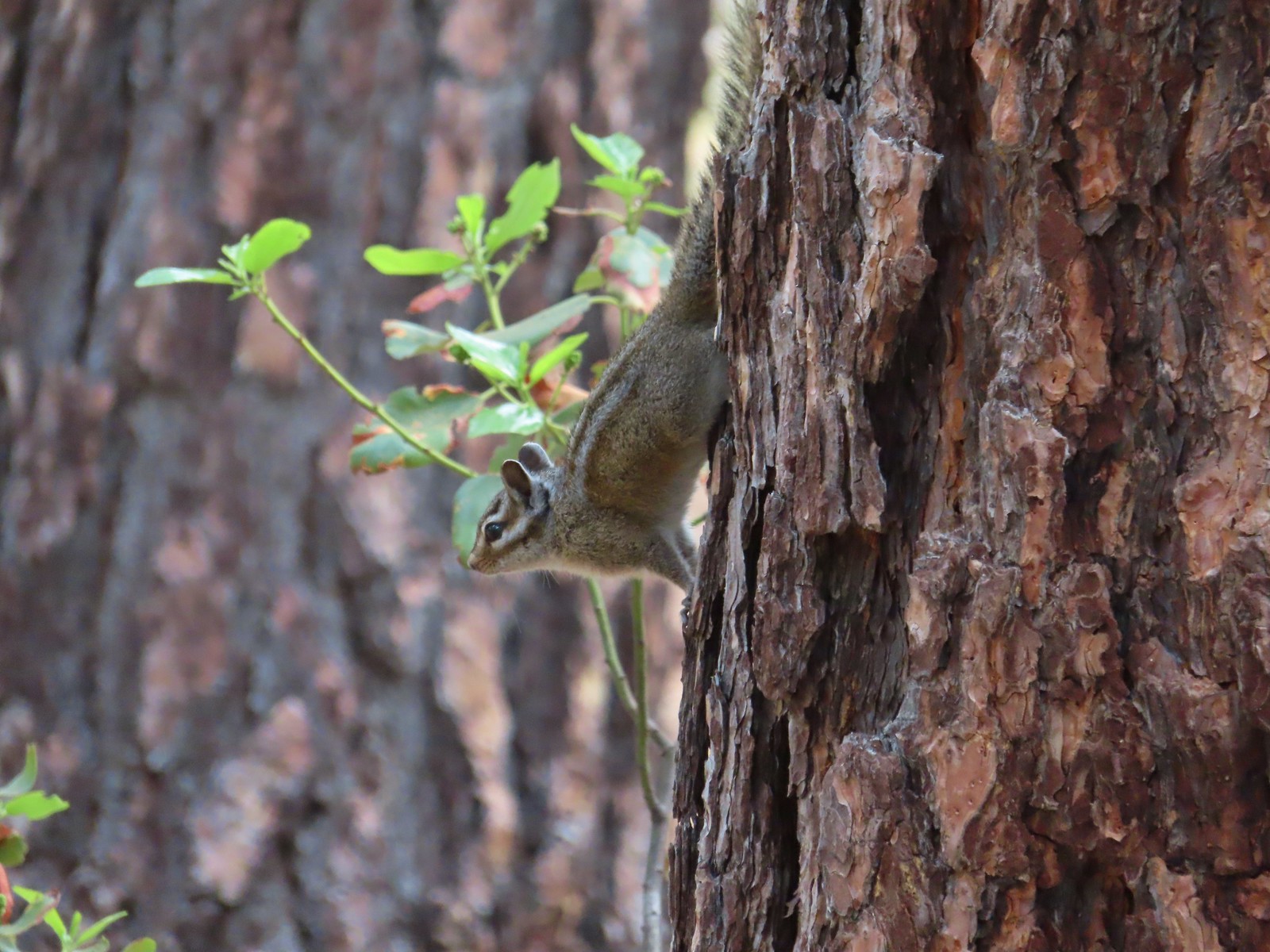
IMG_8353Chipmunks

IMG_8356

IMG_8361Deer along the Fir Trails.

IMG_8379The Fir Trails crossed the seasonal branch on a small footbridge.

IMG_8380

IMG_8381Slender phlox and narrowleaf miner’s-lettuce.

We got a few decent views of Black Butte (post) as we returned along the Larch Trails.
IMG_8389

IMG_8390

IMG_8395I took this photo of a swallowtail and then later realized there was a second butterfly on the Oregon grape.

IMG_8398Lunch

IMG_8399Bridge over the North Fork Lake Creek.

IMG_8406

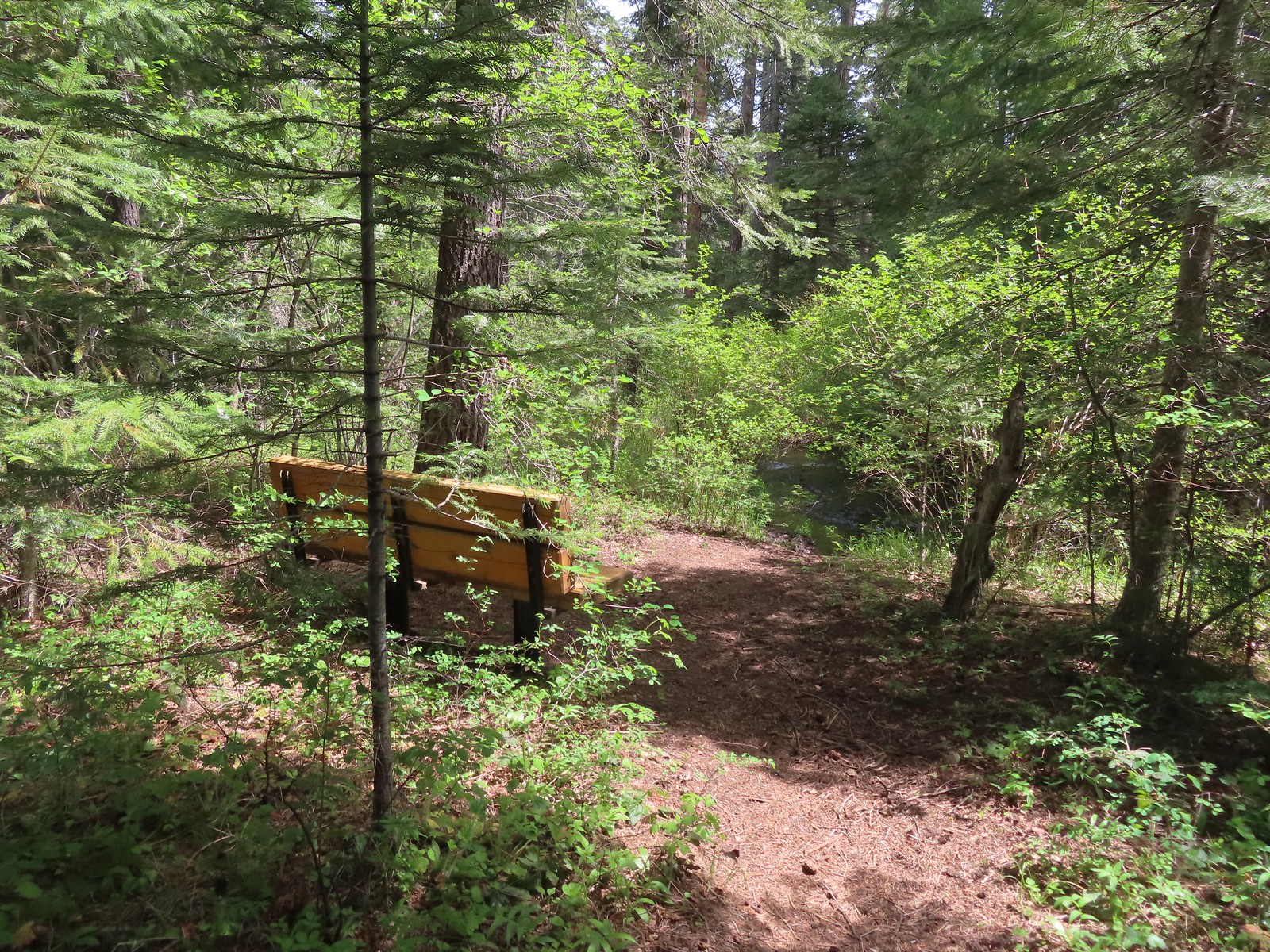
IMG_8412Bench along Lake Creek near the North Trailhead.
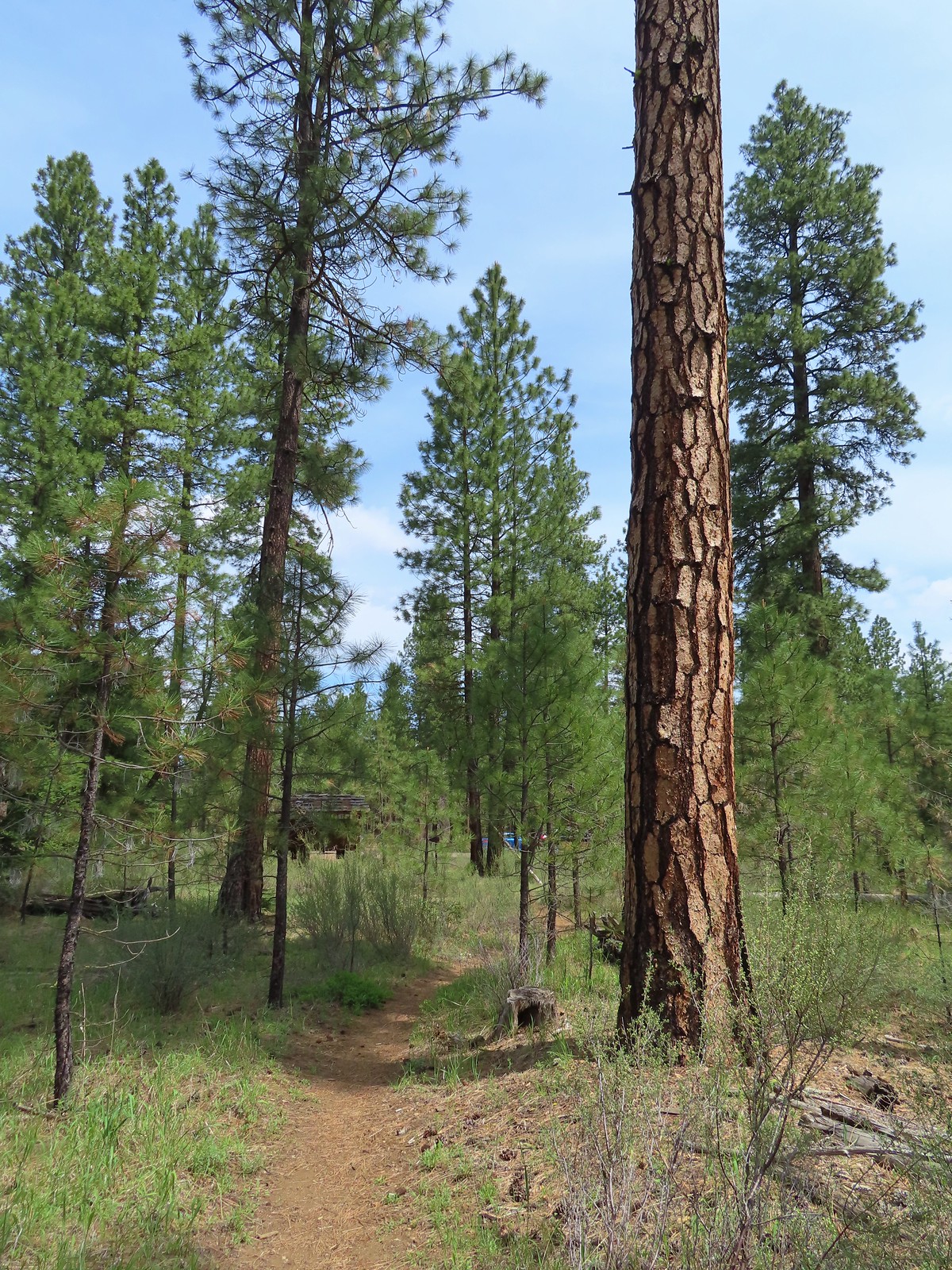
IMG_8415Arriving back at the trailhead.

Our hike here came to 9.5 miles with maybe 150′ of elevation gain. (Blowout Arm was just 0.6 miles with 100′ of elevation gain.)

This turned out to be a great choice to kick off Memorial Day weekend. While there weren’t any big views, we saw less than 10 people at the Preserve which was far fewer than we would have encountered at Peterson Ridge. Between the various creek crossings, a few wildflowers here and there, and some wildlife there was plenty to make the hike enjoyable. Happy Trails!

Flickr: Blowout Arm & Metolius Preserve

Categories
Hiking Oregon Portland Trip report Willamette Valley

Camassia Natural Area, Mary S. Young Park, and Tryon Creek State Natural Area

We continue to be impressed by the number and variety of urban hikes in the Portland-metro area. On our most recent outing we visited three more areas near West Linn and Lake Oswego.

We started our day in West Linn at the Camassia Natural Area just before 7am. Our hike started from the trailhead at the end of Walnut Street.

Camassia Natural Area

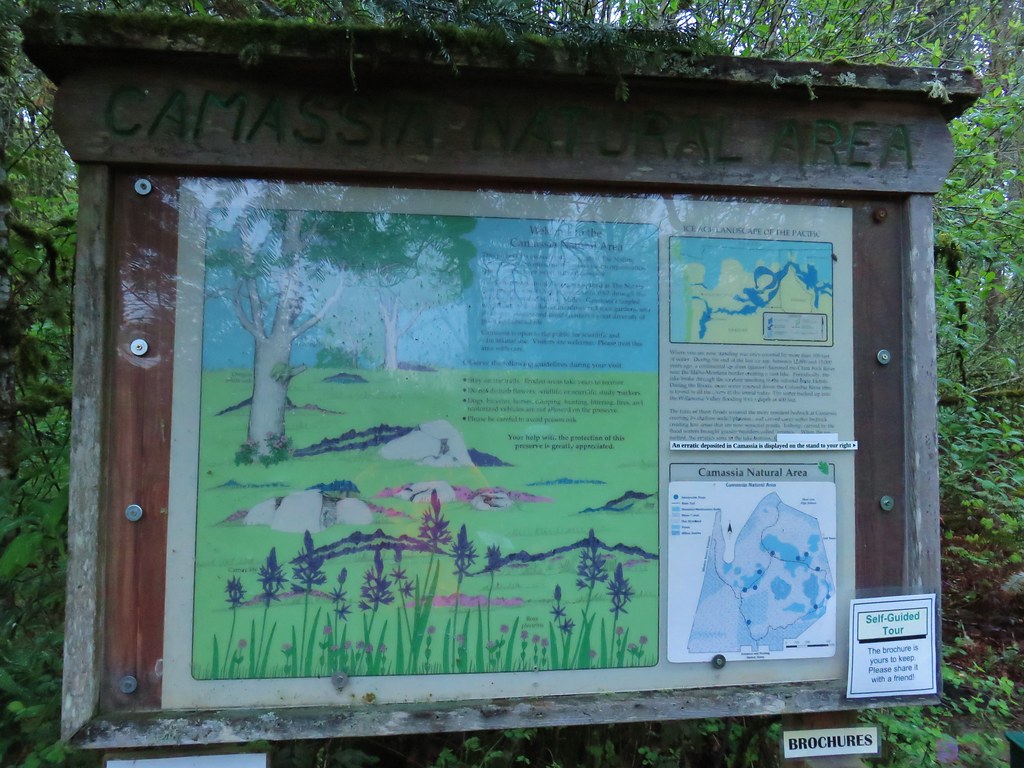
A few feet from the trailhead is a signboard and the start of a loop.

Camassia Natural Area Trailhead

Camassia Natural Area Map

We picked up a guide brochure and started the loop by heading left (clockwise).

Camassia Natural Area

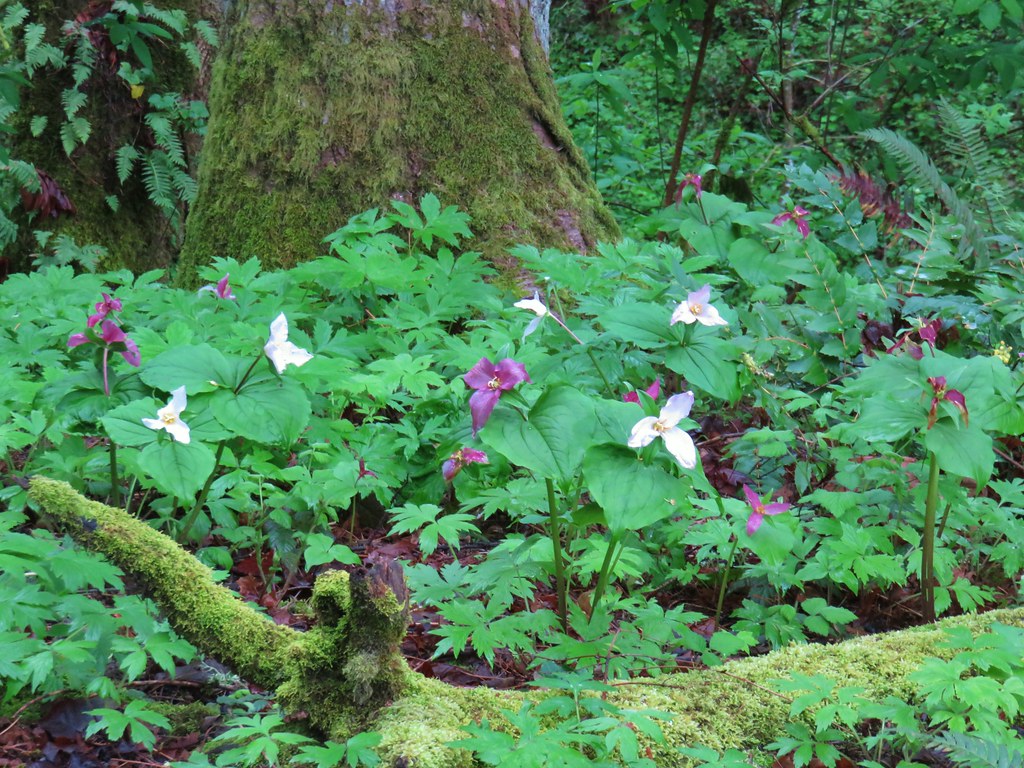
The woodlands here were full of white flowers including trillium, giant fawn lilies, and giant white wakerobin.

Trilium

Giant fawn lilies

Giant white wakerobin

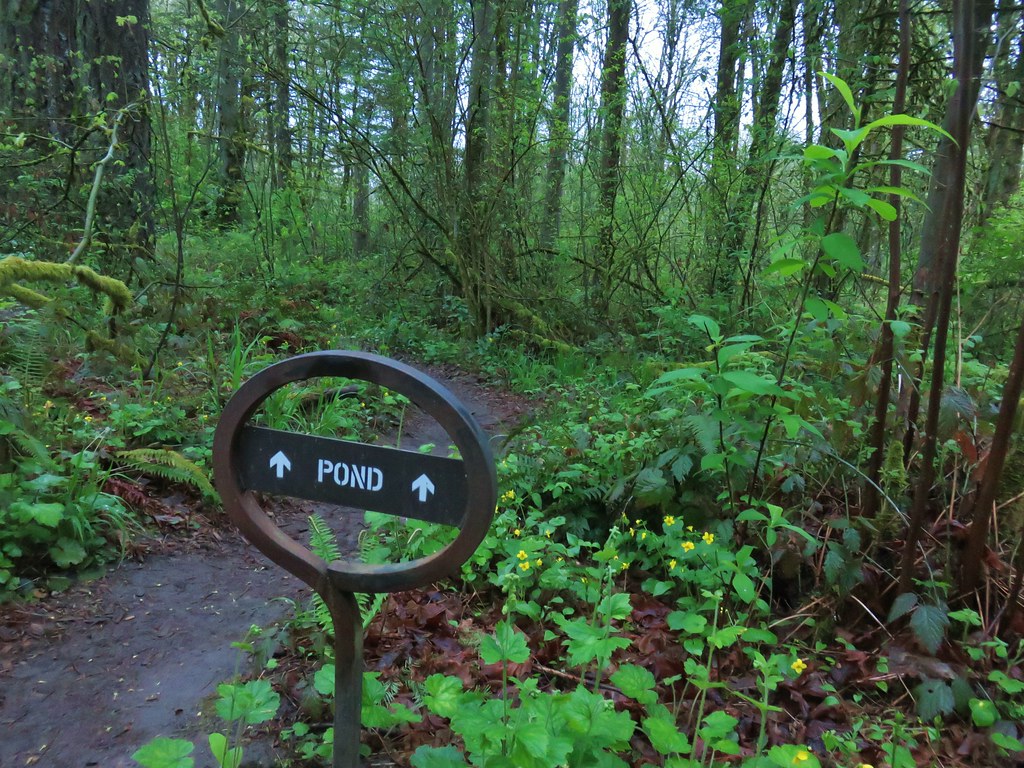
We detoured to the right briefly at a “Pond” sign which led down to a very muddy wet area.

Camassia Natural Area

Pond at Camassia Natural Area

Continuing on the loop the next brief detour was to the left at a pointer for Wilderness Park.

Camassia Natural Area

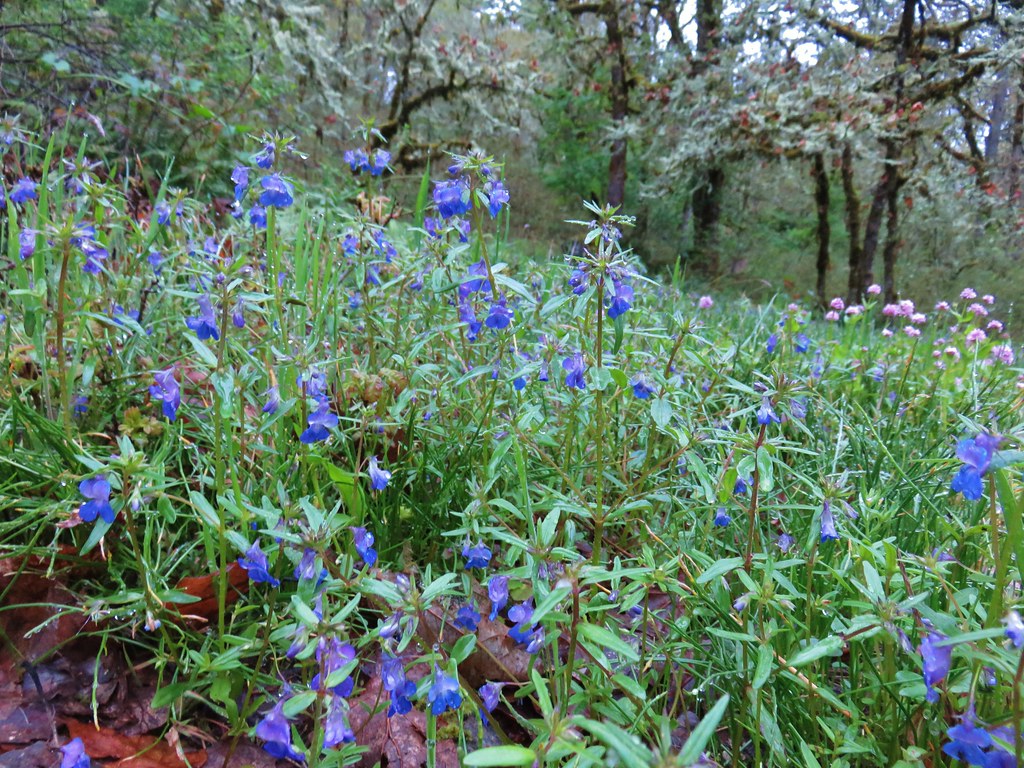
We followed this path a short distance to a small wildflower meadow full of giant blue-eyed mary and rosy plectritis.

Giant blue-eyed mary

Plectritis

As we were returning to the loop trail Heather spotted an animal moving in a meadow below. As we headed toward the meadow on the trail we were excited to find out what was roaming the meadow. As it turned out our first wildlife encounter of the day was a domestic cat.

Camassia Natural Area

Cat at Camassia Natural Area

We were still a week or two early for the bulk of the flowers, especially the camas, but again this meadow had a nice showing of the plectritis and blue-eyed mary.

Camassia Natural Area

Camas and plectritis

One of the few open camas blossoms.

Plectritis

The trail passed through the meadow and into an open oak woodland where we detoured to the right to an overlook of a large pond.

Camassia Natural Area

Pond in Camassia Natural Area

At a “High School” pointer in another meadow we left the loop trail again.

Camassia Natural Area

This path led past some nice flower displays to a marshy wetland.

Wildflowers in Camassia Natural Area

Plectritis and giant blue-eyed mary

Bog in Camassia Natural Area

The Oregonhiker field guide mentions that this wetland is “one the best areas in the northwest to see Great Camas“. We were too early to see much in the way of camas but we did spot a lone stalk blooming near the far end of the wetland.

Giant camas

On our way back to the loop trail we spotted a hairy woodpecker working on finding its breakfast.

Hairy woodpecker

The loop trail descended a set up steps and soon entered a rockier meadow with more flowers including some Oregon saxifrage which was still unfolding.

Camassia Natural Area

Camassia Natural Area

Wildflowers in Camassia Natural Area

The trail then led to a viewpoint atop a cliff next to some madrones.

Madrones in Camassia Natural Area

Camassia Natural Area

More wildflowers followed before the trail reentered the woods.

Giant blue-eyed mary

Plectritis meadow

Camassia Natural Area

We passed a point for the Bridge Trail which headed downhill toward the high school parking lot and came to a viewpoint of Mt. Hood. Well what would have been a view of Mt. Hood on a clearer day anyway.

Camassia Natural Area

Looking toward Mt. Hood on a cloudy morning

One final patch of camas awaited before we completed our mile loop here.

Camas

For our next stop we headed north on Highway 43 (Willamete Dr.) to Mary S. Young Park. A joint effort between the city of West Linn and Oregon Parks and Recreation Department the park sits on the bank of the Willamette River and offers many activities. We began our hike from the trailhead at the parking lot at the end of the park entrance road.

Mary S. Young Park Trailhead

There were no brochures available with maps so we took a photo of a map off a signboard near the parking lot which turned out to be extremely helpful due to a serious lack of signage along the trails. We set off on the paved Riverside Loop Trail near the northern end of the parking lot. After a few feet we veered left on a wide unpaved path between picnic tables.
Mary S. Young Park

The woods here were filled with large trillium flowers of varying color.

Trillium

Trillium

Trillium

After crossing over the Trillium Trail we turned right at a T-shaped junction on the Turkey Creek Trail. This trail led downhill to Turkey Creek.

Turkey Creek Trail

Turkey Creek Trail

Turkey Creek Trail

After about a quarter mile the Turkey Creek Trail ended at the paved Riverside Loop Trail where we turned left. We stayed right at a fork and headed downhill to the Cedar Island Trail.

Mary S. Young Park

We veered left onto the muddy Cedar Island Trail even though we knew that the recent heavy rains had swollen the Willamette enough that access to Cedar Island itself would be cut off.

Willamette River

Riverside Loop Trail

Rabbit hopping into the brush on the left side of the Cedar Island Trail

Looking at Cedar Island

Cedar Island

After taking a look at Cedar Island we turned around staying right at junctions to pass around a sewer pump station on the Beaver Trail. At the far end of the station we turned left through a fence and dropped back down to the Riverside Loop Trail.
Fringecup and a couple of bleeding heart were blooming in this area.

Fringecup

Bleeding heart

We headed uphill on the Riverside Loop Trail retracing earlier steps to the junction with the Turkey Creek Trail. We passed that trail and continued uphill on the paved path for approximately 500′ where we veered left to a viewpoint bench overlooking the Willamette.

Mary S. Young Park

Willamette River

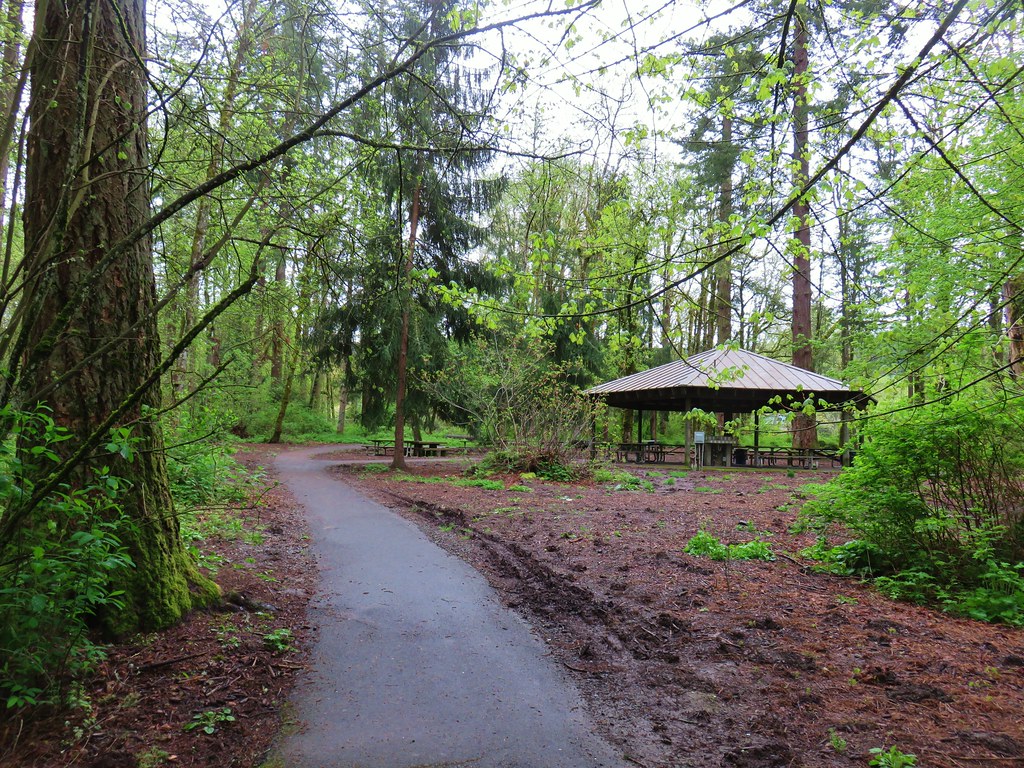
This 0.1mi path looped back to the Riverside Loop Trail which we followed uphill past a picnic shelter.

Mary S. Young Park

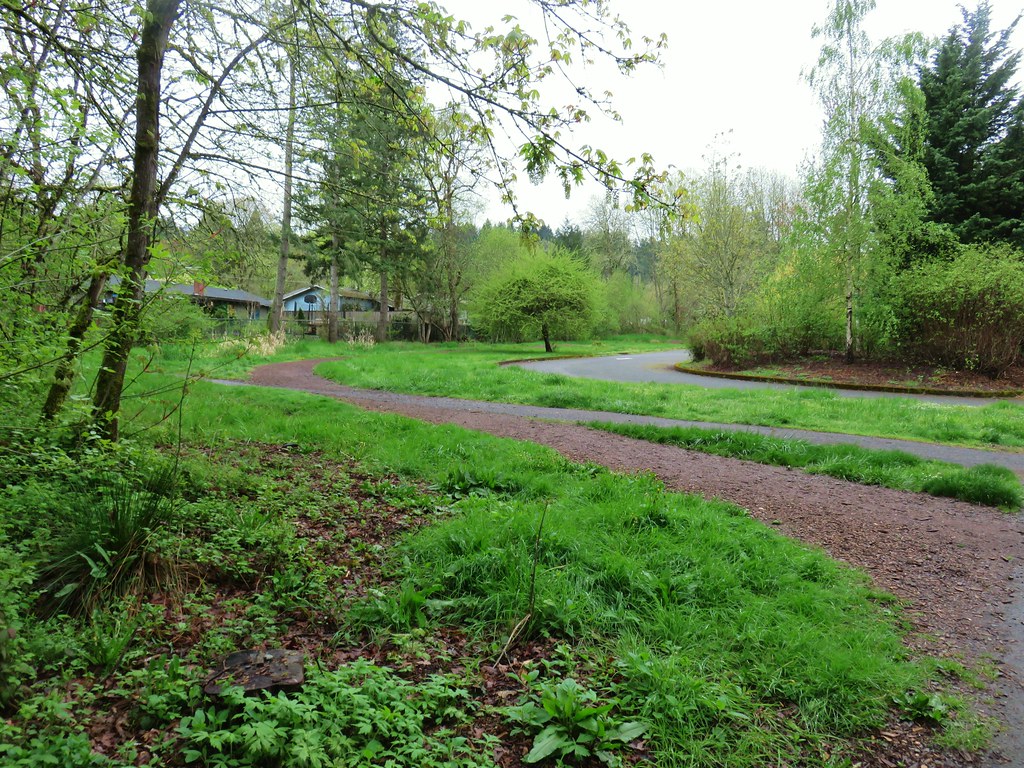
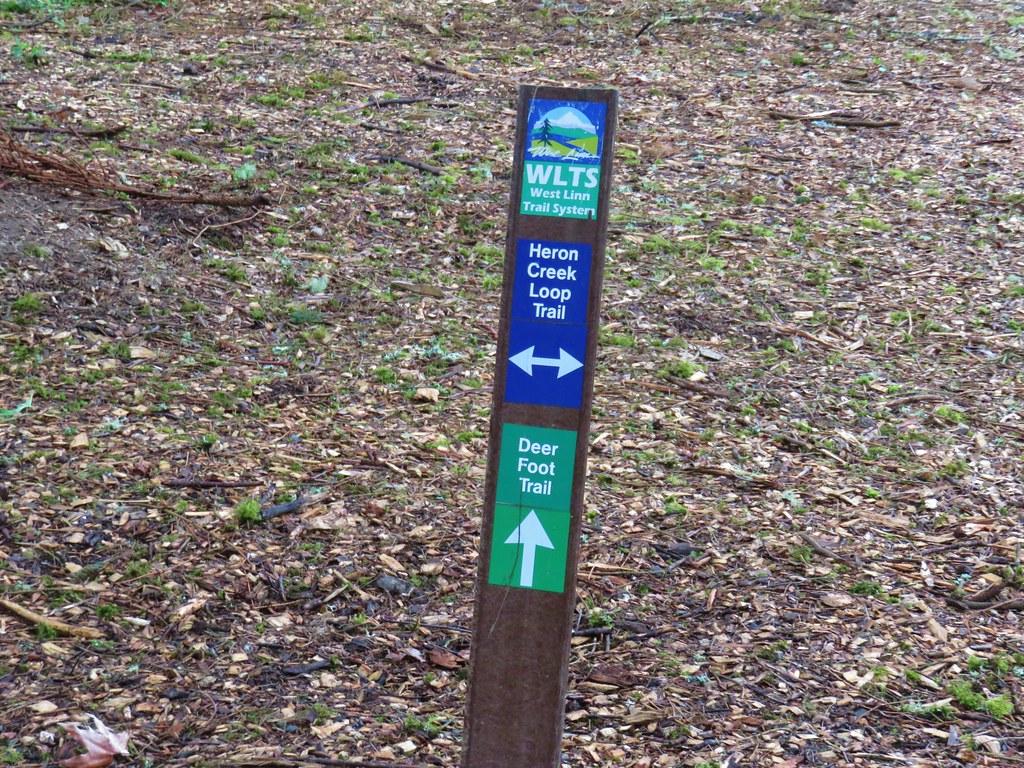
The path continued to the southern end of the parking lot where we had started. Here we veered left onto the unpaved Heron Creek Loop Trail.

Heron Creek Loop Trail

We followed this trail as it passed the parks ball fields and some busy squirrels.

Mary S. Young Park

Squirrel

At the far end of the fields we spotted only the second pointer we had seen along the trails where we stayed on the Heron Creek Loop Trail as it headed back into the woods.

Heron Creek Loop Trail

Heron Creek Loop Trail

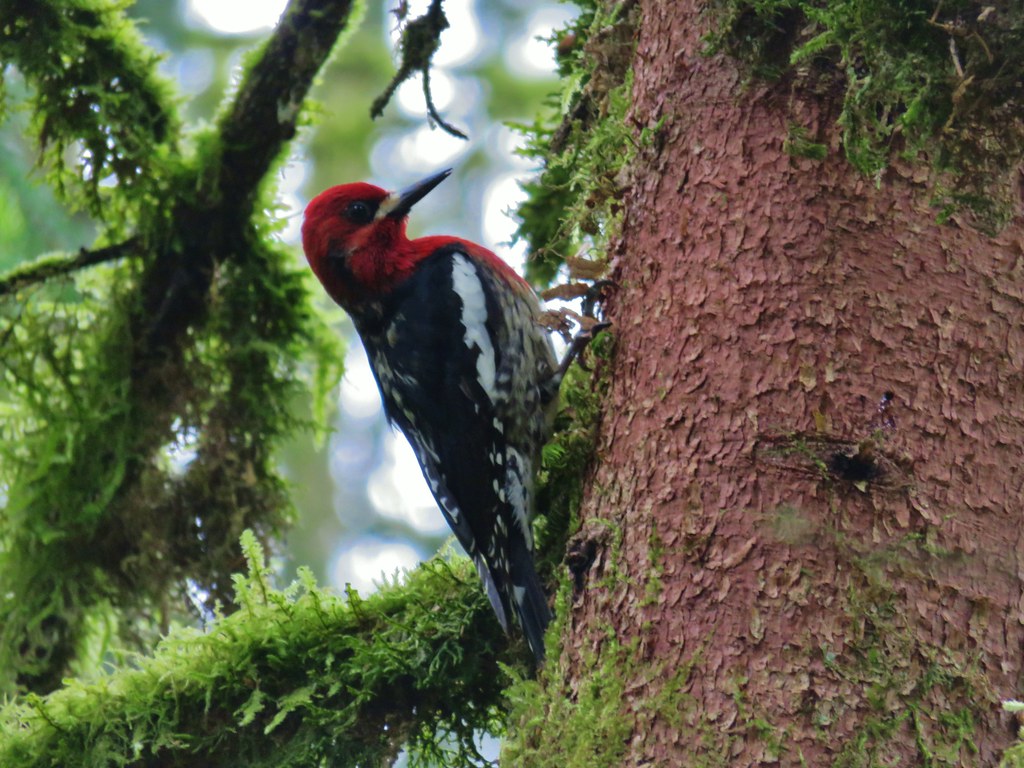
Back in the woods we spotted a pair of woodpeckers in the same area. One appeared to be a hairy woodpecker while the other was a red-breasted sapsucker.

Hairy Woodpecker

Red-breasted sapsucker

Using the picture of the map on Heather’s phone we stuck to the Heron Creek Loop by staying left at junctions and crossing over both the Trillium Trail and the park entrance road. We stayed right at the next junction opting not to take the short Eagle Scout Loop Trail then stayed straight at a junction with the the Railroad Trail. Beyond that junction the Heron Creek Loop Trail soon began a descent to Heron Creek.

Heron Creek Loop Trail

Heron Creek Loop Trail

Heron Creek

After a second descent and climb past a tributary of the creek the trail leveled out again before arriving at the Turkey Creek Trail where we turned left, crossed Turkey Creek and arrived back at the junction where we had turned onto the Turkey Creek Trial earlier in the morning. We then retraced our earlier steps back to the parking area ending a 3 mile hike through the park.

We then headed for our final stop of the day in Lake Oswego at the Tryon Creek State Natural Area. There are several possible trailheads for the park we chose to start at the large parking area near the Nature Center. (Note the Nature Center and Jackson Shelter are currently closed due to construction but the restrooms are open. No reopening date has been set as of the day of this post.)

Tryon Creek State Natural Area

We stopped by the closed Nature Center to pick up a paper map and also consulted the map on a signboard to plot out our hike. The number of trails and multiple junctions allowed for numerous possibilities. We settled on a loop utilizing the North Horse Loop, Lewis & Clark, Middle Creek, Cedar, Red Fox, and Old Main Trails.

Map for Tryon Creek State Natural Area

From the Nature Center we followed a brick path right (north) to another map.

Tryon Creek State Natural Area

We stayed straight for a tenth of a mile passing the Maple Ridge Trail on the left just before a junction with the North Horse Loop.

Tryon Creek State Natural Area

This wide path led through a green forest with violets and trillium.

Tryon Creek State Natural Area

Violets and trillium

After .2 miles we stayed left ignoring the right hand route leading to a bicycle path and then quickly veered right when the North Horse Loop split creating two loop options.

North Horse Loop

This right hand path swung north another .4 miles to a junction with the Lewis and Clark Trail.

North Horse Loop

Lews and Clark Trail

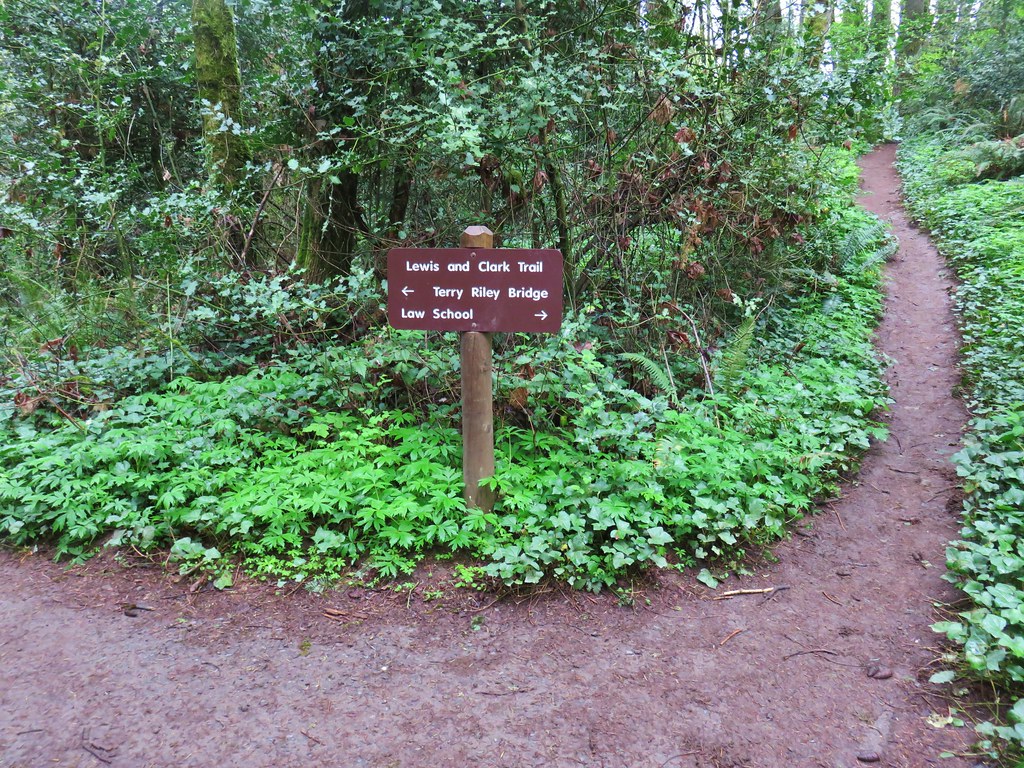
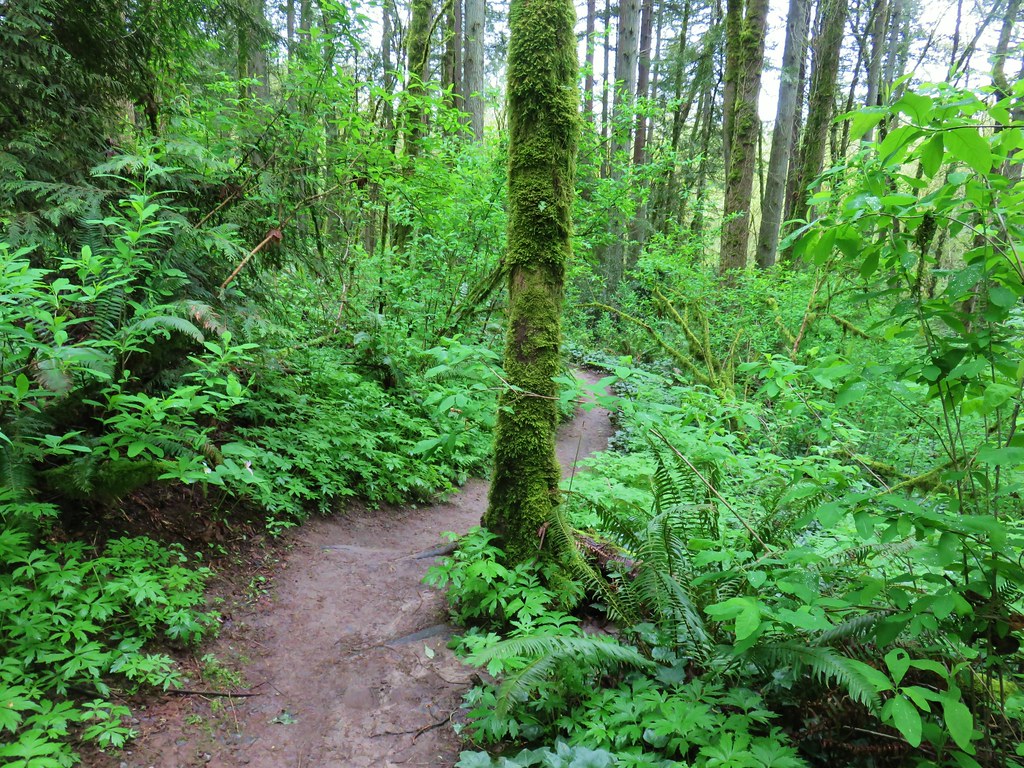
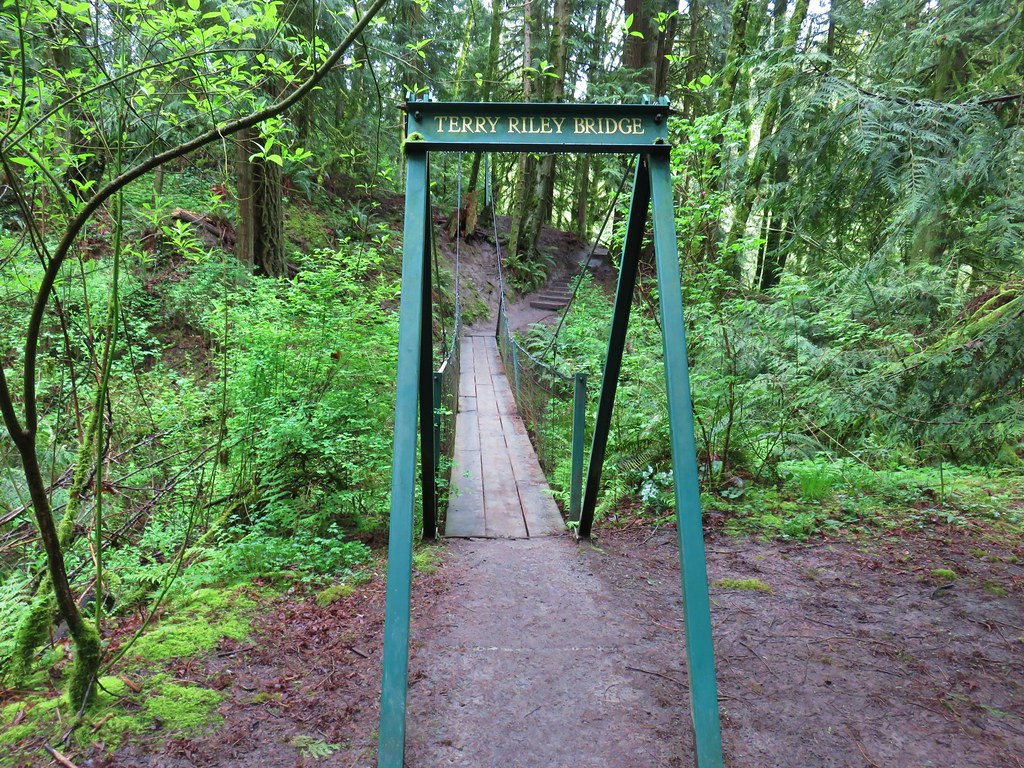
We followed pointers for the Lewis and Clark Trail and Terry Riley Bridge. The trail descended along a hillside above East Fork Tryon Creek to the small suspension bridge which passed over a side stream.

Lewis and Clark Trail

Lewis and Clark Trail

Terry Riley Bridge

Terry Riley Bridge

On our way down we passed a stump hosting a pair of snails. We actually spotted quite a few in the park.

Snails on a stump

Snail

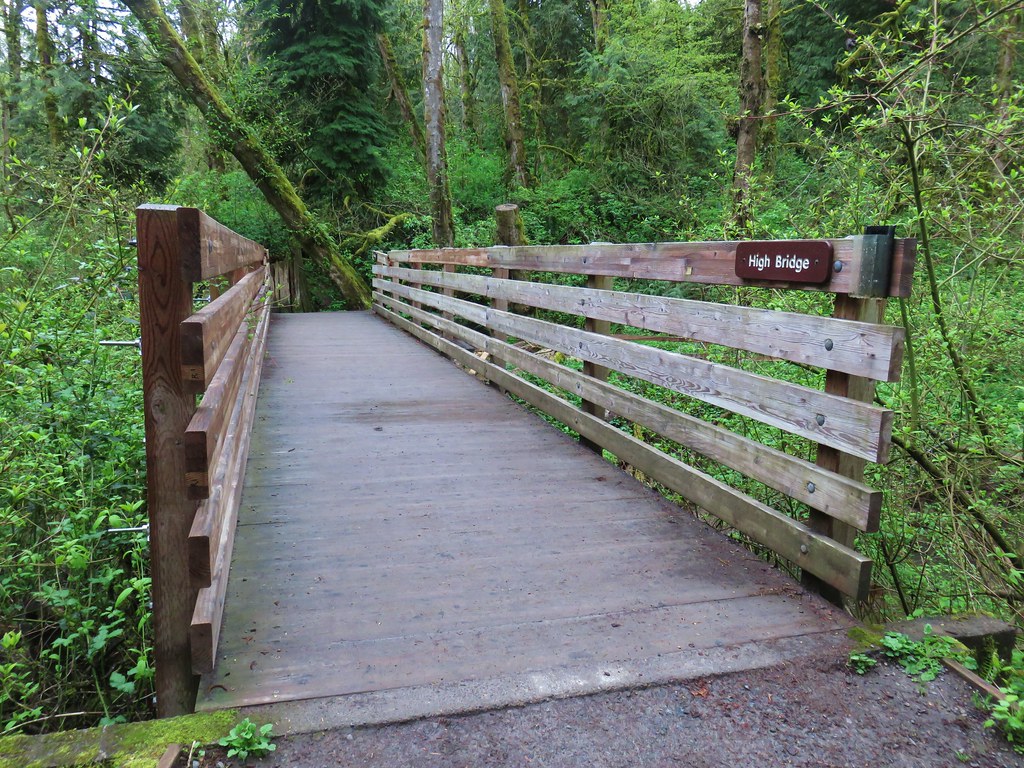
Beyond the suspension bridge .2 miles we rejoined the equestrian trail and crossed over Tryon Creek on High Bridge.

High Bridge

Tryon Creek

The trail split on the far side of High Bridge where we opted to go left on the hiker only Middle Creek Trail.

Tryon Creek State Natural Area

We followed this path for .2 miles across a boardwalk and along Tryon Creek to another trail junction.

Middle Creek Trail

Middle Creek Trail

At this junction we left the Middle Creek Trail crossing over the West Horse Loop and headed up the Cedar Trail.

Cedar Trail

We followed the Cedar Trail through the woods, crossing the West Horse Loop again at the .2 mile mark, then crossing Park Creek on Bunk Bridge, passing a small pond and finally crossing Paget Creek on another bridge before arriving at the Red Fox Trail a mile from the start of the Cedar Trail.

Cedar Trail

Park Creek from Bunk Bridge

Bunk Bridge

looking back at Bunk Bridge

Pond in Tryon Creek State Natural Area

Cedar Trail

Bridge over Paget Creek

Tryon Creek State Natural Area

Red Fox Trail junction.

We turned left onto the Red Fox Trail and in just over a tenth of a mile crossed Tryon Creek on Red Fox Bridge.

Red Fox Bridge

Red Fox Brdige

Tryon Creek

The trail made a brief but steep climb up to a three way junction with the Big Fir and Old Main Trail. We opted for the slightly shorter (but less crowded) Old Main Trail and turned right for .3 miles back to the Nature Center. Our route came in at 3.5 miles.

Although there were a lot of people in the park it never really felt all that crowded which was nice. There are still some trails left too so a return trip may be in order sometime in the future when the Nature Center is back open.

In all we covered 7.5 miles between the three stops and saw quite a few different flowers and a decent amount of wildlife. It had been another nice set of urban hikes. As much as we are looking forward to getting back up into the mountains once the snow melts we’re finding that these types of hikes have a lot to offer. Happy Trails!

Flickr: Camassia Natural Area, Mary S. Young Park, and Tryon Creek

Categories
Hiking Mt. Rainier Trip report Washington Washington Cascades

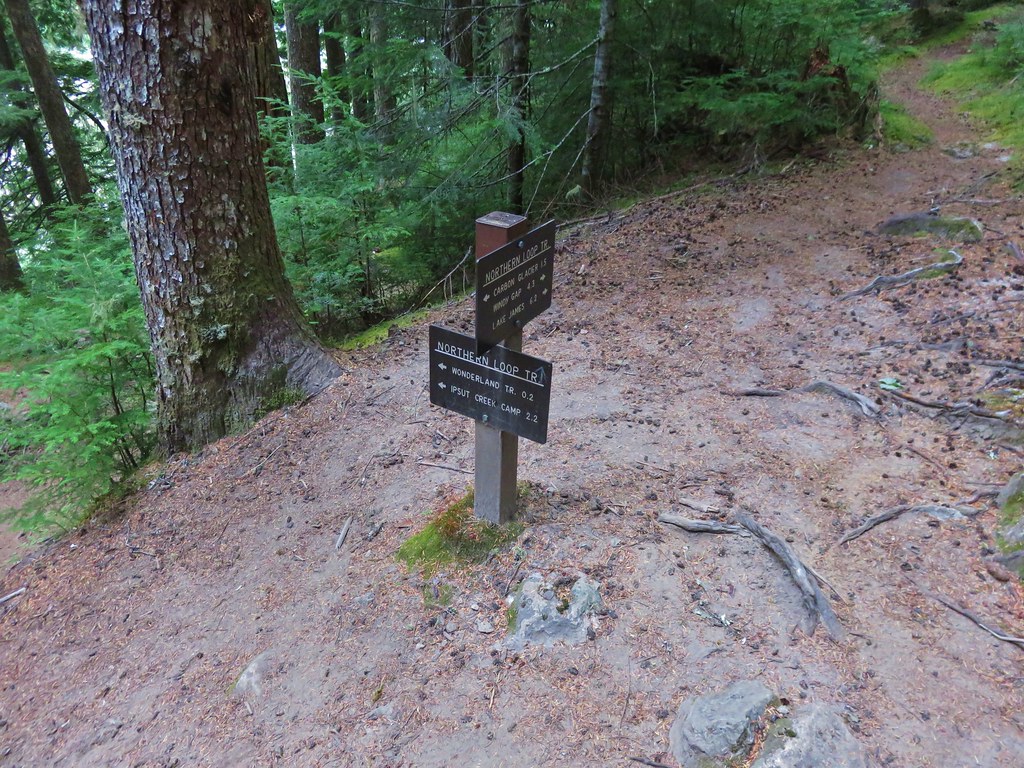
Mt. Rainier National Park – Northern Loop Day 2

The possible thunderstorms forecast for our first night had never really materialized. We heard a few rumbles in the distance but nothing had seemed close and we didn’t experience any rain overnight. The sky was a little cloudy as we packed up our tent but they seemed to be breaking up. We stopped at Mystic Lake to eat breakfast and enjoy the beautiful morning that was developing around us.
IMG_7883

IMG_7888

IMG_7889

IMG_7893

IMG_7900

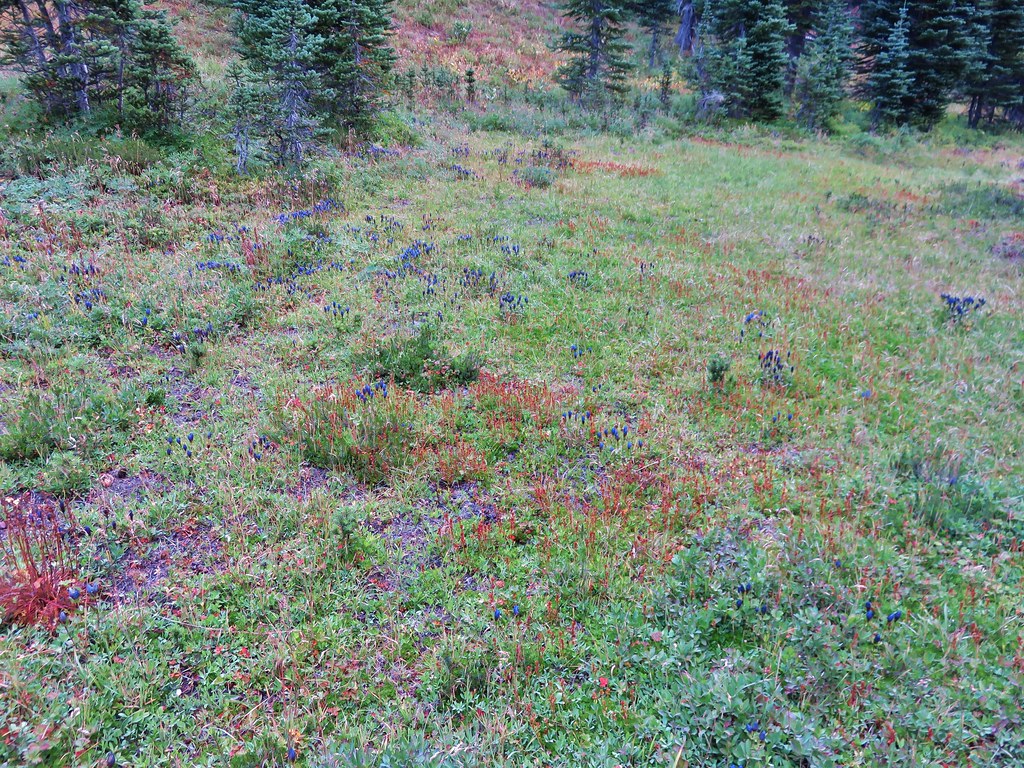
From Mystic Lake the Wonderland Trail climbed through gentian filled meadows to a saddle between the mountain and Old Desolate.
IMG_7901

IMG_7911

IMG_7910

IMG_7924

IMG_7936

We were hiking with the animals this morning passing birds, frogs, chipmunks, and an owl who silently flew over our heads and down into a lower meadow.
IMG_7945

IMG_7895

The owl flying low over the meadow just before disappearing down the hillside.
IMG_7948

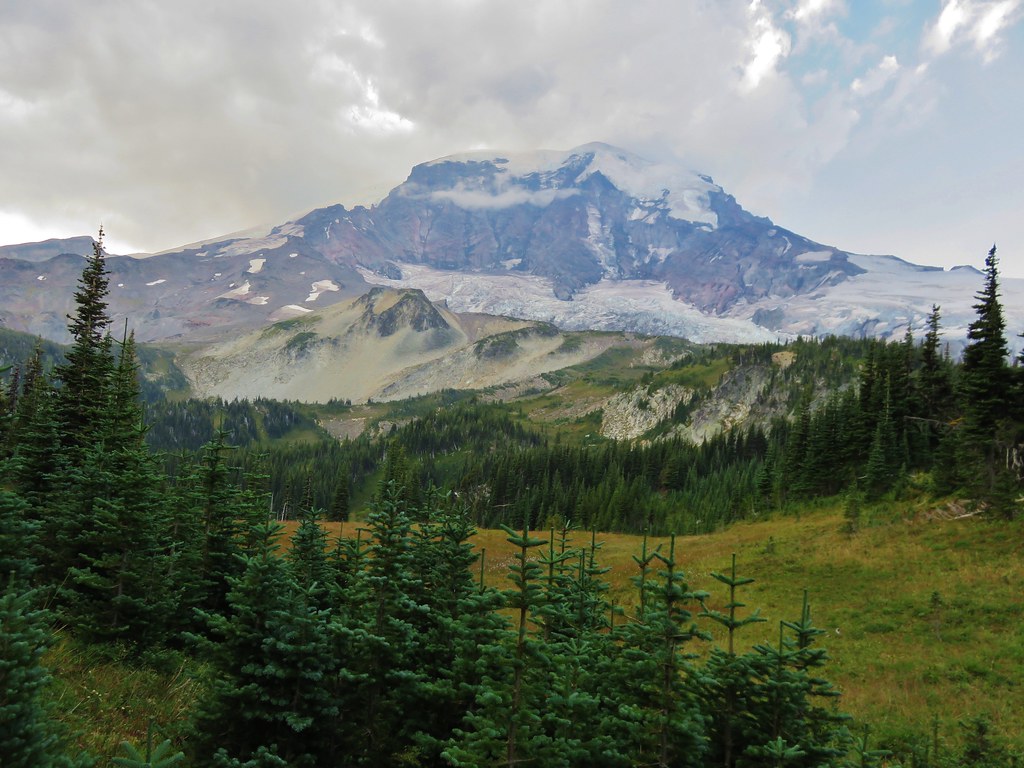
Mt. Rainier was visible beneath the ever shifting clouds as we crested the saddle. The Carbon Glacier filled the valley before us and beyond that was Echo Cliffs and Mother Mountain.
IMG_7960

Further down the glacial valley a mass of clouds covered the terrain. We were heading down toward those clouds and we remembered the rain that had been in the forecast for the day.
IMG_7959

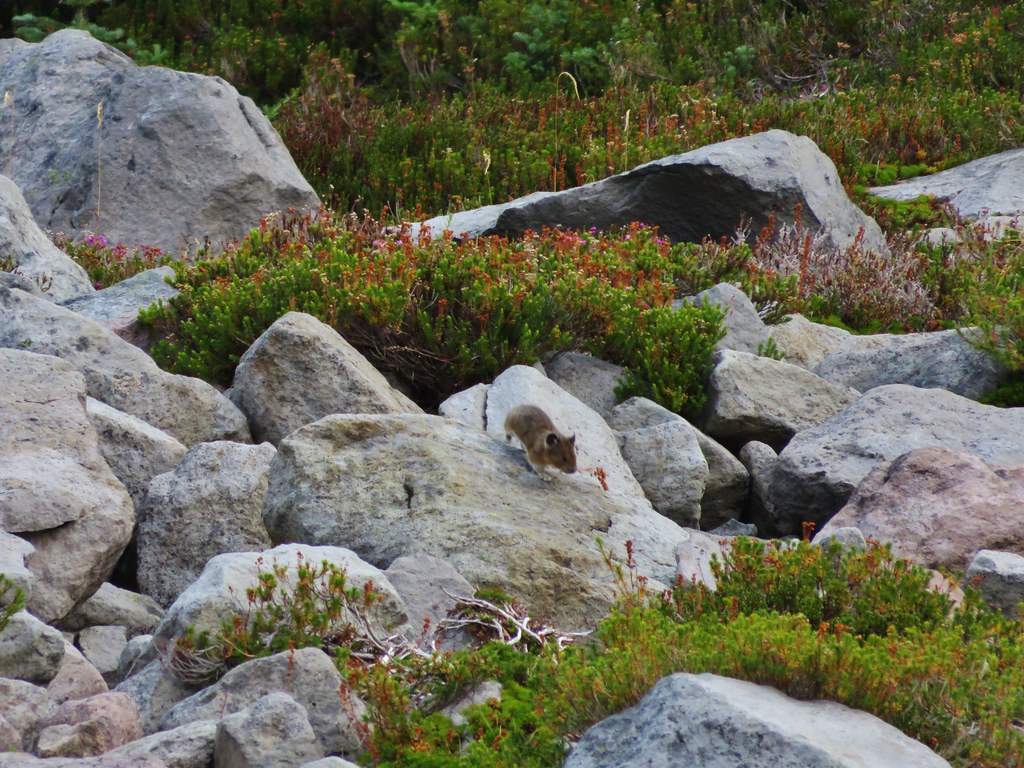
We followed the trail down to the meadows surrounding Moraine Creek. Along the way we spotted several pikas and had great views of a huge waterfall below Observation and Echo Rocks.
IMG_7963

IMG_7991

IMG_7999

IMG_7978

IMG_7969

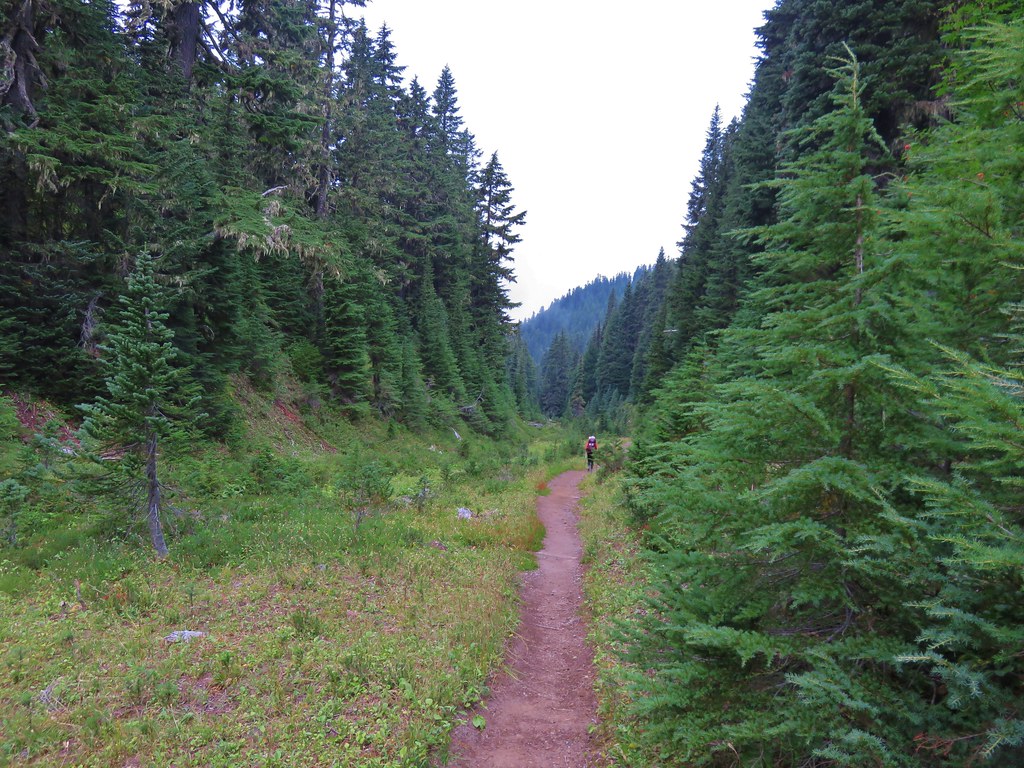
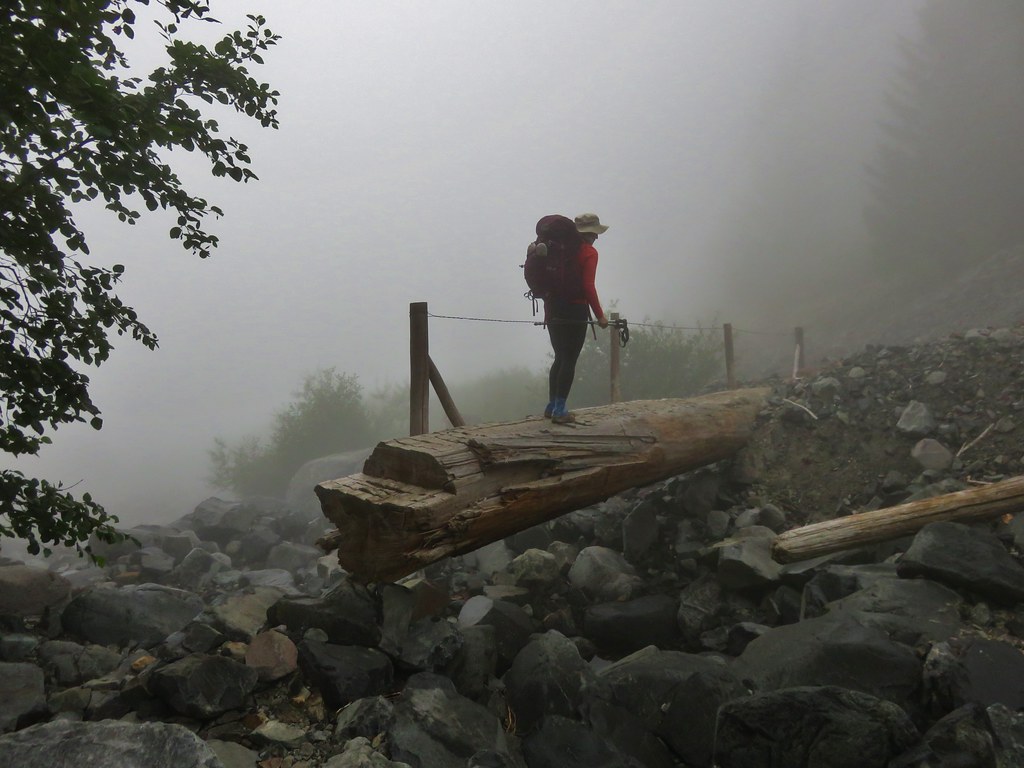
As we continued along Moraine Creek we entered the clouds.
IMG_7995

IMG_8036

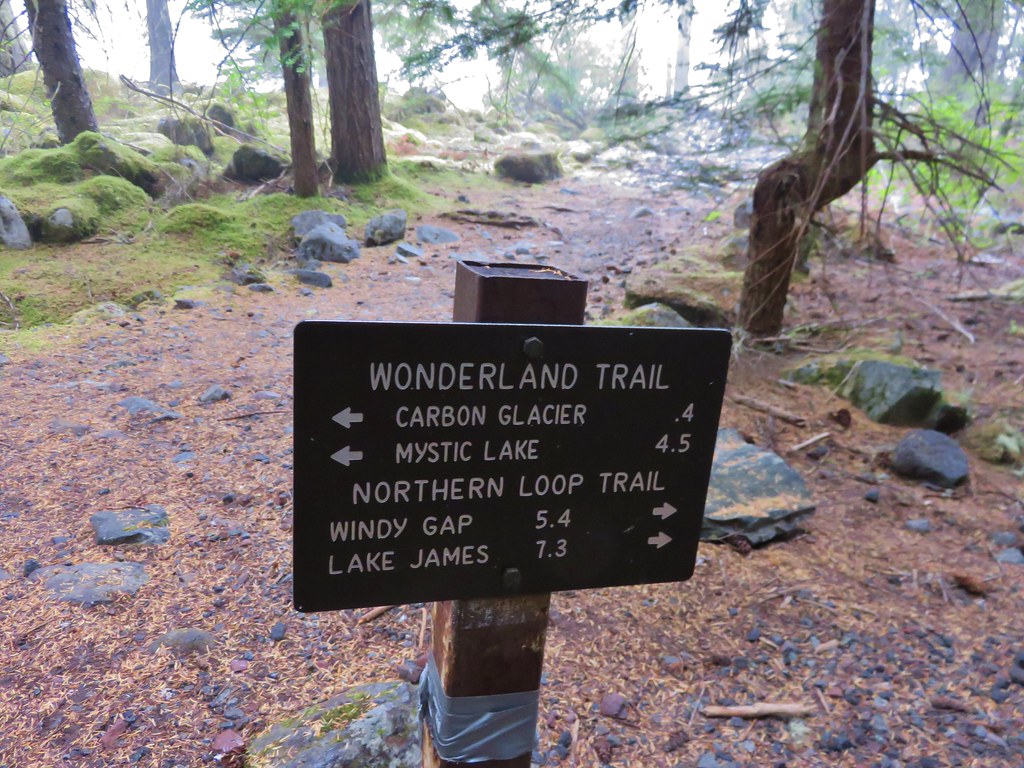
About four and a half miles from Mystic Lake we came to the junction where the Northern Loop Trail split from the Wonderland Trail. The Wonderland Trail crossed the Carbon River on a suspension bridge while the Northern Loop Trail continued to follow the river down the valley. We took a short break here and took a peek at the bridge.
IMG_8054

IMG_8055

IMG_8058

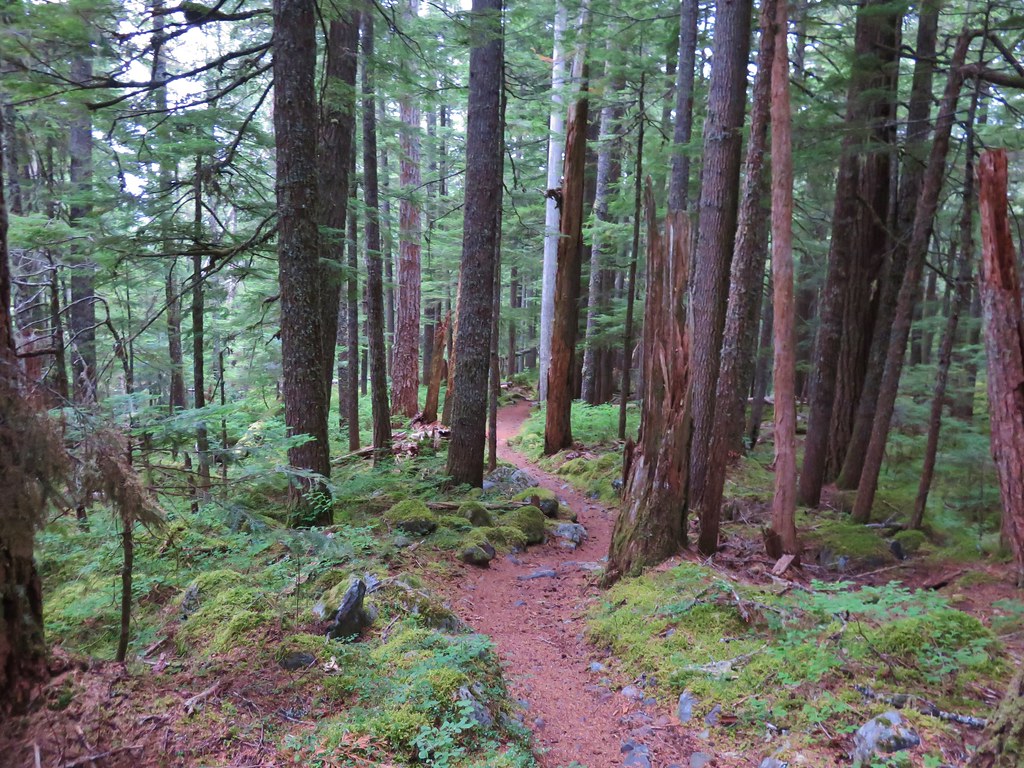
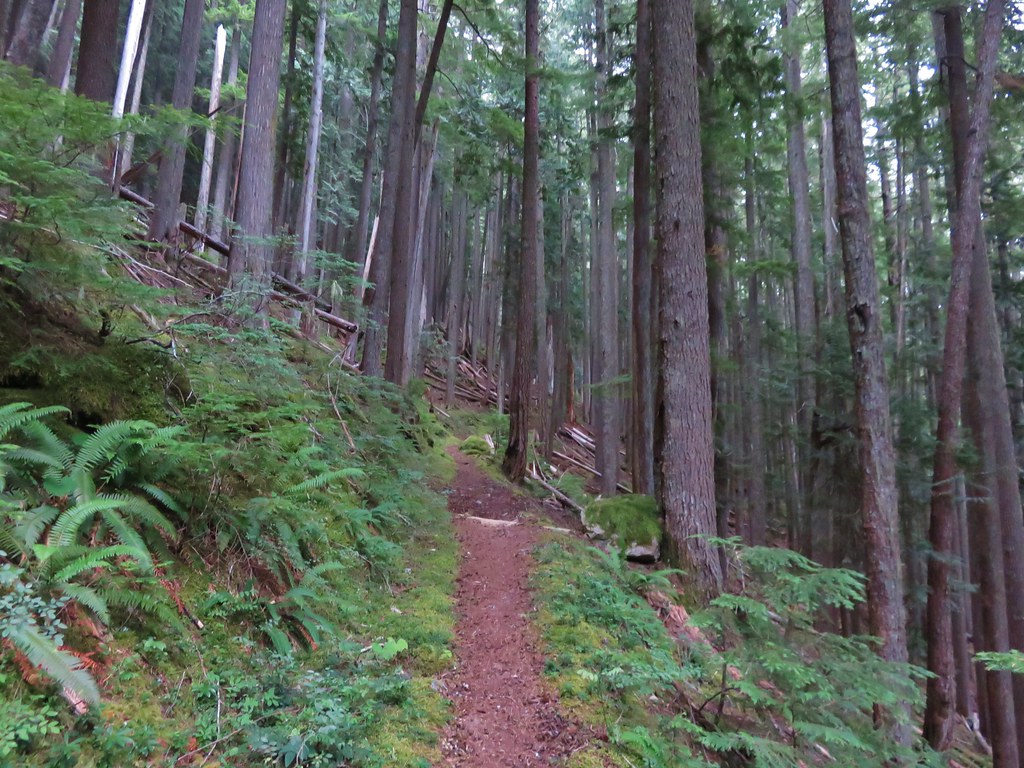
We continued on the Northern Loop Trail for another mile passing through a damp forest to another trail junction.
IMG_8059

IMG_8061

IMG_8072

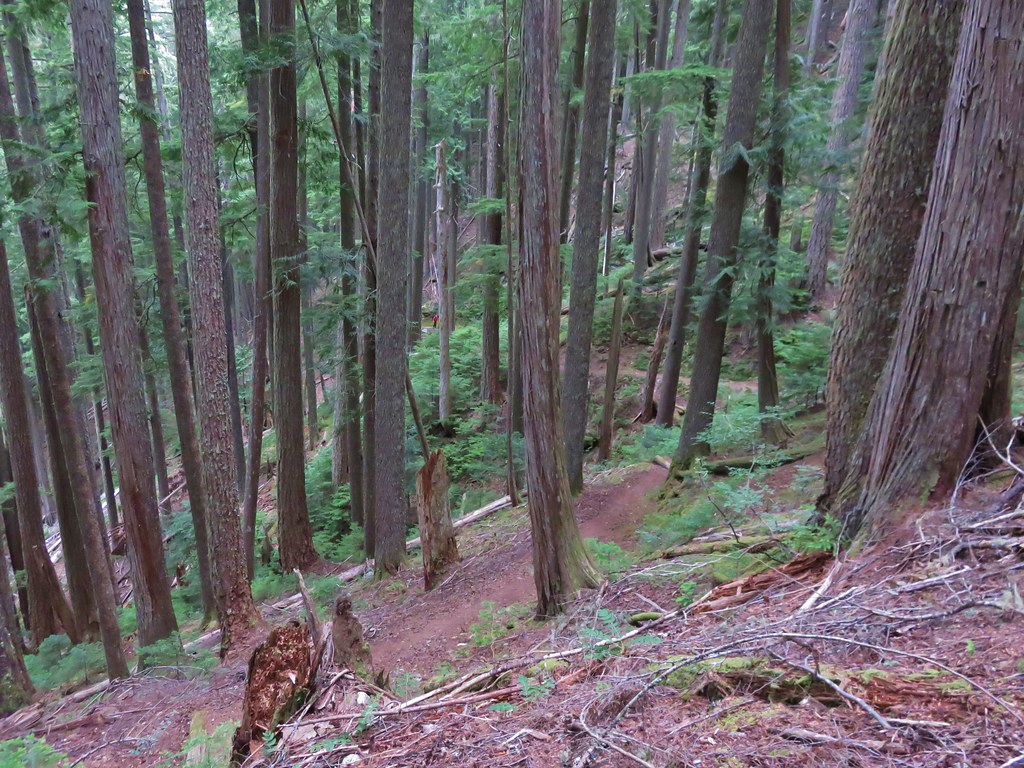
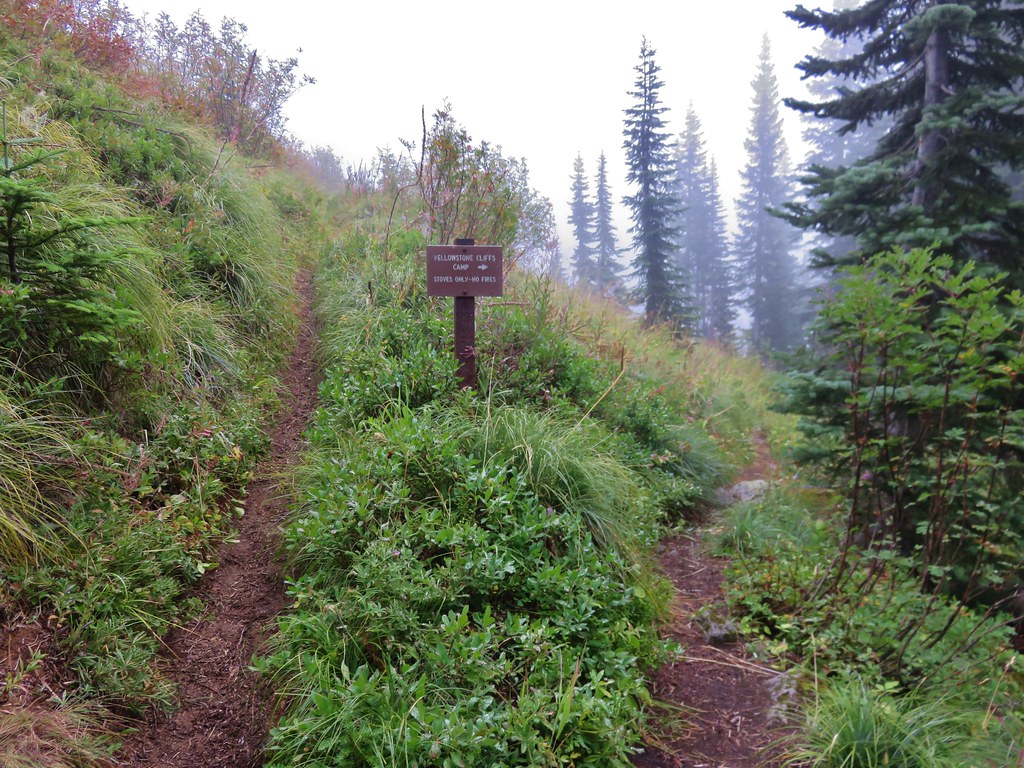
This junction was located near the lowest elevation point of our whole trip. From the junction the Northern Loop Trail turned uphill for a steep climb to Yellowstone Cliffs. We would be gaining some 2200′ in less than 3 miles to reach the spur trail to Yellowstone Cliffs Camp where we were to camp for the night. The park ranger who had given me our permits said the climb consisted of 38 switchbacks so we began counting them as we climbed. As we trudged up the hillside we were thankful for the clouds since they were keeping the temperature down. We were pleasantly surprised when we ended the switchbacks after about two dozen, well short of the 38 we had expected.
IMG_8073

Heather coming up the switchbacks.
IMG_8074

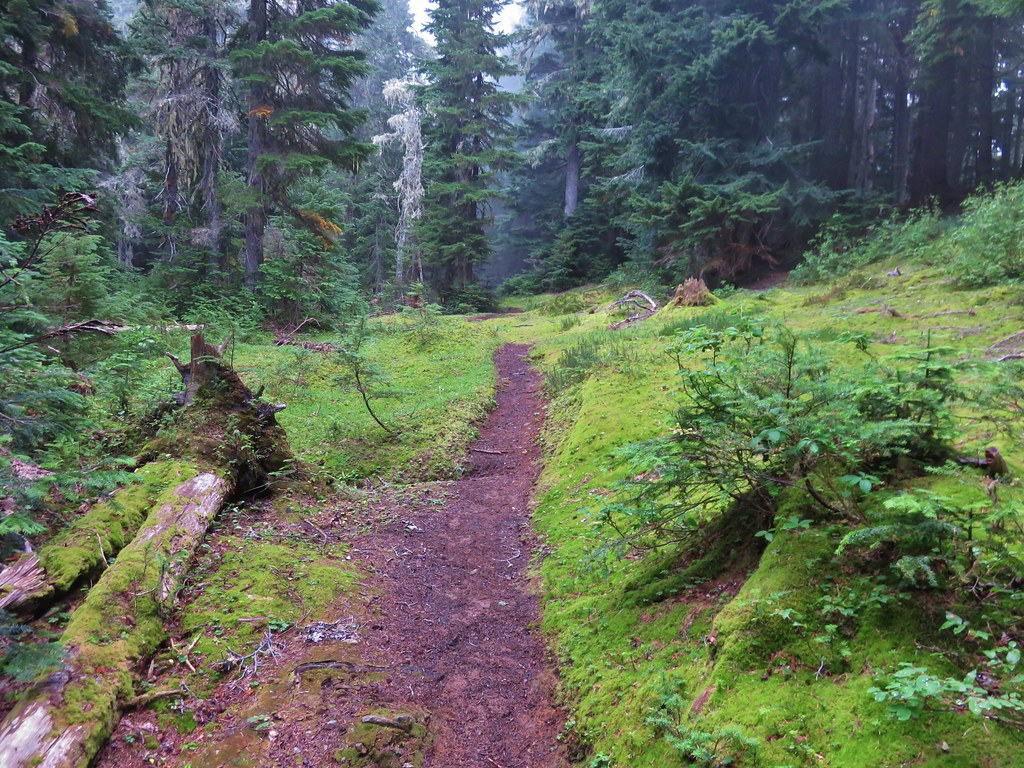
The trail became less steep after the swtichbacks before entering the meadows below Yellowstone Cliffs. The cliffs were shrouded in clouds as we started down the spur trail to camp.
IMG_8075

IMG_8080

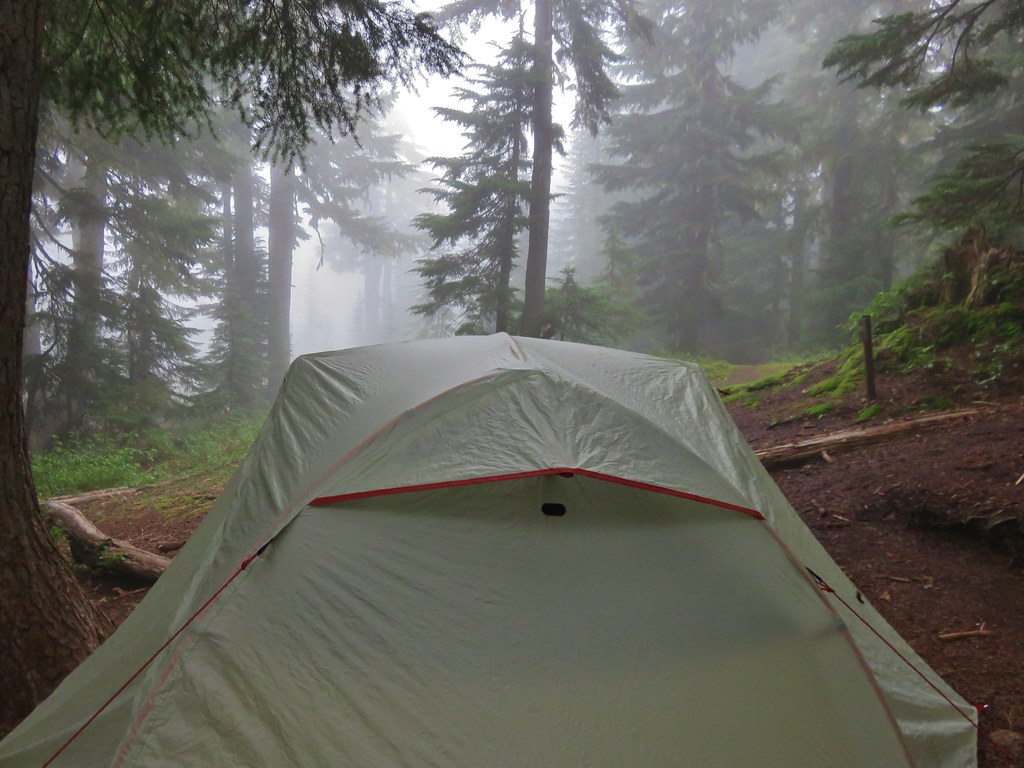
By the time we arrived at the tent sites we were soaked due to the moisture on the plants. We quickly picked out our site and set up our tent.
IMG_8086

Shortly after getting set up the rain began. It was early afternoon when it started and it wouldn’t let up until sometime during the night. This was our first experience with backpacking in the rain and we were a little concerned about our ability to stay dry. This became more of a concern when I noticed water pooling up outside of the tent near our heads. The ground was so dry and hard that the water wasn’t being absorbed at all. I quickly grabbed our trowel and attempted to drain and steer the water away from the tent. We’d also managed to forget to keep any food out for dinner. When it had started raining I ran the bear bag down to the bear pole and hung it without pulling anything out for dinner. We were left with some peanut m&ms, a small package of green olives, and a meat and cheese stick package apiece.

We stayed in the tent except for a quick trip the bathroom before attempting to sleep. Heather didn’t seem to have any trouble but I had a difficult time. The rain kept coming and I couldn’t stop wondering if we would stay dry and on top of that there was an occasional sound of large rocks falling from the cliffs. The camp was far enough away that I wasn’t worried about them at the time, but I wondered what would happen if they were still falling while we were on the trail in them morning. To top it all off my stomach decided that it really would have enjoyed dinner and that made it just a little harder to get any sleep. I managed to get a couple of hours of broken sleep waiting for morning to arrive. Happy (dry) Trails!

Flickr: https://www.flickr.com/photos/9319235@N02/sets/72157657416432875

Categories
Central Coast Hiking Oregon Oregon Coast Trip report

Harts Cove & Drift Creek Falls

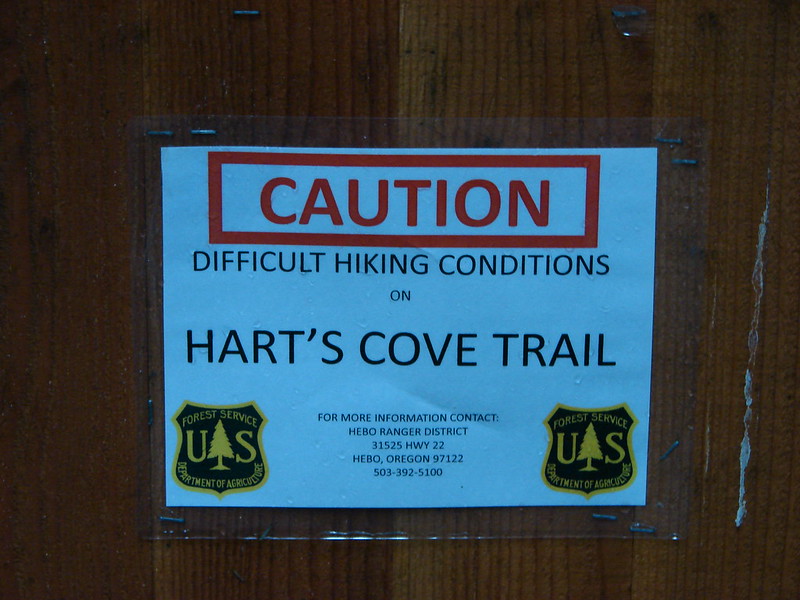
It has become a tradition to finish off our hiking year either on the Oregon Coast or in the coast range. This year we targeted a pair of shorter hikes to keep the tradition alive. For the first of these two hikes we traveled to Cascade Head just north of Lincoln City in order to visit Harts Cove where a waterfall spills into the Pacific Ocean. We parked at the Cascade Head Upper Trailhead along road 1861 at a sign post for the Nature Conservancy Trail. A trail here led off for a mile to Cascade Head’s upper viewpoint which we had visited before. In order to find the Harts Cove Trailhead we walked another .9miles down road 1861 where a large parking area with plenty of signs marked the start of the trail. We could have driven here but were contemplating hiking to the upper viewpoint later if the sky cleared so we decided to park at the upper trailhead.
DSC08186

One of the signs warned of difficult hiking conditions on the trail which piqued our interest.
DSC08187

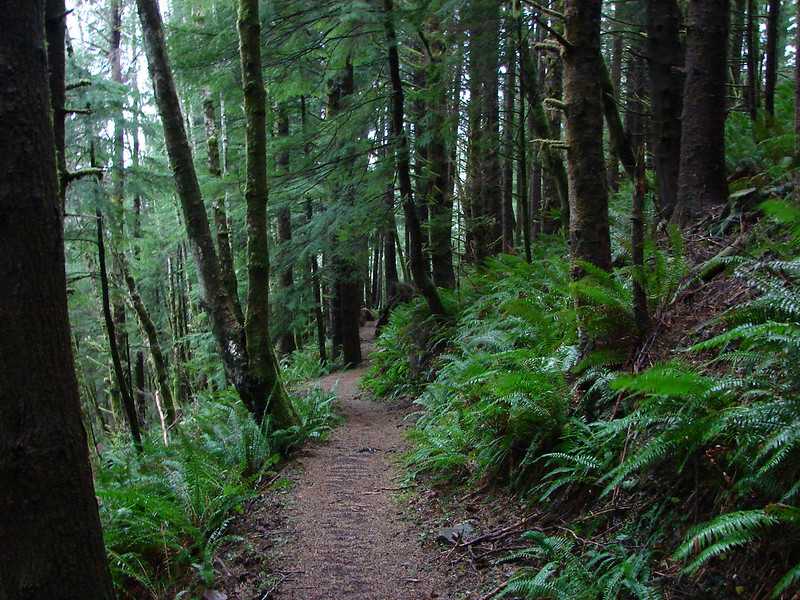
The trail started out by diving fairly steeply downhill through the forest for the first half mile then descended more gradually to a bridge across Cliff Creek.
DSC08192

DSC08193

Cliff Creek

After crossing the creek the trail turned back toward the ocean along a ridge. We could hear a number of sea lions on the rocks below but could only get small glimpses of them across the water through the trees.
DSC08200

As the trail wound around the ridge end there was a bench that offered an obstructed view across Harts Cove to a meadow which was where the trail would end. The trail then bent back leading us around the cove. We crossed Chitwood Creek which appeared to have once had a bridge but it was now in pieces further down the creek.
DSC08207

We had been in clouds and fog for most of the hike but as we came out of the forest into the meadow we could see clearer skies out over the ocean. The trail was steep here also and muddy making it a bit slick.
Looking down the trail:
DSC08210

Looking up from below:
DSC08269

North toward Cape Lookout:
Cape Lookout from the meadow near Harts Cove

South toward Cascade Head:
Cascade Head

The sea lions could still be heard across the way below Cascade Head, and now we could see them better.
Sea Lions and Seagulls

We followed the trail down and around to the left toward Harts Cove so that we could get a view of Chitwood Creek’s waterfall. We were surprised to find a handful of flowers in bloom including a number of Salal bushes.
DSC08234

The waterfall turned out to be very picturesque as it fell down into the surging ocean.
Harts Cove and Chitwood Creeks waterfall

Chitwood Creek waterfall

DSC08268

There was a nice open spot below a tree where we stopped for a snack and to remove some of the unnecessary layers of clothes we had on. While we were resting there Heather spotted a hummingbird that was interested in my orange jacket. It was zipping about, landing occasionally and then darting back into the air. I was snapping pictures frantically trying to get some sort of picture before the hummingbird disappeared. I wasn’t sure if I’d managed to get anything until we got home, but I wound up getting lucky with a single shot.
Hummingird in the meadow near Harts Cove

As we headed back up the steep trail we noticed that Haystack Rock near Pacific City was shinning in full sunlight.
DSC08270

We returned the way we’d come and decided to skip the upper viewpoint because it still appeared to be enveloped in the clouds. This hike had been 7.6 miles which included the unnecessary 1.8 miles due to parking at the upper trailhead.

Our next stop was Drift Creek Falls which is located in the Siuslaw National Forest between Hwy 18 & Hwy 101 along Drift Creek Camp Road (Road 17). There was a good sized parking area and restrooms at the trailhead.
Drift Creek Falls Trailhead

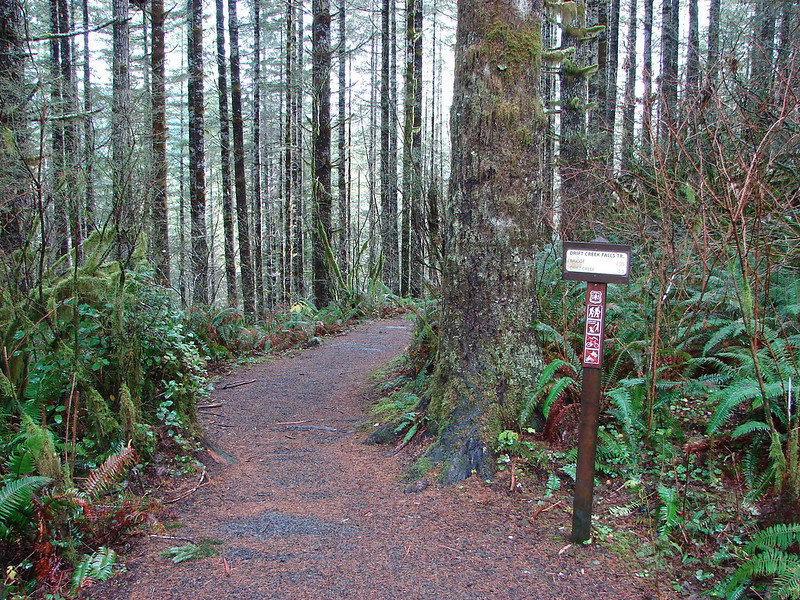
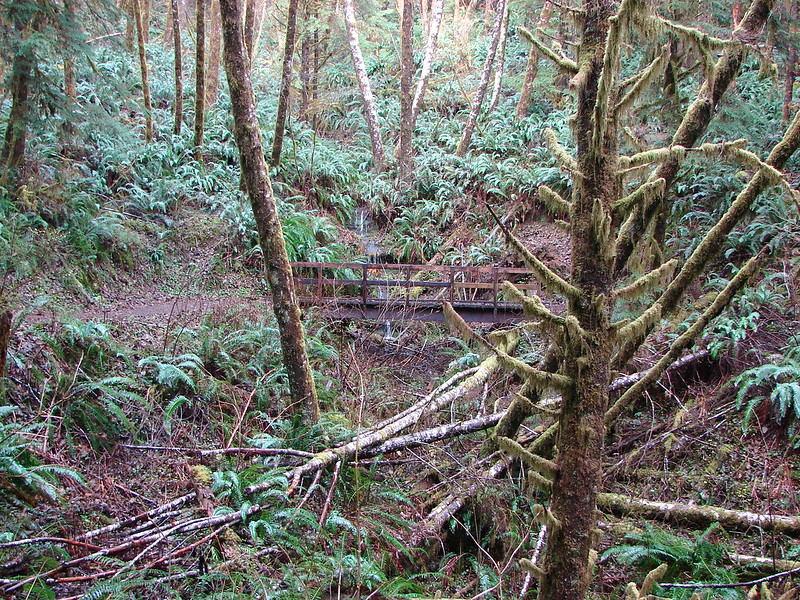
The trail leads down through the forest crossing two creeks on footbridges.
DSC08289

DSC08292

DSC08295

DSC08296

At the .7 mile mark the trail forks at a sign for the North Loop, a longer loop option which we planned to take on the way back from the falls. A third of a mile later we came to the other end of the North Loop.
DSC08322

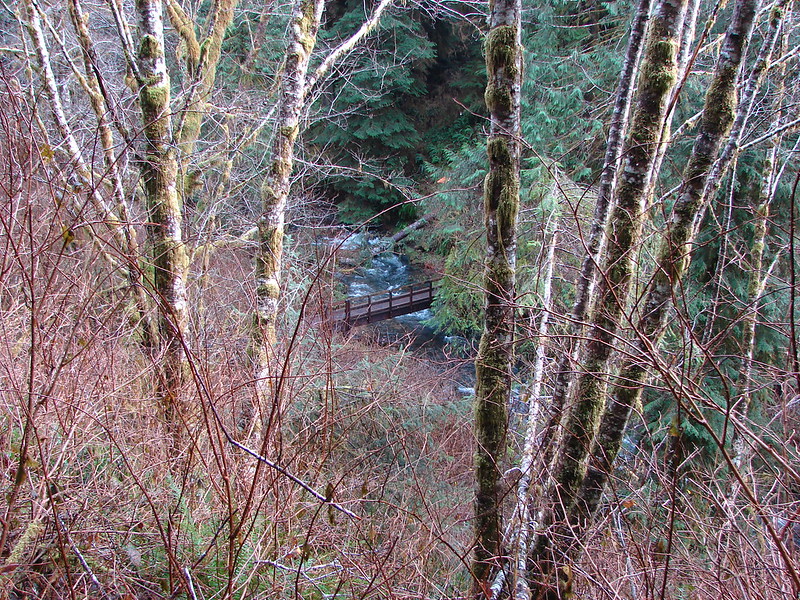
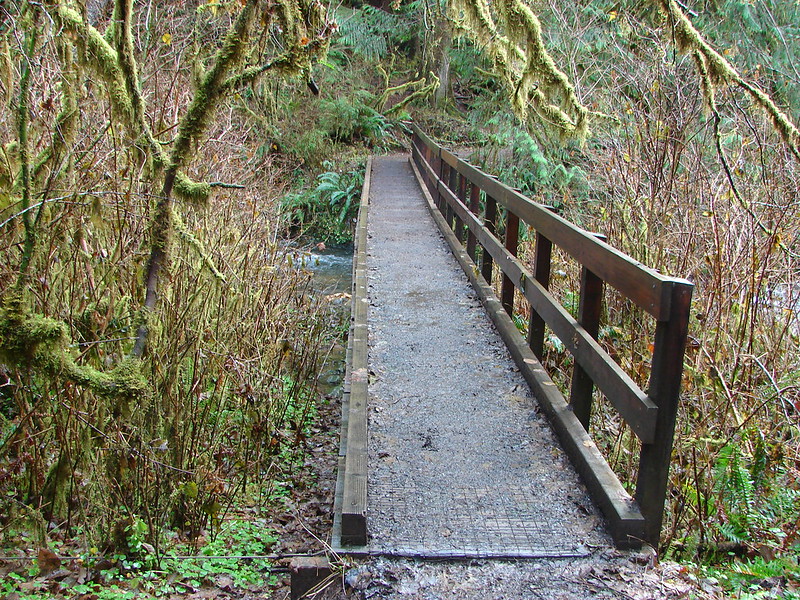
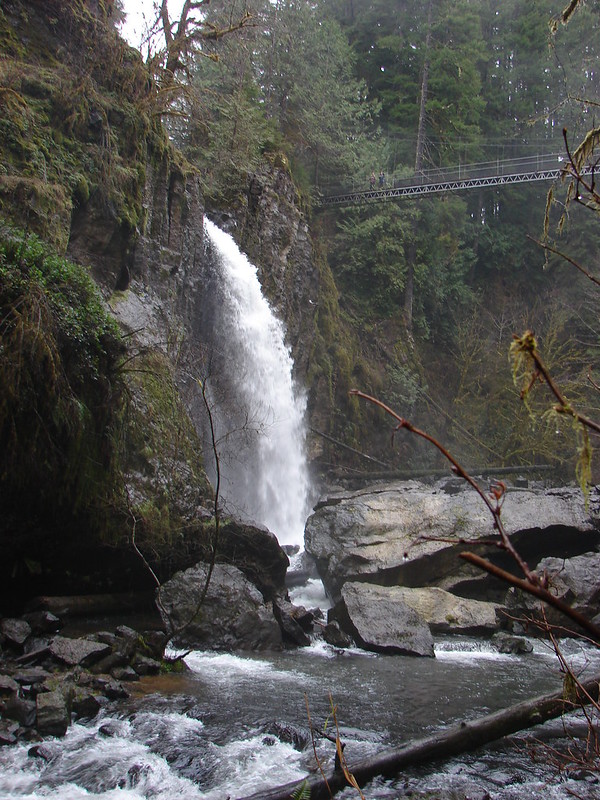
Just a short distance later we arrived at the suspension bridge over Drift Creek.
Suspension Bridge over Drift Creek

The bridge passes over the creek very close to the falls allowing for some nice views.
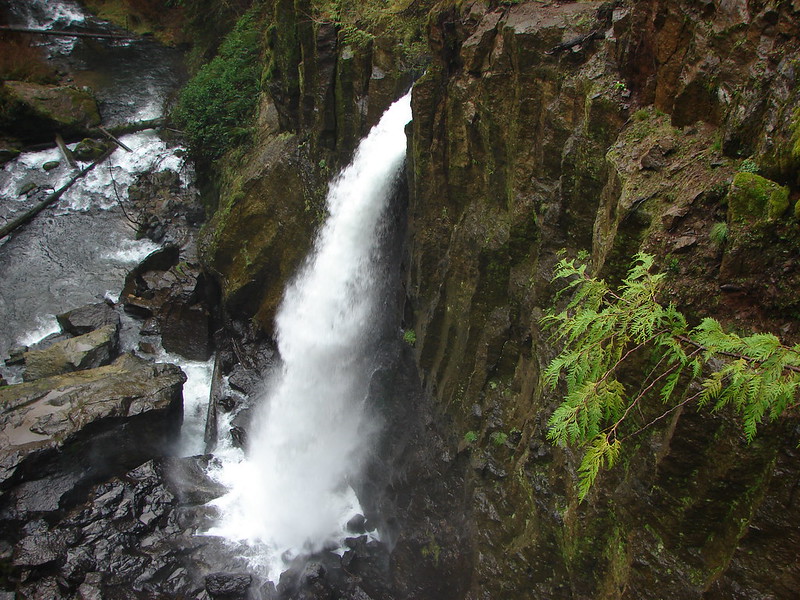
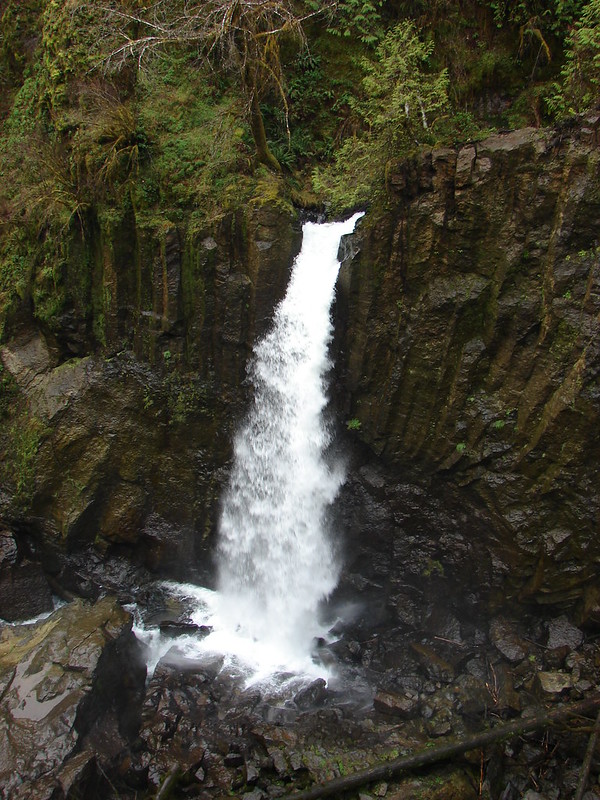
Drift Creek Falls

DSC08304

The trail continues on the far side of the bridge down to Drift Creek where we could get a different perspective.
Drift Creek Falls

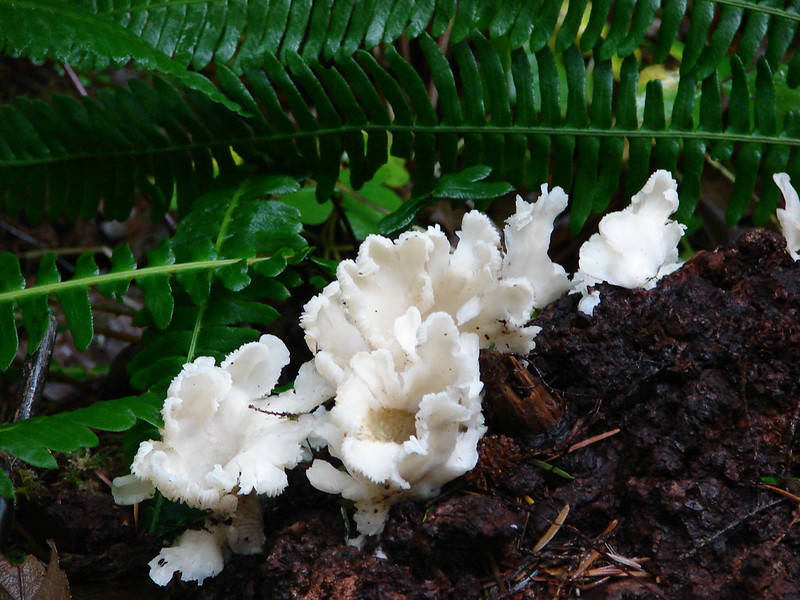
After enjoying the falls for a bit we headed back, this time taking the North Loop which would add about .7 miles to the return trip. This 1 mile section of trail climbed up and wound back through the forest. Aside from the trees and a few mushrooms there wasn’t much to see, but the trail was nice and good for a little extra exercise if wanted.
North Loop - Drift Creek Falls Trail

DSC08327

By taking the North Loop back we wound up with a total of 3.9 miles showing on the Garmin. These two trails were close enough (30 minute drive) and short enough to do in a day but they were also nice enough to stand on their own. As far as the cautions at the Harts Cove Trail we didn’t experience anything that we found too hard or scary but some of that is subjective and the trial was steep in places and the wet conditions caused a lot of mud which was slick at times. We will most likely be back to the coast sometime next month to kick off our 2015 hikes, but until then Happy Trails!

flickr:https://www.flickr.com/photos/9319235@N02/sets/72157649223220159/
facebook:https://www.facebook.com/media/set/?set=a.10205640025507123.1073741919.1448521051&type=1