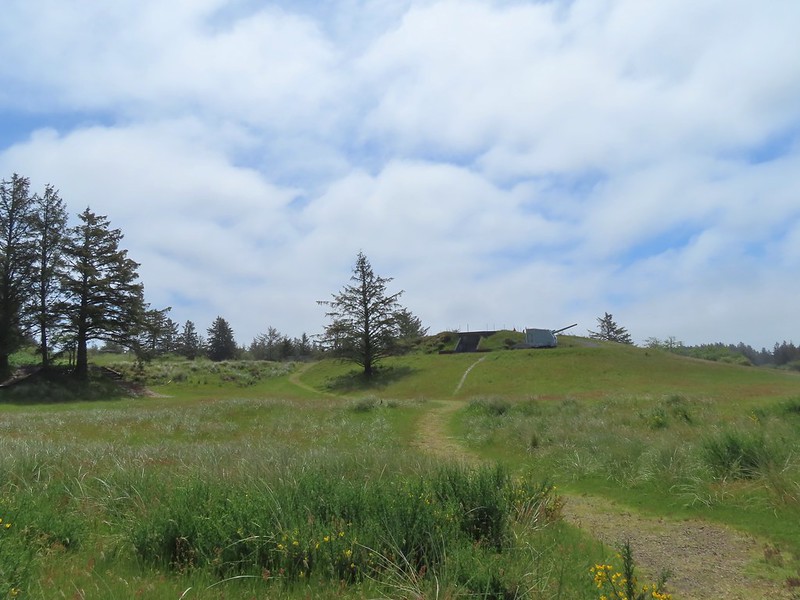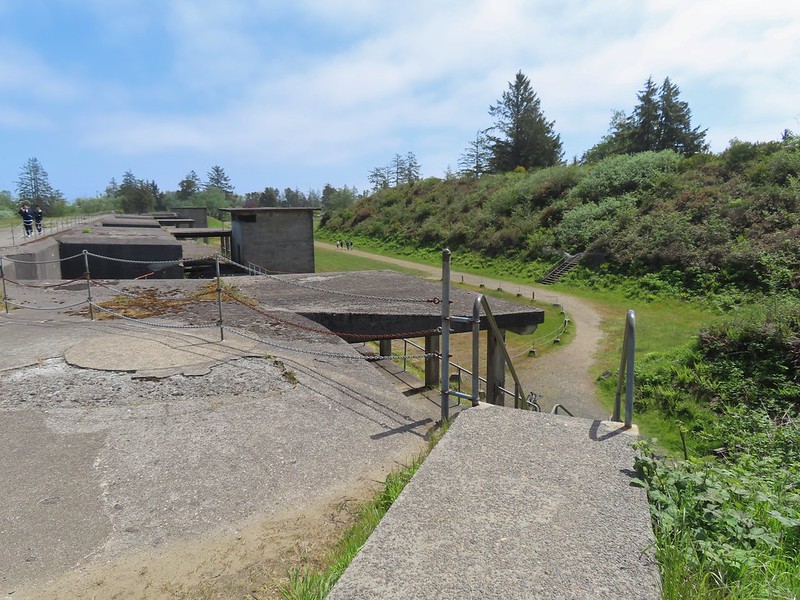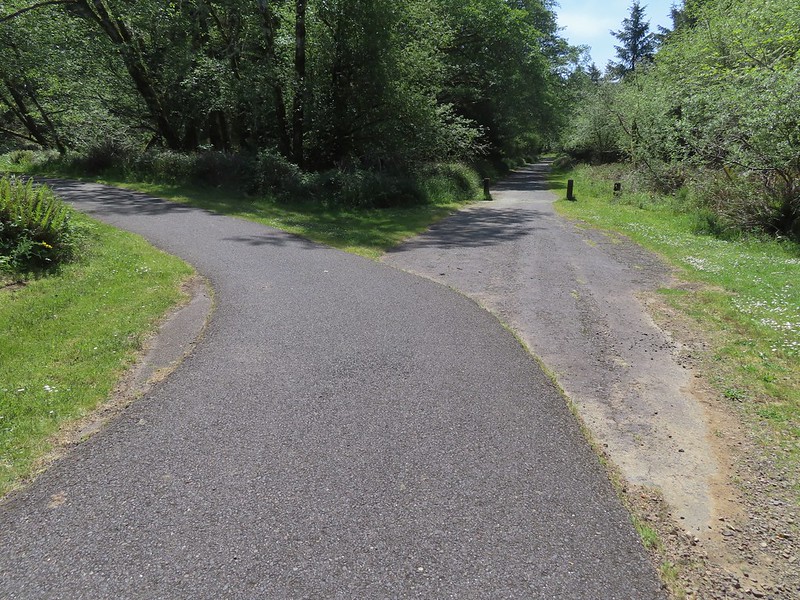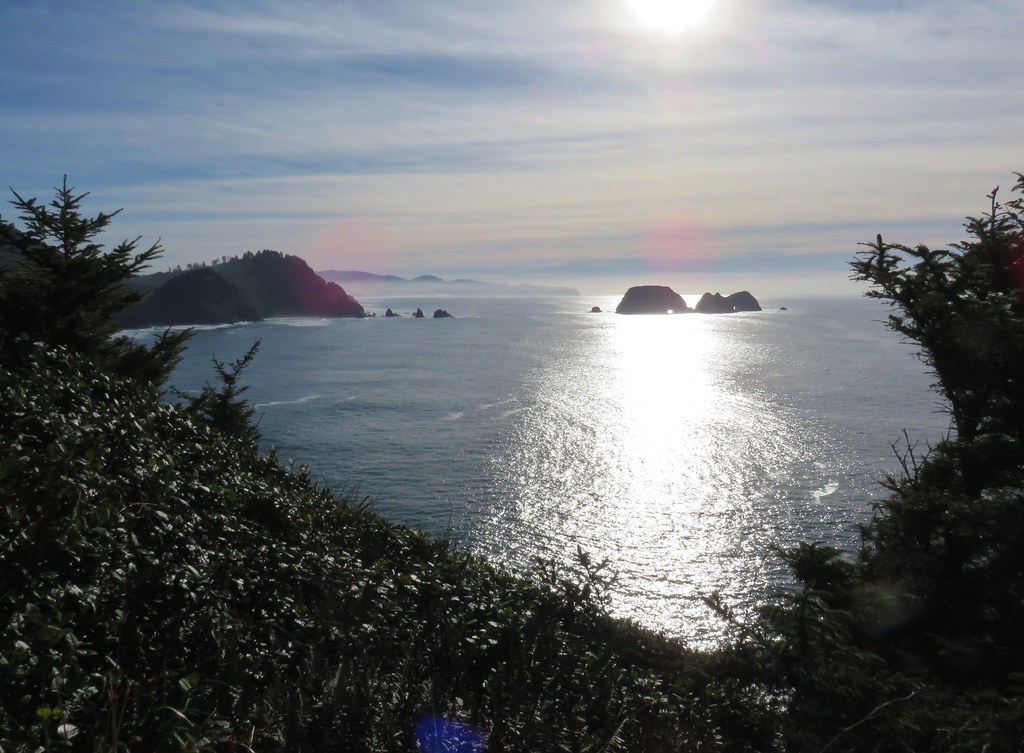
Categories
Hiking Northern Coast Oregon Oregon Coast Trip report

Elk Run Trail and Manhattan Beach – 10/11/2025

A wet system moved in toward the end of the week and prompted us to look for a good rainy-day hike. After coming up with a few possibilities along the Pacific coastline I checked several local forecasts and landed on Manhattan Beach. With that hike being roughly 7.5-miles, I looked for another nearby trail on the Oregon Hikers Field Guide which led me to the Elk Run Trail near Nehalem, OR.

We started the morning with the Elk Run hike since it was the shorter of the two at 3.6ish miles, and it was just a few miles further away than Manhattan Beach. We parked at the Alder Creek Trailhead per the entry in the Oregon Hikers Field Guide.
IMG_1944
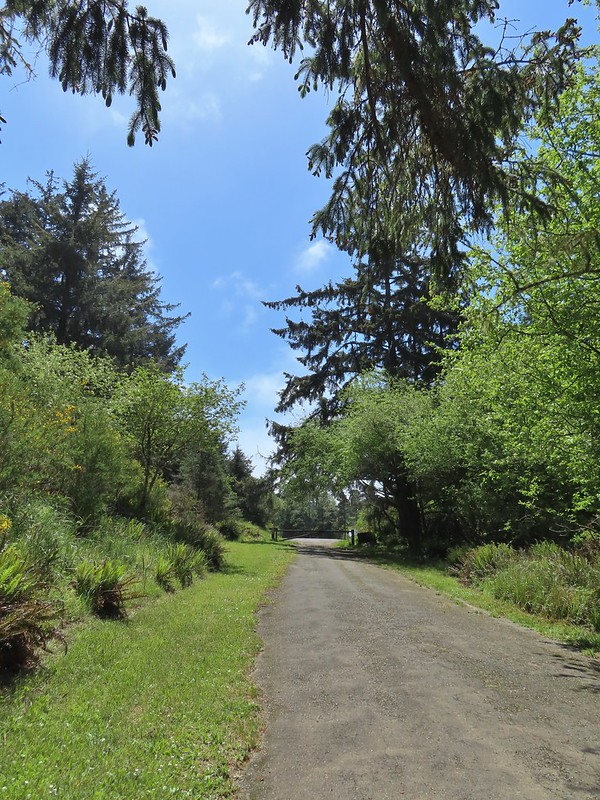
We parked along the shoulder across from the gate which is not to be blocked at any time.

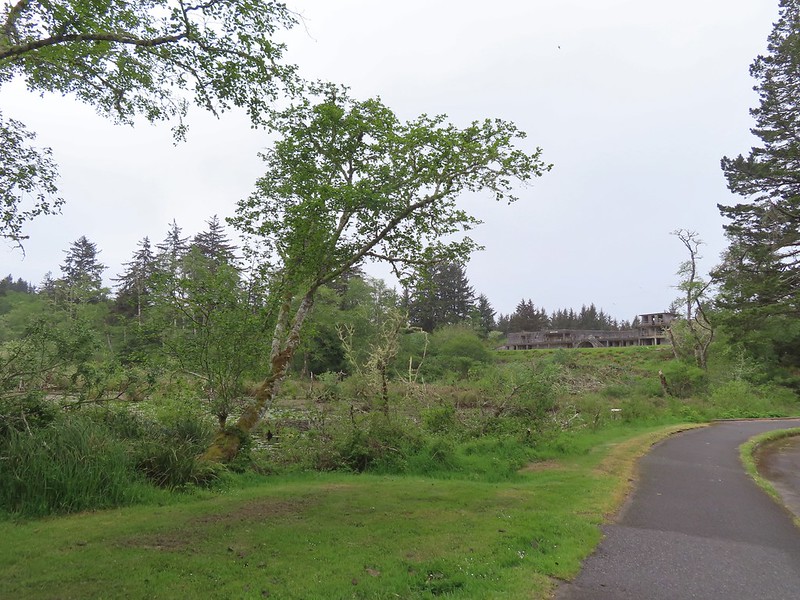
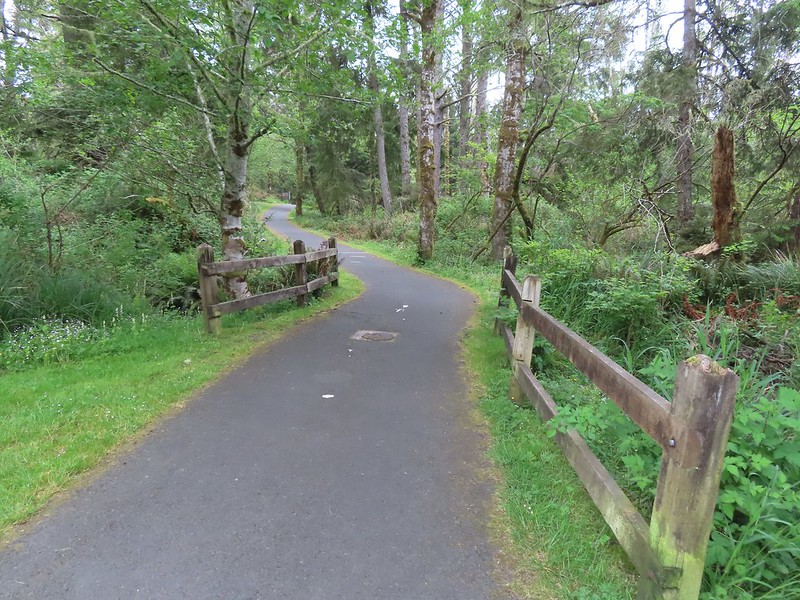
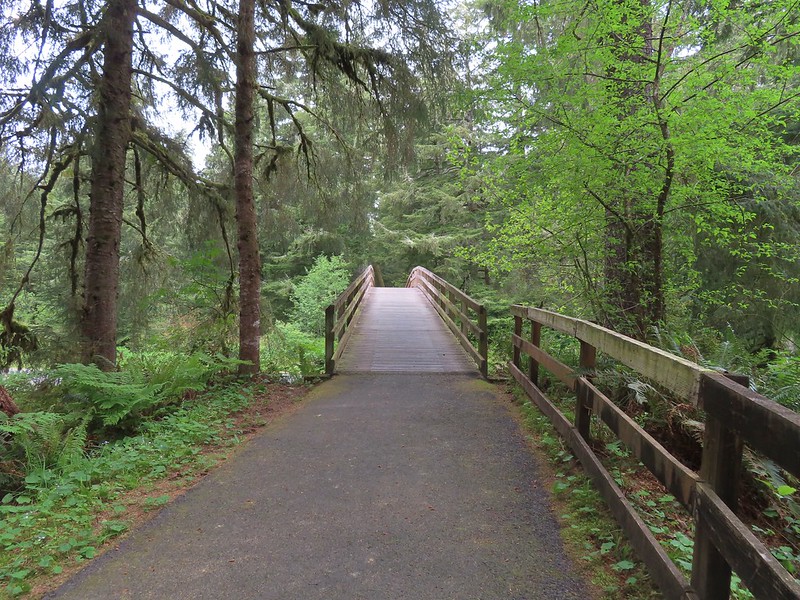
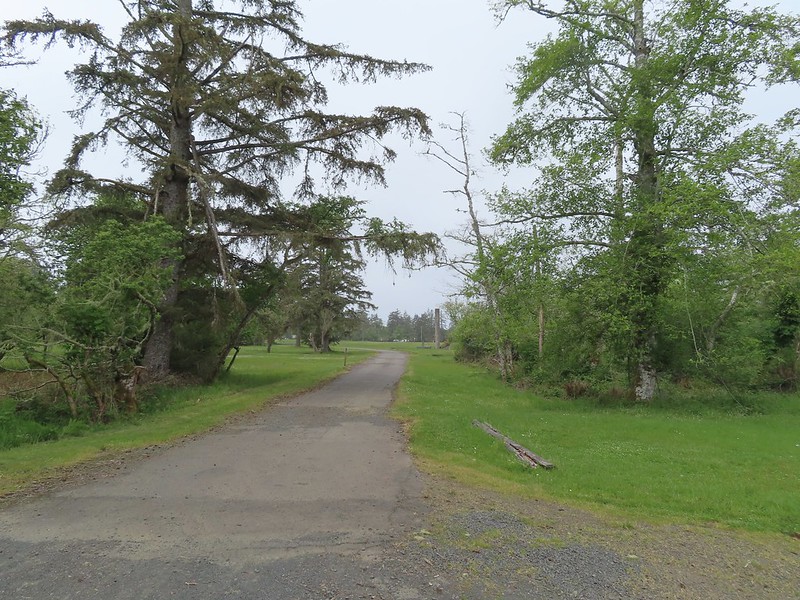
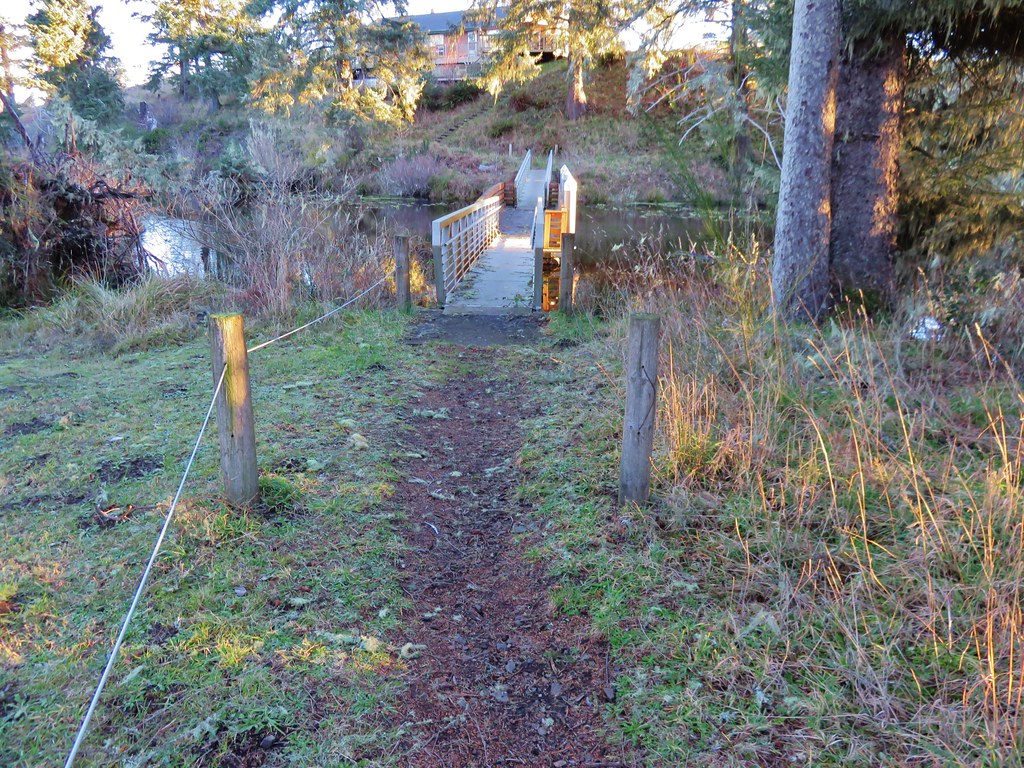
Beyond the gate the Alder Creek Trail follows an old roadbed on a levee 0.4-miles to a footbridge over Alder Creek.
IMG_1945

IMG_1950

IMG_1952
Neahkahnie Mountain (post) to the left and Rock Mountain to the right.

IMG_2064
Looking back along the footbridge.

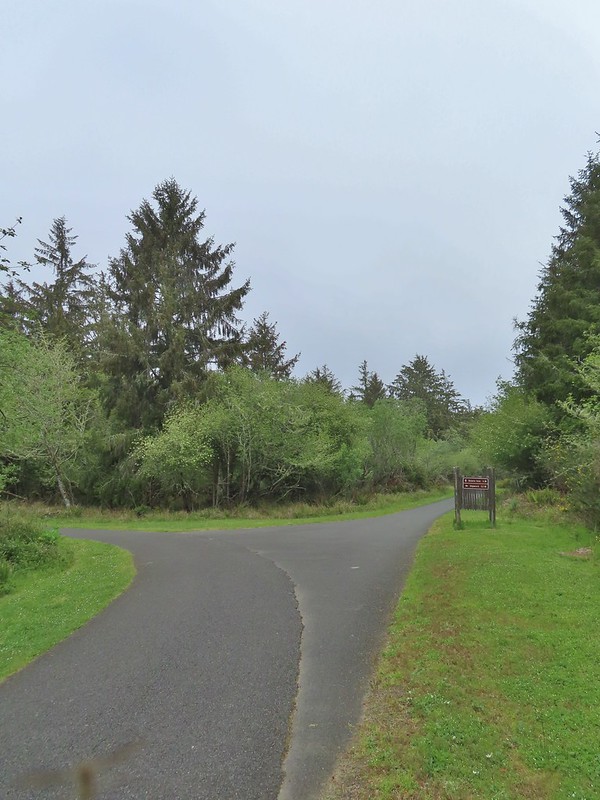
On the far side of the footbridge was a junction with the Elk Run Trail.
IMG_2062

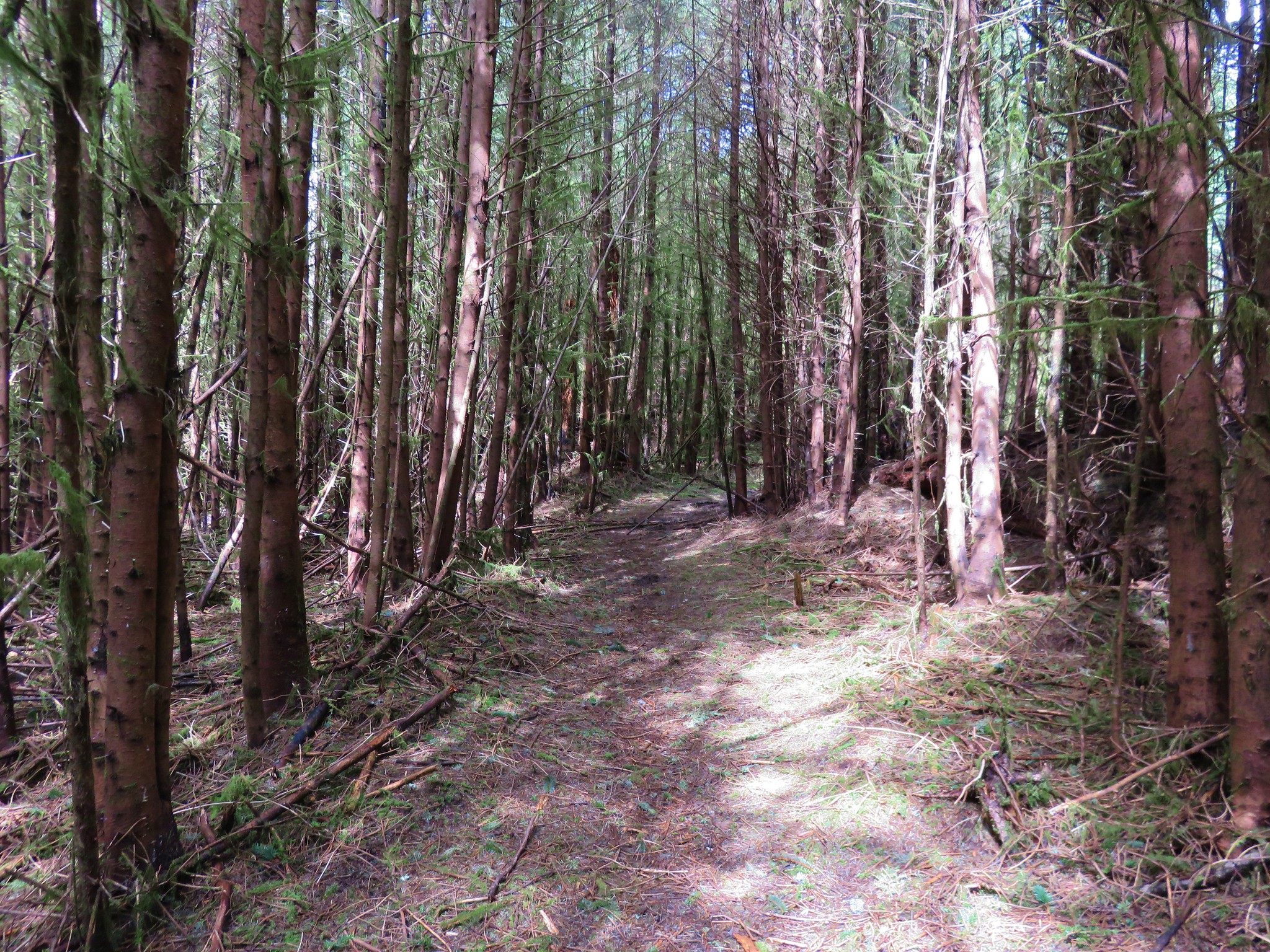
We stayed straight at the junction continuing along the old roadbed.
IMG_1957

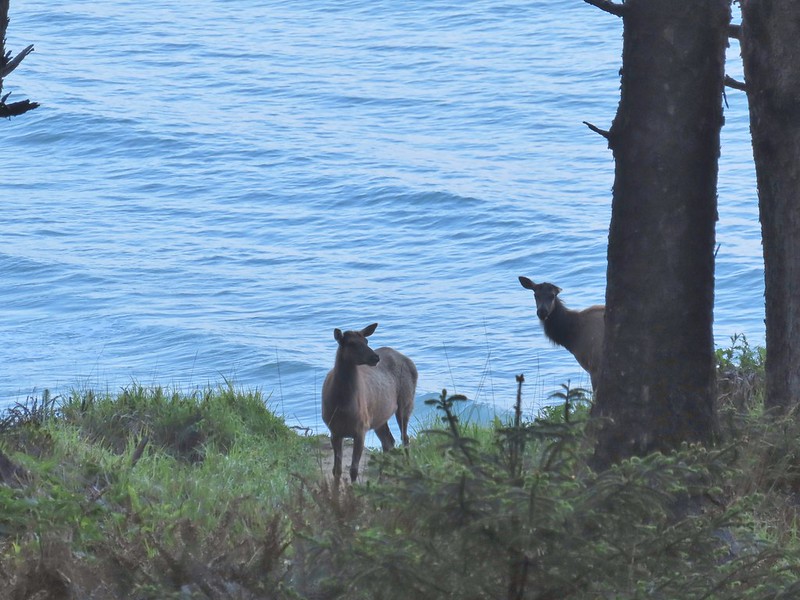
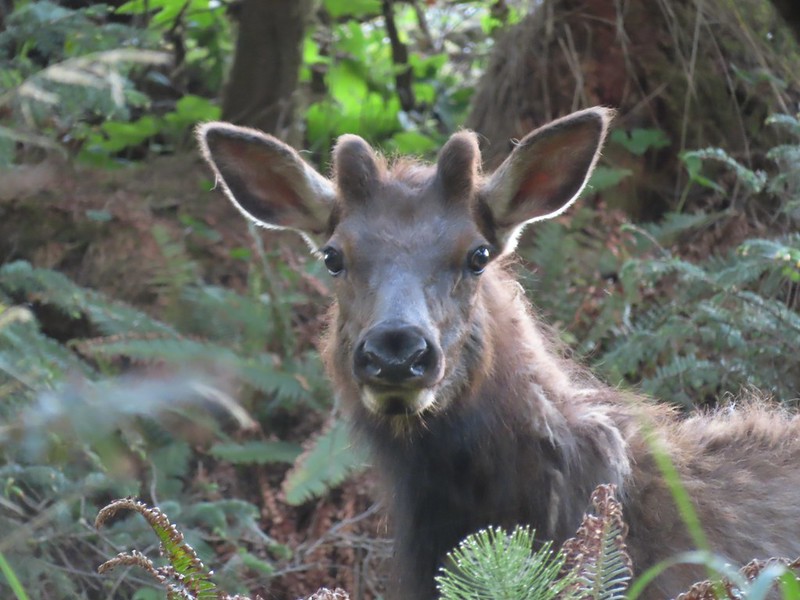
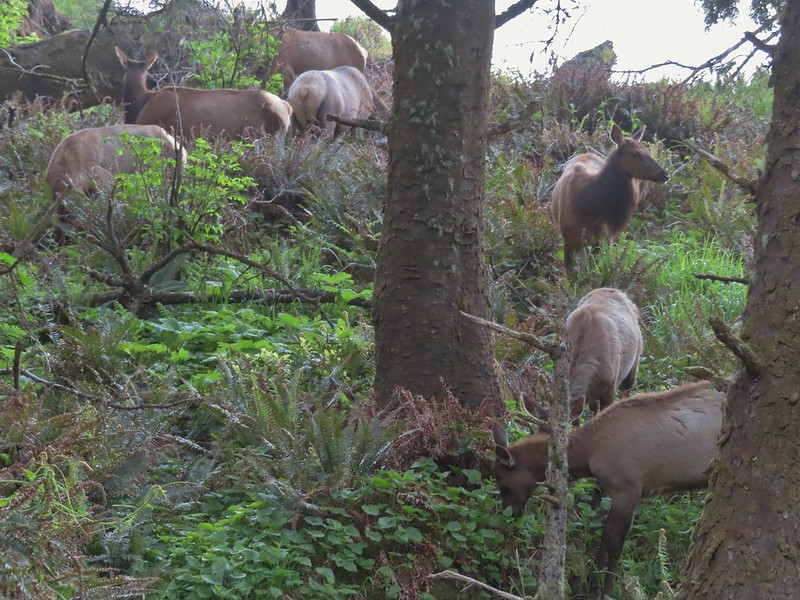
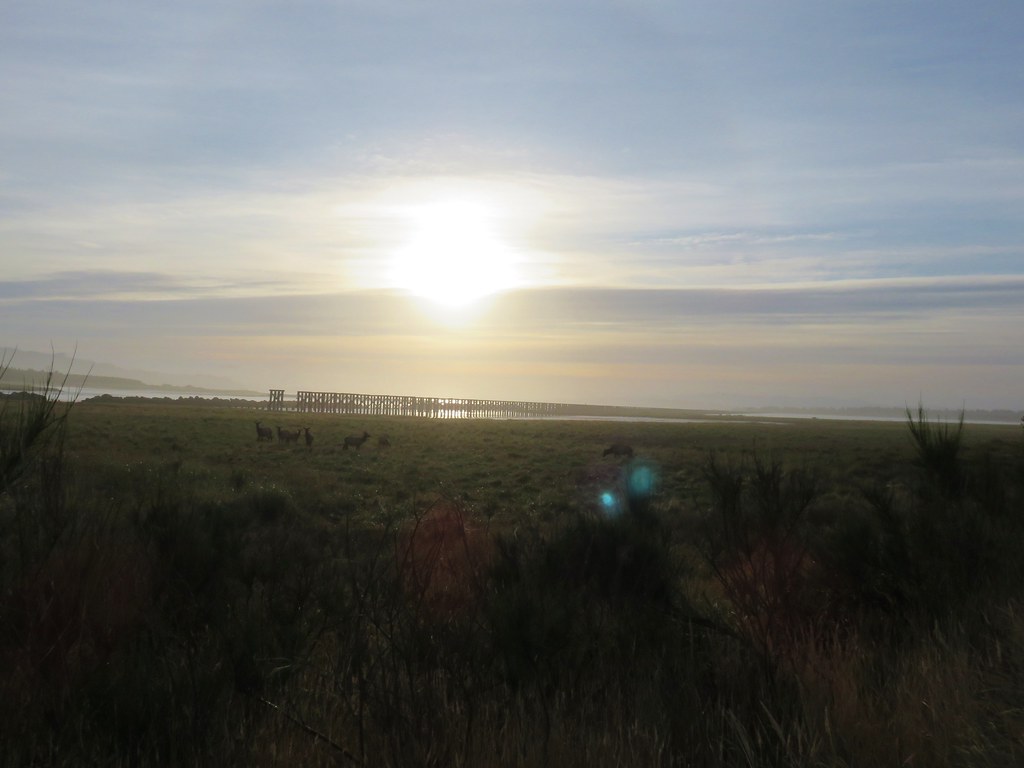
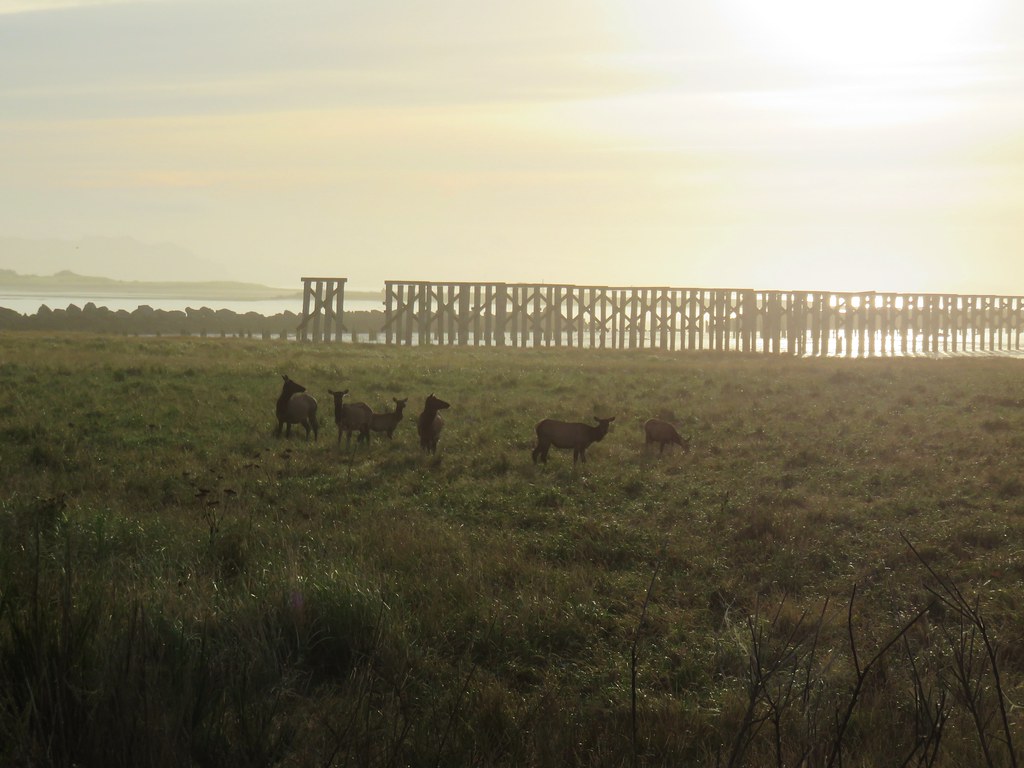
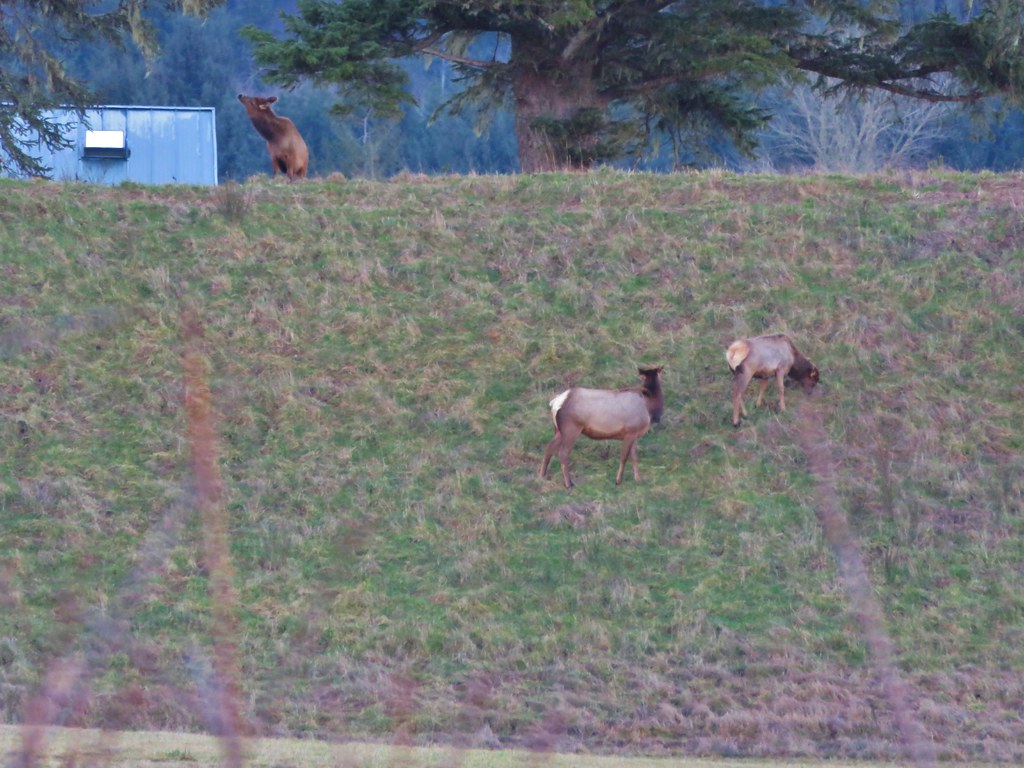
There was a meadow to the right of the trail where we spotted a small herd of elk.
IMG_1962

IMG_1968

A third of a mile from the footbridge the trail arrived at a gravel road which it followed for about 50 yards before continuing on a grassy track to the right.
IMG_1972
The small building at the end of the gravel road was some sort of wastewater

IMG_1973
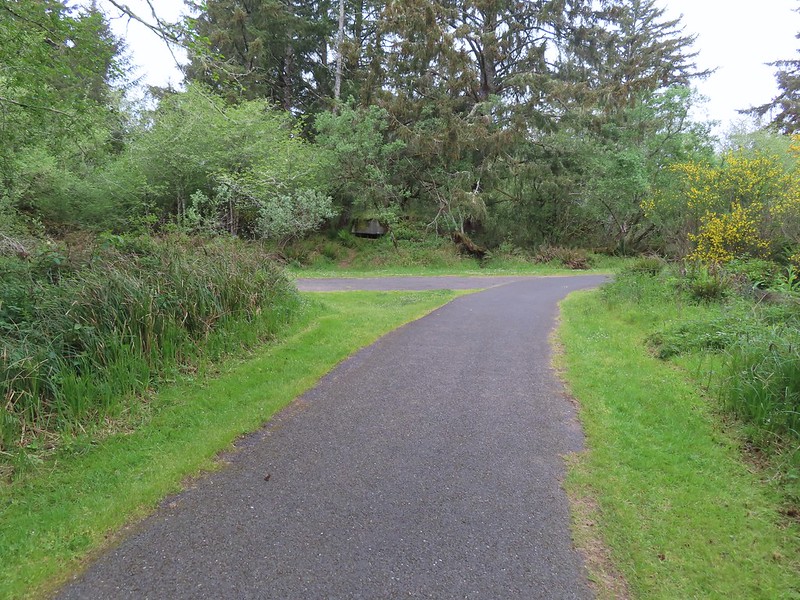
The continuation of the trail was unsigned but obvious as it cut through a wall of blackberry bushes.

IMG_1974

A tenth of a mile from the gravel road the trail split at another unsigned junction. This was the other end of the trail that had split off after crossing Alder Creek.
IMG_1976
The tenth of a mile stretch passed behind some new construction.

IMG_1977

We would be using that trail for our return but for now we stayed straight crossing the end of a paved road after another 0.3-miles and arriving at yet another junction a tenth of a mile later.
IMG_1978

IMG_2027
Looking up the paved road.

IMG_2026
There was actually a pickup parked at this junction when we first passed, but it was gone by the time we came back by. The righthand fork makes a second loop possible, but this one can be submerged during higher tides.

We again stayed straight and in another three tenths of a mile we came to the other end of the loop at a “T” junction near the bank of the Nehalem River.
IMG_1984
The other end of the second loop.

IMG_1986
Nehalem River

IMG_1988
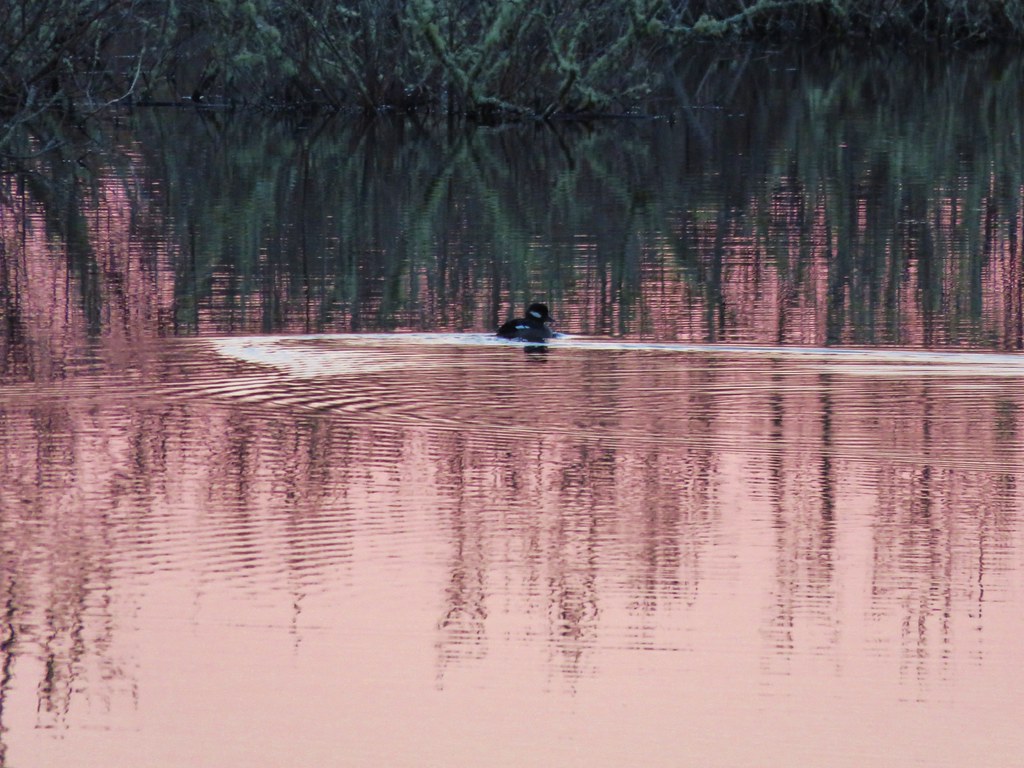
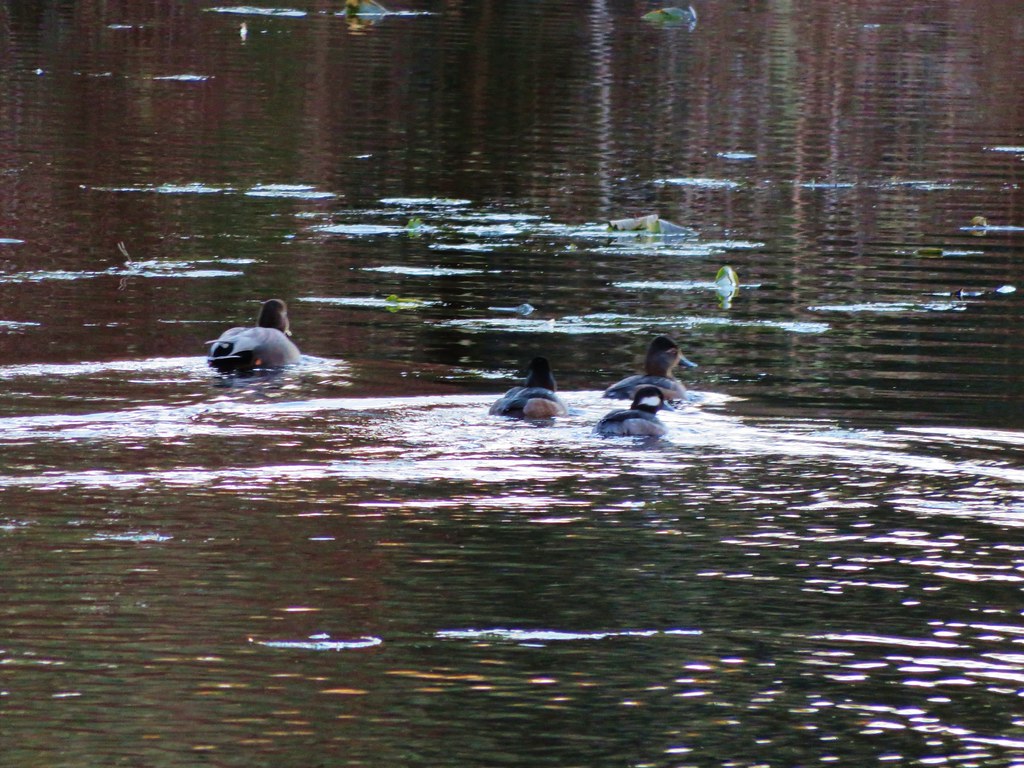
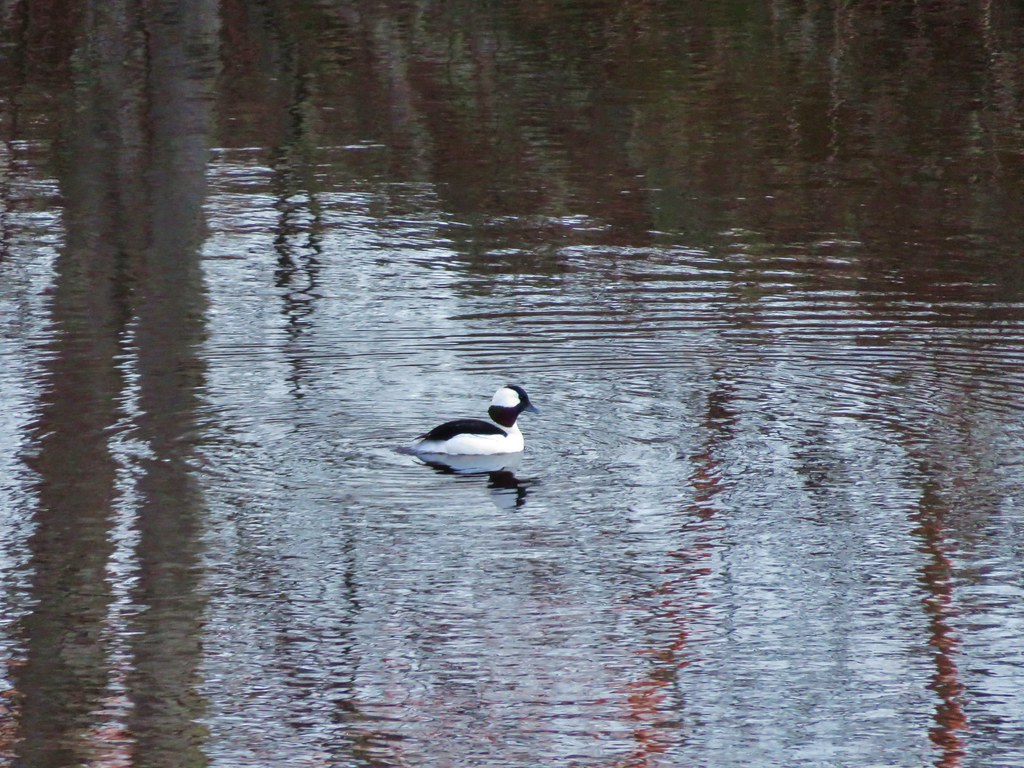
Hooded merganser

We turned left and continued another two tenths of a mile around Dean Point to the trails end at a rocky river beach.
IMG_1992

IMG_1994
Highway 101 across the Nehalem River.

IMG_1995
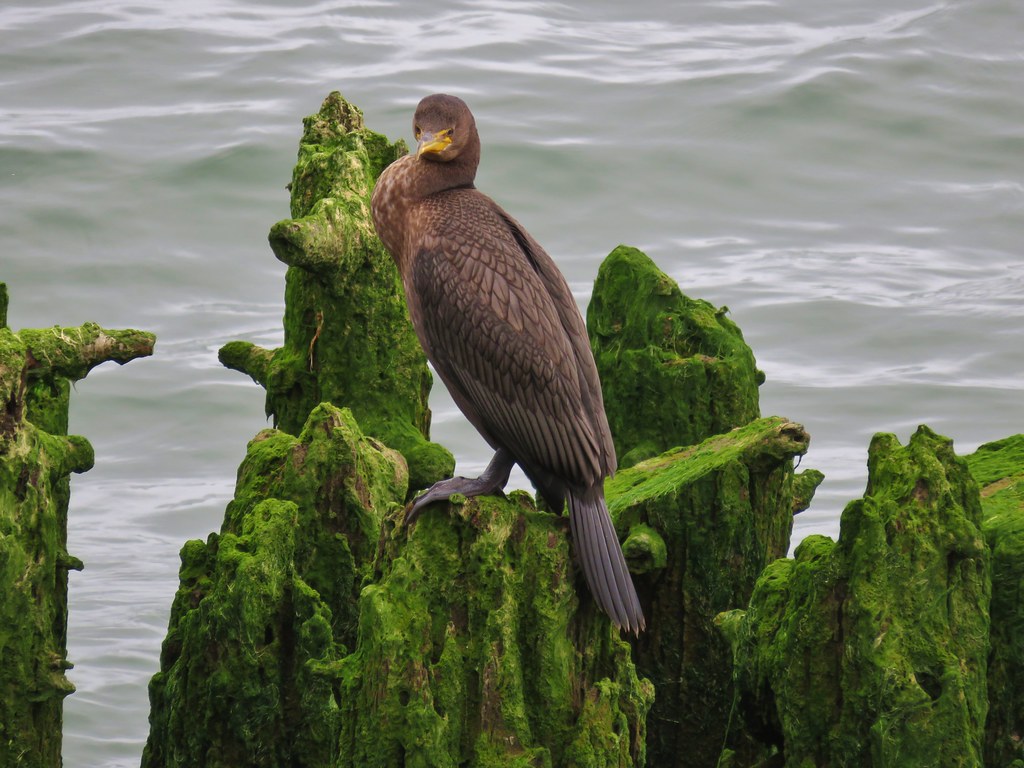
Cormorant

IMG_1998
Nehalem River

After taking in the view from the end of the trail we returned to the “T”-junction. We hadn’t originally planned on doing the second loop because we hadn’t checked the tide tables and with the recent rain we weren’t sure how muddy/wet it might be. After seeing that it clearly wasn’t high tide I decided to give it a try. Heather decided to take the conservative approach and return the way we’d come so we split up here and planned to meet back up at the other end of the little loop.

This section of the loop was 0.4-miles long and was quite a bit rougher than the main trail, but it wasn’t too wet and there were only a couple of small muddy sections where the trail briefly dropped off the narrow dike it was following.
IMG_2004
The trail briefly followed the river before making a right turn away from it.

IMG_2008
Rainbow to the north.

IMG_2010
Planks were placed at various points along the trail. They helped avoid muddy spots, but I had to be careful because some of them were really slick.

IMG_2012

IMG_2013
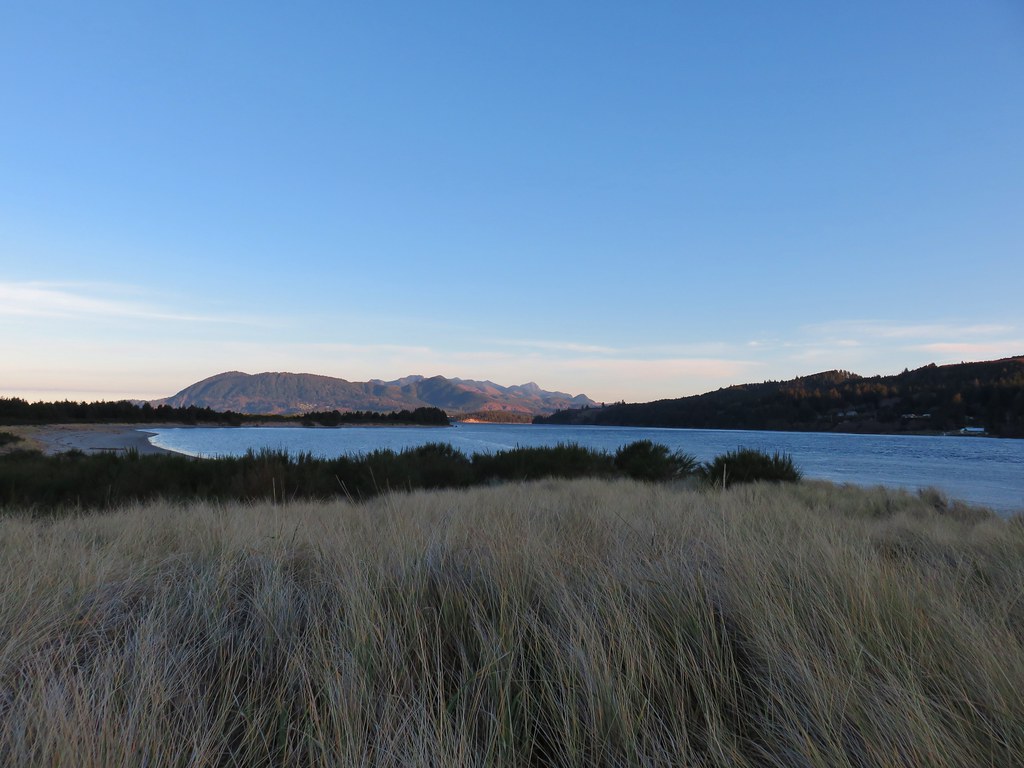
Looking toward Nehalem Bay (post).

IMG_2017
Heading north after turning away from the river.

IMG_2020
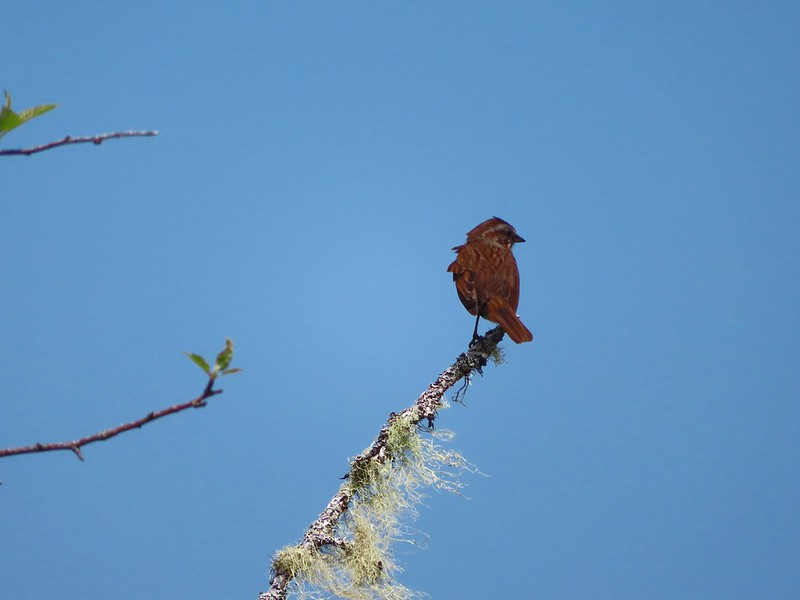
Sparrow

IMG_2021
Yarrow

IMG_2022
When the trail turned again to complete the loop it crossed a relatively deep (3-4 feet) channel on a narrow plank.

IMG_2023
Not long after reentering the trees seen ahead I ran into Heather who had come down from the junction which was just a short distance away.

We continued on our way back and when we arrived at the unsigned junction for the first loop we turned left. This was another 0.4-mile section which passed the same meadow we’d seen the elk in earlier from the Alder Creek Trail. They hadn’t moved on so we got to see them for a second time.
IMG_2028

IMG_2029
On the first loop.

IMG_2033
Salal lining the trail.

IMG_2038

IMG_2036

IMG_2044

IMG_2053

IMG_2049
We snacked on a few evergreen huckleberries while we watched the elk.

IMG_2056
Bench overlooking the meadow. There were two similar benches along the other loop.

IMG_2060
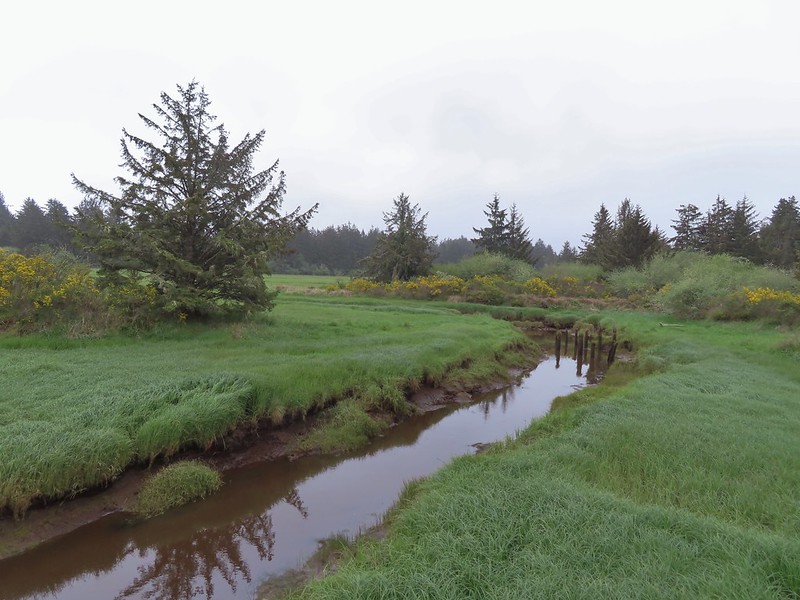
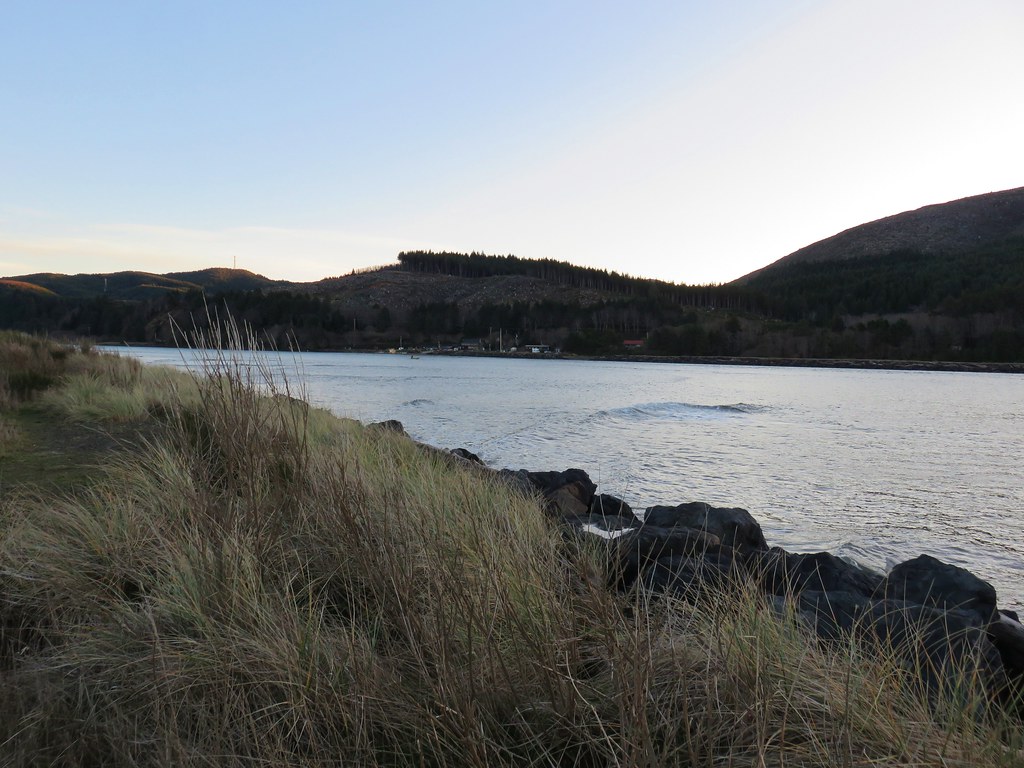
Alder Creek heading out to Nehalem Bay.

IMG_2061
Arriving back at the footbridge.

We recrossed Alder Creek and returned to our car. Both our GPS Units showed 3.5-miles for our hikes so doing or not doing the loops didn’t make a difference distance wise. Elevation change was easily under 50′.
Screenshot 2025-10-12 045826

It was about a 15-minute drive to the Manhattan Beach Wayside where we parked near the restrooms which is also where an Oregon Coast Trail pointer was located.
IMG_2066

IMG_2068
Oregon Coast Trail pointer.

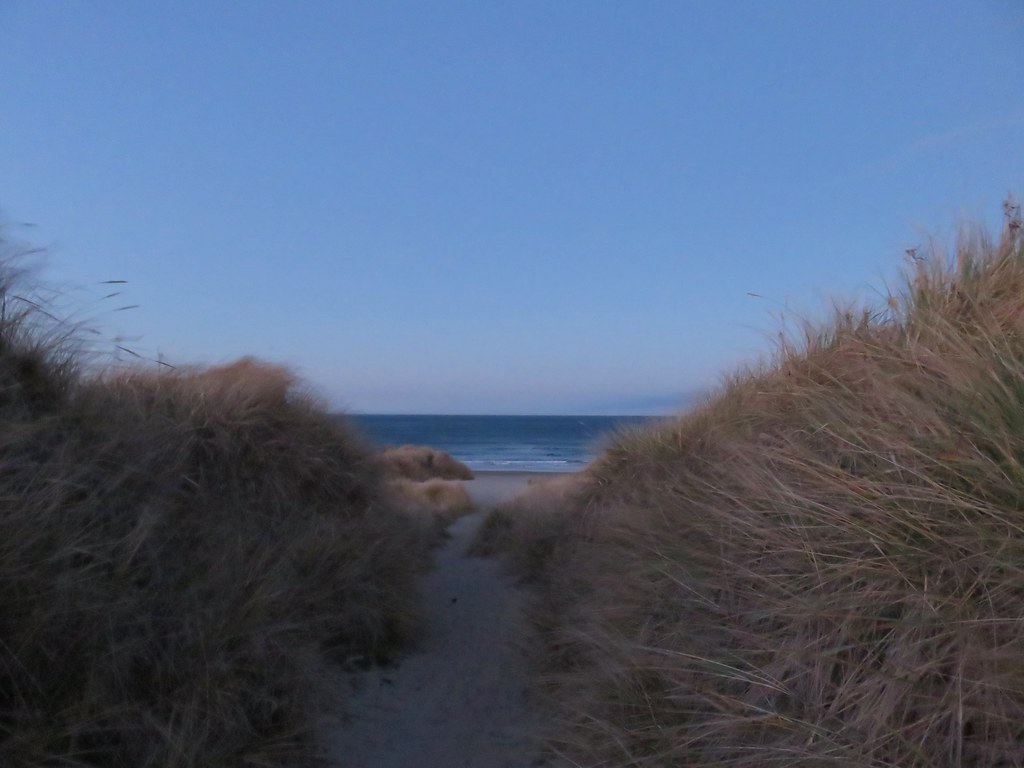
A short trail led through a strip of trees and over the foredune to Manhattan Beach.
IMG_2069

IMG_2071

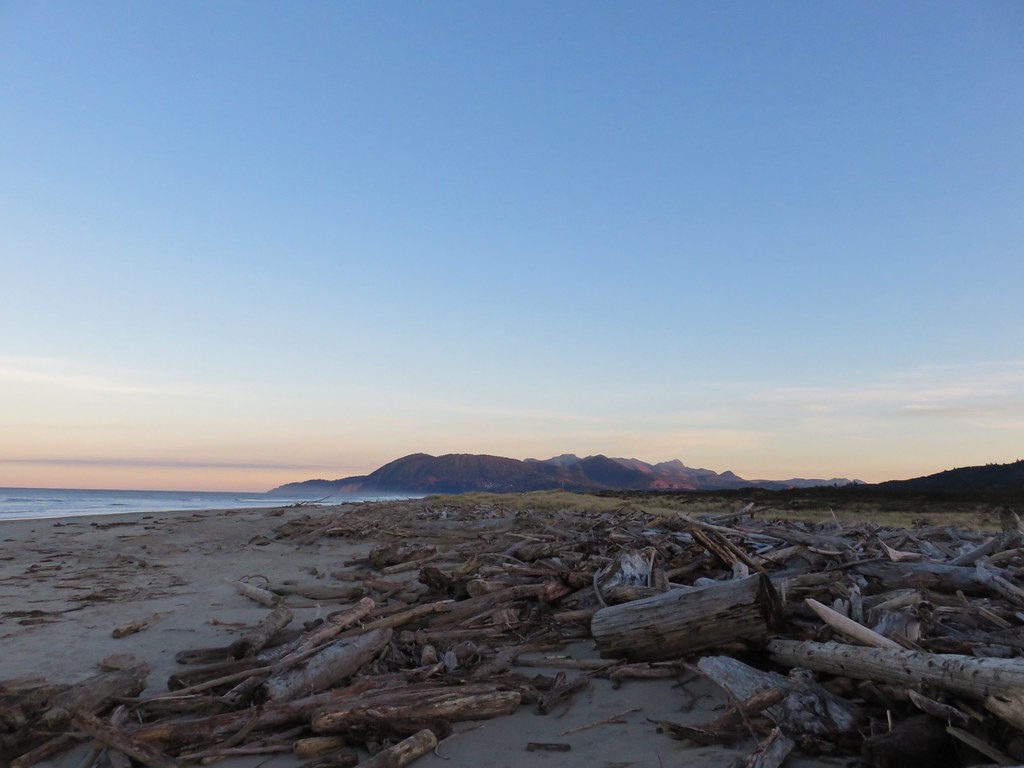
We had a choice of going north or south and planned on doing both before returning to the car. To the north was the mouth of the Nehalem River at Nehalem Bay and to the south was Rockaway Beach where we had started our Twin Rocks hike just five weeks before (post).
IMG_2073
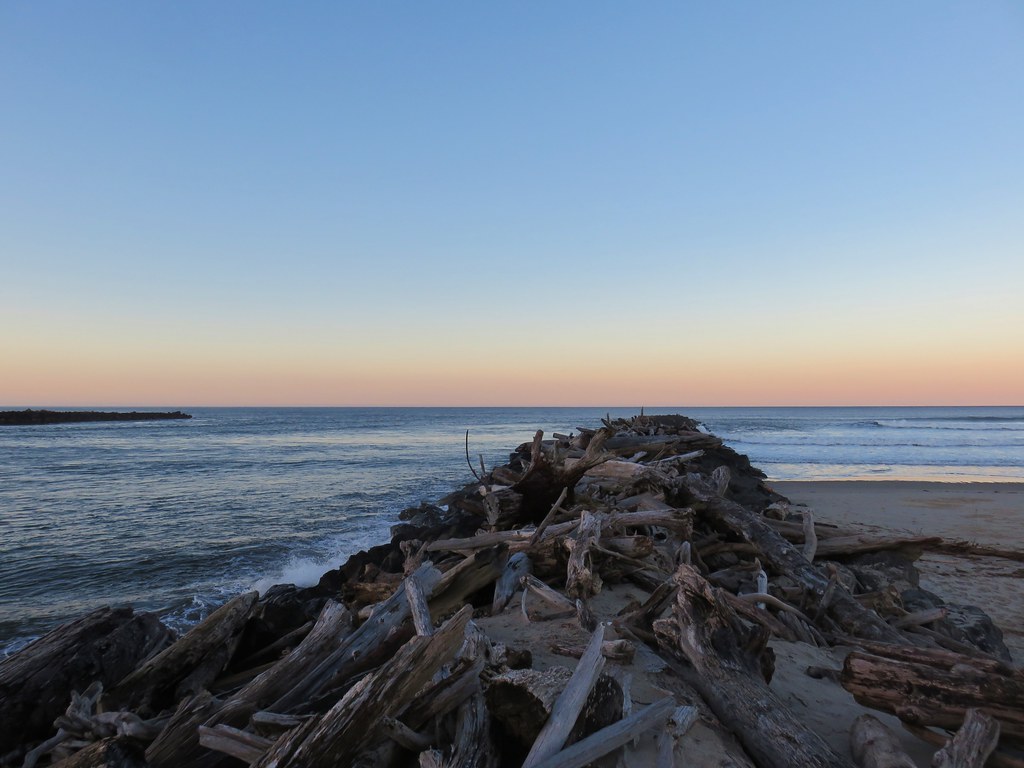
To the north we could see Cape Falcon (post) beyond the south river jetty.

IMG_2072
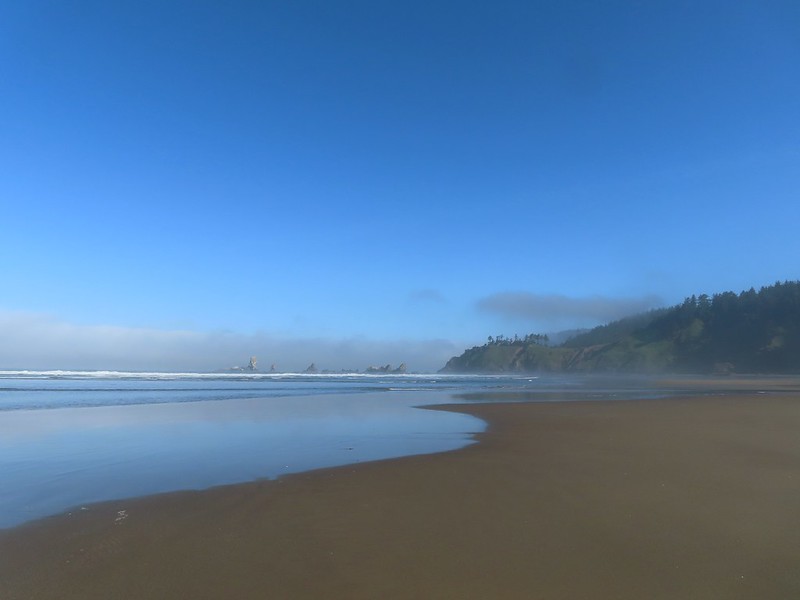
To the south Twin Rocks was visible off the coastline.

We decided to head south first with our plan being to turn around at the creek just north of the Rockaway Beach Park where we had parked in September. While we had avoided rain during our first hike the rain arrived shortly after we set off along the beach. In typical fashion the wind was blowing south to north, so we were heading into it which prompted us to throw on our rain gear. It also kept me from trying to take too many photos during the nearly 2-mile hike to the creek.
IMG_2074
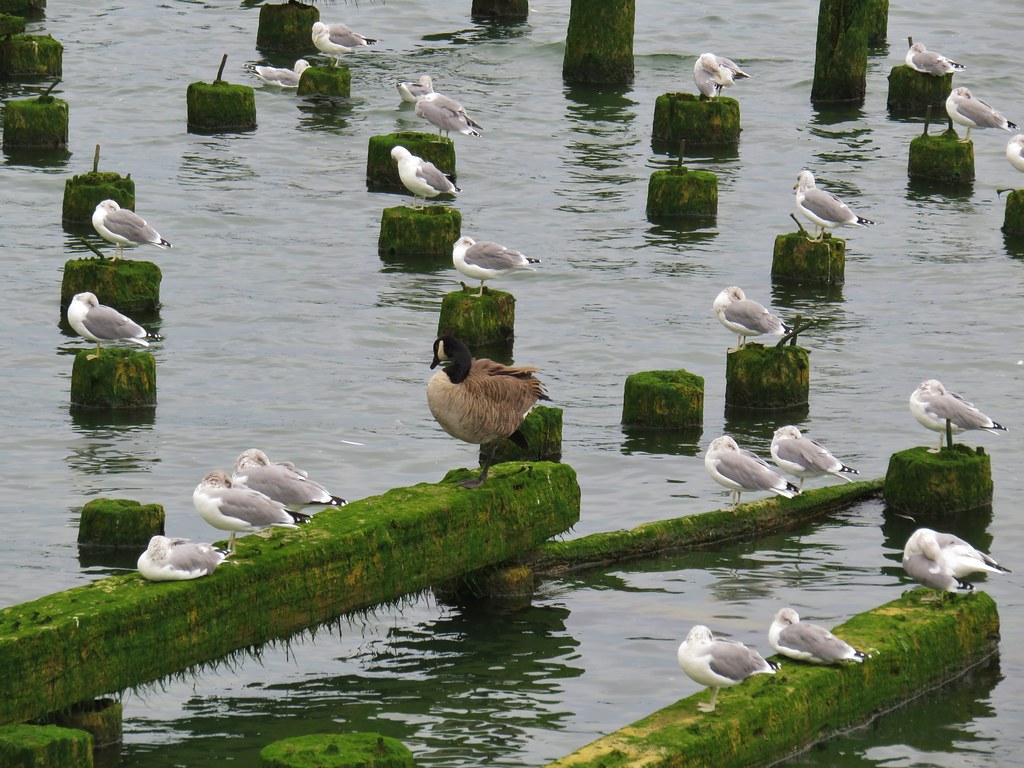
Gulls

IMG_2080
Brown pelicans

IMG_2081
Rockaway Beach

IMG_2082

IMG_2084
Rain incoming.

IMG_2085
Twin Rocks

IMG_2088
Our turnaround point through the water on the camera lens.

After turning around and putting the wind at our backs it didn’t feel like it was raining as hard and I tried a few more photos as we headed for the jetty which was just under 3-miles from the creek.
IMG_2089

IMG_2091
Mine! (If you know you know.)

IMG_2101
Some heavy rain off the coast heading north.

IMG_2103
Homes along Manhattan Beach.

IMG_2107
The south jetty.

We climbed onto the jetty to get a look at the Nehalem River.
IMG_2109

IMG_2108
Looking toward Nehalem Bay.

The Oregon Hiker Field Guide entry for Manhattan Beach mentioned hiking inland along the jetty to McMillan Creek. Despite the rainy conditions I decided to go ahead and do that while Heather opted to skip this portion of the quest. Instead of trying to walk directly along the jetty I headed back north to a path near beach mile marker 24 and followed it inland.
IMG_2112
The neon sign marking mile 24.

I then picked up one of a number of use paths leading through the grassy spit and veered back toward the jetty.
IMG_2116

I was able to find one that led back up to the top of the jetty and then followed the jetty to McMillan Creek.
IMG_2118

IMG_2119
The jetty was rough with a few sinkholes.

IMG_2122

IMG_2129
My turn around point, where McMillan Creek passes under the remains of the jetty.

IMG_2131
McMillan Creek from my turnaround point.

The rain had let up during my hike down the jetty to the creek, but as I started back the rain picked up noticeably. I cut back across the grassy spit area to mile marker 24 and then hopped back onto the beach. From there it was a mile back to the trail up to the Manhattan Beach Wayside.
IMG_2137
I got another brief respite from the rain once I was back on the beach.

IMG_2139
Those dark clouds were angry and wet.

IMG_2143

IMG_2144

IMG_2146
Mile marker 25 is up on the foredune to the right which is also where the trail was back to the wayside.

Heather was sitting on a bench on the foredune when I got back and we finished the hike together.
IMG_2148
Our car in the wayside parking lot from the trees.

The GPS put my hike at 7.5-miles with minimal elevation gain.
Screenshot 2025-10-12 045917

As we were trying to change out of our wet clothes the sky really opened up and it poured. These wound up being great choices for a rainy day. We were especially pleased with the Elk Run hike. It was a relatively quiet hike given how close we were to homes and the highway and it had some really nice views. Seeing the elk also gave it a boost. Happy Trails!

Flickr: Elk Run Trail and Manhattan Beach

Categories
Hiking Northern Coast Oregon Oregon Coast

Up and Over Neahkahnie Mountain – 04/05/2025

We had visited Neahkahnie Mountain in January 2014 (post) and had wanted to come back in Spring to hopefully see some wildflowers. The Oregon Coast Trail (OCT) crosses over Neahkahnie Mountain passing below a rocky viewpoint. In 2014 we had come from the north so this time the plan was to start from the south using a newer section of the OCT beginning in Manzanita, OR. Heather had other plans, so I was on my own for this outing, and decided that I would go up and over Neahkahnie Mountain and visit the Devil’s Cauldron before climbing back over to Manzanita.

The trailhead for the OCT is just a pullout on the shoulder of Neahlem Road.
IMG_8242I had arrived just after 6:30am so it was still a little dark as I set off.

It was early enough that I didn’t have to worry much about traffic when I crossed Highway 101 from Nehalem Road to the signed Oregon Coast Trail.
IMG_8243

IMG_8244

This 2.1-mile section of the OCT was constructed in 2020 and passes through the Neahkahnie Headwaters Preserve managed by the Lower Nehalem Community Trust.
IMG_8250Please respect private landowners wishes when recreating to ensure that public access continues to be allowed.

The trail began with a couple of ups and downs as it followed a powerline corridor.
IMG_8255Looking back at the sunrise.

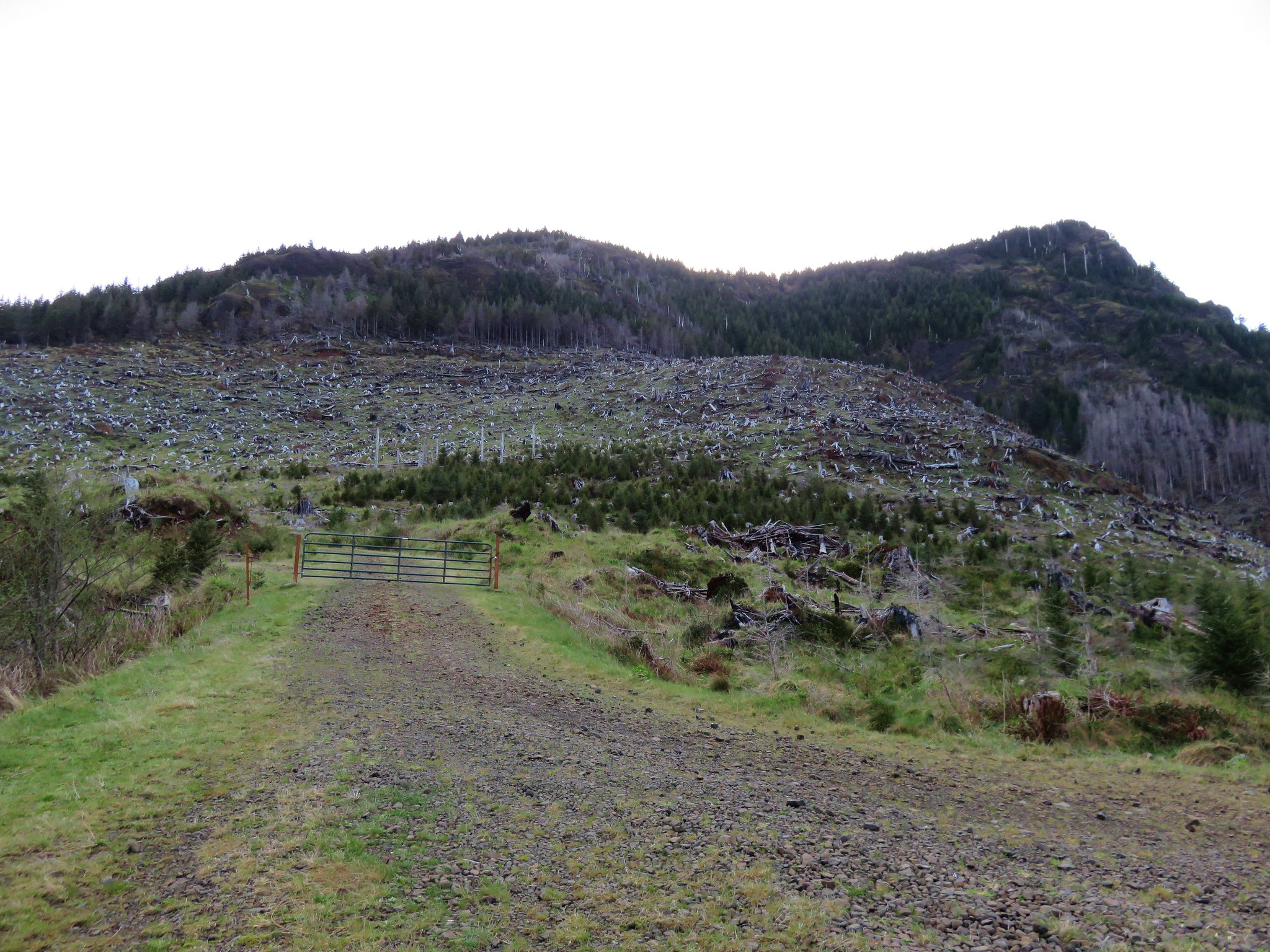
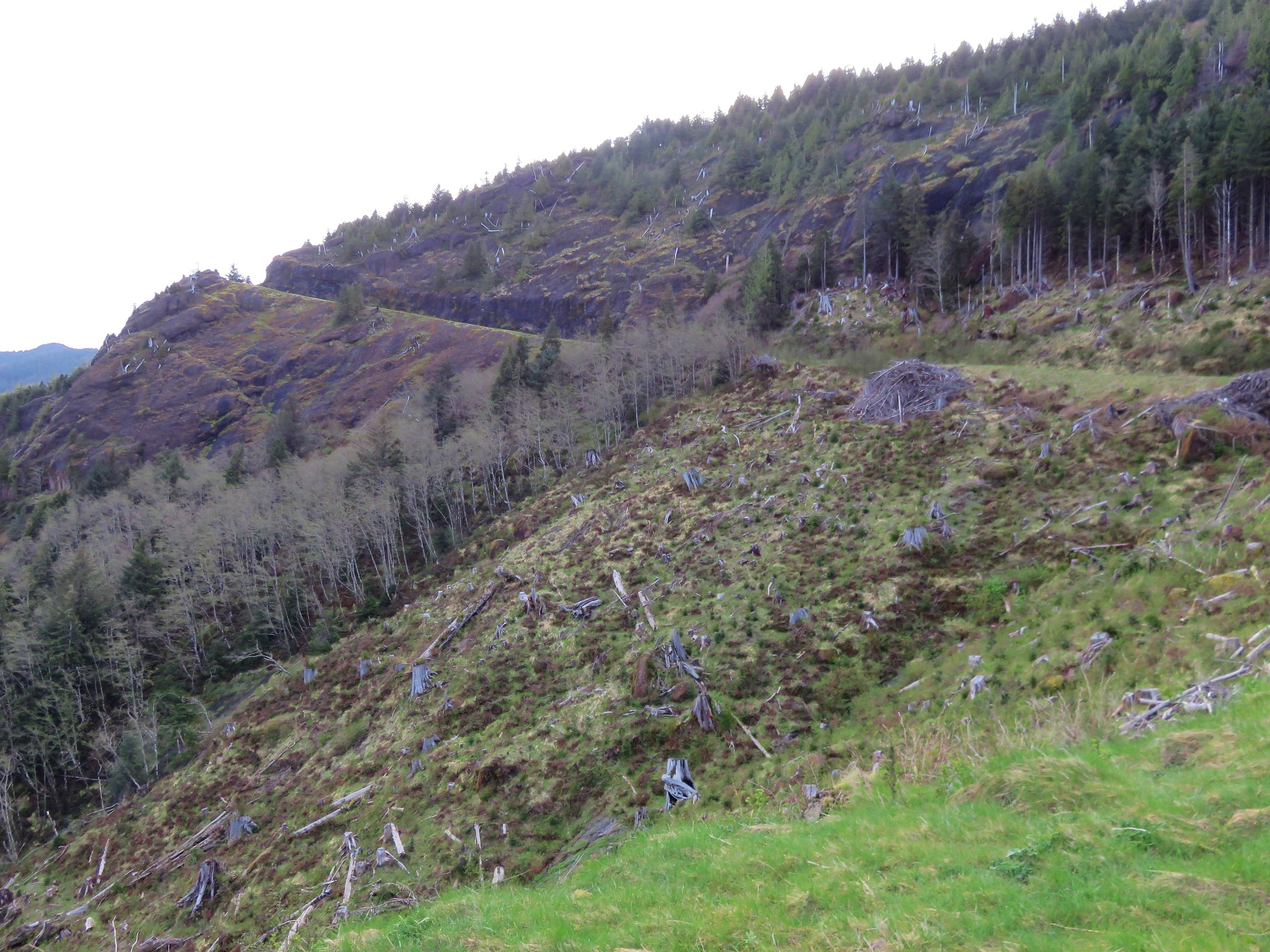
The trial eventually left the powerlines and passed through a few stands of trees before arriving at a clearcut. The trail continued climbing through the clearcut and then reentered the forest. Approximately two miles from the trailhead I arrived at a signboard along Road 38555 where I turned left, hiking downhill past a gate to the South Neahkahnie Mountain Trailhead.
IMG_8263

IMG_8264

IMG_8265Entering the clearcut.

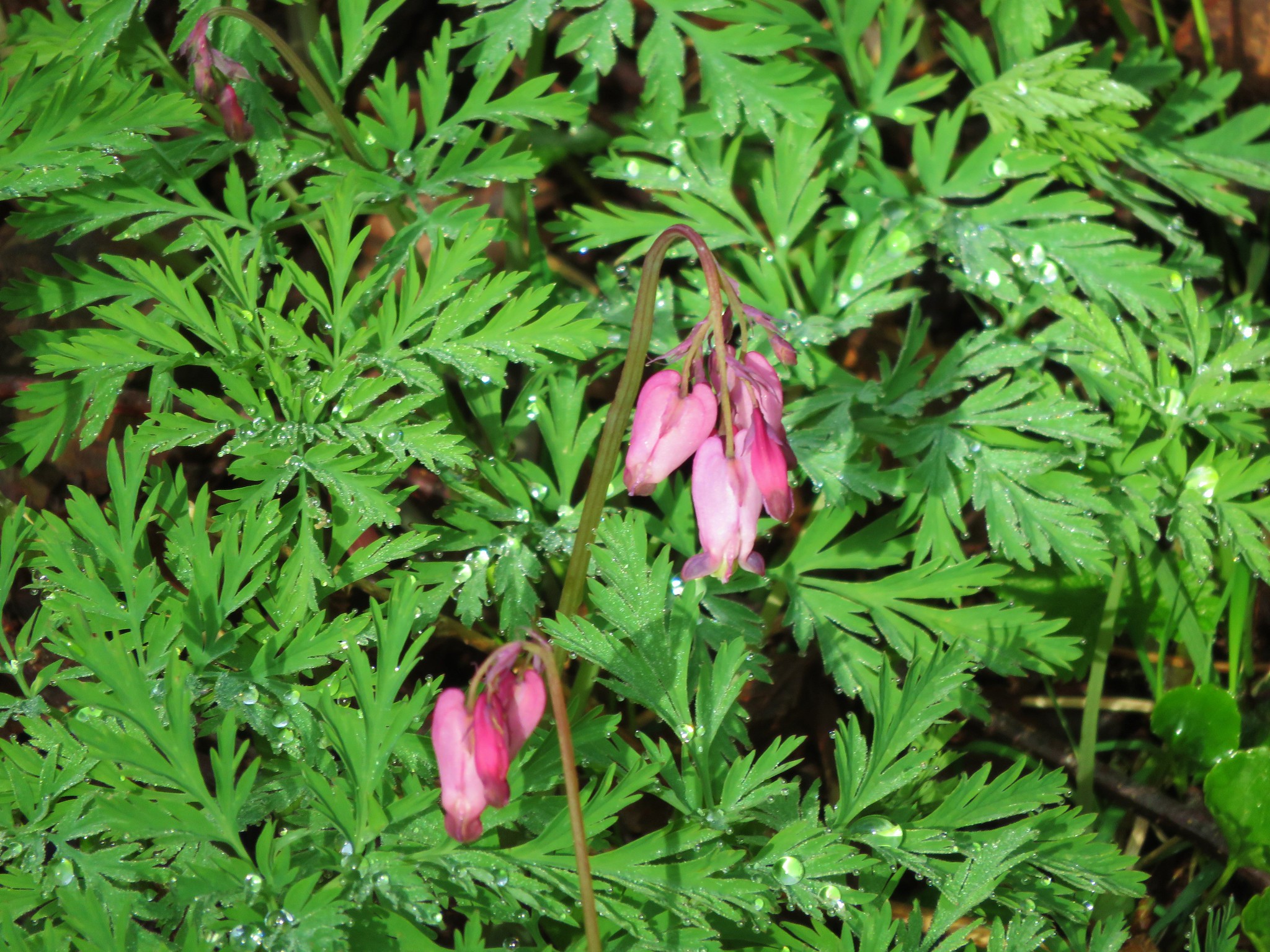
IMG_8266Bleeding heart

IMG_8269The OCT is well marked.

IMG_8272Woodpecker

IMG_8275Back in the forest.

IMG_8276Interpretive signs in the preserve.

IMG_8282Bench at a viewpoint.

IMG_8283Nehalem Bay (post) from the bench.

IMG_8285Salmonberry blossom

IMG_8287Leaving the preserve.

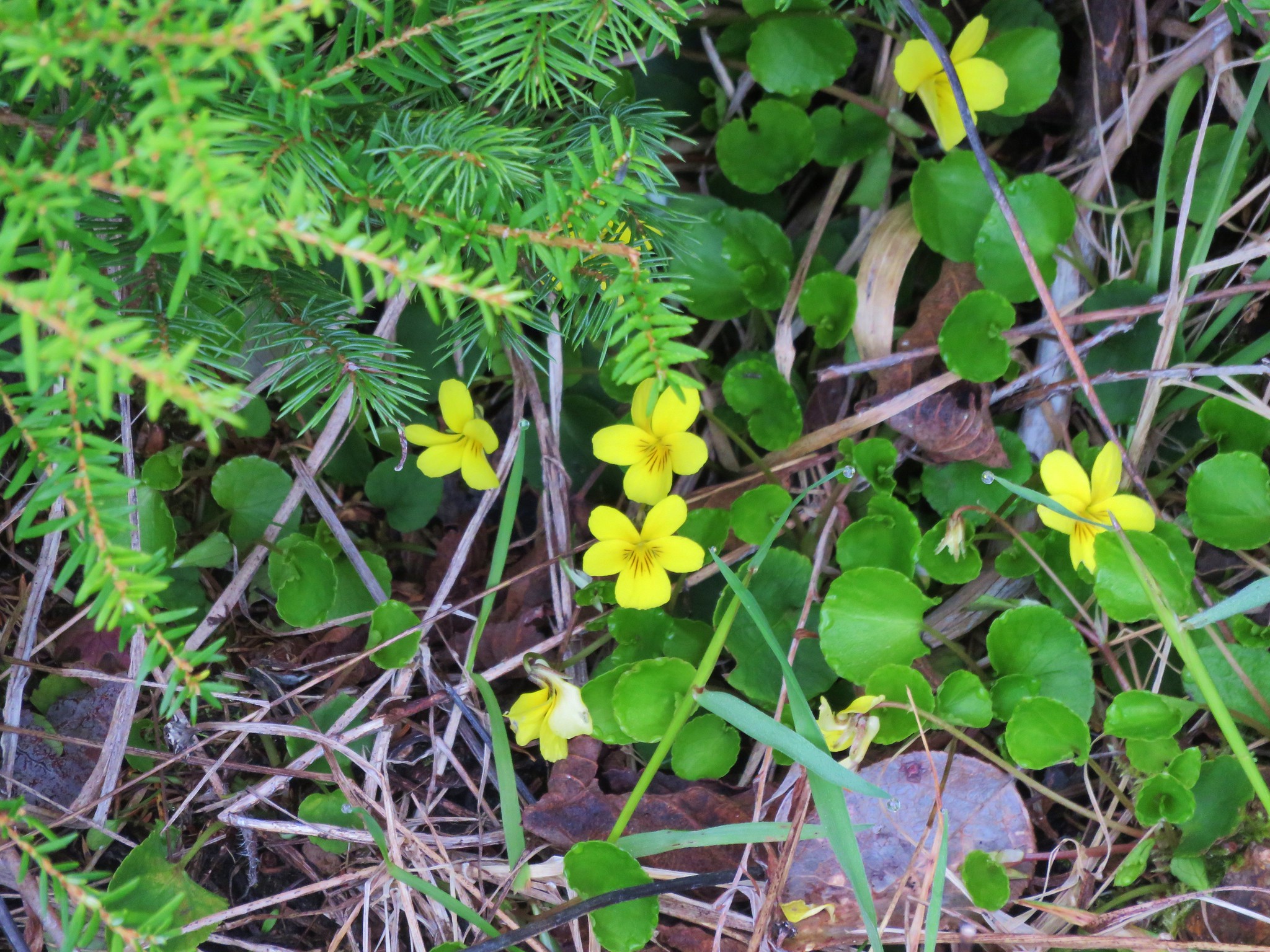
IMG_8293Violets and pink fawn lilies. These were the first pink fawn lilies I had seen, it seems that we hadn’t timed our coastal hikes right to catch their bloom in the past.

IMG_8296

IMG_8299

IMG_8300
The trailhead was empty at 7:20am.

Trail signs identified the continuation of the OCT which began a series of approximately a dozen switchbacks through the forest.
IMG_8302

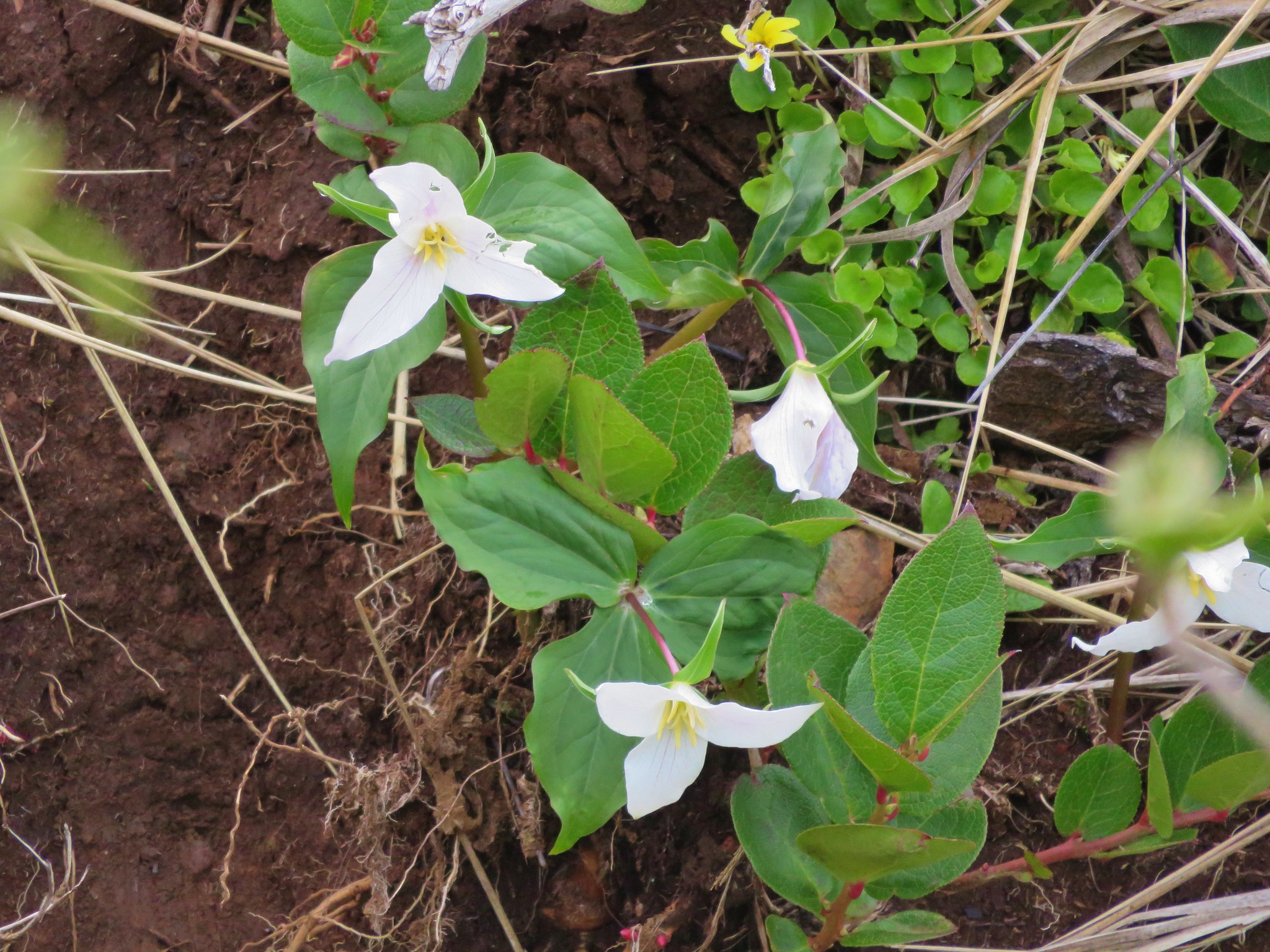
IMG_8303Trillium

IMG_8306Fringecup

IMG_8315

IMG_8318Toothwort

IMG_8324

The switchbacks led to a 4-way junction with an old roadbed where the OCT continued on the opposite side.
IMG_8325

For the next half mile the trail traversed along the hillside below the summit ridge of Neahkahnie Mountain.
IMG_8326

IMG_8327I made use of this bench on the way back to take a break and do some stretching.

IMG_8328View to the north.

IMG_8329Tillamook Head (post) and Haystack Rock (post)

After the half mile the trail made a switchback. The trail here was a little sketchy.
IMG_8331

IMG_8332It was obvious that there had been some work done to try and shore up this section of trail.

The trail continued to a saddle where a spur to the right led up a rocky spine to the viewpoint summit.
IMG_8333

IMG_8336The view south from the viewpoint.

IMG_8338Cape Meares (post), Three Arch Rocks, and Cape Lookout (post).

IMG_8339Cascade desert parsley near the summit.

After taking in the view I returned to the OCT and continued north.
IMG_8344

IMG_8346Looking up at the viewpoint from the OCT.

It was a little over 2-miles down to the North Neahkahnie Mountain Trailhead. A September 2020 windstorm had resulted in heavy blowdown to sections of this trail. The trail was closed until 2022 when crews were able to clear it.
IMG_8349Trillium

IMG_8351This was the only obstacle that required any sort of maneuvering.

IMG_8353There are some great trees along the upper section of the trail.

IMG_8357Violets

IMG_8358Recent trail work.

IMG_8362Anemones and violets.

IMG_8364Entering the storm damaged area.

IMG_8367Angora Peak (post) through the trees.

IMG_8371Getting creative with the trail route.

IMG_8374Out of the storm damage.

IMG_8379Skunk cabbage

IMG_8383Cape Falcon from the trail.

IMG_8391Pink fawn lilies

IMG_8395

IMG_8401Arriving at Highway 101 near the North Neahkahnie Mountain Trailhead.

I dashed across the highway to the trailhead and immediately spotted a few elk in the meadow below the highway.
IMG_8403

IMG_8404

From the trailhead I picked up the Elk Flats Trail and followed it a tenth of a mile to the Devil’s Cauldron Overlook Trail.
IMG_8406

IMG_8409

IMG_8411

Another tenth of a mile brought me to the overlook.
IMG_8412

IMG_8415

IMG_8418

IMG_8419

After admiring Devil’s Cauldron I headed back. The climb back up to the saddle below the viewpoint was approximately 1400′, and after having climbed over 1600′ from Manzanita, and I felt the burn.
IMG_8426

IMG_8427Snow queen

IMG_8428He may have been moving faster than I was.

IMG_8437There is nothing better than hearing wrens sing in the forest.

IMG_8438More creative trail in the storm damaged area.

IMG_8440Wood sorrel

IMG_8444The view if you don’t scramble up the spine.

Up to the point that I started back down from the saddle I’d passed 11 people on the trail, all of which were after having spent time at the viewpoint. On the way down I passed at least 30 people between the saddle and the South Neahkahnie Mountain Trailhead which was now packed with cars.
IMG_8449

IMG_8450Trillium with a touch of pink.

IMG_8455Arriving at the packed trailhead.

Continuing on from the busy trailhead I only passed two more people before arriving back Nehalem Road and my lonely car.
IMG_8456Leaving the crowds behind.

IMG_8460Big patch of pink fawn lilies.

IMG_8463

IMG_8478Highway 101 from the powerline corridor.

IMG_8481Margined white

IMG_8485One of the more impressive trees in the preserve.

IMG_8491Nearing the Highway 101 crossing. I arrived just as a long line of traffic was passing by but was able to safely cross shortly afterward.

This hike came in at 11.6 miles and roughly 3000′ of elevation gain.
Screenshot 2025-04-05 185137

This was a good hike with quite a few wildflowers, some wildlife, and some nice views. It was also a good training hike for some of the alpine hikes with significant elevation gain later in the season. The various trailheads offer plenty of options for those who might not want to hike as far or climb so much, but even the shortest route (South Neahkahnie Mountain Trailhead) gains 840′ in 1.5-miles to the viewpoint. Happy Trails!

Flickr: Neahkahnie Mountain from Manzanita

Categories
Coastal Range Hiking Northern Coast Oregon Coast Trip report

Cathedral Tree, Young’s River Falls, and Fishhawk Falls – 05/12/2024

After spending the night in Astoria following a full day of hiking (post) we woke up on Mother’s Day ready to head home. We couldn’t resist the opportunity to get a little more hiking in on the way there though.

Our plan for the day was visit the Astoria Column by way of the Cathedral Tree, then take an alternate route from Astoria to visit a pair of waterfalls. We made the short drive from our motel to the Richard Fenscak Cathedral Tree Trailhead on Irving Street and set off past a gate.
IMG_4487

A map at the trailhead provides a high-level overview of the mile long route to the Astoria Column. The AllTrails map was particularly helpful as it showed most if not all of the spur trails. The trail begins as a wide gravel path that climbs, briskly at times, approximately 250′ in a third of a mile to a junction on a boardwalk.
IMG_4489

IMG_4492

IMG_4496Thimbleberry

IMG_4502Coming up on the start of the boardwalk.

IMG_4503Scouler’s corydalis at the base of the boardwalk.

IMG_4505The boardwalk junction.

We turned left at the junction and arrived at Cathedral Tree in just 150′.
IMG_4507

IMG_4508

20240512_062350The base of Cathedral Tree.

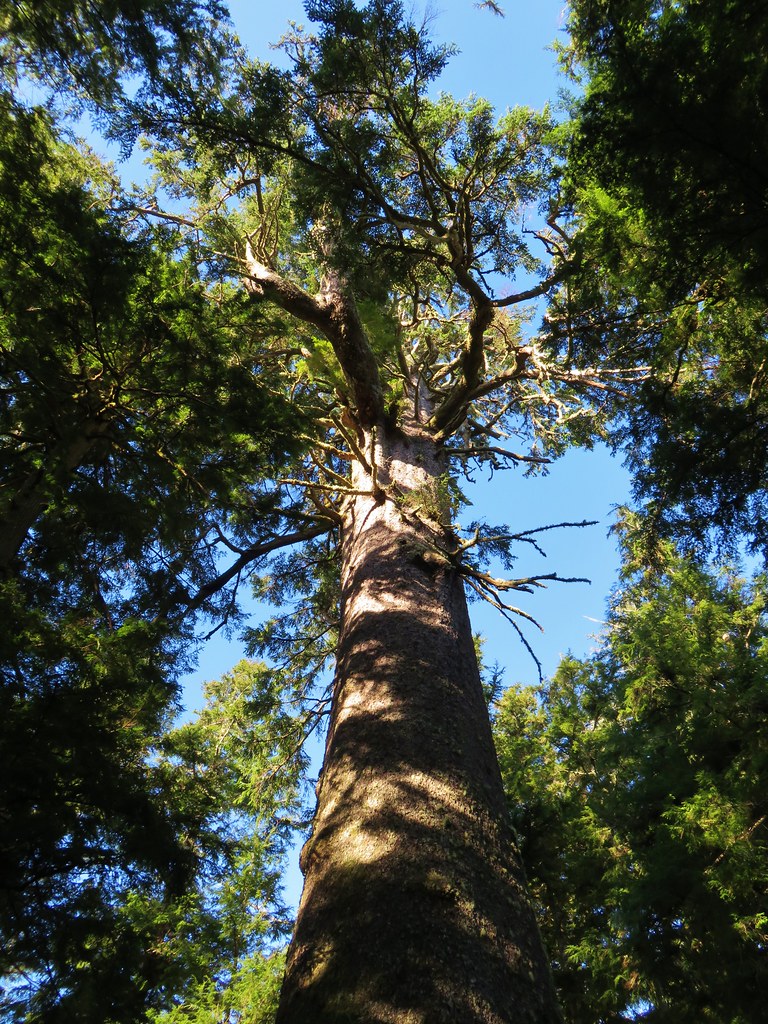
IMG_4511One of two benches near the 300+ year old stika spruce.

IMG_4512Cathedral Tree

IMG_4516

After visiting the tree, we returned to the junction and continued uphill towards the column.
IMG_4517

IMG_4518Beyond the boardwalk the trail was a bit rougher.

IMG_4519

IMG_4522Trail markers were present at times to help identify the correct route.

20240512_064000Pacific waterleaf

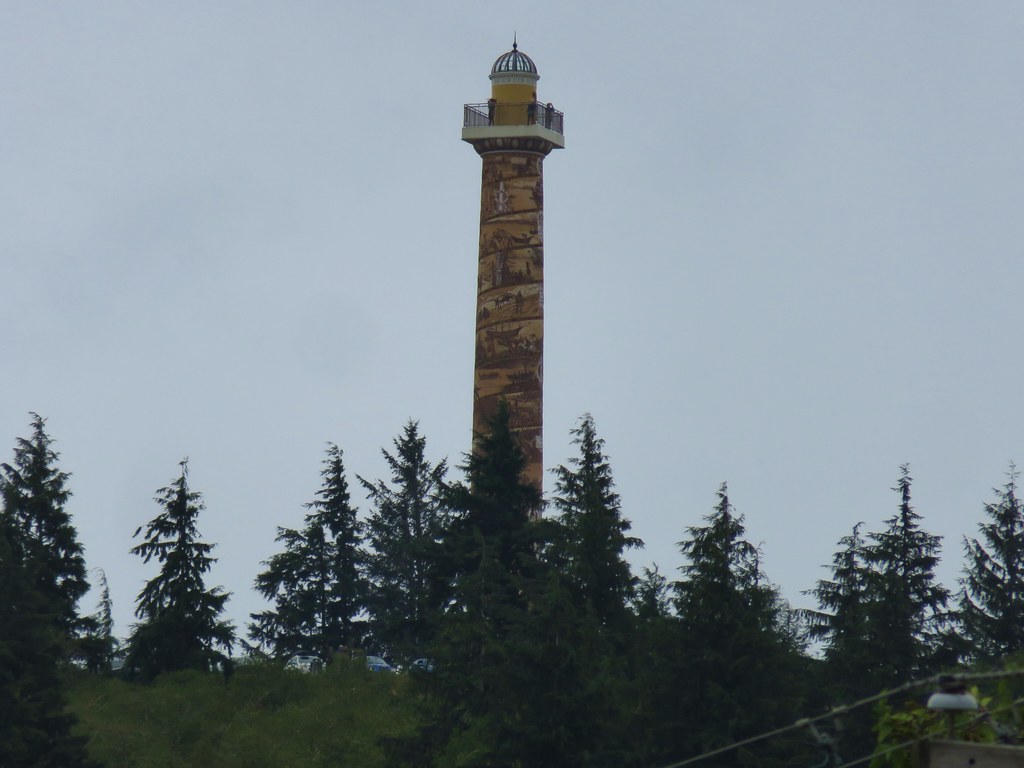
IMG_4532The Astoria Columnn.

We wandered around the column taking in the views and the art on the column itself.
IMG_4534

IMG_4535Megler Bridge

IMG_4536

IMG_4542

IMG_4543

IMG_4546Young’s River on the left and the Lewis & Clark River on the right

IMG_4553The early bird.

IMG_4554

IMG_4555

We decided to go up the column since it had been years since I had visited, and Heather had never been.
IMG_4557

IMG_4558The spiral staircase.

It was stuffy inside and with a rail only on one side of the staircase Heather quickly realized that this was going to be outside her comfort level so she headed back down. I continued to the top, a little dizzy, but otherwise feeling good.
IMG_4559

The view was great despite the clouds. They were high enough to allow for decent visibility and they were already breaking up.
IMG_4560

IMG_4562Young’s River

IMG_4564Traffic on the Columbia River.

IMG_4566Looking out toward the Pacific beyond Astoria.

IMG_4571Deer in the grass below the Astoria Column.

IMG_4572Heather below the column.

After taking in the view, I wound my way back down the stairs (and got dizzy again).
IMG_4574

IMG_4577

We returned to the Cathedral Tree trail and hiked back down to Irving Street.
IMG_4578

IMG_4528This was a spur trail 0.2-miles from the column (0.6-mile from the trailhead) that also leads down to Irving Street and could be used for a loop if you don’t mind some street walking. We opted to pass and did the hike as an out-and-back.

IMG_4580False lily-of-the valley

IMG_4583

IMG_4584The last trillium?

IMG_4588Fringecup

From the Cathedral Tree Trailhead we followed Google map directions through Astoria to Young’s River Road and eventually to Young’s River Falls Park.
IMG_4592The start of the short trail to the falls.

It was clear from the parking area that it is unfortunately popular with the party crowd who can’t be bothered to pack out their mess. Regardless the falls were impressive, and the 0.3-mile round trip was well worth the stop.
IMG_4593Interpretive signs near the start of the trail.

IMG_4594The falls were noted during Lewis and Clark’s stay at nearby Fort Clatsop (post).

IMG_4600

IMG_4602This was a tough one to photograph due to the amount of spray being blown straight at us by the force of the water.

After admiring the falls we returned to the car and made our way to Highway 202 following directions from Google. Once we’d made it to the highway we headed SE to Lee Wooden Fishhawk Falls County Park.

A quarter-mile trail here leads to Fishhawk Falls which we honestly weren’t expecting much from.
IMG_4616We pulled over onto the shoulder of Hwy 202 to snap a picture of these bulls.

IMG_4617

IMG_4622

IMG_4624Bleeding heart

IMG_4625Fairybells

IMG_4627

IMG_4630Scouler’s corydalis

We spotted it too late to get a photo, but as we neared the falls a bald eagle took flight. The trail ends at Fishhawk Creek nearly a tenth of a mile from the 72′ falls.
IMG_4632

The view is good from the end of the trail, but since this was our last stop of the day I decided to ford the creek and get a closer look. The water was knee deep, but not too cold.
IMG_4634

IMG_4639

IMG_4644I was joined by a pair of ouzels at the falls.

IMG_4647Looking back at Heather on the other side of Fishhawk Creek.

20240512_090214Me through the trees below the falls.

Maybe it was the timing of our visit, but this was one of the nicest waterfalls we’ve seen in a while. We finally pulled ourselves away and returned to our car. We made one more stop on the way home at the Jewell Meadows Wildlife Area to use the public restrooms before driving home.
IMG_4654

IMG_4655Please note that you need a permit to park at the refuge.
The three short hikes came to a total of 3 miles and 500′ of elevation gain, mostly from the Cathedral Tree hike. They were quite enjoyable, and we were able to get home before Noon giving us time to unpack, clean up, and then visit my Mom on Mother’s Day. Happy Trails!

Flickr: Cathedral Tree, Young’s River Falls, and Fishhawk Falls

Categories
Hiking Northern Coast Oregon Oregon Coast Trip report

Crescent Beach, Ft. Stevens Historic District, and the Skipanon River Loop – 05/11/2024

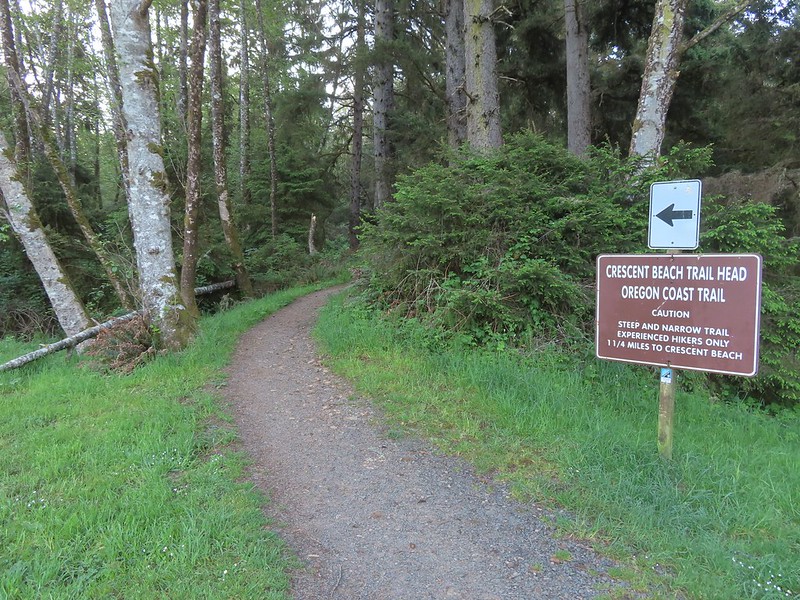
We spent Mother’s Day weekend hiking several trails in Clatsop County. We began on Saturday by driving to Ecola State Park and parking in the Ecola Point parking lot. We last visited the park in December 2013 when we hiked north along the Oregon Coast Trail (OCT) to Tillamook Head’s high point. (post)
IMG_4145

For this visit our plan was to hike south on the OCT then take the Crescent Beach Trail down to that beach.
IMG_4148The trail begins near the restrooms.

The trail began by climbing via a couple sets of wooden stairs to Ecola Park Rd which it briefly followed along the shoulder.
IMG_4150

IMG_4156Ecola Park Road.

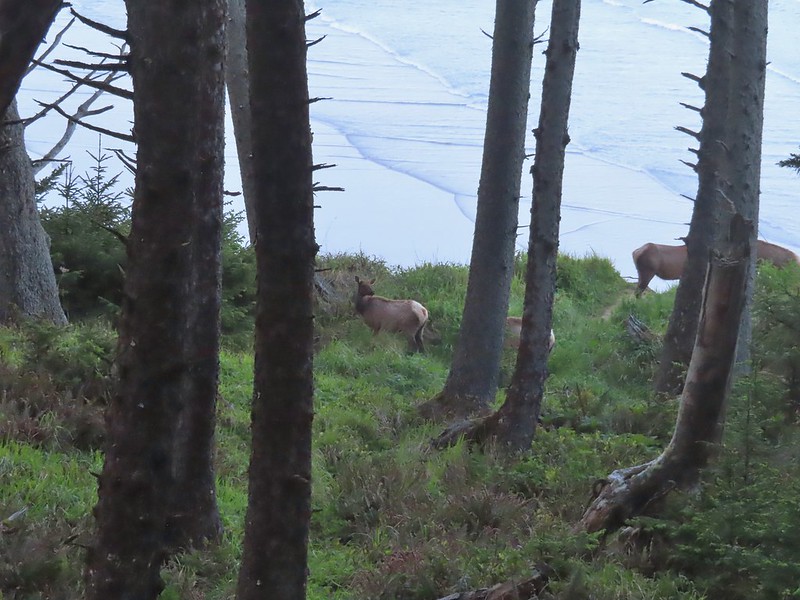
Where the trail left the shoulder, we came to a pair of cyclists who we thought were looking out at the Ocean. It took a second for us to realize that they were actually watching a small herd of elk in the forest below.
IMG_4162

IMG_4158

IMG_4165

After watching the elk for a moment we started down the trail which wound up switching back down toward the elk. Luckily they were following proper Leave No Trace Principals and remained an acceptable distance from the wild hikers.
IMG_4172

IMG_4174

IMG_4178

We continued on past the elk following the OCT approximately a mile from parking lot to the junction with the Crescent Beach Trail.
IMG_4187

IMG_4188Skunk cabbage

IMG_4190Scouler’s corydalis

IMG_4194Window to the Pacific.

IMG_4198

We turned right at the junction and descended a quarter mile to Crescent Beach.
IMG_4202

IMG_4207

IMG_4208Ecola Point

IMG_4210Chapman Point and Bird Rocks

We decided to head north toward Ecola Point to check out the tide pools. We had inadvertently timed our visit nearly perfectly as it was about an hour and a half from low tide.
Prior to reaching the tide pools we passed Waterfall Creek.
IMG_4213The upper falls.

IMG_4214Waterfall Creek

IMG_4218The lower falls.

IMG_4219The tide pools from Waterfall Creek.
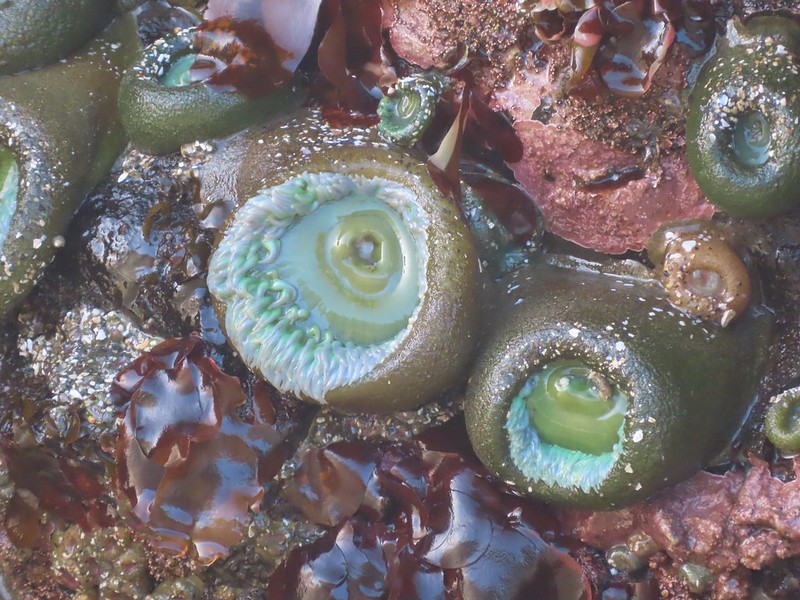
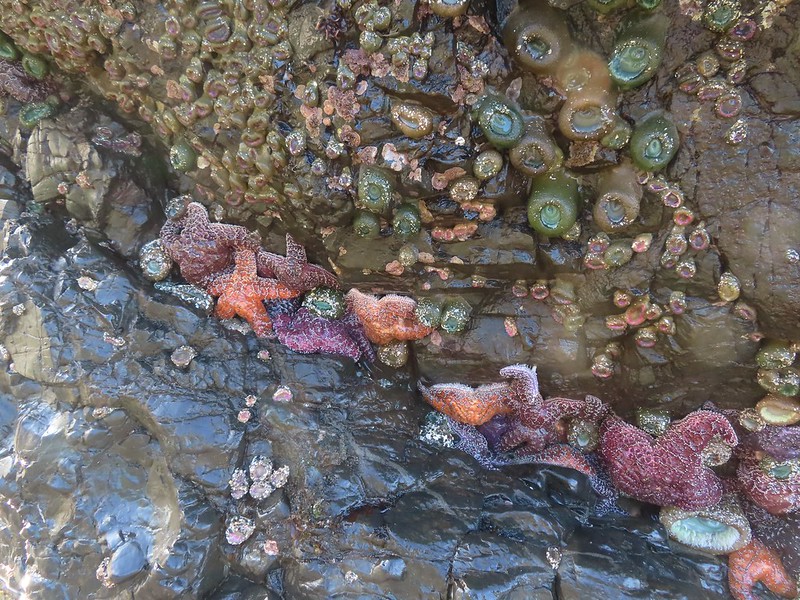
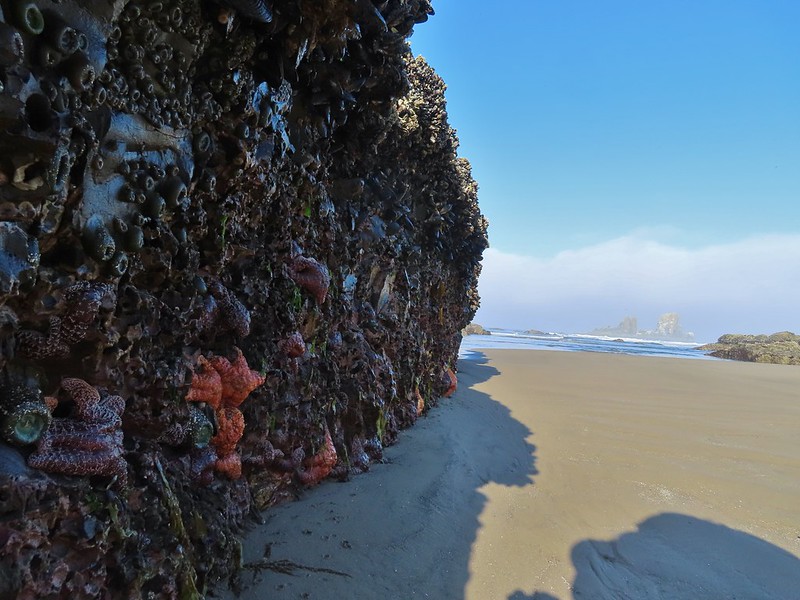
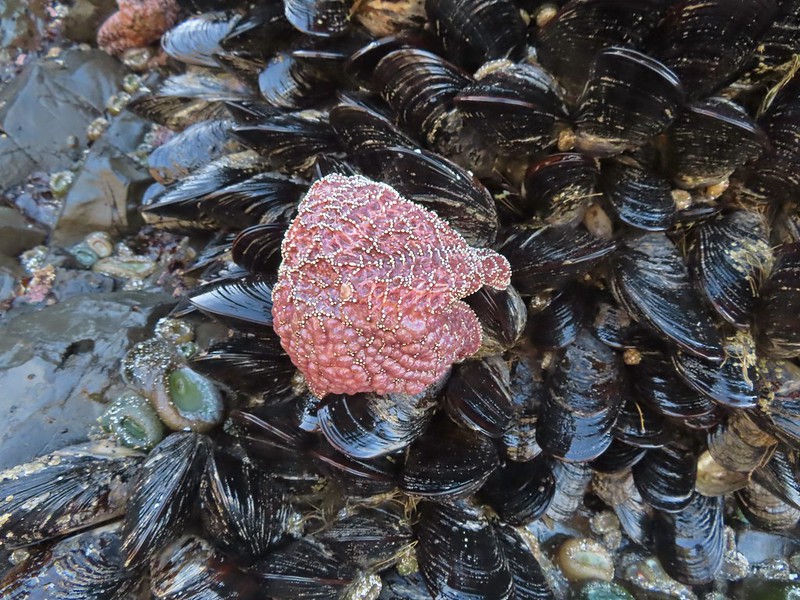
The tide pools wound up being some of the most impressive we’d seen. We spent a good amount of time walking around to the different pools. We were careful not to climb on any of the rocks or to disturb any of the wildlife. In fact some of the rocks that were exposed are likely part of the Oregon Islands Wilderness.
IMG_4222

IMG_4226

IMG_4228

IMG_4229

IMG_4234

IMG_4236

IMG_4239

IMG_4240

IMG_4243

IMG_4245

IMG_4246

IMG_4253

IMG_4257

IMG_4259

IMG_4260

20240511_082411We found Patrick from Spongebob!

After admiring the tide pools we headed south along the beach toward Chapman Point and the Bird Rocks.
IMG_4274

IMG_4282

IMG_4277

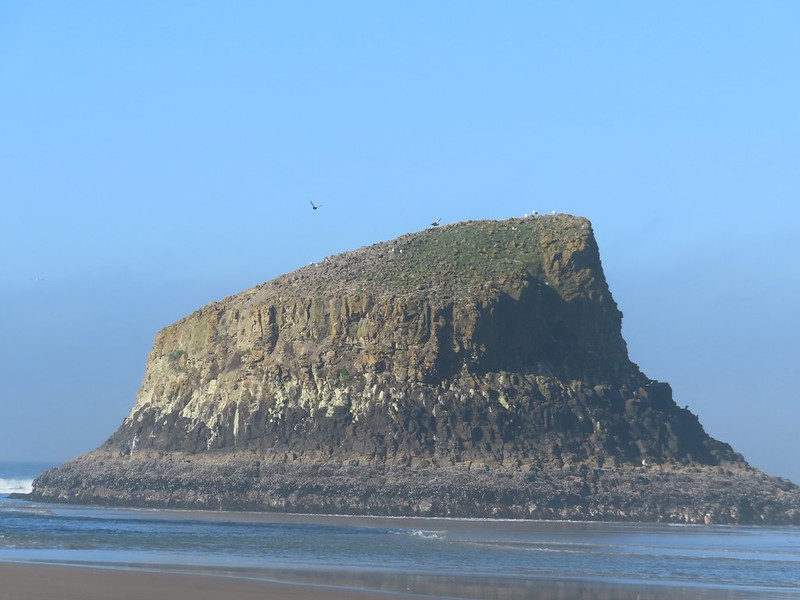
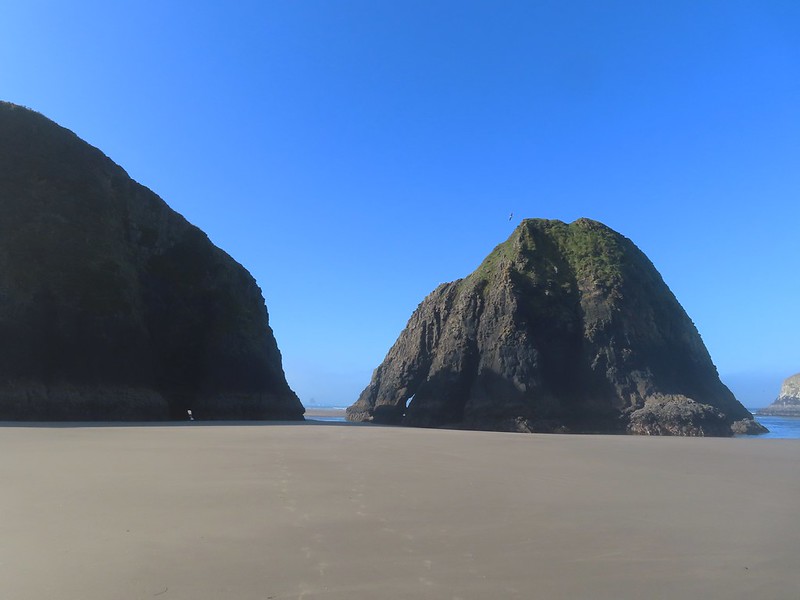
IMG_4280We were curious as to what forces carved out the backside of this rock.
IMG_4281

IMG_4285Chapman Point is only passable at certain low tides. On the far side is Cannon Beach (post).
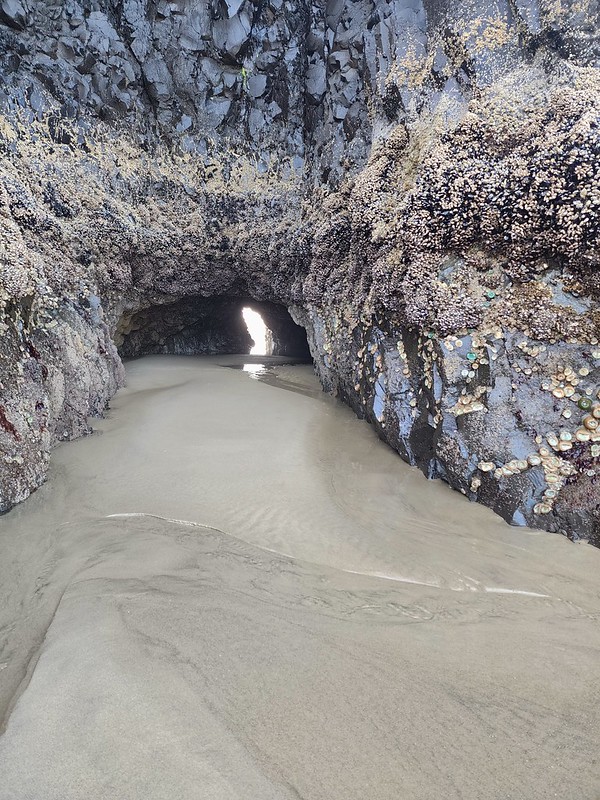
20240511_084246This cave through Chapman Point was flooded at the far end.
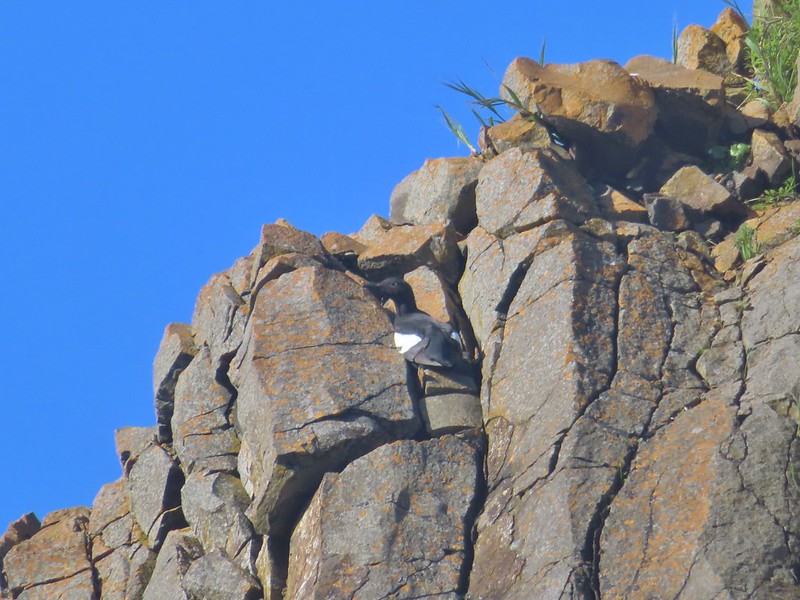
IMG_4287Pigeon guillemot

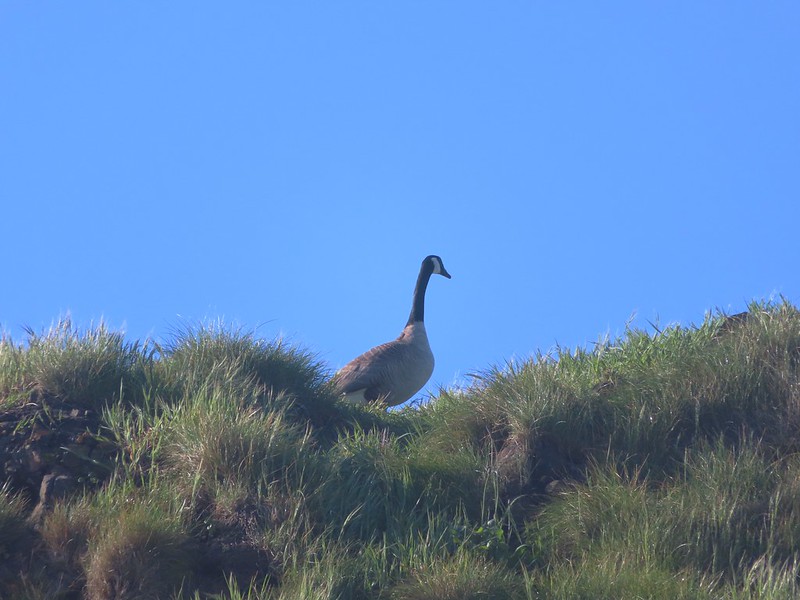
IMG_4302Goose

IMG_4294

We turned around at Chapman Point and headed back to the Crescent Beach Trail.
IMG_4298

20240511_084942

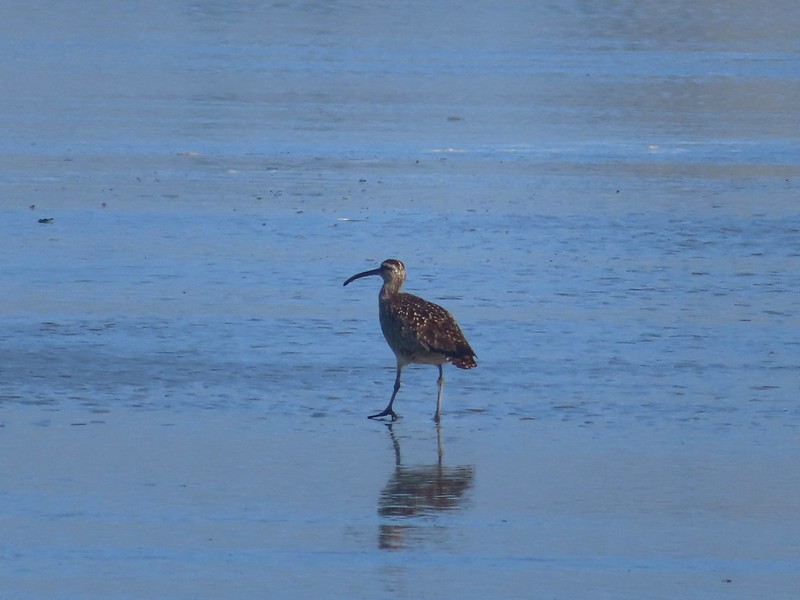
IMG_4304Whibrel

We retraced our steps back to Ecola Point where the lot was beginning to fill up.
IMG_4307

Seaside bittercressSeaside bittercress

IMG_4311Youth-on-age

Our hike here came to 4.4-miles with approximately 600′ of elevation gain.
Screenshot 2024-05-13 185332

We hopped in our car and headed north to Fort Stevens State Park for our next hike. There are several parking lots at Fort Stevens and we opted to park at Battery Russell lot.
IMG_4317Battery Russell from the lot.

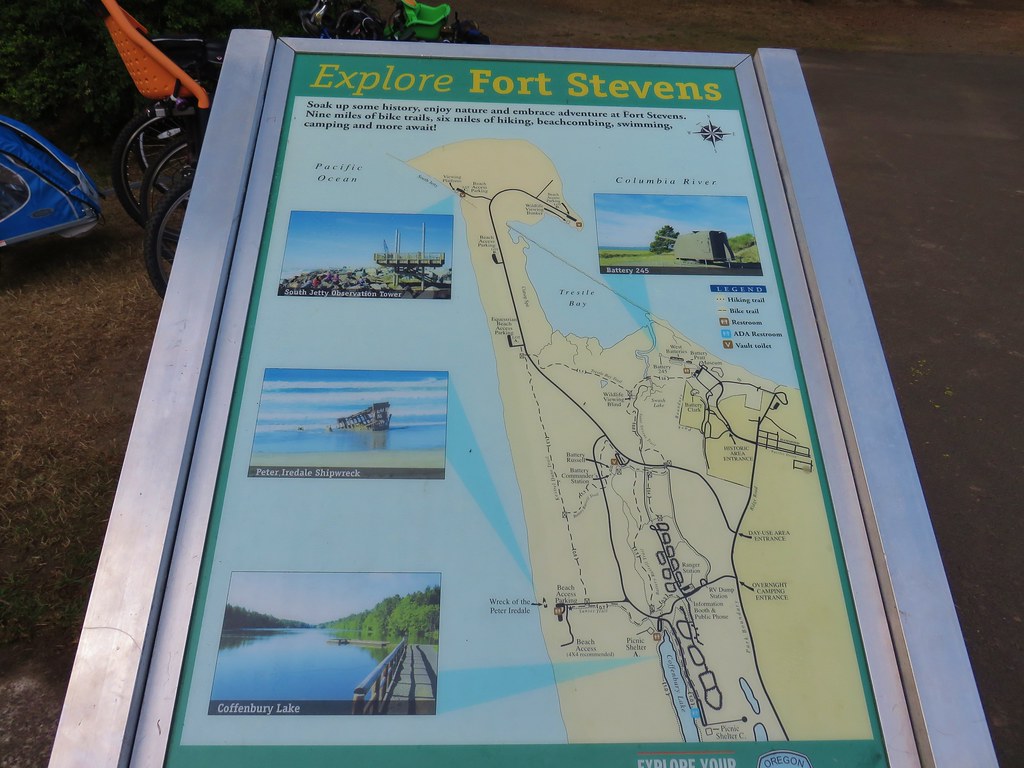
As with Ecola Point we had started a hike here before. In September 2017 we visited Battery Russell, Coffenbury Lake, and a shipwreck at the park (post). Again today we were going in the opposite direction, this time north to visit the park’s Historic Area. We followed a paved path east from the parking lot then over Jetty Road on an overpass.
IMG_4318

IMG_4321

IMG_4327The overpass

We followed the paved path to a junction near a pill box where we went right.
IMG_4333

The path led past Swash Lake which helped explain the host of mosquitos that were flying around us.
IMG_4337

We stayed right at the next junction and Jetty Lagoon on the Swash Lake Bridge.
IMG_4338

IMG_4339

IMG_4342Looking out toward Swash Lake from the bridge.

A little under 2 miles form the parking lot we arrived at the visitor’s center.
IMG_4344The gate to the Historic Area is locked in the evening.

IMG_4347Visitor’s center

A number of trails and paths wind around the Historic Area as well as open spaces that one can simply walk across. We made up our own route based on a suggested hike from the Oregonhikers Field Guide.

IMG_4346

IMG_4349

We began by walking past a jeep on display and looping behind the visitor’s center.
IMG_4351

IMG_4356

IMG_4357

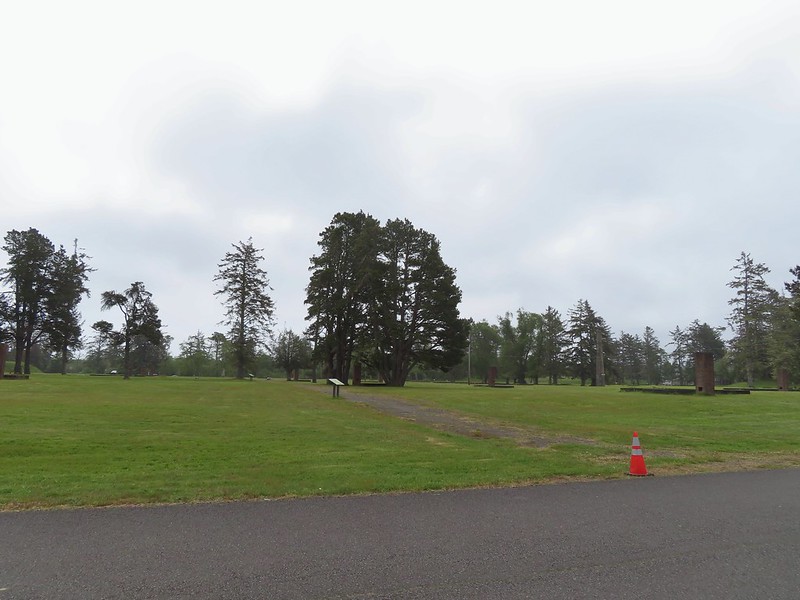
From the visitor’s center we headed into a large open space where the barracks had once been.
IMG_4358

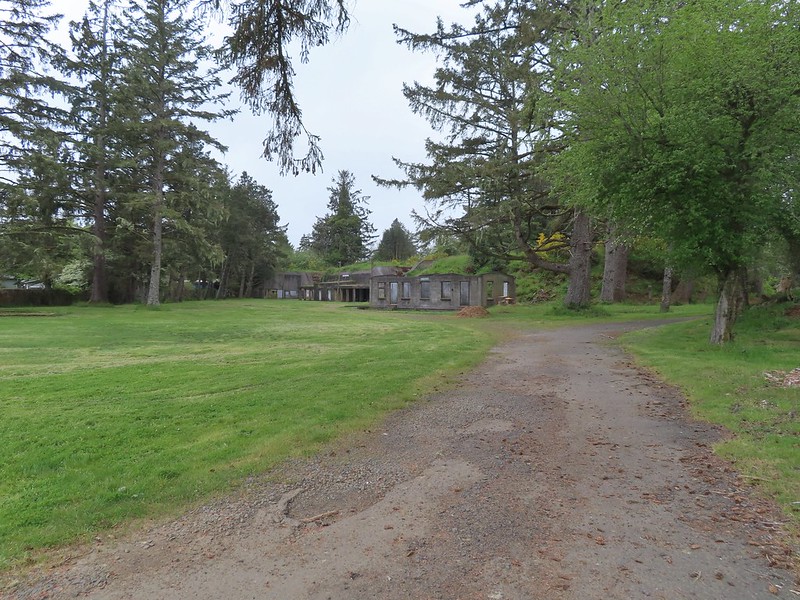
We made our way to the far end of the open space and turned south to see the old guardhouse and Battery Clark.
IMG_4366The guardhouse on the left.

IMG_4368Battery Clark

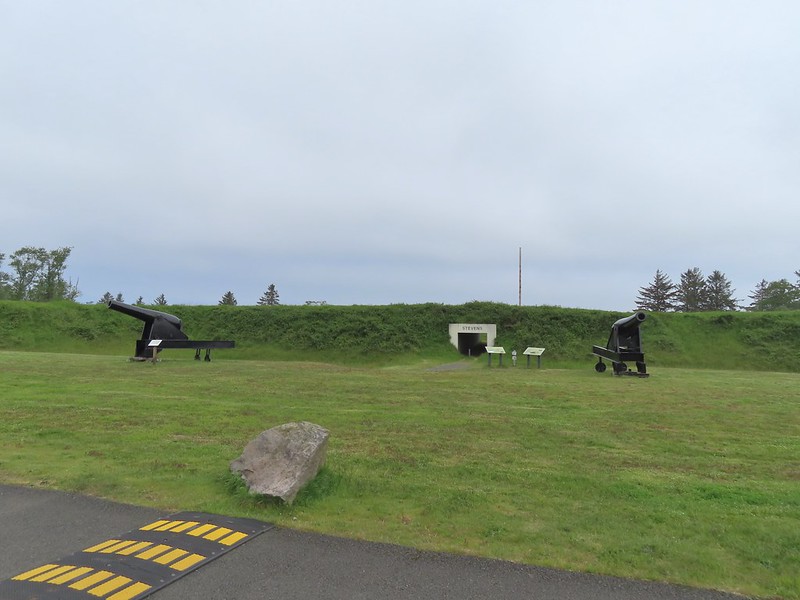
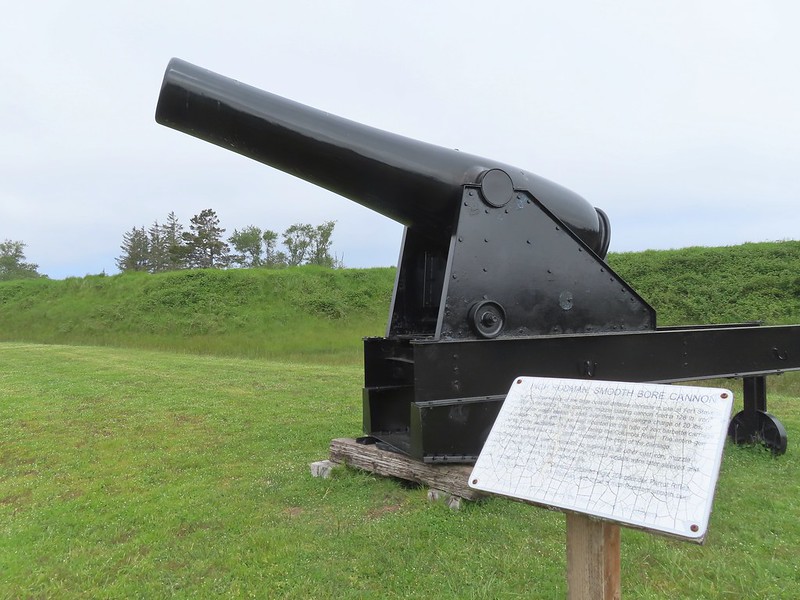
We then turned back north cutting across the barracks area toward a pair of smooth bore cannons and Battery Freeman.
IMG_4375

IMG_4377

IMG_4379

We passed the cannons and hiked through a guarded underpass.
IMG_4376

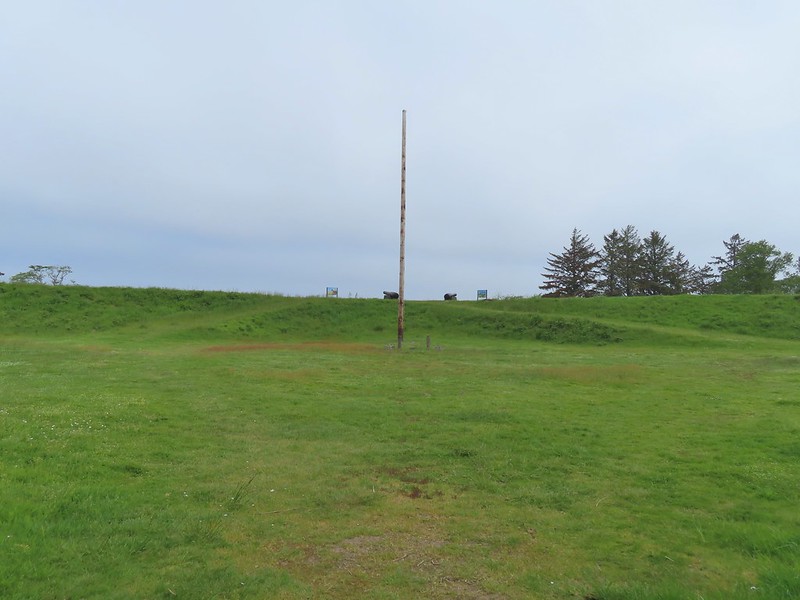
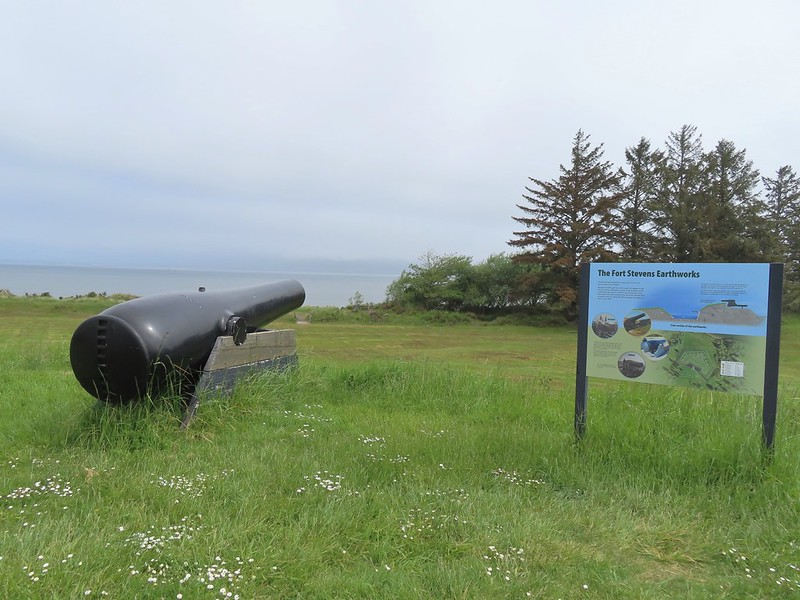
IMG_4381Fort Stevens Earth Works.

We crossed a grassy field to the cannons atop the Earth Works then descended a staircase.
IMG_4382

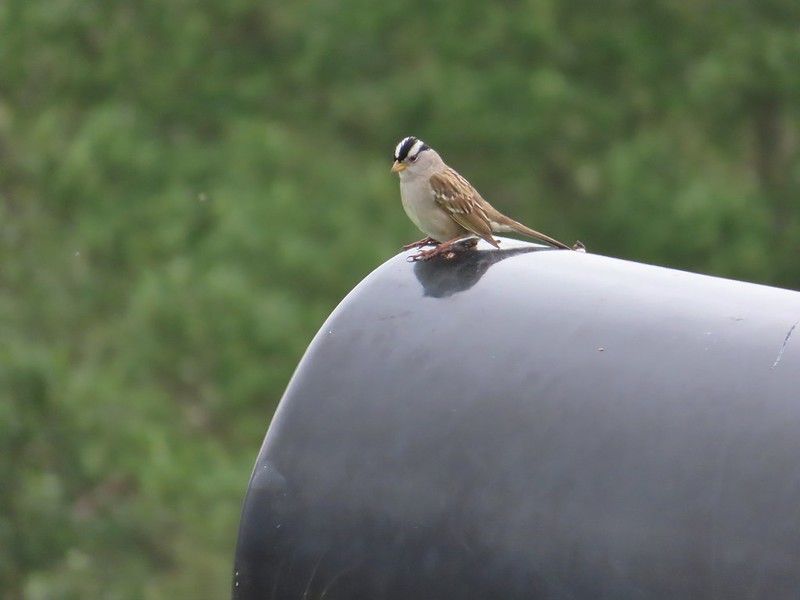
IMG_4386White-crowned sparrow

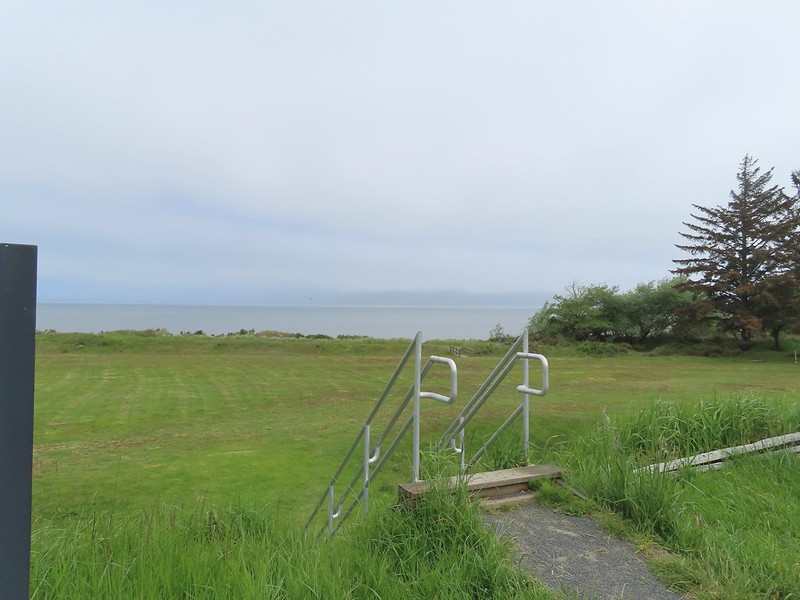
IMG_4385We cut across the grass below to the footbridge in the distance.

IMG_4388Columbia River

IMG_4389Looking west toward the Pacific.

At the Columbia we turned right on the Jetty Trail and followed it past some disc golf holes and Battery Smur to a former roadbed.
IMG_4390

IMG_4391Battery Smur

IMG_4392The roadbed coming in from the former barracks site.
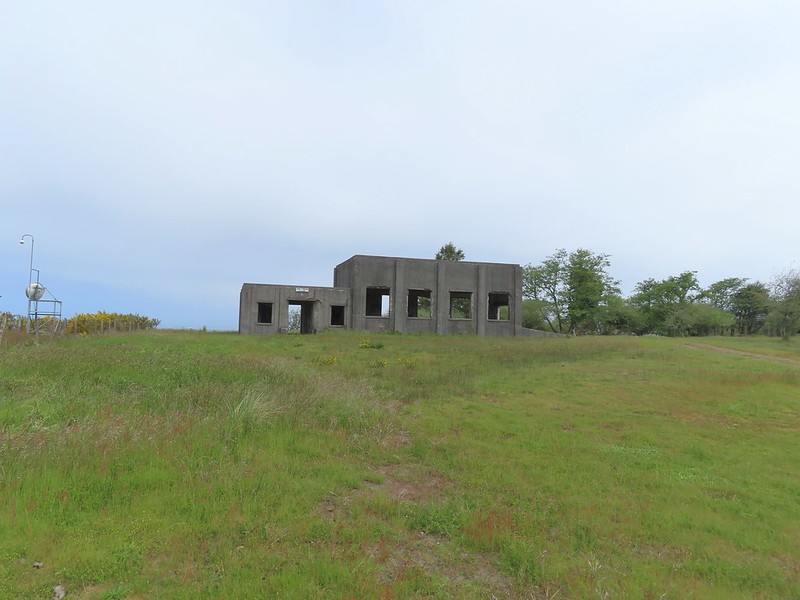
We turned left on this road and followed it to a gate and the former Torpedo Loading Room.
IMG_4393Mine Loading Building

IMG_4398Searchlight Generator

IMG_4396

IMG_4397Torpedo Loading Room

We turned around here and walked back to the Jetty Trail and followed it west through the Disc Golf Course to the Clatsop Longhouse site.
IMG_4401

IMG_4402

IMG_4407

IMG_4409

From the longhouse site we continued on the Jetty Trail toward Battery 245.
IMG_4410

IMG_4411

IMG_4415

IMG_4416

IMG_4423Battery 245

IMG_4425

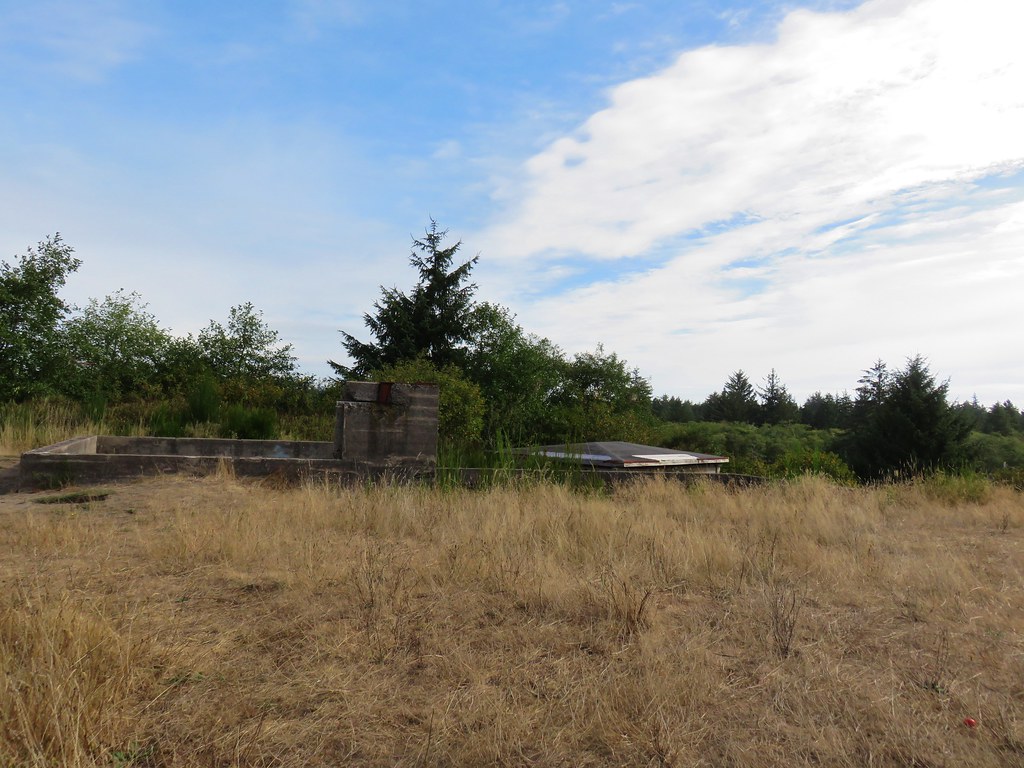
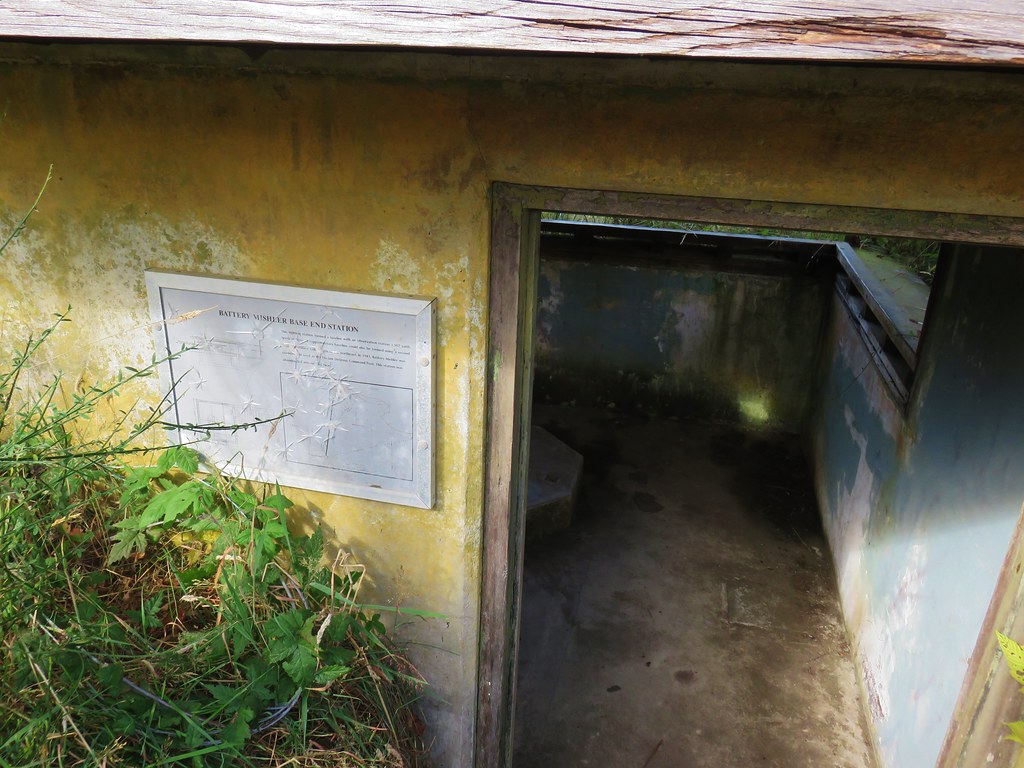
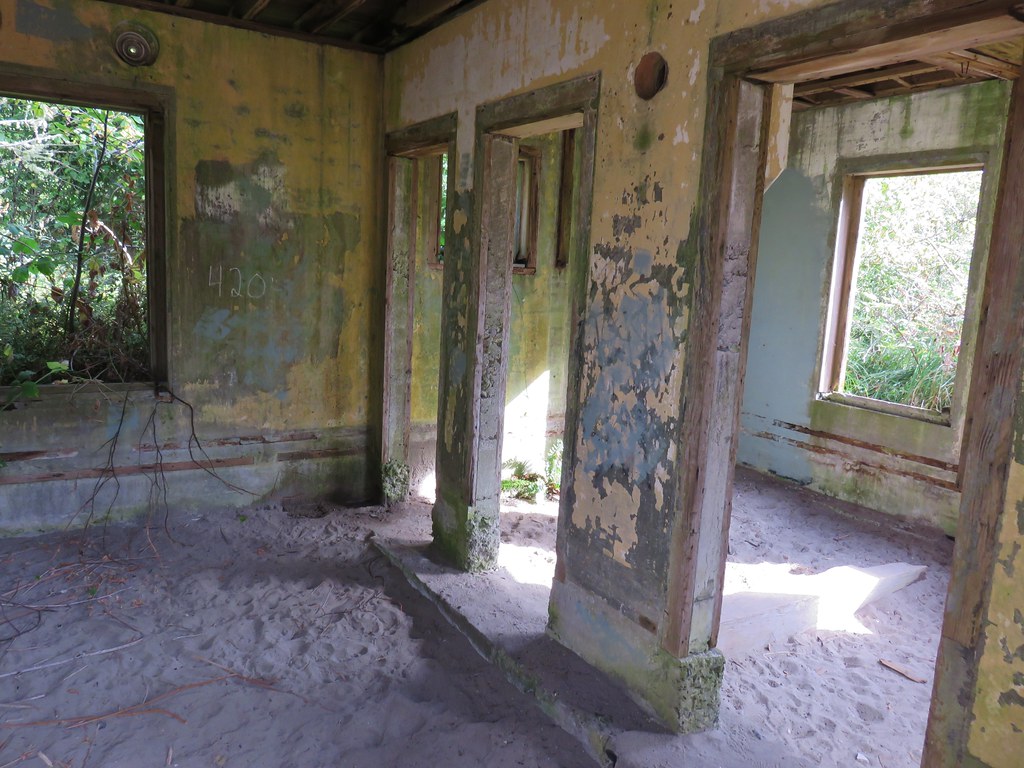
We hiked around Battery 245 and onto Battery Mishler.
IMG_4430

IMG_4432

IMG_4433

We passed this battery and Battery Pratt then veered right on a paved path which led back to the path we’d followed from Battery Russell.
IMG_4437

IMG_4438Sign for the Lil’ Oozlefinch Putting Course.
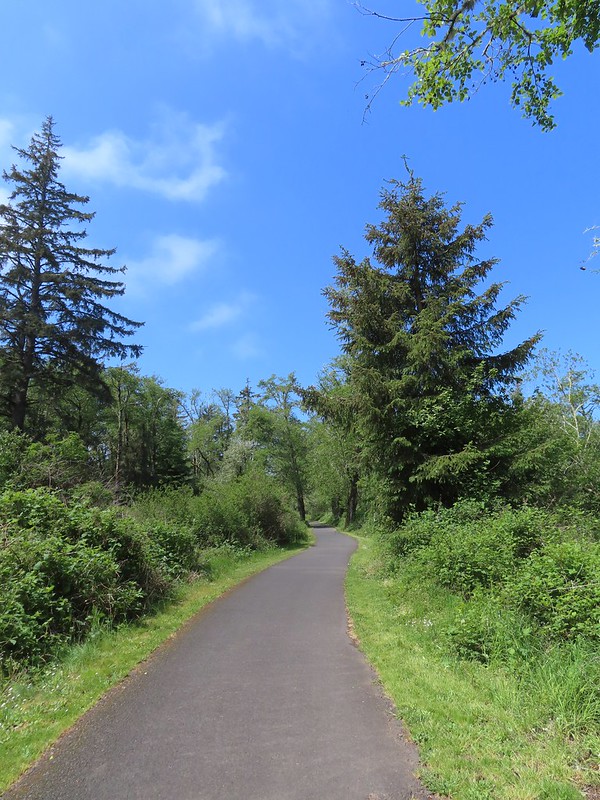
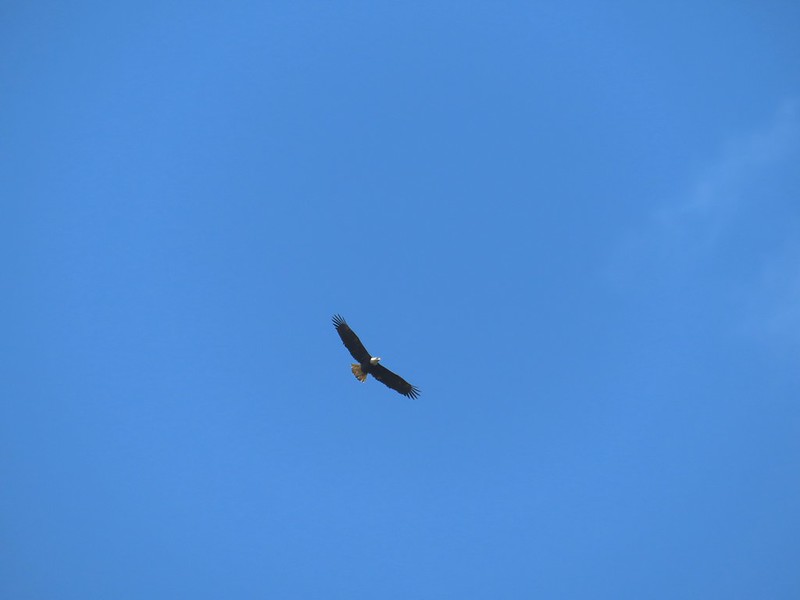
We headed back toward the parking lot and at the Pill Box we veered right which was a more direct route to the parking lot. The drawback was that there was no overpass here so we had to watch for traffic before crossing Jetty Road.
IMG_4439

IMG_4441Bald eagle

IMG_4444

IMG_4446Gate near Jetty Road.

After crossing Jetty Road, we followed the paved path left a tenth of a mile to the Battery Russell parking lot. This hike came to 6.3-miles with just 75′ or so of elevation gain.
Screenshot 2024-05-13 185015

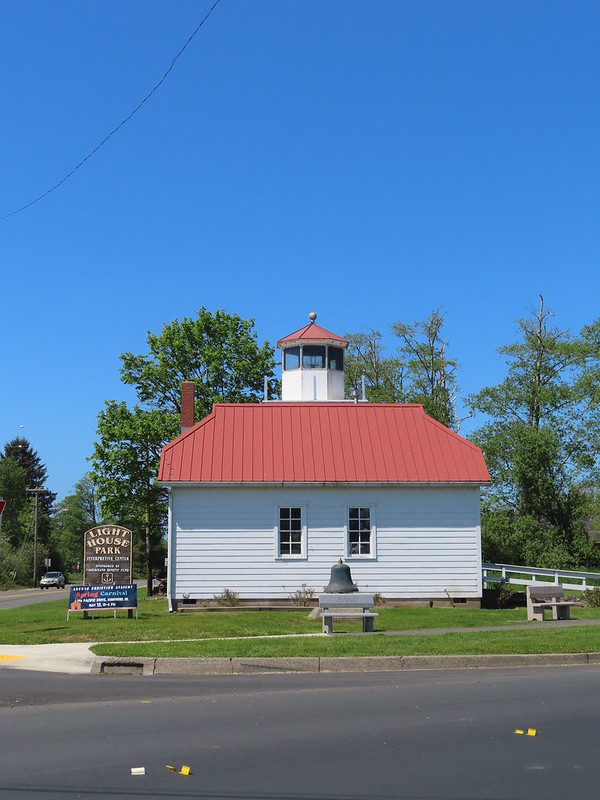
Our final stop of the day was just 5 miles from the Battery Russell parking lot at Lighthouse Park in Warrenton.
IMG_4486

IMG_4449The parking lot at the park.

Our plan here was to hike the 2-mile Skipanon River Loop. Three things drew us to this trail. First it was a trail we hadn’t yet hiked. Secondly, we hadn’t hiked along the Skipanon River yet, and while it isn’t an official goal we are trying to visit as many of Oregon’s rivers as possible. Finally, one of our favorite post hike restaurants, Nisa’s Thai Kitchen is located along the route.

From the parking lot we crossed NE Skipanon Drive and followed the sidewalk past a storage facility to a path next to E Harbor Drive that promptly passed beneath the road.
IMG_4451

IMG_4452Emerging from the underpass.

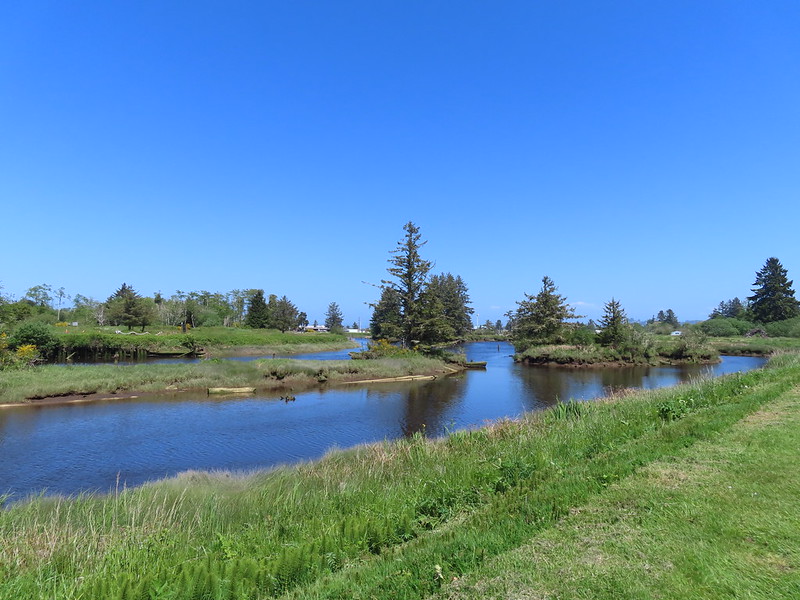
We turned right onto a paved path along the Skipanon River for a third of a mile to Skipanon River Park.
IMG_4453

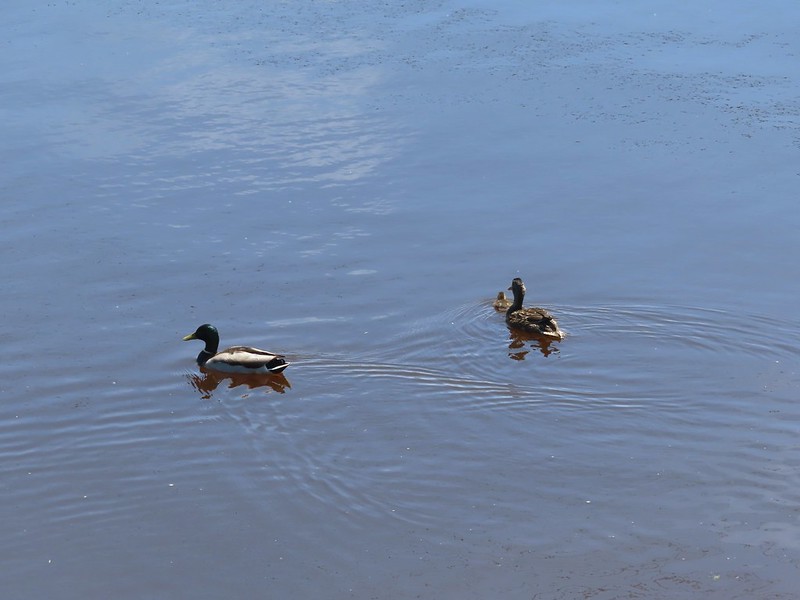
IMG_4454Mallard family

IMG_4460Sign at the park.

At the park the trail ended and we turned right onto SE 3rd St and followed it a block to S Main Avenue where we turned left. After two blocks on Main we turned left onto SE 5th St and then took a right on a grassy track behind some buildings.
IMG_4461Eighth Street Dam from the grassy track.
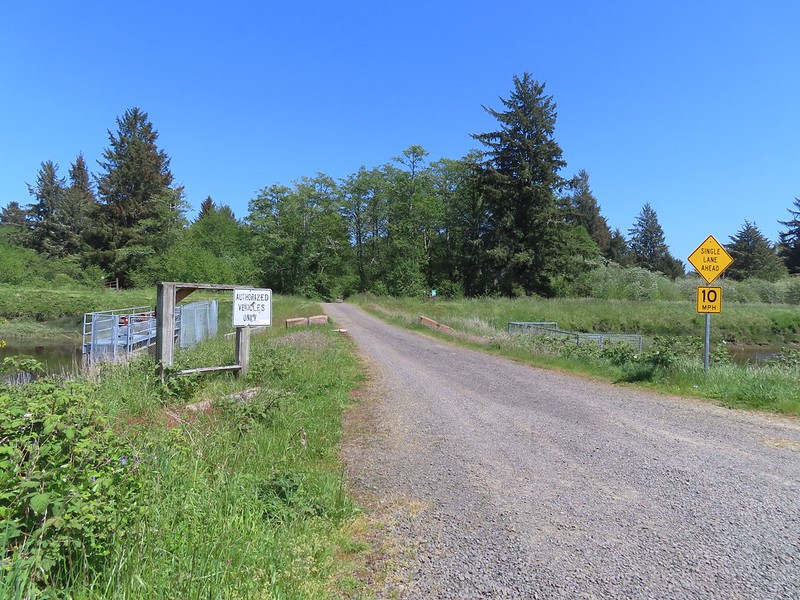
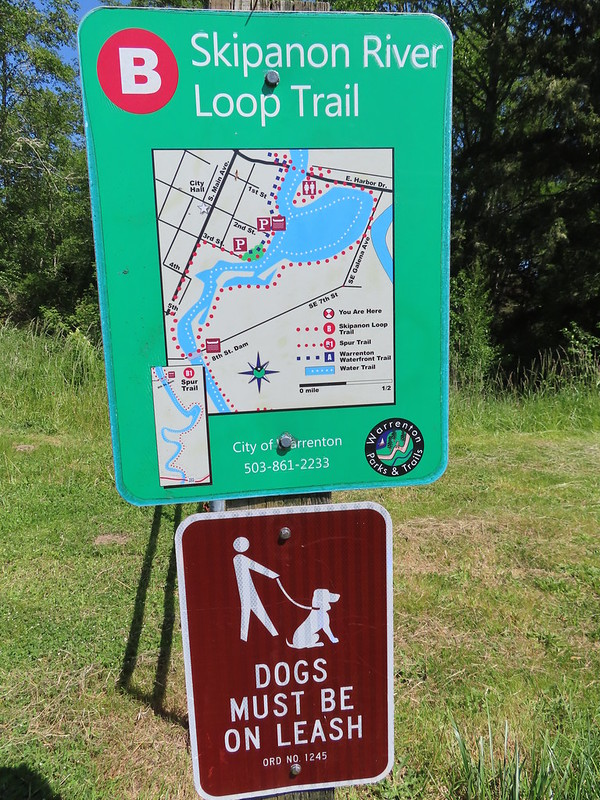
We crossed the river on the 8th Street Dam where we finally saw an official trail map.
IMG_4463

IMG_4465Until we saw this sign we’d been thinking that maybe the trail didn’t exist any longer. We were also questioning how the loop was supposed to get back across the river at the other end since the only bridge across the river there was Harbor Drive. Until seeing this we were thinking of turning around at the dam, but instead we decided that we’d do the loop with Heather getting a table at Nisa’s while I recrossed the river to retrieve the car.

With lunch calling, and our feet feeling a bit worn, we opted not to do the optional out-and-back B1 spur trail and continued on the loop past a gate.
IMG_4466

On this side the trail was a nice grassy track following a dike which was far more pleasant than Main Avenue.
IMG_4469

IMG_4470

Greater scaupNot the clearest picture but I think this is a greater scaup based on the head shape. We’ve seen a number of lesser scaups, but this would be our first greater.

IMG_4475Great blue heron

IMG_4480Cormorant

IMG_4482A brief paved section.

IMG_4483Nisa’s Thai Kitchen across Harbor Drive.
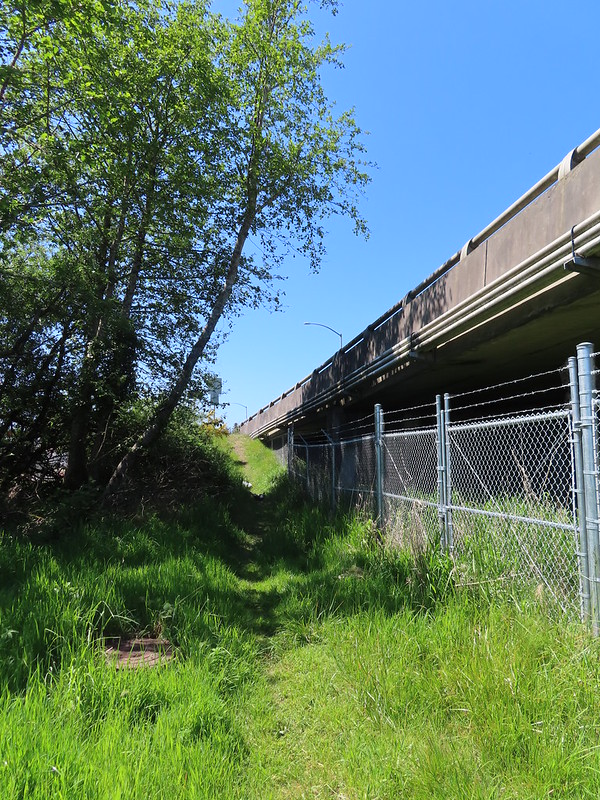
There was a nice wide bike/pedestrian lane on the bridge making the crossing not too bad even with traffic. As I was made my way across I noticed a path leading down to the underpass on the south side of Harbor Drive which meant I wouldn’t need to cross the main street on foot.
IMG_4485Looking back up the path from Harbor Drive.
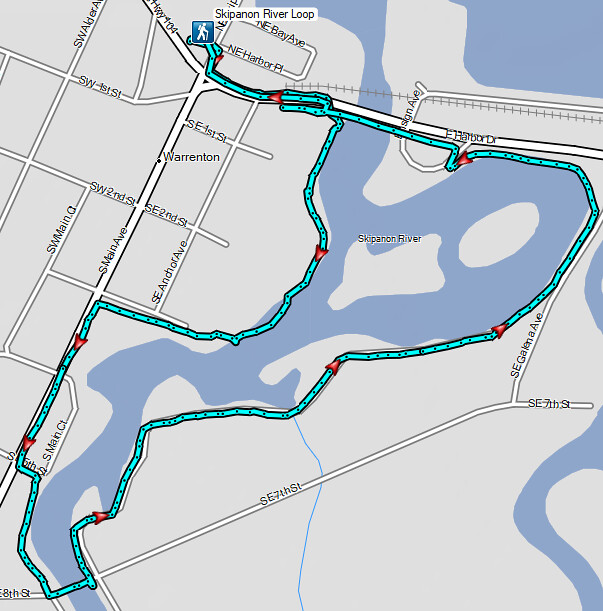
The loop came in just over 2-miles with minimal elevation gain.
Screenshot 2024-05-13 185144

This would probably be a nicer hike early in the morning when less traffic was about. It was a little awkward walking along the city streets as well, but the grassy dike was a comfortable walk. What really made this worth the stop though was the Drunken Noodles and Pad Thai. After a satisfying meal we drove to Astoria arriving at our motel right after check in time (3pm). We originally thought we might head out to the Astoria Riverwalk after cleaning up, but after showering a resting for a bit it was clear that 12.9 miles were enough for one day. Happy Trails!

Flickr: Crecent Beach, Fort Stevens Historic Area, and the Skipanon River Loop

Categories
Hiking Northern Coast Oregon Oregon Coast Trip report

Nehalem Bay State Park, Kilchis Point Reserve, and Cape Meares State Scenic Viewpoint

We didn’t waste any time starting on our 2018 list of hikes as we took advantage of favorable weather on New Year’s Day and headed for the Oregon Coast. Our plan for the day was to make three stops near Tillamook. First at Cape Meares State Scenic Viewpoint, then at Kilchis Point Reserve, and finally at Nehalem Bay State Park. As we neared Tillamook though it became apparent that we were a bit ahead of the Sun so we decided to swap the first and final stops to avoid sitting at the Cape Meares Trailhead waiting for light.

We drove north through Tillamook on Highway 101 to mile post 44 (one mile south of Manzanita) where we turned west at a sign for Nehalem Bay State Park. After paying the $5 day use fee we parked at the large day use area. We waited briefly for enough light to take a short path to the ocean.
Nehalem Bay Trailhead

Pacific Ocean

The view from the beach was a good one with some of our previous destinations visible to the north.
Neahkahanie Mountain
Neahaknie Mountain, Angora Peak, and Cape Falcon

To the south our final destination of the day, Cape Meares, jutted out into the Pacific.
Looking south from the Nehalem Spit

We walked south along the quite beach for 2.25 miles to the jetty at the end of the spit. We were joined by a lone jogger, some seagulls, and a curious seal.
Morning glow on the Pacific

Seagull

Seal

Jetty on Nehalem Spit

A mass of driftwood near the jetty forced us to backtrack a bit along the beach to a hiker sign where we turned inland.
Morning light hitting Neahkahanie Mountain

Hiker post on Nehalem Spit

We crossed the spit to the bay and turned north along the water on a worn path.
Swell heading into the bay

We were eventually able to get down onto the sandy Nehalem Beach which we walked along as far as we could before the high water forced us back up into the vegetation.
Neahkahanie Mountain across Nehalem BayNehalem Beach ahead
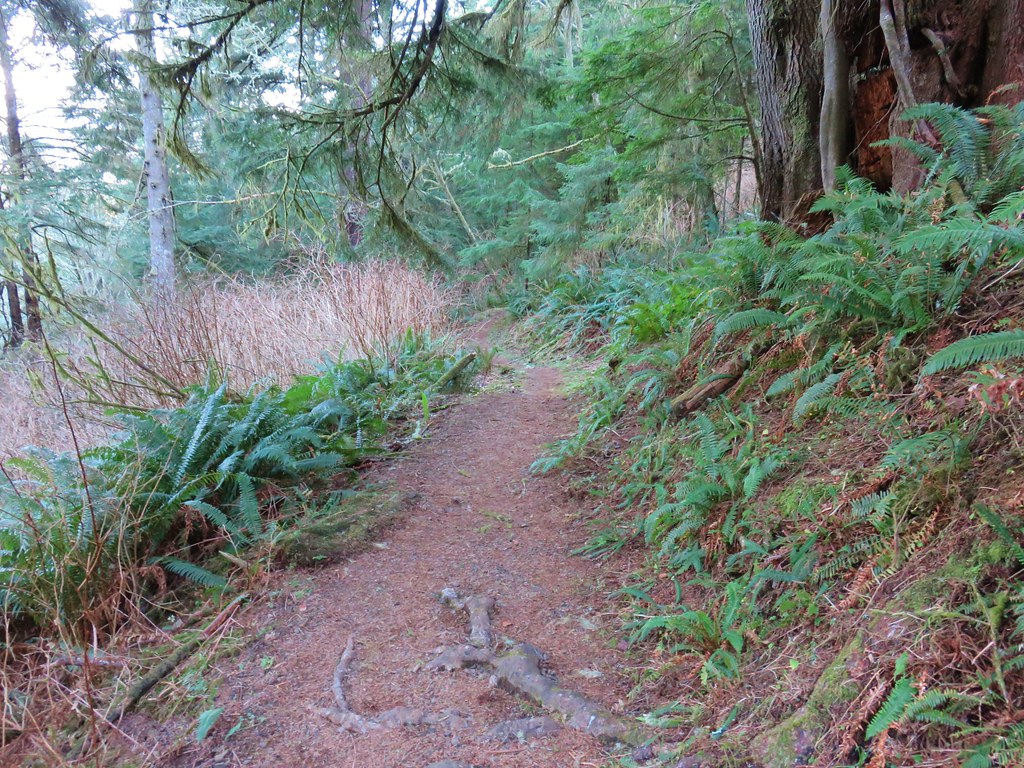
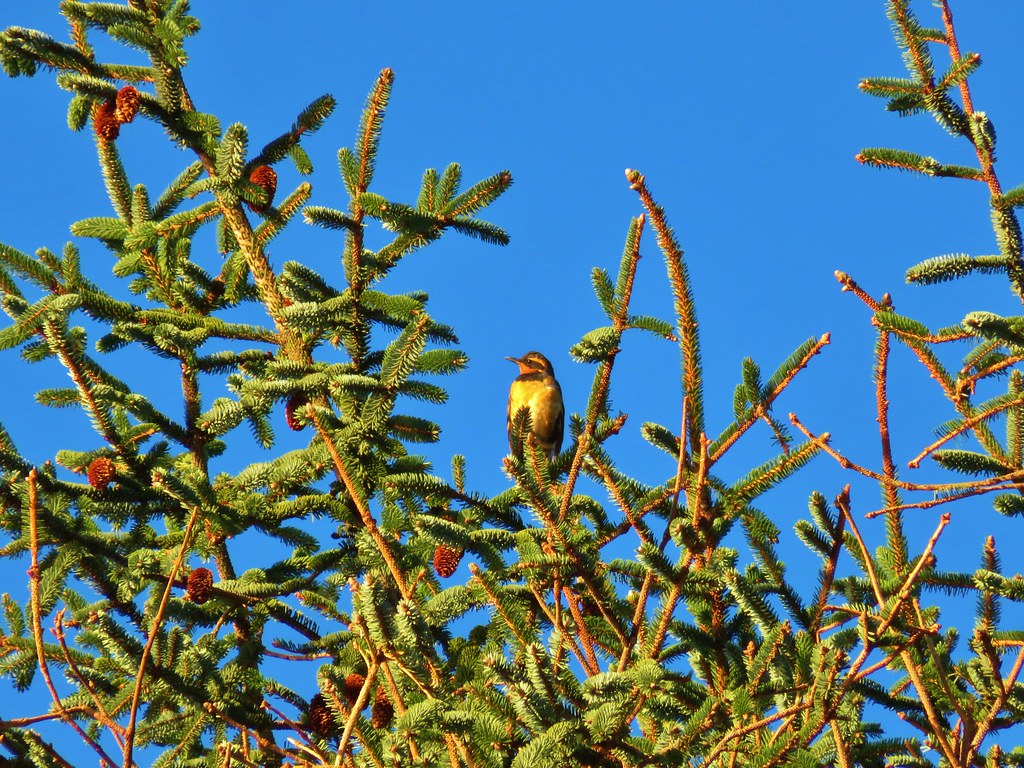
While we walked along the beach we spotted a bald eagle, more seals, and a varied thrush.
Bald eagle

Seals in Nehalem Bay

Varied thrush

Ideally we would have been able to keep on the sand all the way back along the bay to the park’s boat ramp but since that wasn’t an option we turned inland on what appeared to be a well traveled trail. We were hoping it would lead us to the horse trail that our map showed running down the center of the spit but after a short distance the path we were following became flooded.
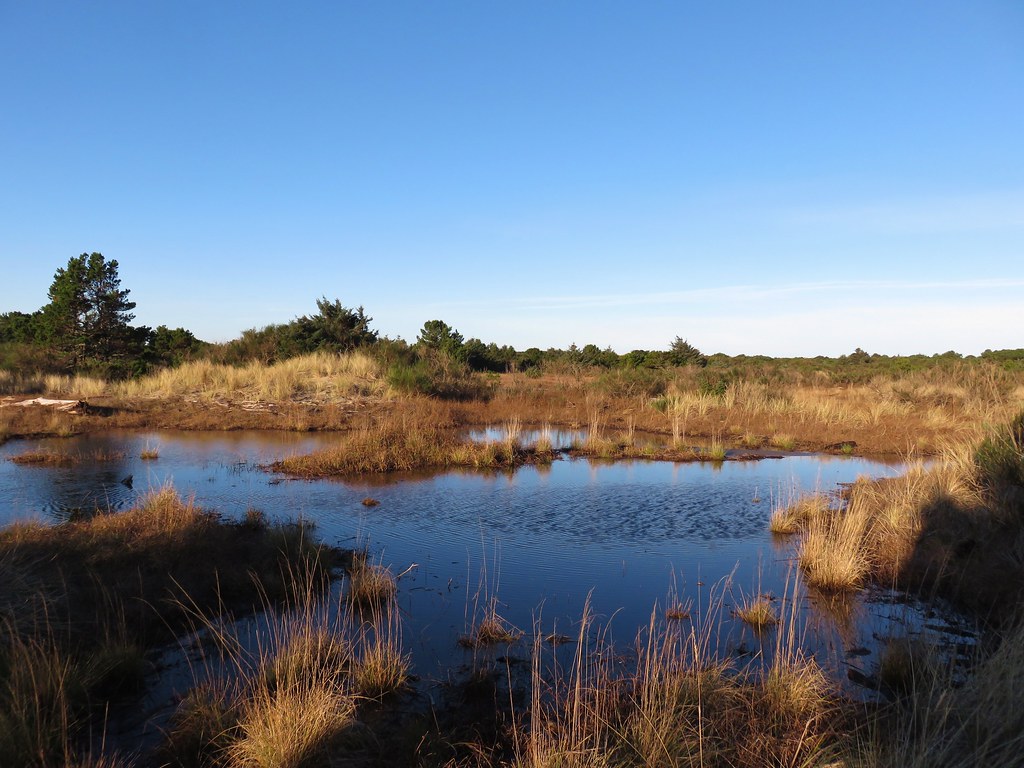
More water on Nehalem Spit

We were forced to attempt to follow a maze of game trails.
Off trail travel on Nehalem Spit

We could guess who was responsible for the confusion of trails by the elk sign we continually spotted. We lucked out at one point when we came to another flooded area at a narrow point where we were able to cross on driftwood. Had we tried sticking to the bay we would have run into a spot too wide to cross and wound up where we were anyway.
Inlet along Nehalem Bay

Shortly after crossing the water travel became easier as we were able to reach another sandy beach and then pick up a wider more traveled trail back to the horse trail not far from the day use parking lot.
Nehalem Bay

Horse Trail in Nehalem Bay State Park

Our guidebook and called this a 5.2 mile loop but the time we’d arrived back at the car we had squeezed 5.7 miles out of it due to backtracking because of the flooded trail.

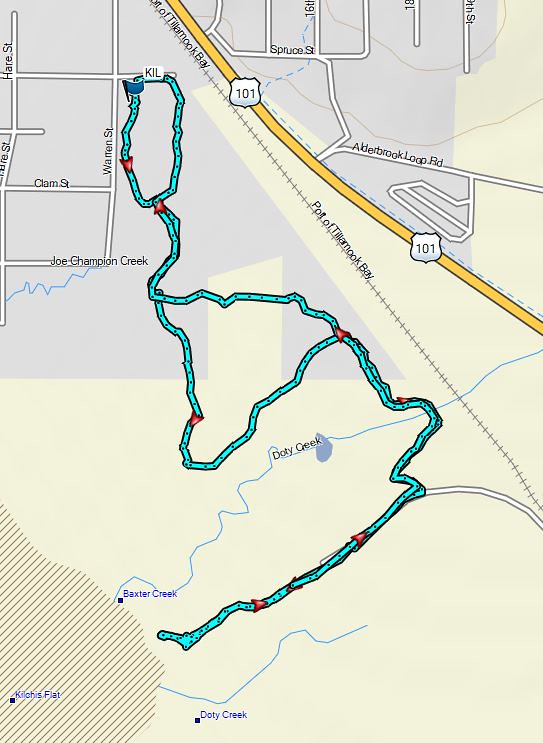
After returning to the highway we headed south to Bay City for our second stop of the morning – Kilchis Point Reserve. We turned towards Tillamook Bay on Warren Street near mile post 61 and followed pointers to the parking area on Spurce Street.
Kilshis Point Reserve Trailhead
Kilchis Point is the site of one of the largest Native American villages along the Northern Oregon Coast. It is also the location where the Morning Star of Tillamook, first ship registered in the Oregon Territory, was built. The small park is very nice with plenty of amenities and a plethora of information posted throughout. It was a little chilly out so we didn’t stop to read all the signs this time but that just gives us a reason to stop again and check it out in the Spring or Summertime.
Path at Kilchis Point Reserve

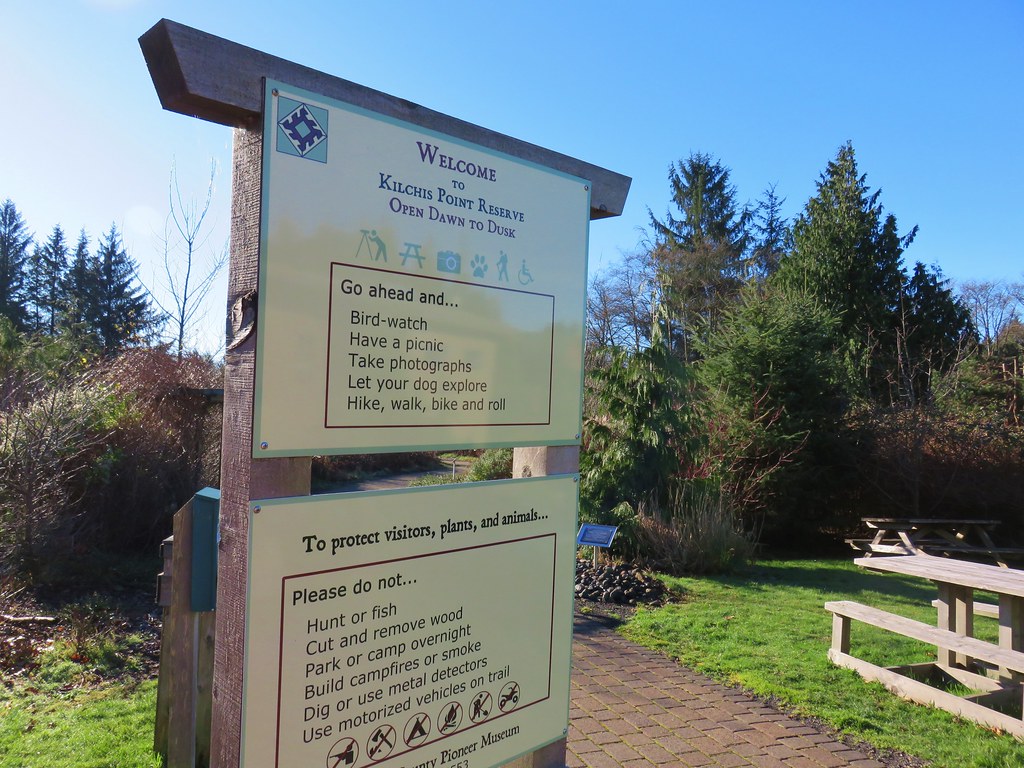
Interpretive sign at Kilchis Point Reserve

Interpretive sign at Kilchis Point Reserve

Interpretive sign at Kilchis Point Reserve

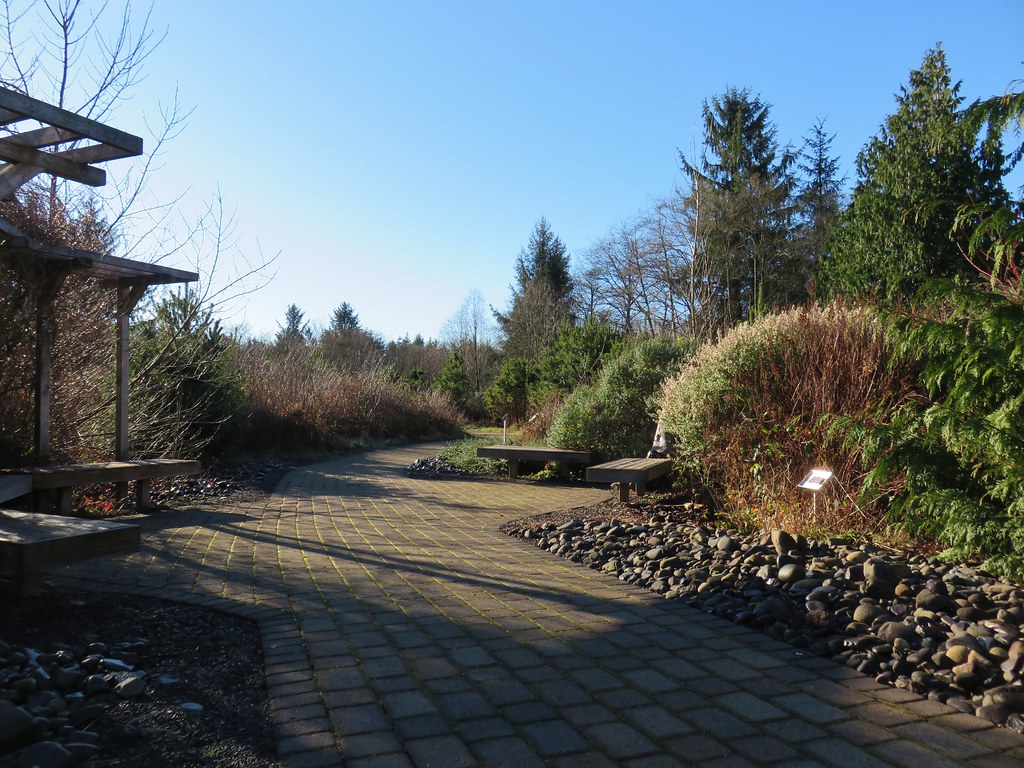
We followed the brick path from the parking area keeping right at junctions a total of 1.2 miles to a bird watching gazebo at Tillamook Bay.
Brick path at Kilchis Point Reserve

Gazeebo for birdwatching at Kilchis Point Reserve

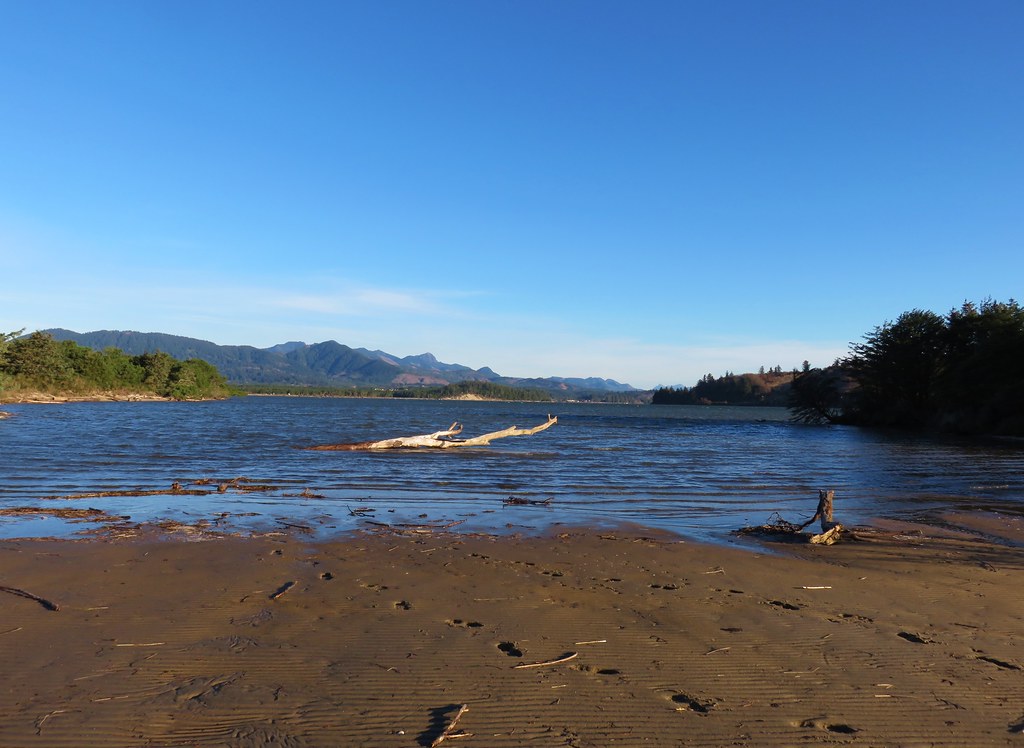
Tillamook Bay

We didn’t spot many animals (other than dogs) along the way but we did get to listen to a pair of bald eagles for a bit.
Bald eagle

After a short break by the bay we returned to the parking area by following signs and staying right at trail junctions to complete two short loops.
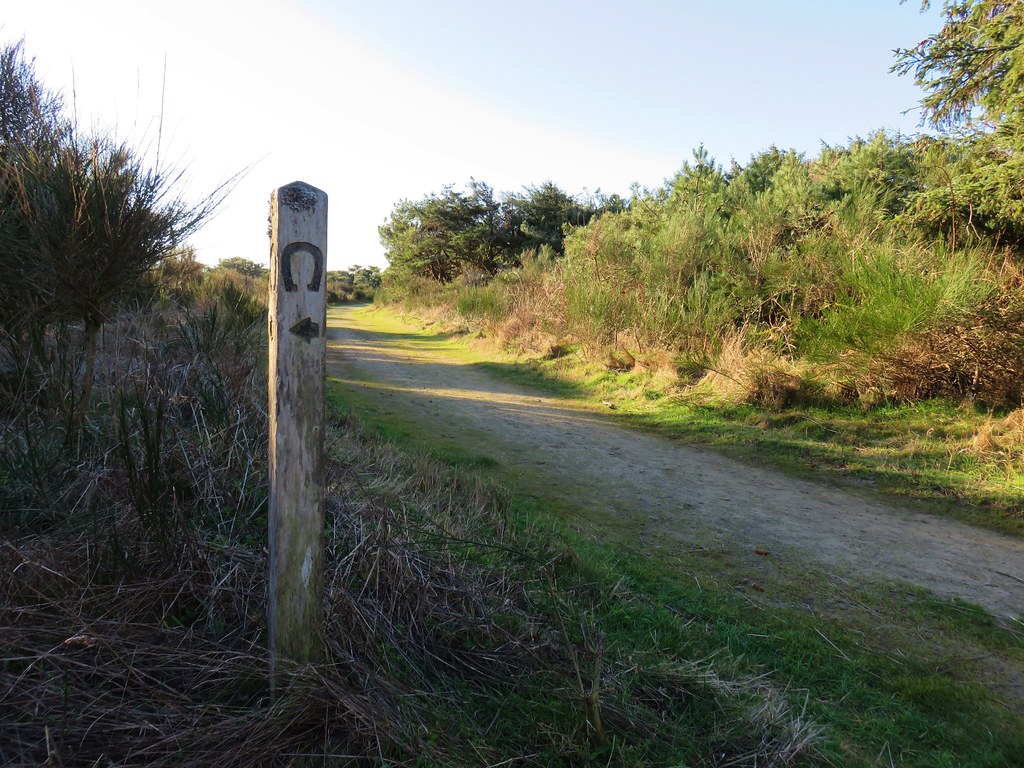
Trail sign at Kilchis Point Reserve

Kilchis Point

We then drove south to Tillamook and followed signs to Oceanside on Highway 131. From Oceanside we followed signs to Cape Meares State Scenic Viewpoint and parked at a trailhead parking area at the park entrance.
Cape Meares Trailhead
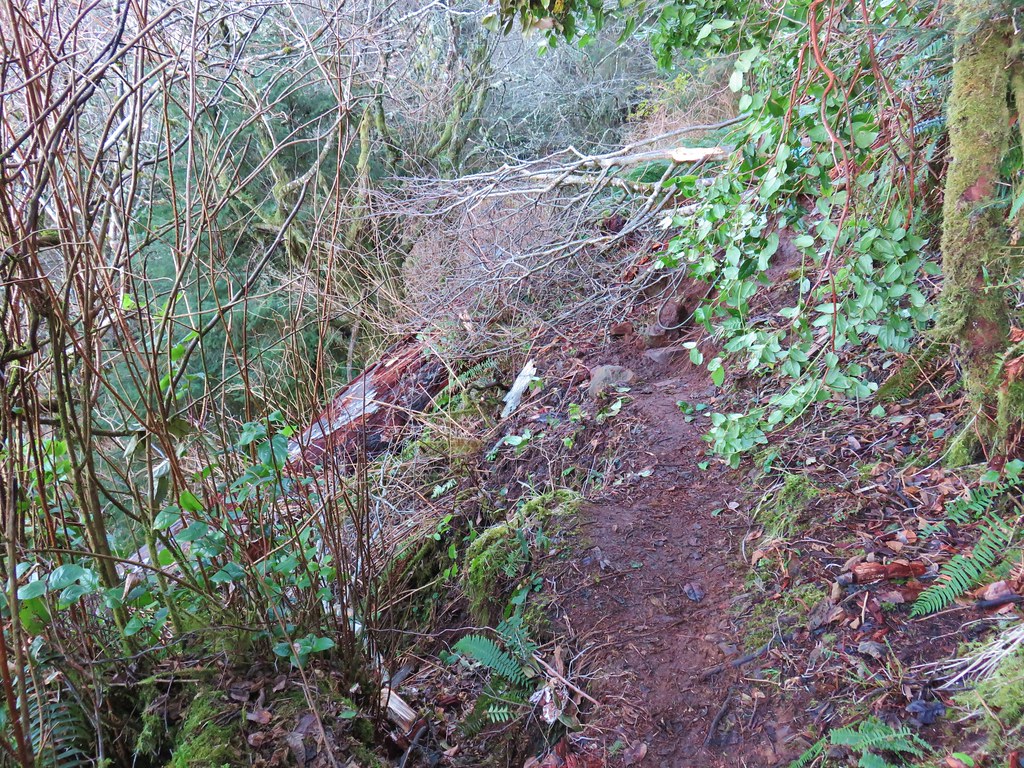
A mudslide in January of 2013 closed the Three Capes Scenic Loop beyond the park entrance. That slide continues to slowly shift the area and has affected a trail between the trailhead and the beach to the north of Cape Meares. We decided to head down this trail to see the conditions first hand.
Cape Meares Trail map

Trail at Cape Meares

The upper portion of the trail was in reasonably good shape although there was a small tree that required ducking under.
Trail at Cape Meares

Shortly after passing a fairly nice view of another place we had previously hiked, Bayocean Spit, we came to a jumble of debris.
Bayocean Spit from Cape Meares

Washed out trail at Cape Meares

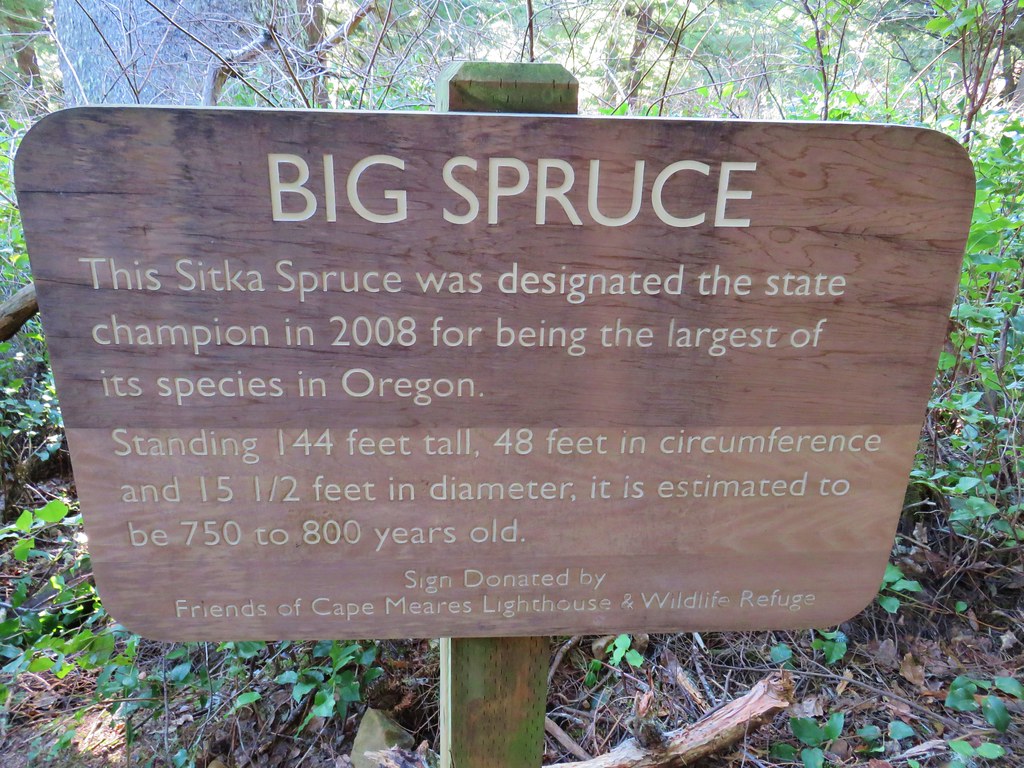
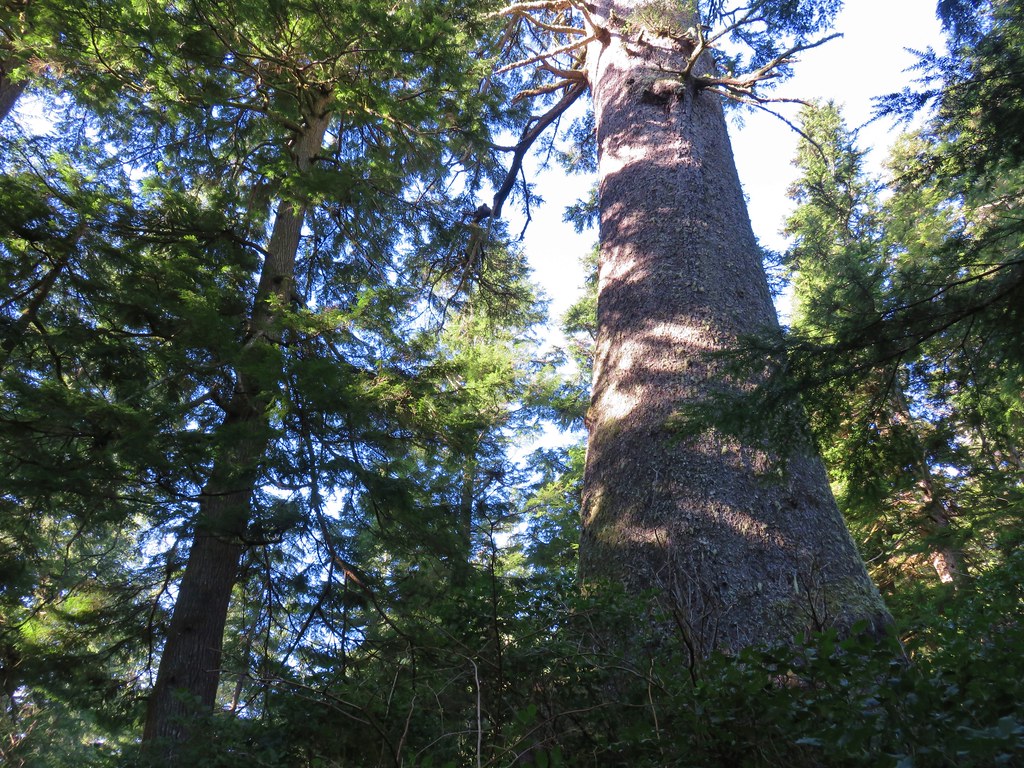
That was our turn around point,a little over half a mile from the trialhead. We headed back up to the trailhead and took the .2 mile Big Spruce Trail. The tree is estimated to be 750 to 800 years old and is the largest known Sitka spruce in Oregon.
Sign for the Big Spurce

Big Spruce

Big Spruce at Cape Meares

For a bit of perspective if the tree sprouted in 1217 it was there at the start of the fifth crusade.

After visiting the old tree we road walked .6 miles along the entrance road to the crowded parking area for the Cape Meares Lighthouse.
Cape Meares lighthouse parking

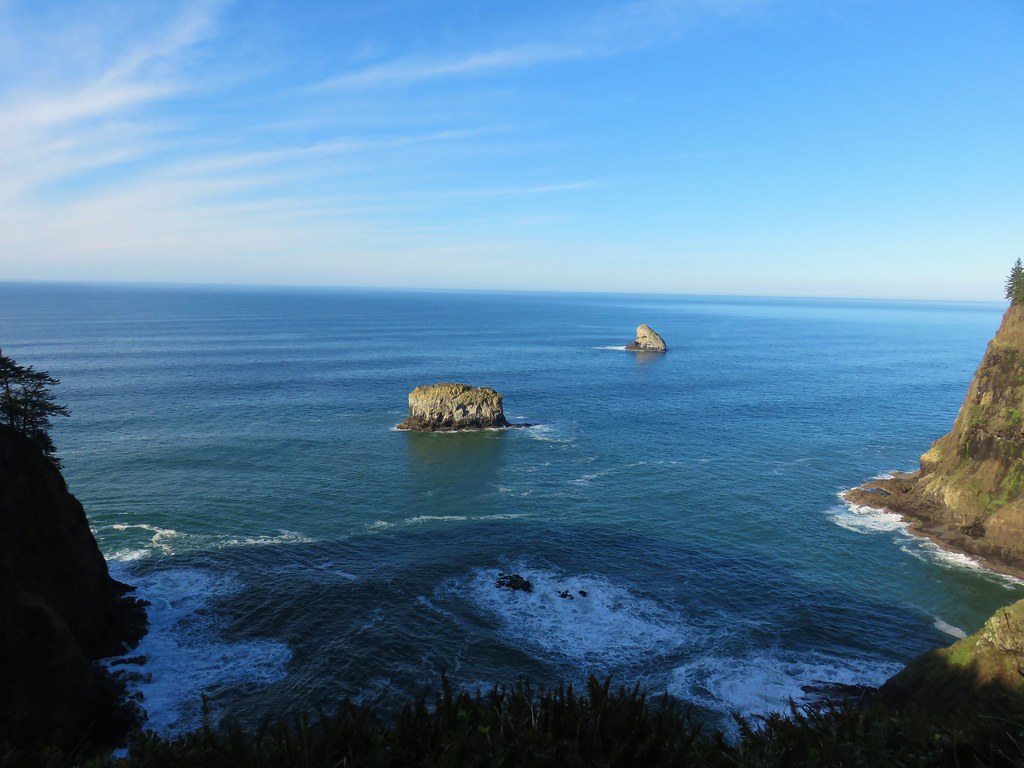
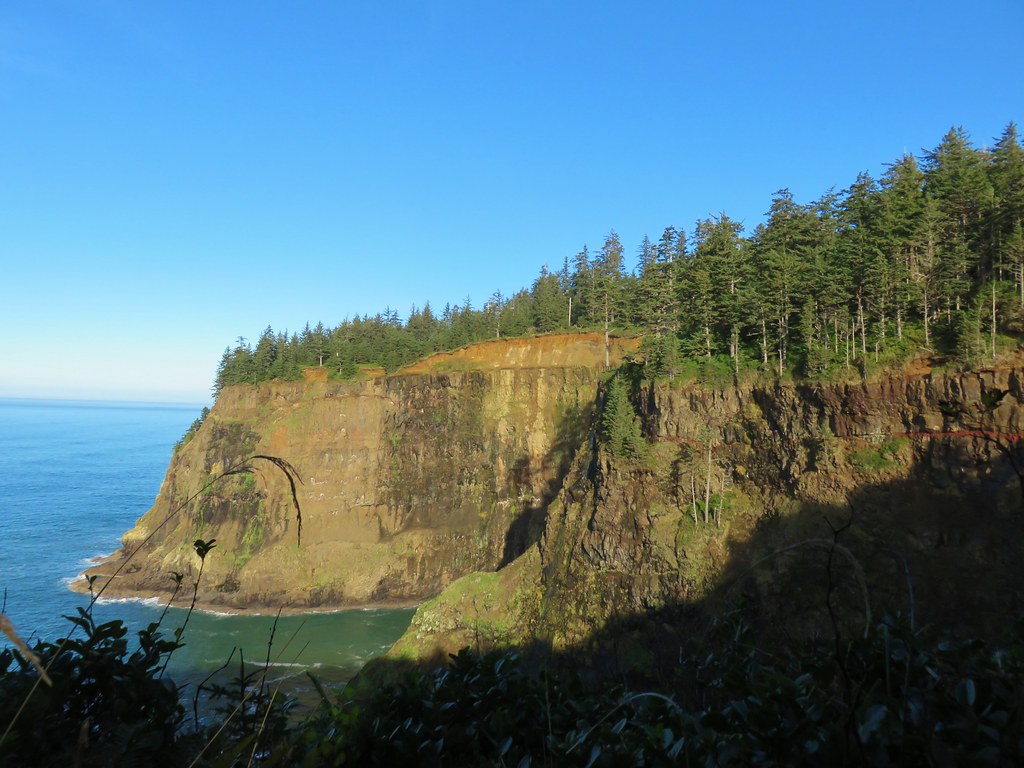
We stopped at a viewpoint platform overlooking Tower and Pillar Rocks to the north.
Tower and Pillar Rocks

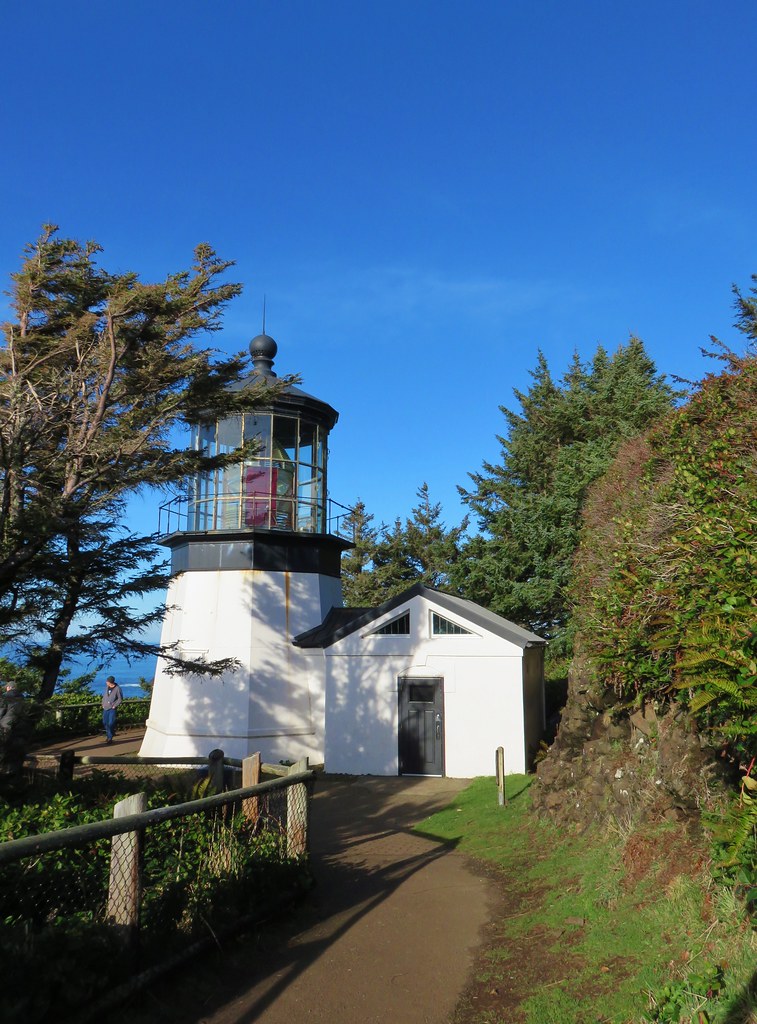
A .2 mile path led from the parking area past more viewpoints to the lighthouse.
Cape Meares

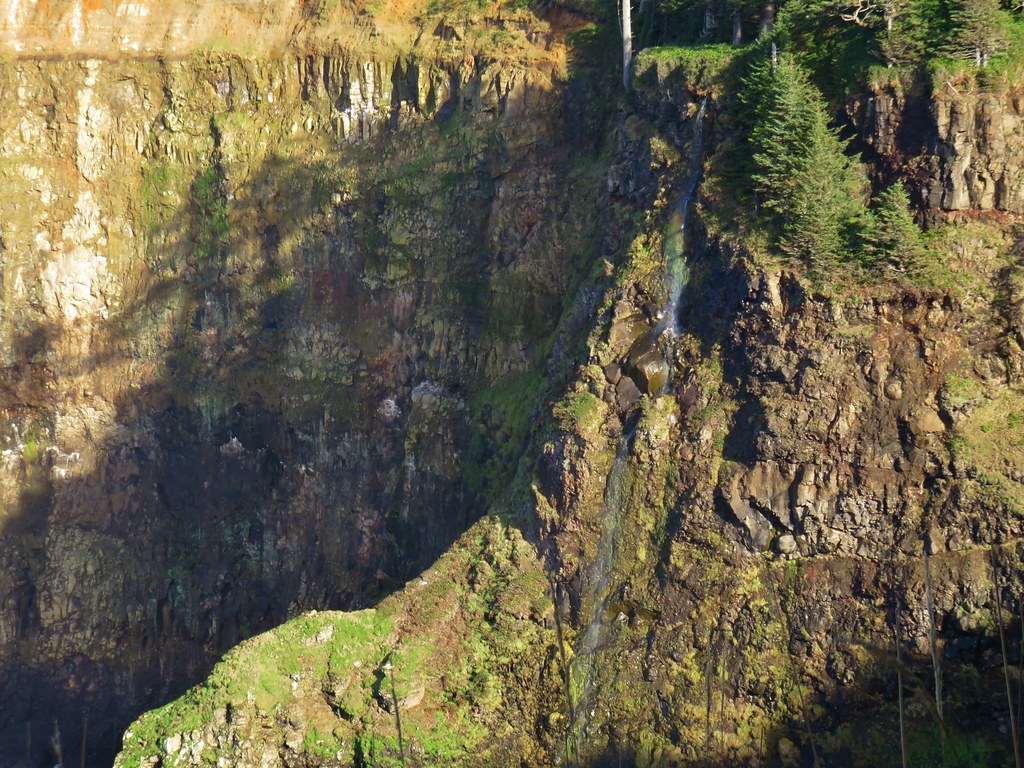
Waterfall at Cape Meares

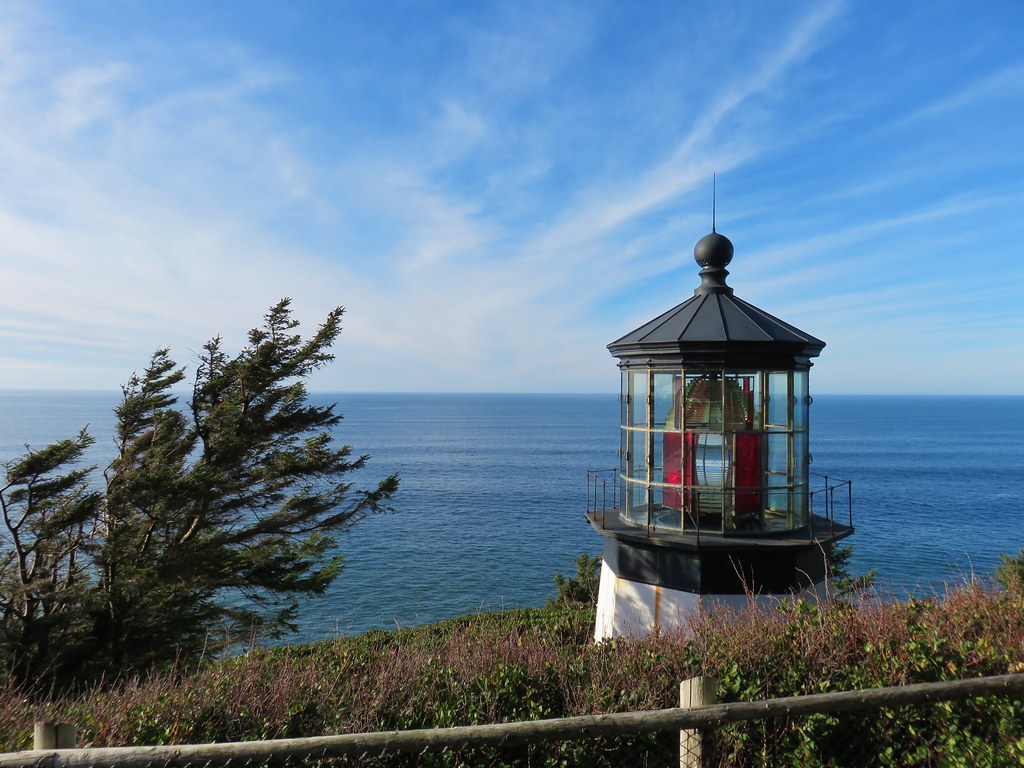
Cape Meares Lighthouse

Cape Meares Lighthouse

A second .2 mile path led back to the parking lot allowing for a short loop and providing views south to Cape Lookout and the Three Arch Rocks Wilderness, one of the two off-limits wilderness areas in Oregon.
Looking south from Cape Meares

After returning to the parking area we headed for the Octopus Tree which was just a tenth of a mile away.
Sign for the Octopus Tree

Octopus Tree at Cape Meares

Octopus Tree at Cape Meares

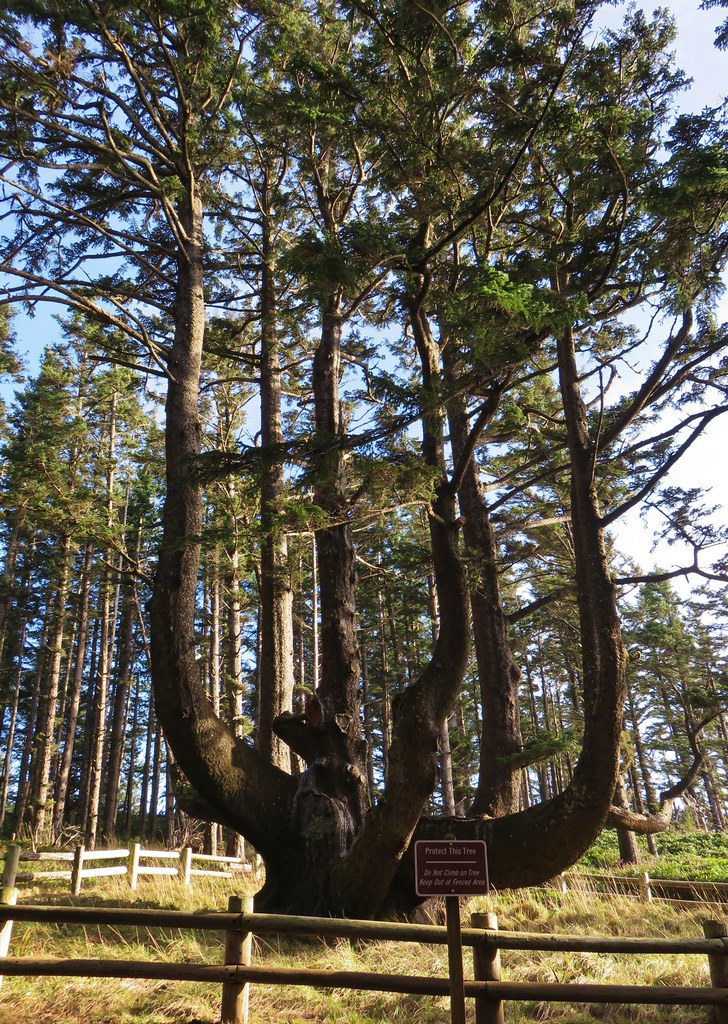
Another Sitka spruce, this unique tree has no central trunk. Instead several limbs have grown vertically. After visiting this tree we walked back up the entrance road to our car and headed home, capping off our first outing of 2018. Happy Trails!

Flickr: Nehalem Bay, Kilchis Point, and Cape Meares

Categories
Hiking Northern Coast Oregon Oregon Coast Trip report

Seaside

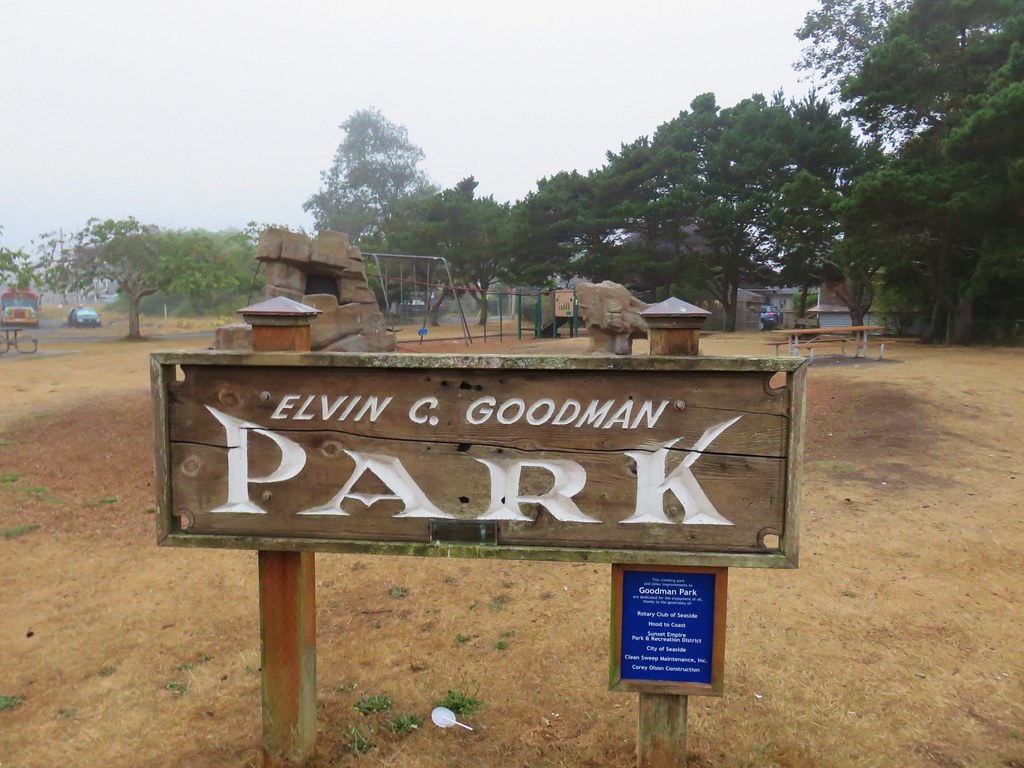
Before leaving the coast we took one final hike on Tuesday morning. We stopped in Seaside parking at Elvin C. Goodman Park which is located on 12th just west of the Necanicum River.

IMG_8786

We walked west on 12th St. passing the Seaside Promenade and headed out onto the beach.

IMG_8788

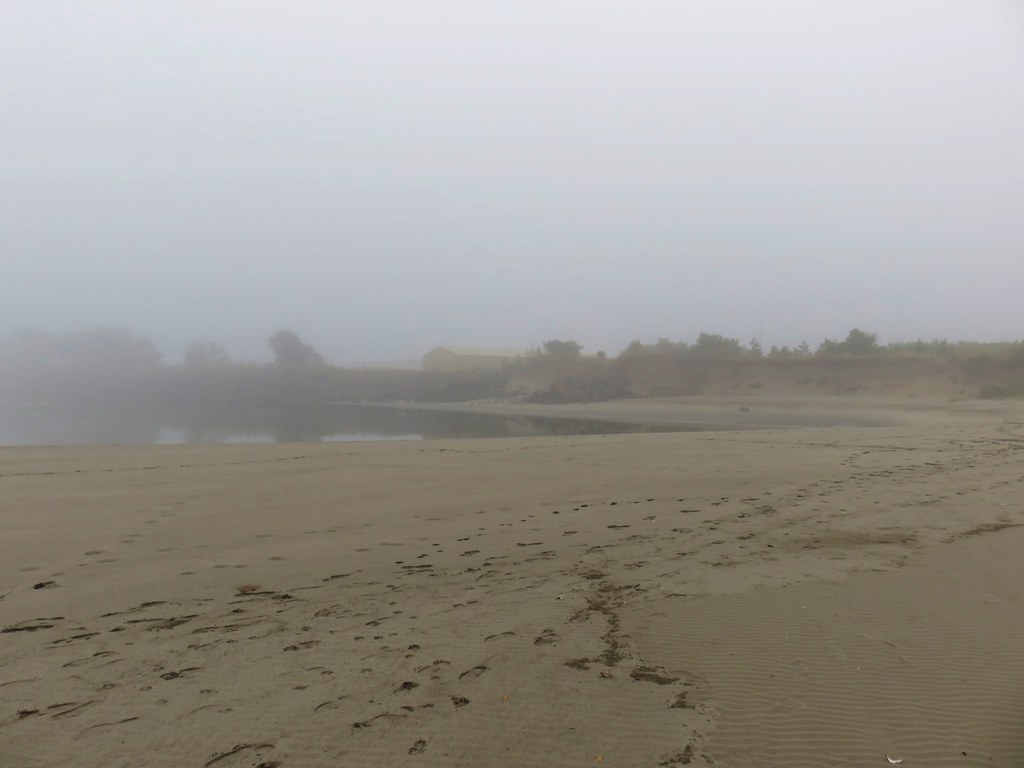
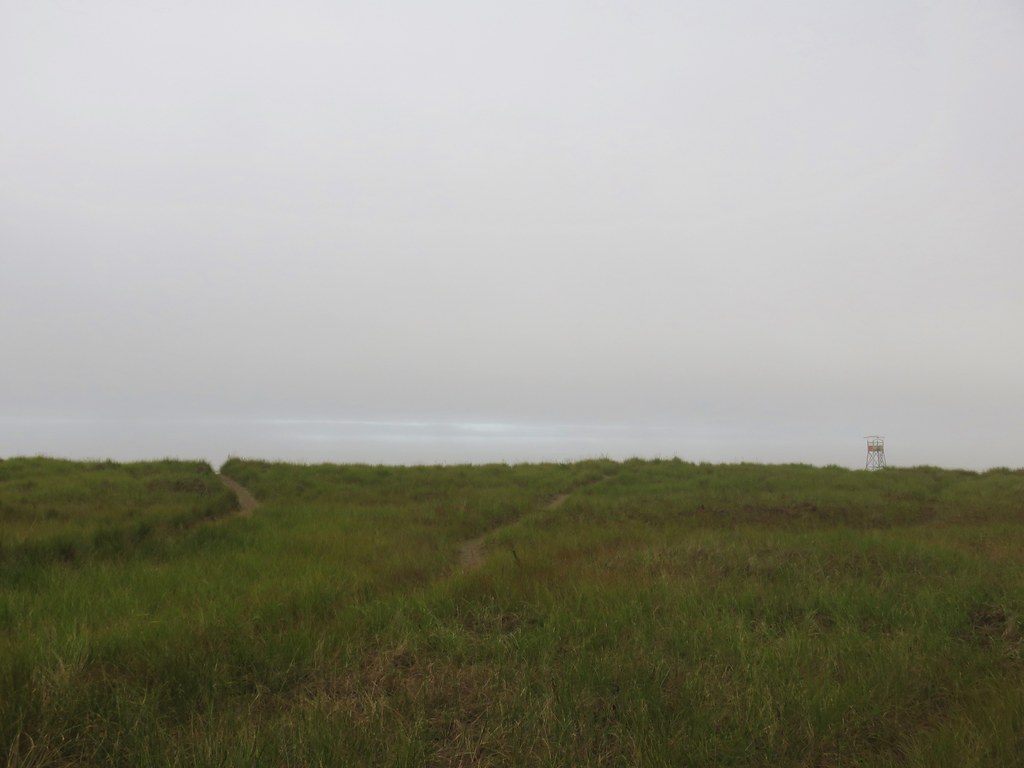
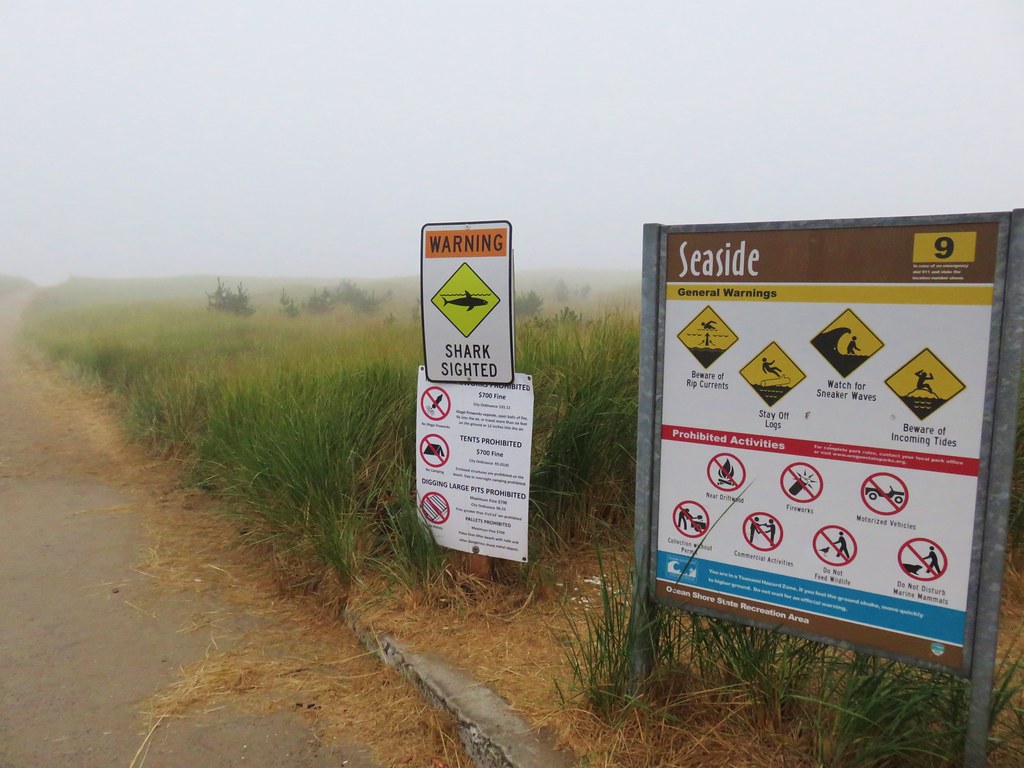
It was a foggy morning and visibility was low so it took us a while to even spot the ocean as we angled to the right toward the mouth of the Necanicum River.

IMG_8792

After about a half mile on the beach we arrived at the river where we turned right and followed the bank inland.

IMG_8801

IMG_8802

We climbed a low bluff near a sewage plant and followed a clear path to the left around the facility.

IMG_8805

IMG_8811

IMG_8814

We turned inland at 15th St. then took a left on N. Franklin St. When we came to 12th we detoured back to the park to change our shoes which were damp from the grasses along the river. With dry shoes on we went back to Franklin, turning left, and continued south to Broadway St. jogging right at 9th and 5th streets. The final block or so of Franklin is closed to cars.

IMG_8818

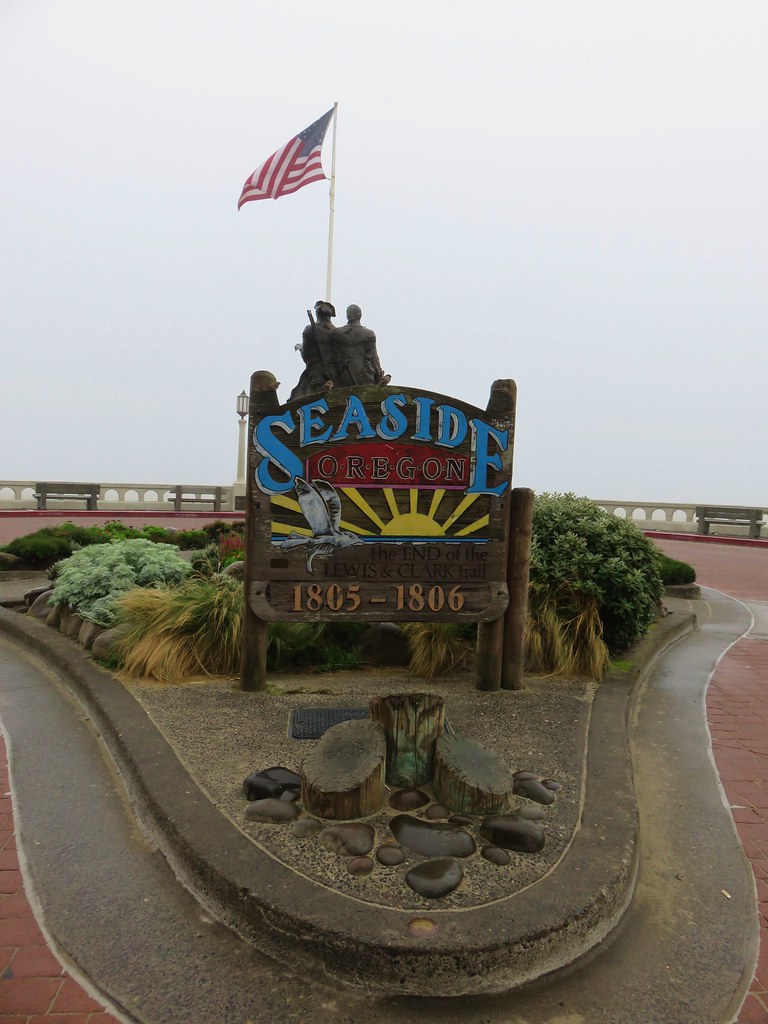
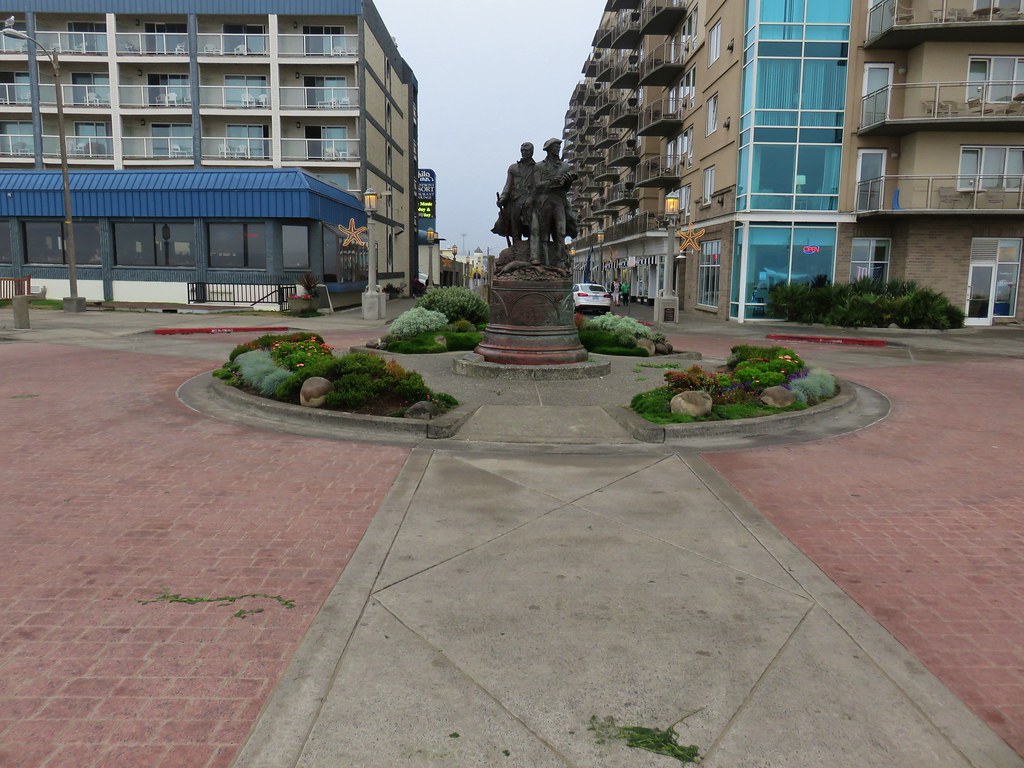
We turned west onto Broadway and followed it to its end at a turnaround with a statue of Lewis and Clark.

IMG_8821

IMG_8839

We had actually walked this stretch on Broadway early on Saturday when we’d come into Seaside for dinner. There was a car show going on at the time and muscle cars and old hot rods had been cruising the street around the statue then.

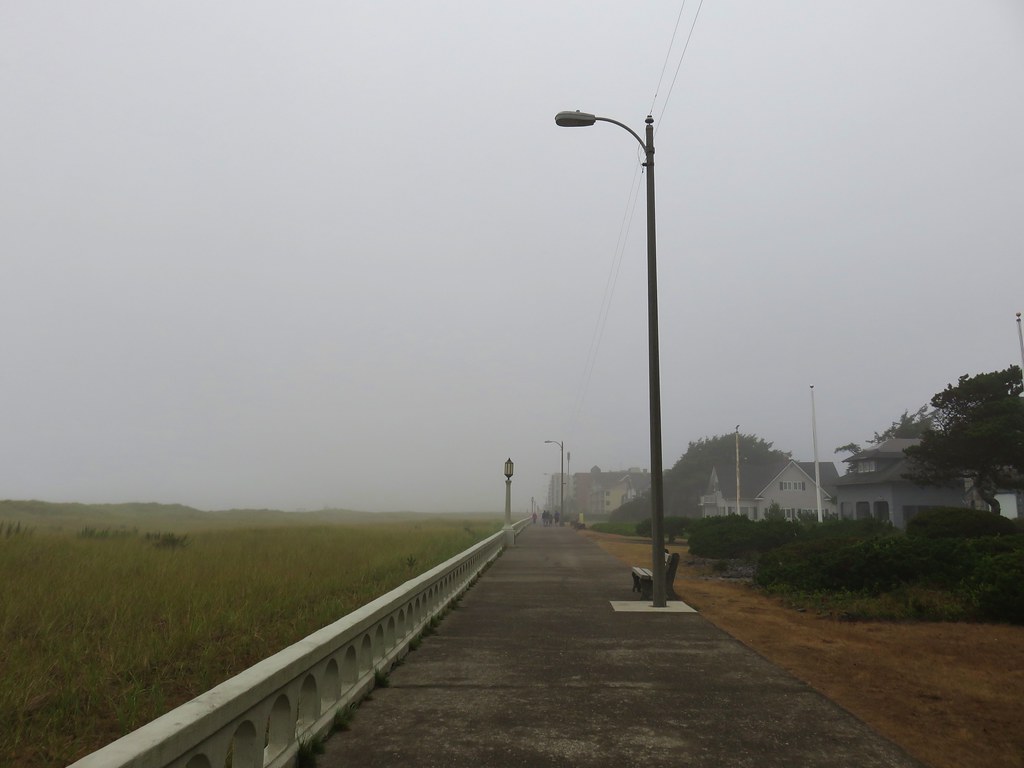
From the turnaround we headed south on the Seaside Promenade.

IMG_8823

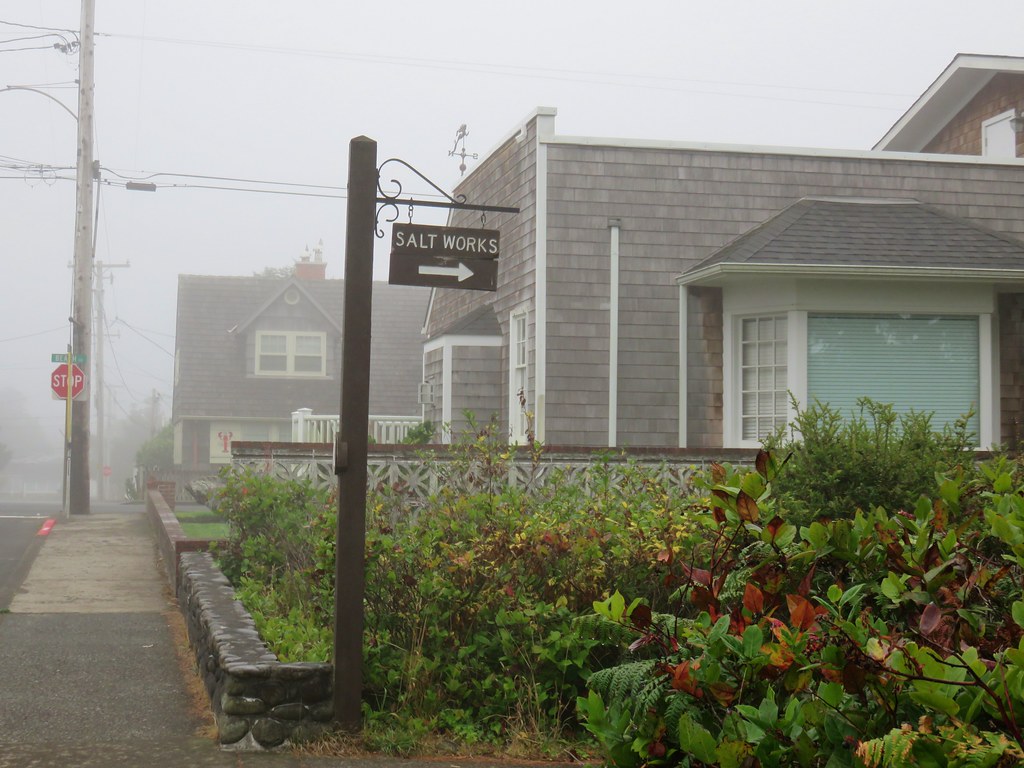
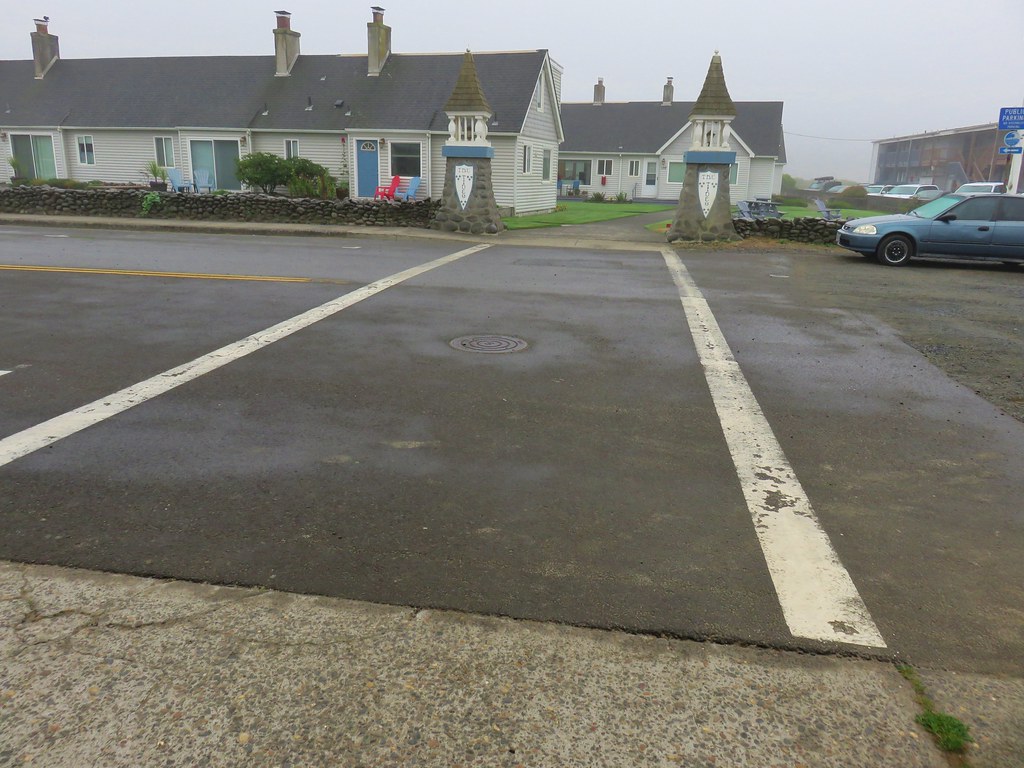
The paved promenade extends 1.5 miles from 12th Street to Avenue U. We passed hotels, vacation rentals and at the .6 mile mark a sign for the “Salt Works”.
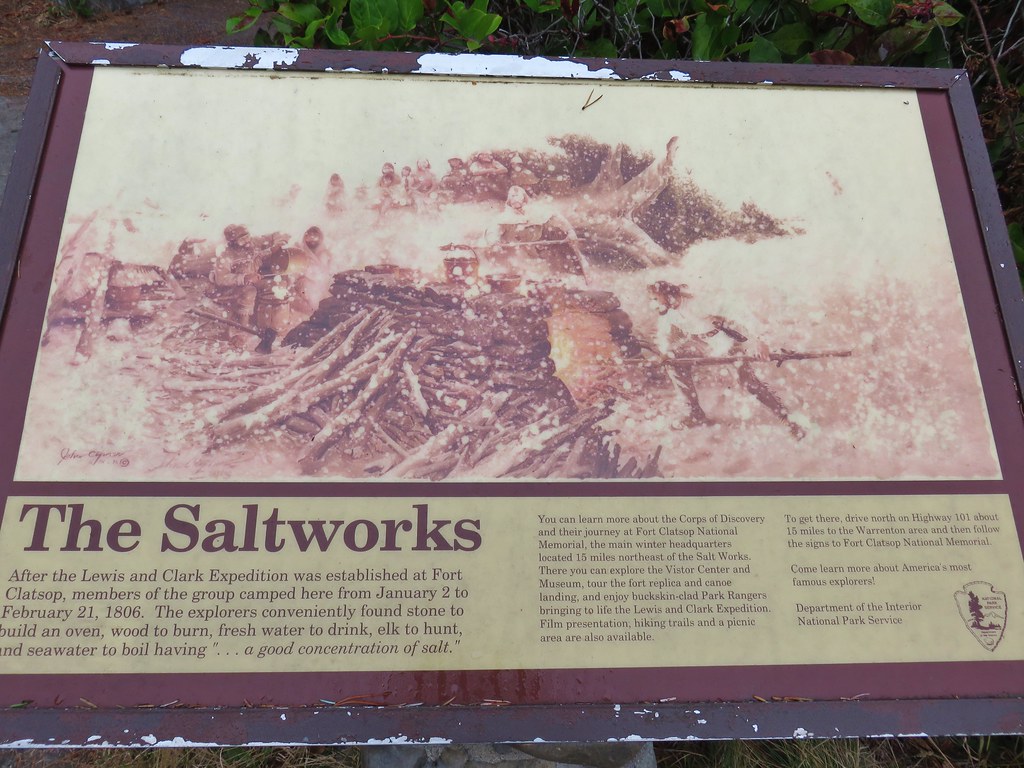
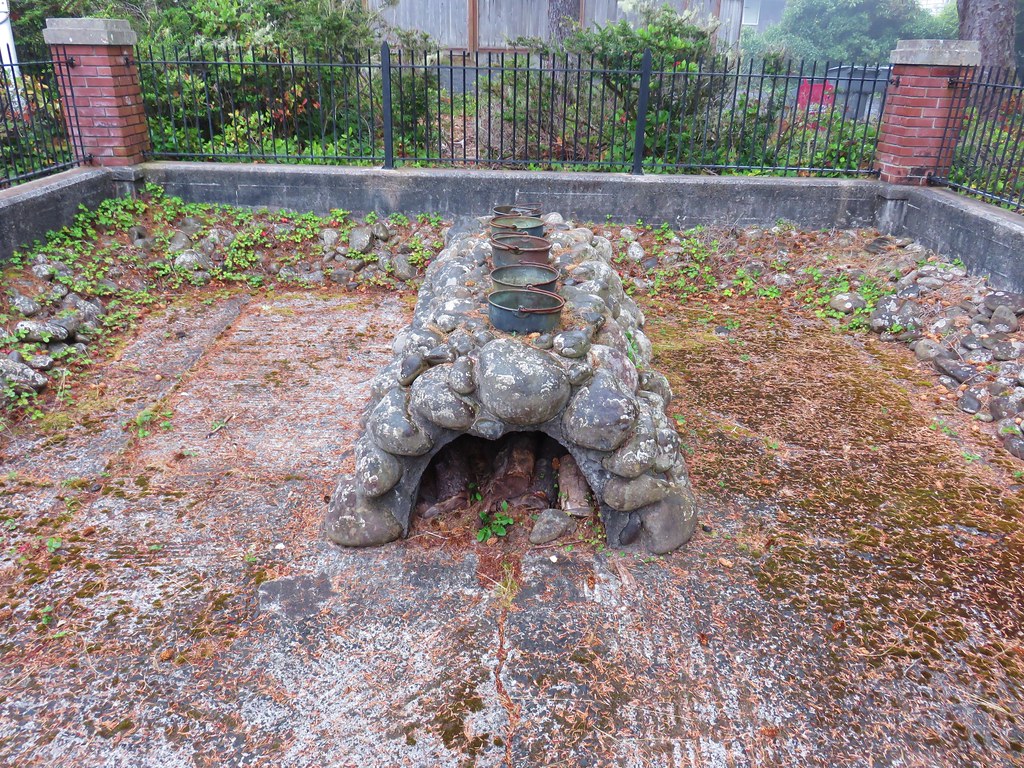
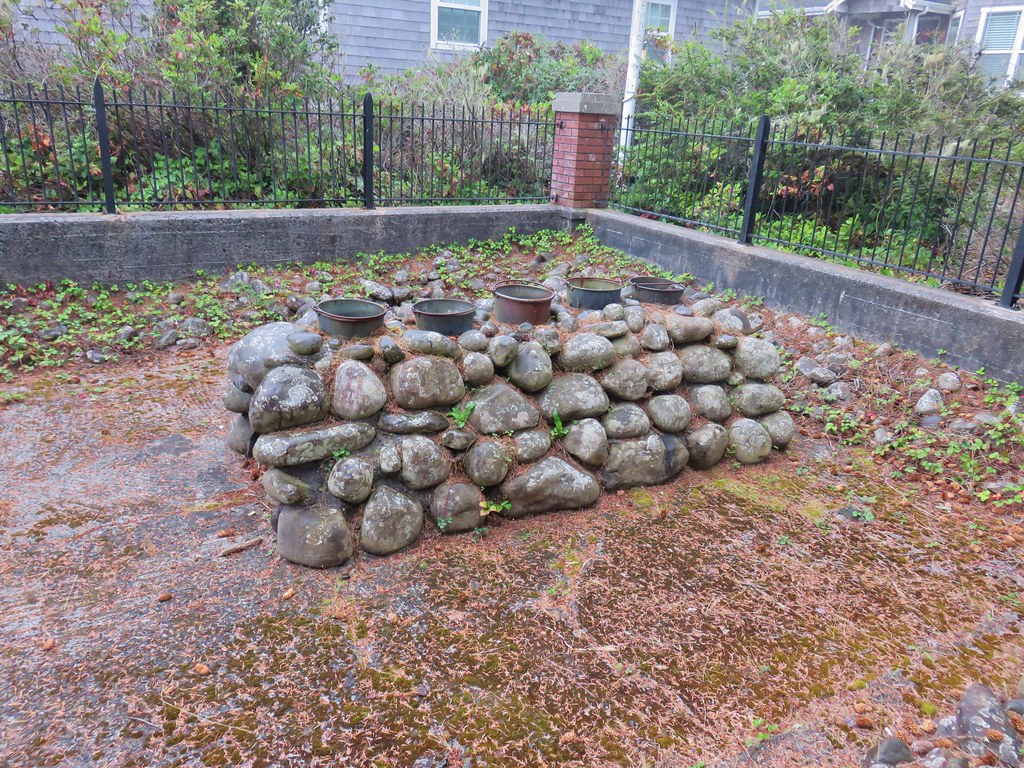
We turned inland on Lewis and Clark Way following the Salt Works signs to a replica of the stone oven used to boil salt water for the Lewis and Clark expedition.

IMG_8824

IMG_8825

IMG_8826

IMG_8828

After reading all the interpretive signs we returned to the promenade and continued south to its end at Avenue U.

IMG_8833

We turned around and headed north. The promenade was fairly busy with dog walkers, joggers, and a few bicyclists all making use of the paved path.

IMG_8835

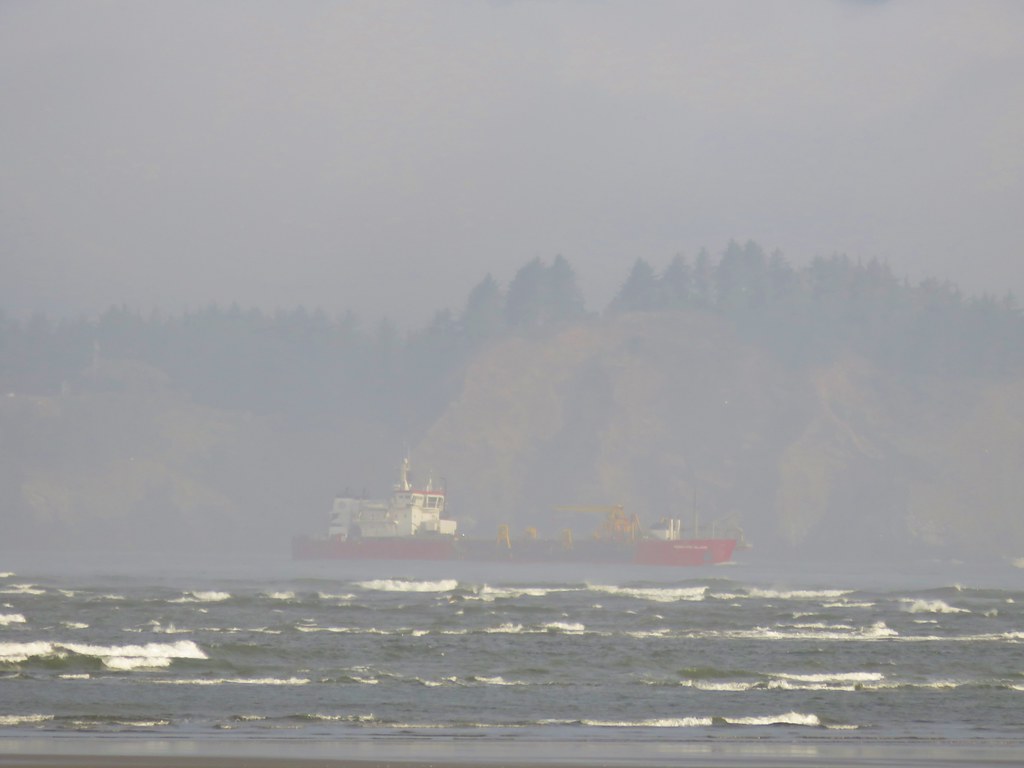
The fog was stubborn this morning and really limited any views toward the ocean.

IMG_8831

IMG_8836

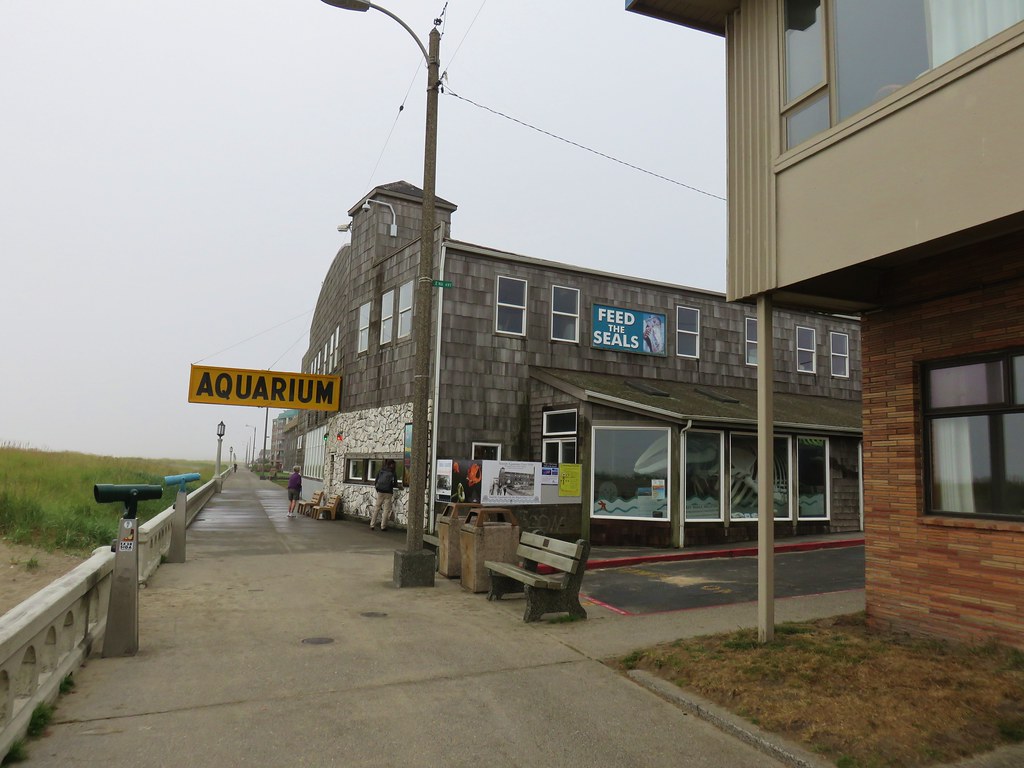
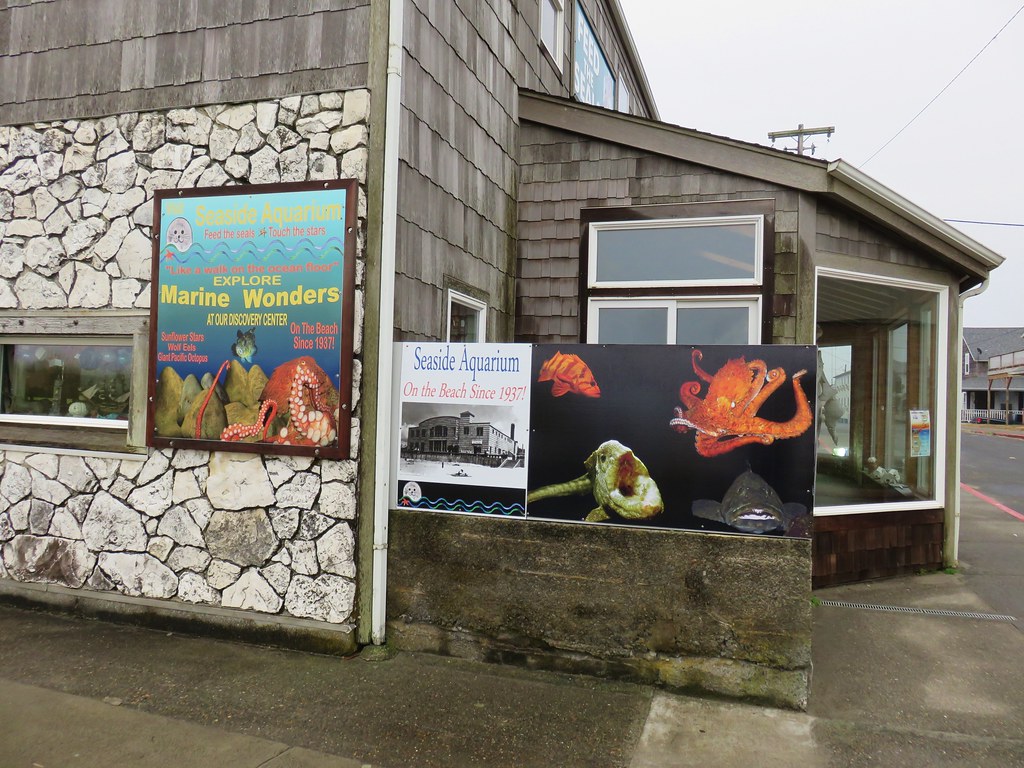
We passed Broadway Street and continued north toward 12th St. passing the Seaside Aquarium along the way.

IMG_8841

IMG_8843

We turned up 12th St. and returned to our car. Our distance for the morning was 5.7 miles which was perfect for a short hike before driving home. As we crossed the coast range we popped out of the clouds into bluer skies. Smoke on the horizon from the many wildfires reminded us of why we’d chosen the coast as our alternate vacation spot. It had been a good choice, nice hikes with plenty of wildlife and a lot of history thrown in. Happy Trails!

Flickr: Seaside

Categories
Hiking Northern Coast Oregon Oregon Coast Trip report

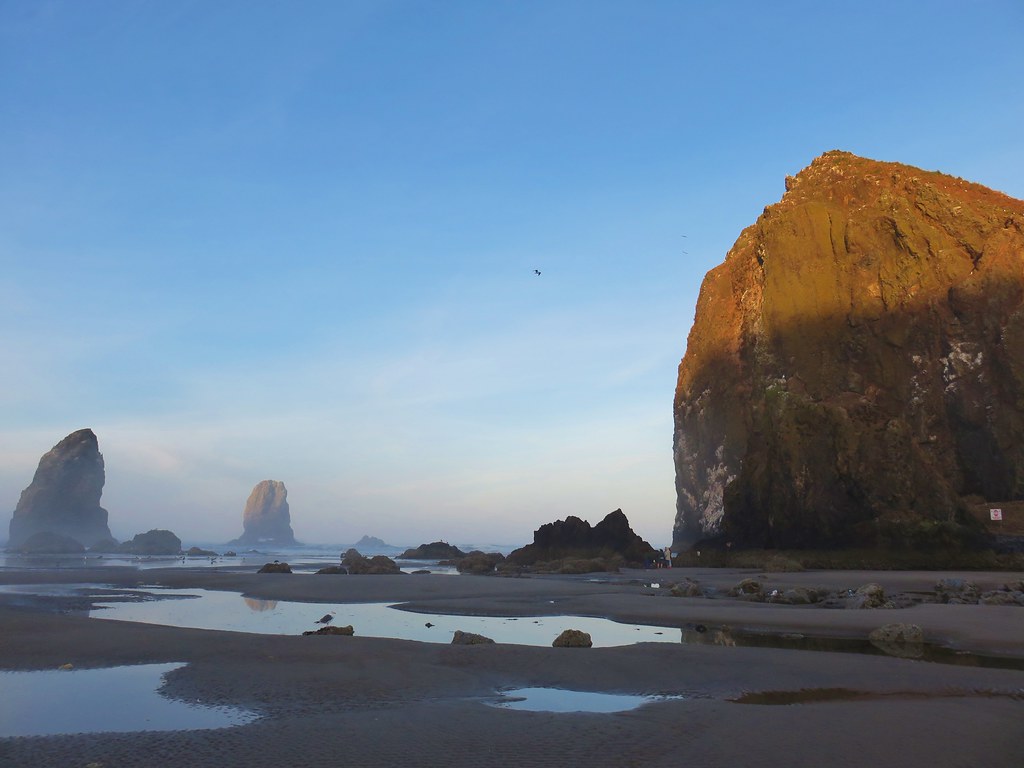
Cannon Beach

For our second day while staying in Gearhart we picked Cannon Beach as our hike. Located just 10 miles south of Gearhart on the other side of Tillamook Head we planned on starting at the city information center on 2nd St. and hiking south along the beach to a waterfall at Hug Point. The round trip would be just under 10.5 miles and allow us to be back to our hotel before the Seahawks played their first regular season game. (We might have been better off hiking based on the way their offense wound up playing.)

The clouds from the previous day were still breaking up as we left our room creating a nice sunrise over Saddle Mountain.

IMG_8216

We drove south on Highway 101 to Cannon Beach, parked, and walked three blocks to the beach.

IMG_8218

The morning coastal fog was rolling in somewhat obscuring the view of Tillamook Head to the north.

IMG_8225

IMG_8226

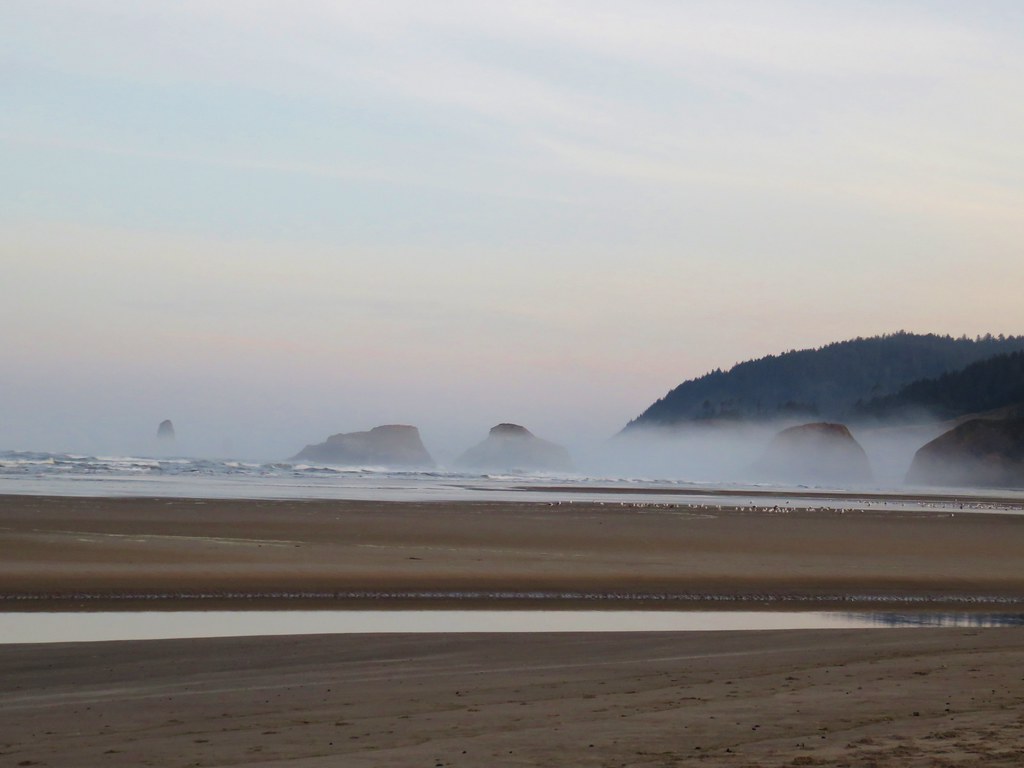
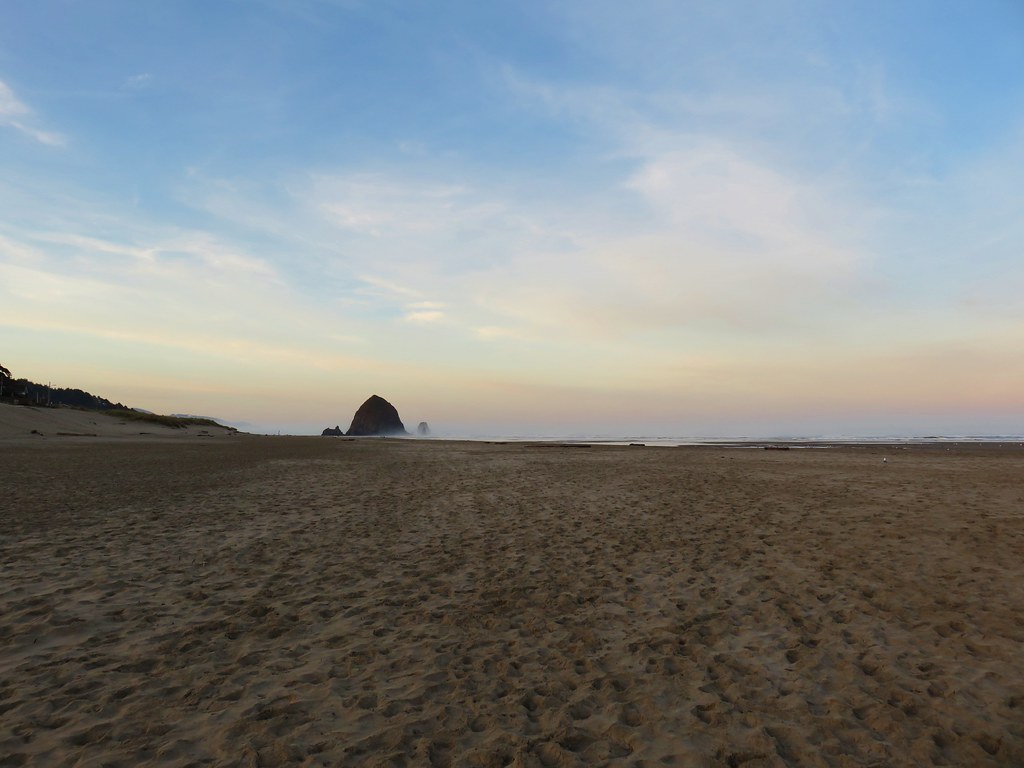
To the south Haystack Rock fared a little better although some of the smaller rocks around it were in the fog.

IMG_8222

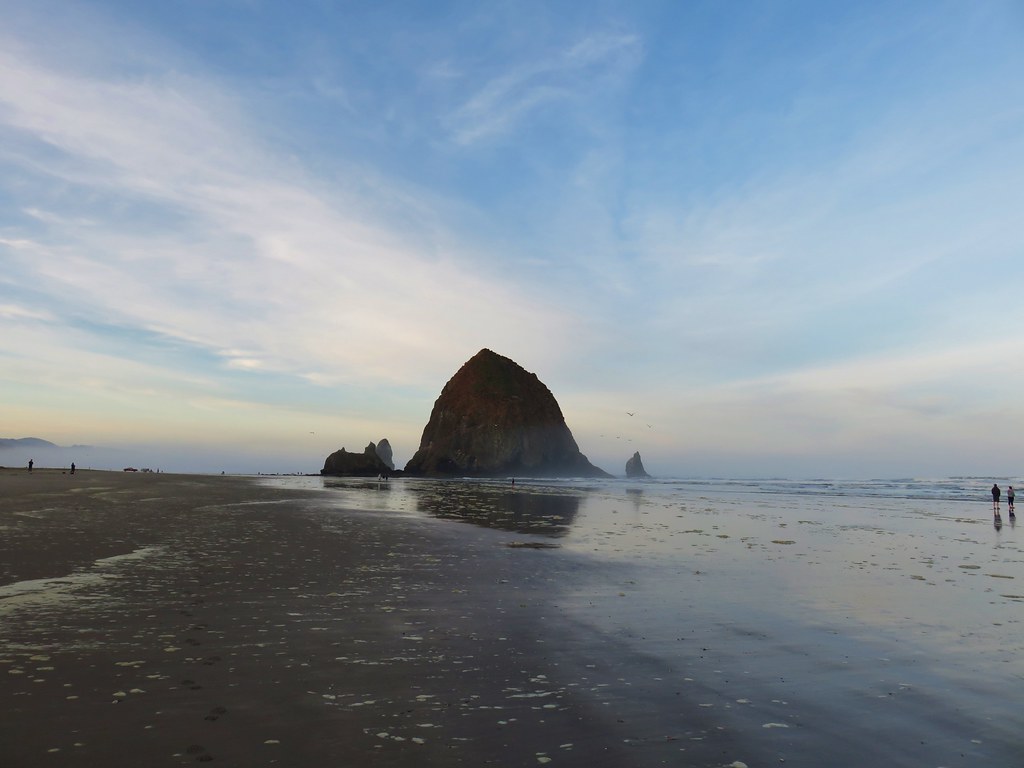
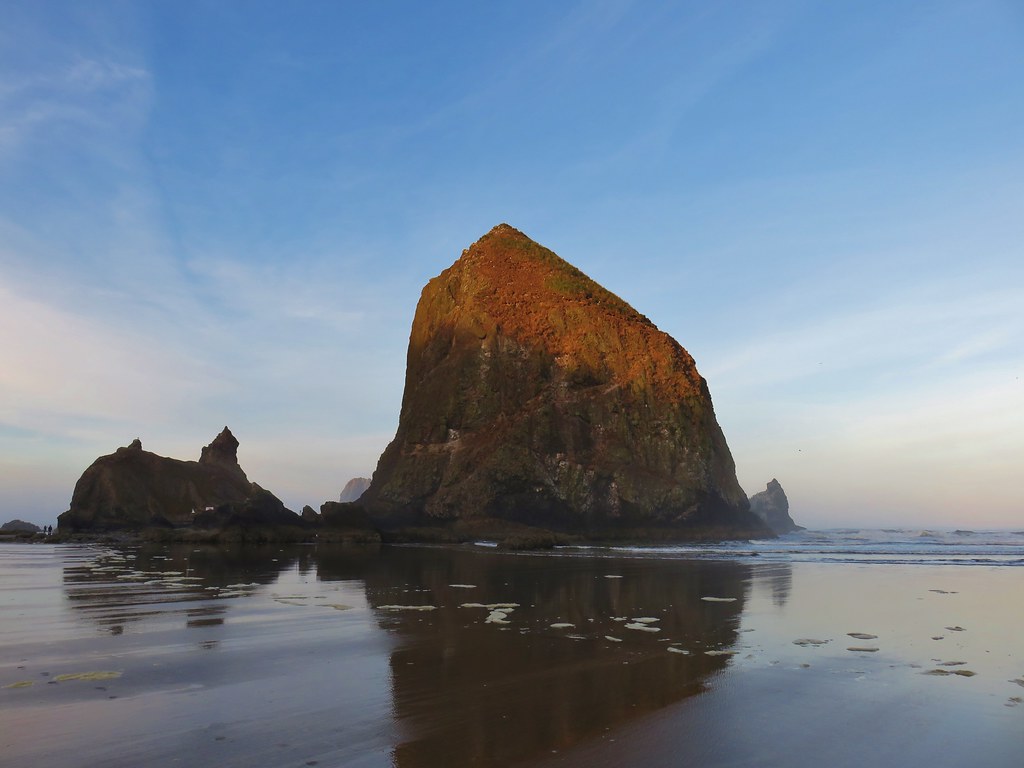
We turned south on the beach heading for Haystack Rock which was about a mile away. The rock began catching some early morning sunlight as we passed.

IMG_8228

IMG_8233

IMG_8239

IMG_8247

We continued on passing the Tolovana Beach Wayside on the way to Silver Point two miles beyond Haystack Rock.

IMG_8262

It was fairly foggy at Silver Point where we found several large rocks just offshore, including the aptly named Jockey Cap.

IMG_8272

IMG_8274

IMG_8282Jockey Cap
A little over a half mile after passing Silver Point we arrived at Humbug Point where we passed another well named rock, Lion Rock.

IMG_8286

IMG_8289

IMG_8296

It was another mile to Hug Point which was also dealing with the morning fog.

IMG_8299

Hug Point was part of a wagon route where settlers had to wait for low tide to be able to pass by. A roadbed was blasted in the headland around 1920 which was still obvious as we approached.

IMG_8300

The other reason we had chosen this hike for the day is that low tide was around 9:20am which we figured was a little later than when we would be arriving. It was a little after 8:30 when we did reach the point and we could have easily stayed dry by crossing over on the roadbed but when we approached it we noticed a lot of marine life on the rocks.

IMG_8301

Instead of trying to avoid them we decided to take off our shoes and socks and wade around Hug Point. The water was about calf deep at its deepest so getting through was easy enough. One the other side we found more anemones and other marine creatures clinging to the rocks.

IMG_8304

IMG_8305

IMG_8308

Seagulls seemed to be treating it as a buffet.

IMG_8310

After passing a small cove we spotted the small waterfall on Fall Creek. It wasn’t exactly the best time of year to be visiting the falls but the water was still flowing.

IMG_8311

IMG_8315

IMG_8320

IMG_8322

The falls can be accessed from the Hug Point Wayside which avoids the need to navigate around Hug Point. We’ll likely stop there some other time when the flow over the falls is greater.

We turned around here and headed back. After another wade around Hug Point we pulled out our Therm-A-Rest Z Seats and took a seat while our feet dried.

IMG_8342

The clouds continued to break up as the morning progressed.

IMG_8345

IMG_8356

IMG_8359

IMG_8362

We finished our 10.4 mile hike just before 11am and headed back to the hotel for a relaxing afternoon of football. By the time the sun was setting most of the clouds had disappeared teasing a little more blue sky for our Monday Hikes.

IMG_8365

Happy Trails!

Flickr: Cannon Beach

Categories
Hiking Northern Coast Oregon Oregon Coast Trip report

Astoria and Fort Stevens State Park

We continued our year of shuffling hikes on our latest mini-vacation.  The string of wildfires starting in  Northern California in the Klamath Mountains and continuing along the Cascade Range north to the Canadian Border had us looking for a last minute location for 4 days of hiking. We turned to the coast hoping to escape any possibly smokey conditions and wound up deciding on checking out the northern most part of the Oregon Coast as well as our first foray along the Washington Coast line.

We booked a room in Gearhart, OR and I began putting an itinerary together. We are still plodding along in our attempt to hike all of the featured hikes in Sullivan’s 100 Hikes guidebooks and there were several in the area we’d yet to tackle. I managed to fit eight of his featured hikes into the four days and even threw in an additional stop at Fort Columbia on our third day.

We set our sights on three of the hikes for our first day starting with a relatively short loop around Clatsop Spit. The spit is located inside Fort Stevens State Park at the mouth of the Columbia River and is the northern terminus for the Oregon Coast Trail.

As we were driving to the spit along Jetty Road we spotted some elk and had to stop for a couple of photos.
IMG_8042

IMG_8043

IMG_8041

Once we had parked at the large parking area at the spit we checked out the view from the South Jetty observation platform.
IMG_8046

IMG_8048

IMG_8049

We then headed west beside the jetty toward the Pacific.
IMG_8051

IMG_8054

We then turned north along the beach heading towards the Columbia River where we could see plenty of traffic on the water.
IMG_8061

IMG_8063

IMG_8056

We turned inland at the river we had a view of the distant Megler Bridge.
IMG_8067

We passed a host of people fishing along the shore but didn’t see anyone having any luck.
IMG_8078

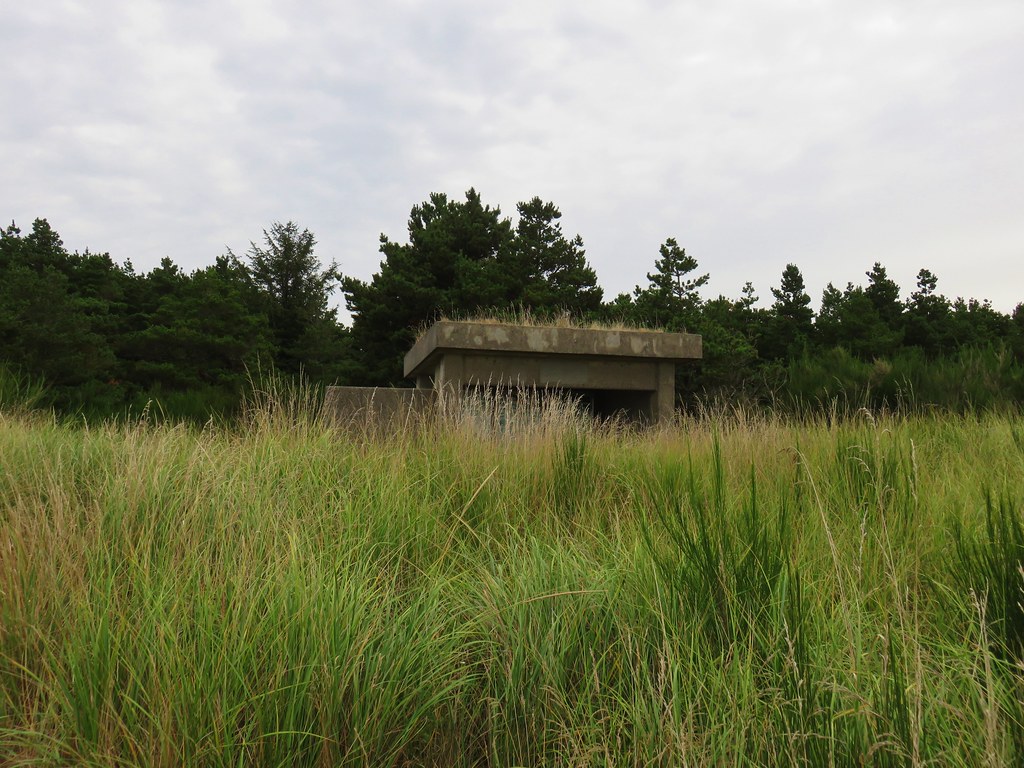
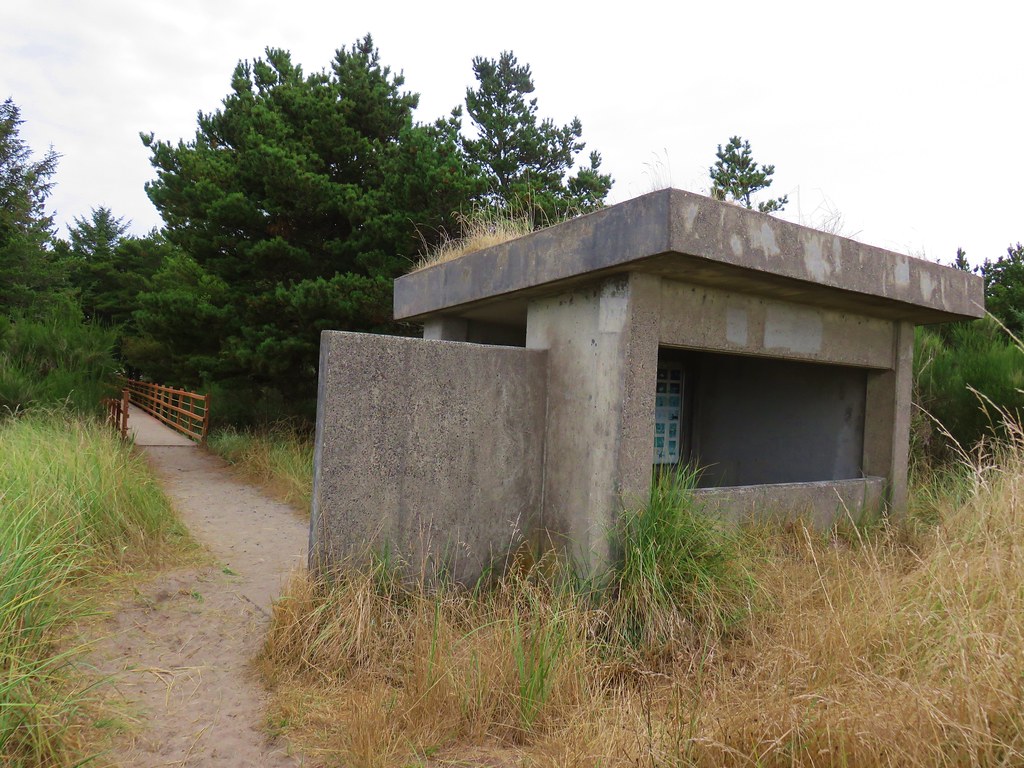
We looped around a peninsula near Jetty Lagoon and located the wildlife viewing bunker near the park’s Parking Lot D.
IMG_8082

IMG_8083

IMG_8084view from the bunker.
We crossed a footbridge to the parking lot and then had a 1.1 mile road walk back to the spit parking lot.
IMG_8086

We drove back along Jetty Road and parked in a signed lot for Battery Russell.
IMG_8094

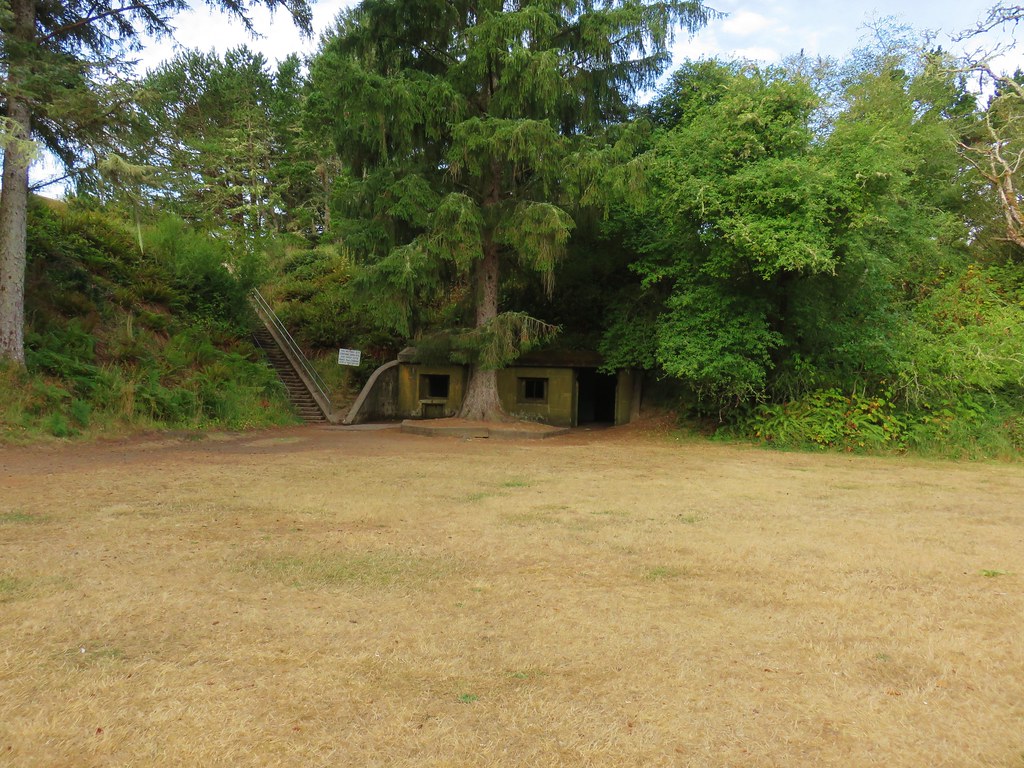
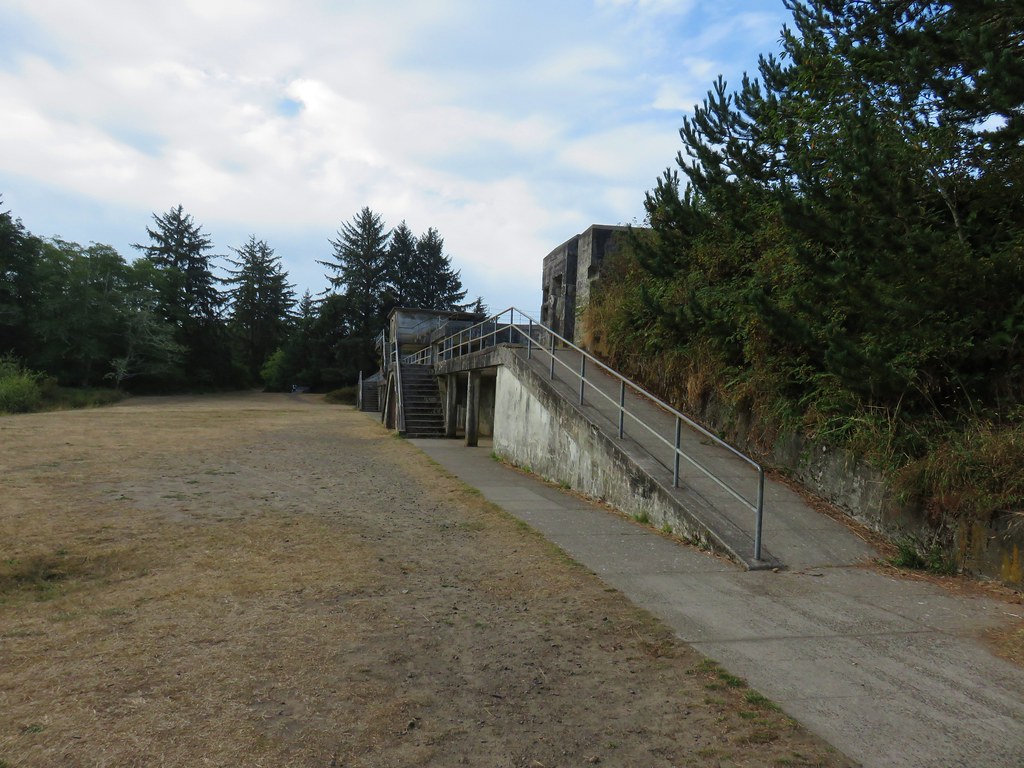
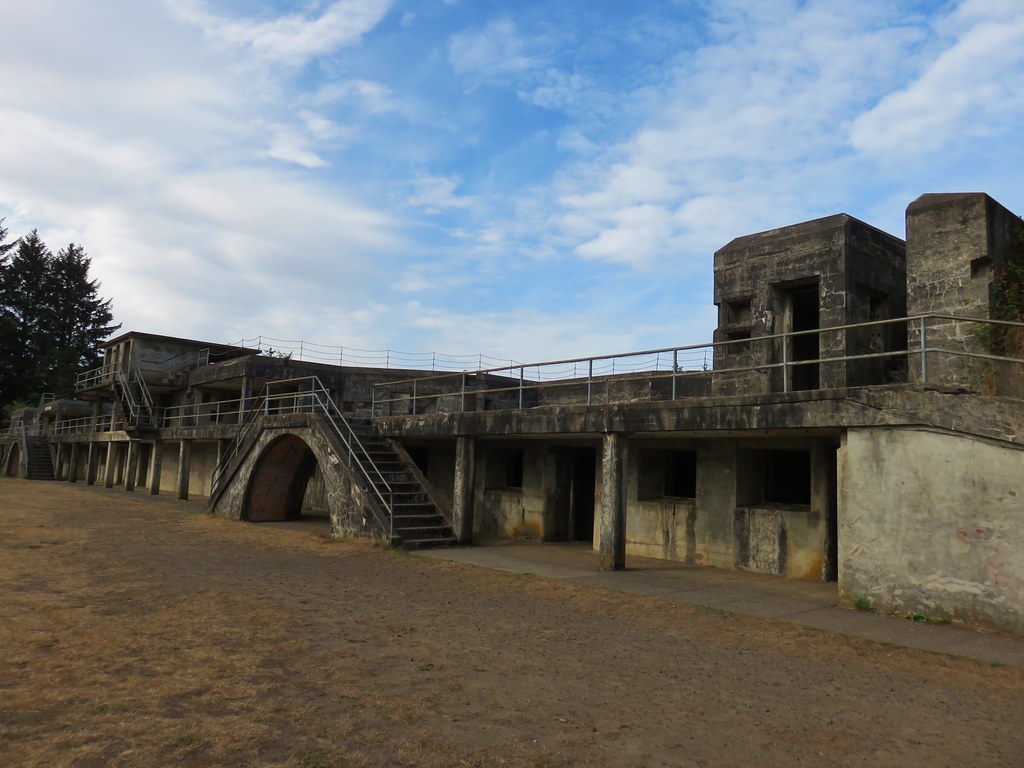
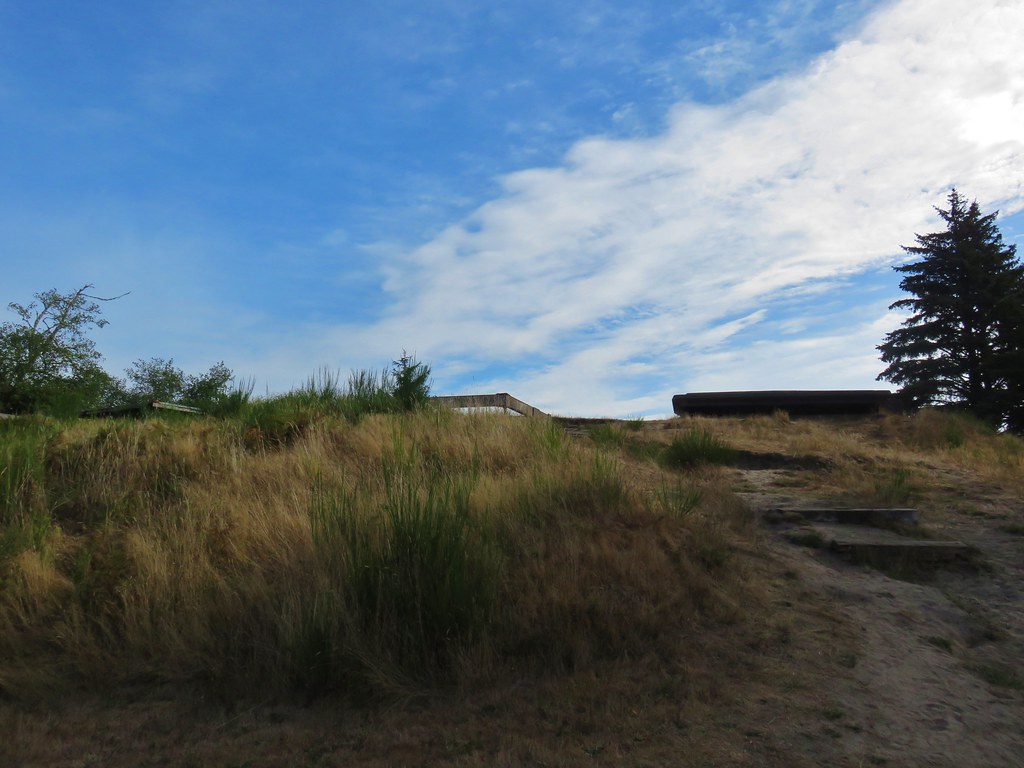
We took a set of stairs up to the concrete bunker.
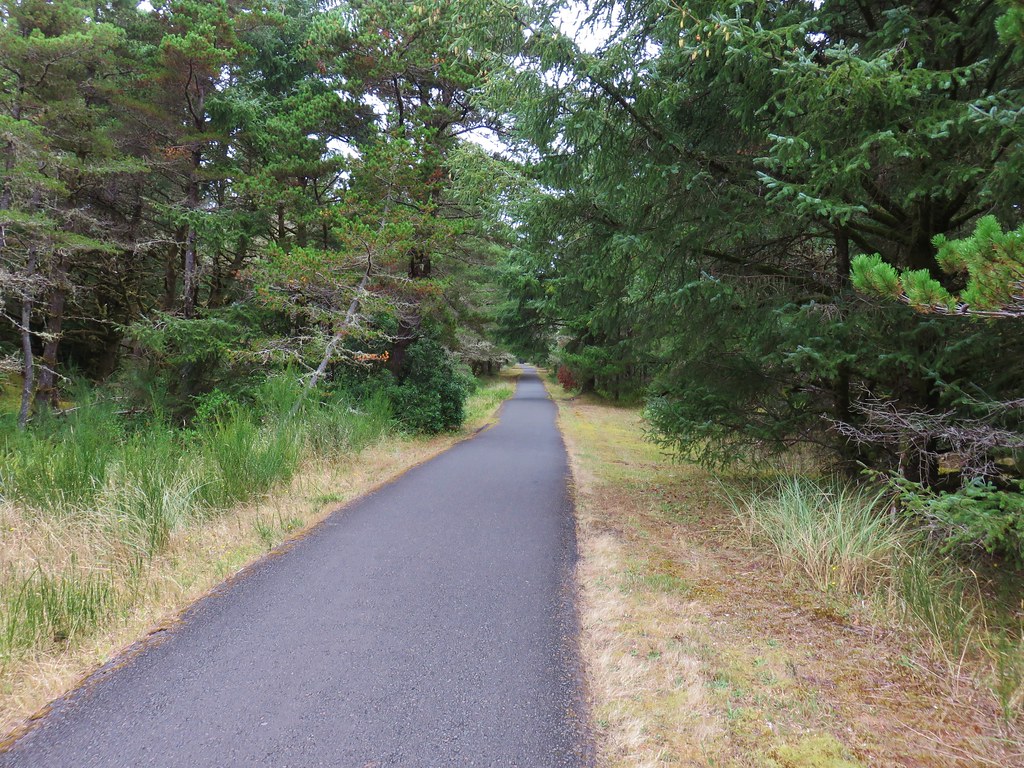
IMG_8095

IMG_8100

IMG_8102

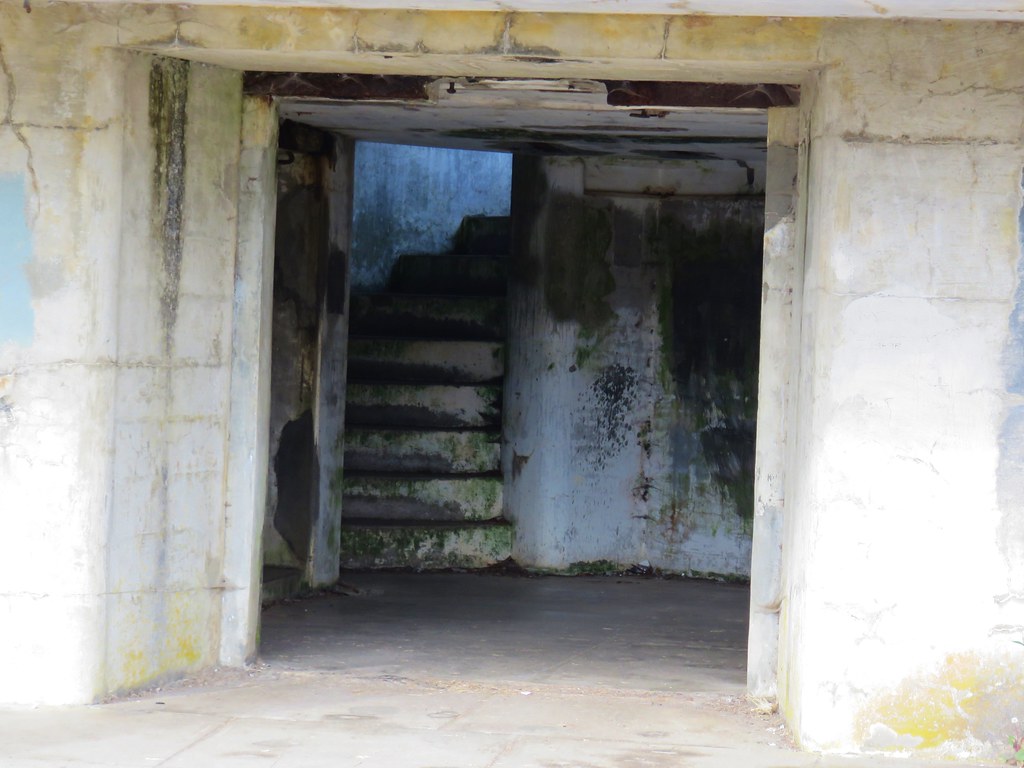
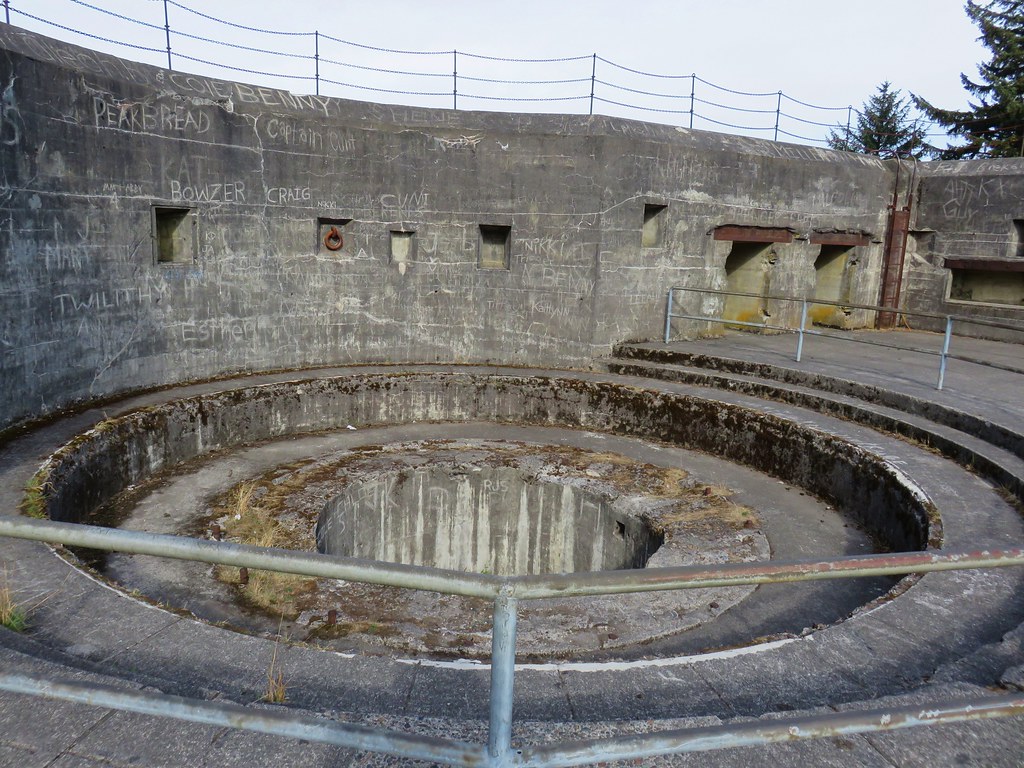
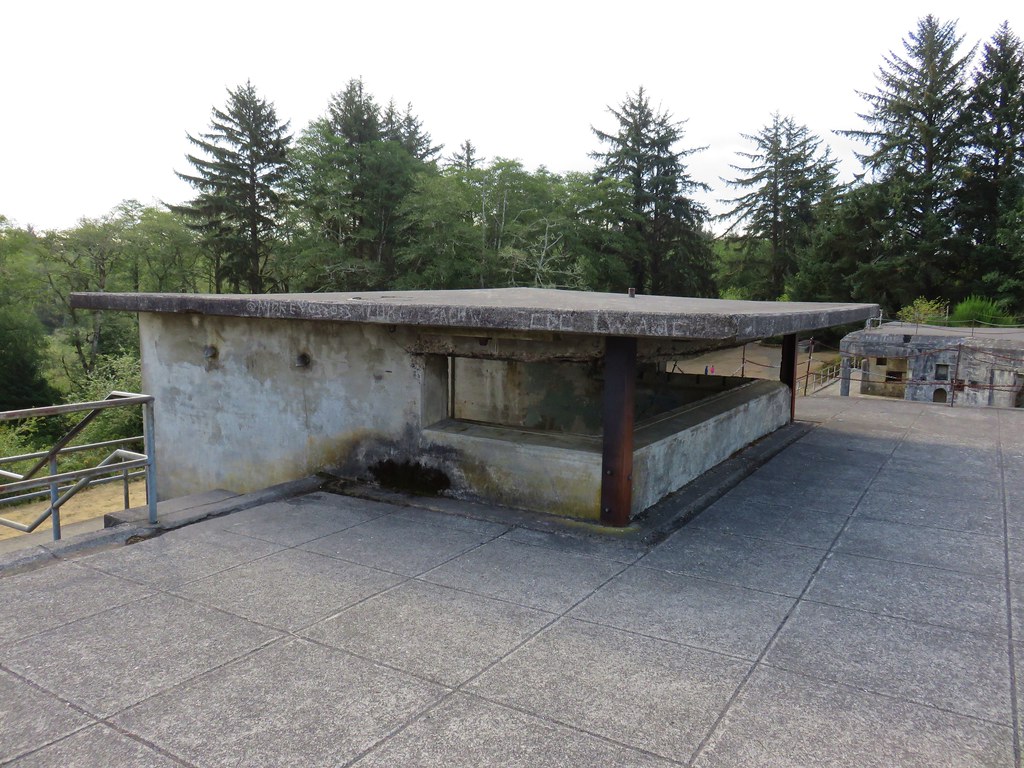
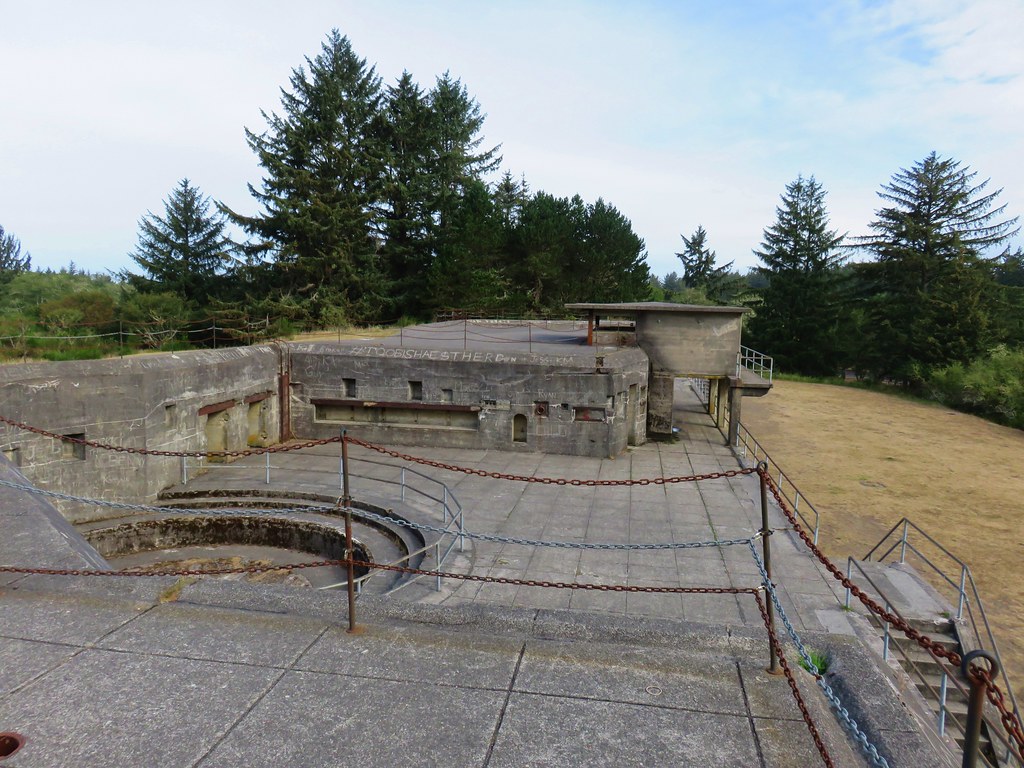
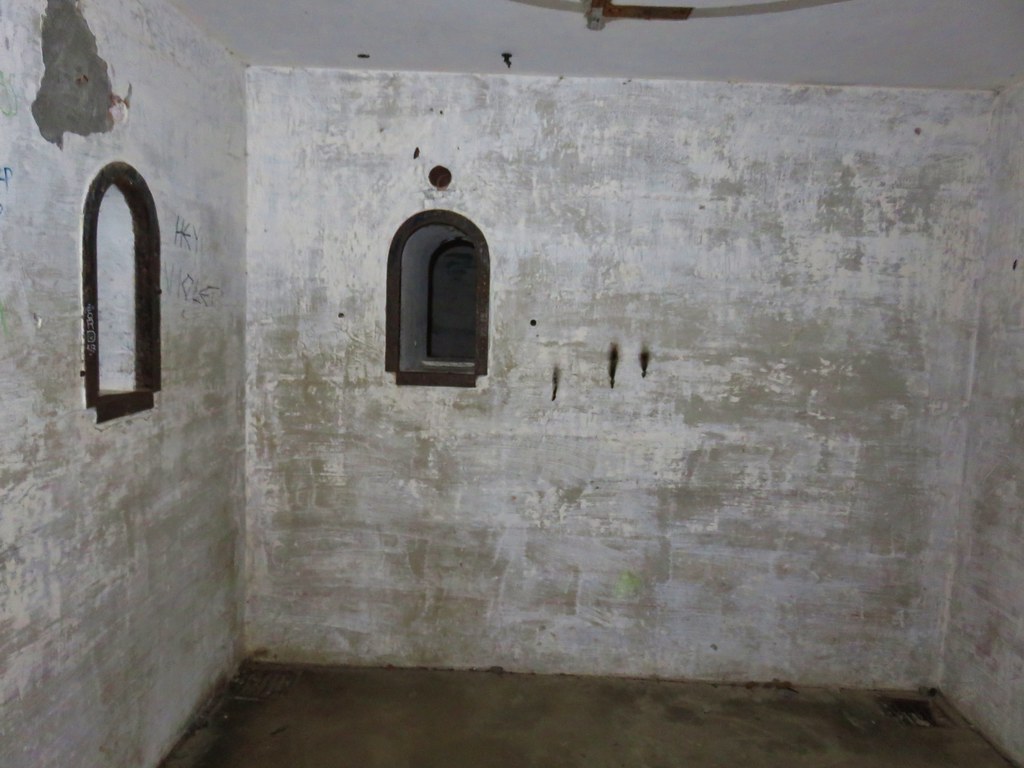
For forty years (1904-44) the battery guarded the Columbia River from enemy attacks. We spent quite a while exploring the old bunker. The history made it neat but too many video games and horror movies kept us imagining what might be hiding in the dark corners of the rooms.
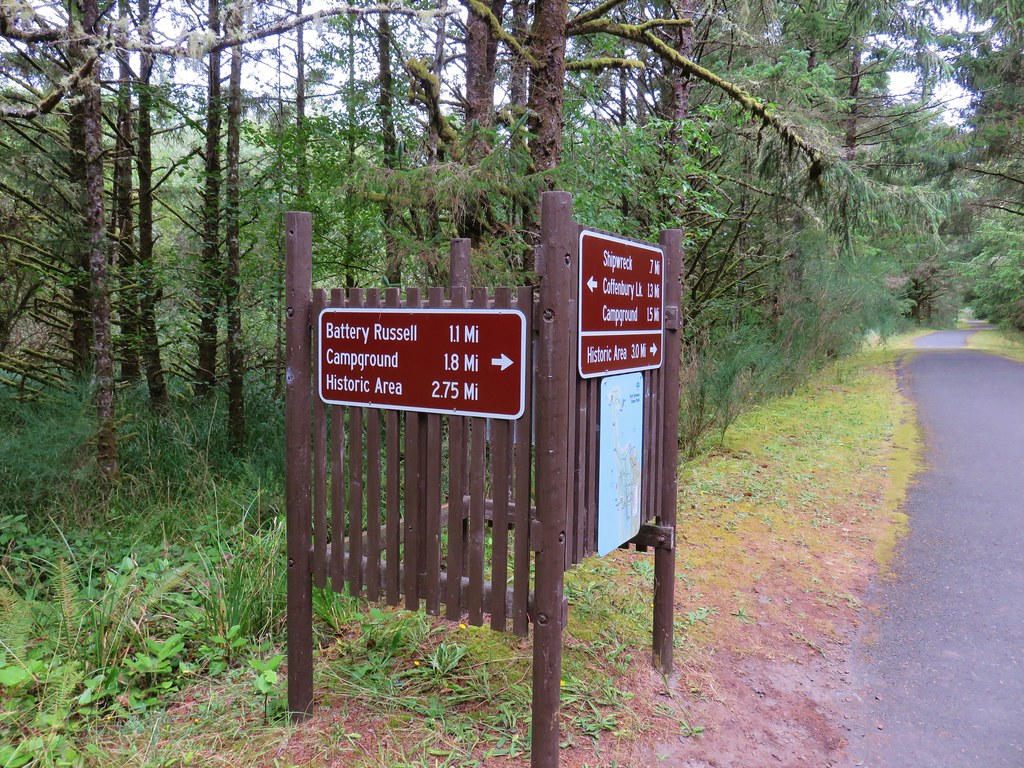
IMG_8104

IMG_8108

IMG_8111

IMG_8114

IMG_8116

IMG_8119

IMG_8117

We followed a path at the far end of the bunker toward Coffenbury Lake.
IMG_8122

The path passed another set of old buildings.
IMG_8123

IMG_8124

IMG_8125

IMG_8126

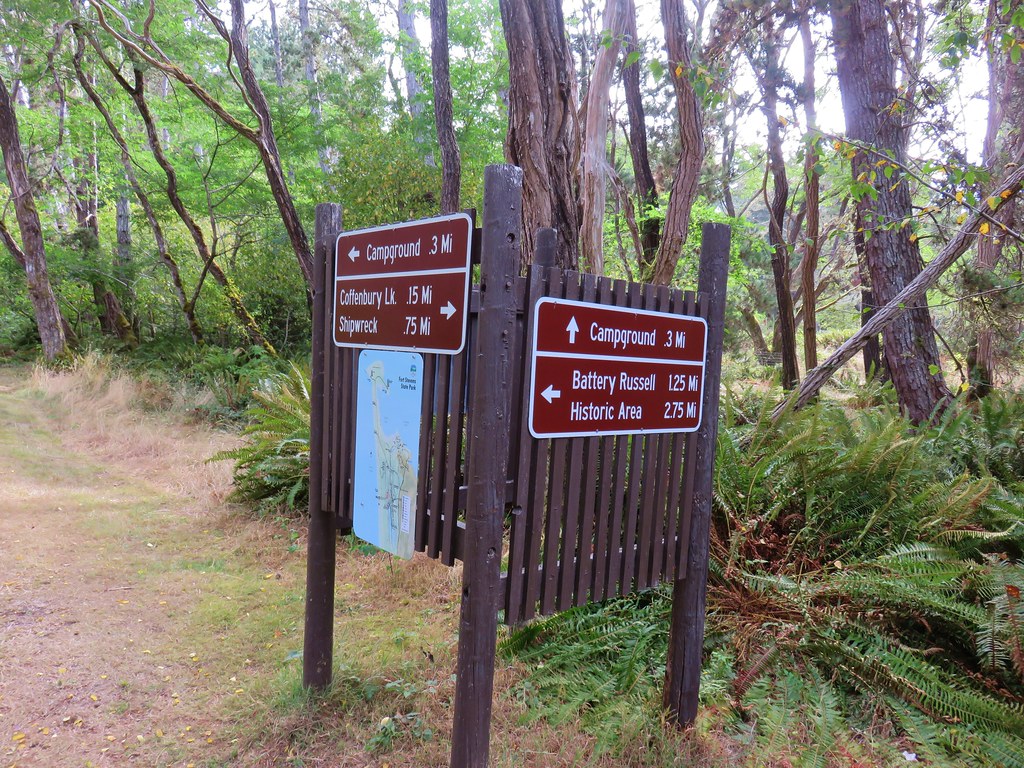
We continued on this path a total of 1.25 miles to a signed junction where we followed a pointer to the lake.
IMG_8127

IMG_8129

IMG_8132

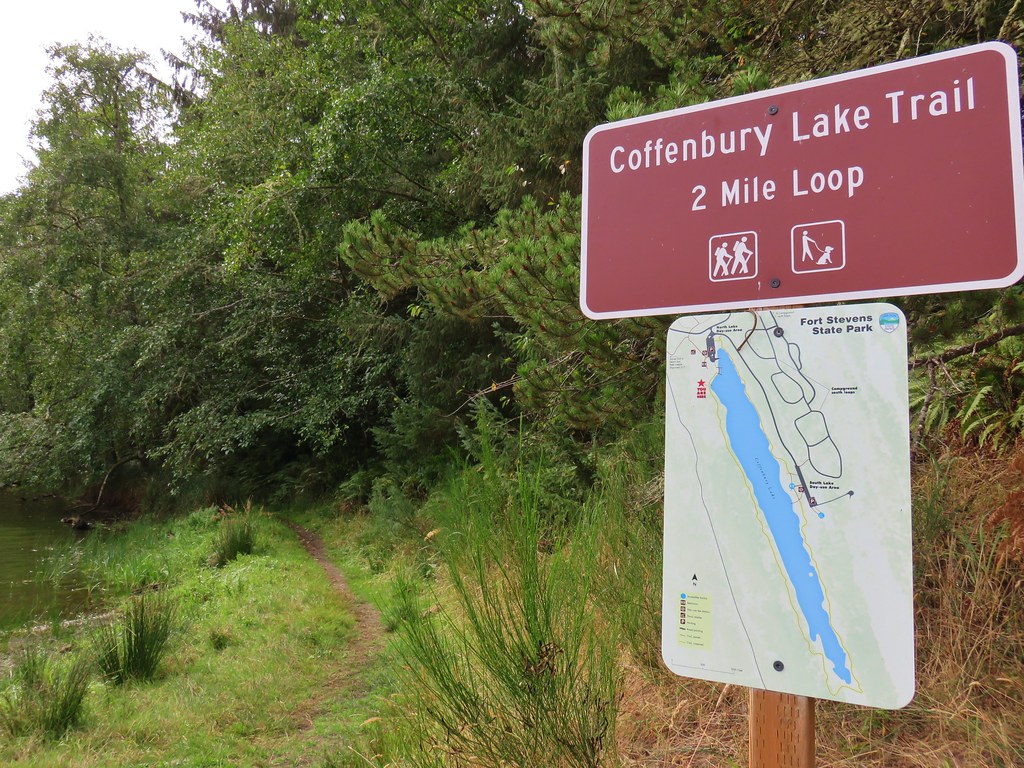
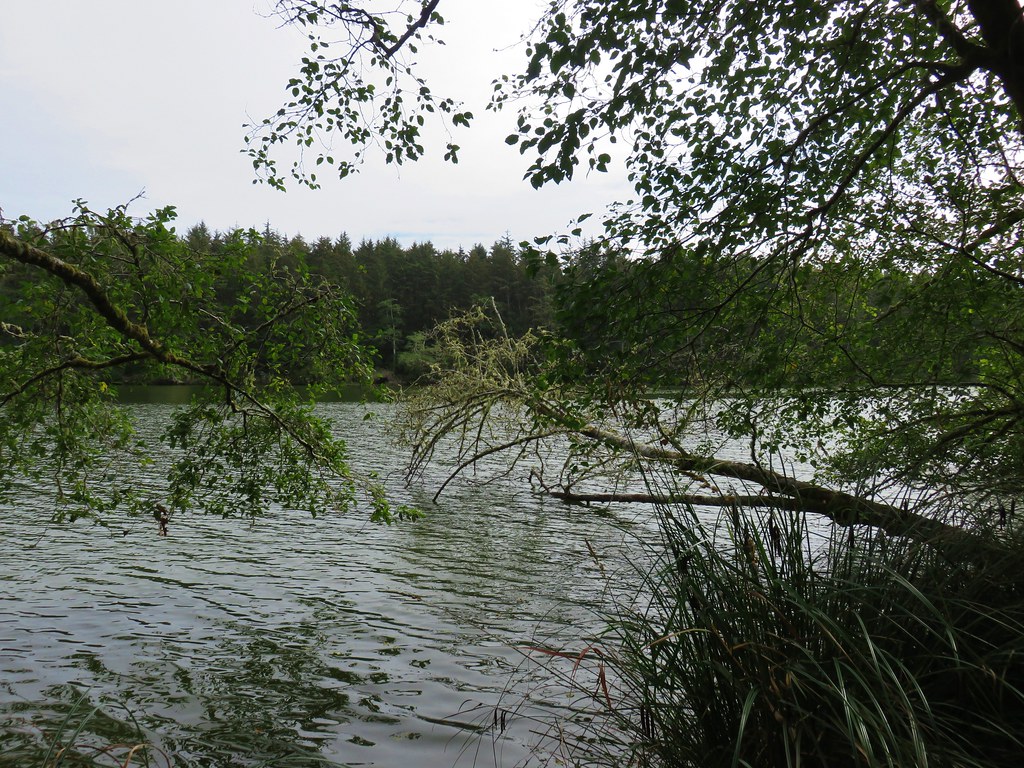
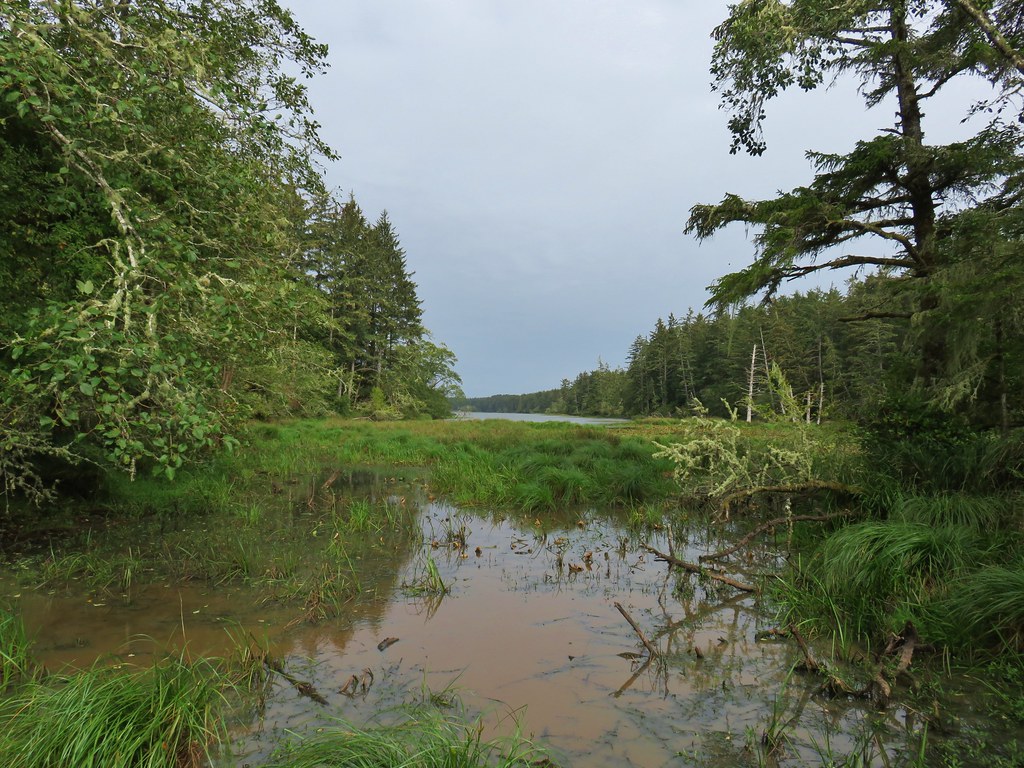
We headed around the lake counter-clockwise on a nice trail.
IMG_8134

IMG_8135

IMG_8137

IMG_8139

IMG_8140

IMG_8144

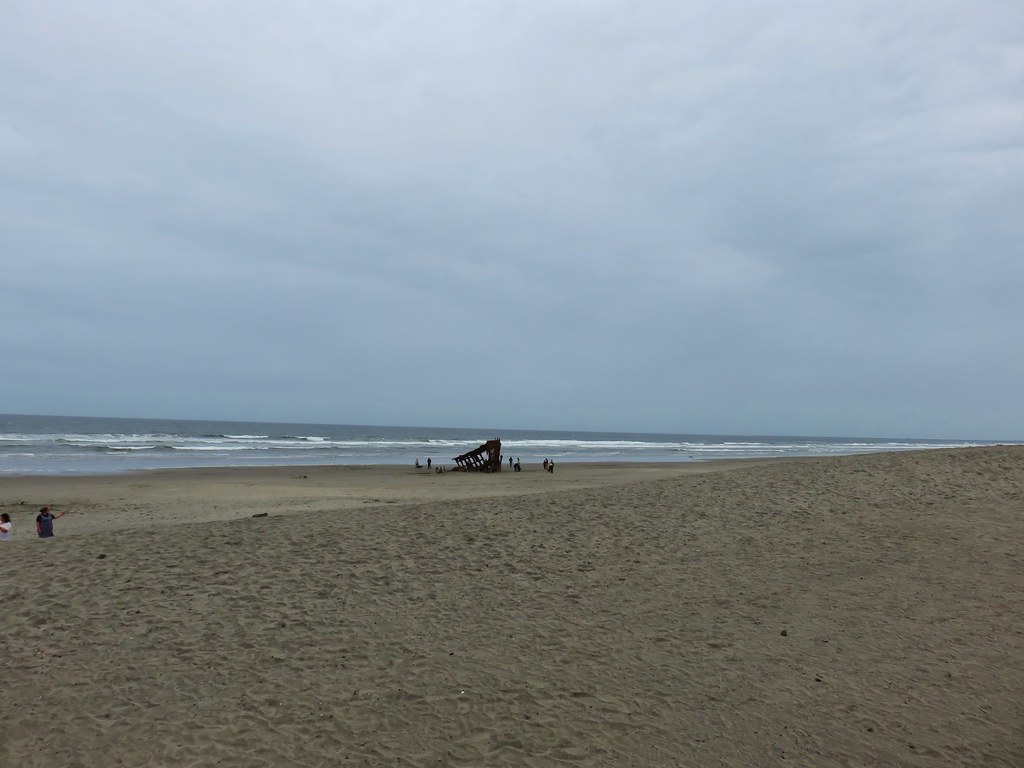
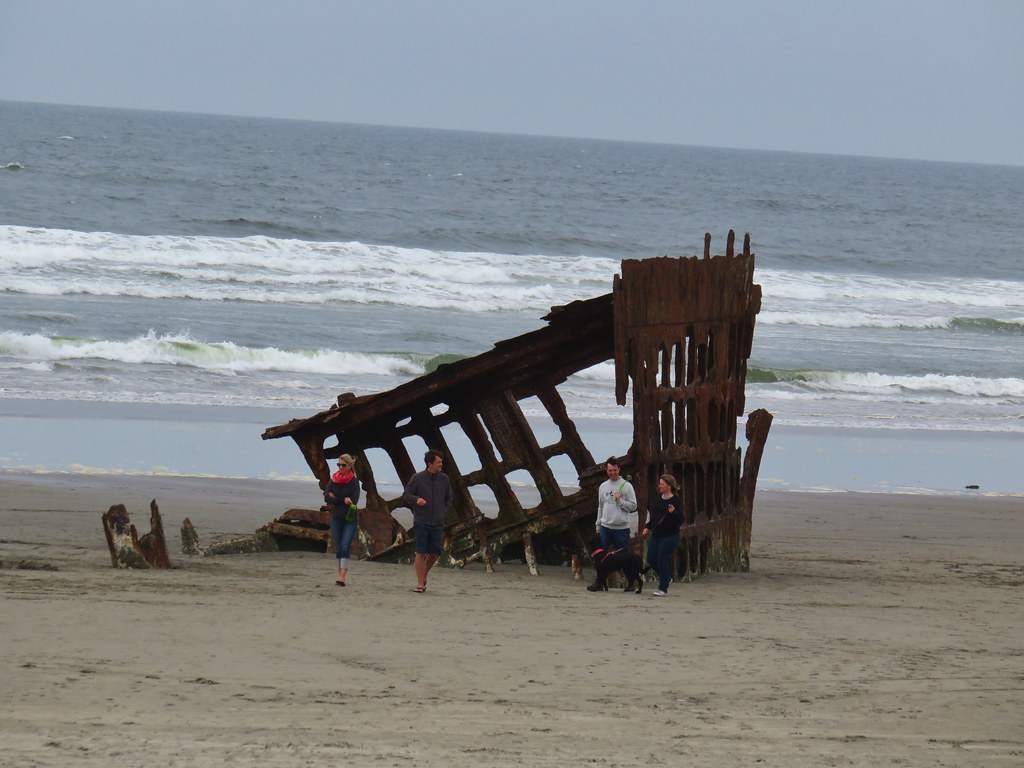
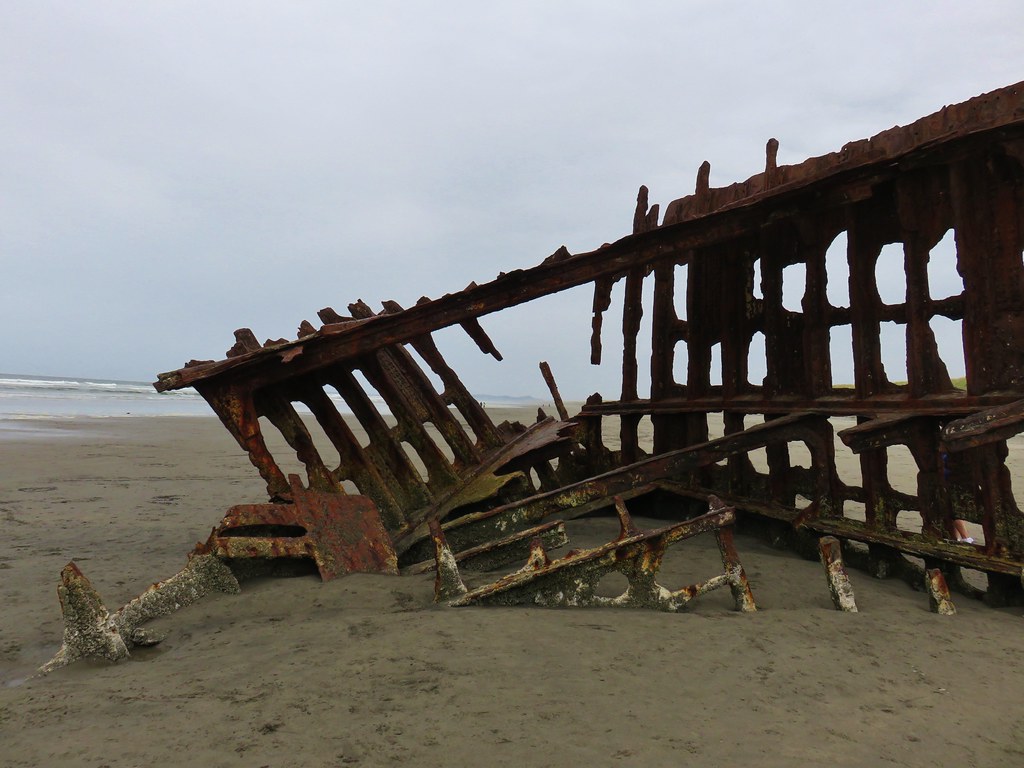
After completing the 2 mile loop around the lake we followed “Shipwreck” pointers for 3/4 of a mile to the beach and the remains of the Peter Iredale which ran aground in 1906.
IMG_8148

IMG_8149

IMG_8152

IMG_8156

We backtracked from the beach a short distance and turned left on a paved path at a pointer for Battery Russell (among other possible destinations).
IMG_8158

We followed this path for a little over half a mile before turning right at another pointer for Battery Russell.
IMG_8159

IMG_8160

We followed this 1.1 mile paved path back to the parking lot.
IMG_8162

The total distance of the Clatsop Spit hike had been 5 miles and this hike came in just under 7.5 miles. Twelve and a half miles is pretty good for a day, but due to our typical early start we were done with these two hikes before 1pm. Our check-in time wasn’t until four so we still had a few hours to kill.

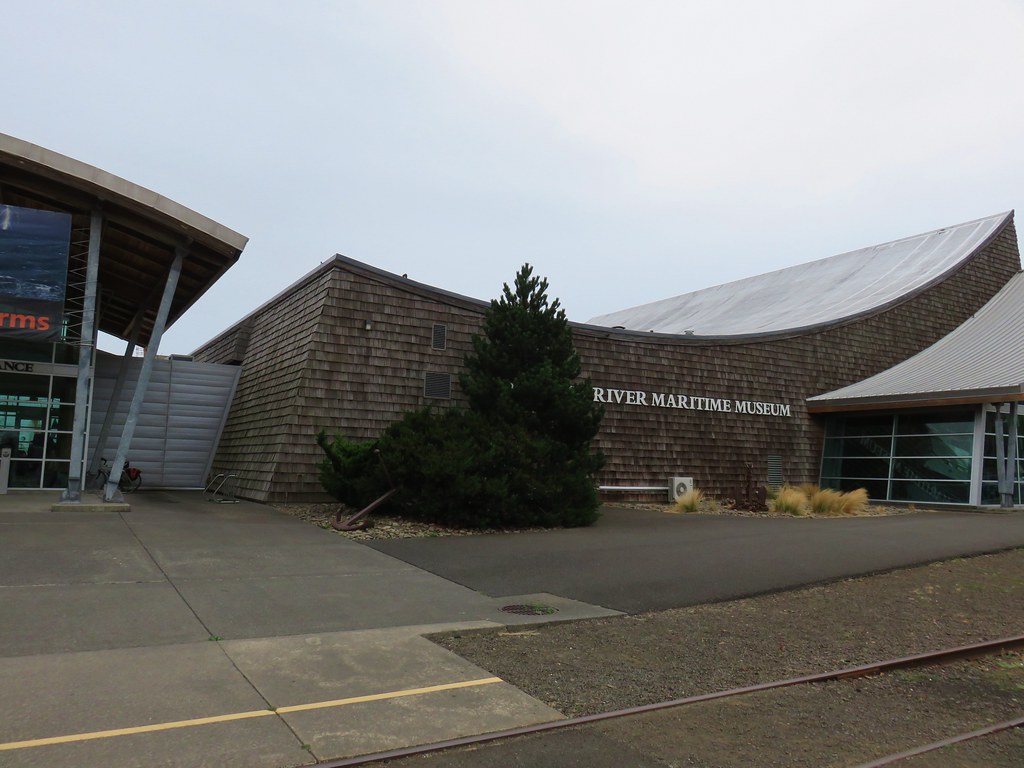
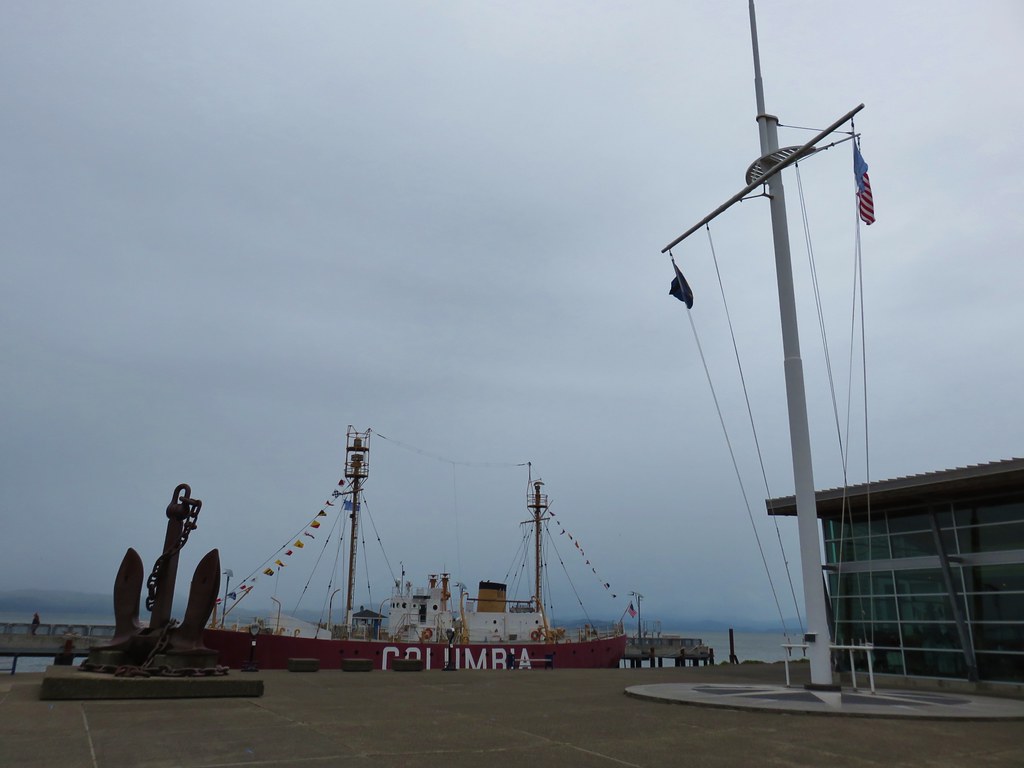
We had been prepared for that and headed north from Fort Stevens to Astoria where we parked at the Columbia River Maritime Museum
IMG_8163

IMG_8164

From the museum parking lot we headed west following the Riverfront Trolley line.
IMG_8169

Seabirds lined the waterfront and we also heard some sea lions but never saw any.
IMG_8166

IMG_8167

IMG_8173

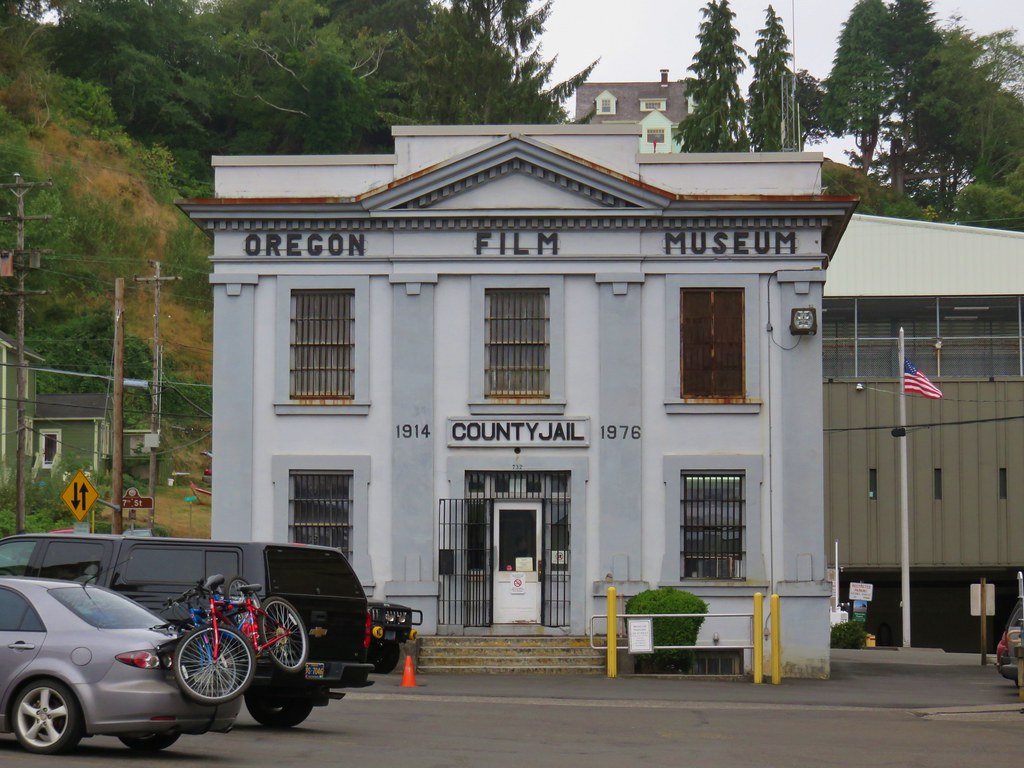
We more or less stuck to Sullivan’s described route (Hike #4 in the 4th edition of “100 Hikes/Travel Guide Oregon Coast & Coast Range) following the the trolley line to 6th St. then turning inland for three blocks before taking a left on Commercial St. After a block on Commercial St. we turned right on 7th for two blocks passing the Oregon Film Museum and the Flavel House.
IMG_8192

IMG_8190

IMG_8187

IMG_8182

We walked around the Flavel House and headed downhill on 8th St. turning right when we arrived back at Commercial St. We turned right several blocks later on 12th Street and right again a block later on Duane St. passing a Chinese Garden.
IMG_8194

IMG_8195

IMG_8197

IMG_8199

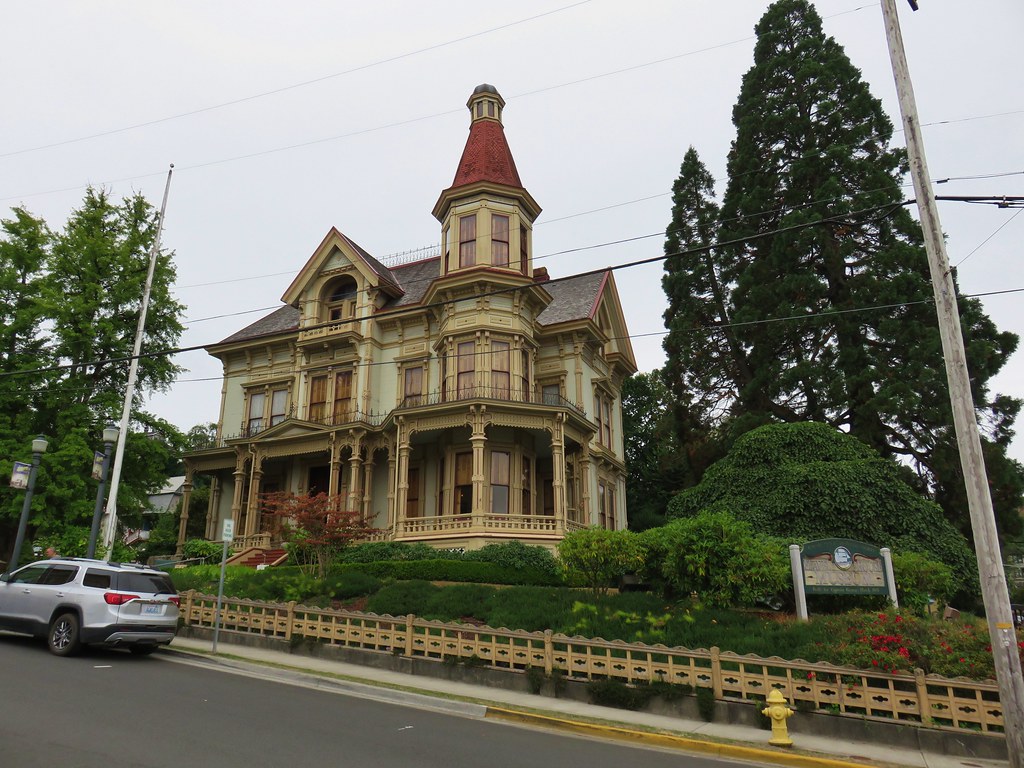
We continued zig-zagging through town passing numerous historic homes, churches, and other buildings. One home that stood out was an old run down home that had the quintessential haunted house look.
IMG_8201

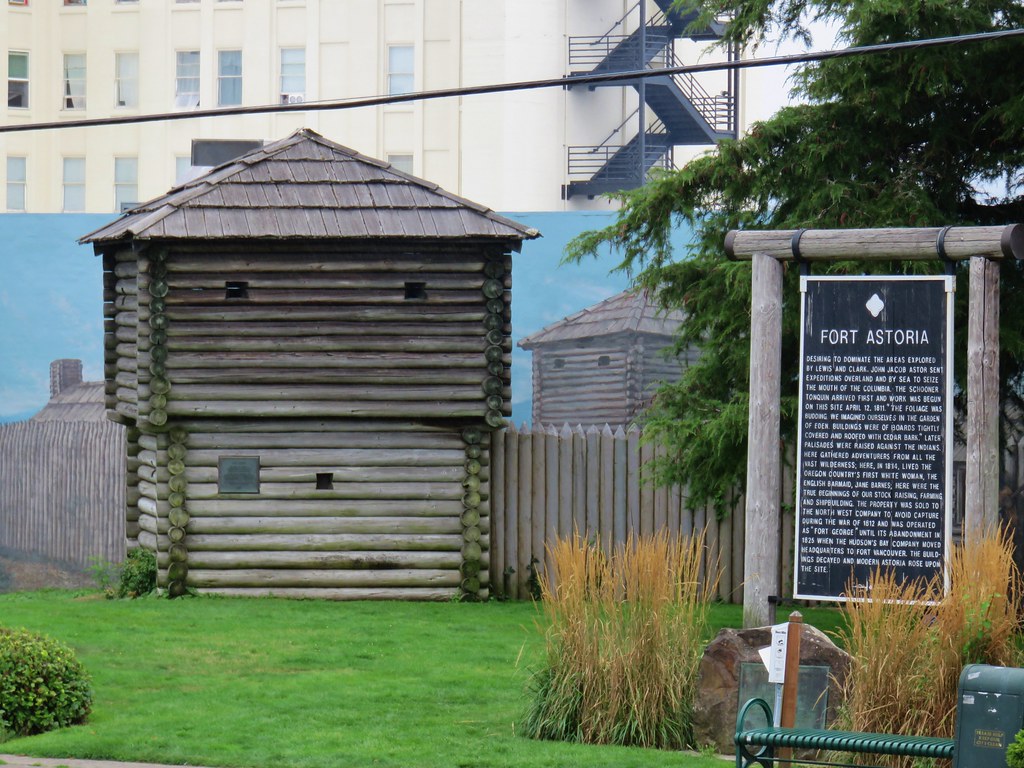
We also passed Fort Astoria on the corner of 15th and Exchange.
IMG_8205

By the time we were done we wandered around town for a total of 3 miles.
Astoria

One of the landmarks not on the route was the Astoria Column. It was visible from the waterfront rising above the city. It was one of the times the 30x zoom on the camera came in handy.
IMG_8178

We still arrived a little early at our hotel but luckily our room was ready. We had a nice view south to Tillamook Head.
IMG_8208

It had actually rained lightly on us in Astoria which was a wonderful change of pace. The sun went down behind the clouds that evening ending the first day of what was shaping up to be an interesting vacation.
IMG_8209

Happy Trails!

Flickr: Astoria & Fort Stevens

Categories
Hiking Northern Coast Oregon Oregon Coast Trip report

Angora Peak and Cape Falcon

We are blessed to live in a State where one weekend we can hike amid sagebrush and wildflowers in the High Desert and the next weekend hike along the Pacific Ocean.

For our latest outing we headed to the Oregon Coast to check out one new destination and one familiar one. Our original plan was to break the day up into two hikes, first up Angora Peak from a gated logging road, then to Cape Falcon after driving back south on Highway 101 for 2 miles to the Short Sands Trail South Trailhead.  We had hiked to Cape Falcon from that same trailhead in 2012 which would mean we’d be duplicating that hike (which we try and avoid).

An alternative presented itself while researching the Angora Peak hike. The Oregon Coast Trail passes Cape Falcon and then crosses Cape Falcon Road to the north on it’s way to Arch Cape. Cape Falcon Road is just a tenth of a mile north of the gated logging road for the Angora Peak hike so by parking on the shoulder of Cape Falcon Road at the OCT we could hike up to Angora Peak and back then take the Oregon Coast Trail out to Cape Falcon and back. This would allow us to not have to drive to a second trailhead and we wouldn’t be duplicating our 2012 hike to Cape Falcon.

With the plan settled we dove north of Nehalem on Highway 101 for 8 miles and turned left onto Cape Falcon Road where we parked at a small pullout by a trail sign.
Oregon Coast Trail at Cape Falcon Road

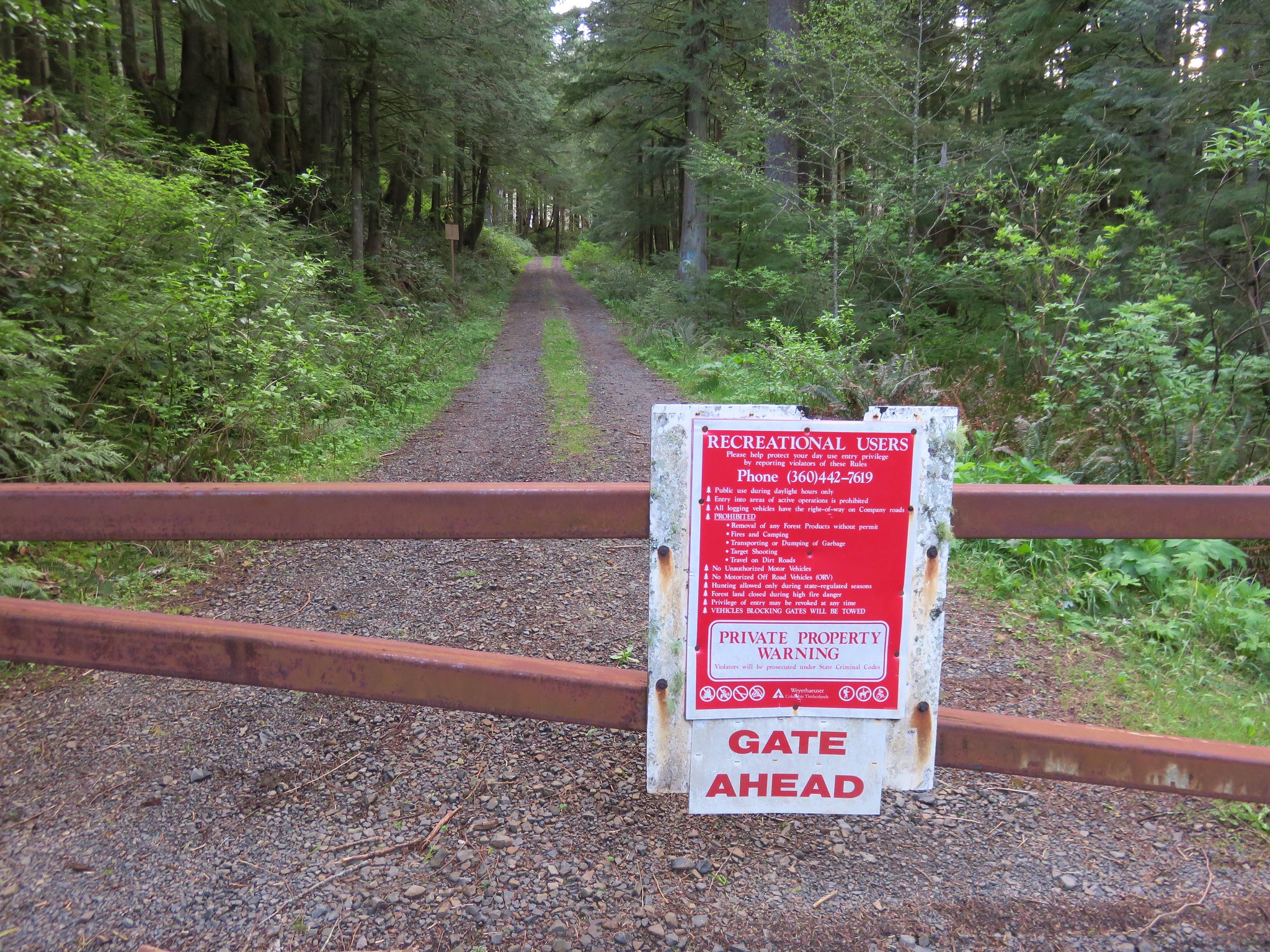
We walked back to the highway which was less than 100 yards away, crossed to the east shoulder, and followed it south for .1 miles to the gated road. The lumber company has a sign posted regarding rules for the area which should always be followed in order to ensure they are not forced to close access.
Logging road to Angora Peak

The road passes through a landscape of clear cuts with Angora Peak in the distance.
Logging road to Angora Peak

We stuck to what was obviously the main road and in about a mile passes a quarry.
Quarry on the way to Angora Peak

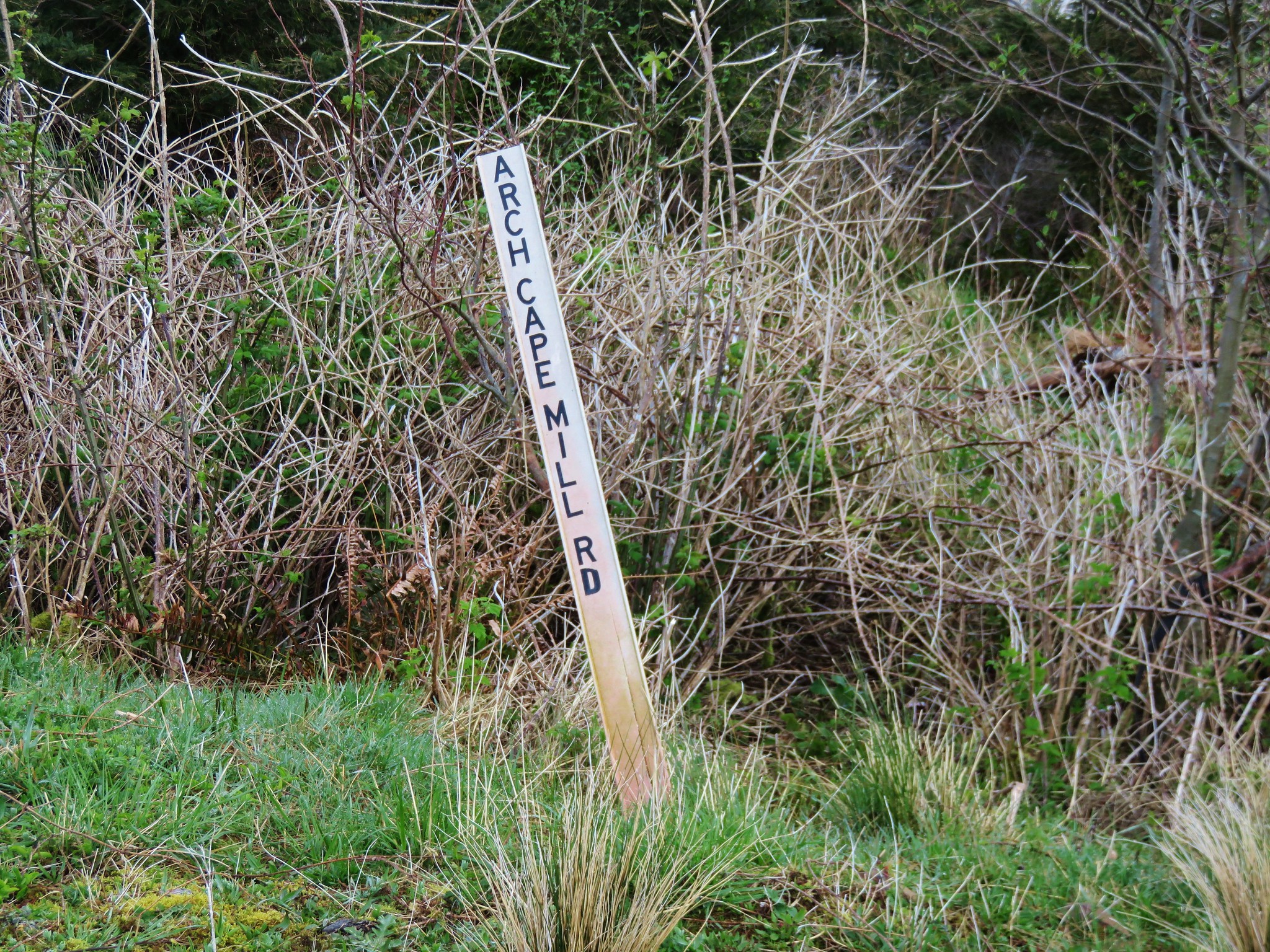
Beyond the quarry we forked left after passing a 1 mile marker (blue spray painted 1 on a concrete slab). This road ended in tenth of a mile at a T-shaped junction with Arch Cape Mill Road.
Sign at the junction with Arch Cape Mill Road

We turned right on Arch Cape Mill Road passing another gate.
Gate on Arch Cape Mill Road

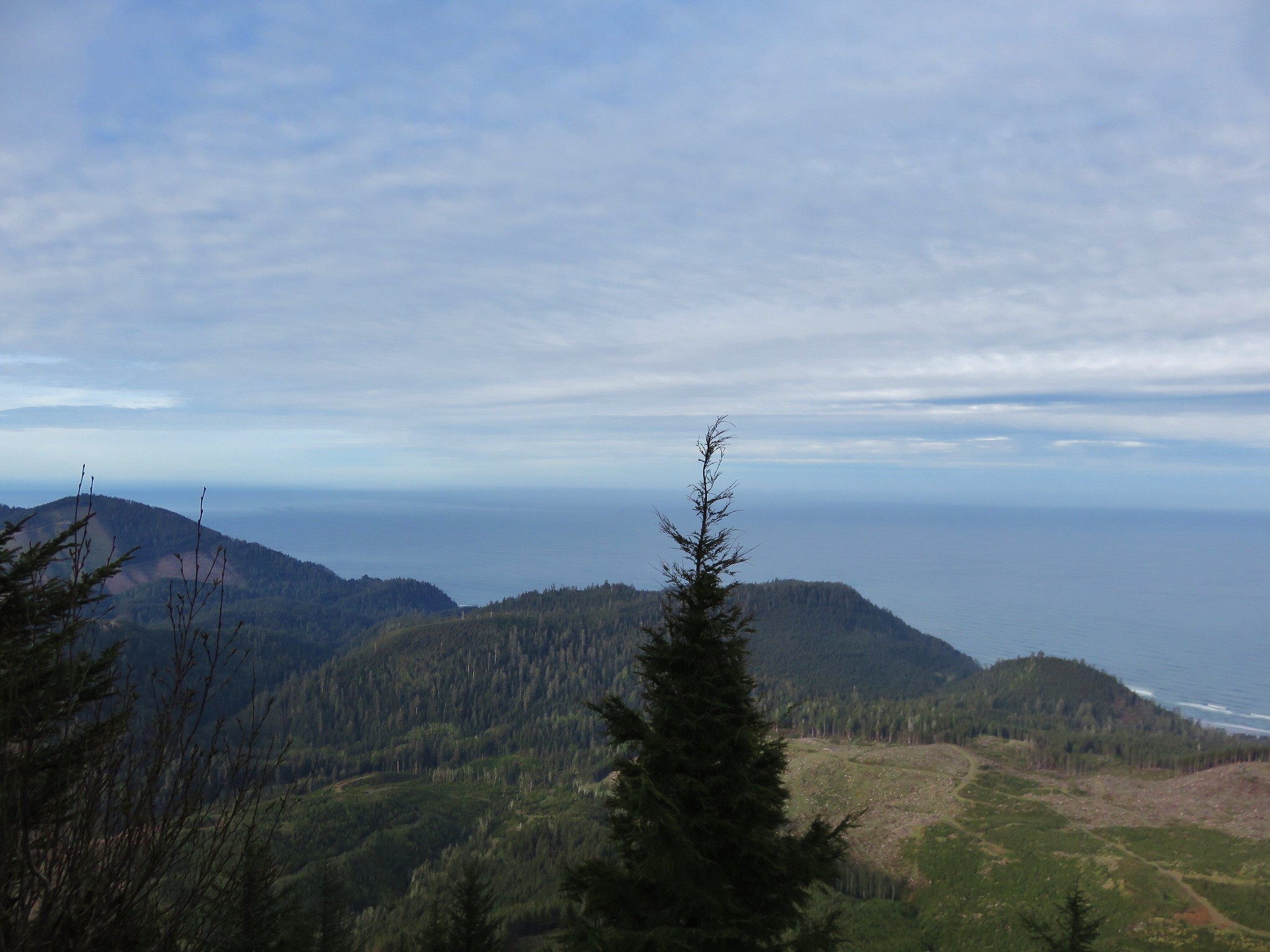
As we climbed higher up the road views back to the Pacific Ocean improved.
Pacific Ocean from Arch Cape Mill Road

Looking north past the clearcuts to Tillamook Head Tillamook Head

Tillamook Rock and Tillamook HeadTillamook Rock and Tillamook Head

There weren’t a lot of flowers blooming yet but here a few were in bloom.
Wood violets Violets

TrilliumTrillium

PaintbrushPaintbrush

SalmonberrySalmonberry

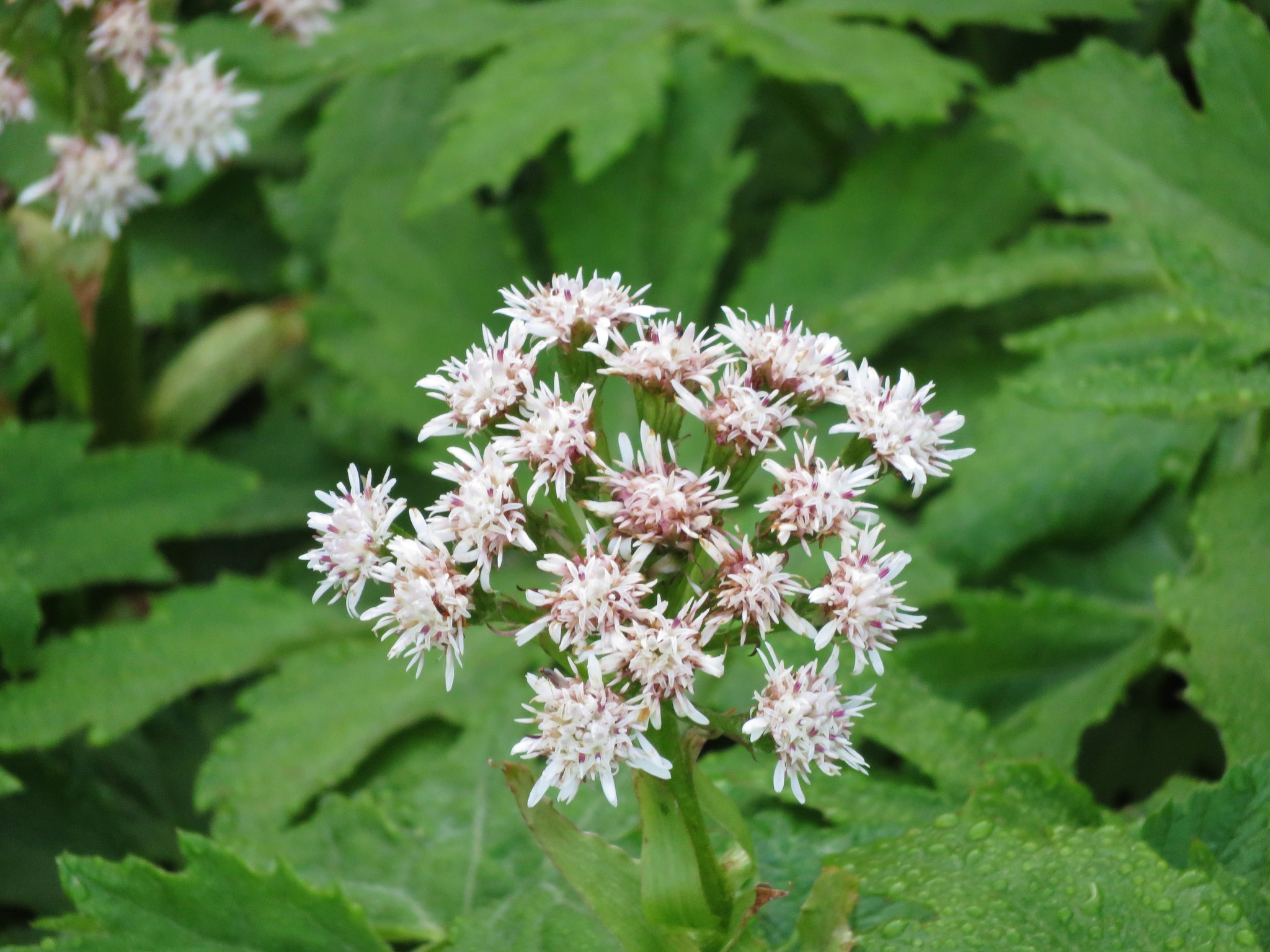
ColtsfootColtsfoot

Bleeding heartBleeding heart

Arch Cape Mill Road wound up along a cliff face to a viewpoint in about 3/4 of a mile.
Arch Cape Mill Road

Arch Cape Mill Road

Viewpoint along Arch Cape Mill Road

We followed the road another half a mile before veering right onto a brushy trail at a small rock cairn.
User trail off of Arch Cape Mill Road

User Trail

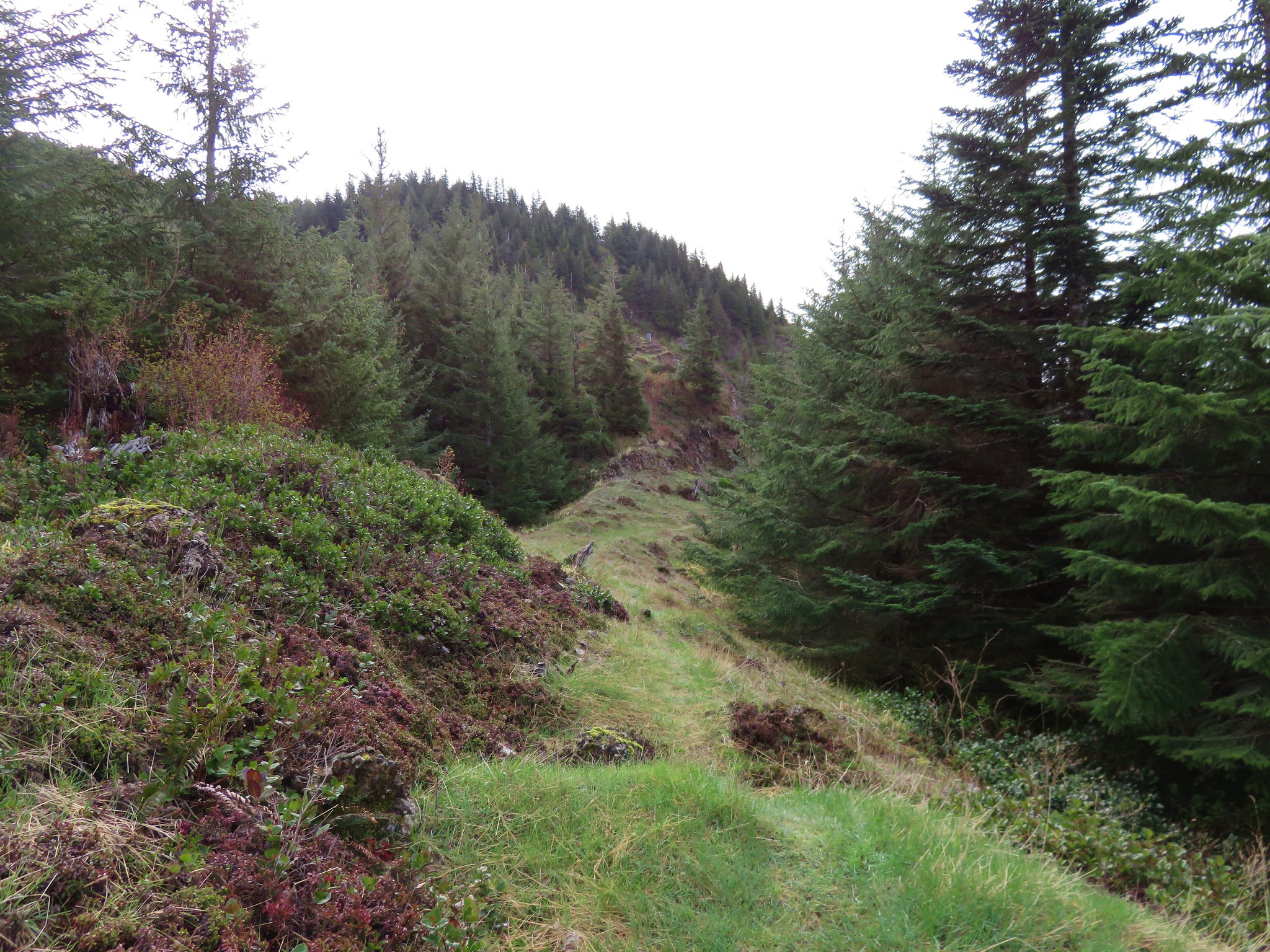
After a couple of hundred yards we came to a grassy opening a where we headed uphill on another old road bed.
Heading to the stone shelter

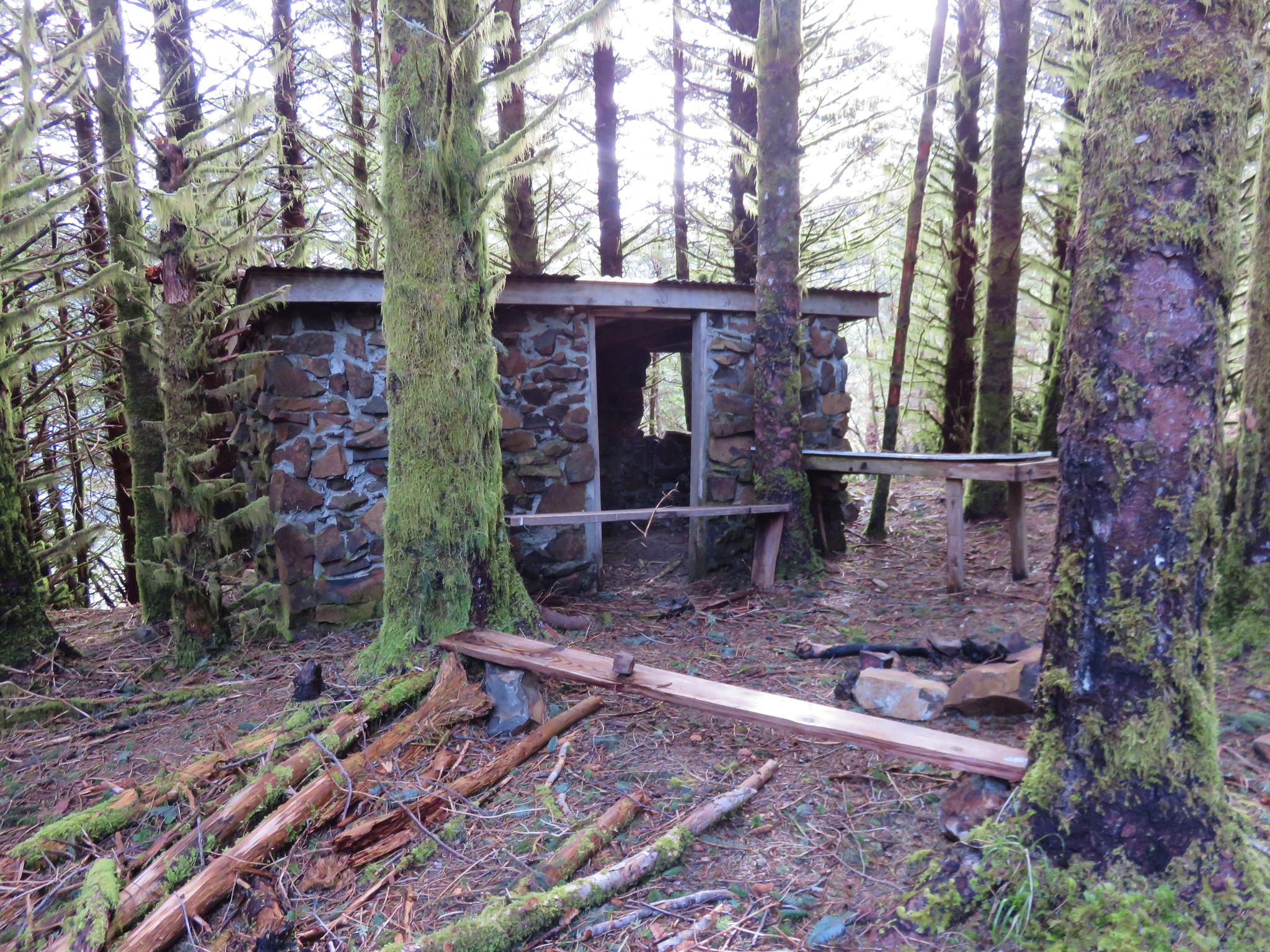
A short distance up the old road bed we came to an old stone shelter which showed signs of recent use including a fire pit. Just the kind of activity that could prompt the lumber company to close access.
Stone shelter

A short trail to the right from the shelter led to a viewpoint where we could see Neahkahnie Mountain and Cape Falcon in Oswald West State Park.
Neahkahnie Mountain and Cape Falcon

Up to this point we had been following Sullivan’s “100 Hikes/Travel Guide Oregon Coast & Coast Range” 4th edition which ended the hike at the viewpoint near the shelter. We decided to press on for Angora Peak following descriptions on Summitpost.org and in trip reports on Oregonhikers.org. We returned to Arch Cape Road and continued on. The road became very overgrown about 150 yards from the rock cairn so we followed another user trail for three tenths of a mile to a saddle where the conditions improved and views opened up.
Arch Cape Mill Road

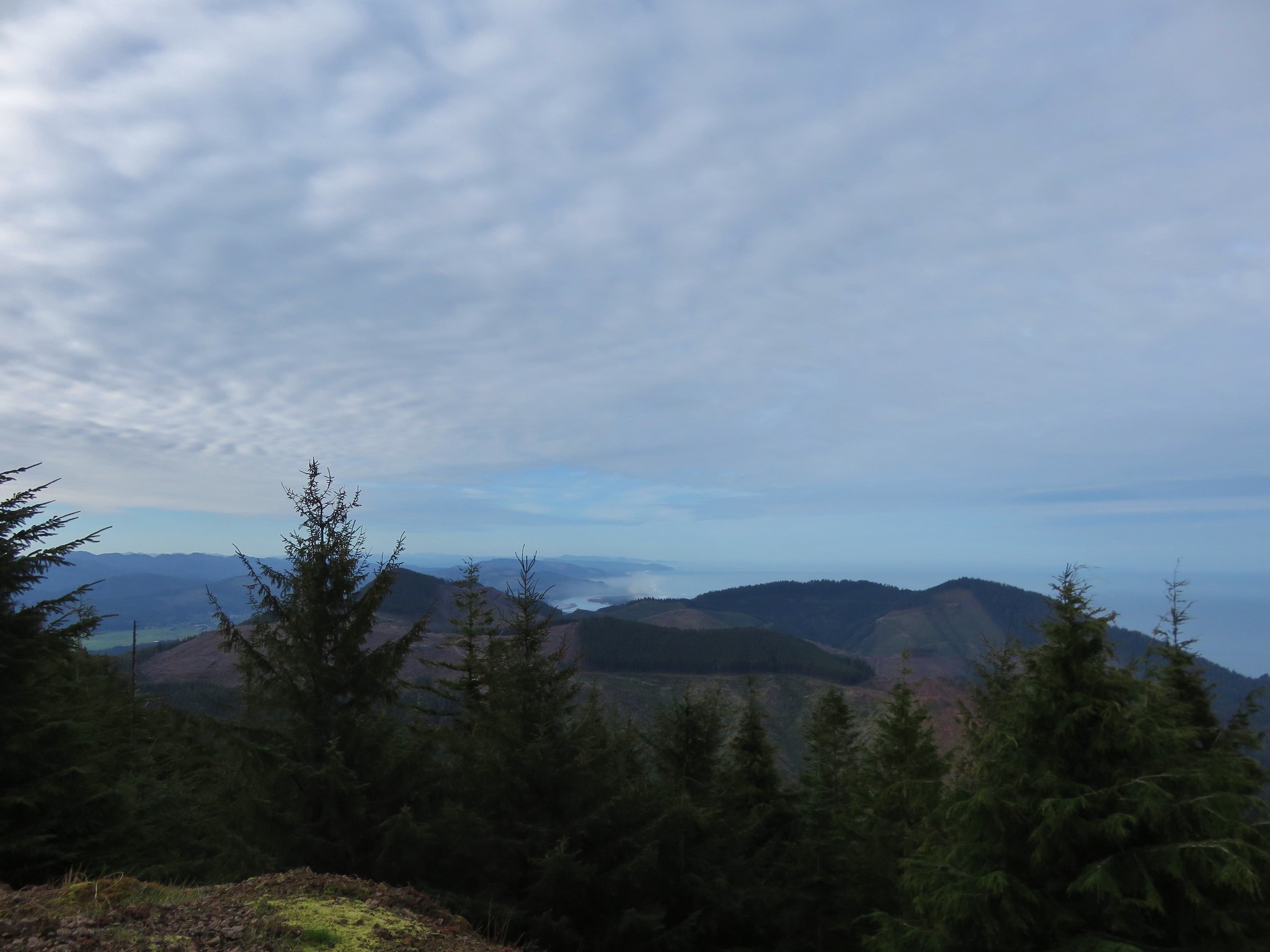
To the south the green farmland along the Nehalem River stood out in stark contrast to the surrounding hills.
Nehalem to the south

Following the Nehalem River west it emptied into the Pacific beyond Neahkahnie Mountain.
Looking south

To the west was more ocean beyond the western end of Angora Peaks ridge.
West end of Angora Peak

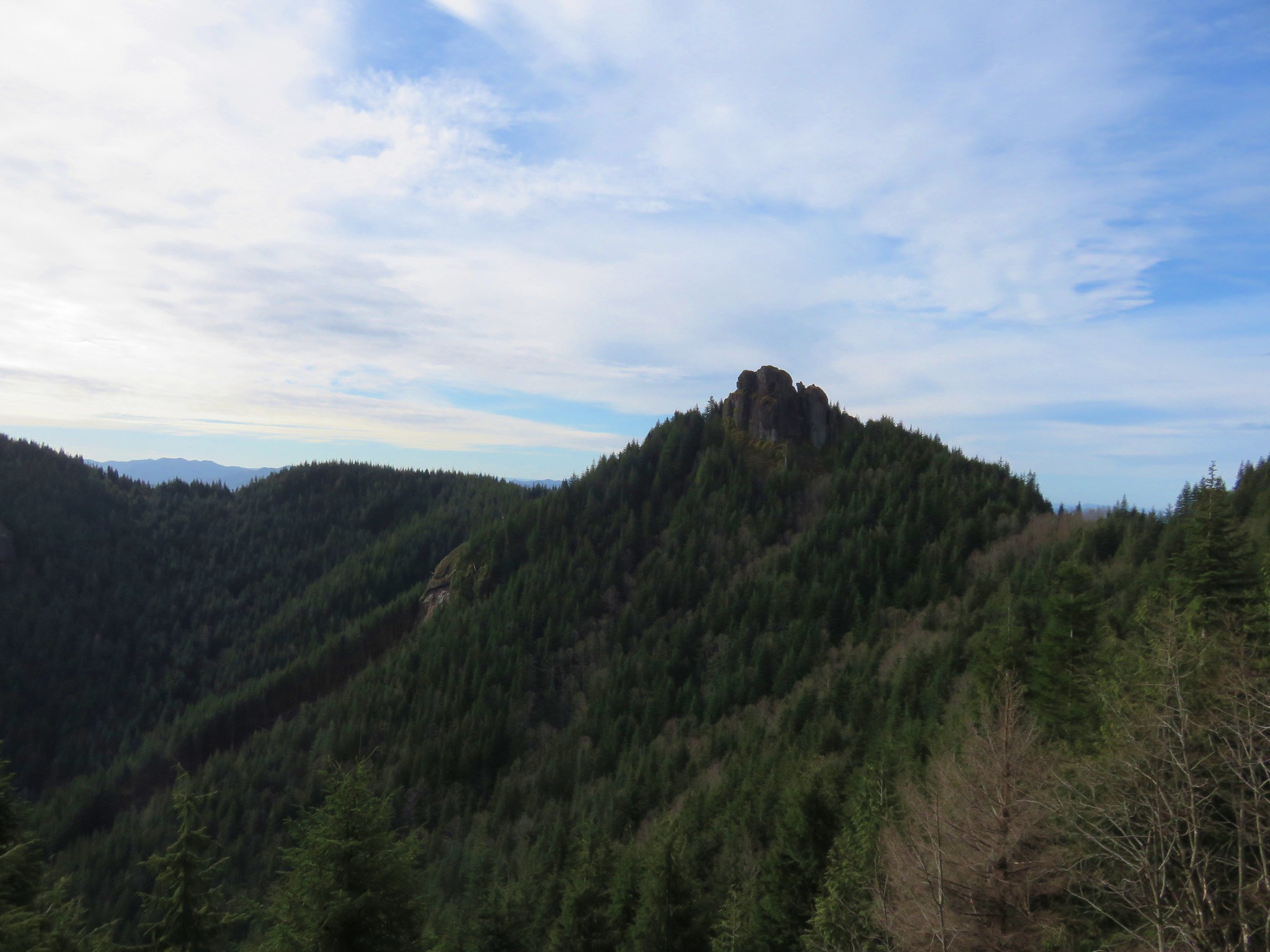
To the east Arch Cape Mill Road could be seen passing between the rock pinnacles of Revenge of Angora and Angora Pinnacle.
Revenge of Angora and Little Angora rock pinnacles

We followed the road to a saddle between the two rock pinnacle where we turned sharply north onto another abandoned logging road. The road here was so overgrown it looked more like a trail now.
Arch Cape Mill Road

Gaps in the trees offered views north to Onion Peak (and Saddle Mountain beyond).
Onion Peak and Saddle Mountain

Onion Peak and Saddle Mountain

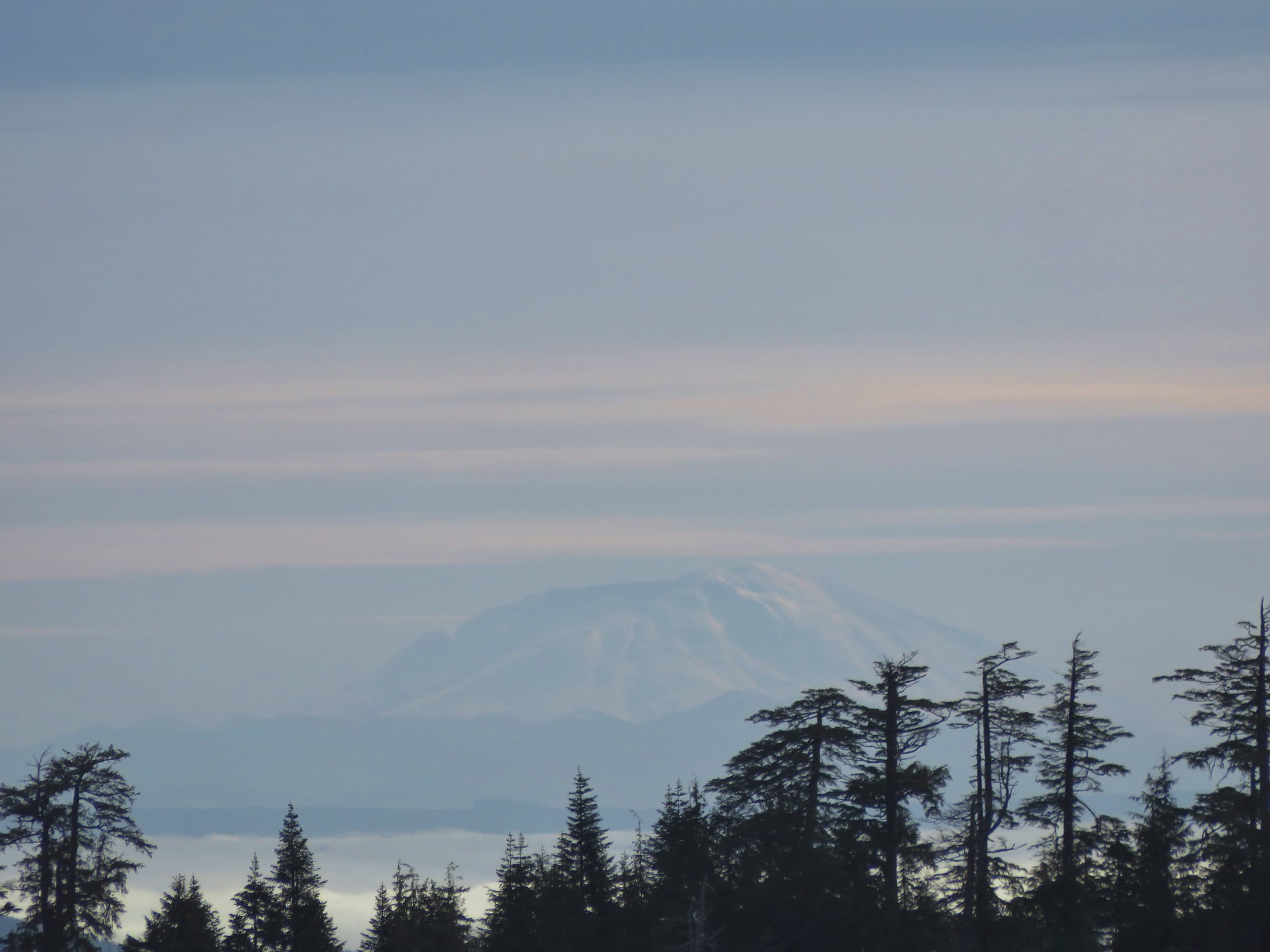
To the NE we could just make out Mt. St. Helens and Mt. Rainier. The lighting and the clouds did their best to camouflage them but with a little effort they were visible.
Mt. St. Helens and Mt. Rainier in the distance

Mt. St. HelensMt. St. Helens

Slides are common in the coast range which we were reminded of along this stretch. A section of road was all but gone leaving a faint use trail as the only option. It is still passable for now but caution is warranted and a fear of heights would likely end the hike at this point.
Arch Cape Mill Road (what's left of it)

From the northern end of the slide we could see evidence of slide below Angora Pinnacle which may have happened this last winter.
Little Angora and a slide below it

Slide below Little Angora

Beyond the washout, the road made another brief appearance before becoming overgrown with trees.
Arch Cape Mill Road

Arch Cape Mill Road

When the GPS showed we were NW of the summit near the end of the road we turned off the road and headed uphill cross-country through the forest.
Forest on Angora Peak

We gained a ridge line and began to work our way toward the summit. The summit itself is reportedly view less due to trees but just to the west of actual summit is a rock out crop which did have a view and made for a perfect spot to sit and have a snack.
Nehalem River from a viewpoint just below the Angora Peak summit

We could even make out our next destination, Cape Falcon, from the rocks.
Neahkahnie Mountain

Cape Falcon

We returned as we’d come, arriving back at the Oregon Coast Trail and heading toward Cape Falcon.
Oregon Coast Trail

The trail crossed several streams on 5 footbridges before beginning to climb up and over a ridge. Much of the trail was muddy and there were several trees down which required some interesting maneuvers to get past.
Oregon Coast Trail

Oregon Coast Trail

Tree that shattered over the Oregon Coast Trail

Other sections were dry and lined with green sourgrass.
Oregon Coast Trail

Oregon Coast Trail

Sour grass

After approximately 2.5 miles we came to a familiar viewpoint looking north to Tillamook Head.
Tillamook Head from the Oregon Coast Trail

This is where we had turned around in 2012 having followed the OCT north after visiting Cape Falcon. In another 3/4 of a mile we reached a better viewpoint where we could see Cape Falcon and a number of colorful sea caves in the rocks below.
Cape Falcon

Cape Falcon

Seagulls near the sea caves

We continued on to a washed out creek crossing. Heather smartly used a nearby log instead of following my slippy effort to use the trail.
Oregon Coast Trail

Another quarter mile brought us to the spur trail out to Cape Falcon. Up to that point we’d seen one gentleman on the way to Angora Peak with his dogs on the lower portion of the logging road and two girls on the Oregon Coast Trail as we went over the ridge. Cape Falcon was a different story. There were a number of hikers that had come from the south, a large group of which were attempting to navigate an extremely muddy section of the trail.

Beyond the mud pit the trail dried out nicely as it passed through a tall hedge of salal and fern.
Trail out Cape Falcon

As we made our way out this .2 mile trail the brush got lower eventually opening up views to the south of Neahkahnie Mountain.
Cape Falcon

Neahkahnie Mountain

The trail extended out the cape to viewpoints along its rocky end.
Cape Falcon

Seabirds occupied the furthest reaches.
Birds on Cape Falcon

Birds on Cape Falcon

After a short break we headed back. On our way back up the ridge we may have spotted a northern flying squirrel. Something crossed my line of vision through the air from the left to the right appearing to land on a tree near a dark opening. At first I couldn’t see anything but then something moved on the tree so I quickly zoomed in and took a picture. It immediately darted into the opening without my being able to make our what it was but I thought it might have been a woodpecker. I was surprised when I uploaded the picture later to see a squirrel.
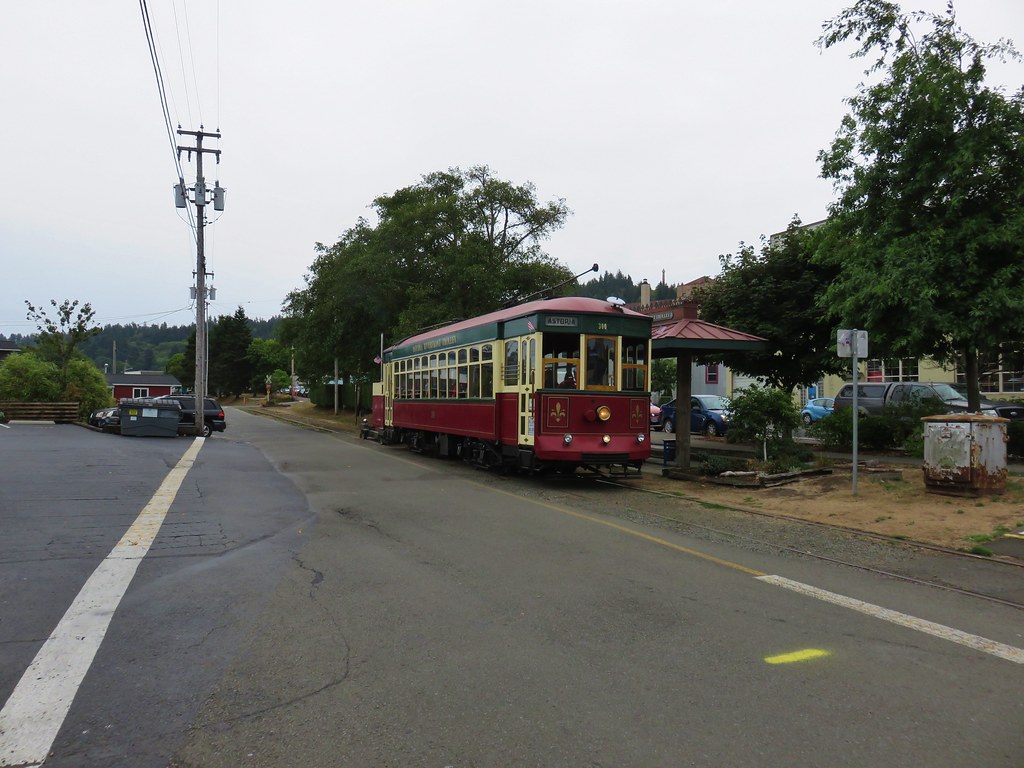
Possibly a norther flying squirrel

The picture quality makes an id nearly impossible and it may be that this squirrel came out of the opening in response to whatever I had seen but at this point there is still a possibility that it was a flying squirrel.

The rest of the hike back was uneventful as we passed back through the forest to Cape Falcon Road. We ended the day with 17 miles showing on the GPS, 8.9 during the Angora Peak portion and 8.1 to Cape Falcon and back. As we were changing out of our muddy clothes at the car a light rain started. We’d somehow timed it perfectly. Happy Trails!

Flickr:Angora Peak & Cape Falcon

Categories
Hiking Northern Coast Oregon Oregon Coast Trip report

Fort-To-Sea Trail – Fort Clatsop

We have officially started our 2016 hikes. As we have done for the past several years we headed to the Oregon Coast for our first hike of the year. Our goal this time was to hike the Fort-To-Sea Trail following a route initially blazed by Lewis and Clark in 1805 from Fort Clatsop to the ocean. Fort Clatsop was built near what is now the Lewis and Clark River and the Fort-To-Sea Trail was used by the expedition to gather salt by boiling saltwater. The area is now part of the Lewis and Clark National Historic Park complete with a replica of the original fort.
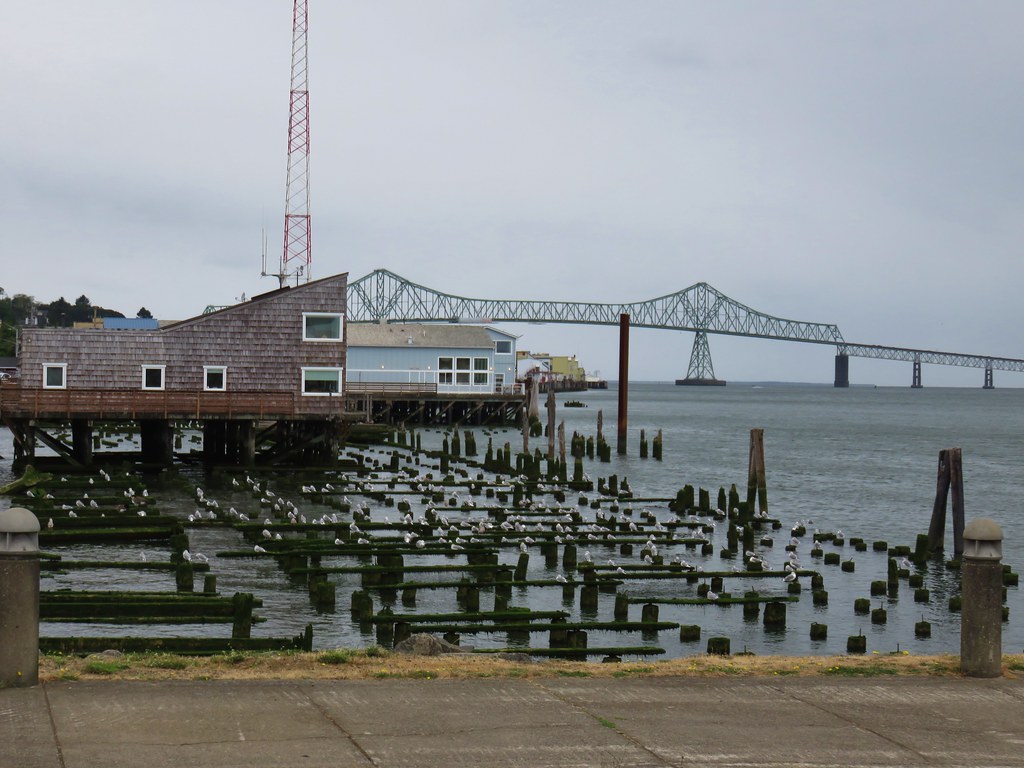
We decided to start our hike at the Sunset Beach Recreation Site near the ocean north of Gearhart, OR. From there we would take the trail to Fort Clatsop and back. Things got off to a rocky start at the trailhead when we found the restrooms devoid of toilet paper and discovered that I had not yet switched our toiletry supplies from my backpack to my daypack. After a quick trip back to Gearhart for supplies we were back at the trailhead and ready to begin.
IMG_2837

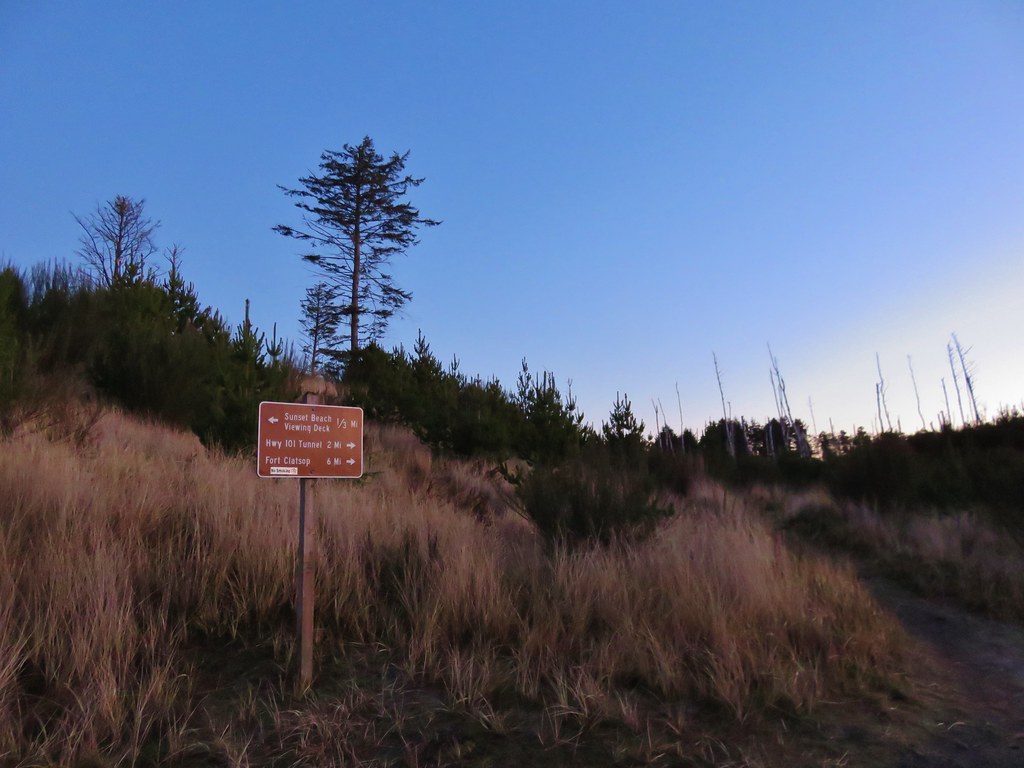
Before heading to Fort Clatsop we headed toward the ocean on the Fort-To-Sea Trail. There used to be a viewing deck overlooking the ocean 1/3 of a mile from the parking area but it has been removed leaving a sandy circle on the grassy dune.
IMG_2842

IMG_2846

The Sun was still rising behind us creating some nice colors on the western horizon.
IMG_2847

IMG_2851

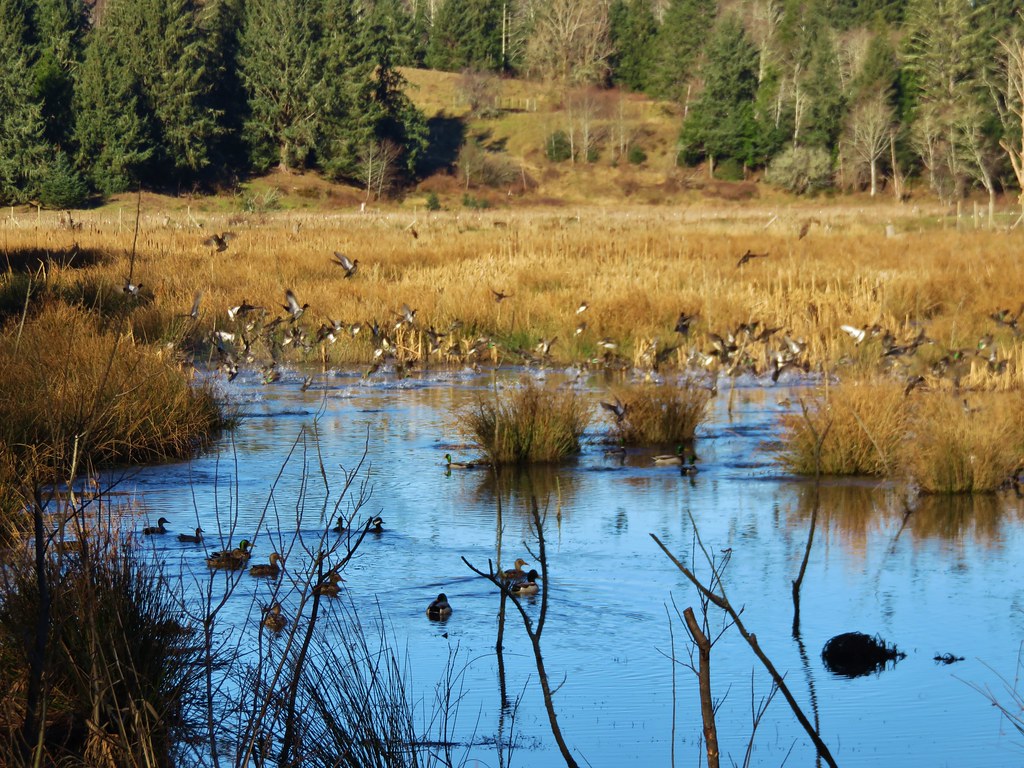
After returning to the trailhead we headed inland toward Fort Clatsop which was 6.2 miles away. The first portion of the trail passed through storm damaged trees skirting several bodies of water. Ducks paddled about on the water as it reflected the colors of the sunrise.
IMG_2861

IMG_2865

IMG_2864

The path then led up and over a small sandy hill and down to an arched bridge over Neacoxie Lake.
IMG_2870

IMG_2876

IMG_2877

IMG_2874

To the SE of the lake was the Astoria Country Club’s golf course, a popular morning stop for elk. We hadn’t seen any elk during our hikes in 2015, but on the far side of the course on a small hill were three.
IMG_2869

We watched them for a bit from the bridge as they made their way along the hillside.
IMG_2885

IMG_2887

Beyond the bridge the trail passed through a mile and a half of pastures. The fenced route was well marked as the trail led to East Neacoxie Lake.
IMG_2890

IMG_2897

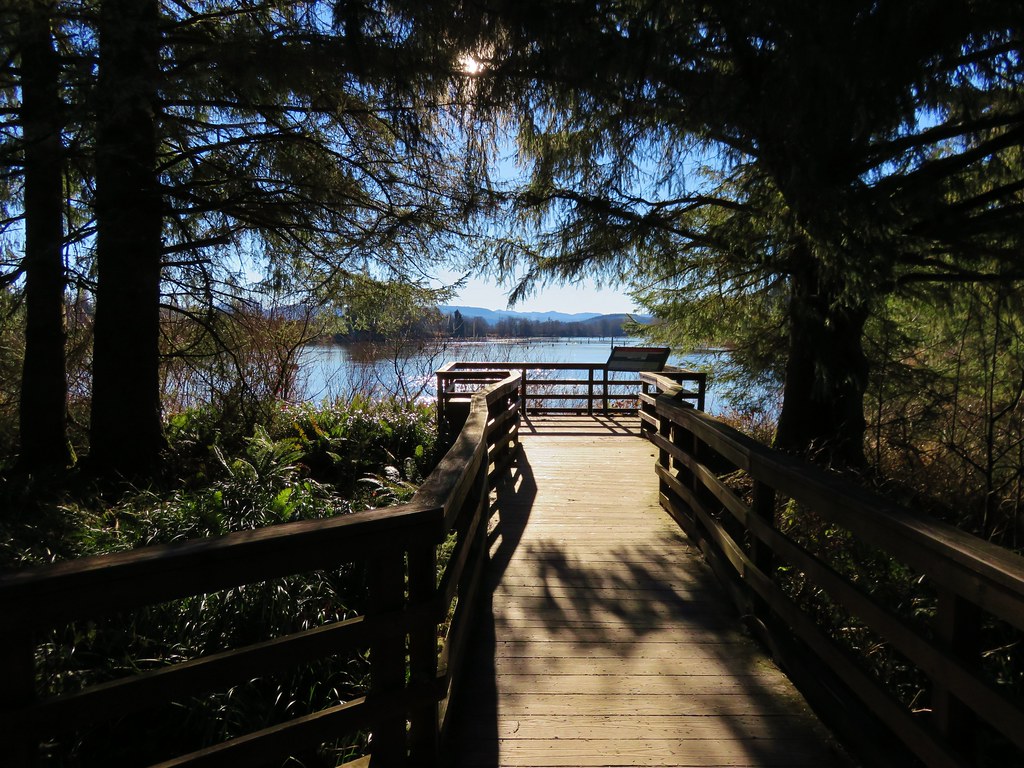
Smaller than Neacoxie Lake, East Neacoxie Lake was full of wildlife. A pair of Bald Eagles watched over the many ducks and small birds enjoying the lake.
IMG_2898

IMG_2906

IMG_2918

The trail crossed this lake on a floating bridge.
IMG_2917

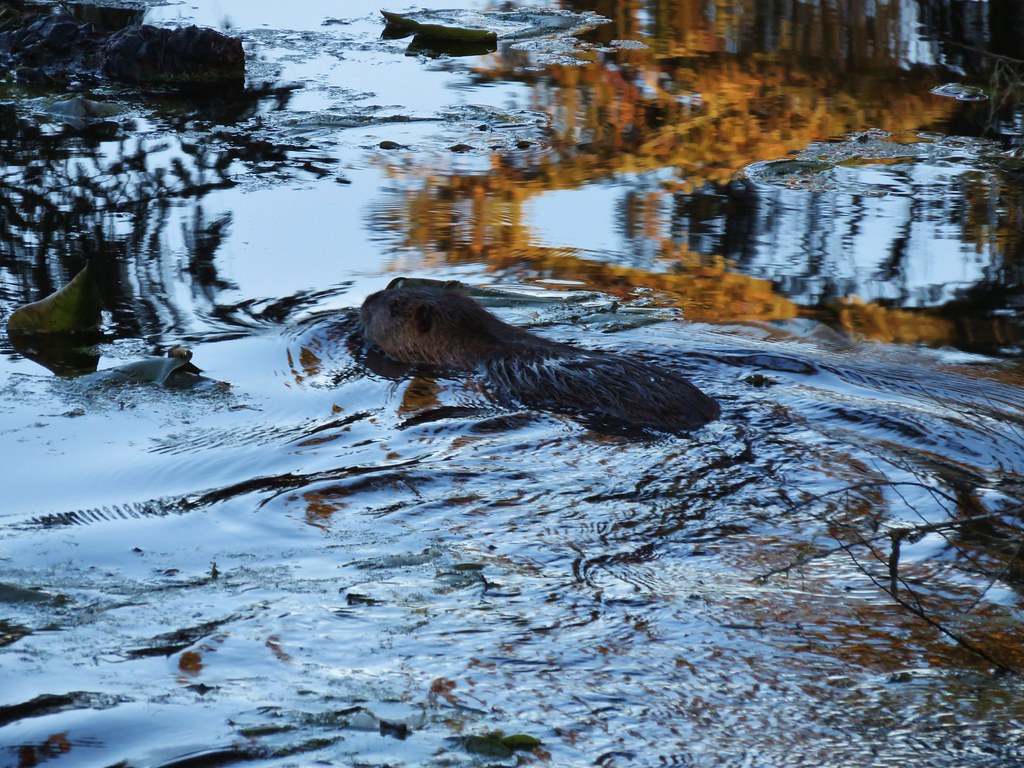
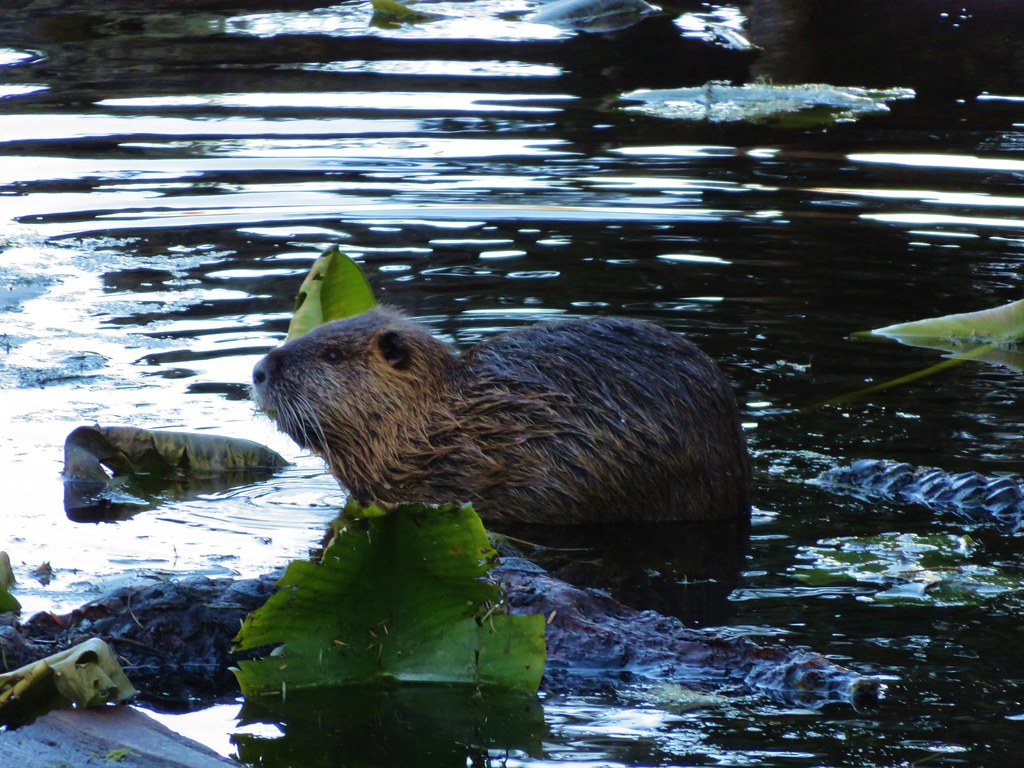
As we were making our way across something swam out from under the bank near the far end of the bridge. Our minds immediately went to otter or beaver, neither of which we have spotted yet during a hike. Instead it turned out to be a nutria, a large rat-like semiaquatic rodent considered an invasive species by the ODFW.
IMG_2921

IMG_2925

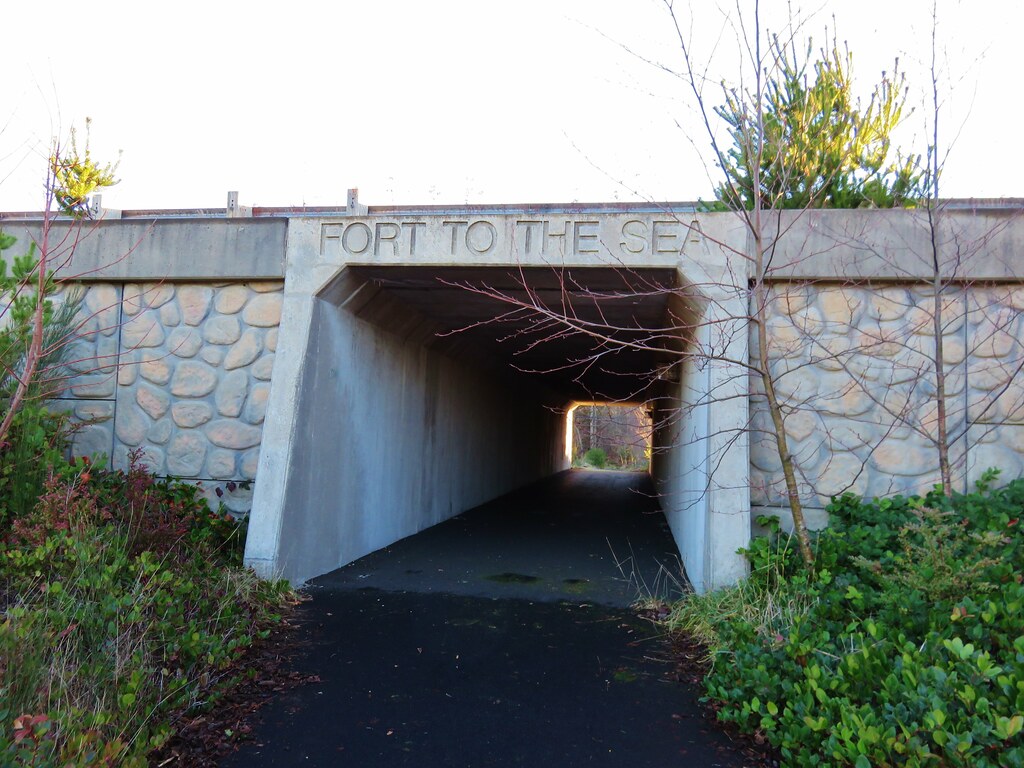
The trail then led past a pioneer church and cemetery to an underpass of Highway 101.
IMG_2928

IMG_2929

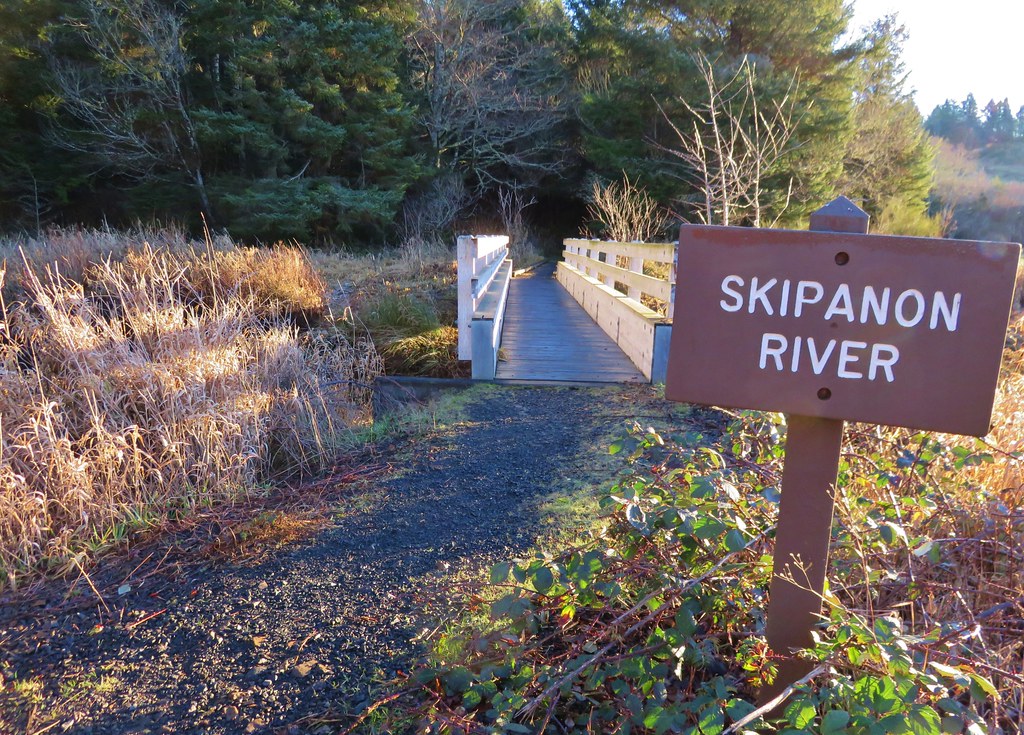
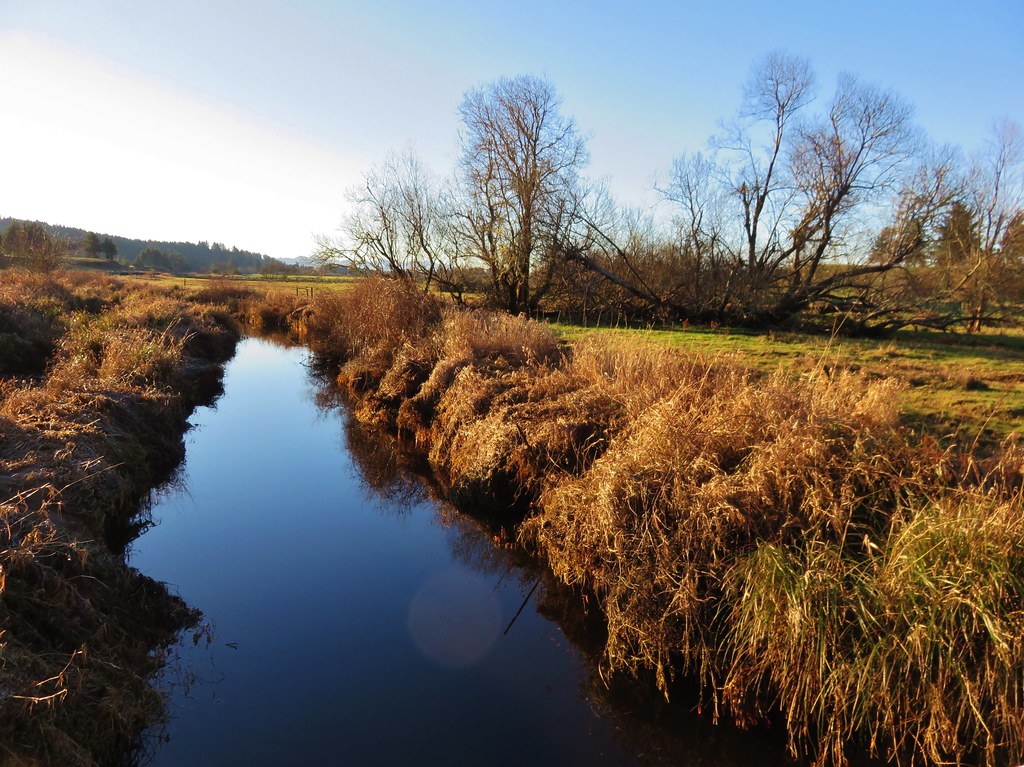
After passing under the highway and skirting another field we crossed the Skipanon River before heading into a forest.
IMG_2932

IMG_2933

IMG_2935

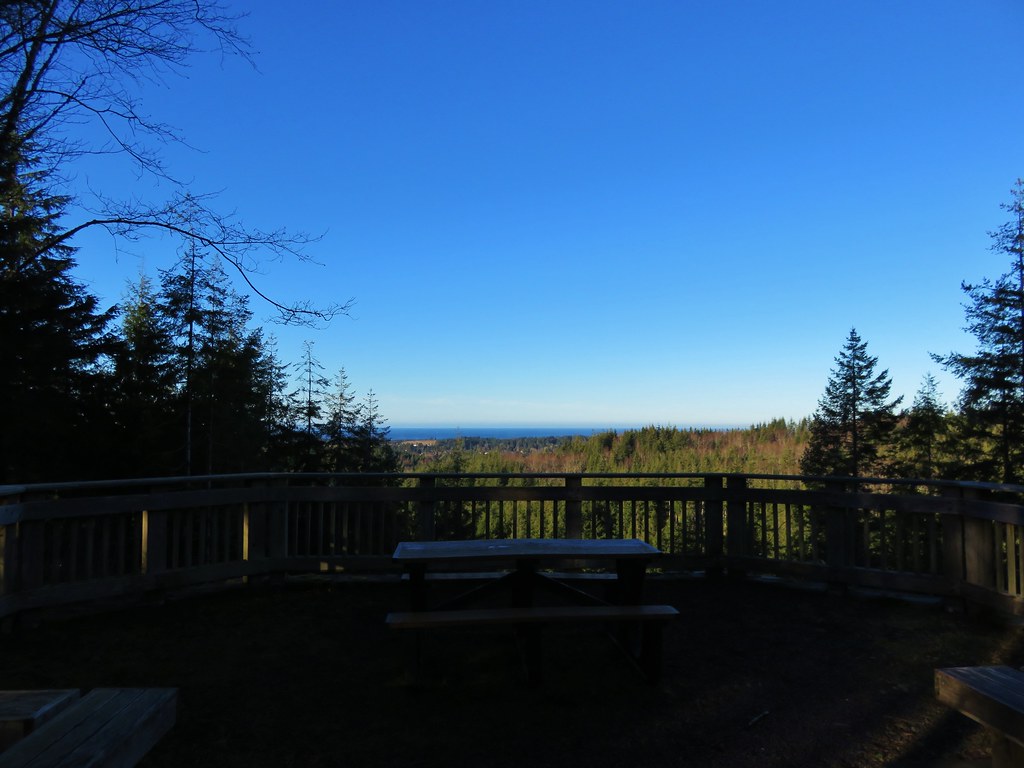
At the 4.7 mile mark we reached the Clatsop Ridge Overlook which was a nice ocean viewpoint with a picnic table and several benches.
IMG_2936

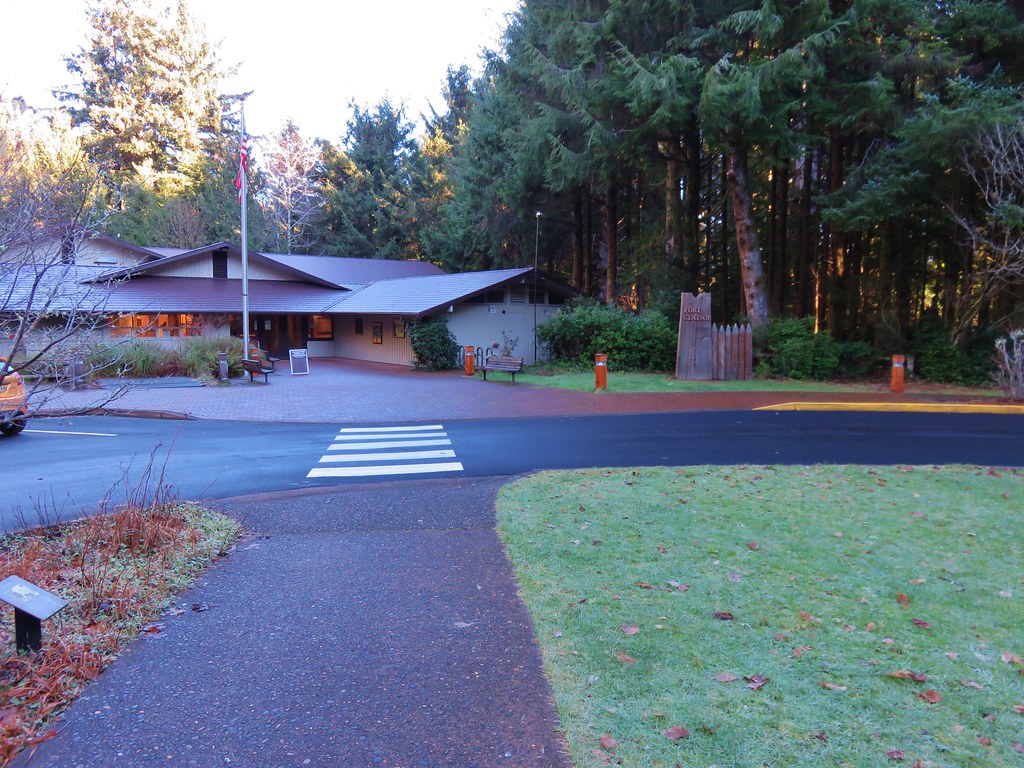
From the viewpoint the trail followed old roads down to the Fort Clatsop Visitor Center.
IMG_2938

IMG_2943

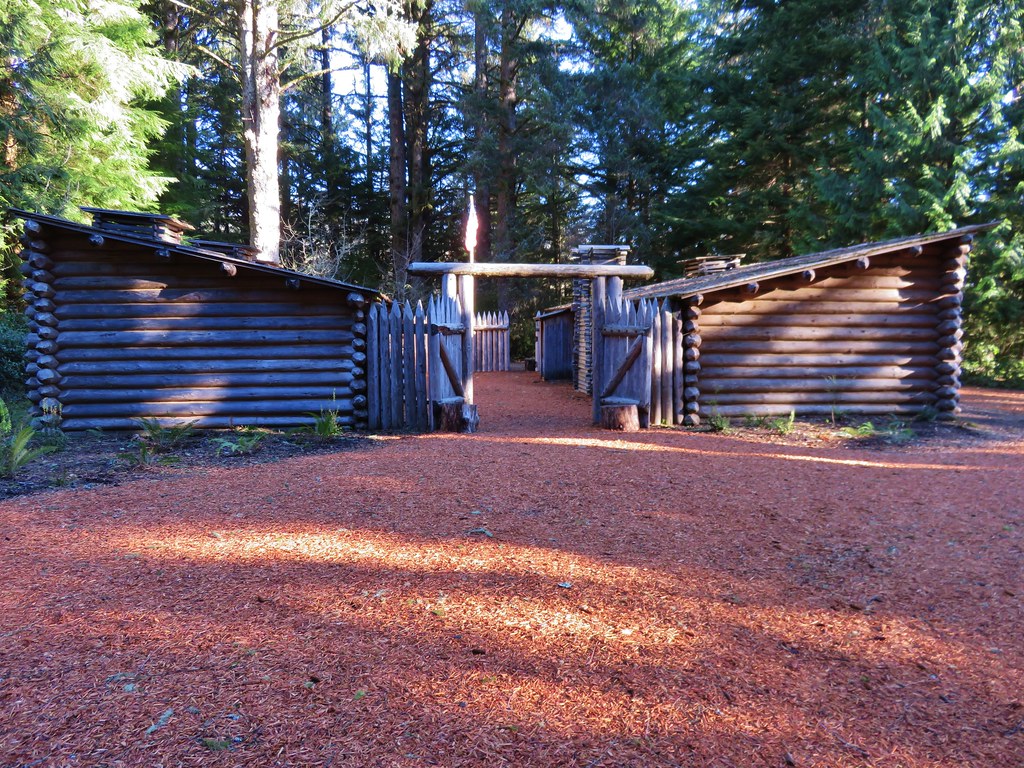
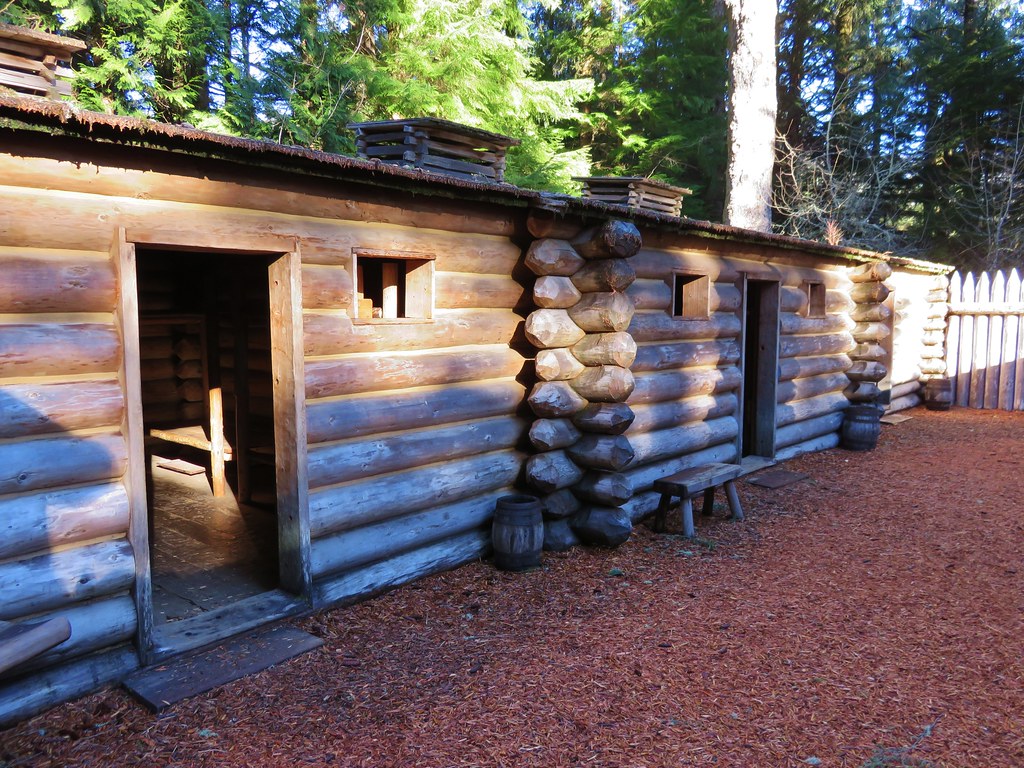
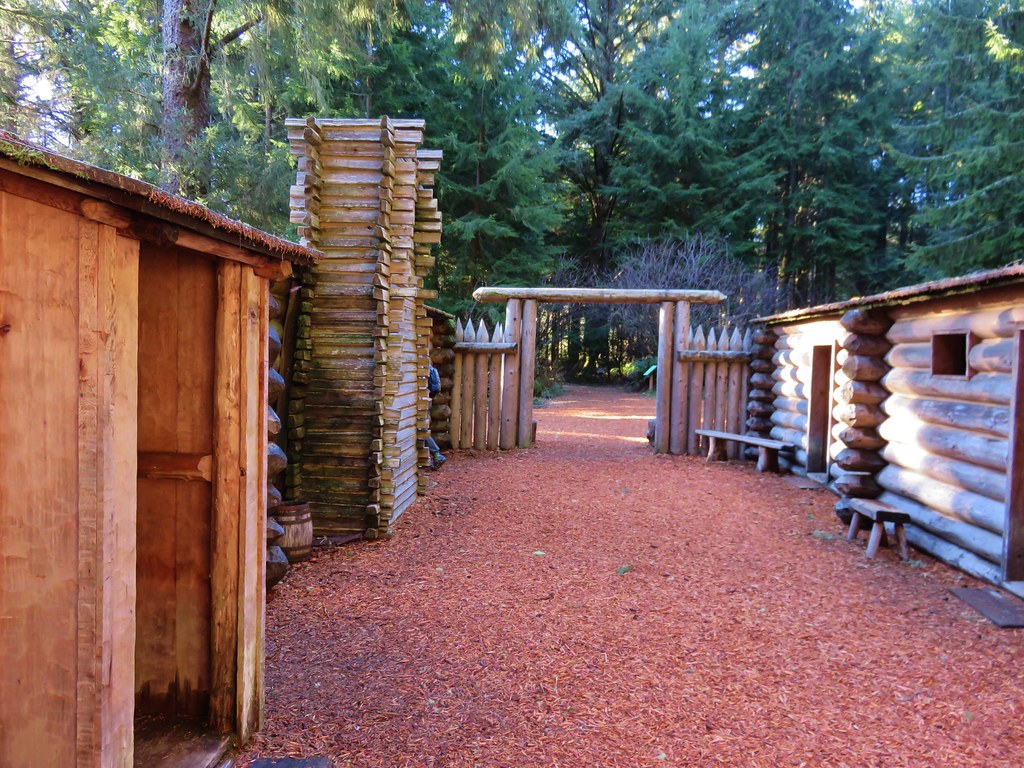
We passed through the center and continued 100 yards to the replica fort.
IMG_2945

IMG_2949

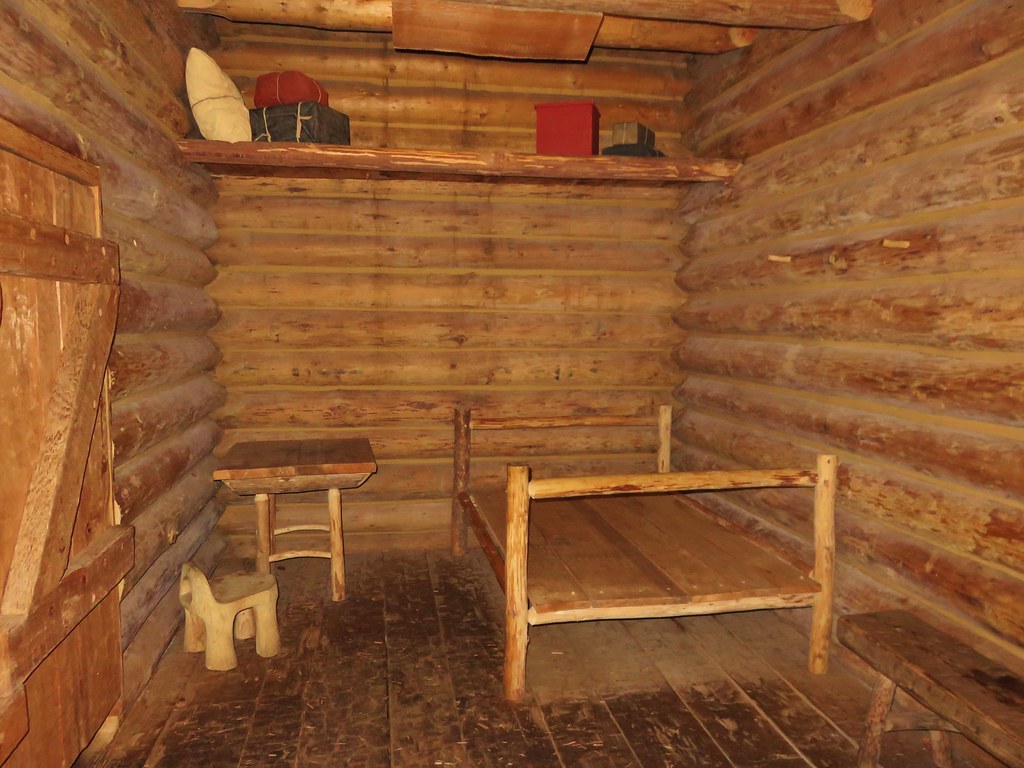
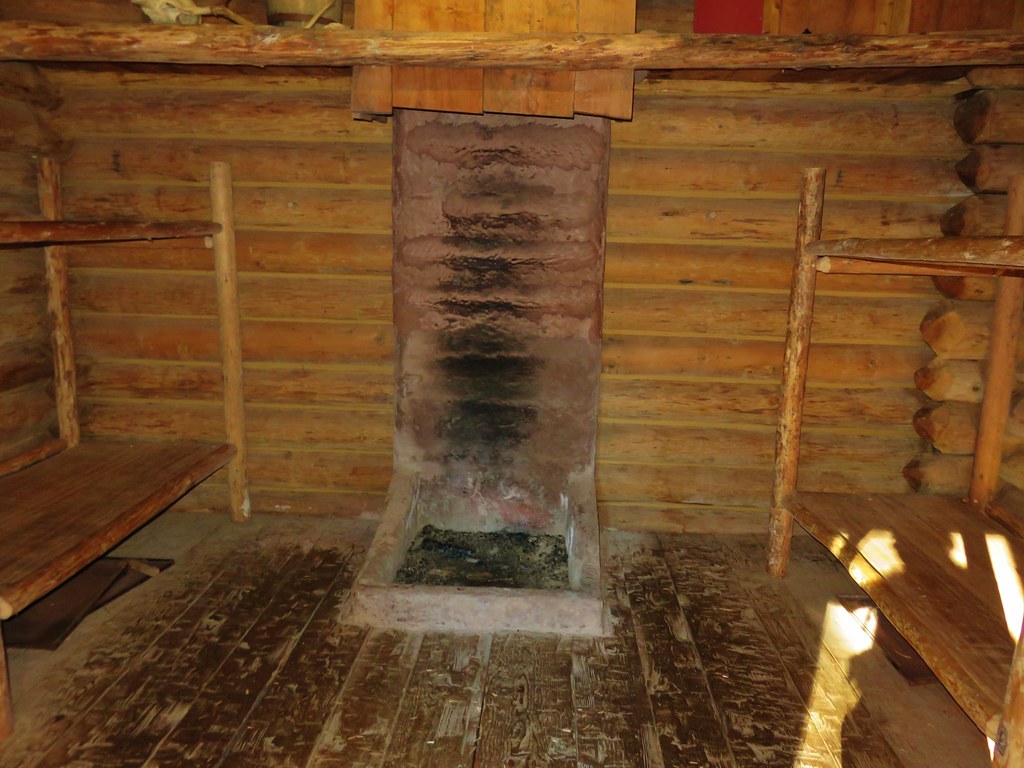
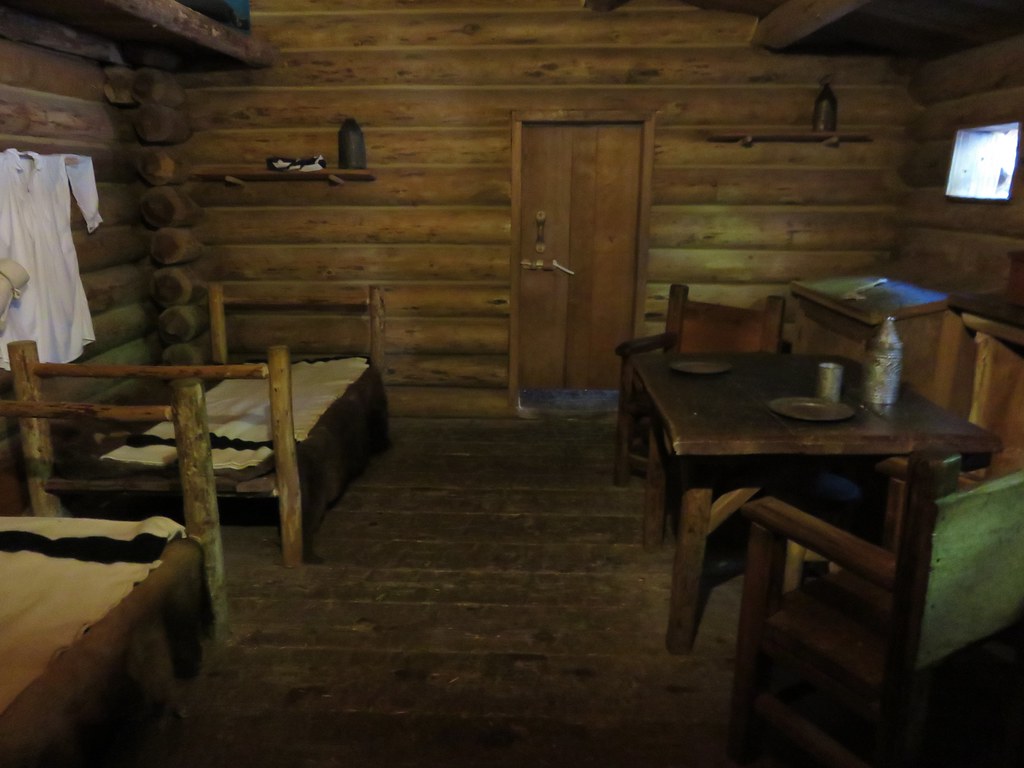
We were surprised at just how small a structure the fort was especially considering it was home to 33 people for 106 days. We spent some time poking around the fort and checking out the other nearby displays.
IMG_2950

IMG_2952

IMG_2953

IMG_2956

IMG_2957

IMG_2958

IMG_2959

IMG_2960

A 200 yard path led from the fort down to the site of the expedition’s canoe landing.
IMG_2962

IMG_2967

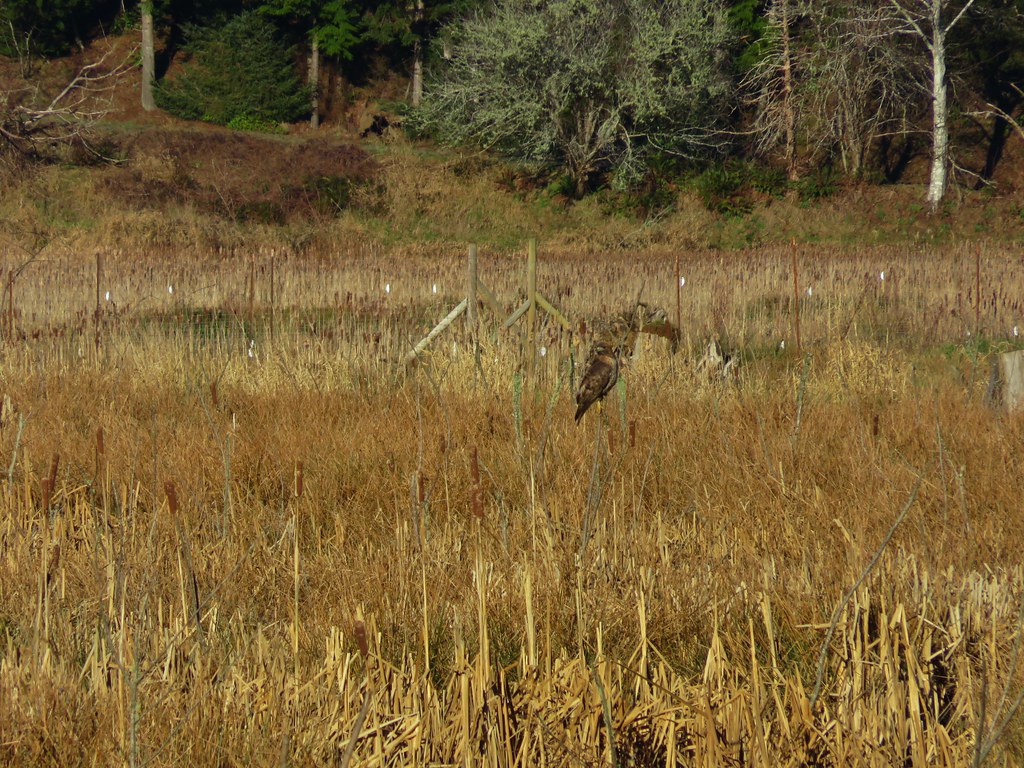
We could have turned back here and retraced our steps, but the park has several other trails which allow for various loop options. From the canoe landing we followed the Netul Trail south along the river. Part of the year a shuttle bus stop along this trail allows hikers to ride back to the fort or back to Sunset Beach. We were heading for the South Slough Trail though which we could take back to the Fort-To-Sea Trail. This trail loop around a slough filled with ducks and a couple of red-tailed hawks.
IMG_2970

IMG_2973

IMG_2978

The South Slough Trail was the only trail marked as difficult on the park maps. It headed steeply uphill from the Netul Trail but the climb didn’t last long. The trail wound around the slough to a signed junction with the only real viewpoint of the trail.
IMG_2985

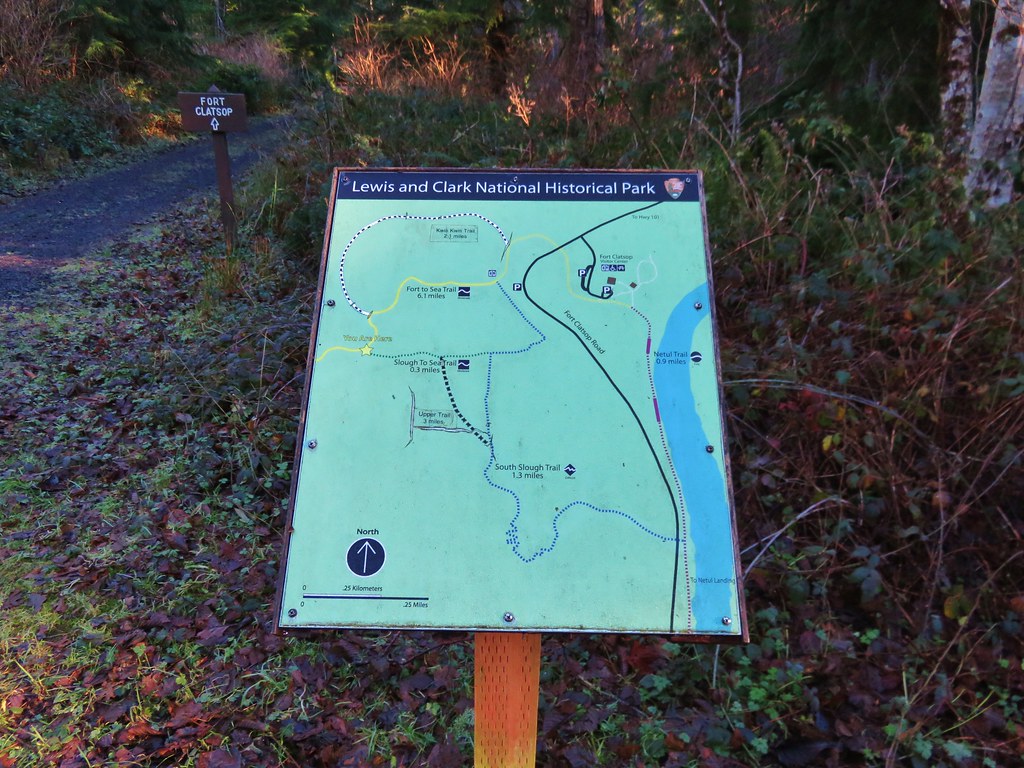
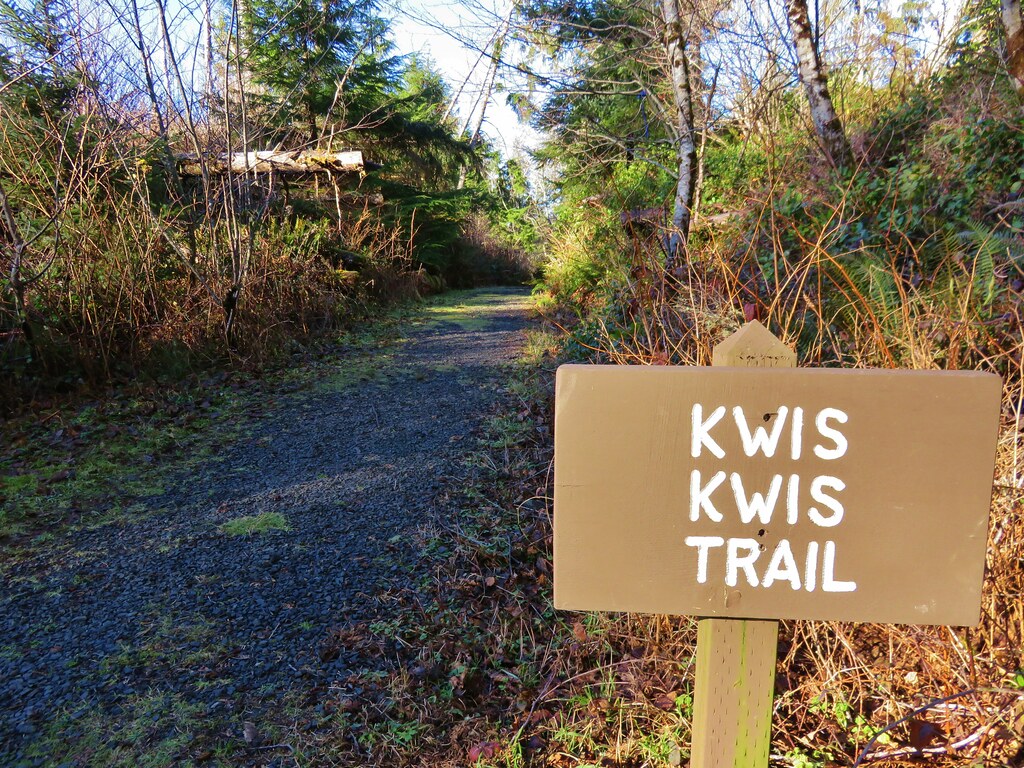
From this junction we could take the Lower South Slough Trail downhill to the Fort-To-Sea Trail about a half mile from the Visitor Center, or the Upper South Slough Trail which would meet the Fort-To-Sea Trail closer to a mile from the center. We took the upper option and made our way back to the Fort-To-Sea Trail and then took a second detour. Earlier that day just after entering the forest there was a signed trail forking left from the Fort-To-Sea Trail. It was named the Kwis Kwis Trail and it wasn’t shown in our guidebook or on any of the park maps we’d seen. The park maps did show a trail by that name but that trail showed as a wide arc leading from the Fort-To-Sea Trail near the junction with the Upper South Slough Trail and rejoining the Fort-To-Sea Trail about a third of a mile from the Visitor Center. Given the name and the fact that the signage for the mystery trail matched those of the park we theorized that it was a newer trail. We had also spotted sections of trail from the Fort-To-Sea Trail on the way up to the overlook which we suspected to be part of this trail.
From the Upper South Slough Trail junction we headed east on the Fort-To-Sea Trail to the signed Kwis Kwis Trail junction.
IMG_2987

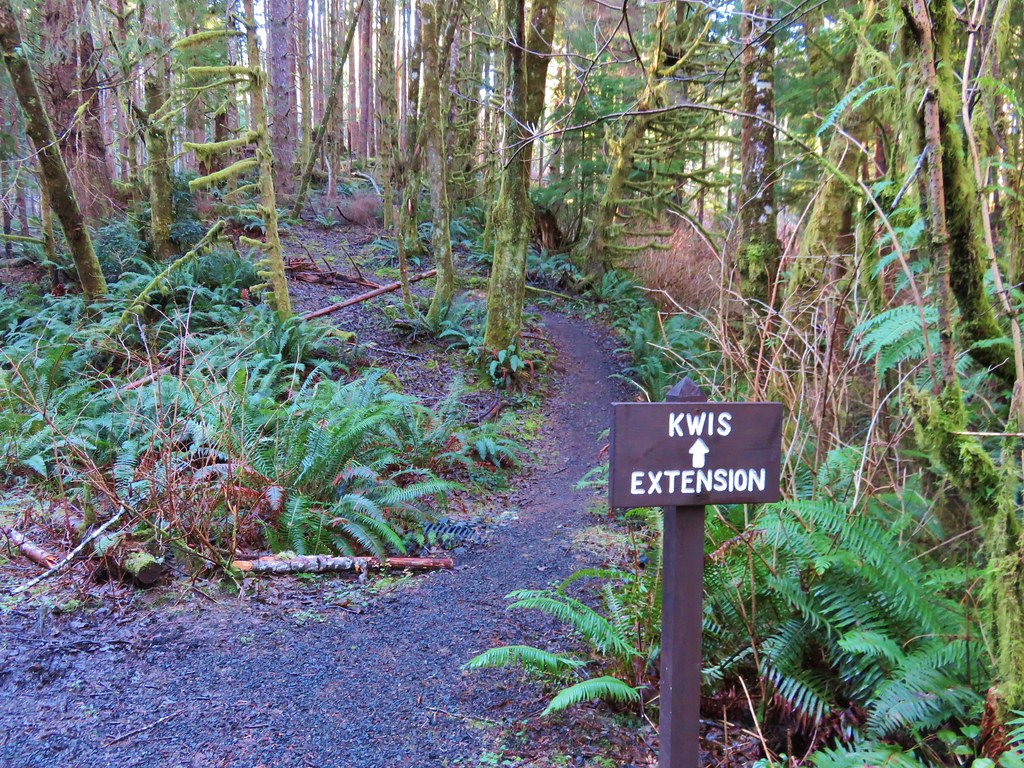
This trail also followed an old roadbed. After winding downhill for a little more than .3 miles we spotted a sign for the Kwis Extension.
IMG_2988

We turned up this path which ran roughly parallel to the Fort-To-Sea Trail at a lower elevation. This was indeed the path we had seen earlier. A nice long boardwalk traversed a large marshy area before rejoining the Fort-To-Sea Trail in the forest near the Skipanon River.
IMG_2991

From there we retraced our steps along the Fort-To-Sea Trail to the Sunset Beach Trailhead. Later we learned the Kwis Kwis Trail Extension was completed in 2014. The scenery and wildlife along the trails were both quite varied, and the history surrounding the area made it a very interesting hike. The various loops and trail distances make this a great option for hikers of any age. Happy Trails!

Flickr: https://www.flickr.com/photos/9319235@N02/albums/72157662826694040