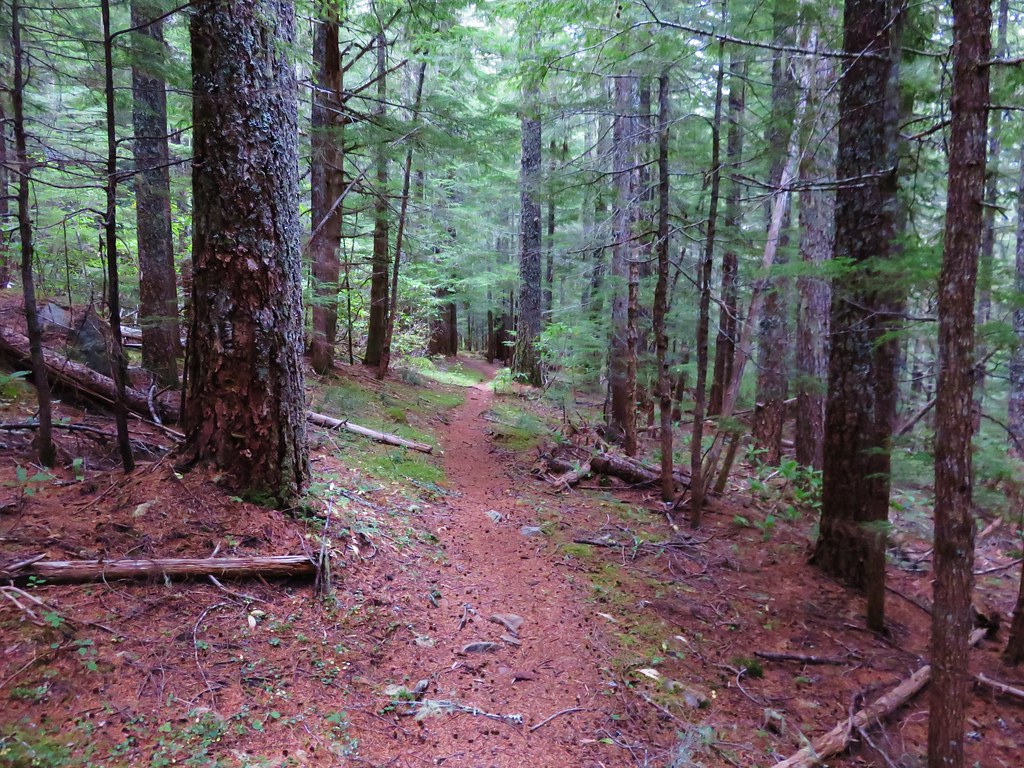
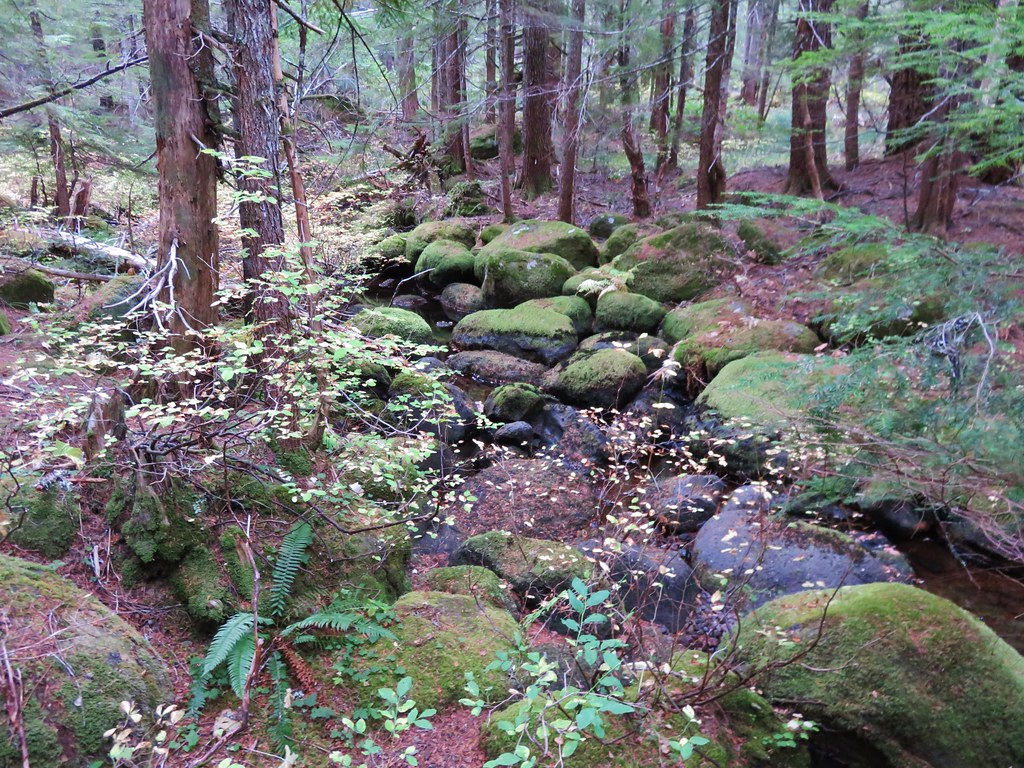
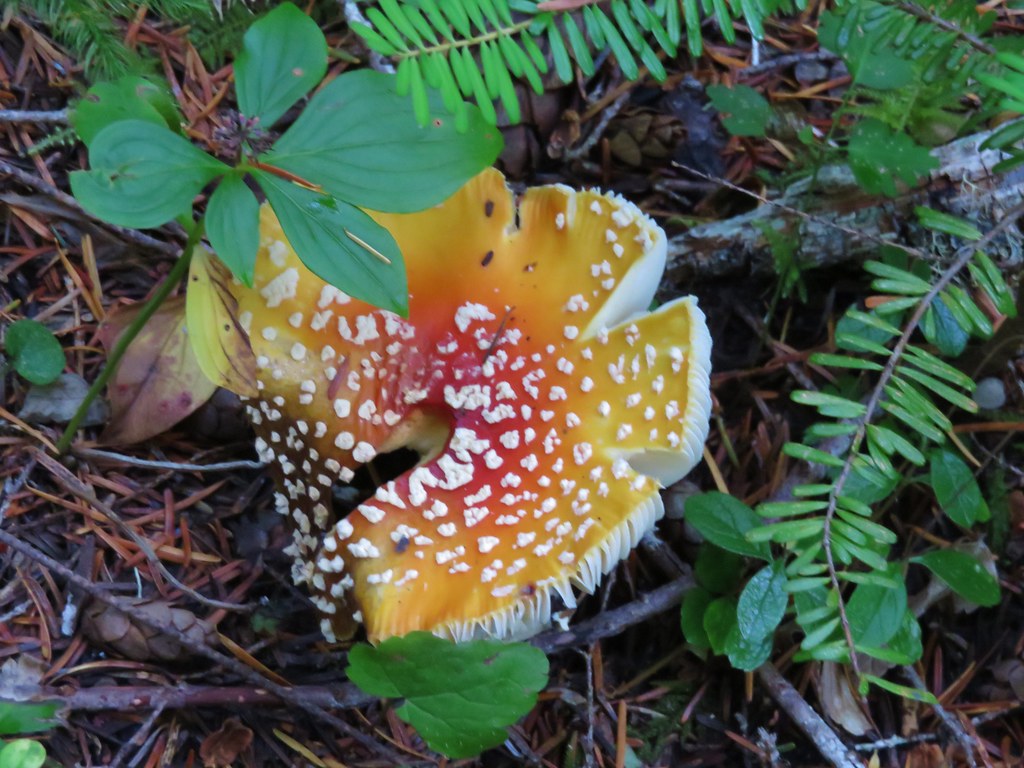
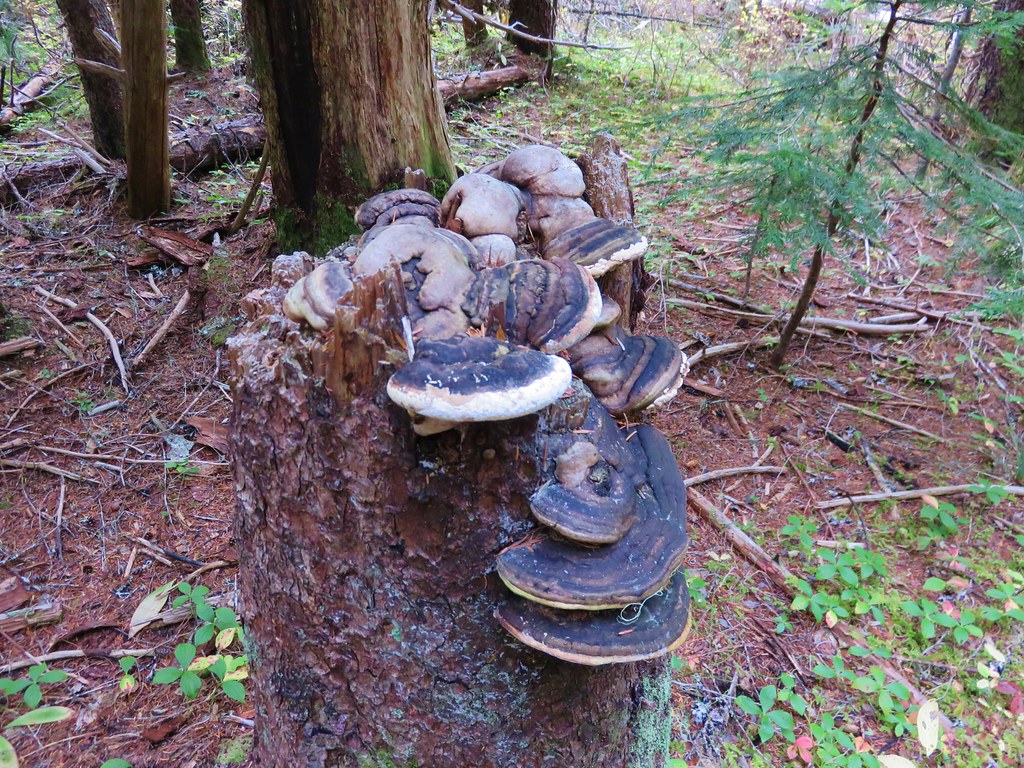
Categories
Hiking Oakridge Area Old Cascades Oregon Trip report

Chucksney Mountain to Grasshopper Meadow – Overnight

**Note the 2024 Young Grasshopper Fire burned over a portion of this hike including Grasshopper Meadow.**

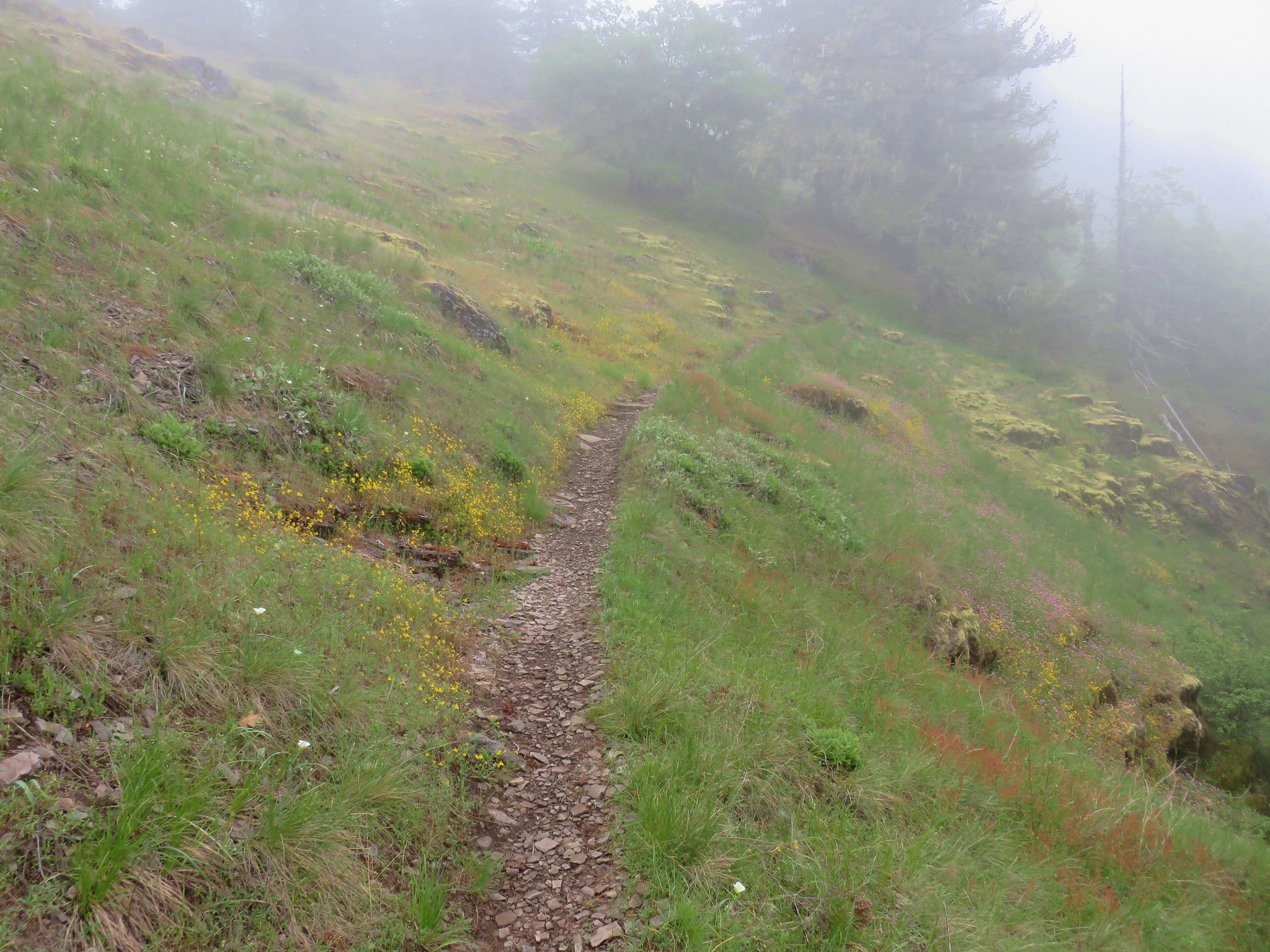
After cancelling our first two planned backpacking trips in June we finally got out for an overnight trip. Originally on the schedule for the last week in June, we moved our visit to Grasshopper Meadow back three weeks to let the snow finish melting off, we just hoped we hadn’t waited too long to see the wildflowers.

Our plan for this trip was to start at Box Canyon Horse Camp and hike to Grasshopper Meadow via the Chucksney Mountain and Grasshopper Trails.

Box Canyon Horse Camp is located just off paved Forest Road 19 (Aufderheide Road) and can be reached by driving south from Highway 126 (4 miles east of Blue River) or north from Highway 58 (3 miles west of Oakridge).

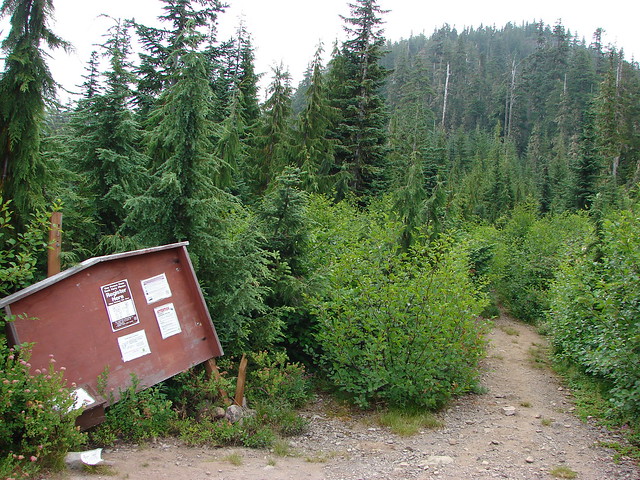
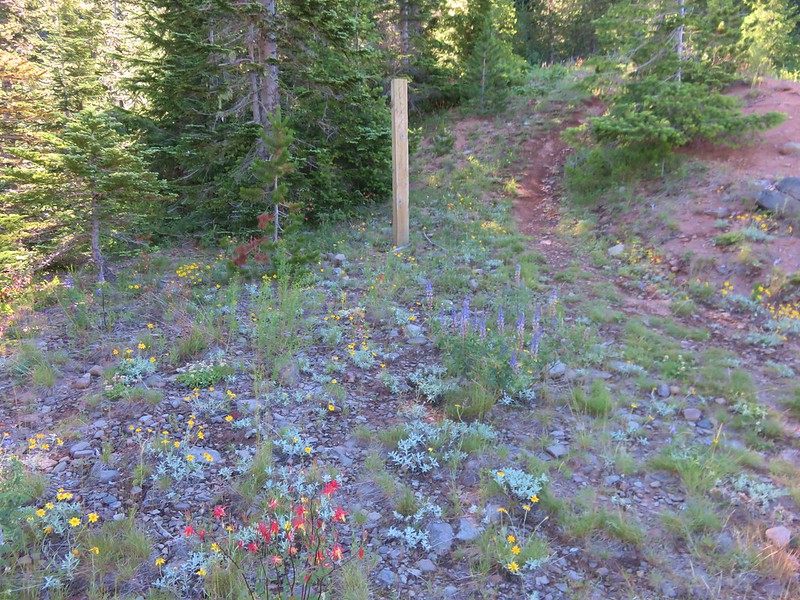
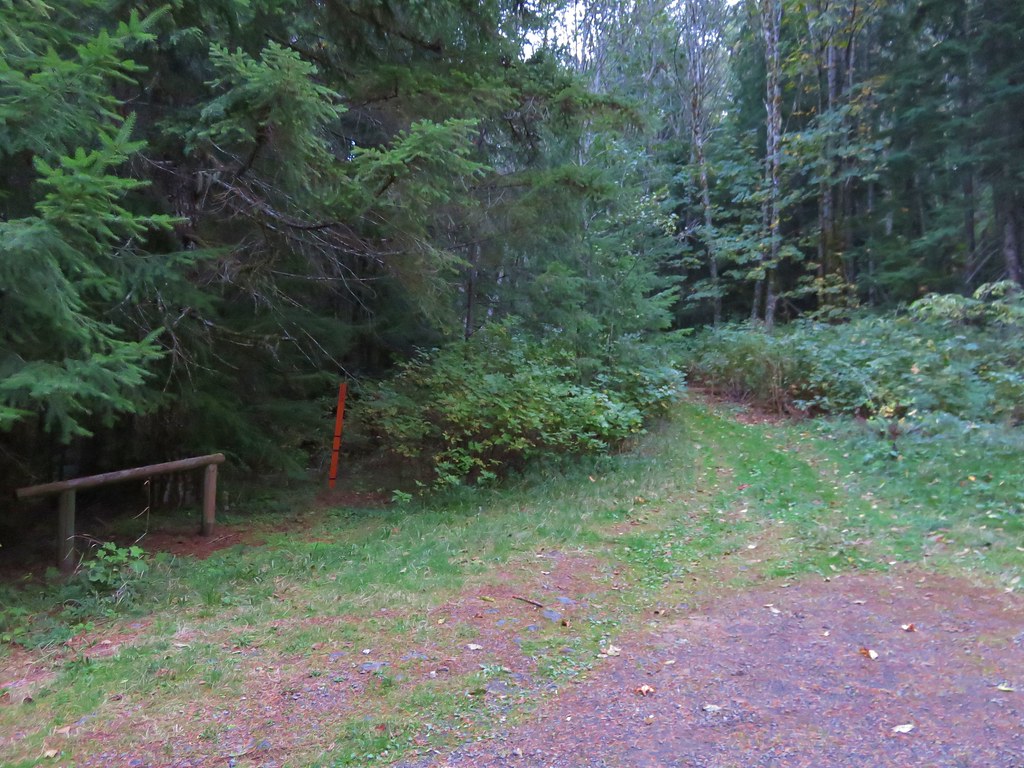
After turning at a sign for the Horse Camp we forked right and parked in a large unmarked parking area where a post marked the start of our trail.
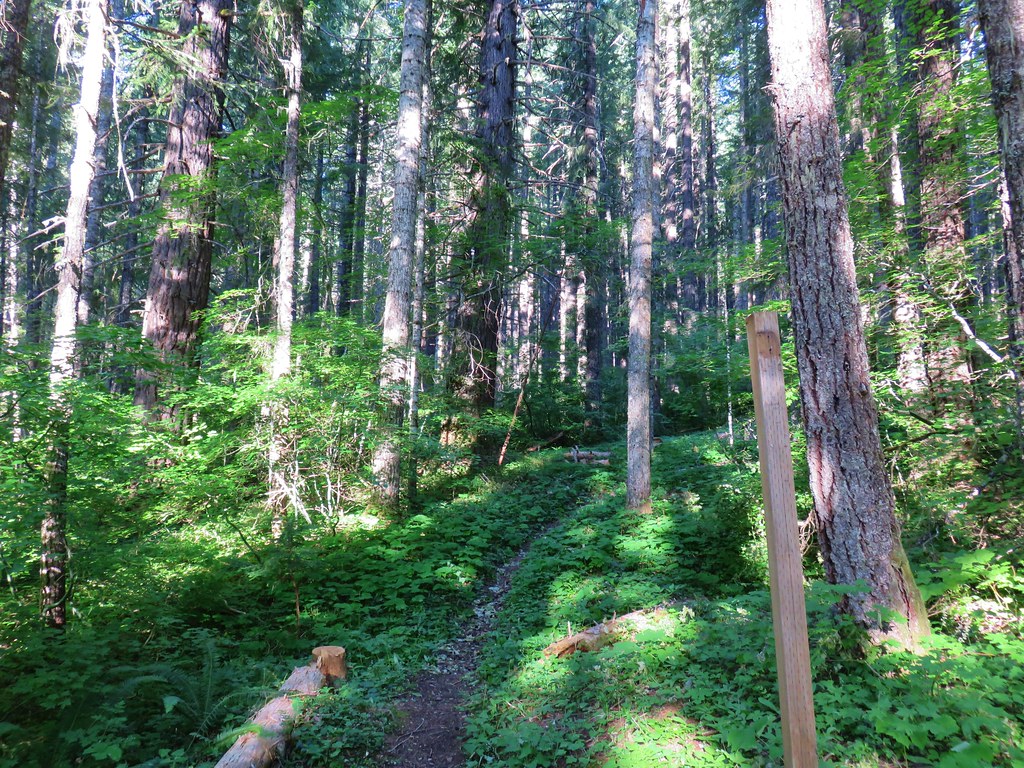
Trail from the car parking at Box Canyon Horse Camp

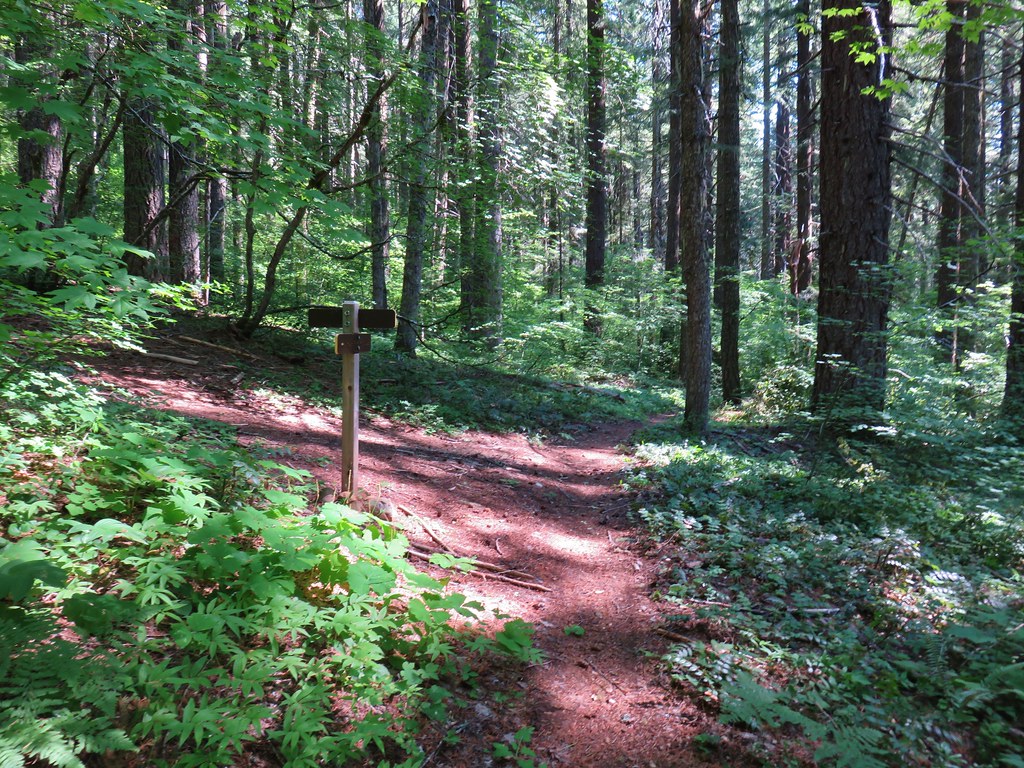
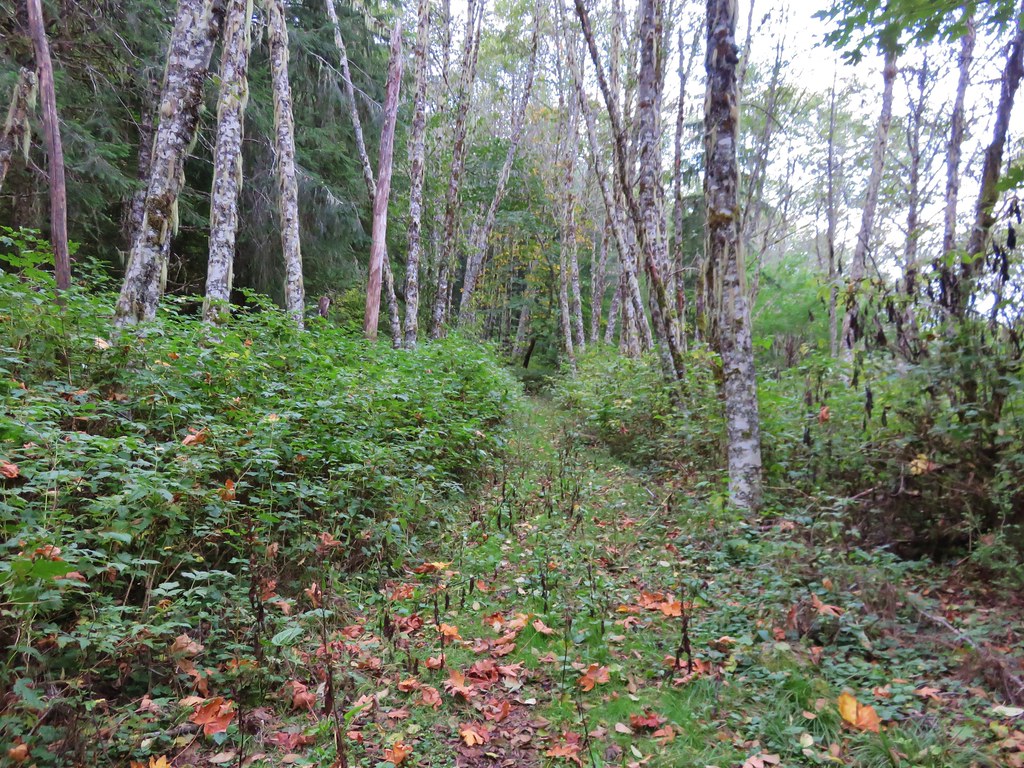
The trail led uphill and left to a signed trail junction just above the corral at the horse camp where we picked up the Grasshopper Trail.
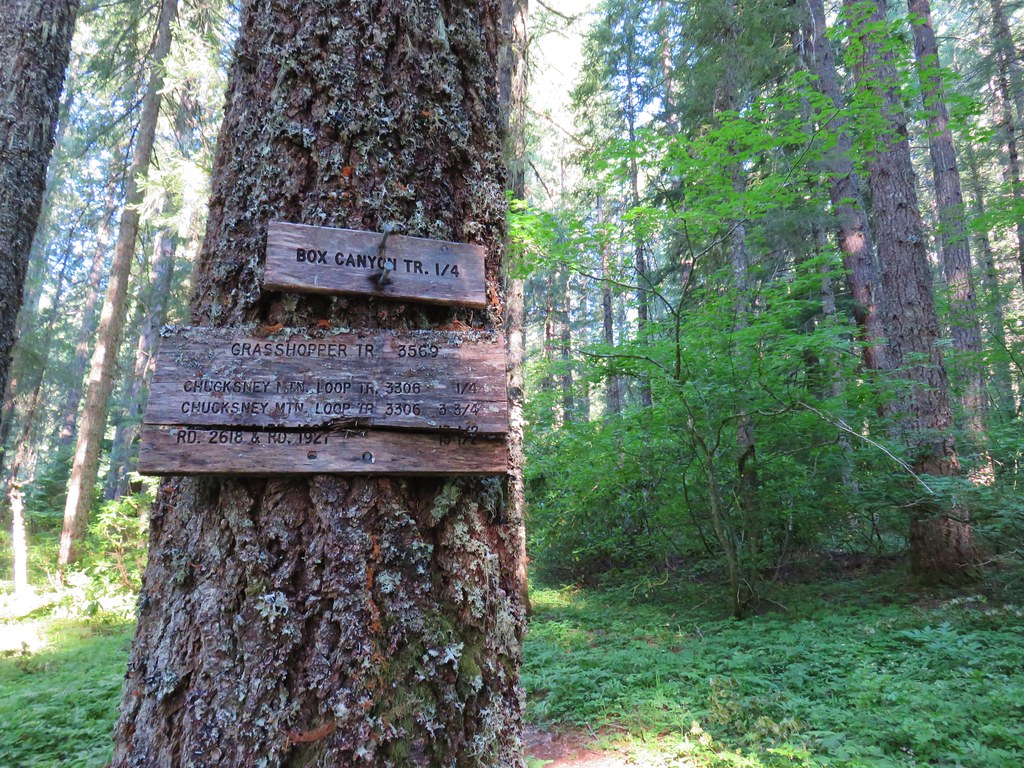
Grasshopper Trail

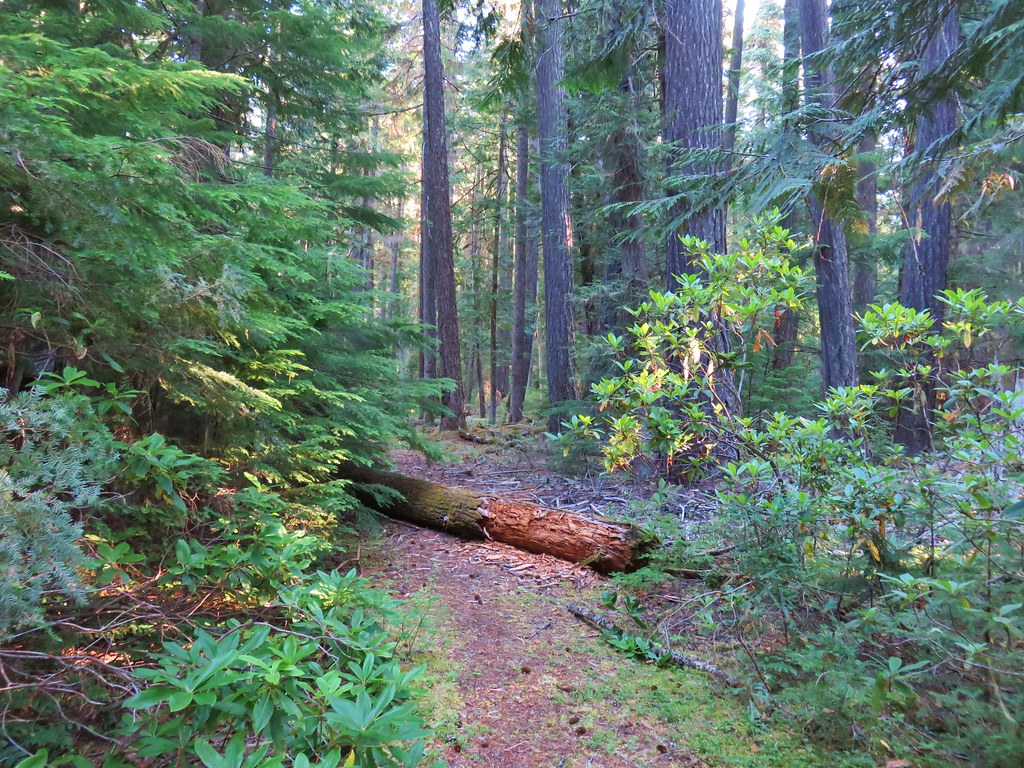
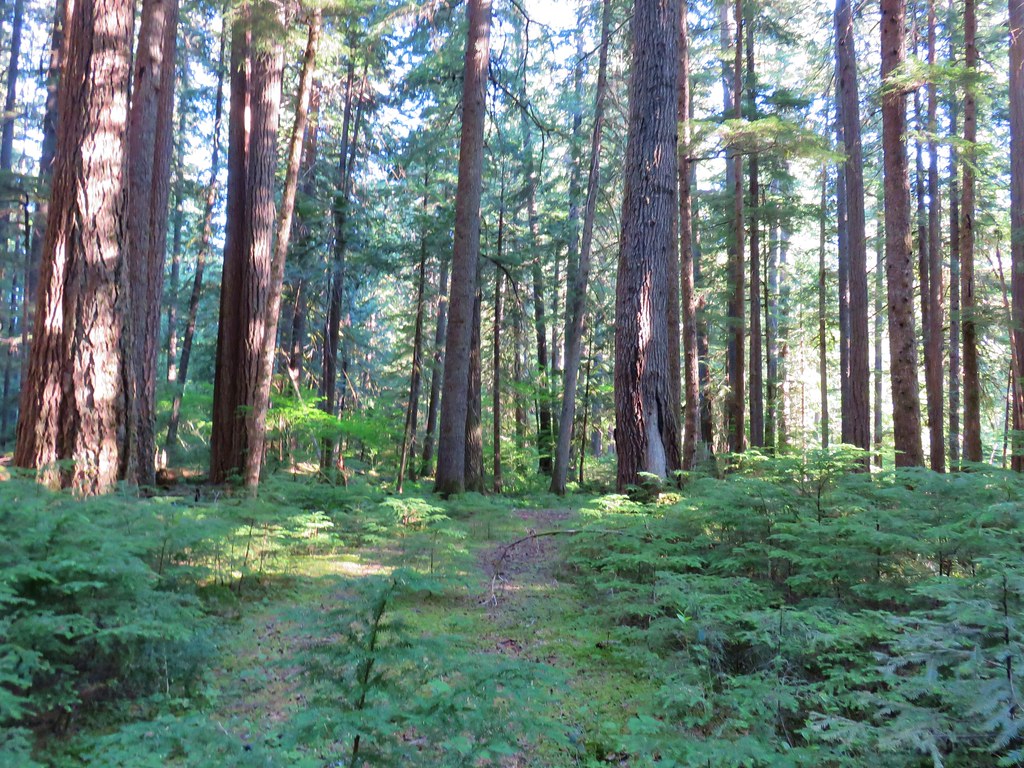
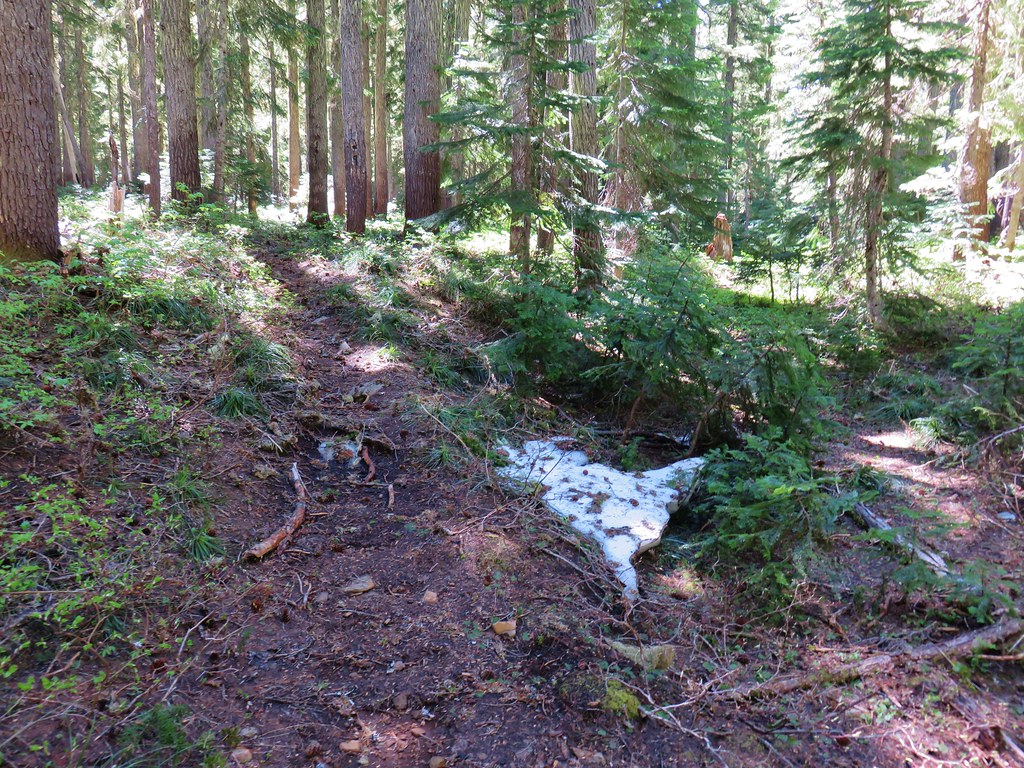
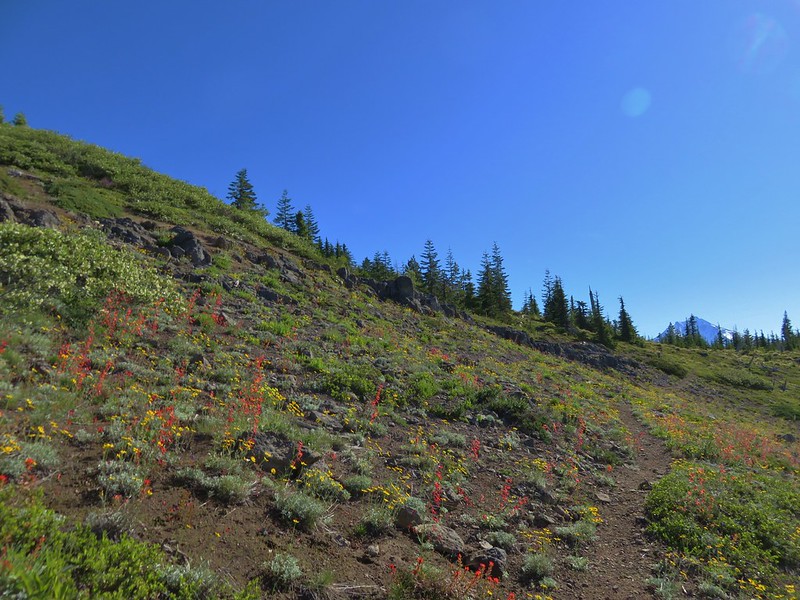
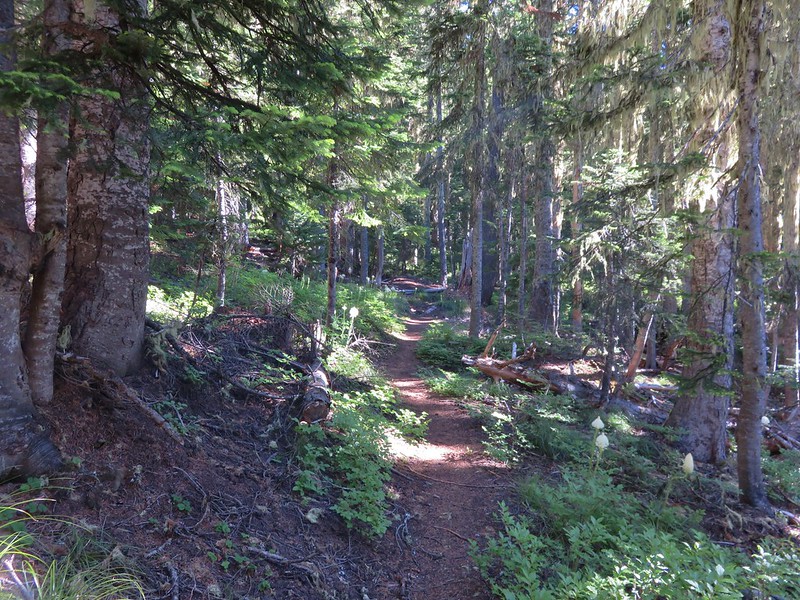
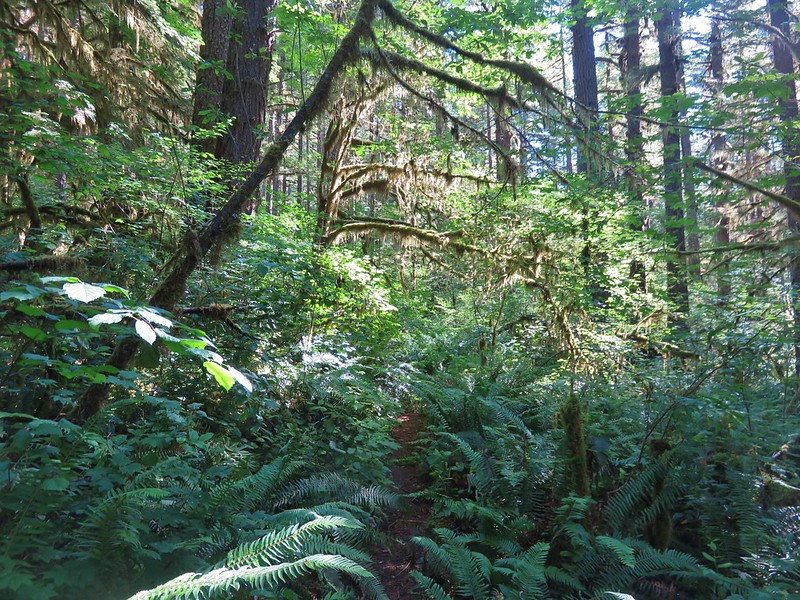
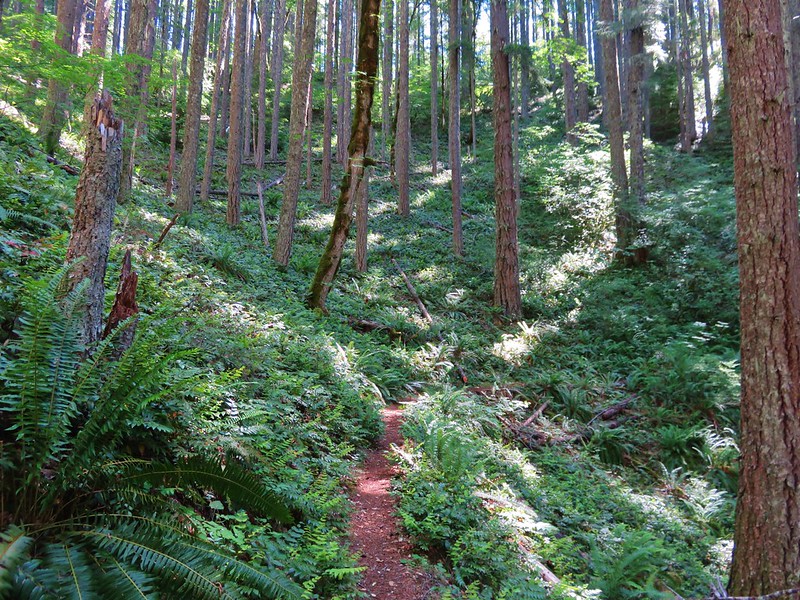
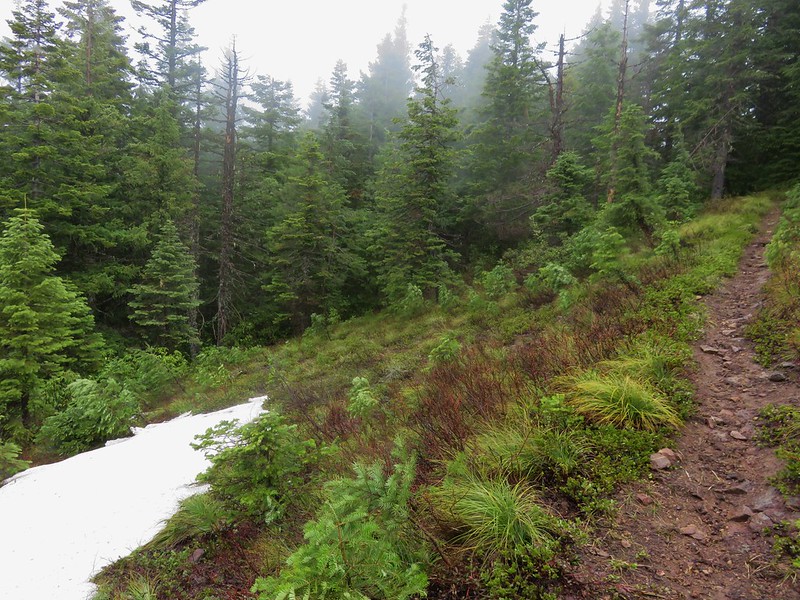
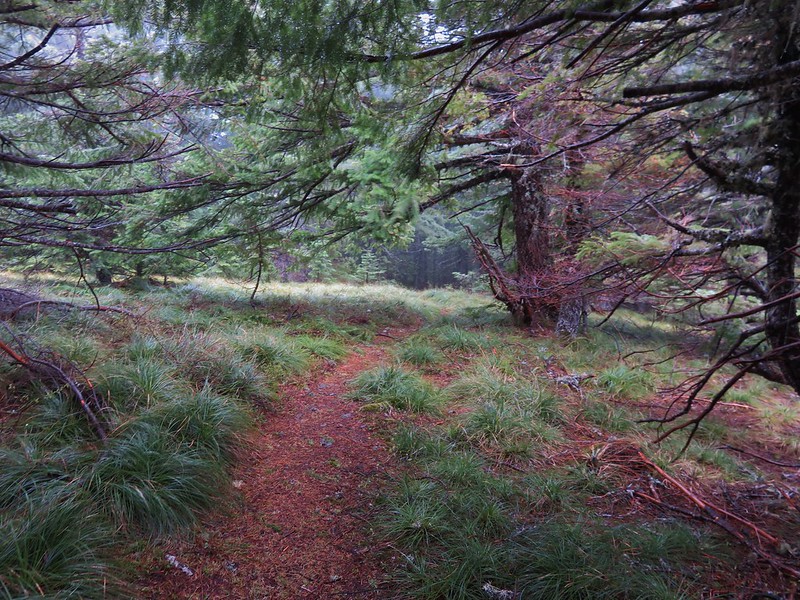
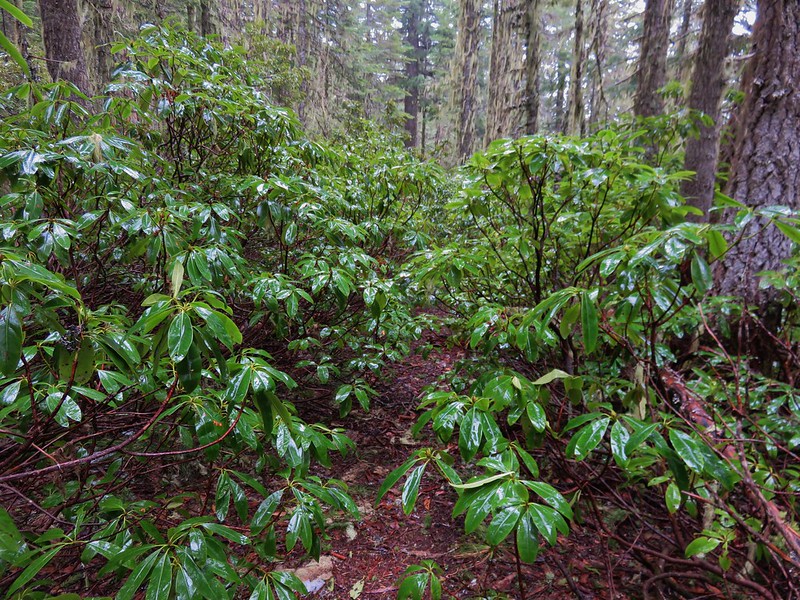
Mosquitoes were a bit of a nuisance here, and they would be so off and on for the entire trip. We turned uphill passing the Box Canyon Trail which forked to the left before arriving at the signed junction with the Chucksney Mountain Tail. Here we turned right onto the Chucksney Mountain Trail which would lead us to the 5756′ summit in a little under 5 miles. The trail passed through a variety of scenery as it climbed.
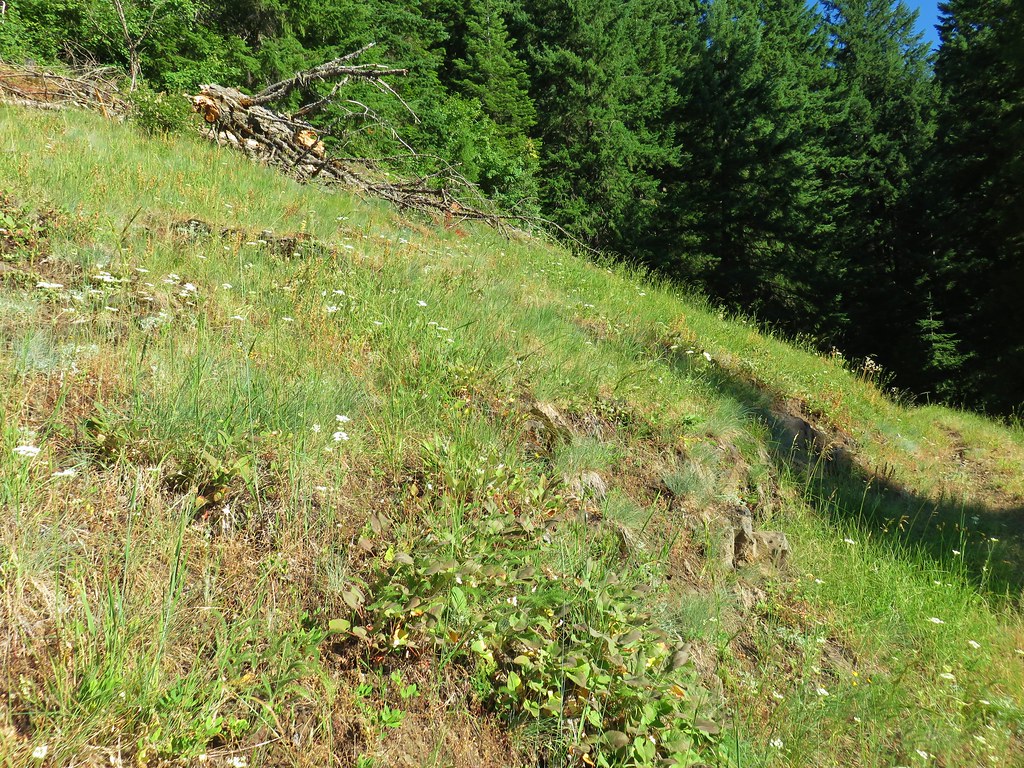
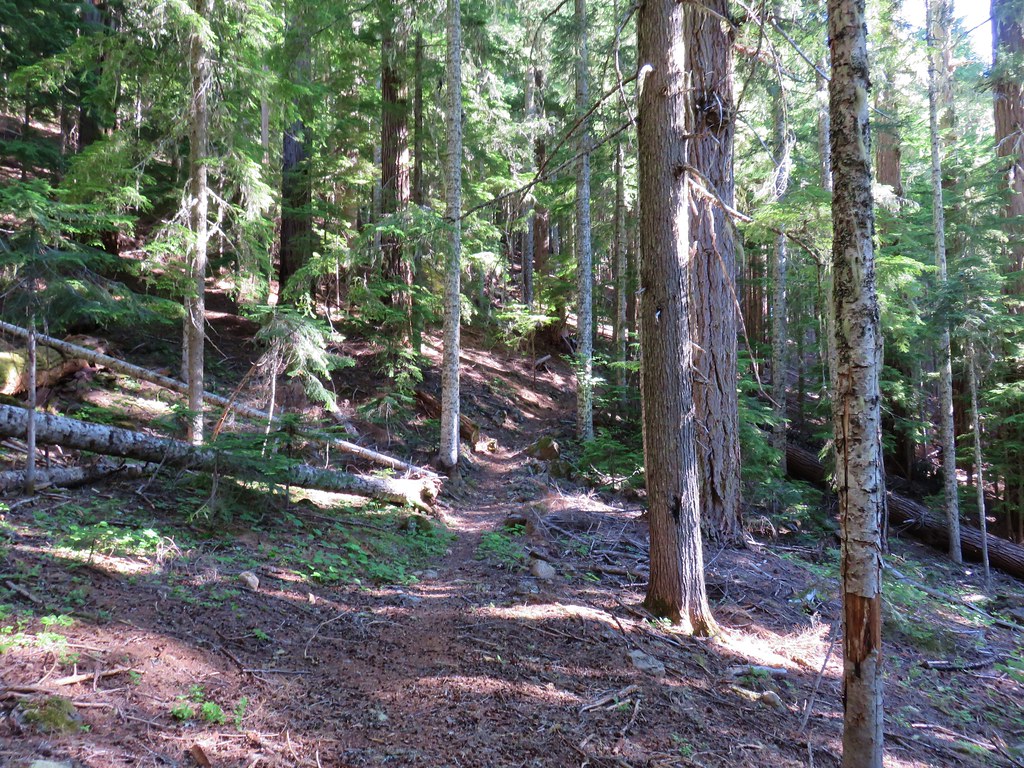
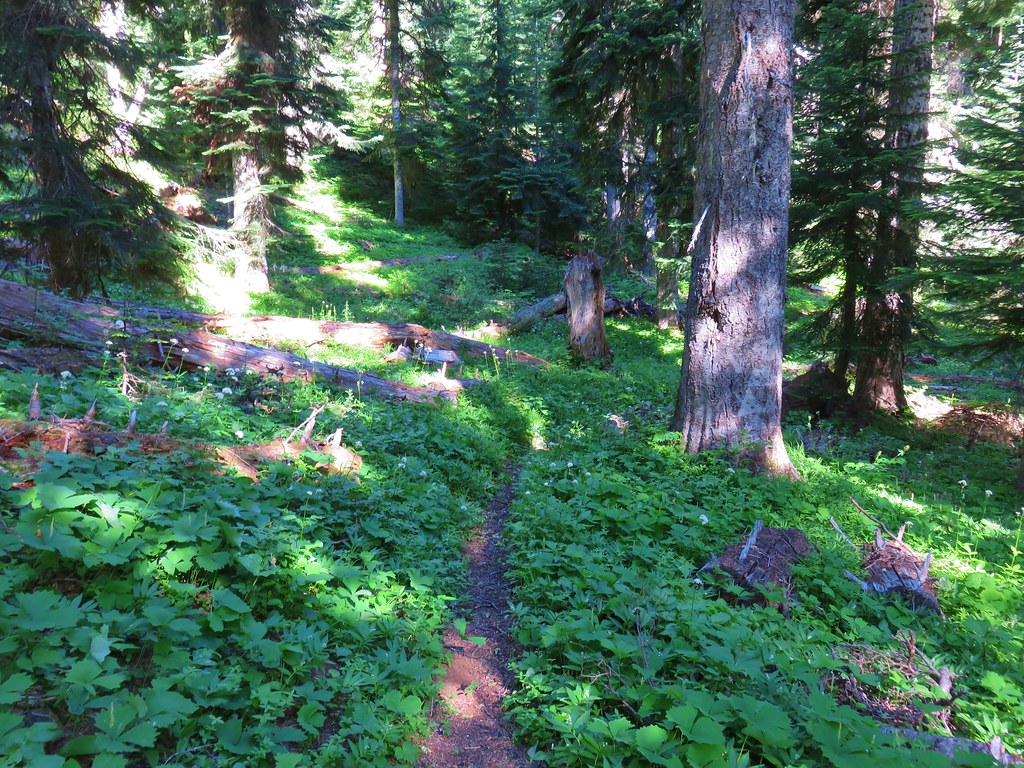
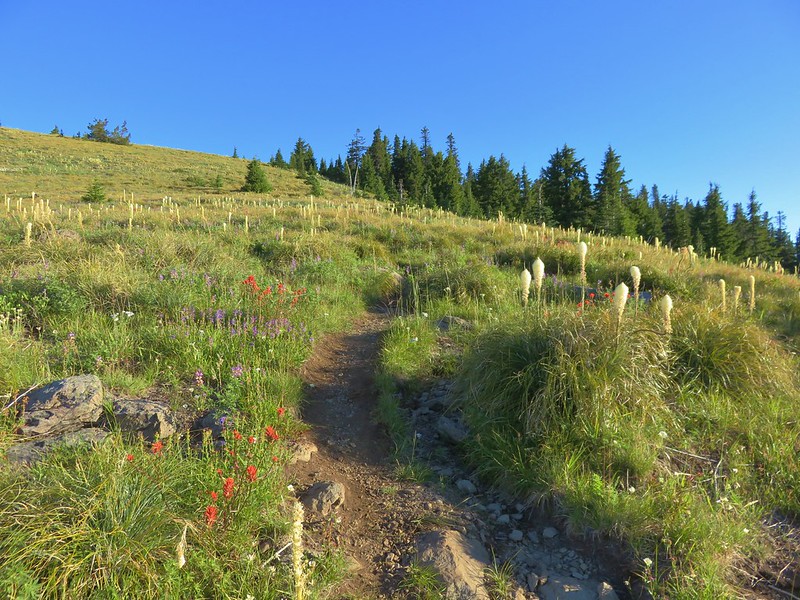
Chucksney Mountain Trail

Chucksney Mountain Trail

Chucksney Mountain Trail

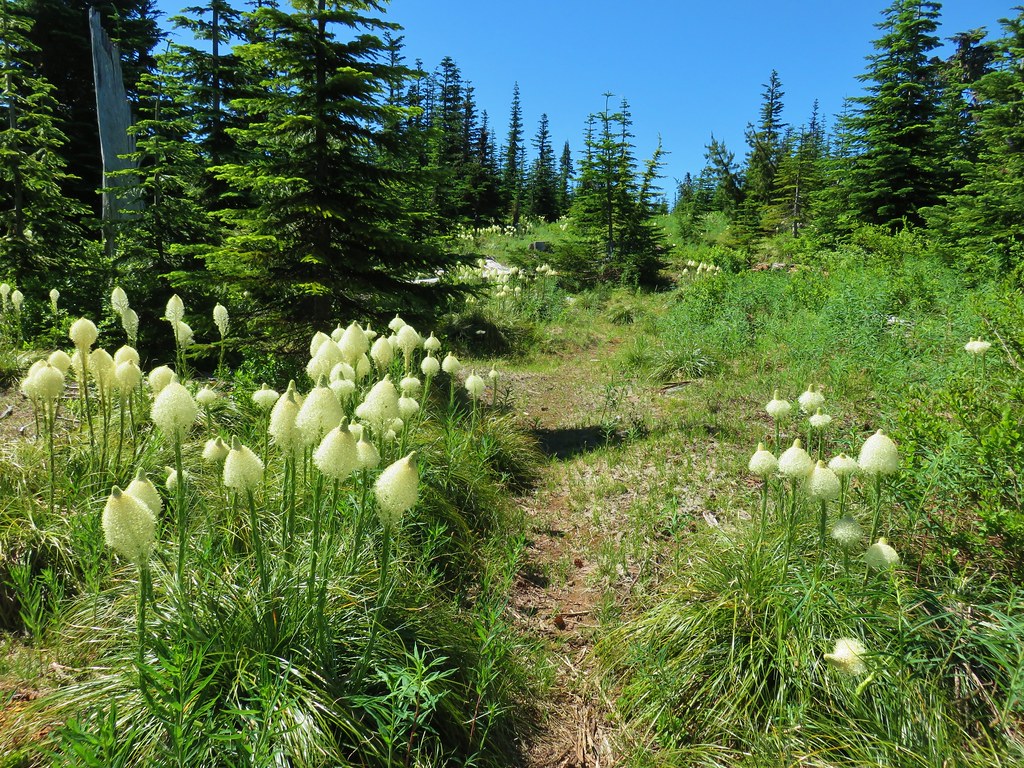
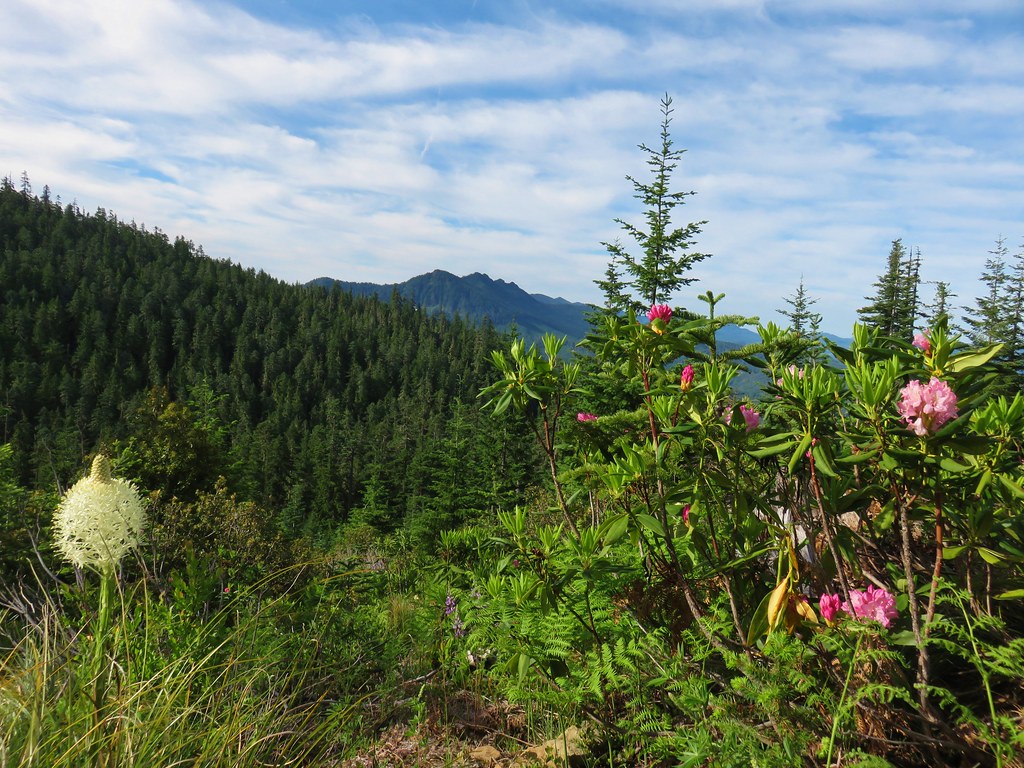
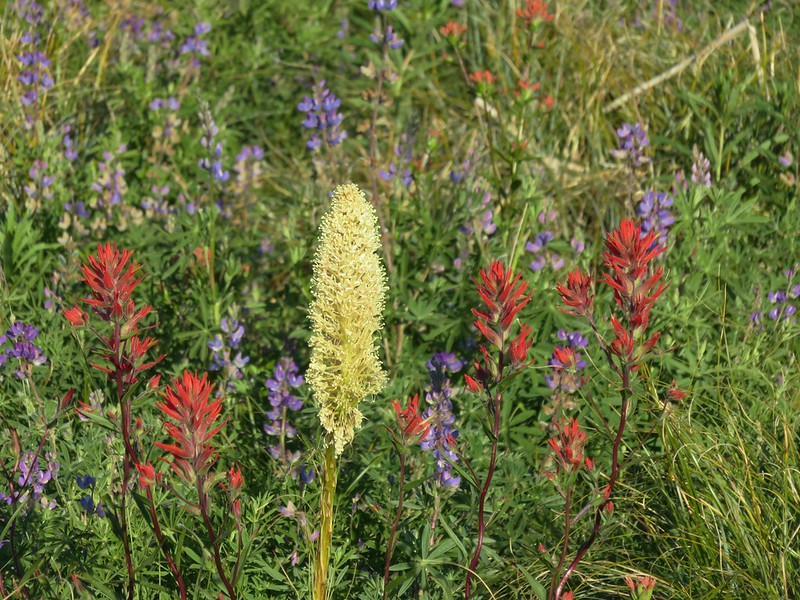
Beargrass and a small burn along the Chucksney Mountain Trail

Chucksney Mountain Trail

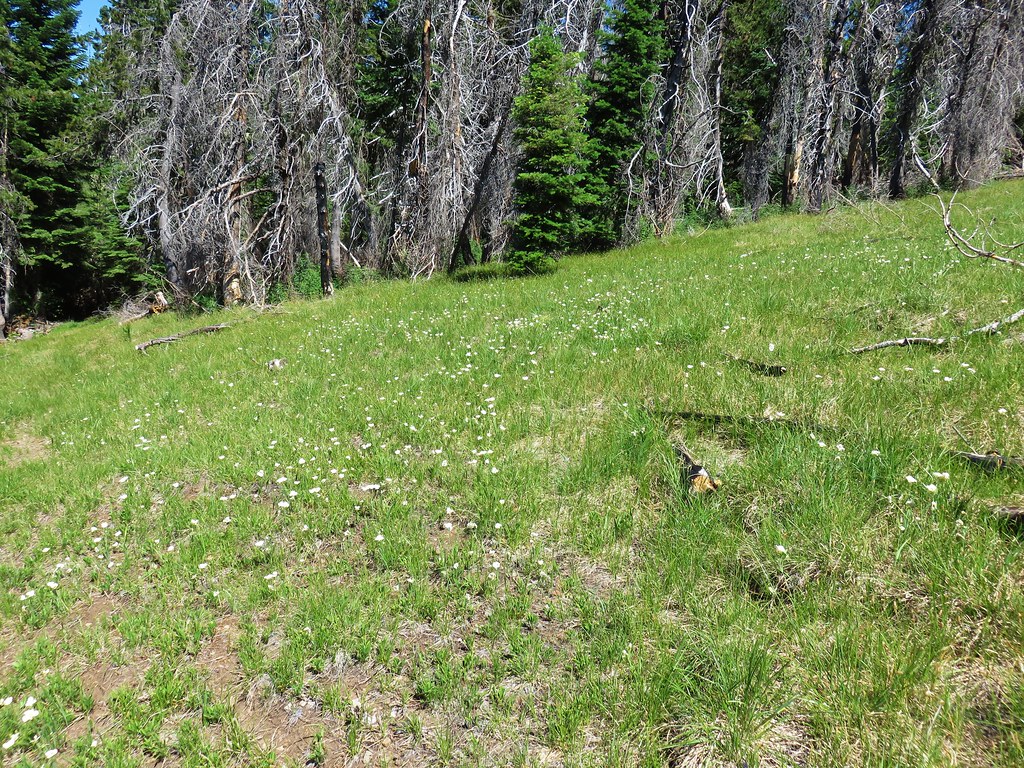
In the first 3.5 miles from the trailhead we’d climbed about 1500′ reaching an elevation of 5200′ then the trail dropped a bit and leveled out for about a half mile. The level area held a couple of snow melt ponds and some green meadows which gave rise to plenty of mosquitoes so there wasn’t much stopping for photos as we zipped through. When the trail began climbing again we were approximately 600′ below the summit of Chucksney Mountain.

The trail made up the elevation in a half mile by using a long switchback. As we climbed the number of trees lessened and we passed an increasing number of wildflowers.

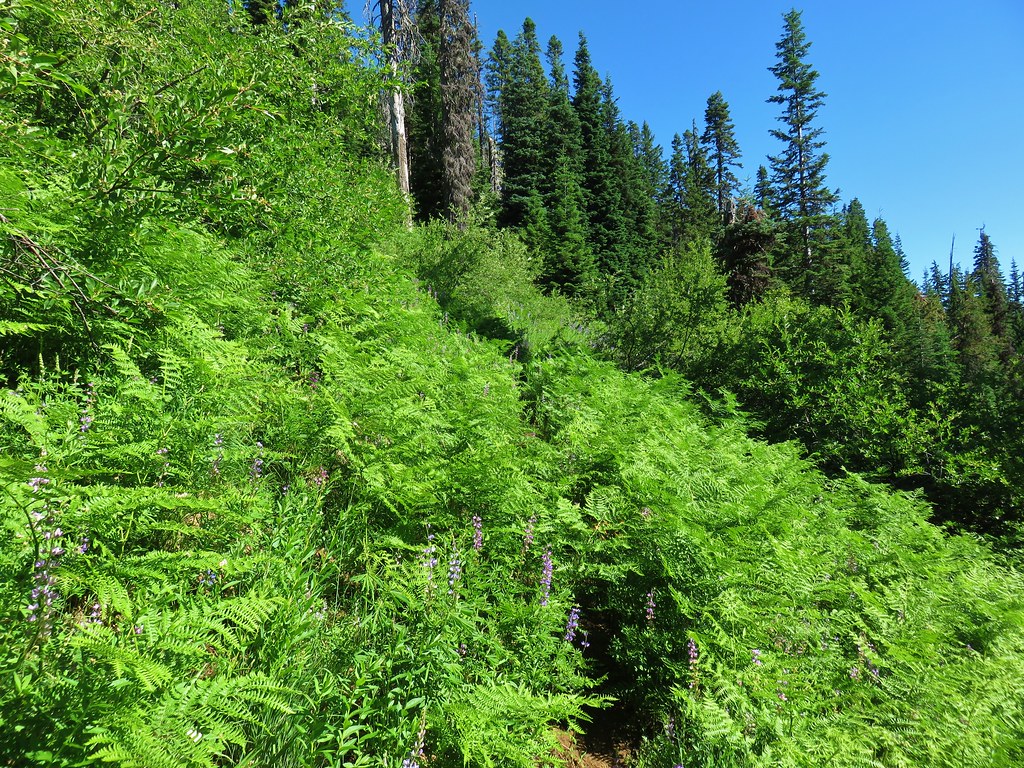
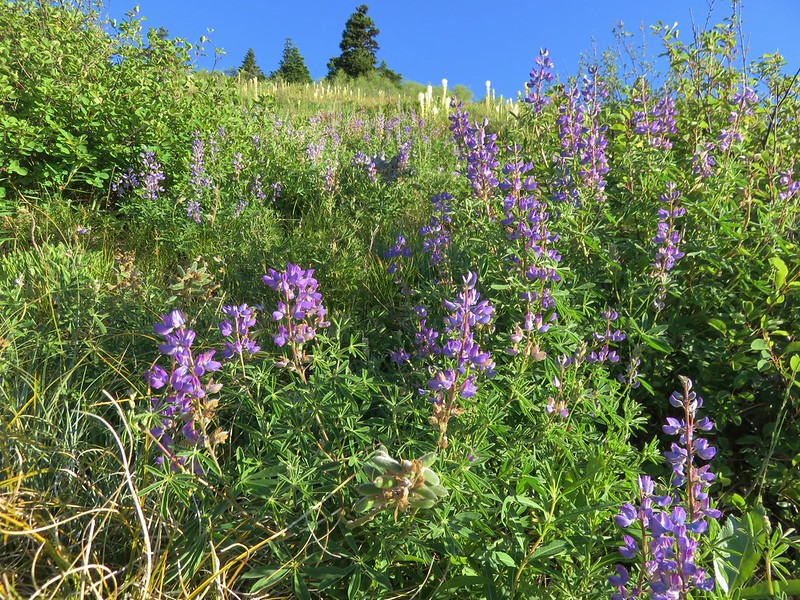
Lupine along the Chucksney Mountain Trail

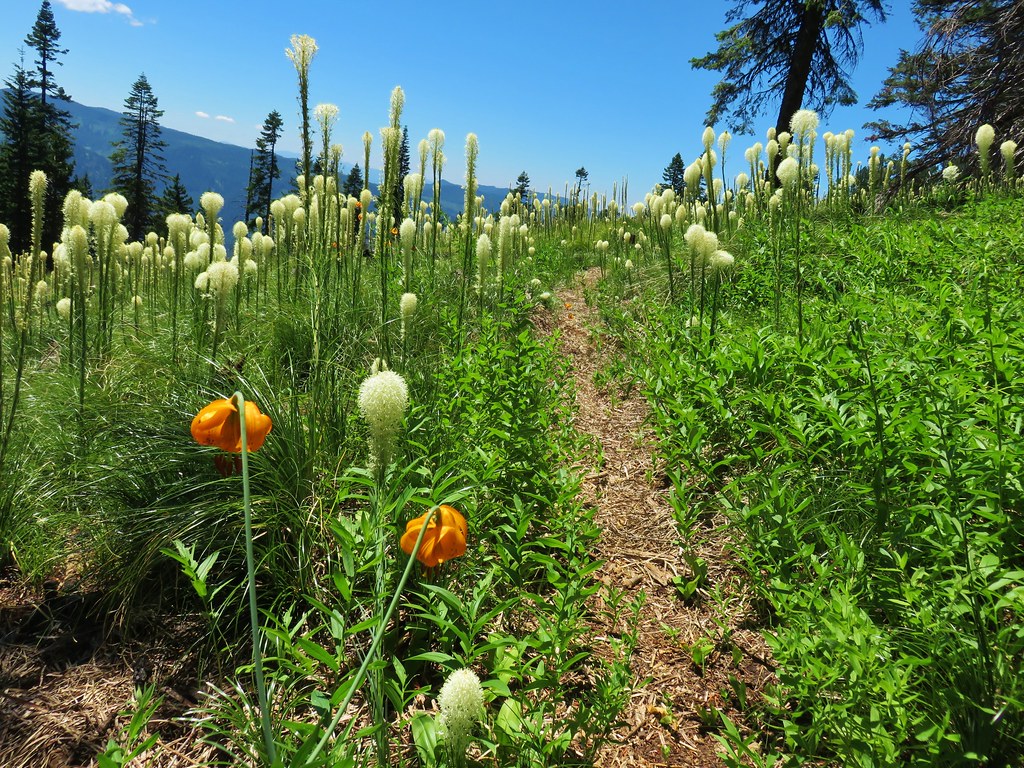
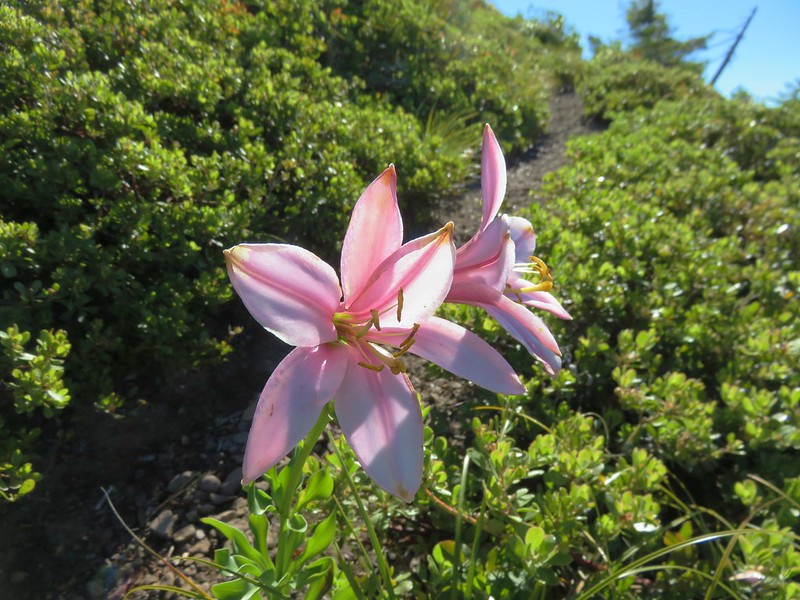
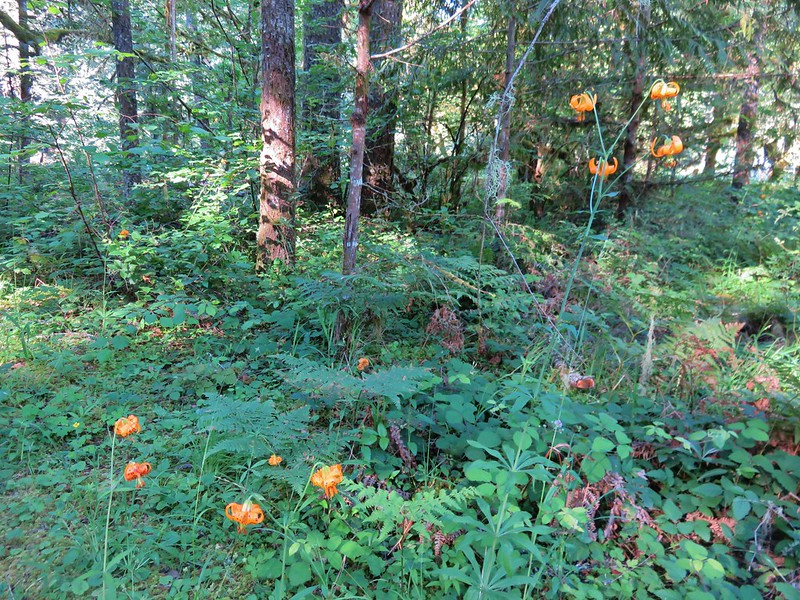
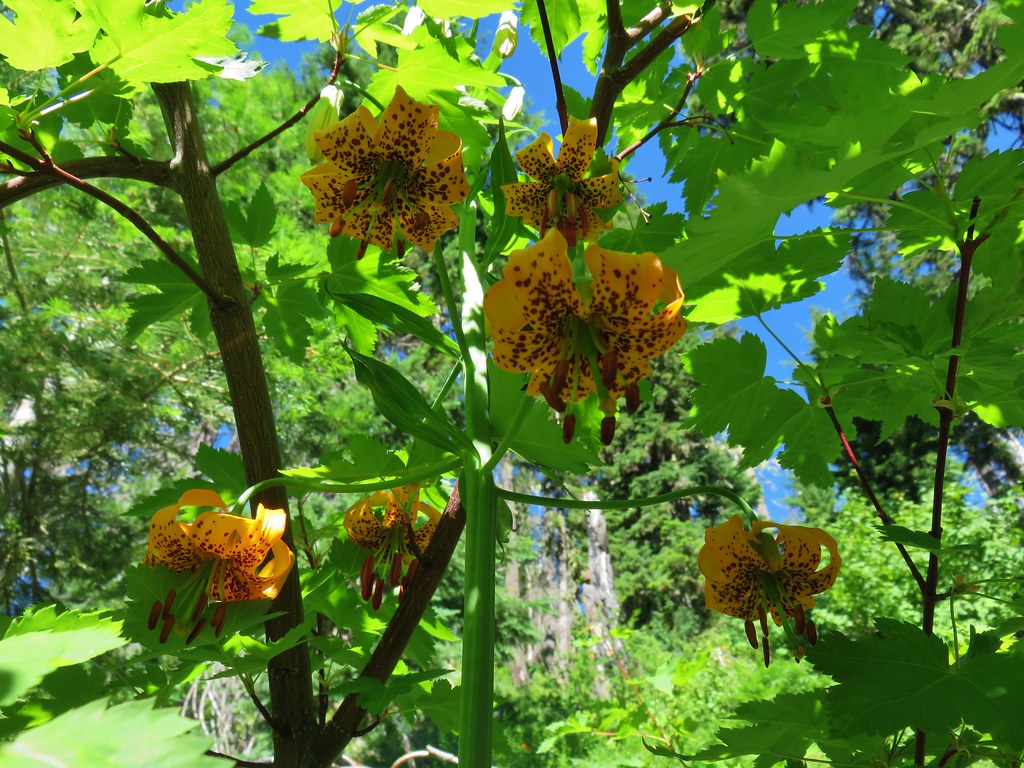
Tiger lilies

Tiger lilies along the Chucksney Mountain Trail

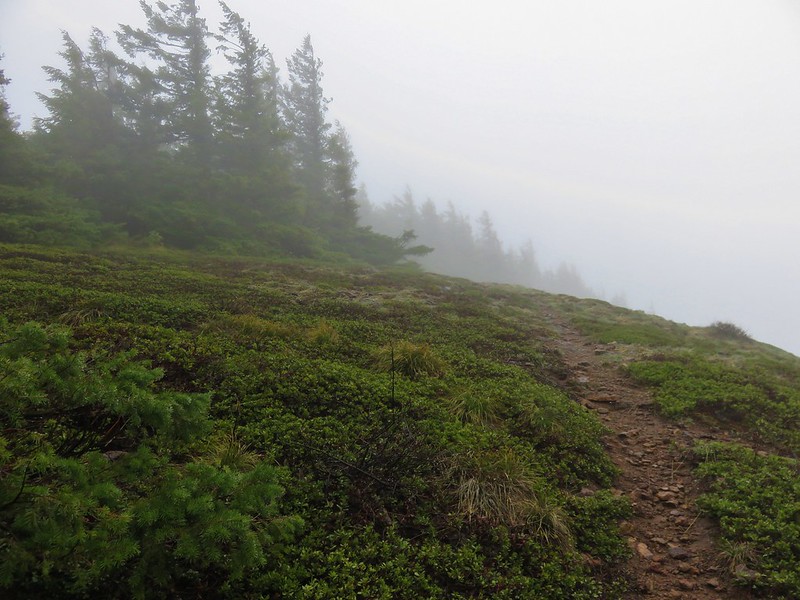
The trail crested a ridge below the summit in an old burn area which left plenty of exposure for wildflowers as well as open views.
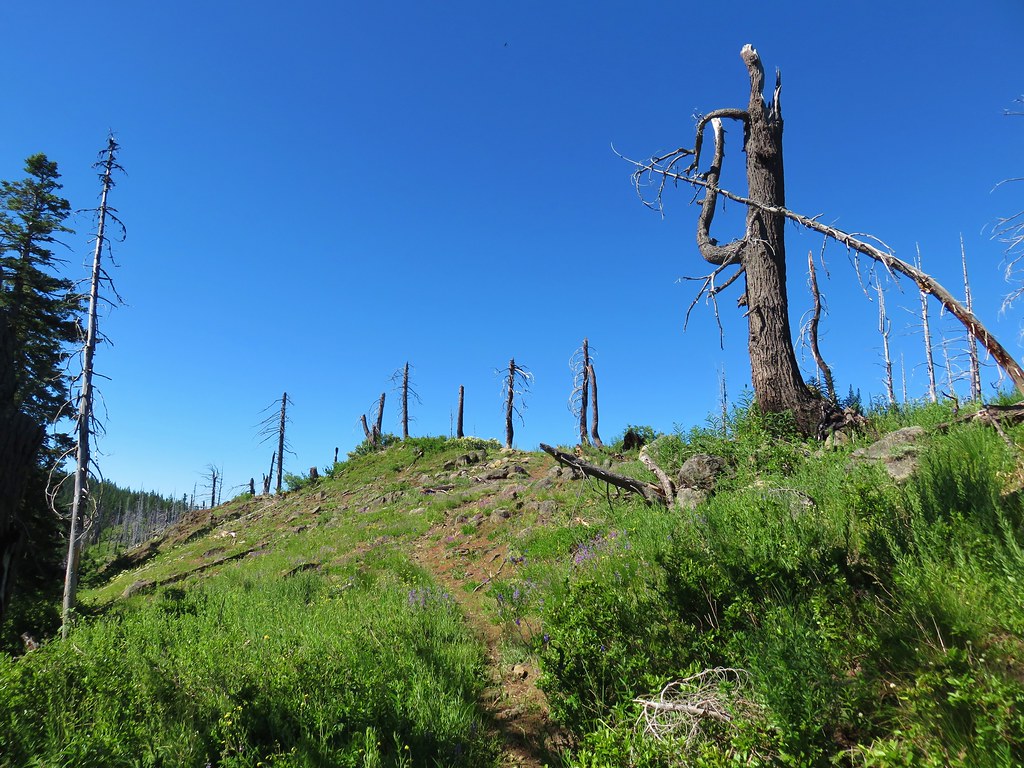
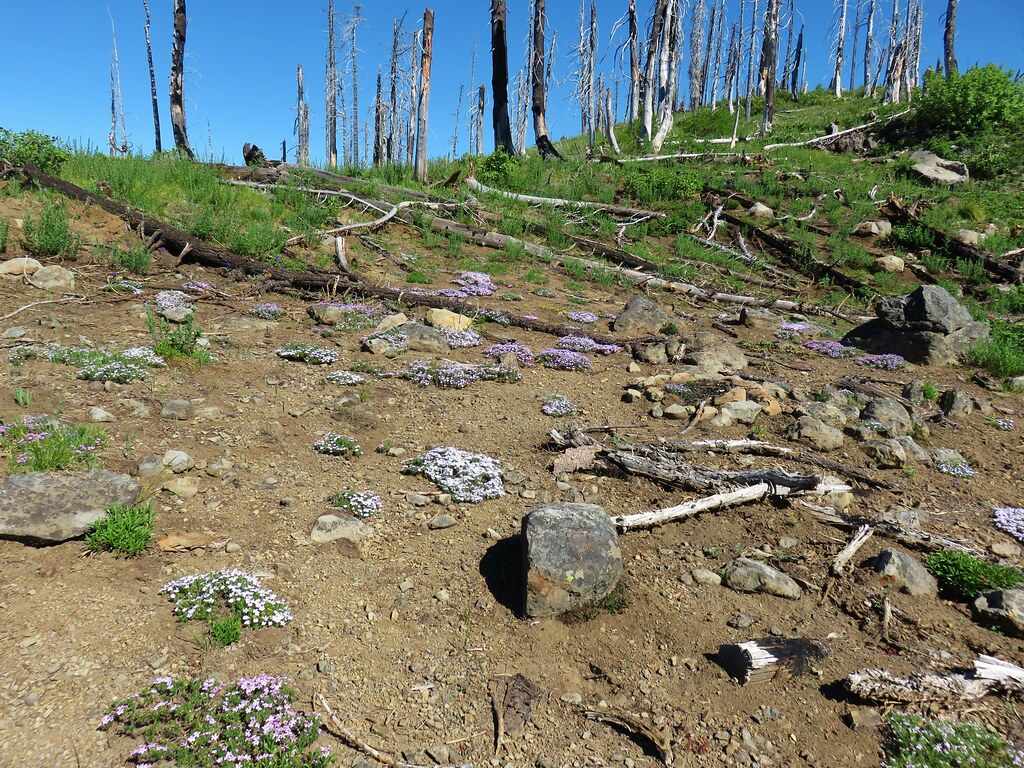
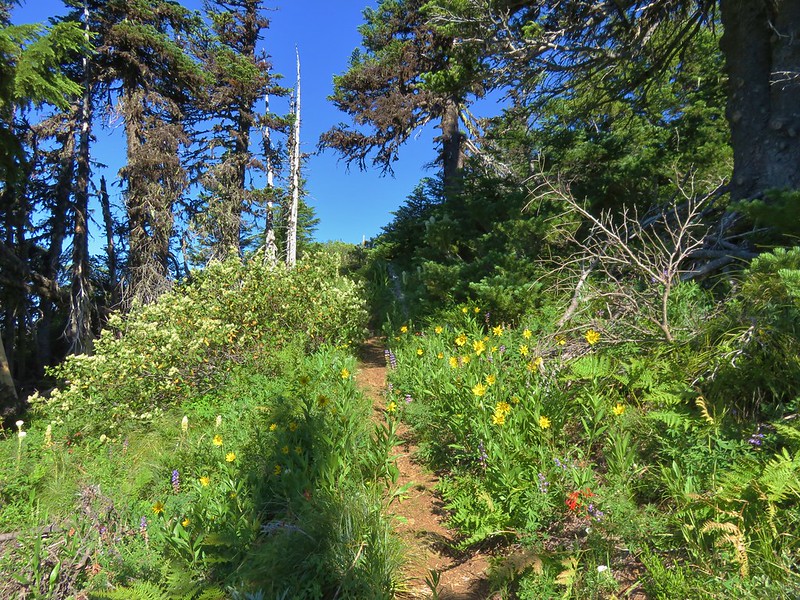
Chucksney Mountain Trail

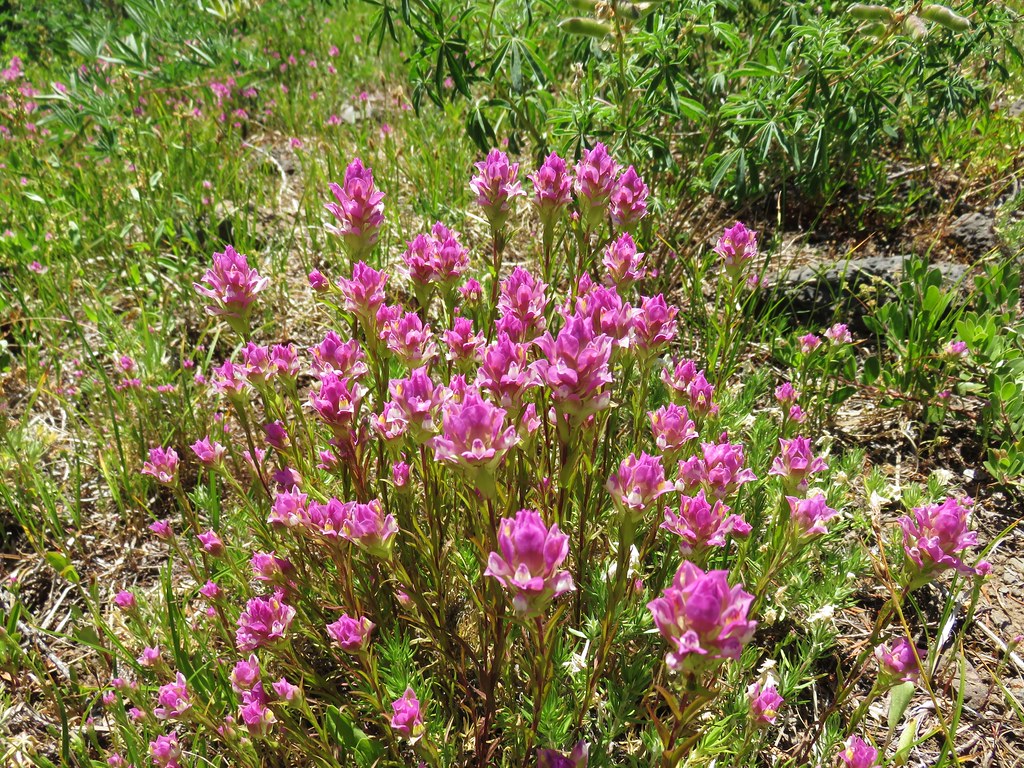
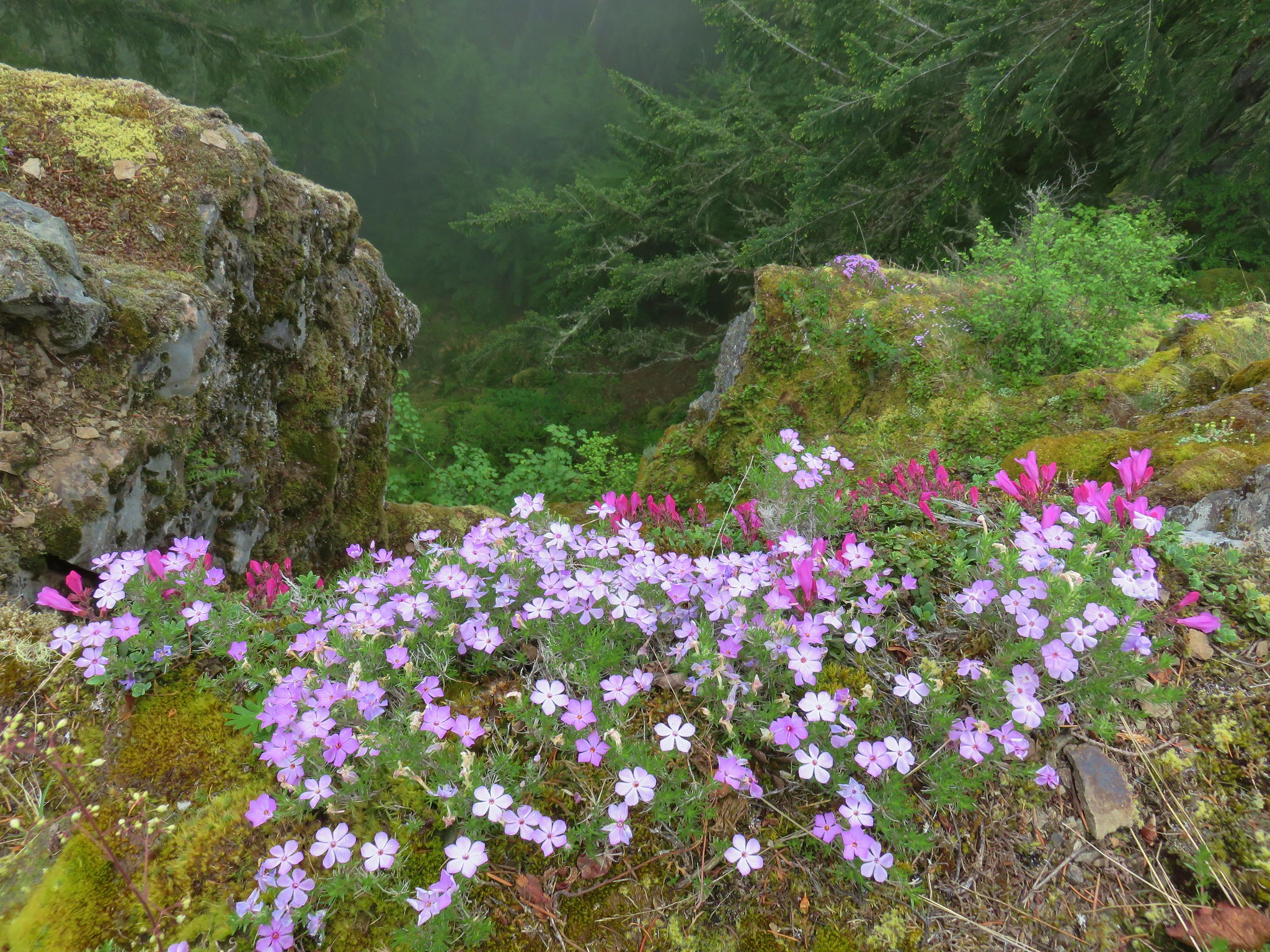
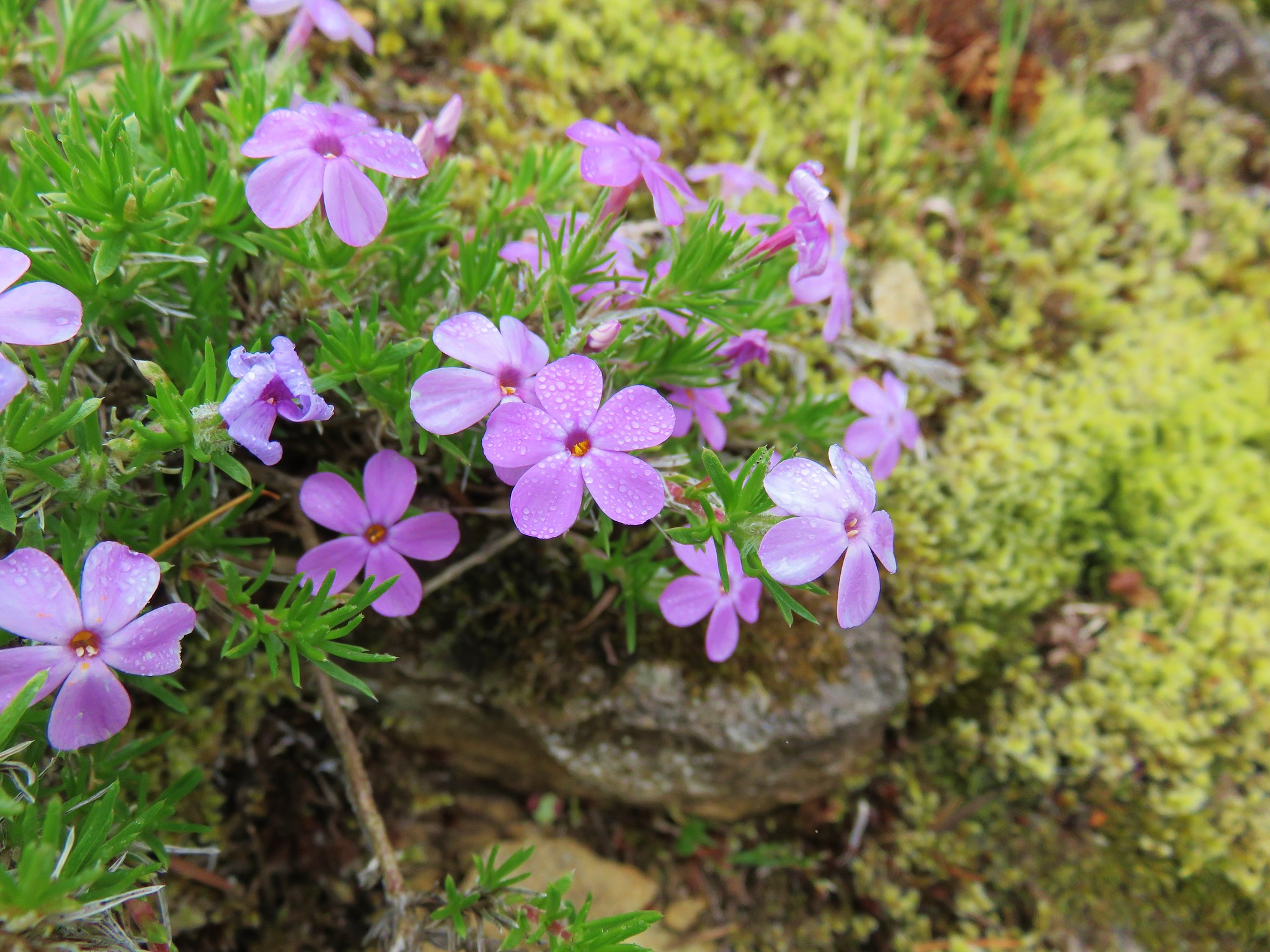
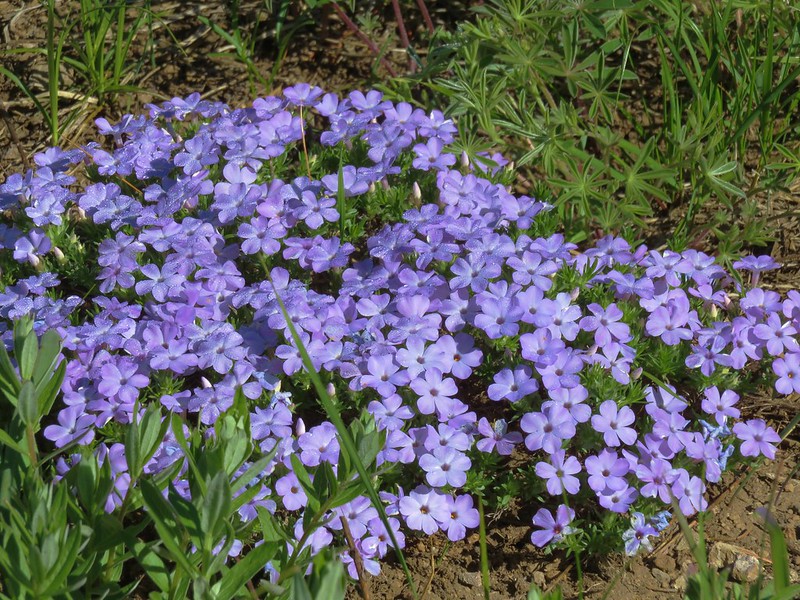
Phlox

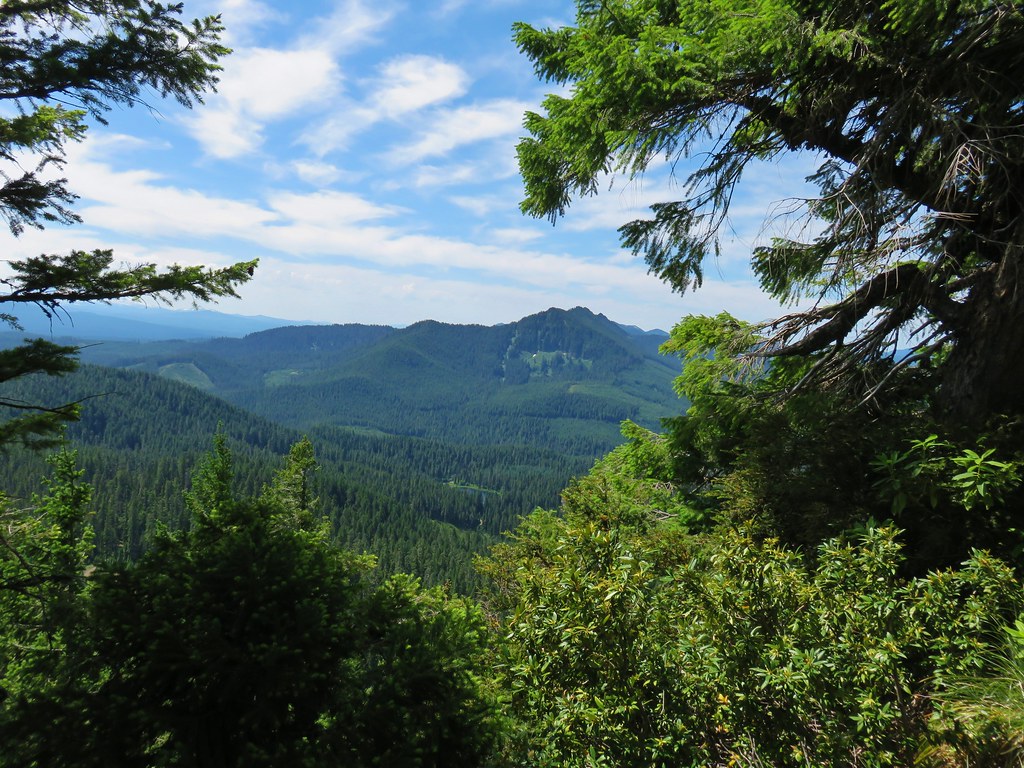
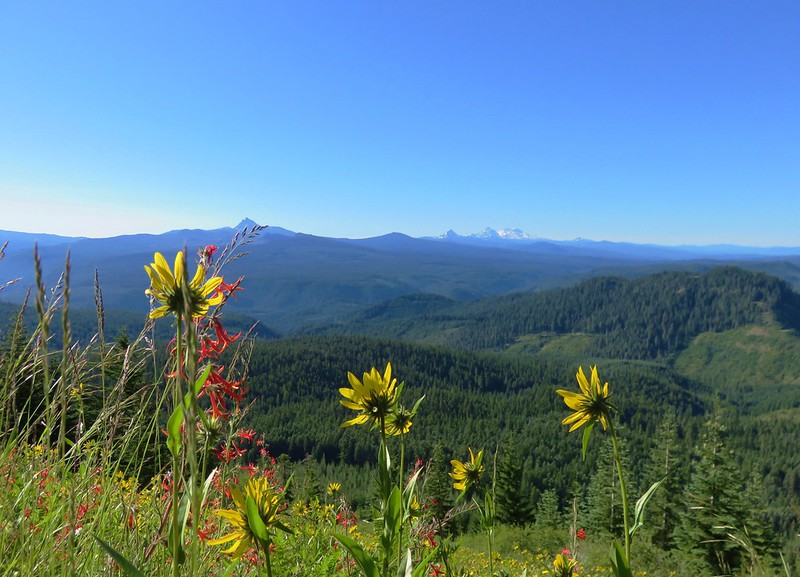
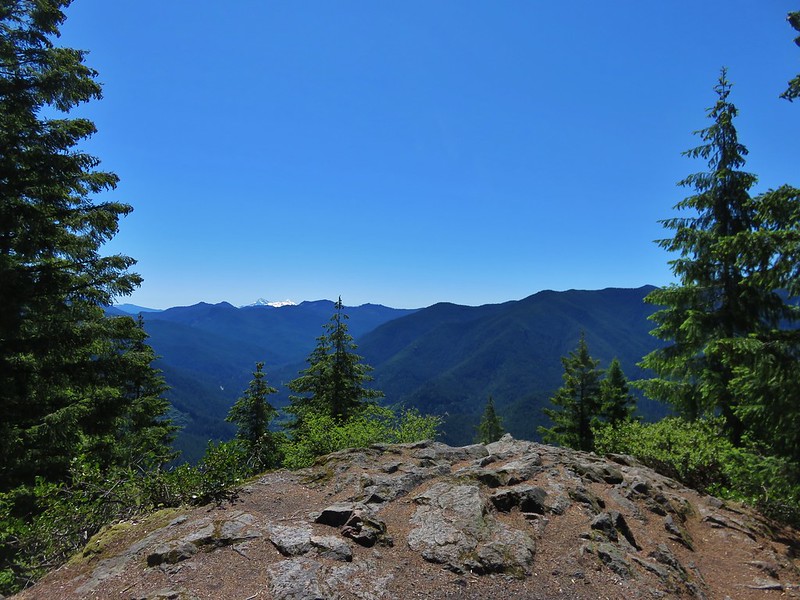
View from Chucksney Mountain Trail

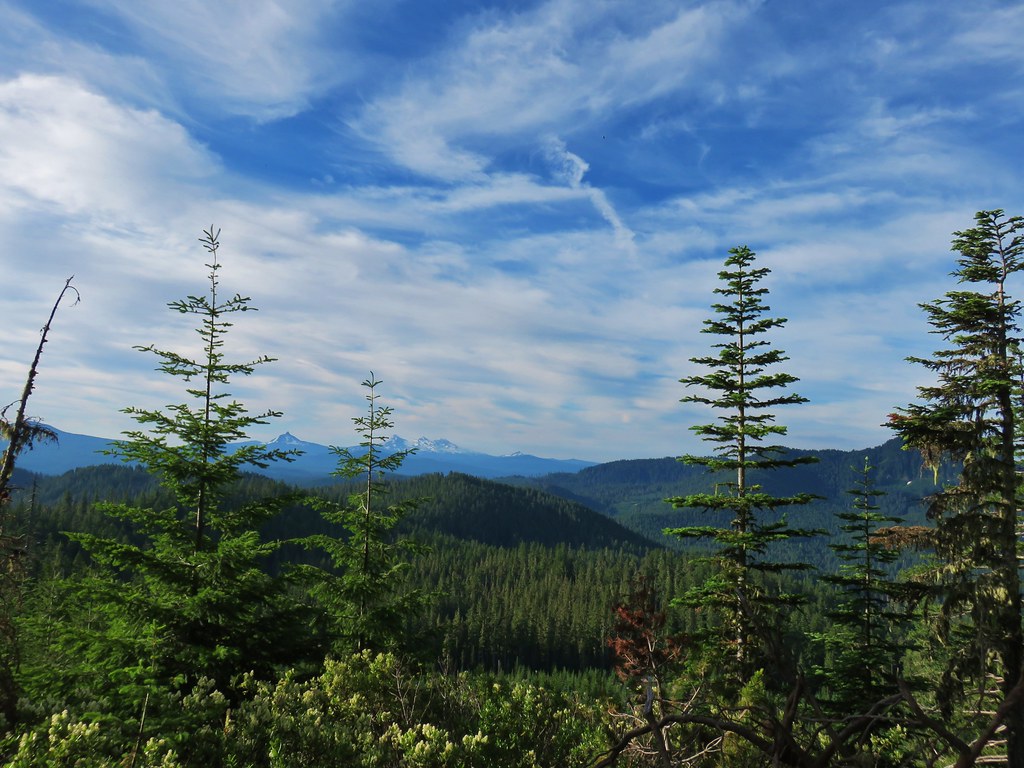
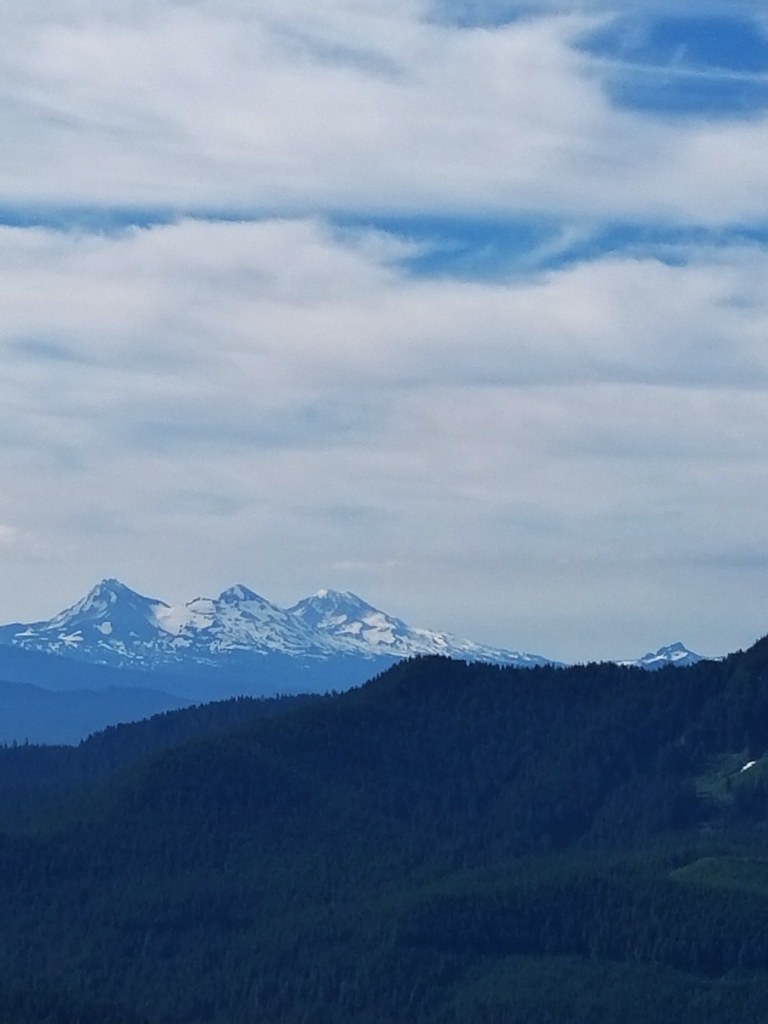
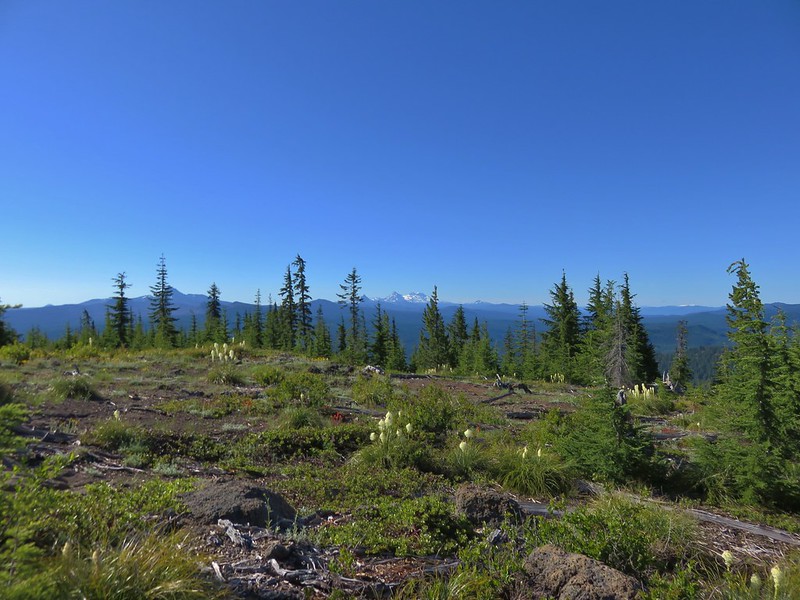
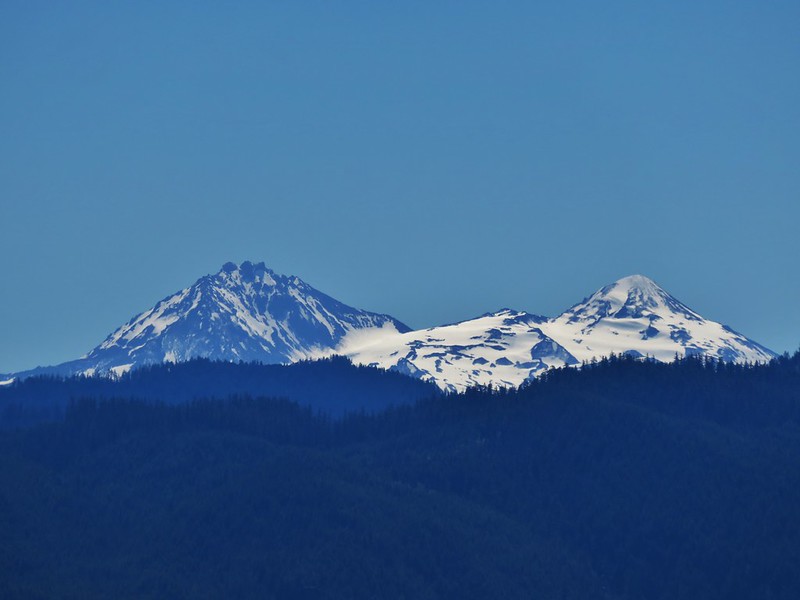
The Three Sisters, Broken Top and Mt. Bachelor

The Chucksney Mountain Trail didn’t actually reach the summit but an easy .1 mile climb along the ridge brought us to the summits survey marker.

Wildflowers on Chucksney Mountain

Survey marker on Chucksney Mountain

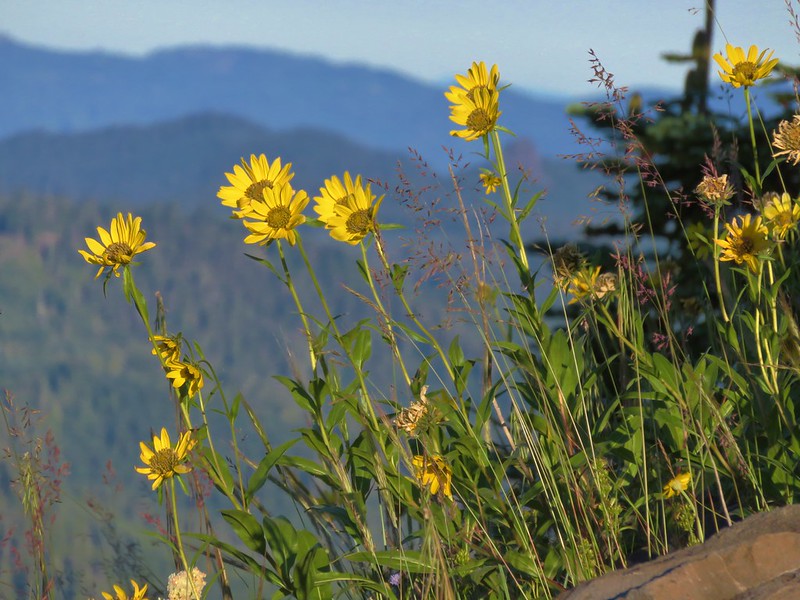
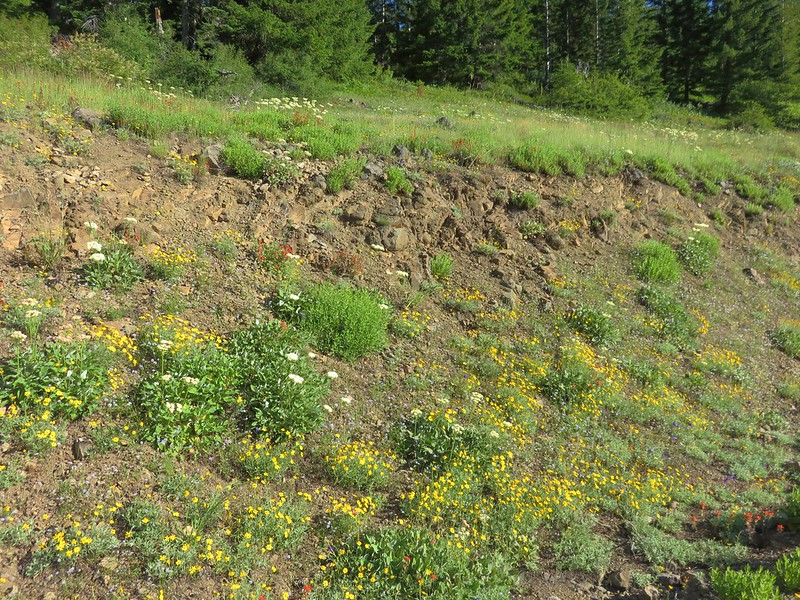
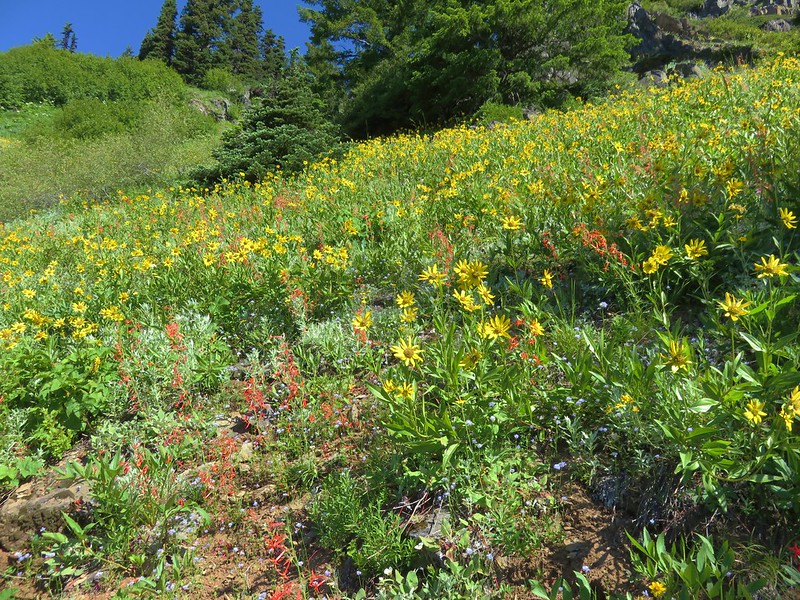
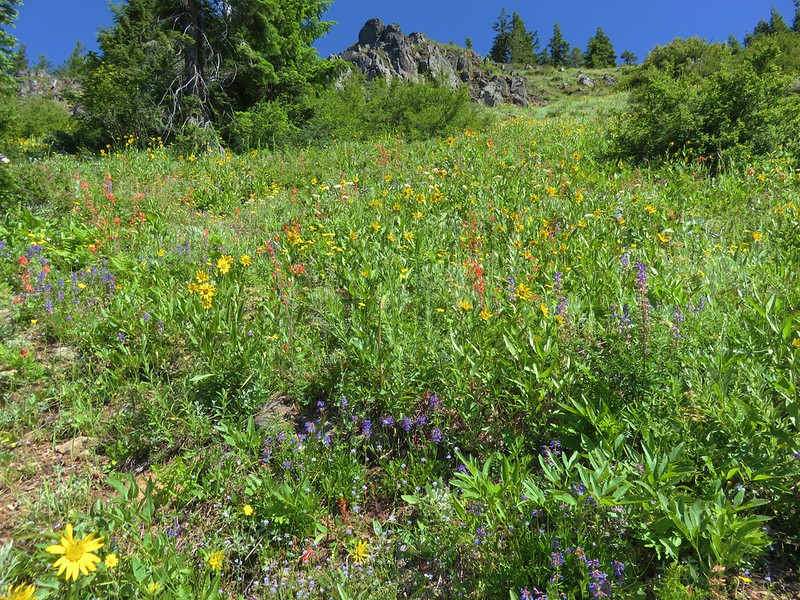
A nice variety of wildflowers covered the ridge.

Owl's head clover

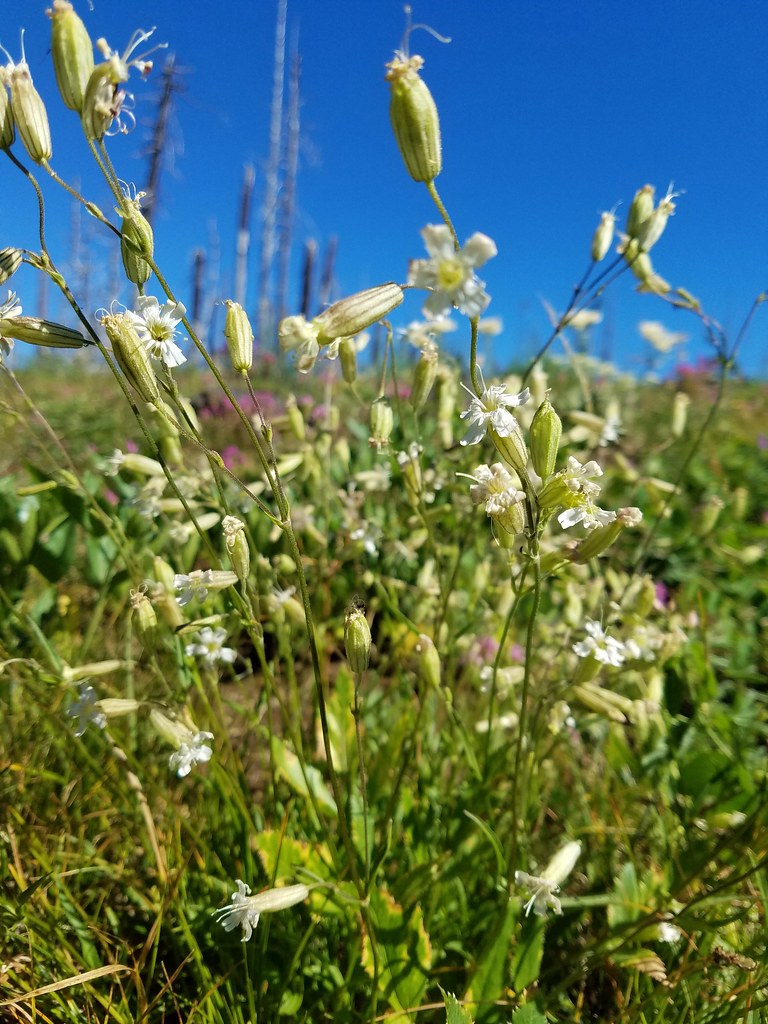
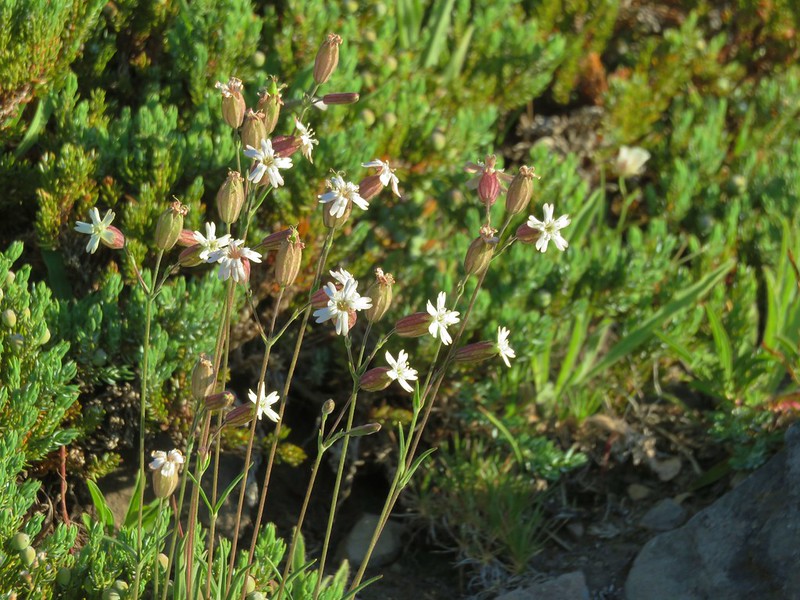
Catchfly

Wildflowers on Chucksney Mountain

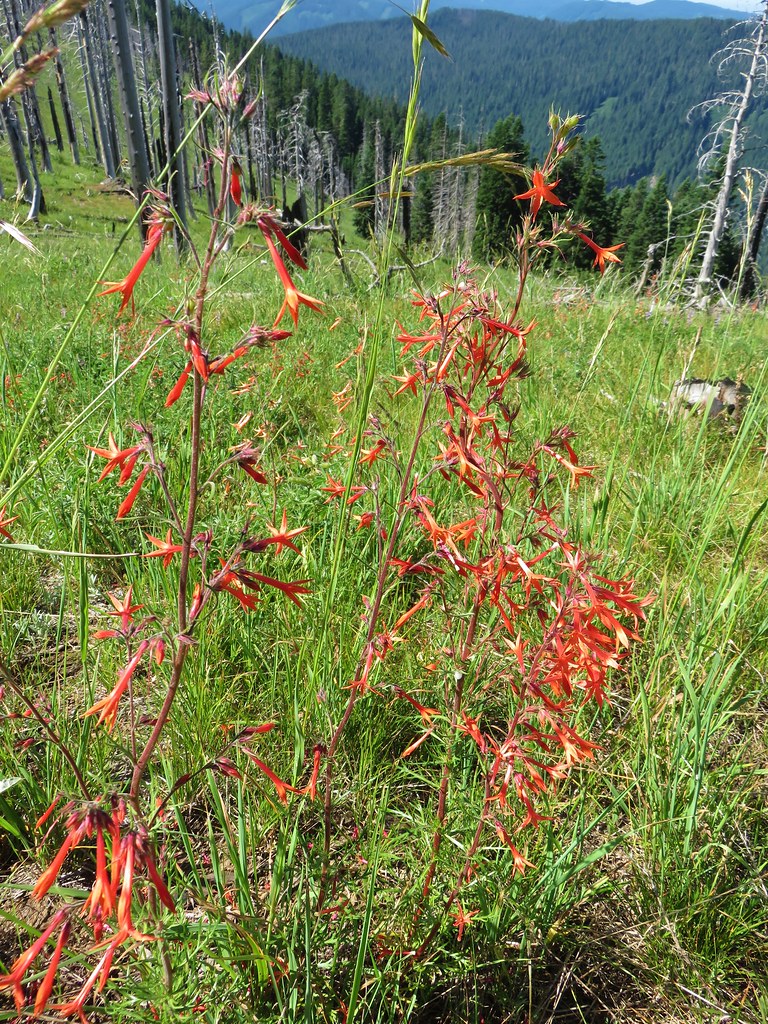
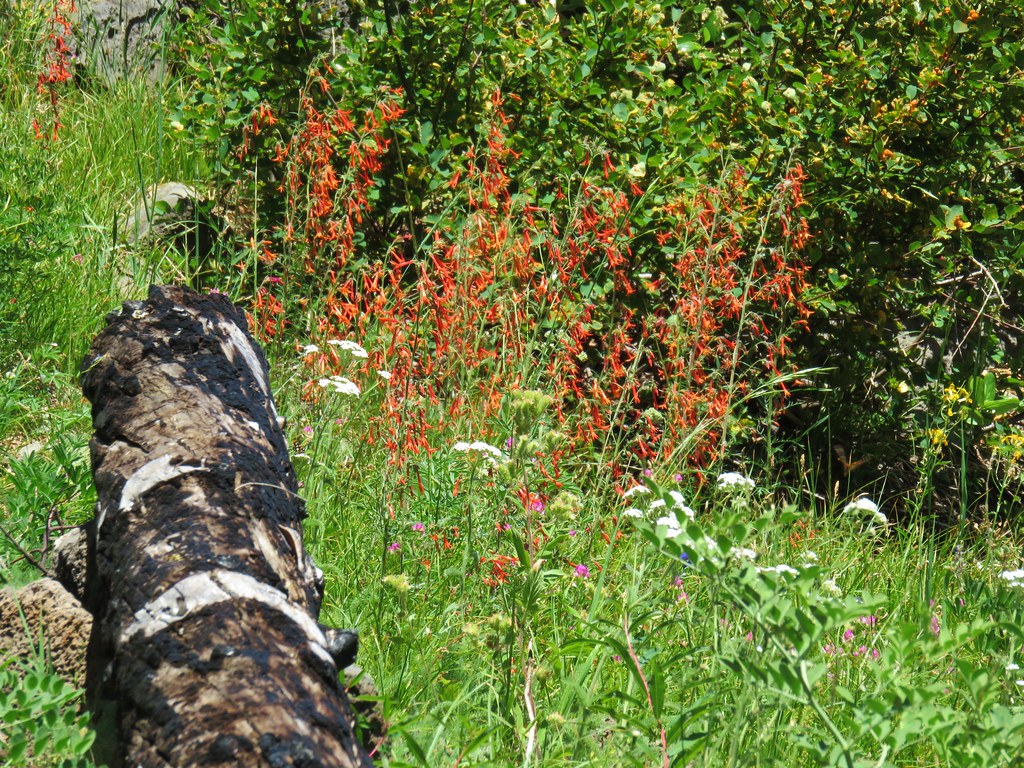
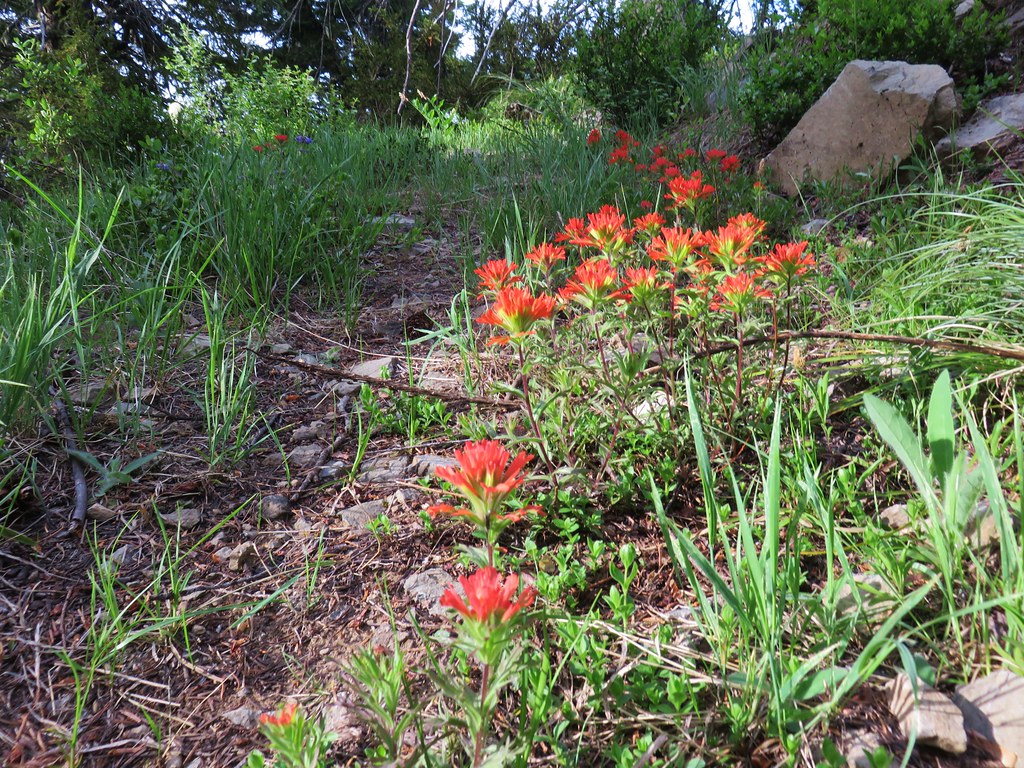
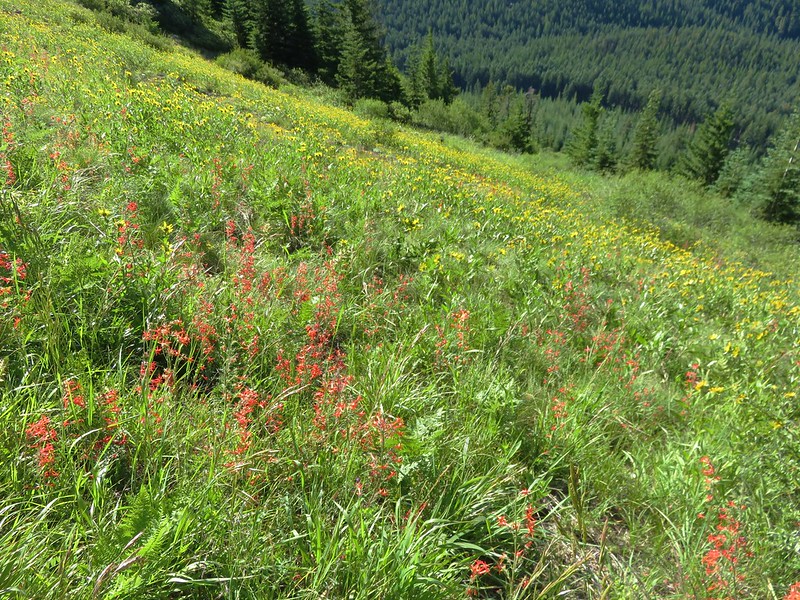
Scarlet gilia

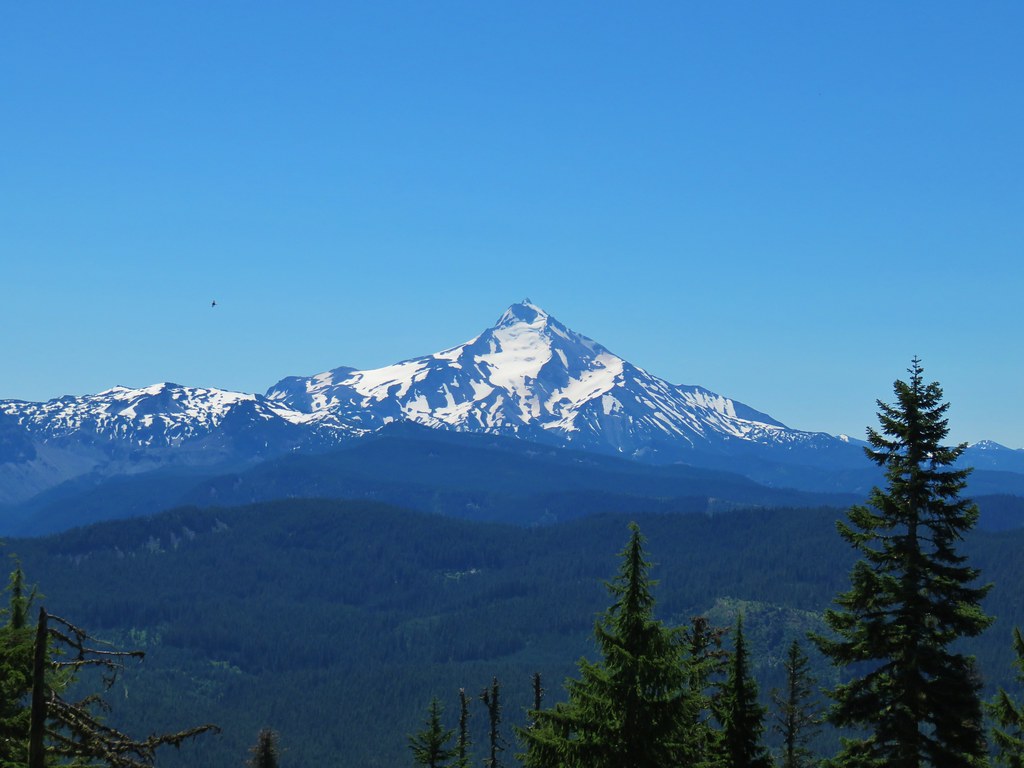
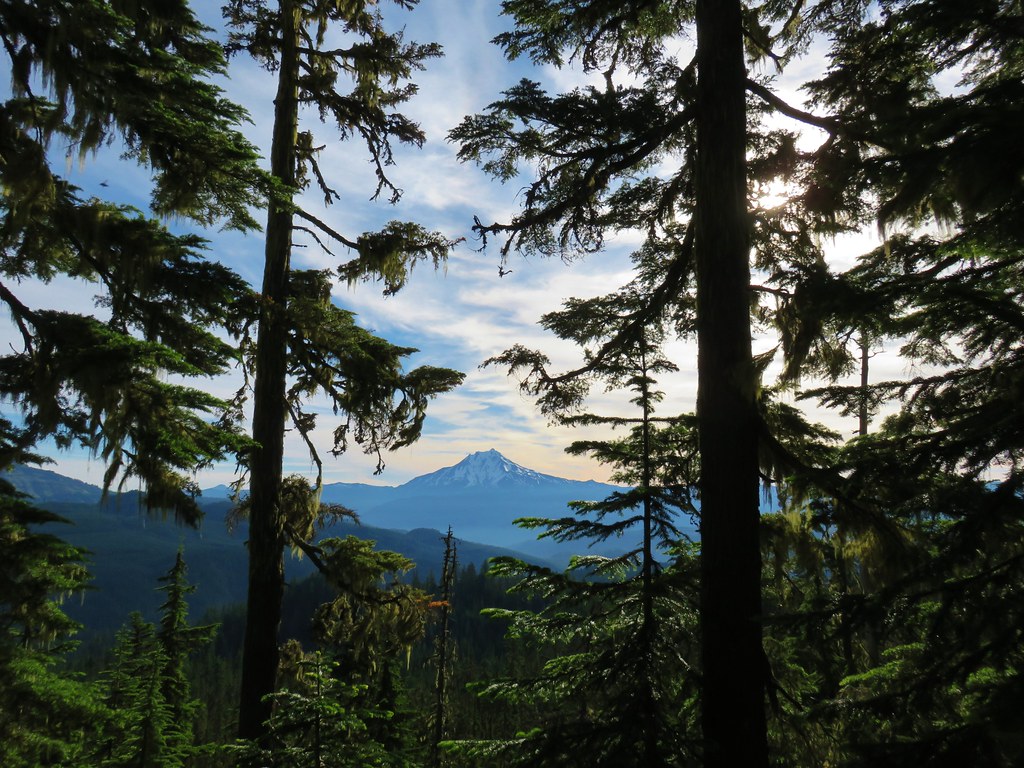
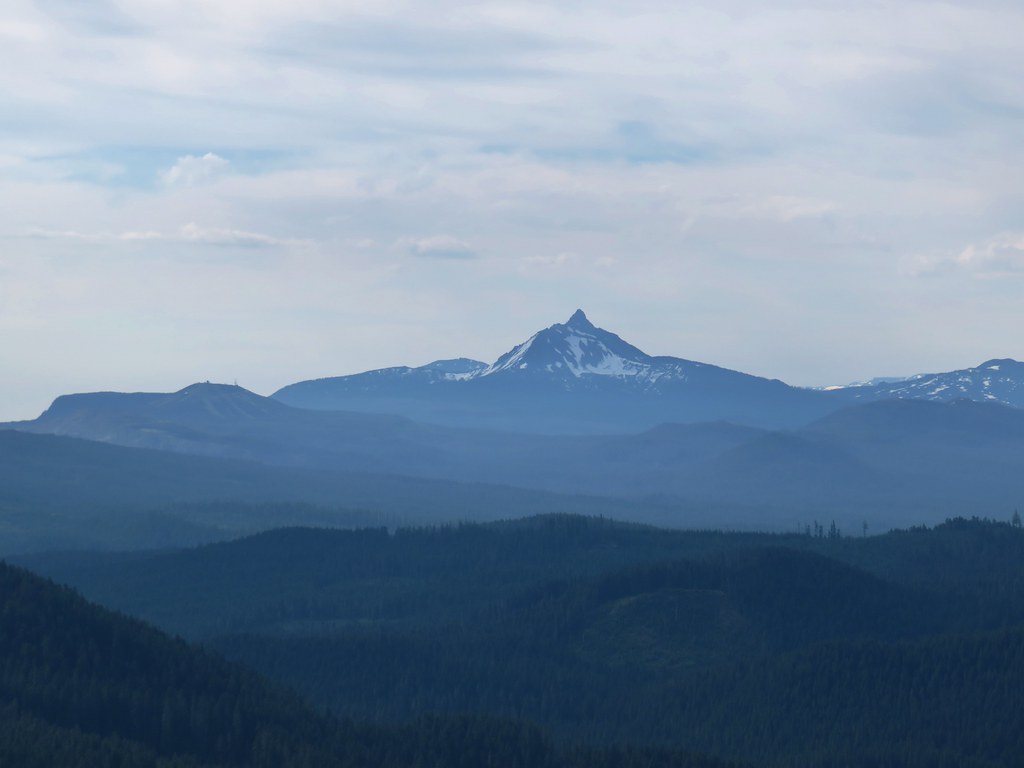
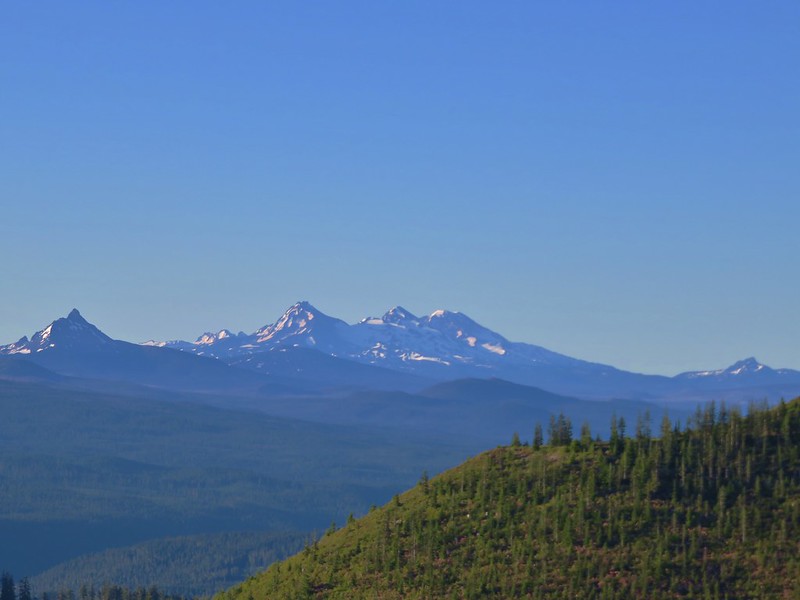
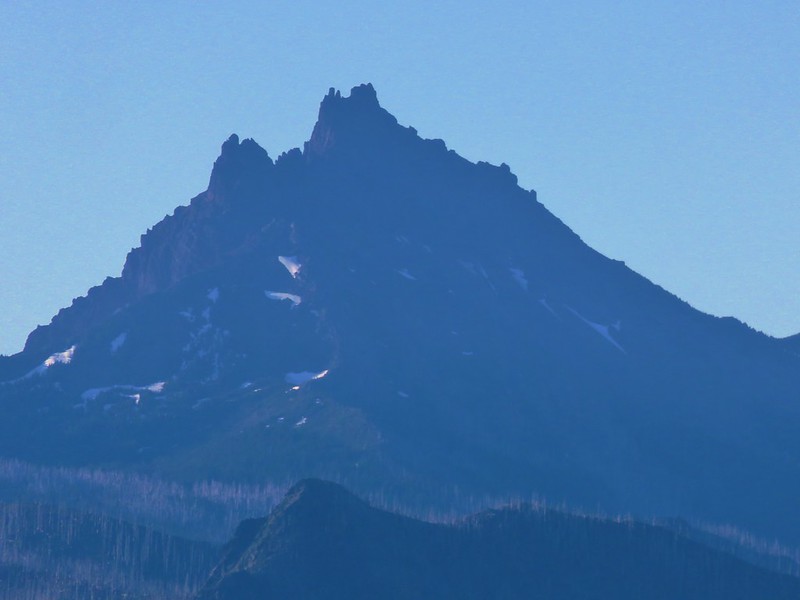
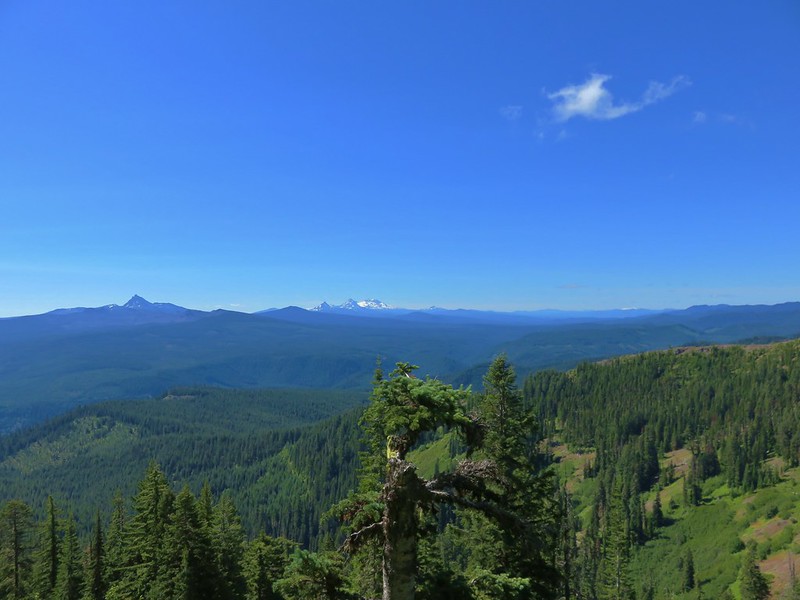
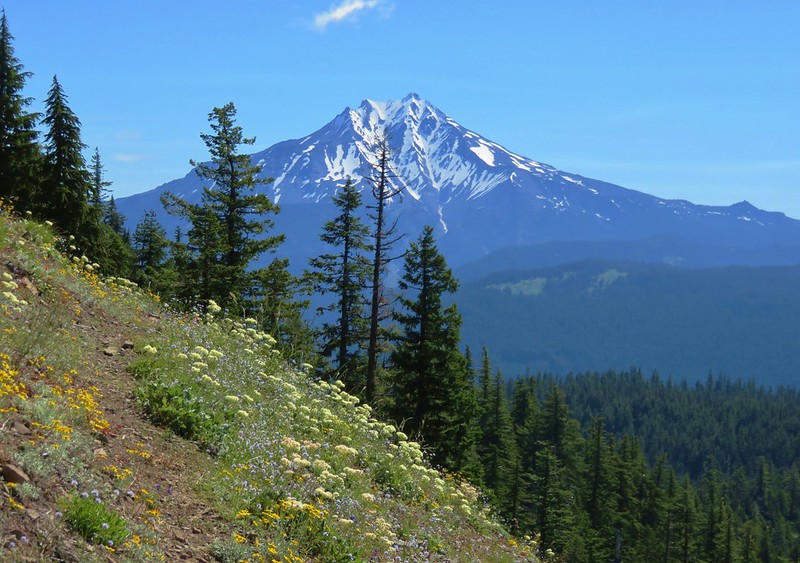
From the summit we could see eight of the Cascade volcanoes from Mt. Jefferson in the north to Diamond Peak in the south.

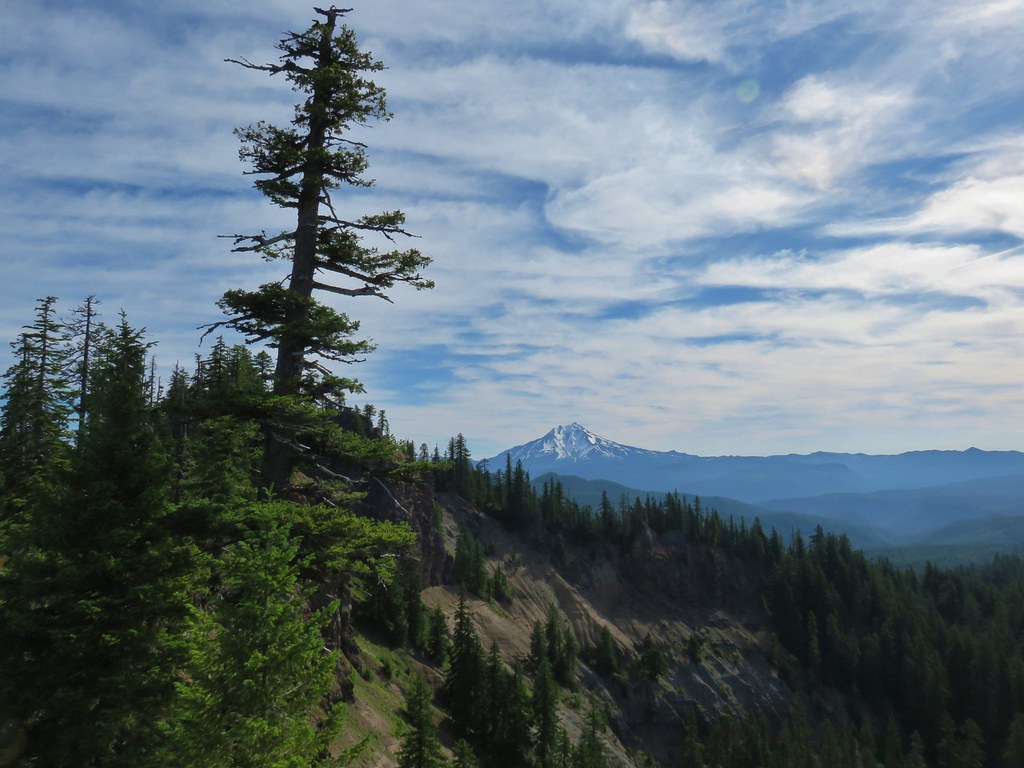
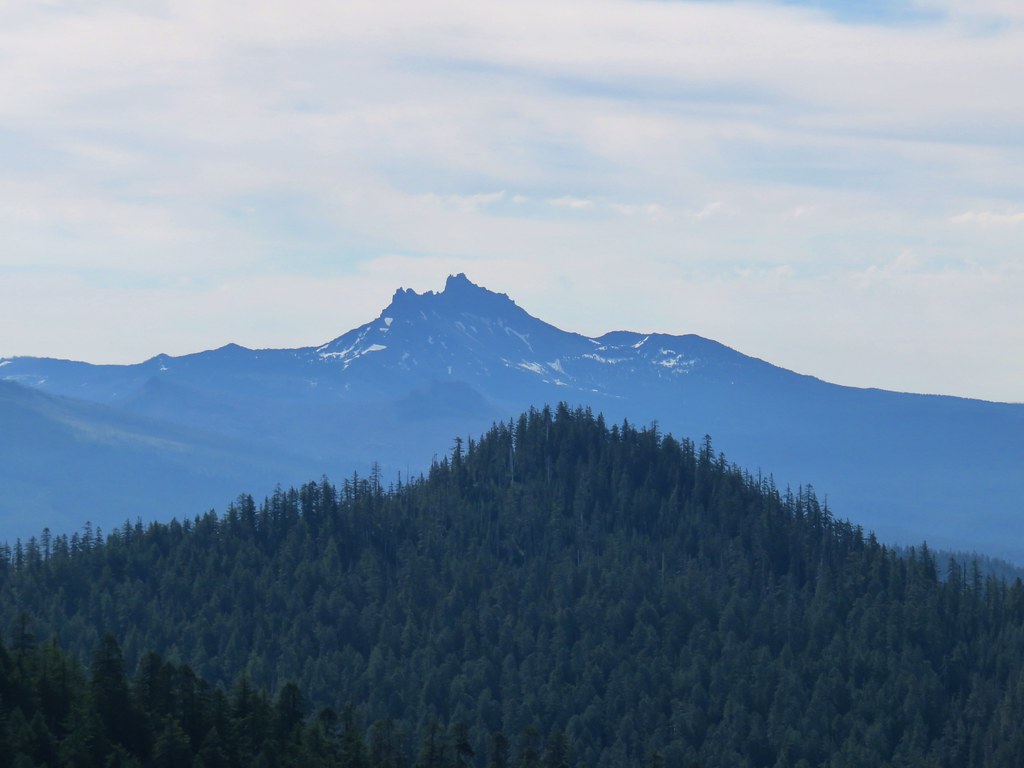
Mt. Jefferson and Three Fingered Jack from Chucksney MountainMt. Jefferson & Three Fingered Jack

The Three Sisters, Broken Top and Mt. Bachelor from Chucksney MountainThe Three Sisters, Broken Top, and Mt. Bachelor

Diamond Peak from Chucksney MountainDiamond Peak

After a short break at the summit we returned to the trail which turned south along a long ridge where the tread became faint as it passed through a meadow.
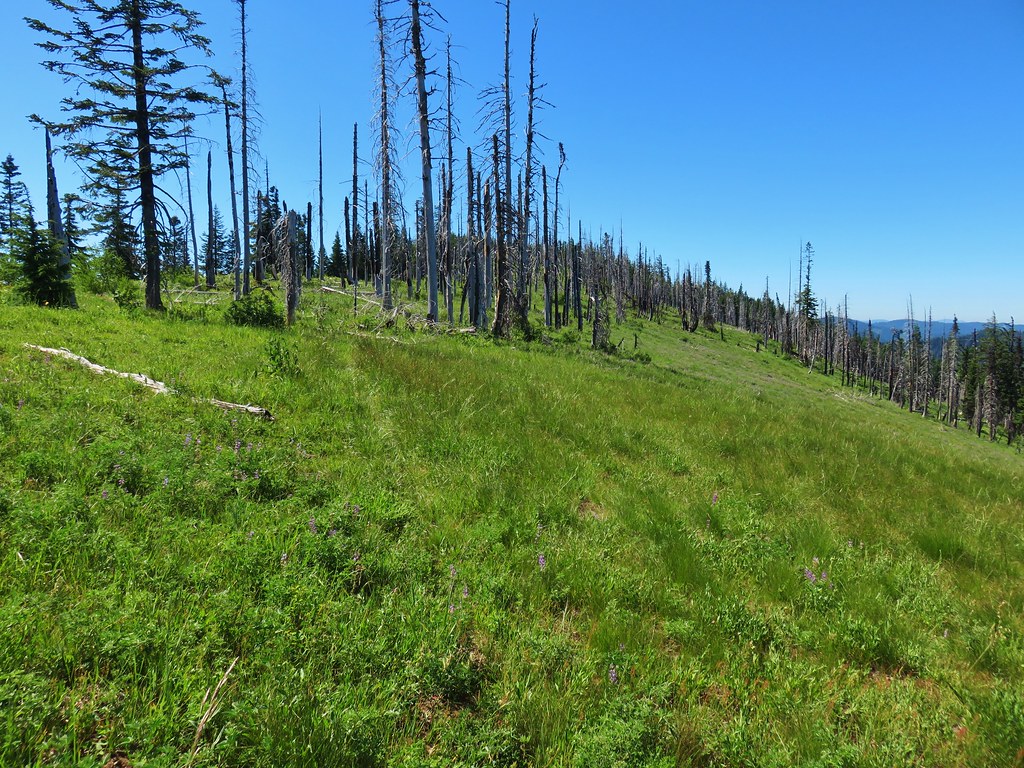
Chucksney Mountain Trail

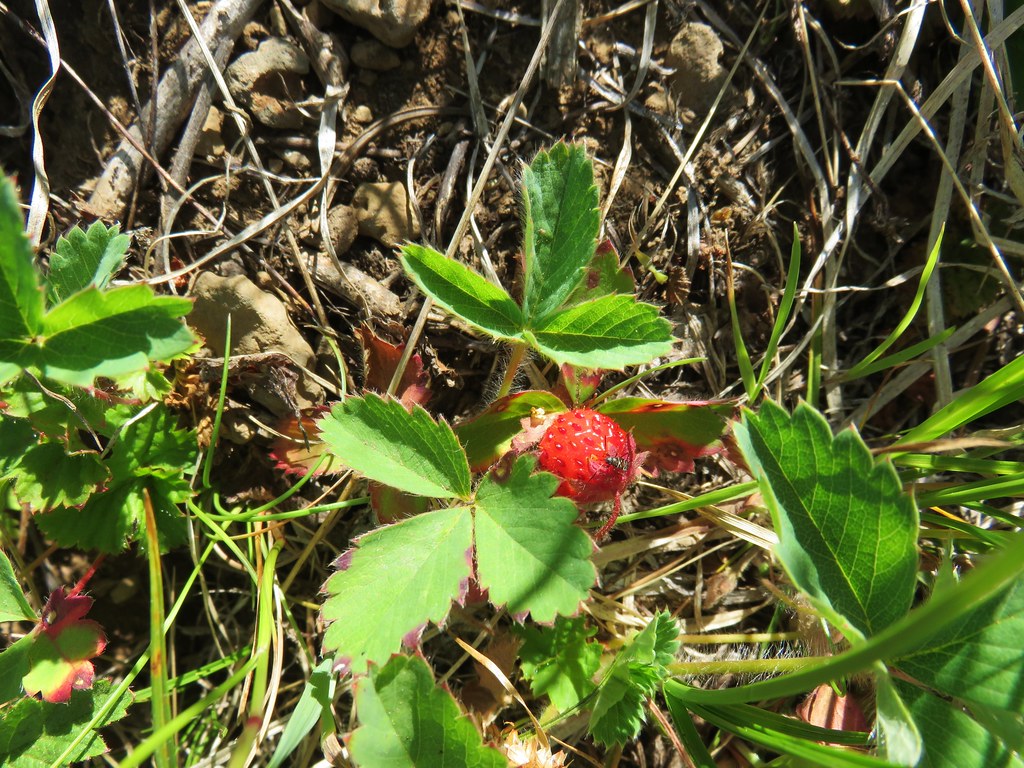
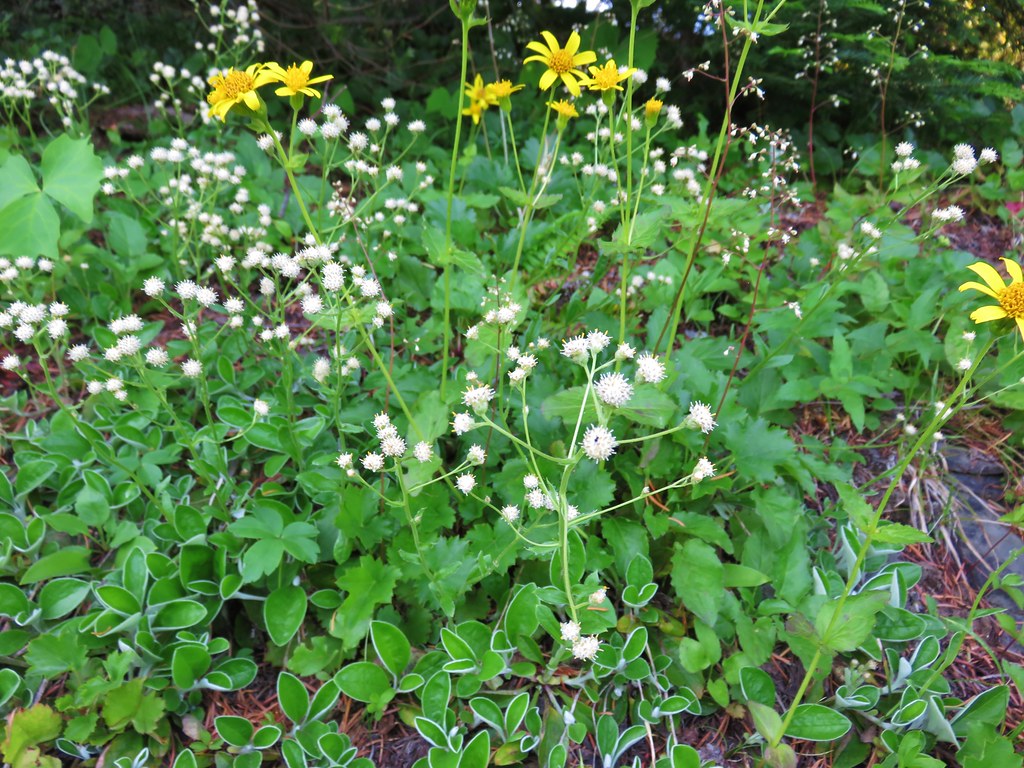
We spotted some other types of wildflowers along the ridge as well as some nice ripe strawberries.
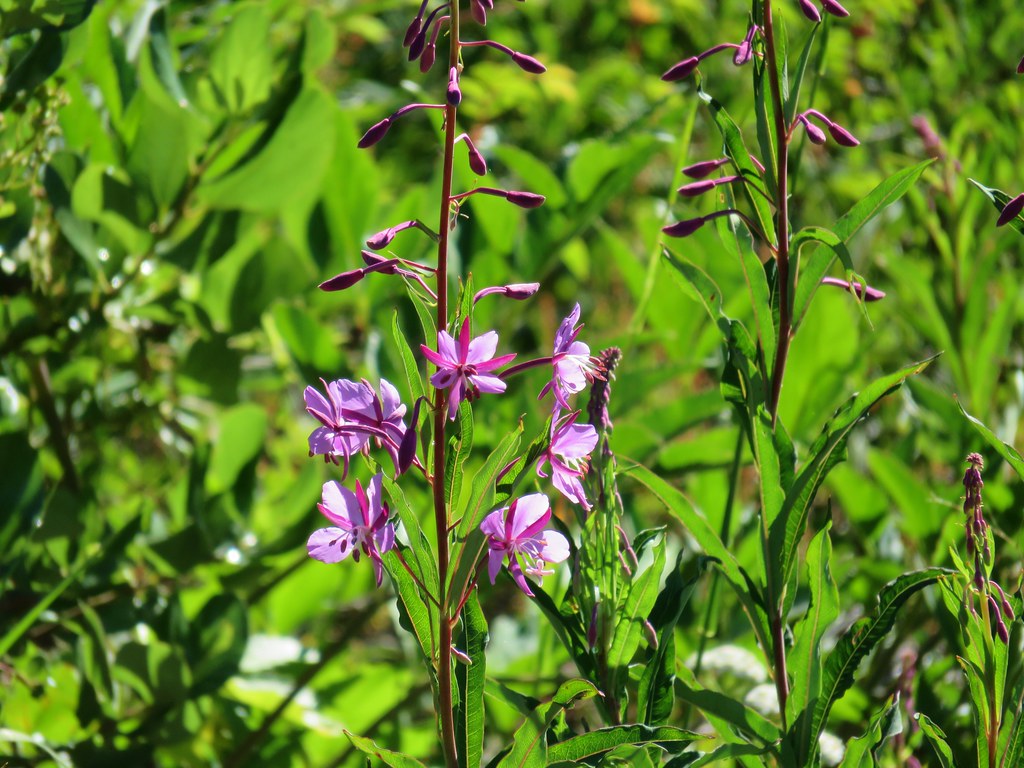
Fireweed

Grand collomia

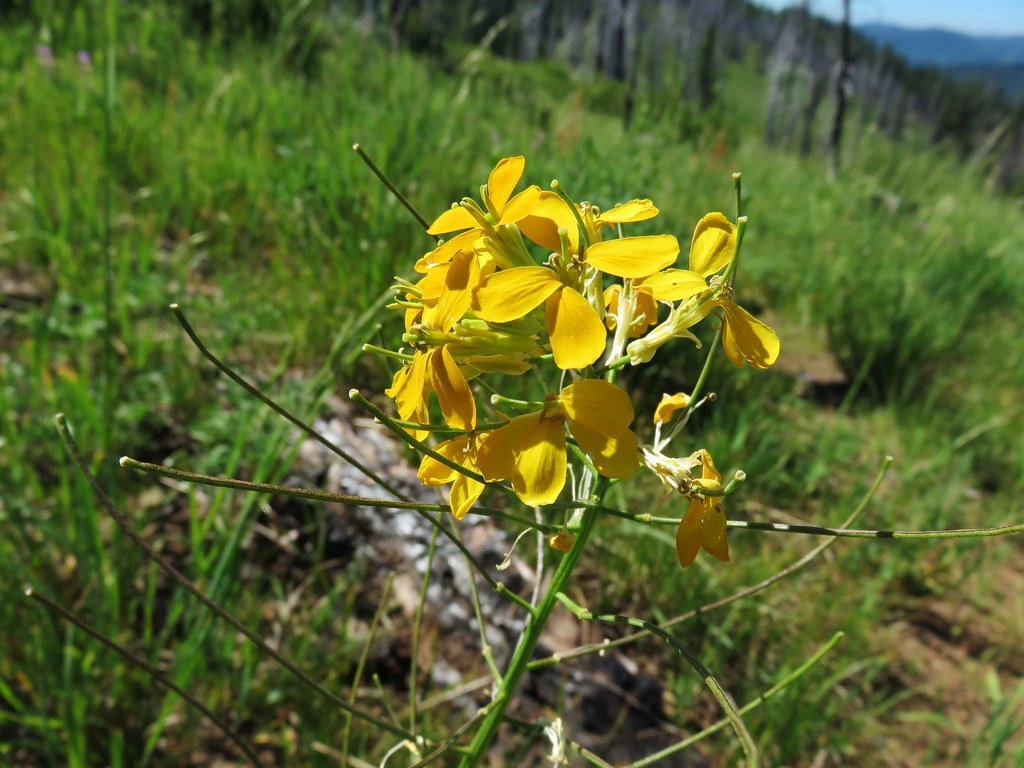
Wallflower

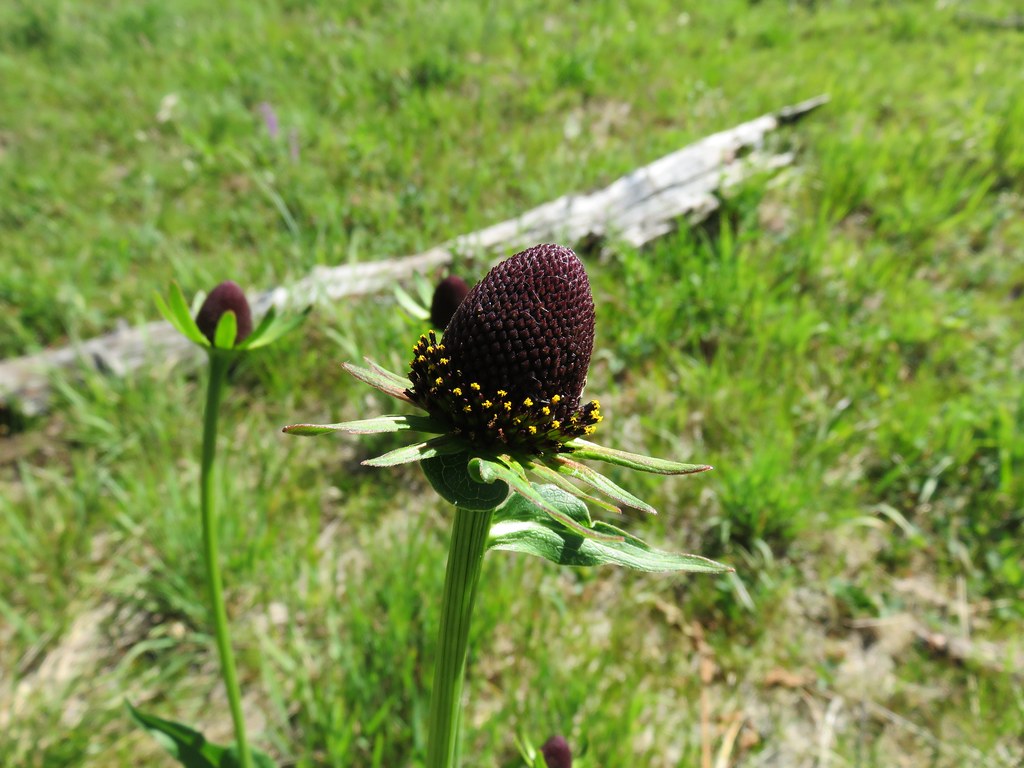
Coneflower

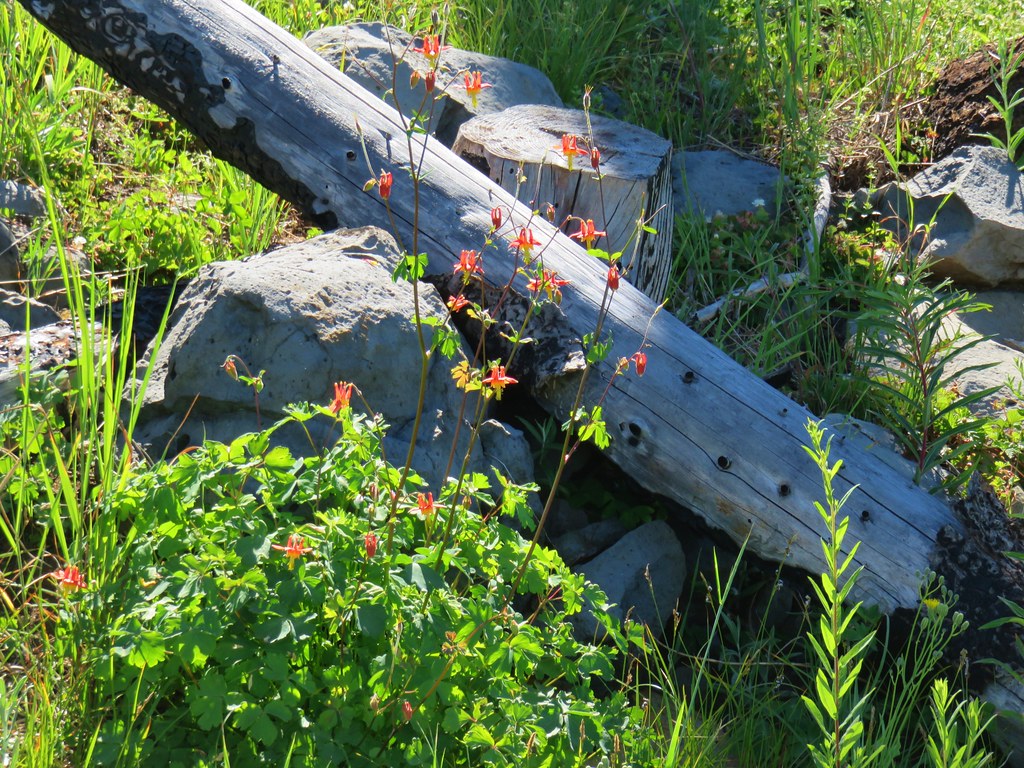
Columbine

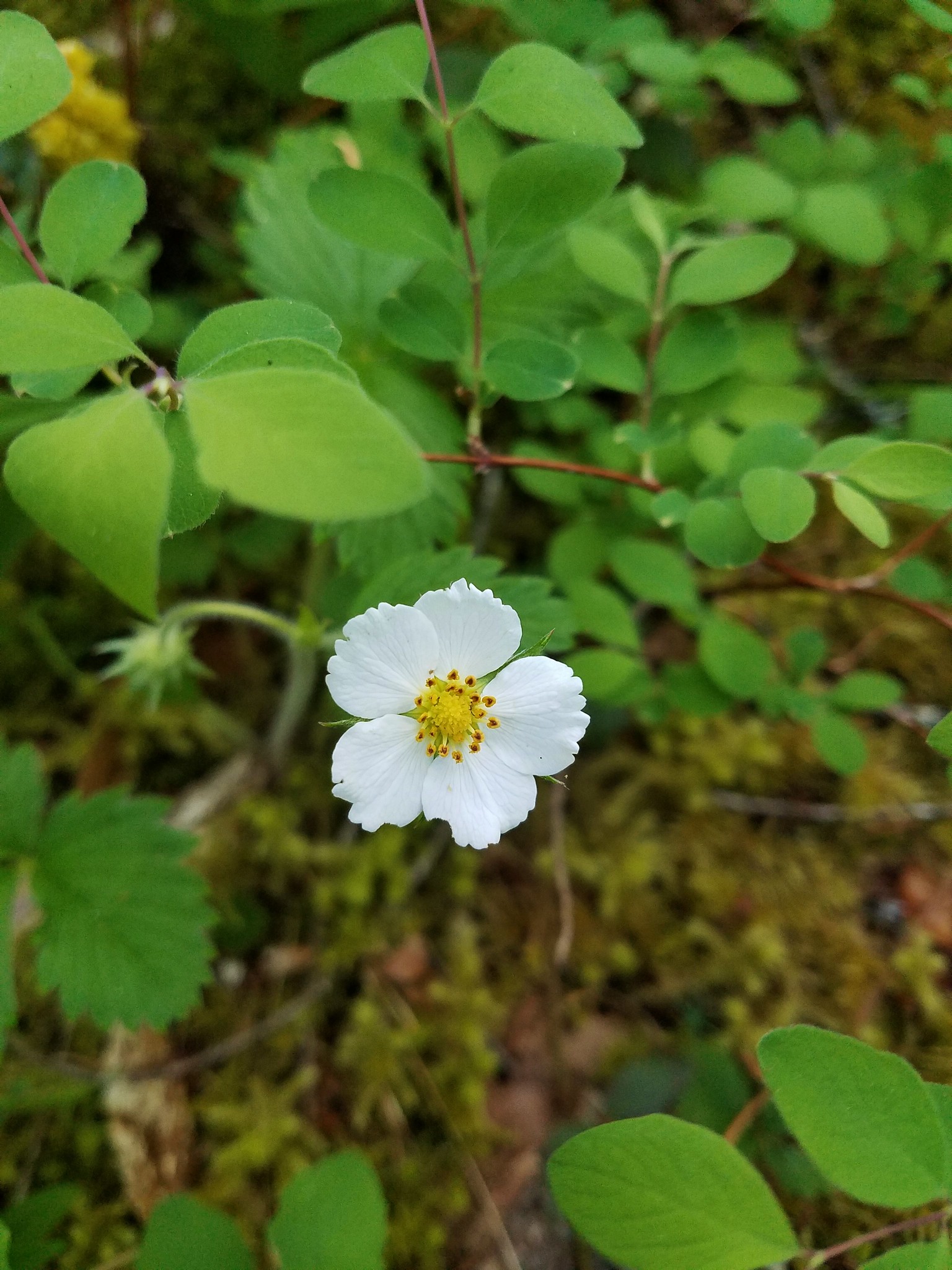
Strawberry

The trail reentered the trees as it began a hillside traverse to its end at the Grasshopper Trail.
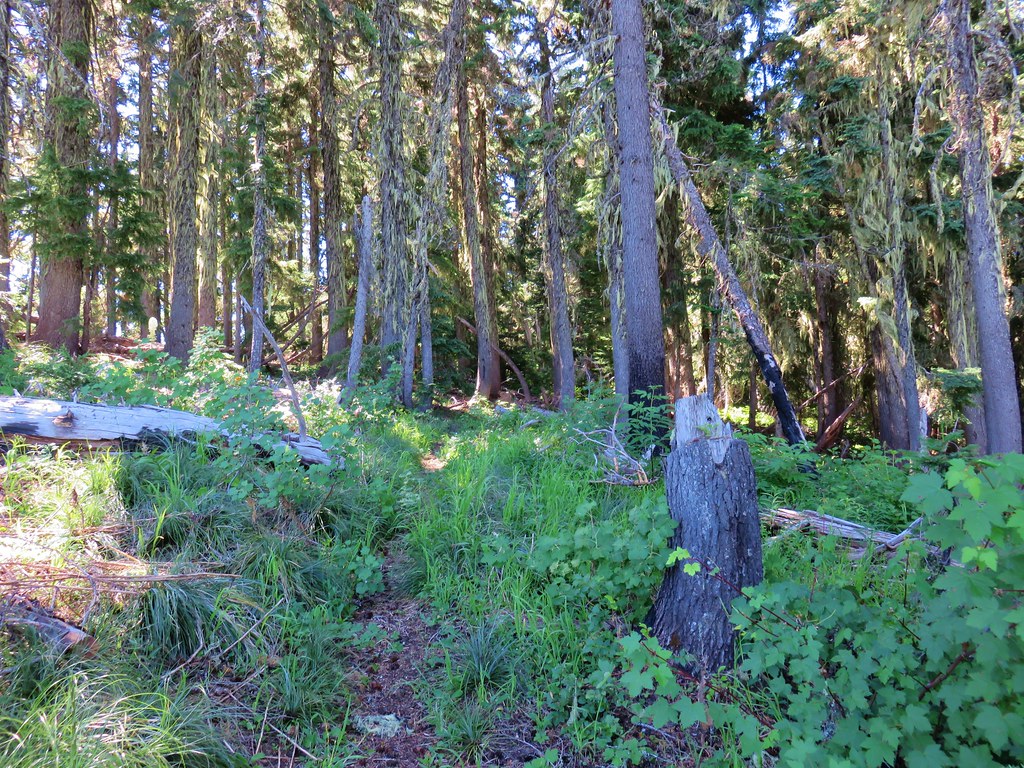
Chucksney Mountain Trail

The trail passed along another section of burned forest just before reaching the signed junction.

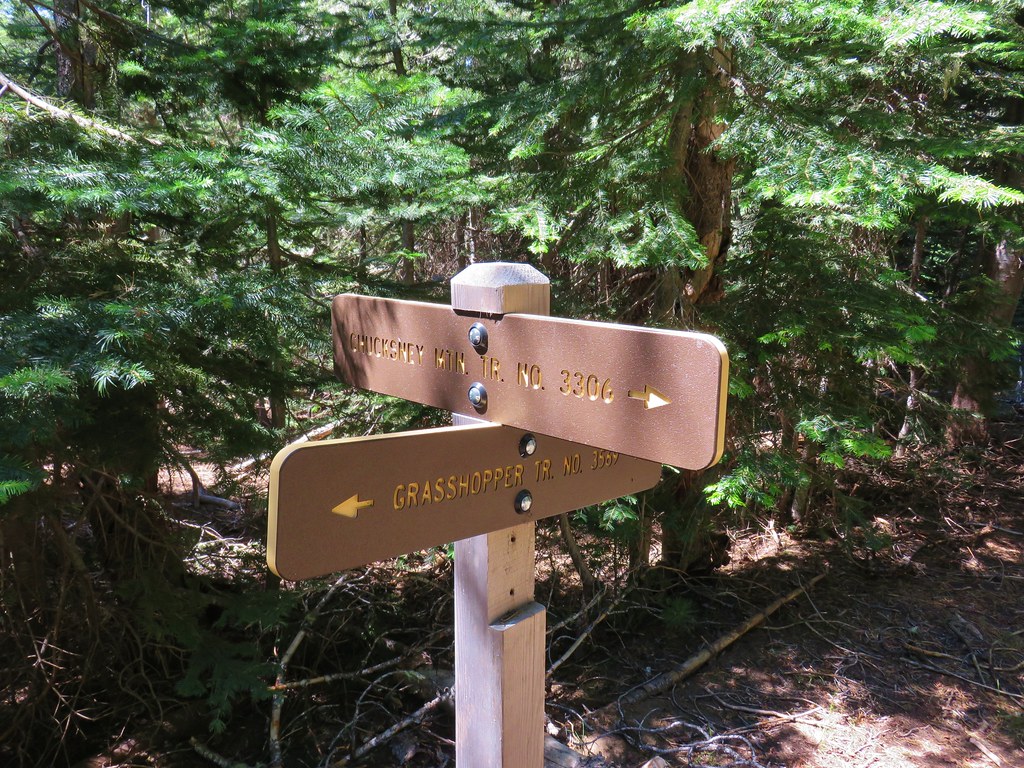
Meadow along the Chucksney Mountain Trail

Chucksney Mountain Trail junction with the Grasshopper Trail

Turning left here would have led us back to the down to the Box Canyon Trailhead in 3.9 miles but we were saving that section of trail for our return the next day. We turned right and headed east along the Grasshopper Trail which promptly began to descend through and then along a meadow with lots of cat’s ear lilies and a view of Diamond Peak.

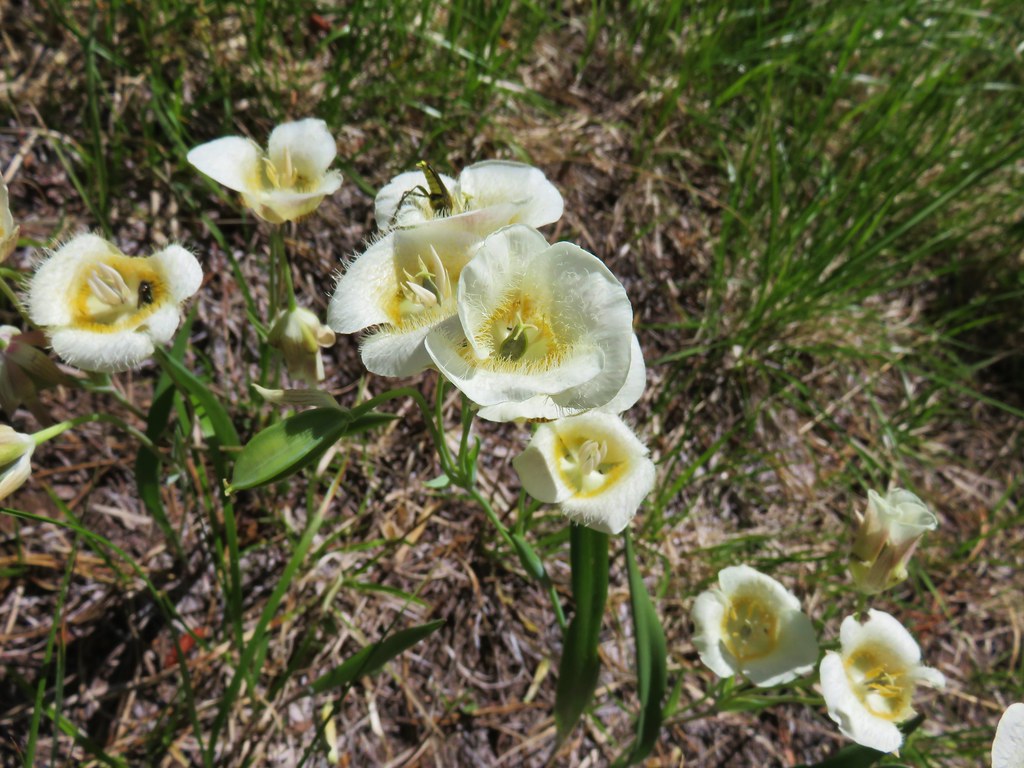
Meadow along the Grasshopper Trail

Cat's ear lilies

Cat's ear lilies

Diamond Peak

Diamond Peak

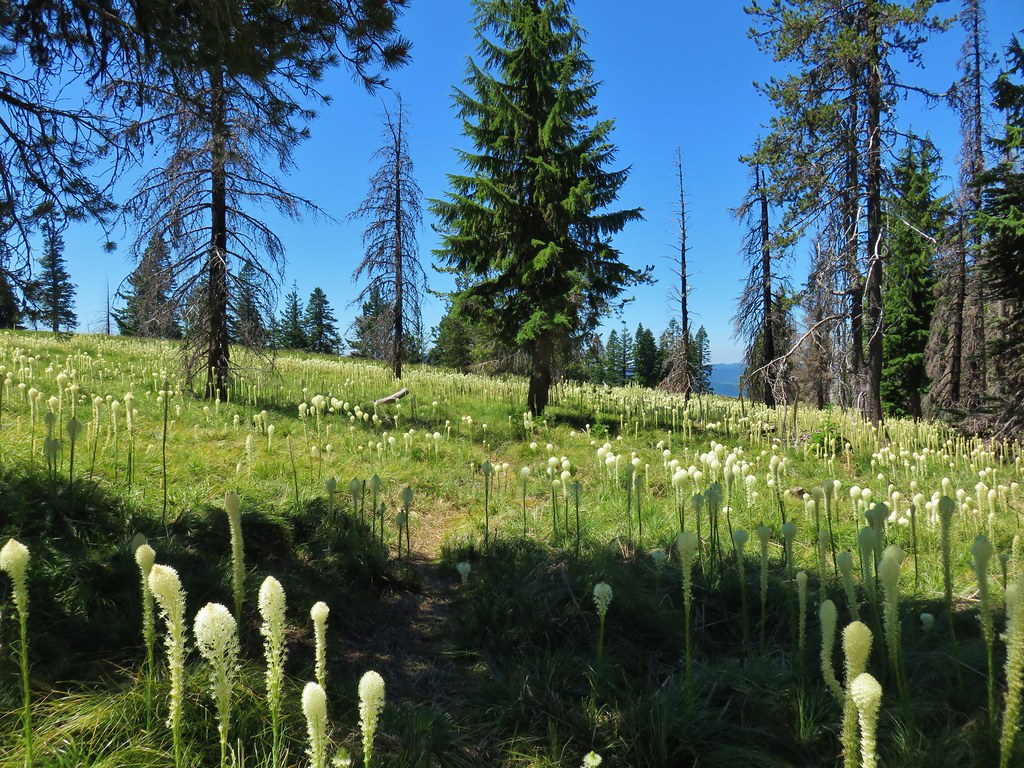
The trail lost a little over 500′ of elevation as it followed the forested ridge east. A little over a mile from the junction we finally hit the low point in a saddle just under 5000′ in elevation. We then began regaining nearly all of the elevation we had lost in the next mile. This climb contained the steepest section of the hike and ended in a beargrass filled meadow.
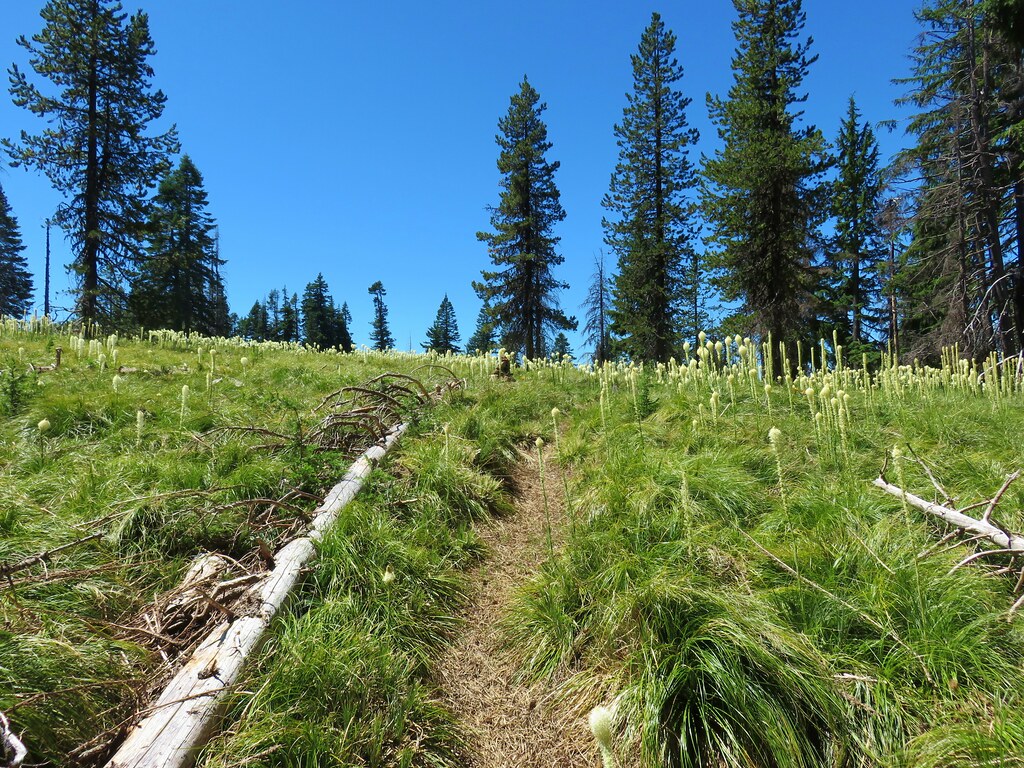
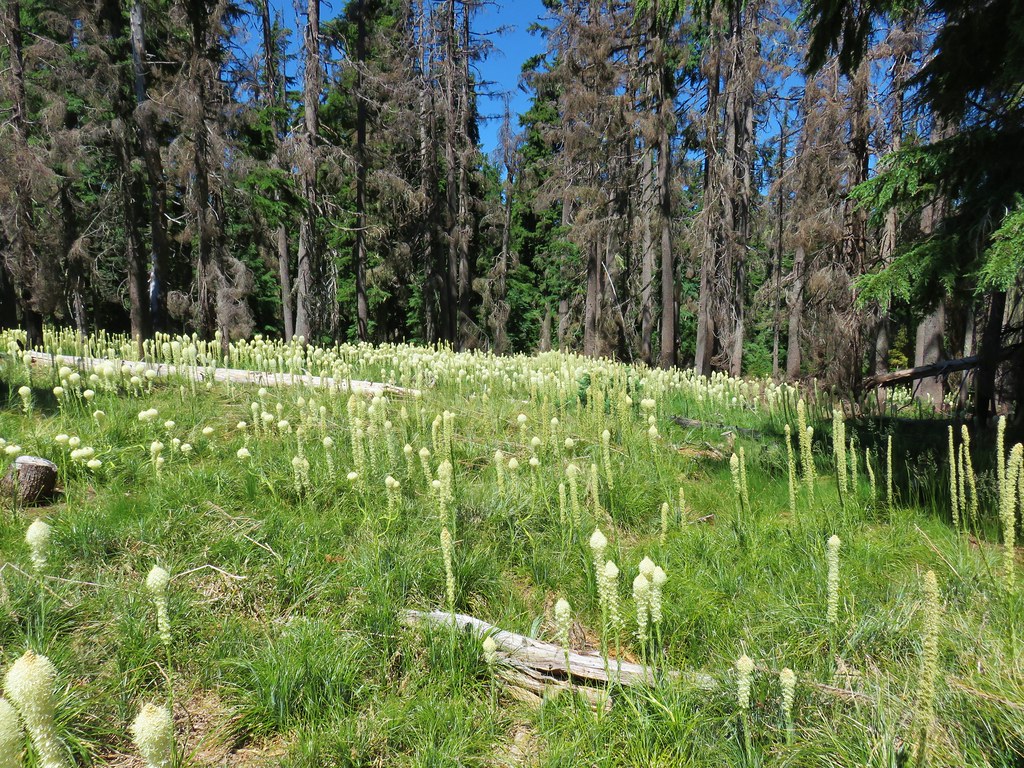
Grasshopper Trail

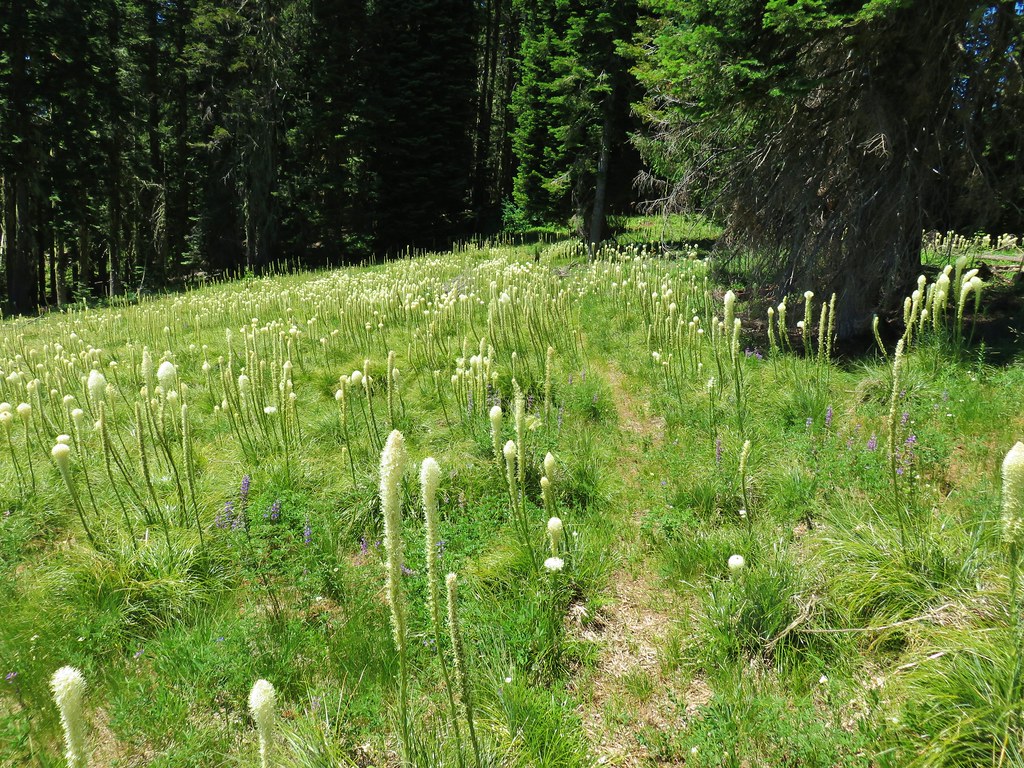
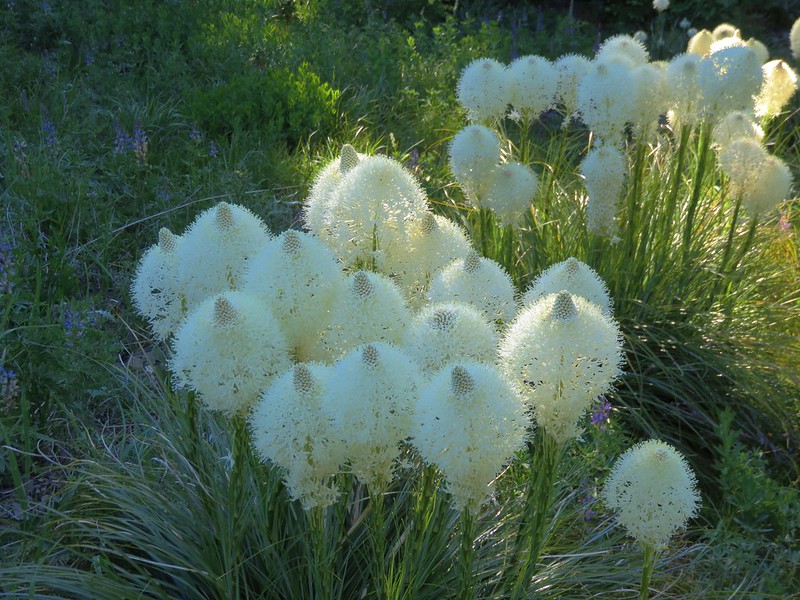
Beargrass

Beargrass meadow along the Grasshopper Trail

Grasshopper Trail

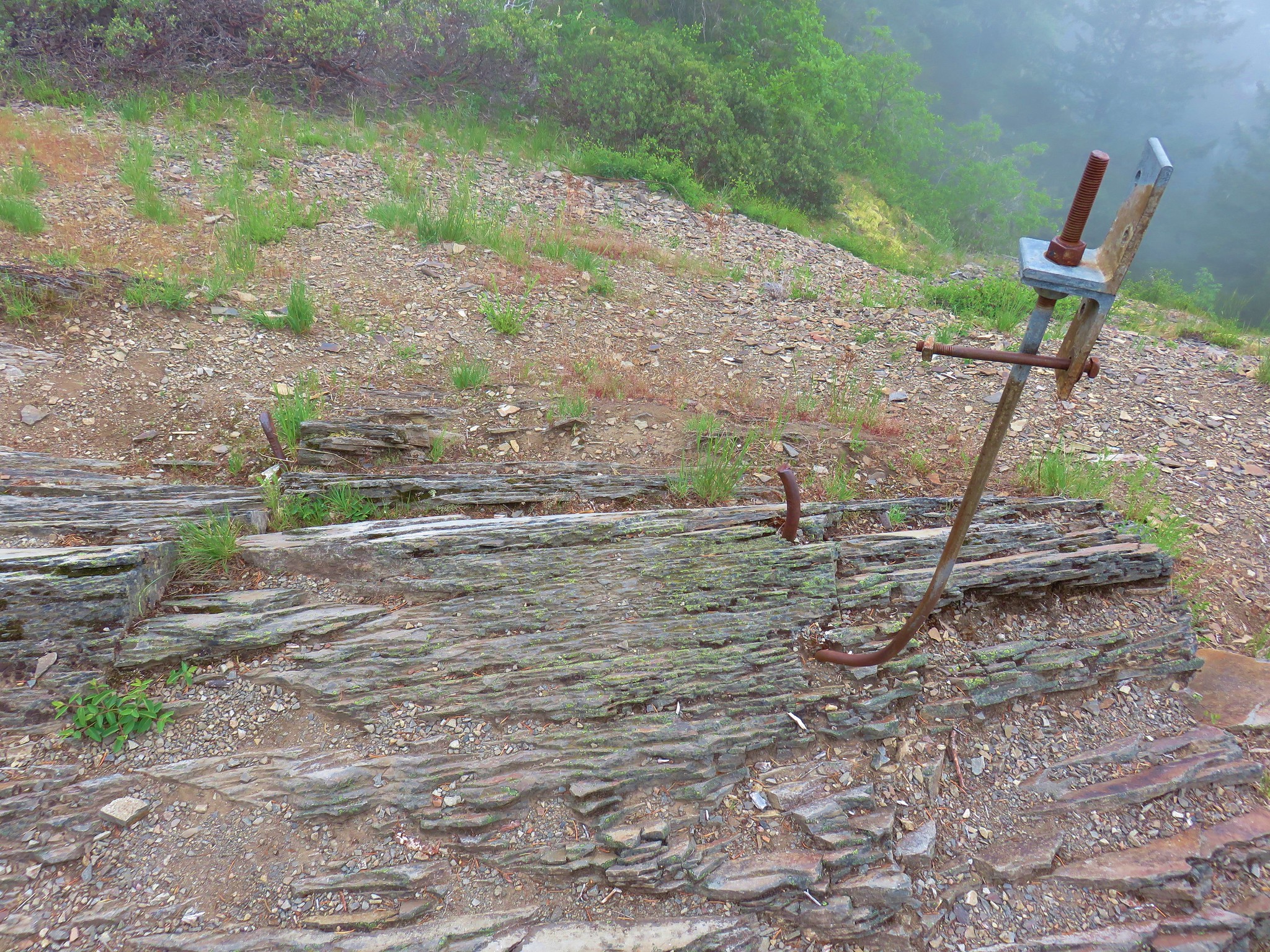
A brief exploration of the meadow revealed some blocks in the ground of unknown origin.

Blocks in a meadow along the Grasshopper Trail

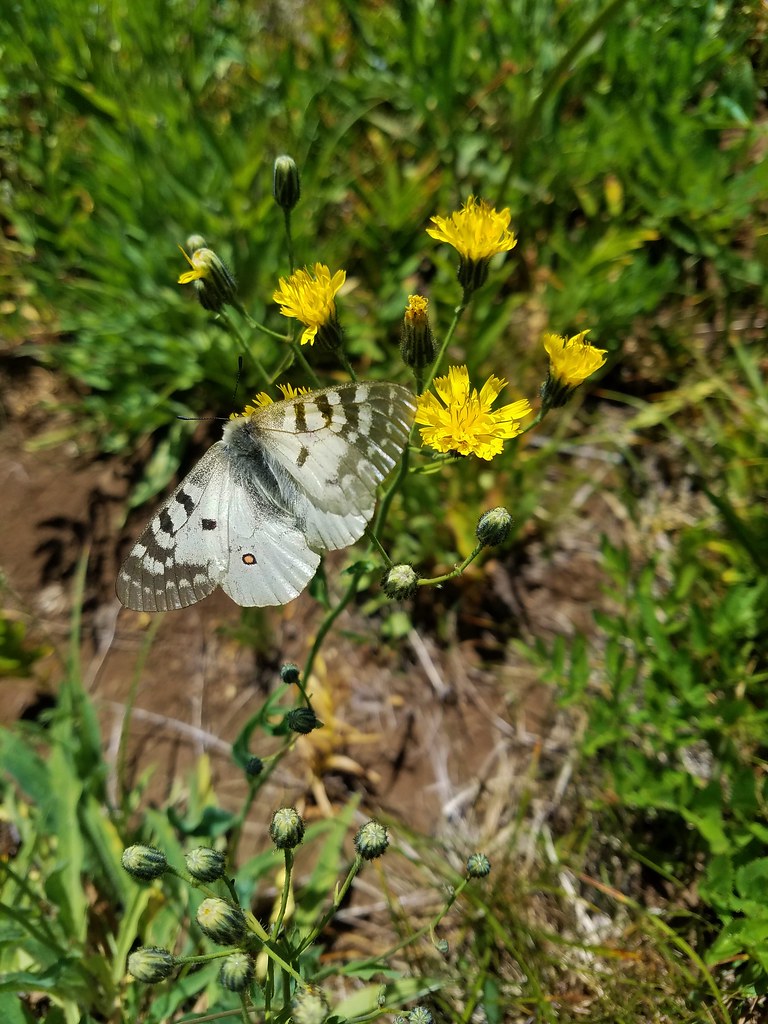
We also spotted a fairly good sized and very colorful moth which we later identified as a common sheep moth thanks to some help from the folks at Oregonhikers.org.
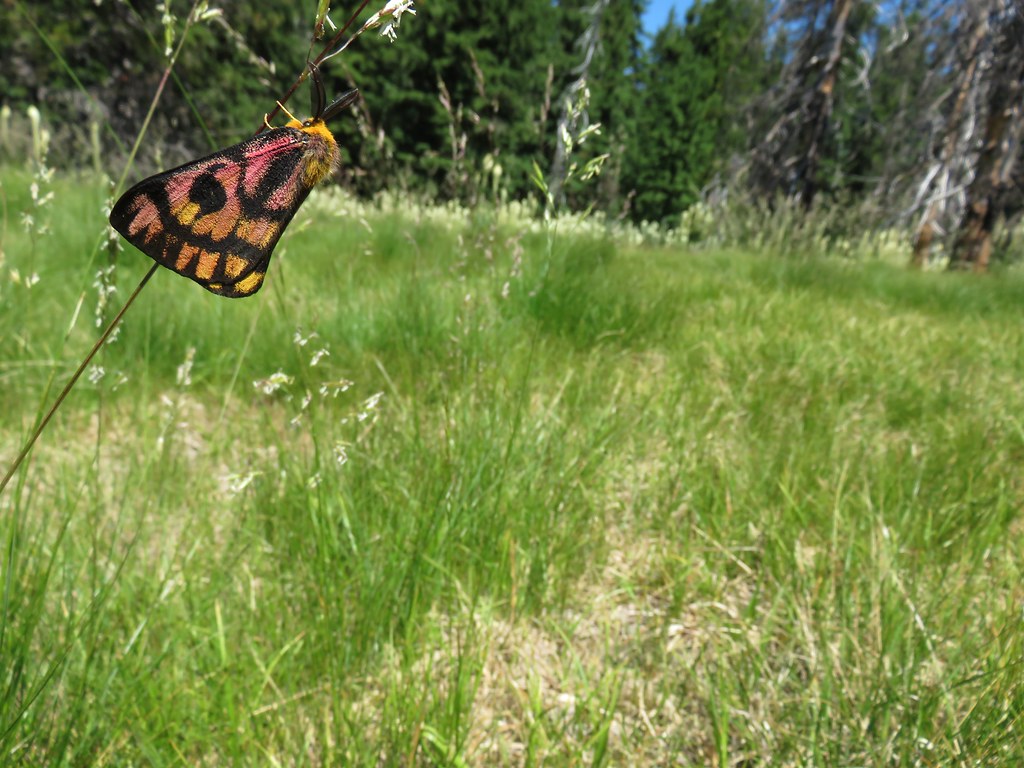
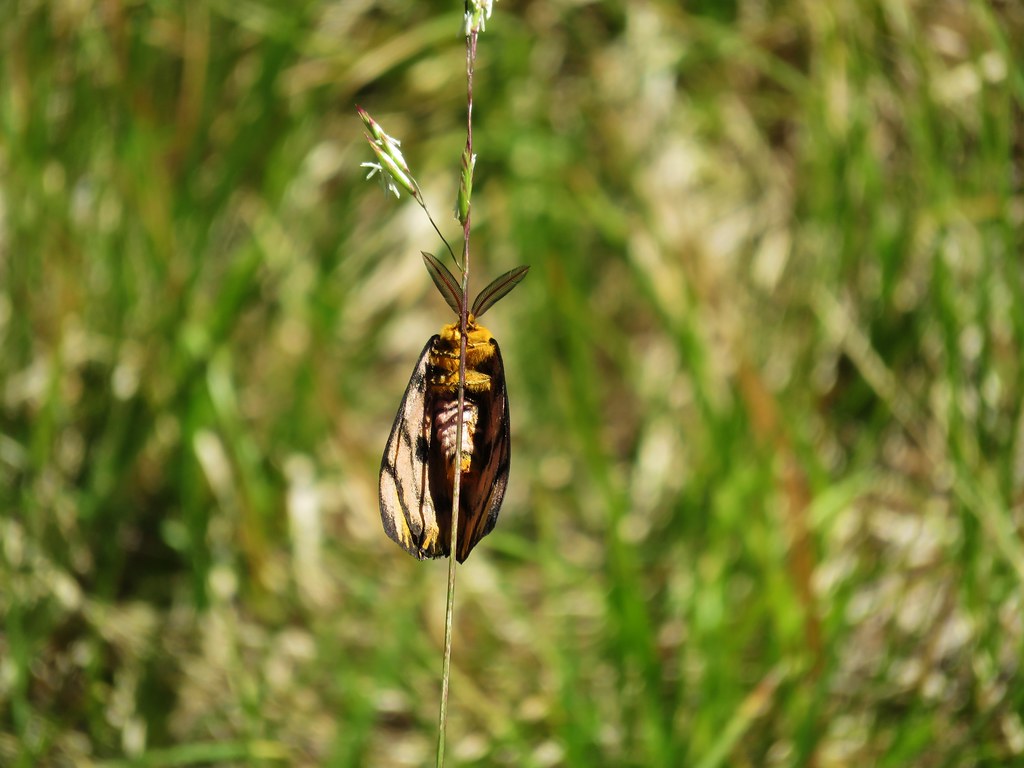
Sheep Moth

Sheep Moth

We had thought this meadow might be Grasshopper Point but after consulting the map it was clear we had a way to go yet before we’d reach that feature. We continued on the trail, which for the next quarter mile traveled along some rocky cliffs offering more views of Diamond Peak.
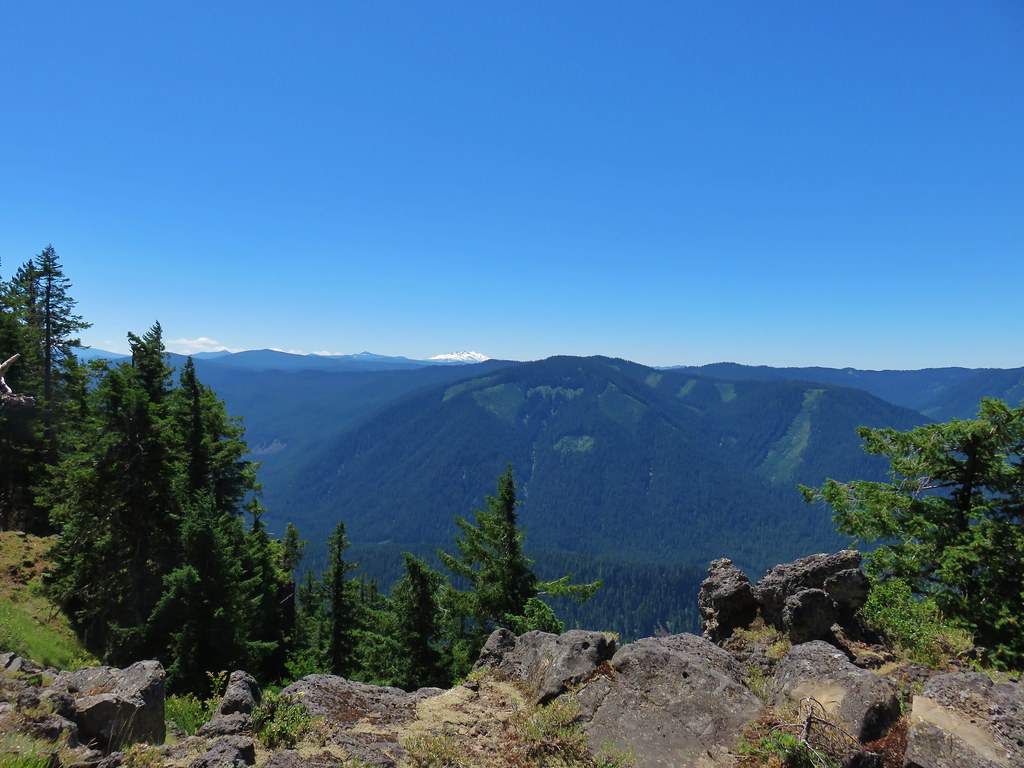
Diamond Peak

Beyond the cliffs the trail turned north as it began to contour around a creek drainage. Up until this point the the trail had been in good shape with signs of recent maintenance where logs had been cut. The Chucksney Mountain Trail had been a bit faint through the meadow along the ridge but it had still been relatively easy to follow. Here we came to a large meadow with signs of another fire but no sign of the trail at first.

The Grasshopper Trail was not visible through this meadow, a few Forest Service flags helped mark the way.

We finally spotted a small orange flag in the middle of the grass and made our way towards it.
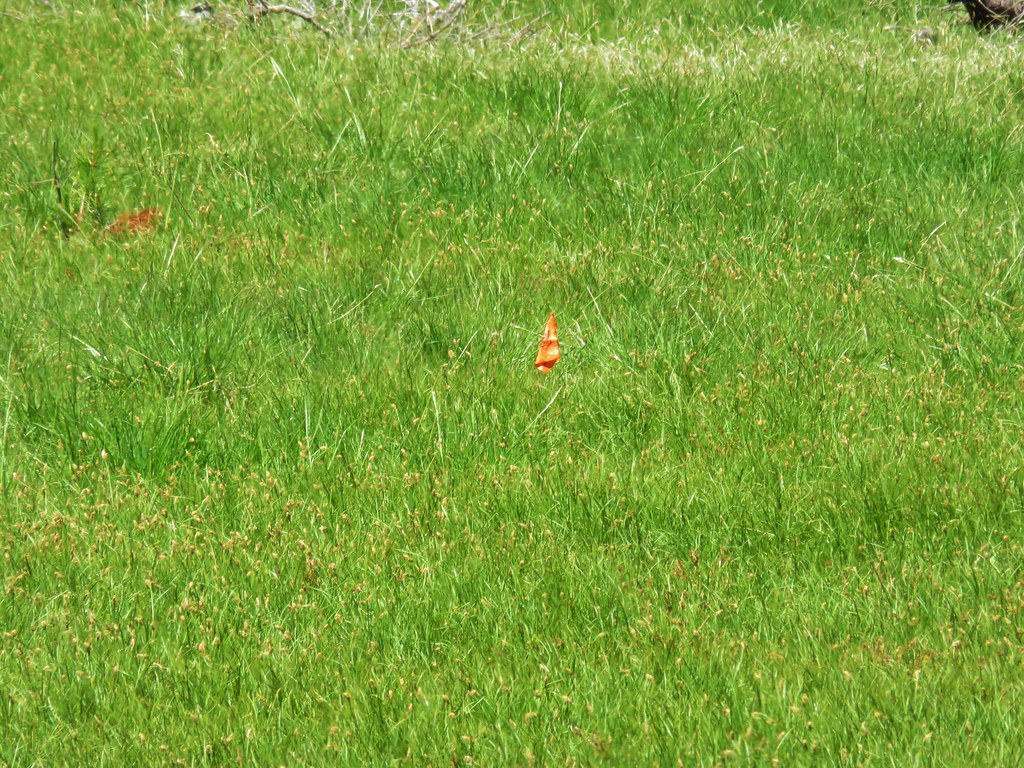
Forest Service Flag marking the Grasshopper Trail

It was a Forest Service “Trail” Flag so we looked for a second one. We did spot one, but it was next to a small tree next to the trail we’d just come from. We scanned for any signs of a trail: flagging, cairns, blazes but there was nothing. Time for the maps. The Garmin, Forest Service, and topographic maps all showed the trail swinging around to the NE so we began using the GPS to stick close to where it showed the trail was supposed to be. We spread out a bit in hopes of rediscovering the trail. We both spotted different flags at about the same time.

Forest Service Trail flag

There wound up being three flags at the lower end of the meadow which led us to the continuation of the trail as it reentered the trees. After a short stint in the trees the trail began to climb out of the valley into another meadow.
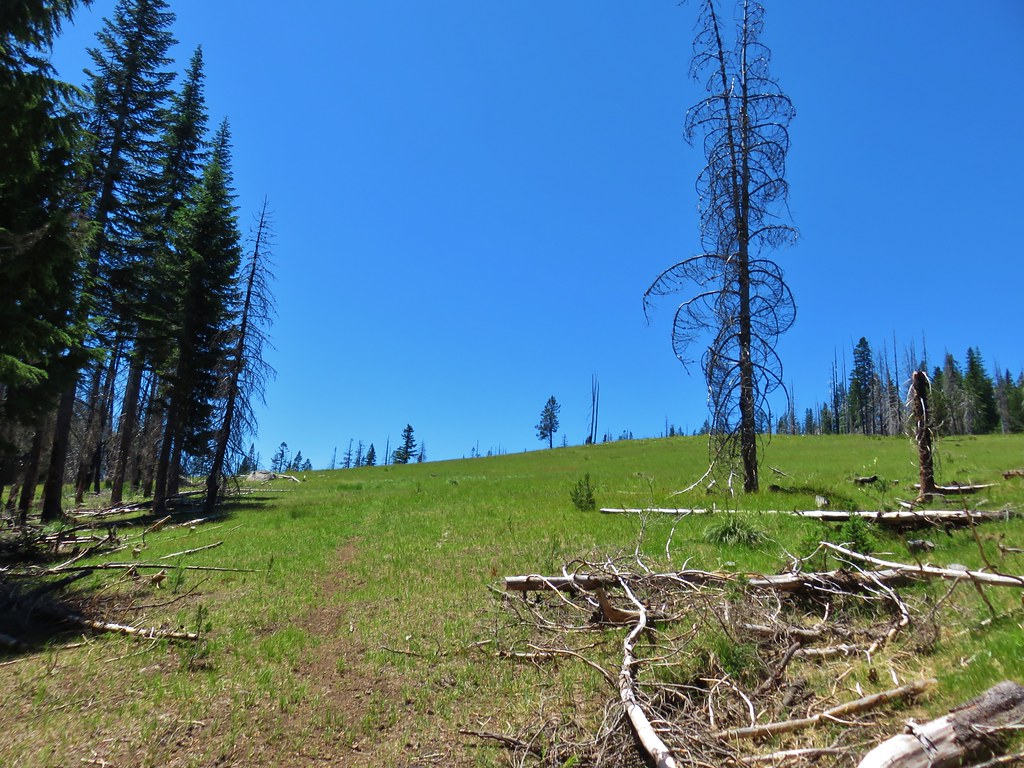
Grasshopper Trail

The trail was faint at times in this meadow as well, but there were large rock cairns to help guide us this time.

Grasshopper Trail

Looking back from this meadow gave us a good look at another meadow across the valley.

Meadows along the Grasshopper Trail

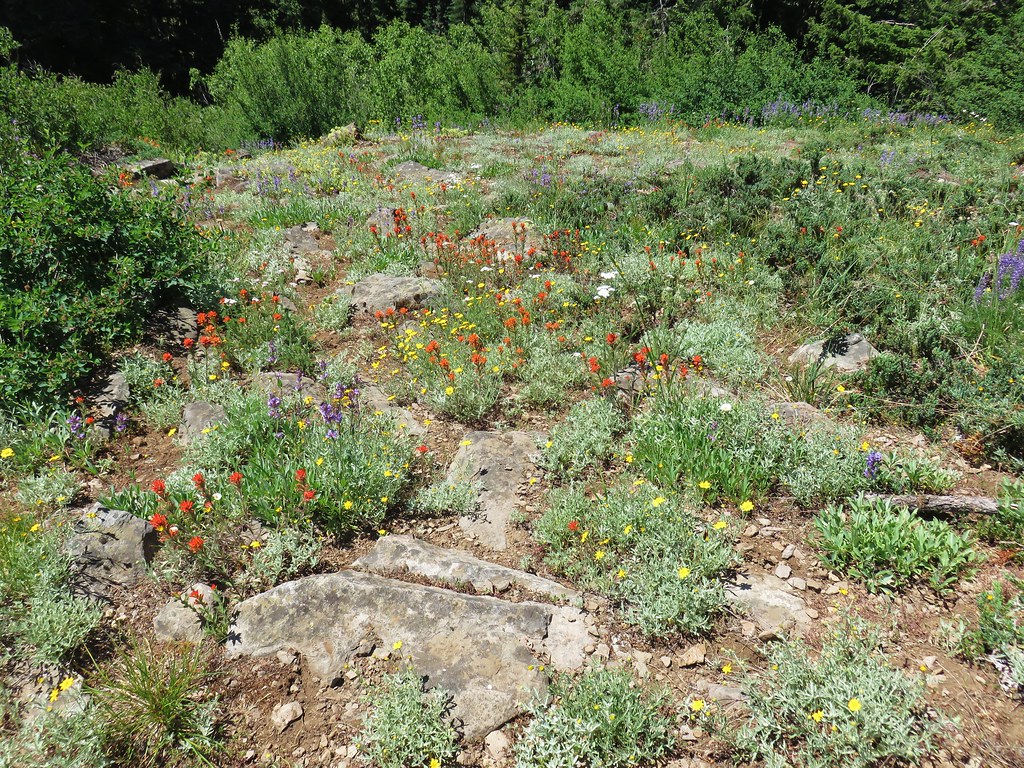
The meadow gave way to a wildflower rock garden as the trail regained the ridge.
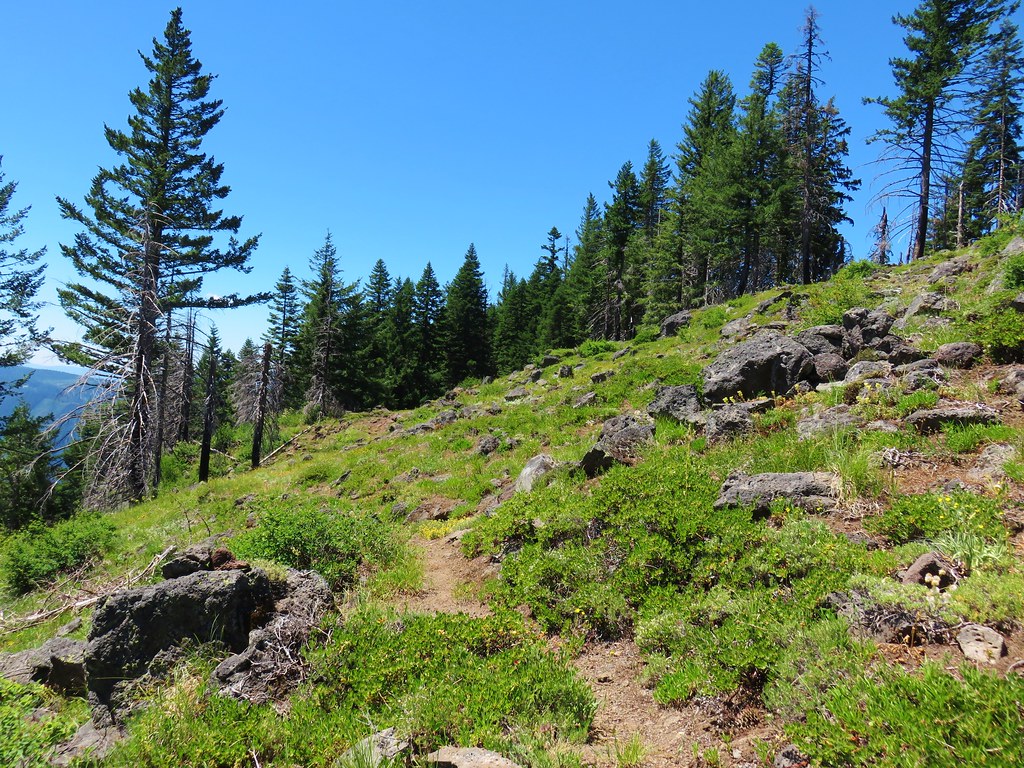
Grasshopper Trail

Owl's head clover

Scarlet gilia

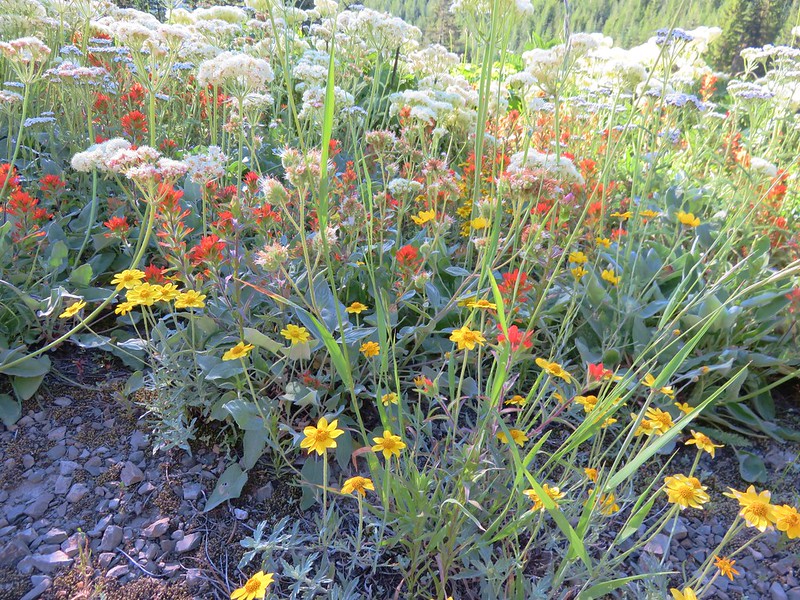
Wildflowers along the Grasshopper Trail

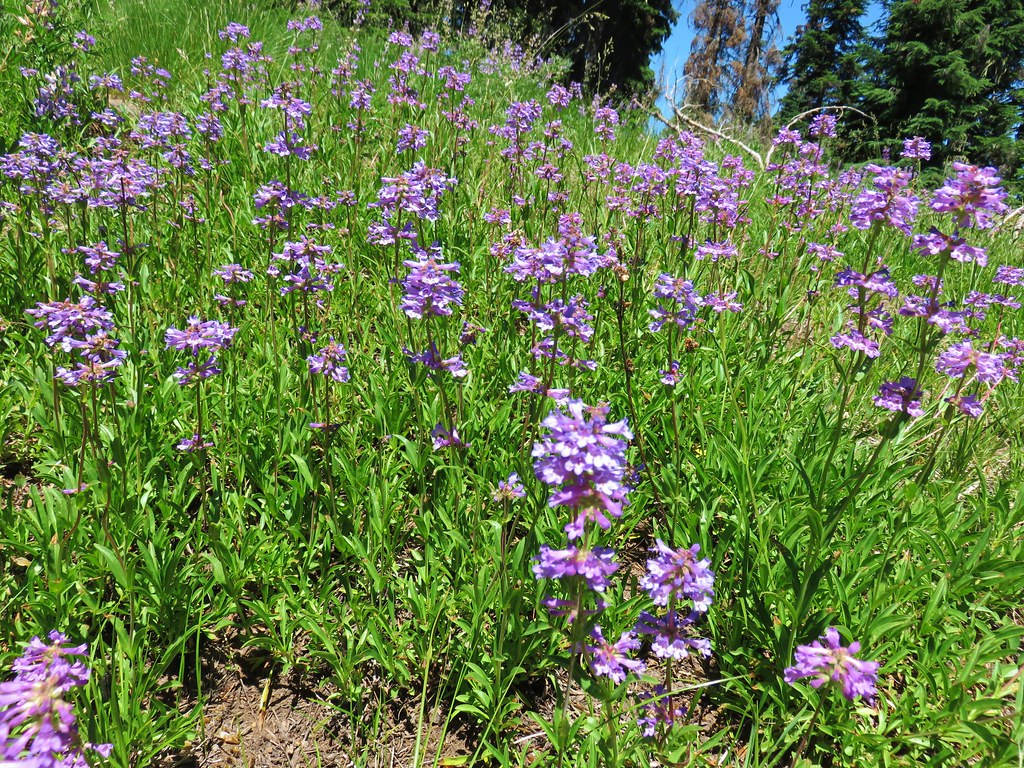
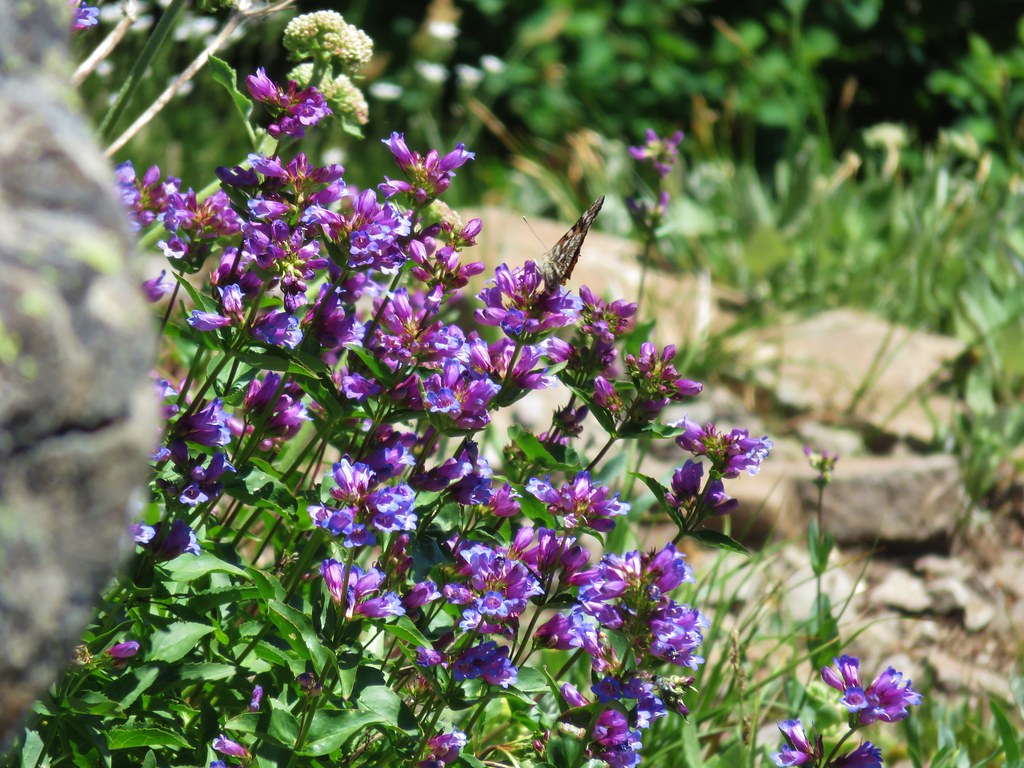
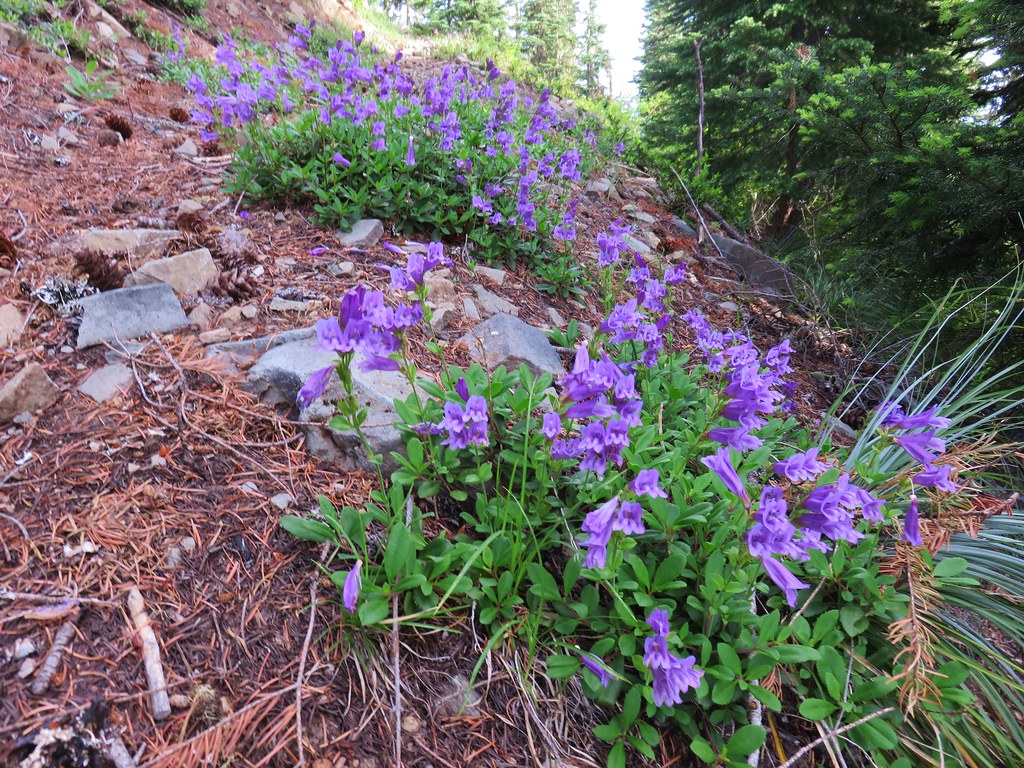
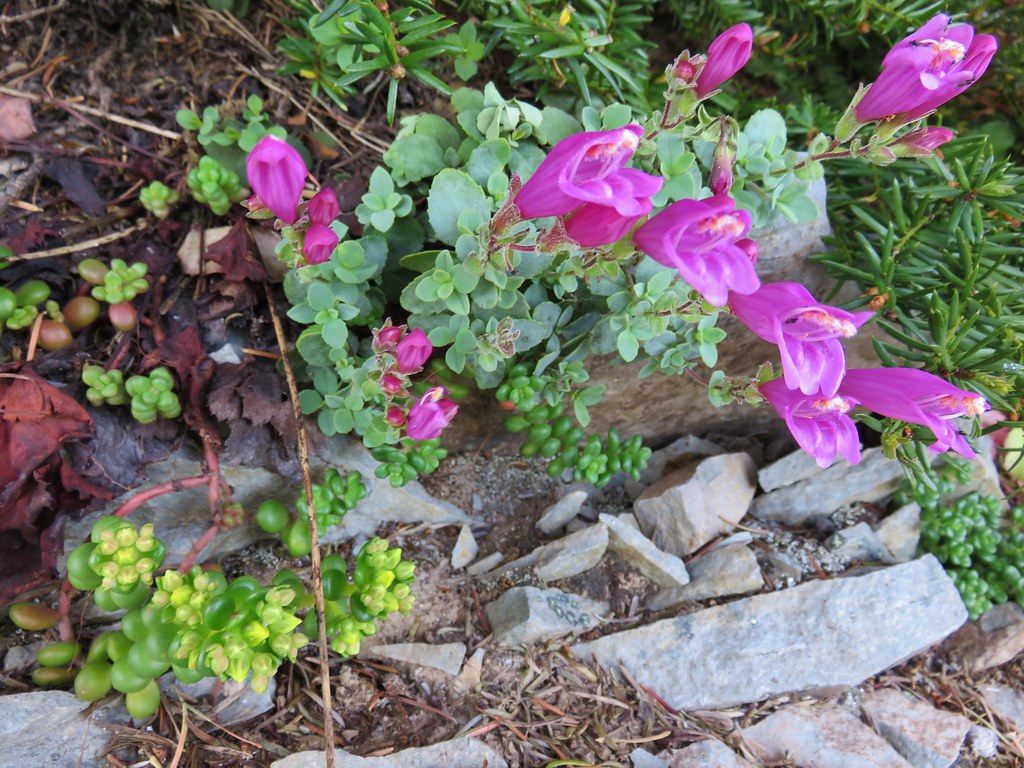
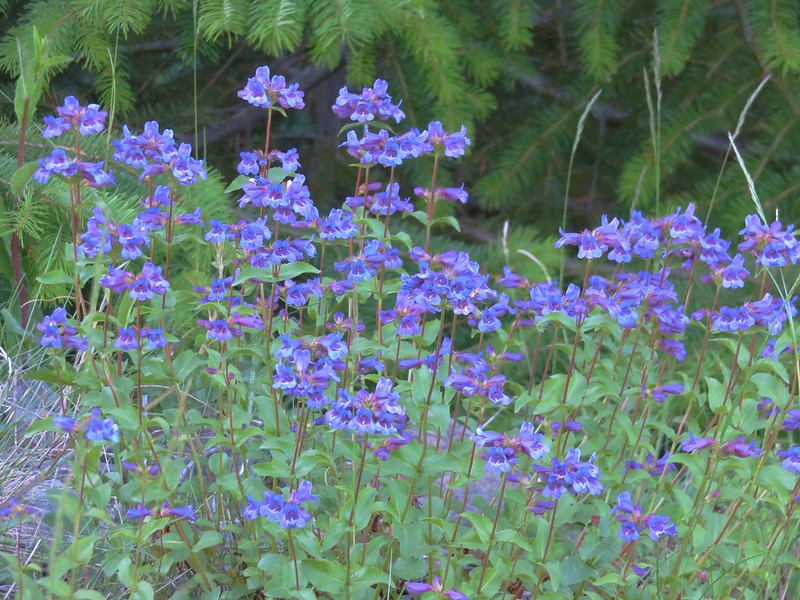
Penstemon

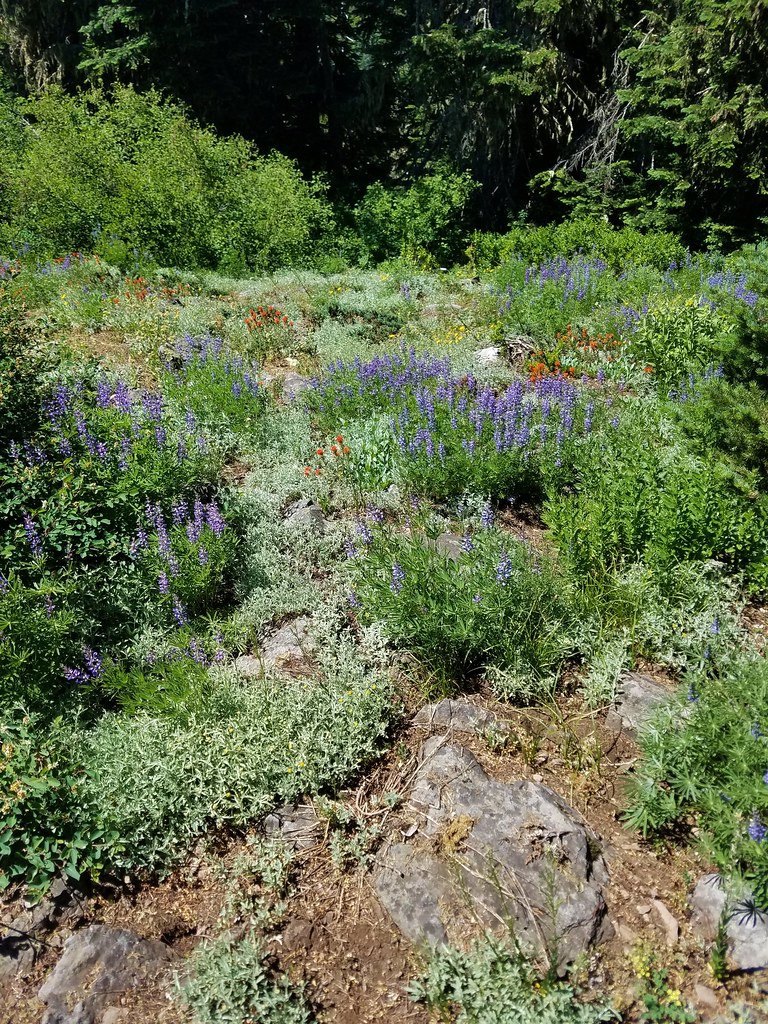
In the next half mile the trail passed through two small meadows, the first filled with lupine and the second more beargrass. The trail was once again very faint in the lupine meadow.
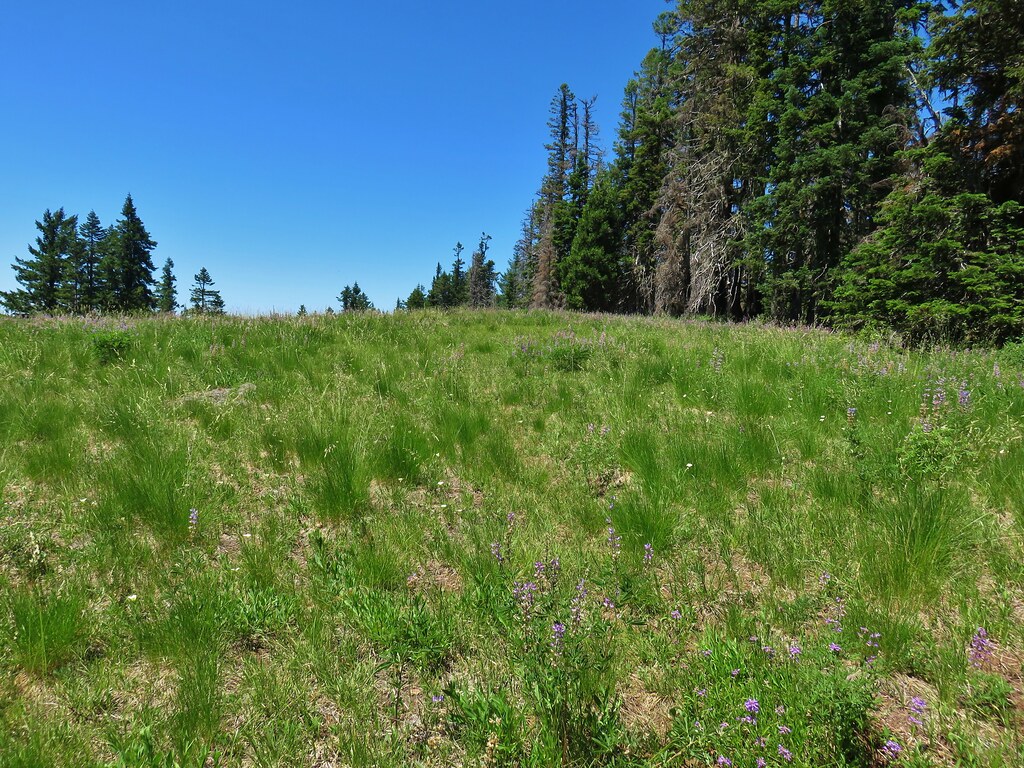
Grasshopper Trail

Lupine

Grasshopper Trail

Grasshopper Trail

The trail then dipped off the ridge, first on the north side, then after climbing back up to a saddle, to the south side to avoid some rock outcrops.
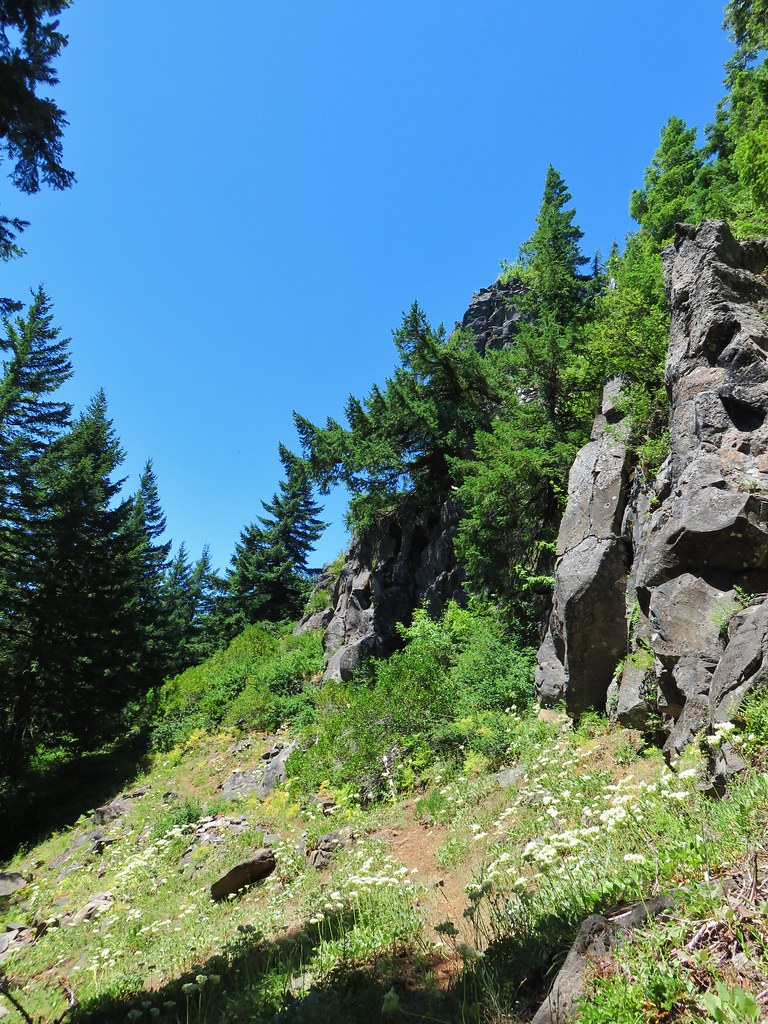
Grasshopper Trail

Beyond the outcrops was a short forested section of the ridge where some fragrant Washington lilies were in bloom.
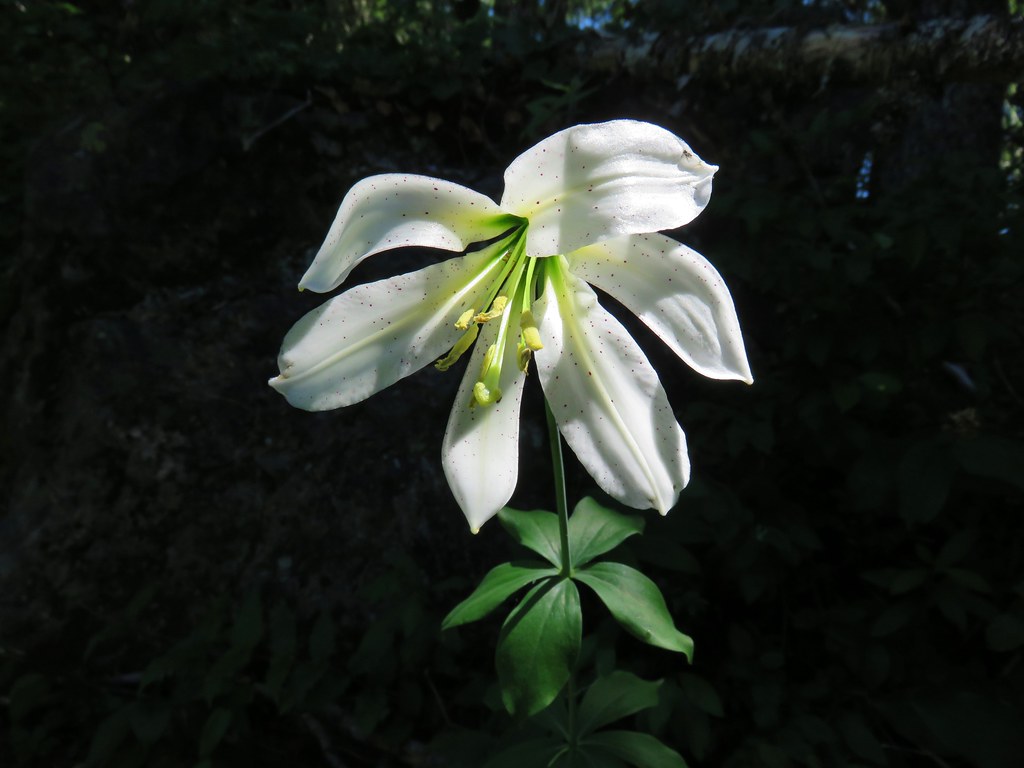
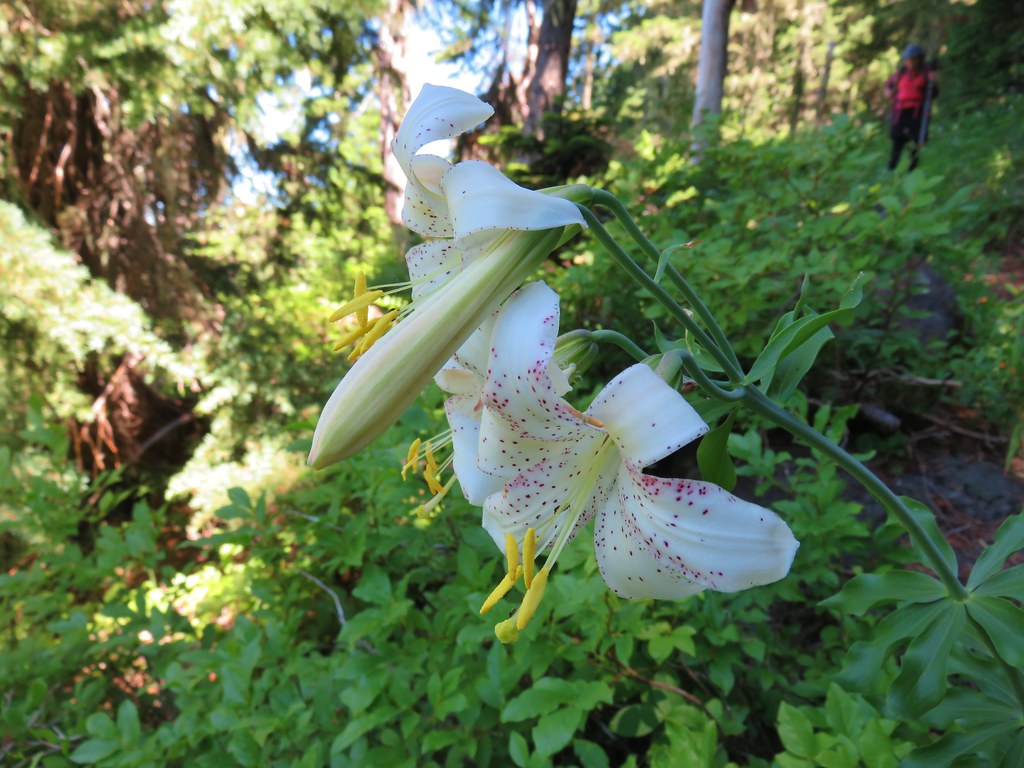
Washington lily

Washington lily

A total of 5.2 miles from the Chucksney Mountain Trail junction we arrived at the meadow near Grasshopper Point.
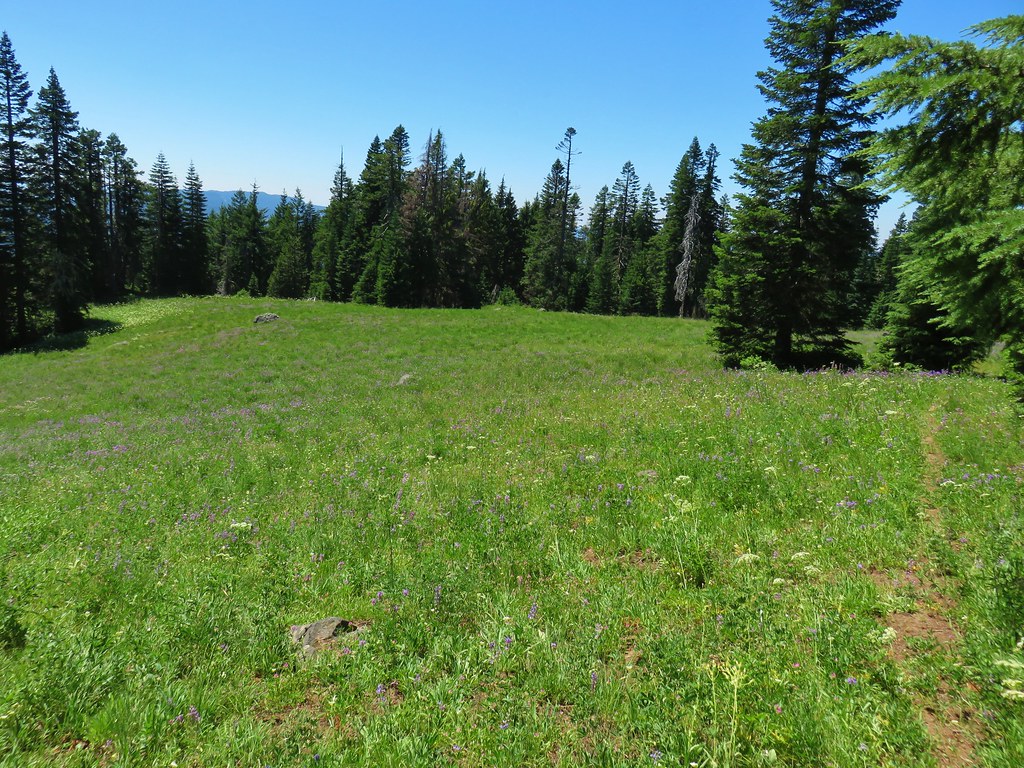
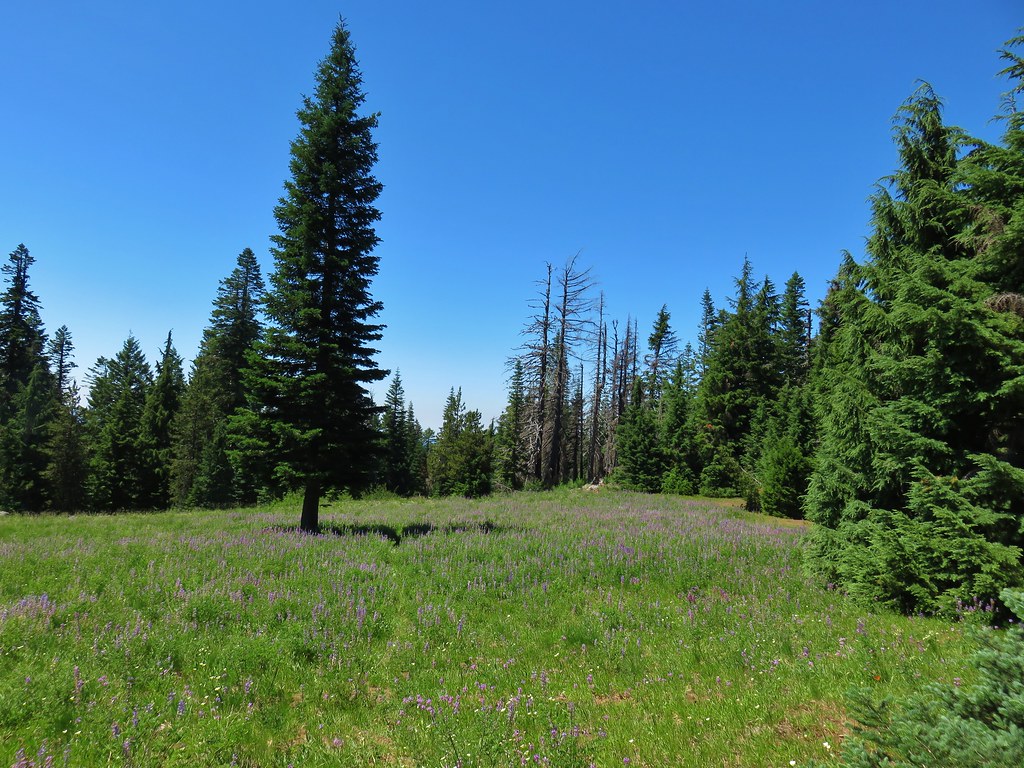
Grasshopper Trail

Grasshopper Trail

We spotted a patch of bare ground at the edge of the meadow near the trees where we decided to set up camp.
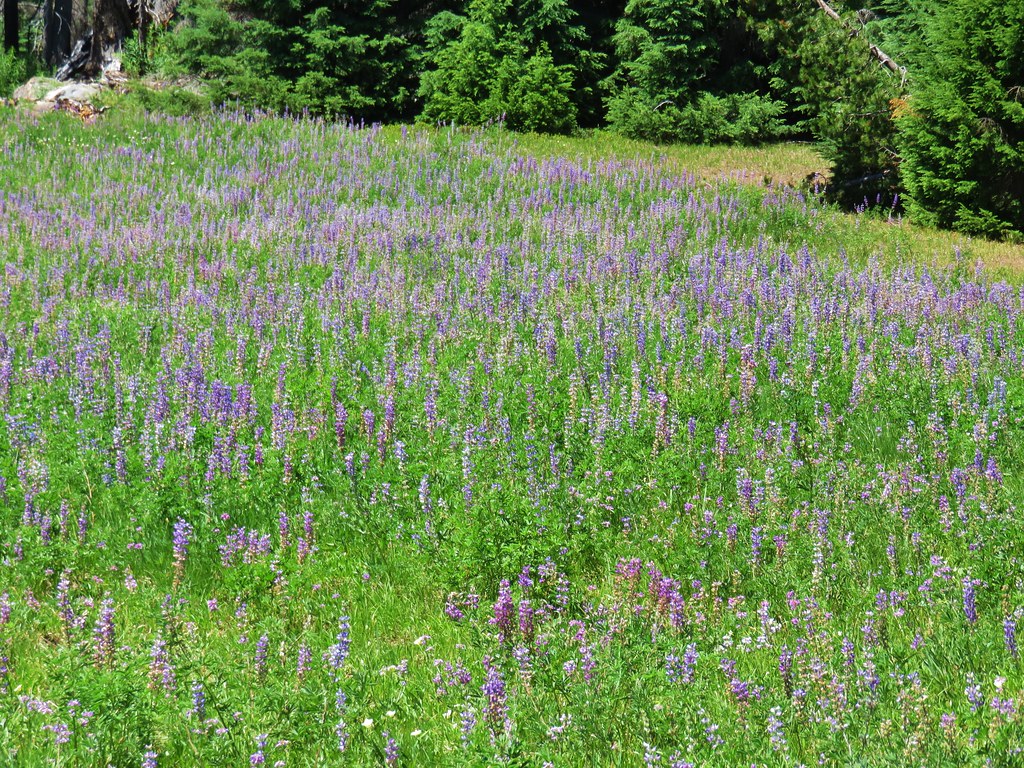
Lupine meadow

Camp site along the Grasshopper Trail

The meadow was filled with flowers and provided views of Diamond Peak, especially on the rocks of Grasshopper Point.

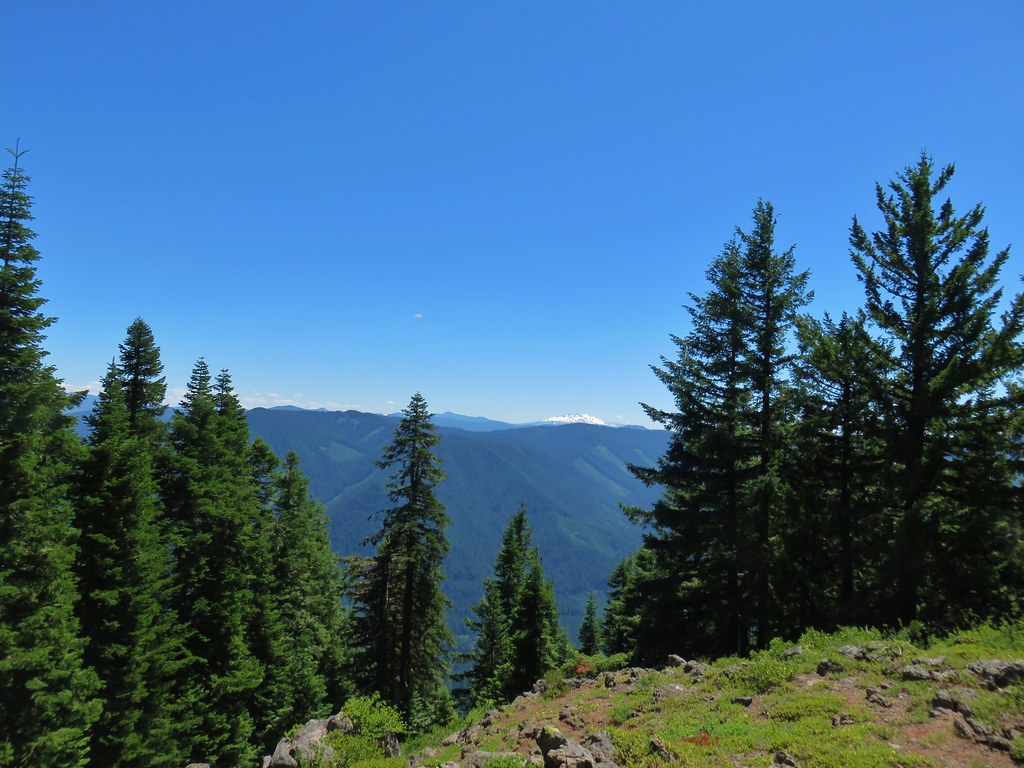
Wildflower meadow along the Grasshopper Trail

Diamond Peak

After setting up camp and taking a nice break at Grasshopper Point we continued east on the Grasshopper Trail to the large Grasshopper Meadow.
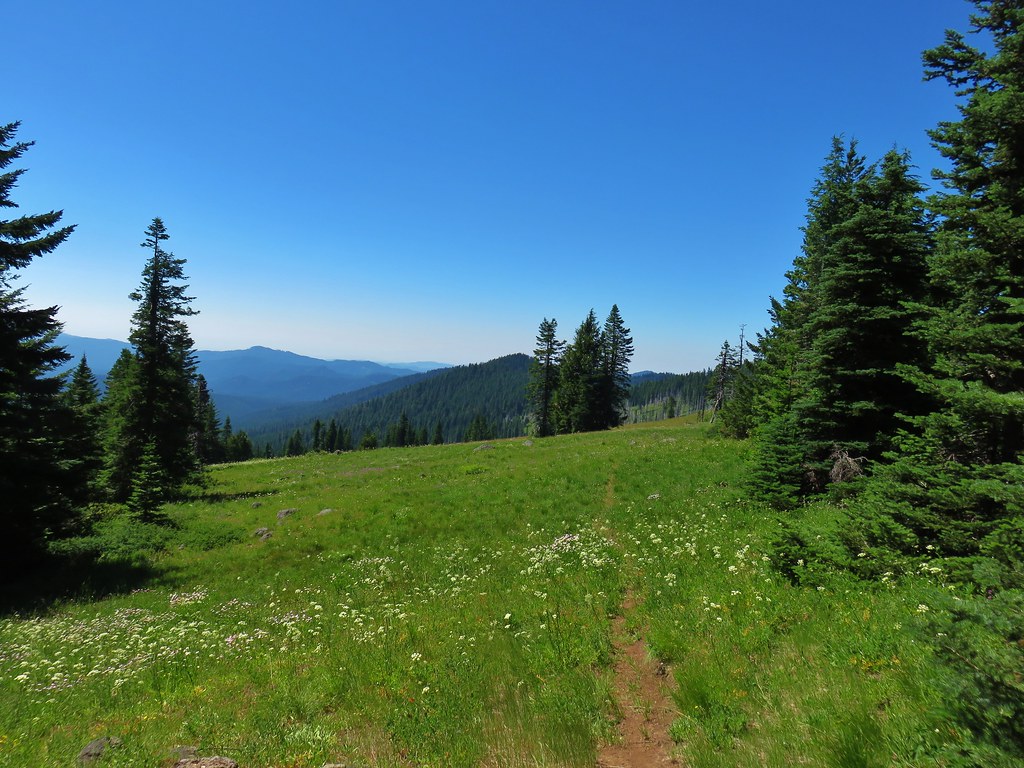
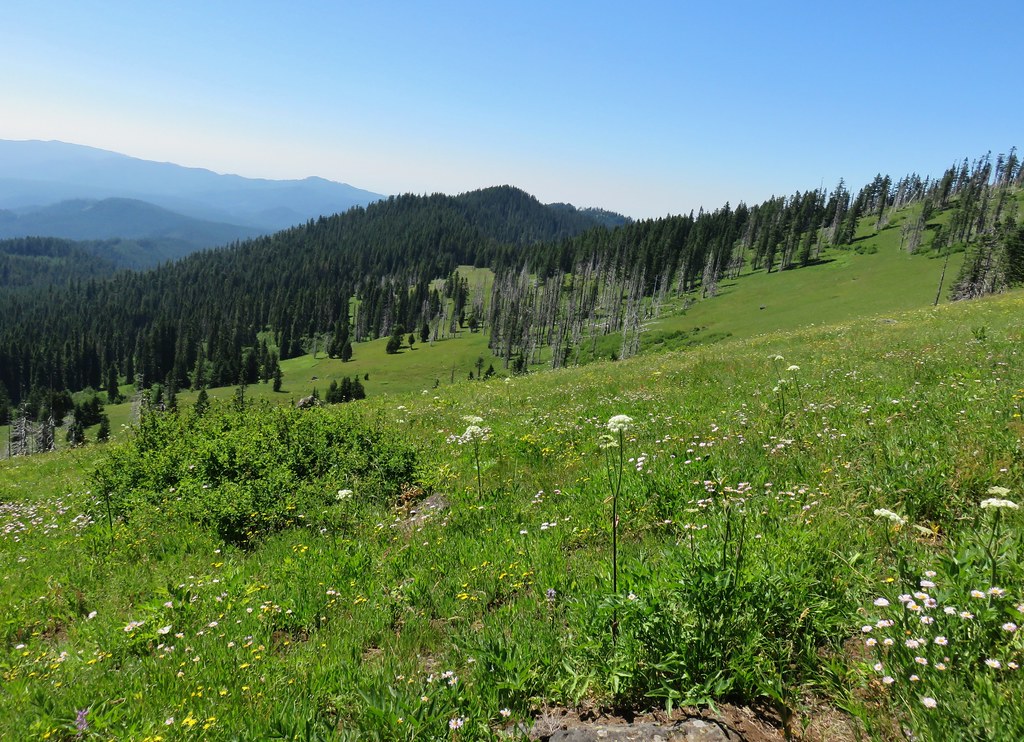
Grasshopper Trail

Grasshopper Meadow

Grasshopper Meadow (and Grasshopper Point for that matter) lived up to their name as dozens of grasshoppers jumped with every step. The number of grasshoppers was impressive but more impressive was the variety of butterflies we were seeing.

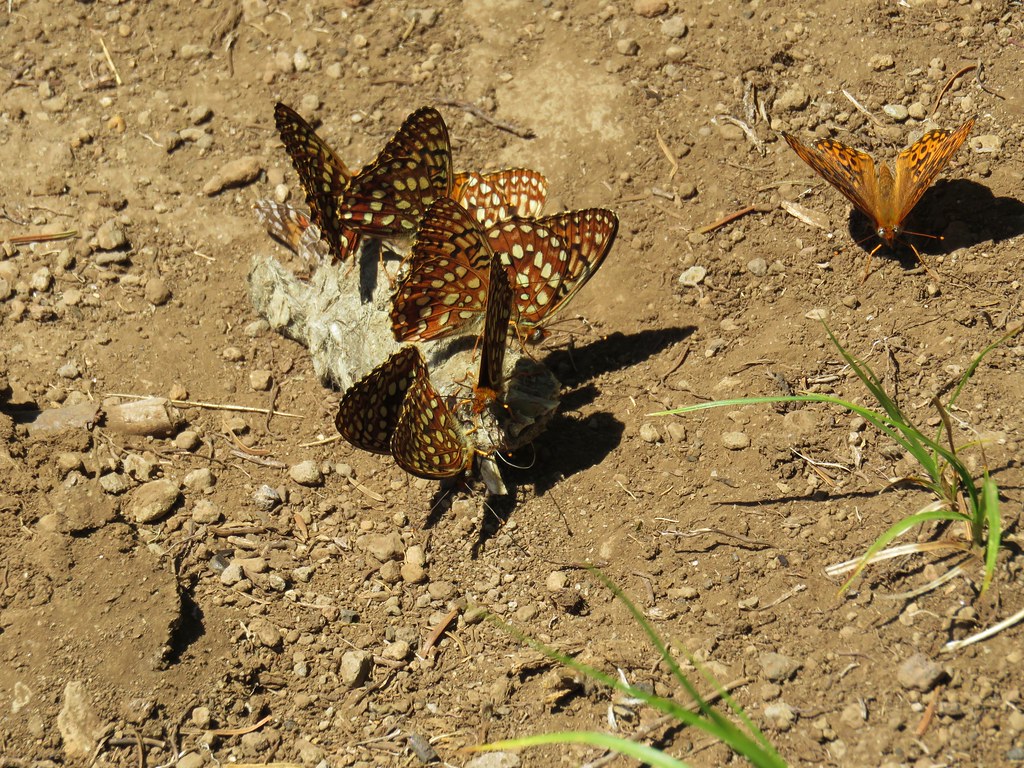
Checkerspot butterfly

Swallowtail on tiger liliy

Mountain parnassian

Butterfly in Grasshopper Meadow

Fritillary butterflies

Butterflies in Grasshopper Meadow

Blue copper

There was even another common sheep moth.
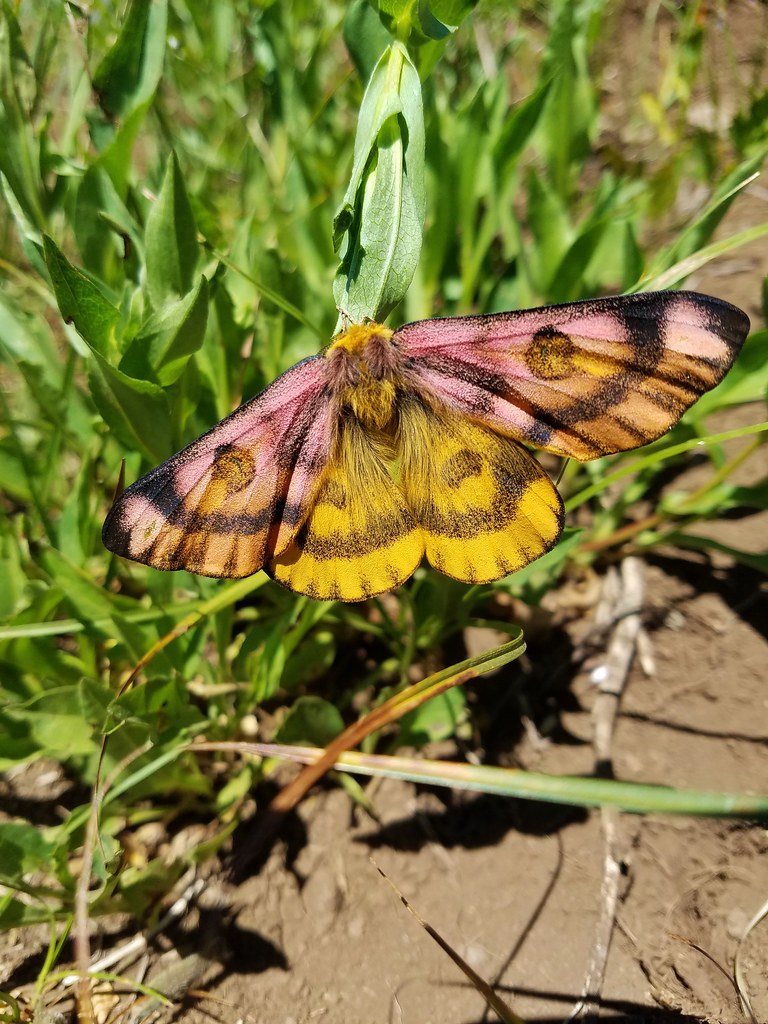
Sheep moth

We were so busy looking at the butterflies and flowers we missed the fork in the trail that would have led down to a spring which is where we had planned on heading. We had brought our dinner with us and had planned on finding a place to eat near the spring so we could refill our water afterward since it was the only source of water around. When we reached a saddle where the trail began to descend to the north of Grasshopper Mountain we realized our mistake. From the saddle the Grasshopper Trail follows Hiyu Ridge for 4 miles to the Grasshopper Trailhead.

The view from the saddle included Diamond Peak to the SE and the Three Sisters, Broken Top, and Mt. Bachelor beyond Chucksney Mountain to the NE.
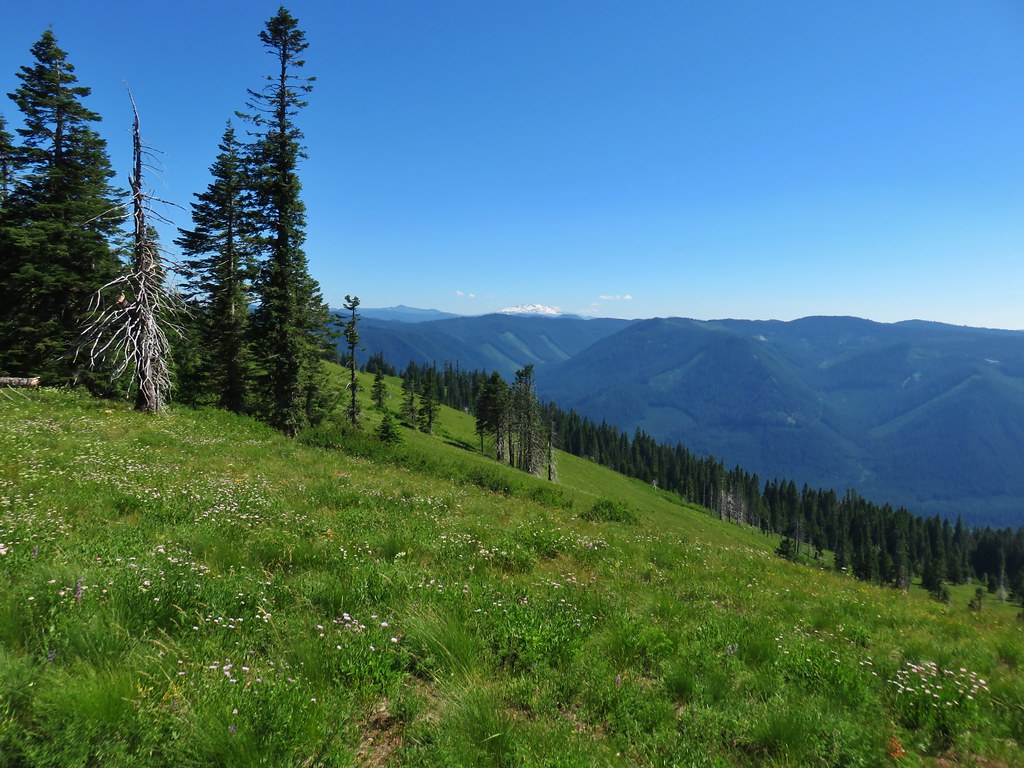
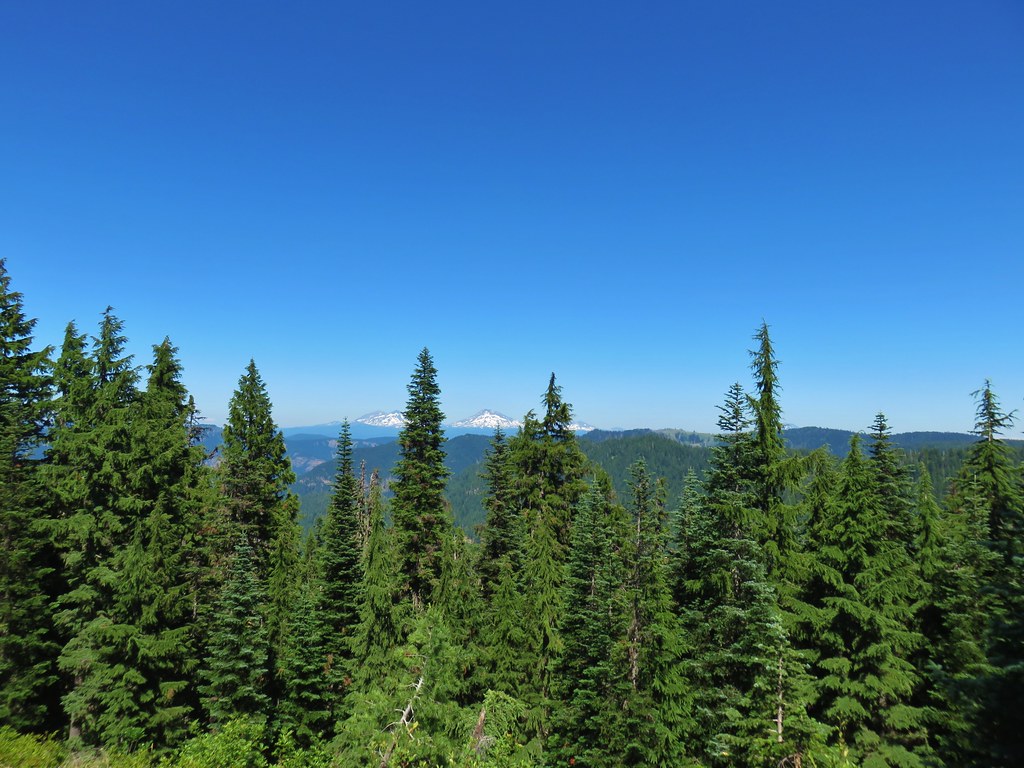
Diamond Peak from Grasshopper Meadow

The Three Sisters and Broken Top

We momentarily considered attempting to bushwack up to the former lookout site atop Grasshopper Mountain but the brush near the summit looked thick and in the end we decided not to exert the effort.
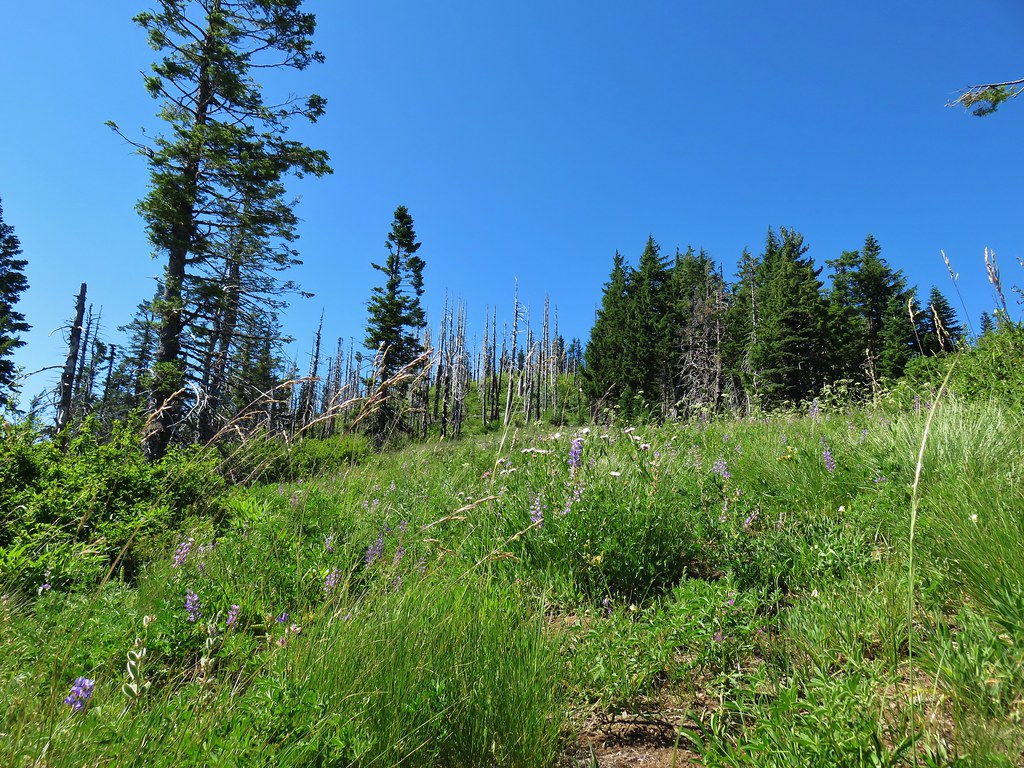
Grasshopper Mountain

Instead we decided to head cross country downhill and use the GPS to locate the spring.
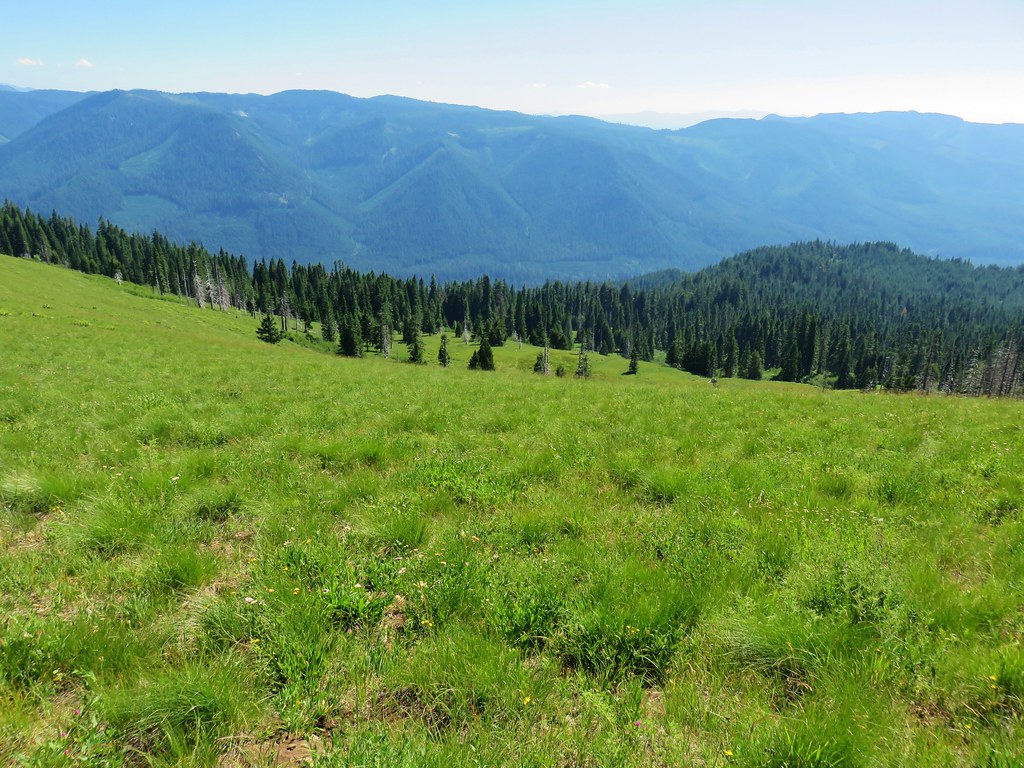
Grasshopper Meadow

From higher up in the meadow we’d seen something near a boulder below and on our way to the spring we took a closer look.
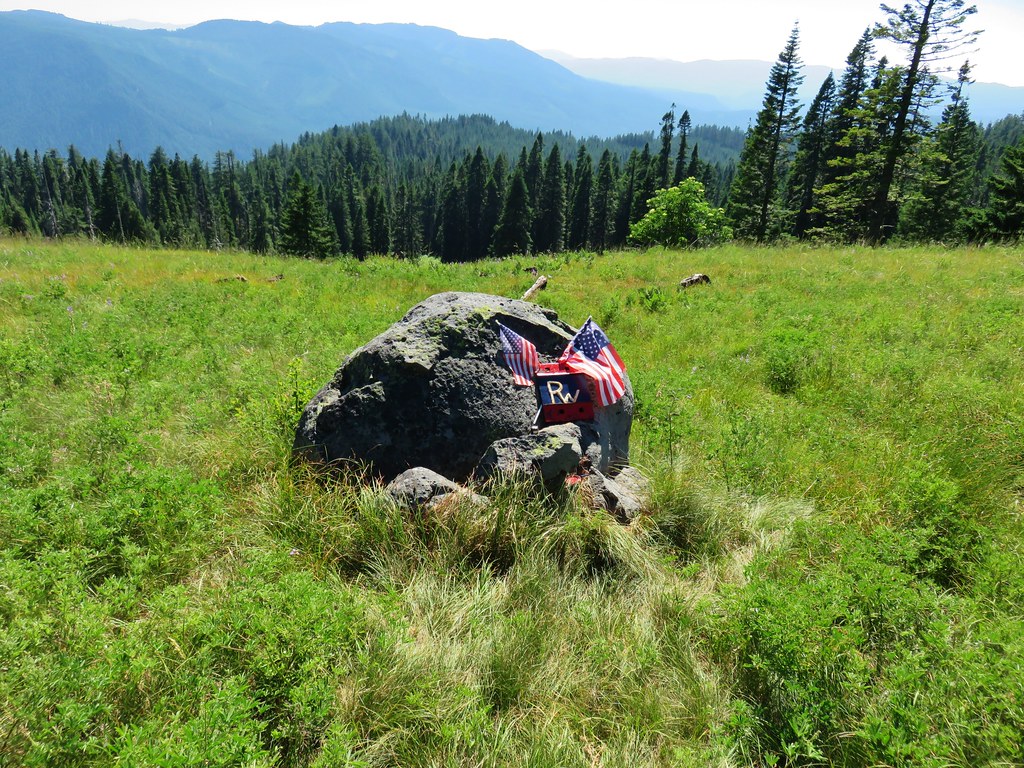
Some sort of memorial in Grasshopper Meadow

Not sure if it was some sort of memorial or what but after satisfying our curiosity we continued steeply downhill to the SE where we managed to find the spring flowing out of a pipe amid a clump of yellow monkey flower and a swarm of blue copper butterflies.

Spring in Grasshopper Meadow

Blue copper butterflies

We filled all our containers from the spring and then picked up a trail just a few feet east of the spring climbing steeply uphill. This trail starts just .7 miles from the spring along Forest Road 1929 and is the described route in William Sullivan’s 4th edition “100 Hikes in the Central Oregon Cascades”.

The terrain was too steep to provide any place for us to fix dinner so we began climbing back up toward the Grasshopper Trail. The trail was faint but visible as we climbed. Along the way we spotted a huge Washington lily blooming in the meadow.

Washington lily in Grasshopper Meadow

Washington lily

Washington lily

We were curious to find out where we’d missed this trail earlier when we passed by. It turned out that the path led over a rocky area where the tread vanished leaving a lone post and small rock cairn as it’s only identifiers.
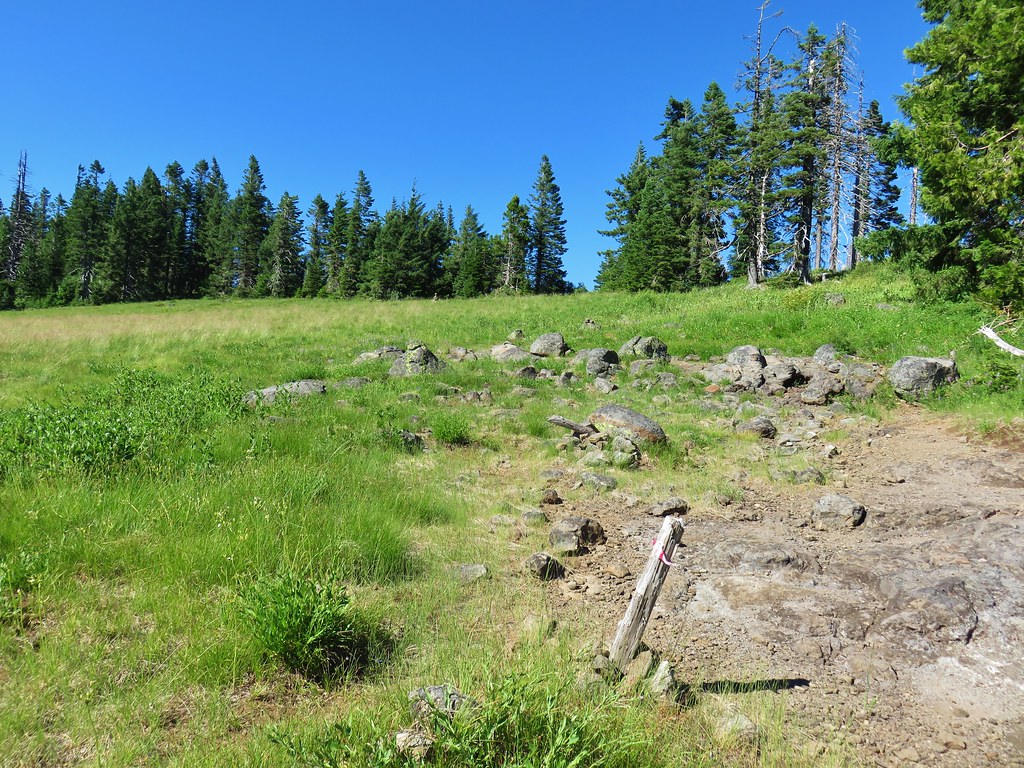
Grasshopper Trail

We decided to return to Grasshopper Point and set up our stove on the rocks there. We fixed dinner then relaxed as we enjoyed the view and listened to the birds.
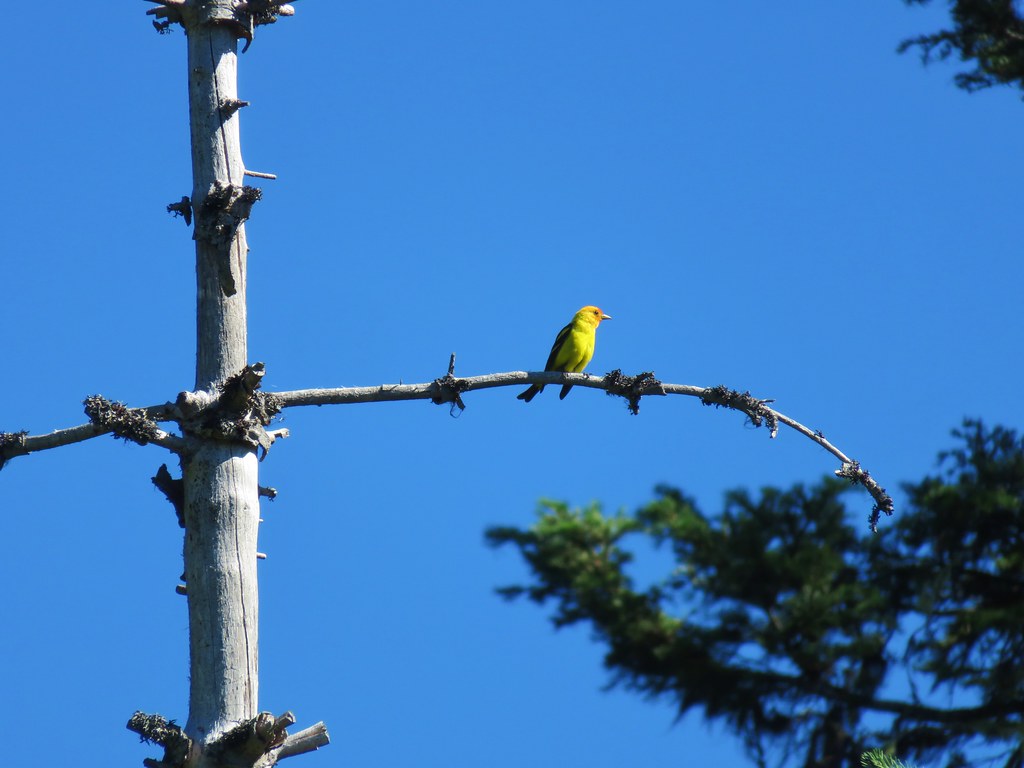
Western tanager

White crowned sparrow

We turned in for the night after having put in a little over 15 miles for the day. After a good nights sleep we awoke early and began preparing to depart. The mosquitoes were out in force, (they had been mostly absent in the meadows during the heat of the previous day) and we were dealing with a fair amount of condensation due to setting up next to the meadow.

Lupine in the morning light

After packing up and applying some DEET we headed back. We had talked about the possibility of seeing some sort of animals in the meadows that morning and sure enough we did spot three deer just as we entered one of the meadows, but they quickly retreated into the trees.

While we hadn’t seen anyone else yet on this trip we did spot some fresh mountain bike tracks as we neared the junction with the Chucksney Mountain Trail. We reached that junction after a little over five miles. We passed that trail and continued straight on the Grasshopper Trail.

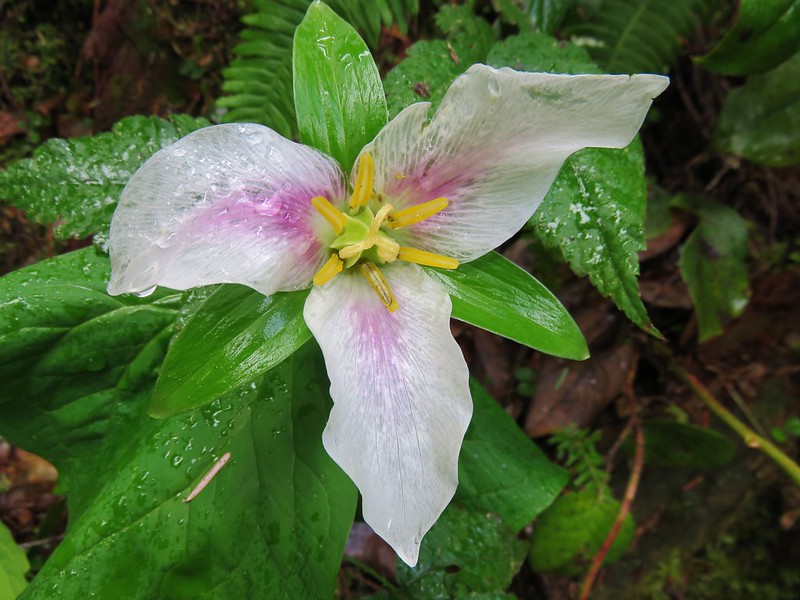
Our shoes were soaked from the dew in the meadows and the mosquitoes were ready to pounce whenever we paused, so even though the next 3.6 miles of the Grasshopper Trail was new for us, we kept a brisk pace. The trail wound it’s way downhill through the forest where there were still many of the typical white flowers found amid the trees; bunchberry, anamone, queen’s cup, twin flower, and we even spotted a pair of trillium still in bloom.

Trillium

After a wide switchback we crossed a stream flowing down Box Canyon and in another quarter mile arrived back at the lower junction with the Chucksney Mountain Trail.
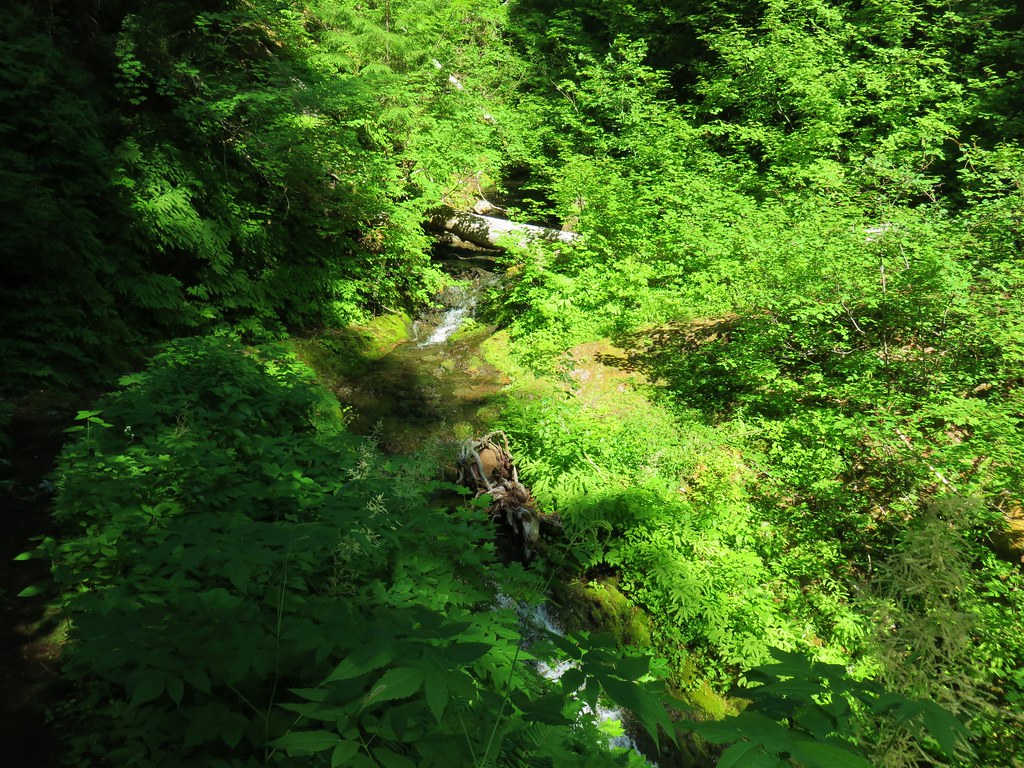
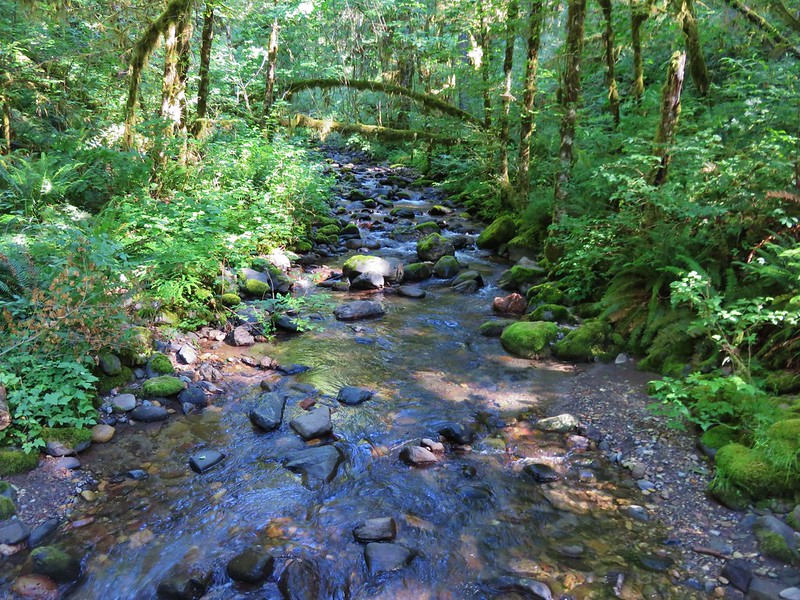
Stream in Box Canyon

Grasshopper Trail junction with the Chucksney Mountain Trail

A final .3 miles brought us back to our car which was being patrolled by a squadron of mosquitoes. We quickly tossed our packs in the back of the car and hopped inside to change. We never did wind up seeing anyone else on the trails which made the fourth hike in a row where we didn’t see another person on the trails.

The trails had been amazingly clear of debris, we only stepped over two logs and one young bent tree, but the faint sections through the meadows required some navigational skill. The relative lack of water along the route make it an unlikely backpacking destination but it worked out well for us. That being said the views and the wildflowers make either Chucksney Mountain or Grasshopper Meadow a worthy early summer day hike destination. Happy Trails!

Flickr: https://www.flickr.com/photos/9319235@N02/albums/72157683128711132

Categories
Clackamas Hiking Old Cascades Oregon Trip report

Big Bottom (Clackamas Wilderness) & Rho Ridge Trail

**Note the 2021 Bull Complex burned around Hawk Mountain, but the lookout survived.**

For the second outing in a row we turned to Matt Reeder’s “101 hikes in the Majestic Mount Jefferson Region” as our guide. A number of the hikes in this book are lesser known and therefor less popular which means fewer people and most likely more challenging due to spoty trail maintenance.

We began our day with a short hike into one of Oregon’s wilderness areas that we had yet to visit, the Clackamas Wilderness. This particular wilderness is broken up into five separate tracts of land, one of which is Big Bottom. The Big Bottom tract protects an old growth forest along the Clackamas River. Although there are no official trails in Big Bottom a decommissioned logging road allows for a mile long walk down to the wilderness boundary where a use trail continues north for a little over half a mile before vanishing in brush.

To reach the decommissioned road we drove Forest Road 46 north from Detroit for 28.6 miles to Fores Road 4670 where we turned left crossing the Clackamas River. Just beyond the bridge we turned right on FR 4671 for .7 miles and parked on the right at the old road.
Closed road 120 which leads to the Big Bottom unit of the Clackamas Wilderness

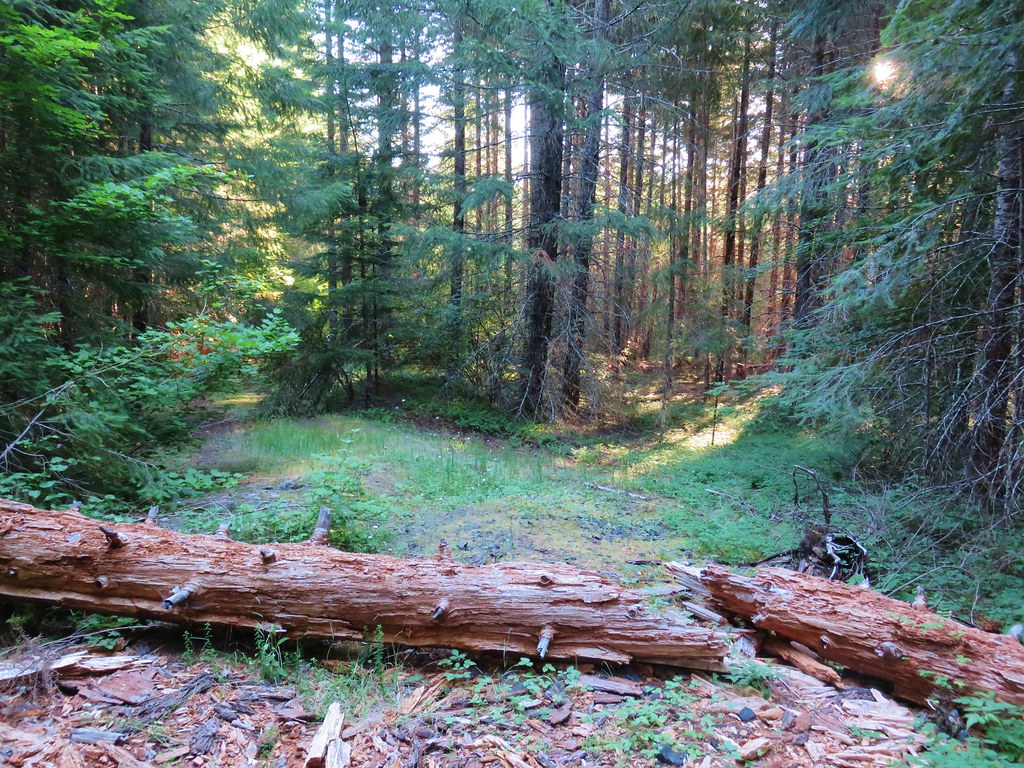
We followed the roadbed downhill through a previously logged forest.
Heading down to Big Bottom

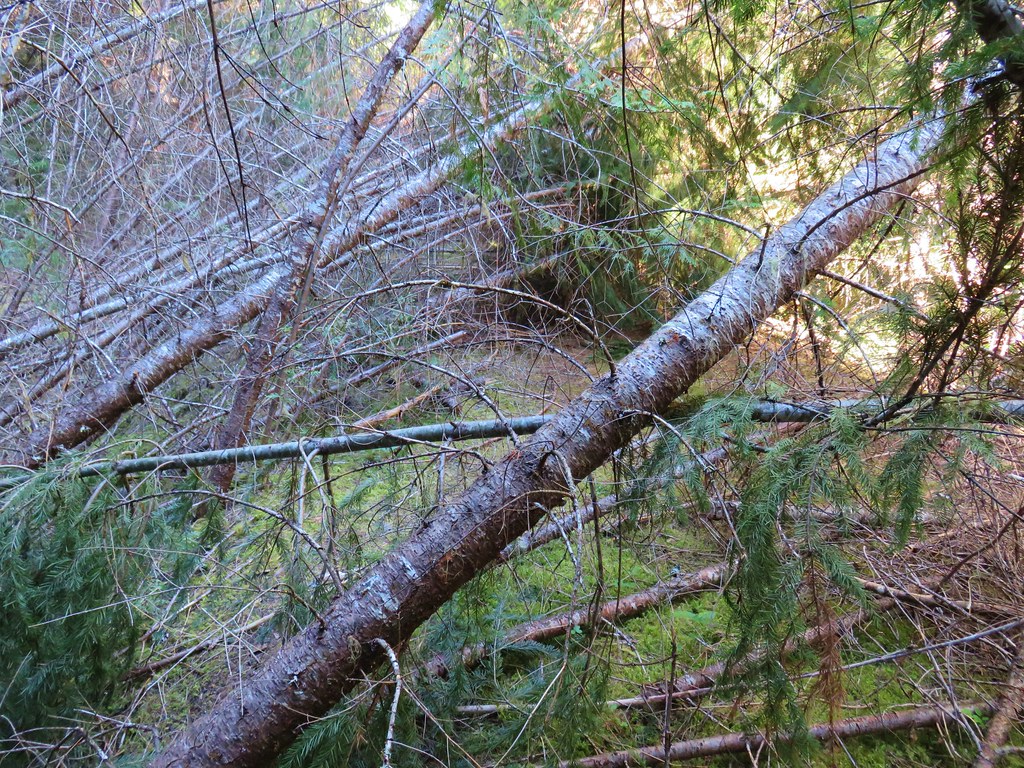
Just prior to reaching the wilderness boundary the road bed became choked with downed trees which we simply detoured around.
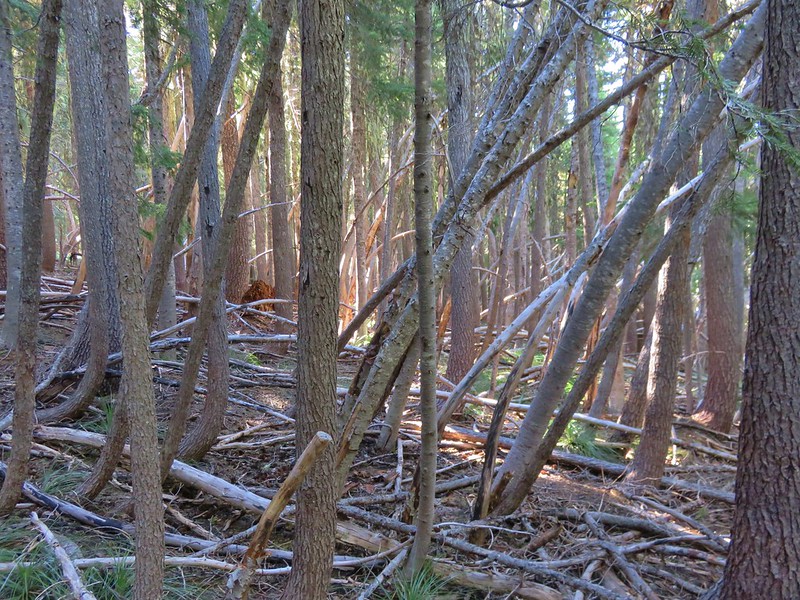
Trees leaning over old road 150

At a junction with an even older roadbed we turned left (north) and followed what became a clear user path into the old growth of Big Bottom.
Big Bottom

Big Bottom

There were a few downed trees to navigate but the path was easy enough to follow until we neared a creek where the ground became marshy and the underbrush extremely thick.
Big Bottom

We turned around at that point returning to the car to complete a 3.4 mile hike. That was our warm-up for the day before a longer hiker on the nearby Rhododendron (Rho) Ridge Trail. Our plan was to start at Graham Pass and follow the trail south 4.8 miles to the Hawk Mountain Trail and take the .4 mile trail up to the Hawk Mountain Lookout.

To reach Graham Pass we followed FR 4670 for 13.9 miles to FR 6530 where a large parking area was visible. There was no signage visible at the parking area, just a blank signboard along an old logging road.
Rho Ridge Trailhead

With no obvious trail visible we turned to the forest service map and our GPS to try and see if we could tell where the trail was supposed to be. Both of these indicated that the trail lay just east of the parking area so we headed into the trees and began to hunt for any sign of it.
Beargrass near Graham Pass

After a few minutes of climbing through the brush and crossing the location of the trail as shown on the GPS several times we decided to head toward the logging road. The GPS showed it curving back to the east further uphill where the Rho Ridge Trail would cross it and we figured the worst case scenario was we’d have to walk the road up to the crossing where we would hopefully be able to identify the trail. We were also beginning to suspect that the location of the trail on the maps was incorrect which is not all that uncommon. Sure enough we found the trail before reaching the road.
Rho Ridge Trail

We turned uphill following this obvious trail through beargrass filled meadows.
Rho Ridge Trail

Beargrass along the Rho Ridge Trail

The trail was brushy at times with lots of huckleberry bushes encroaching on the trail.
Rho Ridge Trail

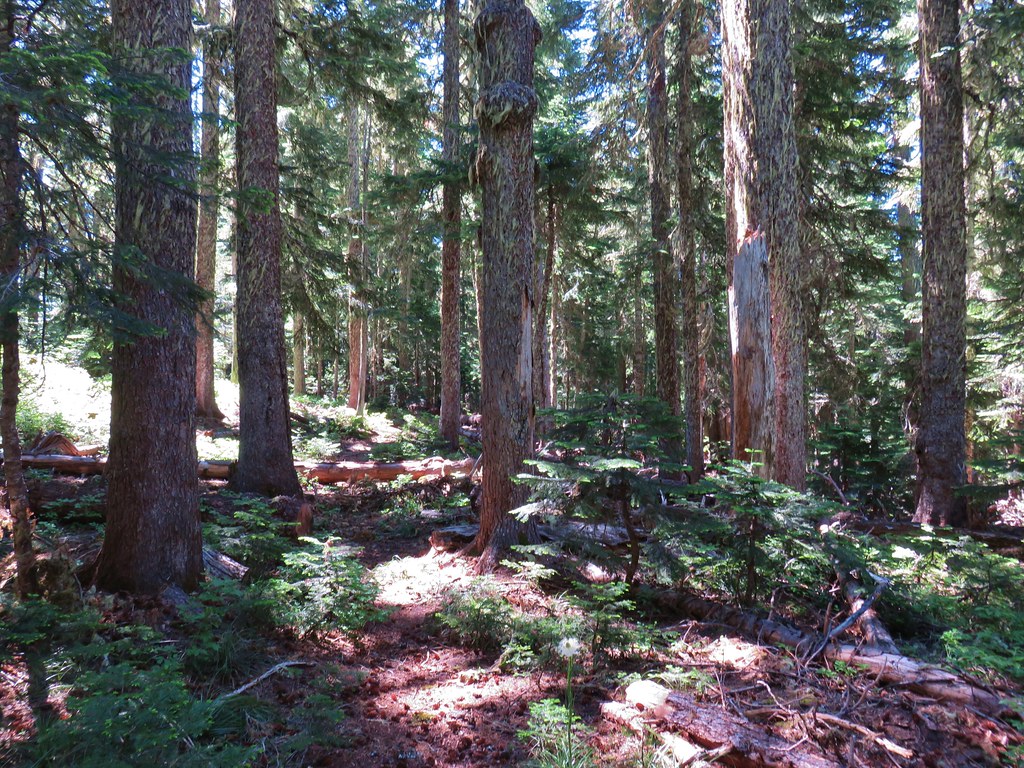
The tread was faint through most of the meadows and blowdown was common along the way but old blazes and yellow diamonds on trees helped identify the trail.
Rho Ridge Trail

Blowdown over the Rho Ridge Trail

Rho Ridge Trail

The trail had several road crossing and shortly after the third we arrived at Fawn Meadow where a small stream flowed through a meadow of wildflowers.
Meadow along the Rho Ridge Trail

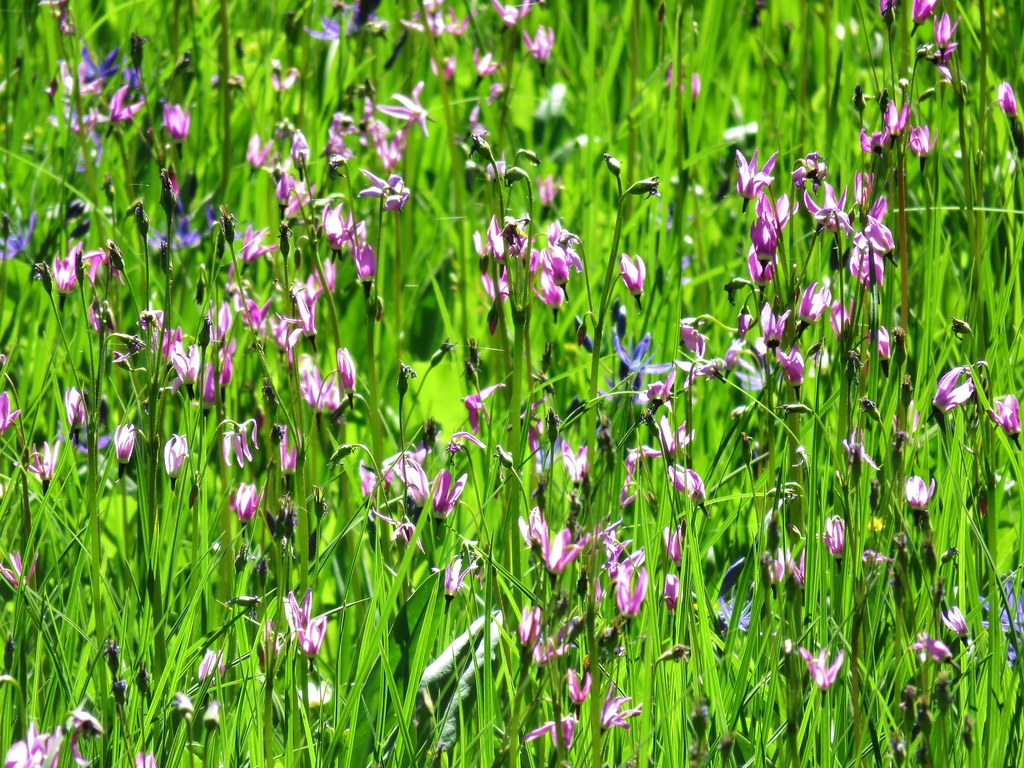
Shooting star

Wildflowers along the Rho Ridge Trail

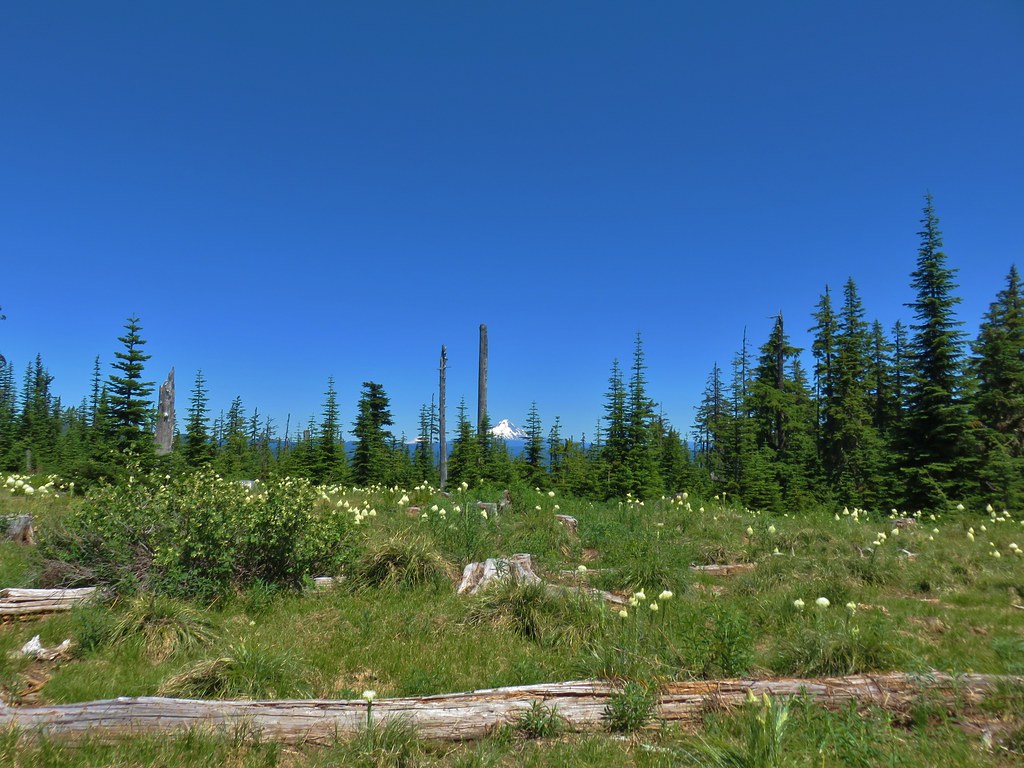
After a fourth road crossing the trail entered another beargrass meadow with a partial view of Mt. Hood and Mt. Adams.
Penstemon lined road crossing

Mt. Hood and Mt. Adams from a beargrass meadow along the Rho Ridge Trail

The brush was particularly thick as we exited the meadow which required us to really pay attention to the trail which was hard to see through all the green. We reentered the forest where we crossed one final old logging road before spotting the first snow along the trail. (There was actually a larger patch lower that we’d notice on the way back down but somehow we both missed it on the way up.)
Rho Ridge Trail

Snow along the Rho Ridge Trail

The little patch of snow was near Round Creek which was flowing on this day. The sound of the creek was nice but we didn’t dare stop to admire it due to the many blood thirsty mosquitoes that were present. Just under half a mile later we spotted the sign for the Hawk Mountain Trail.
Rho Ridge Trail jct with the Hawk Mountain Trail

We turned uphill here climbing approximately 300′ in .4 miles to the summit meadow and the Hawk Mountain Lookout.
Hawk Mountain Trail

Snow along the Hawk Mountain Trail

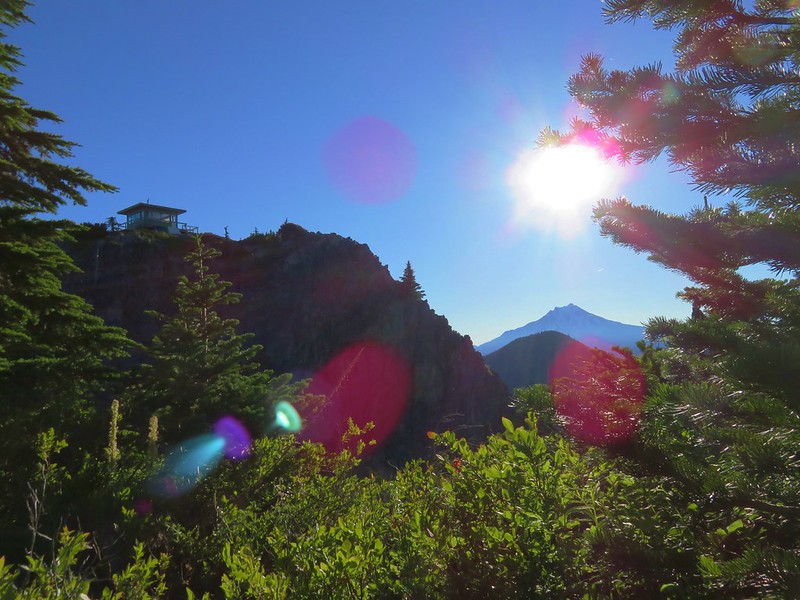
Hawk Mountain Lookout and Mt. Jefferson

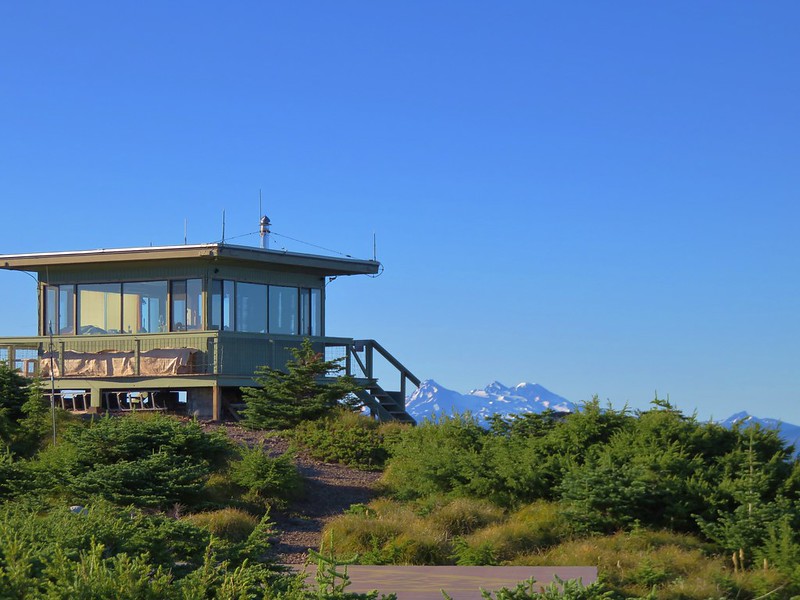
Hawk Mountain Lookout

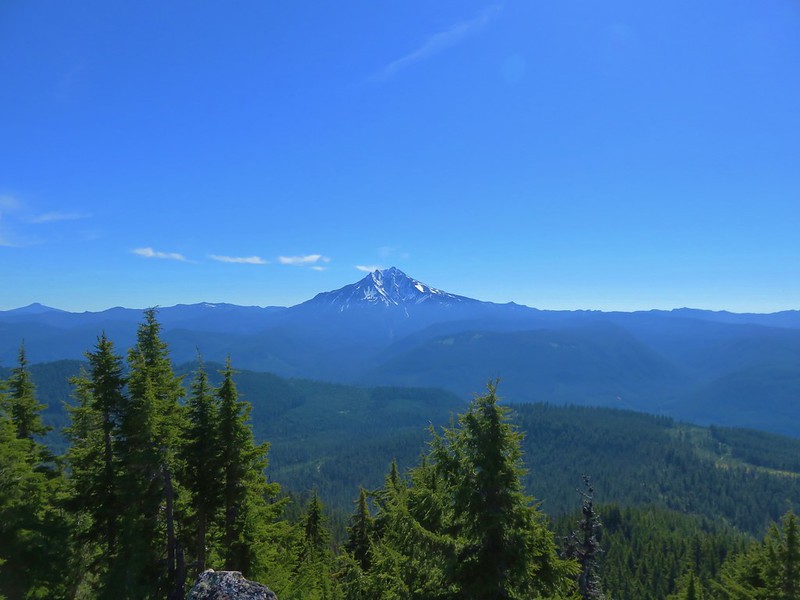
The view from the summit is a good one especially of Mt. Jefferson.
Mt. Jefferson, Three Fingered Jack, The Three Sisters and Mt. Washington from Hawk Mountain

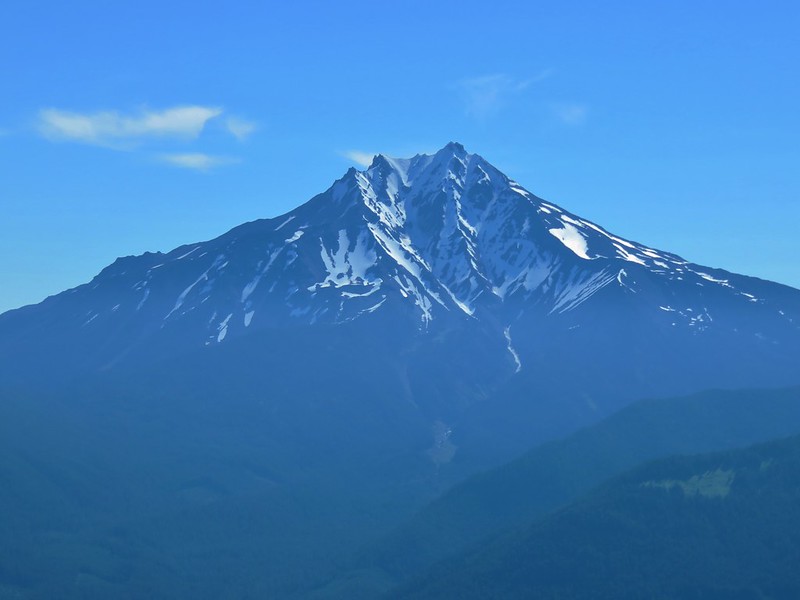
Mt. Jefferson

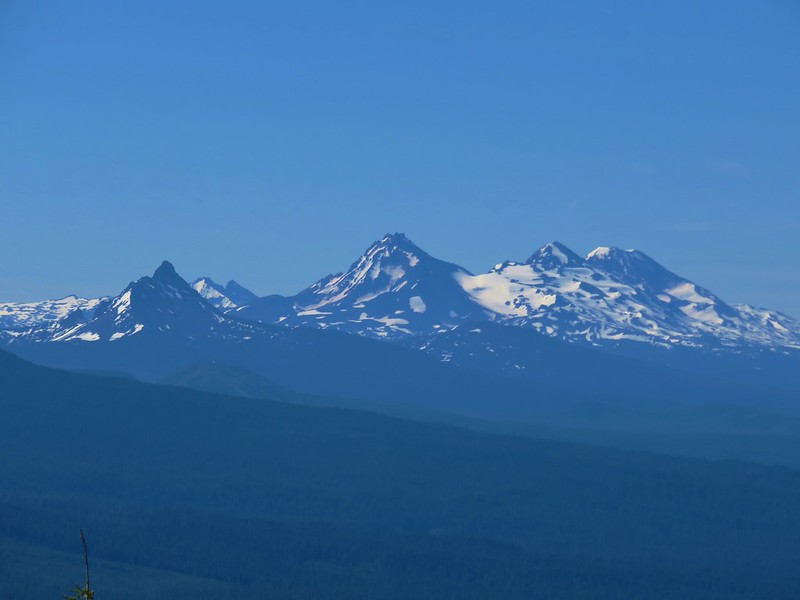
Additionally Three Fingered Jack, The Three Sisters, and Mt. Washington were visible further south with the very top of Broken Top poking up above the ridge north of Three Fingered Jack.
Three Fingered Jack, The Three Sisters, an Mt. Washington

The view wasn’t the only attraction at the summit. An impressive display of wildflowers was underway which had attracted a wide variety of pollinators.
Wildflowers on Hawk Mountain

Wildflowers on Hawk Mountain

Wildflowers on Hawk Mountain

Wildflowers on Hawk Mountain

Butterfly on penstemon

After a nice break it was time to head back.
Mt. Jefferson from Hawk Mountain

On the way down the Hawk Mountain Trail we stepped off the trail briefly to get a view to the north since trees on the summit had not allowed us to see in that direction. Mt. Rainier, Mt. Adams, and Mt. Hood were all visible.
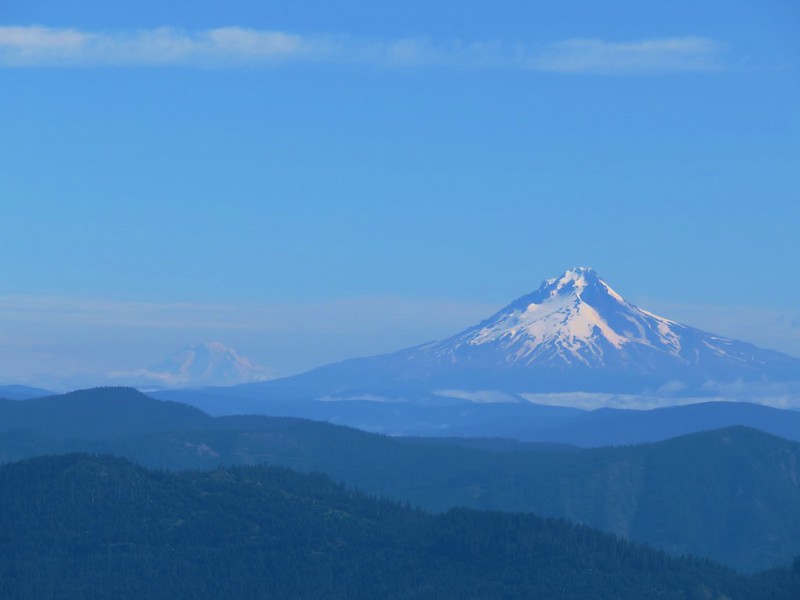
Mt. Rainier, Mt. Adams and Mt. Hood

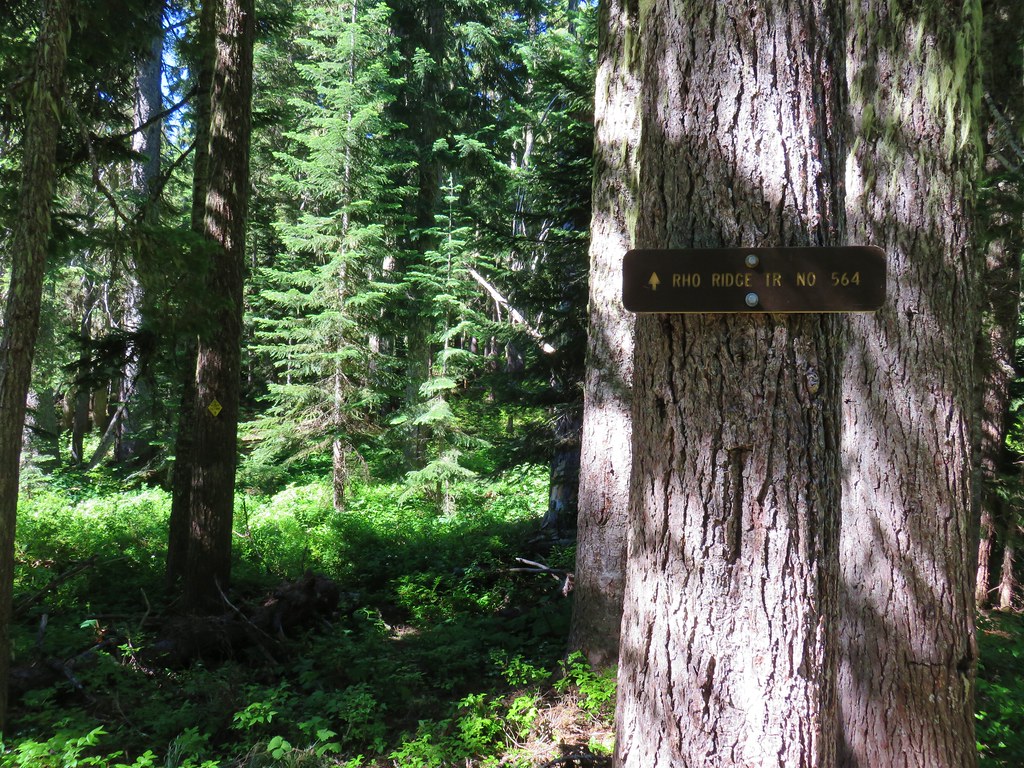
On the way back we managed to follow the trail all the way down where we discovered that the official start of the trail was just a few feet up the logging road from the blank signboard. The Rho Ridge Trail sign had been just out of sight.
Rho Ridge Trail sign

The hike from Graham Pass to Hawk Mountain was 10.7 but a shorter option exists by starting at the southern end of the Rho Ridge Trail. From this end the hike up to Hawk Mountain is just 4.2 miles round trip. This was the second straight outing that we didn’t encounter a single other hiker along the trails. As overcrowded as some of the popular trails have become it’s nice to know that there are still some out there that offer a little more solitude. Happy Trails!

Flickr: Big Bottom & Rho Ridge

Categories
Hiking Middle Santiam Old Cascades Oregon Trip report

Scar Mountain

We’ve developed a tradition of using the day off of work provided by the 4th of July holiday to take a hike. One of our go to areas in the first part of July is the Old (Western) Cascades. The Old Cascades are older than the volcanic peaks of the High Cascades and rise only half as high meaning they melt out much sooner than their younger companions. These highly eroded volcanoes are home to old growth forests and top notch wildflower meadows.

This year we decided to visit the Scar Mountain Trail. The hike is listed in our usual guidebook, William L. Sullivan’s “100 Hikes in the Central Oregon Cascades” as hike #111. Due to it not being a featured hike the description in that book is brief so we turned to another excellent resource, “101 Hikes in the Majestic Mount Jefferson Region” by Matt Reeder.

We followed his directions to the North Pyramid Trailhead where we parked then crossed Forest Road 2266 to the signed Scar Mountain Trail.

North Pyramid Trailhead

Scar Mountain Trail

The Scar Mountain Trail is part of the approximately 30 mile long Old Cascades Loop. We had done another section of this loop in 2014 when we started at the Pyramids Trailhead and hiked to Donaca Lake for an overnight stay.

The trail climbed through a nice forest,gradually at first then more steeply as it switchbacked up toward a ridge top.

Scar Mountain Trail

The switchbacks ended after just over a mile and the trail began to traverse along the hillside below the ridge. There were occasional glimpses of the Three Pyramids to the south and Daly Lake in the valley below.

Daly Lake below the Three Pyramids

Daly Lake

For the next mile and a half the trail continued to gain elevation via a series of ups and downs as it gained the ridge top and alternated between its west and east sides providing views of several of the High Cascades to the SE, Mt. Jefferson to the NE, and Coffin & Bachelor Mountains to the north.

Mt. Washington, The Three Sisters, and the Husband Mt. Washington, the Three Sisters and the Husband

Mt. JeffersonMt. Jefferson

Coffin and Bachelor MountainsCoffin and Bachelor Mountains

A few small patches of snow lingered on and along the trail.

Snow on the Scar Mountain Trail

The trial began to climb steeply again at the 2.5 mile mark as it headed up Trappers Butte. The forested summit offered some similar views to what we had seen on the way up but one big difference was the presence of some non-white wildflowers near the top.

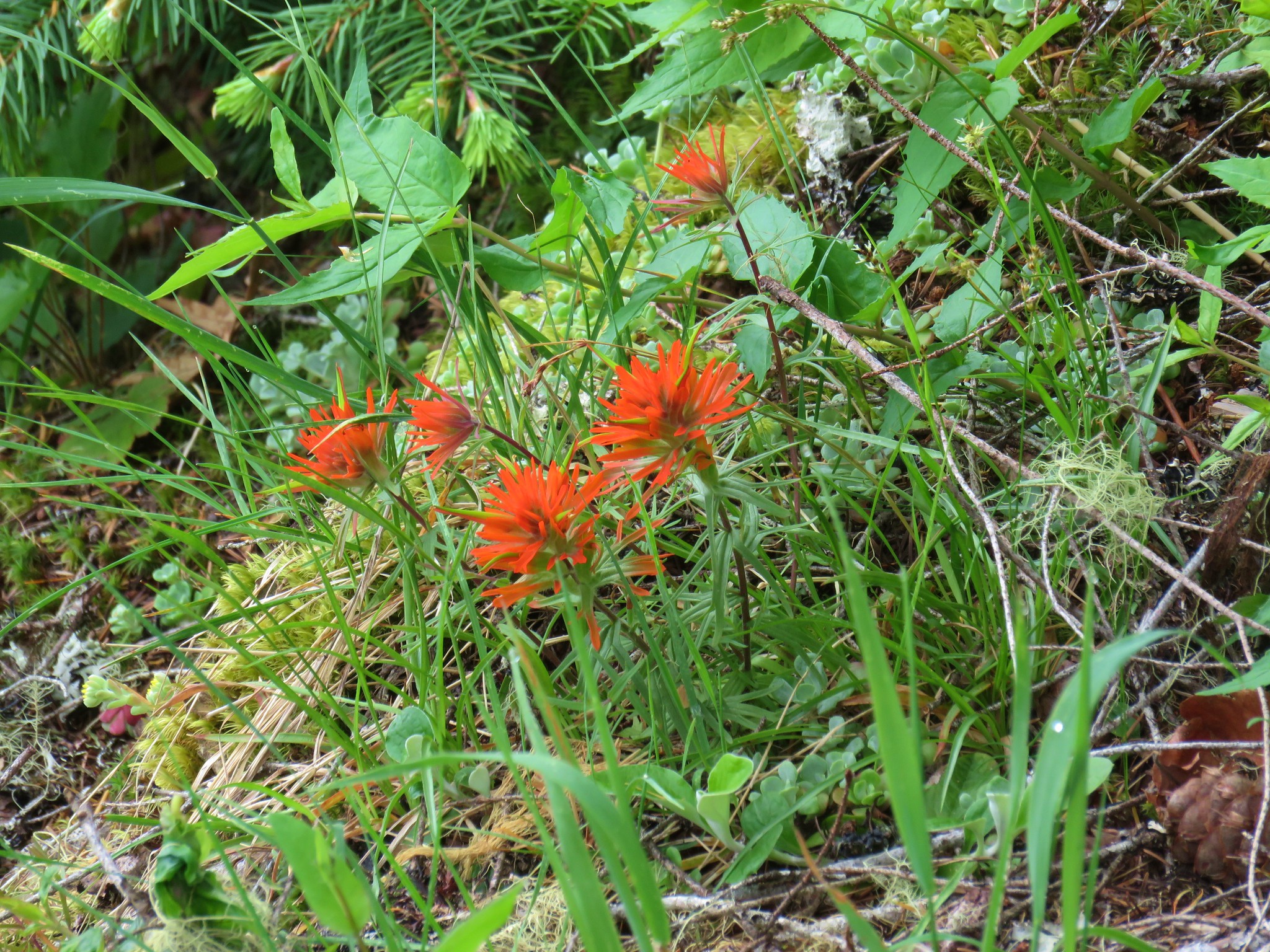
Paintbrush

Penstemon

The trail then descended roughly 400′ in .8 miles to a saddle where it crossed an old roadbed in a clearing with blooming beargrass and rhododendron and view of the Three Pyramids.

The Three Pyramids

Another one and three quarter miles of ups and downs had us nearing our goal, a dramatic rock pinnacle on Scar Mountain. The trail had been in reasonably good shape with some minor blowdown and a few brushy spots which became a bit more frequent as we climbed Scar Mountain.

Scar Mountain Trail

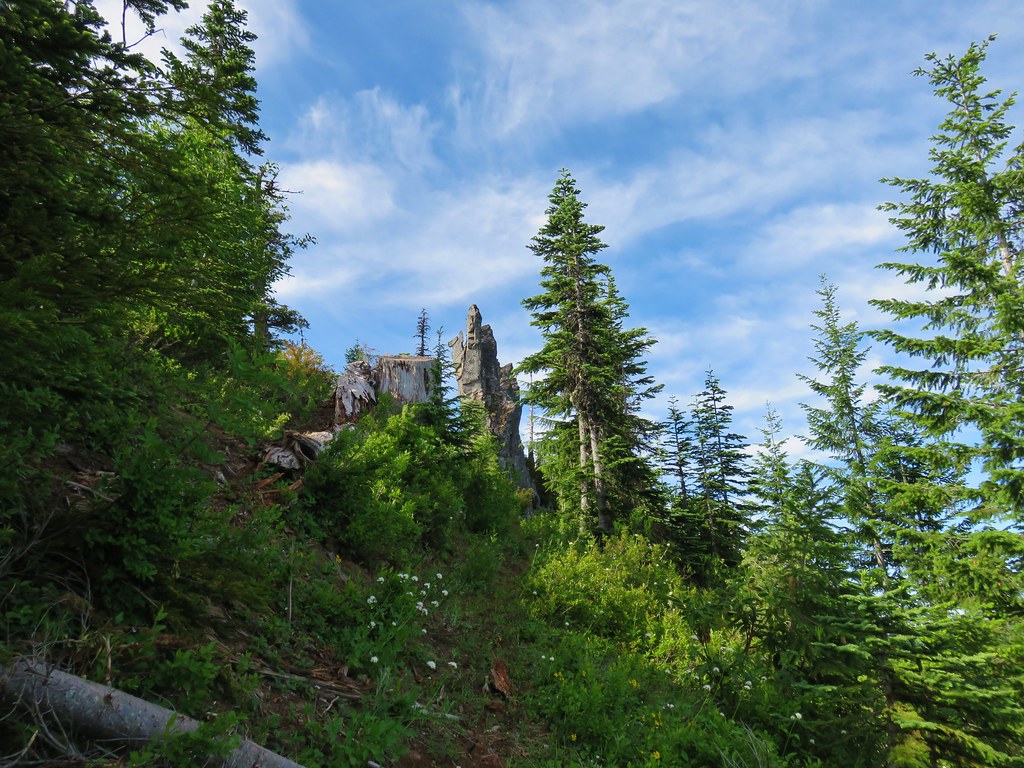
Rock pinnacle on Scar Mountain

The flowers on and around the pinnacle might not have been as impressive as the meadows on some of the other nearby peaks but there were still some nice displays.

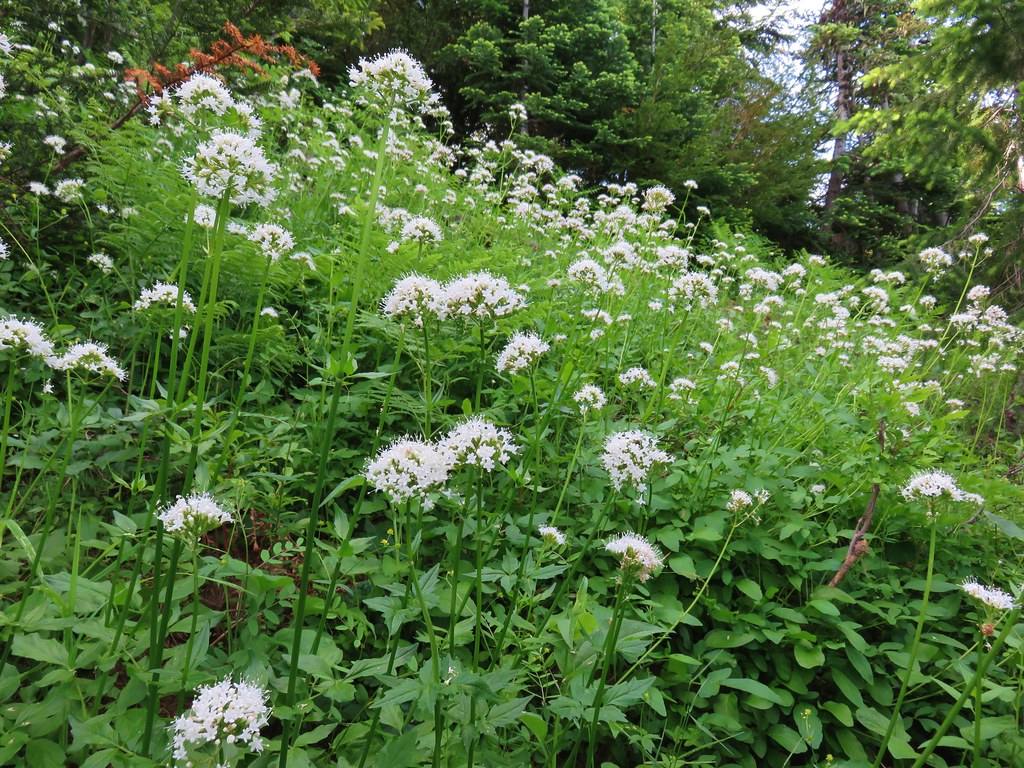
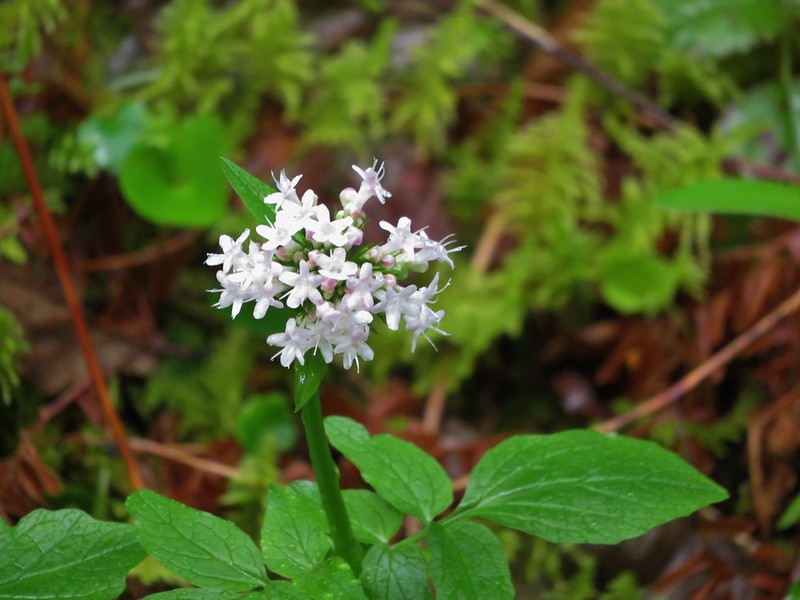
Valerian along the Scar Mountain Trail

Wildflower on Scar Mountain

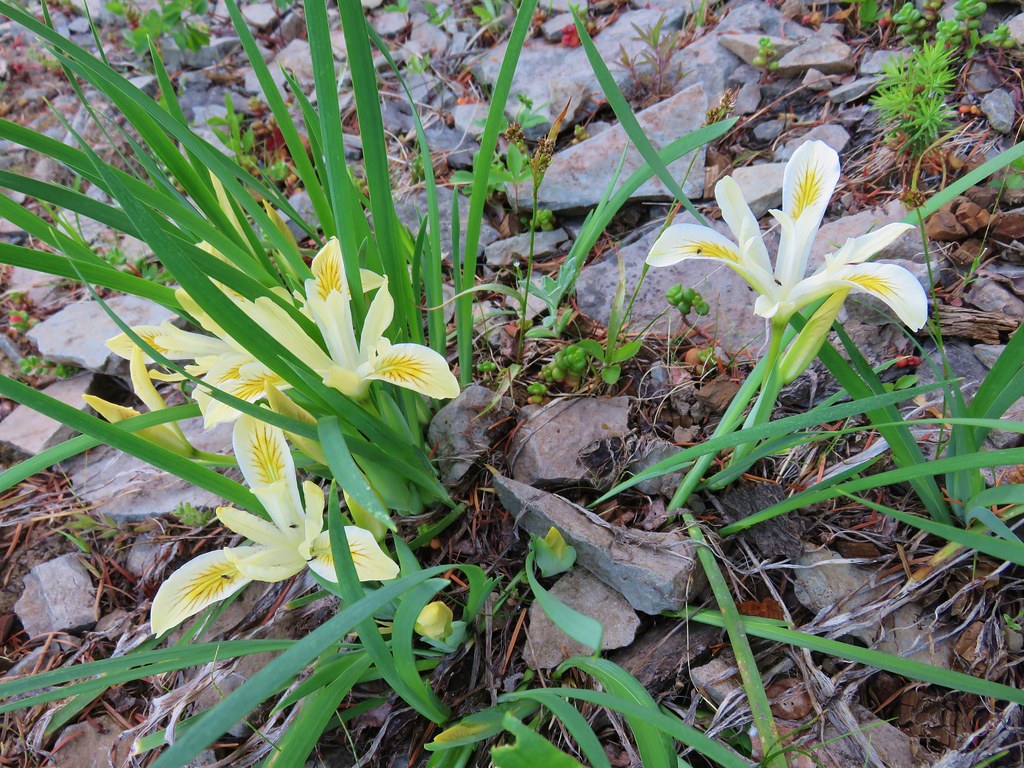
Yellowleaf iris

Paintbrush along the Scar Mountain Trail

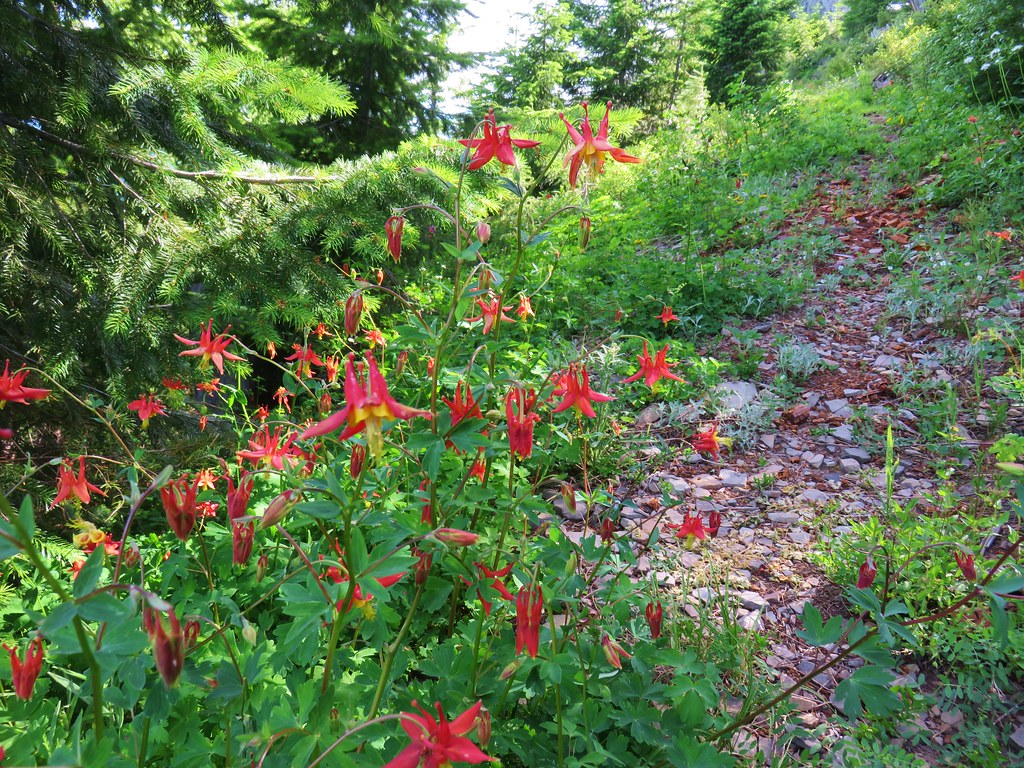
Columbine

Wildflowers along the Scar Mountain Trail

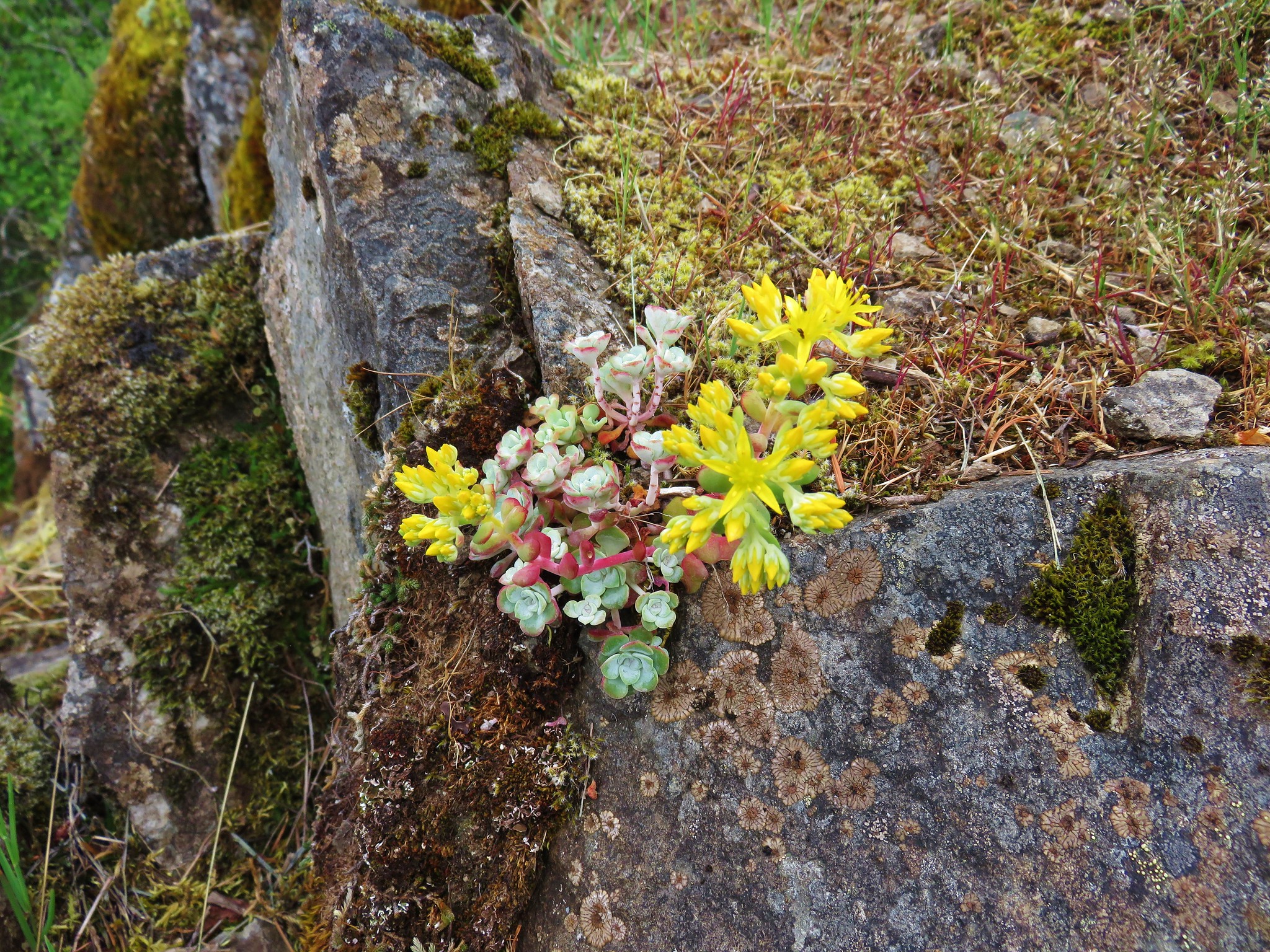
Stonecrop and penstemon

The real reward for this hike were the views from Scar Mountains cliffs.

Mt. Adams and Mt. Hood

Mt. Adams peaking over a ridge and Mt. Hood

Mt. Jefferson from Scar MountainMt. Jefferson

Three Fingered JackThree Fingered Jack

Mt. Washington

Mt. Washington

The Three Sisters and the HusbandThe Three Sisters and the Husband

The Husband and the Three PyramidsThe Husband behind the Three Pyramids

Crescent Mountain, North Peak, Echo Mountian and South PeakCrescent Mountain, North Peak, Echo Mountain, and South Peak

North Peak, Echo Mountain, South Peak, Cone Peak, and Iron MountainNorth Peak, Echo Mountain, South Peak, Cone Peak, and Iron Mountain.

We took a nice break near the pinnacle where there seemed to be less mosquitoes. They hadn’t been too noticeable but with the snow still melting there were more around than we realized given the number of bites we discovered later.

Rock pinnacle along the Scar Mountain Trail

Looking down from cliffs along the Scar Mountain Trail

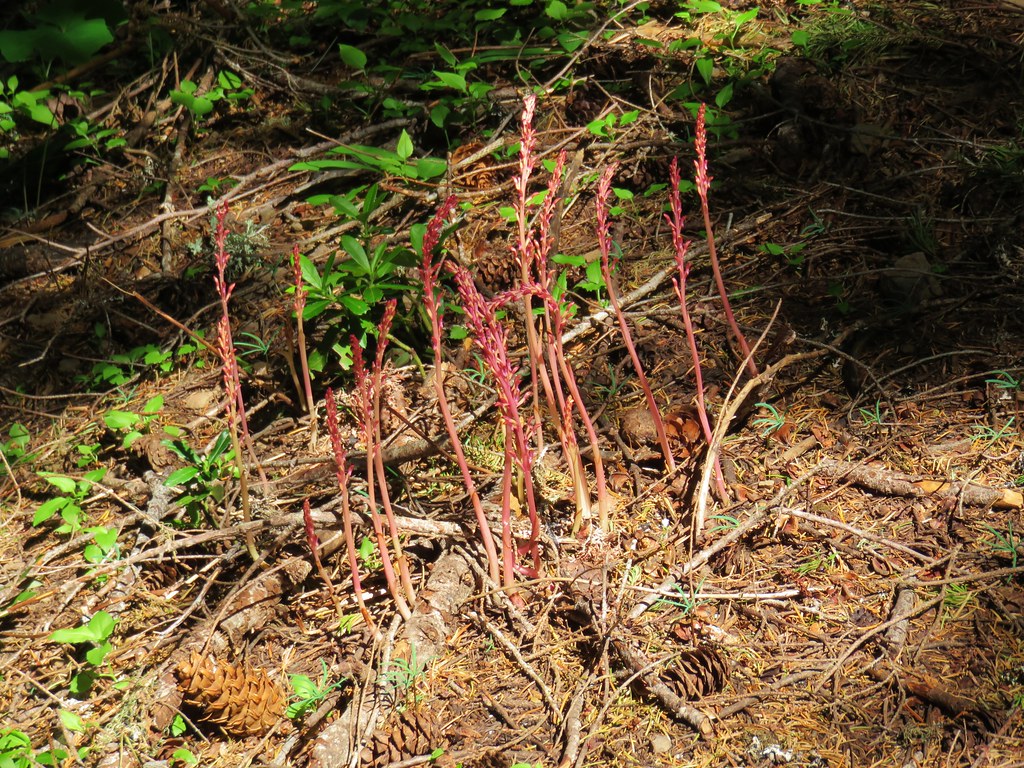
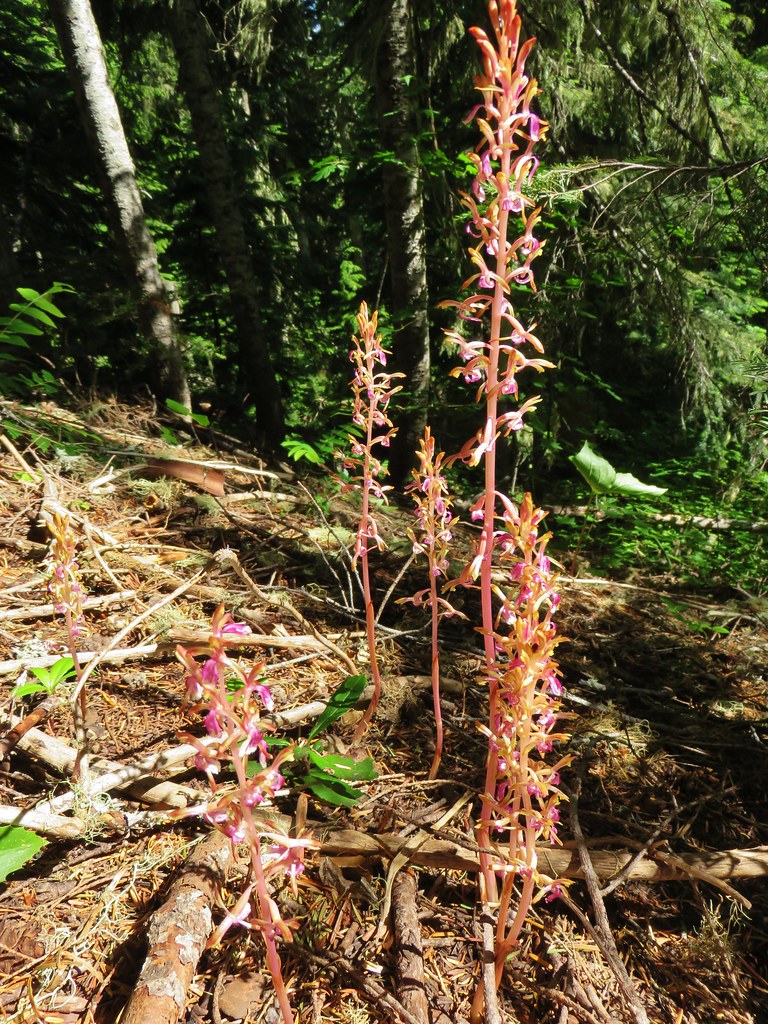
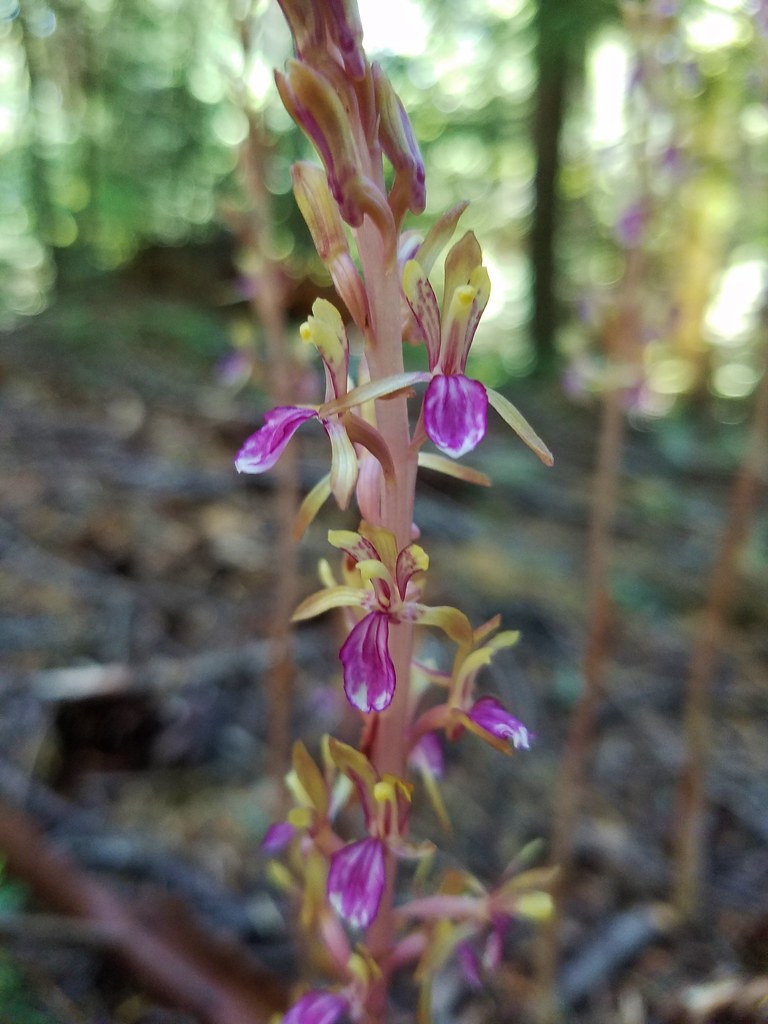
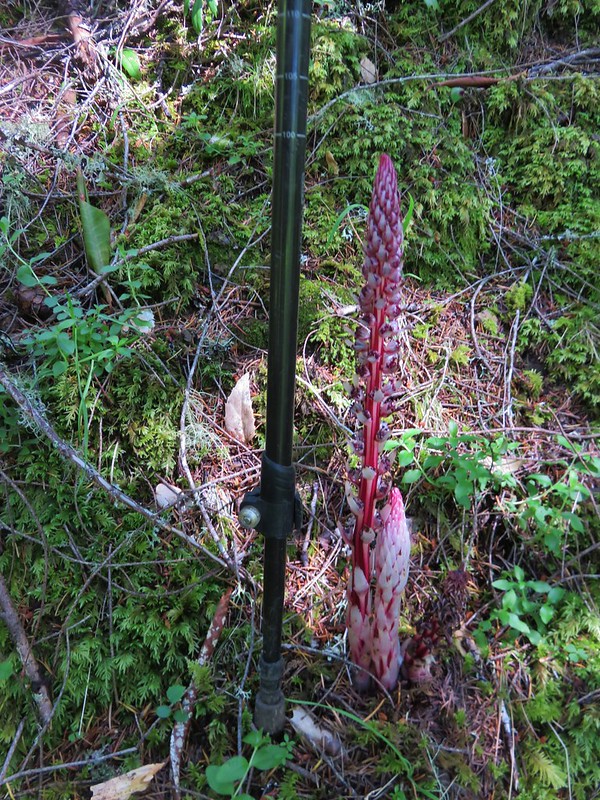
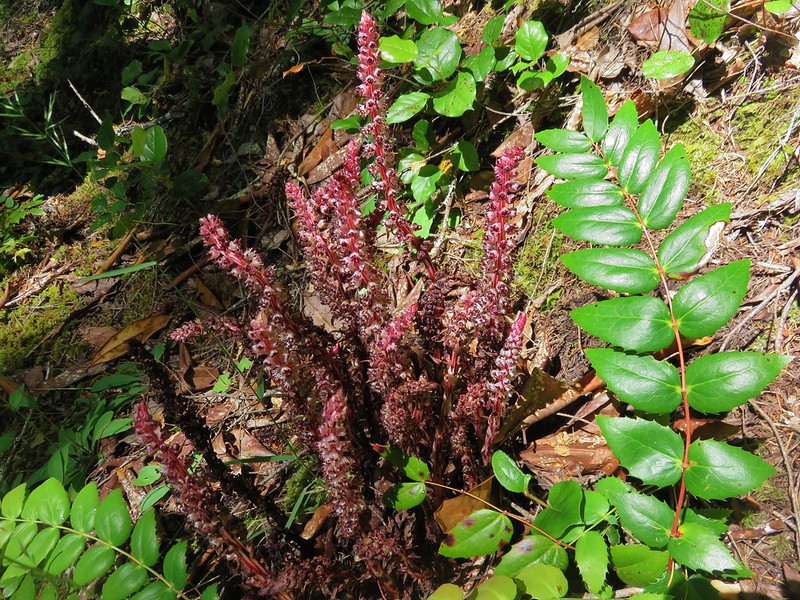
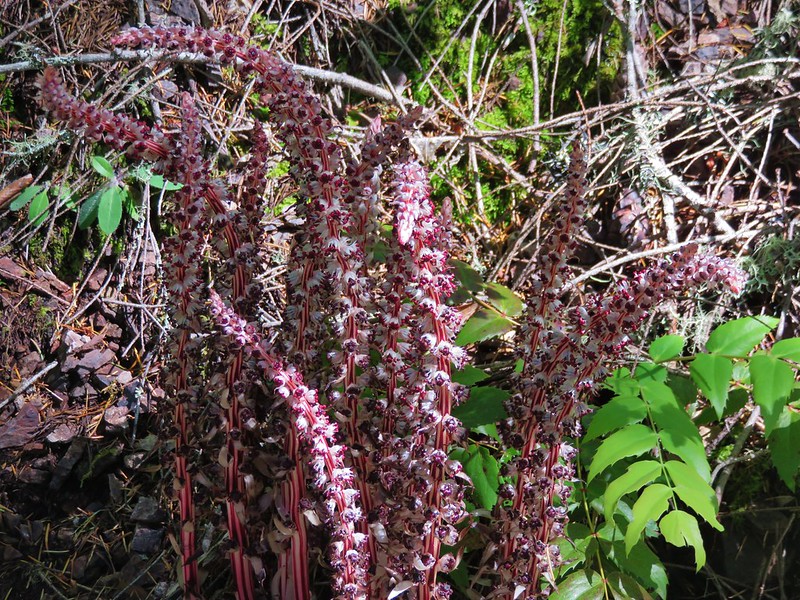
We returned the way we’d come passing the time on the ups and downs by admiring the many different flowers in the forest including large numbers of coralroots.

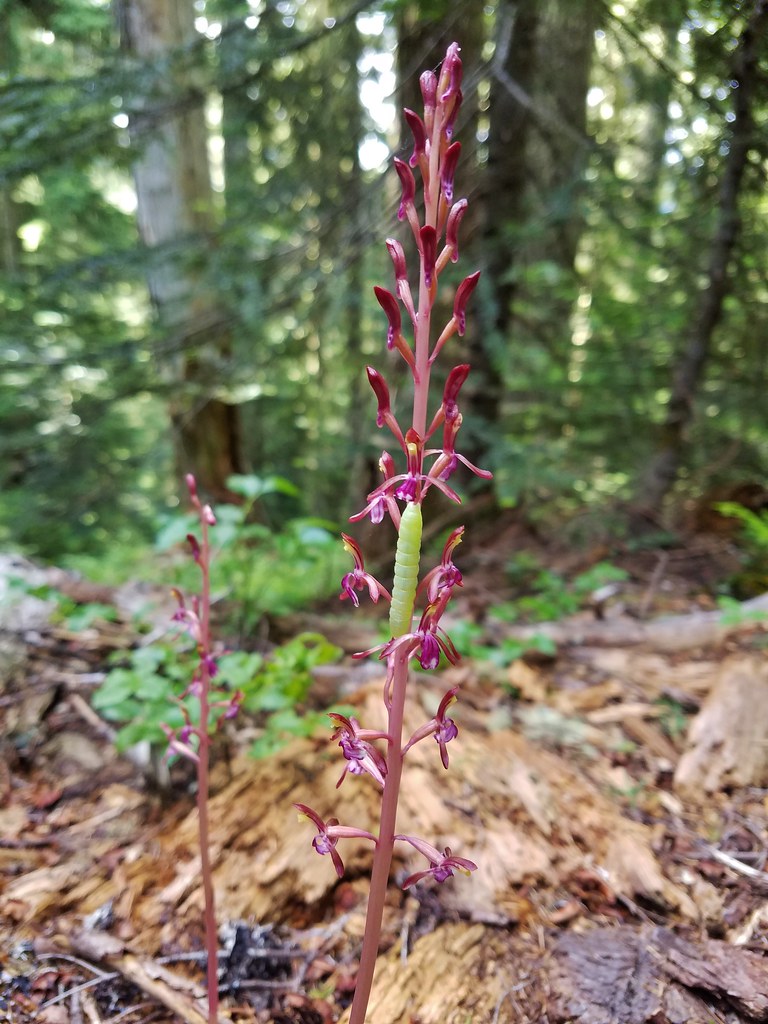
Caterpillar on coralroot

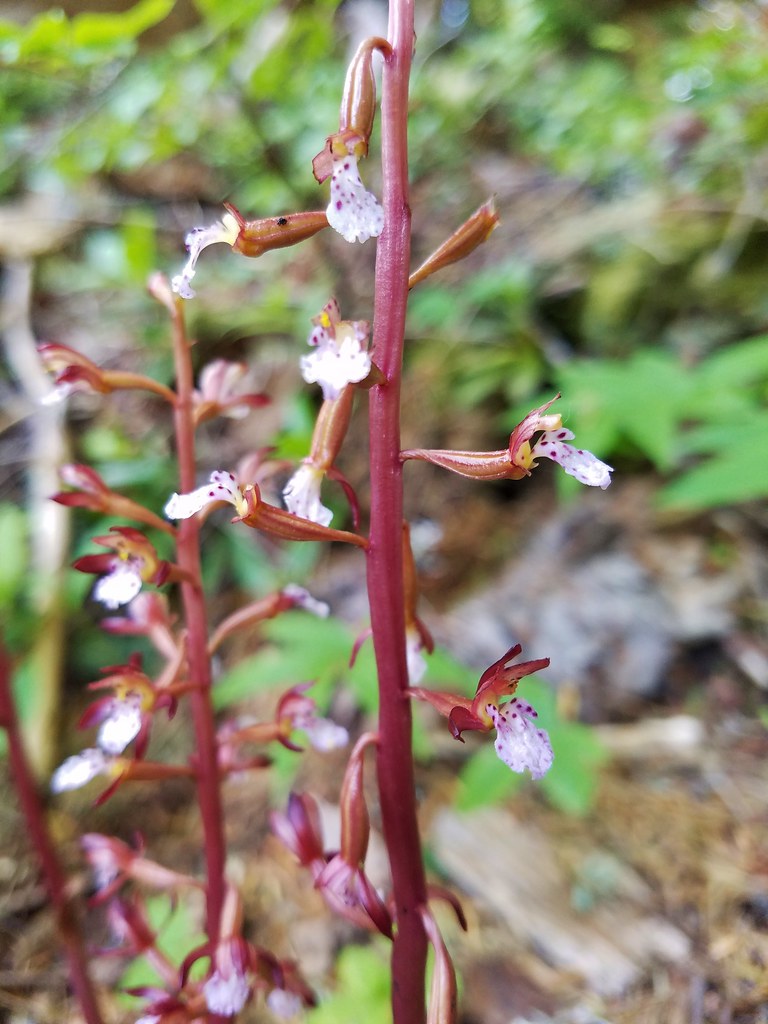
Coralroot

Coralroot

Coralroot

Coralroot

Round trip was just under 12 miles with a good amount of elevation gain overall but broken up enough to never feel too daunting. Like many of the trails in the Old Cascades the Scar Mountain Trail offered a good dose of solitude. We neither spotted nor heard another person during the hike. Instead we listened for the calls of sooty grouse, the singing of birds, and “meeps” of hidden pikas. Happy Trails!

Flickr: Scar Mountain

Categories
Hiking McKenzie River Old Cascades Oregon Trip report

Castle Rock

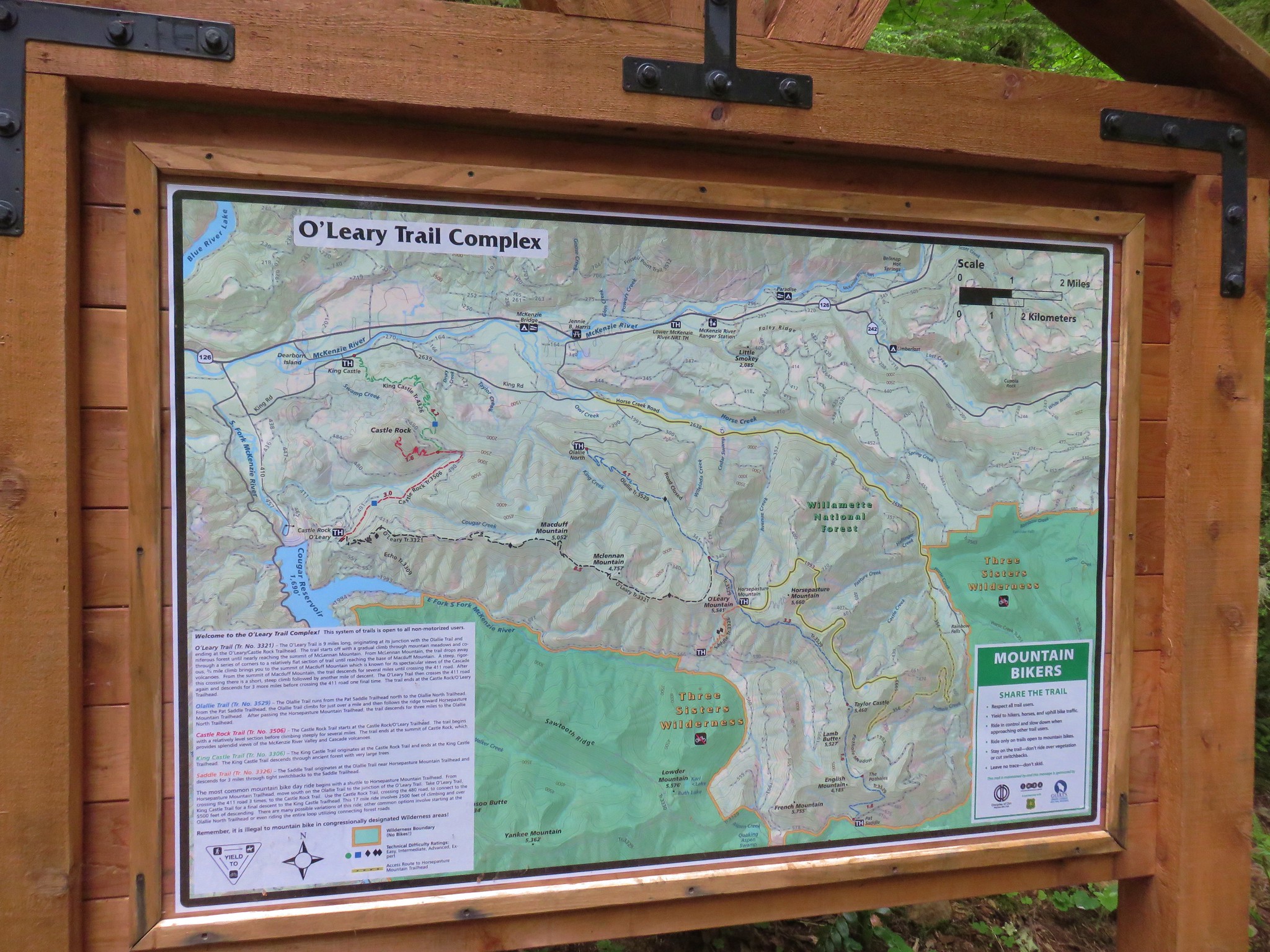
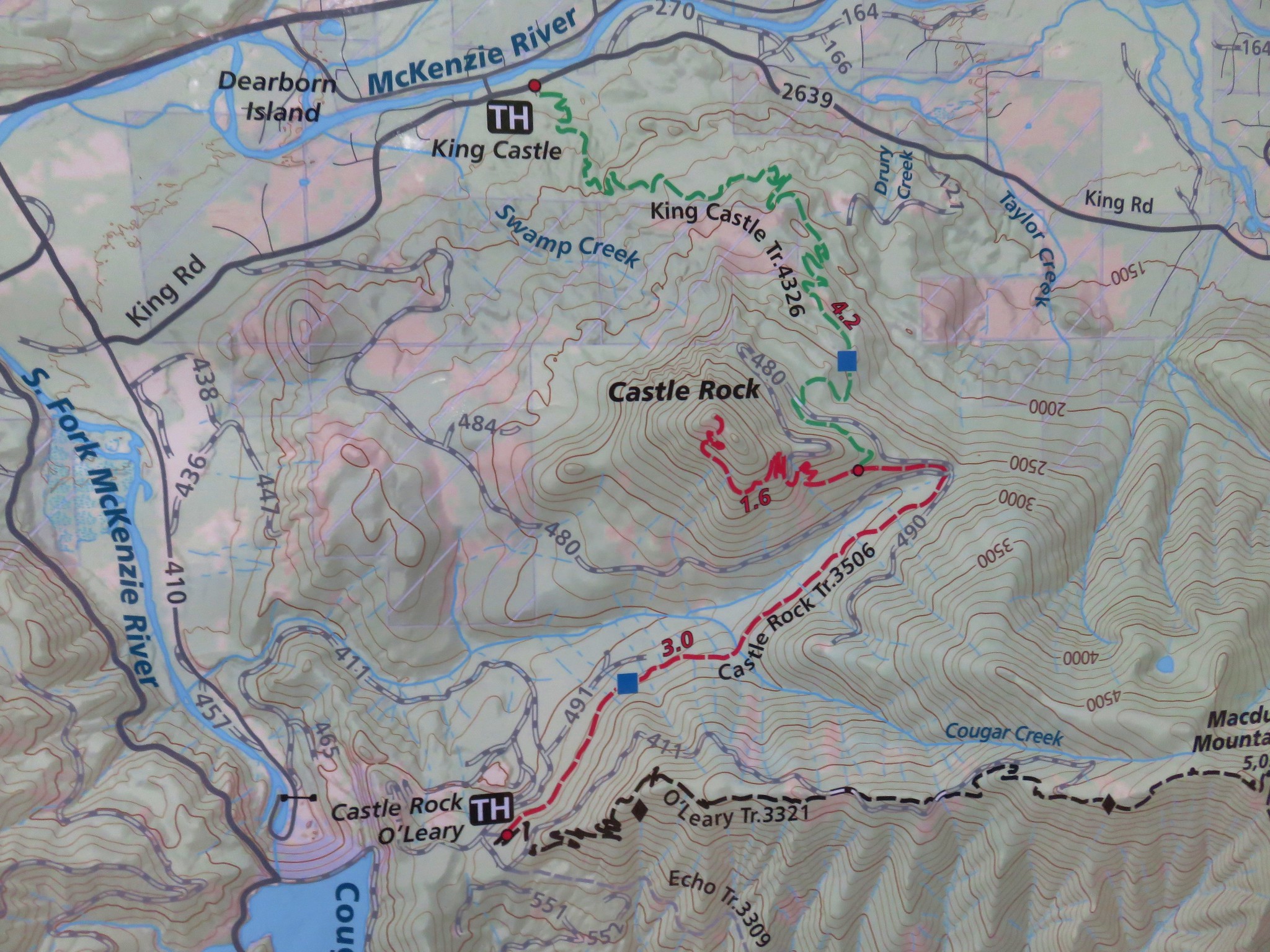
We continue to have to swap out our originally scheduled hikes due to the above normal snow levels and late melt this year. Our most recent hike to Castle Rock was the result of one such switch. Castle Rock it the site of a former lookout tower atop a 3808′ rocky outcrop. Castle Rock is located near the McKenzie River off Highway 126 approximately 5 miles beyond Blue River. There are several possible trailheads that can be used to reach the lookout site including an option at the end of Road 480 that would make the hike less than three miles. For our visit we chose to begin at the King Castle Trailhead. A map at this trailhead showed the entire O’Leary Trail Complex.
IMG_1409

IMG_1410

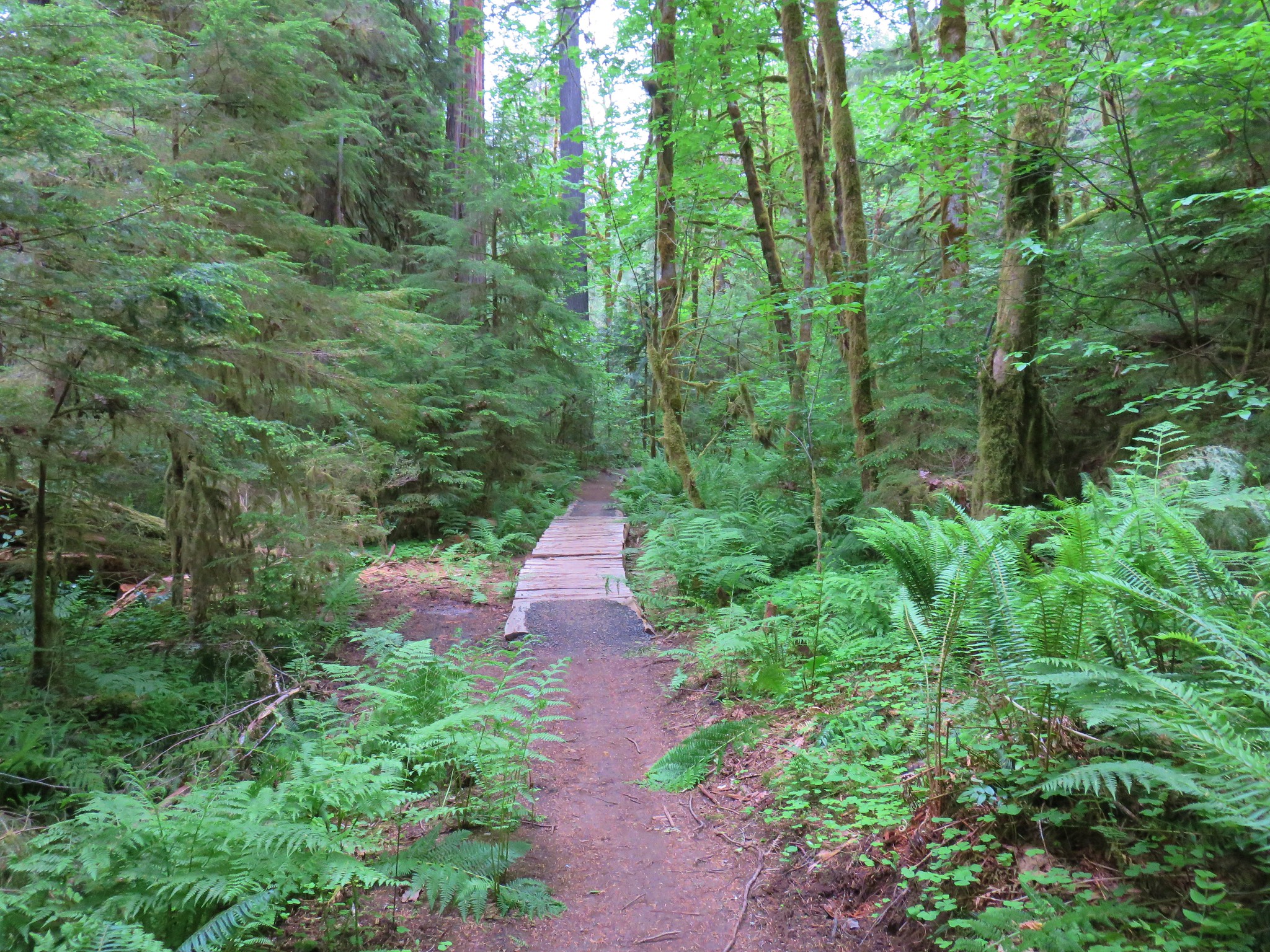
The trails in the area are open to mountain bikes and we did see a handful of riders but not until we were well into our descent. The King Castle Trail was in excellent shape as it passed through the forest.
IMG_1412

IMG_1419

IMG_1443

IMG_1455

There were lots of woodland flowers in bloom.
IMG_1647
Star flower and queen’s cup

IMG_1642Foam Flower

IMG_1629Inside-out Flower

2017-06-03 12.33.09
Anemone

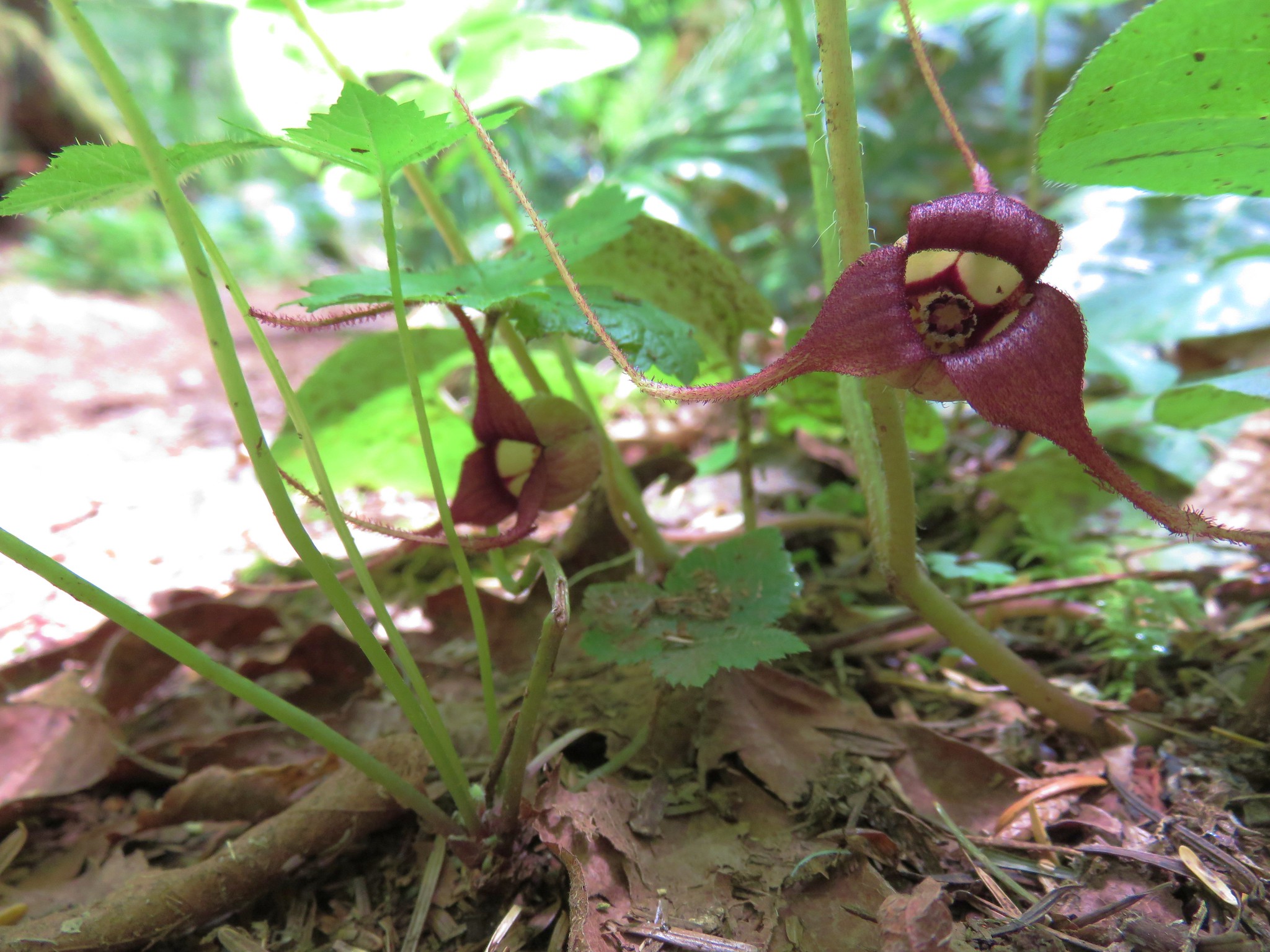
IMG_1635Wild Ginger

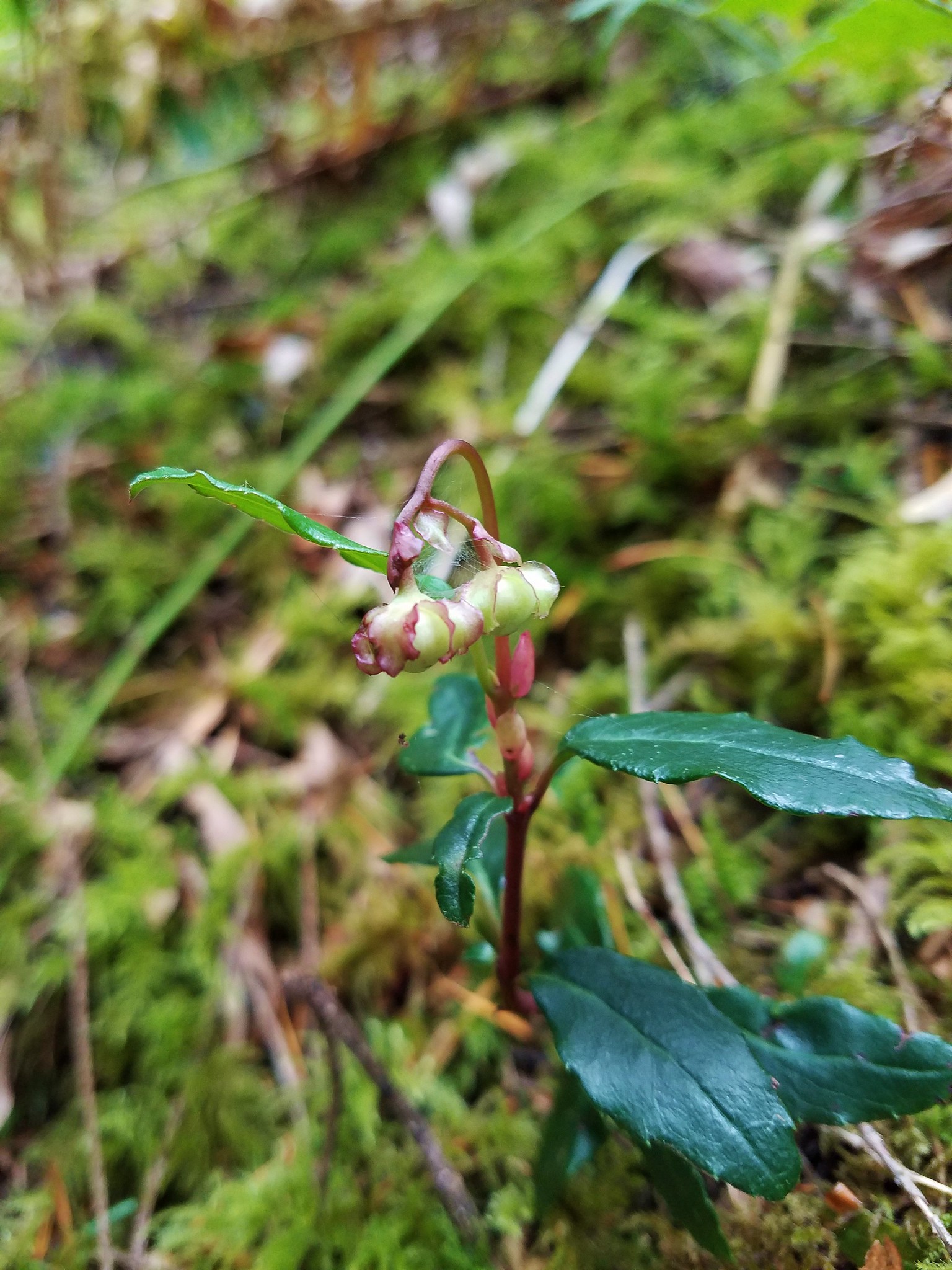
2017-06-03 12.25.06 Wintergreen

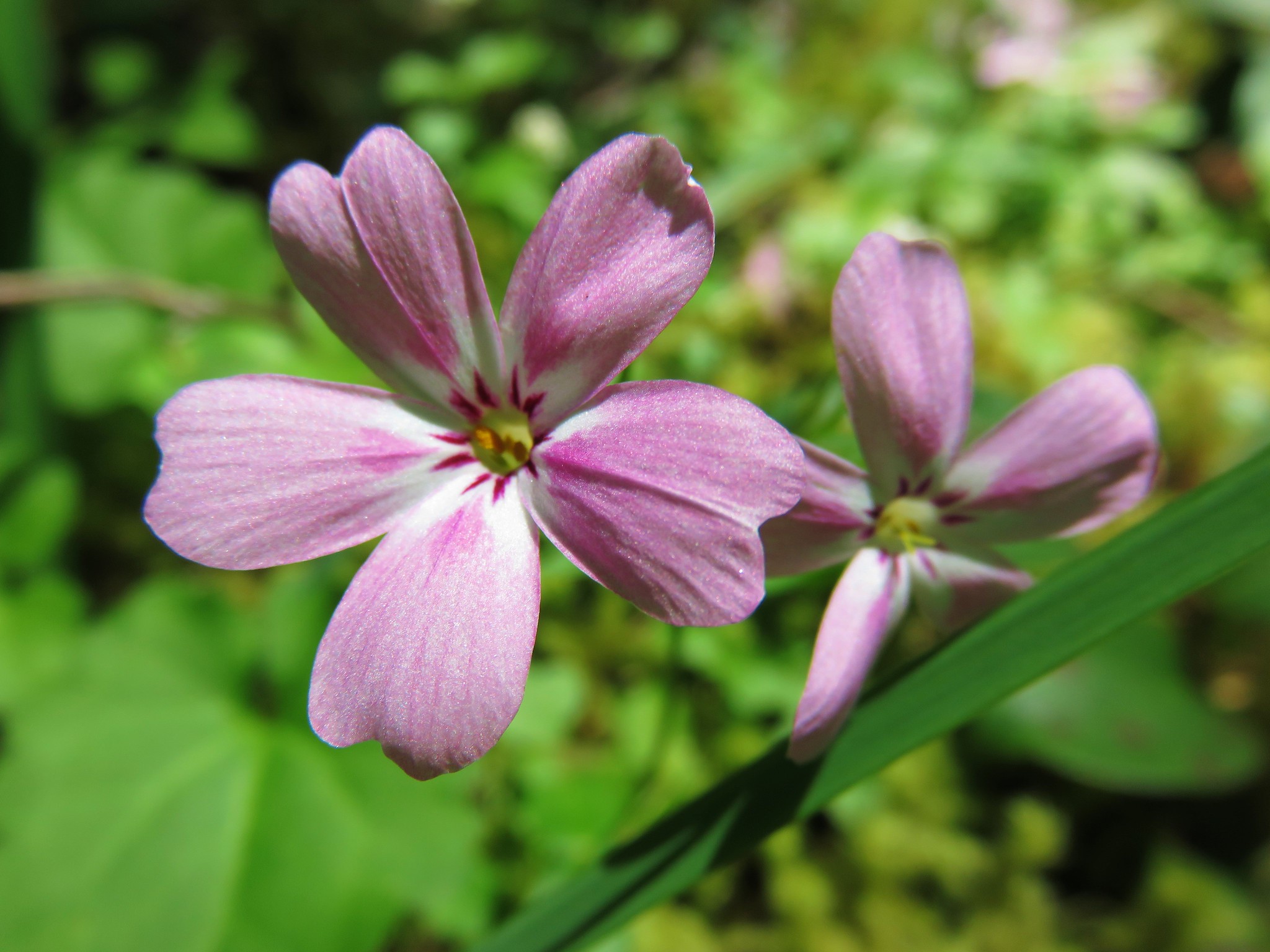
IMG_1648 Northern Phlox

IMG_1613
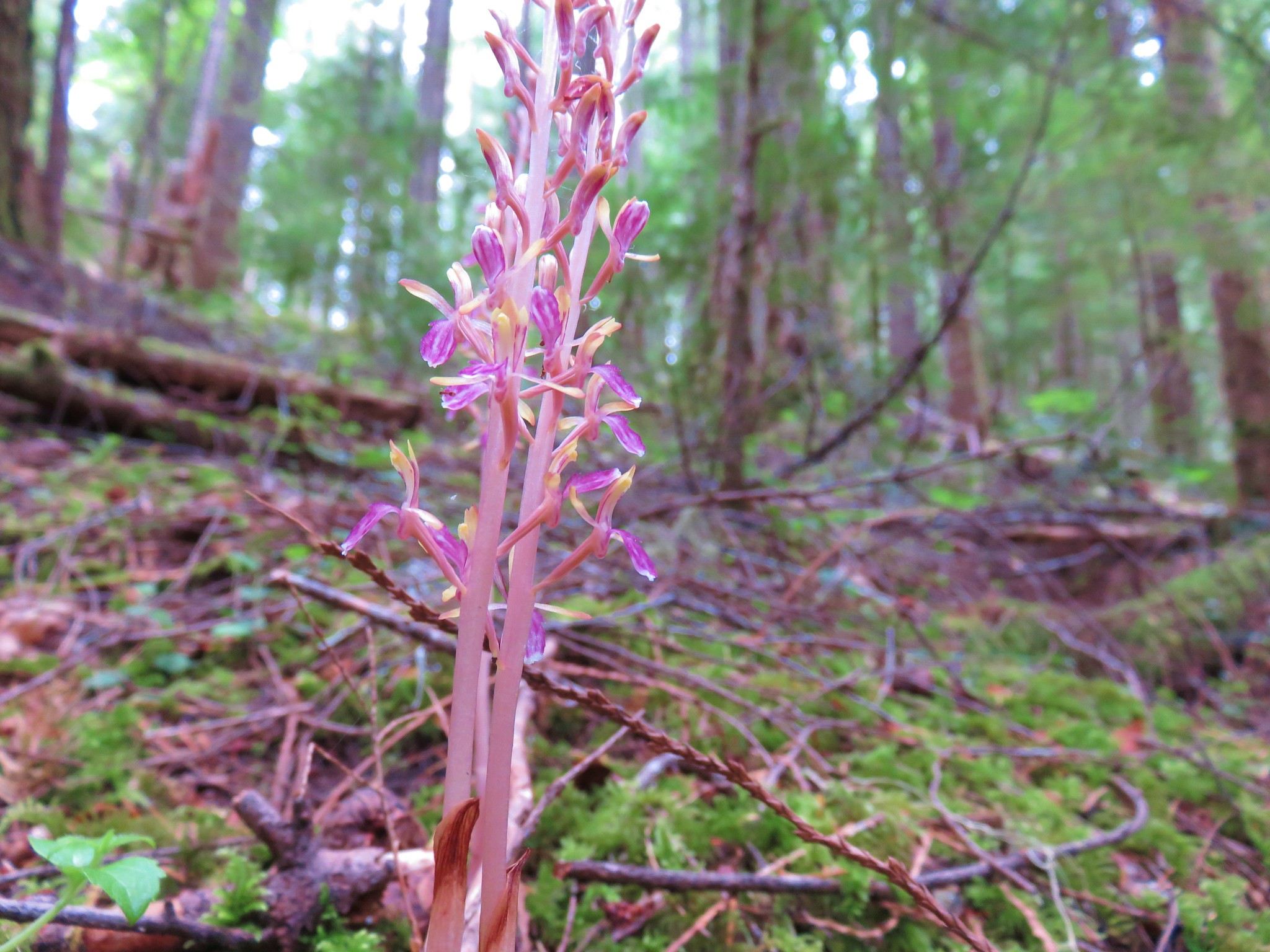
Striped coralroot

2017-06-03 12.07.50
Spotted coralroot

IMG_1600
Rhododendron

2017-06-03 12.24.03
Wild rose

The trail climbed approximately 1500′ in almost 4 miles to a crossing of Road 480.
IMG_1457

The trail continued on the far side of the road where it climbed for a bit before dropping slightly to a junction with the Castle Rock Trail.
IMG_1458

IMG_1465

A dogwood tree was in full bloom near this junction.
IMG_1466

IMG_1467

We turned right onto the Castle Rock Trail which climbed for another half mile to a junction with a trail from the upper trailhead along Road 480.
IMG_1476

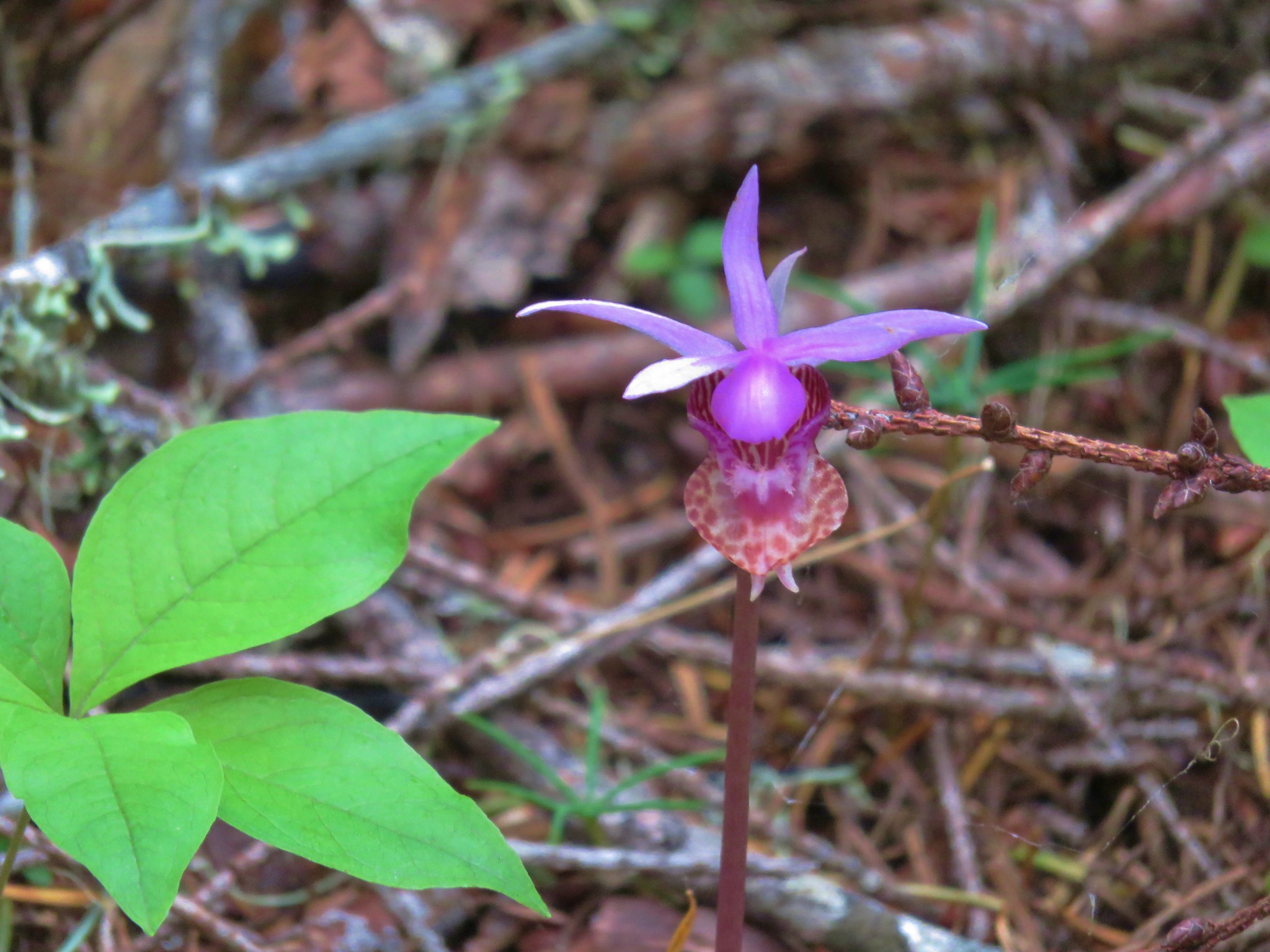
None of the climb had seemed particularly steep considering we knew we had a total of 2600′ to gain from the trailhead. We were expecting the final mile to seem quite a bit steeper but the trail made great use of switchbacks leaving the final 700′ to feel only slightly harder than the earlier 1900′. The flowers along the final mile had changed from those we had seen at the lower elevations. Here fairy slippers and vanilla leaf were still blooming.
IMG_1481

IMG_1485

It had been an overcast morning and now we were climbing up into the clouds.
IMG_1473

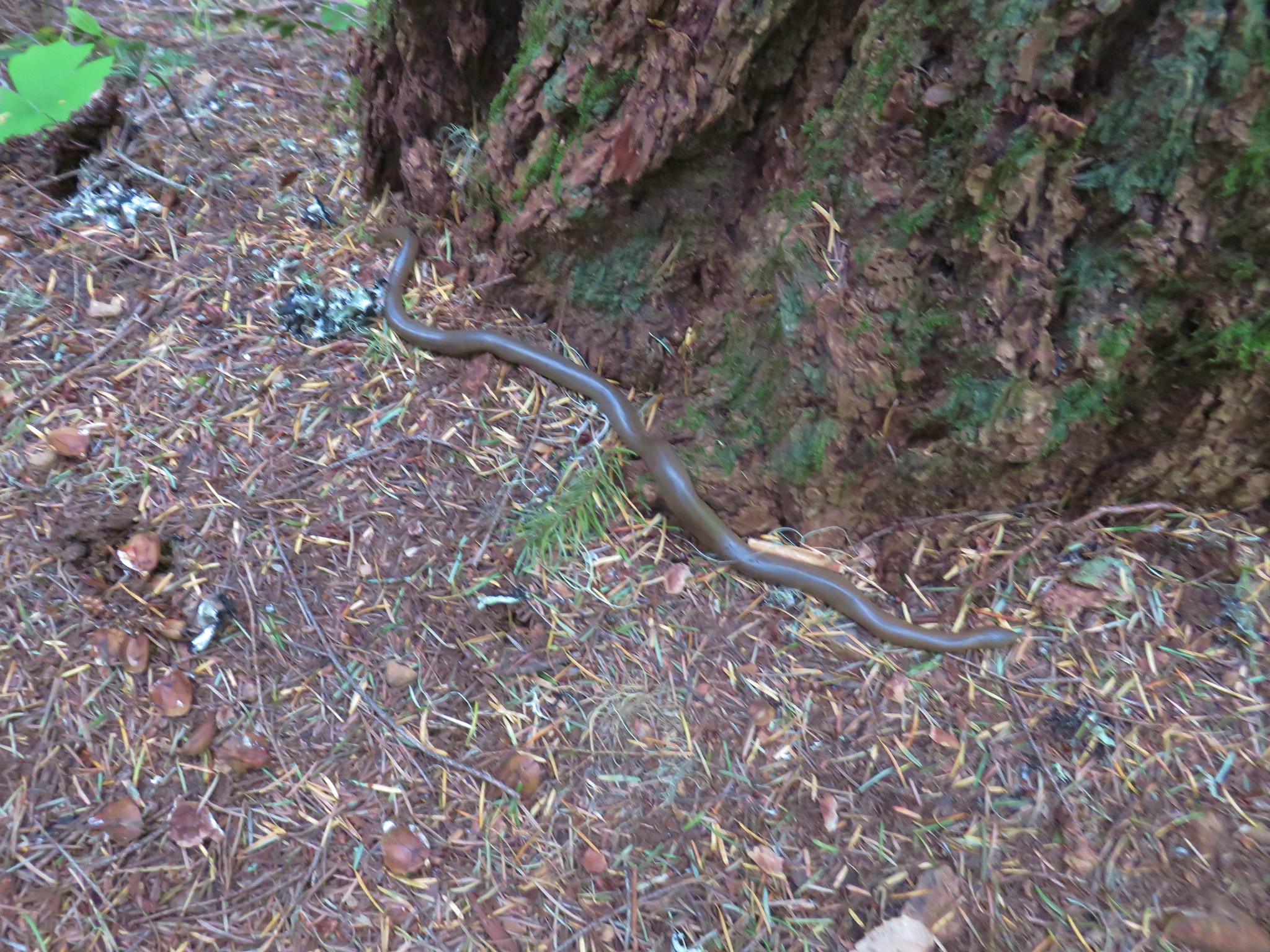
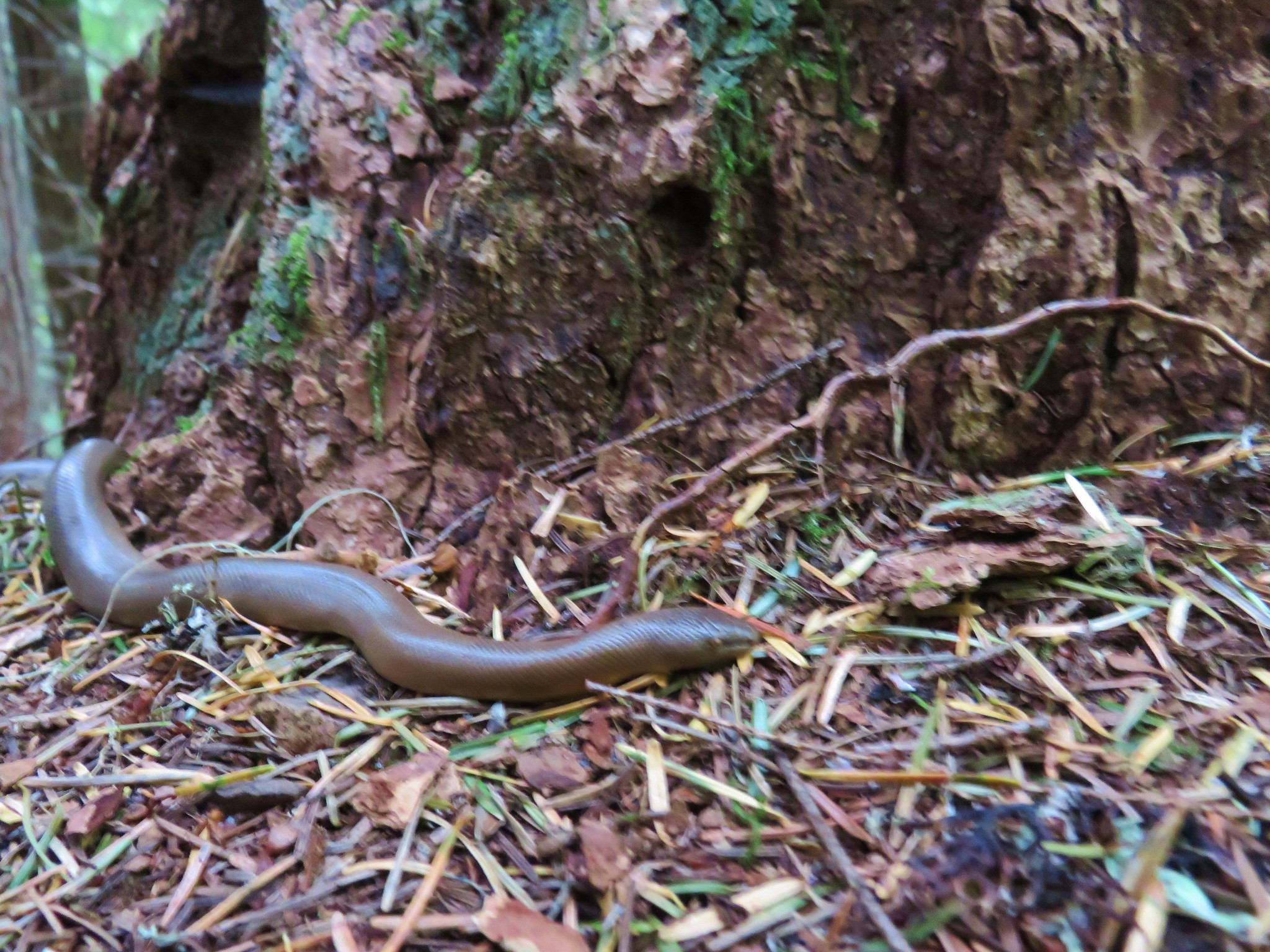
It was cool but not cold. Although, for a rubber boa, that we spotted next to a tree along the trail, it was way to chilly.
IMG_1477

IMG_1479

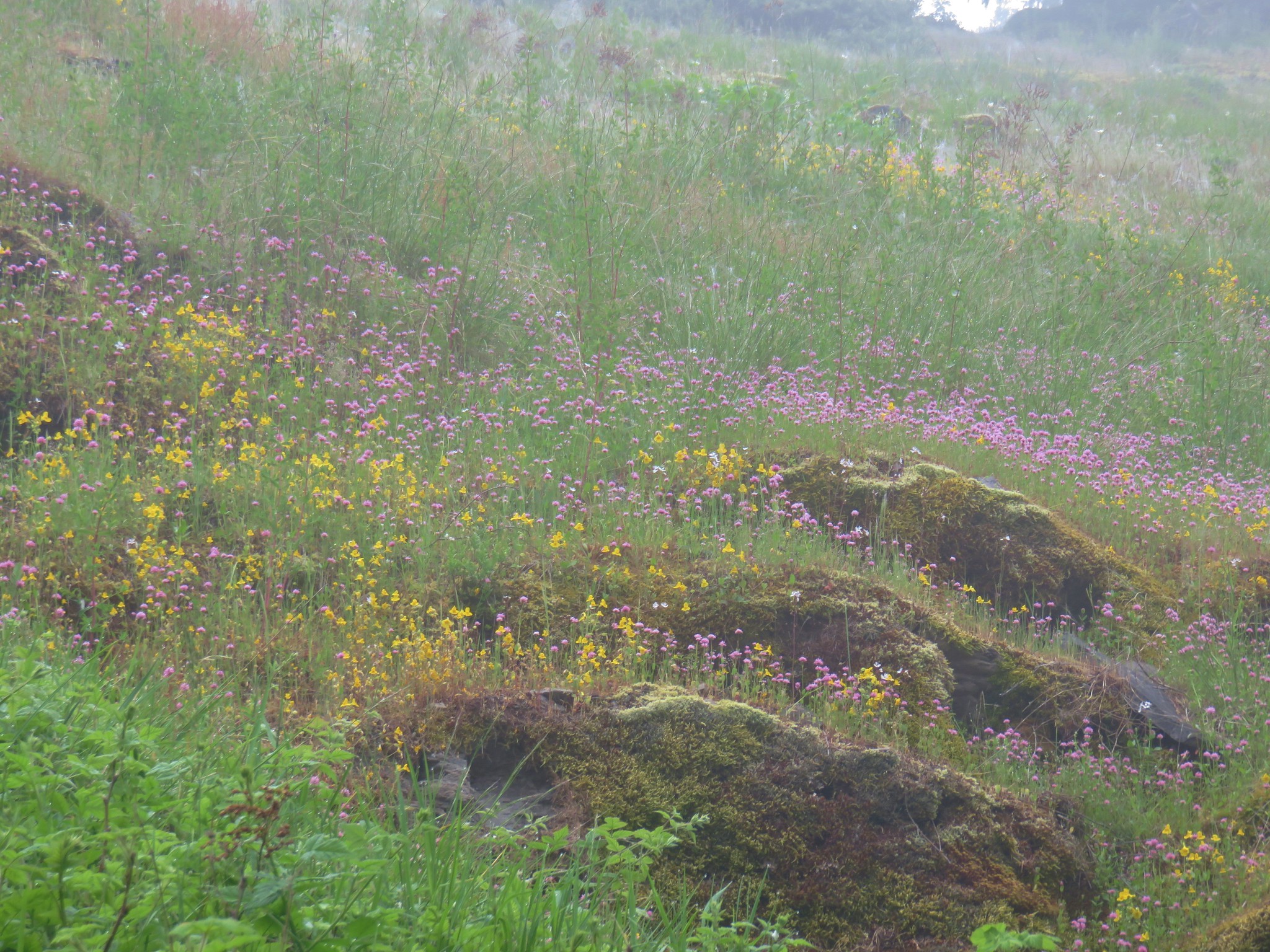
The trail switchbacked up to a meadow near some rocky cliffs where we found a surprisingly nice display of wildflowers.
IMG_1487

IMG_1490

IMG_1503

IMG_1501
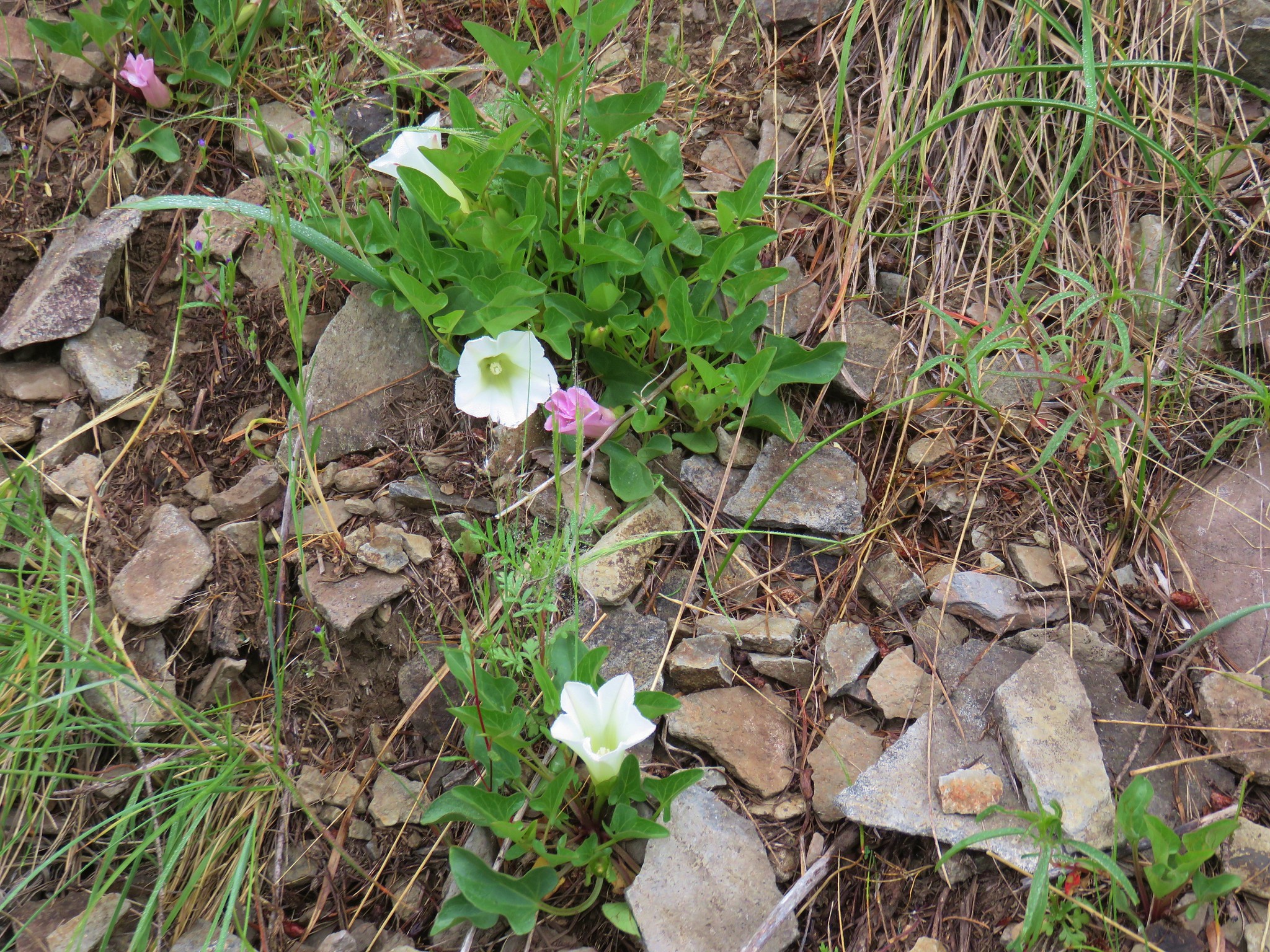
Bindweed

IMG_1523
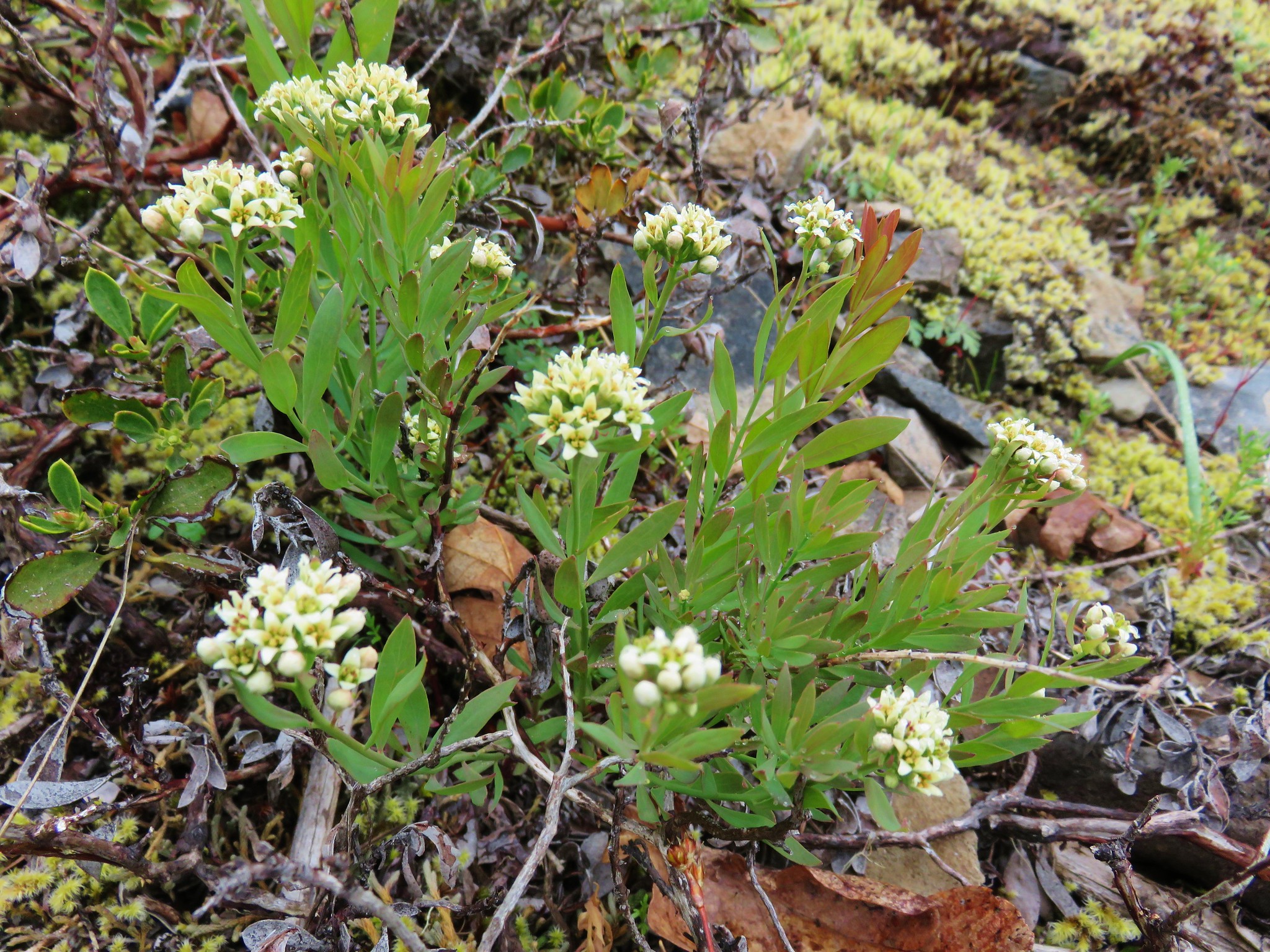
A saxifrage

IMG_1559Cat’s ear lilies

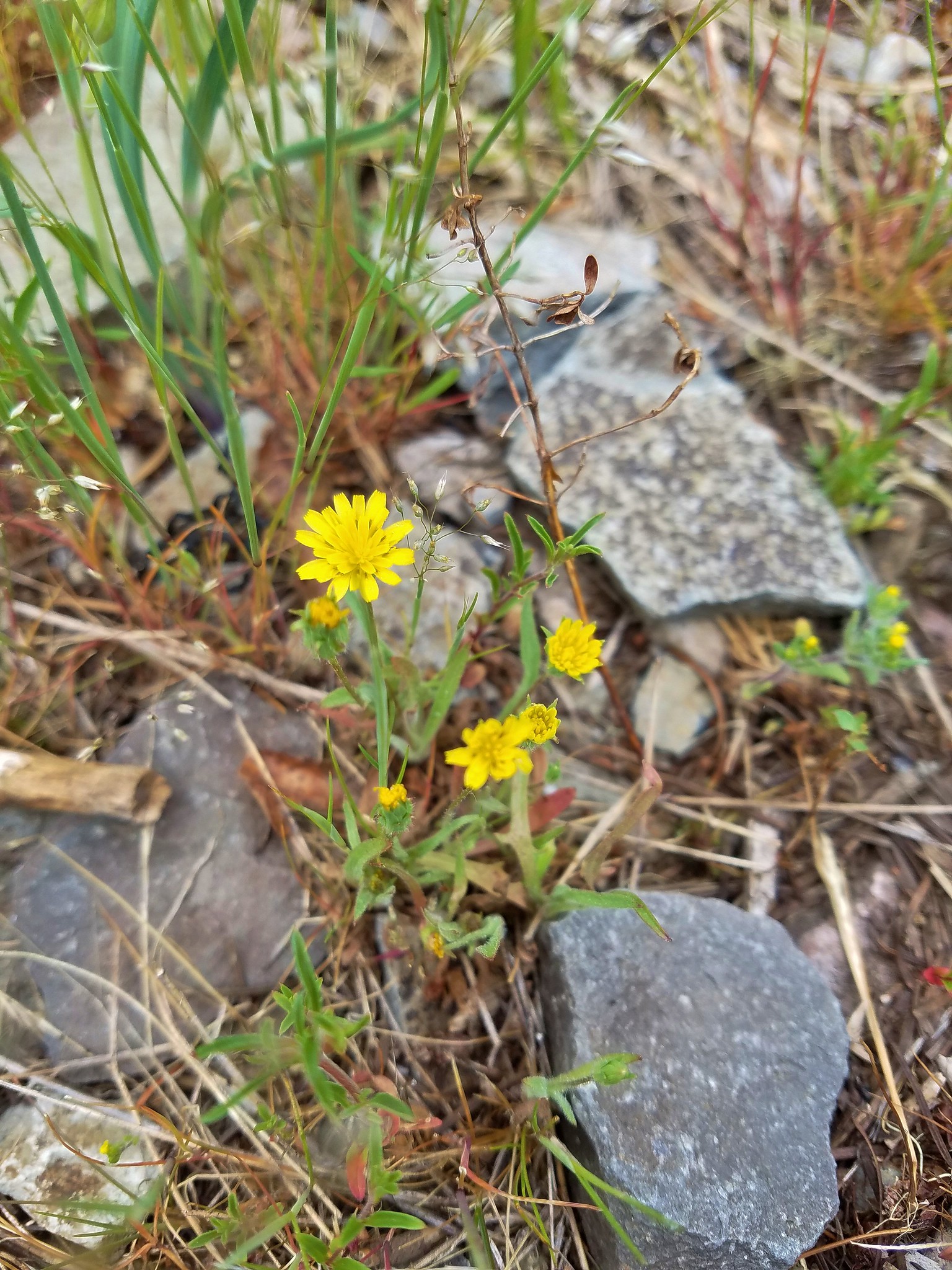
2017-06-03 10.40.16Annual agoseris

IMG_1574Prairie star and plectritis

IMG_1583Monkeyflower

IMG_1581Butterflies on buckwheat

IMG_1585 Ookow getting ready to bloom

2017-06-03 10.51.14Yellowleaf iris

2017-06-03 10.49.54Sorrel

At the top of the meadow there was a viewpoint to the NE (with no view today) where several other flowers stood out.
2017-06-03 10.52.14Parsley

IMG_1529
Larkspur

IMG_1525Penstemon

IMG_1567Paintbrush

The trail then climbed past some black oaks, chinkapin trees and a madrone to the old lookout site.
IMG_1530

IMG_1534

IMG_1533

With the clouds surrounding us we weren’t going to be getting a view of the Three Sisters so we explored the rocks looking for more wildflowers before taking a break at the lookout site.
IMG_1537

IMG_1544

IMG_1550

IMG_1555

After resting and eating lunch, we headed back down through the little meadow. Here we noticed that there were little beetles on one particular type of plant.
IMG_1576

2017-06-03 10.45.45

Neither of us had noticed them on the way up but they were on every one of those plants. It’s amazing how much we miss even when we think we are paying close attention. 🙂

Another example of that were the many candy sticks we noticed on the way back to the car. We had seen one a little ways off the trail on our way up to Castle Rock, but on the return trip we noticed at least a dozen others popping up along the trail.
IMG_1589

The sun came out near the end of our hike leaving us to wonder if there would be a view at the top in the afternoon. One of the few drawbacks of starting first thing in the morning is that we often reach viewpoints before the morning clouds have burned off.
2017-06-03 12.32.33

Even without the view though this had been a really nice 12.2 mile hike. It’s certainly one that we’d do again, especially since we didn’t get the view, and given it’s relatively low elevation it’s a good option when there is still snow higher up.
Happy Trails!

Flickr: Castle Rock

Categories
Hiking Middle Santiam Old Cascades Oregon Trip report

Independence Rock

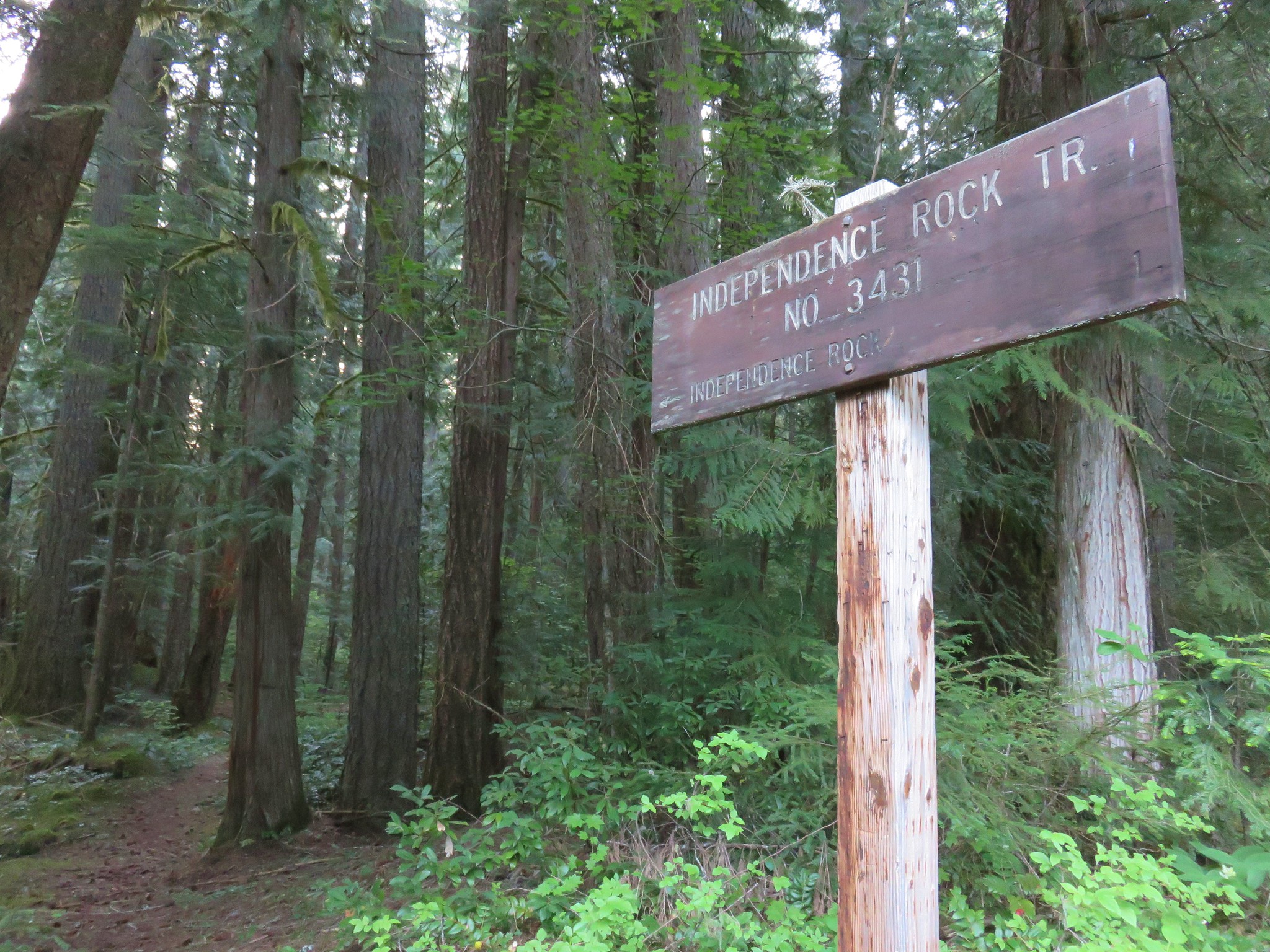
After spending Saturday and Sunday of Memorial Day weekend in Bend we were hoping to get home fairly early on Monday. We wanted to beat the holiday traffic and needed to run a couple of errands but we also wanted to sneak a quick hike in. The 2.3 mile Independence Rock loop was a perfect fit. The trail starts on Marion Creek Road just a hundred yards after turning off of Highway 22 across from the restaurant at Marion Forks. We parked on the shoulder of the road across from the trail sign for the Independence Rock Trail.
IMG_1345

The trail started off in a green forest filled with yellow Oregon grape and various white woodland flowers.
IMG_1354

IMG_1357

IMG_1360

2017-05-29 06.16.00

2017-05-29 06.16.27

IMG_1361

2017-05-29 06.19.00

2017-05-29 06.19.17

2017-05-29 06.19.58

2017-05-29 06.22.37

The trail then passed through an area that had been previously logged.
2017-05-29 06.23.05

The trail then headed uphill via a series of switchbacks and worked its way around to the backside of the hill.
IMG_1373

Near the 1 mile mark Independence Rock, a basalt outcrop, came into view up to our right.
IMG_1374

The trail arrived at the base of the rock on the far end where a unmarked trail to the right led up to the top of the rock.
IMG_1377

IMG_1383

The view from the top wasn’t anything spectacular but we could see the tip of Three Fingered Jack rising above a snowy ridge in the Mt. Jefferson Wilderness.
IMG_1387

IMG_1389

It was only 6:45am but we weren’t the first ones up on the rock.
IMG_1380

IMG_1392

After descending from the rock we continued on the loop briefly following a ridge which had also been logged before descending back into thicker forest.
IMG_1399

IMG_1402

The trail ended at Marion Creek Road .4 miles from the where we had started. We simply followed the road back to our car and were back on our way before 7:30.
IMG_1404

We did indeed beat most of the traffic and we also arrived back in Salem before the stores we needed to go to opened so we did a little impromptu shopping until their doors opened at 10. It may not have had the most breathtaking views but it made for the prefect quick leg stretcher if you find yourself driving between Salem and Central Oregon. Happy Trails!

Flickr: Independence Rock

Categories
Bull of the Woods/Opal Creek Hiking Old Cascades Oregon Throwback Thursday Trip report

Throwback Thursday – Phantom Bridge & Opal Lake

**Note the 2020 Beachie Creek Fire burned the area covered by this hike.**

This week were covering a 8/14/2011 visit to Phantom Bridge and Opal Lake located at the southern end of the Opal Creek Wilderness. Our main focus on this hike was to finally make it to Phantom Bridge. We had tried twice before having failed first in 2010 to find an alternate trailhead due to washouts along the roads to the trailhead we would use on this hike. A month prior to this hike we attempted to come from the west along the Elkhorn Ridge Trail, a trip that will be covered in a later throwback post.

The third time was the charm though as Road 2207 had been reopened and we were able to drive from Detroit, OR to the French Creek Ridge Trailhead.
French Creek Ridge Trailhead

The French Creek Trail extended to both the east and west from the trailhead. Phantom Bridge lay to the west so we crossed Road 2207 and picked up the trail at a downed trail sign.
French Creek Ridge Trail sign

We followed the trail for 1.3 miles to small forest Cedar Lake passing Dog Tooth Rock and views of Opal Lake and the Opal Creek Wilderness.
Dog Tooth Rock

View from the French Creek Ridge Trail

Opal Lake

Cedar Lake

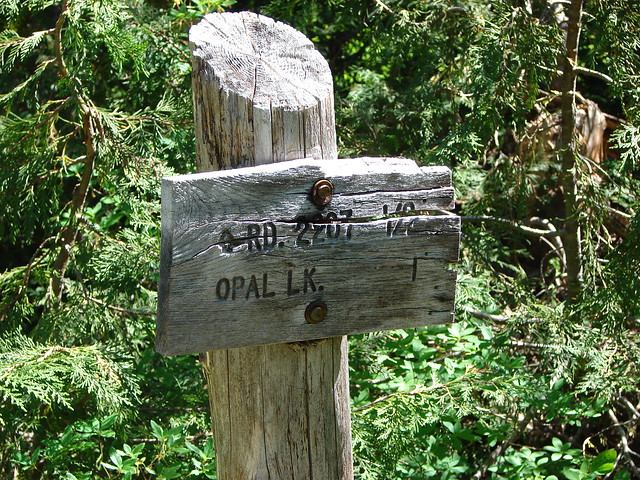
Near Cedar Lake a connector trail from Road 2207 near Opal Lake was marked by a trail sign.
Trail sign for Opal Lake

We decided that on the way back we’d take that trail down to visit Opal Lake before heading back to our car. For now though we continued west on what had become the Elkhorn Ridge Trail.
Elkhorn Ridge Trail

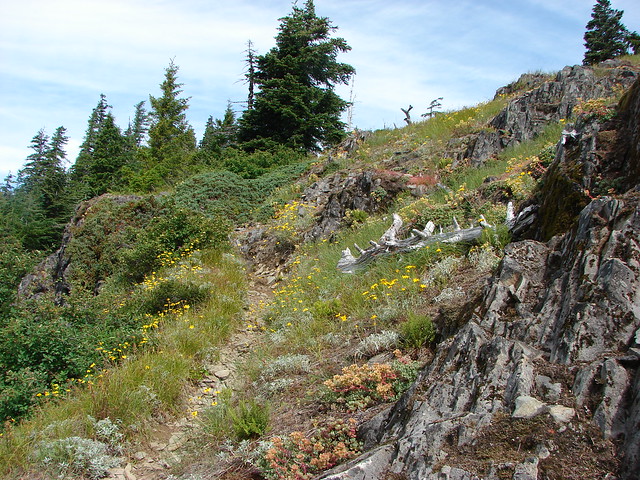
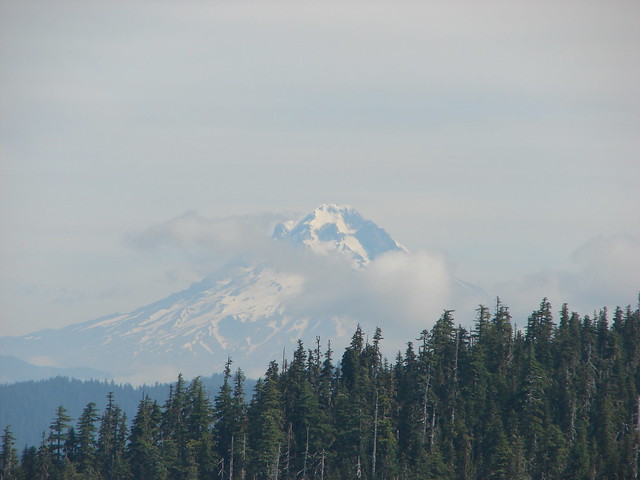
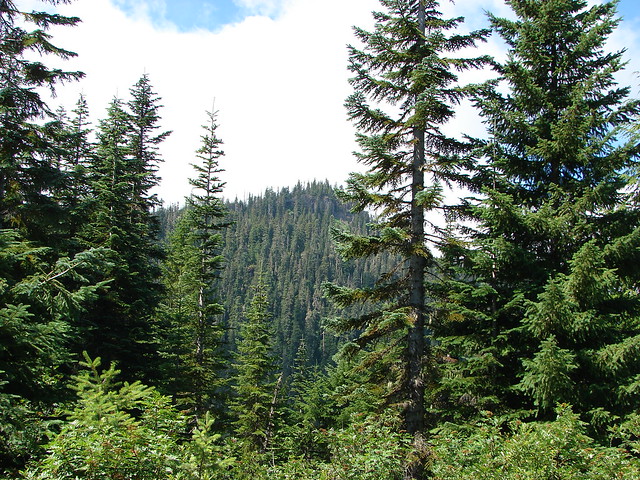
We came to a second possible trailhead .7 miles from Cedar Lake on Road 2223. This trailhead just a quarter mile from Phantom Bridge the road has a reputation for being a nasty drive so the 2 mile hike from the French Creek Ridge Trailhead was preferable to us. Along this stretch wildflowers lined the trail and views extended from Mt. Hood to the Three Sisters.
Elkhorn Ridge Trail

Mt. Hood

Mt. Jefferson, Three Fingered Jack and The Three Sisters

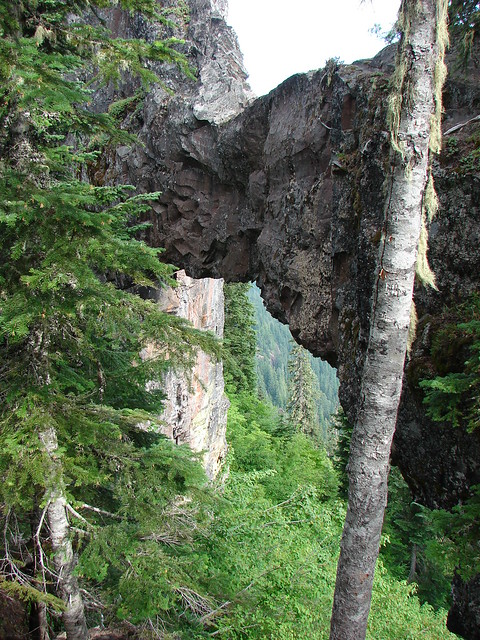
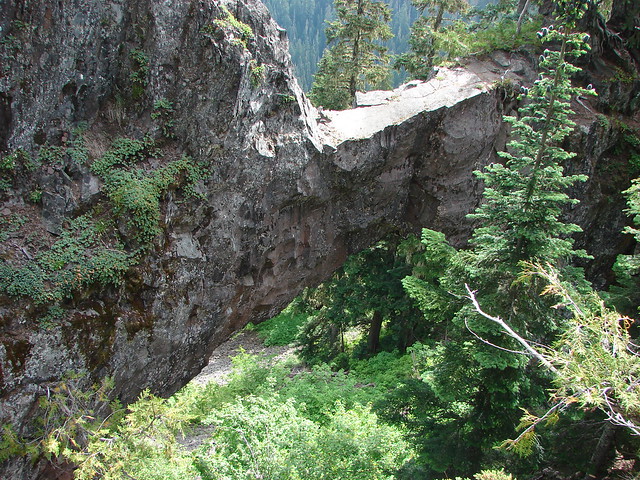
Phantom Bride spanned a 50′ wide chasm to the right (north) of the trail.
Phantom Bridge

A short side path led out to the rock arch (on the right hand side in the photo below).
Phantom Bridge

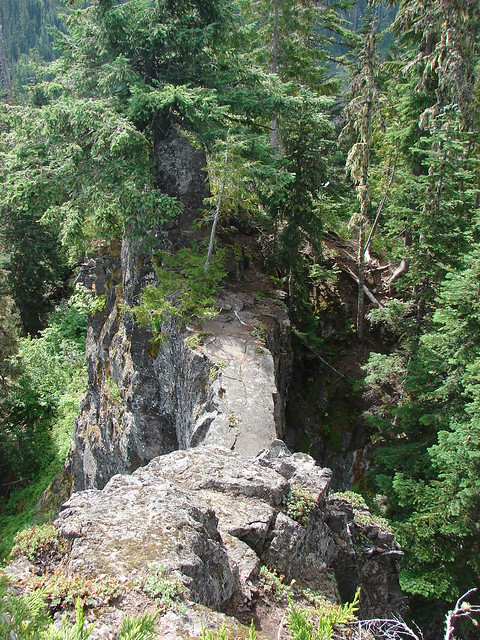
I walked out onto the arch and took a picture looking back toward the side path.
Phantom Bridge

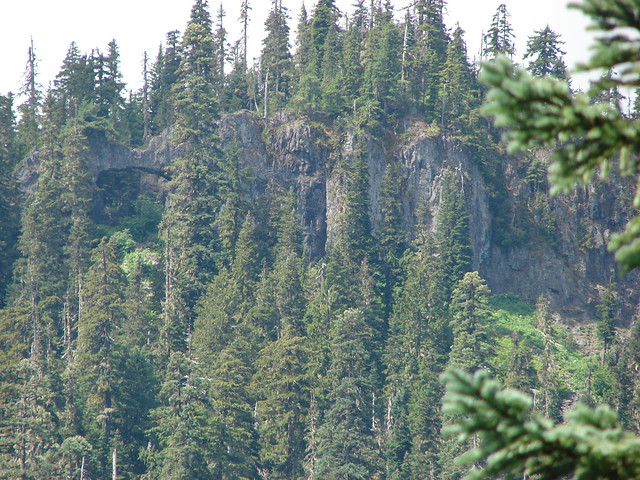
After admiring this geologic feature we returned to Cedar Lake and headed steeply downhill toward Road 2207 at the trail sign we’d passed earlier. The steep trail was rather brushy and we decided not to return up it after visiting Opal Lake opting instead to walk Road 2207 up to the trailhead. From the road Phantom Bridge was visible high up on the hillside.
Phantom Bridge form road 2207 near Opal Lake

Phantom Bridge

Blank signboards marked the half mile trail down to Opal Lake.
Opal Lake Trail

The trail was basically a runoff stream bed which made it rather rocky and uneven.
Opal Lake Trail

Opal Lake Trail

The brush rimmed lake was very pretty and it teemed with activity.
Opal Lake

Opal Lake

Swallowtail butterfly on a bog orchid

Lorquin's admiral butterfly

Dragonfly

Rough skinned newt in Opal Lake

After watching the butterflies, dragonflies and newts at the lake we returned to the road and followed it uphill to our waiting car. It was a fairly steep walk but not as steep as it would have been going back up to Cedar Lake and the road was lined with wildflowers which made it a little nicer than some road walks.
Paintbrush and penstemon

Happy Trails!

Flickr: Phantom Bridge & Opal Lake

Categories
Hiking Middle Santiam Old Cascades Oregon Trip report

Coffin Mountain, Bachelor Mountain, and Bugaboo Ridge

For the 4th of July we spent our day off revisiting Coffin and Bachelor Mountains and discovering the Bugaboo Ridge Trail. Our previous hike up Coffin and Bachelor Mountains was on a cloudy day in early August, 2013. We hadn’t experienced any mountain views that day and it was past peak for the wildflowers so we had added it to the list of hikes to redo. In addition to revisiting the two mountains we also planned on checking out the Bugaboo Ridge Trail which intersects the Bachelor Mountain Trail.

A recent presentation by Matt Reeder at Salem Summit Company had prompted us to pick up a copy of his book “101 Hikes in the Majestic Mount Jefferson Region” which provided some additional details on the Bugaboo Ridge Trail. After reading his description it seemed well worth the additional mileage to check it out.

We parked at the Coffin Mountain Trailhead which is accessed via Straight Creek Road found 2.9 miles south of Marion Forks.
IMG_0871

On our previous visit we had parked here and started by walking 1.2 miles further along forest roads to the Bachelor Mountain Trailhead and hiking to that summit before returning and heading up Coffin Mountain. To change things up this time we headed up Coffin Mountain first. Most of the Coffin Mountain Trail passes through open wildflower meadows.
IMG_0874

Our timing was much closer to peak for the wildflowers and there was a wide variety in various stages of bloom.
Chaparral false bindweed
chaparral false bindweed

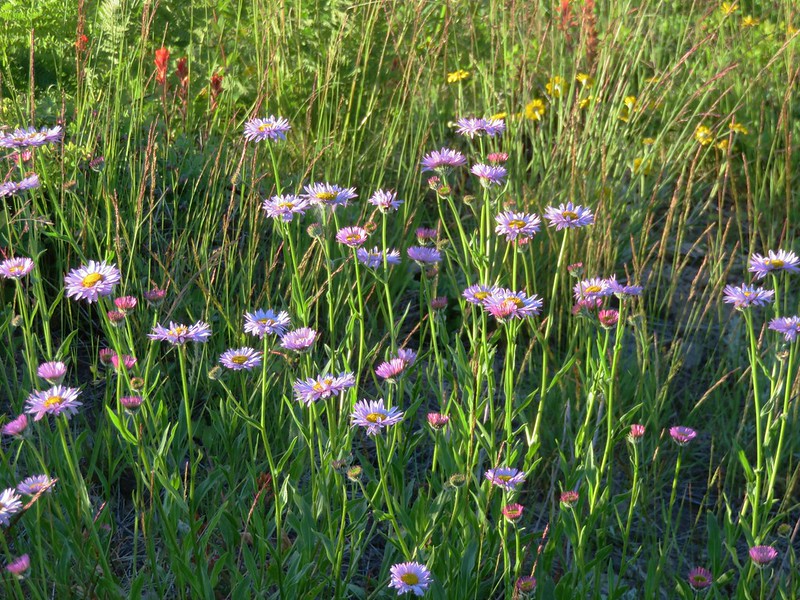
Aster
IMG_0882

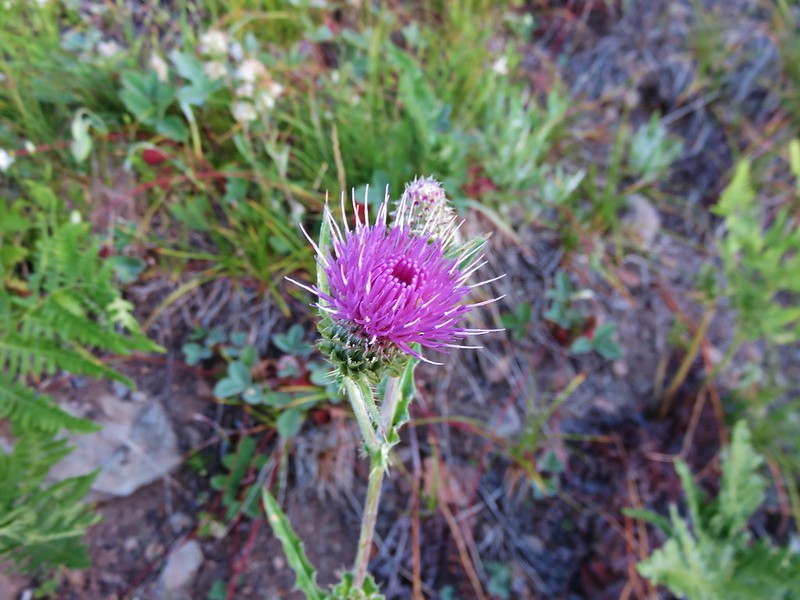
Thistle
IMG_0889

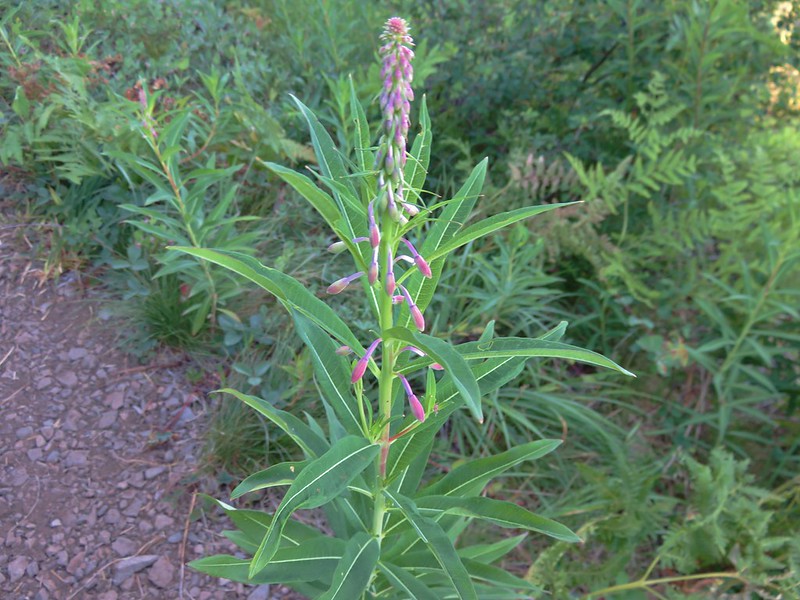
Fireweed
IMG_0890

Cat’s ear lily
IMG_0895

Yellow leaf iris
IMG_0906

False sunflower and blue gilia
IMG_0911

Scarlet gilia and paintbrush
IMG_0913

Tall bluebell
IMG_0918

False sunflower
IMG_0929

Catchfly
IMG_0930

Mountain owl’s clover
IMG_0936

As the trail climbs views of the Cascades get increasingly better.
Mt. Jefferson
IMG_0927

Three Fingered Jack, Mt. Washington, Broken Top, The Three Sisters, The Husband and Diamond Peak
IMG_0932

Diamond Peak
IMG_0933

Mt. Washington, Broken Top, The Three Sisters and The Husband
IMG_0934

Three Fingered Jack
IMG_0945

The number of flowers increased the higher we got in the meadows.
IMG_0954

IMG_0949

Red, White, and blue for the 4th
IMG_0956

Beargrass
IMG_0961

The trail enters a short section with trees where the Coffin Mountain Lookout is visible on the cliffs above.
IMG_0972

A final push uphill leads to the staffed lookout tower and helipad.
IMG_0976

It was a little different view than we’d had in 2013.
Coffin Mountain lookout

IMG_0990

We returned to the trailhead then set off on the road toward the Bachelor Mountain Trailhead. Although it’s possible to drive the 1.2miles we’d rather enjoy the scenery along the way.
IMG_1020

IMG_1022

IMG_1023

IMG_1030

Coffin Mountain Lookout from the road to the Bachelor Mountain TH.
IMG_1032

The unsigned trail begins at the end of Road 430.
IMG_1039

The trail climbs fairly steeply through a forest in two long switchbacks before losing the trees and gaining views as it rounds a ridge end.
IMG_1051

The wildflowers on Bachelor Mountain rivaled those on Coffin although Bachelor Mountain is drier and rockier.
IMG_1048

Washington lily
IMG_1057

IMG_1070

IMG_1072

After the initial climb the trail leveled out along a plateau with views.
IMG_1074

IMG_1079

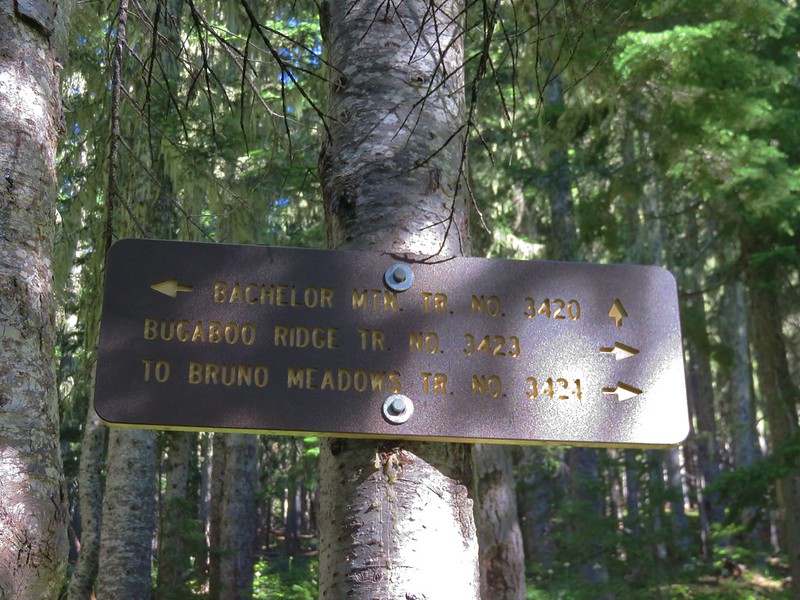
The trail then reentered the forest shortly before arriving at a junction with the Bugaboo Ridge Trail.
IMG_1083

IMG_1084

We kept to the Bachelor Mountain Trail and headed uphill toward the summit. This section of trail passed though a forest of small tightly packed trees, many of which were bent by the weight of winter snows.
IMG_1086

Once we were above the trees the wildflowers and views returned.
IMG_1090

IMG_1098

Phlox
IMG_1094

Wallflower
IMG_1107

Another lookout used to sit atop Bachelor Mountain but it was burnt by the Forest Service years ago just leaving the views. To the north Mt. Adams was visible over Mt. Hoods shoulder.
IMG_1110

Mt. Jefferson loomed to the east.
IMG_1114

A little further south was Three Fingered Jack and the scars of the B & B Fire.
IMG_1119

Then came a clump of Cascade Mountains, Washington, Broken Top and the Three Sisters.
IMG_1118

Because Bachelor Mountain is taller than its neighbor there was also a nice view of Coffin Mountain.
IMG_1135

We headed back down the Bugaboo Ridge Trail junction and unlike our last visit this time we turned onto that trail and headed east through the forest.
IMG_1139

The Bugaboo Ridge Trail is a longer approach to Bachelor Mountain and it was evident that it sees much lighter usage based on the narrower tread and encroaching vegetation in places. We found it to be a great trail though. The trail left the trees and entered a series of rock gardens and meadows filled with wildflowers.
IMG_1142

IMG_1147

IMG_1148

IMG_1156

IMG_1158

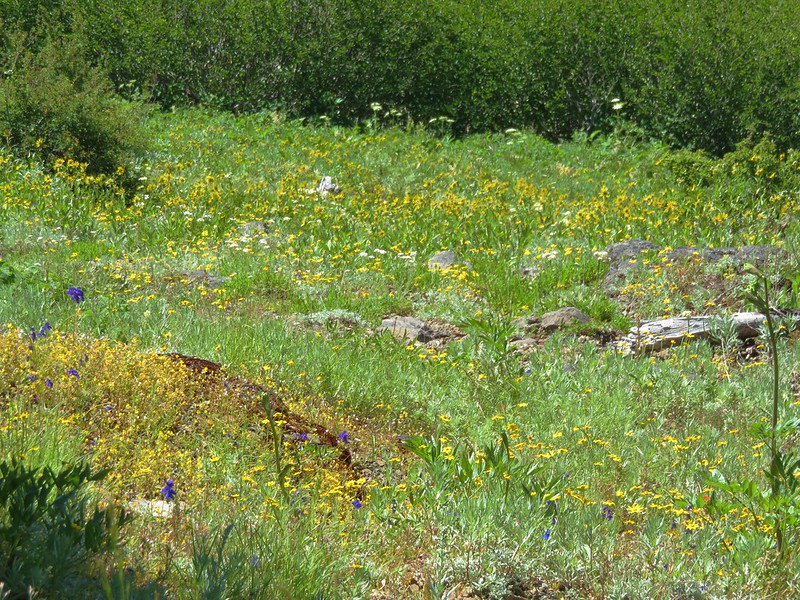
IMG_1166

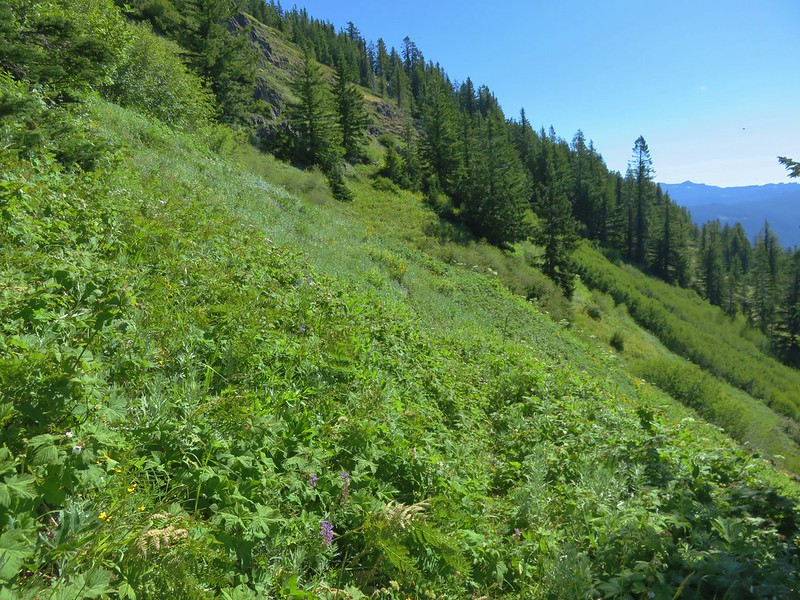
The views were pretty darn good too.
IMG_1160

IMG_1172

IMG_1202

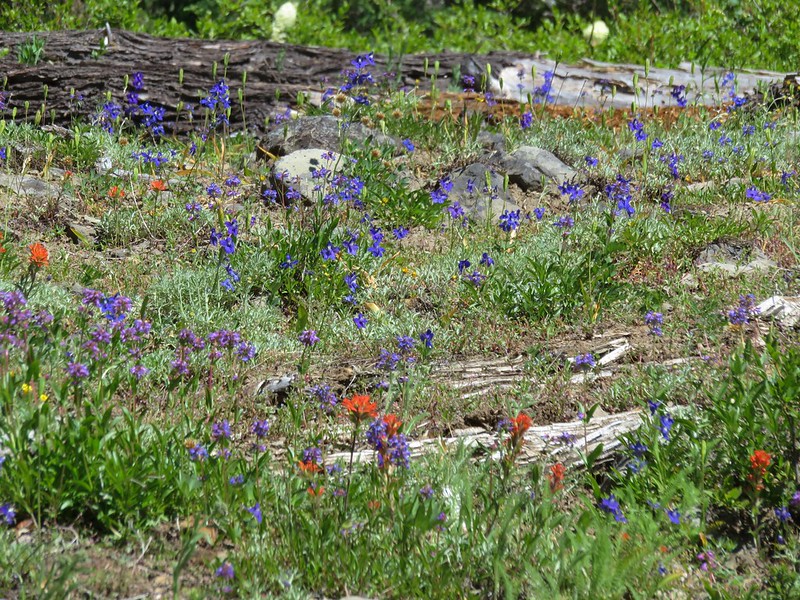
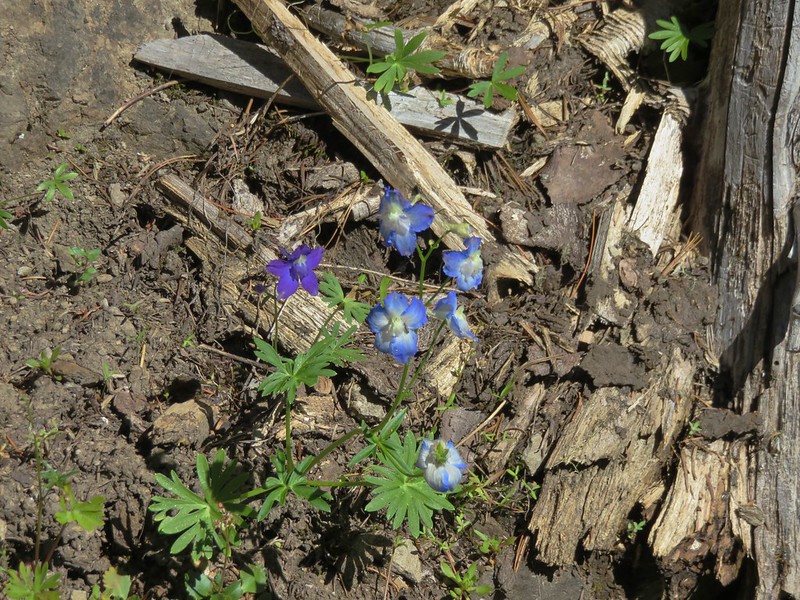
Heather spotted an interestingly colored larkspur along the trail, it was the only one we could find.
IMG_1216

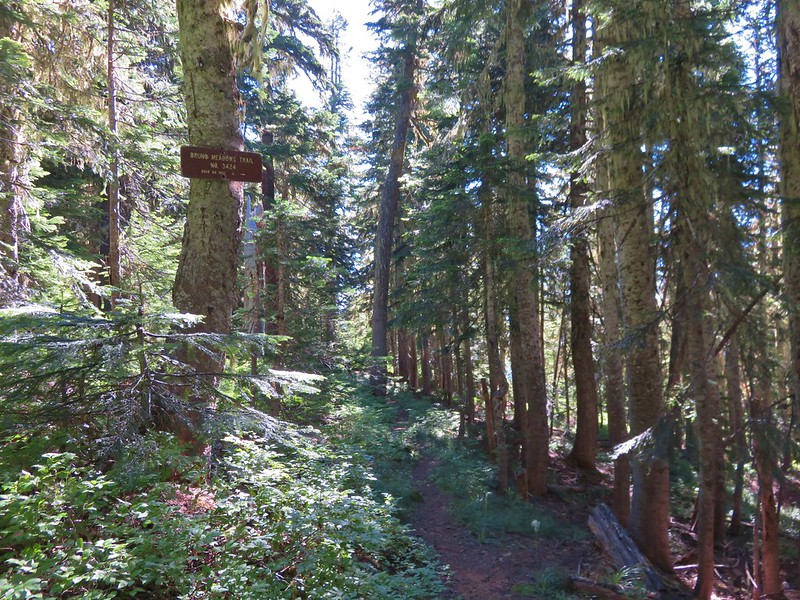
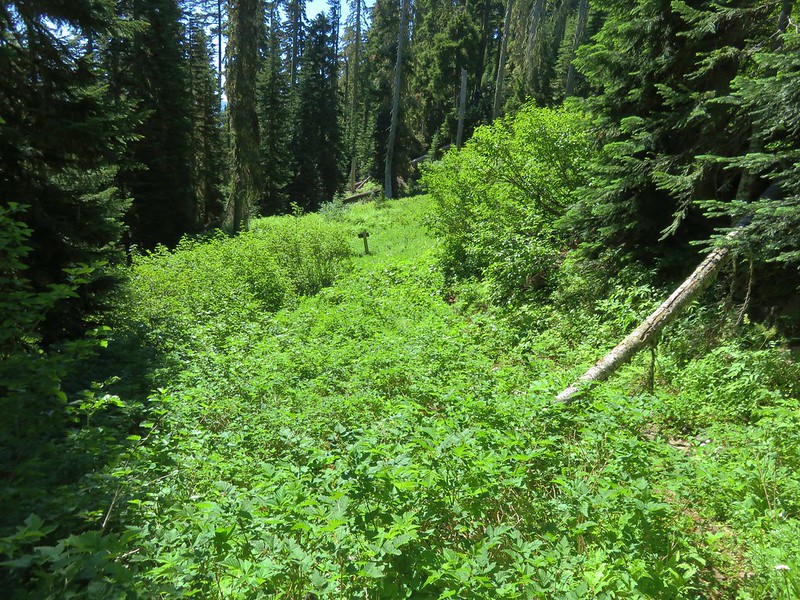
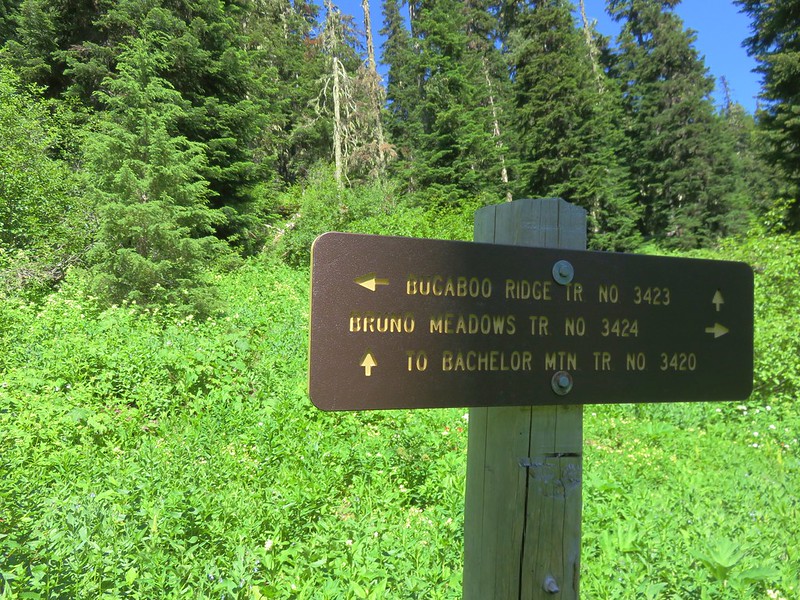
The meadows and gardens began to give way to forest as the trail descended to the Bruno Meadows Trail junction.
IMG_1224

IMG_1228

The Bruno Meadows Trail is yet another option to reach Bachelor Mountain, but we ignored that trail and continued to descend on the Bugaboo Ridge Trail. The descent was gentle except for a short section above the Bruno Meadows junction although there was a fair amount of blowdown to navigate. We decided to turn around at a logging road that the trail crossed in an old clear cut.
IMG_1245

The detour along the Bugaboo Ridge Trail to the road was just under 2.5 miles adding nearly 5 miles to the days hike but it had been worth the extra effort. This visit had been a vastly different experience from our visit in 2013. It was fun to be able to see what we had not been able to on that first trip, and it was a great way to spend the 4th. Happy Trails!

Flickr: https://www.flickr.com/photos/9319235@N02/albums/72157670004507771

Categories
Hiking Middle Santiam Old Cascades Oregon Trip report

Cascadia State Park and Rooster Rock

Once again we found ourselves rearranging our scheduled hikes after we had to cancel a planned visit to Central Oregon. We needed to stay home and finish giving our cat Buddy medication after he had a tooth extraction. We settled on a pair of hikes along Highway 20 east of Sweet Home, OR beginning at Cascadia State Park.

Cascadia State Park is less than 15 miles from Sweet Home and offers one year round picnic area and a camground, group tent site, and a second picnic area open from May 1st – September 30th. It also offers some short hiking trails which is what prompted our visit. After turning into the park and crossing the South Santiam River we parked at the west picnic area. The first trail we set our sights on was the Soda Creek Falls Trail. This trail began from the road to the group camps and day use area just before it crossed Soda Creek.
Soda Creek Falls Trailhead

The trail was a bit muddy in spots as it followed the creek up to the falls. The falls were set in a scenic canyon tumbling over and down basalt.
Soda Creek Falls

An easy path went down to the base of the falls and the low volume of water made it possible to walk right up to them.
Soda Creek Falls

Soda Creek Falls

We returned to where we had parked and walked across the entrance road to a sign for the Soda Springs Trail.
Soda Springs Trail - Cascadia State Park

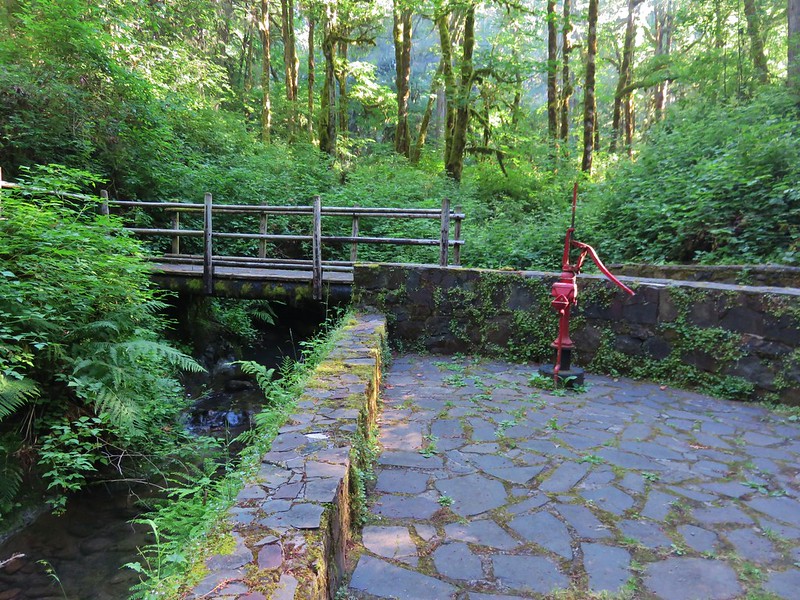
This trail led down to a footbridge over Soda Creek and then on to Soda Springs.
Trail down to Soda Springs

Soda Springs

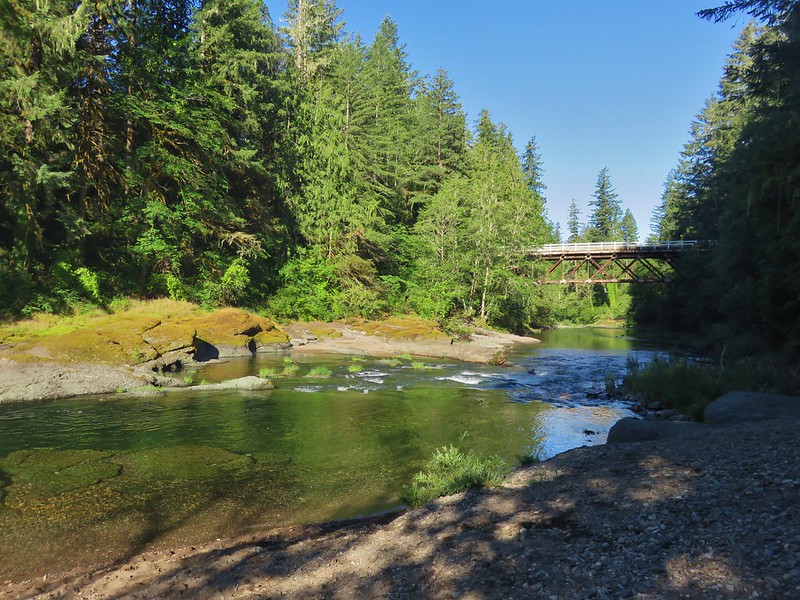
We followed the trail up from the spring site and then took a right hand path down some stairs to the South Santiam River.
Stairs in Cascadia State Park down to the South Santiam River

South Santiam River

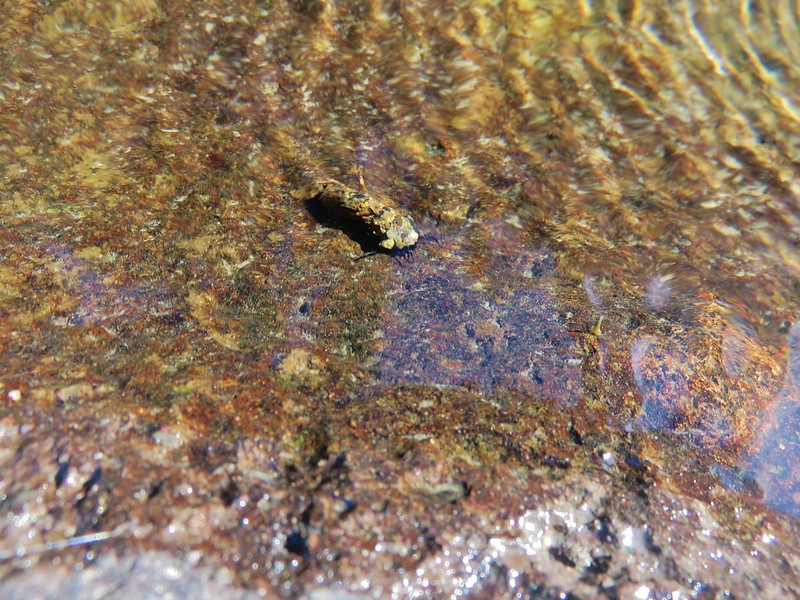
We spent some time exploring on the exposed river rock where we spotted some aquatic bugs and small minnows.
South Santiam River

Bug in the South Santiam River

Minnows in the South Santiam River

After climbing back up from the river we continued through the east picnic area and walked along a service road which passed through a large meadow with a few flowers.
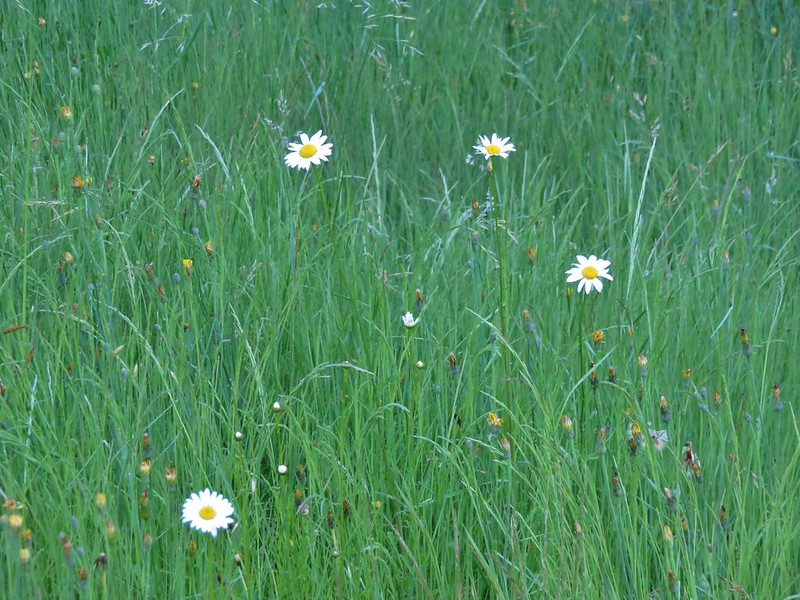
Daisies in Cascadia State Park

At the far end of the meadow we left the service road and passed through an off-leash area for pets where we found lots of tiger lilies.
Tiger lilies

From the off-leash area we picked up the River Trail which began at the group camp parking lot and led east along the South Santiam River. We took a couple of side trails, one to a meadow of plectritis and a second down to the river.
Plectritis along the South Santiam River

South Santiam River

Although there were no signs posted the trail eventually left the State Park and passed onto private land at the start of a series of bends in the path. We turned around here and headed back to the west picnic area and our car.

From Cascadia State Park we drove another 7 miles east to a pullout across from Trout Creek Campground. A pair of trails began here, the short Walton Ranch Interpretive Trail and the more strenuous Trout Creek Trail.
Walton Ranch Interpretive Trail Trailhead

Trout Creek Trail Trailhead

We began with the Walton Ranch Trail which crossed Trout Creek and climbed a little over a quarter mile to a viewing platform. From Winter to early Spring an elk herd winters in the meadow across Highway 20 from the platform but being June the only things we spotted were flowers.
Trout Creek

Interpretive sign along the Walton Ranch Interpretive Trail

Walton Ranch meadow

It was now time for the most difficult hike of our day. The Trout Creek Trail gains approximately 2400′ in 3.4 miles to the site of two former cabins near Rooster Rock in the Menagerie Wilderness. The wilderness contains several large rock pinnacles/formations which are volcanic in origin and popular with rock climbers.

To be honest this was a hike that had not been high on our list to do. Although it was included in all our guidebooks for the area none of them seemed to be all that enamored with this hike. It was described as being “short on highlights”, “a good conditioning hike”, and “the least interesting hike in the Old Cascades”. Having low expectations may have been a good thing in the end because we wound up enjoying the hike even though it did suffer from a lack of highlights, and it was quite a workout.

The trail climbed steadily the entire time. It was never overly steep but it was relentless and it never left the forest so there were no good views along the way. There were also no creeks or streams to cross along the route.
Trout Creek Trail

Trout Creek Trail - Menagerie Wilderness

Best view of Rooster Rock from the Trout Creek Trail
Rooster Rock from the Trout Creek Trail

There were a few flowers including lots of candy sticks along the way and some ripe red huckleberries too.
Madia
Madia

Rhododendron and huckleberries
Rhododendron and red huckleberries

Candy sticks
Candy sticks

Candy sticks

Candy sticks

There was effectively no view of Rooster Rock at Rooster Rock. A large boulder sat at its base and trees hid the rock.
Boulder near Rooster Rock

Rooster Rock from below

Rooster Rock behind a tree

We continued uphill from Rooster Rock forking right to the site of the former cabins that were used by the lookouts who staffed a lookout that had sat atop Rooster Rock once upon a time. The view from the former cabin site was better than we had expected. Rooster Rock was still out of view, but the view east extended up the South Santiam River canyon to the snowy peaks of North and Middle Sister.
North and Middle Sister from the former lookout site near Rooster Rock

North and Middle Sister from the former lookout site near Rooster Rock

Other familiar peaks included Cone Peak and Iron Mountain.
Cone Peak and Iron Mountain from the former lookout site near Rooster Rock

The rocks around the viewpoint were dotted with purple penstemon and yellow stonecrop.
Penstemon

Penstemon

From the cabin site a climbers trail continued deeper into the Menagerie Wilderness. The climbers trail would have eventually taken us to a forest service road on the north side of the wilderness and made it possible to visit Panorama Point, a viewpoint atop a large rock cliff. To get there the trail passes through a section of the wilderness that is closed annually from 1/15 – 7/31 to protect endangered species so we only went a little ways further into the wilderness in an attempt to find a better view of some of the other rock features. We turned around at some pink flagging that was in the area of the closure never having found a decent view. Panorama Point was visible for a moment through some trees as was another odd shaped pinnacle.
Panorama Point

Panorama Point

Rock pinnacle in the Menagerie Wilderness

Rock pinnacle in the Menagerie Wilderness

Heather did manage to find a spur trail that led to a view of Rooster Rock and to the west toward the Willamette Valley.
Rooster Rock from a viewpoint in the Menagerie Wilderness

Rooster Rock from a viewpoint in the Menagerie Wilderness

Looking west from a viewpoint in the Menagerie Wilderness

She also spotted the summit of South Sister barely rising above one of the foothills.
The snowy summit of the South Sister

On our way back to the car we were on the lookout for a wilderness sign. As we visit the various wildernesses I try and get a picture of a wilderness sign for each one and I needed one for the Menagerie Wilderness. We had started looking on the way up but not until we were well into the wilderness so as we neared the edge of the area we began looking back at the trees as we passed. We never did see an official sign so I took a picture of the wilderness regulation sheet on the information board at the trailhead instead.
Menagerie Wilderness sign

Someday we may have to try the Rooster Rock Trail (a shorter,steeper approach to Rooster Rock) in hopes that there is a fancier sign along that trail but until then we can at least mark off one more wilderness area we’ve visited. Happy Trails!

Flickr: https://www.flickr.com/photos/9319235@N02/albums/72157669592127776

Categories
Cottage Grove Hiking Old Cascades Oregon Trip report

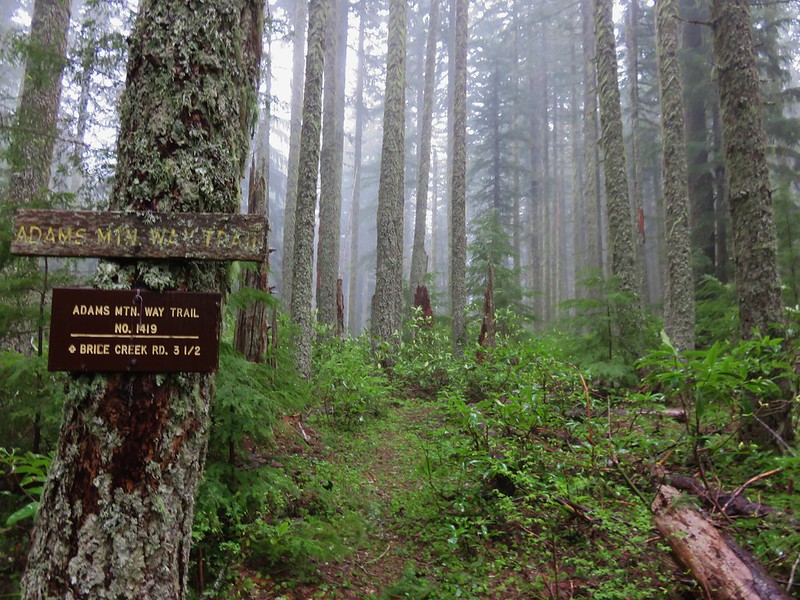
Parker Falls and Adams Mountain Way

**Note the 2024 Adam Mountain Fire burned over a very small portion of the Knott Trail and a fire break was created that extends along the ridge between the Crawfish and Adams Mountain Way Trails.**

Our 2016 hiking season officially started with a pair of hikes in the Umpqua National Forest. Both trailheads are located along Brice Creek, SE of Cottage Grove, OR. We had visited the area in 2014 to hike the more popular Brice Creek and Trestle Falls Trails https://wanderingyuncks.wordpress.com/2014/05/09/brice-creek-trestle-falls/ and were back now to tackle some of the other nearby trails.

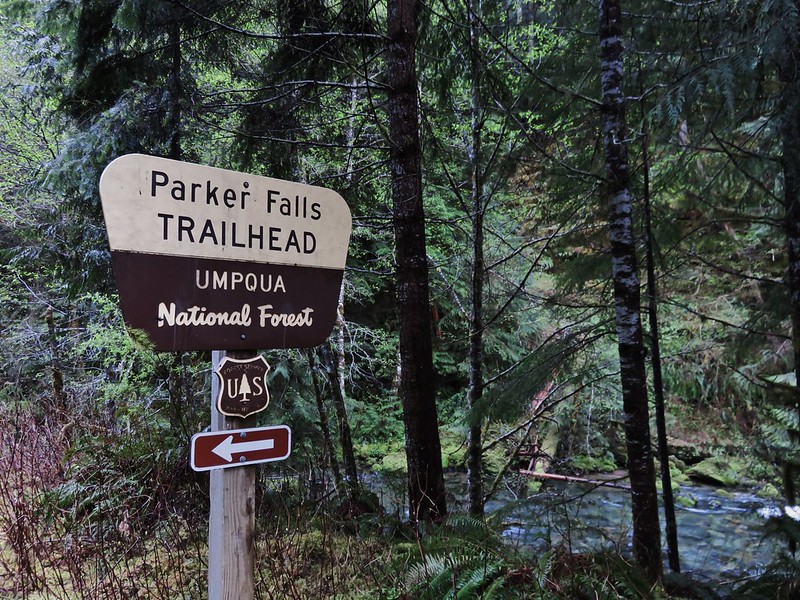
We began the day at the Parker Falls Trailhead which is 2.3 miles beyond the Upper Brice Creek/Trestle Falls Trailhead.
IMG_4033

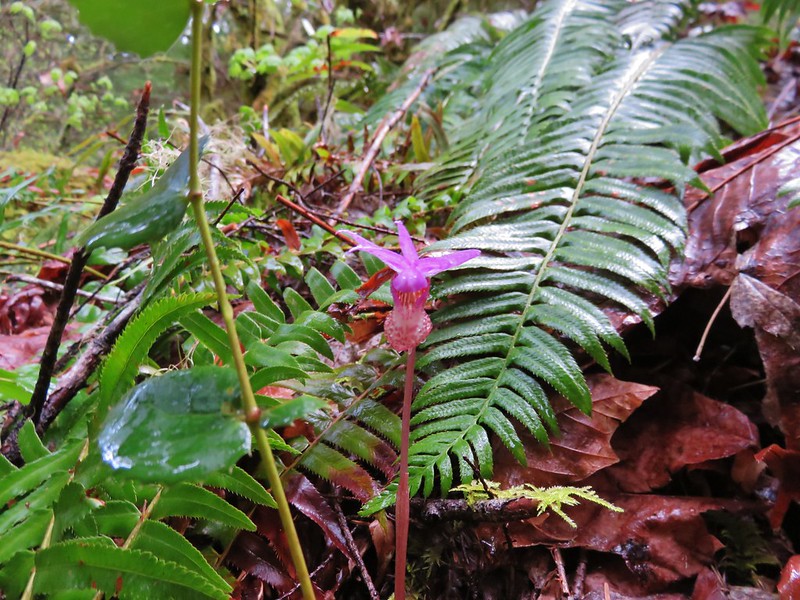
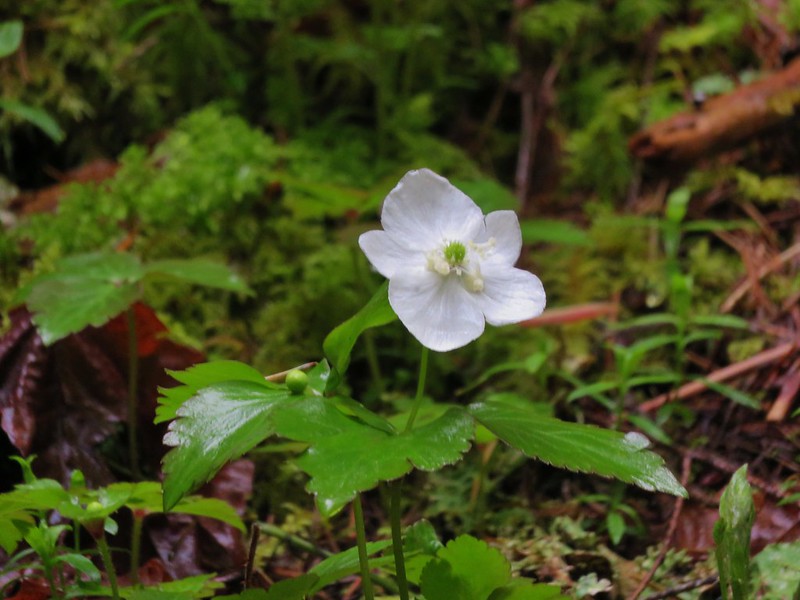
The trail runs along Parker Creek up to Lower Parker Falls and finally Upper Parker Falls. Spring wildflowers lined the trail.
Fawn lillies
IMG_4037

Fairy slipper
IMG_4050

Anemone
IMG_4082

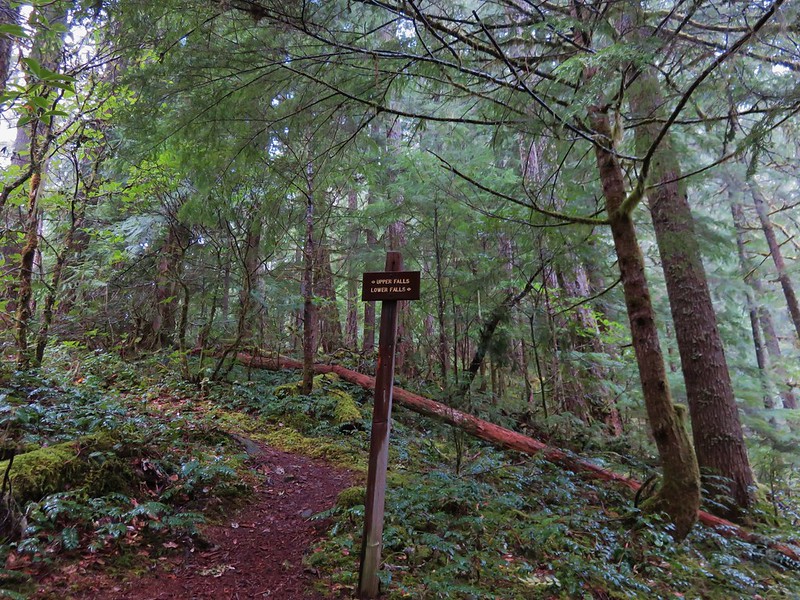
At a signed junction we took a short path down to Lower Parker Falls.
IMG_4053

IMG_4058

IMG_4060

After admiring the lower falls we went back to the junction and headed for the upper falls. The upper falls were more of a slide and the trail stayed up along the canyon wall above them.
IMG_4074

We were not entirely certain that this was indeed the upper falls as the trail continued on so we kept going. It led to the creek bank above the upper falls. At this point I checked our GPS and it appeared that the trail should have continued a short distance up the creek. There was a faint path leading further but it quickly vanished beneath debris that had fallen into the canyon. We were only able to go a short distance before facing the choice of getting wet or turning back. I decided to hop into the creek and continue. I had gone about a hundred yards when I came to a small slide in a narrow mossy drop.
IMG_4068

IMG_4069

I was on a small gravel bar inhabited by some coltsfoot.
IMG_4071

I could see a little way upstream and saw no signs of any additional falls and didn’t see an easy way past the small cascade ahead so I headed back to Heather and we returned to the car. We decided that Upper Parker Falls must indeed have been the slide we had passed before reaching the creek (That was confirmed by waterfallsnorthwest.com).

The signed mileage is 1/2mi to the lower falls and 3/4 to the upper falls while the Forest Service website lists it as 1.1 miles. Our GPS registered a round trip of 2.4 miles which, given my short excursion up the creek, makes the 1.1 miles more likely.

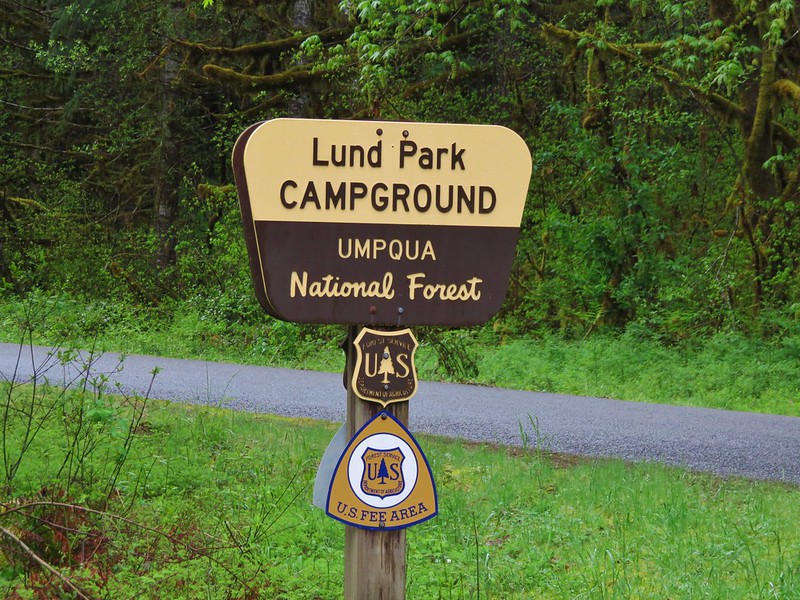
From the Parker Falls Trailhead we drove back the way we’d come to Lund Park which was about 10 minutes away.
IMG_4083

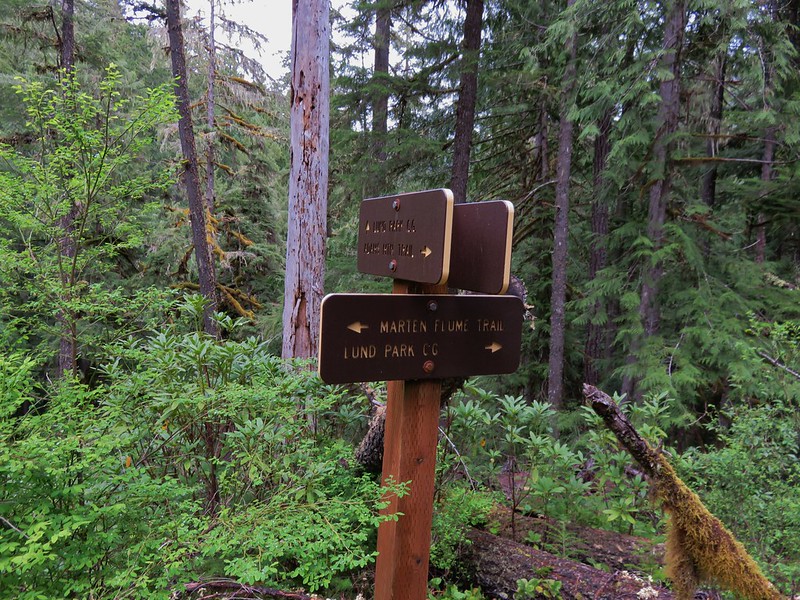
Our loop hike started here and we faced a choice. We could begin on any one of three trails- Adams Mountain Way, Marten Flume, or the Crawfish Trail. The Adams Mountain Way Trail started on the opposite side of Brice Creek Road just east of Lund Park while the Marten Flume Trail started just west of Lund Park and connected to Adams Mountain Way after .6 miles. The Crawfish Trail was 1.2 miles further west along Brice Creek Road meaning we would either start or end our hike with a road walk. We decided to start with the road walk thinking we were less likely to run into traffic since it was still before 9am and a road walk at the end of a hike is never very exciting.

As road walks go this one wasn’t too bad passing Hobo Creek on the left and having Brice Creek off to our right.
IMG_4085

Brice Creek
IMG_4096

There were also plenty of wildflowers along the way.
Valerian
IMG_4086

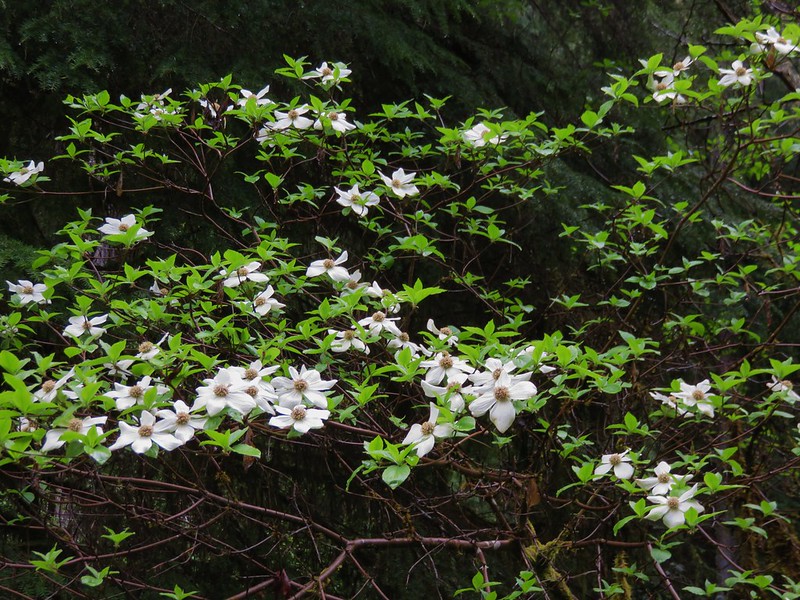
Dogwood
IMG_4088

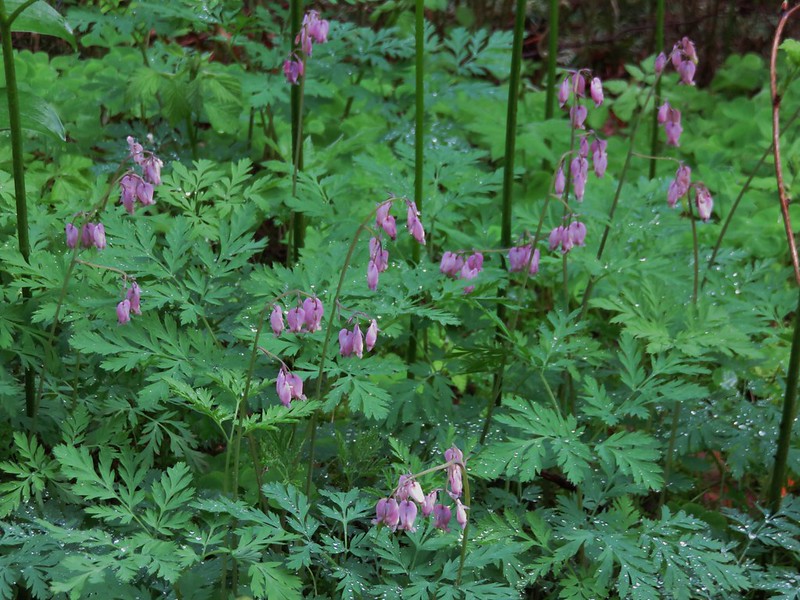
Bleeding heart
IMG_4090

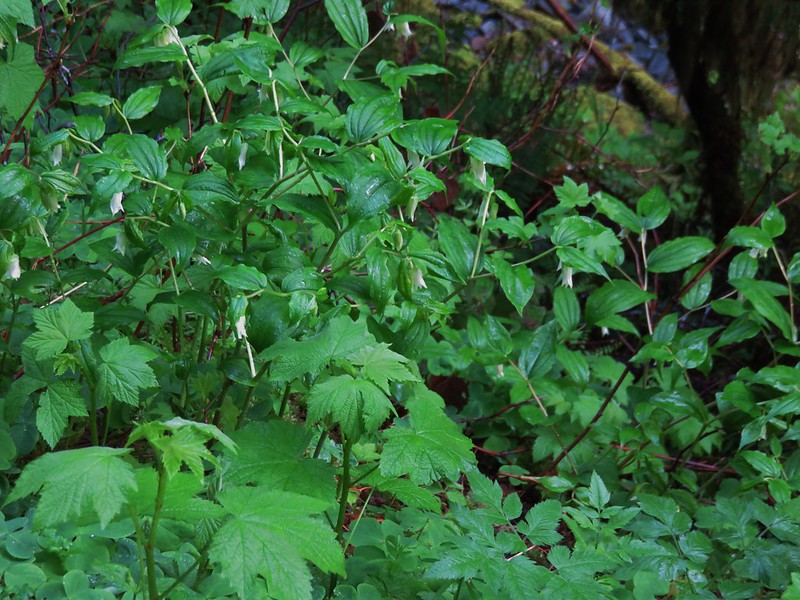
Fairybells
IMG_4091

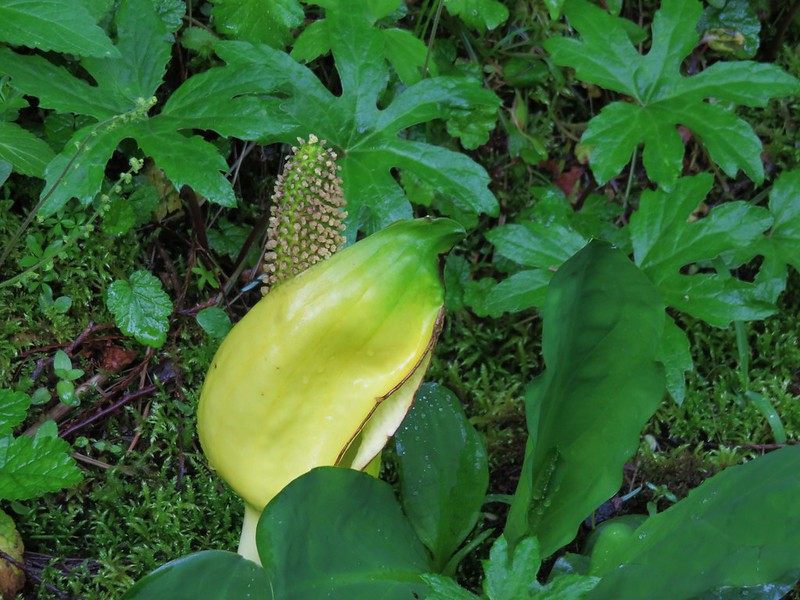
Skunk cabbage
IMG_4094

Red flowering currant
IMG_4095

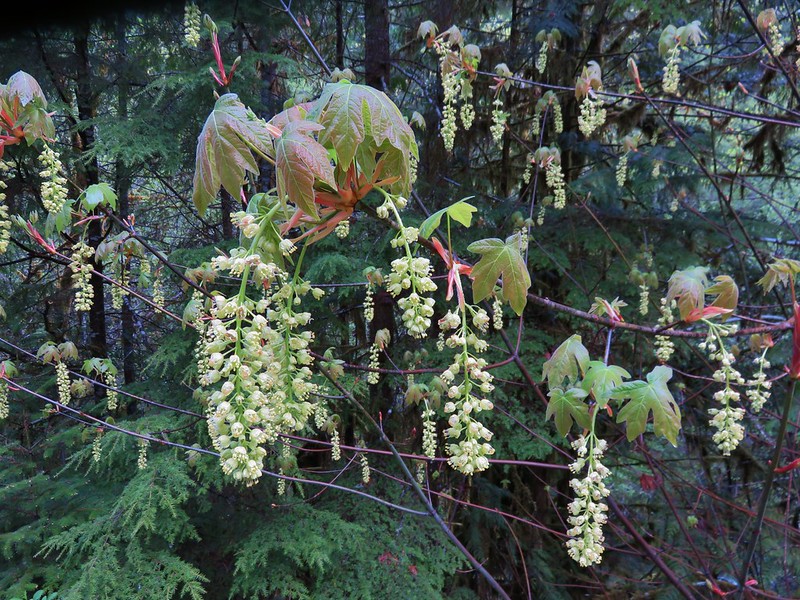
Big leaf maple
IMG_4099

We made it to the Crawfish Trail without encountering any vehicles and began a 5.5 mile climb to the Knott Trail.
IMG_4103

IMG_4106

It was obvious that the lower portion of the Crawfish Trail is popular with mountain bikers as there were more tire tracks than footprints along the way. It probably is not a trail one would want to hike when bikes were barreling down the trail at you, but we were early enough in the day and season to not encounter anyone; hiker or bicyclist.

The trail was well signed along the way as it crossed a couple of roads (or the same road multiple times).
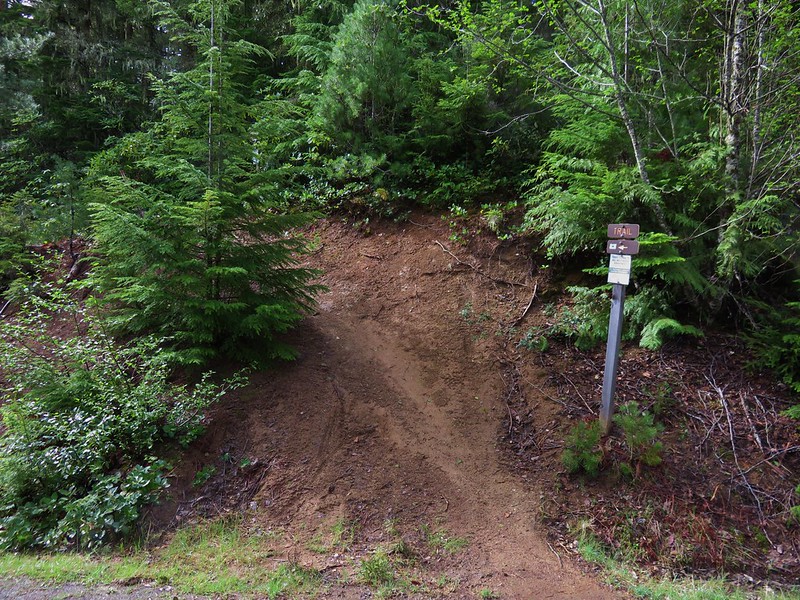
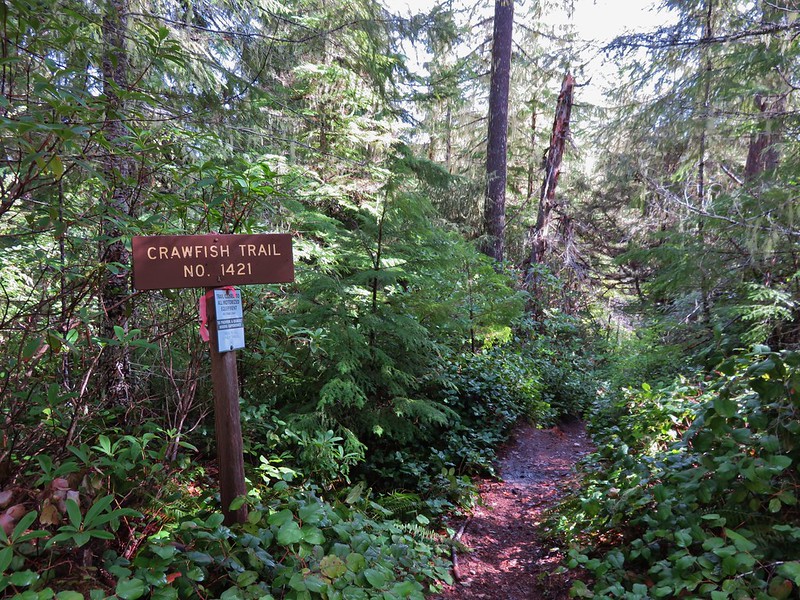
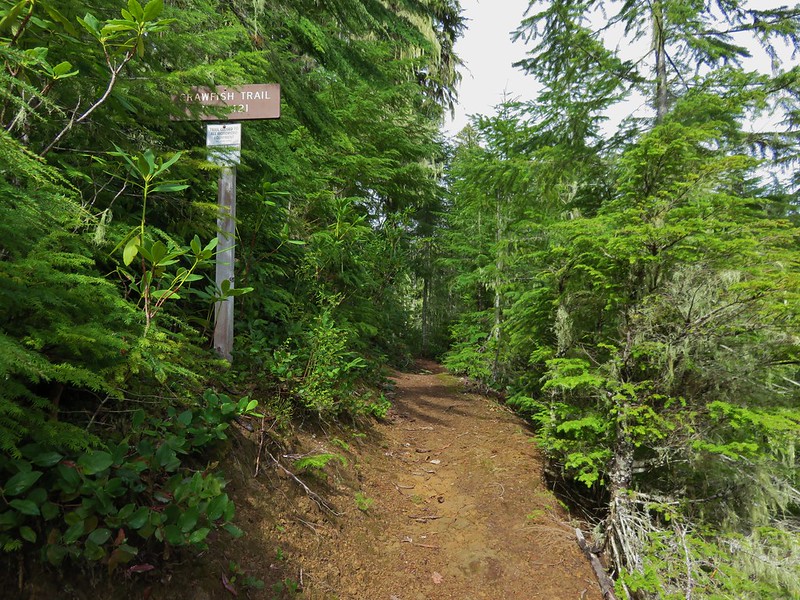
Crawfish Trail

IMG_4119

IMG_4120

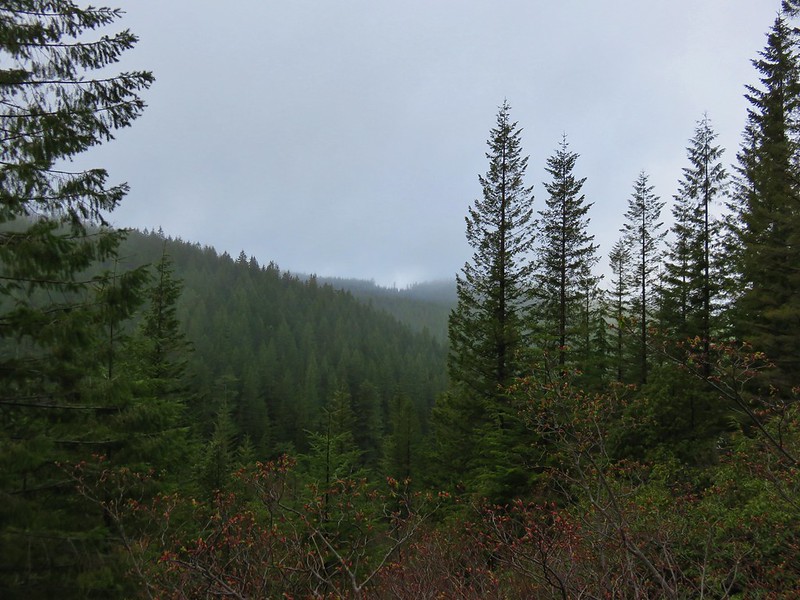
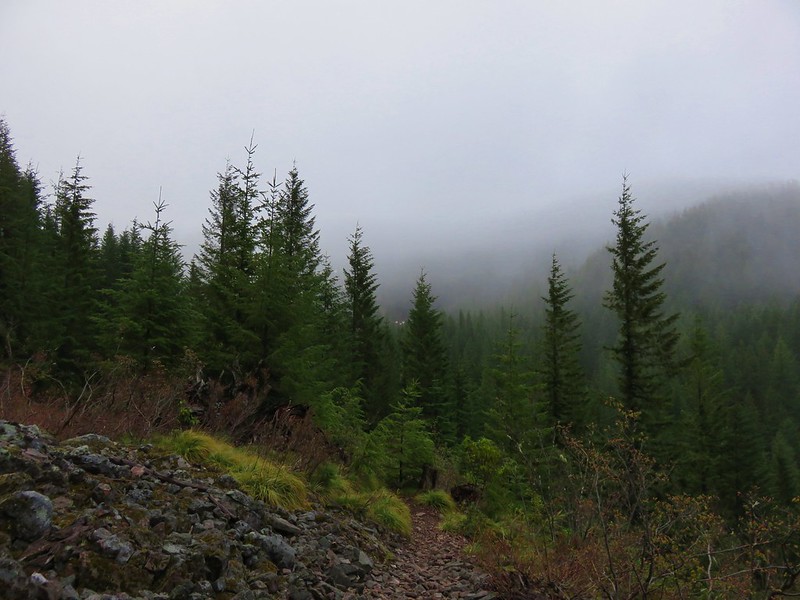
There weren’t many places along the trail with opportunities for views but when the trail passed over a saddle to the SW side of a ridge there would have been some if not for the low clouds that were present.
IMG_4128

IMG_4129

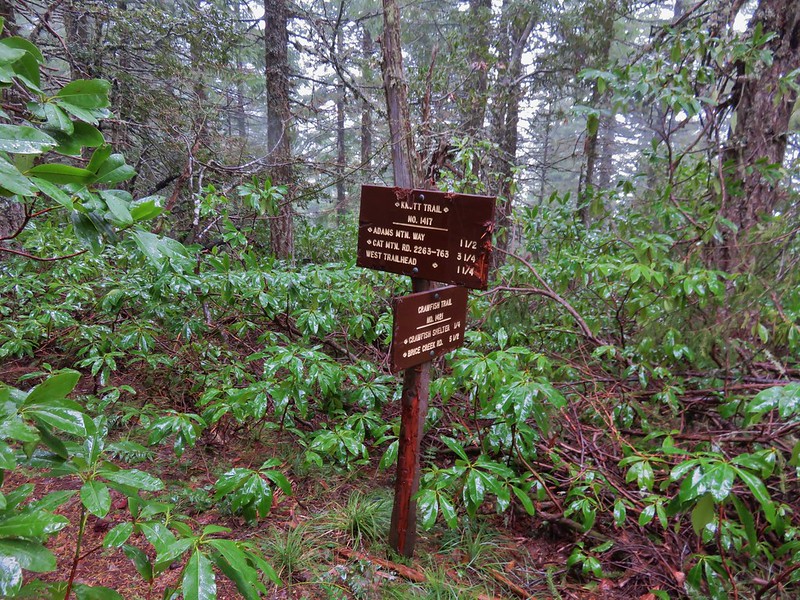
Things got a little confusing when we came to National Forest Road 2234 where a trail sign pointed three different directions for the Knott Trail which was to be our connector between the Crawfish Trail and Adams Mountain Way.
IMG_4132

After consulting our map we decided that we wanted to follow the .7mi Knott Trial pointer and cross NF 2234. The other pointers were for the road itself which would have led us back to the Knott Trail in either direction but not after some needless travel.

As we continued on the Crawfish Trail time seemed to move backwards and the flowers of Spring gave way to chilly winds and patches of snow.
IMG_4133

IMG_4137

IMG_4139

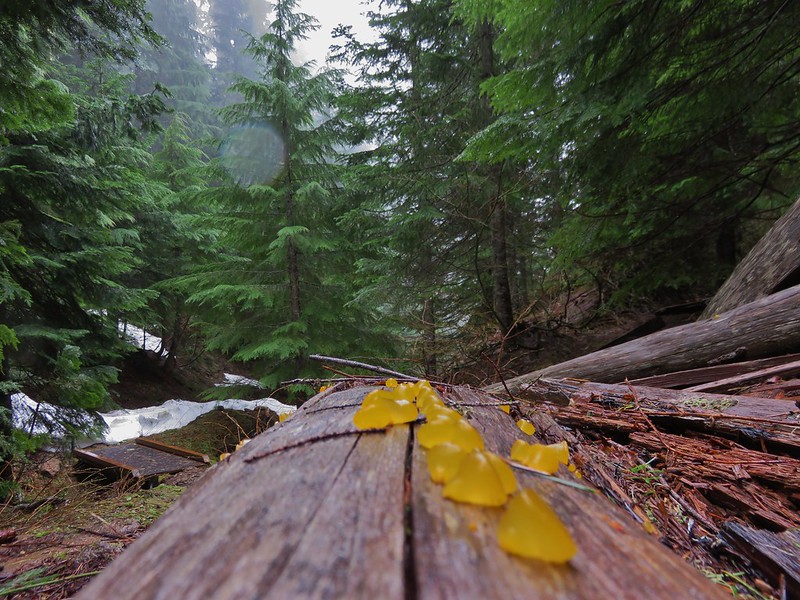
Orange jelly fungus
IMG_4140

When we finally reached the Knott Trail Junction we turned left and climbed some more.
IMG_4145

The trail led up to open meadow that might have had a decent view on a clear day and probably some nice flowers in a month or two.
IMG_4147

IMG_4149

IMG_4150

Beyond the meadow the trail began to descend along a ridge toward the Adams Mountain Way junction. On this side we encountered more snow.
IMG_4153

The trail was in decent enough shape with some blowdown and debris along the way, nothing too difficult to get around, but in several sections it needed to be brushed out.
IMG_4151

We reached the Adams Mountain way junction in a forested saddle.
IMG_4160

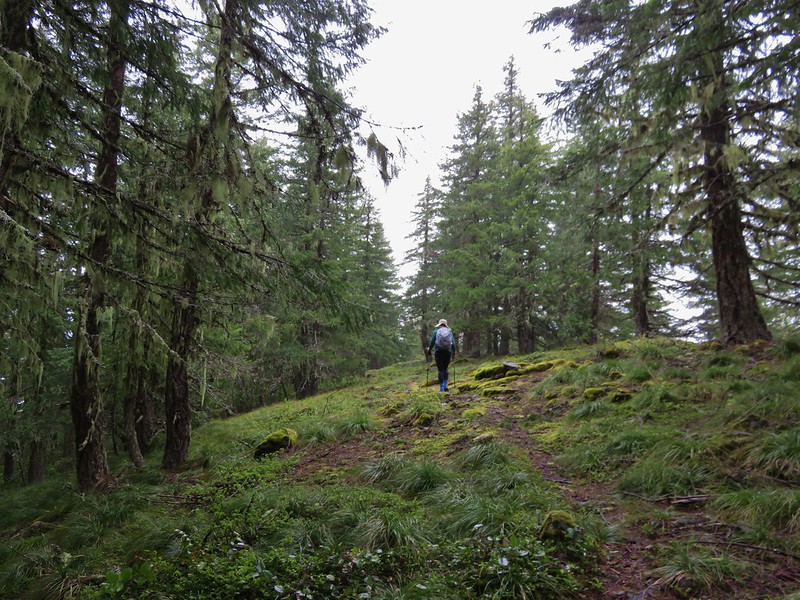
The Adams Mountain Way Trail began gently enough traveling along a ridge towards Brice Creek Road.
IMG_4164

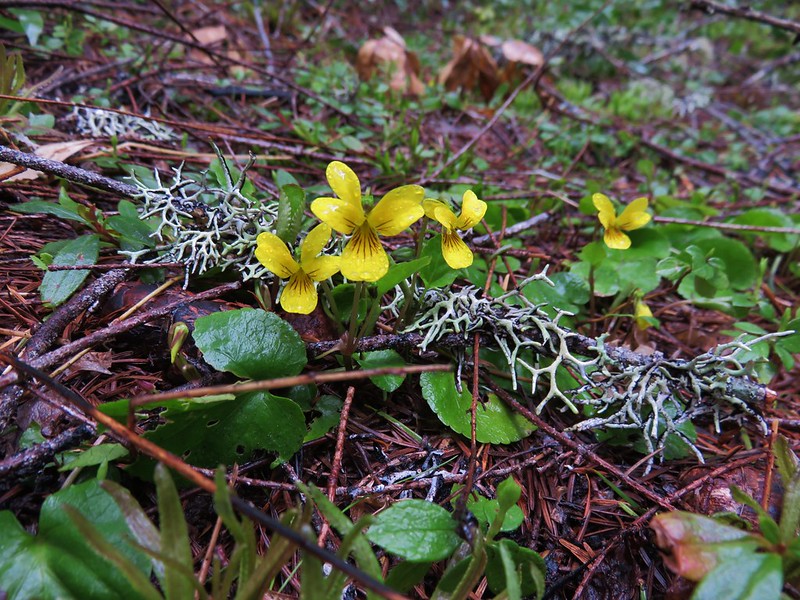
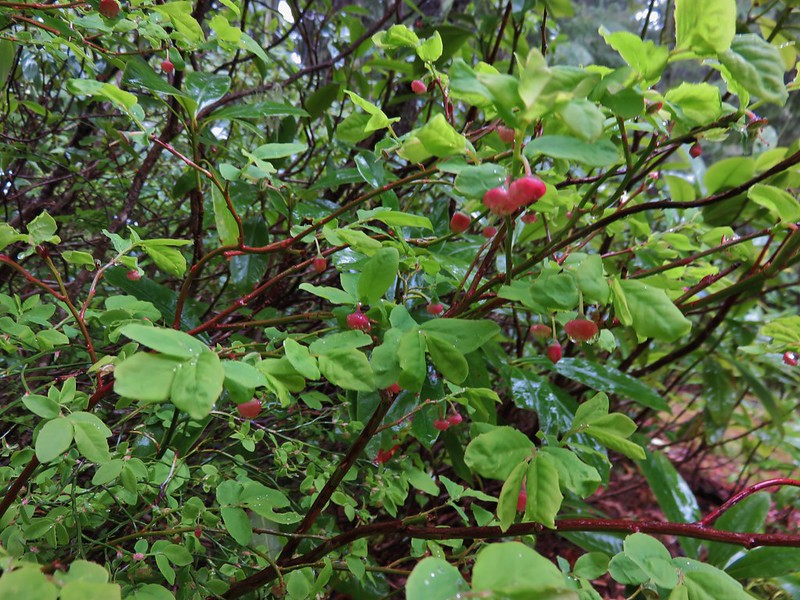
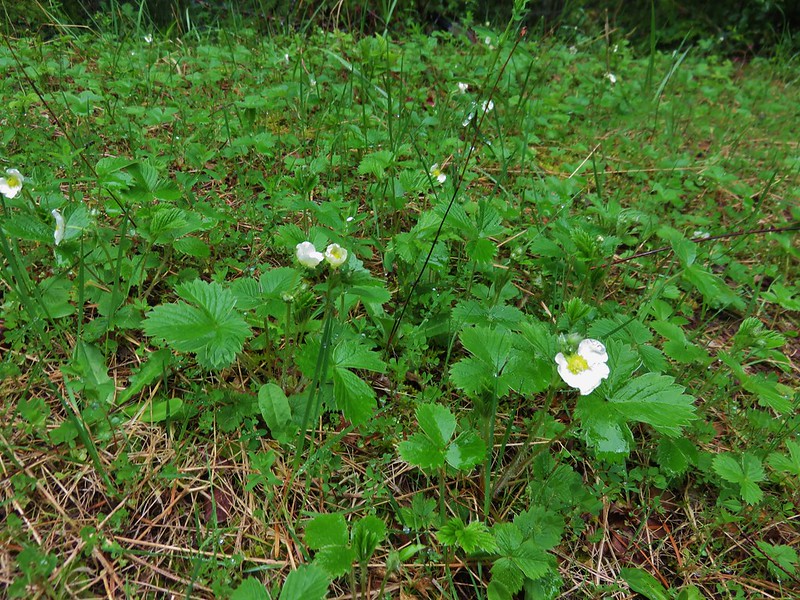
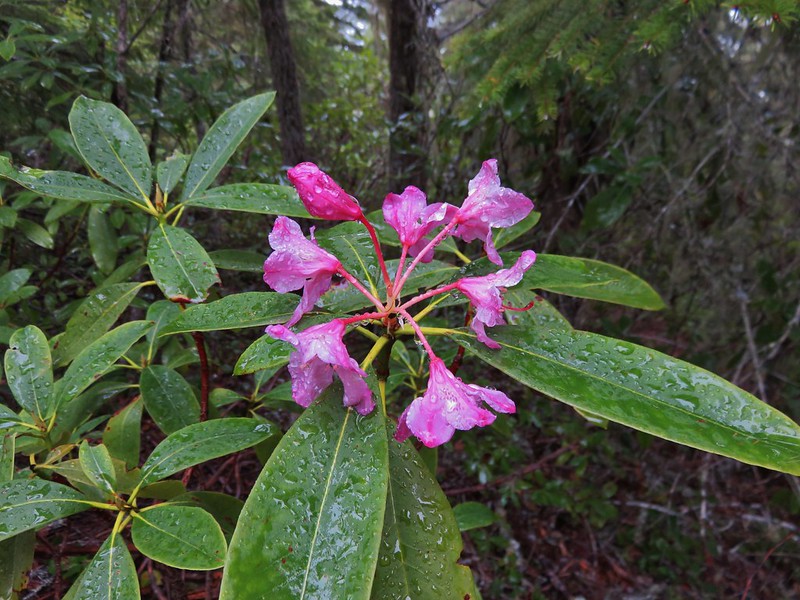
Signs of Spring began to pop up again in the form of huckleberry blossoms, wild strawberry blooms, and even a pink rhododendron.
IMG_4162

Strawberry blossoms

IMG_4166

When the trail finally decided to head down, it did so with a vengeance. The descents rivaled some of the steepest trails we’d been on making us glad we hadn’t chosen to come up that way. We were feeling the elevation loss in our legs when we reached the Marten Flume Trail junction just a few hundred yards from Brice Creek Road.
IMG_4195

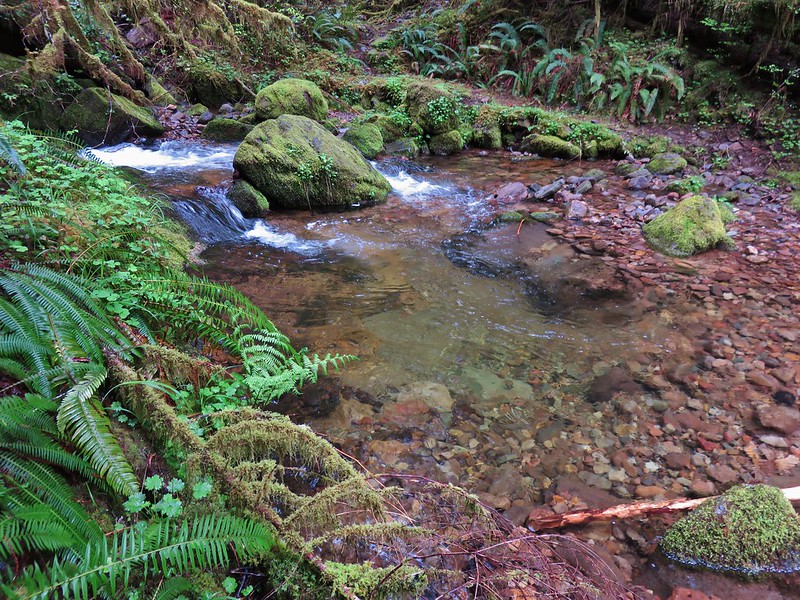
I had not been able to find much information on this trail so we were curious about it and decided to go ahead and check it out. It headed up Hobo Creek and then forked. There was no sign at the fork and we weren’t sure which way to go so we took the right hand fork down toward the creek thinking that the flume might be down there. We had chosen poorly and would have needed to stay left at the fork to see the flume. At that point we were down at the creek where the loop trail crossed.
IMG_4196

We decided not to climb back up to the fork and waded the creek to finish up the loop.
IMG_4202

Trillium and Wood Sorrel bloomed along the path.
IMG_4200

IMG_4205

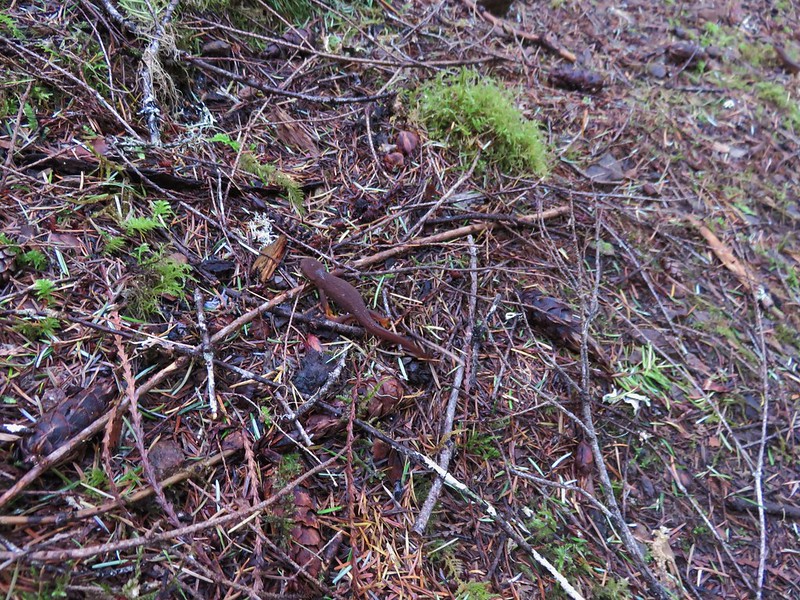
Near the end of the loop we encountered the only other trail users we’d seen all day. A pair of rough skinned newts.

One of the newts.
IMG_4208

This was a good conditioning hike given the 11.7mi distance and 3000+ feet of elevation gain/descent. It is definitely not a hike for those looking for big views or extensive wildflowers, and depending on the mountain bike traffic it could be a little dangerous given the steep narrow tread in sections. For our visit though we were able to enjoy the solitude of spending five and a half hours completing the loop without running into anyone else.

Happy Trails!

Flickr: https://www.flickr.com/photos/9319235@N02/albums/72157667500424465

Categories
Hiking Middle Santiam Old Cascades Oregon Trip report

Gordon Lakes Trail

We continued our recent trend of choosing our hikes based on the weather forecast and wound up picking the Gordon Lakes Trail for our most recent hike. We chose this trail because it stayed mostly in the forest with very limited view opportunities that wouldn’t be spoiled by the rainy forecast. The Gordon Lakes Trail covers a little over 7 miles between eastern and western trailheads. We began our hike at the west trailhead located on Forest Service Road 325 outside of Sweet Home. There was some disagreement on how to reach road 325 between our field guide, the Forest Service, and Google Maps. They all agreed that from Sweet Home we needed to drive Highway 20 east 19 miles to milepost 46 and turn right on a forest service road for approximately 5 miles. Our field guide gave this road the number 2031 while the Forest Service numbered it 2044. Google Maps showed 2032 as the number which was the number we found on the stake as we turned onto this road. We managed to follow this winding road fairly easily to a hiker symbol on the right across from road 325. The signless parking area was 100 yards uphill to the left on road 325.
Gordon Lakes Trailhead//embedr.flickr.com/assets/client-code.js

Our next bit of confusion came as we got ready to set off. There were no signs indicating the location of the trail. Two old roads led off from the parking area in the same general direction, one downhill and the other uphill and the hiker sign was back downhill across road 2032. The road leading uphill looked like it was a trail, but the map I had looked at for the trail appeared to show a trail switchbacking downhill from the trailhead which I later realized was my misreading the topographic map. After several minutes of exploring the uphill road and consulting the GPS we decided that it was in fact the trail and began climbing.
IMG_1436//embedr.flickr.com/assets/client-code.js

The trail left the road behind and began switchbacking uphill through a previously logged area where we could see a little of the valley below.
IMG_1441//embedr.flickr.com/assets/client-code.js

IMG_1443//embedr.flickr.com/assets/client-code.js

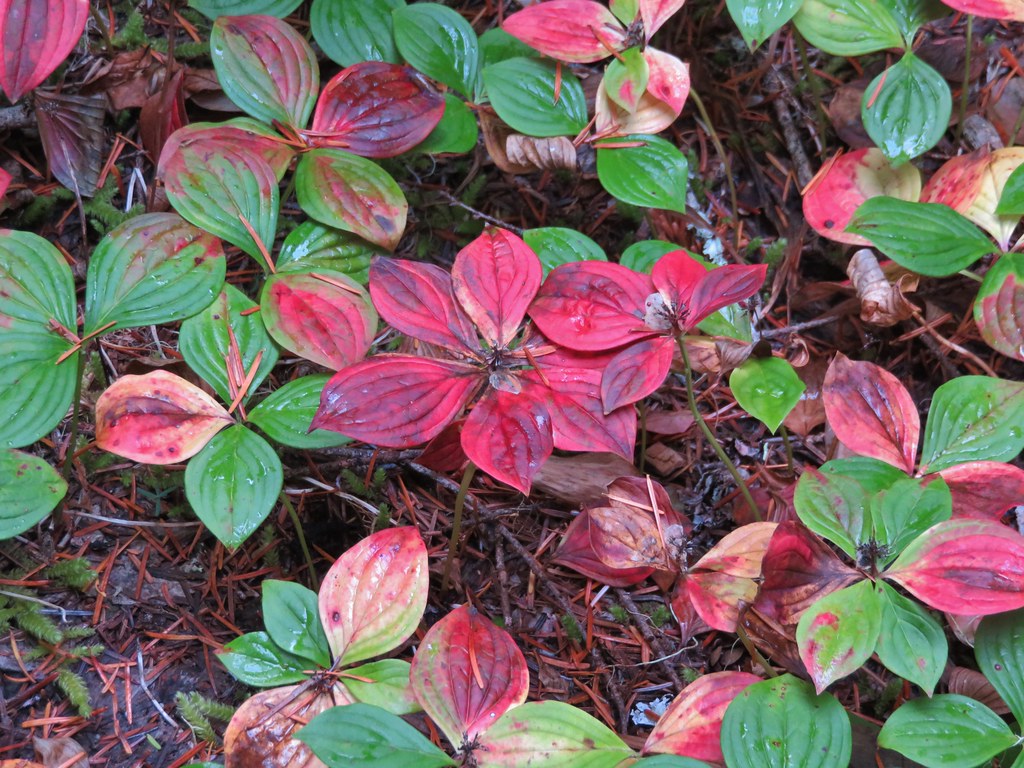
Thimbleberry leaves lined the path with color.
IMG_1442//embedr.flickr.com/assets/client-code.js

After the switchbacks the trail entered older forest and crossed a pair of roads where there were still no signs indicating where or what the trail was.
IMG_1444//embedr.flickr.com/assets/client-code.js

IMG_1446//embedr.flickr.com/assets/client-code.js

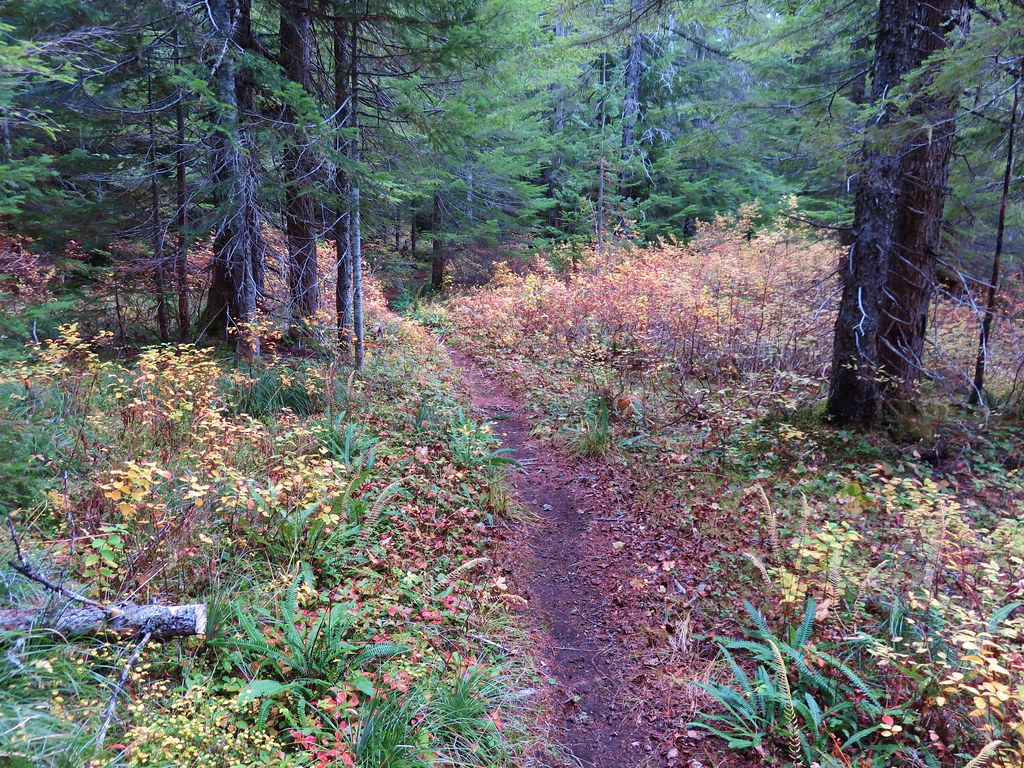
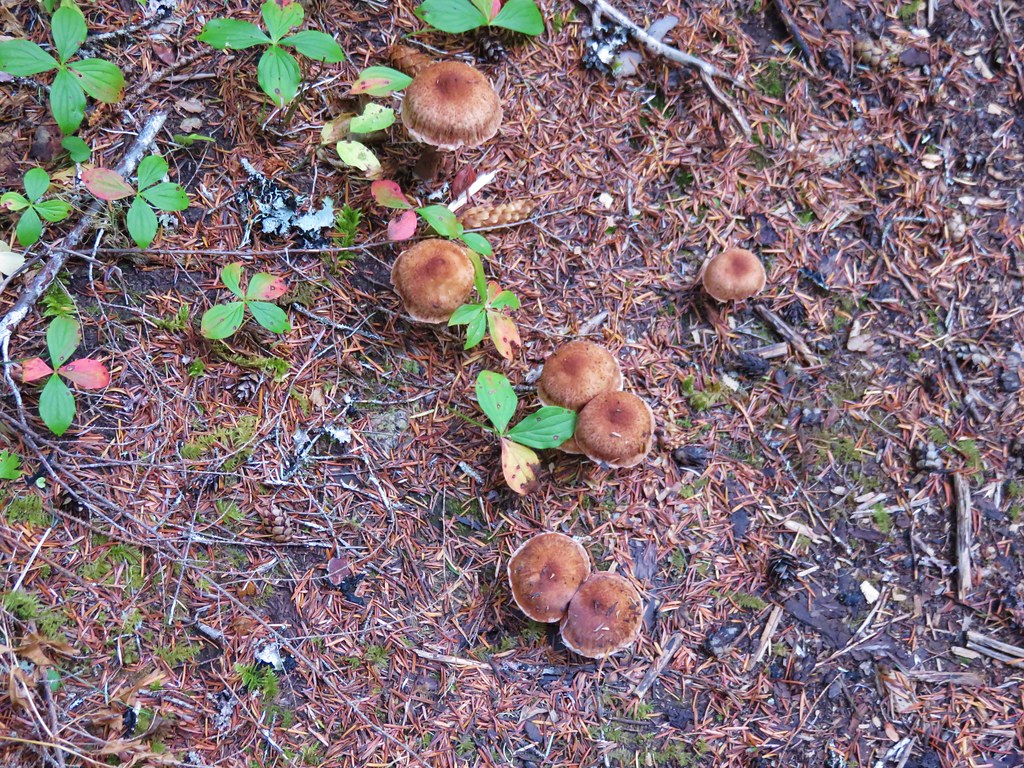
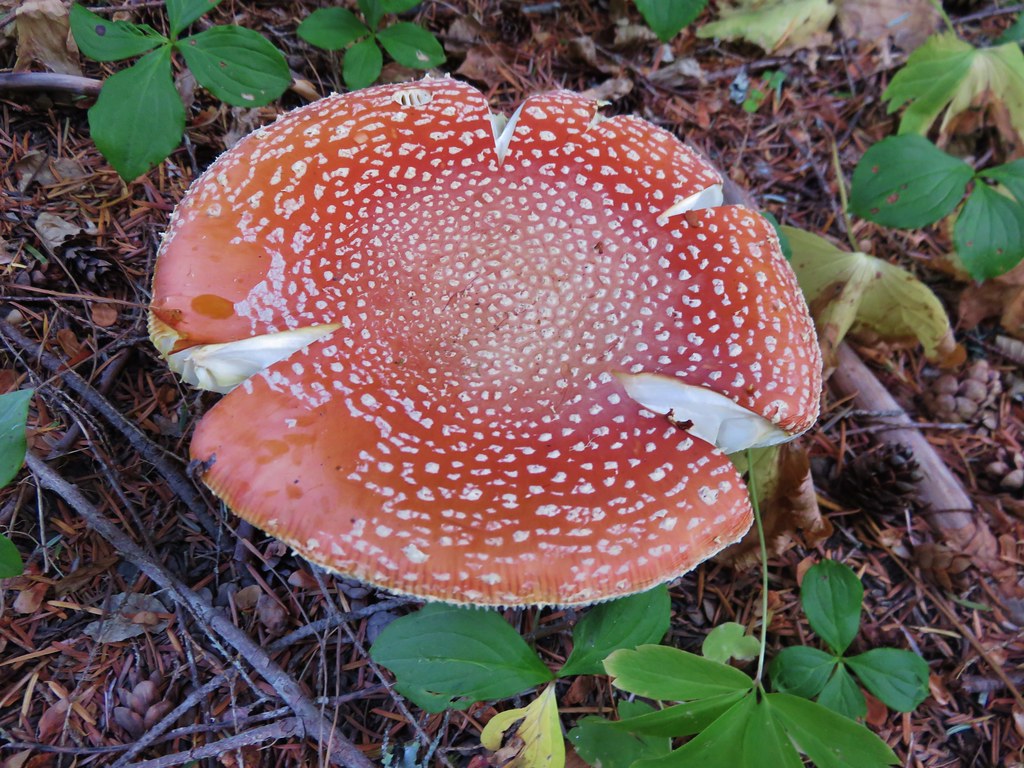
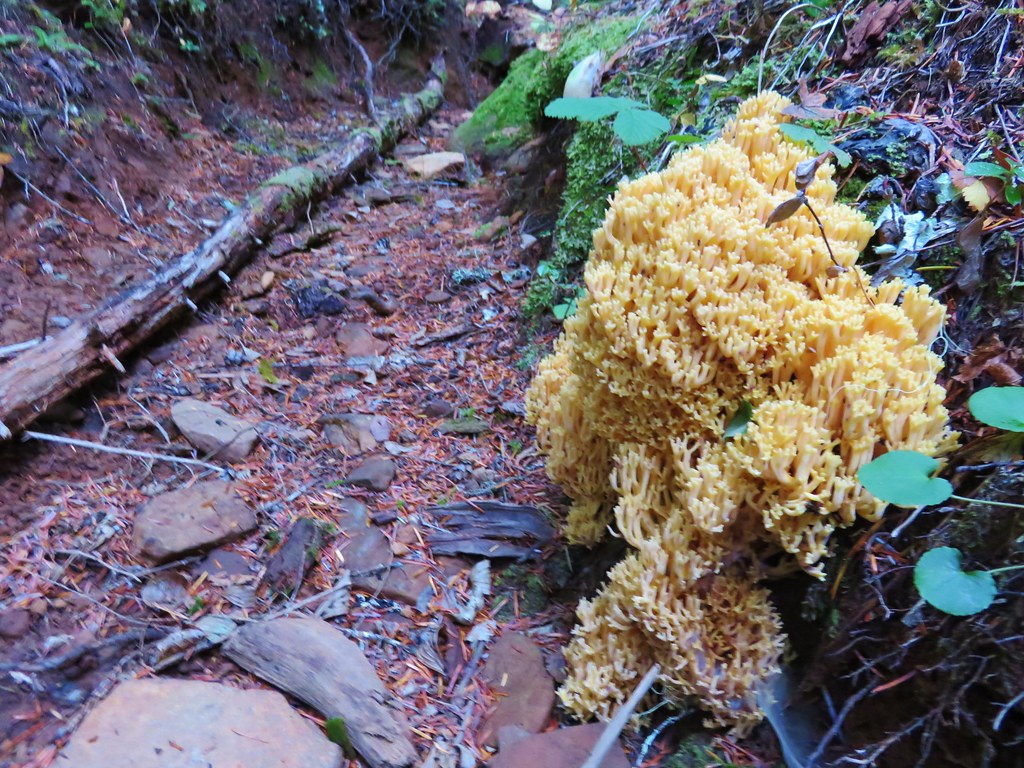
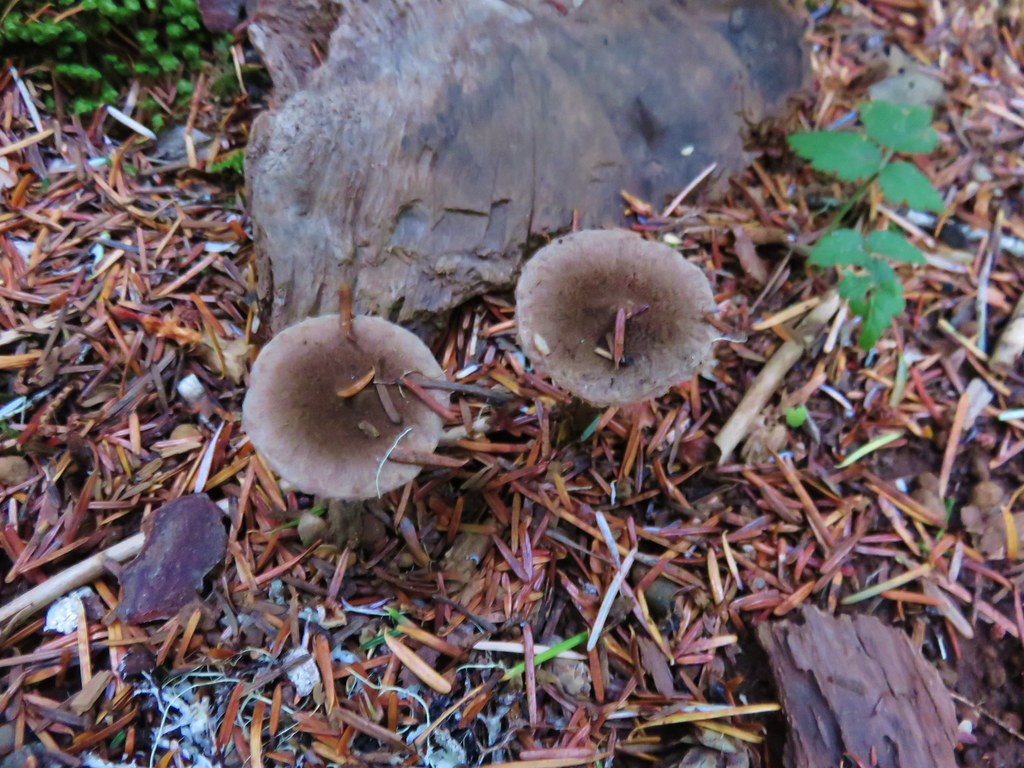
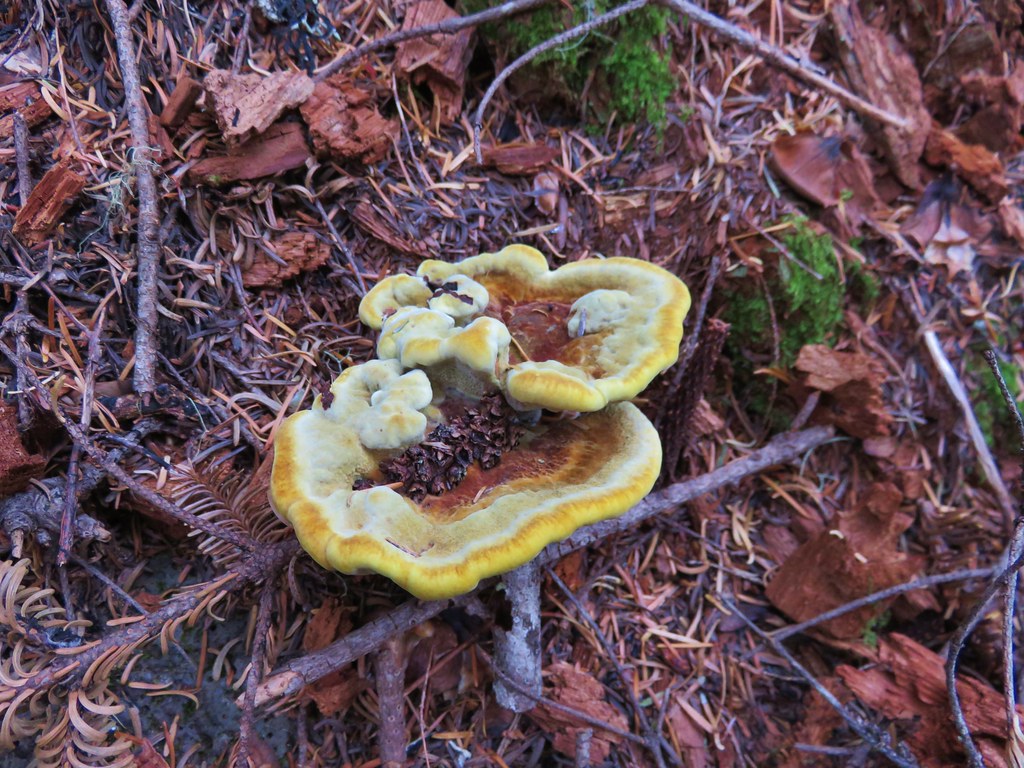
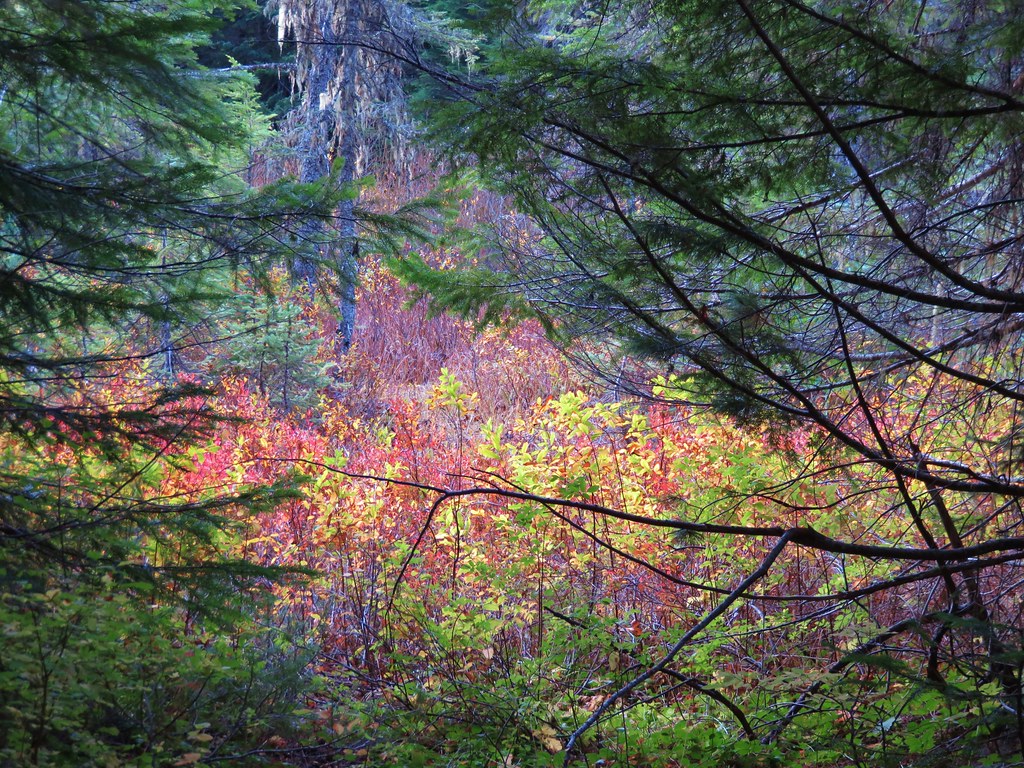
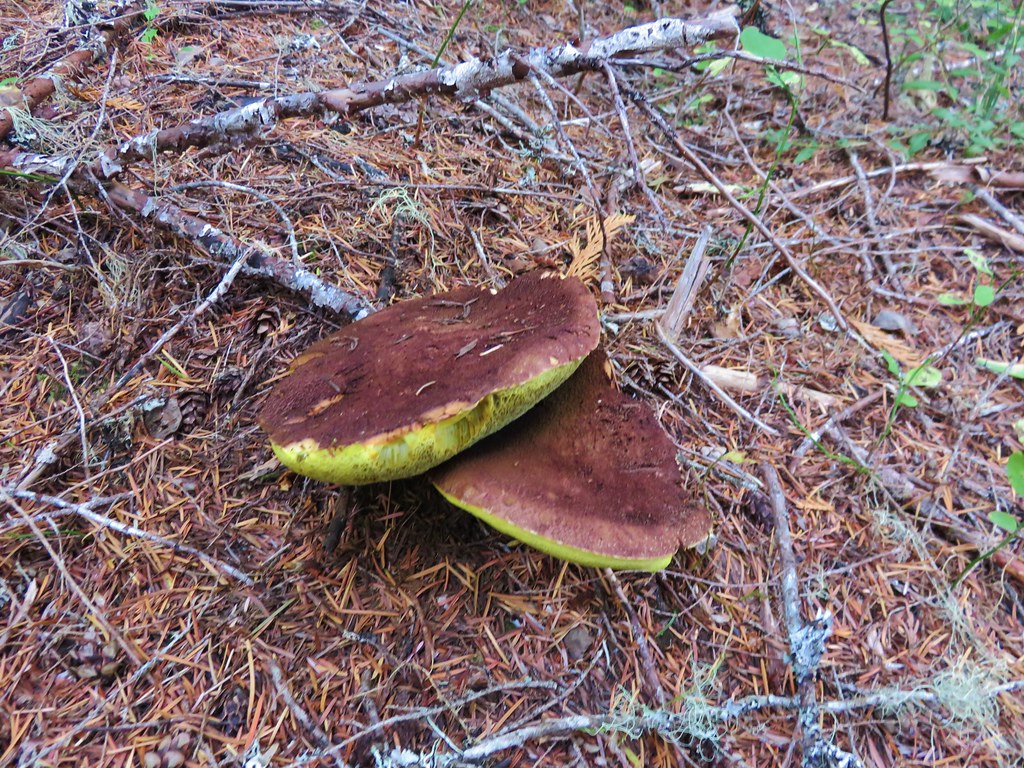
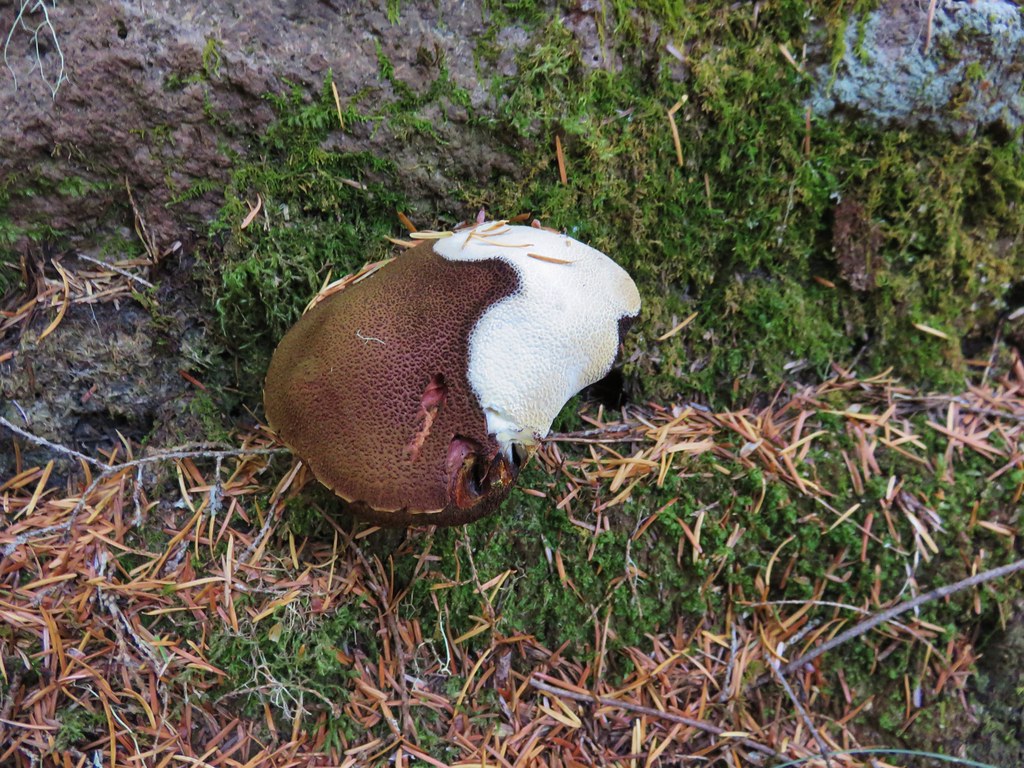
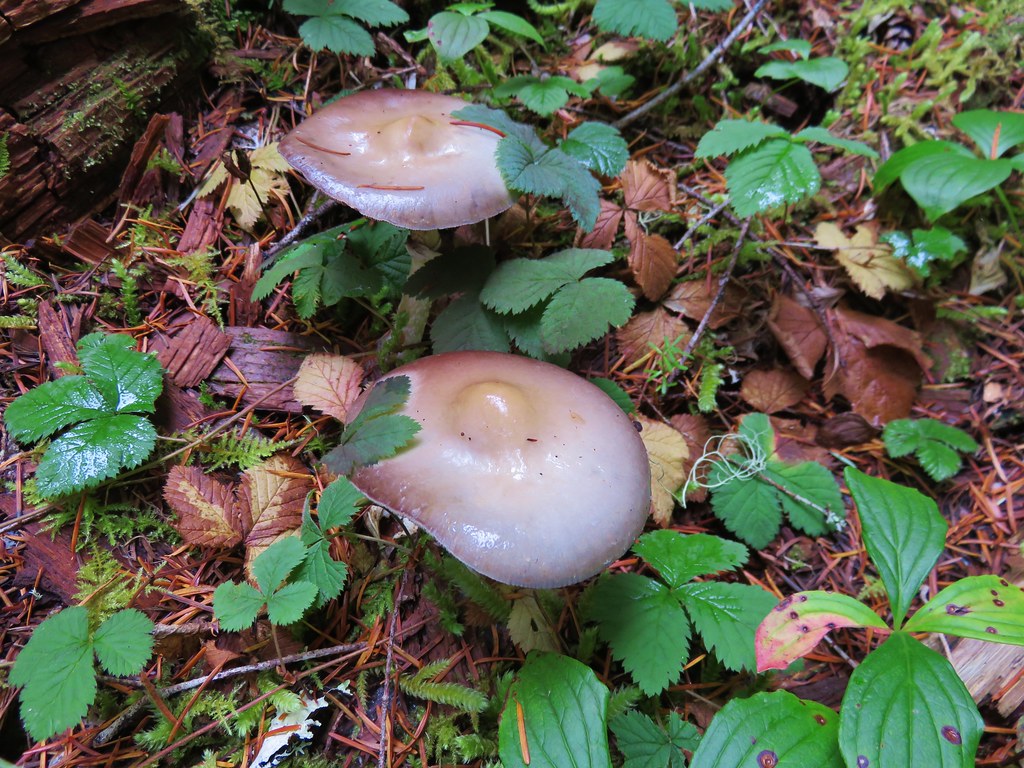
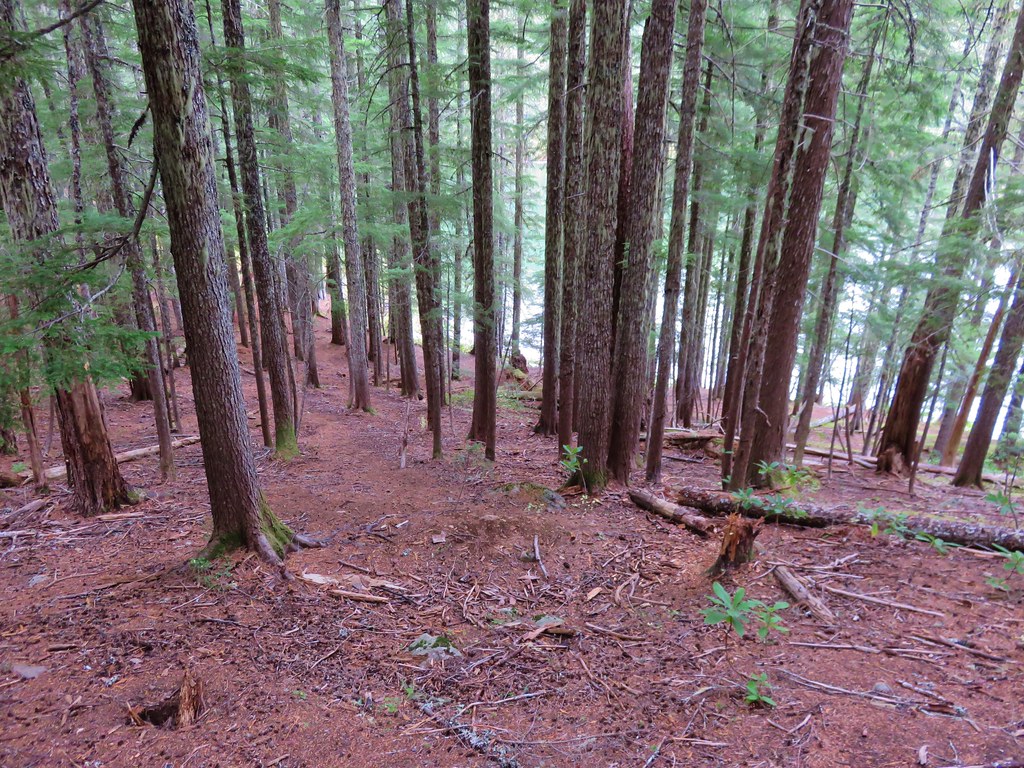
The first feature we were looking for was Falls Creek which the trail would parallel much of the way. There wasn’t much water in the creek but it was still pleasant and the fall colors and various mushrooms and fungi along the trail made it feel very much like Autumn.
IMG_1455//embedr.flickr.com/assets/client-code.js

IMG_1447//embedr.flickr.com/assets/client-code.js

IMG_1459//embedr.flickr.com/assets/client-code.js

IMG_1460//embedr.flickr.com/assets/client-code.js

IMG_1457//embedr.flickr.com/assets/client-code.js

IMG_1454//embedr.flickr.com/assets/client-code.js

IMG_1462//embedr.flickr.com/assets/client-code.js

IMG_1452//embedr.flickr.com/assets/client-code.js

IMG_1449//embedr.flickr.com/assets/client-code.js

Yellow mushrooms//embedr.flickr.com/assets/client-code.js

IMG_1461//embedr.flickr.com/assets/client-code.js

IMG_1463//embedr.flickr.com/assets/client-code.js

Chocolate and vanilla mushroom//embedr.flickr.com/assets/client-code.js

IMG_1514//embedr.flickr.com/assets/client-code.js

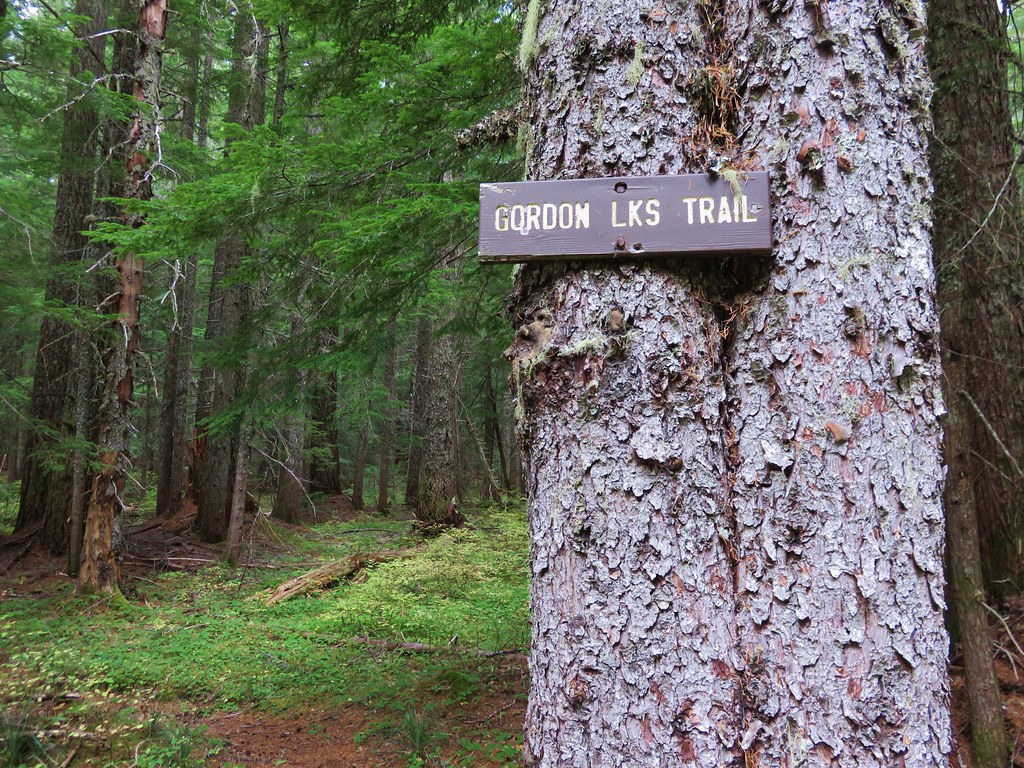
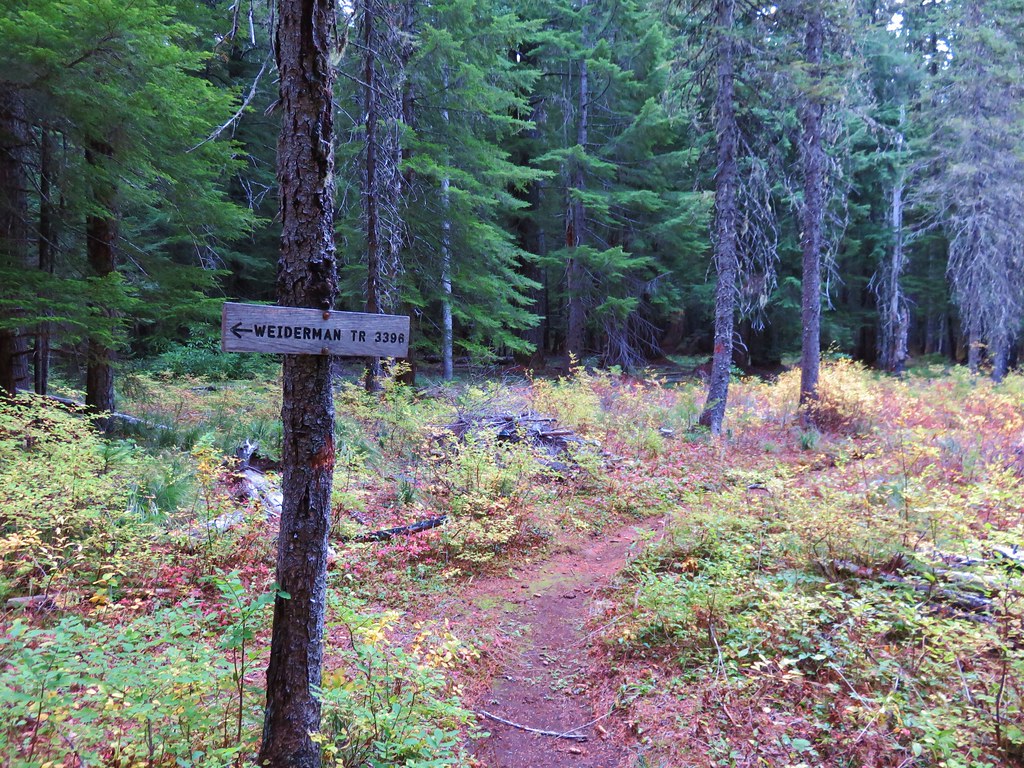
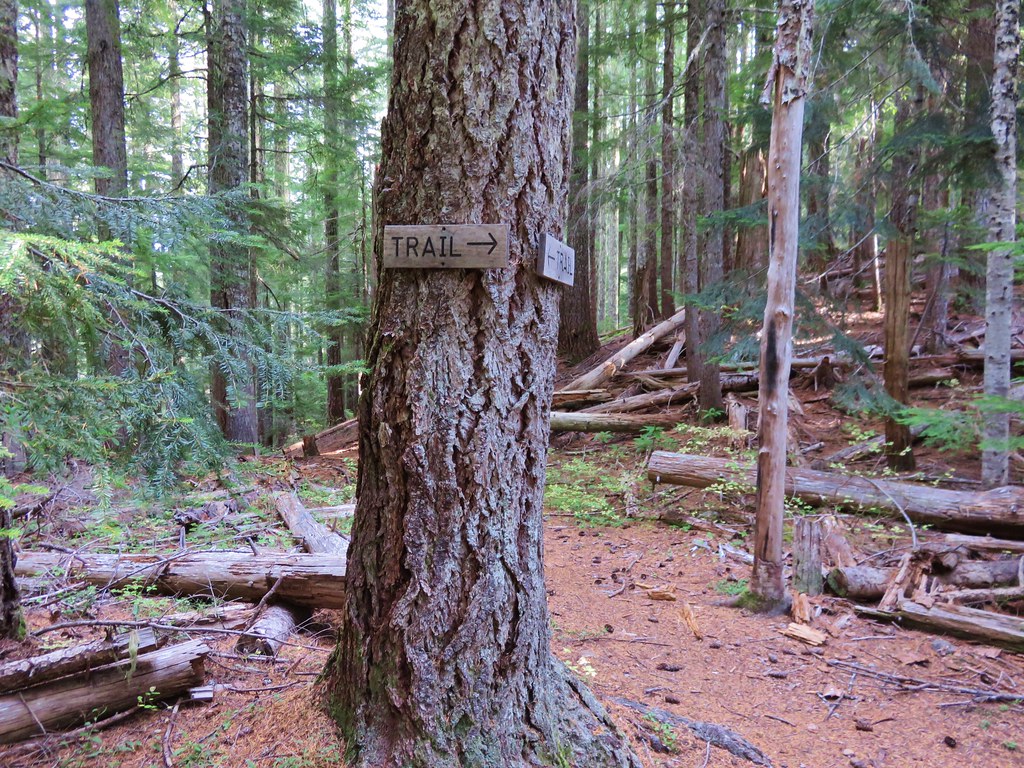
We finally saw our first trail signs right around the 3.5 mile mark at a junciton.
IMG_1464//embedr.flickr.com/assets/client-code.js

IMG_1465//embedr.flickr.com/assets/client-code.js

Shortly after the first junction we came to a second junction at the edge of Gordon Meadows.
IMG_1469//embedr.flickr.com/assets/client-code.js

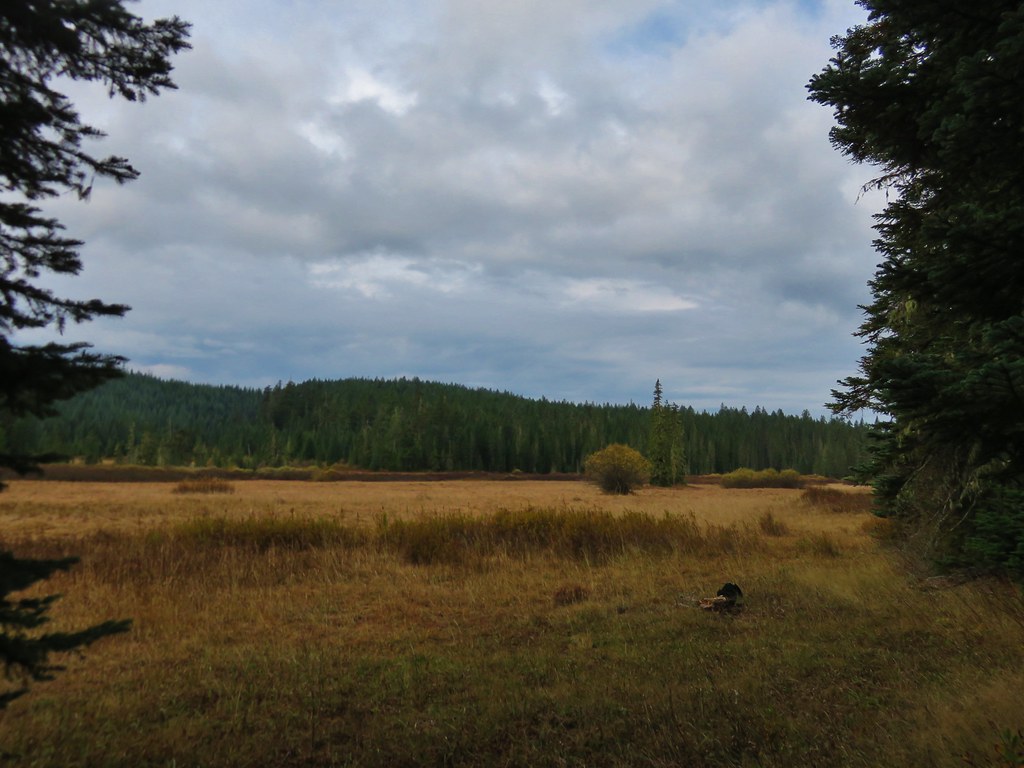
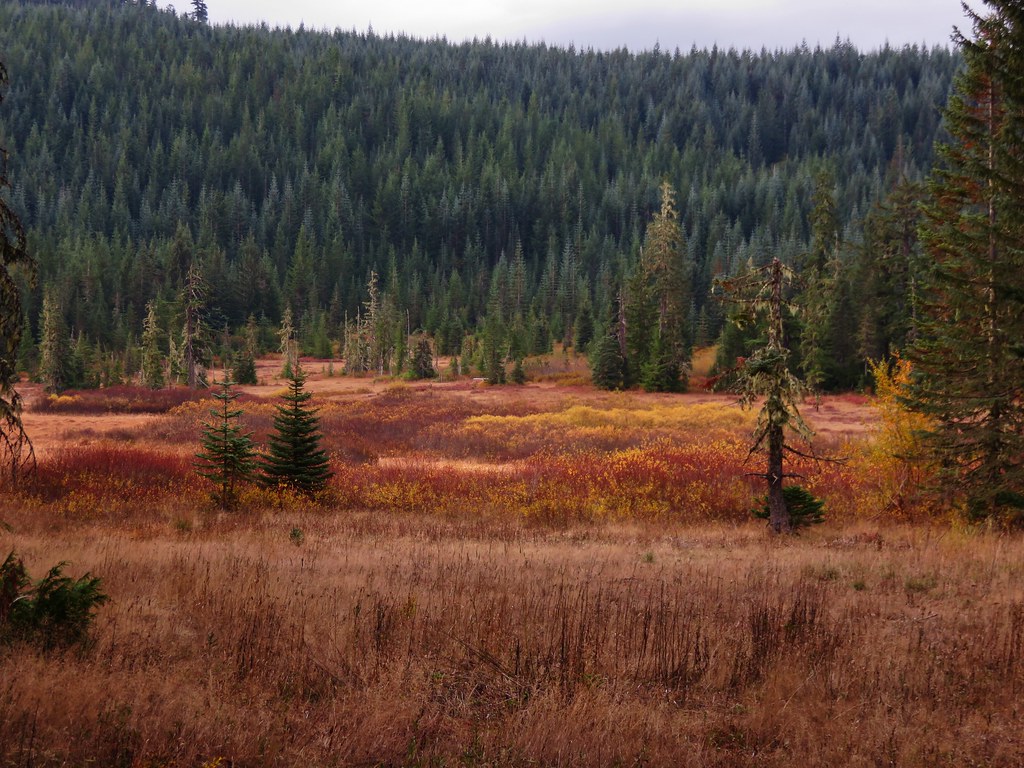
Described as “marshy” in our field guide the meadows were much larger than we had expected. Being late in such a dry year the meadows seemed rather dry as we passed by on the trail.
IMG_1477//embedr.flickr.com/assets/client-code.js

IMG_1476//embedr.flickr.com/assets/client-code.js

The trail had been climbing very gradually since leaving the switchbacks behind near the beginning of the hike but we began encountering some steeper climbs beyond the meadows. The trail climbed up and over a series of ridge ends as we headed for Gordon Lakes. Just over 3 miles from Gordon Meadows we arrived at a fork in the trail near the lakes.
IMG_1489//embedr.flickr.com/assets/client-code.js

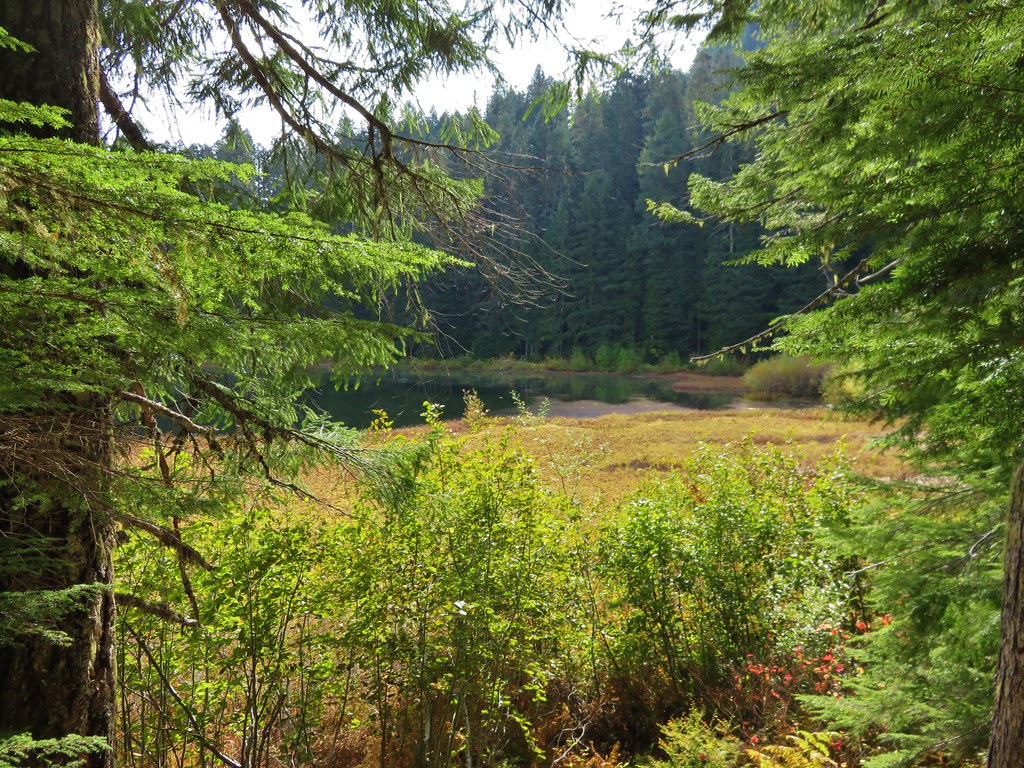
The signs pointed us toward the right hand fork while the GPS unit showed the left hand fork as the official trail. We went right following the signs to the northern Gordon Lake.
IMG_1490//embedr.flickr.com/assets/client-code.js

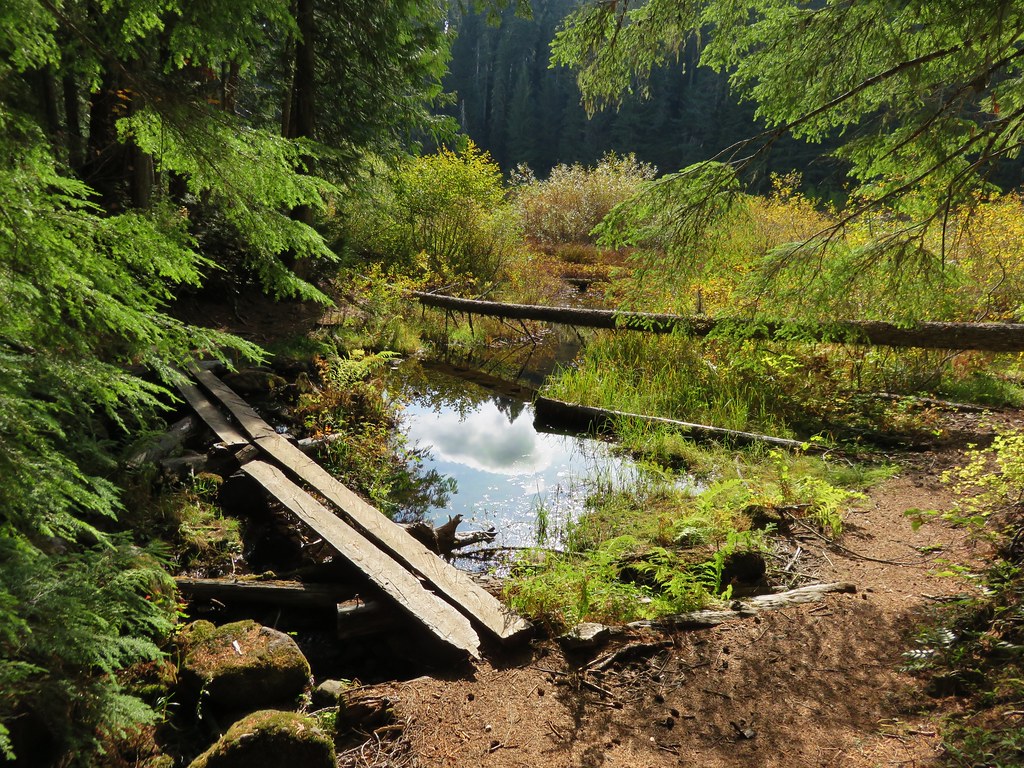
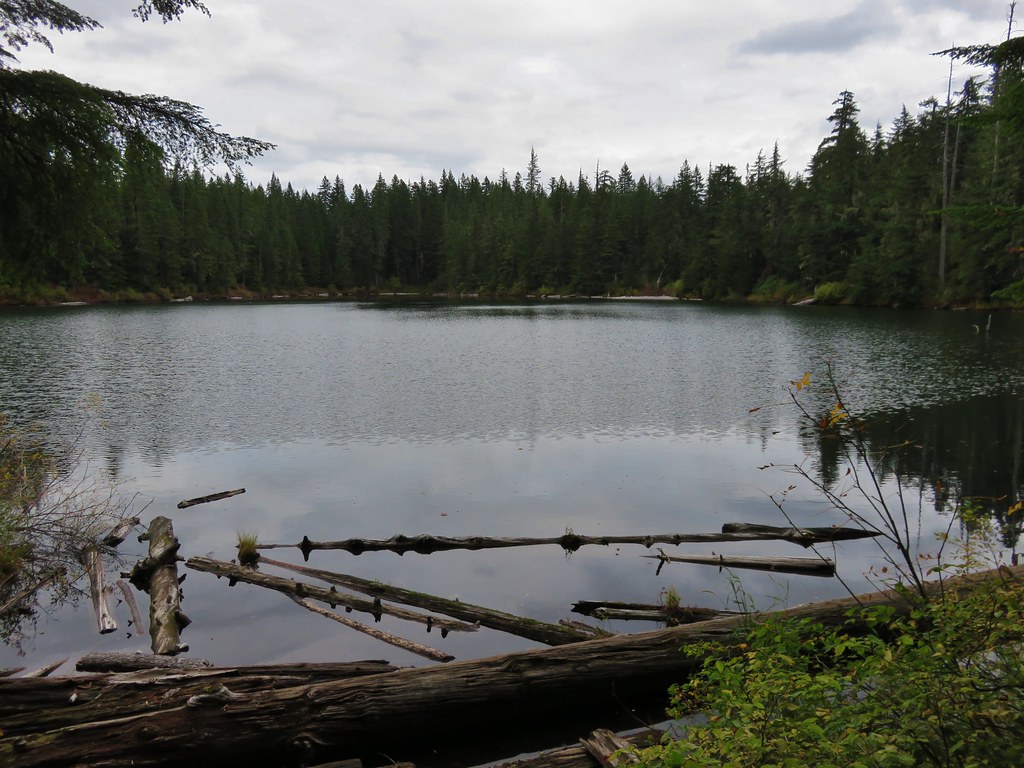
The rain that had been in the forecast had not materialized and we were enjoying some sun breaks in the clouds as the trail crossed the small outlet creek that flowed down into the lower southern lake.
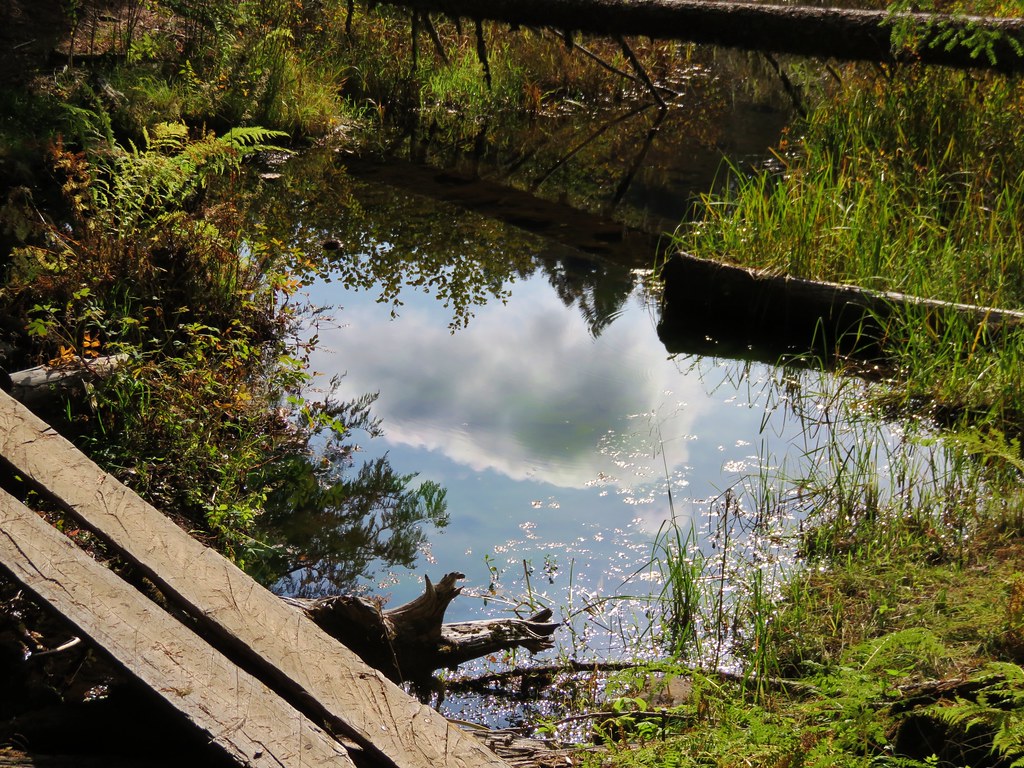
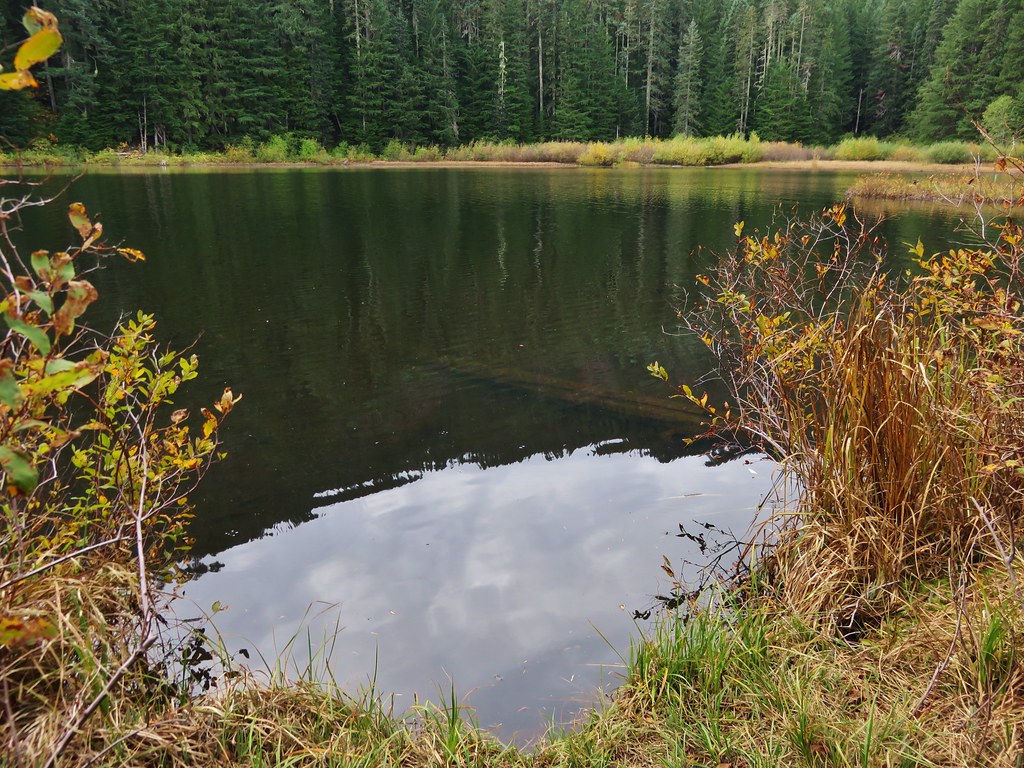
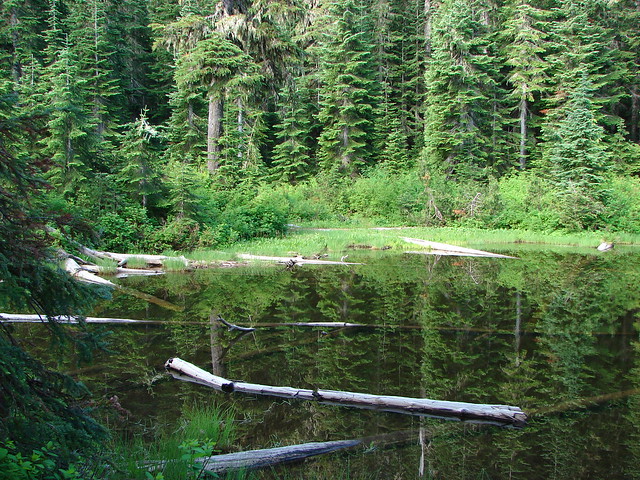
Cloud in the creeklet between the Gordon Lakes//embedr.flickr.com/assets/client-code.js

IMG_1492//embedr.flickr.com/assets/client-code.js

We spent a little time on a log at the edge of the lake watching dragonflies zoom about.
IMG_1500//embedr.flickr.com/assets/client-code.js

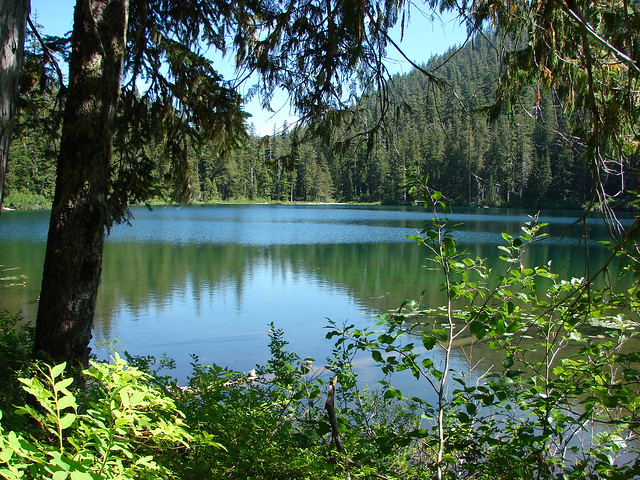
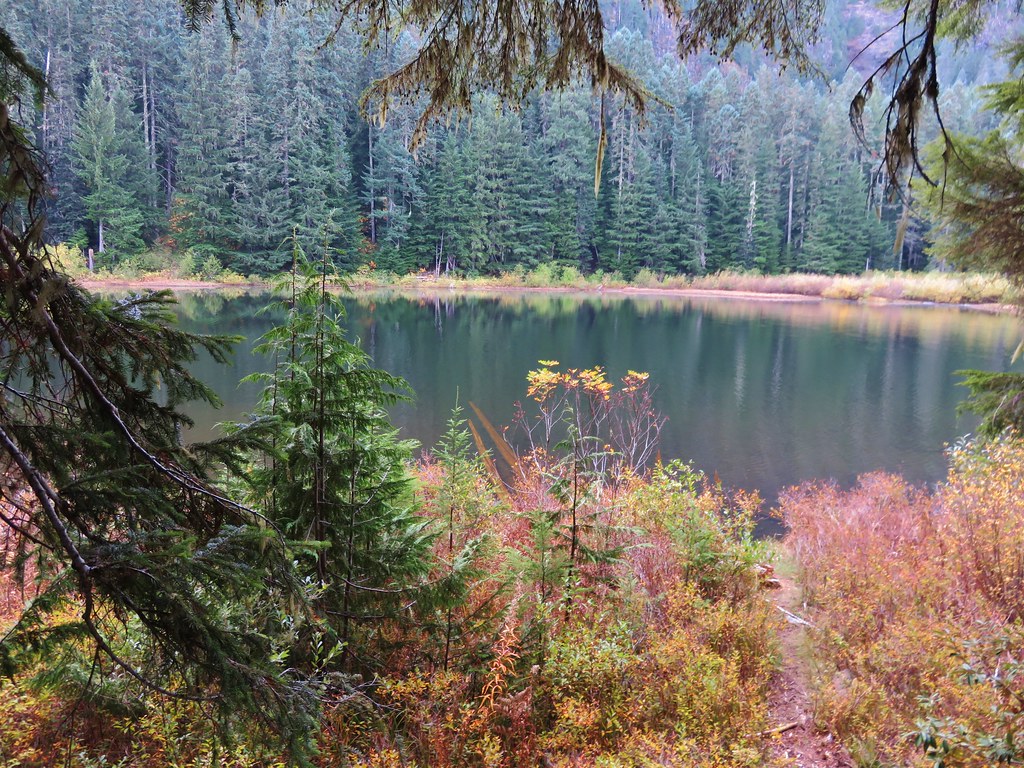
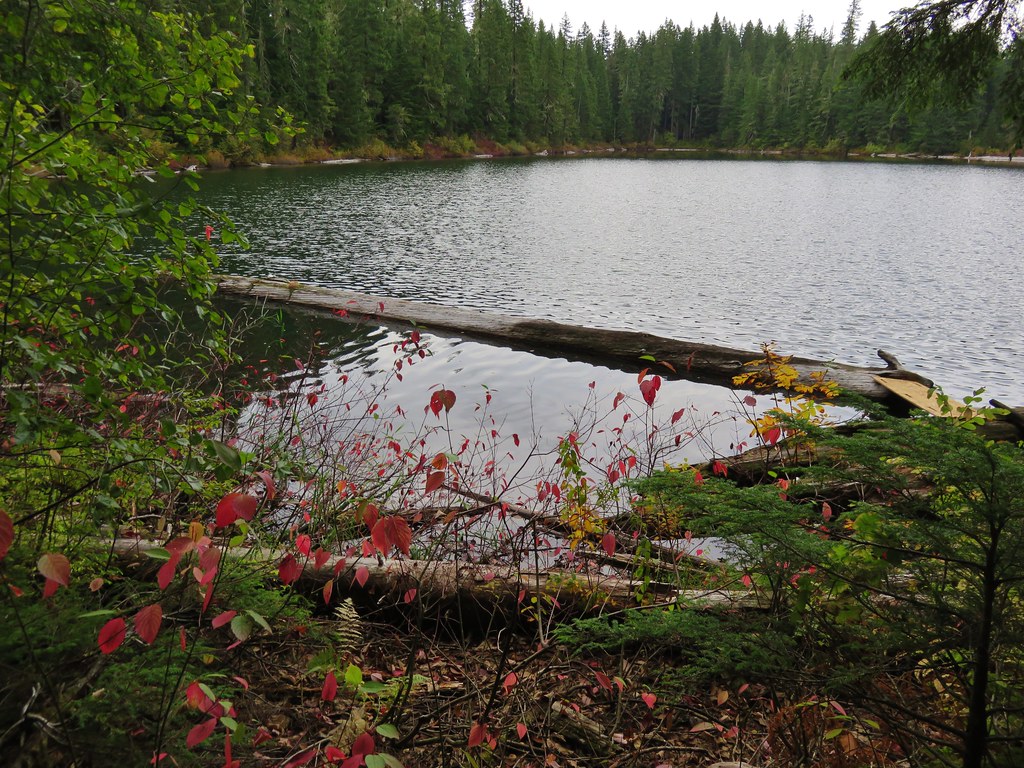
Northern Gordon Lake//embedr.flickr.com/assets/client-code.js

IMG_1498//embedr.flickr.com/assets/client-code.js

After having a snack we left the northern lake and passing over the ridge between the two lakes and heading down toward the southern lake.
IMG_1501//embedr.flickr.com/assets/client-code.js

IMG_1502//embedr.flickr.com/assets/client-code.js

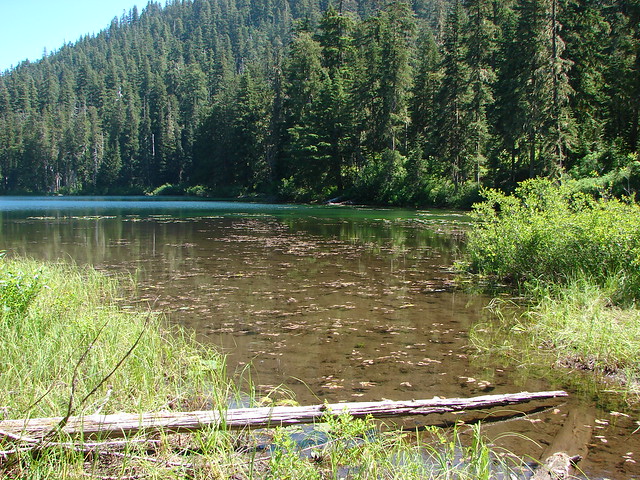
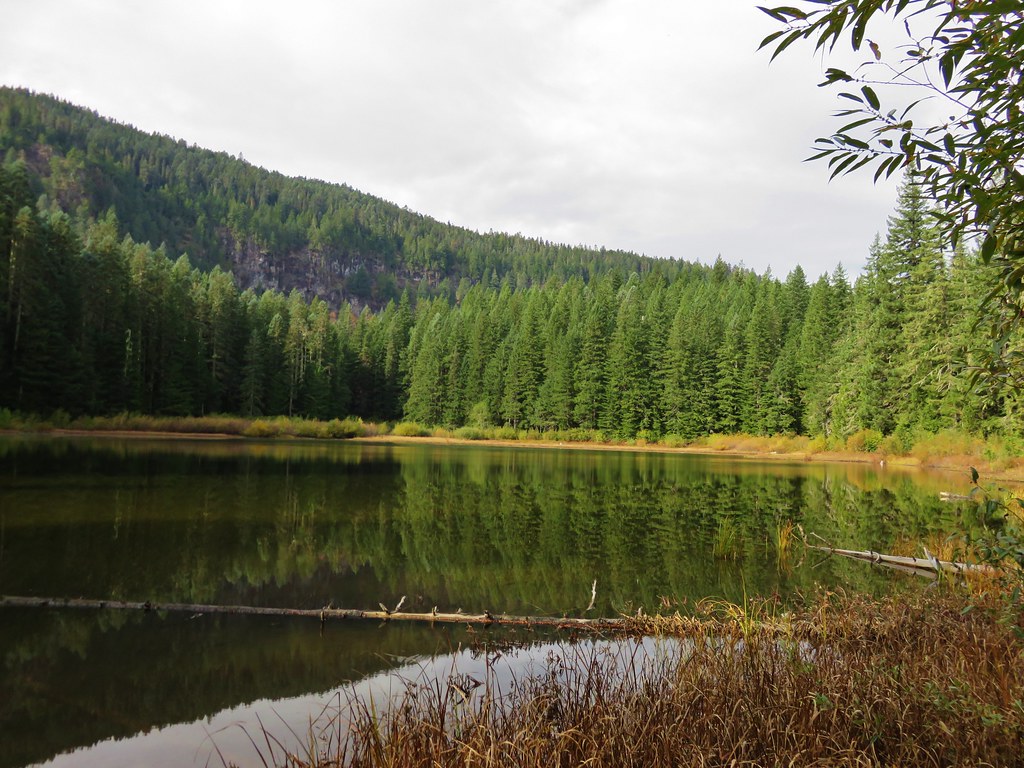
Southern Gordon Lake//embedr.flickr.com/assets/client-code.js

We crossed the creek between the lakes and picked up the trail shown on our Garmin on the opposite side.
IMG_1505//embedr.flickr.com/assets/client-code.js

We followed the path uphill where we discovered that there were a few downed trees across the trail which may have been why the signs had pointed to the other fork of the trail, but we made our way past the blowdown and climbed back up to the fork. We headed back making our way over the ridge ends, past Gordon Meadows, and started back down the switchbacks. We still hadn’t experienced any rain but the clouds in the valley were on the move.
IMG_1516//embedr.flickr.com/assets/client-code.js

IMG_1519//embedr.flickr.com/assets/client-code.js

It finally started to rain when we were back on the old roadbed heading down to the parking area less than 5 minutes away. Our total mileage clocked in at 15.4 miles, but Gordon Lakes can be reached from the eastern end of the trail in less than half a mile by starting at the trailhead on Forest Service Road 230. Happy Trails!

Flickr: https://www.flickr.com/photos/9319235@N02/albums/72157659570476059