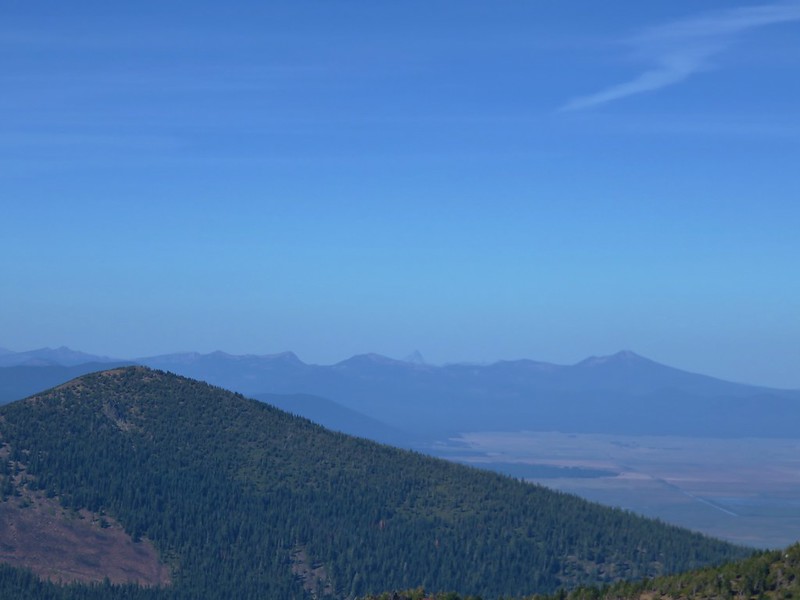
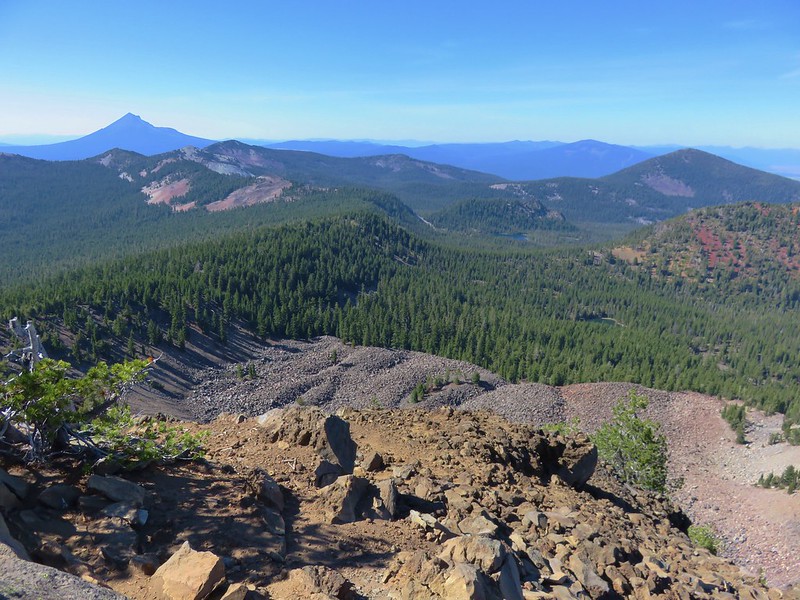
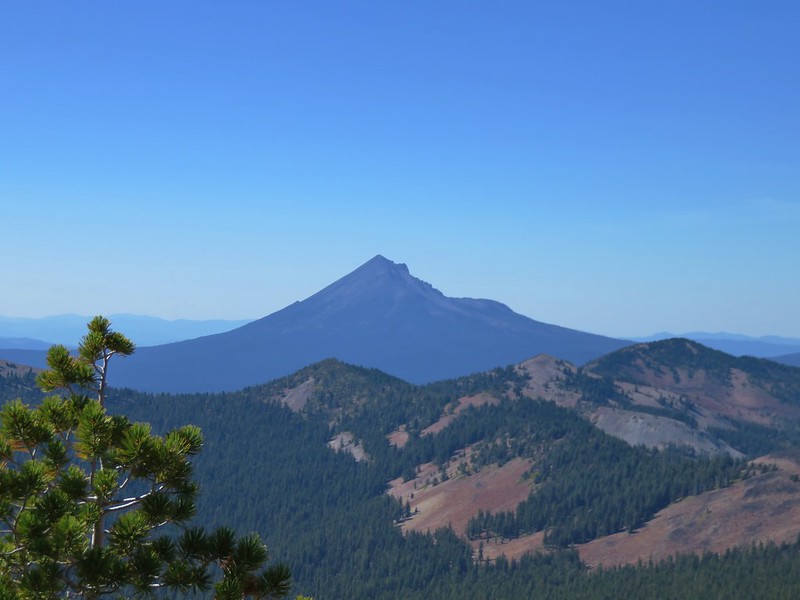
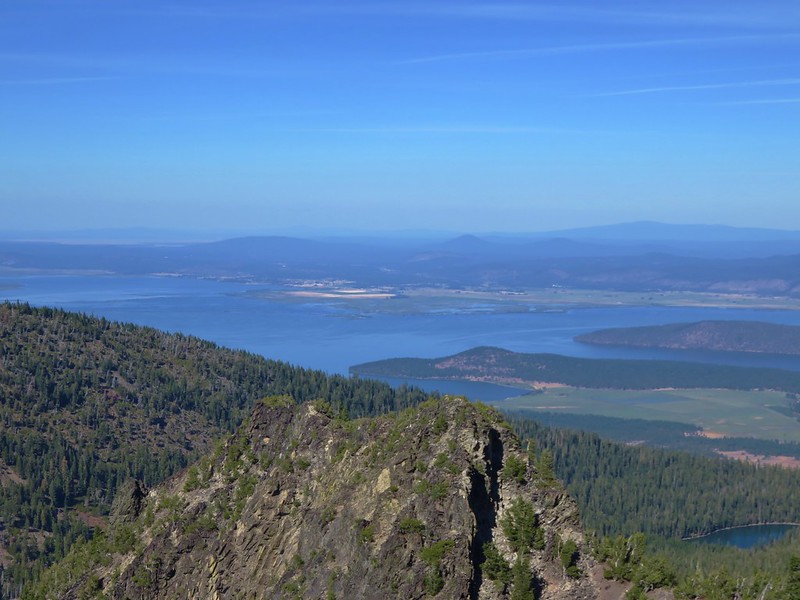
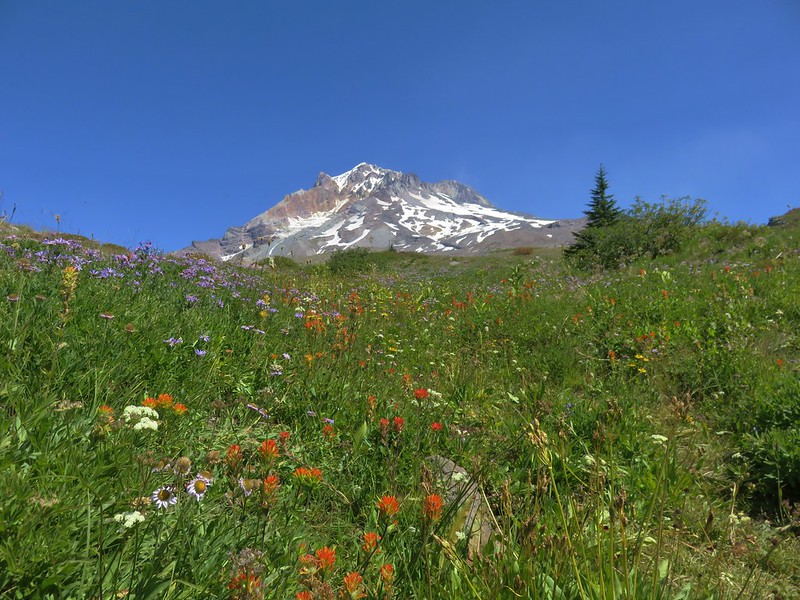
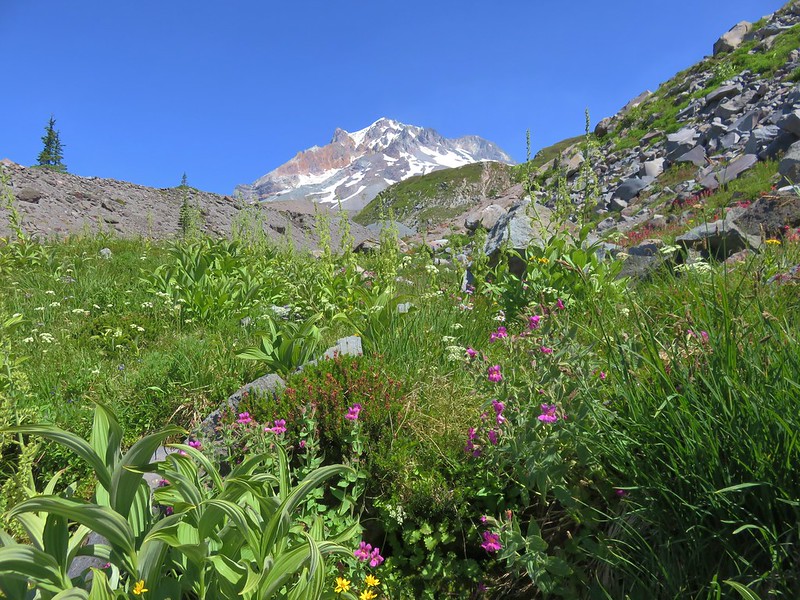
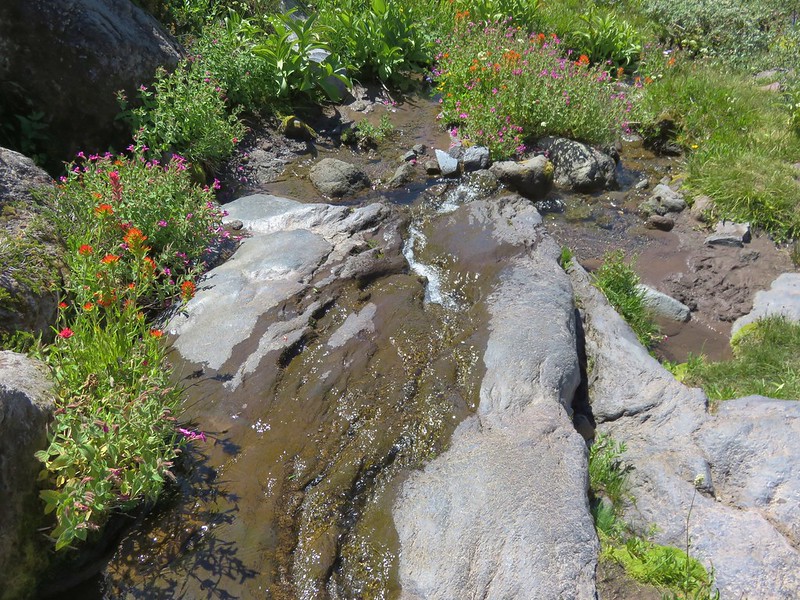
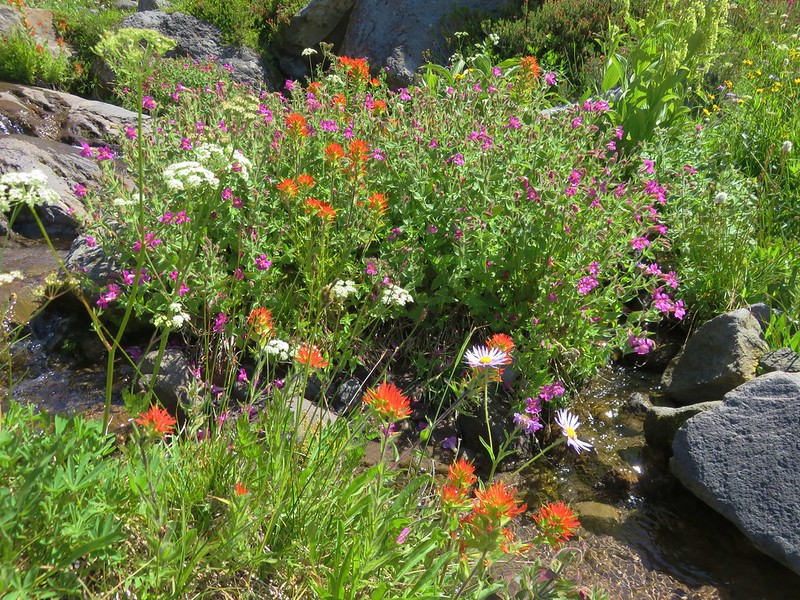
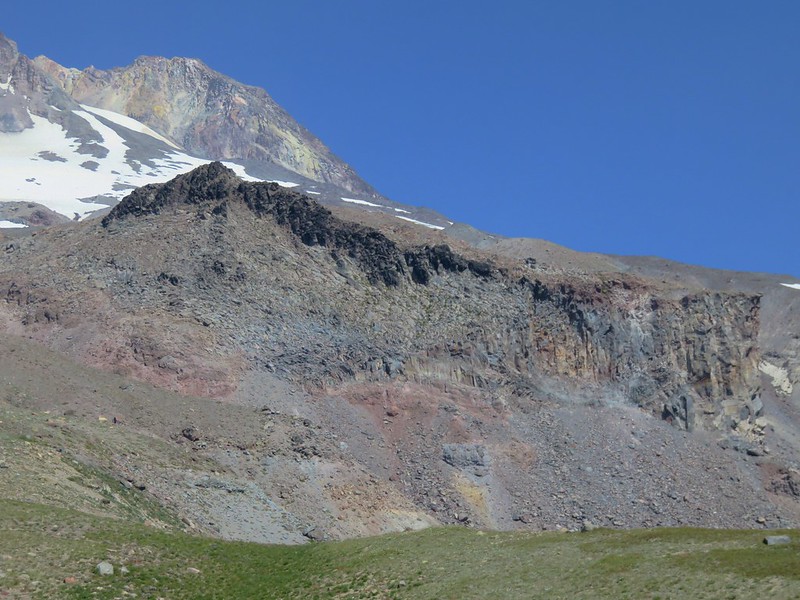
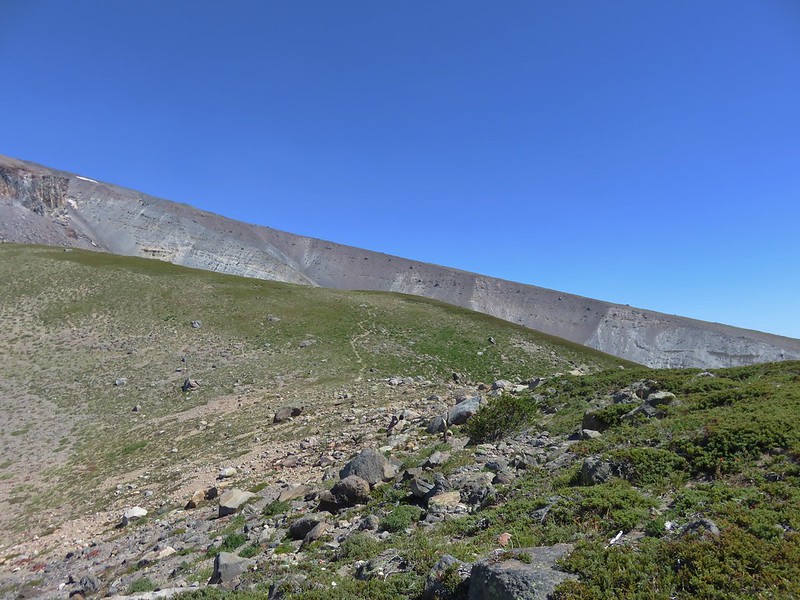
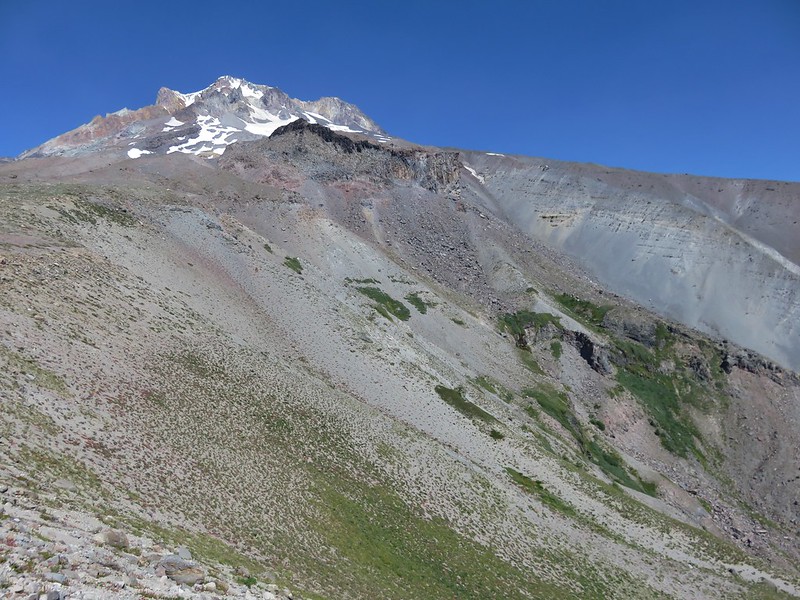
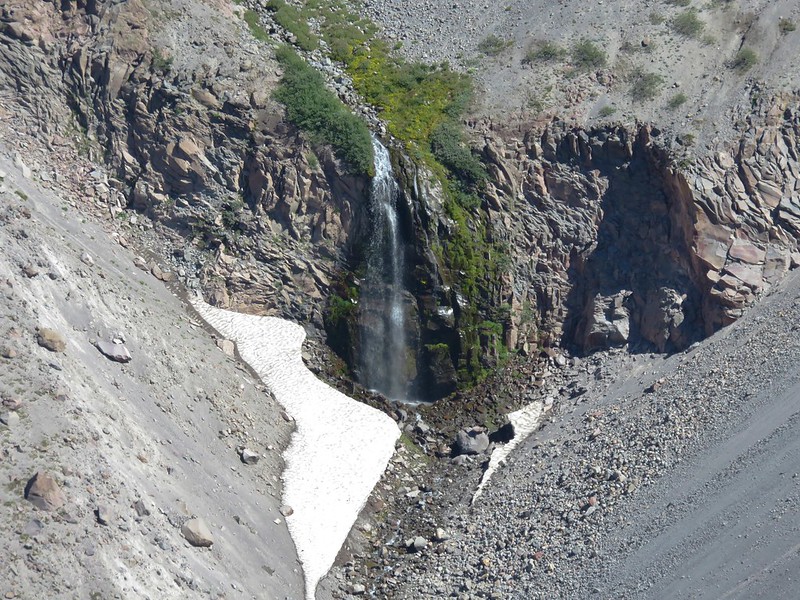
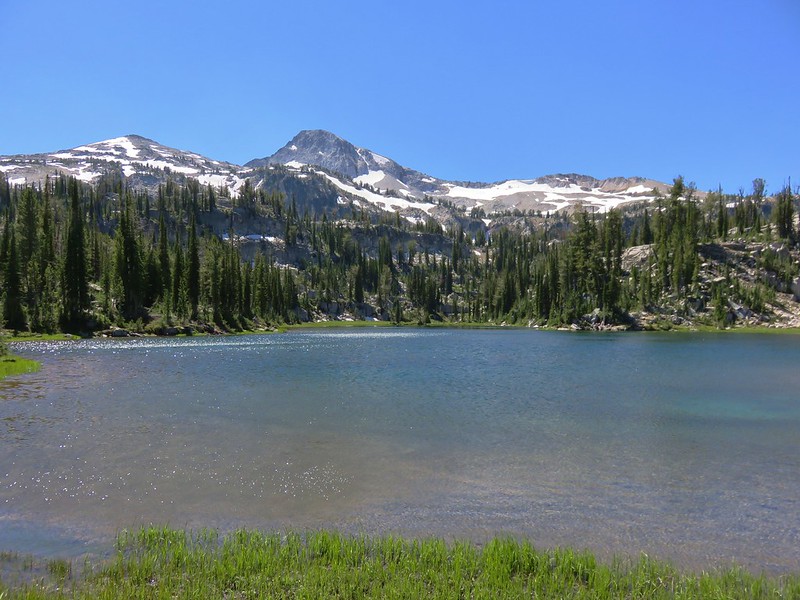
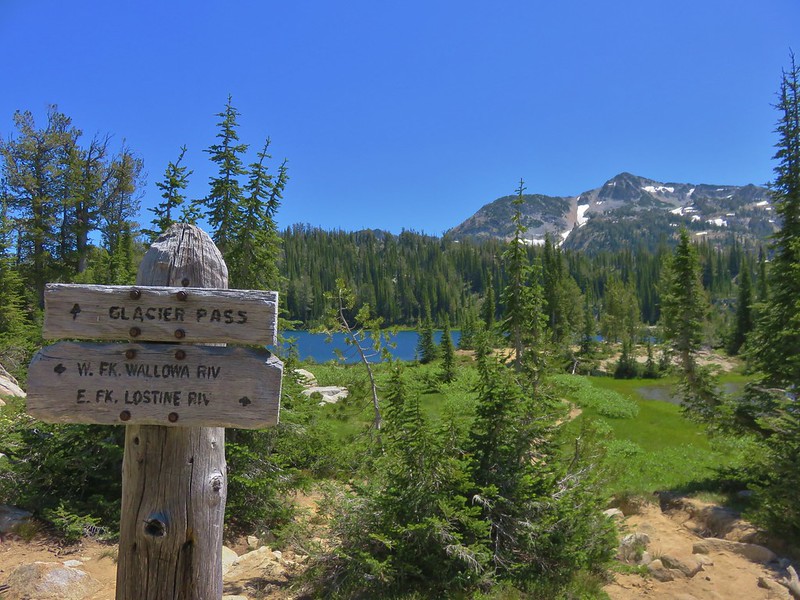
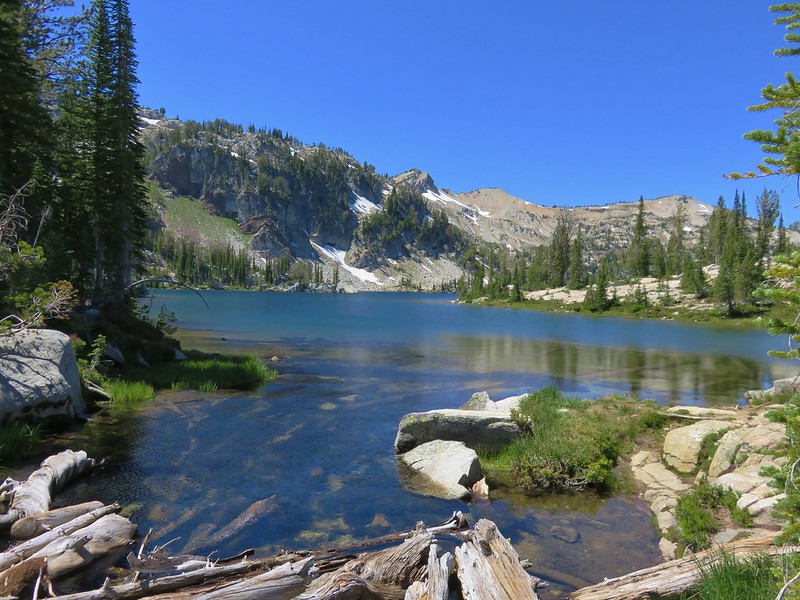
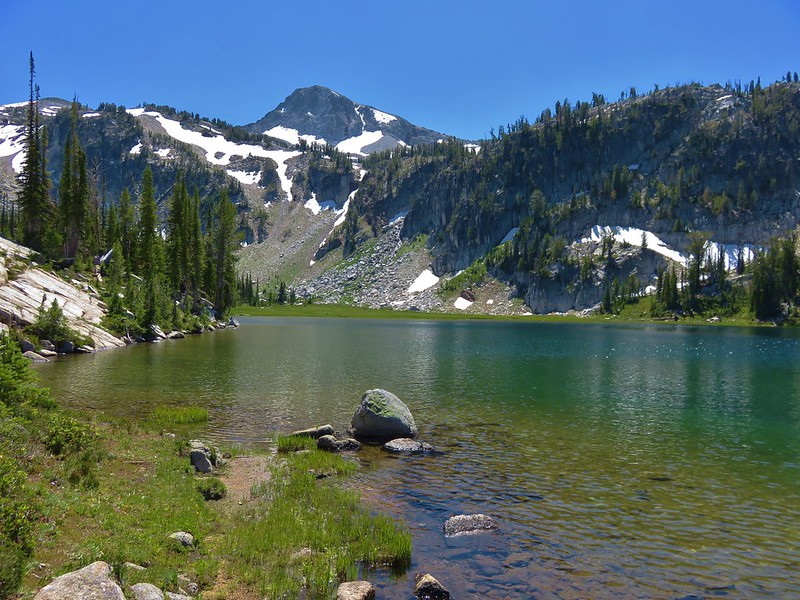
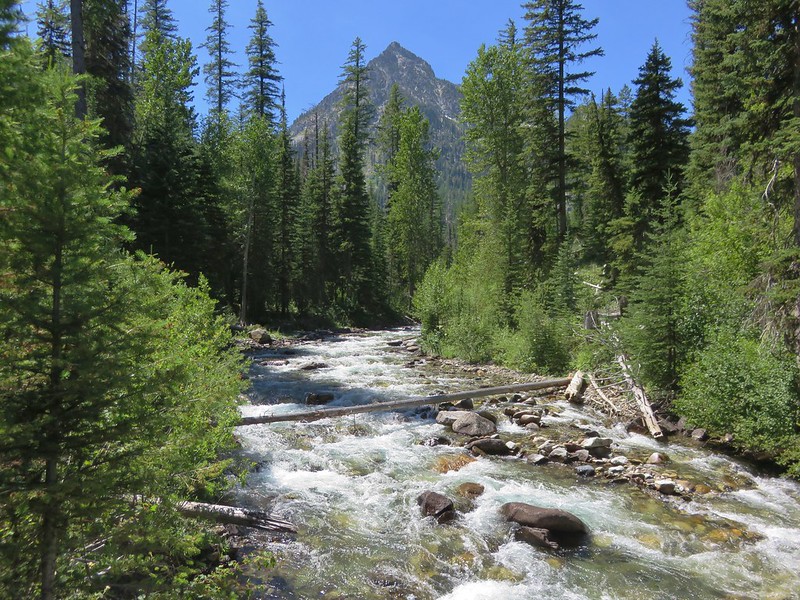
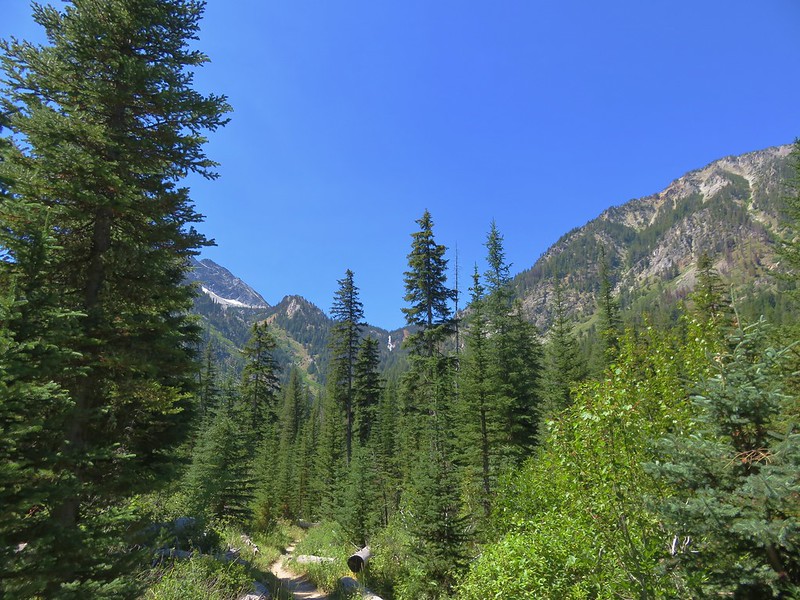
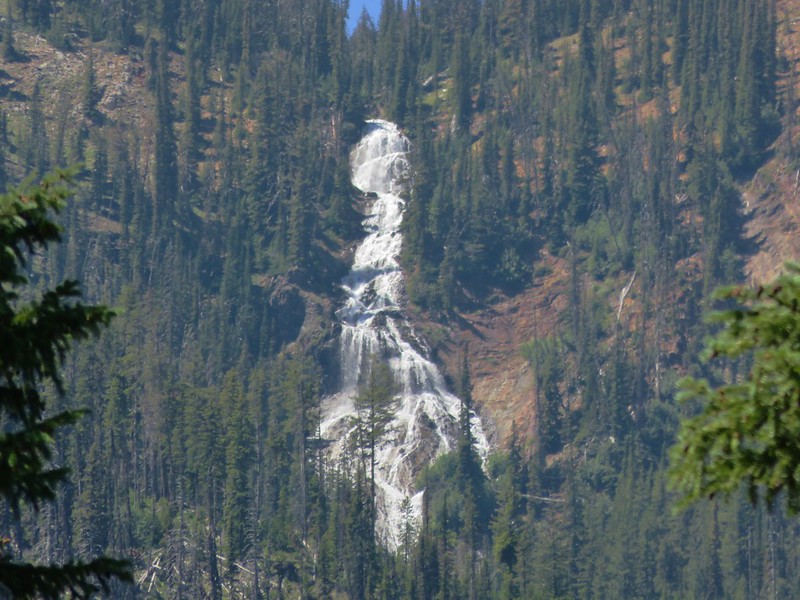
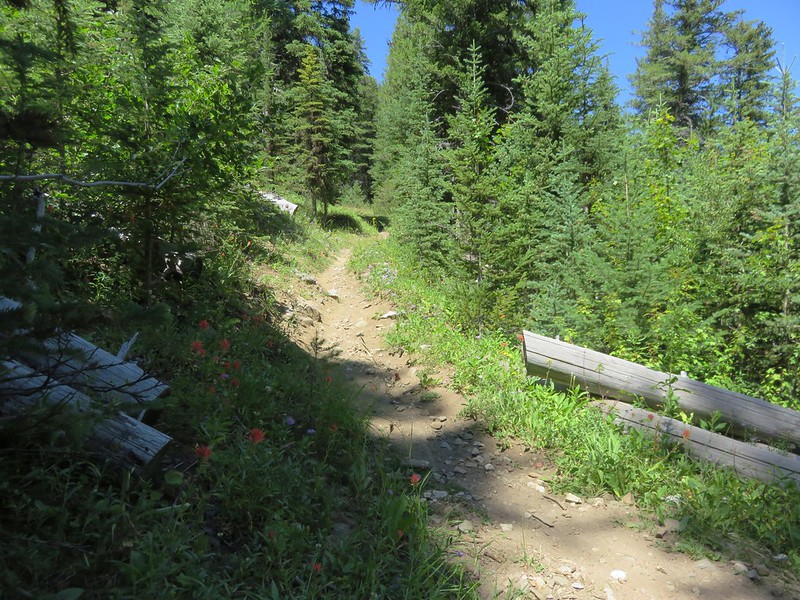
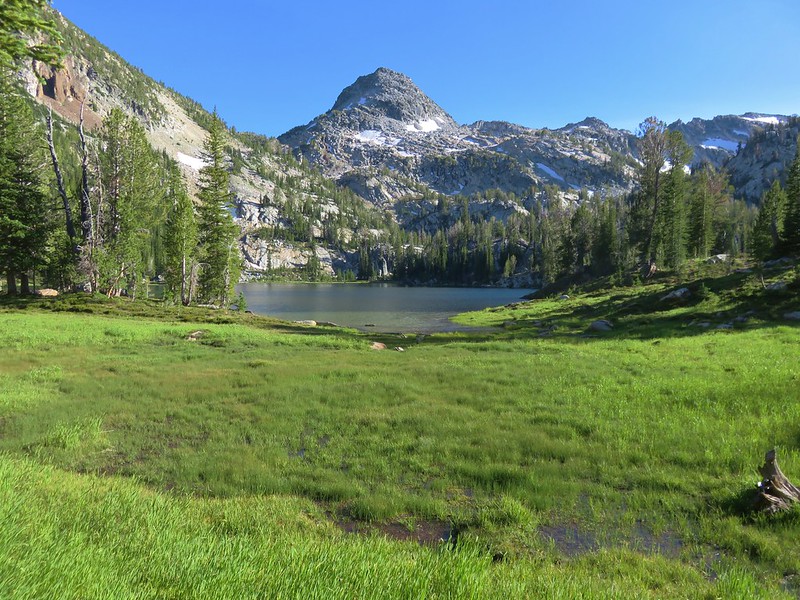
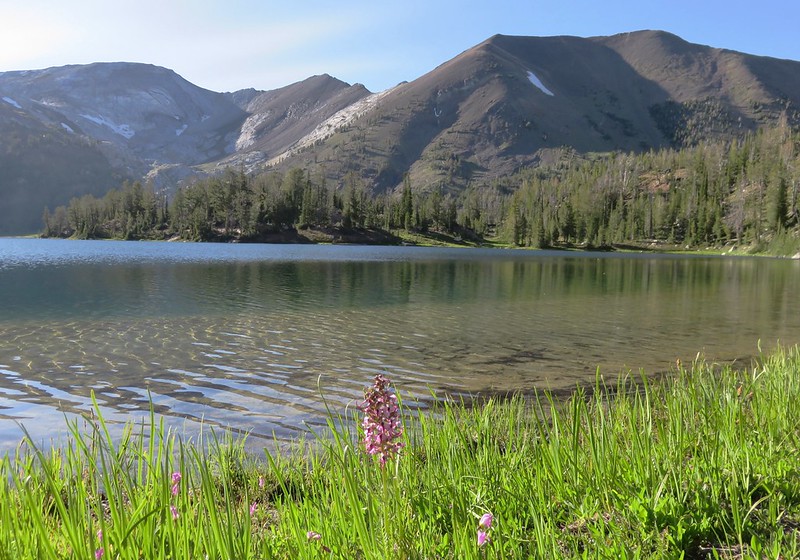
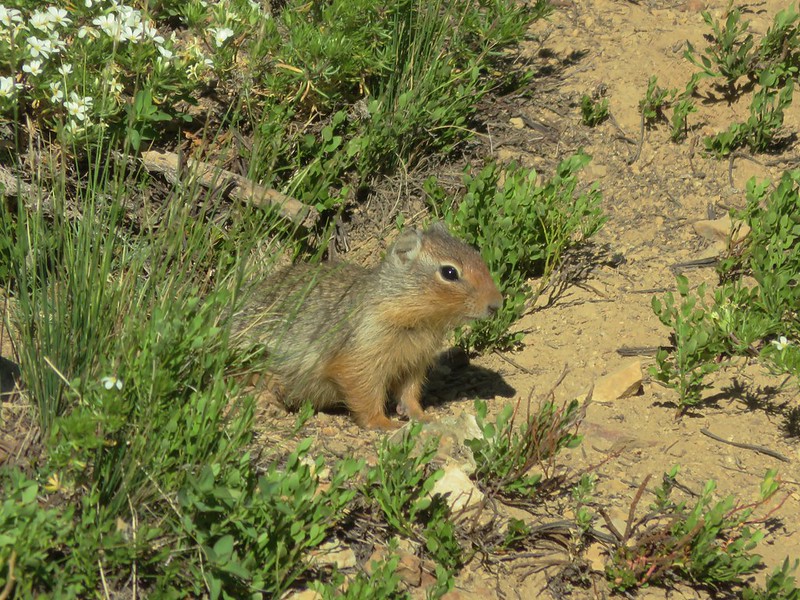
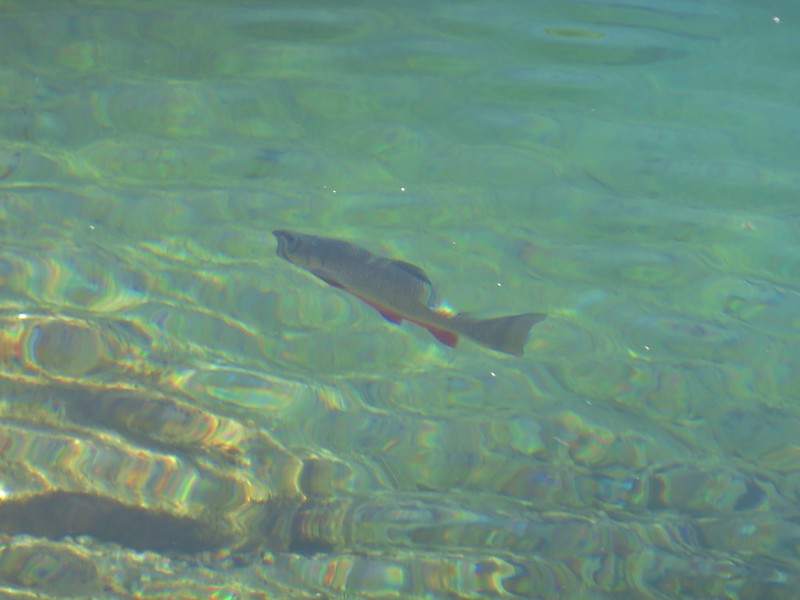
Categories
High Cascades Hiking Mt. Jefferson Area Oregon Trip report

Jefferson Park via Woodpecker Ridge

**Note the 2017 Whitewater Fire burned a portion of this hike.**

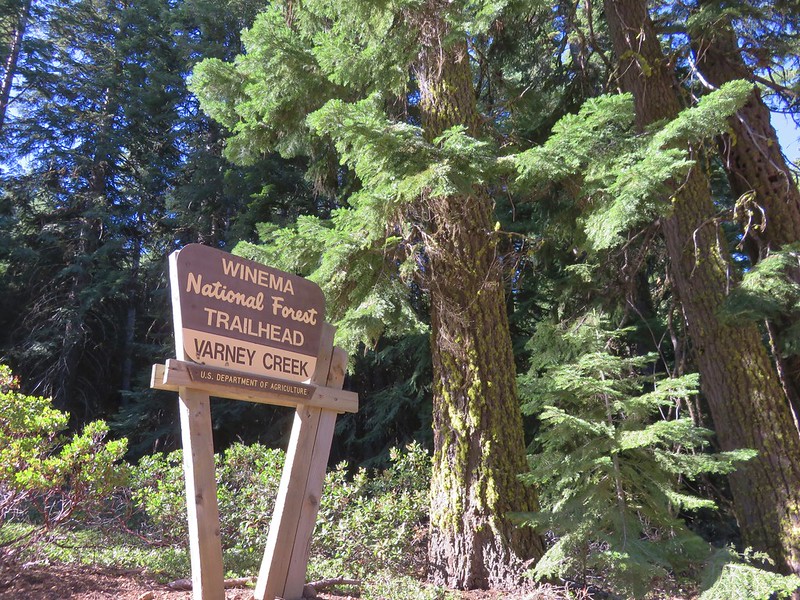
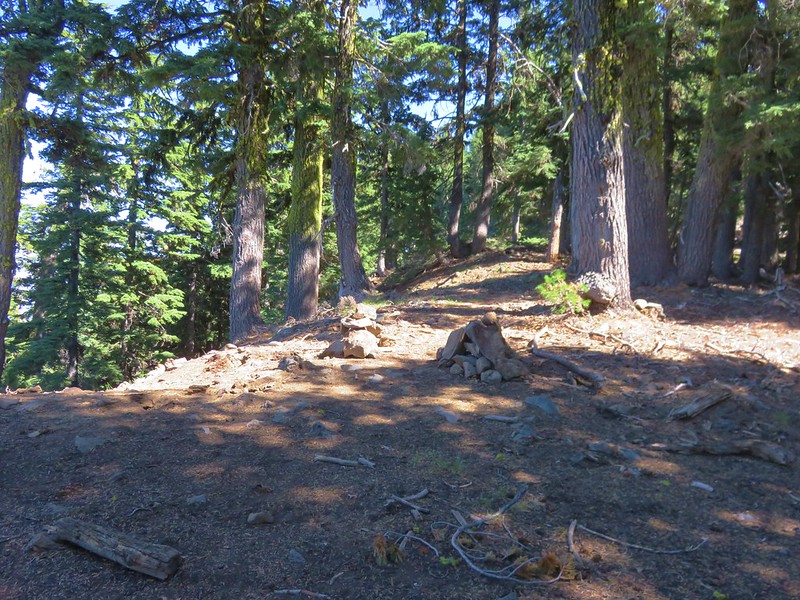
We deiced to try a new approach this year for our annual trip to Jefferson Park. Our plan was to hike the Woodpecker Ridge Trail to the Pacific Crest Trail and then on to Jefferson Park with a possible bushwack to see Russell Creek Falls on the way back. We parked at the Woodpecker Ridge Trailhead which is a little over 5 miles along Forest Road 040.
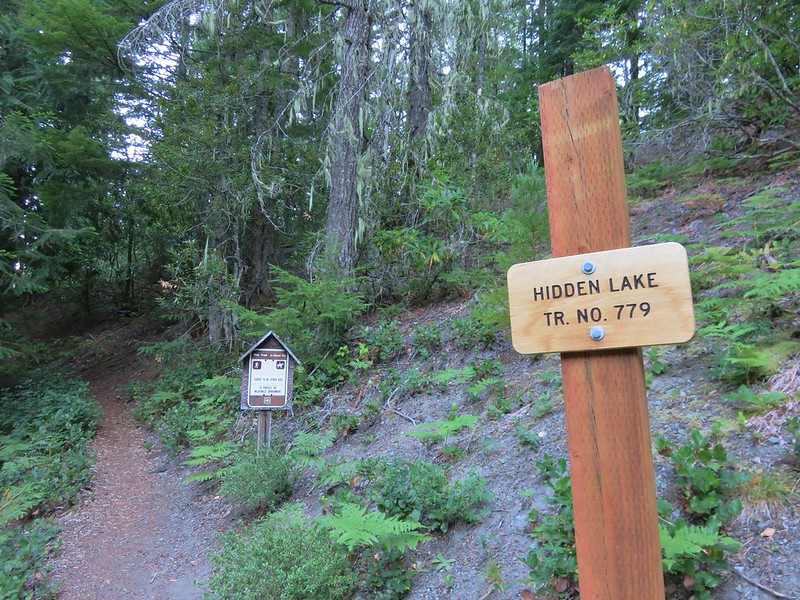
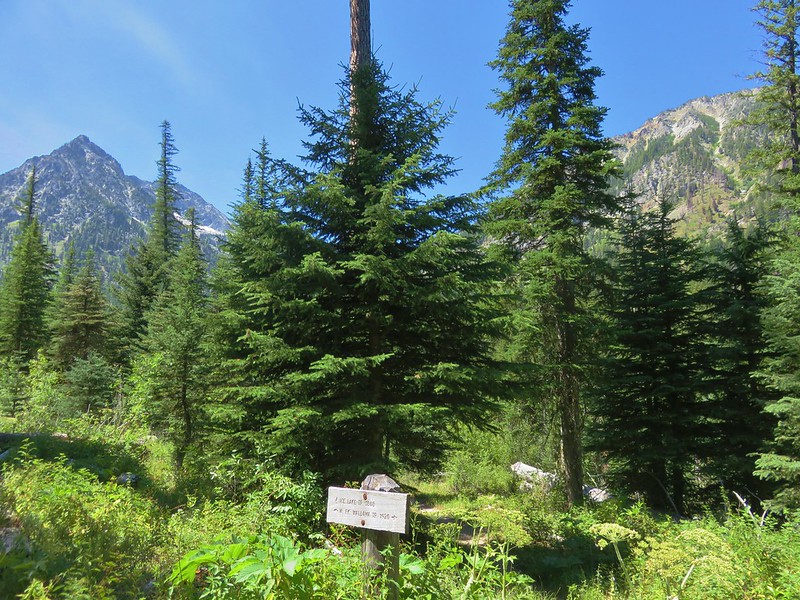
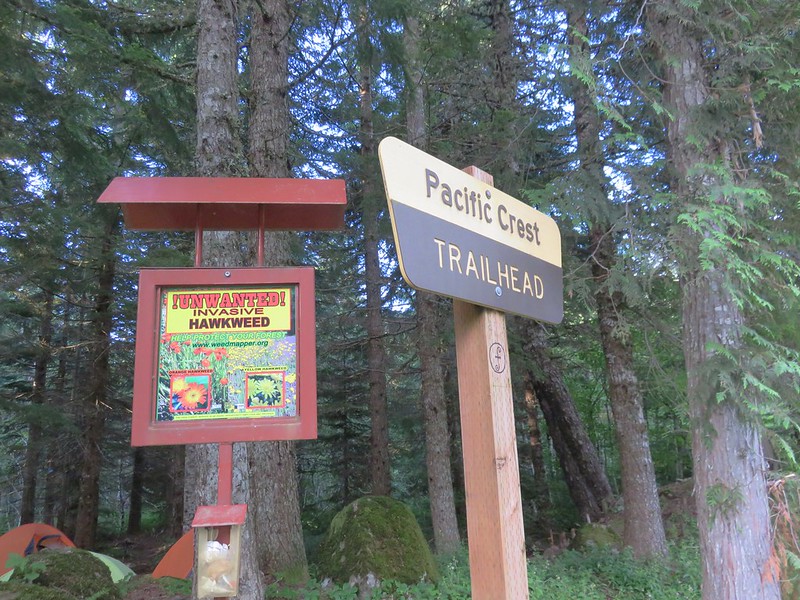
Woodpecker Ridge Trailhead

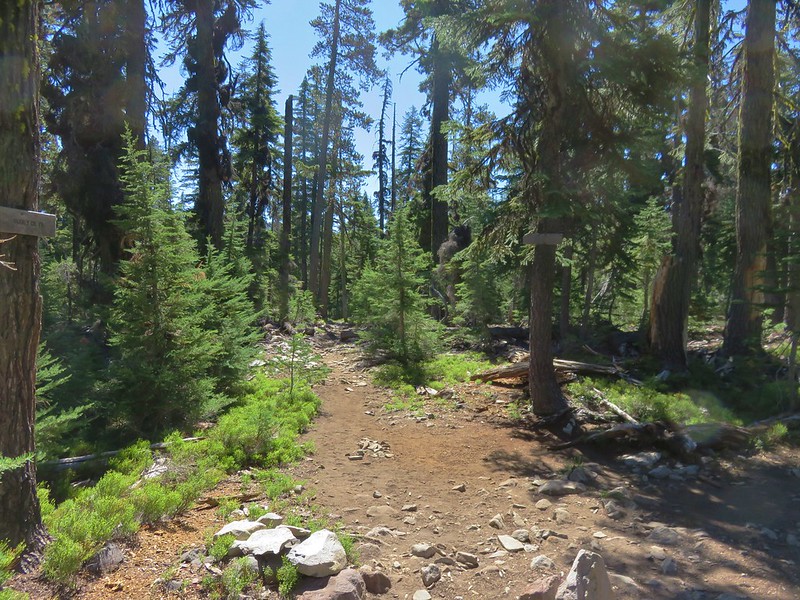
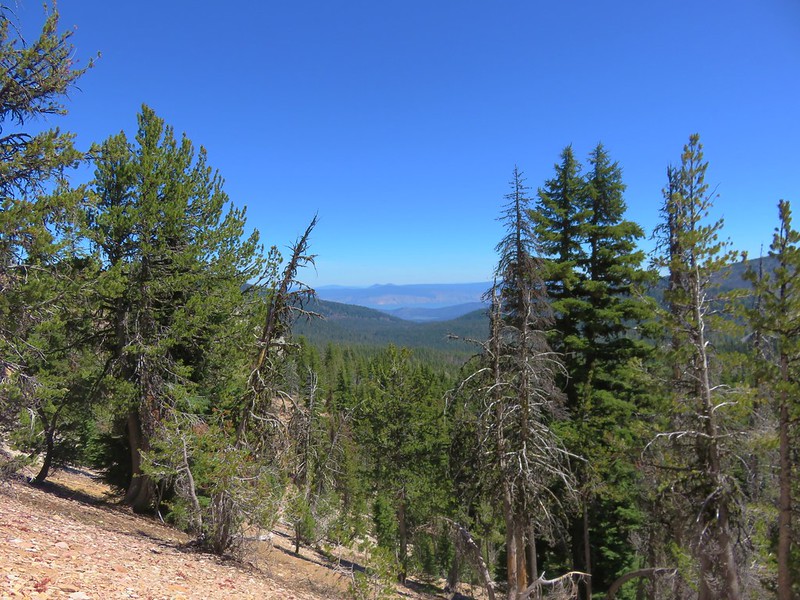
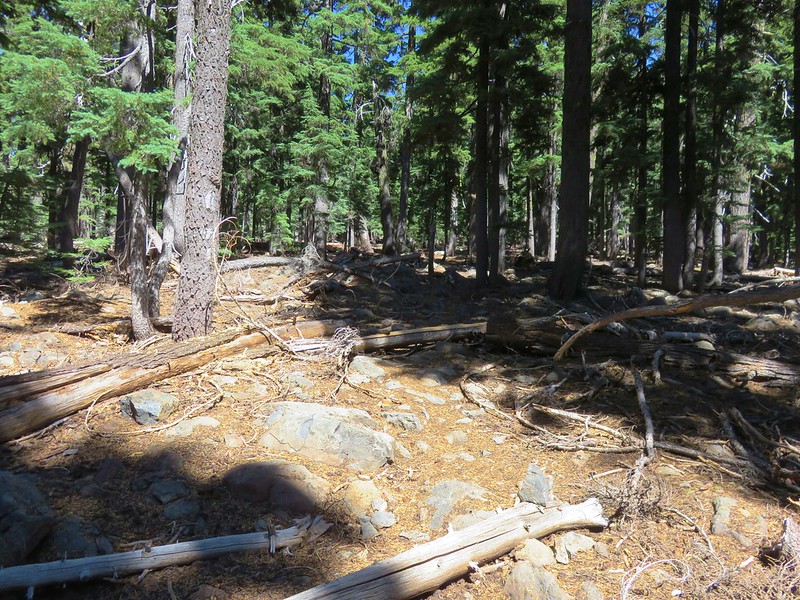
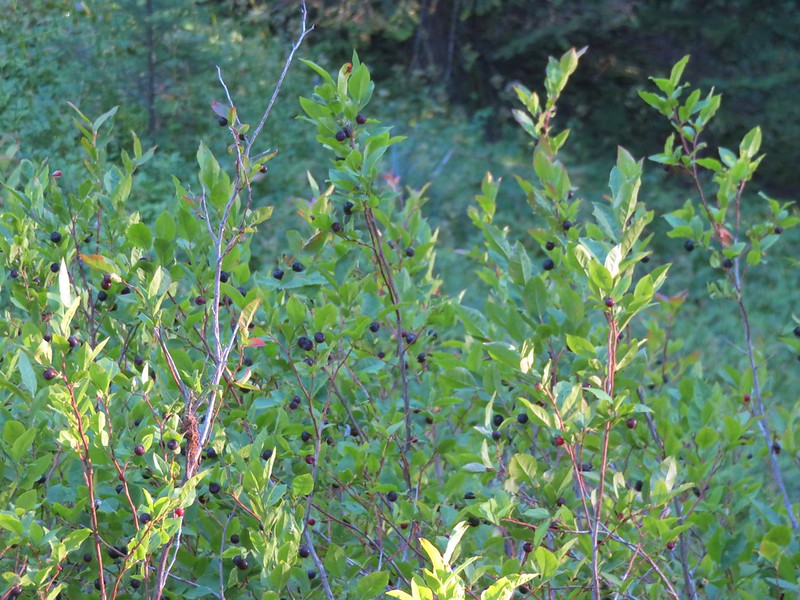
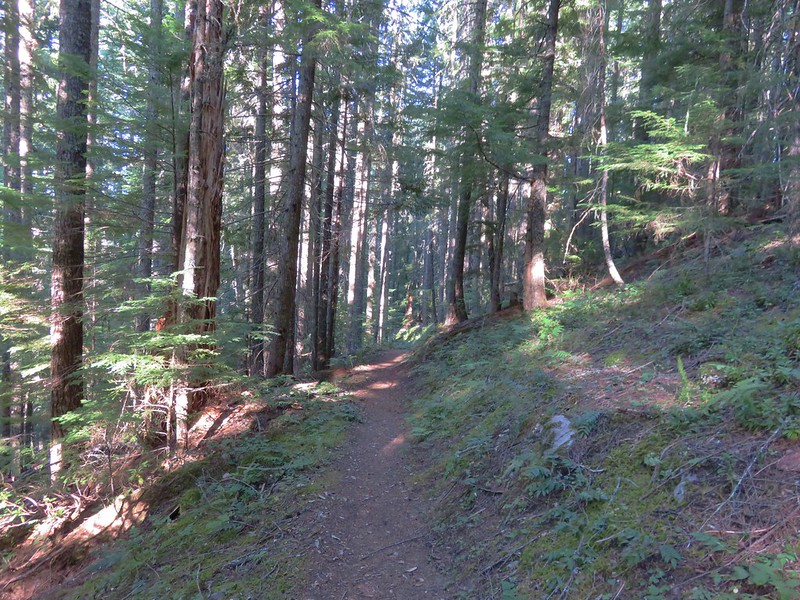
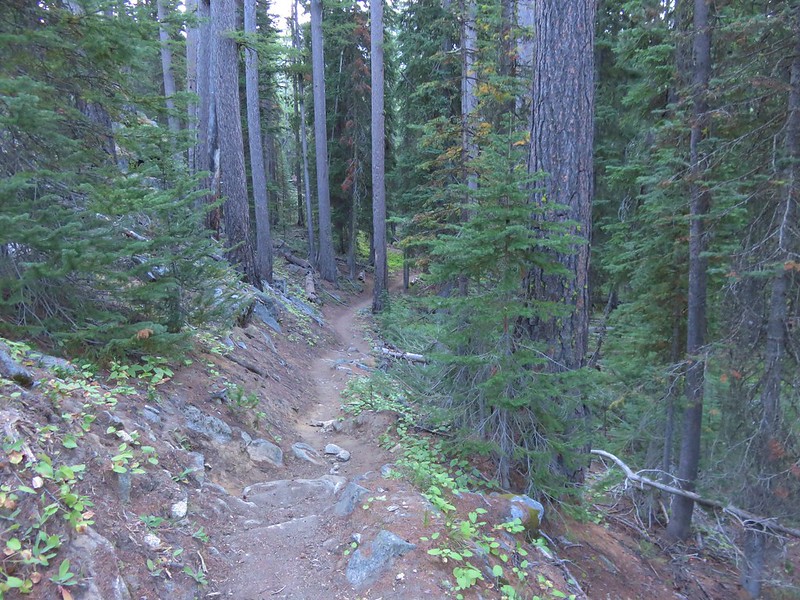
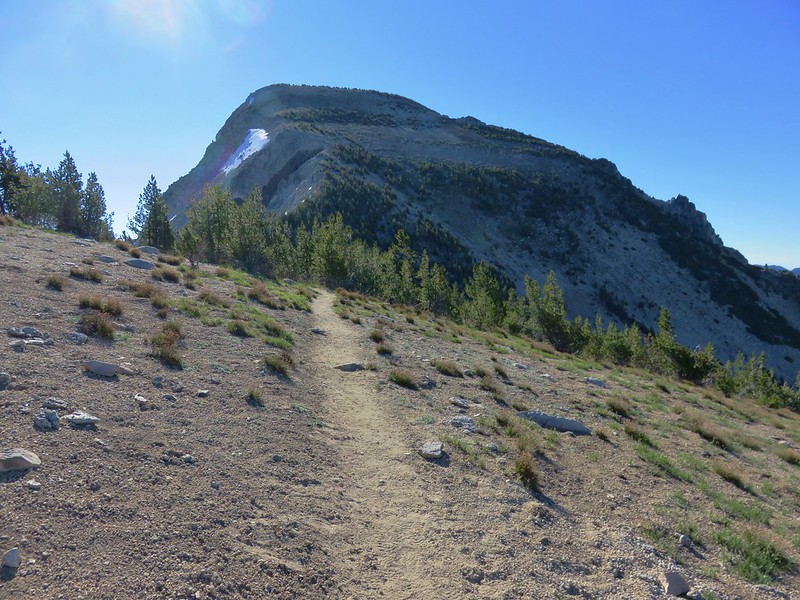
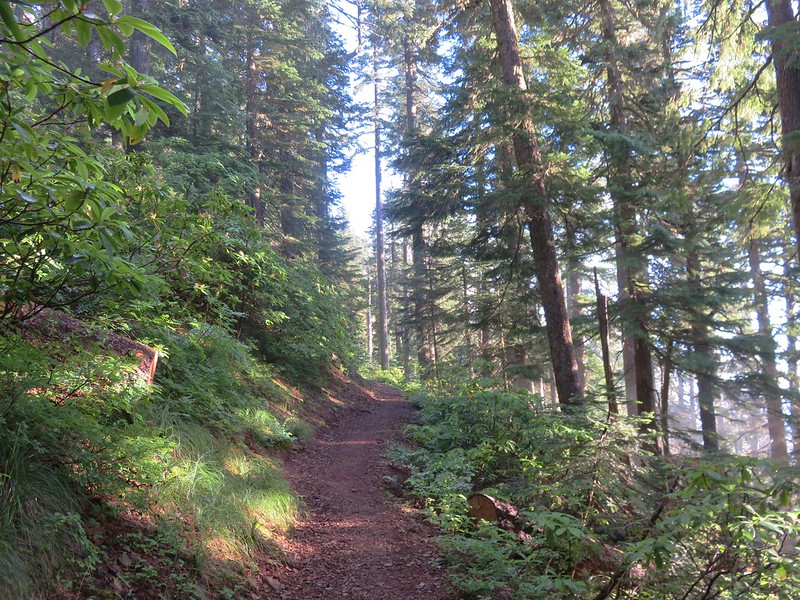
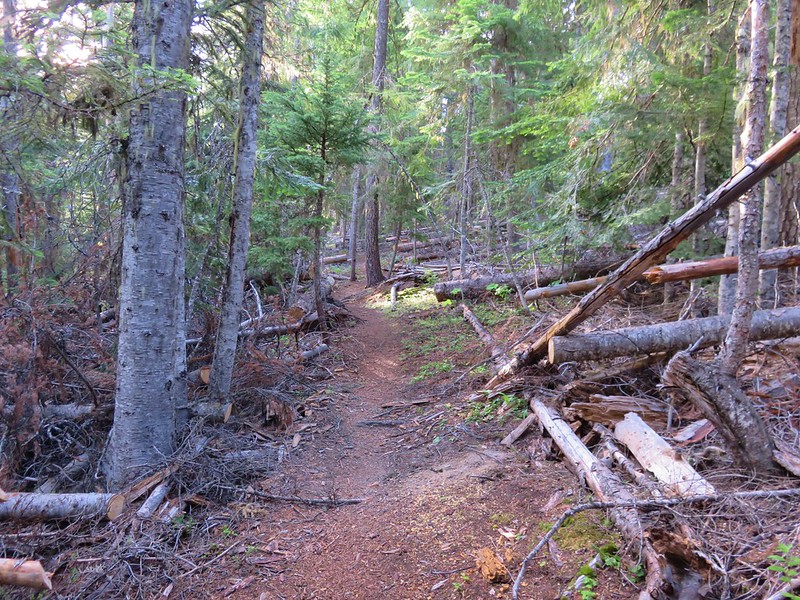
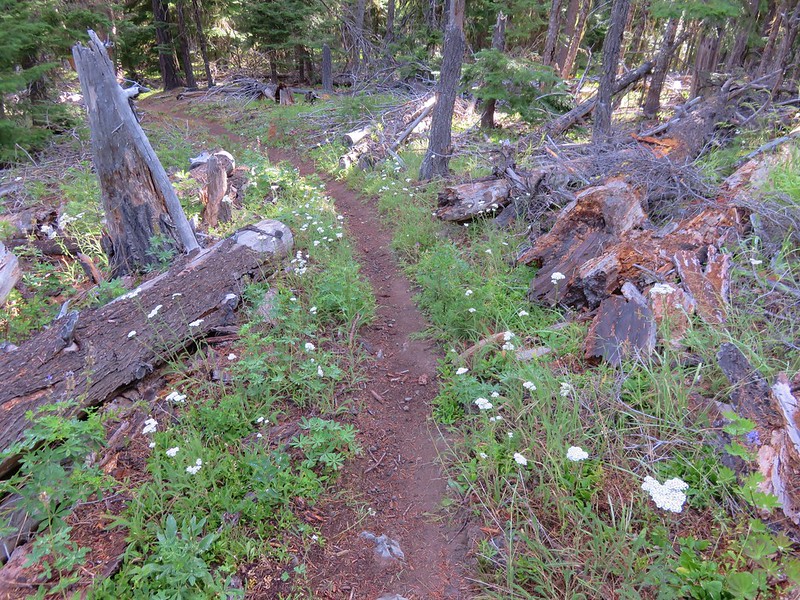
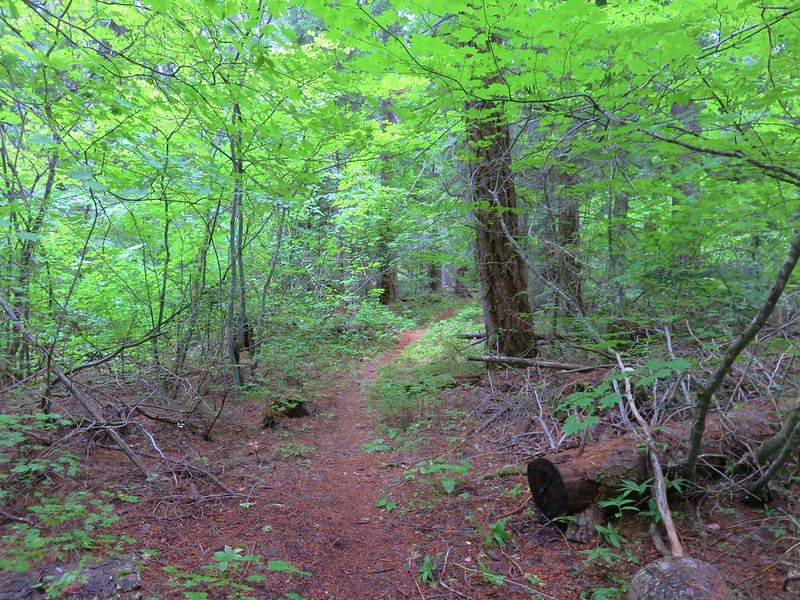
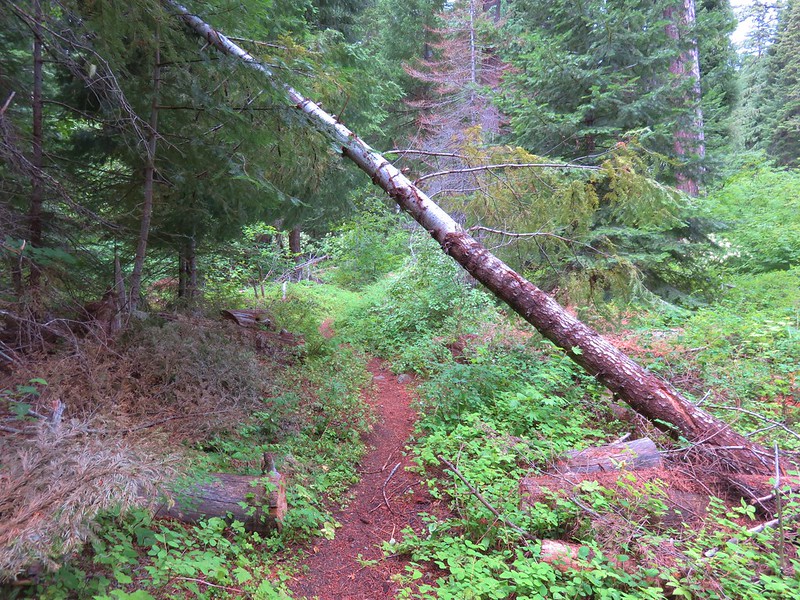
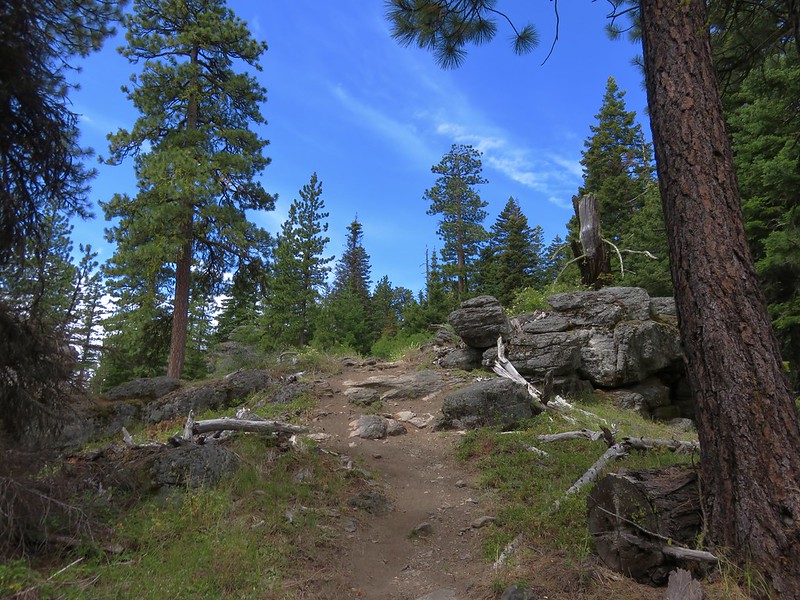
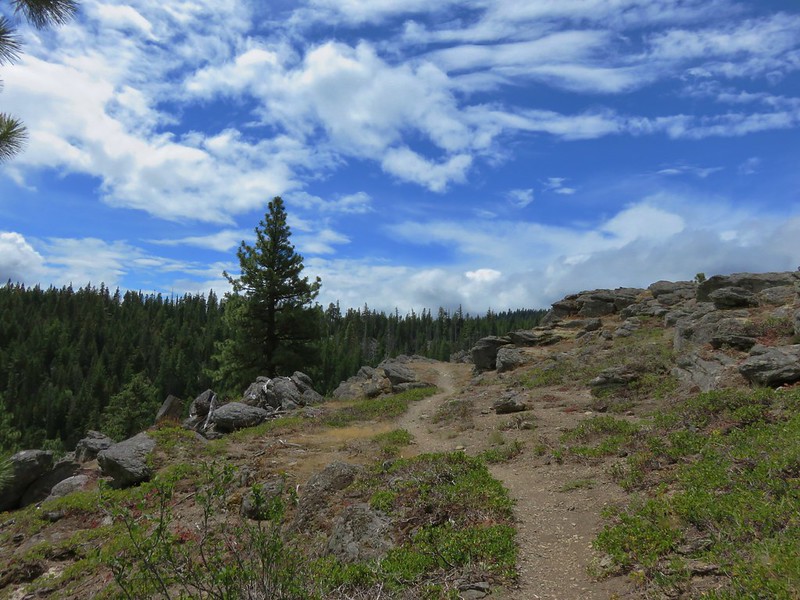
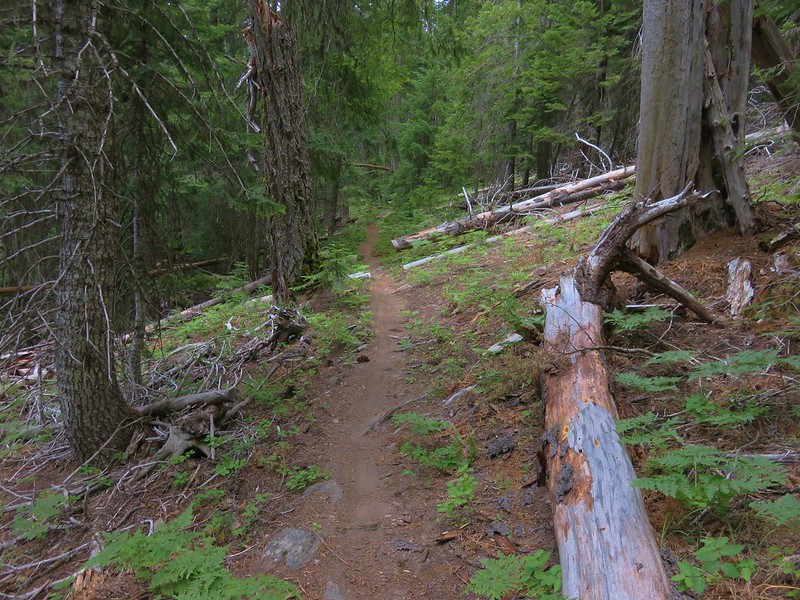
The Woodpecker Ridge Trail extends approximately 1.8 to the Pacific Crest Trail in the Mt. Jefferson Wilderness. The trail starts off with a steep climb through the forest before gaining the ridge and leveling out. There were lots of juicy ripe huckleberries along this section. As we hiked along the ridge we entered the Mt. Jefferson Wilderness.
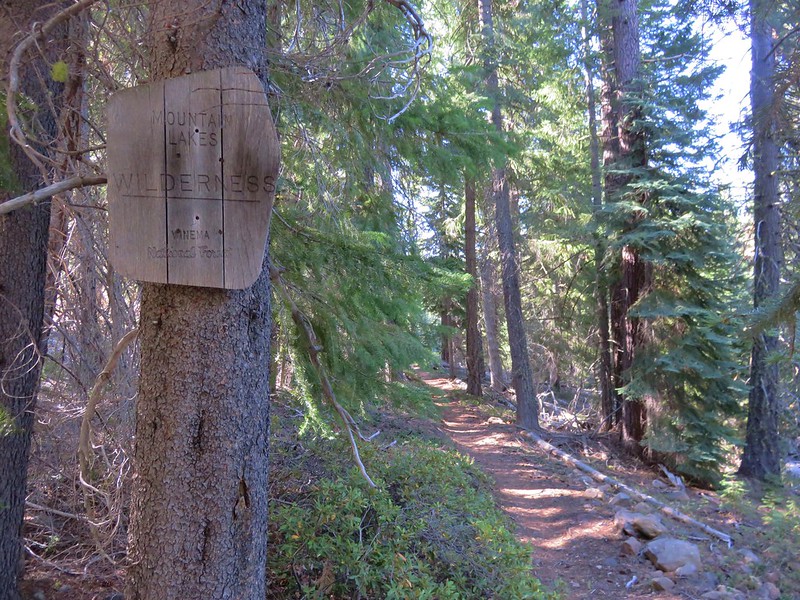
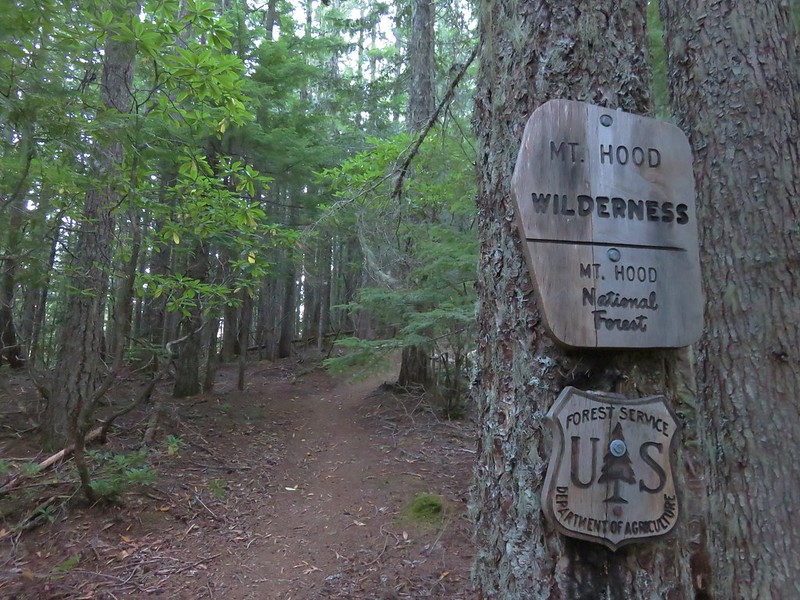
Entering the Mt. Jefferson Wilderness on the Woodpecker Ridge Trail

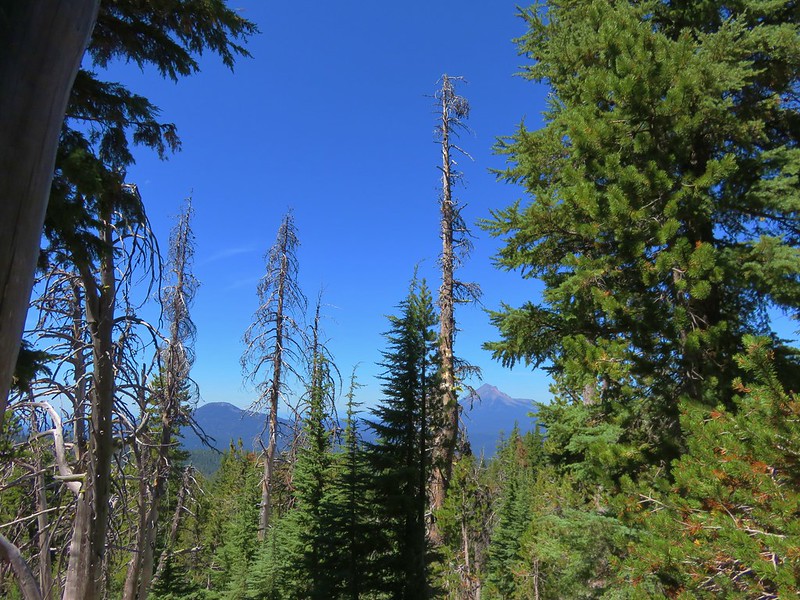
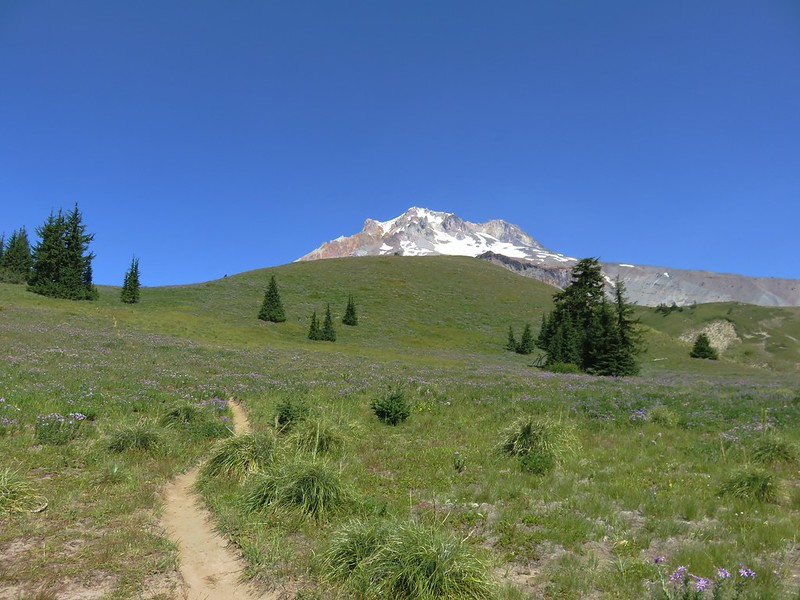
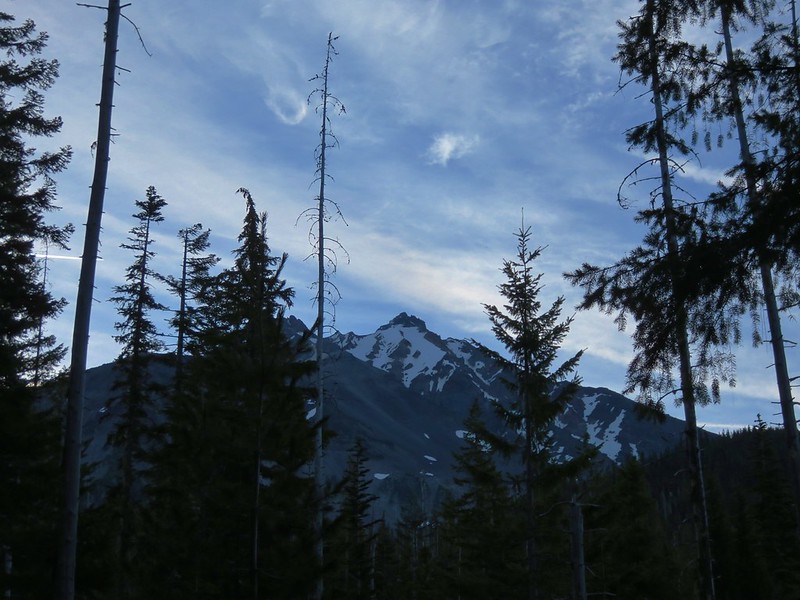
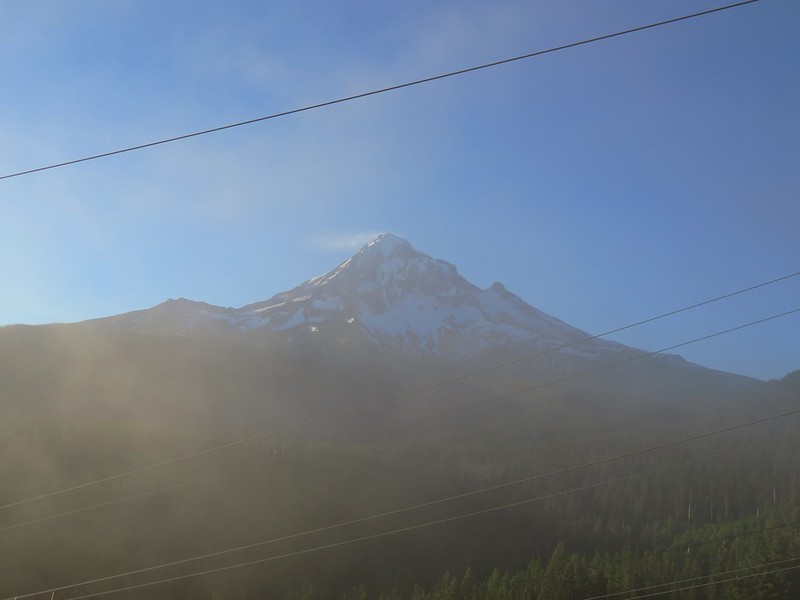
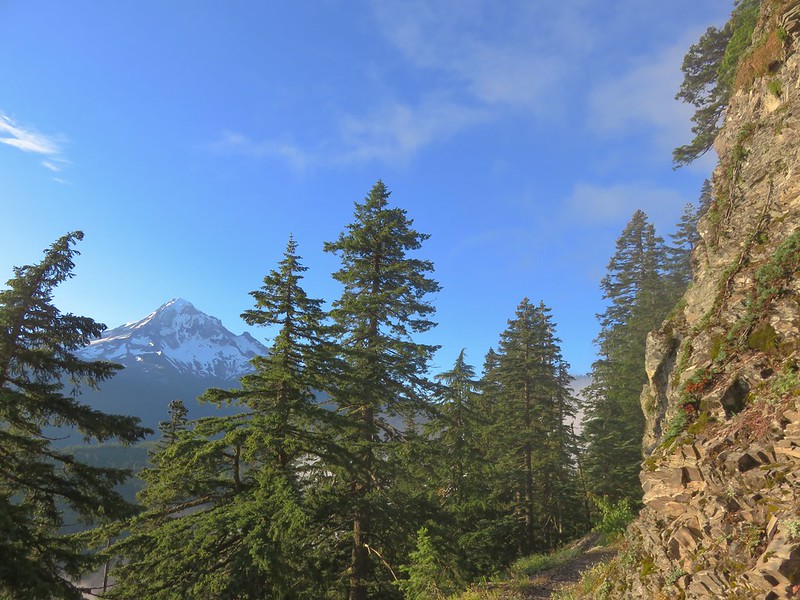
Unlike some of the other trails that lead to Jefferson Park Mt. Jefferson remained mostly hidden from the Woodpecker Ridge Trail. Only near the end did we get a look at the mountain.
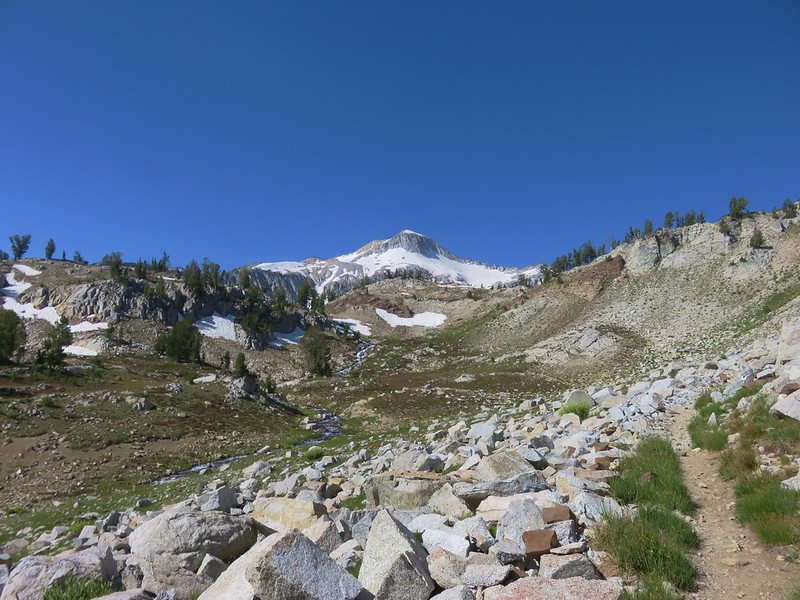
Mt. Jefferson from the Woodpecker Ridge Trail

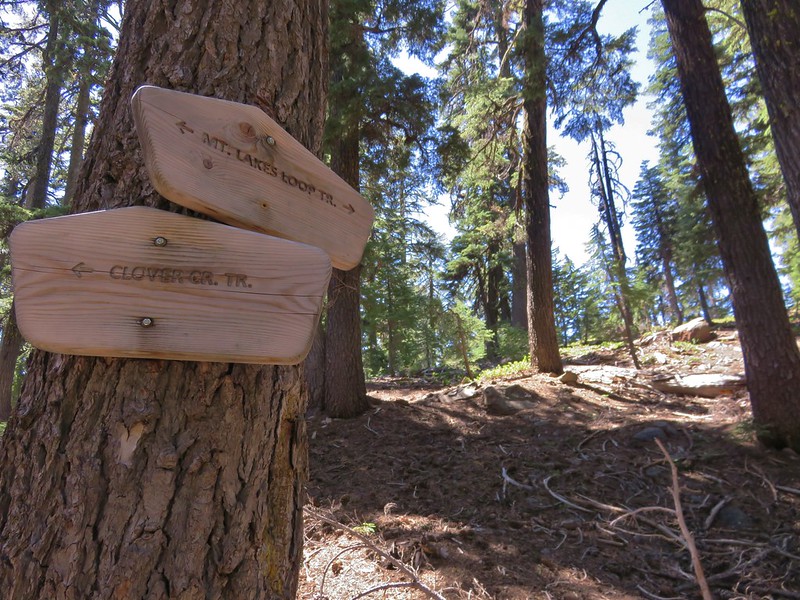
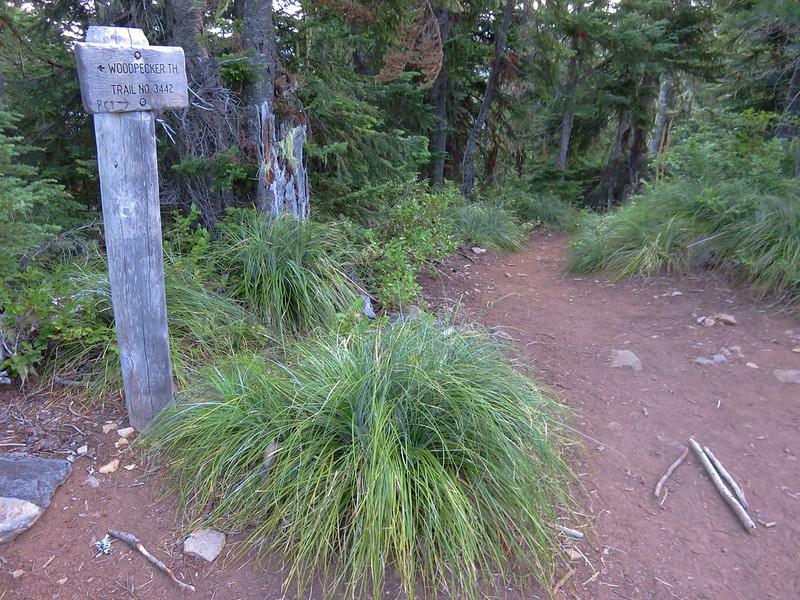
Shortly after getting our first look at the mountain we arrived at the Pacific Crest Trail and turned left.
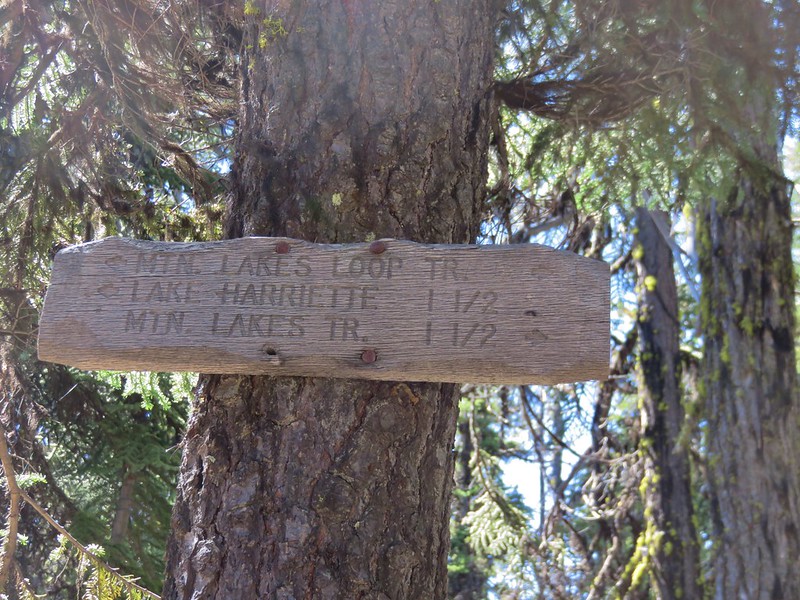
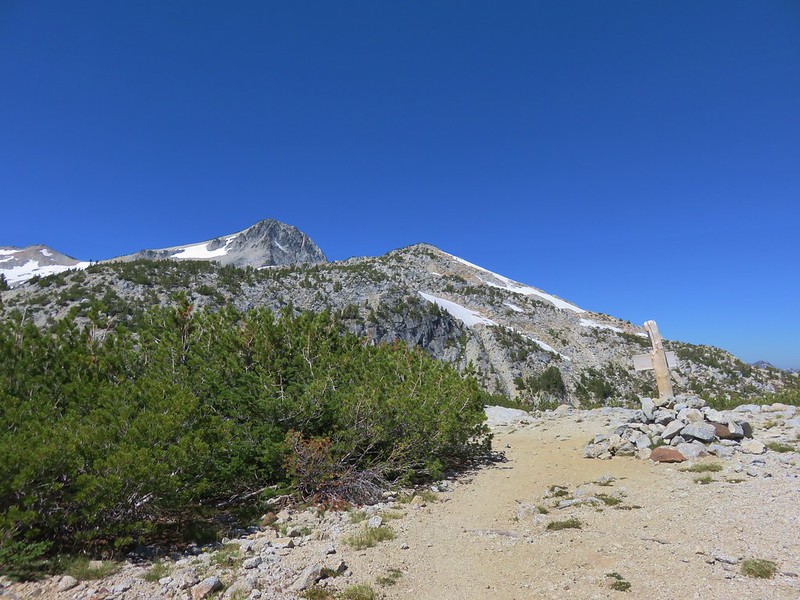
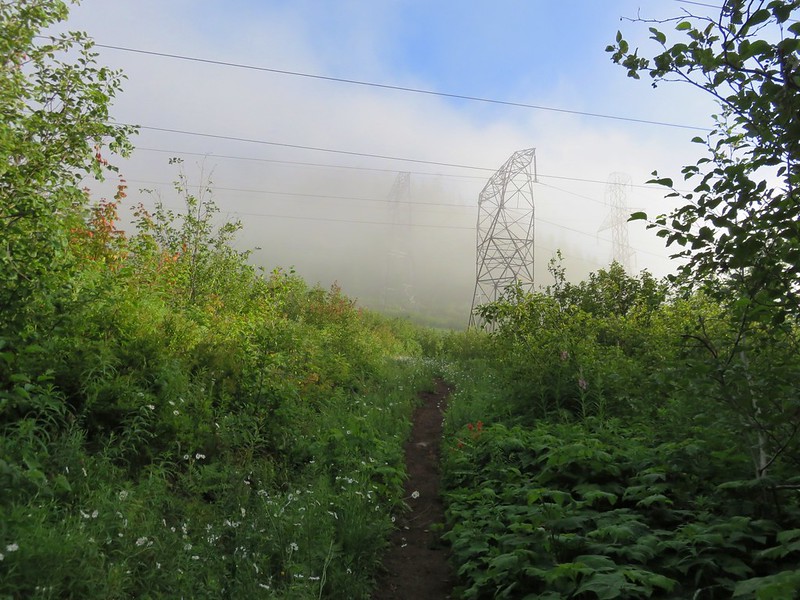
Woodpecker Ridge Trail junction with the PCT

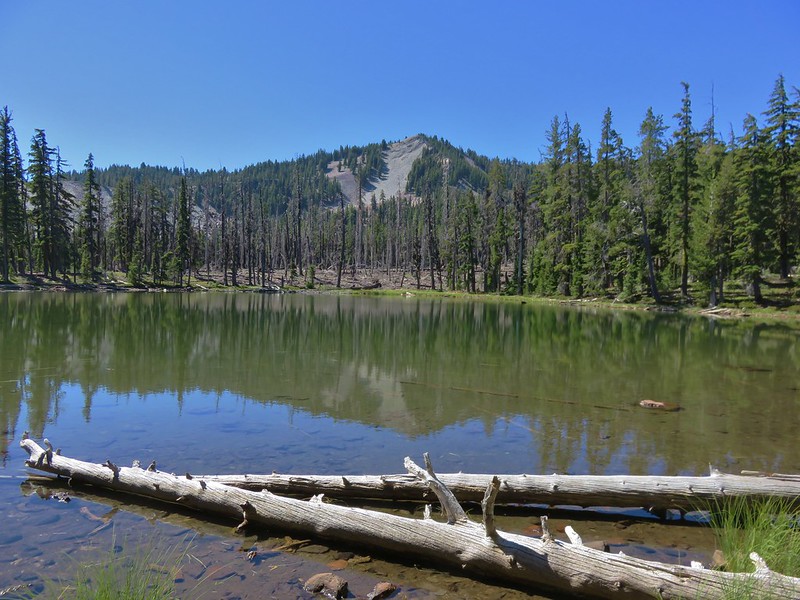
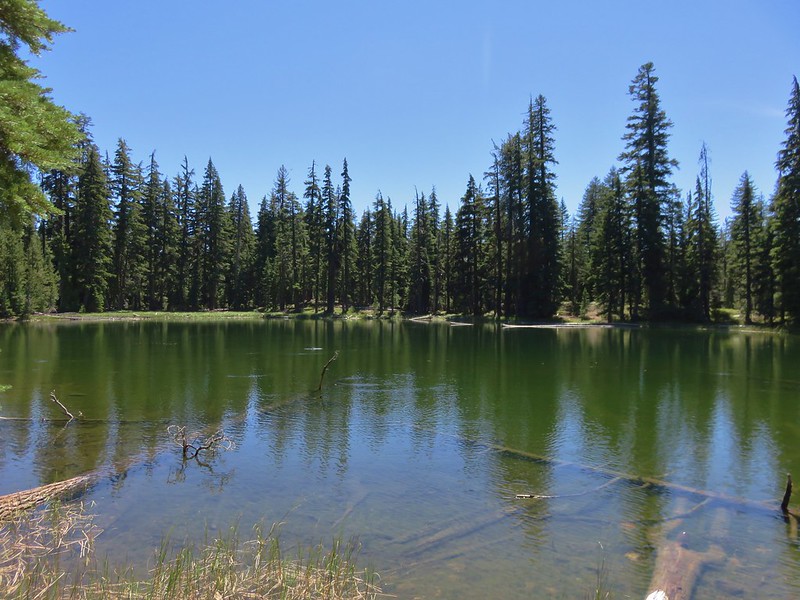
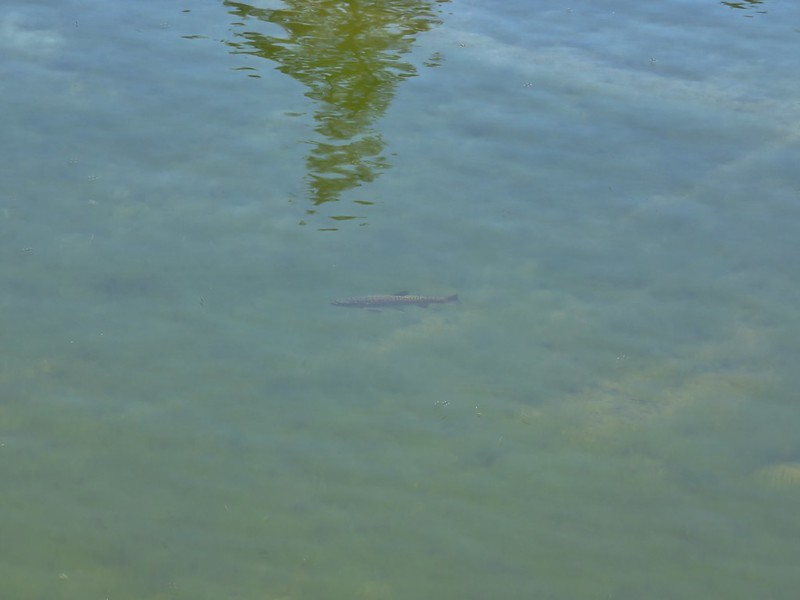
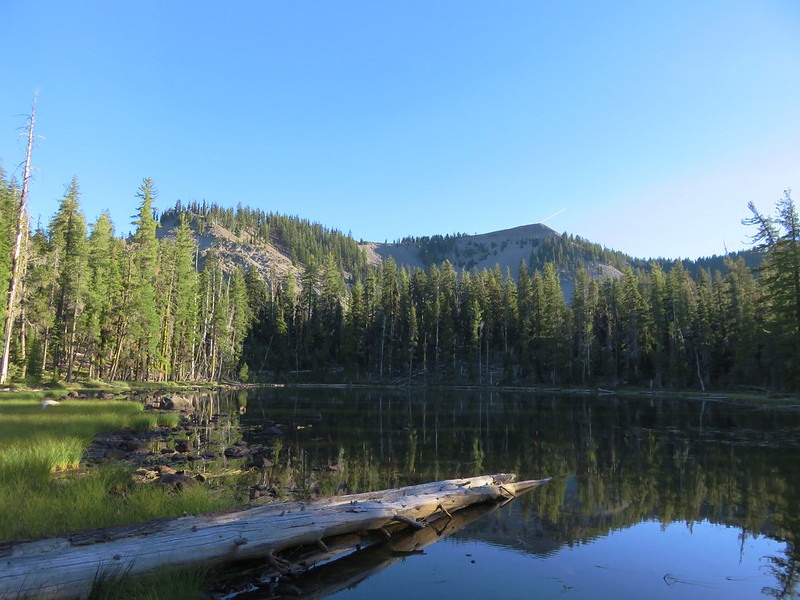
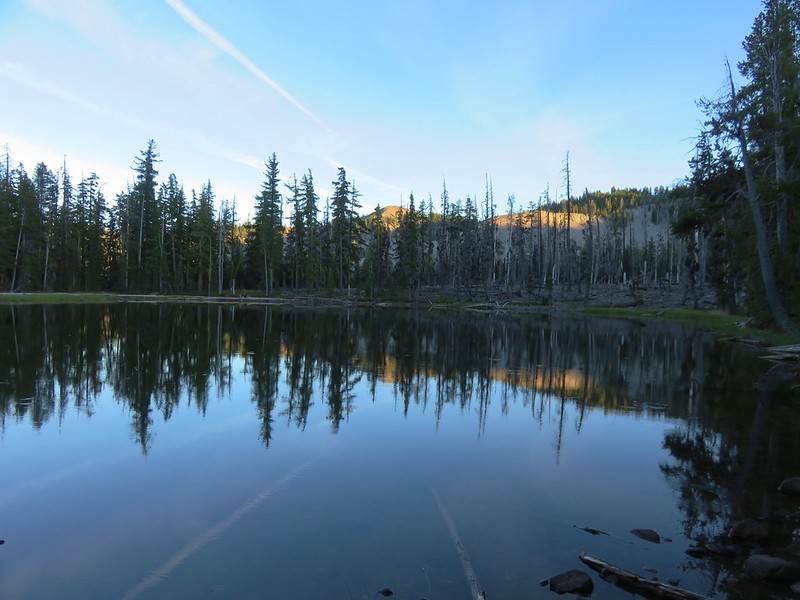
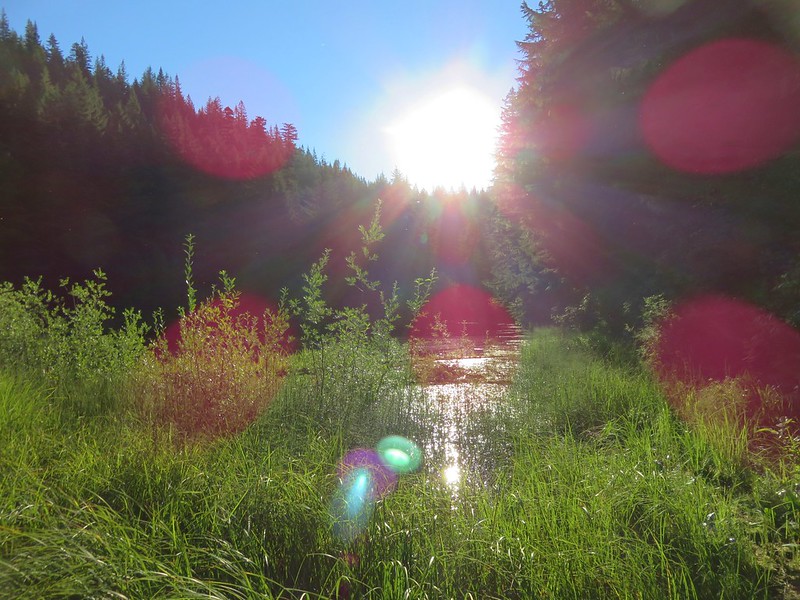
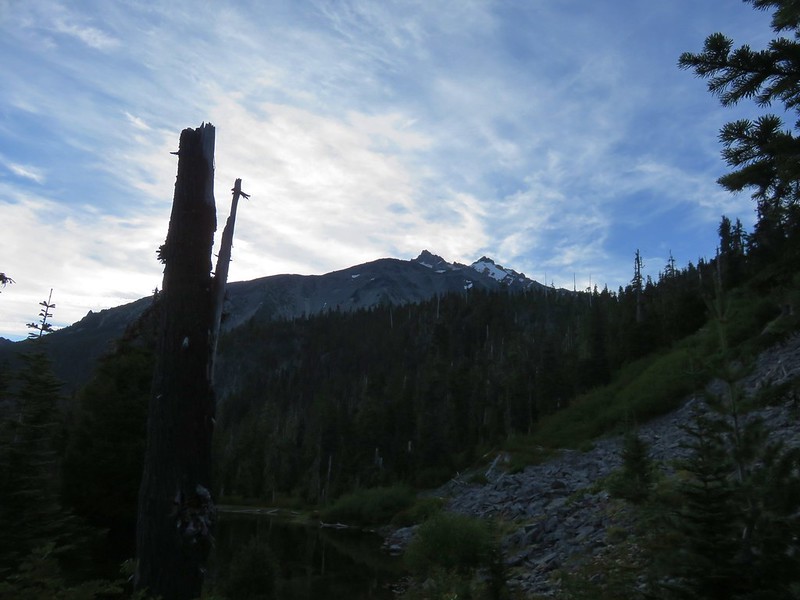
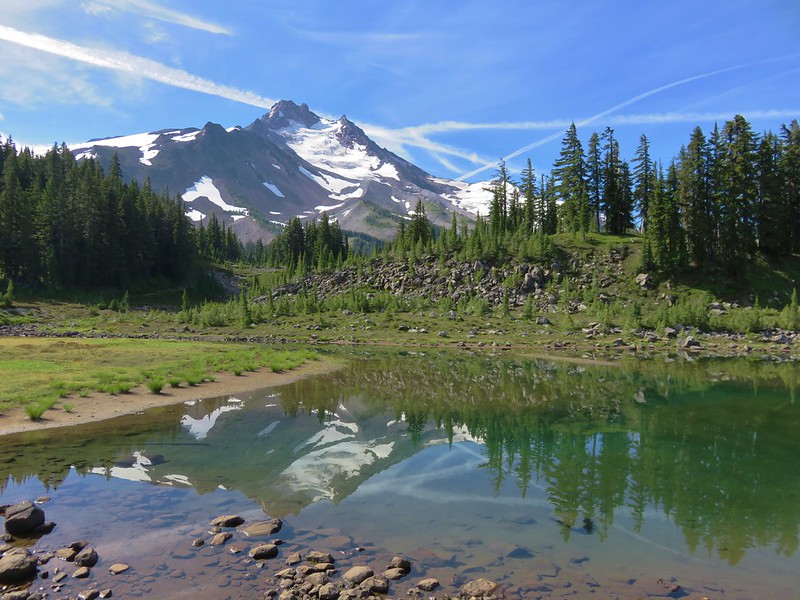
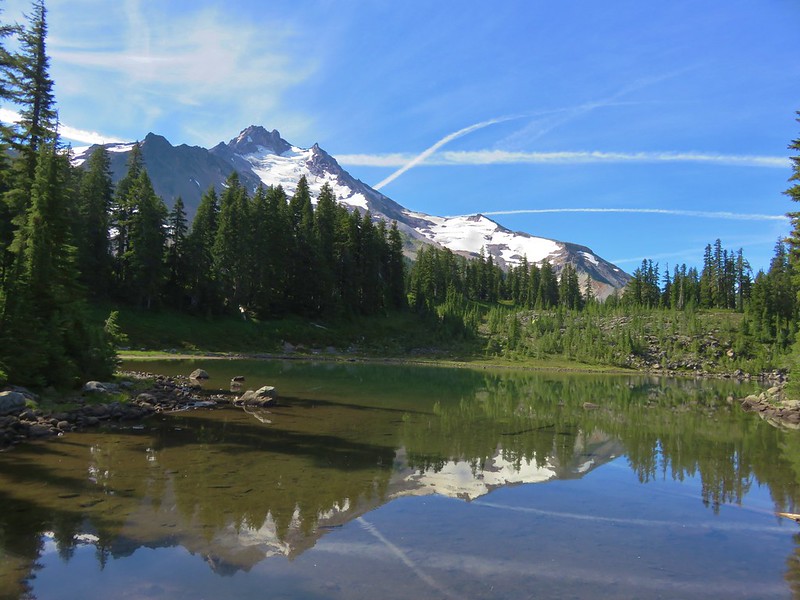
We had another Mt. Jefferson sighting from a pond not far from the junction.
Mt. Jefferson from a pond along the Pacific Crest Trail

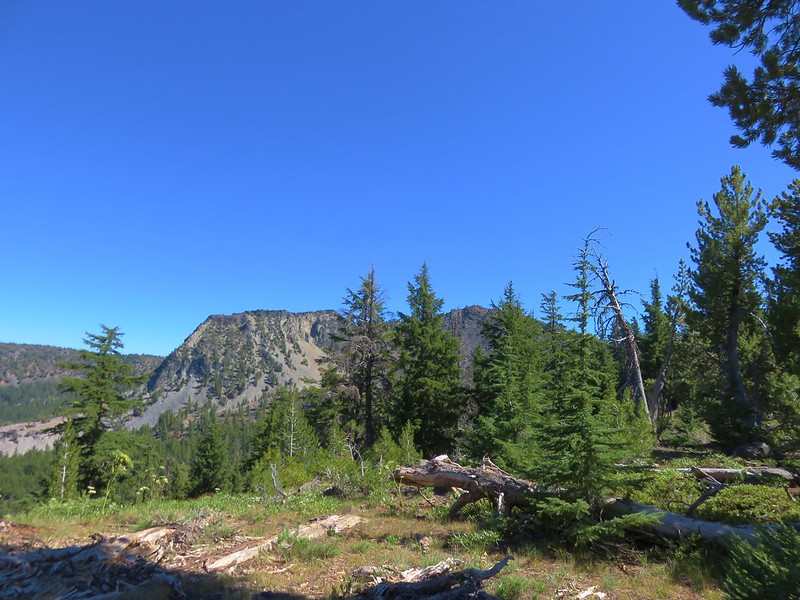
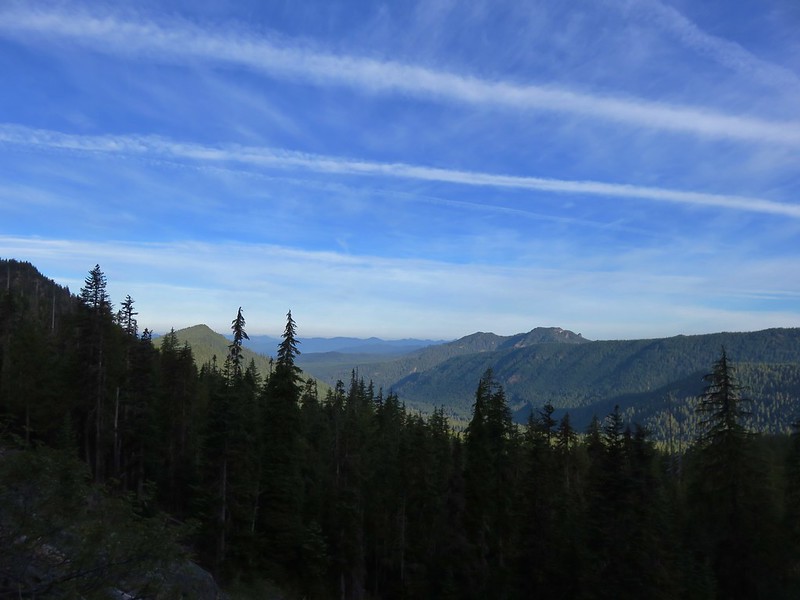
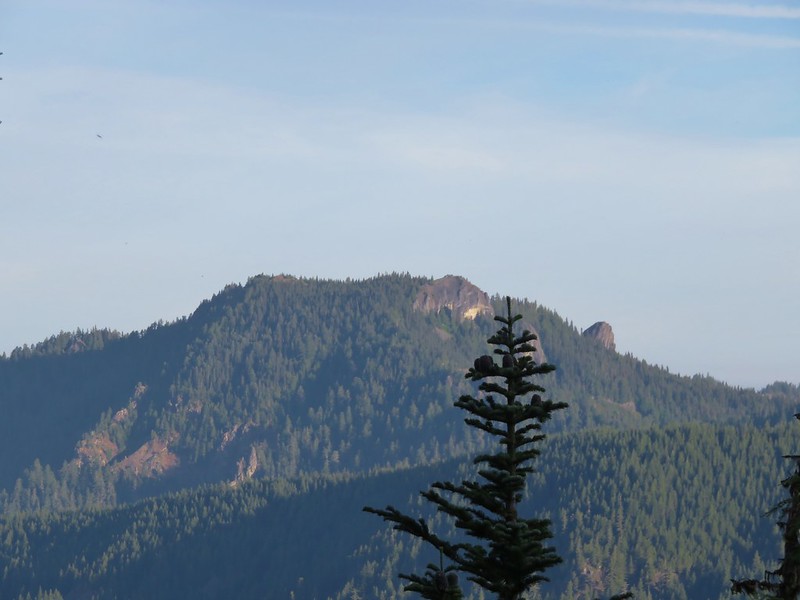
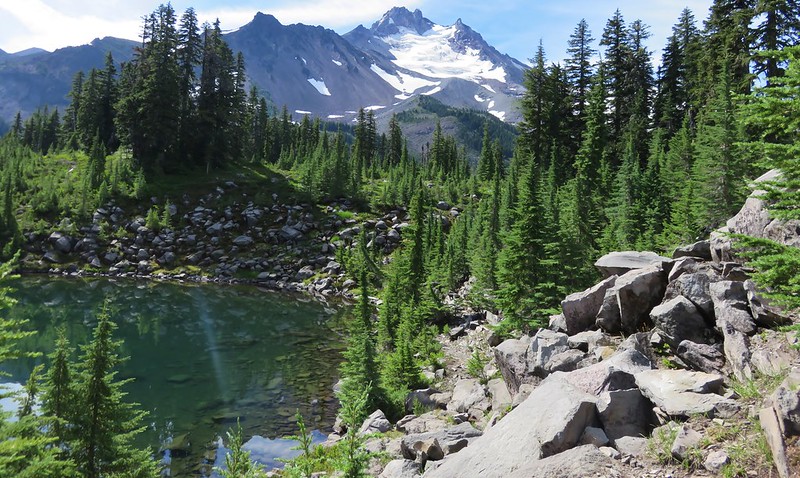
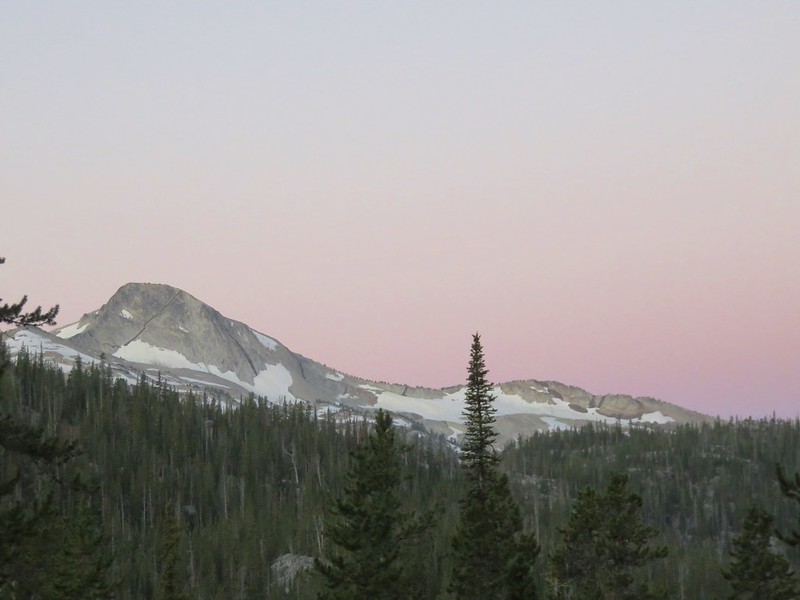
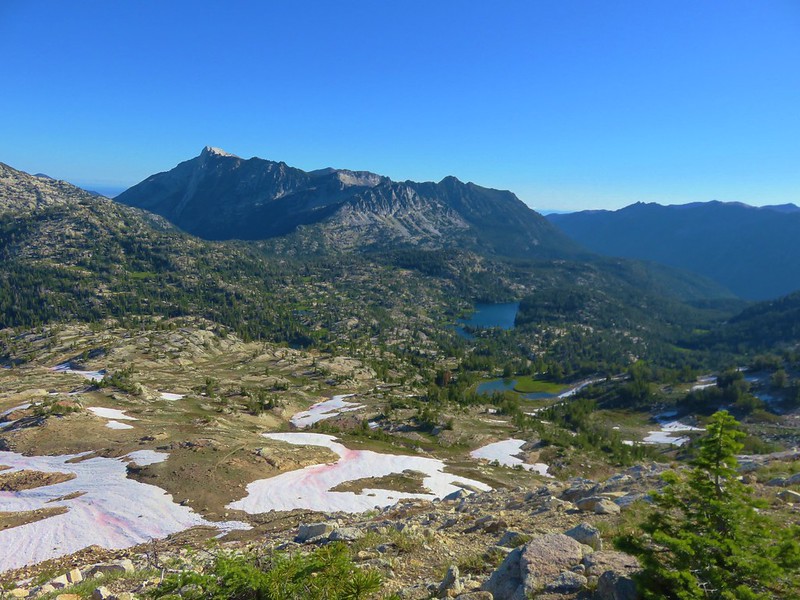
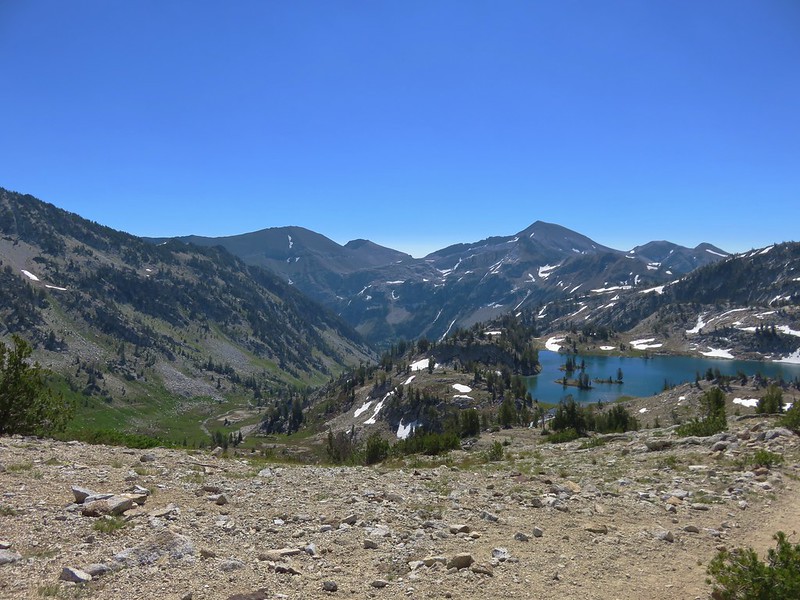
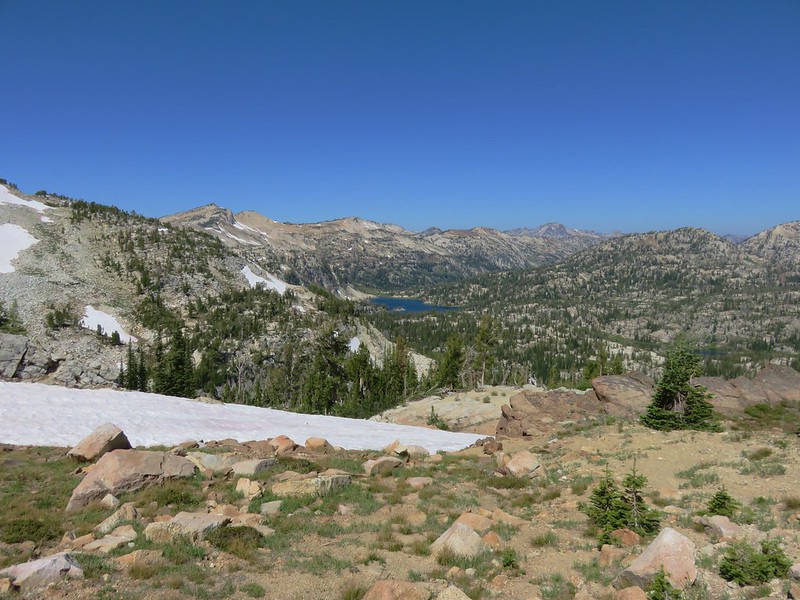
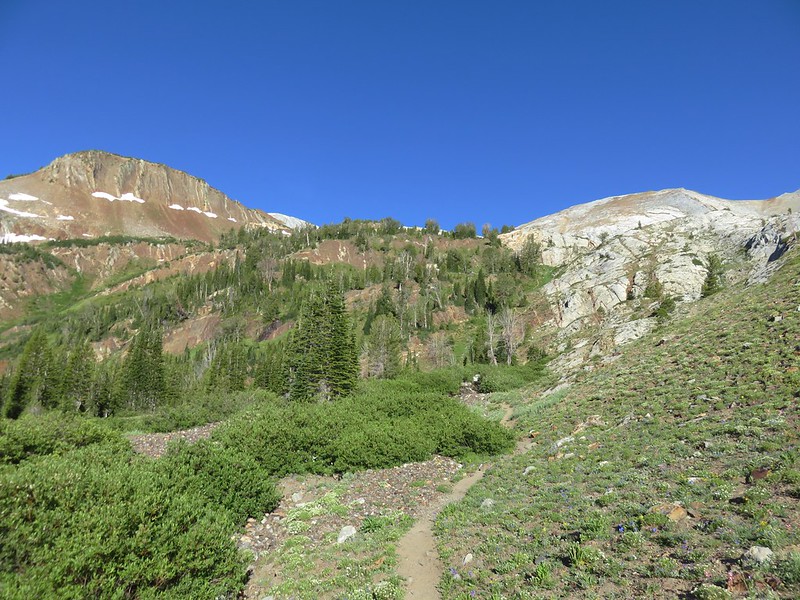
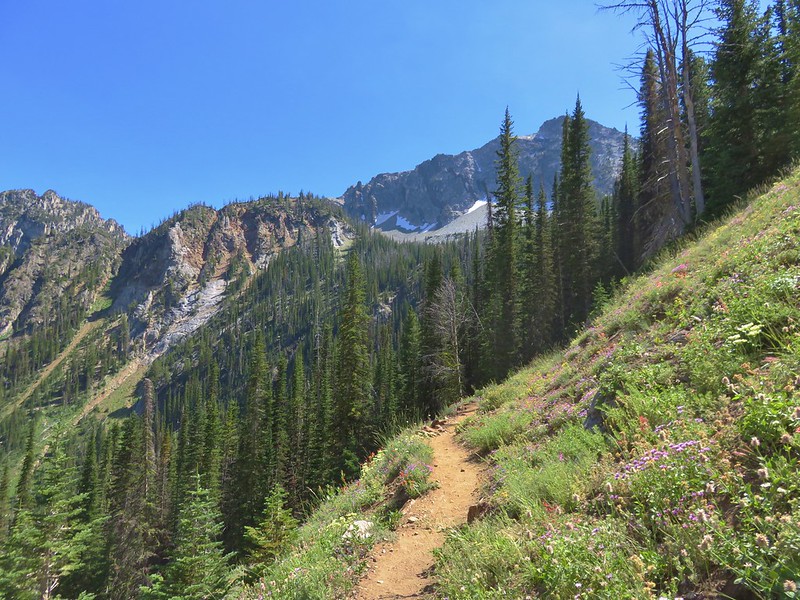
Most of the views along the PCT were to the NW across the Whitewater Creek drainage to Triangulation Peak and Bocca Cave
Triangulation Peak and Bocca Cave from the Pacific Crest Trail

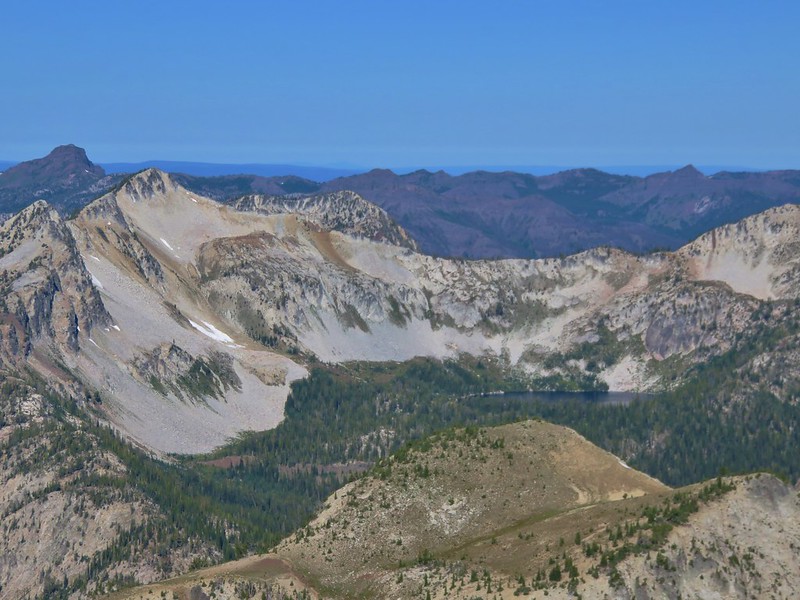
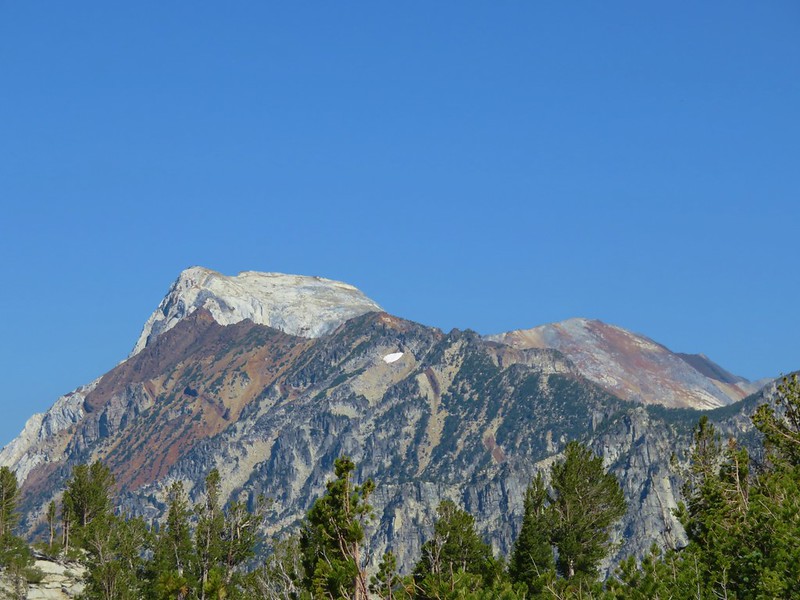
Bocca Cave and Triangulation Peak

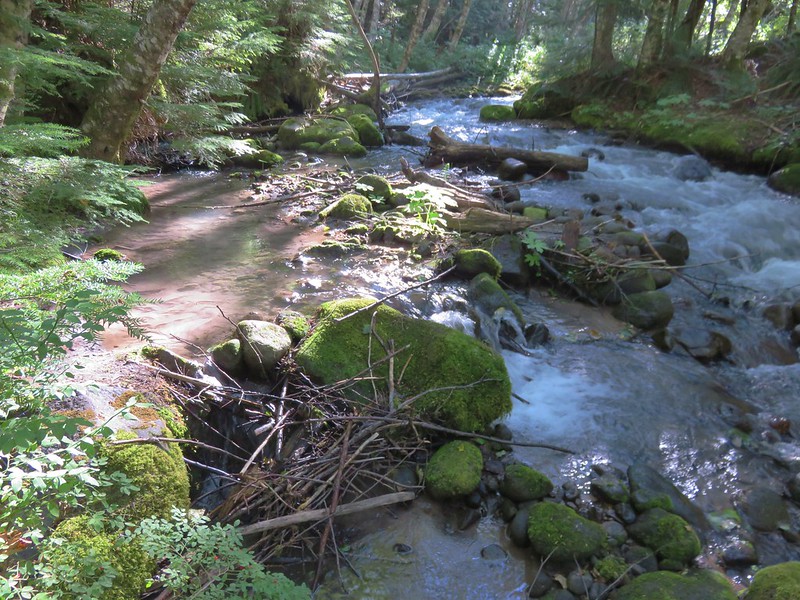
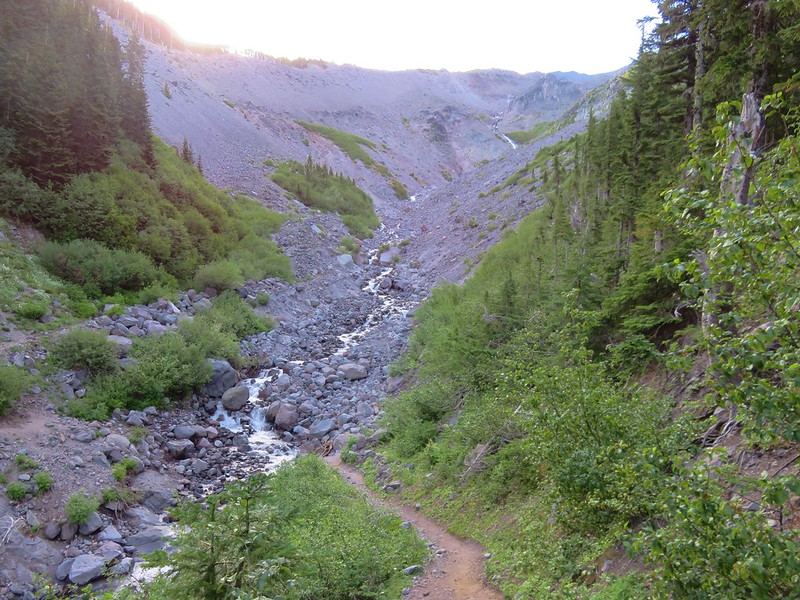
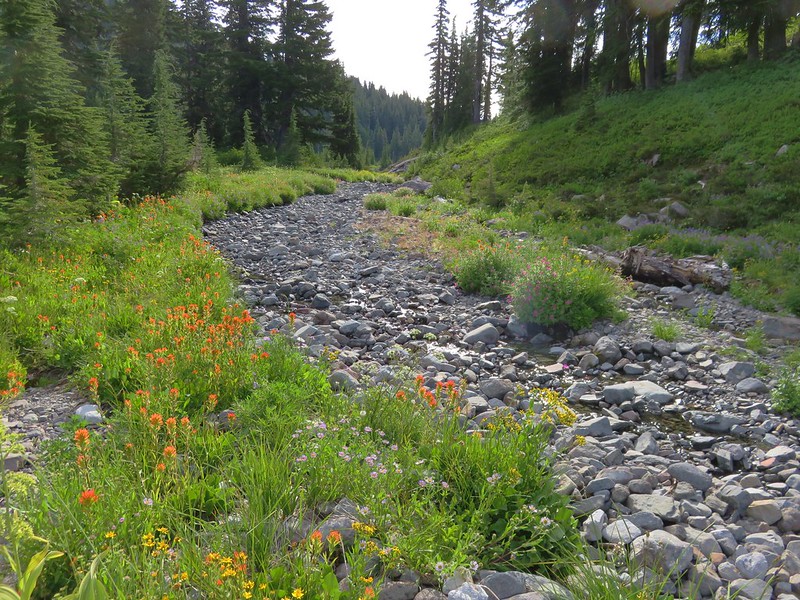
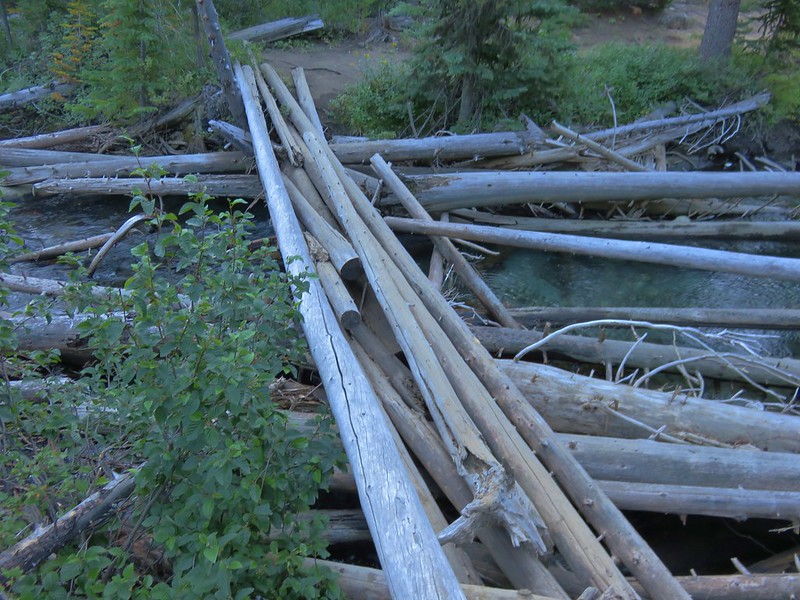
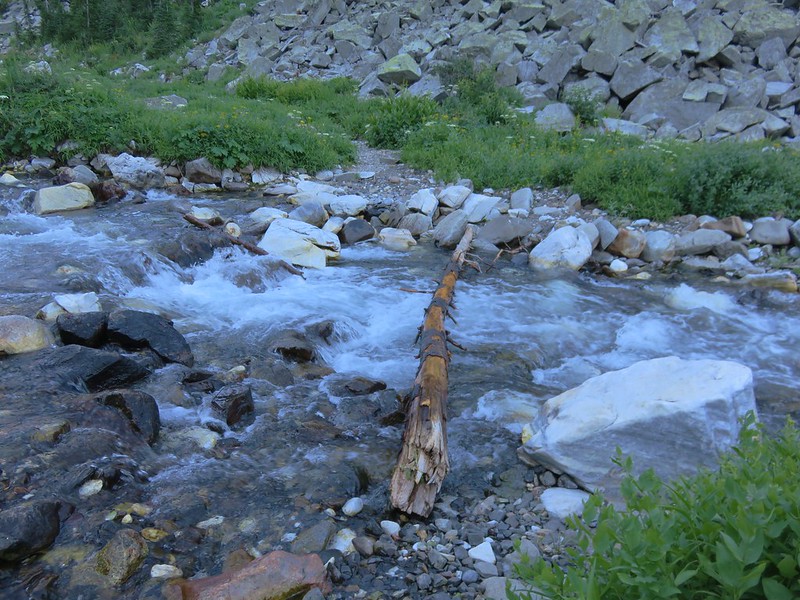
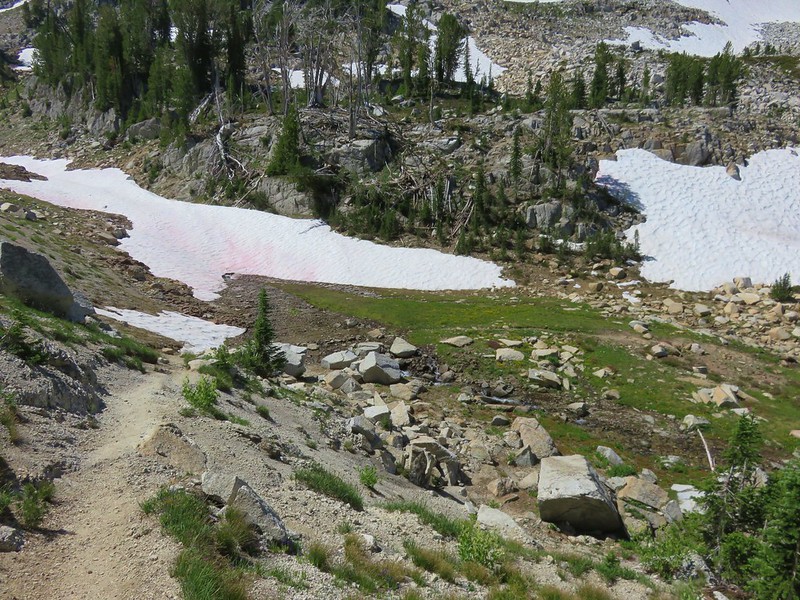
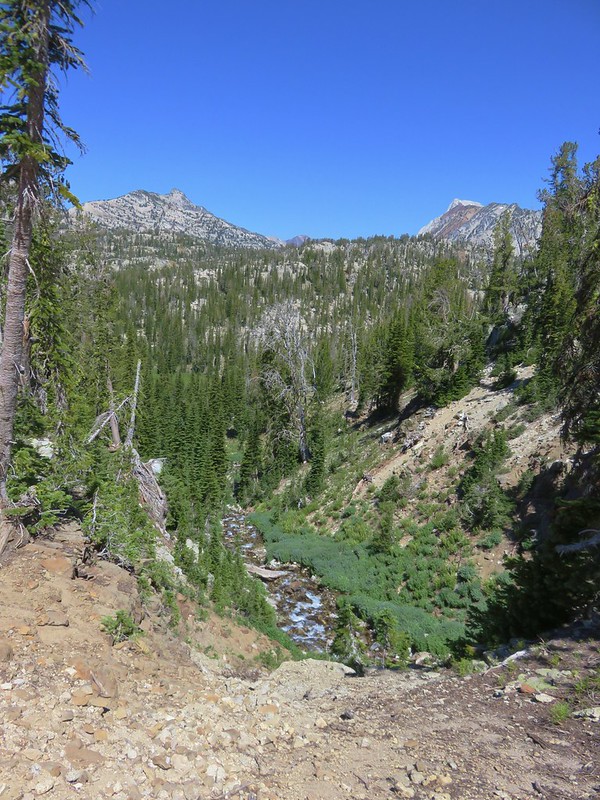
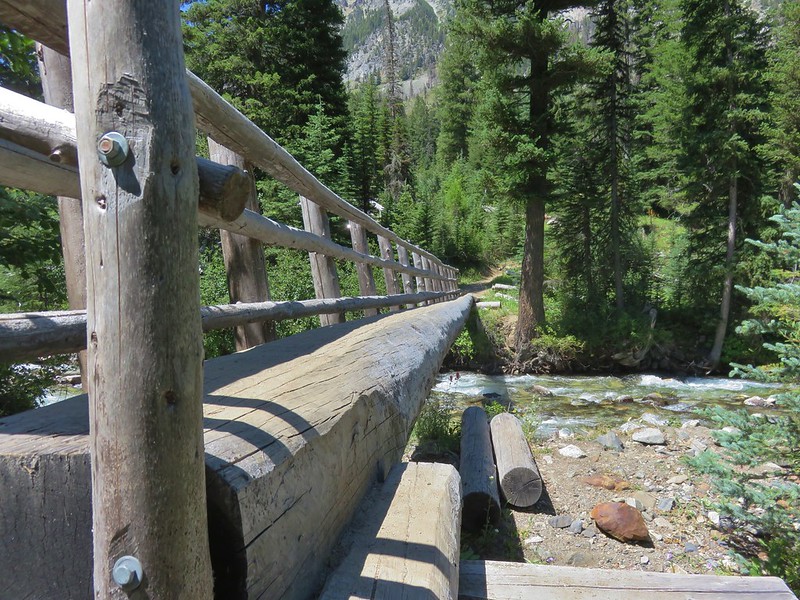
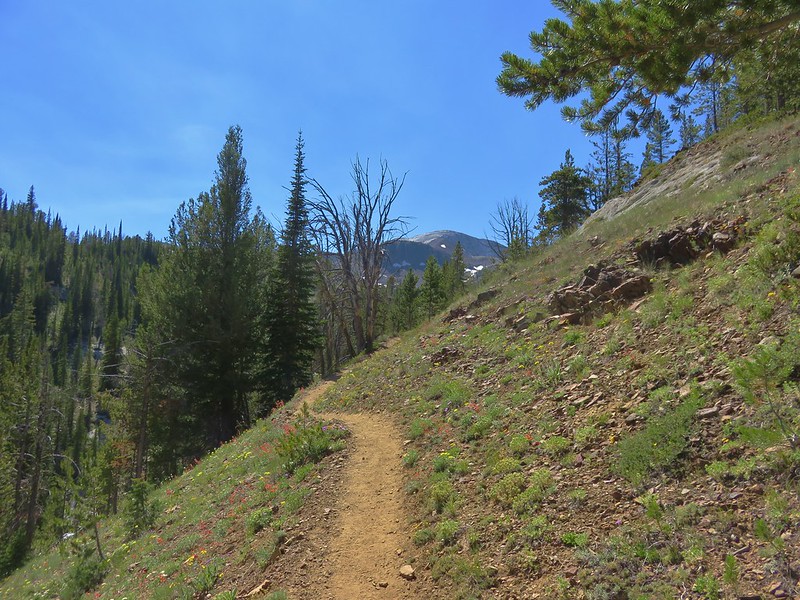
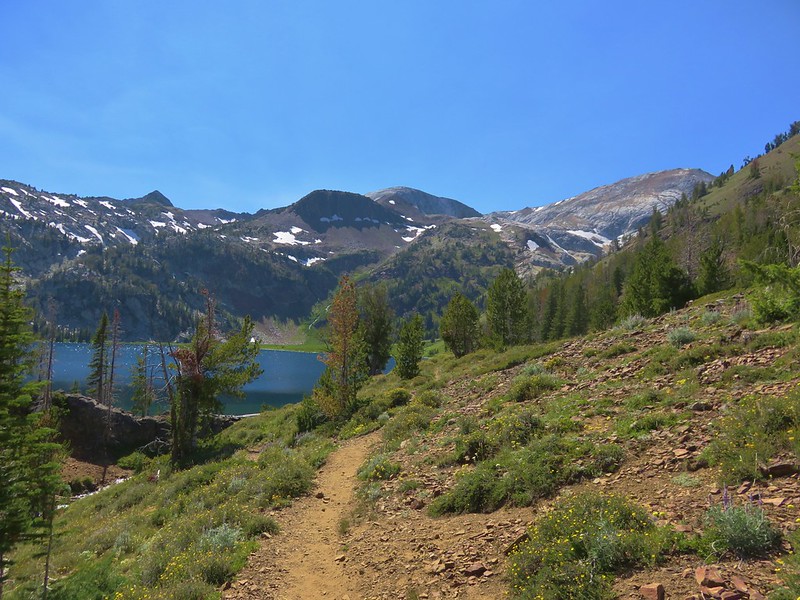
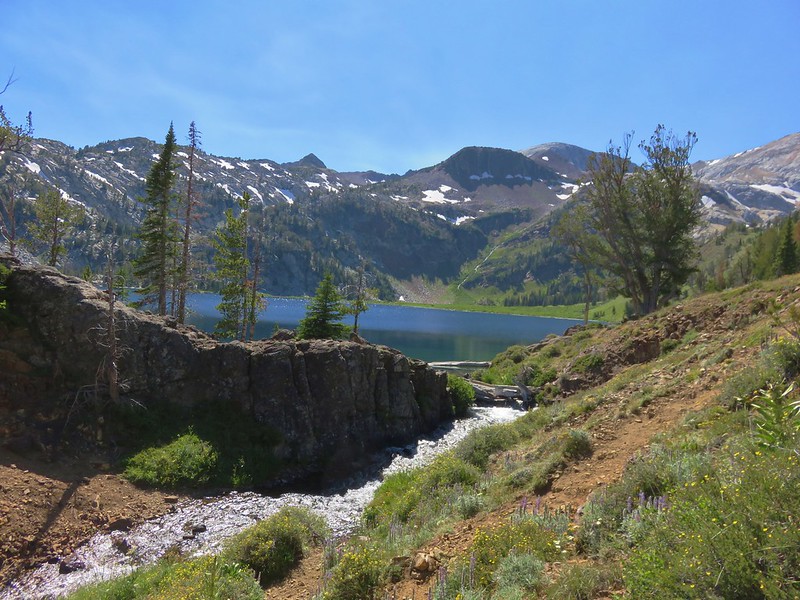
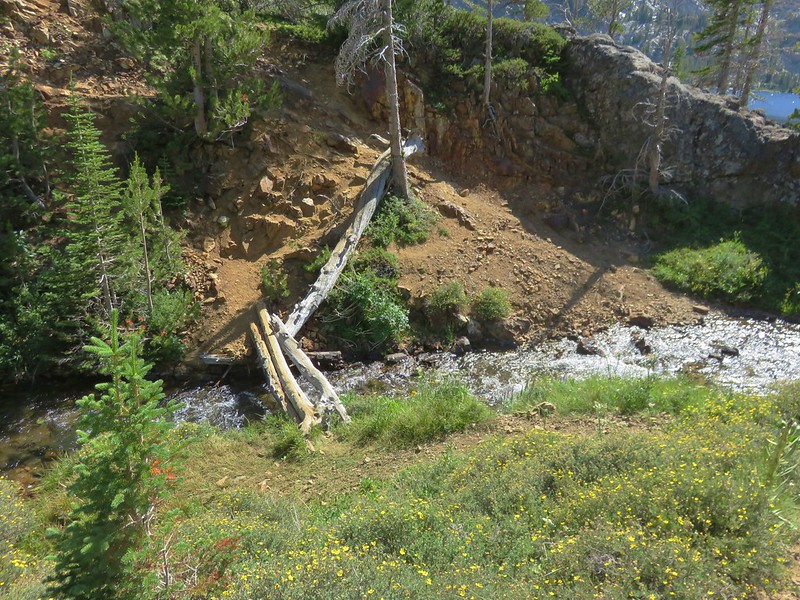
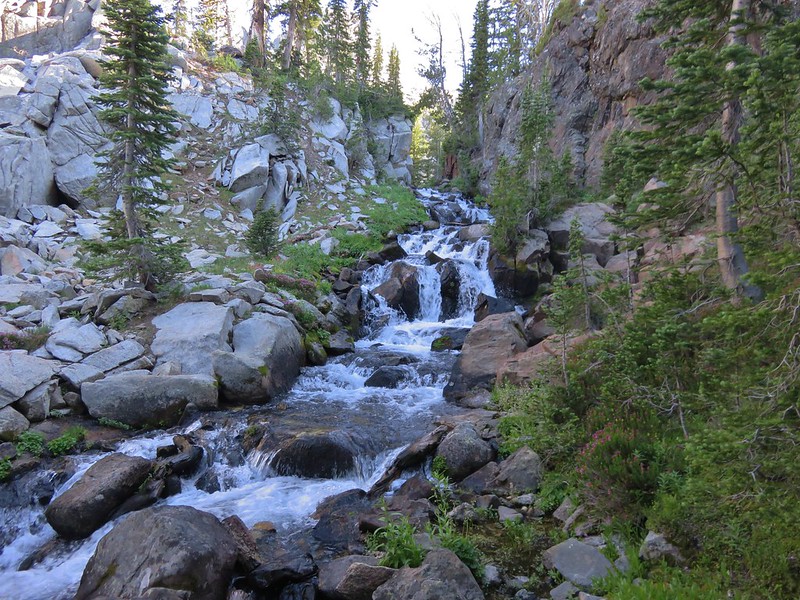
One of the other differences between this approach and the other trails leading to Jefferson Park is the presence of a sometimes tricky creek crossing. The bridge-less crossing of the glacier fed Russell Creek can be dangerous during high water flow. It was a mostly dry crossing on this morning though.
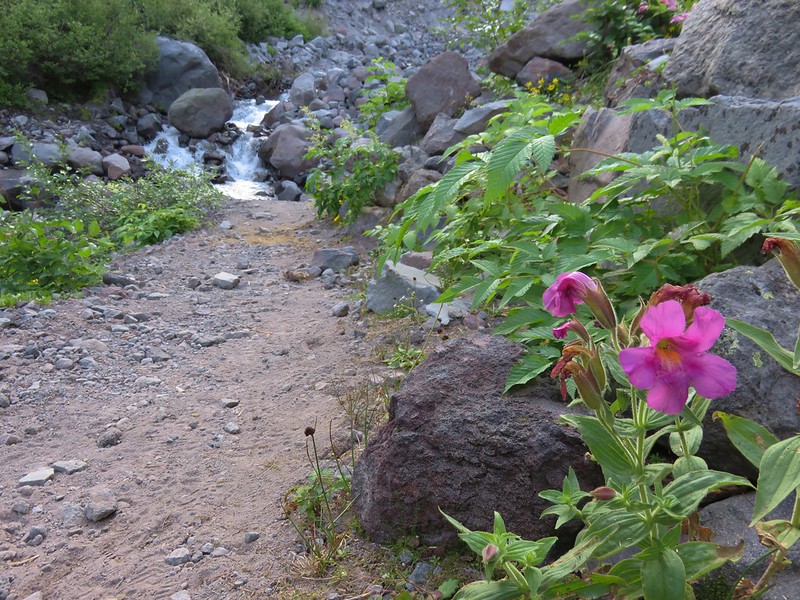
Russell Creek crossing

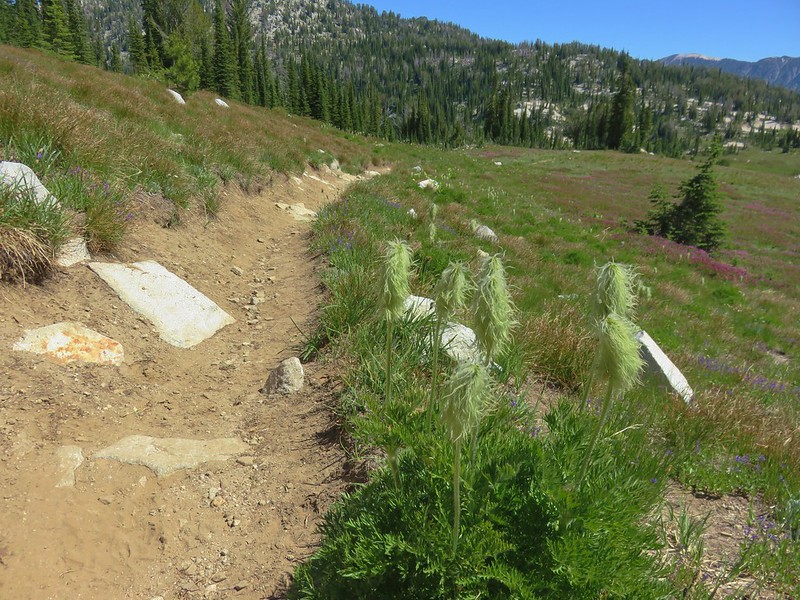
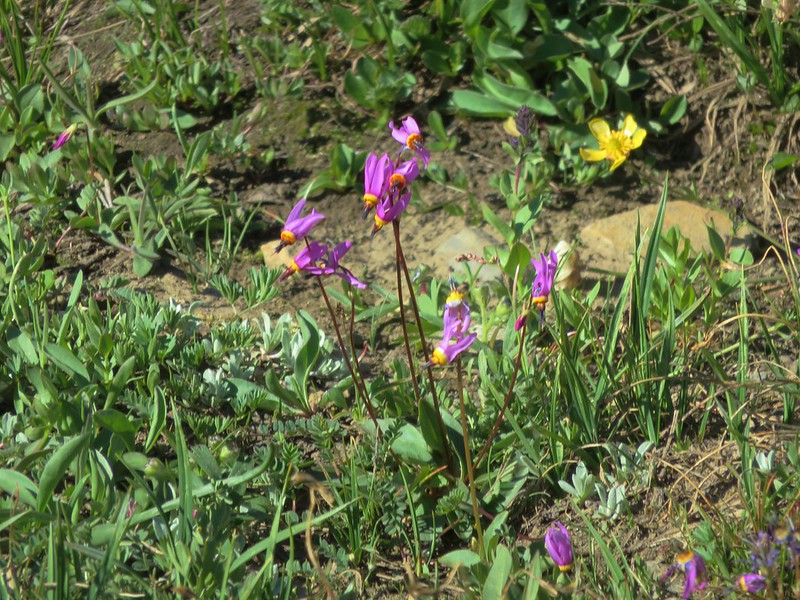
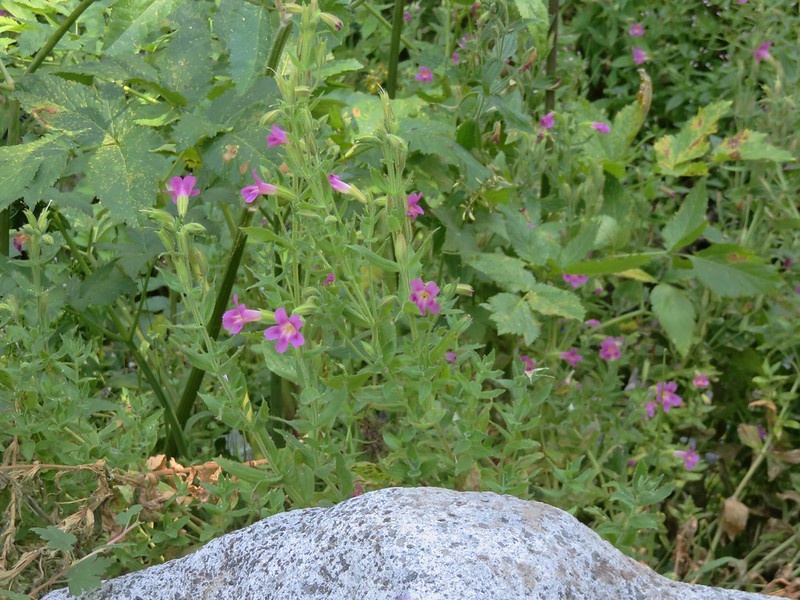
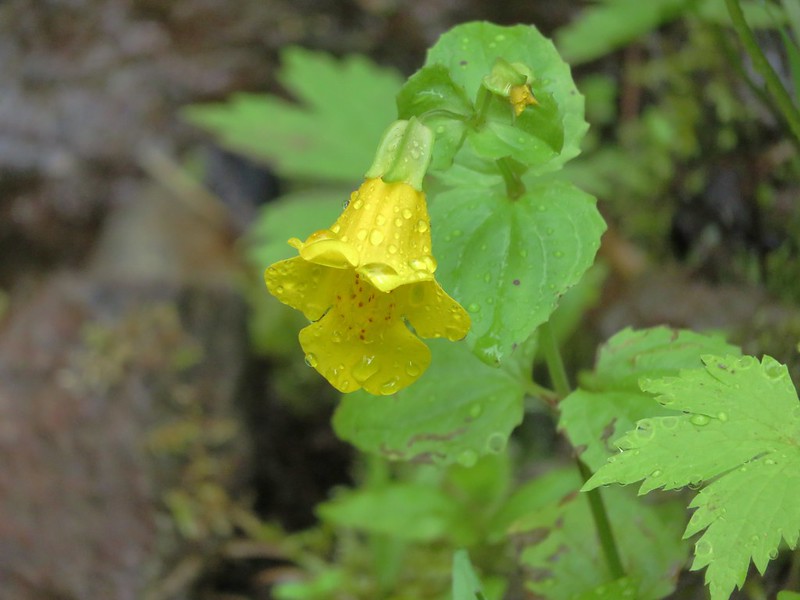
Monkeyflower

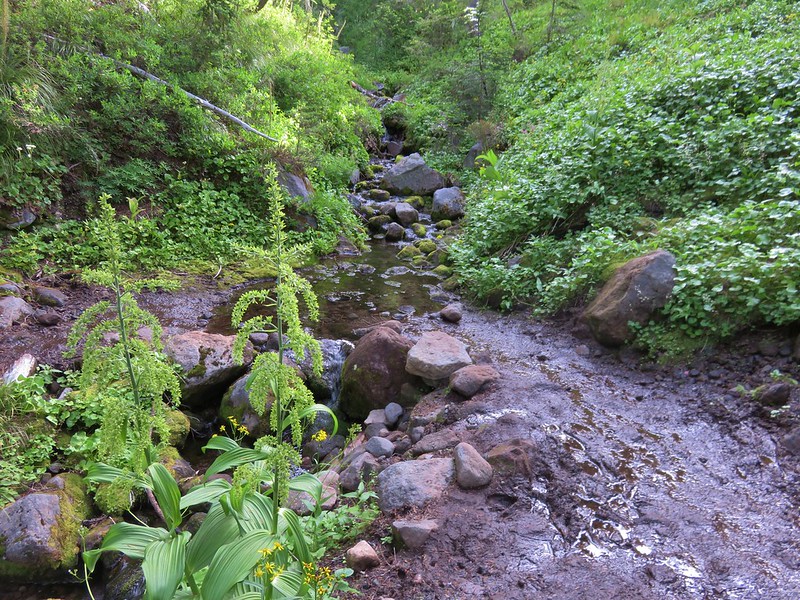
Russell Creek crossing

Our plan was to recross the stream before too much additional water was added to the flow as the temperatures rose during the day. A few smaller creek crossings brought us to the familiar junction with the Whitewater Creek Trail after a total of 3.2 miles on the PCT.
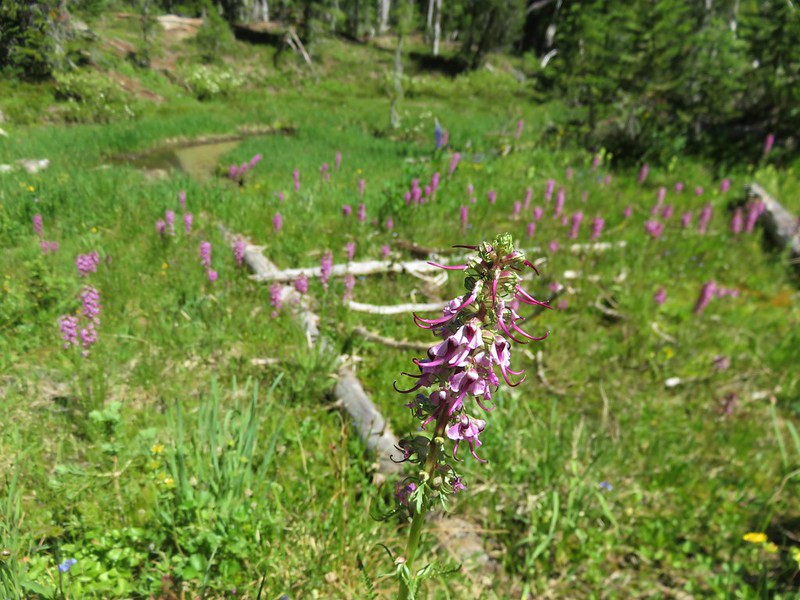
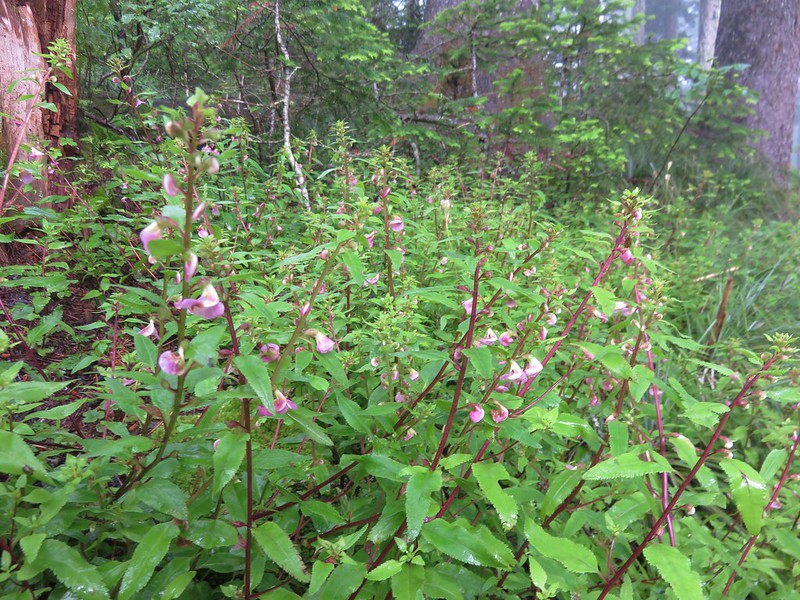
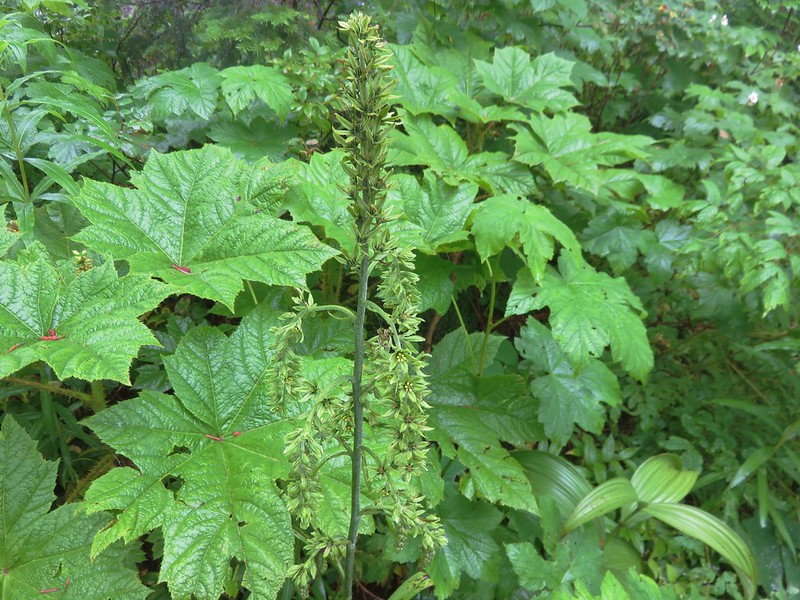
False hellbore

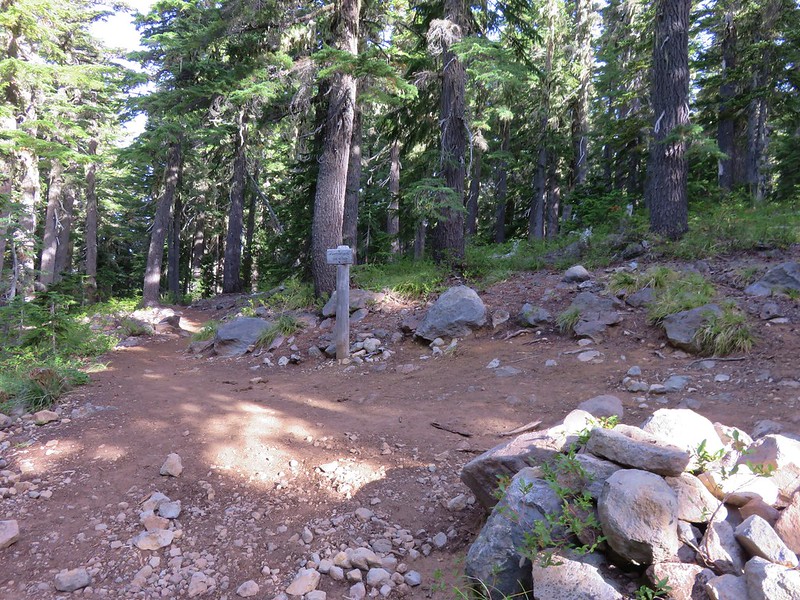
Junction with the Whitewater Creek Trail

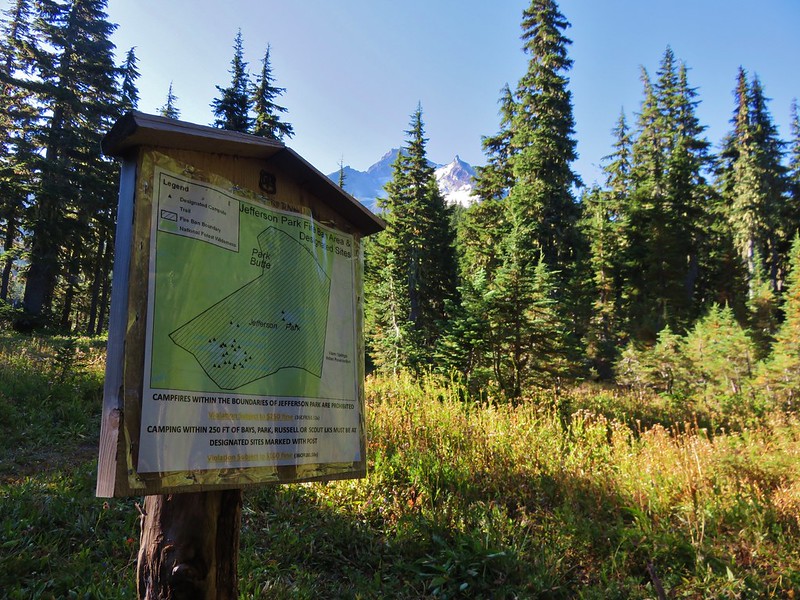
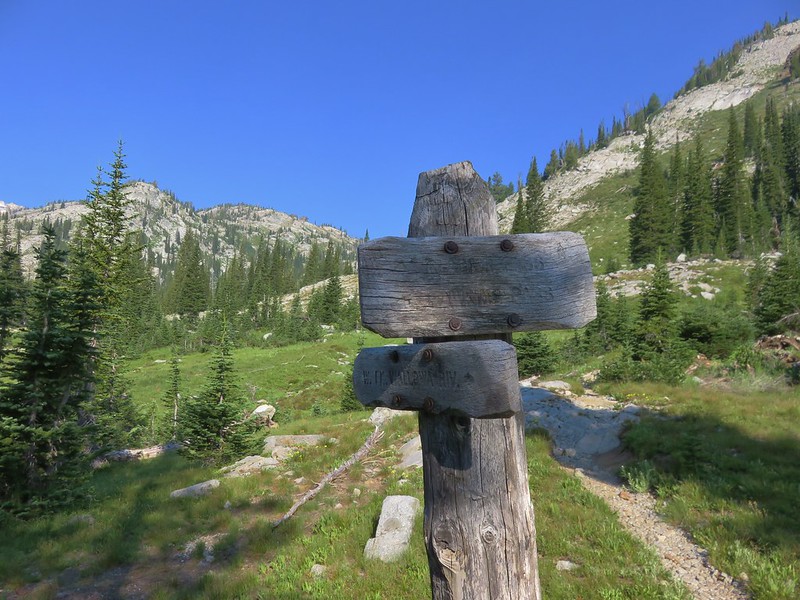
We had come up the Whitewater Trail on our previous visit on 8/8/2015 and were anxious to compare the scenery given how dry the prior year had been. It had looked more like Fall than Mid-Summer on that visit but this year had seen more snow so we were expecting more water, more green, and more flowers. The difference was already noticeable when we arrived at the informational sign for Jefferson Park.

8/8/2015
Entering the Jefferson Park area

8/13/2016
Mt. Jefferson

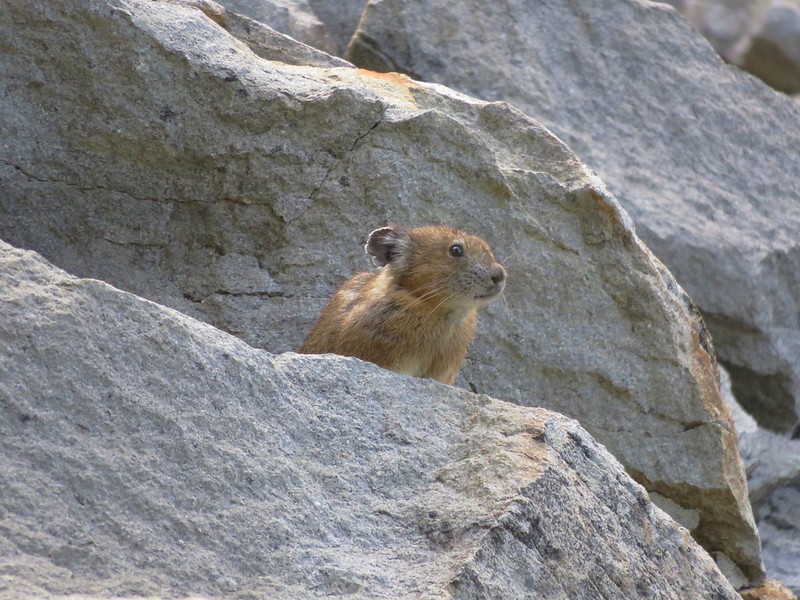
Shortly after passing the sign the trail passes through a small rock field where we had seen a pika the year before. One greeted us this year in almost in the exact same spot.
Pika

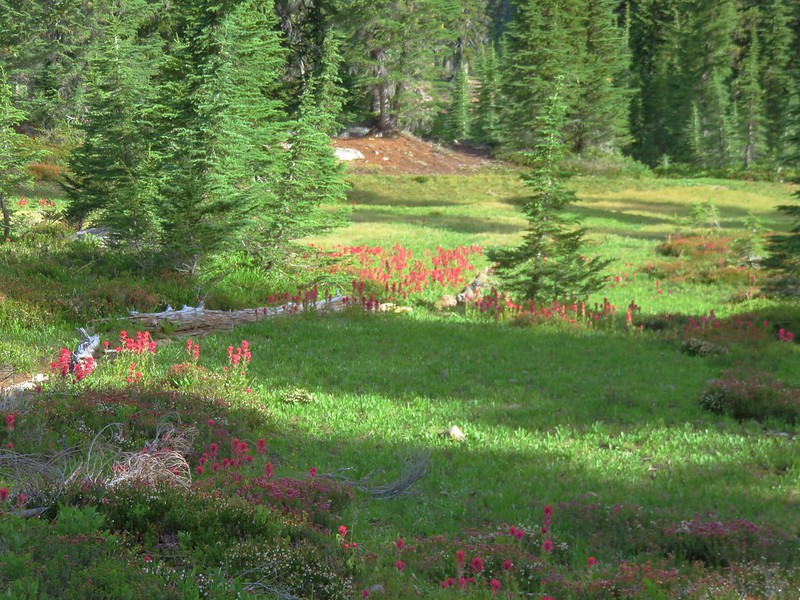
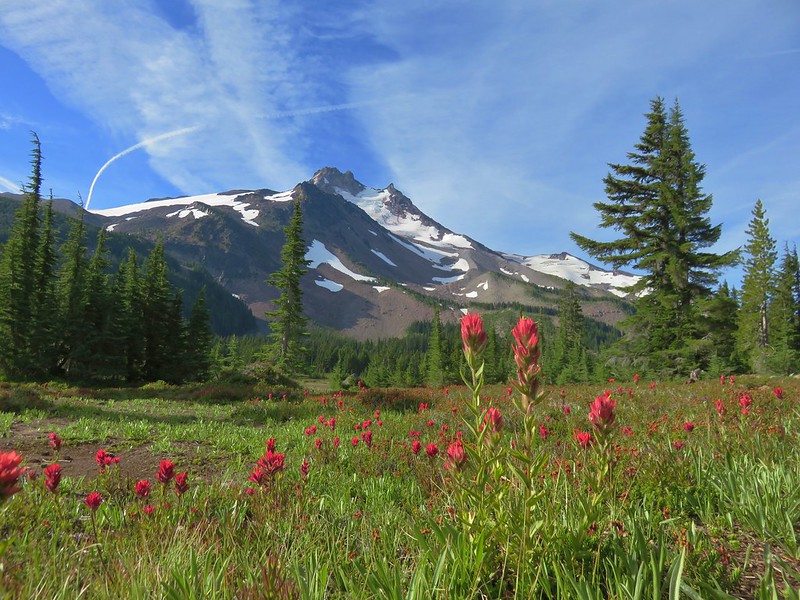
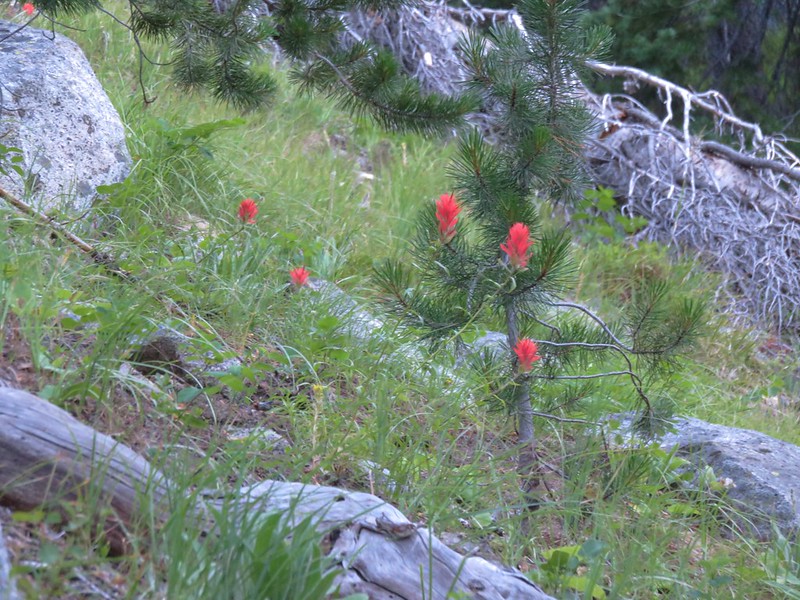
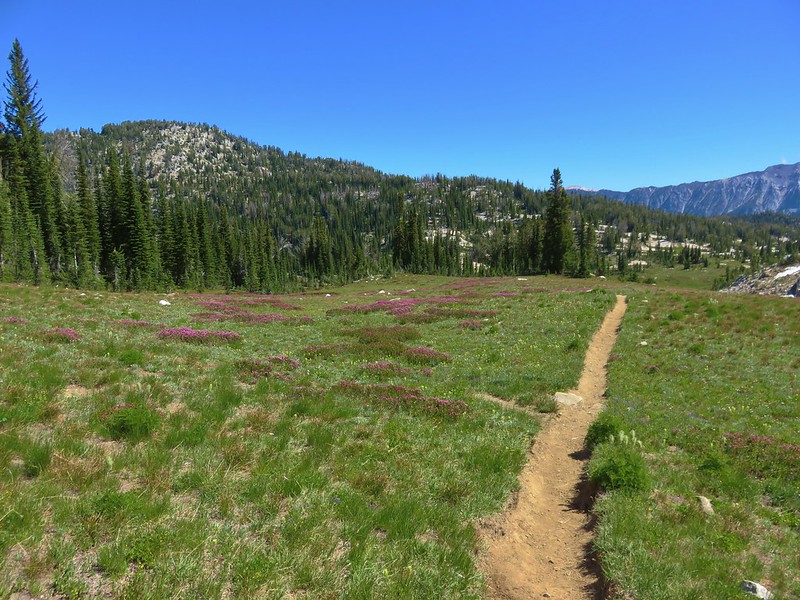
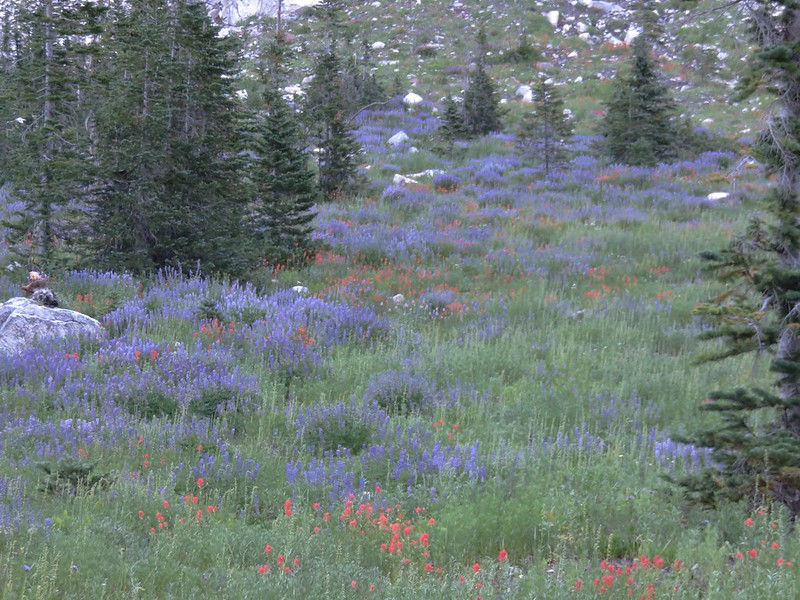
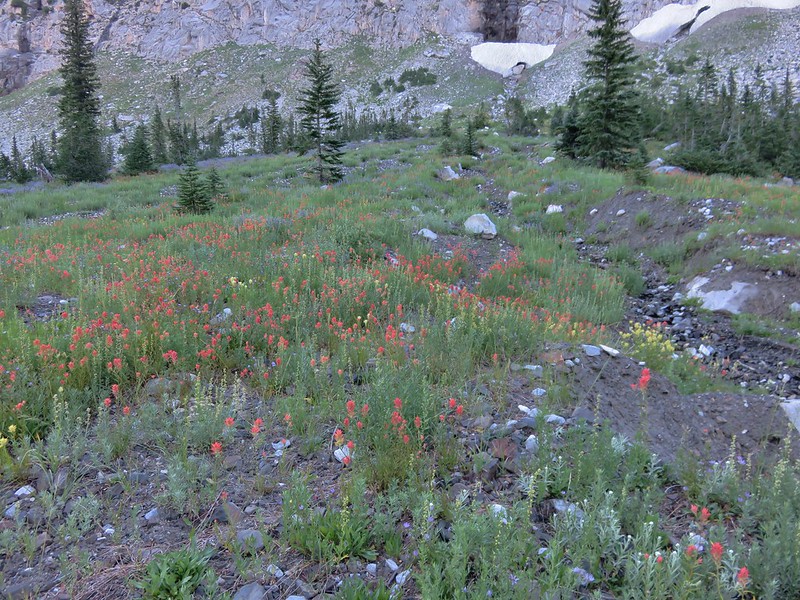
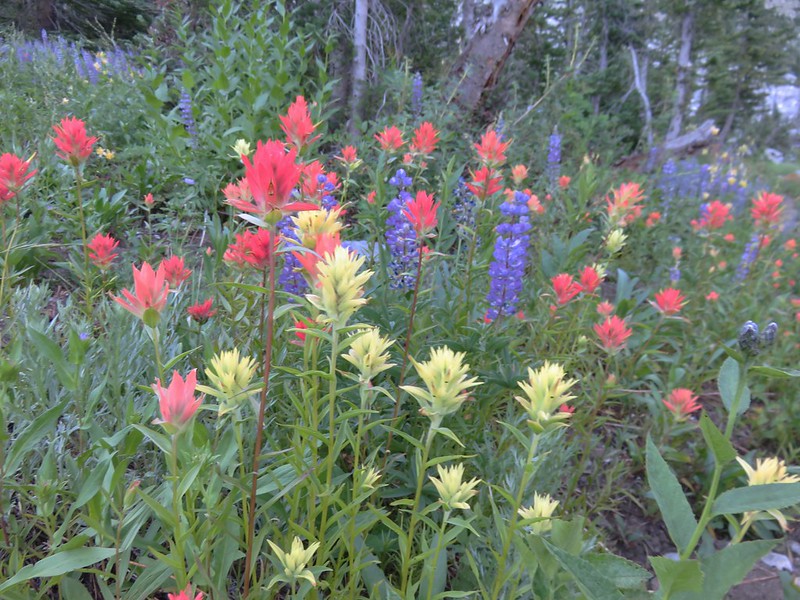
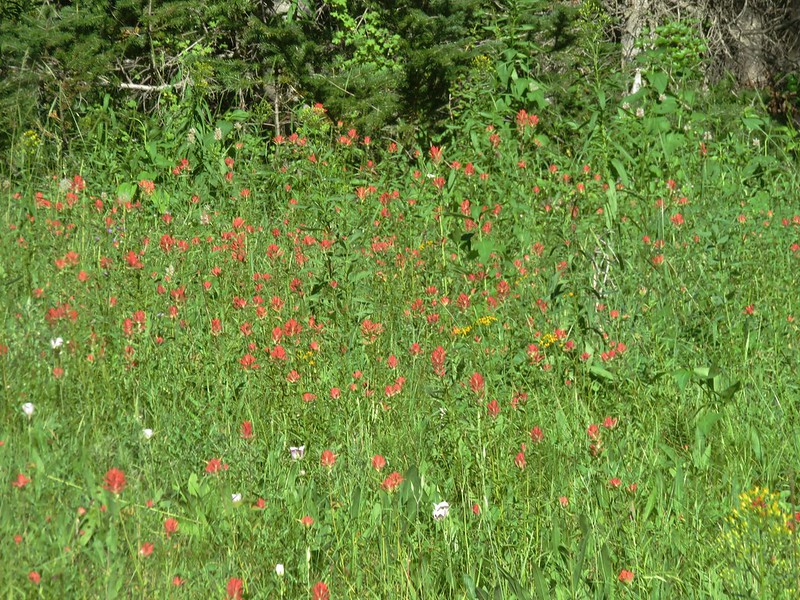
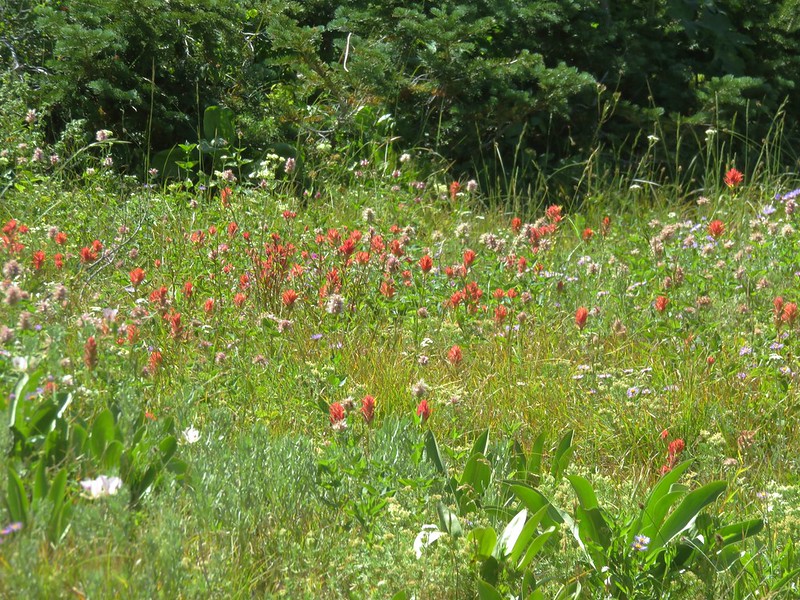
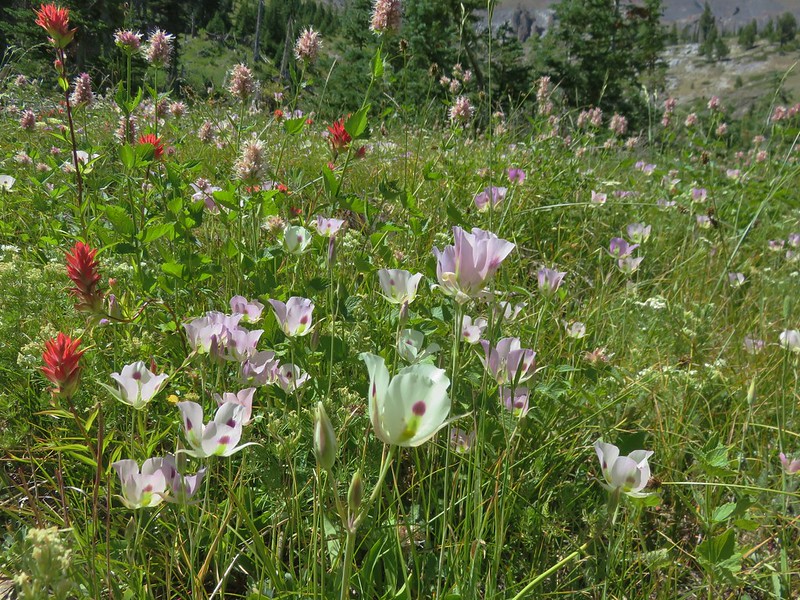
A nice display of paintbrush greeted us as we entered Jefferson Park.
Paintbrush in Jefferson Park

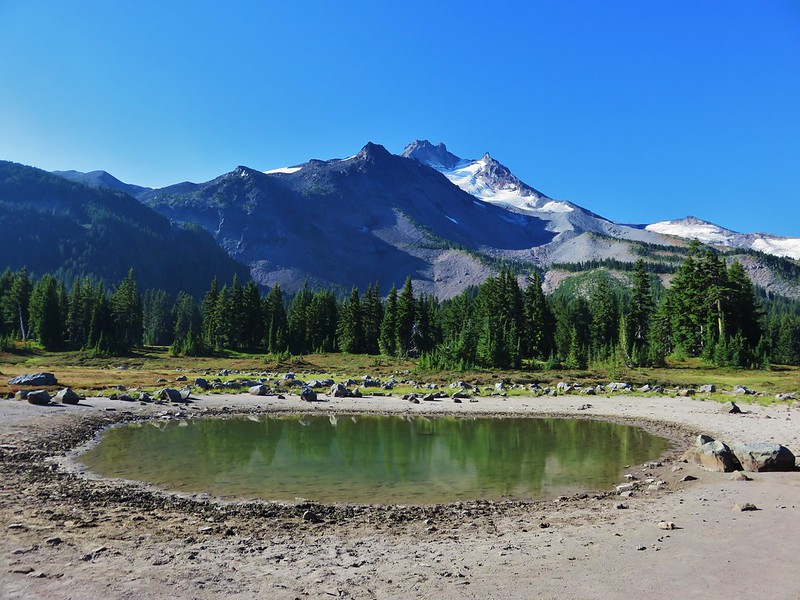
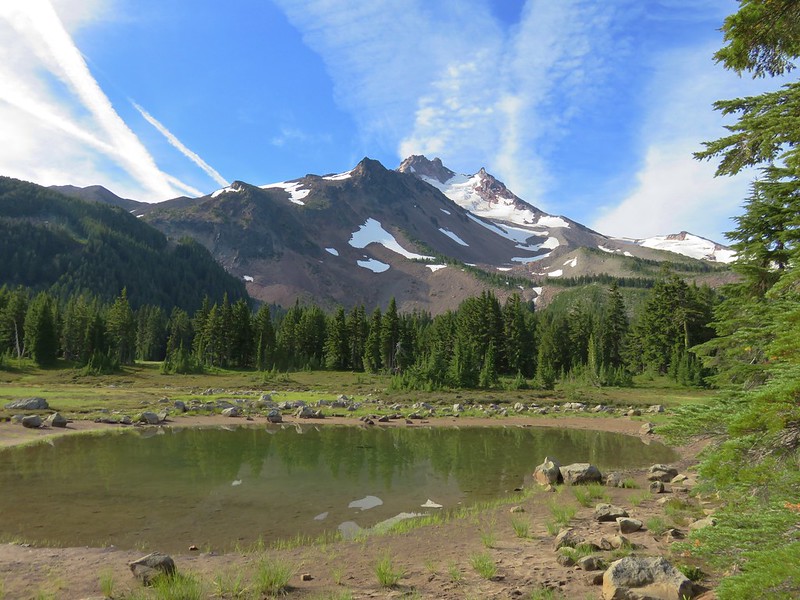
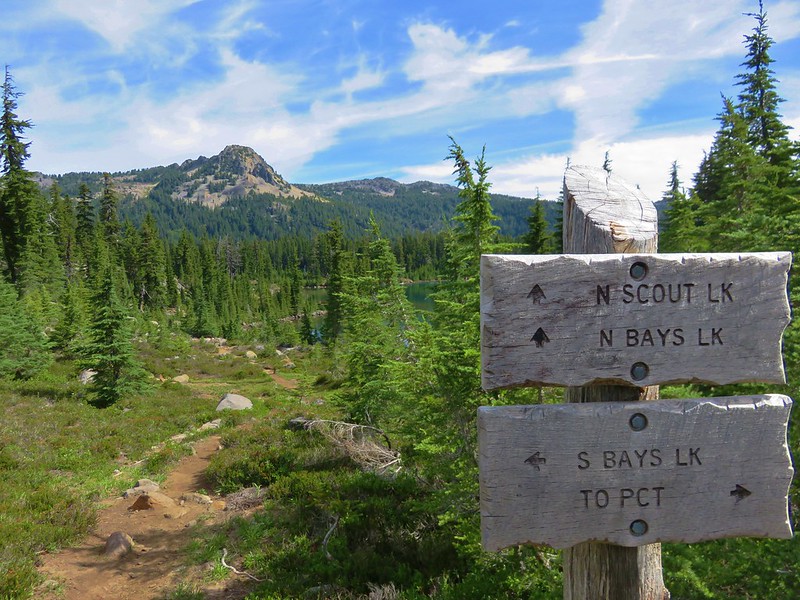
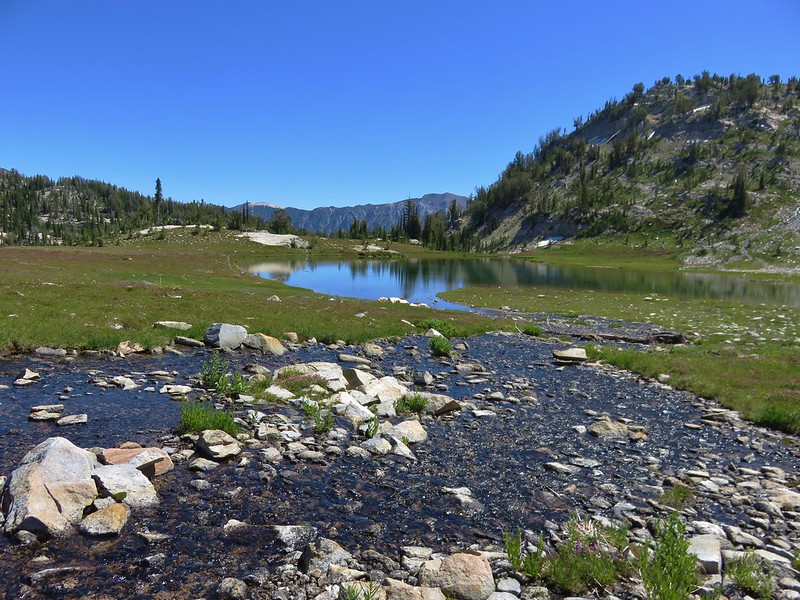
We stuck to the Pacific Crest Trail ignoring the signed trails to Bays and Scout Lakes as we headed for Russell Lake at the far end of Jefferson Park. Along the way we passed a small pond that gave another good example of the difference a year can make.

2015
Pond in Jefferson Park

2016
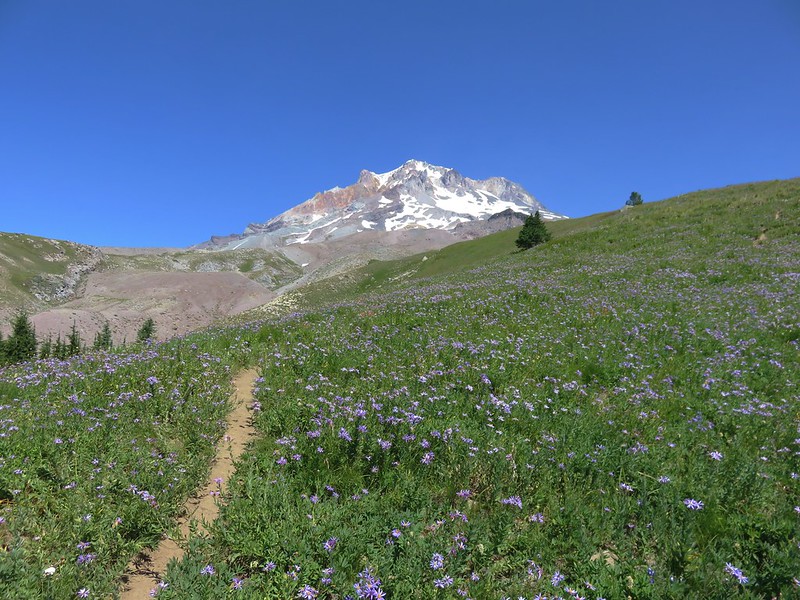
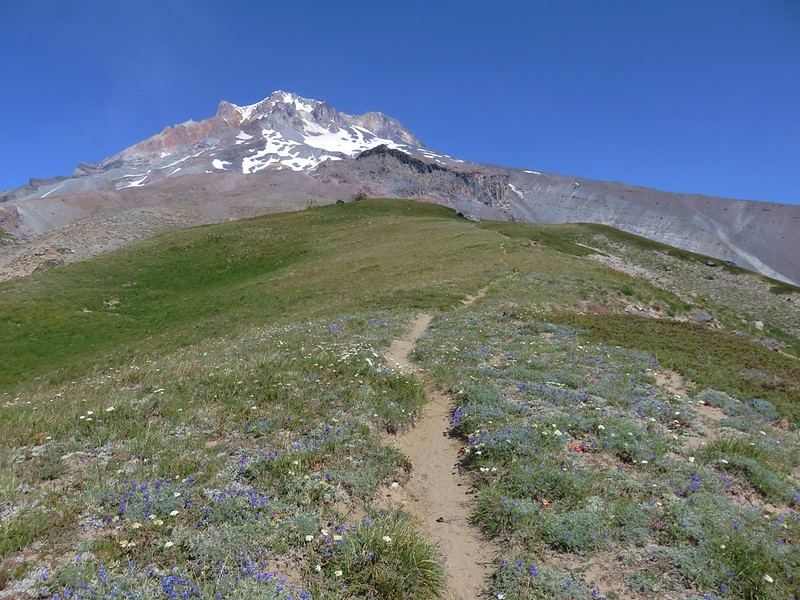
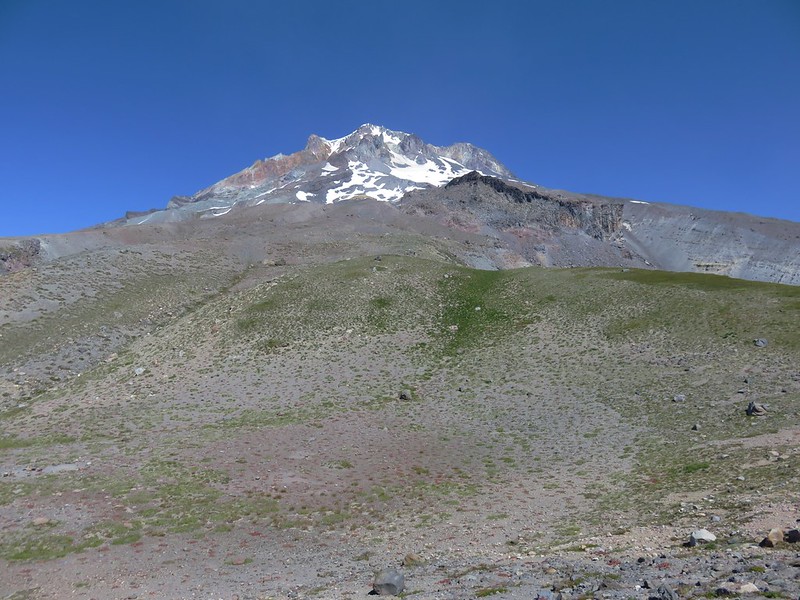
Mt. Jefferson from Jefferson Park

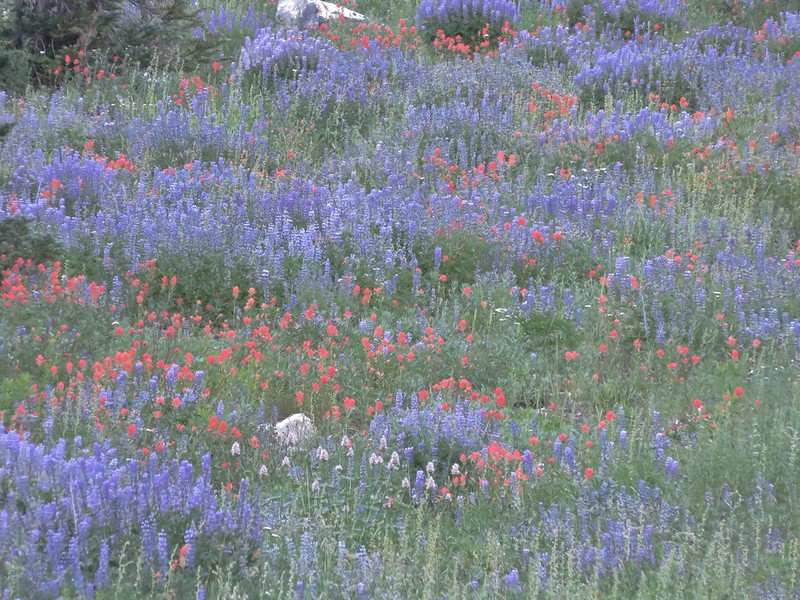
Patches of paintbrush dotted the meadows along the way providing beautiful scenes.
Mt. Jefferson from Jefferson Park

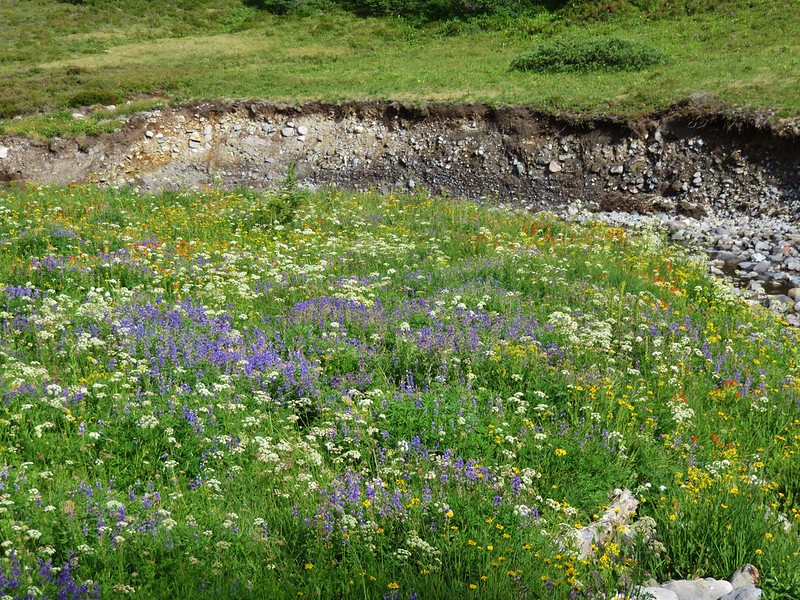
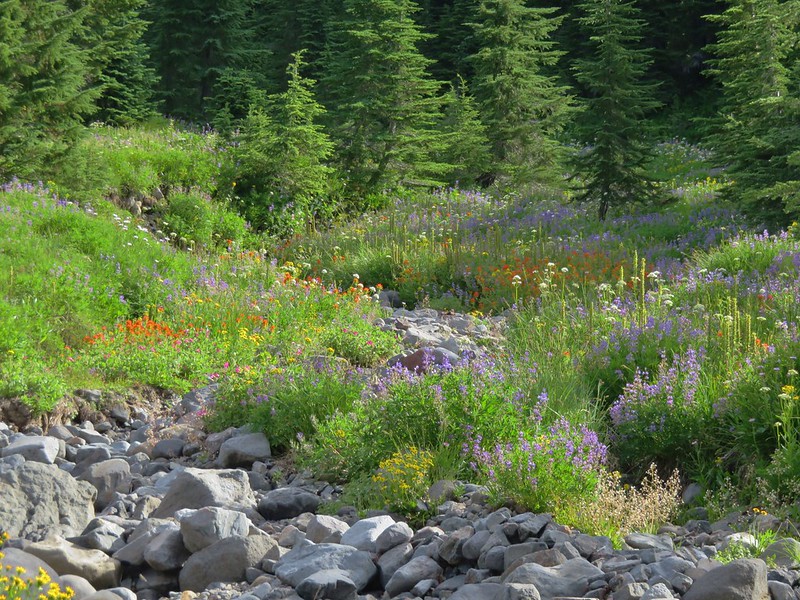
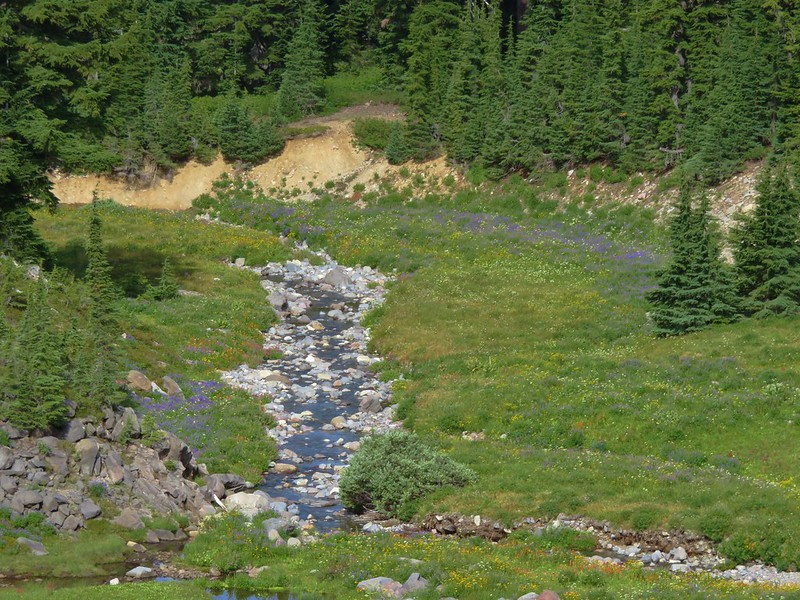
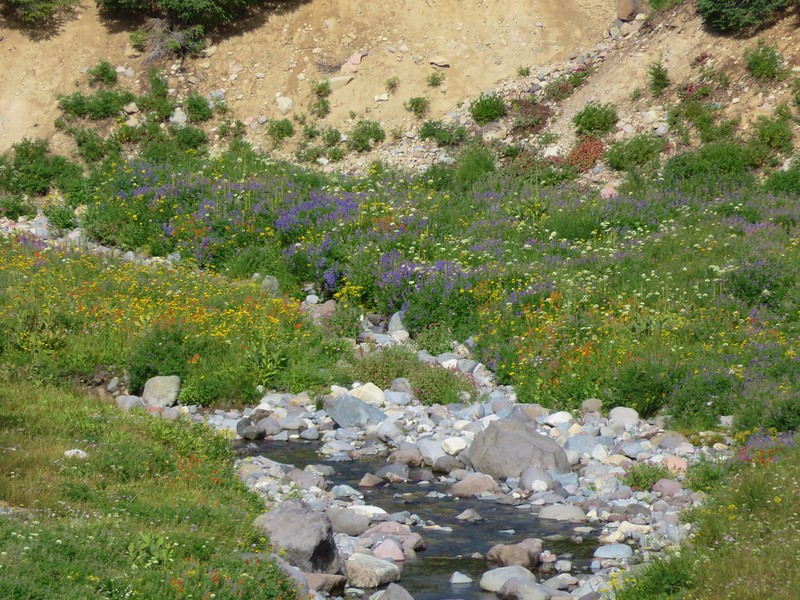
We followed the PCT to the South Breitenbush River which was lined with wildflowers.
Wildflowers along the South Brietenbush River

Wildflowers along the South Brietenbush River

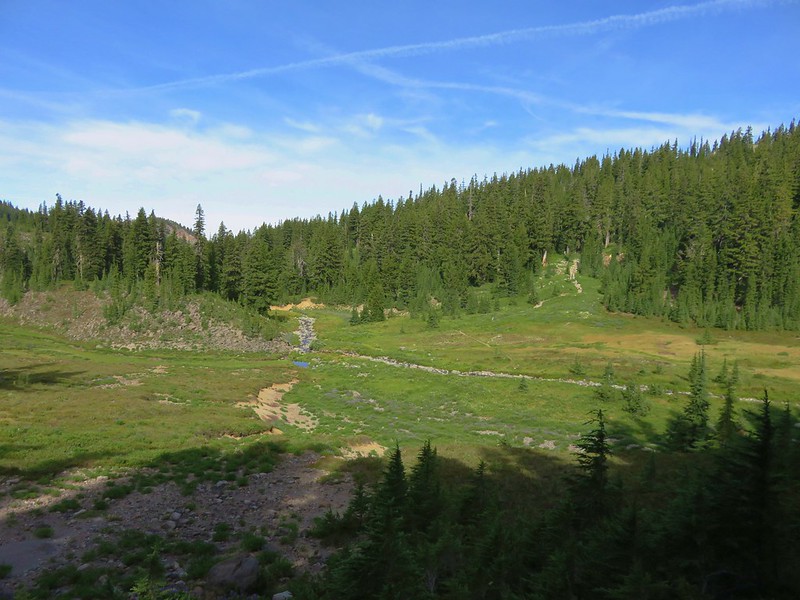
South Brietenbush River

Wildflowers along the South Brietenbush River

Wildflowers along the South Brietenbush River

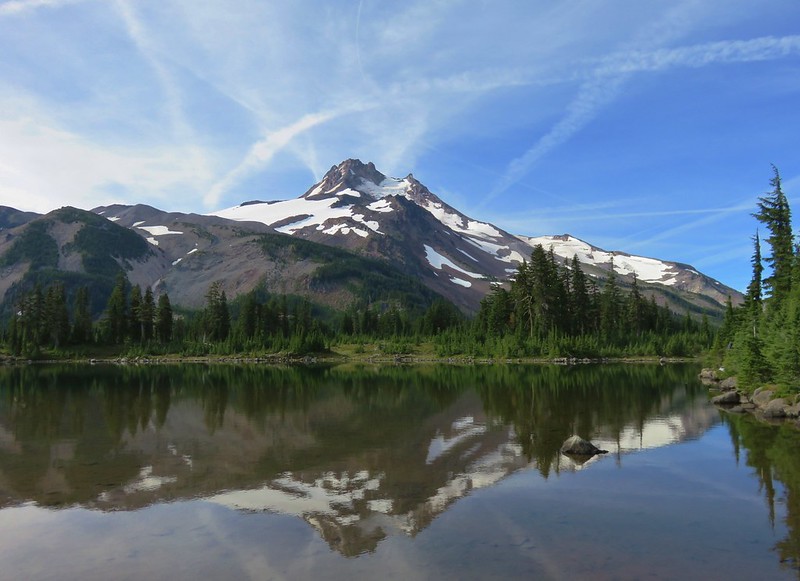
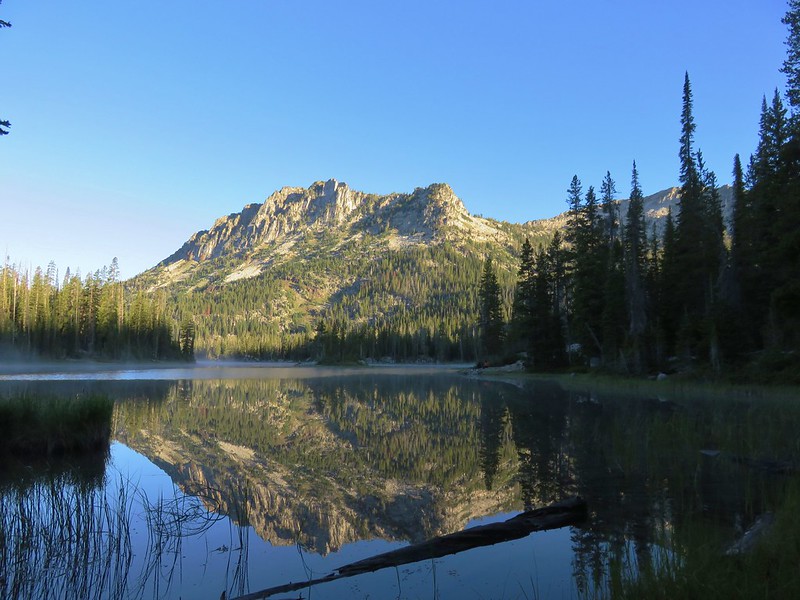
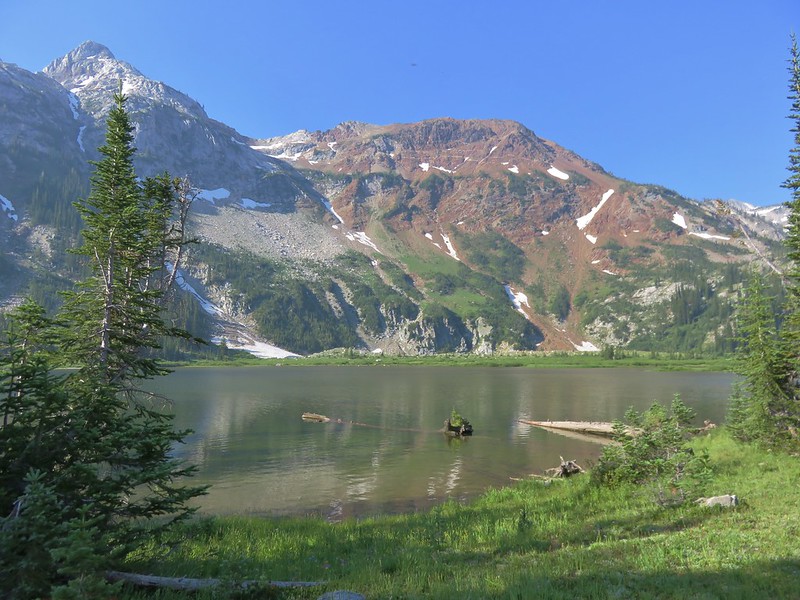
We turned off the PCT and crossed the river to Russell Lake where Mt. Jefferson was reflecting nicely.
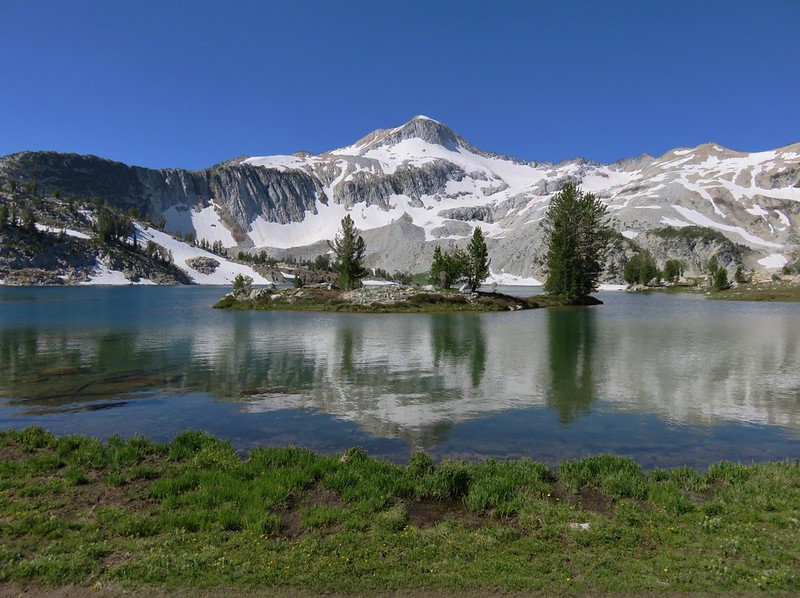
Mt. Jefferson from Russell Lake

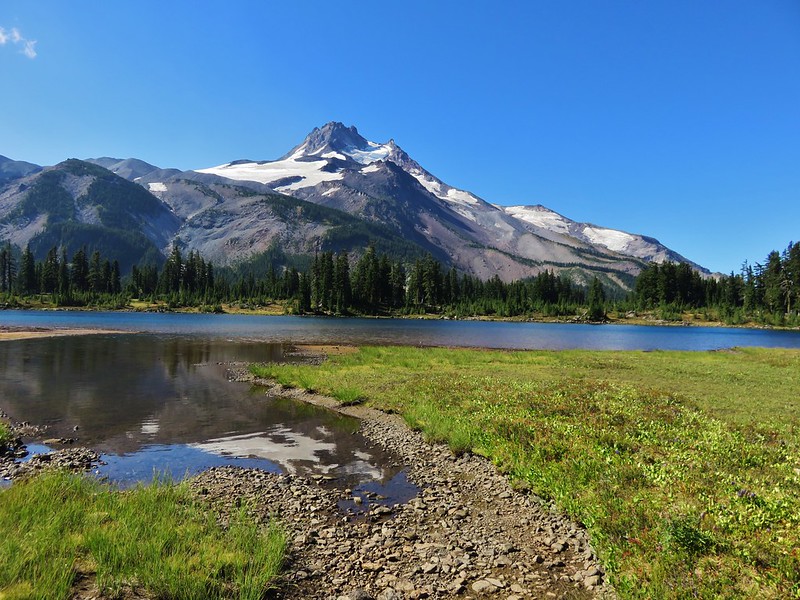
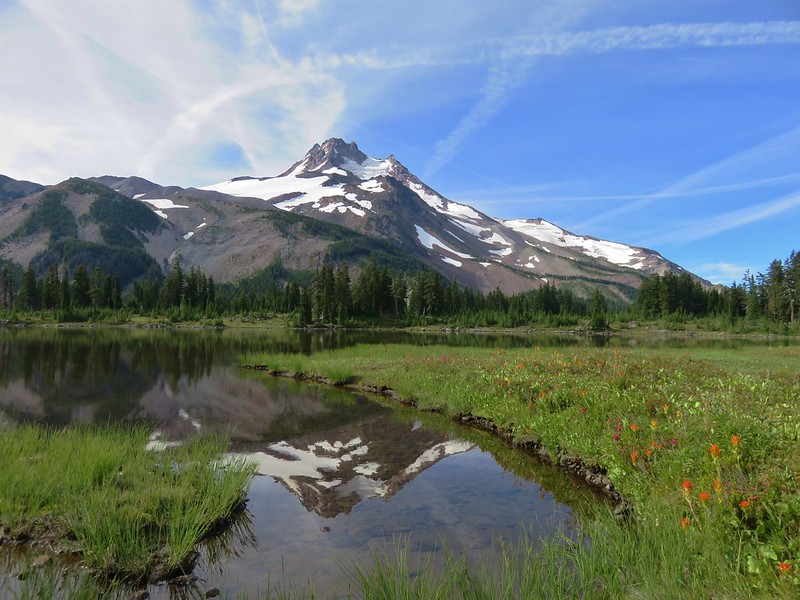
Once again the difference in water level and flowers from the prior year was obvious.

2015
Mt. Jefferson from Russell Lake

2016
Mt. Jefferson from Russell Lake

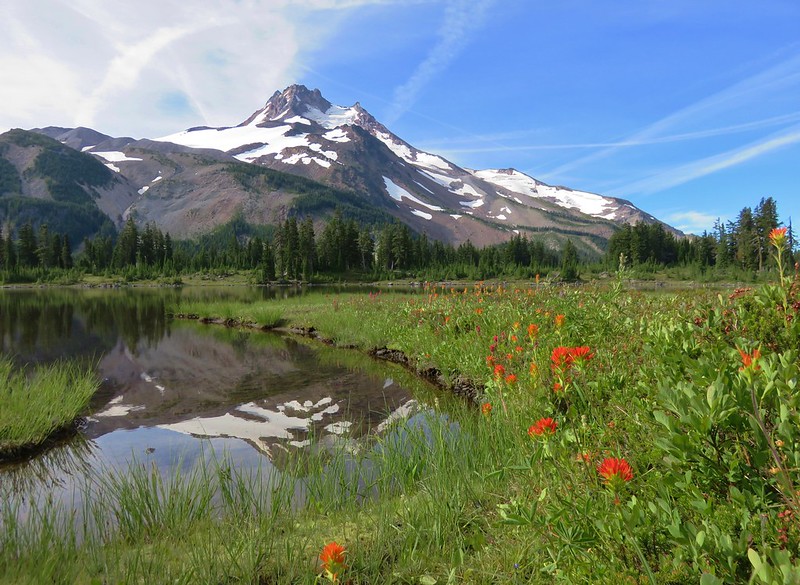
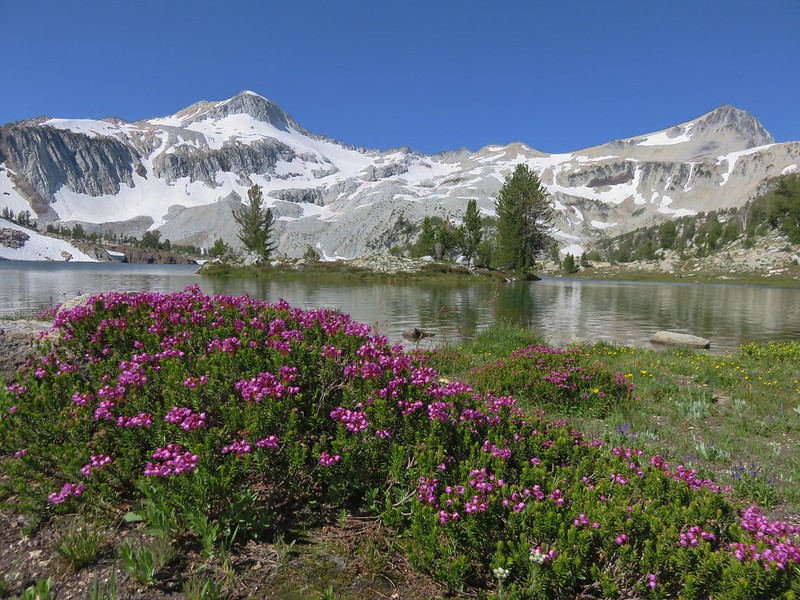
Patches of red paintbrush lined the lake as we made our way around its shore.
Mt. Jeffferson from Russell Lake

Paintbrush along Russell Lake

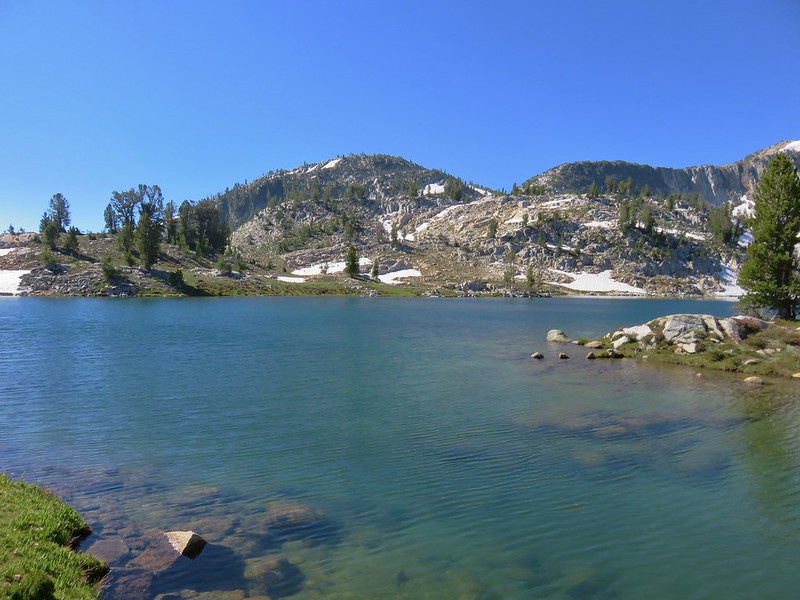
Park Butte from Russell Lake

After circling Russell Lake we returned to the Pacific Crest Trail and then turned down the South Breitenbush Trail.
Junction with the South Breitenbush Trail

We followed this trail to a meadow overlooking the river.
South Breitenbush River

Wildflowers along the South Breitenbush River

Wildflowers along the South Breitenbush River

At a rock cairn in the meadow we turned left and headed up a small hill to Park Lake.
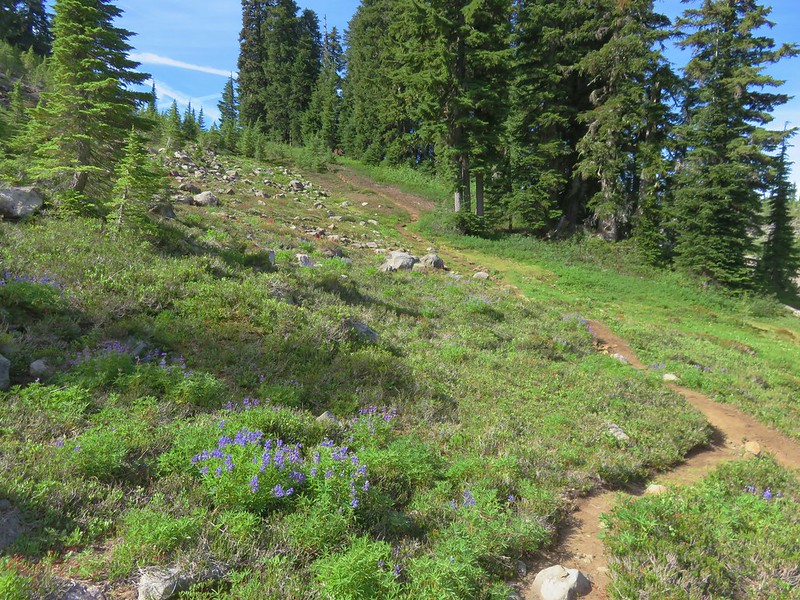
Trail to Park Lake

Mt. Jefferson from Park Lake

From Park Lake we followed a trail along a dry creek bed up to Rock Lake.
Mt. Jefferson from Rock Lake

After passing by Rock Lake we crested another small hill and arrived at Bays Lake.
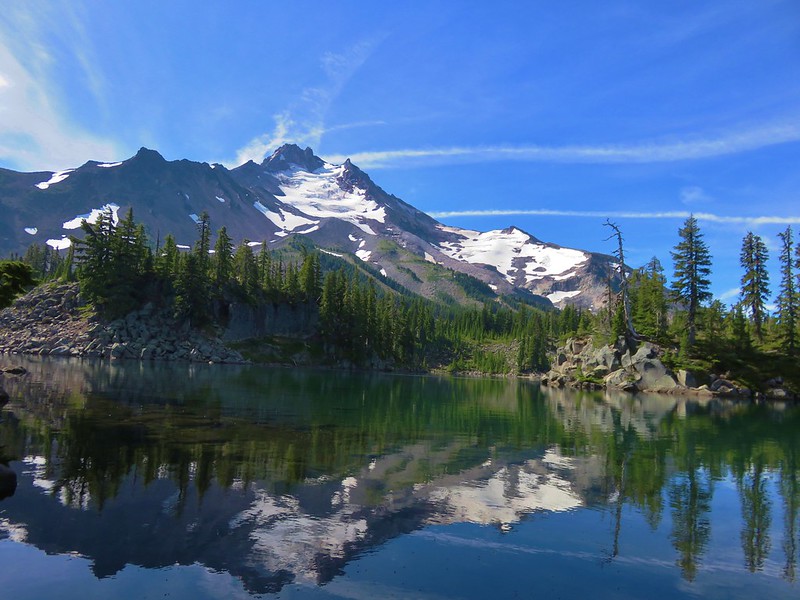
Mt. Jefferson from Bays Lake

We left Bays Lake after a short rest and headed toward Scout Lake passing a small unnamed lake along the way.
Mt. Jefferson from the lake between Bays and Scout Lakes

Park Butte and Scout Lake

Mt. Jefferson from Scout Lake

After visiting Scout Lake we returned to the PCT and headed out of Jefferson Park. We arrived back at the Russell Creek crossing at 11:15am and found that there hadn’t been much change in the water level yet.
Russell Creek Crossing

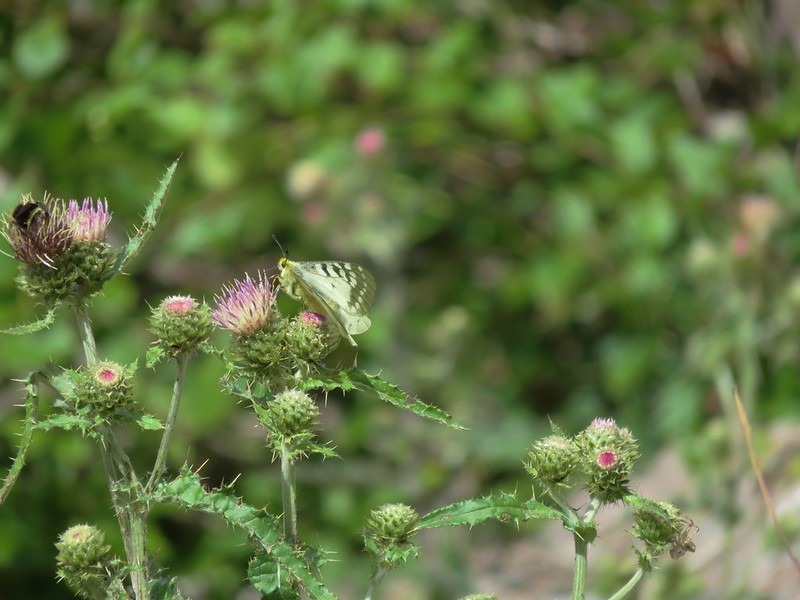
The butterflies were out now though.
Skipper

Fritillary butterfly on yarrow

Butterfly on thistle

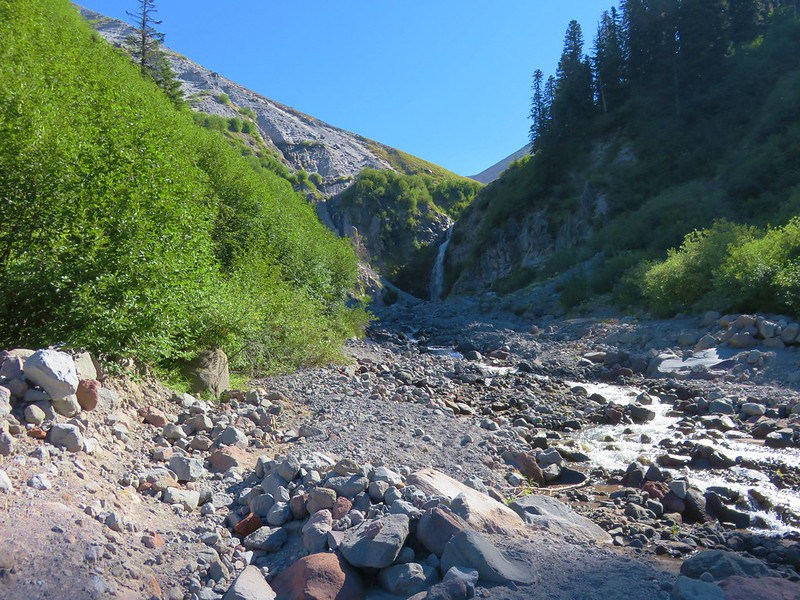
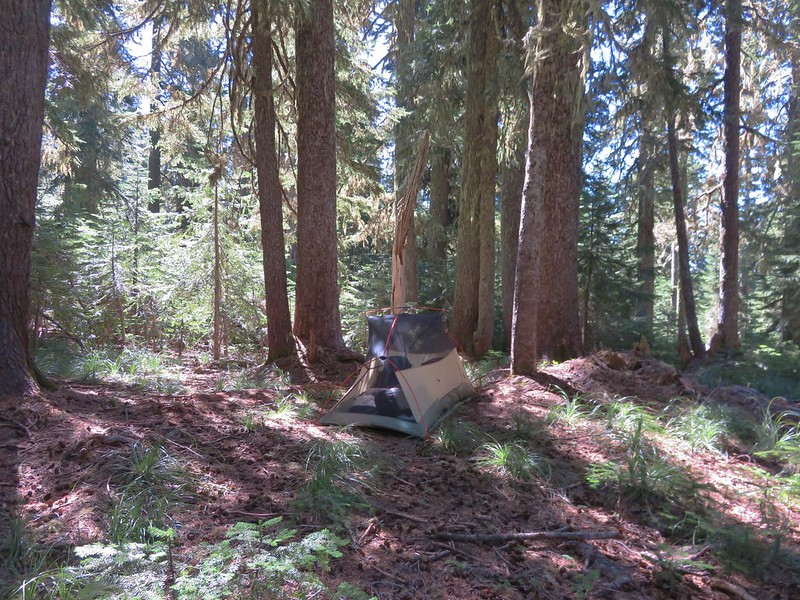
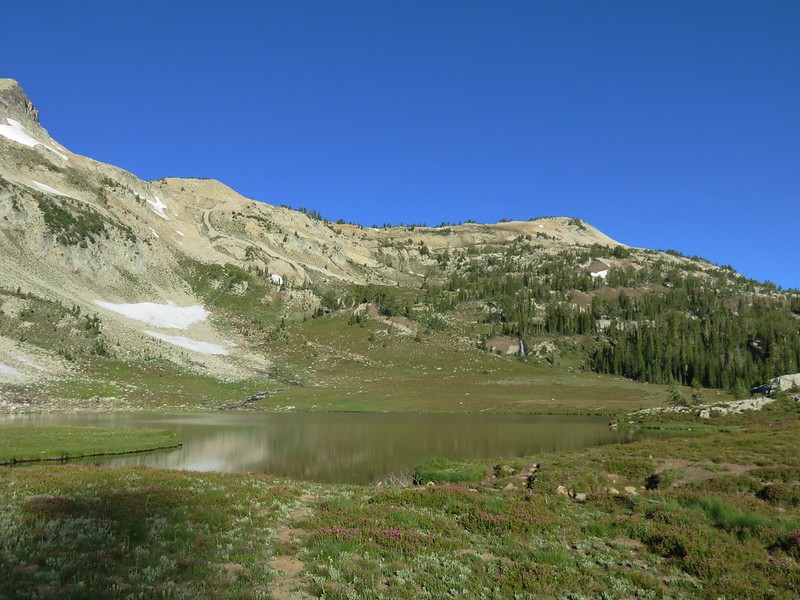
After recrossing the creek we began watching for a spot to leave the PCT in order to bushwack down to a view of Russell Creek Falls. This waterfall was on my radar based on a report by a fellow hiker and avid waterfall hunter. He had warned of a steep cliffy approach so we weren’t sure if we’d be successful or not. I had done some preliminary scouting using Google Maps and a topographic map to find what had looked like the most suitable ridge to head down. Just off the trail we found an old campsite and then plunged into the forest.
Bushwack to a view of Russell Creek Falls

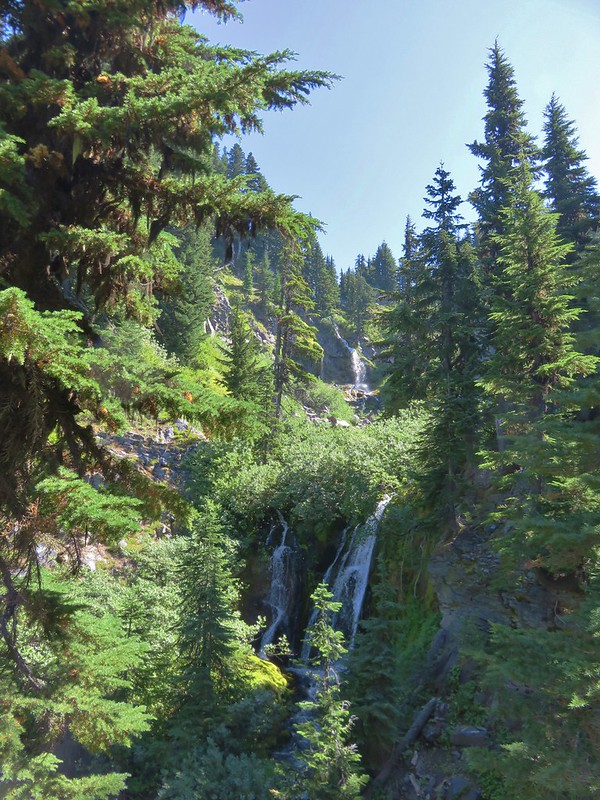
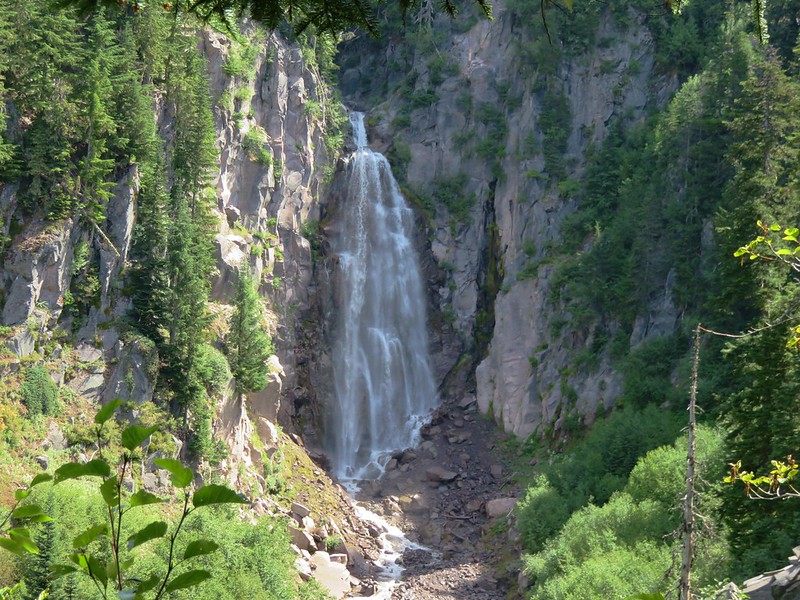
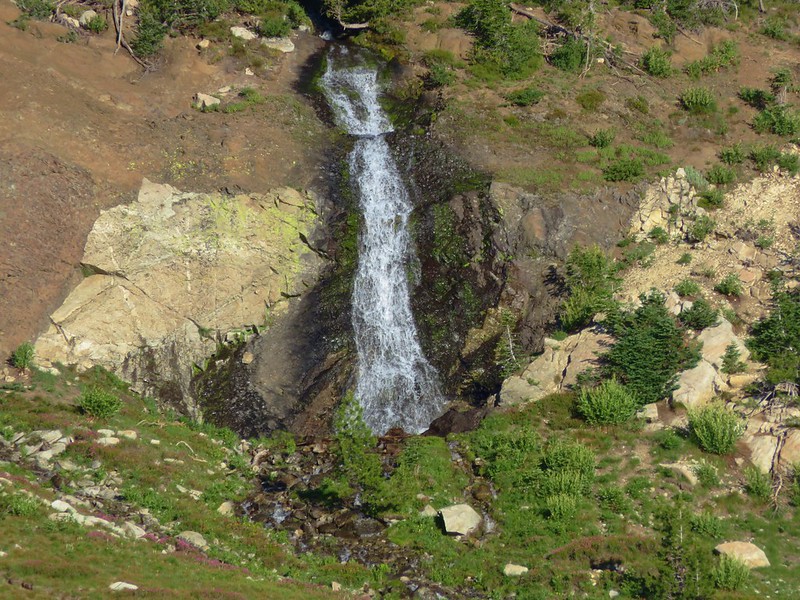
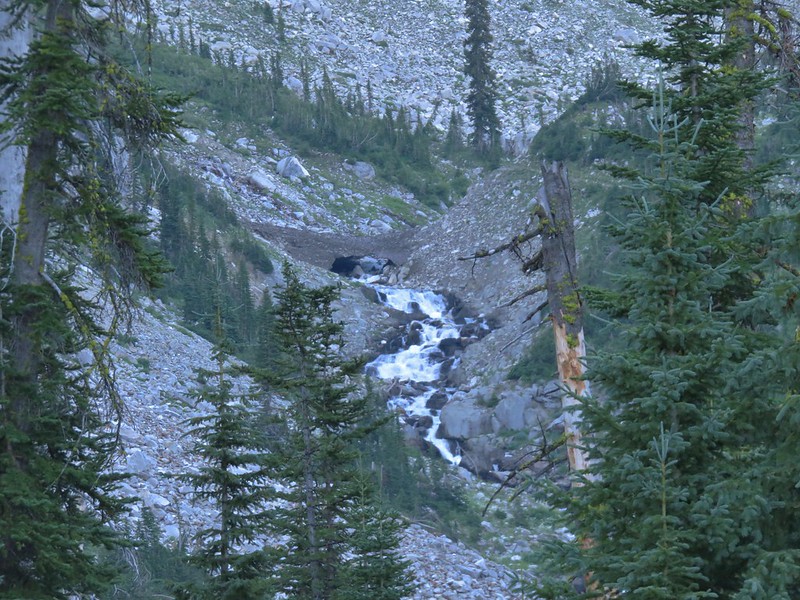
The ridge was indeed extremely cliffy on the Russell Creek side so we began fighting our way through the brush on the opposite side. We were glad that at least there weren’t any rhododendron plants at that elevation. As we continued down we kept looking for a way back toward the creek but the terrain and forest pushed us further away. After getting quite a ways downstream from the falls we found what appeared to be a possible gully. I began to work on finding a way down but it was very steep and after struggling and slipping twice I began looking to see if we could side hill back upstream. That wasn’t going to happen due to the cliffs lining the creek. I climbed back up to where I had left Heather and we adjusted our plan. We headed back upstream sticking as close to the top of the ridge as possible hoping to get some sort of view of the falls. We managed to find another gully closer to the falls where another steep descent brought us to a view halfway down the cliffs.
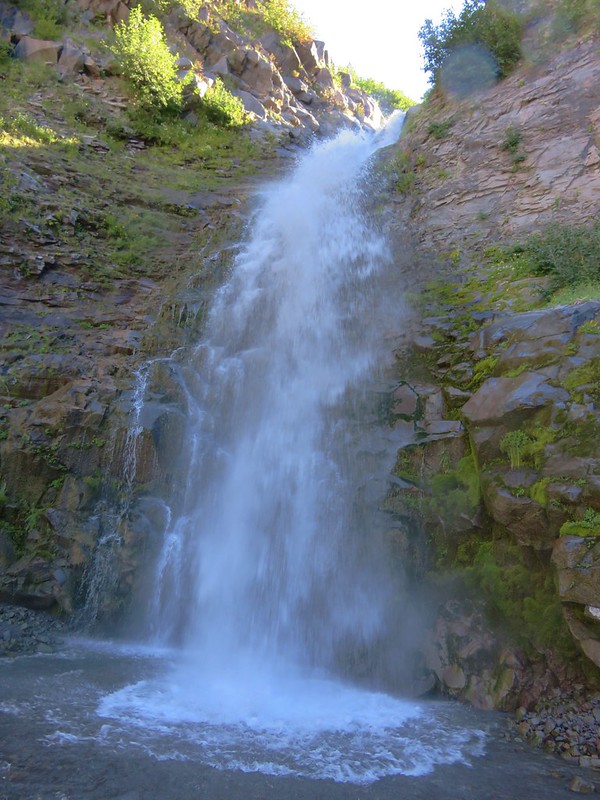
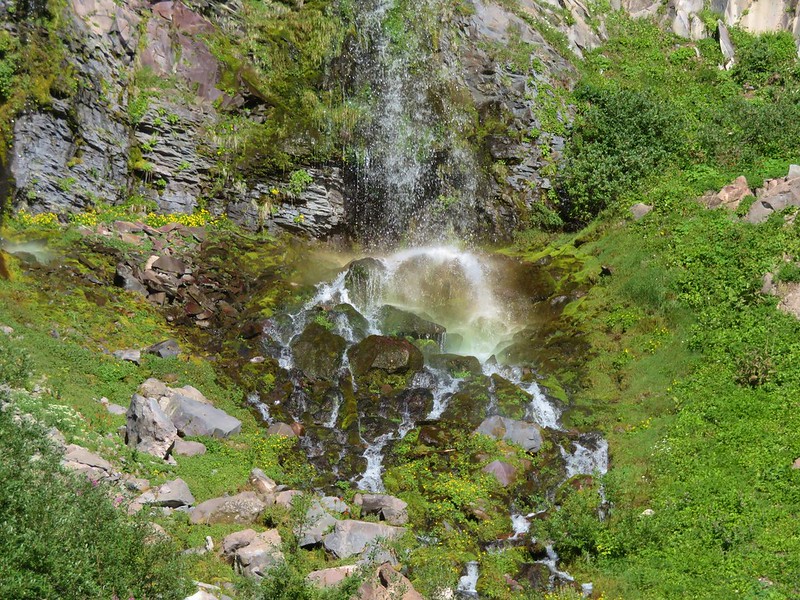
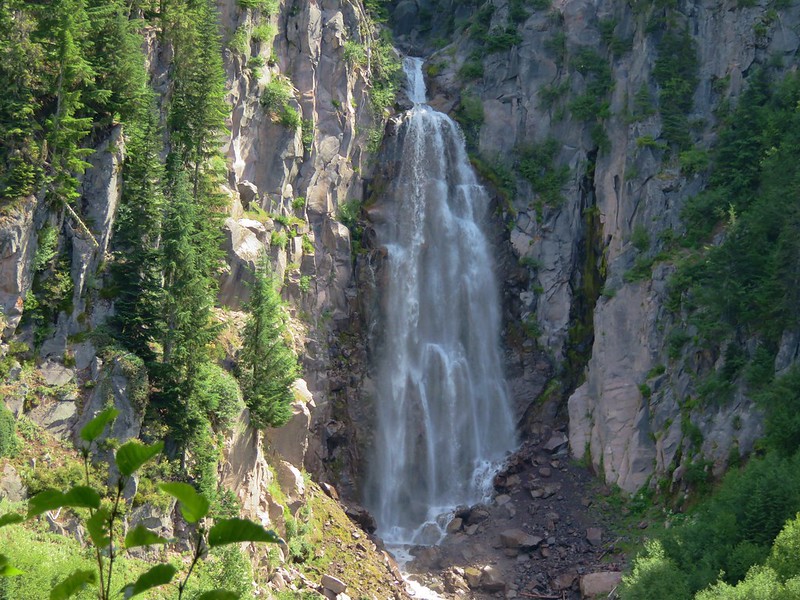
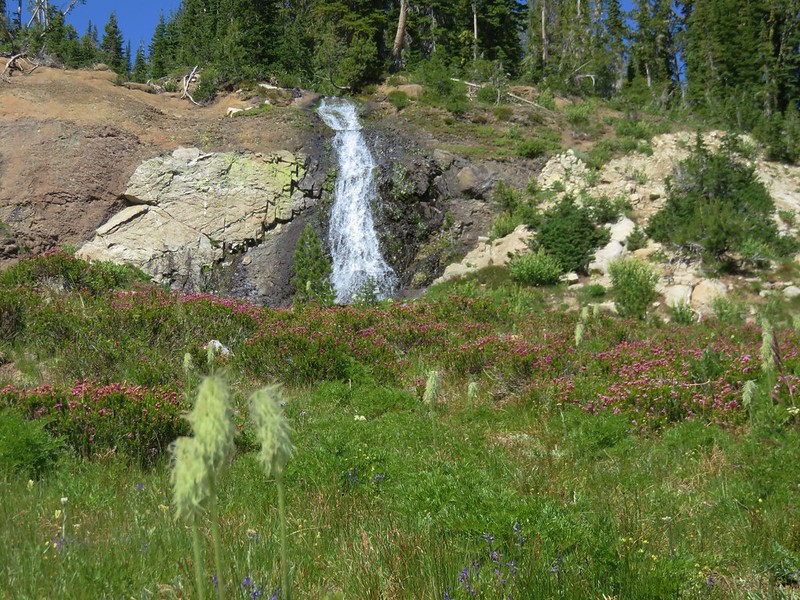
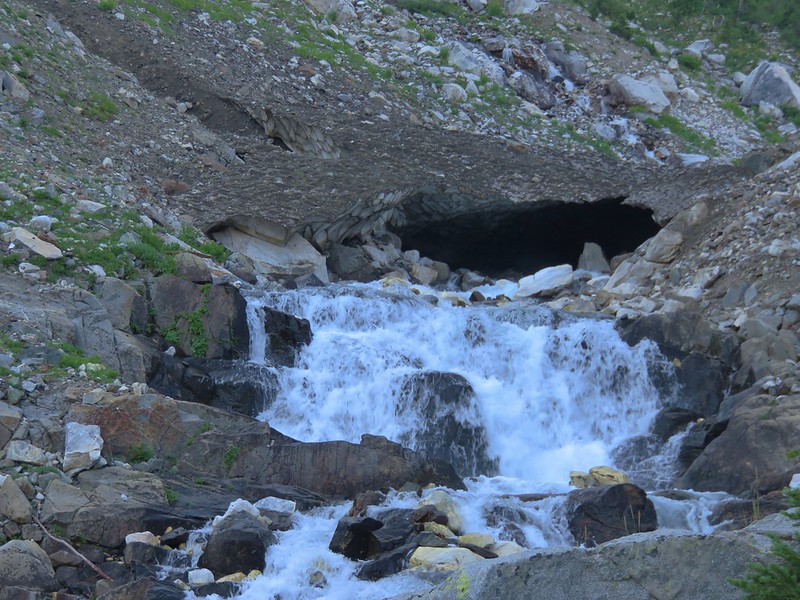
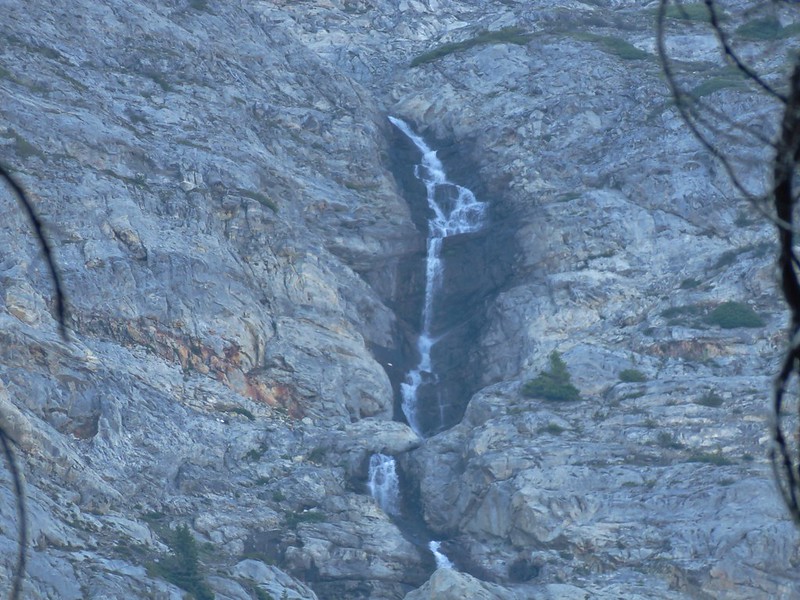
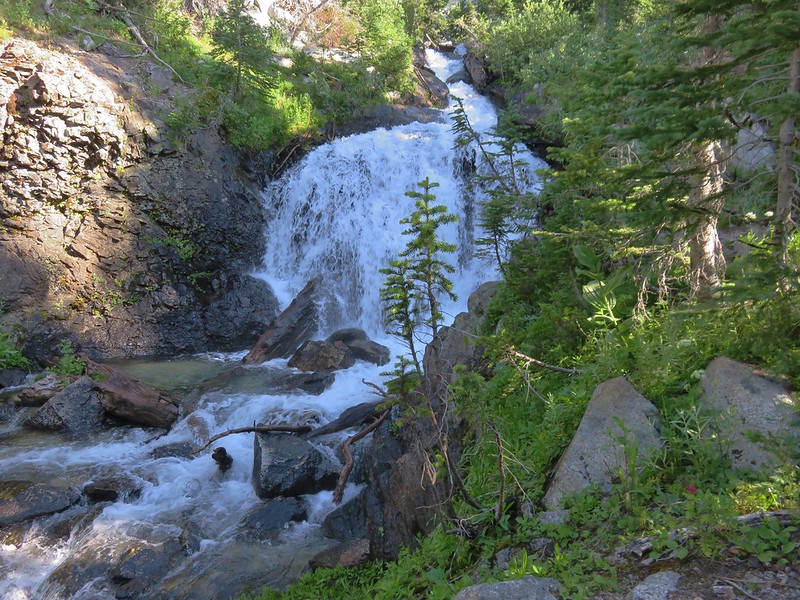
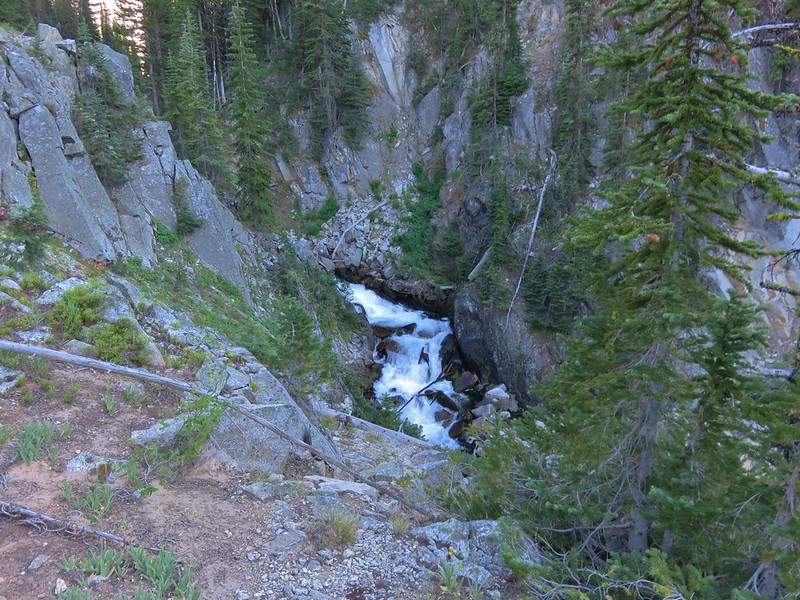
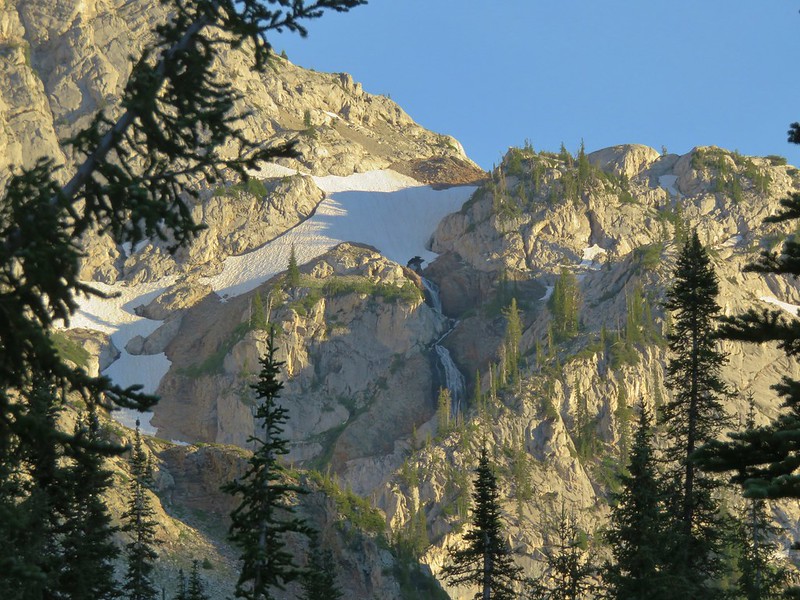
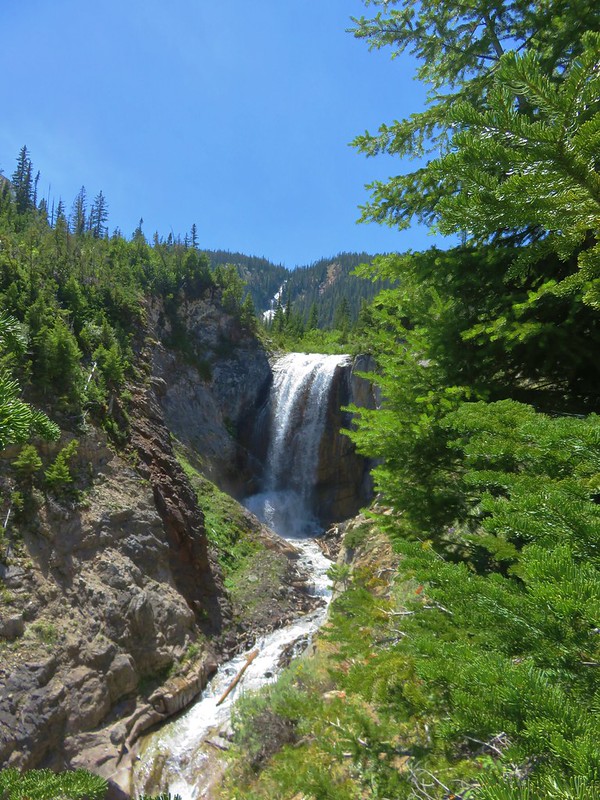
Russell Creek Falls

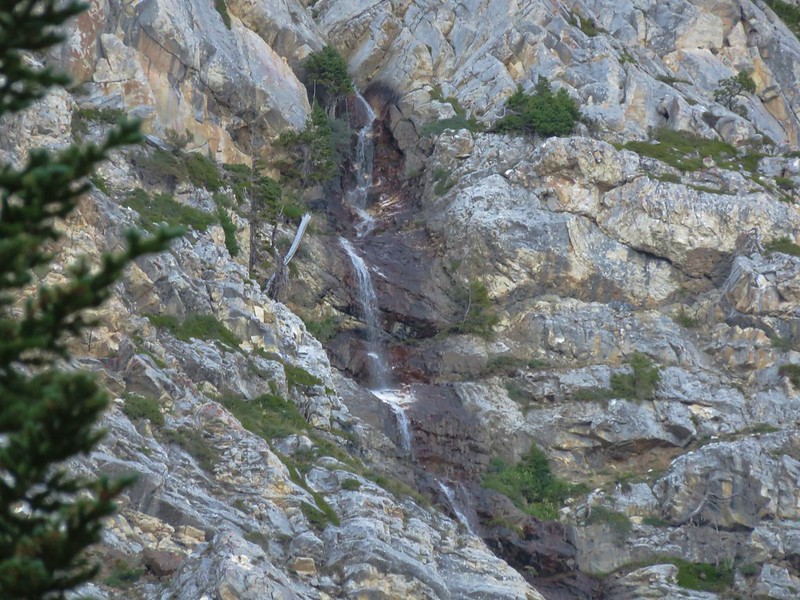
Russell Creek Falls

Russell Creek Falls

There wasn’t any way down from the view that looked even close to safe so we declared victory here and took a break before climbing back up to the PCT. The 151′ waterfall was indeed impressive but we can’t recommend attempting to see it. The steep slopes and abrupt cliffs make this a difficult and dangerous goal.

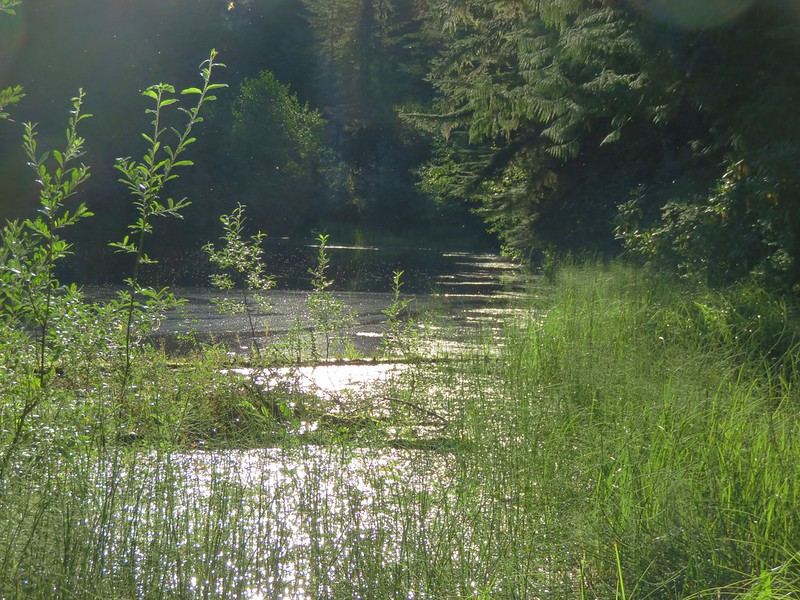
After fighting our way back to the PCT we headed for the Woodpecker Ridge Trail saying goodbye to Mt. Jefferson as we passed the pond.
Mt. Jefferson from a pond along the Pacific Crest Trail

We made it back to the car after a total of 15.5 miles. I thought I had escaped relatively unscathed after the bushwacking adventure but after changing into a pair of shorts I was ambushed by an evil yellow jacket (or jackets) and received a pair of stings on my leg. Those things are just plain mean.

Happy (yellow jacket free) Trails!

Flickr: https://www.flickr.com/photos/9319235@N02/albums/72157672410754435

Categories
Hiking Oregon Trip report Wallowas

Eagle Cap Wilderness Day 5 – Return to the Wallowa Lake Trailhead

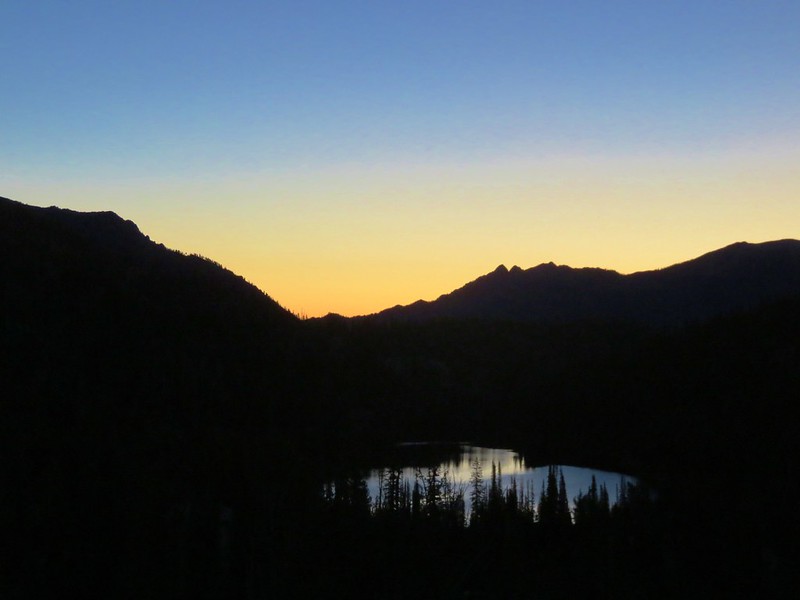
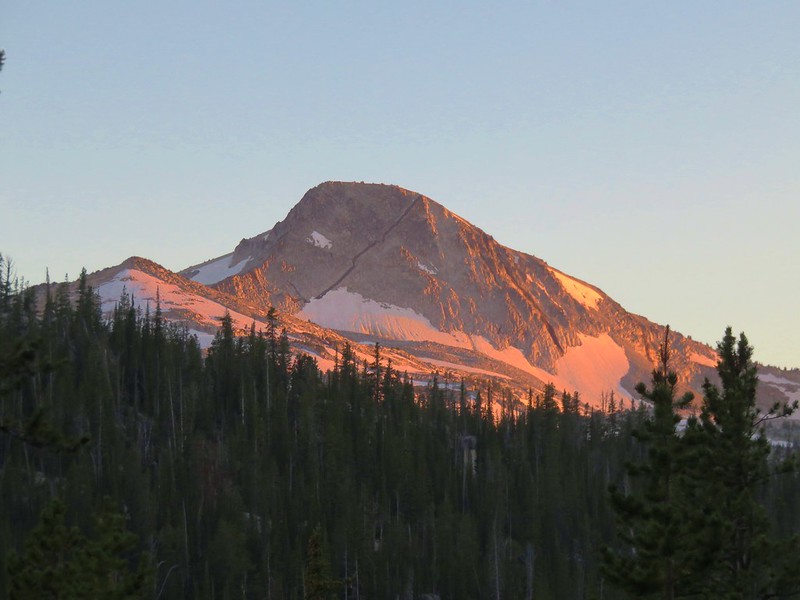
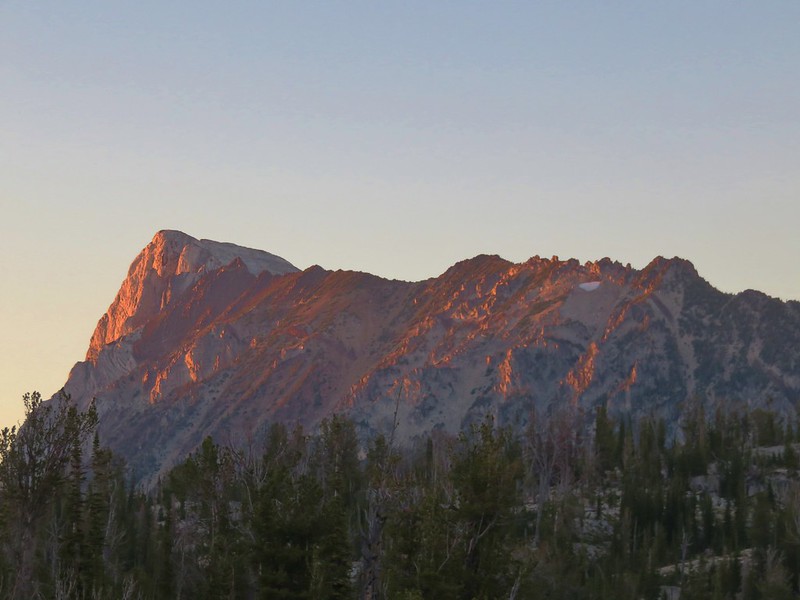
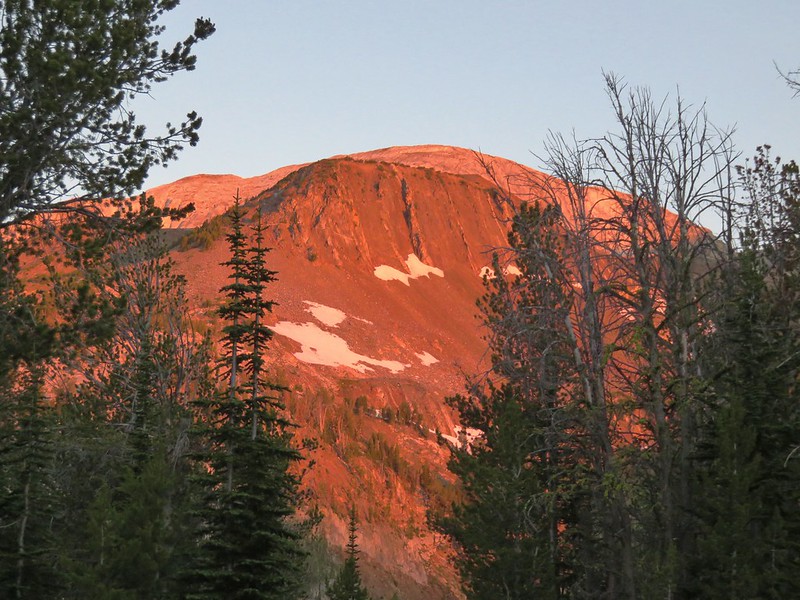
All good things must come to an end and it was time for our visit to the Eagle Cap Wilderness to end on the fifth day. We were up before 5am and were rewarded with a soft alpenglow.
IMG_3958

We ate some breakfast, packed up, and then made our way down to Horseshoe Lake.
IMG_3964

We then began a 3 mile descent to Sixmile Meadow along the West Fork Wallowa River. The trail up the river to Frazier Lake had been lined with wildflower meadows but this trail passed through a forest.
IMG_3989

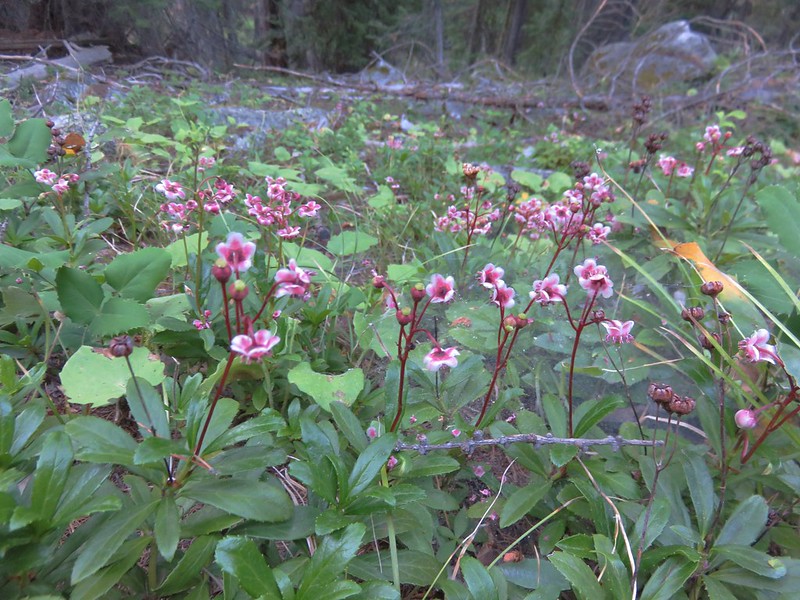
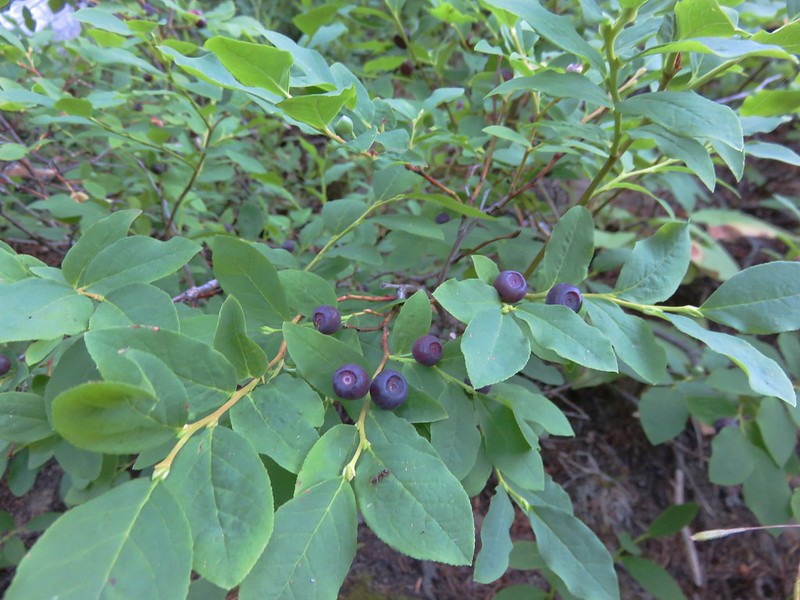
A few flowers were present as well as some ripe oval leaf blueberries.
IMG_3972

Prince’s pine
IMG_3984

IMG_3994

IMG_3986
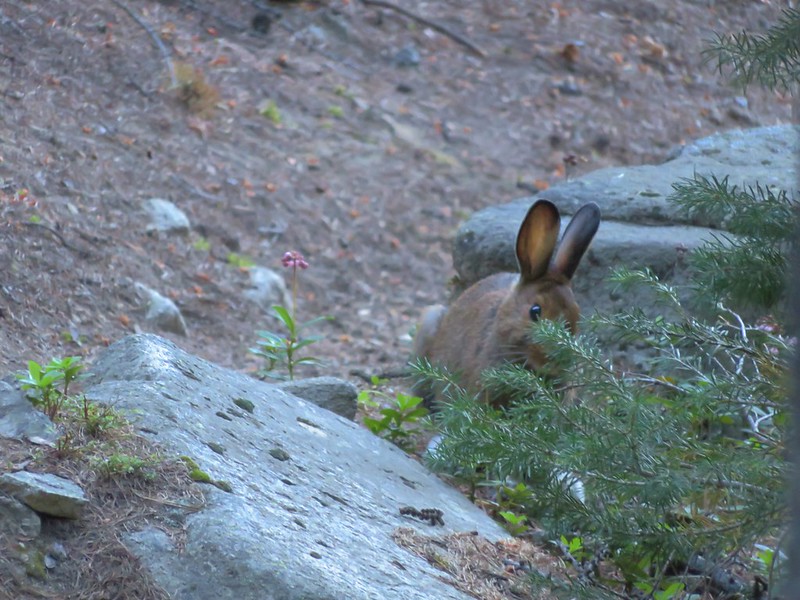
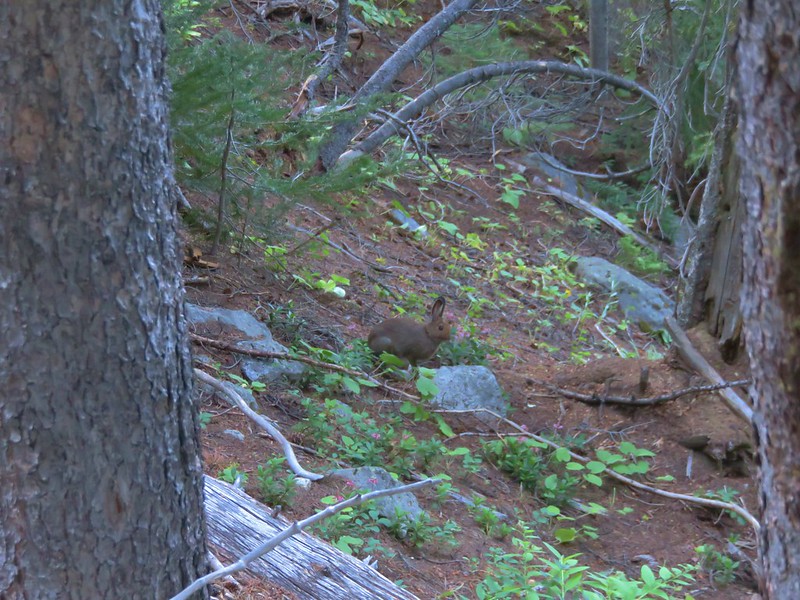
We had been discussing the fact that we hadn’t seen quite as much wildlife as we thought we might. A doe and her fawn had walked right past our tent on the first night and we’d seen a pair of mountain goats on the second day while heading up to the Matterhorn, but otherwise it had been a lot of birds, chipmunks and squirrels. As we came around a switchback we spotted a snowshoe hare.
IMG_3974

IMG_3979

The trail leveled out as we neared Sixmile Meadow and the temperature dropped. A light frost covered the plants along the path.
IMG_4000

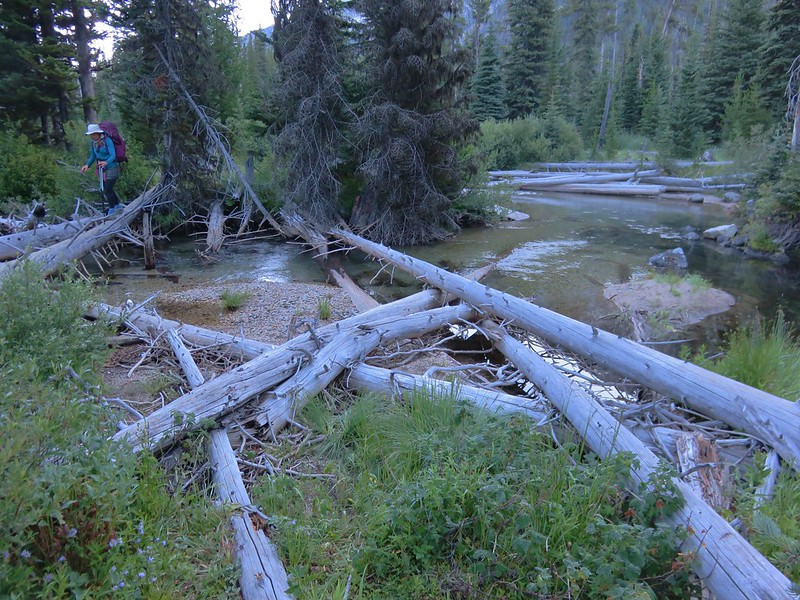
Logs allowed us to cross 2 branches of the river.
IMG_4006

IMG_4008

We passed through Sixmile Meadow before turning left on the West Fork Wallowa Trail.
IMG_4012

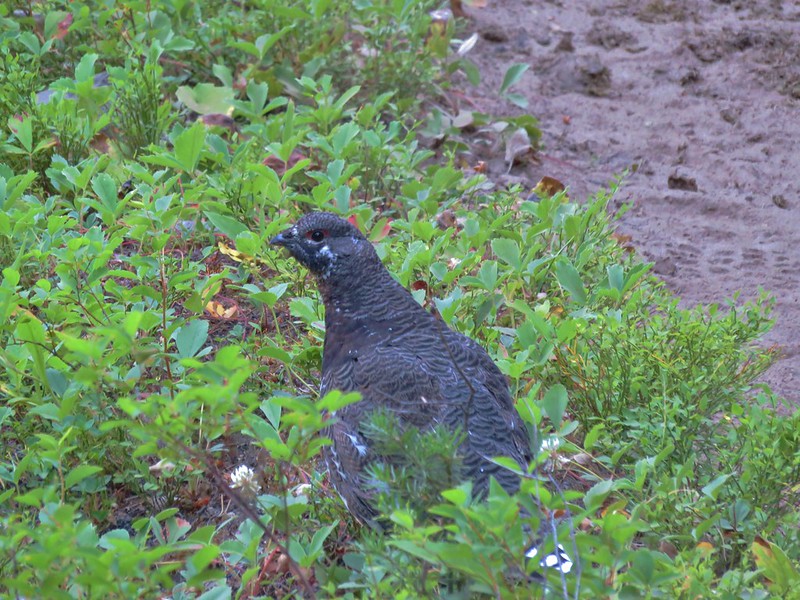
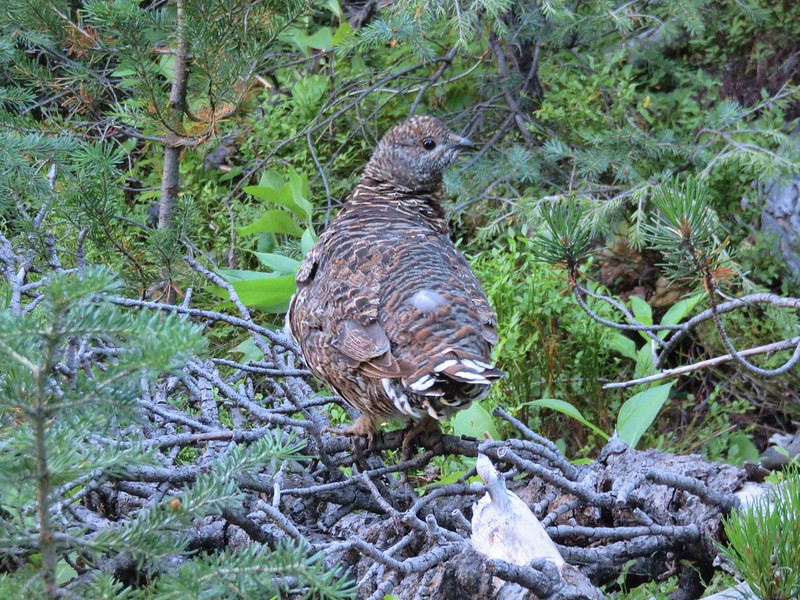
We were now on a familiar trail but despite having seen the scenery there were some new sights in the form of wildlife.
Grouse
IMG_4019

IMG_4022

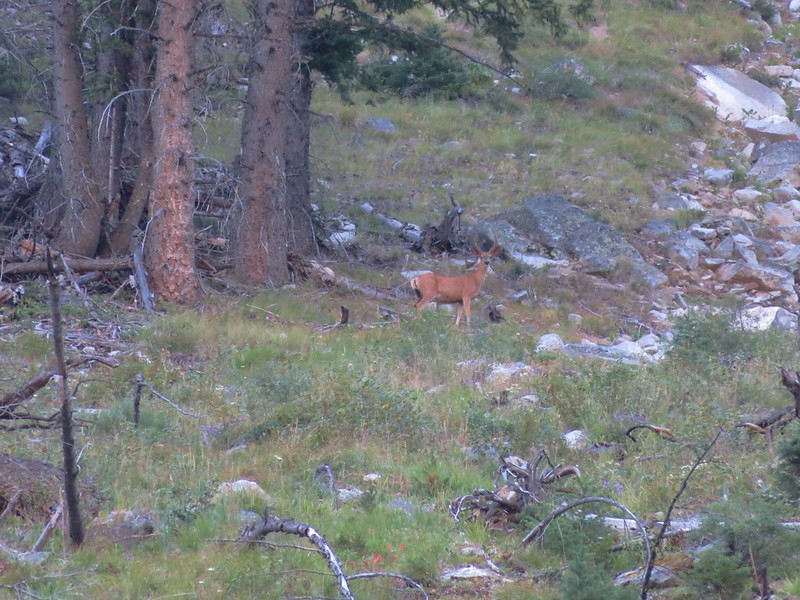
Buck
IMG_4027

All in all it had been a great trip. We had had a couple of hiccups with Heather being ill the first night and having trouble finding a campsite the second and fourth nights but the weather had been wonderful and the scenery superb. After changing and doing a little bit of cleanup at the car we stopped for lunch in Joseph at the R & R Drive-In which really hit the spot. We each had a Zeke Burger and split an order of some spectacular tater-tots.

We were able to take I84 on the way home but decided to leave the Interstate at Hood River in an attempt to avoid driving through Portland during rush-hour on a Thursday. We drove past Mt. Hood on Highway 35 to Highway 26 then took State Highways through Estacada, Mollala,and Woodburn to avoid traffic. Happy Trails!

Flickr: https://www.flickr.com/photos/9319235@N02/albums/72157671217618871

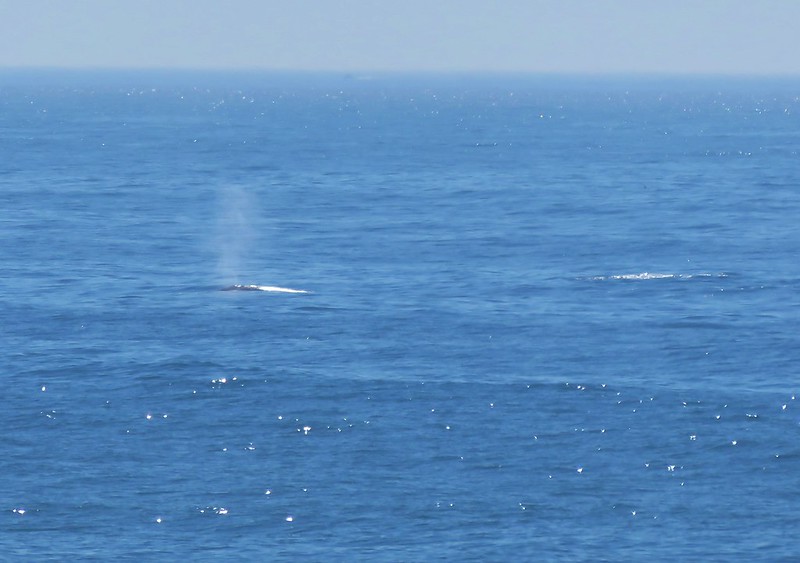
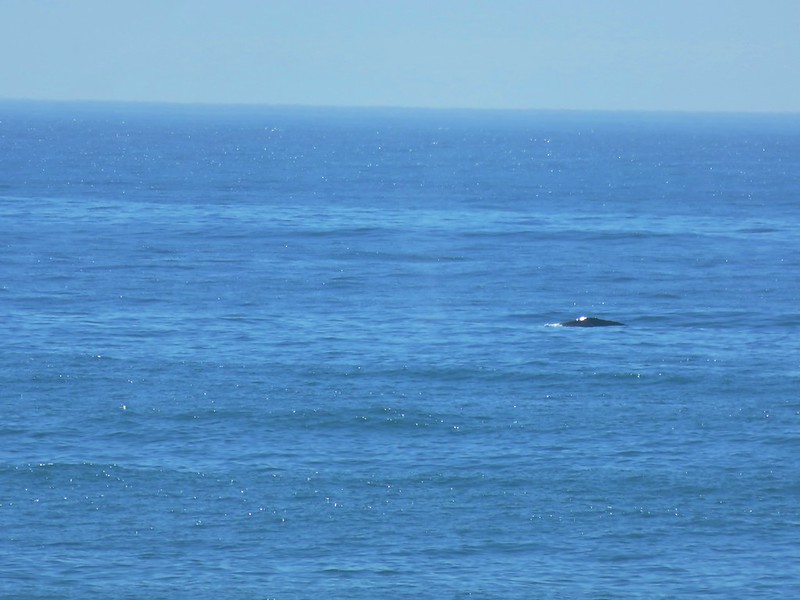
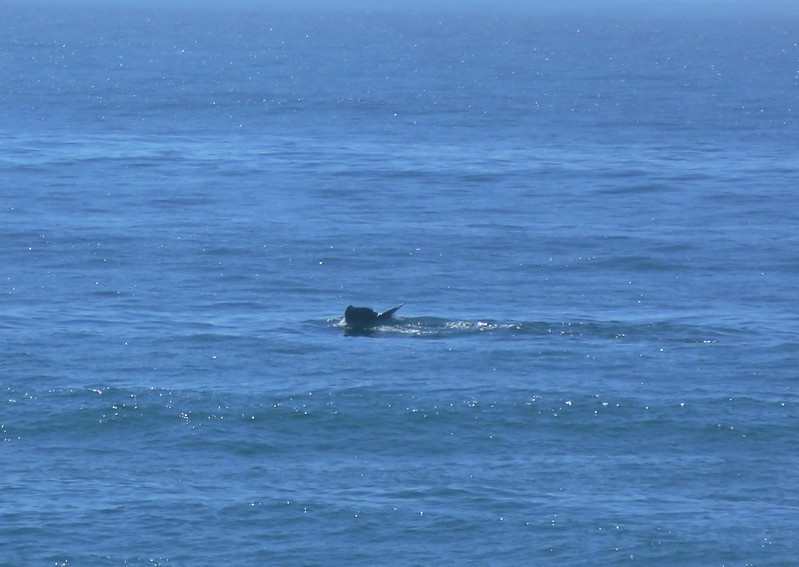
Epilogue – After spending five days in the Eagle Cap Wilderness of NE Oregon we found ourselves at the beach for our annual family reunion in Gleneden Beach, OR. For the first time we brought our camera and for the first time we spotted whales off the coast.
IMG_4053 (2)

IMG_4049

IMG_4046 (2)

In the course of a week we’d gone from seeing mountain goats on the way up a 9826′ peak to watching whales surface from sea level. Just one of the reasons why we love living in the Pacific Northwest.

Categories
Hiking Oregon Trip report Wallowas

Eagle Cap Wilderness Day 4 – Eagle Cap

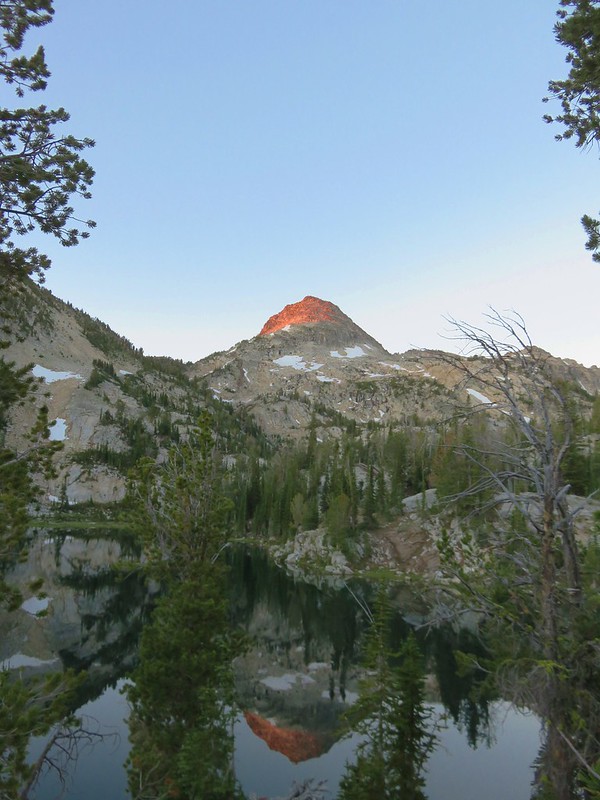
The fourth day of our backpacking trip began with a nice sunrise over Moccasin Lake.
IMG_3623

Our plan for the day was to take our day packs and hike to the summit of Eagle Cap, then pack up camp and move to Horseshoe Lake for the final night of our trip.

It had been rather breezy the day before and we were hoping that wouldn’t be the case today so that we could get catch some reflections of Eagle Cap in the lakes. A gentle breeze kept that from happening.
IMG_3628

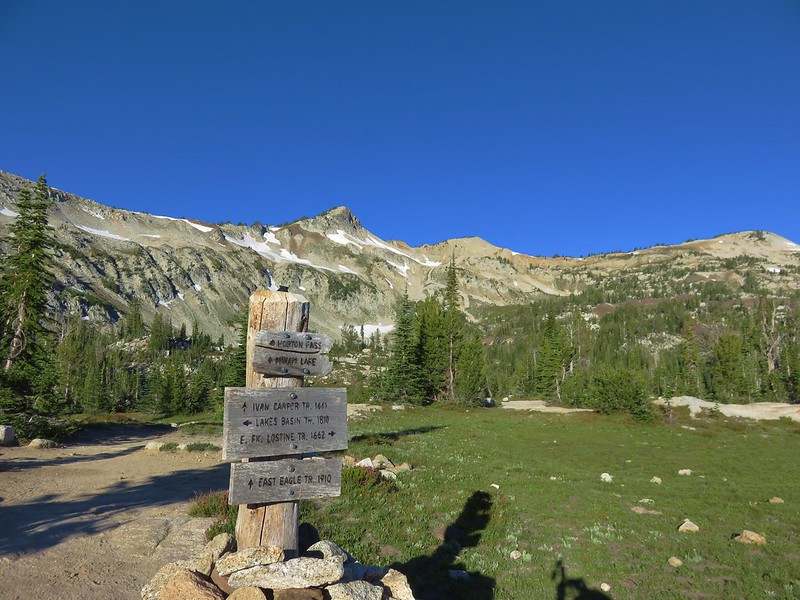
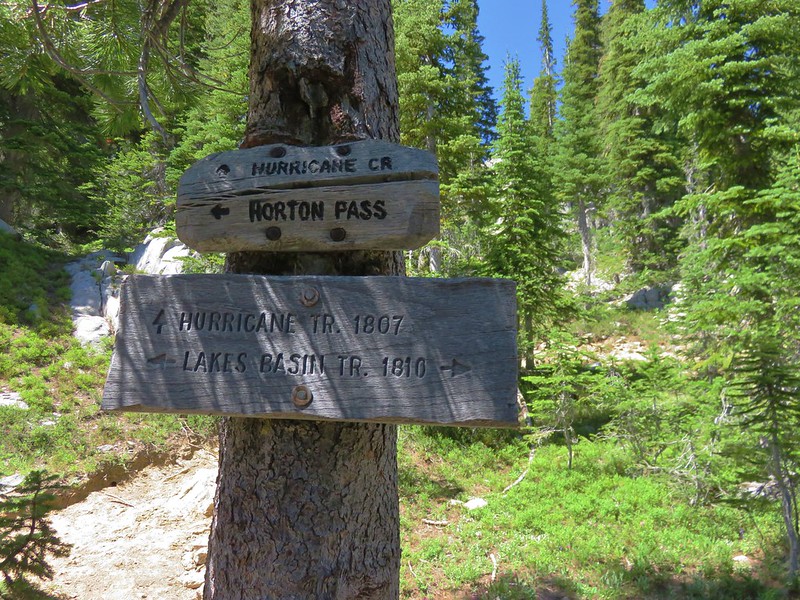
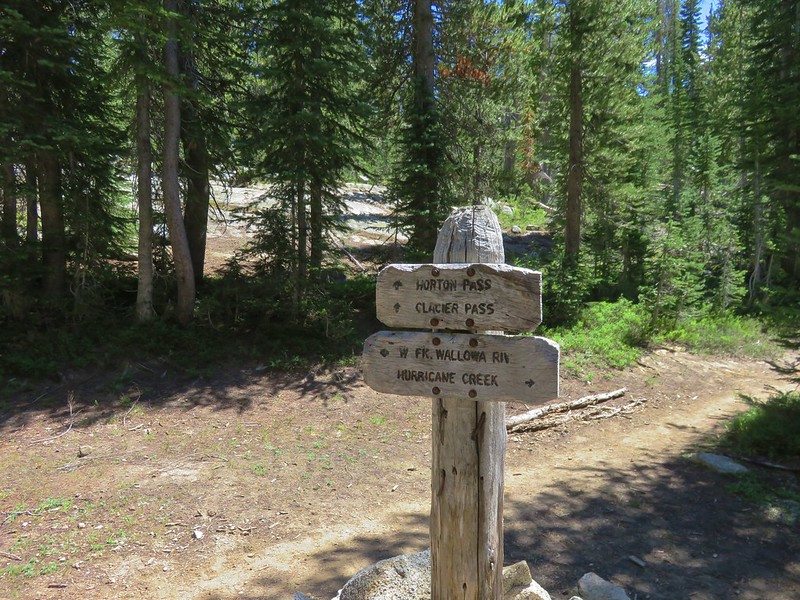
We hiked to the west end of Mirror Lake and followed signs toward Horton Pass at a 4-way trail junction.
IMG_3642

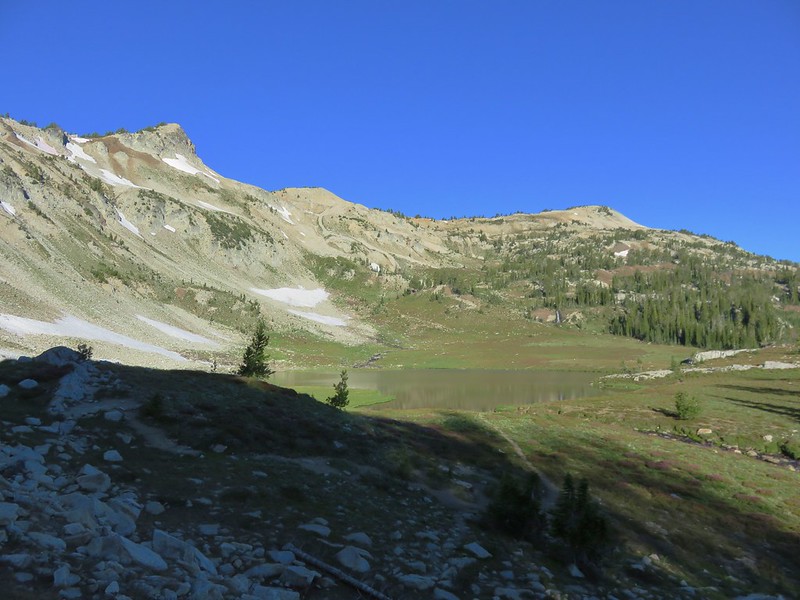
The trail took us past Upper Lake set in an alpine bowl surrounded by wildflowers and backed by a scenic waterfall on the far side of the valley.
IMG_3646

IMG_3647

IMG_3649

The trail climbed up from Upper Lake toward Eagle Cap.
IMG_3668

IMG_3669

We knew we would be encountering some patches of snow based on recent trip reports from Van Marmot and Born2BBrad over on Oregonhikers.org. We also knew that it would be fairly easy to avoid the snow which was good given our early start because the snow was still iced from the night before.
IMG_3671

IMG_3673

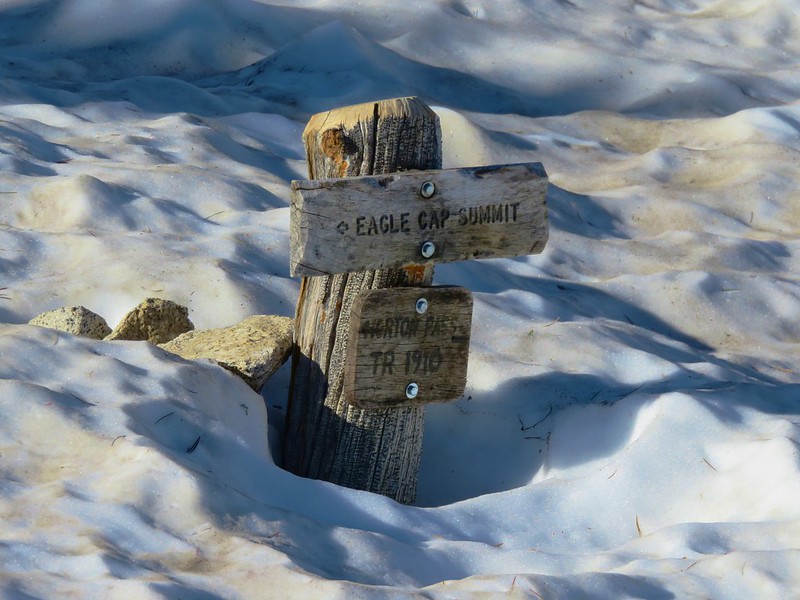
From the sign in the snow we had the choice of going right to Horton Pass and following the ridge from there or going left and making a steeper climb to a higher point on the same ridge. Looking at the trail up to Horton Pass it seemed to have not only more snow but it was on a steeper slope than staying left so we chose that route and climbed to the ridge where views opened up to the west.
IMG_3684

IMG_3689

IMG_3698

To the NE lay the Lakes Basin and the Matterhorn.
IMG_3690

The west side of the ridge was covered in short trees and we passed through this forest of miniature trees to a saddle below Eagle Cap.
IMG_3687

IMG_3703

From the saddle we had a nice view down the East Lostine River valley to the east and across to Blue Lake to the west.
IMG_3711

IMG_3725

IMG_3726

Beyond the saddle the trail climbed Eagle Cap in a series of long switchbacks. A few alpine flowers dotted the landscape.
IMG_3723

IMG_3730

IMG_3731

IMG_3714

IMG_3695

After passing through some whitebark pines we arrived at the broad summit of Eagle Cap.
IMG_3733

IMG_3734

Although Eagle Cap is a few hundred feet shorter than the Matterhorn the sky was clearer than it had been two days earlier when we had been atop the other peak. The view was so huge it was hard to take everything in.
East Lostine River, the Matterhorn, and the Lakes Basin
IMG_3749

Glacier Lake
IMG_3736

Looking SW
IMG_3742

Seven Devils in Idaho
IMG_3751

The Elkhorns
IMG_3748

After having second breakfast on Eagle Cap we headed back down. On the way we ran into a couple from Portland who had camped near Upper Lake. They had seen a mountain goat run by their camp the day before and spotted a pair of wolves crossing a snowfield on the ridge above the lake as well. We passed several other hikers making their way up toward Eagle Cap making us glad we had started so early.

We stopped at Upper Lake to refill our water supply and decided to follow the trail around the lake thinking it would take us over to another trail that ran between Minam Pass and the 4-way junction at Mirror Lake.
IMG_3809

IMG_3812

The trail petered out at the far end of the lake near it’s inlet stream. Instead of backtracking we decided to rock hop up the creek to the other trail.
IMG_3815

When we arrived at the other trail we found our first western pasque flower seed-heads.
IMG_3821

We were also near the waterfall we had seen from across Upper Lake.
IMG_3824

We followed the trail back down through some lovely wildflower meadows to the 4-way junction and then returned to our campsite to pack up.
IMG_3826

IMG_3834

IMG_3839

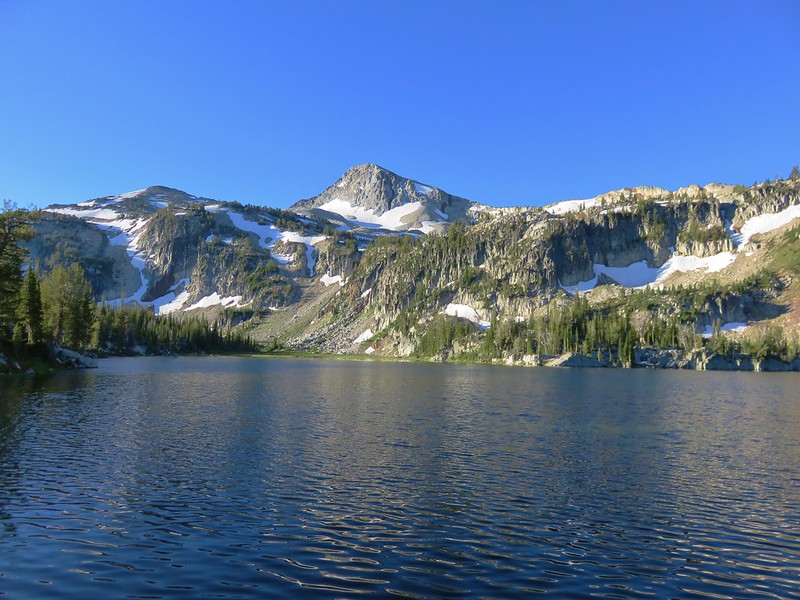
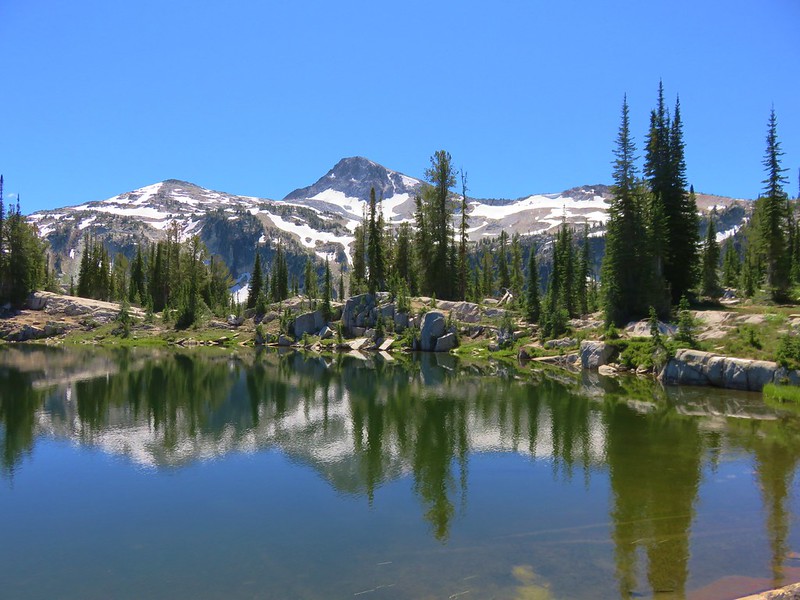
From Mirror Lake we had the choice of going back past Moccasin Lake or taking a different trail past little Sunshine and Crescent Lake. The two routes rejoined at the NE end of Douglas Lake. Since we had already seen Moccasin Lake we decided to go by Sunshine Lake where we wound up getting our best reflection of Eagle Cap.
IMG_3856

We passed a junction with the Hurricane Creek Trail after 1.1 miles and arrived at Crescent Lake after approximately another three quarter miles.
IMG_3865

IMG_3869

Douglas Lake was just on the other side of the trail from Crescent Lake.
IMG_3871

We followed a pointer for the West Fork Wallowa River when we reached the trail junction at the end of Douglas Lake.
IMG_3877

Shortly thereafter we came to another trail junction.
IMG_3879

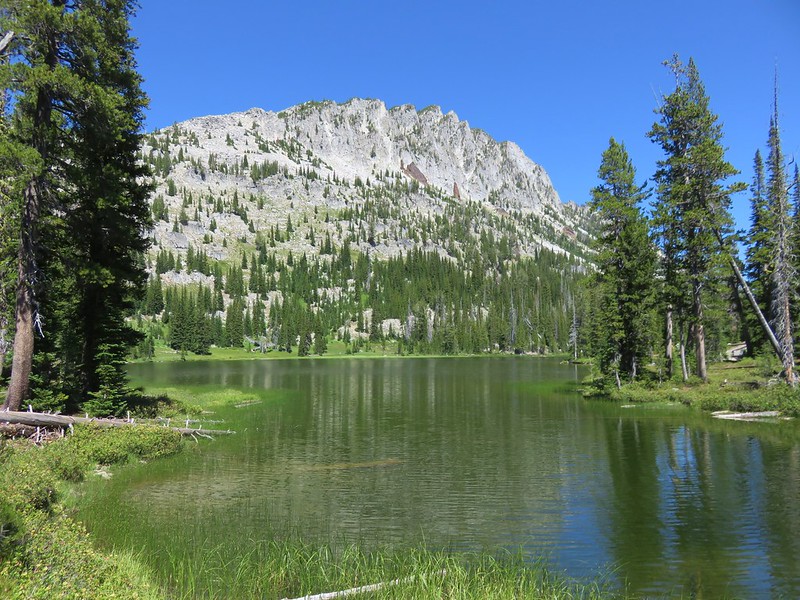
Here we faced another choice. Both forks would bring us to Horseshoe Lake, the left in 1.3 miles and the right in 1.5 miles passing Lee and Lily Lakes. We chose the longer route past the other two lakes and began descending toward Lee Lake.
IMG_3881

IMG_3882

After a brief stop at Lee Lake we continued past the aptly named Lily Lake.
IMG_3891

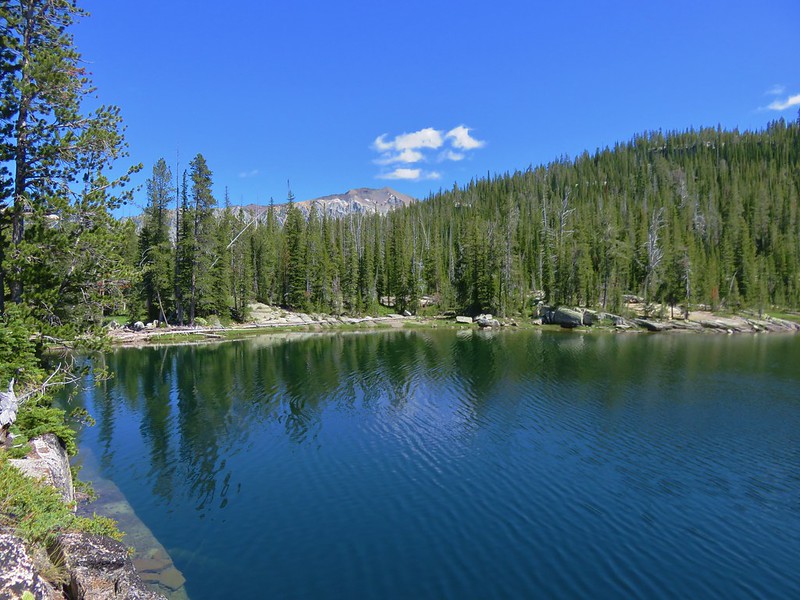
The trail passed by large Horseshoe Lake along the northern shore.
IMG_3892

IMG_3896

IMG_3902

We were hoping to find a campsite at east end of Horseshoe Lake which would would leave us with a shorter hike on our final day but we were unable to find a suitable site at that end of the lake. After reaching the junction with the other fork of the Lakes Basin Trail and failing to have found a good campsite we decided to head back up the other fork to see if there were any decent sites along that trail.
IMG_3903

We had been planning on visiting nearby Unit Lake after setting up camp and knew there was a campsite there, but the trail to that lake was no longer maintained and camping there would require hauling our packs down to the lake over a lot of blowdown which we preferred not to do. As luck would have it we found a suitable spot for our tent below the trail just opposite of the unmaintained trail to Unit Lake.
IMG_3905

IMG_3908

After getting settled we decided to take our chairs, dinner, and water filter with us to Unit Lake and spend our evening there. The trail had definitely not been maintained from quite some time and we were glad we had chosen not to try and do the trail with our full packs.
IMG_3946

That being said we were glad we made the side trip down to the lake.
IMG_3914

IMG_3937

IMG_3935

We were a little surprised when a Dad and four kids came crashing down the trail to fish for a little while but they soon departed and we had a little more solitude before returning to our tent and watching the sunset on Eagle Cap for the final time.
IMG_3952

Happy Trails!

Flickr: https://www.flickr.com/photos/9319235@N02/albums/72157671183919842

Categories
Hiking Oregon Trip report Wallowas

Eagle Cap Wilderness Day 3 – Into the Lakes Basin

We woke up feeling pretty good on the third day of our trip despite the long hike searching for a campsite the day before. Heather had made it through the night without getting sick and we were up at dawn getting ready to continue on.
IMG_3281

We were a little concerned by an influx of smoke coming up the valley behind us. We figured that the wind had shifted overnight and some of the smoke we had seen from the Matterhorn the day before had made it’s way to us but we weren’t sure. We hoped that it wouldn’t affect our visibility as we began the days hike.

The trail continued through increasingly impressive wildflower meadows to a bridgeless crossing of the West Fork Wallowa River.
IMG_3290

IMG_3300

IMG_3302

IMG_3305

IMG_3309

At the crossing we found a single log across the river which I started to attempt to cross on before deciding it was a little too narrow and wet for my comfort.
IMG_3314

Oddly enough there appeared to be an actual bridge way upstream but it was only a snow-bridge.
IMG_3292

IMG_3344

The river was only calf deep so instead of trying to balance on the log we decided to simply ford the river and deal with wet feet for awhile. On the far side of the river the trail continued up the narrowing valley past a number of side streams and waterfalls.
IMG_3327

IMG_3350

IMG_3357

Once again a “Fires Prohibited Beyond This Point” sign signaled we were only quarter mile from a lake.
IMG_3362

The trail leveled out and quickly brought us to Frazier Lake.
IMG_3368

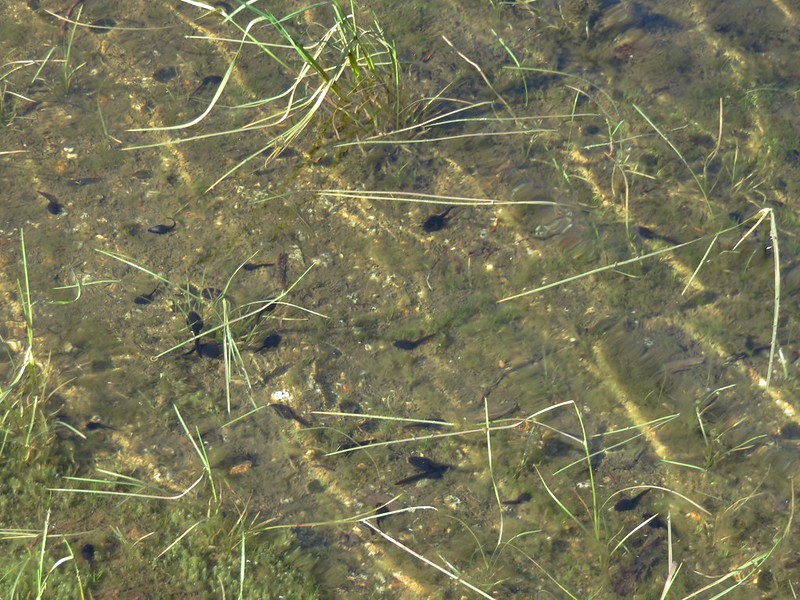
We didn’t see anyone camped here just a lot of tadpoles in the water.
IMG_3373

IMG_3370

IMG_3374

At the far end of Frazier Lake we left the West Fork Wallowa Trail and followed a pointer for Glacier Pass.
IMG_3376

This trail followed a branch of the river flowing down an alpine valley from Glacier Lake to Frazier Lake. Waterfalls, wildflowers and golden-mantled squirrels awaited us as we climbed ahead of the encroaching smoke that continued to make it’s way up the valley behind us.
IMG_3382

IMG_3388

IMG_3389

IMG_3390

IMG_3379

IMG_3386

A final wide sweeping arc completed this 2 mile section of trail bringing us just below the basin holding Glacier Lake.
IMG_3395

IMG_3410

IMG_3413

IMG_3419

IMG_3425

The beauty and wonder of God’s creation is our main motivation for hiking and although we witness it every time we hit the trail there are moments where that beauty is indescribable and impossible to capture with a camera. Our first look at Glacier Lake was one such moment.
IMG_3463

IMG_3460

IMG_3448

Backed by snowy peaks including Eagle Cap and lined with wildflowers the blue-green waters of Glacier Lake were breathtaking. We set down our packs and removed our wet shoes and socks to allow them to dry while we soaked in the unbelievable scenery.
IMG_3462

Amazingly we only noticed one tent set up around this gem. Heather quickly decided that someday we would come back and spend at least one night here. We had more hiking to do though, so we eventually pulled ourselves away and continued past the lake and up toward Glacier Pass.
IMG_3473

A couple of patches of snow lingered across the trail but neither were any issue to cross.
IMG_3475

IMG_3480

The view from Glacier Pass included Glacier Lake, Eagle Cap, and the Matterhorn.
IMG_3488

IMG_3491

IMG_3499

IMG_3502

As we began to descend from the pass we spotted Moccasin Lake and our ultimate goal for the day, Mirror Lake.
Moccasin Lake
IMG_3506

Mirror Lake
IMG_3516

After seeing no one at Frazier Lake and the single tent at Glacier Lake we began running into more and more hikers as we made our way down to Moccasin Lake. The landscape here contained many alpine meadows and bubbling streams.
IMG_3519

IMG_3523

IMG_3526

IMG_3530

IMG_3539

IMG_3545

We followed the trail to Moccasin Lake where we had to hop across it on rocks.
IMG_3556

IMG_3555

IMG_3560

At a trail junction near Moccasin Lake we followed a pointer toward the East Fork Lostine River.
IMG_3561

In another .7 miles we reached Mirror Lake and began looking for a place for our tent. After crossing the lake’s outlet creek we found a nice spot in beneath some tress near a small pond and set our packs down while we looked around a bit more.
IMG_3571

IMG_3575

There were already a number of tents set up around the lake and more hikers were arriving all the time. Before we had started to set up our tent a group of teenagers chaperoned by one adult began noisily setting up tents nearby. We quickly decided to move further away to avoid the unnecessary yelling this group was already doing. We settled on a rocky cliff overlooking both Mirror and Moccasin Lakes above the creek between the two lakes.
IMG_3595

IMG_3596

IMG_3588

The noise from the creek below helped drown out some of the noise and we spent the rest of the afternoon lounging around our campsite and exploring the rocky area between the lakes. The smoke that had been coming up the valley near Frazier Lake made a brief appearance early in the evening but it eventually rolled back and was held at bay on the horizon.
IMG_3604

The kids wound up being quieter than expected and after watching a nice sunset we turned in for the night.
IMG_3613

IMG_3614

Happy Trails!

Flickr: https://www.flickr.com/photos/9319235@N02/albums/72157671957245226

Categories
Hiking Oregon Trip report Wallowas

Eagle Cap Wilderness Day 2 – The Matterhorn and West Fork Wallowa Trail

When we had gone to sleep the night before we weren’t sure if we would be continuing our trip or hiking back to the car after only one night due to Heather having gotten sick during the night. She was feeling pretty good in the morning though and was fairly certain she had just overheated the day before, so we decided to move ahead with our plans and see how she held up.

We had breakfast and watched as the morning light slowly made it’s way into the Ice Lake basin.
IMG_3005

The Matterhorn catching the morning sunlight.
IMG_3009

Our plan for the day was to take our day packs and hike up to the 9826′ summit of the Matterhorn before packing up camp and heading further up the West Fork Wallowa River. To reach the Matterhorn we would need to follow a use trail on the west side of Ice Lake up almost 2000′. We had explored some of the south side of the lake the day before so we went around the north side of the lake to reach the use trail. This proved to be a good choice as there was no wind allowing for some beautiful reflections in the lake.
Ice Lake

IMG_3025

The lupine was just starting to bloom along the north shore as well.
IMG_3019

IMG_3022

The trail crossed an inlet creek at the west end of the lake and then grew fainter as it headed uphill.
IMG_3044

IMG_3058

The scenery grew more alpine like as we climbed. A few trees dotted the rocky landscape and wildflowers added color.
IMG_3061

Alpine shooting star
IMG_3069

Alpine springbeauty
IMG_3075

Lewis flax and wallflowers
IMG_3082

IMG_3088

Ice Lake was getting further away as we continued up.
IMG_3091

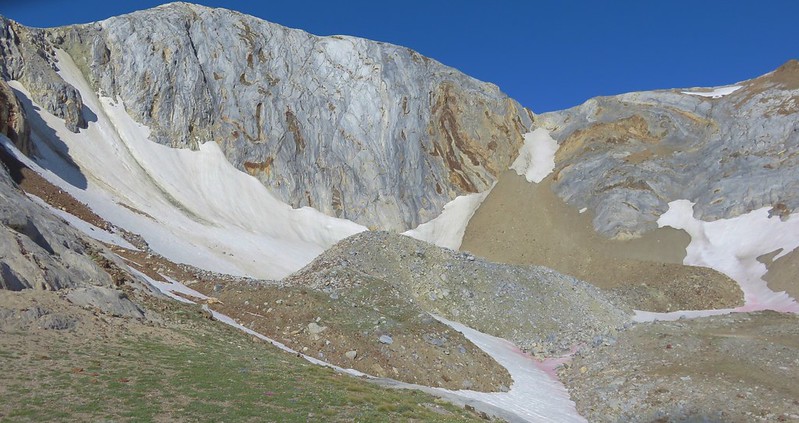
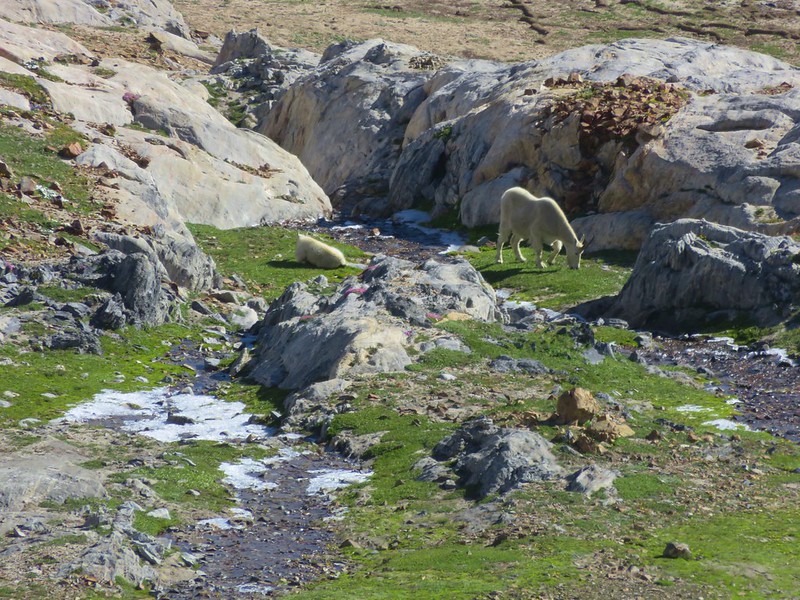
The path led to a marble outcrop that overlooked a basin where we spotted a pair of mountain goats.
IMG_3094

IMG_3100

IMG_3104

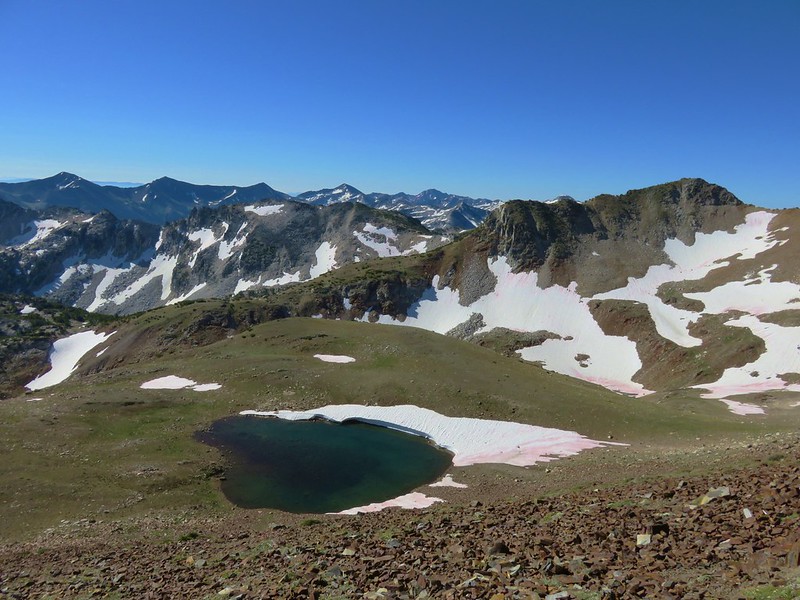
In addition to Ice Lake below there were a couple of snow melt tarns visible below the trail.
IMG_3129

IMG_3130

IMG_3144

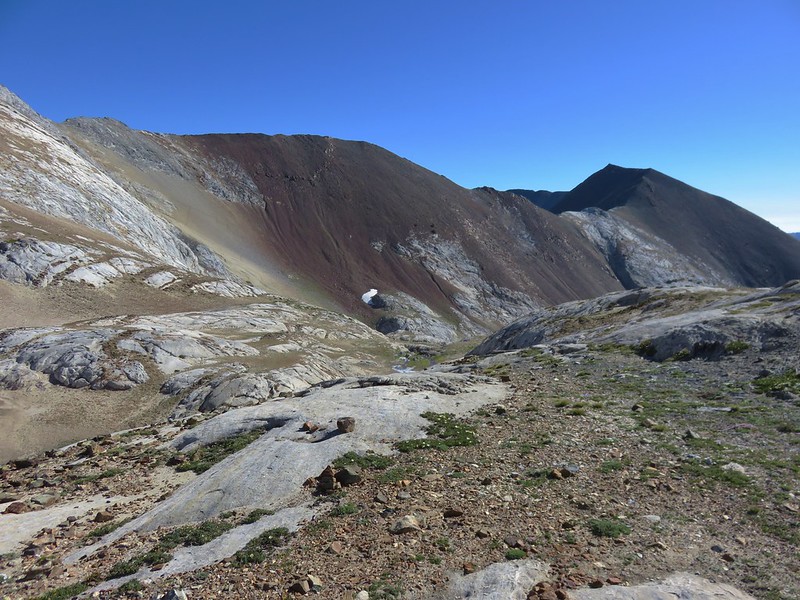
The trail had been fairly easy to follow but it became more difficult after crossing a section of red rocks and starting up the marble of the Matterhorn.
IMG_3136

Despite the rocky terrain several different wildflowers had managed to find footholds.
IMG_3122

IMG_3124

IMG_3138

IMG_3093

IMG_3159

IMG_3160

IMG_3161

Once we were on the marble we worked our way up following cairns and whatever footprints we could find in the areas of dirt that were present. A couple of times we realized we had lost the shoe prints and were only following mountain goat hoof prints. We made our way up to a surprisingly wide ridge top and followed it south toward the summit of the Matterhorn.
IMG_3148

IMG_3154

The view of the Wallowas was amazing. Smokey skies surrounded us limiting the visible distance, but we couldn’t complain.

The Elkhorns
IMG_3151

The Lostine Valley
IMG_3146

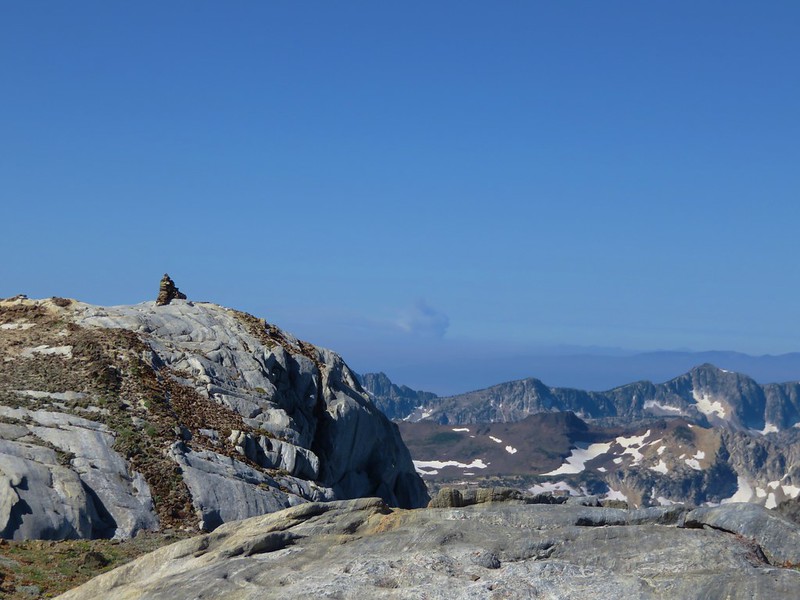
Cairn marking the summit of the Matterhorn with a smoke plume from a wildfire in Idaho in the distance.
IMG_3155

Eagle Cap in the center of the Eagle Cap Wilderness.
IMG_3162

In addition to the great views were some interesting rock features.
IMG_3157

IMG_3167

We headed back down from the summit stopping along the way to chat with another hiker on his way up. After packing up we took the Ice Lake Trail back down to the West Fork Wallowa Trail. We were surprised by the number of hikers we passed heading up to Ice Lake on a Monday.

When we arrived back at the junction with the West Fork Wallowa Trail Heather was doing well so we continued with our trip and took the trail south toward Sixmile Meadow. IMG_3201

This 3.3 mile section of the West Fork Wallowa Trail wasn’t the most exciting trail we’d been on, but to be fair it was following up Ice Lake and the Matterhorn. We also had remembered the distance incorrectly thinking it was only about 1.5 miles to the meadow causing it to seem like it was taking forever to get there.

We had originally considered setting up camp at Sixmile meadow but after passing the junction with the Lakes Basin Trail at the edge of the meadow we only saw one campsite which was closer to the trail and more exposed than we wanted to be.
IMG_3228

IMG_3230

We decided to continue further along the West Fork Wallowa Trail planning on stopping at the first good campsite we found. That proved to be more difficult than we had expected. The scenery along the trail improved beyond Sixmile Meadow as open wildflower meadows replaced the forest but there was a lack of noticeable campsites and the couple we saw were already occupied.
IMG_3232

IMG_3235

IMG_3236

IMG_3242

IMG_3246

IMG_3260

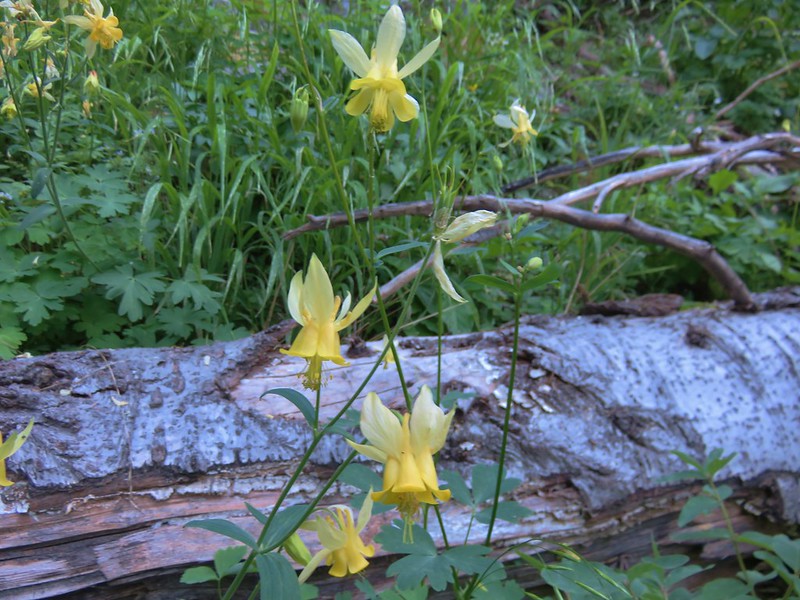
One of the more interesting flowers we had been seeing on the trip were yellow columbine which was becoming more profuse in these higher meadows.
IMG_3262

IMG_3263

After passing an unsigned junction with the trail up to Polaris Pass the West Fork Wallowa Trail passed through a narrow canyon before entering another meadow.
IMG_3266

IMG_3268

IMG_3270

It was getting close to 6pm and we were getting a little tired and anxious about finding a suitable campsite. Our worst case scenario was to push on to Frazier Lake but that would mean possibly fording the river, another climb and an additional mile plus of hiking. Luckily as we passed through this meadow we spotted a faint path to the left which led to a small campsite next to some trees. We quickly claimed the spot and set up the tent.
IMG_3273

We had gone quite a bit further than we’d originally planned that day ending up having covered 16.7 miles for the day, but this site turned out to be wonderful. The sounds of the nearby river was joined by the distant roar of several waterfalls cascading down the surrounding cliffs.
IMG_3277

IMG_3280

Heather was starting to feel a little under the weather again as we turned in for the night and we decided that we would try and take it a little easier the next day. We had already cut down the distance we needed to go to get to our next planned stop at Mirror Lake and we decided that instead of an afternoon side trip we would just hang out around the lake. Happy Trails!

Flickr: https://www.flickr.com/photos/9319235@N02/albums/72157671954055746

Categories
Hiking Oregon Trip report Wallowas

Eagle Cap Wilderness Day 1 – Ice Lake

When I put together our hiking schedule for the year one of the most anticipated trips was our first visit to the Eagle Cap Wilderness in North Eastern Oregon. At 355,846 acres it is the largest wilderness area in Oregon and contains 31 peaks whose summits are over 8000′. A variety of wildlife is also present including wolves. Our plan was to visit during the first week of August hoping it would be early enough to see some good flowers but late enough to avoid the worst of the mosquitoes and not have issues with lingering snow. Leading up to our trip we watched the weather and fire reports making sure everything looked clear and thanks to some timely trip reports on Oregonhikers.org we knew that snow wasn’t going to be an issue.

With everything checking out we left home on July 31st and began the 6+ hour drive to the Wallowa Lake Trailhead. Our first little hiccup came as we were driving along I84 and learned that a fire had started overnight closing the interstate just beyond Pendleton, OR. We were forced to detour through the Umatilla National Forest which added a little time to our drive. Luckily we had left the house early and it was just after 11am when we finally arrived at the trailhead.
IMG_2691

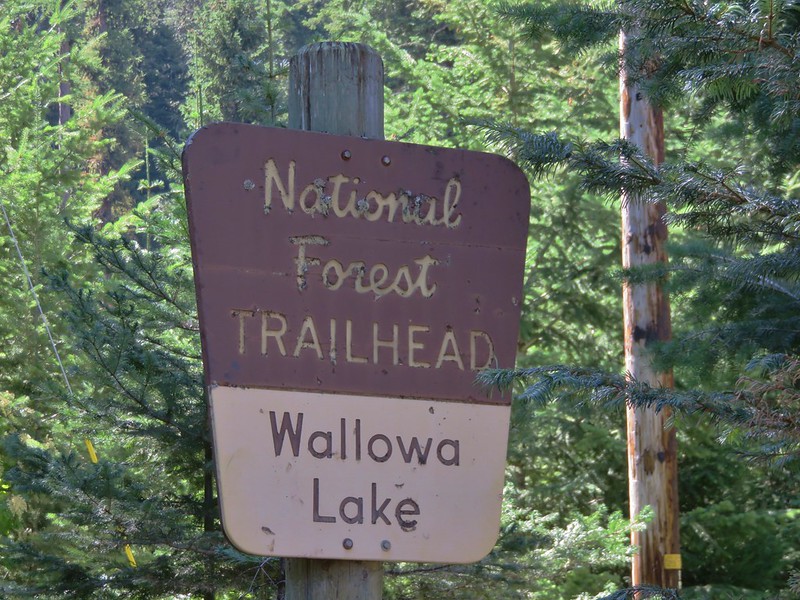
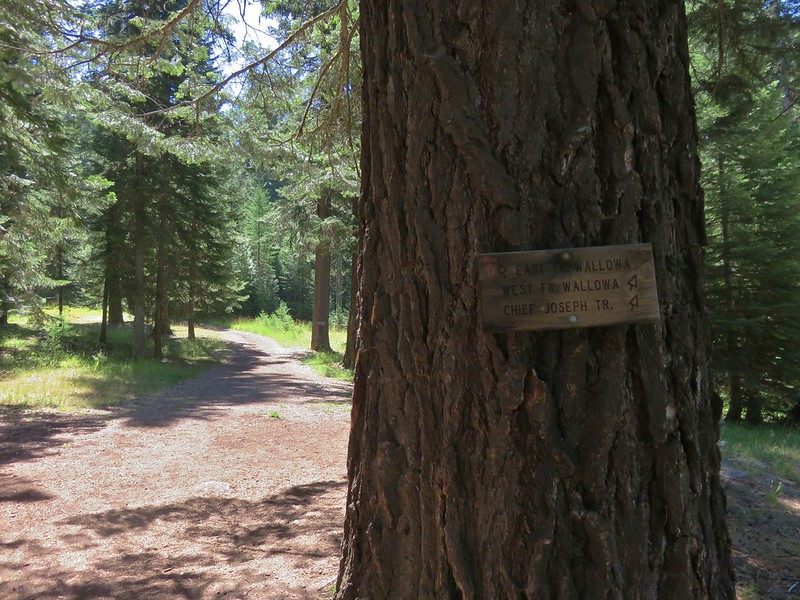
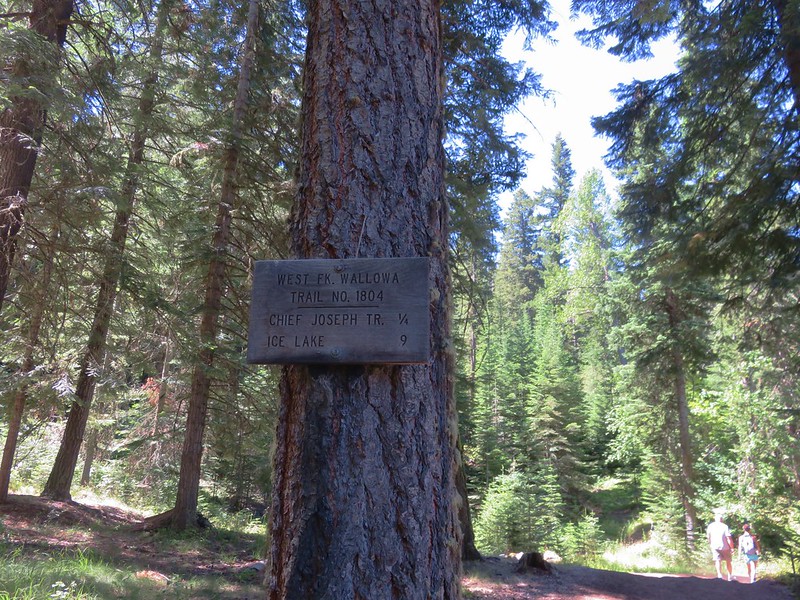
The trailhead is located at the end of Wallowa Lake State Park and the area is a very popular recreation area which was evident by the number of people. We strapped on our packs and followed signs for the West Fork Wallowa Trail and Ice Lake.
IMG_2692

IMG_2694

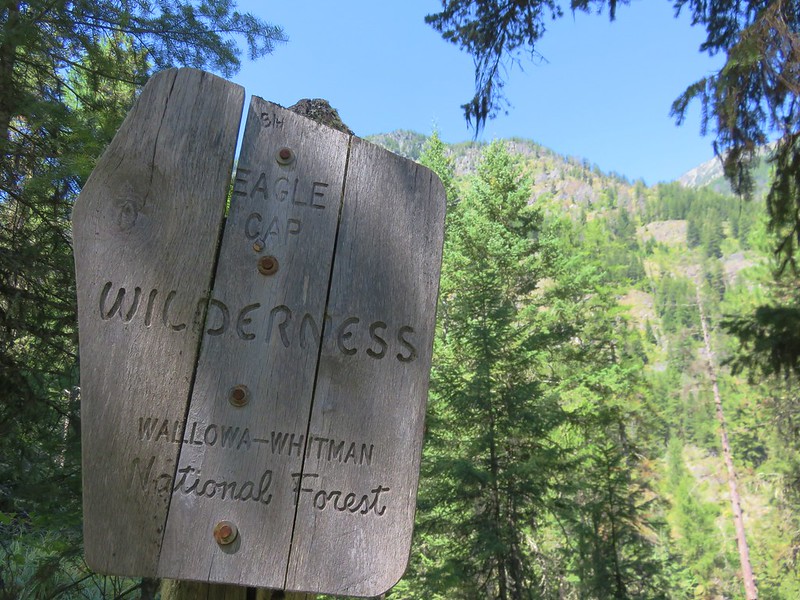
It wasn’t long before we entered the wilderness.
IMG_2705

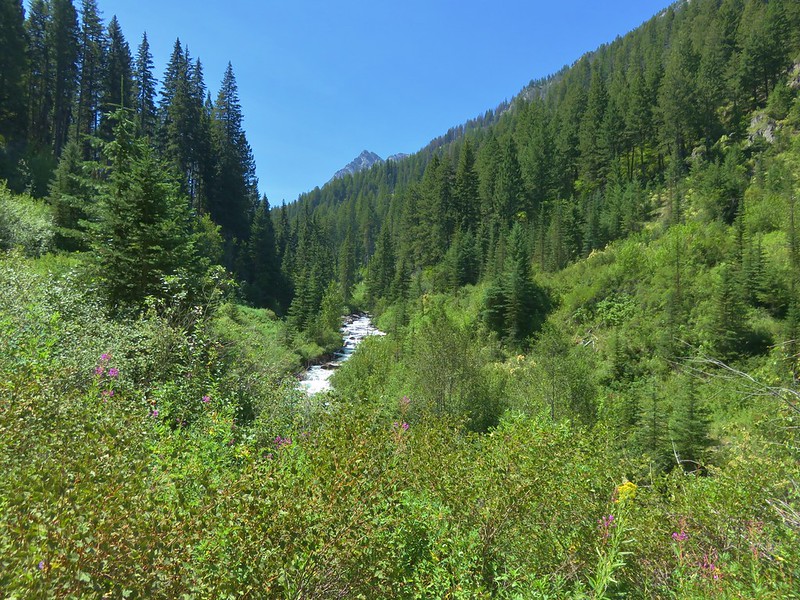
The trail followed the West Fork Wallowa River up a valley with occasional views.
IMG_2706

IMG_2717

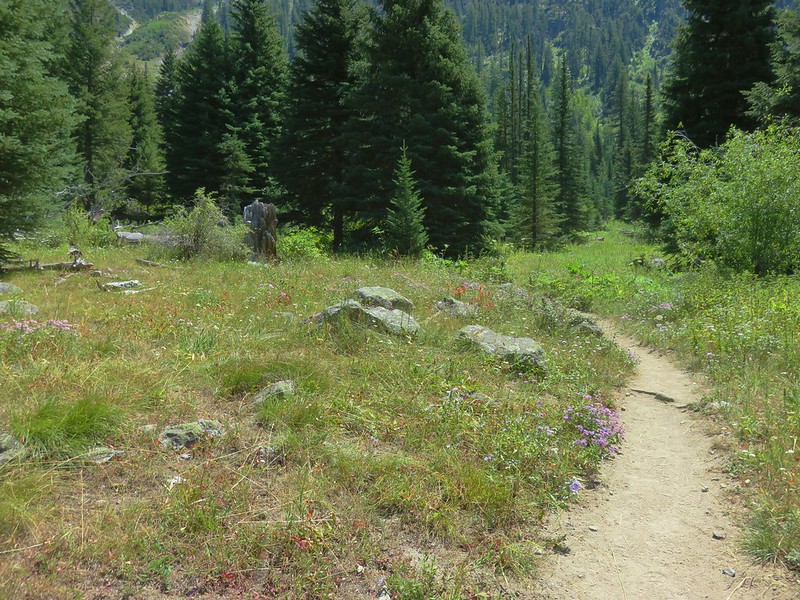
The wildflowers were starting to fade at the lower elevations but there were still some blooming along the way.
IMG_2733

IMG_2724

IMG_2729

IMG_2730

After 2.8 miles we arrived at the junction with the Ice Lake Trail.
IMG_2735

This trail led down to a crossing of the West Fork Wallowa River.
IMG_2743

IMG_2744

From this area we could see the monstrous Ice Falls on Adam Creek which flowed from Ice Lake over 4.5 miles and 2000′ away.
IMG_2739

Ice Falls

On the far side of the river we began the long climb up to Ice Lake.
IMG_2746

The lower section of trail passed through grassy meadows filled with two types of mariposa lilies.
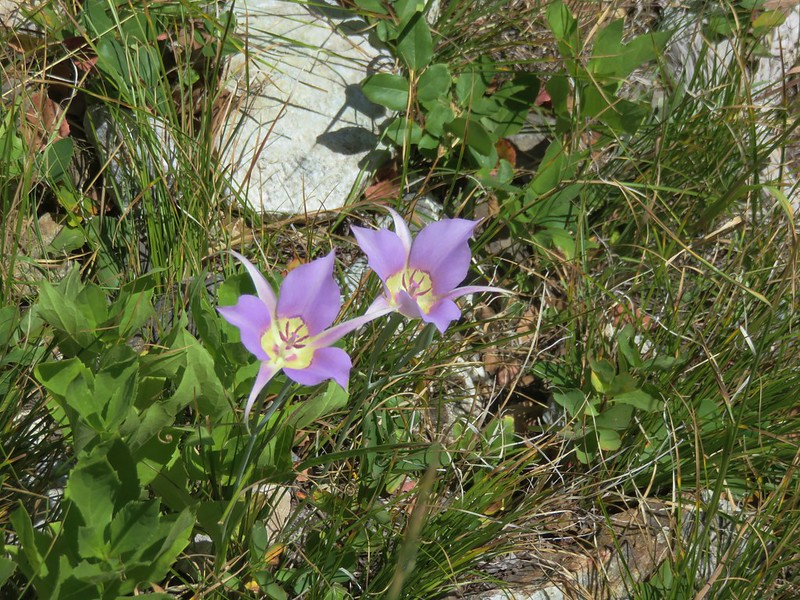
Sagebrush mariposa lily
IMG_2761

IMG_2753

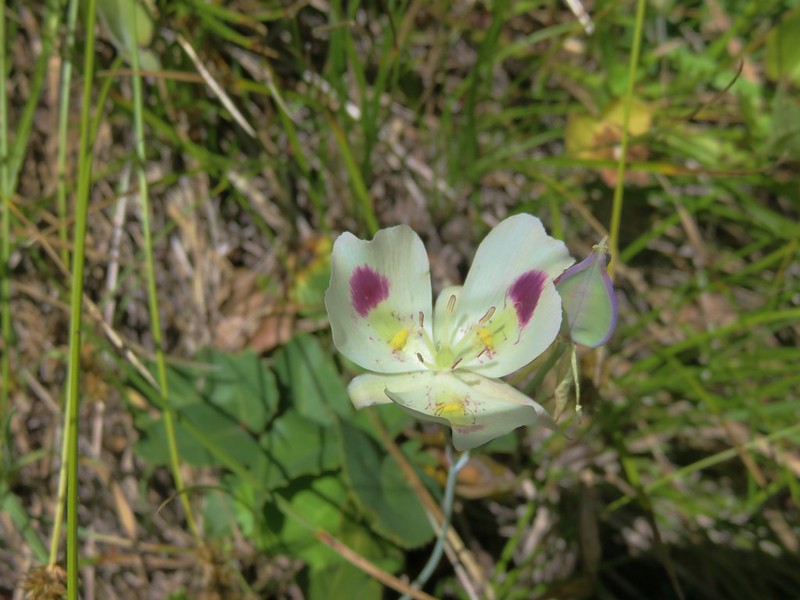
White mariposa lily
IMG_2773

IMG_2781

The trail then passed through a section of rock fields before reaching Adam Creek.
IMG_2786

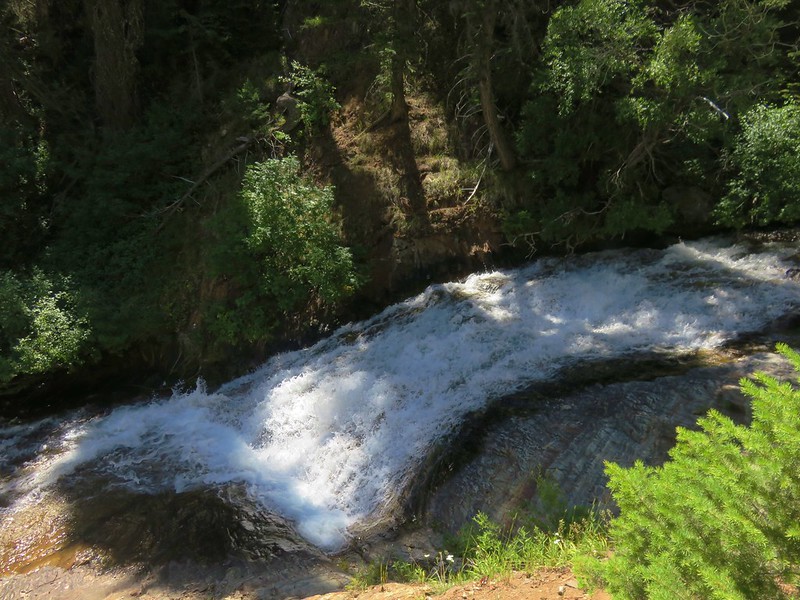
The climbing really started here as the trail began a series of switchbacks along the creek. After 14 of them we came to Beauty Falls.
Beauty Falls

Ice Falls was visibly beyond Beauty Falls.
IMG_2800

The trail straightened out as it passed through another series of meadows where the wildflowers were blooming nicely.
IMG_2833

IMG_2836

IMG_2839

IMG_2846

IMG_2867

IMG_2879

Beyond these meadows another dozen switchbacks stood between us and our goal. Although the temperature wasn’t all that high the combination of the climb and being in the sun made it seem hot. It was slow going but we knew we were getting close when we passed the sign announcing that fires were prohibited beyond that point which meant we were about a quarter mile away.
IMG_2893

As we came around a bend we got our first view of the marble rock of the Matterhorn in the distance.
IMG_2895

It wasn’t much further before the blue water of Ice Lake became visible.
IMG_2902

We’d read that most of the campsites were located on the SE side of the lake so we crossed Adam Creek and began searching for a spot.
IMG_2904

IMG_2906

In addition to the ban on fires camping is prohibited less than 100′ from the lake or streams. It was immediately evident by the numerous fire rings and obvious prior tent locations near the lake that some people are incapable of following the rules. We picked out an appropriate spot and got settled.
IMG_2936

After relaxing and having dinner we did some exploring following a trail along the south side of the lake.
IMG_2950

IMG_2955

We spotted a few of the locals along the way.
IMG_2948

IMG_2952

IMG_2964

We crossed a nice inlet creek and followed it up to a pretty alpine meadow with a waterfall.
IMG_2973

IMG_2981

IMG_2980

IMG_2986

IMG_2991

After filtering some water from the creek we returned to camp for the night.
IMG_2995

It had been a great first day but shortly after we turned in Heather became ill. We were up for a couple of hours as she attempted to get her stomach to settle down. When we finally were able to go back to bed we did so wondering if we would be continuing our trip.

Happy trails!

Flickr: https://www.flickr.com/photos/9319235@N02/albums/72157669026671623

Categories
High Cascades Hiking Mt. Hood Area Oregon Trip report

Buck Peak

A week out from our somewhat cloudy visit to the Mount Margaret Backcountry we found ourselves heading back into the clouds on the Pacific Crest Trail. Our goal for the day was the viewpoint atop Buck Peak which is just off the PCT to the NW of Lost Lake in the Mt. Hood National Forest. We began our hike at the Pacific Crest Trailhead at Lolo Pass.
IMG_2482

We headed north on the PCT which quickly passed under some power lines where we met our first clouds.
IMG_2487

Looking back toward Mt. Hood from the power lines it looked like blue skies around the mountain.
IMG_2492

The PCT climbed gently up a ridge where we had a few views between the clouds that were passing over.
IMG_2498

IMG_2516

IMG_2533

IMG_2530

IMG_2538

A decent variety of flowers could be found along the more open portions of the trail.
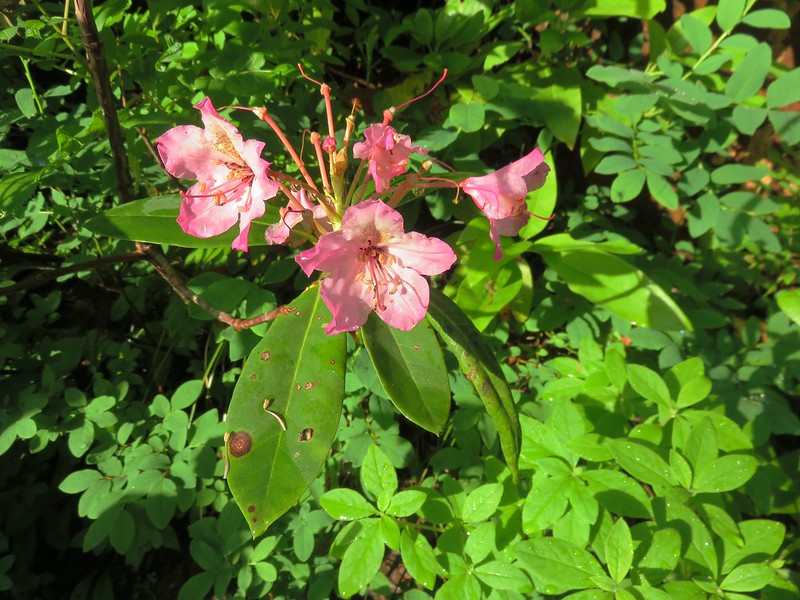
Rhododendron
IMG_2493

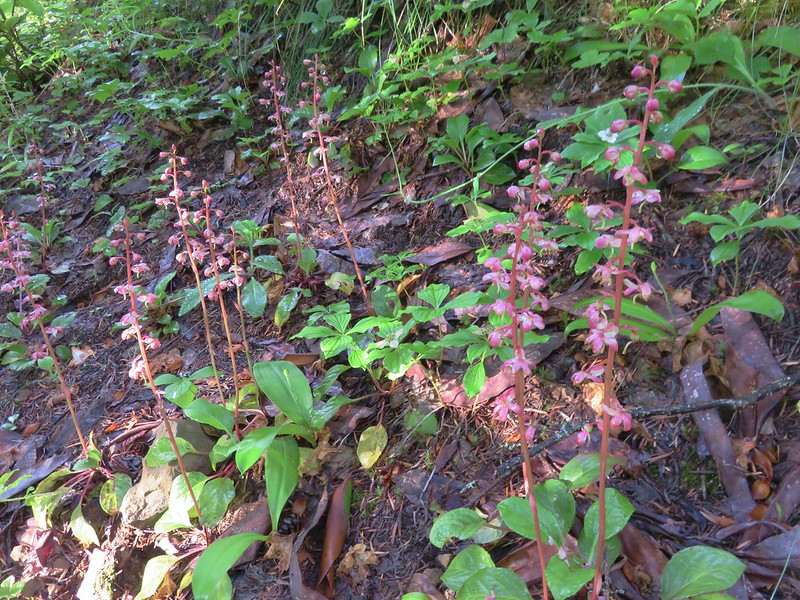
Pink pyrola
IMG_2496

Tiger lilies
IMG_2506

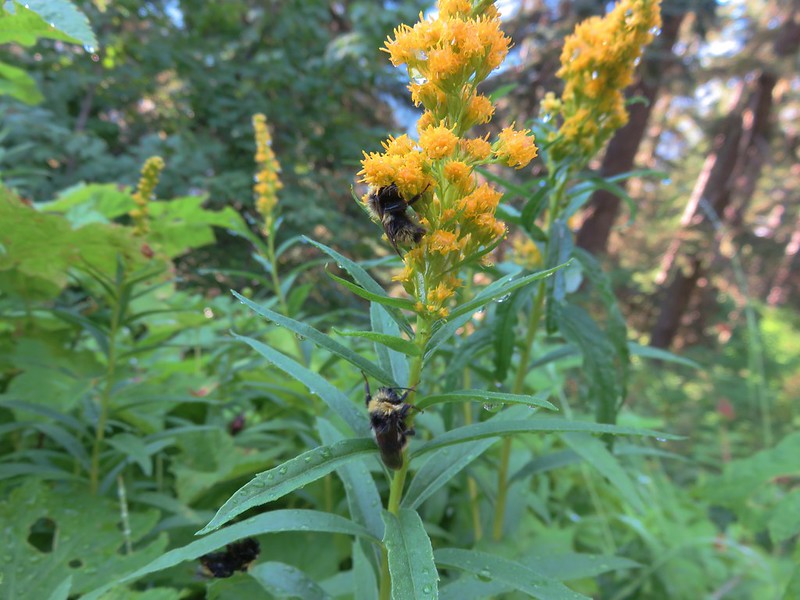
Bees on goldenrod
IMG_2512

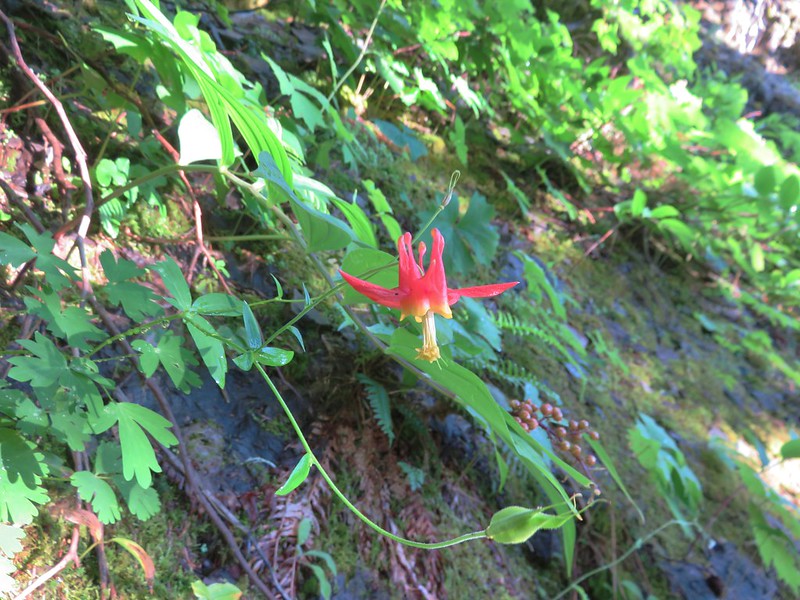
Columbine
IMG_2520

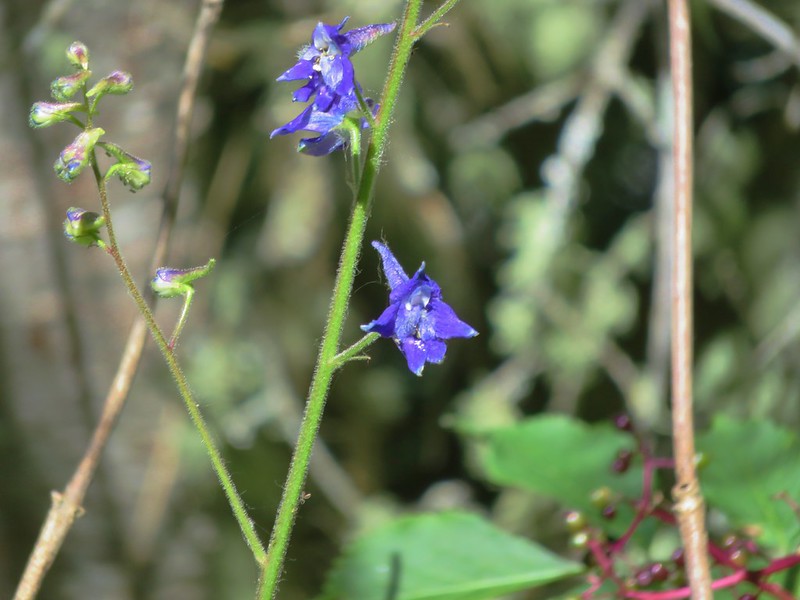
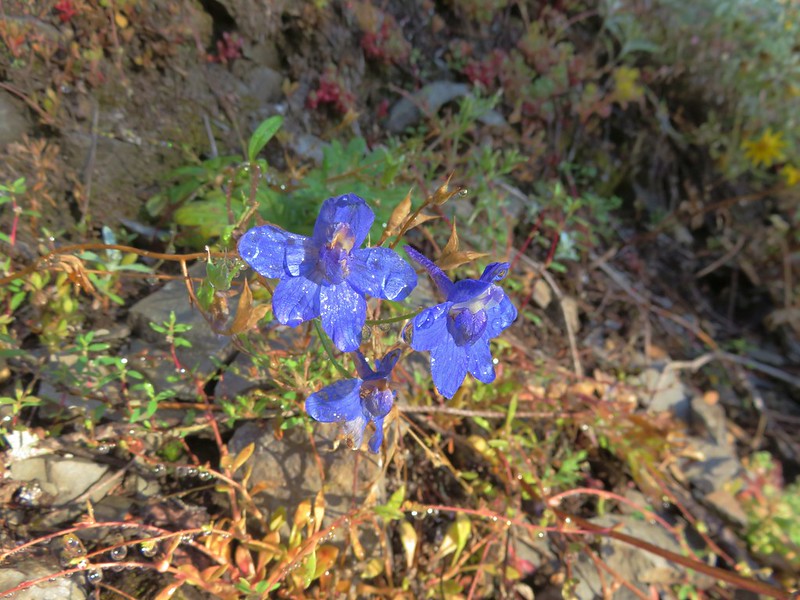
Larkspur
IMG_2523

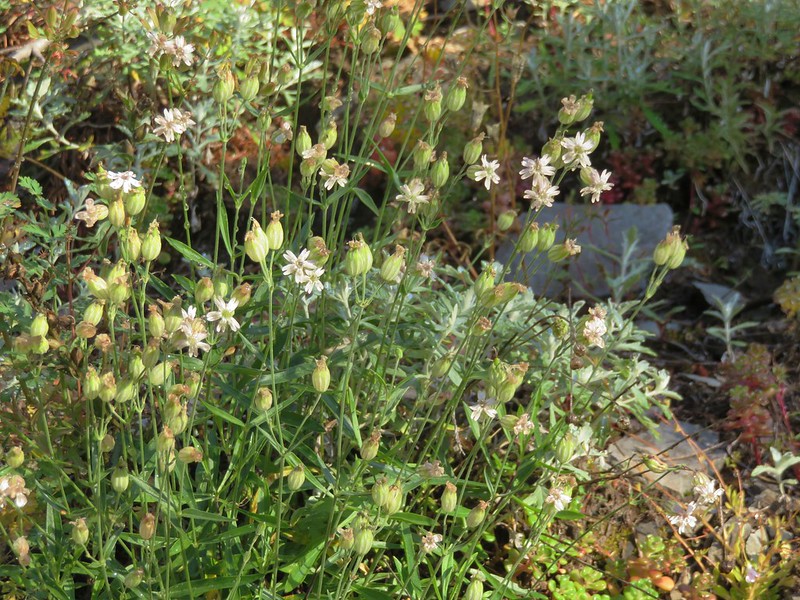
Catchfly
IMG_2526

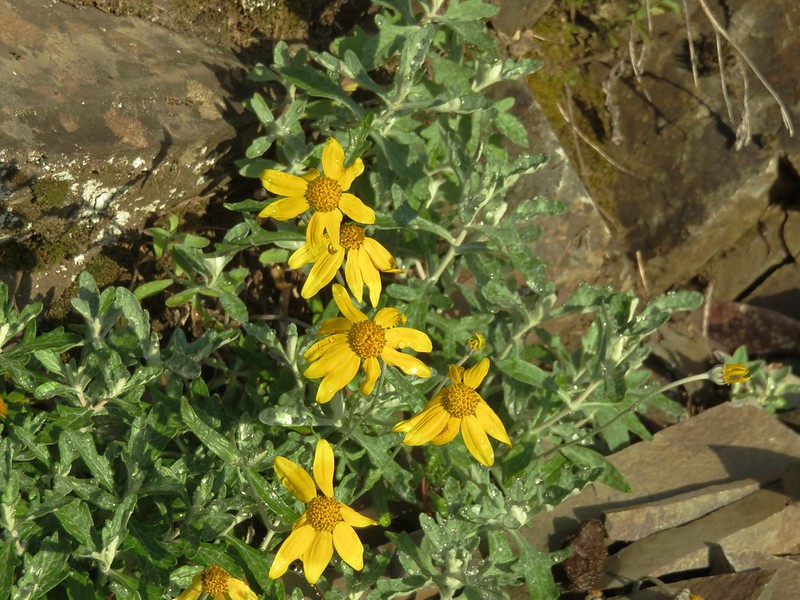
Oregon sunshine
IMG_2529

Lupine
IMG_2541

Penstemon
IMG_2544

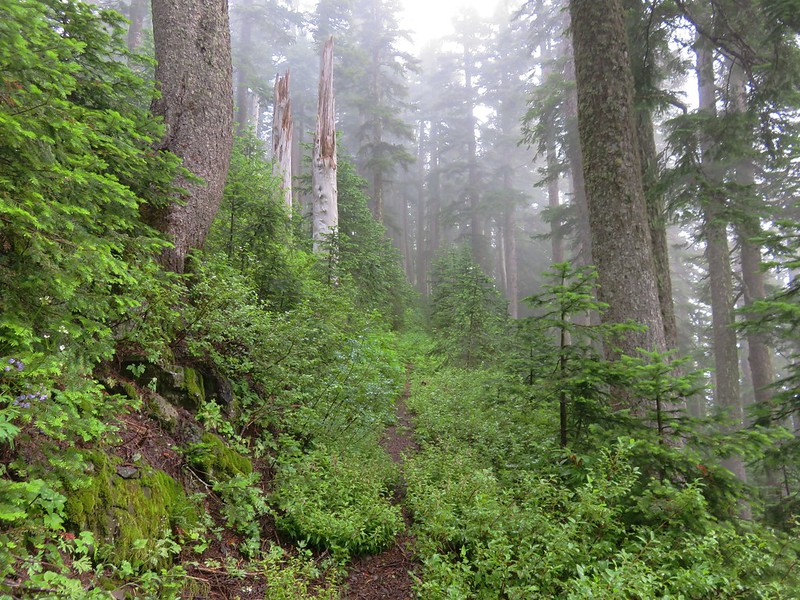
The trail soon entered the trees where it remained for the majority of remainder of the hike to Buck Peak. The forest was full of huckleberries and some salmonberries.
IMG_2545

IMG_2548

It was increasingly foggy as we gained elevation.
IMG_2552

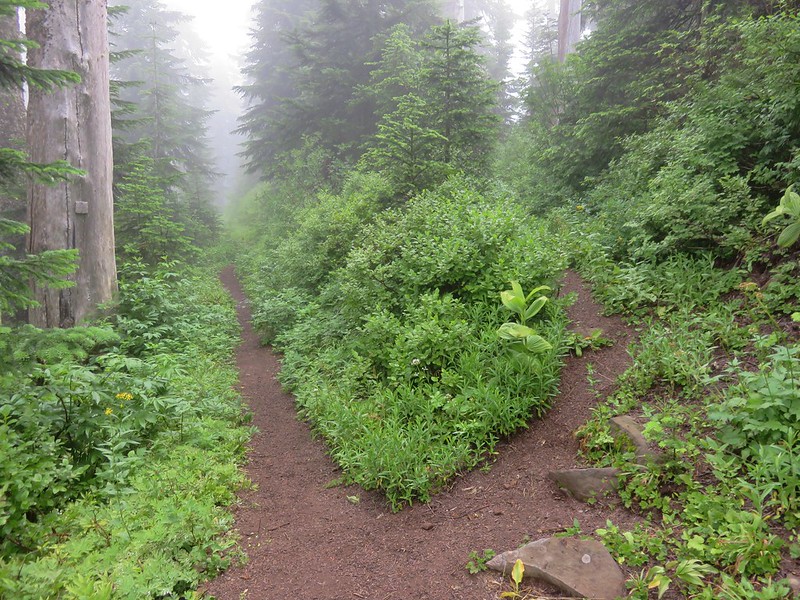
Approximately 4.5 miles from Lolo Pass we arrived at a junction with the Huckleberry Mountain Trail which led down to Lost Lake.
IMG_2553

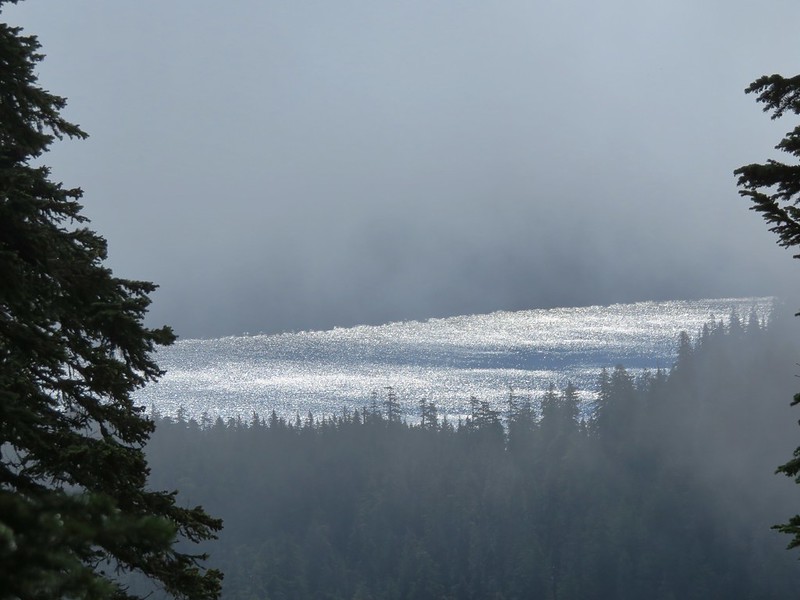
We continued on the PCT passing a spur trail to Salvation Spring and heading further into the clouds. There were a number of downed trees across the trail after the Huckleberry Mountain junction but nothing impassable. With the forest and the clouds, views were few but we did get a couple of glimpses of Lost Lake along the way. The majority of the time we were just looking at the different flowers along the way.
Beargrass
IMG_2553

Monkeyflower
IMG_2556

Parrot’s beak lousewort
IMG_2557

False hellbore
IMG_2561

IMG_2561

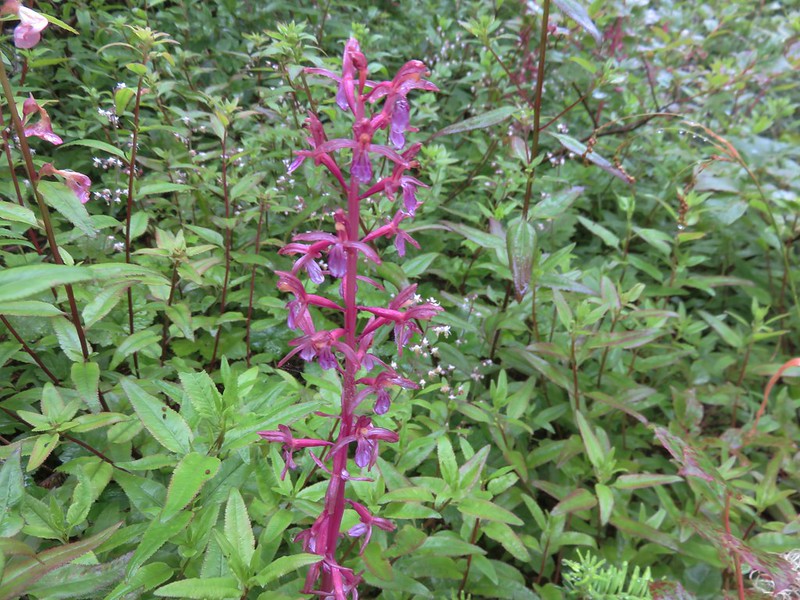
Coralroot
IMG_2568

IMG_2586

The trail to Buck Peak was unsigned but easy to spot as it split up and to the right from the PCT.
IMG_2590

The trail was a little brushy and the clouds had left the plants rather damp which in turned soaked us pretty quickly.
IMG_2591

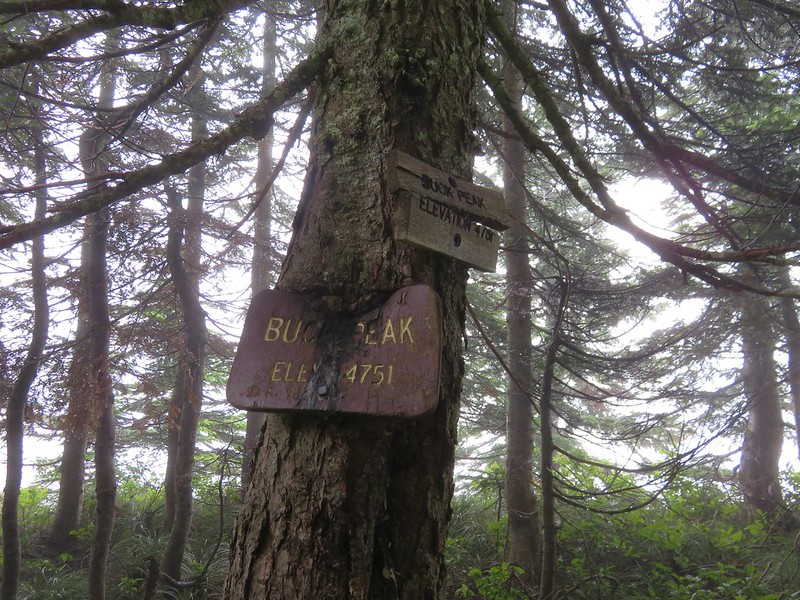
After a half-mile on the Buck Peak Trail we arrived at the signed summit.
IMG_2594

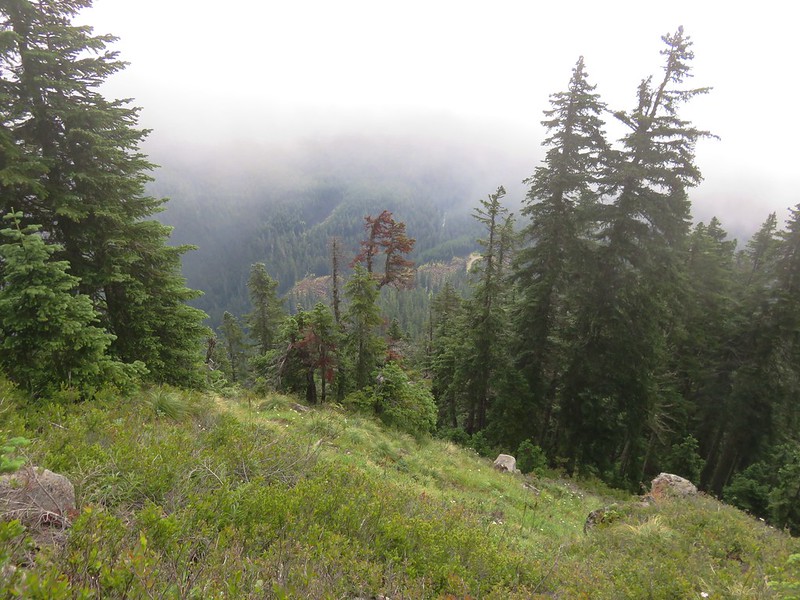
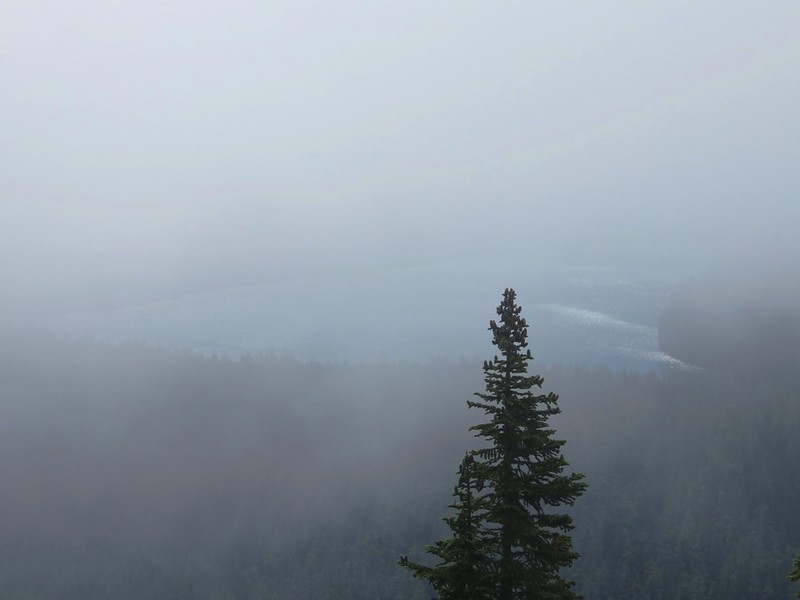
The panoramic viewpoint of several Cascade Mountains was on the fritz and we were lucky to get a couple of looks at Lost Lake below.
IMG_2599

IMG_2603

IMG_2605

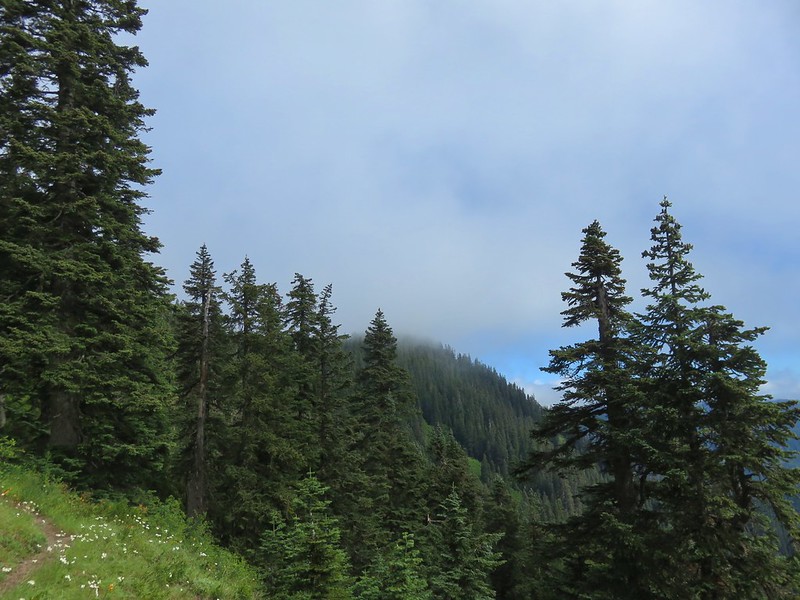
We sat on the rocky viewpoint for awhile watching the clouds pass over hoping to wait them out but finally decided it could be hours before the view cleared and headed back down. Things had already cleared up some along the PCT and the views were starting to open up as we made our return trip.
Lost Lake Butte above Lost Lake
IMG_2619

IMG_2622

Buck Peak still in a cloud.
IMG_2624

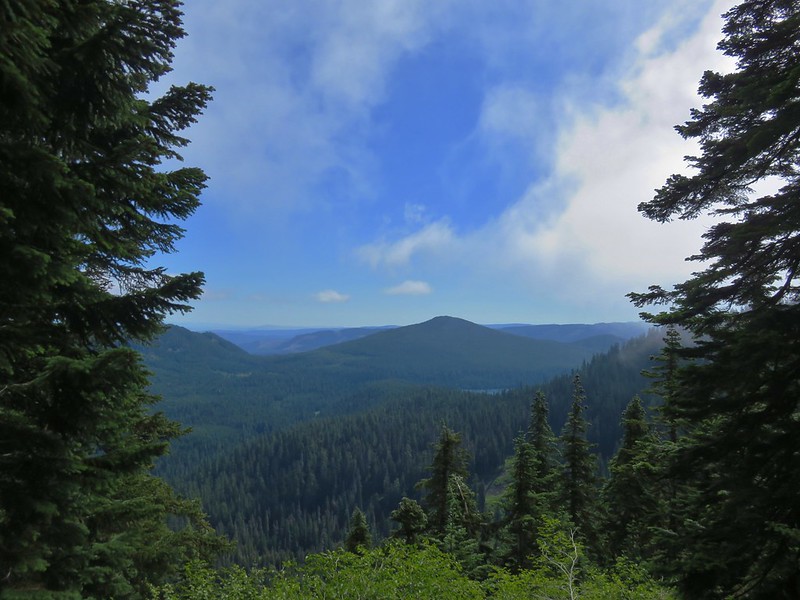
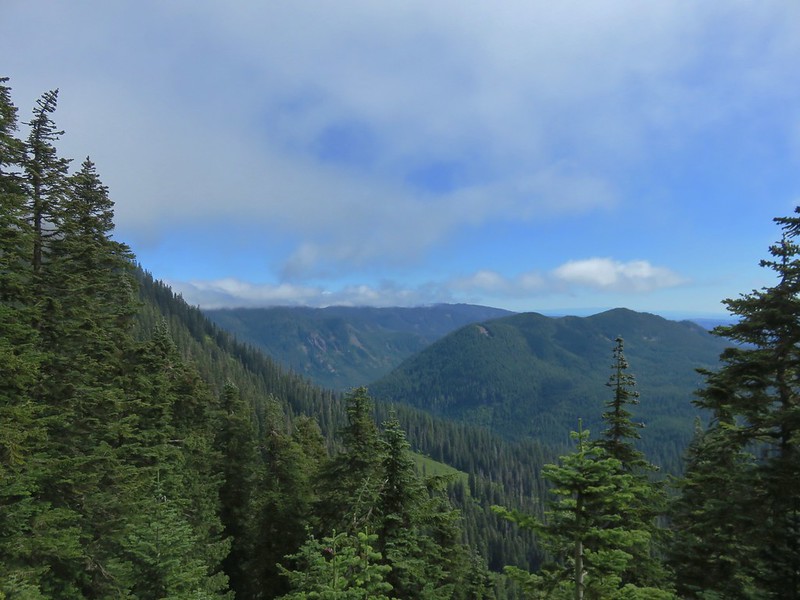
Eventually the sky had cleared enough to provide some great views of Lost Lake, Mt. Hood, and even Mt. Adams in Washington.
IMG_2630

IMG_2641

IMG_2653

The butterflies had come out in the afternoon and as we passed the rockier section of trail they were busy pollinating the flowers.
IMG_2665

IMG_2676

Mt. Hood loomed large as we passed under the power lines and finished up our hike.
IMG_2674

The hike was over 15 miles round trip but really didn’t feel that long. The approximately 1500′ of elevation gain was gradual and spread out nicely. One item to note is that this section of the PCT and the Buck Peak Trail are in the Bull Run Watershed Management Area which is the primary source of drinking water for Portland and is closed to the public. Hikers are required to remain on the trails within the area’s boundary. Happy Trails!

Flickr: https://www.flickr.com/photos/9319235@N02/albums/72157671458188065

Categories
Badger Creek Area Hiking Oregon Trip report

Fifteenmile Creek

An unusually wet forecast had us looking for an alternative hike this past week.  I was looking for a hike that didn’t have a mountain view as it’s main focus and if there was less of a possibility of getting rained on that would be a bonus.  In looking at our list of “to-do” hikes Fifteenmile Creek stood out as a good option.  The hike is in the Mt. Hood National Forest east of Mt. Hood and Lookout Mountain.  A loop descends from Fifteenmile Campground through the ecological transition zone between the Cascade Mountains and Central Oregon.

The forecast looked promising with Mt. Hood acting as the rain shadow for this area so we headed out the door at 4:30am and made the two and a half hour drive past Mt. Hood to Highway 35. To reach Fifteenmile Campground from Hwy 35 we took Forest Road 44 for 8.5 miles to Forest Road 4420 where we turned right for 2.3 miles to Forest Road 2730. The campground was 1.9 miles down FR 2730.  A bonus for this hike is the roads were paved the entire way with minimal potholes.
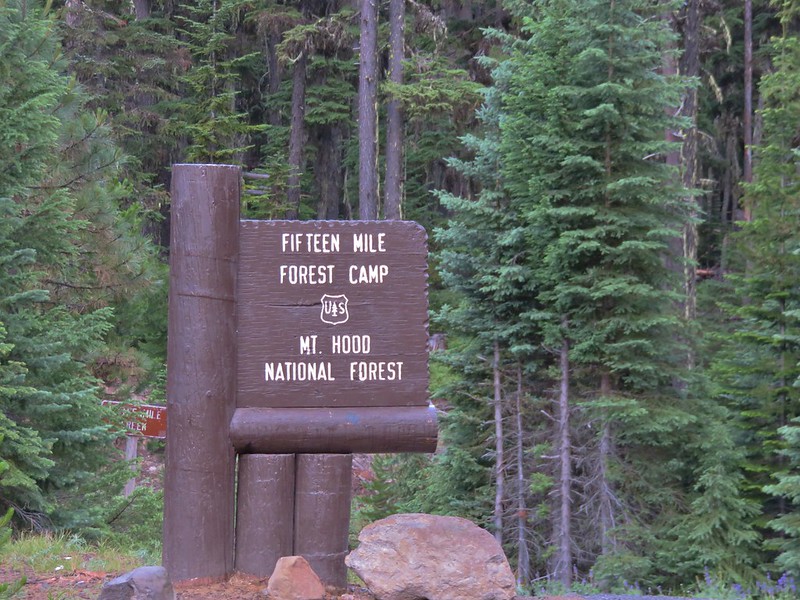
Fifteen Mile Forest Camp entrance

We parked in a small two car parking area near the trailhead and set off on the Fifteenmile Trail toward the Cedar Creek Trail junction.
Fifteenmile Trail

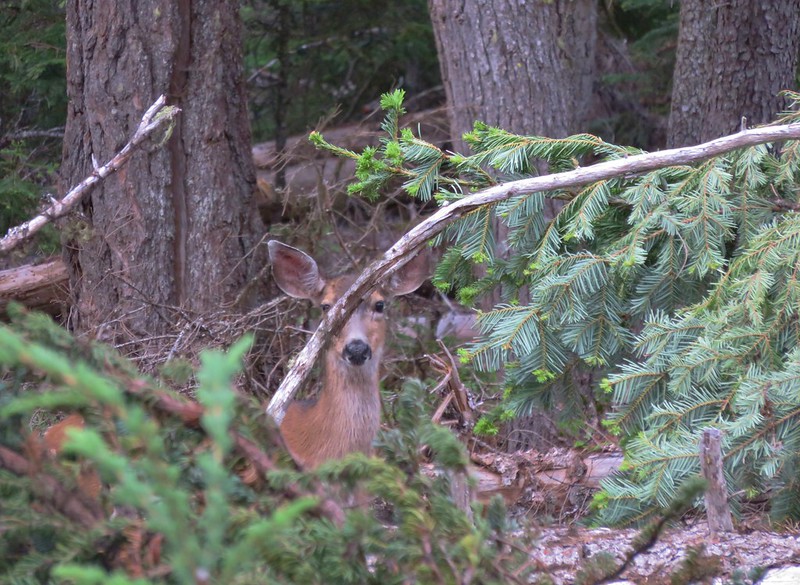
We were not alone in the forest.
Doe

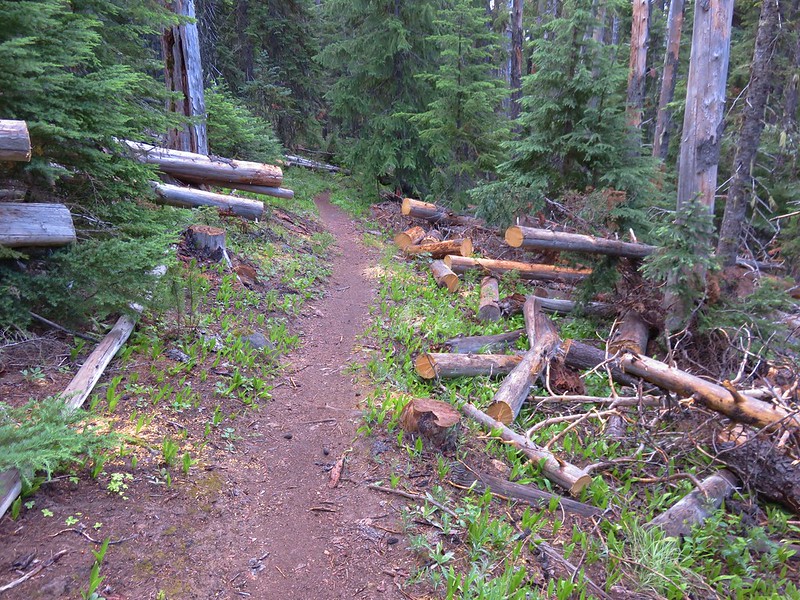
The trail descended along Fifteenmile Creek for a quarter mile to the start of the loop. The trail had been logged out a month earlier and was in great shape despite evidence that there had been a lot of trees down.
Fifteenmile Trail

Footbridge over Fifteenmile Creek

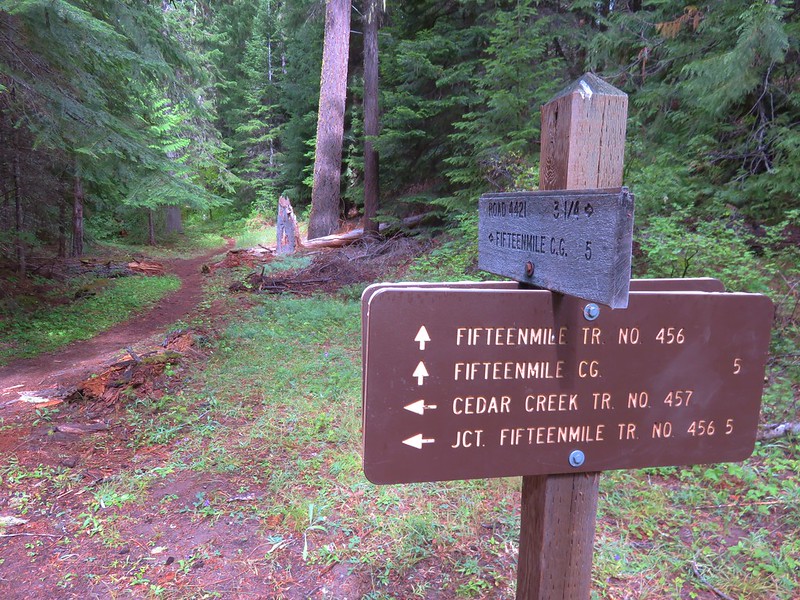
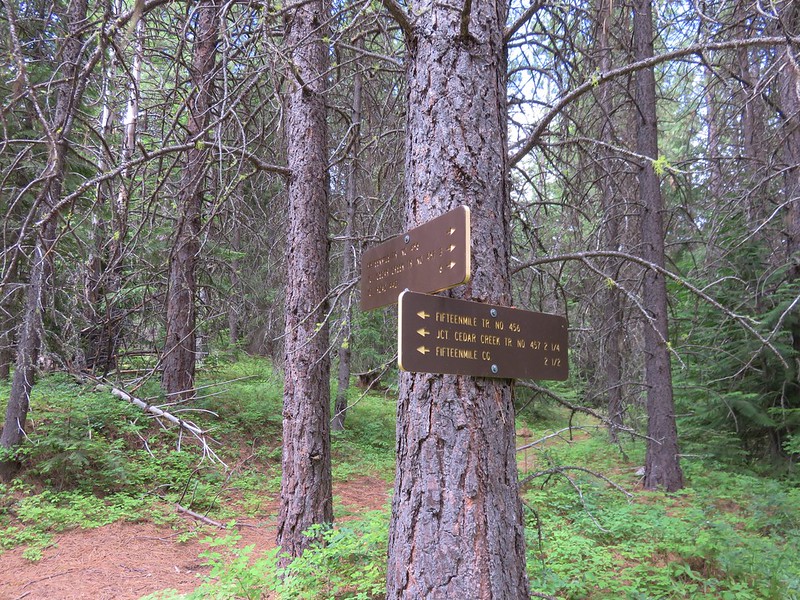
Fifteenmile Trail sign

The sign at the start of the loop was a little confusing in that it showed the Cedar Creek Trail jct as being another quarter mile to the right, but the trail sign at the trailhead had also listed the jct as a quarter mile away. We did not see another trail junction along the Cedar Creek Trail until it rejoined the Fifteenmile Trail so it would seem the sign is an error. In any event we followed the pointer for the Cedar Creek Trail and crossed Fifteenmile Creek.
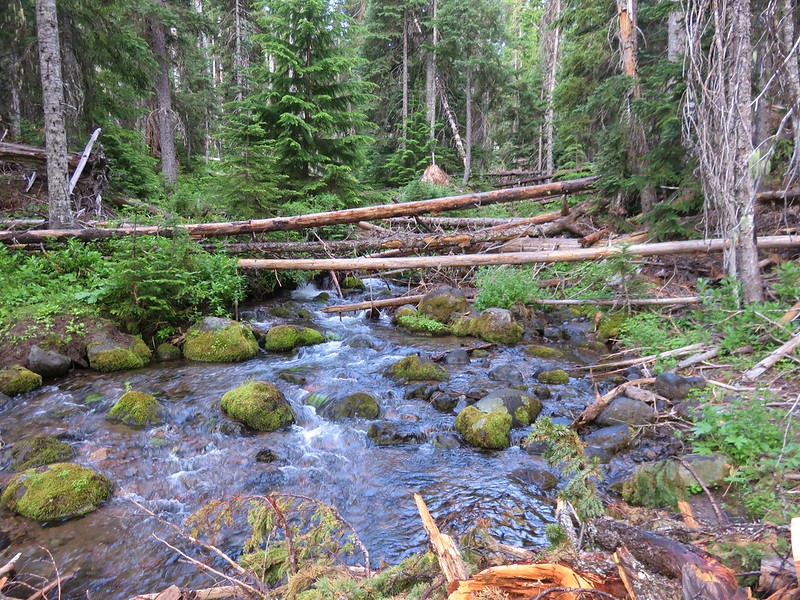
Fifteenmile Creek

The Cedar Creek Trail climbed up through a forest to a ridge top where it began to pass through meadows and by rocky viewpoints across the Fifteenmile Creek Valley.
Cedar Creek Trail

Cedar Creek Trail

Cedar Creek Trail

View from the Cedar Creek Trail

Andesite

It was too late in the year for the best of the wildflowers in the area but there were still quite a few along the way.

Lupine
Lupine

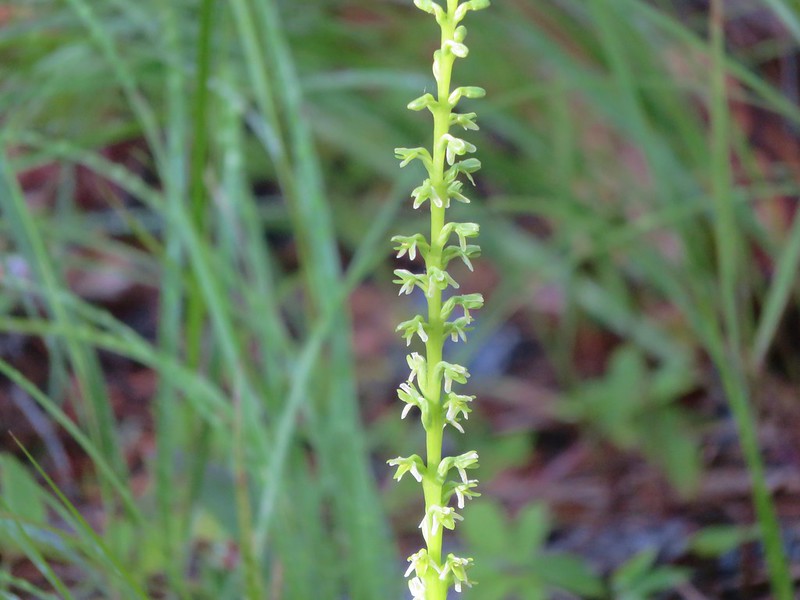
Slender bog orchid
Slender bog orchid

Prince’s pine
Prince's pine

Scouler’s bluebell
Scouler's bluebell

Worm-leaf stonecrop
Worm-leaf stonecrop

Wild onion
Wild onion

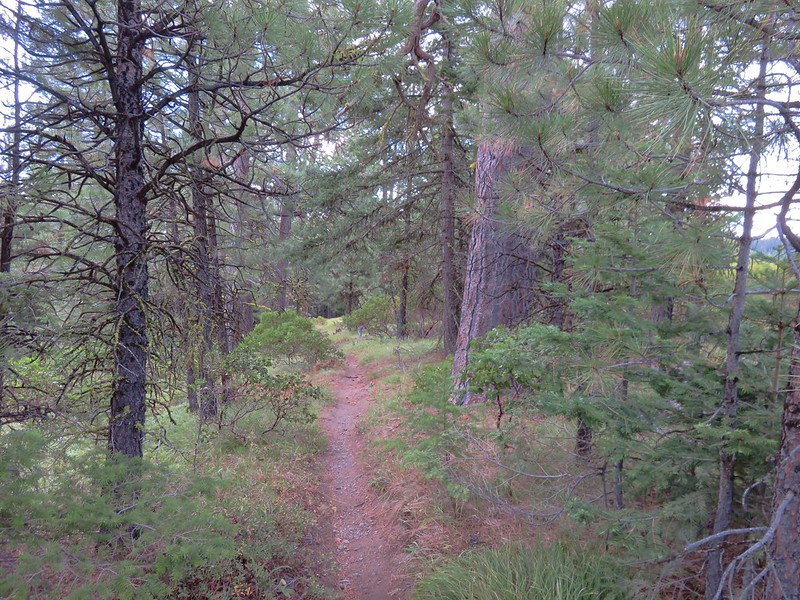
The trail was now descending along the ridge and as it did so we were dropping down toward Central Oregon. We were now in the pine-oak grassland zone which sits between the forests of Mt. Hood and the high desert of Central Oregon. Manzanita, ponderosa pine, and juniper trees began to appear and we were passing more interesting andesite formations.
Cedar Creek Trail

A couple of Juniper trees along the Cedar Creek Trail

Cedar Creek Trail

Andesite rock piles

The ridge began narrowing as we approached the lower junction of the Cedar Creek and Fifteenmile Trails. The flat plain of Central Oregon lay straight ahead reveling the stark contrast in the topography between the Cascades and High Desert.
Cedar Creek Trail looking east

Looking east toward the Central Oregon plain

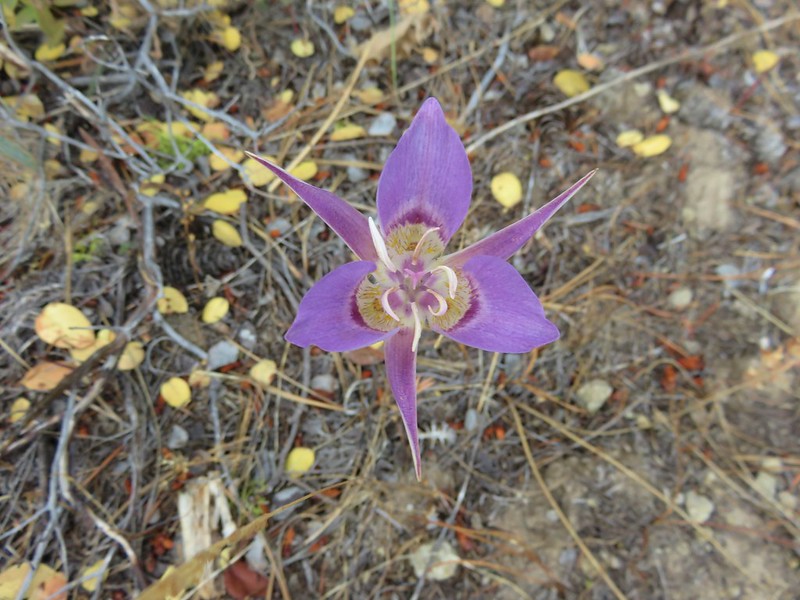
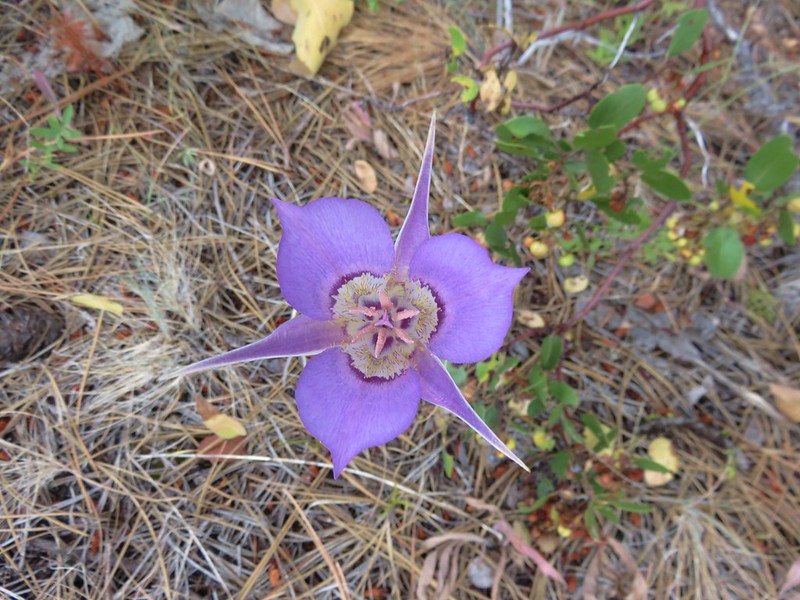
There were a bunch of sagebrush mariposa lilies, one of my favorite wildflowers, along this stretch.
Sagebrush mariposa lily

Sagebrush mariposa lily

The trail steepened a little at the end of the ridge and dropped down to a trail junction at Fifteenmile Creek.
Fifteenmile Creek

Lower junction

After a little exploration we started up the Fifteenmile Trail to complete the loop and return to Fifteenmile Camp. The lower portion of the Fifteenmile Trail climbed very slowly through a much lusher forest than we had seen along the lower portion of the Cedar Creek Trail.
Fifteenmile Trail

Fifteenmile Trail

Fifteenmile Trail

It eventually began to climb more quickly and entered the terrain more akin to that along the Cedar Creek Trail with meadows and andesite formations.
View from the Fifteenmile Trail

Andesite along the Fifteenmile Trail

Again it was too late for the best of the flowers but not completely devoid of them.
Grand collomia
Grand collomia

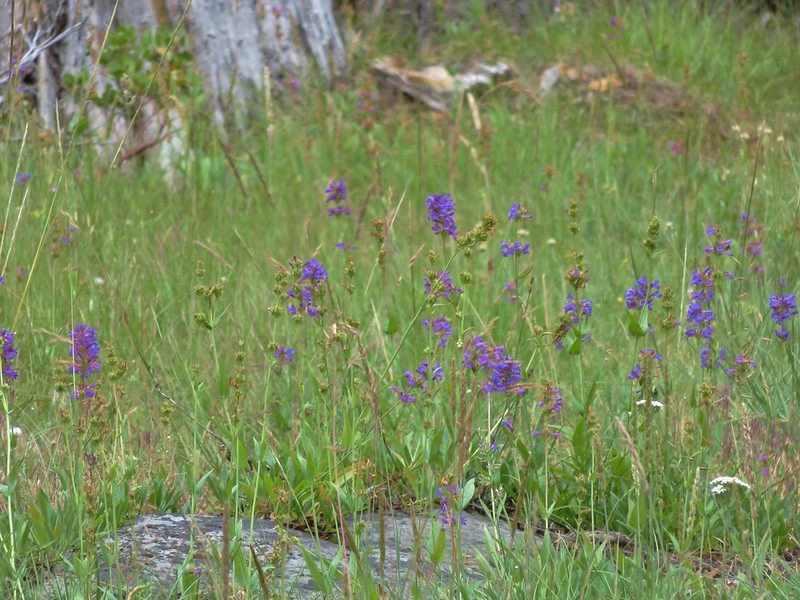
Penstemon
Penstemon

Yarrow
Yarrow

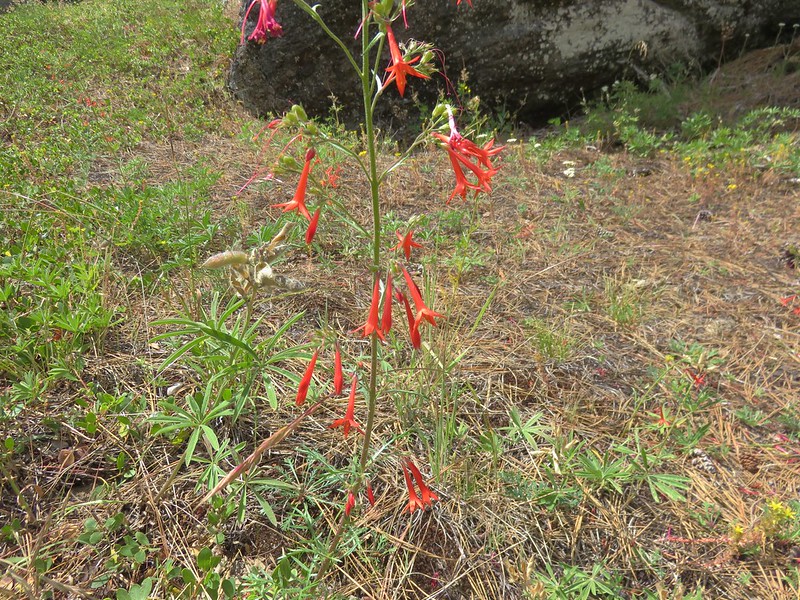
Scarlet gilia
Scarlet gilia

After 2.5 miles the trail arrived at a signed junction with an old roadbed.
Trail junction along the Fifteenmile Trail

We followed the old roadbed for a short distance before it gave way to trail once again. The trail then climbed through a series of increasingly impressive andesite formations.
Fifteenmile Trail

Fifteenmile Trail

Andesite outcroping

Looking down into the Fifteenmile Creek Valley

The trail then reenters the forest for good as it drops down to a footbridge over Foster Creek, climbs to a second footbridge across an unnamed creek, and finally arrives back at the Cedar Creek Trail jct just a quarter mile from the trailhead.
Fifteenmile Trail

Fifteenmile Trail

Fifteenmile Trail

It had turned out to be a good choice for the day. We had our fair share of blue skies and only a few minutes of a light sprinkle for rain. Although these trails are popular with mountain bikers we only saw two during our hike and no other hikers. Based on the amount of balsamroot and lupine that was no longer in bloom, a visit during the first part of June would probably be great for the wildflowers here. The views, the andesite formations, and the varied ecological zones along the way would make it a worthwhile trip anytime though. Happy Trails!

Flickr: https://www.flickr.com/photos/9319235@N02/albums/72157668046892554

Categories
Hiking Middle Santiam Old Cascades Oregon Trip report

Coffin Mountain, Bachelor Mountain, and Bugaboo Ridge

For the 4th of July we spent our day off revisiting Coffin and Bachelor Mountains and discovering the Bugaboo Ridge Trail. Our previous hike up Coffin and Bachelor Mountains was on a cloudy day in early August, 2013. We hadn’t experienced any mountain views that day and it was past peak for the wildflowers so we had added it to the list of hikes to redo. In addition to revisiting the two mountains we also planned on checking out the Bugaboo Ridge Trail which intersects the Bachelor Mountain Trail.

A recent presentation by Matt Reeder at Salem Summit Company had prompted us to pick up a copy of his book “101 Hikes in the Majestic Mount Jefferson Region” which provided some additional details on the Bugaboo Ridge Trail. After reading his description it seemed well worth the additional mileage to check it out.

We parked at the Coffin Mountain Trailhead which is accessed via Straight Creek Road found 2.9 miles south of Marion Forks.
IMG_0871

On our previous visit we had parked here and started by walking 1.2 miles further along forest roads to the Bachelor Mountain Trailhead and hiking to that summit before returning and heading up Coffin Mountain. To change things up this time we headed up Coffin Mountain first. Most of the Coffin Mountain Trail passes through open wildflower meadows.
IMG_0874

Our timing was much closer to peak for the wildflowers and there was a wide variety in various stages of bloom.
Chaparral false bindweed
chaparral false bindweed

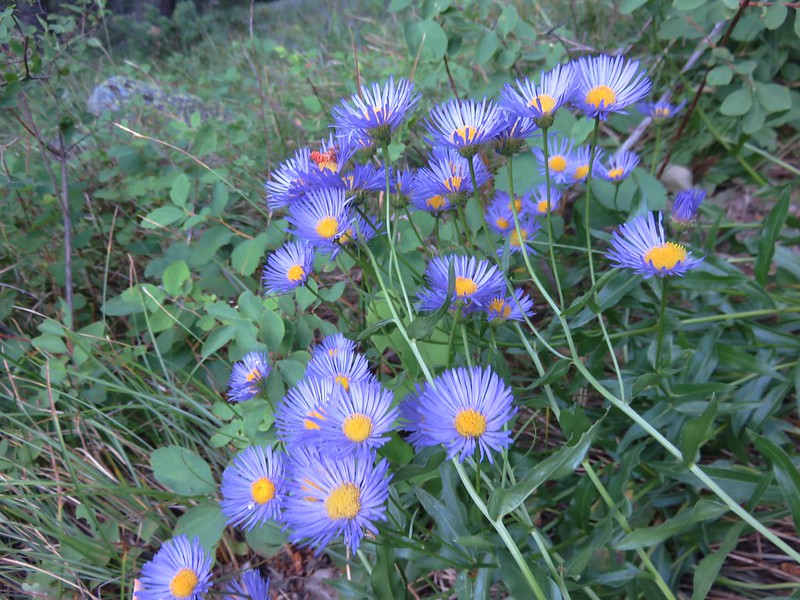
Aster
IMG_0882

Thistle
IMG_0889

Fireweed
IMG_0890

Cat’s ear lily
IMG_0895

Yellow leaf iris
IMG_0906

False sunflower and blue gilia
IMG_0911

Scarlet gilia and paintbrush
IMG_0913

Tall bluebell
IMG_0918

False sunflower
IMG_0929

Catchfly
IMG_0930

Mountain owl’s clover
IMG_0936

As the trail climbs views of the Cascades get increasingly better.
Mt. Jefferson
IMG_0927

Three Fingered Jack, Mt. Washington, Broken Top, The Three Sisters, The Husband and Diamond Peak
IMG_0932

Diamond Peak
IMG_0933

Mt. Washington, Broken Top, The Three Sisters and The Husband
IMG_0934

Three Fingered Jack
IMG_0945

The number of flowers increased the higher we got in the meadows.
IMG_0954

IMG_0949

Red, White, and blue for the 4th
IMG_0956

Beargrass
IMG_0961

The trail enters a short section with trees where the Coffin Mountain Lookout is visible on the cliffs above.
IMG_0972

A final push uphill leads to the staffed lookout tower and helipad.
IMG_0976

It was a little different view than we’d had in 2013.
Coffin Mountain lookout

IMG_0990

We returned to the trailhead then set off on the road toward the Bachelor Mountain Trailhead. Although it’s possible to drive the 1.2miles we’d rather enjoy the scenery along the way.
IMG_1020

IMG_1022

IMG_1023

IMG_1030

Coffin Mountain Lookout from the road to the Bachelor Mountain TH.
IMG_1032

The unsigned trail begins at the end of Road 430.
IMG_1039

The trail climbs fairly steeply through a forest in two long switchbacks before losing the trees and gaining views as it rounds a ridge end.
IMG_1051

The wildflowers on Bachelor Mountain rivaled those on Coffin although Bachelor Mountain is drier and rockier.
IMG_1048

Washington lily
IMG_1057

IMG_1070

IMG_1072

After the initial climb the trail leveled out along a plateau with views.
IMG_1074

IMG_1079

The trail then reentered the forest shortly before arriving at a junction with the Bugaboo Ridge Trail.
IMG_1083

IMG_1084

We kept to the Bachelor Mountain Trail and headed uphill toward the summit. This section of trail passed though a forest of small tightly packed trees, many of which were bent by the weight of winter snows.
IMG_1086

Once we were above the trees the wildflowers and views returned.
IMG_1090

IMG_1098

Phlox
IMG_1094

Wallflower
IMG_1107

Another lookout used to sit atop Bachelor Mountain but it was burnt by the Forest Service years ago just leaving the views. To the north Mt. Adams was visible over Mt. Hoods shoulder.
IMG_1110

Mt. Jefferson loomed to the east.
IMG_1114

A little further south was Three Fingered Jack and the scars of the B & B Fire.
IMG_1119

Then came a clump of Cascade Mountains, Washington, Broken Top and the Three Sisters.
IMG_1118

Because Bachelor Mountain is taller than its neighbor there was also a nice view of Coffin Mountain.
IMG_1135

We headed back down the Bugaboo Ridge Trail junction and unlike our last visit this time we turned onto that trail and headed east through the forest.
IMG_1139

The Bugaboo Ridge Trail is a longer approach to Bachelor Mountain and it was evident that it sees much lighter usage based on the narrower tread and encroaching vegetation in places. We found it to be a great trail though. The trail left the trees and entered a series of rock gardens and meadows filled with wildflowers.
IMG_1142

IMG_1147

IMG_1148

IMG_1156

IMG_1158

IMG_1166

The views were pretty darn good too.
IMG_1160

IMG_1172

IMG_1202

Heather spotted an interestingly colored larkspur along the trail, it was the only one we could find.
IMG_1216

The meadows and gardens began to give way to forest as the trail descended to the Bruno Meadows Trail junction.
IMG_1224

IMG_1228

The Bruno Meadows Trail is yet another option to reach Bachelor Mountain, but we ignored that trail and continued to descend on the Bugaboo Ridge Trail. The descent was gentle except for a short section above the Bruno Meadows junction although there was a fair amount of blowdown to navigate. We decided to turn around at a logging road that the trail crossed in an old clear cut.
IMG_1245

The detour along the Bugaboo Ridge Trail to the road was just under 2.5 miles adding nearly 5 miles to the days hike but it had been worth the extra effort. This visit had been a vastly different experience from our visit in 2013. It was fun to be able to see what we had not been able to on that first trip, and it was a great way to spend the 4th. Happy Trails!

Flickr: https://www.flickr.com/photos/9319235@N02/albums/72157670004507771

Categories
High Cascades Hiking Oregon Three Sisters Area Trip report

Rebel Creek Loop – Three Sisters Wilderness

**Note the 2017 Rebel Fire burned a portion of this hike.**

The Three Sisters Wilderness hosts approximately 260 miles of trails. Some of them such as Green Lakes and Obsidian are overused while others see little if any use. The 12.3 mile loop starting at the Rebel Trailhead on the Rebel Creek and Rebel Rock Trails is on the lesser used end of the scale. The trailhead is 14.5 miles from Highway 126 along paved Aufderheide Road 19.
IMG_8921

The loop starts on the Rebel Creek Trail and quickly comes to a fork where the Rebel Rock Trail splits to the right. We stayed on the Rebel Creek Trail and would meet back up with the upper end of the Rebel Rock Trail in 5 miles.
IMG_8925

The forested trail led along Rebel Creek, crossing twice on footbridges, while it gradually climbed up the valley.
IMG_8927

IMG_8928

IMG_8938

IMG_8939

IMG_8944

The hike through the forest was peaceful with the sound of the creek below and birds singing in the trees. We didn’t see many of the birds we were hearing, but we did spot a nice variety of flowers along the way.
Prince’s Pine
IMG_8937

Pink pyrola
IMG_8949

Spotted coralroot
IMG_8954

Fringed pinesap
Fringed pinesap

Rhododendron
IMG_8962

Tall bluebells
IMG_8966

Yellow coralroot
IMG_8981

Bunchberry
IMG_8983

The trail was in pretty good shape despite it’s light usage. There were a few downed trees and near the upper end it became a little brushy in spots.
IMG_8979

IMG_8985

We met back up with the Rebel Rock Trail at the edge of thimbleberry meadow where a post with no signs left marked the junction.
IMG_8987

The Rebel Creek Trail technically continued to the left to the Olallie Trail but that section is, according to the Forest Service, faint due to lack of use/maintenance. After a short break we turned right onto the Rebel Creek Trail skirting the meadow and climbing up and over a ridge near the hidden Rebel Rock. More thimbleberry filled meadows awaited us as we traversed along what was now a west facing hillside. The meadows contained a few flowers beside the white thimbleberry blossom and also allowed for views across the valley to the opposite hillside.
IMG_9022

Lupine
IMG_9024

Columbine
IMG_9027

Larkspur
IMG_9033

Cat’s ear lily
IMG_9037

IMG_9046

Whenever we have views of distant meadows we try and scan them for wildlife. It always seems like we should see deer, elk or even a bear and on a couple of occasions we have managed to spot deer or elk. More often than not though we get our hopes up only to discover we are staring at a rock or downed tree. This time though I was sure I’d seen a dark object, I had my eyes on, move so I used the 120x digital zoom on the camera to take a closer look. It turned out to be a bear wandering around in a meadow full of white valerian flowers. Given the distance the pictures didn’t turn out great but we watched it for a while before it disappeared into the trees.
With 30x optical zoom.
IMG_9007 (2)

120x digital zoom
IMG_9006

IMG_9010

The trail continued to pass through similar meadows until finally reentering the forest where we startled a grouse.
IMG_9056

IMG_9062

Meadowrue
IMG_9068

Coneflower
IMG_9072

Blurry grouse photo
IMG_9088

A short distance later it crested a ridge where we entered a drier environment as we moved to the south facing side of the ridge.
IMG_9099

IMG_9108

The first snowy peak of the day came into view to the south, Maiden Peak near Waldo Lake.
IMG_9112

The trail had entered a wildflower meadow filled with bright red scarlet gilia.
IMG_9120

IMG_9129

IMG_9147

There were several other types of flowers mixed in as well.
Cat’s ear lily
IMG_9114

Oregon sunshine
IMG_9123

Blue gilia and buckwheat
IMG_9135

Paintbrush and penstemon
IMG_9143

Clarkia
IMG_9150

As we worked our way through the meadow the view behind us to the east opened up revealing the only view of Rebel Rock’s spire, the top of South Sister and Mt. Bachelor.
IMG_9141

IMG_9142

IMG_9139

The trail passed into another section of trees where we noticed what appeared to be a faint trail to the left leading to a possible viewpoint. We followed it out to an open rocky ledge which allowed us to see the old Rebel Rock Lookout further to the west.
IMG_9163

IMG_9165

We returned to the trail and continued west watching for the side trail to the old lookout building. A rock cairn along an open area marked the path.
IMG_9182

The lookout itself was not visible until we’d gone a couple hundred feet on the side path. The windows were mostly broken out and several boards were missing from the deck but the view was nice.
IMG_9187

IMG_9189

IMG_9192

After a break at the lookout we returned to the trail in the rocky meadow. The flower display was pretty nice here too with a few different flowers that we hadn’t seen yet during the hike.
Bastard toadflax
Bastard toadflax

Catchfly and a yellow composite
IMG_9202

Owl’s clover and blue gilia
IMG_9210

A half mile from the side path the the lookout was yet another meadow and the best viewpoint of the day.
IMG_9240

From this meadow Mt. Jefferson, the Three Sisters, and Mt. Bachelor were all clearly visible.
IMG_9250

IMG_9246

The meadow sported another nice collection of wildflowers.
Phlox
IMG_9238

Penstemon
IMG_9260

The Three Sisters
IMG_9264

The trail began to descend beyond the viewpoint through another series of thimblerry meadows. The tread here was often hidden by the thick vegetation.
IMG_9272

IMG_9273

The trail switched back just before reaching Trail Creek and reentered the forest.
IMG_9293

This section of trail gradually descended through the forest. Along the way were a couple of additional meadows where there were again some different flowers.
IMG_9299

IMG_9337

Oregon sunshine and clarkias
IMG_9308

Farewell-to-Spring
IMG_9342

Diamond clarkia
diamond clarkia

There was also a nice supply of ripe, warm, strawberries to munch on.
IMG_9363

Although a few cars had joined ours at the trailhead we completed the loop without seeing any other people along the trails. Any time the number of bears you see is more than other people it’s a good day on the trail. After doing this loop we were left wondering why it isn’t a little more popular. Although there are a couple of longer stretches without view there were some nice ones and the amount and variety of flowers had surprised us. There is a cumulative elevation gain of 3300′ but the trail was never particularly steep and it was spread over such a distance that it didn’t feel like we’d done that much climbing. The fact that the trailhead is an easy drive on good paved roads is an added bonus. It is definitely a hike we’d recommend. Happy Trails!

Flickr: https://www.flickr.com/photos/9319235@N02/albums/72157670151874216