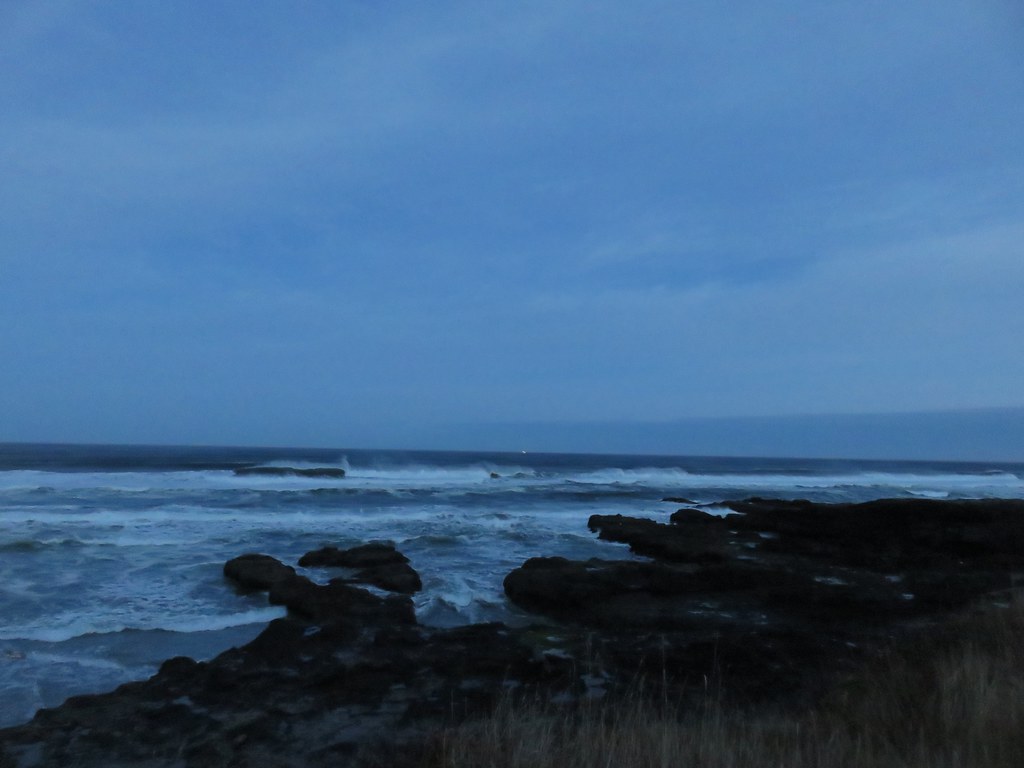
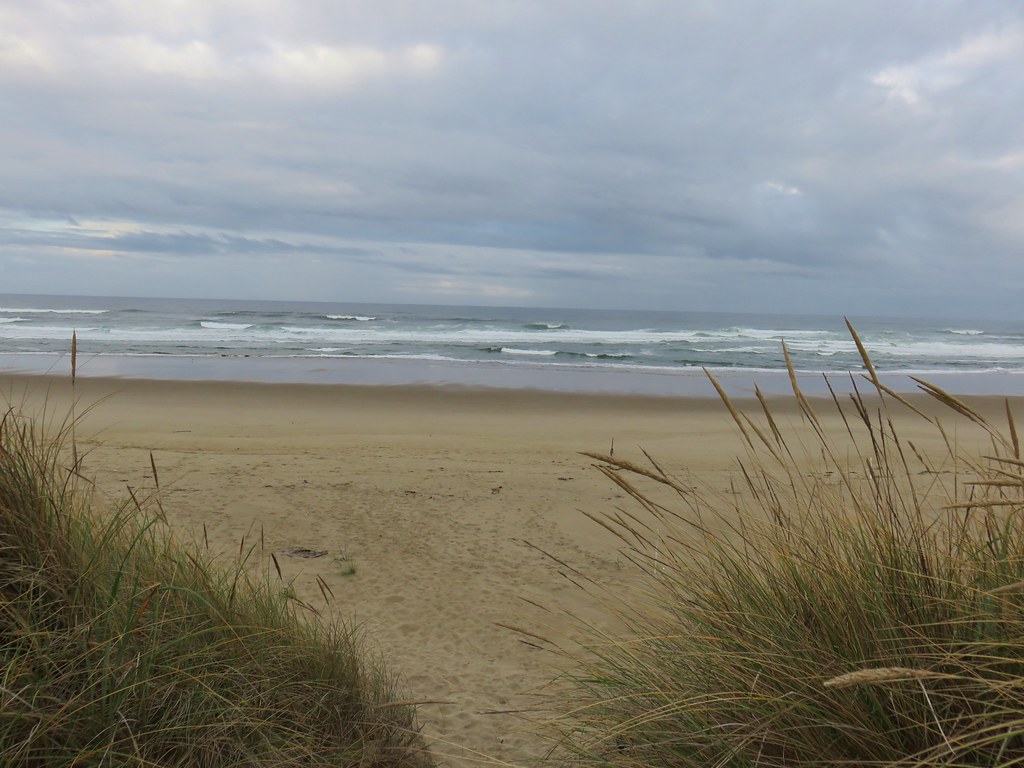
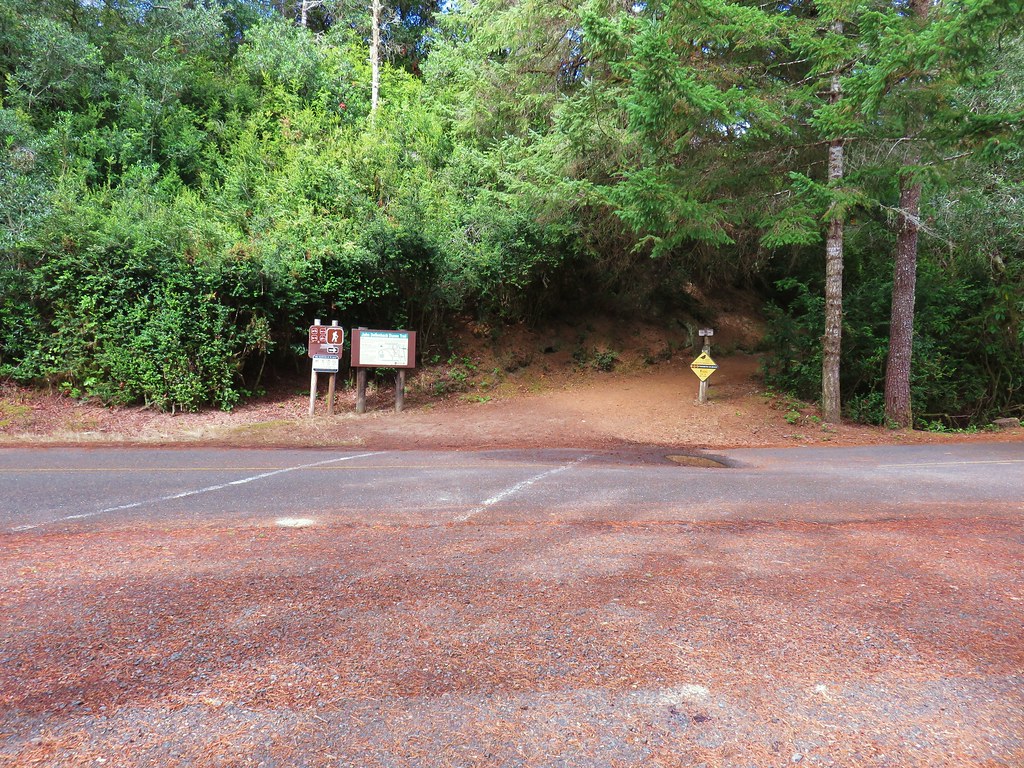
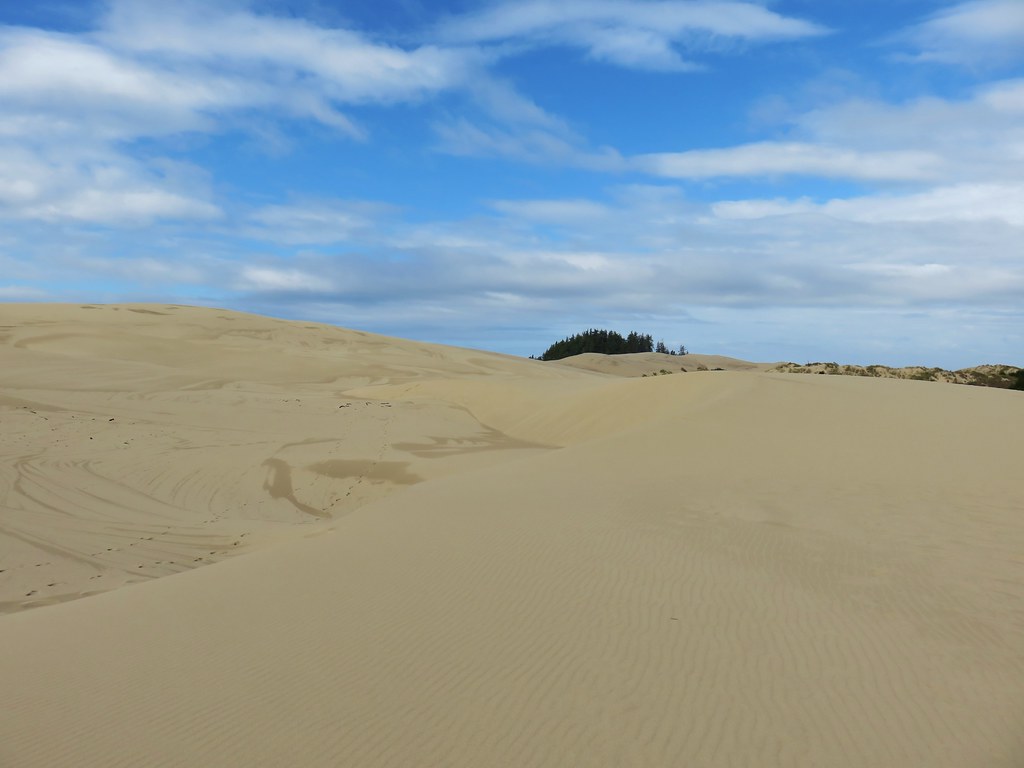
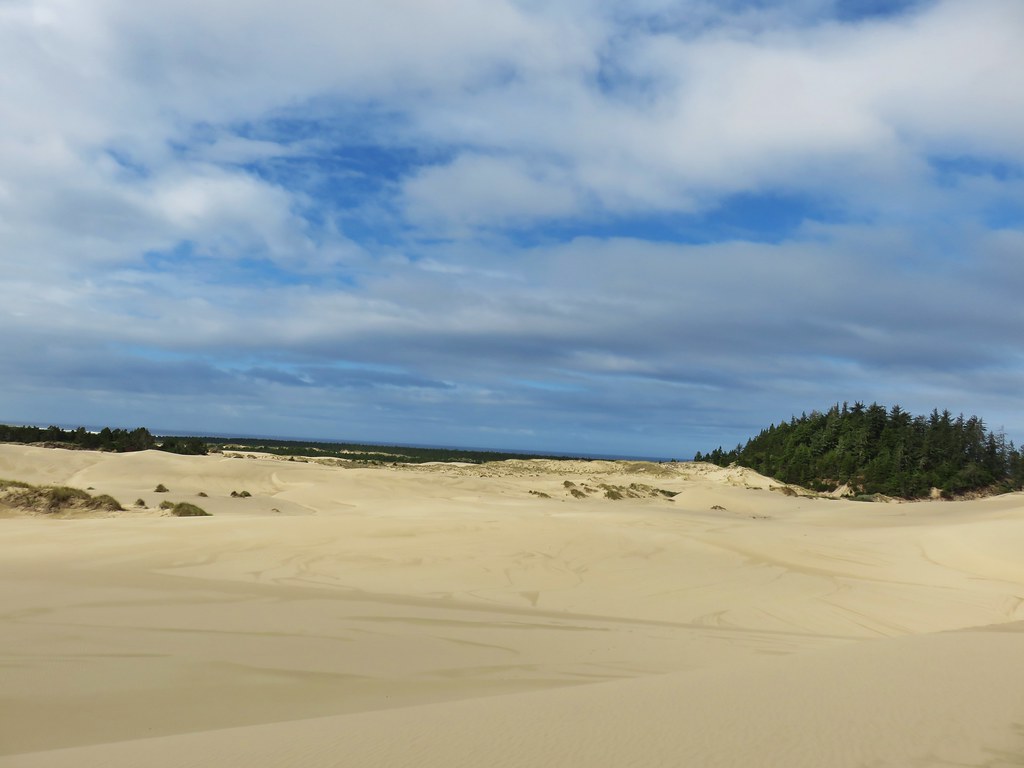
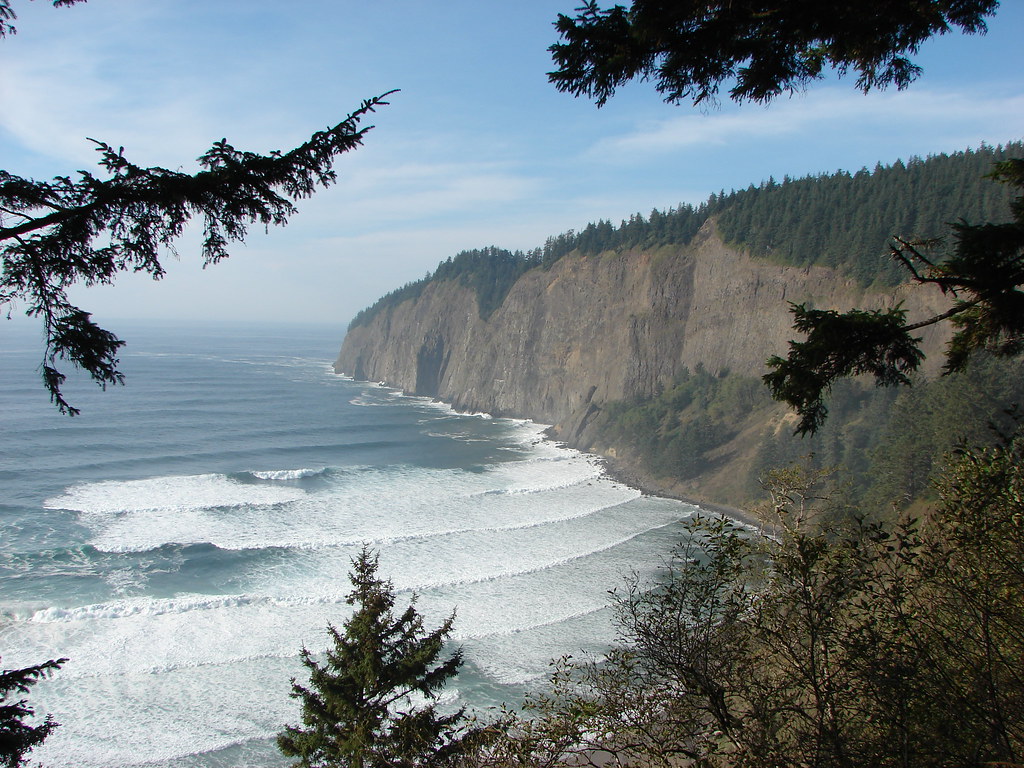
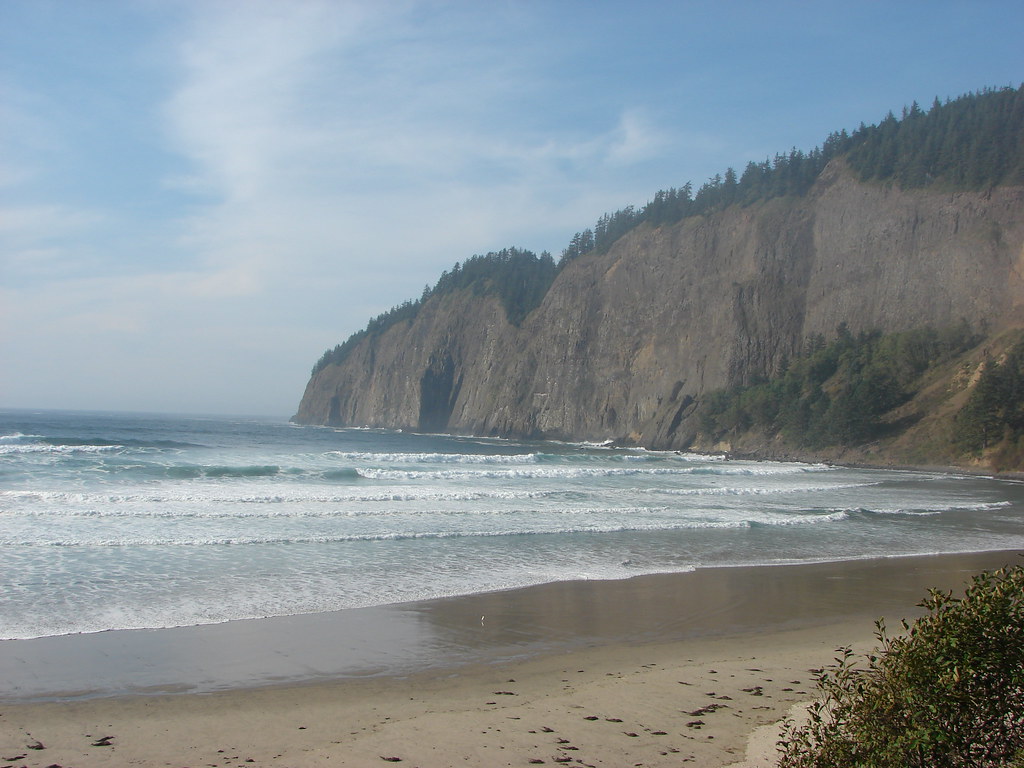
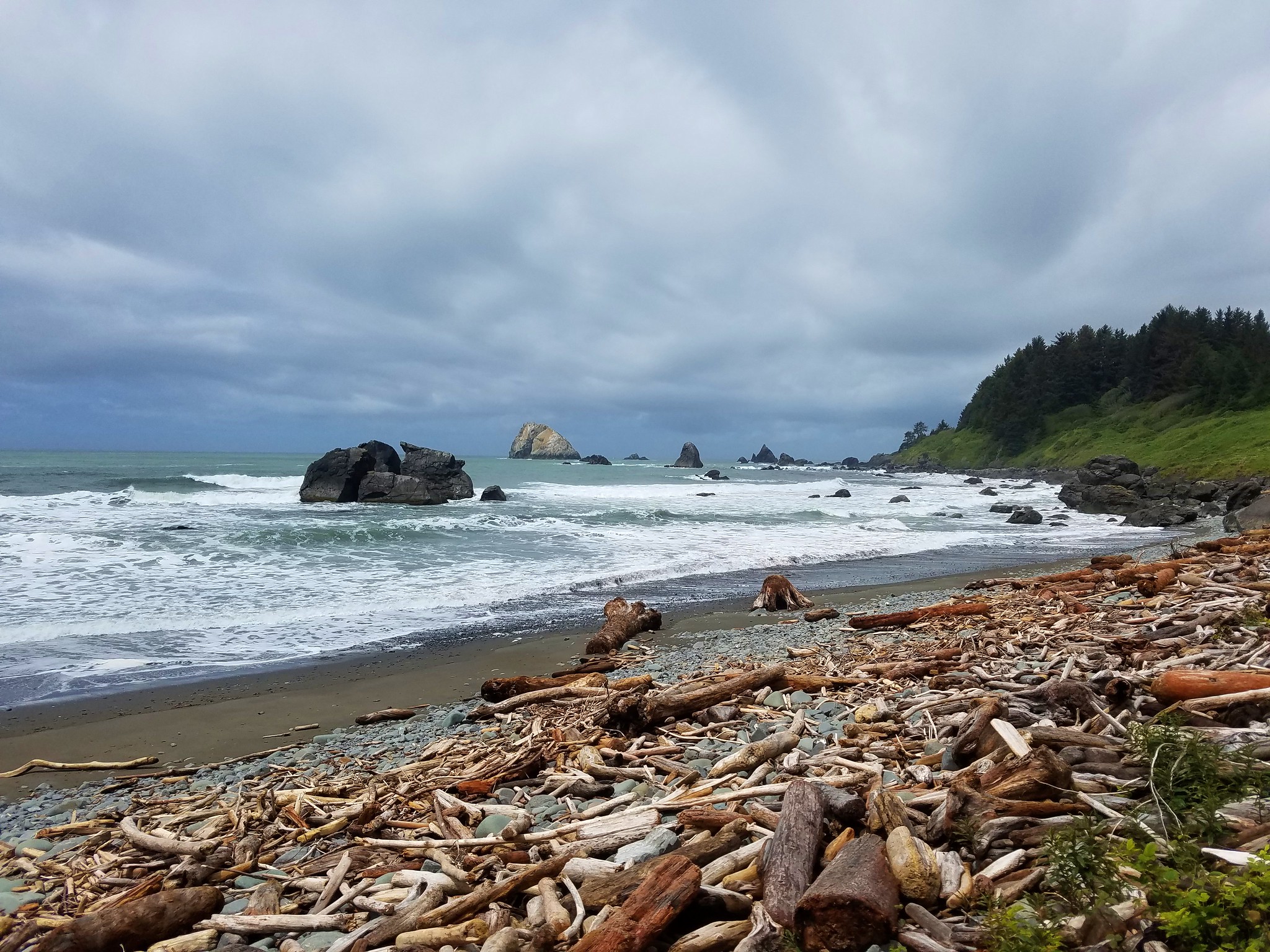
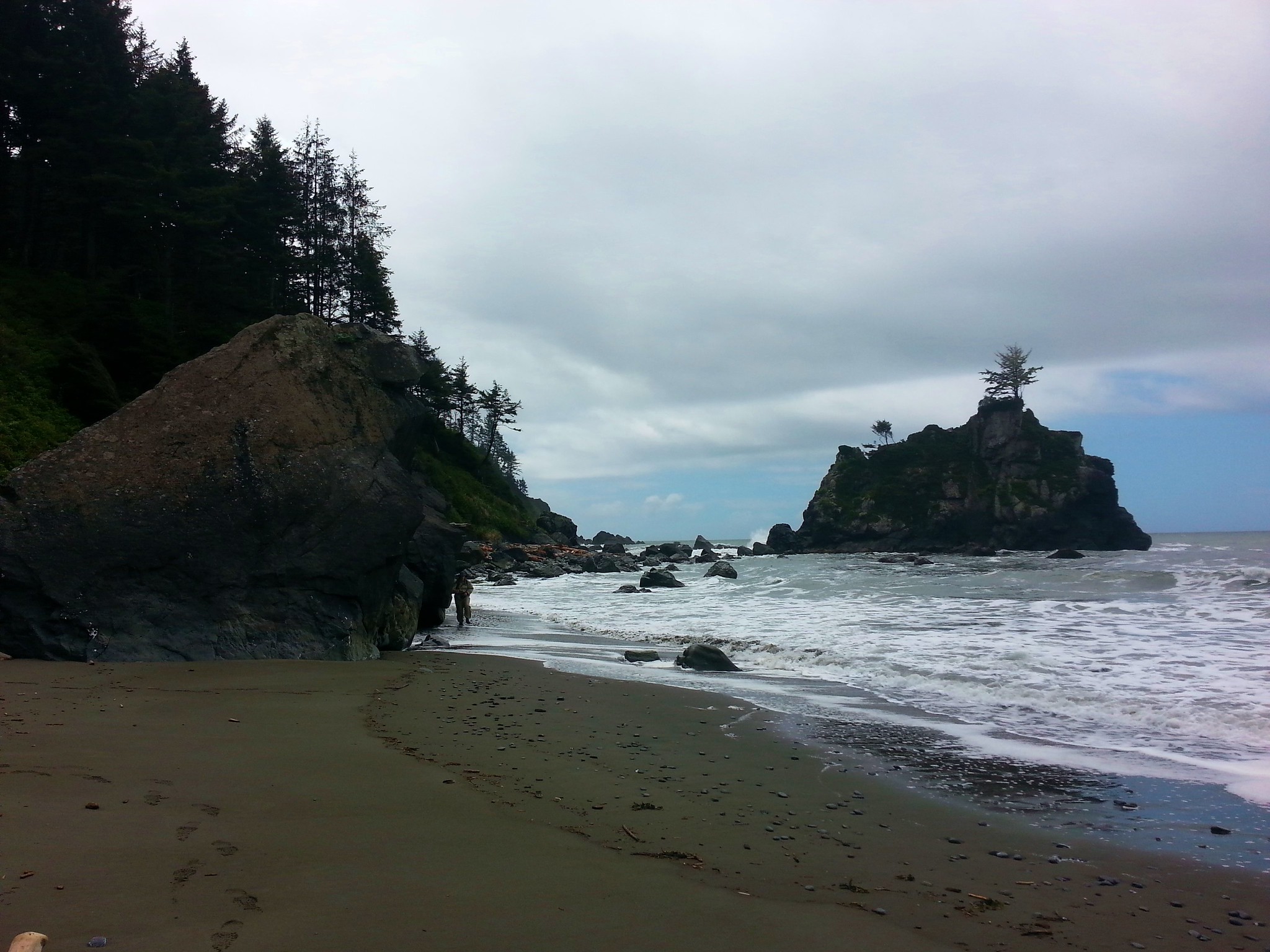
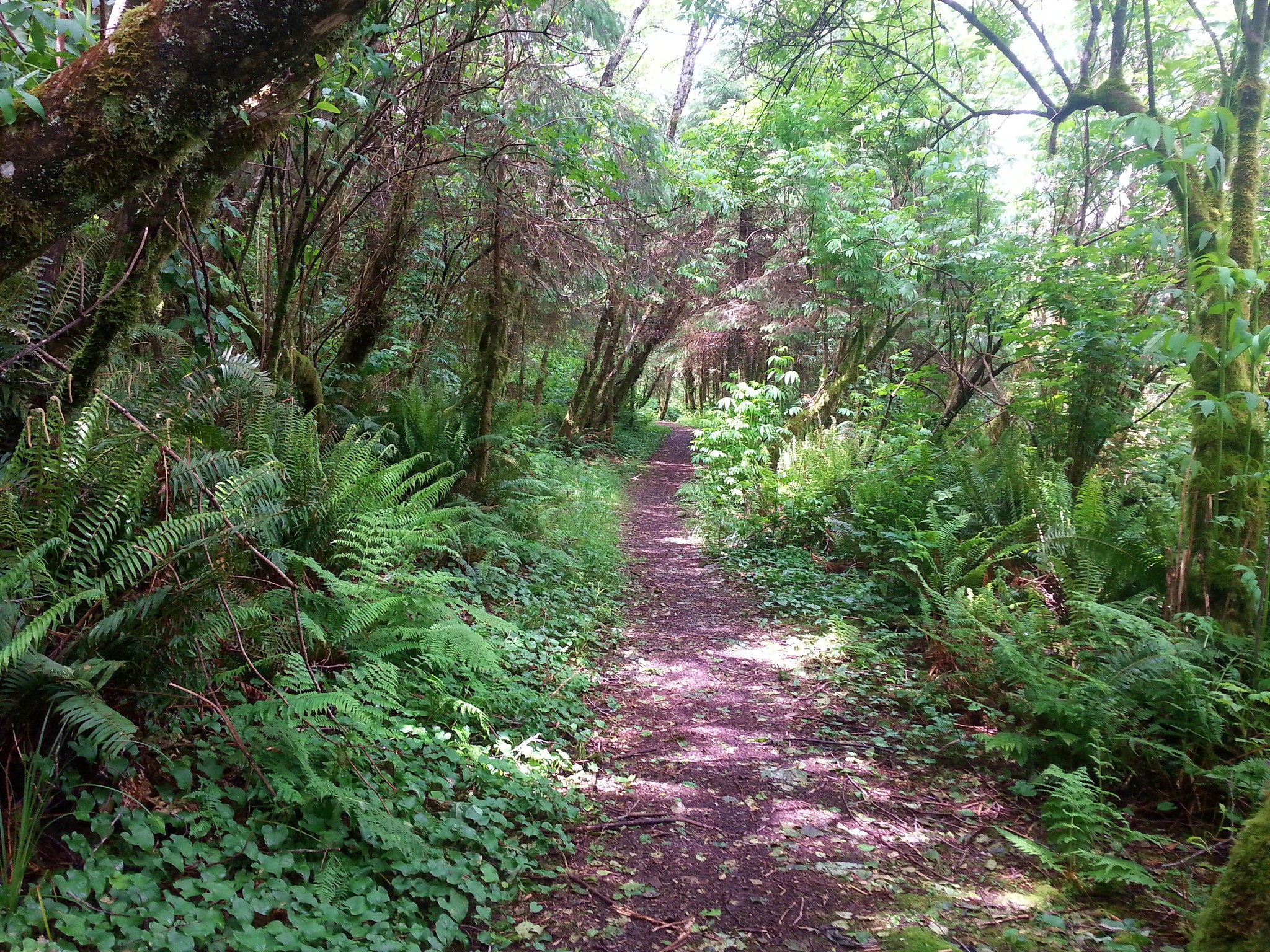
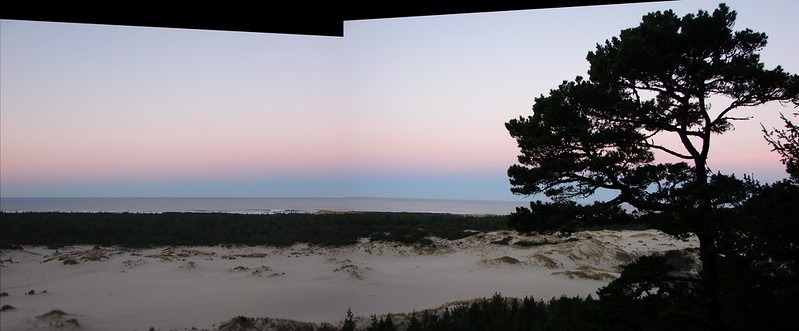
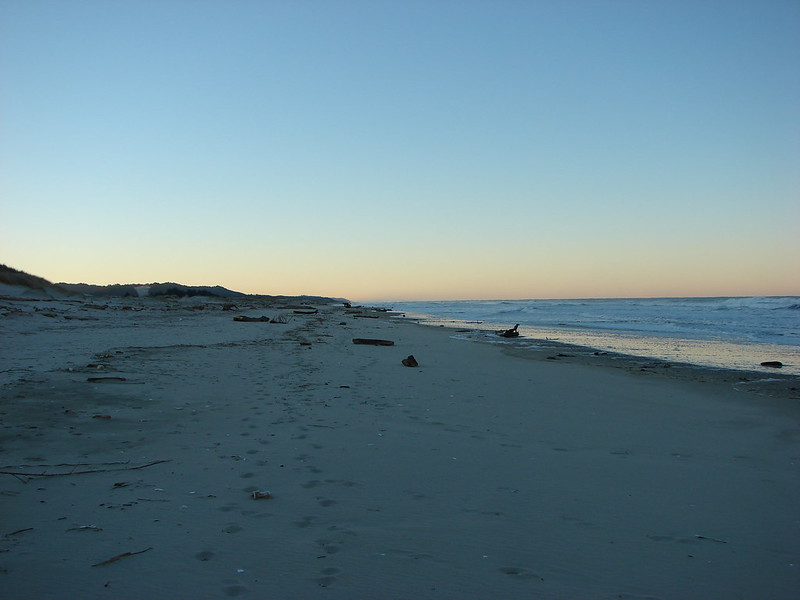
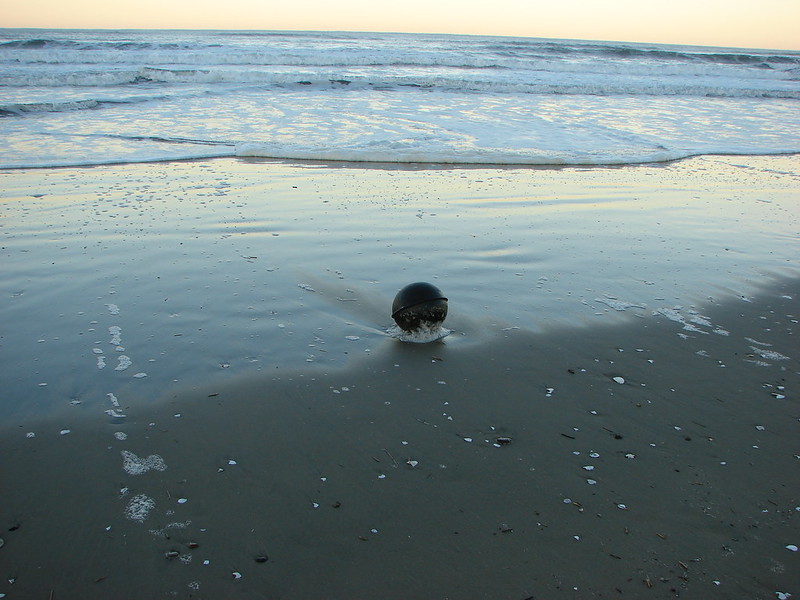
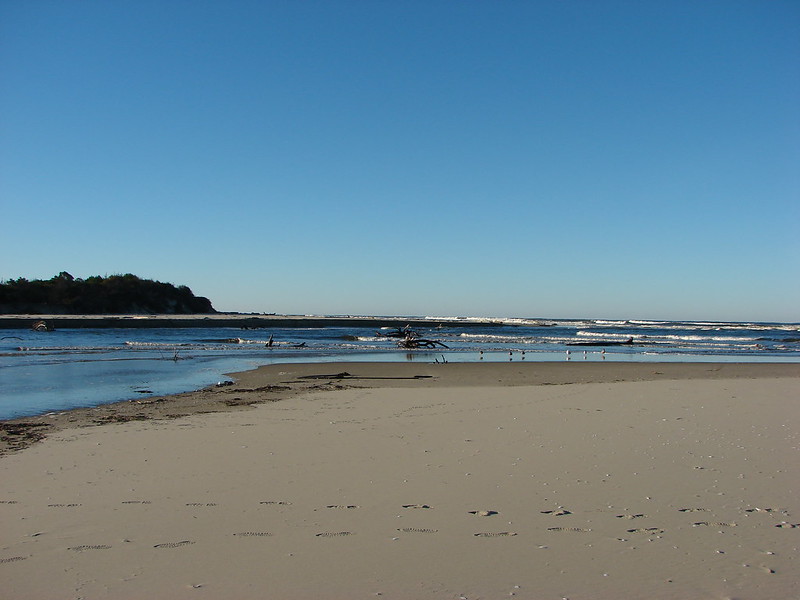
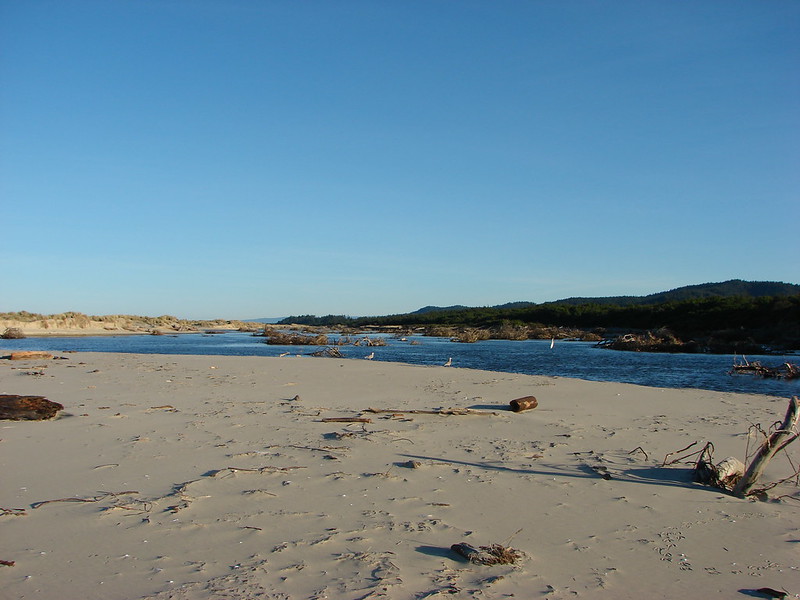
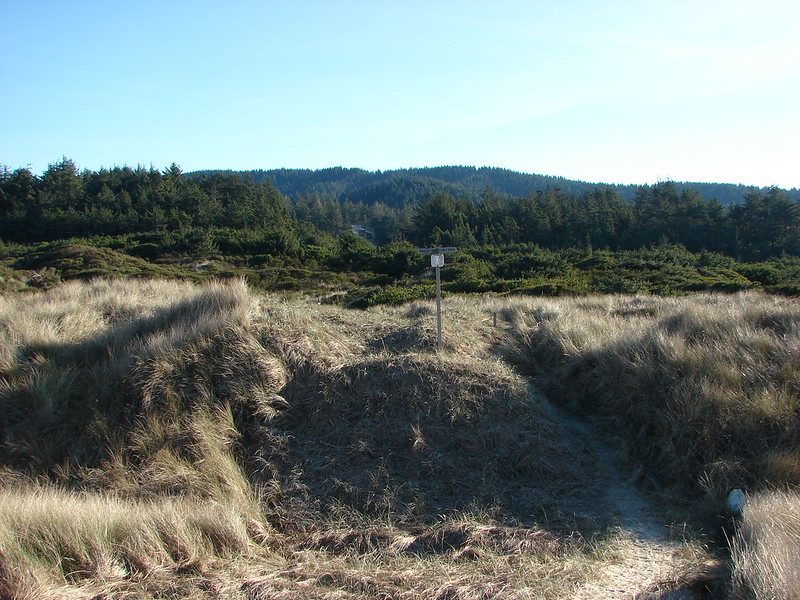
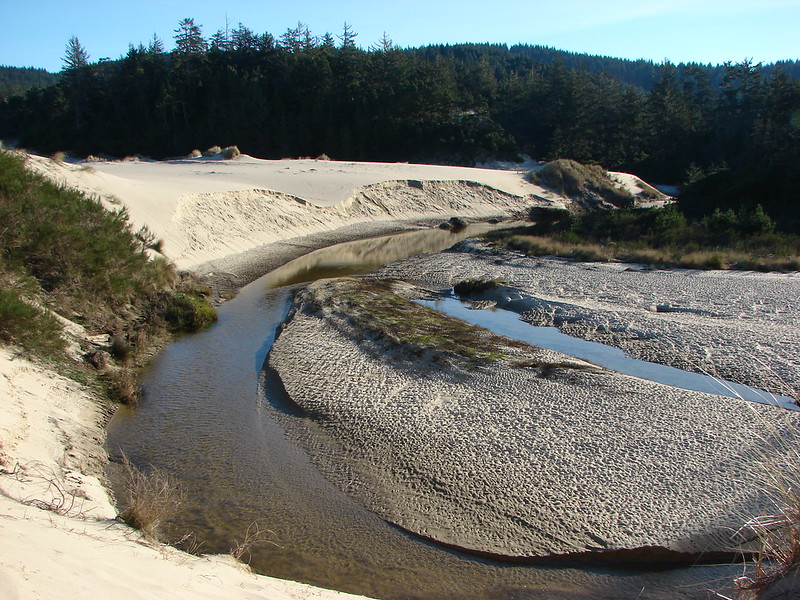
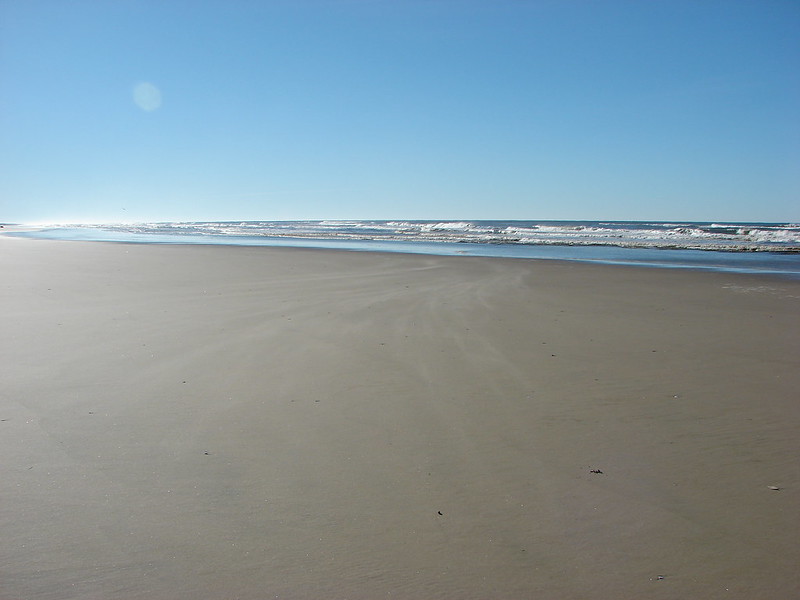
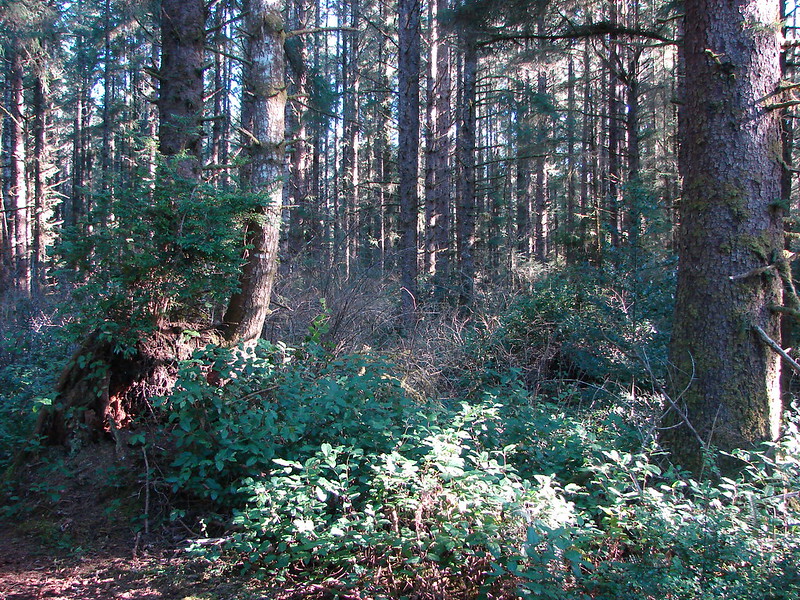
As I suspected weather and wildfire smoke steered me back to the Oregon Coast for Wednesday’s hike. I turned to the Oregon Hikers Field Guide and decided to try their Sand Lake – Cape Kiwanda hike. I started from the Tierra Del Mar Trailhead as described but instead of going north to Sand Lake first I decided to start by heading south to Cape Kiwanda. The reason for my choice is that the beach between Tierra Del Mar and Cape Kiwanda is open to vehicles while the northern stretch is closed to vehicles. I figured I was more likely to run into vehicles the later it got.
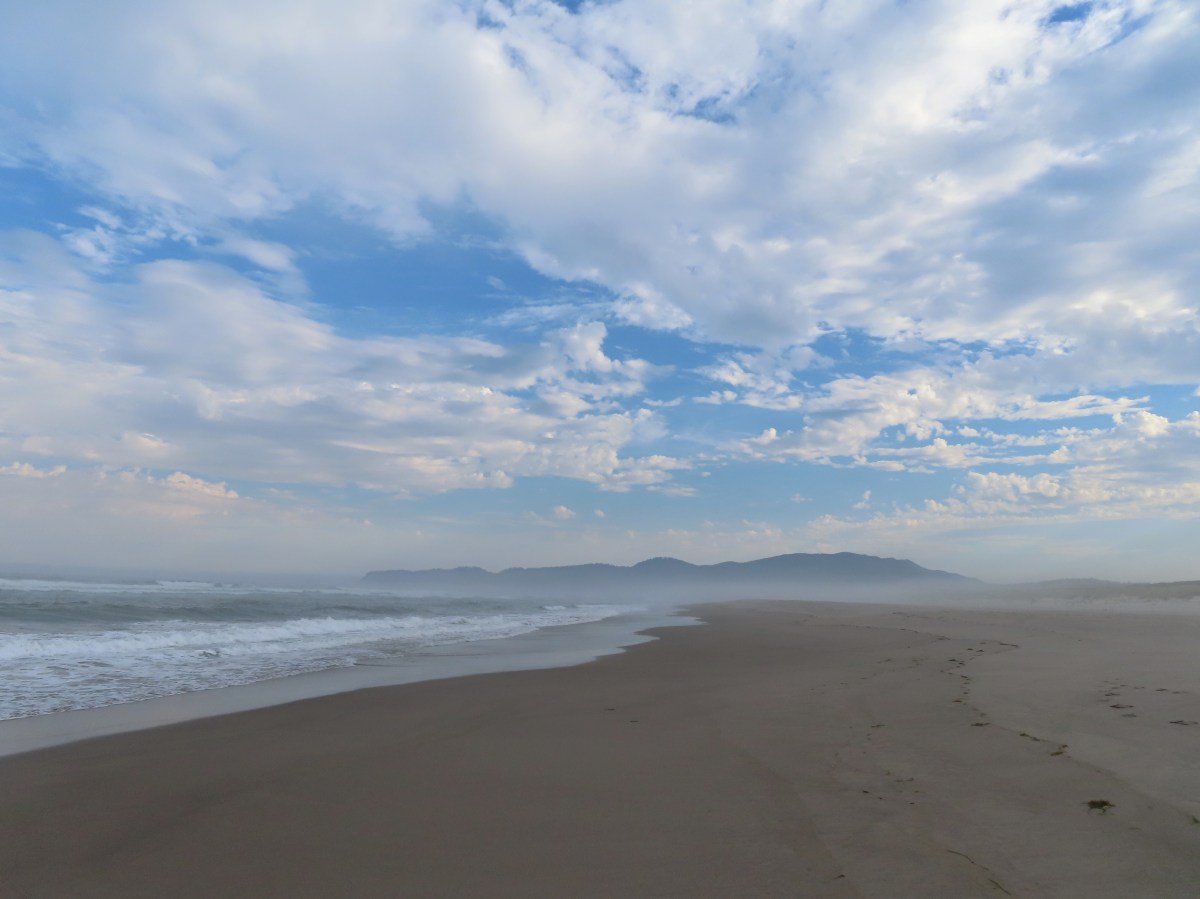
It was a typically foggy summer morning along the coast which kept Cape Kiwanda hidden until I had covered most of the 1.7-miles to the Cape.
Early morning beach walkers.
Miles Creek Point. At higher tides it may not be possible to walk around the rocks here.
Miles Creek
Cape Kiwanda
Pigeon guillemots (I think)
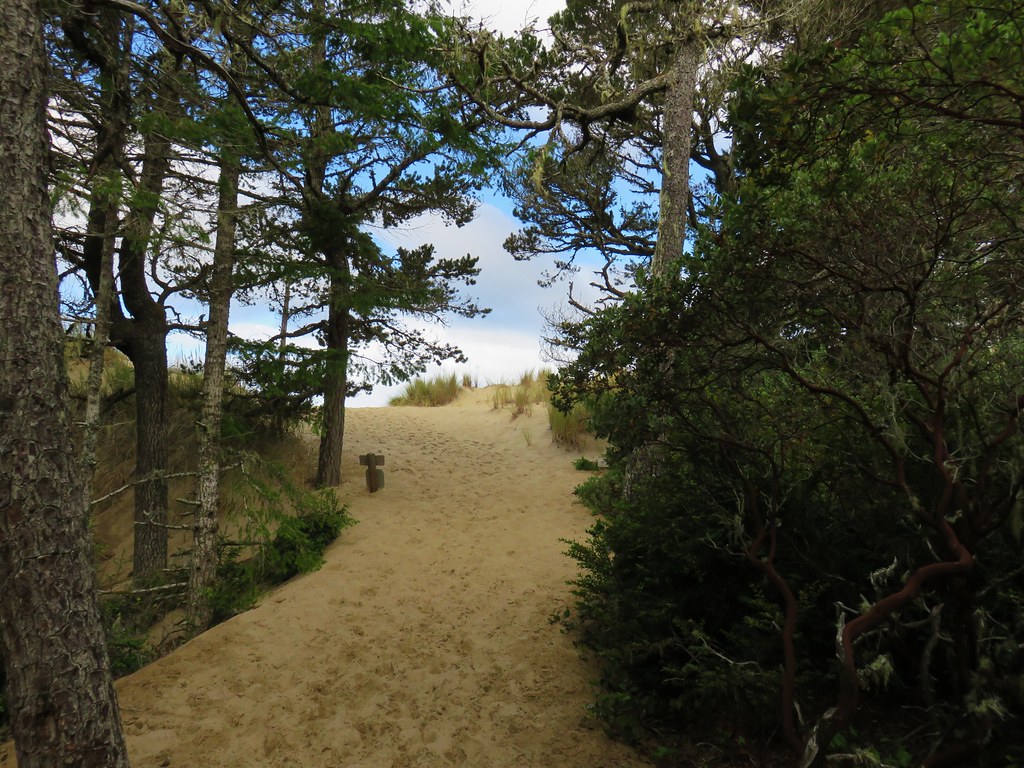
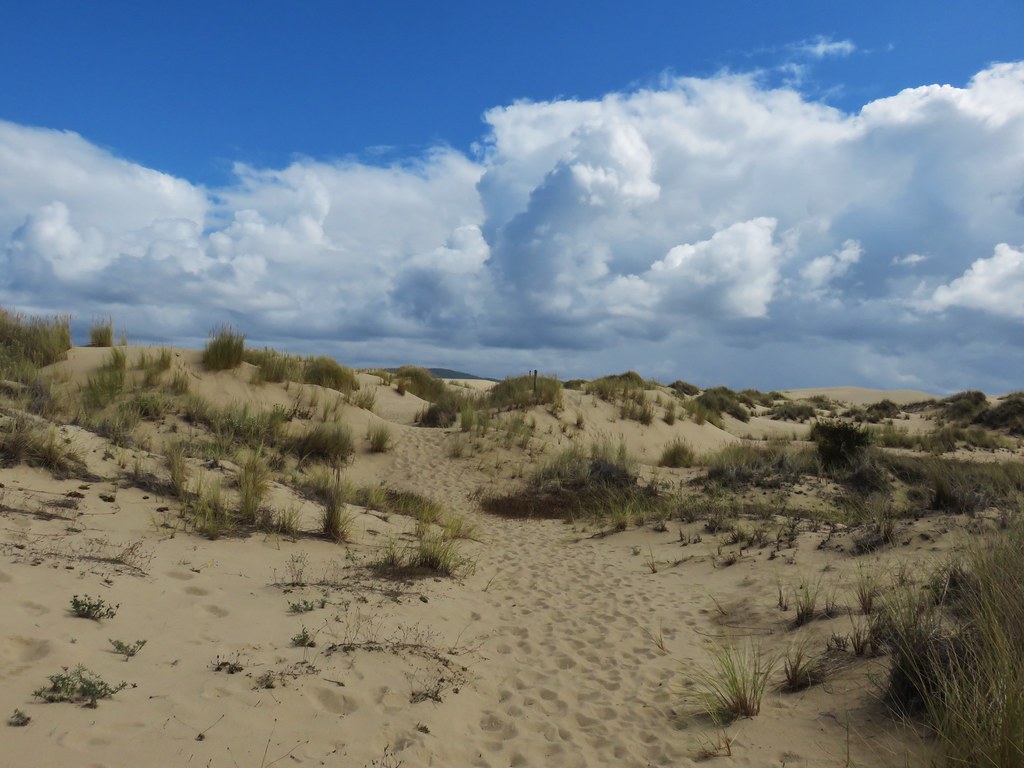
To reach to top of Cape Kiwanda I needed to climb the large dune behind it.
It’s a nearly 240′ slog up the sand dune.
I did a little exploring at the top of Cape Kiwanda and found a few ripe huckleberries which were a consolation prize given the lack of a view.
Pearly everlasting
Rose
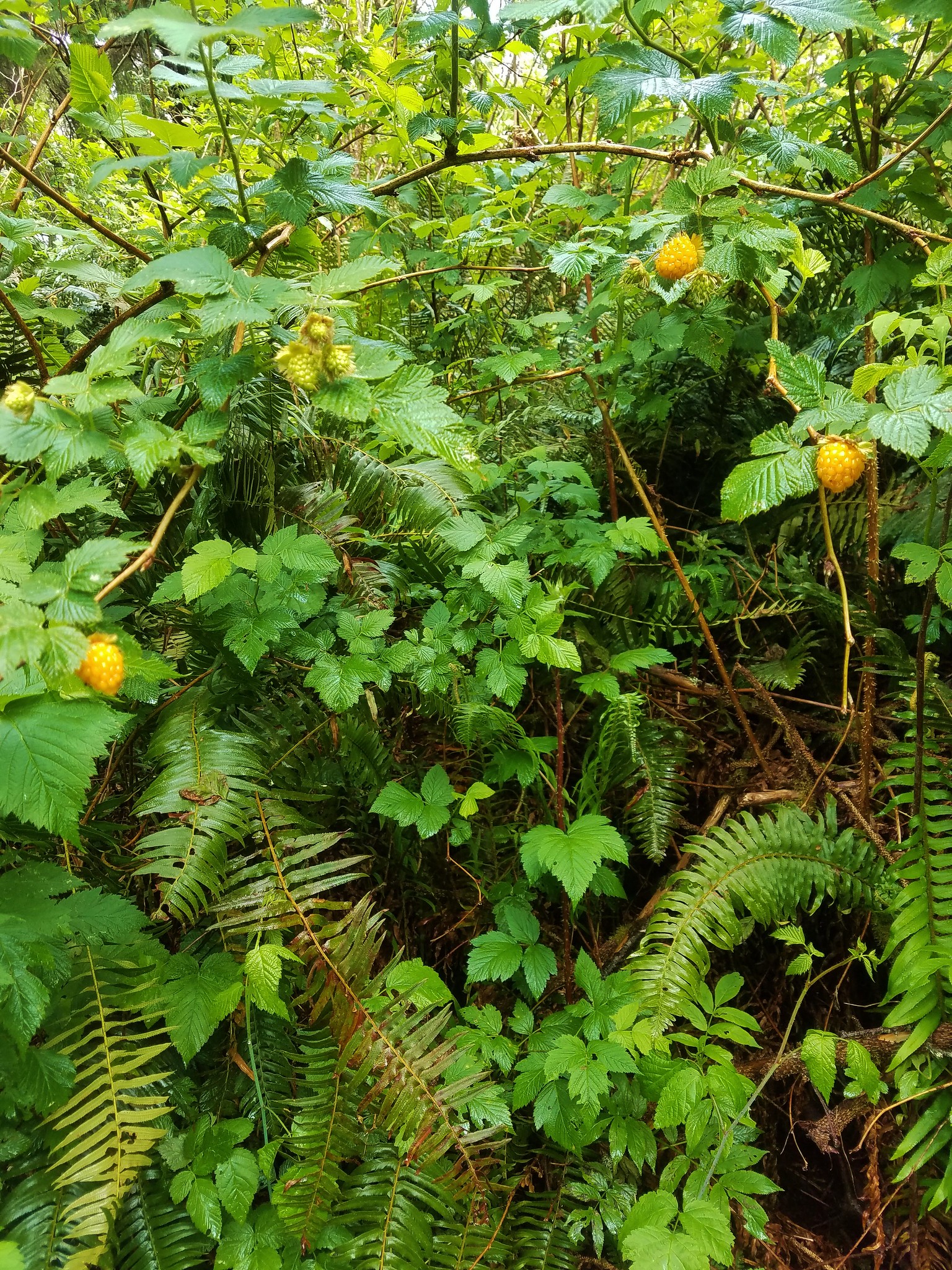
Huckleberries
After the exploration I took a break on some sandstone and had a snack. The Sun was working on burning off the morning fog.
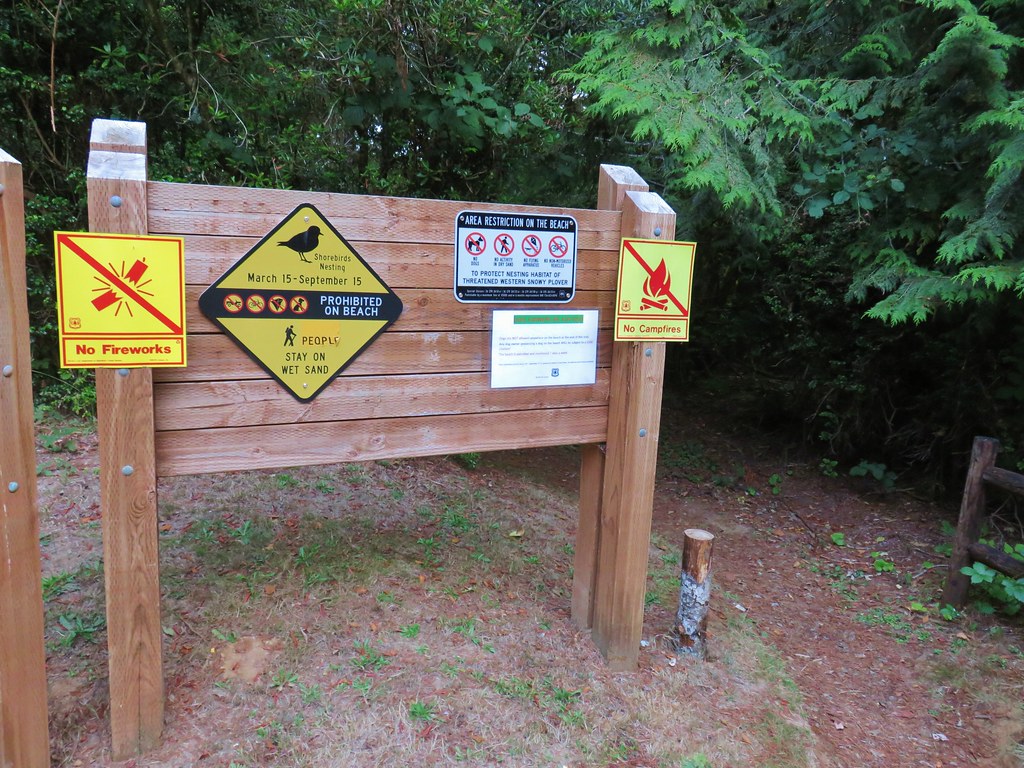
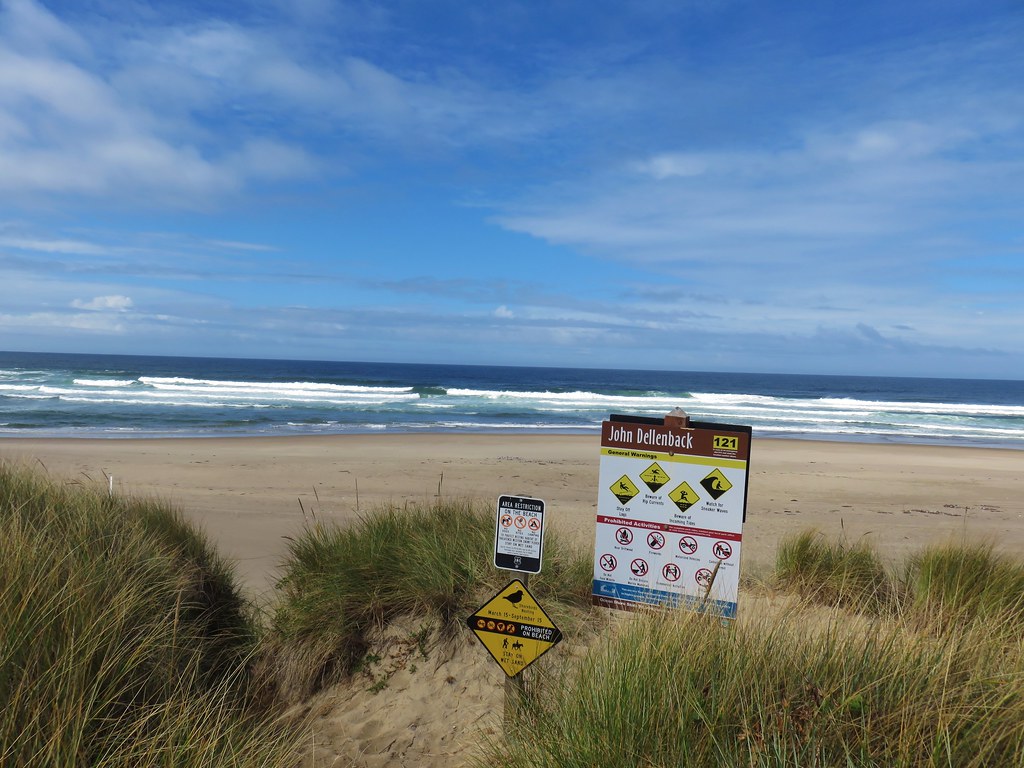
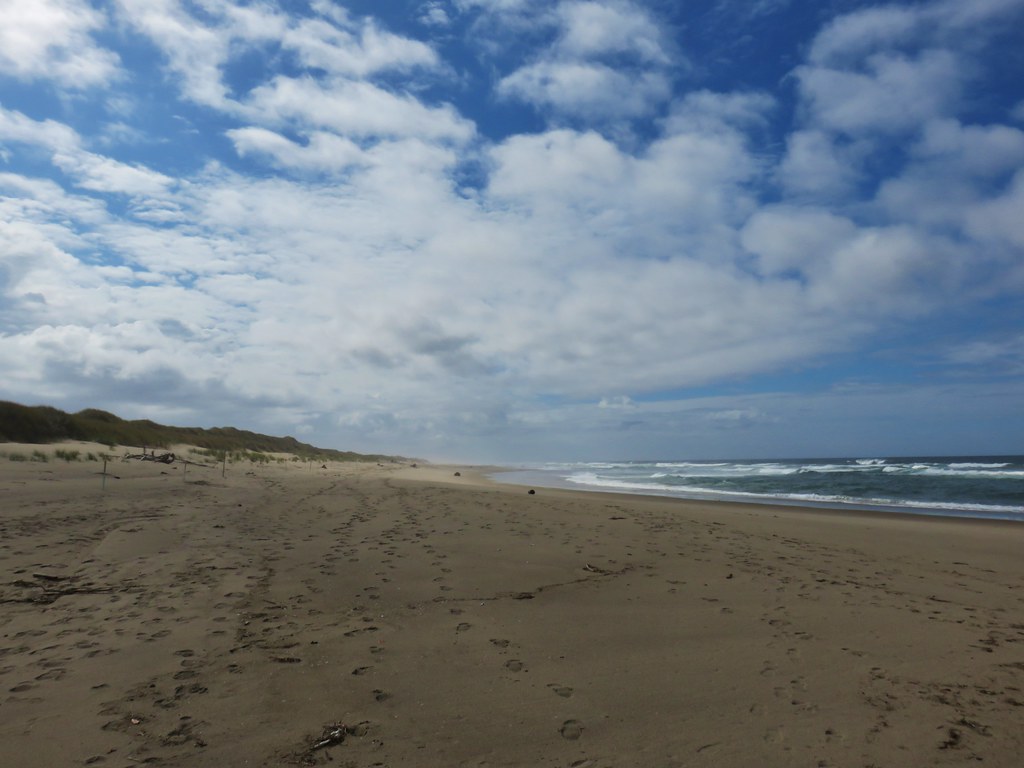
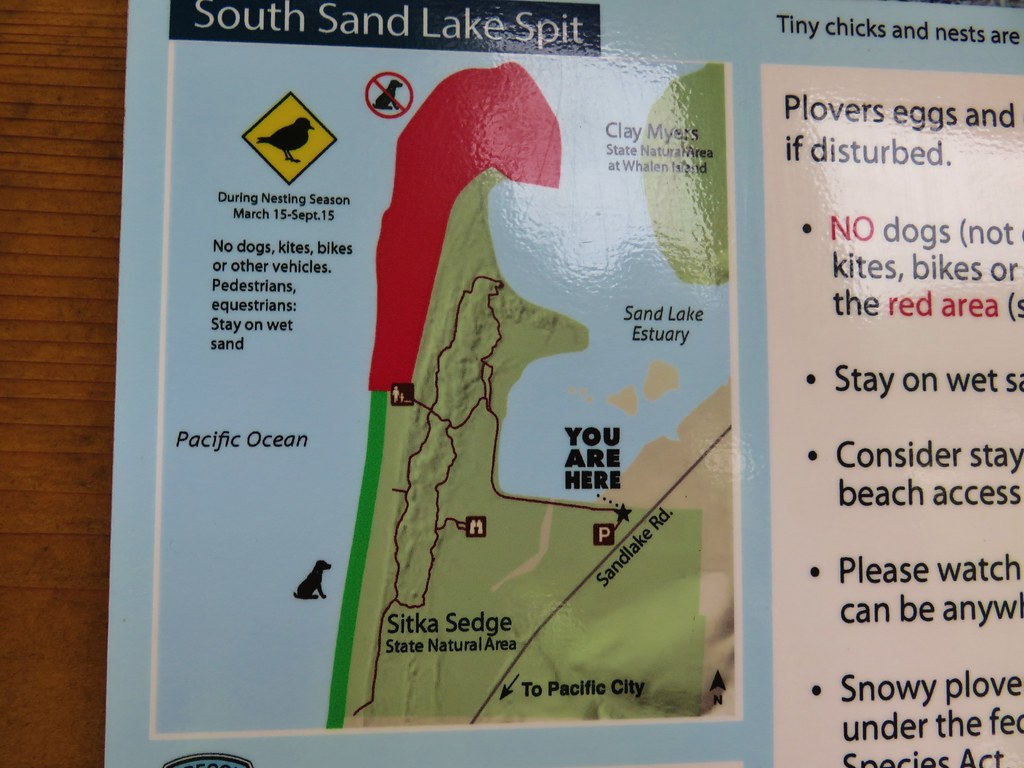
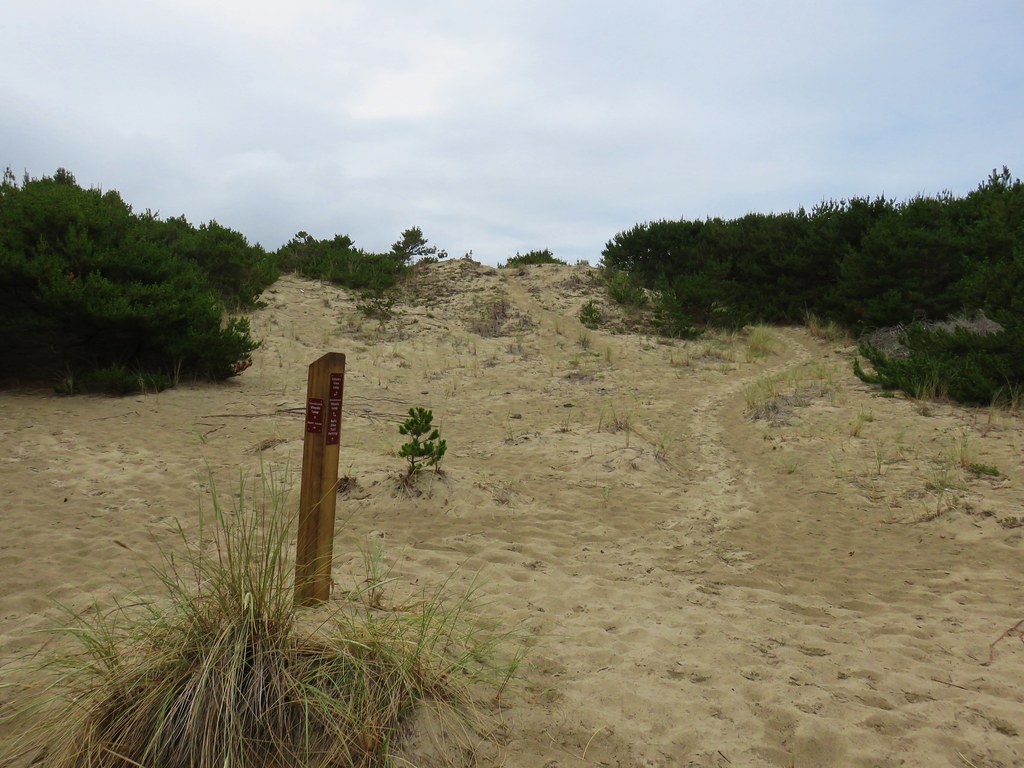
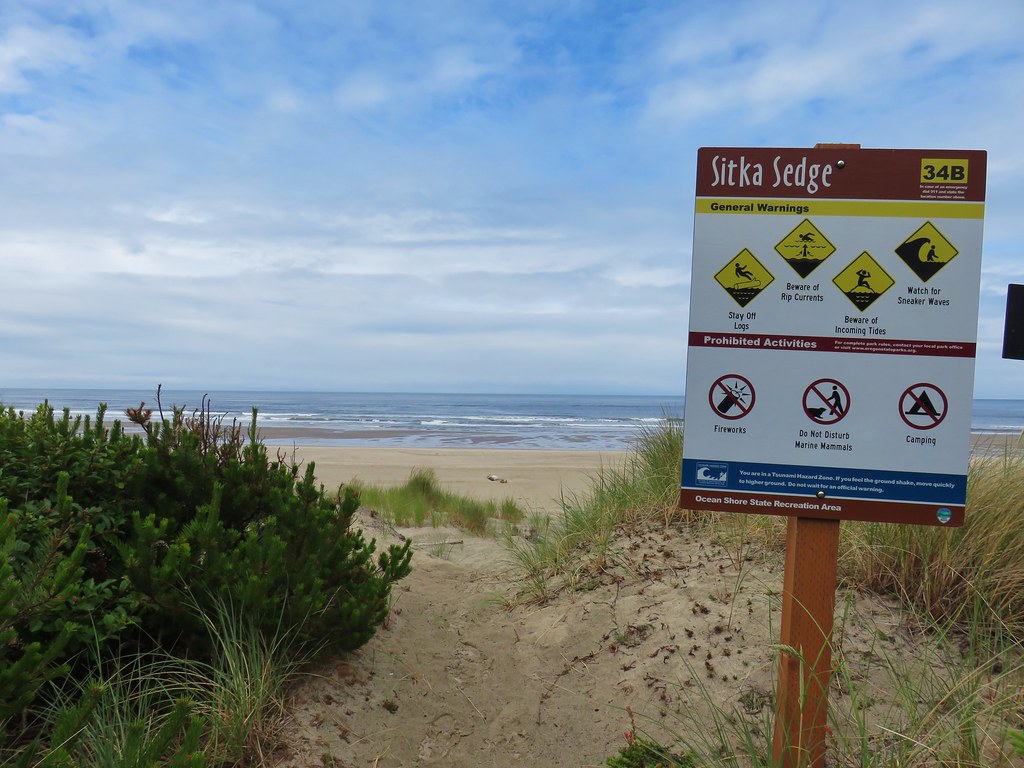
I had intended to turn inland into Sitka Sedge State Natural Area (post) which the ORH Field Guide said could be done at emergency locator 34B. I completely missed 34B but saw 34A at the southern end of the snowy plover seasonal closure area. During the seasonal closure you have to stay on the “wet” sand which is what I did as I continued on to Sand Lake.
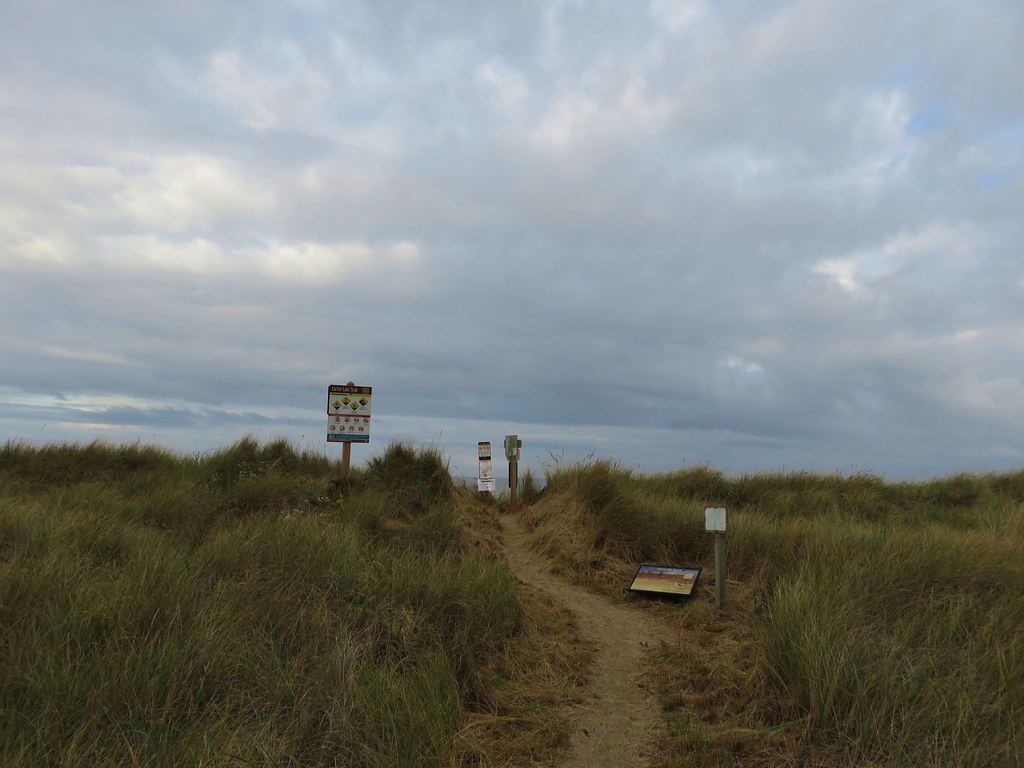
The 34A locator and signs announcing the seasonal closure.
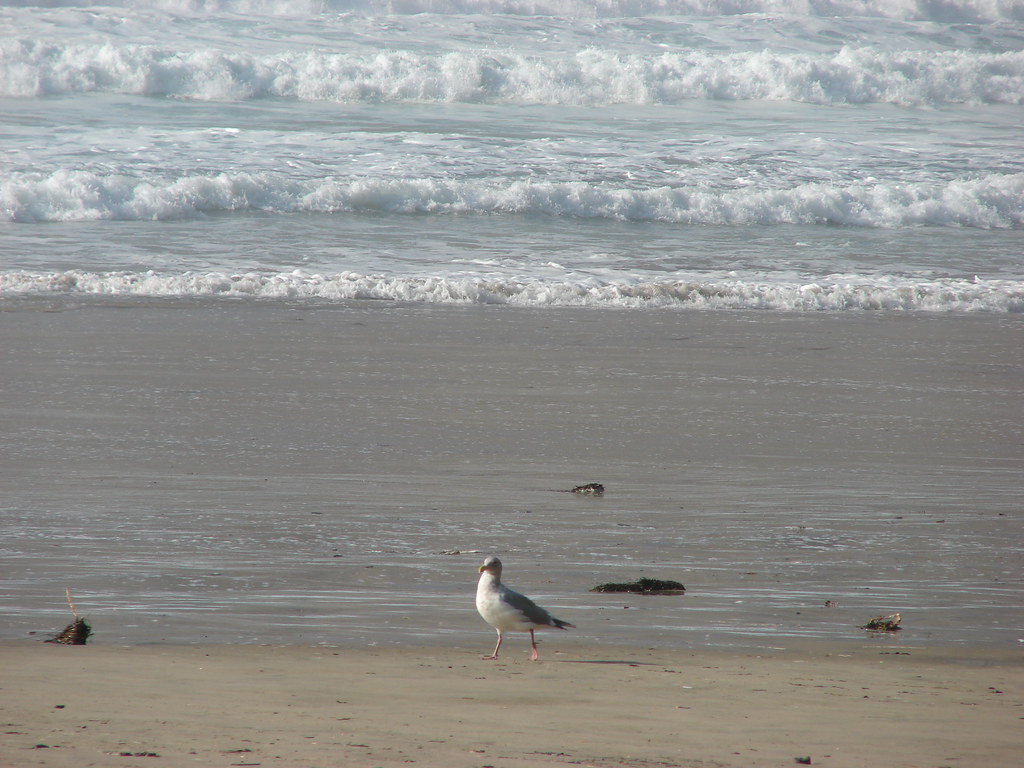
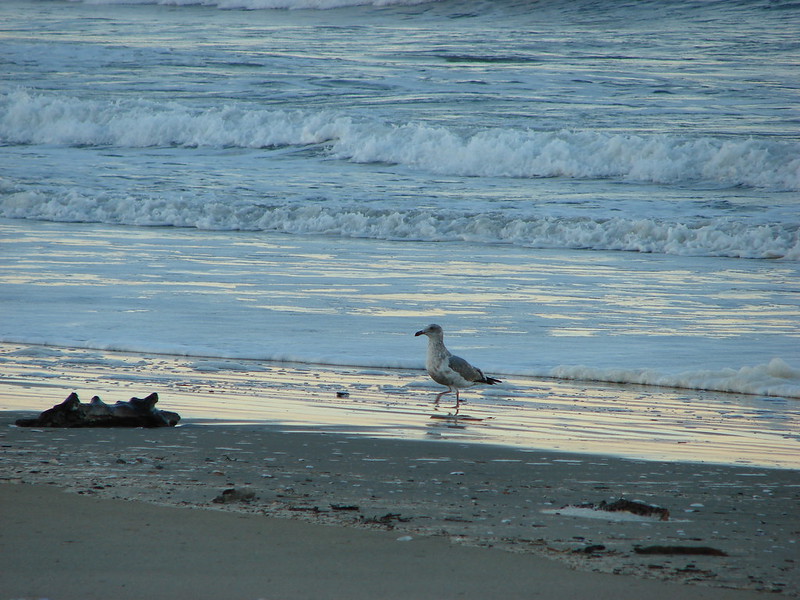
Seagull
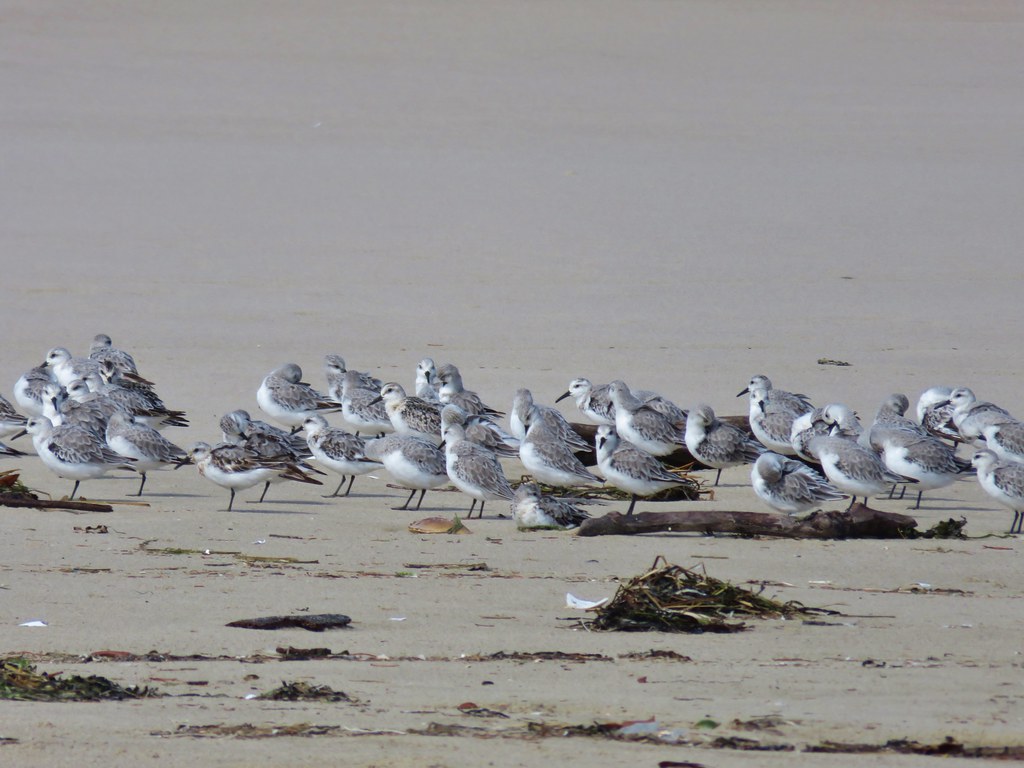
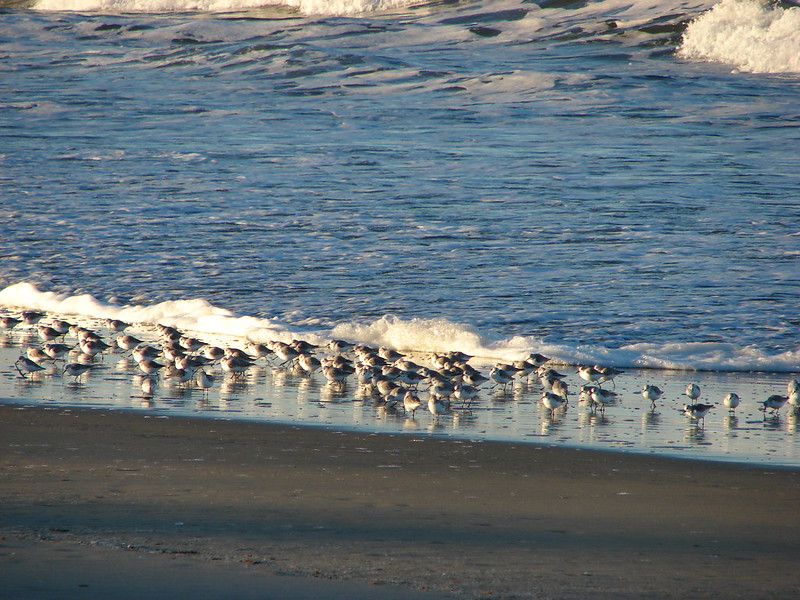
Sanderling
Spotted sandpiper
Black-bellied plover
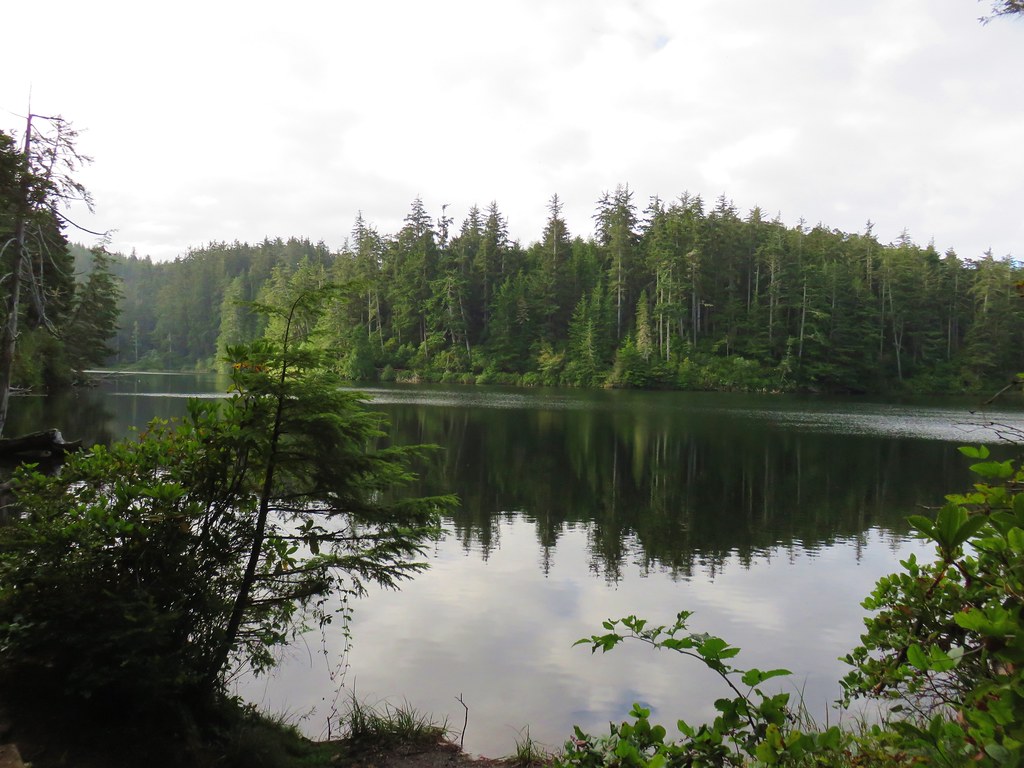
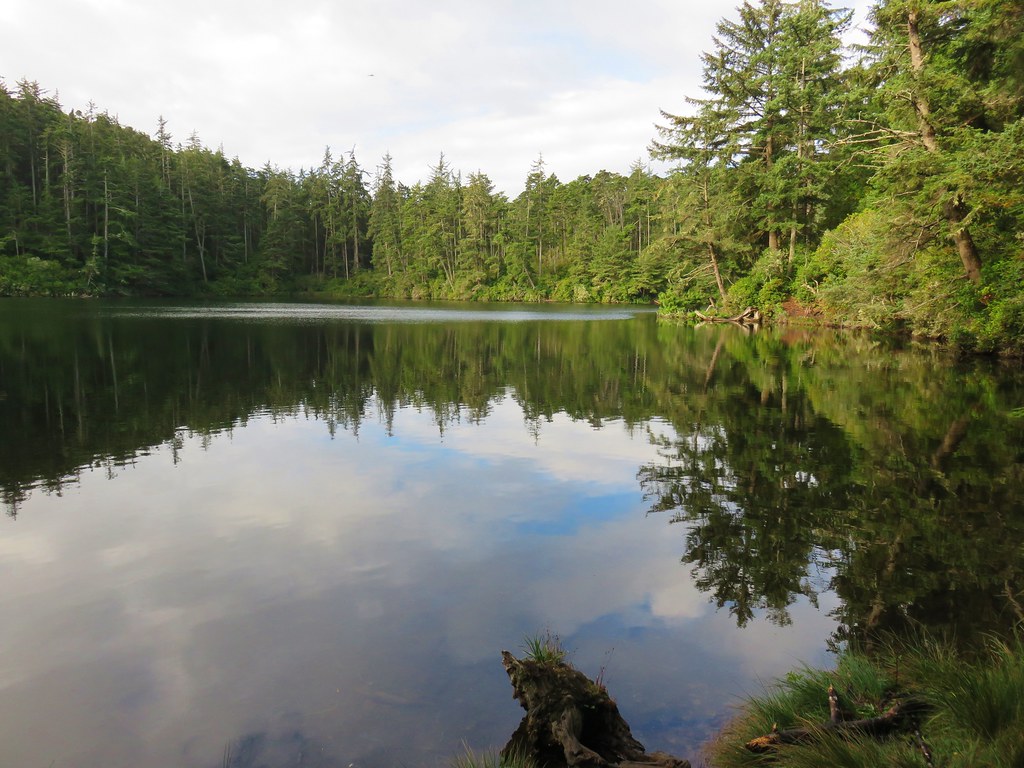
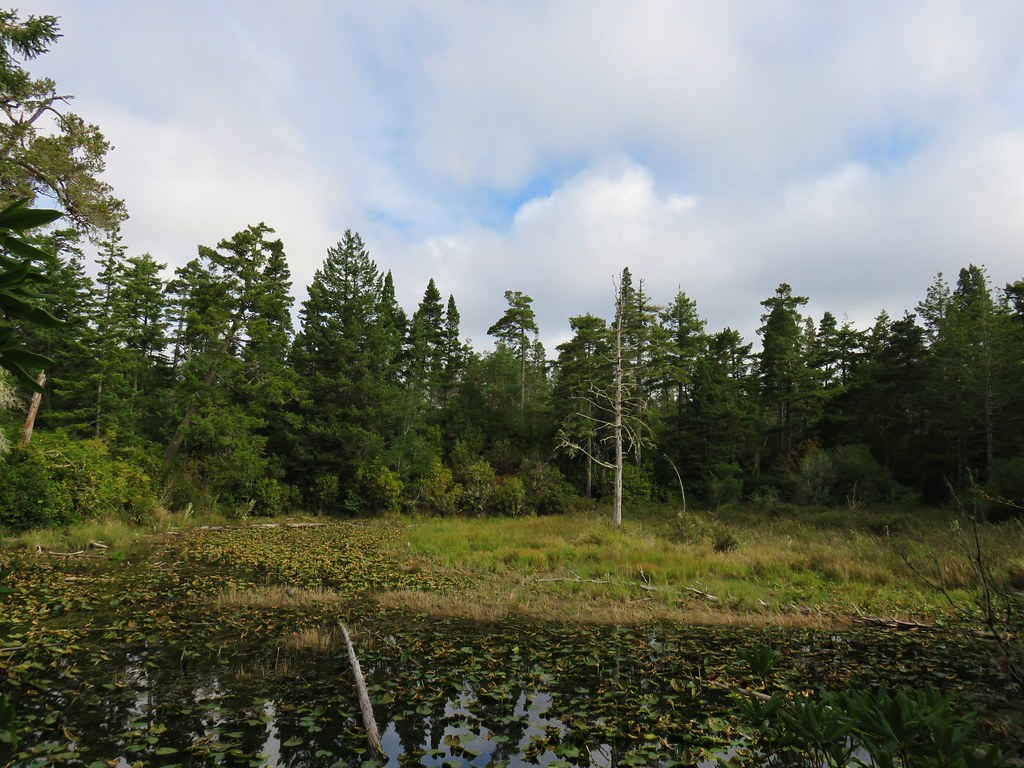
Sand Lake
Cape Lookout from Sand Lake Point.
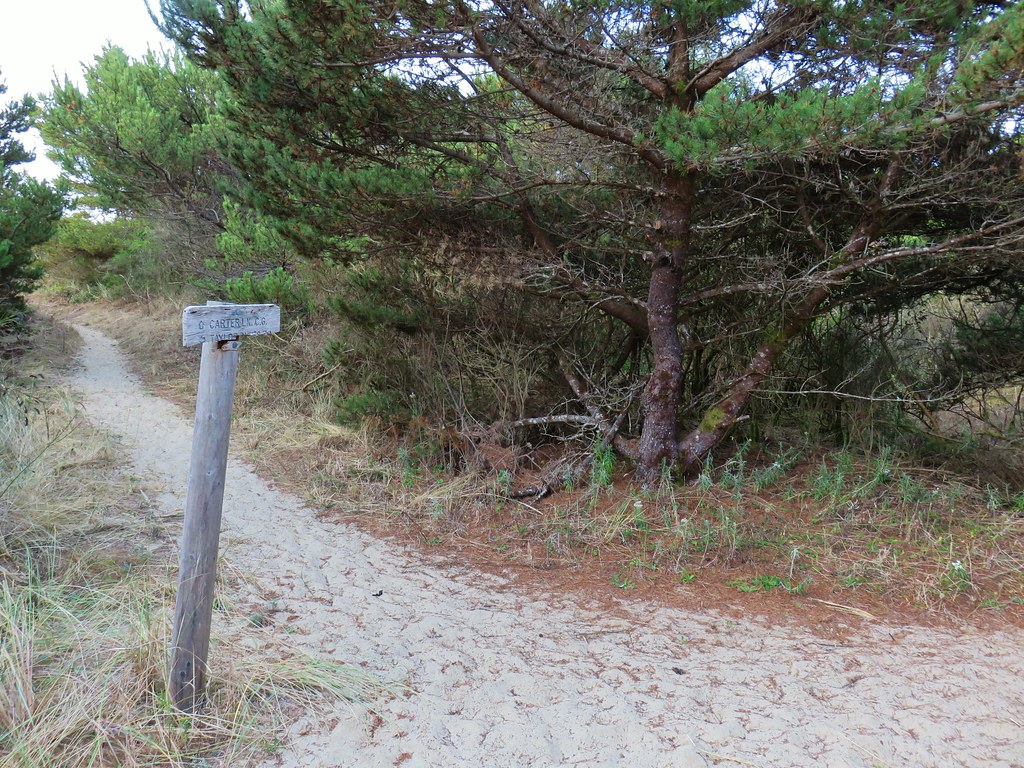
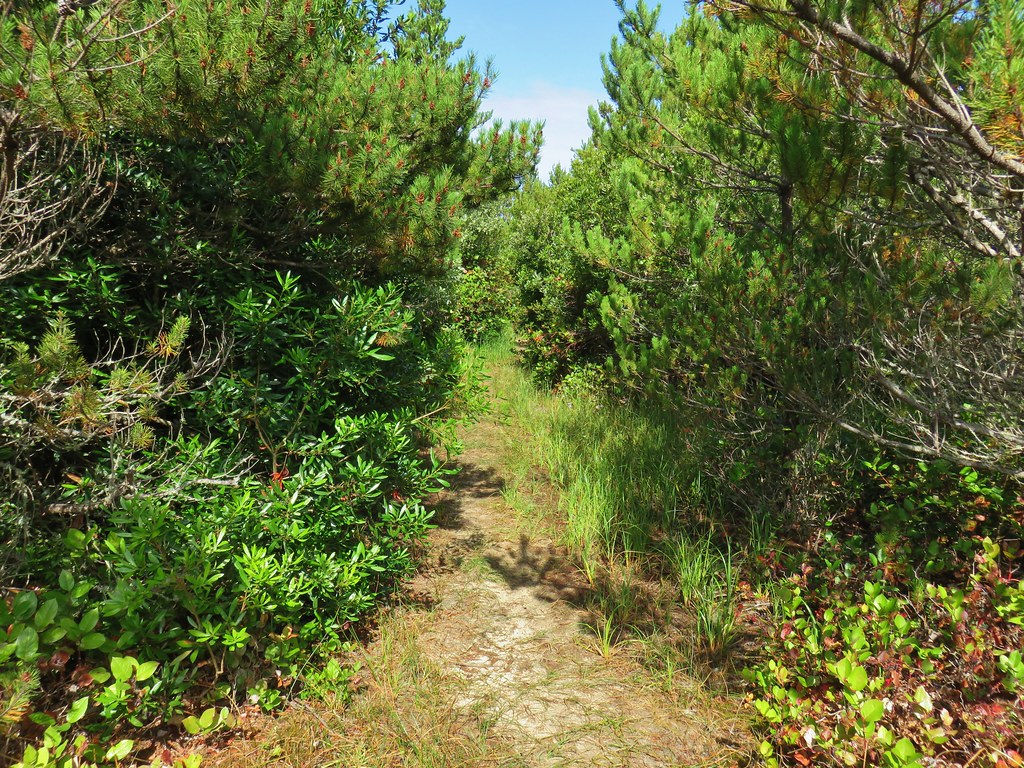
Since I’d missed the inland trail and the seasonal closure blocks access to Sitka Sedge from Sand Lake Point, I turned around at Sand Lake and walked back to emergency locator 34A and turned inland at the edge of the closure area. A trail here led into the Sitka Sedge Natural Area.
I stayed straight at junctions thinking I would visit the day-use area however upon looking at the map at the second junction with the Estuary View Loop I decided I didn’t want to add that much distance to my hike.
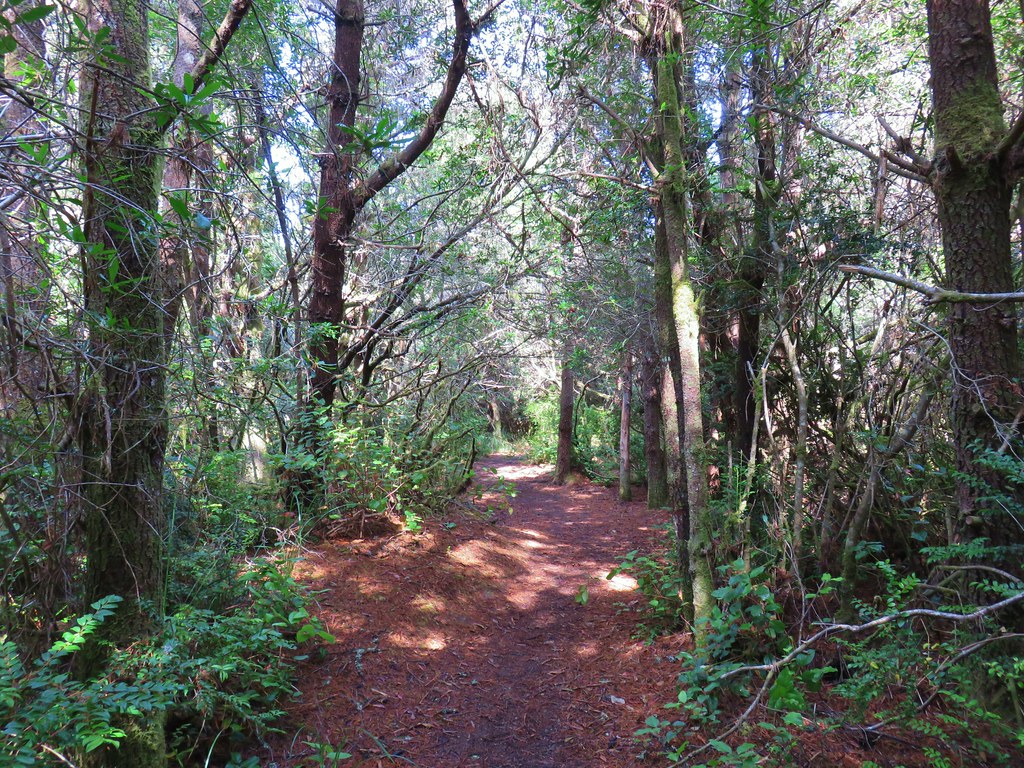
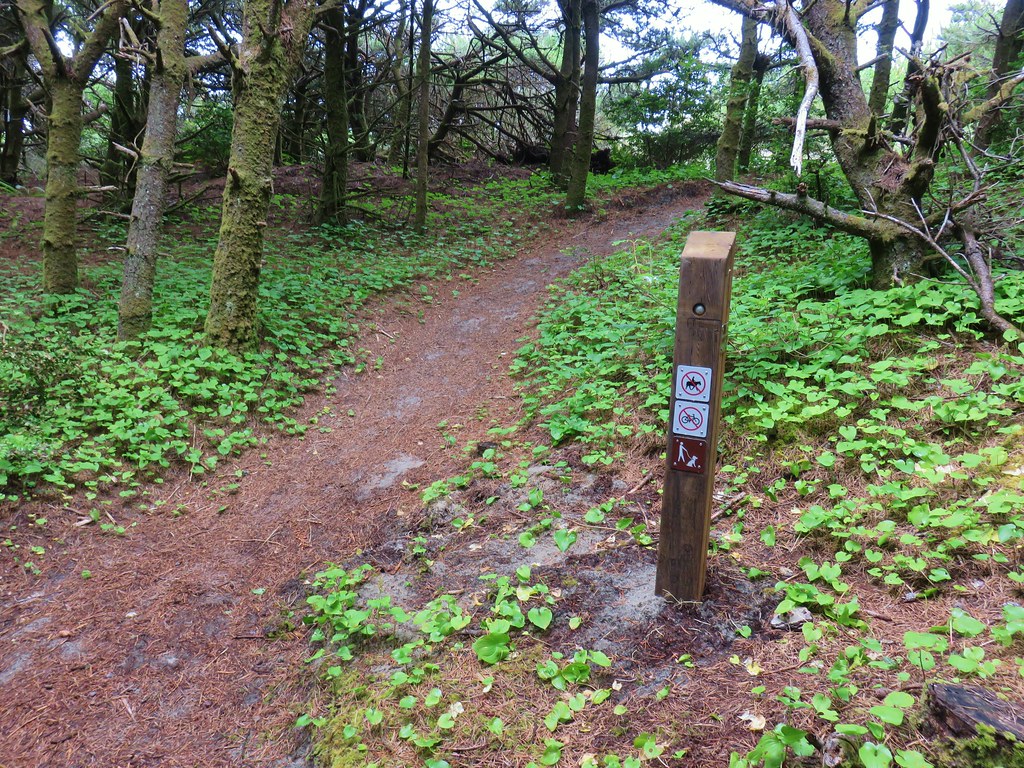
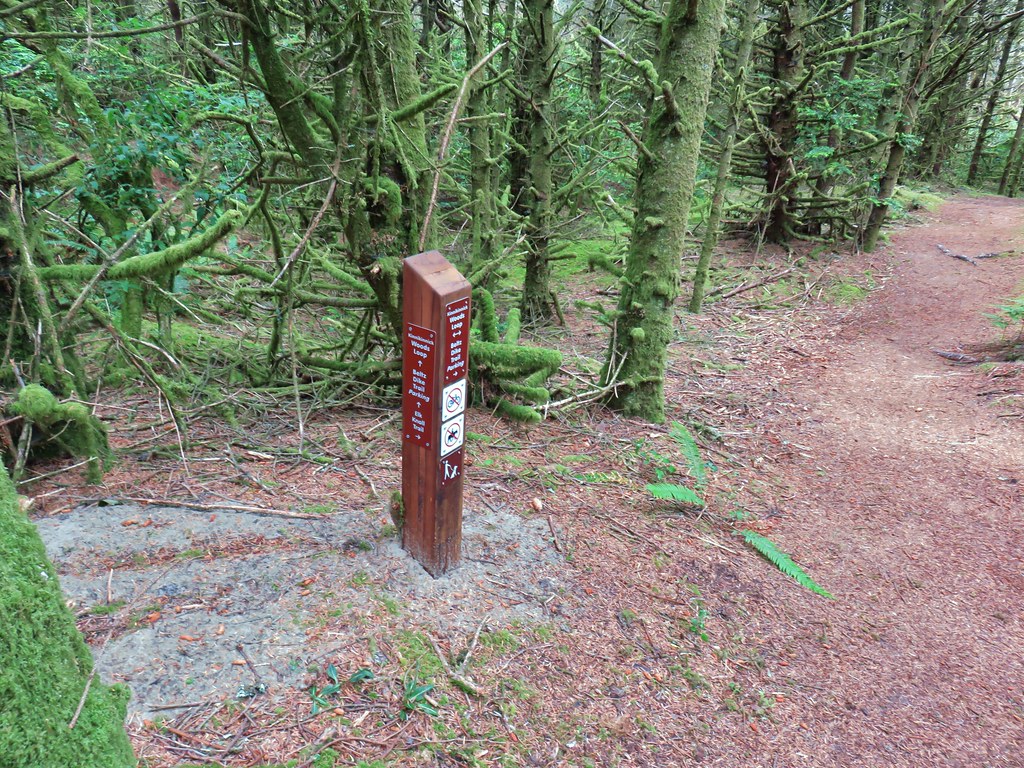
Instead, I backtracked to the Kinnikinnick Woods Loop and turned left onto that trail. I followed this trail for 0.3-miles then detoured left on the short Elk Knoll Trail and took a break on the bench atop Elk Knoll.
Sand Lake from Elk Knoll.
After my break I returned to the Kinnikinnick Woods Loop and followed it another 0.2-miles to a junction with a beach access trail.
Pink pyrola
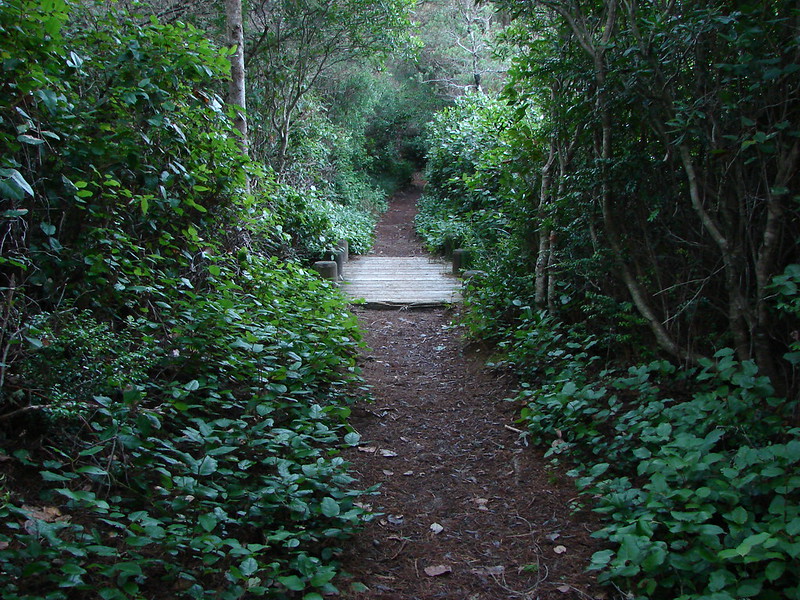
The beach access trail traveled 0.2-miles through the woods and over the foredune emerging on the beach at emergency locator 34B.
I turned south (left) at the beach and hiked back to the Tierra Del Mar Trailhead which was just under a mile away.
Haystack Rock (Not the Cannon Beach one, the Pacific City one.) making an appearance.
Haystack Rock
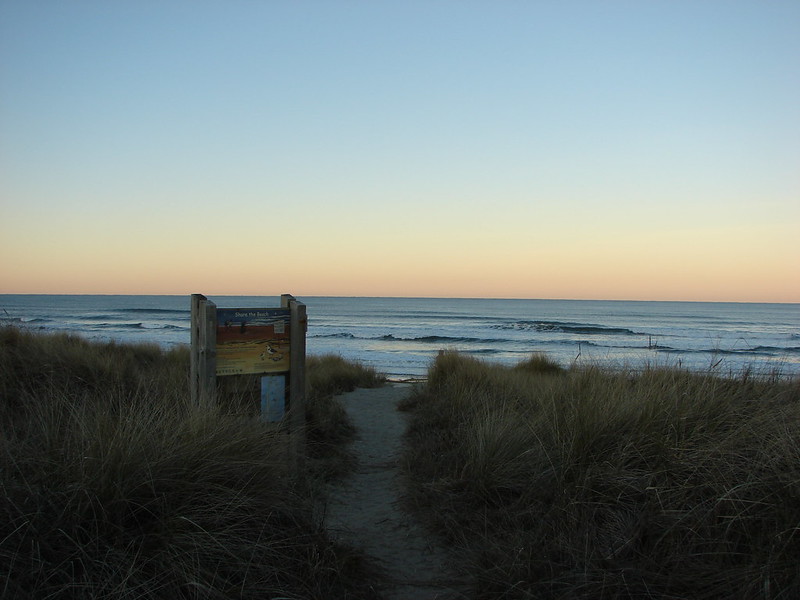
Beach access at Tierra Del Mar.
The GPS showed 9.7-miles for the hike with 250′ of elevation gain.
It was too bad it was so foggy on Cape Kiwanda, but the hike was still rather enjoyable. Happy Trails!
We were hoping for some nicer weather on the Saturday before the dreaded “Spring forward” which always seems to be the harder of the two time changes to adjust to. In addition to adjusting to the struggle, adjusting to the change springing forward also meant losing an hour of light in the morning when we like to do our hiking. We got our nice weather so we headed out to Lincoln City to explore some of the nearby trails and cross off another of Sullivan’s featured hikes at Roads End Beach. The hike at Roads End (#35 in the 3rd edition “100 Hikes/Travel Guide Oregon Coast & Coast Range) was one nine remaining featured hikes in his third edition which we reverted back to this year due to not knowing when (if) the final featured hike in his 4th edition, the Salmonberry Railroad, will reopen to hikers (post).
The Roads End hike is a roughly 2.8 mile out and back along Roads End Beach at the north end of Lincoln City which gave us an opportunity to add some mileage to our day and check out two other nearby destinations. The first of which was a quick stop at the Siletz Bay National Wildlife Refuge just south of Lincoln City. With the time change not yet happening we were able to arrive early and start hiking by 6:30am and more importantly drive through Lincoln City without any traffic to speak of.
The refuge offers a single trail, a short lollipop loop (just under a mile) around Alder Island. Canoeing and kayaking is a popular activity here. It was in the mid 30’s as we set off from the small parking area so there were no human paddlers out yet but the frosty temperature didn’t dissuade others. Mallard pair
Canada geese
Goose and a mallard in the channels.
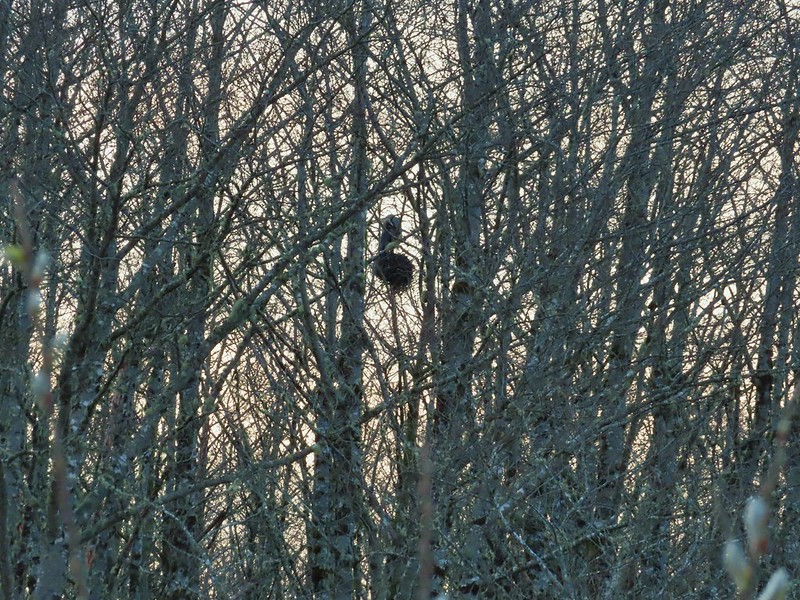
While the Sun wasn’t quite above the Coast Range great blue herons were already busy working on building a nest in some trees across a channel.
It wasn’t just the bigger birds that were busy. A ruby-crowned kinglet was busy in the brush.
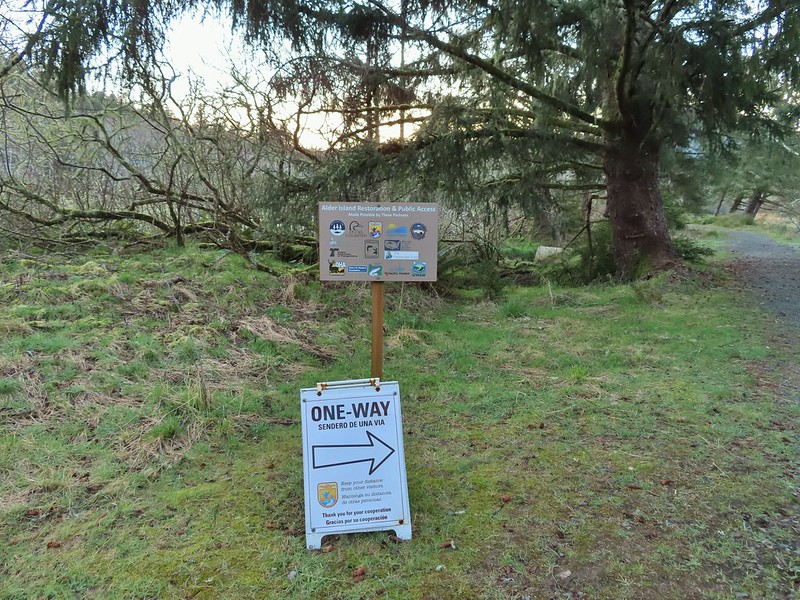
Approximately .2 miles north of the parking area we made a hard right turn crossing over some water to Alder Island and the start of the short loop. Several interpretive signs were placed along the loop.
A reminder that COVID-19 is still an issue.
The trail passed through stands of alder as it followed a small branch of the Siletz River for .3 miles before reaching a bench facing the main branch of the river. There were a number of ducks a geese in the channel but the highlight came when Heather spotted something heading down to the water on the far side ahead of us. It was a river otter! This had been one of, if not the, most wanted animal sightings on our list of critters we’d yet to see while hiking (or driving to a hike). Unfortunately the otter was too quick and far enough away in the low morning light to get more than a blurry photo of it swimming across the channel. The larger muddy area along the bank ahead on the right is where Heather spotted the otter.
Alder lined trail.
Blurry photo of a non-breeding male hooded merganser.
The blurry river otter.
Another mallard
Canada geese
Siletz River
The bench might have been a nice place to sit for awhile had it been a little warmer but we needed to keep moving so we continued on the loop which led us back along the main river channel, Western grebe
Goose and a bufflehead (the duck not the post)
Bufflehead
Spring is coming!
We completed the loop and headed back to the car just as the Sun was cresting the foothills.
We then drove back through Lincoln City (still with very little traffic) and made our way to the parking lot at the Roads End Recreation Site. Sentry at the Roads End entrance.
We weren’t quite ready to head out along the beach though. Before doing the featured hike we planned on visiting the increasingly popular God’s Thumb. We were hoping that 7:30am was still early enough to avoid the crowds that were sure to show up later in the day. While there are two closer trailheads (The Villages and the Sal La Sea Trailhead), parking at Roads End meant having access to bathrooms and not having to move the car again.
God’s Thumb (arrow) from the Roads End parking Area
We followed the Oregon Hikers Field Guide directions (see link for God’s Thumb above) to make our way up through the neighborhood between Roads End and the Sal La Sea Trailhead.
There weren’t any people but the neighborhood was fairly active.
We passed a single car parked at the trailhead as we continued on by a gate across an old roadbed.
We had walked up some steep hills through the neighborhood and that theme continued on the old road bed for .4 miles before leveling out at a ridge top junction. It’s hard to tell just how much uphill this is. Fortunately it wasn’t very muddy.
A little easier to see the uphill here, this was near the top.
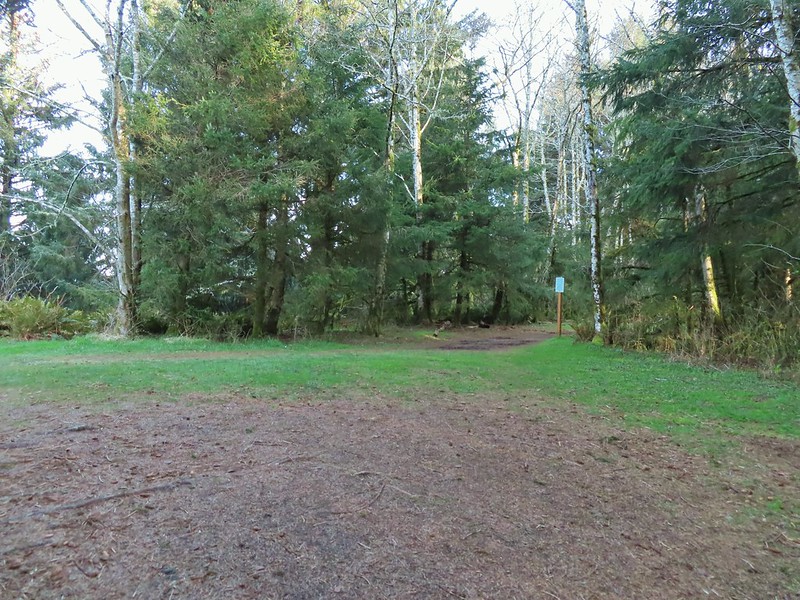
The junction.
We turned left at the junction following the ridge out to The Knoll, an open space overlooking Lincoln City to the south.
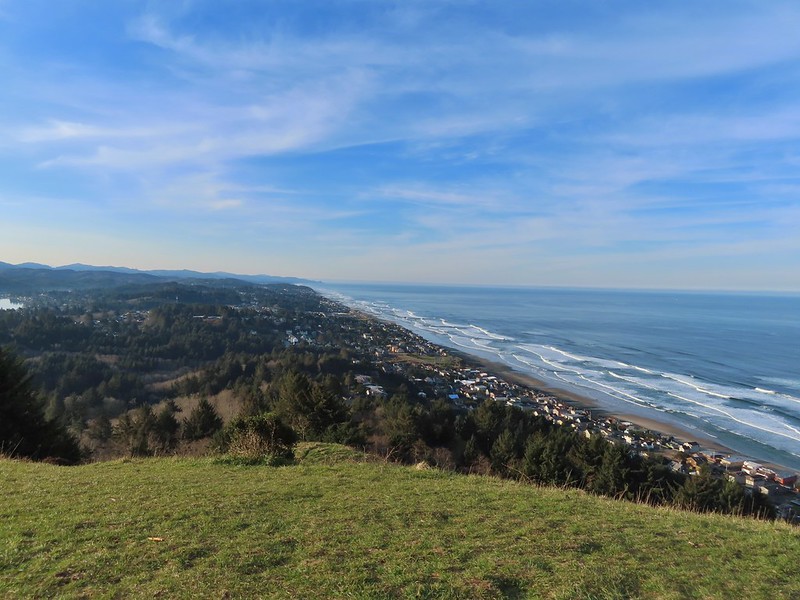
The Roads End parking area is the open green space in the center along the ocean.
The Pacific Ocean.
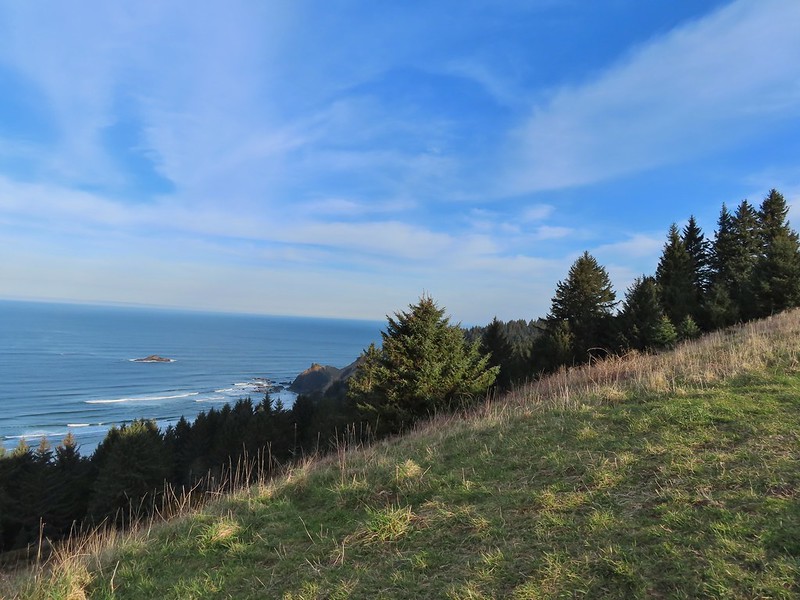
Roads End Point jutting out to the north.
The Knoll
We returned to the junction and continued straight following the ridge north.
Snow queen
More signs of Spring, salmonberry blossom and buds.
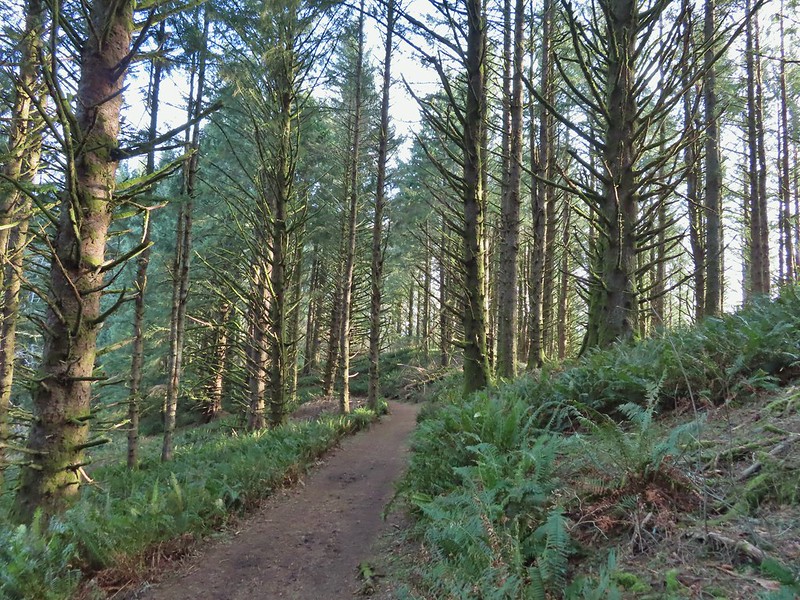
Sitka spruce and ferns along the ridge.
At the far end of the ridge (after approx 1/3 of a mile) we came to another junction with a trail coming up from the trailhead at The Villages.
Here we turned left and began a short descent that looked to be in some doubt due to several large downed trees. The downed trees ahead in the distance.
As it turned out there was just one tree to duck under while the rest looked to have been recently taken care of. The last of the tree fall.
The trail then dipped into an open meadow before rising again on the far side. Mud had begun to be a bit of an annoyance at this point.
After reaching the top of the hill the trail briefly continued north before turning left in a grassy meadow.
Busy woodpecker
The trail getting nearing the turn left.
Lone tree in the meadow.
Lone robin in the lone tree.
From the meadow there was a view of Cascade Head (post) to the north and to God’s Thumb jutting out into the Pacific to the west.
The trail to God’s Thumb crosses a narrow saddle before climbing steeply to the top of the thumb. We were thankful that it hadn’t rained for a few days which eliminated any issues that mud might have made with footing. We were also pleased that we didn’t see any other hikers in the area that we might have to pass on the way there. Heather crossing the saddle (left of the big bush)
Cascade Head from the saddle.
Final pitch up to the top.
The view of Cascade Head was great from the thumb and we were able to enjoy it by ourselves. Not quite to ourselves, we shared the space briefly with some chestnut backed chickadees.
Cascade Head and the mouth of the Salmon River.
Roads End Point and Lincoln City
Rocks below God’s Thumb
We did actually see another hiker but he wasn’t coming down the trail to God’s Thumb, he was heading down to the ocean in the cove north of us.
After enjoying the view for a bit we headed back. We finally passed some other hikers just as we started down into the valley before climbing back up to the junction at the ridge end. It was beginning to be a fairly steady stream of hikers as we reached the junction where we forked left to make a loop out of the middle of the hike. The old road bed on this side of the ridge was much muddier than what we’d come up, but we also spotted quite a few yellow violets and a single toothwort along this route. A reasonable representation of the wet/muddy conditions on this part of the hike.
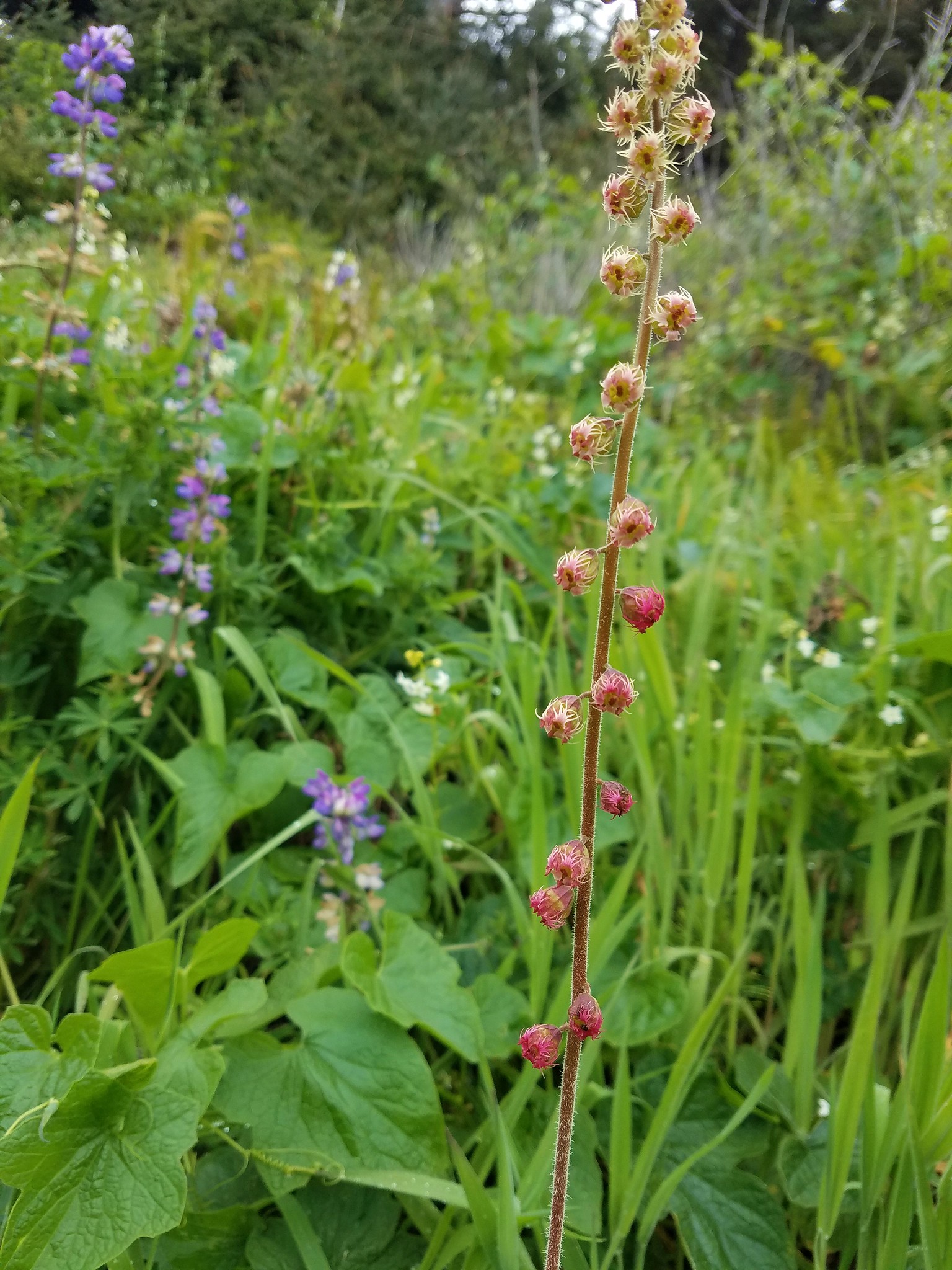
Toothwort
A mile and a half from the junction we arrived at the very crowded trailhead at The Villages. Here we turned left on a little path which quickly joined another old roadbed.
Less than a half mile later we were passing another gate along Sal La Sea Drive. The gate and Sal La Sea Drive in the distance.
It’s not a hike at the coast without some skunk cabbage.
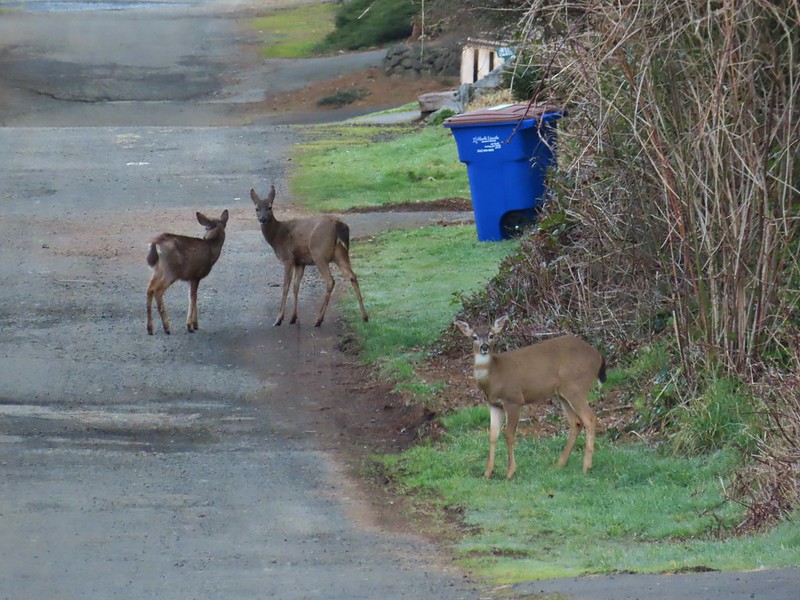
At Sal La Sea Drive I suggested turning left as it looked like the road would take us back downhill almost directly to the Roads End Recreation Site but Heather wasn’t sold on that. (She was sure there was a hidden uphill that would be worse than what we were facing to get back to the Sal La Sea Trailhead.) Never one to pass up a climb we turned right and headed up Sal La Sea Drive. It was a little over 3/4 of a mile back to that trailhead (where there were now 9 cars) and somewhere in there Heather realized she had chosen poorly. We then retraced our path from earlier back down to Roads End. Along the way we saw over a half dozen more deer among the houses which we found humorous, in the woods we saw no deer and a bunch of people and in the neighborhood we saw no people and a bunch of deer.
While our plan to avoid people had worked well at Alder Island and for our visits to The Knoll and God’s Thumb there was no chance for privacy along the beach at Roads End. While it was busy it was a nice walk along the beach for almost a mile and a half to Roads End Point where continuing is only possible during low tides.
Coltsfoot
An immature bald eagle flew overhead at one point.
Little waterfall along the beach.
Roads End Point
Not going around that today.
We headed back saying one last goodbye to God’s Thumb and The Knoll before driving back home to Salem.
God’s Thumb on the right.
Hikers on The Knoll
Our mileage for the day was right around ten with a mile coming at Alder Island, two and three quarters at Roads End and the remaining six and a quarter being The Knoll and God’s Thumb. There was 1420′ of elevation gain all of which was during the portion from Roads End to God’s Thumb and back. While we’ve had good weather for all three of our hikes thus far in 2021 this hike was the first to truly feel like Winter is coming to an end. Happy Trails!
We ended our 2020 hiking year by hiking a section of the Oregon Coast Trail from Yachats to Waldport (and back). Our final outing of the year also marked the 500th day with a hike since an ill prepared jaunt at Silver Falls State Park in 2006 gave us the hiking bug (post). I was extra excited for this outing having just received a replacement for our camera and looking forward to trying it out.
We headed north on the trail which passed between the rocky shore of the Pacific Ocean and several hotels.
Looking back south as the sunrise paints the clouds.
A house on the cliffs.
After three quarters of a mile, and crossing the private driveway of the house pictured above, the trail descends to a 6.3 mile stretch of beach between Yachats and the mouth of the Alsea River at Waldport.
It was a beautiful morning, chilly but not too cold. A slight chance of rain was in the forecast after 10am but that bank of clouds looked far off on the horizon as we struck off on the sand.
Seagulls outnumbered people in the early part of the day.
We arrived at Starr Creek shortly after descending to the beach.
One of the trickiest parts of beach hiking can be trying to judge the depth of the various creek crossings using satellite maps. This section of beach contained several named creeks so we had come prepared for barefoot fording if necessary. Starr Creek was narrow enough though that we were able to hop across with the assistance of our hiking poles.
Continuing north we passed some banded cliffs where the ocean had created a small arch.
Beyond these cliffs the beach widened and we strolled along the hard packed sand looking for wildlife (both alive and not so much).
Vinge Creek, about a mile down the beach, was crossable on small rocks.
Geese flying overhead, we couldn’t make out what kind.
At first we thought there were two weather vanes on the houses, a whale on the right and a heron on the left.
It turned out to be a real great blue heron (but the whale was a vane).
At Reynolds Creek (approximately 3 miles down the beach) we finally had to remove our shoes and socks for an ankle deep ford.
Wavy sand.
One of the most interesting sights came about 4.75 miles up the beach when we passed the “Big Stump“. The remains of an ancient redwood. The origins of the tree are unknown, it may have been part of an ancient redwood forest that was once present here or a transplant brought by the Pacific.
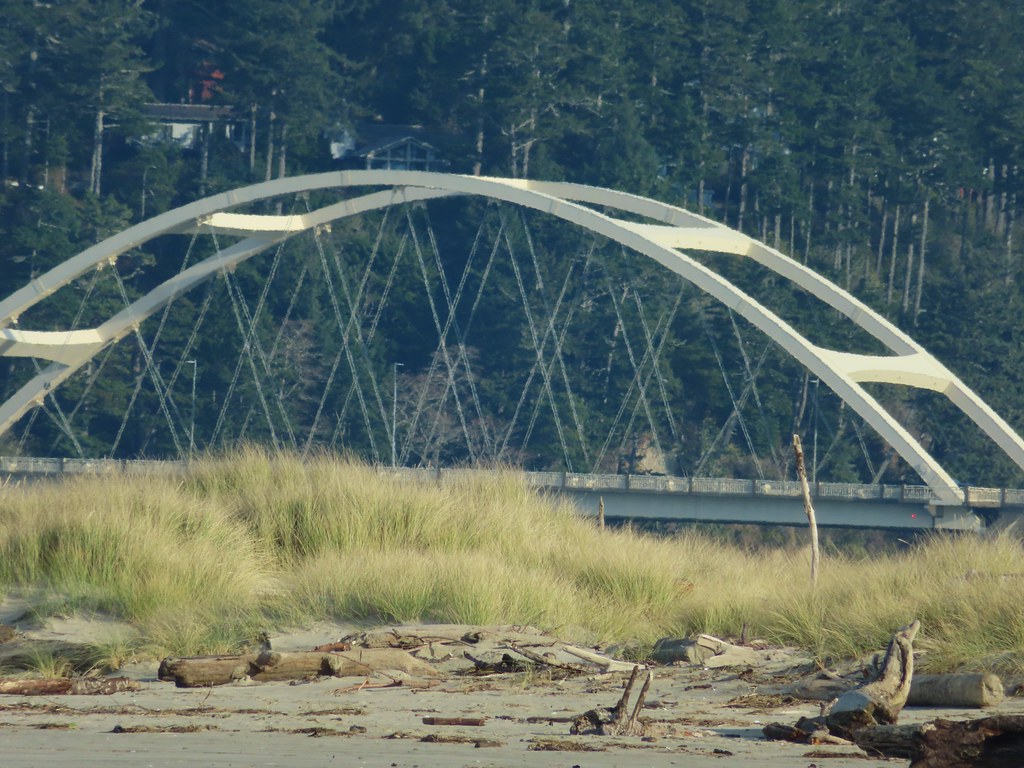
Not far beyond Governor Patterson we spotted the Alsea Bay Bridge spanning the Alsea River.
Testing the 40 zoom feature on the Canon SX740HS.
We made our way to a driftwood log near the mouth of the Alsea and took a seat. Heading for the log.
View from the log.
More testing of the zoom function. Seagulls on the near sandbar and seals on the one on the other side of the bridge.
It was a little after 10:15am when we started back. The bank of clouds offshore came creeping in as we made our way back to Yachats but rain never materialized. We spent much of our return trip watching seals and a few birds bob along in the surf. We also decided not to worry about letting our shoes get wet so we just went straight through the creeks on the way back and may have let the ocean get us once or twice too for good measure. Looking at the dark cloud bank over the Pacific.
Seal
A little more cloud cover to the south over Cape Perpetua.
Seagull shaking it off.
More cloud action.
Cormorant
Reynolds Creek after fording.
Finally starting to feel like it could start raining soon.
The advancing line of clouds.
Another look at the arch.
A kingfisher near the stairs up from the beach.
December blossoms on salal along the 804 Trail.
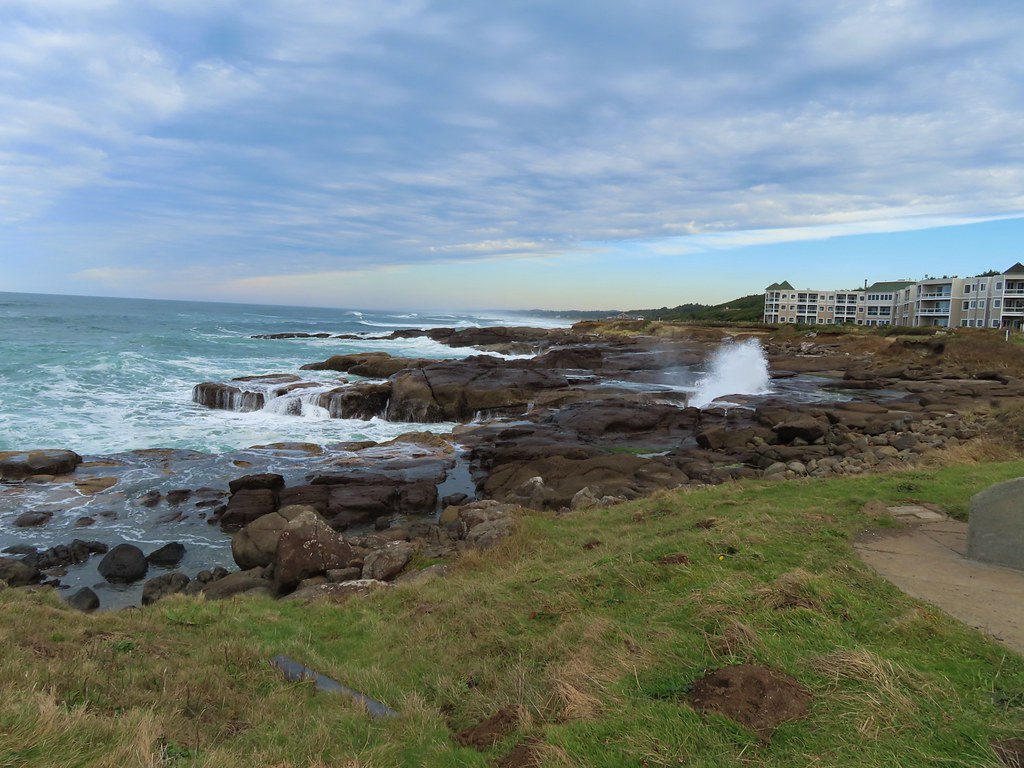
The tide was further in as we passed the rocky shoreline on the 804 Trail creating some dramatic wave crashes.
If not for our bladders we could have sat on one of the many benches along the 804 and watched the waves crashing into the rocks for hours but the restrooms at Smelt Sands beckoned. The weather had held up nicely and the hike was an entertaining one with just enough wildlife and sights not to be a tedious beach walk. It also helped that the sand was packed well and we never felt like we were having to work hard walking over it. Happy Trails!
As we finished up a four day stretch of hiking to start a week of vacation we were looking for the best chance of decent weather which brought us to the Oregon Coast for our second visit to Cascade Head. I had originally had a grandiose plan to hike from the lower trailhead all the way over to Harts Cove (post) but I hadn’t paid close enough attention to detail and we wound up going with a plan B.
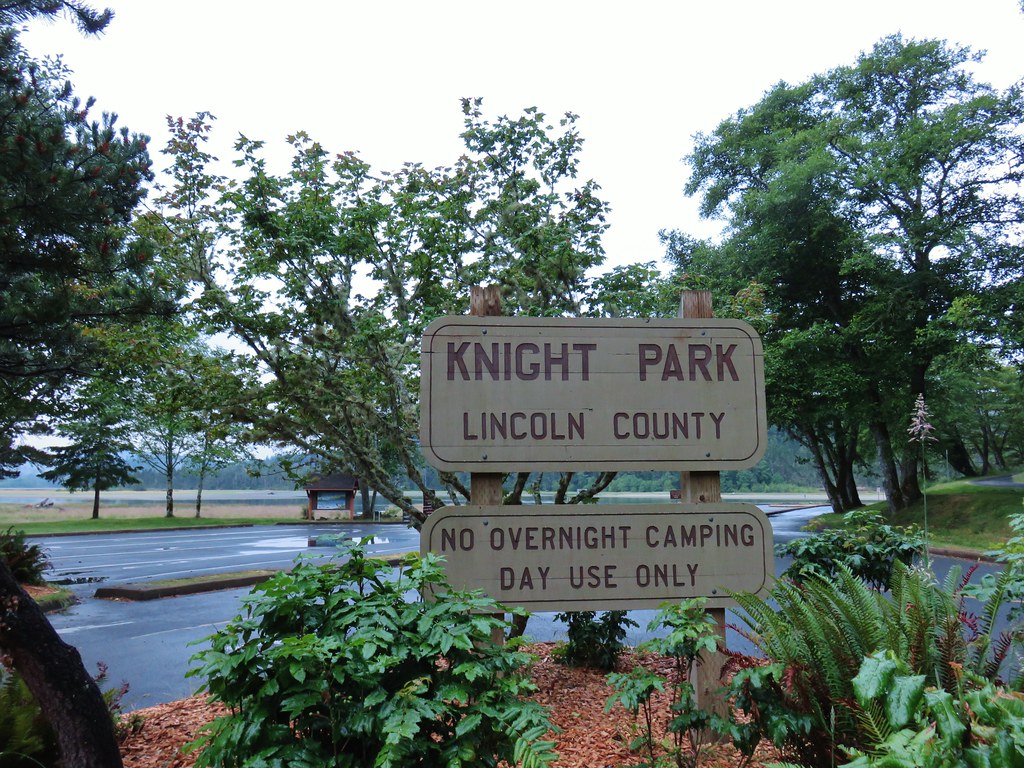
We started the morning at Knight County Park.
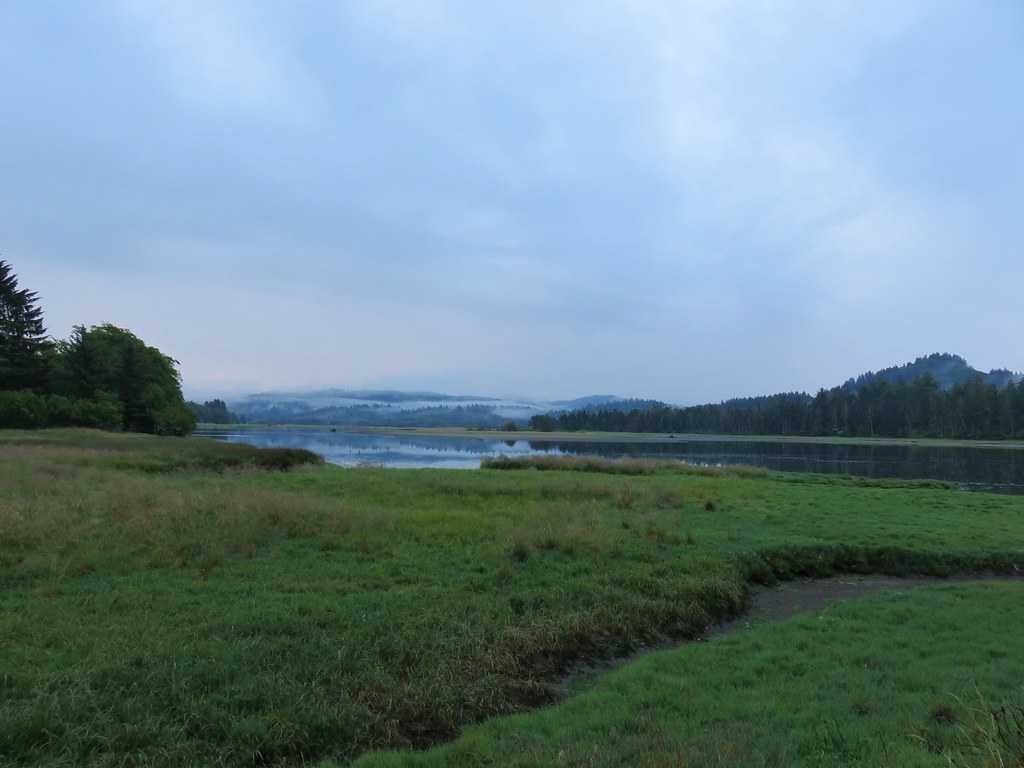
Salmon River at Knight County Park
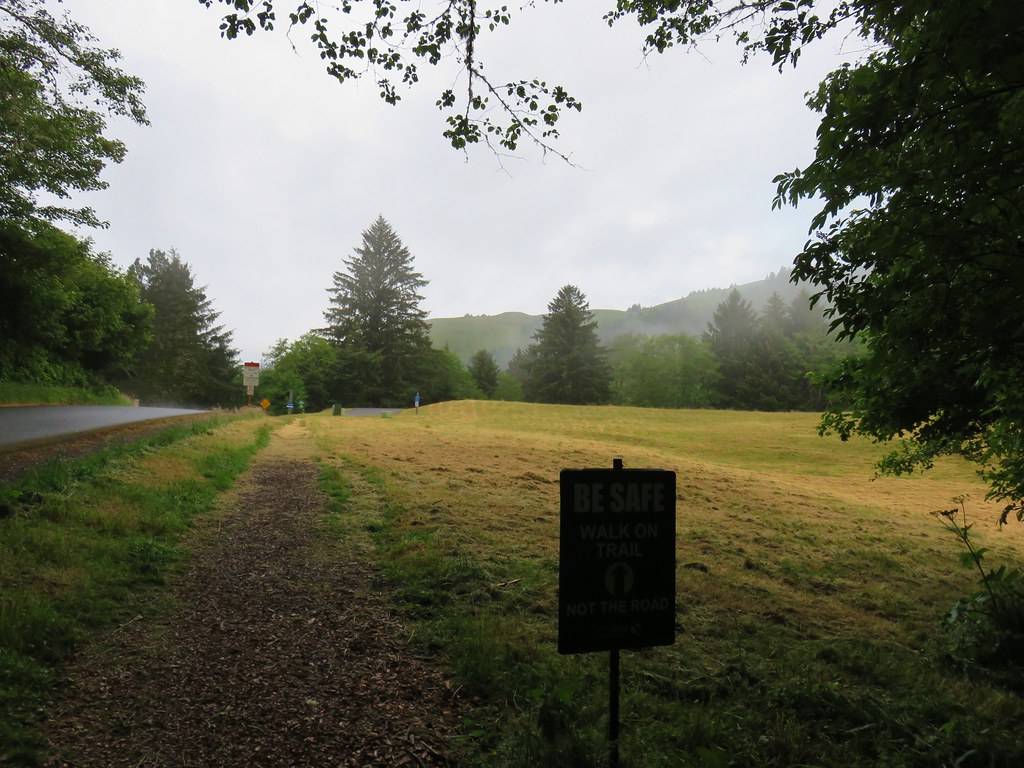
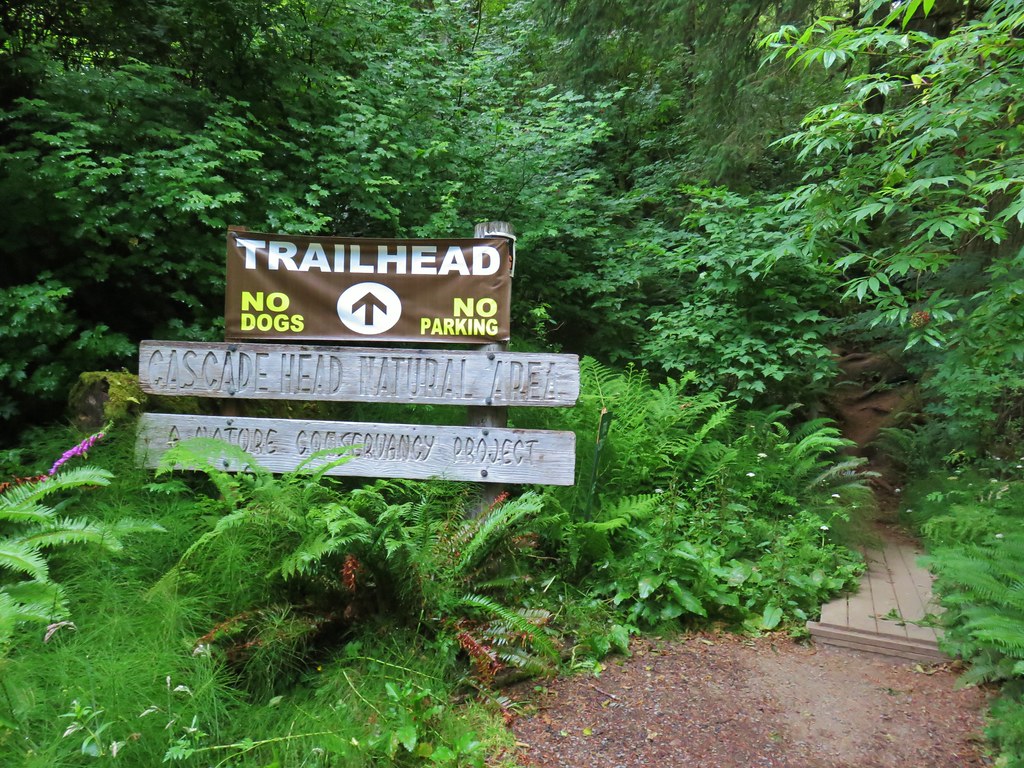
It had rained throughout most of our drive through the Coast Range but we were pleased to have been able to see the meadows on Cascade Head as we drove to the trailhead. We set off on the Nature Conservancy Trail which quickly crossed Three Rocks Road.
The trail climbed through the forest along Savage Road popping out of the trees at a field where we could see that the meadows were not nearly as clear as they had been just a bit earlier.
The fact that we could see the ocean was a bit encouraging though.
After crossing to the other side of the road the trail passed an active slide and recrossed to the original trailhead.
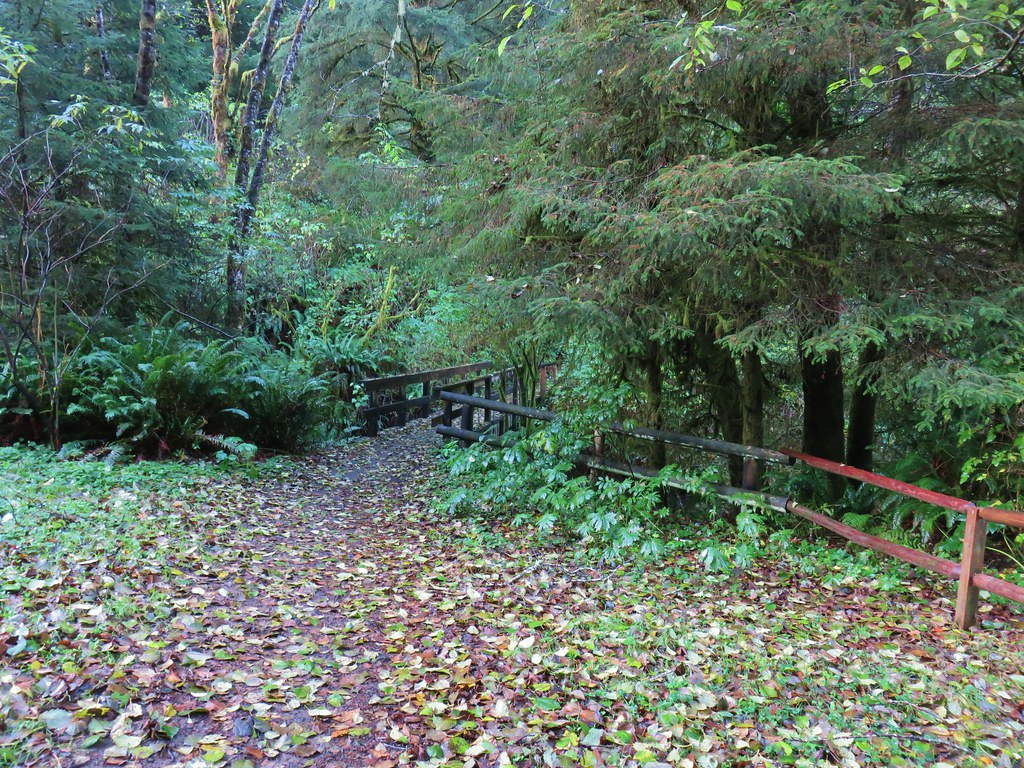
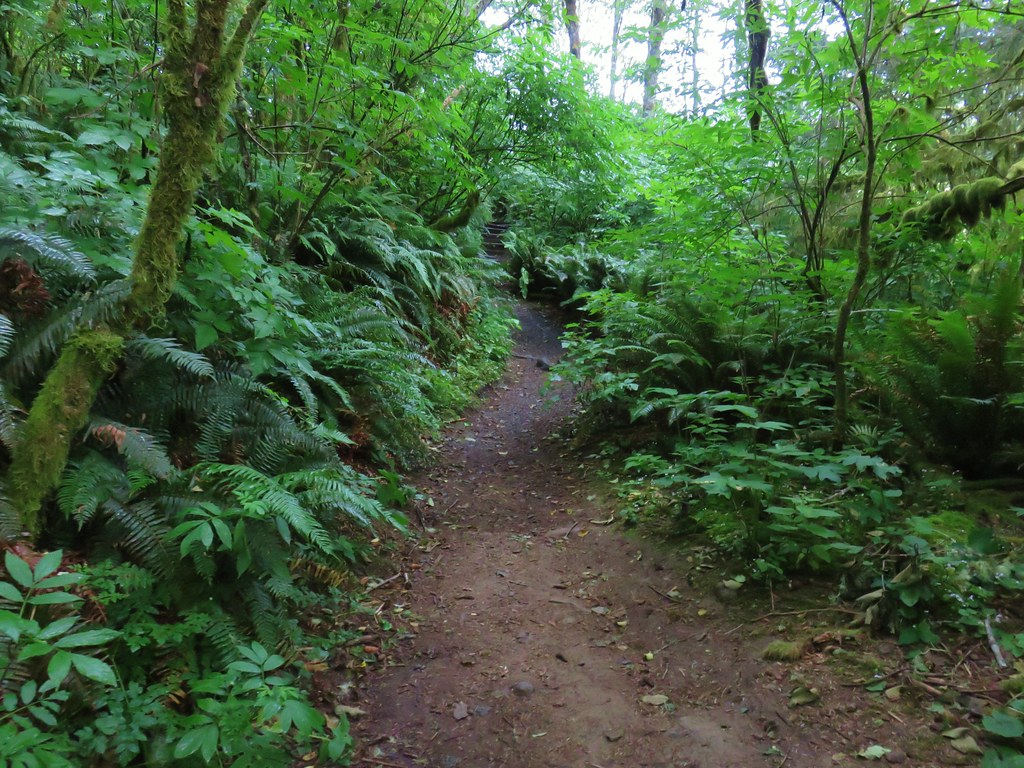
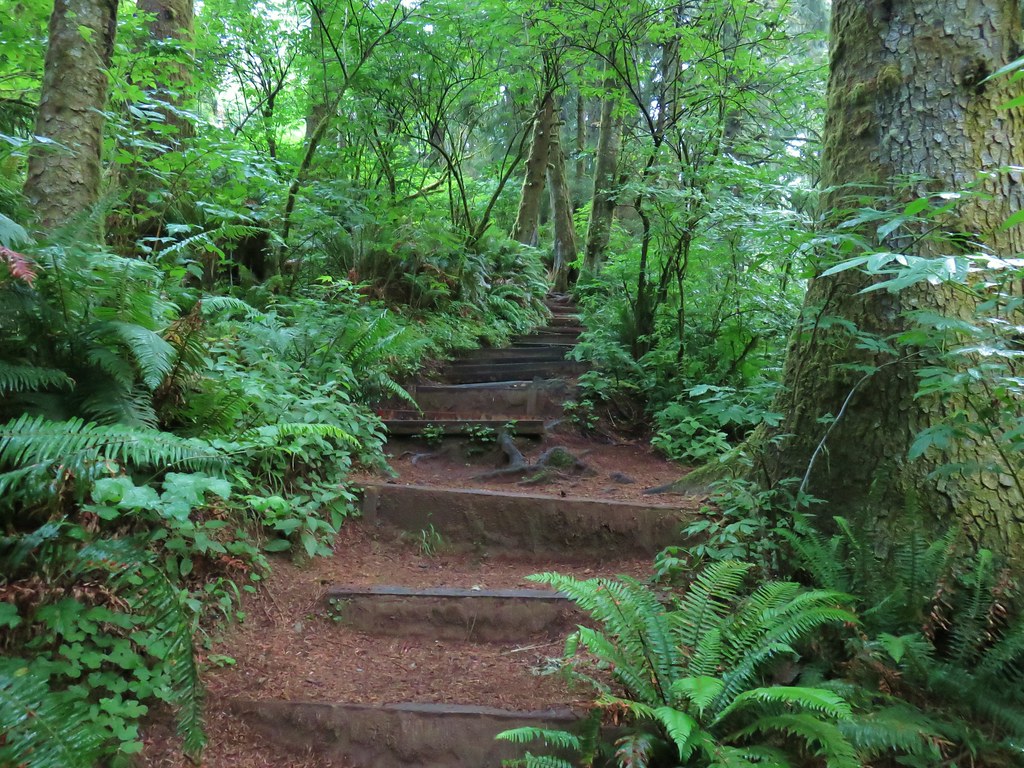
The trail continued to climb through the forest before leveling out for a bit as it crossed a series of overgrown streams on footbridges.
One of the bridges.
Overgrown stream
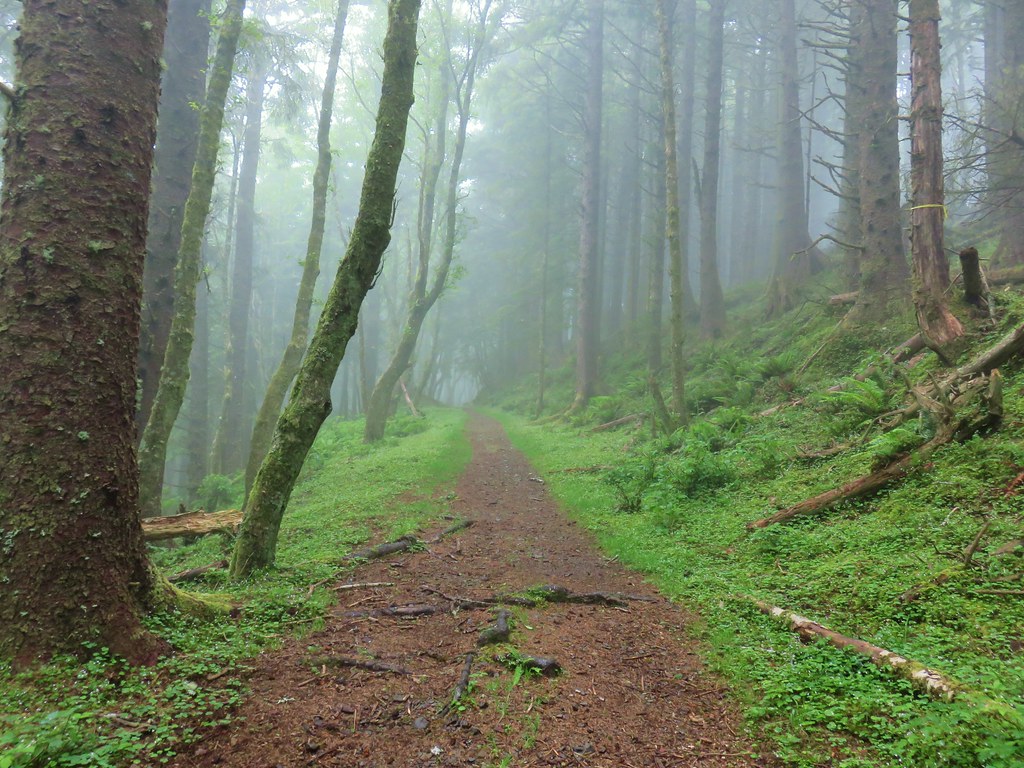
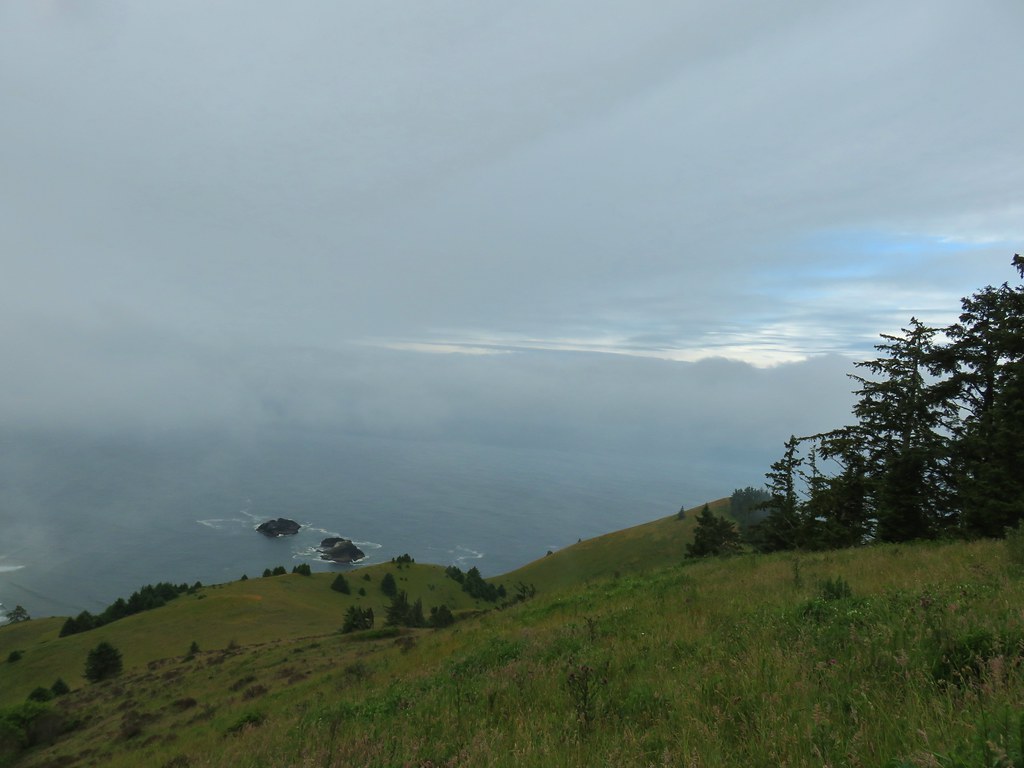
When we finally popped out of the trees around the mile and a half mark we found ourselves in some pretty thick fog.
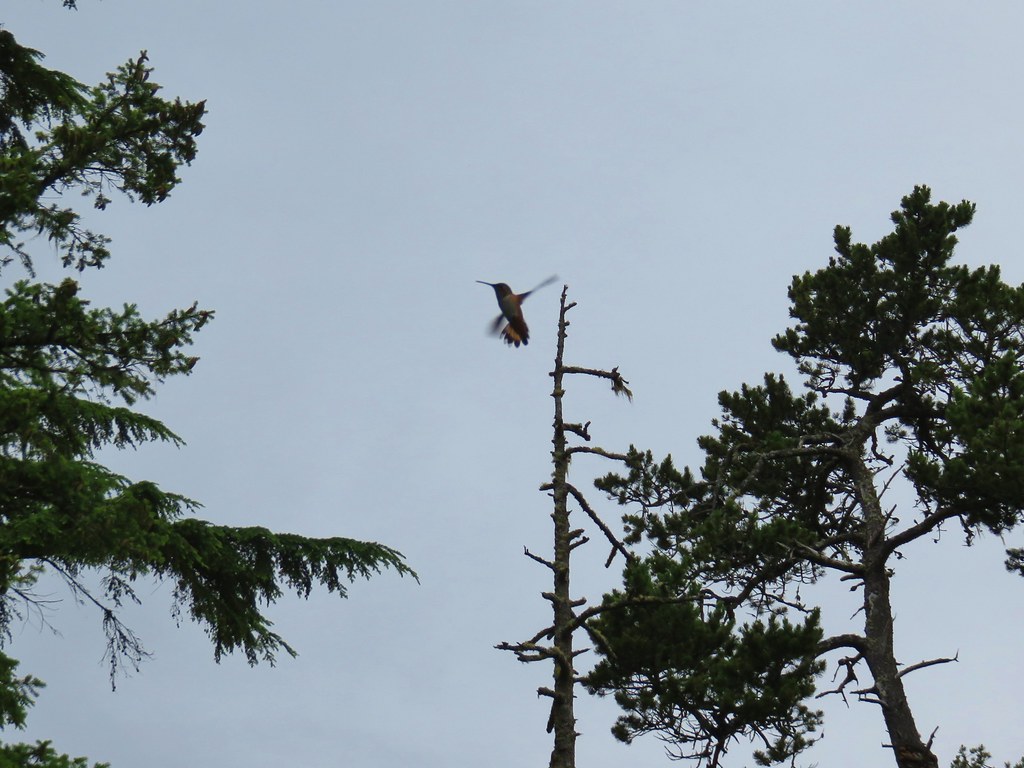
We had hoped to see some of the elk herd that lives on Cascade Head but we couldn’t see much of anything, although we did spot a few birds. White crowned sparrow
One of three hummingbirds
Another white crowned sparrow
There were just a few flowers scattered about as we made our way through and up the grassy meadow. Checkerbloom
Monkeyflower
Yarrow
Field chickweed
Lupine
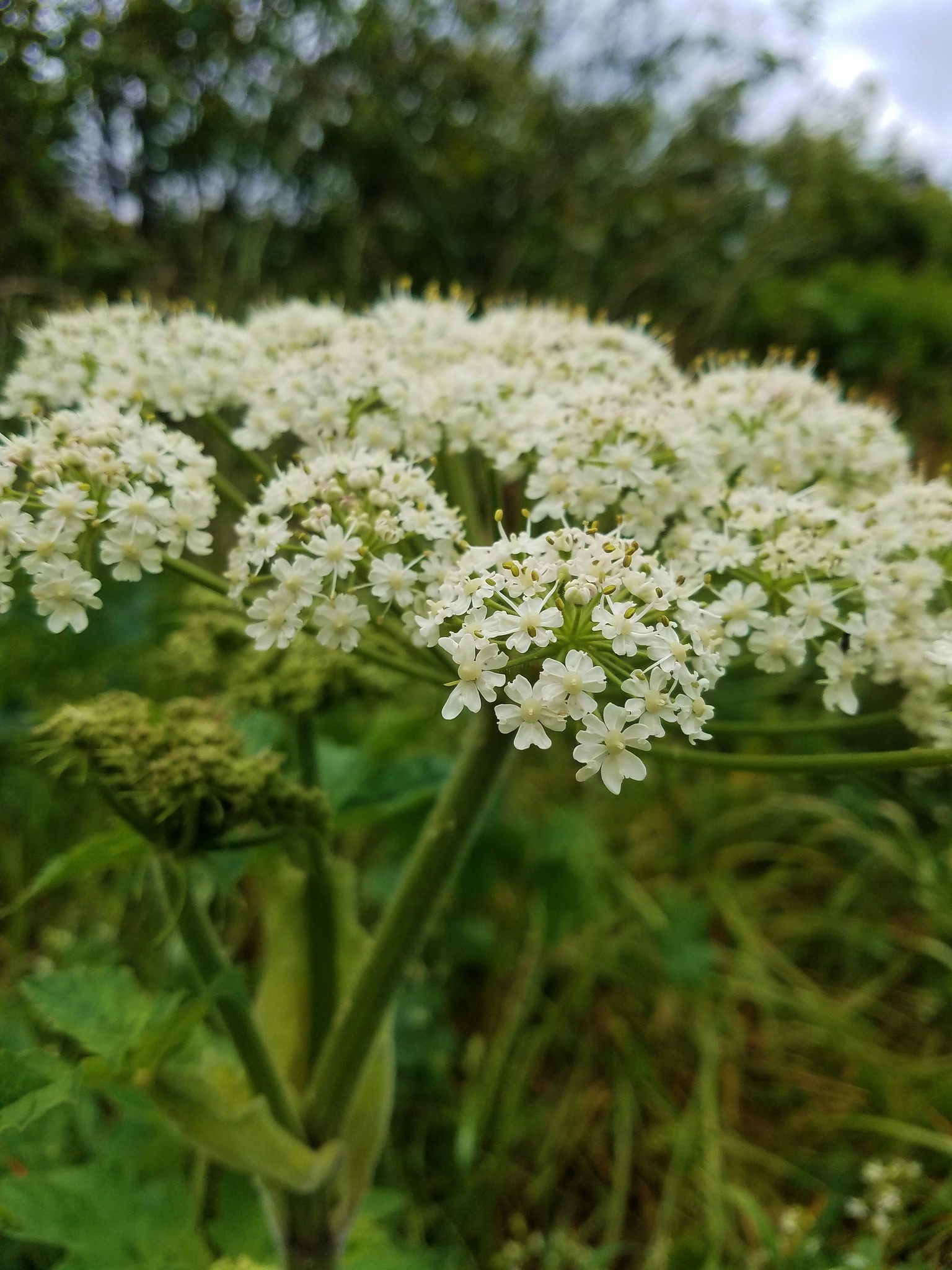
Parsley-leaf Lovage
Foxglove with a spider web
Clovers
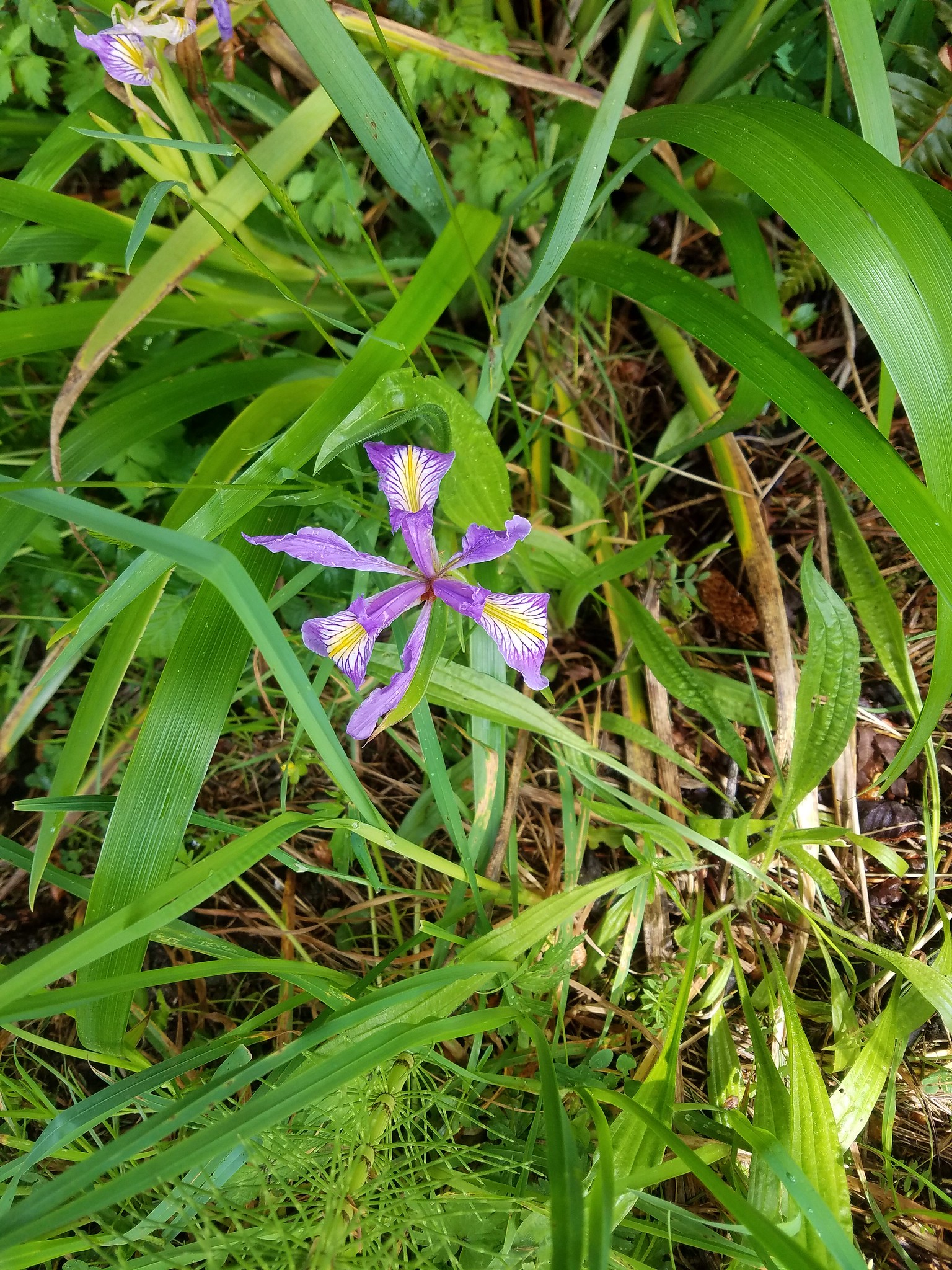
Iris
Self-heal
With no views from the meadows when we finally reached the upper viewpoint we headed into the forest.
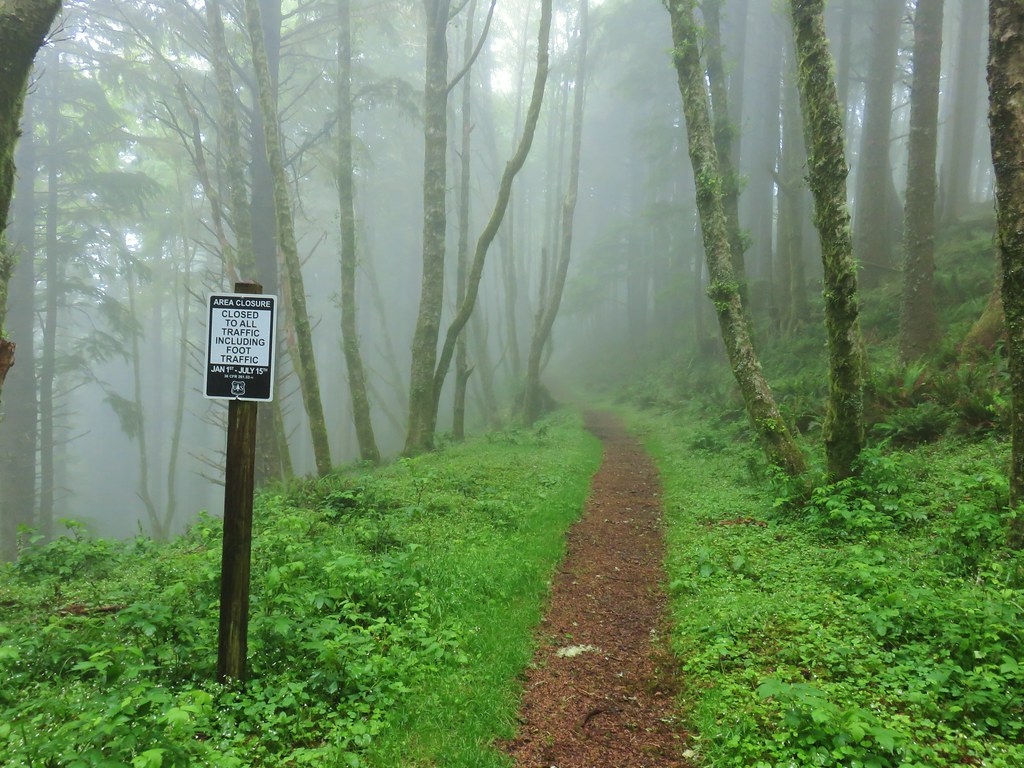
When we came to Siuslaw National Forest boundary my lack of attention to detail became apparent. I had seen where the road to the Upper Trailhead was closed annually from January 1st through July 15th, but I hadn’t noticed that the entire area starting at the boundary was closed to all traffic during that time period.
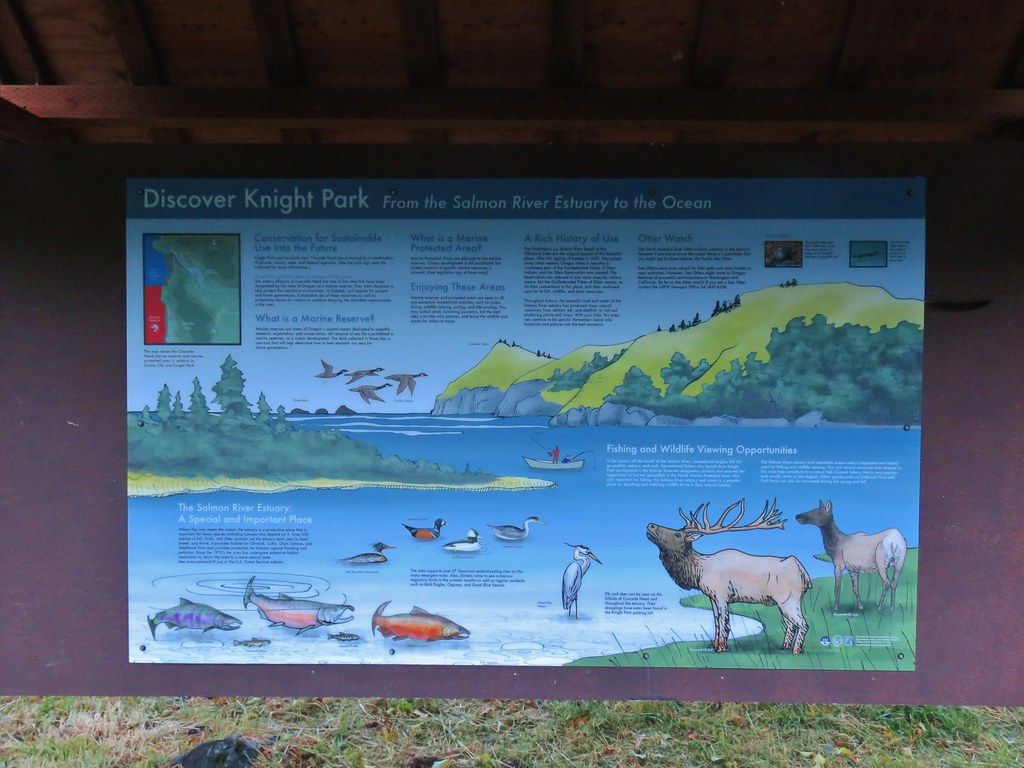
So much for that plan. We gathered under the awning over the Nature Conservancy signboard and mulled over our options. We decided that it might be a decent time to check out a couple of other nearby hikes – Whalen Island and Sitka Sedge. These two hikes would be just a little less mileage than our original plan with quite a bit less elevation gain, plus they were close to Pacific City which gave us a great excuse to have lunch at the Pelican Brewing Company.
With a new plan we headed back to the upper viewpoint where the conditions had improved slightly. We could make out the trees and even a bit of the ocean in the distance through the fog.
The problem seemed to be that the clouds/fog wasn’t coming in from the Pacific but was instead coming from inland up the Salmon River. We paused for a moment wondering if the view might clear up. While we were watching we spotted a doe walking along the tree line. Look for the head to the right of the tall foxglove stalk.
We decided to keep descending figuring that we would still have a good view if the fog did happen to lift.
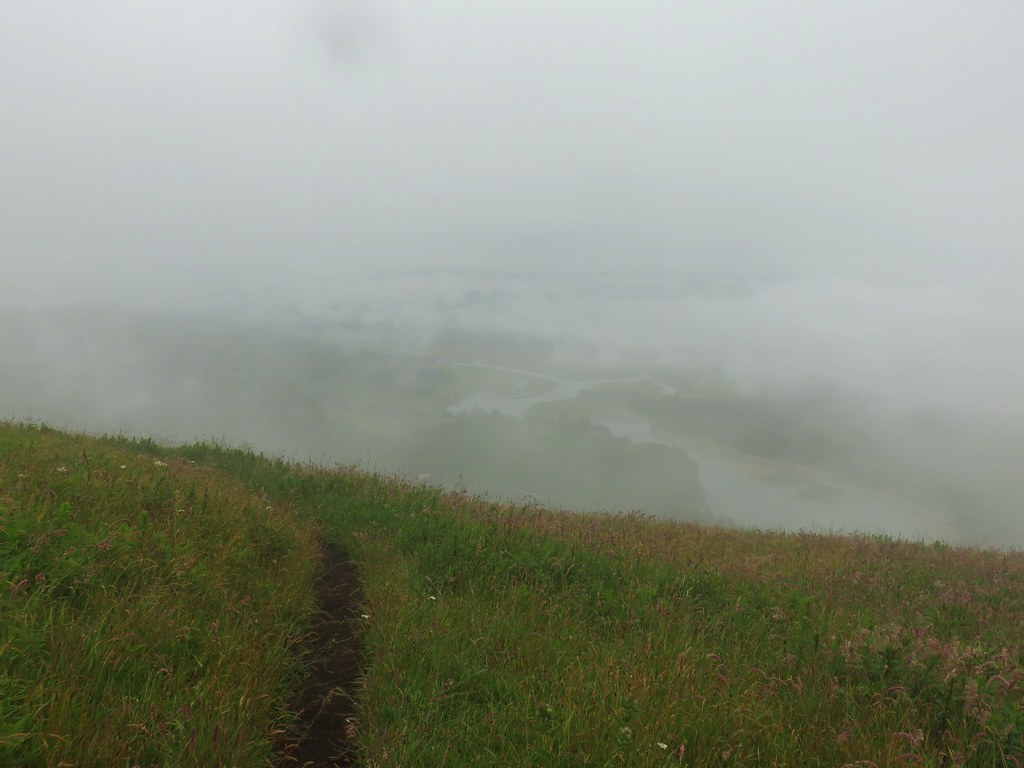
As we were headed in the direction of the Salmon River the fog did indeed clear in a span of just over a minute.
It was a remarkable change. As we were admiring the new, clearer view we noticed a pair of deer feeding in a gully far below us.
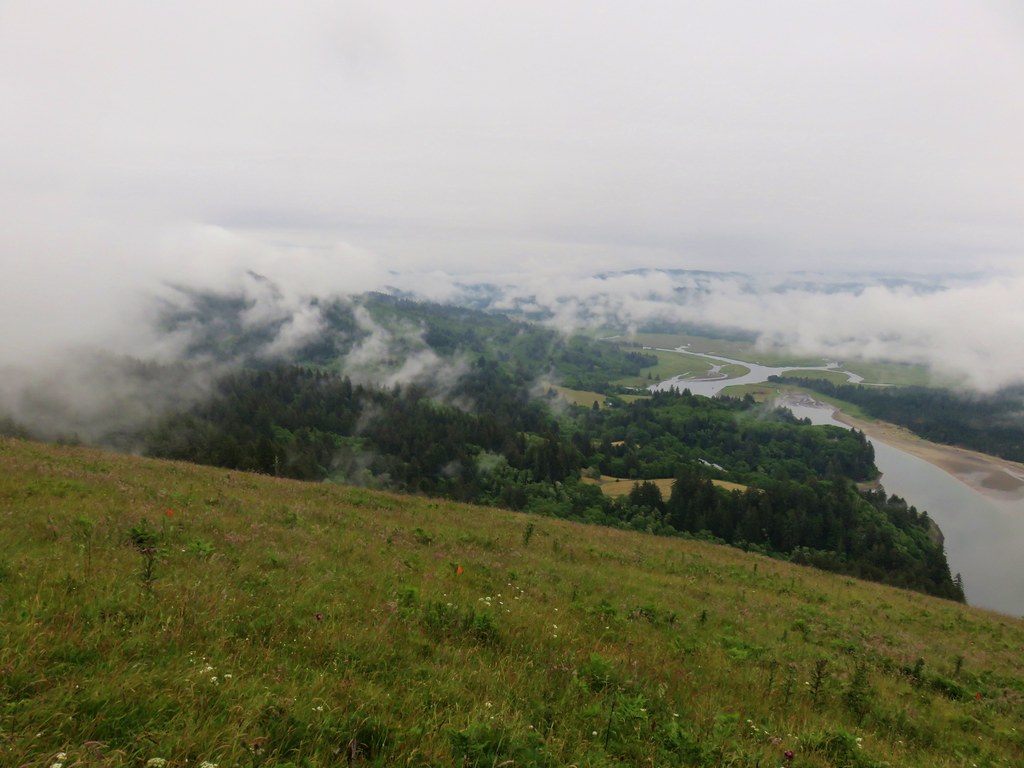
As we continued downhill we were encourage to see an actual pocket of blue sky.
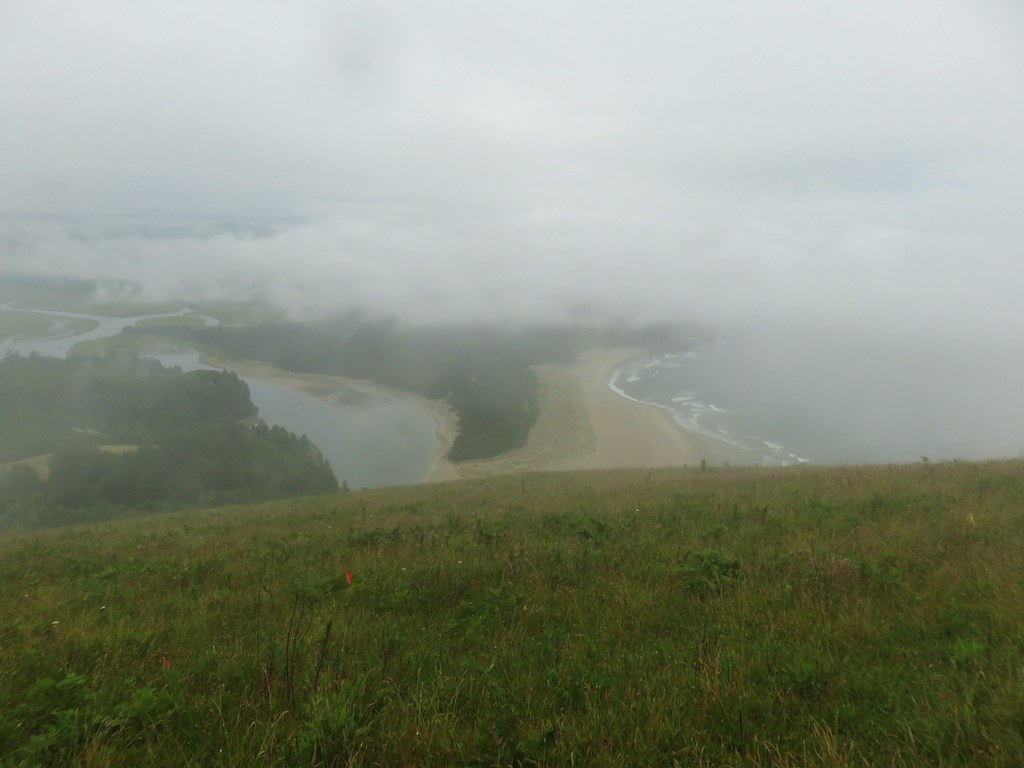
We stopped to take in the view from the lower viewpoint.
From the lower viewpoint the trail turned back inland where things were taking another turn. It was now beginning to rain.
It was a fairly quick, damp, descent back to the car. We were briefly followed by a young fawn who quickly ran the other way when we turned around and spotted it. We had heard a couple of odd noises which caused Heather to turn and notice it. Were aren’t sure what prompted it to follow but hopefully it got back to it’s bed and mother.
The rain had ended by the time we arrived back at Knight Park and we headed north along Highway 101 for 12.7 miles to a sign for Pacific City and Sand Lake where we turned left. This was Brooten Rd. which we followed for 3.5 miles before turning left onto a bridge across the Nestucca River and into Woods. After 2.3 miles on what was now Sandlake Rd. we turned right at a T-shaped junction remaining on Sandlake Rd. for 2.9 more miles to the Clay Myers State Natural Area at Whalen Island on the left.
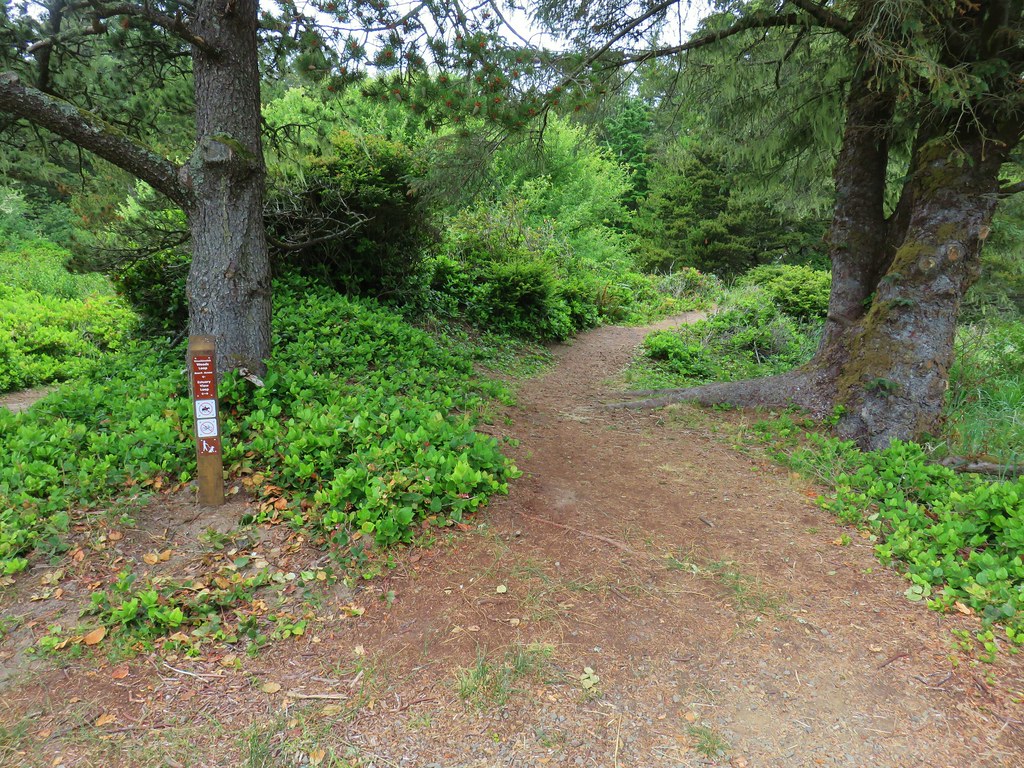
It was overcast here but not raining or foggy so that was a plus. We began our loop hike here by taking a trail near the southern end of the parking area.
The 1.5 mile loop here passes several viewpoints of Sand Lake and the Lillian Parker Craft wetland. Near the first viewpoint we spotted a rabbit.
The trail was nice and there were a few flowers along with the views.
At the wetlands a curious hummingbird came to check us out.
Groundcone
Tiger lily
After completing this short loop we drove back south along Sandlake Rd a mile and turned right into the Sitka Sedge State Natural Area. Purchased by the State in 2014 this is a relatively new hiking area offering a couple of loop options.
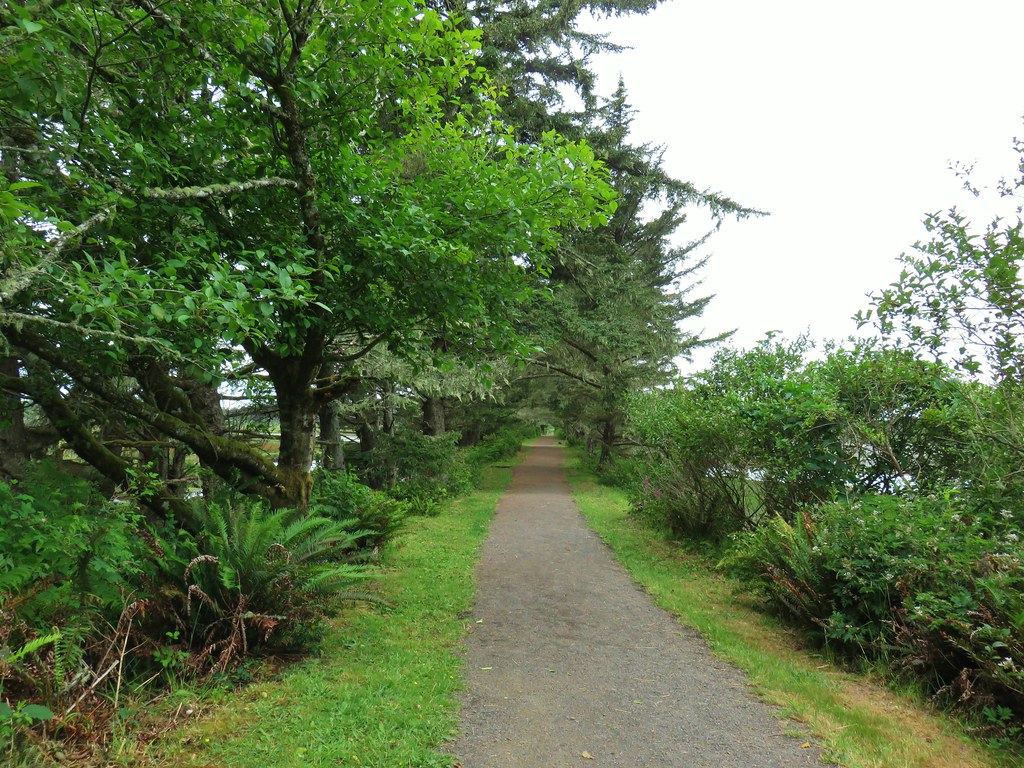
We followed the Beltz Dike Trail to the start of the loops.
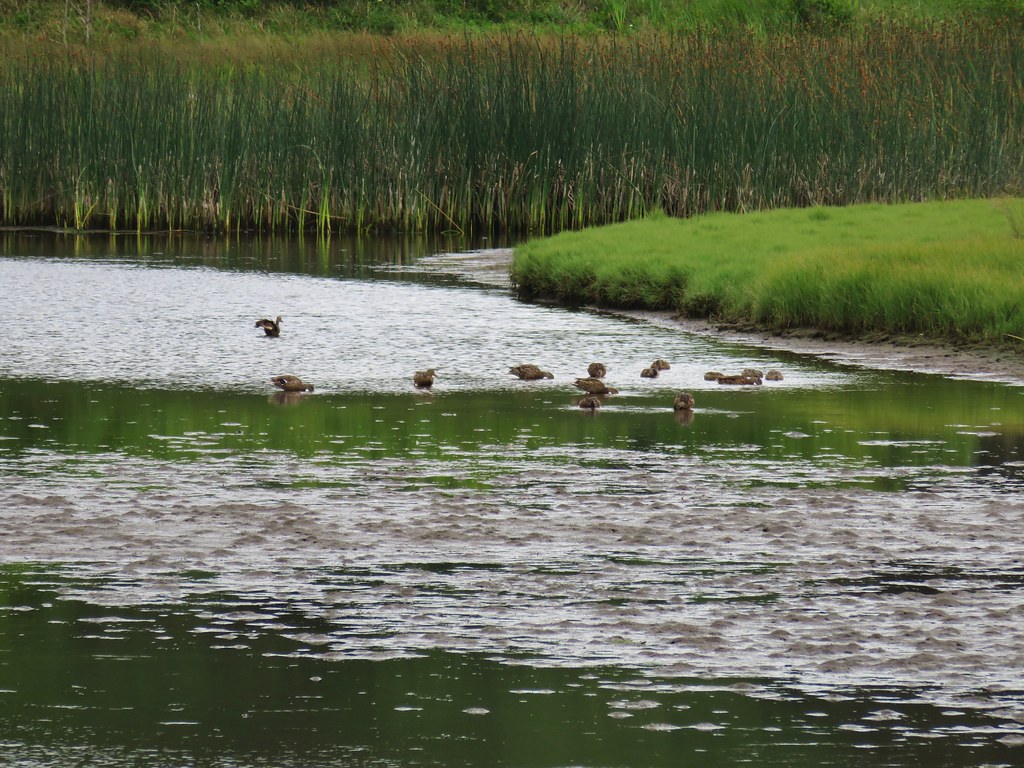
With water and wetlands on both sides of the dike we were a bit surprised by the lack of wildlife which was basically just a few ducks, some crows, and a number of smaller birds.
There appeared to have been quite a display of roses a bit earlier in the year.
On the far end of the dike we turned right onto the Estuary View Loop.
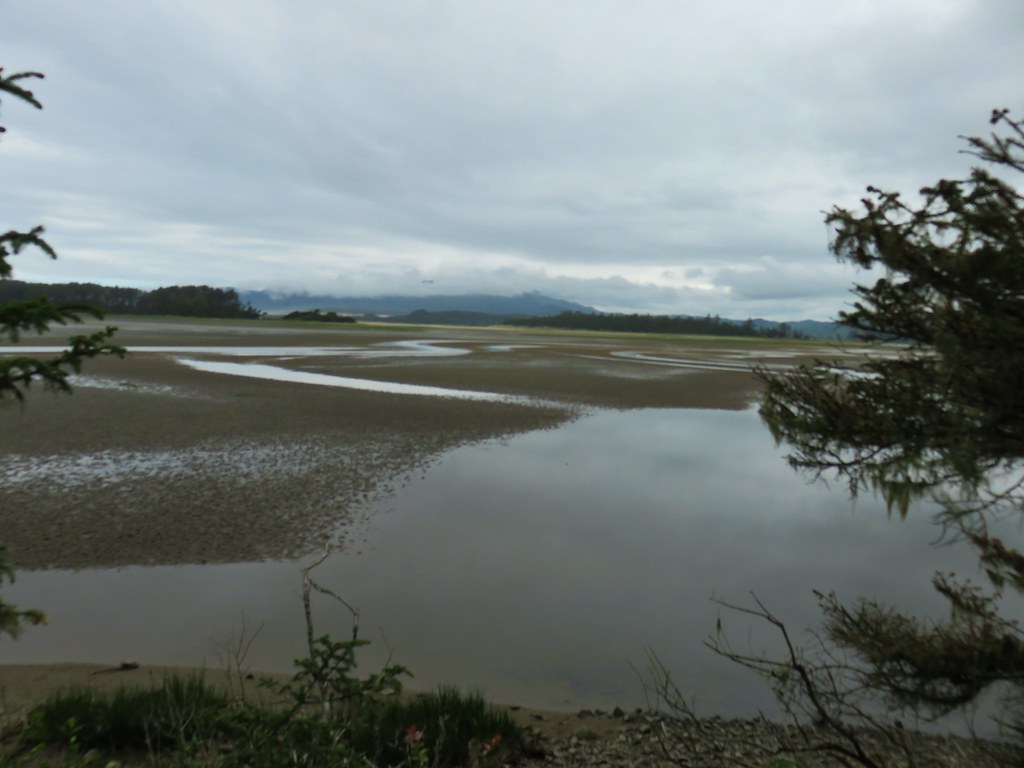
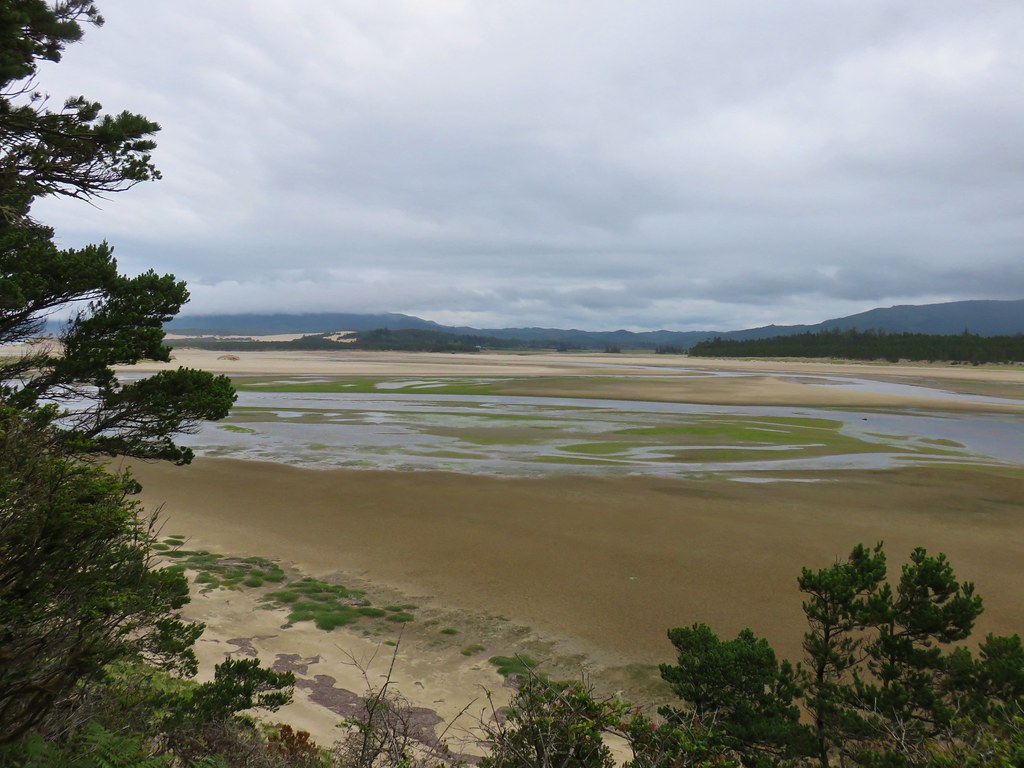
This trail passed through a typical coast forest and climbed to a viewpoint above the Sand Lake Estuary.
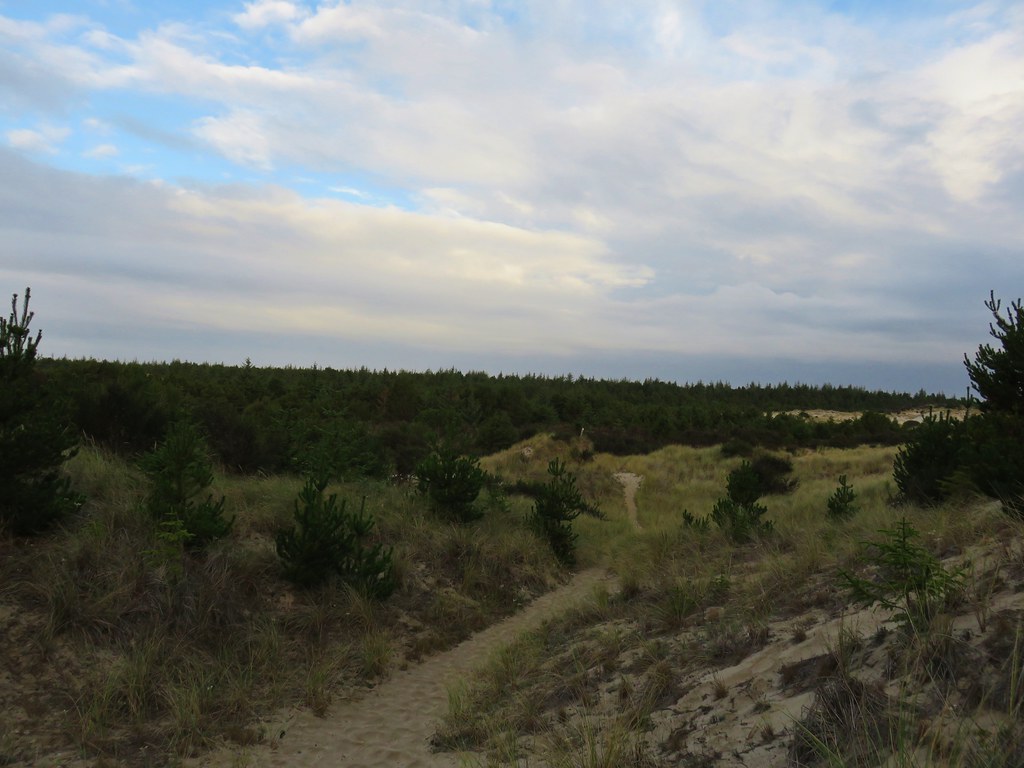
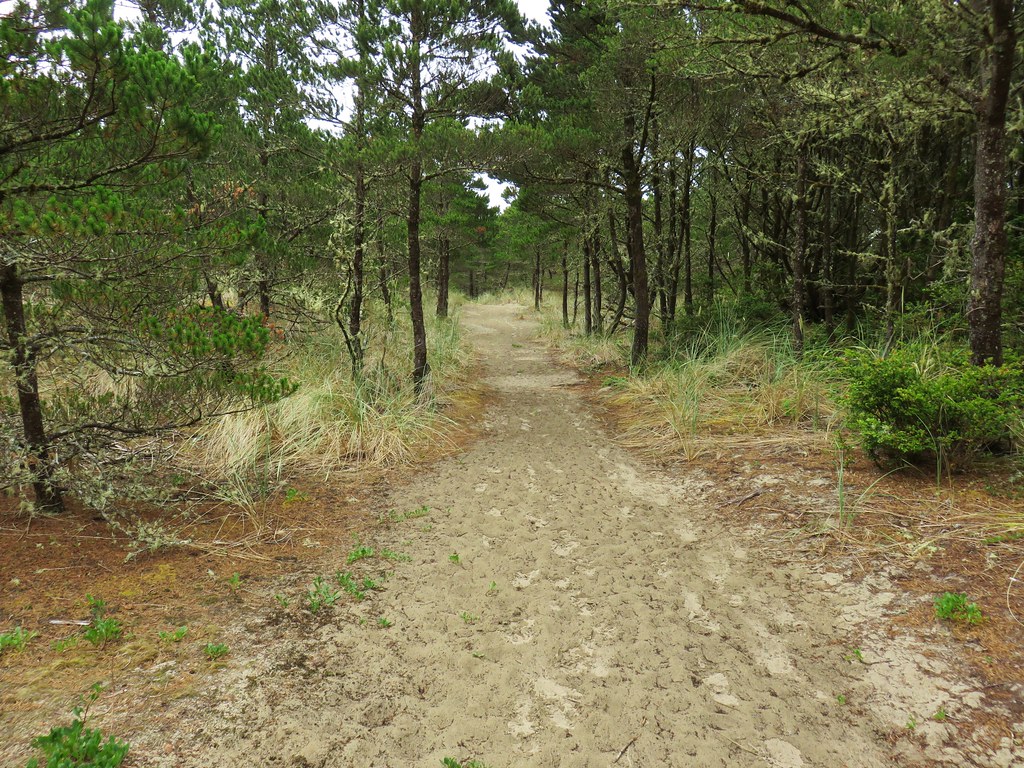
We scanned the estuary for any interesting wildlife but didn’t spot anything so we continued on. As the trail looped around and began heading south it became quite a bit sandier requiring a little extra effort.
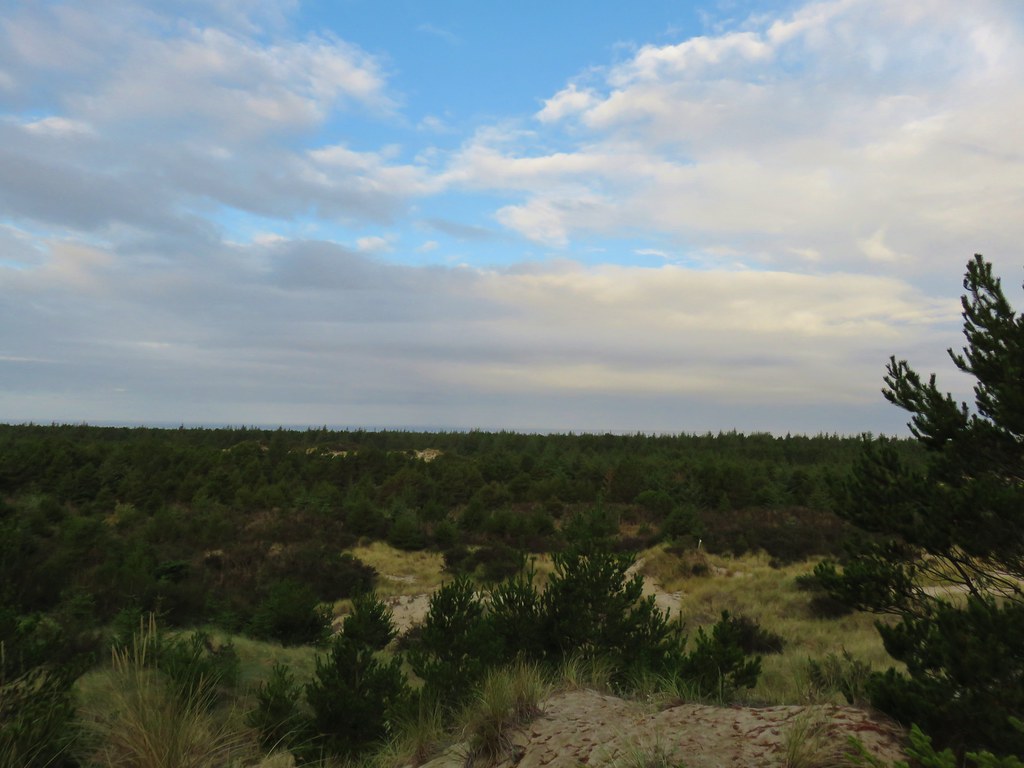
At a rise in the trail there was a view south to Cape Kiwanda and Haystack Rock (post).
We missed the the pointer for beach access where the Woods and Estuary View Loops met and continued south on what was now the Kinnikinnik Woods Loop.
This section was much less sandy which made it easier to walk on.
At the next trail sign we did follow the beach access pointer but we mistook it on the map for the one we had already passed.
This path was a slightly longer route to the beach as it first paralleled it for nearly two tenths of a mile before a short spur trail to the right led out to it.
Cape Lookout lay to the north while Cape Kiwanda and Haystack Rock were to the south.
When we left the beach we turned right thinking that this was still the Kinnikinnik Woods Loop but a quick look at the Garmin showed that we were quickly approaching the outskirts of Pacific City so we promptly turned around and headed back to the junction and got ourselves back on the correct path.
We took a final short detour at the pointer for the Elk Knoll Trail.
This 500′ long path led to a bench atop a small knoll, there were no elk present.
After sitting briefly on the bench we completed the loop but not before Heather did one of the craziest dances I’d ever seen as we were walking along the trail. She had suddenly seen something right in front of her and thought it was some kind of big insect coming for her. It wasn’t. Obstacle hanging over the trail.
We both got quite a laugh out of her fancy moves and chuckled all the way back to the trailhead. Despite our detour the hike here was still under 4 miles bringing the days total to 11.1 miles.
After a quick change we drove into Pacific City and stopped at the Pelican Brewery before heading back to Salem. The food and drink were a nice way to end four days of hikes. With more rain in the forecast over the next couple of days we’ll see when and where our next hike takes us. Happy Trails!
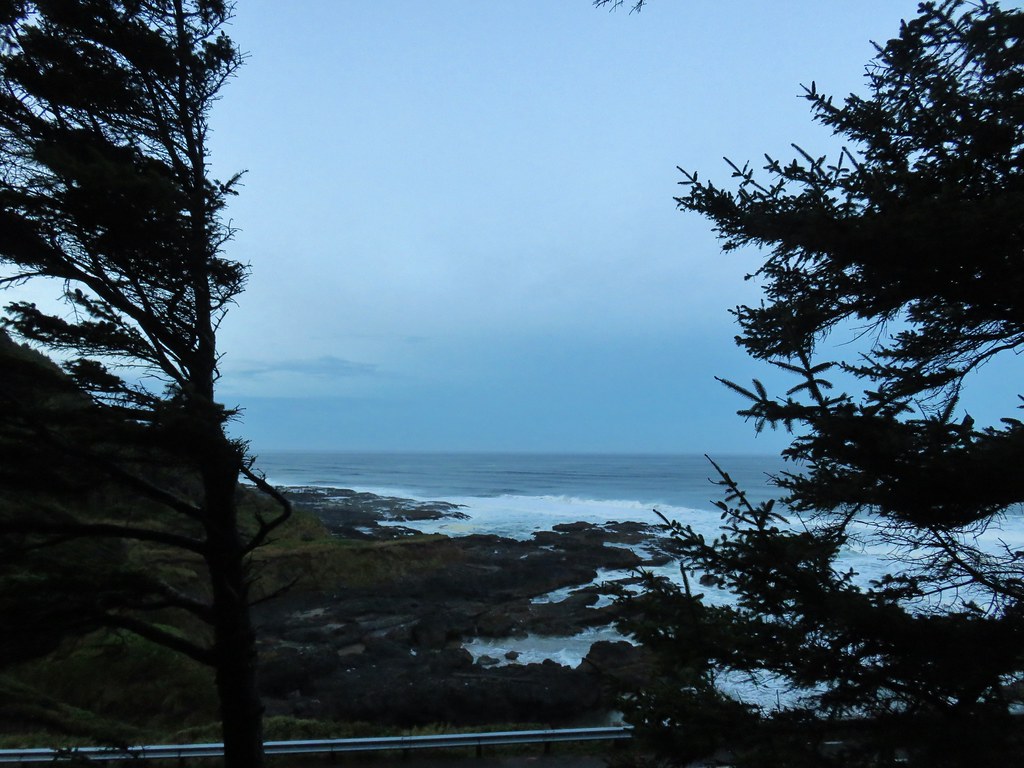
As we approached the final hike of our official “hiking season” (May through October) we were playing a game of cat and mouse with the weather forecast. Our original plan had been a visit to Wahtum Lake between the Columbia Gorge and Mt. Hood but on Wednesday the forecast for Saturday was rain there so we began to look elsewhere. Our November hike (we try and do one a hike month in our “off-season”) was going to be a visit to Cape Perpetua via Amanda’s Trail so we checked the forecast for that area and it simply called for mostly cloudy conditions. We checked again on Thursday and the forecast for these locations had basically swapped and now Wahtum Lake looked better. Another check Friday night called for rain in both areas (more at Wahtum Lake) so we decided to check again in the morning before deciding where we would end up. The forecast the next morning was still calling for rain at both locations but not starting until 11am. With less precipitation expected at Cape Perpetua and views being less of a concern there we headed to Yachats on the Oregon Coast.
At the southern end of Yachats, after crossing over the Yachats River, we turned right on Ocean View Road which leads to the Yachats Ocean Road State Natural Site. The road passes along the natural site where there are several pullouts before looping back to Highway 101. We parked at a small dirt pullout near the southern end of the natural site and took our time getting going because we’d arrived a little before sunrise.
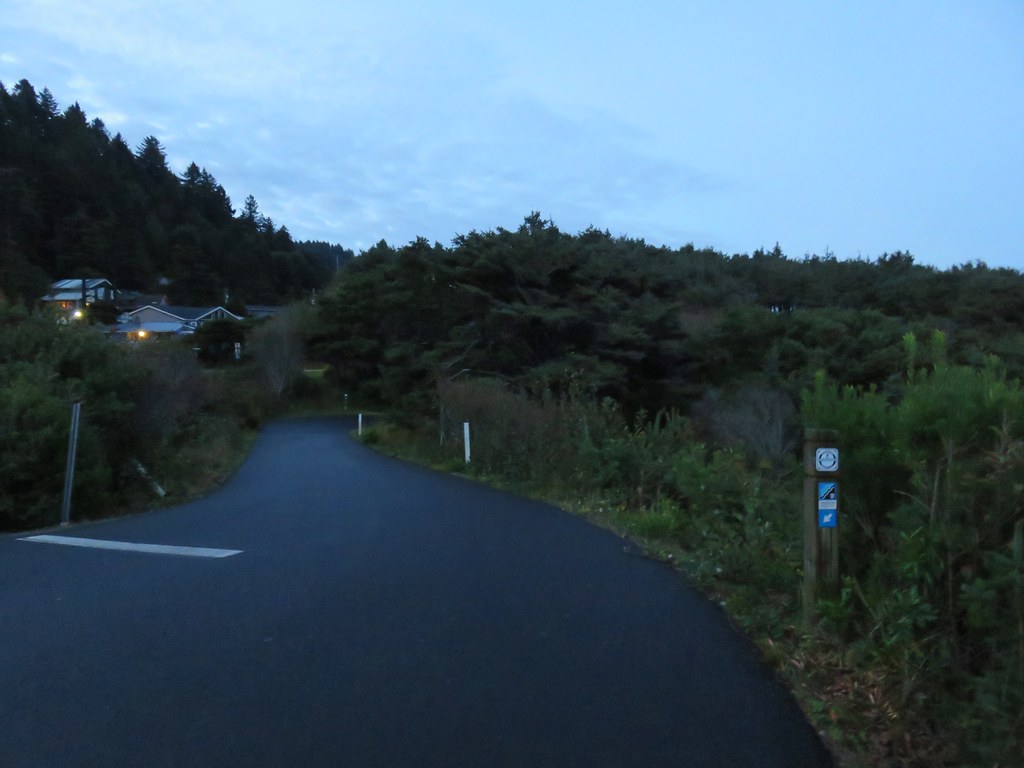
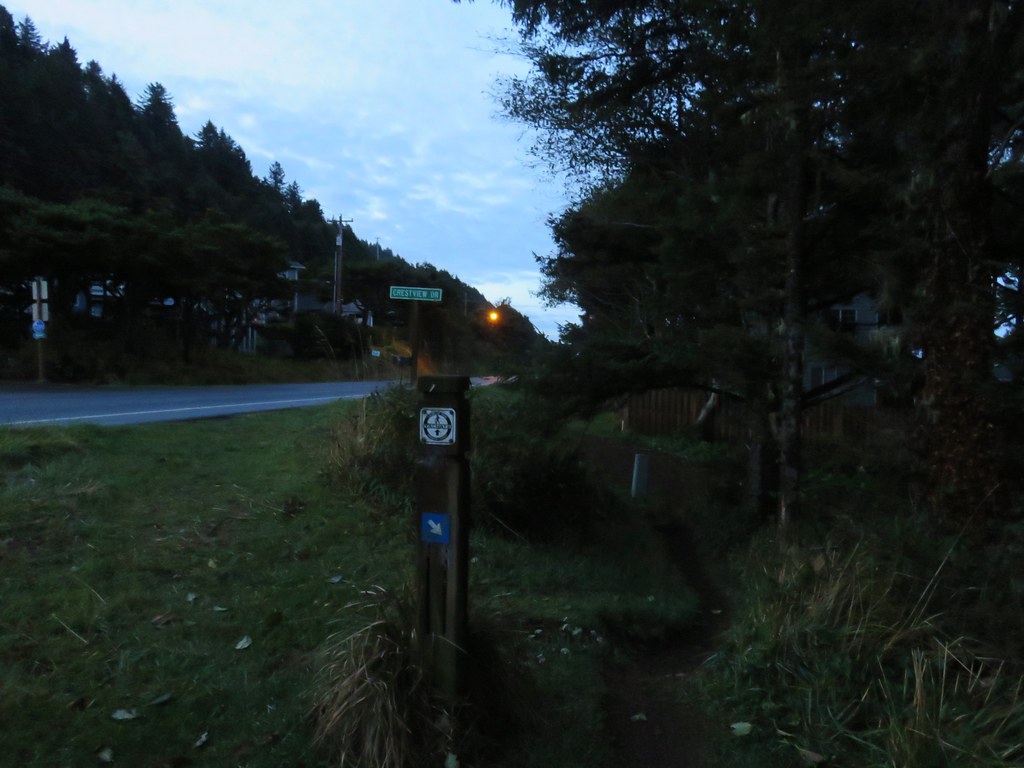
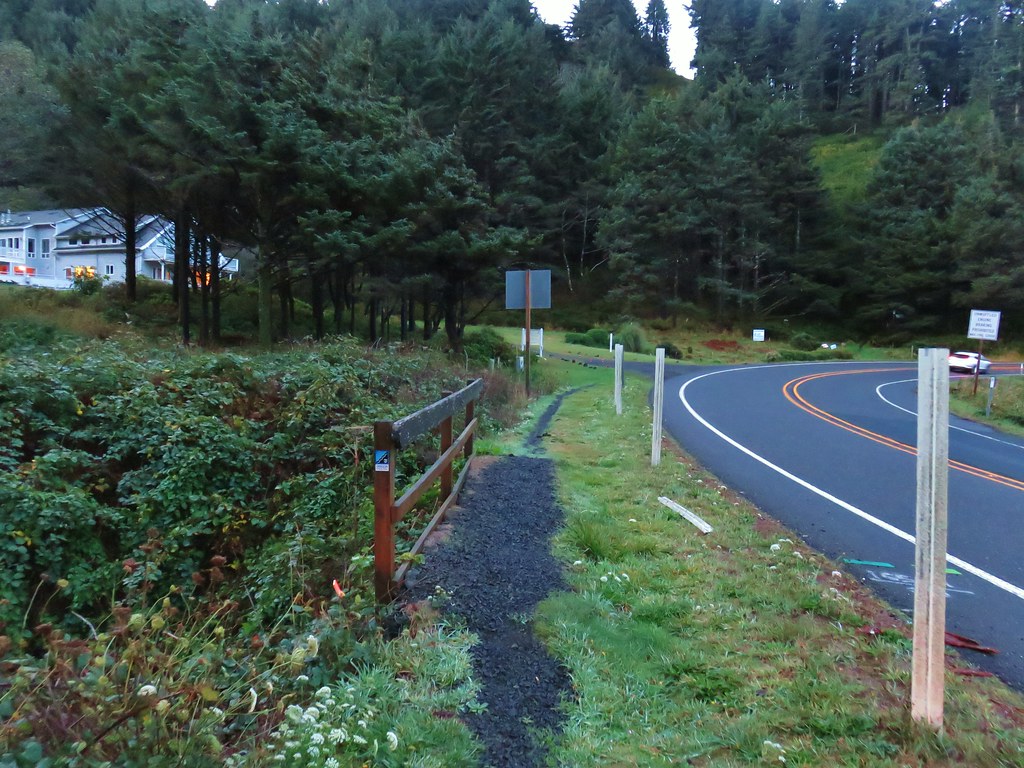
Luckily there was a decent amount of light being provided by the Moon so it didn’t take long before we headed further south along Ocean View Road to a post marking the Oregon Coast Trail (OCT).
We followed the posts south which brought us to the shoulder of Highway 101.
A little under a quarter mile beyond the first OCT post the trail crossed over the highway at Windy Way Street. We then climbed a bit away from the highway before dropping back down to a driveway for a bed and breakfast.
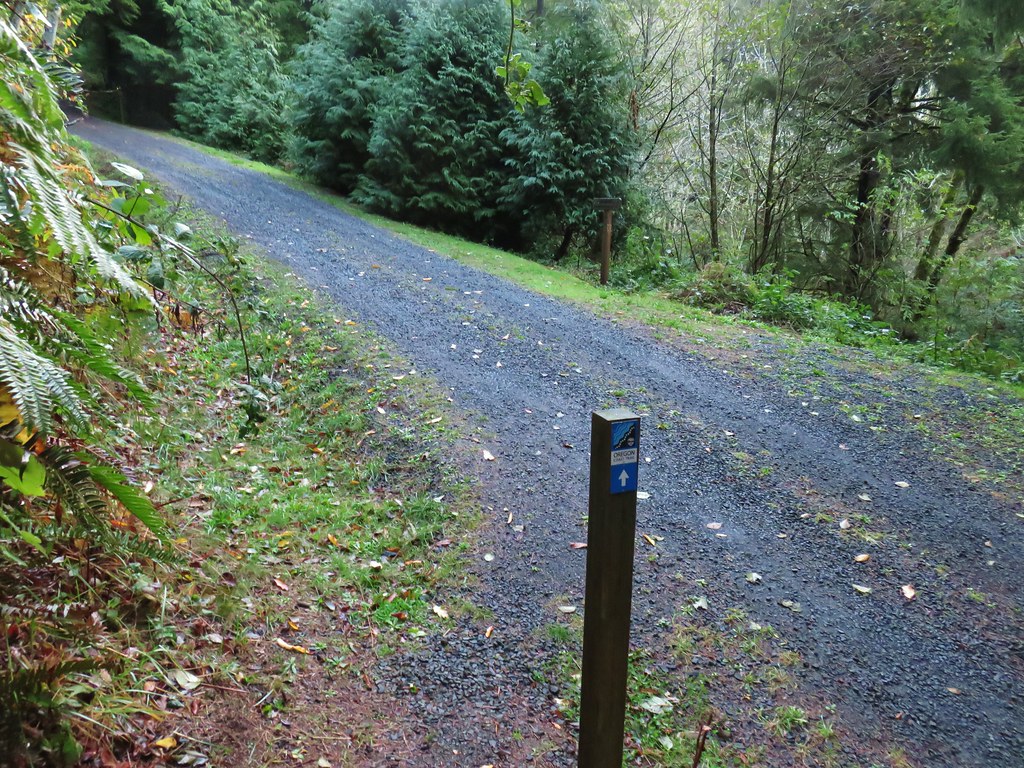
The first sign that this section of the OCT is Amanda’s Trail came on the far side of the B&B when the trail reentered the forest.
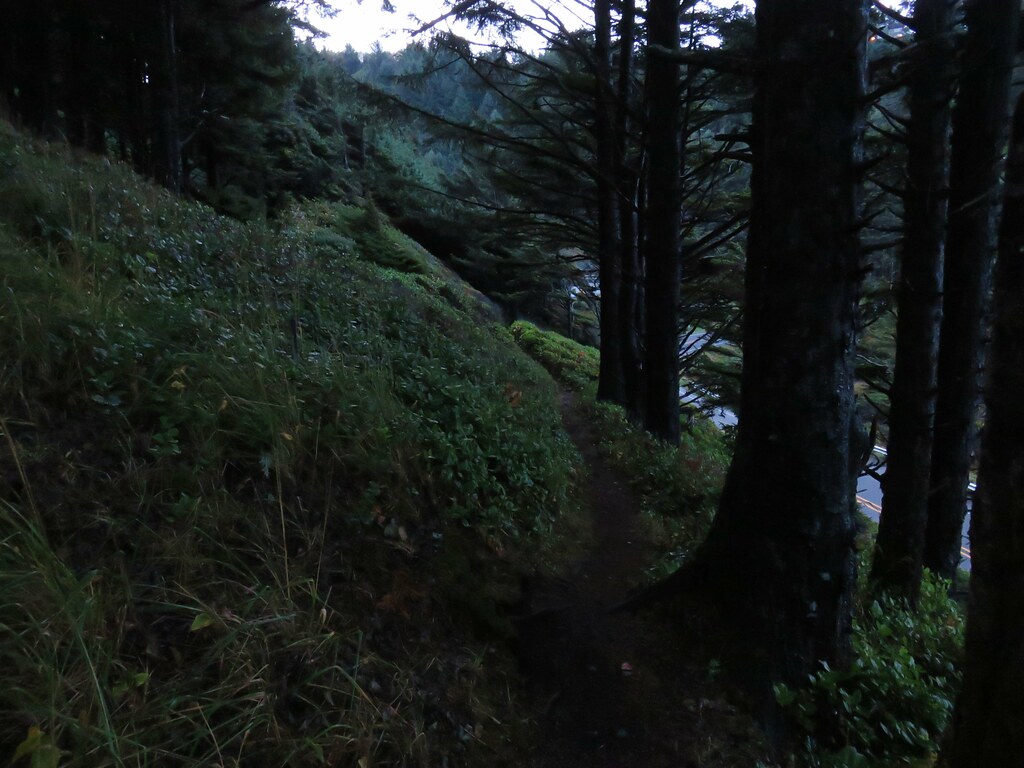
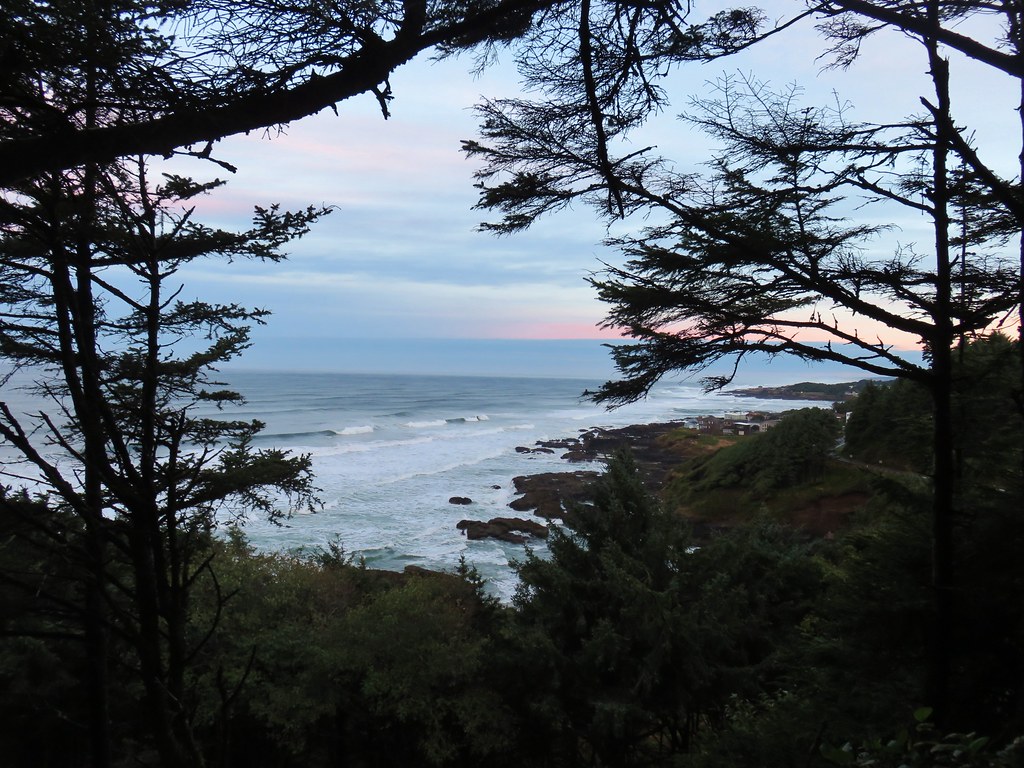
The trail once again climbed away from the highway as it rounded a hillside with a few ocean views.
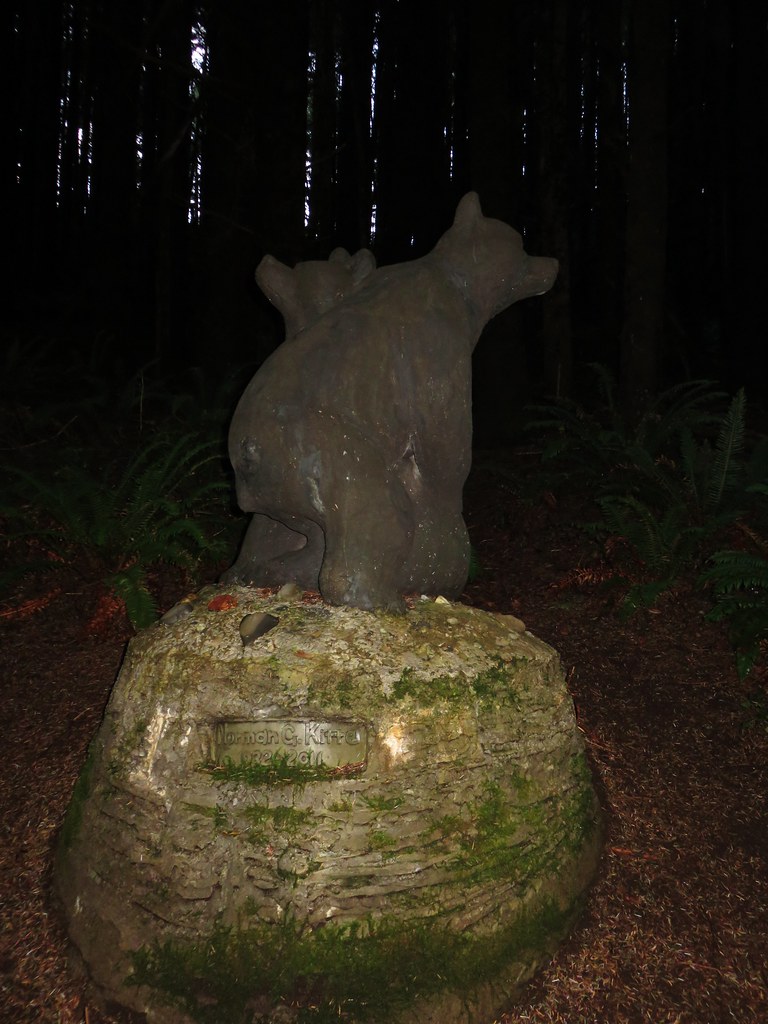
Approximately a half mile from the bed and breakfast we came to a statue of two bears representing an Alsea Indian myth that bears dance when the salmon come. Norman Kittle, whose name is on the statue, along with his wife Joanne were the first private landowners to donate a trail easement in the State of Oregon.
Beyond the bear statue the trail began a slight decent, crossing a gravel road, before arriving at the small grotto with Amanda’s Statue ( a quarter mile from the bears).
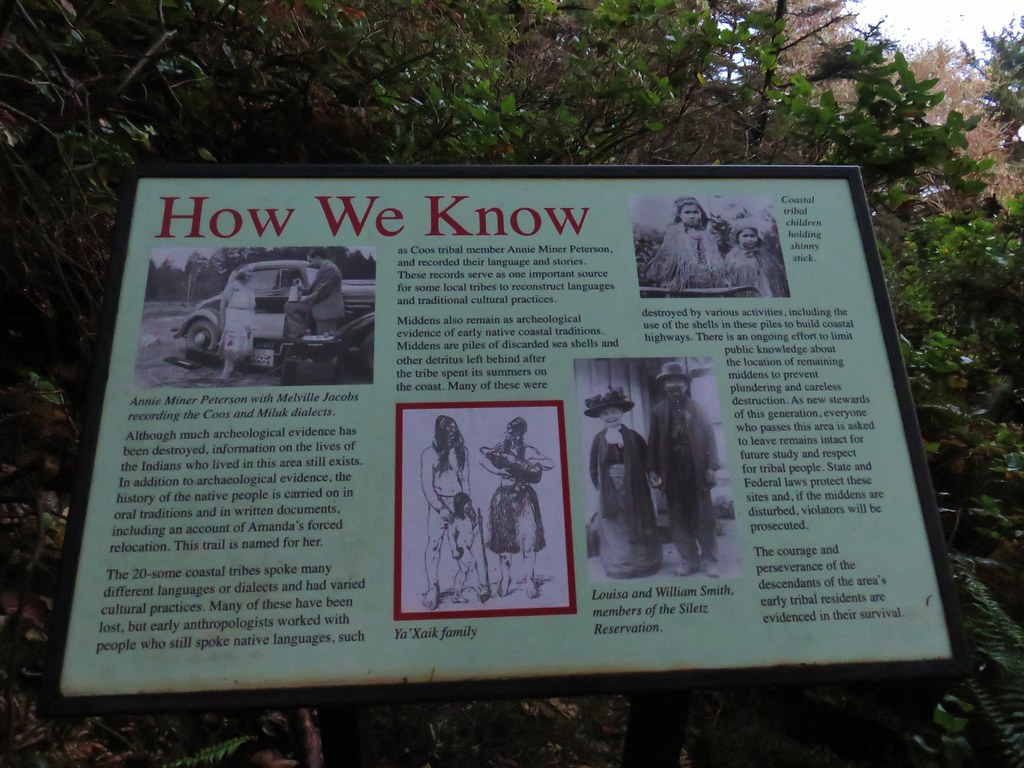
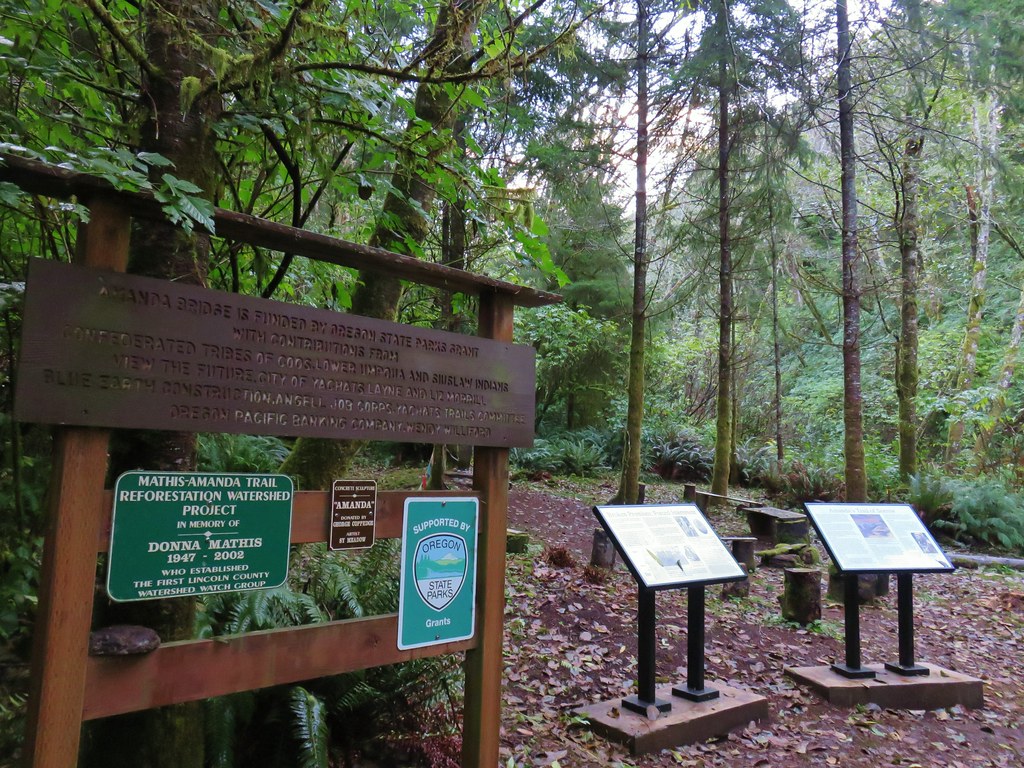
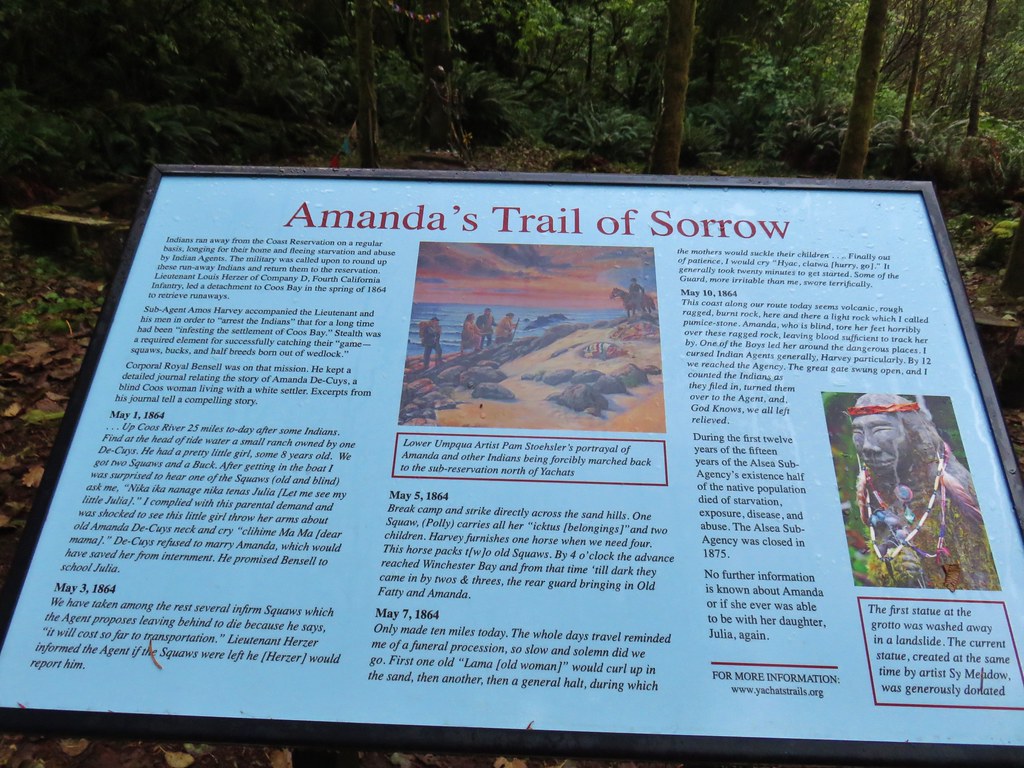
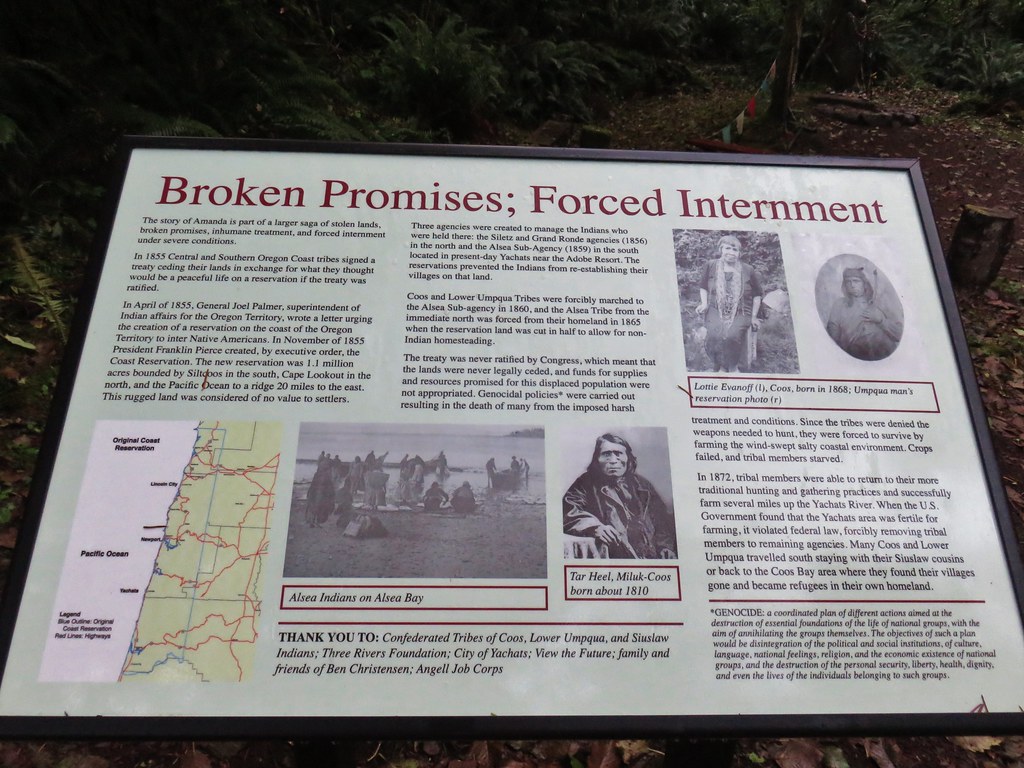
Interpretive signs here told of the blind woman’s forced march to the reservation.
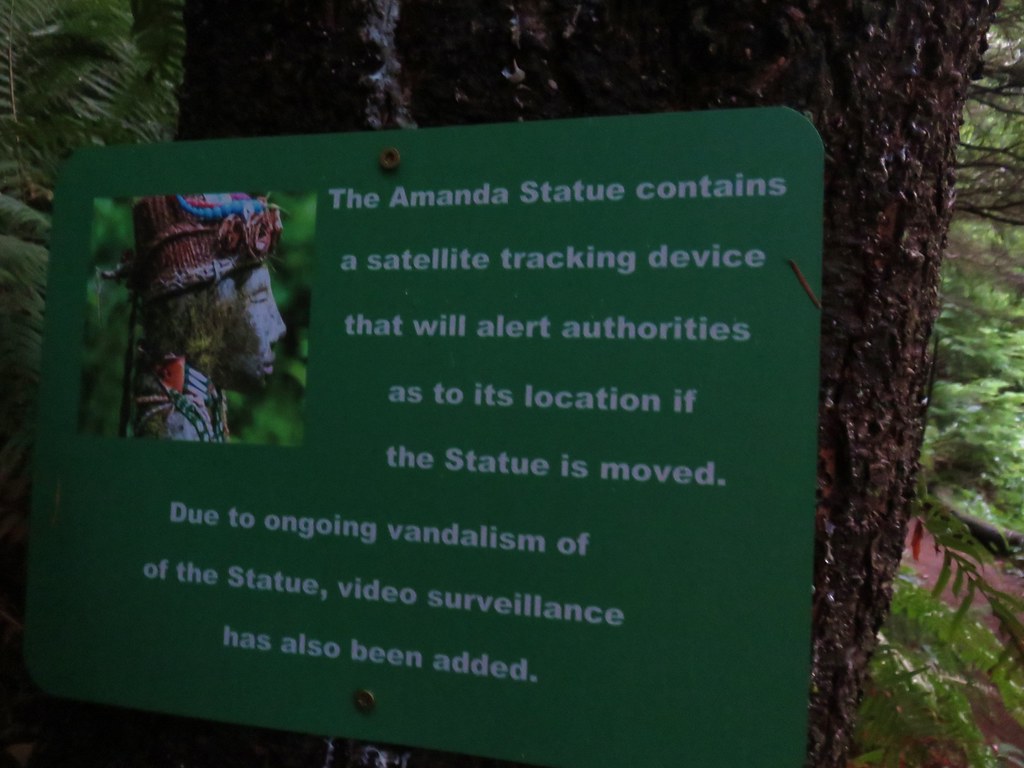
The present statue is not the original statue as it and a nearby footbridge were washed away in a 2016 flood. The current statue is one of two others completed by the same artist and was provided by its owners when the original statue was lost. This version was placed a bit higher to avoid any subsequent floods. Other precautions to protect the statue have been taken as well.
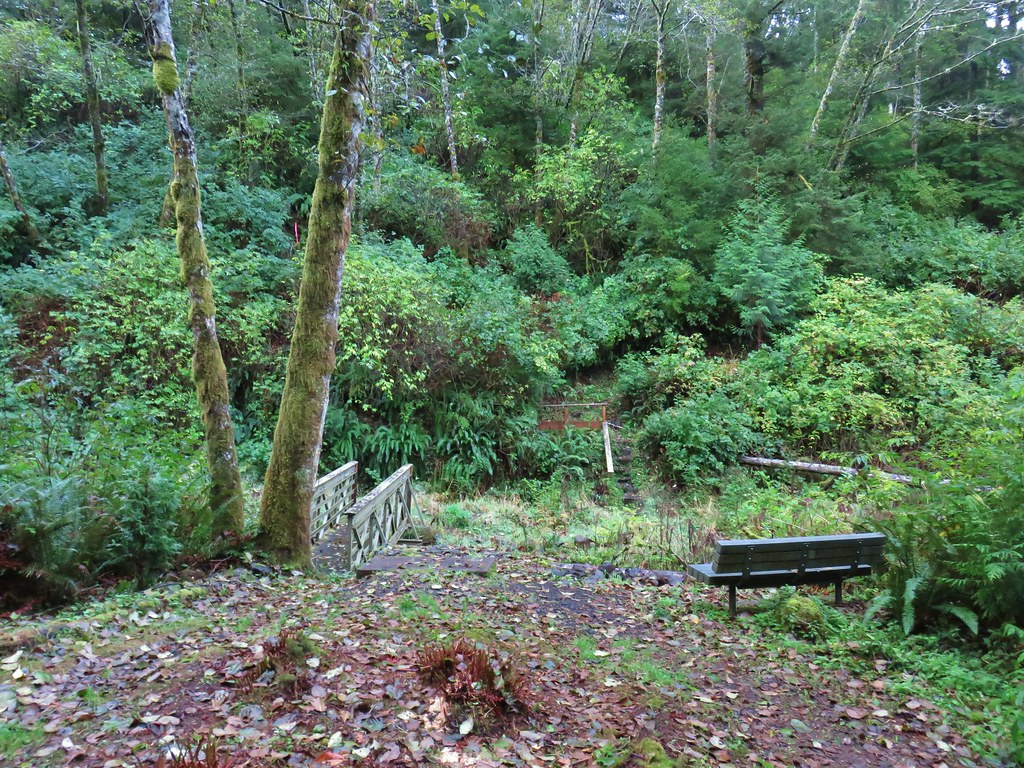
After visiting the statue we continued on across the replaced footbridge.
Beyond the creek the trail climbed nearly 750′ as it turned inland up a forested ridge.
A mile from the bridge we had left the ridge and traversed around a marshy area near the head of North Cape Creek.
After a little additional climbing on the other side of the creek the trail began to descend along this ridge toward the ocean. A mile and a quarter from North Cape Creek we arrived at a signed junction.
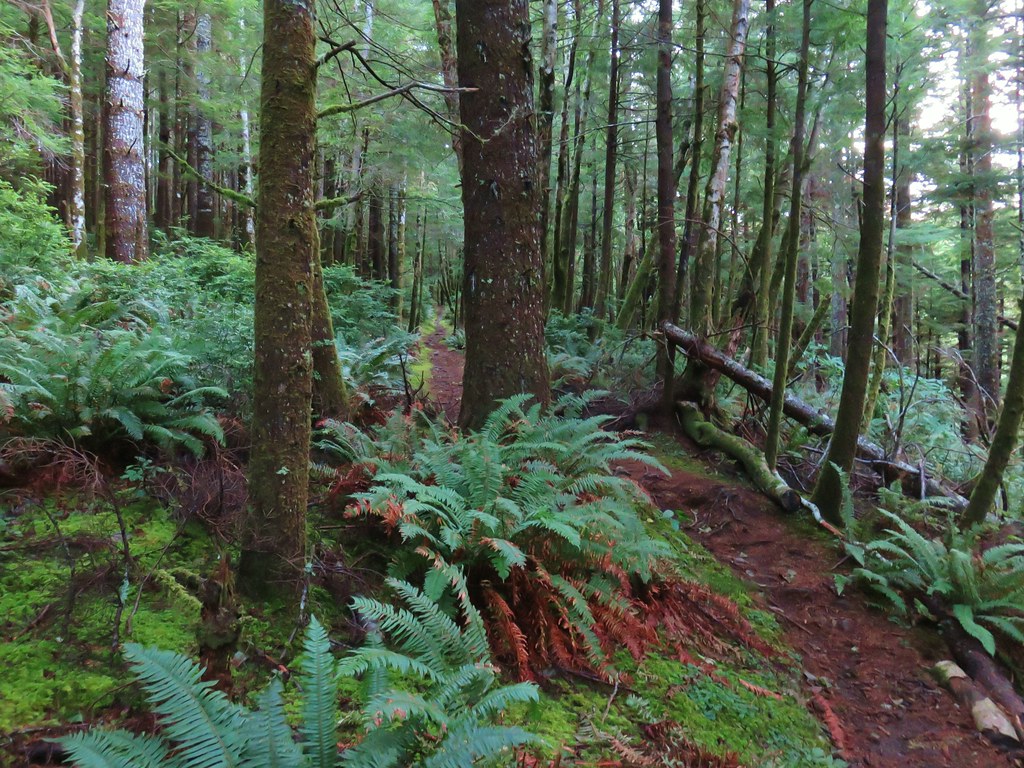
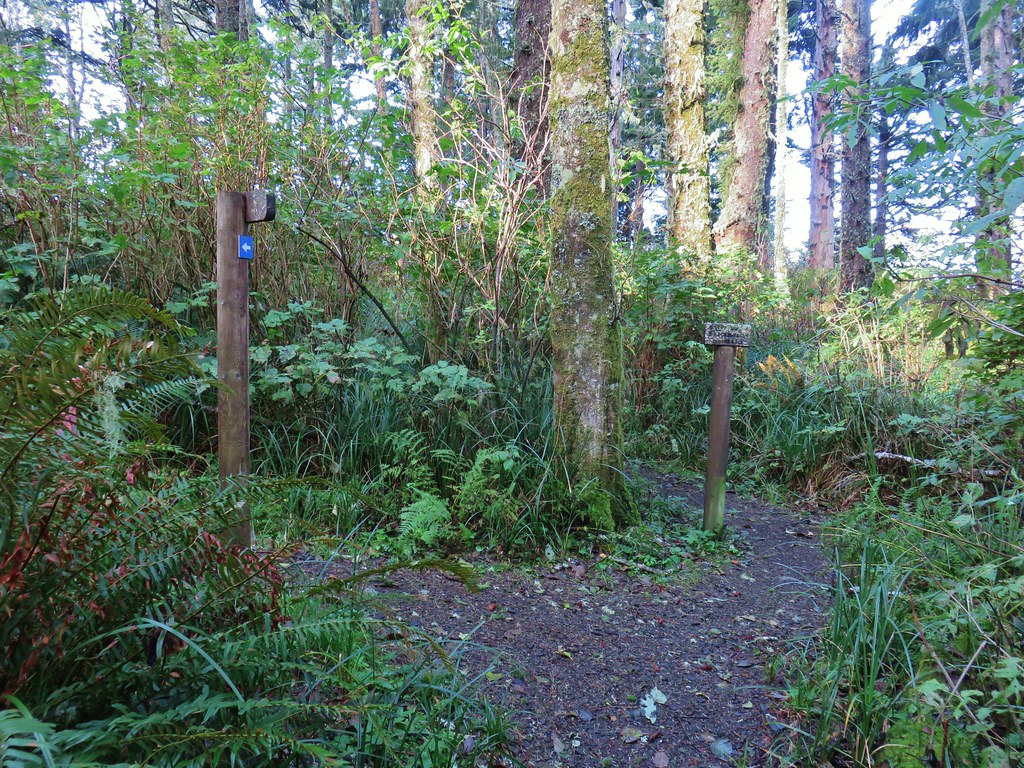
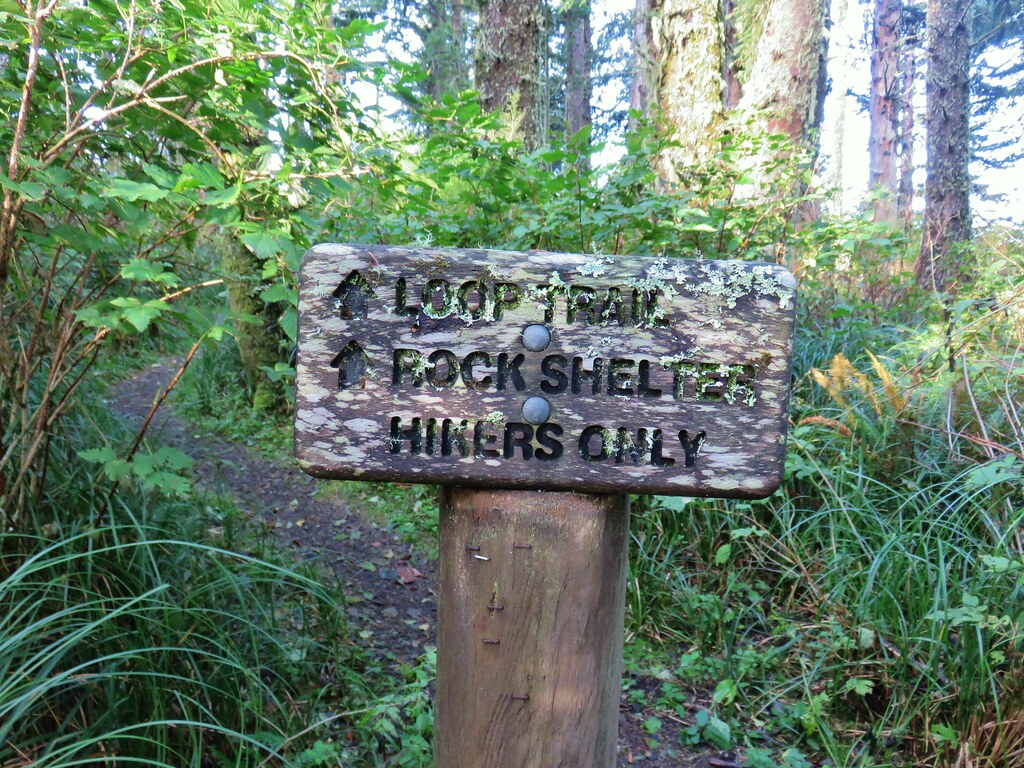
Here we stayed right following pointers for the Stone Shelter on what was now the Whispering Spruce Trail.
We had visited the shelter in 2013 (post) on what was part of the first outing featured in this blog.
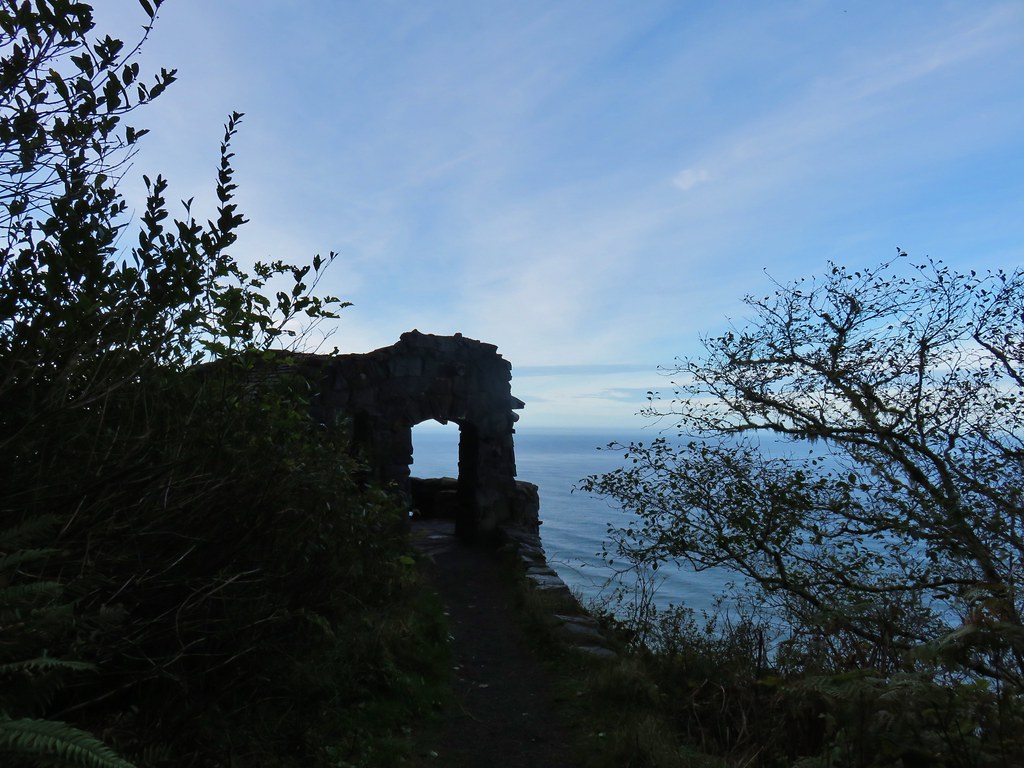
A little less than a quarter mile from the junction we arrived at the shelter.
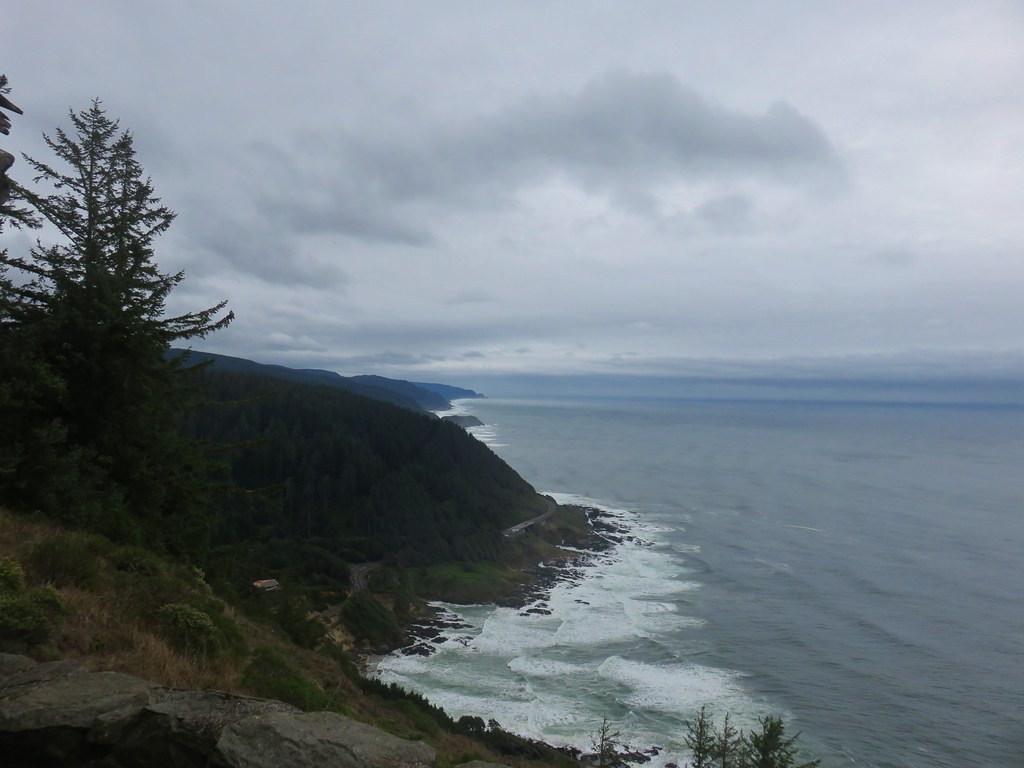
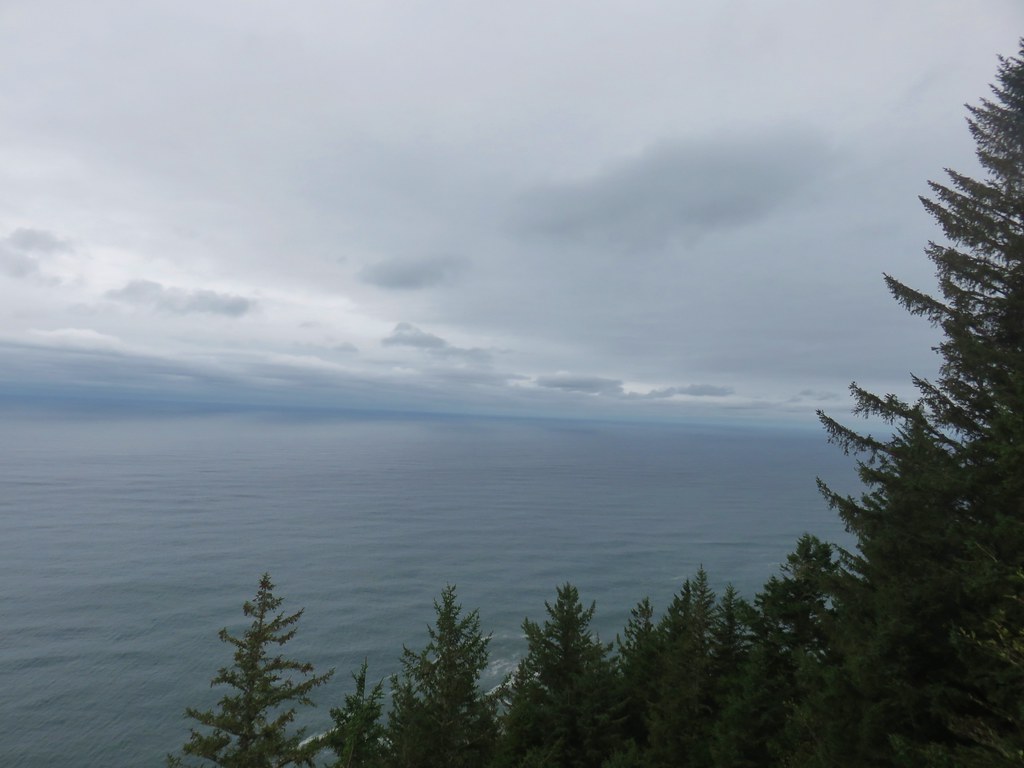
It was a surprisingly nice morning considering the forecast and we were happy to have a good view from the shelter.
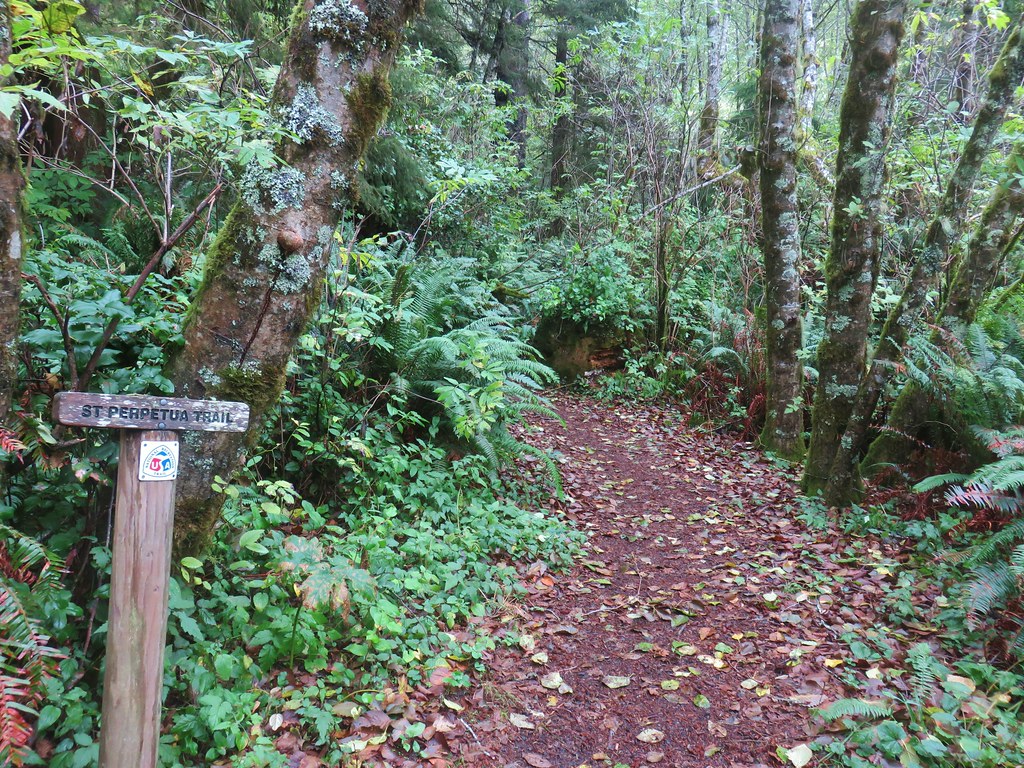
After a brief rest we continued on passing another viewpoint before reaching a junction with the St. Perpetua Trail.
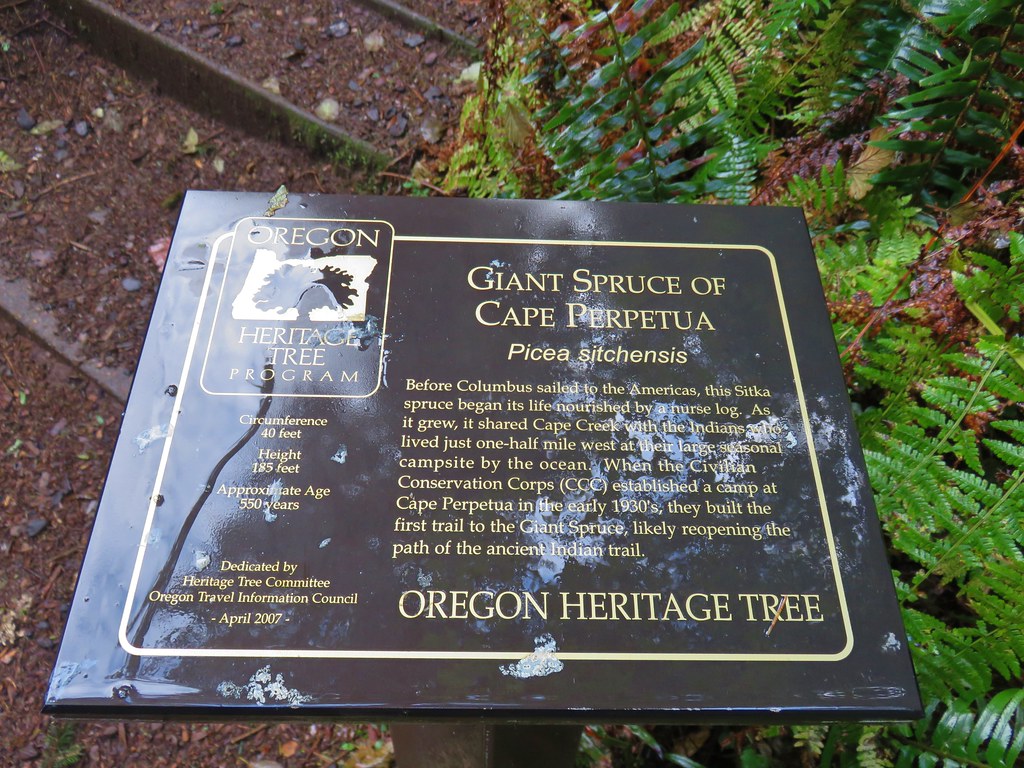
I mentioned that we had visited the stone shelter in 2013 but that had not been our first visit to the Cape Perpetua Scenic Area. In 2010 we had stopped here to visit the tide pools on the way home from a hike in the Drift Creek Wilderness (post). One thing we had not seen on either of our previous trips was the Giant Spruce, a nearly 600 year old State Heritage Tree.
With that goal in mind we took the St. Perpetua Trail downhill toward the Cape Perpetua Campground.
Shortly after crossing Overlook Road, which leads to a trailhead along the Whispering Spruce Loop, we arrived at the campground entrance road.
Behind the restrooms the trail continues across Cape Creek.
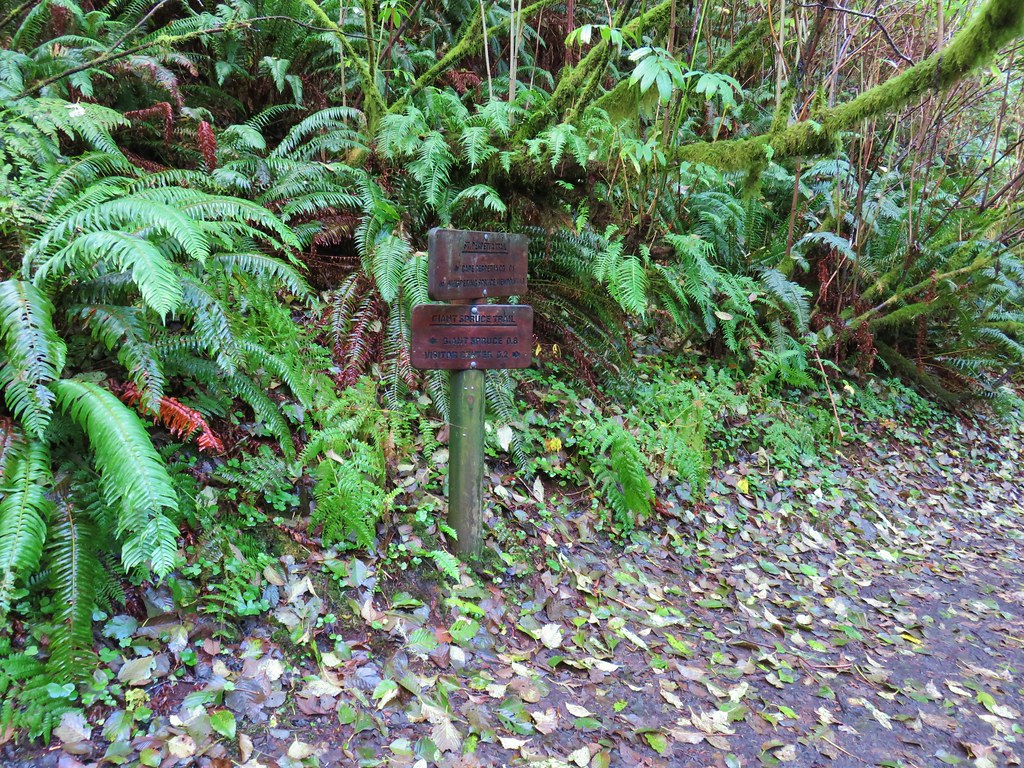
On the far side of the creek we turned left on the Giant Spruce Trail.
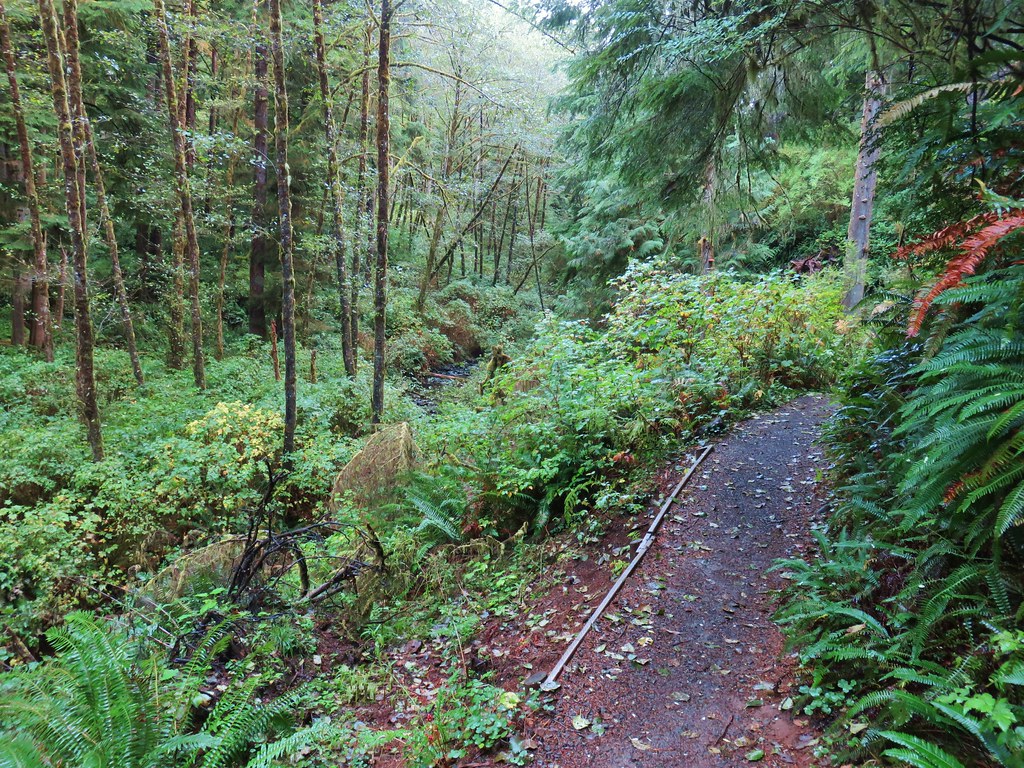
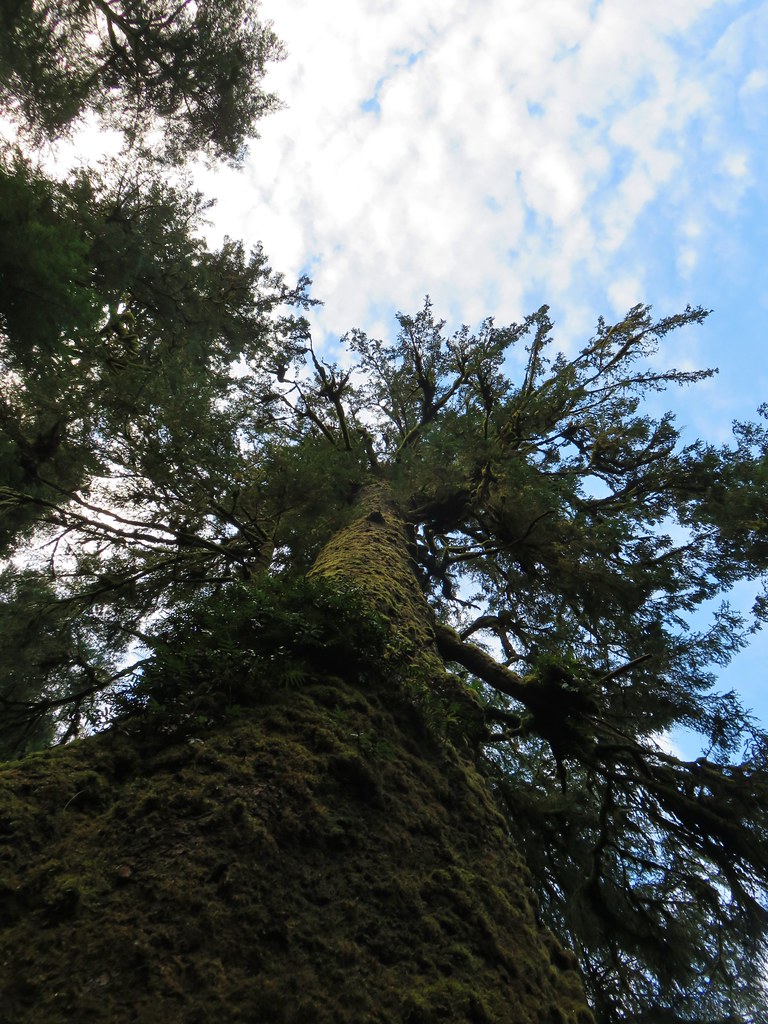
This trail followed the creek upstream for .8 miles to the 185′ high tree with a trunk circumference of 40′.
We are always awestruck when we visit any of the giant old trees in person. It’s nearly impossible to capture just how huge they really are in photos. In addition to their size their age always forces us to pause and try and picture the timeline of their growth. This tree would have likely been a sapling at the same time Christopher Columbus was lost looking for a route to Asia.
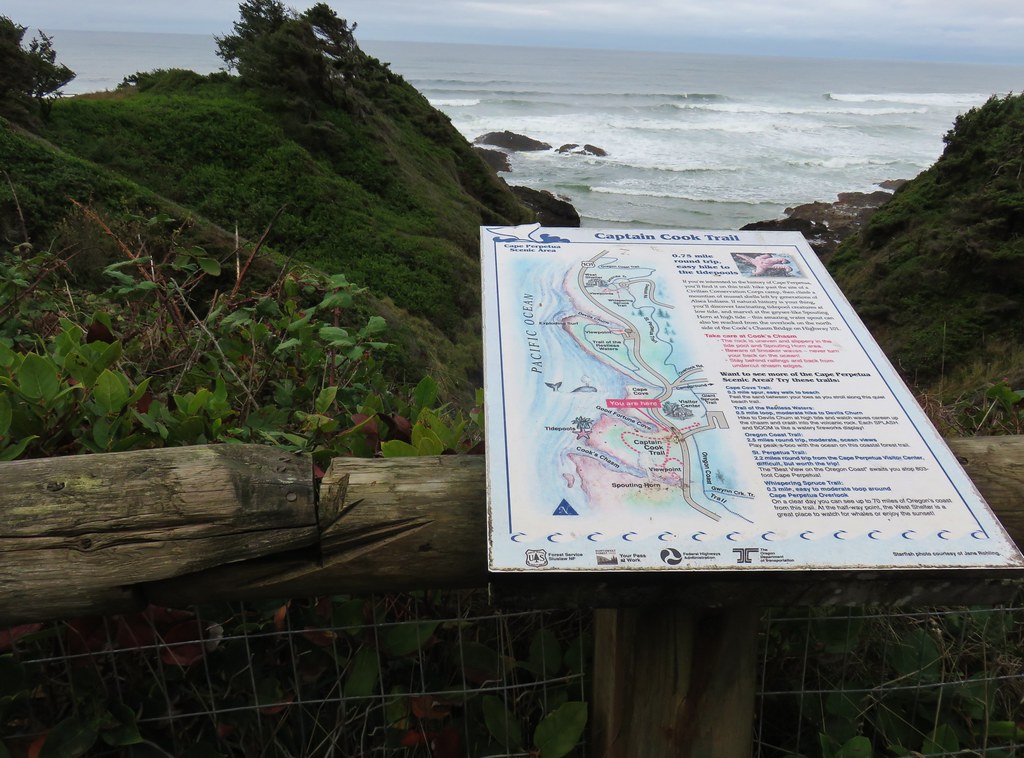
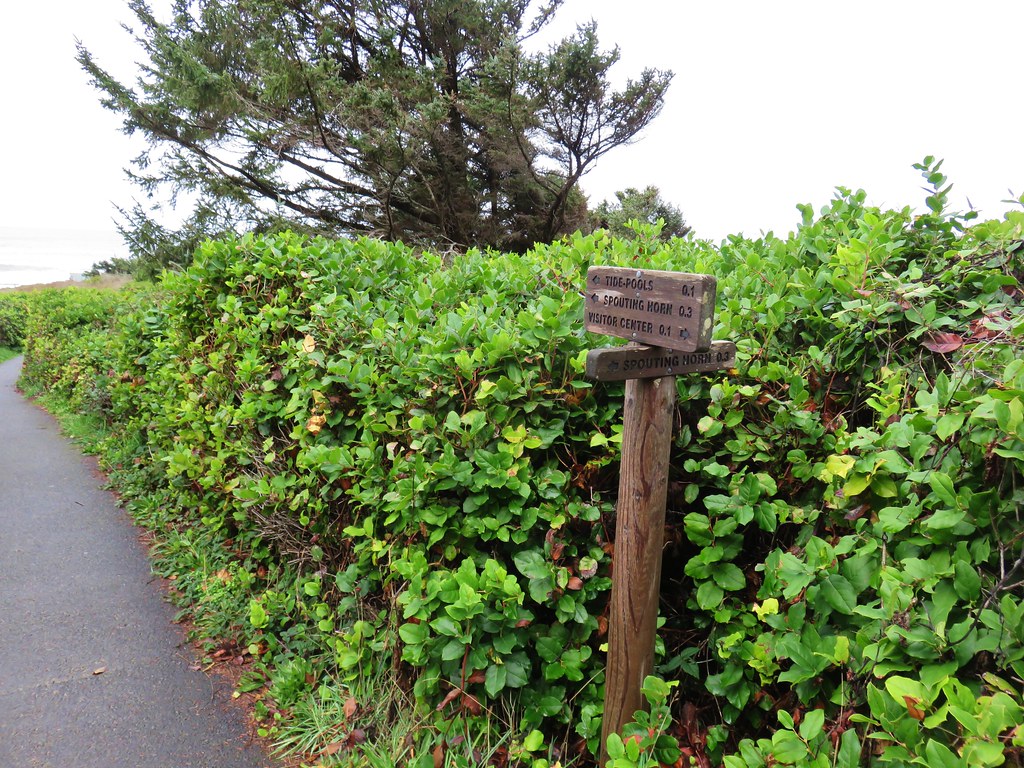
After visiting the tree we returned to the junction near the footbridge at the campground. The weather was holding nicely so we decided to check out the Spouting Horn and Devil’s Churn areas. We followed the Giant Spruce Trail .2 miles to the visitors center where we picked up the Captain Cooks Trails.
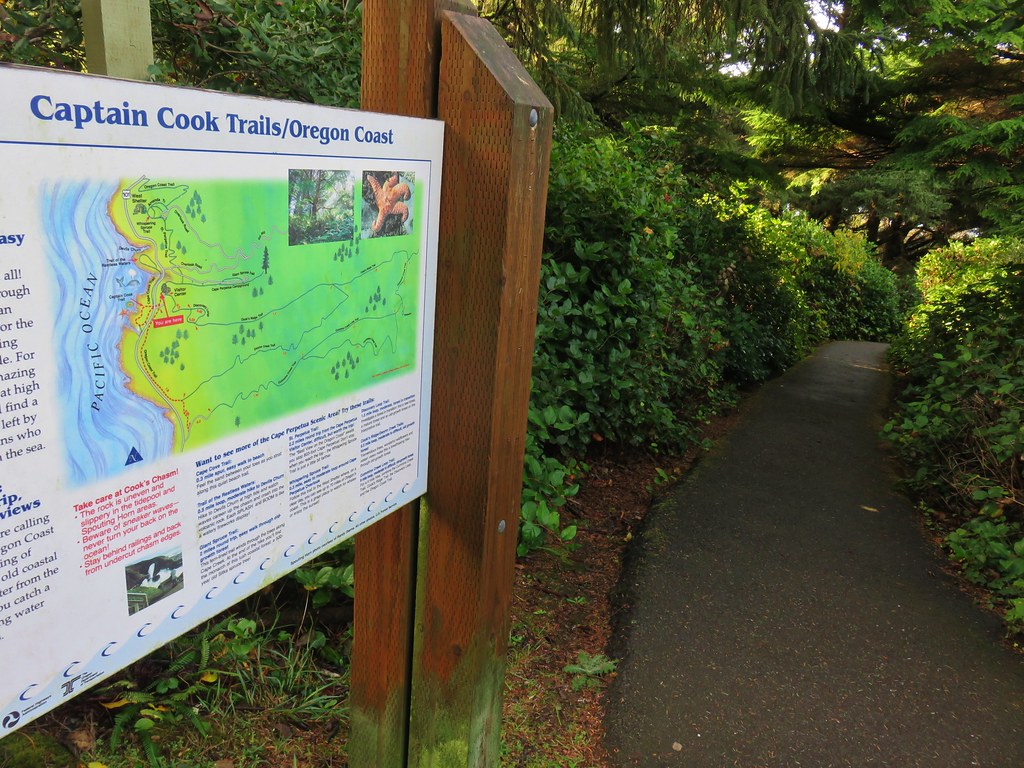
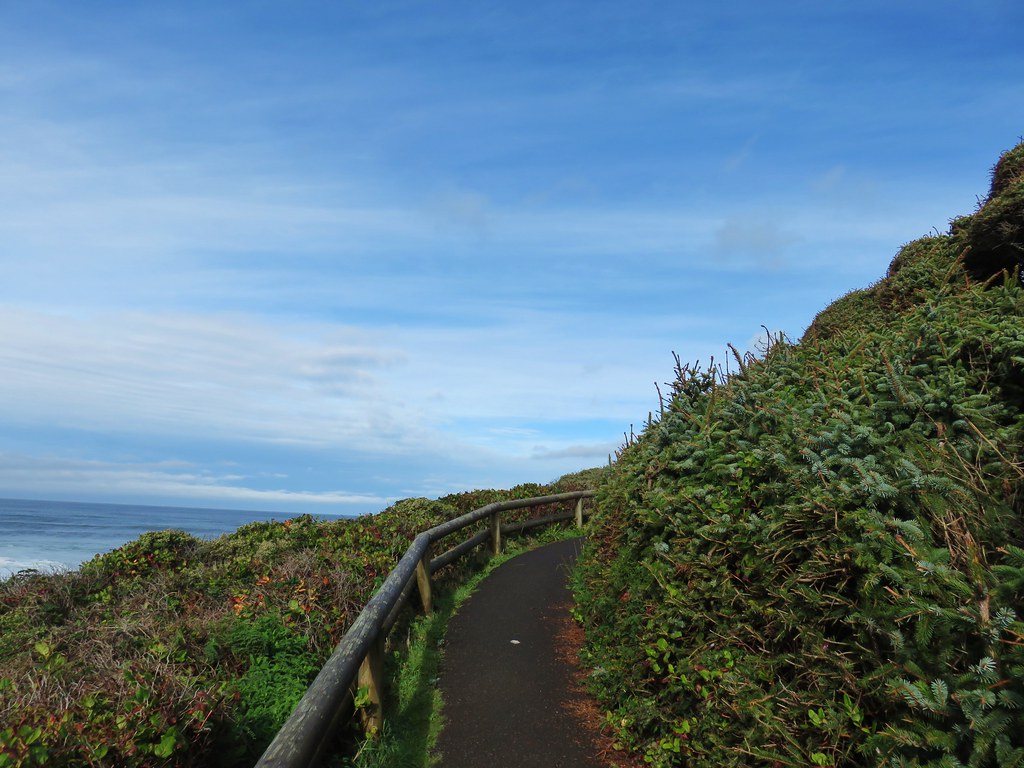
We followed this paved trail under Highway 101 to a viewpoint.
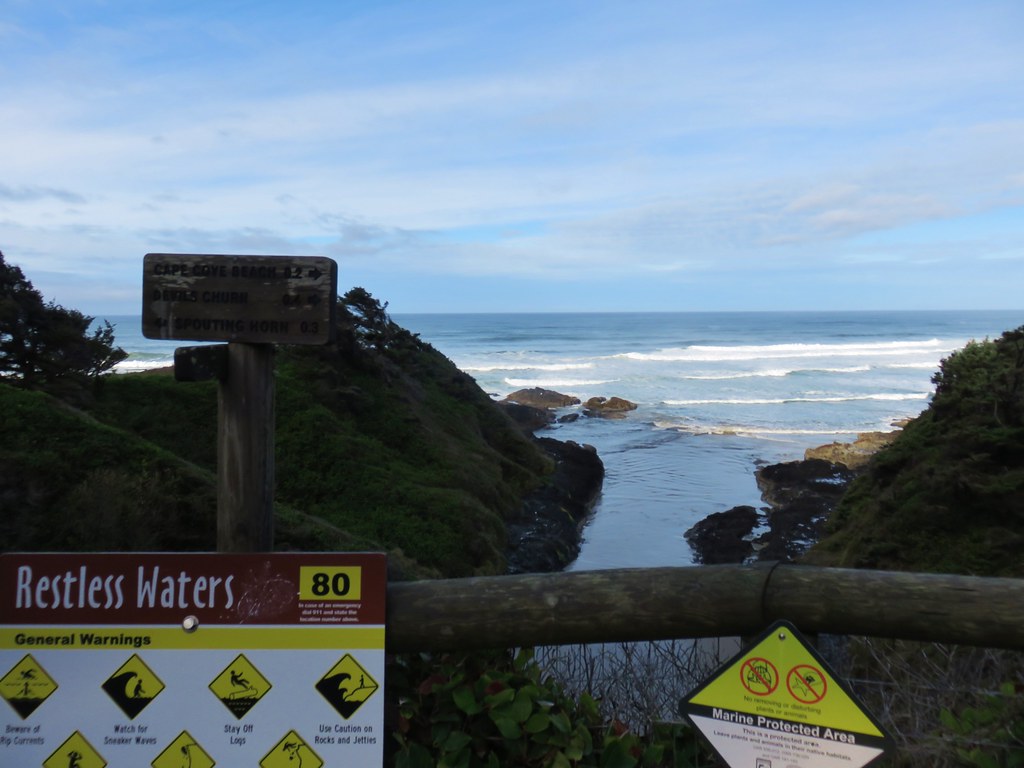
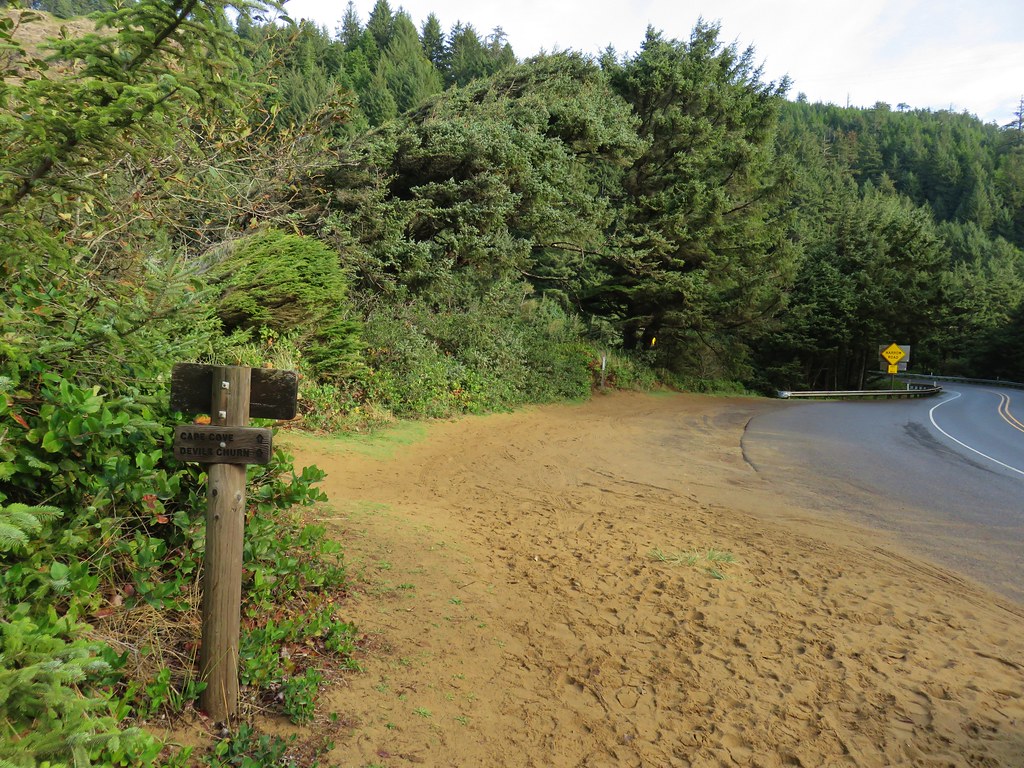
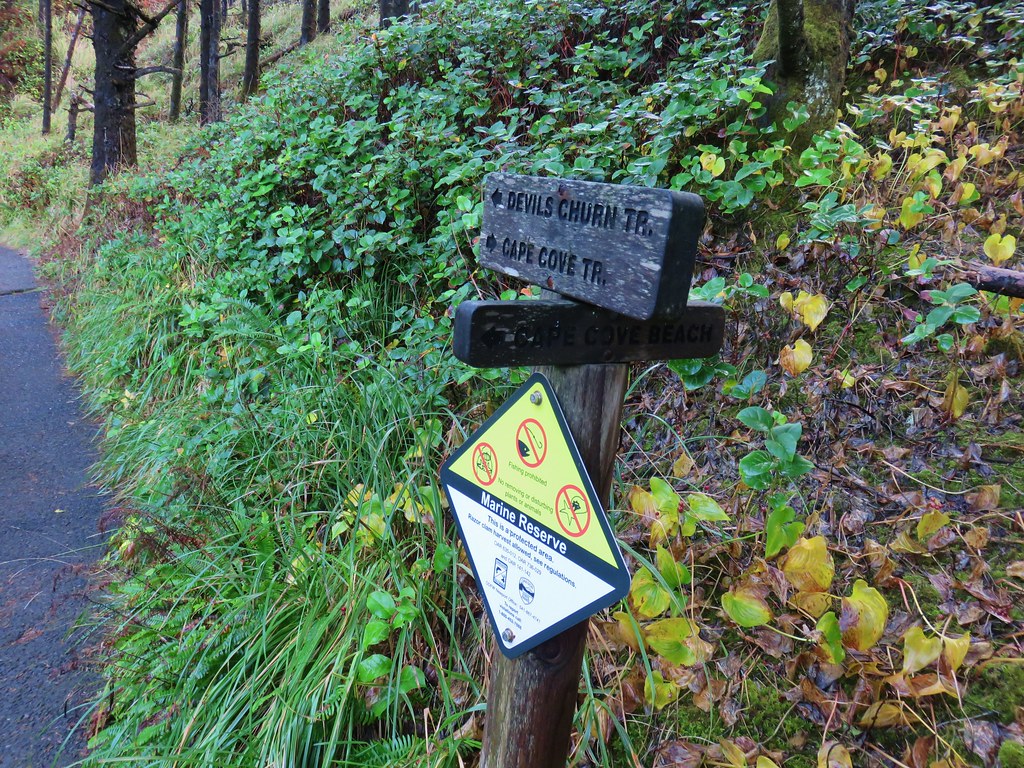
From the viewpoint the Captain Cook Trail went left making a loop with views of the Spouting Horn and Thor’s Well while the Trail of Restless Waters was to the right leading to Devil’s Churn. We decided to visit them in the opposite order of our 2010 visit and went right first. This trail briefly followed the shoulder of the highway past a small parking area and vista before dropping toward the ocean.
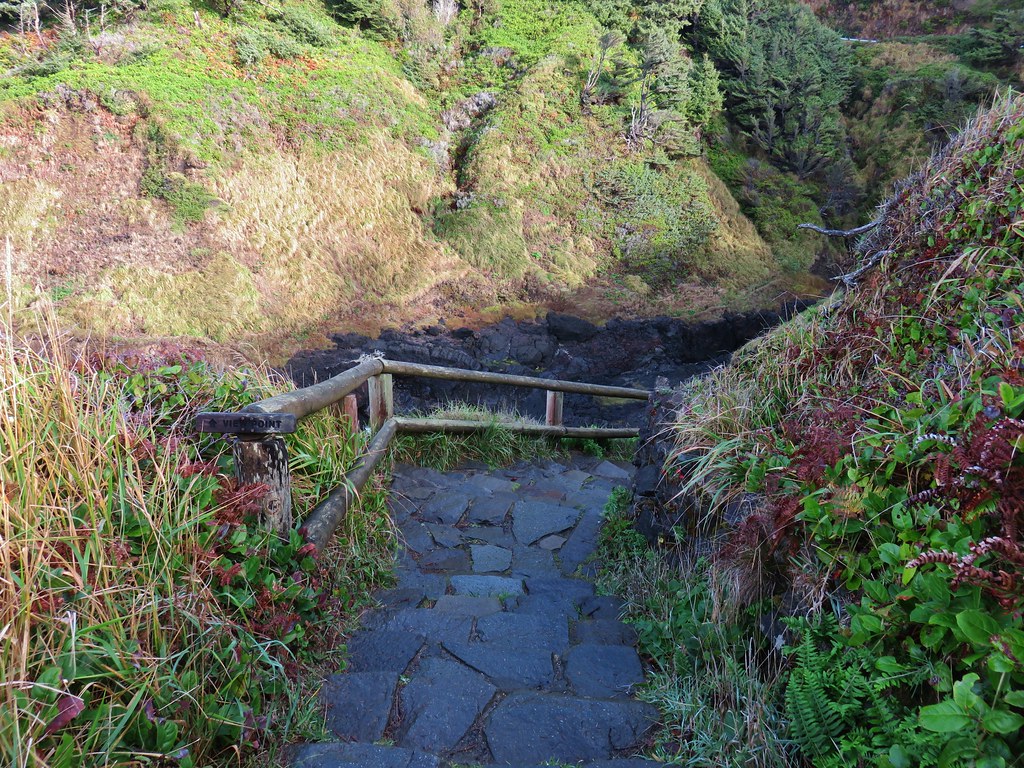
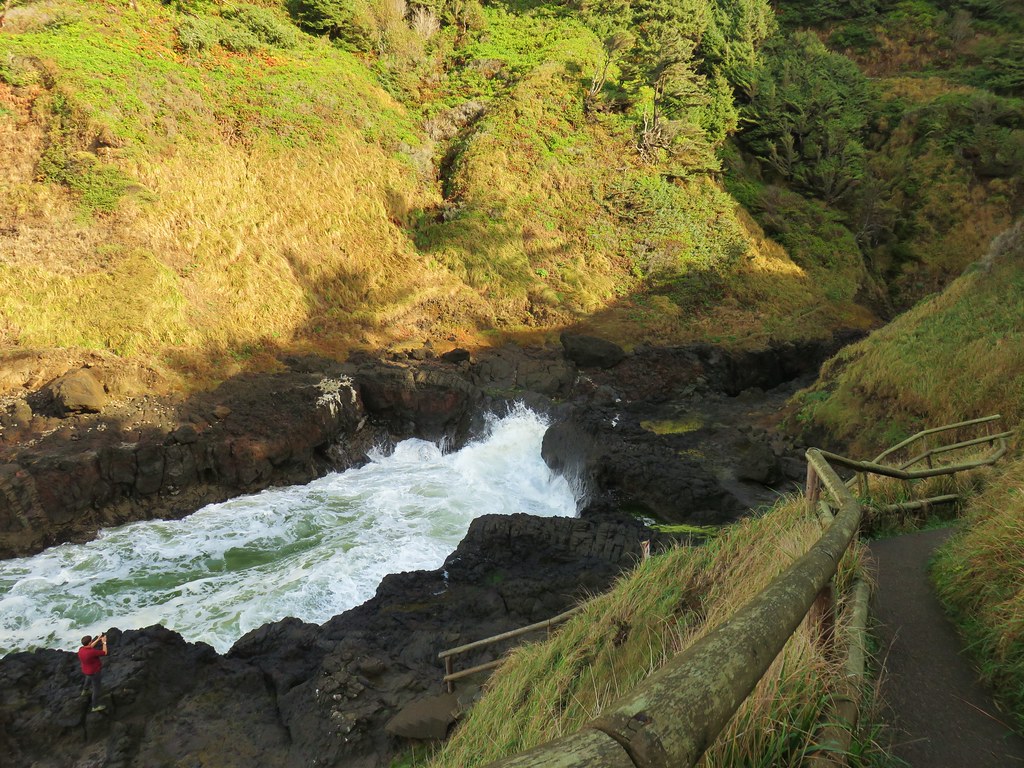
We crossed over Cape Creek and then followed the trail, keeping left at junctions, to a staircase down to Devil’s Churn.
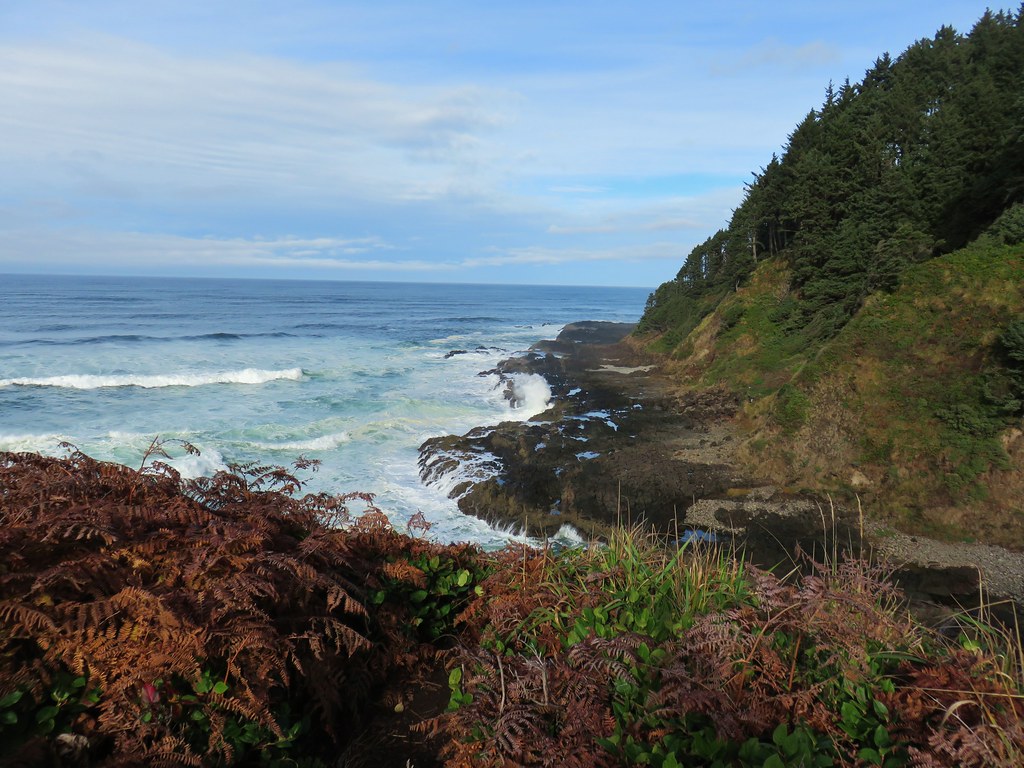
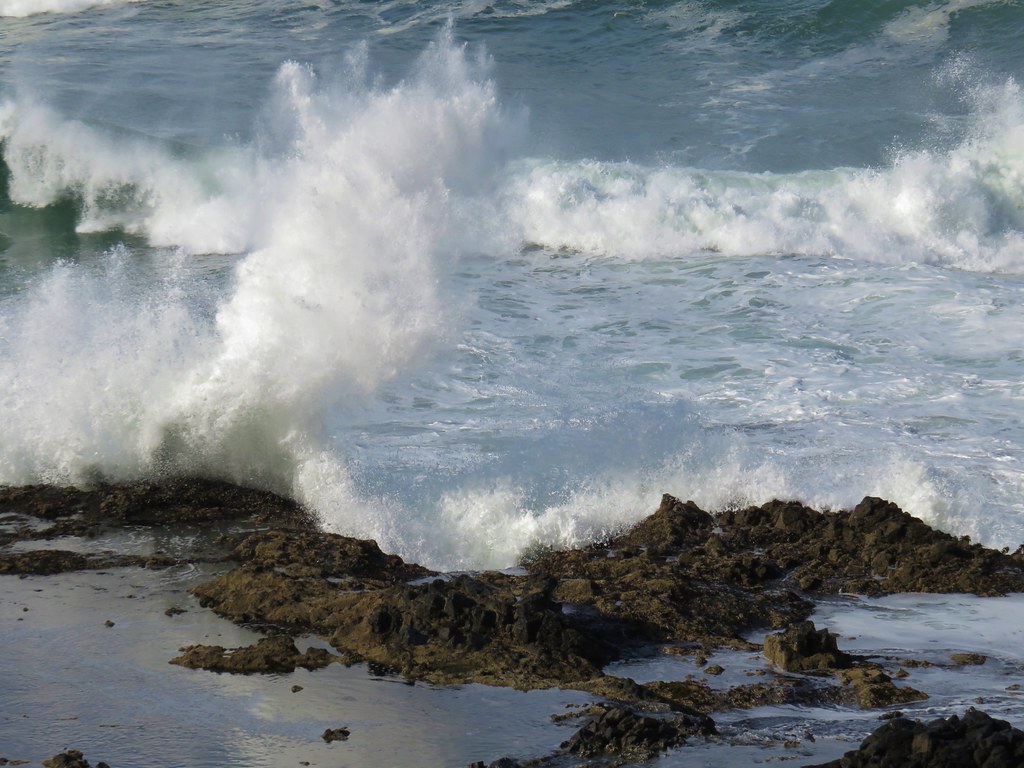
There was some decent wave action going on and we watched if for awhile.
The crashing waves didn’t seem to bother a lone cormorant that was hunting for food in the churn.
Speaking of food after we climbed back up the stairs we continued on a loop above Devil’s Churn to the Devil’s Churn Day Use Area where we wound up buying a lemon muffin from the concession stand there.
After splitting the muffin we completed the loop and returned to the Captain Cook Trail.
We stayed left at a fork in order to complete the loop clockwise.
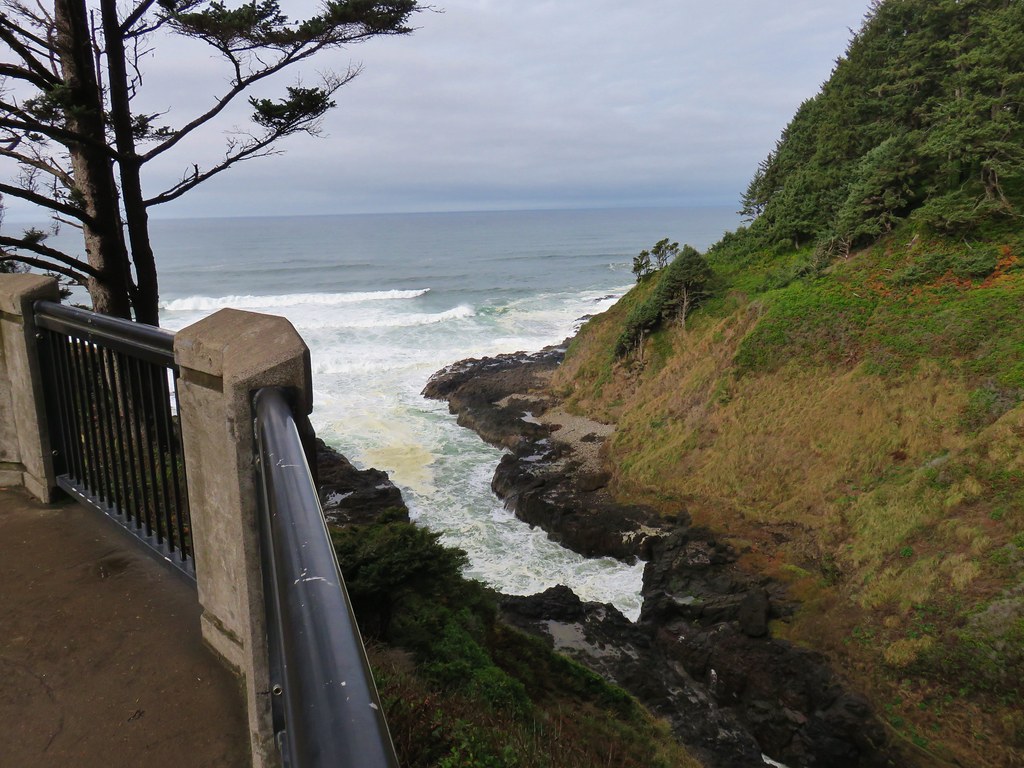
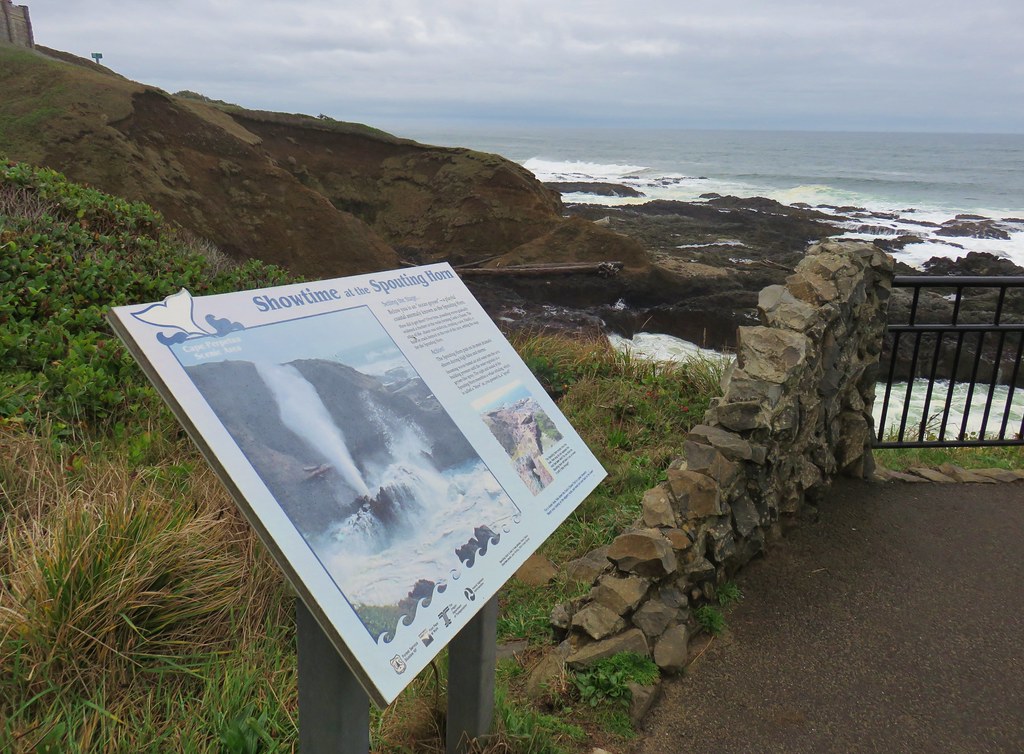
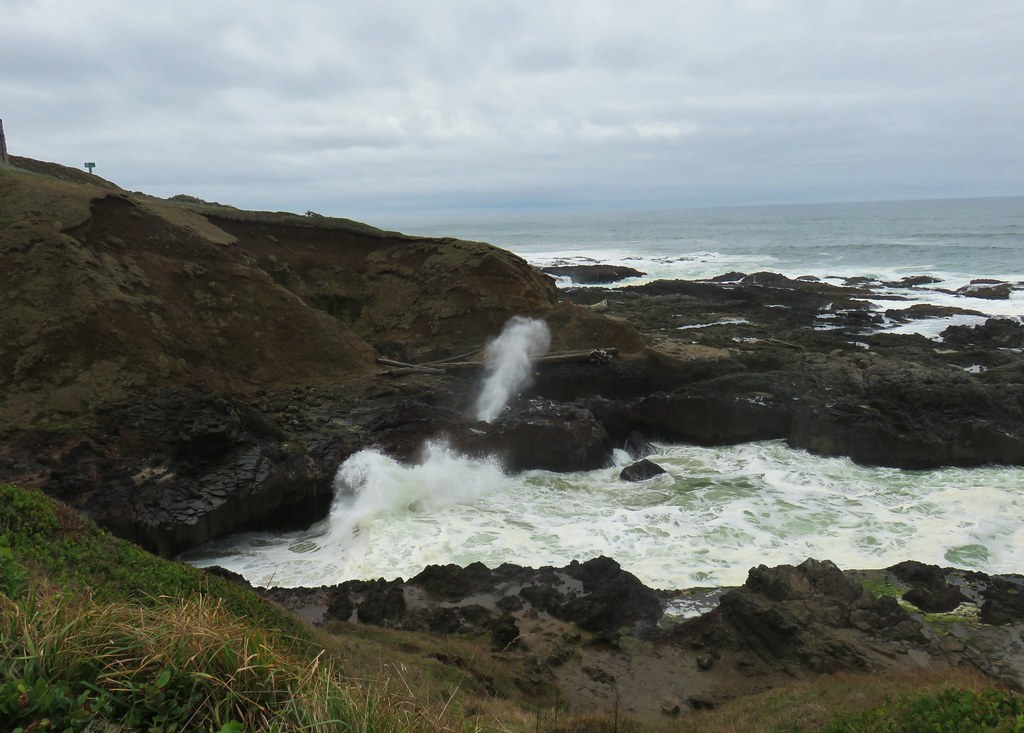
The tide had been out far enough on our previous visit that the Spouting Horn had not been spouting but today was different.
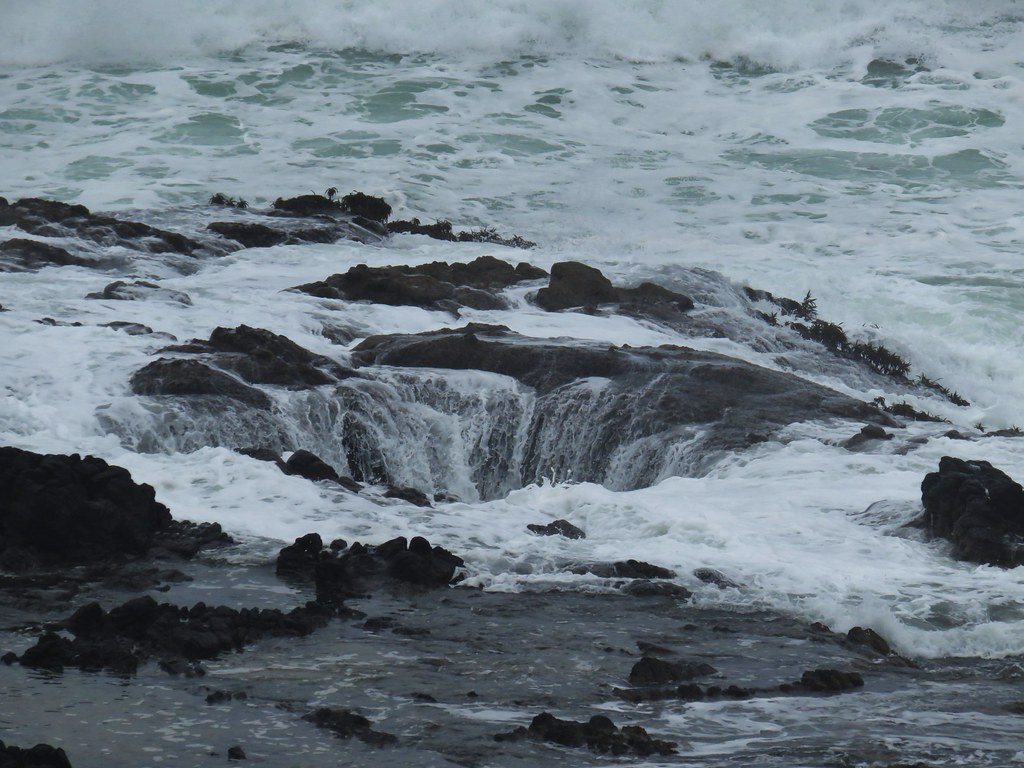
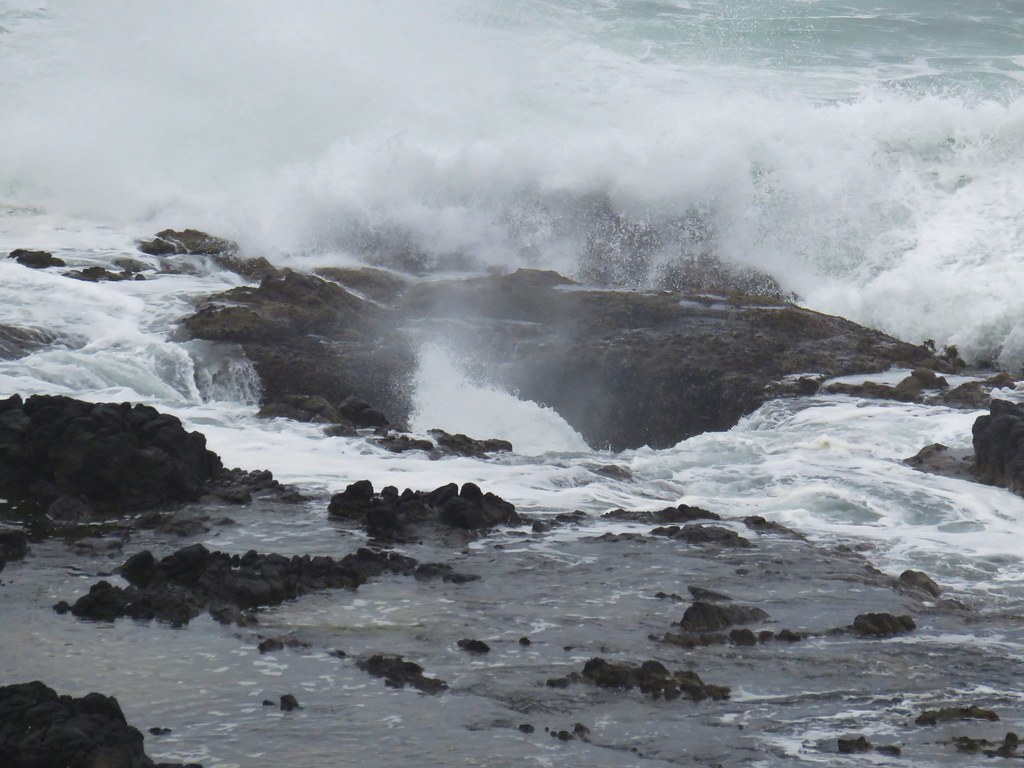
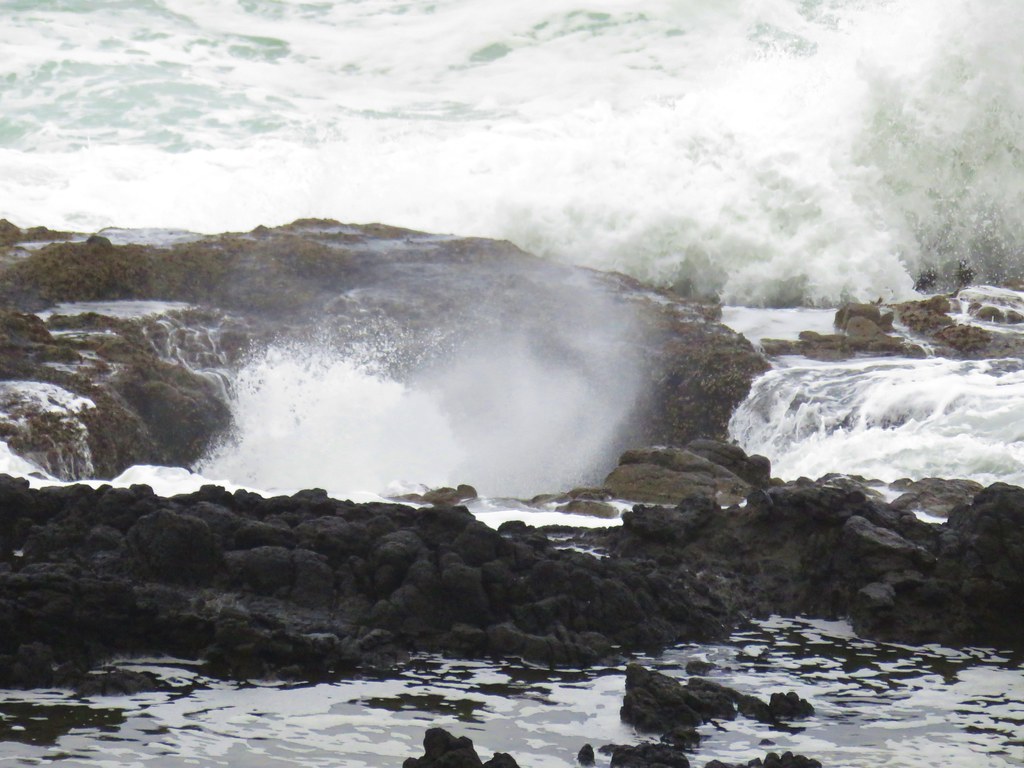
We also hadn’t even noticed Thor’s Well that day but this time we knew what we were looking for and the Ocean was more cooperative.
It was a bit of a zoo with people in the area though so we didn’t stay long and were soon heading back up the St. Perpetua Trail and past the shelter where the view had become much cloudier.
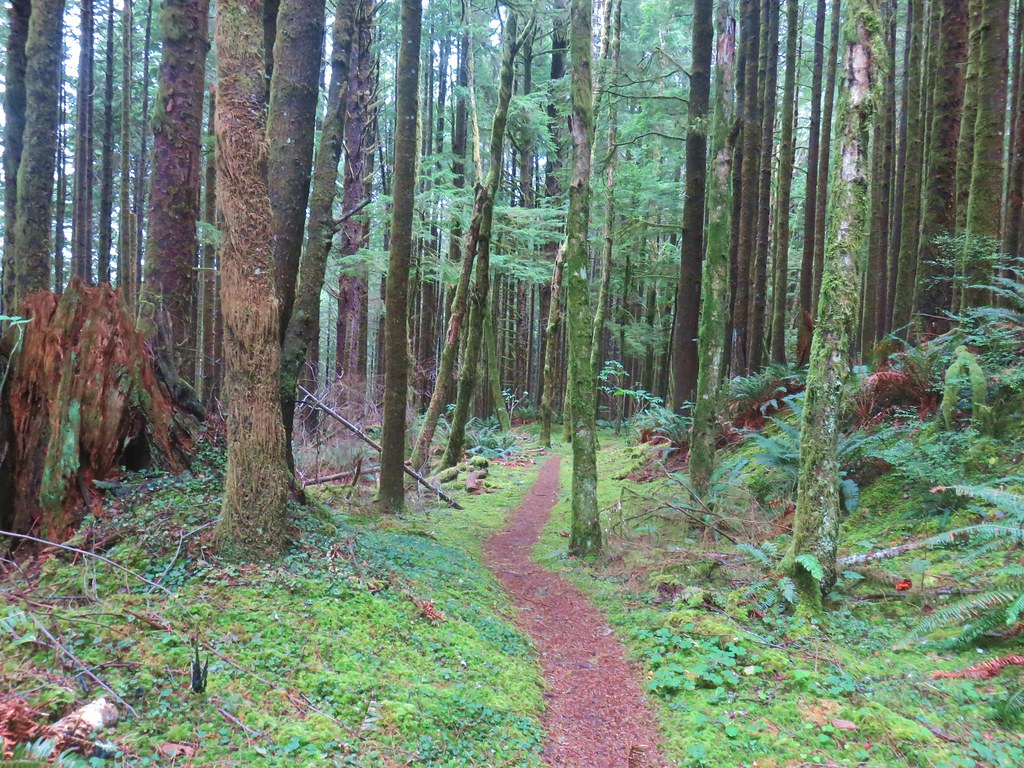
The rain mostly held off as we made the two and a quarter mile horseshoe through the forest along the ridges above North Cape Creek between the shelter and Amanda’s Statue.
By the time we reached the grotto, where we encountered a Boy Scout Troop, a steady light rain was falling. The rain continued to pick up as we made our way back to the Highway 101 crossing south of Yachats.
Overall it had been an excellent day, the rain had held off long enough for us to get some nice views and stay relatively dry without having to put on our rain gear. We got to finish up the trails in the Cape Perpetua Scenic Area and had unintentionally timed it better for the Spouting Horn and Thor’s Well. Oh and we also had that delicious lemon muffin mid-hike so yeah it was a pretty good way to end our 2018 hiking season. We do plan on getting a couple more hikes in this year but from November through April we drop down to just one outing (or so) a month. Happy Trails!
We’d been fortunate this year having only been forced to change plans due to weather twice, in February due to snow in the coast range and at the end of our trip to the Elkhorns when thunderstorms forced us to cancel our plans to visit the lookout atop Mt. Ireland. For the third time in the last four years our September vacation coincided with a forecast for snow in the mountains. We had planned a four day trip around and up Diamond Peak, but with a chance of rain or snow showers all four days we decided to turn to our alternate plan which was a trip to Bandon, OR on the Oregon Coast.
From the small parking area the trail immediately crossed a paved road and passed by Taylor Lake.
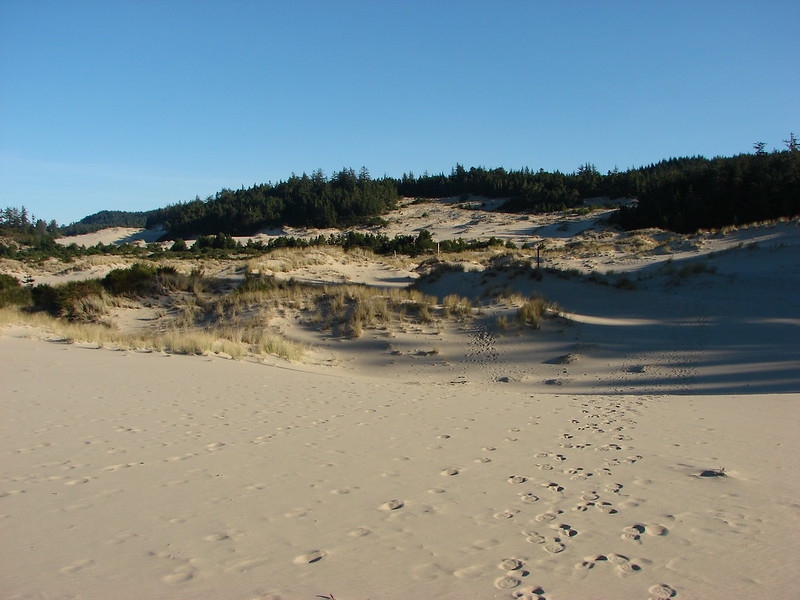
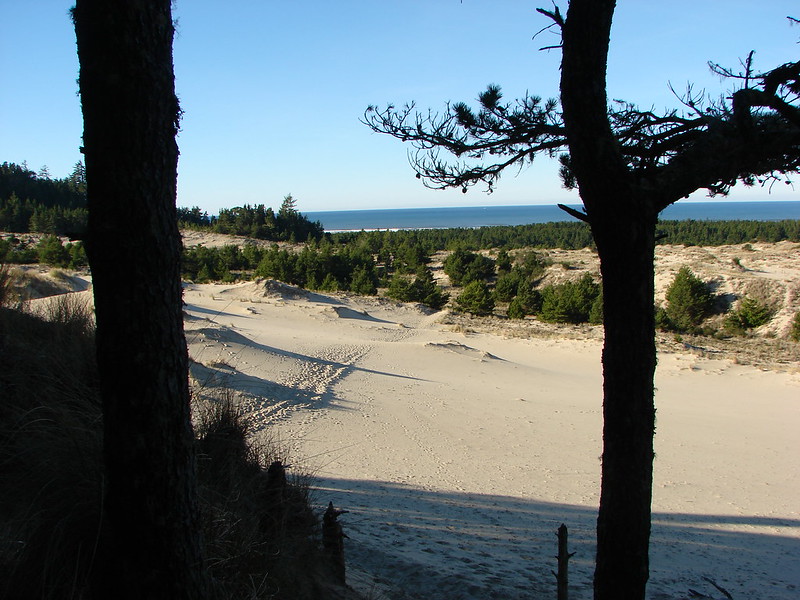
After .4 miles we arrived at a viewpoint above the dunes.
From the viewpoint we followed the trail through the sand for half a mile to a signed junction.
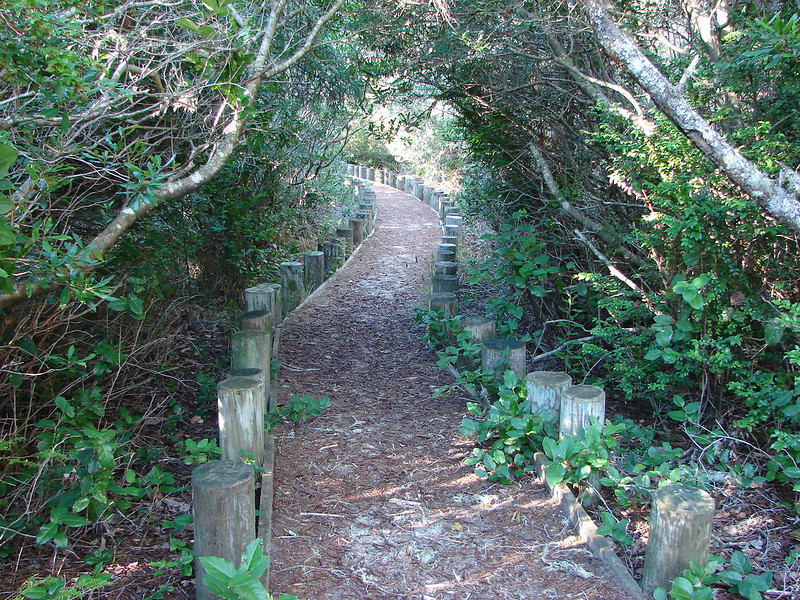
We turned right here on a half mile trail that passed through a forest behind a foredune before arriving at the Pacific Ocean.
After reaching the ocean we returned to the junction and turned right to complete a loop through the Carter Lake Campground.
Carter Lake
The final .4 miles of the loop was along the paved campground road.
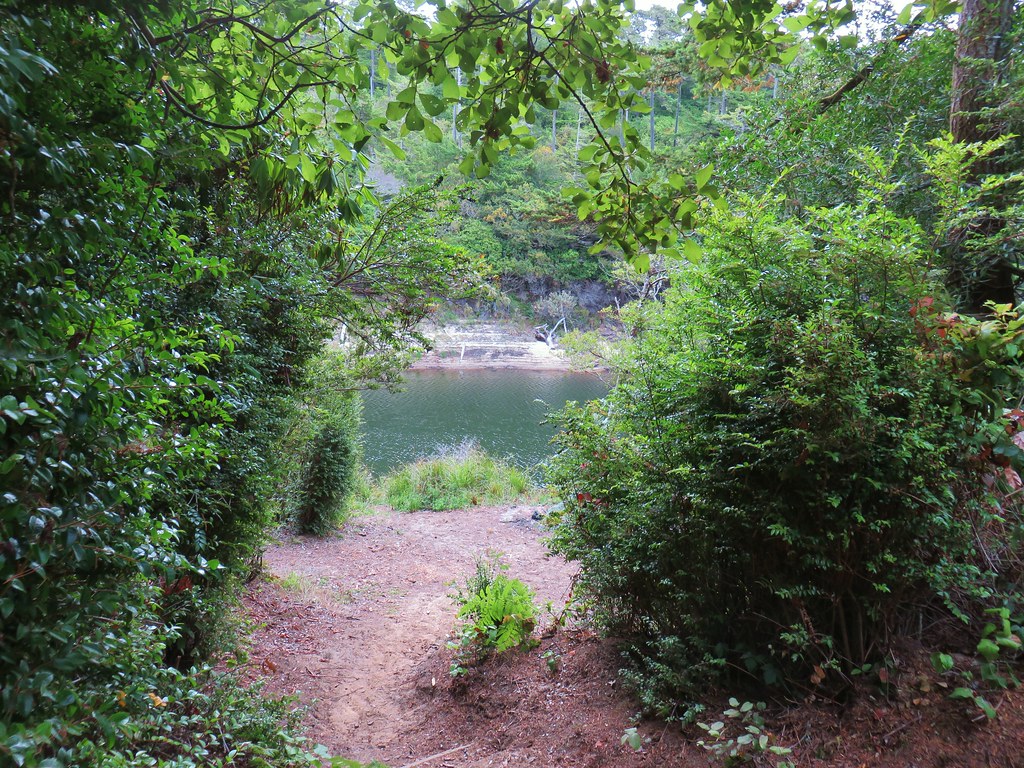
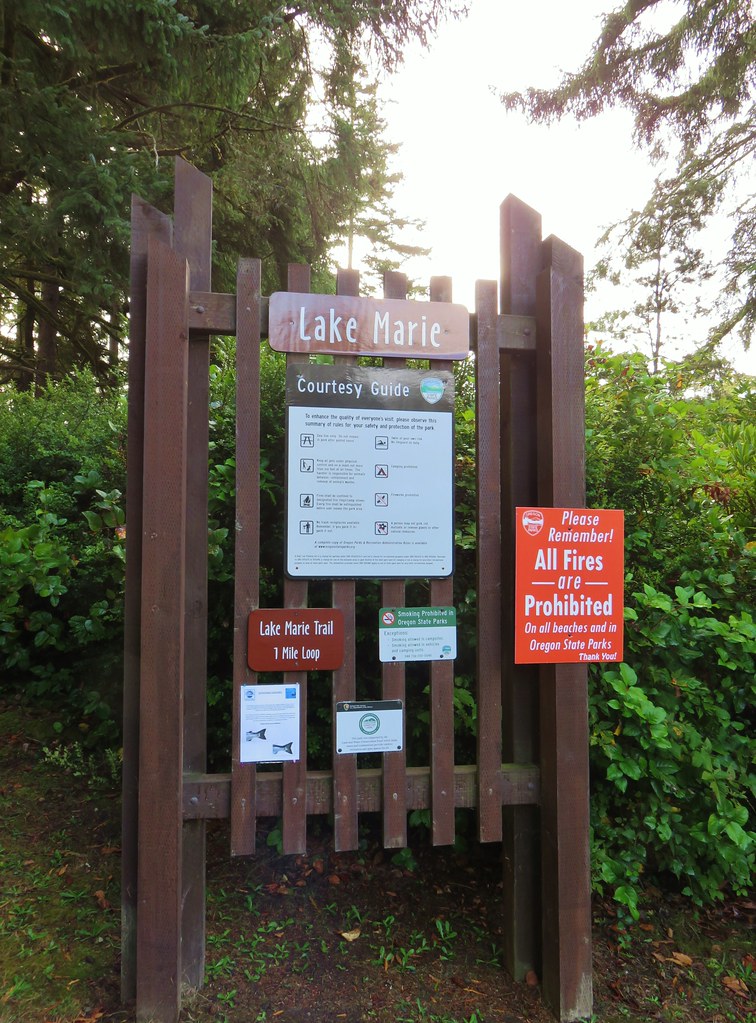
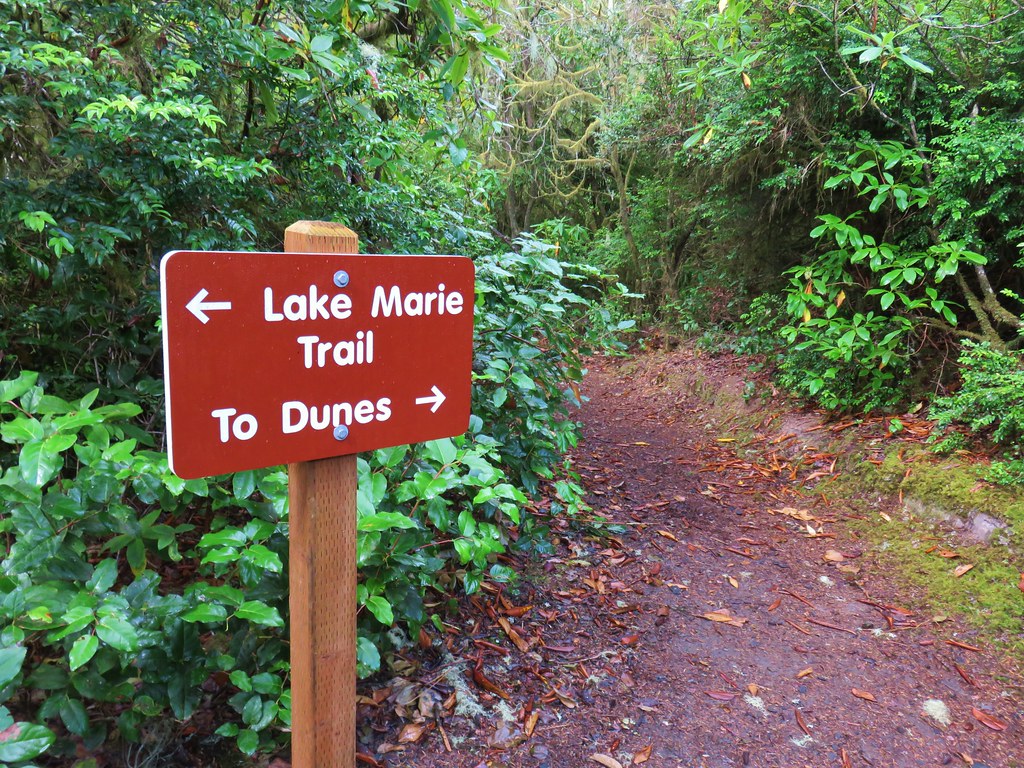
Our second stop was at Lake Marie, about 18 miles south of Taylor Dunes, in the Umpqua Lighthouse State Park. We parked at the Lake Marie Trailhead and set off on the 1 mile loop clockwise around the lake.
The fishermen around the lake had some competition from the local wildlife.
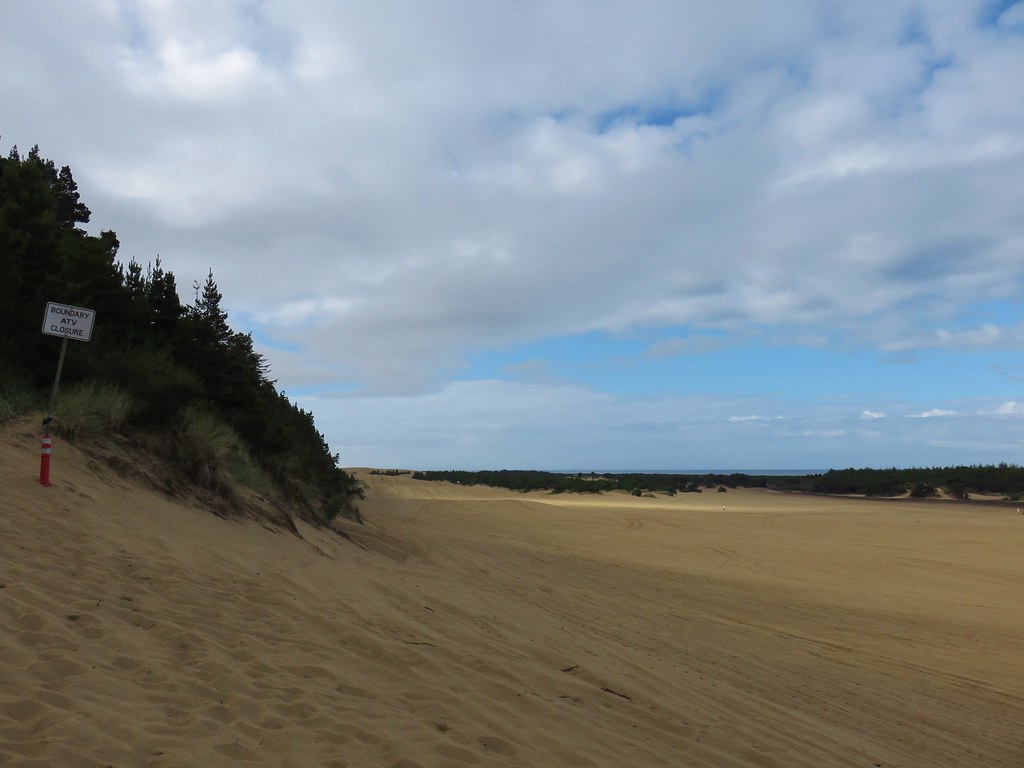
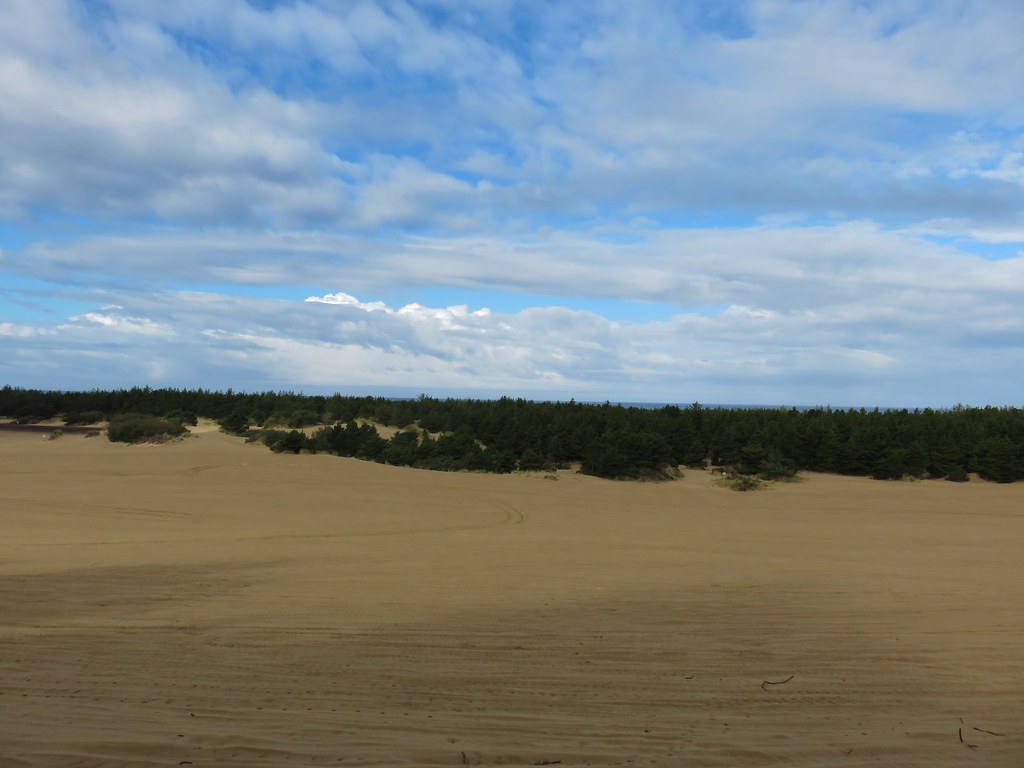
Just under a mile around the lake a short spur trail led to a viewpoint overlooking more dunes.
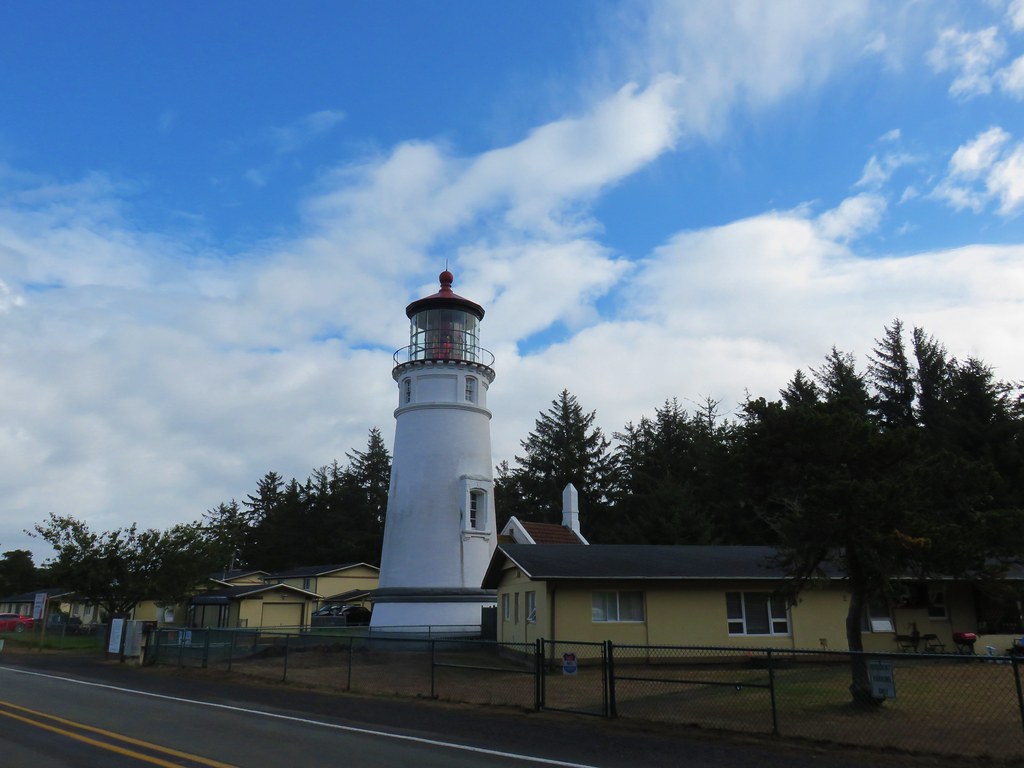
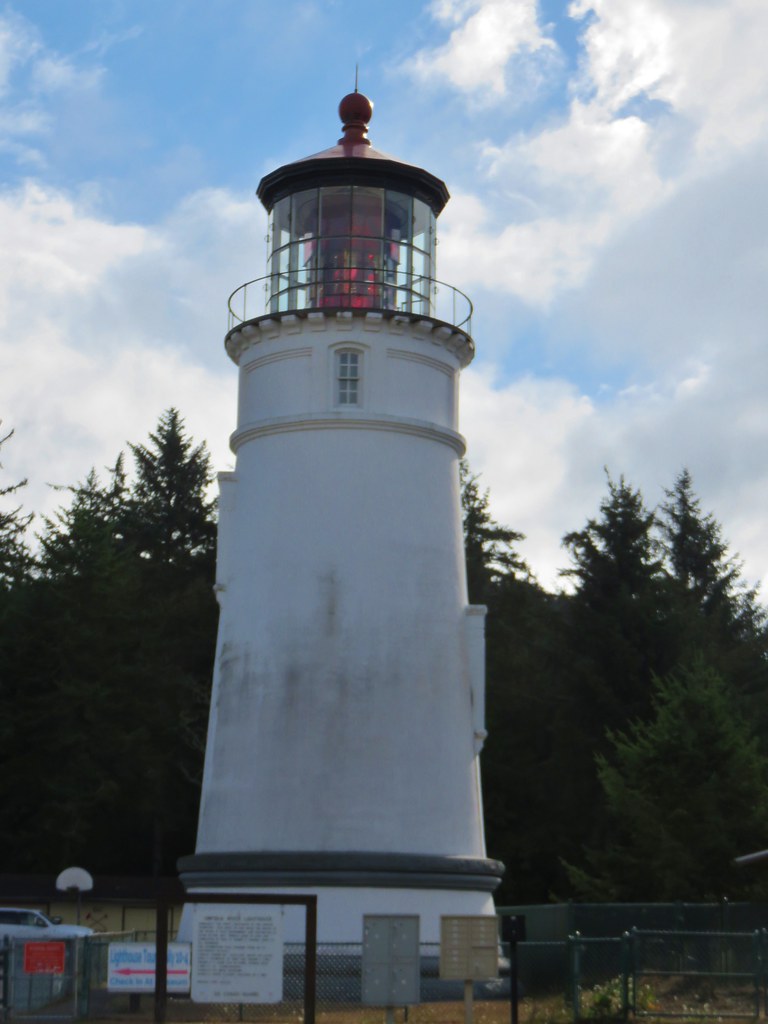
We completed the loop and then decided to walk the tenth of a mile up Lighthouse Road to see the Umpqua River Lighthouse.
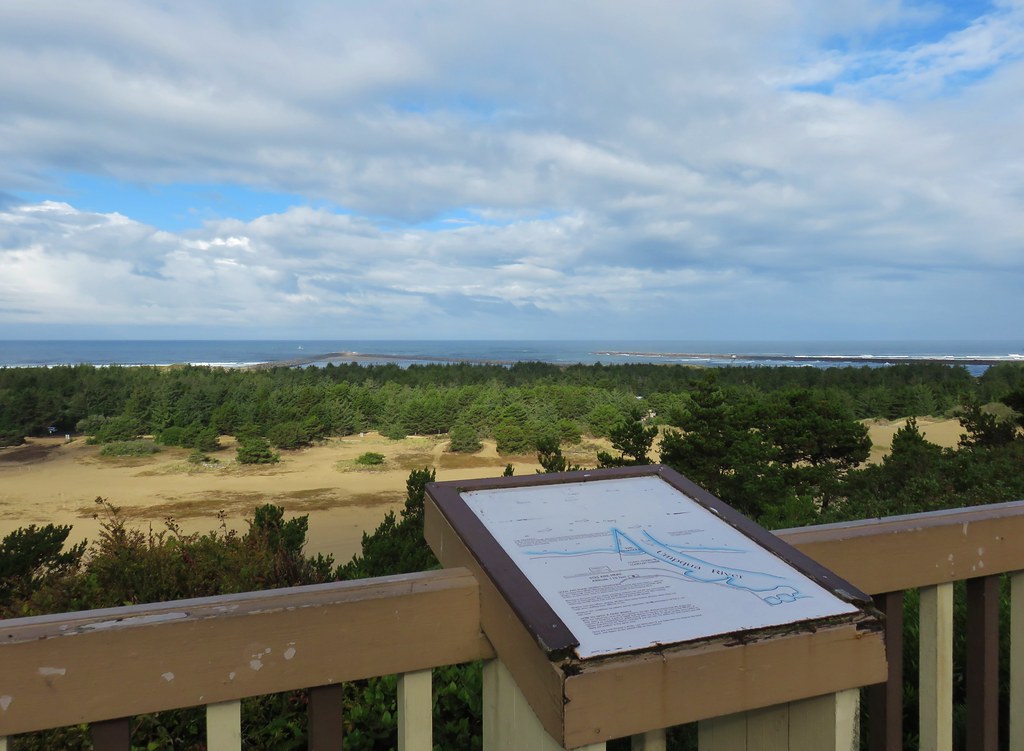
A viewpoint at the lighthouse looked out to the mouth of the Umpqua River.
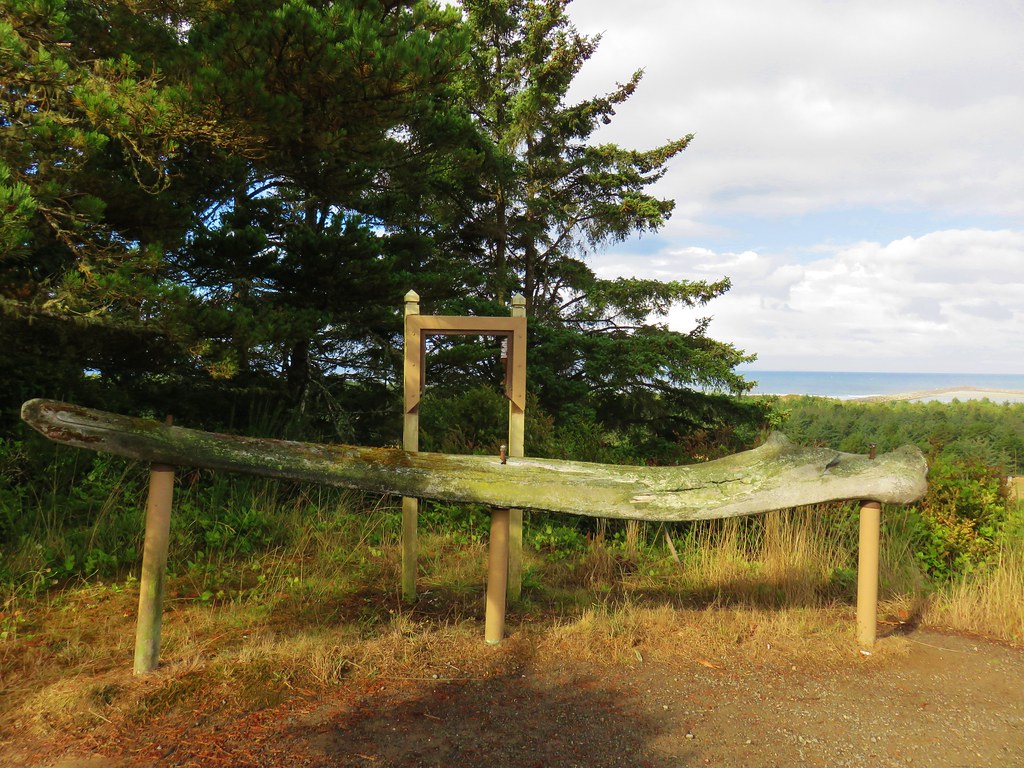
There was also a gray whale jawbone nearby.
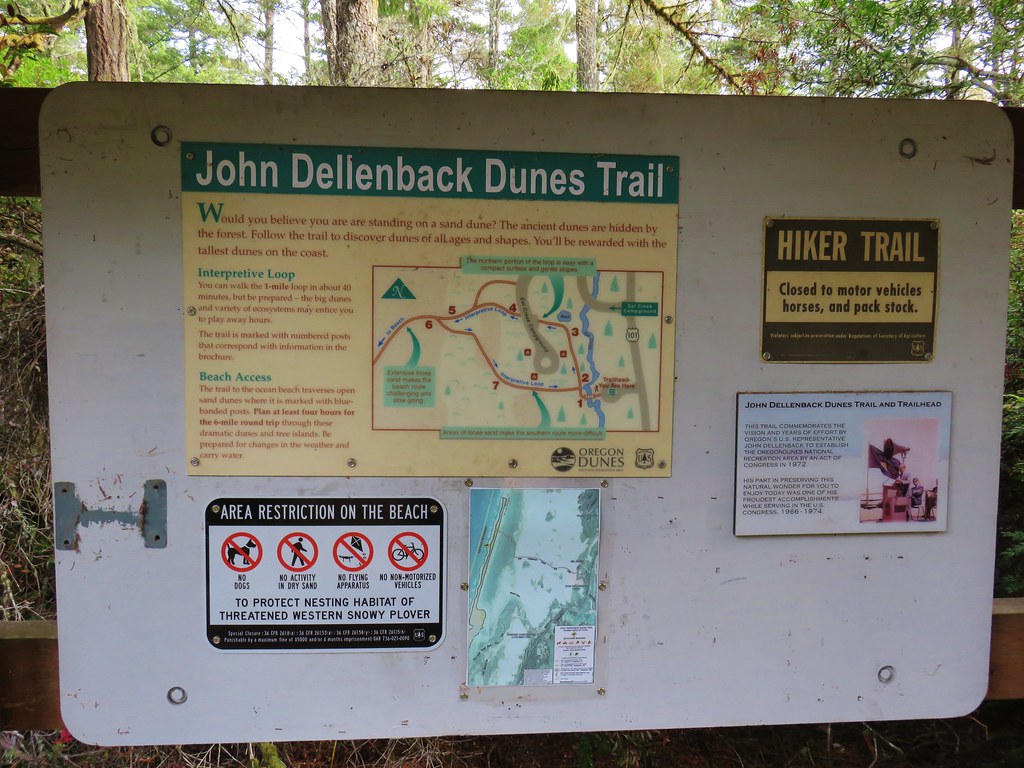
After visiting the lighthouse we returned to our car and continued south on Highway 101 for another 5.5 miles to the signed John Dellenback Dune Trailhead.
The trail left the parking area and immediately crossed Eel Creek on a footbridge.
The trail passed a marshy area where a great blue heron was looking for breakfast.
At the quarter mile mark the trail crossed a paved road in Eel Creek Campground.
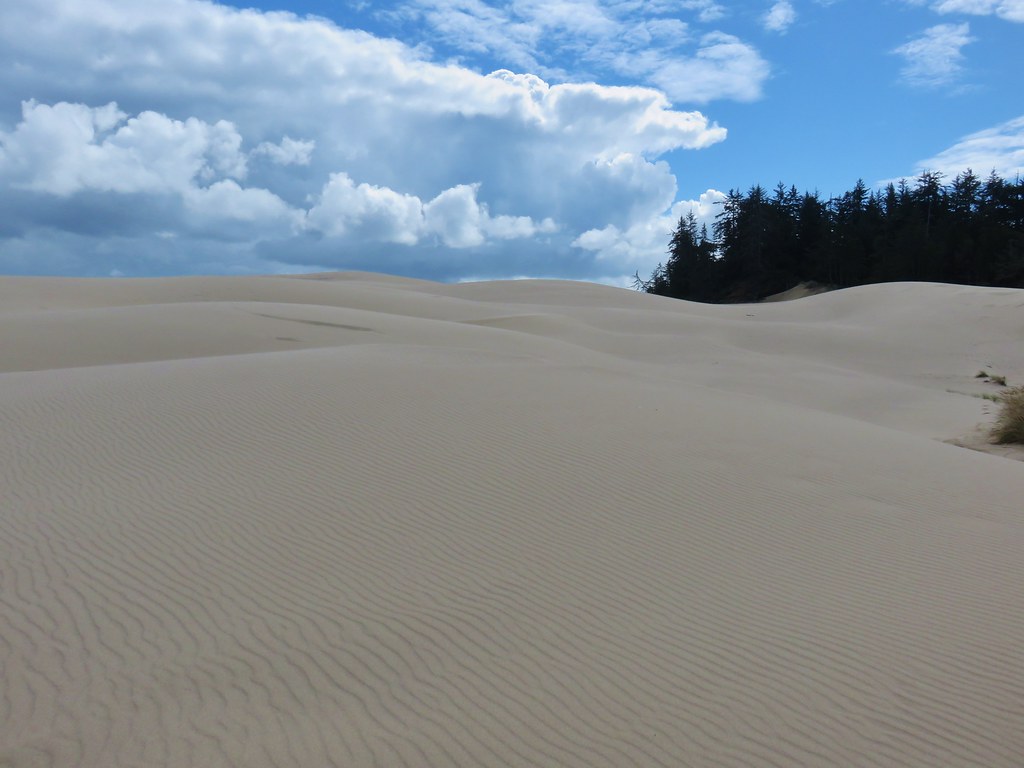
In just .2 more miles the trail left the trees and entered the dunes.
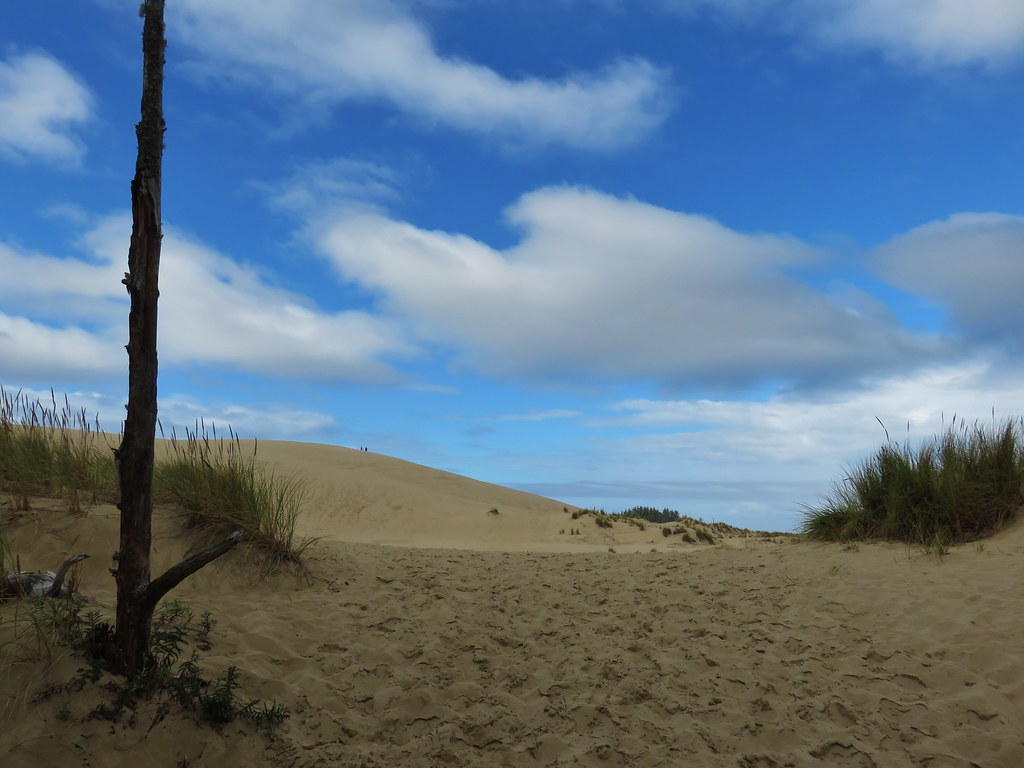
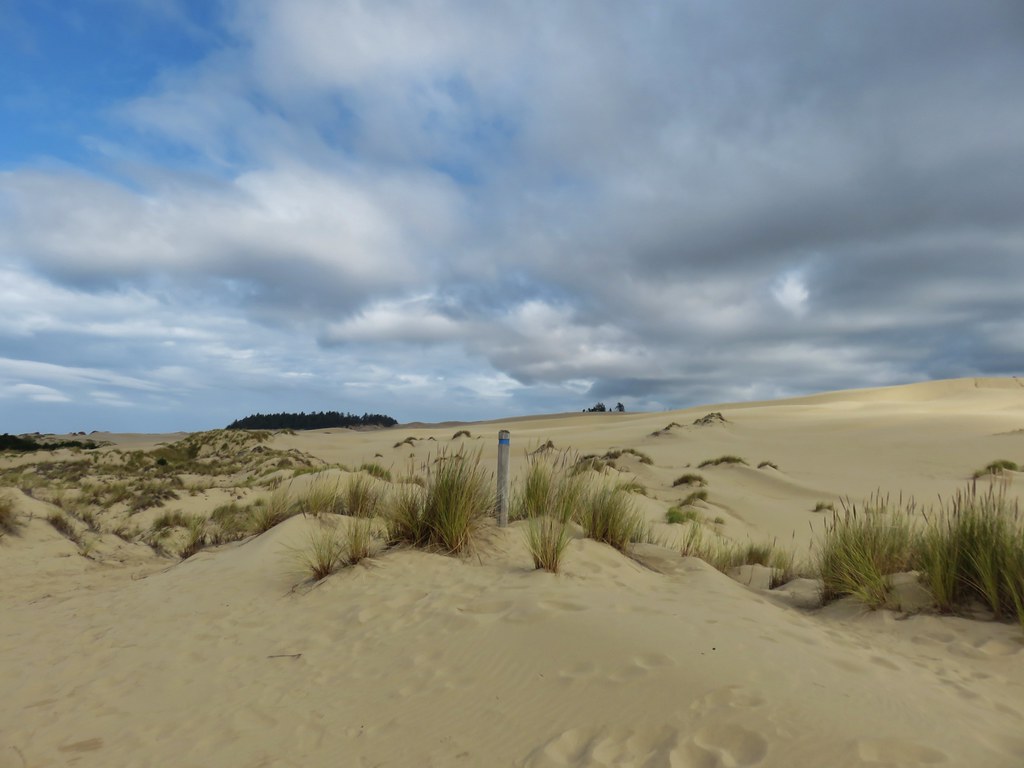
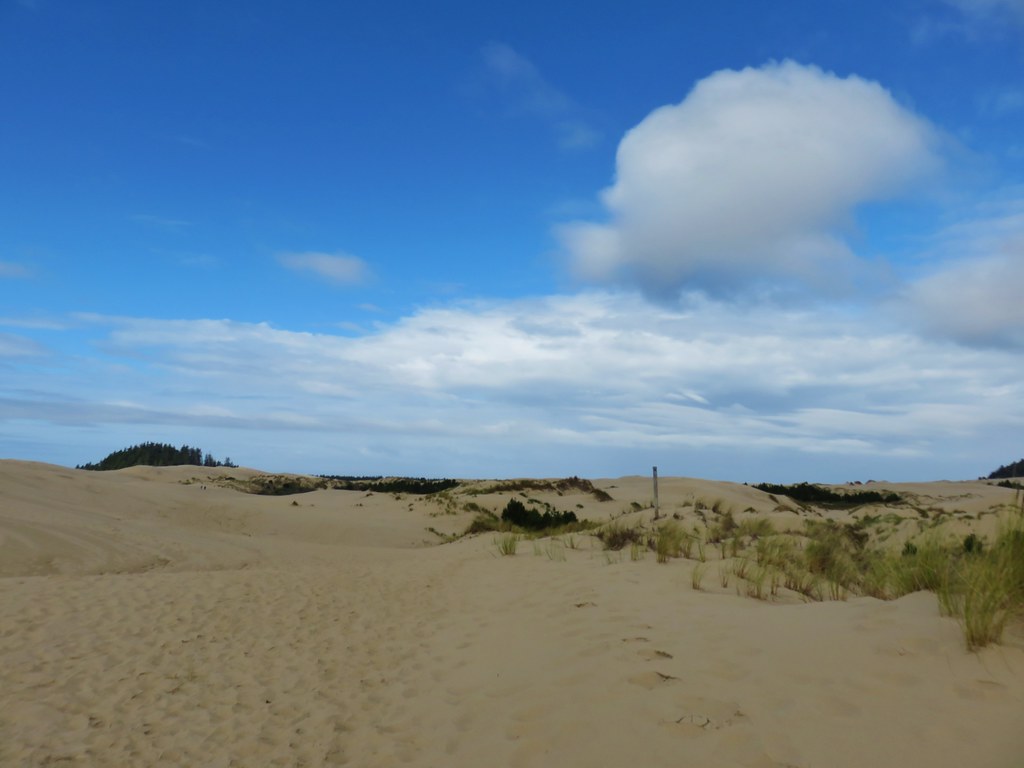
Poles marked the route of the trail through the shifting sands of the dunes, but we began to doubt that we were really supposed to follow the poles when they began to veer to the north (right) of a tree island. The GPS appeared to show the trail passing to the south (left) of that island.
There were footprints leading to both sides of the trees so we decided to trust the GPS and headed to the left.
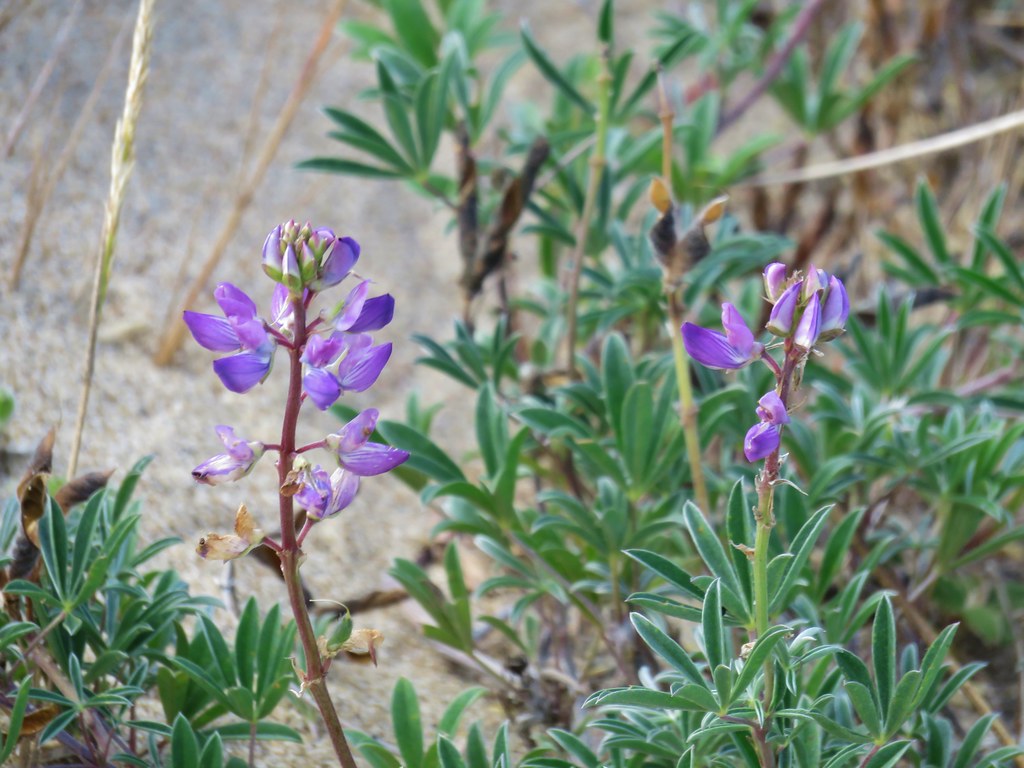
When we reached the vegetation of the deflation plain just under two miles from the trailhead we were unable to find any sign of a trail. We did however find a lupine still in bloom.
We attempted to locate some sign of a trail in the area shown on the GPS but each time we thought we might have found a way through the brush it got too dense to continue. We worked our way north along the edge of the vegetation for nearly half a mile where we finally spotted some signs.
For the next three quarters of a mile the trail passed through a variety of scenery before reaching the ocean.
We followed the beach south for about a mile before turning back.
On the way back we followed the posts along the north side of the island.
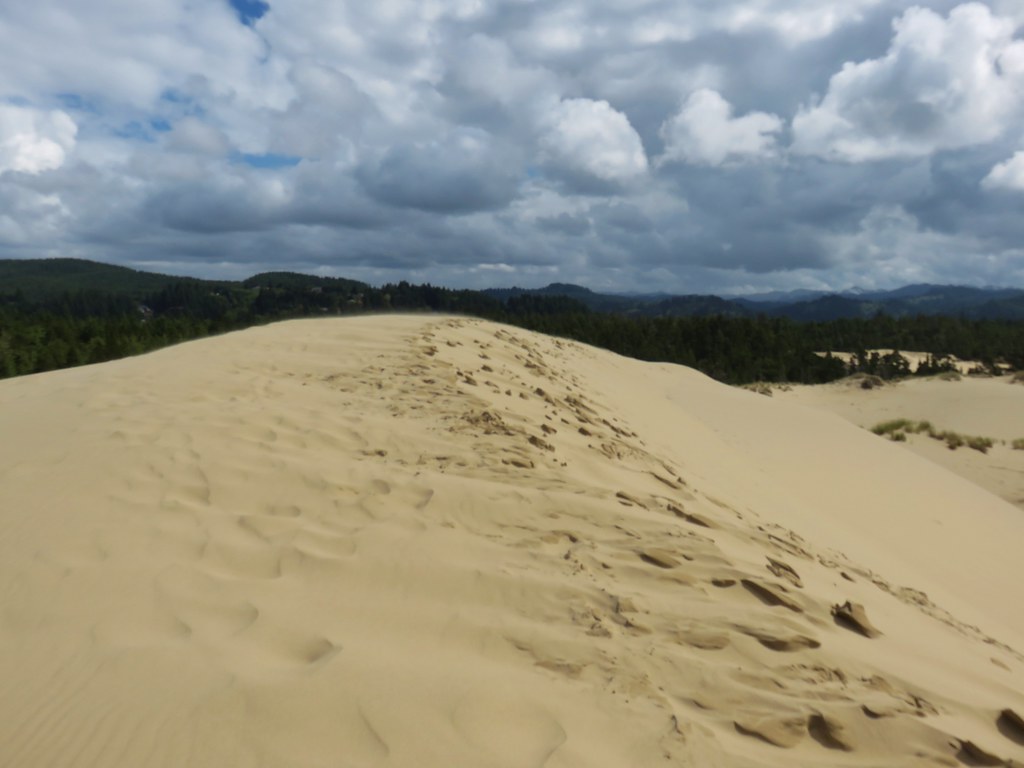
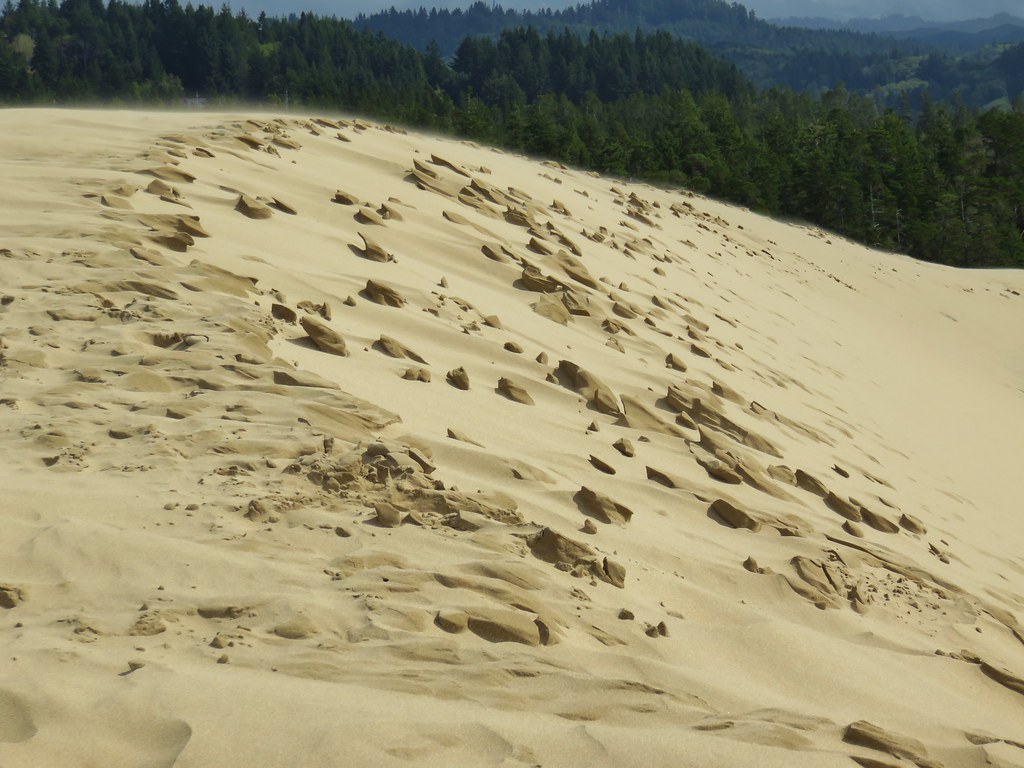
We took a side trip up the tallest of the dunes before reaching a junction at the edge of the trees.
We went right at the junction for a half mile to complete a loop back to the trailhead.
With our wandering around this hike came in at 8 miles giving us a total of 12.7 on the day. We ended the day in Bandon where we explored the old downtown and had a wonderful dinner at Foley’s Irish Pub. A good start as far as backup plans go. Happy Trails!
This Throwback Thursday hike took place on our 16th wedding anniversary. To celebrate we headed to Cape Lookout State Park on the Oregon Coast. We parked at the Cape Lookout Trailhead where we had three trails to choose from.
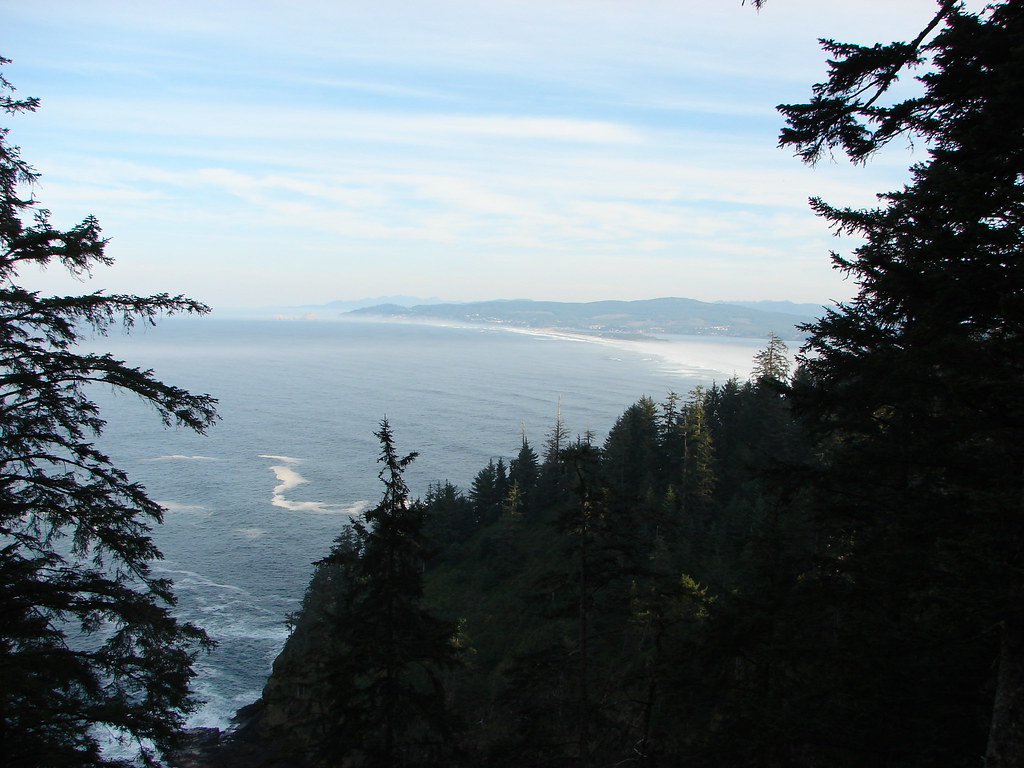
The most scenic (and popular) of the three trails is the Cape Trail which we started out on. This nearly 2.5 mile trail follows Cape Lookout to it a viewpoint overlooking the tip of the Cape. The trail starts out on the southern side of Cape Lookout offering a view after .6 miles of Cape Kiwanda and Haystack Rock near Pacific City (post).
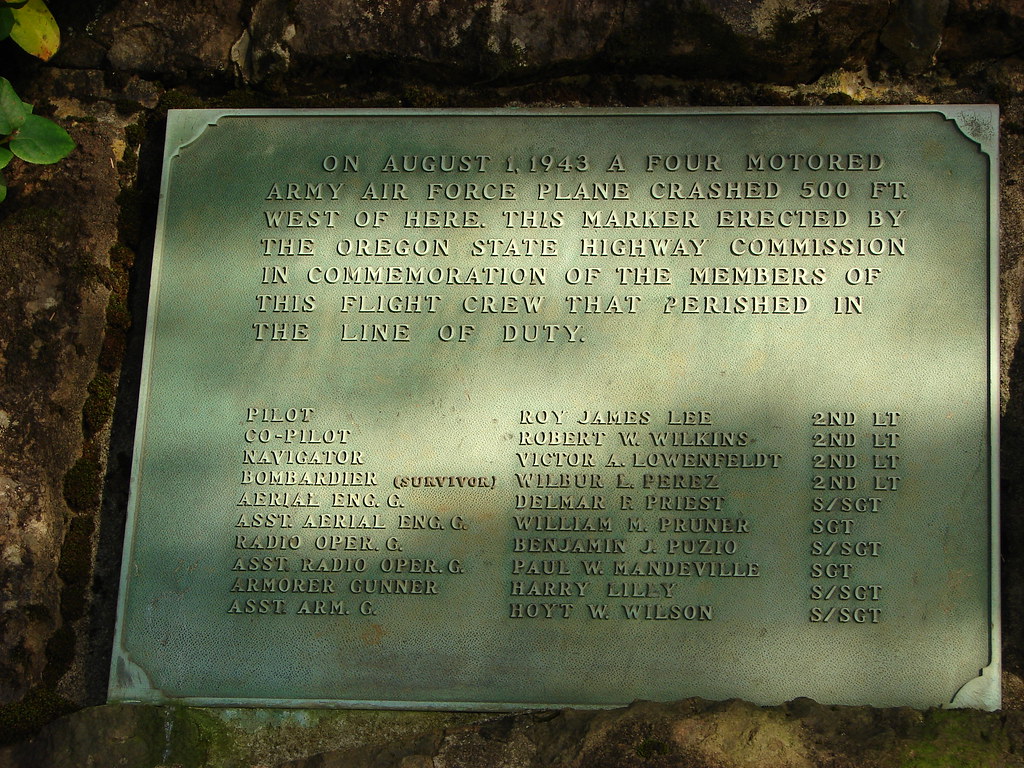
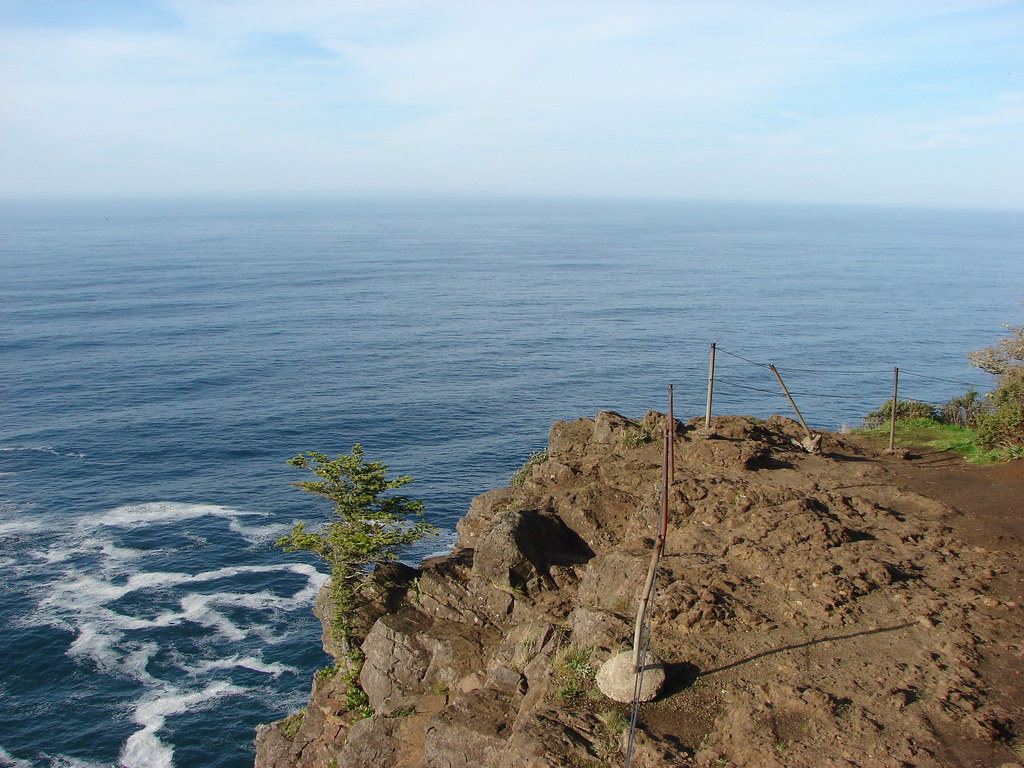
The viewpoint is also near the site where a B-17 bomber crashed in 1943.
The Cape Trail soon crosses the cape to the northern side where Cape Mears (post) and the Three Arch Rocks Wilderness could be seen.
We followed the trail around Wells Cove before it returned to the southern side of the cape.
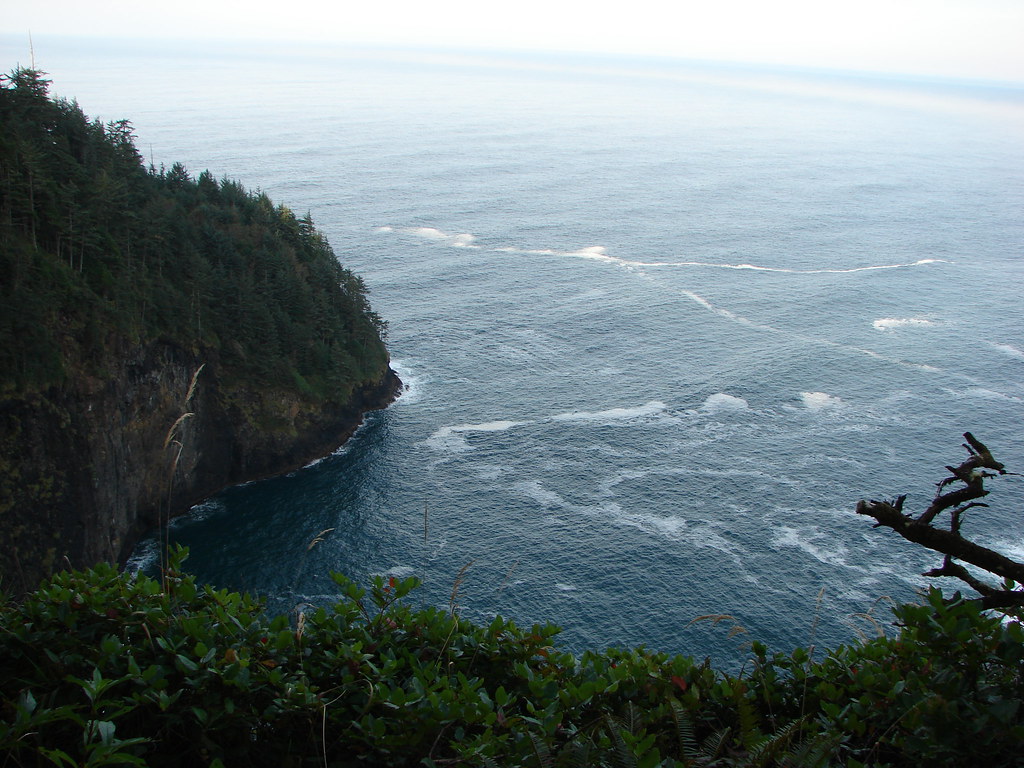
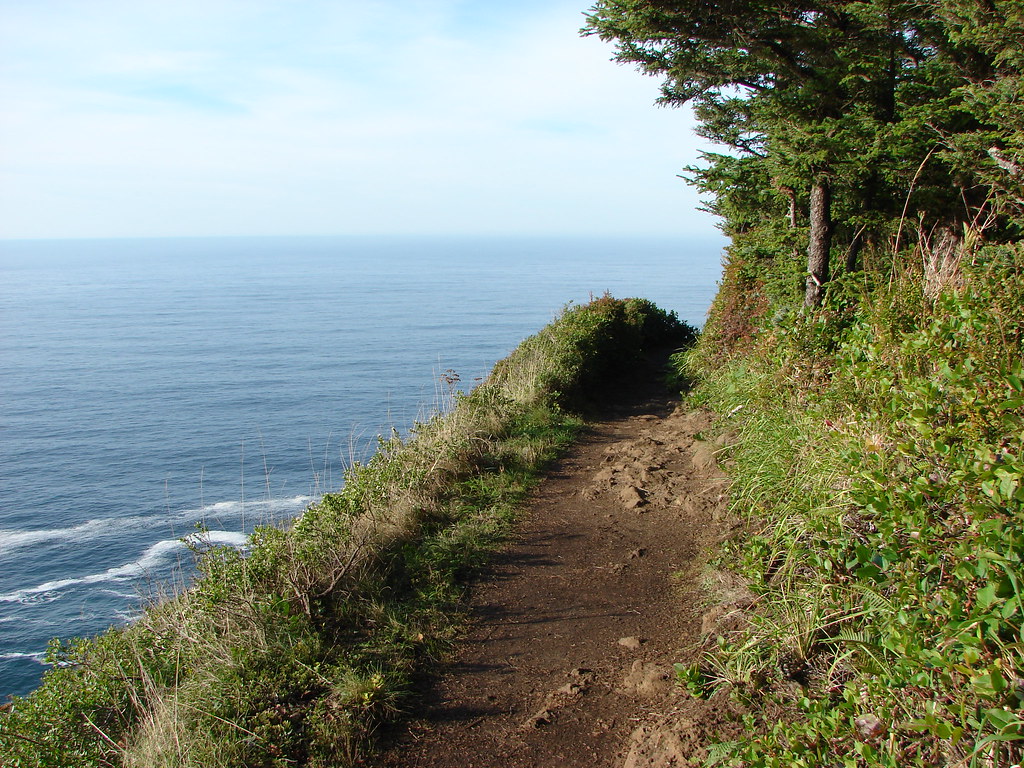
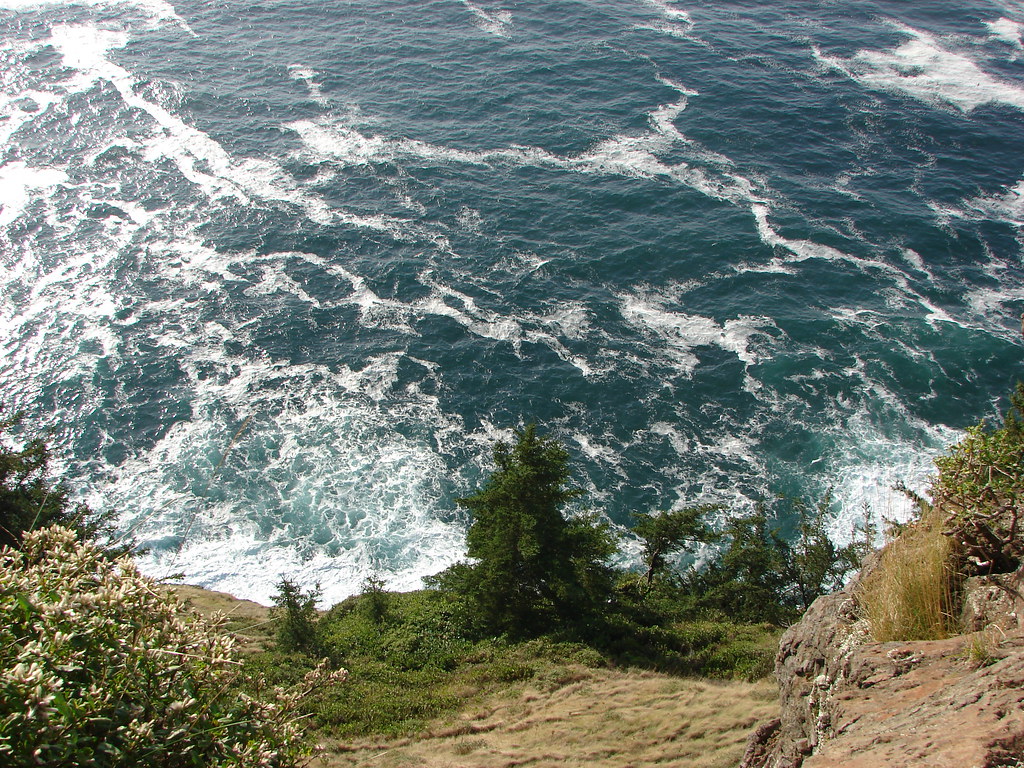
The final stretch of trail offered wide open views down to the Pacific.
It was a busy day on the trail, there had been a few other hikers out as well as several locals along the trail.
After resting at the viewpoint we returned to the trailhead and decided to try the South Trail which led 1.8 miles down to the beach. The trail switchbacked down through the forest but offered occasional views of the cliff lined southern face of Cape Lookout.
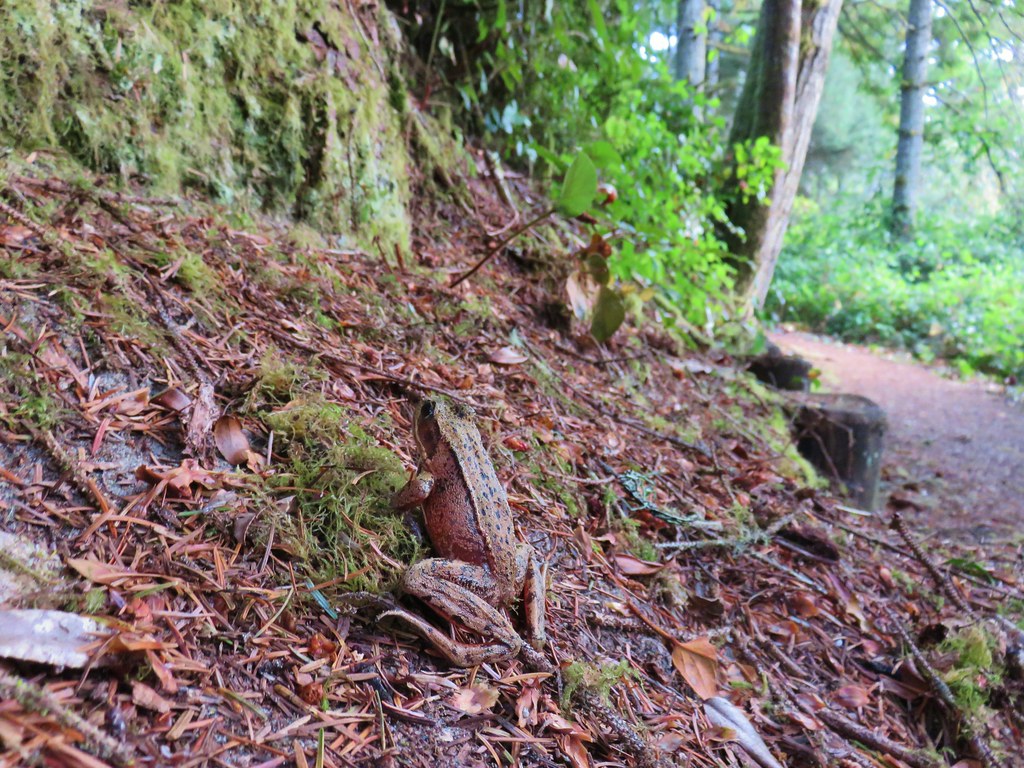
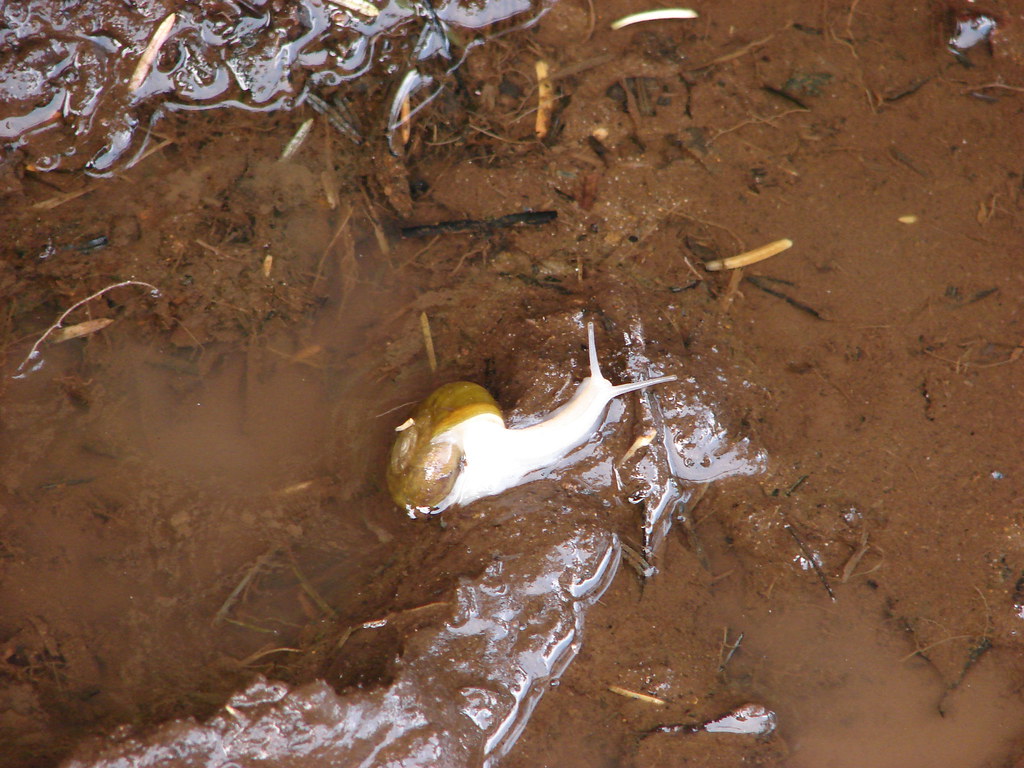
We spotted another local on the way down to the beach.
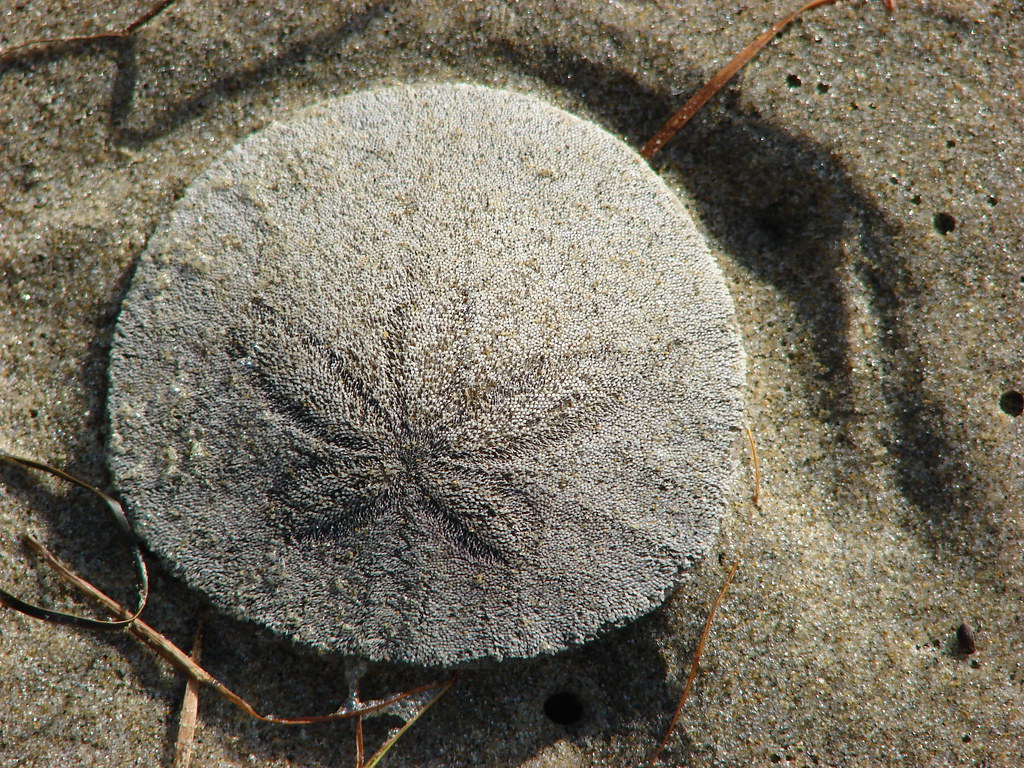
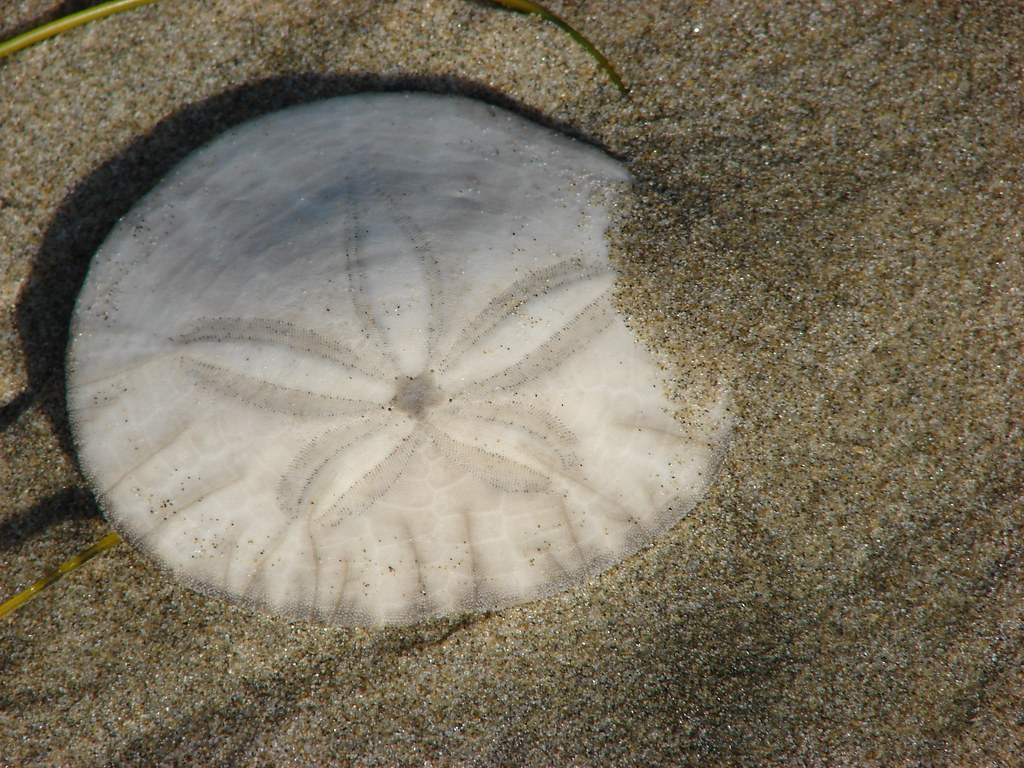
We walked along the beach watching for sand dollars for a bit finally sitting down on a log and taking a nice long break as we listened to the ocean and watched more locals as they went about their days.
We eventually pulled ourselves away from the hypnotic trance of the Pacific and climbed back up to the trailhead. Other than one woman with her dog that we spotted in the distance we had been the only humans on the beach making it a relaxing way to end the day. Happy Trails!
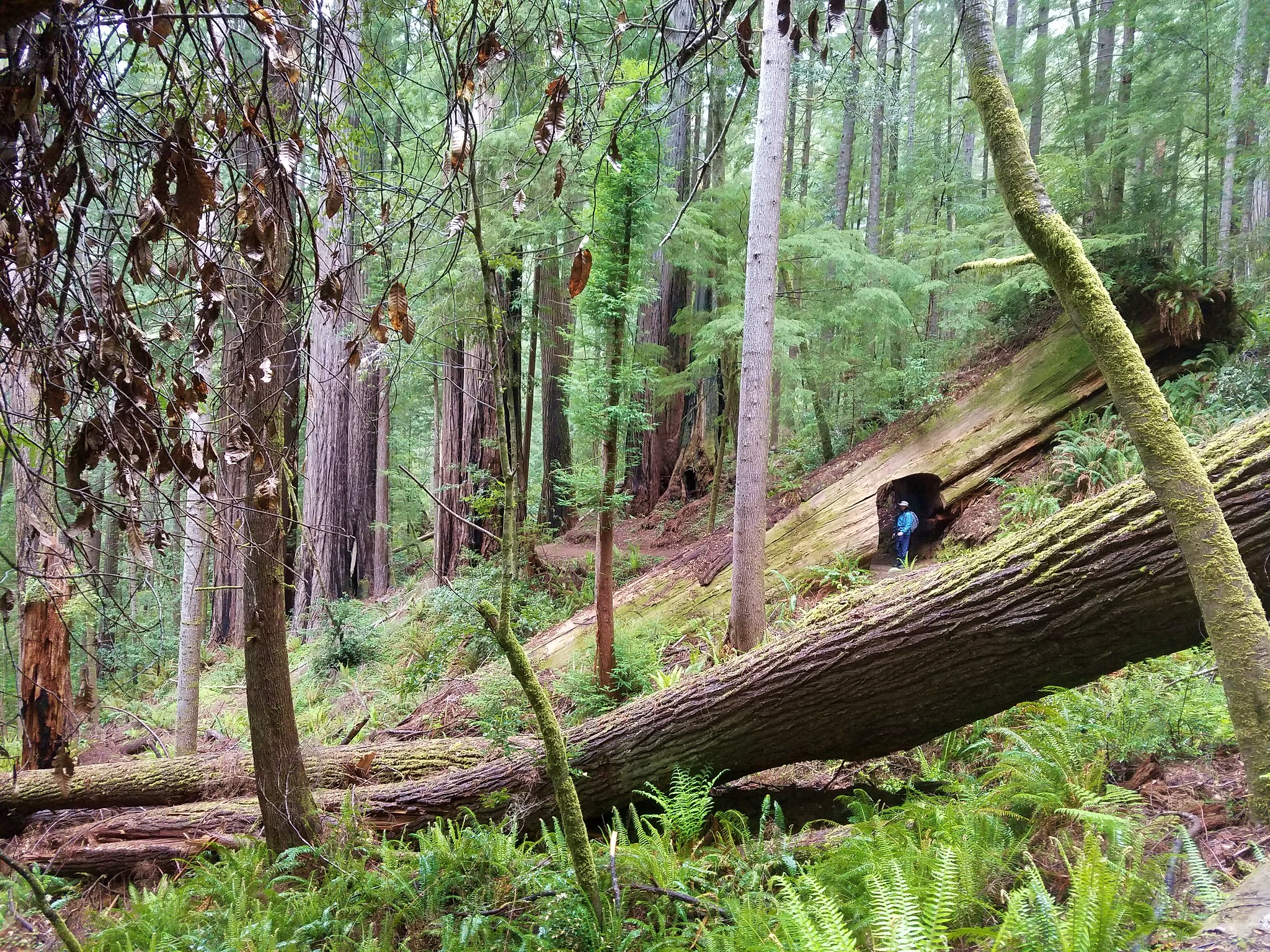
The day after our most hiccup free hike of our vacation so far the rain arrived. We had picked up a permit for the entry road to the Tall Trees Grove Trailhead. details here
Covered benches at the trailhead allowed us to get our rain gear set while staying out of the rain.
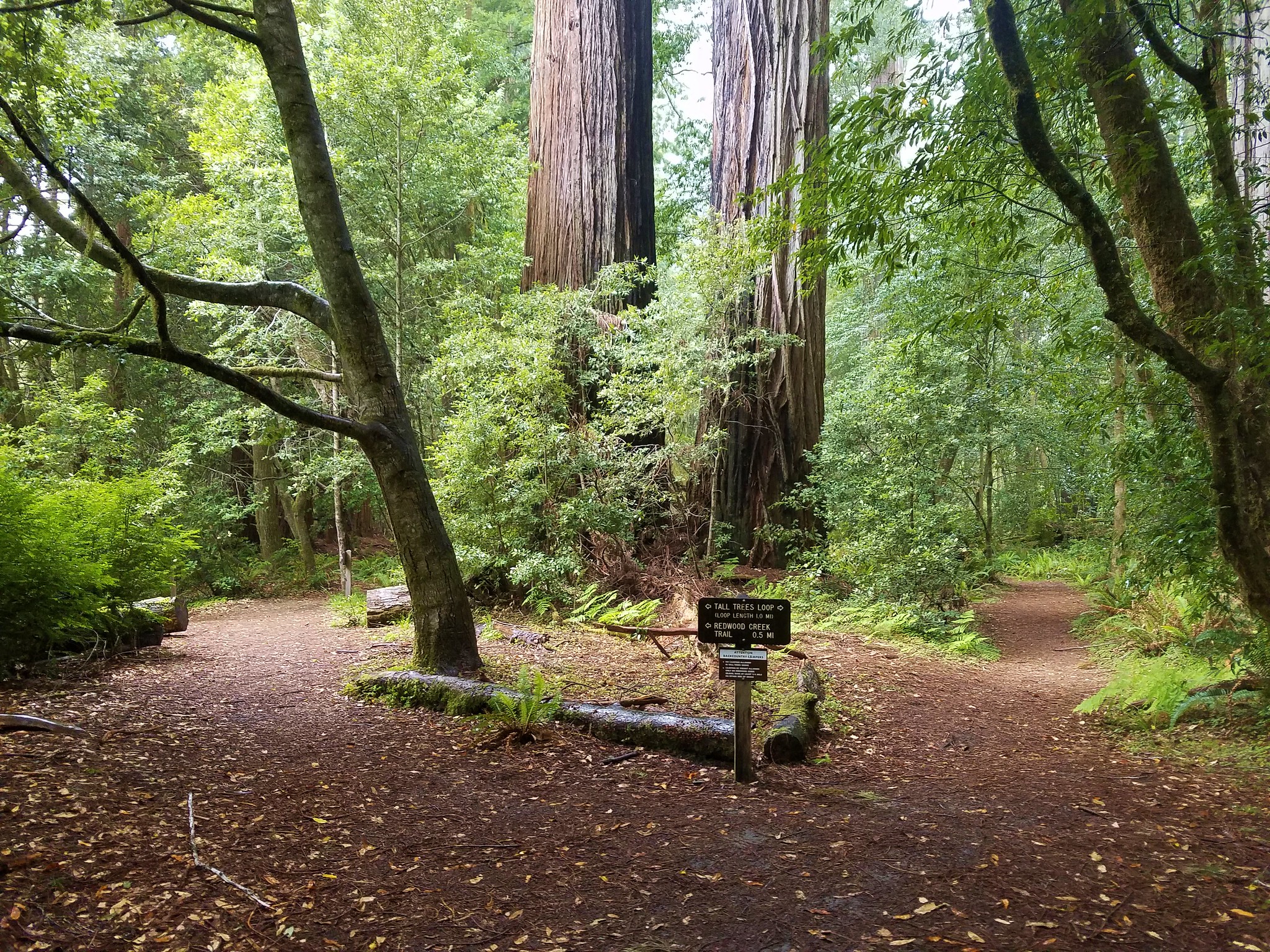
The trail to the Tall Trees descended 700′ in just under a mile and a half to the grove.
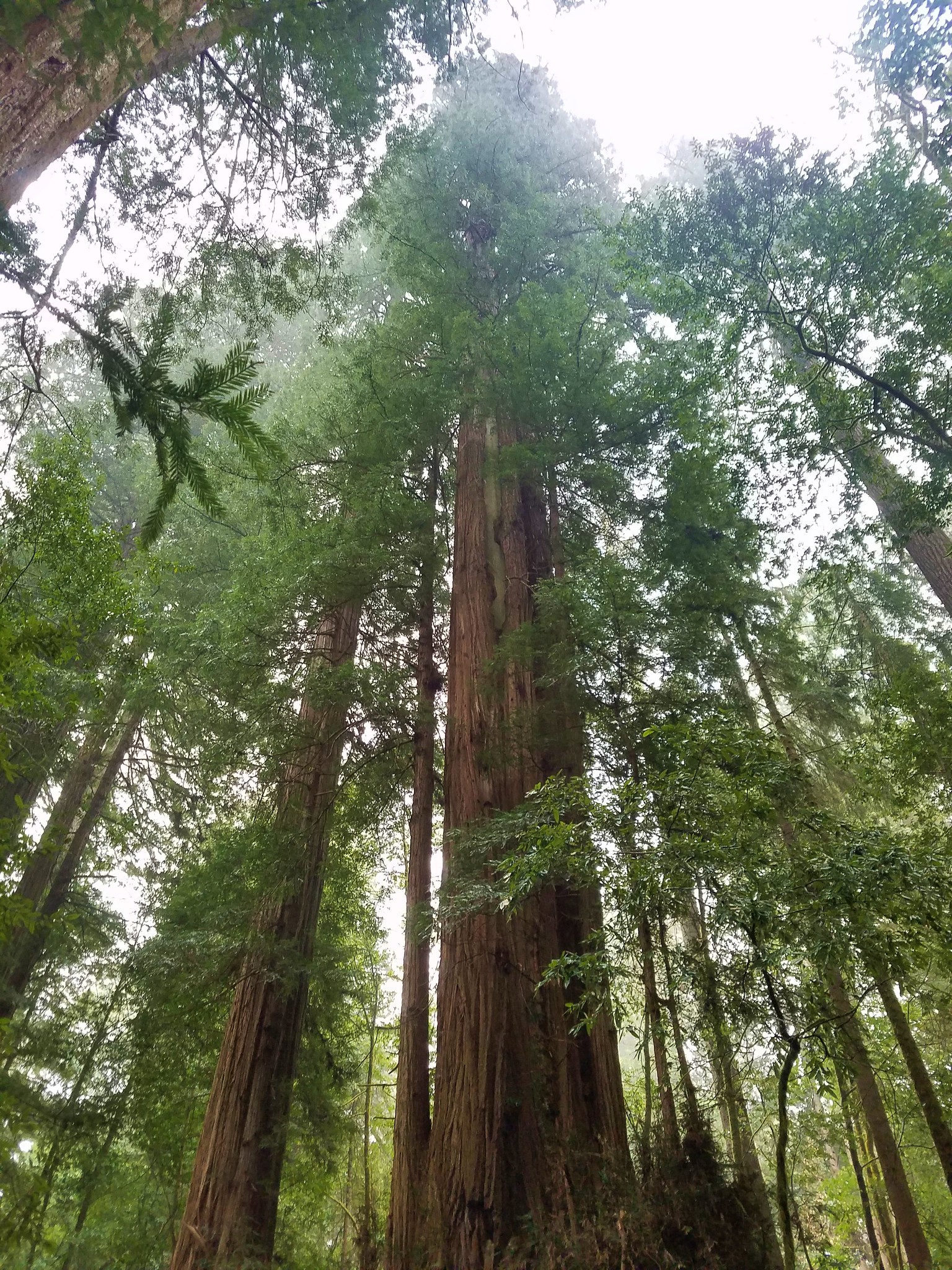
A mile long loop explored the grove which was home to the tallest know redwood until a 1989 storm removed some of it’s 367.8′ height.
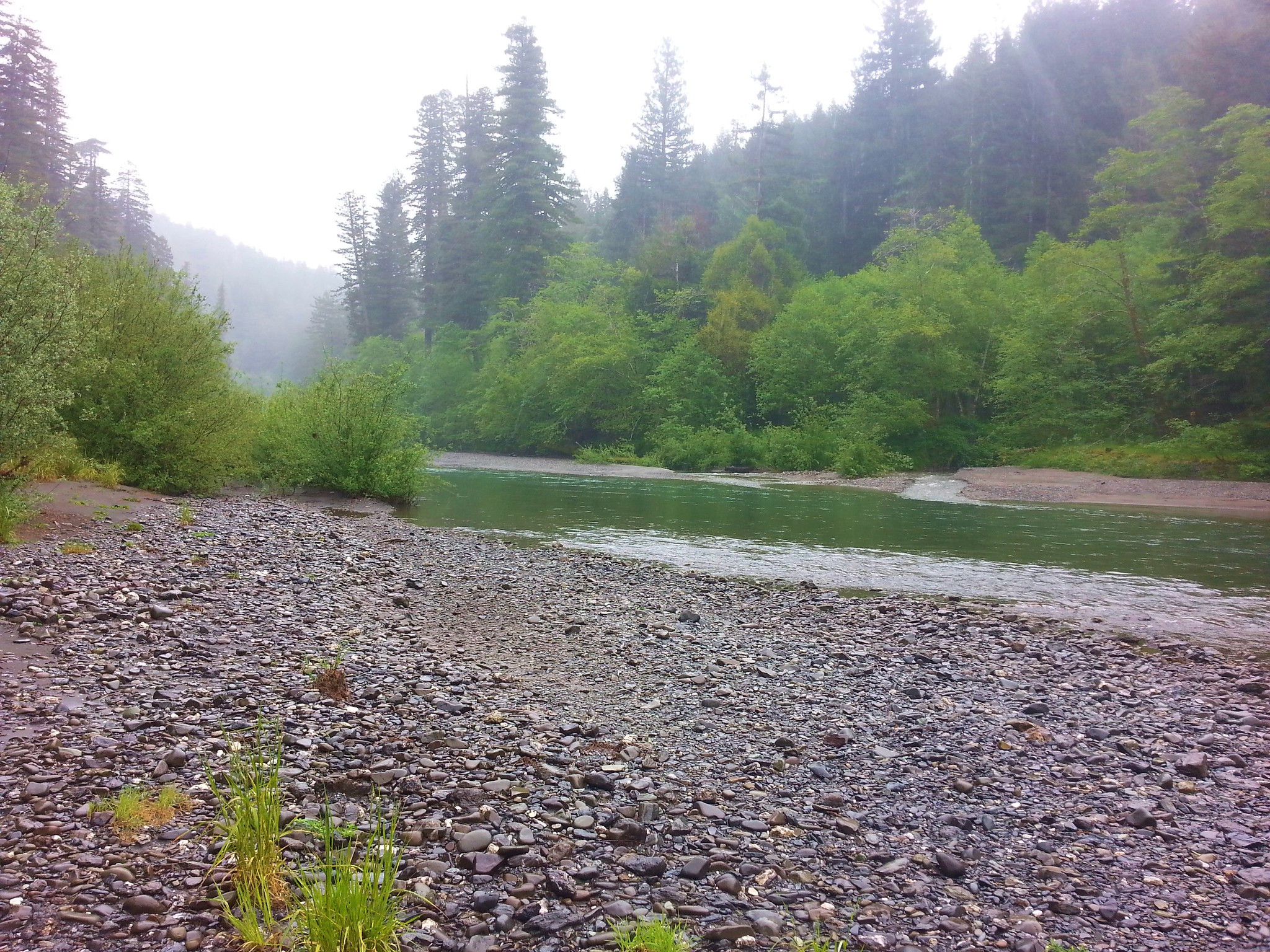
We took a brief detour on the Redwood Creek Trail to visit Redwood Creek before finishing our counter-clockwise loop.
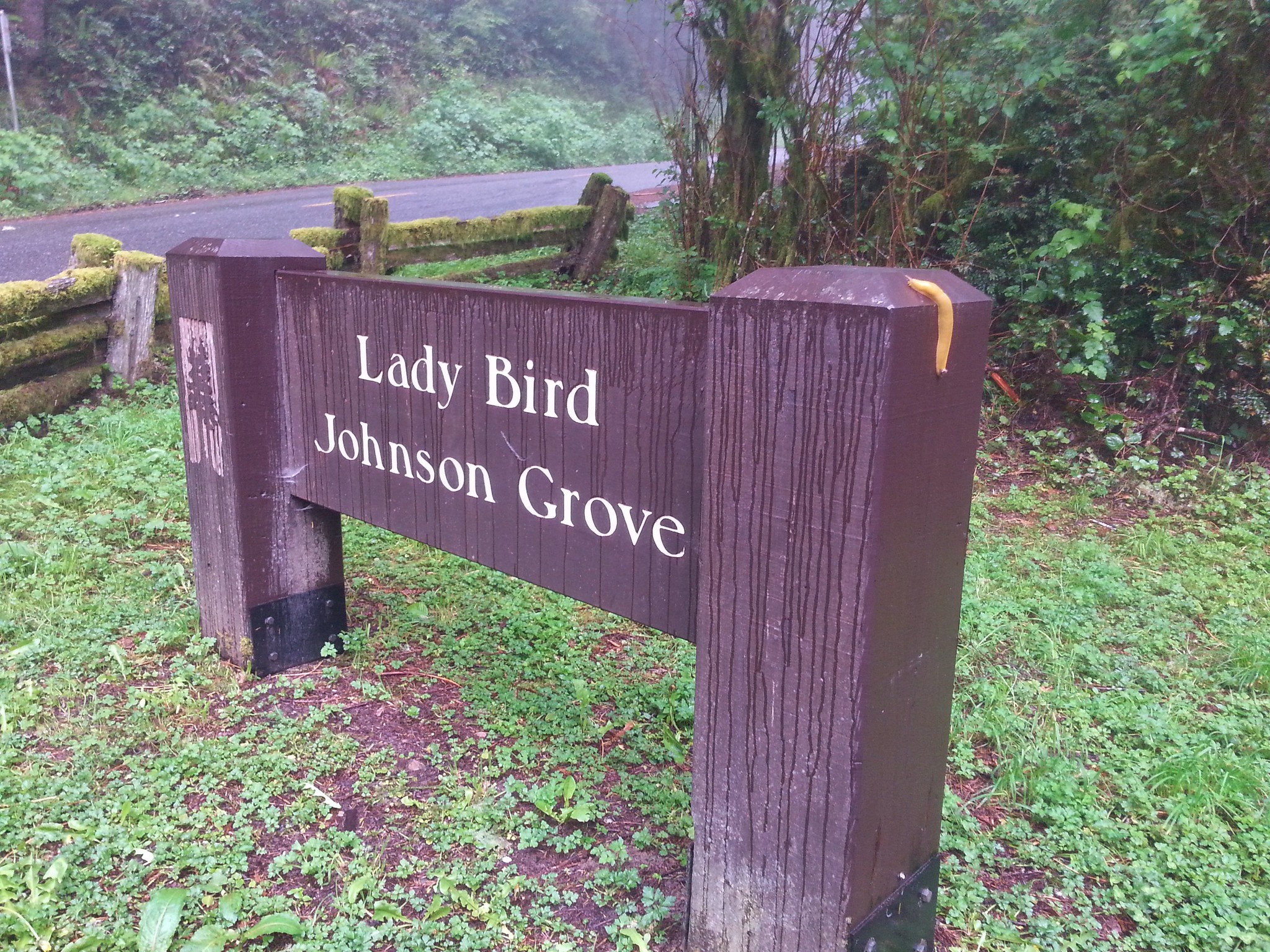
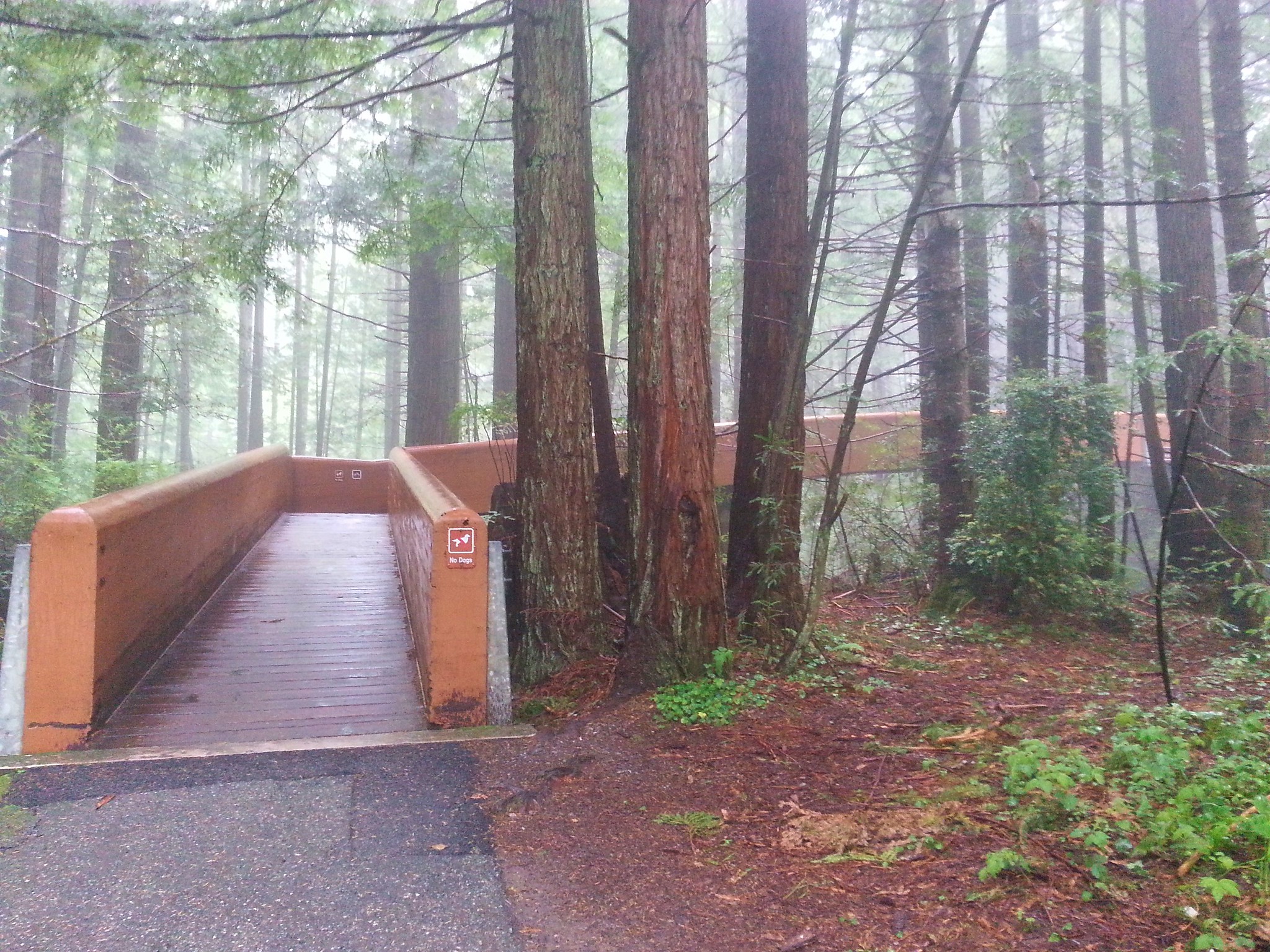
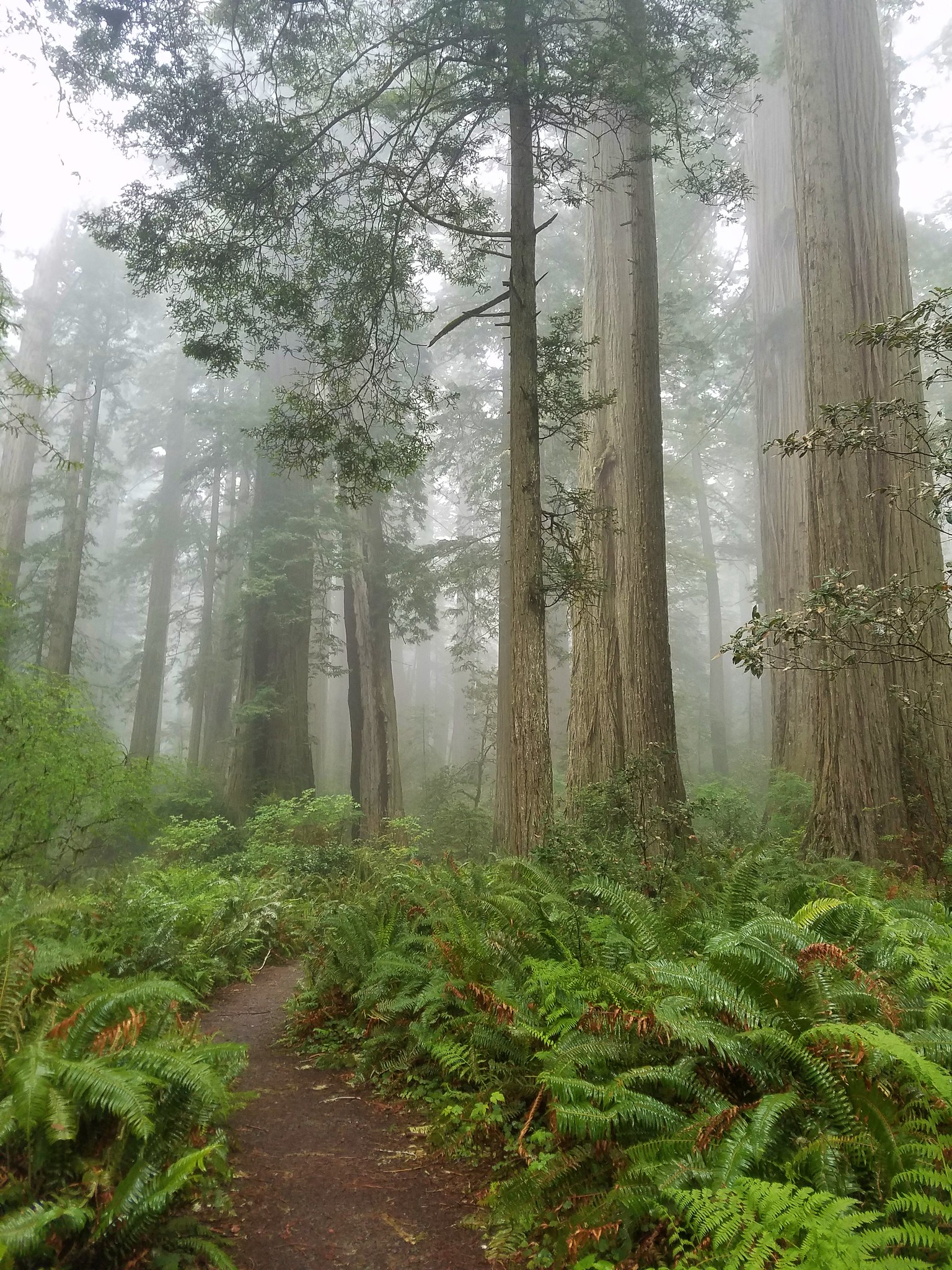
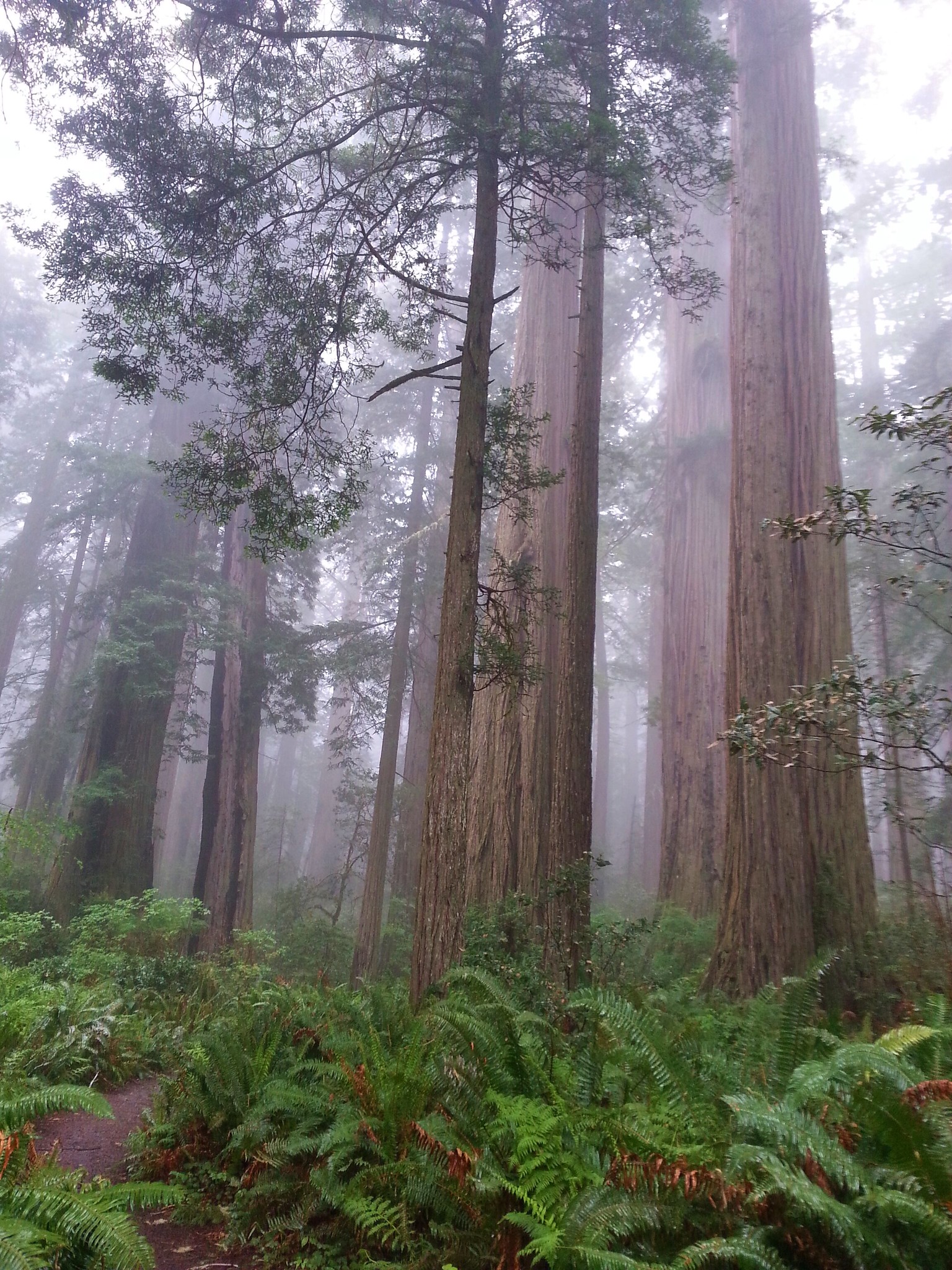
We then climbed back up to the car and headed back. Before returning to Highway 101 we stopped along Bald Hill Road at the Lady Bird Johnson Grove.
A 1.4 mile lollipop loop here visits a grove of redwoods dedicated to the wife of President Johnson who was a supporter of creating the Redwoods National Park.
A footbridge led from the parking lot over Bald Hill Road to the start of the short loop.
My foot had been holding up pretty well, my two sock system seemed to be working, but now my stomach was starting to give me problems. By the time we had reached our next stop, the Lagoon Creek picnic area, I really wasn’t feeling well.
The picnic area was located along Highway 101, 25.7 miles north of Bald Hills Road (13.5 miles south of Crescent City). We had originally planned on doing this hike before heading home on Friday but when my foot began acting up we changed our plans. We had been planning on starting the Tall Trees hike from the Dolason Prairie Trailhead which didn’t require the free permit but would have been over 15 miles round trip with around 3000′ of elevation gain. When we decided to go the free permit route it shortened that hike to 4 miles and 700′ of elevation gain freeing us up to add in the Lady Bird Johnson Grove and to move Hidden Beach up a day.
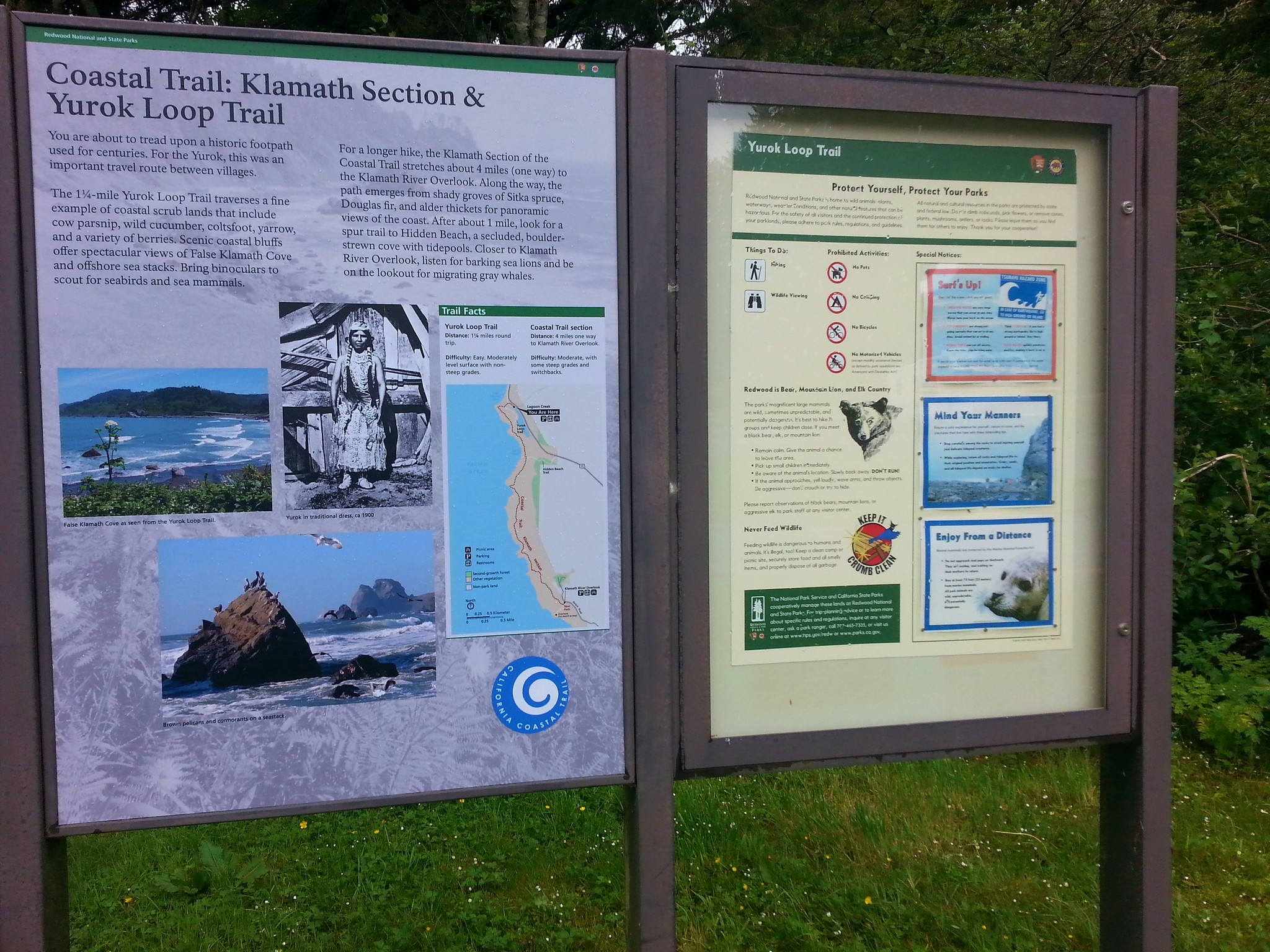
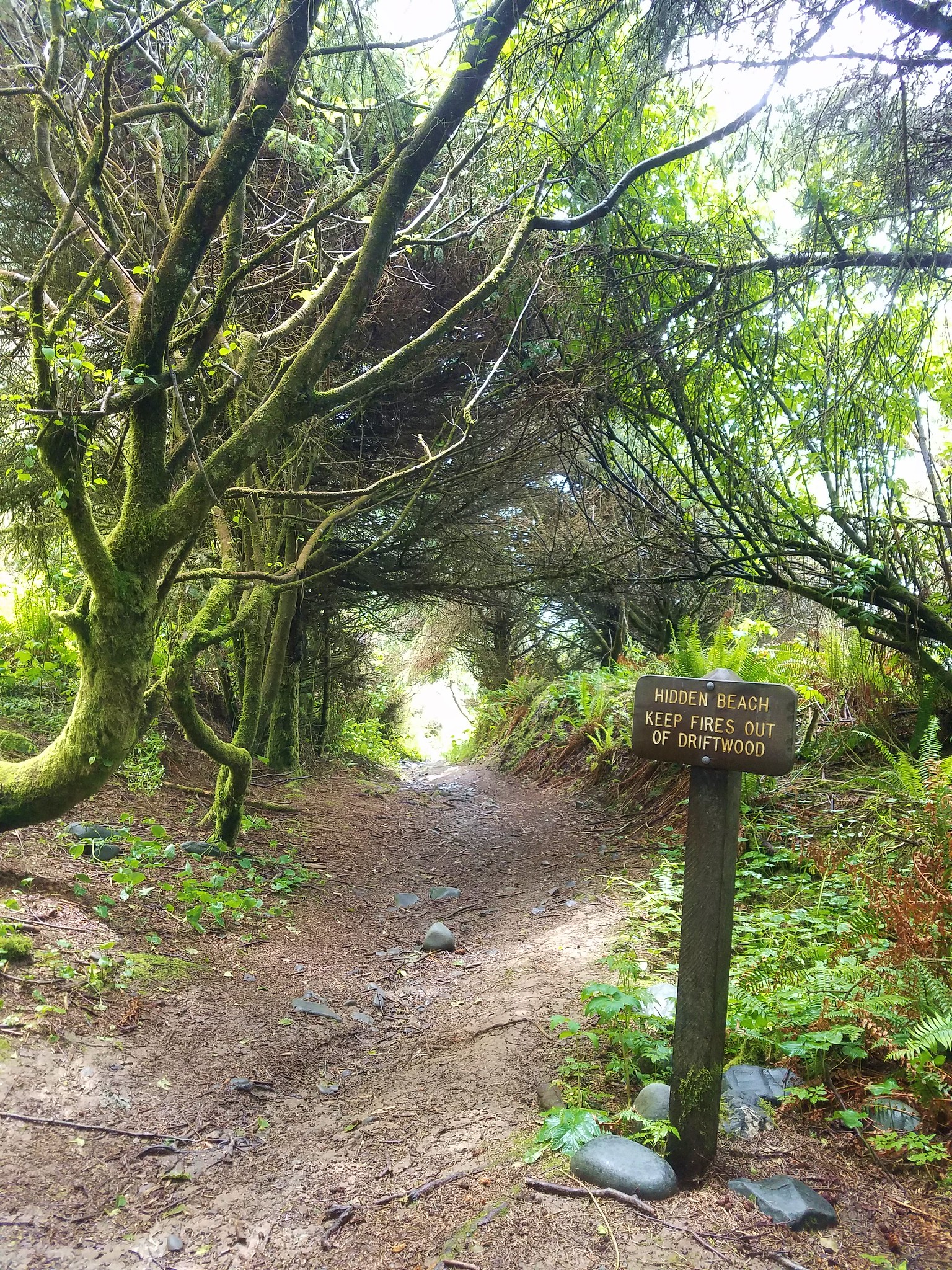
The hike to Hidden Beach was only 2.4 miles but the California Coastal Trail provided an opportunity to extend the hike to a Klamath River Overlook for a total of approximately 8 miles. Between my foot issues and now not feeling well we decided that we’d only be doing the 2.4 mile option this trip.
The trail began at a signboard at the northern end of the picnic area.
After crossing a footbridge over the lagoon’s outlet creek a short walk brought us to the start of the Yurok Loop.
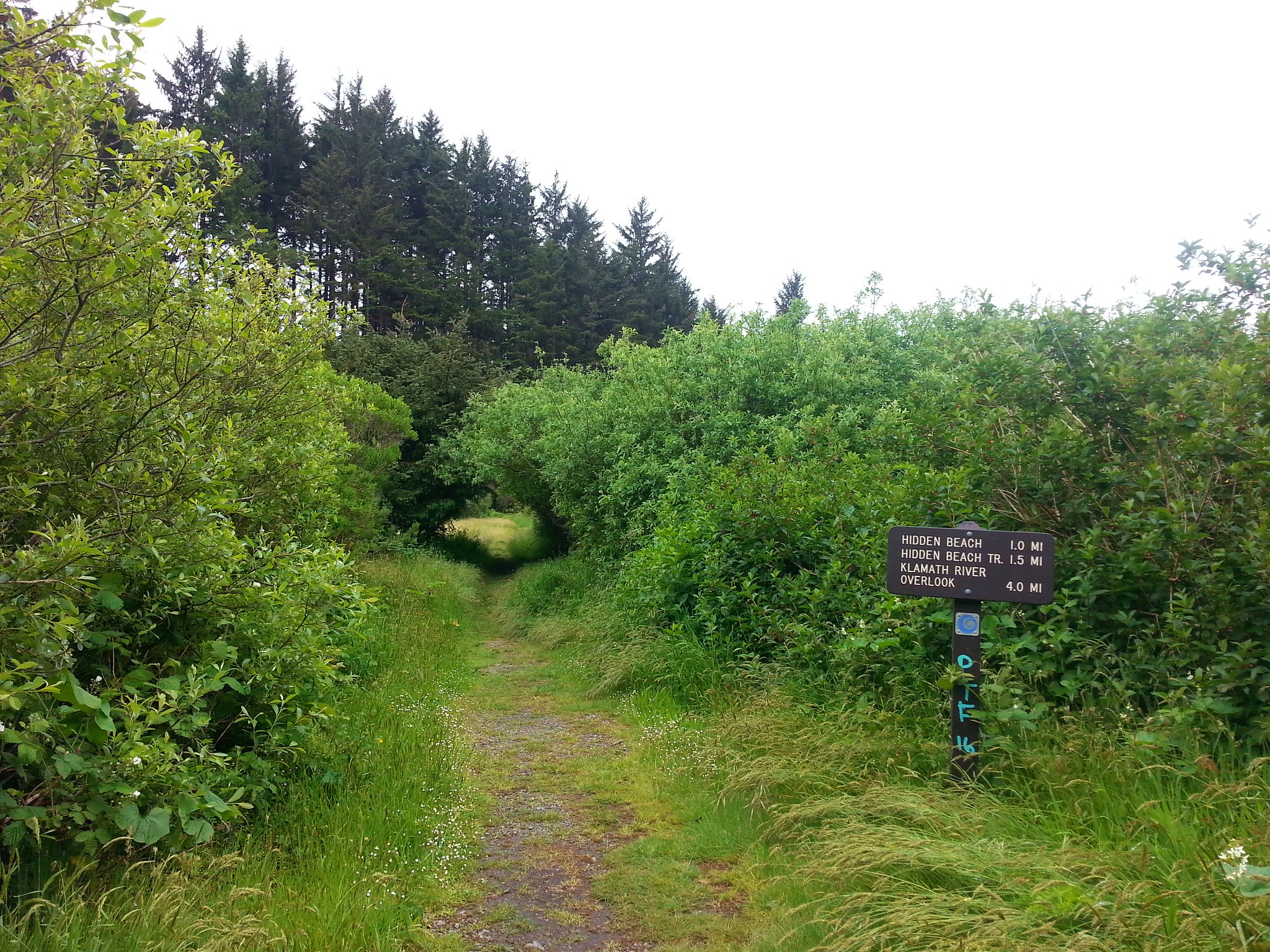
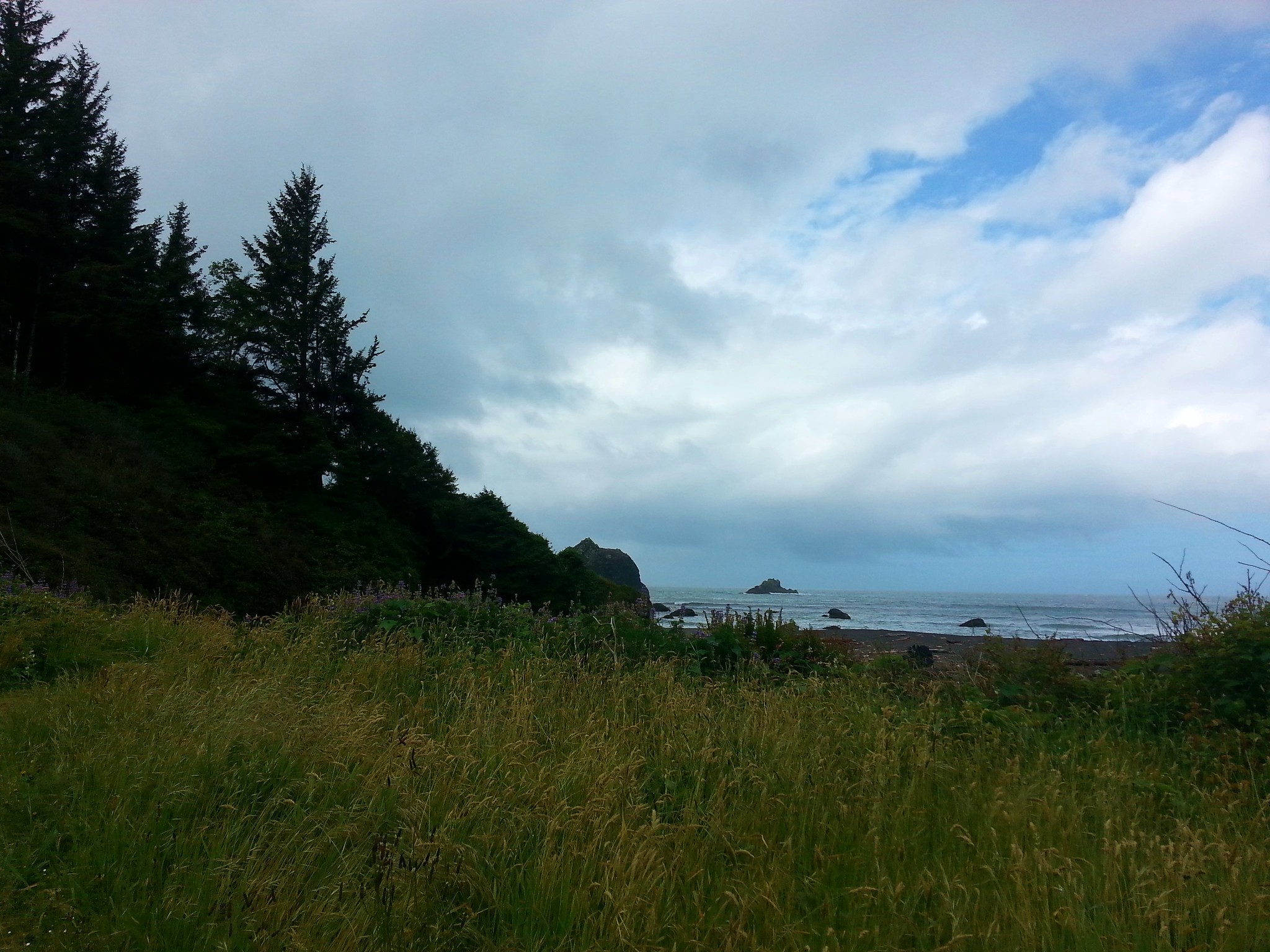
We took the right hand fork which brought us through windswept meadows overlooking the ocean. The rain had ended and now the clouds were breaking up revealing pockets of blue sky.
The meadows were home to several wildflowers and some ripe salmonberries.
We stayed right on the Coastal Trail when it split from the Yurok Trail following it approximately a half mile to a sign for Hidden Beach.
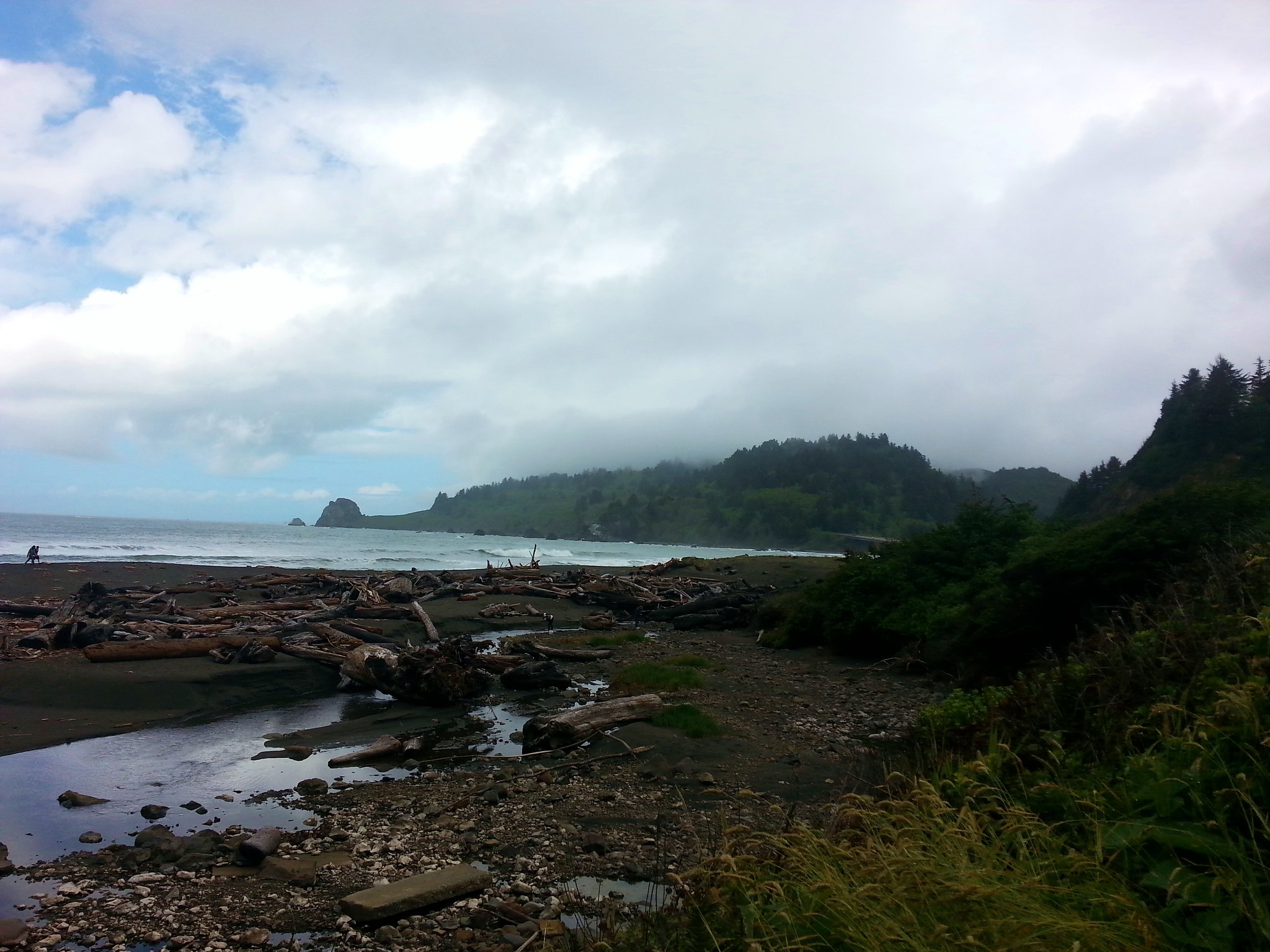
The short spur trail led down to the secluded little beach with a view north to False Klamath Rock.
We didn’t stay long on the beach as I was not feeling well at all so we headed back to the Yurok Loop which we completed by following the trail on the back side of a small hill.
It was too bad that we weren’t able to explore more of the Coastal Trail to the south as the weather was so much better and the meadows along that stretch were really nice. I just wanted to get back to the room and rest though. We were heading home the next day and just had a 3 mile hike at the Rough and Ready Botanical Wayside planned on the way. Happy Trails!
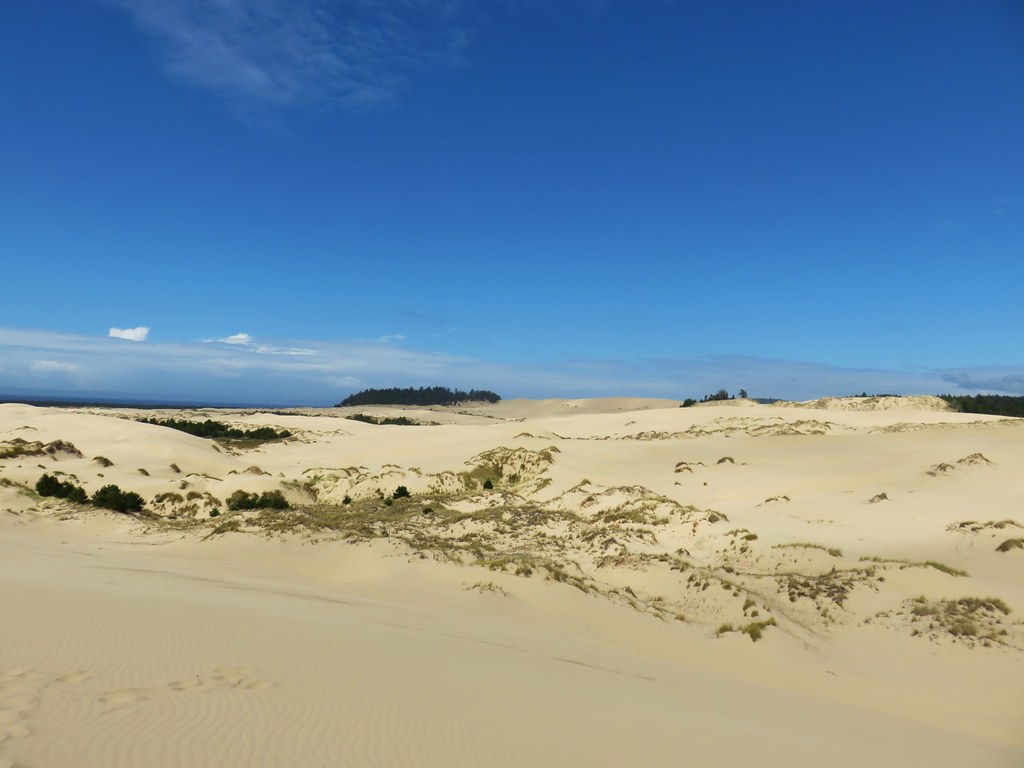
Happy New Year. It didn’t take us long to get our first hike of 2015 in. We had planned on visiting the Oregon Dunes National Recreation Area later this month, but a day off from work and a forecast for clear skies on New Years Day was too tempting to pass up. The Oregon Dunes National Recreation Area is nearly 40 miles of dunes, creeks, lakes, and forest along the Oregon Coast between the cities of Florence and Coos Bay.
The area offers numerous hikes, most of which are fairly short. Our plan was to combine three of these shorter hikes into a longer trek. We started off from the Oregon Dunes Day Use Area 10 miles south of Florence.
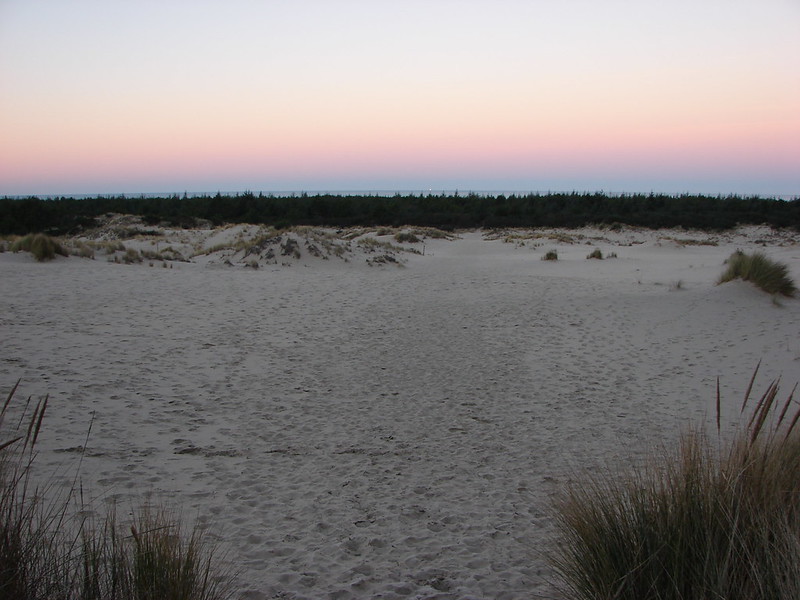
The sun had just risen in the east as we set off creating a colorful scene from the dunes overlook.
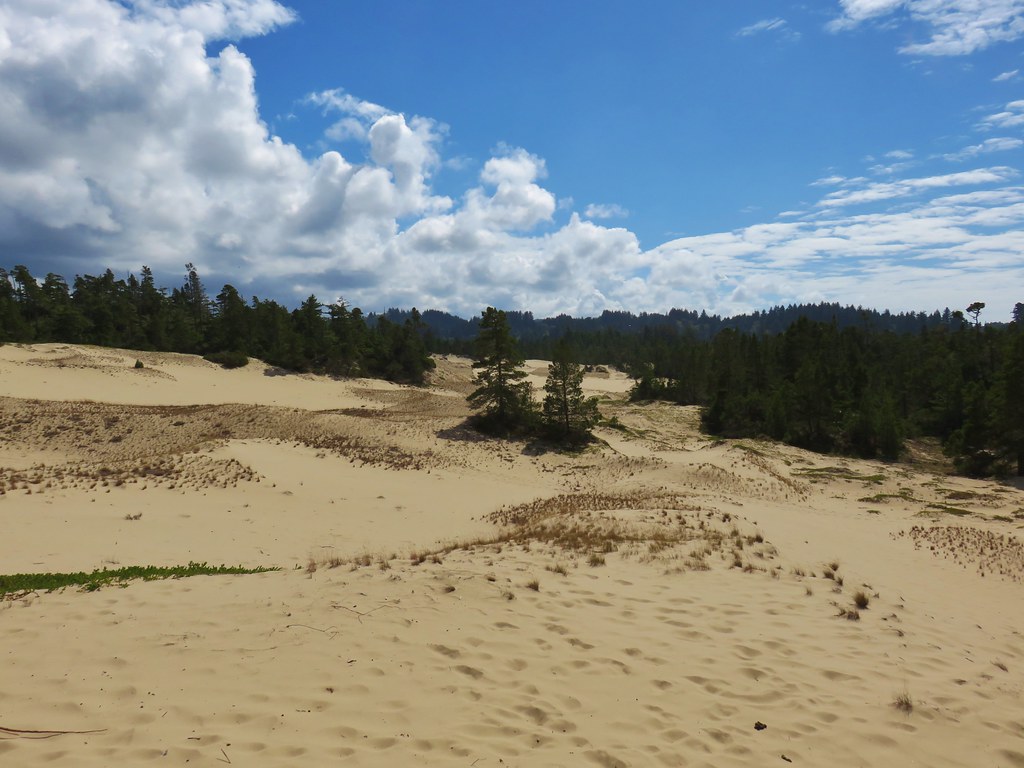
A .3 mile descent brought us to the dunes where we followed footprints and posts toward the ocean.
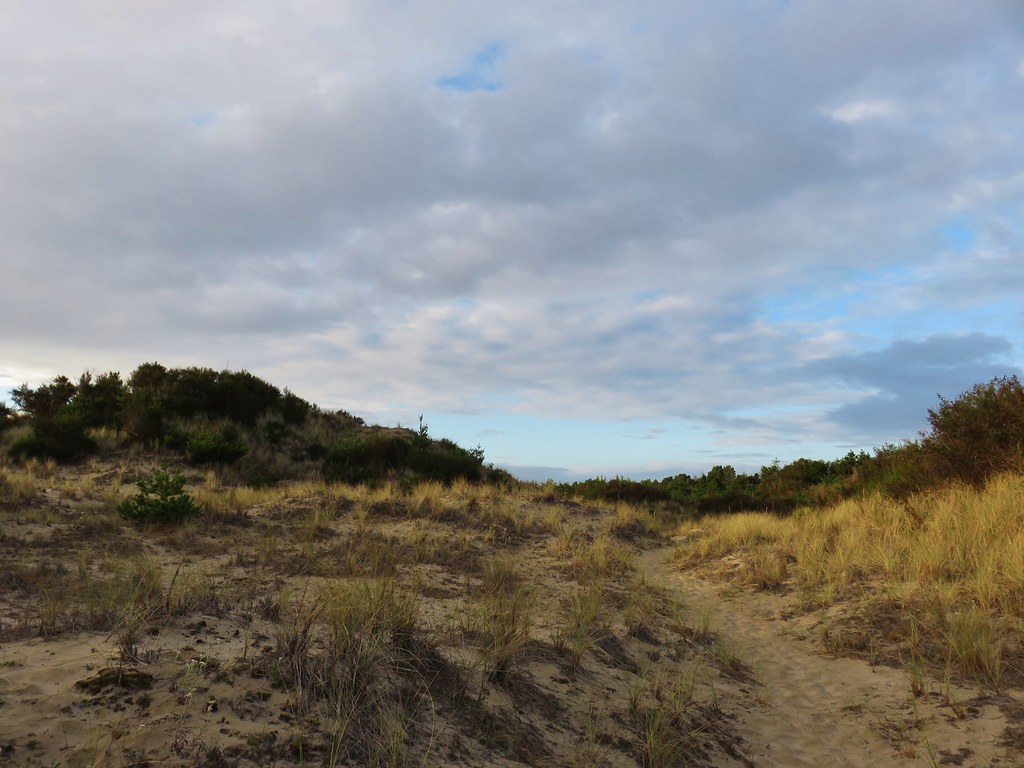
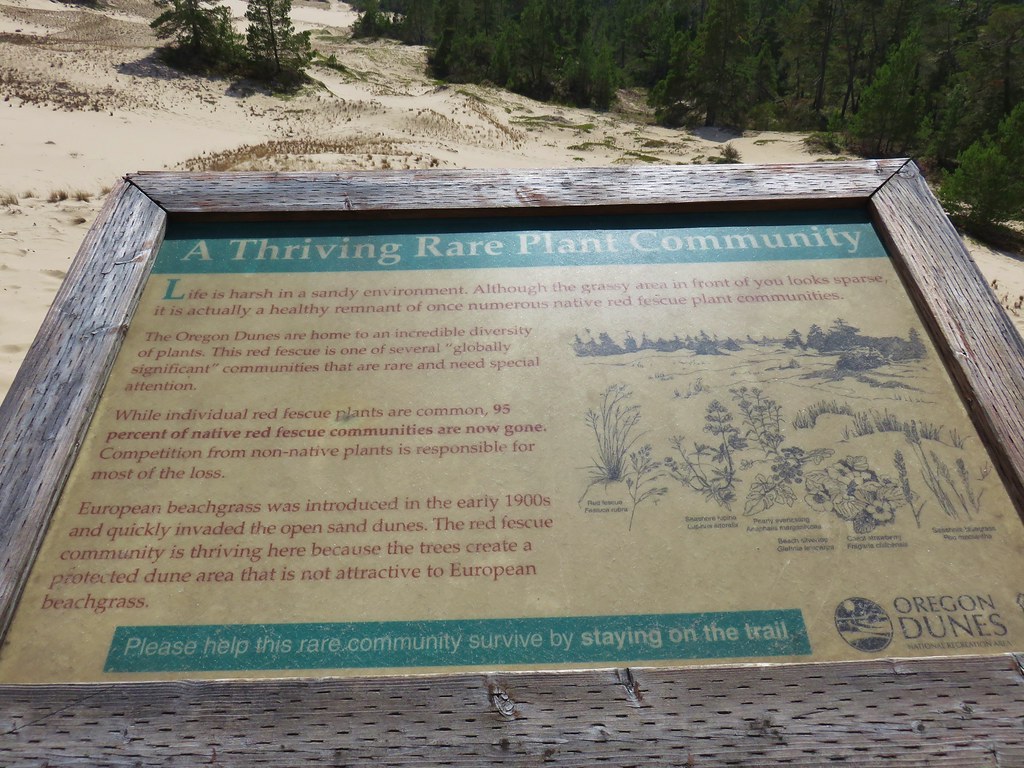
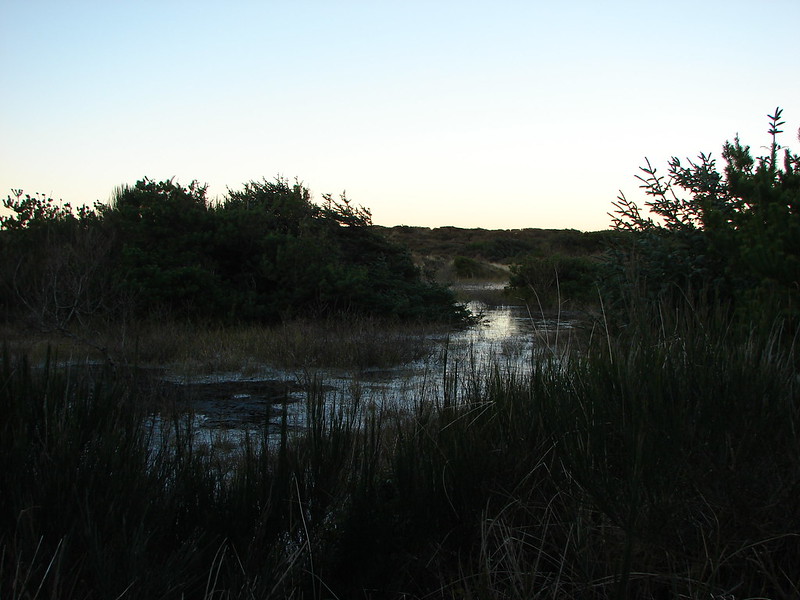
Between the dunes and the ocean the trail passed through the deflation plain, an area created by a non-native beachgrass introduced in the early 1900s which has cut off the supply of sand to the dunes. In the deflation plain marshes and a forest have formed.
After crossing the plain we arrived at the foredune where the European beachgrass gives way to the beach.
We turned south and headed down the beach. The beach was quite except for the sound of the ocean waves. We were the only people on the beach as far as we could see. Snowy Plovers and gulls were the only company we had.
There was quite a bit of debris on this section of beach. There were plenty of the usual pieces of shell and sand dollars along with many items that may have been washed up from the 2011 tsunami that hit Japan.
Our original plan was to hike the beach to Tahkenitch Creek then cross the creek and pick up another network of trails on the other side. These other trails would take us on a loop past Threemile Lake, through the Tahkenitch Dunes and back across Tahkenitch Creek further inland where we would then finish the Oregon Dunes Loop. We abandoned that plan upon arriving at Tahkenitch Creek. It was wider and deeper than I had anticipated and neither of us were willing to wade across with the temperatures hovering around freezing.
We turned to Plan B which was to backtrack to the continuation of the Oregon Dunes Loop, return to the car and then drive to the Tahkenitch Dunes Trailhead. We turned around and made our way back up the beach to a hiker sign marking the loop.
This section of trail passed by a bend in Tahkenitch Creek before returning to the dunes and completing the loop.
We had wound up hiking a little over 8 miles by the time we reached our car (We didn’t realize we had gone that far until later when I reviewed the GPS information.) and were glad for a short rest while we drove the 3 miles to the next trailhead.
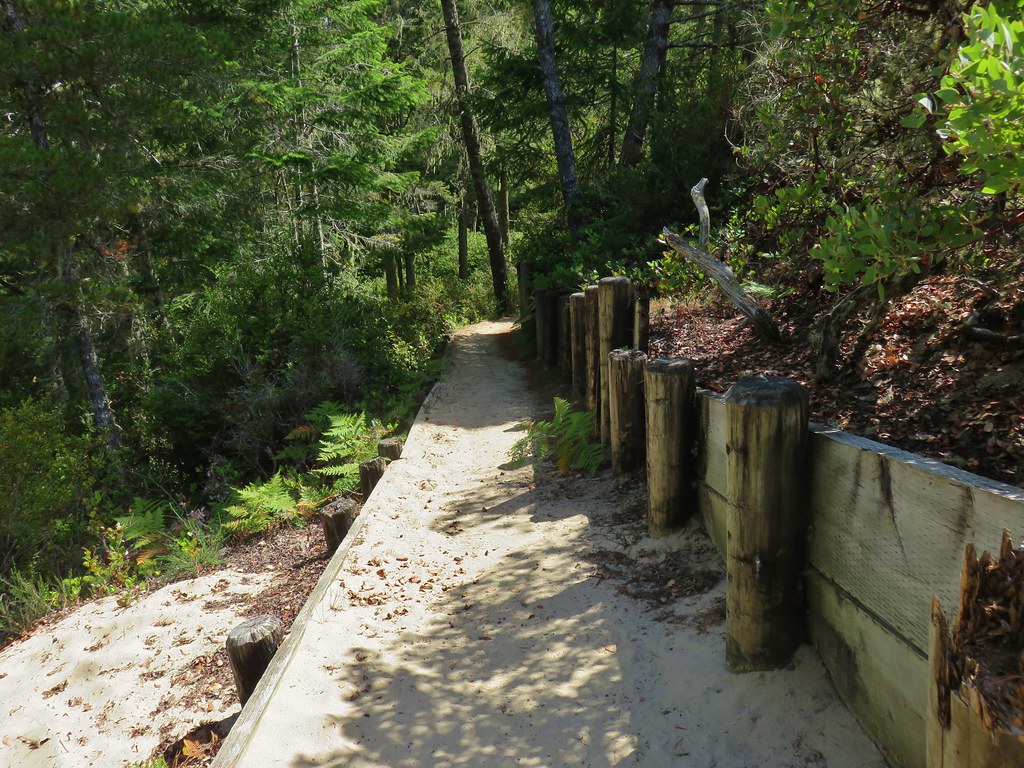
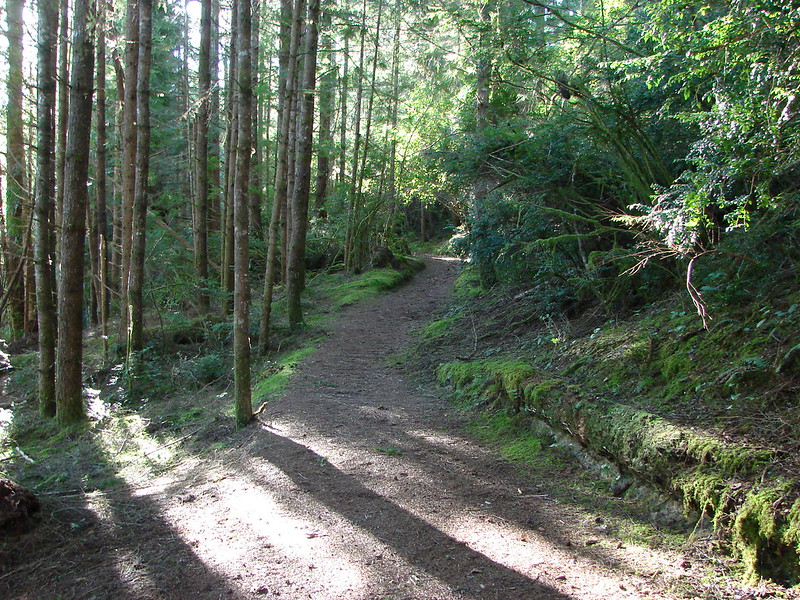
The trail here started in a nice forest leading .2 miles to the start of our next loop.
We went right at the junction and headed for the dunes.
The trail passed over the dunes and then through a more substantial forest before reaching Tahkenitch Creek near the ocean.
The trail led down to the beach where we again turned south for a mile (the final few tenths of beach are open to vehicles) to another sign marking the loop. The sign was a bit hard to spot as it was back away from the foredune a bit. The beach on this side of the creek was much less cluttered.
After heading inland for half a mile we arrived at an overlook of Threemile Lake. The lake was 200 feet below us and we decided not to head down the sandy hill to visit it because neither of us felt like climbing back up that much sand. We opted to take a short snack break above the lake before continuing on our loop.
The loop continued for 2.7 miles passing through an impressive forest before arriving back at the junction .2 miles from the car.
It had been a beautiful day on the beach despite the cold temperatures so we were surprised to have only seen a total of three other people during the day. Two were just heading down on the Oregon Dunes Trail as we finished that loop and the other had driven his pickup down onto the beach south of Tahkenitch Creek. We couldn’t have asked for a better way to start our 2015 hikes. Happy Trails!


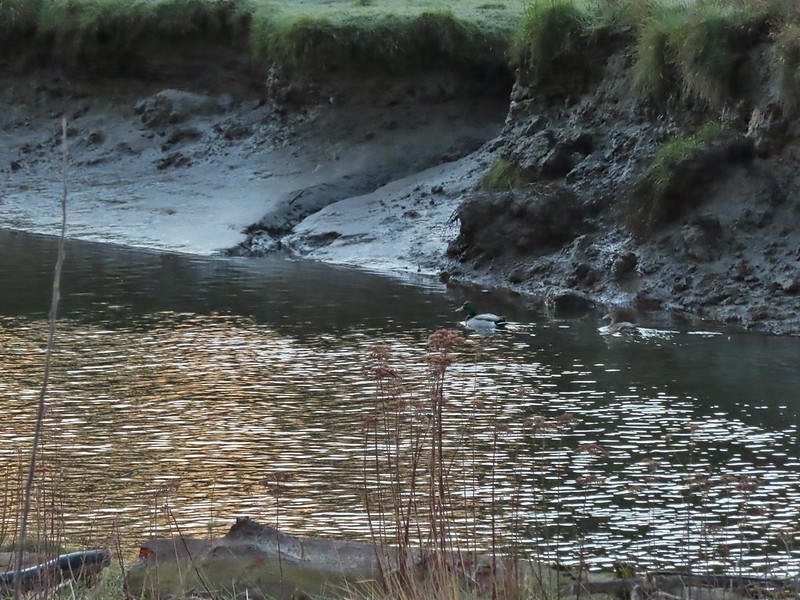 Mallard pair
 Canada geese
 Goose and a mallard in the channels.


 Several interpretive signs were placed along the loop.
 A reminder that COVID-19 is still an issue.
 The larger muddy area along the bank ahead on the right is where Heather spotted the otter.
 Alder lined trail.
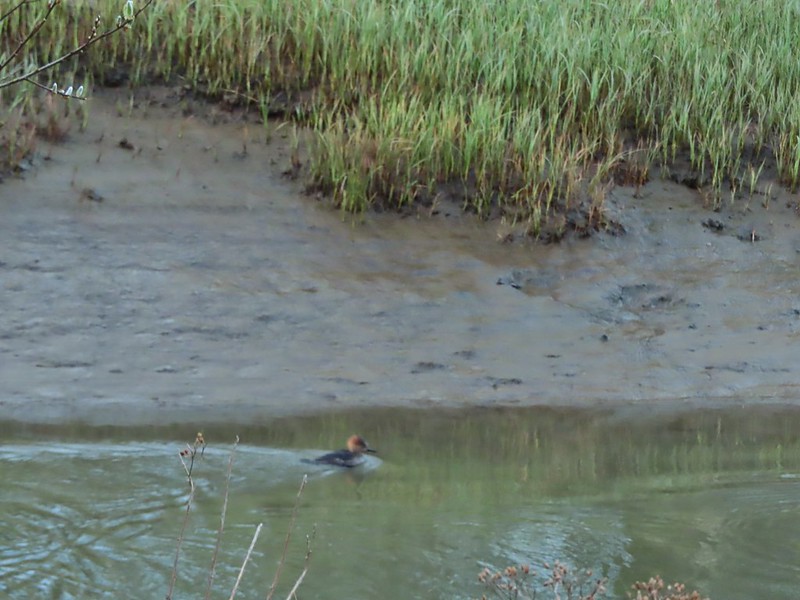 Blurry photo of a non-breeding male hooded merganser.
 The blurry river otter.
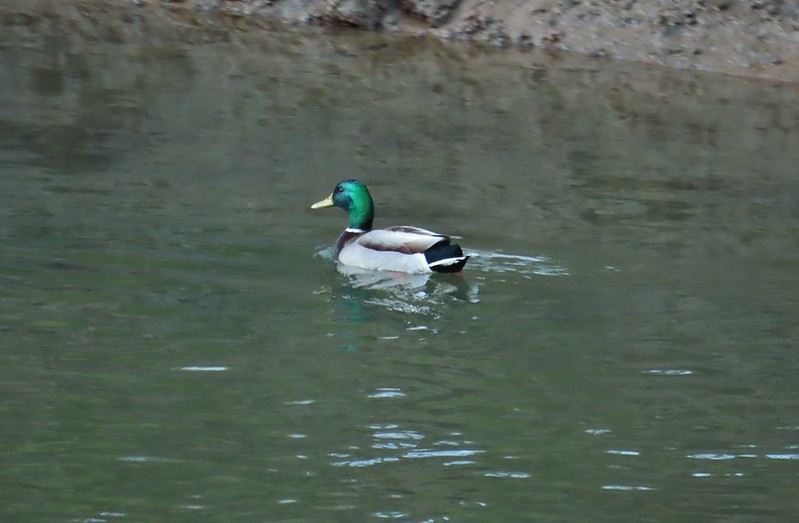 Another mallard
 Canada geese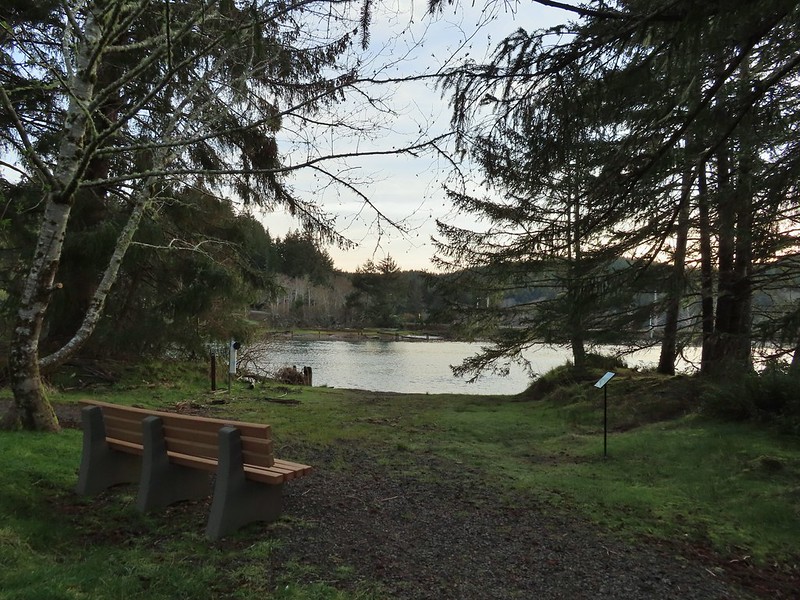
 Siletz River
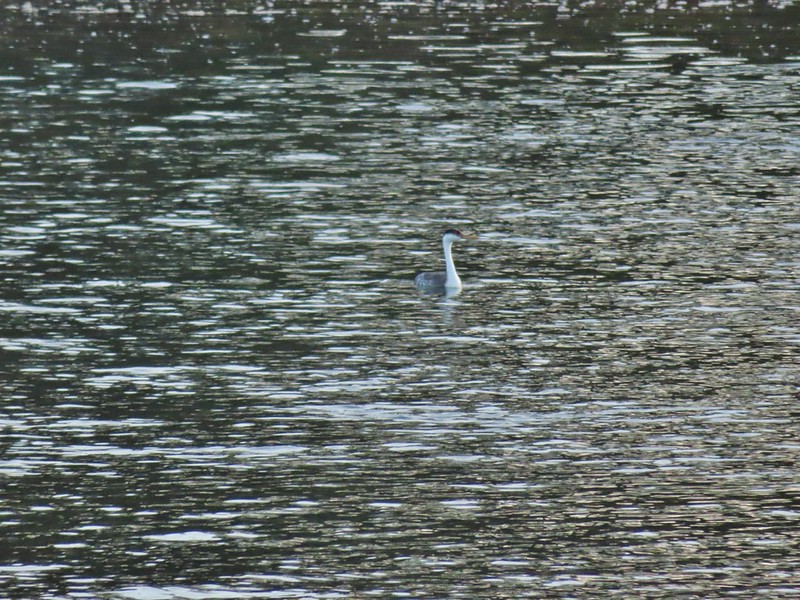 Western grebe
 Goose and a bufflehead (the duck not the post)
 Bufflehead
 Spring is coming!
 Sentry at the Roads End entrance.
 It’s hard to tell just how much uphill this is. Fortunately it wasn’t very muddy.
 A little easier to see the uphill here, this was near the top.
 The junction.

 The Roads End parking area is the open green space in the center along the ocean.
 The Pacific Ocean.
 Roads End Point jutting out to the north.
 The Knoll
 Snow queen
 More signs of Spring, salmonberry blossom and buds.
 Sitka spruce and ferns along the ridge.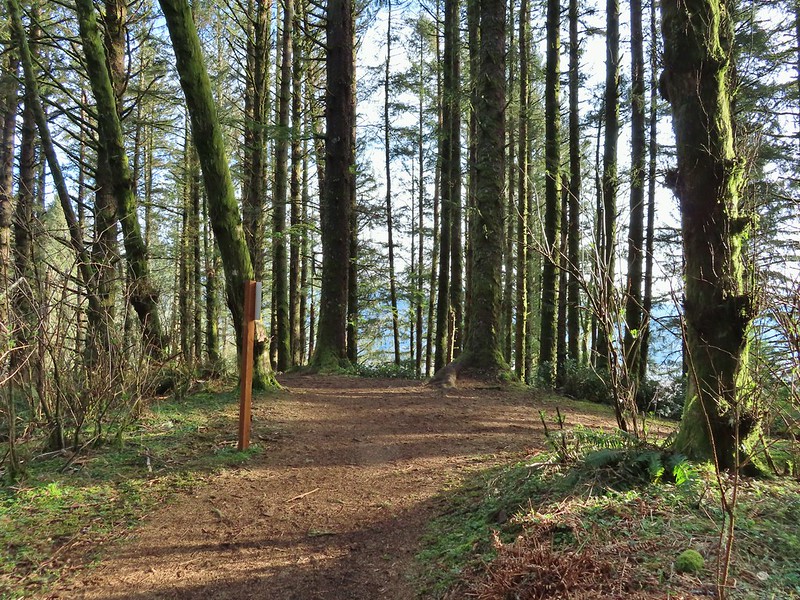
 The downed trees ahead in the distance.
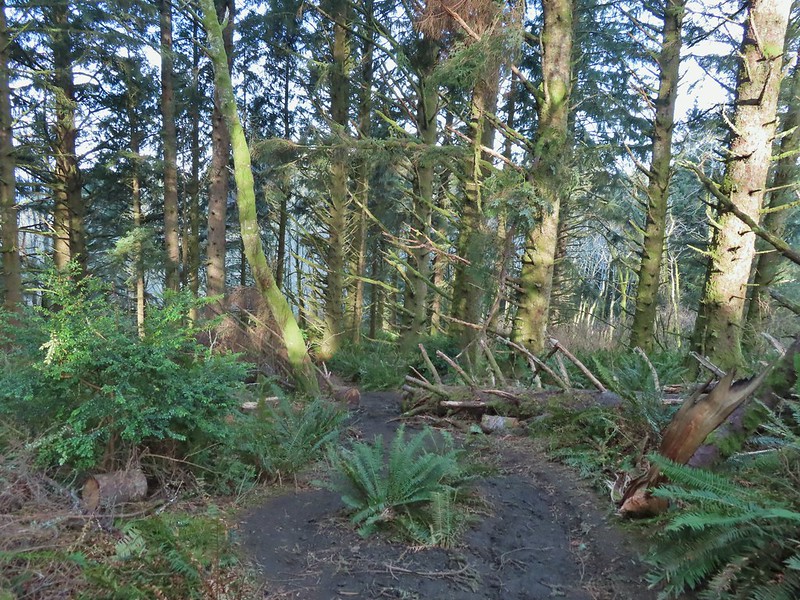 The last of the tree fall.
 Mud had begun to be a bit of an annoyance at this point.

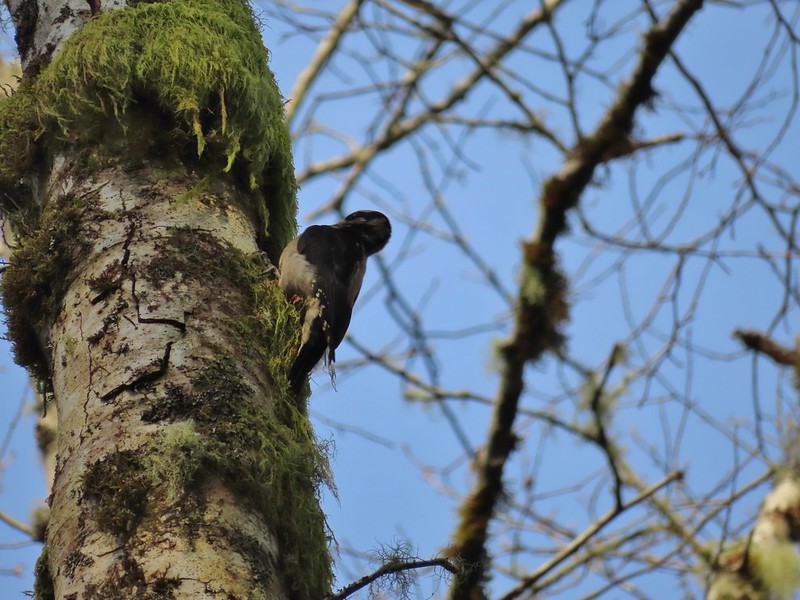 Busy woodpecker
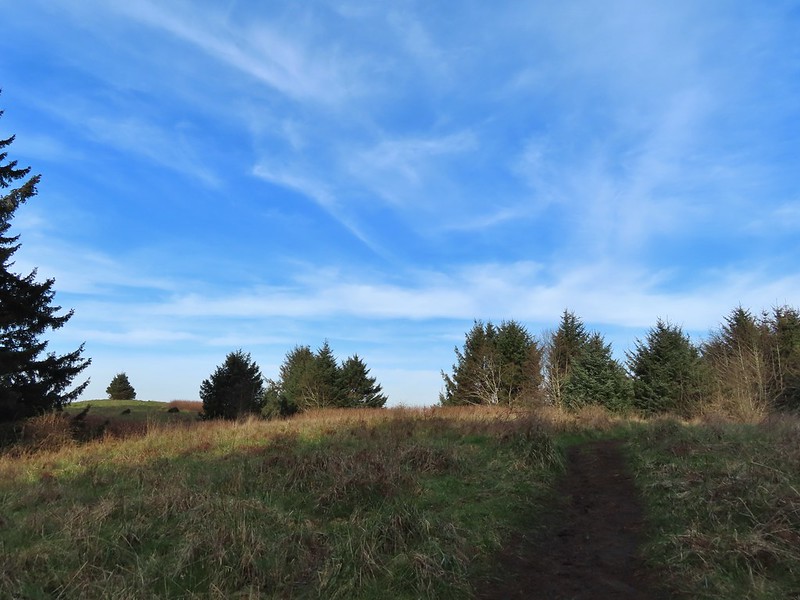 The trail getting nearing the turn left.
 Lone tree in the meadow.
 Lone robin in the lone tree.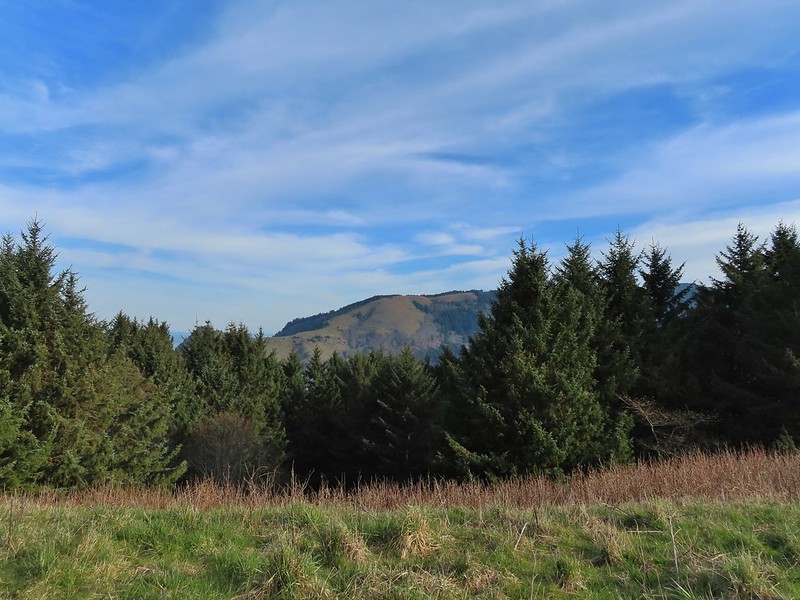


 Heather crossing the saddle (left of the big bush)
 Cascade Head from the saddle.
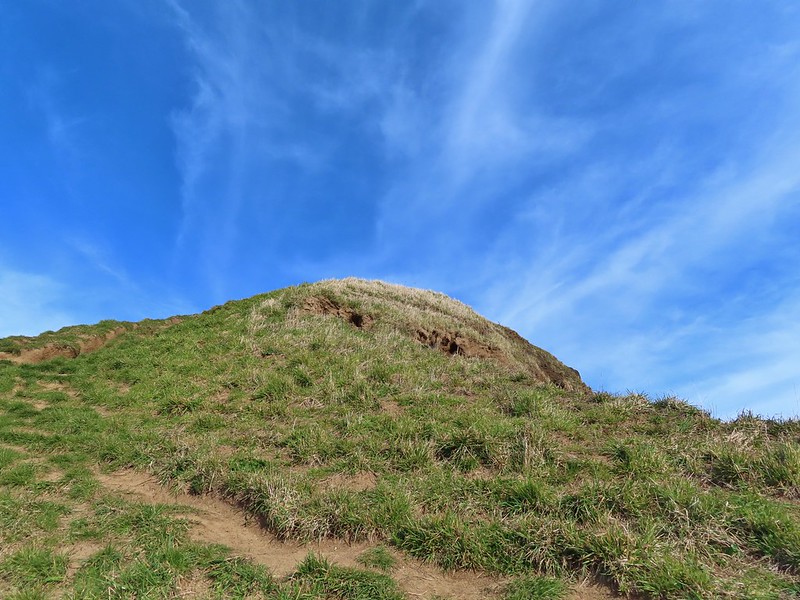 Final pitch up to the top.
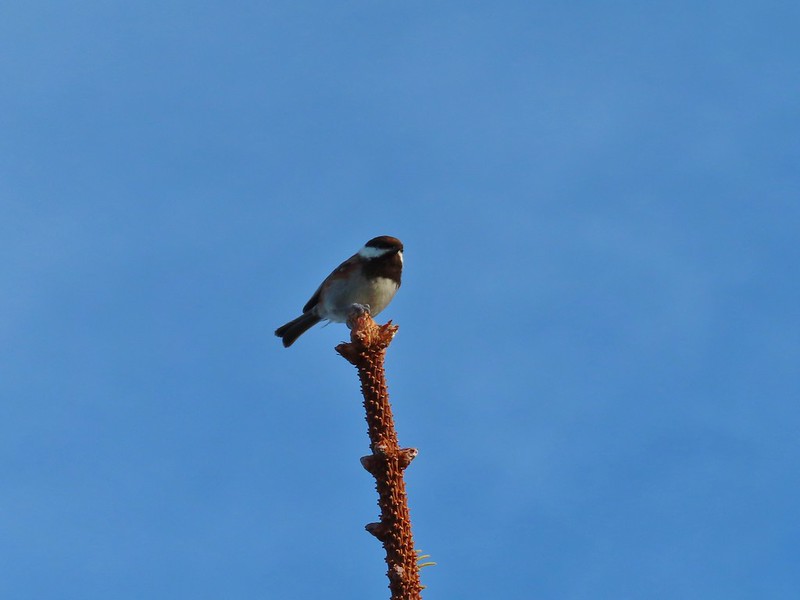 Not quite to ourselves, we shared the space briefly with some chestnut backed chickadees.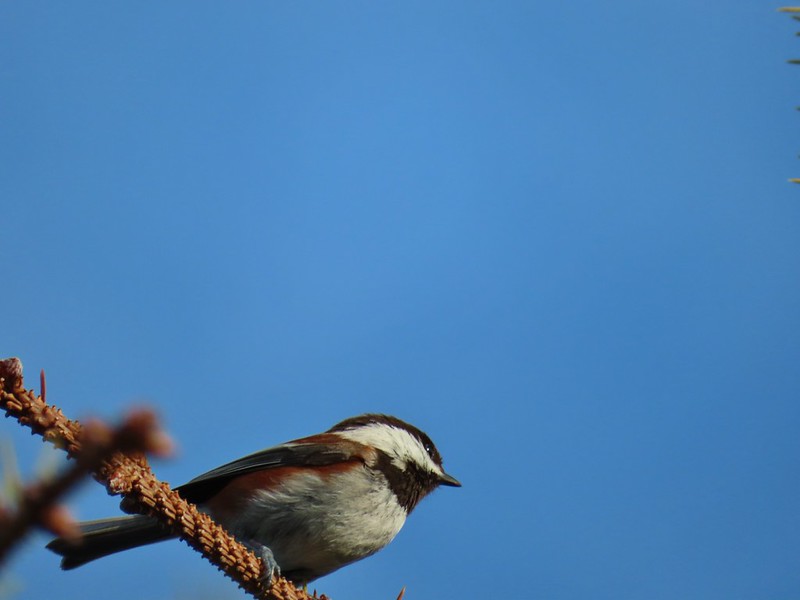
 Cascade Head and the mouth of the Salmon River.
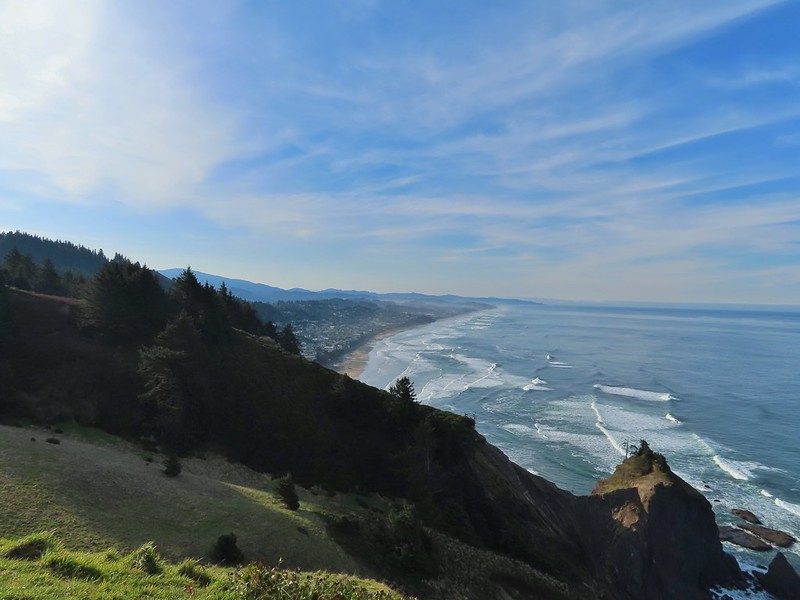 Roads End Point and Lincoln City
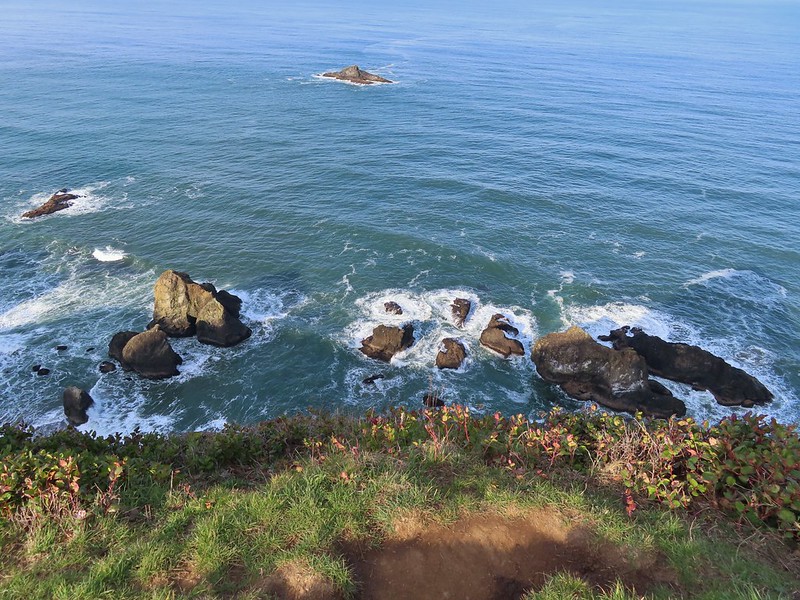 Rocks below God’s Thumb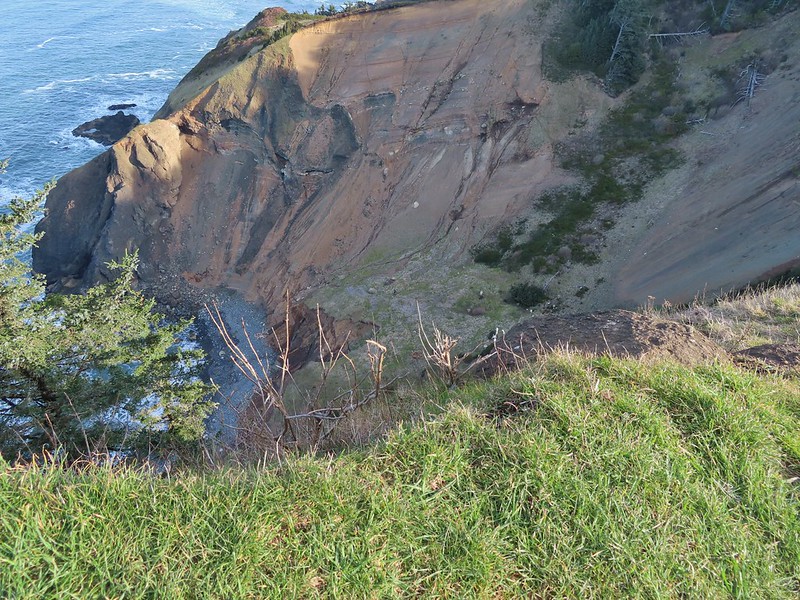
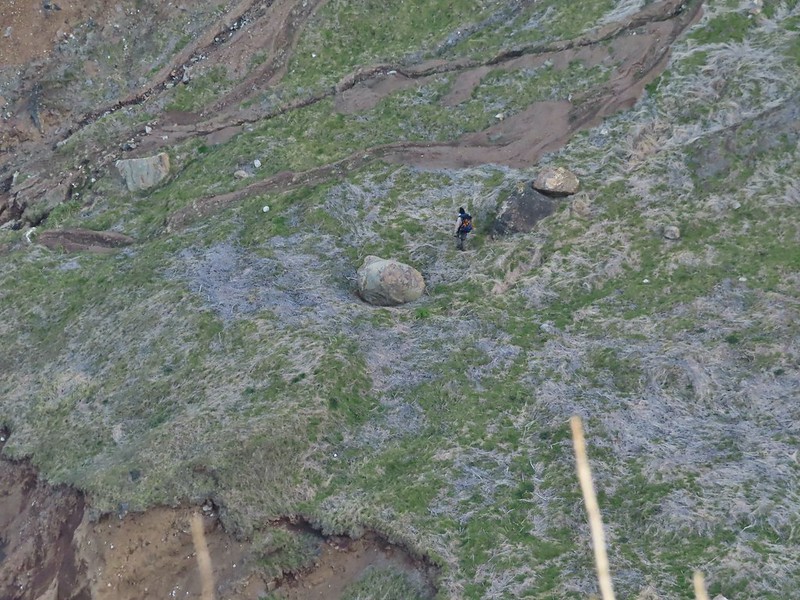
 A reasonable representation of the wet/muddy conditions on this part of the hike.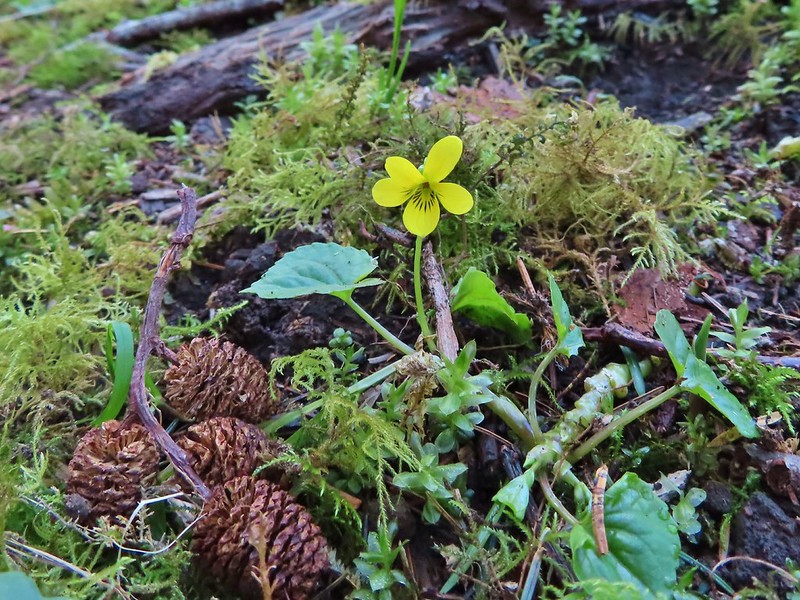
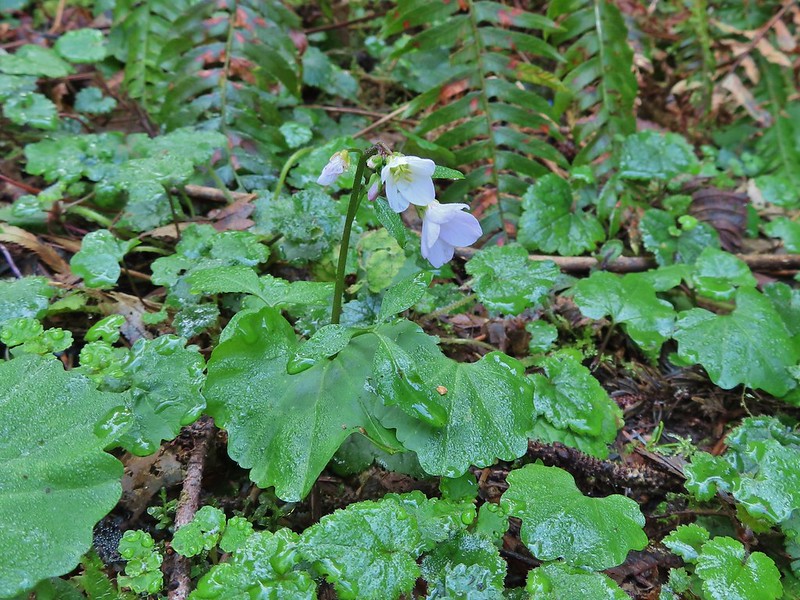 Toothwort
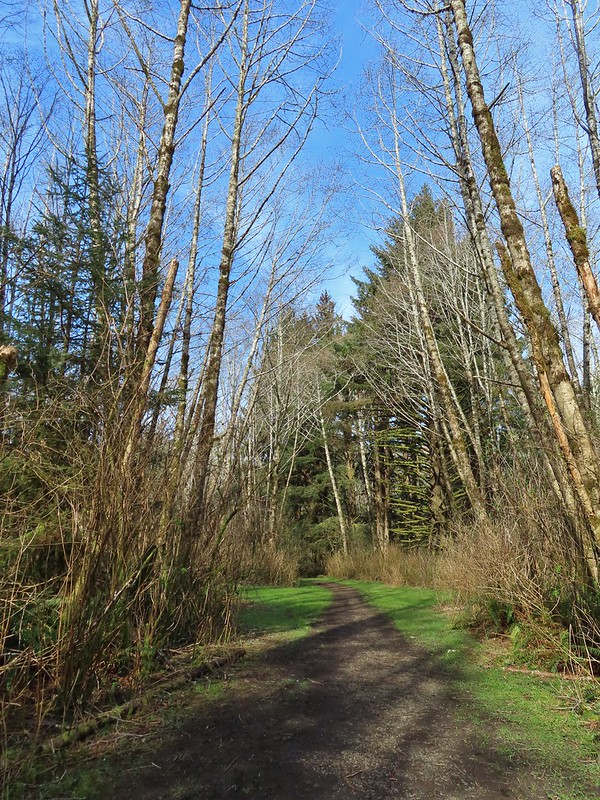
 The gate and Sal La Sea Drive in the distance.
 It’s not a hike at the coast without some skunk cabbage.
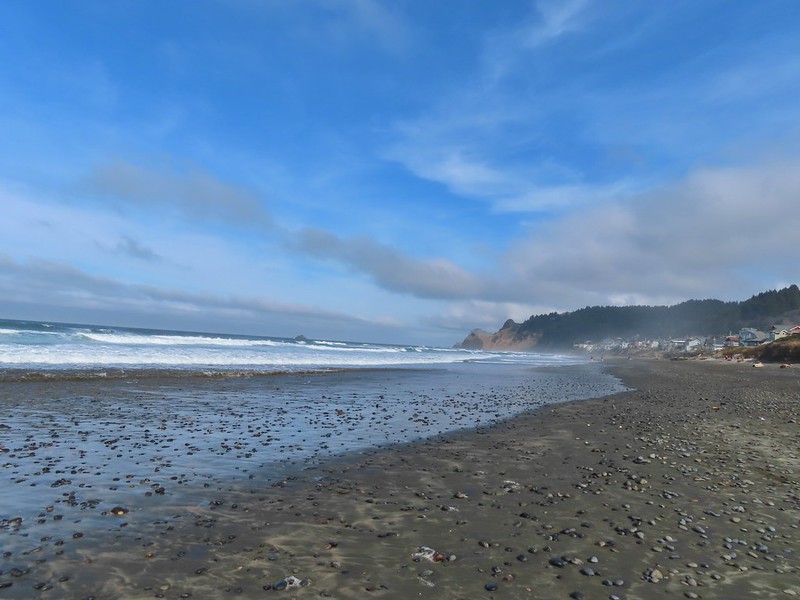

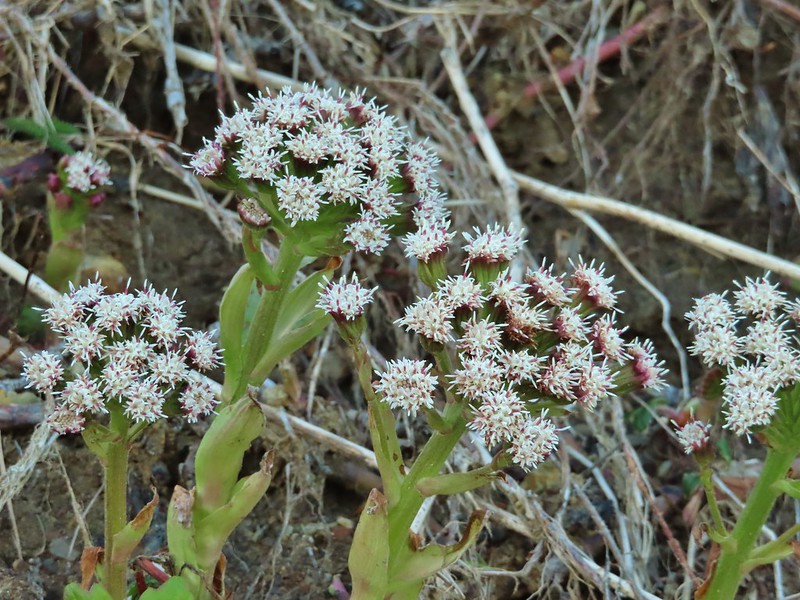 Coltsfoot
 An immature bald eagle flew overhead at one point.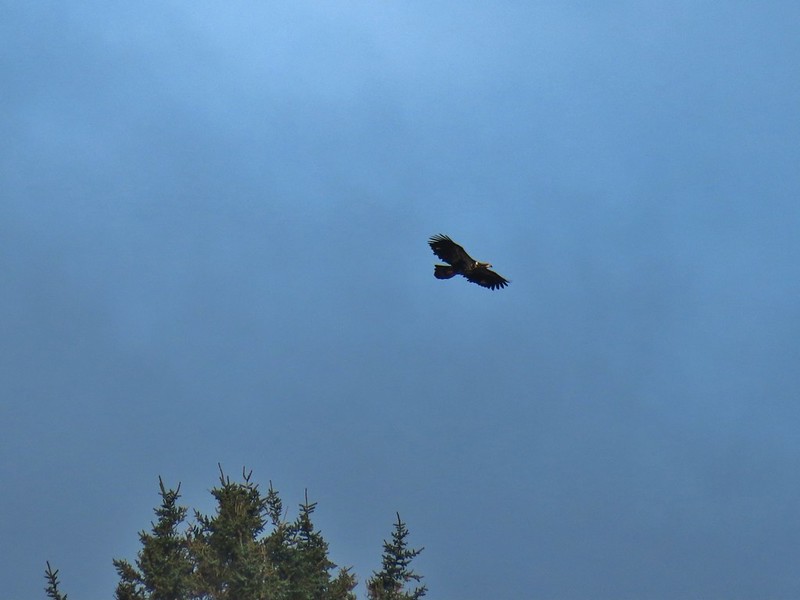
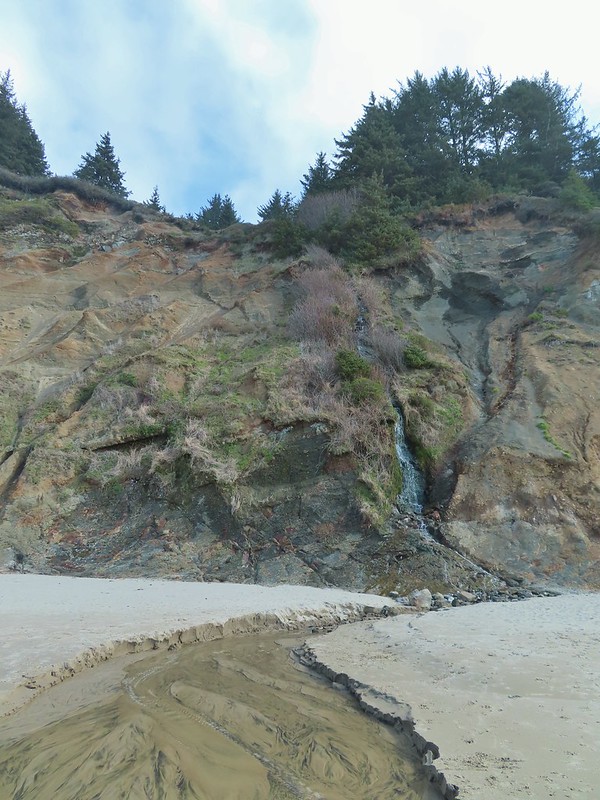 Little waterfall along the beach.
 Roads End Point
 Not going around that today.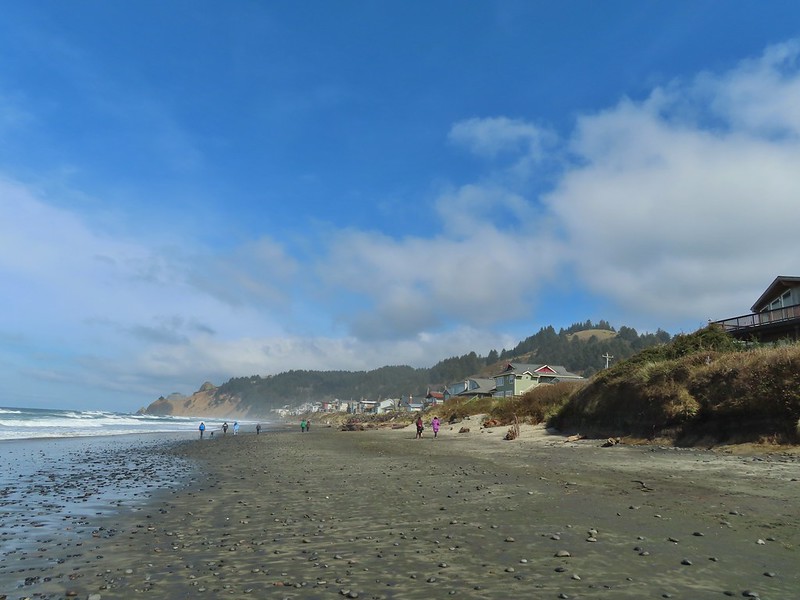
 God’s Thumb on the right.
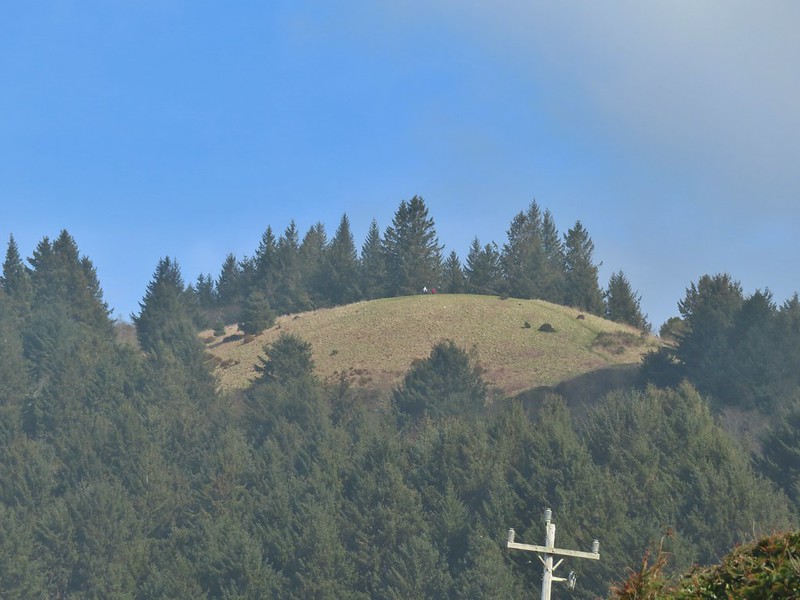 Hikers on The Knoll


 Looking back south as the sunrise paints the clouds.
 A house on the cliffs.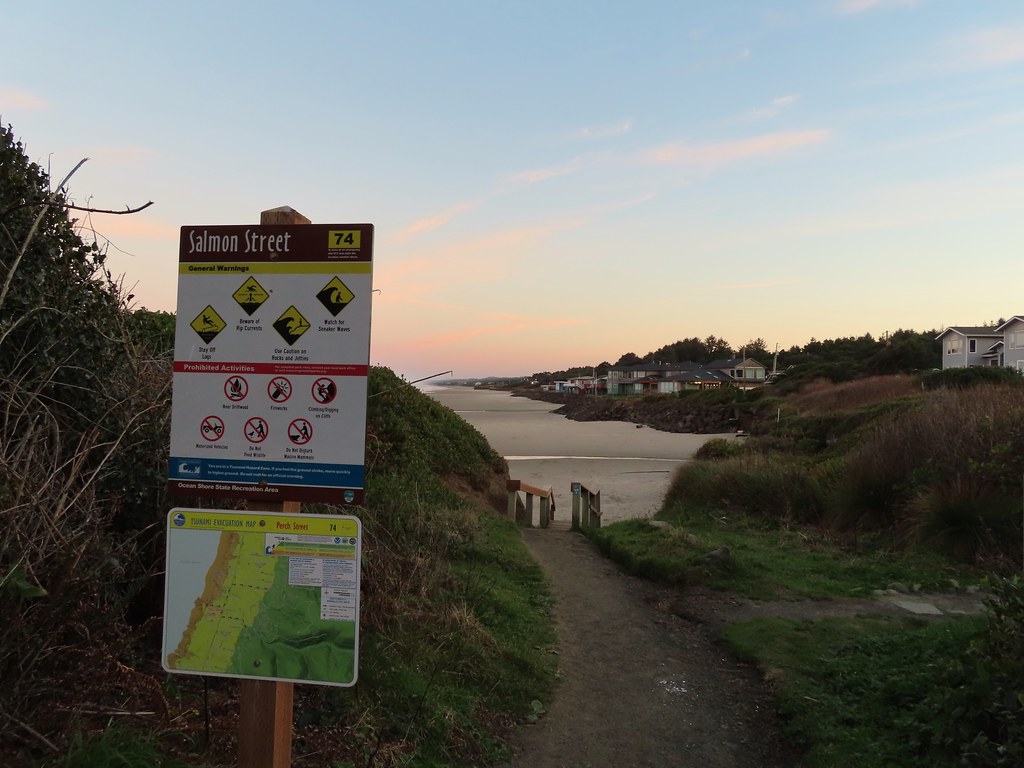

 Seagulls outnumbered people in the early part of the day.


 Vinge Creek, about a mile down the beach, was crossable on small rocks.
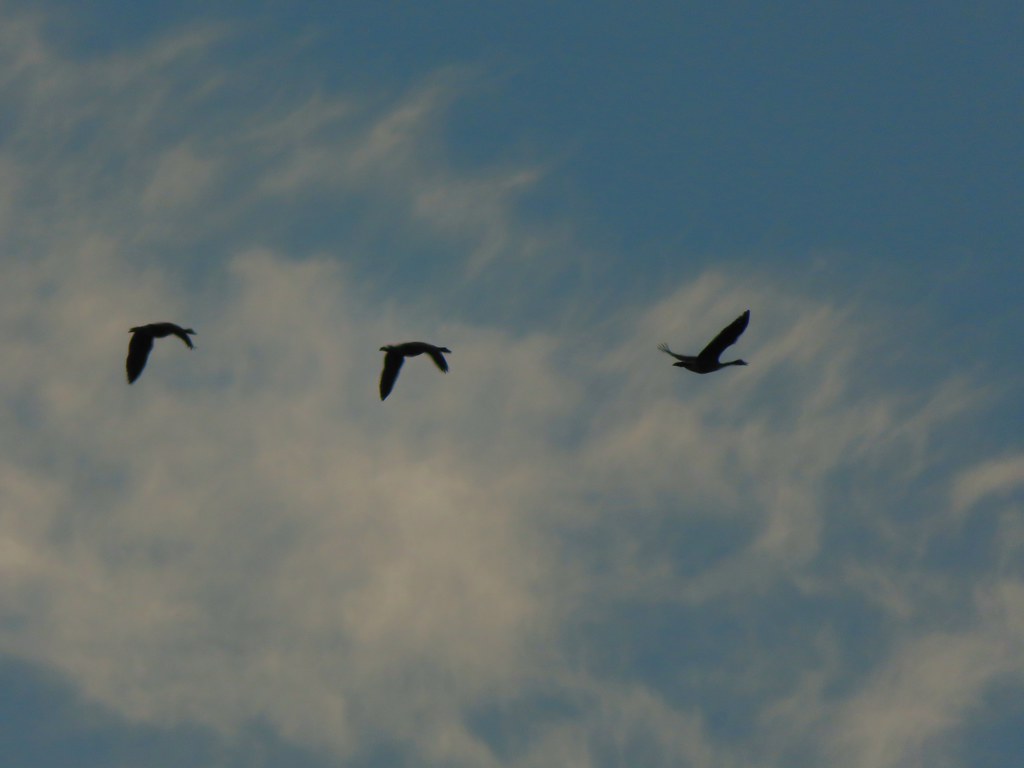 Geese flying overhead, we couldn’t make out what kind.
 At first we thought there were two weather vanes on the houses, a whale on the right and a heron on the left.
 It turned out to be a real great blue heron (but the whale was a vane).
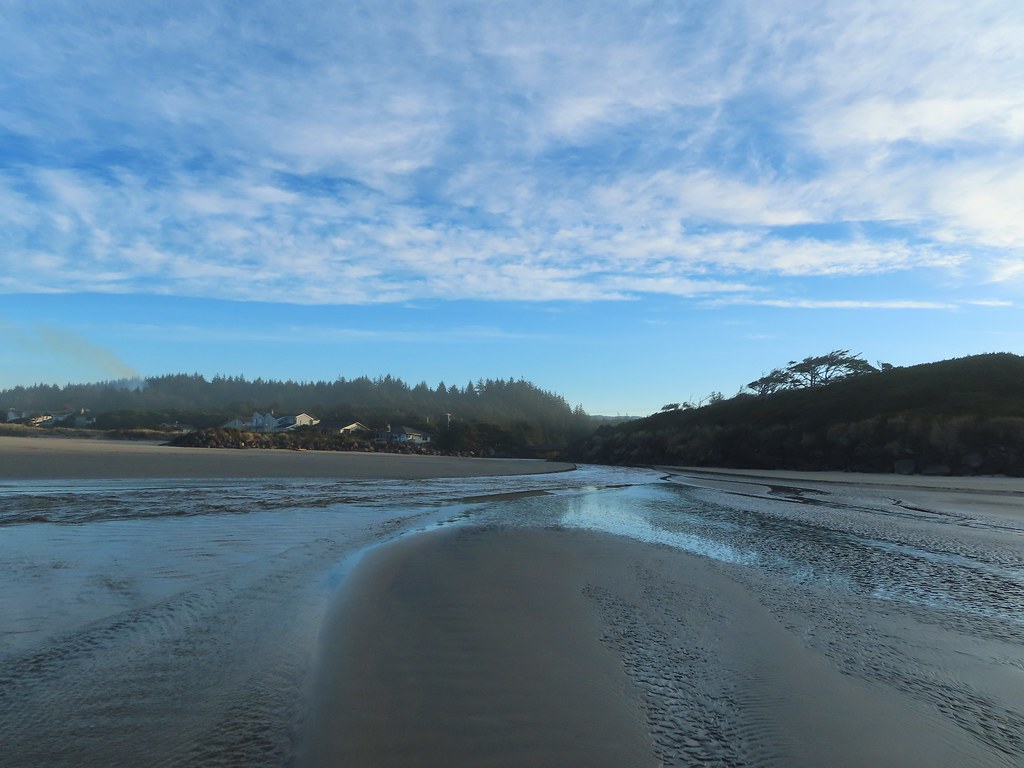
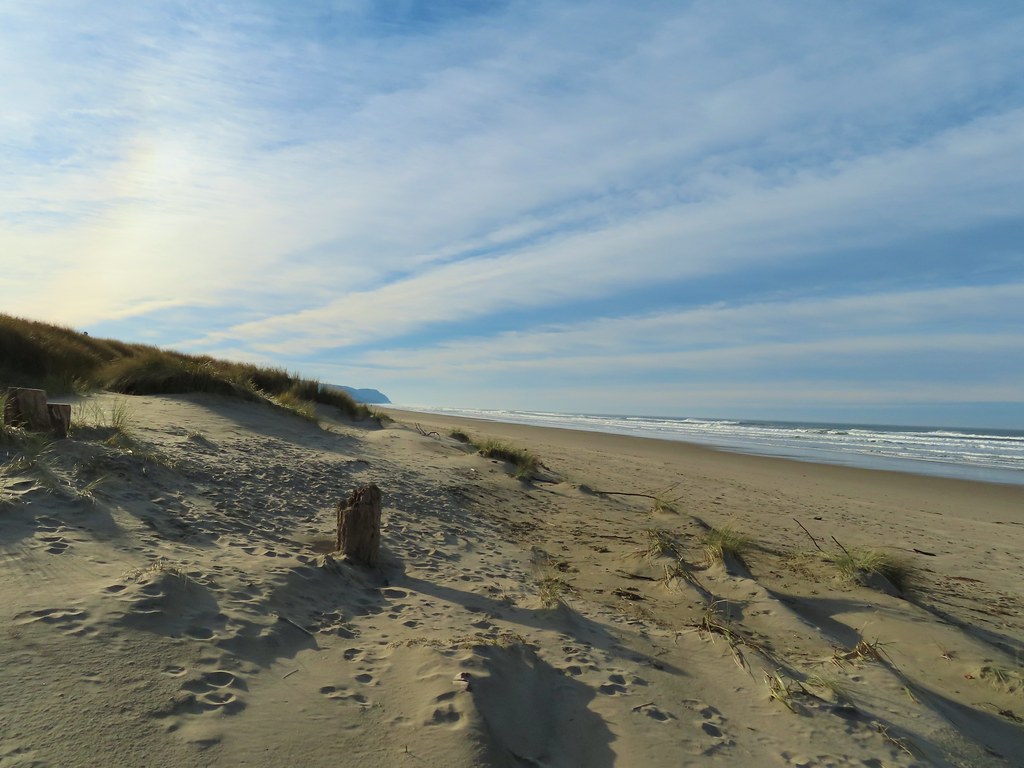
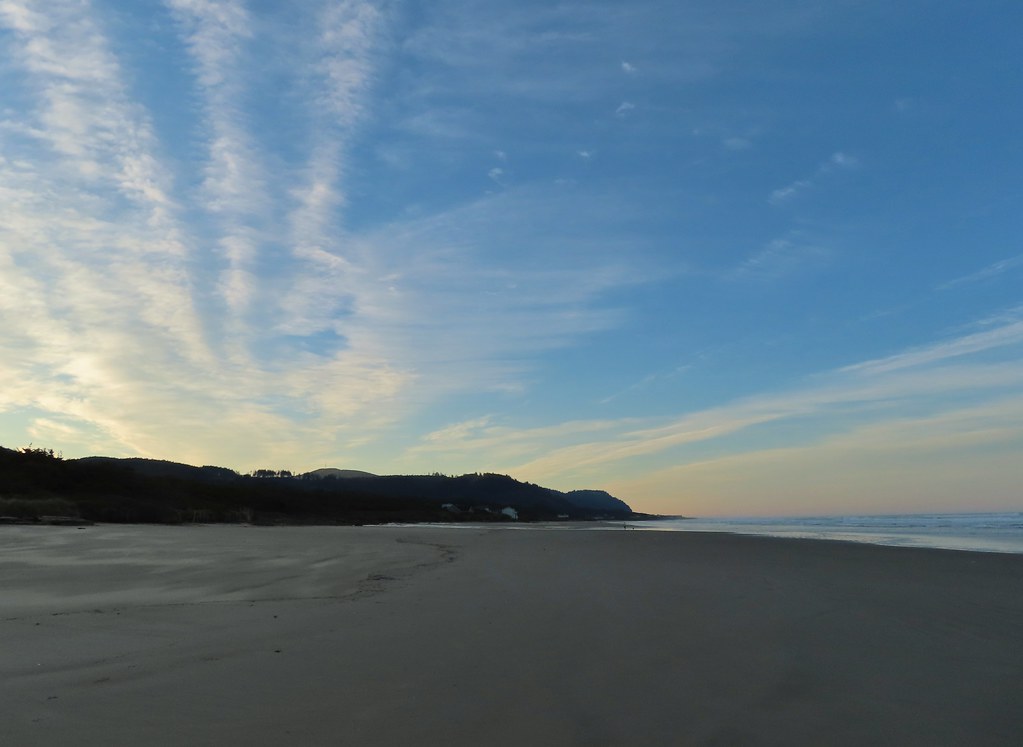 Looking south toward Cape Perpetua (
 View north.
 Sunlight on the wave tops.
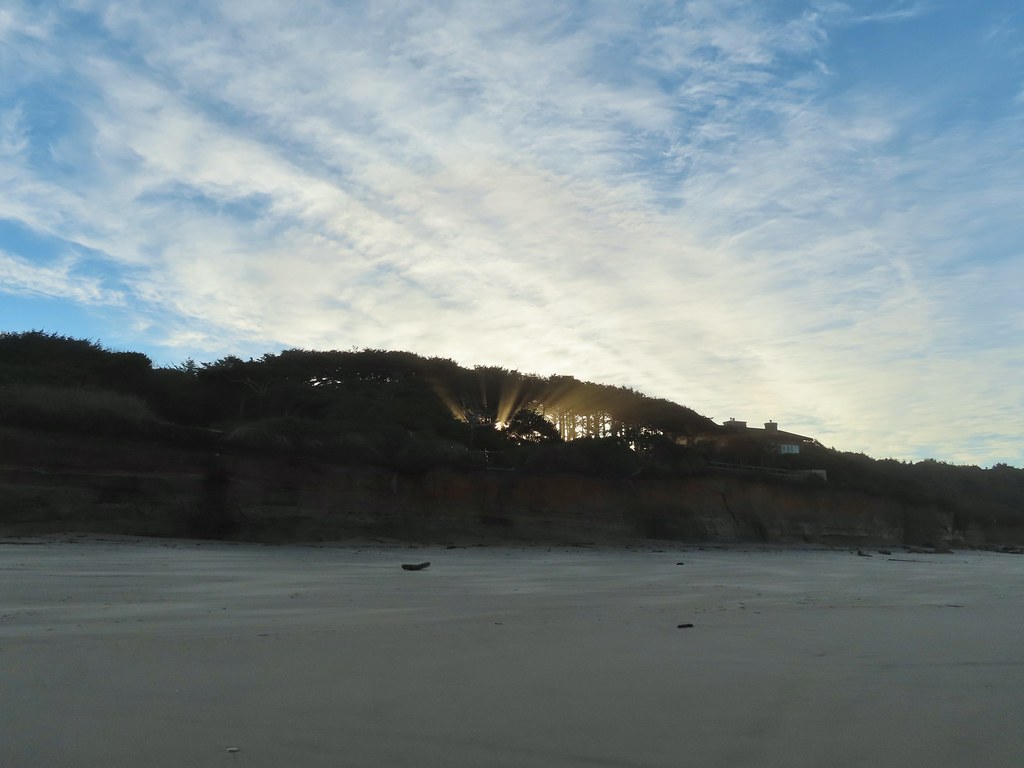 Sunlight bursting through the trees.
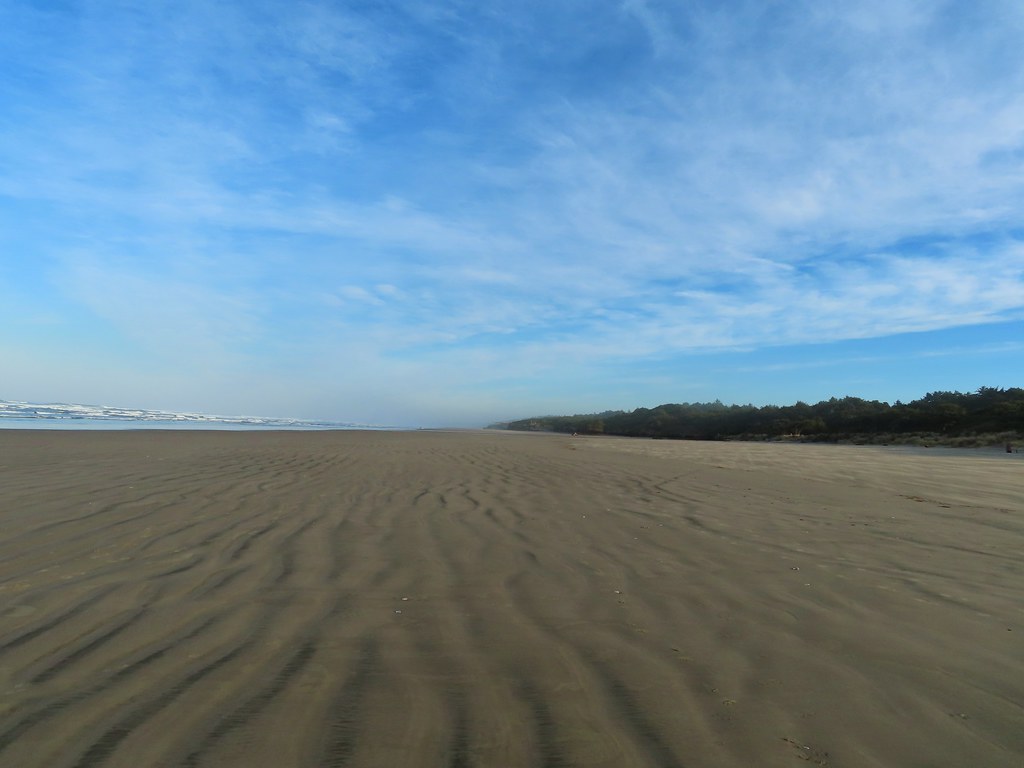 Wavy sand.

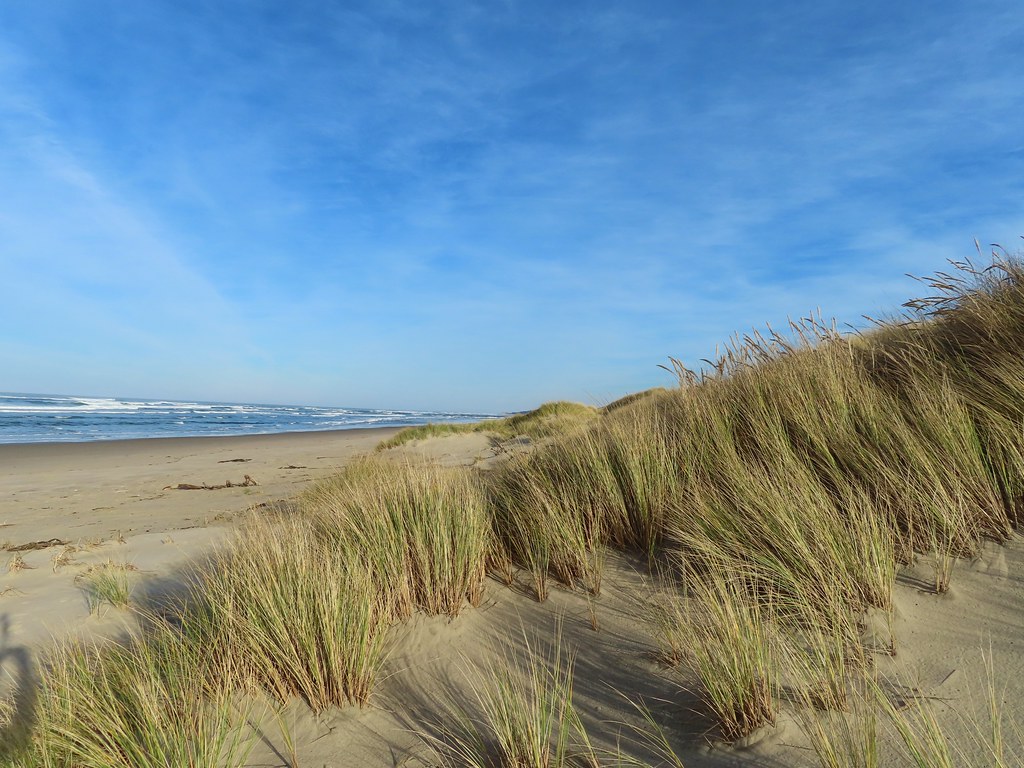
 Cape Perpetua from the dunes.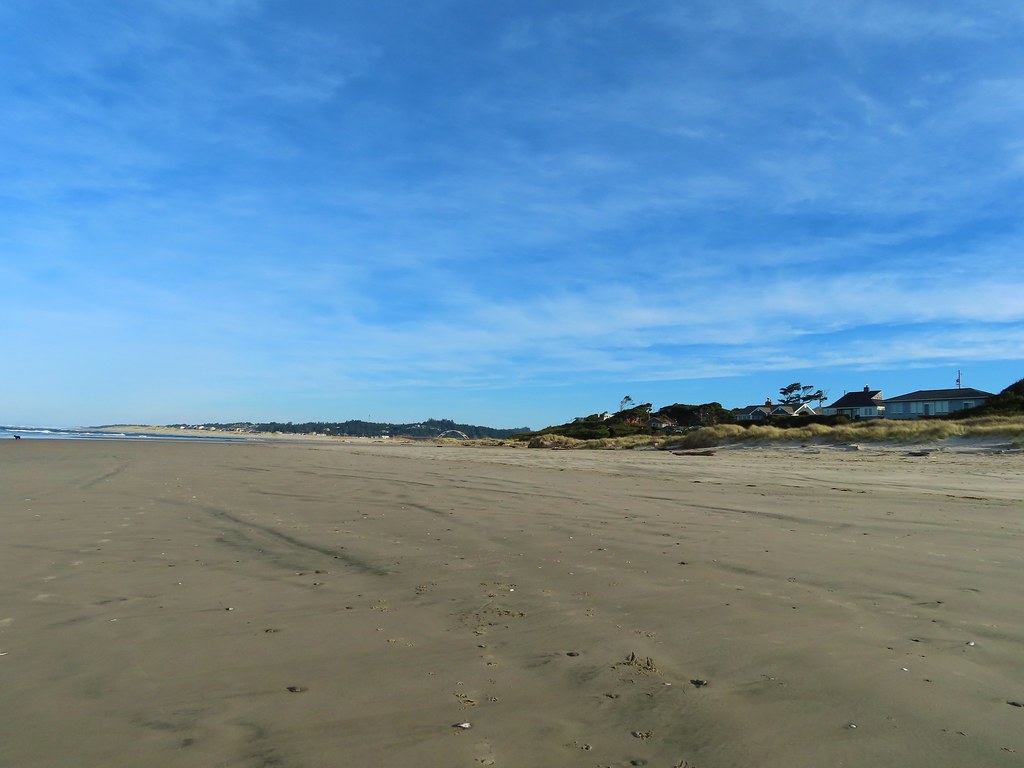
 Testing the 40 zoom feature on the Canon SX740HS.
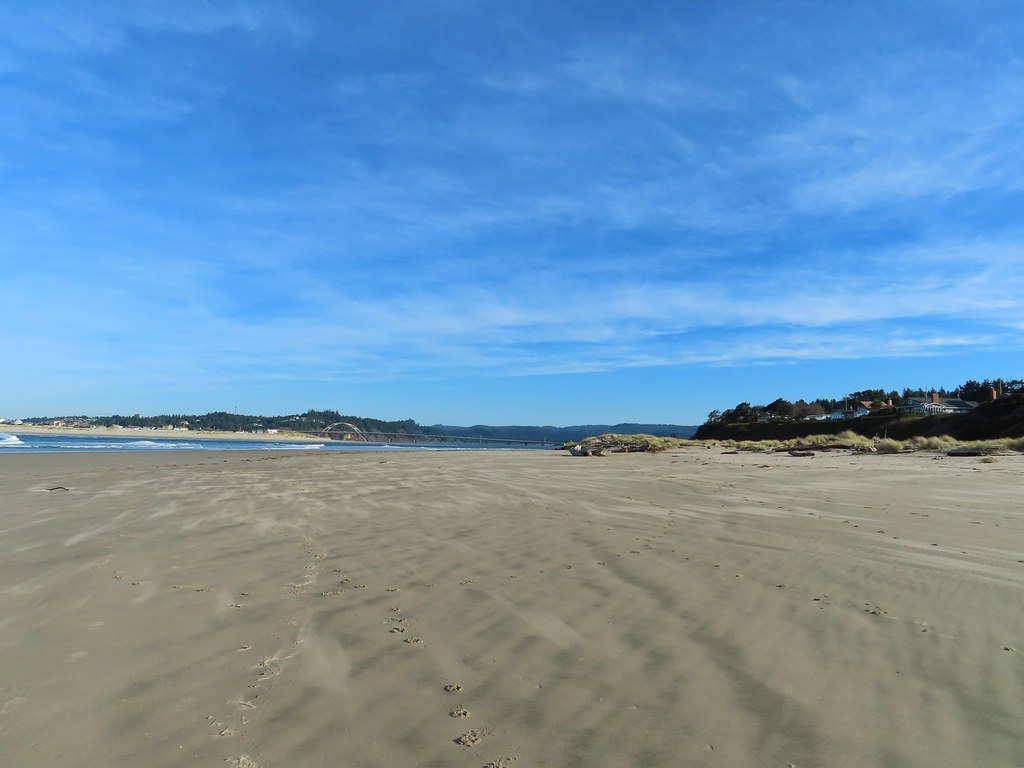 Heading for the log.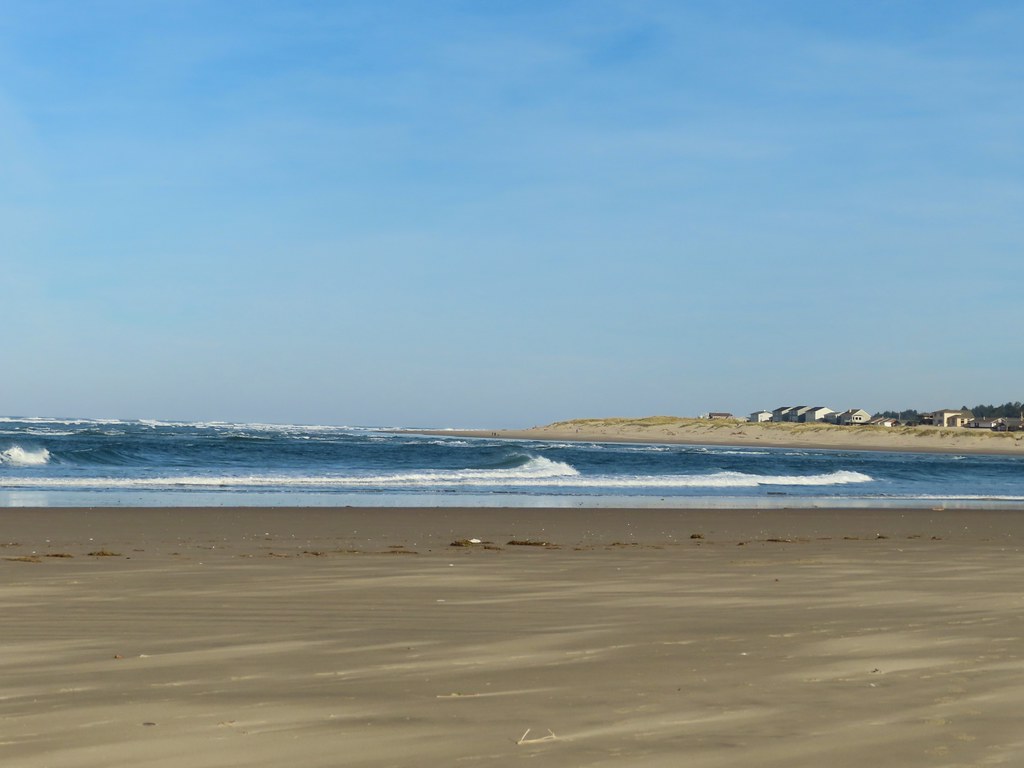
 View from the log.
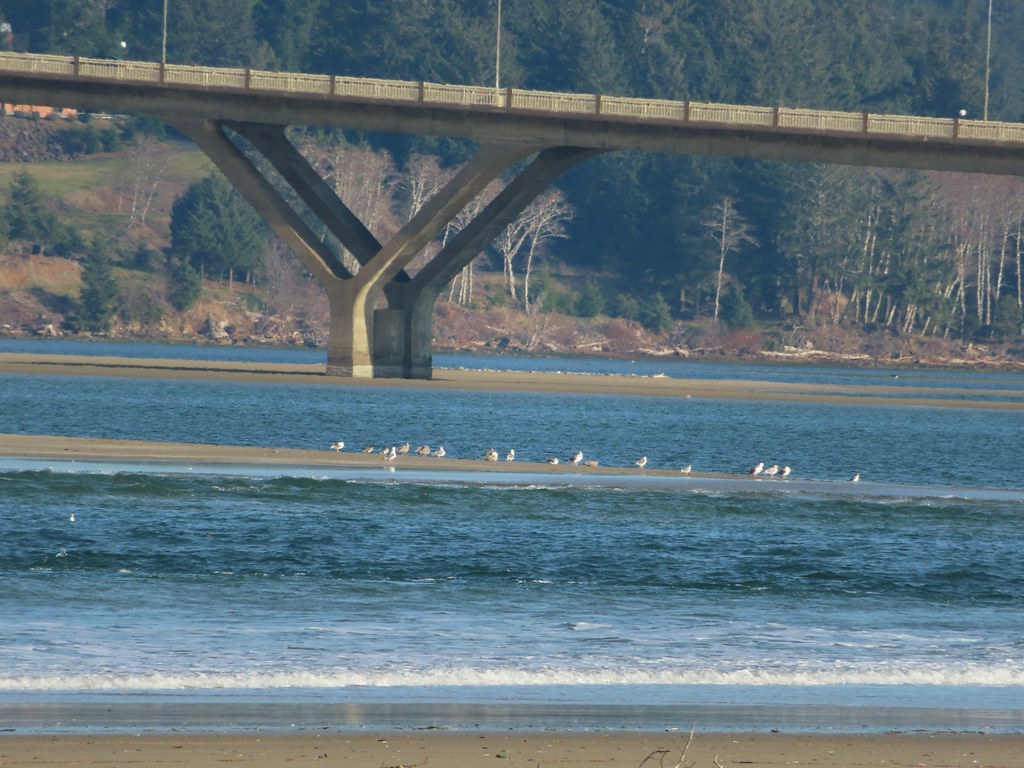 More testing of the zoom function. Seagulls on the near sandbar and seals on the one on the other side of the bridge.
 Looking at the dark cloud bank over the Pacific.
 Seal
Seal A little more cloud cover to the south over Cape Perpetua.
 More cloud action.
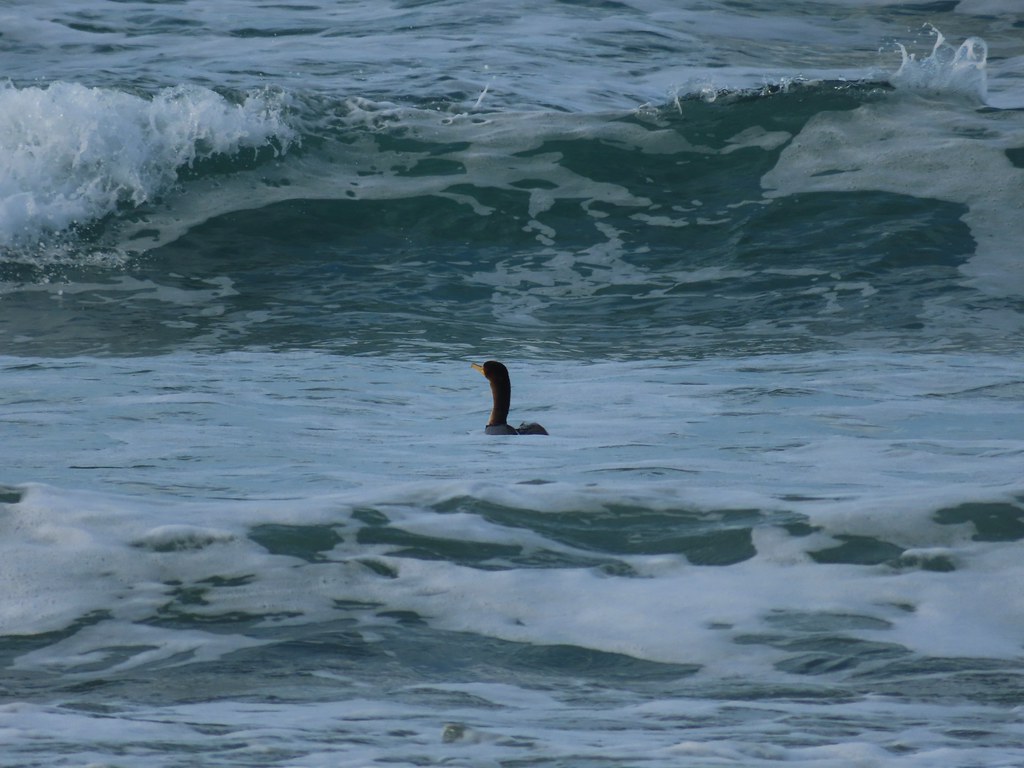 Cormorant
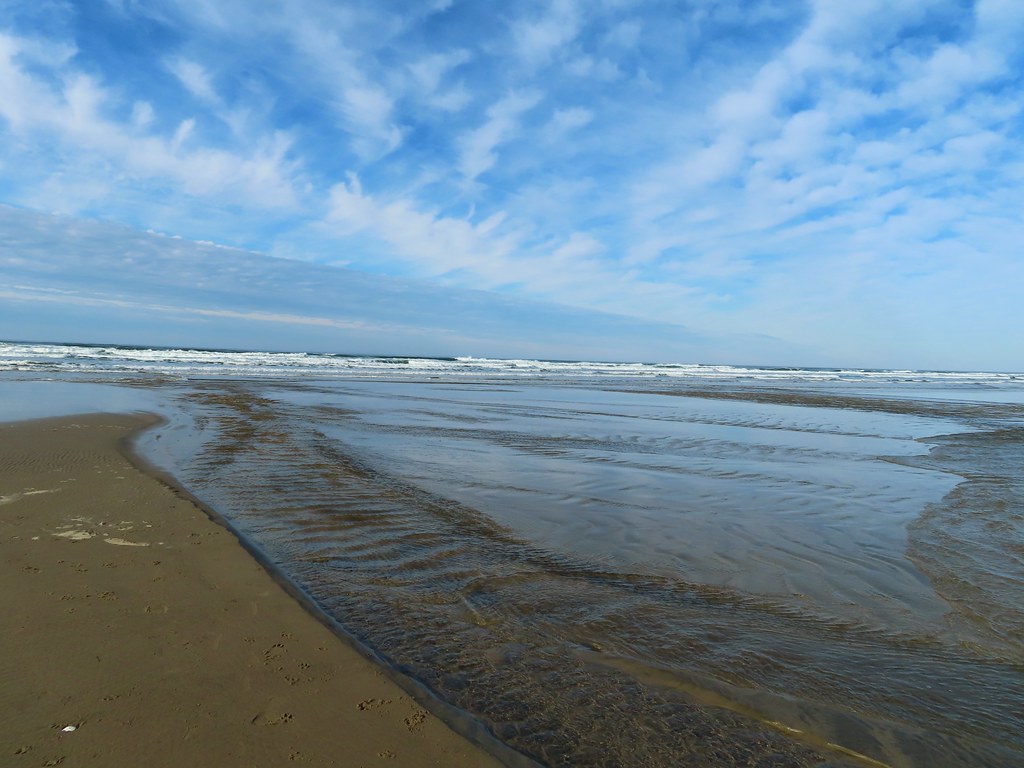 Reynolds Creek after fording.
 Finally starting to feel like it could start raining soon.
 The advancing line of clouds.
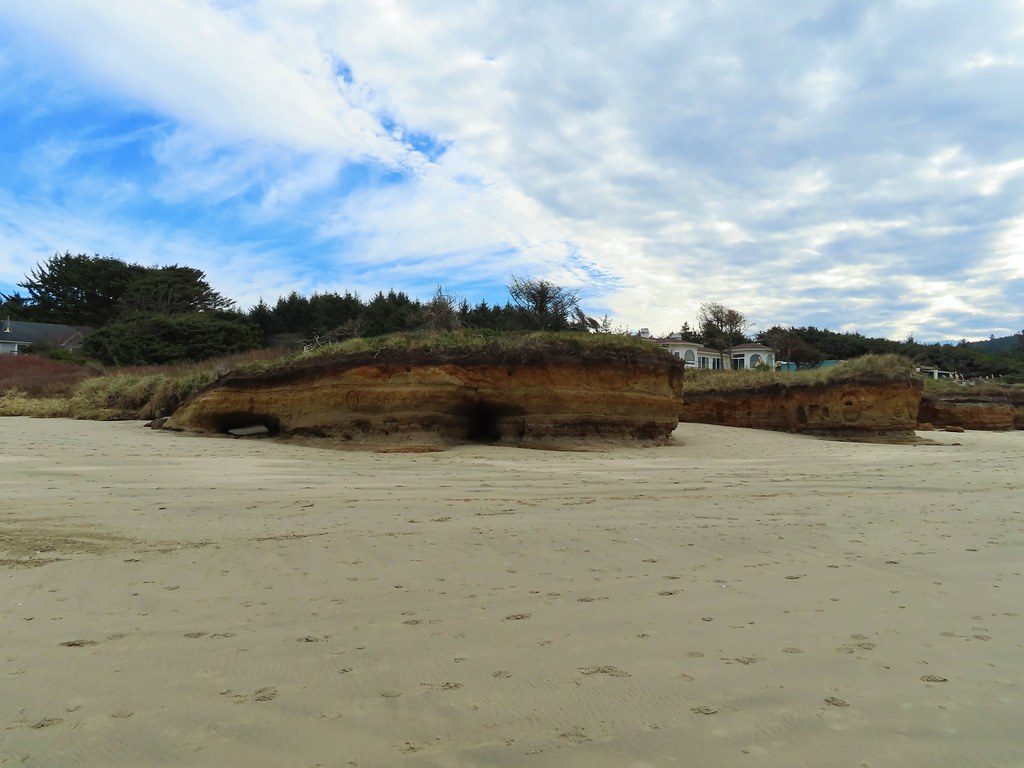 Another look at the arch.
 A kingfisher near the stairs up from the beach.
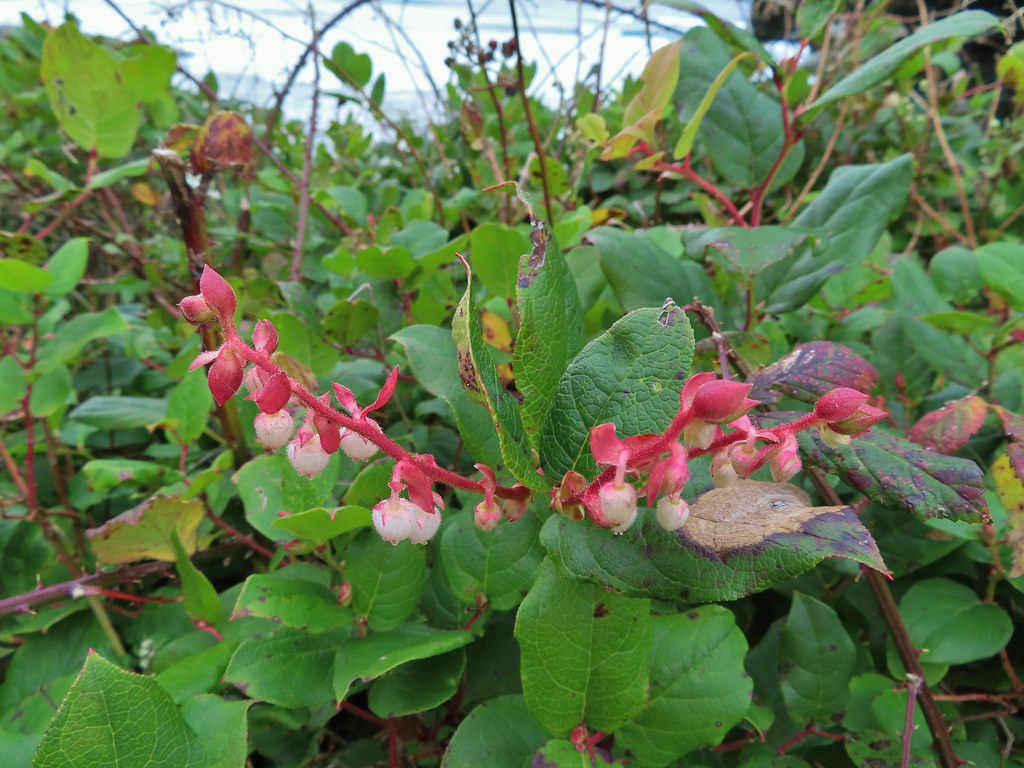 December blossoms on salal along the 804 Trail.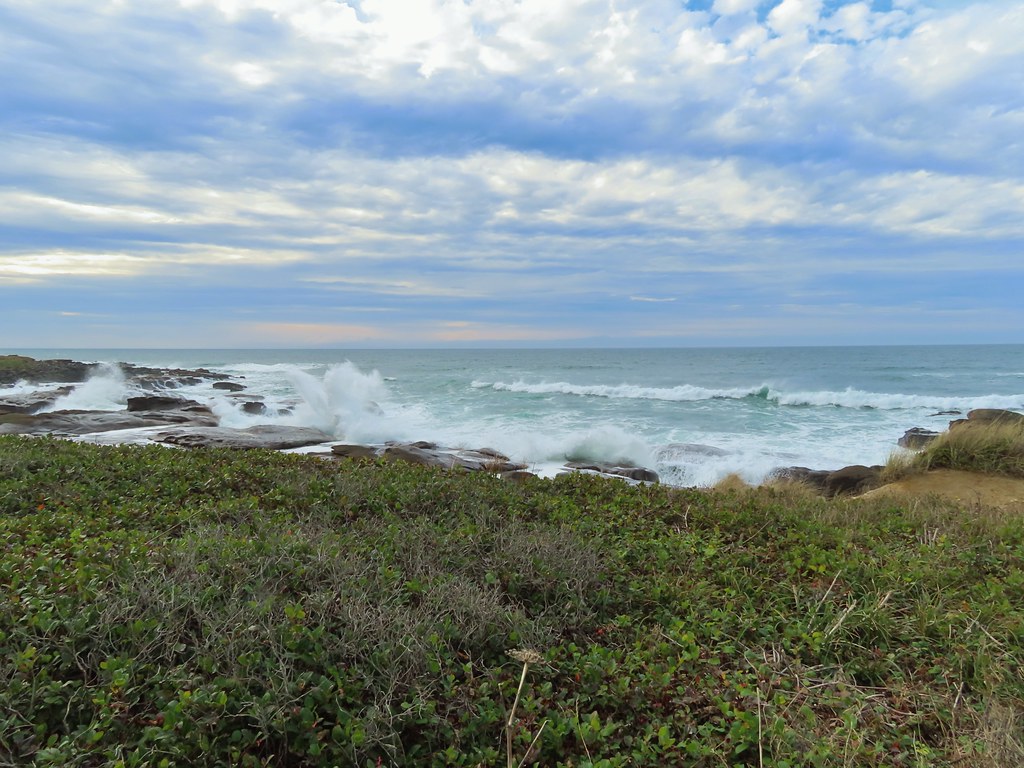


 Salmon River at Knight County Park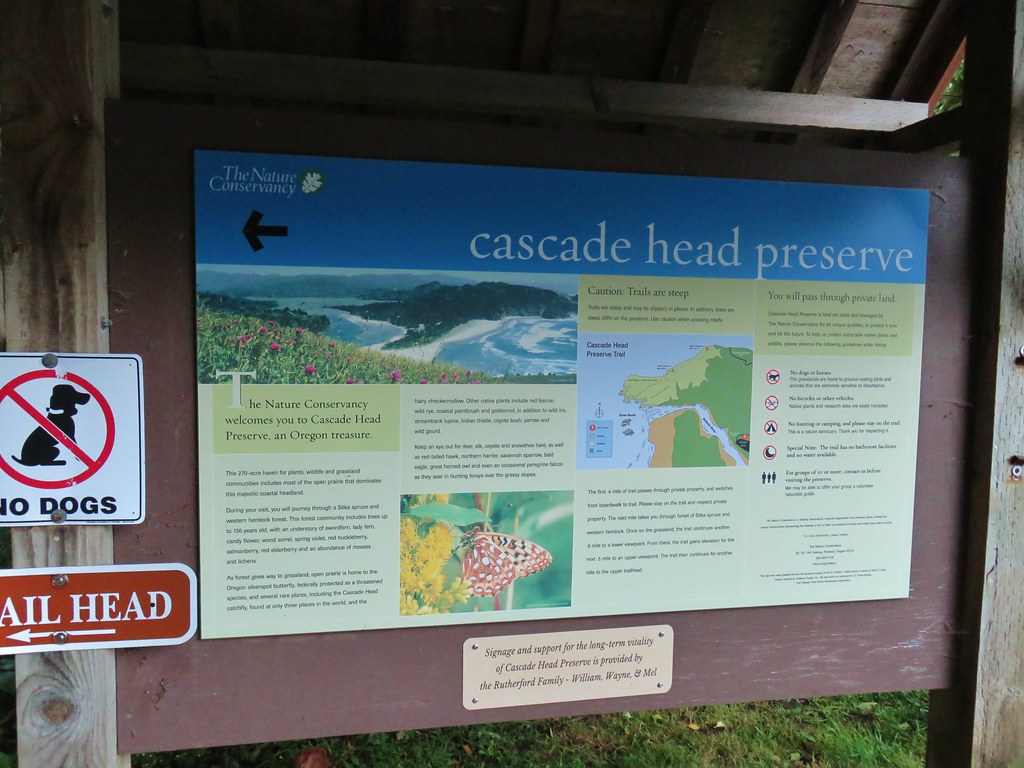



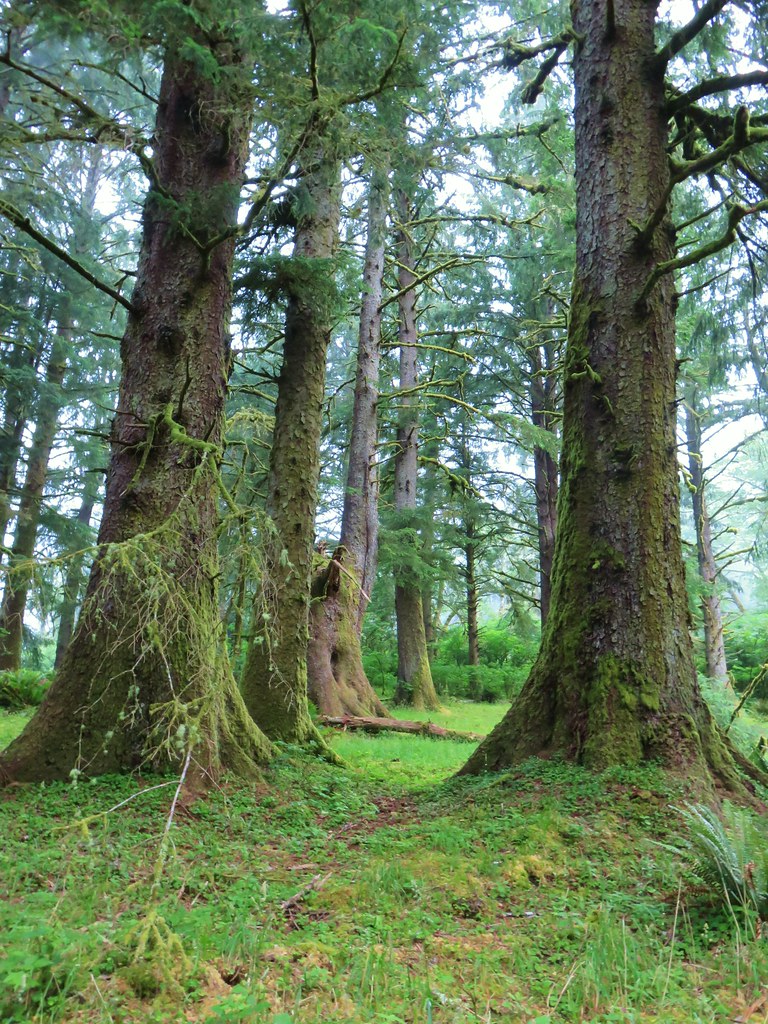
 One of the bridges.
 Overgrown stream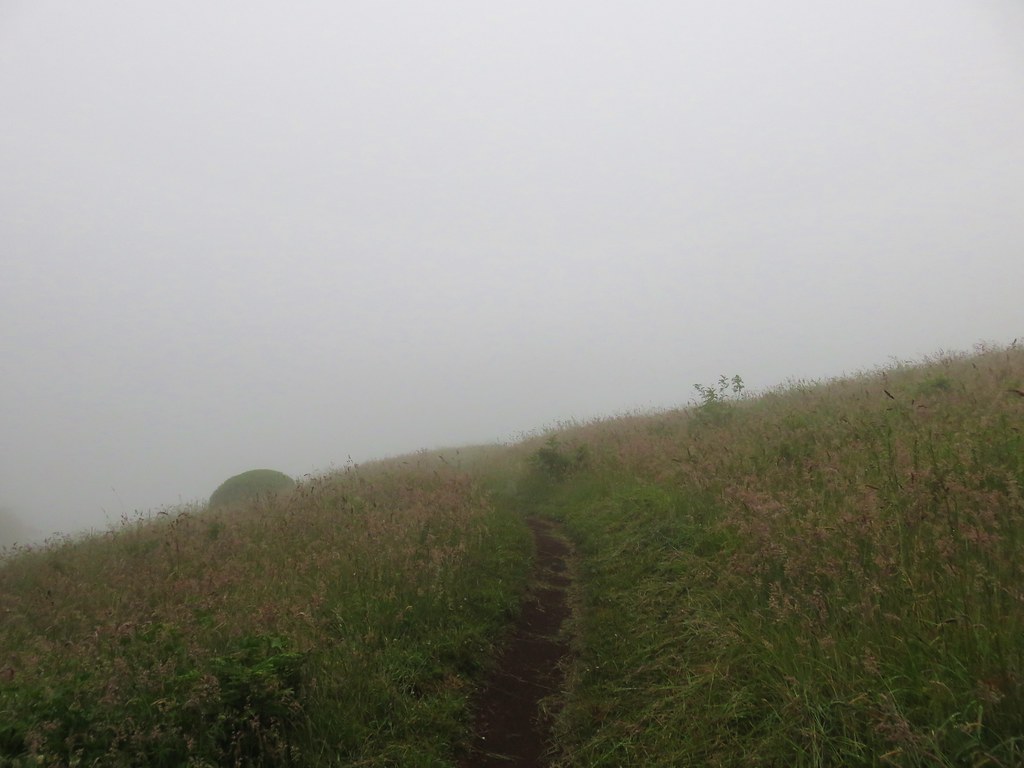
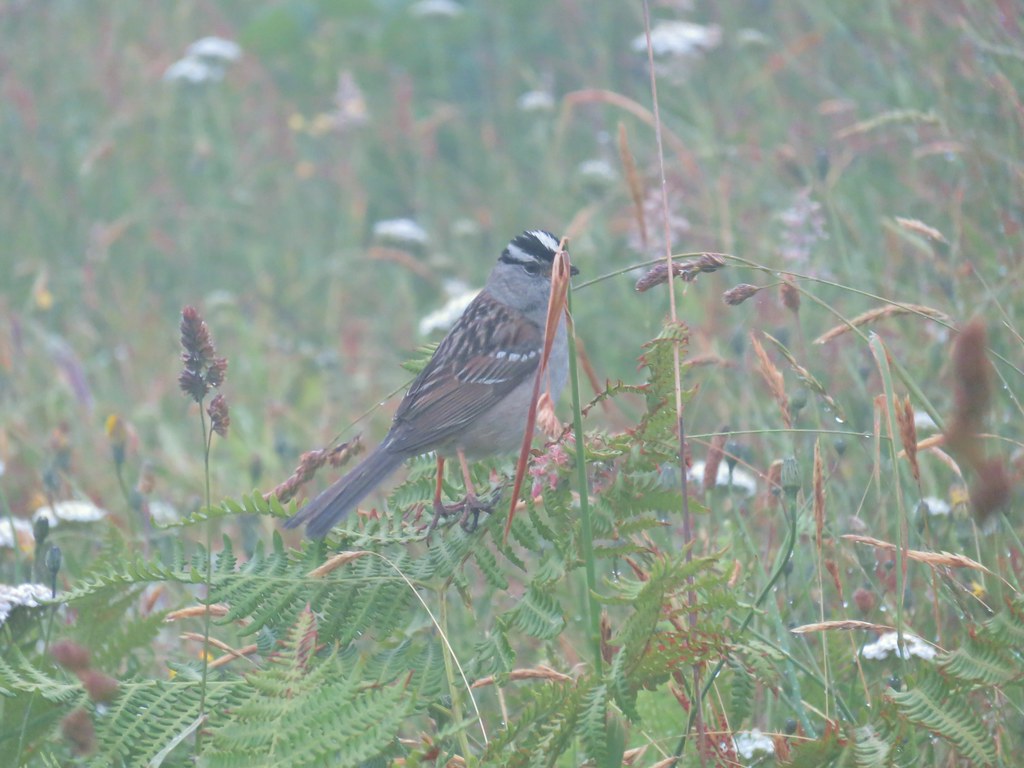 White crowned sparrow
 One of three hummingbirds
 Another white crowned sparrow
 Checkerbloom
 Monkeyflower
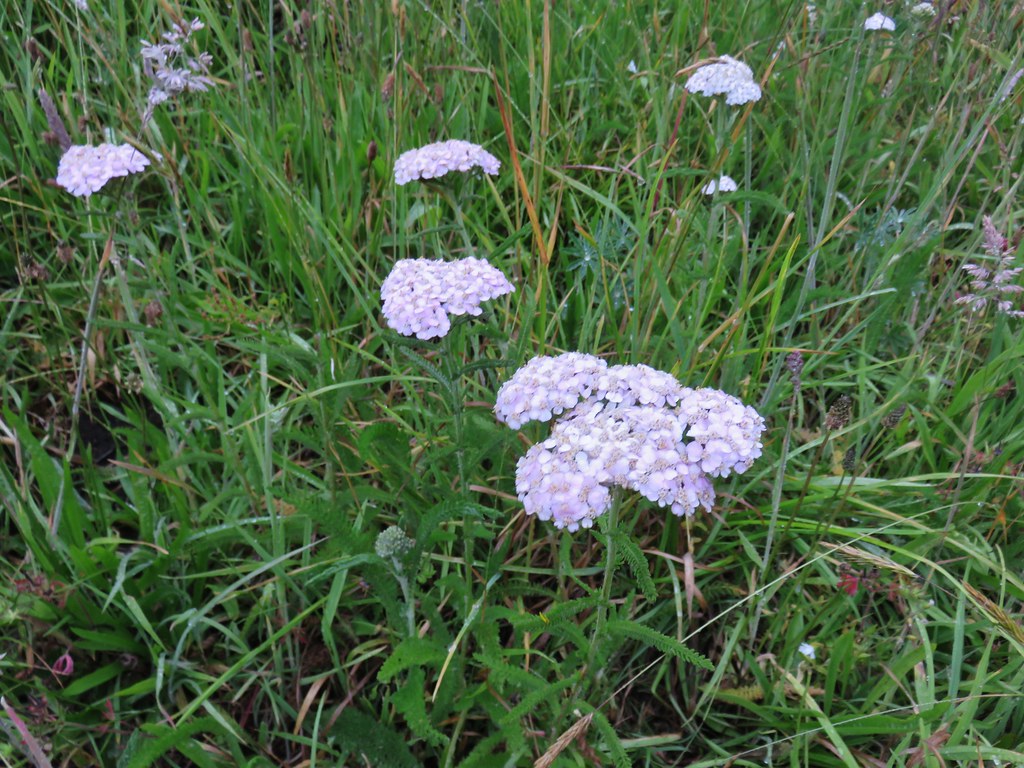 Yarrow
 Field chickweed
 Lupine
 Foxglove with a spider web
 Clovers
 Iris
Iris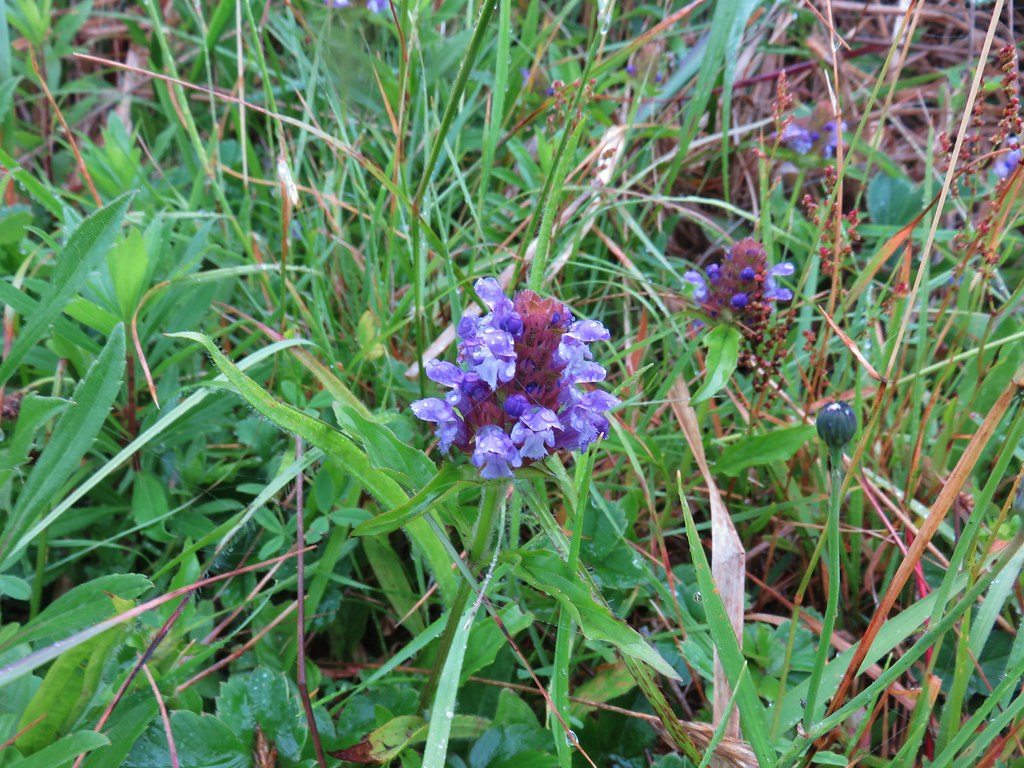 Self-heal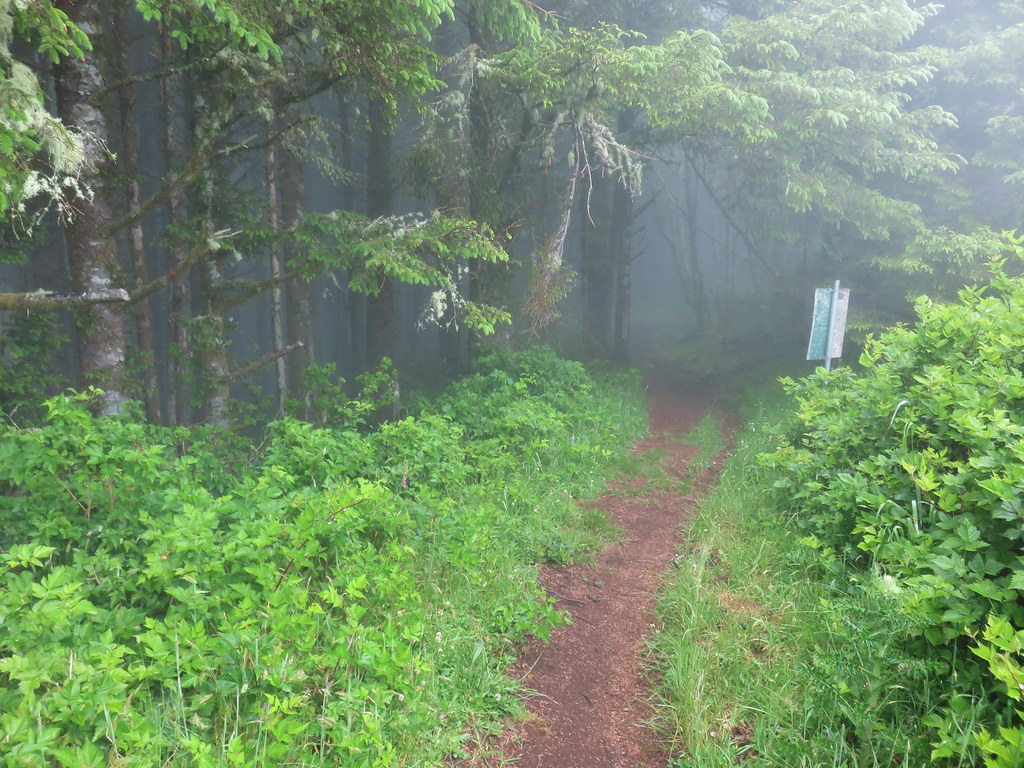
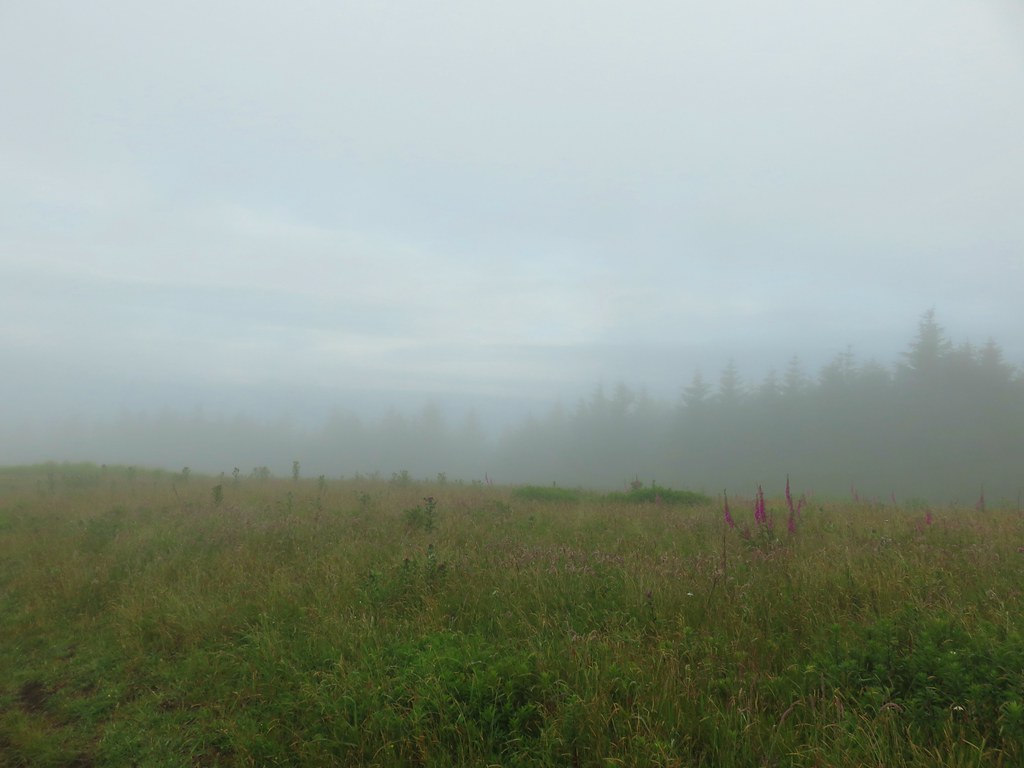
 Look for the head to the right of the tall foxglove stalk.




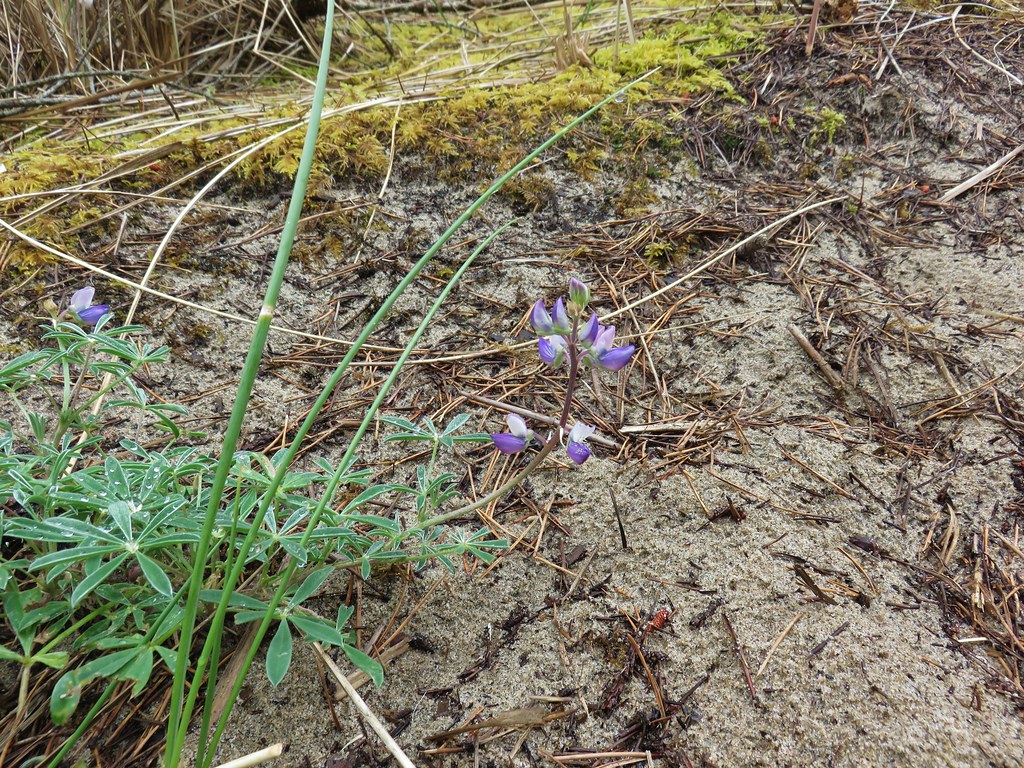 Lupine
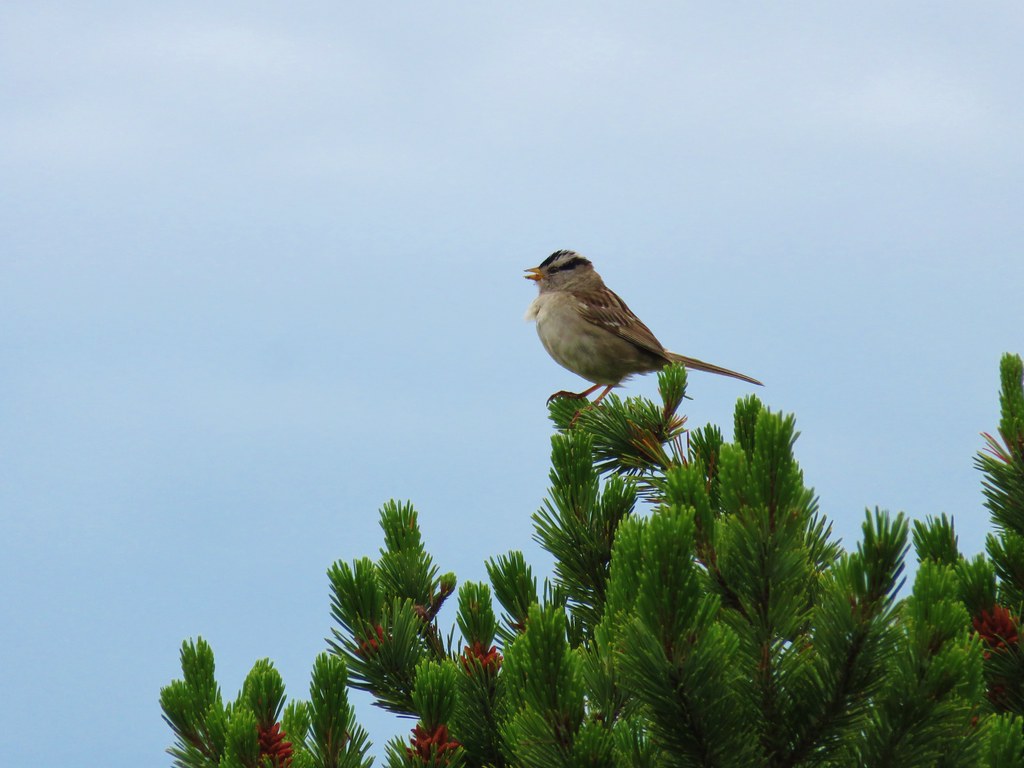 White crowned sparrow
 Cape Lookout (
 Beach morning glory
 Groundcone
 Tiger lily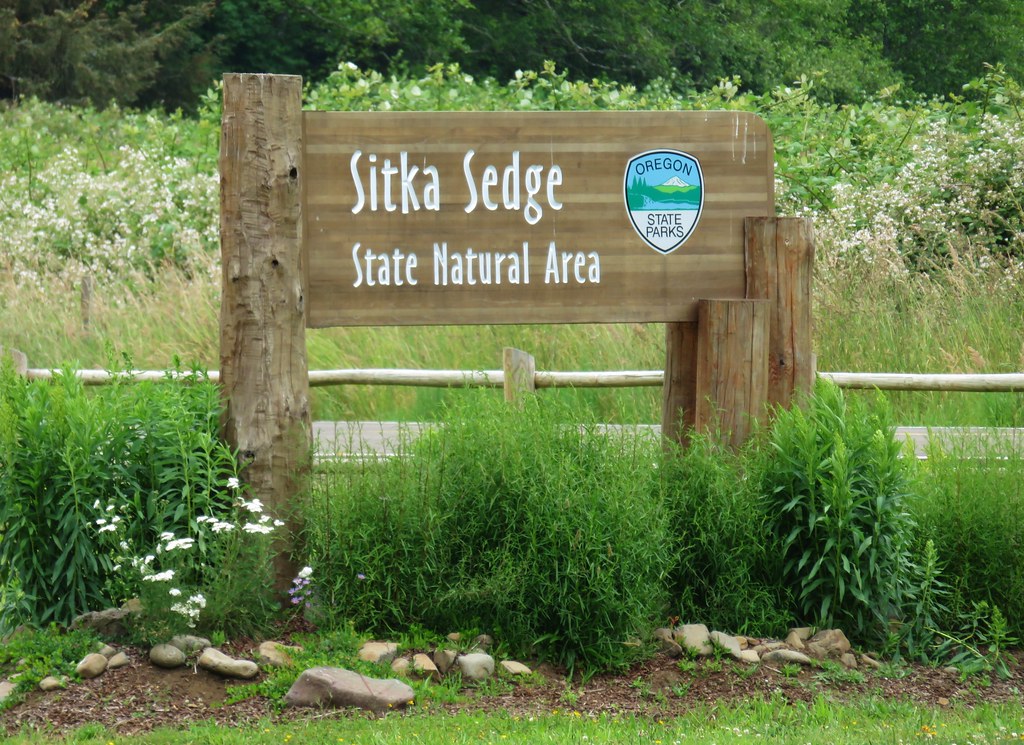











 Obstacle hanging over the trail.