**In 2025 the Alder Springs Fire burned over the Alder Springs Trail and the Flat Fire burned over the Whychus Canyon Preserve.**
For Memorial Day weekend this year we headed to Bend to visit Heather’s family and of course do some hiking. Having finally reached our goal of completing all 100 featured hikes in William L. Sullivan’s “100 Hikes/Travel Guide Central Oregon Cascades” 4th edition last year (post) we kicked off this trip with a stop at a the Whychus Canyon Preserve, which was a new featured hike in his 5th edition.
The 930 acre preserve is owned and managed by the Deschutes Land Trust who have established over 7 miles of hiker only (dogs on leash) trails open to the public. The focus here is conservation so respecting the rules and Leaving No Trace is imperative (as it always should be) in order to keep the access open. We arrived at the trailhead a little after 7am on Saturday morning to find the parking area empty.
 Kiosk and bench at the trailhead.
A map at the kiosk shows that there are a number of loops possible here and we decided to deviate slightly from the route described by Sullivan.

From the kiosk we followed a pointer for the Rim & Creek Trails onto a dirt path.
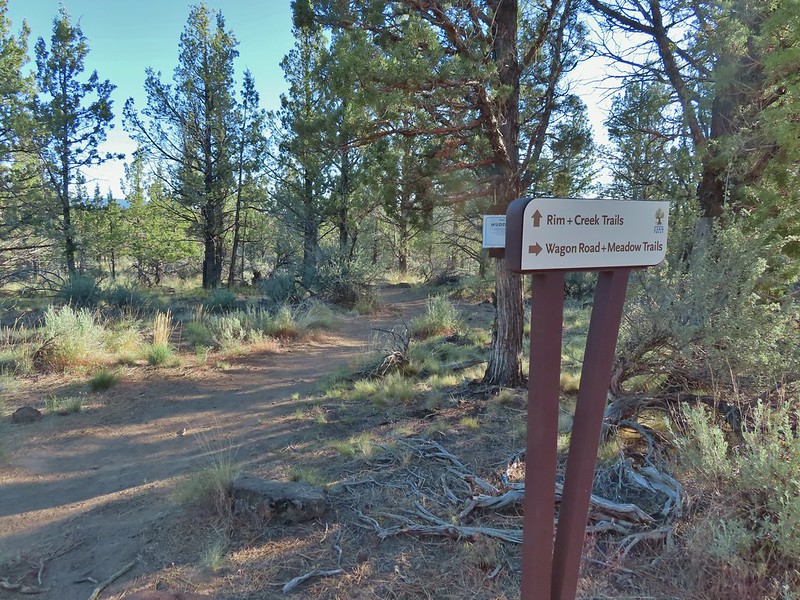
The trail led slightly downhill, through a red gate and after just 0.2 miles arrived a “T” shaped junction with the Rim Trail where Sullivan has you turn right. We opted for a slightly longer loop and turned left instead.
 Tent caterpillars (and the red gate)
As we followed the Rim Trail west along the canyon we began to get some good mountain views.
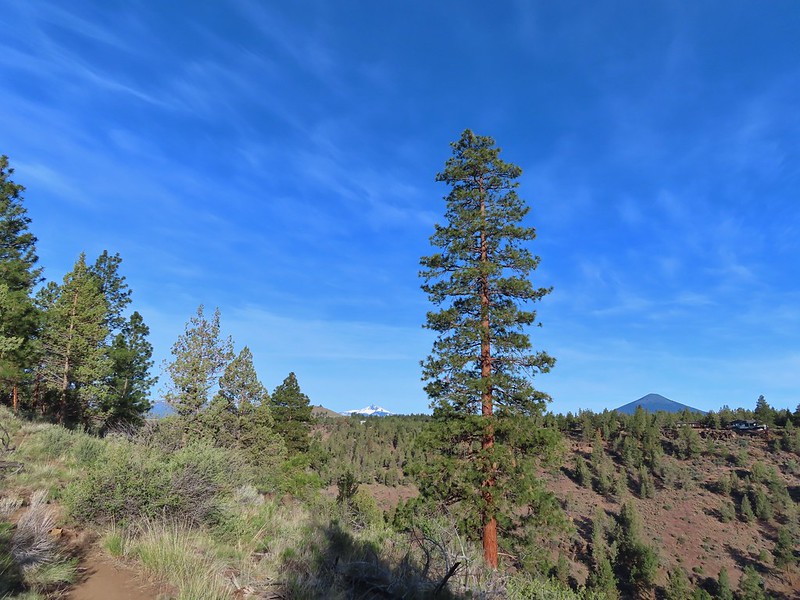 Mt. Washington and Black Butte (post)
 Broken Top, The Three Sisters, Black Crater (post), Little Belknap & Belknap Crater (post), and Mt. Washington.
After 0.4 miles the trail made a 180 degree turn dropping further into the canyon.

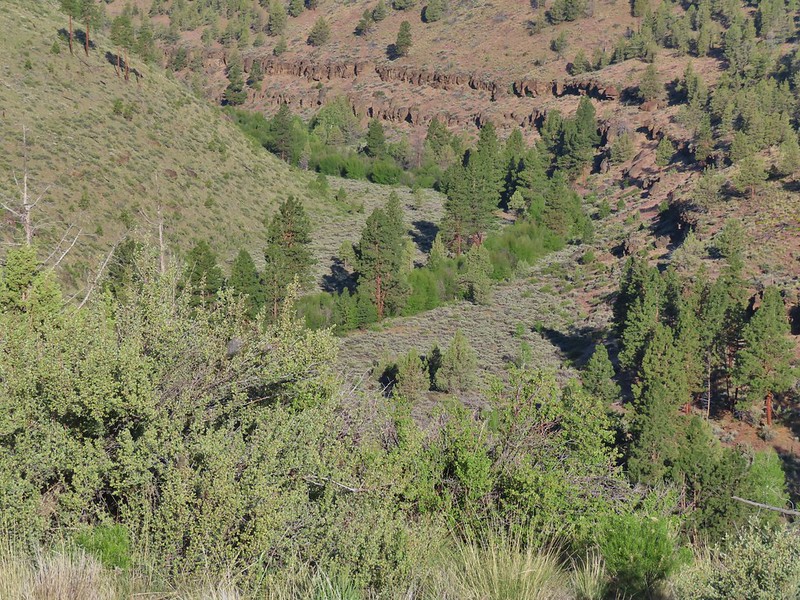 Whychus Creek was hidden by trees for the most part.
While there weren’t a lot of wildflowers a number of different types were present.
 Balsamroot
 Lupine
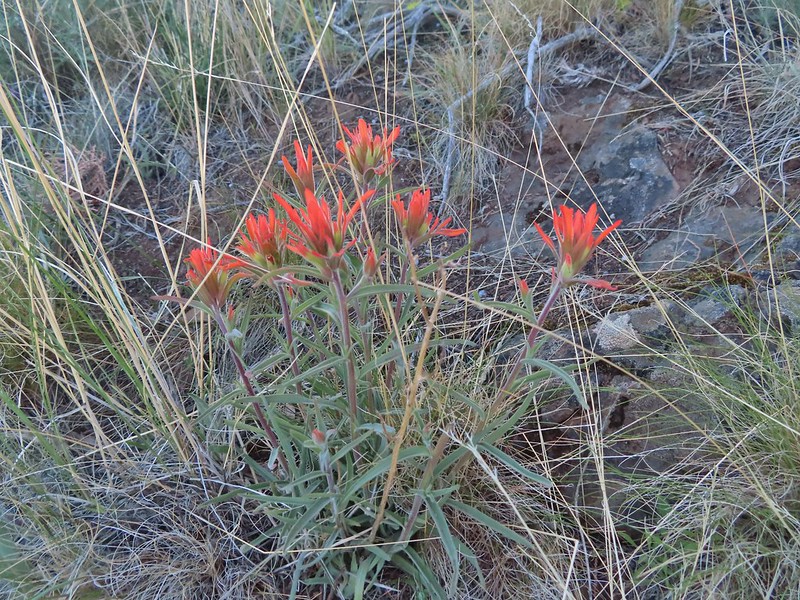 Paintbrush
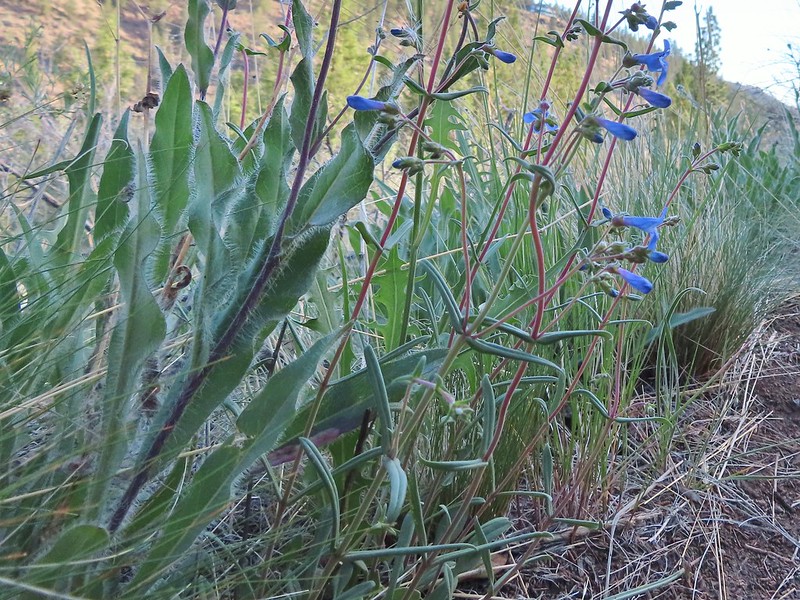 A Penstemon
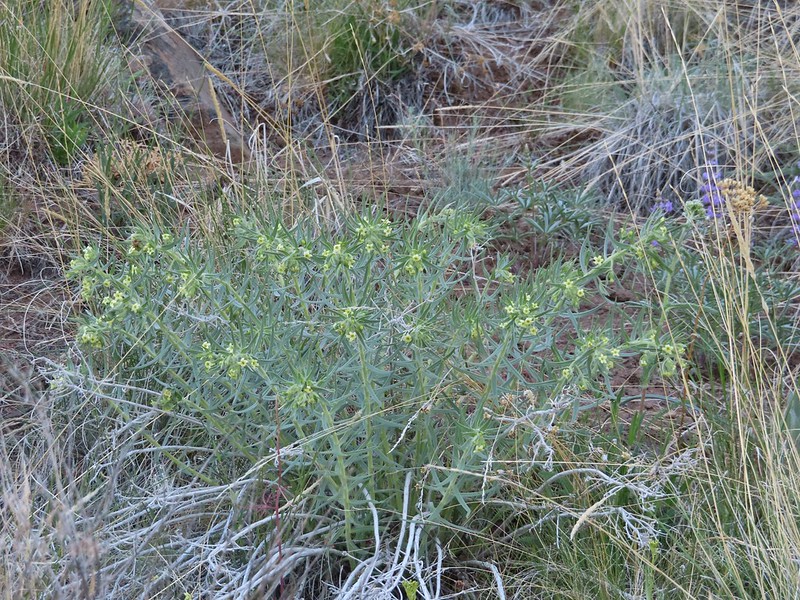 Western stoneseed
 Sedum leibergii -Leiberg’s Stonecrop
 Spreading stickseed
 Western wallflower
In addition to the various flowers we spotted some varied wildlife as well.
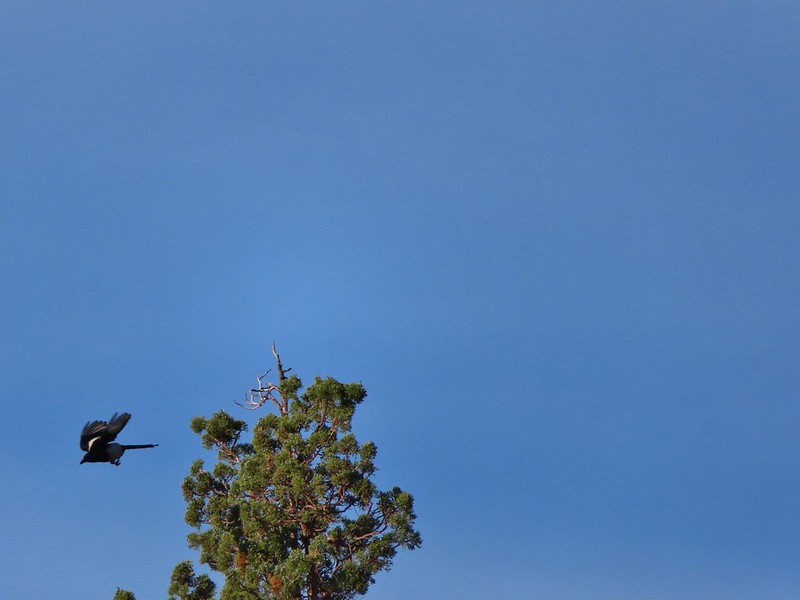 Magpie playing hard to get.
 Spotted towhee
 Black-headed grossbeak
 Ochre ringlet
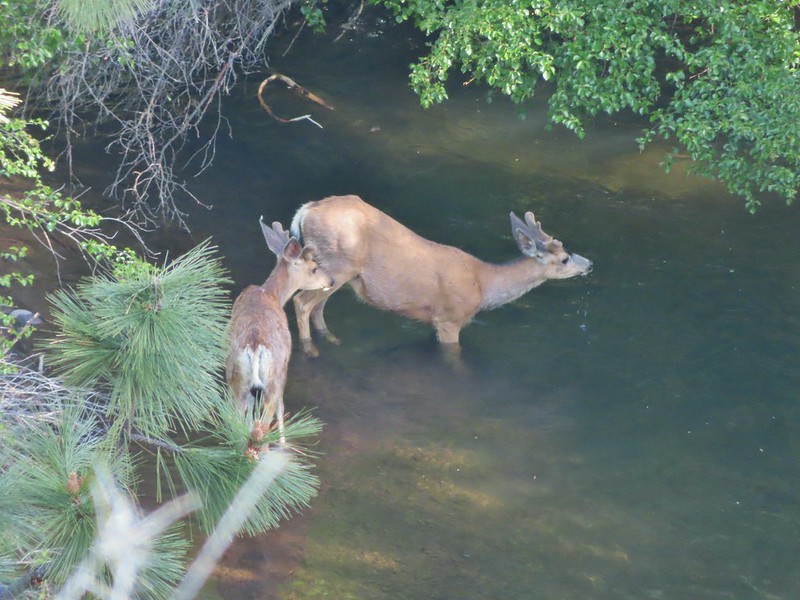 Pair of bucks in Whychus Creek
This is a good time to mention how much I appreciate the zoom on my Canon XS740HS. While I often look at other peoples photos and wish mine were as crisp/clear the compact size and low price (compared to even low end DSLR cameras) of the little point and shoot has worked well enough. Those two bucks are a good example as we spotted them from here.
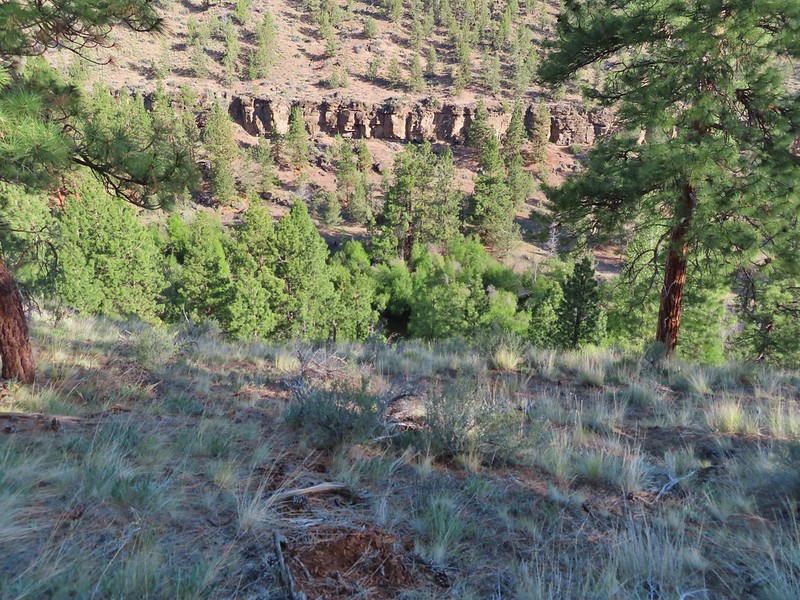
Approximately 0.6 miles from the big turn we arrived at a signed junction. Uphill led back to the trailhead (where we would have come down following Sullivan’s directions) while the Creek Trail headed downhill to the left.
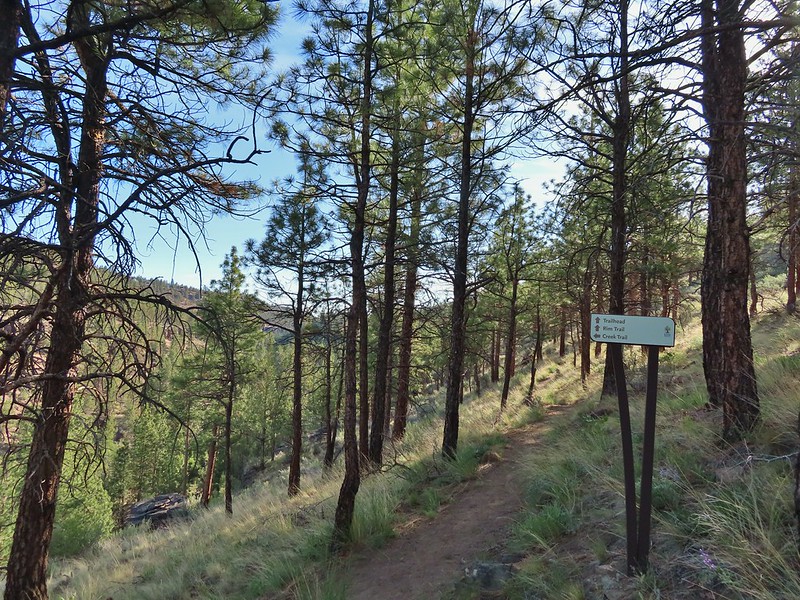
We turned downhill and switchbacked downhill for 0.2 miles to Whychus Creek.
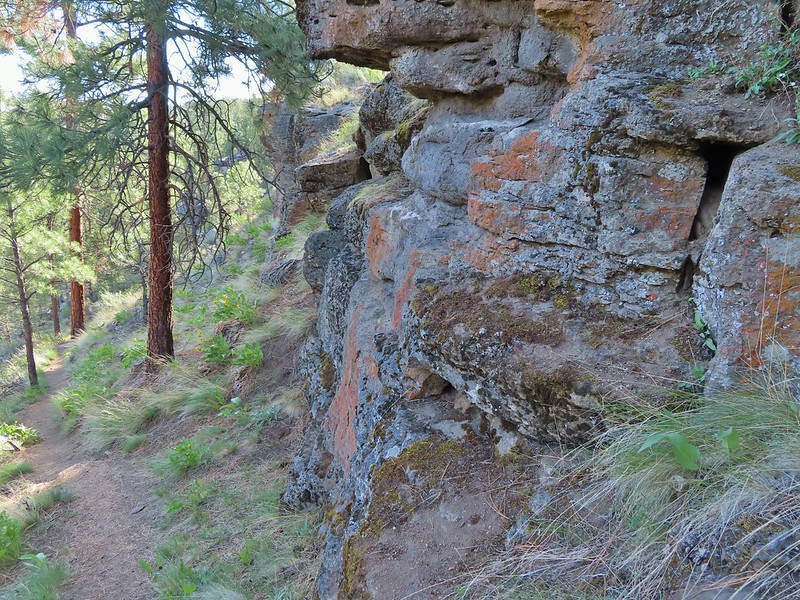

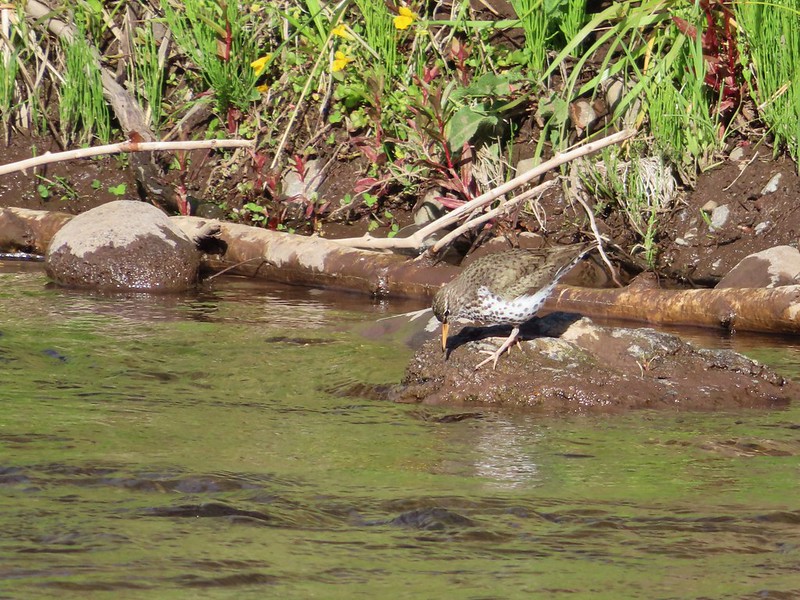
We followed along the creek on this trail for 1.5 miles, ignoring a steep trail to the right at the 0.8 mile mark. The sounds of the creek combined with the songs of birds made for a relaxing stroll through the canyon.

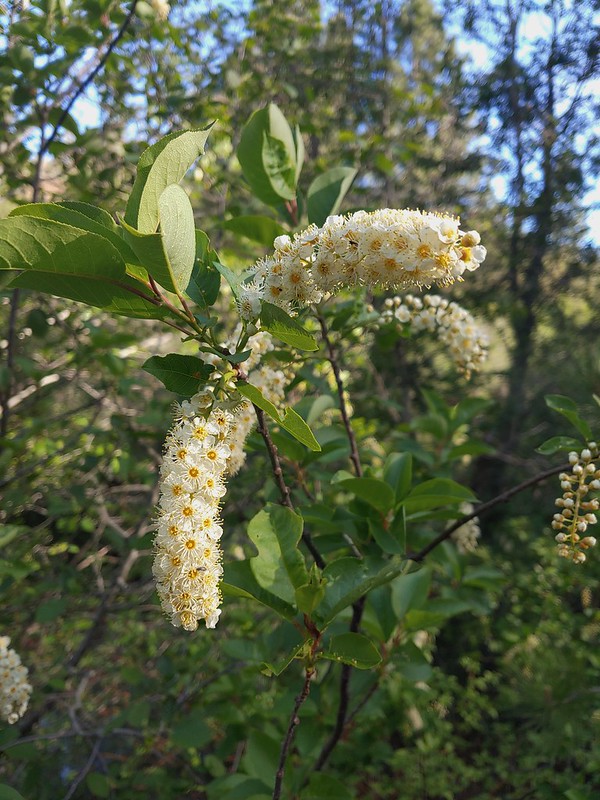 Chokecherry

 Star-flower false solomonseal

 Trail junction at the 0.8 mile mark.
 Spider on a wallflower.
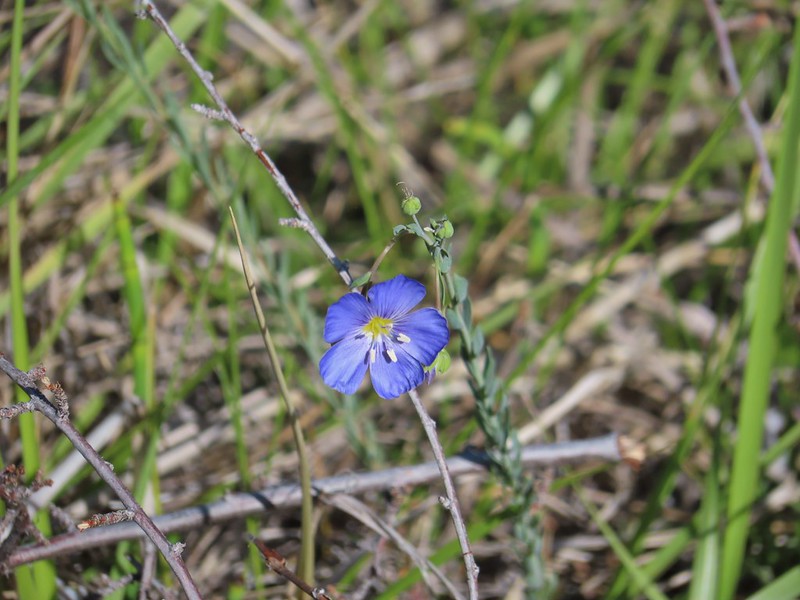 Lewis flax
 Heuchera cylindrica -roundleaf allumroot
At the 1.5 mile mark the trail turned uphill away from the creek and made a turn back toward the trailhead.

The trail climbed for 0.4 miles before leveling out near a rock outcrop where a side trail to the right led to a viewpoint.

 Oregon sunshine
 Buckwheat and penstemon
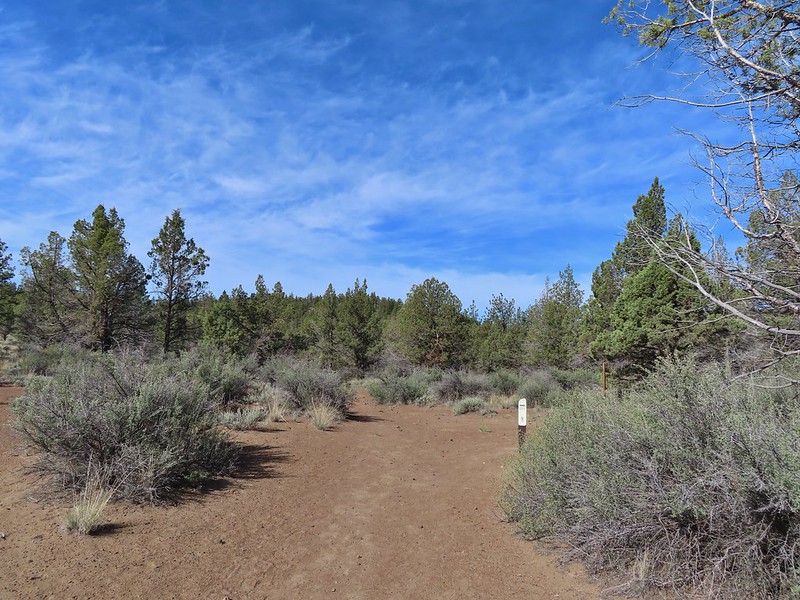 Sign post for the viewpoint.
 Heading for the rock outcrop/viewpoint.
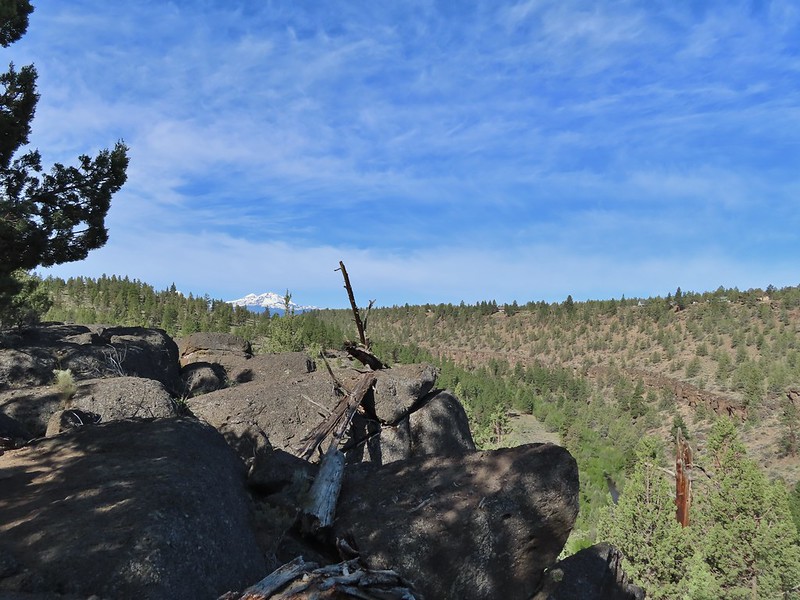 Middle and North Sister with Whychus Creek below.
Two tenths of a mile beyond the viewpoint we passed the upper end of the cutoff trail coming up from the Creek Trail.

We were now on the Meadow Trail which we followed for 1.5 miles (ignoring a signed trail to the left at the 0.5 mile mark). We were still spotting different flowers and wildlife on this stretch.
 A monkeyflower
 Sand lilies
 Trail sign in the distance for spur trail to the Santiam Wagon Road.
 Death camas
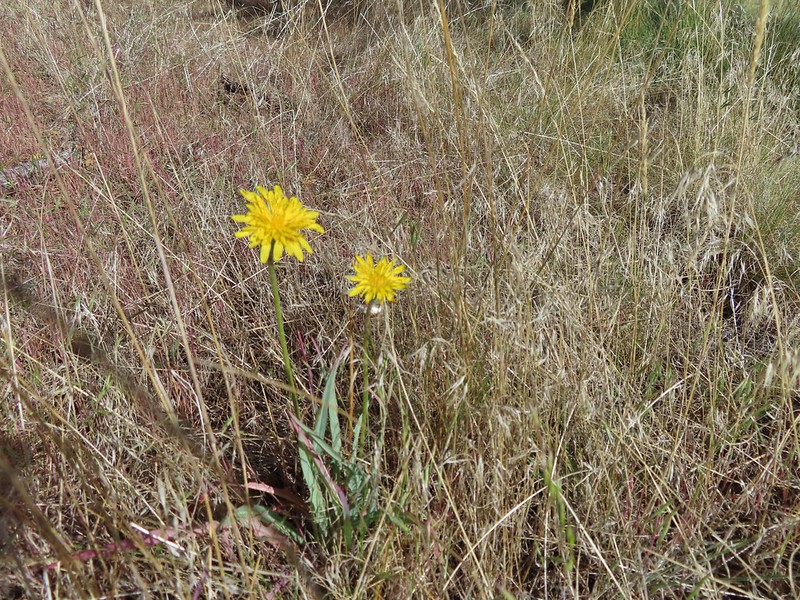 Sagebrush false dandelions
 Pinion jay
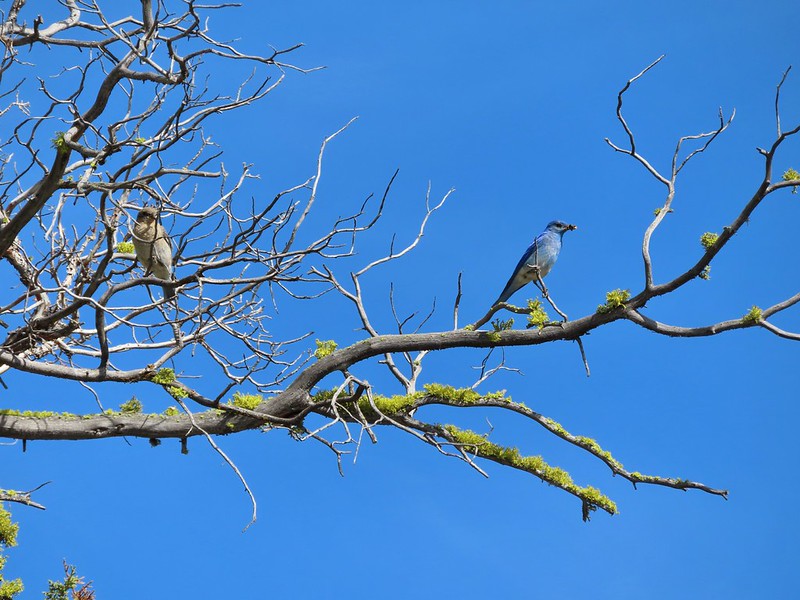 Mountain bluebird pair
 Mourning dove
 unidentified little songbird.
 Lizard
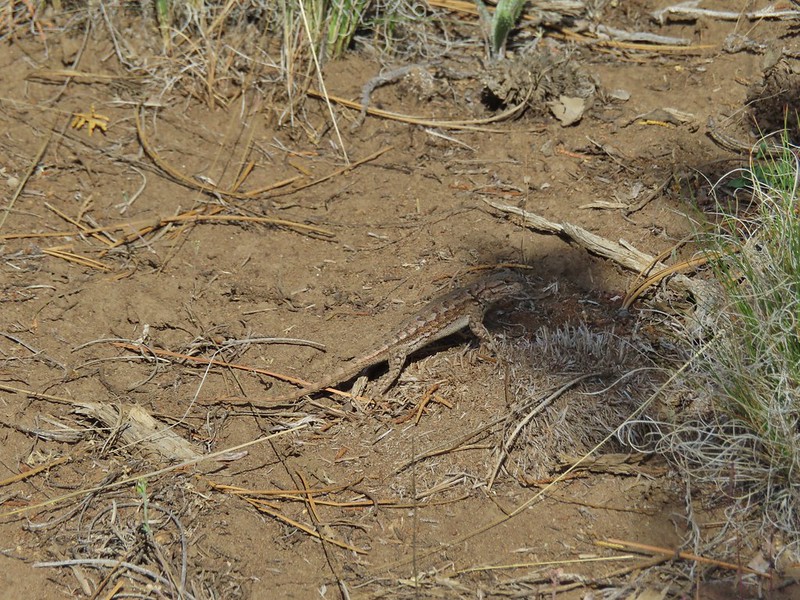 Second type of lizard
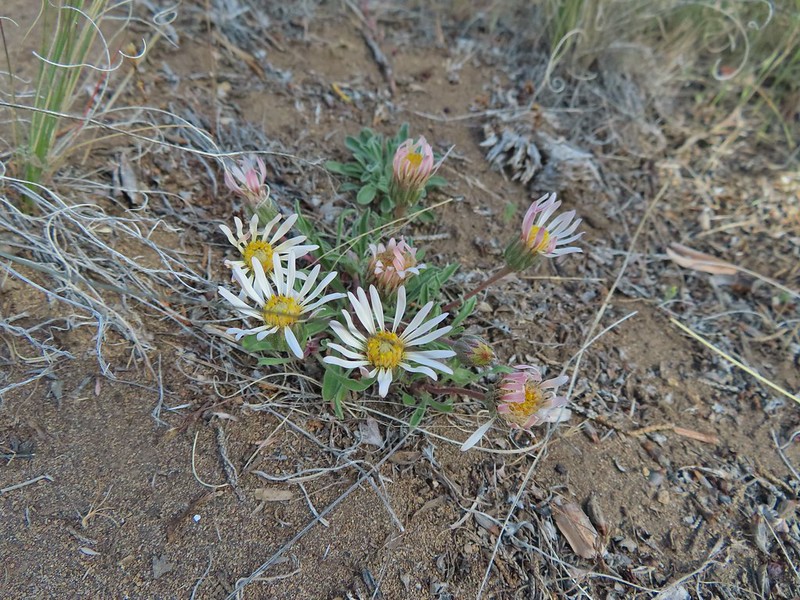 Showy townsendia
Just before reaching the trailhead the trail joined the Santiam Wagon Road at an interpretive sign.

This wasn’t the first time we’d been on this historic 400 mile route between the Willamette Valley and Eastern Oregon (House Rock, Iron Mountain, Fish Lake, Sand Mountain , ) but it did mark the eastern most portion we’d been on.
We turned right on the Wagon Road for a few steps and were back at the trailhead where there was now a second car. We were surprised there weren’t more considering how nice a hike it had been. We logged just a little over 5 miles on our GPS and were now ready to head to our second stop of the day at the Alder Springs Trailhead.

This was another chance to visit Whychus Creek but unlike Whychus Canyon we had done the hike at Alder Springs before (post). That hike had been almost 10 years prior having taken place on 8/3/2011. Two things stand out about that first visit. Most notably we only did the Alder Springs hike because our Plan A, Benson Lake/Scott Mountain Loop, was still under too much snow (also the mosquitos were horrendous). It has been quite some time since there has been that much snow that late in the year, yes climate change is real. Secondly it was a really nice hike but August probably wasn’t the best month for it. It’s been on my list of hikes to revisit at a different (better) time of the year. The road to the trailhead is seasonally closed (typically 12/1-3/31) so April or May seemed the best time to catch wildflowers and cooler temperatures.
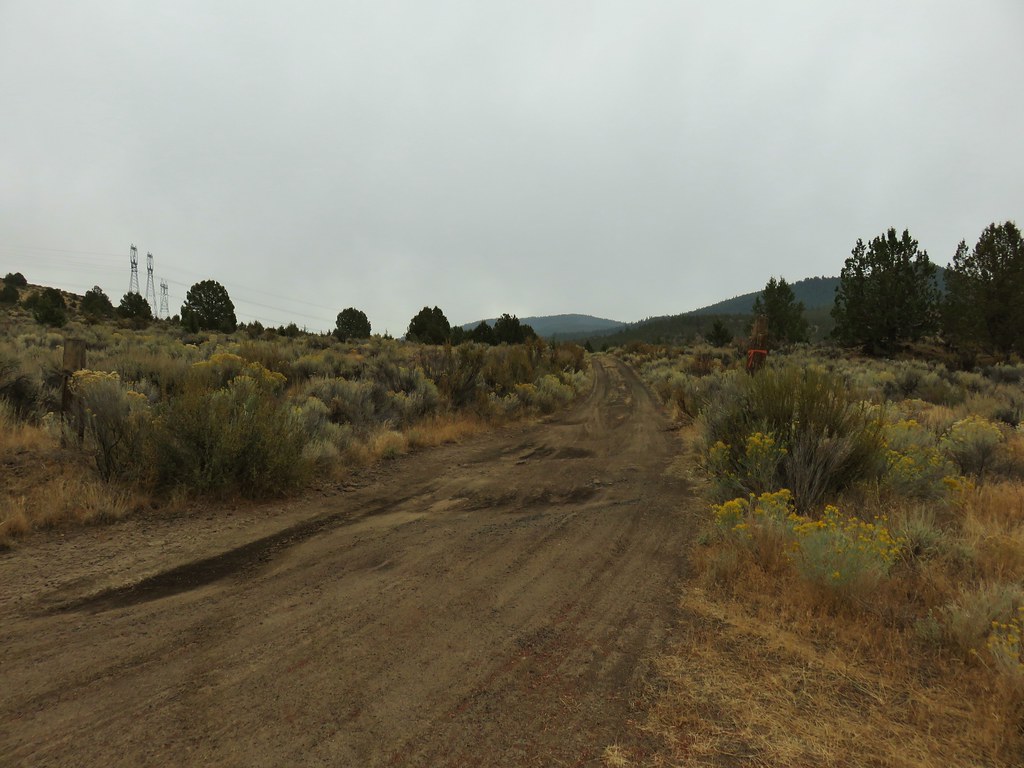
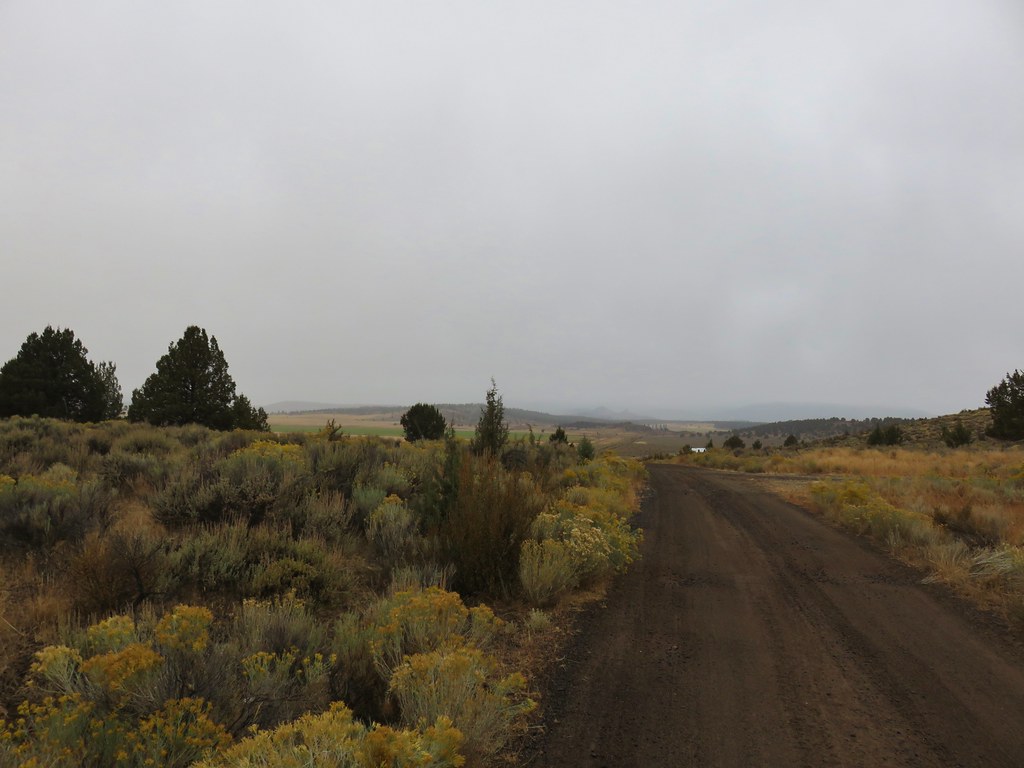
Another difference between Whychus Canyon and Alder Springs is the access road. While the former is almost entirely paved with a short stretch of good gravel the latter is not far removed from a 4×4 jeep track. Rocks, washouts, and dried mud holes await for most of the final 4.7 miles to the rather larger parking area which we were surprised to find nearly full at 10:15am. At first we couldn’t figure out why there were so many cars SUVs and trucks here while it was just us and one other car at the preserve then it hit us, you can camp here. That realization came from overhearing a large group saying something about having to make two trips down and “the beer”.
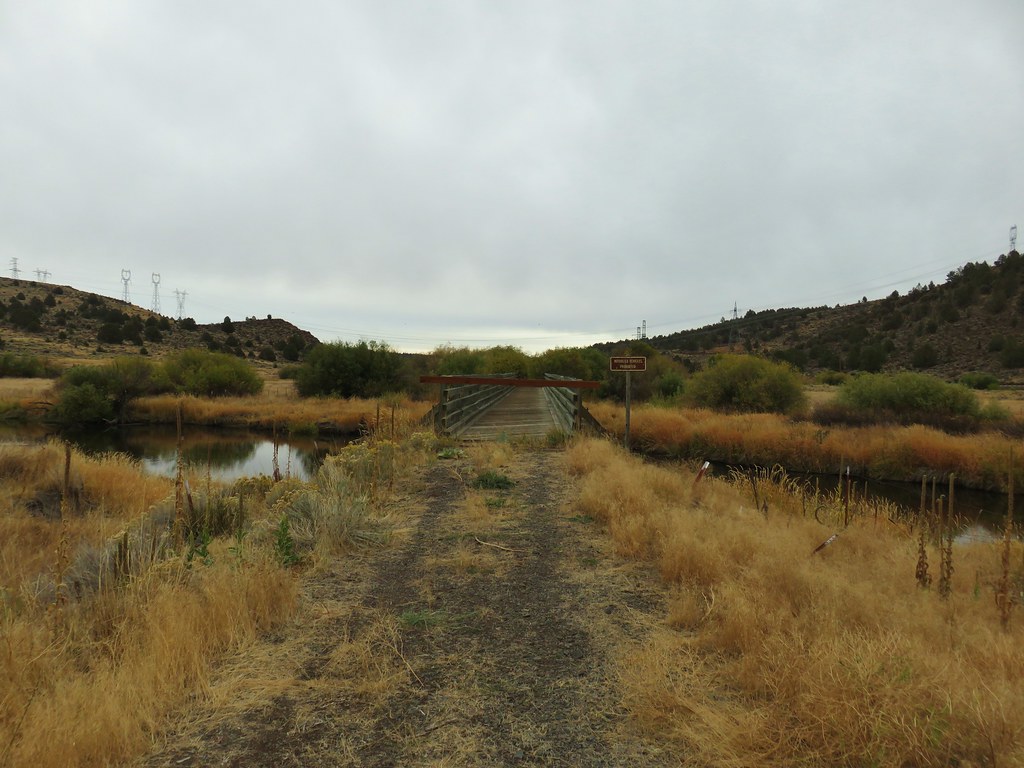
 Looking back up the dirt access road to the North Sister, Mt. Washington and Black Butte
 The trailhead signboard.
This time we didn’t take the side trip down the 0.4 mile Old Bridge Trail but otherwise it was the same route as we had taken nearly 10 years before. The big difference was the number of wildflowers in bloom and the number of people we encountered, mostly on the way back to the car. The scenery was stunning and the ford at the 1.5 mile mark refreshing.
 Buckwheat
 Rough eyelashweed
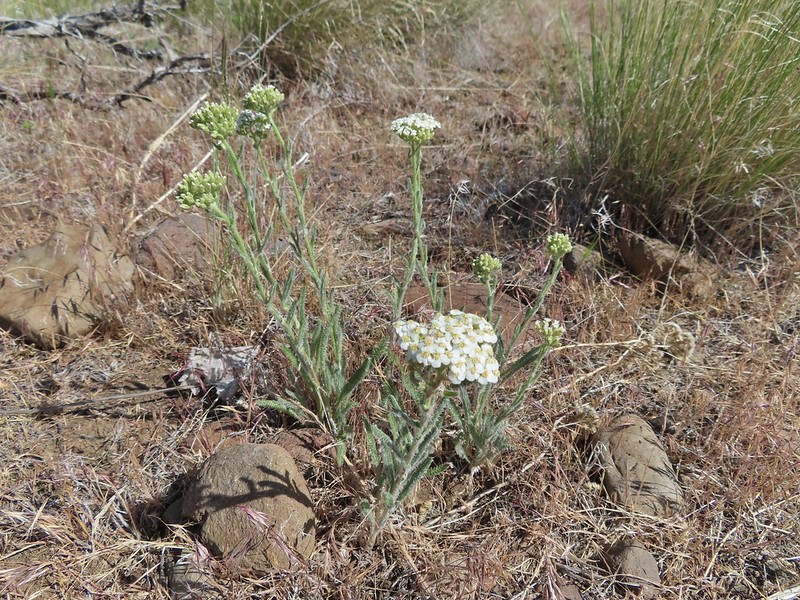 Yarrow
 Fiddleneck
 Largeflower hawksbeard
 Purple cushion fleabane
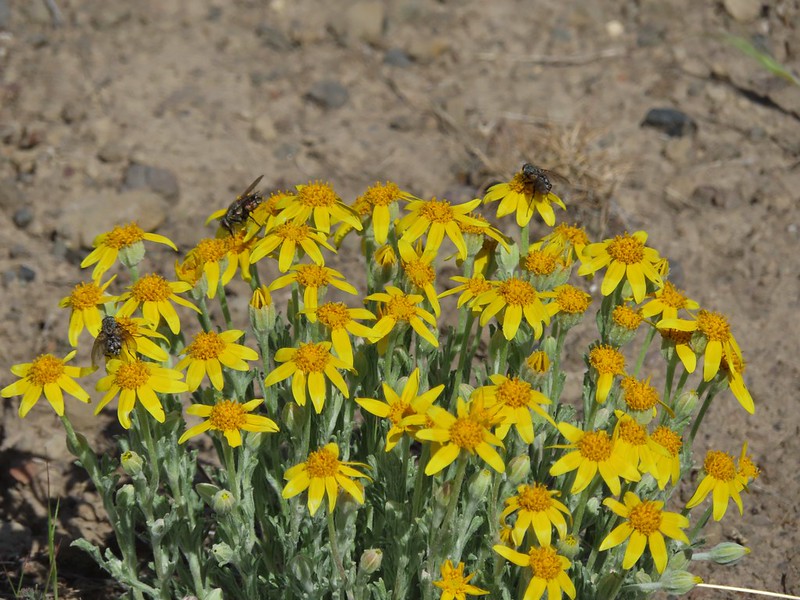 Oregon sunshine
 Blue mountain prairie clover
 Lewis flax
 Lupine
 Bearded hawksbeard
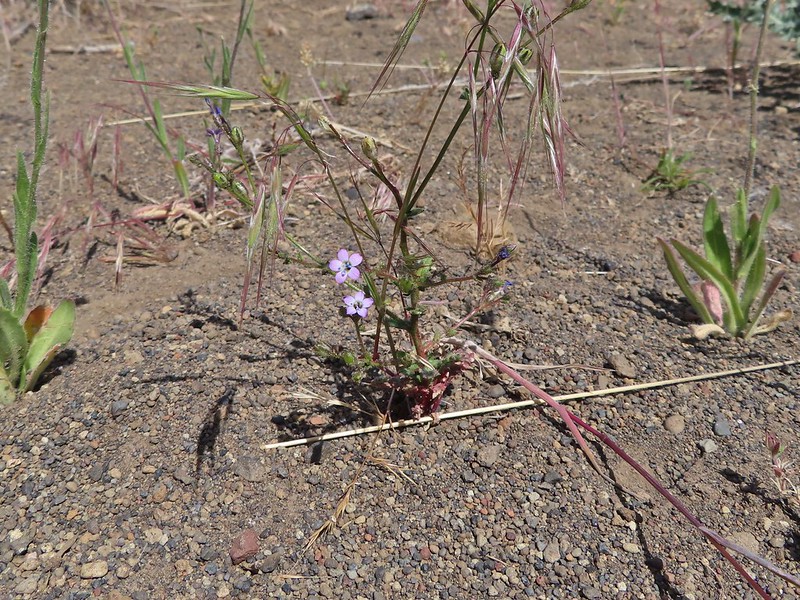 Haven’t id this one yet.
 The Three Sisters, Belknap Crater and Mt. Washington with some dancing clouds.
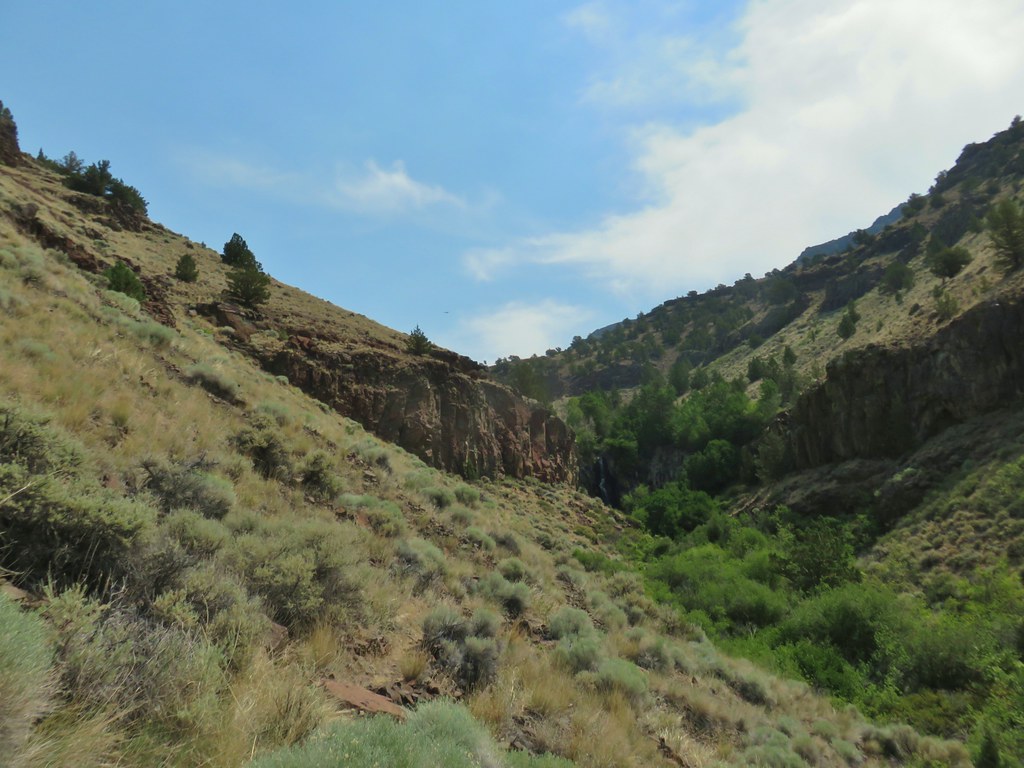
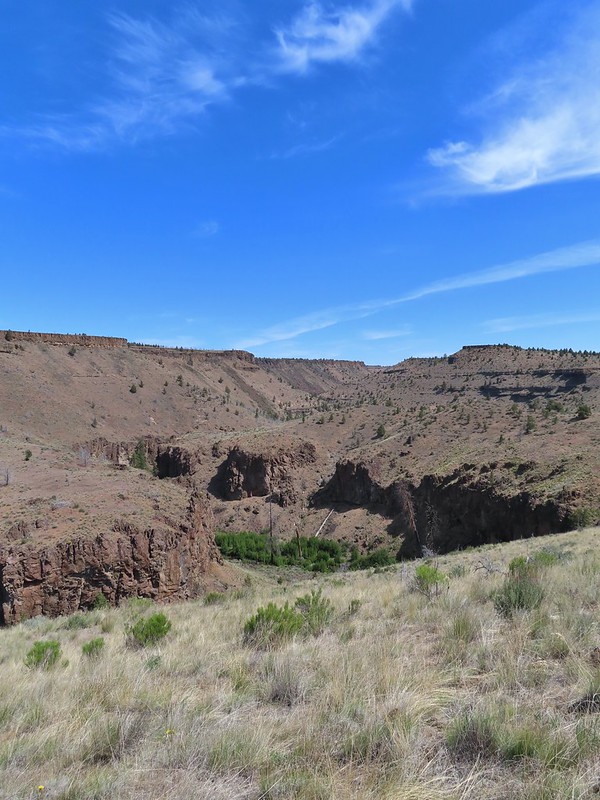 Whychus Creek Canyon
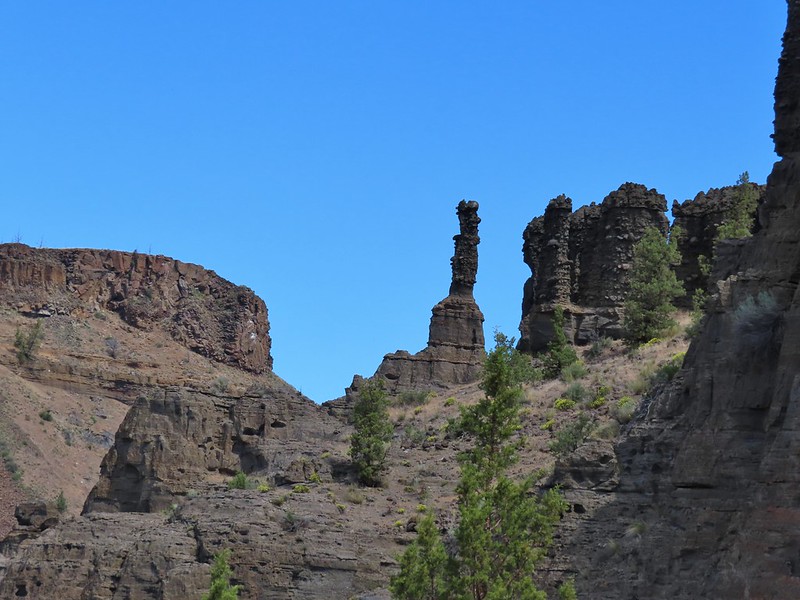
 Love the different rock formations in the canyon.

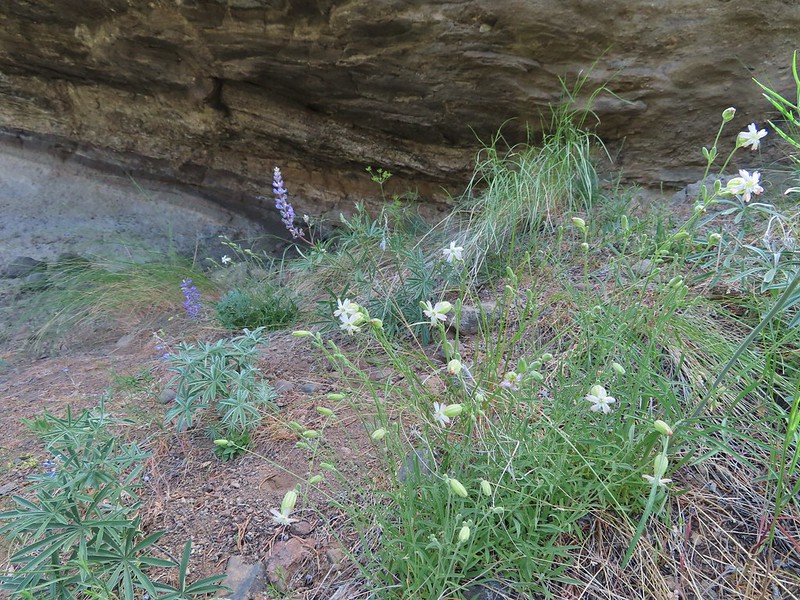 Catchfly
 Balsamroot
 Paintbrush
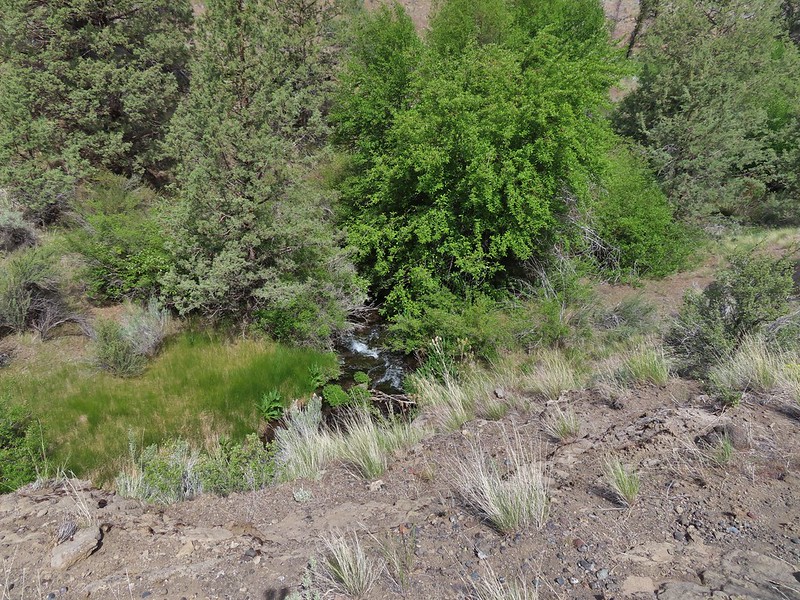 Pretty sure this side creek was dry on our previous visit.

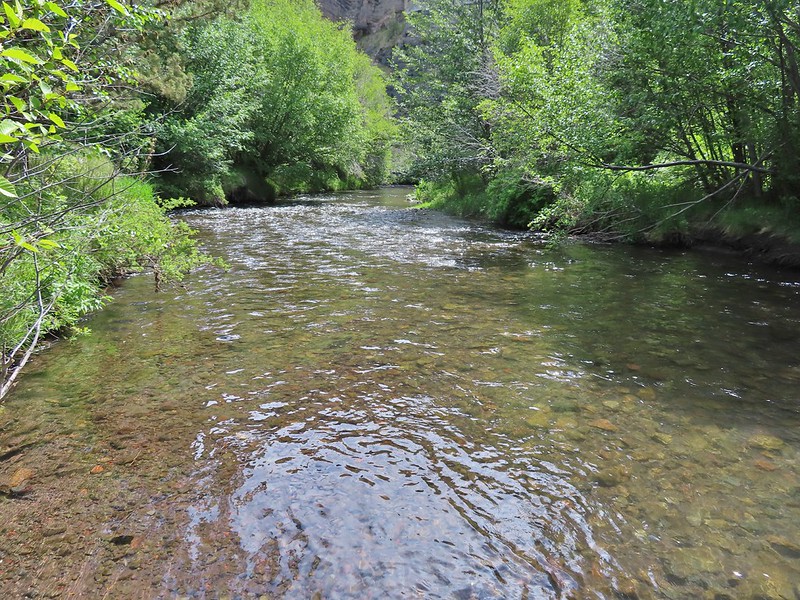 Whychus Creek at the ford.
We’ll get into a little more of the history of Whychus Creek when we cover our Memorial Day hike but we noted that the water level seemed about the same as it had on our previous crossing and that the water was surprisingly warm given the source of the creek is the glaciers and snowfields of Broken Top and the Three Sisters. After a bit of thinking it dawned on us that higher up near Sisters water is diverted to irrigation ditches and other uses.
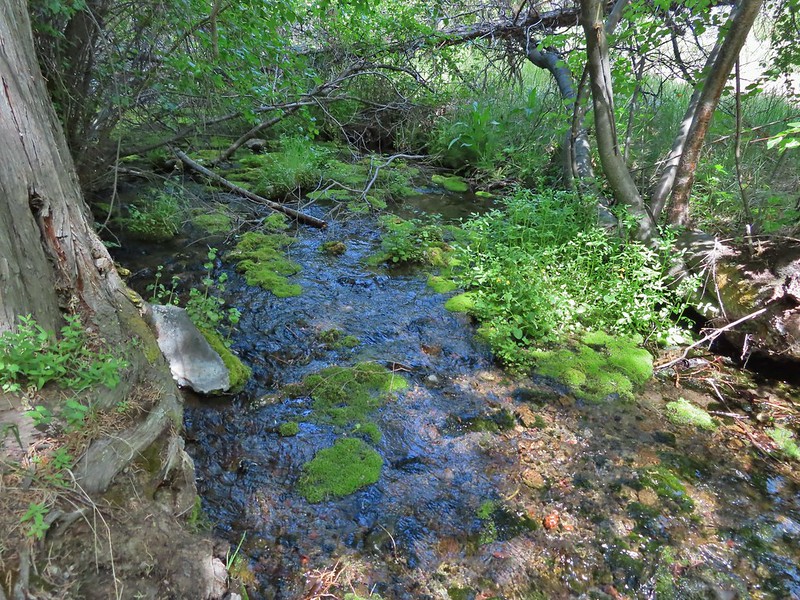 Alder Springs
 Columbine
 A clarkia, possibly Lassen
 Threadleaf phacelia

 Unknown


 Creek dogwood and a beetle covered in pollen
 Grand Colloma
 Deadly nightshade
 Rose with crab spider
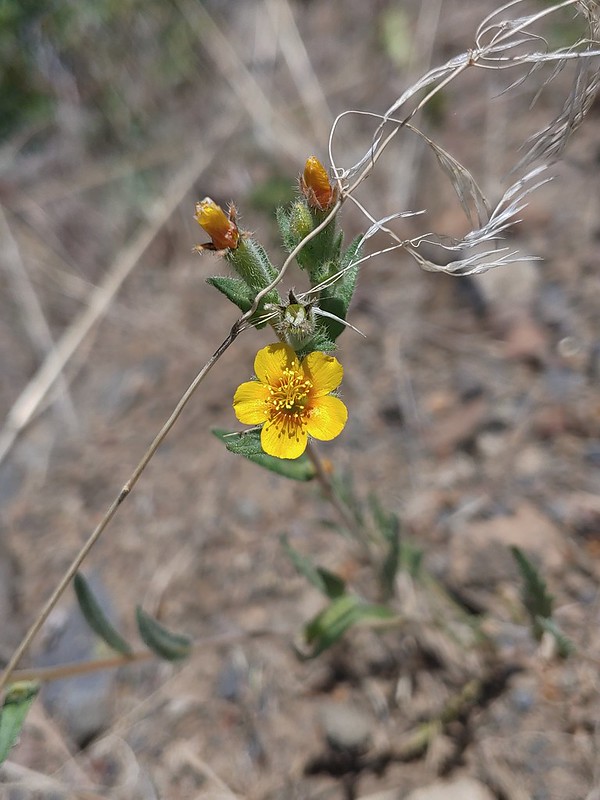
Veatch’s blazingstar


 Dragon fly
We took a break at the end of the trail along the Deschutes River before hiking back just as we had done on the previous visit.
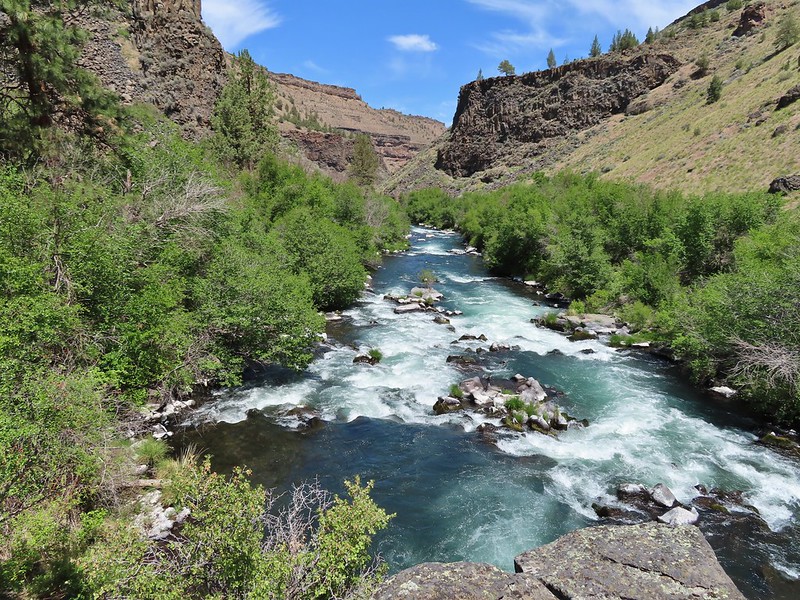
 Confluence of the Deschutes (left) and Whychus Creek (right).
Butterflies and birds were out in force on the hike back.
 Bald eagle


 Cedar hairstreak

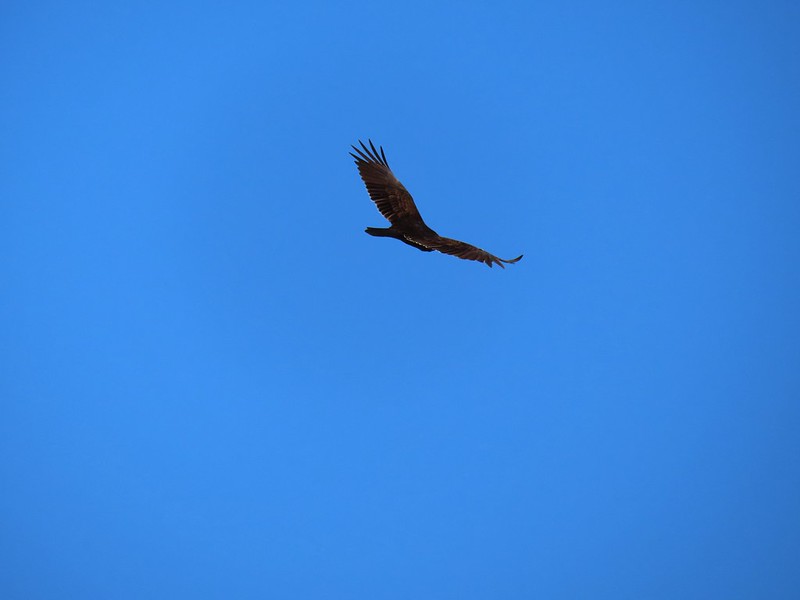 Turkey vulture

 Mountain chickadee
The hike here came in at 6.4 miles and 650′ of elevation gain giving us a little over 11.5 miles and 1120′ of climbing so far on the day.

We had one more quick stop planned for the day. Our first hike had been on Deschutes Land Trust land and the second in the Crooked River National Grassland managed by the Ochoco National Forest and our final stop at the Huntington Wagon Road was on BLM land. The hike here was of particular interest to me as the trailhead is only 2 miles from where I lived from 2nd grade until leaving home for college and yet I had no idea it was there. The BLM has created a 1.2 mile long interpretive trail along a section of a route that was built to haul supplies from The Dalles to build Fort Klamath.
 Trailhead on McGrath Road.
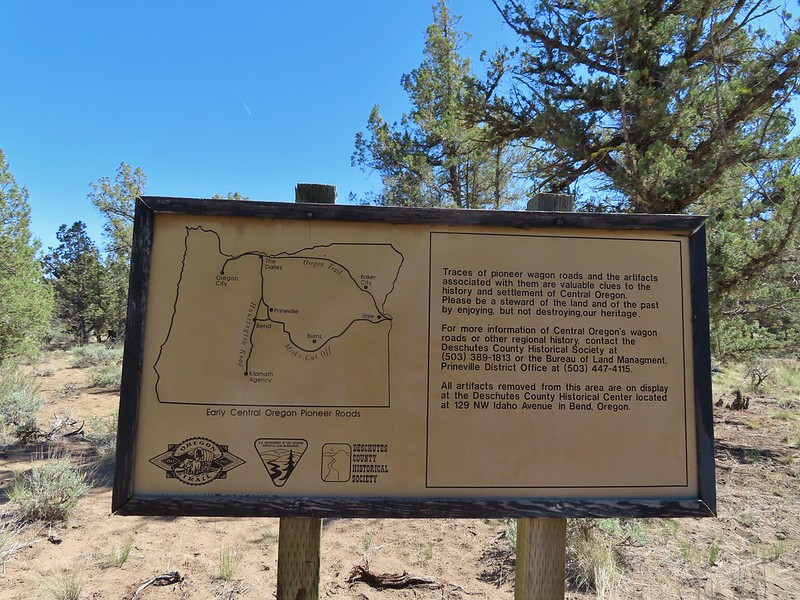
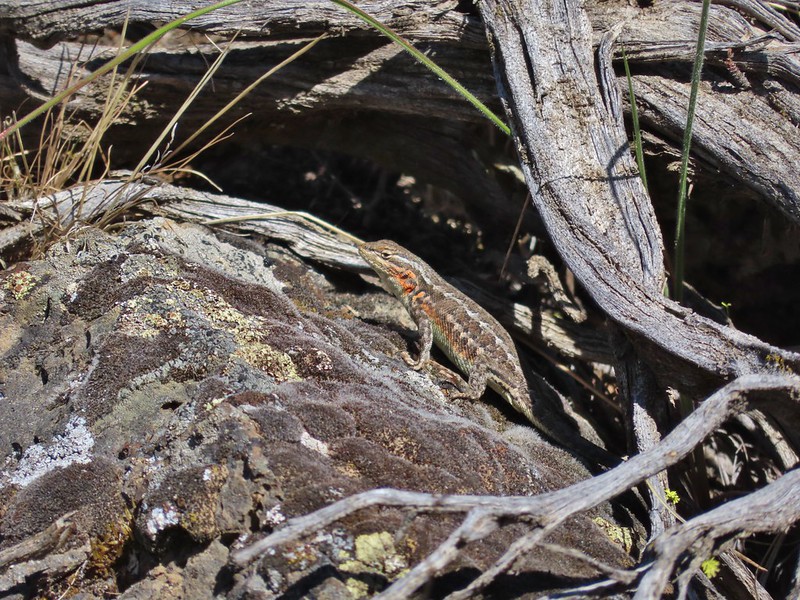
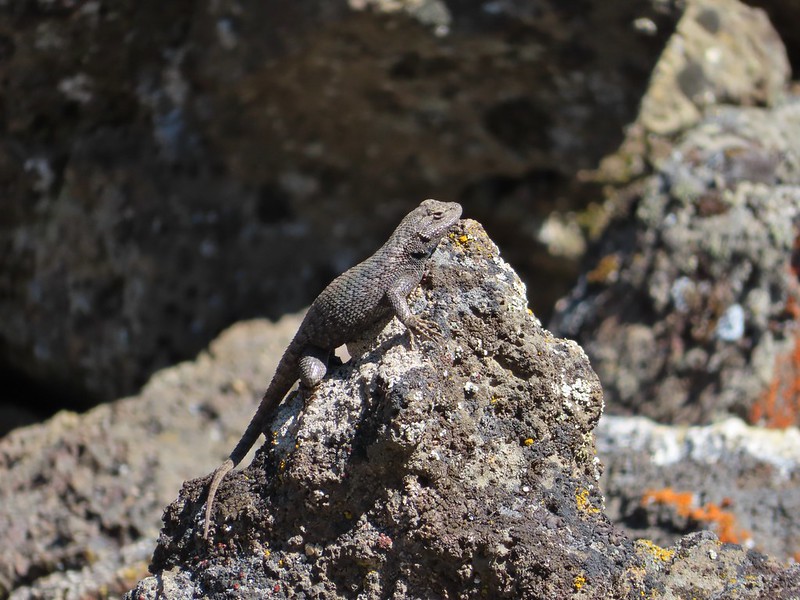
There is a lot to see along the trail as far as scenery goes. It’s mostly sagebrush and juniper with some lava formations mixed in. The history is what makes this hike interesting, and the dozens of lizards scurrying about.
 A 300+ year old juniper named an Oregon Heritage Tree
 Sagebrush, juniper and lava – my childhood 🙂

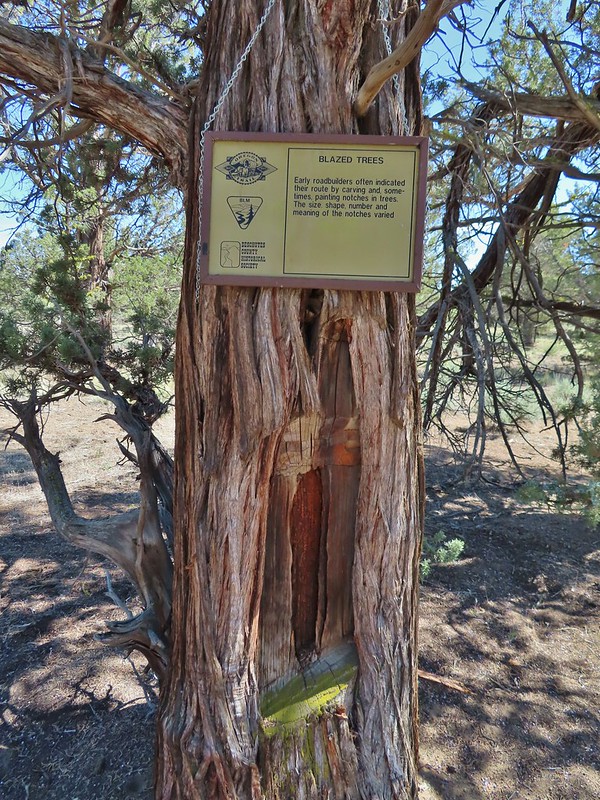 Tree blaze

 Buckwheat

 Ruts along the wagon road.
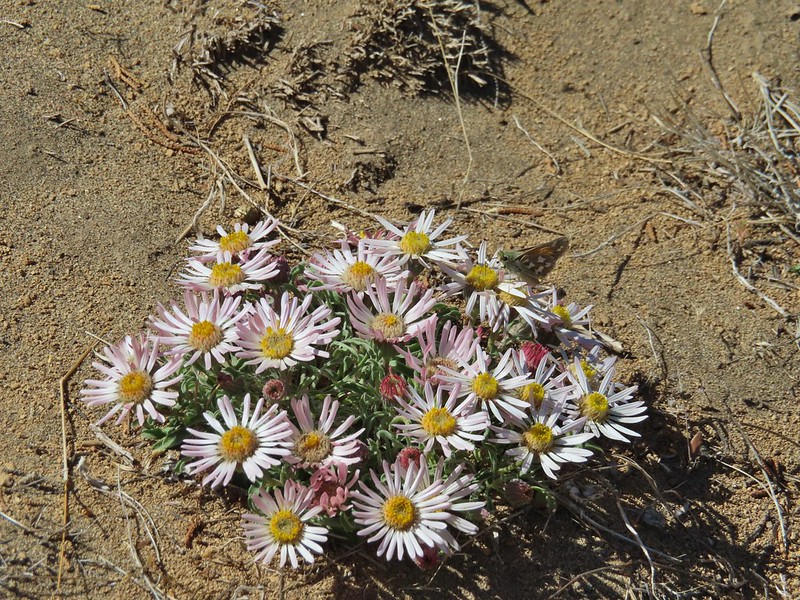 Skipper on Showy townsendia.
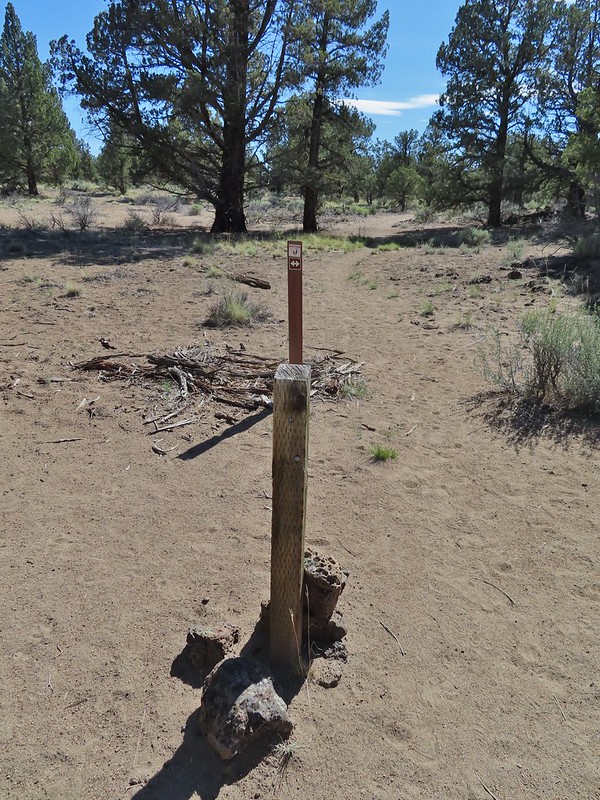 Post marking the relic fence line and turnaround point.
 An old fence post and barbed wire.
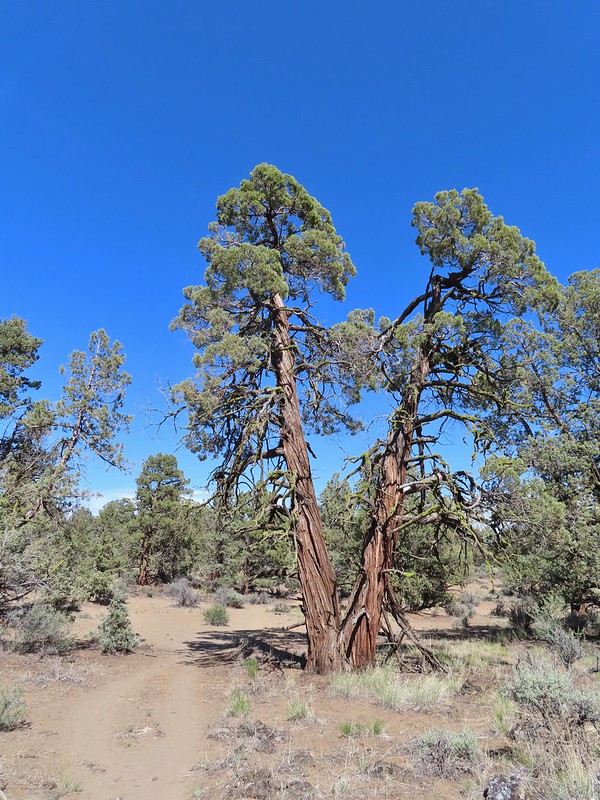 Junipers are some interesting trees, they come in all shapes and sizes.

In total we hiked 14 miles with 1150′ of elevation gain. We got to see two sections of Whychus Creek and Canyon as well as parts of two historic Wagon Roads. We ended the day by enjoying some homemade lasagna at Heather’s parents place. Not a bad way to start a holiday weekend. Happy Trails!
Flickr: Whychus Canyon Preserve, Alder Springs, and Huntington Wagon Road

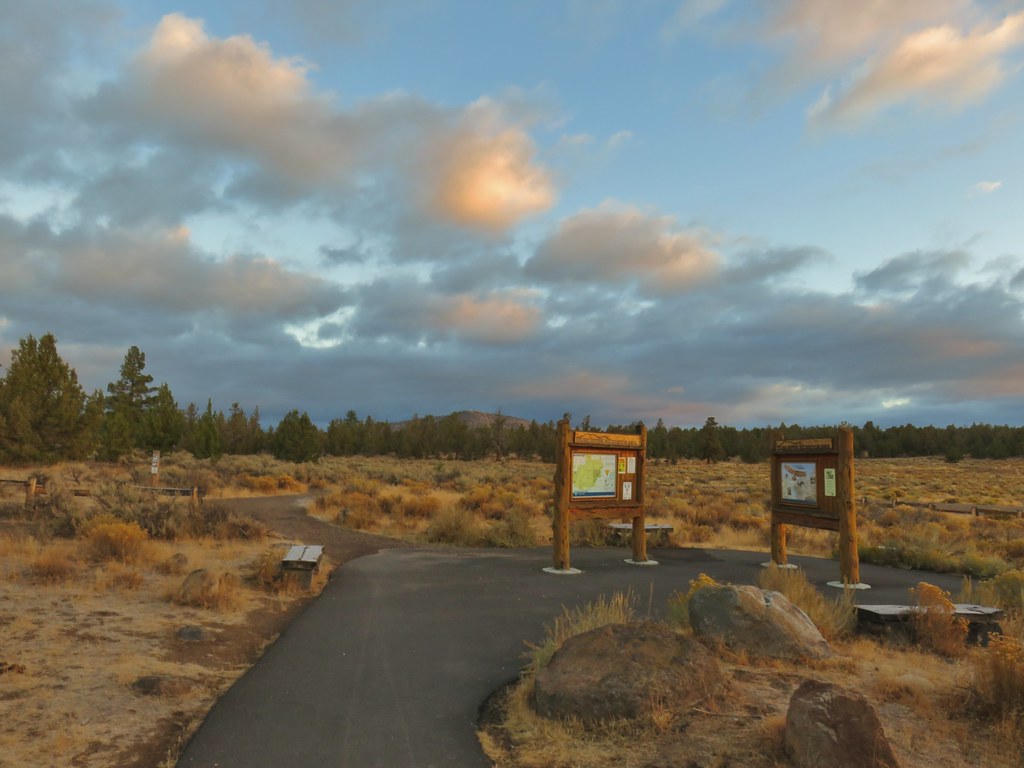 Cline Buttes from the Maston Trailhead.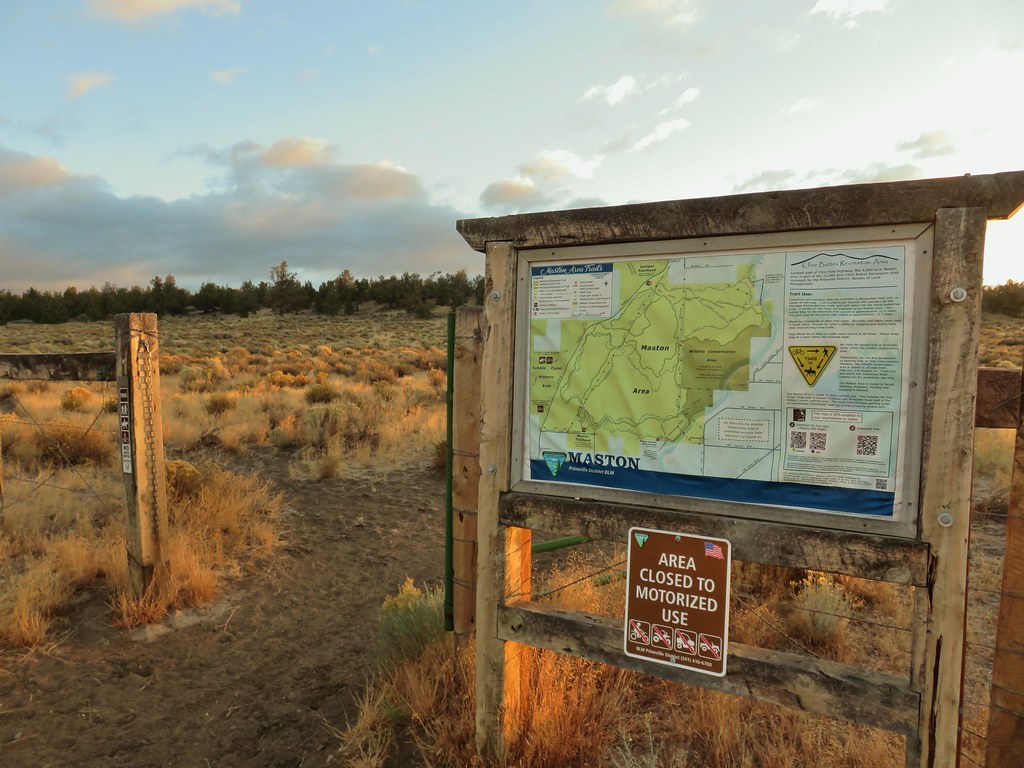

 Interpretive sign at the Maston Trailhead telling the story of the settlers.
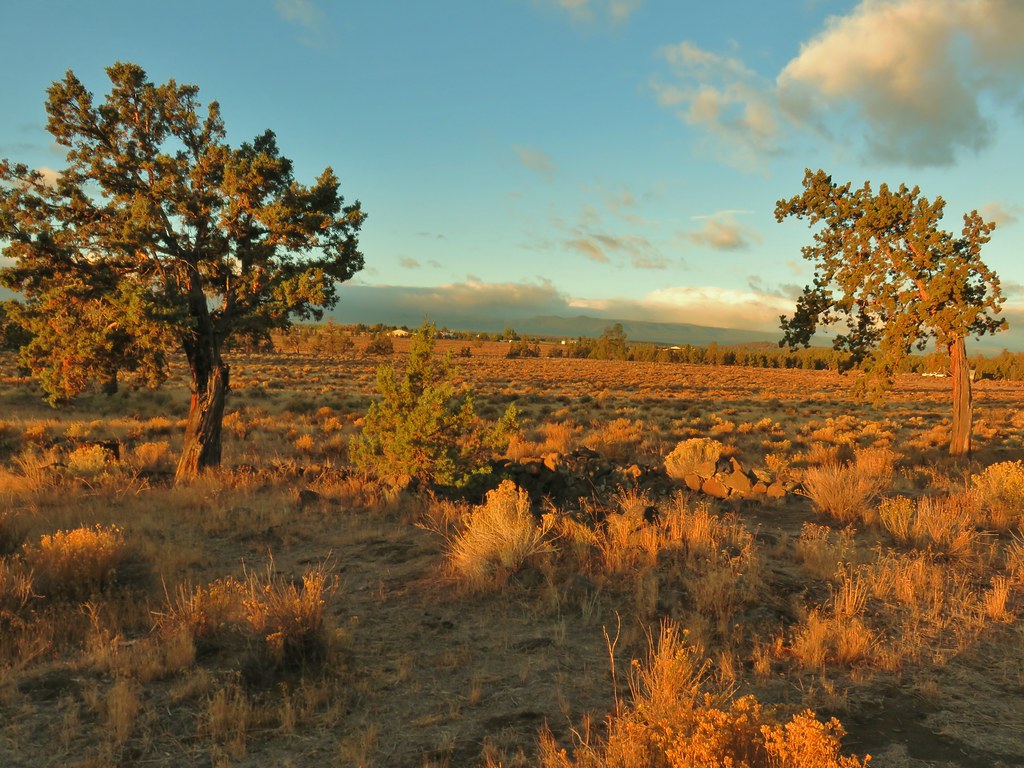 Stone foundation of one of the abandoned buildings along the Settlement Trail.
 Typical sign at a junction. Not all of the junctions had signs and not all of the signs identified which trail/junction it was so having a copy of the trail system map is a really good idea.
 This one may be a sparrow of some sort, it was signing quite a bit.
 Possibly another sparrow or a finch or something else.
 Maybe a bluebird?
 Wildcat Canyon Trailhead off to the right.
 I managed to snap one photo and of course the camera focused on said juniper instead of the rabbit beyond.
 Wildcat Canyon on the right joining the Deschutes River Canyon
 The Deschutes River near where the canyons meet.
 Grizzly Mountain in the distance beyond the Deschutes River.
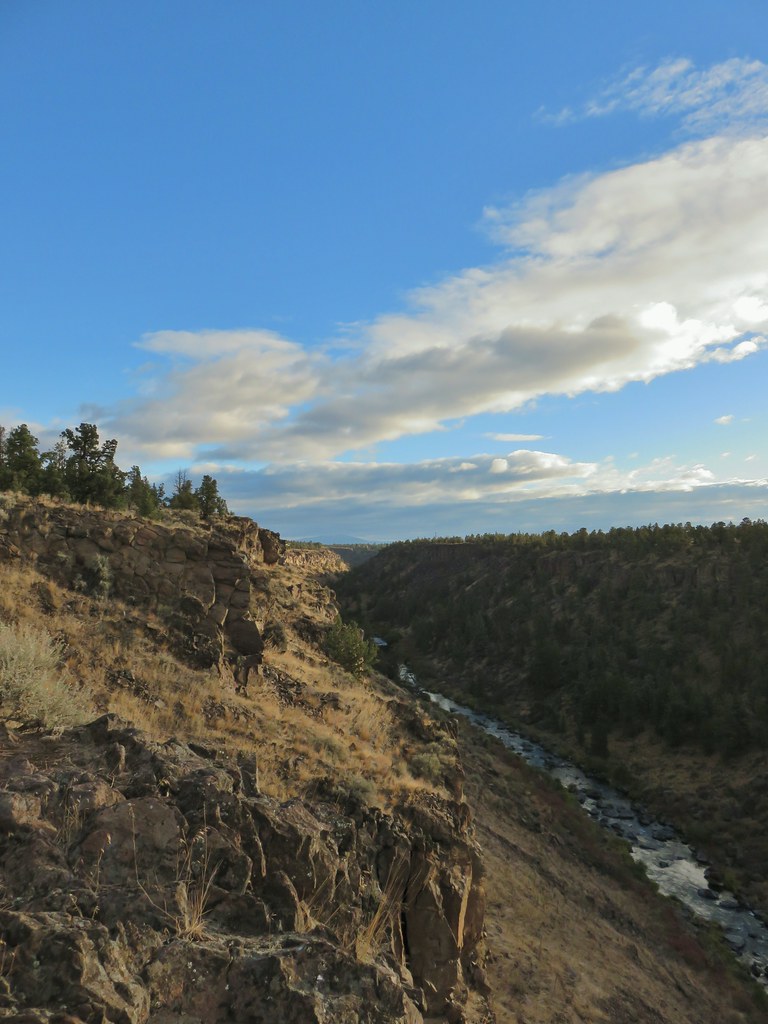 Another of several viewpoints along the rim.
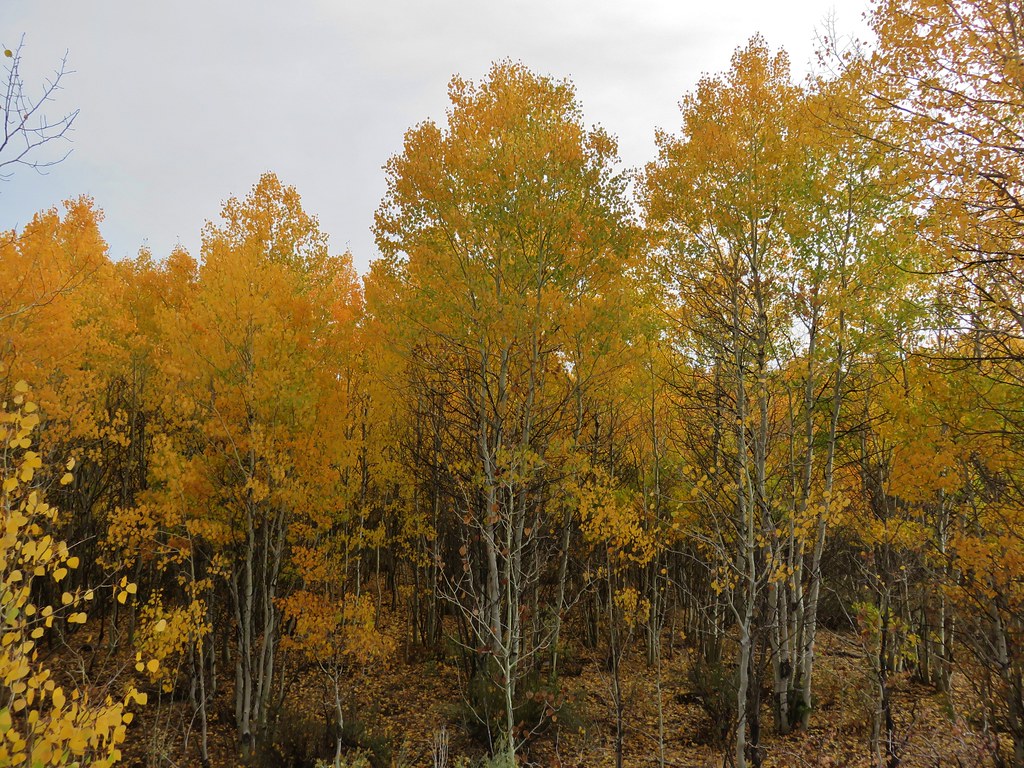
 Some Fall color along the Deschutes River.
 Rock dove
 A viewpoint along the Rockbar Trail.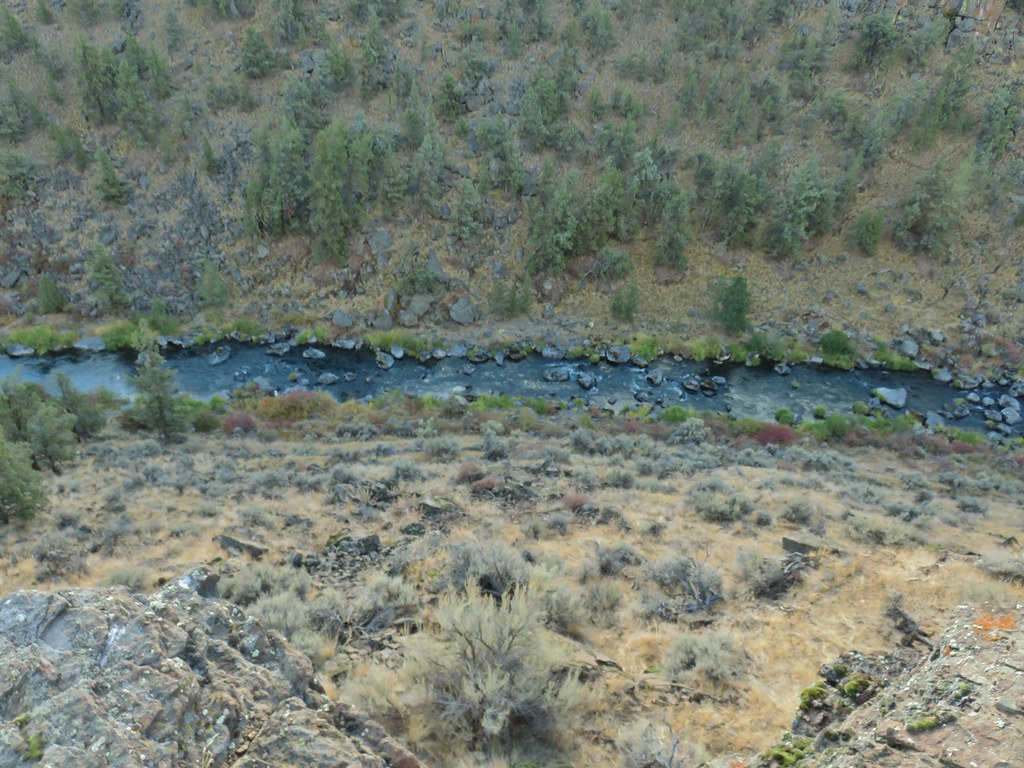
 Looking south up the river canyon.
 A calm pool along the Deschutes.
 I could see this one, a Stellar’s jay.
 Coming up to the road.


 This was Junction 2 (one of the junctions with an identifying sign). We stayed right on the Headgate Trail here.
 Tam McArthur Rim is left center with South Sister in the center and North Sister to the right center.
 Heather and Dominique on the Maston Trail.
 Coming up on the Settlement Trail.






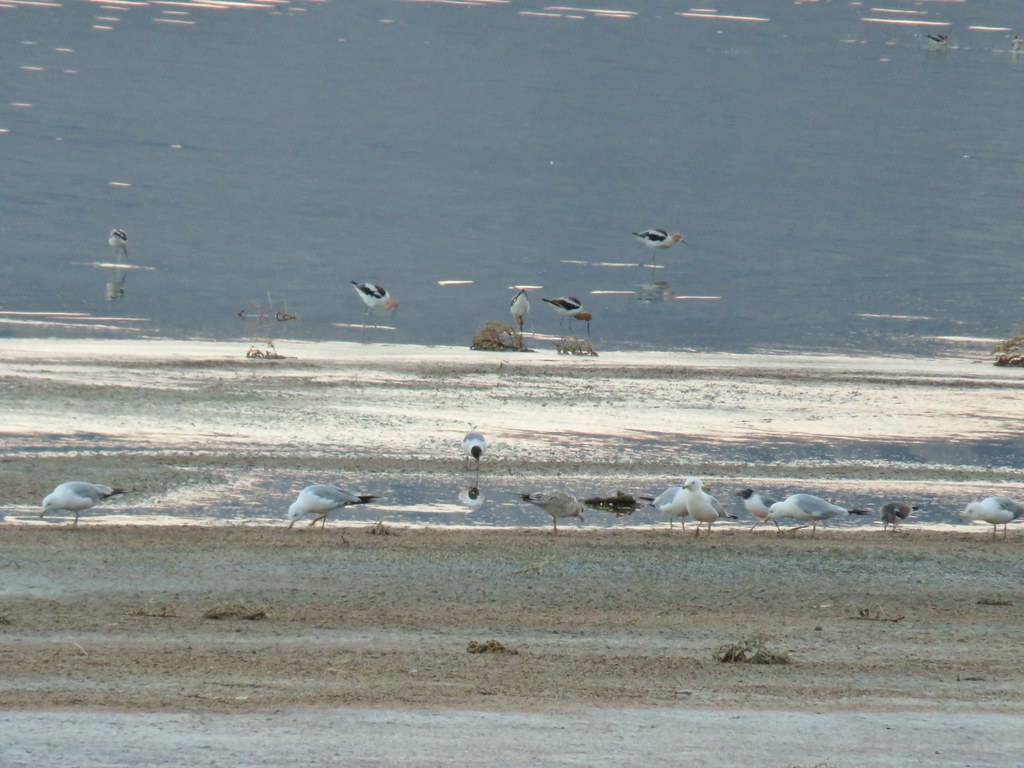 Gulls and avocets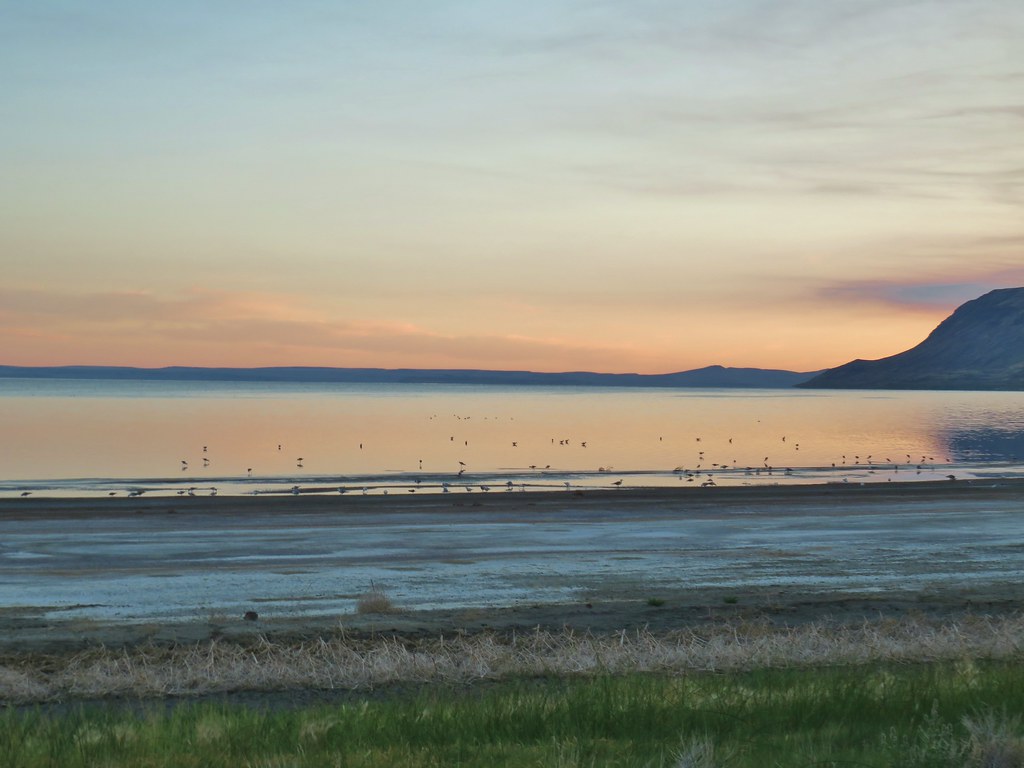
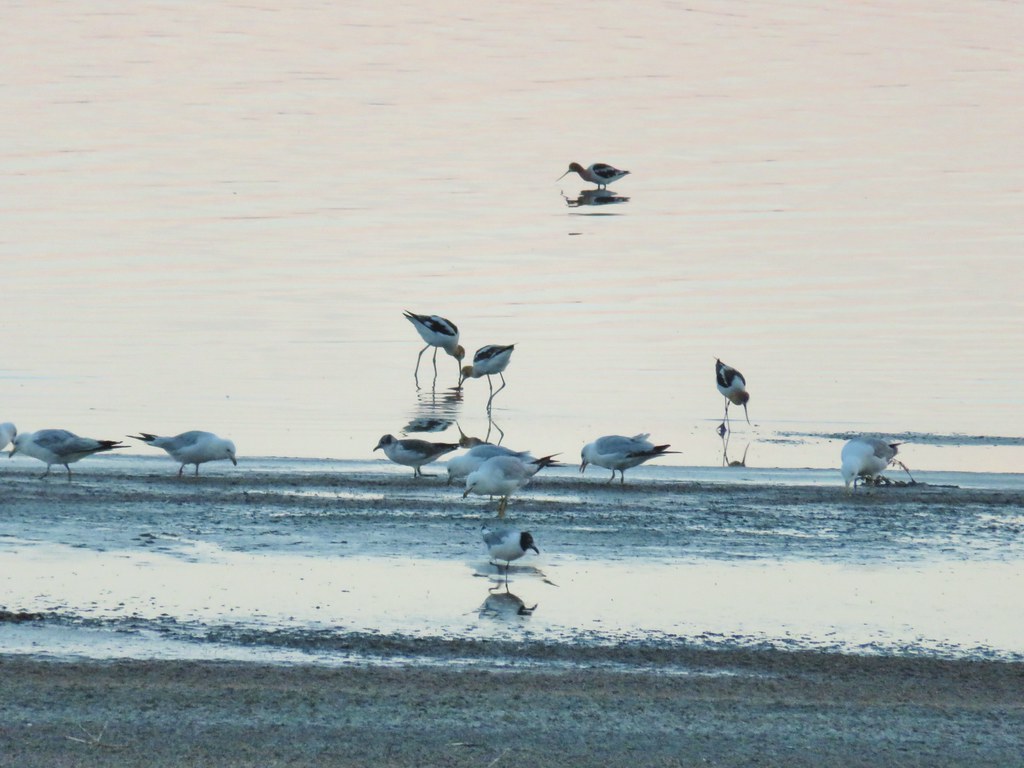
 American avocets


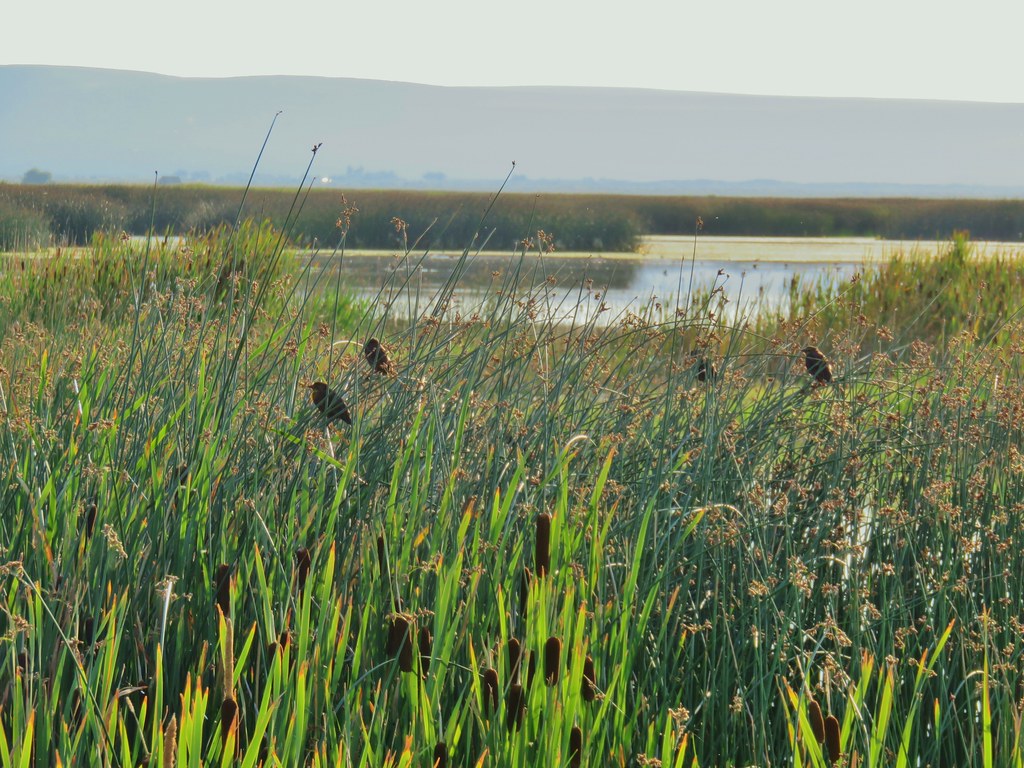
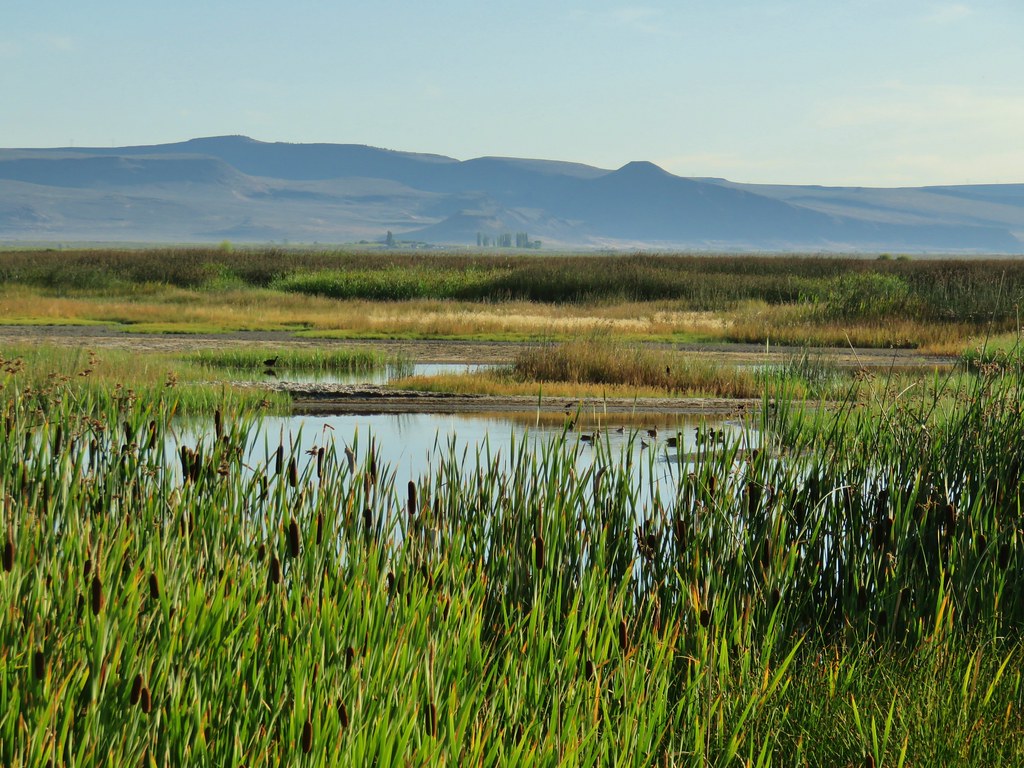 A white faced ibis and some ducks.

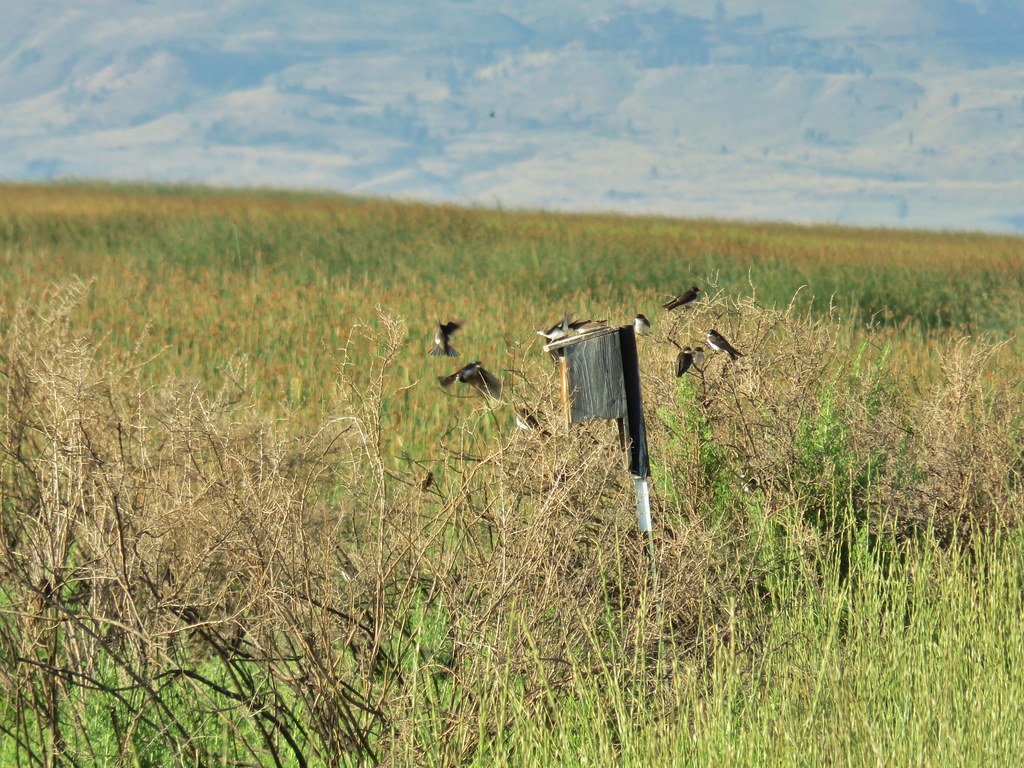 Swallow rave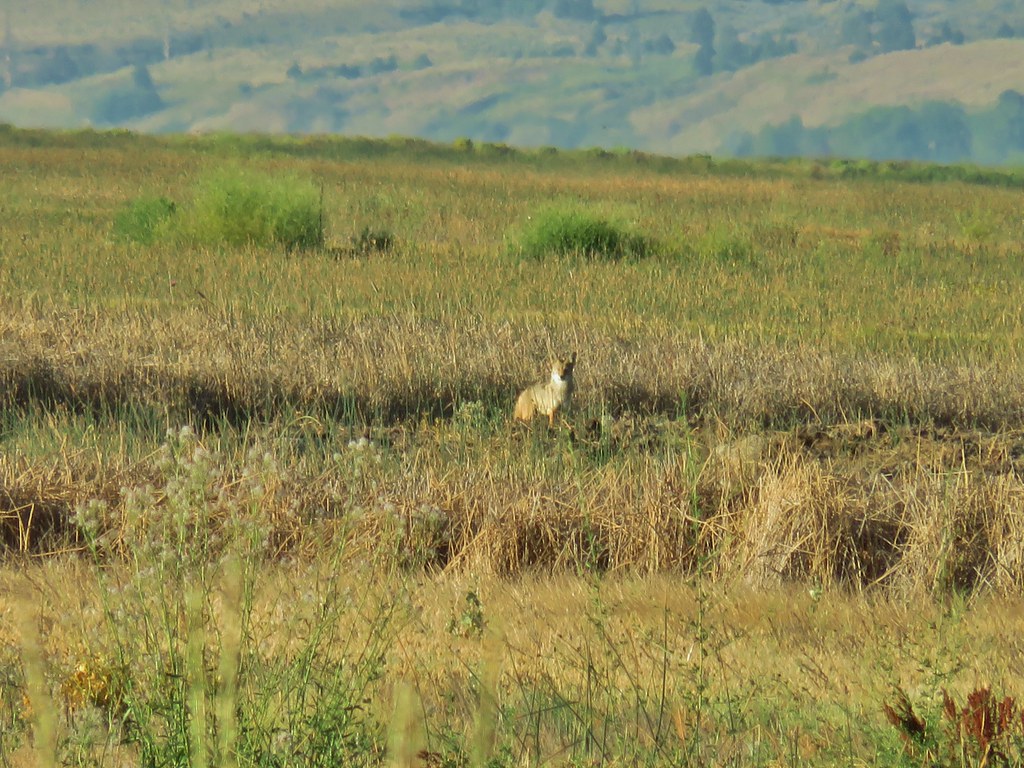
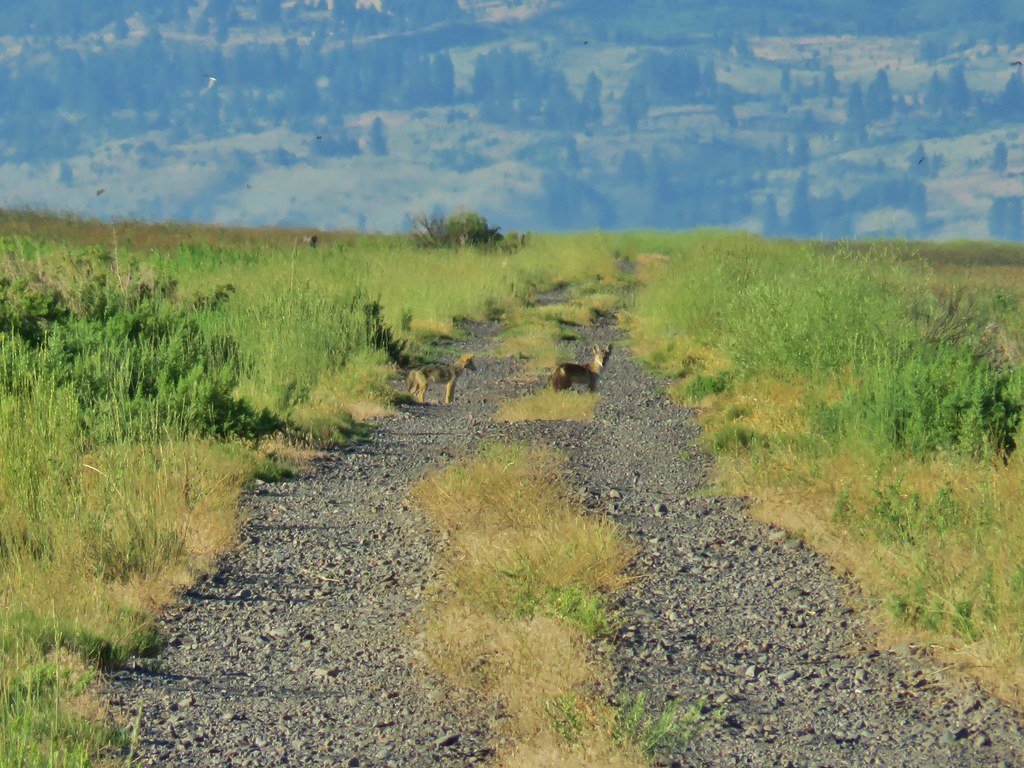
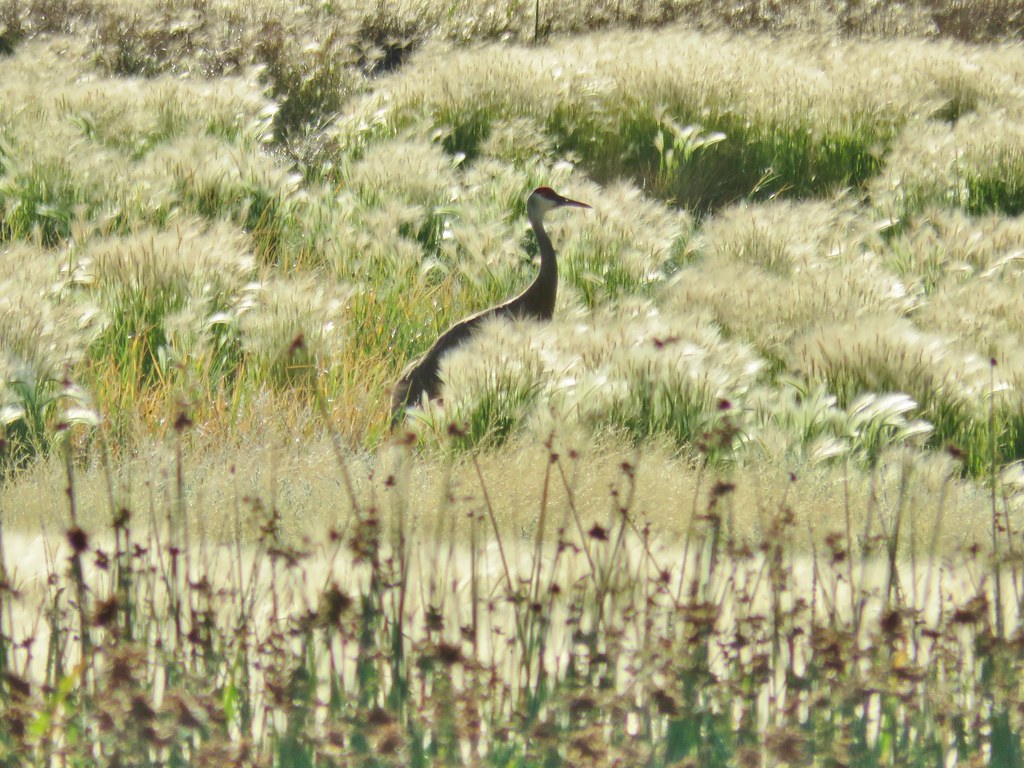 Sandhill crane
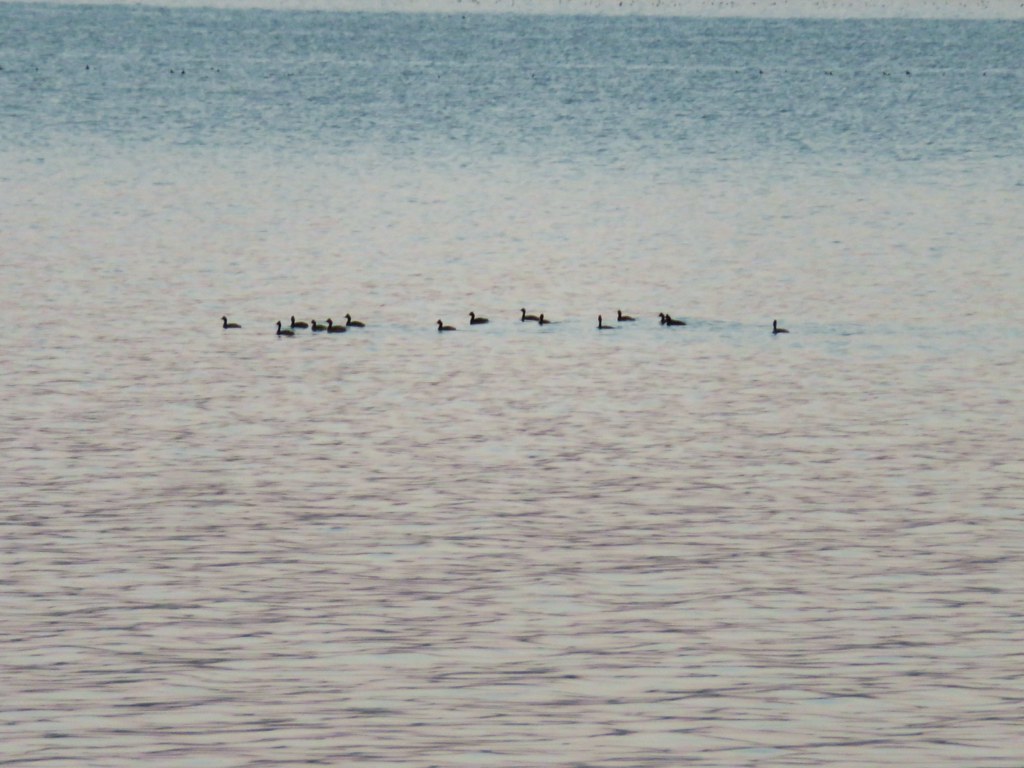
 Look more ducks!
 White faced ibis coming in for a landing.
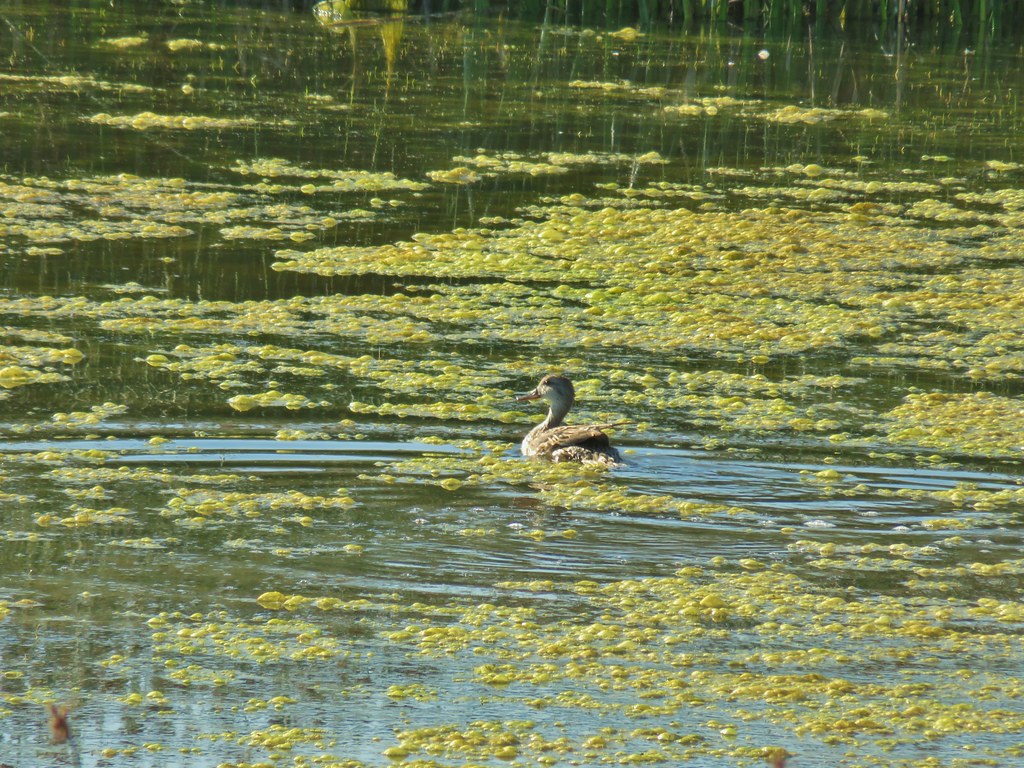
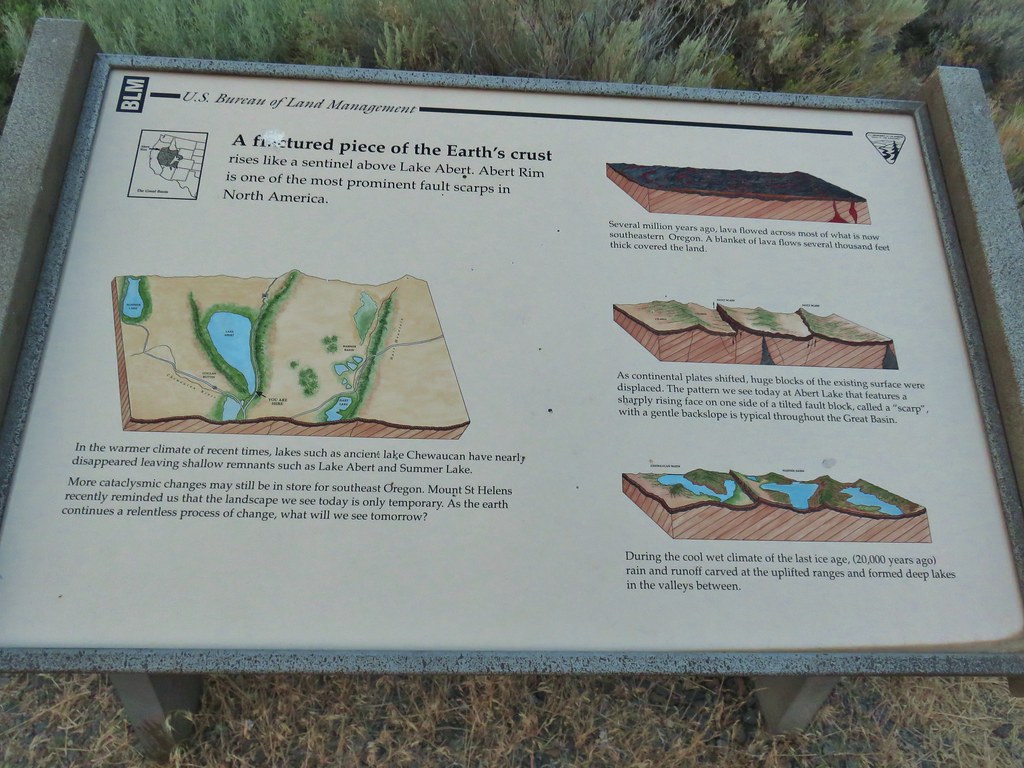
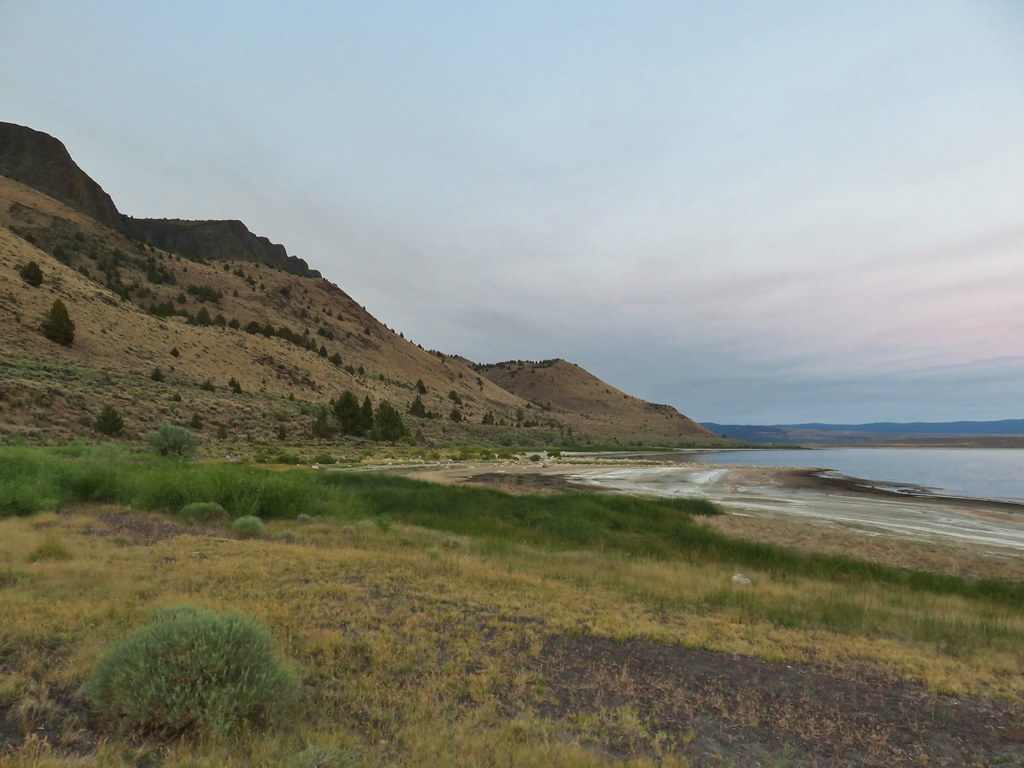
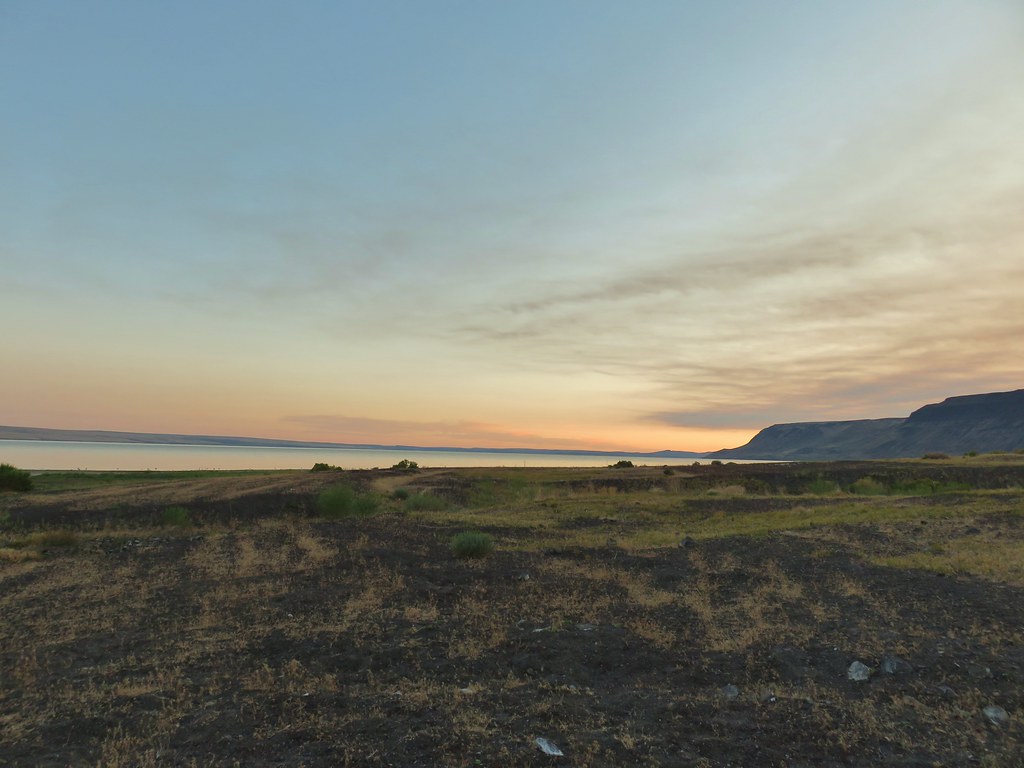
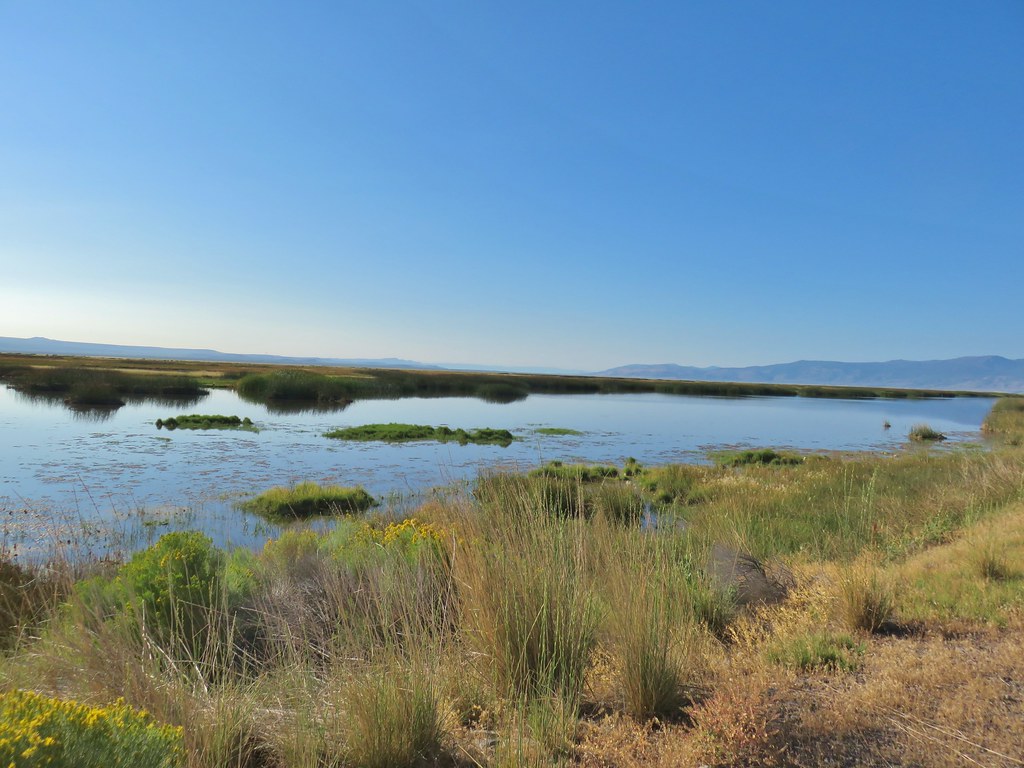 Looking out over Summer Lake
 White faced ibis
 Black-neck stilt
 Killdeer
 Great blue heron in flight.

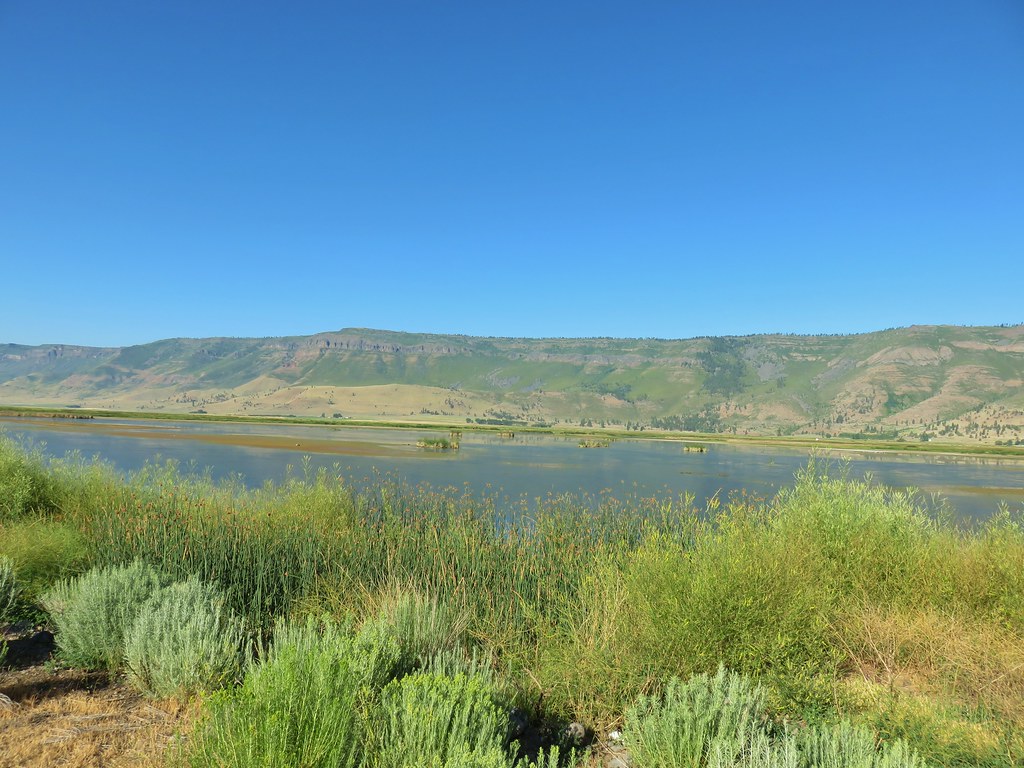

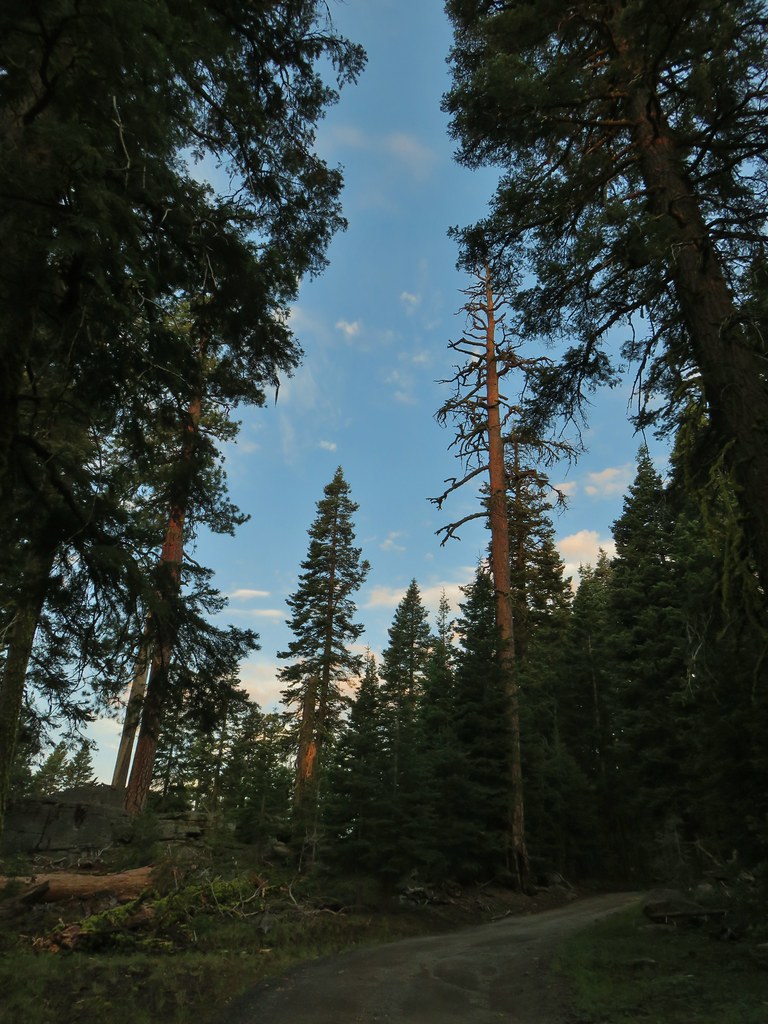
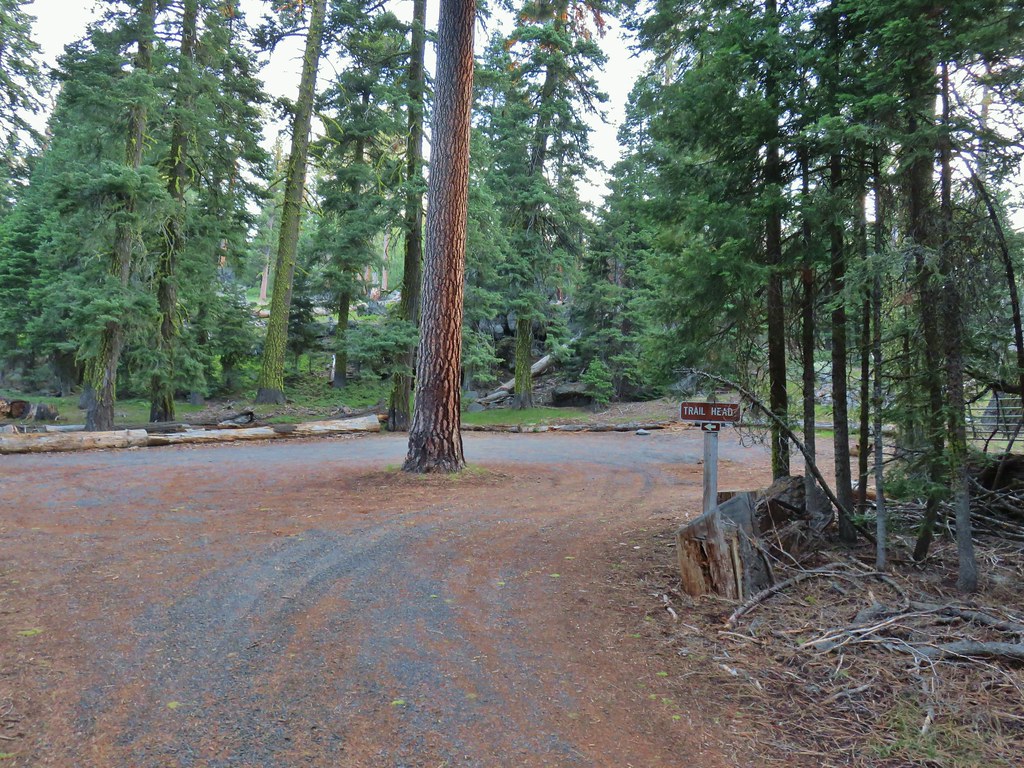 The gate on the right through the trees.


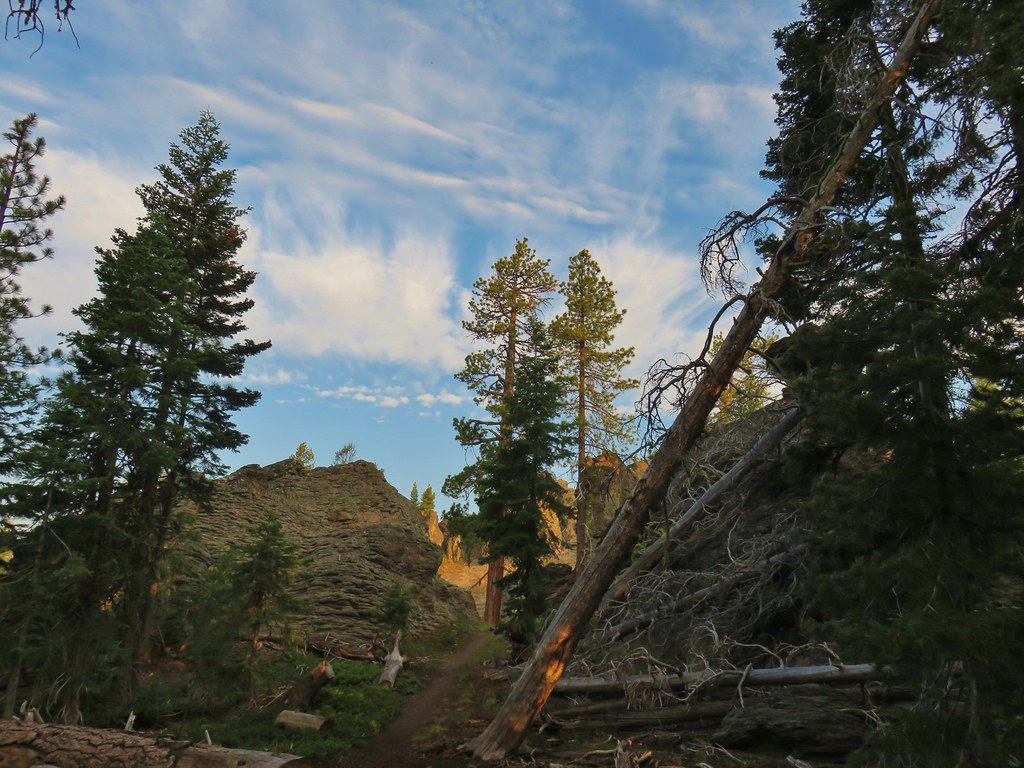





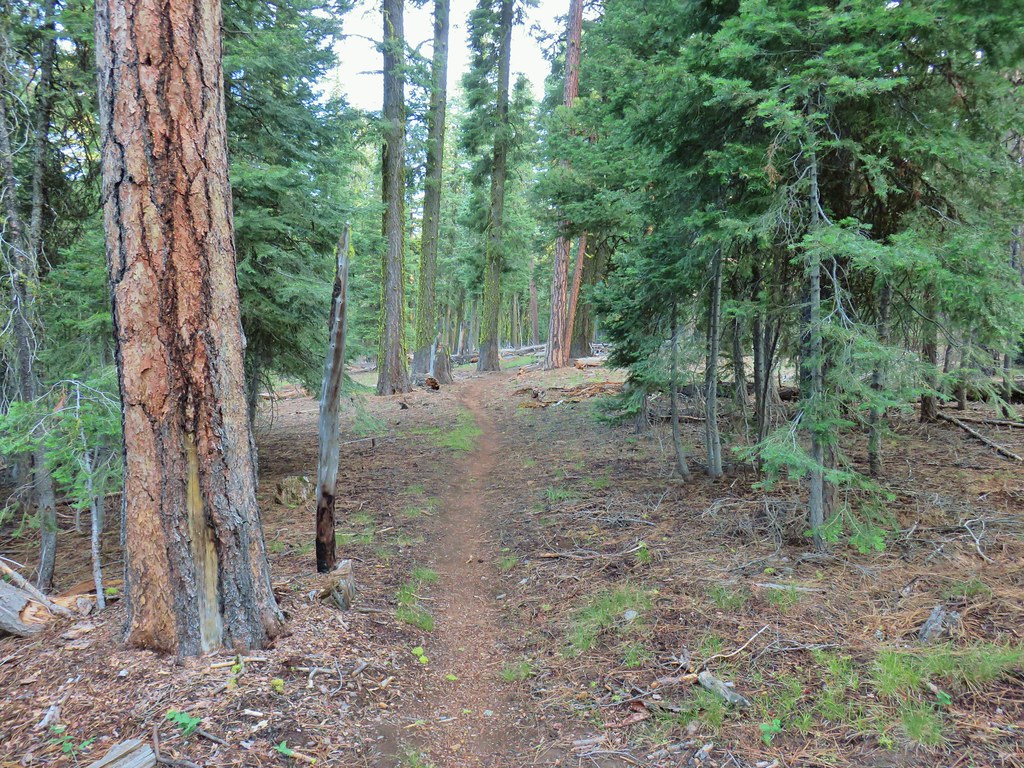

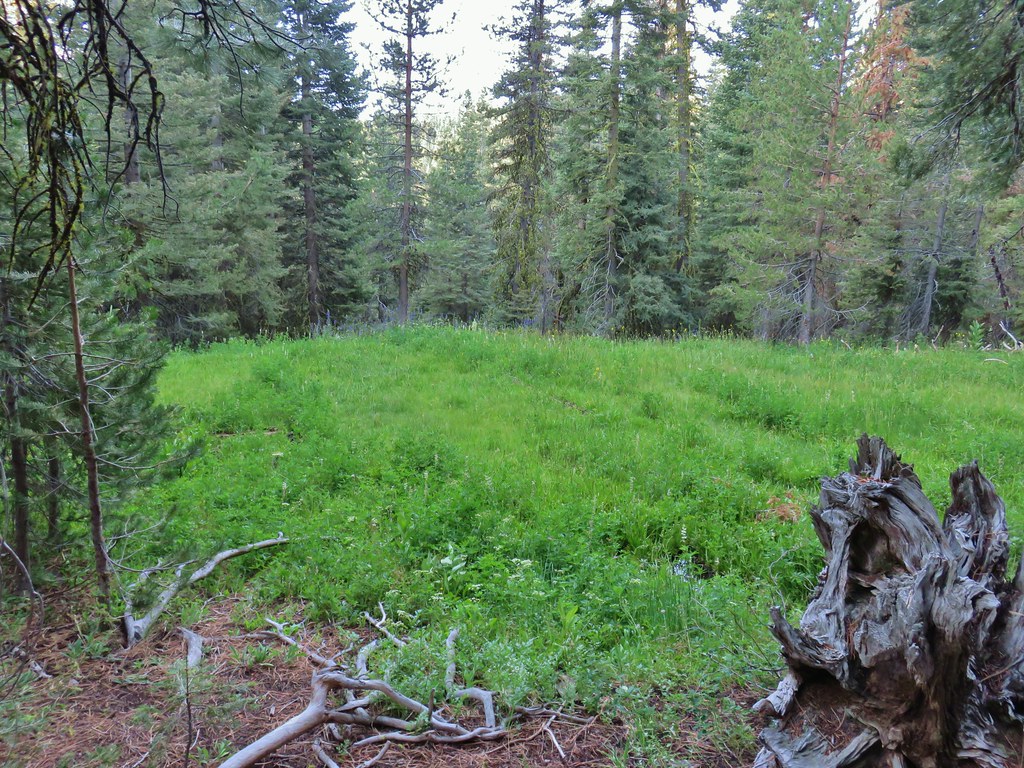
 Mountain coyote mint and paintbrush along the trail.
 Starting the switchback.
 Scarlet gilia
 Columbine
 Monkshood and California corn lily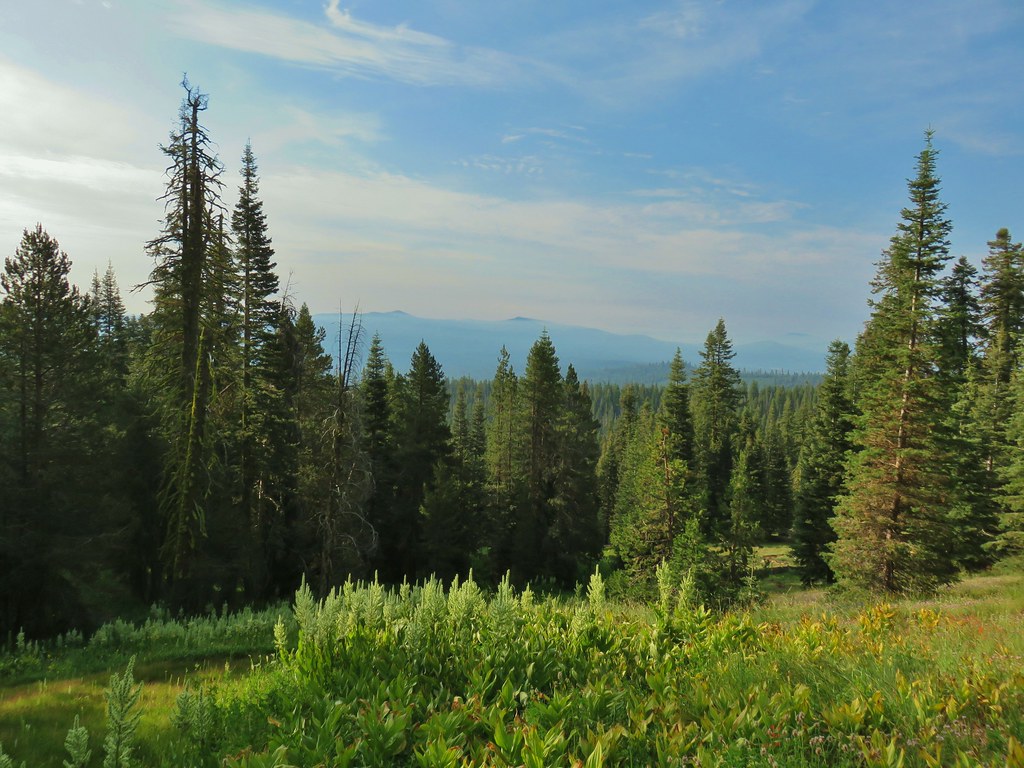
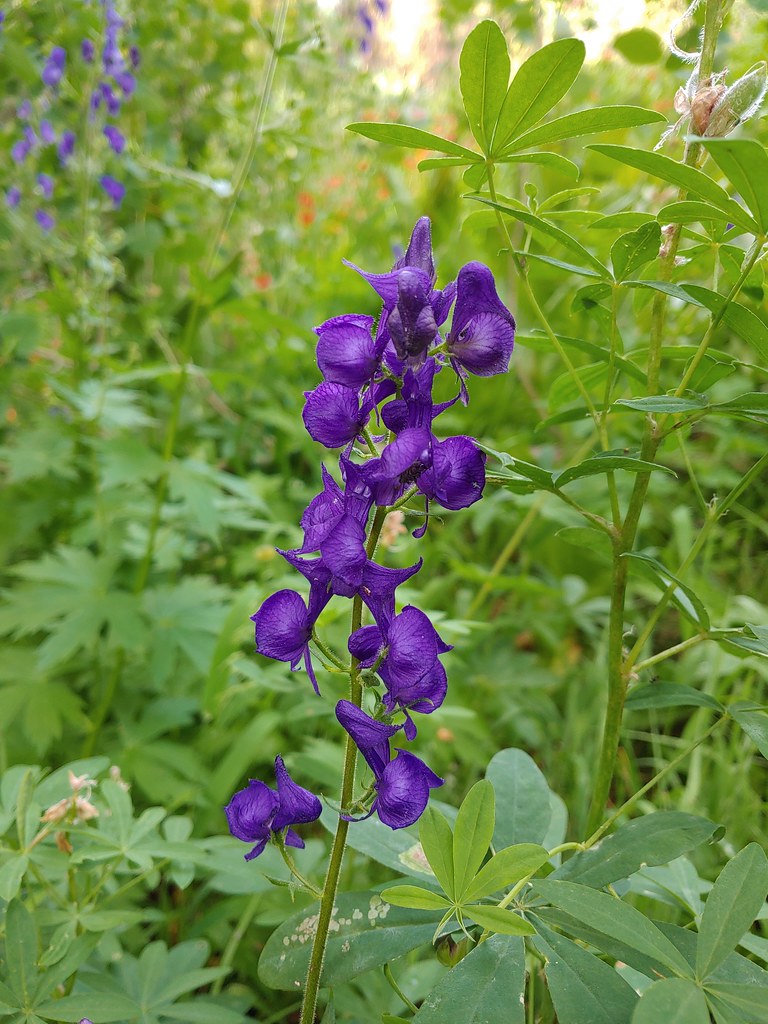 Monkshood
 Orange agoseris
 More rocks above the trail.


 Just about to the saddle.
 Gearhart Mountain from the saddle.
 Gearhart Mountain, The Notch to the right, and meadows below.
 Penstemon in the rocks at the saddle.


 A fire pit also made us think we were on the right course.
 You can’t make the mountain out in the picture but it was out there.
 Now you can sort of see it.
 A little blurry but there is Mt. McLoughlin

 The final little uphill on the left.
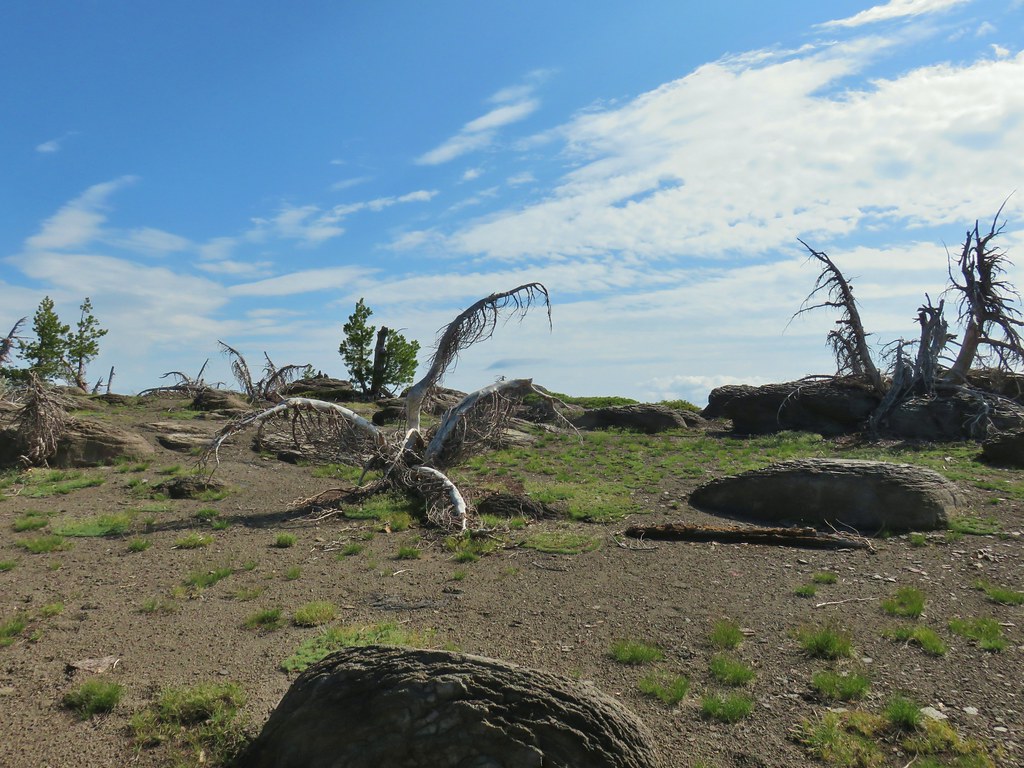 Summit of Gearhart Mountain
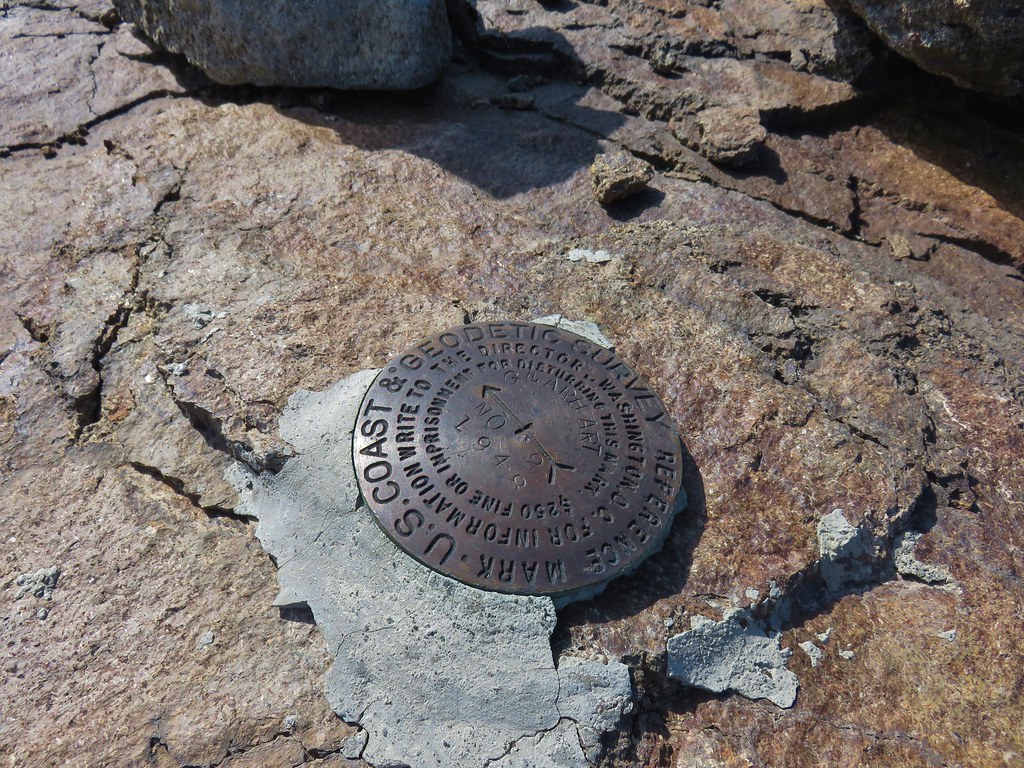 Survey marker
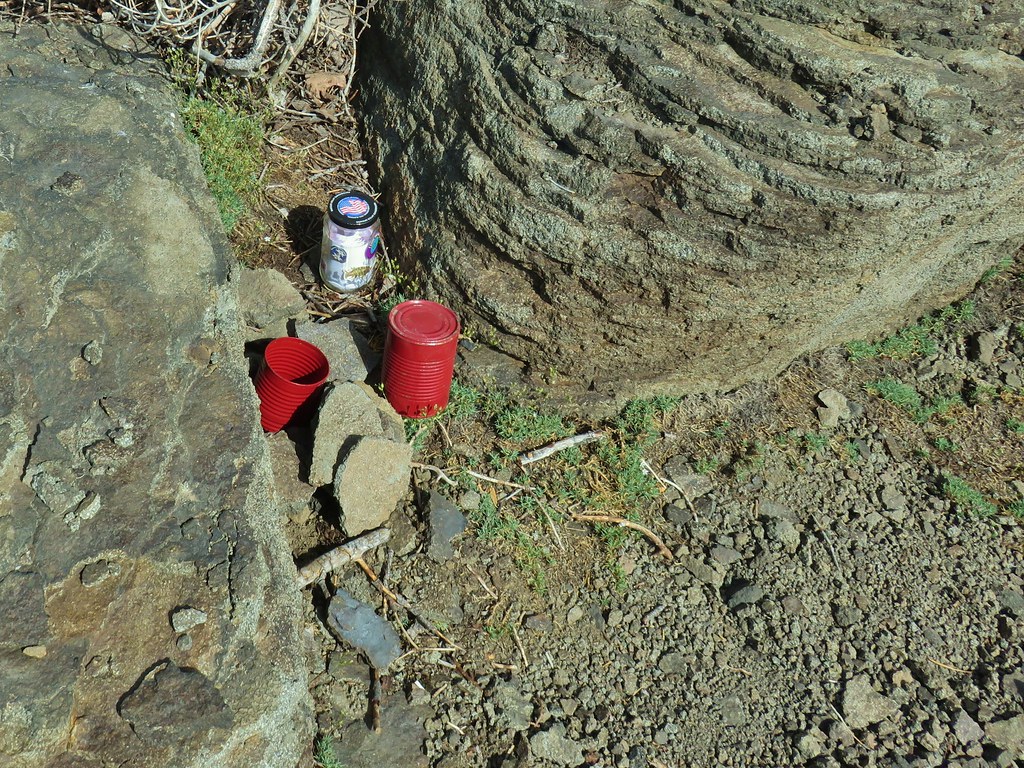 Summit register
 The Notch is below to the right hidden by the cliffs.
 West toward Mt. McLoughlin which is still hard to make out.
 If you squint really hard you can make out a couple of snowy peaks on the horizon.
 NNE view.
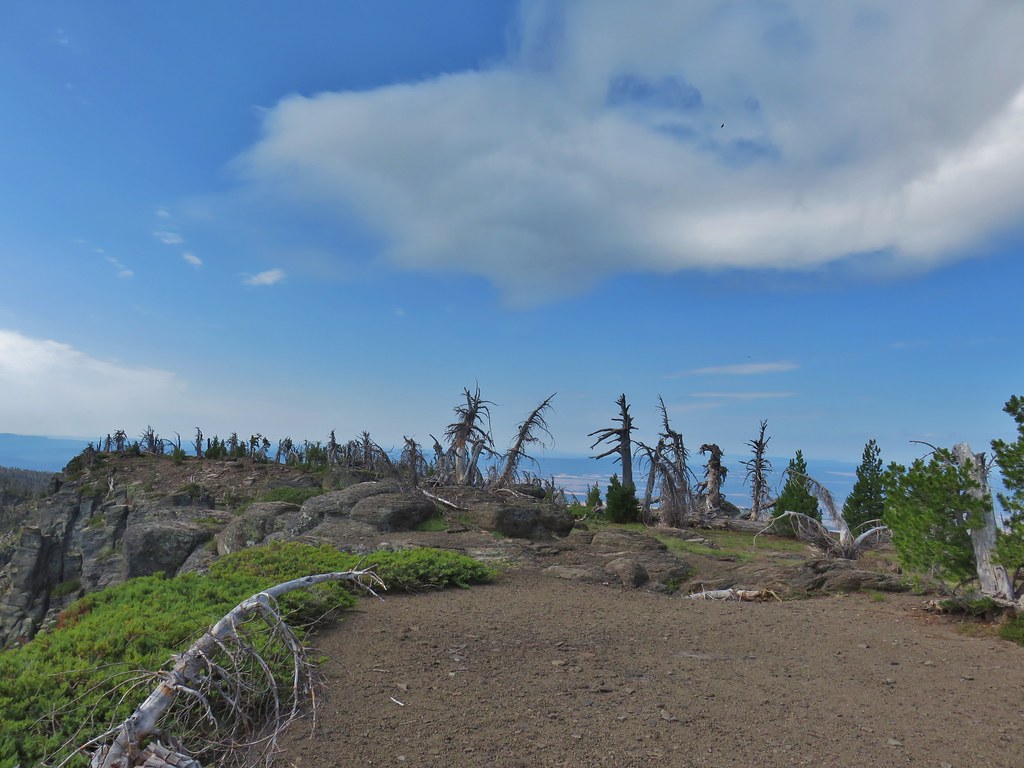 South back along the ridge.
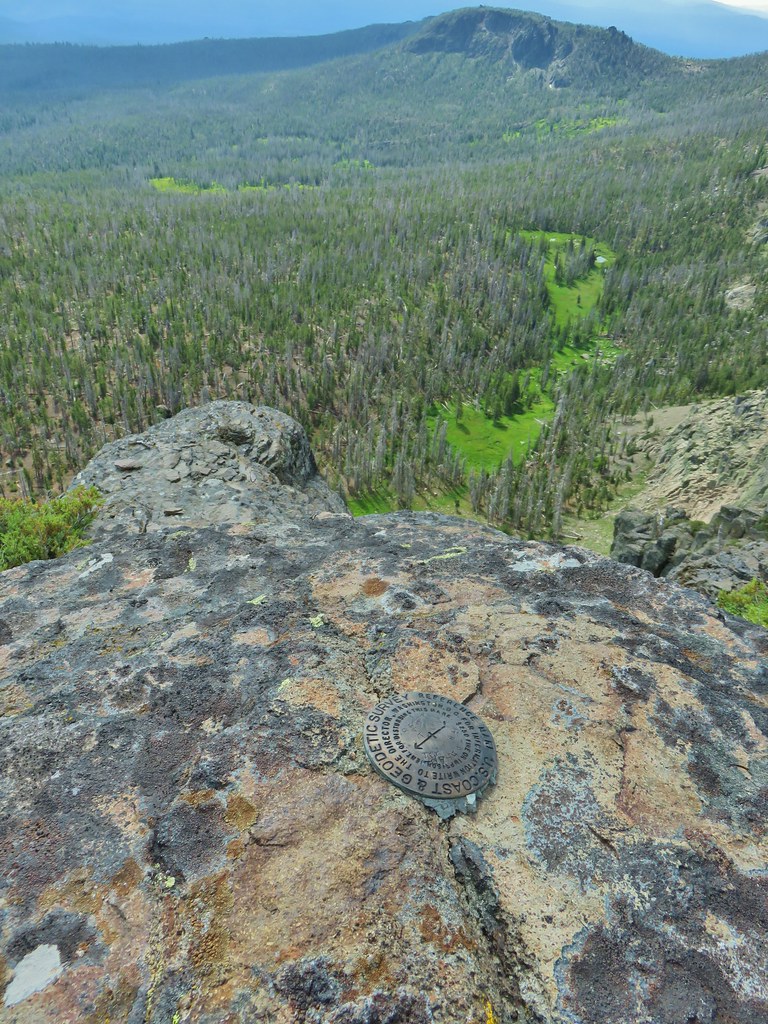 East down to the meadows below and a second survey marker.
 Getting ready to drop down toward the saddle.
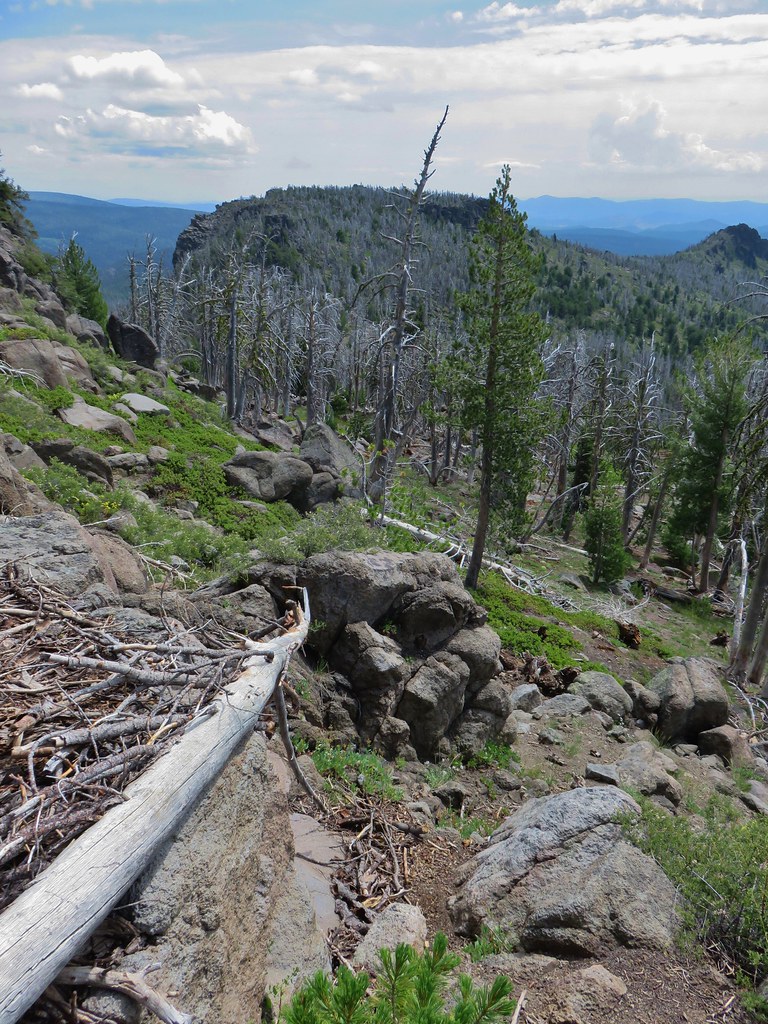 Heading down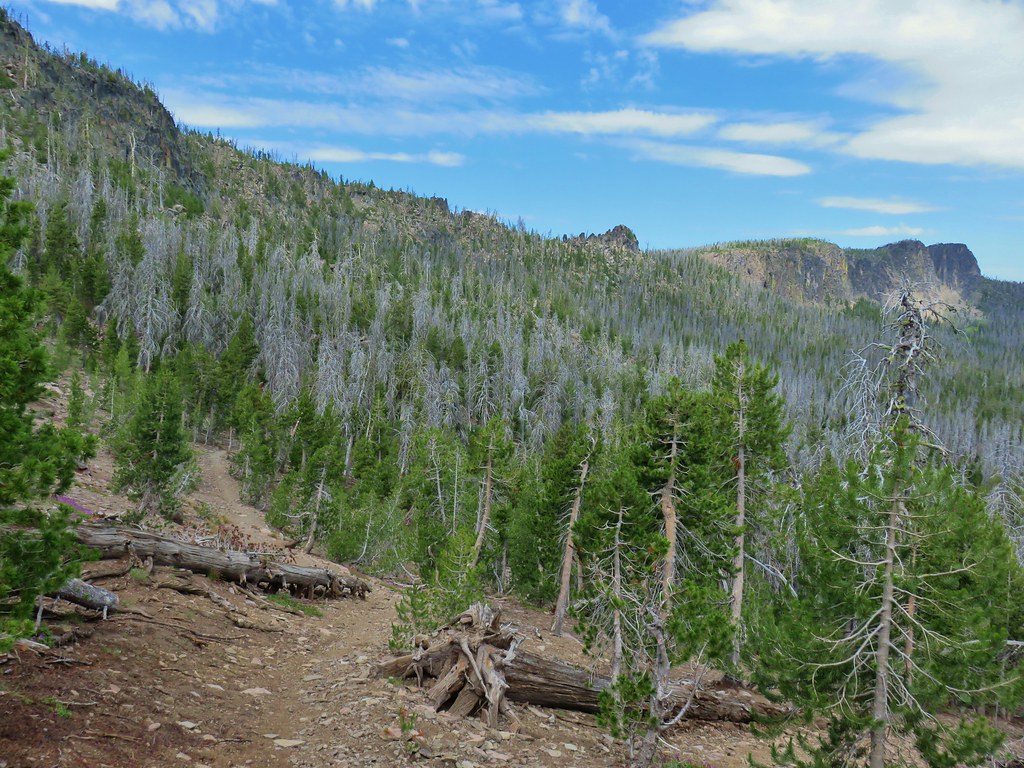


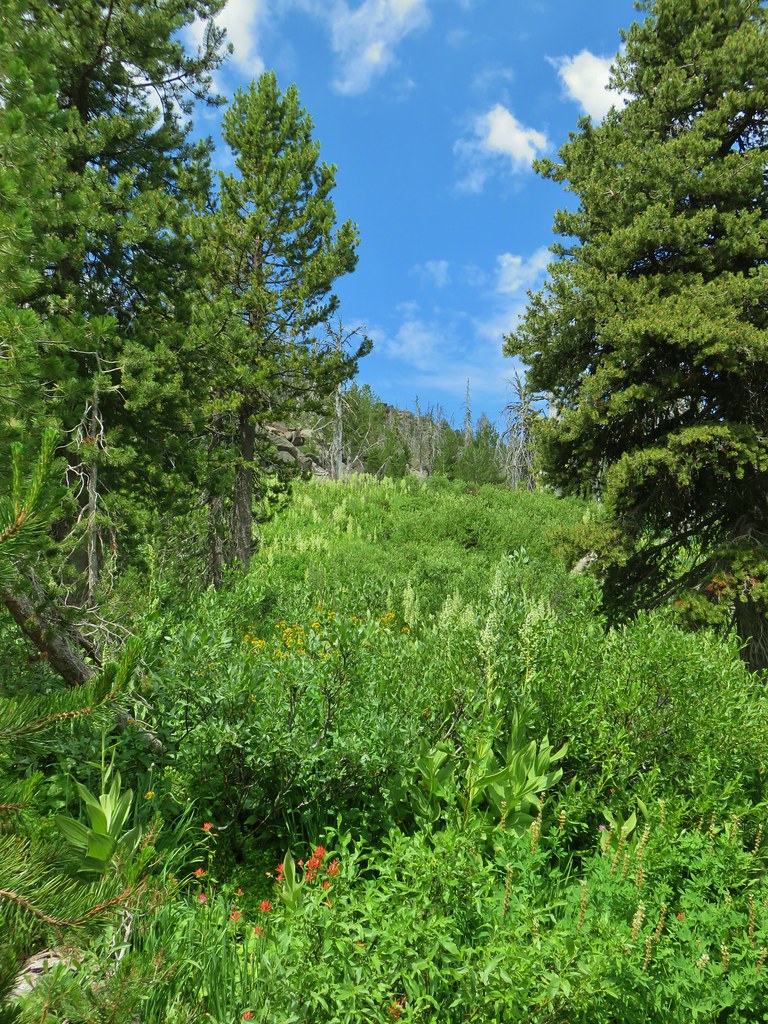

 Paintbrush, monkshood, lupine and California corn lily
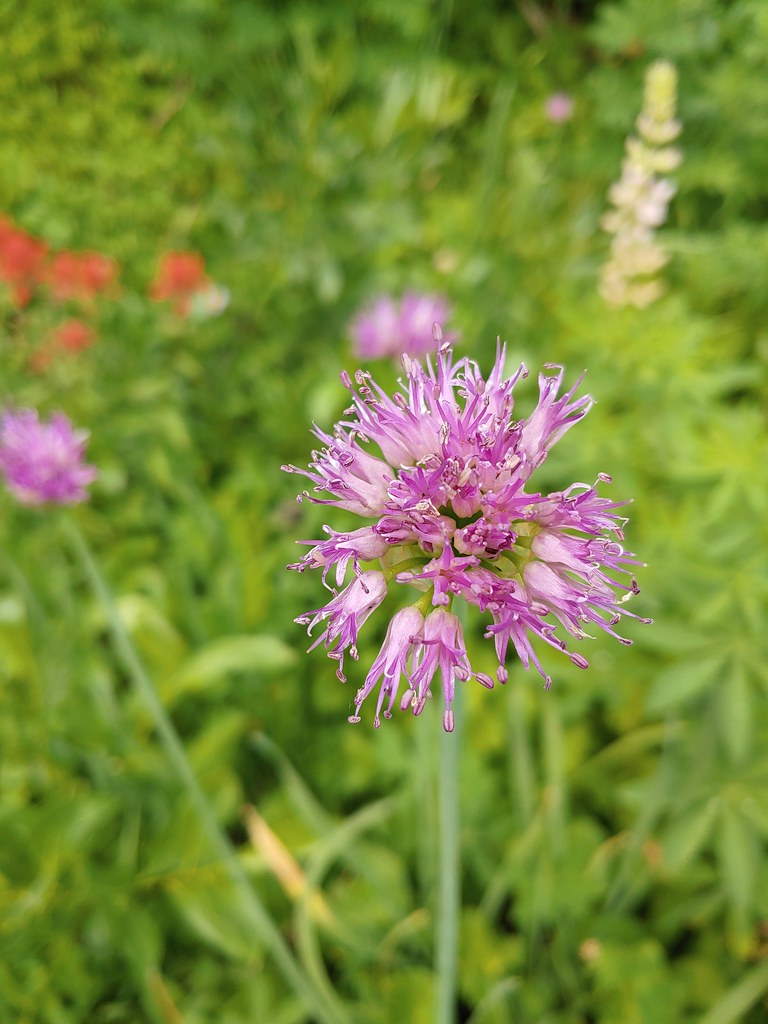 Swamp onion
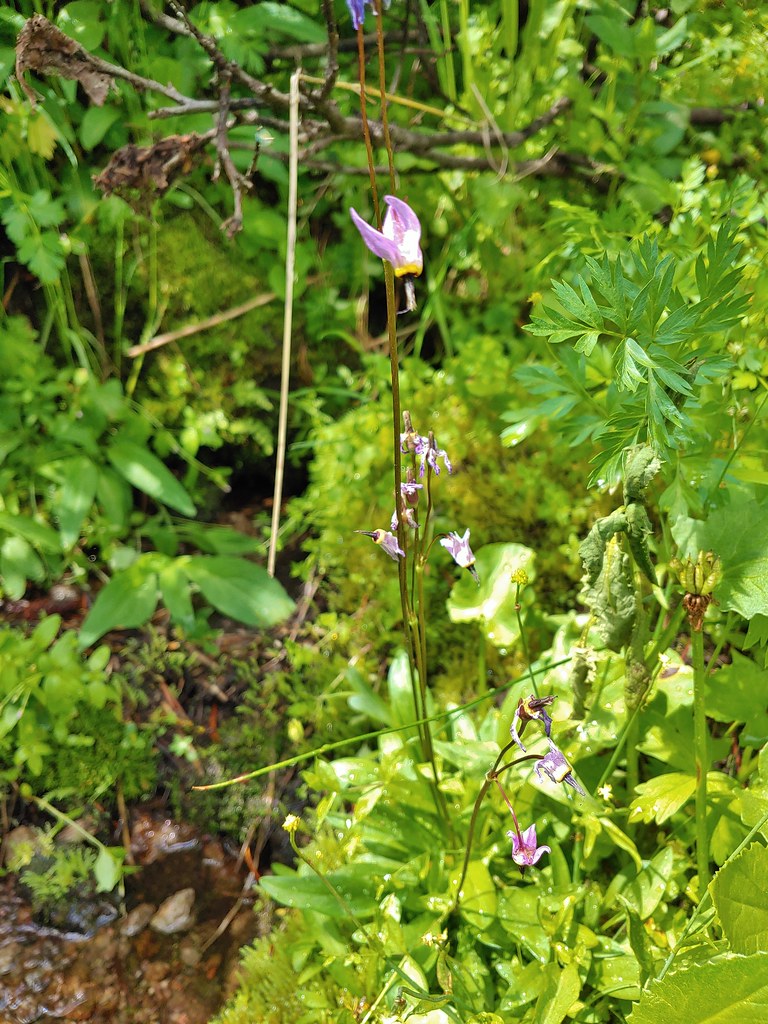 The remnants of a shooting star.
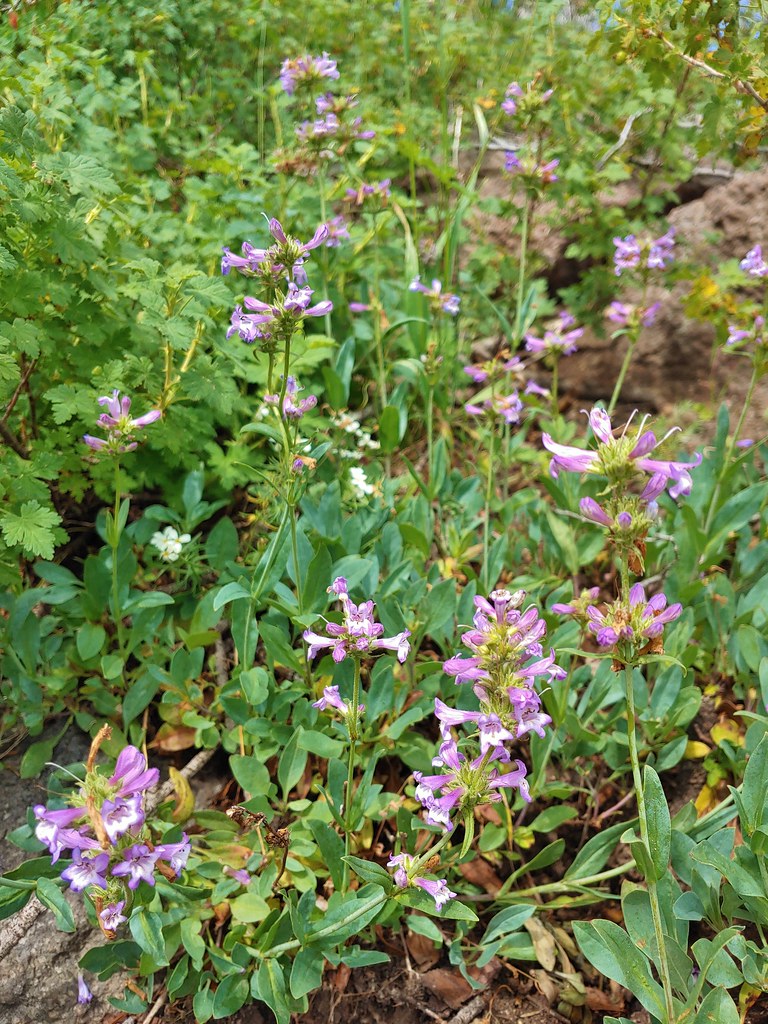 Penstemon
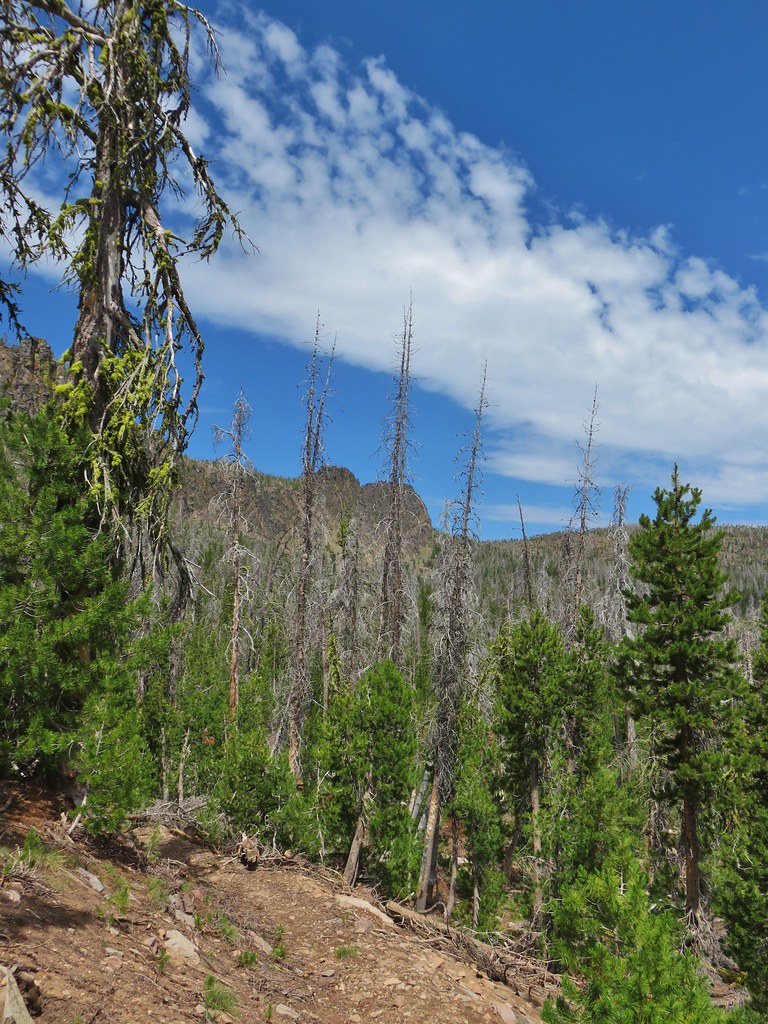 Gearhart Mountain from the trail below.
 Bistort
 Mountain heather next to the stream.
 The last of an elephant’s head.
 Bog orchids
 California corn lilies below Gearhart Mountain.


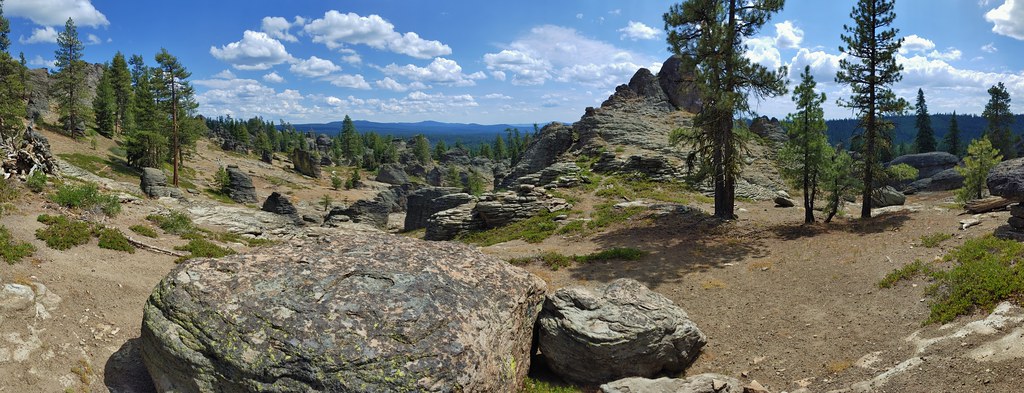


 The knoll is the lower rise to the left.

 From left to right: Flagstaff Lake, Upper Campbell Lake, and Campbell Lake.
 Hart Mountain Road climbing up to the plateau.
 Campbell Lake

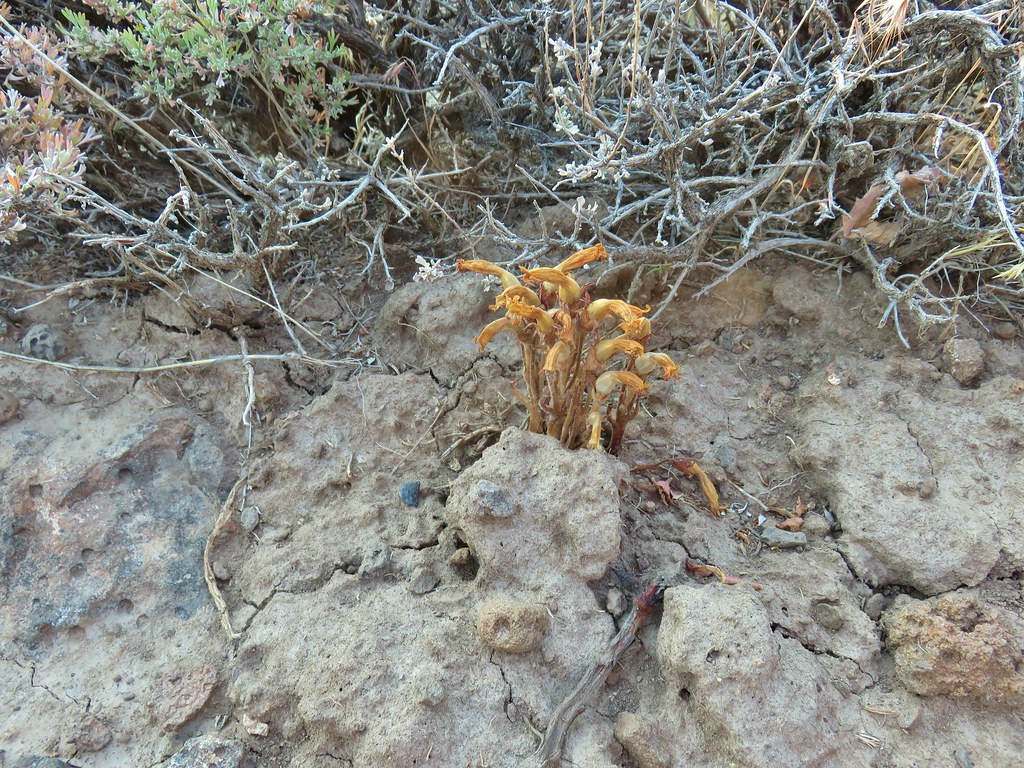 An Orobanche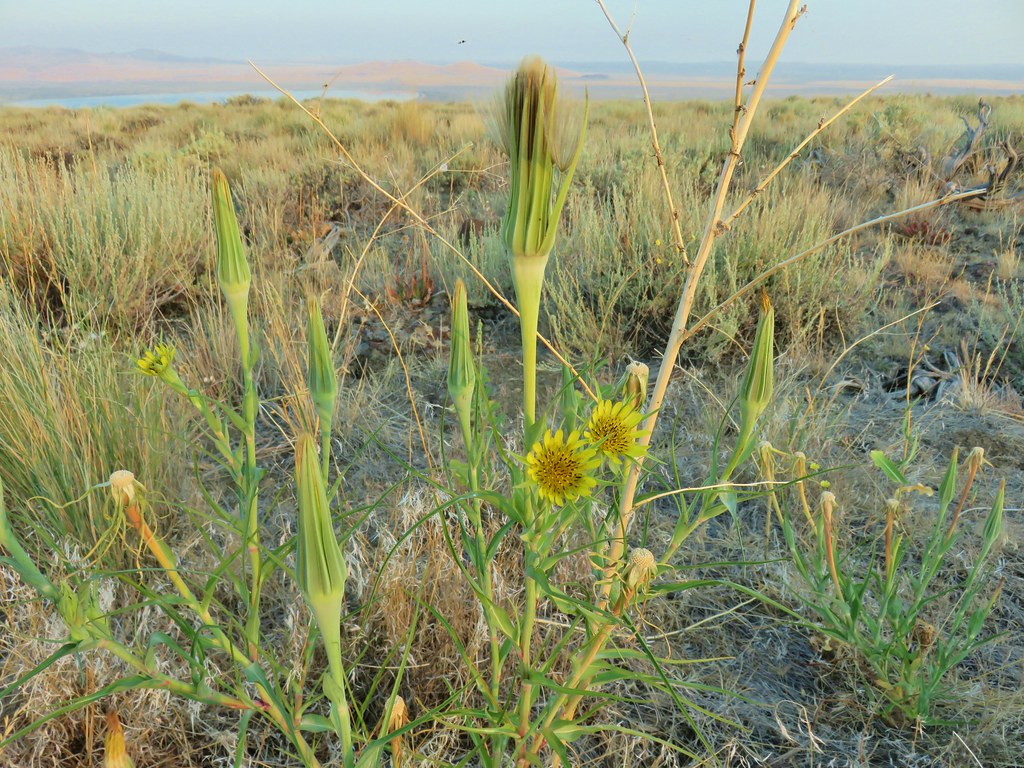


 White pelicans and seagulls on Campbell Lake.
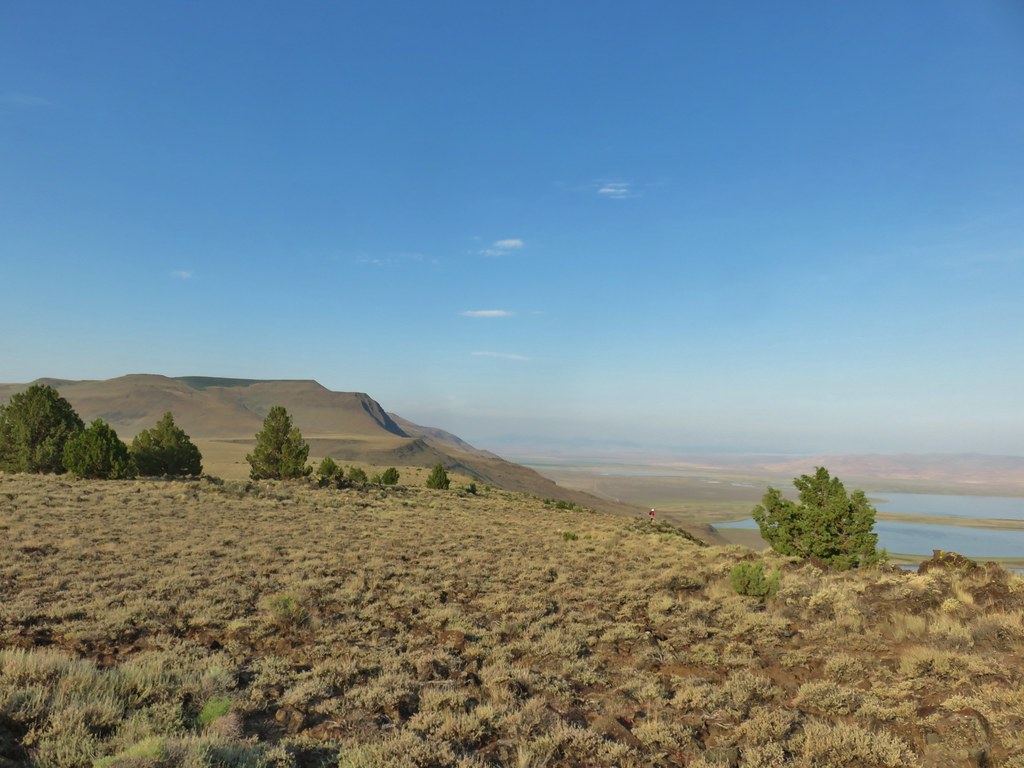 Looking south along Poker Jim Ridge
 Looking north along Poker Jim Ridge
 Junipers on the knoll
 Bluejoint Lake below the ridge.
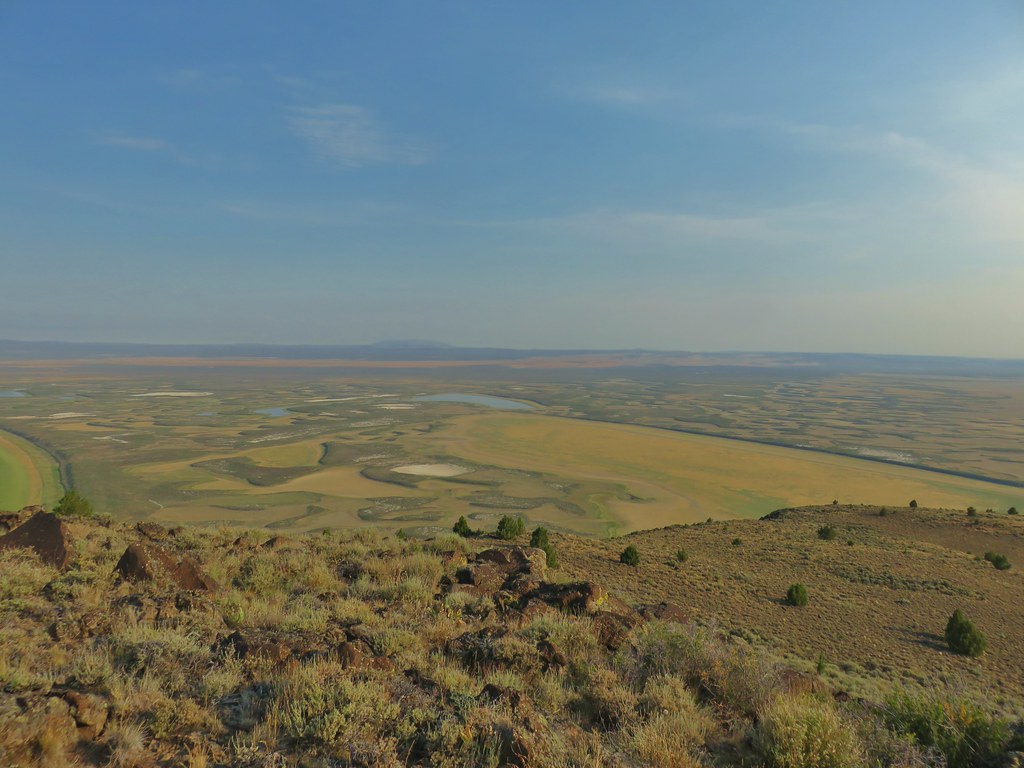 Stone Corral Lake
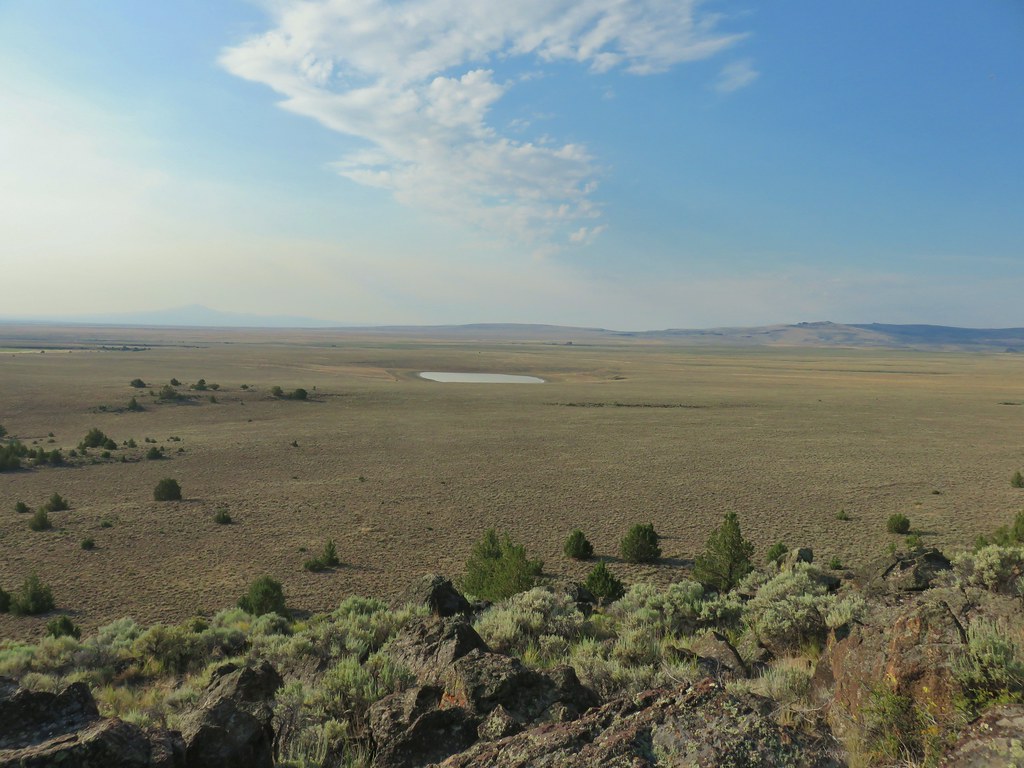


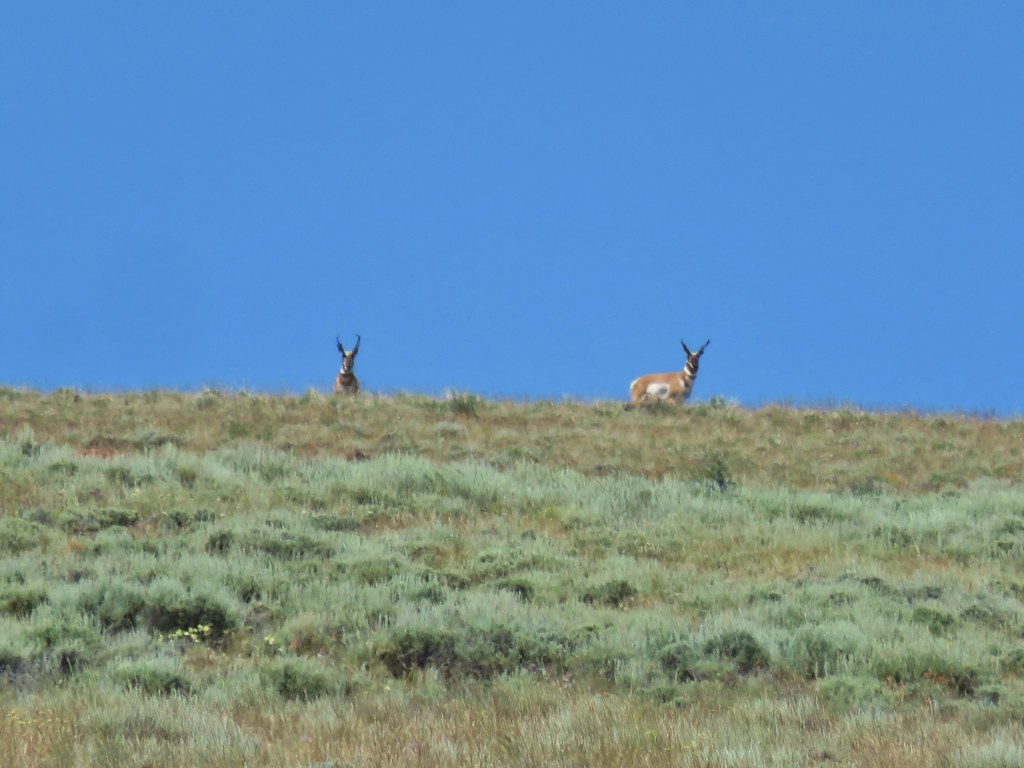
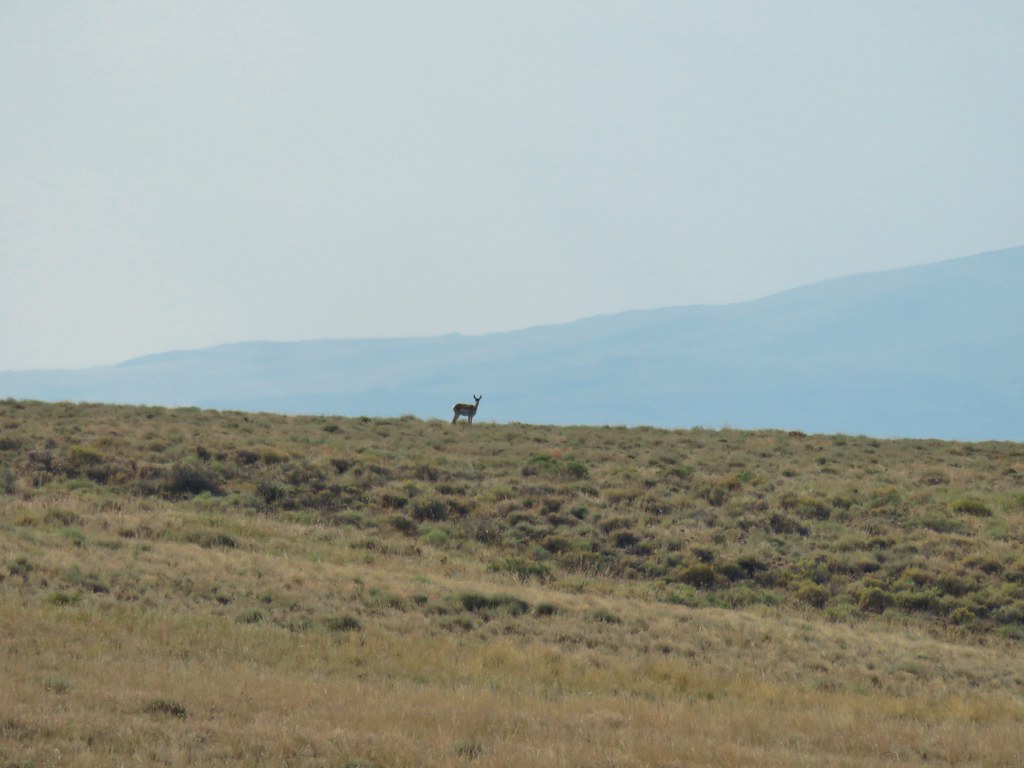 Pronghorn above the lake.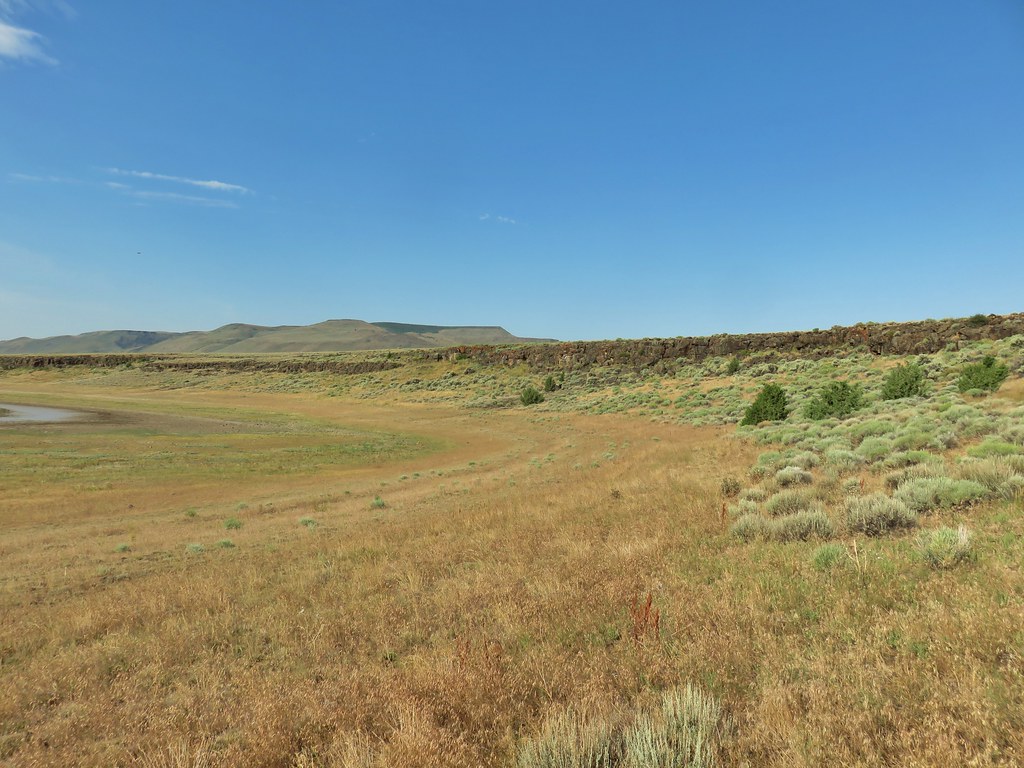
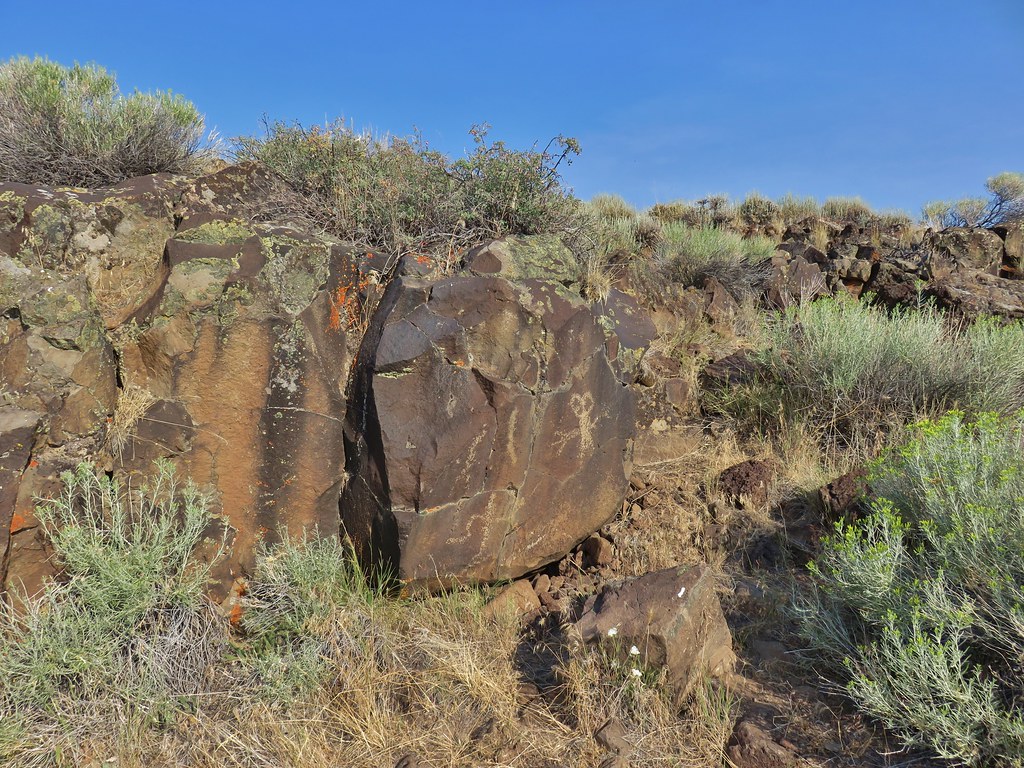
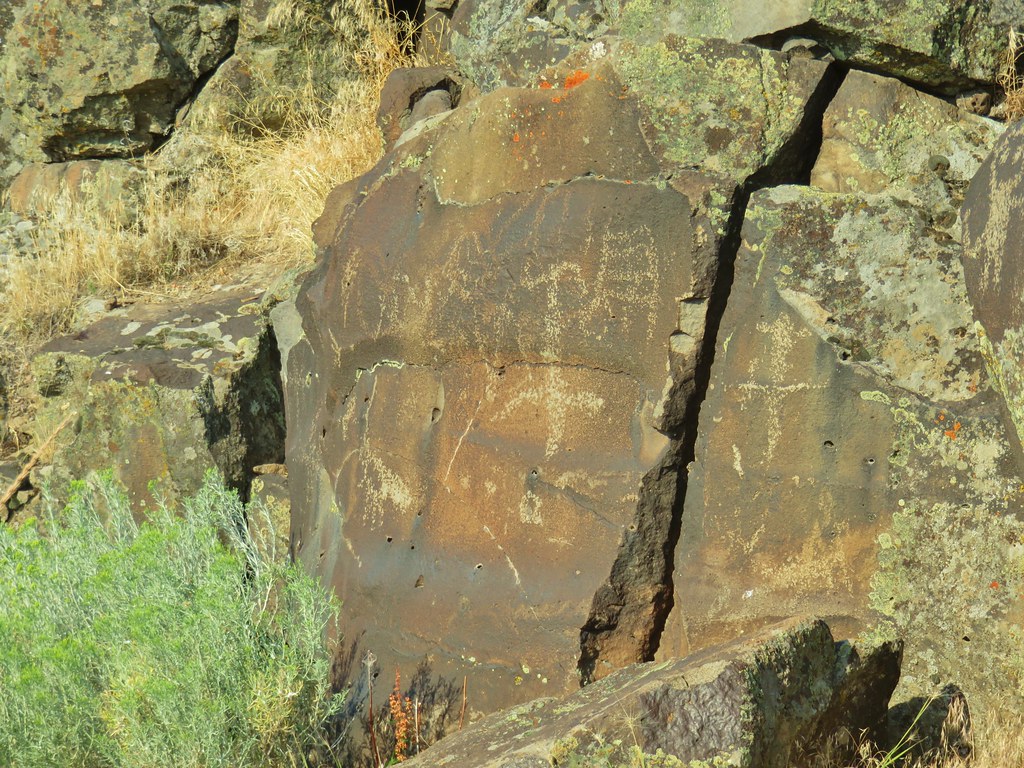
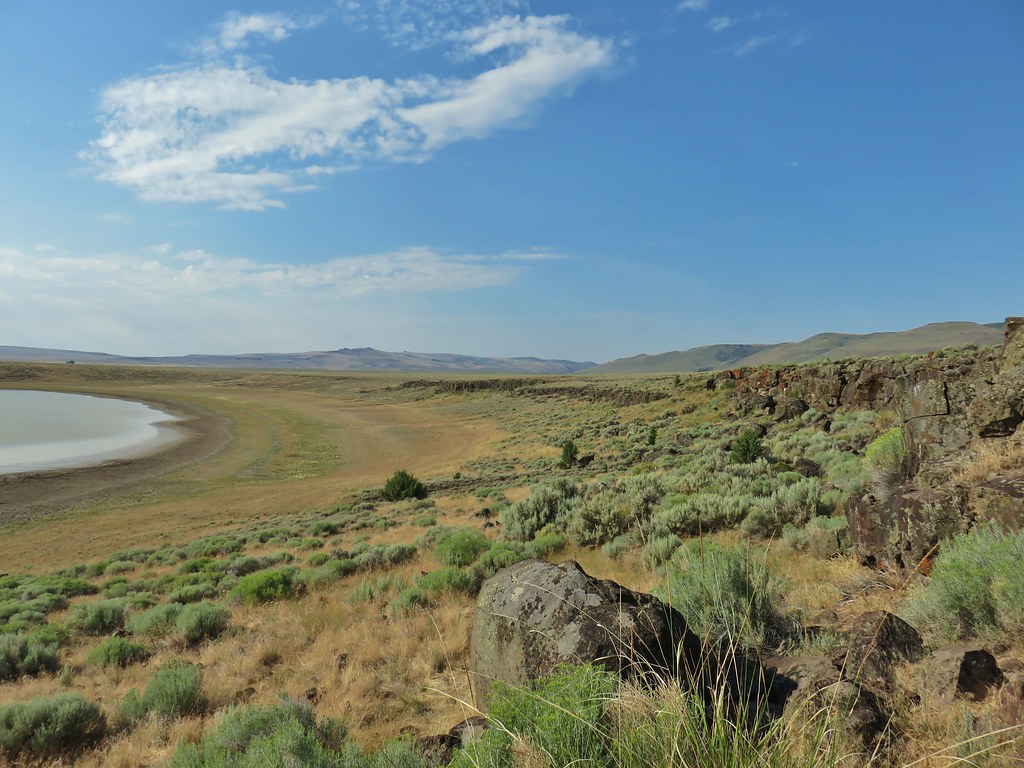


 Dragon fly
 Western fence lizard
 Yellow bellied marmot

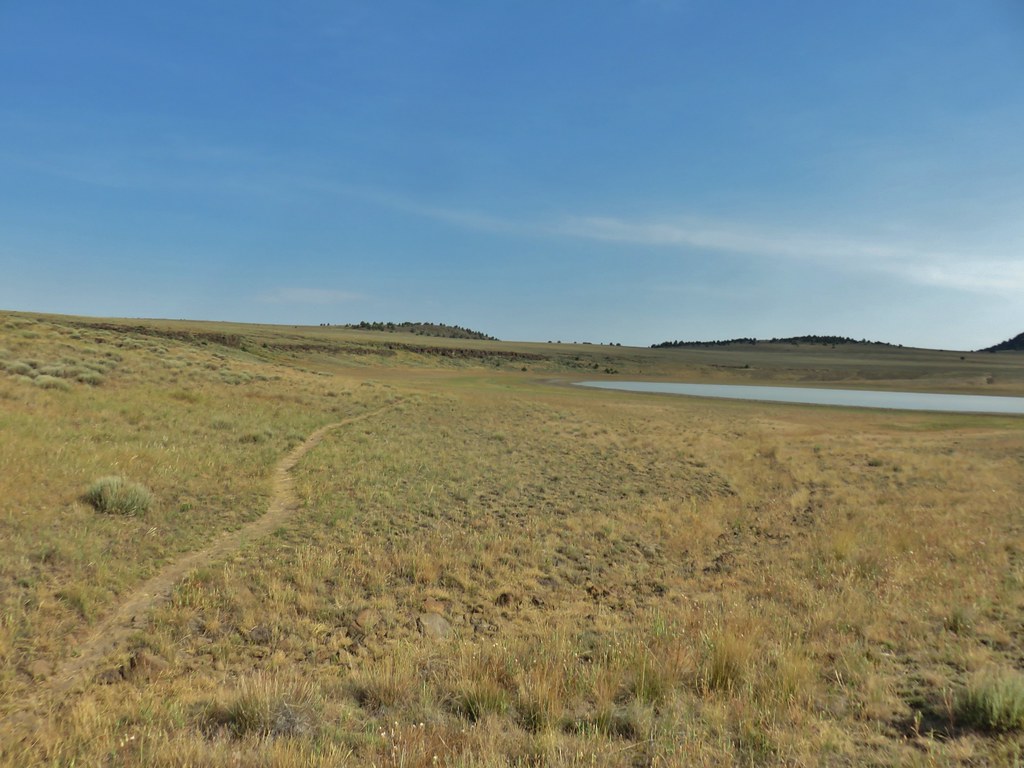

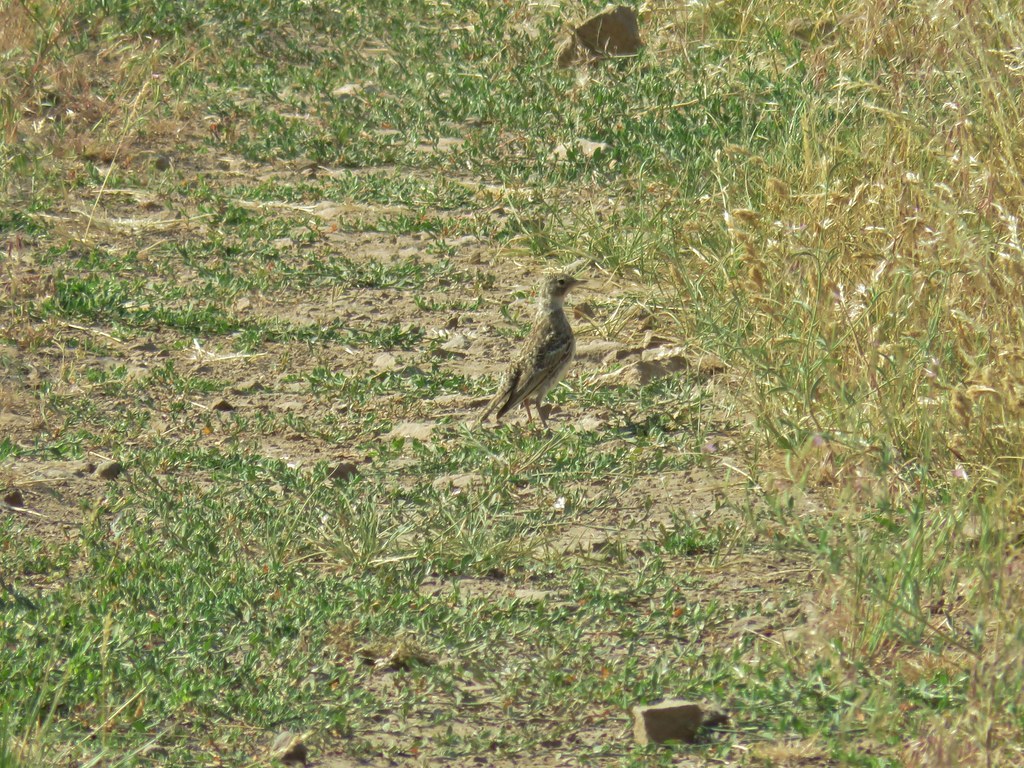
 Some type of primrose I think.

 Lupine
 There were dozens of butterflies and other pollinators on this rabbitbrush.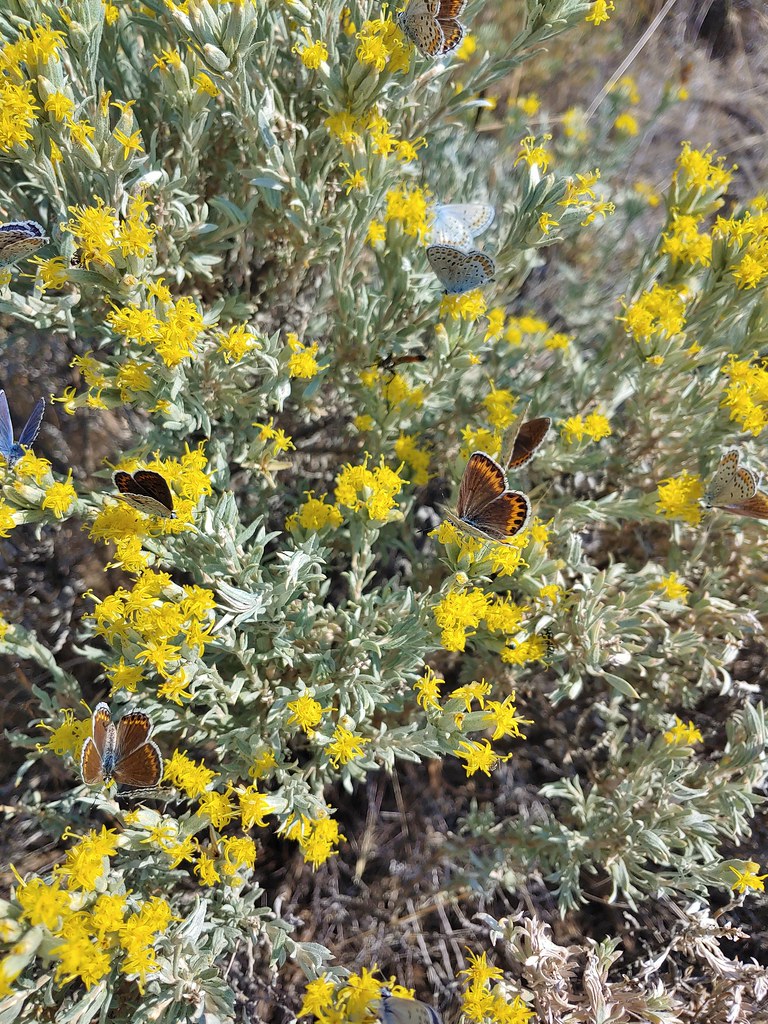

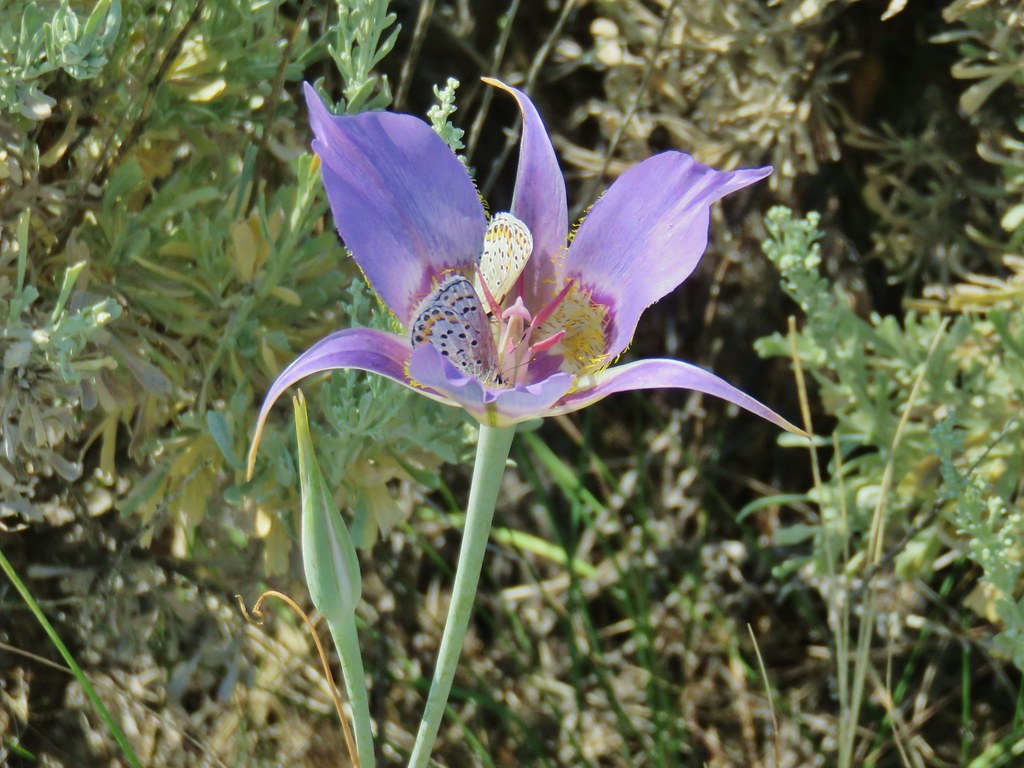
 The gate at Petroglyph Lake Road
 Hart Mountain Road
 The juniper knoll along Poker Jim Ridge and yes there are a few pronghorn out there.
 Pronghorn keeping their distance from us.
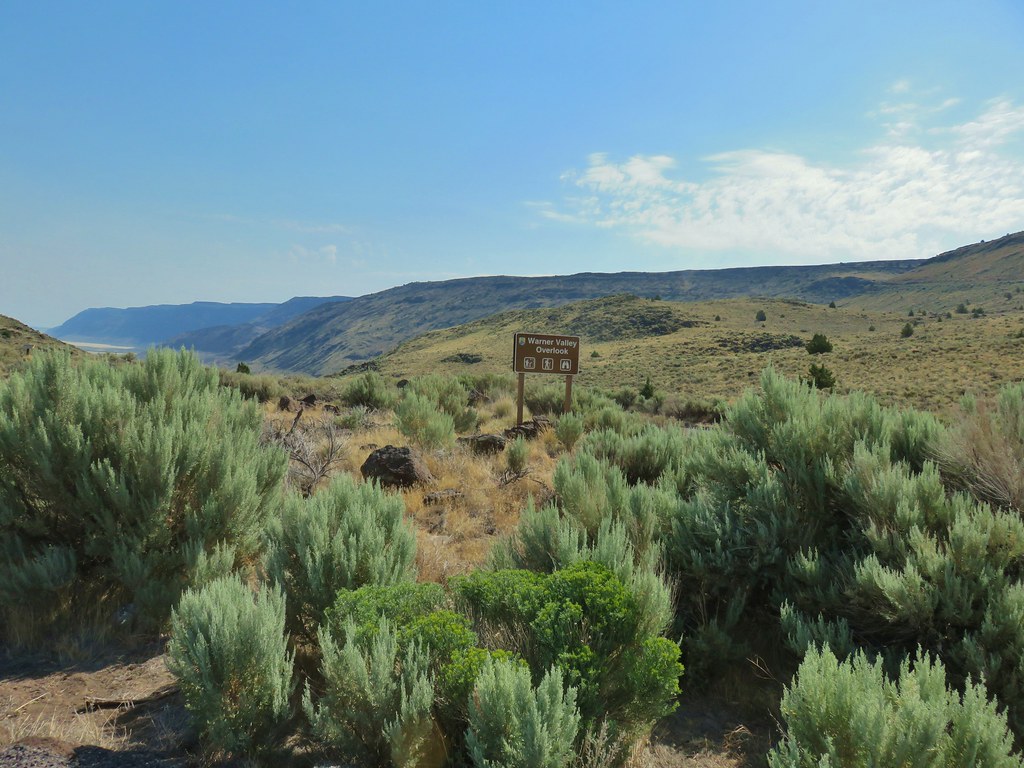 Sign for the overlook.
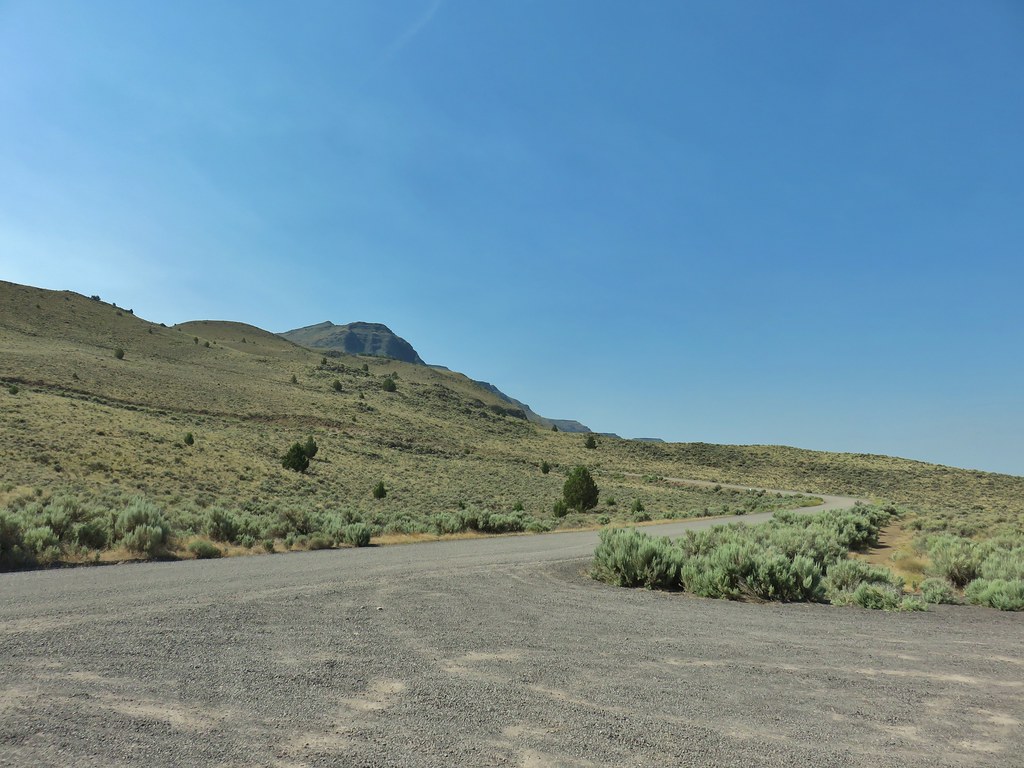 View from the pullout back up toward Hart Mountain.
 The start of the loop trail.
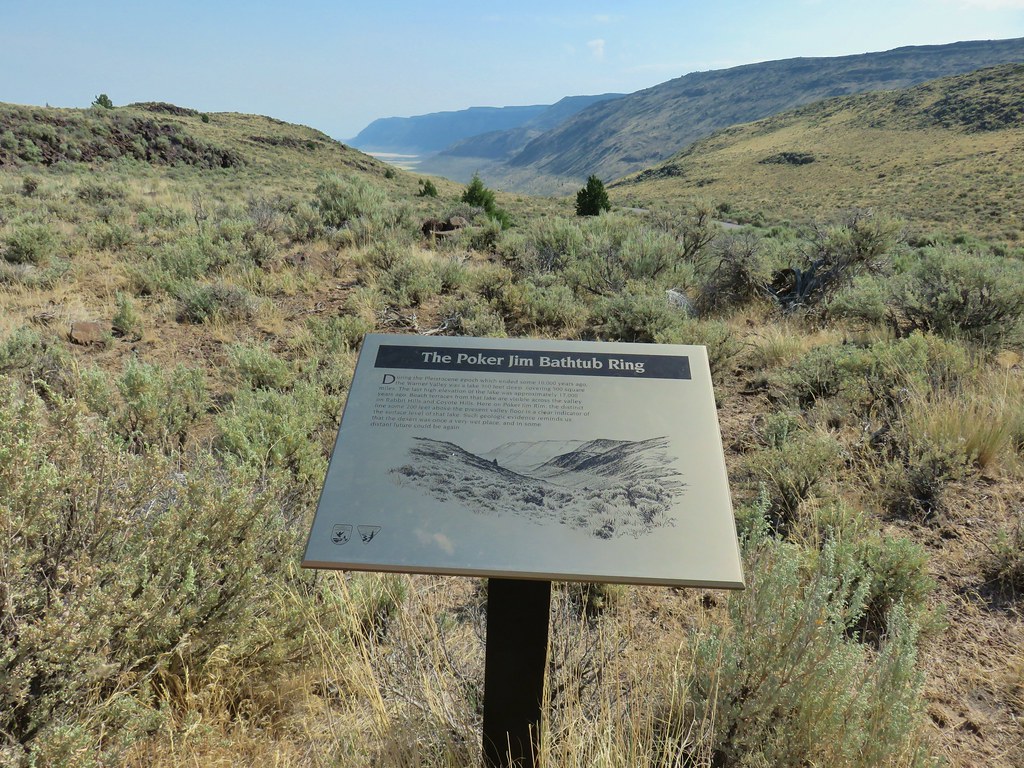 We like interpretive signs like this where we can see with our own eyes what is being described.
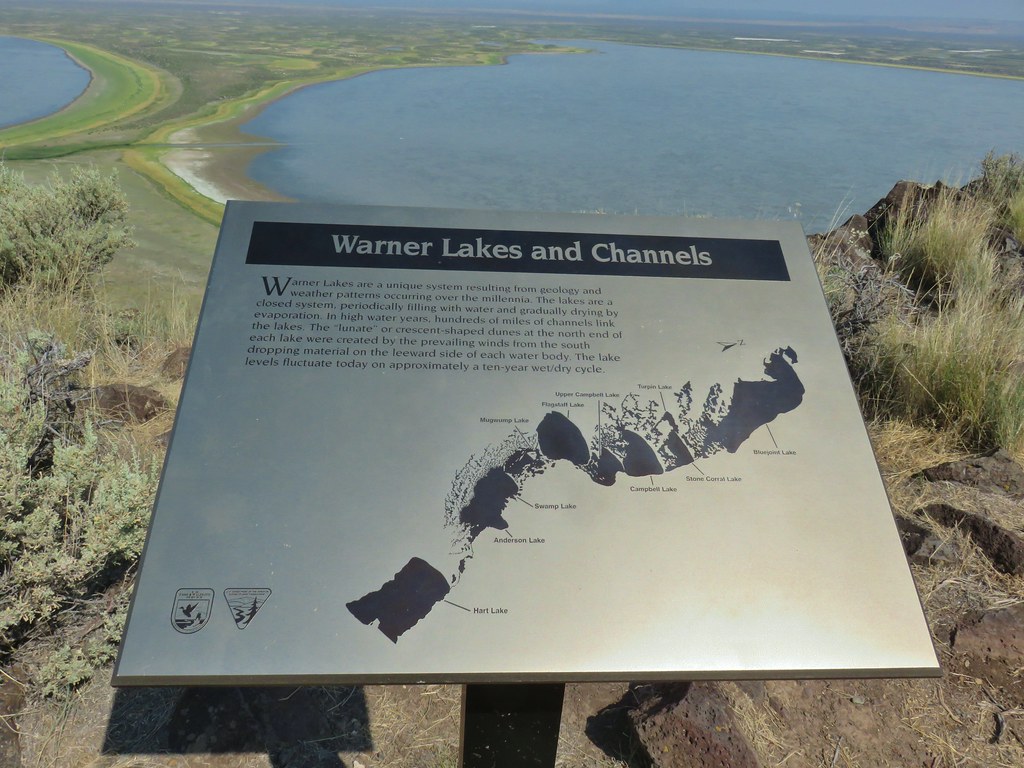 This one helped with identifying the different lakes plus provided the history.
 Another of our favorites are the ones that identify the various hills and peaks.
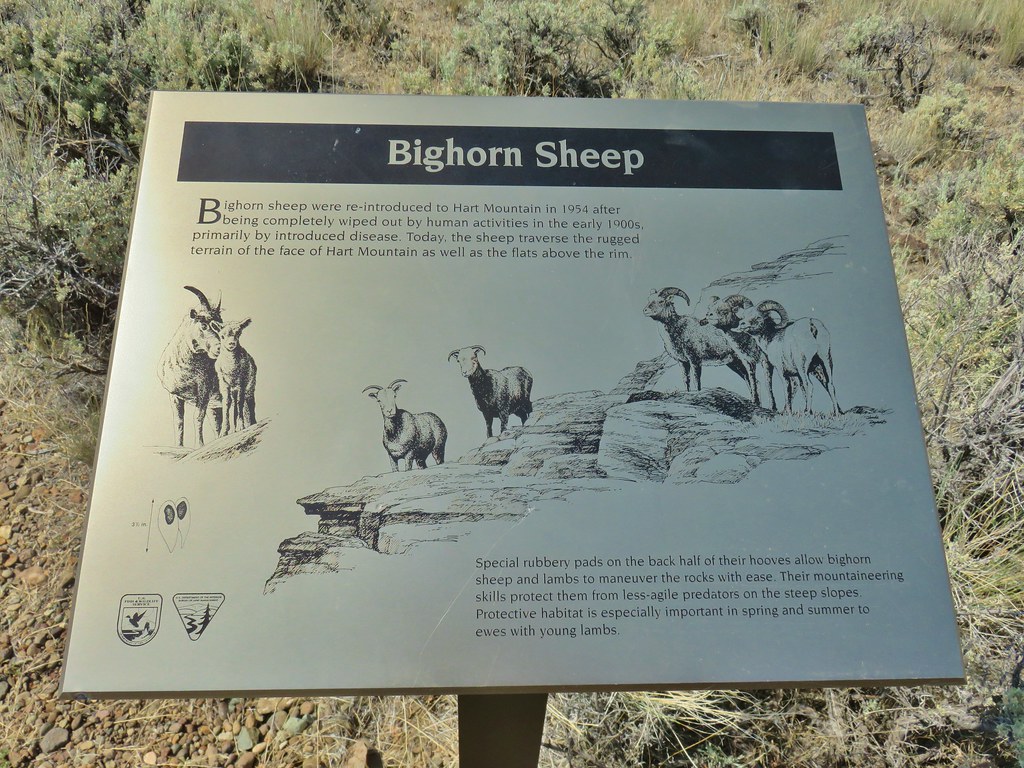 We worked really hard on spotting some big horn sheep on this trip to no avail. There was so much space that they could be in it was like looking for a needle in a haystack.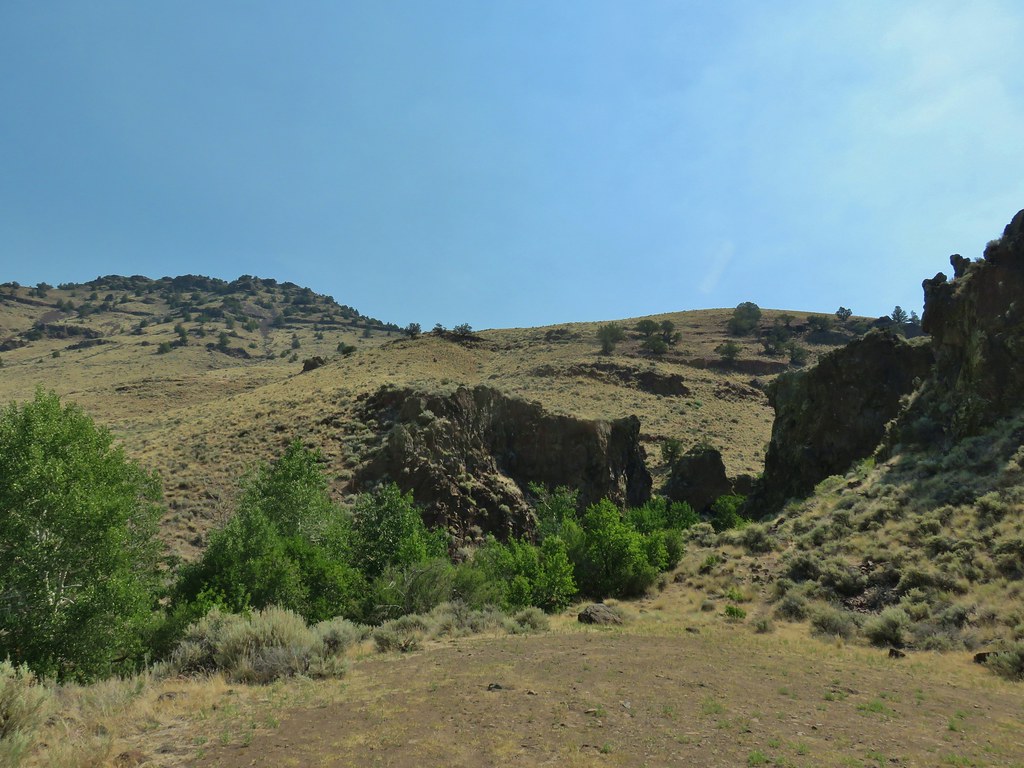
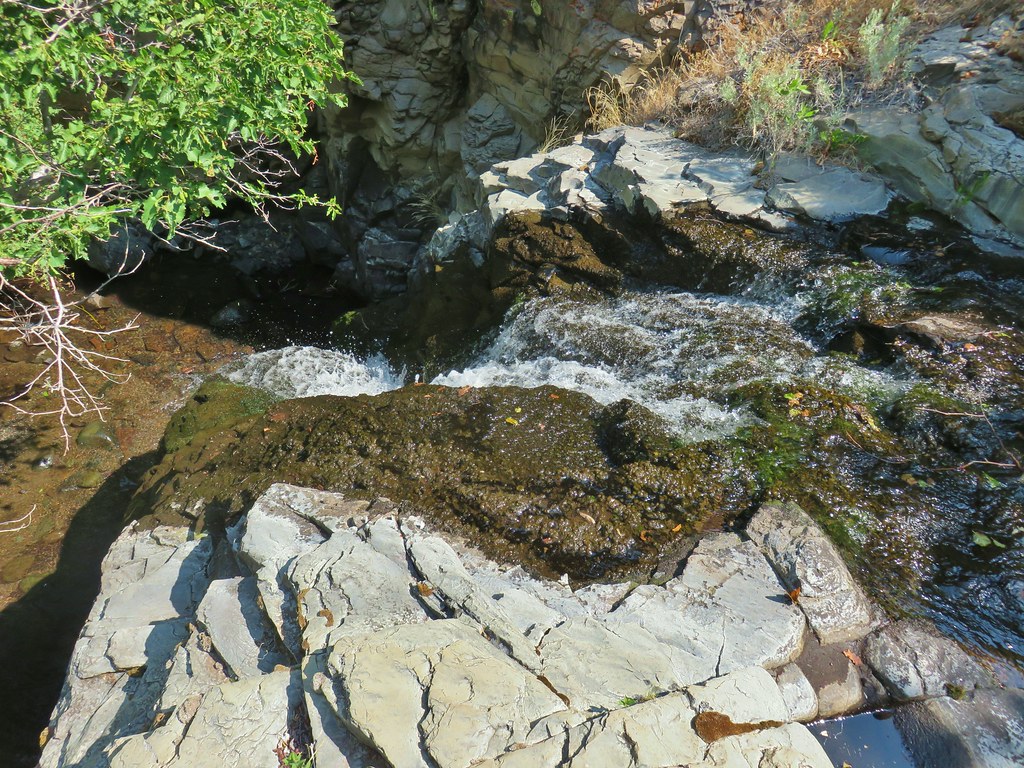 It’s not visible in this photo but there were dry rocks close enough on the far side to simply step over the water onto. The wet rock would have been very slippery and certainly dangerous.





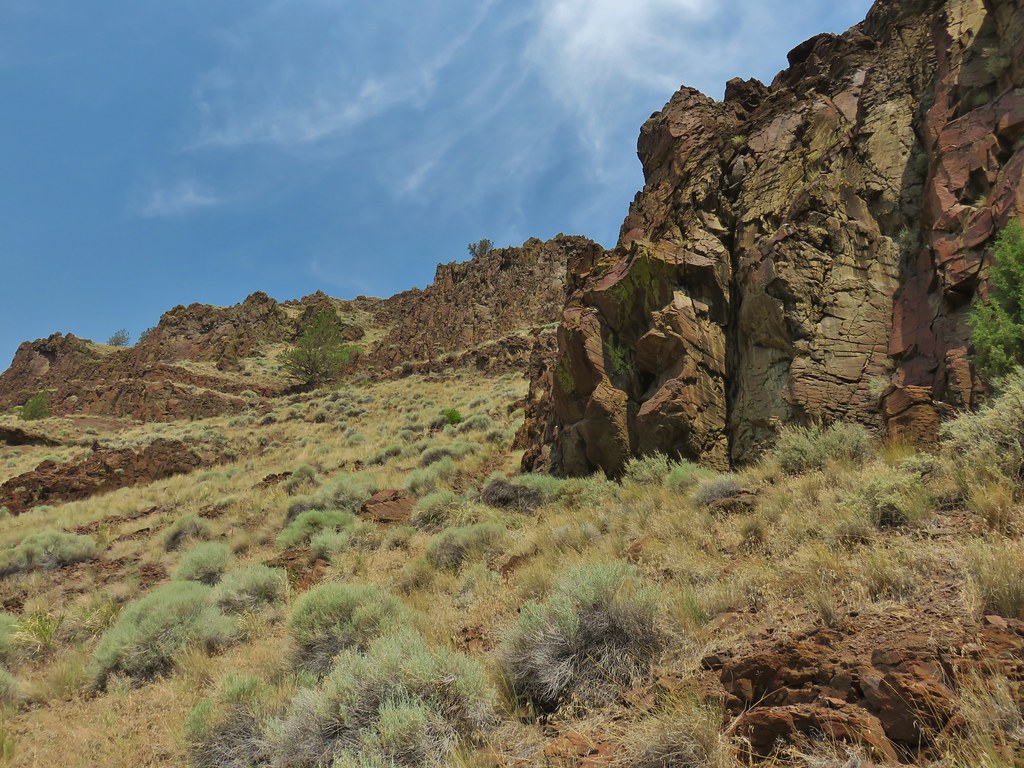 The scramble route is at the base of the cliff to the right.
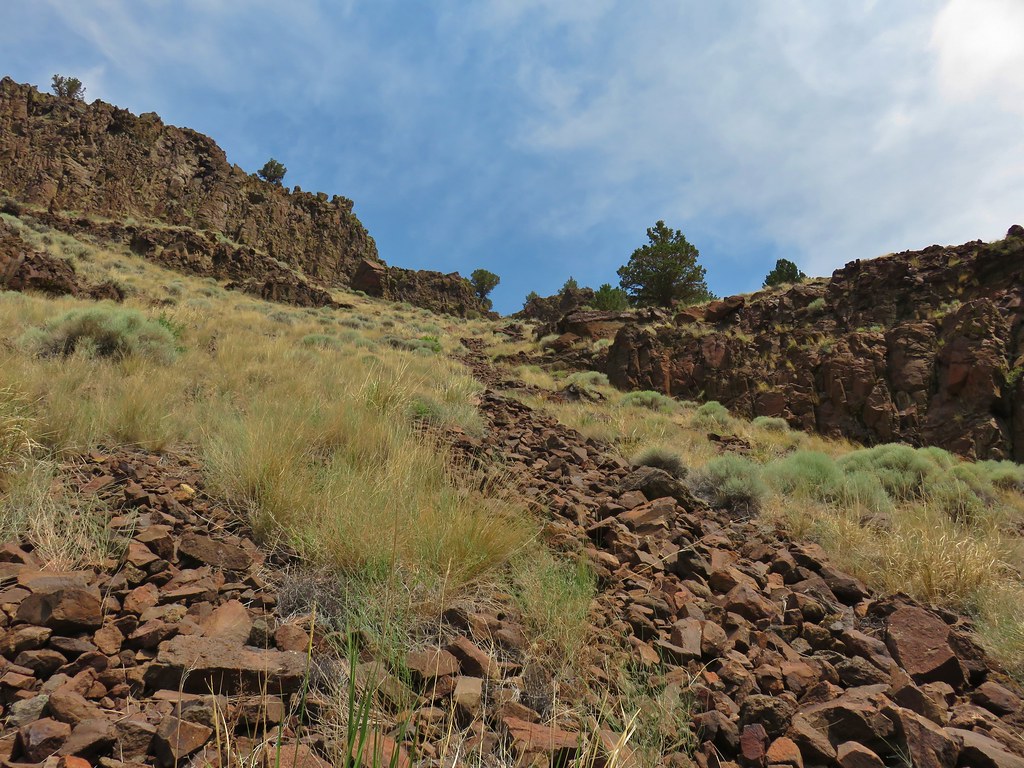 Looking up from the trail at where the scramble route was heading.


 Hart Mountain in the morning.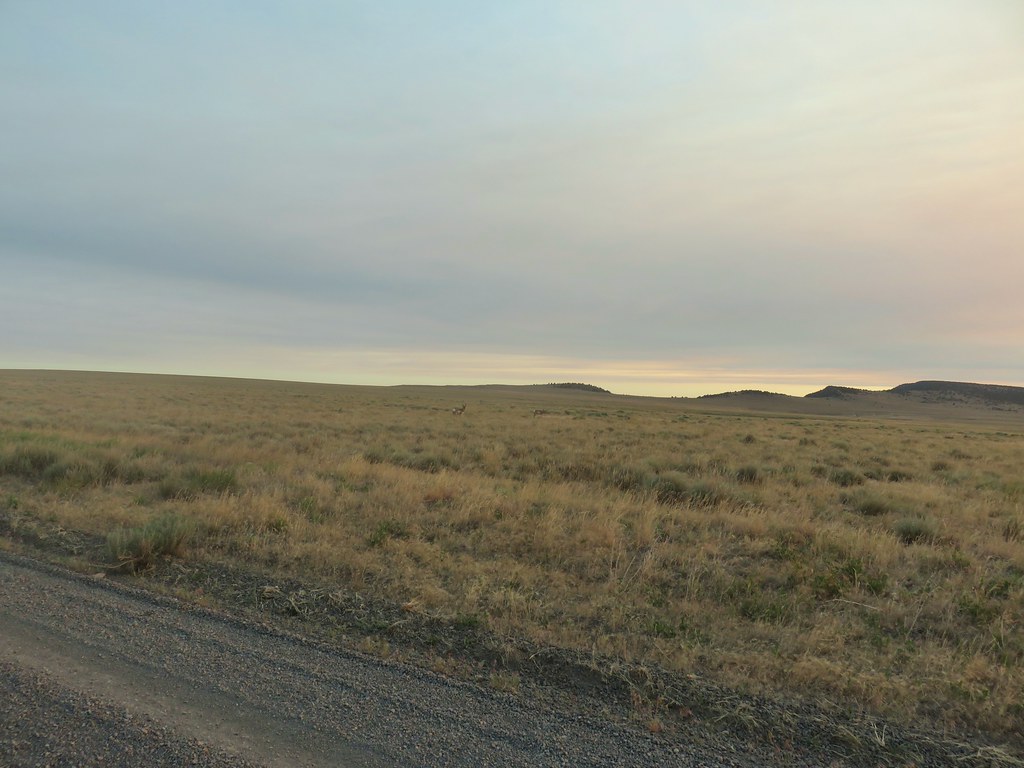
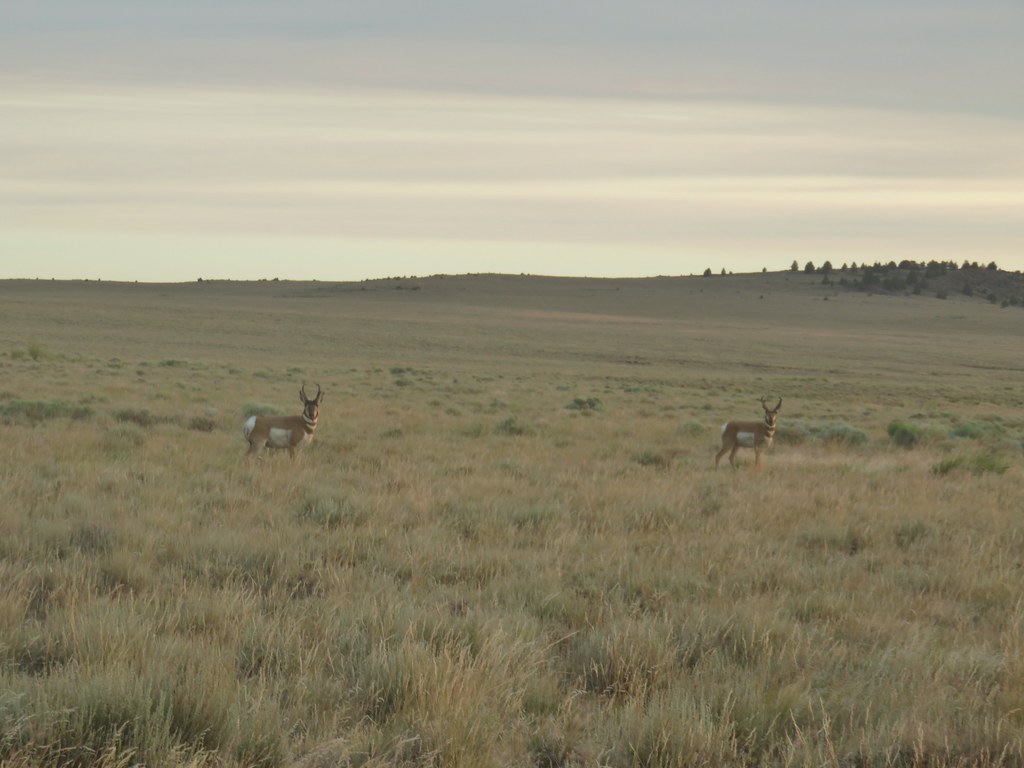
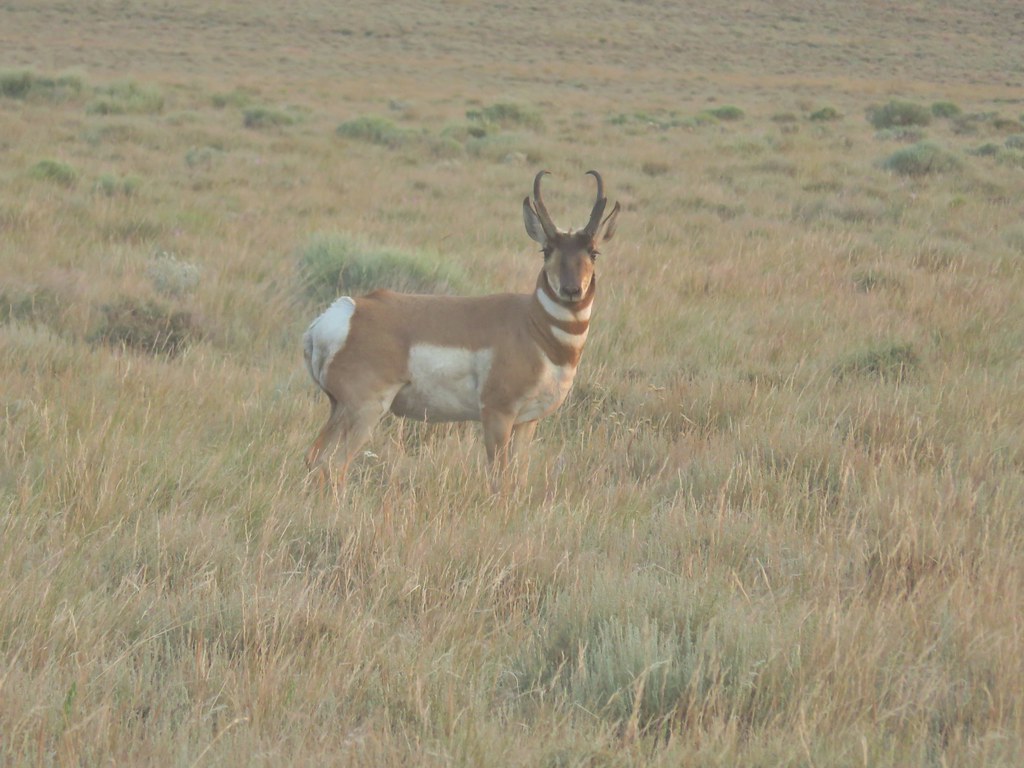
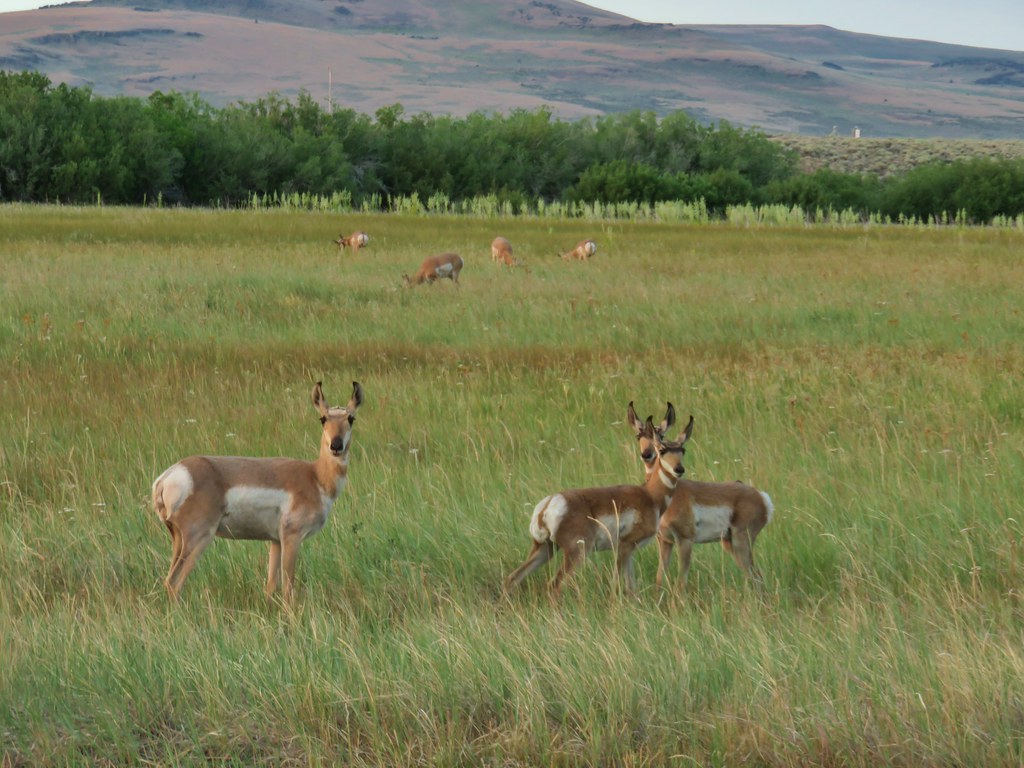 Just a few of the many pronghorn.
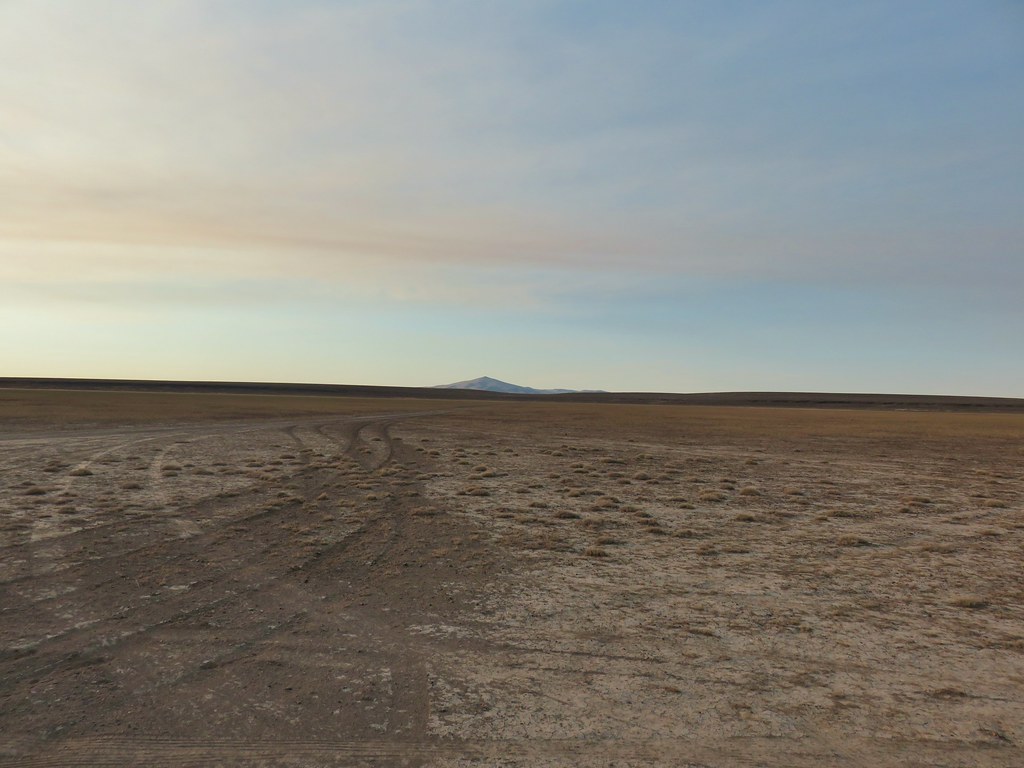 Flook Lake Road continuing on with Beatys Butte in the distance.
 The reservoir
 Steens Mountain on the horizon to the east through smoky skies.
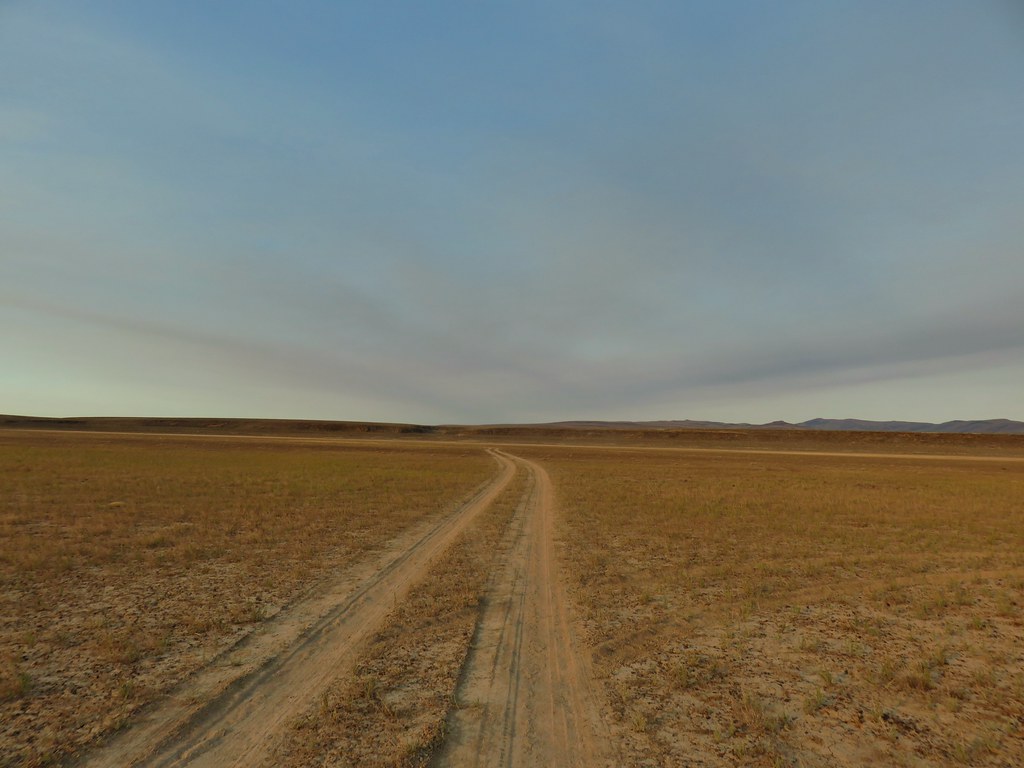 The canyon we were aiming for from near our car.
 Zoomed in a bit.
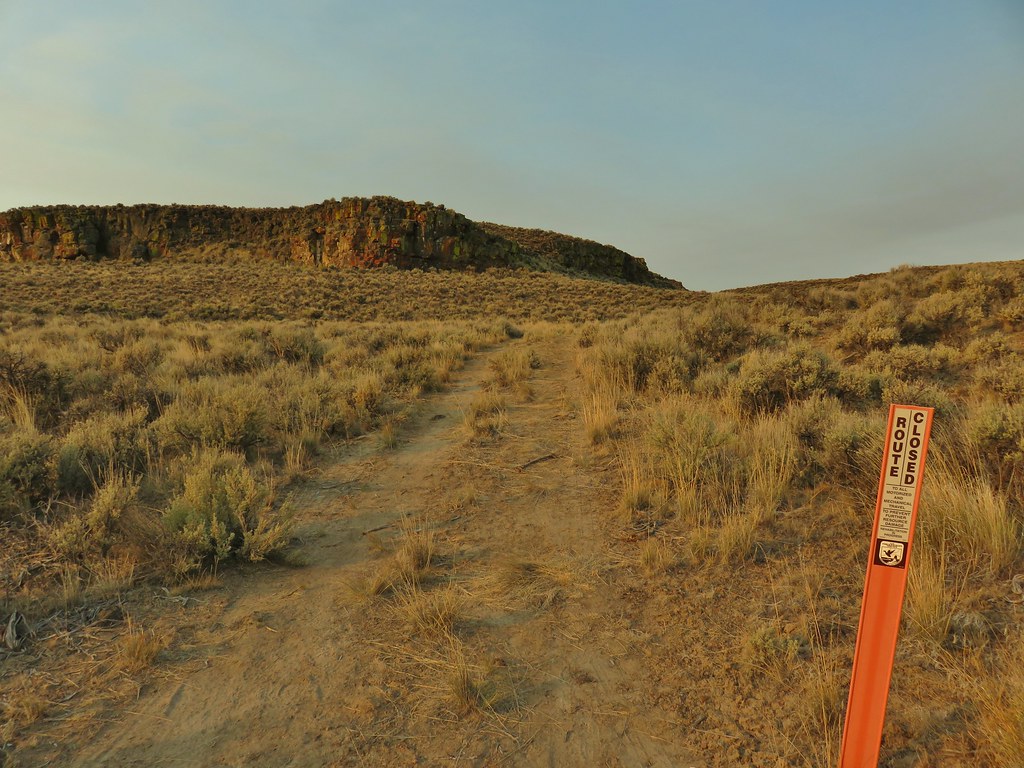
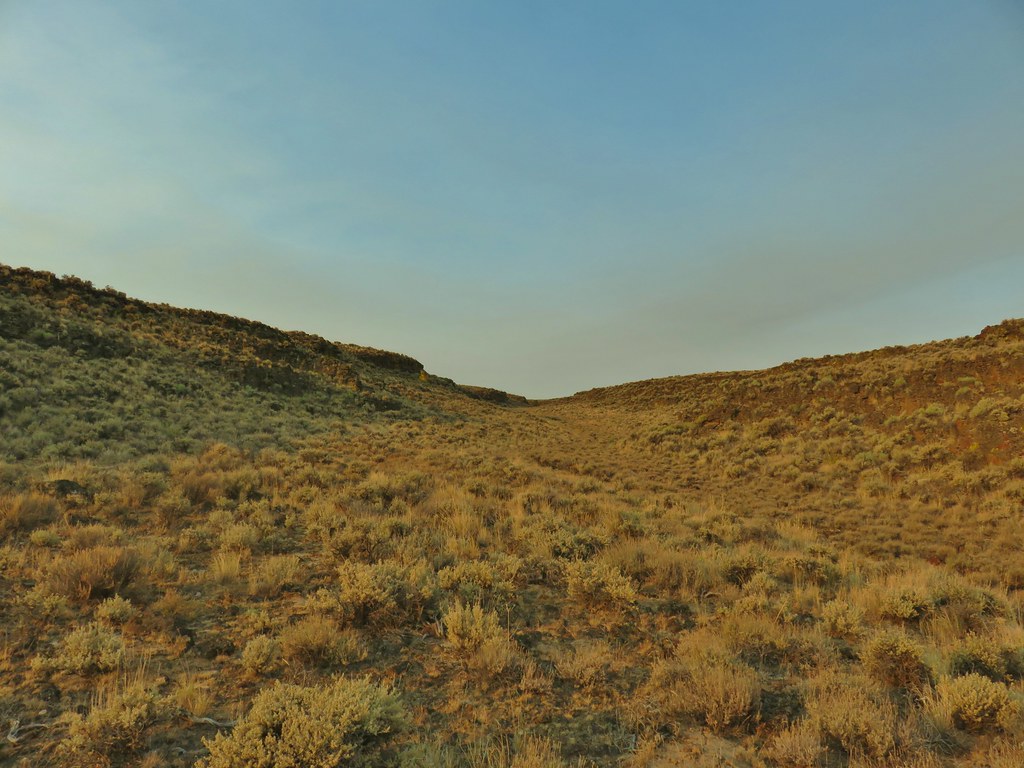
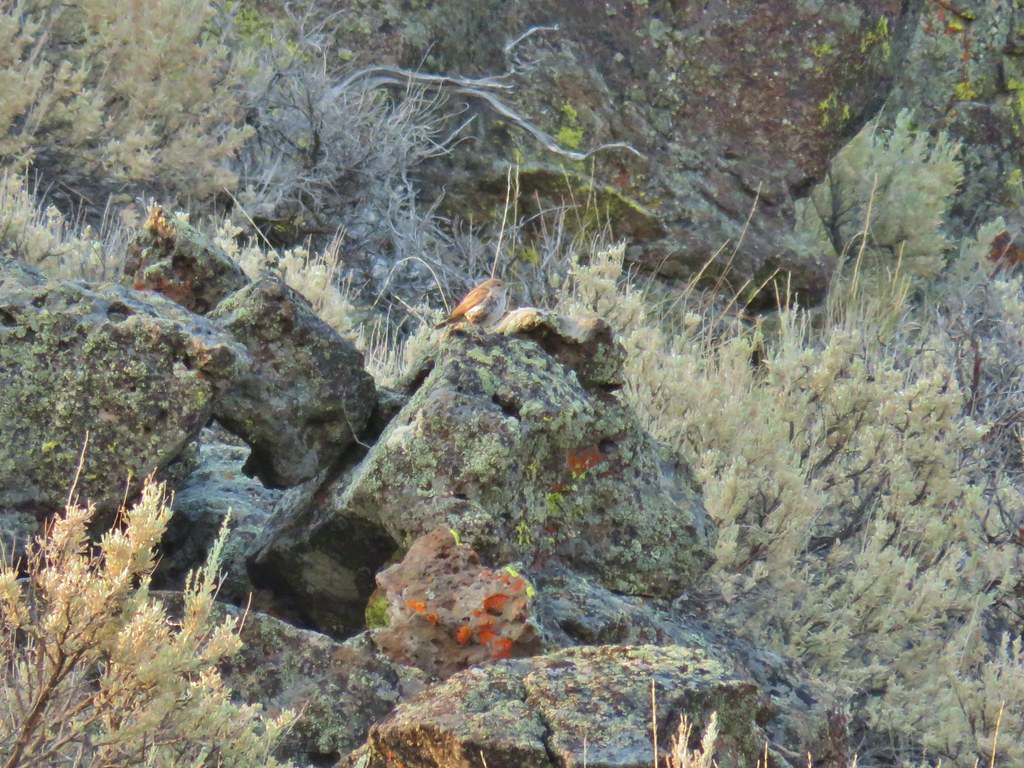
 Rabbit #1
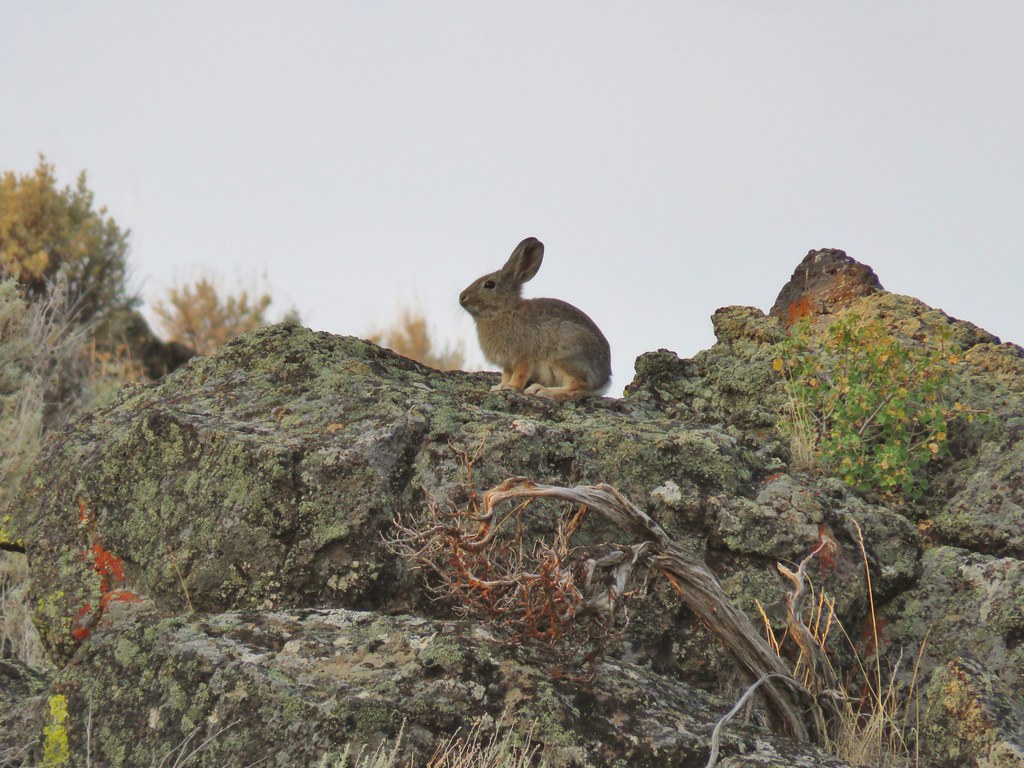 Rabbit #2
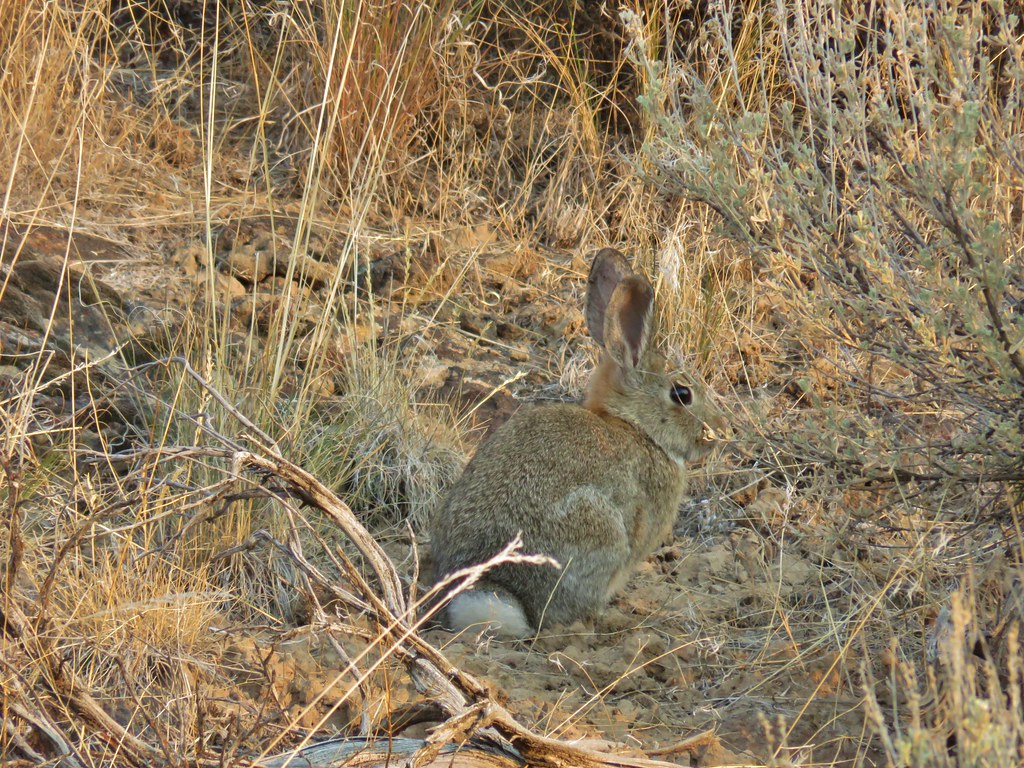 Rabbit #3
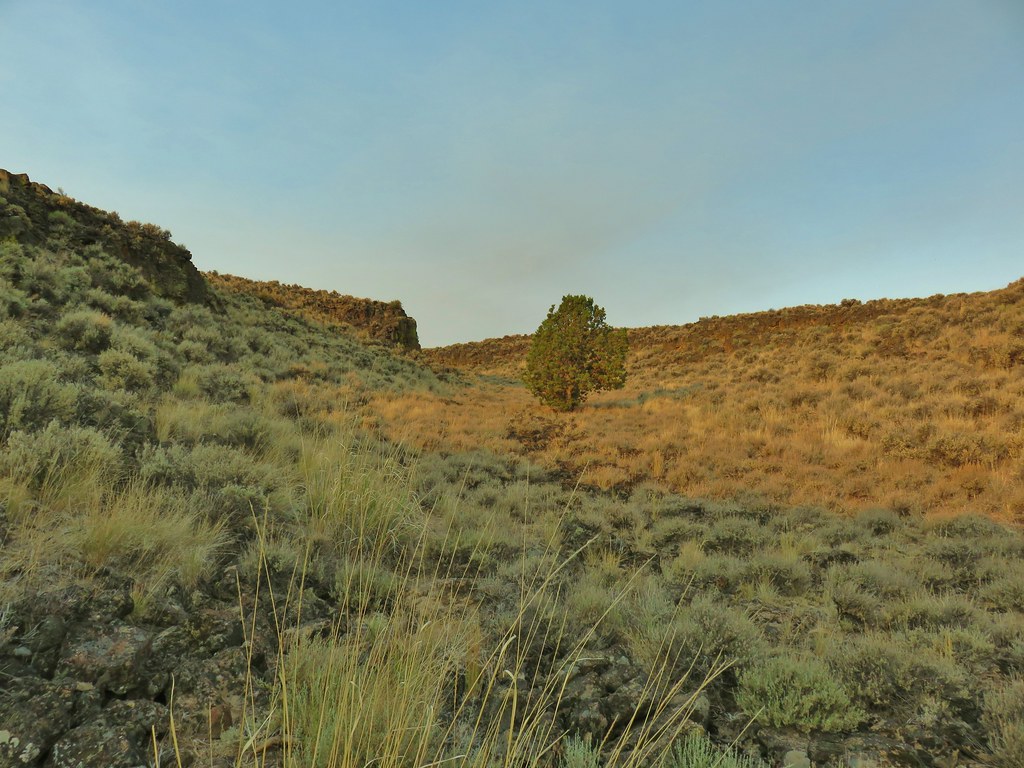 A lone juniper in the canyon.
 Rabbit #4



 Horned lark near the spring.
 Rabbit #5, this one was a jack rabbit.
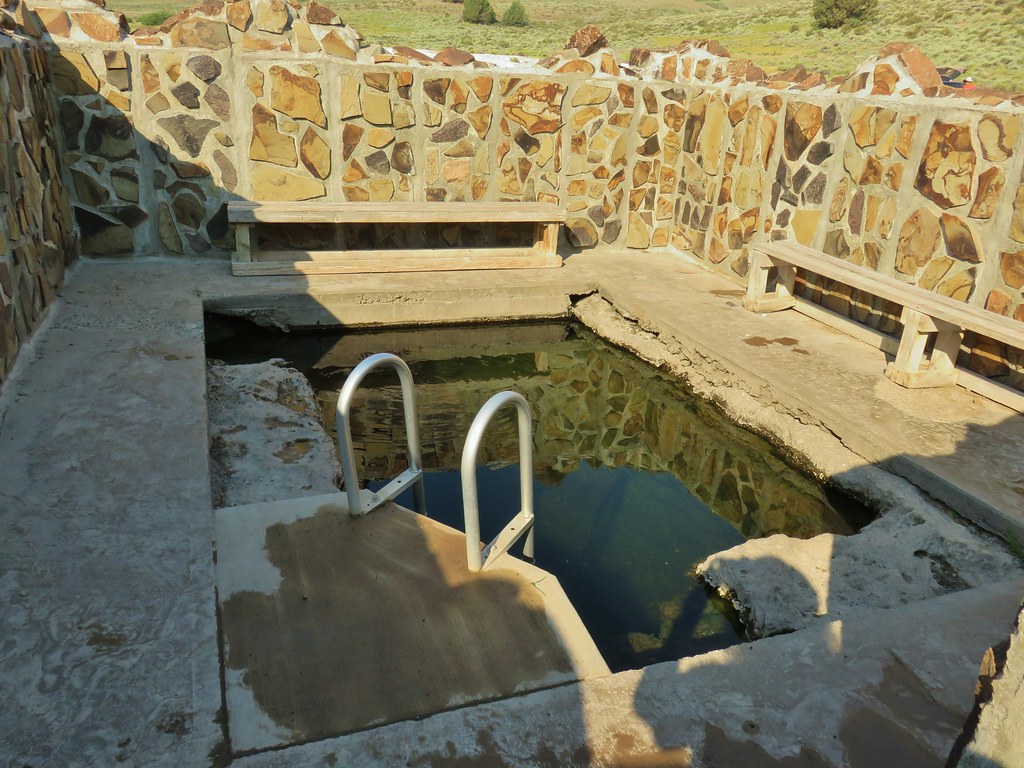
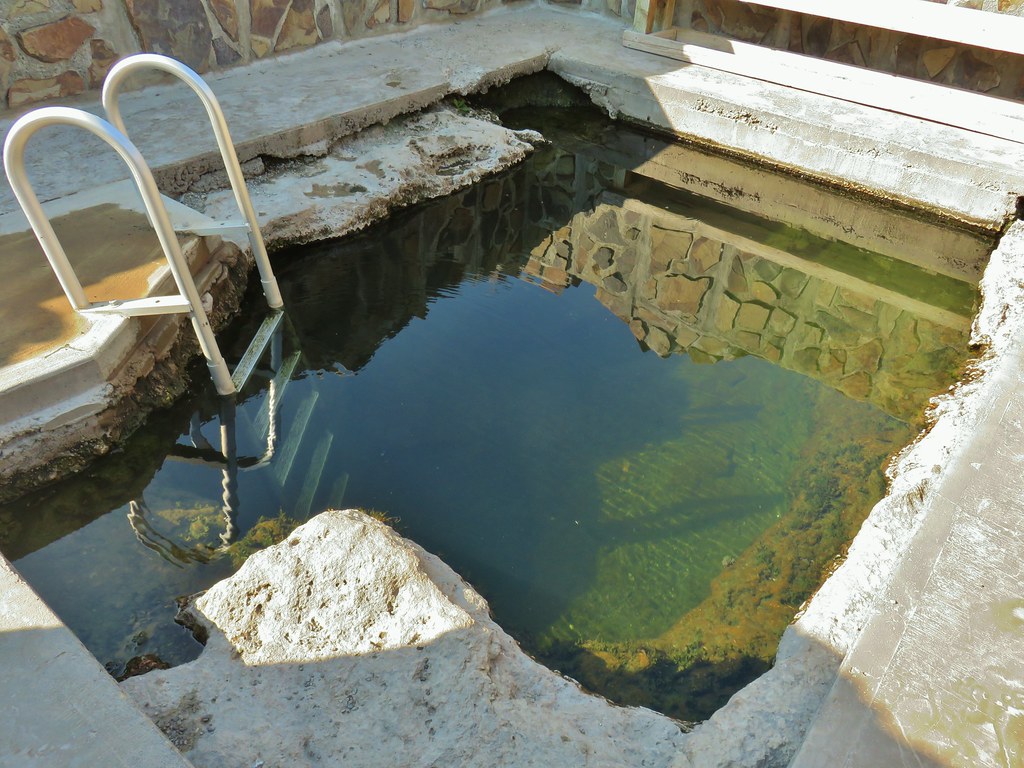


 Hawk hanging out near the hot springs.
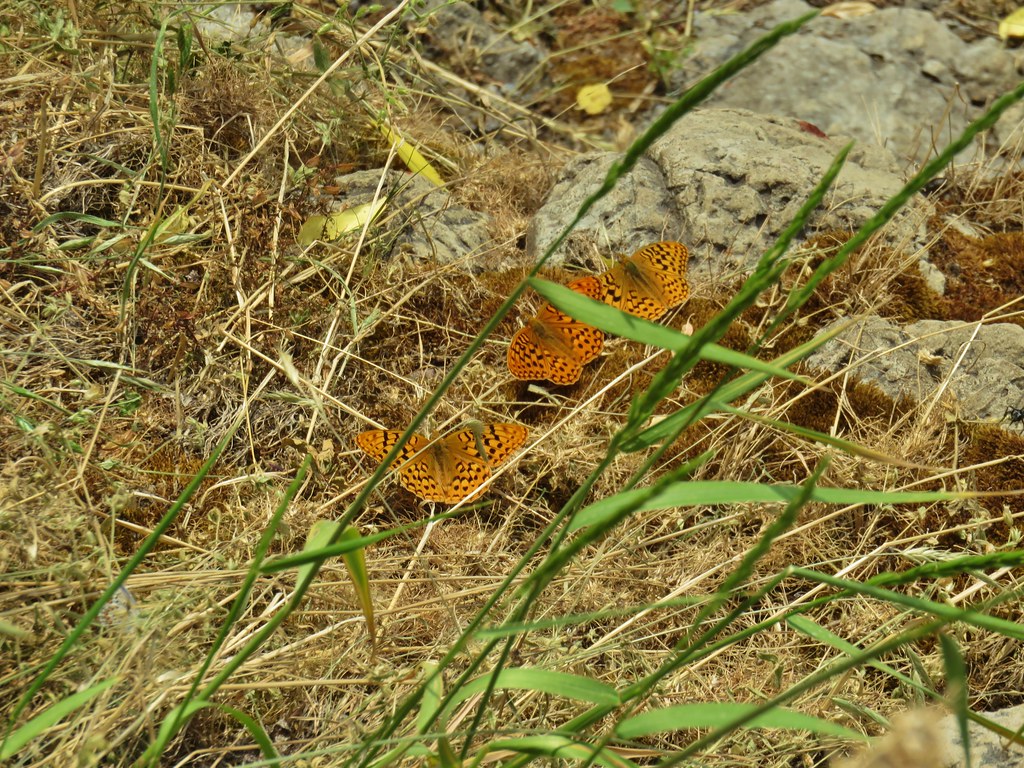
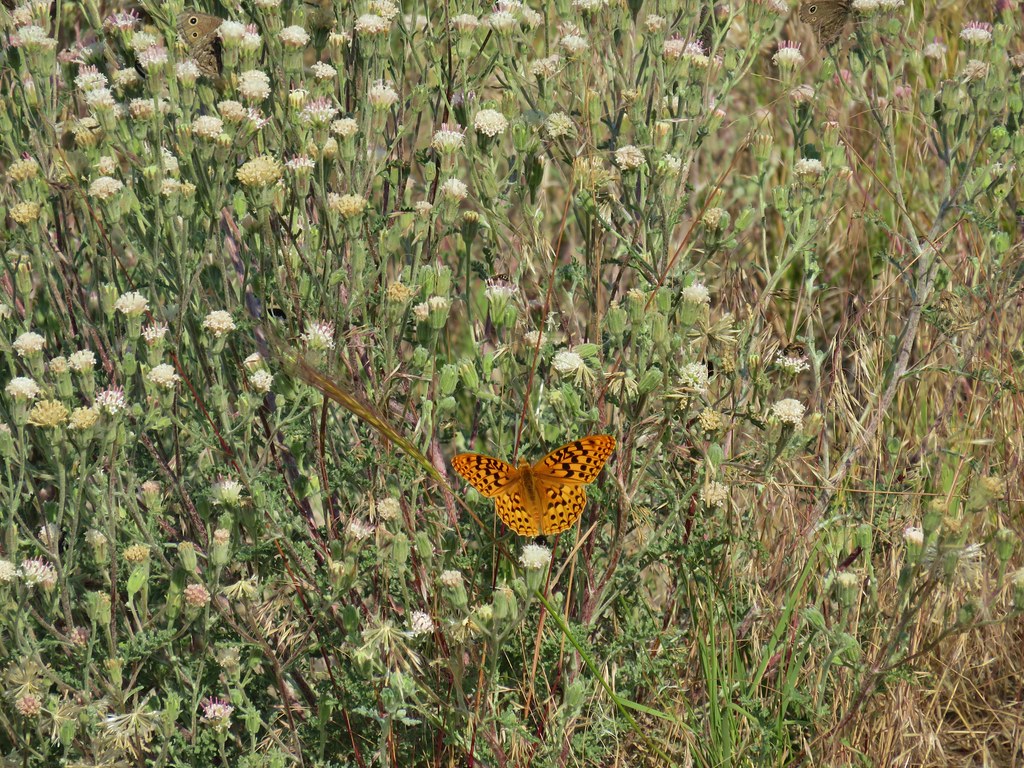 Butterfly on dusty maiden.
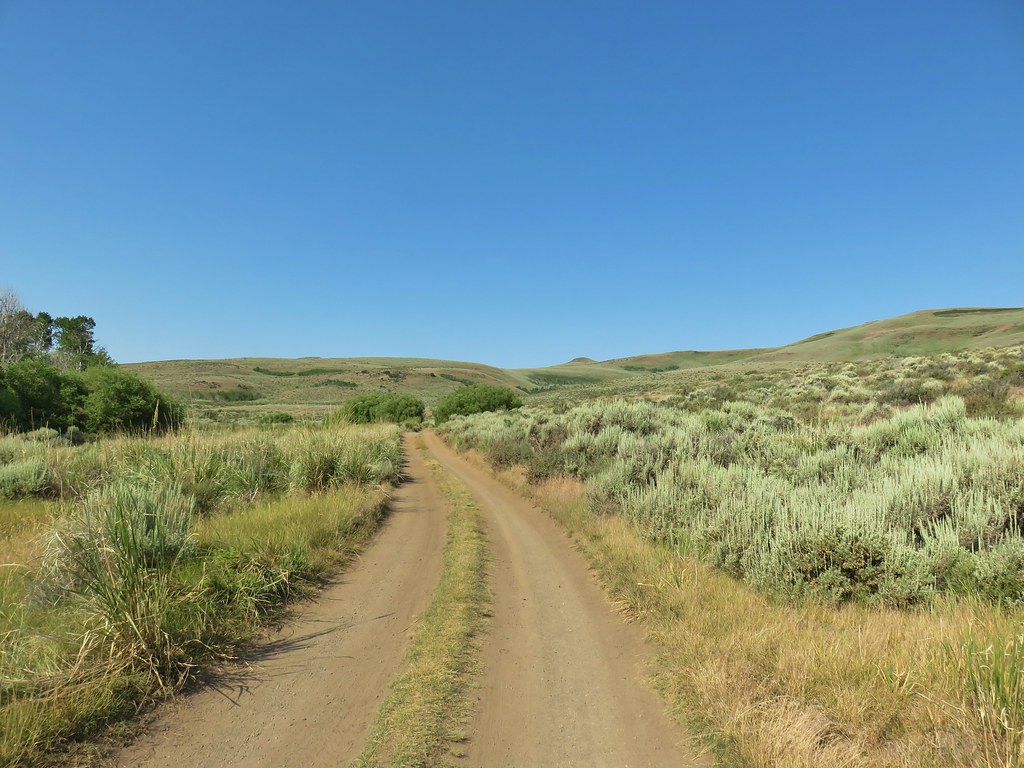 Barnhardi Road
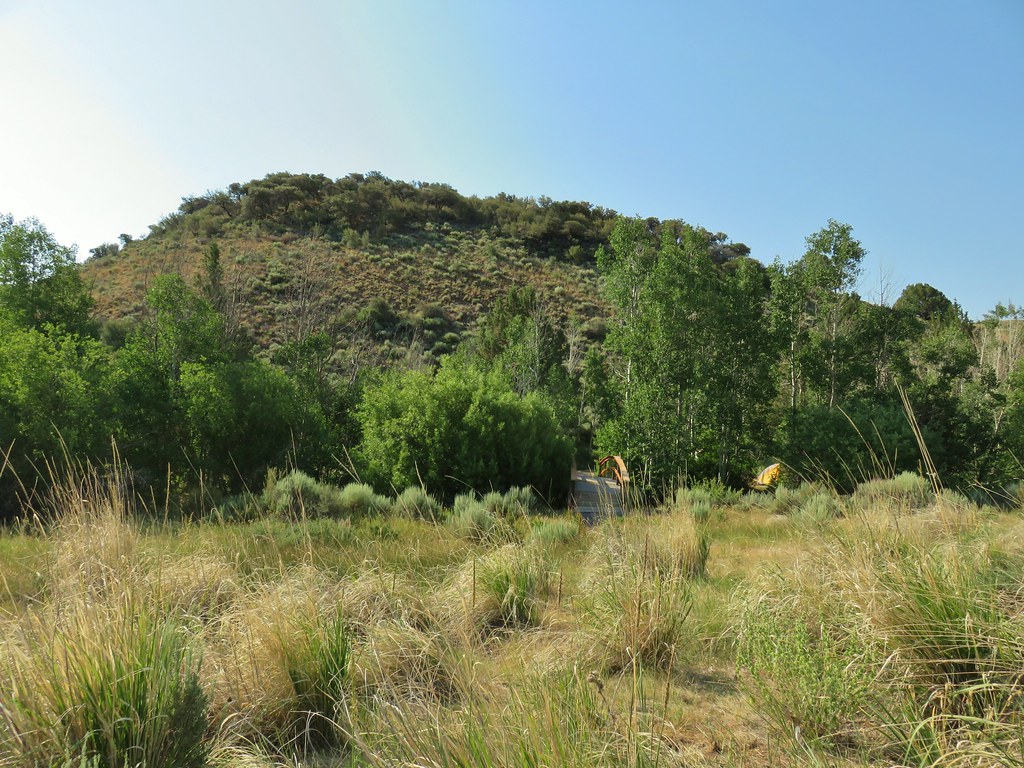 Campground across Rock Creek.
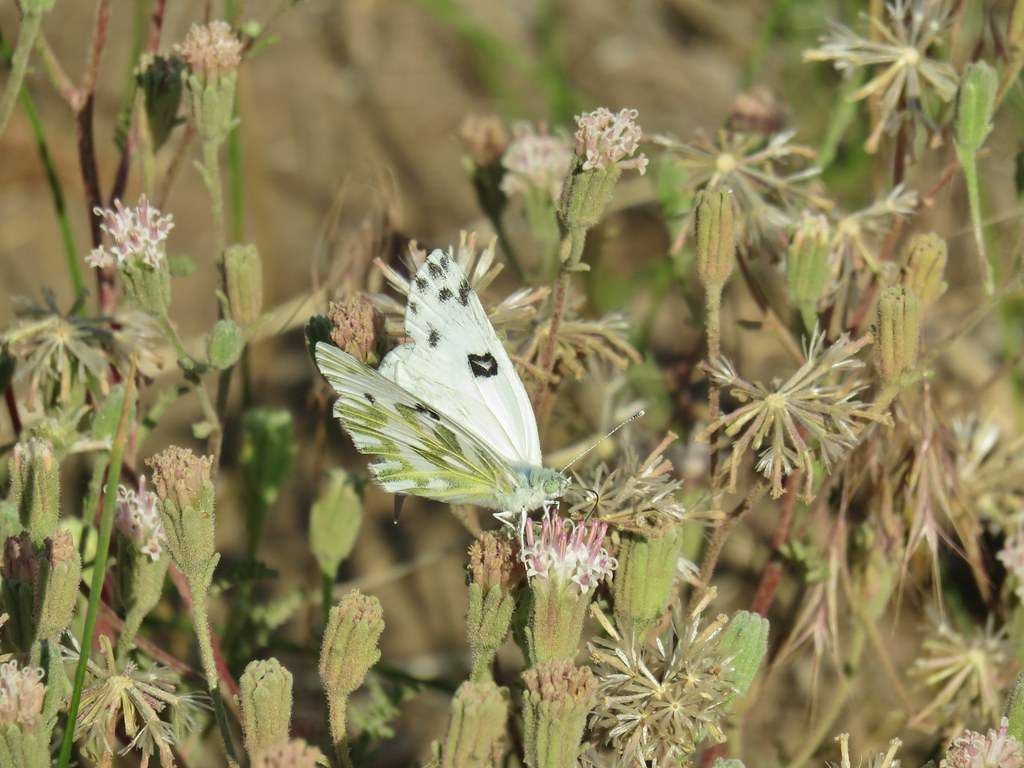 Becker’s white
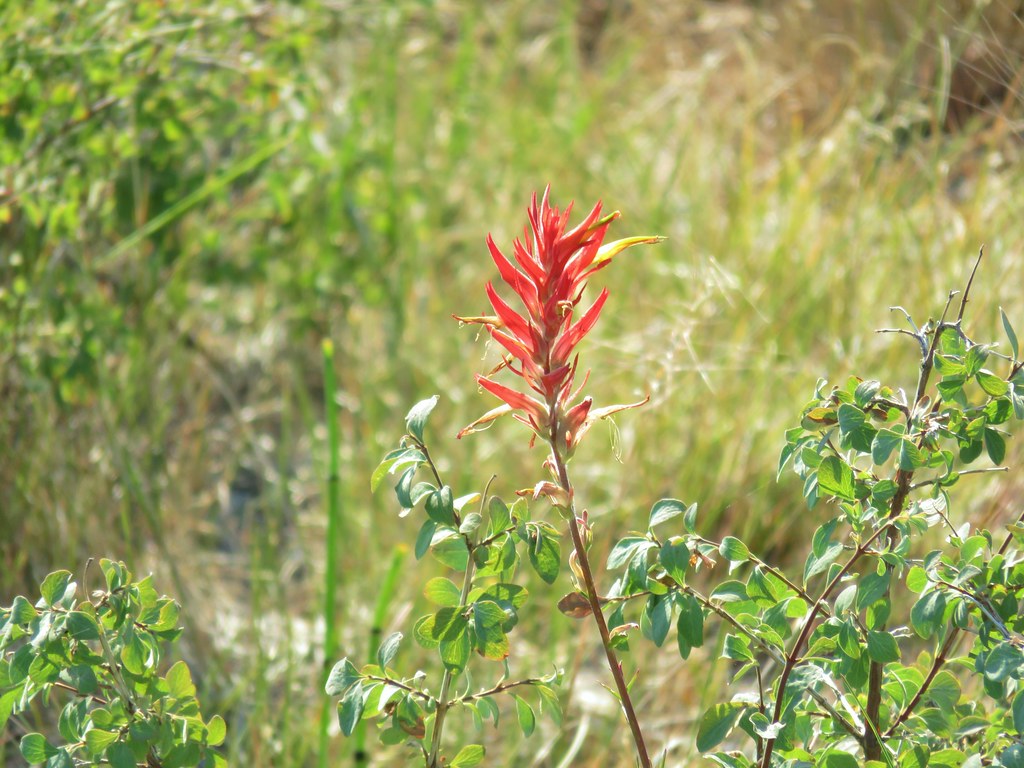 Paintbrush
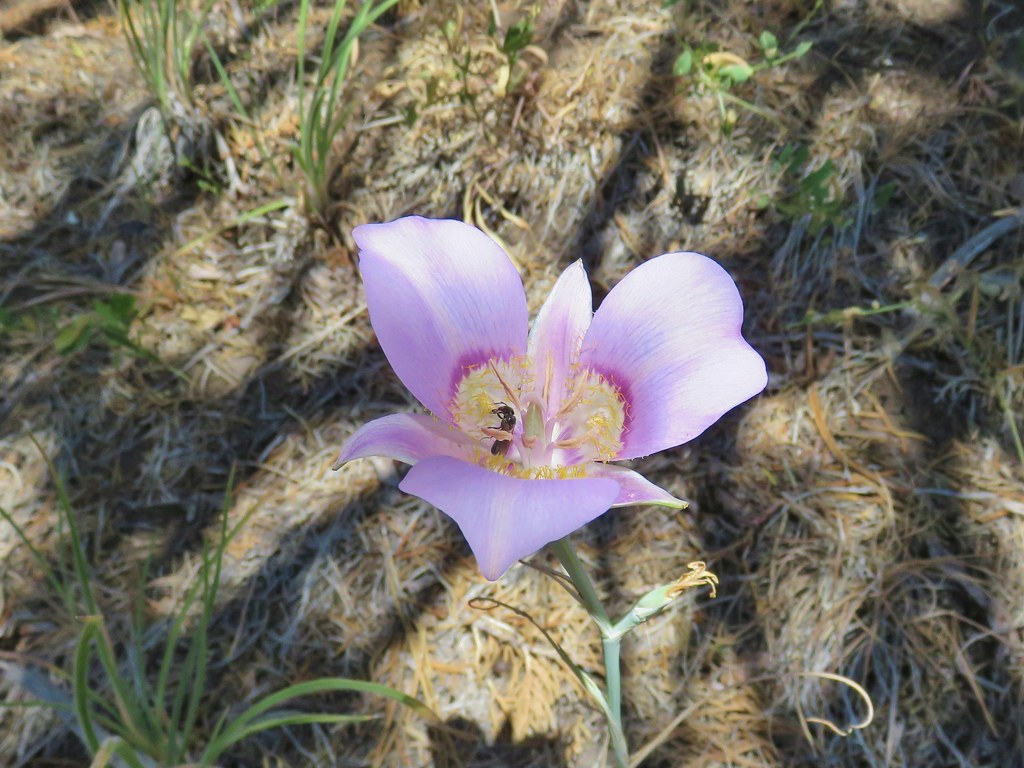
 Sagebrush mariposa lily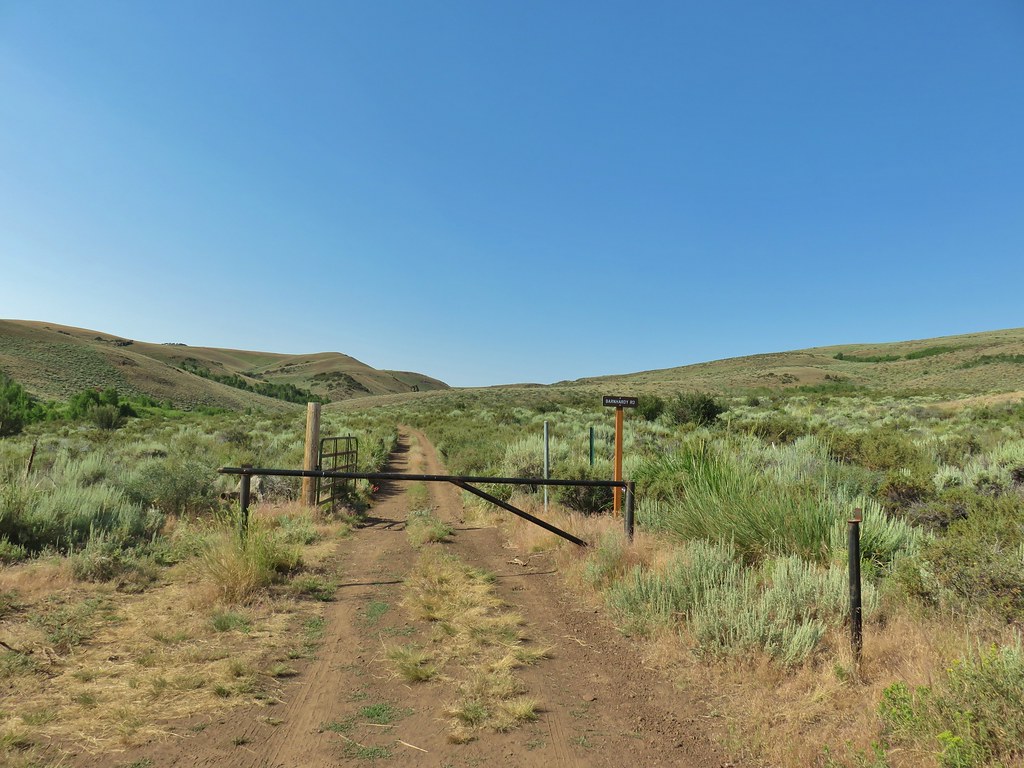
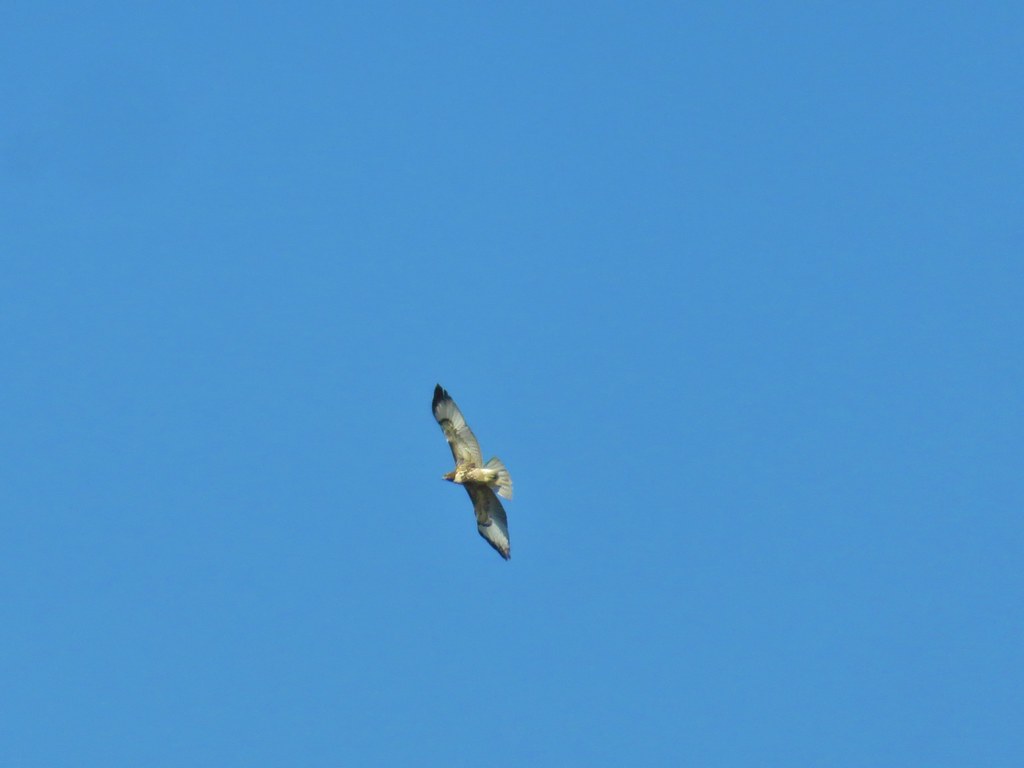 Hawk overhead
 Balsamroot in the sagebrush.
 Wild roses in a quaking aspen stand.
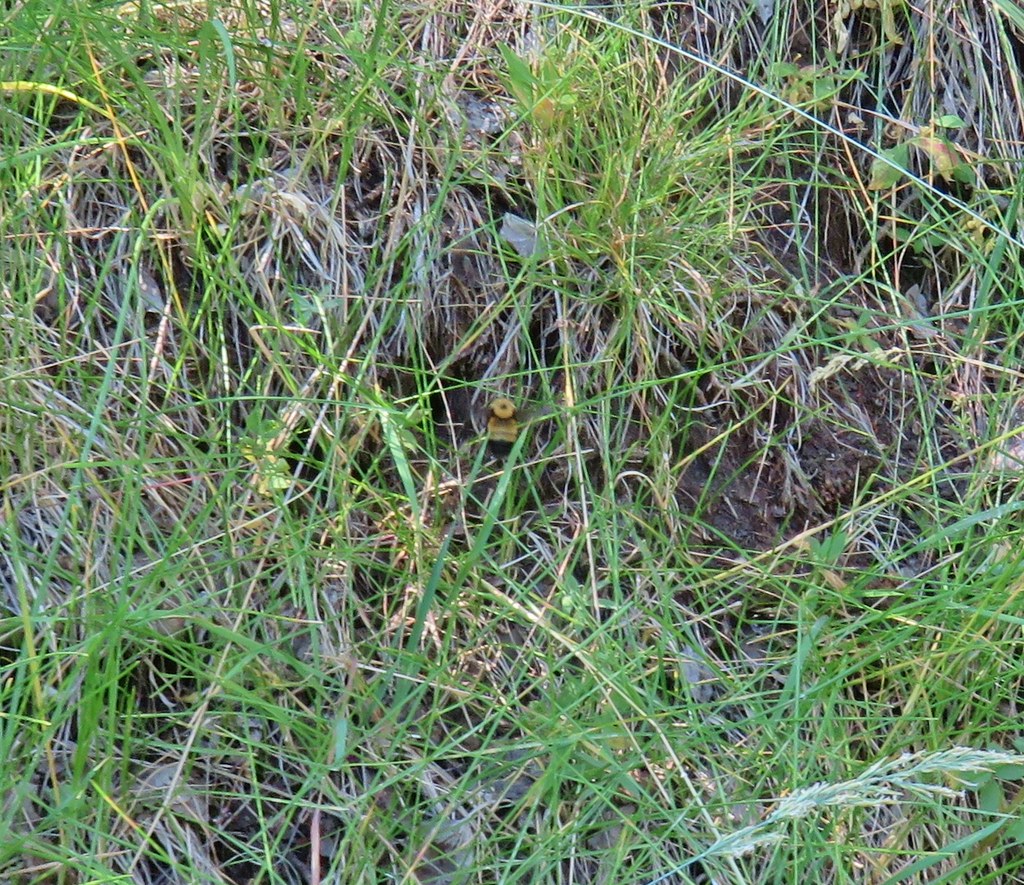 Biggest bumble bee either of us had ever seen.
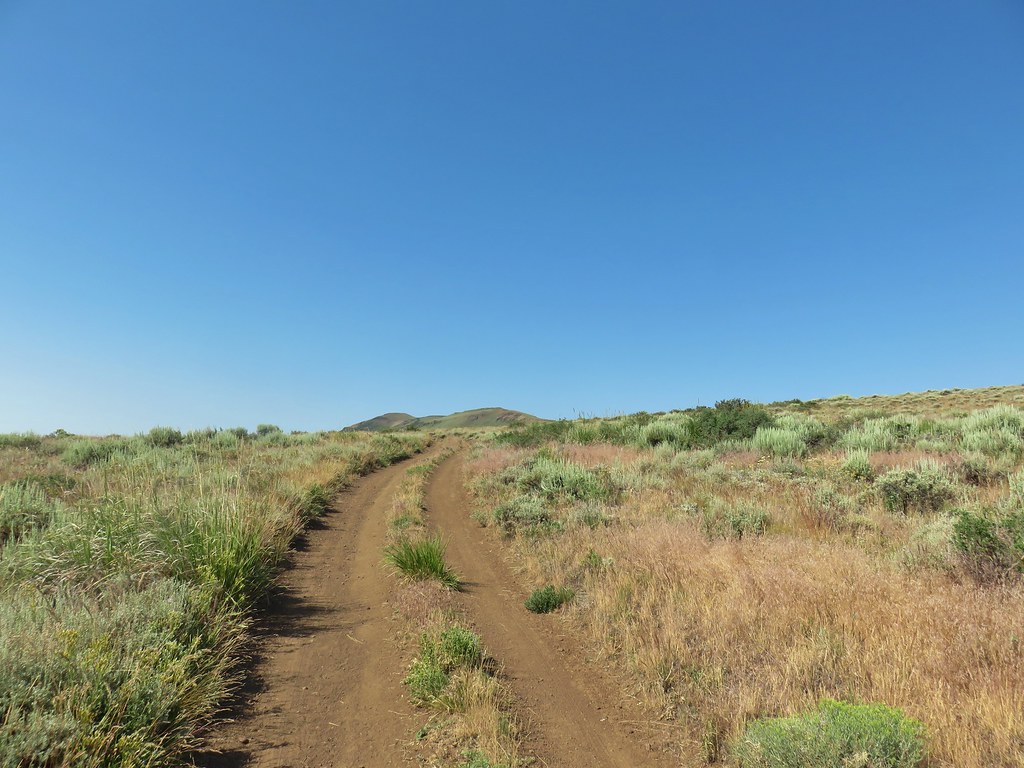 Coming up on the crest at the 1 mile mark.
 View after the crest heading down to Barnhardi Basin.
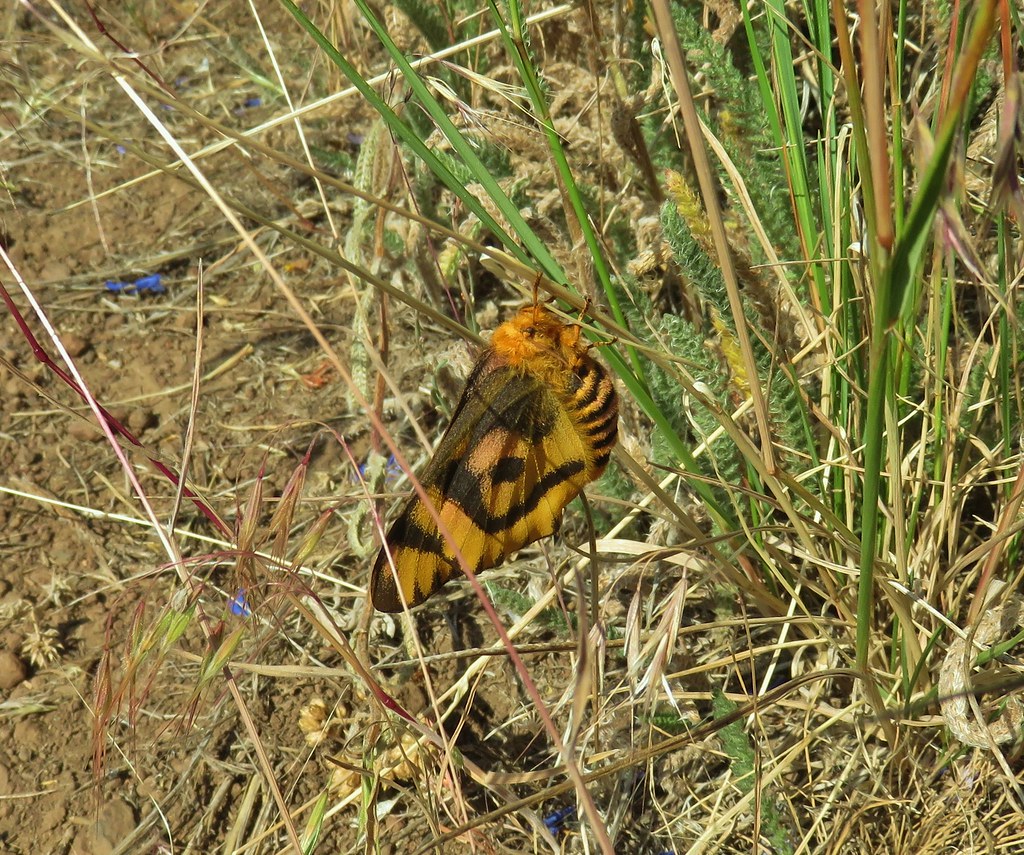 Sheep moth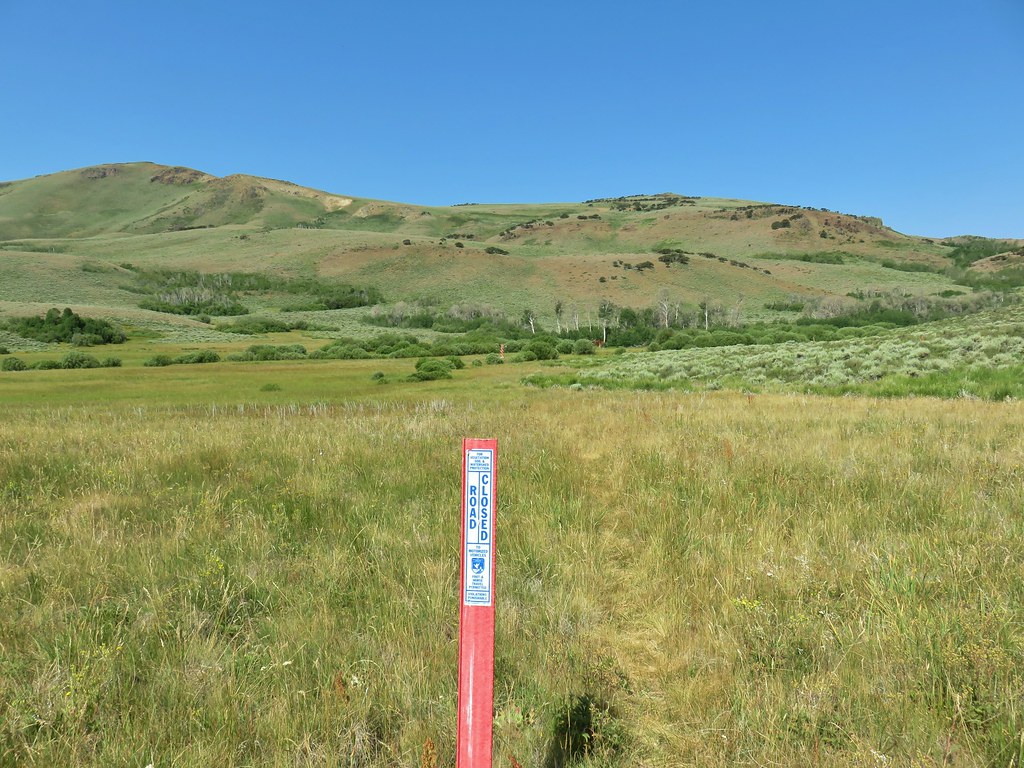
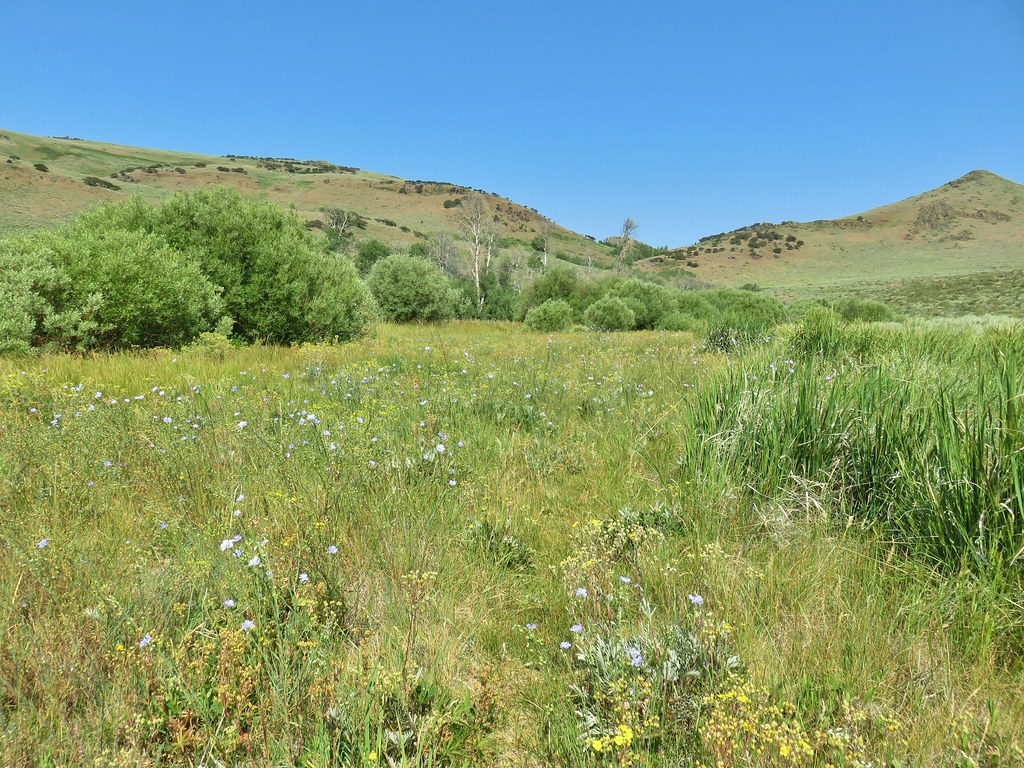 Lewis flax blooming in the meadow.
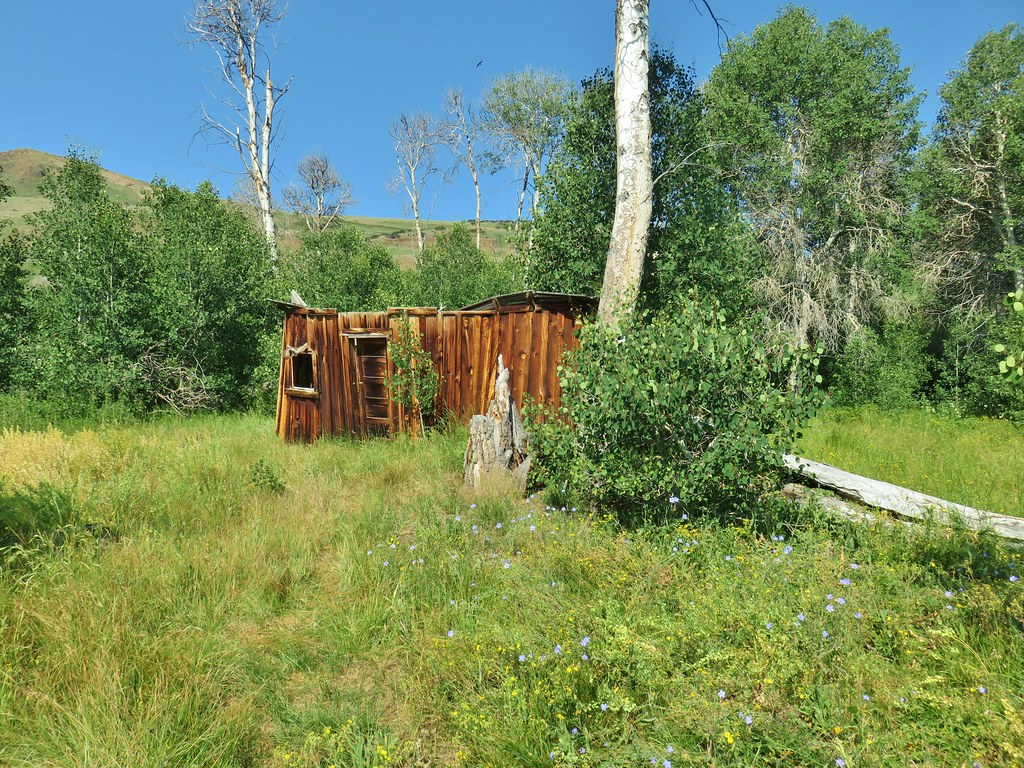 Barnhardi Cabin


 Another sheep moth
 The spring.
 White triteleia
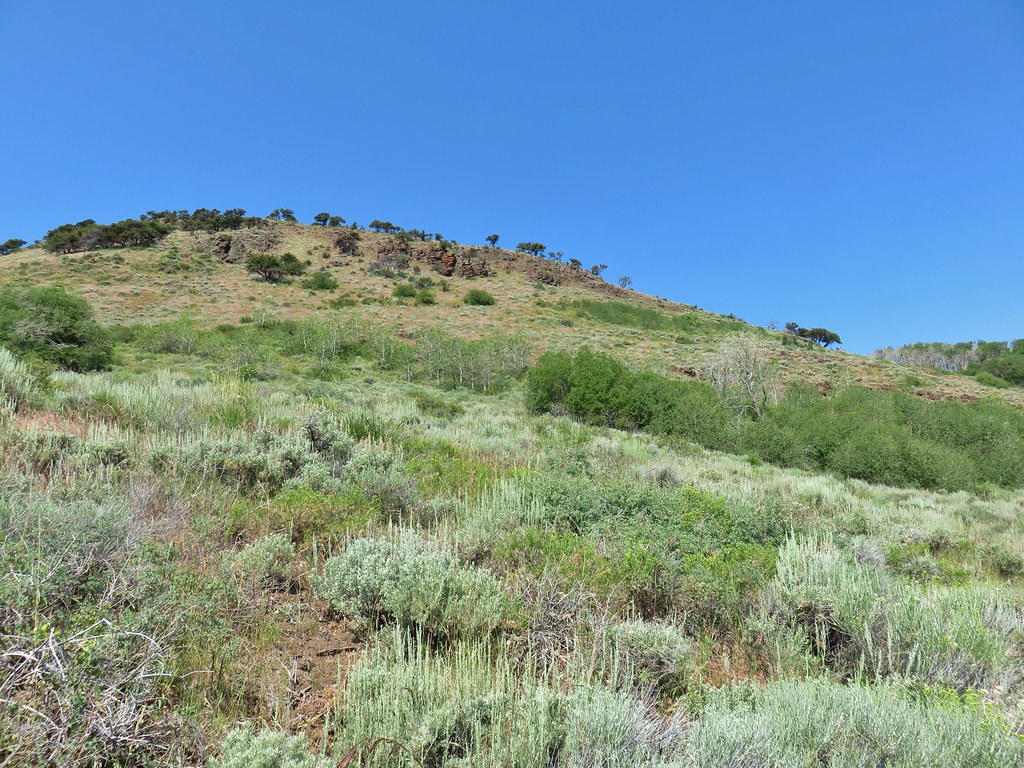
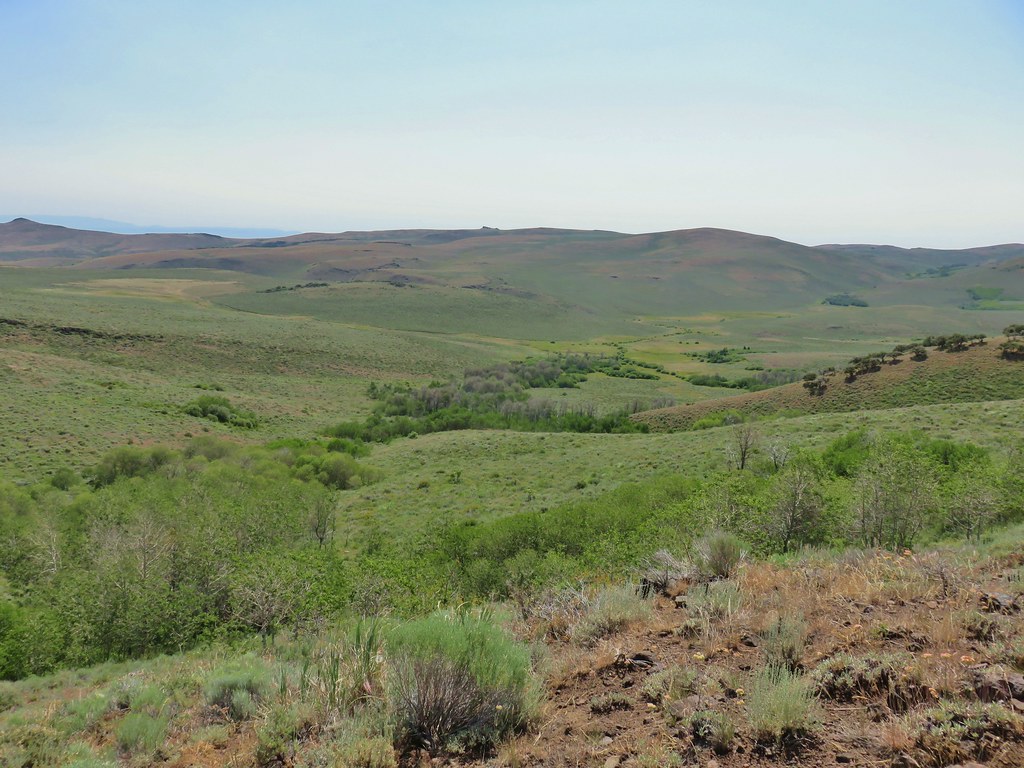 Barnhardi Basin from the side of the knoll.
 View across the creek.
 The knoll was steeper and brushier than it had appeared from below but we managed to make it around.
 Hawk flying around above us.
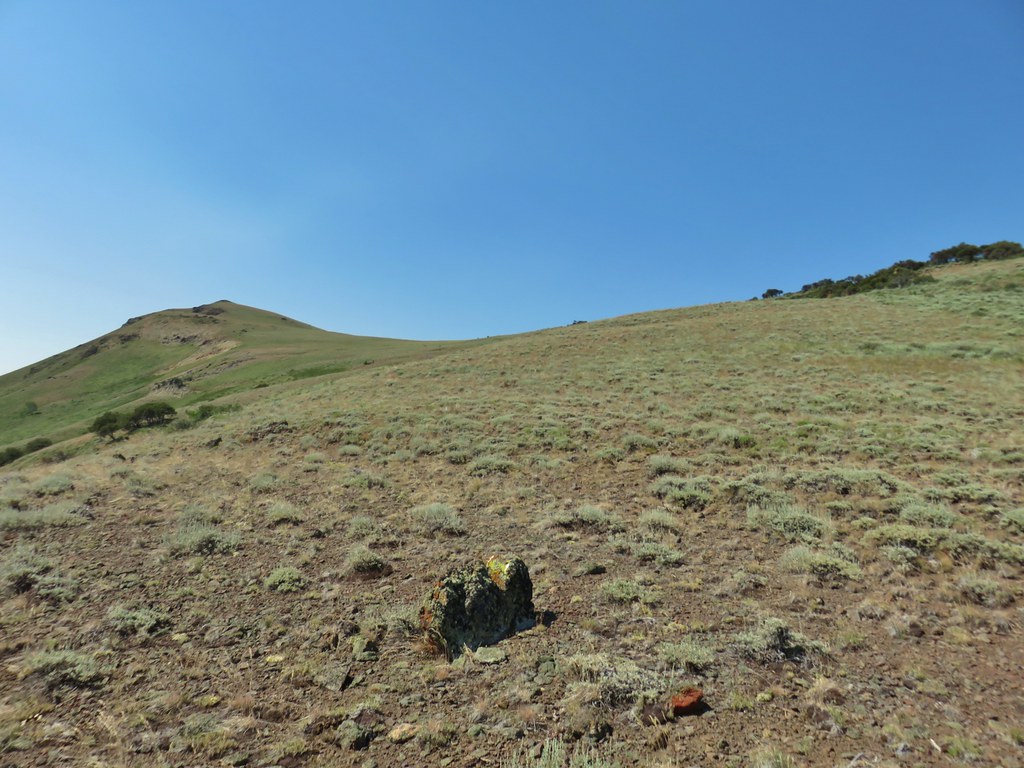 High Point is the peak ahead.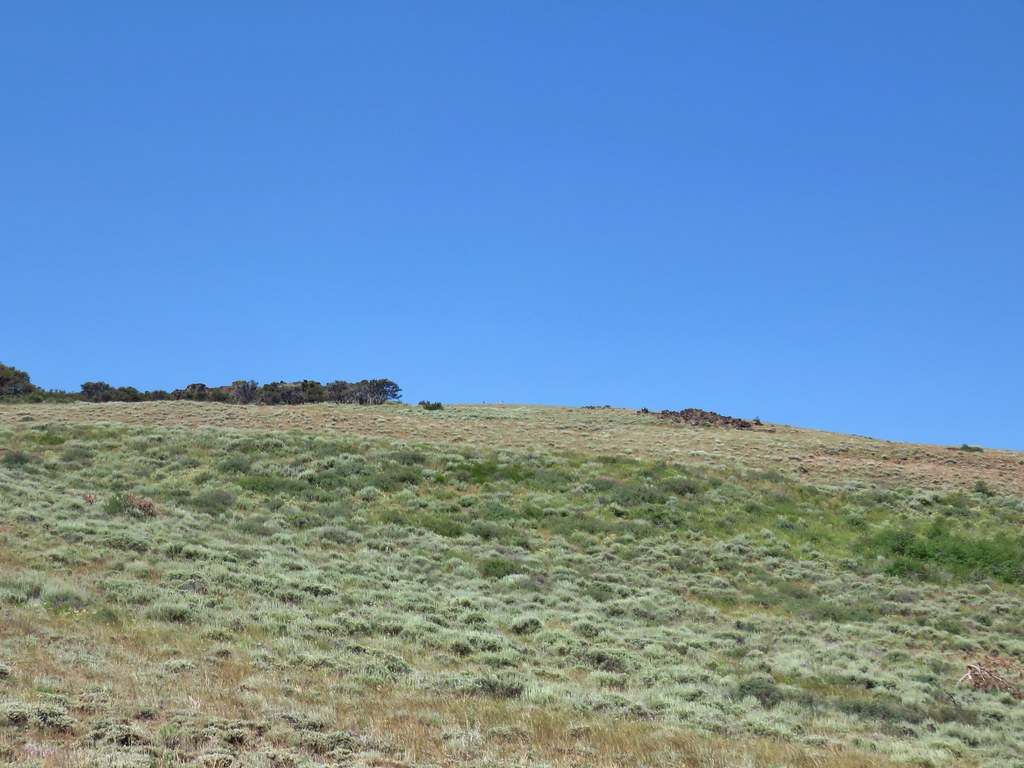
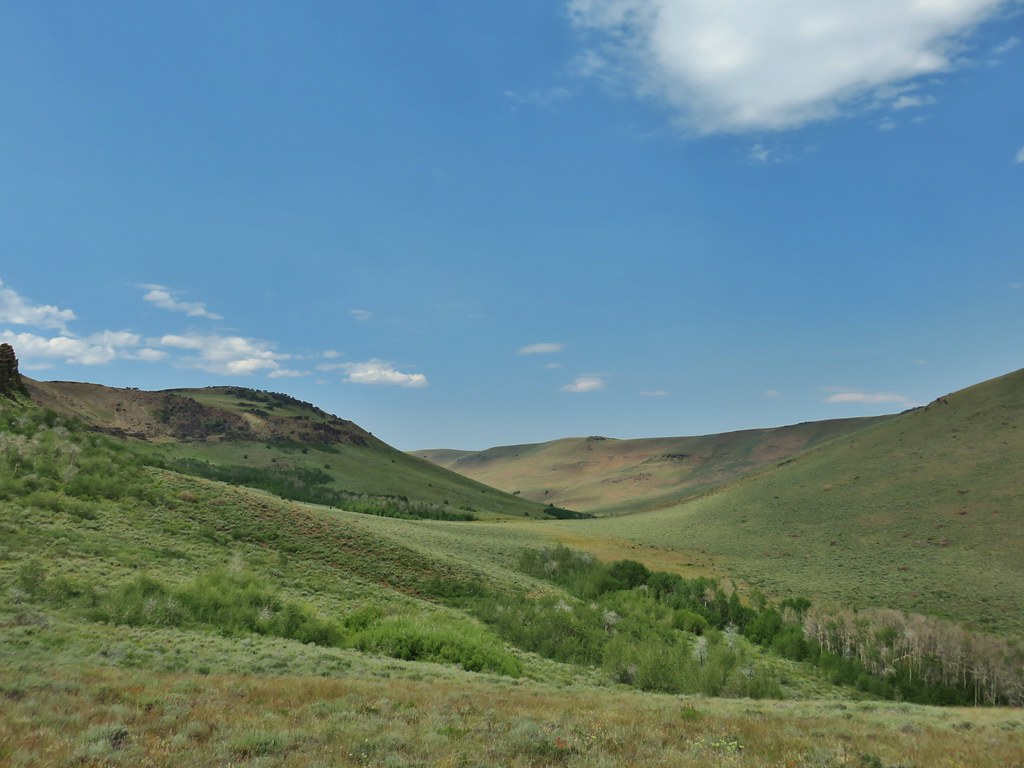 DeGarmo Notch
 Paintbrush
 We had to drop under this.
 Warner Peak is straight ahead with a tower on top beyond the line of trees in the distance.
 Barnhardi Basin getting further away.
 Looking back toward DeGarmo Notch.
 We first aimed for the the small rock outcrop beyond High Point then bent to the right to pass the larger rock outcrop before climbing up to the trees in the distance.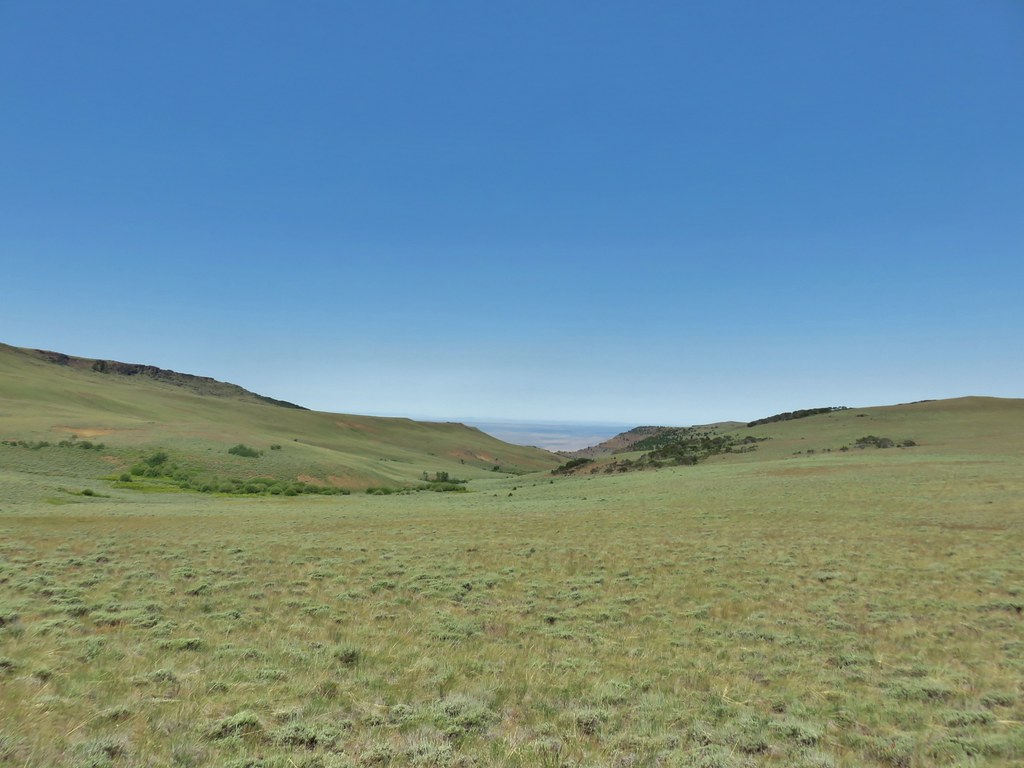
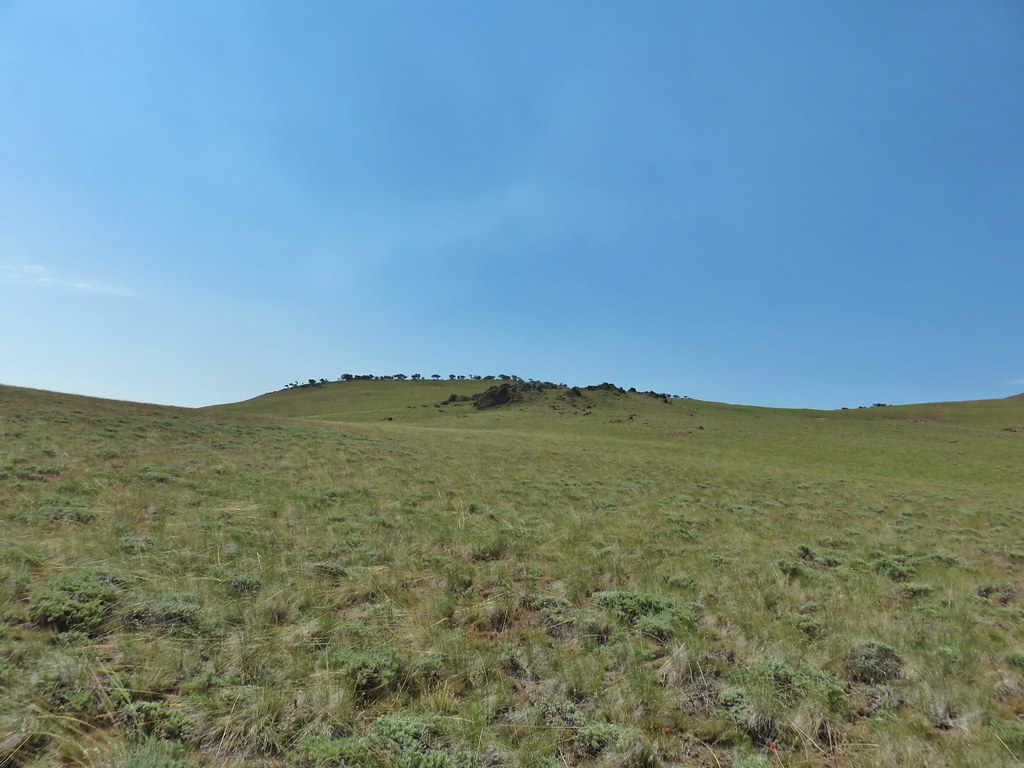 Made it past the first outcrop and heading for the right side of the second.
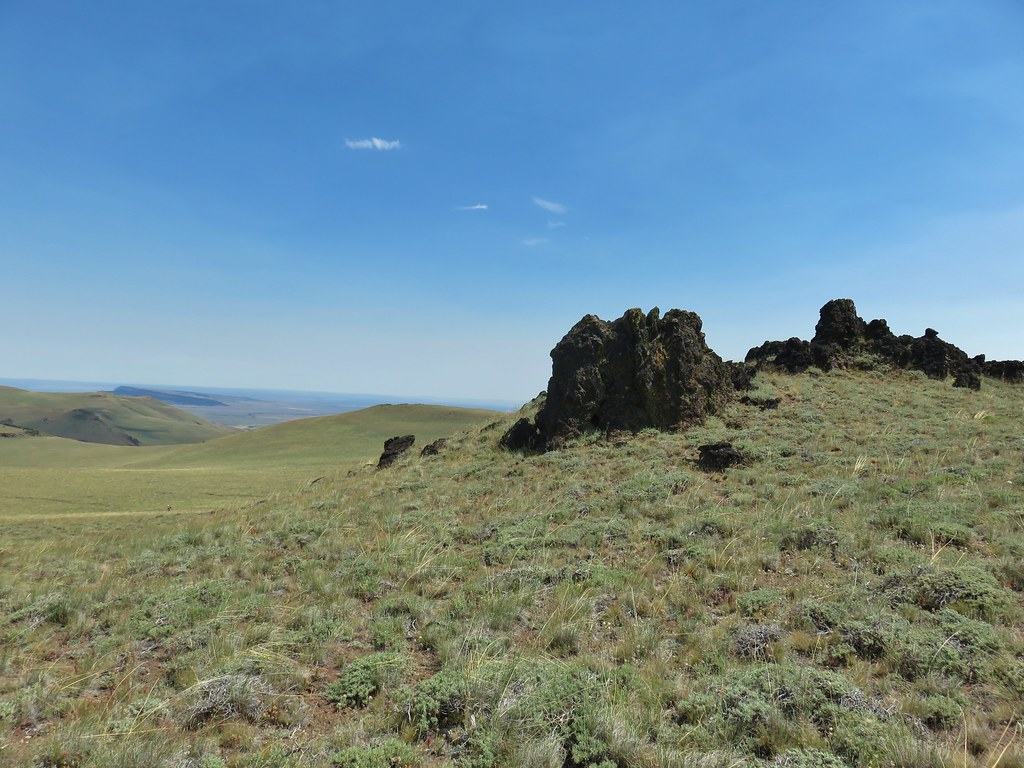 At the second outcrop.

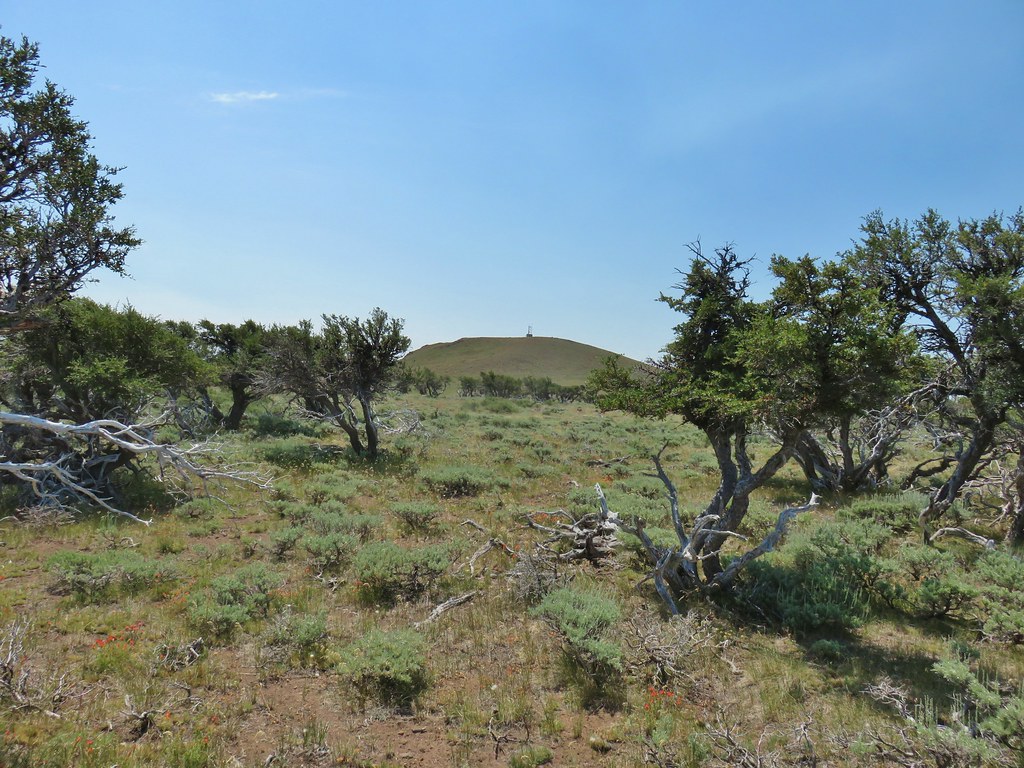

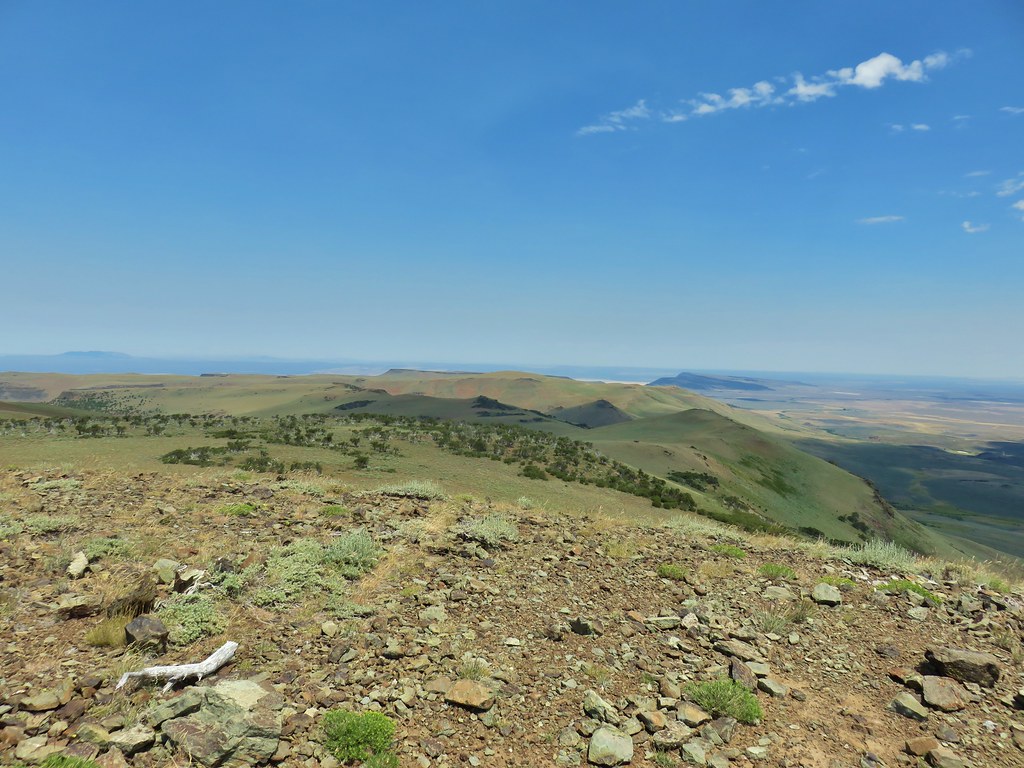 The white patch in the distance to the right just beyond the shadow is the parking area.
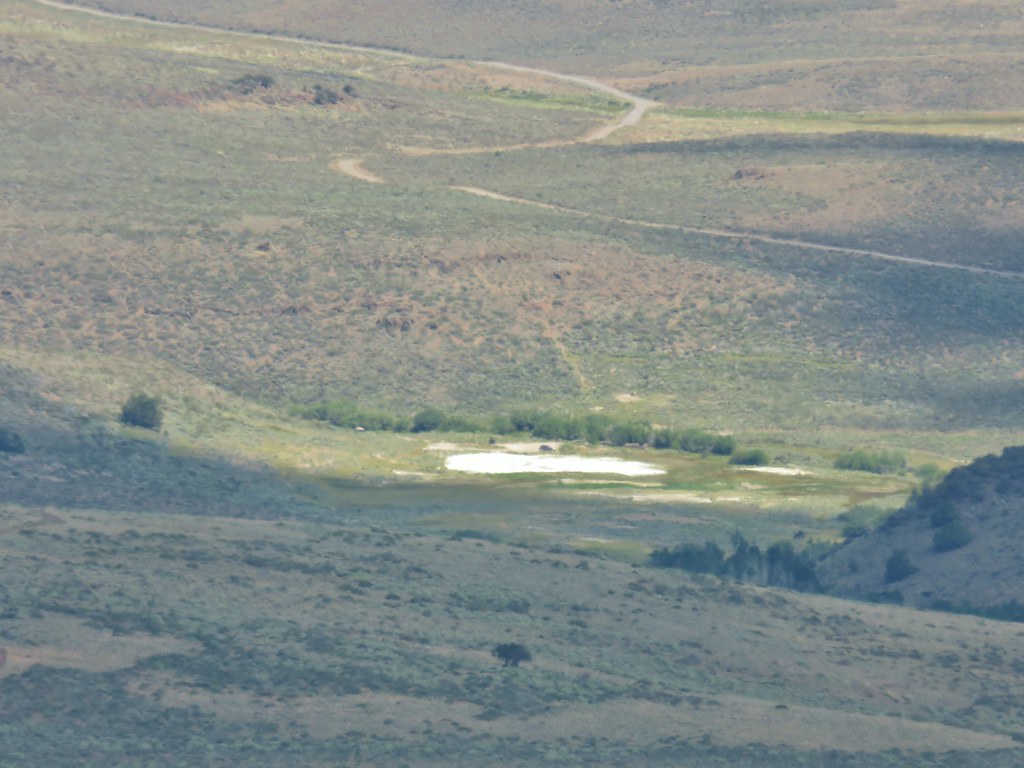 Our car was still there.
 View south over Hart Mountain.
 SW to Drake Peak with part of Hart Lake visible below the cliffs.
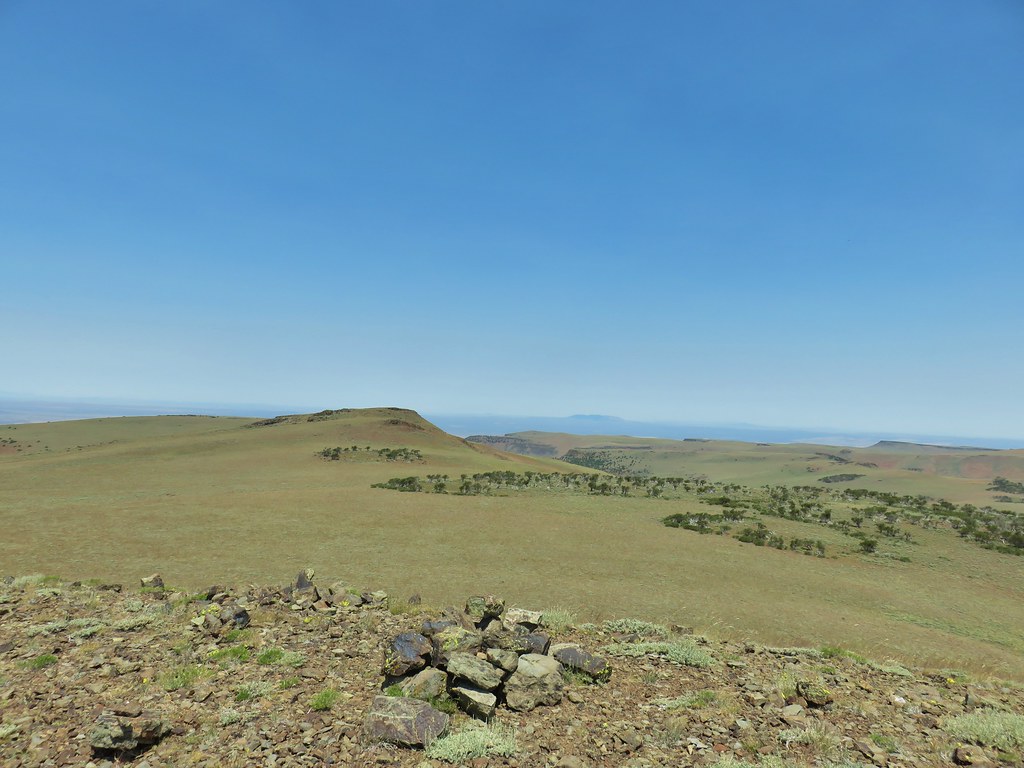 Looking north toward Juniper Mountain.
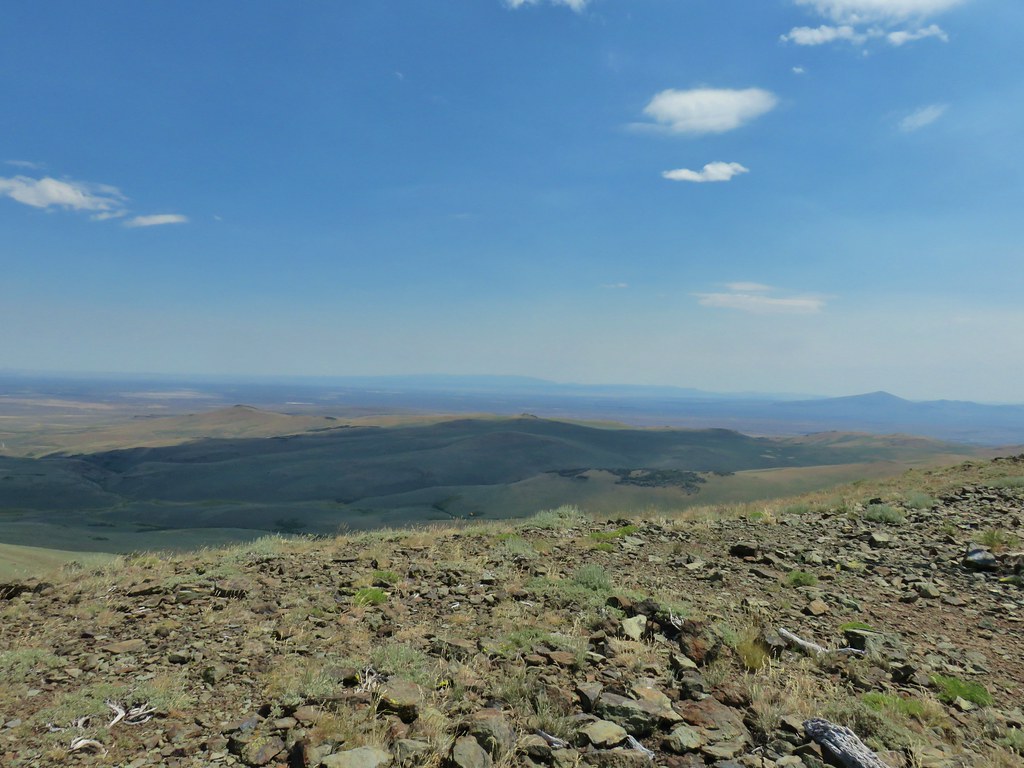 East toward Steens Mountain
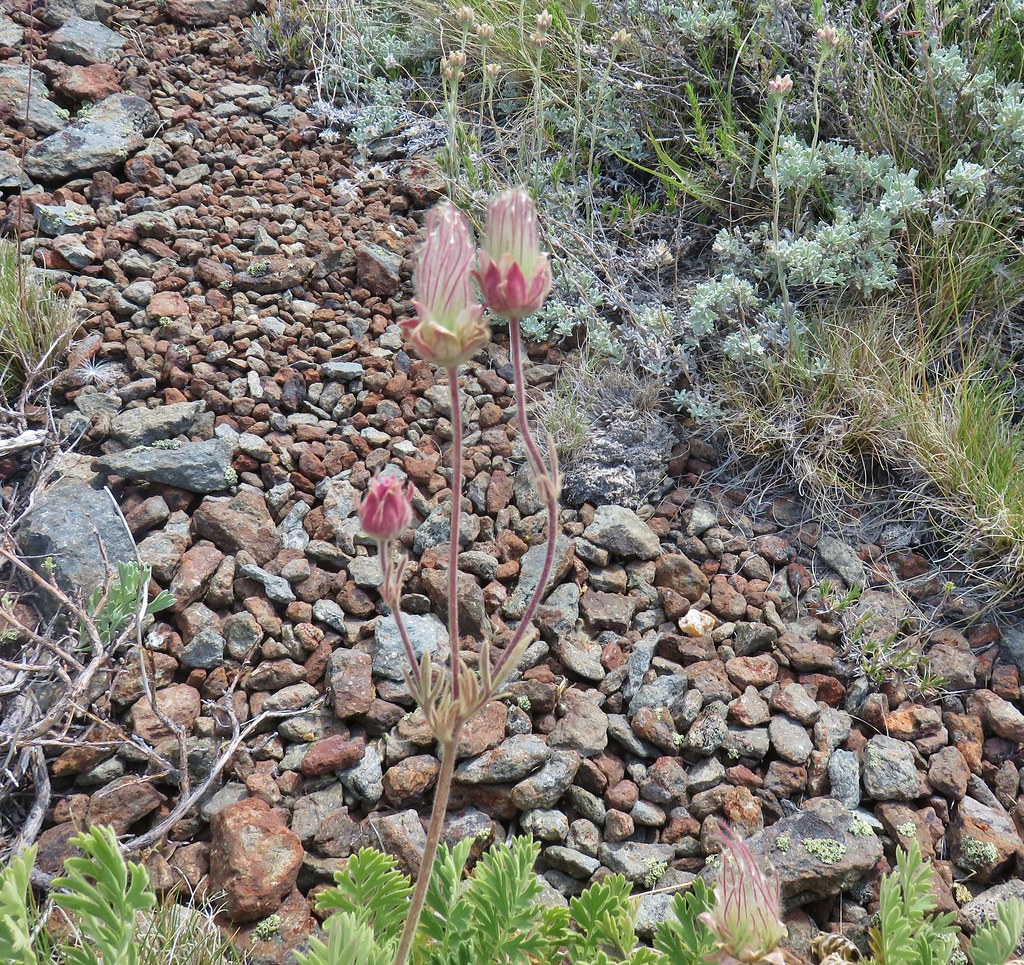 Prairie smoke
 Balloon pod milk vetch
 Paintbrush
 Lupine
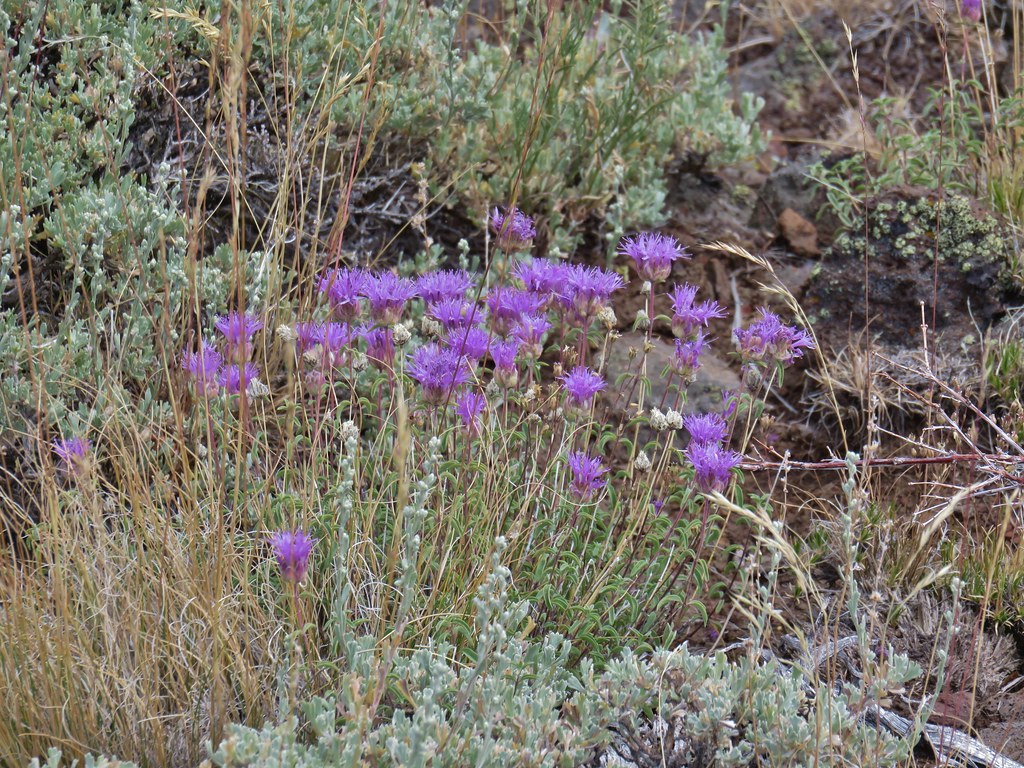 Mountain coyote mint
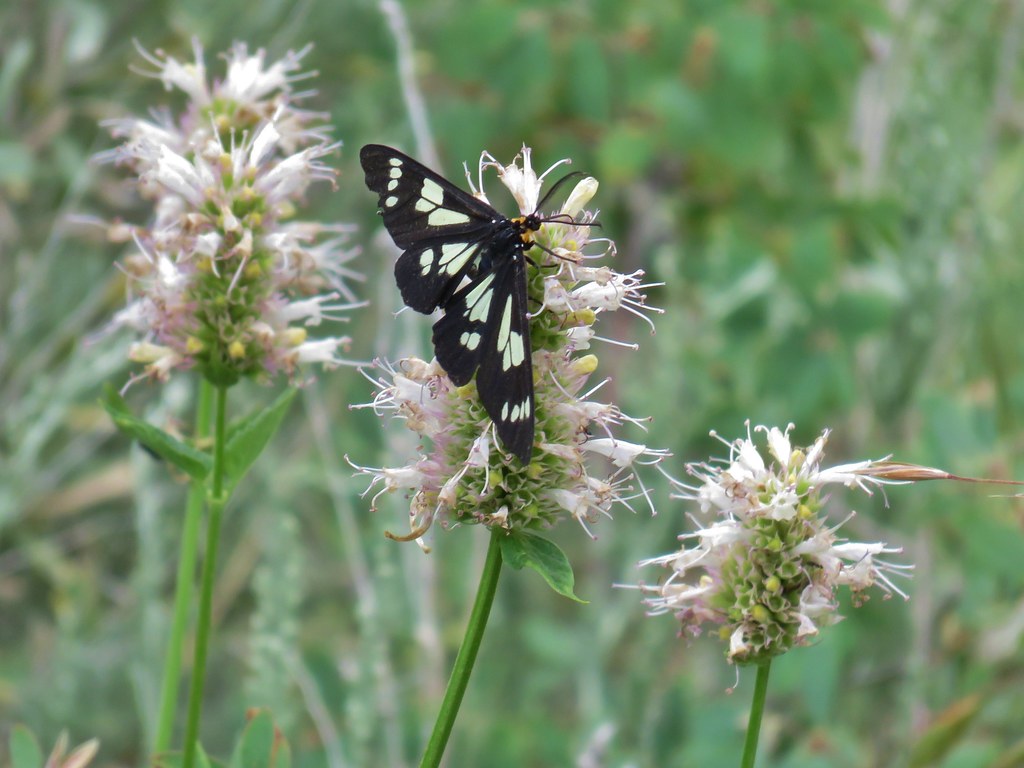 Police car moth on hyssop


 Butterflies on rabbitbrush
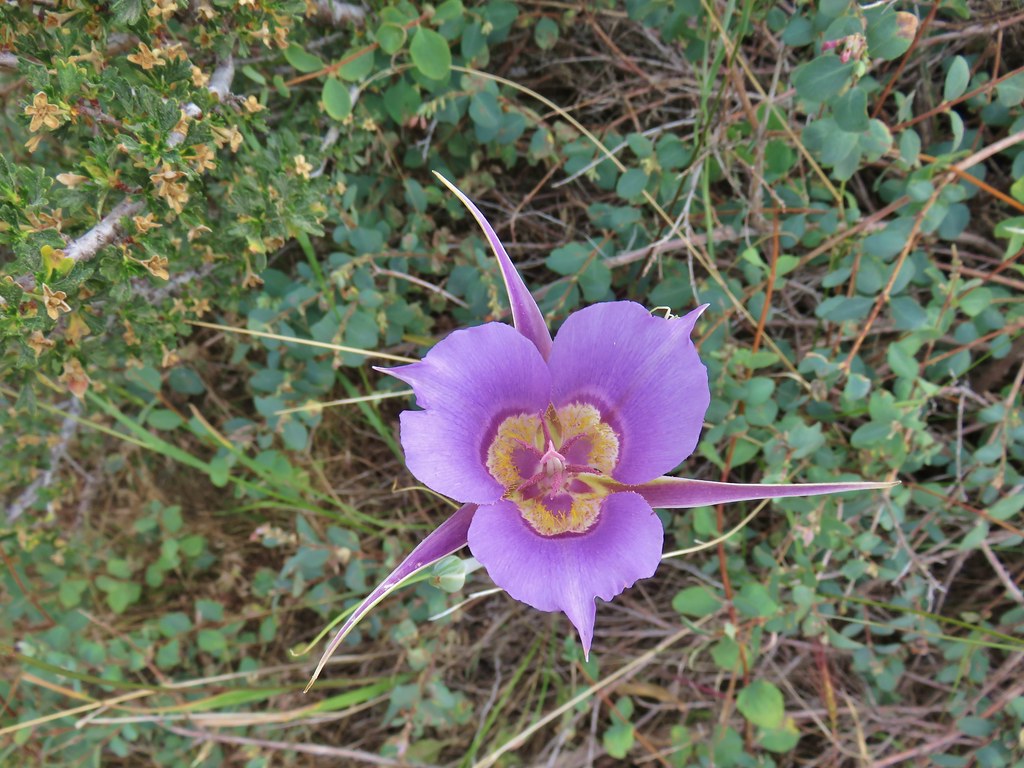 Sagebrush mariposa lily


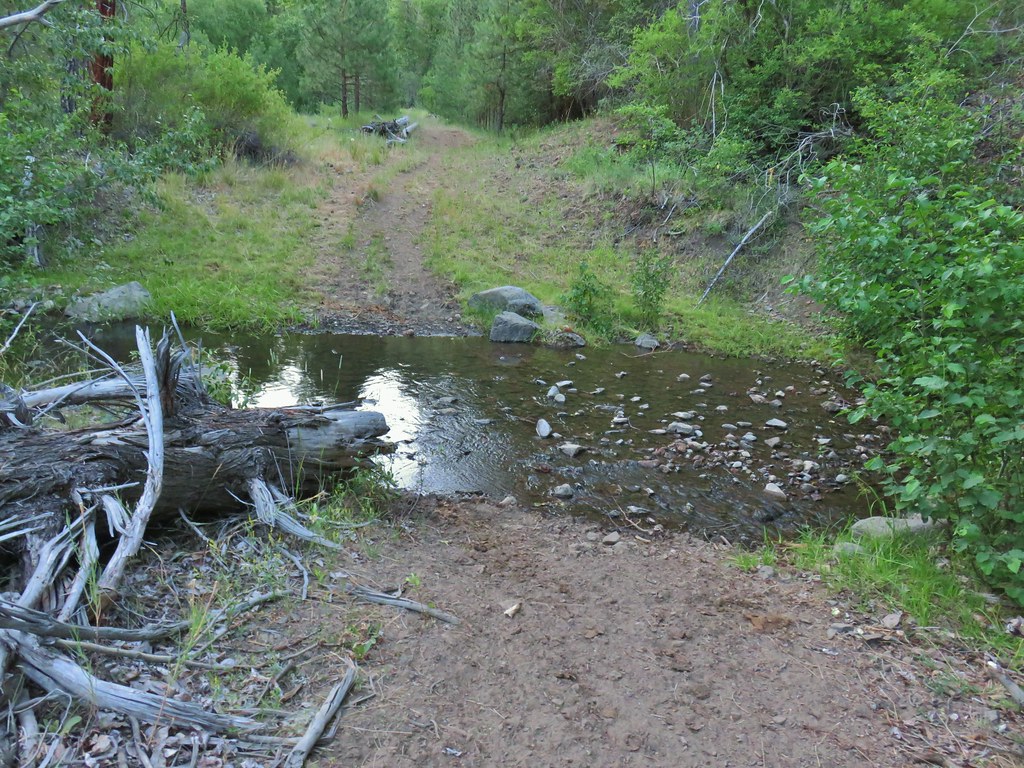
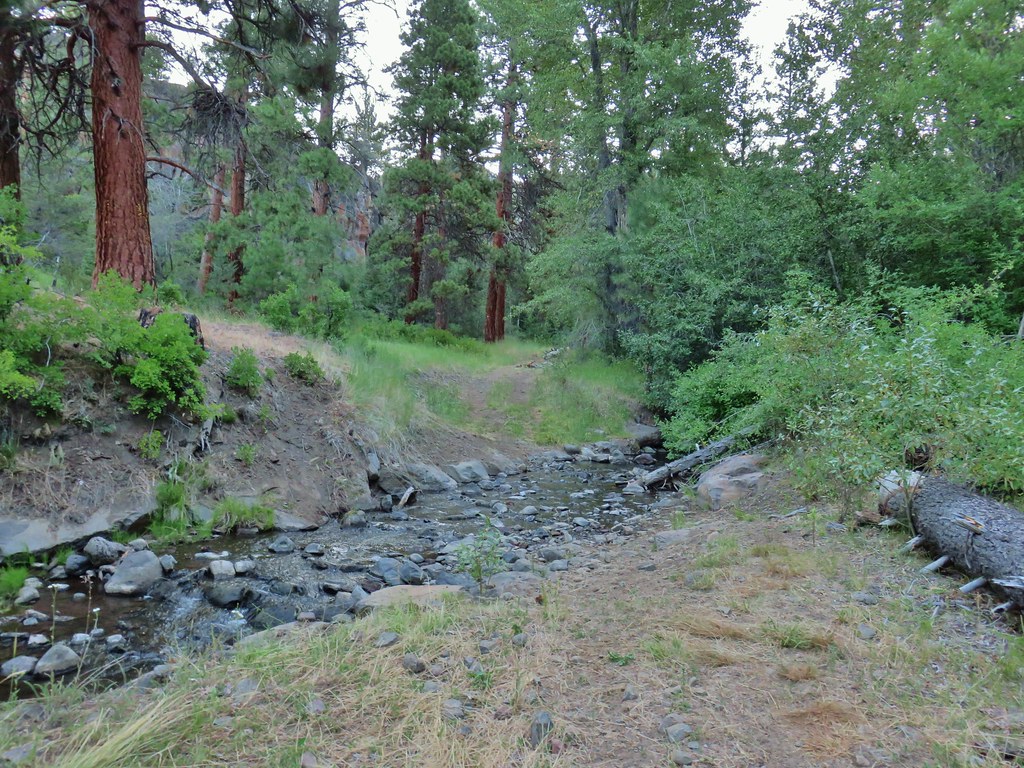
 The trail joining the road after the 3rd creek crossing (picture is from the afternoon).
 Downed post marking the trail to avoid the creek crossings.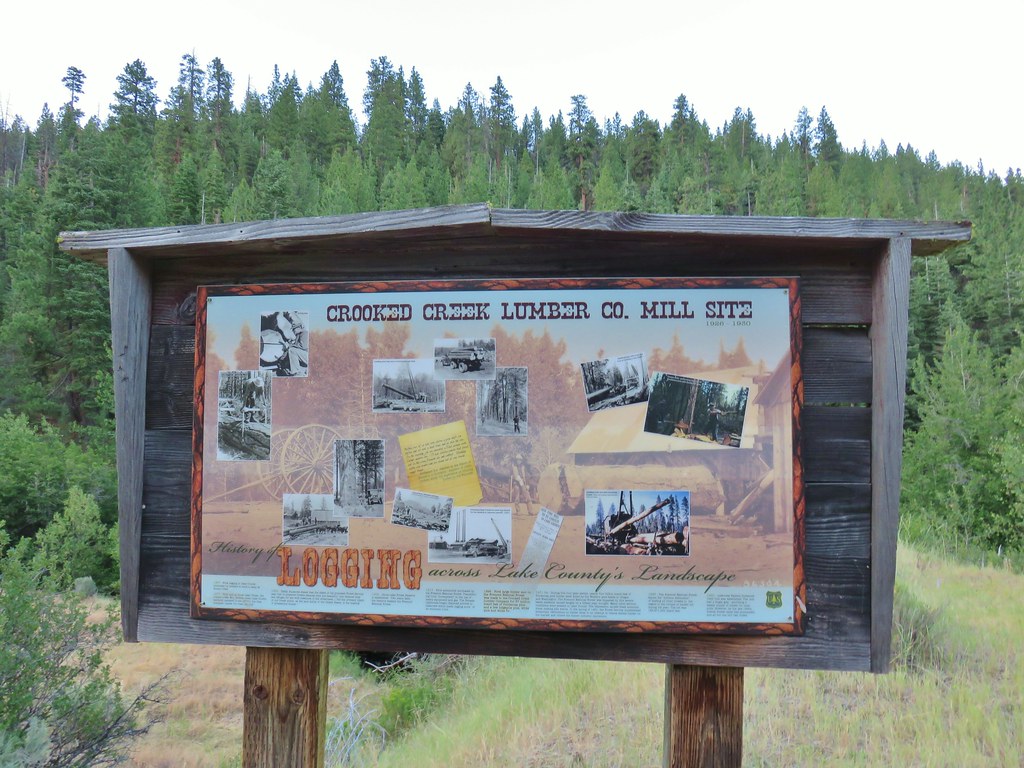

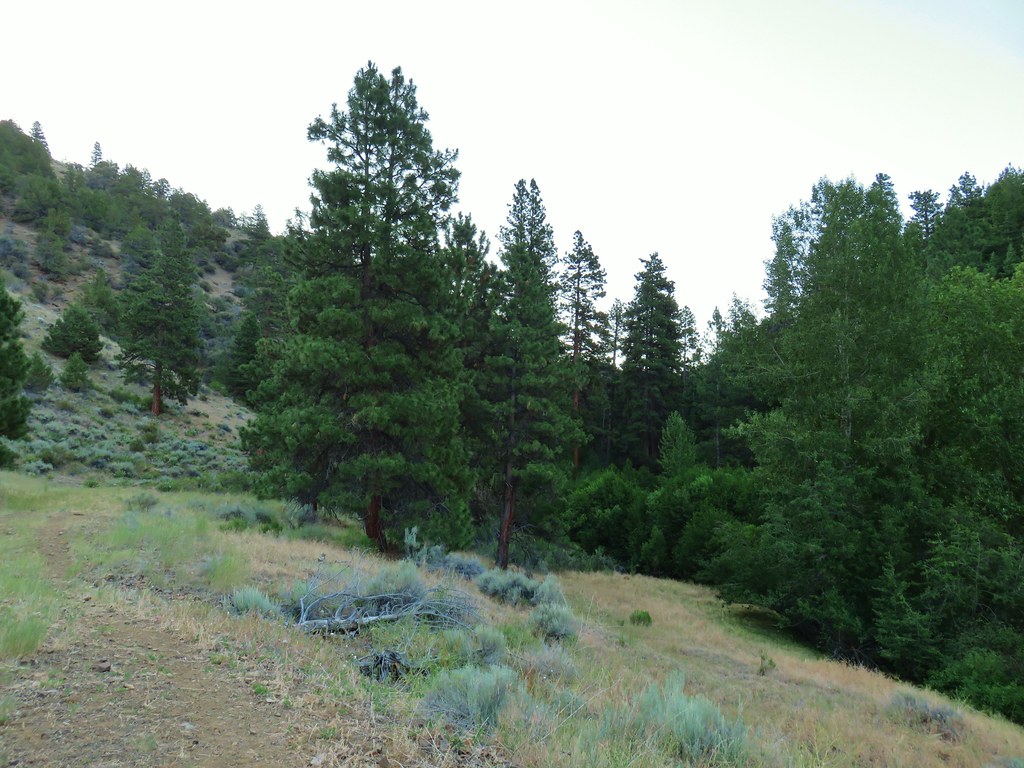
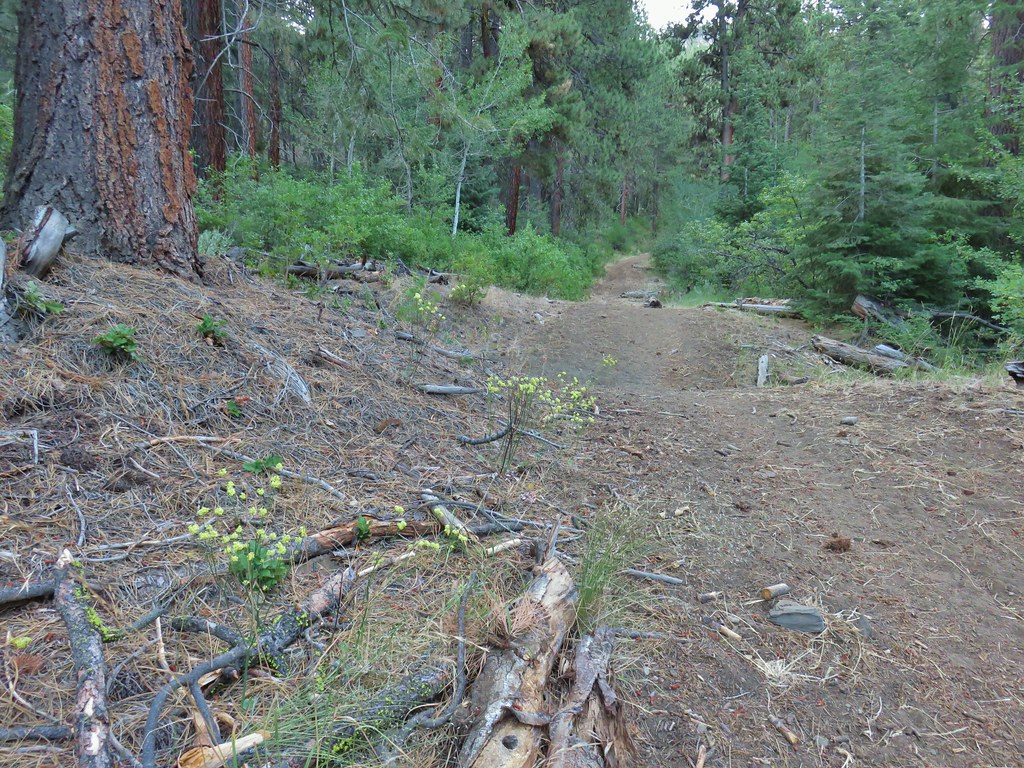 A short stretch where both sides looked similar.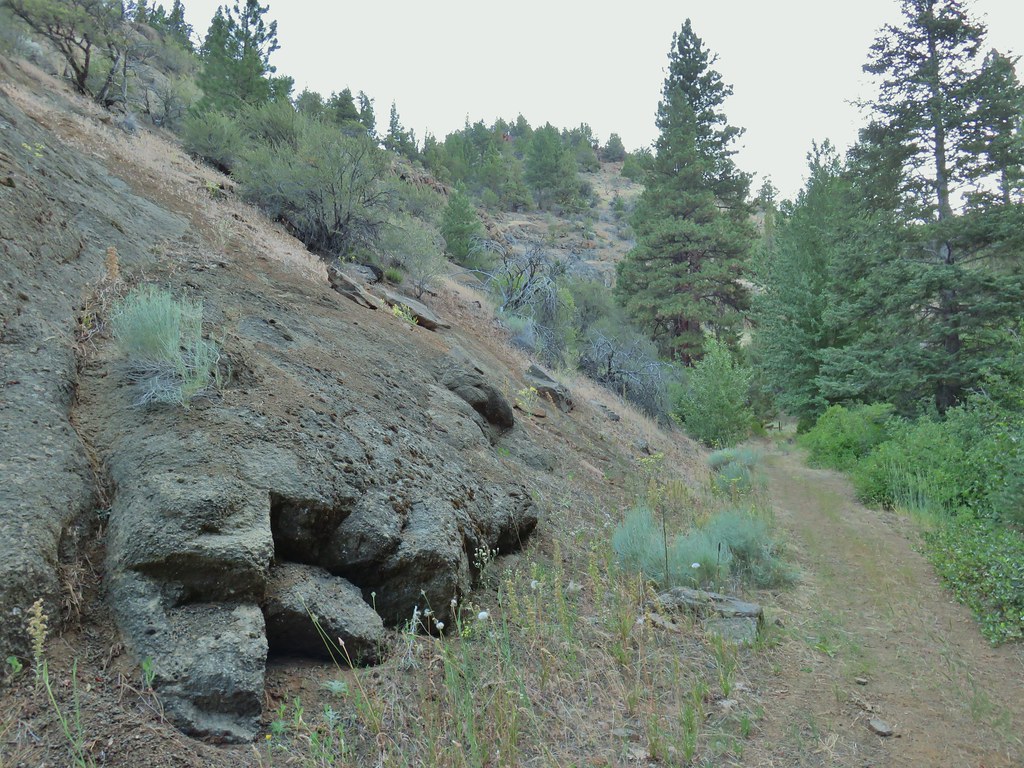
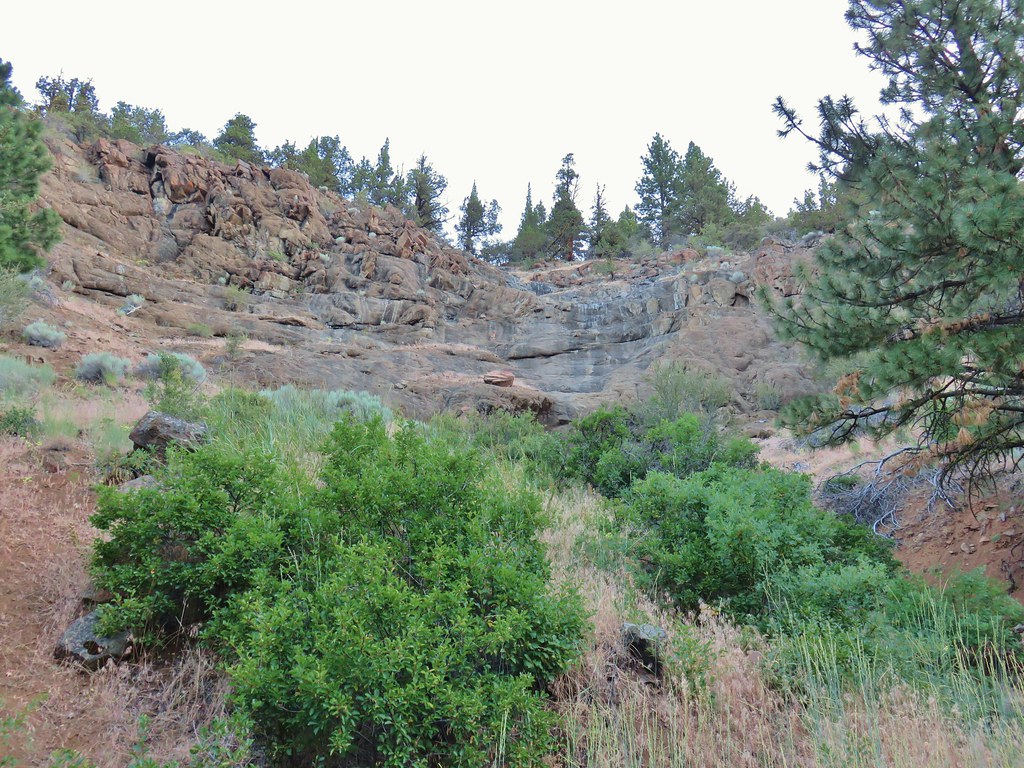 Dry waterfall
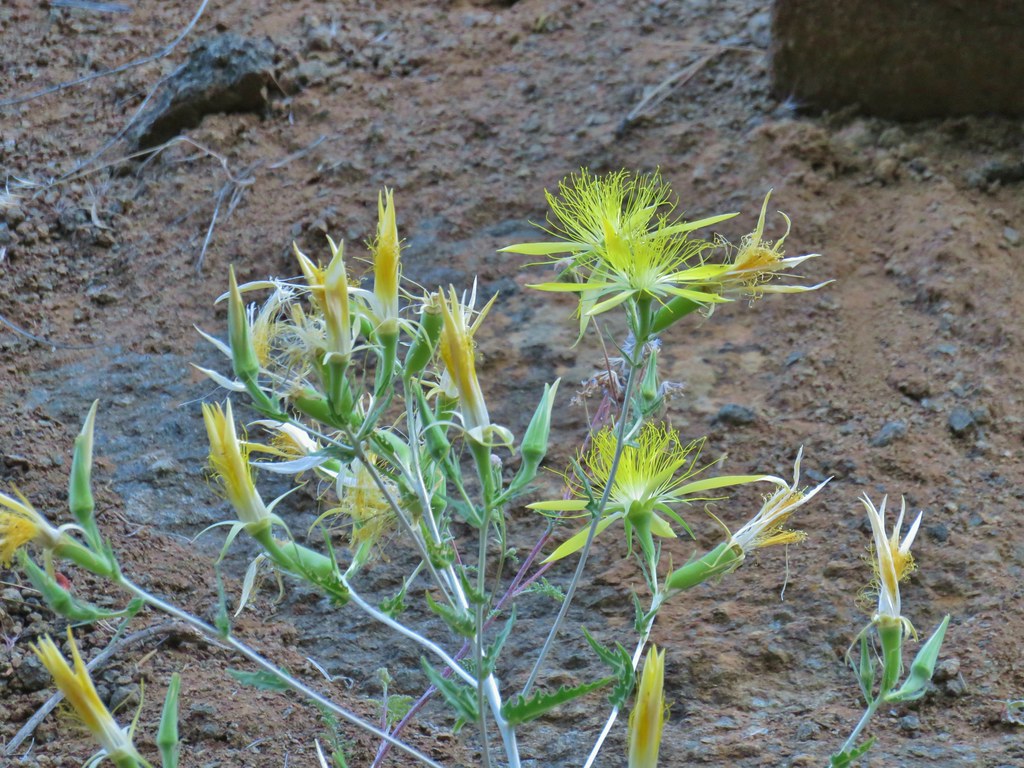 Smooth stemmed blazing star
 Oregon sunshine
 Fireweed
 Butterfly sleeping on yarrow
 Sticky purple geranium
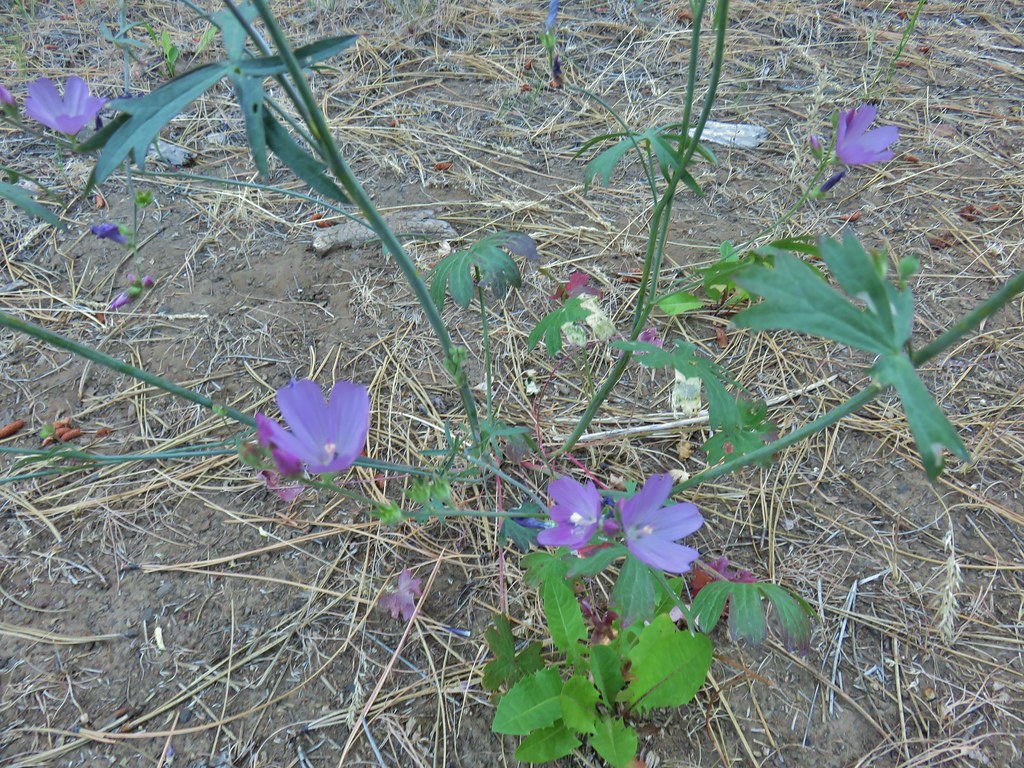 A mallow
 Balsamroot
 Rough eyelashweed
 Various wildflowers along the road bed.
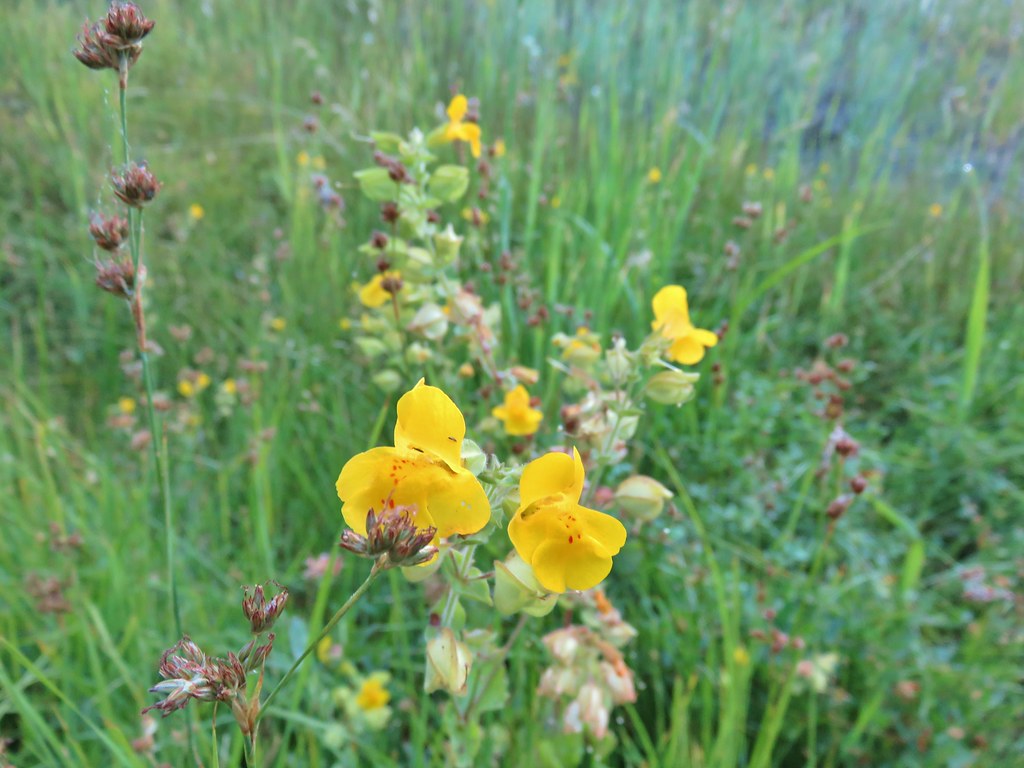 Monkeyflower
 White triteleia

 Piles from thinning while we were searching for the trail.
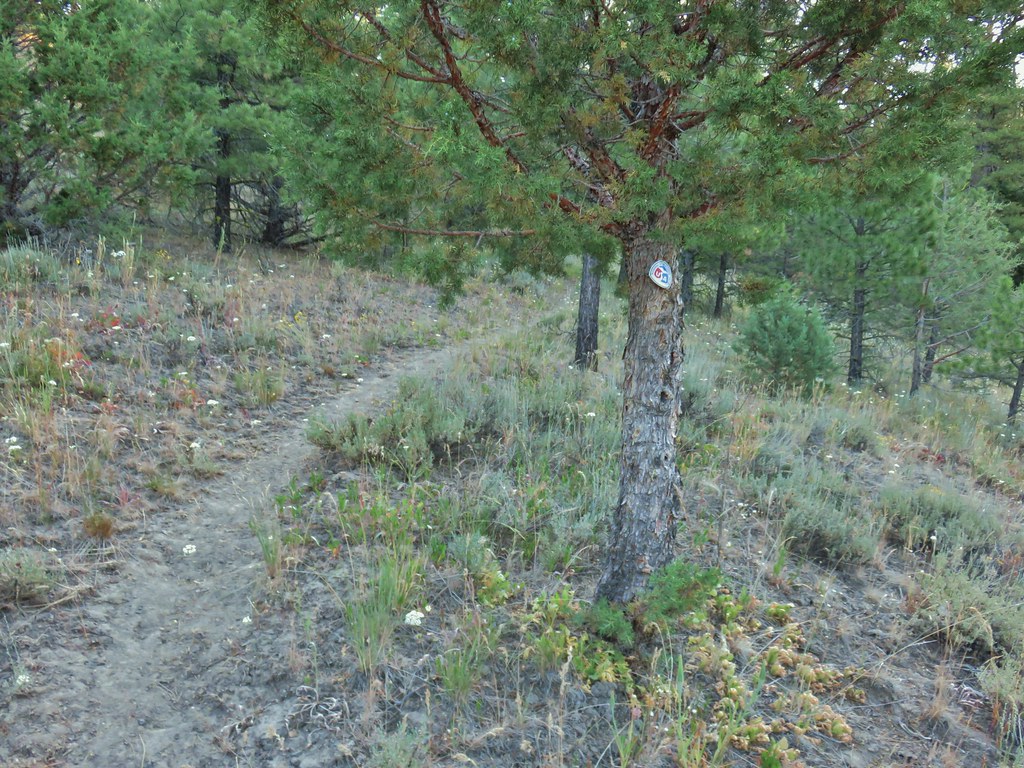 Marker on a juniper heading away from Crooked Creek.
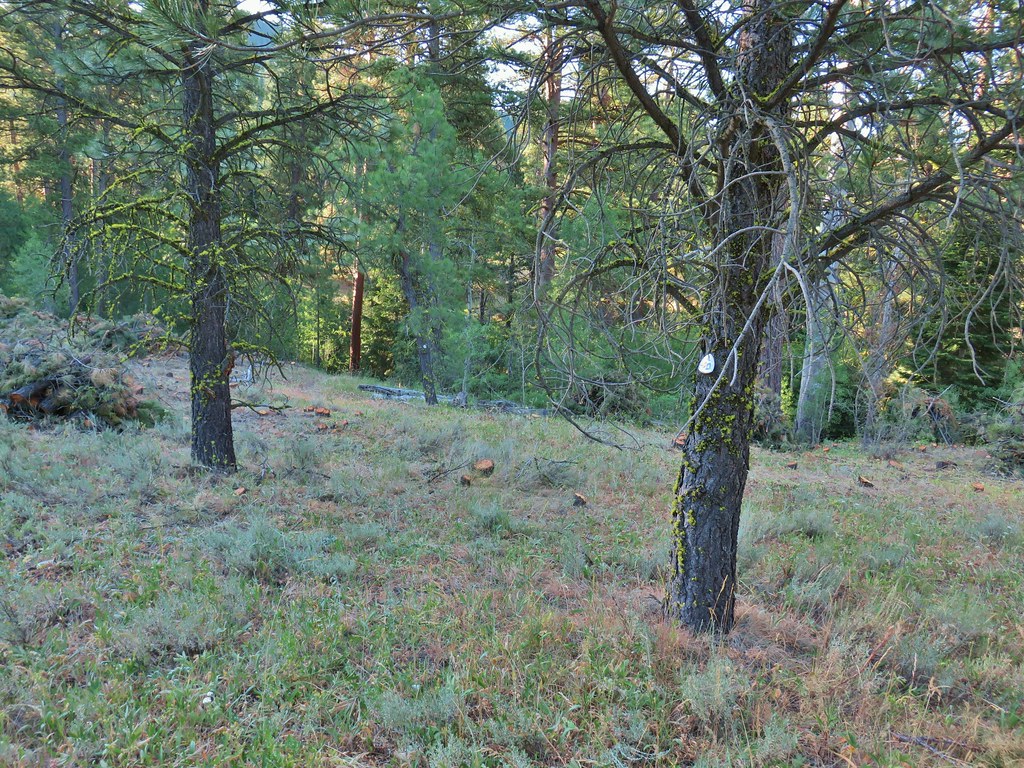 Markers on seemingly random trees.
 Big Cove Creek crossing.
 Crooked Creek crossing near the old trailhead.
 Sagebrush mariposa lily
 Checker mallows
 A wetter meadow
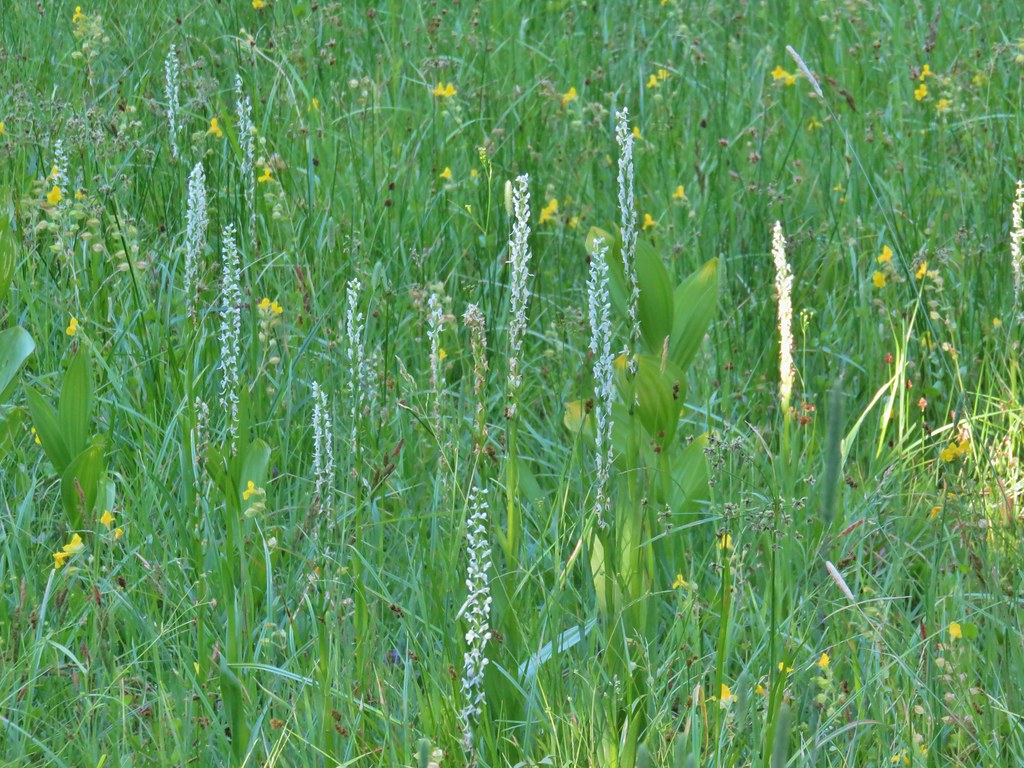 Bog orchids

 Blurry doe through the trees.

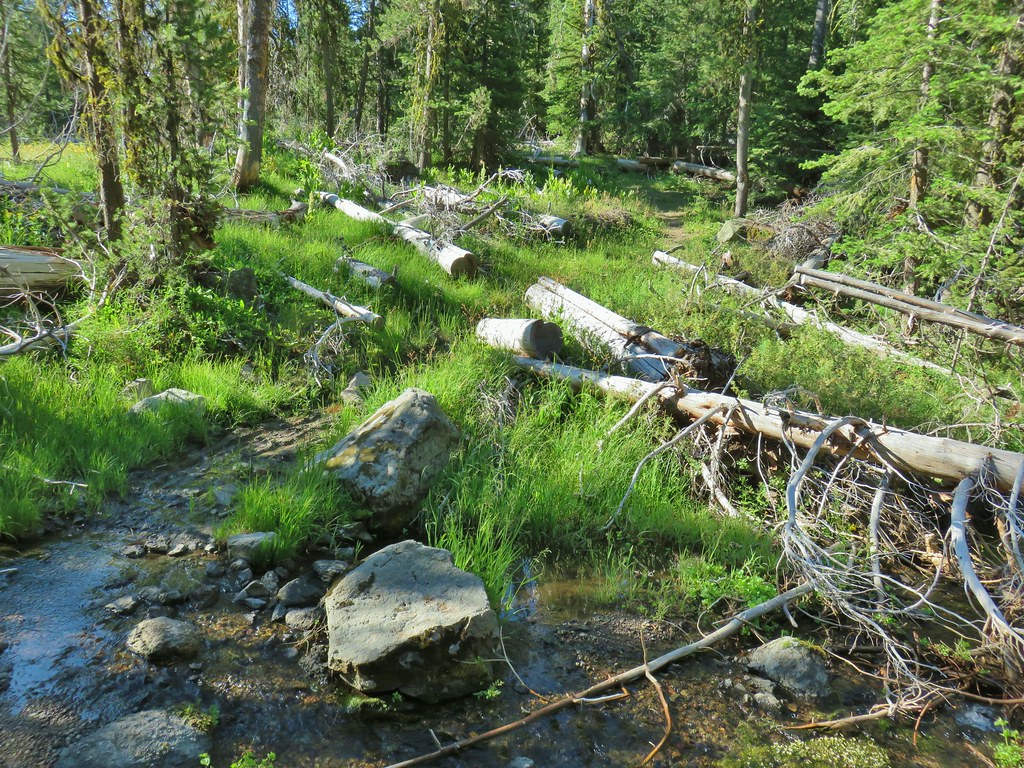
 White water buttercups

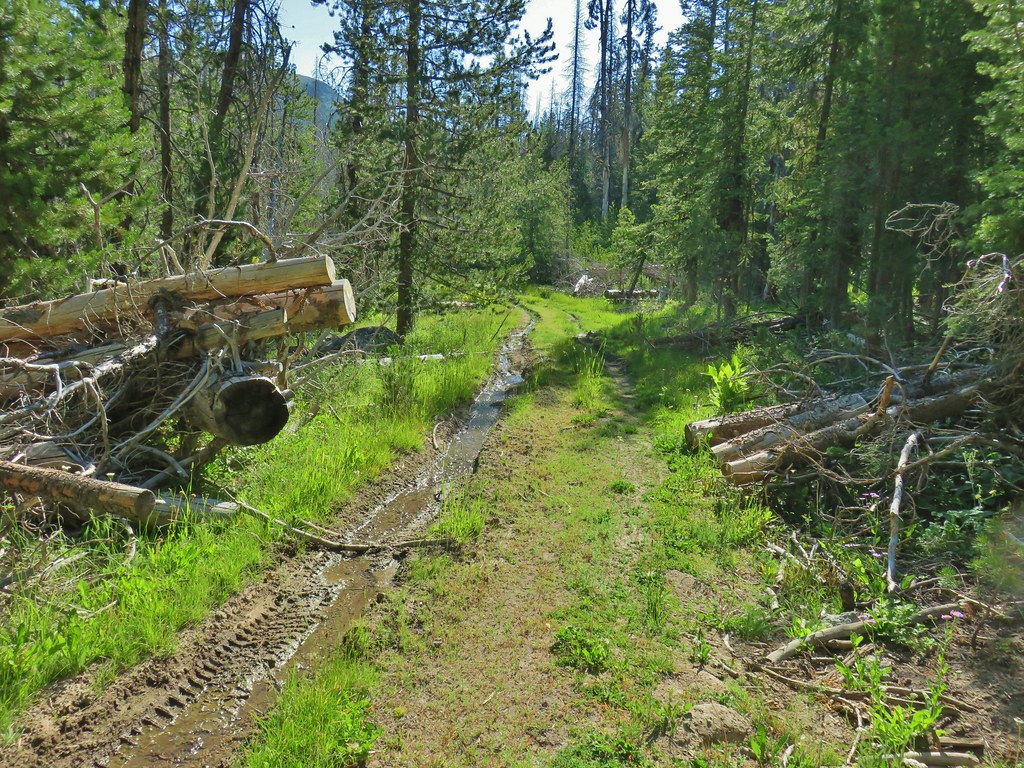


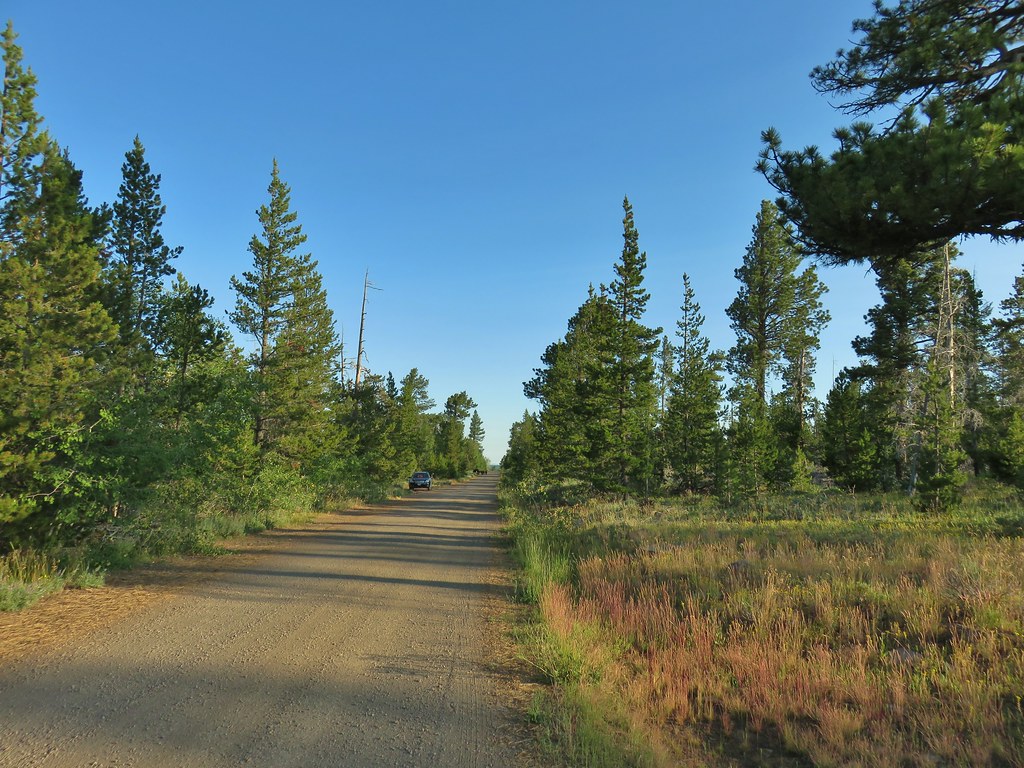
 FR 3615
 The trailhead.
 Trailhead host
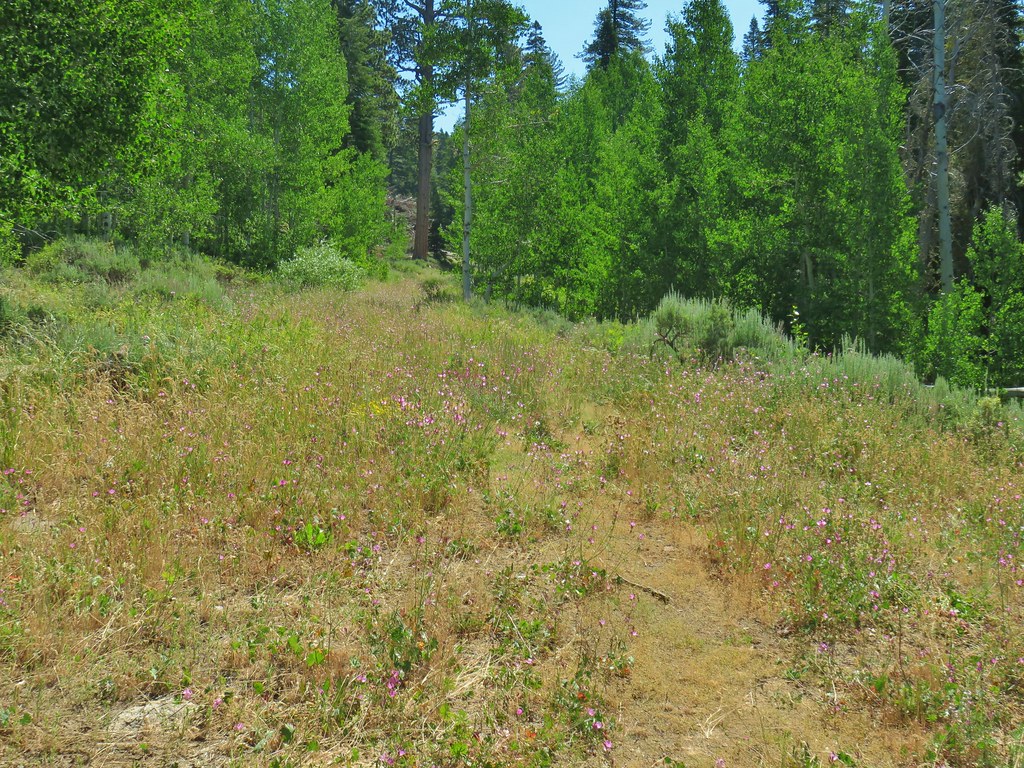
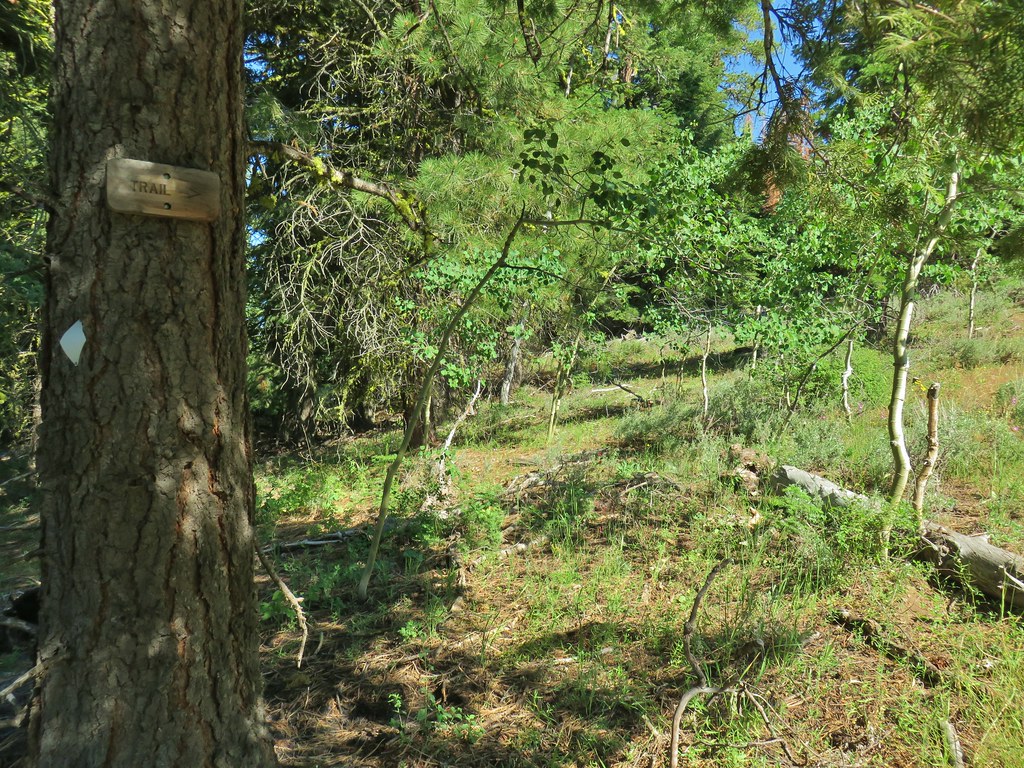
 Fremont Trail on the left.
 Oregon sunshine
 Grand collomia
 Yarrow
 A paintbrush
 Checkermallow and paintbrush
 What had been a Brown’s peony
 Light Peak from Fence Pass
 Drake Peak and Light Peak
 The Drake Peak Lookout which is on Light Peak
 Twelvemile Peak
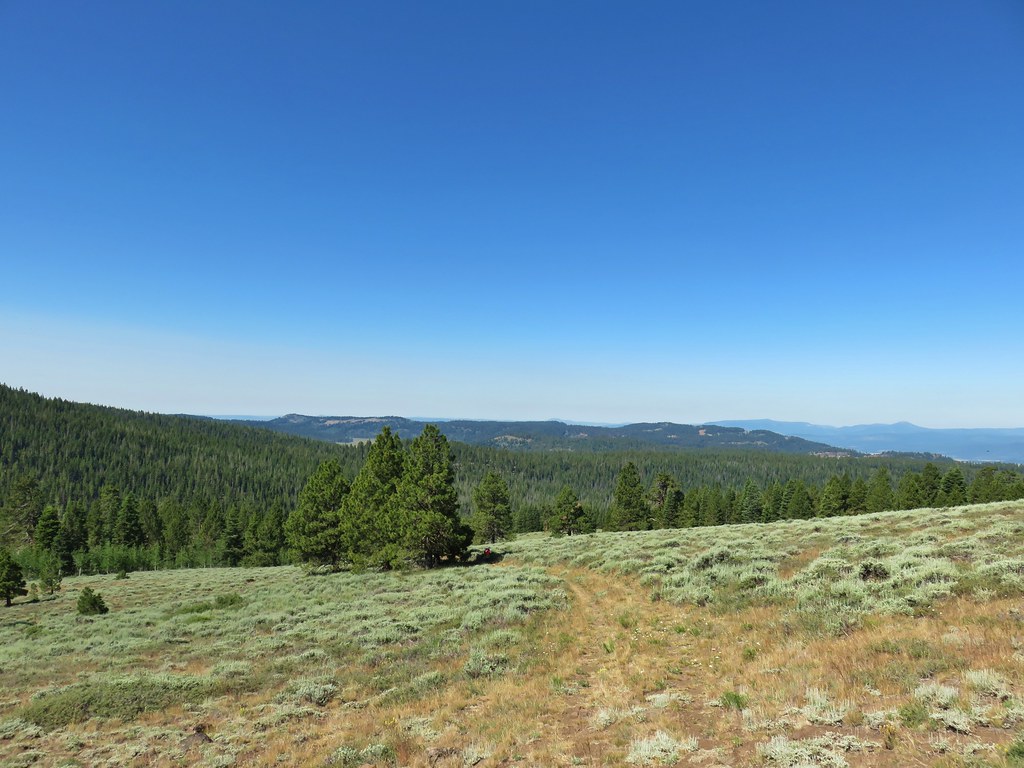 Looking back over our route up.
 Mt. Shasta off to the SW
 Hart Mountain to the SE.
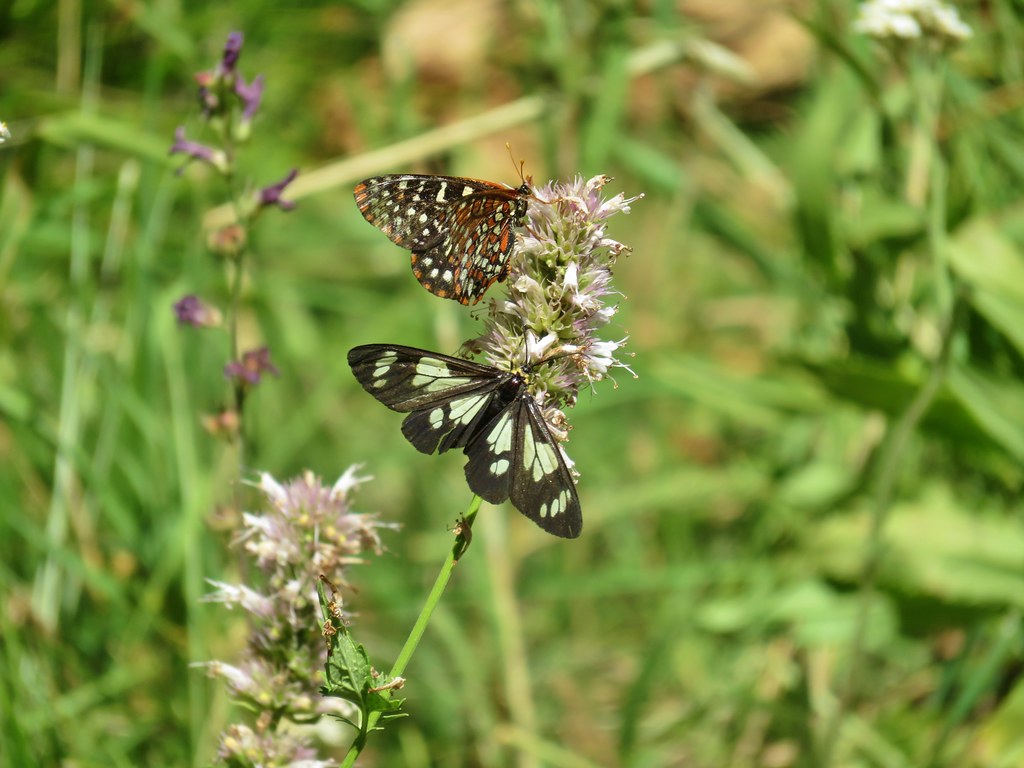


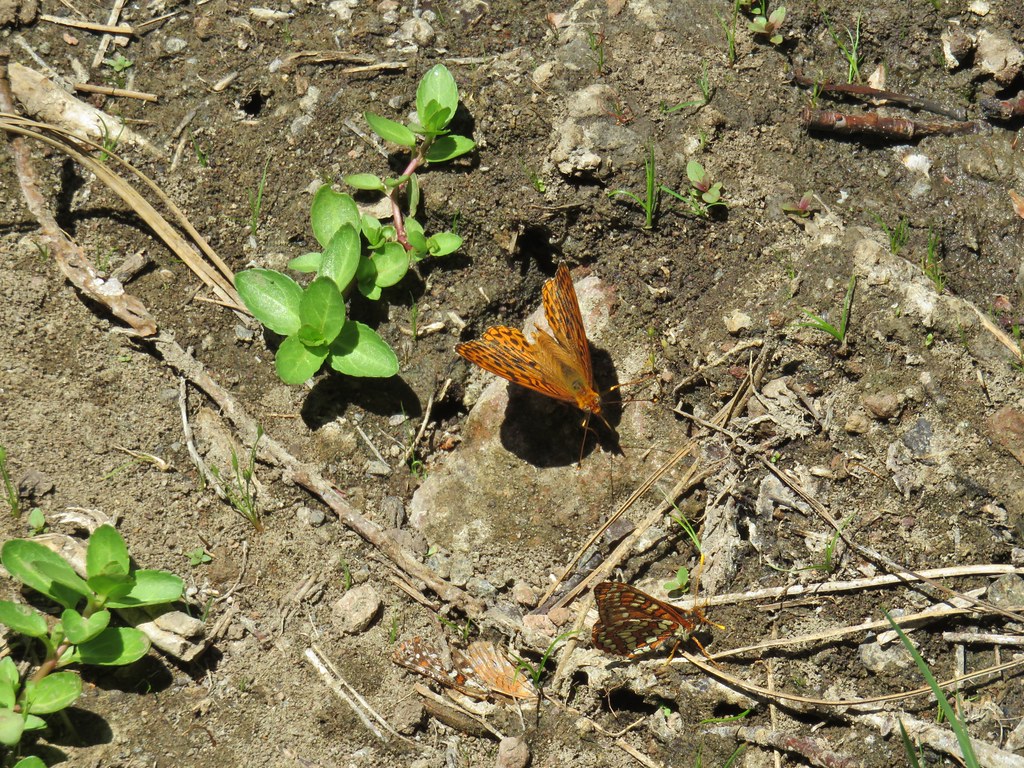



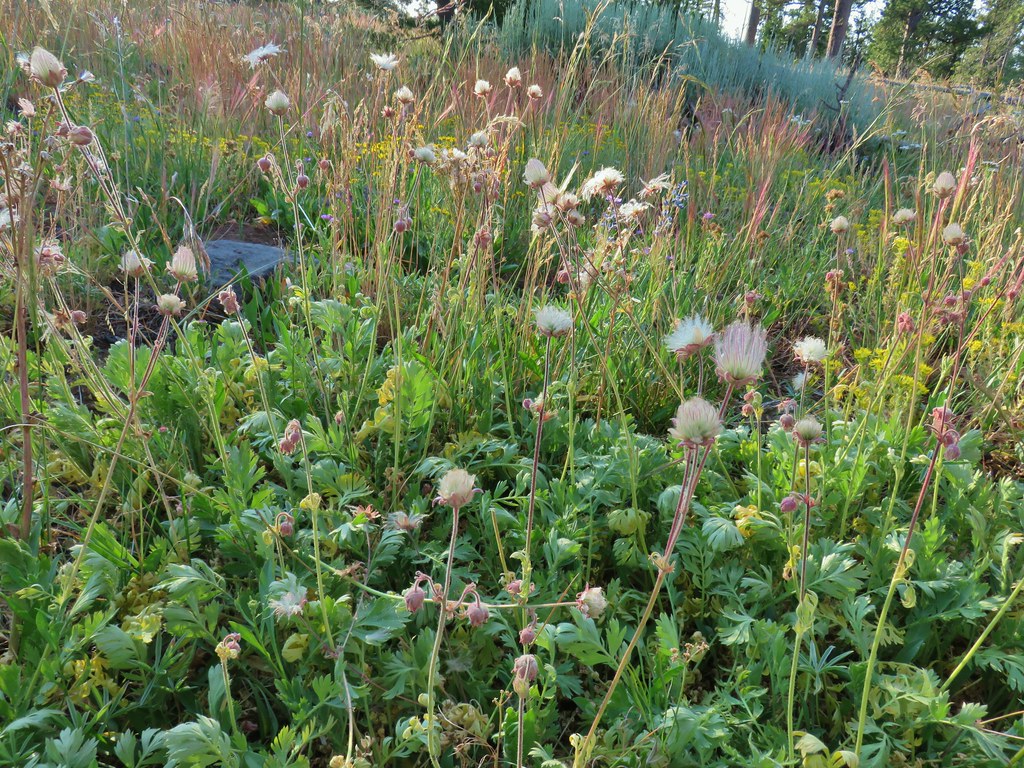 Prairie smoke (old man’s whiskers)
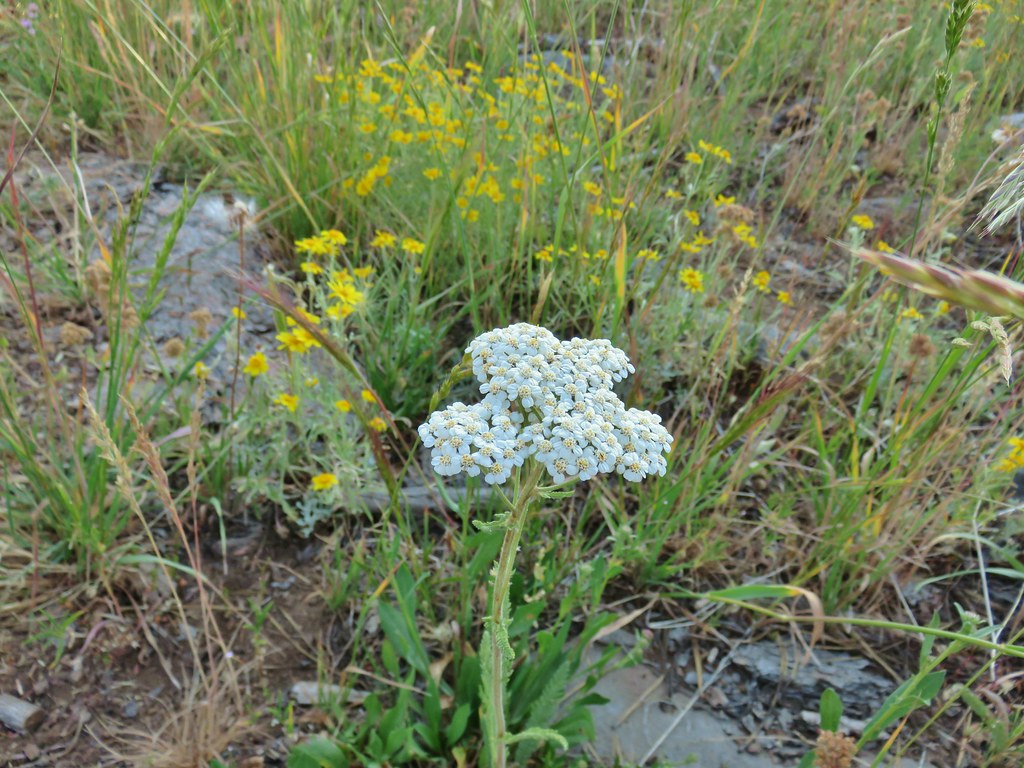 Yarrow and Oregon sunshine
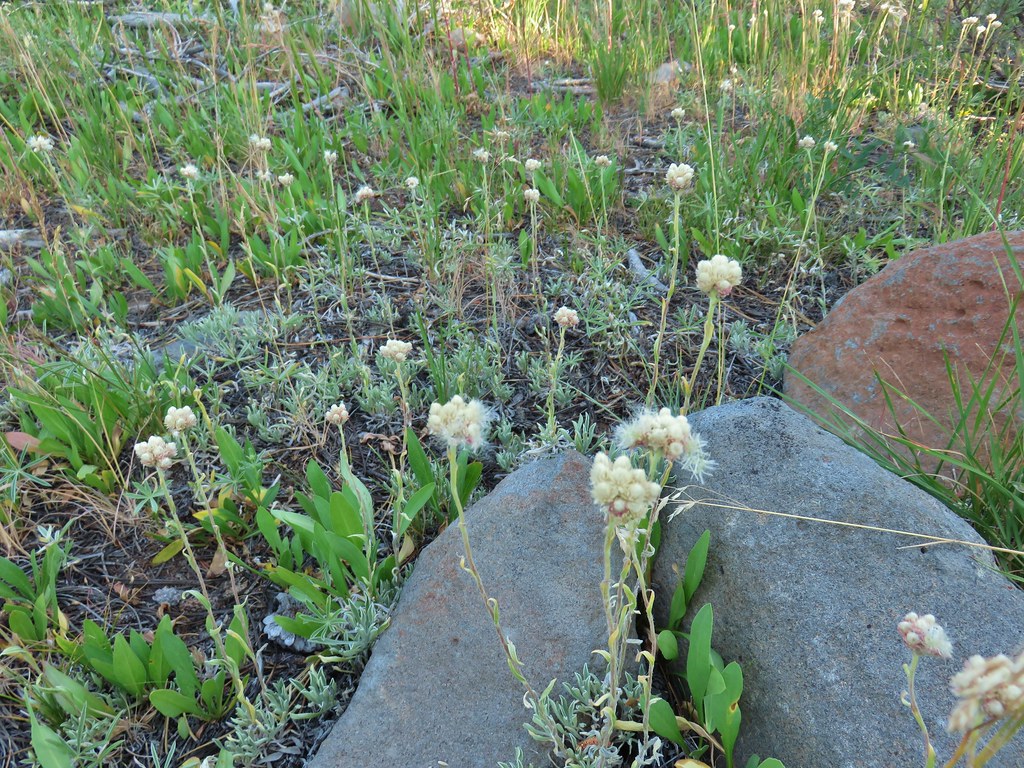 Pussytoes starting to go to seed.
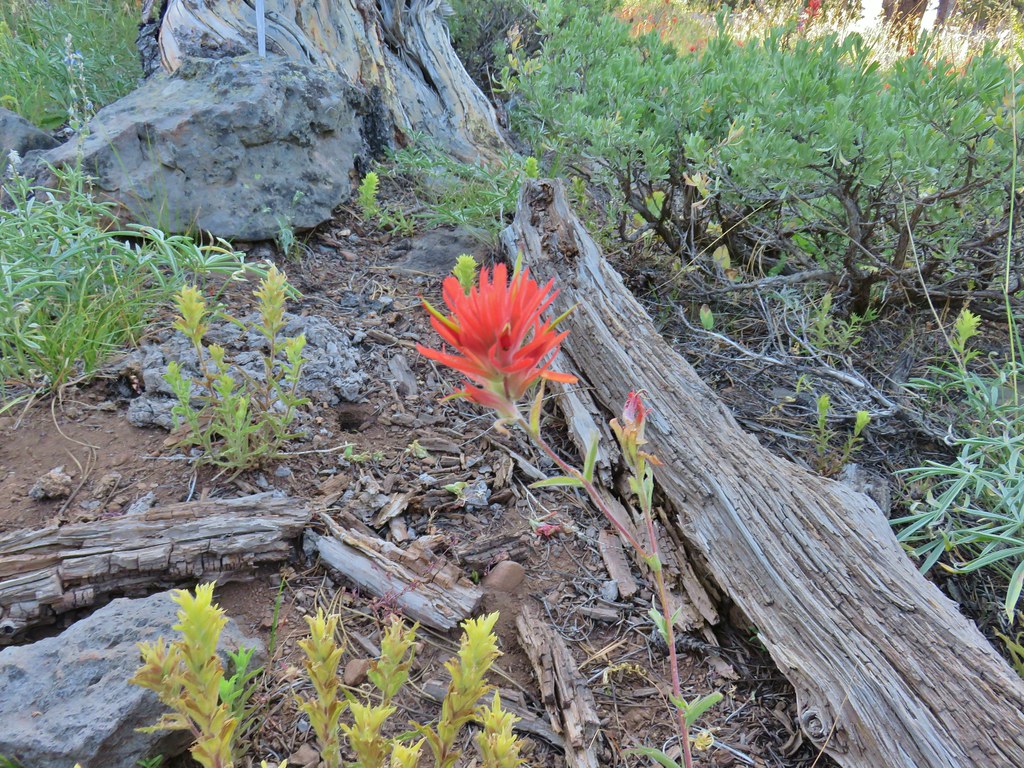 Paintbrushes
 Scarlet gilia
 Lupine
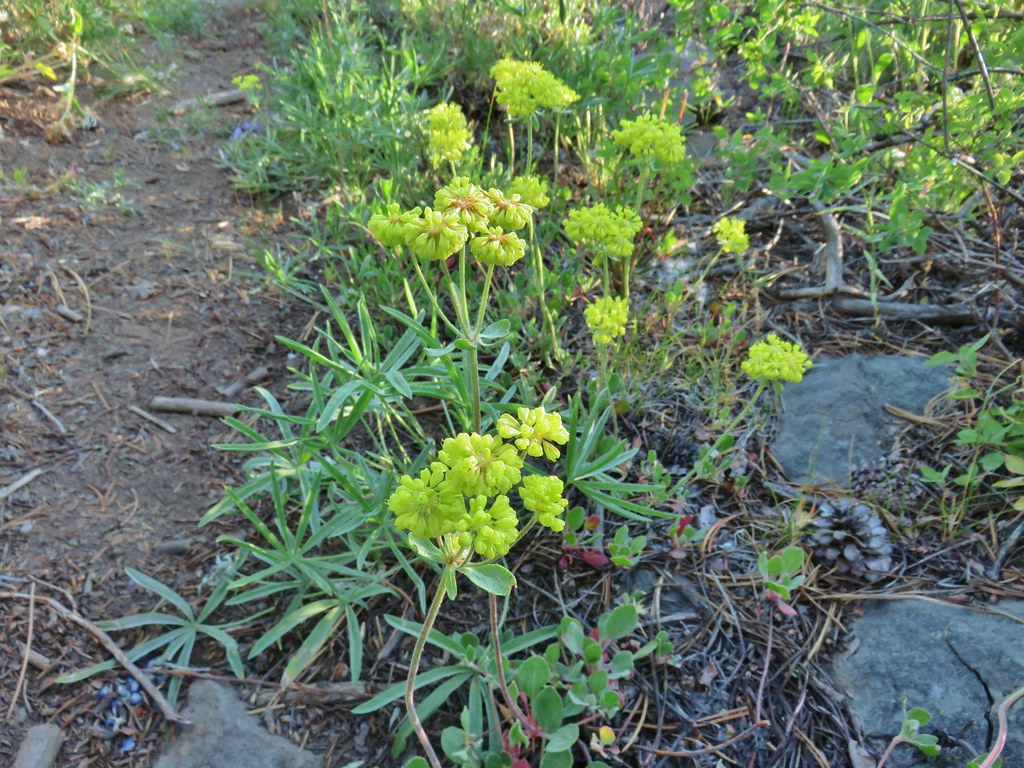 Buckwheat
 Orange agoseris
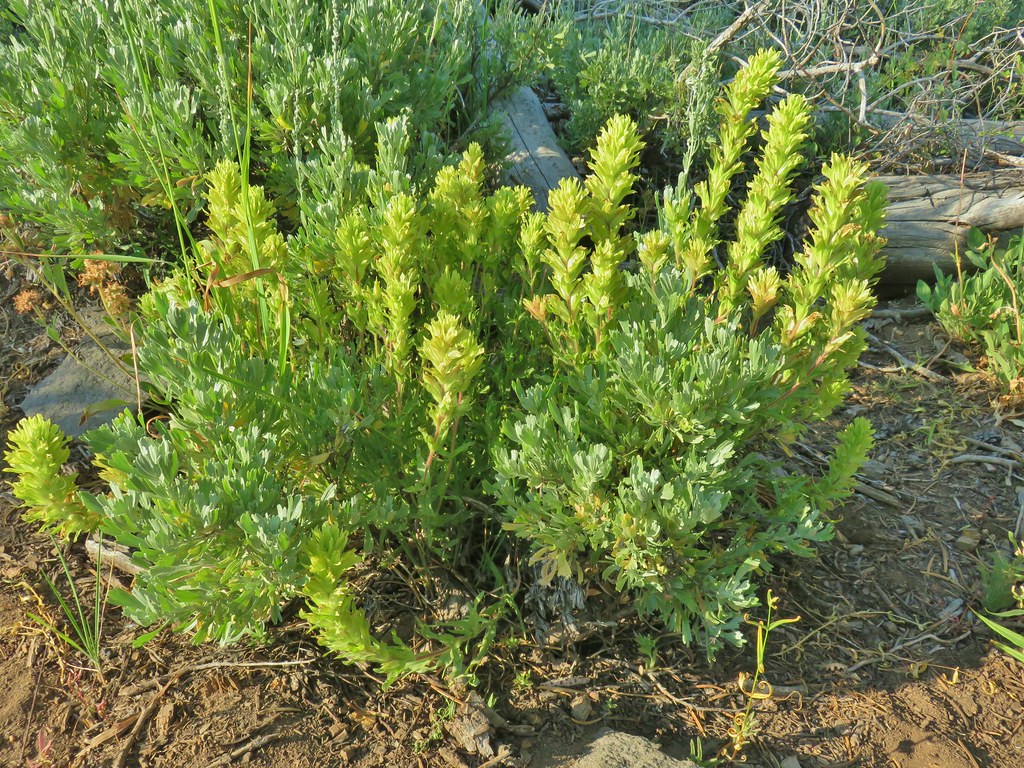 Paintbrush
 Sticky purple geranium
 Sticky sandwort
 Nuttall’s linanthus
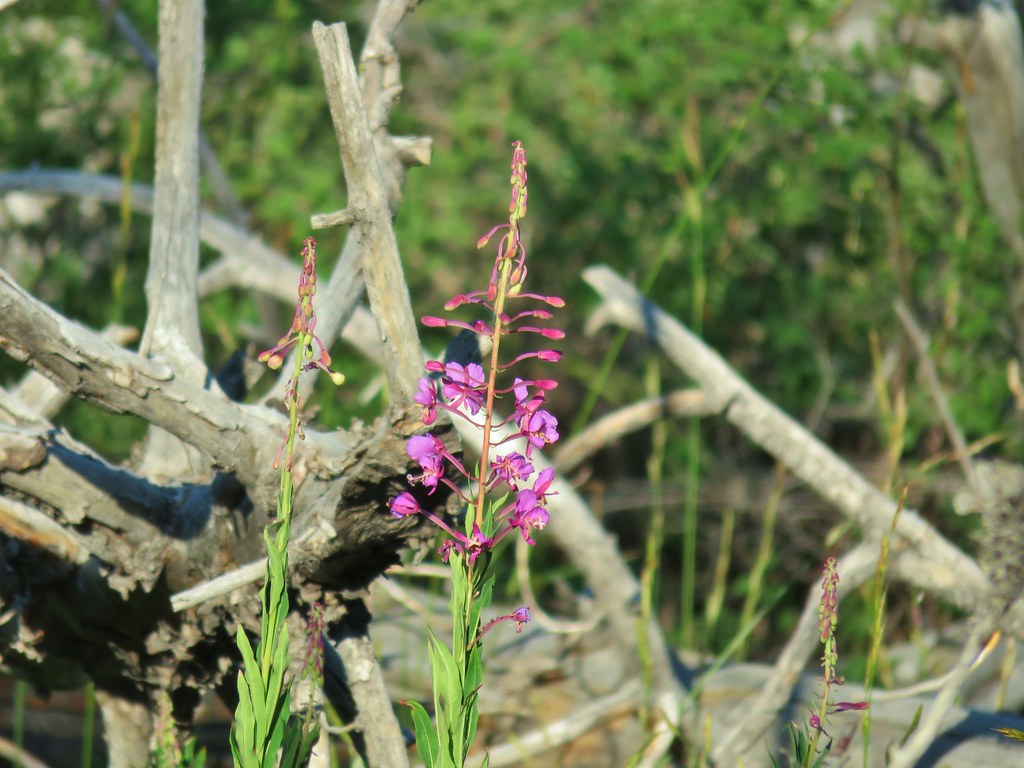 Fireweed
 Hyssop
 Golden mantled ground squirrel also enjoying the views.

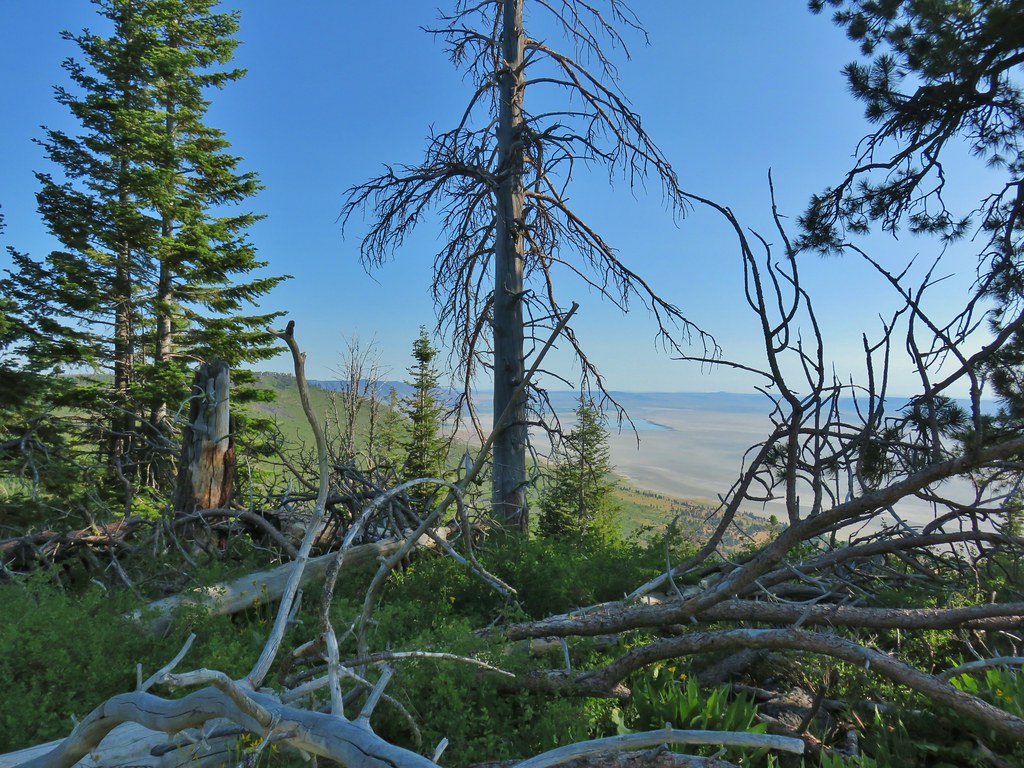 Looking down at Summer Lake
 FR 29 coming up the hillside to the right.
 Woodpecker
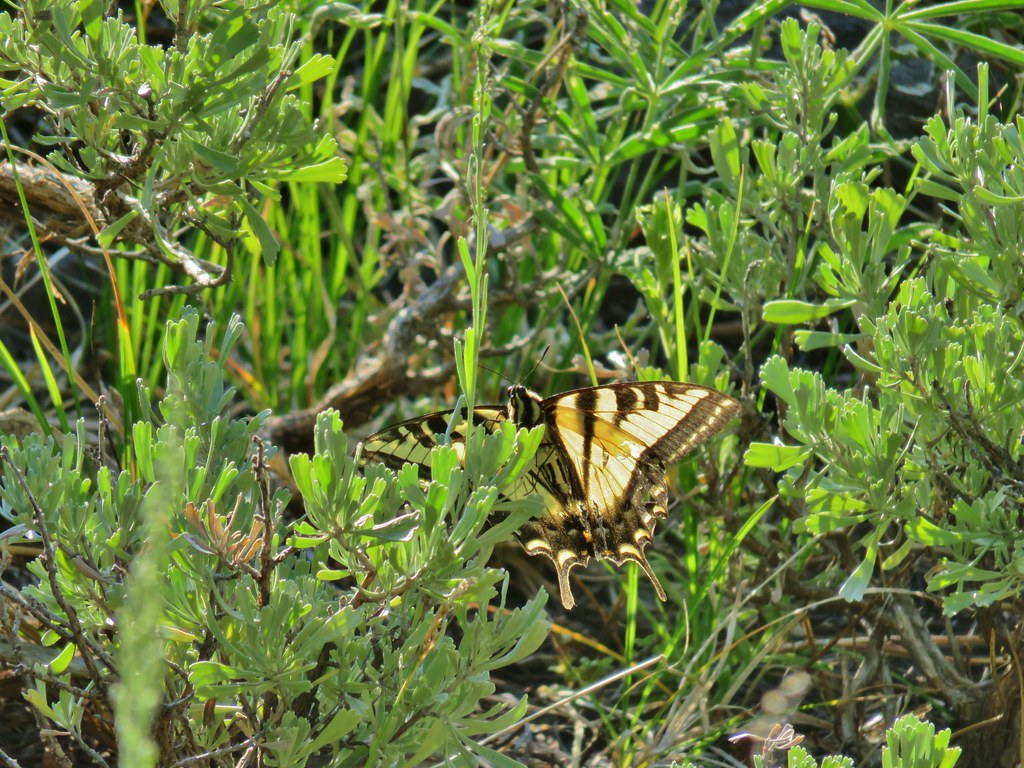 Swallowtail
 Fritillary butterfly
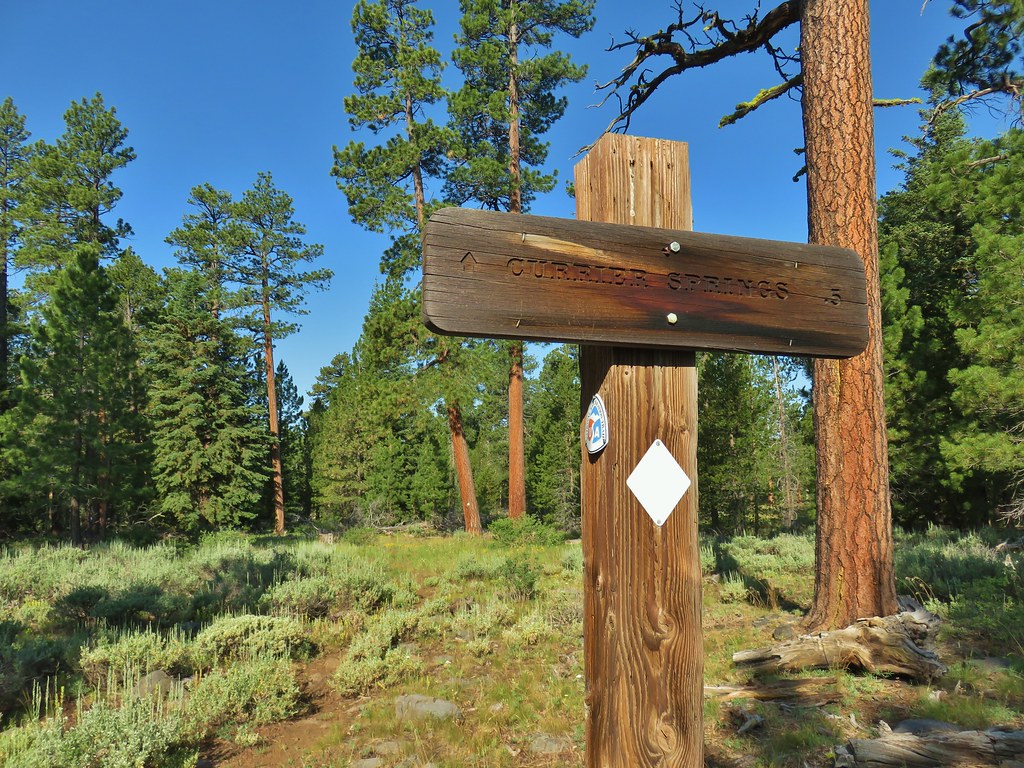
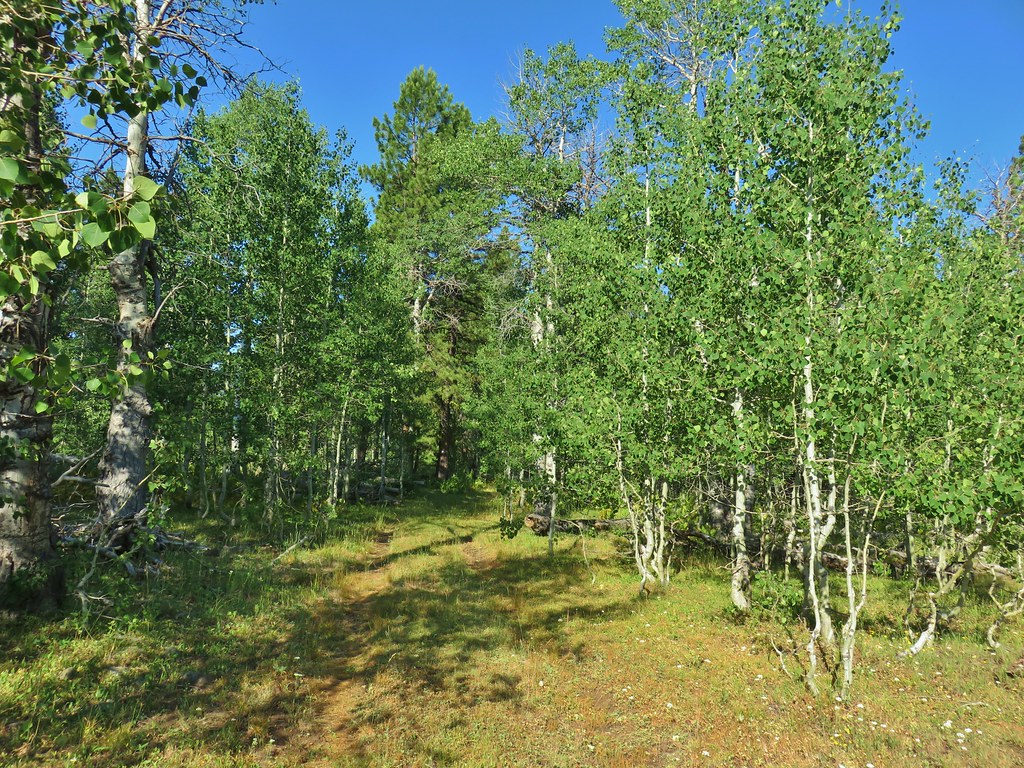 Passing through a grove of quaking aspen.
 California corn lily
 California corn lily
 Chipmunk
 More cows at the horse camp.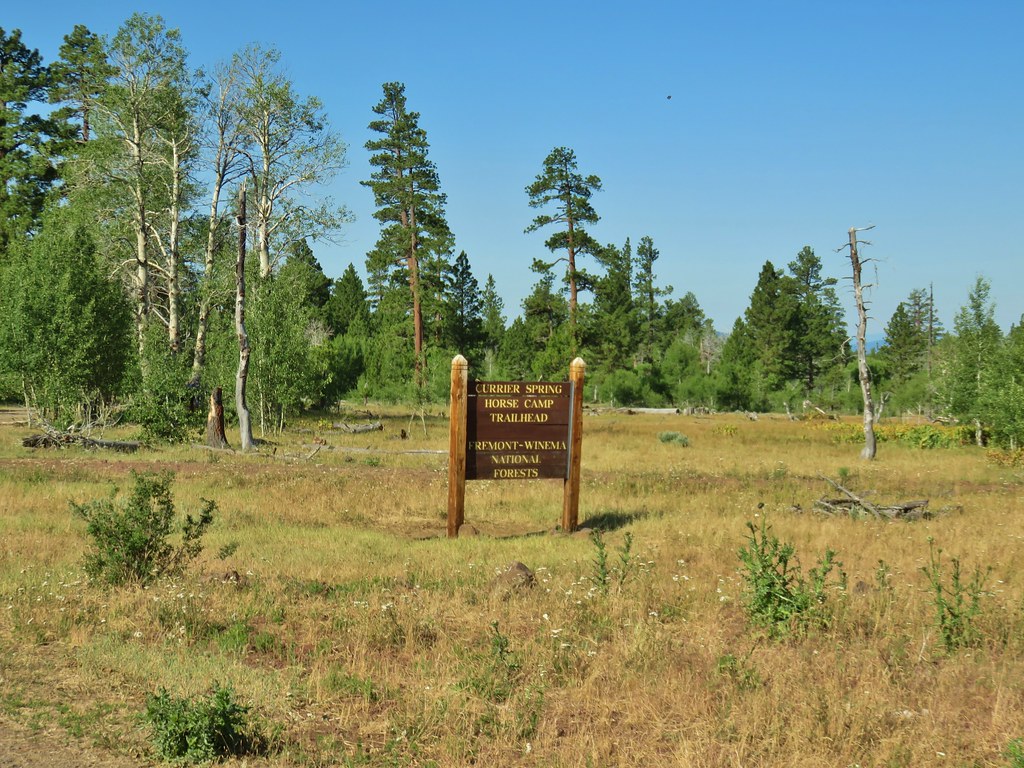

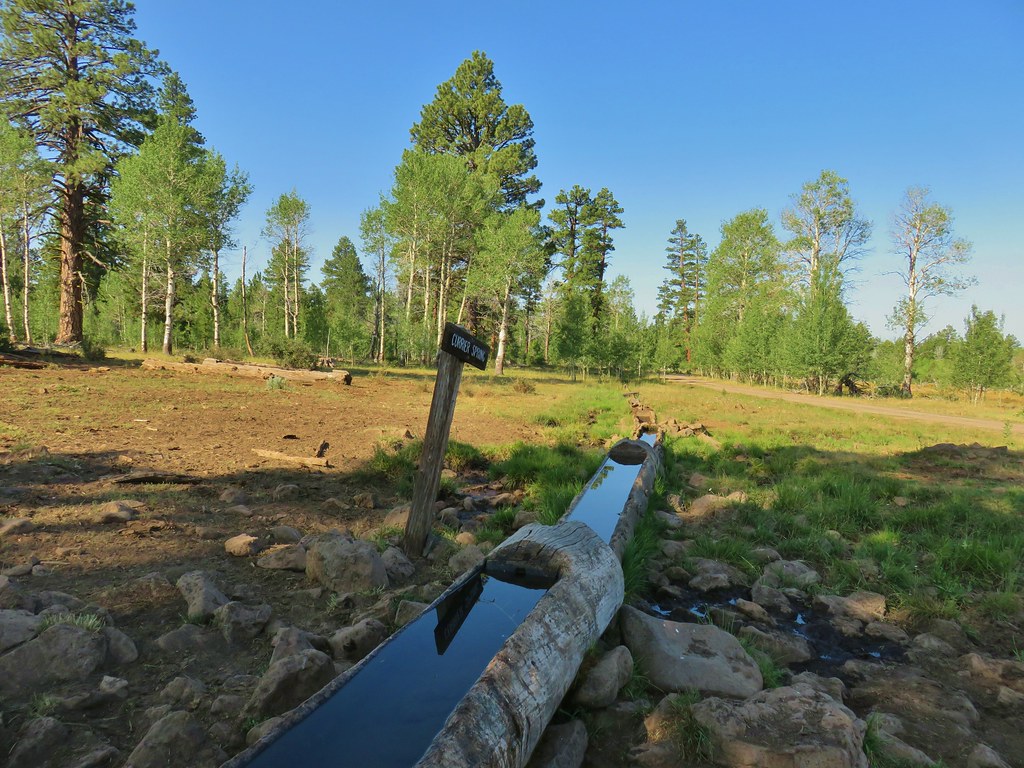

 Brewer’s blackbird

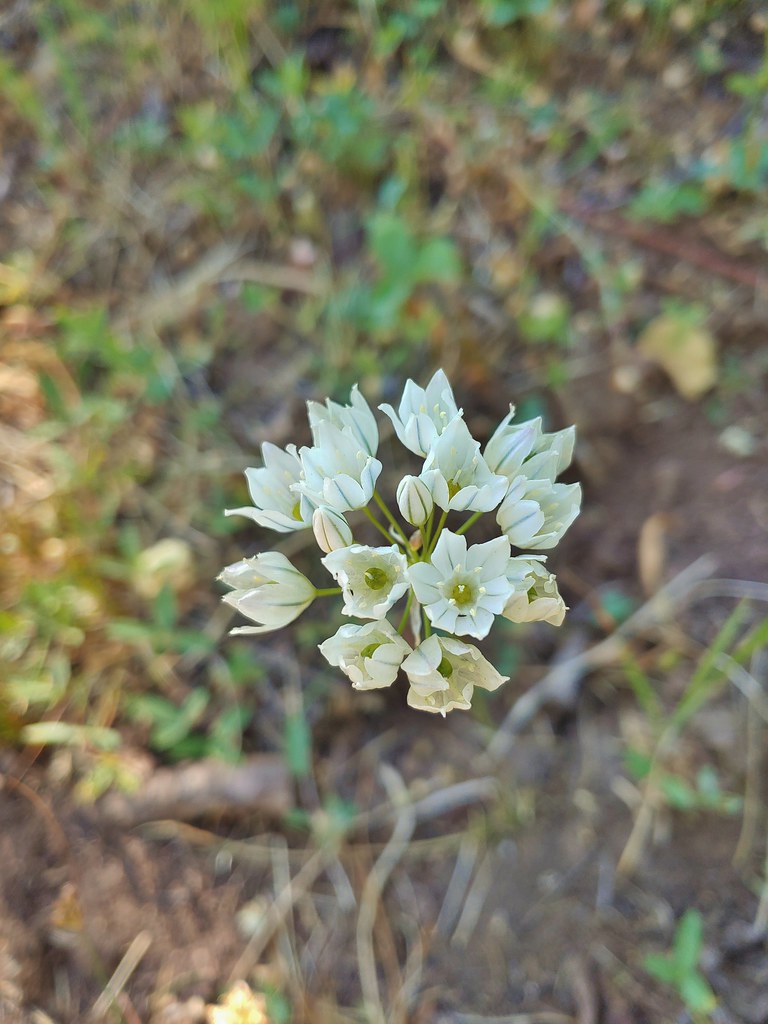 White triteleia
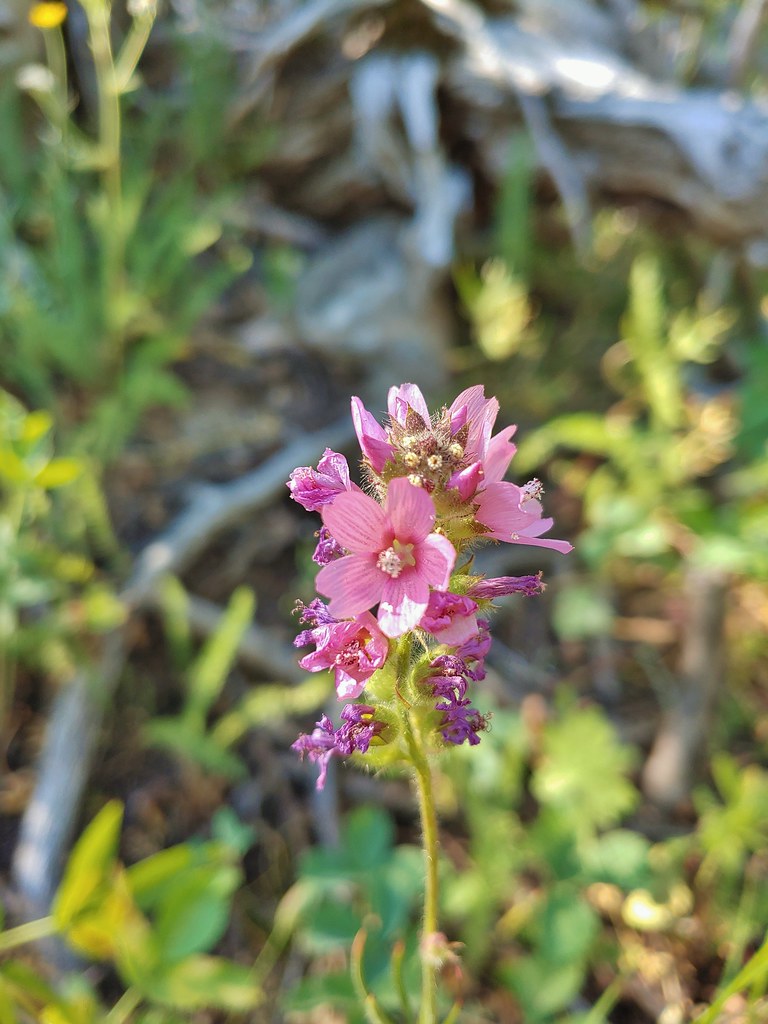 A checkermallow
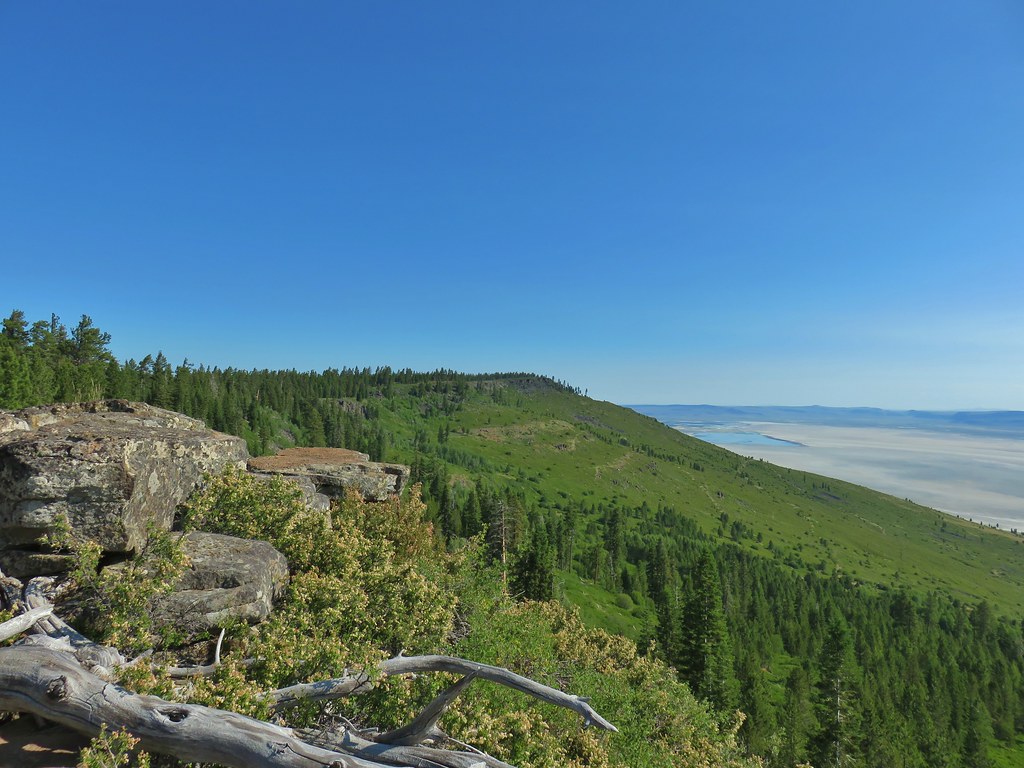 A view north along the ridge.
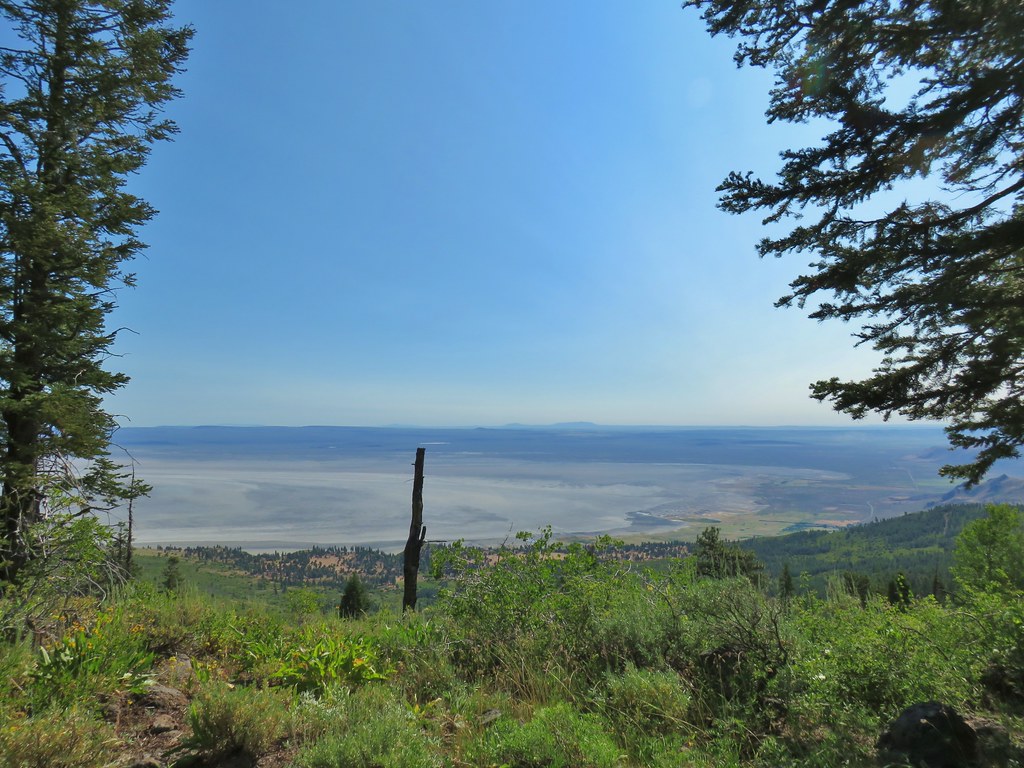 Looking NE from Winter Ridge.
 Grand collomia
 Hummingbird
 Rosy pussytoes
 Scouler’s woollyweed (maybe)
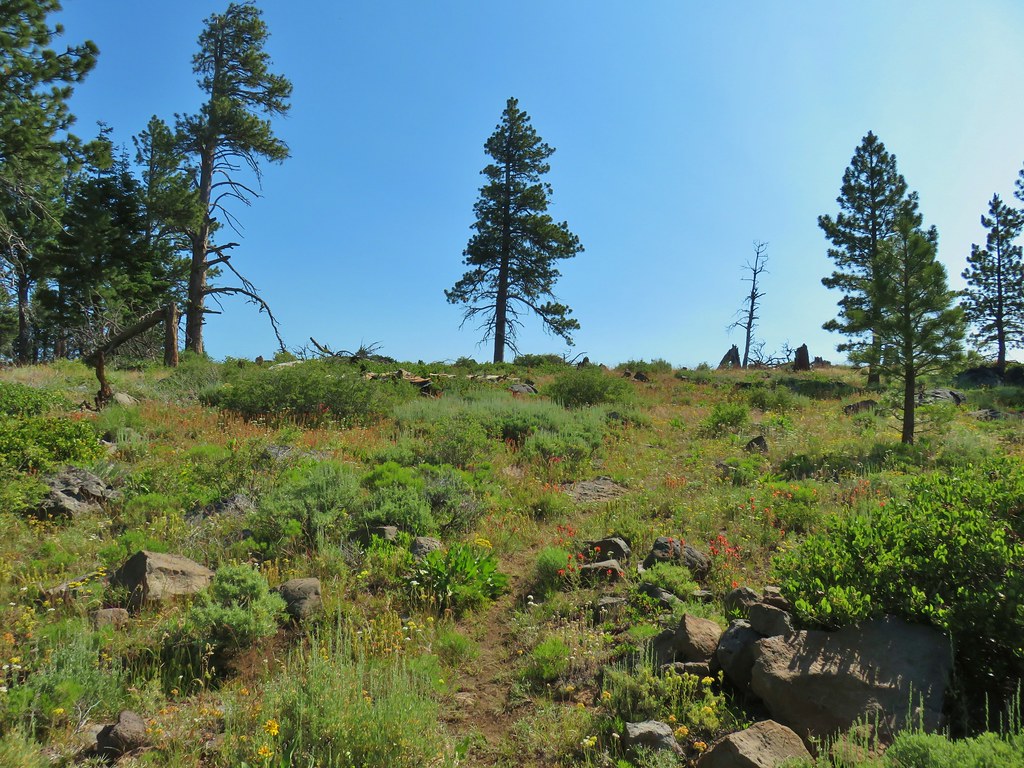 Wildflowers along the Fremont Trail
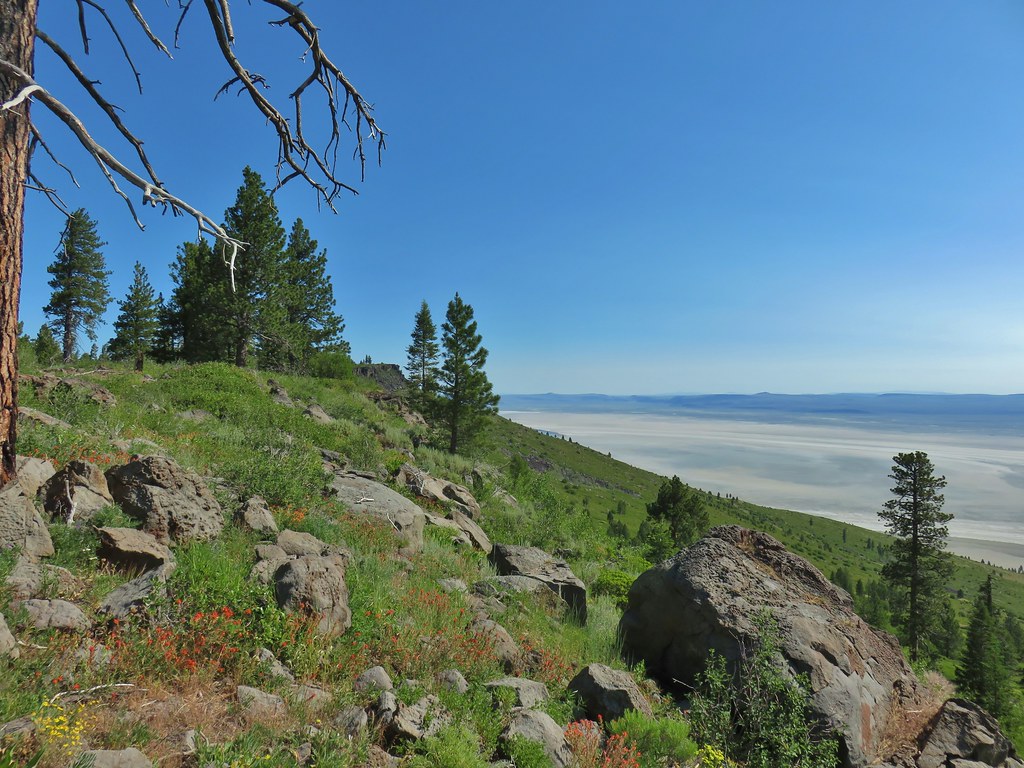 Another viewpoint
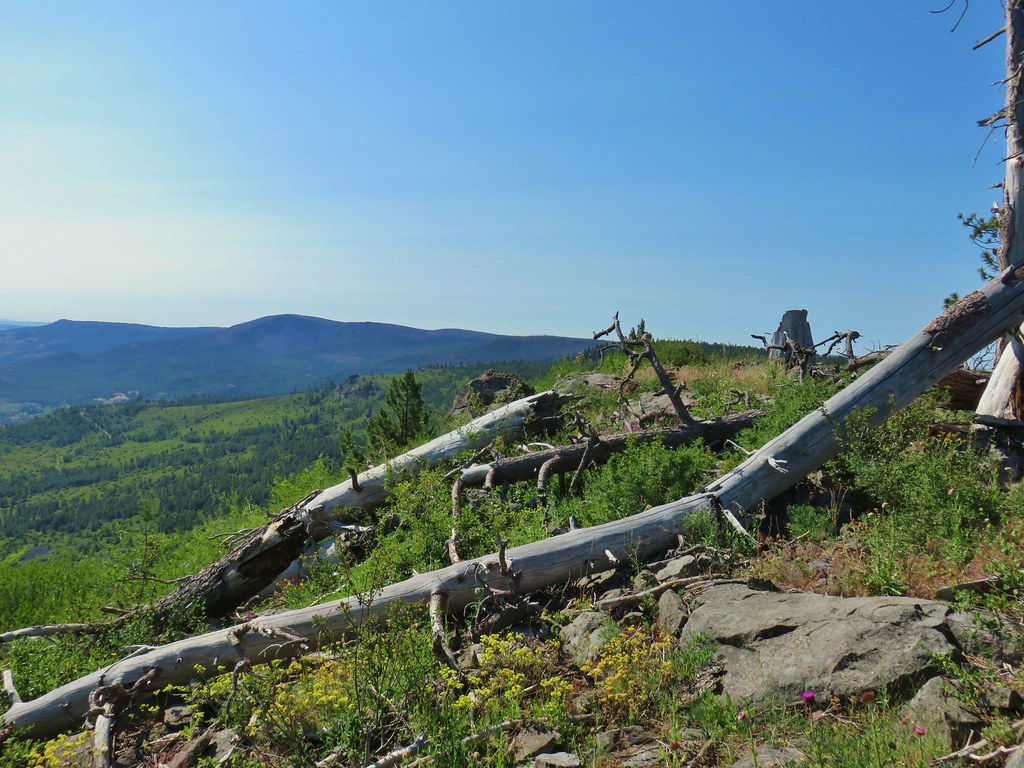 Looking south along the ridge.
 More musk thistles.
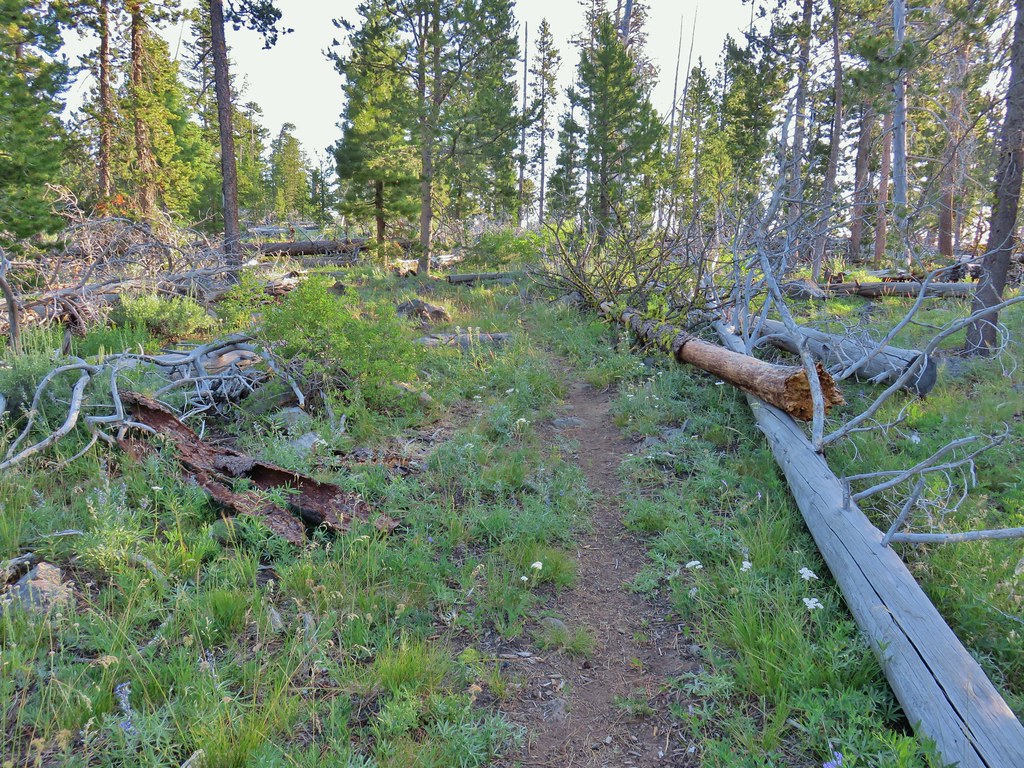
 Fremont Trail along Winter Ridge.
 Buck watching us through the trees.
 The buck heading off.
 Western tanager near the junction.
 Snowbrush along the trail.
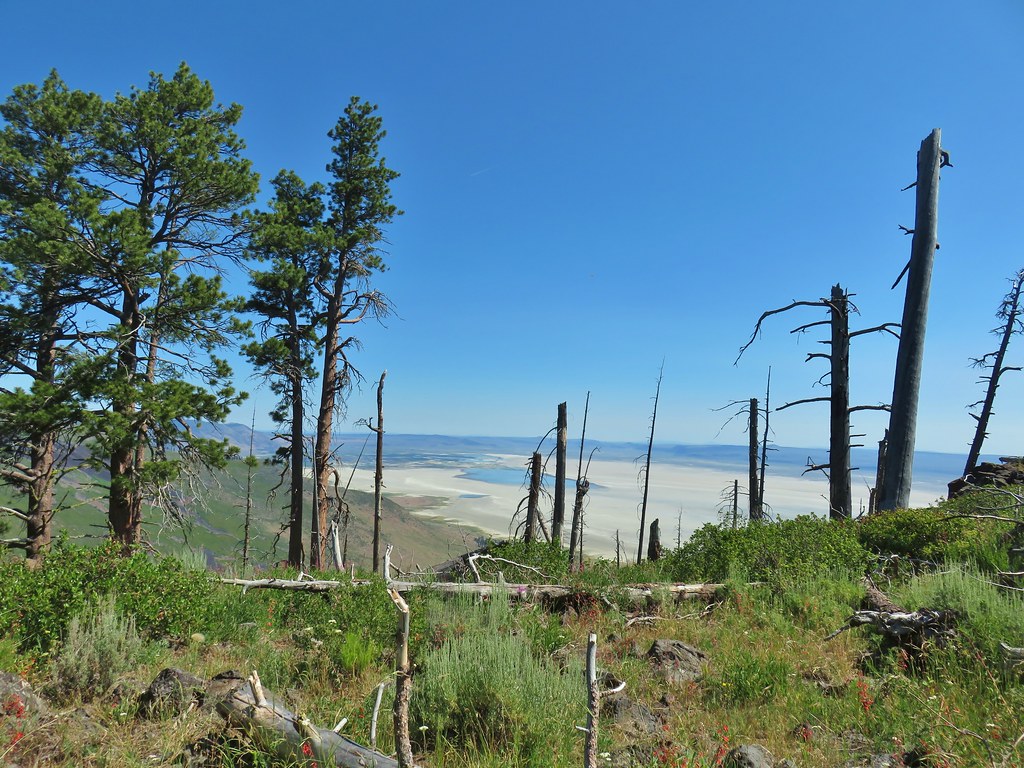 Where we wound up along the rim of the ridge.
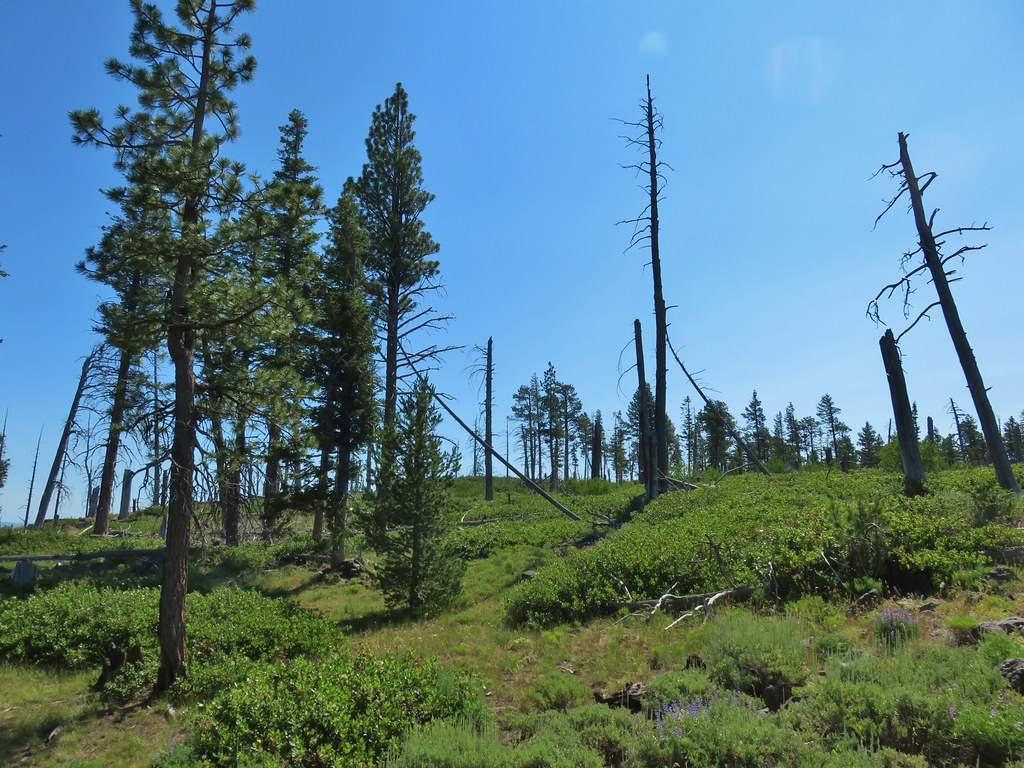 Looking up toward the viewpoint.
 I made it to this rock outcrop which wasn’t the viewpoint I was looking for.
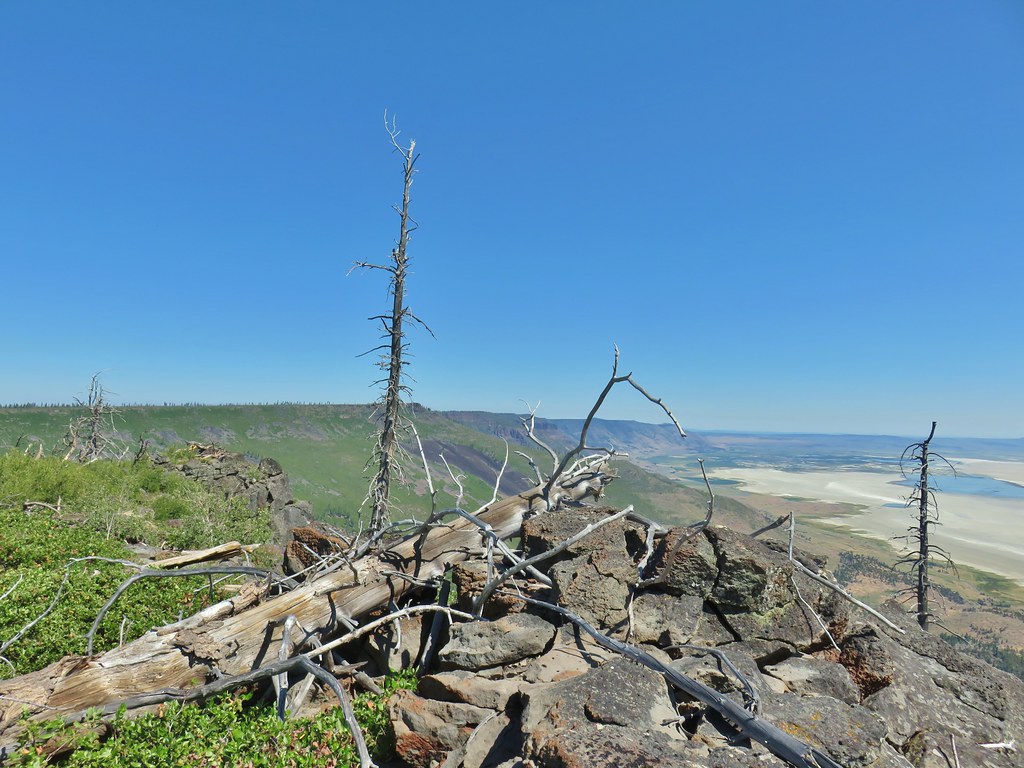 A second rocky viewpoint (with the first down the ridge a bit), still not the viewpoint I was looking for.
 Looking up the ridge from the second rock outcrop. The number of snags and thicker snowbrush caused me to abandon the ridge here and follow the line that Heather was taking just a bit in from the rim.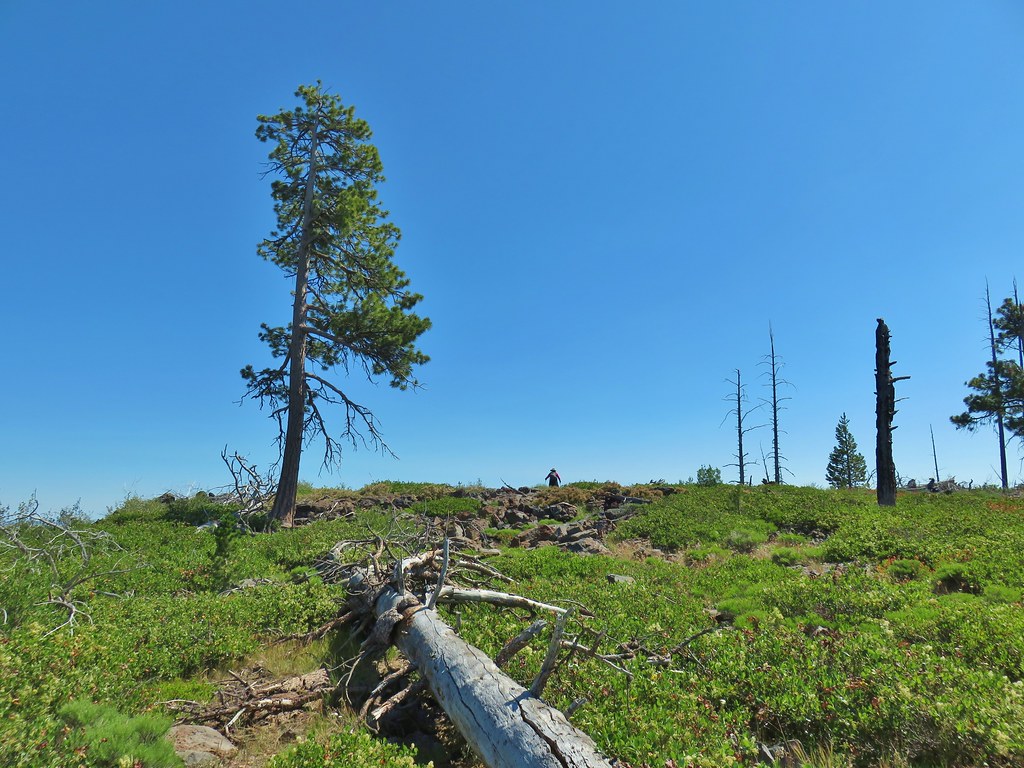
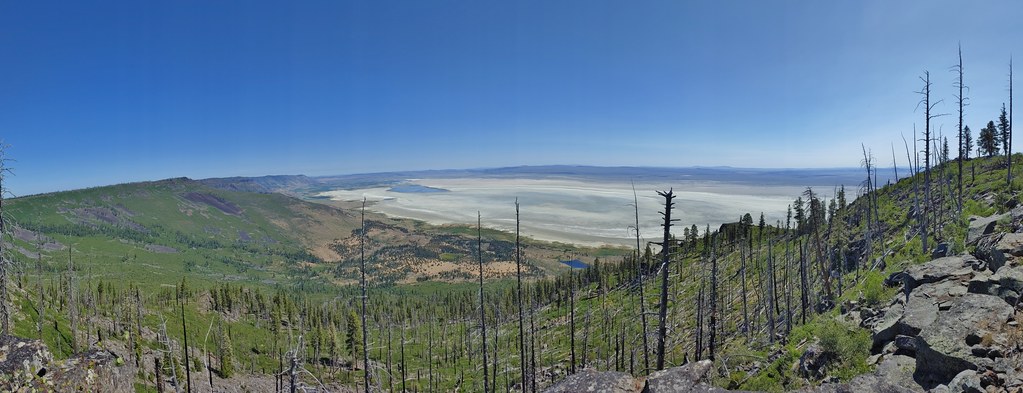 Looking north across the landslide to Summer Lake.
 Looking south
 Balsamroot near the viewpoint.


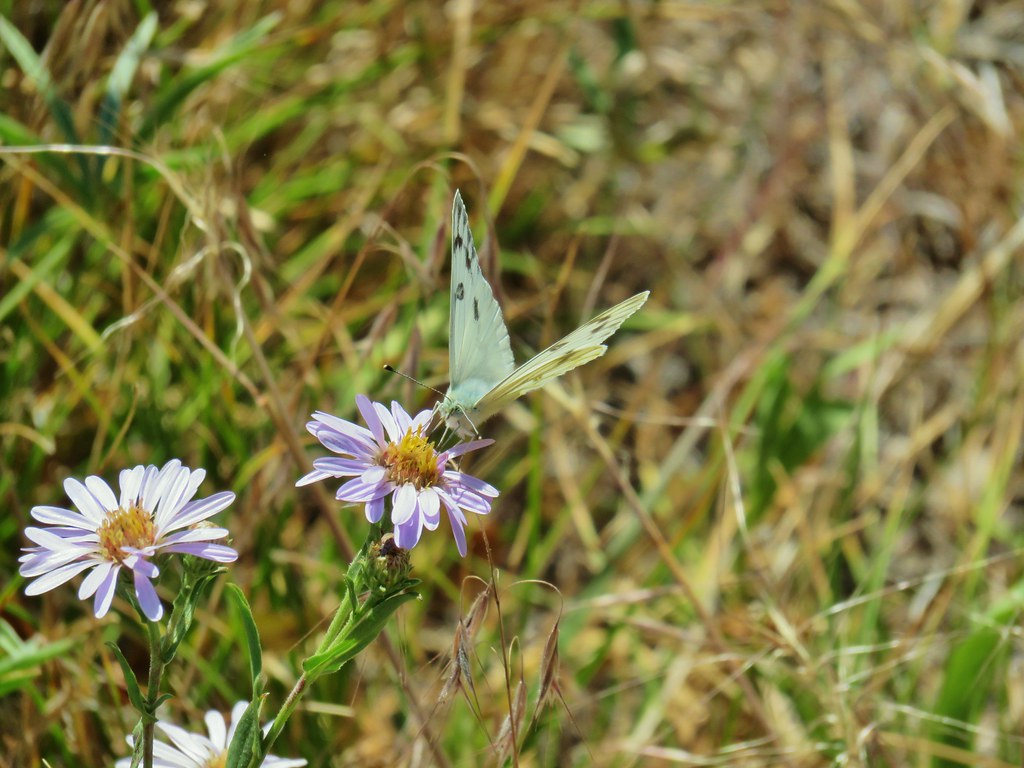 Becker’s white on subalpine fleabane.
 Slender cinquefoil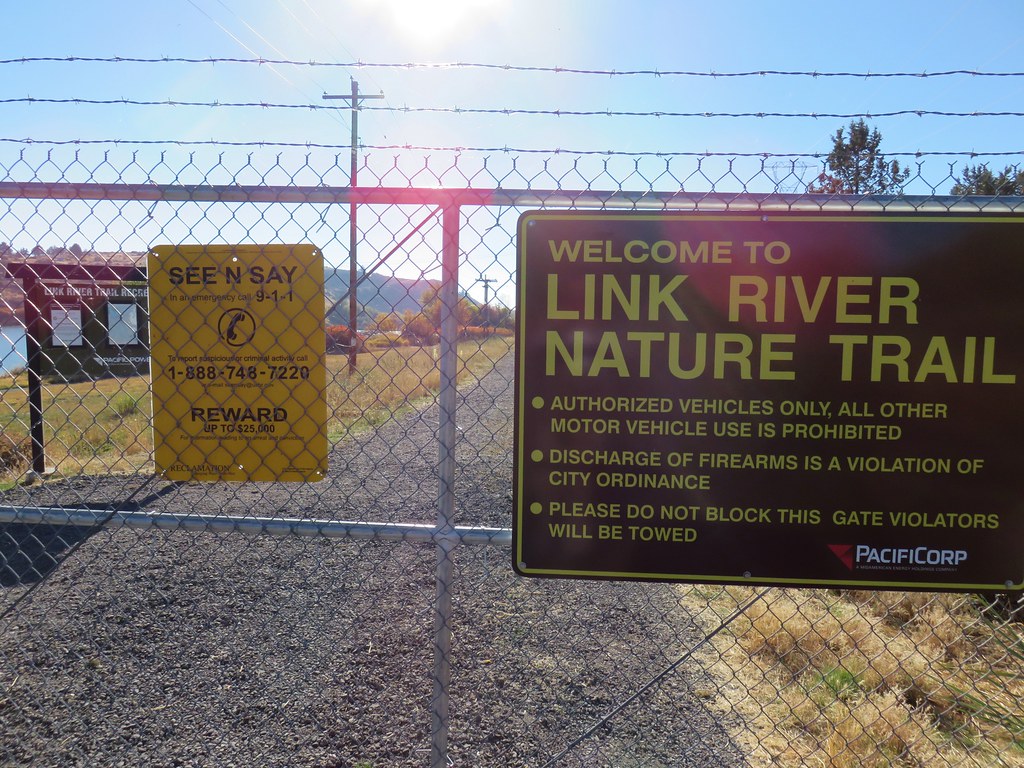
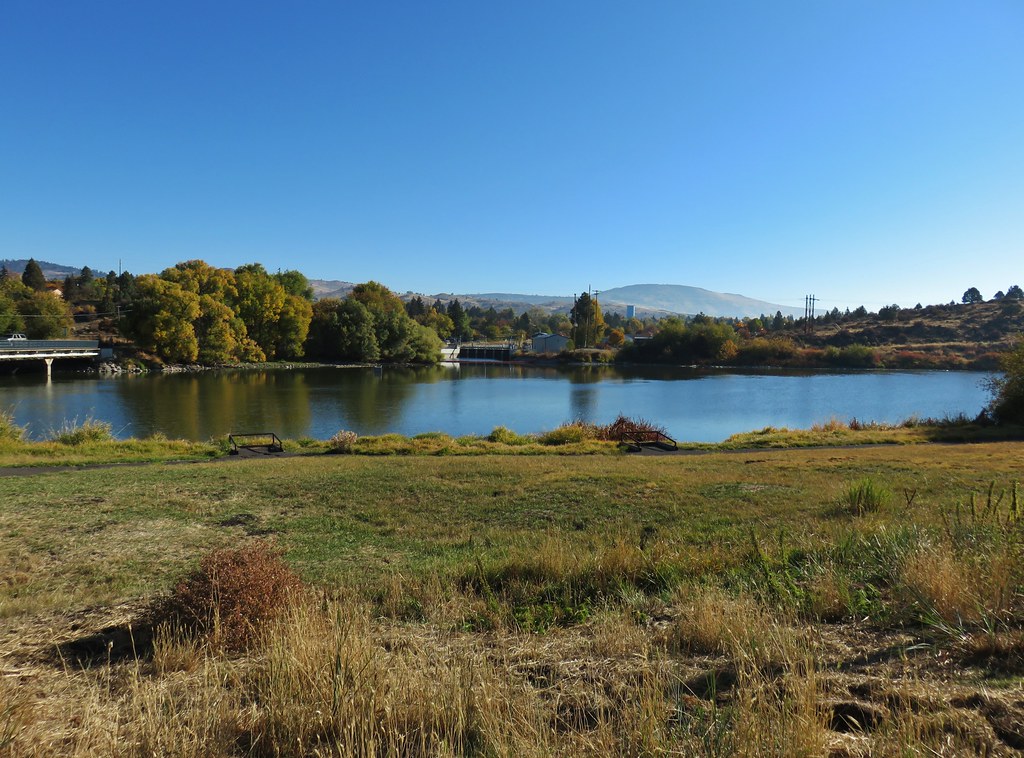
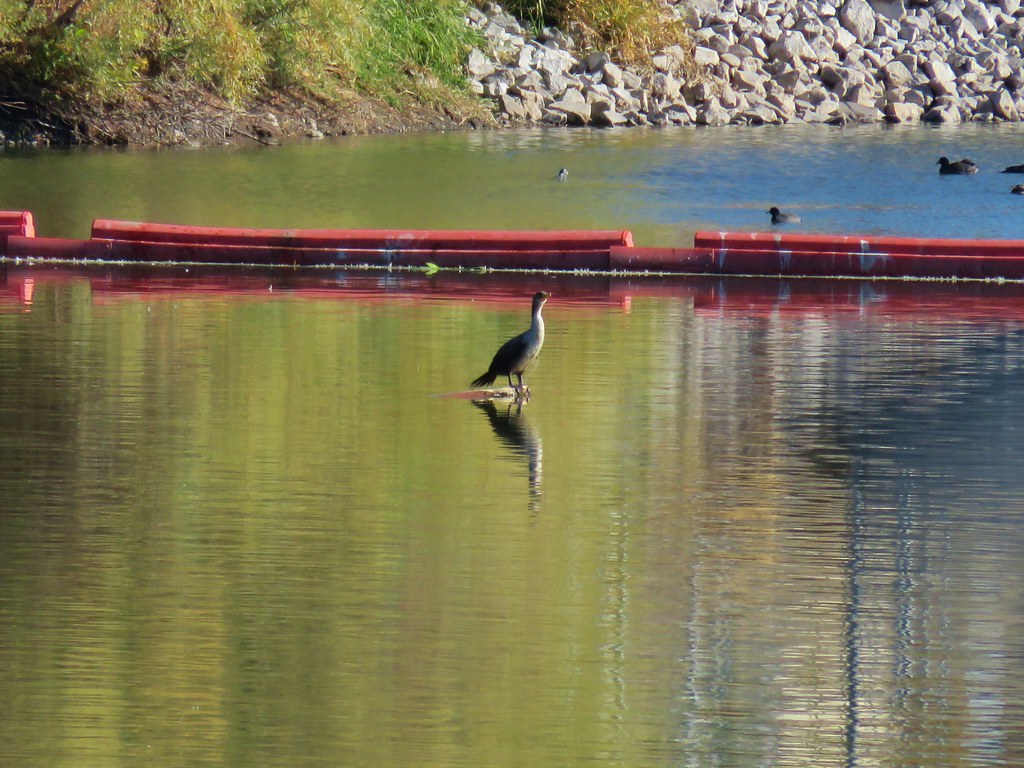
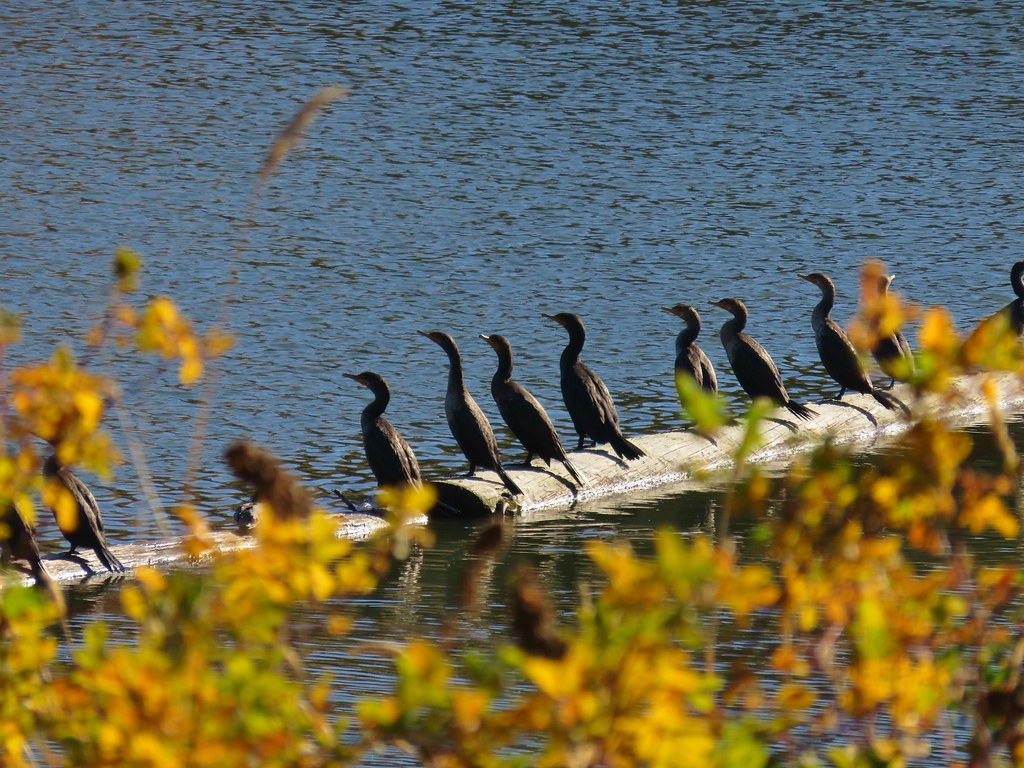
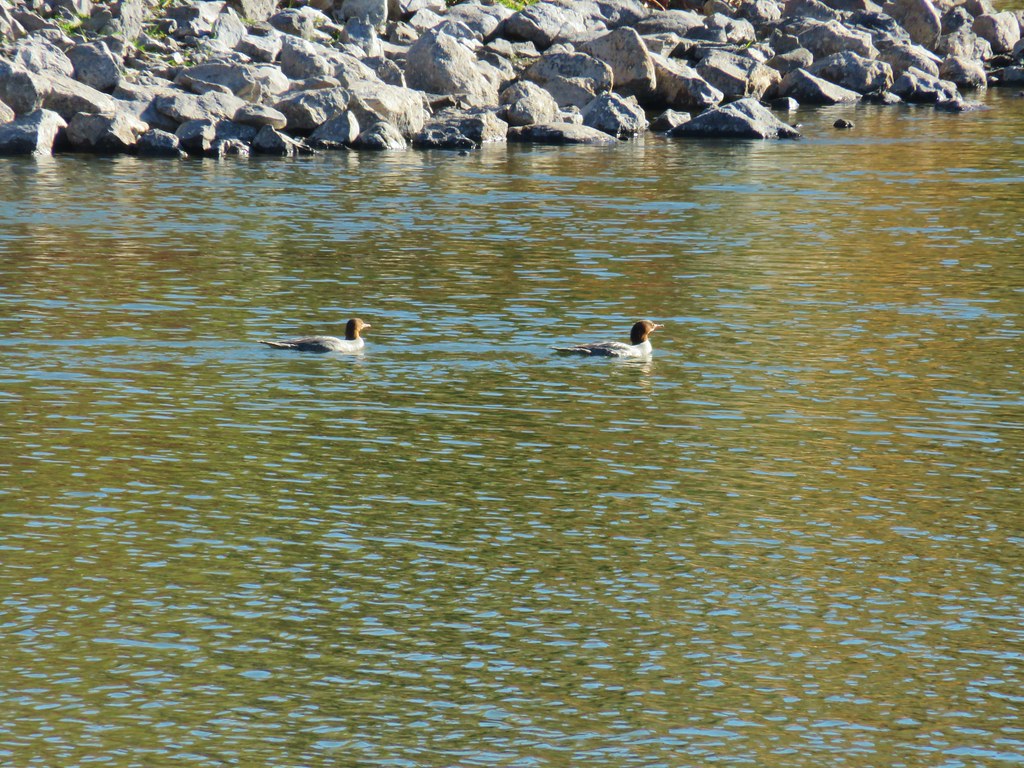
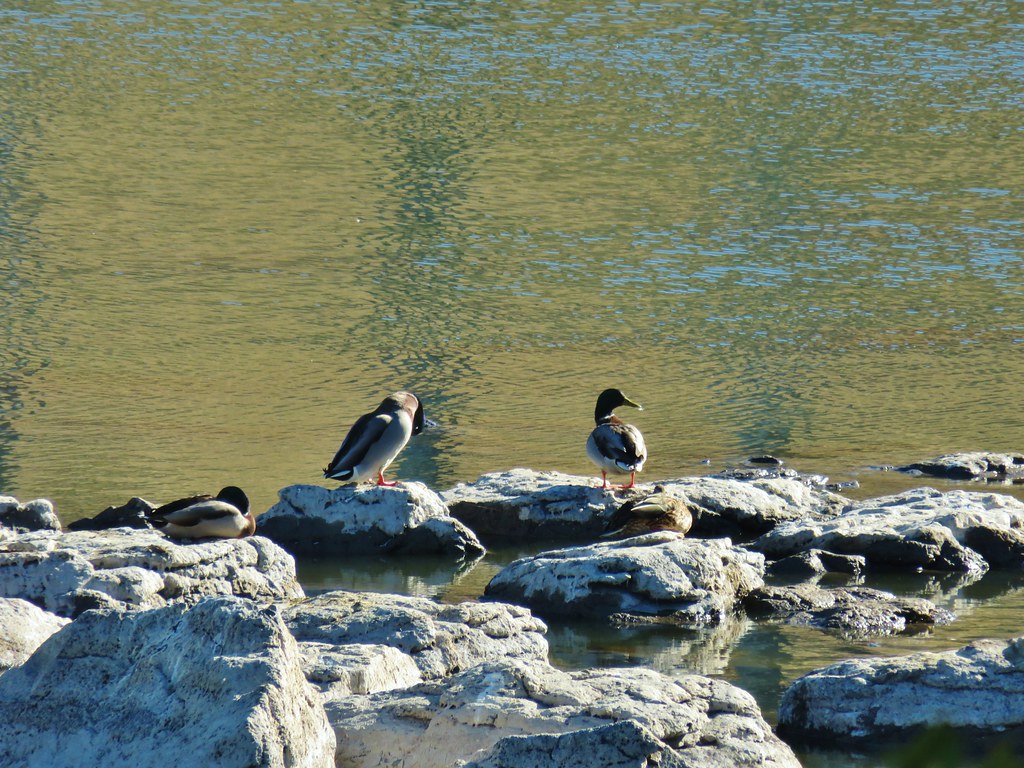
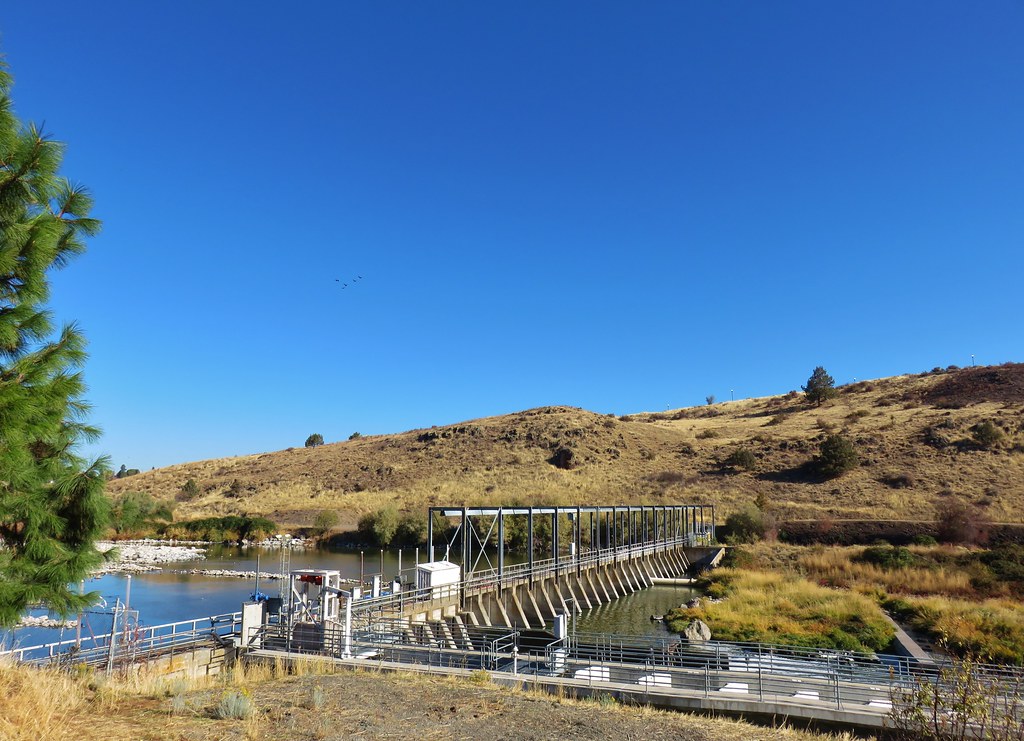
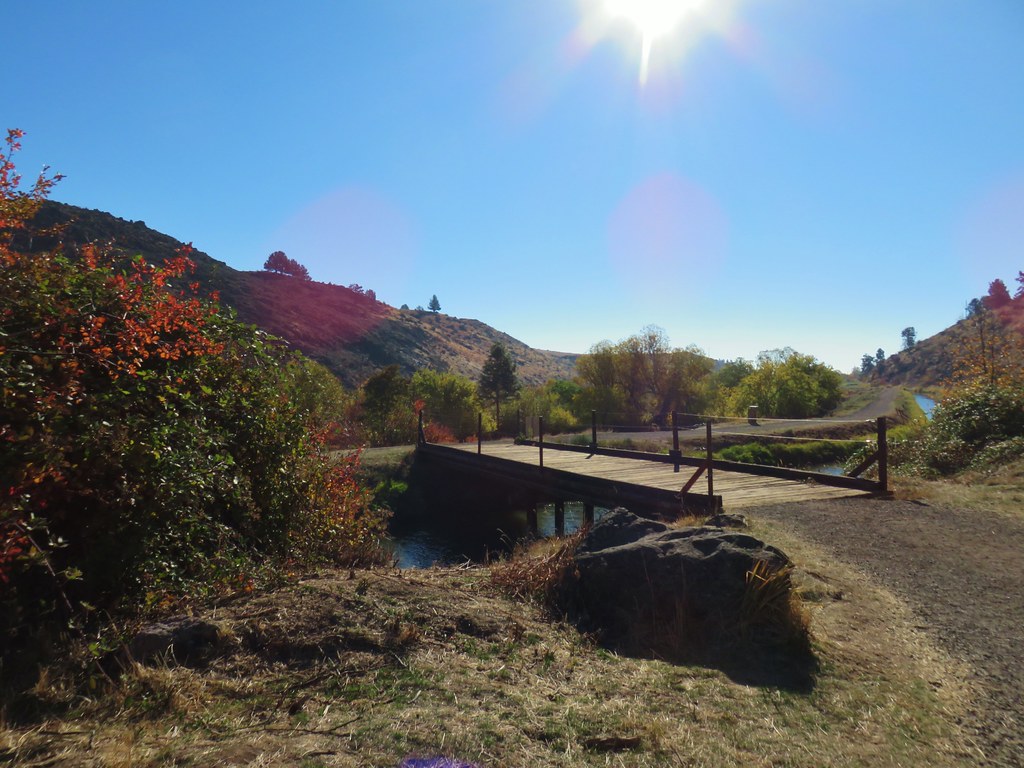
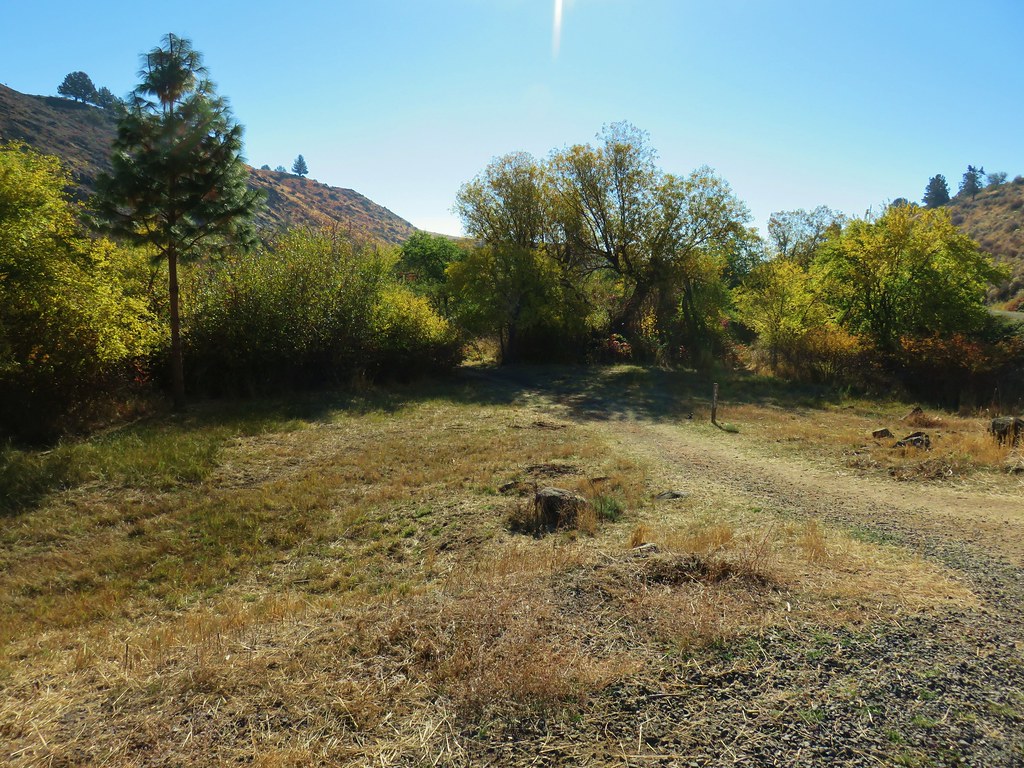
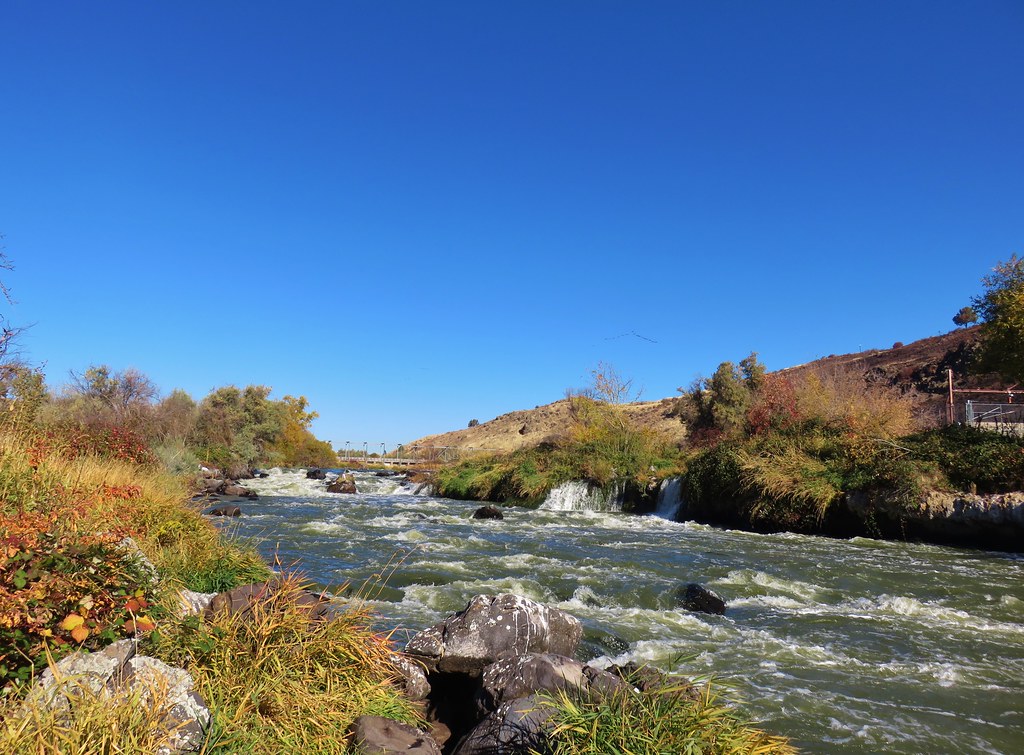


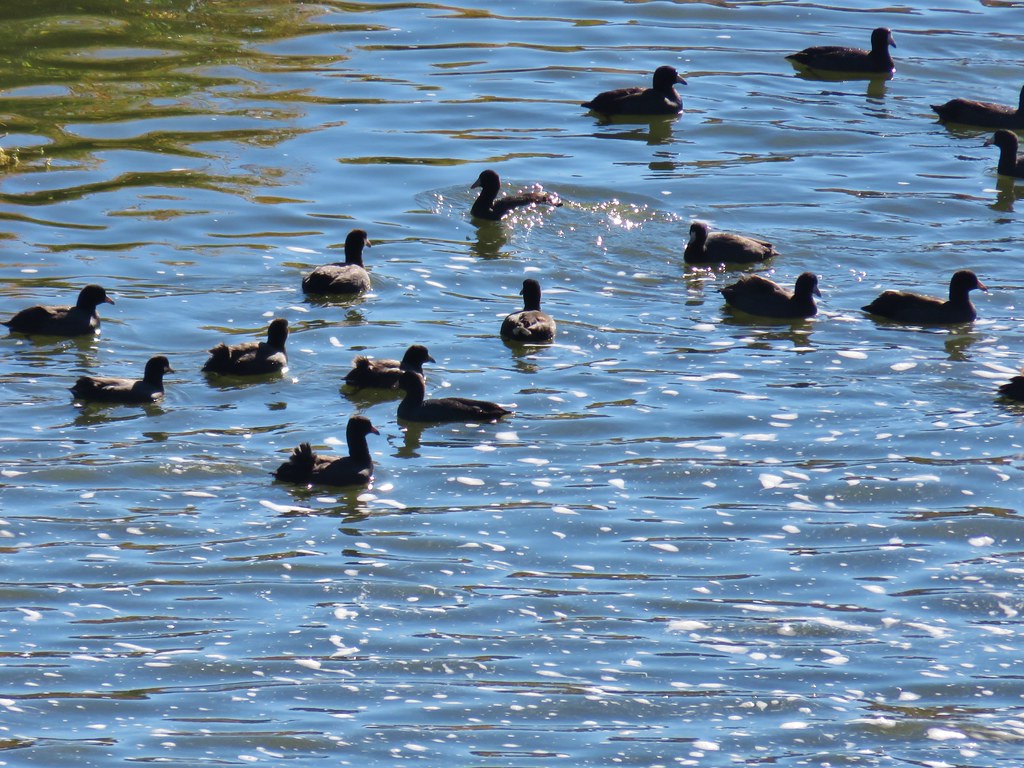 Coots
Coots Scrub jay
 White pelican, coots, and a cormorant
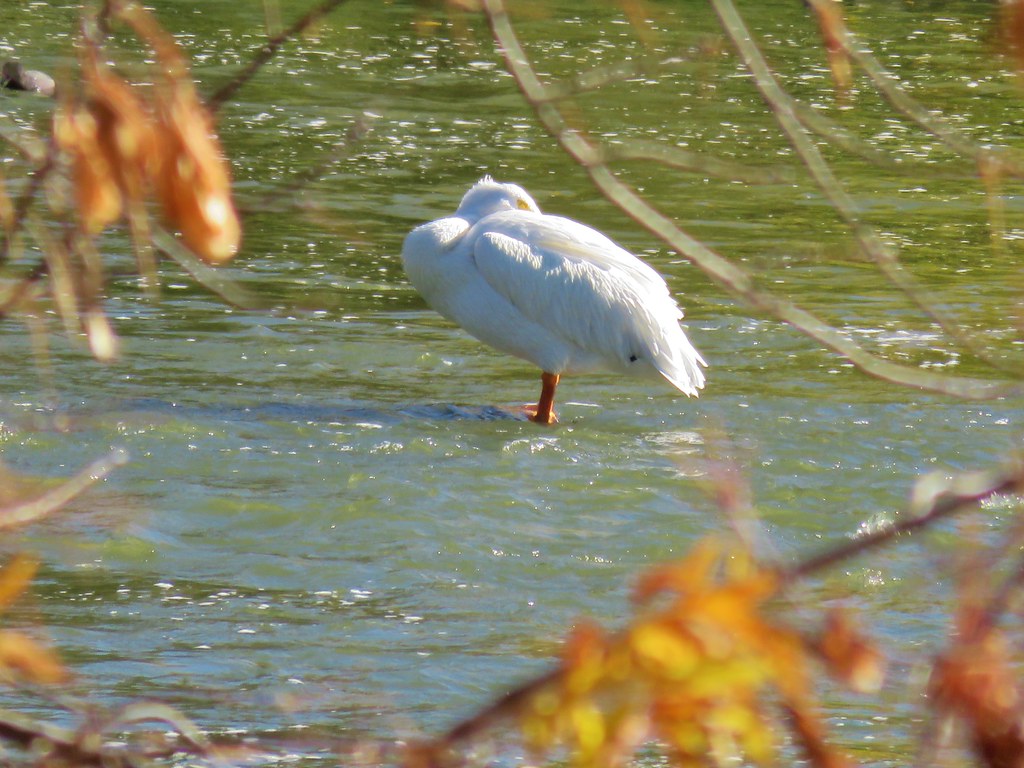 White pelican
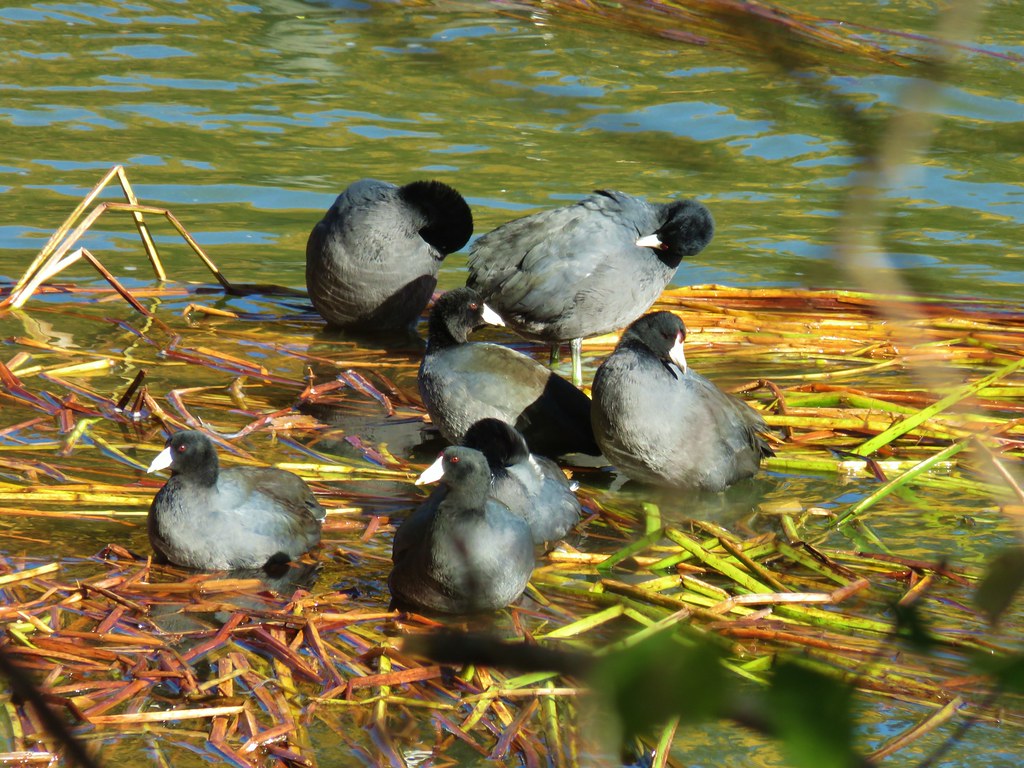 Coots
Coots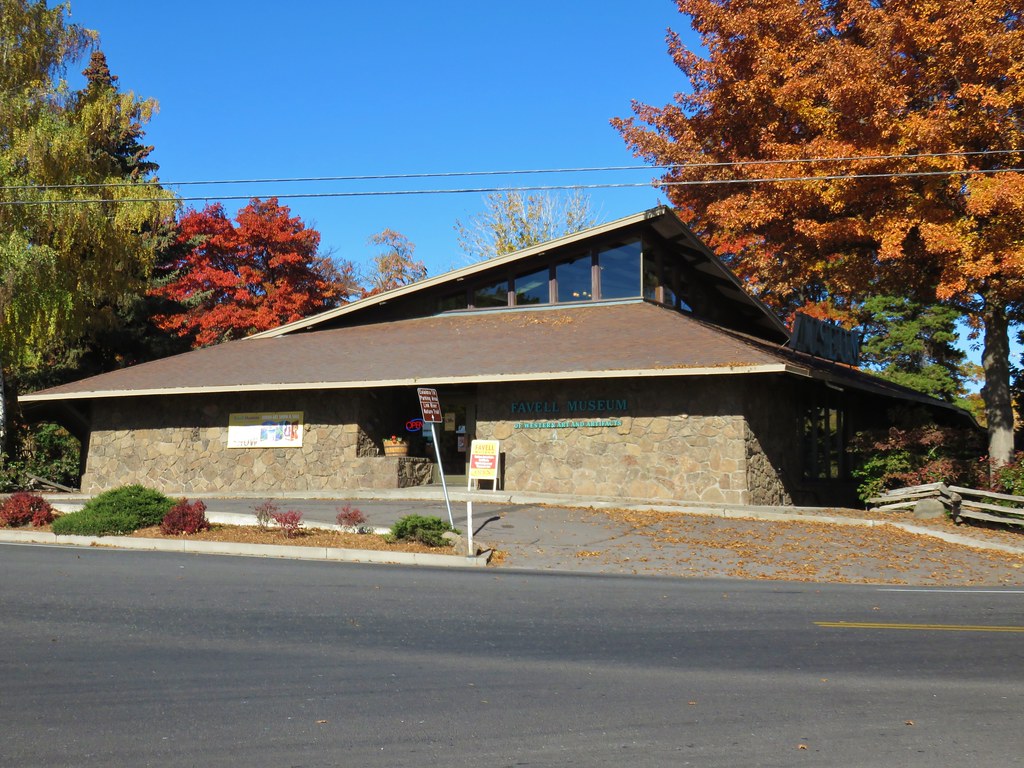
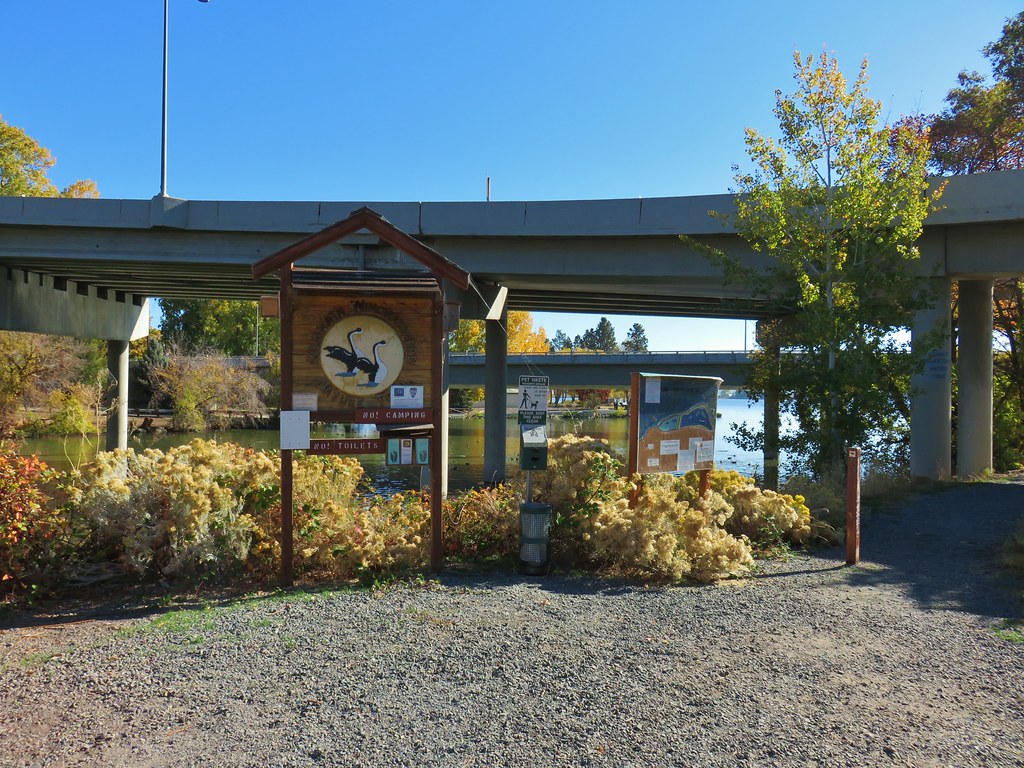

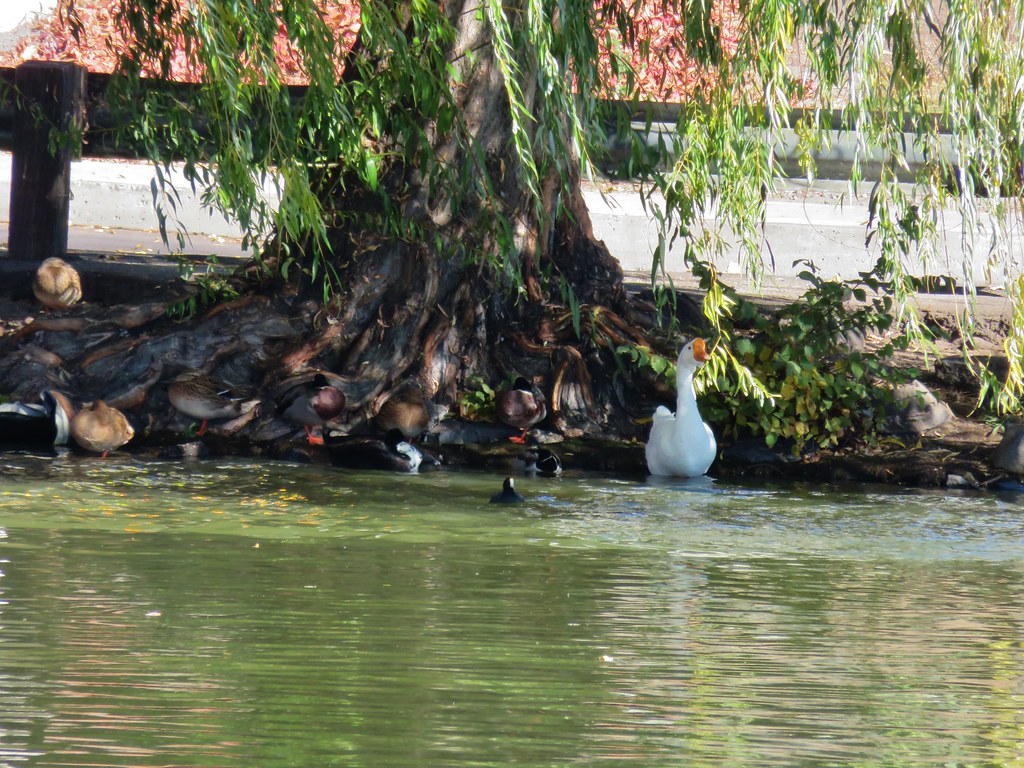

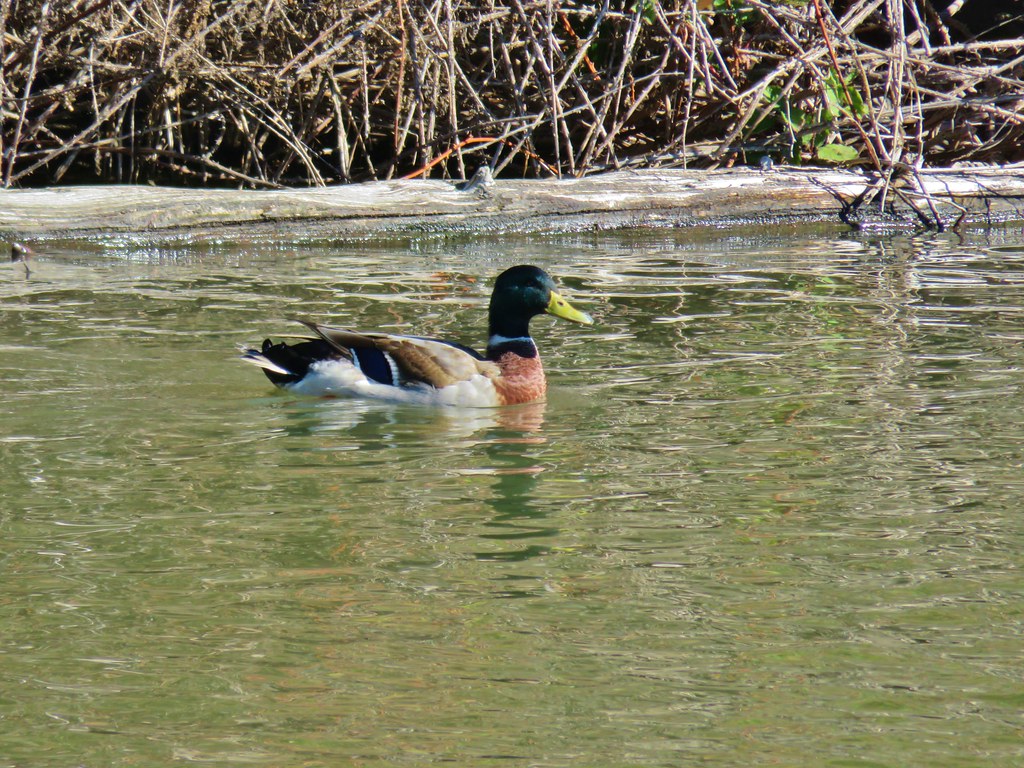
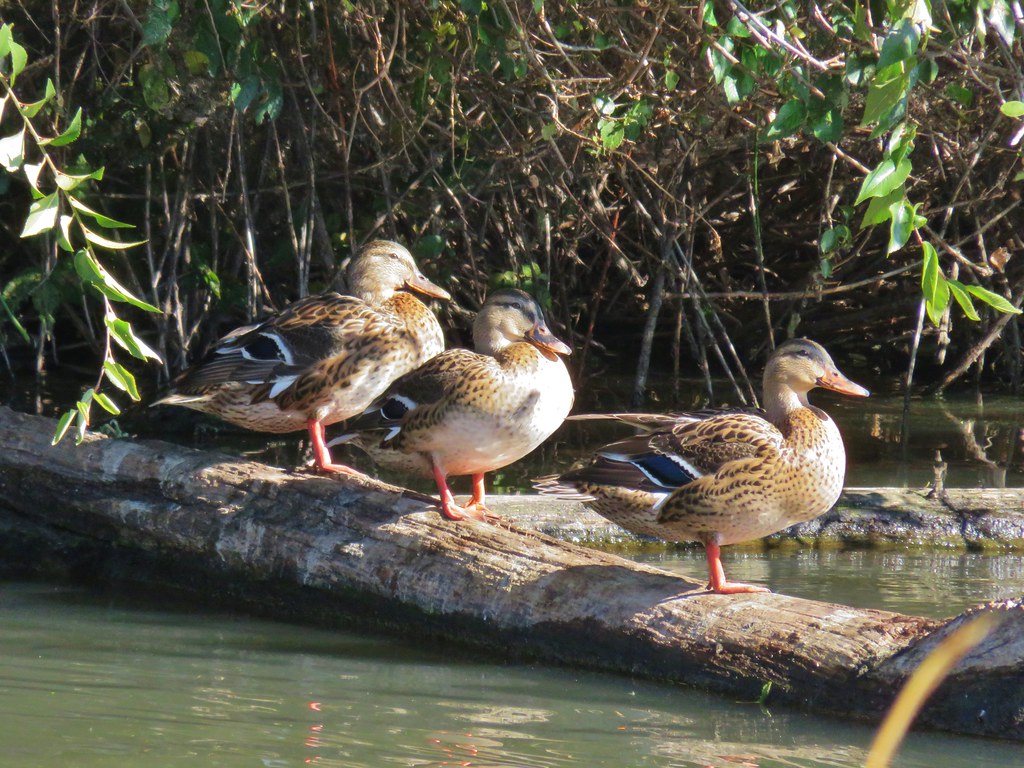
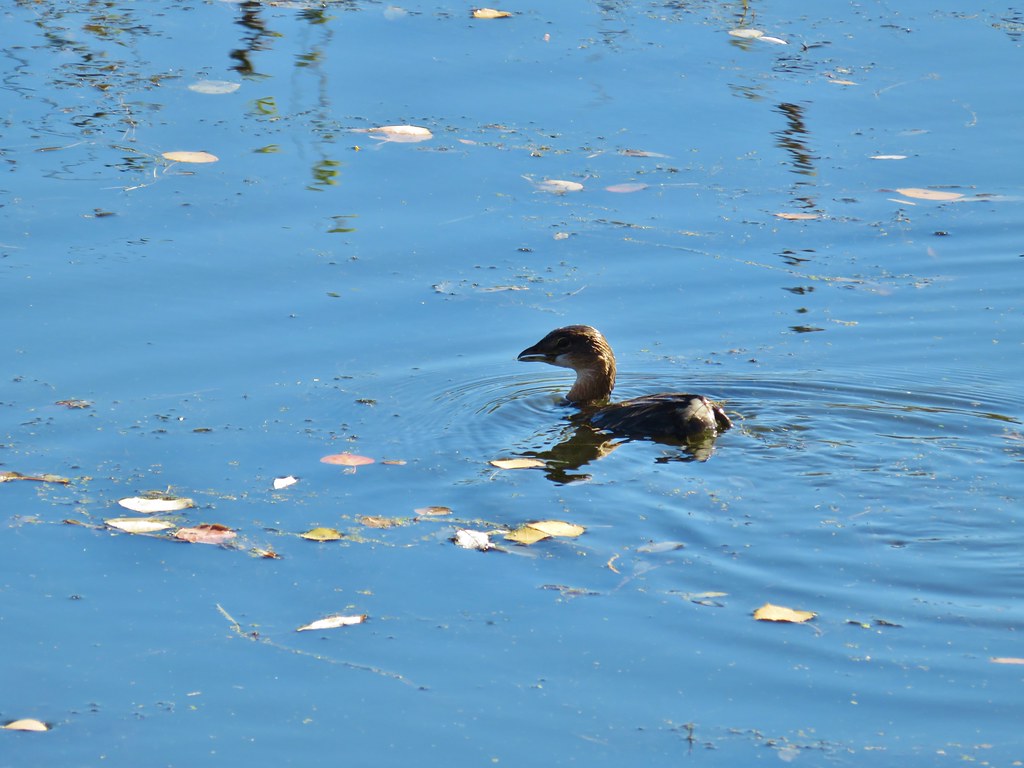
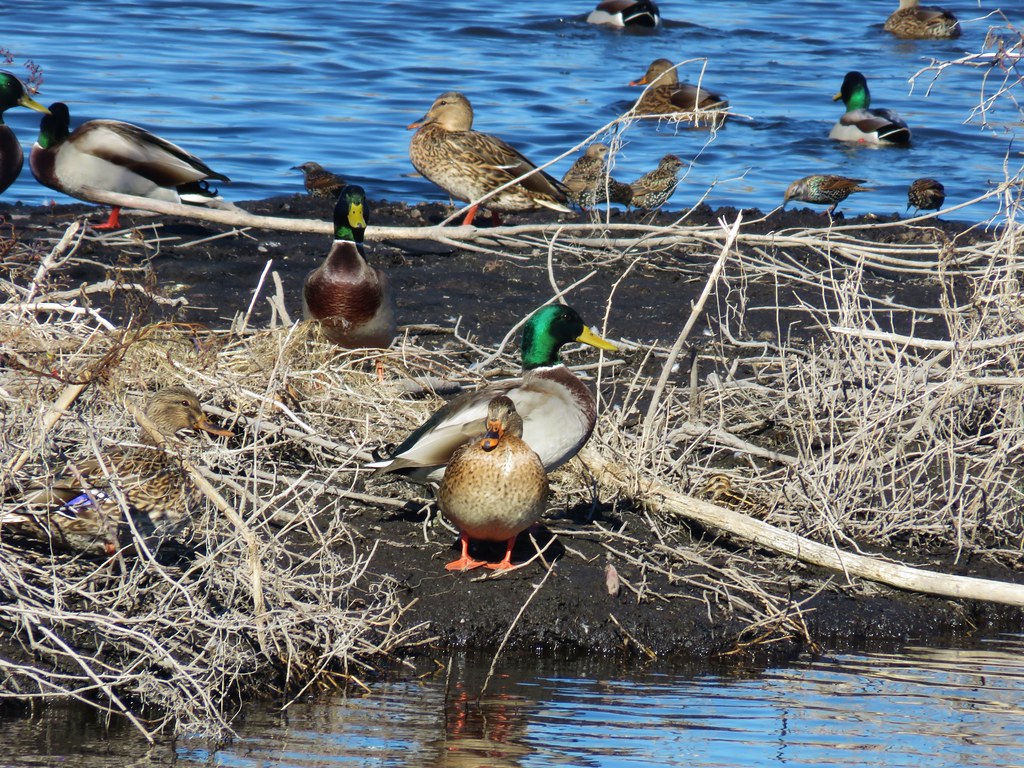 Mallards and other birds
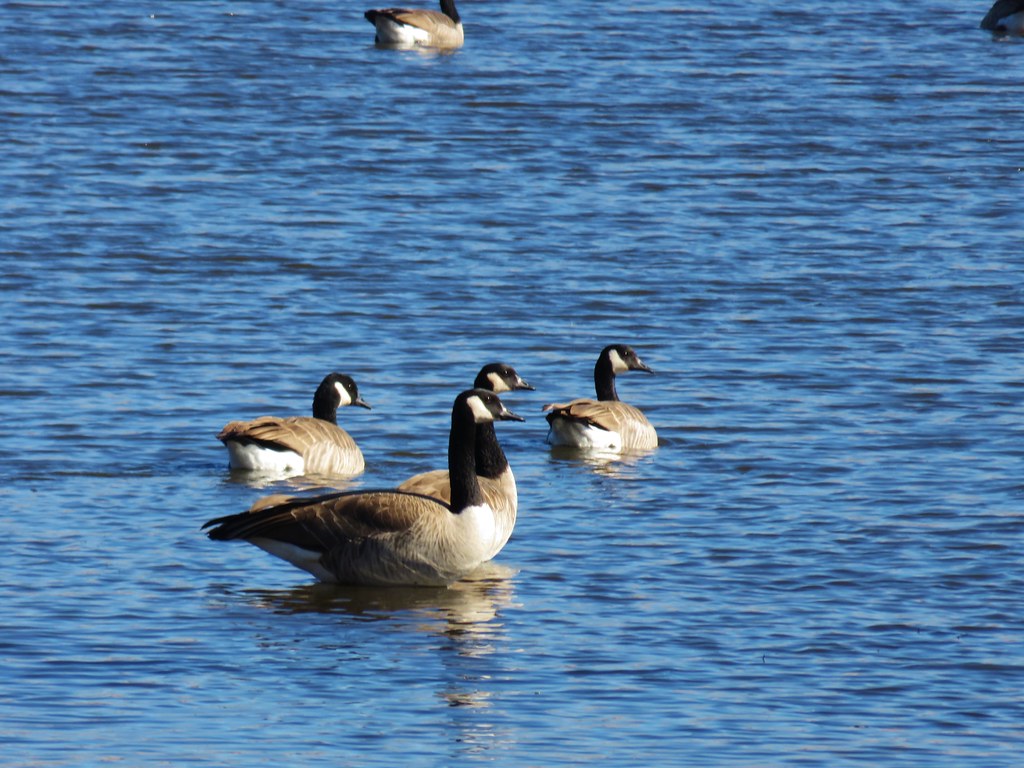 Canada geese
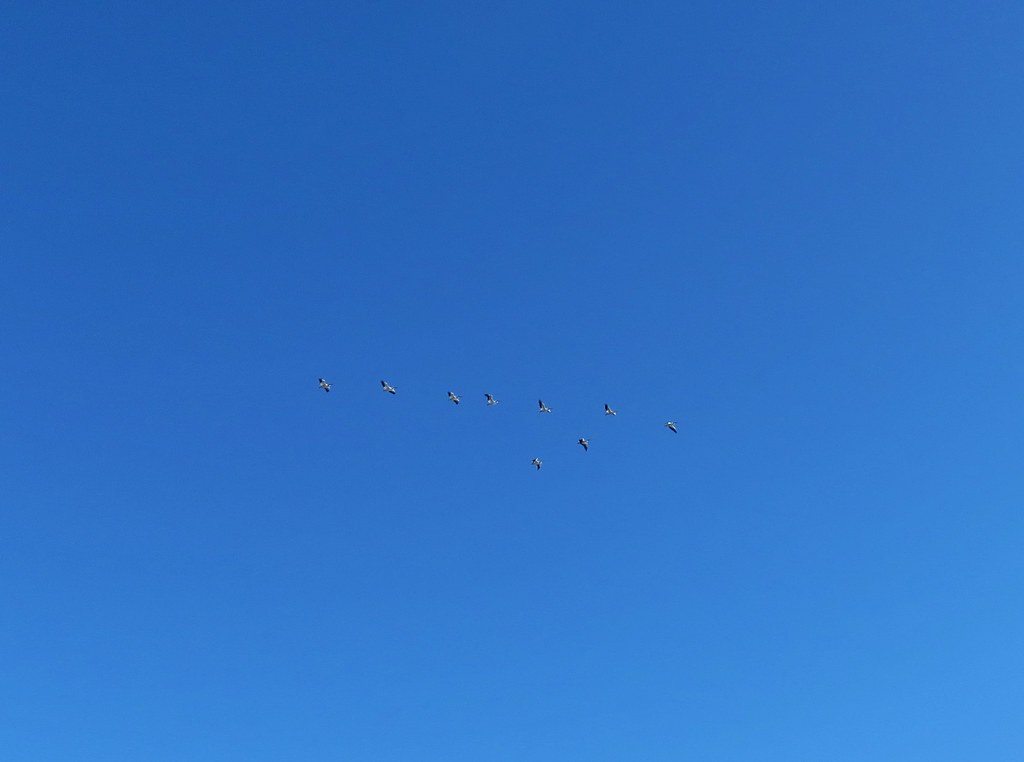 Pelicans in flight
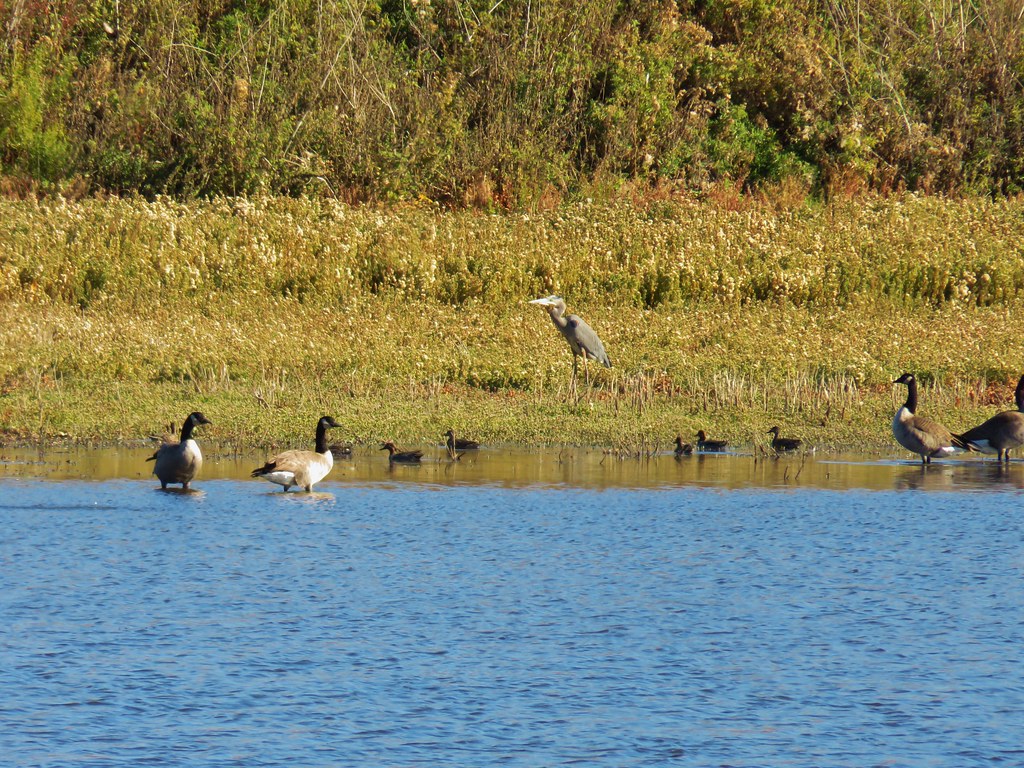 Great blue heron among others
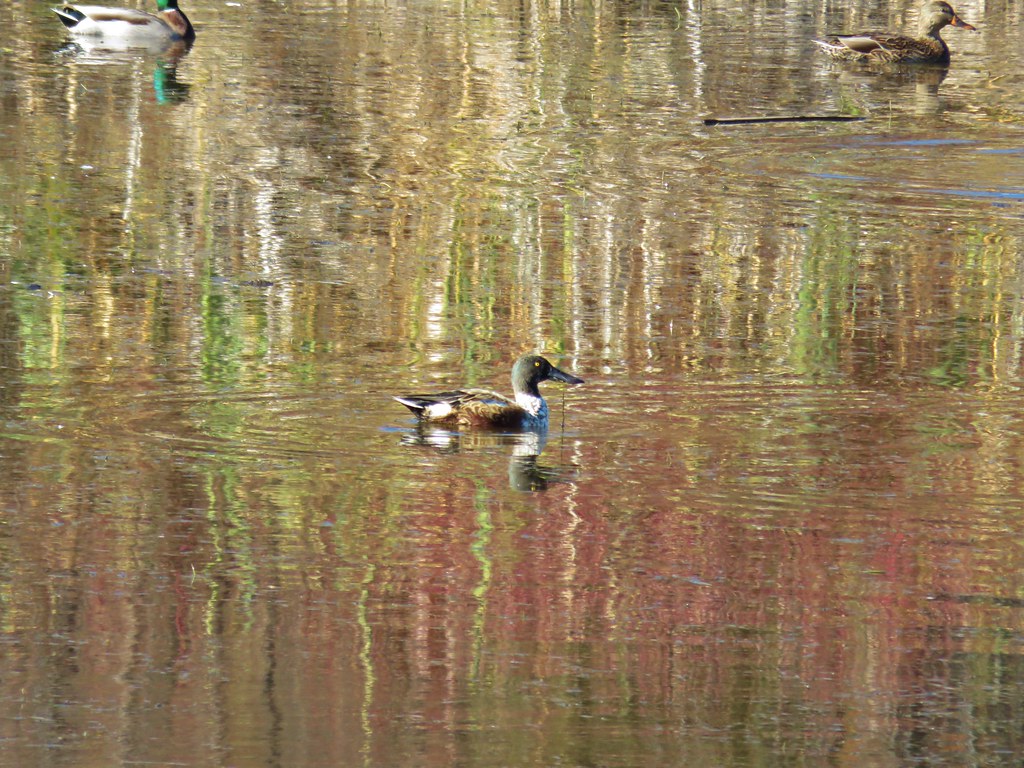 Northern shoveler
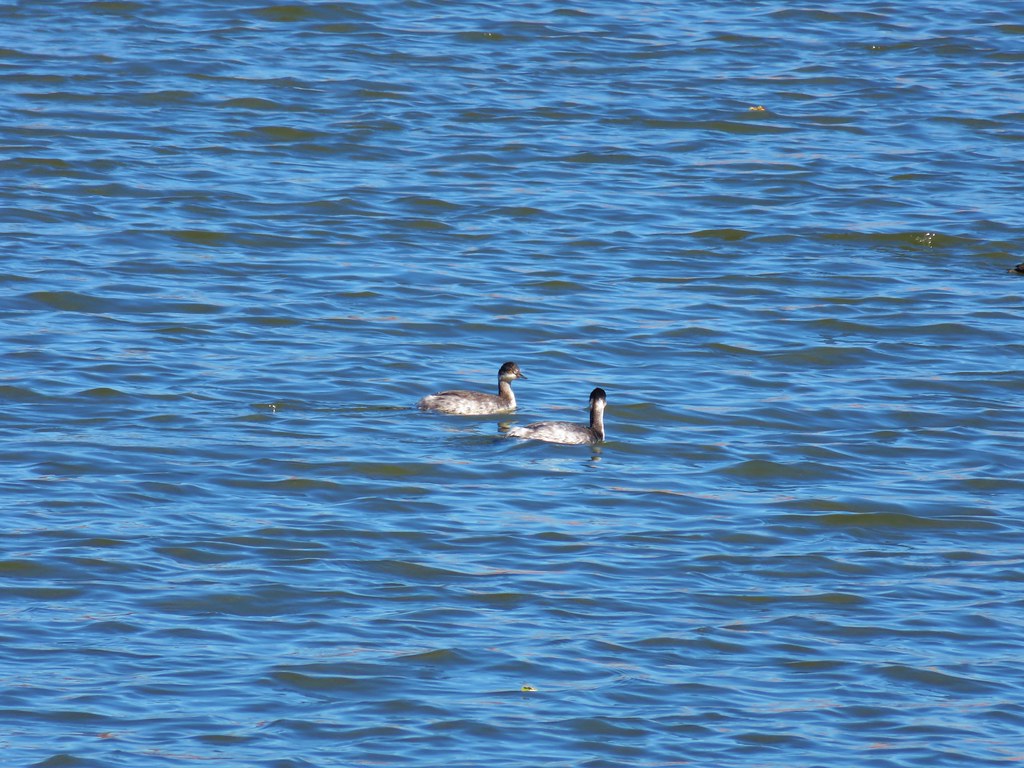 Horned grebes
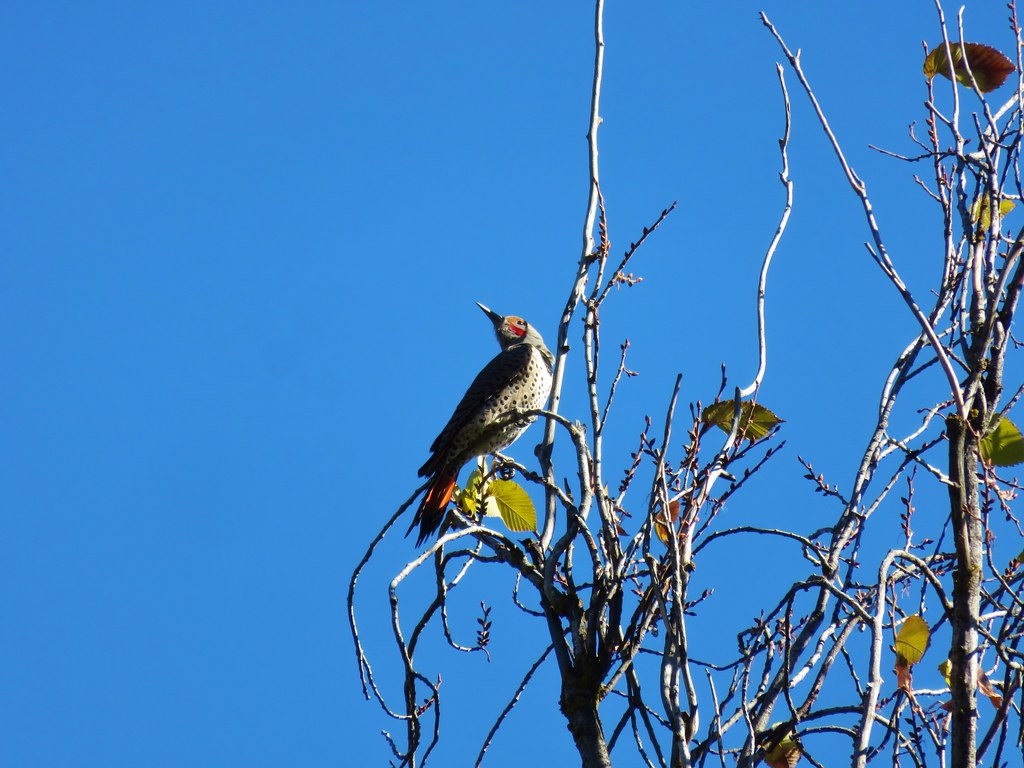 Northern flicker
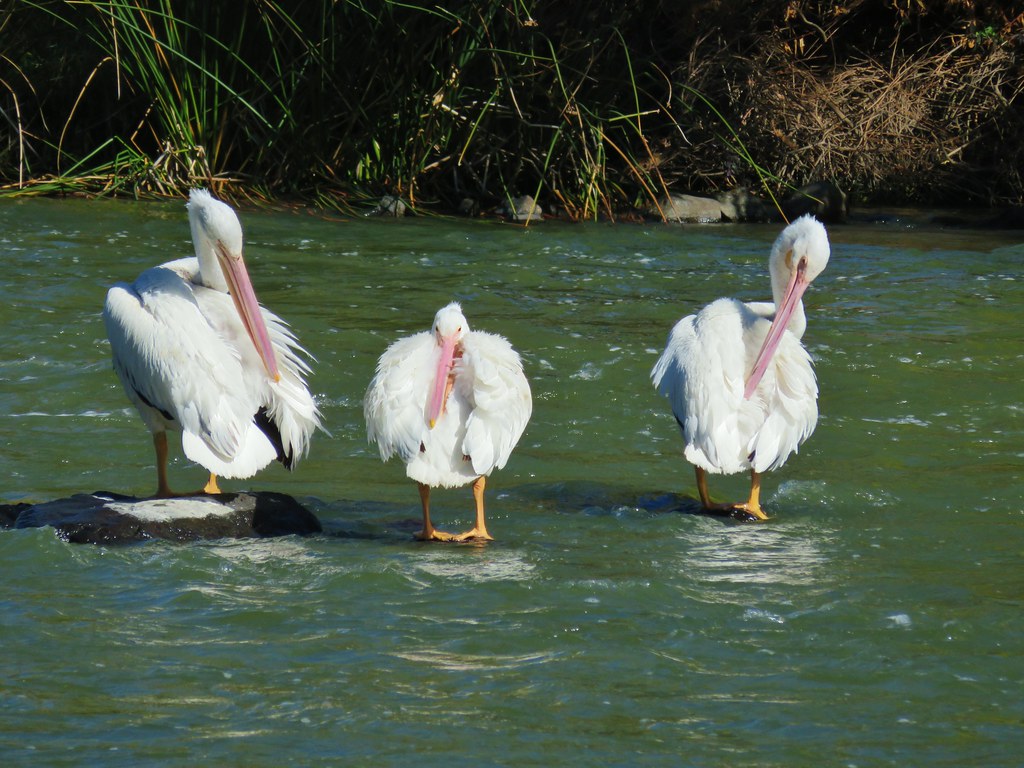 More pelicans
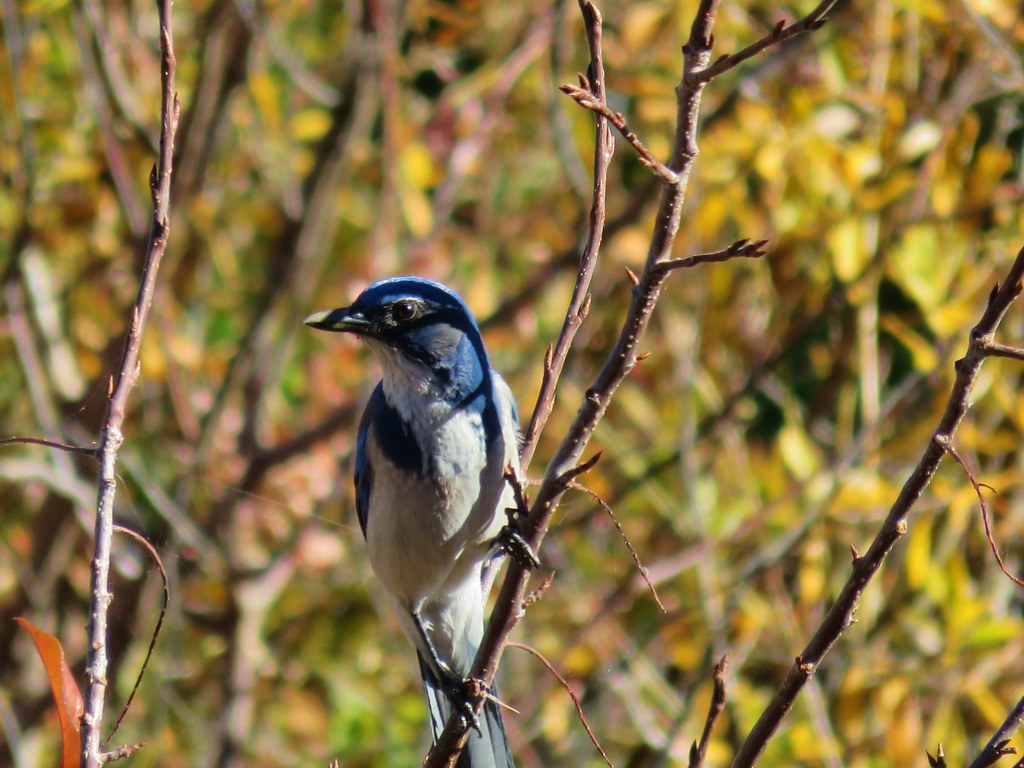 Another jay
 Great blue heron on the rocks
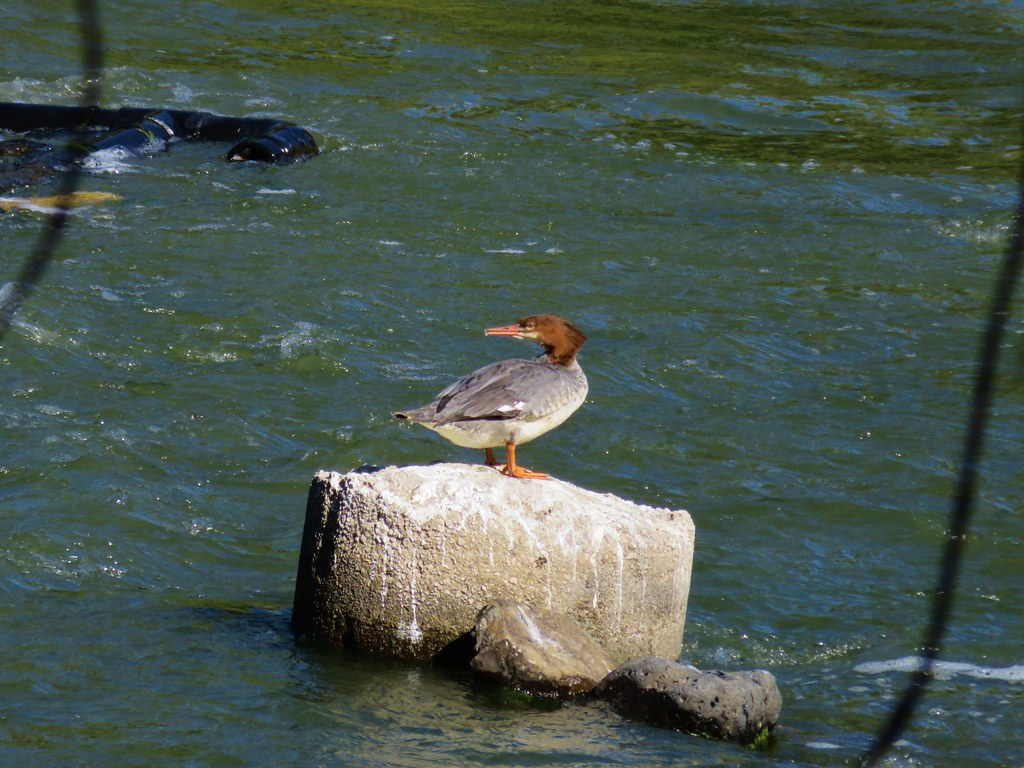 Common merganser
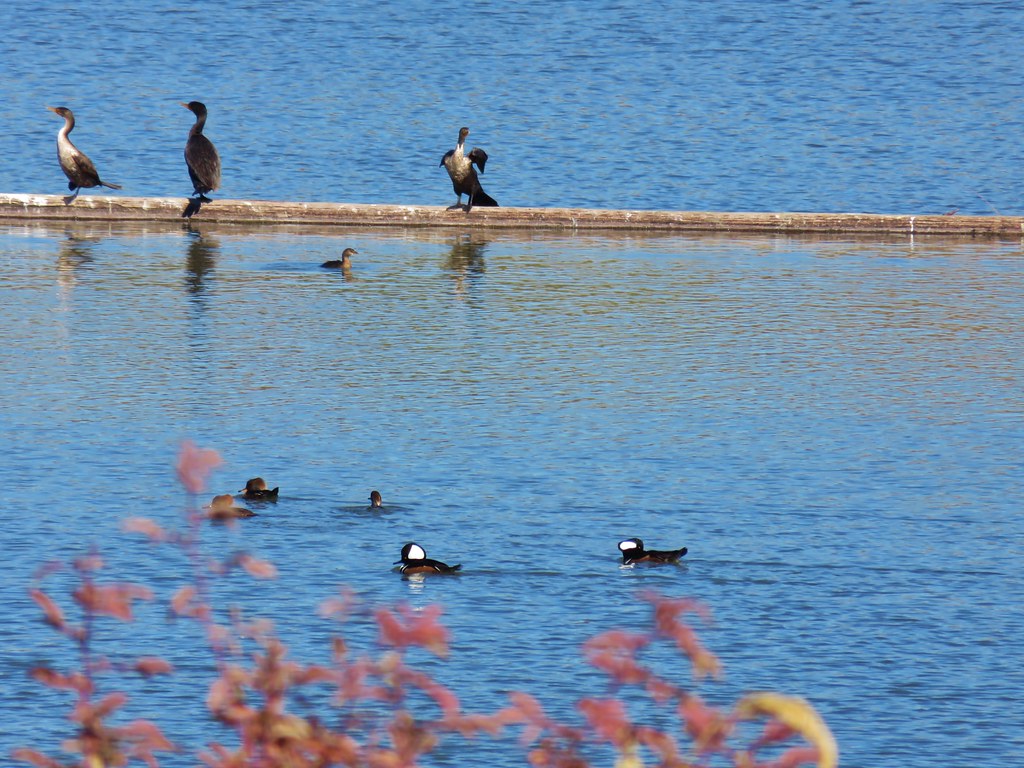 Hooded mergansers (in the foreground)
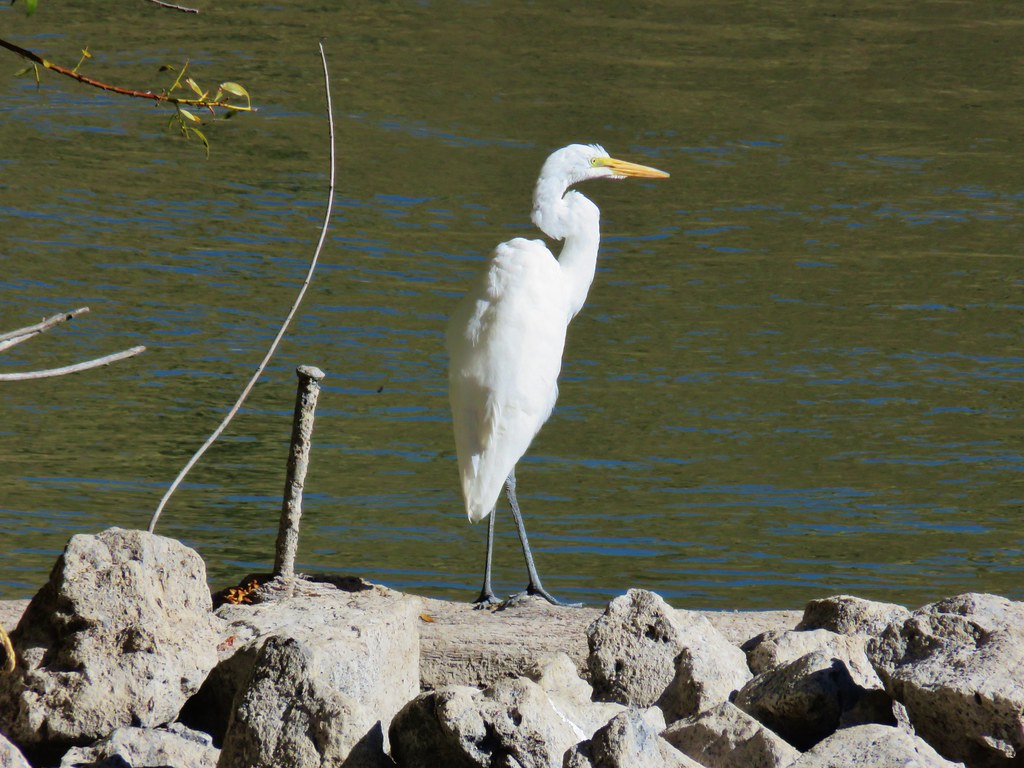 Egret
Egret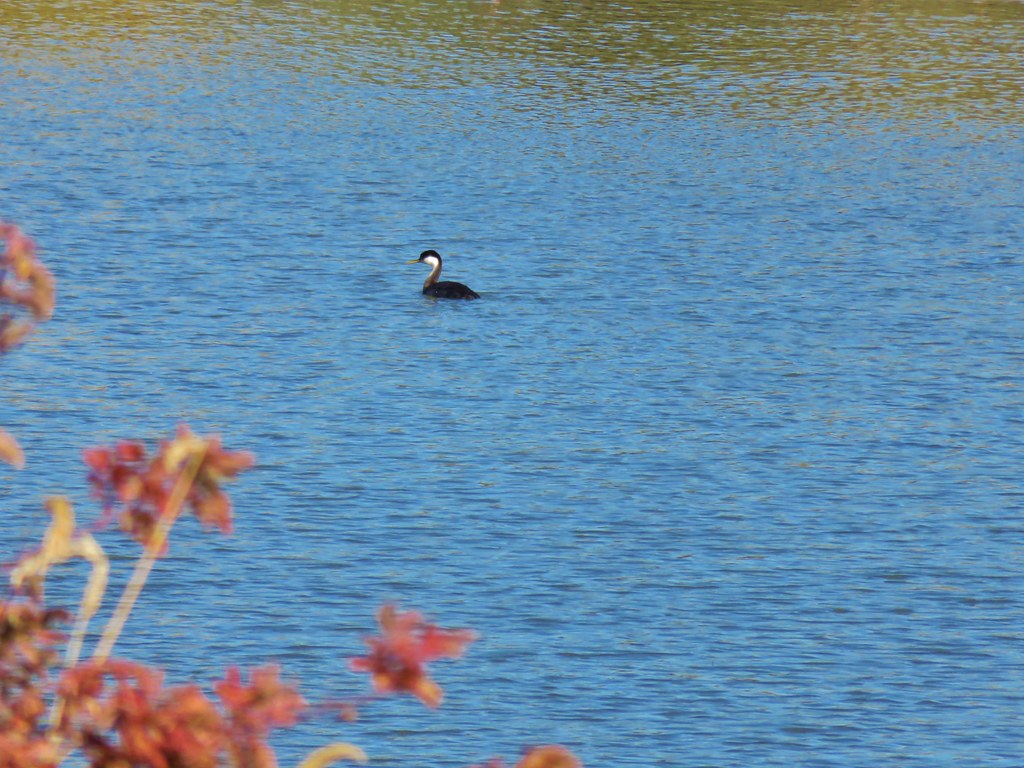 Western grebe










 wanderingyuncks