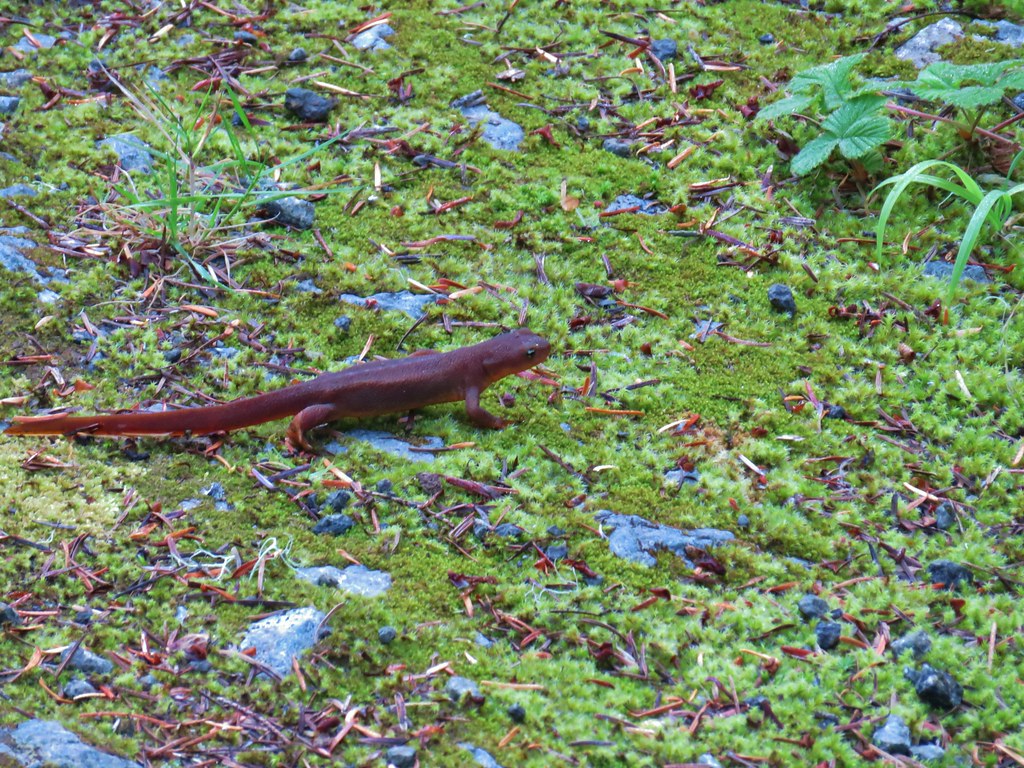
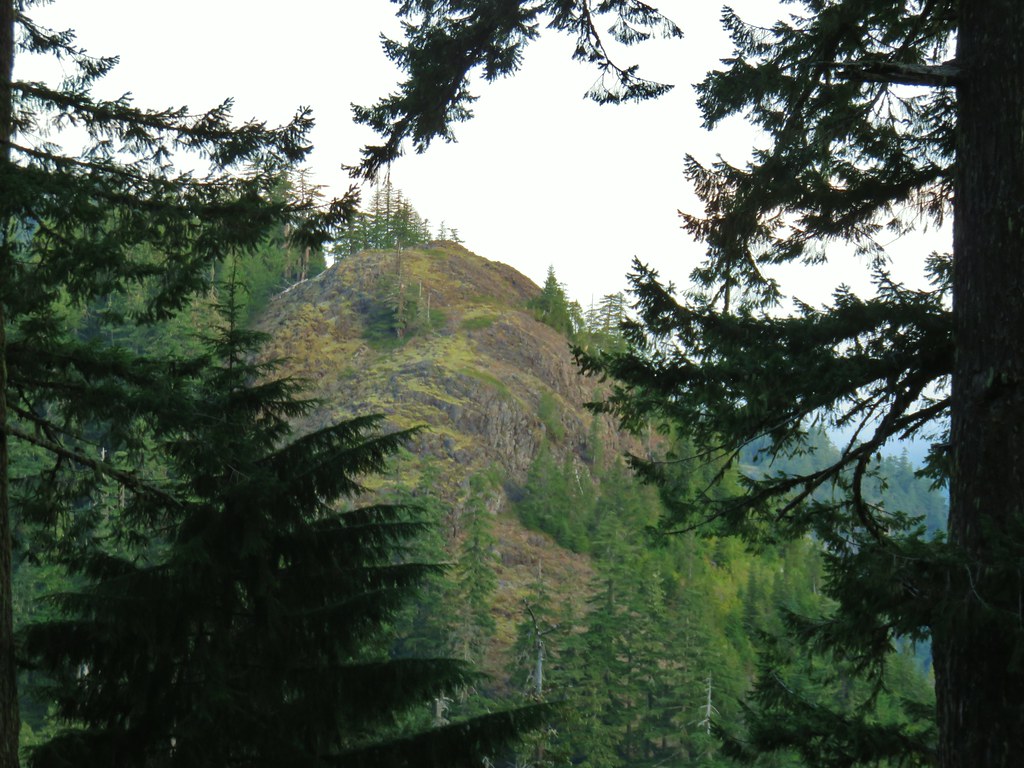
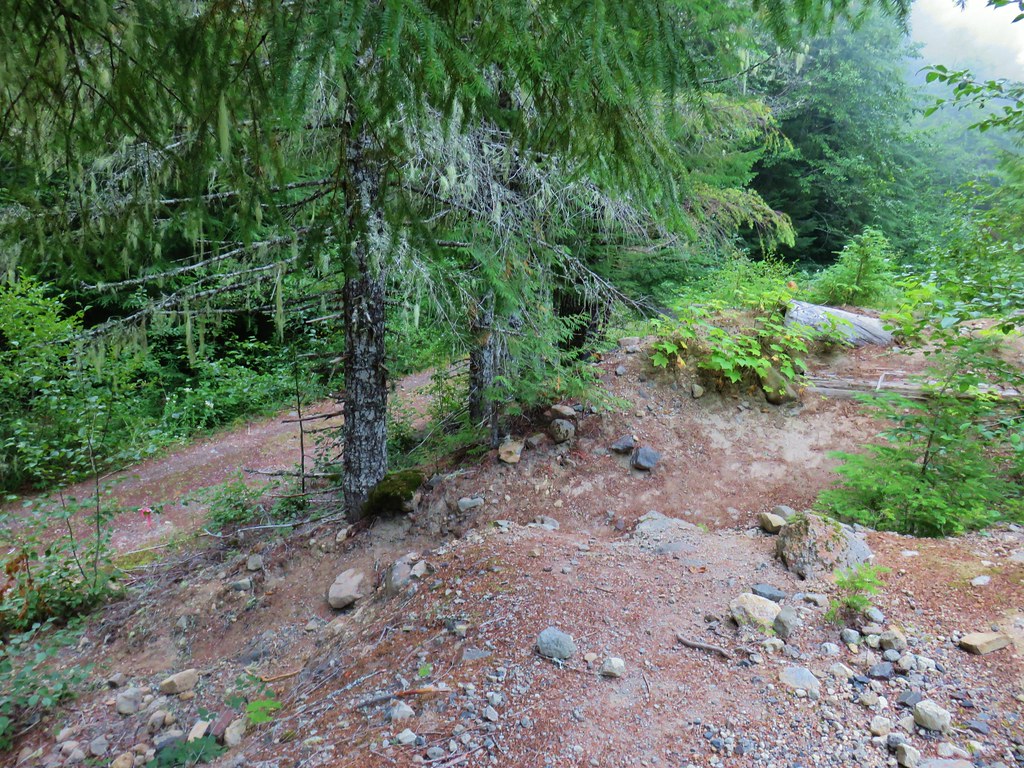
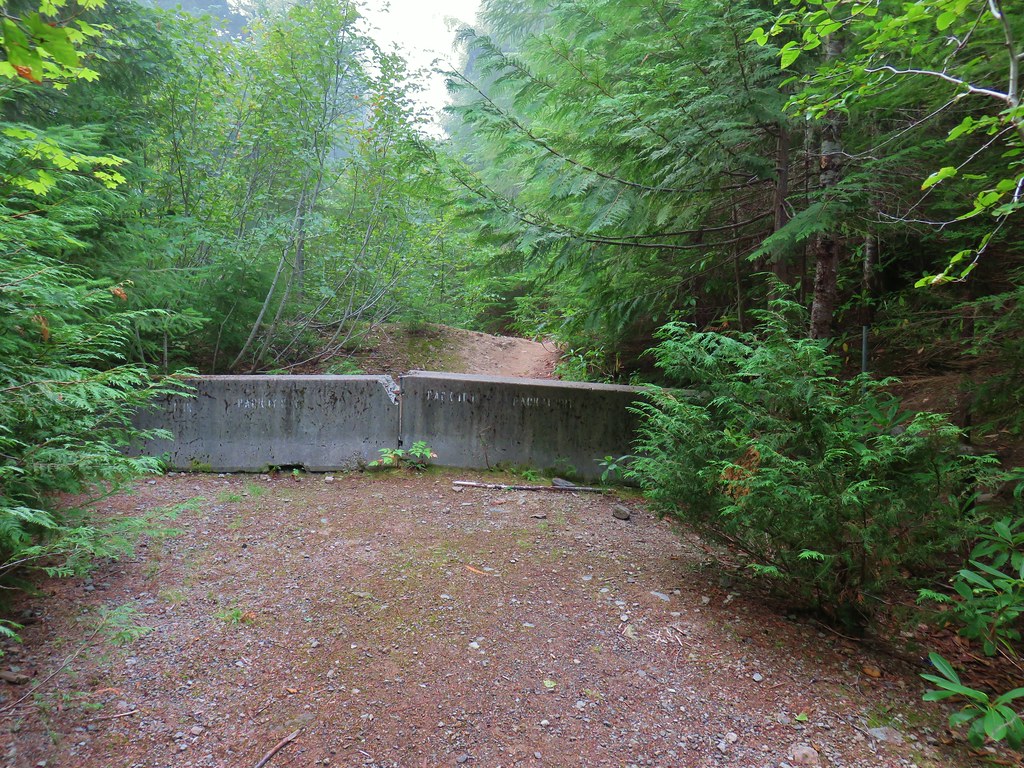
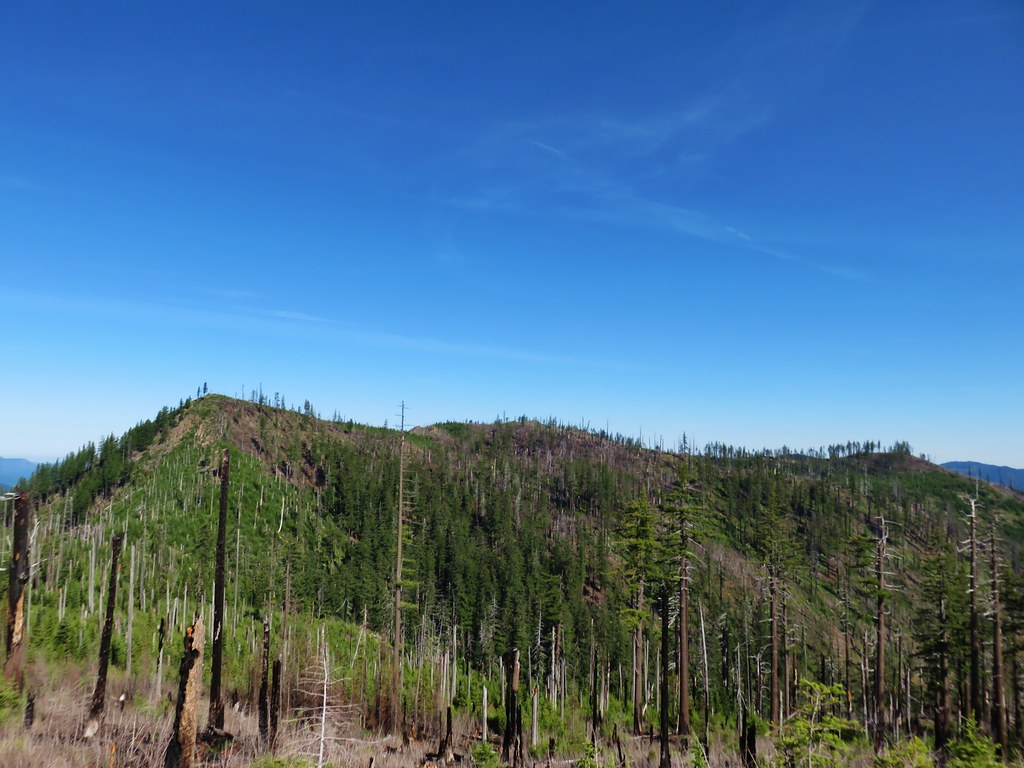
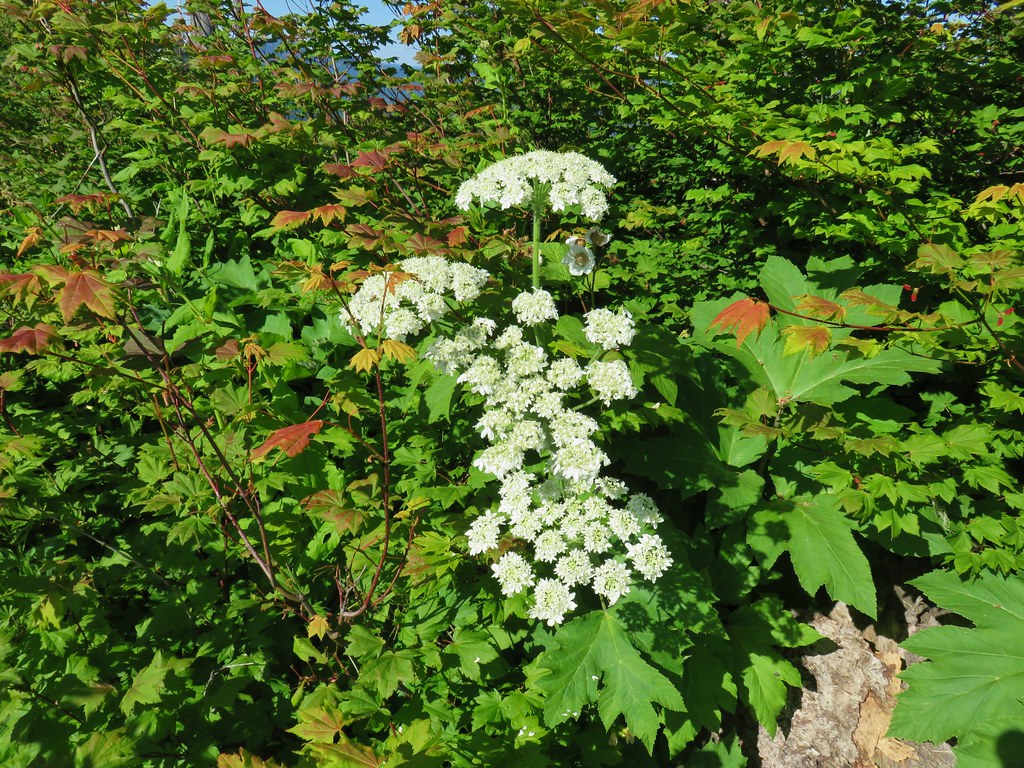
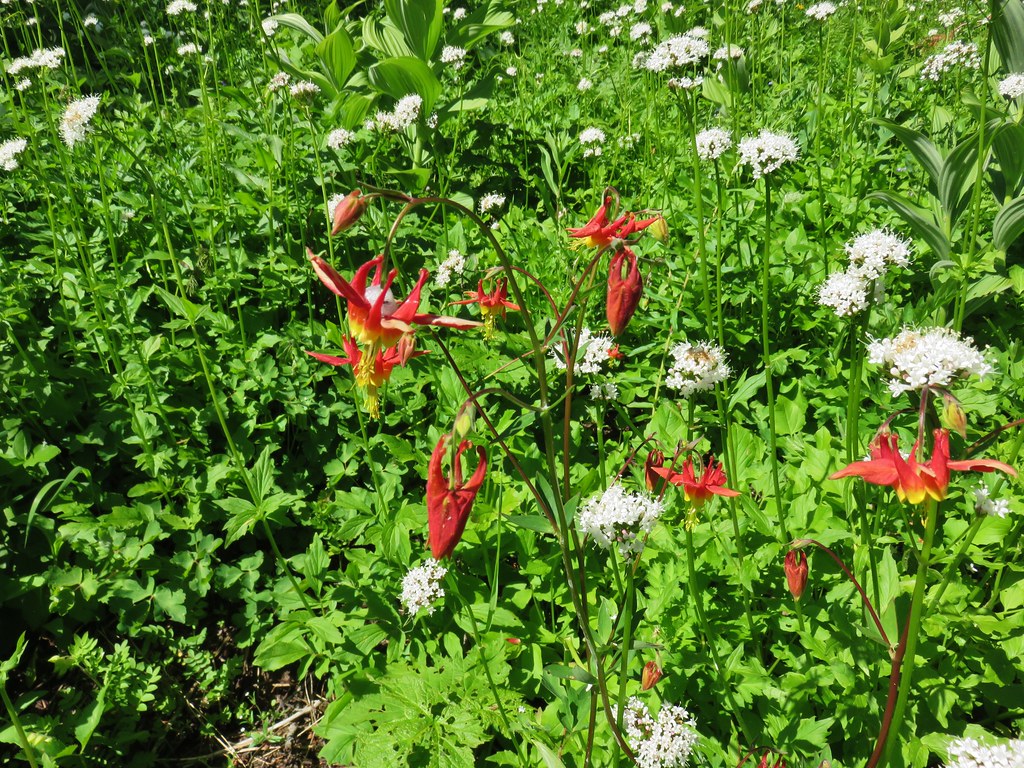
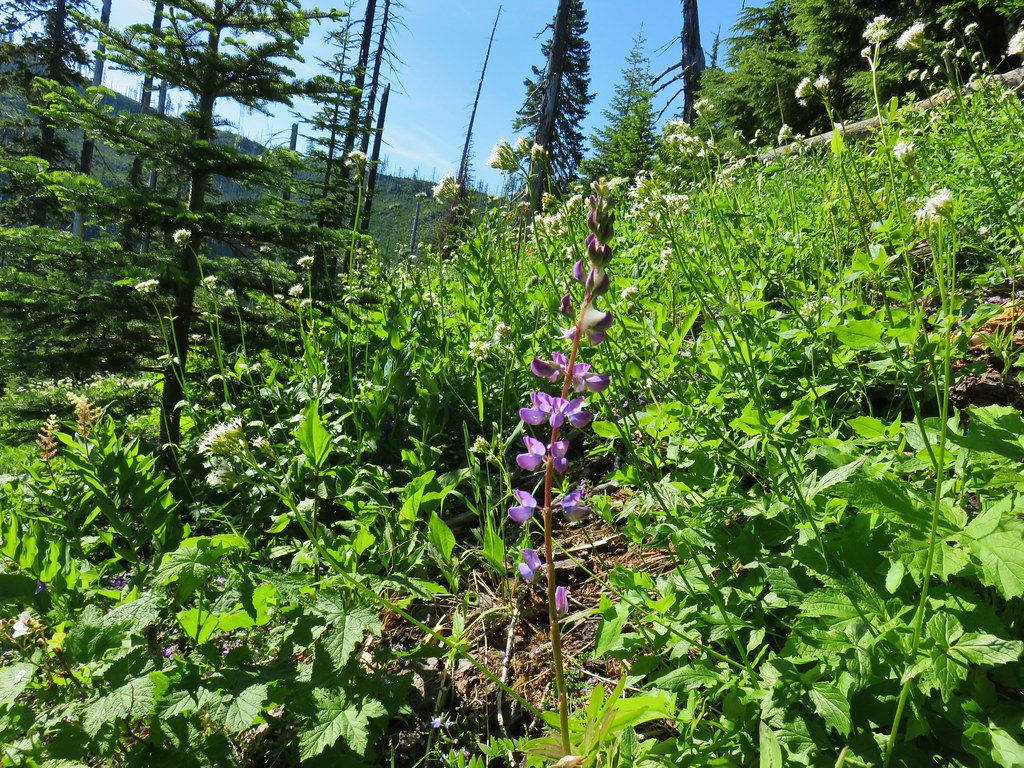
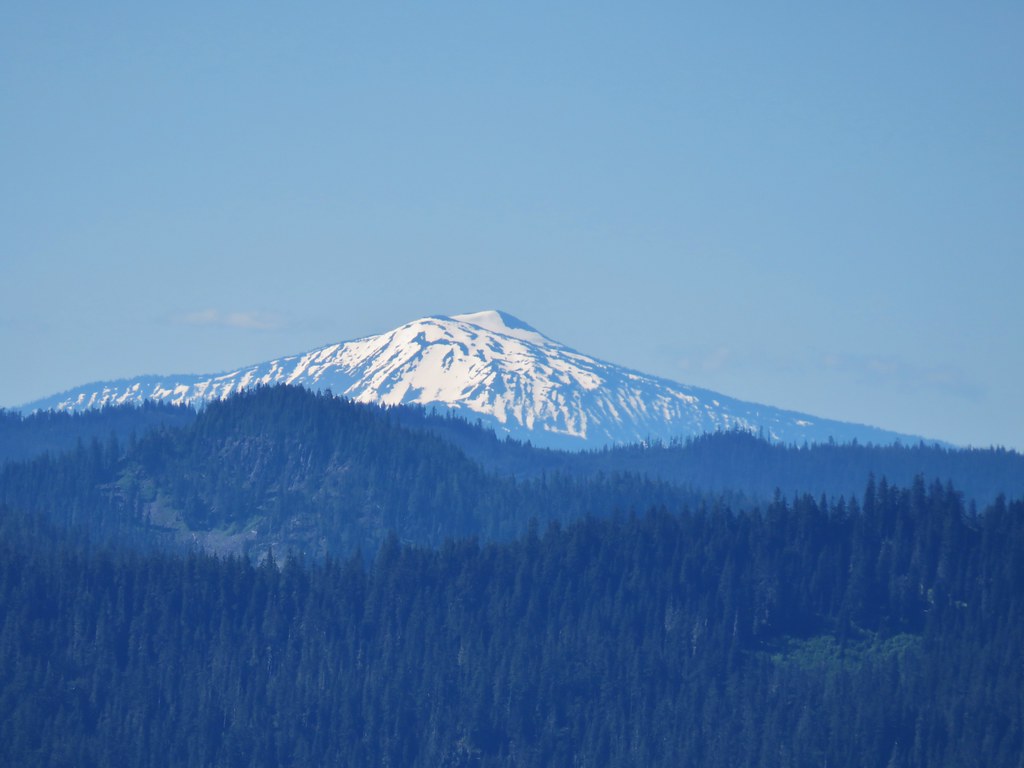
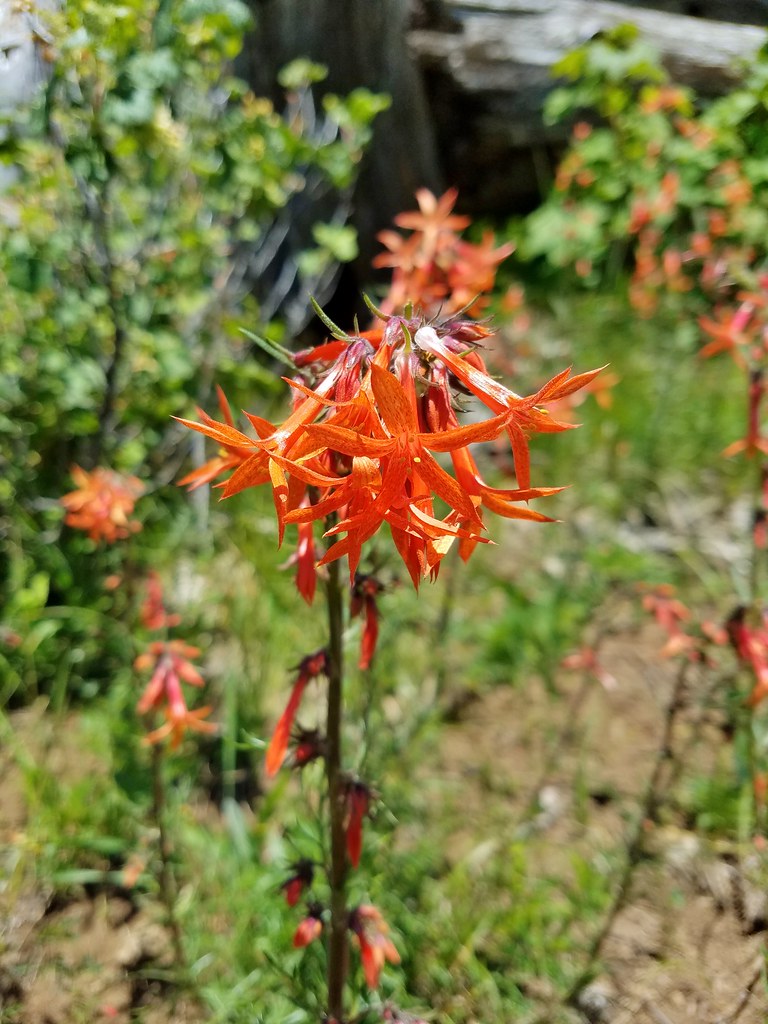
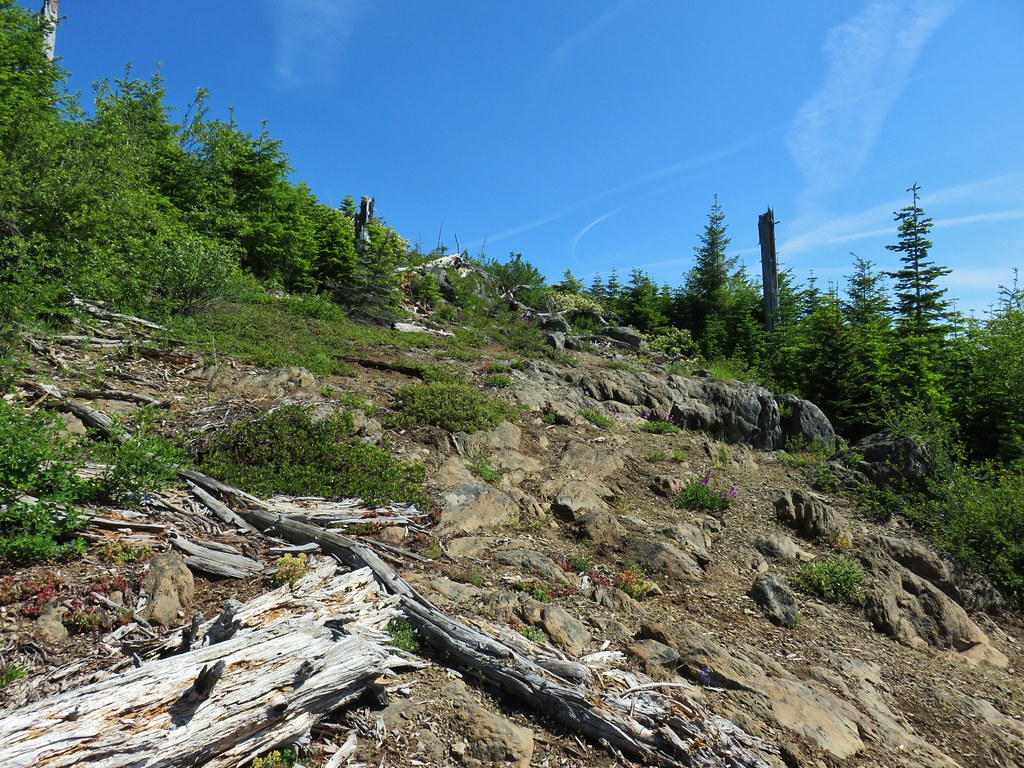
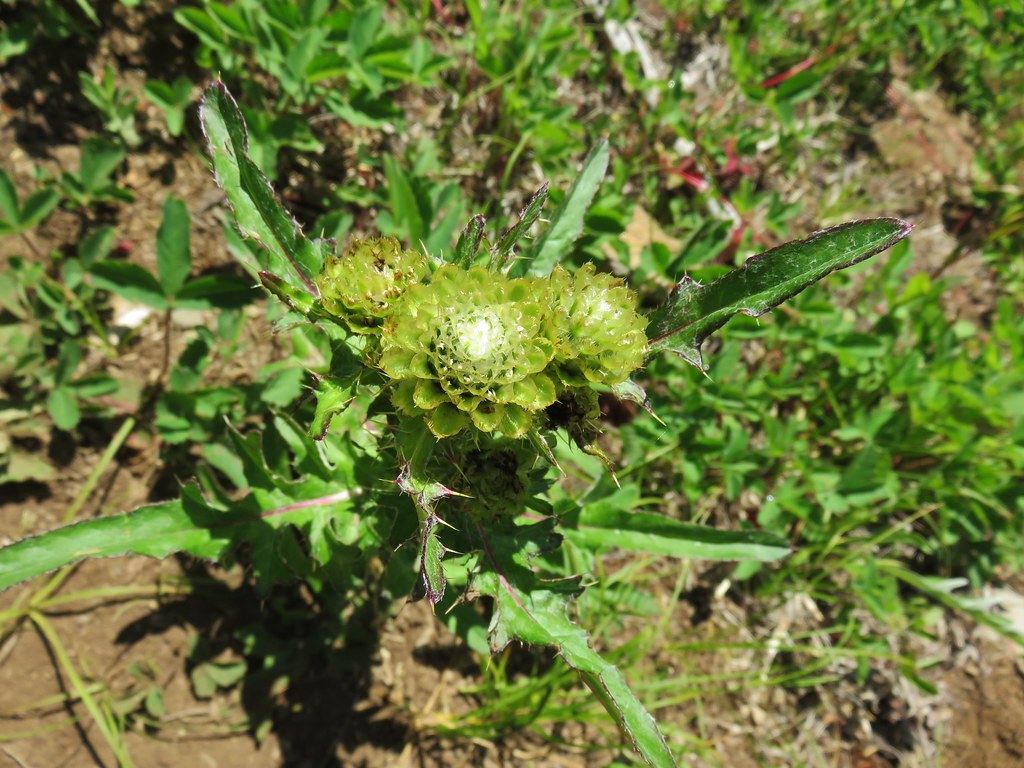
Categories
Hiking Oakridge Area Old Cascades Oregon Trip report

North Fork and Buffalo Rock – 05/09/2020

As we continue to deal with the ever changing situation presented by the COVID-19 pandemic we are looking for ways to hike responsibly. That means doing our best to follow social distancing guidelines and honoring any closures in place. The situation with closures has been especially confusing requiring a fair amount of digging to get a clear picture of just what is allowed and what isn’t. With these things in mind we have been looking for hikes that are open and lightly used to limit our interaction with other people.

After looking through our to-do hike list we decided that the best option for an acceptable outing at this point was a pair of hikes along the North Fork Middle Fork Willamette River. In regards to closures, the Willamatte National Forest (as of this writing) has closed all developed recreation sites. Reviewing the March 27, 2020 announcement on their website goes on to say that those sites include “campgrounds, day-use sites, trailheads with bathrooms, Sno-parks, snow shelters, fire lookouts, hot springs, boat launch facilities, and OHV trailhead facilities.” Trails themselves are not on the list and remain open assuming proper social distancing and group size/make up is within acceptable limits.

Our first stop was to hike Segment 1 of the North Fork Trail. Since trailheads with bathrooms are part of the temporary closure the traditional trailhead for this hike was out. Our plan was to park at a small pullout along Forest Road 1910 three miles NE of Westfir along Forest Road 19 (Aufderheide Scenic Byway). A decommissioned road just after crossing the river provided the perfect spot to park and happened to be right where the North Fork Trail crossed FR 1910.
North Fork Trail at FR 1910

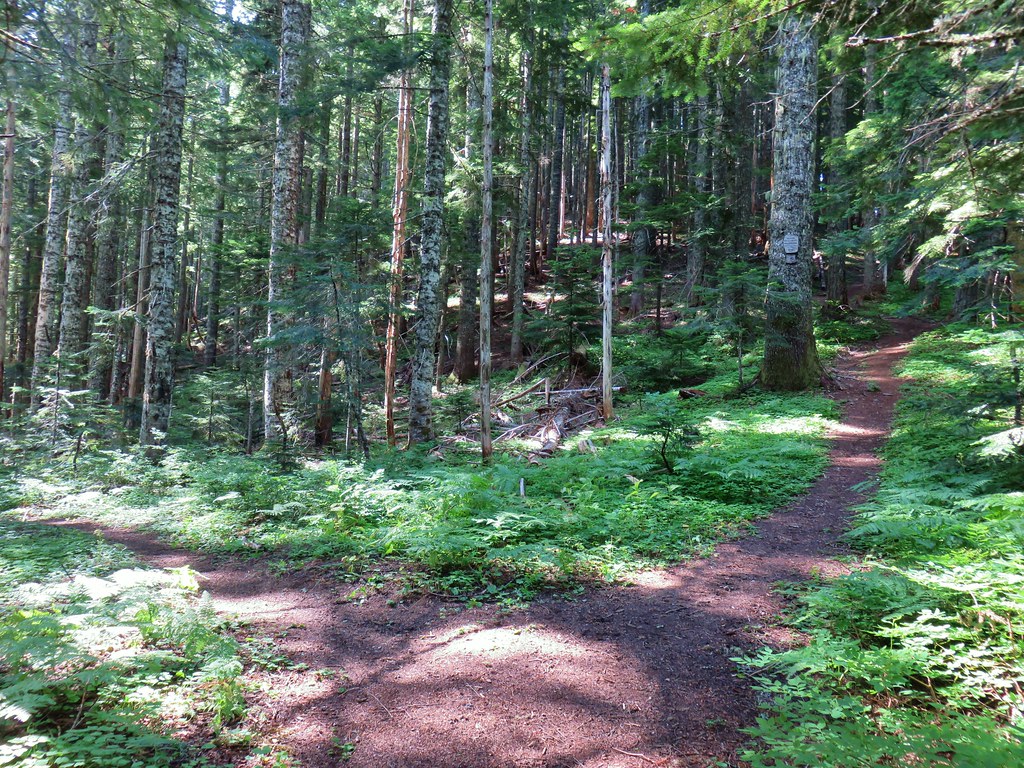
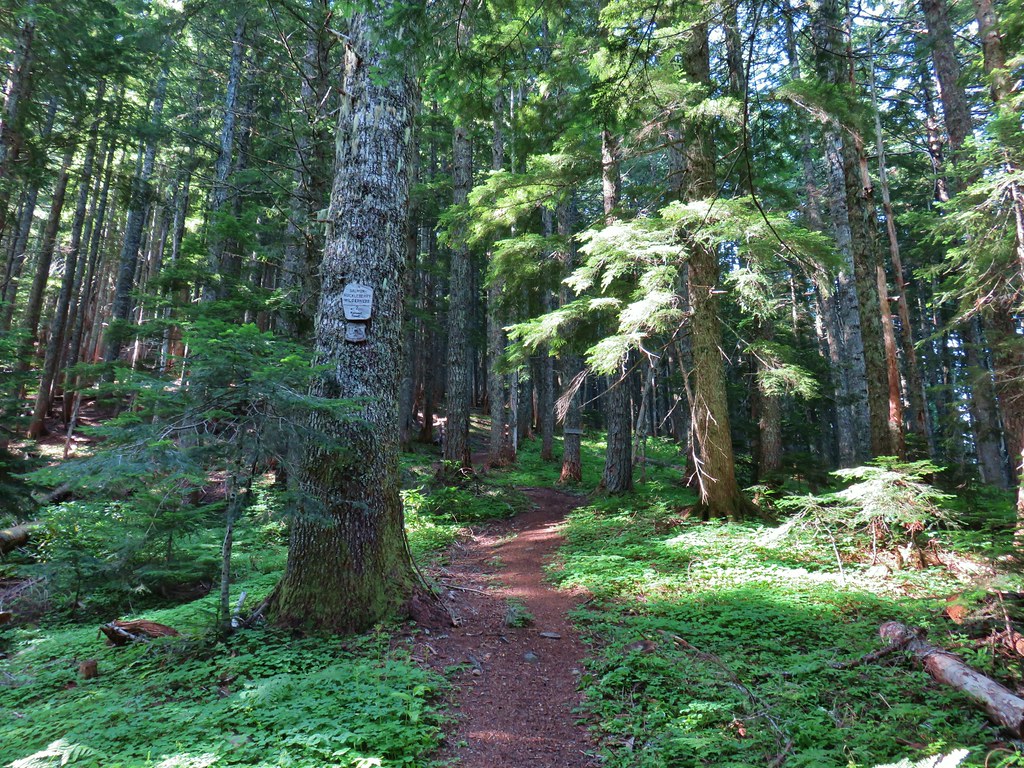
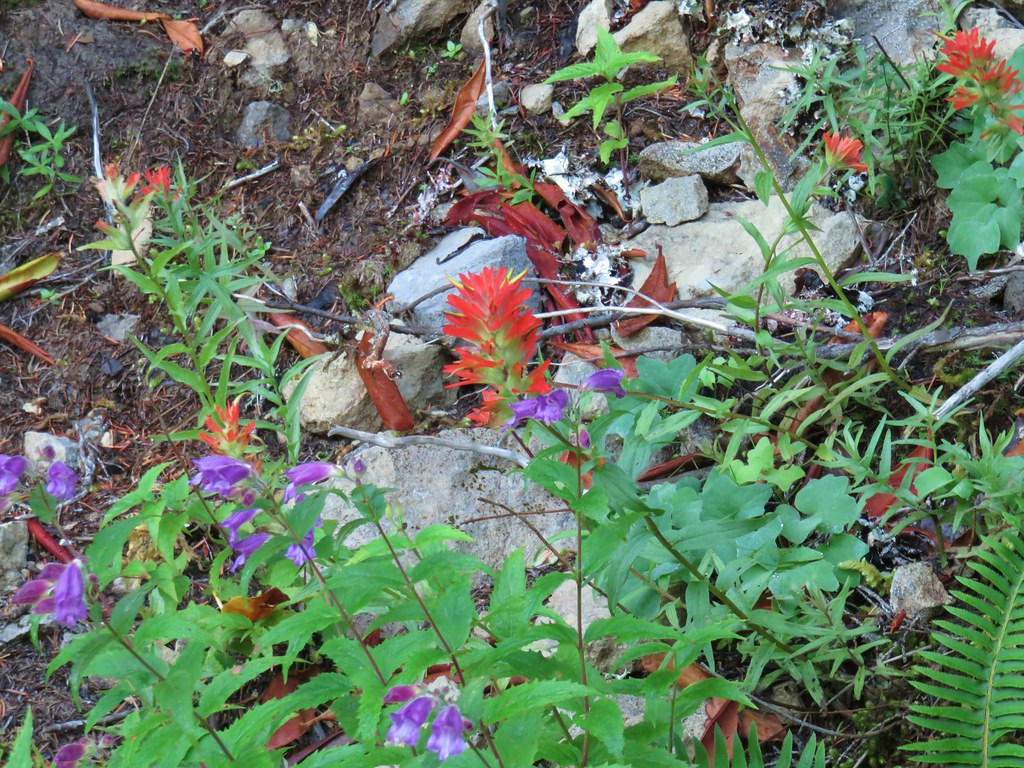
We headed SW into the forest where a number of different wildflowers were currently blooming.
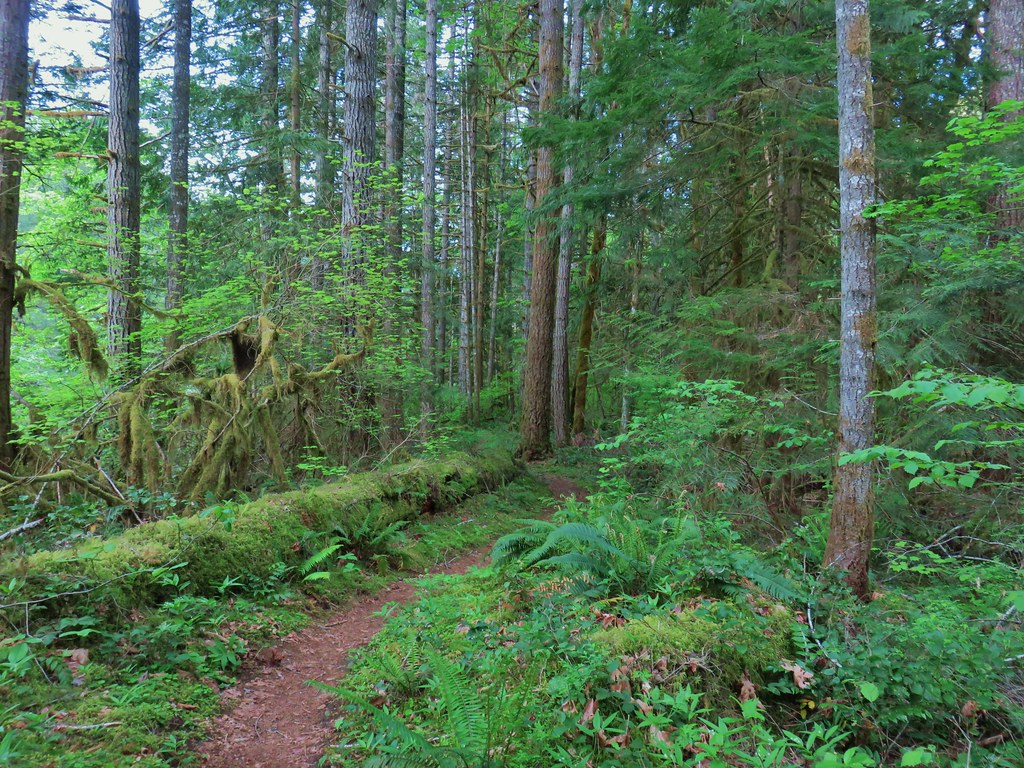
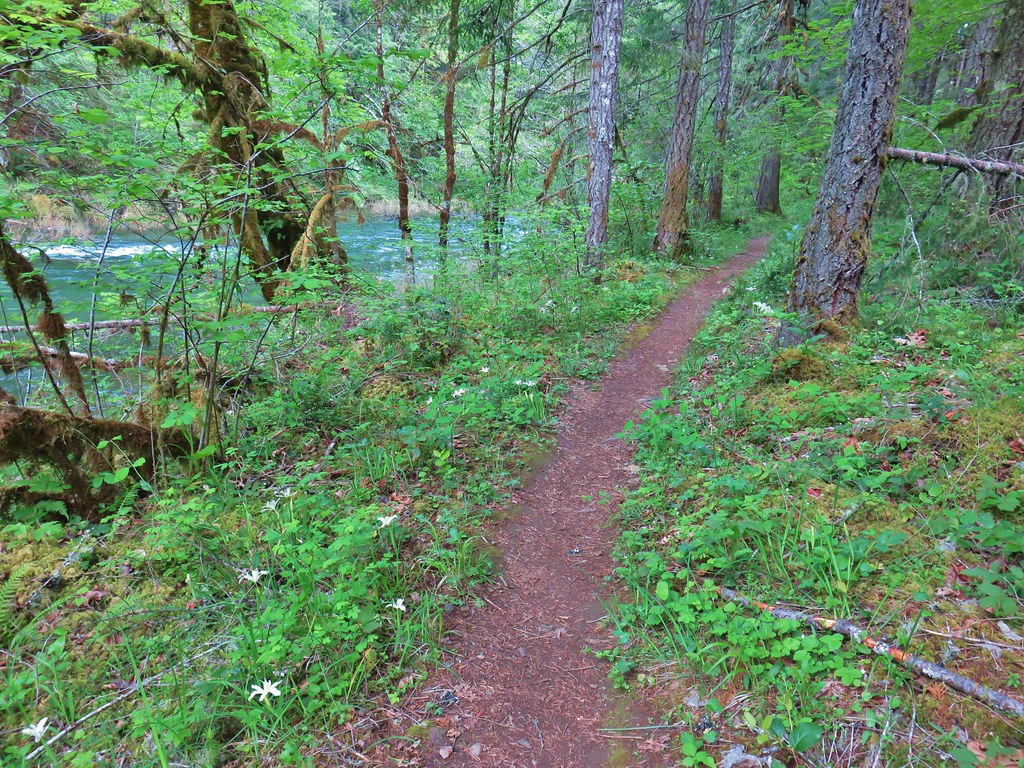
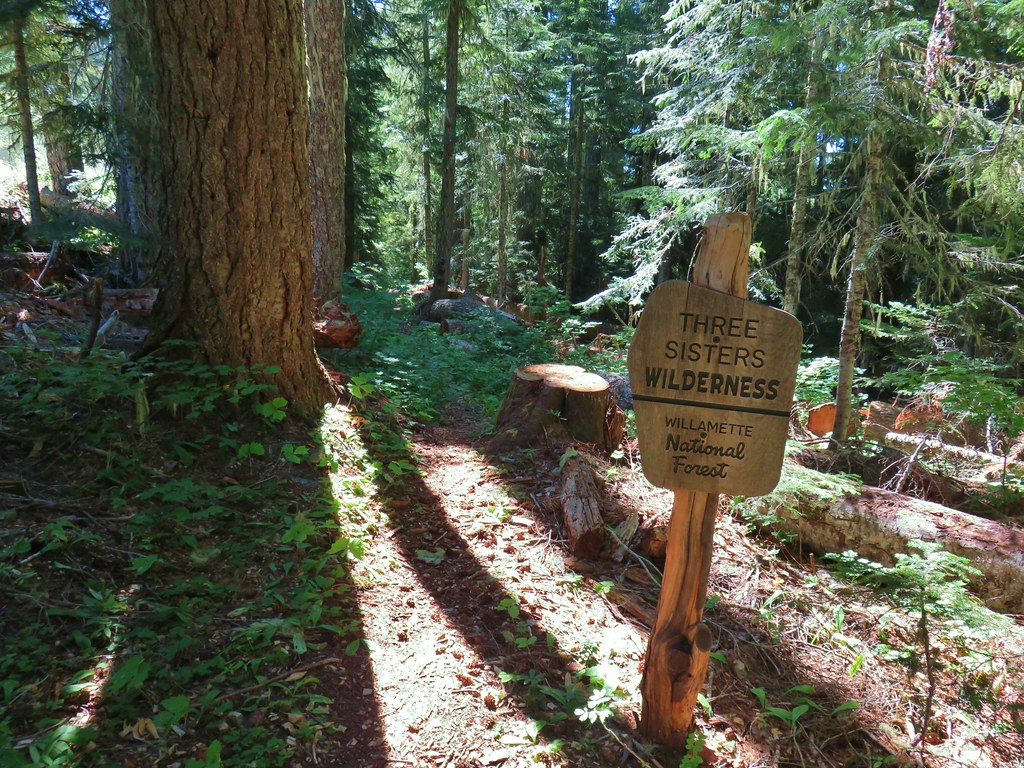
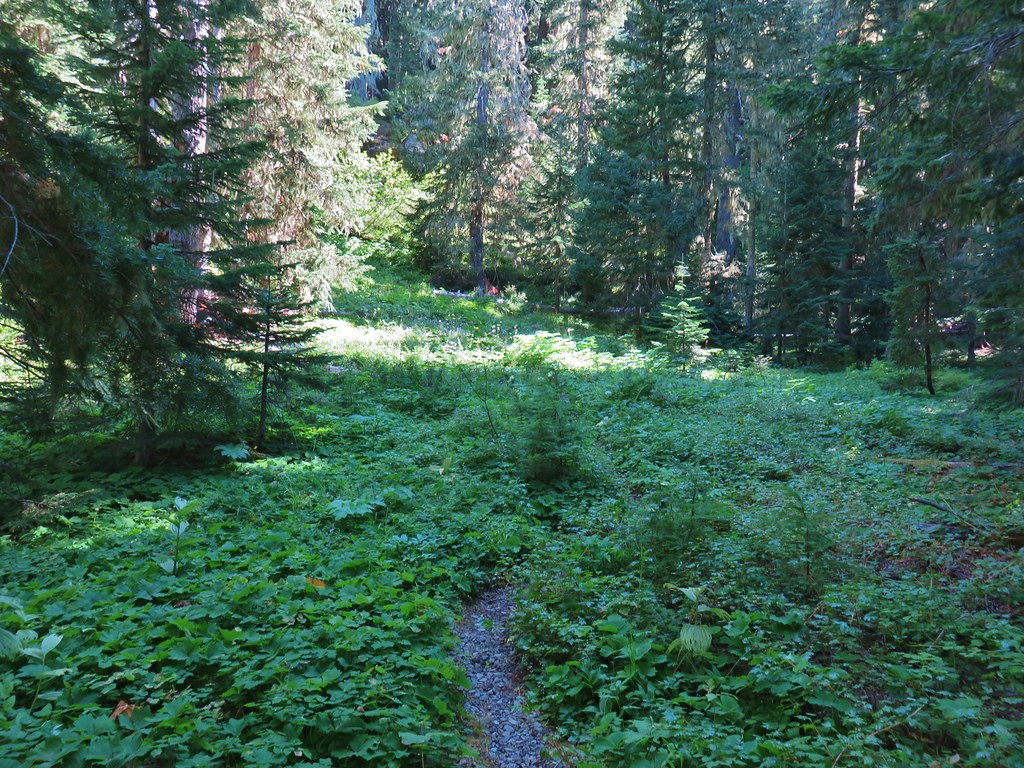
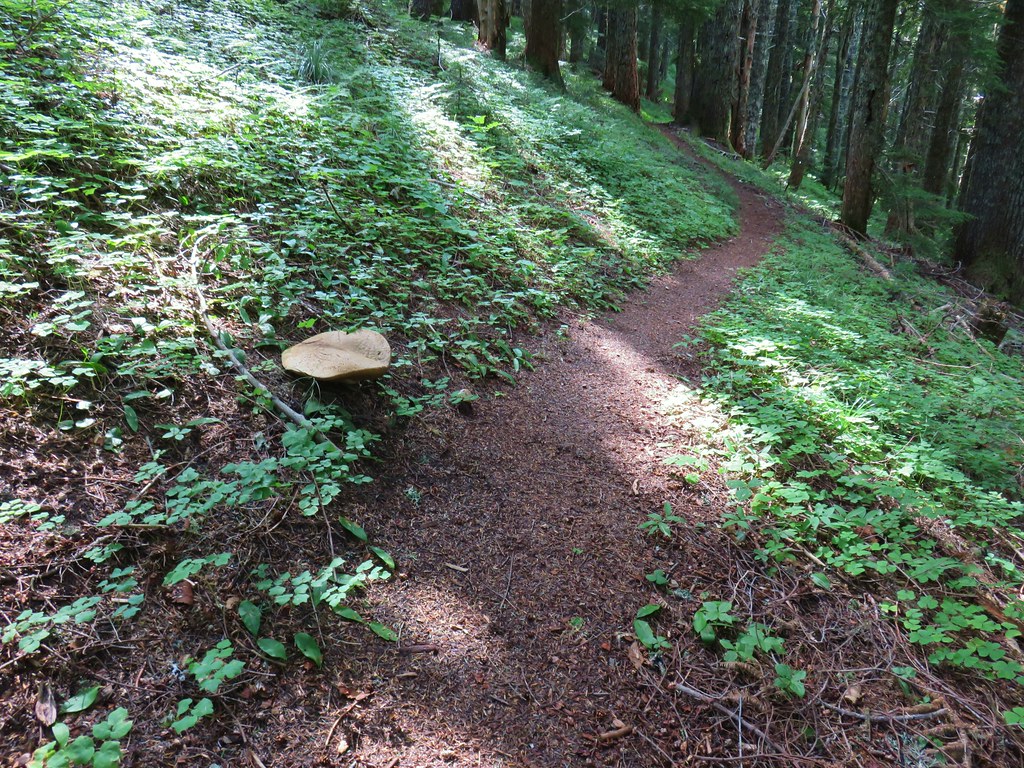
North Fork Trail

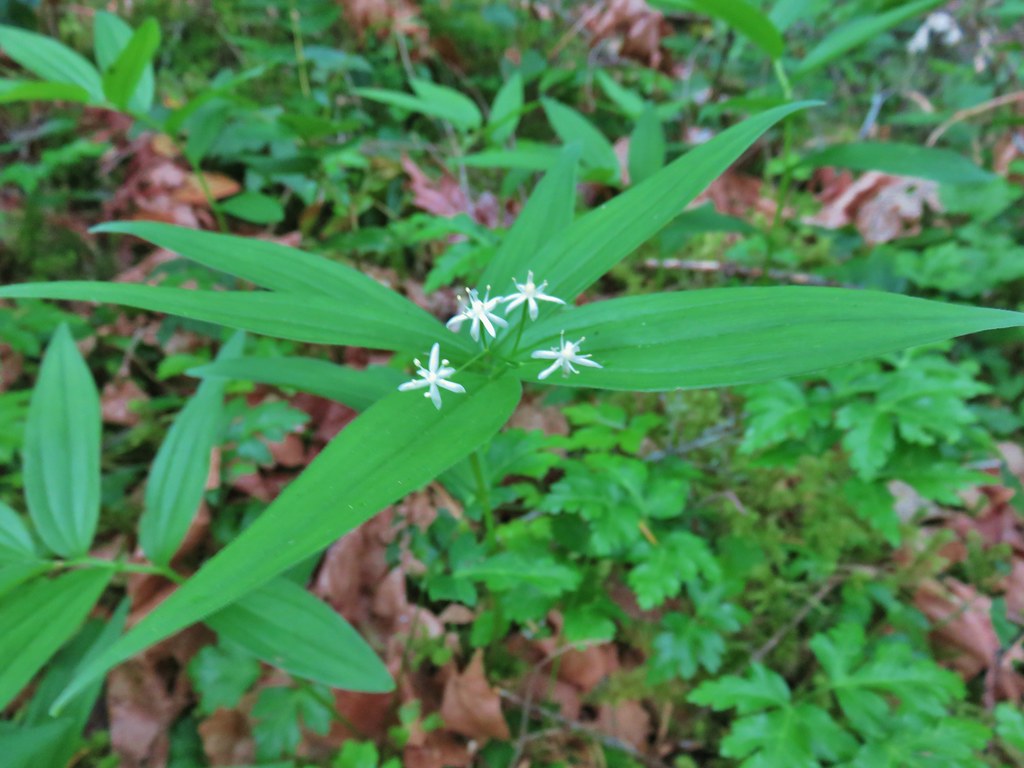
Star-flowered solomonsealStar-flowered solomonseal

AnemoneAnemone

TrilliumTrillium

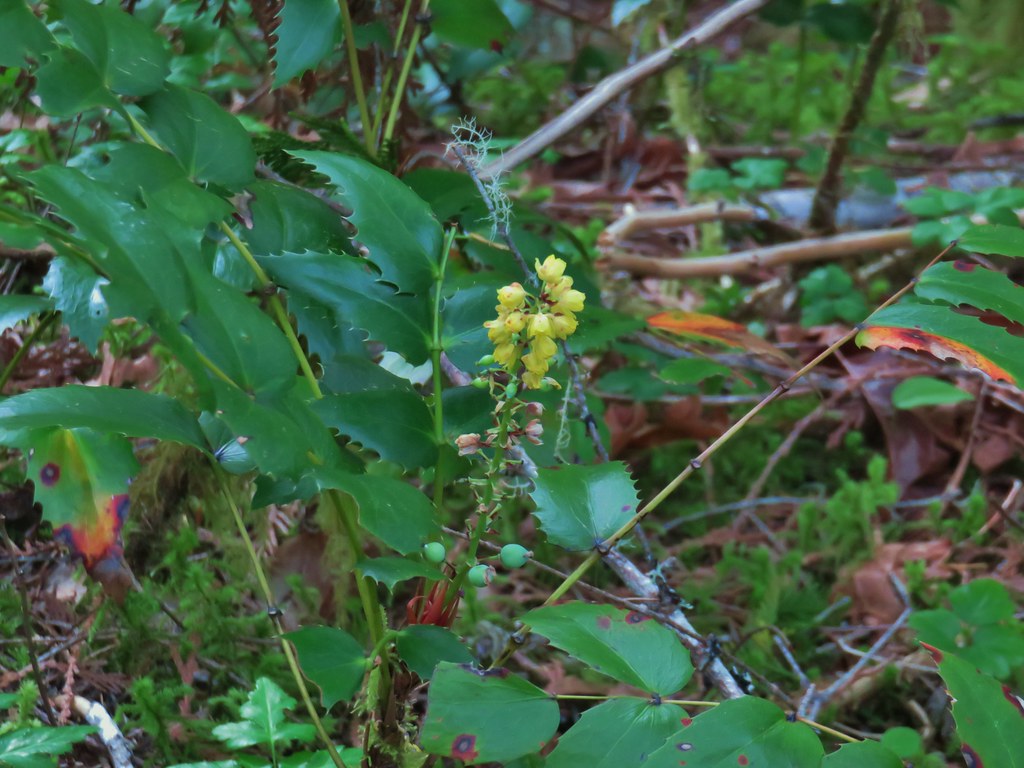
Oregon grapeOregon grape

StarflowerStarflower

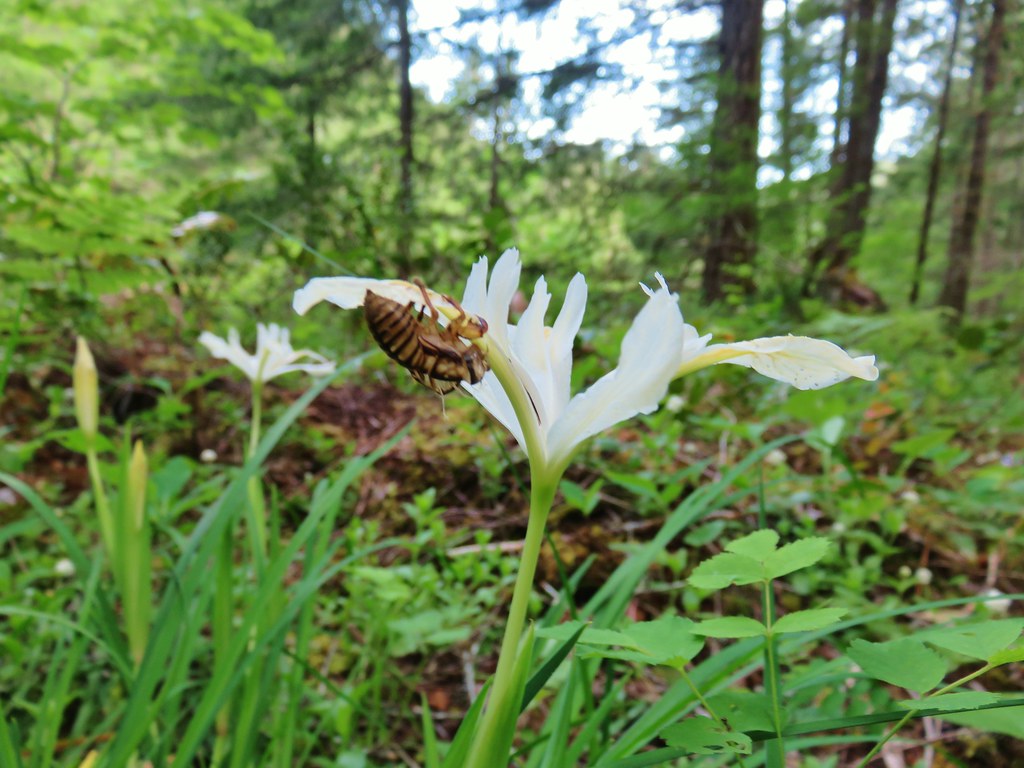
Yellowleaf irisYellowleaf iris

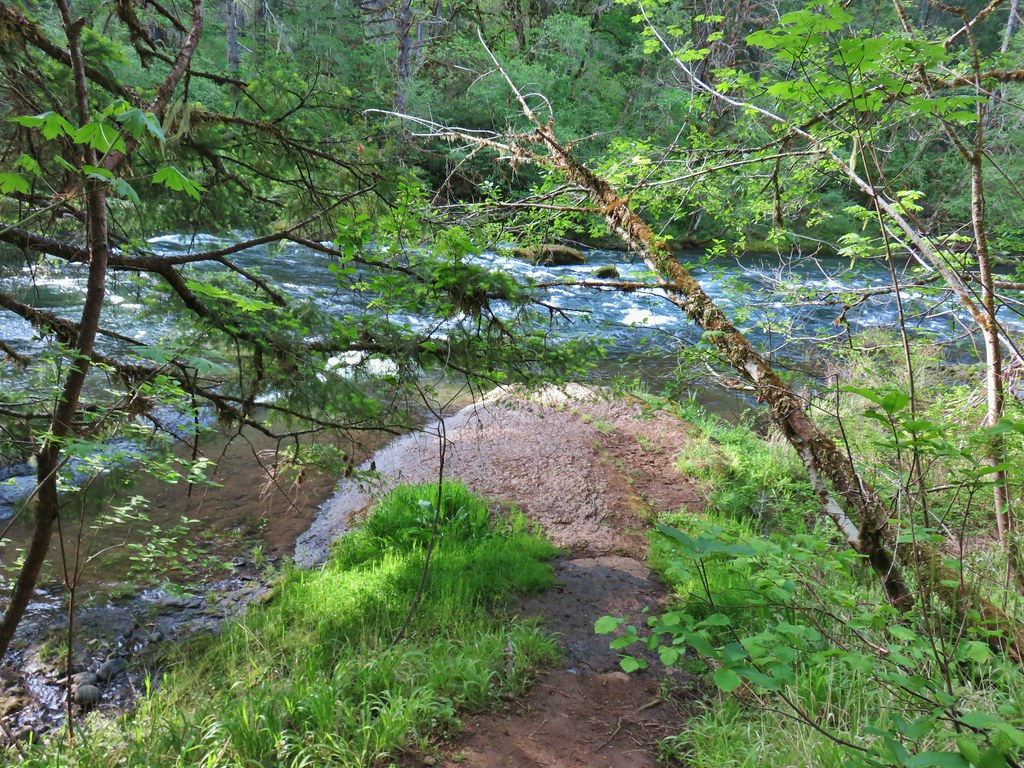
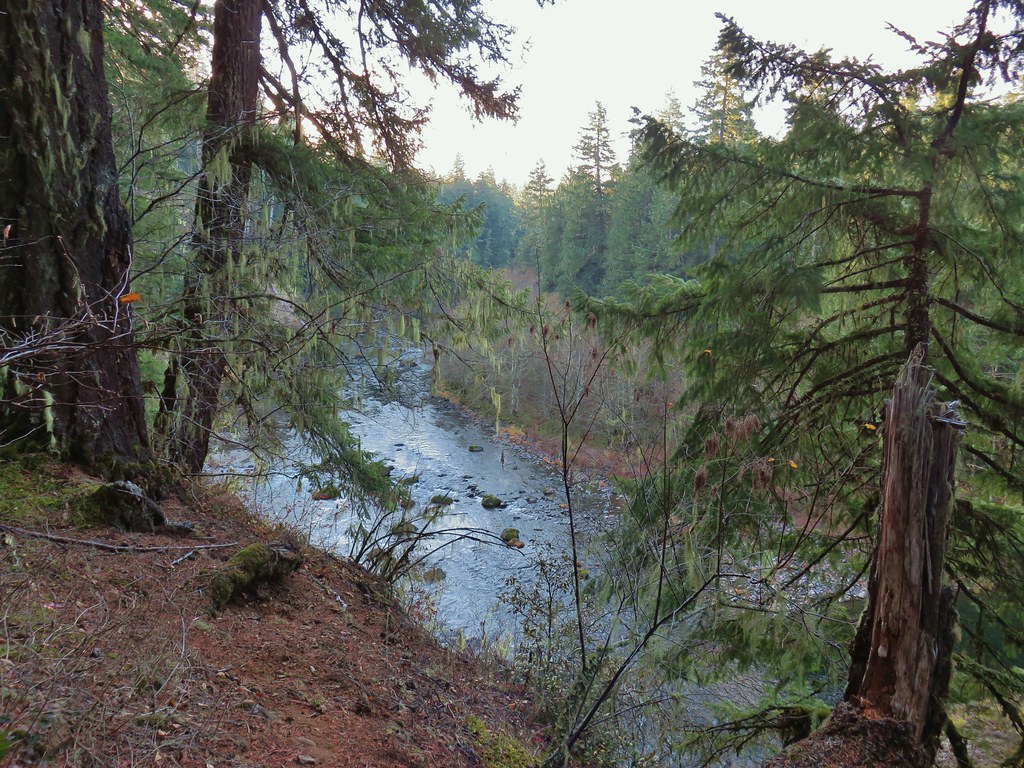
After .2 miles we followed a path down to the riverbank.
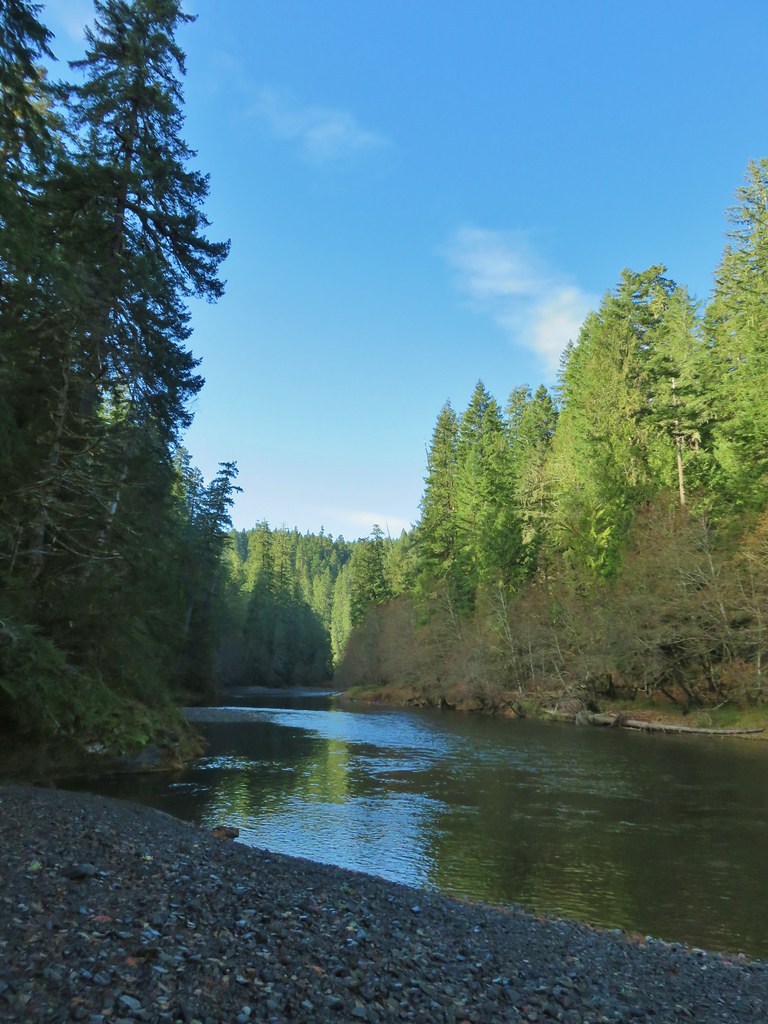
North Fork Willamette RiverLooking back at FR 1910’s bridge over the River.

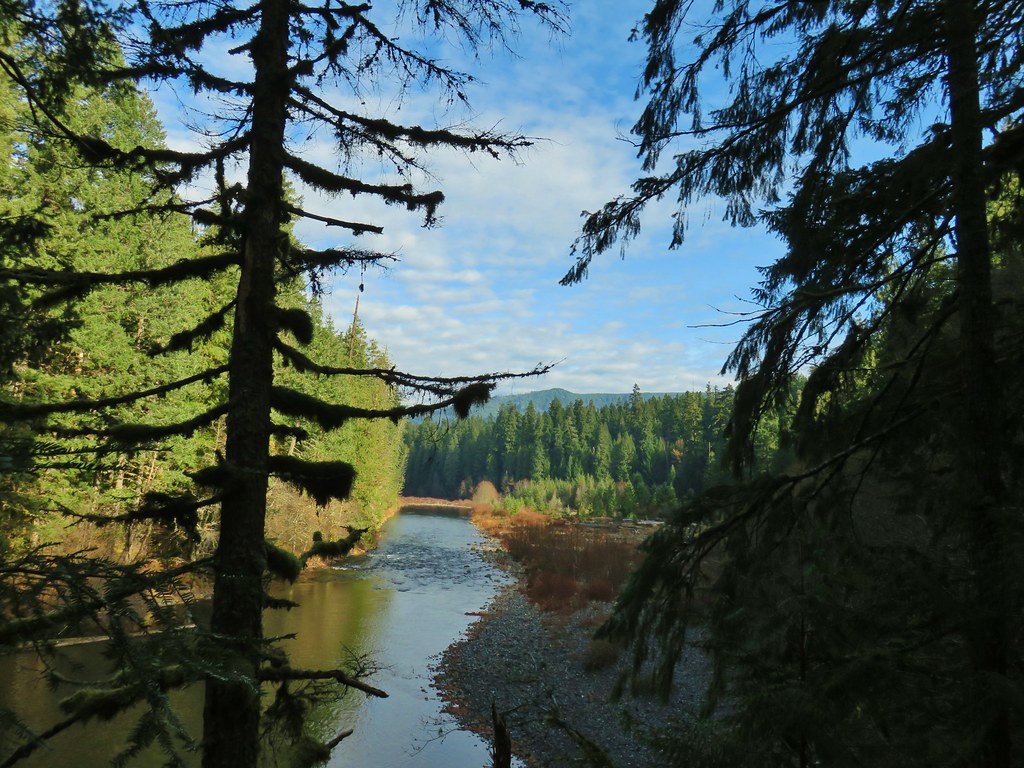
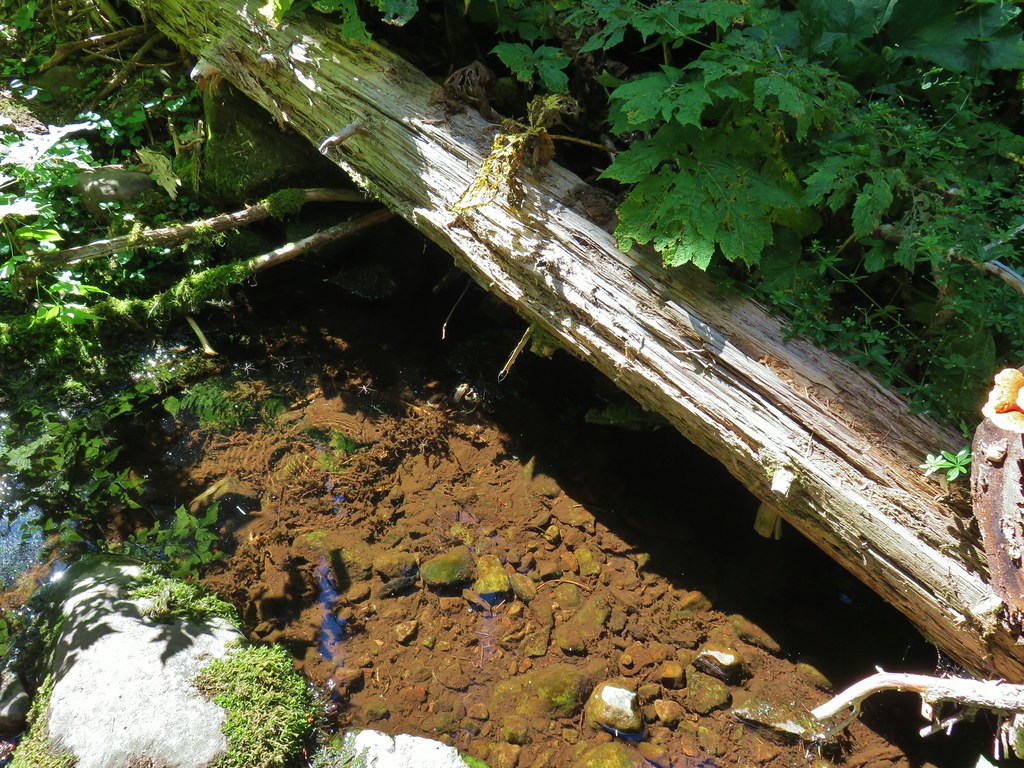
North Fork Willamette River

A few steps after returning to the trail we left the trail again and crossed the decommissioned FR 685 near Short Creek to check out a small slide.
Short Creek

We followed the relatively level trail for another 3 miles turning around at an old road about a tenth of a mile from the parking area of the closed trailhead. Like most river trails the North Fork trail spent some time along the river, above the river, and others back in the forest. There were a few changes to the scenery along the way and plenty of flowers (along with a fair amount of poison oak). Three miles from FR 1910 we passed the concrete remains of a 1930s mill pond.
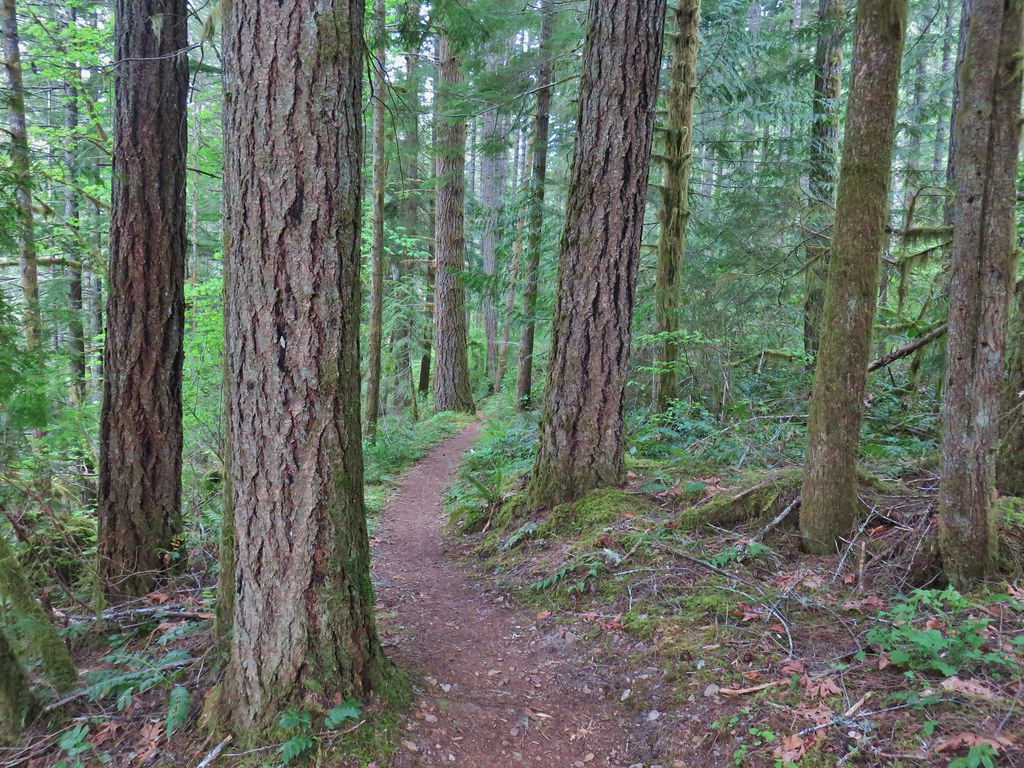
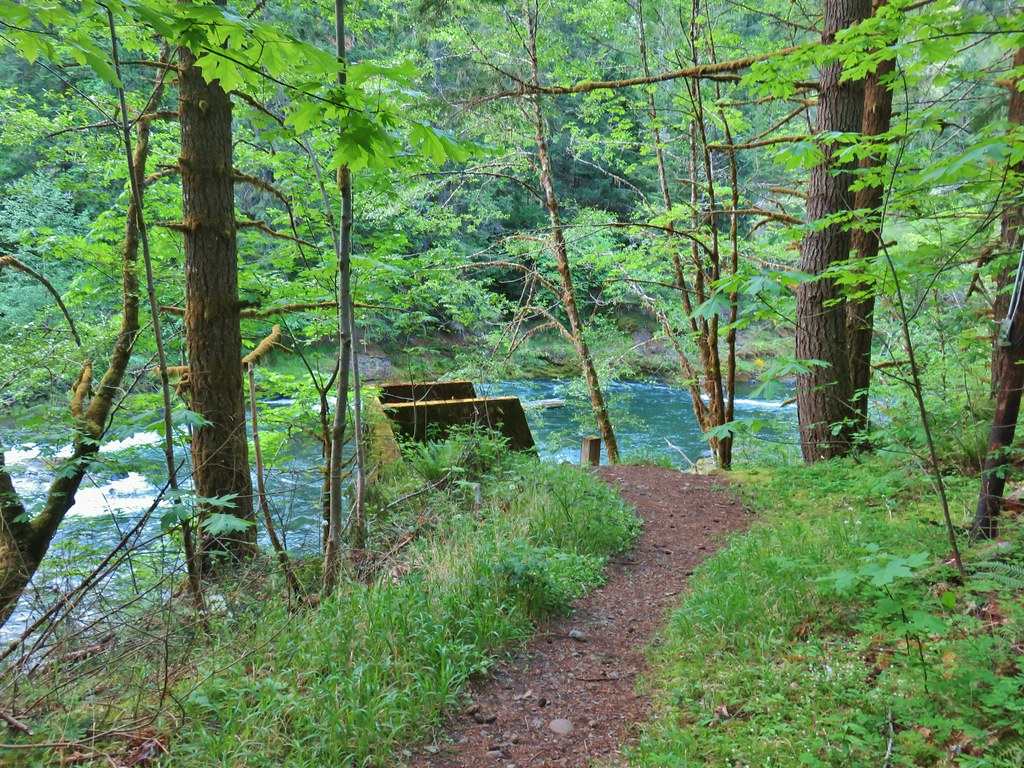
North Fork Trail

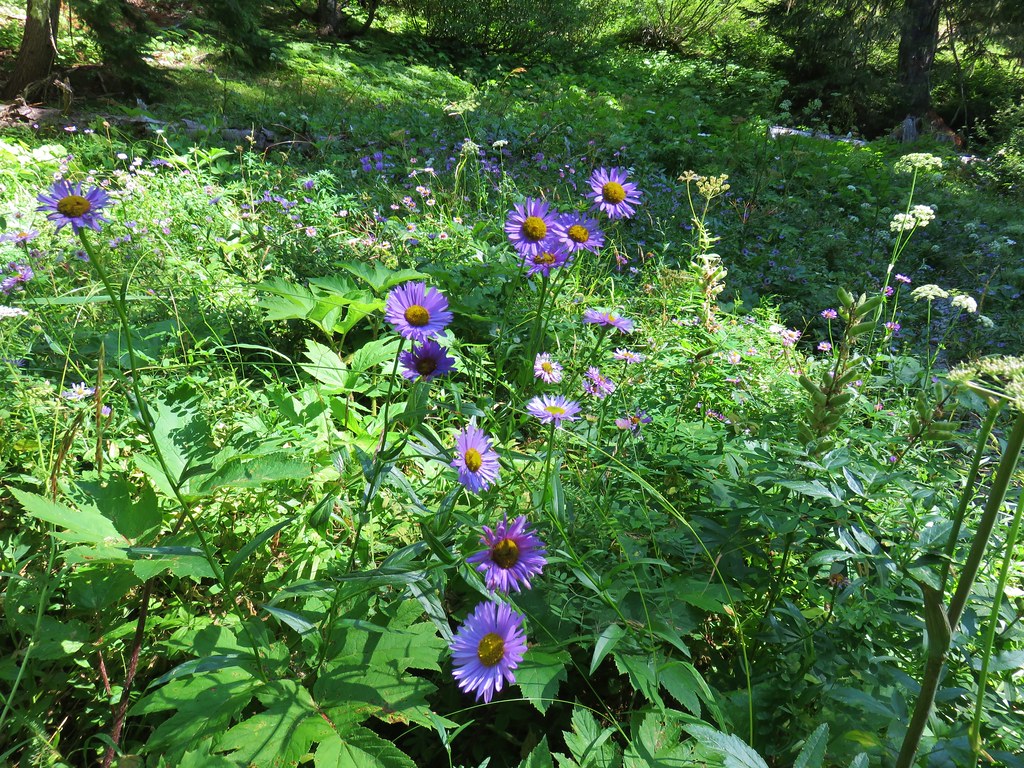
ValerianValerian

Spotted coralrootSpotted coralroot

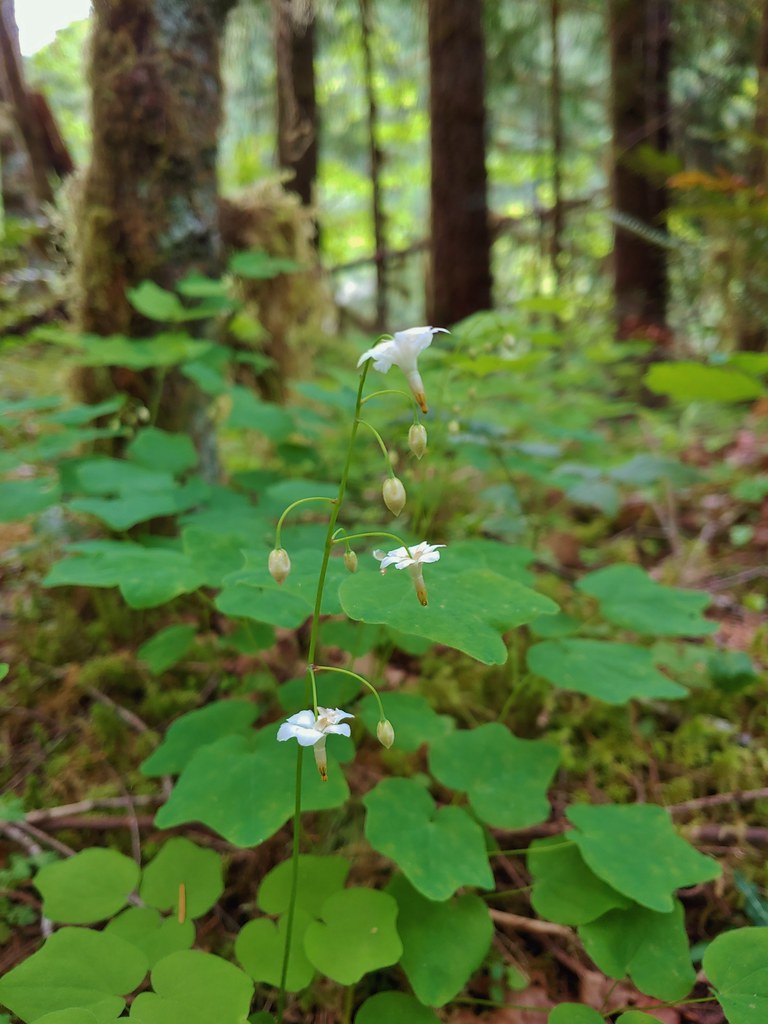
Inside-out flowerInside-out flower

North Fork Trail

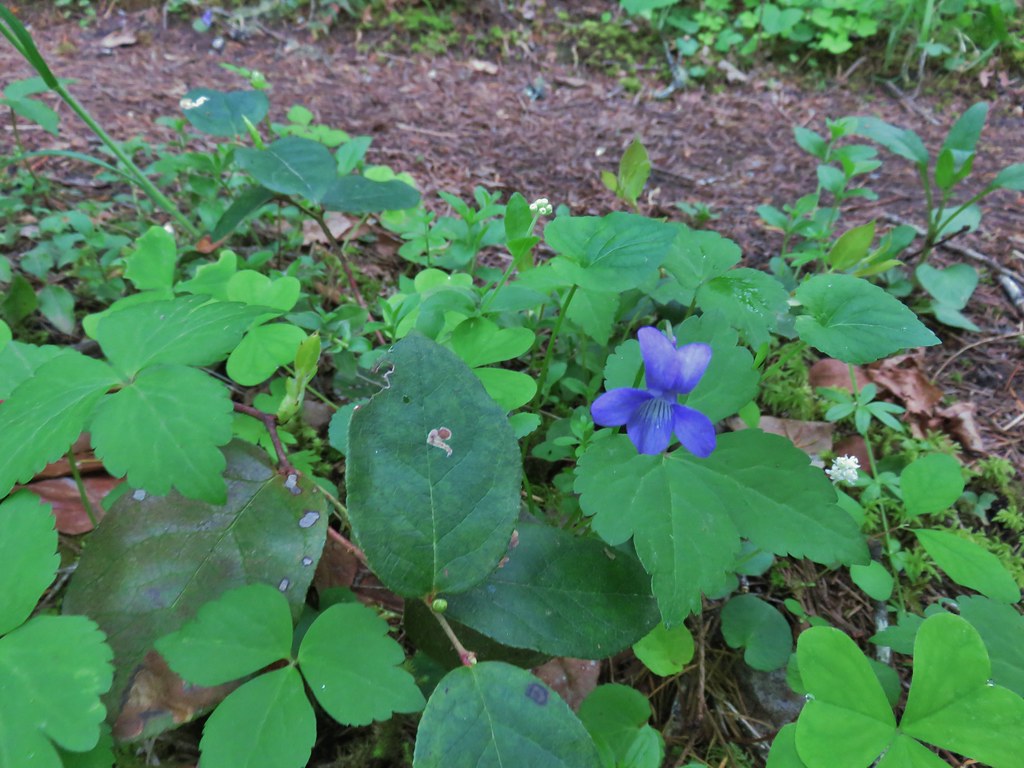
Hookedspur violetHookedspur violet

Fairy slipperFairy slipper

Dogwood blossomDogwood blossom

Buck Brush - redstem ceanothusBuck brush

Yellow leaf iris along the North Fork Trail

North Fork Willamette River

Shed skin from a Cicada on a yellow leaf irisShed cicada skin

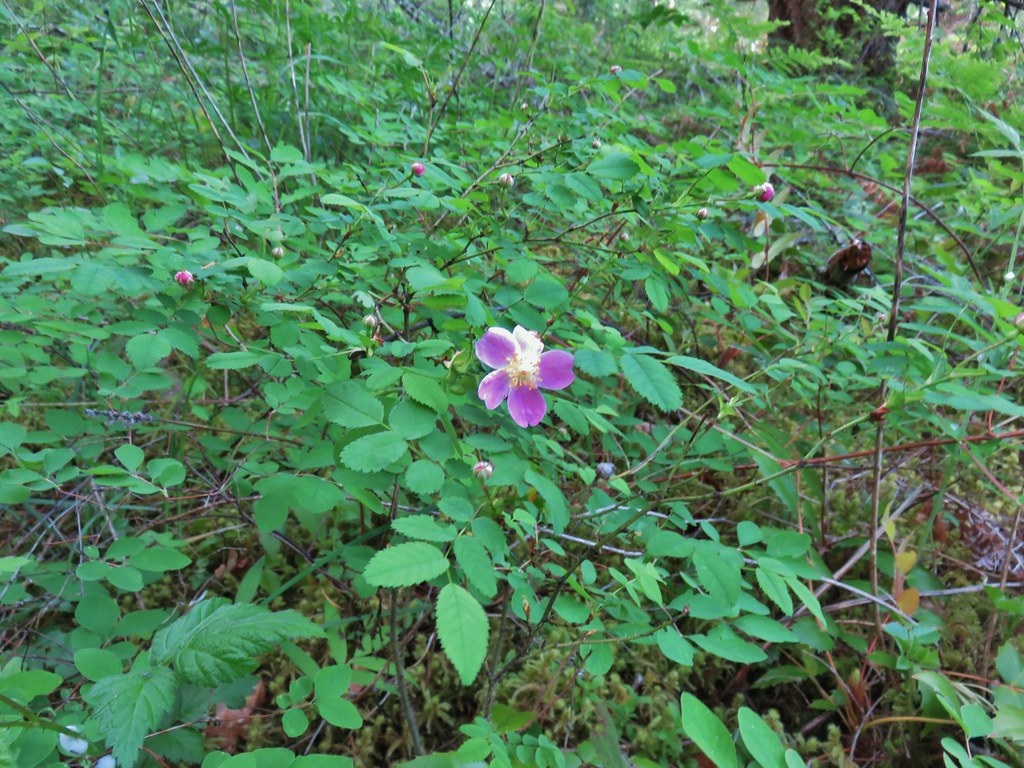
Wood roseWood rose

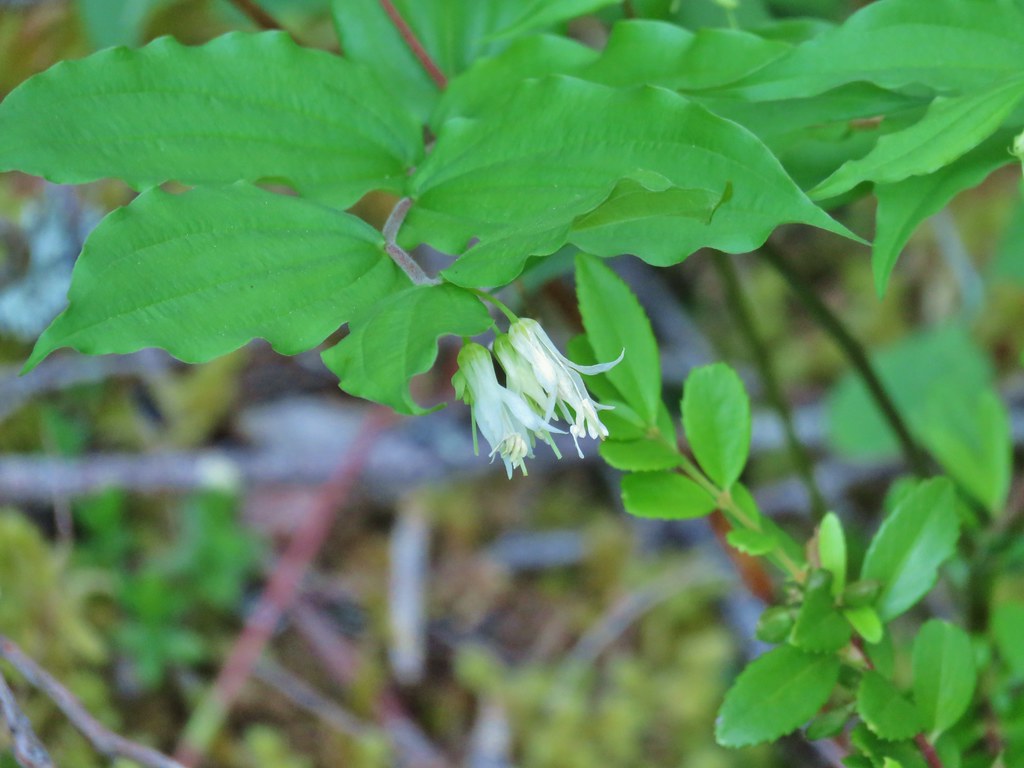
FairybellsFairy bells

Showy phloxNorthern phlox

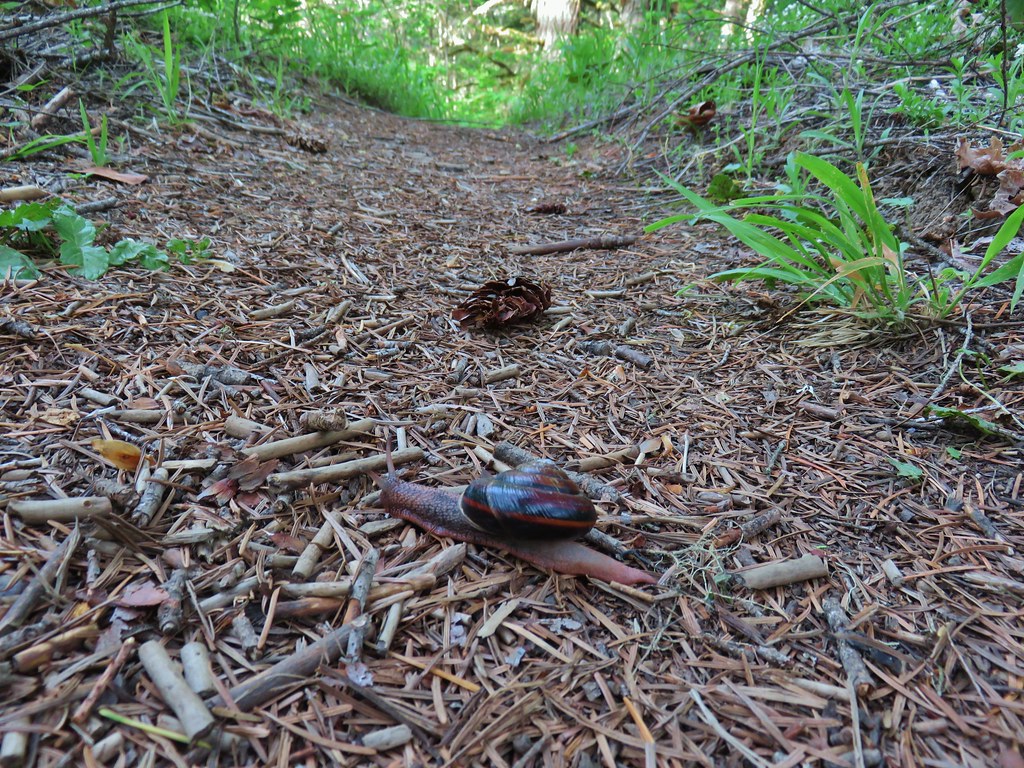
Snail on the North Fork TrailTrail snail

North Fork Trail

HoneysuckleHoneysuckle

ColumbineColumbine

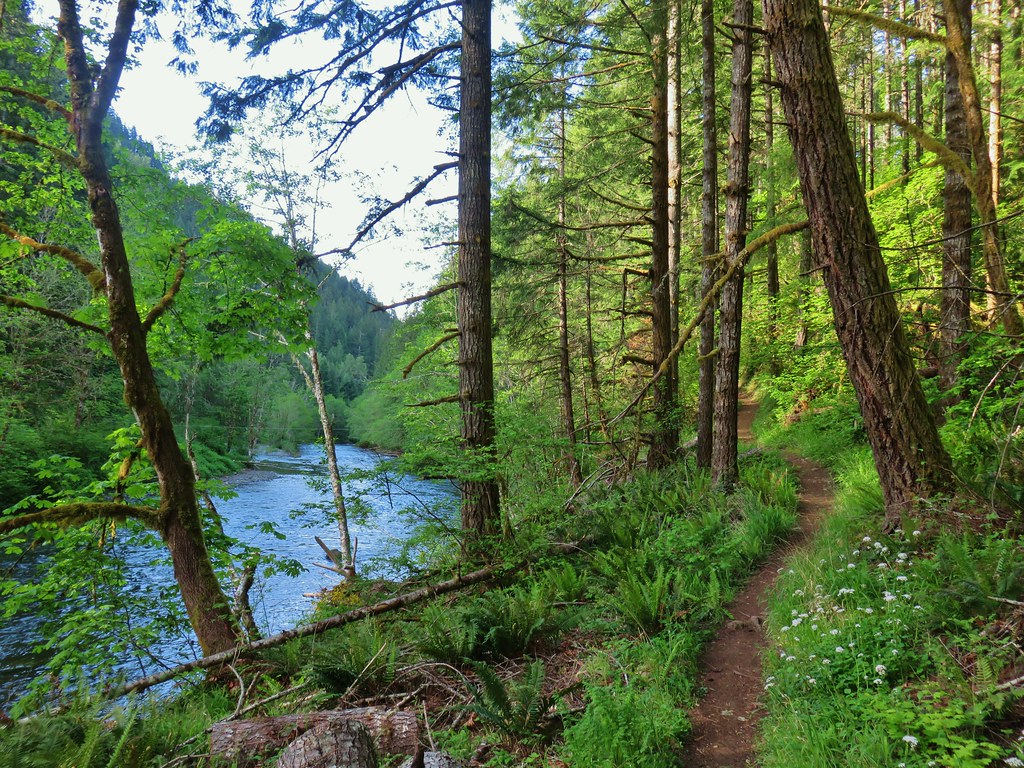
North Fork Trail along the North Fork Willamette River

Lupine along the North Fork TrailLupine

Youth-on-ageYouth-on-age

North Fork Willamette RiverRock ledge along the river.

North Fork Willamette RiverView from the rock ledge.

Monkey flowerMonkey flower

CamasCamas

North Fork Trail along the North Fork Willamette River

Dam site along the North Fork TrailConcrete tower

North Fork Trail

Pale flaxPale flax

North Fork TrailheadRoadbed near the trailhead.

We returned the way we’d come keeping our eyes open for anything we missed on our first pass, and of course there were a couple of flowers that we missed.
Vanilla leafVanilla leaf

Wild gingerWild ginger

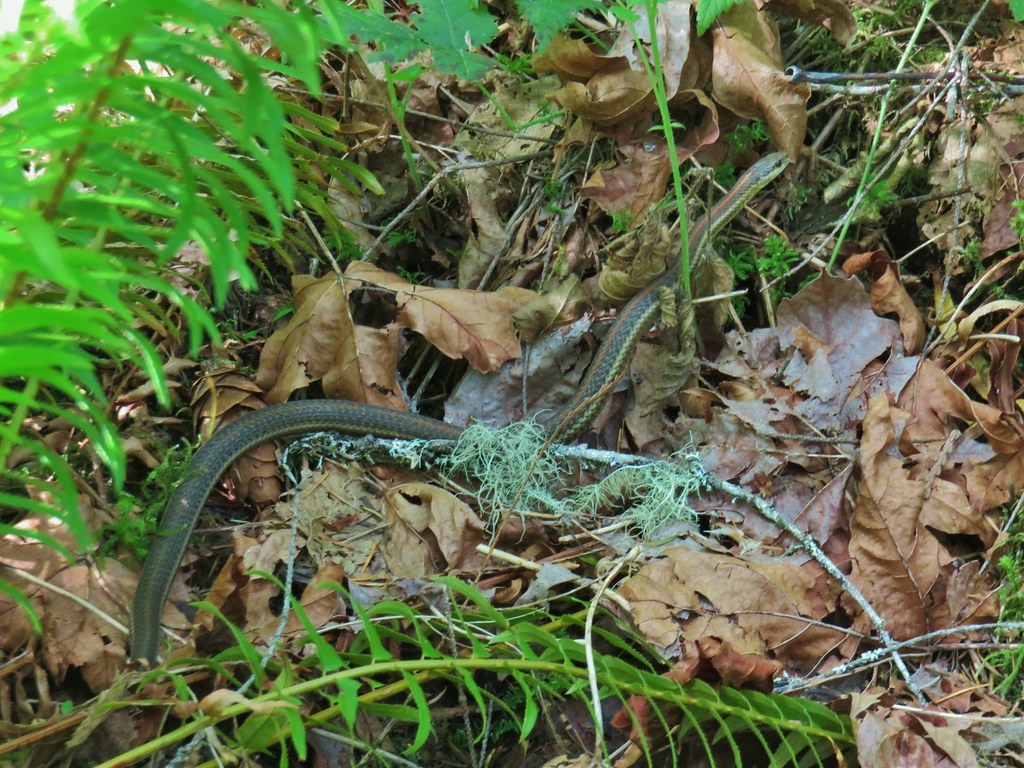
A garter snake provided a bit of excitment when Heather noticed it coming towards her onto the trail. It eventually slithered to a fern on the other side but not before getting her to jump.
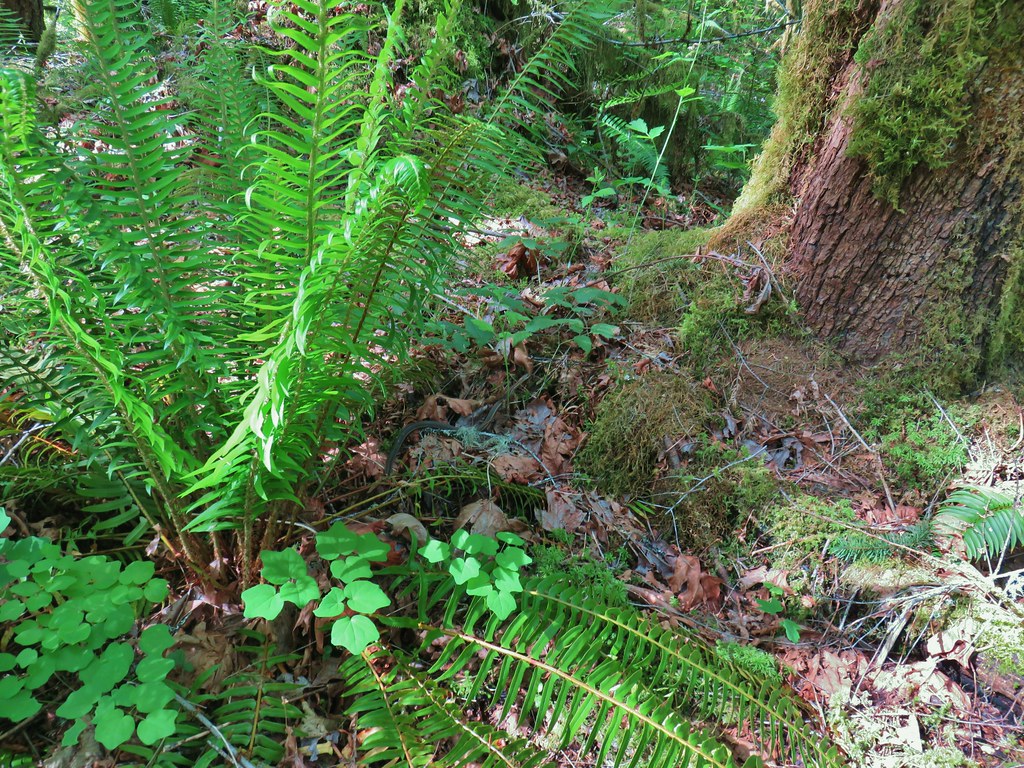
Garter snake

Garter snake

We wound up only encountering 4 people along the trail, a lone hiker and a group of three mountain bikers so this first stop had worked out well from a socially distancing standpoint.

After making it back to our car we returned to FR 19 and turned left (NE) for 18.1 miles to Forest Road 1939 (1.1 miles beyond Kiahania Campground). We turned left onto FR 1939 for 1.2 miles to a hiker symbol on the left marking the start of another segment of the North Fork Trail.
North Fork Trailhead at FR 1939

As best as I can tell from research this 4.5 mile segment of the North Fork Trail appears to have been completed in 2011 or possibly 2010. There is very little information online about it even though it has appeared as a featured hike (along with Segment 1) in William L. Sullivan’s “100 Hikes in the Central Oregon Cascades” books since his 4th edition was published in 2012. I was unable to find any reference to it all on the Willamette National Forest’s website despite the Forest Service hoping to one day connect all the segements of the North Fork Trail from Westfir to Waldo Lake. In any event there is no parking area for this trailhead and there is just enough room for a couple of cars to park off the road on the shoulder nearby.

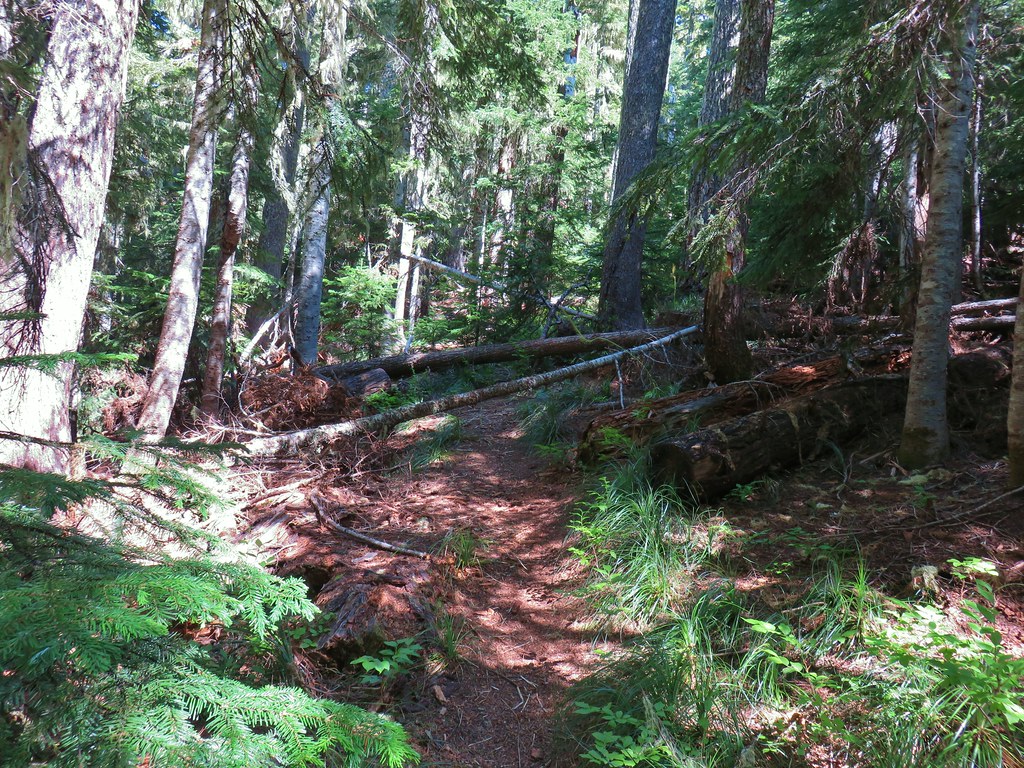
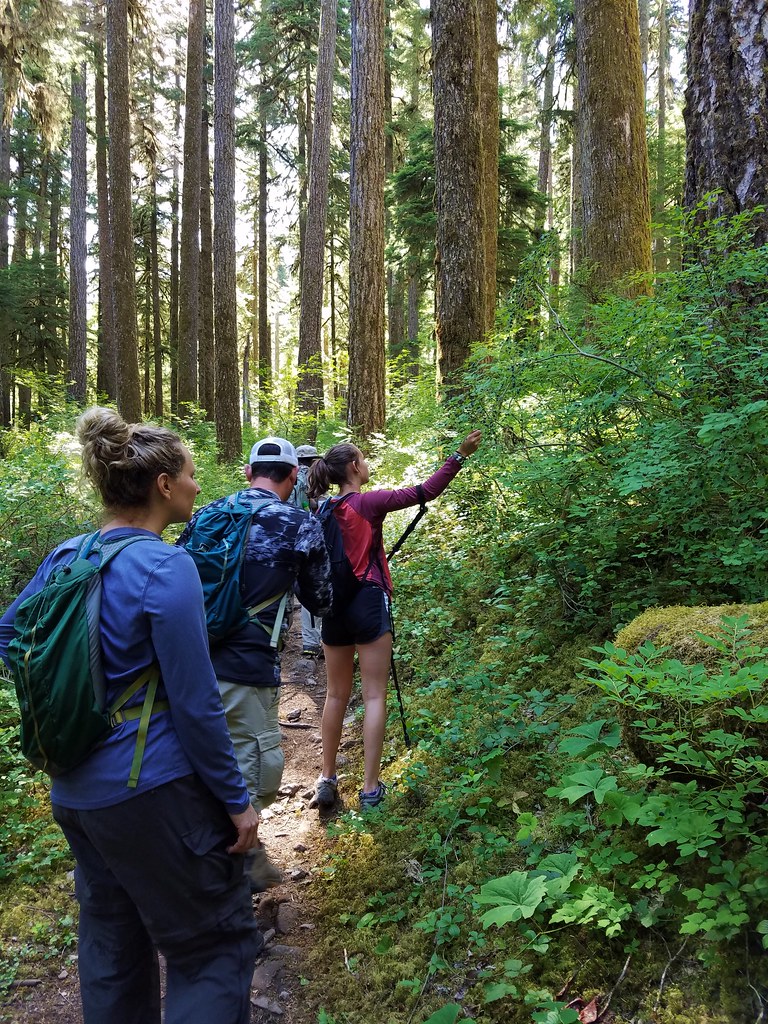
From the outset it was obvious that this was a much lighter traveled segment than the Segment 1 as the tread was narrower and there was some large trees across the trail.
North Fork Trail

North Fork Trail

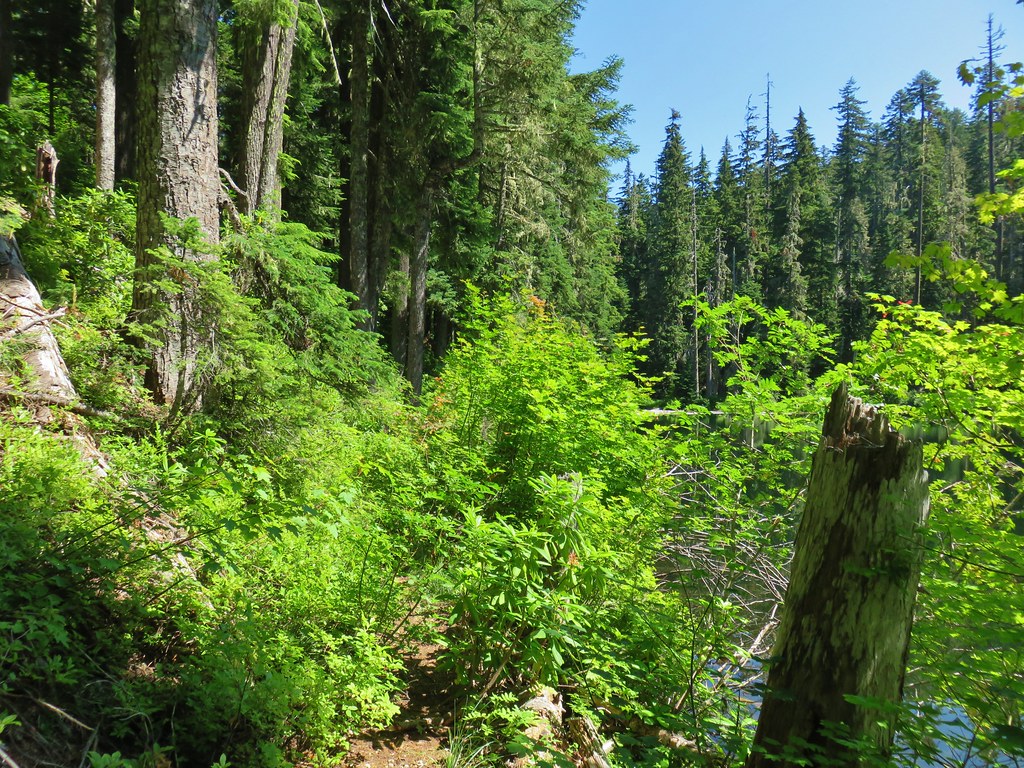
There were some similarities though as we saw many wildflowers (some the same as during our earlier stop and some new for the day) and this trail also provided a few access points to the river.
Trillium

Candy flowerCandy flower growing out of a mossy tree trunk.

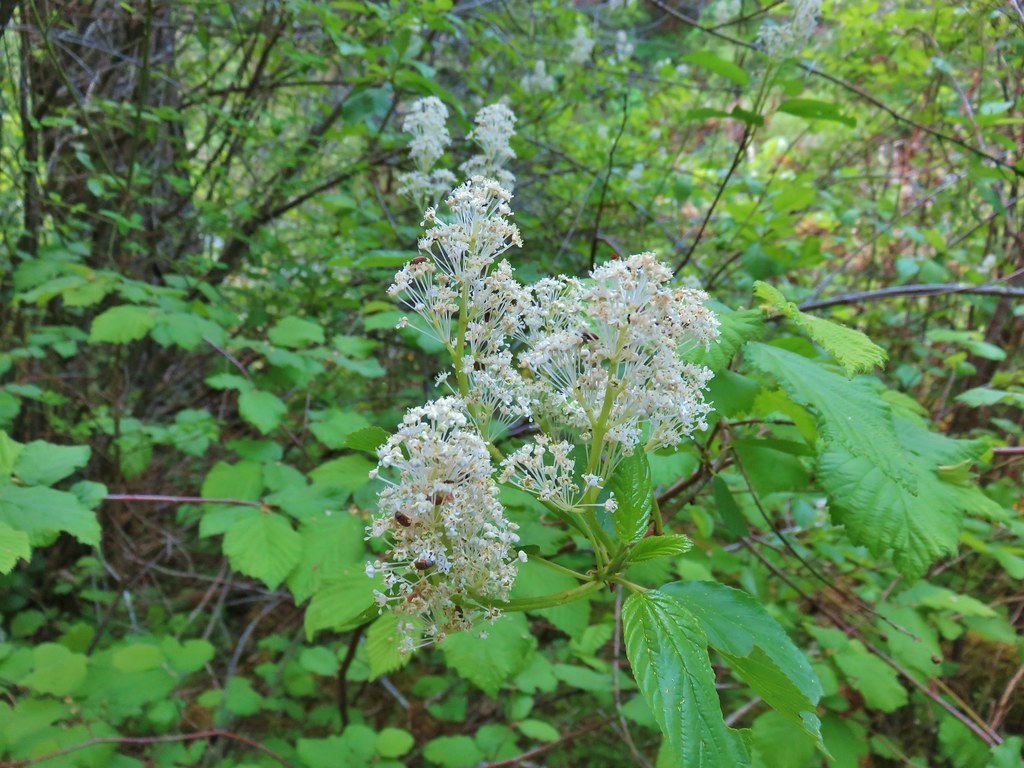
Western meadowrueWestern meadowrue

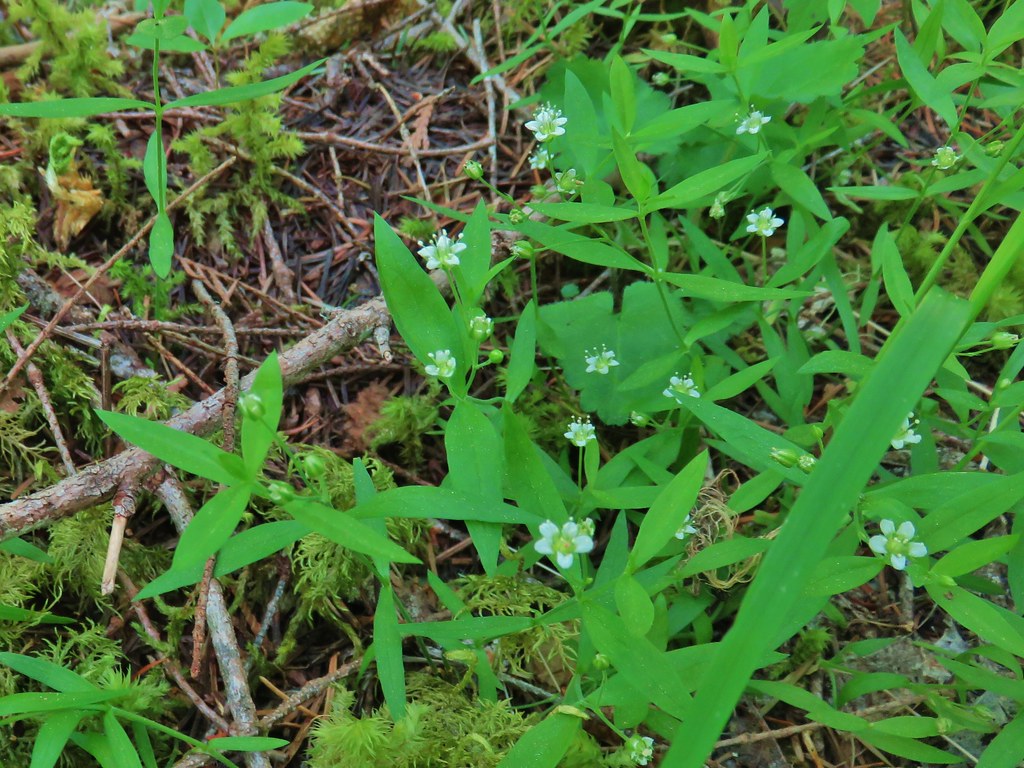
Largeleaf sandwortLargeleaf sandwort

North Fork Willamette River

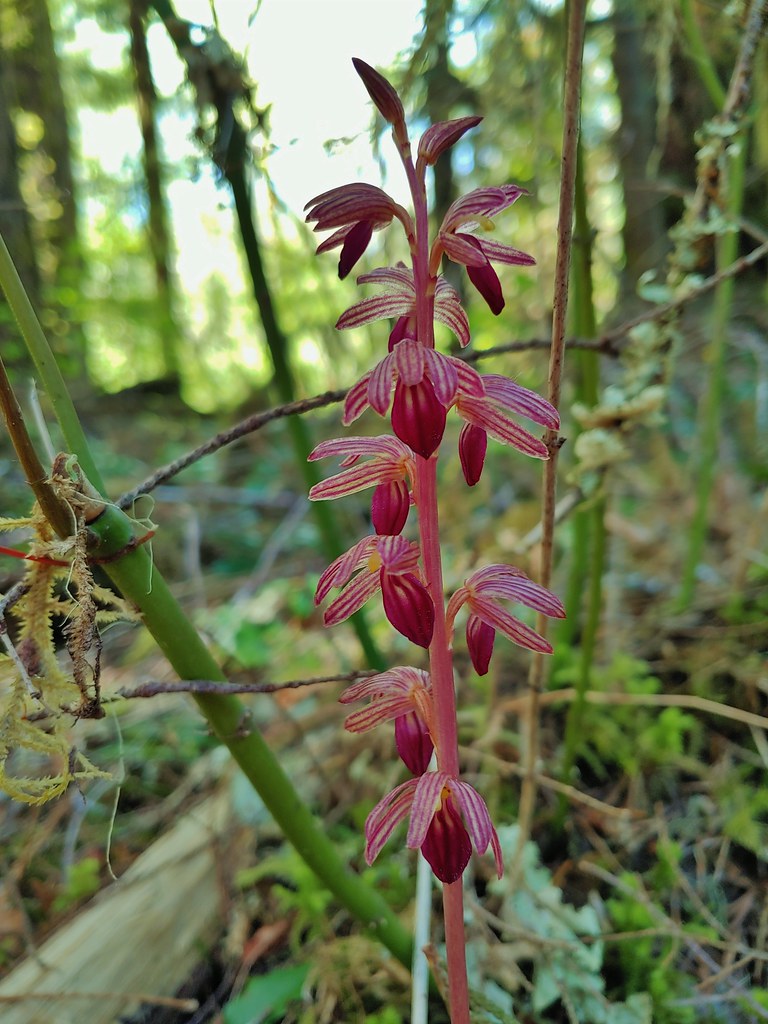
Striped coralrootStriped coralroot

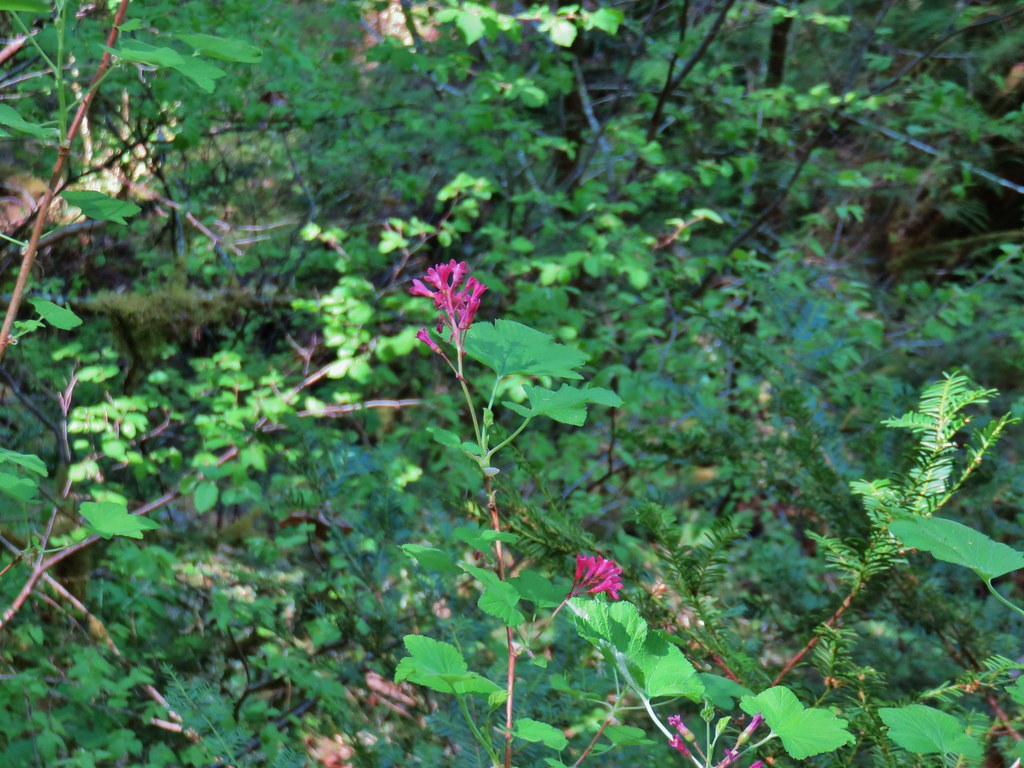
Red flowering currantRed flowering currant

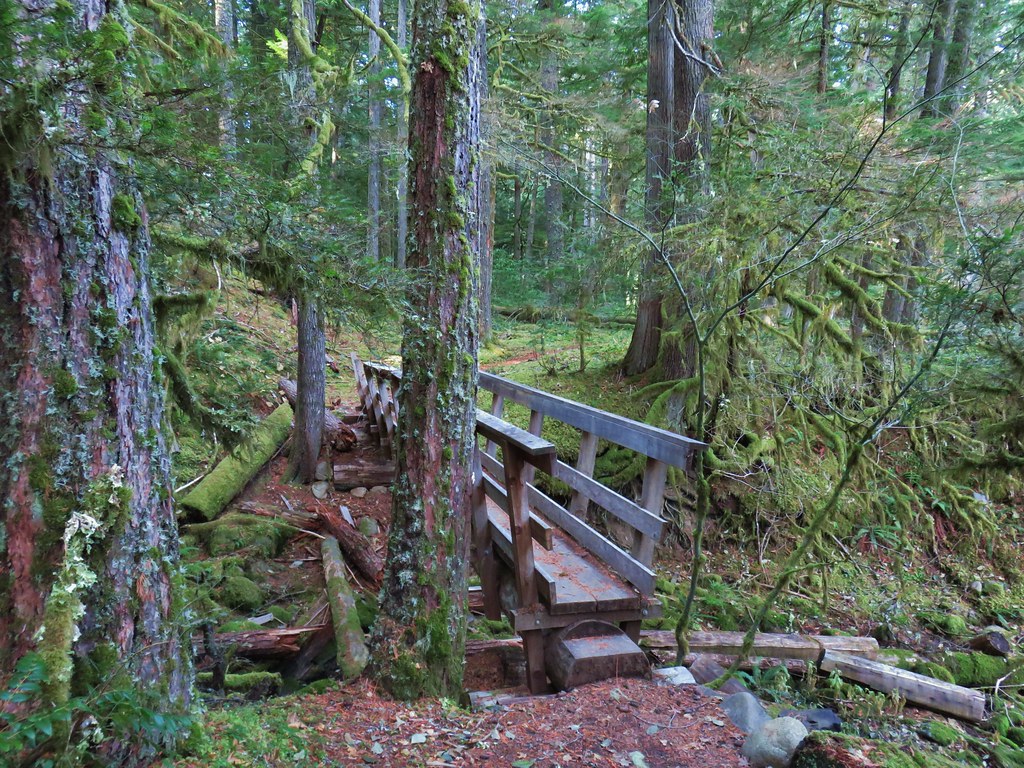
There were several creeks to cross, the first was too wide at the trail to hop across requiring a slight detour downstream. The rest all had rocks allowing us to cross dry footed.
North Fork TrailThe second creek crossing.

The trail turned away from the river to drop to the third substantial creek crossing.
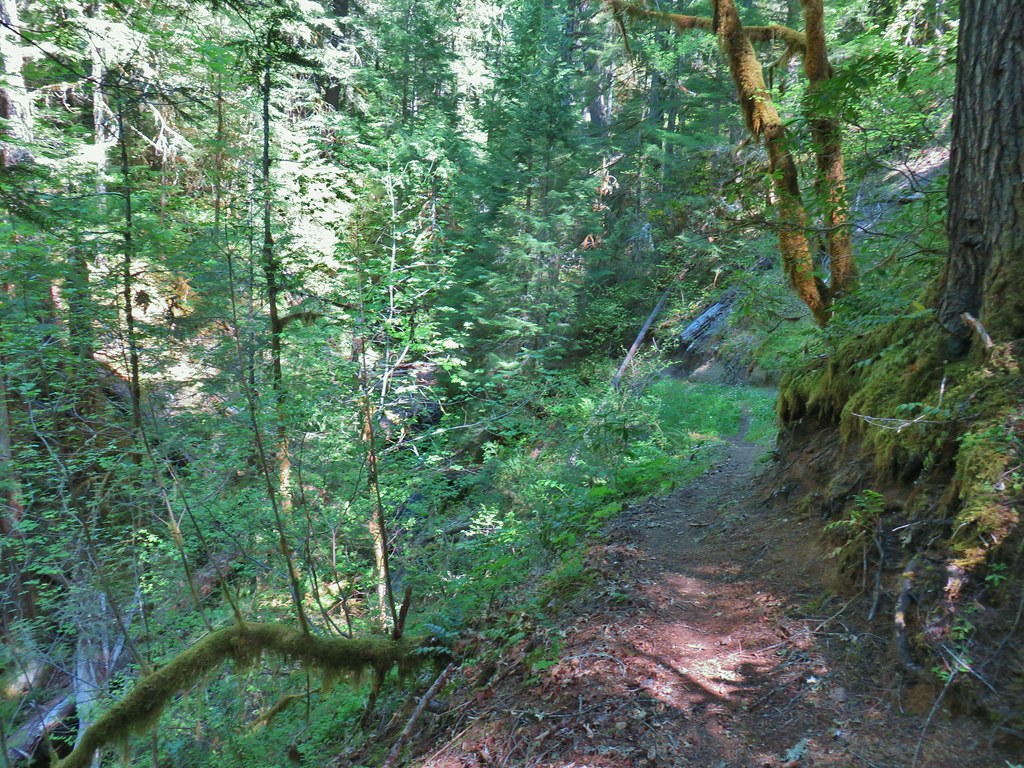
North Fork Trail

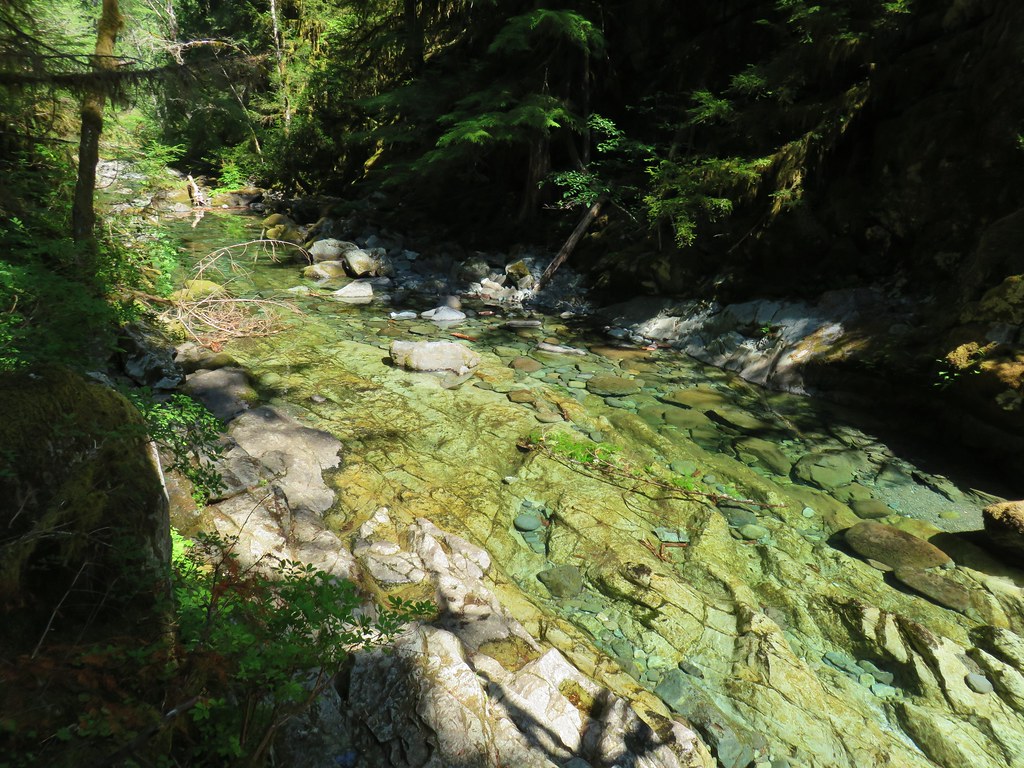
Creek along the North Fork Trail

It was at this third creek that we realized we’d missed a 10 foot waterfall marked on Sullivan’s map at the 1.1 mile mark. A quick re-reading of the hike description told us it was 150 feet offtrail which explained why we hadn’t seen it. We made a mental note to look for it on the way back.

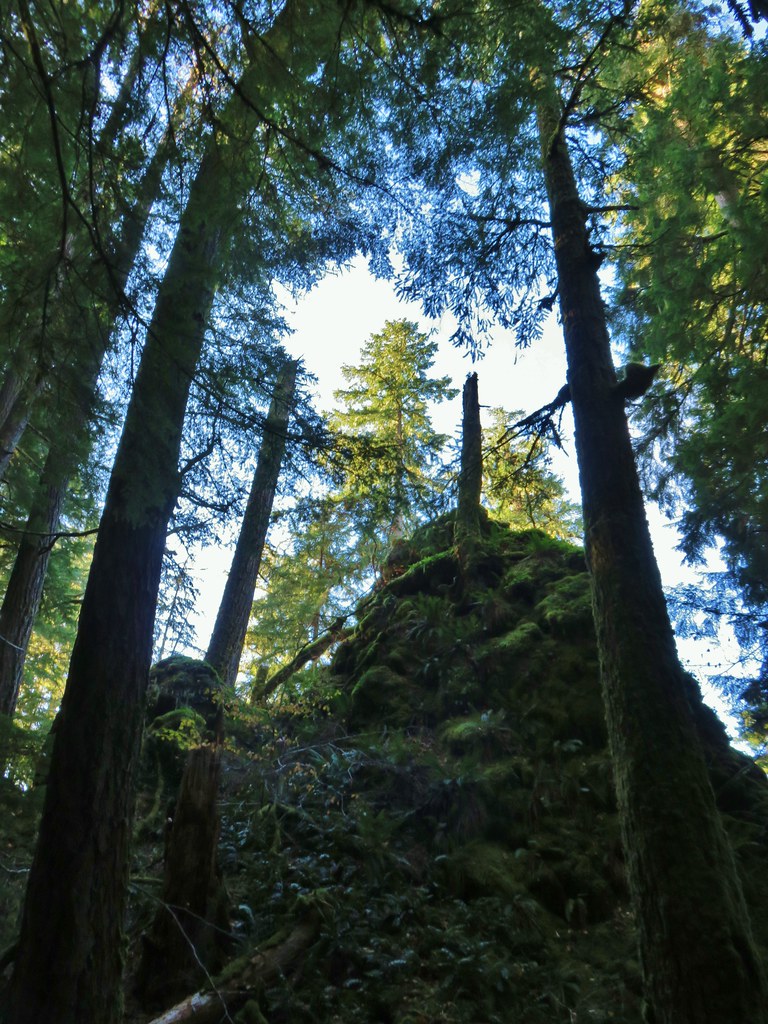
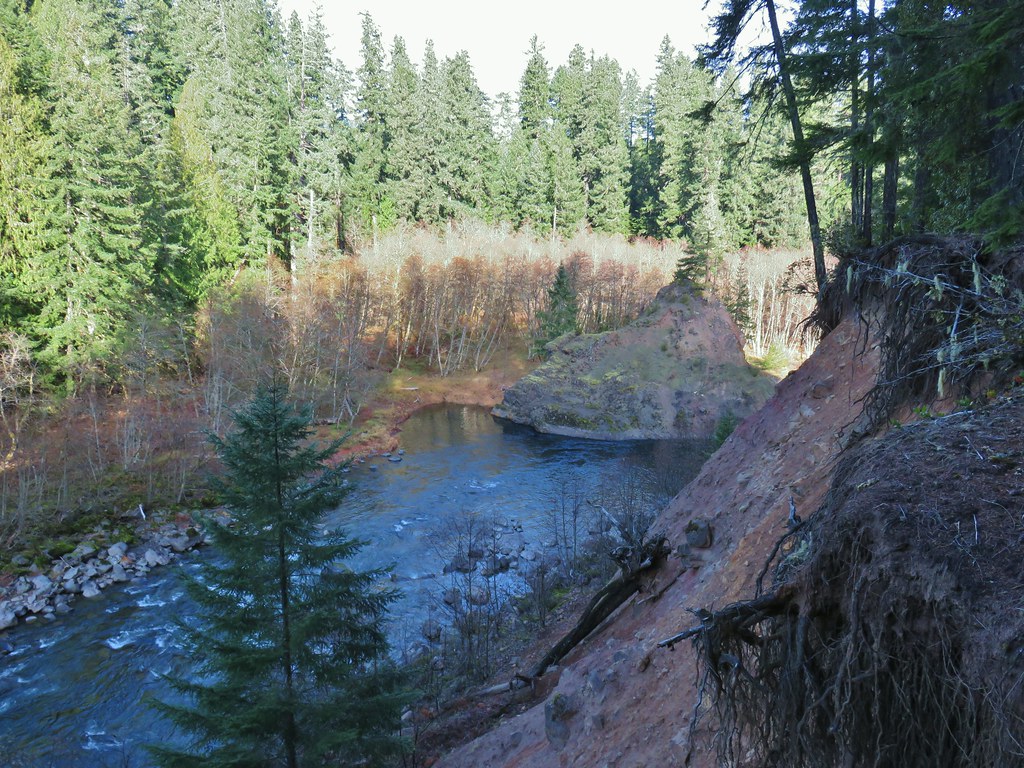
At the 2.3 mile mark the trail passed close to the river and a cobblestone beach from which the basalt outcrop of Buffalo Rock was visible.
North Fork Willamette River

Buaffalo Rock from the North Fork Willamette River

As the trail began to pass under Buffalo Rock it became even wilder than it had been beginning with a large tree blocking the trail just on the other side of a creek crossing.
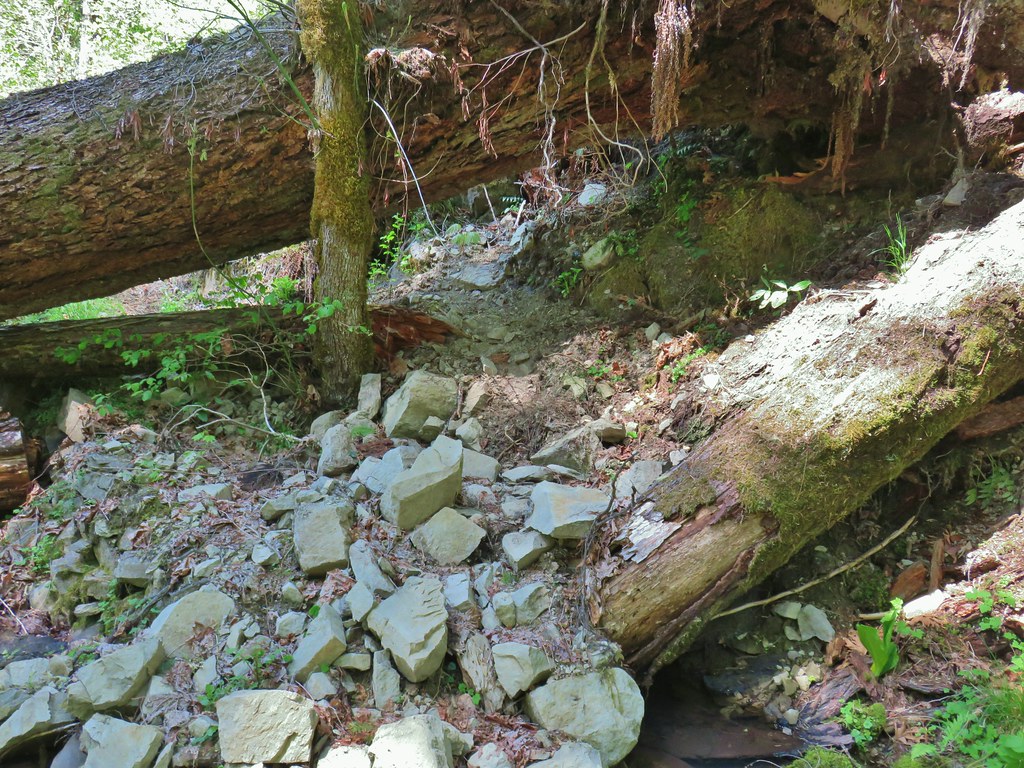
North Fork Trail

After ducking under the tree the trail passed through a small hillside meadow.
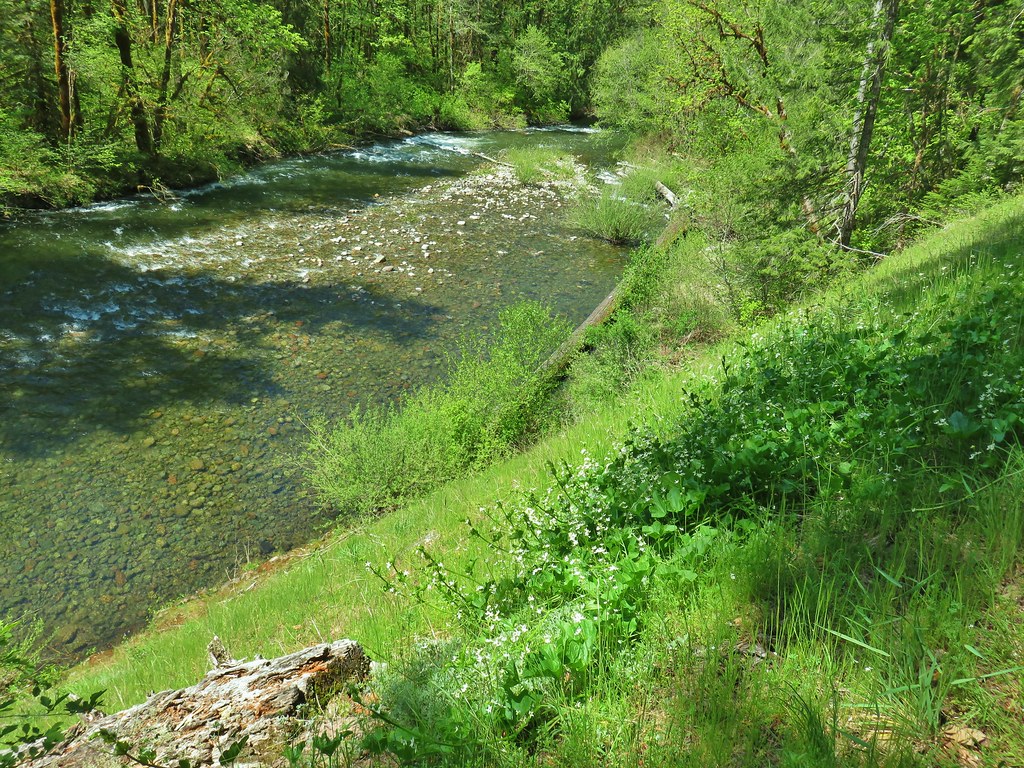
North Fork Willamette River

Coastal manrootCoastal manroot

Sticky cinquefoilSticky cinquefoil

Popcorn flowerPopcorn

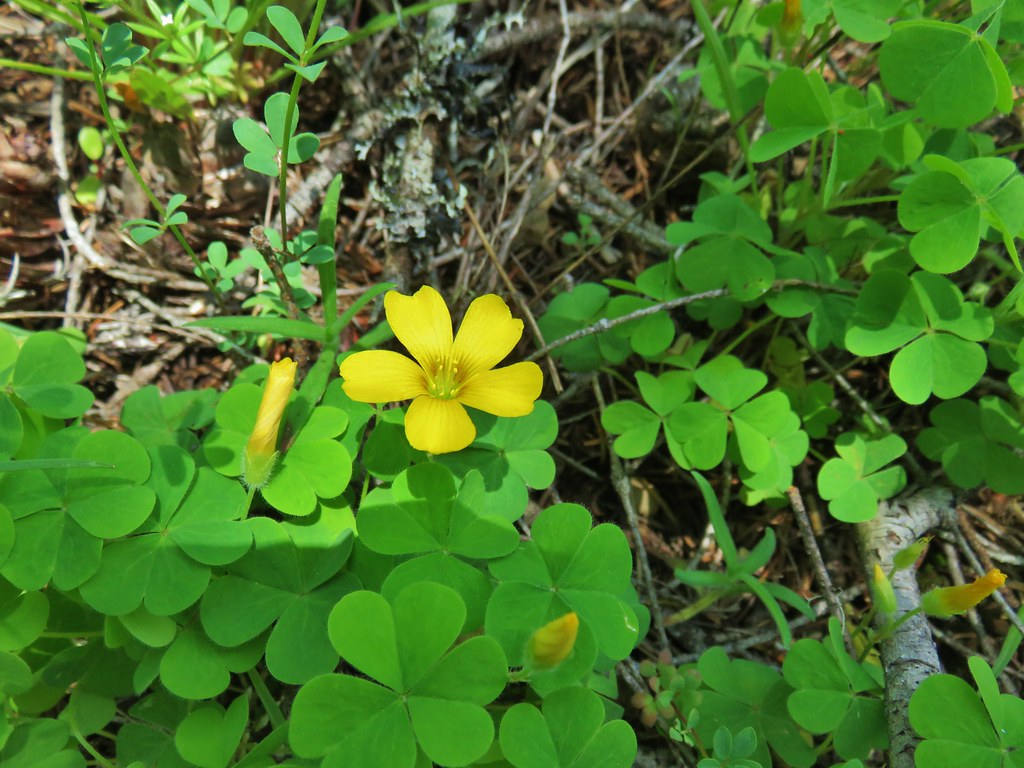
Western yellow oxalisWestern yellow oxalis

The dry, rocky hillside below Buffalo Rock provided for some different types of flowers and plants and was the only spot along this trail that we noticed any poison oak.
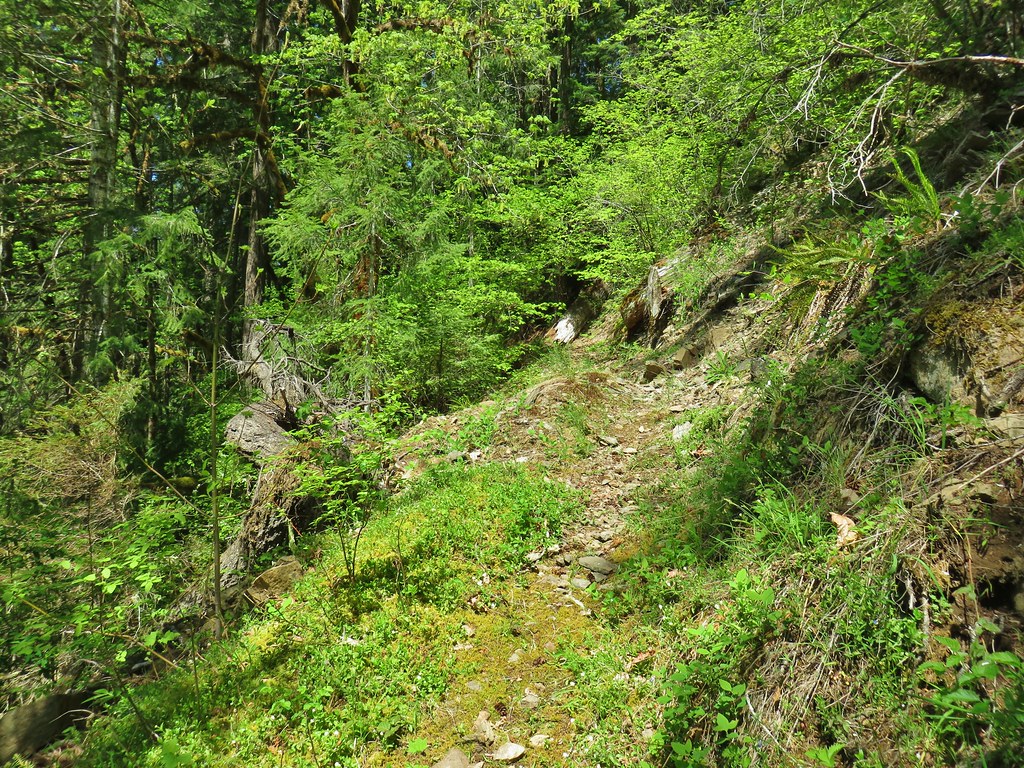
North Fork Trail

Buffalo Rock

Collomia heterophylla - Variable CollomiaVariable collomia

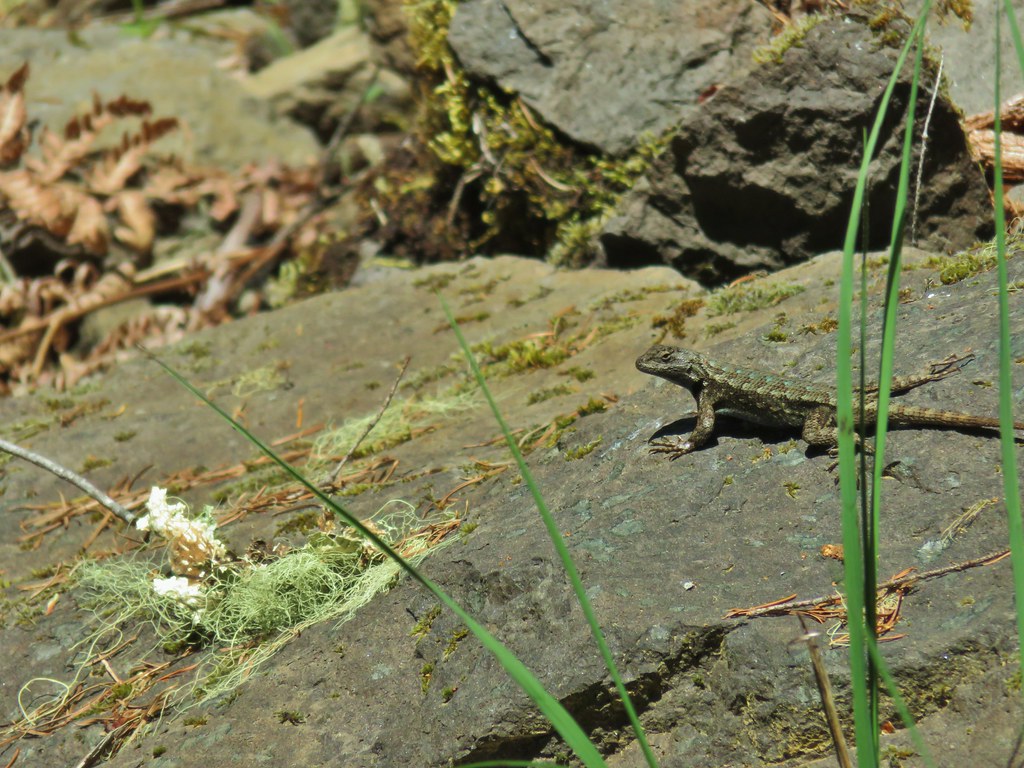
Western fence lizardWestern fence lizard

Giant blue-eyed MaryGiant blue-eyed Mary

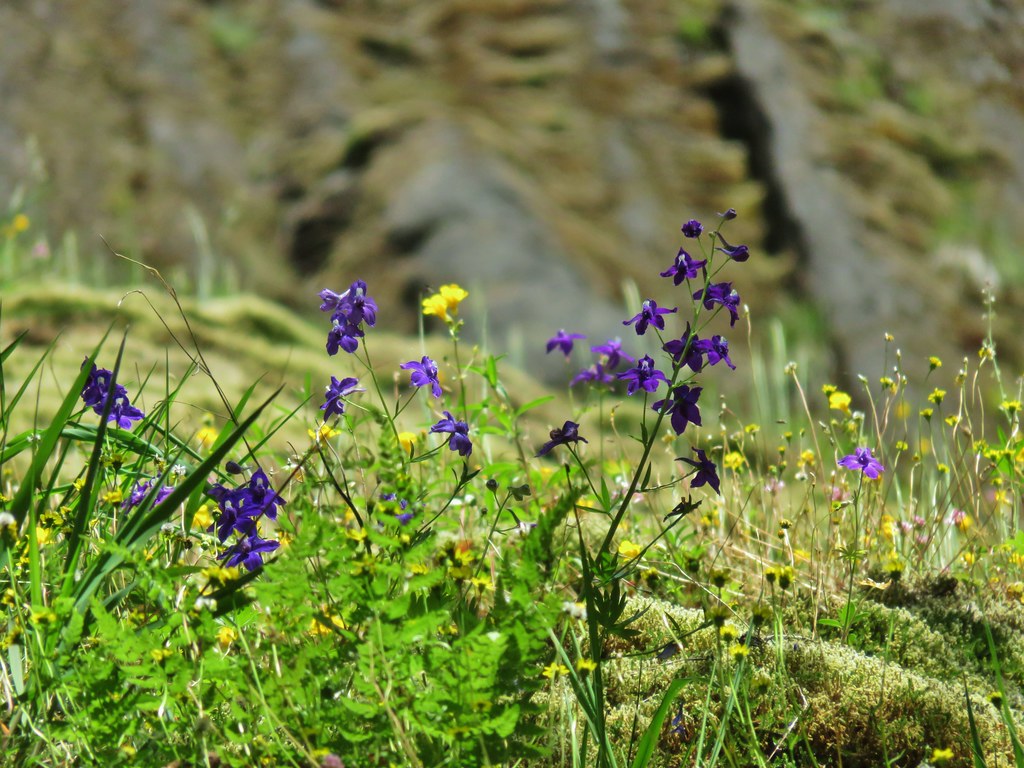
LarkspurLarkspur

This segment of the trail had originally extended another 2 miles from beneath Buffalo Rock with the next marker on Sullivan’s map being a “mossy pool” a mile from the end of the trail. As we continued on from Buffalo Rock though we found that the trail was quickly deteriorating. It was evident that what little maintenance this segment saw, had all been focused on the section between FR 1939 and Buffalo Rock.
North Fork TrailHad to climb over this on the left side by the standing tree.

North Fork Trail under some blowdownThe only choice here was to use this tree as the trail.

North Fork TrailMinor debris on the trail.

North Fork TrailCuts most likely from the original establishment of the trail.
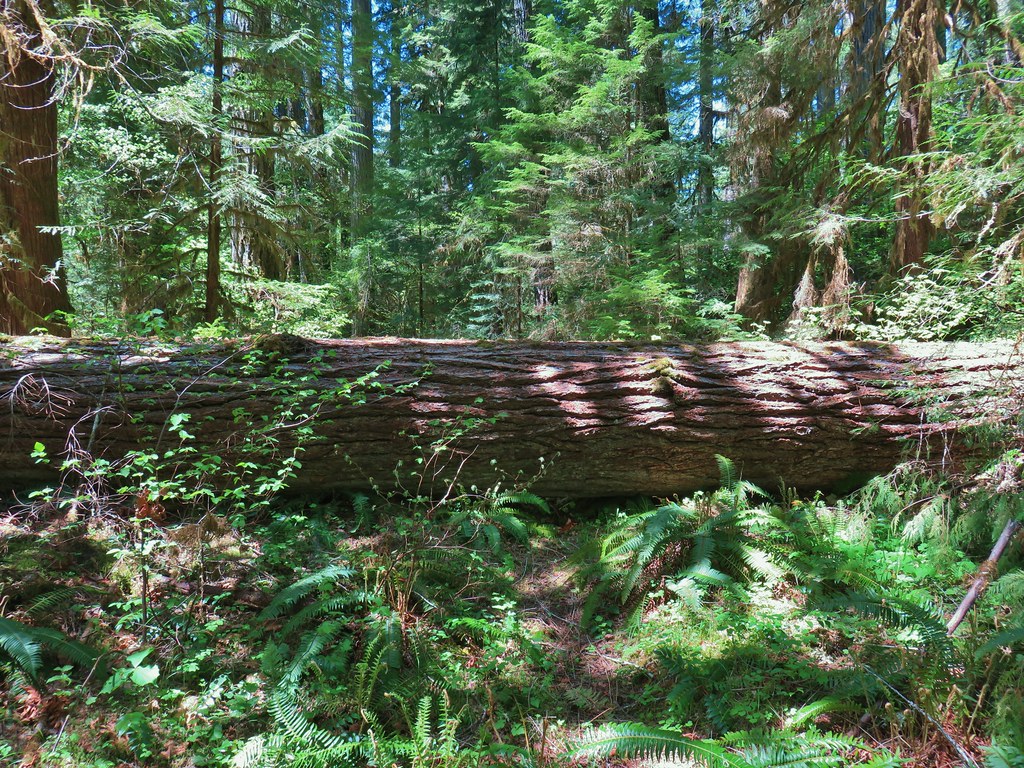
North Fork TrailThis one required a detour to the right around the end of the tree.

North Fork TrailForest reclaiming the trail tread.

Given the conditions we were experiencing and the distance we were facing for the day we decided to shoot for the mossy pool and turn around there instead of trying to reach the end of the trail. Sullivan himself had suggested turning around at Buffalo Rock and other than noting the pool on his map made no mention of it so we weren’t exactly sure what to expect. The trail turned away from the river to descend to the creek crossing where we expected to find the mossy pool.
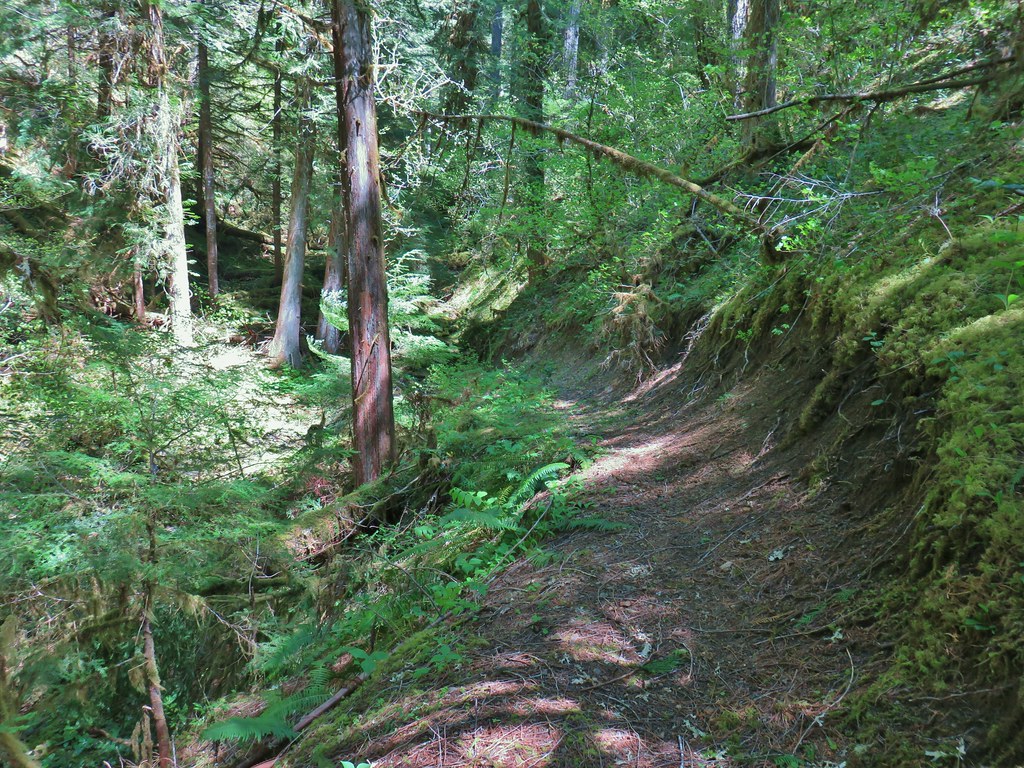
North Fork Trail

The creek had done a good job of erroding the trail which provided one final tricky obstacle to reach the little pool.
Creek along the North Fork Trail

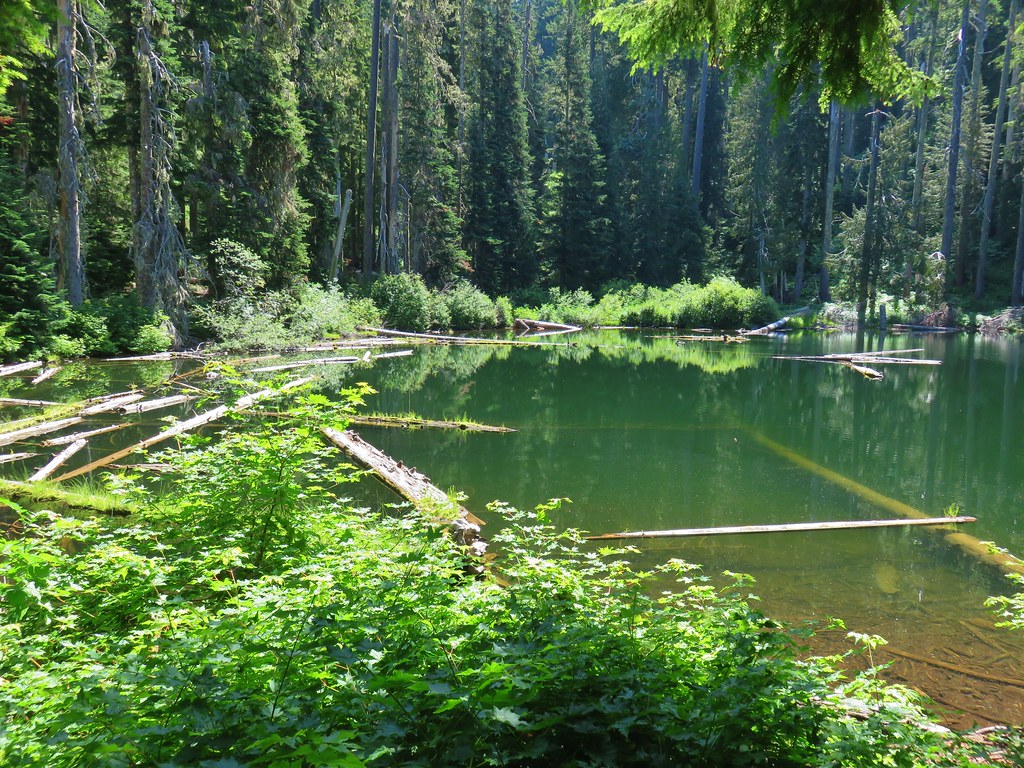
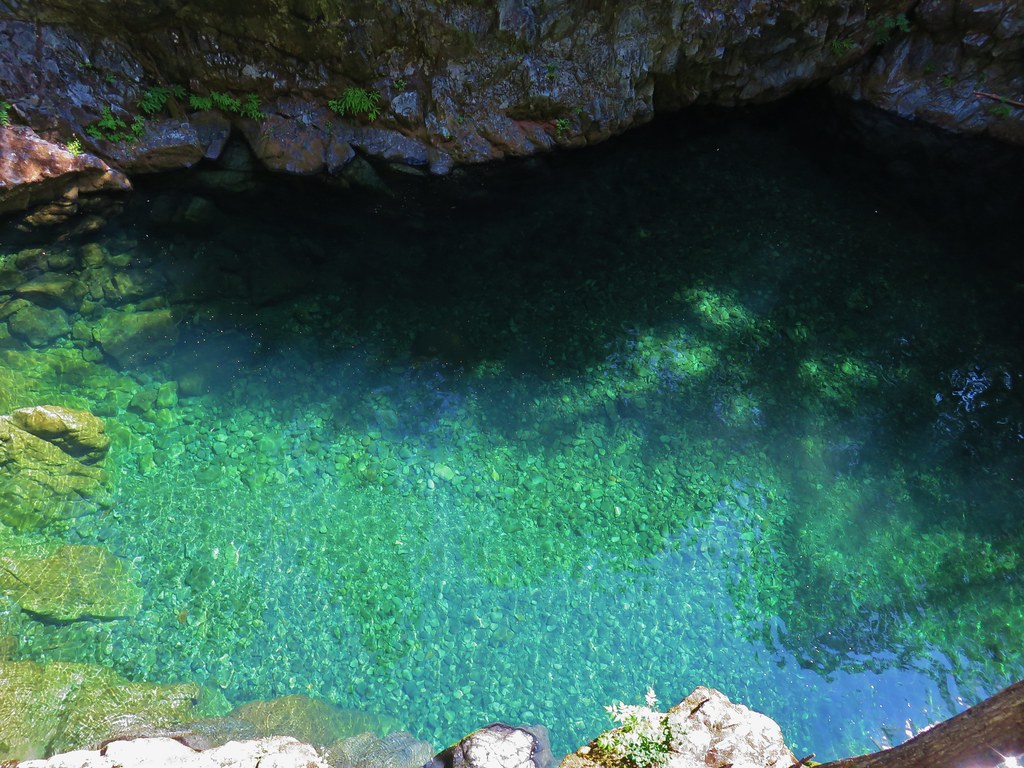
We were pleasantly surprised by how nice this little creek and the pool were. There was a small cascade creating the pool.
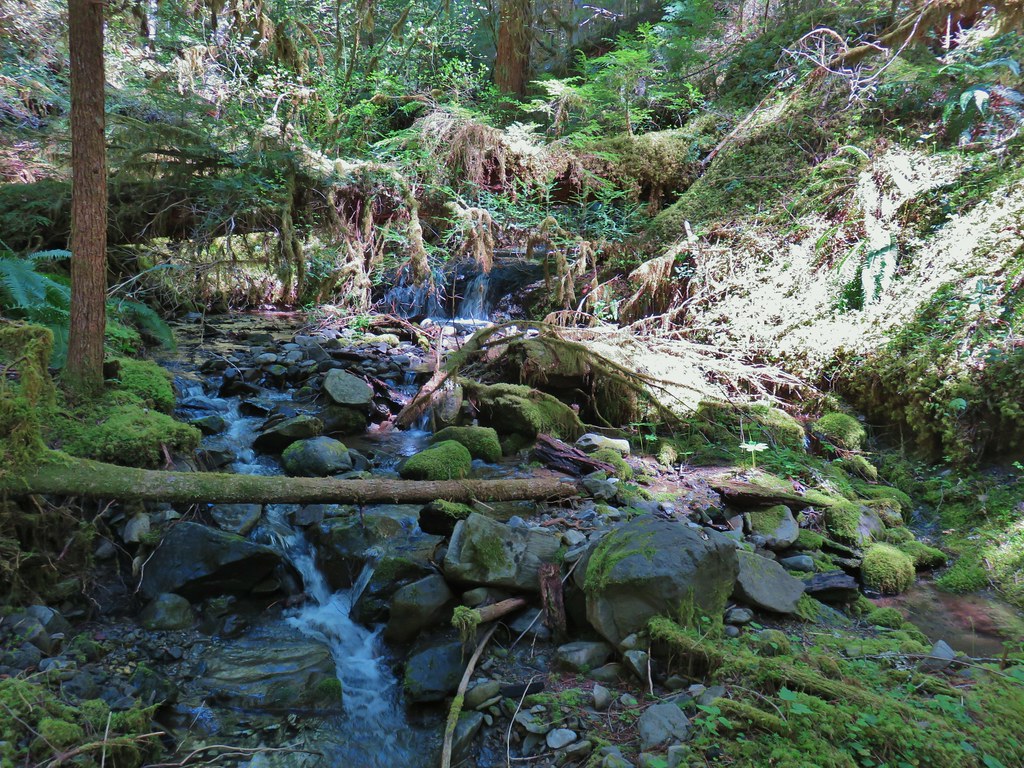
Mossy pool

Small cascade

Mossy pool

It was the perfect spot for a nice break. It was the warmest day of the year thus far with temperatures expected in the mid to upper 80s and it felt every bit that hot, but here by the creek the air was cool and refreshing. Between that and the calming sound of the water we both could have easily taken a nap but alas we needed to head back.
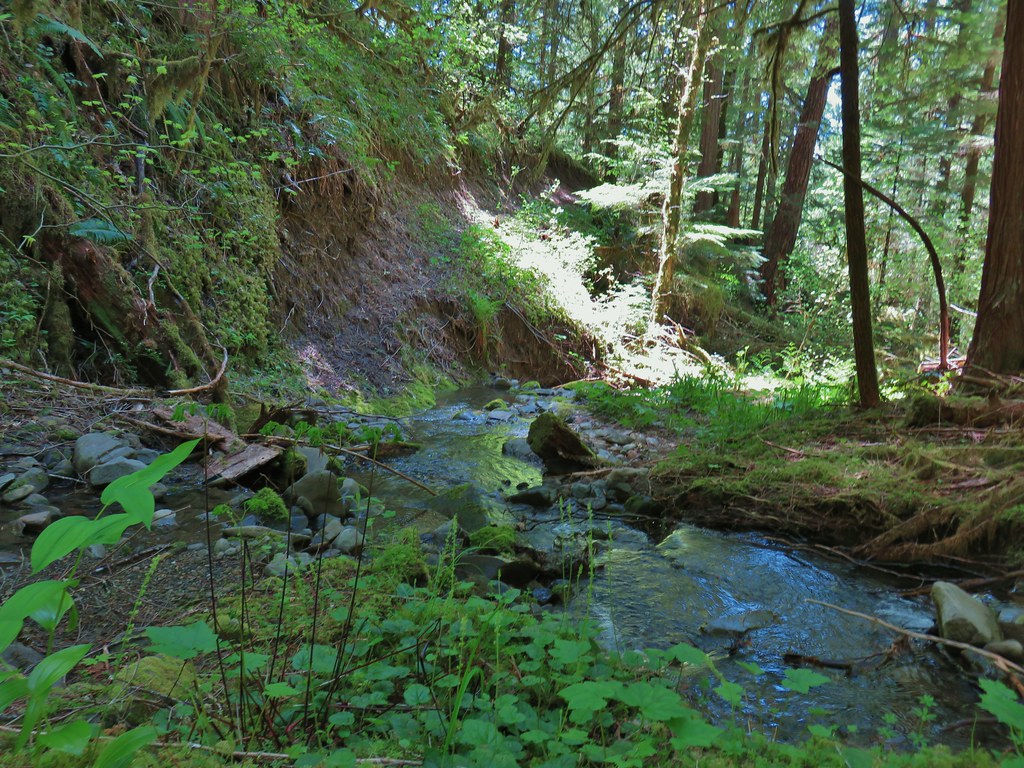
North Fork Trail from the mossy pool

We headed back before we had time to stiffen up with a mission to find the off-trail waterfall. From Sullivan’s map it appeared that there was no creek at the trail to follow up to the waterfall and his description said to listen for the sound of water and follow it. When we thought we were in the right general area we started listening. We took one wrong turn up a small stream that we thought was too soon but didn’t want to accidently miss it again. After following this little stream a short distance we determined that there was no sound of a waterfall of any kind so we returned to the trail and continued on. After descending a series of switchbacks we were in another promising area and this time we could hear water on the opposite side of the trail from the river. We bushwacked uphill to find the little waterfall.
Small off-trail waterfall

Small off-trail waterfall

After seeing the waterfall we returned to the car and headed home. We did see one other couple on our way back to the car making it a half-dozen between the two stops for the day. The two hikes totaled 13.9 miles, 6.4 on Segment 1 and 7.5 at Buffalo Rock.

We will continue to look for responsible options to allow us to keep hiking during these unprecedented times. Please be smart and safe and as always Happy Trails!

Flickr: North Fork and Buffalo Rock

Categories
Clackamas Hiking Old Cascades Oregon Trip report

Alder Flat and the Riverside Trail – 11/09/19

**Note the 2020 Riverside Fire burned a most of this hike.**

We managed to stay off the trail for two weeks but a favorable forecast called us back out for our November outing.  We chose a pair of hikes along the Clackamas River east of Estacada, OR.  The Riverside Trail was another of Sullivan’s featured hikes that we’d been saving for a rainy day, but we just didn’t have many of those this year so we decided to go ahead and check it off our to do list.

Before getting to the Riverside Trail though we stopped at the nearby Alder Flat Trailhead which is located along Highway 224 just west of the Ripplebrook Guard Station.
Alder Flat Trailhead

We arrived a little before the light so we waited at the trailhead for enough light before setting off on the .9 mile trail that led to the primitive Alder Flat Campground along the Clackamas River.
Sunrise over RipplebrookThere was a nice sunrise while we waited for enough light.
Alder Flat TrailAlder Flat Trail at the trailhead.

The trail passes by an old beaver pond and through a green forest before arriving at the campground near a swimming hole at a bend in the river. Maps also show a trail around the beaver pond but we followed it briefly on the way back and it petered out after crossing the outlet creek on a log.
Sunrise from the Alder Flat TrailPassing the old beaver pond.

Old beaver pond along the Alder Flat TrailBeaver pond from the former trail around it.

Former trail around the beaver pond.The trail around the pond petered out on the far side of this log.

Alder Flat TrailAlder Flat Trail in the forest.

Arriving at the campground.

Clackamas River at Alder FlatSwimming hole (It was a little too cold today.)

Clackamas River at Alder FlatClackamas River at the Alder Flat Campground.

From the Alder Flat Trailhead it was less than a mile to our starting point for the Riverside Trail at the Rainbow Campground.
Gate at Rainbow Campground

When the campground is open you need to pay to park there. With the campground closed there is no fee, but it does add a .3 mile road walk into and through the campground to reach the trail.
Rainbow CampgroundThe Rainbow Campground

The Riverside Trail sets off at the far end of the campground following the Oak Grove Fork of the Clackamas River.
Riverside Trail

Riverside Trail

Oak Grove Fork Clackamas River

The trail climbs up to an overlook of the Clackamas River in the first half mile near the confluence of the two rivers. We both were a bit confused at first when we got to the overlook because the river was suddenly flowing in the opposite direction, then we remembered that is was a different river.
Clackamas River

Clackamas River

Beyond this first viewpoint of the Clackamas River the Riverside Trail continues a little over three and a half miles to its end at the Riverside Campground. Along the way the trail makes several ups and downs as well as dipping deeper into the forest occasionally to navigate side canyons. There were a number of viewpoints above the river as well as numerous chances to explore the river bank. The final mile and half (after passing a spur trail coming from the no fee Riverside Trailhead) did spend more time closer to paved Forest Road 46 but there wasn’t a lot of traffic and the scenery was still nice.
Riverside TrailIn the forest for a bit.

Clackamas RiverViewpoint from above.

Riverside TrailBack in the forest.

Clackamas RiverAt the river.

Sun through the trees along the Riverside TrailSun peaking through the trees.

Rock formation along the Riverside Trailone of several rock formations along the trail.

Clackamas RiverAnother view of the Clackamas.

Riverside TrailSide creek crossing.

Clackamas RiverBack along the river.

Clackamas RiverRock pinnacle in the Clackamas River.

Riverside TrailSpur trail to the Riverside Trailhead.

Clackamas RiverViewpoint near the spur trail.

Clackamas RiverViewpoint near the spur trail.

Riverside Trail

Clackamas RiverAnother rocky beach along the Clackamas.

Clackamas RiverLooking down river.

Clackamas RiverNow from above the rock beach.

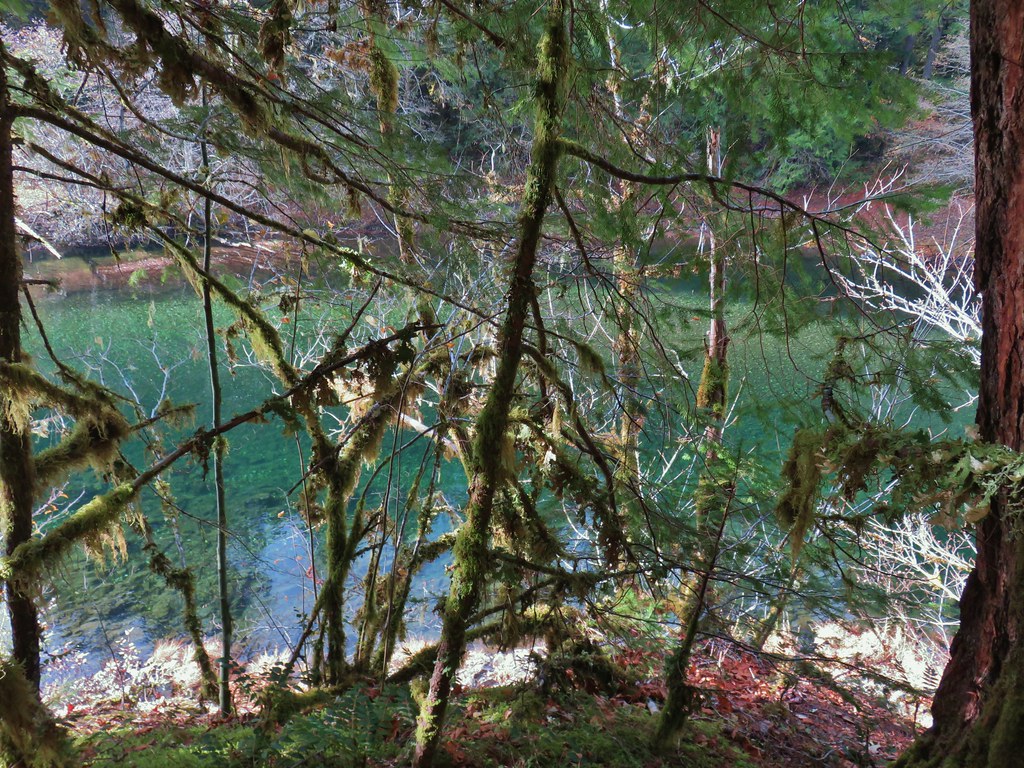
Just before reaching the end of the trail at the Riverside Campground the trail passed above a deep green hole.
Clackamas River

We’d been keeping our eyes open for fish all morning given how clear the river was but hadn’t seen any until we gazed into the water here. We spotted several large fish.
Fish in the Clackamas River

Fish in the Clackamas River

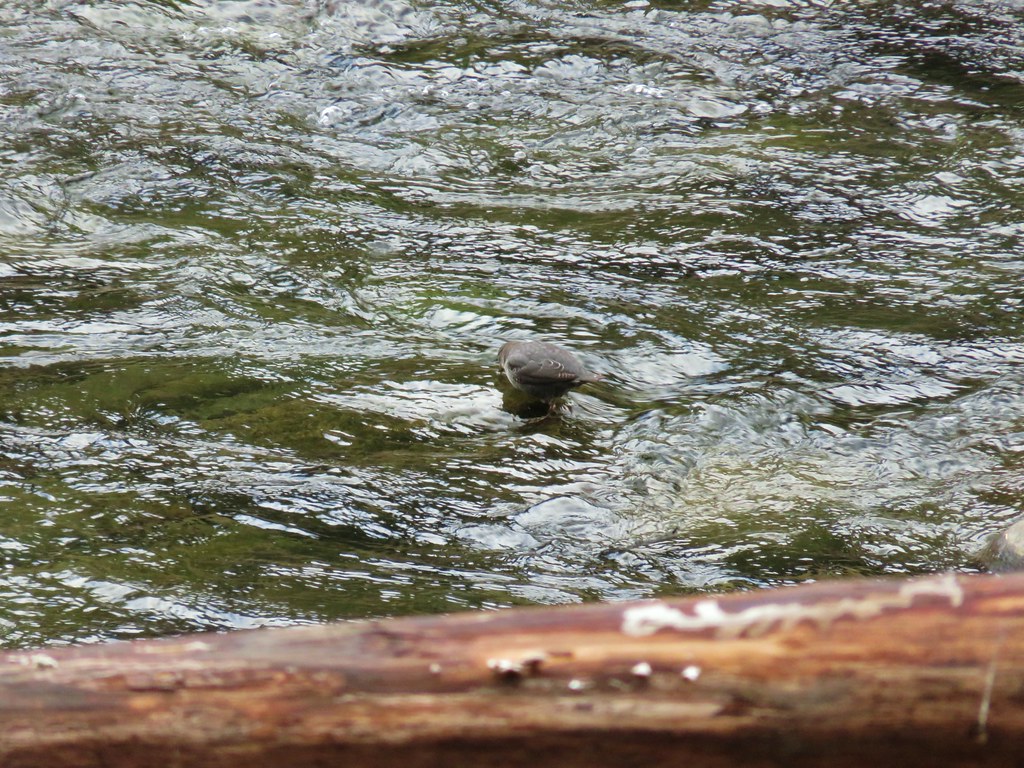
The trail descended from the viewpoint above the hole to the Riverside Campground where we watched an ouzel dip in and out of the river looking for snacks.
Riverside Trail sign at Riverside Campground

Riverside Campground

Ouzel

Ouzel

Clackamas RiverClackamas River at the Riverside Campground.

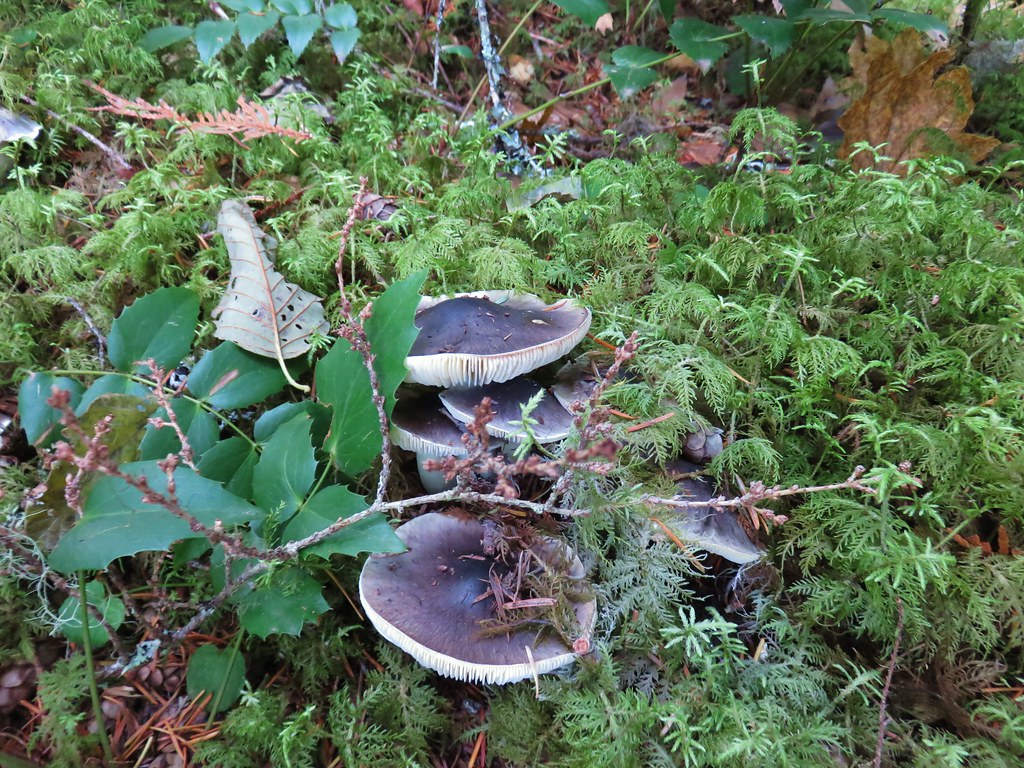
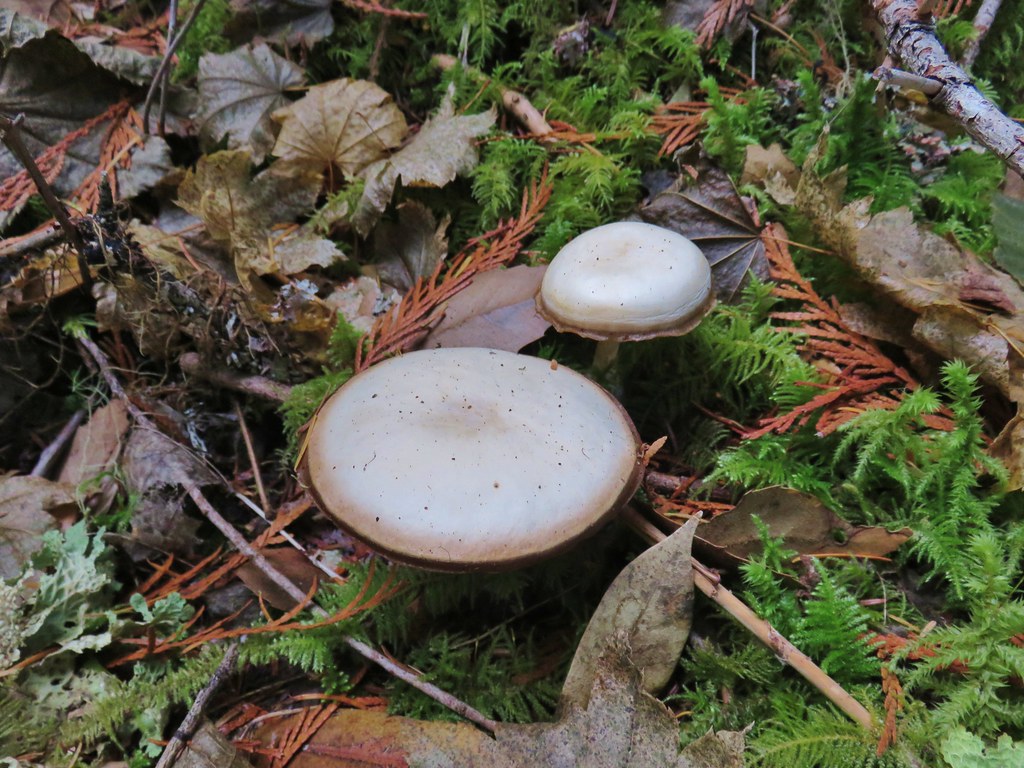
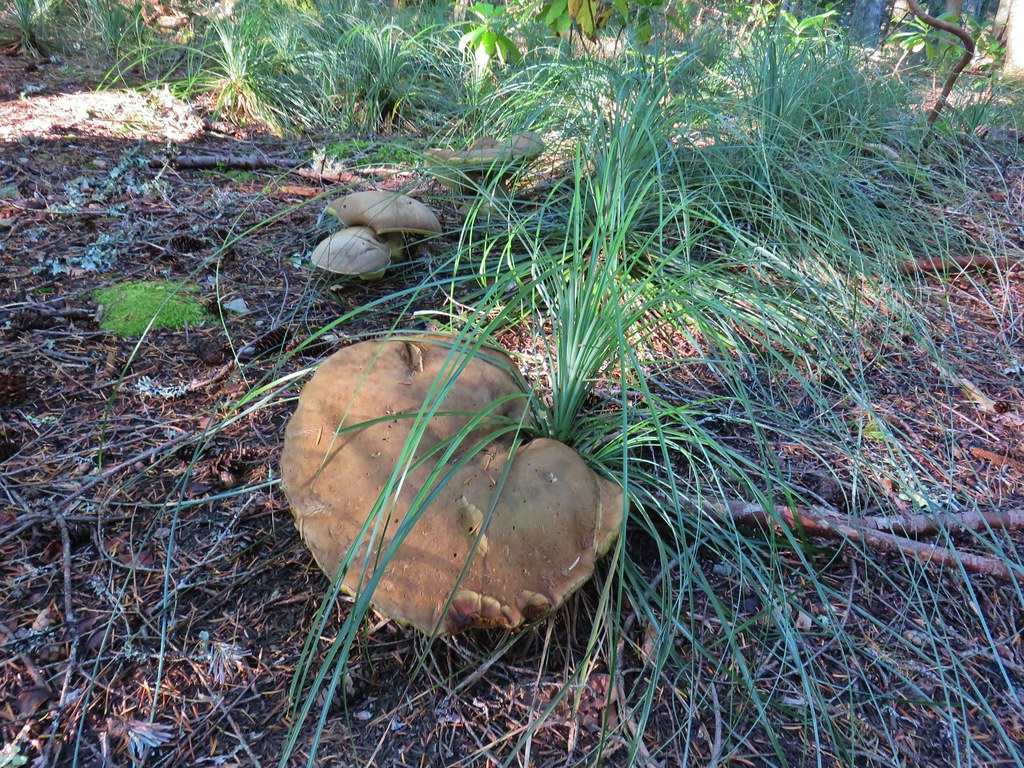
We headed back the way we’d come stopping to admire some of the mushrooms and fungi along the trail.
Mushrooms

Mushroom

Mushrooms

Mushrooms

Tree mushroom

Mushrooms on a log

In addition to the fish we’d been on the lookout for rough skinned newts. As we stopped at a viewpoint looking across the river valley toward Fish Creek Mountain (post) we finally spotted one.
Fish Creek Mountain

Rough skinned newt

This is a very popular trail in the Summer based on the number of cars we’ve seen when driving past on the way home from other hikes. We didn’t see a lot of other hikers on this day although we did pass one group twice (near each end of the trail) and several others as we got close to the Rainbow Campground on the way back. The GPS said we did 9.5 miles which included several side trips along the river and to viewpoints as well as the .6 miles of road walking. For those looking for a shorter hike the Riverside Trailhead would be a good starting point or try the Alder Flat Trail which is only about 2 miles round trip.

With the Holiday Season quickly approaching it was nice to be able to get our November hike in early with such nice weather. We plan to head out once more next month to wrap up our 2019 hikes so until then Happy Trails!

Flickr: Alder Flat and the Riverside Trail

Categories
Hiking Mollala Old Cascades Oregon Trip report

Mollala River Recreation Area – 10/19/2016

Our recent hike at the Mollala River Recreation Area almost didn’t happen. Three days prior an ingrown toenail suddenly was making every step I took painful. By the next night I had managed to remove a bit of the nail but it was still pretty tender. Luckily the next morning one of Heather’s running buddies mentioned using floss to get under the nail and help alleviate the pressure. I gave that a try and it worked wonderfully.

I was ready to give it a try, then I checked the weather for the following day. One hundred percent chance of rain, breezy with gusts up to 30mph, and a chance of a thunderstorm after 8am. The rest of the weekend didn’t look much better so we momentarily considered skipping this weeks hike but instead we decided to at least make an attempt

The Mollala River Recreation Area is managed by the Bureau of Land Management (BLM). The area contains over 20 miles of trails open to hikers (all year), equestrians (May 16th – Oct. 14th), and mountain bikes (single track May 16th – Oct. 14th and all year for non-singletrack). We had waited for the seasonal closures to minimize the chances of running into other users and a wet, windy day would likely further reduce the number of people out.

There are multiple potential trailheads and we chose to start our day at Amanda’s Trailhead
IMG_1123

It had been raining in Salem when we left but at the trailhead we were spared, at least for the time being.

One thing that the trails in this area don’t do is visit the Mollala River so before we set off I crossed Upper Mollala Road to get a peak of the river through the trees.
IMG_1126

After checking out the river we started up Amanda’s Trail.
IMG_1128

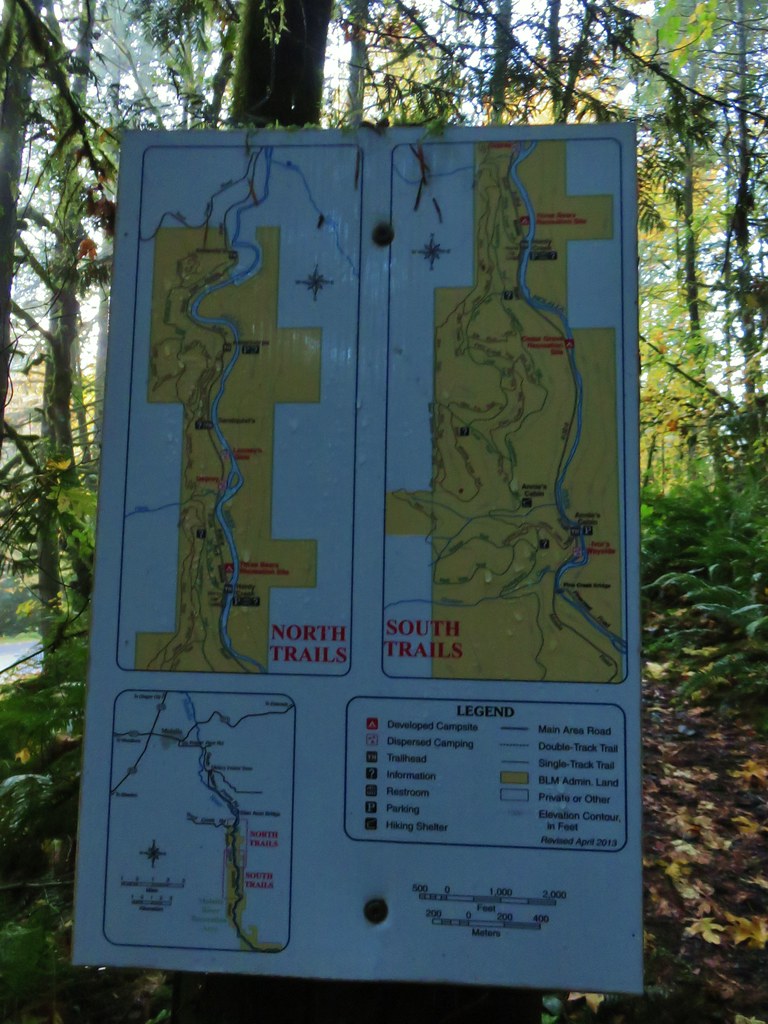
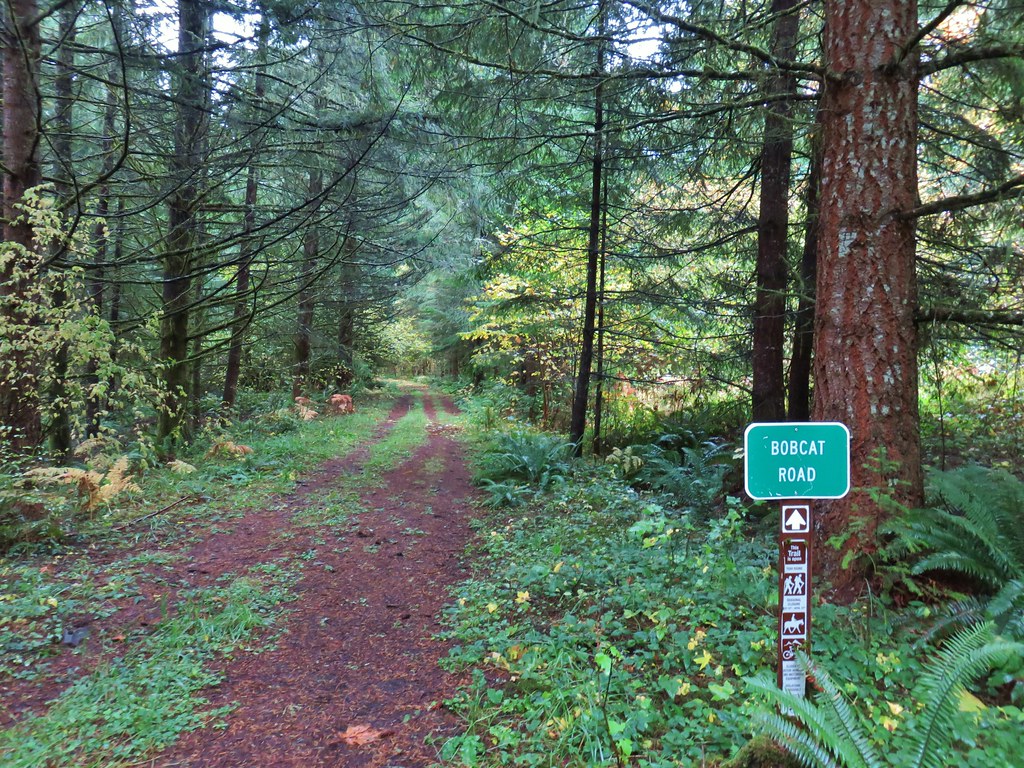
We stopped at a trail map (we had also downloaded the maps to our phones) to discuss our planned route. There were a number of options with many of the trails looping and intersecting each other so having a map is a good idea (it’s always a good idea). Our plan was to take Amanda’s Trail to Looney’s Trail then turn up the Rim Trail and follow it to Bobcat Road. From Bobcat Road we’d follow the Huckleberry Trail back to Looney’s Trail. Finally instead of just retracing our steps back we would turn off Lonney’s Trail at Clifford’s Crossing Trail and take that trail to Mark’s Trail which would then lead us back to Amanda’s Trail for the final leg back to the trailhead. This was an 11.5 mile route with over 1500′ of elevation gain.
IMG_1129

We followed Amanda’s Trail for 1.5 miles to Looney’s Trail ignoring the marked side trails along the way. This stretch of trail followed an old roadbed through second growth forest. Yellow and golden leaves were mixed with the green conifers.
IMG_1132

IMG_1138

IMG_1141Leapfrog Loop

IMG_1143

IMG_1145Mark’s Trail (our return route)

IMG_1147

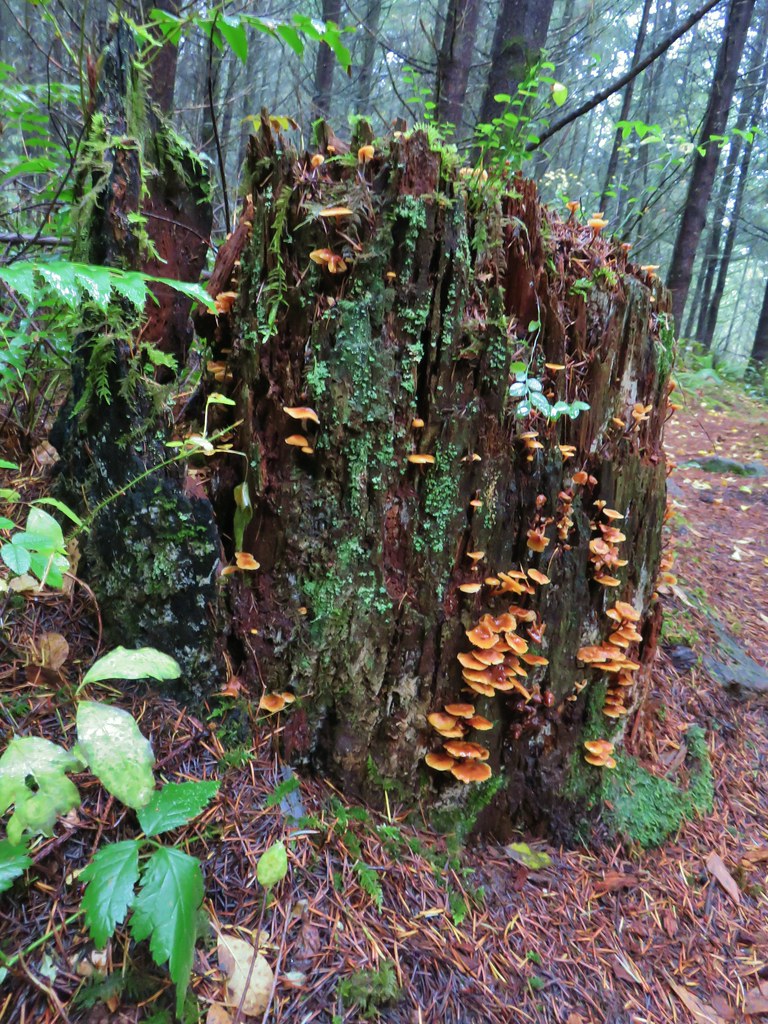
In addition to the Fall colors there were plenty of mushrooms along the trail.
IMG_1148

IMG_1151

This section also had the only view of the day across the Mollala River Valley.
IMG_1153

IMG_1155

Amanda’s Trail simply turned into Looney’s Trail at a sign at the end of the 1.5 miles.
IMG_1158

The mile long Looney’s Trail descended via a series of switchbacks to a bridge over scenic Hardy Creek, then climbed a bit before arriving at a junction with the Huckleberry and Rim Trails.
IMG_1164

IMG_1165

IMG_1171

IMG_1172

IMG_1178

IMG_1180

IMG_1181

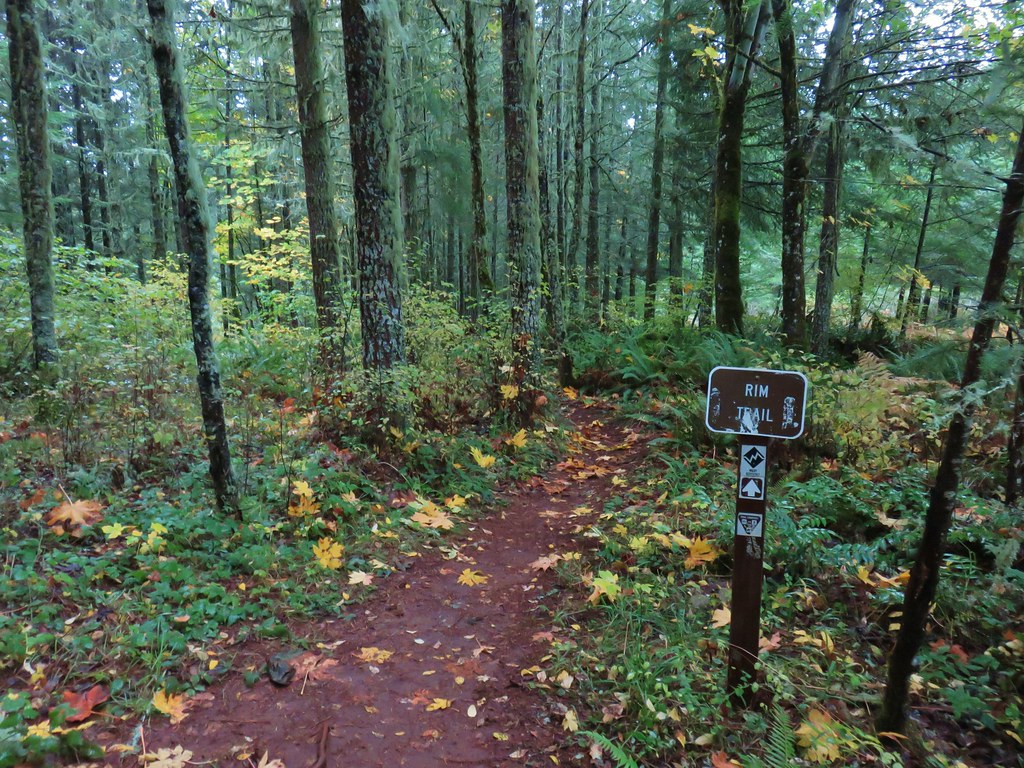
IMG_1186Rim Trail

We followed the Rim Trail for approximately 3 miles. The trail gained over 600′ following old roadbeds at times. The trail skirted a farm and a clearcut along the way.
IMG_1190

IMG_1191

IMG_1194

IMG_1195

IMG_1203

IMG_1206

IMG_1220<

IMG_1225

IMG_1229

IMG_1233

IMG_1236Huge anthills could be seen throughout the hike.

IMG_1245Skirting the clear cut.

IMG_1249

There were a number of trail junctions but the signage was good and we just kept following pointers for the Rim Trail.
IMG_1250

IMG_1251

IMG_1262

IMG_1264

IMG_1268

IMG_1273Unnamed creek.

IMG_1281

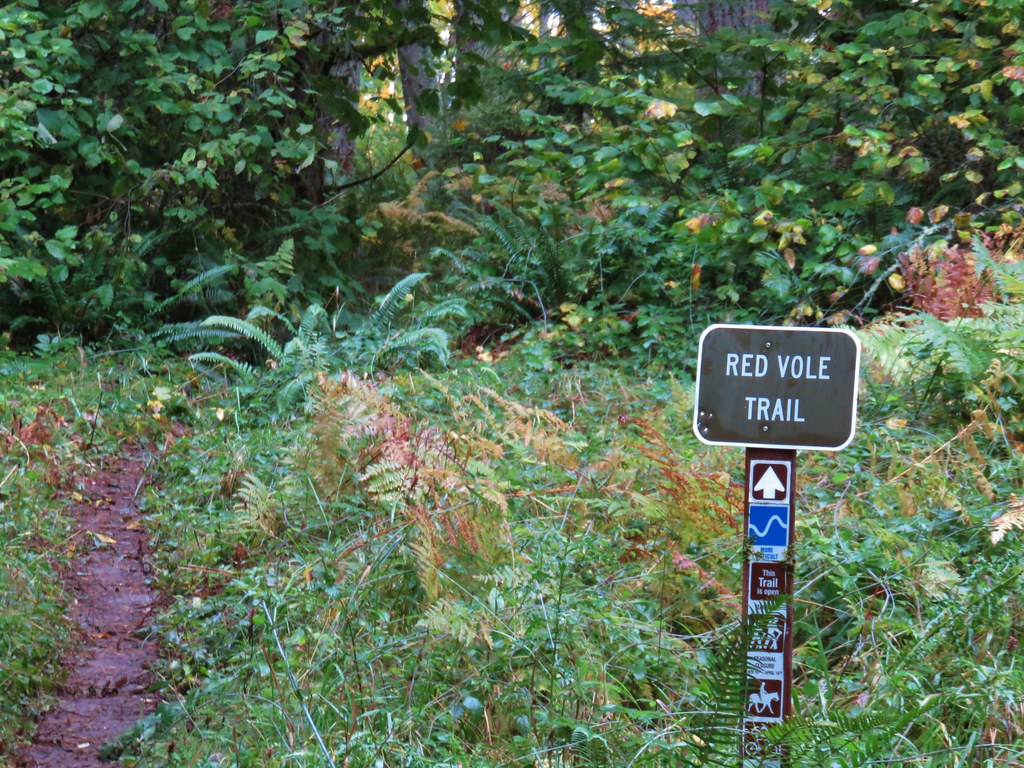
The Rim Trail ended at a fork with the Red Vole Trail to the right and Bobcat Road to the left. In the second edition of “Off the Beaten Trail” Matt Reeder mentions preferring Bobcat Road over the Red Vole Trail so we went left.
IMG_1285

IMG_1286

IMG_1288

We followed Bobcat Road downhill for a little over three quarters of a mile where we met the Huckleberry Trail (another roadbed).
IMG_1292

IMG_1295Varied thrush

We turned left onto the Huckleberry Trail which forked left uphill after 100 yards.
IMG_1299

IMG_1300One of the few unsigned junctions we came to.

The trail was fairly level as it contoured along the hillside arriving at Annie’s Cabin, a still functioning shelter, after .6 miles.
IMG_1305

IMG_1311

IMG_1312

IMG_1315

IMG_1316

Up until this point the weather had held up very well. Aside from a couple of very brief periods of sprinkles it hadn’t rained and the wind was mostly non-existent. That ended shortly after leaving the cabin when the clouds opened up and a heavy rain shower passed overhead.
IMG_1323Huckleberry Trail just before the shower.

IMG_1334Near the tail end of the shower.

Luckily the rain didn’t last long and we were back to mostly cloudy skies with a few sun breaks.
IMG_1329

IMG_1335The Hardy Creek Trail coming up from the Hardy Creek Trailhead on the right.

Two miles from Annie’s Cabin we arrived back at the Rim-Looney’s-Huckleberry Trails junction where we went straight onto Looney’s Trail.
IMG_1338

We recrossed Hardy Creek and followed Looney’s Trail until we arrived at a junction with Clifford’s Crossing Trail a total of .8 miles from the Huckleberry Trail.
IMG_1342

We turned right onto Clifford’s Crossing Trail. Our reasoning was simply to see some different trail rather than simply retracing our steps. This half mile trail descended fairly steeply only to immediately regain some of that elevation before making a more gradual descent to it’s end at Mark’s Trail.
IMG_1344Going down.

IMG_1345

IMG_1348Going back up.

IMG_1350

IMG_1353

Mark’s Trail was another half mile that wound its way up through the forest to Amanda’s Trail. These two trails would probably have been more fun on mountain bikes as they were clearly designed for that and not to get from point A to point B. With nothing of note to see there really wasn’t a need to hike this unless you’re looking for some extra climbing or are like us and like to take different routes when possible.
IMG_1354

IMG_1356

IMG_1357Back at Amanda’s Trail.

We turned right onto Amanda’s Trail and followed it back down to the trailhead which was just under a mile away. We had been watching for rough skinned newts all day but hadn’t seen any until this section where a loan newt was sitting in the middle of the trail.
IMG_1358

IMG_1361

The only other people we saw all day was a family coming up from Amanda’s Trailhead to take what appeared to be some senior pictures. The rest of the hike was full of solitude.
IMG_1363

We were glad that we hadn’t let the forecast deter us. It hadn’t rained enough to really affect the hike and both the wind and thunderstorm had never materialized. Happy Trails!

Flickr: Mollala River Recreation Area

Categories
Hiking Middle Santiam Old Cascades Oregon

Crabtree Lake – 9/07/2019

A less than ideal forecast had us looking for a hike that wasn’t view dependent and wouldn’t be too negatively impacted by rain. Crabtree Lake in Crabtree Valley seemed to fit the criteria and it was a featured hike in Sullivan’s 4th edition of his “100 Hikes in the Central Oregon Cascades” guidebook.

It was a cloudy, drizzly, morning as we headed for the trailhead NE of Sweet Home, OR. Although we knew there was a nice view of Mt. Jefferson from the trail that wasn’t the main goal of the hike so missing out on it wouldn’t be too disappointing. As we climbed along the BLM road to the trailhead we emerged from one set of clouds to find that we were in between cloud layers and so were the mountains. We parked at the junction of BLM road 11-3E-35.3(aka S. Fork Packers road) and the final .9 mile gravel road to the actual trailhead.
IMG_8503The gravel road from the junction.

The gravel road was in pretty good shape, but we had opted to walk it primarily due to the fact that from the trailhead the hike would be under 5 miles (excluding any exploration). The extra 1.8 miles would give us enough more time hiking that we wouldn’t break our hike to drive timie ratio rule. As we walked up the road we got a nice view of Three Fingered Jack in a beautiful sunrise.
IMG_8506

IMG_8507

A bit later Mt. Jefferson became visible.
IMG_8509

IMG_8510

The actual trail begins at a berm where the road has been closed.
IMG_8516

It then follows the road bed around a ridge end in .3 miles where the viewpoint of the mountains is.
IMG_8522

IMG_8524Coming up on the viewpoint.

Instead of not having a view we were treated to a beautiful scene.
20190907_071805_HDR

IMG_8529Mt. Jefferson

IMG_8532Three Fingered Jack

After oohing and awwing over the view we rounded the ridge end and began a 1.1 mile descent to a junction. There were a few left over flowers and dozens of rough skinned newts. We had to really watch were we stepped due to their presence on the trail.
IMG_8570

IMG_8547Maybe a ragwort?

IMG_8549Yarrow

IMG_8553St. John’s wort

IMG_8554Daisy and pearly everlasting

IMG_8648Beardstongue

IMG_8652Fireweed

IMG_8560Not a flower but colorful maple leaves.

IMG_8569A common sight on the trail.

IMG_8567Rough skinned newt

Although there were no mountain views on this side of the ridge there were a couple of openings to the west across Crabtree Valley.

IMG_8557

IMG_8558

IMG_8566

At a barricade we turned left and dropped down to another roadbed.
IMG_8573

We turned left and started a gradual climb along this road. It wasn’t clear what the status of this road is, at times it looked like there were some tire marks but we didn’t run into any vehicles along the .4 mile stretch to some concrete barricades.
IMG_8574

IMG_8575

The roadbed became more of a trail beyond the barricade continuing uphill another .3 miles to Crabtree Lake.
IMG_8576

IMG_8578

We found a few tents set up along the shore (there were 2 cars at the trailhead and one where we had parked along the lower road). We checked out the lake near the outlet where we found yet more rough skinned newts in the water.
IMG_8584

IMG_8582

We followed a trail around the lake to the left and headed down to the lake shore for another view.
IMG_8588

IMG_8590

We would later find out from some of the campers that there was an otter swimming in the lake while we were taking these pictures that we hadn’t seen. (I couldn’t find it in the photos either 😦

Now that we had seen the lake it was time to do a little big tree hunting. Crabtree Valley’s cliffs have protected the trees here allowing for some of Oregon’s oldest surviving trees. We followed the trail around the lake until it petered out near some empty campsites.
IMG_8591Old growth cedar

IMG_8593

IMG_8594

The basin here is home to a 270′ Douglas fir that has been dubbed “Nefertiti”. We had the GPS coordinates for the tree and decided this would be a good time to practice using our Garmins. We plugged in the coordinates and immediately ran into an issue, our devices didn’t agree even though they are the same make and model. We decided to try the location showing on my device first and made our way cross country to those coordinates. While there were many large old growth trees we weren’t convinced that any were the 8′ diameter tree we were looking for.
IMG_8600

IMG_8602

IMG_8605

IMG_8607

IMG_8609

We turned to Heather’s location next which resulted in our best guess as to the identity of the tree.
IMG_8610

IMG_8611

Whether on not we actually found Nefertiti we saw a lot of massive old growth, some of which may be close to 1000 years old. We headed back and almost went out to a viewpoint that overlooks Waterdog Meadow (a small lake and meadow that Crabtree Creek passes through after leaving Crabtree Lake) but a combination of fog and campers being set up near the viewpoint kept us from checking it out.
IMG_8615A less impressive viewpoint near the creek but the fog below made passing through the camps to reach the viewpoint pointless.

After hearing about the otter we left the lake and headed back. Before returning to the trailhead though there was another tree in the valley we were hoping to visit. King Tut, a 9′ diameter Douglas fir, is located off trail. Sullivan described the route as rugged and not recommended so we were prepared to turn back at any point. We again used GPS coordinates, which again disagreed, to find the tree. There was at times a rough trail to follow but any sign of it ended before reaching the tree.
IMG_8623

IMG_8624

We remained undeterred and picked our way through and around thorny berry bushes and devil’s club to the location showing on my GPS. There was a very large cedar in the area, but no King Tut.
IMG_8629

IMG_8631The cedar trunk through some branches.

We turned to Heather’s device and made our way to that location where we found what we believe to be the estimated 800 year old behemoth.
IMG_8632

IMG_8637

Having found this tree at the location shown by Heather’s GPS we were more confident that the tree we identified as Nefertiti using her device was probably correct as well.

Even though we were able to locate (we think) the tree, like Sullivan we wouldn’t recommend this excursion, especially without map and navigational skills.

We then headed back and climbed out of the valley along the road where the newts had been mostly replaced by other critters and the view of Mt. Jefferson was just a memory.
IMG_8655Fritillary butterfly

IMG_8657Dark eyed junco

IMG_8661Bumble bee

IMG_8647Back at the viewpoint.

It had been a great hike and despite having missed seeing our first otter we had seen a lot more than we were expecting. Between parking where we did and visiting the trees we turned the 4.6 mile hike into an 8.7 mile adventure. Happy Trails!

Flickr: Crabtree Lake

Categories
Hiking McKenzie River Old Cascades Oregon Trip report

Olallie and Lowder Mountains – 09/01/2019

For our final outing of Labor Day Weekend we set our sights on a pair of peaks in the Three Sisters Wilderness. Both the Lowder Mountain Upper Trailhead and Pat’s Saddle Trailhead (for Olallie Mountain) are located just 2 miles apart along Forest Road 1993. These were two more featured hikes from Sullivan’s 4th edition Central Cascades guidebook that we had yet to do. (Olallie Mountain was removed from the featured hikes in the 5th edition due to a 2017 fire that burned much of the route.) On their own the hike to driving time ratios didn’t pan out, but doing them both on the same day would, and as it turns out FR 1993 was in excellent shape allowing for a driving time closer to 2 1/2 hours versus the nearly 3 hours that Google predicted.

We drove south to Eugene and took Highway 126 four miles east of Blue River where we turned right on FR 19 to Cougar Dam. After turning left on FR 1993 and crossing the dam we followed the road 11.2 miles to the Pat’s Saddle Trailhead.
We chose to start with Olallie Mountain for a couple of reasons, first we thought that the lack of tree cover due to the fire might make this a warmer hike later in the day and second it was the longer of the two hikes. There are a couple of trails that leave from this trailhead. The French Pete Creek Trail is the first trail on the right. The upper section of this trail is not maintained (according the Forest Service webpage) and the forest around the lower section was impacted by fires in both 2017 and 2018. We hiked the first 5 miles of the trail from the lower trailhead prior to the fires in 2015 (post)
IMG_8177

The trail we were taking on this trip was the second one on the right, the Olallie Trail.
IMG_8179

This trail promptly enters the Three Sisters Wilderness amid old growth that escaped the fire.
IMG_8180

IMG_8183

The signs of the fire could be seen after about a third of a mile.
IMG_8184

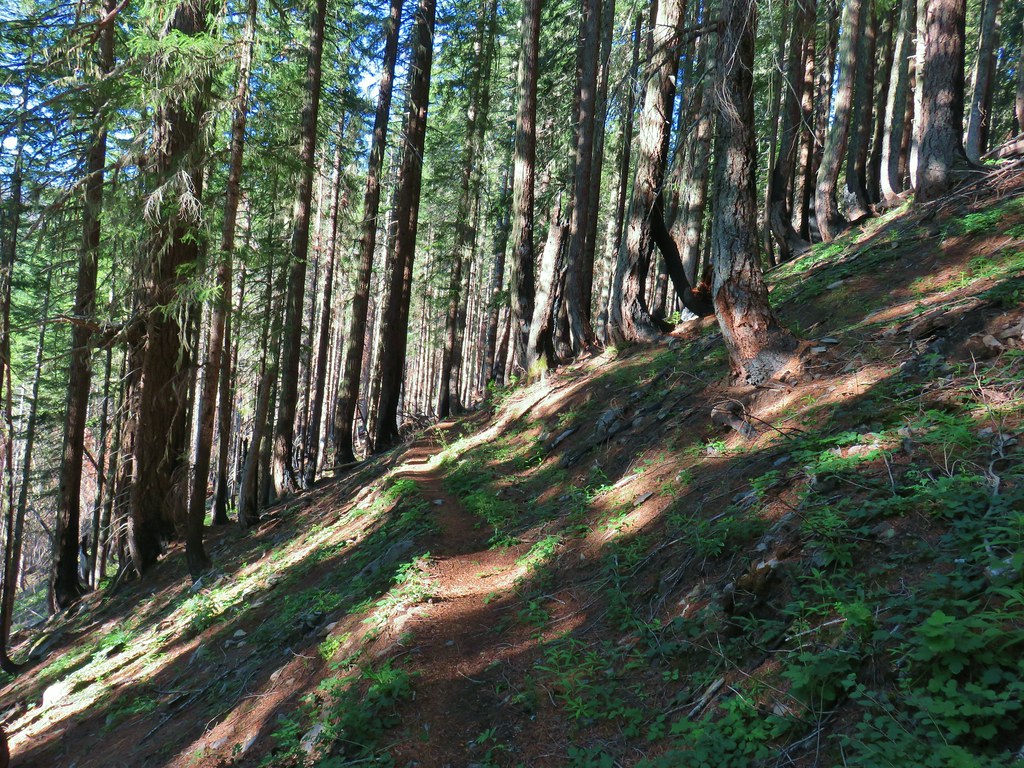
At the half mile mark we arrived at a small stream flowing from Wolverine Lake which was about a quarter mile uphill on our right. The forest on the right hand side of the trail had burned pretty good while the left hand side had fared much better. There was already plenty of green vegetation growing amid the snags on the hillside though.
IMG_8185

IMG_8186

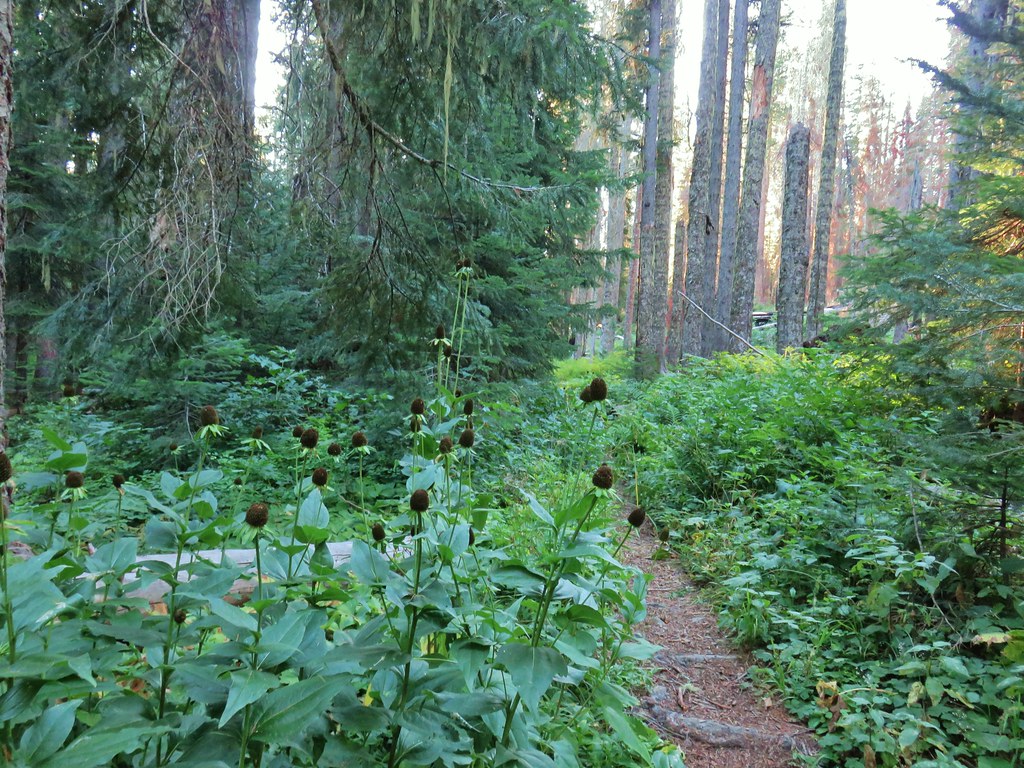
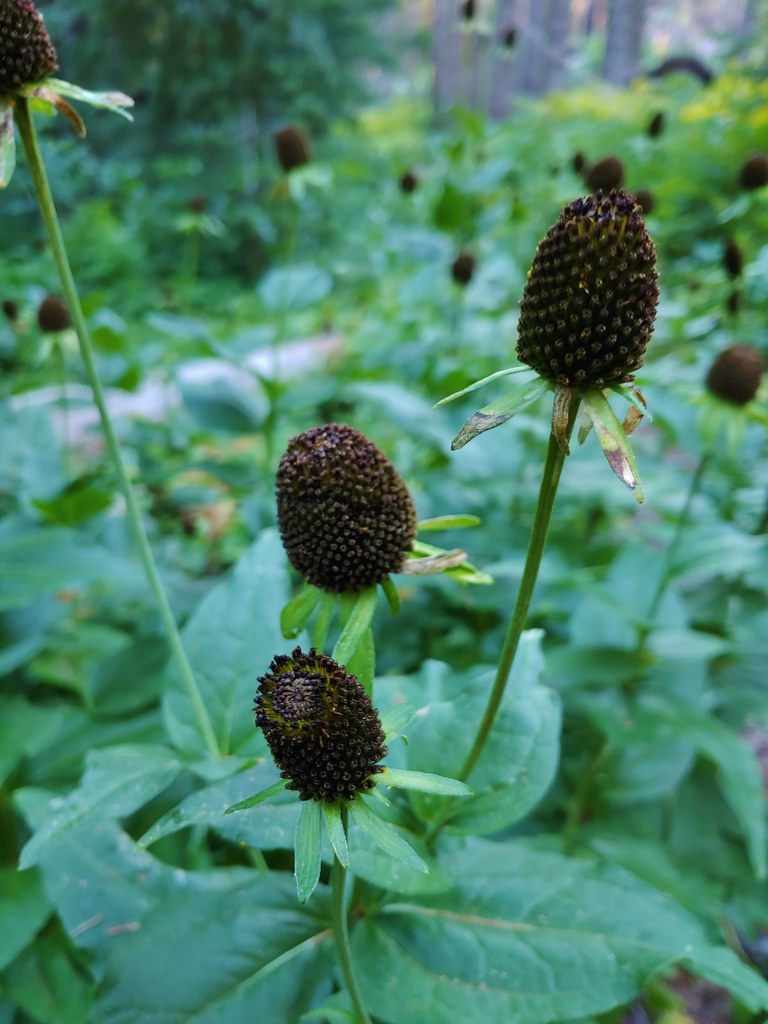
20190901_073350Cone flower

Sullivan had mentioned visiting Wolverine Lake by heading uphill cross country after crossing over the stream but the vegetation here looked pretty thick so we waited until we had climbed a bit beyond the stream and angled back toward the lake.
IMG_8191Cross country to Wolverine Lake.
There were a fair number of trees down from the fire so it wasn’t too difficult to reach the lake, but it was tricky trying to get a good look at it due to the brushy shore.
IMG_8192

It looked like there might have been a better vantage point around the lake to our right, but it wasn’t worth fighting through the brush and fallen trees to try and reach it so we settled for the view we had and headed back to the Olallie Trail. From above, the route down along the creek looked much more appealing and we wound up taking a track much closer to what Sullivan had shown on his map to arrive back on trail. Once we were back on trail we turned right and passed through a patch of thimbleberry bushes encroaching on the trail.
IMG_8195

We emerged from the thimbleberries and rounded a ridge end where the forest became a bit more open and many of the trees had survived the fire.
IMG_8196

IMG_8198

IMG_8204

A sooty grouse caught our attention as it crossed the trail ahead of us.
IMG_8208

IMG_8206

The trail climbed gradually along the hillside and we marveled at the varying effects of the fire and how the forest was in different stages of recovery already.
IMG_8213

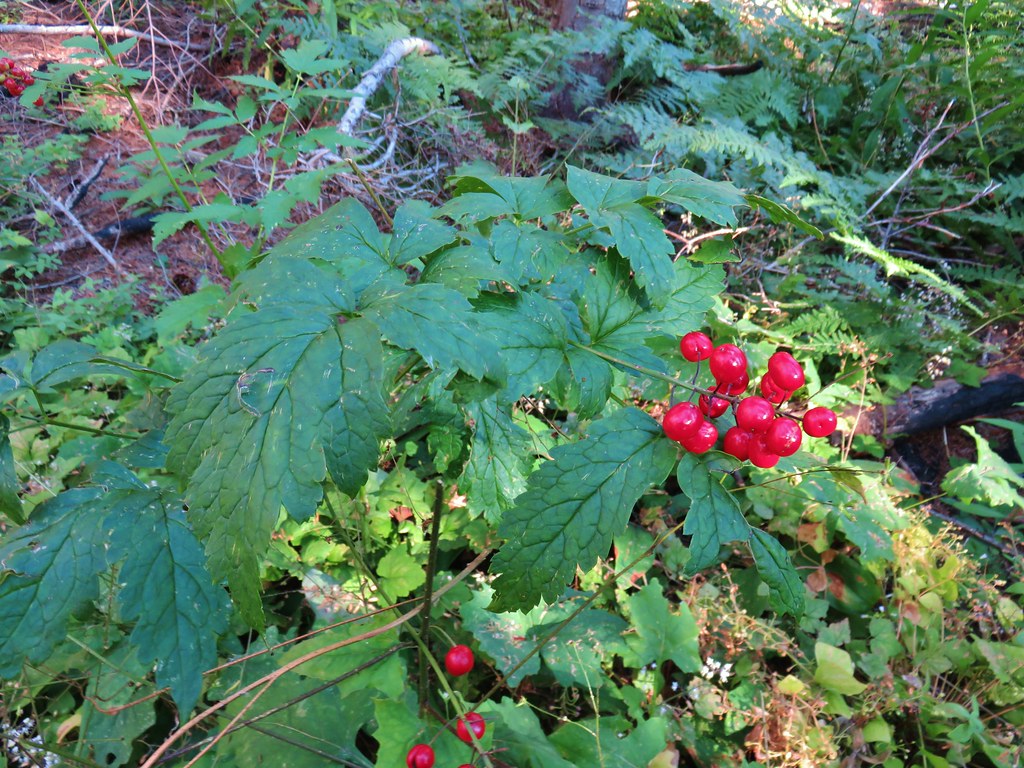
IMG_8215Baneberry

IMG_8217Monkshood

There were also some views that might not have been there if some of the trees hadn’t burned.
IMG_8221

IMG_8201South Sister

IMG_8220Middle and North Sister

IMG_8223Mt. Washington

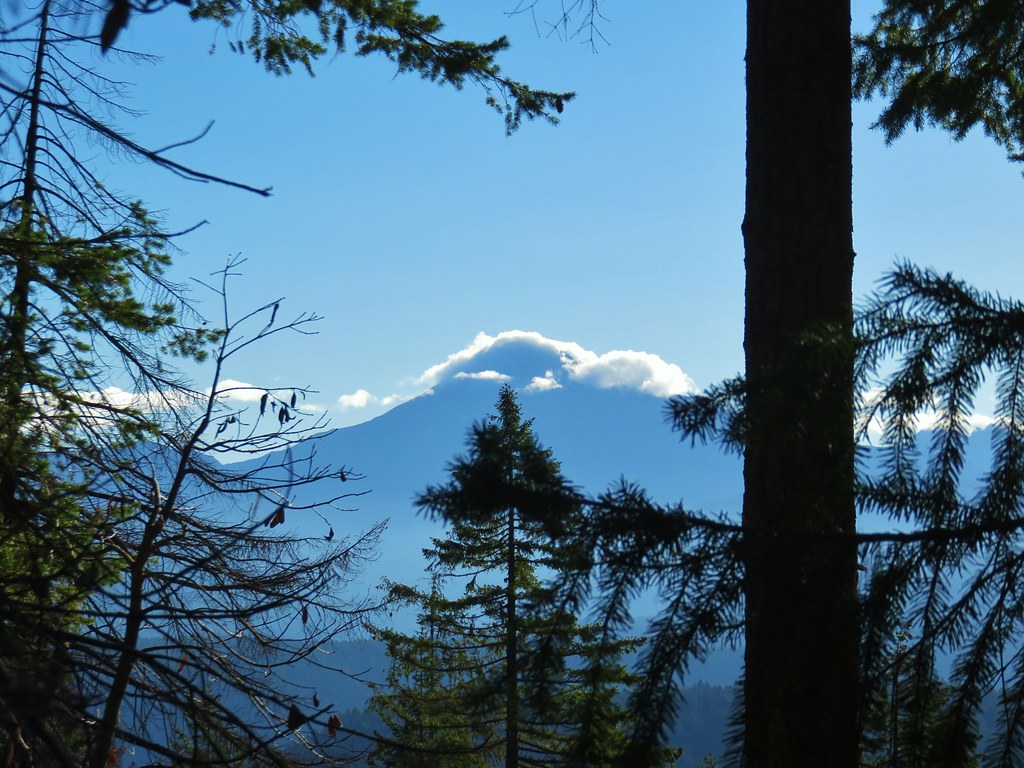
IMG_8226Mt. Jefferson and Three Fingered Jack

The line of clouds obstructing the view of the mountains wasn’t exactly a welcome sight, but we could at least see some of them and it was early so maybe they would eventually burn off.

A little over 2 miles from the trailhead we arrived at a junction in a grassy saddle.
IMG_8228

The Olallie Trail continued straight passing an old guard station site at Olallie Meadows in .9 miles then continuing deeper (and fainter) into the Three Sisters Wilderness eventually ending at Horse Lake (post). We turned right though, onto the Olallie Mountain Trail.
IMG_8230

This trail began with a reasonably gradual climb past a series of meadows where a few late blooming flowers remained.
IMG_8235

IMG_8240Aster and pearly everlasting

IMG_8250

IMG_8252Columbine

IMG_8255

The trail briefly leveled out on top of ridge where the fire had burned intensely in some areas while sparing trees in others.
IMG_8256

IMG_8257

After the brief respite from climbing the trail steepened below the summit of Olallie Mountain and began to wrap up and around its rocky western face.
IMG_8258

IMG_8259

IMG_8260

The tread along the steep hillside here was a little sketchy in part due to the fire but we made our way up to the summit. The remains of the Olallie Mountain lookout tower still stand on the summit having been covered by firefighters to protect it from the blaze.
IMG_8269

IMG_8304

The three hundred and sixty degree view was impressive and would have been more so if not for the presence of clouds to the north and in front of many of the cascade peaks. On top of that our early ascent left the Sun in a less than ideal overhead position for lighting.
IMG_8306_stitchParts of the Cascades from Mt. Jefferson to the NE to Mt. Bachelor to the SE.

IMG_8302Mt. Jefferson was still tangled up in the clouds.

IMG_8300Just a peak at Mt. Washington (which was more than we could see of Three Fingered Jack)
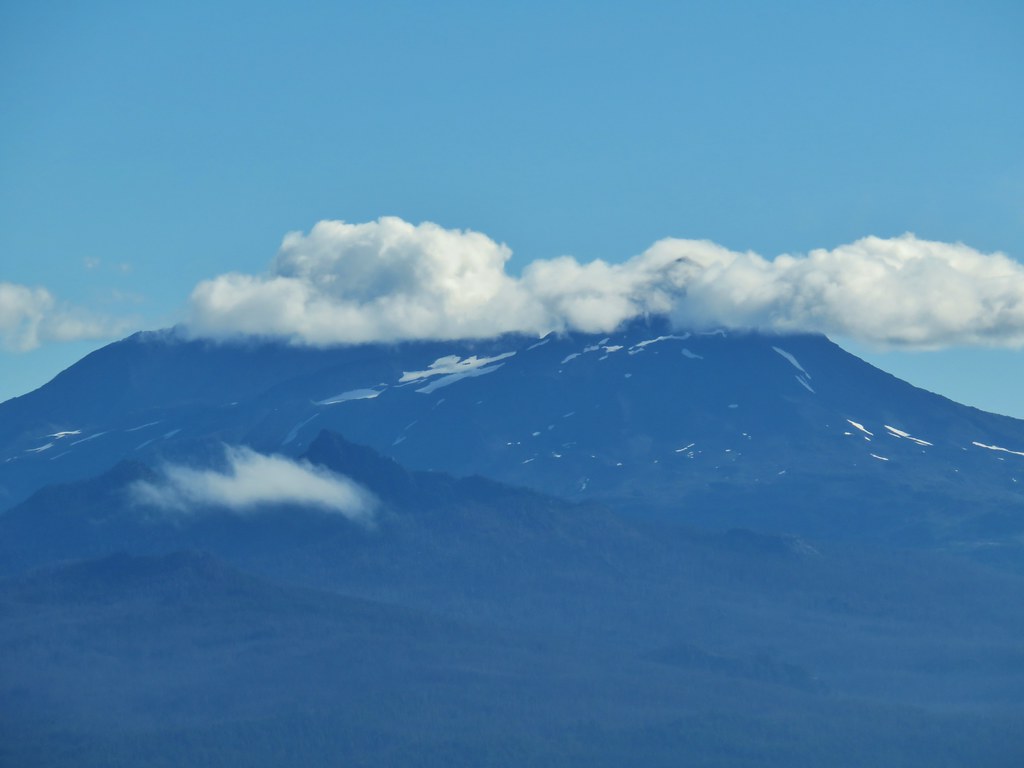
IMG_8297Middle and North Sister behind The Husband
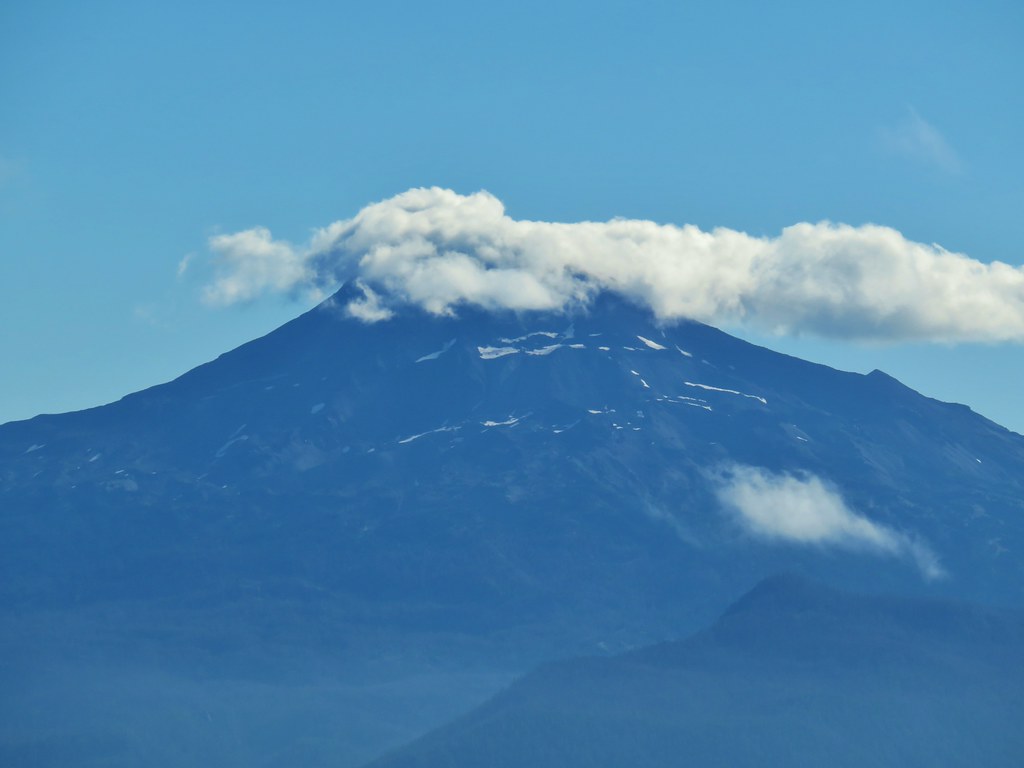
IMG_8296South Sister

IMG_8295Broken Top

Things were a little less cloudy to the south where Cowhorn Mountain (post) and Mt. Thielsen (post) seemed to be cloud free while Diamond Peak wasn’t so lucky.
IMG_8281

IMG_8282Cowhorn Mountain and Mt. Thielsen

IMG_8291Diamond Peak

We were able to identify the cliffs of flat topped Lowder Mountain, our next stop, to the NW.
IMG_8312Lowder Mountain to the left of the tree in the foreground.

IMG_8317Lowder Mountain

After watching the clouds pass by (but not leave) for awhile we headed back down. We had passed a single backpacker on the way up and on the way down we encountered a trio of hikers making their way up. When we got back to the stream below Wolverine Lake we spotted a frog (no wolverines though).
IMG_8331

IMG_8334

We completed our 8 mile hike here and drove back the two miles to the Lowder Mountain Upper Trailhead and parked at a pullout near the trailhead signboard. The signboard announced three trails: the Quaking Aspen, Lowder Mountain, and Walker Creek Trails.
IMG_8337

We weren’t paying close attention as we set off on a trail heading for a wilderness to the left of the signboard.
IMG_8338

IMG_8340

Our first clue that we were on the wrong trail should have been the location of the trail signs on the signboard but away we went following the Quaking Aspen Trail downhill parallel to FR 1993. We had a feeling something might be off but a quick glance at the GPS showed that we were almost to some switchbacks which matched up with Sullivan’s map but we were surprised that they were headed downhill and not up (the one complaint we have about Sullivan’s maps are that they are not topographic so we can’t always tell when a trail is climbing or dropping). We were zoomed in too far to see the other trail behind us that switchbacked uphill. Just after turning on the first of the switchbacks Heather figured it out and got us turned in the right direction but not until we’d covered a third of a mile.

We hiked back uphill to the trailhead and looked at the signboard and area more closely. Sure enough there was another trail and wilderness to the right of the signboard (the side listing the Lowder Mountain and Walker Creek Trails).
IMG_8346

IMG_8355

We now set off on the Lowder Trail and began switchbacking uphill through an old growth forest.
IMG_8356

IMG_8357

After a quarter mile of serious climbing the trail leveled out a bit (and straightened out) as it traversed along a hillside. We soon got a quick glimpse of Olallie Mountain across the valley.
IMG_8359

For the next 1 3/4 miles the trail alternated between meadows and forest before arriving at a junction in one of the meadows.
IMG_8360

IMG_8364Skipper

IMG_8365This reminded us of a torture device.

IMG_8368

IMG_8369

IMG_8372This meadow had a lot of buckwheat.

IMG_8373

IMG_8377Olallie Mountain again.

IMG_8380The lookout tower on Olallie Mountain

IMG_8381Diamond Peak had shed its cloud cover momentarily.

IMG_8384Diamond Peak

IMG_8387

IMG_8386Pollinators got to pollinate.

IMG_8389

IMG_8391

This junction marked the start of the Walker Creek Trail which climbed up through the meadow to the right. This was actually the trail to take in order to reach the viewpoint atop Lowder Mountain.
IMG_8393

The Lowder Mountain Trail continued on straight but beyond the junction is no longer maintained due to “lack of use”.
IMG_8392

A series of 12 switchbacks led steeply up through the meadow and forest to a large meadow atop Lowder Mountain.
IMG_8394The trail heading up through some thimbleberry.

IMG_8397Butterfly

IMG_8405Another skipper

IMG_8412This guy was the size of my pinky.

IMG_8399A few scarlet gilia still in bloom.

IMG_8415Pearly everlasting at the edge of the large meadow.

We followed a well worn path across the broad summit to the edge of the large meadow where it turned right passing along the tree line.
IMG_8419

Like the Lowder Mountain Trail the Walker Creek Trail is no longer maintained beyond the meadow. The clear path along the impressively large meadow is a user trail to the viewpoint above Karl and Ruth Lakes.
IMG_8420

IMG_8421

IMG_8479

IMG_8426

IMG_8427Karl & Ruth Lakes

The clouds were still a bit of an issue but it was now late enough in the day for the lighting to be much better.
IMG_8433Mt. Jefferson and Three Fingered Jack with Horsepasture Mountain (post) in the foreground.

IMG_8431Mt. Washington

IMG_8440North and Middle Sister

IMG_8438South Sister and Broken Top

IMG_8443

We made our way south along the cliffs to reach a view of Mt. Bachelor.
IMG_8453

IMG_8456Mt. Bachelor

In addition to the great views there was an interesting little rock feature that looked a lot like a head of some kind.
IMG_8468

IMG_8469

We took a good break here before heading back. On the return trip we discovered that we had actually spent a decent amount of time losing elevation traversing along the hillside on the way to the Walker Creek Trail junction. It had been so gradual that we hadn’t noticed but it was evident that we were going uphill a lot more than we’d expected once we were back on the Lowder Mountain Trail. There were quite a few butterflies out searching for the remaining flowers which gave us something to focus on (in addition to eating quite a few ripe thimbleberries).
IMG_8496Butterfly with a small crab spider on the next flower head to the right.
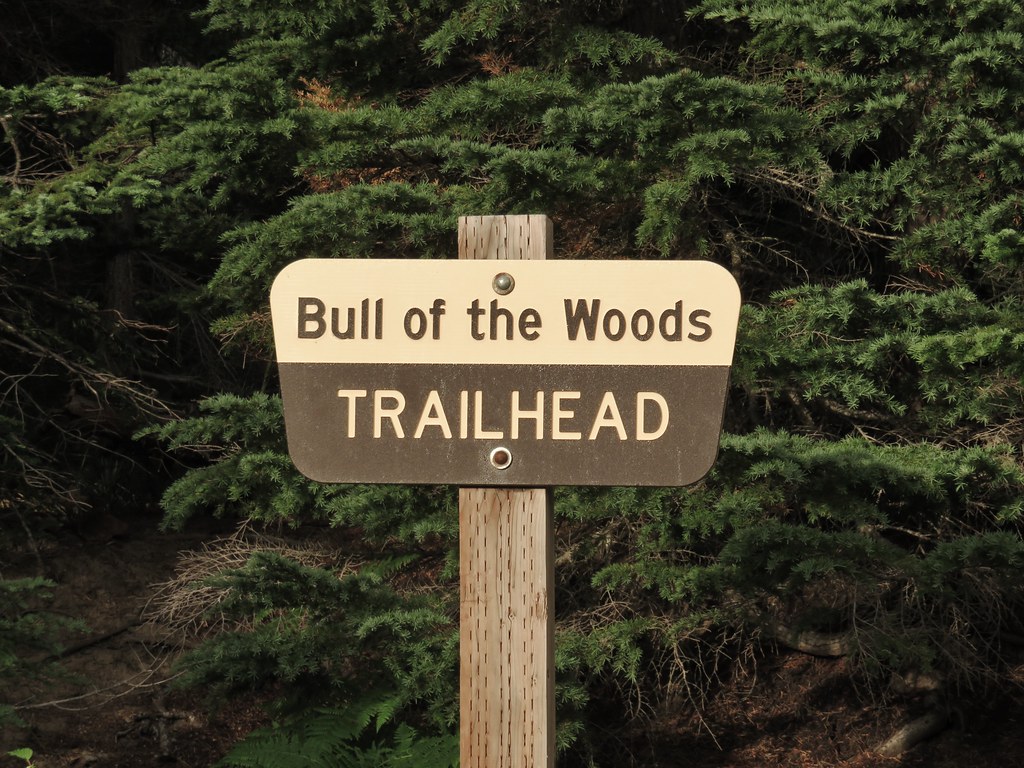
Between taking the wrong trail from the trailhead and wandering around at the viewpoint we managed to turn a 5.6 mile hike into 6.8 miles making our total for the day 14.8 miles. The elevation gains were roughly 1400′ for Olallie Mountain and 900′ for Lowder Mountain. The views were great from both peaks and we were already talking about a return trip earlier in the Summer to see what all the meadows might look like earlier in the year. Happy Trails!

Flickr: Olallie and Lowder Mountains

Categories
Bull of the Woods/Opal Creek Hiking Old Cascades Oregon Trip report

Bull of the Woods Lookout & Pansy Lake – 8/16/2019

**Note a portion of this hike burned in the 2021 Bull Complex.**

For the 5th hike of our vacation we finally got around to one of Sullivan’s featured hikes that we hadn’t done yet, Pansy Lake.  Pansy Lake is located in the Bull of the Woods Wilderness in a basin below the Bull of the Woods Lookout.  In his guidebook Sullivan has you start the hike from the Pansy Lake Trailhead which is just over a mile from the lake. He gives two options, a 2.4 mile out-and-back to Pansy Lake or a 7.1 mile loop past the lake up to the lookout and then back down passing Dickey Lake along the way. Either of these options would have caused us to break our self-imposed rule against driving for more time than we spend hiking due to the driving time to the Pansy Lake Trailhead being roughly 2:45 for us. Fortunately Sullivan also mentions the option of starting at the Bull of the Woods Trailhead for an easier hike to the lookout. The Bull of the Woods Trailhead was about a 15 minute closer drive and it added almost 3 miles to the round trip which provided an acceptable drive/hike ratio.

With our plan in place we set off on the drive which proved to be a bit of an anomaly. The trailhead is located at the end of Forest Road 6340. Where the road was good it was an excellent gravel road but there were a couple of ugly obstacles along the way. The first was a slide that covered the road, half of which was impassable while the spot that could be driven over required a very slow, bumpy crossing (high clearance is probably necessary until it gets cleaned up). This was prior to a fork where the right hand fork (FR 6341) continued to the Pansy Lake Trailhead. After this fork sections of FR 6340 were deeply rutted by channels created by runoff again requiring careful placement of tires. We arrived at the trailhead no worse for wear though and set off on the signed trail.
IMG_6715

IMG_6713

The first few hundred yards were a little brushy but soon the vegetation gave way to a huckleberry filled forest.
IMG_6724

IMG_6725

IMG_6726

IMG_6717

There were ripe berries everywhere and they were big juicy berries too. In fact for most of the day there were ripe berries available and we ate quite a few. We weren’t the only ones feasting on berries though as we counted no less than 13 piles of berry filled bear scat along the trails.
IMG_6734

Although we kept our eyes open for a bear all we ran into on the trail was a rough skinned newt.
IMG_6740

IMG_6743

The Bull of the Woods Trail climbed gradually as it passed below North and South Dickey Peaks.
IMG_6736

A little over 2.25 miles from the trailhead we arrived at a junction with the Dickey Lake Trail. We would be coming back up that trail later after visiting Pansy and Dickey Lakes.
IMG_6746

As the trail continued to climb we were treated to a couple of different views. First was to the west across the Pansy Lake Basin.
IMG_6750

A little further along, when the trail crested the ridge, we got a look a Mt. Hood which was rising above some clouds.
IMG_6754

The trail left the ridge for a bit and then regained it where the view also included Mt. Jefferson to the SE.
IMG_6763Mt. Hood

IMG_6772Mt. Jefferson

The trail then followed a narrow rocky ridge passing below the lookout and coming up to it from the other side, 3.5 miles from the trailhead.
IMG_6770

IMG_6777

IMG_6785

IMG_6789

A lizard scurried into the rocks beneath the lookout as we approached. Aside from a bit of morning haze the view was great. The clouds to the north hid the Washington volcanoes from sight but Mt. Hood stood out just fine.
IMG_6787

IMG_6806

To the south Mt. Jefferson was cloud free and so was Three Fingered Jack for a bit. Mt. Washington and the Three Sisters played peek-a-boo through the clouds though.
IMG_6795

IMG_6796Three Fingered Jack

IMG_6846Mt. Washington and the Three Sisters
In the basin to the NE Big Slide Lake (post) was visible.
IMG_6801

IMG_6812

To the SW the flat topped Battle Ax Mountain (post) rose up above the surrounding peaks.
IMG_6790

We sat below the lookout for awhile enjoying the cool morning air as we watched the procession of clouds around us. After our break we headed steeply downhill via switchbacks for just over half a mile to the Mother Lode Trail.
IMG_6851

IMG_6855Bull of the Woods Trail ending at the Mother Lode Trail.

We turned right onto the Mother Lode Trail.
IMG_6856

We continued to descend as we followed this trail for approximately 1.25 miles, passing a viewpoint of Mt. Jefferson shortly before arriving at another junction.
IMG_6858

IMG_6864

IMG_6873

We turned right again, this time onto the Pansy Lake Trail.
IMG_6875

More downhill hiking ensued as we dropped into the basin. The trail was a bit rockier than the others and passed over a couple of talus fields.
IMG_6876

We’re always on the lookout for pikas and have had quite a bit of luck in spotting them this year, enough so that we have started calling it “the year of the pika”. As we came to the second section of talus Heather spotted one of the little “rock rabbits” scurrying along the hillside.
IMG_6879

IMG_6881

After talking to the pika (I don’t know why but we tend to have a lot of one sided conversations with the wildlife) we continued on. Shortly before reaching the lake we found a couple of ripe thimbleberries, they were delicious.
IMG_6883

IMG_6885First look at Pansy Lake.
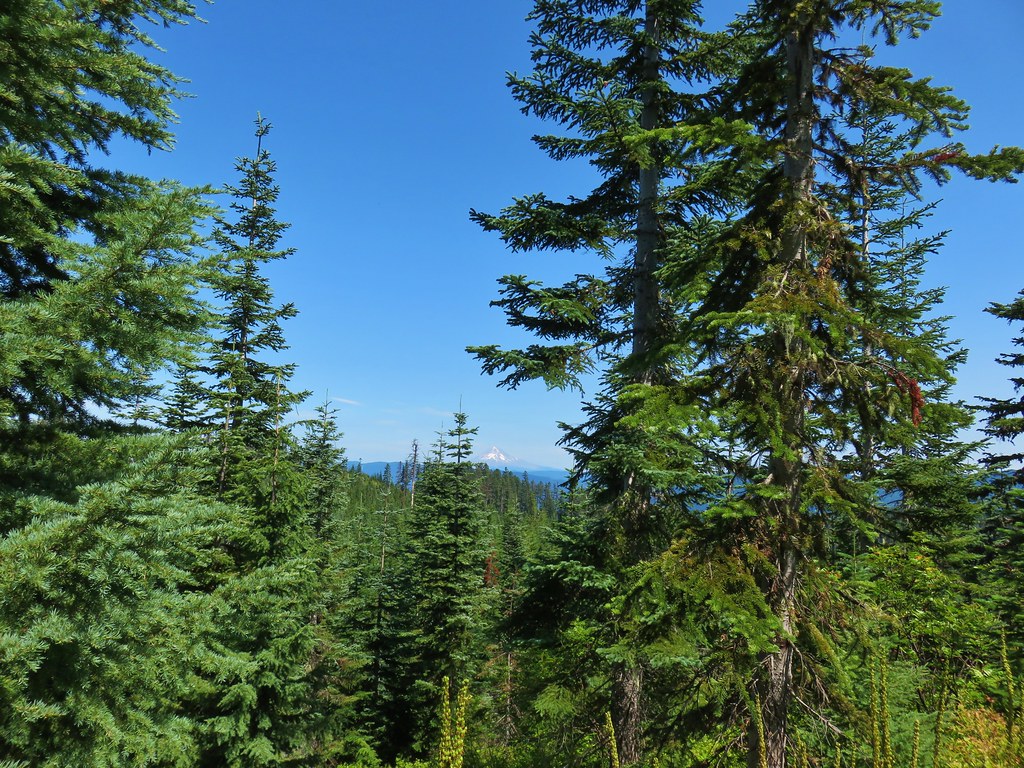
20190816_102219

We passed by the lake and reached a junction .8 miles from the Mother Lode Trail. We turned left and quickly arrived at the lake where we were a bit surprised that we were the only people there.
IMG_6888

IMG_6890

We wandered around the lake passing through numerous empty campsites before finding a little log to sit on by the lake where we could watch the dragonflies and ducks.
IMG_6894

IMG_6898

IMG_6891

IMG_6902

After a short break we returned to the trail junction and turned left continuing on the Pansy Lake Trail for another .2 miles to the Dickey Lake Trail junction.
IMG_6907

It was time to climb now and we headed up the Dickey Lake Trail which climbed relatively steeply at times. After .6 miles we came to a spur trail on the right which led down to Dickey Lake.
IMG_6910

IMG_6912

The lake was quite a bit smaller than Pansy Lake and a lot brushier. After getting a look we returned to the Dickey Lake Trail and continued the climb back up to the Bull of the Woods Trail. A bit beyond the lake the trail passed through a little meadow with some remaining wildflowers and a few more thimbleberries.
IMG_6913

IMG_6918

IMG_6921

IMG_6924

We gained approximately 800′ over the next .8 miles before reaching the junction. There was a few more downed trees along this trail than we had encountered on any of the others but none of them were too troublesome.
IMG_6925

We turned left onto the Bull of the Woods Trail and followed back to the car getting one last look at Mt. Hood along the way.
IMG_6935

With the extra exploring around the lakes we wound up doing 10.6 miles (for the third time in the week). We both thought that the elevation gain doing the loop from the Pansy Lake Trailhead would have been quite a bit worse so the extra miles were worth it in our minds, plus it gave us that much more time to eat berries. Happy Trails!

Flickr: Pansy Lake and Bull of the Woods Lookout

Categories
Clackamas Hiking Old Cascades Oregon Trip report

Old Baldy and Tumala Mountain – 8/15/2019

Hike number four of our vacation week was chosen in an attempt to avoid the sound of gunfire which seems to be extremely prevalent along the Forest Service roads near Estacada. We figured our best chance to minimize that unpleasant noise would be a mid-week early morning hike so when the forecast for the area called for sunny skies Thursday we jumped on the chance and headed to the Old Baldy West Trailhead. Our plan for the day was to start by hiking up to the summit of Old Baldy then returning past the Trailhead and heading SE to the summit of Tumala Mountain, a rare double out-and-back.

A bonus for this hike are the paved roads to the trailhead which is a small pullout near some boulders.
IMG_6497

Reminders of the penchant for shooting guns in the area were everywhere.
IMG_6499

Just beyond the trailhead we met the Old Baldy Trail where we went left toward Old Baldy. The trail briefly follows the Forest Road before they veer away from one another.
IMG_6500

The Old Baldy Trail runs right along the border of the Salmon-Hucklberry Wilderness through a nice quiet (on this day) old growth forest. It was too late for the Rhododendron bloom which happens in early summer but there was a great variety of mushrooms to look at as we climbed up and down for nearly 3 miles to a cliff top viewpoint.
IMG_6503

IMG_6515

IMG_6518

IMG_6521

IMG_6525

IMG_6527

IMG_6529

IMG_6531

IMG_6536

20190815_072114

IMG_6538

IMG_6539

IMG_6541

IMG_6547Wildcat Mountain (post) and Mt. Hood

The sunny forecast appeared to be being threatened by some encroaching clouds as we continued on from the viewpoint.
IMG_6553

IMG_6561

More varieties of mushrooms followed as we made our way toward Old Baldy.
IMG_6557

IMG_6559

IMG_6576

The final pitch up Old Baldy was a steep one as the trail launched straight uphill to the site of a former lookout tower.
20190815_081555

IMG_6581

A thin layer of fog had moved in over the mountain, but that didn’t matter here because there are no longer any views except for back down through the trees.
IMG_6582

After catching our breath at the summit we headed back the 3.8 miles to the trailhead, stopping again at the viewpoint to note the creeping clouds as they moved east over the Eagle Creek Valley (post).
IMG_6585

We walked past the spur to the trailhead and ignored the unmarked Eagle Creek Cutoff Trail that descended to the left.
IMG_6605

The Old Blady Trail quickly launched uphill briefly entering the Salmon-Huckleberry Wilderness.
IMG_6606

After a short but extremely steep climb the trail leveled out for a bit. That was both good and bad news because it was only 1.7 miles from the trailhead to the top of Tumala Mountain but we needed to gain nearly 800′ so every step that wasn’t going uphill meant that the ones that did would need to be that much steeper. Just for kicks the trail dropped about 80′ to a saddle before starting abit of a more gradual climb to a junction with the Fanton Trail.
IMG_6617Huge mushroom along the downhill.

IMG_6620

IMG_6624Fanton Trail coming up from the right.

The trail did give back a little as we began finding ripe huckleberries to snack on.
IMG_6625

Approximately 1.3 miles from the trailhead we ignored a semi-signed trail to the left that went to Twin Springs Campground.
IMG_6631

We stayed right climbing briefly along a narrow rocky ridge then beneath a rock outcrop to a rocky road bed where we turned uphill.
IMG_6635

IMG_6645

IMG_6649

There were a few flowers clinging to the cliffs along the road.
IMG_6653

IMG_6654

20190815_110407

A short road walk brought us to a tower just below the summit.
IMG_6655

From the summit we had a pretty good view of Mt. Hood although the clouds had begun to get in the way.
IMG_6657

IMG_6661

To the south though we had a clear view of the more distant Mt. Jefferson.
IMG_6662

IMG_6665

IMG_6671Three Fingered Jack and the Three Sisters even further south.

IMG_6673Looking west into the cloud covered Willamette Valley.
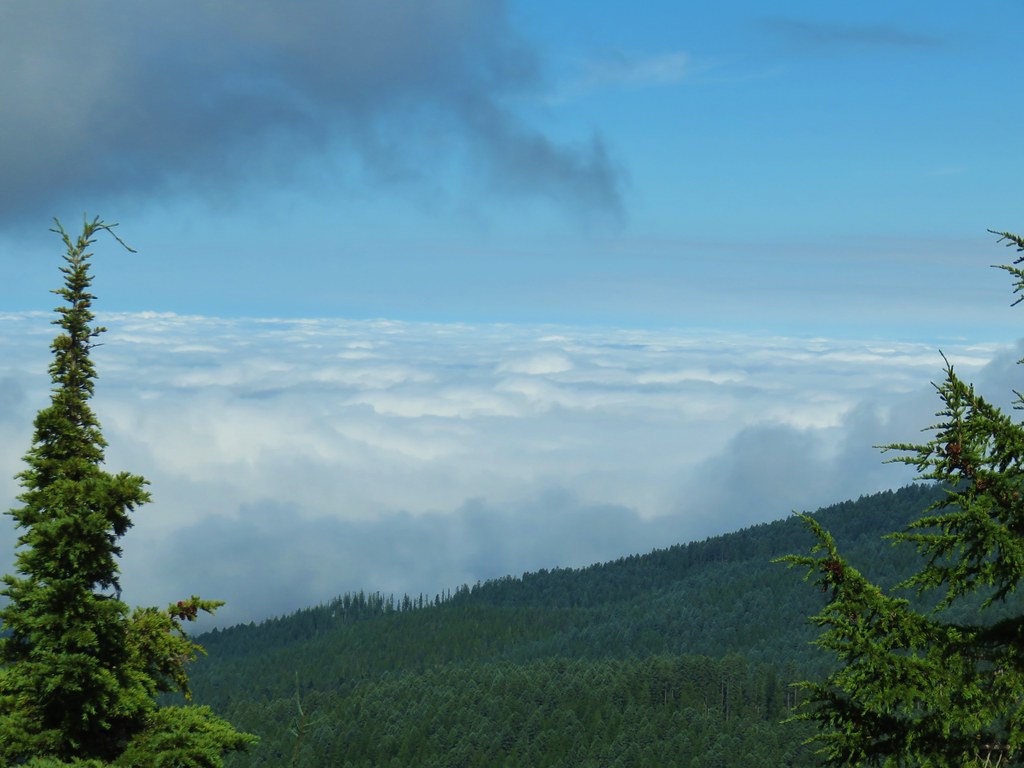
IMG_6679

We joined a chipmunk and took a snack break before exploring the old lookout site.
IMG_6665

IMG_6698Stairs to the former lookout.

IMG_6702Mt. Hood from the former lookout site.

By the time we began our descent Mt. Hood had vanished behind the clouds. Our timing had been pretty good, not only for the views but we made it back to our car without seeing another person or hearing a single gunshot.

The hike was 10.6 miles and approximately 2200′ of cumulative elevation gain. Skipping the viewless summit of Old Baldy would shed 1.8 miles and a couple hundred feet of elevation and only going to one viewpoint instead of both would lower the numbers even further. It was a really nice hike so hopefully the reputation of the area doesn’t scare hikers off. Happy Trails!

Flickr: Old Baldy & Tumala Mountain

Categories
Clackamas Hiking Old Cascades Oregon Trip report

Baty Butte, Skookum Lake, and Thunder Mountain – 7/26/2019

**Note the 2024 Sandstone Fire burned a portion of this hike.**

Sticking with our Matt Reeder inspired vacation, on Thursday we selected a hike featured in both his “101 Hikes in the Majestic Mount Jefferson Region” and “Off the Beaten Trail” second edition. In the latter he doesn’t describe the extended hike to Baty Butte. We started our hike at the Thunder Mountain Trailhead where, just as at the Pine Ridge Trailhead, we were greeted by mosquitoes.
IMG_4576Spur road leading to the trail from the pullout.

IMG_4580Signage at the end of the closed spur.

The trail began climbing almost immediately via a switchback that passed us through a thimbleberry and devil’s club covered hillside.
IMG_4581Thimbleberry crowding the trail.

IMG_4582Devil’s club along the trail. We each had our hands brush against some and it doesn’t feel pleasant.

IMG_4587Lupine and paintbrush in the thimbleberries as the trail enters the forest.
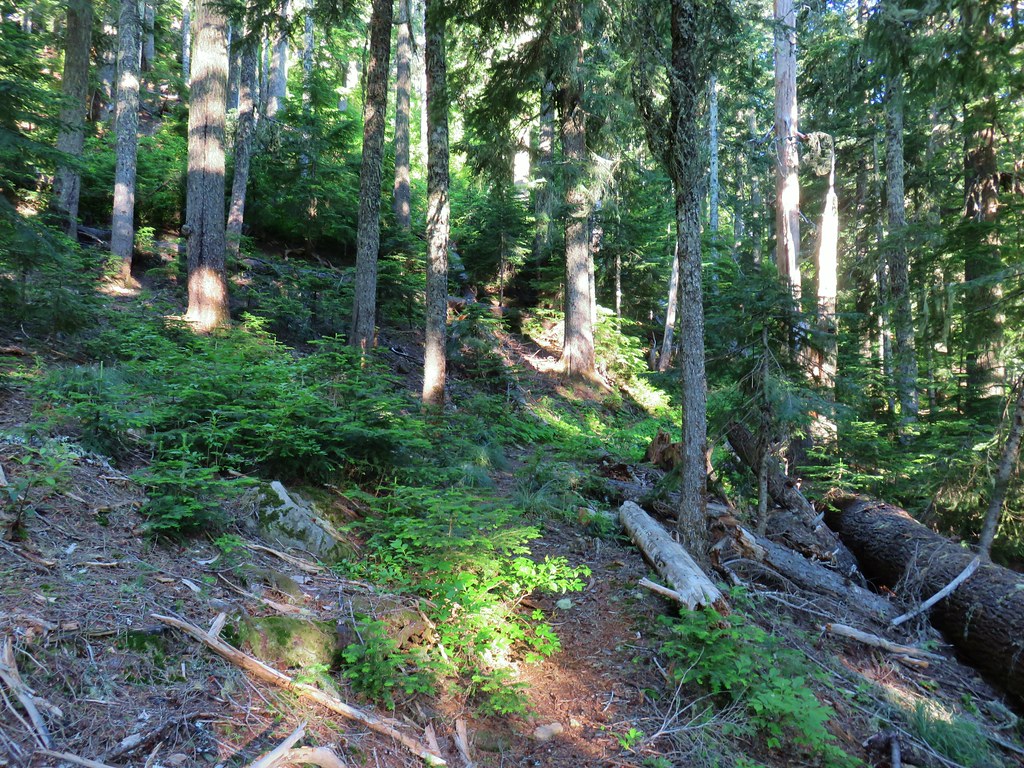
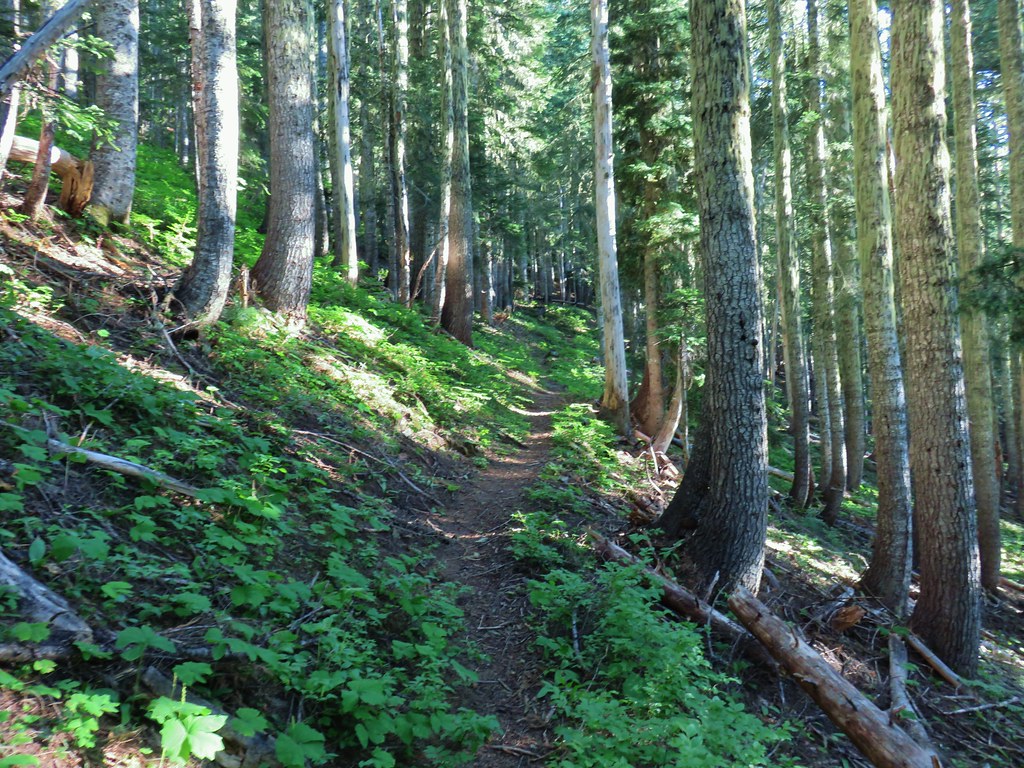
After the initial battle with the brush the trail entered the forest where some old growth was present and the trail much clearer.
IMG_4590

IMG_4602

IMG_4600It looked like these two trees fell out of the same hole but in different directions.

IMG_4609Anemone and queen’s cup

IMG_4612Beargrass and huckleberry bushes.

After climbing for a mile we reached a viewpoint at a switchback with a view of Mt. Jefferson.
IMG_4616

IMG_4618Schreiner Peak in front of Mt. Jefferson.
Another .2 miles of climbing along a wildflower dotted ridge brought us to a junction just below the summit of Thunder Mountain.
IMG_4621

IMG_4626Small sign on the tree marking the trail to Thunder Mountain’s summit.
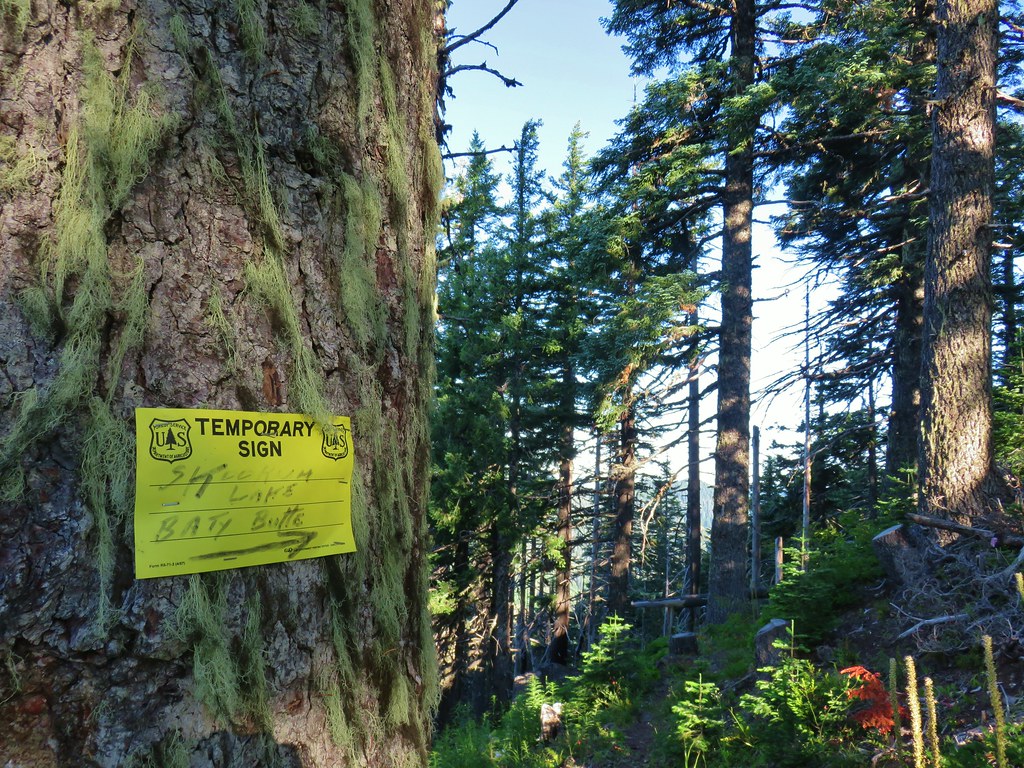
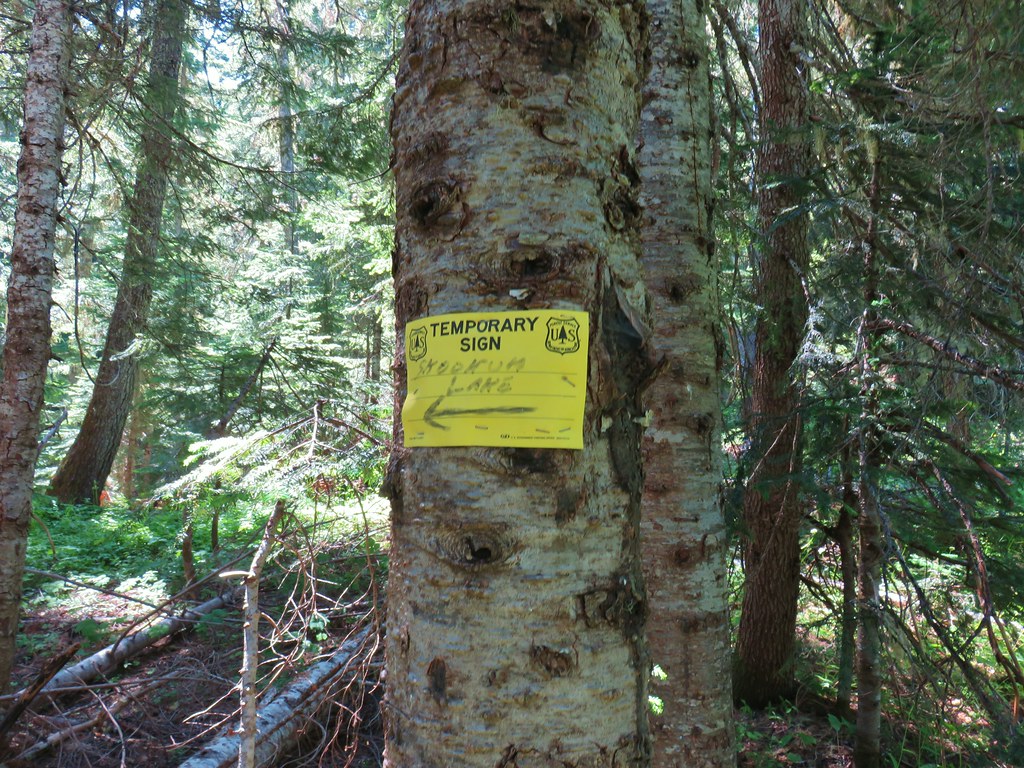
We decided to save Thunder Mountain for the return trip due to the position of the Sun and the presence of quite a bit of haze. We followed the pointers on a temporary sign for Skookum Lake and Baty Butte.
IMG_4628

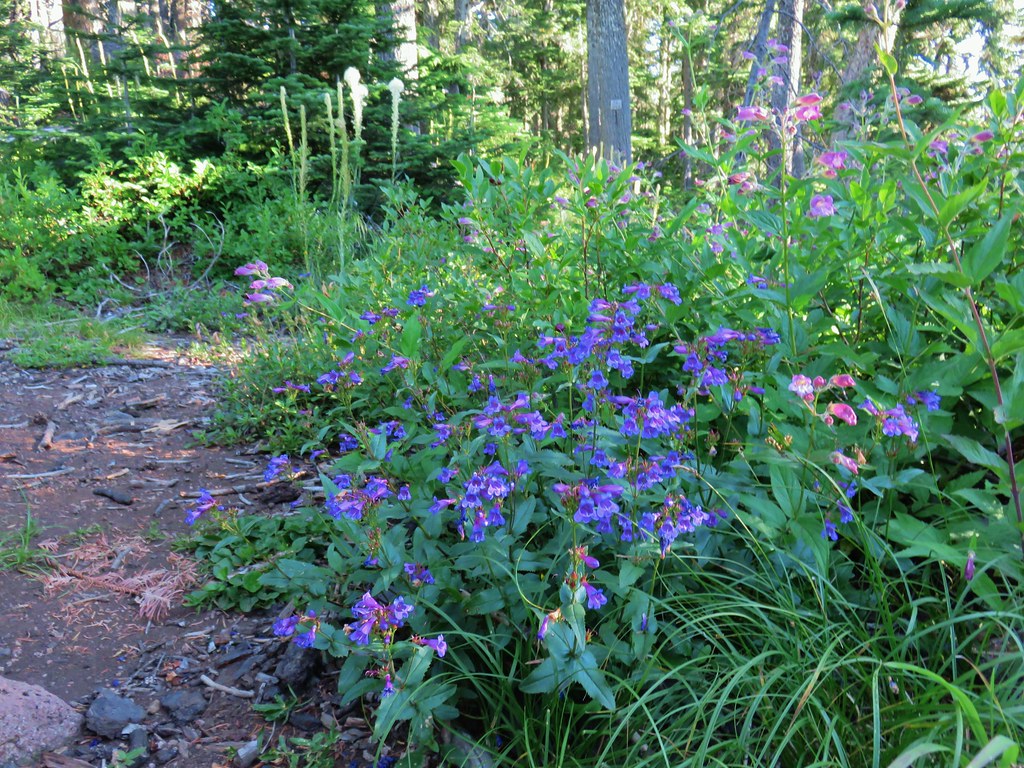
The Skookum Lake Trail began to descend along a steep hillside that looked to have had an excellent wildflower display just a week or two earlier. As it was there were still a decent number of flowers in bloom.
IMG_4631Columbine

IMG_4635Washington lilies

IMG_4647Penstemon

IMG_4648Assorted flowers

20190726_075502Washington lilies

IMG_4650Oregon sunshine

20190726_075546Scouler’s bluebells

IMG_4653Columbine and a couple different types of penstemon.
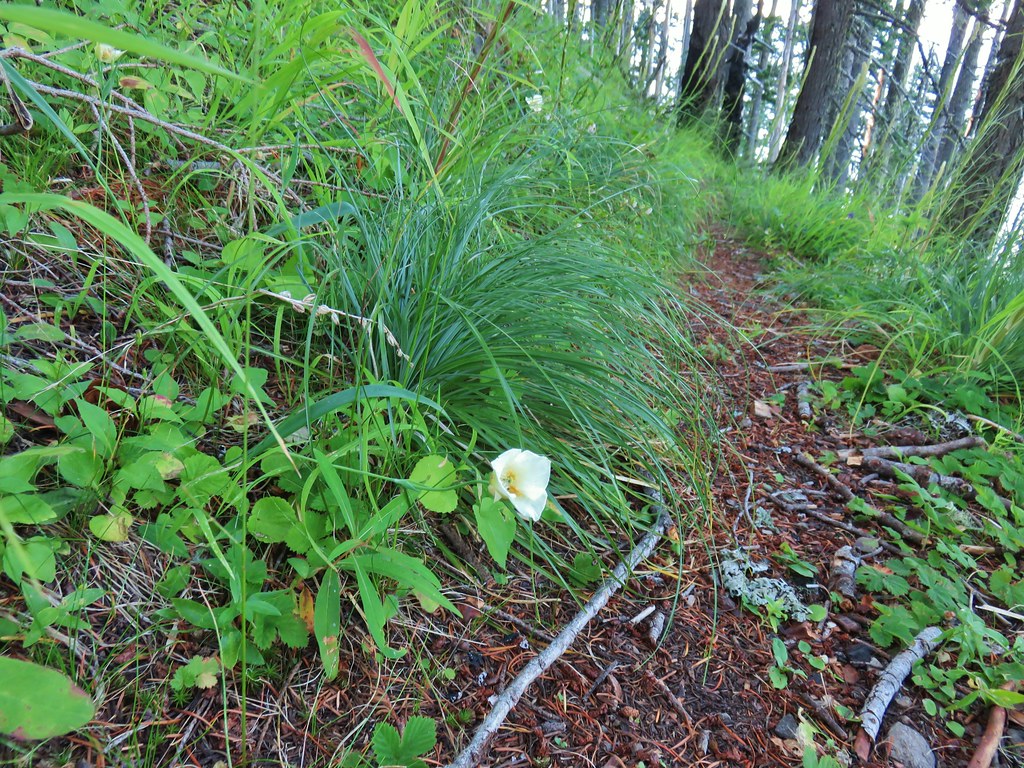
IMG_4663Cat’s ear lily

IMG_4666Lupine

20190726_080627Pyrola

The trail left the wildflowers as it made a horseshoe shaped turn into thicker trees.
IMG_4671Skookum Lake Trail below coming out of the horseshoe turn.

Approximately a mile from the Thunder Mountain junction we passed a rocky viewpoint where large basalt boulders were jumbled along the hillside.
IMG_4934

IMG_4935

We didn’t stop to check out the view until our way back by, but there was a decent view of Mt. Hood and through the trees we could make out Mt. Rainier.
IMG_4931

IMG_4933Mt. Hood

IMG_4938Mt. Rainier

The trail descended another half mile beyond the rocks before leveling out along a meadow.
IMG_4675The trail skirts a talus slope above the meadow.

IMG_4681Finally leveling out by the meadow after losing approximately 700′.
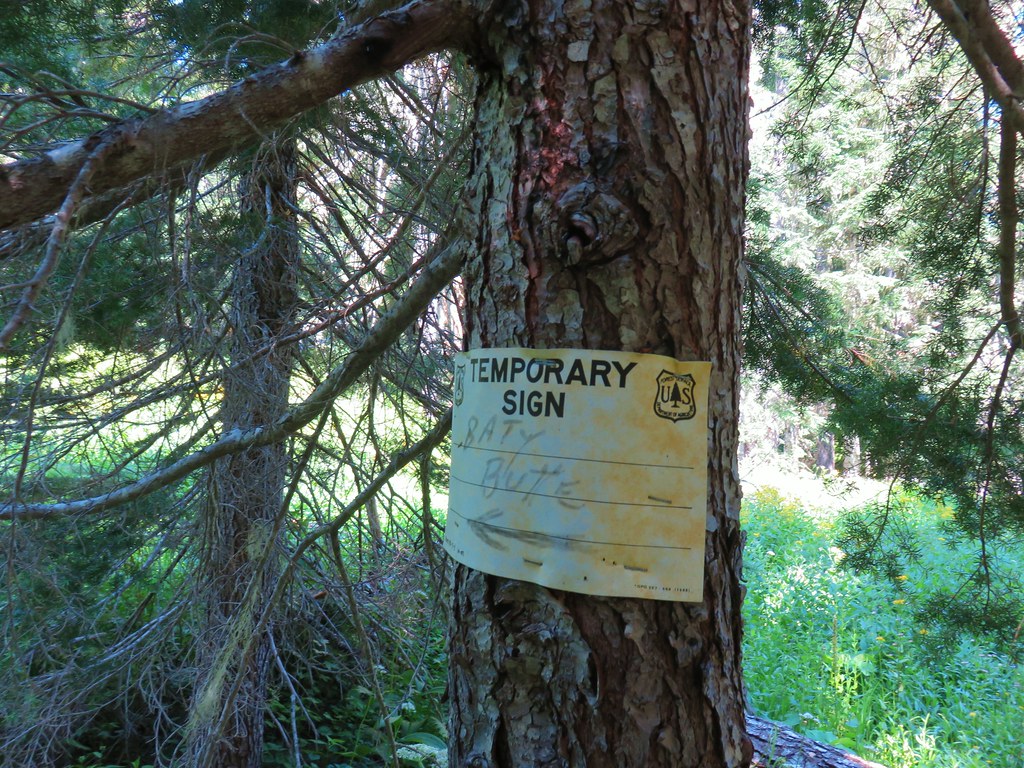
The meadow is also the site of the junction with the abandoned Baty Butte Trail which was marked by a sad little rock cairn and tattered flagging along with an easy to miss temporary sign.
IMG_4685

IMG_4889I missed the sign until we had come back and started down the Skookum Lake Trail.

There were a few mosquitoes patrolling the meadow so we didn’t linger long but we did stick around long enough to notice several types of flowers still blooming.
IMG_4686Tall bluebells

IMG_4687The yellow might be a groundsel.

IMG_4689Aster

The tread of the trail was difficult to make out but there was some flagging on the far side and a faint path to it.
IMG_4684

Beyond the meadow the trail became a bit more obvious as it passed through the trees. Occasional flagging assisted in keeping us on track.
IMG_4691

IMG_4693

The trail climbed a bit before arriving at an old roadbed .4 miles from the meadow.
IMG_4695

The road was a casualty of the 1996 storms that caused flooding in Oregon and washed out much of the Fish Creek road network. The roadbed is now more of a wildflower garden. We turned right onto the road following a faint path through the flowers.
IMG_4697

Shortly after setting off on the road there was a nice view of Mt. Hood to the north.
IMG_4698

IMG_4700

This was by far the most enjoyable stretch of old roadbed we’ve been on. The wildflowers were profuse and there were dozens of butterflies flying about. It was the tail end of the flowers but they were still very impressive.
IMG_4705Paintbrush, penstemon and lupine

IMG_4710

IMG_4711

IMG_4717

IMG_4721Mostly past lupine

IMG_4722

IMG_4723

IMG_4725

IMG_4732Several butterflies on Oregon sunshine.

IMG_4735

IMG_4742Scarlet gilia

IMG_4745Fireweed

IMG_4753

IMG_4757

At about the .4 mile mark another old road joined from the right which wasn’t a problem on the way to Baty Butte but it is worth noting because coming from the other direction it looked like it might be easy to continue straight on the wrong roadbed.
IMG_4840Left is the wrong way on the return, the correct route is to the right through the brush.

IMG_4841Flagging marking the correct path.

Near the three quarter mile mark on the road we passed some rock out crops and a talus slope where we spotted a pika and some golden-mantled ground squirrels.
IMG_4778

IMG_4768

IMG_4772

IMG_4773

Shortly after passing along a narrow ridge the road arrived at the base of Baty Butte.
IMG_4784

IMG_4787

The road continued around the butte to the left but the Baty Butte Trail headed uphill amid some small trees.
IMG_4790Baty Butte Trail to the right.

The trail climbed around the side of the butte and showed some signs of recent trail maintenance.
IMG_4793

IMG_4795

After .4 miles on the trail, as it began to curve around a ridge, we turned uphill on a scramble trail.
IMG_4797Baty Butte Trail starting to curve around the ridge.

IMG_4798Scramble route up the ridge.

It was a steep quarter mile climb up the ridge which devolved into a narrow rocky spine toward the top.
IMG_4800Looking down from the start of the spine.

IMG_4826

IMG_4804

It required the use of our hands to navigate this and we stopped at a wide (for the ridge) spot. From here it appeared that the number of trees increased to a point that would make continuing even more difficult.
IMG_4809

From this viewpoint we had a view of Mt. Jefferson and the Three Sisters.
IMG_4815

IMG_4820Mt. Jefferson

IMG_4821Three Fingered Jack, Mt. Washington, and the Three Sisters.
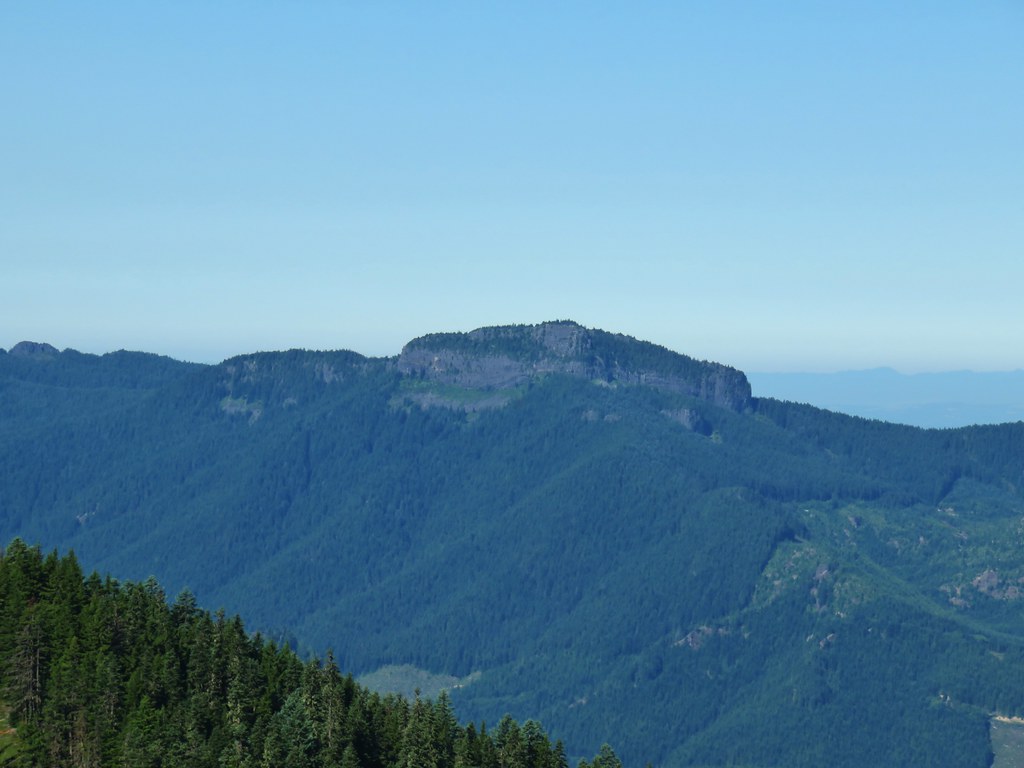
There was also an excellent view of Table Rock and Rooster Rock in the Table Rock Wilderness (post).
IMG_4810

IMG_4813Rooster Rock is the formation to the far left.
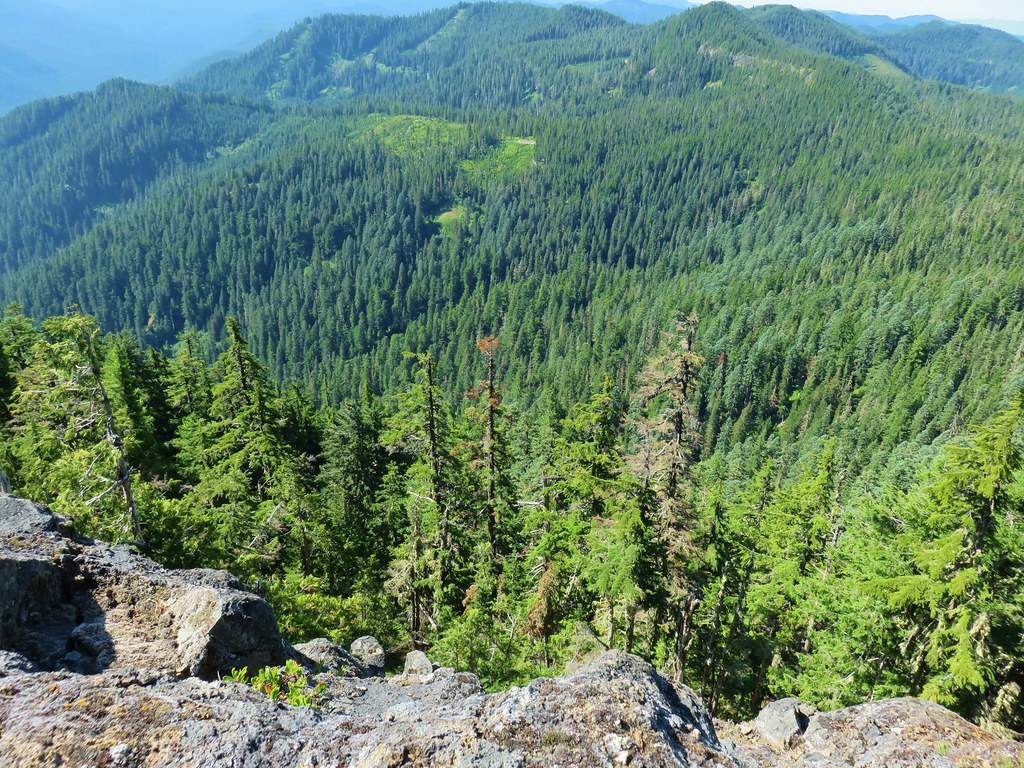
IMG_4823Looking down from Baty Butte.

After a brief rest we headed back eager to see more of the butterflies and flowers along the road.
20190726_104423

20190726_104410

IMG_4854

20190726_105330Orange agoseris

IMG_4856

IMG_4860Pearly everlasting

IMG_4861Penstemon

We also got to sample a few ripe strawberries.
20190726_104630

The trail heading off of the road was easier to spot than it had been at the meadow.
IMG_4873

Back through the meadow we went to the Skookum Lake Trail.
IMG_4877Monkeyflower along the trail.

IMG_4887Crab spider on aster.

We turned left following the pointer for Skookum Lake.
IMG_4890

The Skookum Lake Trail descended for three tenths of a mile to Skookum Lake.
IMG_4891

IMG_4893Rhododendron along the Skookum Lake Trail.
IMG_4901

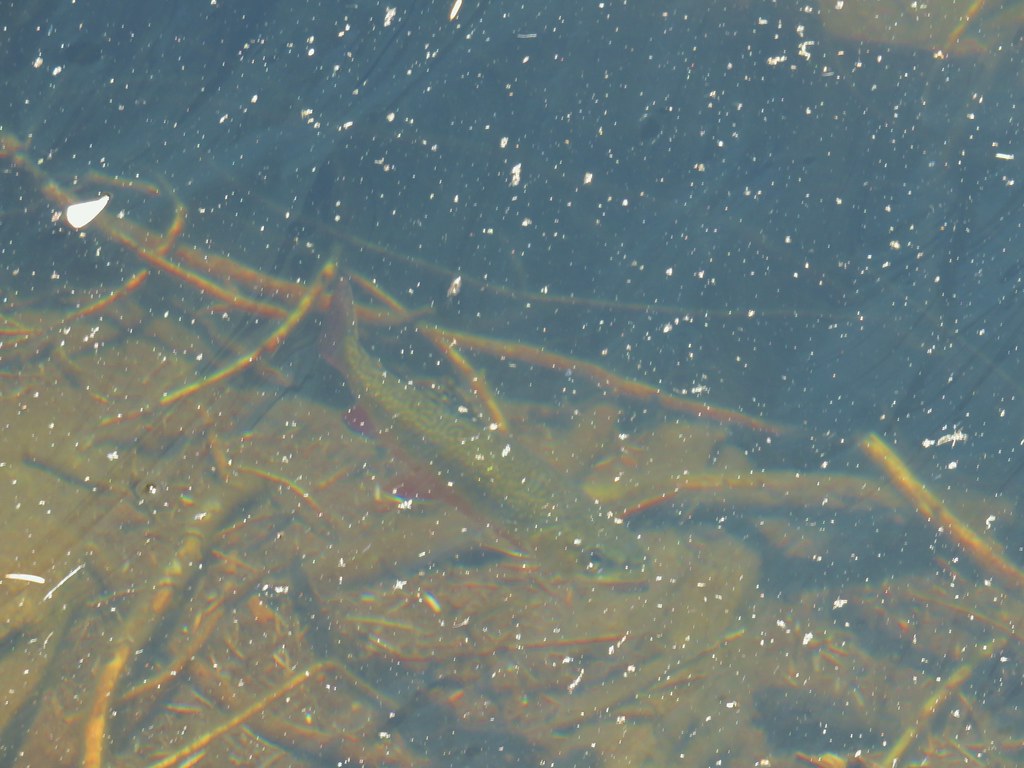
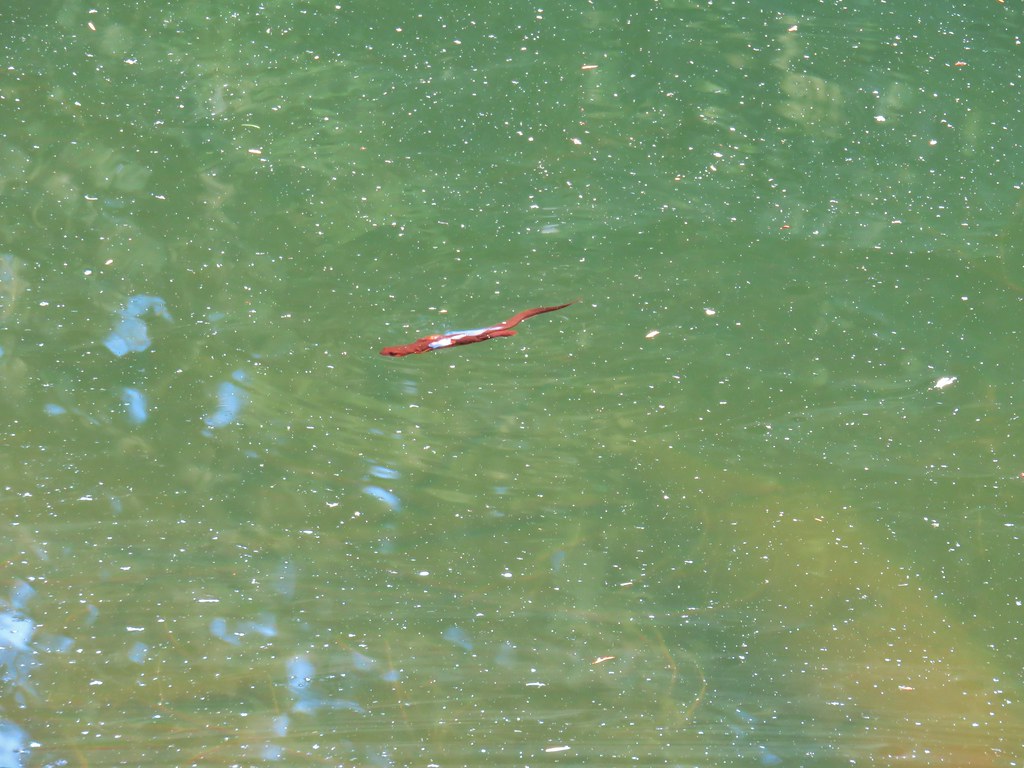
The little lake was full of activity with butterflies flying along the shore and rough skinned newts floating lazily in the water. Trout were also visible swimming in the shallows.
IMG_4904

IMG_4907

We followed the trail along the lake shore to the Skookum Lake Campground.
IMG_4910

IMG_4912

IMG_4915

A forest road used to provide access to the primitive campground. It still sees some use though as the litter left in a bucket near the picnic table showed.
IMG_4916

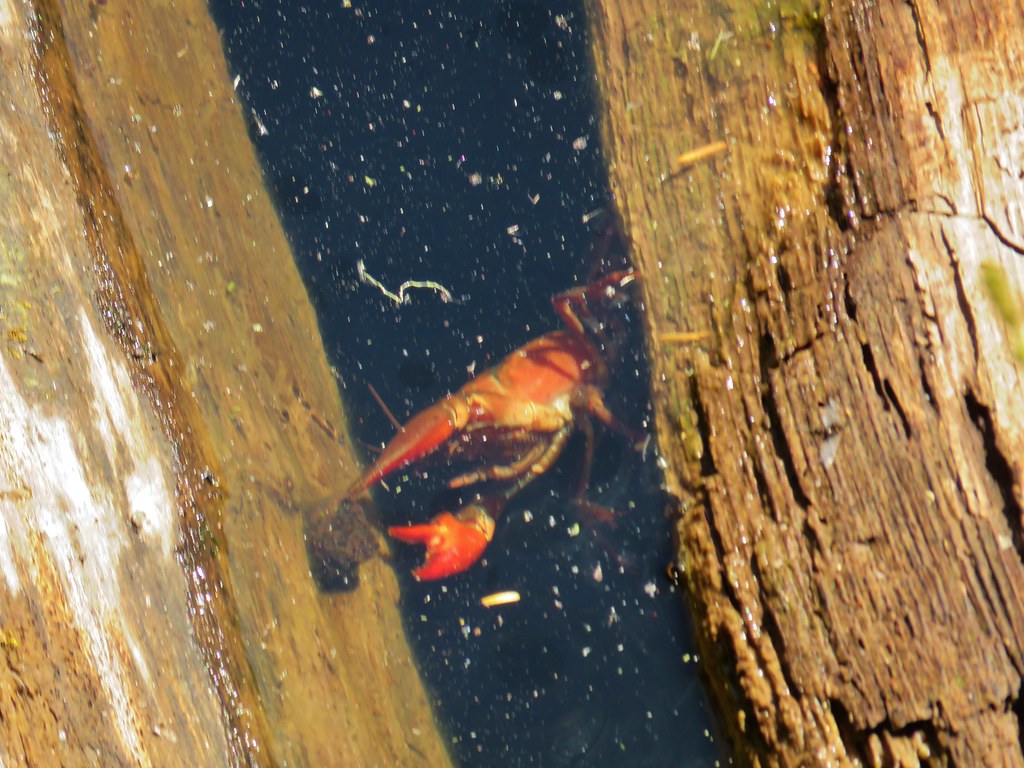
As we headed back along the lake Heather spotted a crawdad on a log.
IMG_4921

IMG_4923

IMG_4925

After watching the crawdad for a bit we climbed back up to the junction with the Baty Butte Trail and then made the steep climb back up to the Thunder Mountain spur trail where we turend left.
IMG_4939Small sign on a tree marking the trail to the summit of Thunder Mountain.

It was just a tenth of a mile climb to the site of the former lookout tower at the summit.
IMG_4941

IMG_4942

From the summit we could again see Mt. Jefferson but now we also had a view north to Mt. Hood, Mt. St. Helens, Mt. Rainier, and Mt. Adams.
IMG_4945The view north.

IMG_4947Mt. St. Helens

IMG_4949Mt. Rainier and Mt. Adams beyond Fish Creek Mountain (post).
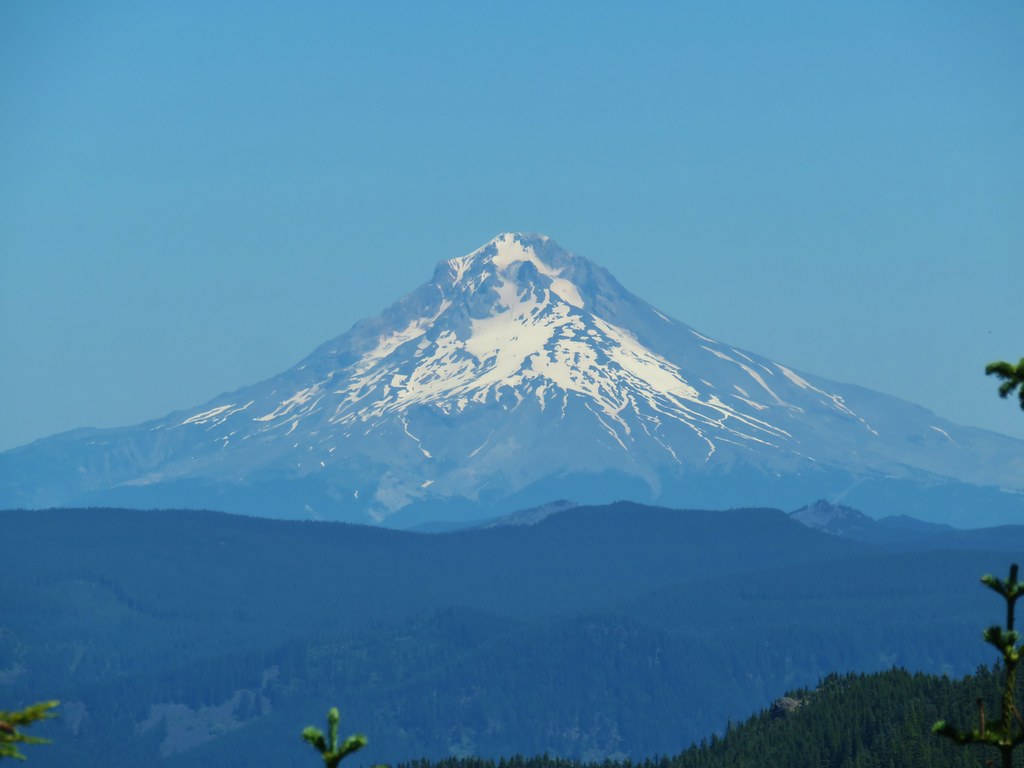
IMG_4967Mt. Hood

IMG_4966Mt. Jefferson

From the summit we headed back down to the car stopping at the lower viewpoint which had a better view of Mt. Jefferson.
IMG_4970

Shortly before reaching the brushy section we passed a group of backpackers headed up the trail, the only people we saw all day. This was a really nice hike with a variety of scenery. Even if the scramble up Baty Butte is a little too much for some with the exposure the road walk to the butte was well worth a visit during wildflower season. The hike came in at just over 10 miles with a little over 3000′ of elevation gain making it a bit of a challenge but nothing too crazy. Happy Trails!

Flickr: Baty Butte, Skookum Lake, and Thunder Mountain

Categories
Bull of the Woods/Opal Creek Hiking Old Cascades Oregon Trip report

Opal Pool – 7/24/19

**Note the 2020 Beachie Creek Fire burned the area covered by this hike.**

As luck would have it one of our weeks of vacation coincided with a visit from my brother and his family from Missouri. We offered to take them on a hike and they accepted so we tried to come up with a worthy “Oregon” hike. We decided on the hike to Jawbone Flats and the Opal Pool. We had been to Jawbone Flats three other times, twice on the Whetstone Mountain Loop (post) and in 2012 (prior to starting this blog) using the route we planned on taking this time.

We picked them up at my parents house and headed for the Opal Creek Trailhead. My parents were also going to do at least part of the hike at their own pace so they drove separately.
IMG_4189

We hiked the gated road to Jawbone Flats for a little over two miles to the site of the former Merten Mill. Equipment from the 1943 lumber mill can still be seen including the old boiler but the mill itself is now gone. Along the way we passed over Gold Creek at the .4 mile mark, crossed over wooden half-bridges along cliffs, and entered the areas famous Douglas fir forest.
IMG_4192Gold Creek

IMG_4201Fireweed along one of the half-bridges.

20190724_090256Beetle on a half-bridge.

IMG_4209Creek in the forest.

IMG_4211Boiler at the Merten Mill site.

Old building along the trailMerten Mill in 2012

A day-use trail leads down to Sawmill Falls from the old mill site.
IMG_4228

Being a weekday and still relatively early (we left at 7am instead of our usual 5am because I’m a nice big brother ;)) there was no one else at the falls. We spent some time watching fish swim in the pools and admiring the clear water of the Little North Santiam River. At one point an ouzel stopped by to take a dip.
IMG_4213Fish in the pool below the falls.

IMG_4215Little North Santiam River

IMG_4220Sawmill Falls

IMG_4221Ouzel

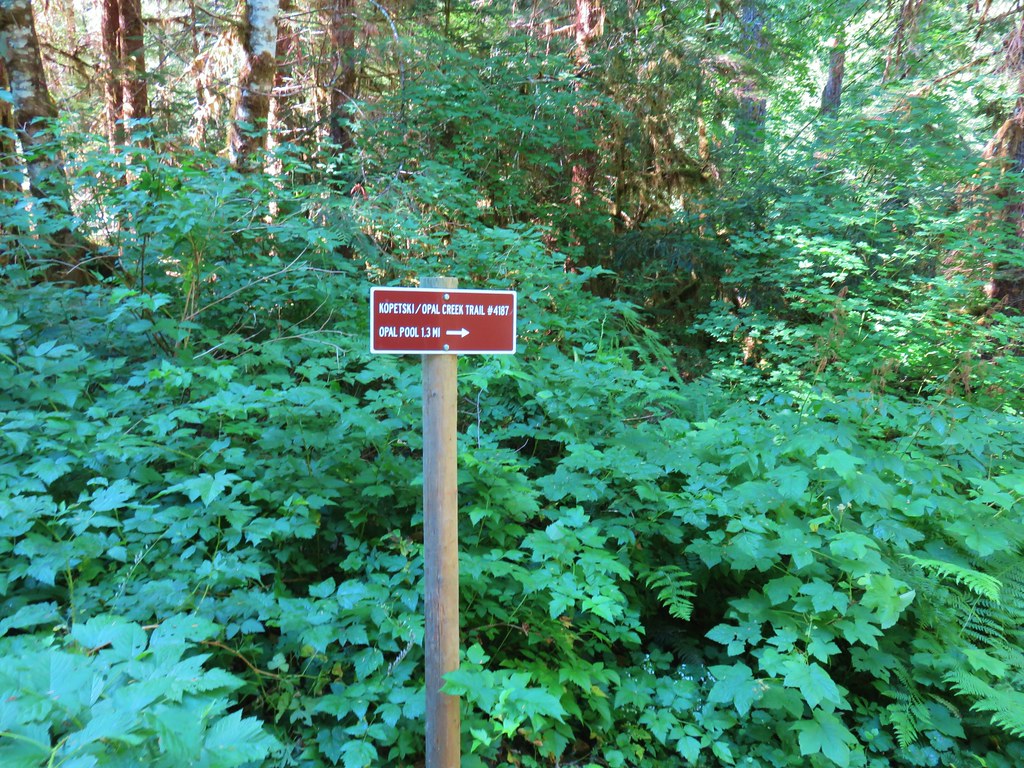
After carefully exploring the rocks around the falls we returned to the trail and continued nearly a quarter mile to a signed fork. Here we turned right on the Opal Creek/Kopetski Trail and crossed the river on a footbridge.
IMG_4230

IMG_4231

IMG_4232

Having left the road we were now on an actual trail which made a series of ups and downs along the hillside. When the trail was close to the river we took the opportunity to visit the water where after a little searching we found a couple of rough skinned newts.
IMG_4238

20190724_101850

IMG_4240Ridiculously clear water.

IMG_4245Newt floating in a small pool.

IMG_4249Cascade along the river.

IMG_4255

When the trail was away from the water there was a lot of berry picking going on. We had managed to find a few ripe thimble and salmon berries along with a variety of huckleberries while hiking the road but it was all huckleberries along the Opal Creek Trail.
20190724_101609

IMG_4266Red huckleberries

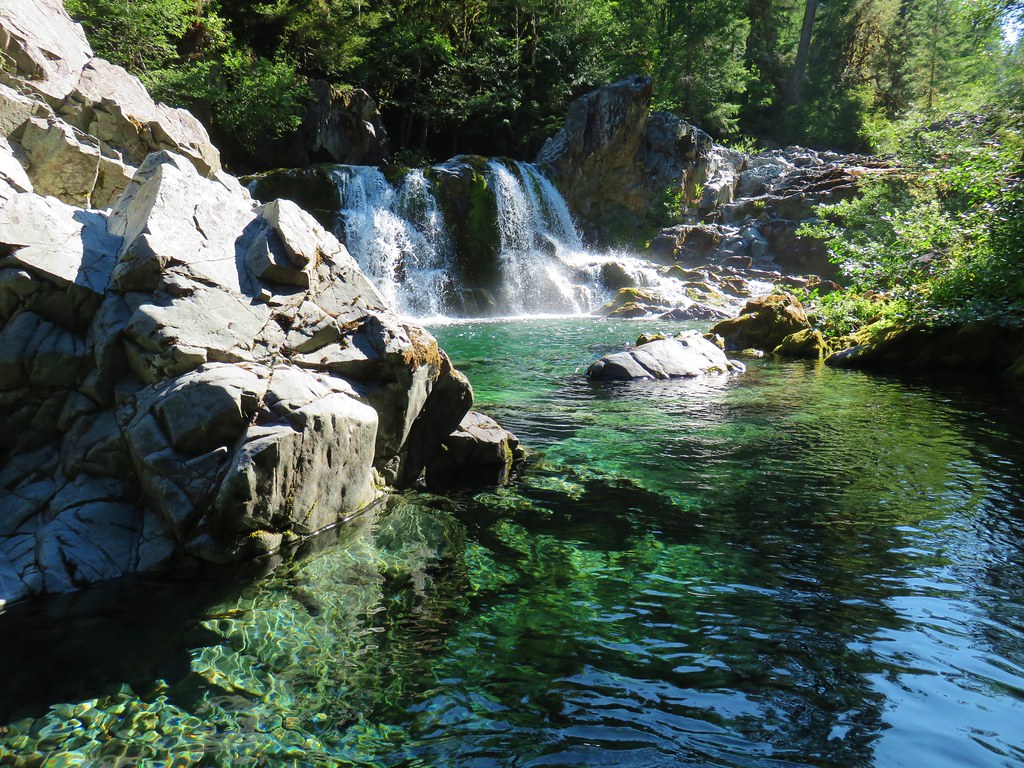
After 1.3 miles on the Opal Creek Trail we arrived at Opal Pool. There were a few other people here including to our surprise my parents who had apparently passed us at some point while we were down along the river.
IMG_4271

20190724_112526

IMG_4284

IMG_4296

IMG_4286Bridge over the river above Opal Pool

IMG_4293Little North Santiam River below Opal Pool

IMG_4297Opal Pool Falls

My parents had missed Sawmill Falls so we let them know where to turn off on their way back. We stayed at the pool for awhile watching some cliff jumpers before crossing the footbridge and heading for Jawbone Flats.
IMG_4302Cliff jumpers sitting down by the pool.

IMG_4305Opal Pool Falls from the bridge.

Approximately a quarter mile from the Opal Pool we arrived at Jawbone Flats, a 1930s mining town that is now a non-profit educational center.
IMG_4310

IMG_4315

IMG_4316

IMG_4317

IMG_4320

IMG_4323Pelton Shed provides power to Jawbone Flats.
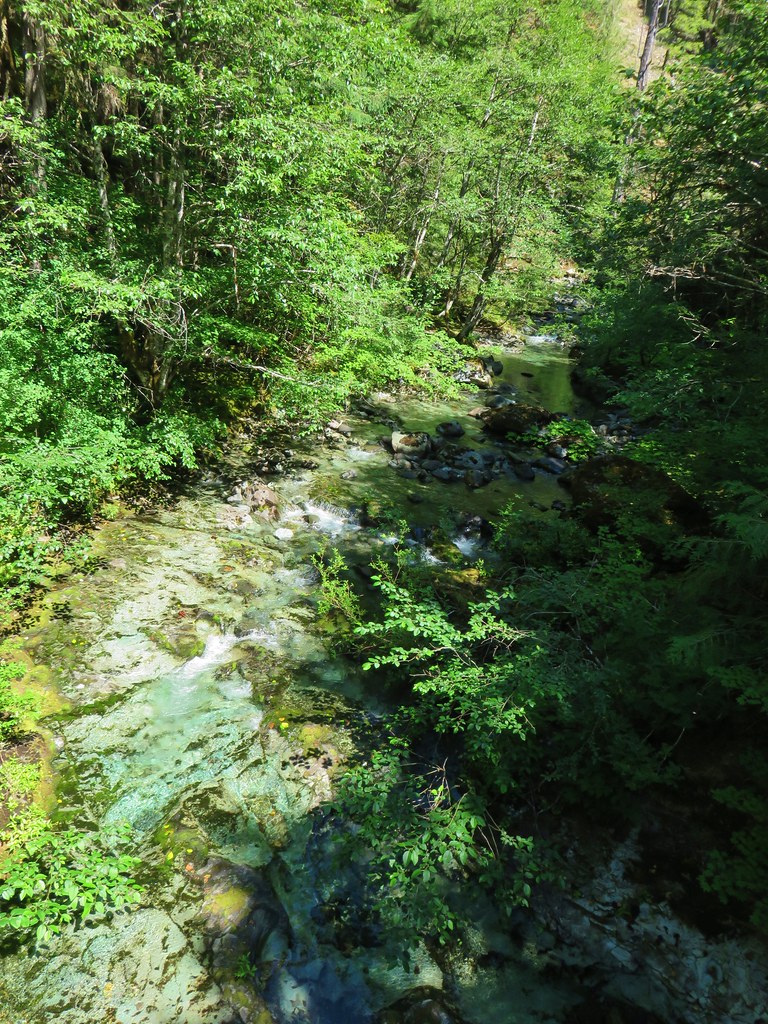
Battle Ax Creek flows through town.
IMG_4325

IMG_4332

From Jawbone Flats it was a 1.2 mile road walk back to the junction with the Opal Creek/Kopetski Trail and then the 2.1 miles back to the trailhead. Many more berries were consumed along the way. Our niece, Rebekkah, spotted two garter snakes on the hike out.
IMG_4349One of the garter snakes.

IMG_4352A millipede

We were fortunate to have had a lot of trail and river time to ourselves as a steady stream of people were headed in as we exited. My brother said he could see why we go as early as we do.

With the combination of old growth forest, crystal clear water, a couple of waterfalls, and lots of ripe berries it had been a good choice for a hike. Without any wandering around it would be a 7.1 mile hike, but with several explorations along the river my GPS had me at 9.1 miles. Everyone survived though and seemed to have a good time and my parents did make it to Sawmill Falls before heading home themselves. It was a lot of fun to be able share this hike with Jason and his family and we are already preparing for a “next time”. Happy Trails!

Flickr: Opal Creek

Categories
Hiking Oakridge Area Old Cascades Oregon Trip report

Bunchgrass Ridge – 7/04/2019

**Note a portion of this hike burned in the 2022 Cedar Creek Fire.**

For the 4th of July this year we headed to the Oakridge area to check out a portion of the Eugene to Crest Trail. The concept of the trail is for a continuous trail from Eugene, OR to the Pacific Crest Trail east of Waldo Lake. Despite beginning in the 1970’s the trail has not been completed but a 108 mile route has been established using trails and roads with multiple access points.

We chose to begin our hike at the Eugene to Crest Trailhead #4 It was an interesting drive to the trailhead as winter storms brought extensive damage along Highway 58 causing its closure for a time due to slides and downed trees. Those same conditions affected many of the Forest Service roads and trails. As we headed up FR 2408 toward the trailhead it was apparent that the Forest Service had been busy clearing downed trees along the lower portion of the road. It was interesting to see that higher elevations hadn’t suffered near as much damage though as the number of recently cut trees decreased significantly. Then as we neared the trailhead a young black bear darted across the road in front of the car.

After the excitement of seeing the bear we pulled into the parking area where we discovered a fair number of mosquitoes waiting for us. We applied a bit of bug spray and set off on the signed trail.
IMG_2088

IMG_2092

In a tenth of a mile we arrived at a junction with the Eugene to Crest Trail where we turned left.
IMG_2093

A short distance later we entered Little Bunchgrass Meadow.
IMG_2095

IMG_2100

The meadow had quite a bit of lupine and some white pussytoes and cat’s ear lilies blooming with tiger lilies and orange agoseris just getting started.
IMG_2102

IMG_2107

IMG_2117The only tiger lily that seemed to be open yet.
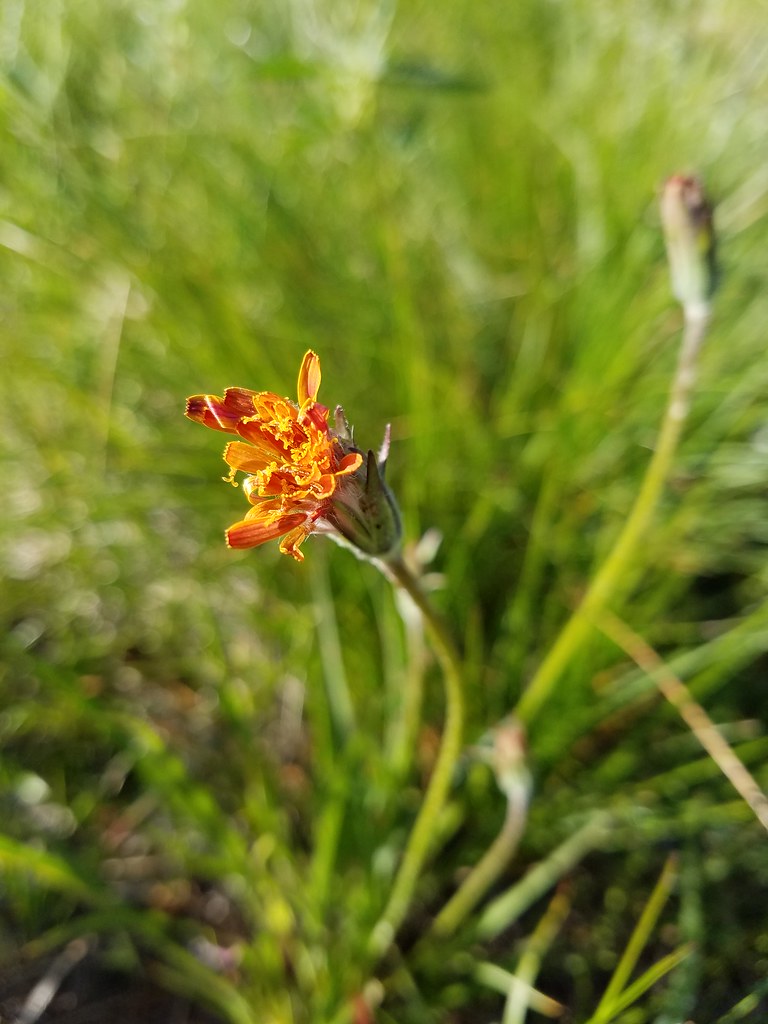
20190704_072419orange agoseris beginning to open.

20190704_072403Cat’s ear lily

IMG_2120Pussytoes

At the end of the meadow the trail entered the forest where a few vanilla leaf and a single trillium were still blooming.
IMG_2122

IMG_2123

IMG_2125

It wasn’t long before we popped out into a second meadow. This one was filled with bunchgrass aka beargrass. Unfortunately it appeared that we had missed the beargrass bloom by a year as only a couple of plants had flowers while many others had dead stalks.
IMG_2127

IMG_2129

We repeated the meadow-forest-meadow pattern a couple of times as the trail followed the ridge SE. Occasionally there were views of the Three Sisters, Broken Top, and the top of Mt. Bachelor to the NE.
IMG_2132The Three Sisters and Broken Top

IMG_2136Larkspur along the trail.

IMG_2140

IMG_2138Bunchberry

IMG_2142Anemone

IMG_2149Another meadow

IMG_2159The Three Sisters and Broken Top

IMG_2165

IMG_2170Queen’s cup

IMG_2181The Three Sisters, Broken Top, and a bit of Mt. Bachelor
IMG_2196

IMG_2208Rhododendron

IMG_2210Another meadow full of not-in-bloom beargrass.

The first mile and a half of the trail had been fairly level as it passed along the ridge but after passing through the last beargrass meadow for a while the trail began to gradually gain elevation. The trail left the ridge top in favor of the SW facing slope.
IMG_2214View from the SW facing hillside.

IMG_2215Looking SE

The trail then regained the ridge where we once again had views of the Three Sisters and Broken Top along with Mt. Jefferson and the very tip of Three Fingered Jack.
IMG_2221

IMG_2221Mt. Jefferson behind the ridge extending from Mule Mountain (post). The tip of Three Fingered Jack is visible just to the left of the high point along the ridge to the far right.

After passing a knoll on our right we got our fist glimpse of Diamond Peak ahead to the SE.
IMG_2228

IMG_2229Diamond Peak through the trees.

After a brief drop to a saddle we climbed past a wildflower rock garden to a nice viewpoint just over two and a quarter miles from the trailhead.
IMG_2241Valerian in the saddle.

IMG_2254

IMG_2251

IMG_2259

IMG_2690

IMG_2692

IMG_2270Mt. Yoran, Diamond Peak, and Mt. Bailey

IMG_2276Mt. Yoran and Diamond Peak

IMG_2272Mt. Bailey

IMG_2656View to the NE (from the afternoon on the way back)

IMG_2658The Husband, Three Sisters, Broken Top, and Ball Butte(from the afternoon on the way back)
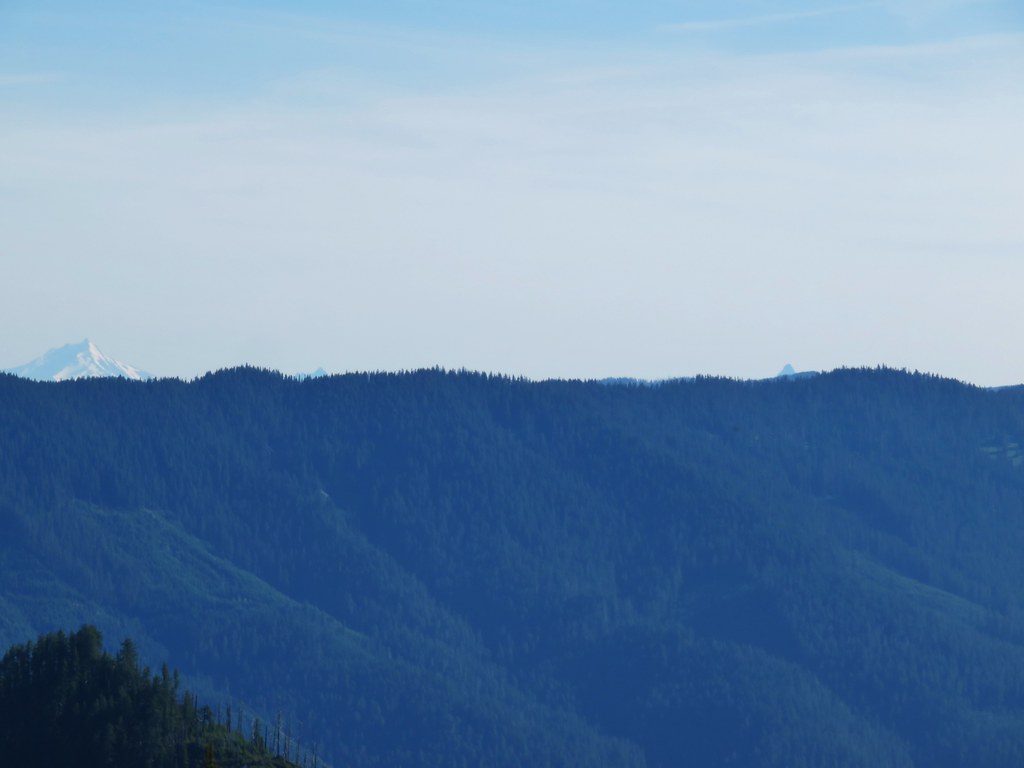
IMG_2281Mt. Jefferson and the tips of Three Fingered Jack and Mt. Washington
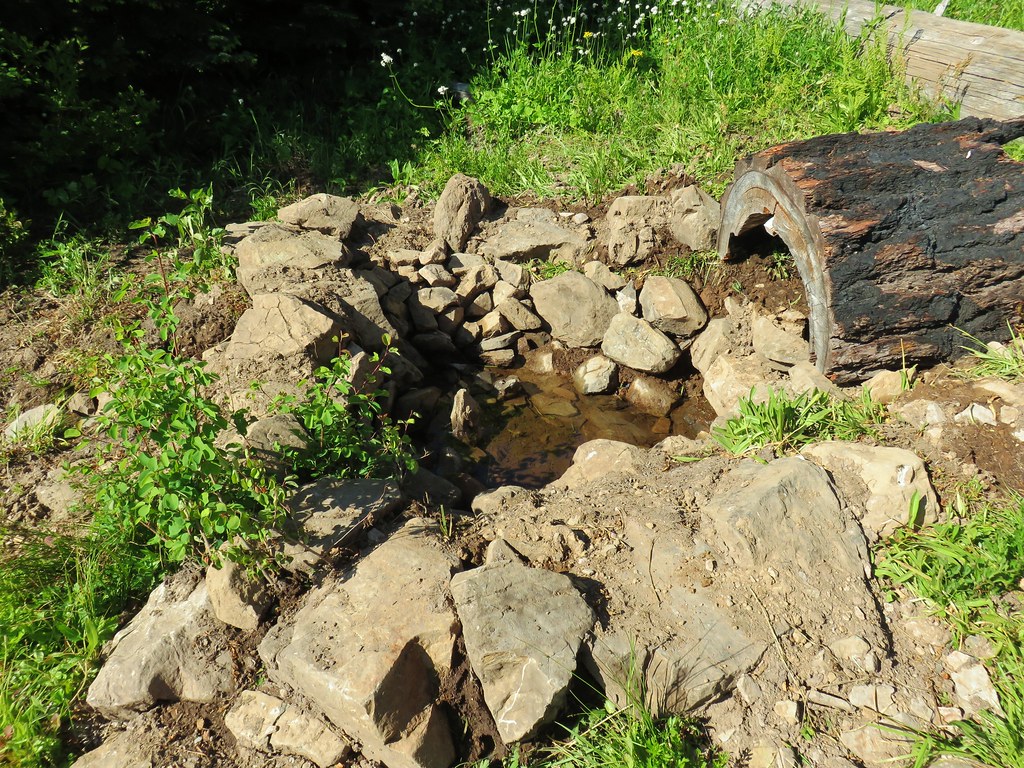
From the viewpoint the trail descended fairly steeply past what appeared to be a small spring but it is not shown on any map that I could find.
IMG_2286

IMG_2289

Sections of our route passed through and by the fire scar from the 1991 Warner Creek burn but as we descended from the viewpoint we were passed through a newer scar from the 2017 Kelsey Creek Fire.
IMG_2296

IMG_2298

In this newer scar we found one of the best clumps of western wallfower we’d ever seen.
IMG_2295

20190704_084603

There was also a large wild ginger blossom which we don’t get to see very often so clearly.
IMG_2299

After losing almost 500′ of elevation the trail looked to regain it as it climbed from a saddle up a ridge and around a knoll before dropping down again.
IMG_2308

From the high point we had a nice view of the ridge behind us that our route had followed.
IMG_2309

Ahead we could see another ridge line on the far side of Kelsey Creek which was in the valley below.
IMG_2310

From this view we couldn’t really make out the ridge between us and the one across the valley. We began to wonder about the rest of our route. We did have two paper maps and our GPS with us but instead of looking at those we wondered if we would be curving around this valley or following an unseen ridge to our right. Whatever our route would be, it began by heading downhill. There was fairly thick vegetation along the trail but it had also recently been cut back.
IMG_2315

We could see a green meadow ahead of and below us.
IMG_2324

Just over three and a half miles in the trail leveled off at a saddle above the meadow. The wildflower display on the saddle was really impressive with large groups of blue-head gilia and giant blue-eyed Mary creating carpets of blue and numerous other flowers scattered about.
IMG_2326

IMG_2332Giant blue-eyed Mary

20190704_091315Giant blue-eyed Mary

IMG_2328Giant blue-eyed Mary and blue-head gilia

IMG_2334Cat’s ear lily and blue-head gilia

IMG_2339Coneflower

IMG_2342Cow parsnip

IMG_2345Tall mountain bluebell

IMG_2347More of the blue flowers

IMG_2350Larkspur

20190704_092323Jacob’s ladder

20190704_092346An aster or fleabane

IMG_2361Columbine and valerian

IMG_2362Lupine

IMG_2370Not sure what type of flower this one is.
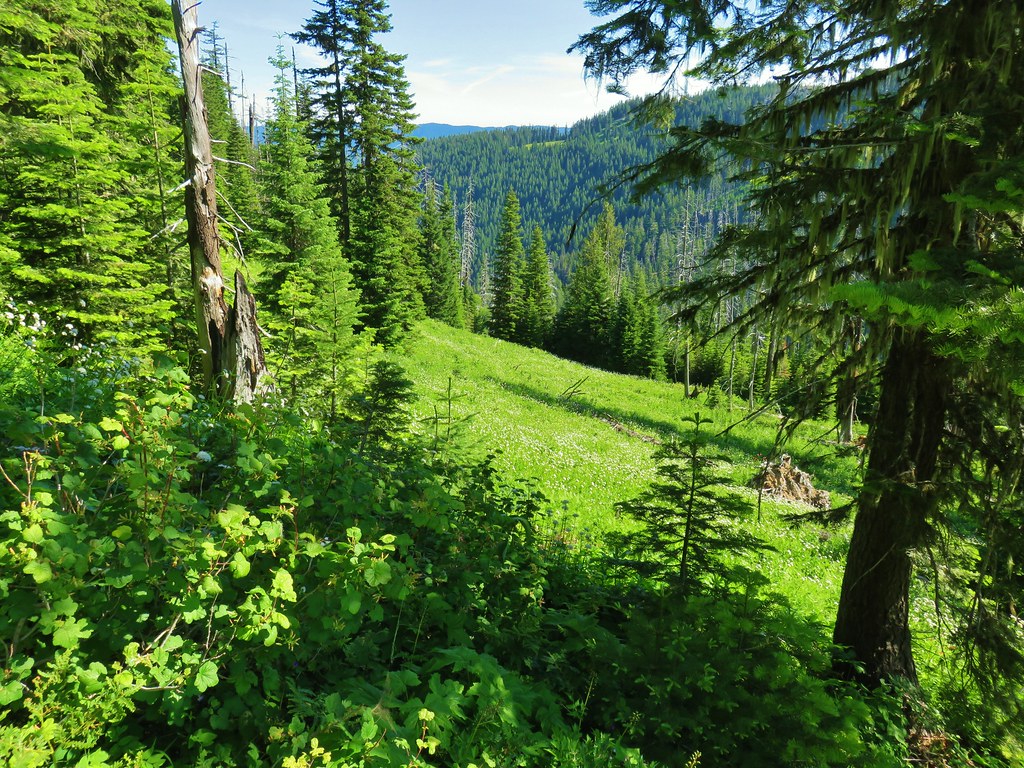
IMG_2364Valerian filled meadow below the trail.

IMG_2373White yarrow, giant blue-eyed Mary, and tall mountain bluebells
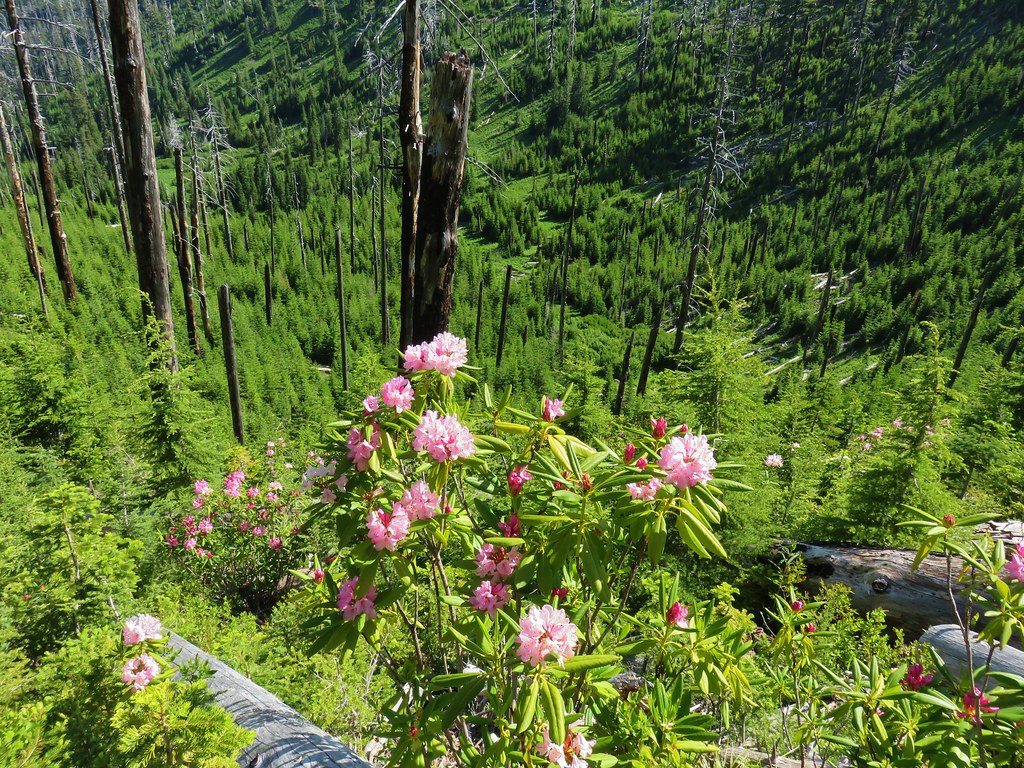
Beyond the saddle the trail did not follow a ridge in any direction. It lost a little more elevation passing under a hillside dotted with pink rhododendron.
IMG_2374

IMG_2376

The low elevation was approximately 5250′ which the trail dipped to briefly as it started to wind around the headwaters of Kelsey Creek. As we came around we started to climb and quickly realized that the trail was going to take us up and over the ridge we had been looking at from the viewpoint across the valley. From the low point the trail gained 150′ over the first three tenths of a mile before launching uphill to gain another 450′ in the next .4 miles.
IMG_2381Looking back at our route so far.

IMG_2383The trail coming around Kelsey Creek is visible on the hillside behind us.

The trail crested in yet another bunchgrass filled meadow.
IMG_2386

IMG_2395

The open hillside here provided views ahead to Fuji Mountain in the Waldo Lake Wilderness (post) as well as Diamond Peak and a good look at Mt. Bailey (post).
IMG_2414Fuji Mountain (left), flat topped Mt. David Douglass, Mt. Yoran (shorter thumb to the left of Diamond Peak), and Diamond Peak.
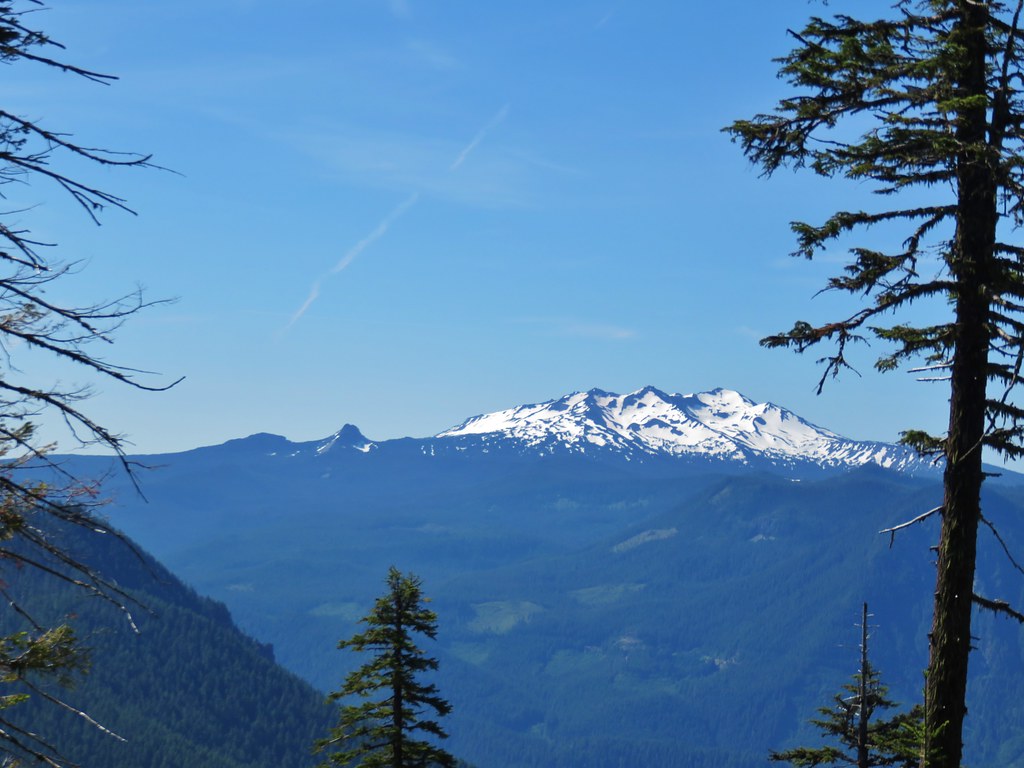
IMG_2403Mt. Yoran and Diamond Peak

IMG_2401Mt. Bailey

We were particularly excited to see Mt. Bailey. It’s one we don’t often get a good view of due to its relatively low profile (8368′) and its alignment which often puts it behind Diamond Peak in the line of sight.

This meadow lasted off and on for a little over half a mile. There again wasn’t much beargrass in bloom but we did come upon a nice display of scarlet gilia, also known as skyrocket which seemed fitting on the 4th of July.
IMG_2404

IMG_2417

20190704_101615A few orange agoseris were scattered about.

IMG_2425Scarlet gilia

IMG_2432More scarlet gilia

20190704_112526Skyrocket

At the edge of the meadow we arrived at a rock outcrop.
IMG_2450

The trail switchbacked down below the outcrop which was home to a few flowers of it’s own.
IMG_2454

IMG_2452A thistle that was getting ready to bloom.
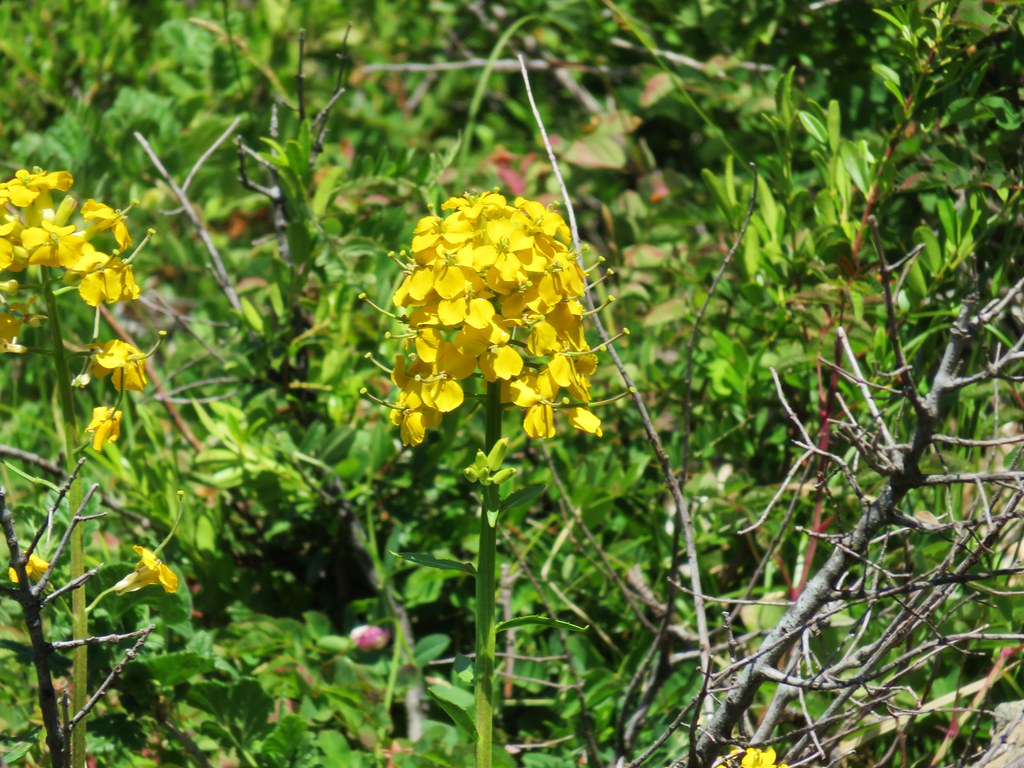
IMG_2456Wallflower

Below the outcrop the trail passed through more beargrass with Big Bunchgrass Meadow covering the hillside ahead with a bright green color.
IMG_2465

We had one complaint as we headed toward our goal, the trail was losing elevation. Interestingly though we found ourselves in an entirely different type of forest than we had encountered during the hike so far. It had a drier feel with pines and a grassy forest floor.
IMG_2467

Soon though we popped out into Big Bunchgrass Meadow which didn’t appear to have much if any bunchgrass. False hellebore, grasses, and flowers filled this meadow.
IMG_2470

IMG_2474

The flowers weren’t profuse but there was a nice variety and the butterflies seemed to be enjoying them.
IMG_2479Owl’s head clover

IMG_2488Larkspur, an owl’s head clover, and scarlet gilia

IMG_2491Aster or fleabane and an orange agoseris
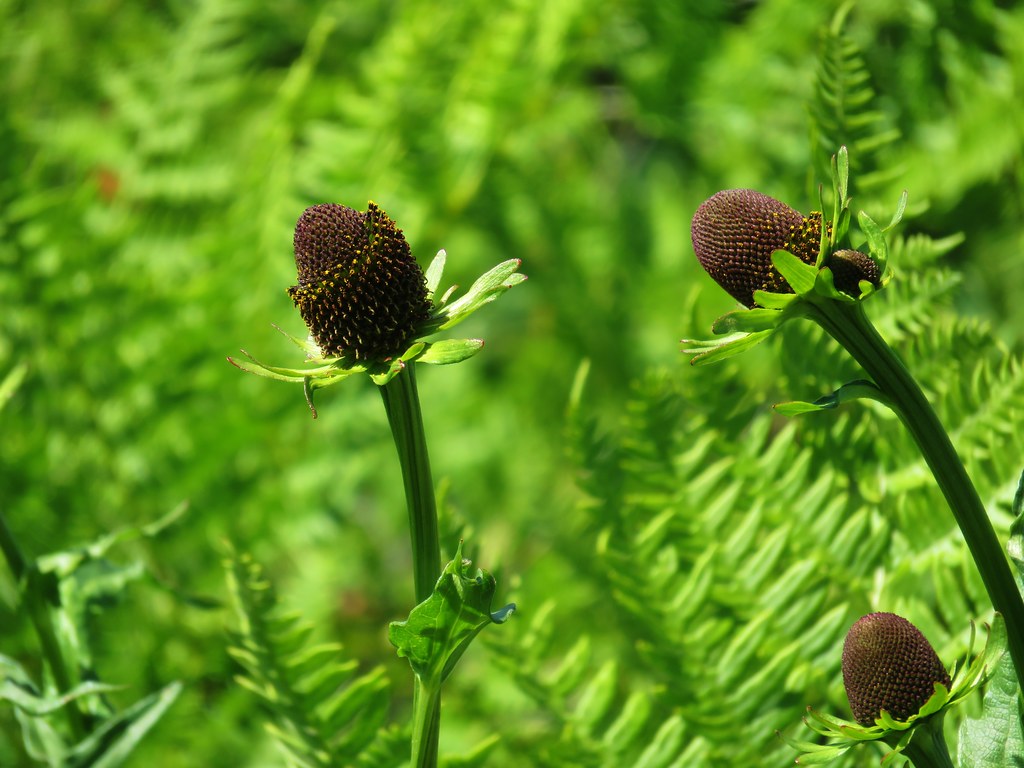
IMG_2508Coneflower

IMG_2510Hyssop

IMG_2514Butterflies on a cat’s ear lily

IMG_2527

IMG_2529

20190704_105633Wait that’s not a butterfly.

As the trail continued to lose elevation we decided to make our turnaround point a trail junction with a tie trail coming up to the meadow from the Bunchgrass Lower Trailhead. There was a post in the meadow with a pointer for the trail but it wasn’t exactly near the post and we missed it on our first pass. We turned around after rounding a small corner that gave us a nice view of Fuji Mountain.
IMG_2495

IMG_2499Fuji Mountain

Looking back we realized just how far we had come down to reach the meadow.
IMG_2504

As we came back around the small corner we spotted the faint trail veering off to the left.
IMG_2513The post, with an orange top, is up and to the right in front of a tree.

We headed back uphill and stopped for a break at the rock outcrop.
IMG_2552Heather at the rock outcrop.

I wandered up along the outcrop to see if there might be a good viewpoint atop the ridge. I was hoping for the Three Sisters and Broken Top but they were nowhere to be seen.
IMG_2542

IMG_2543Big Bunchgrass Meadow and Fuji Mountain

IMG_2544Diamond Peak

I did find a little clump of Oregon sunshine though.
IMG_2545

After our break we continued on looking for anything we might have missed on our first pass as well as for any wildlife.
IMG_2563

IMG_2567Crab spider (probably waiting for that Washington lily to open)
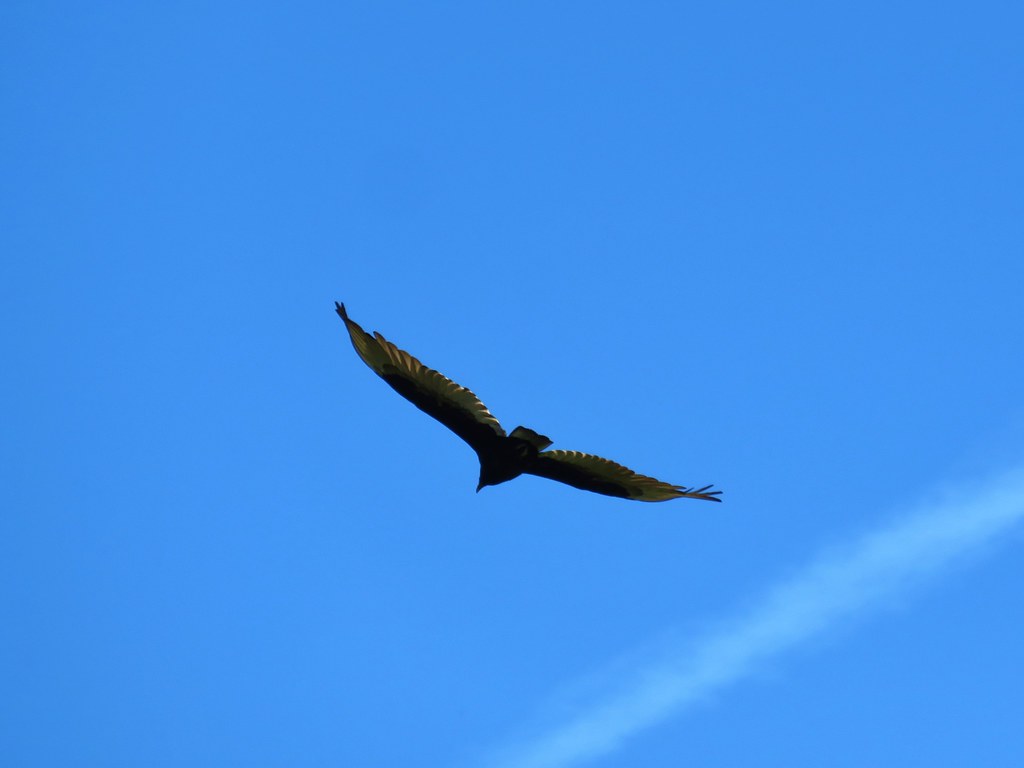
IMG_2585Turkey vulture

IMG_2591

IMG_2594Back in the valerian meadows

IMG_2602

IMG_2609

IMG_2639

IMG_2647

IMG_2683Not sure what this is going to be either.

We never did see that bear again, although there were several piles of scat along the trail. As for people we passed a group of three hikers at the viewpoint about 2 miles from the trailhead and a pair of mountain bikers at the junction near the trailhead. It was a little surprising to us that we didn’t see more, the trail was in great shape with good views and wildflowers. The first few miles were relatively easy too with the real climbing occuring in the latter half of the hike. We logged 11.8 miles on the GPS which seems to be right around where all our hikes have been lately. Happy Trails!

Flickr: Bunchgrass Ridge