While we didn’t have another hike scheduled for February a decent forecast was too much to pass up. We were looking for something nearby (less than an hour from Salem) on the shorter side that would be more of a leisurely stroll than a hike. We decided it would be a good day to check out the Wapato Lake National Wildlife Refuge . Originally added (2007) as part of the Tualatin River National Wildlife Refuge (post) the Wapato Lake National Wildlife Refuge was designated in 2013. Eight years later the refuge was opened to public use and now has approximately 2.85 miles of trail. The trails are currently open from Feb 1st through Nov 30th each year (note the 1.3-miles of natural surface is closed to hiking starting Sept 1st). Also of note is that during periods of heavy rains the access trail may become flooded, but the Refuge website has a link to the USGS Monitoring Tool where you can easily check to see if the creek’s level is over 7.5 feet.
The trailhead is adjacent to Brown Park in the city of Gaston, OR and includes two ADA parking spaces and a restroom. What it lacks is signage from Highway 47. The parking area can be accessed from that highway or via Onion Lane by turning South off of E Main Street/SW Gaston Road. A paved trail begins at an informational signboard where you can also pick up a brochure.

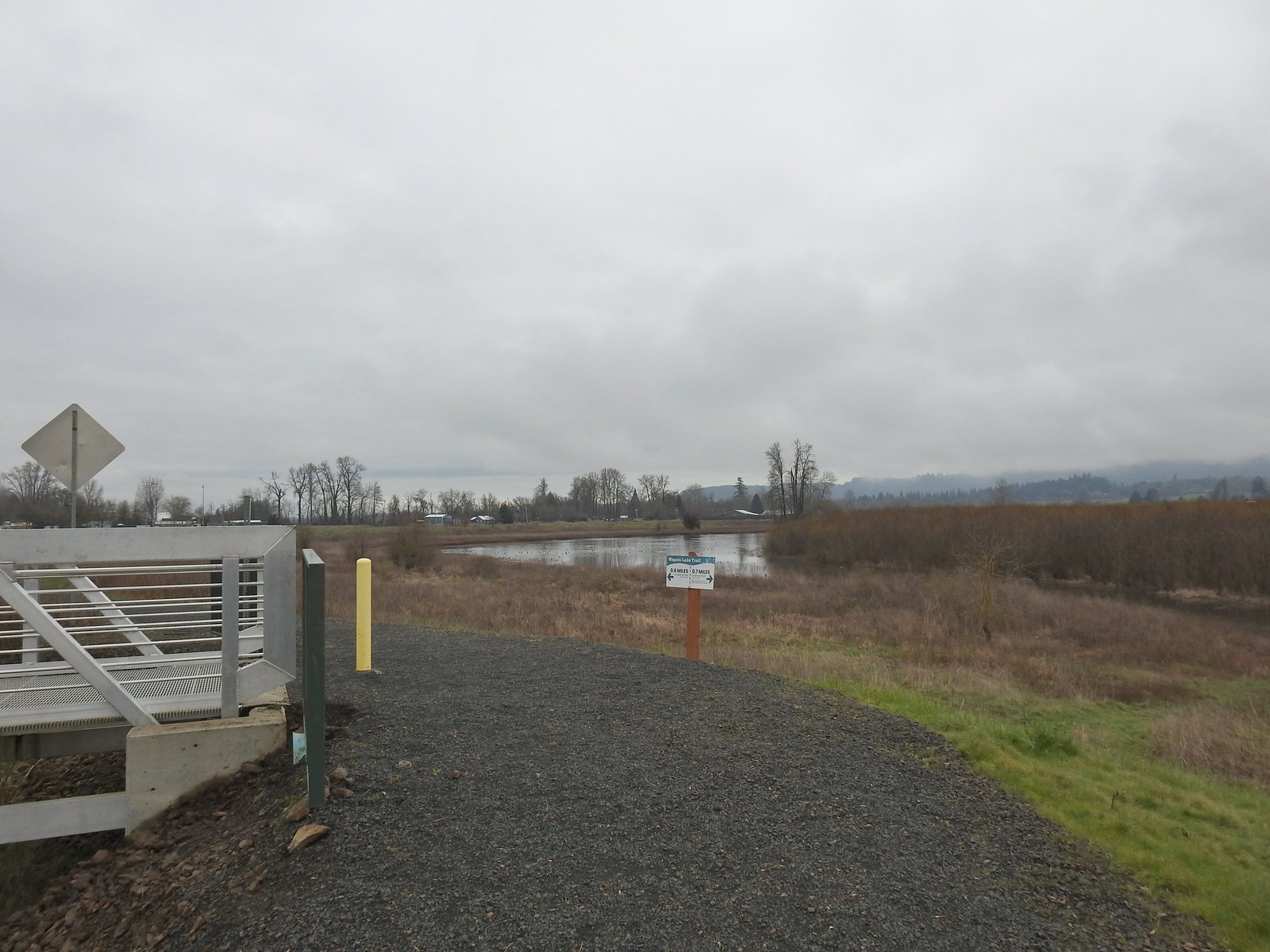
It was a little cloudier than we’d hopped as we set off on the paved path. We followed the path to a footbridge over Wapato Creek to the levee that partially surrounds the lakebed. We faced a choice of heading left for 0.6-miles or right for up to 2-miles. Another person had just turned left so we opted to go right.
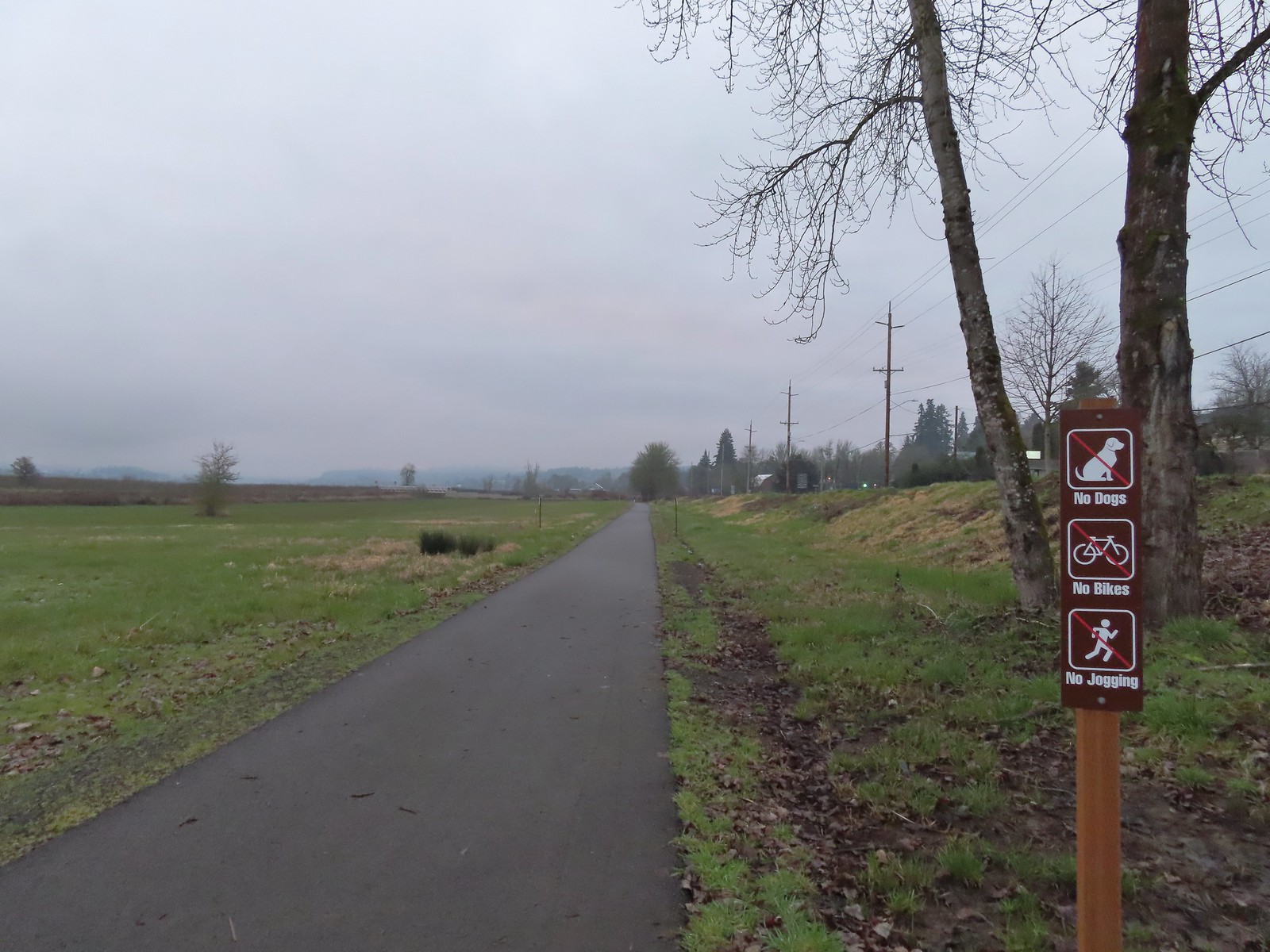
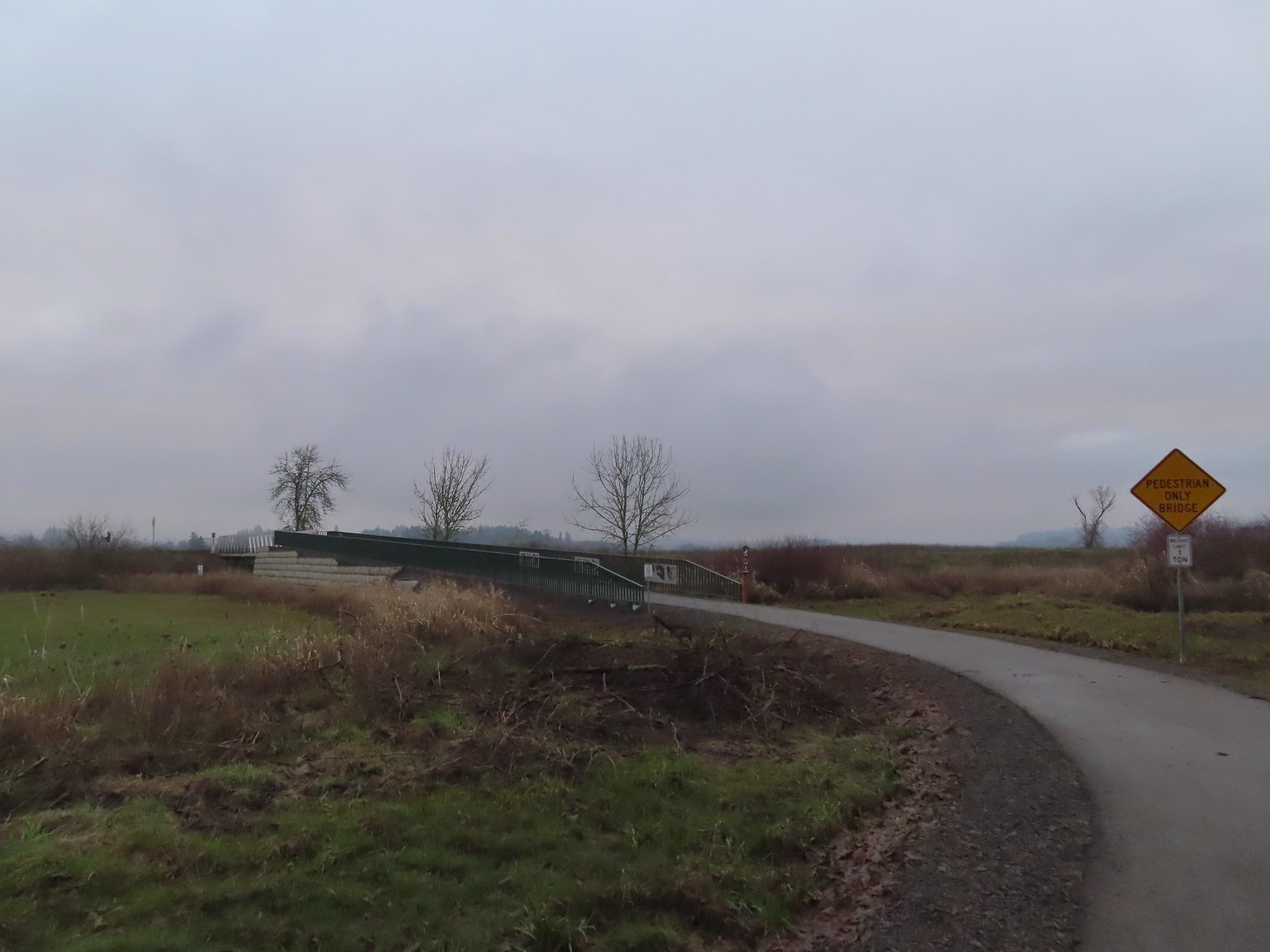
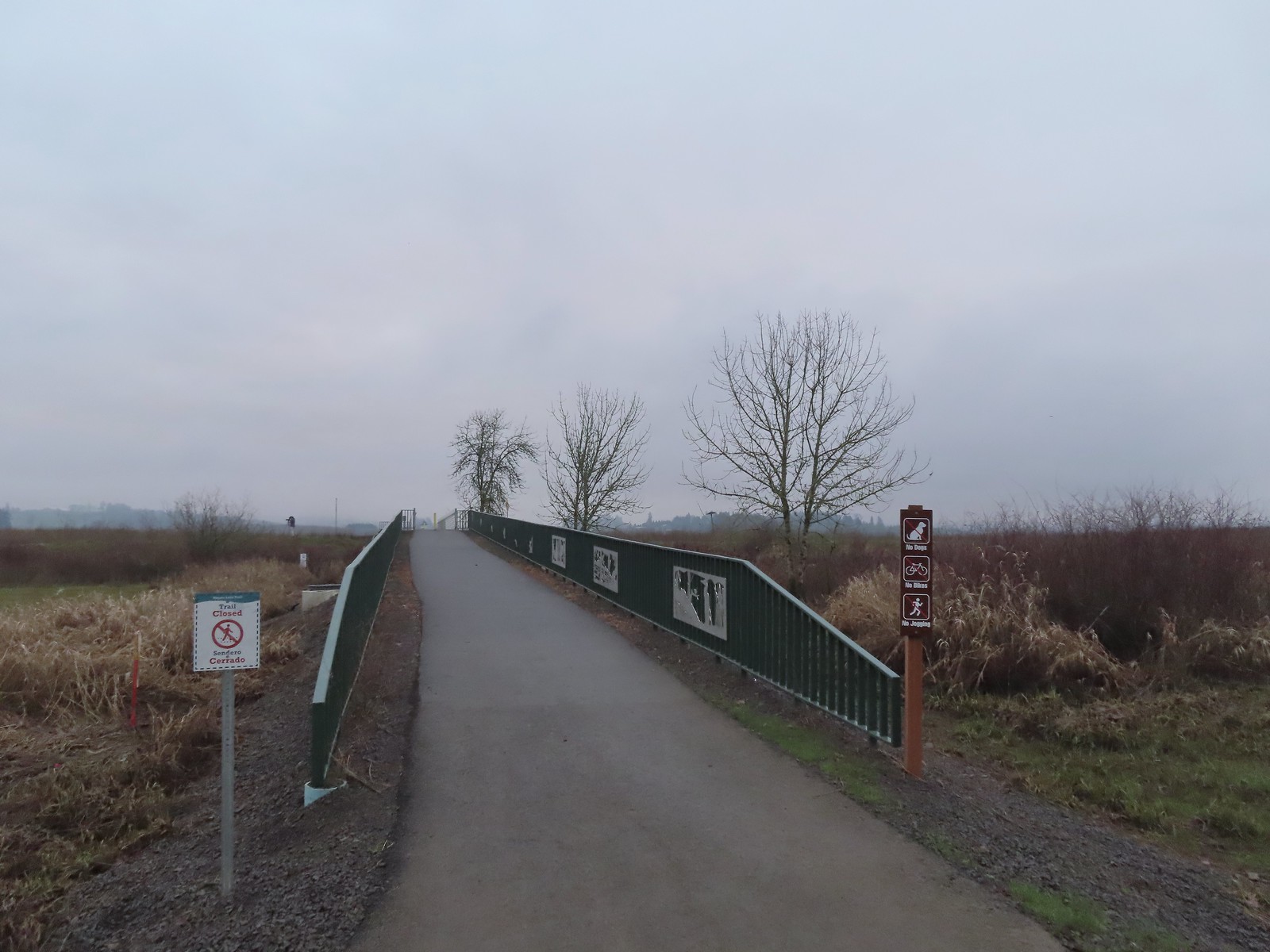 We were a little confused by the sign on the left here stating the trail was closed. The website and signboard had said nothing about a closure and the gate at the far end of the bridge was open and others were already out on the levee. We assume they just hadn’t taken the sign down after the seasonal closure period.
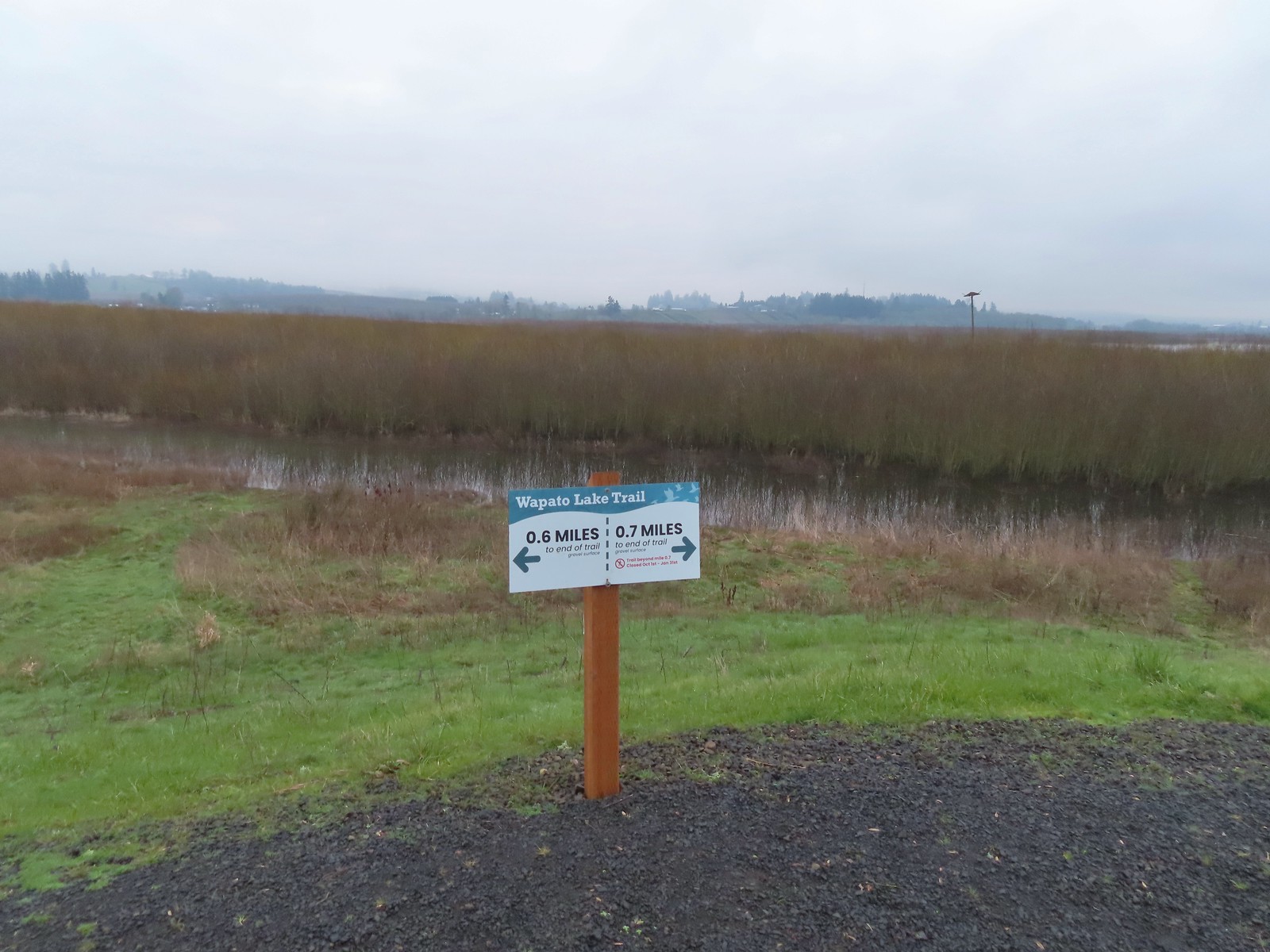 Pointers on the levee.
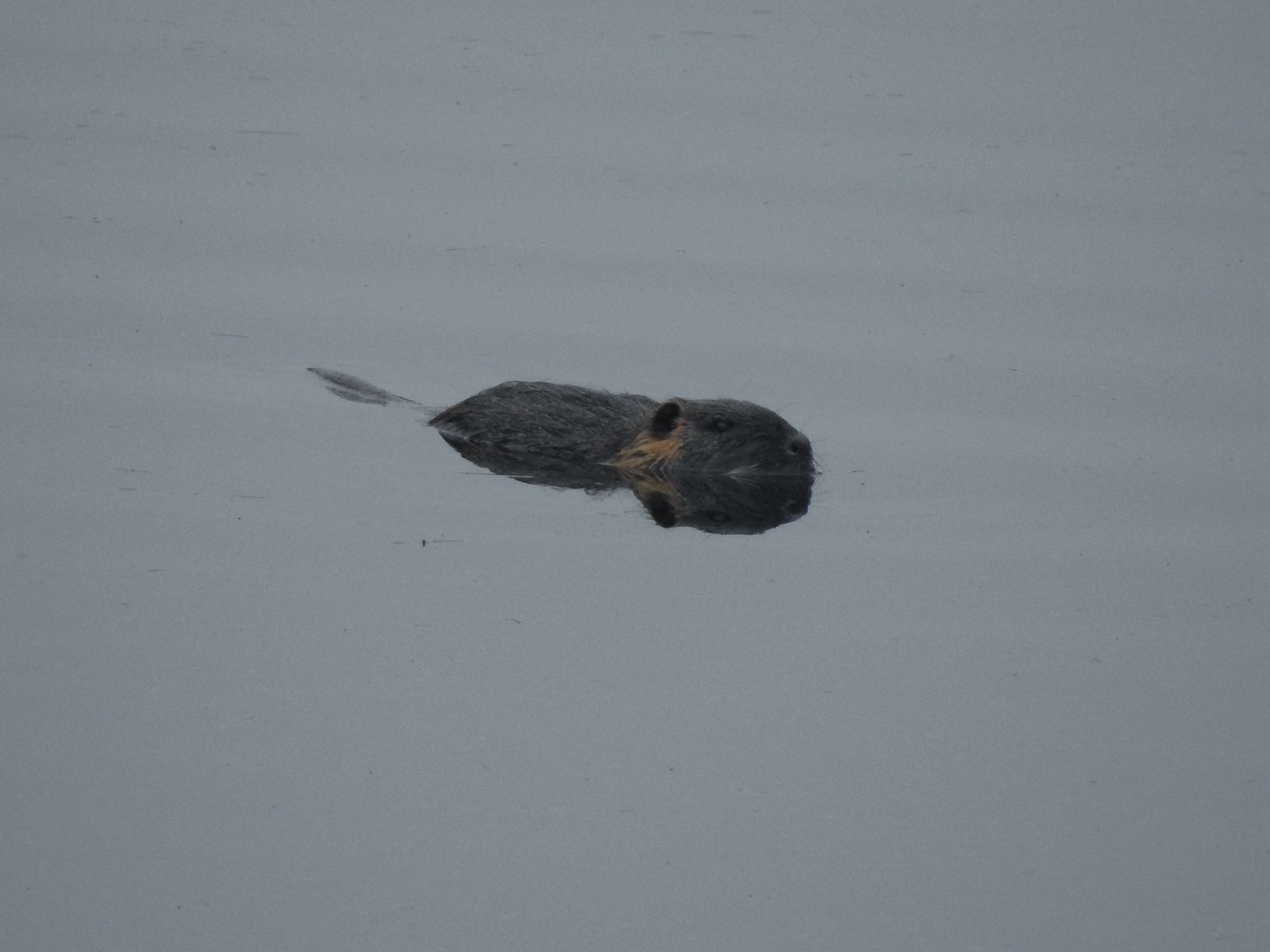 Nutria (sigh). We had hopped it was a beaver but alas the whiskers give it away.
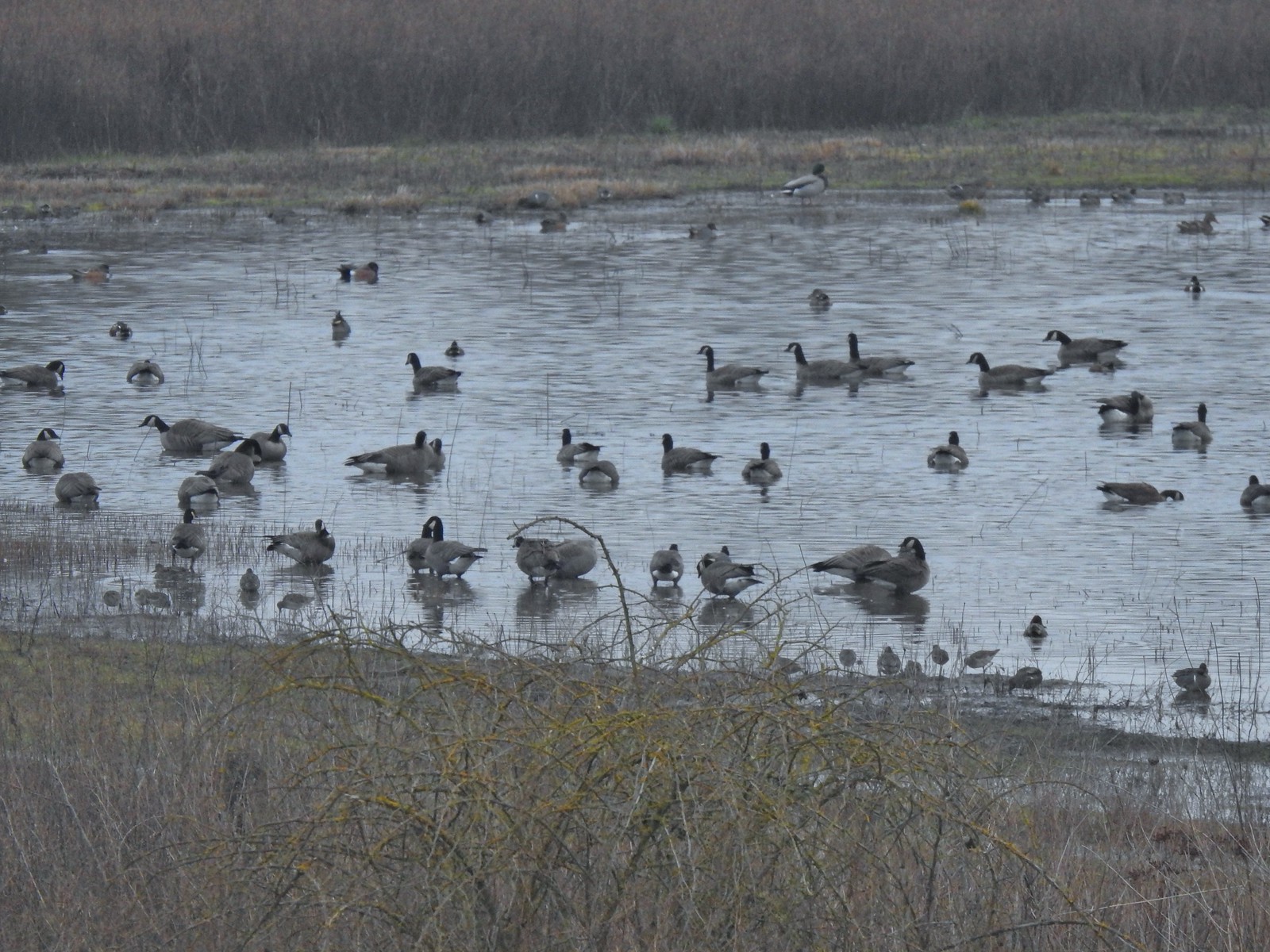 Geese, several species of ducks, and some shore birds.
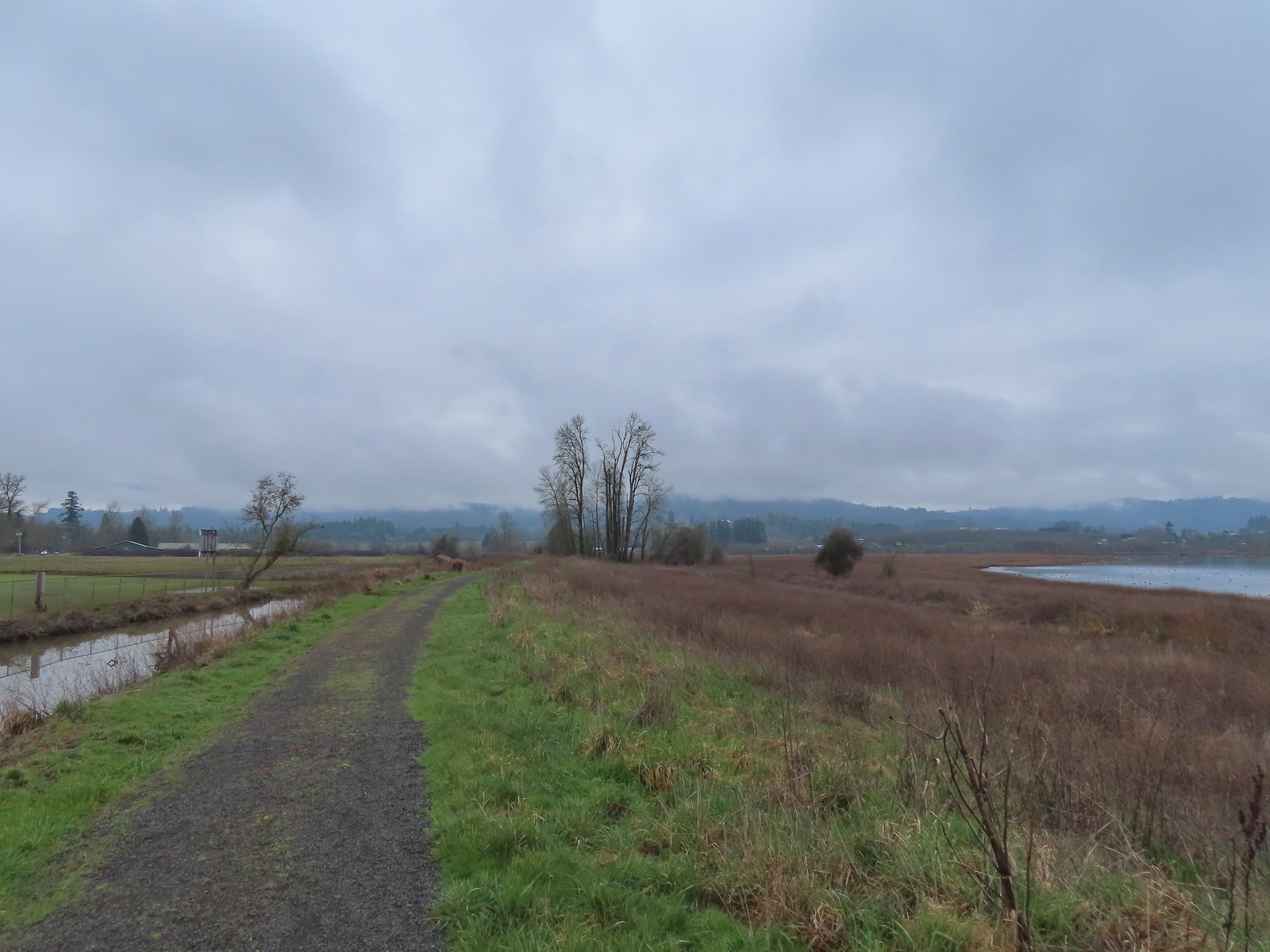
From the bridge to the right the levee’s surface is good gravel. We took our time as we strolled south trying to discern which types of ducks we were seeing.
 A great blue heron along Wapato Creek.
 Great blue heron
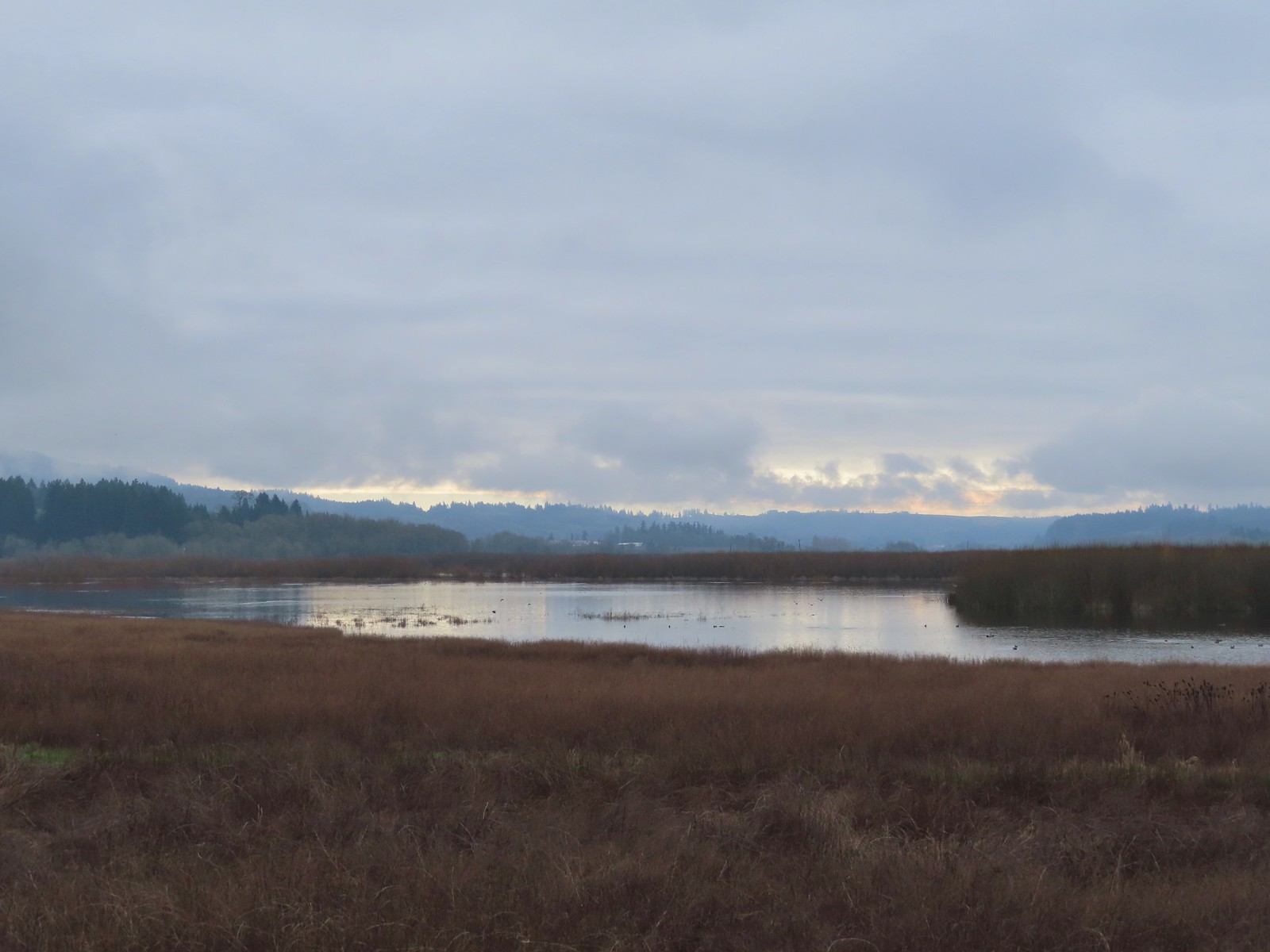
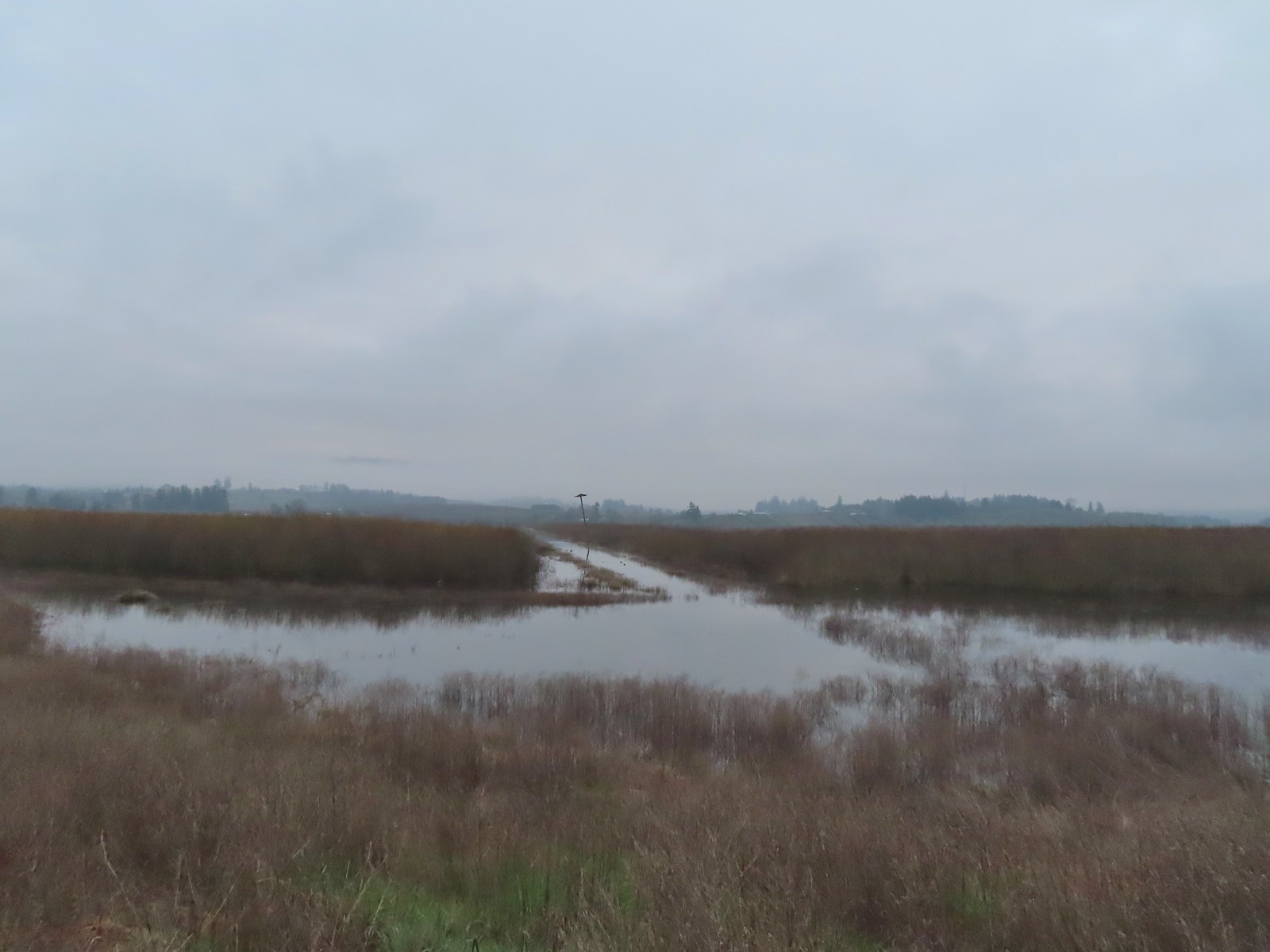 Wapato Lake
 Beaver lodge

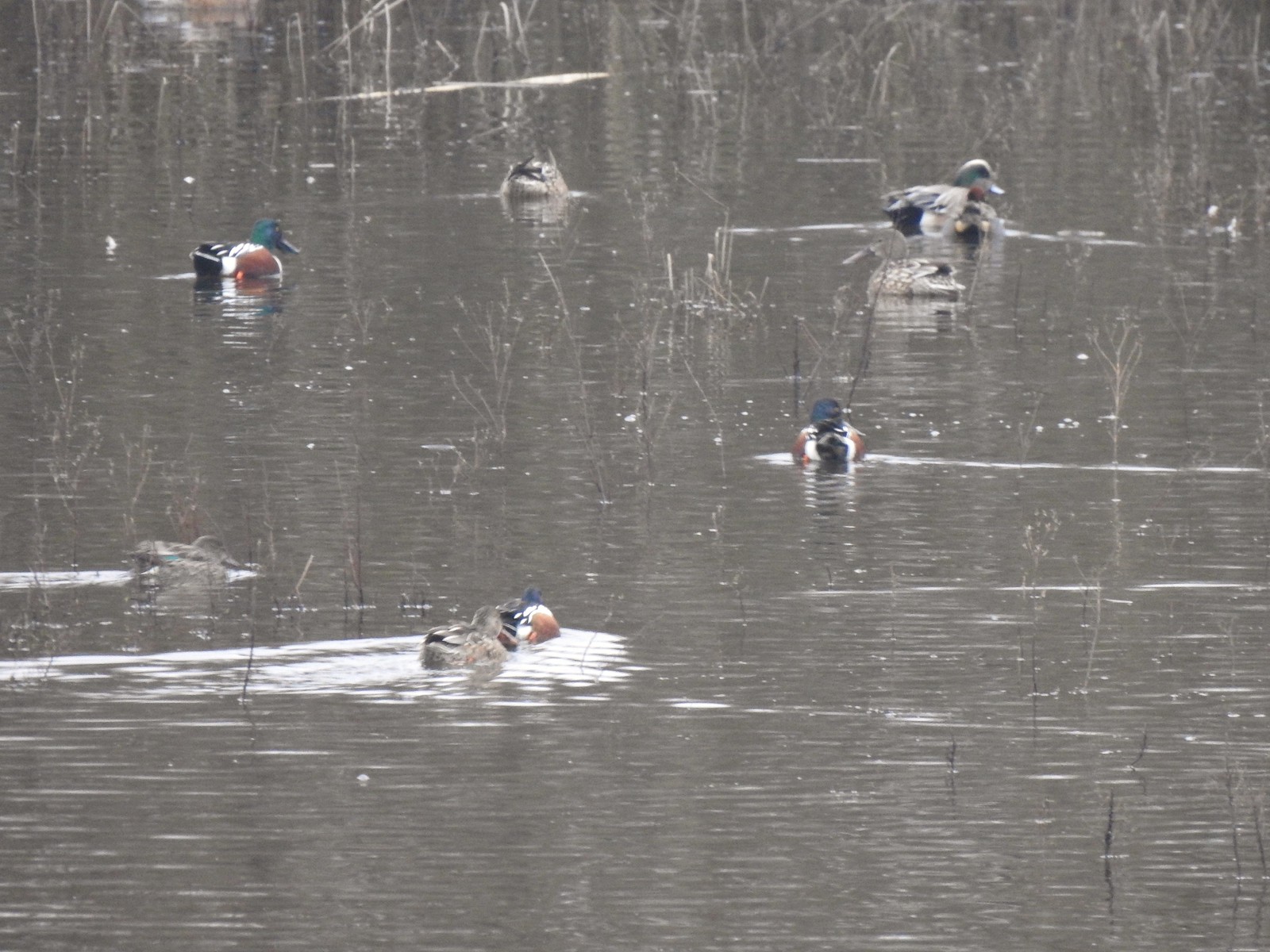 Northern shovelers and an American wigeon
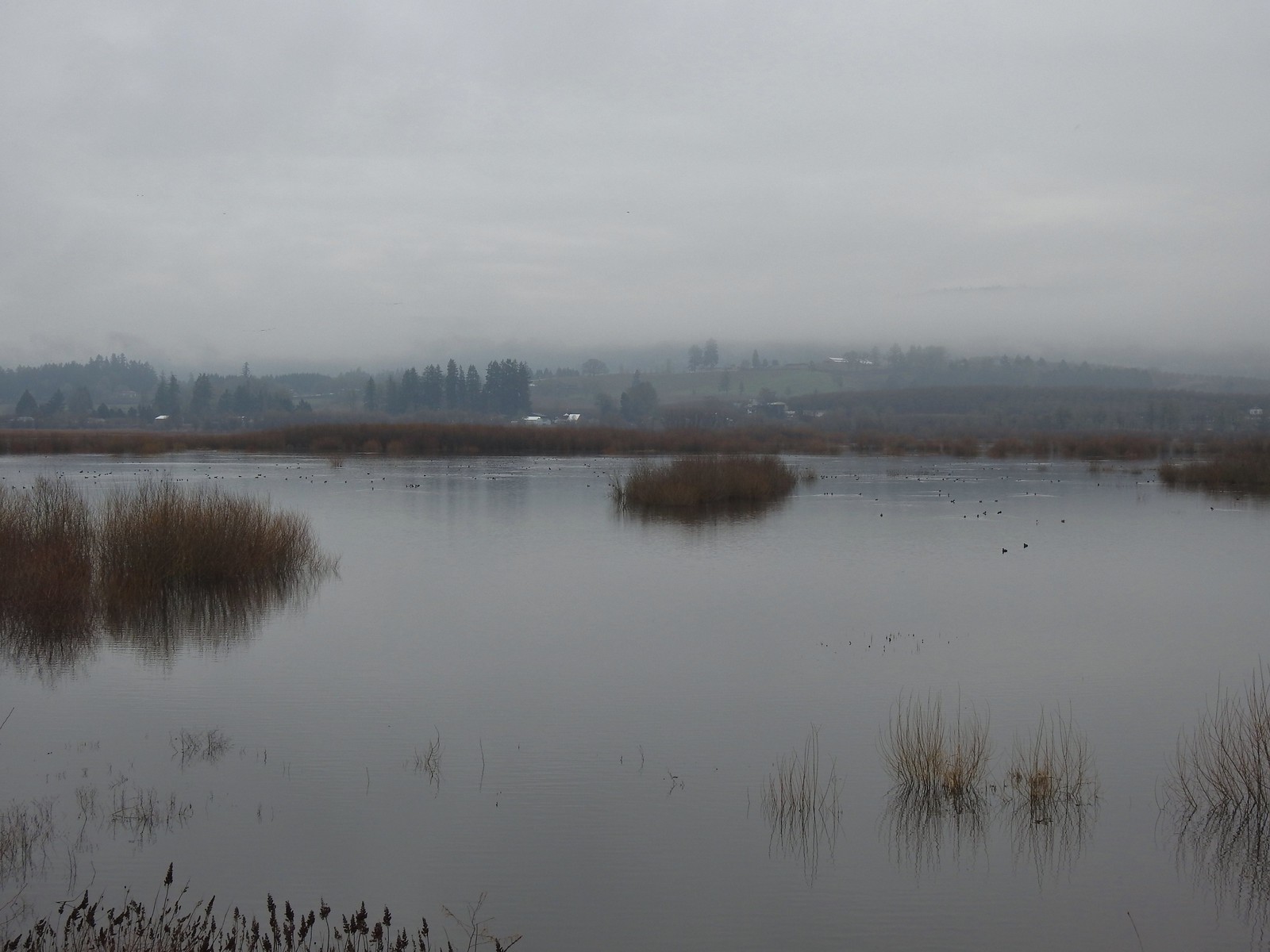 Of course we forgot to bring binoculars making it even harder to make out which types of ducks were out there.
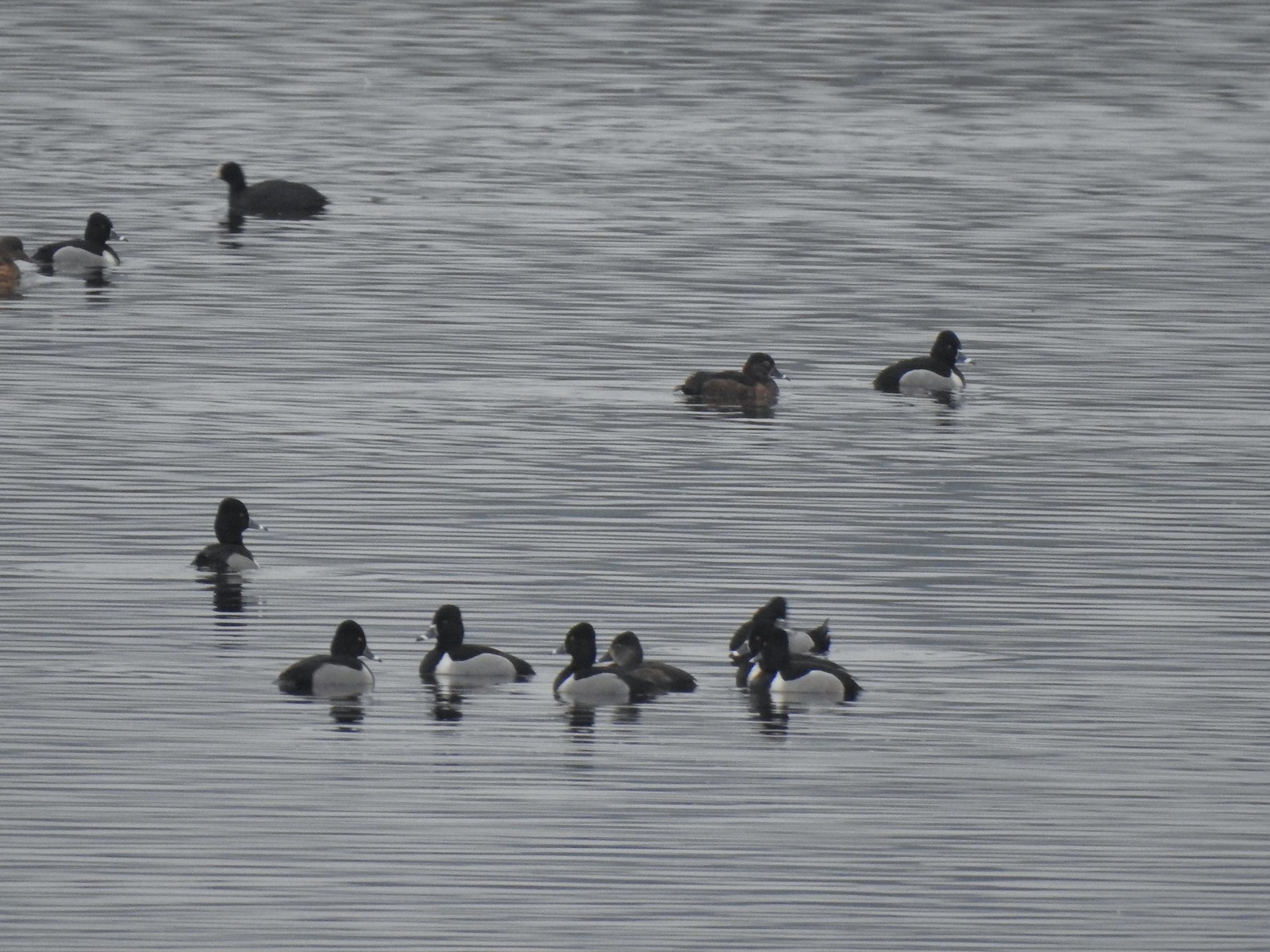 Ring-necked ducks with an American coot in the background.

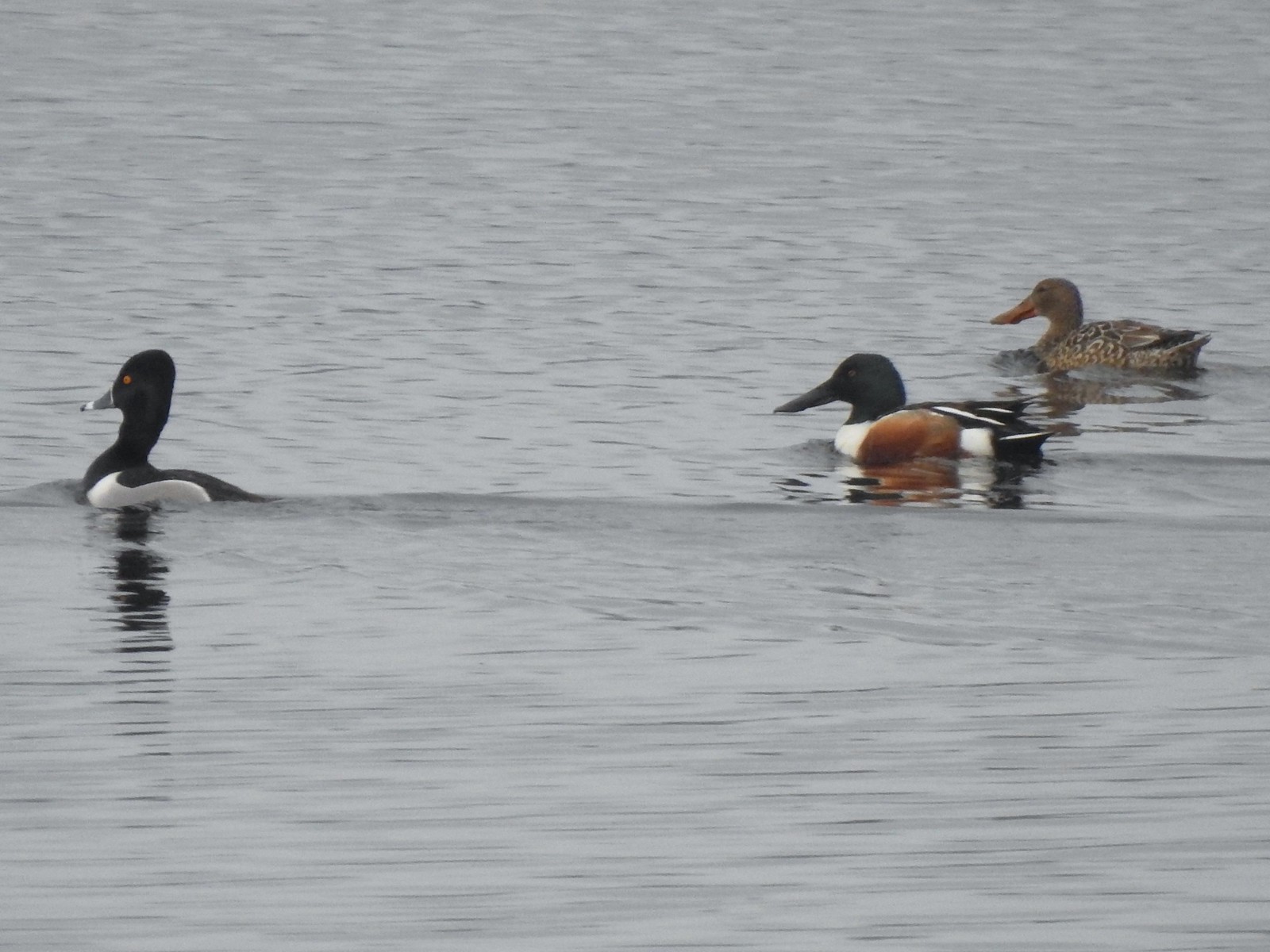 Ring-necked duck and northern shovelers
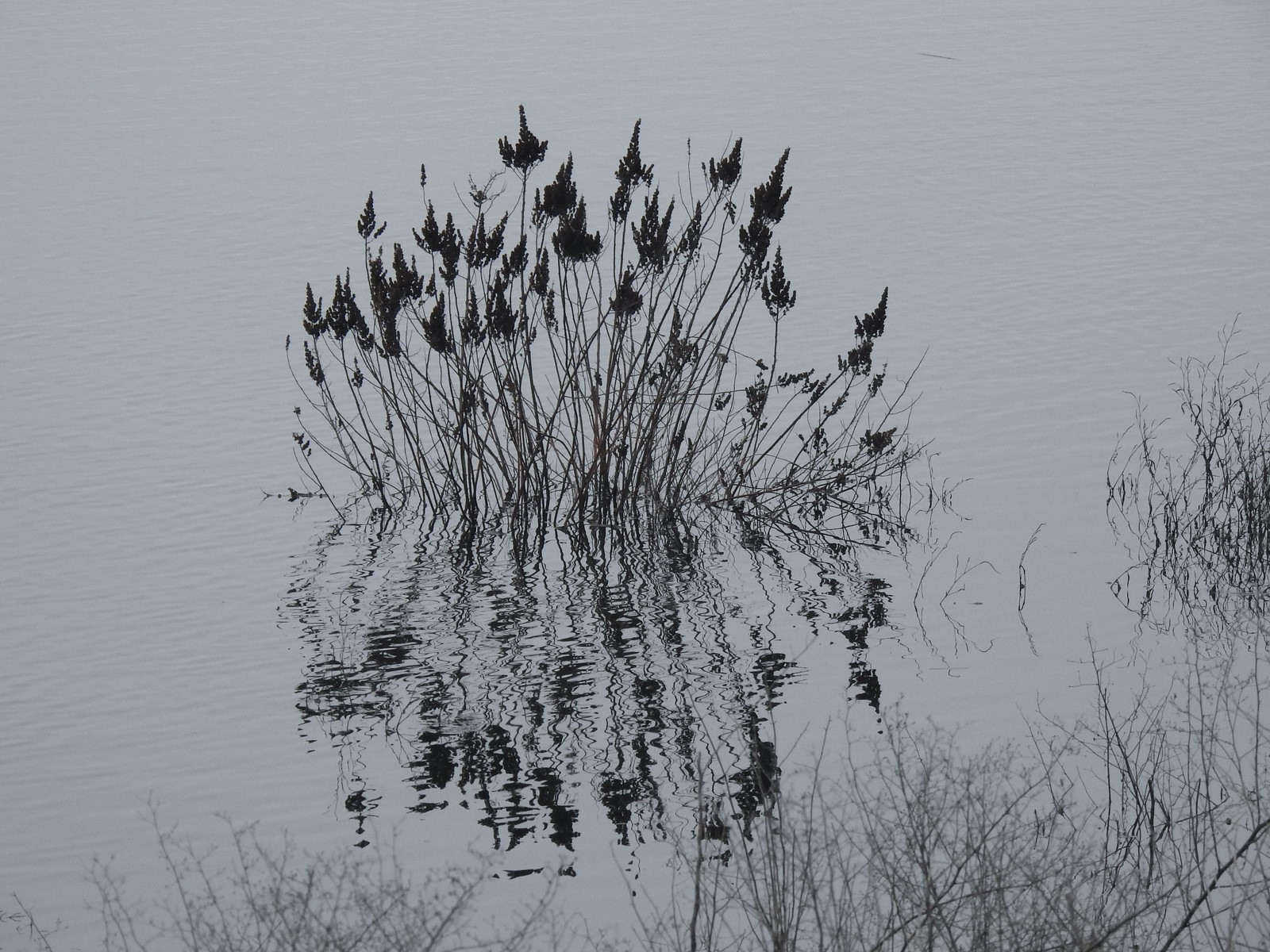 Reflections in Wapato Lake
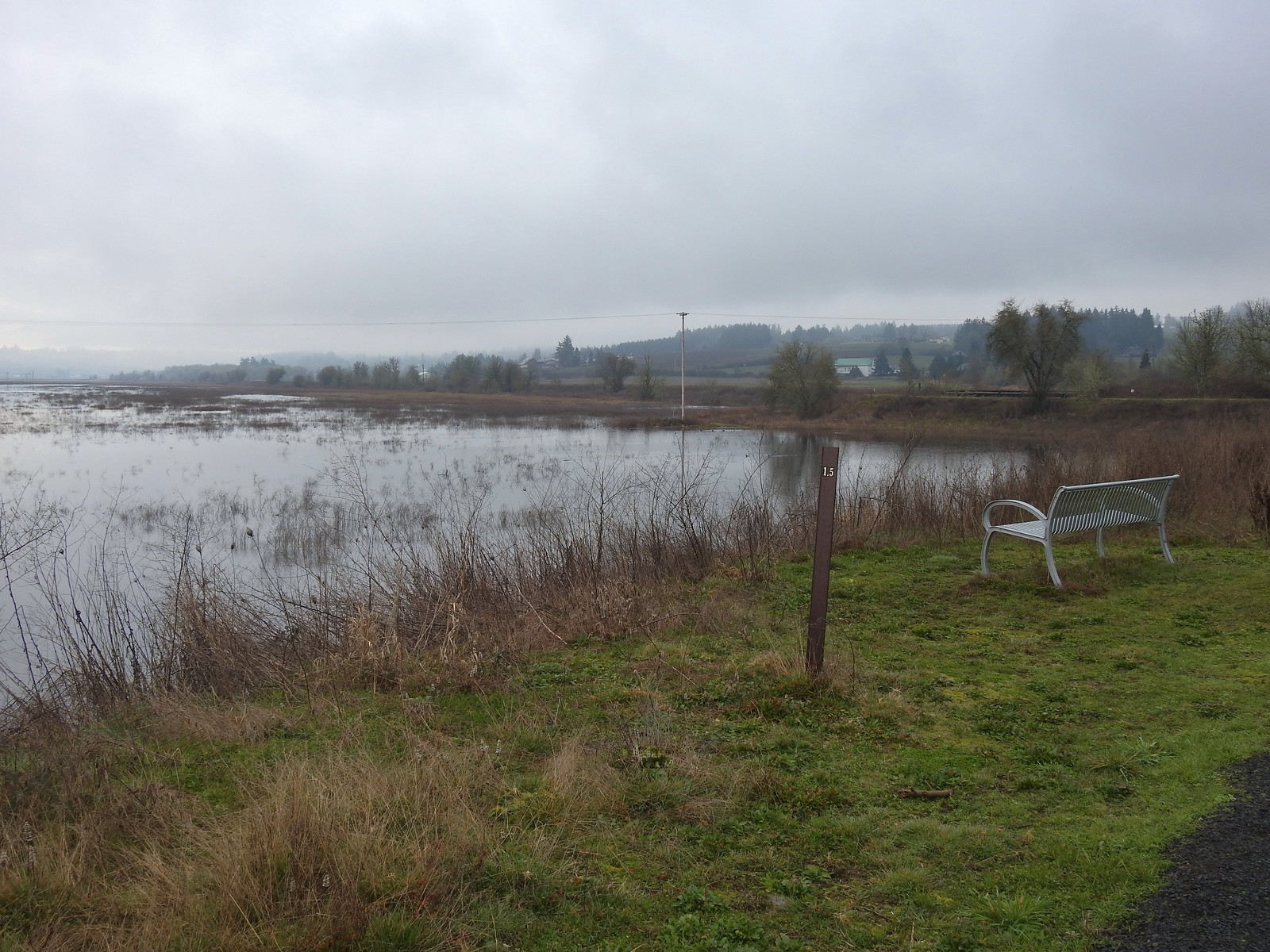 There is virtually no shade along the lake which wasn’t an issue today but could be in the heat of Summer. There are however three benches along the levee allowing for a place to sit and watch the birds.
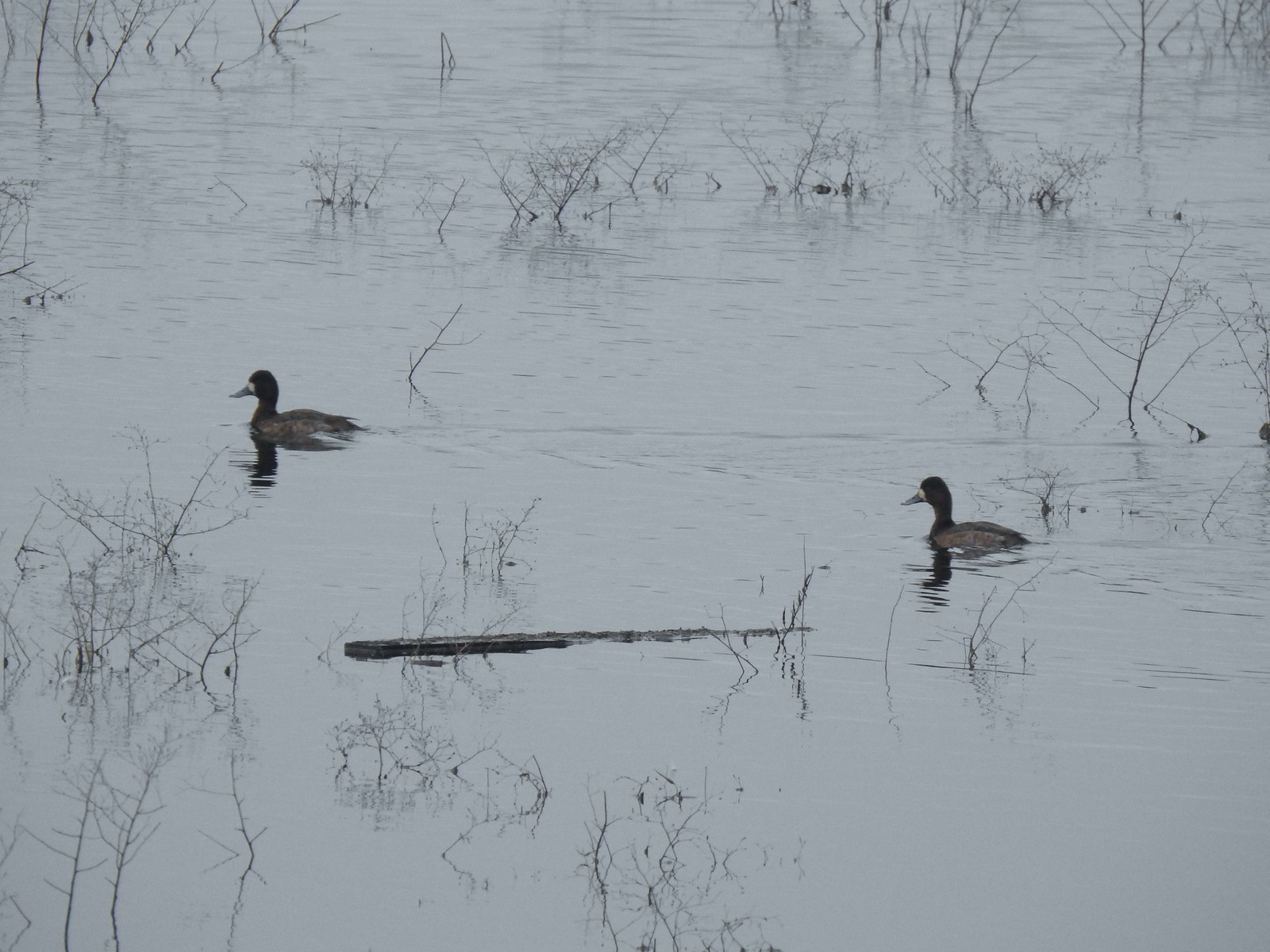 Lesser scaups
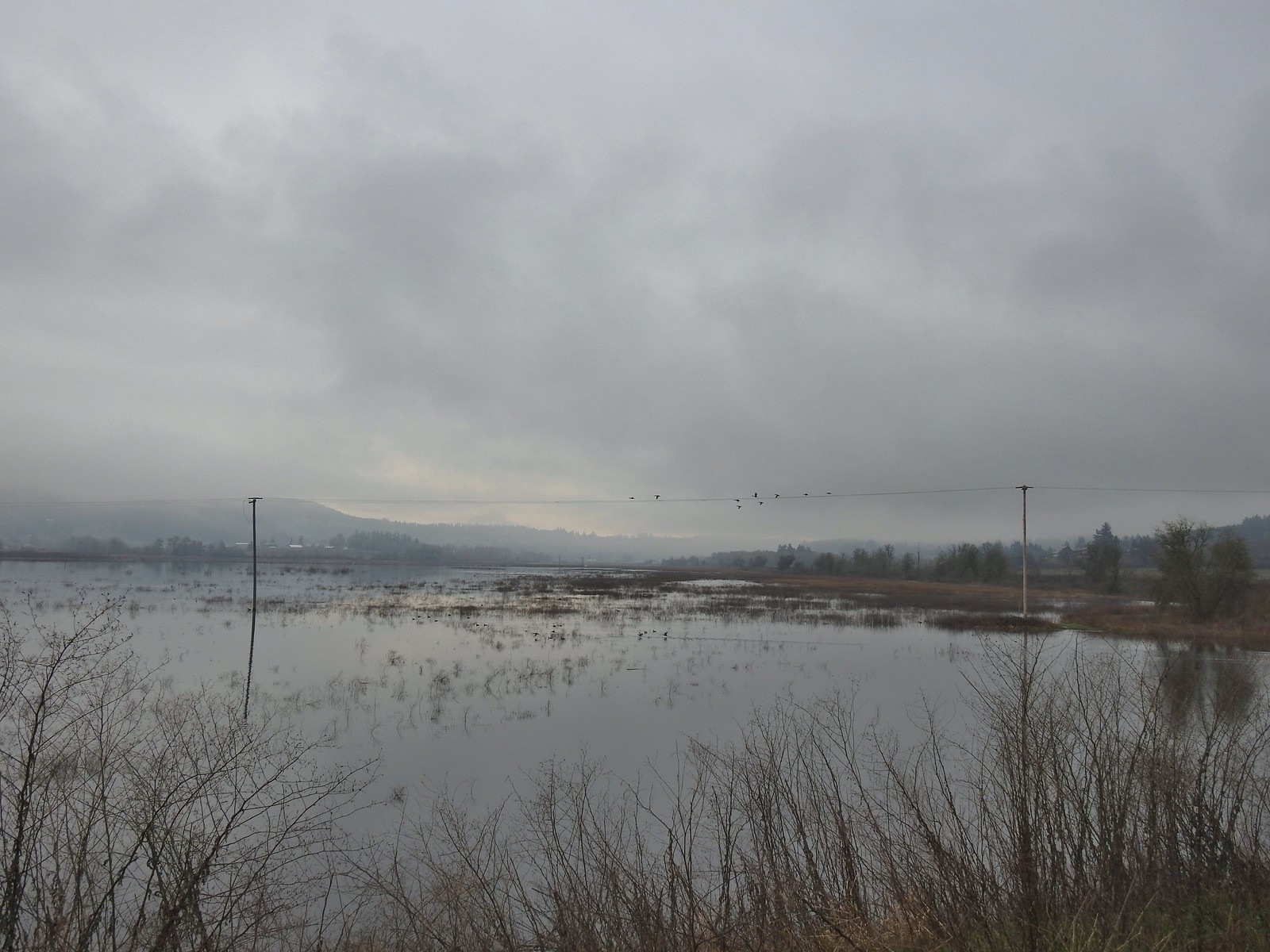 Ducks flying over the lake.
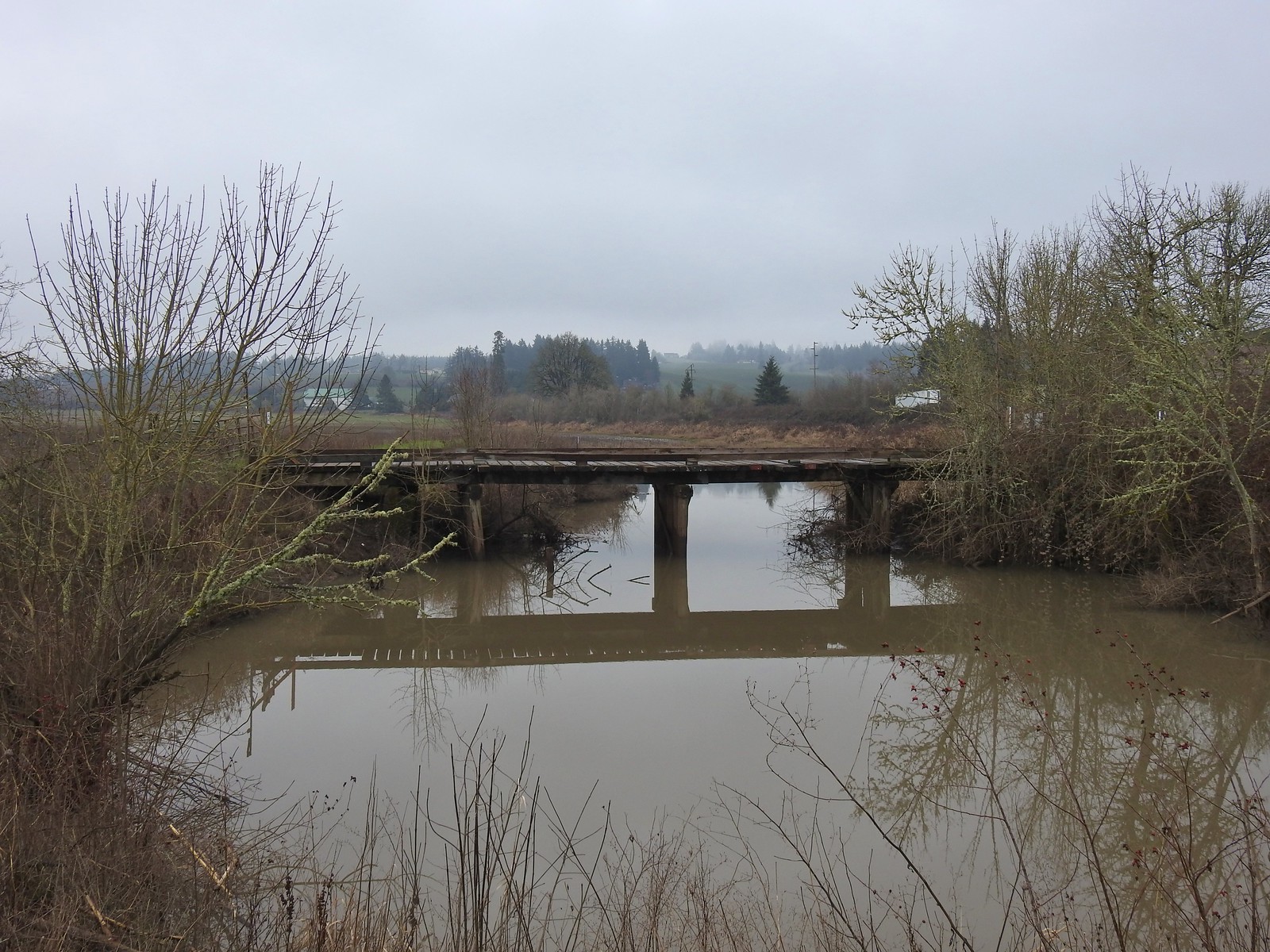 Old bridge over Wapato Creek. The gravel surface ended at this bridge.
After 0.7 miles of gravel the levee continued as a natural surface. The unevenness of the natural surface was a stark difference to the gravel.
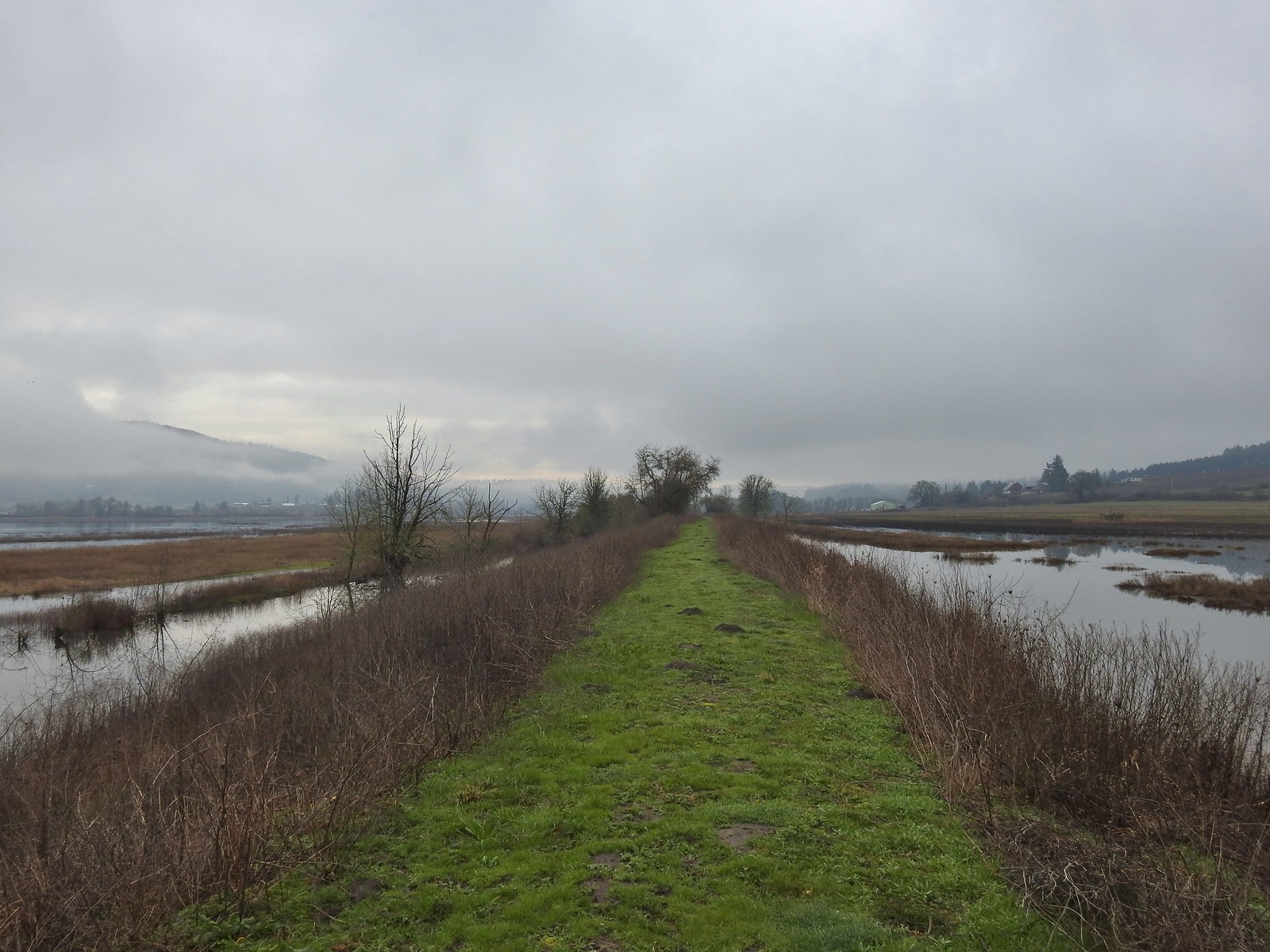
We continued on the natural surface another three quarters of a mile to a gate at another old bridge. Across the lake we could see some tundra swans which were a first for us, and we startled a coyote that raced off through the brush along the lakebed.
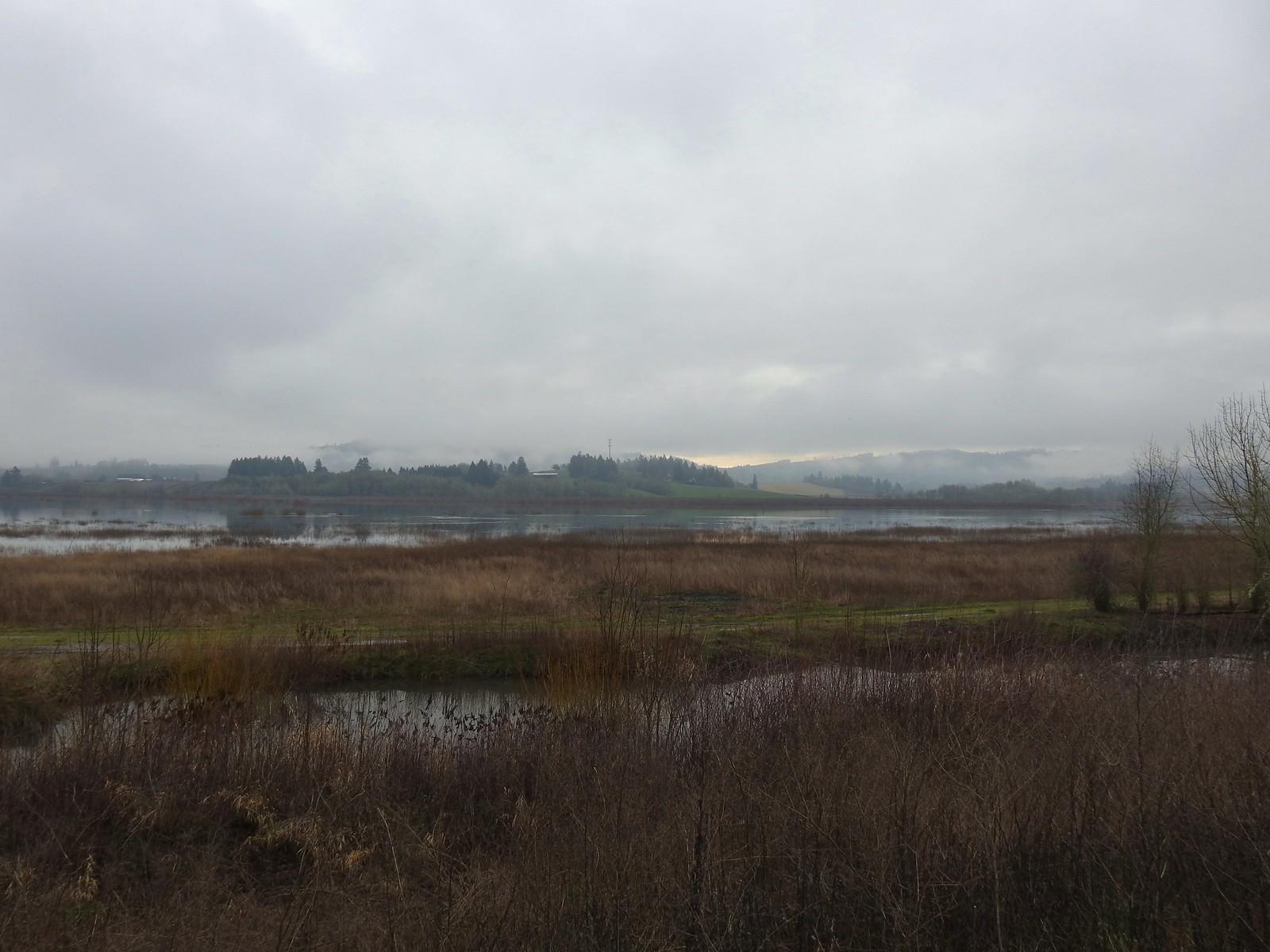
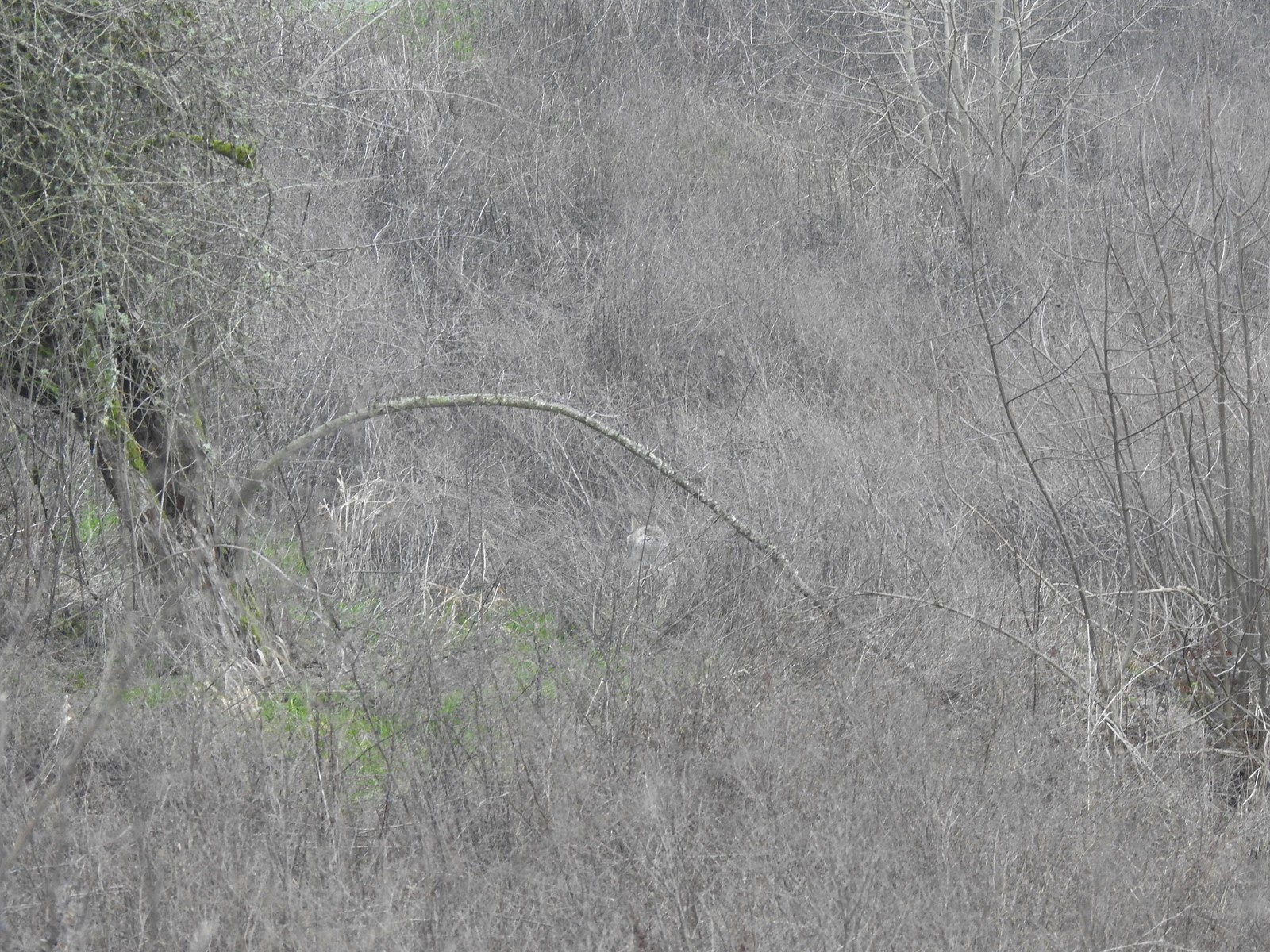 The coyote running off through the brush.
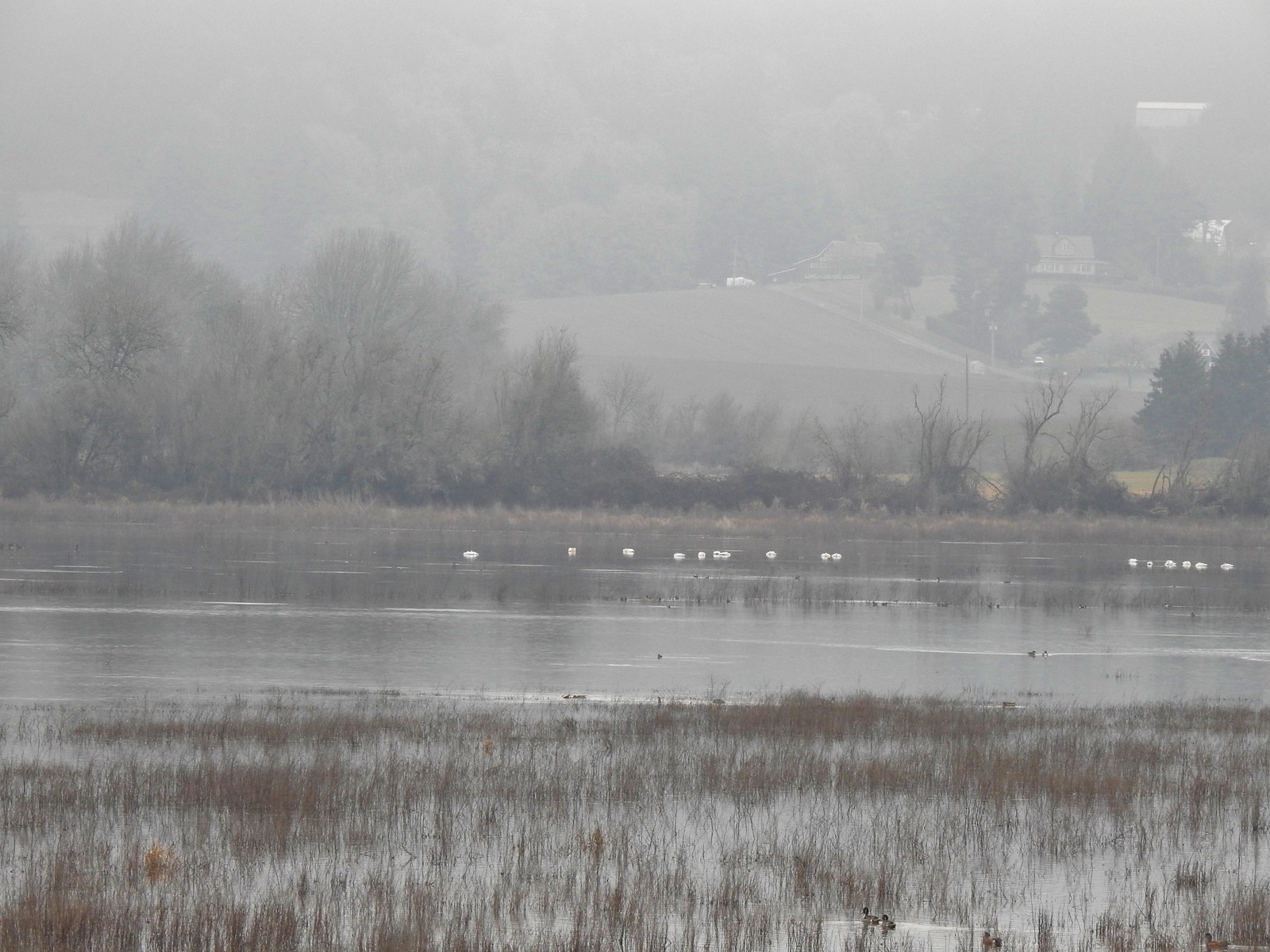 Tundra swans
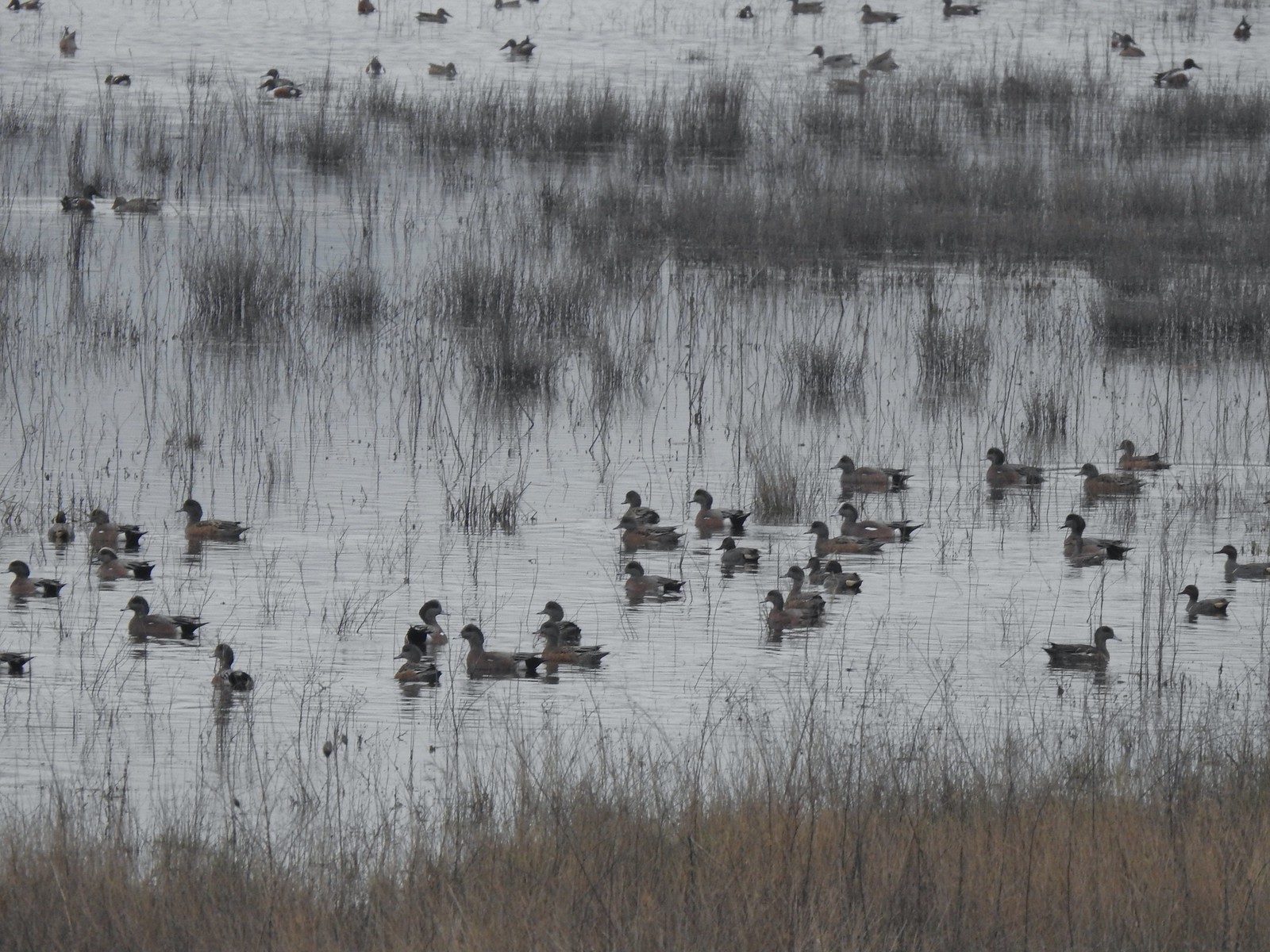
 Tundra swans
 We decided to turn around at this bridge even though the levee continued. It appeared that the water was further away from the levee going forward and we hadn’t planned on going much more than 3-miles today.
We were hoping that the partly sunny skies that had been forecast would make an appearance as we made our way back, but that never happened. Nevertheless, we were enjoying trying to identify the different ducks and birds we were seeing.
 Northern pintails and some green-winged teals.
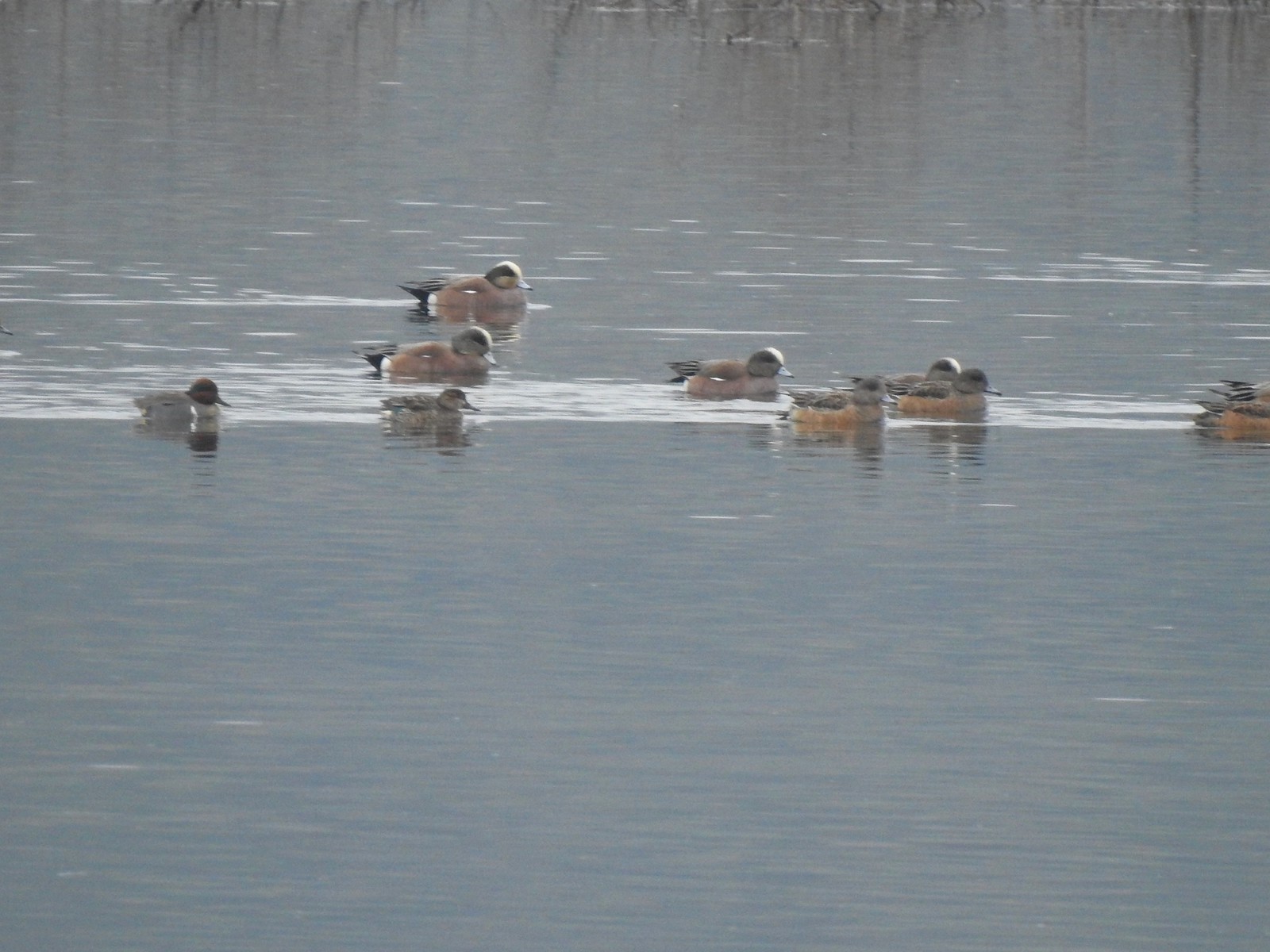 American wigeons and a pair of green-winged teals.
 There were a couple of times that blue sky seemed imminent.
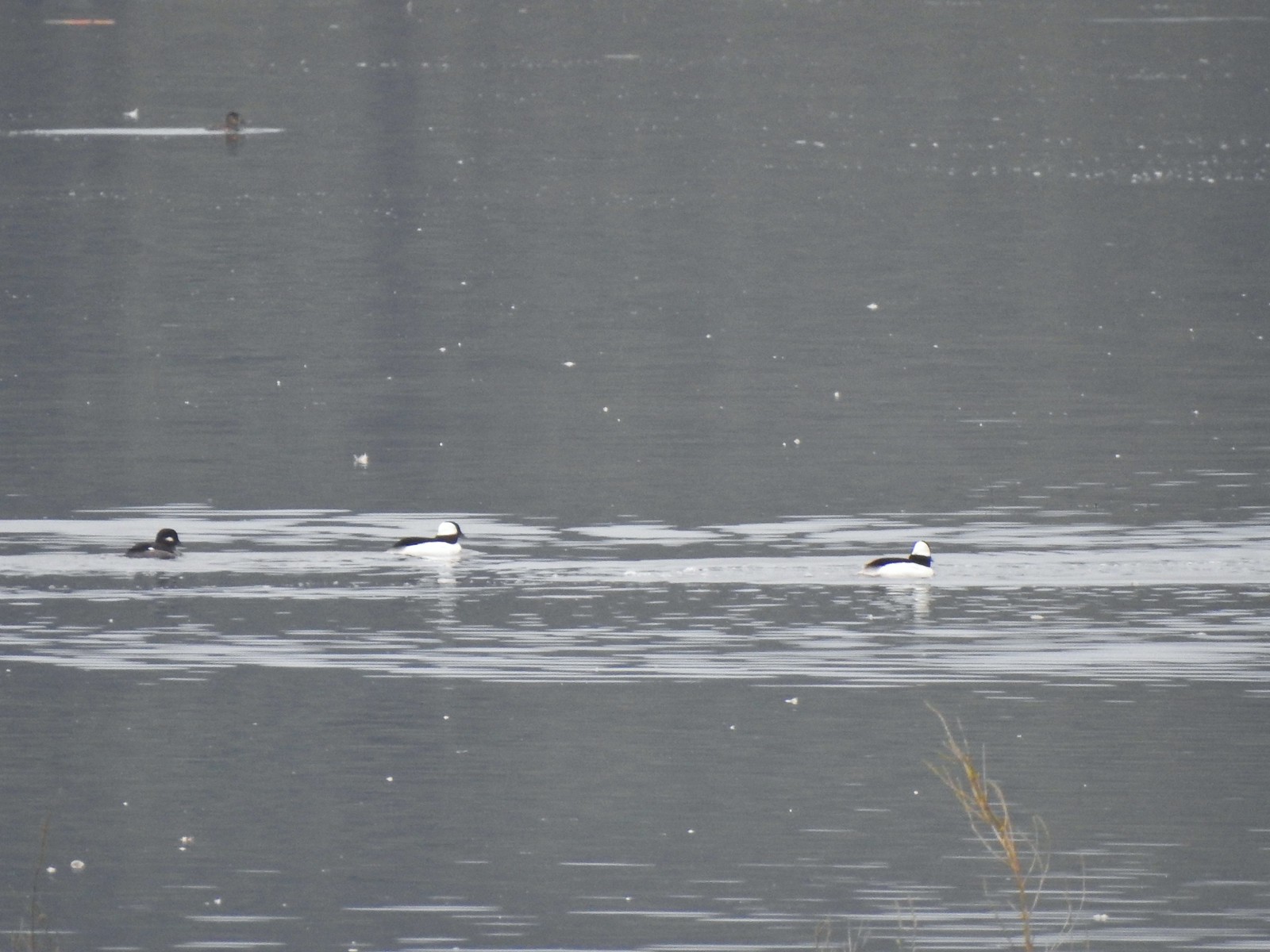 Buffleheads
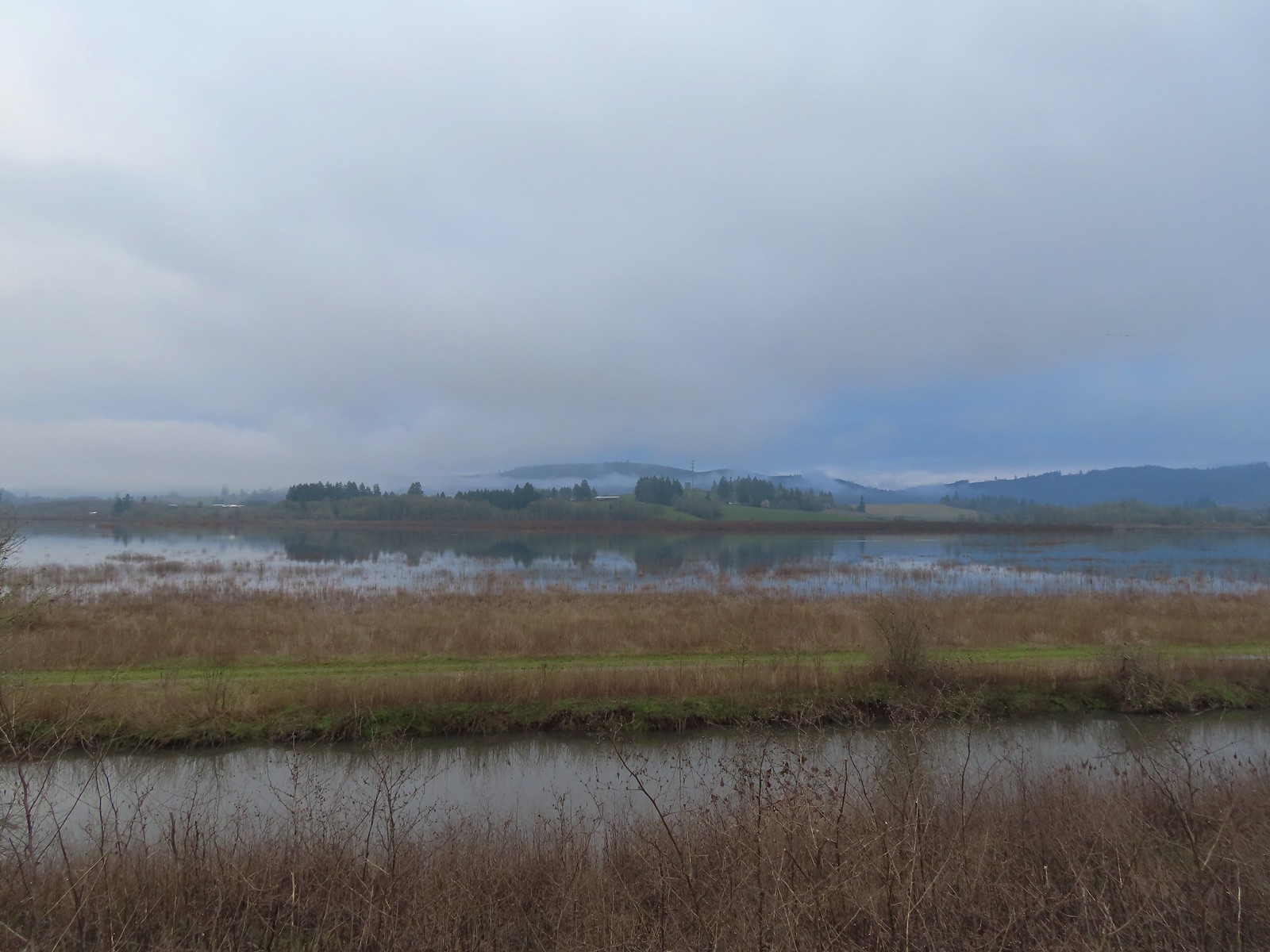 Iowa Hill (post) across the lake.

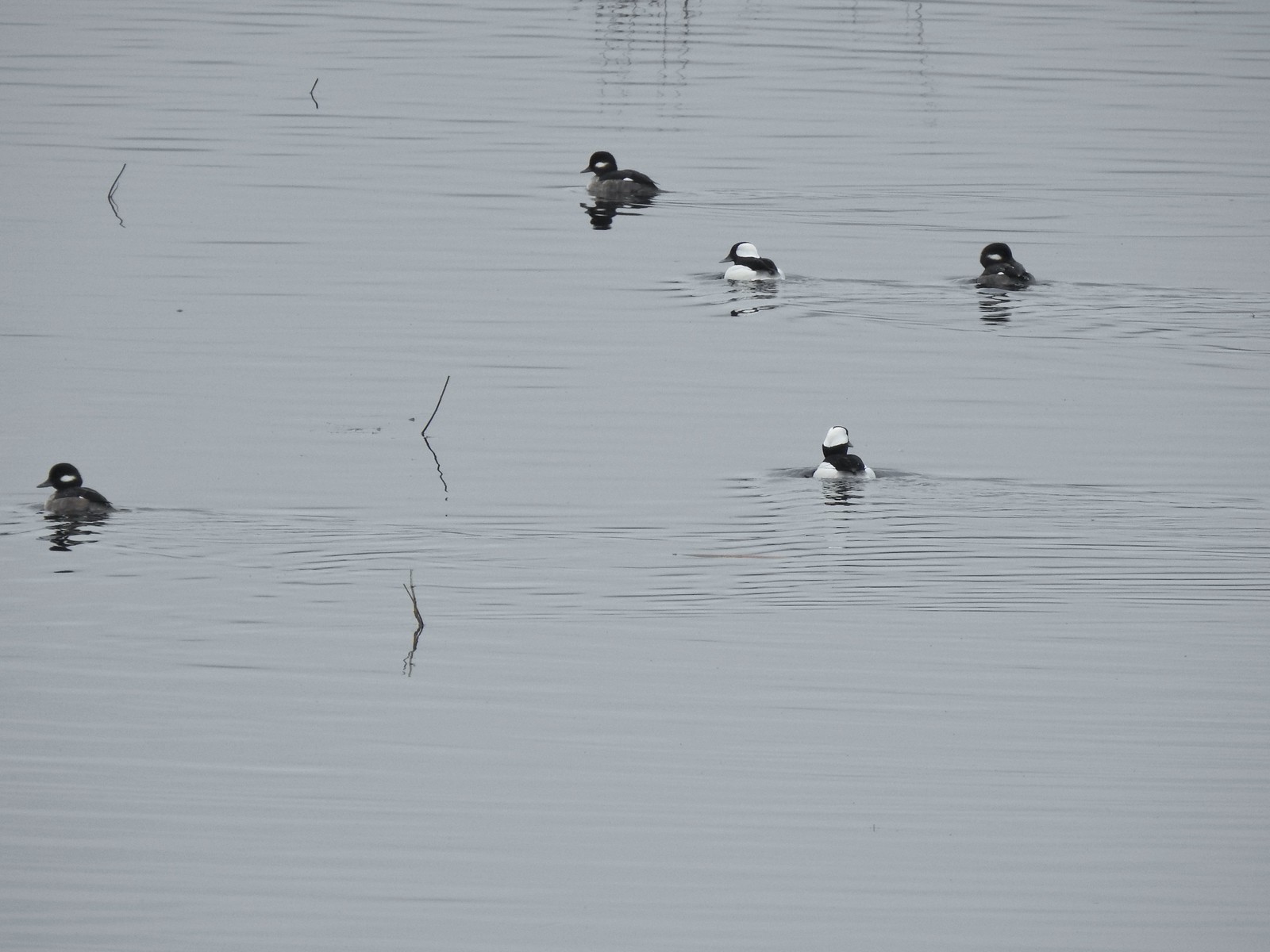 More buffleheads
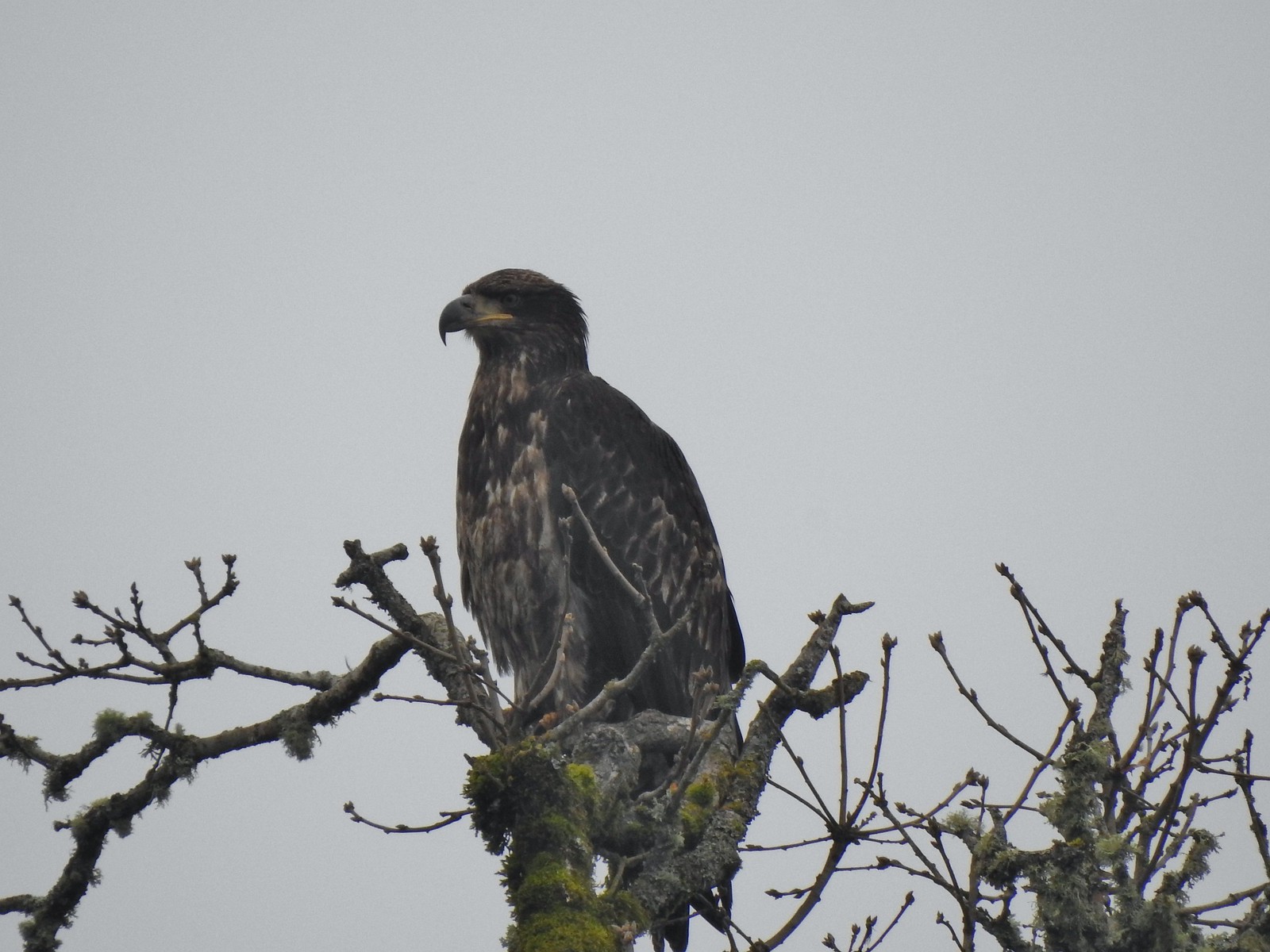 Immature bald eagle
 Sparrow
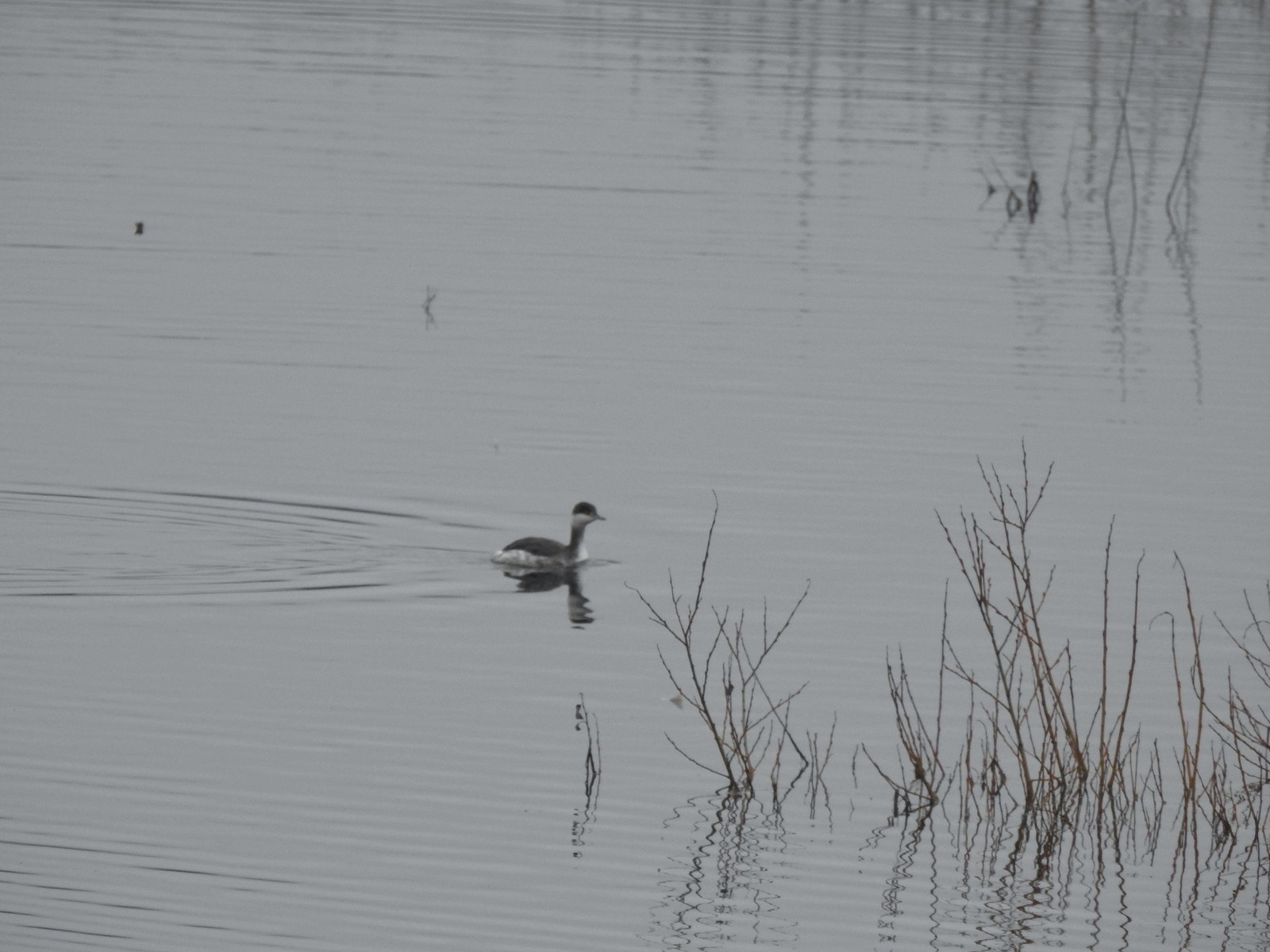 Horned grebe
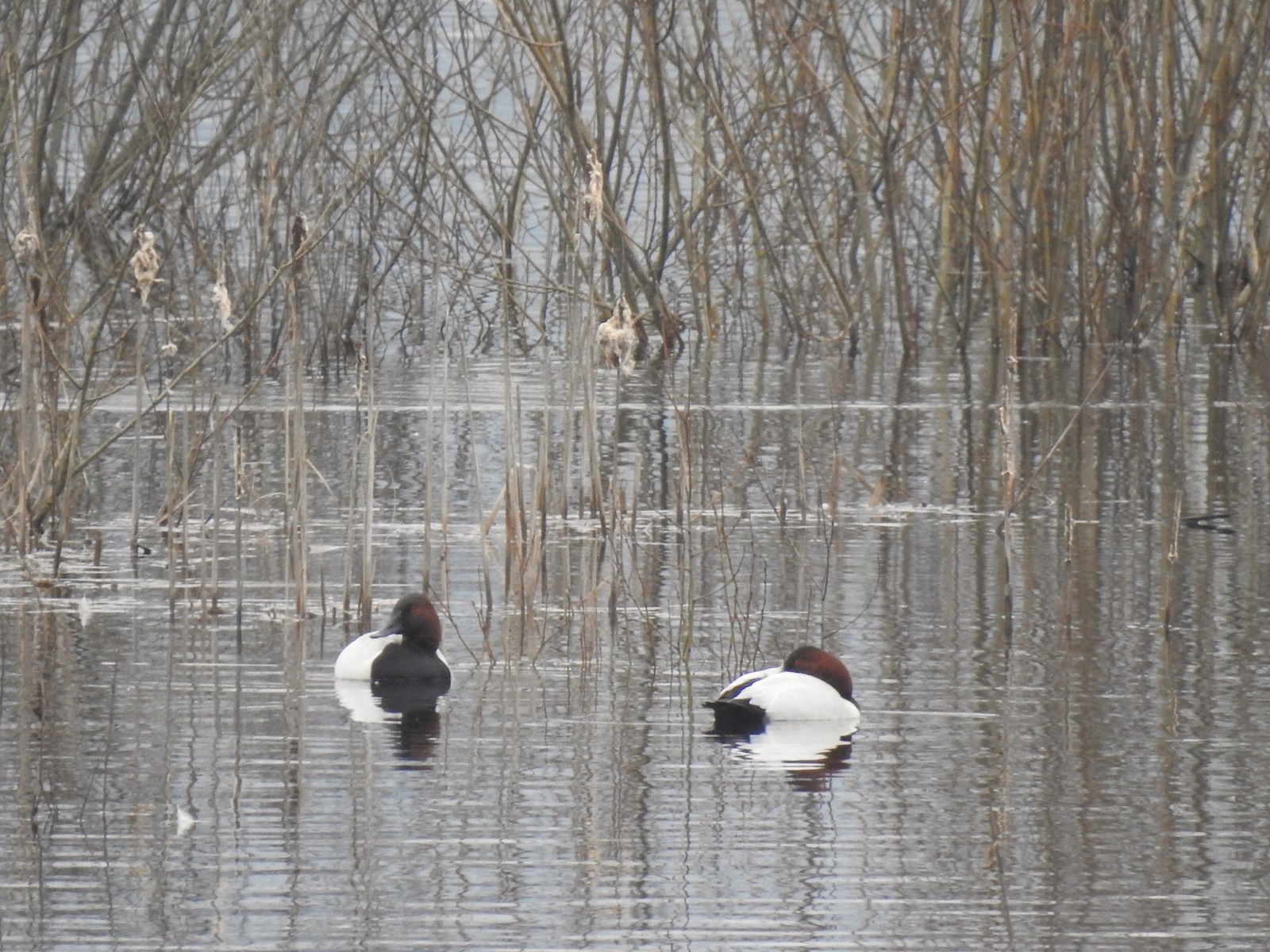 Canvasbacks, another first for us.
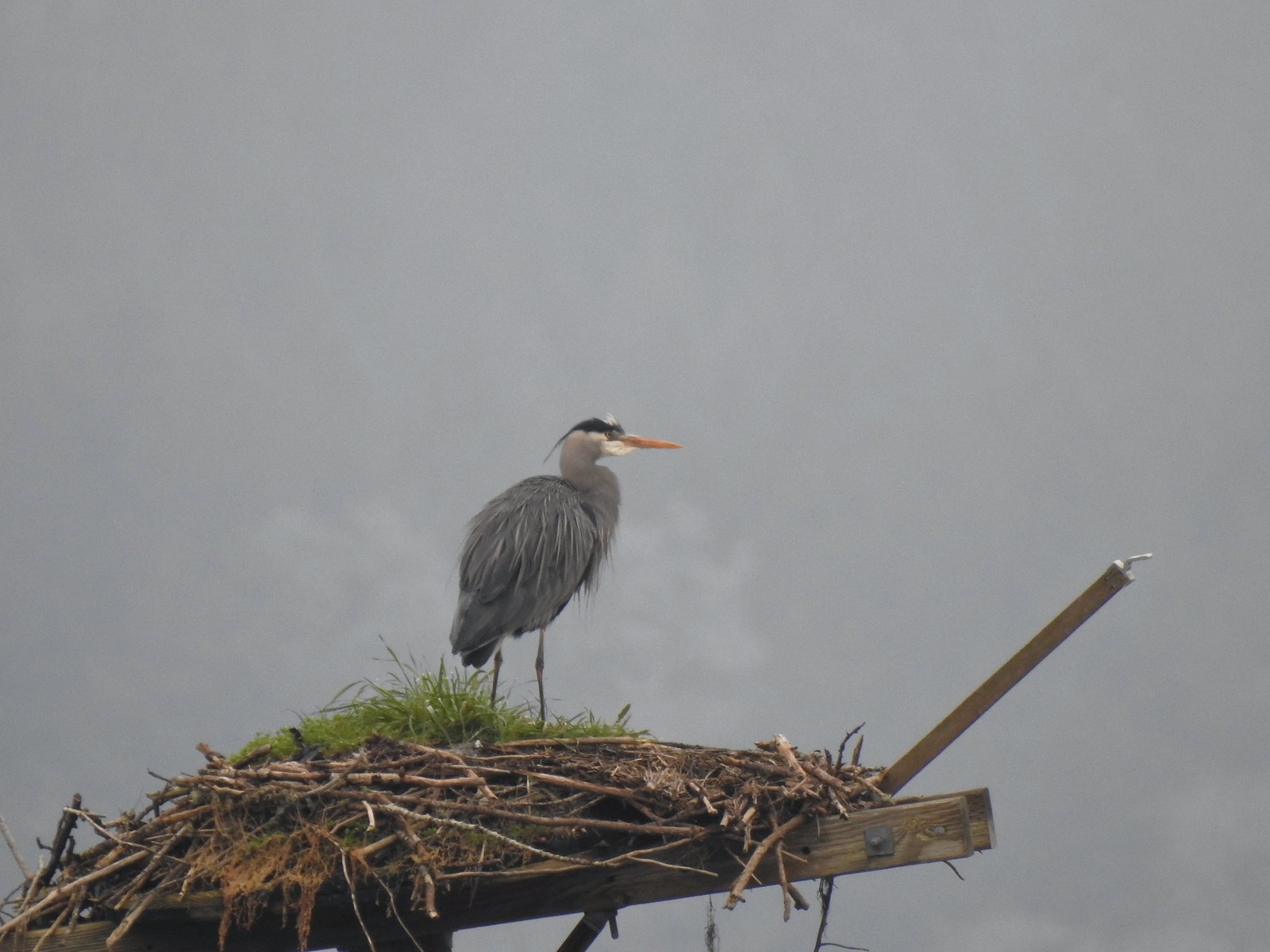 Great blue heron on the osprey nest.
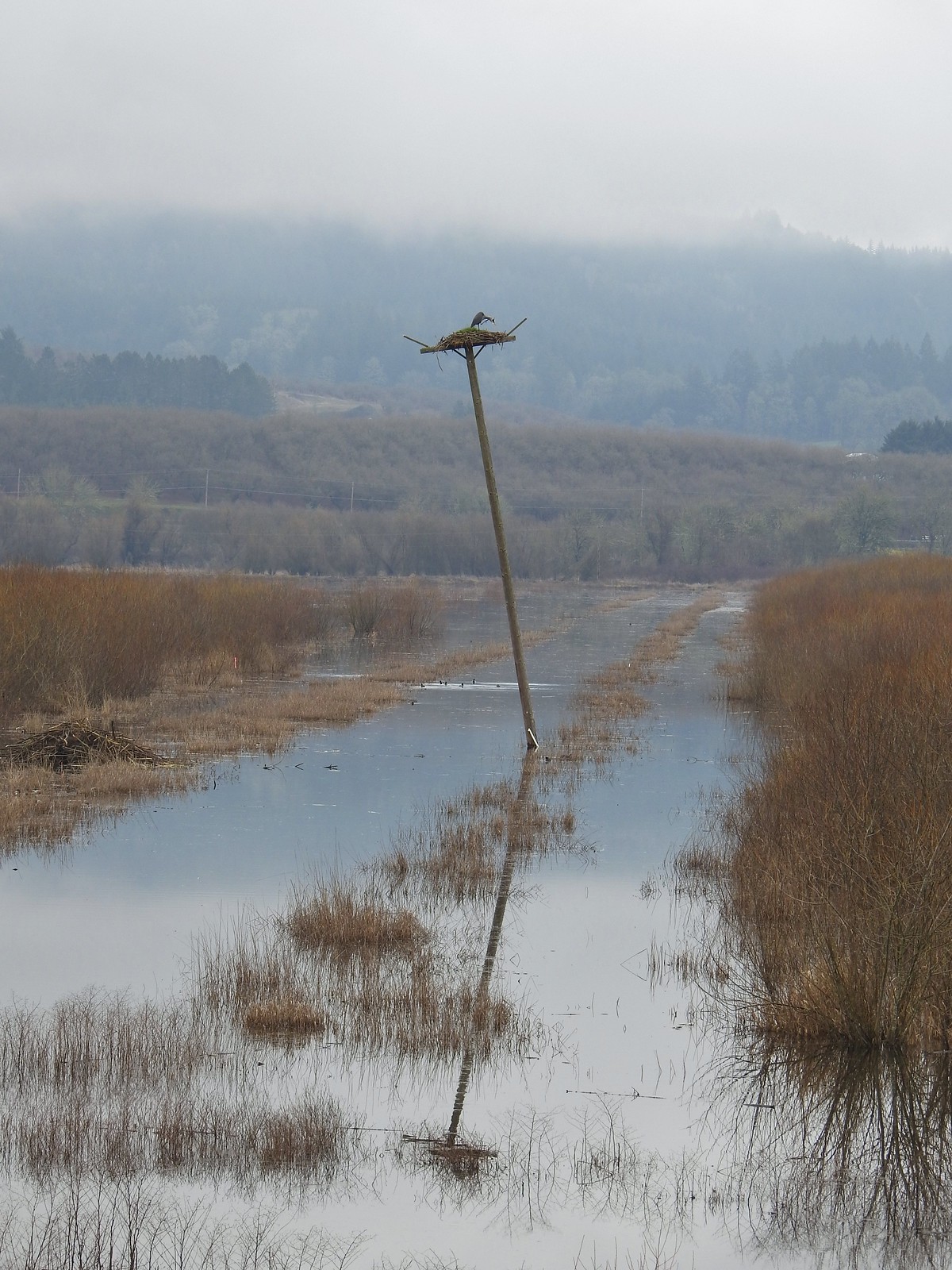 Ther heron on the nest.
When we arrived back at the bridge over Wapato Creek we stayed straight on the level and followed the gravel path north 0.6-miles to a gate where we turned around and returned to our car.
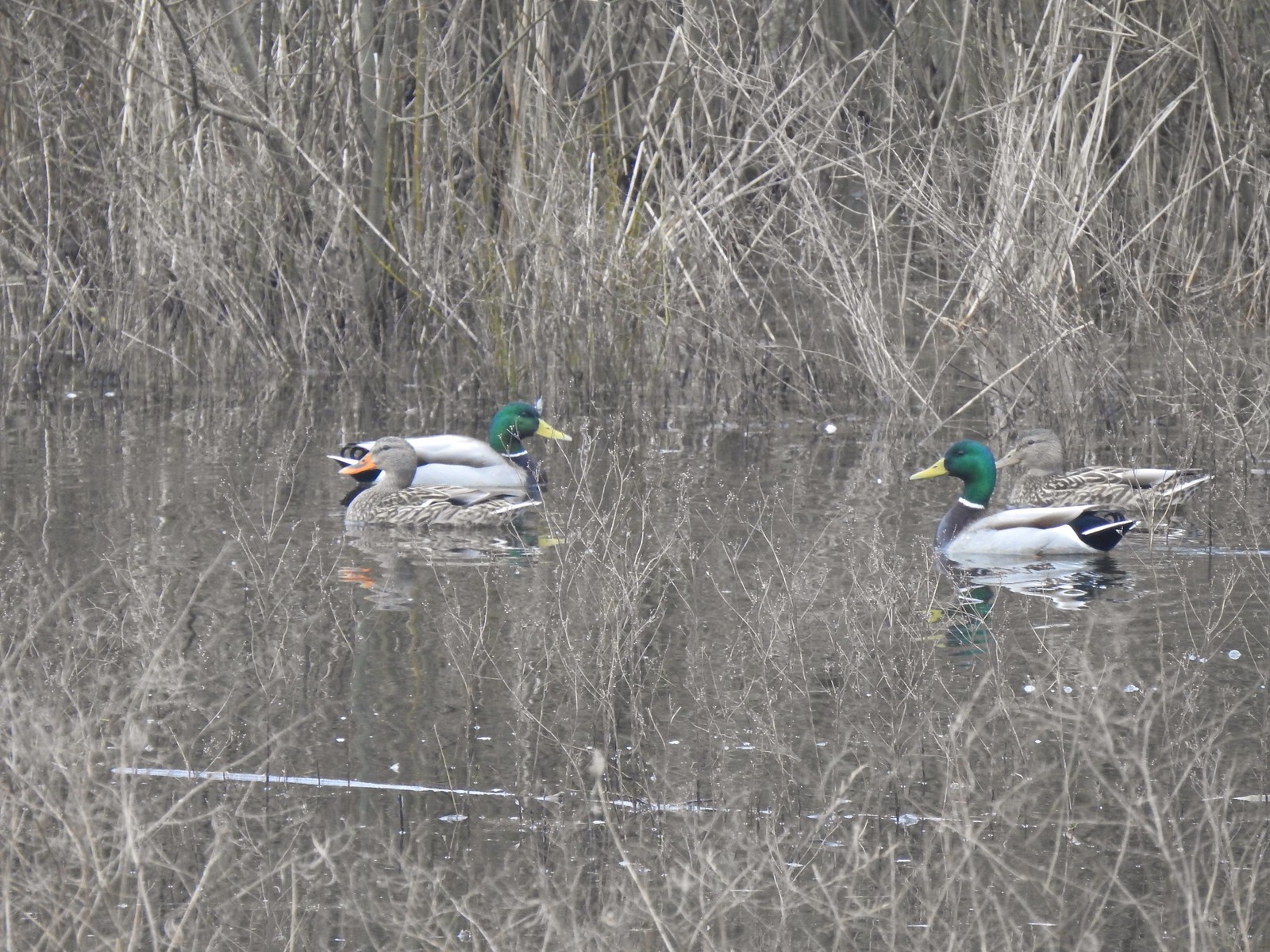 Mallards
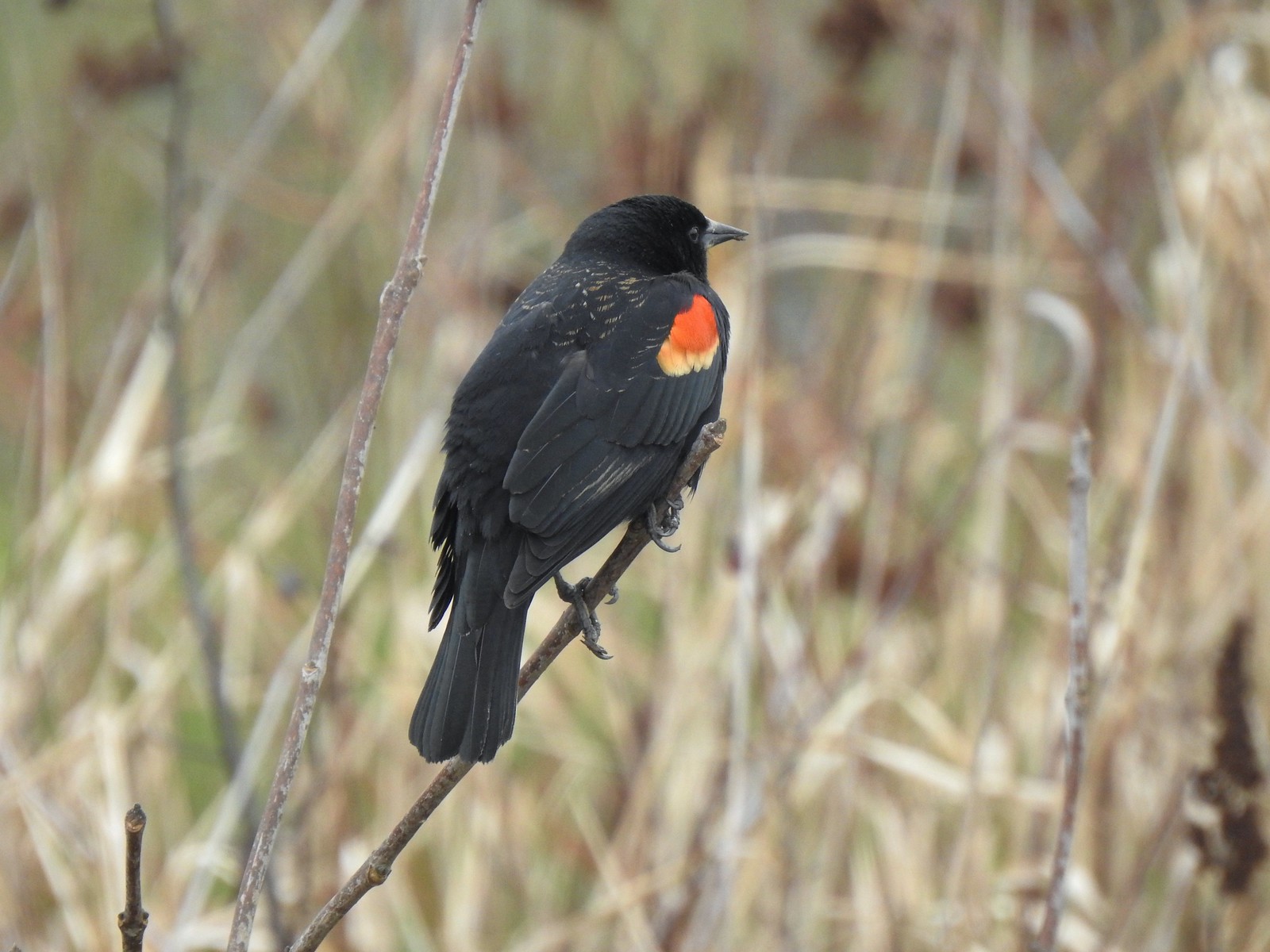 Red-winged blackbird
 Bald eagle
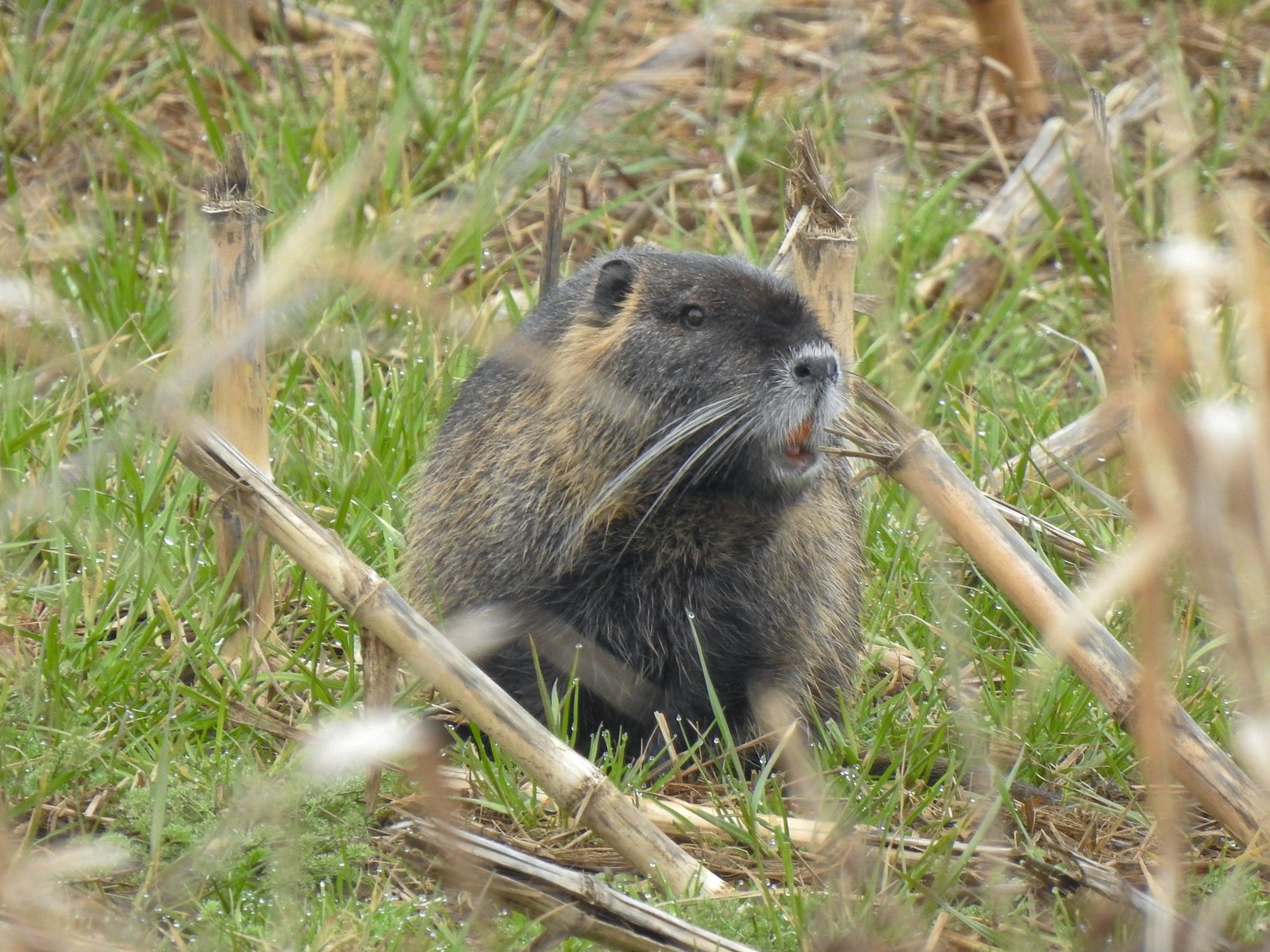 Nutria

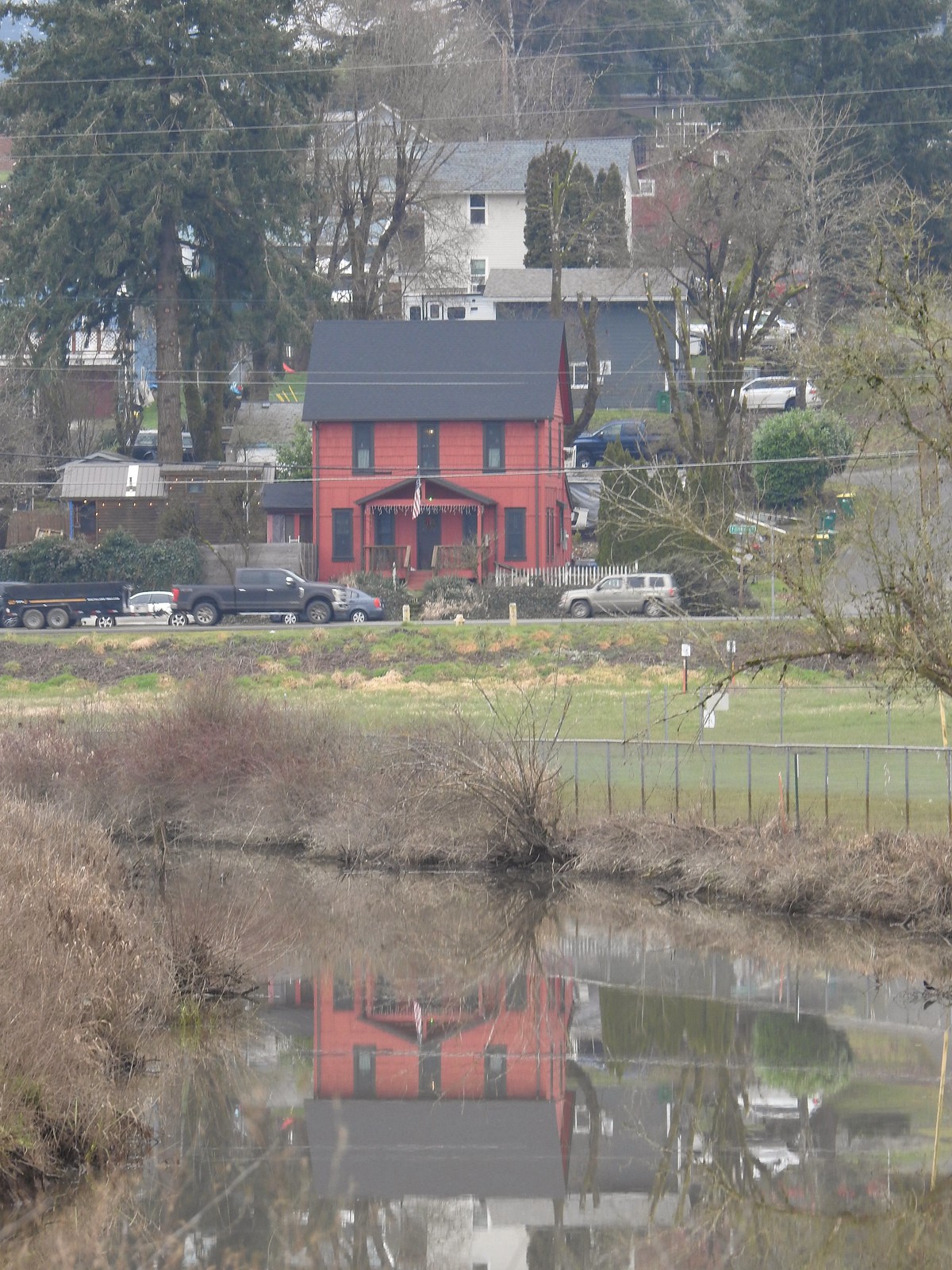 Gaston from the refuge.
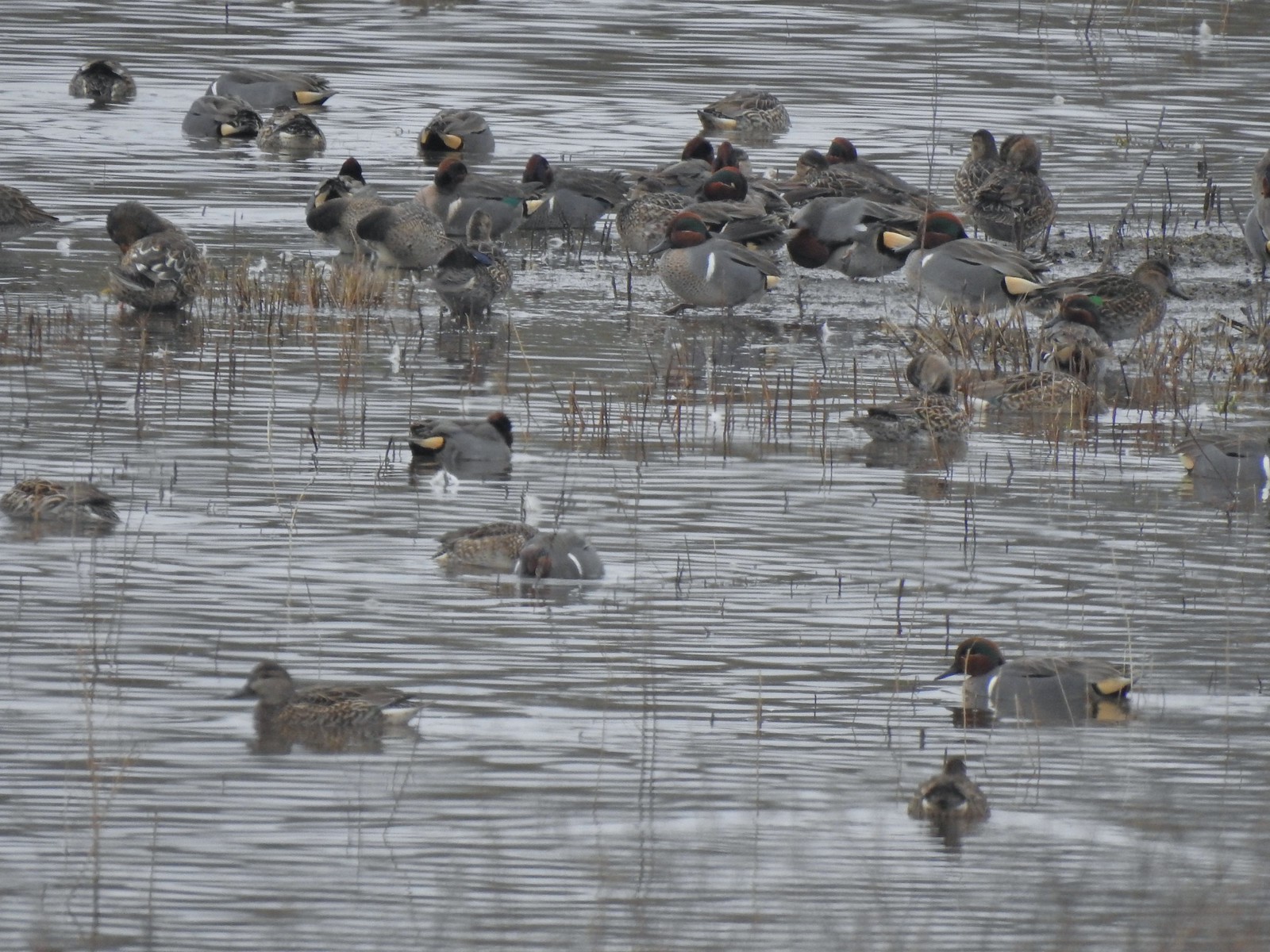 Green-winged teals
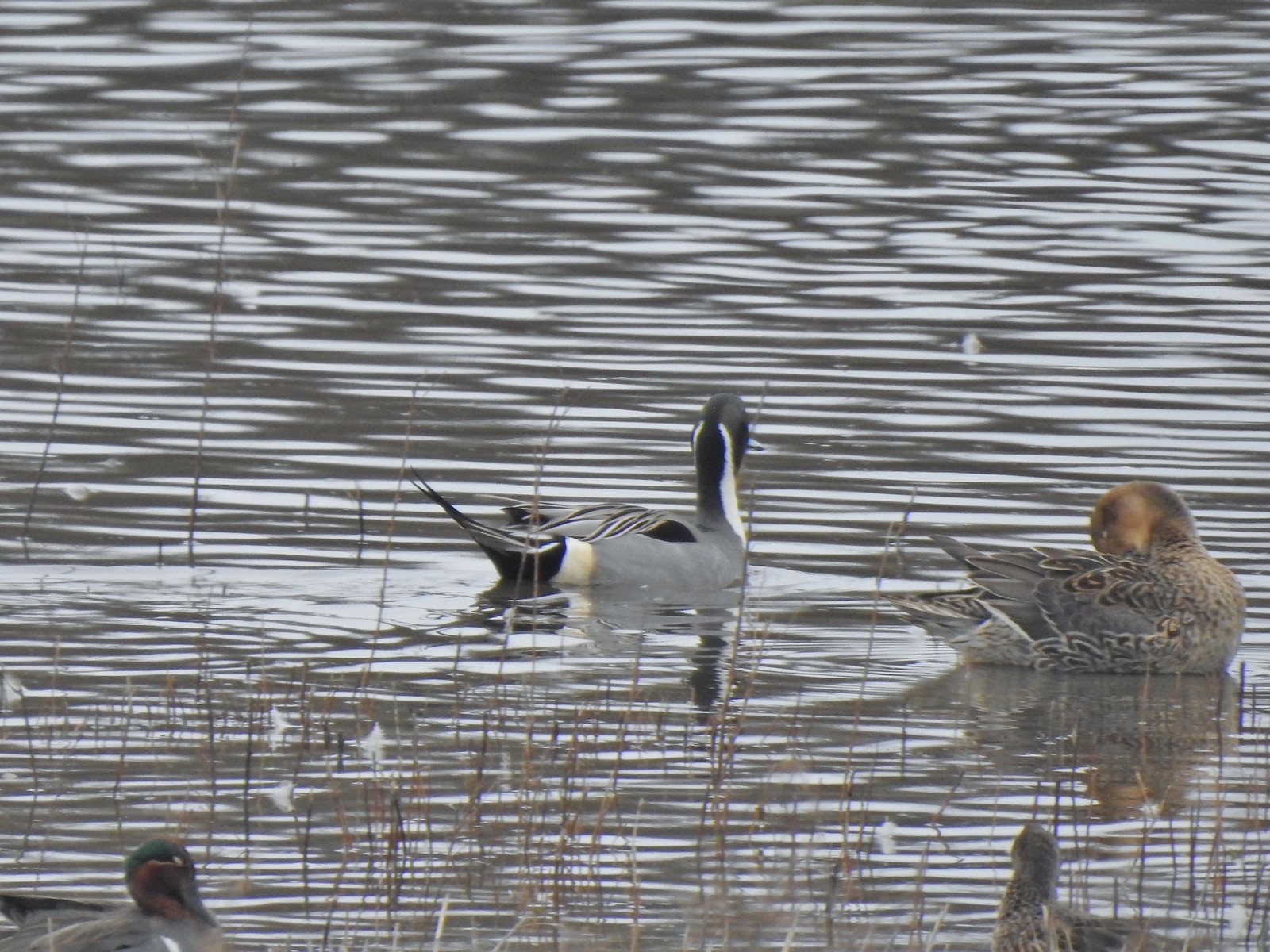 Northern pintails
 Mostly American wigeons and green-winged teals
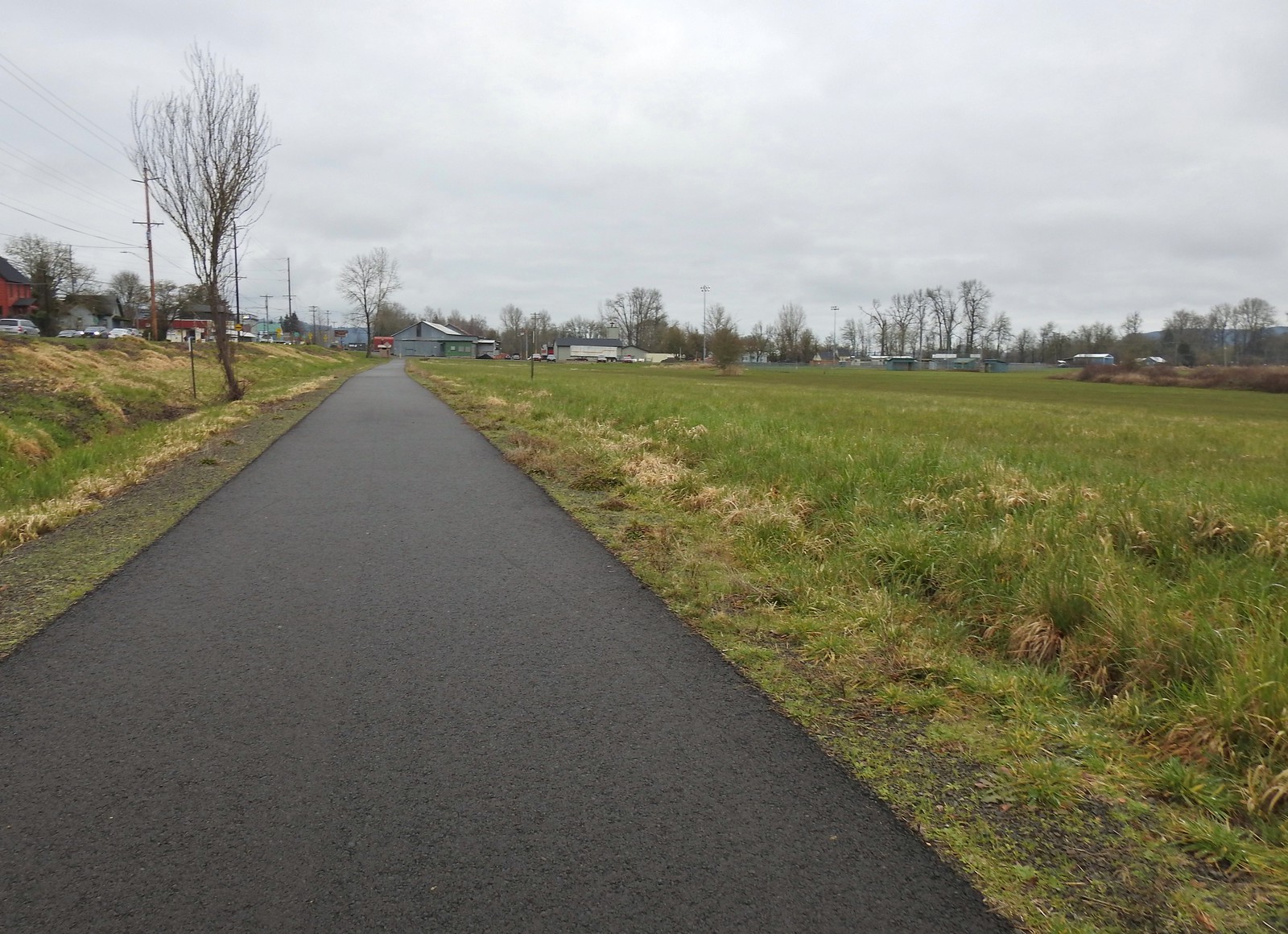 On the paved path back to the parking lot.
We wound up going a total of 4.8-miles (according to both our GPS units) which was a little further than we’d planned, but we got to see a lot of wildlife without much effort on the level trails.

This was an enjoyable visit and given its relative proximity to Salem one that we’ll likely revisit down the line. Happy Trails!

 Some of the damage from the ice storm at the trailhead.
 Sign for the Connector Trail at the trailhead.
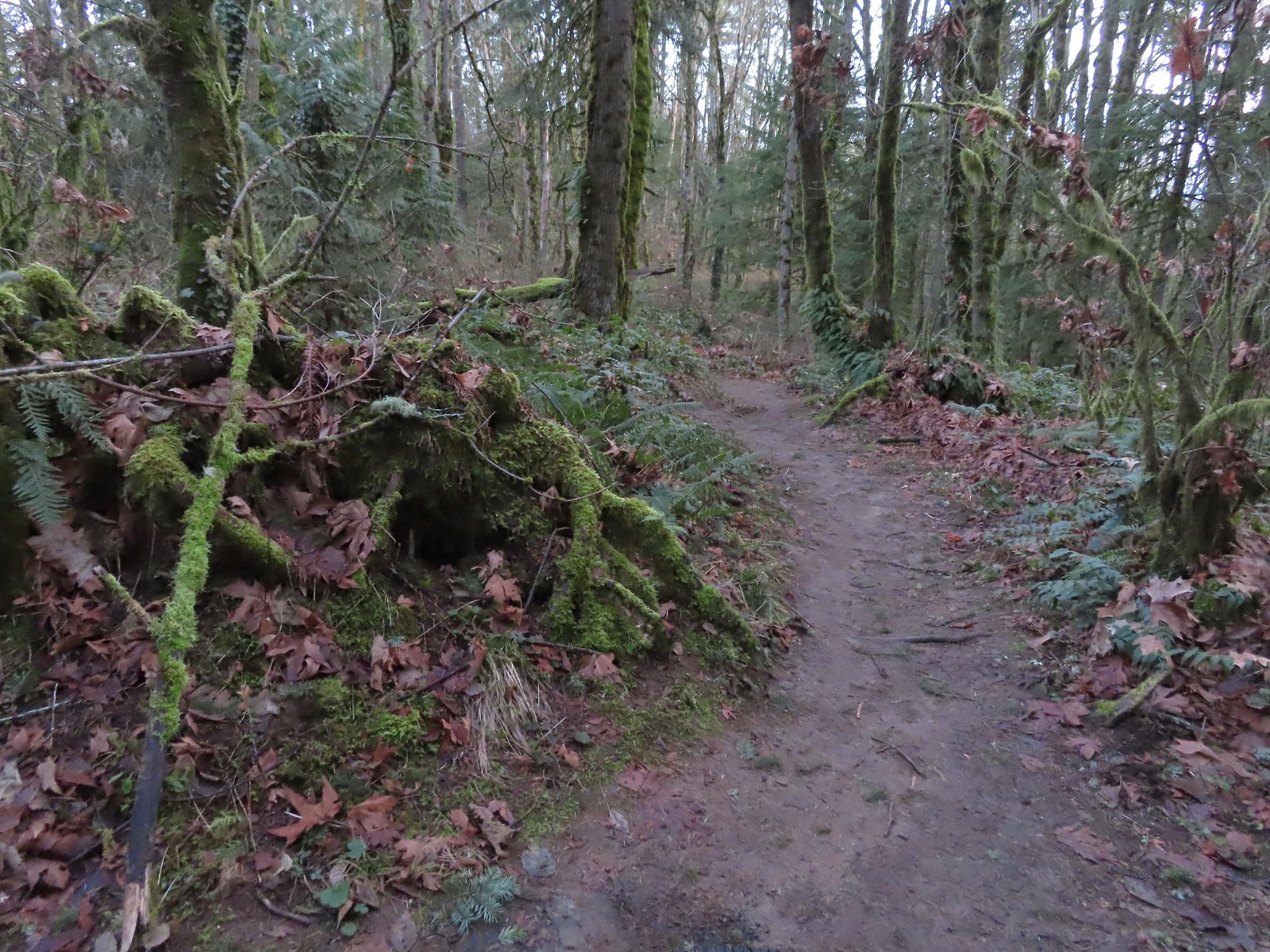 Cannon Trail
 Firelane 9 across from the trailhead.
 Firelane 10
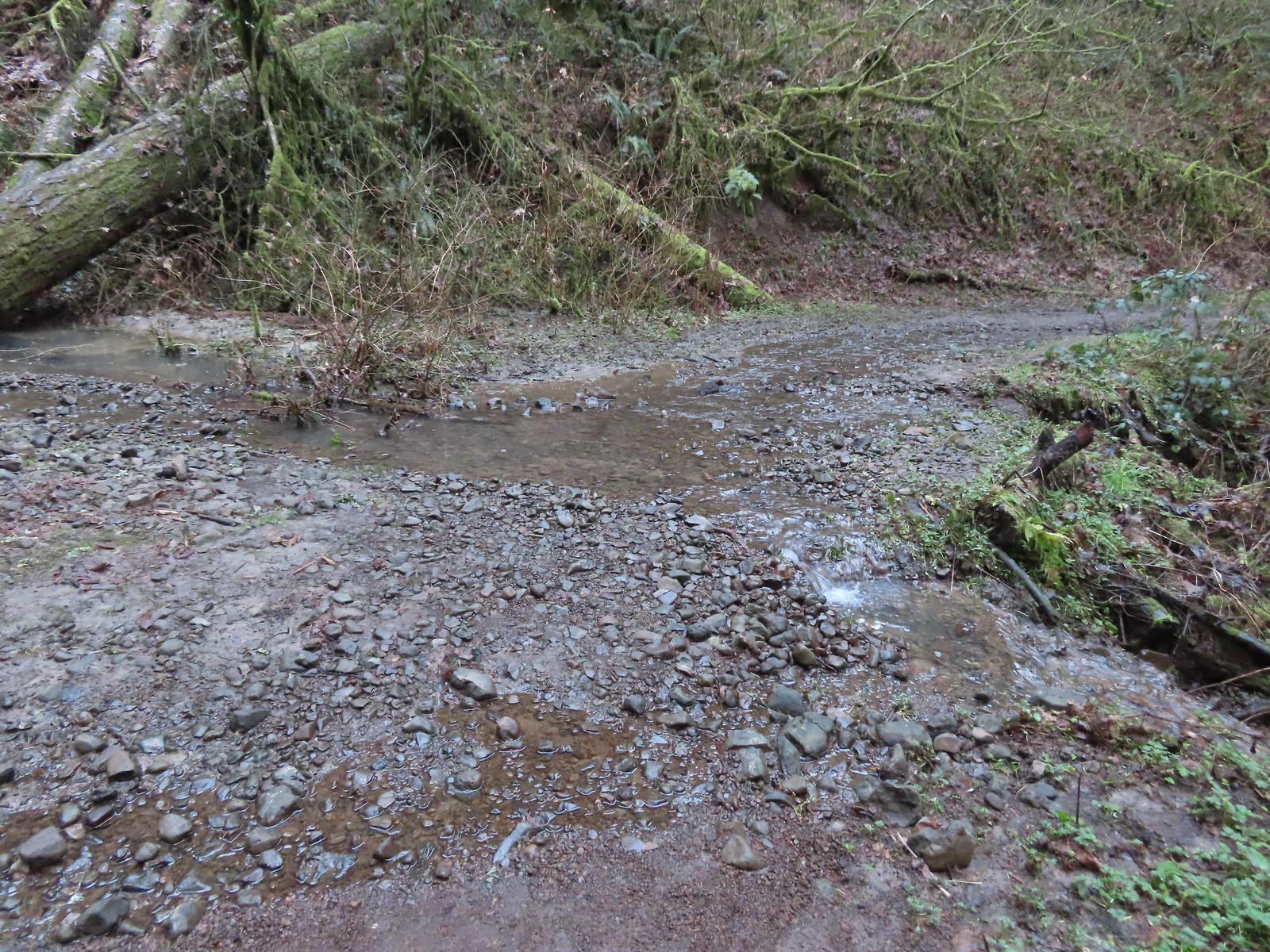 Unsurprisingly the recent weather had most of the stream beds flowing which we hadn’t witnessed on our other visits.
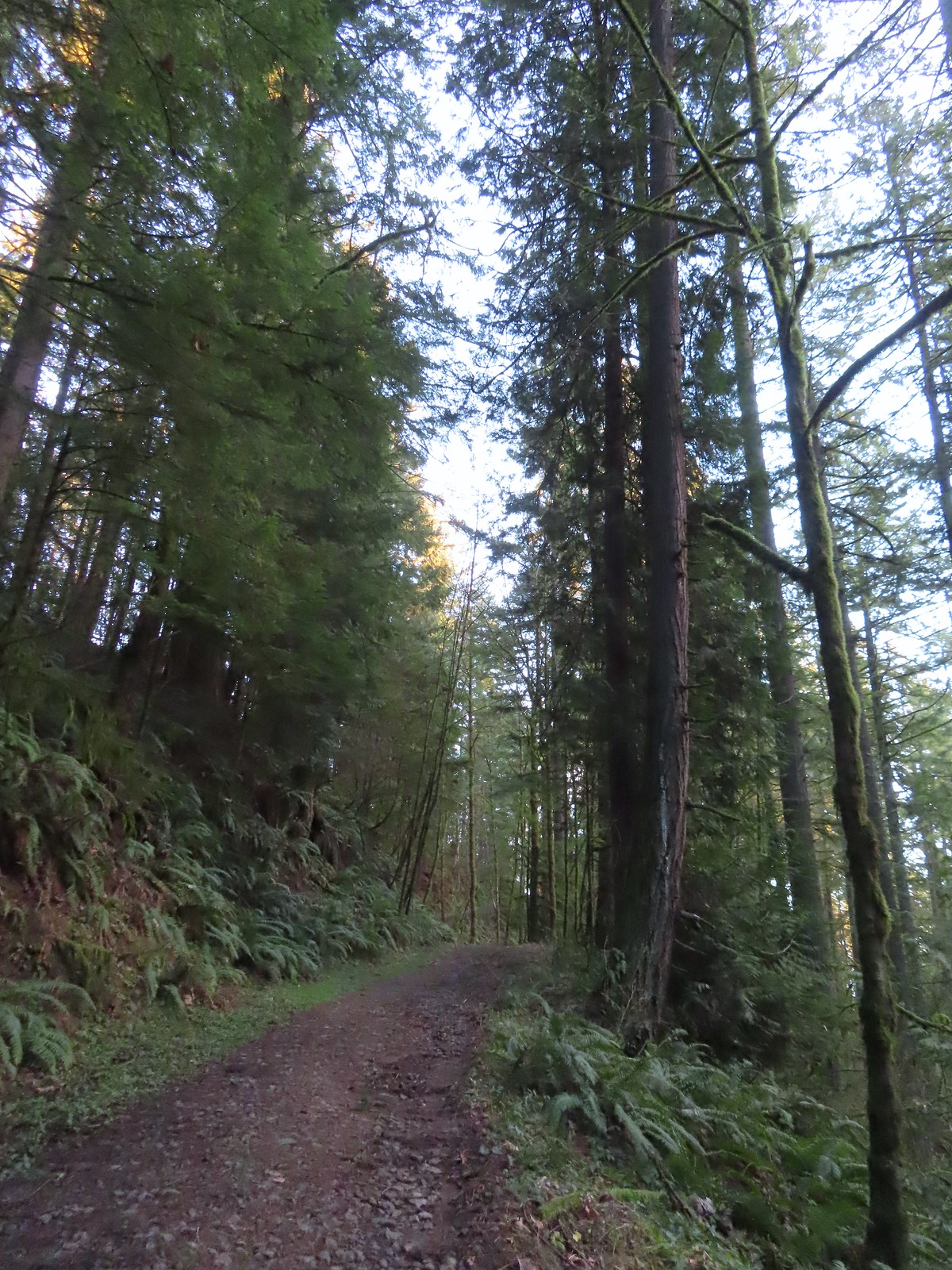 Heading up to the junction.
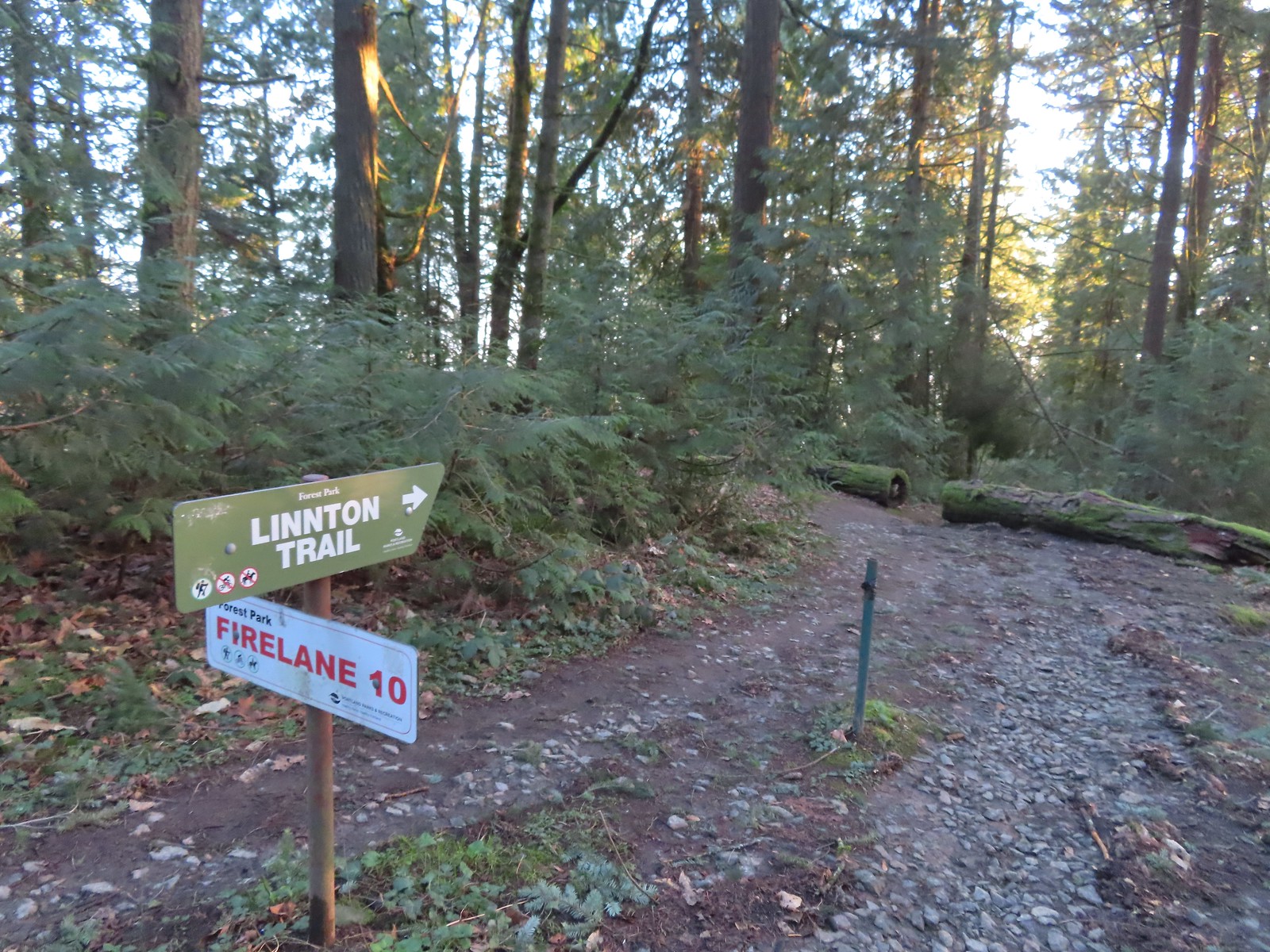 The Linnton Trail heads down a ridge to the
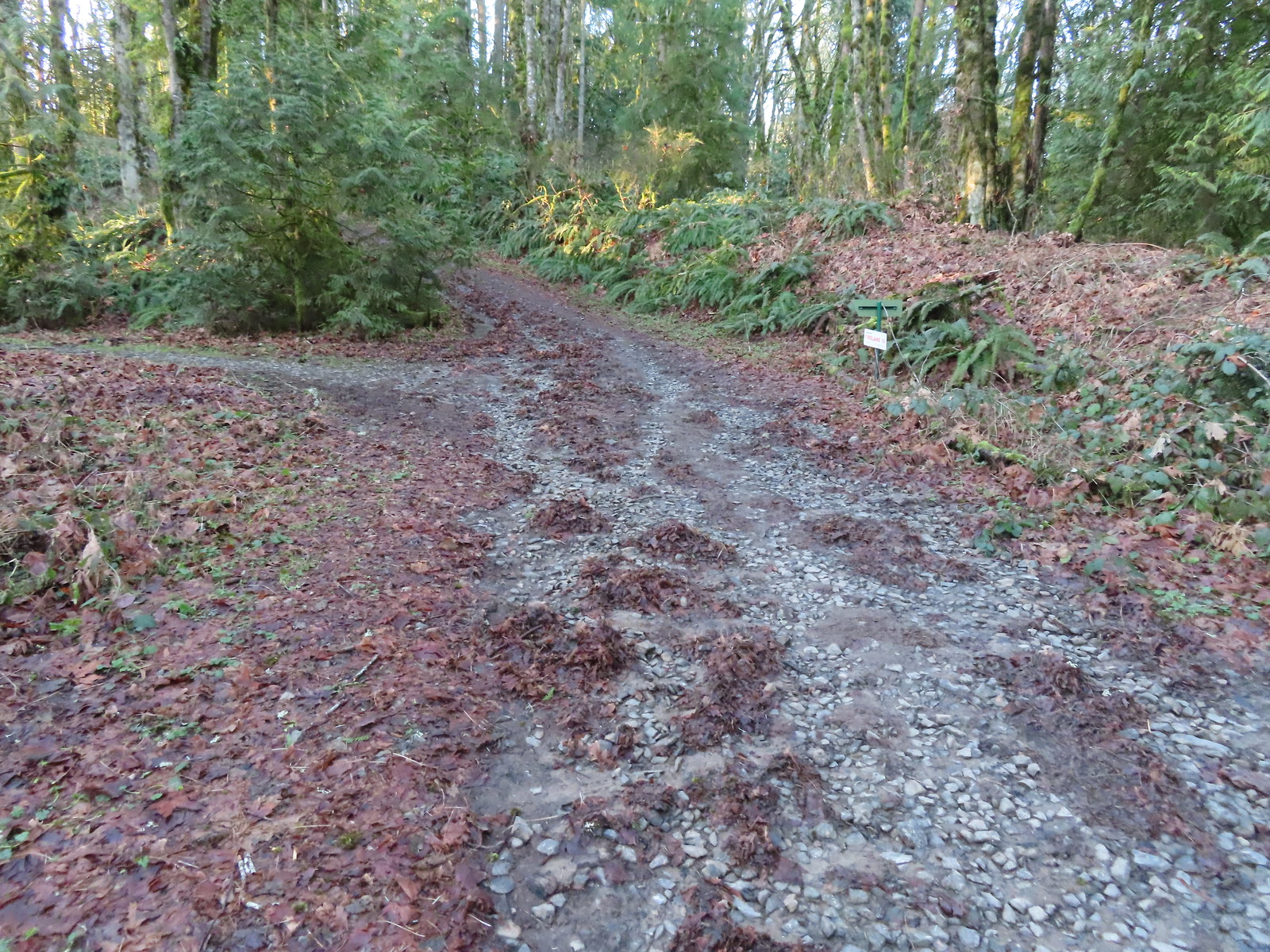 We passed the Keyser Trail which rejoins Firelane 10 just a quarter mile ahead. We stuck to Firelane 10 which climbed very steeply in that quarter mile leading us to believe the Keyser Trail may have been a little more gradual as the map showed it bowing away from Firelane 10 before rejoining.
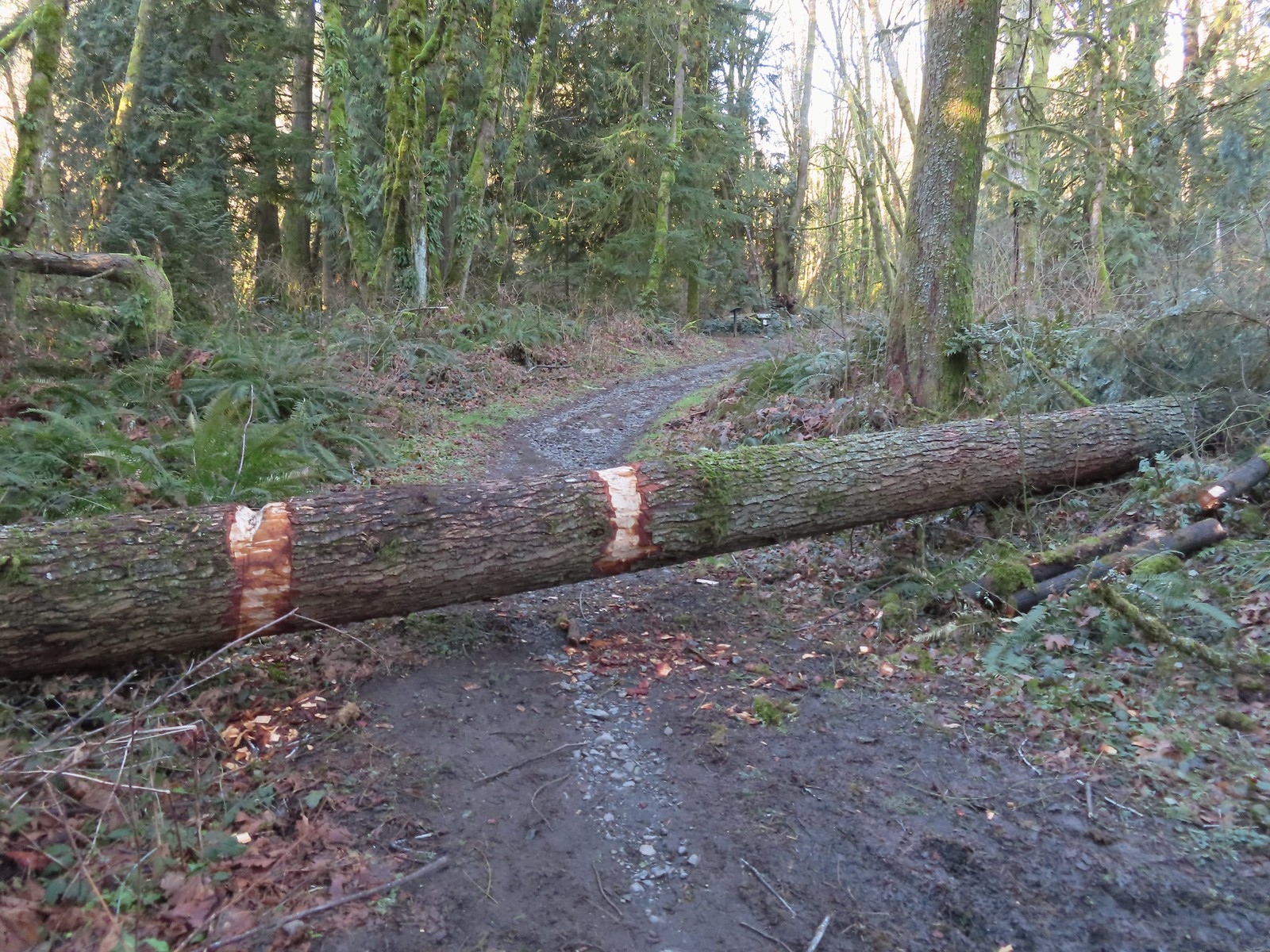 The first of only three trees that were still down over the trails we hiked. In the distance is a Wildwood Trail sign at the junction.
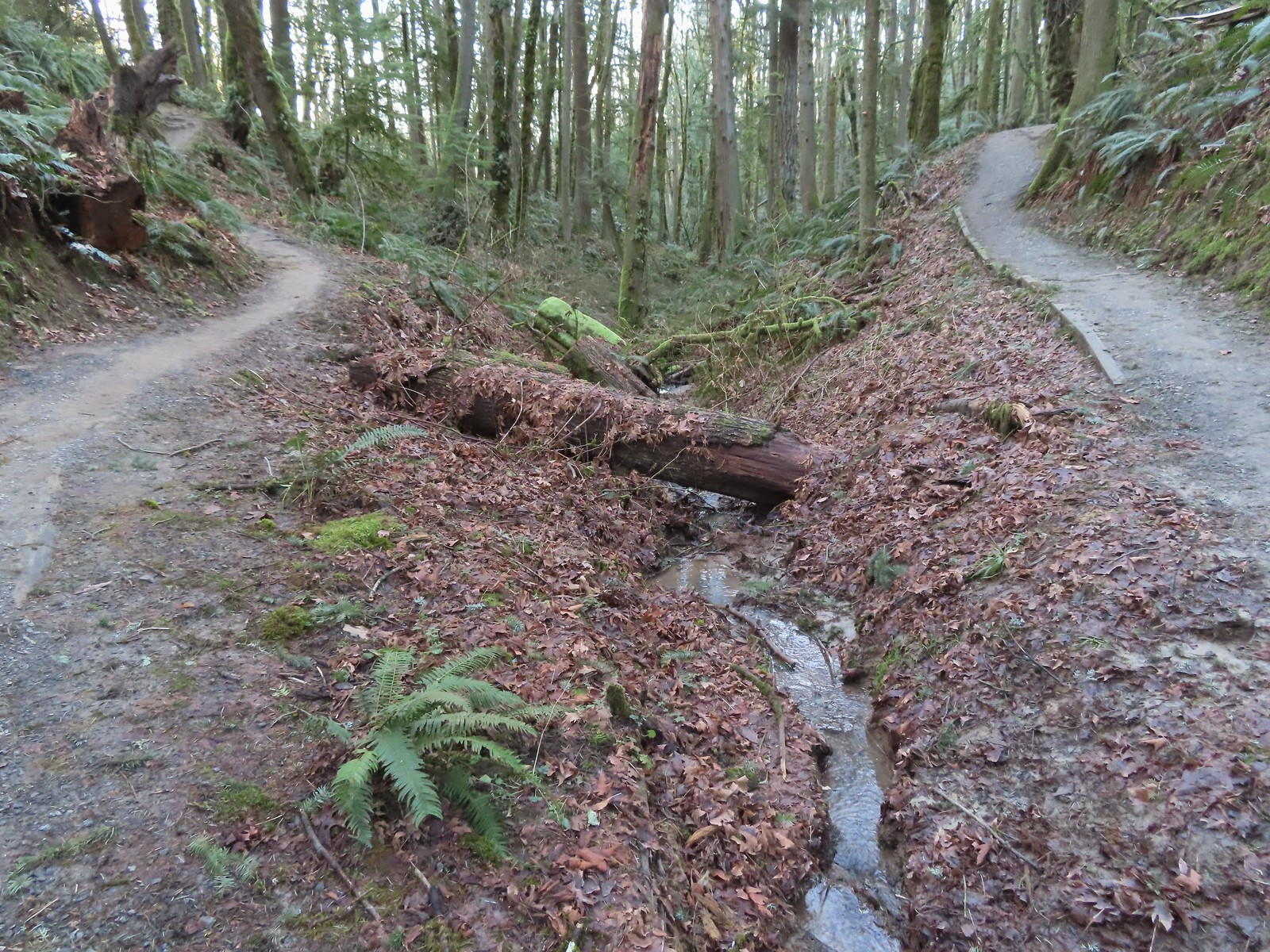 The trail repeatedly bows into the hillside to cross creek beds.
 We passed three pointers for Newton Road and then crossed Newton Road along this section of the Wildwood Trail. We would be using Newton Road to make another small loop on our way back.
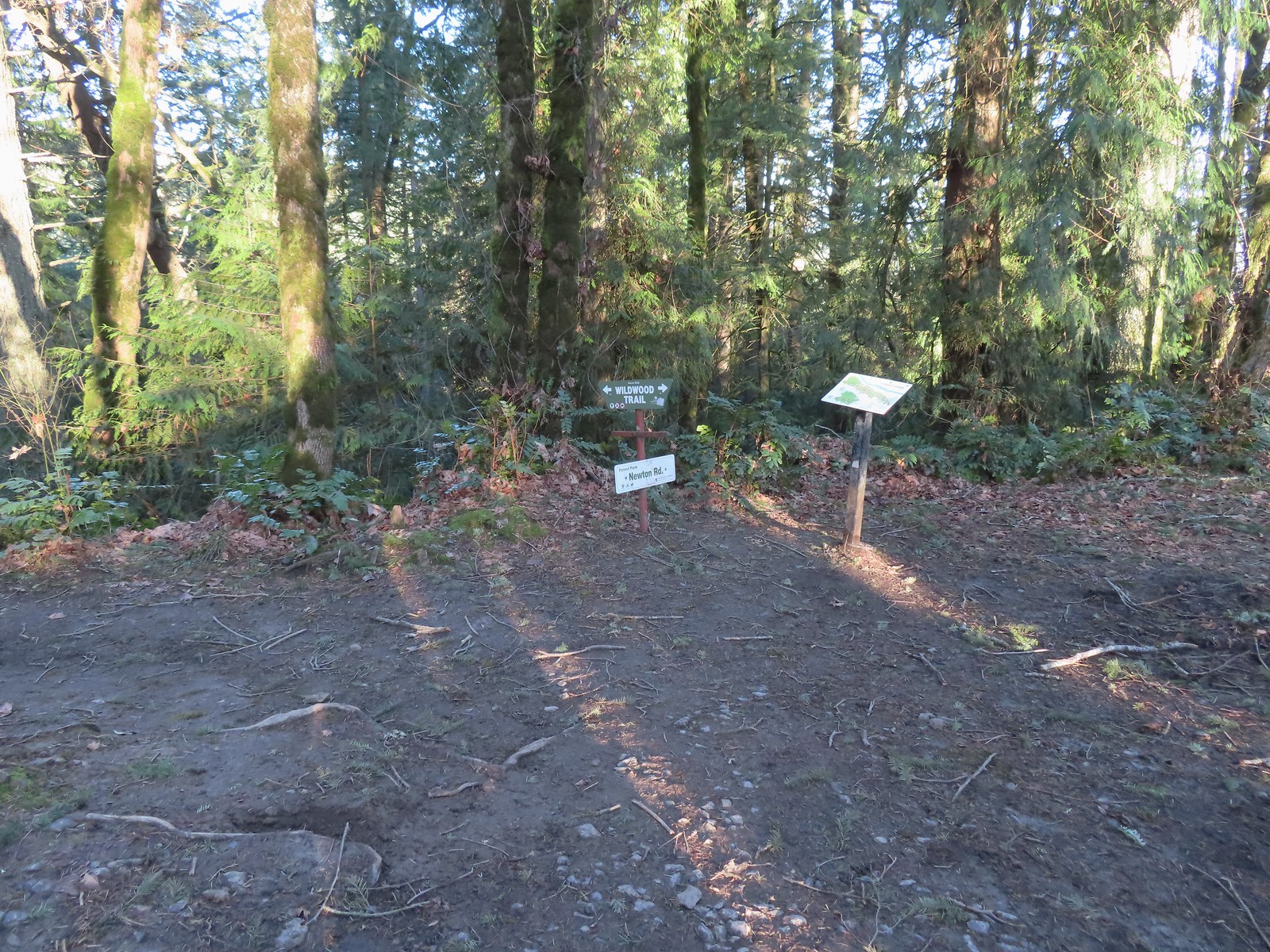 The Wildwood Trail crossing Newton Road.
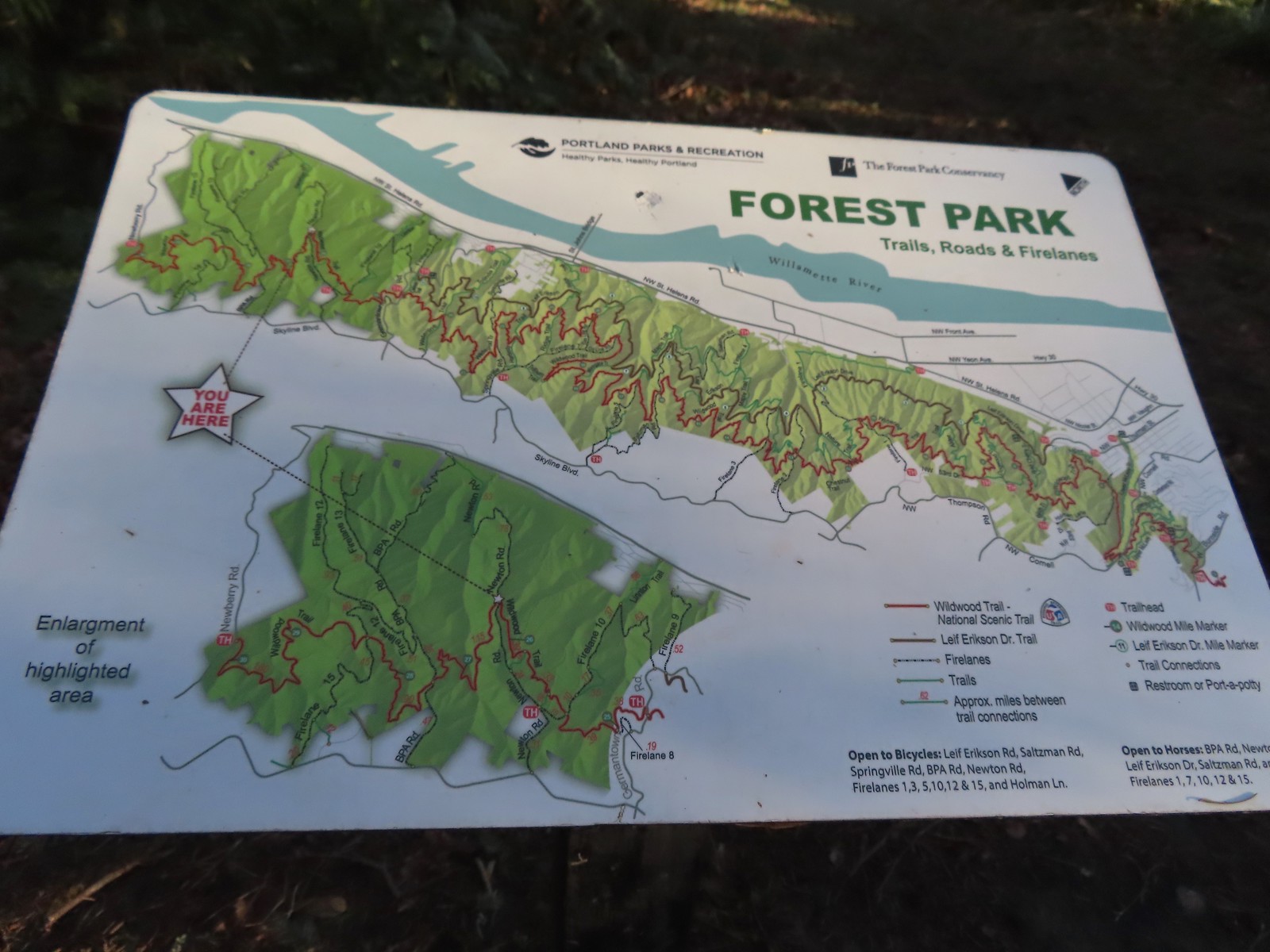 Not all of the junctions have maps, but most of the major ones do to help keep hikers and runners on track (or to give them more ideas).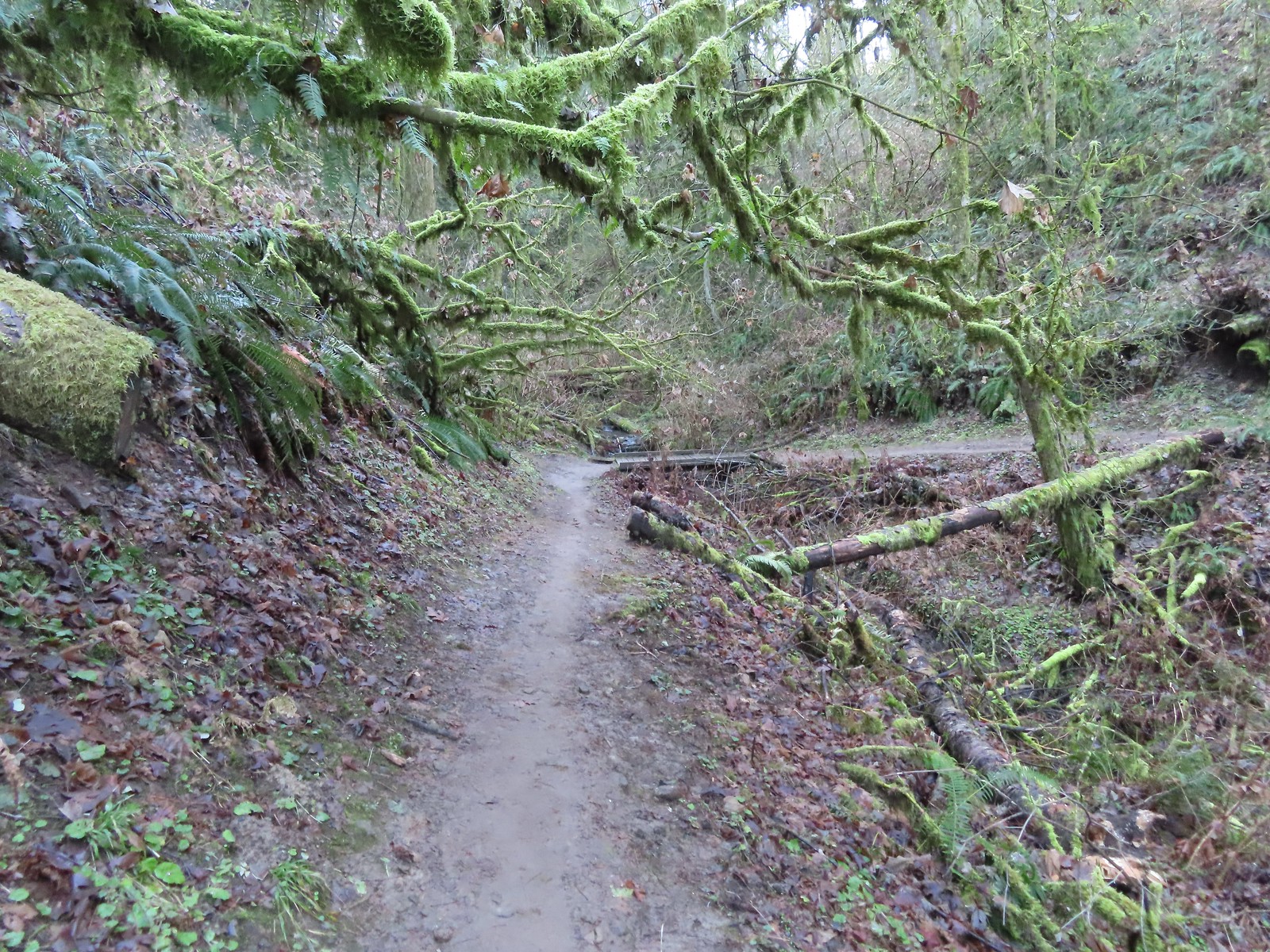
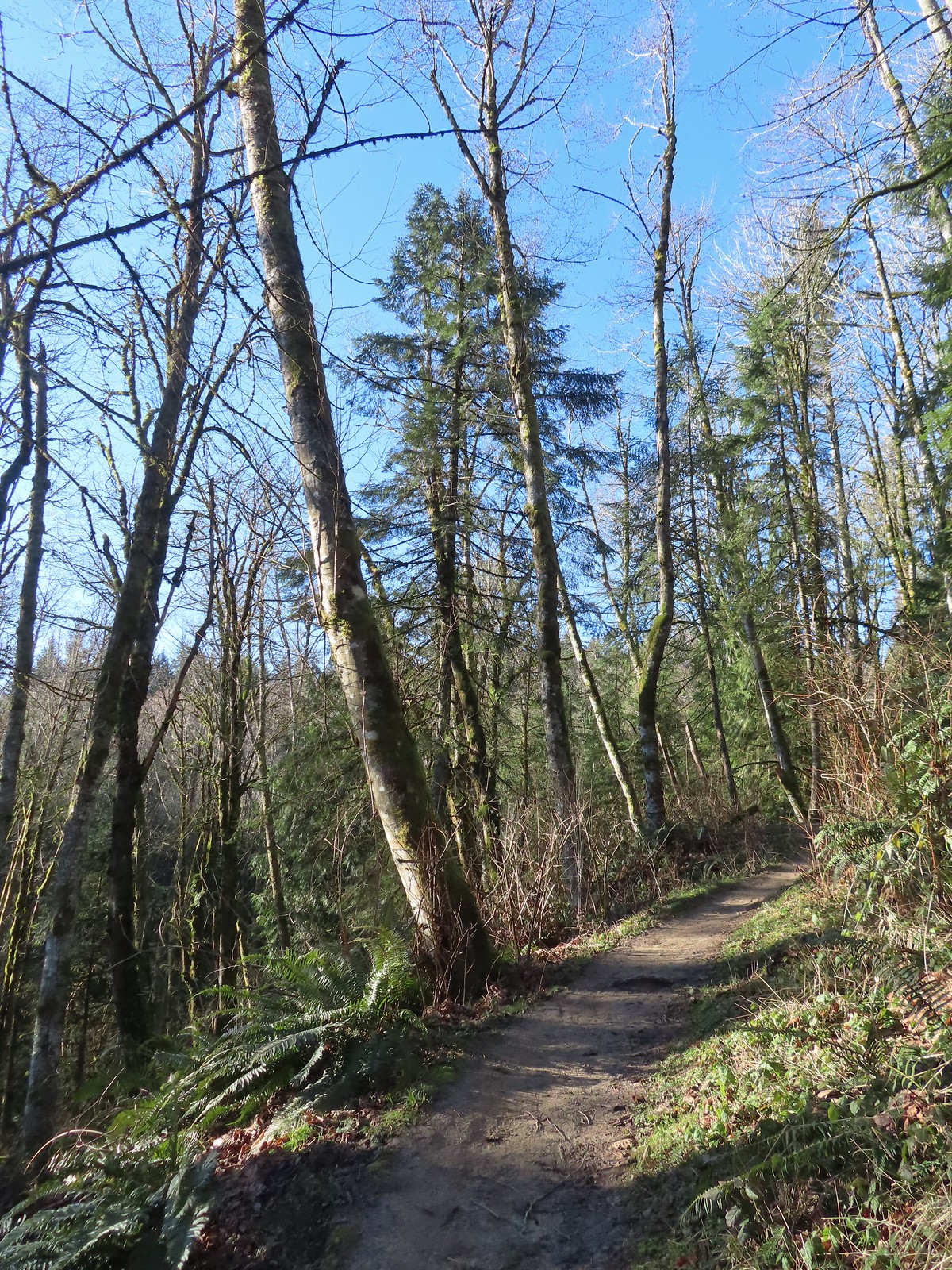 Climbing up to the BPA Road crossing.
 The BPA Road heading uphill with the Wildwood Trail we’d just come up to the right.
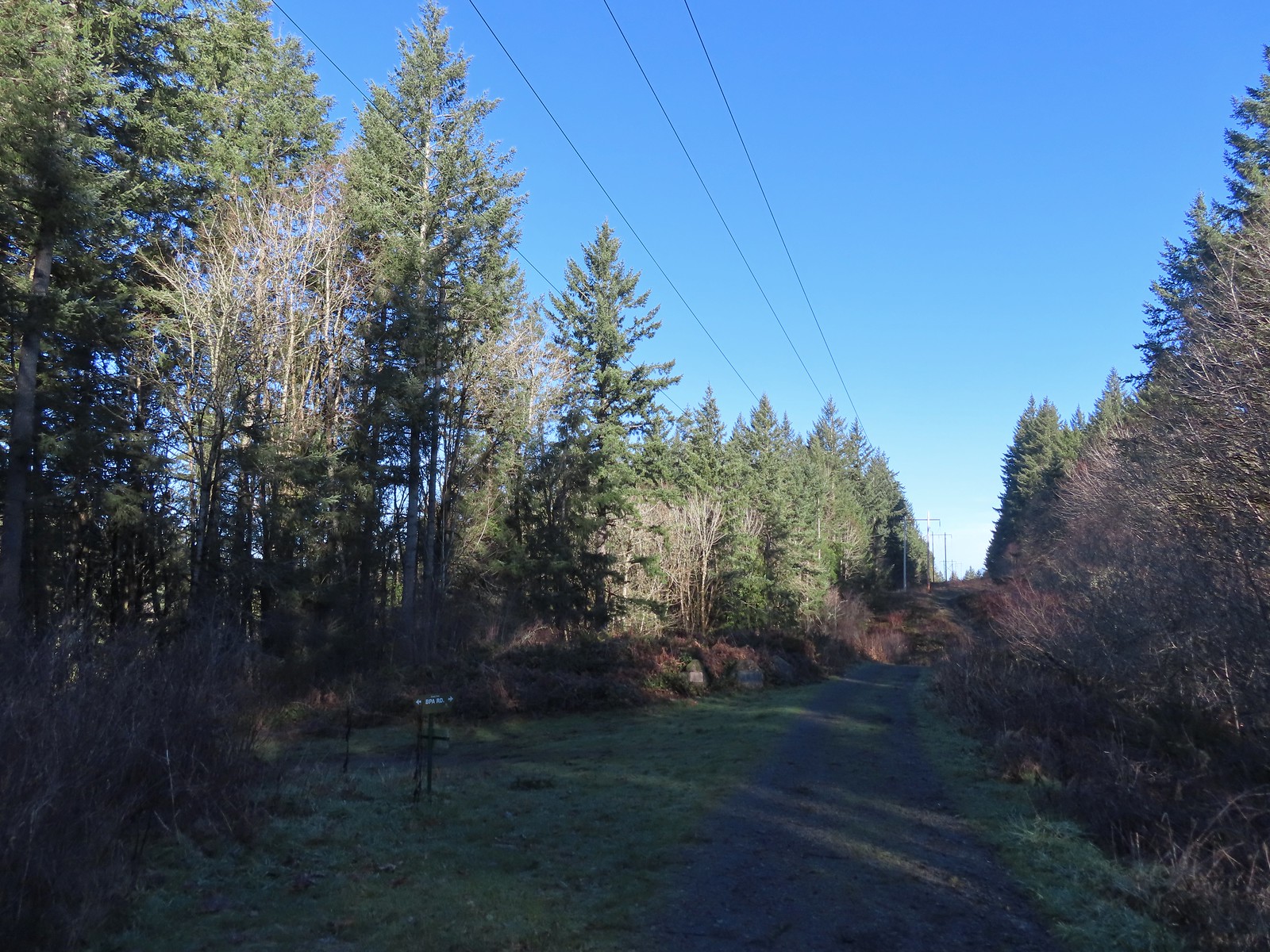 Firelane 12 on the left.
 The middle of three plaques commemorating the 1999 acquisition of 73-acres that was in danger of being developed.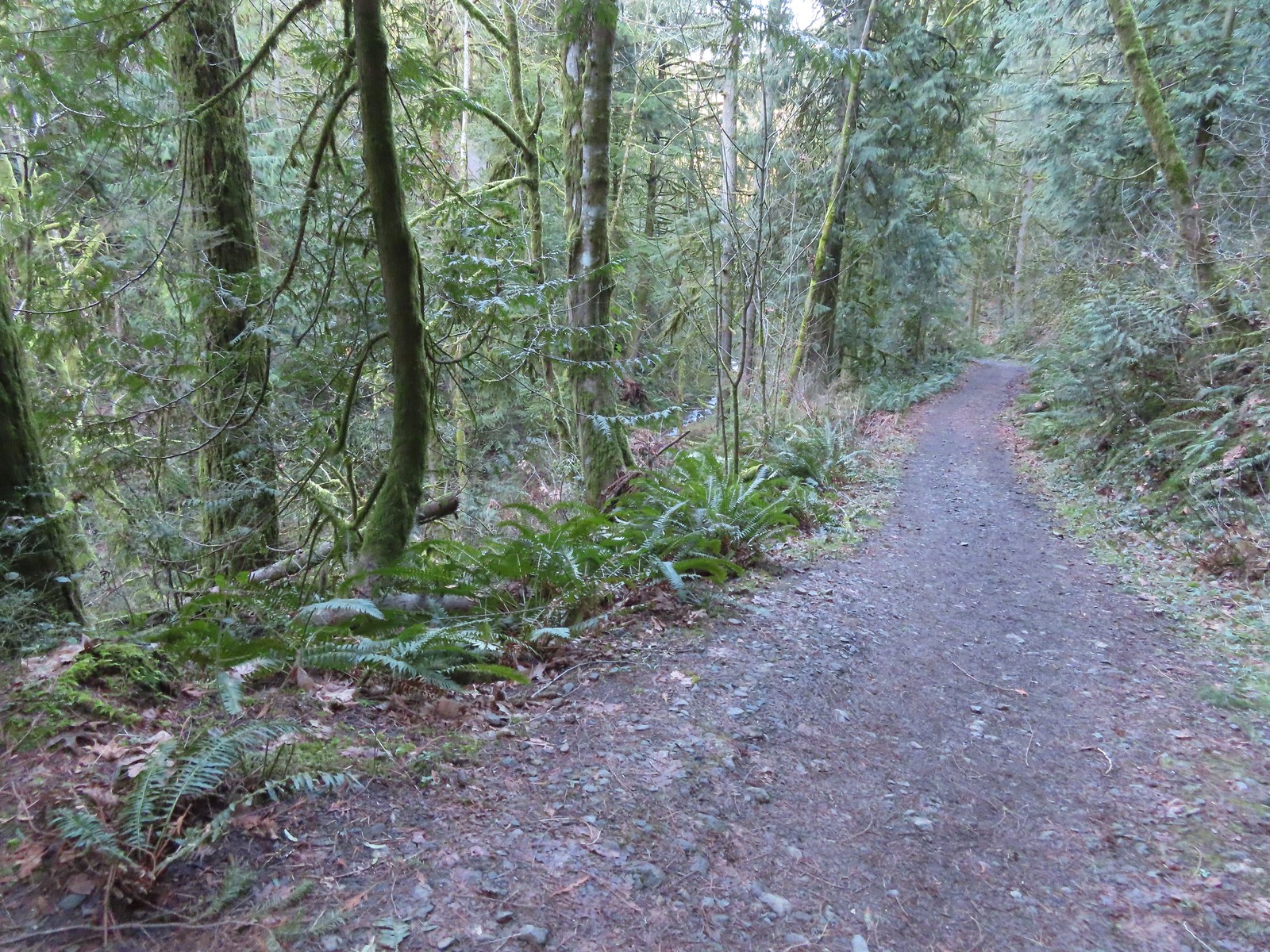
 Once again varied thrush 1 – Deryl 0. If I was keeping score, it would probably be something like 179-10.
 Firelane 15 on the left ahead.
 The small creek along Firelane 15.
 Blue sky and powerlines above Firelane 15.
 Wildwood Trail crossing Firelane 15.
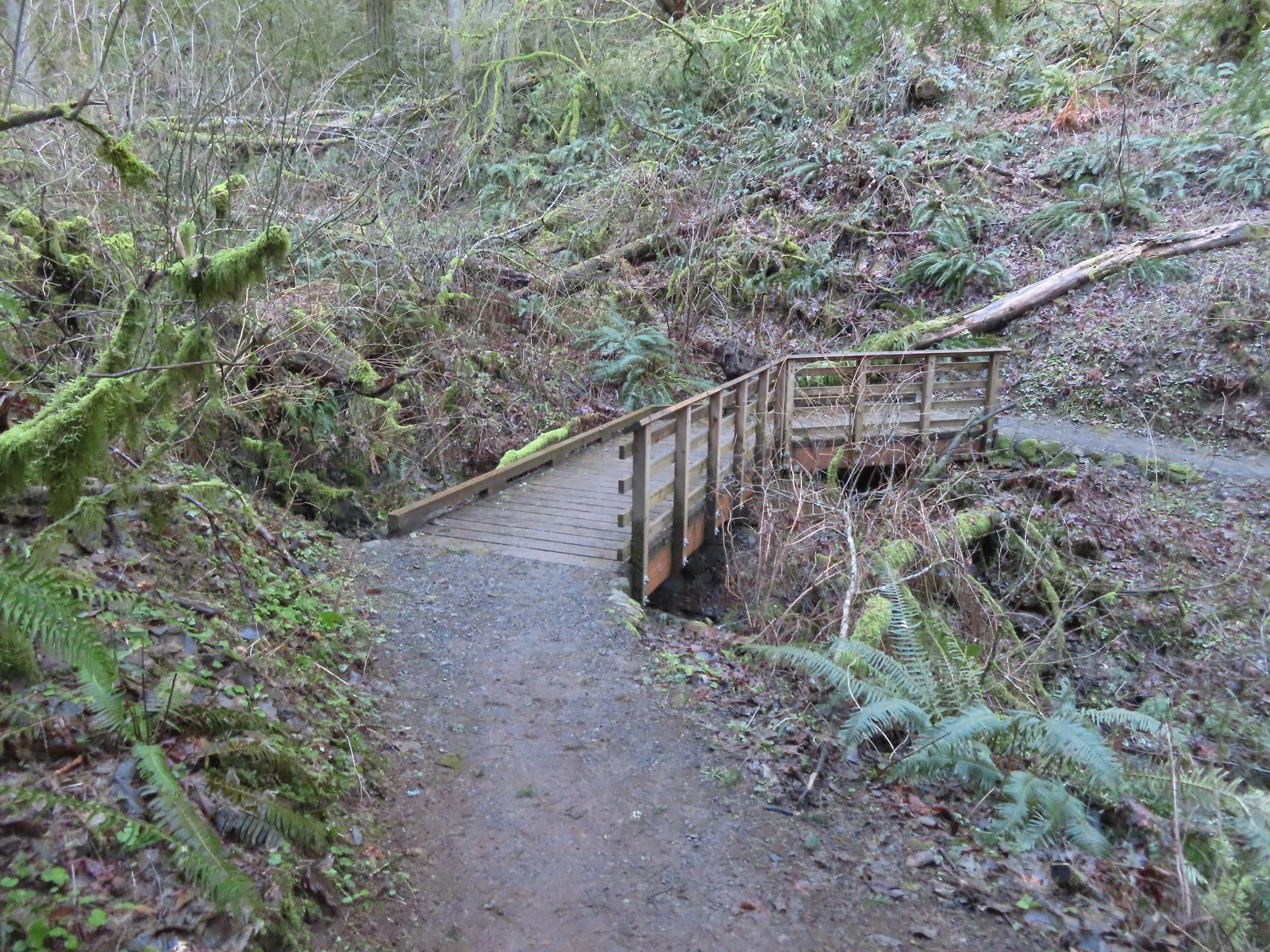 The fanciest bridge we crossed all day.
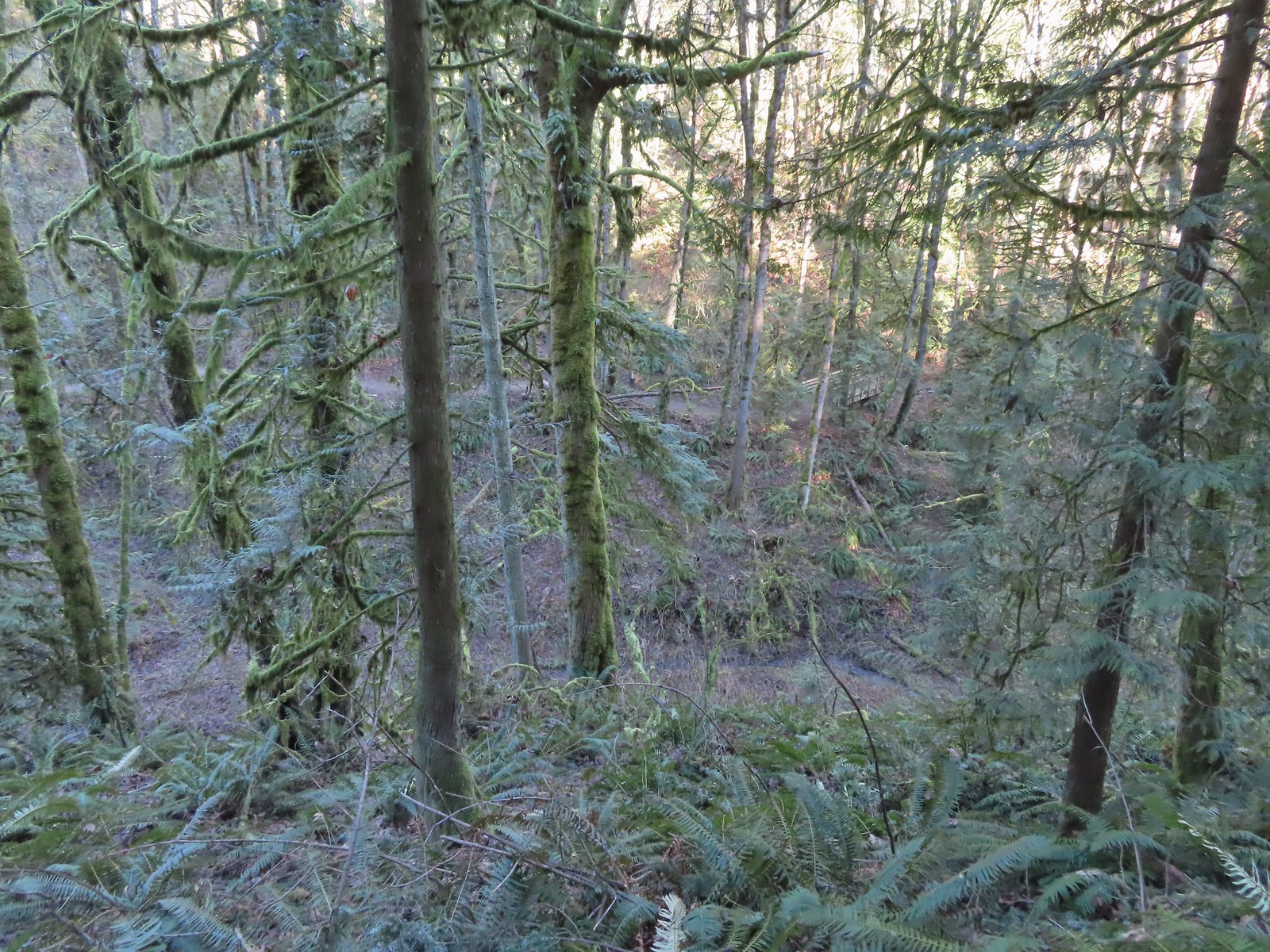 Why is the trail way down there when the road is up above on the far hillside?
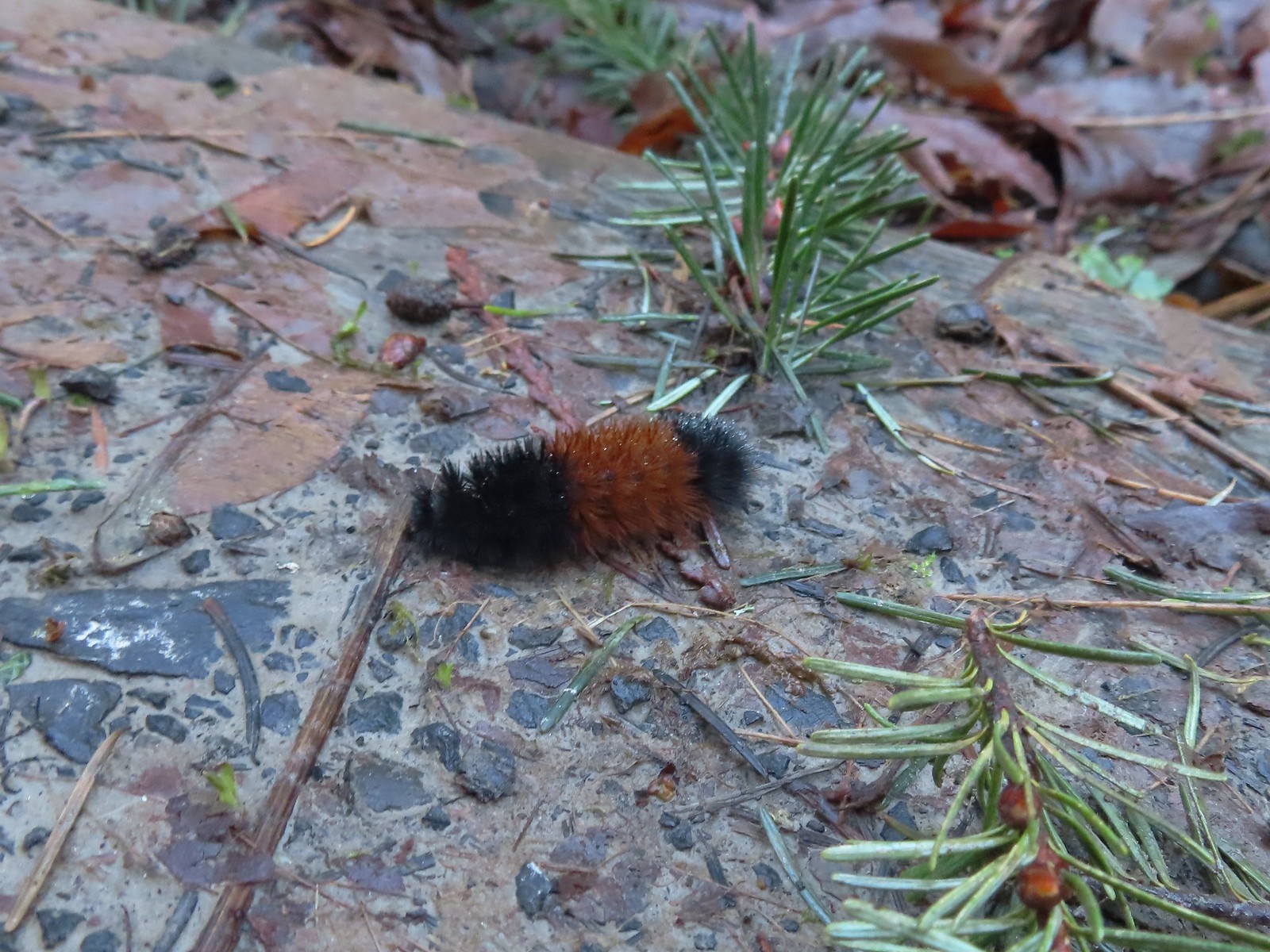 Woolly bear
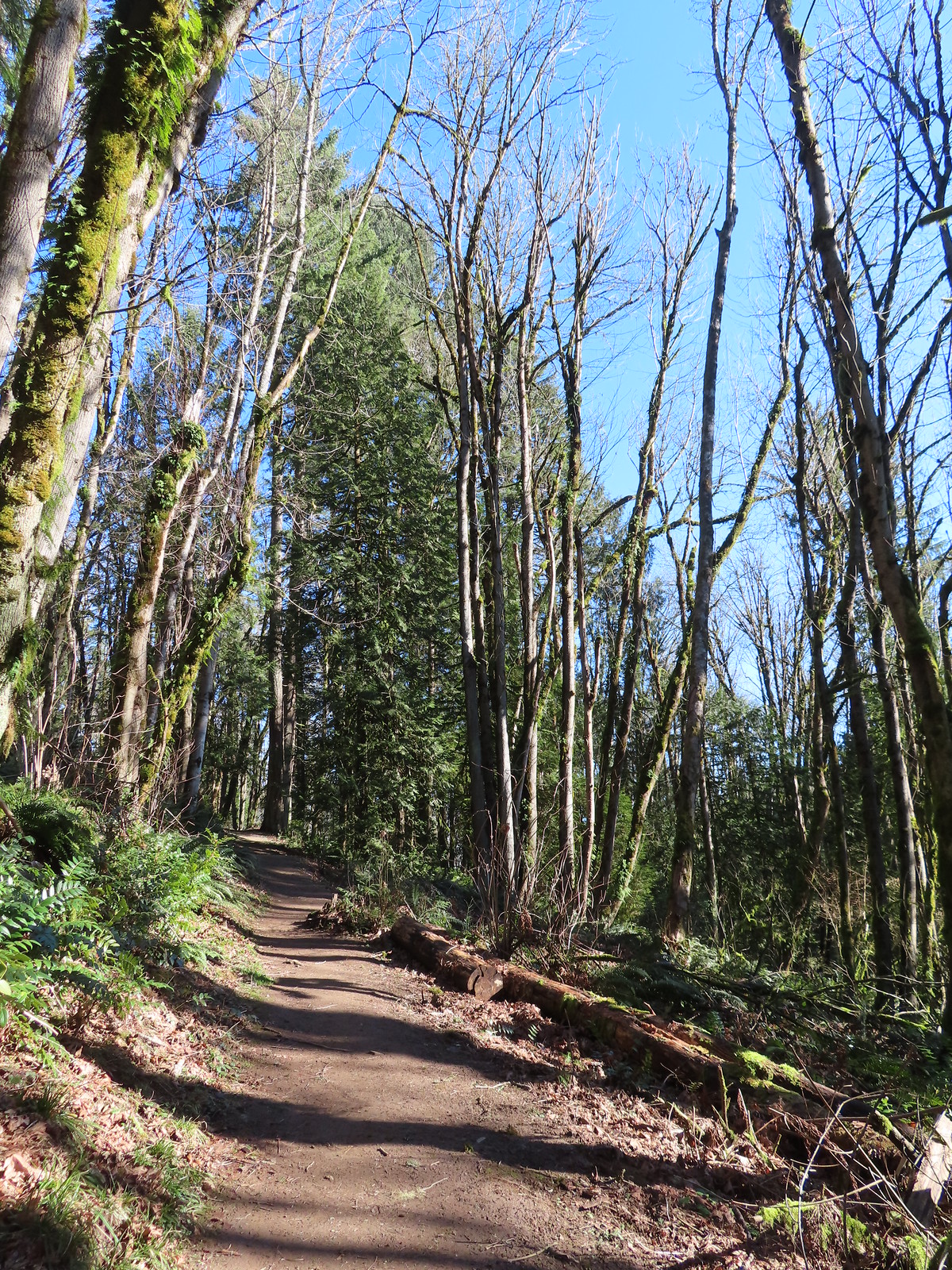 Climbing to Newberry Road just to say we made it to the end of the Wildwood Trail.
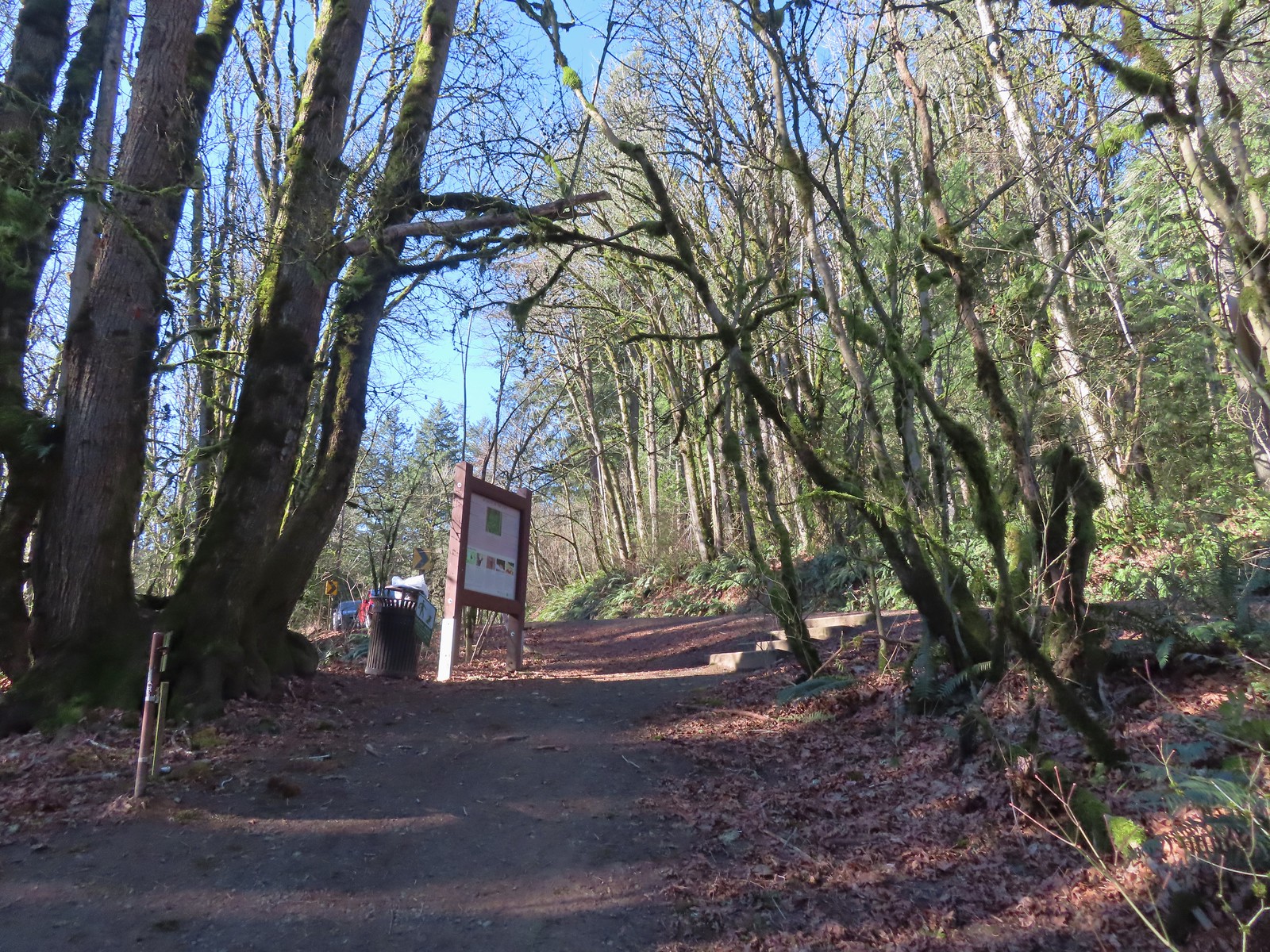 Newberry Road Trailhead.
 Another sub-par bird photo, but it took us quite a while just to spot this woodpecker who was way up in the treetops (and mostly in the shade).
 Crossing Firelane 15.
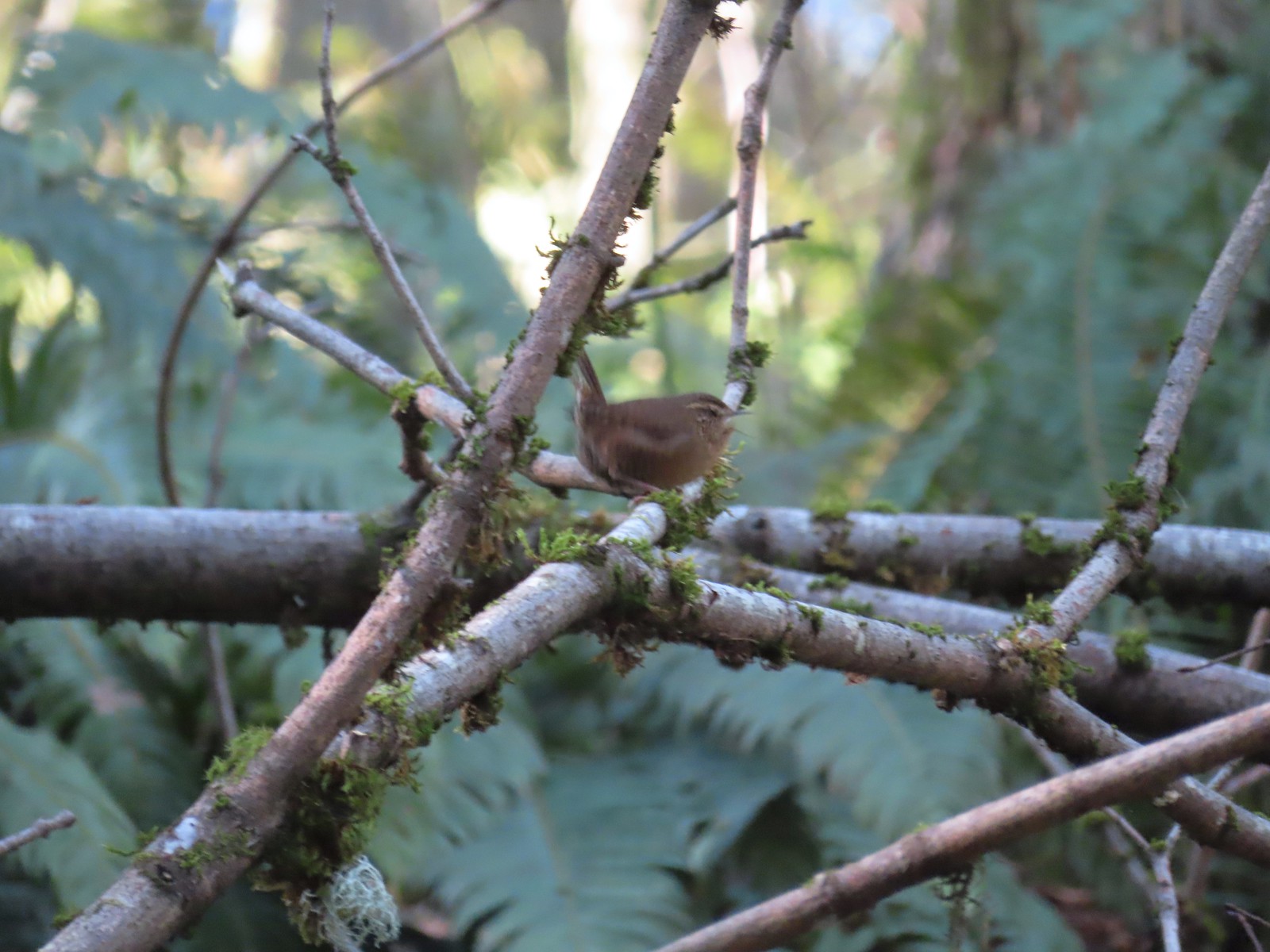 Another blurry bird. This one a wren, one of many we heard but the only one we were able to spot.
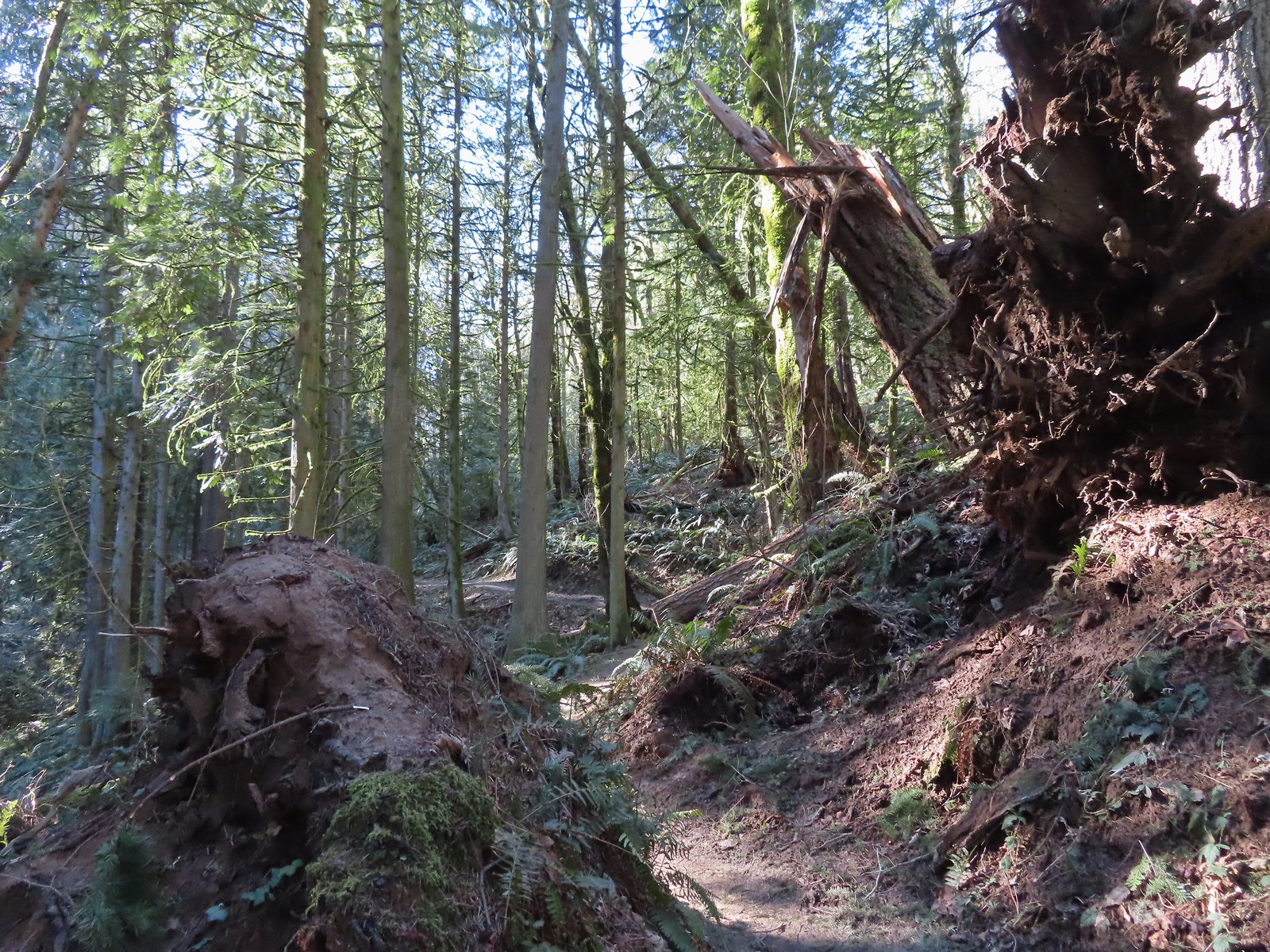 Uprooted trees along the Wildwood Trail.
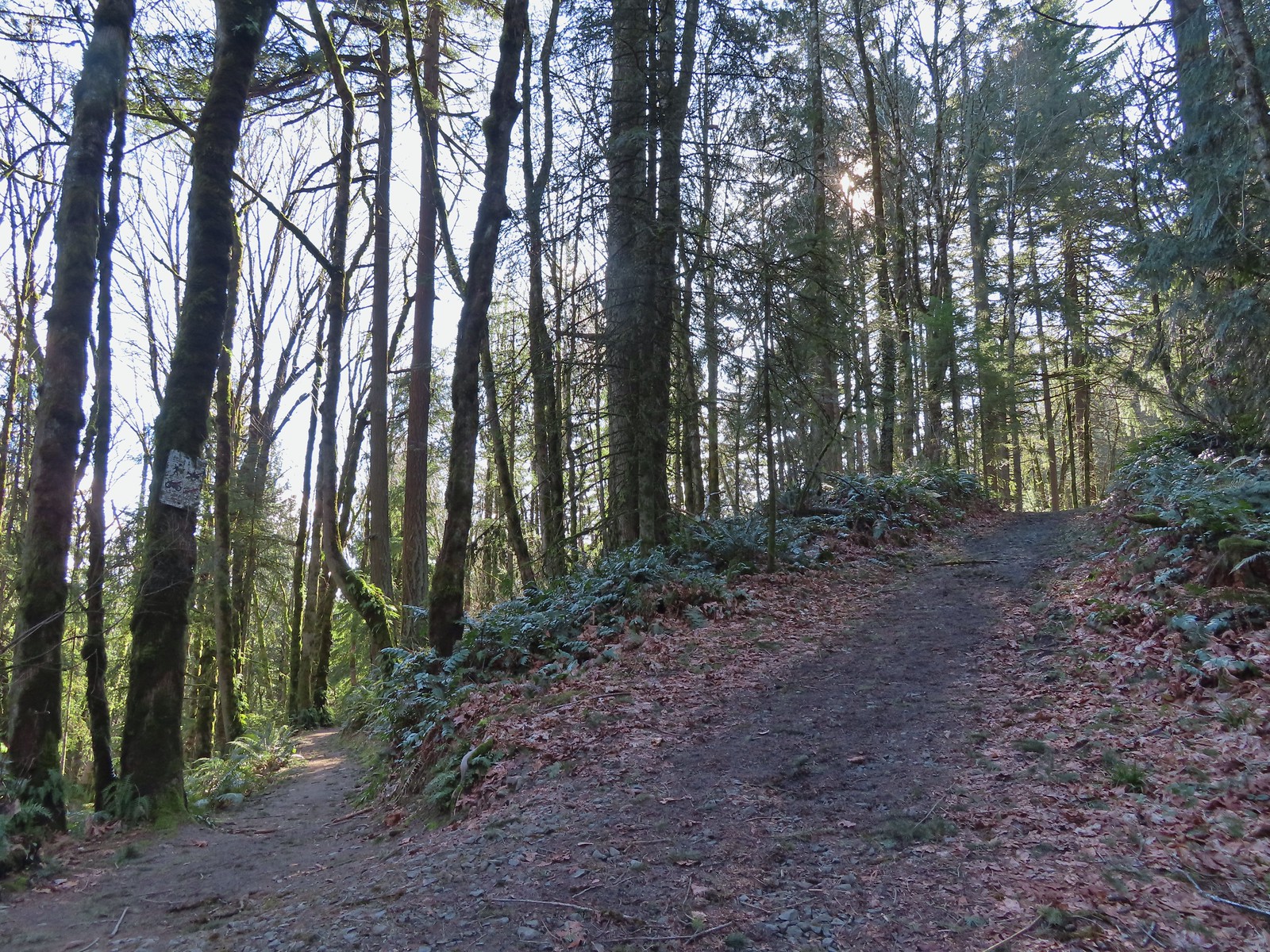 Newton Road to the right of the Wildwood Trail.
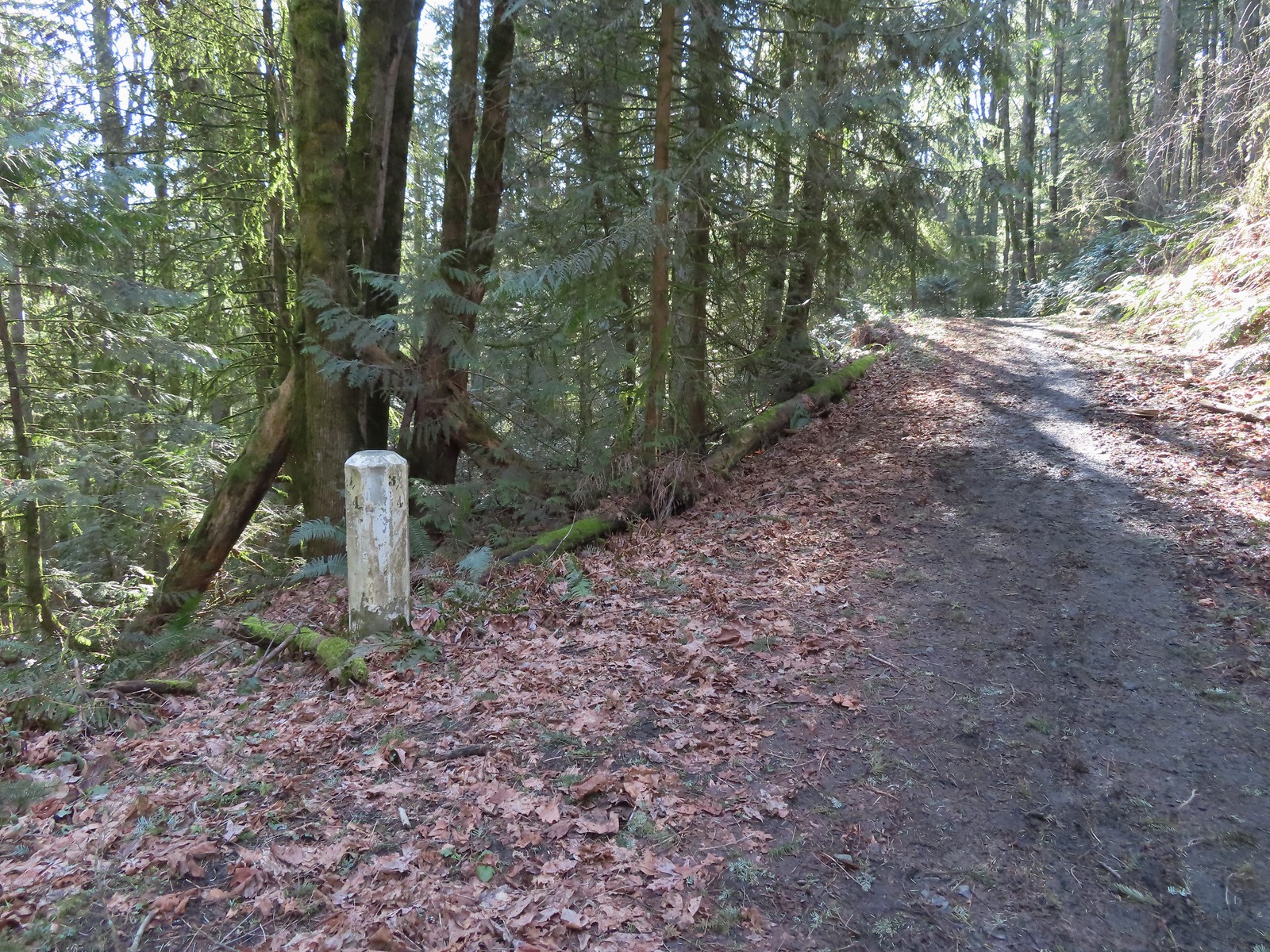 Mile marker along Newton Road.
 Douglas squirrel
 One of several small habitat restoration study areas along Newton Road.
 The Newton Road Trailhead in the distance.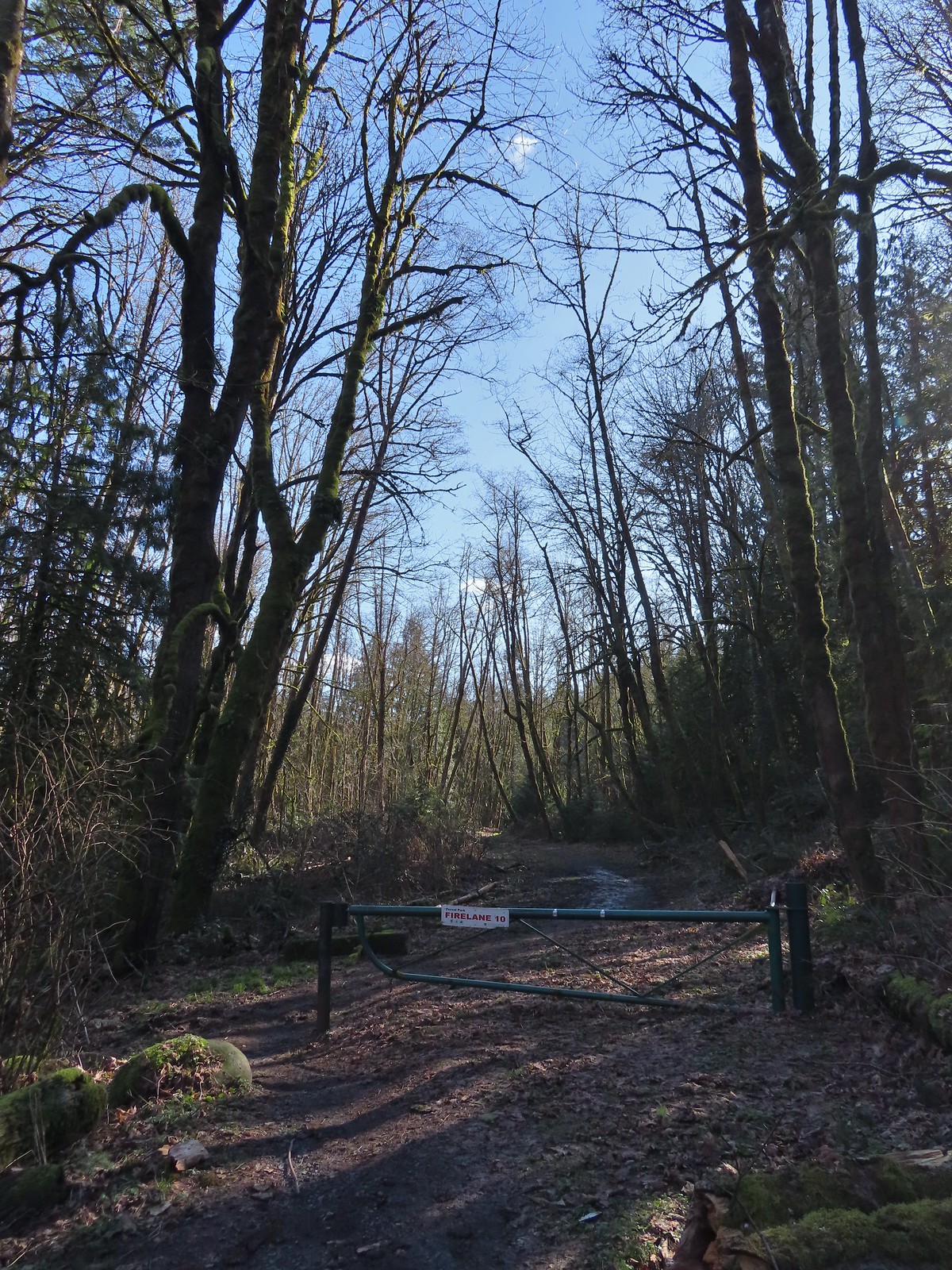

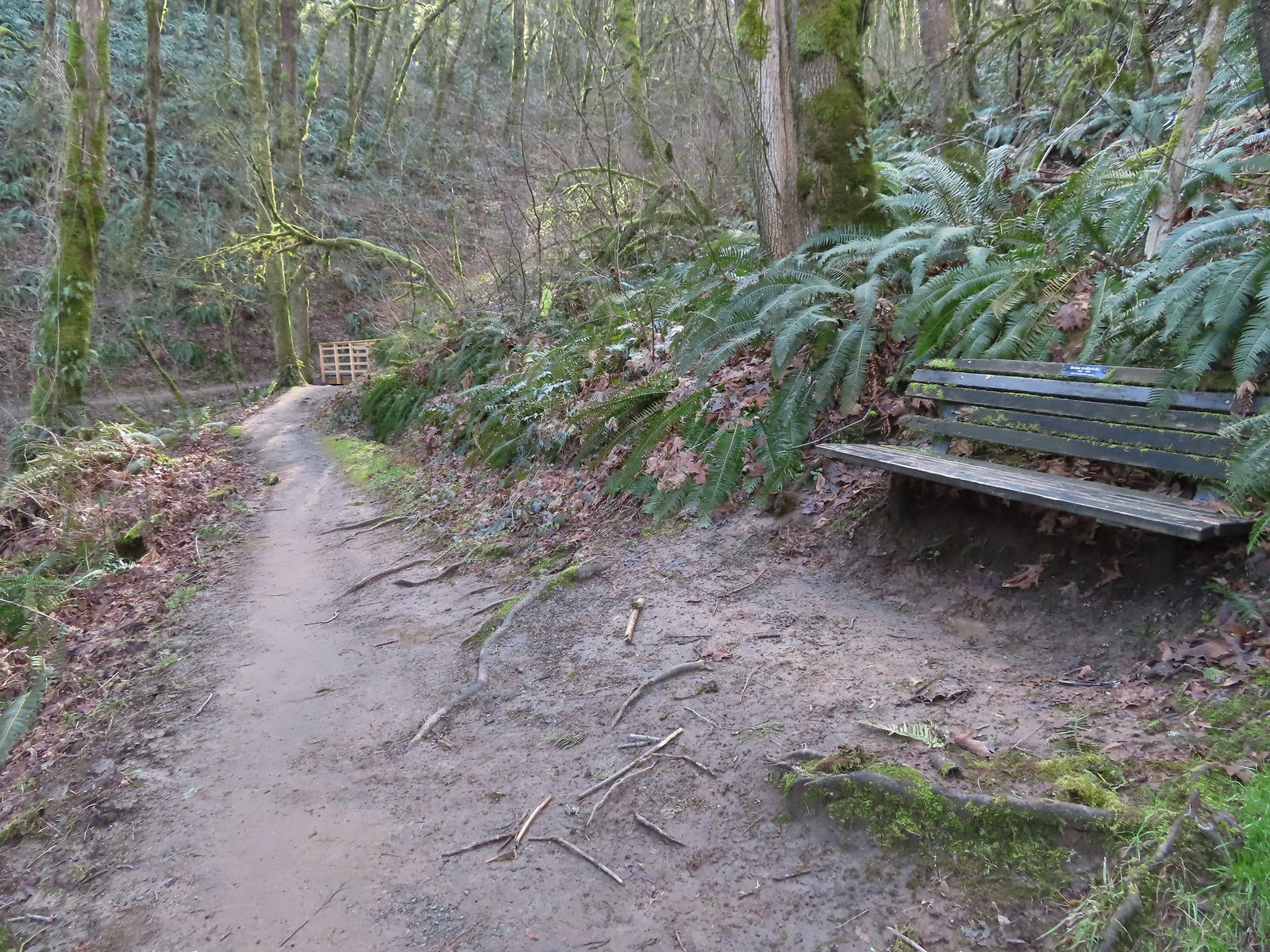 One of only two benches we saw all day.
 Cars parked along Germantown Road in the distance.


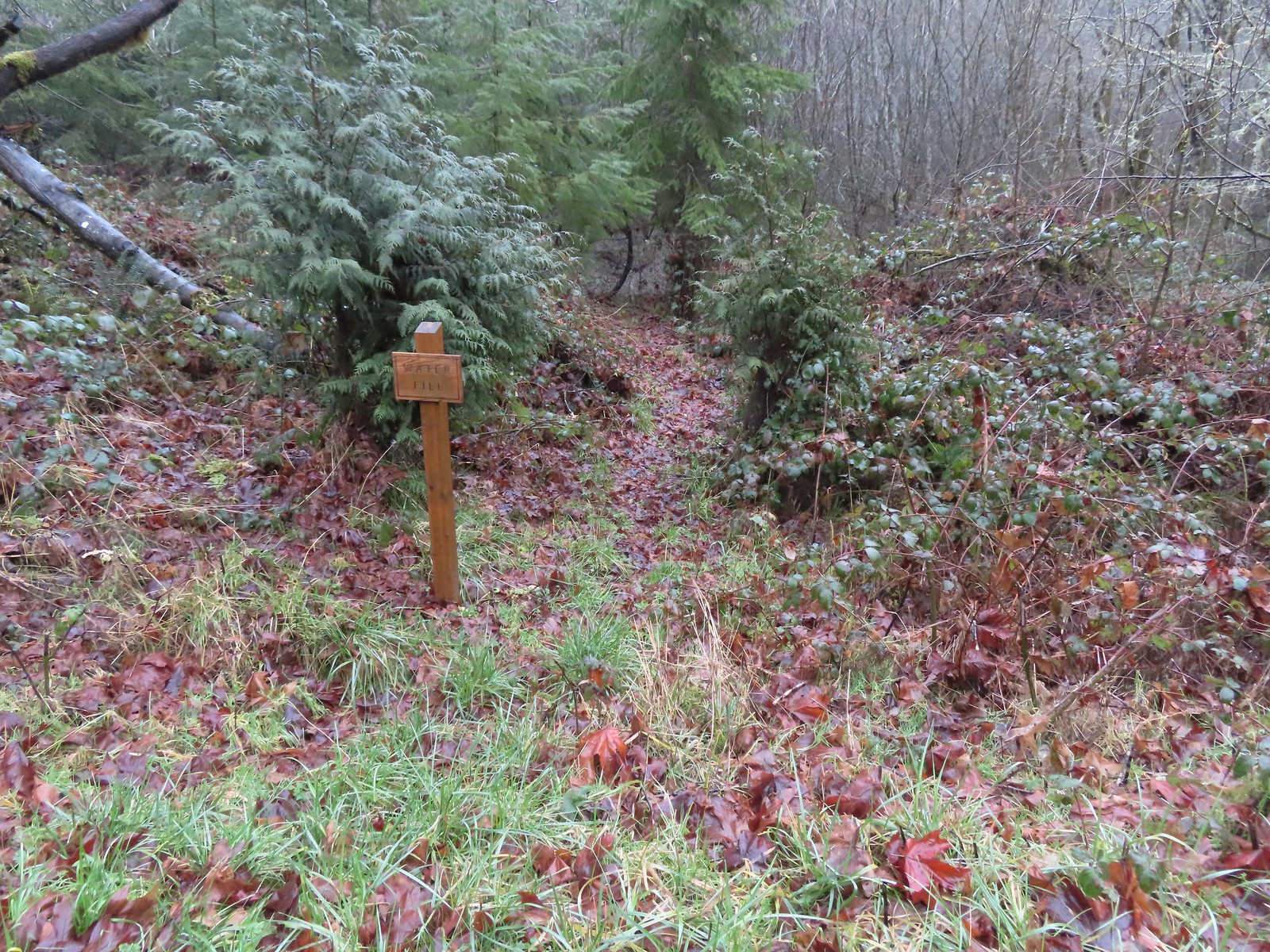 Just before the bridge over Shot Pouch Creek is a spur trail for water which is reportedly scarce along the entire 60-mile route.
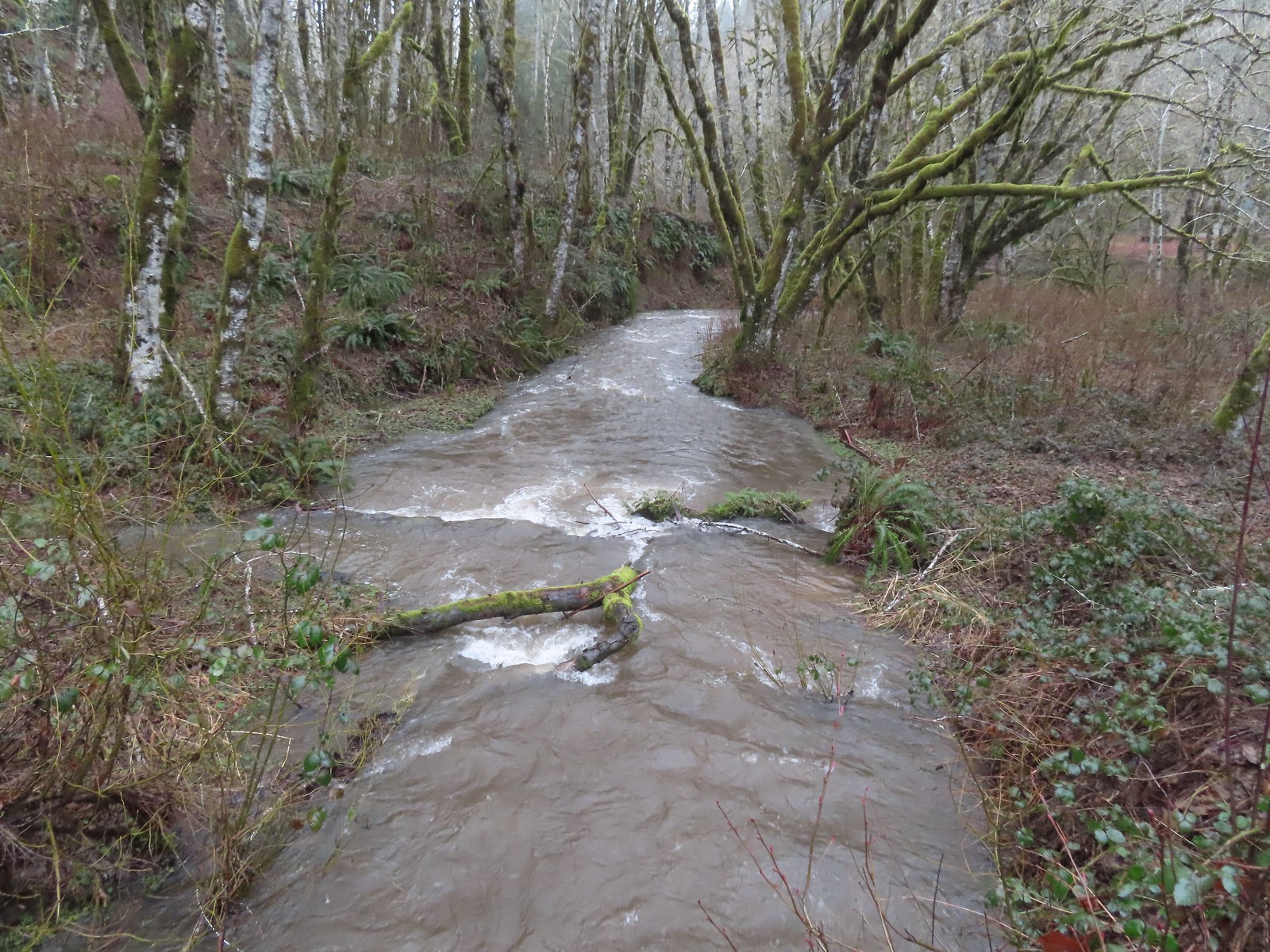 A swollen Shot Pouch Creek.
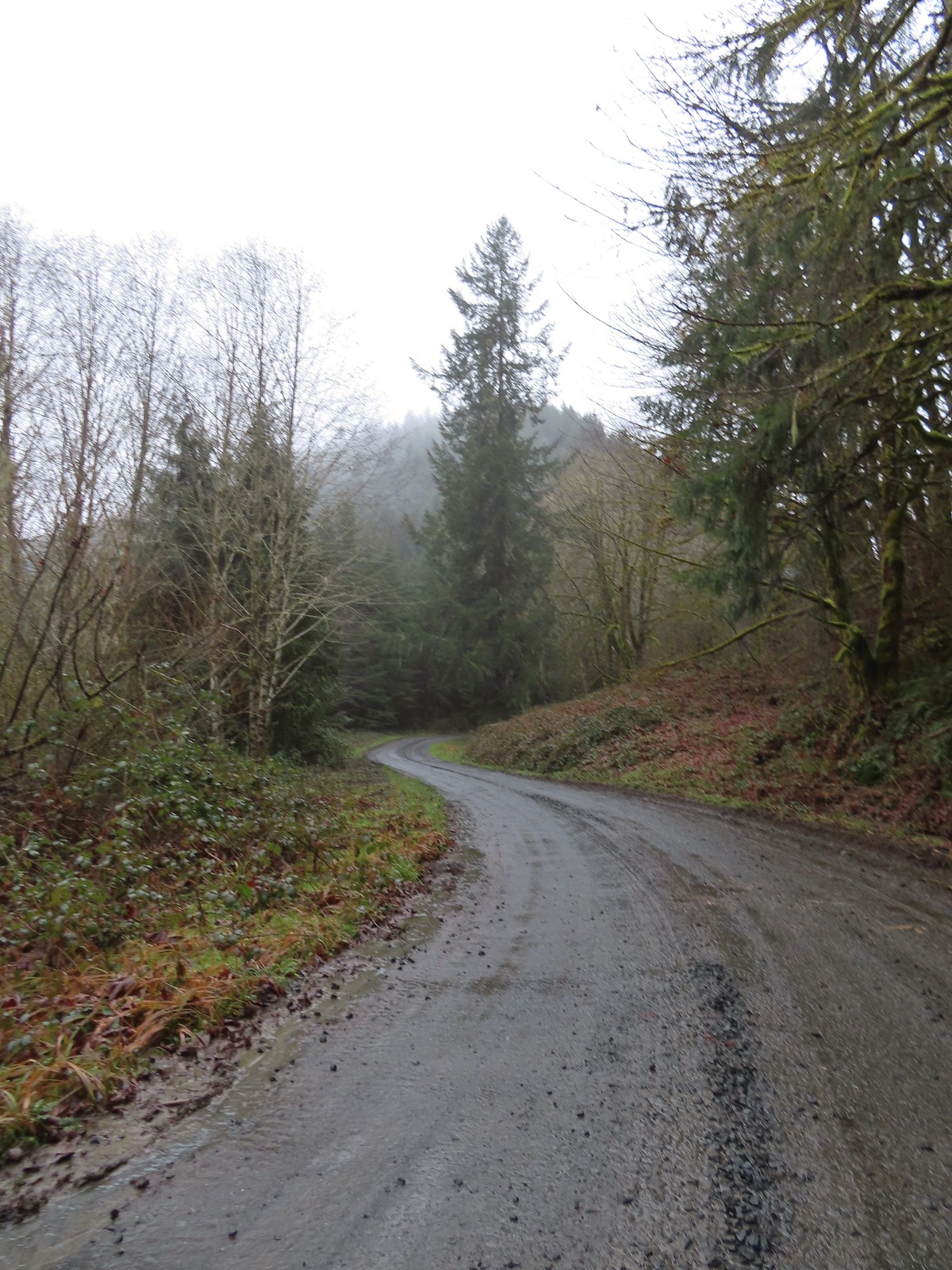 Following the trail/road up to the 4-way.
 This was one of a handful of similar structures in the area. So far we haven’t found any information on their history.
 Nearing “The 4-way”. Just ahead is where the Subaru bottomed out slightly.
 The 4-way
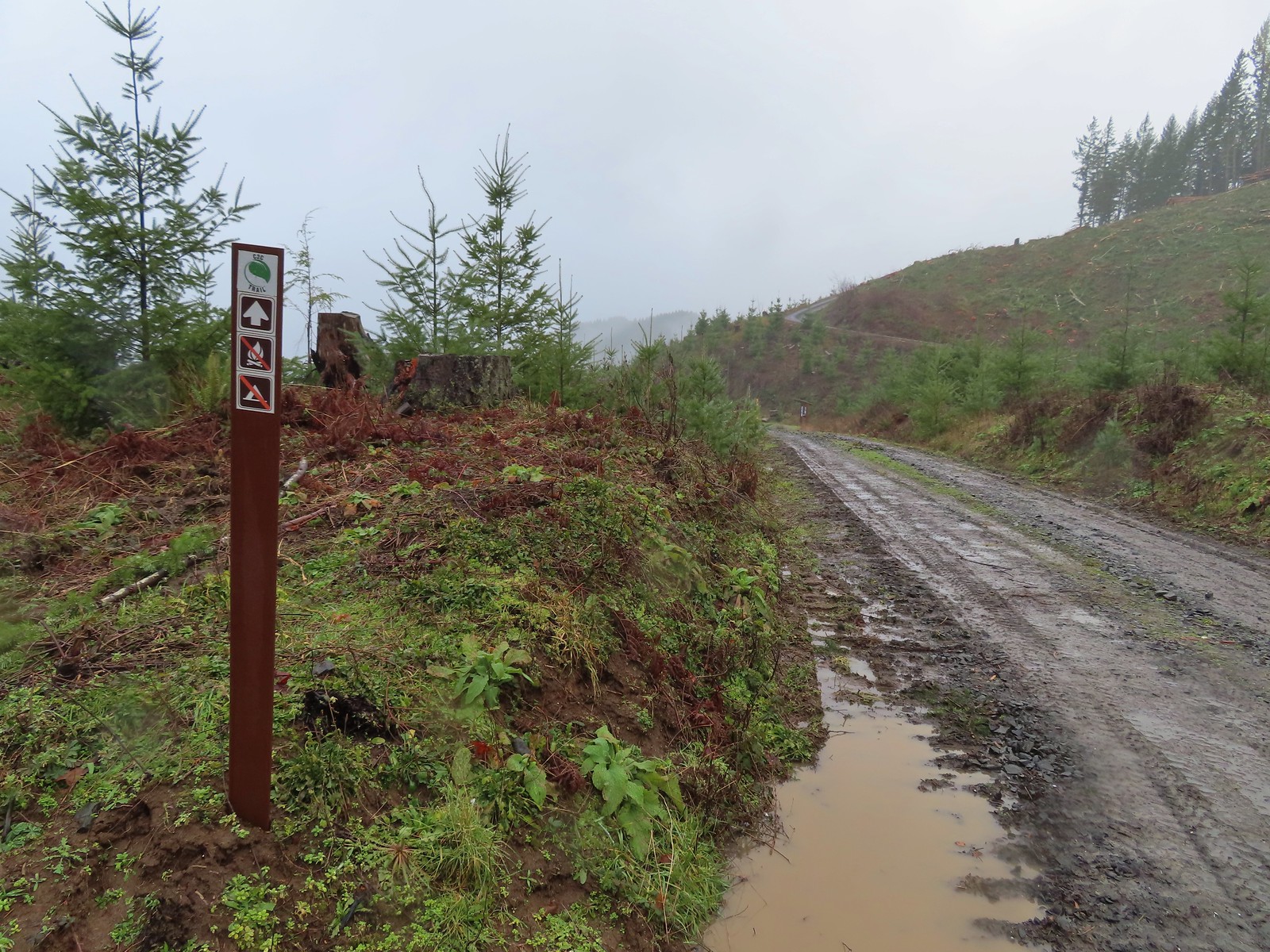 Trail marker with the kiosk and part of the gate in the distance.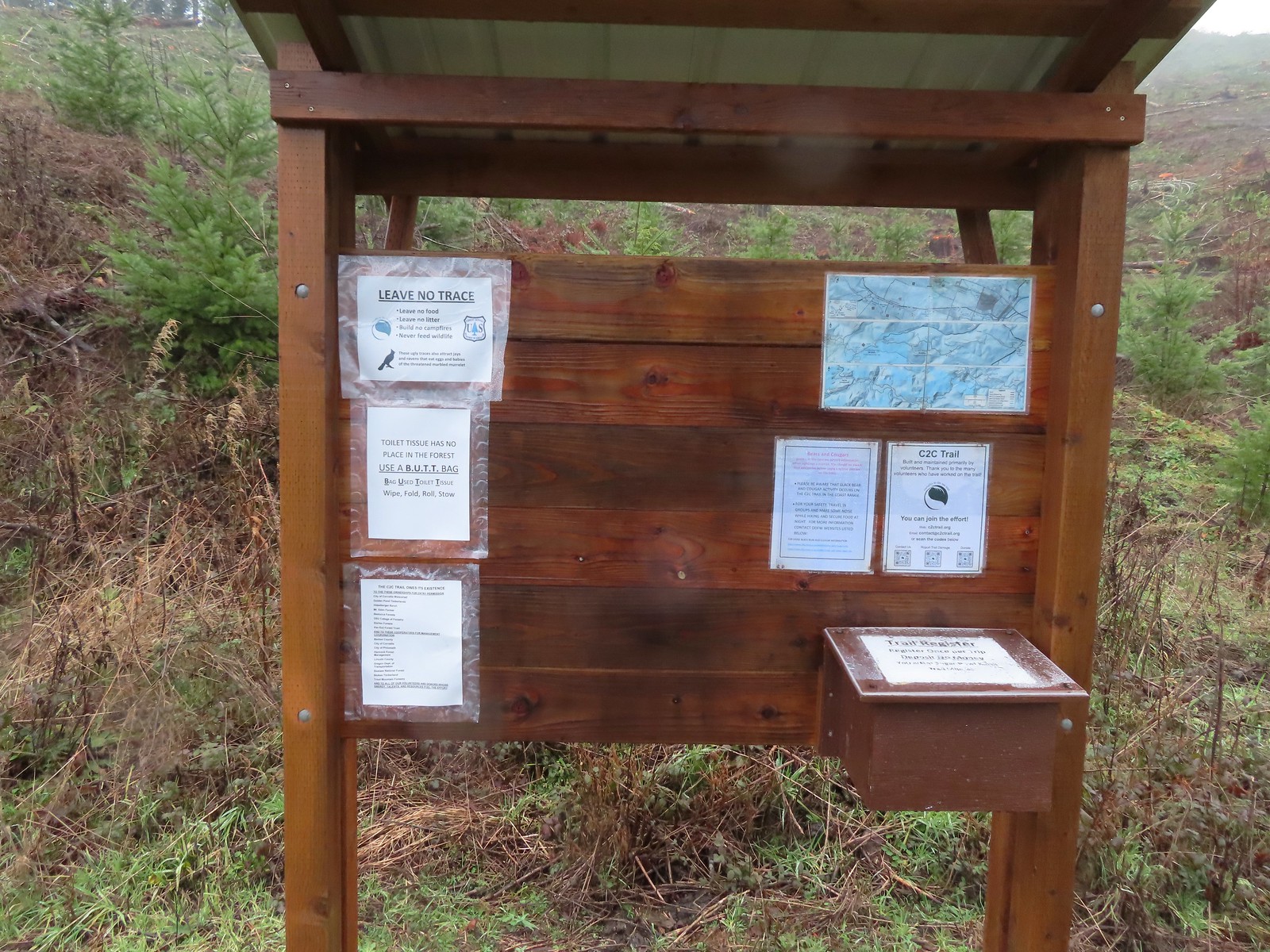
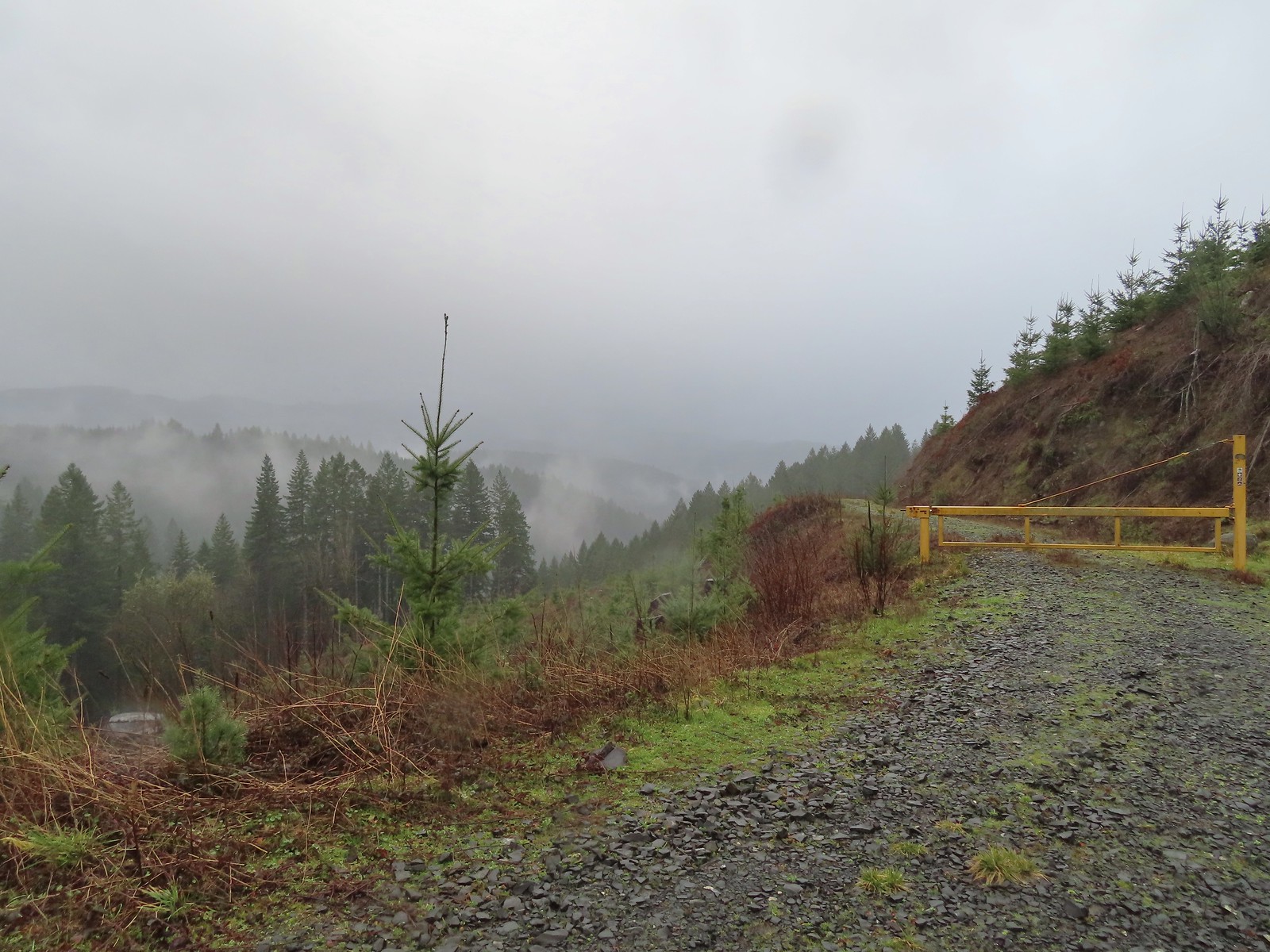 Cloudy and wet morning as expected.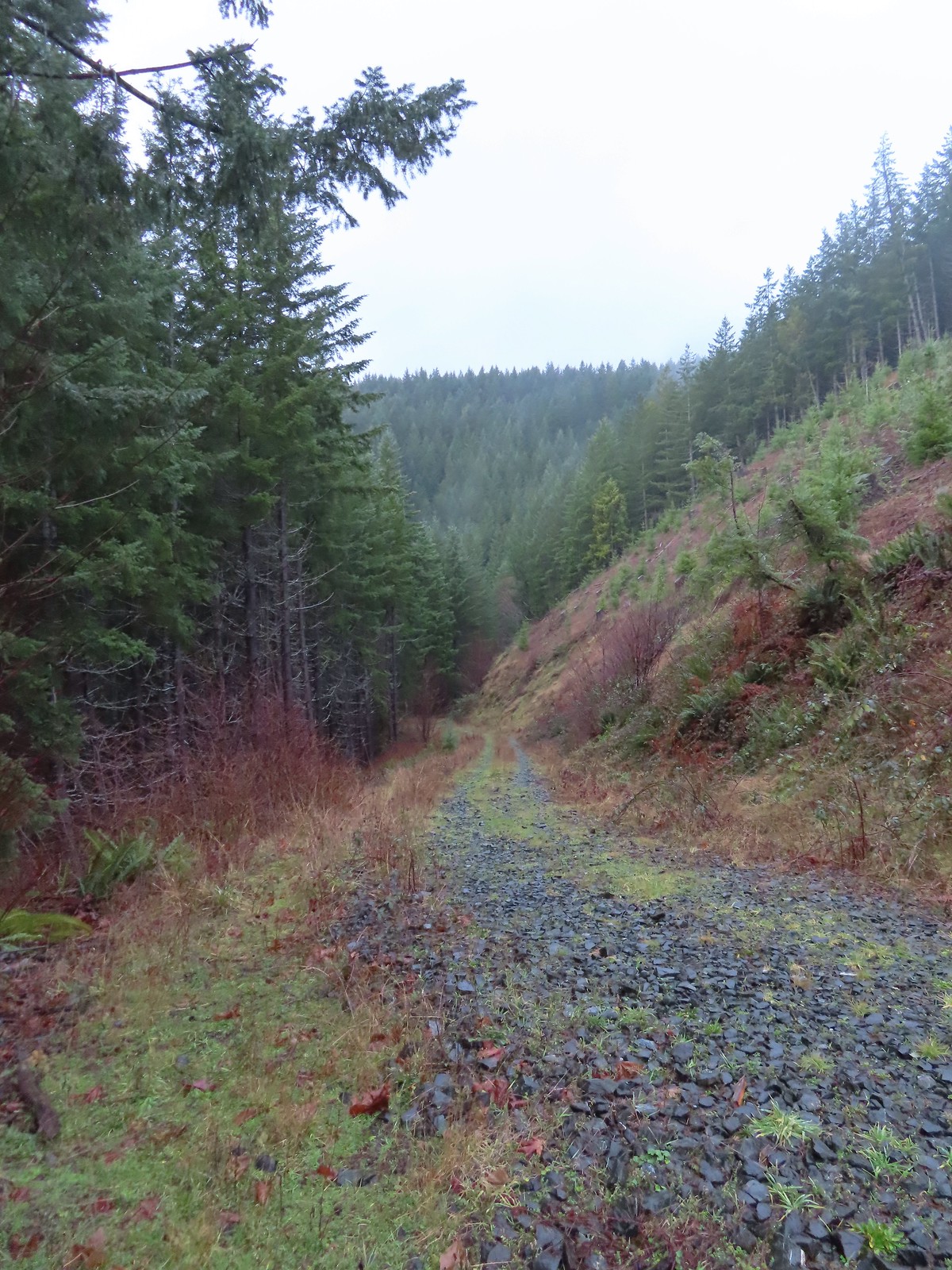
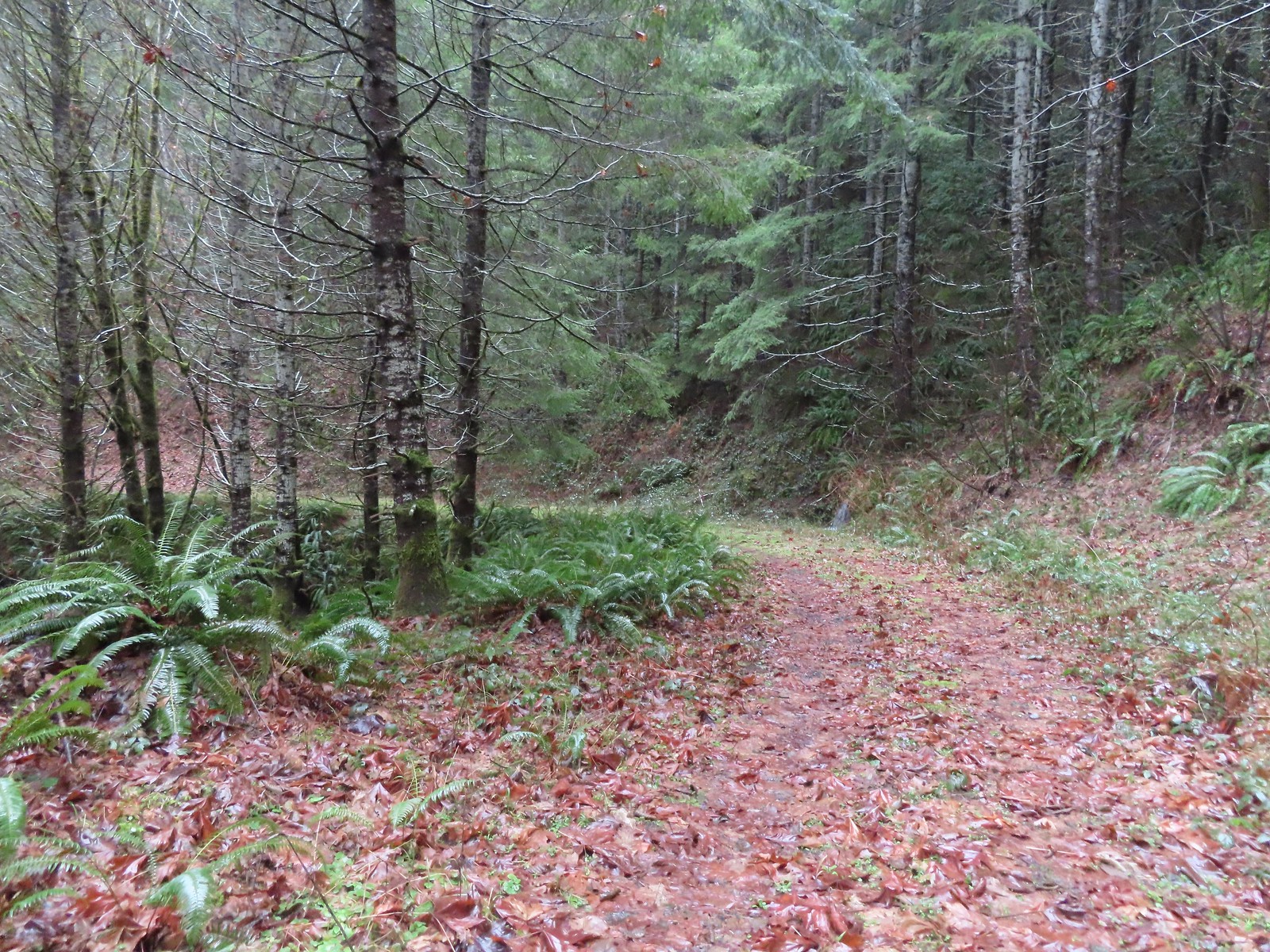 The rocks on the first stretch were not a pleasant surface to walk on but it wasn’t too long before we left the rocks behind.
 Small cascade along a side creek.
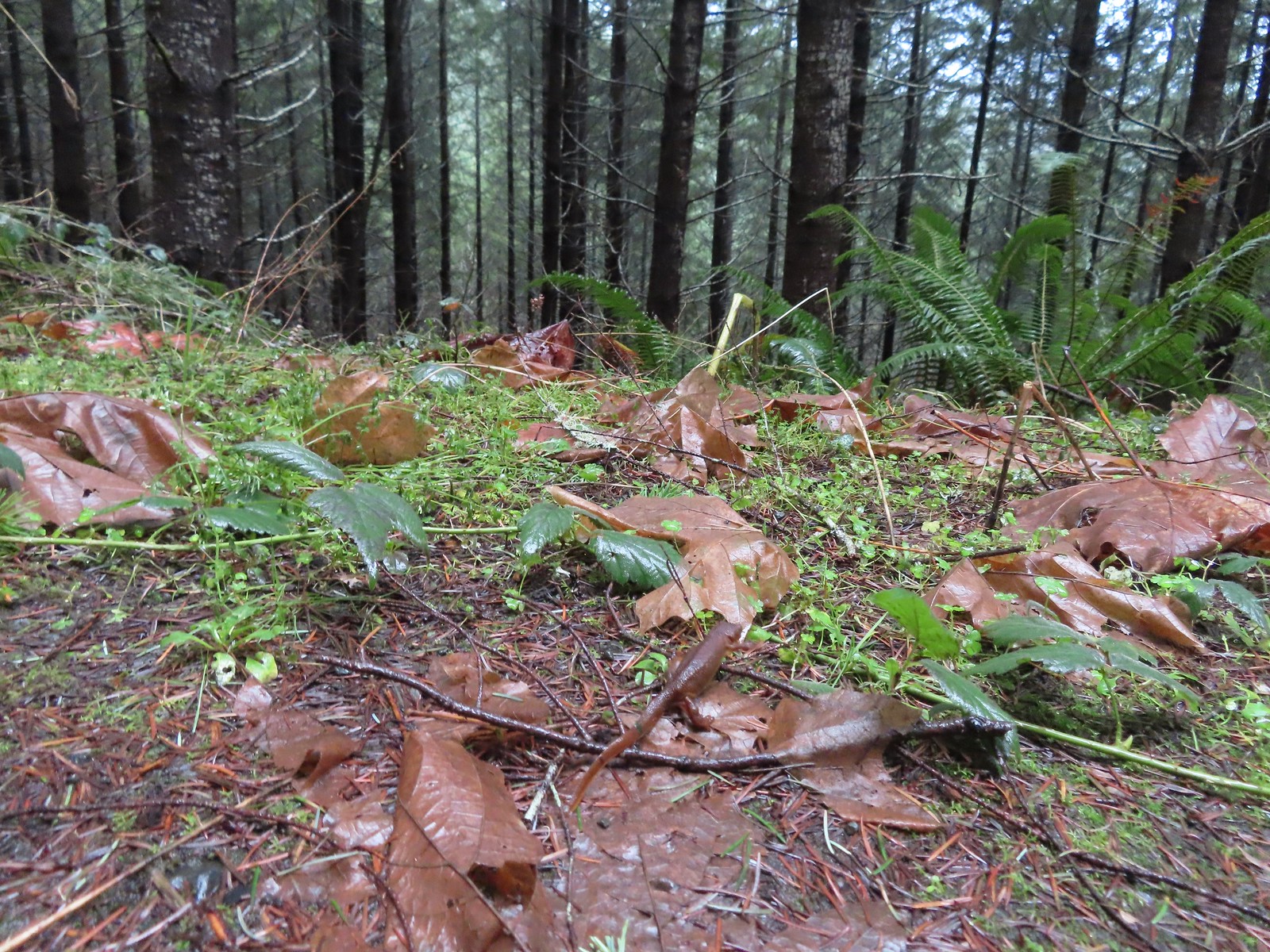 The first of the newts we spotted. They blend well with the leaves so we tried to really keep our eyes open to avoid accidently stepping on any. Over the course of the hike we saw several dozen and who knows how many we didn’t see.
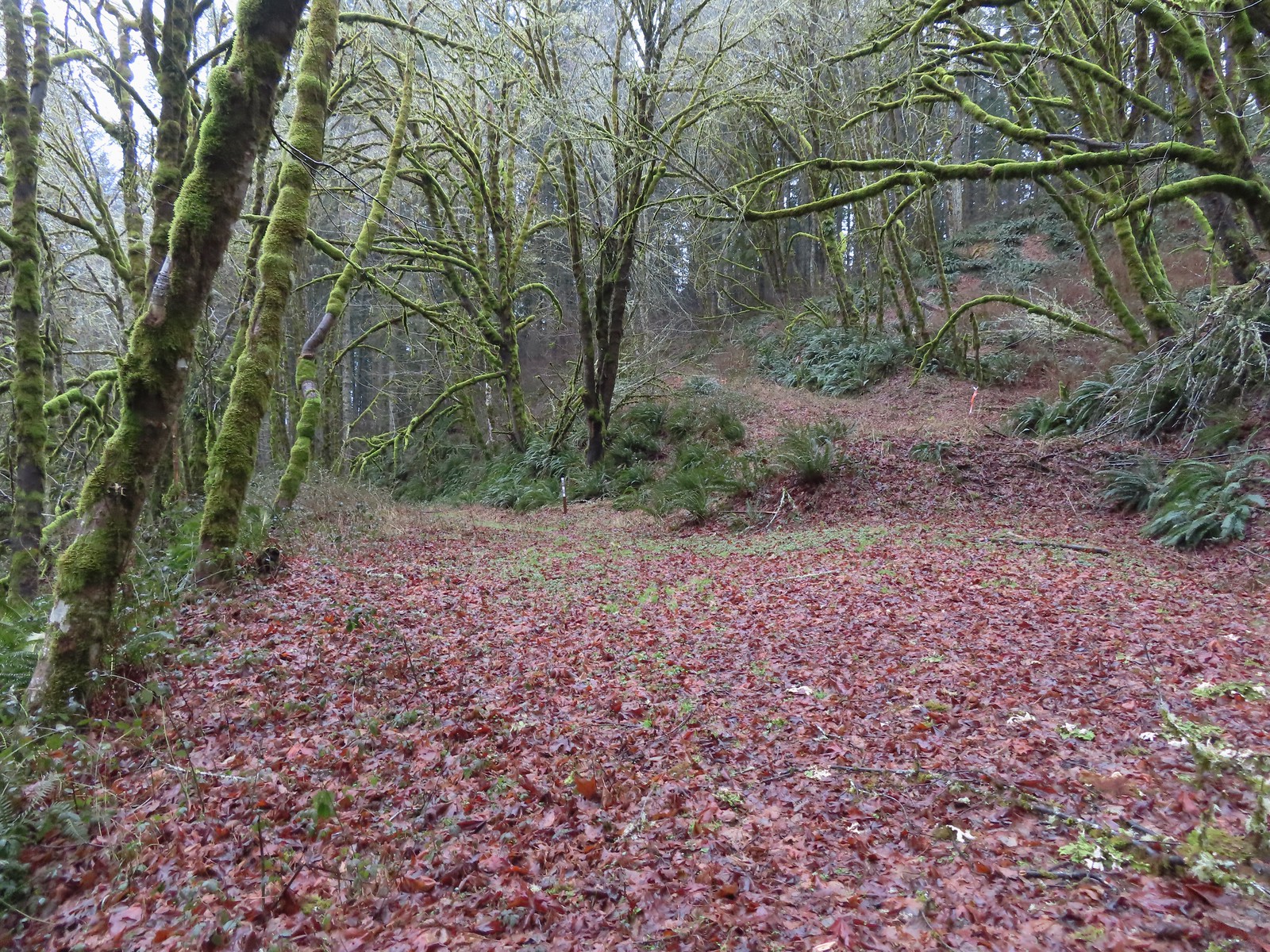 C2C Trail marker along the left-hand (downhill) fork.
 This was the only significant blowdown we encountered on the hike and the tree here was a fairly easy duck under.
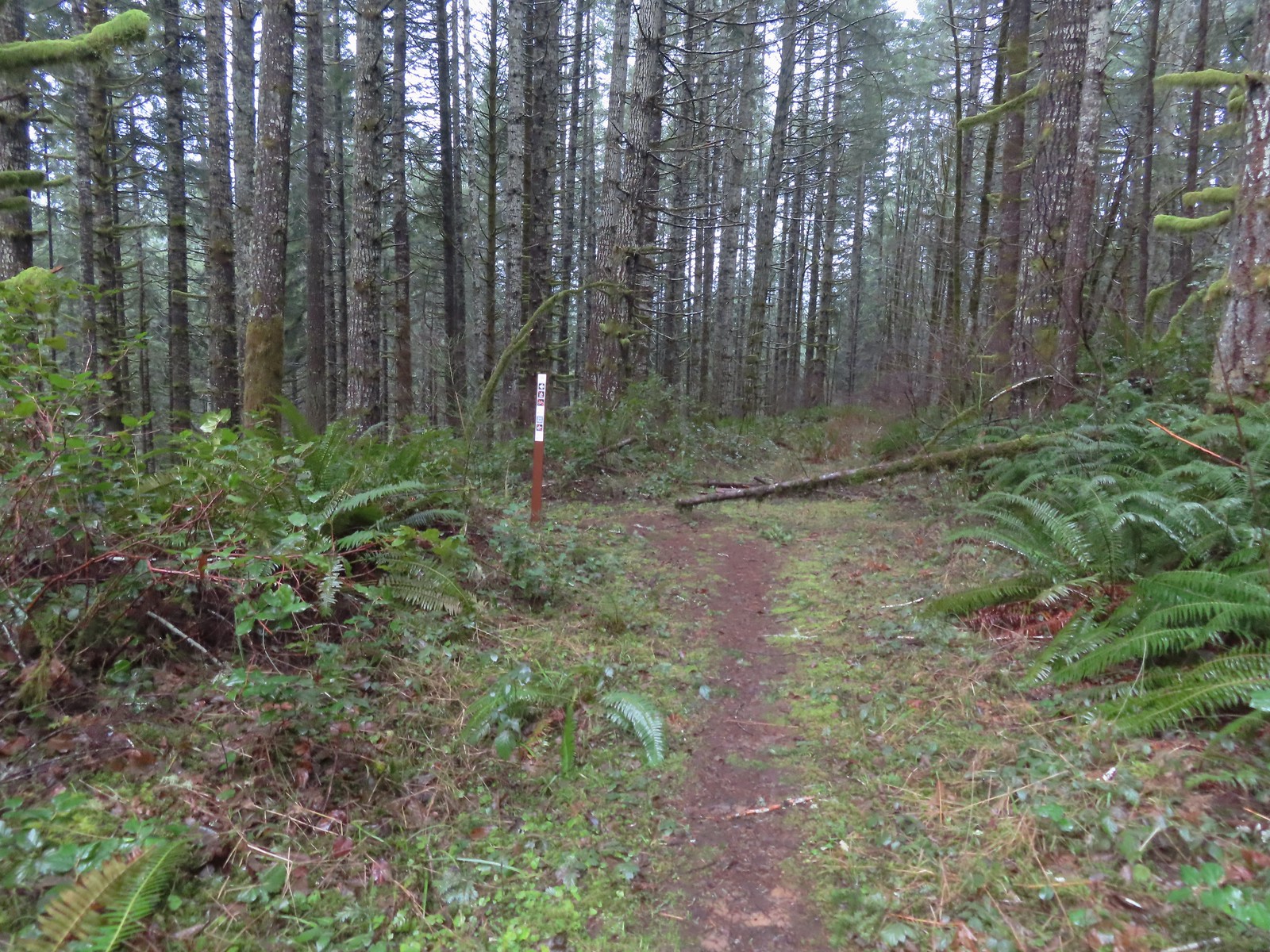 The Sugar Bowl Creek Trail segment leaving the old road. This was the only portion that was true singletrack along the Sugar Bowl segment. Here the trail passes through a portion of the Siuslaw National Forest.
 The Sugar Bowl Creek Trail switchbacked downhill to the East before turning back to the SW in the Sugar Bowl.
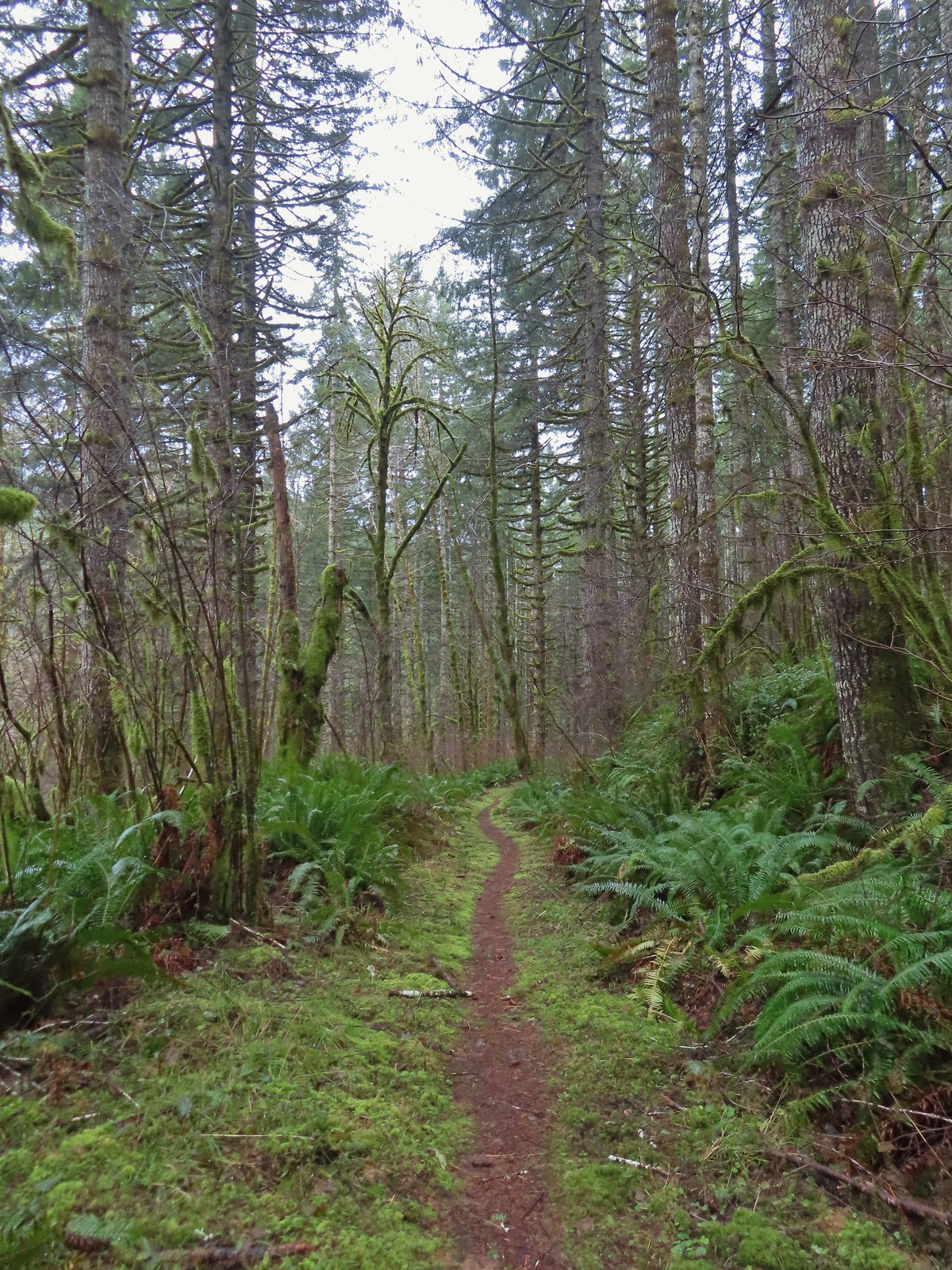 The trail eventually rejoined the old roadbed.
 Actual blue sky.
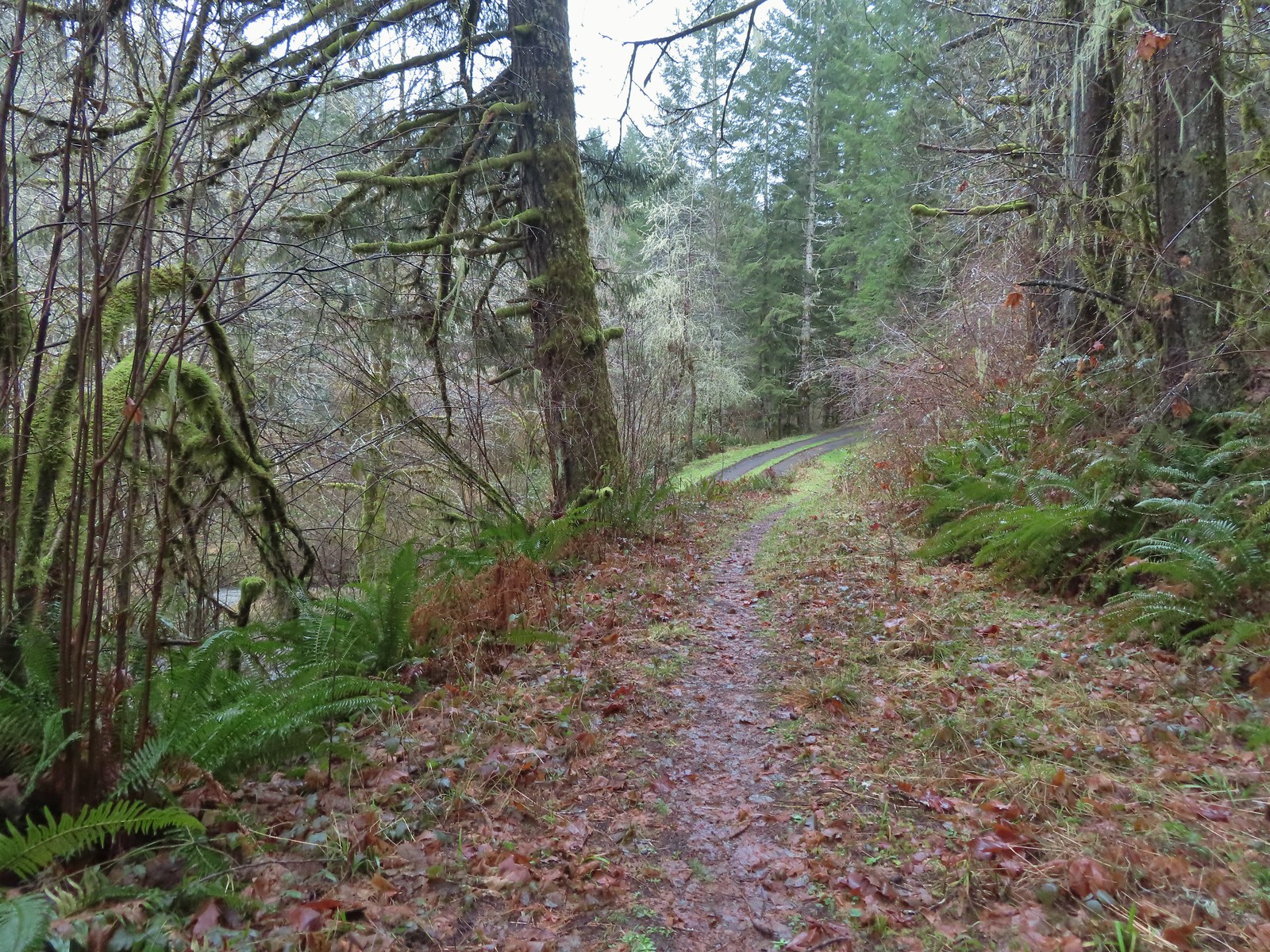 Arriving at Mary’s Peak Road.
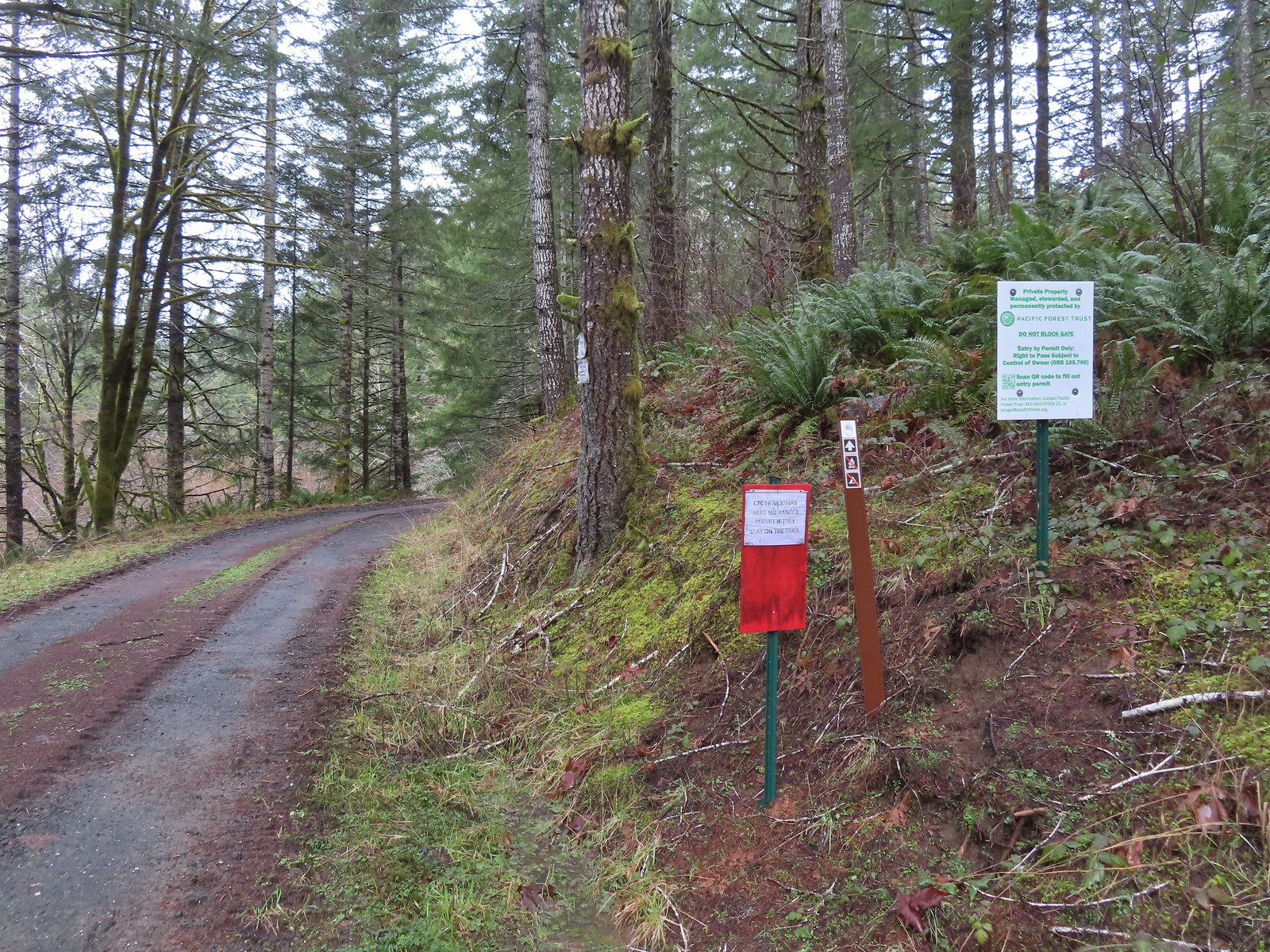 Signage along Mary’s Peak Road for the C2C.
 This particular newt was not about to move out of Heather’s way.
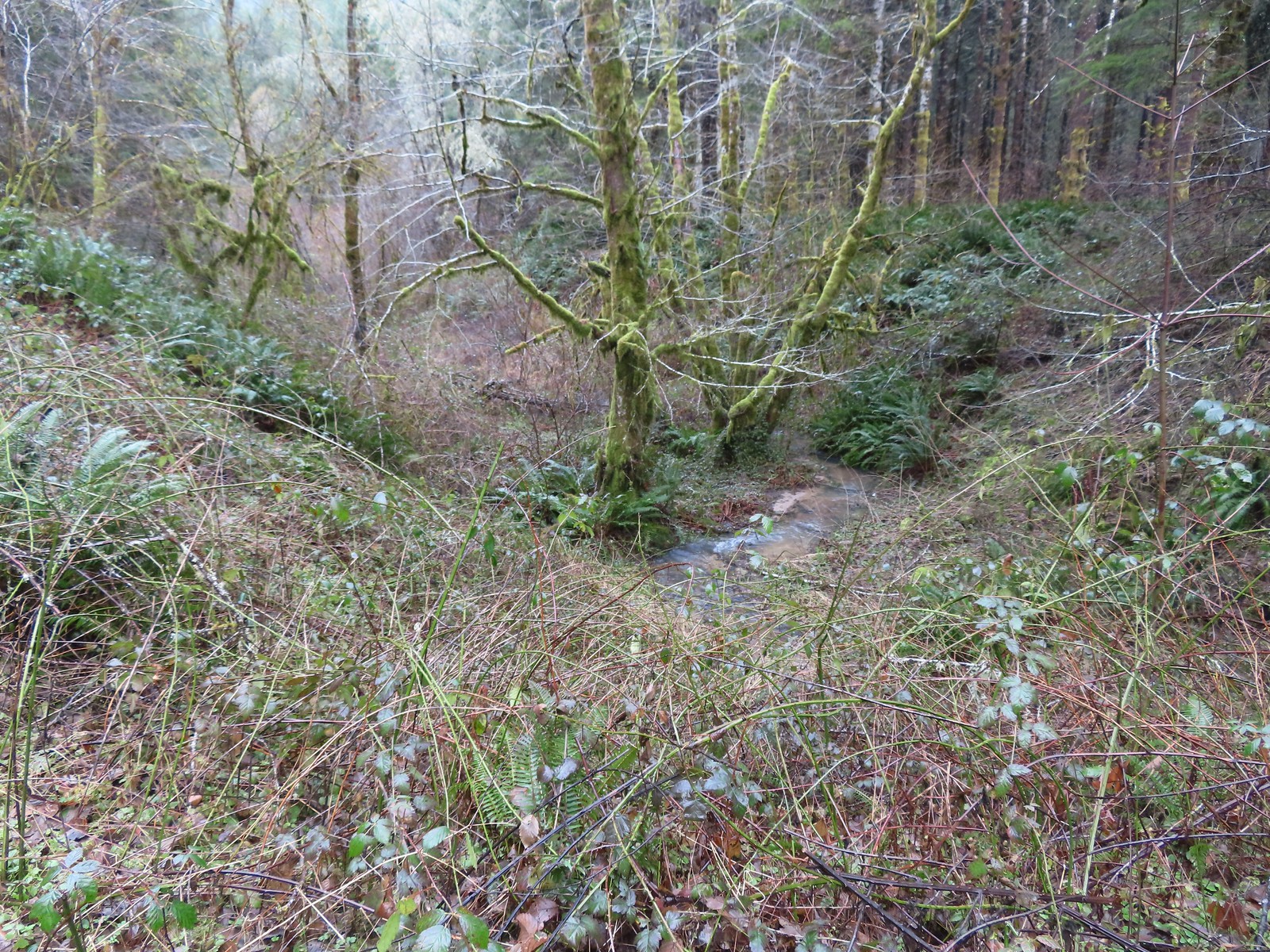 A side creek flowing toward Sugar Bowl Creek.
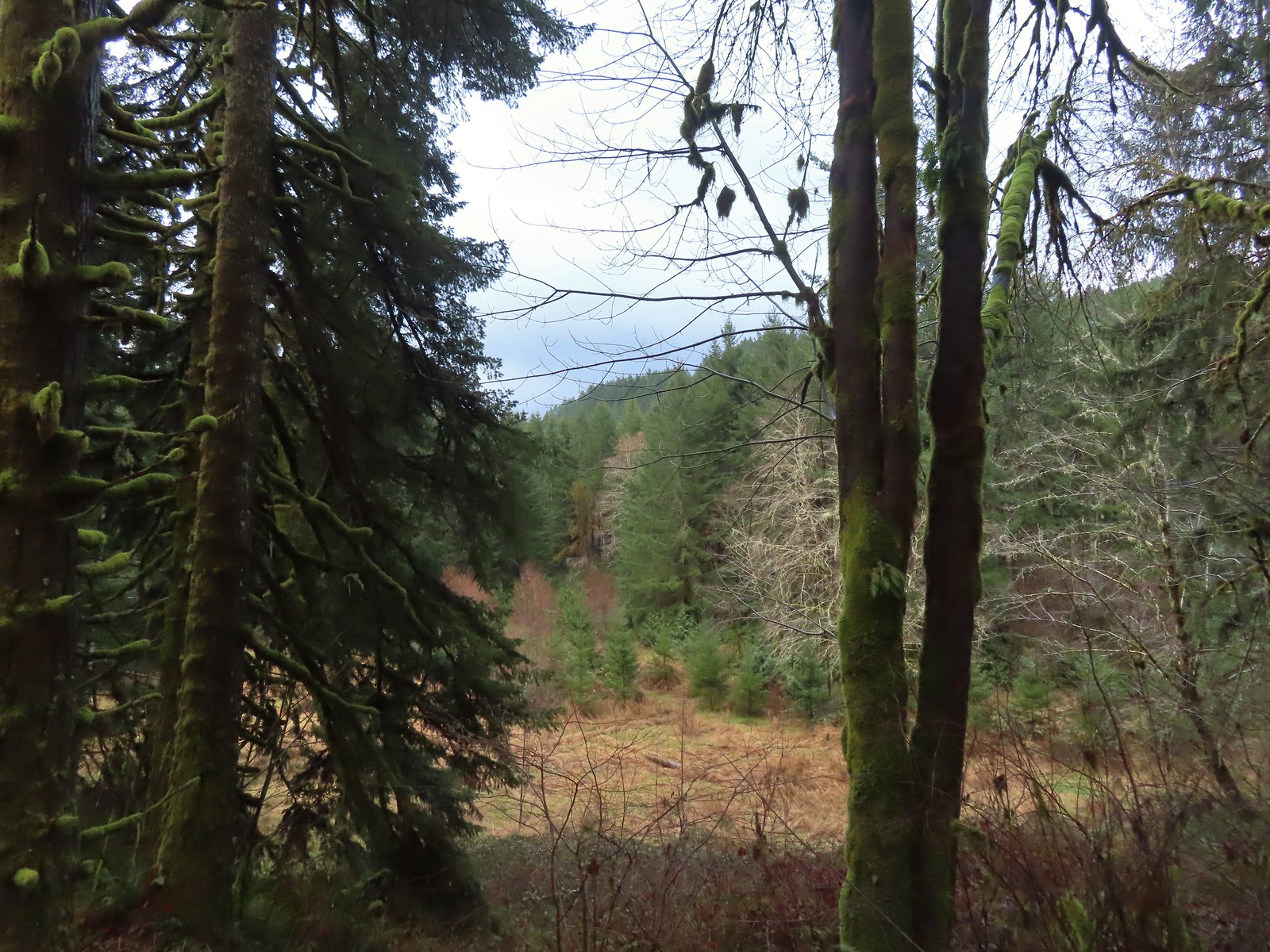 Sugar Bowl Creek was never visible from the C2C but it was out there somewhere.
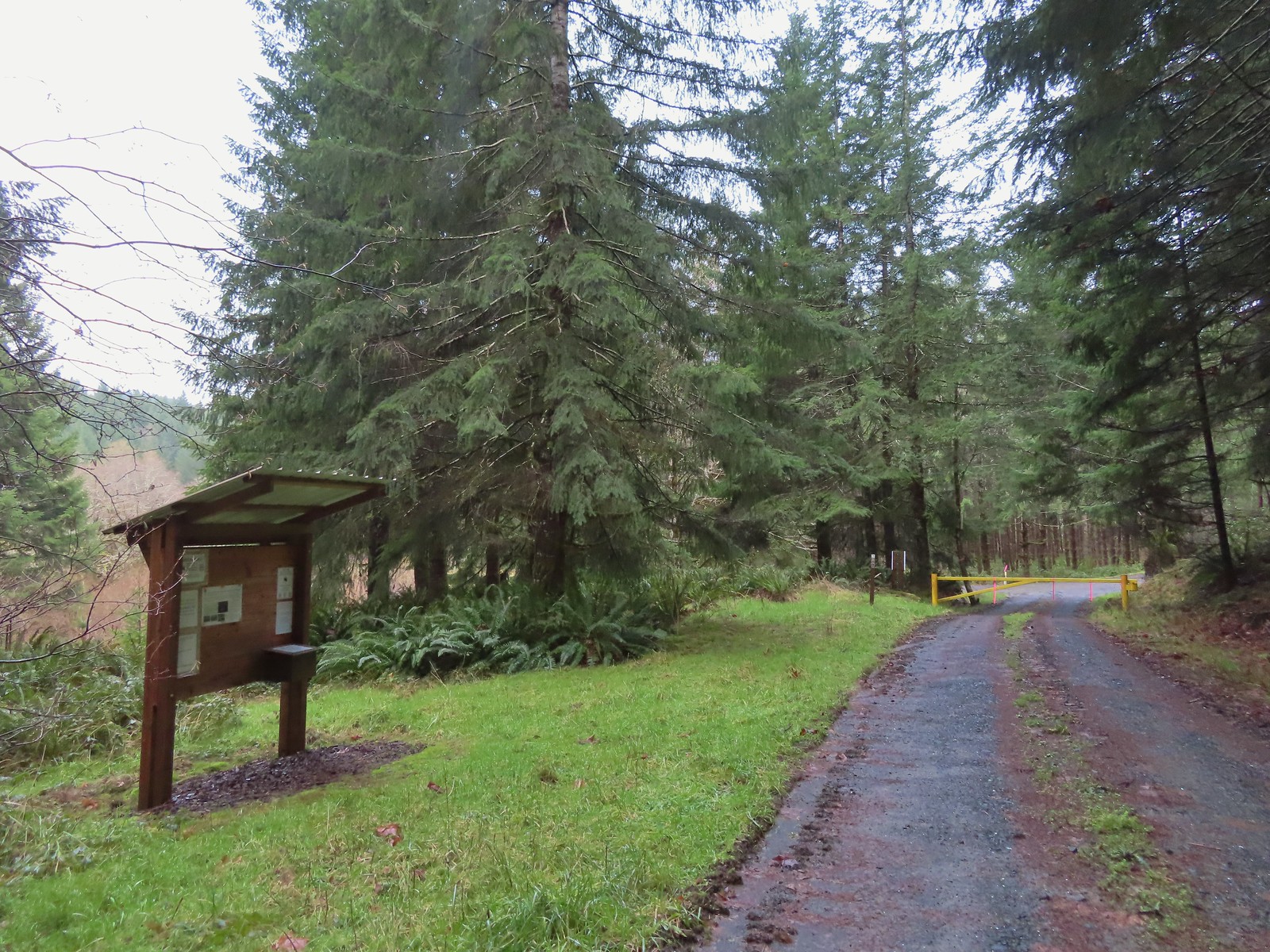 The Harlan Road Gate and kiosk.
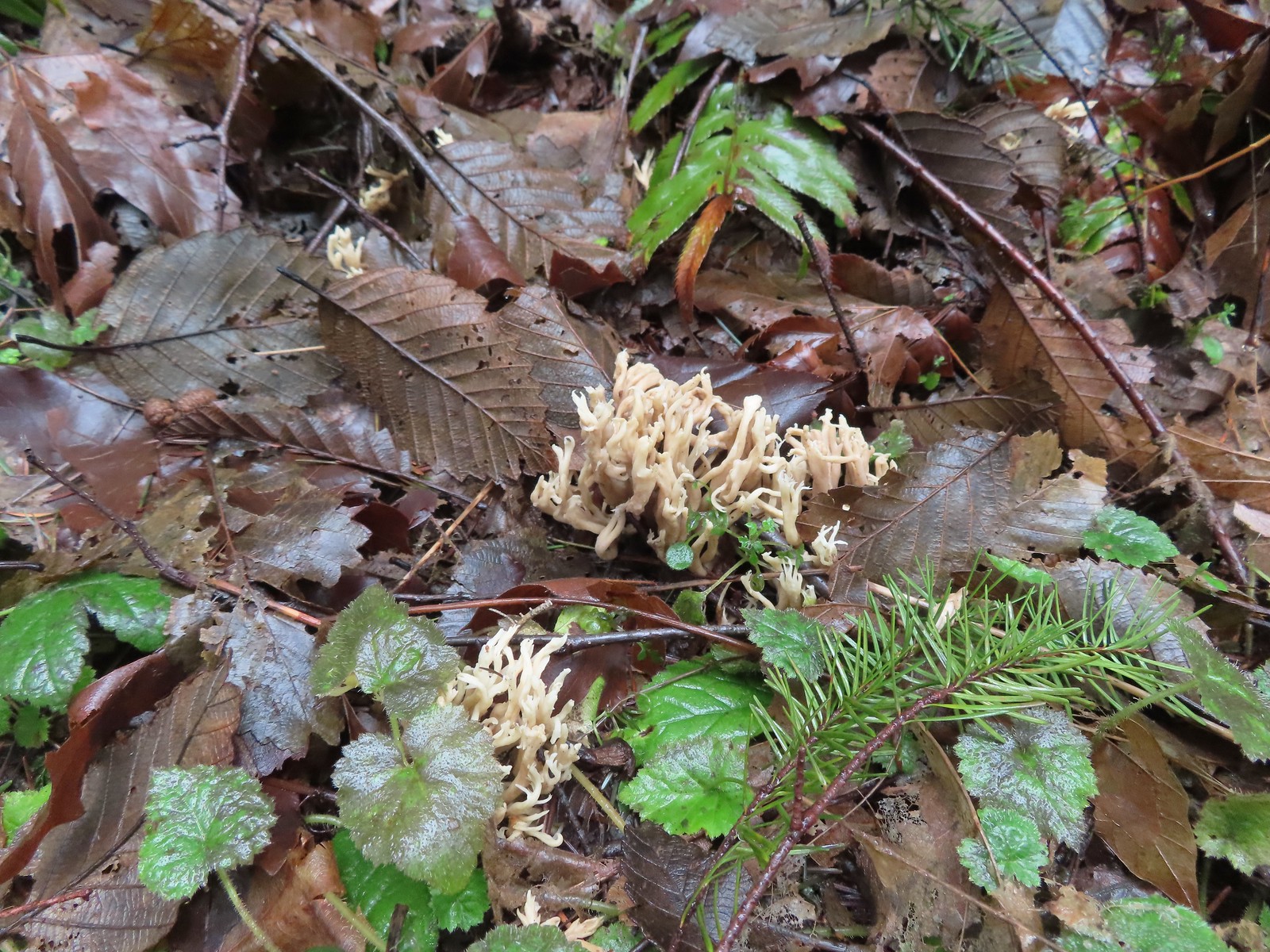 Coral fungus
 Unnamed creek
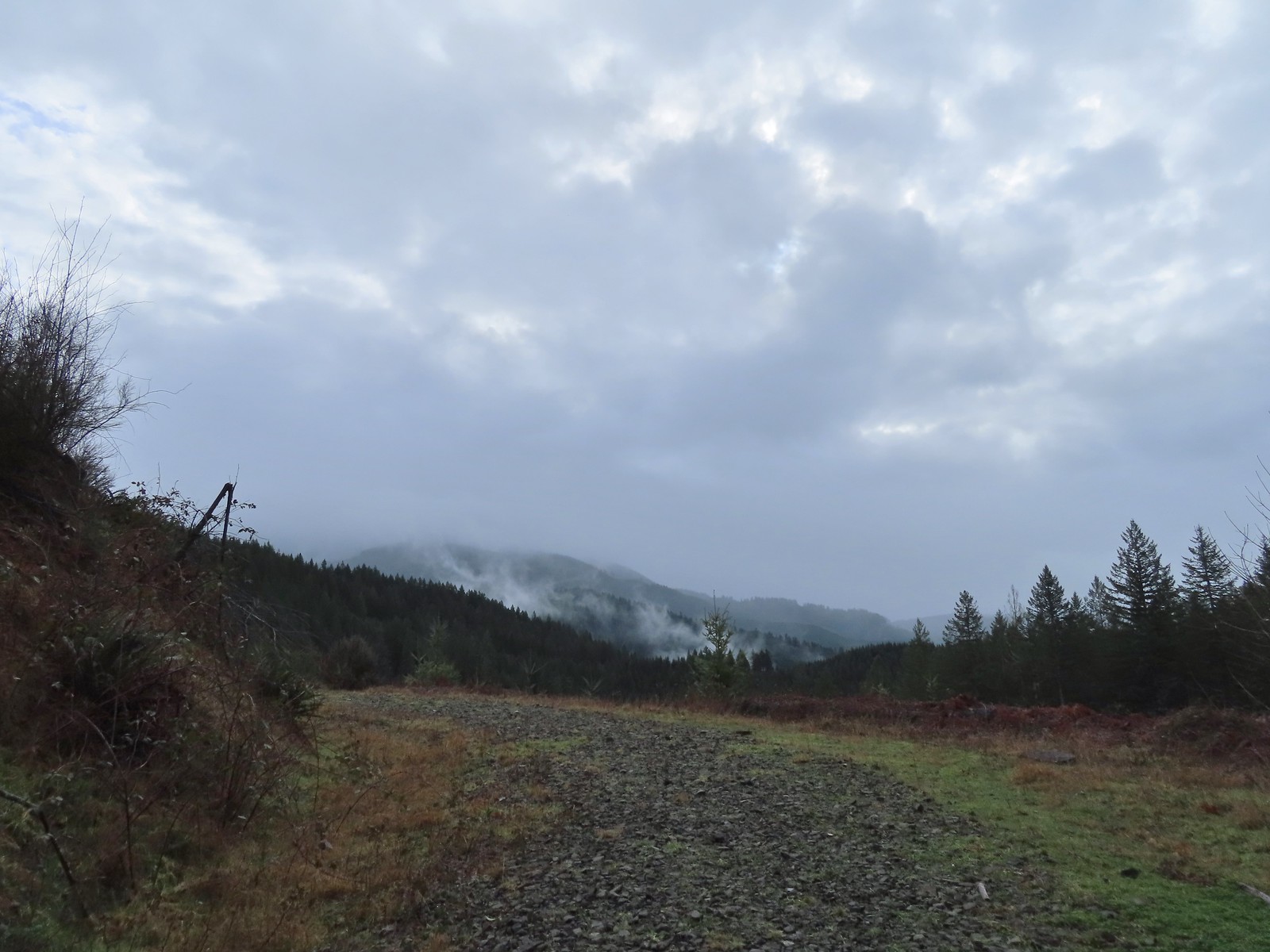 Back on the rocky roadbed below the 4-way.
 Back at the gate and kiosk.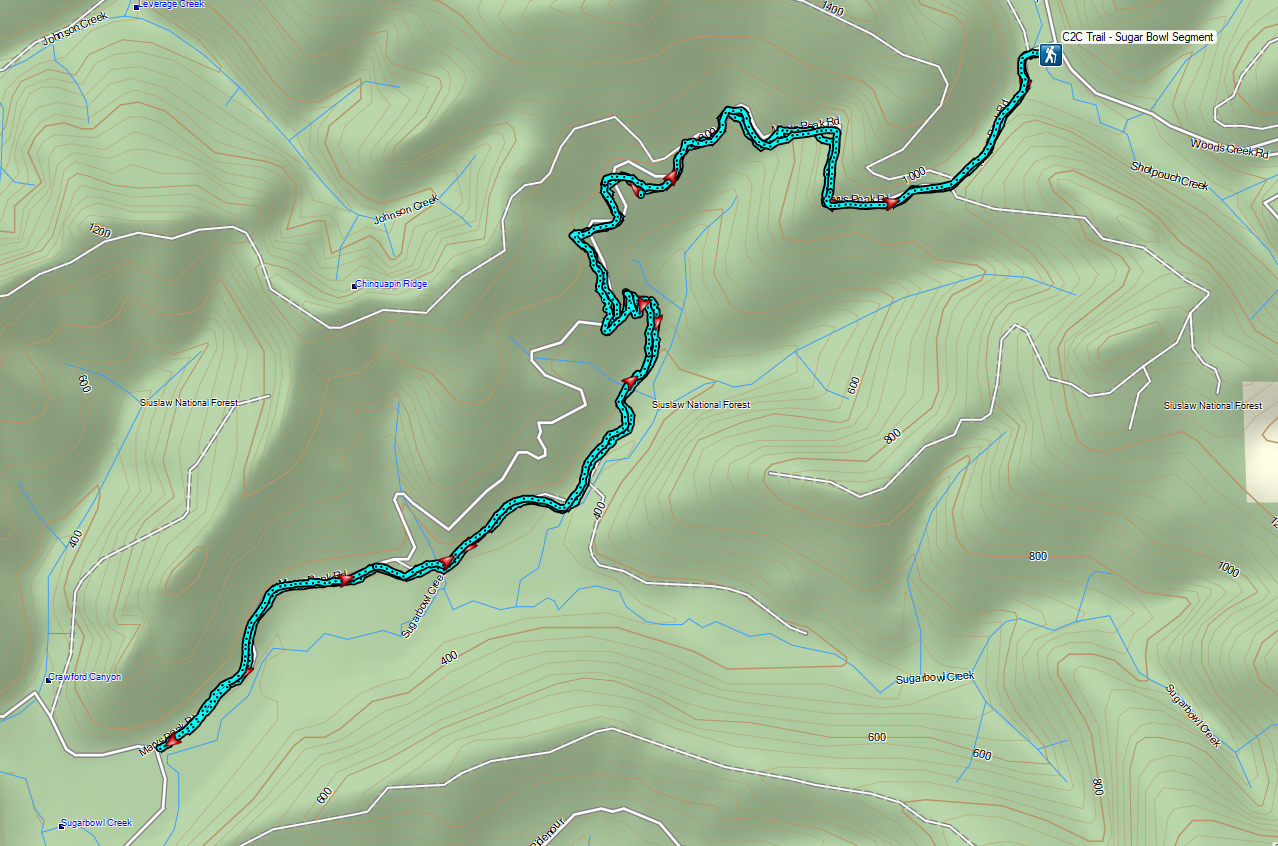
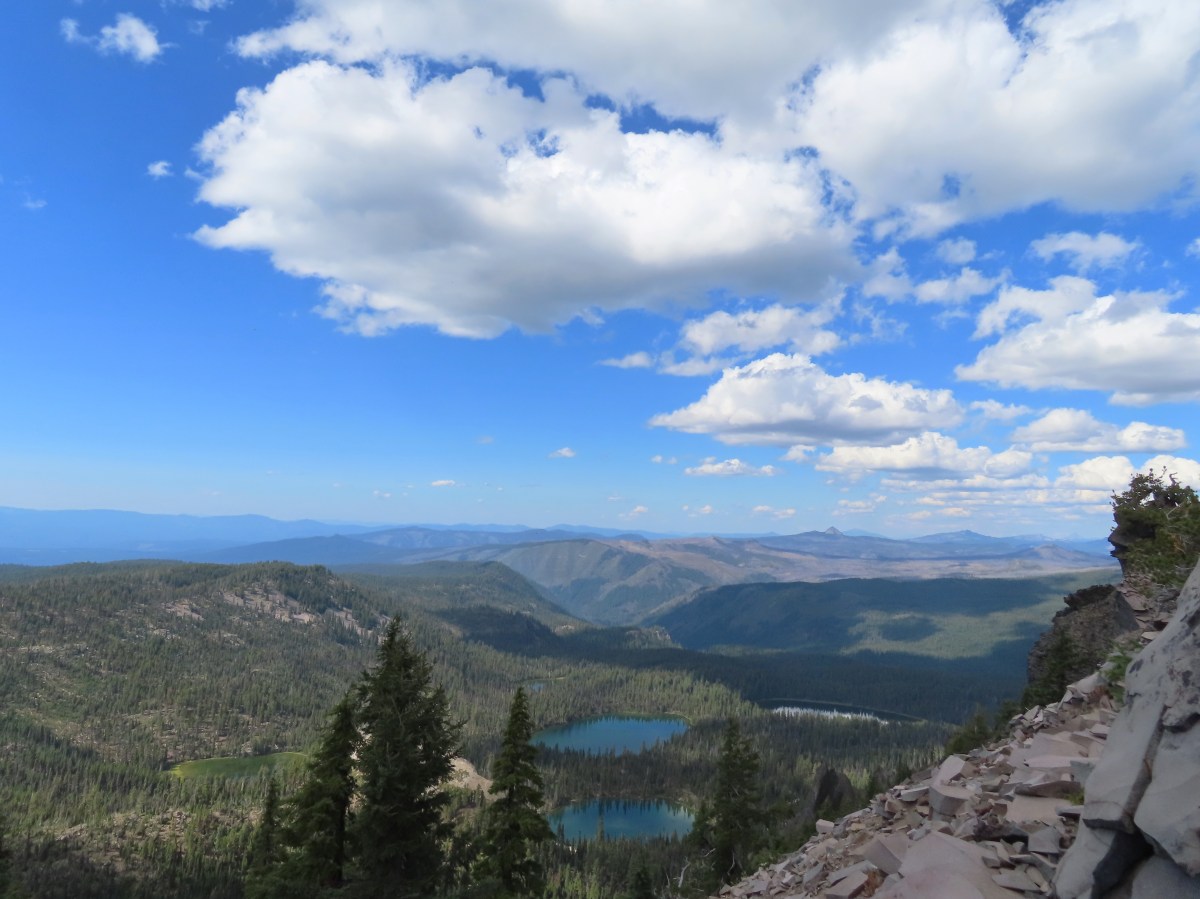

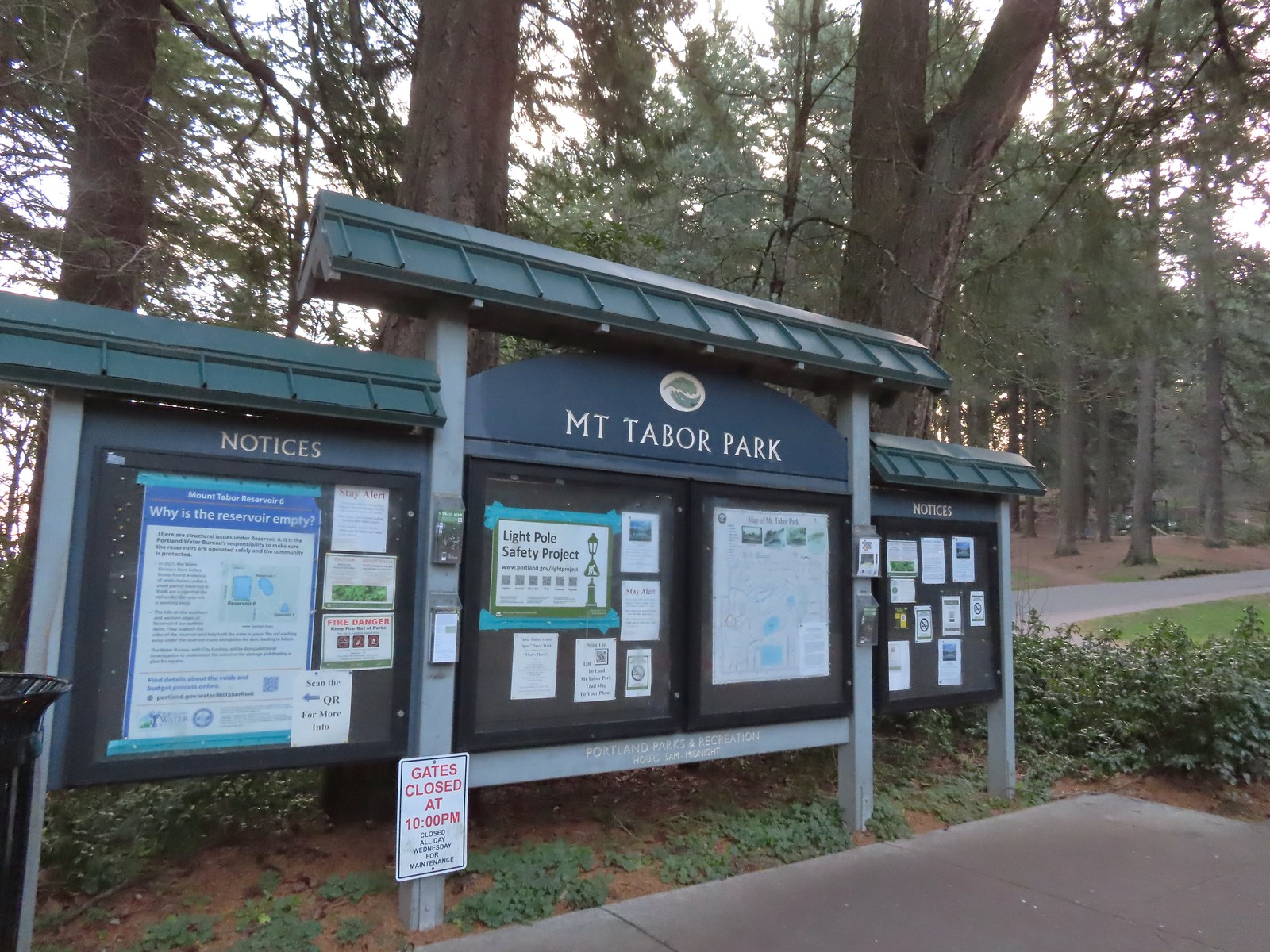 The playground behind and to the right of the signboard at the Visitors Center.
 The red trail continuing on the far end of the playground.
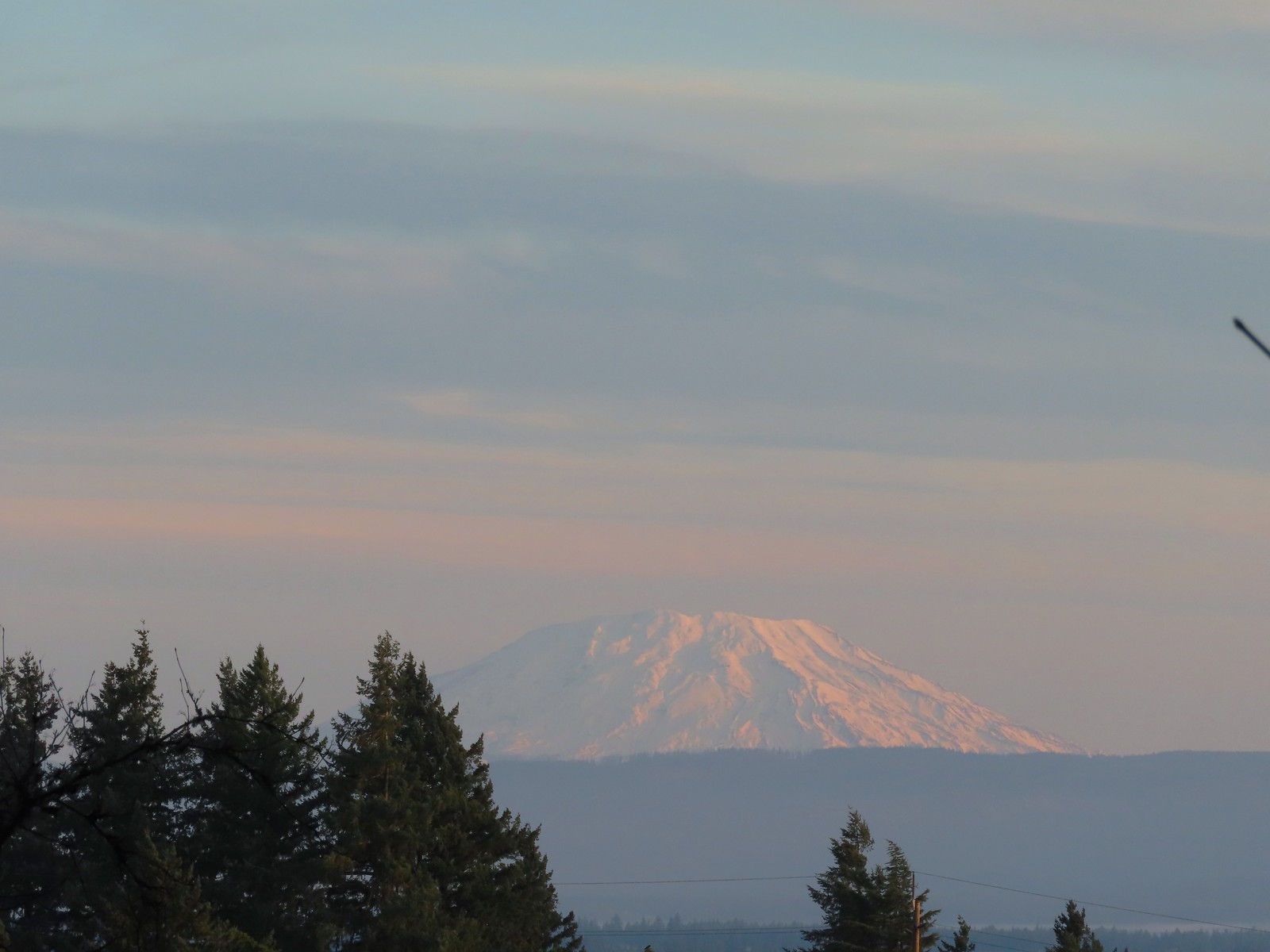 Mt. St. Helens from the playground.
 On the red trail.
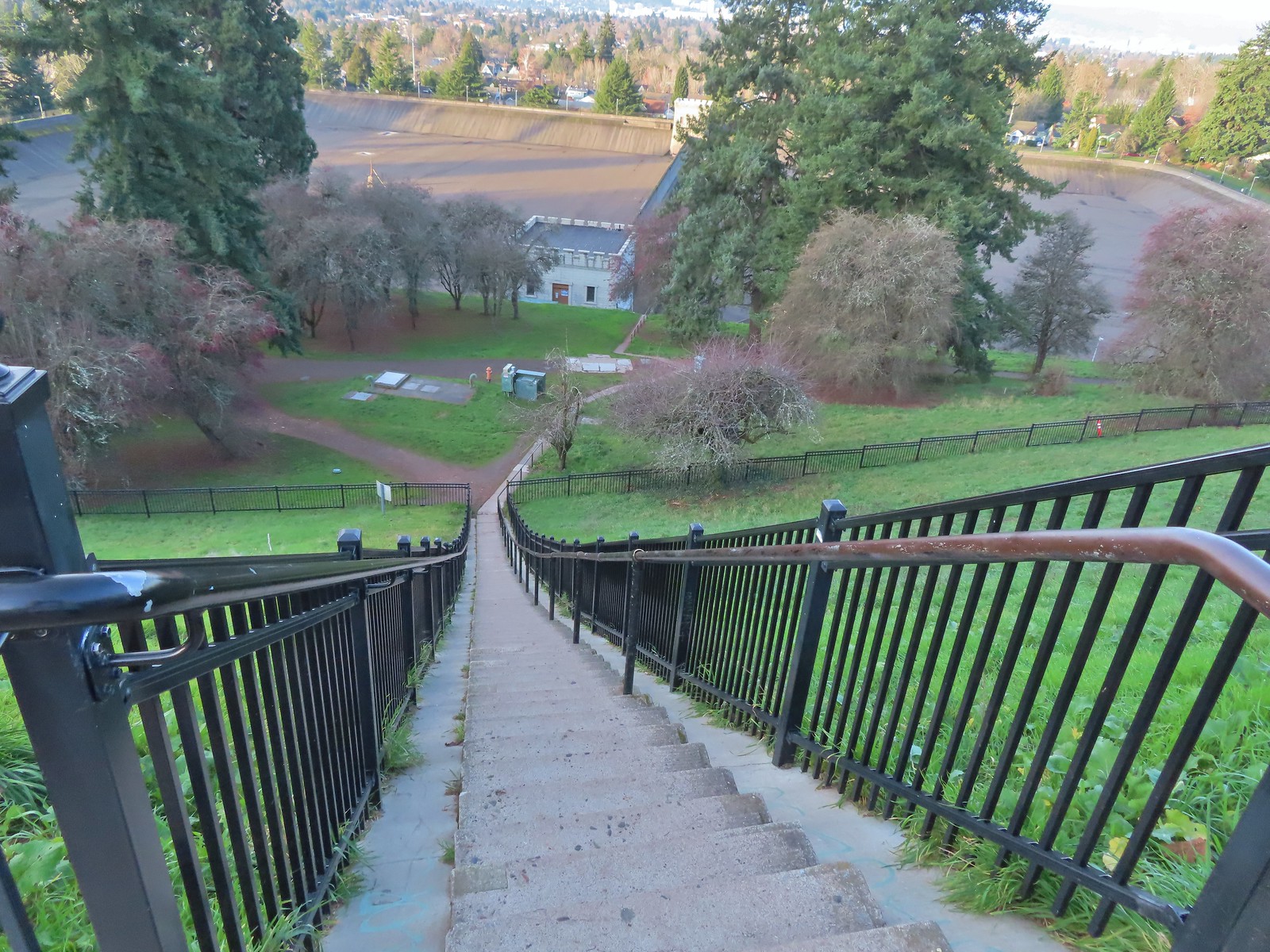
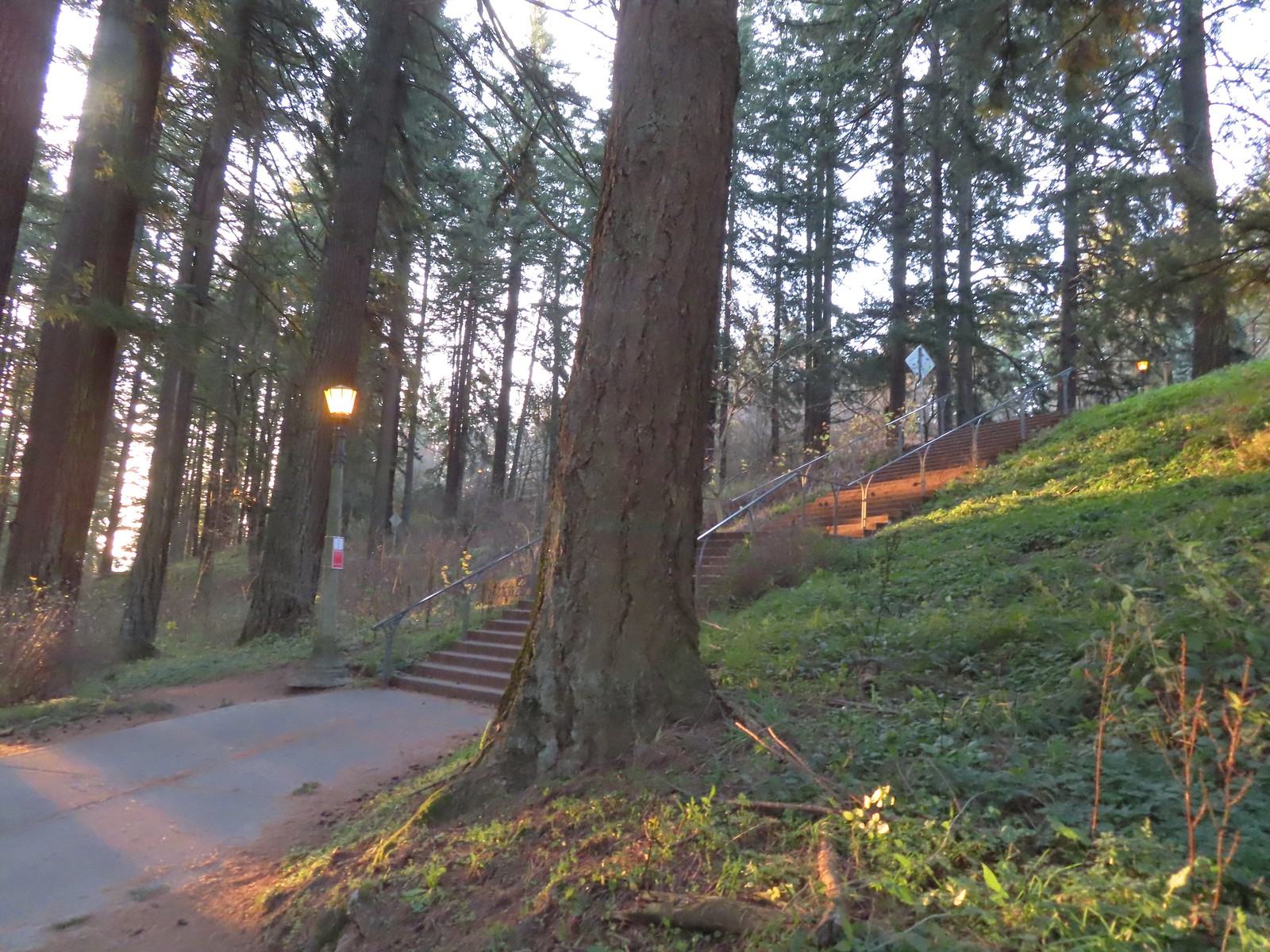 The Mount Tabor stairs extend from the park border up to the summit.
 Summit restrooms
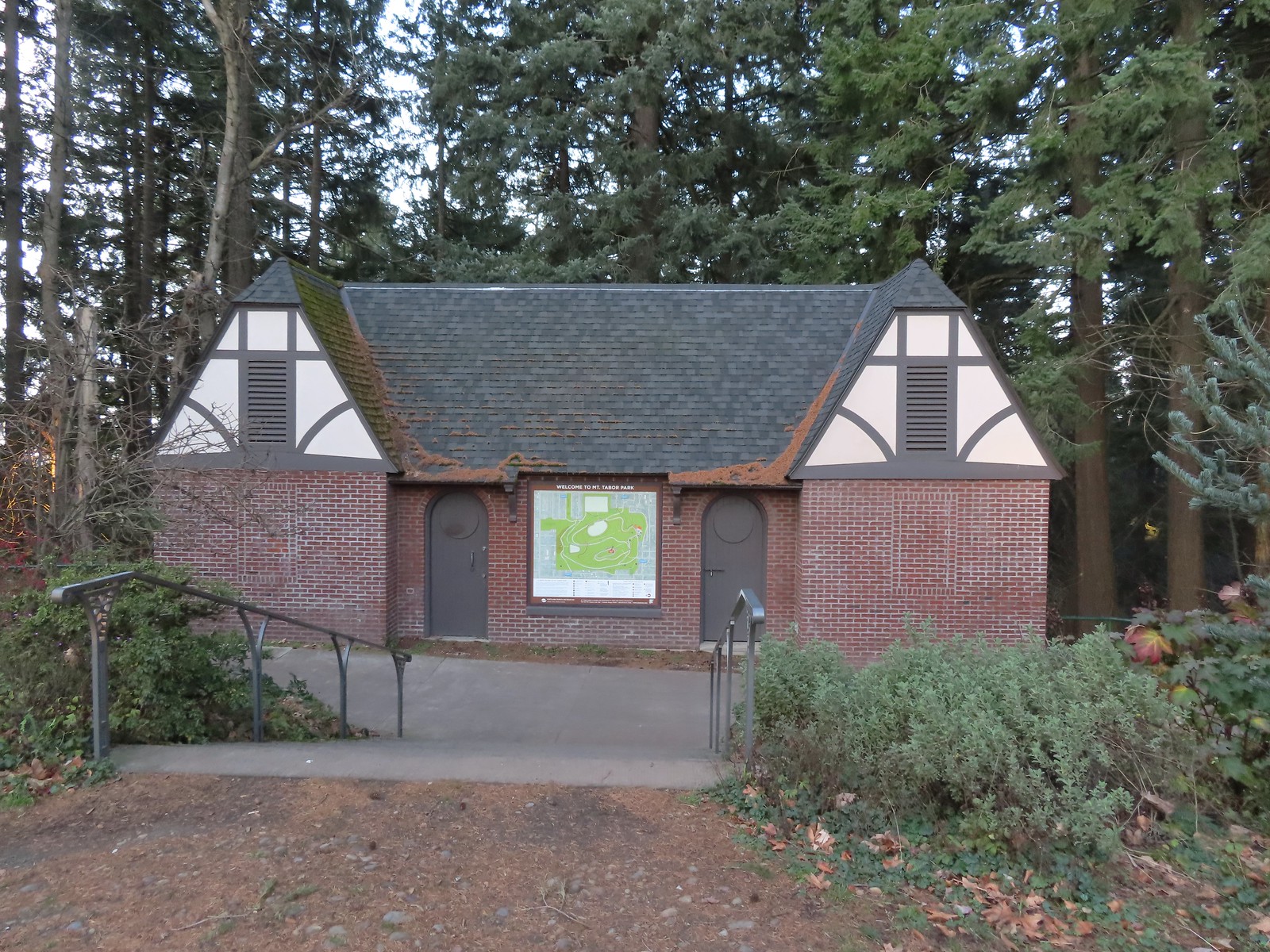 The restrooms were reopened in 2017 after being renovated.
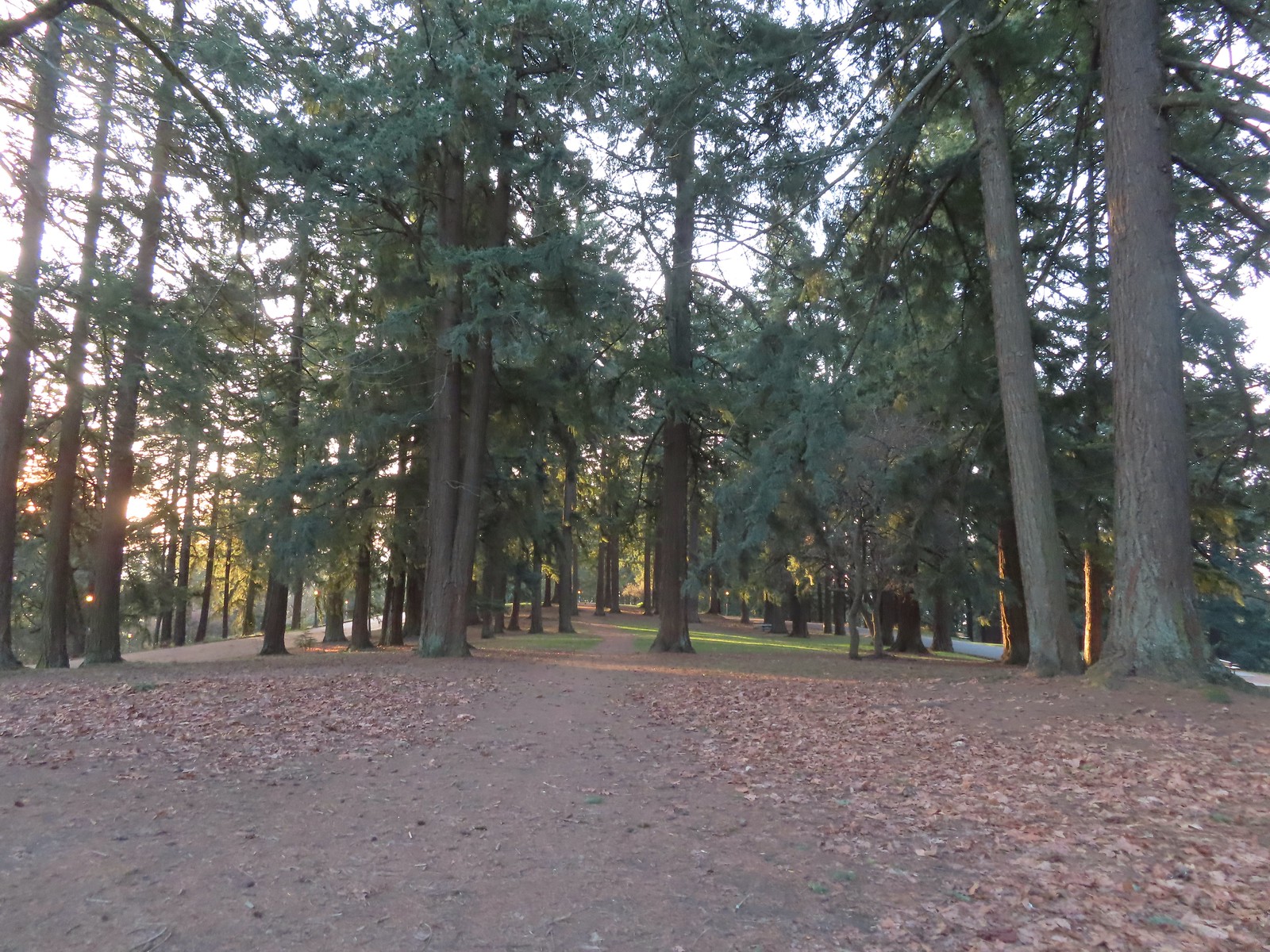 Mount Tabor summit
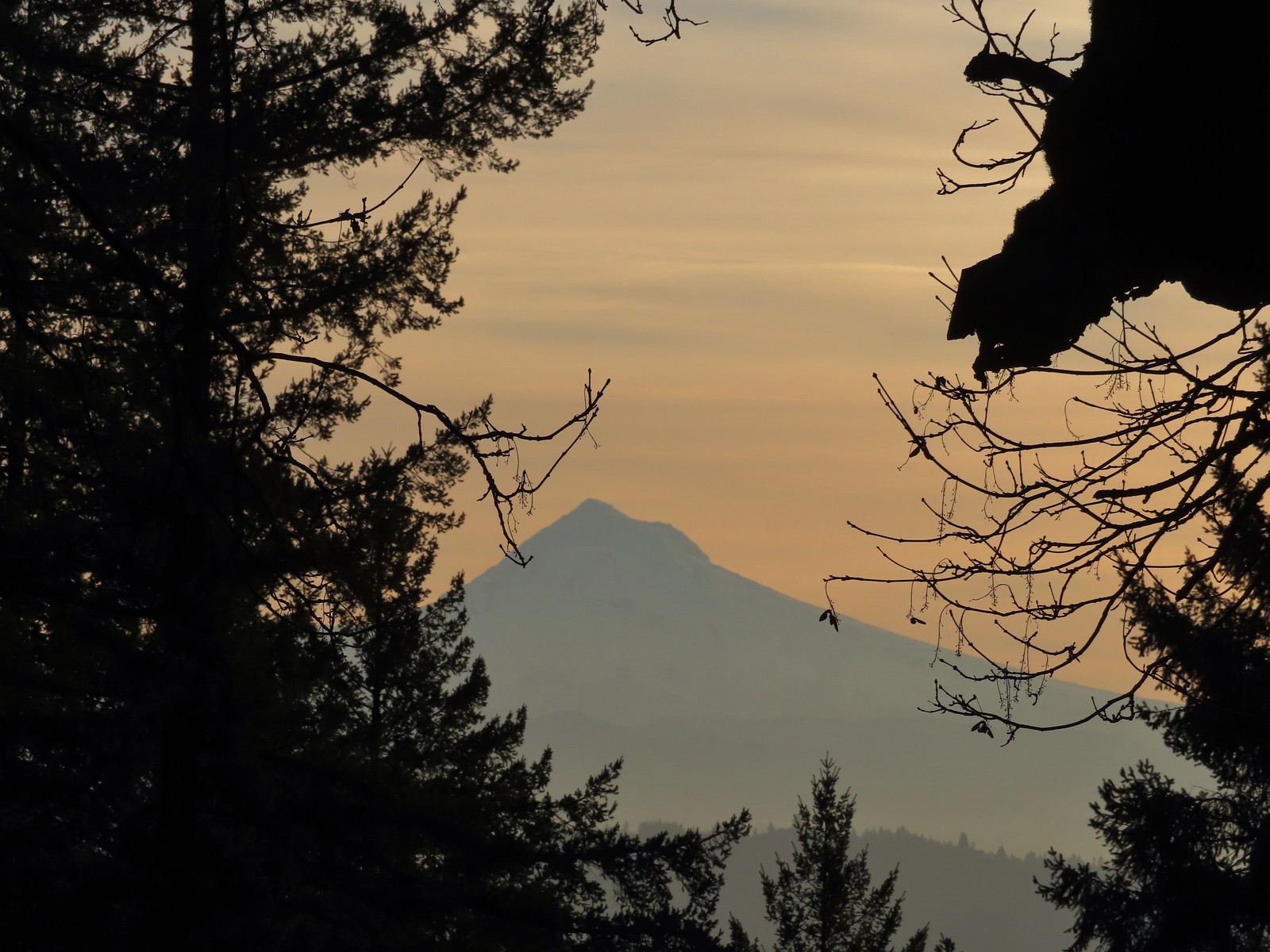 Mt. Hood from the summit.
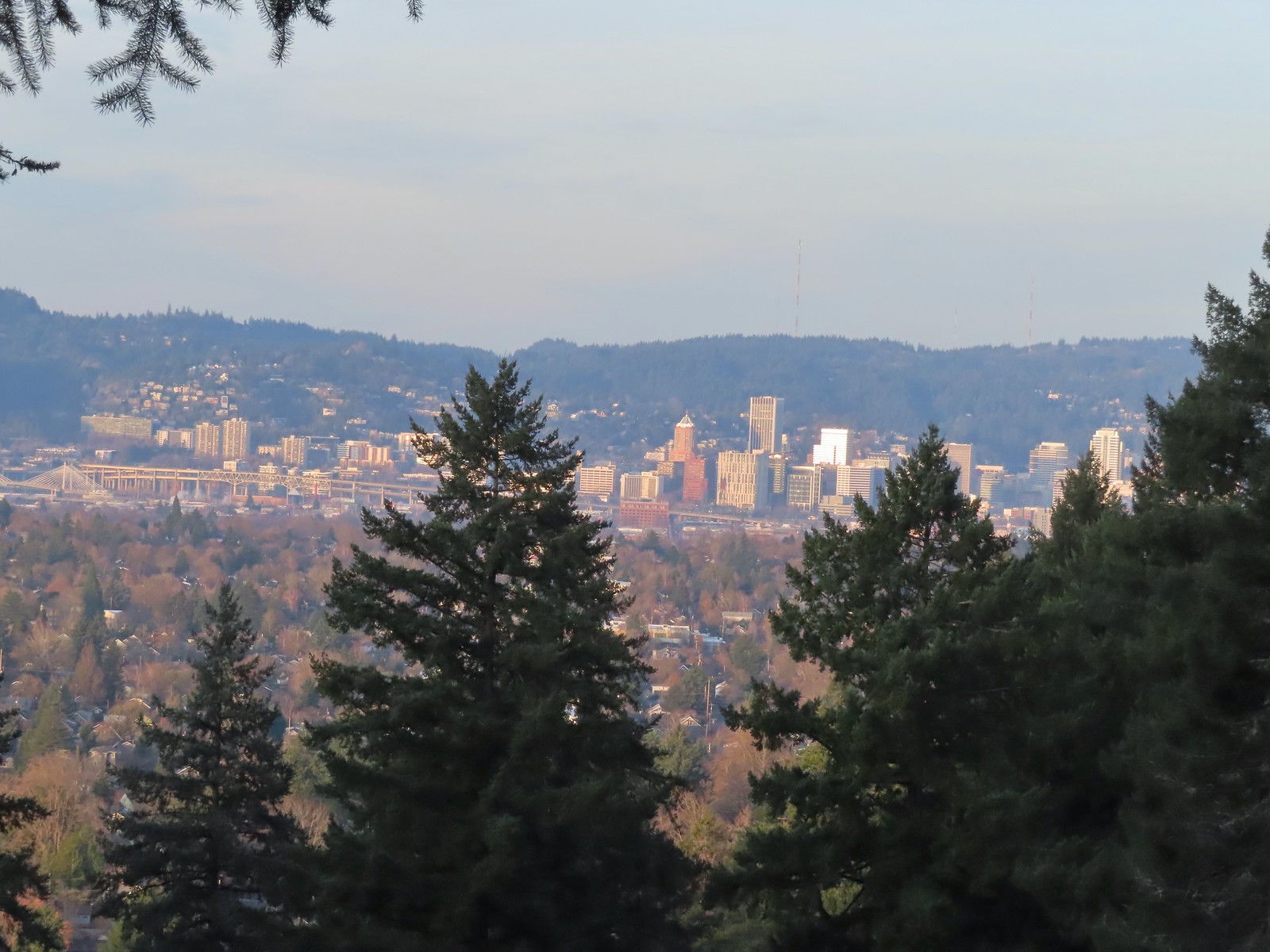 Downtown Portland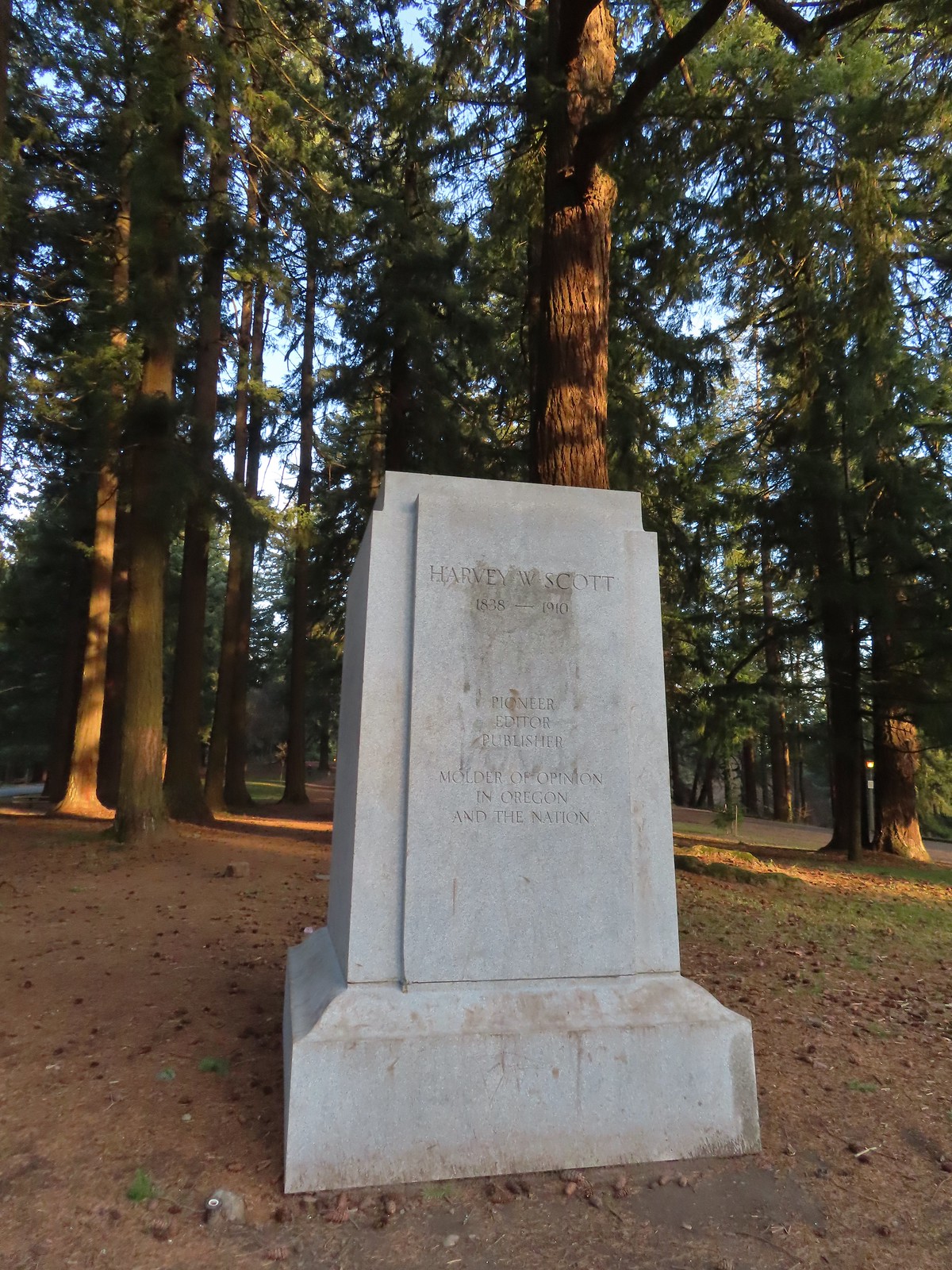

 Mallards



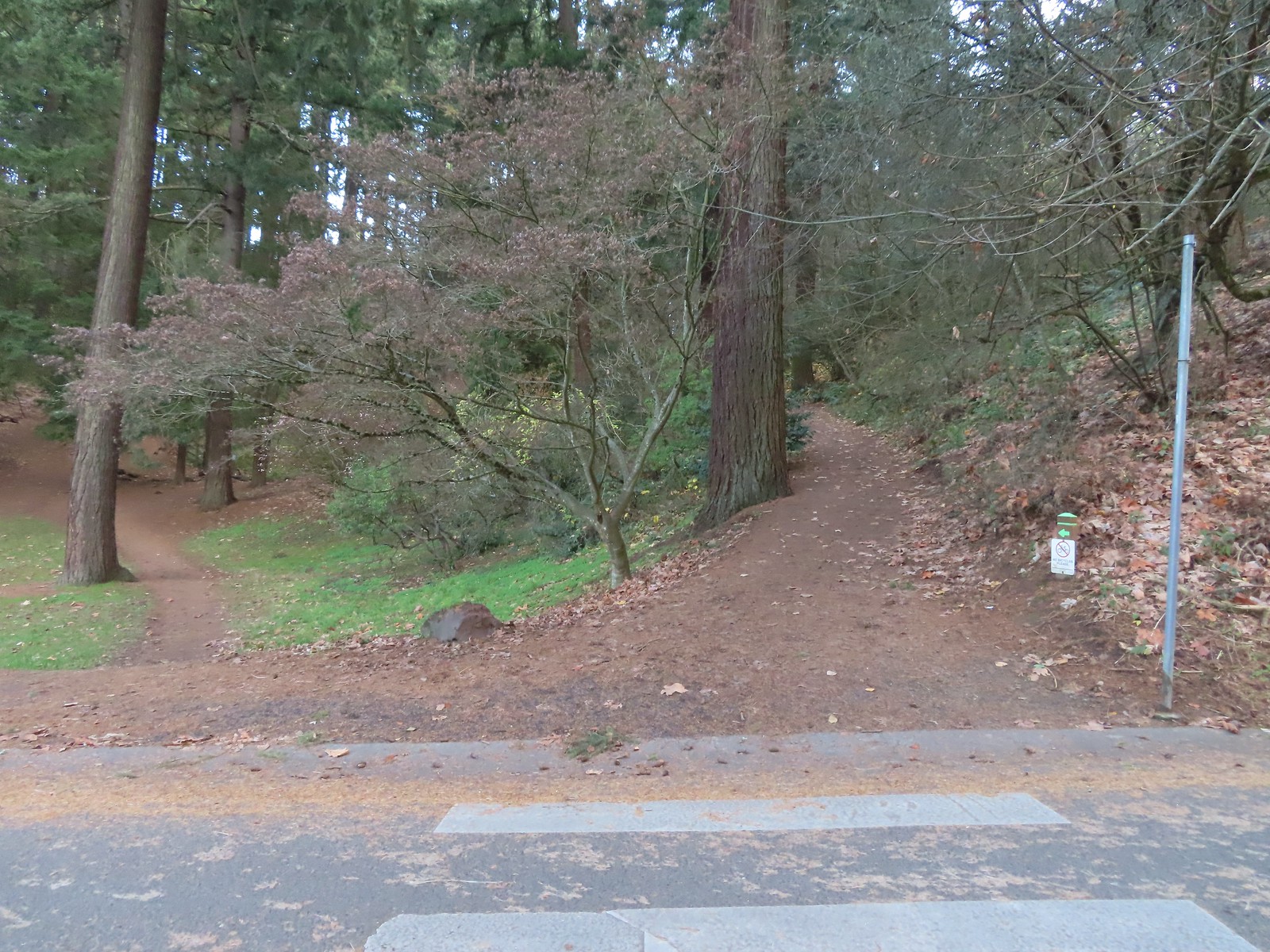 We forked right at this junction sticking to the green pointers.
 Arriving at The Crater.
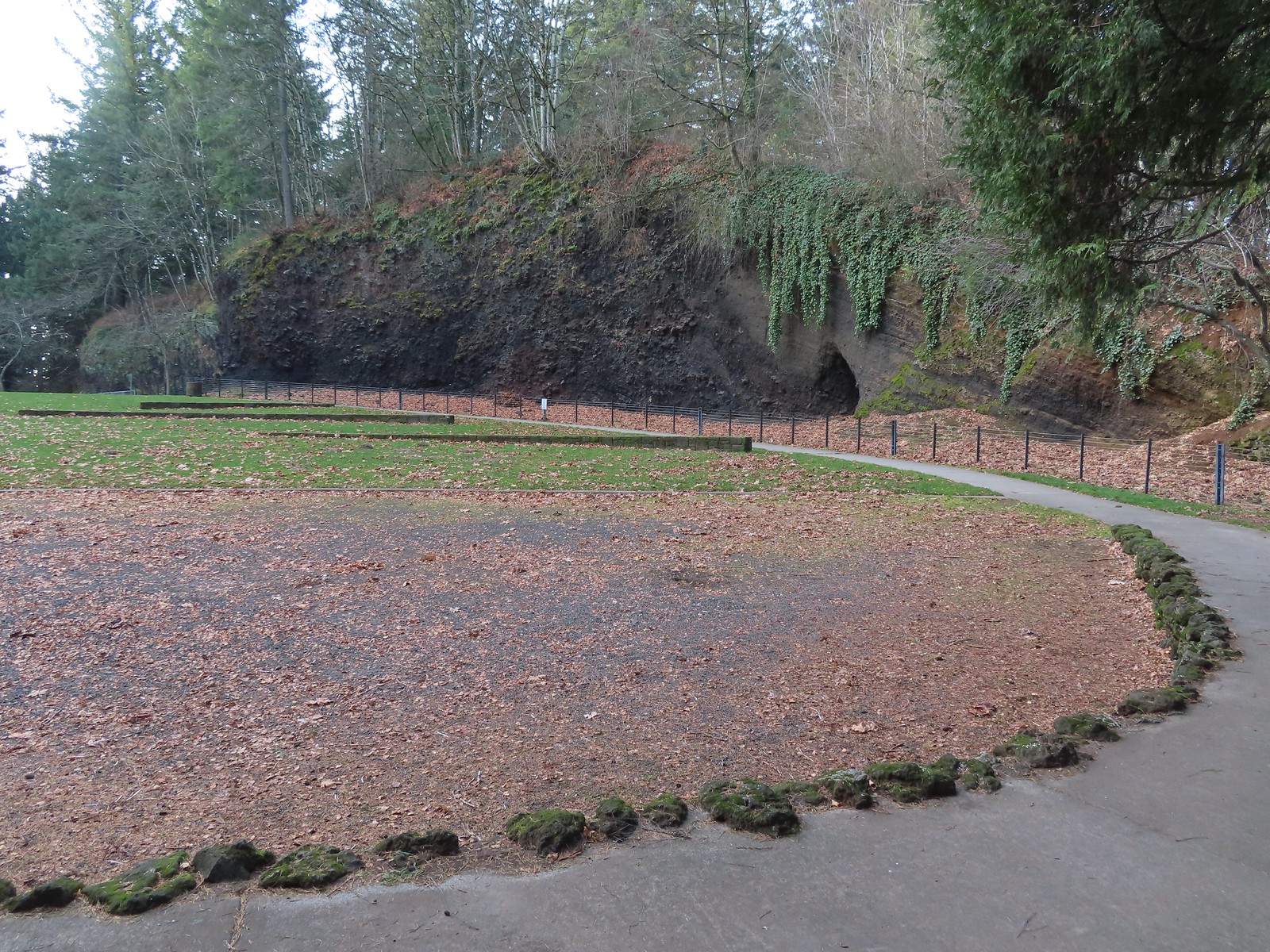 Coming around The Crater near the Visitors Center.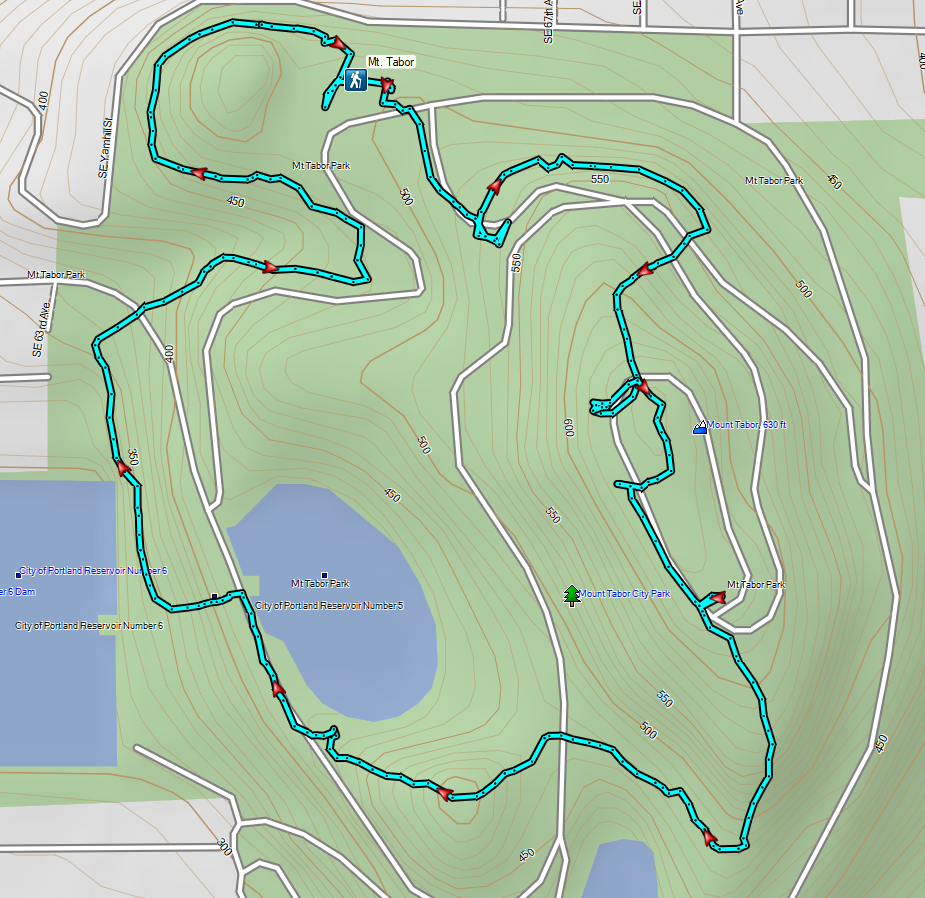

 Mount Talbert from the path.
 Mount Scott Creek
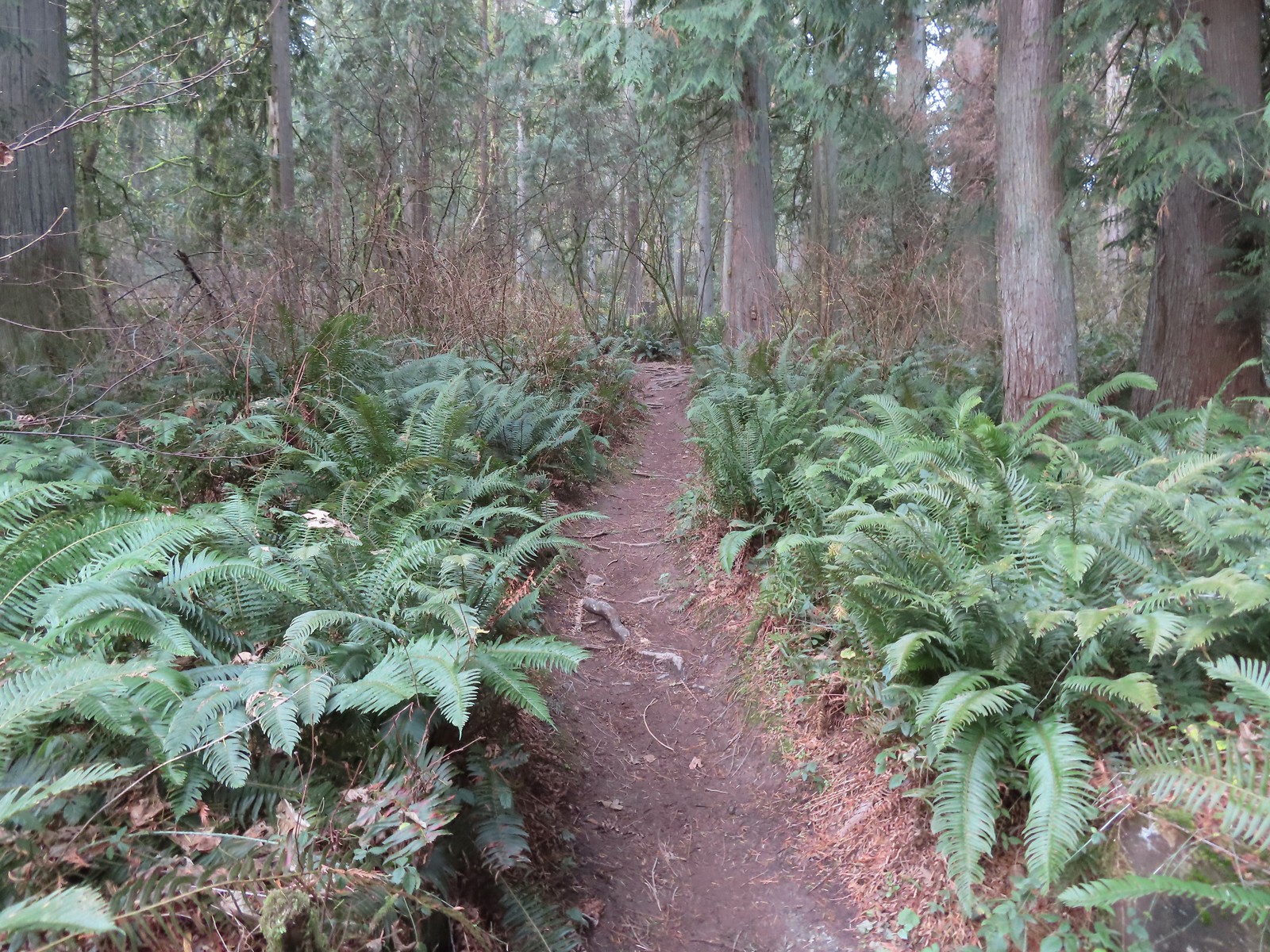
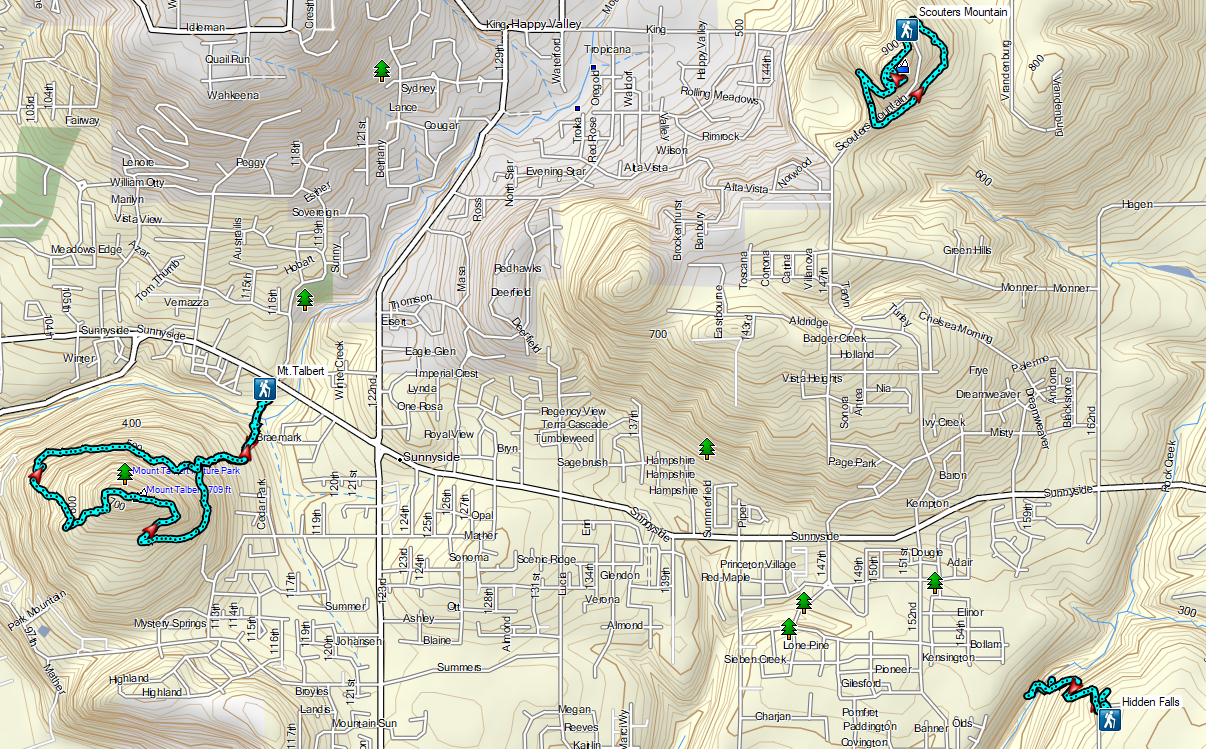
 The Park Loop Trail junction just uphill.
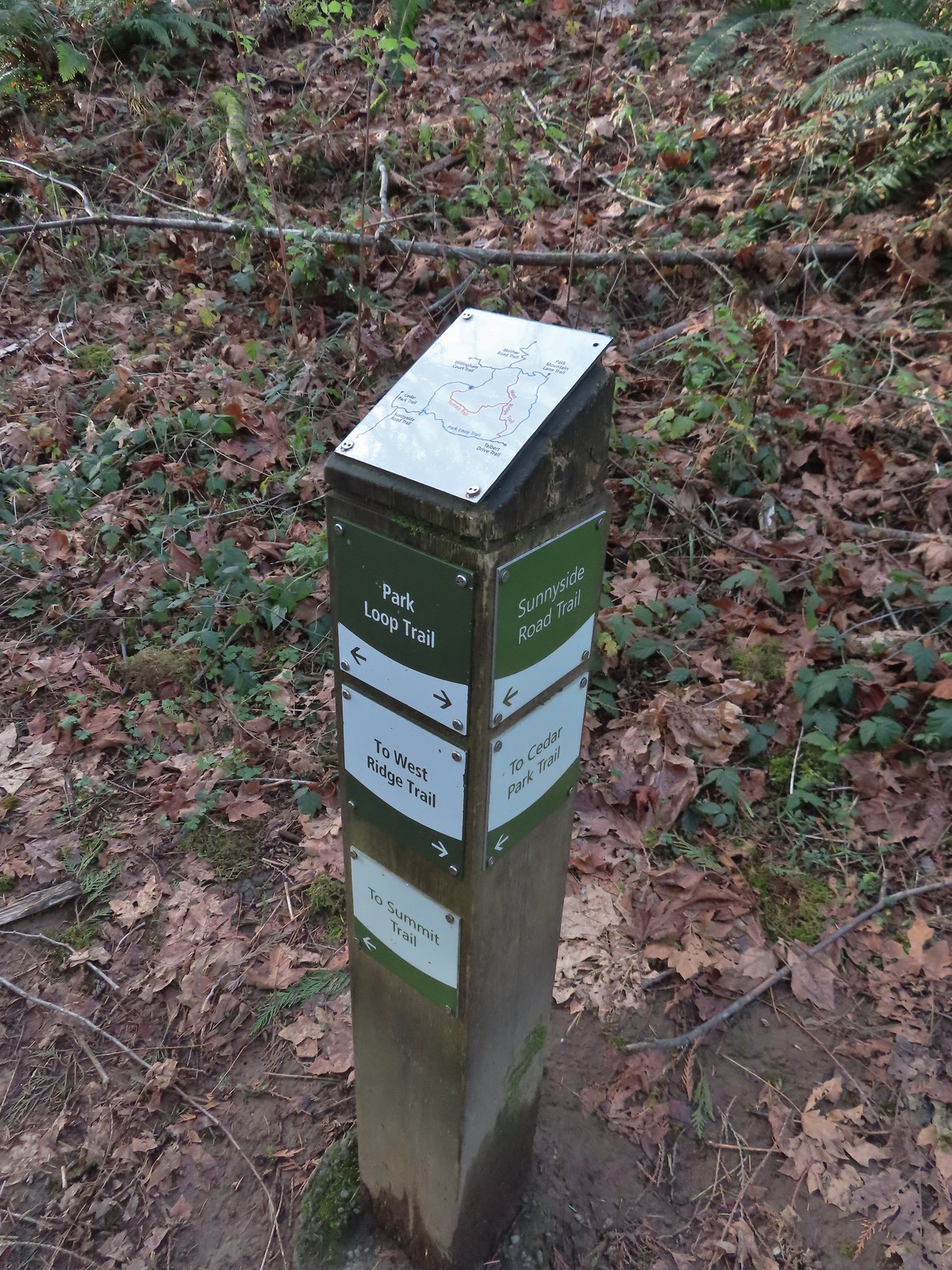 Note that the map at the Park Loop/Sunnyside Road Trail junction mis-identifies the location with the “You Are Here” star located at the Park Loop/Summit Ridge junction.
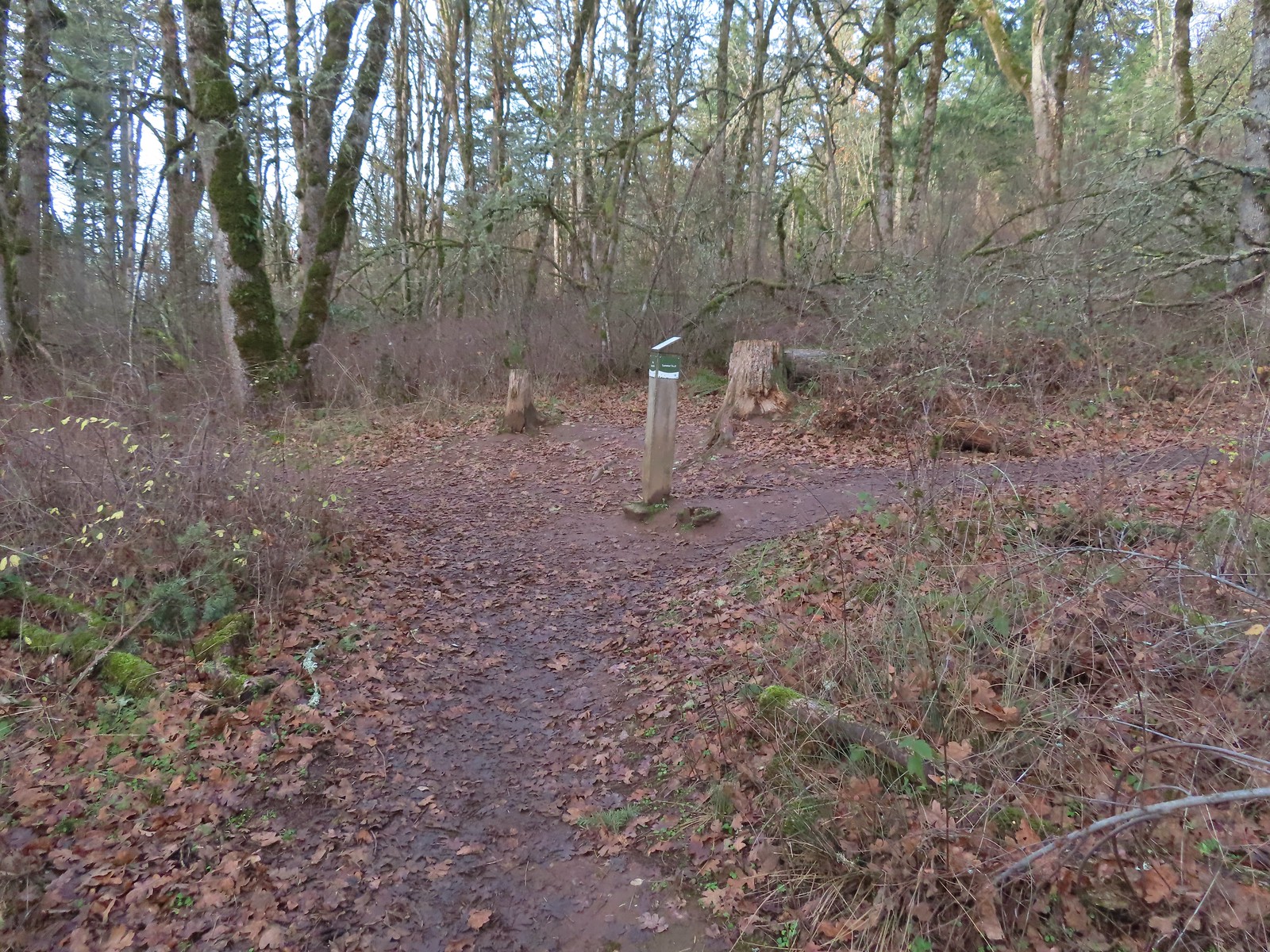
 Arriving at the West Ridge Trail junction.
 Rejoining the Park Loop Trail.
 Mt. Adams was visible through the web of small branches.
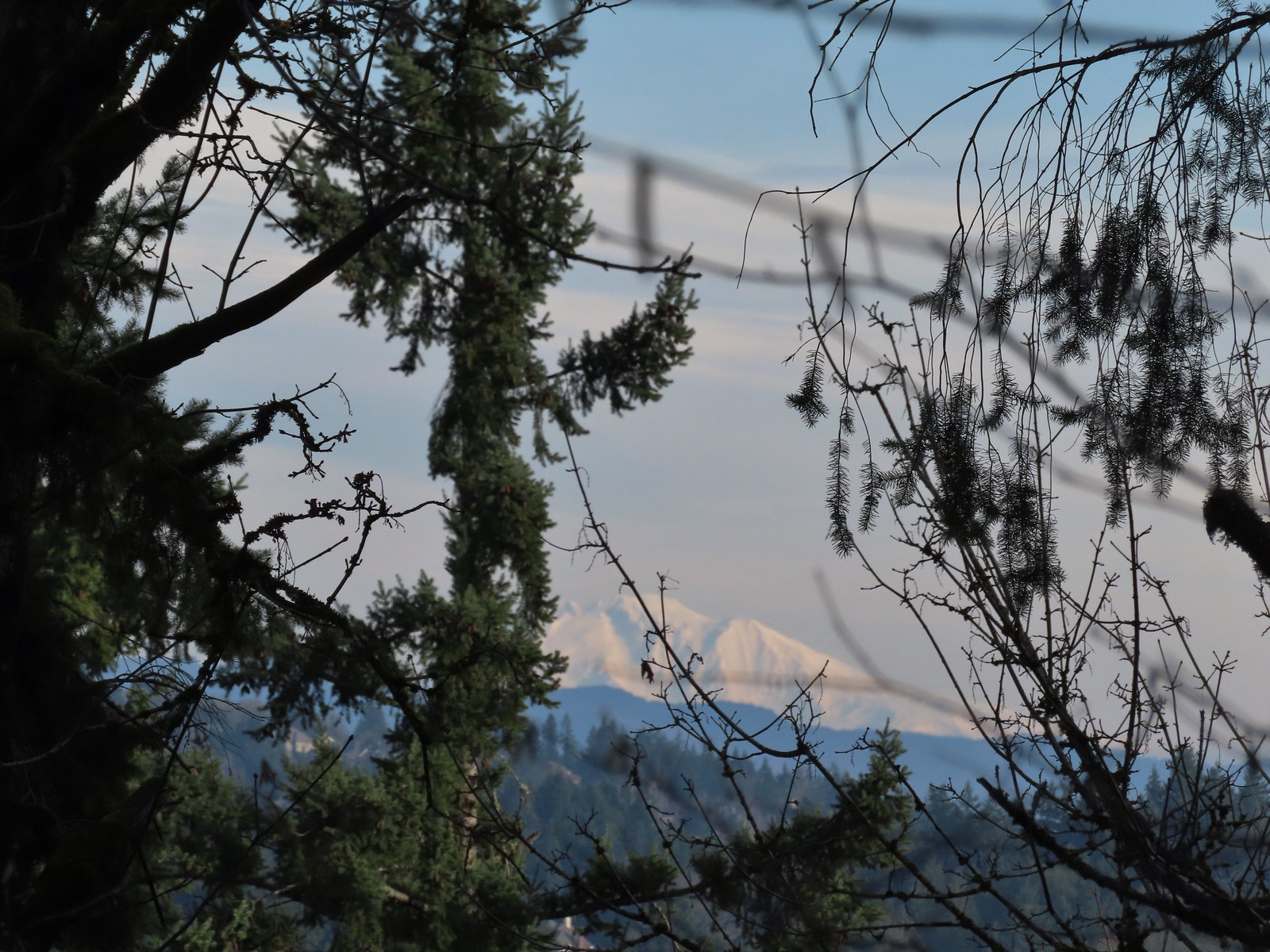 A snowy Mt. Adams.
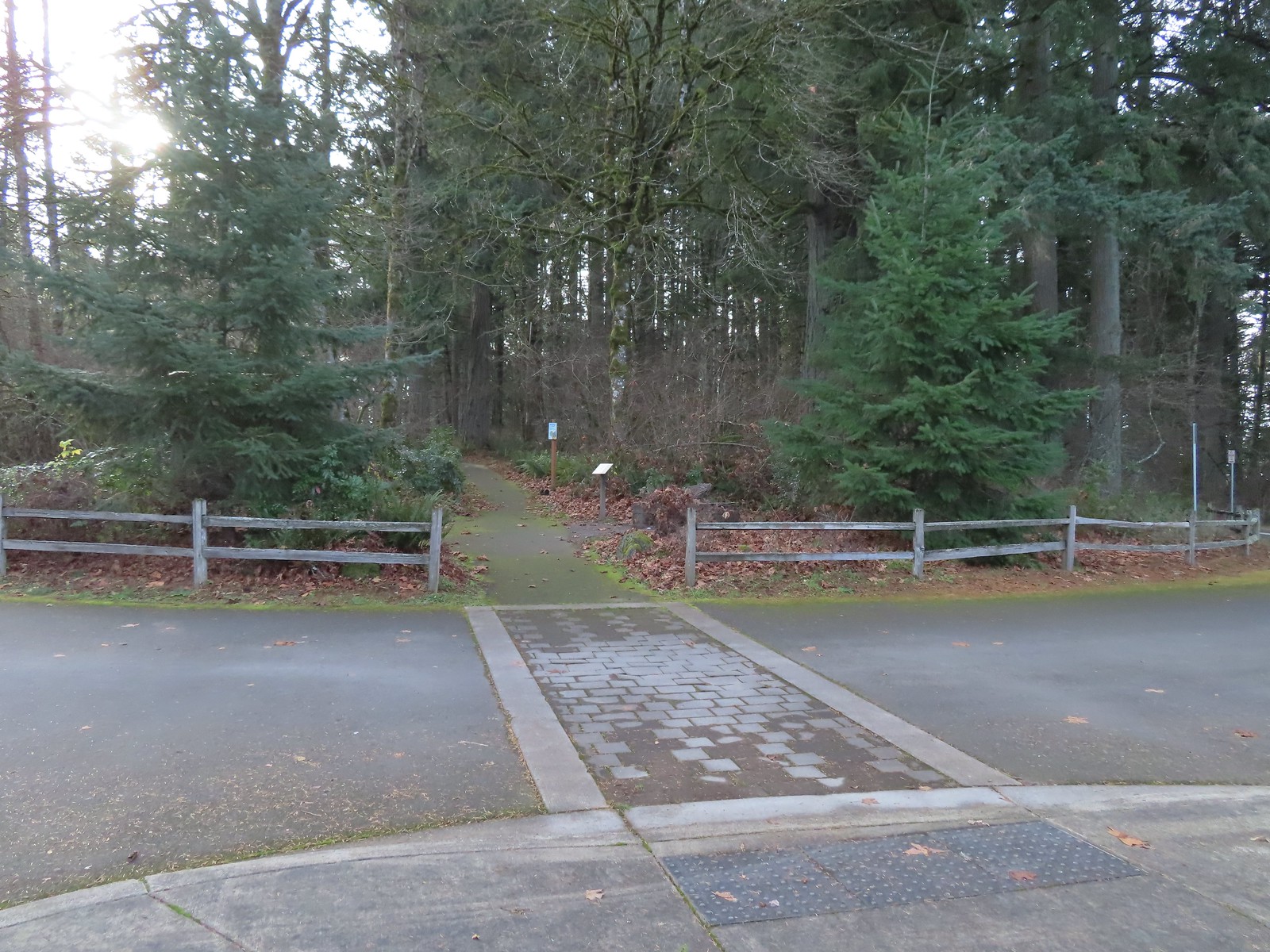
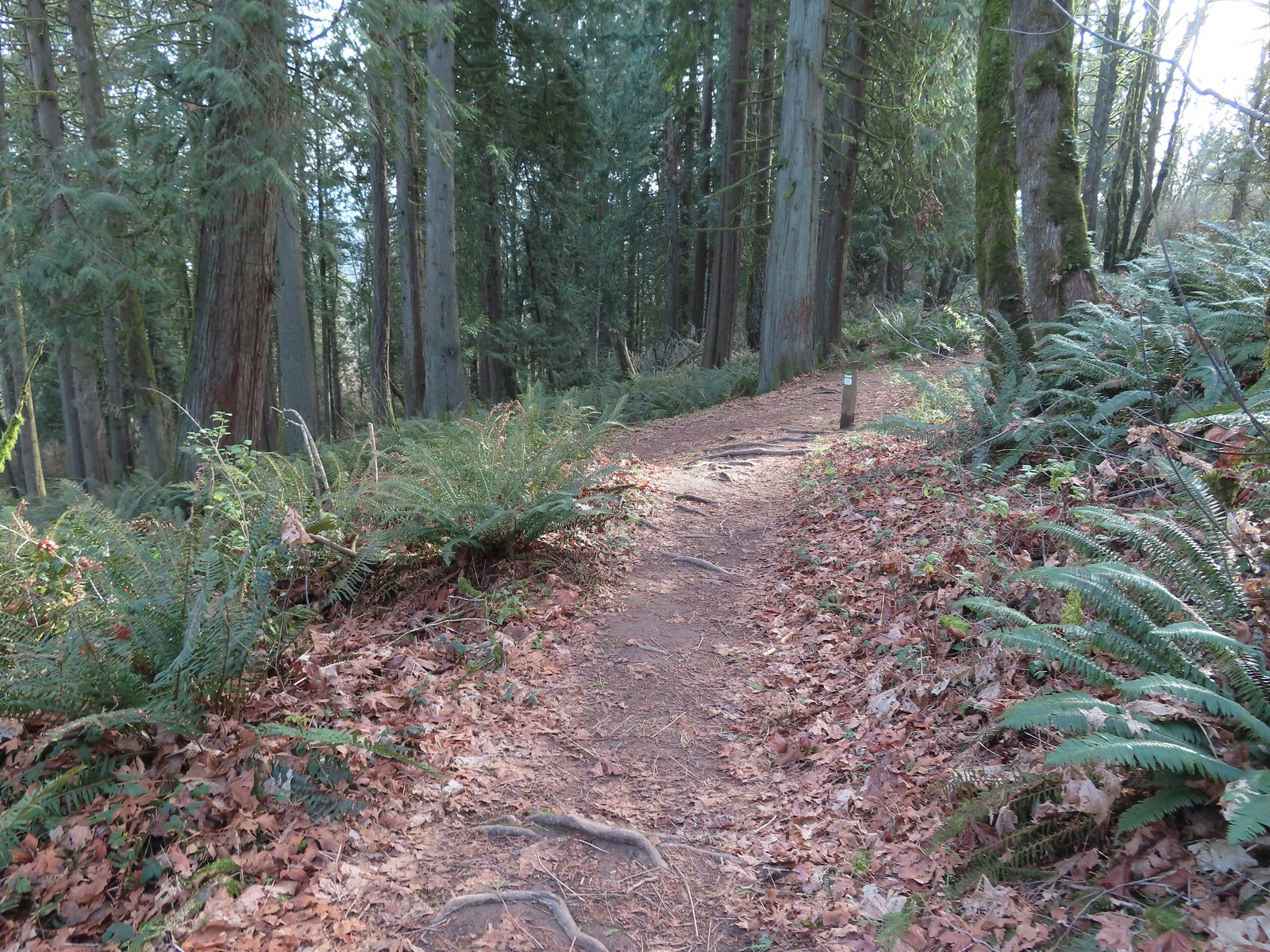 Back at the Sunnyside Road Trail.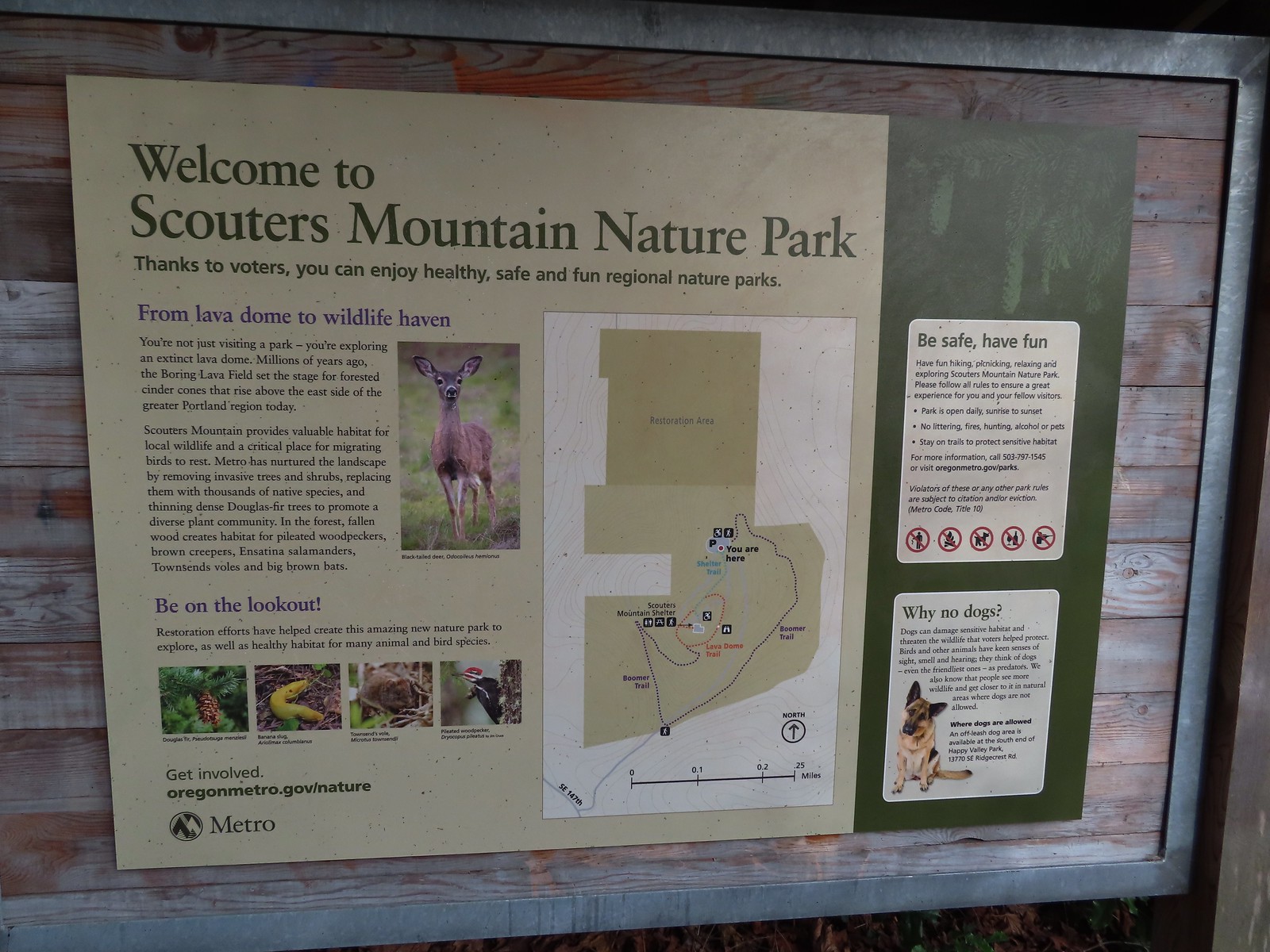
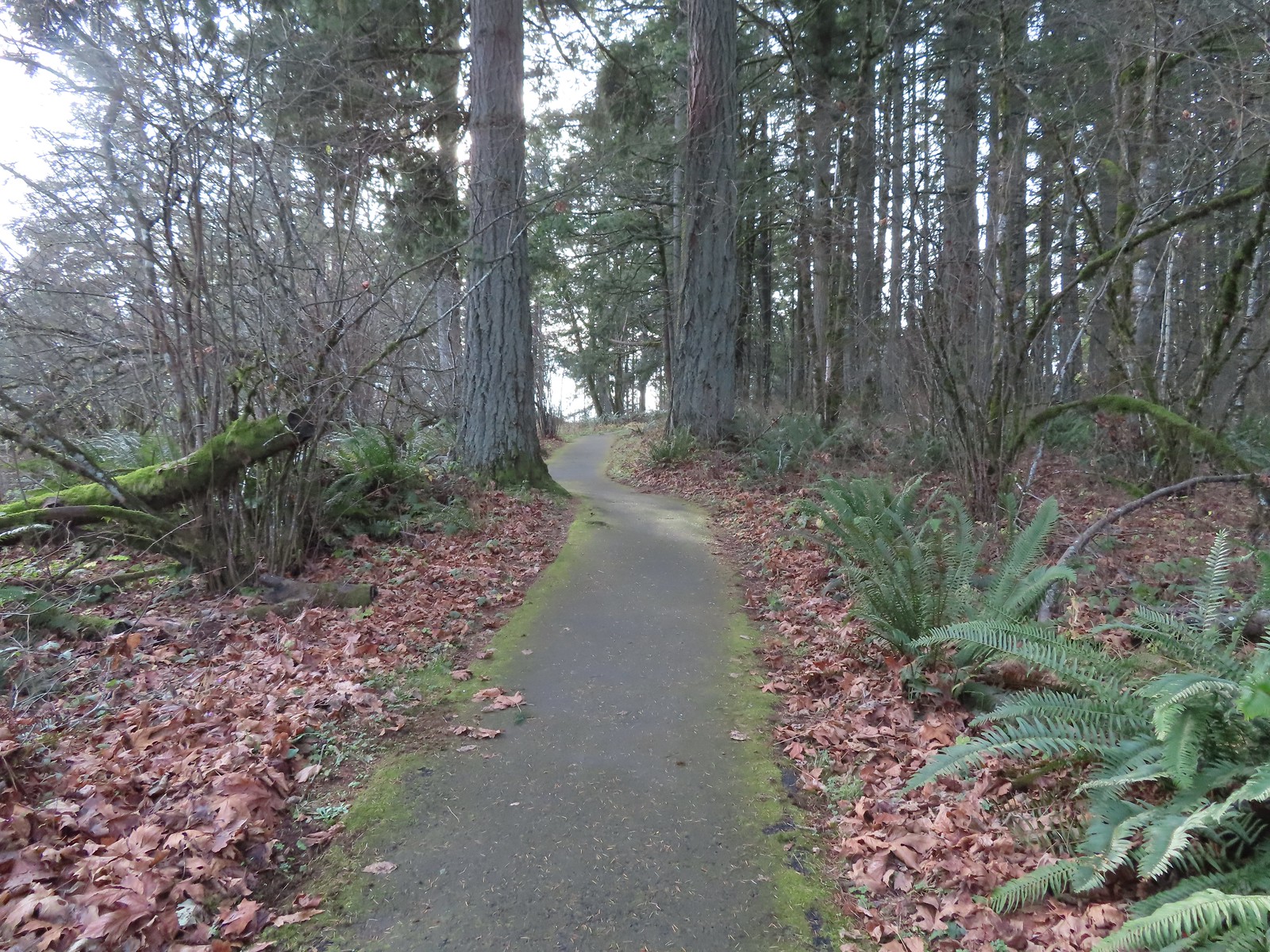
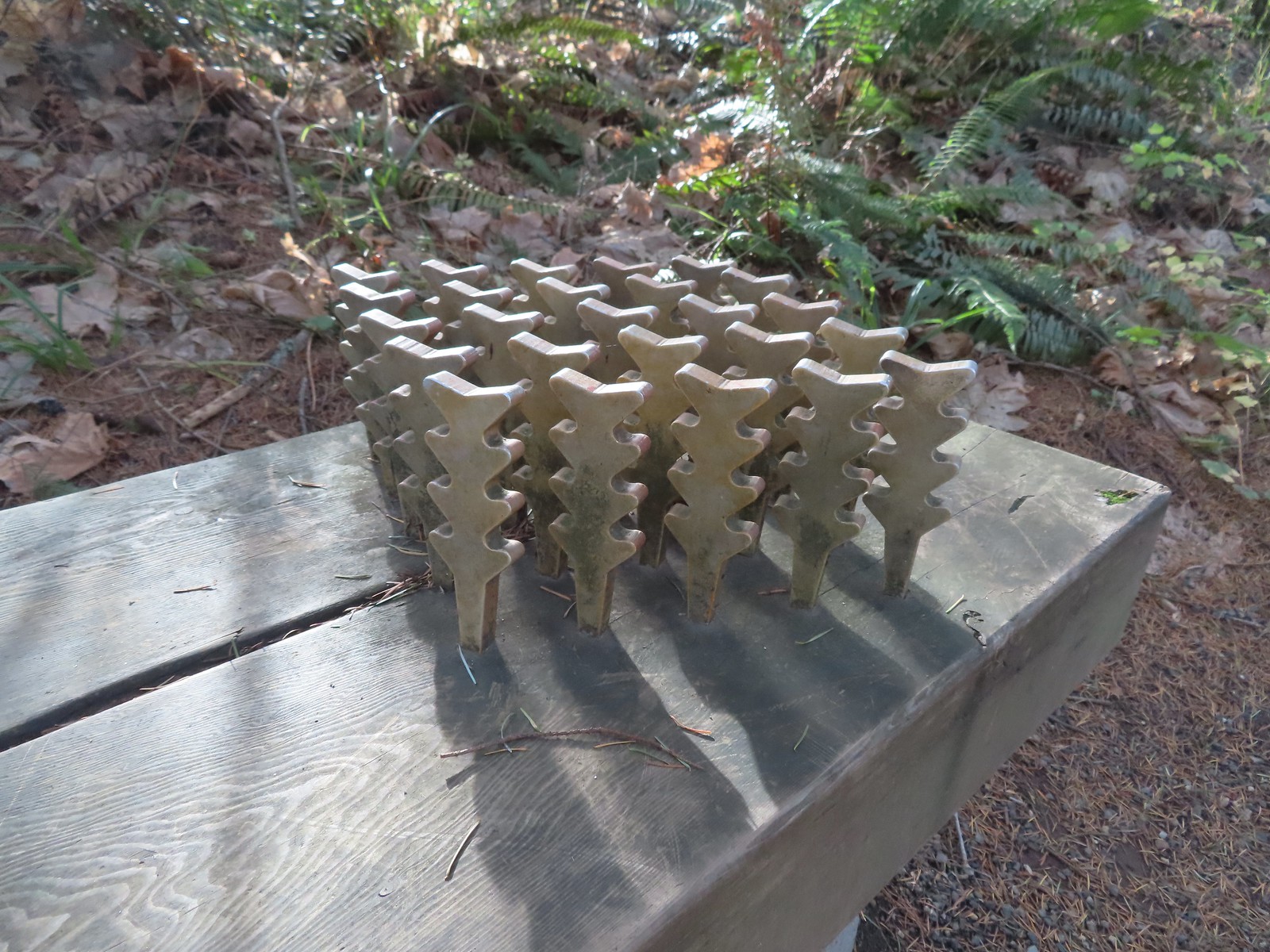 The benches throughout the park contained various nature sculptures, this one is “Moss Group”.
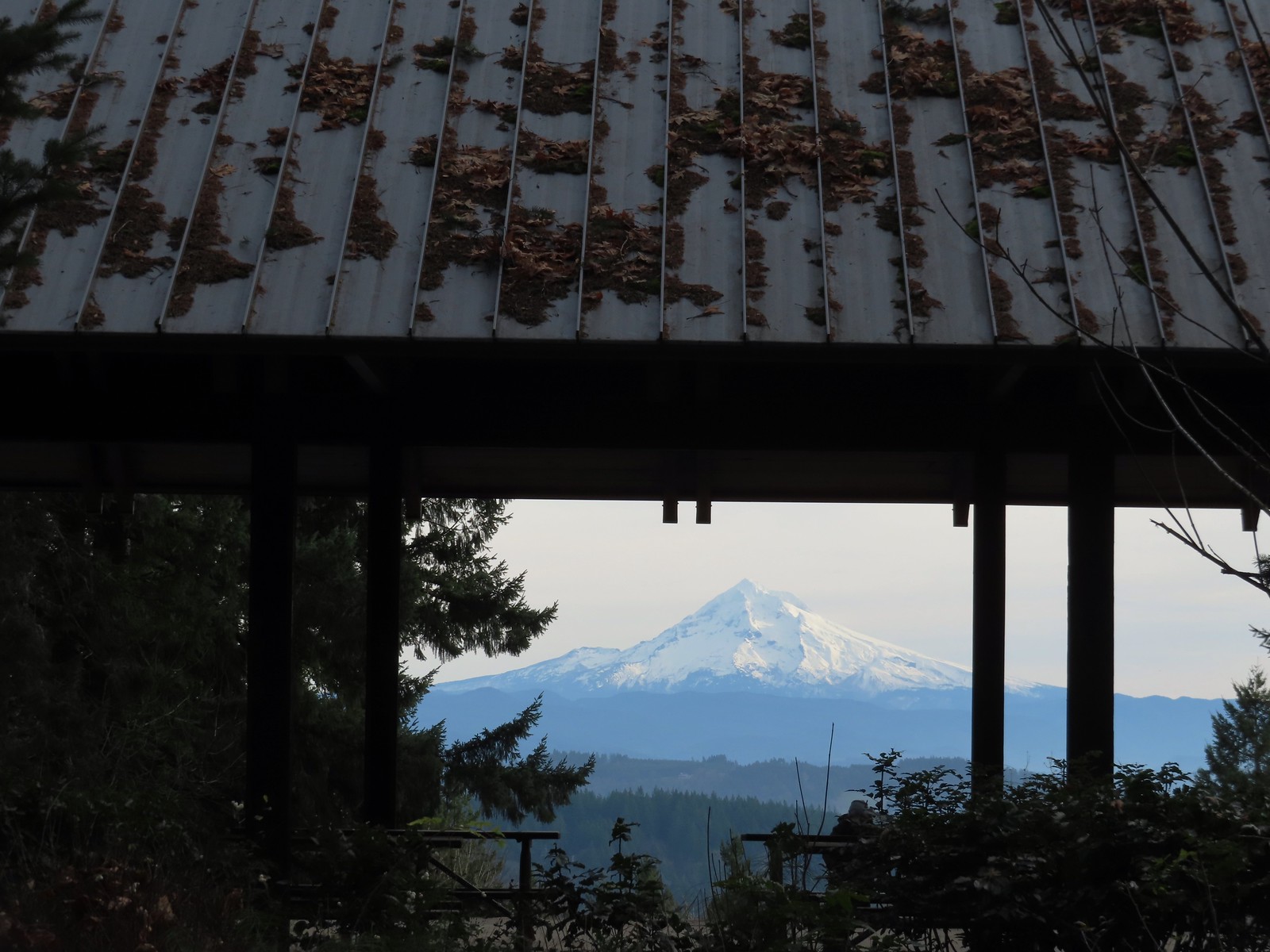
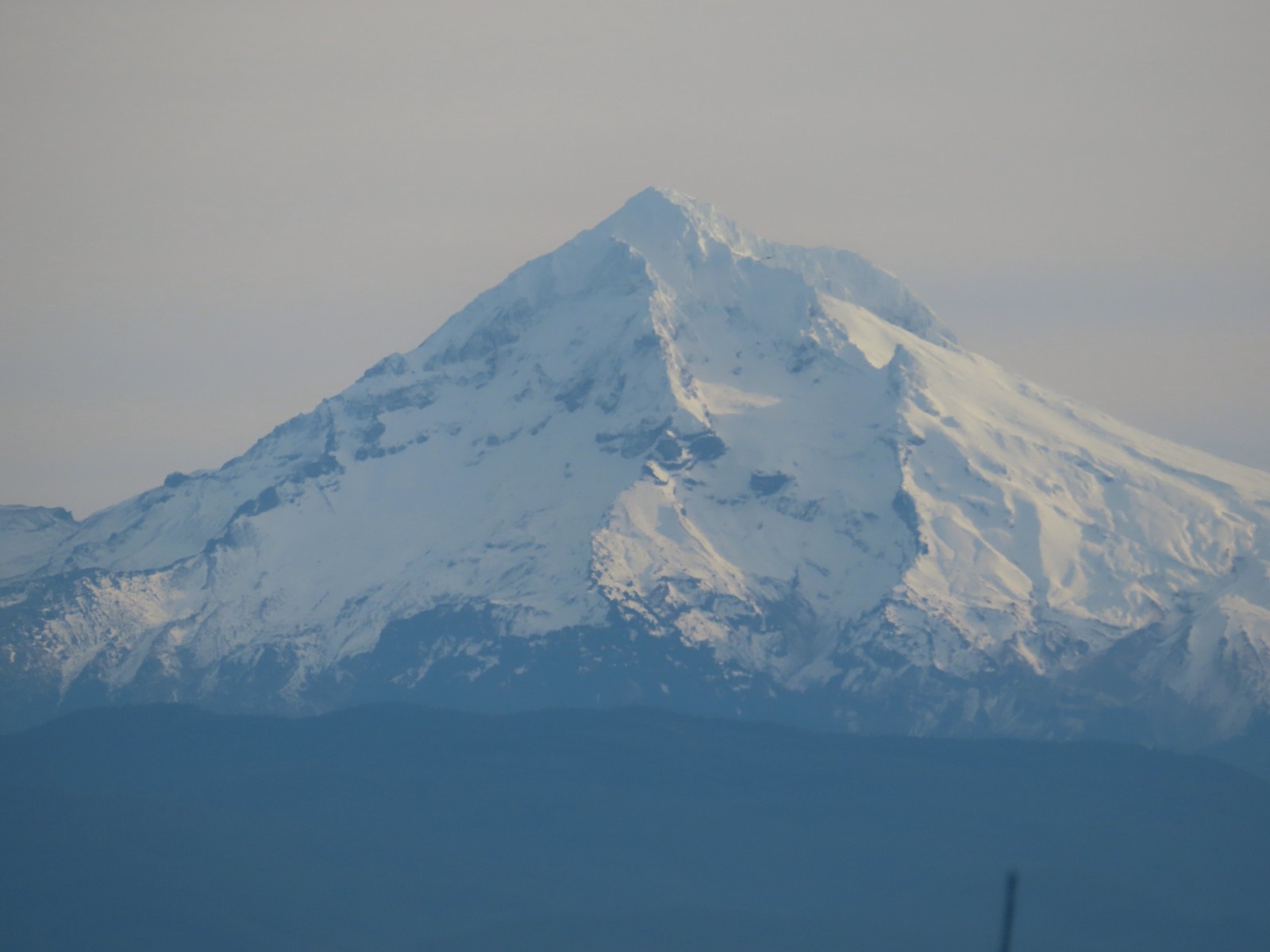
 On the Boomer Trail.
 The Boomer Trail turned left at the bottom of these stone steps.
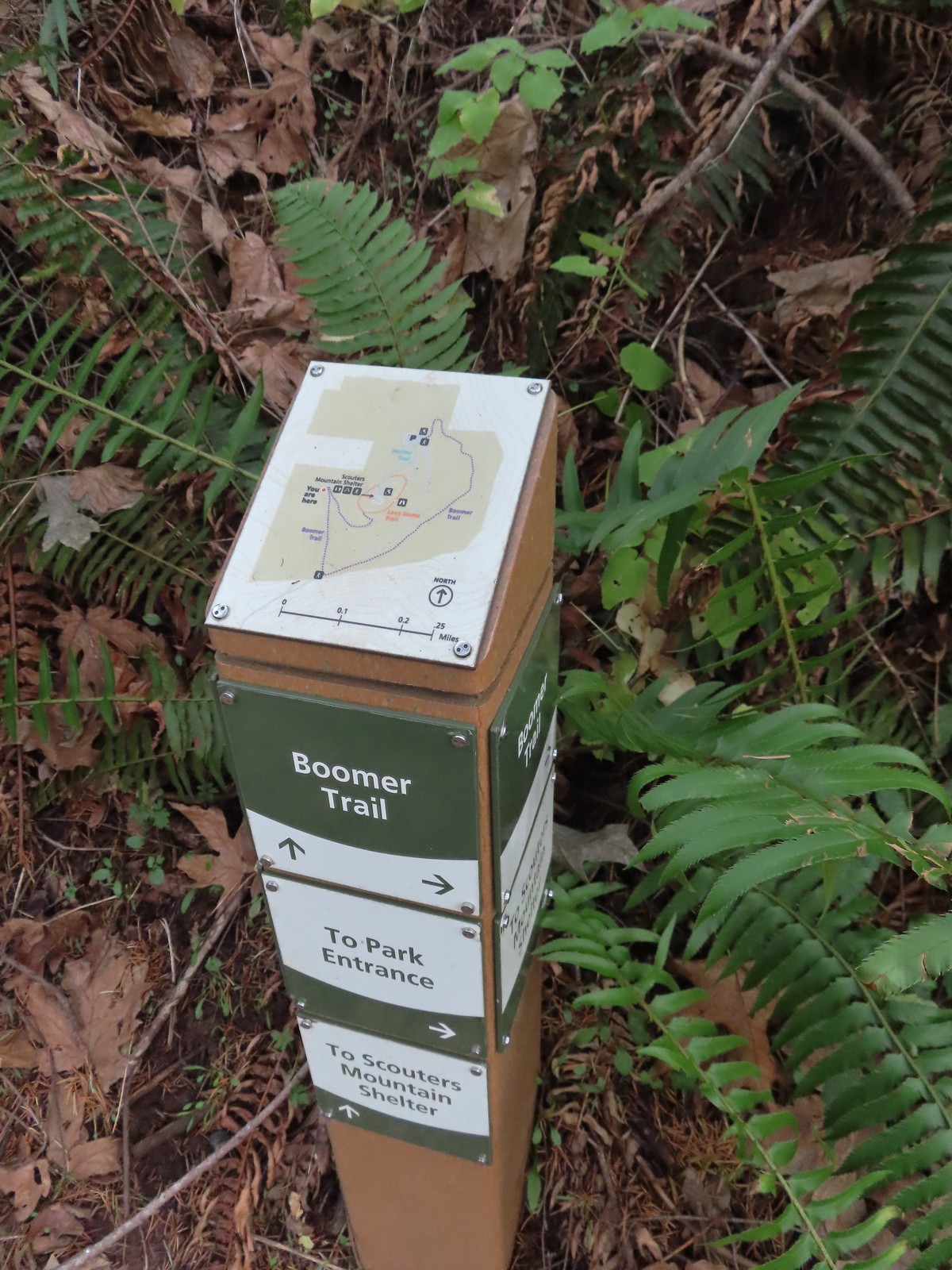 Another Metro trail map and pointers.
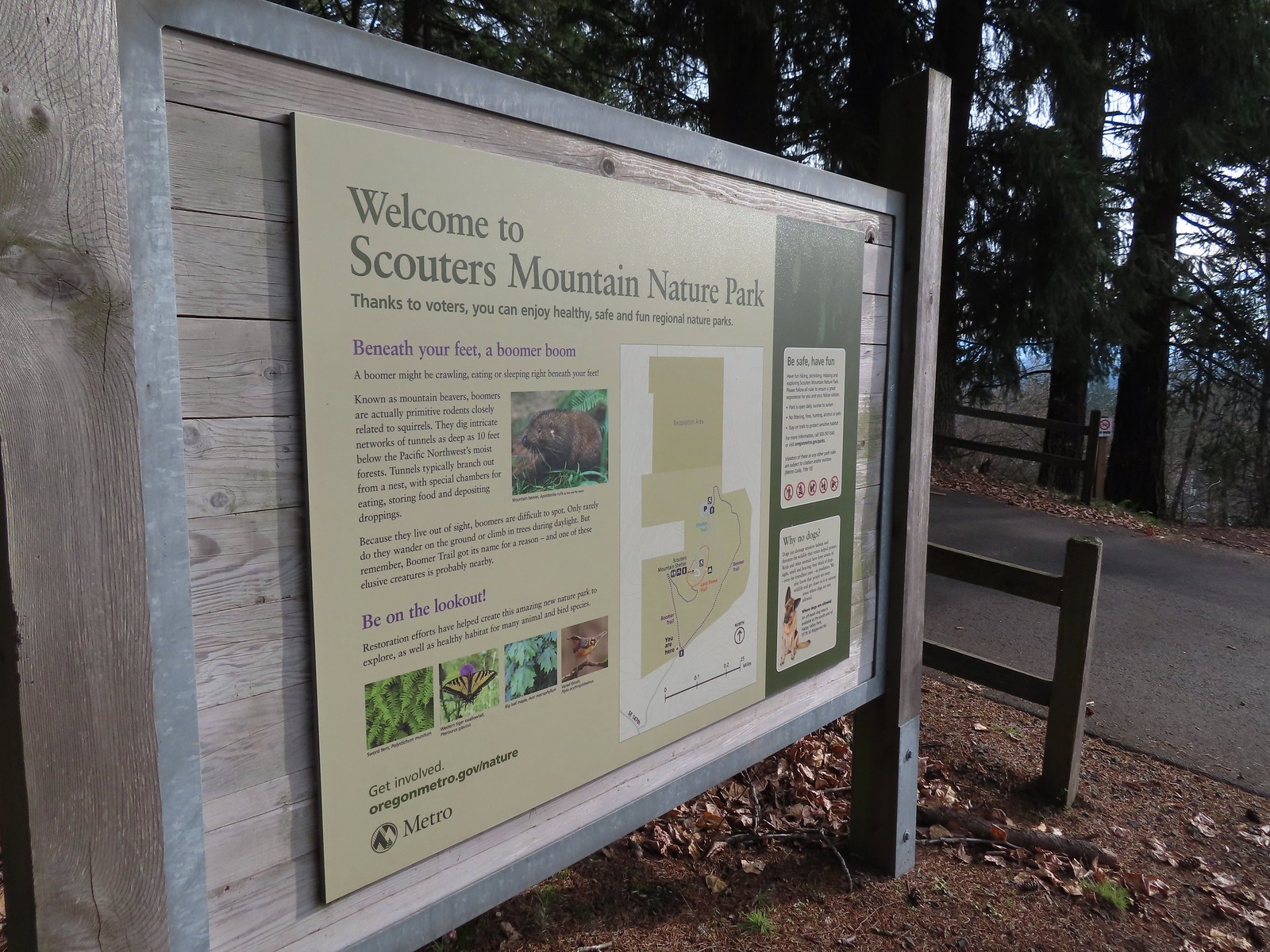 The Boomer Trail, named for Mountain Beavers which are sometimes called boomers, crossed the entrance road before climbing back up to the parking area.
 This was an impressive root system.
 A less obstructed view of Mt. Adams. (Mt. St. Helens was also briefly visible from this section of trail.)
 Slightly clearer shot of Mt. Adams.
 Back at the trailhead.
 Mt. St. Helens from the service road. Mt. Hood was also visible to the right through some fences around the ball fields.


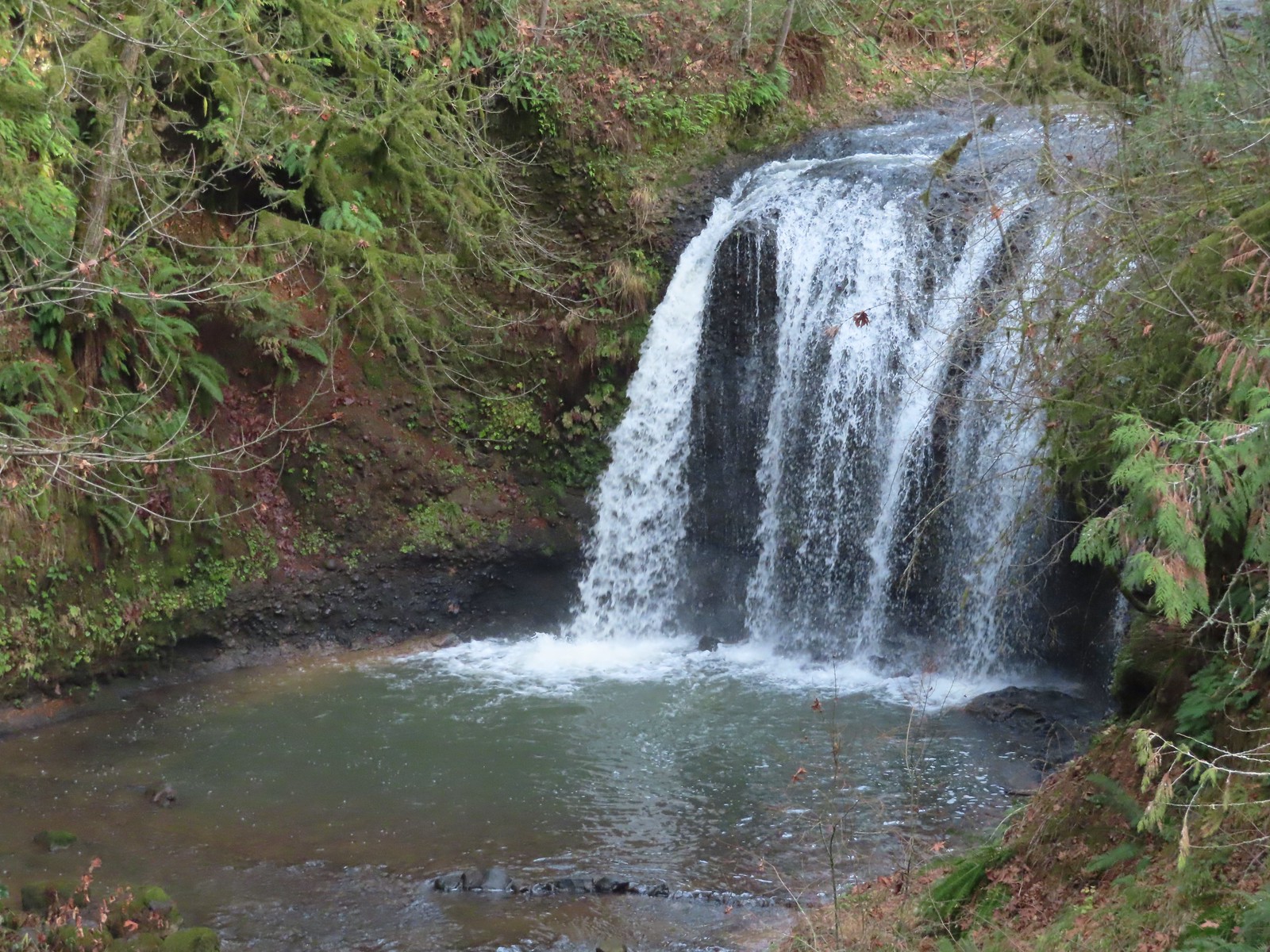
 The large area to the right didn’t offer much of a view of the falls, but the view from the bridge was great.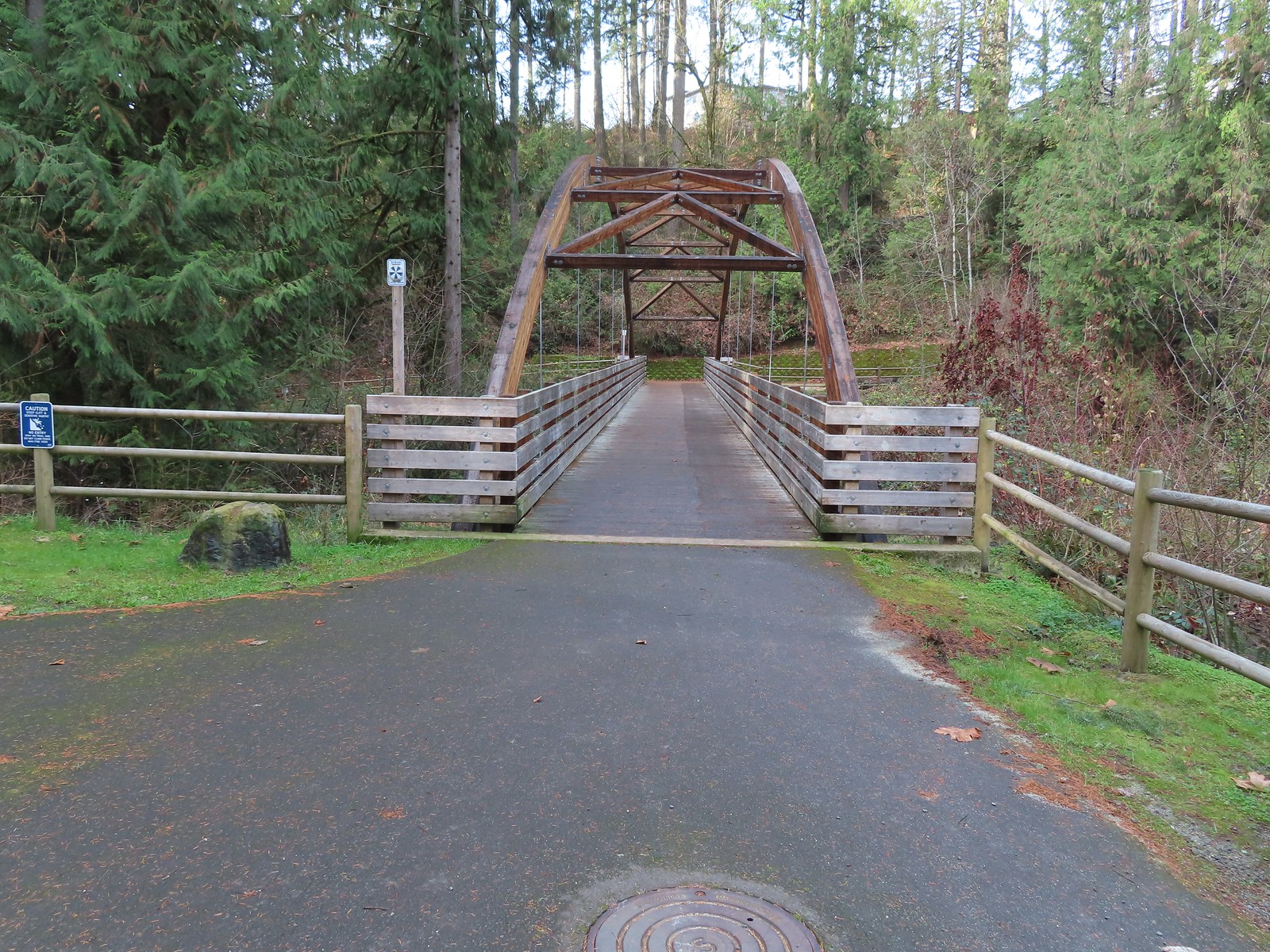

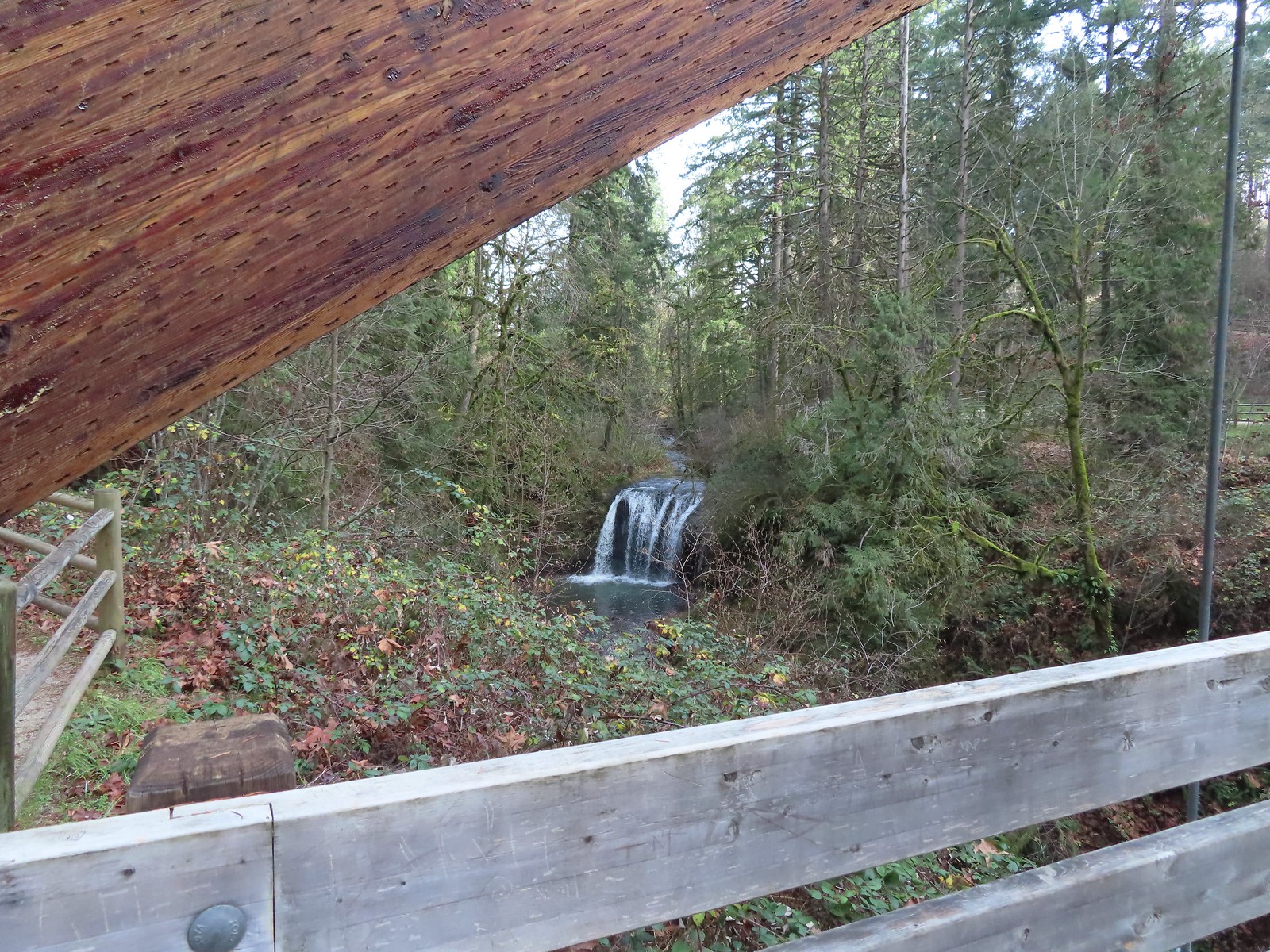
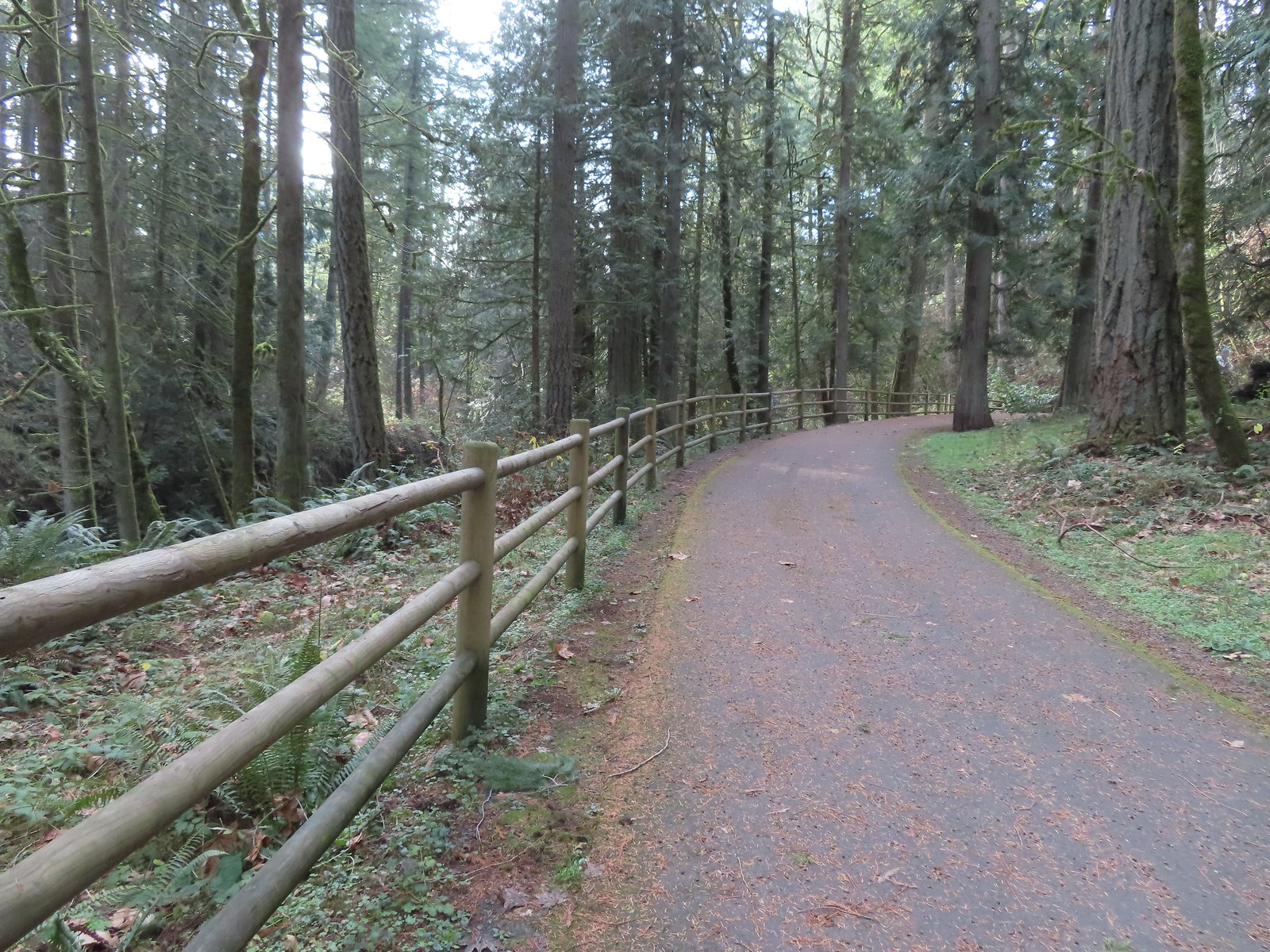


 The highway from the parking lot.
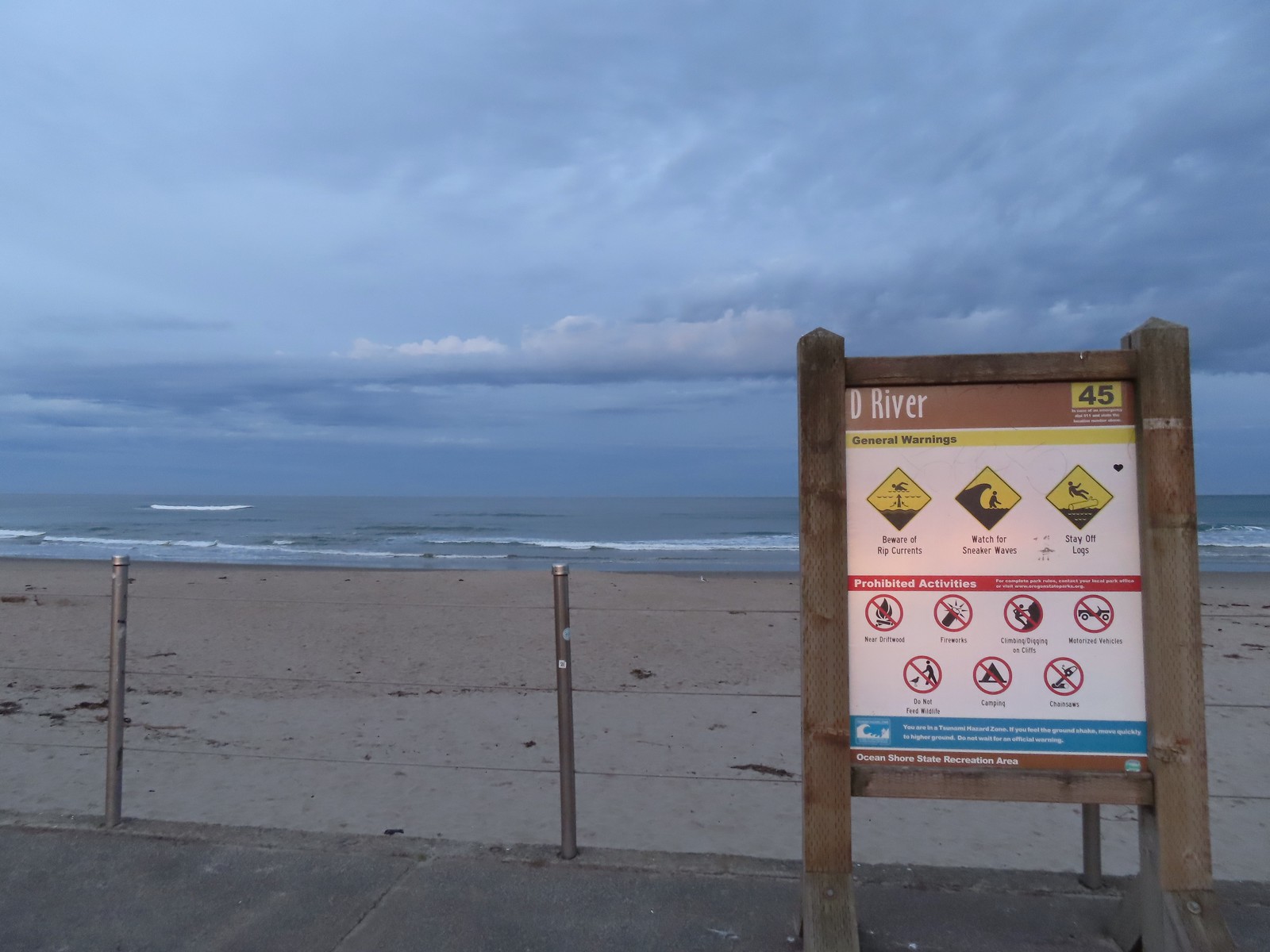
 The D River from the highway bridge. The river flows between Devil’s Lake and the Pacific Ocean and at high tide has a length of approximately 40 yards.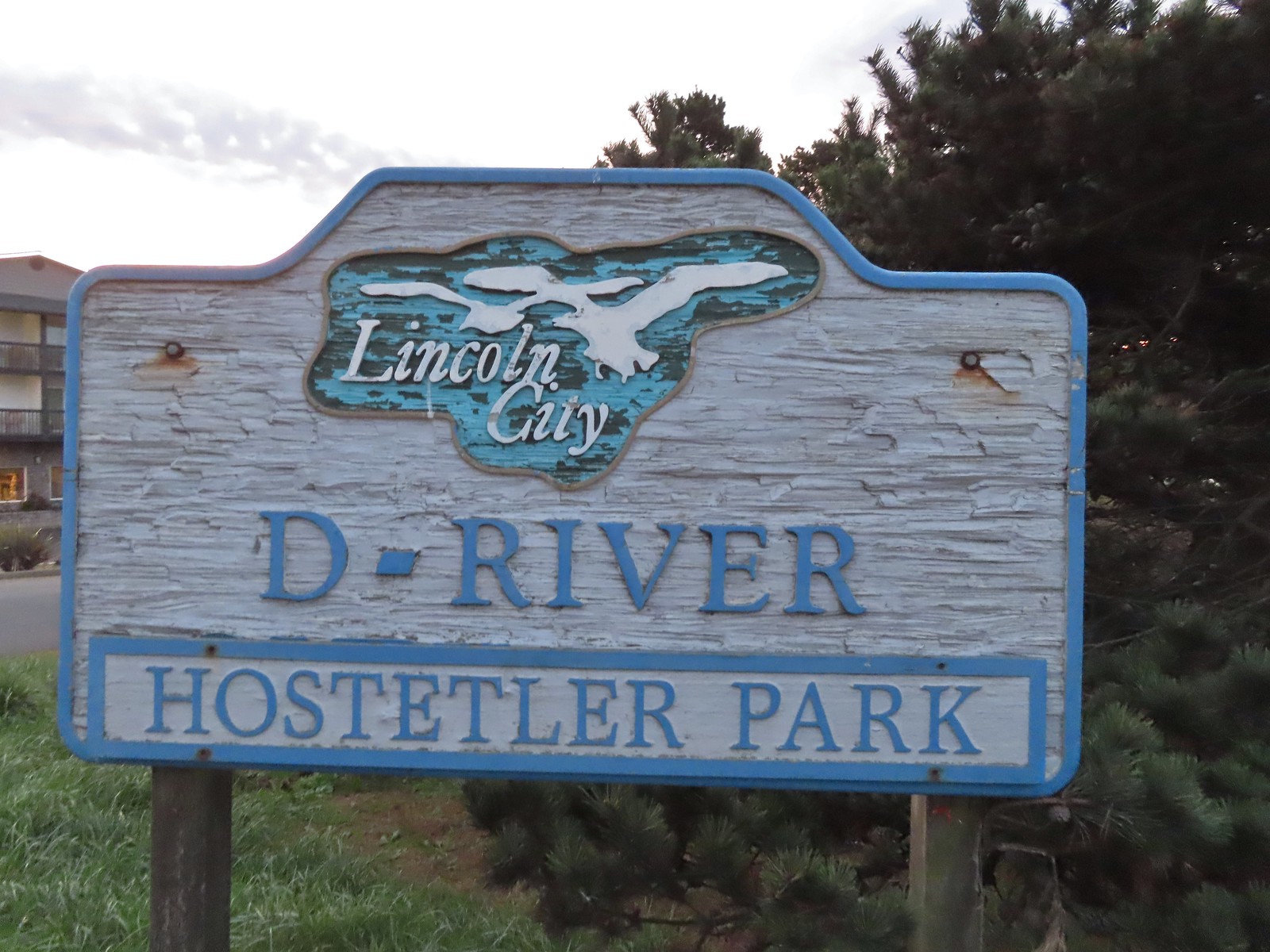
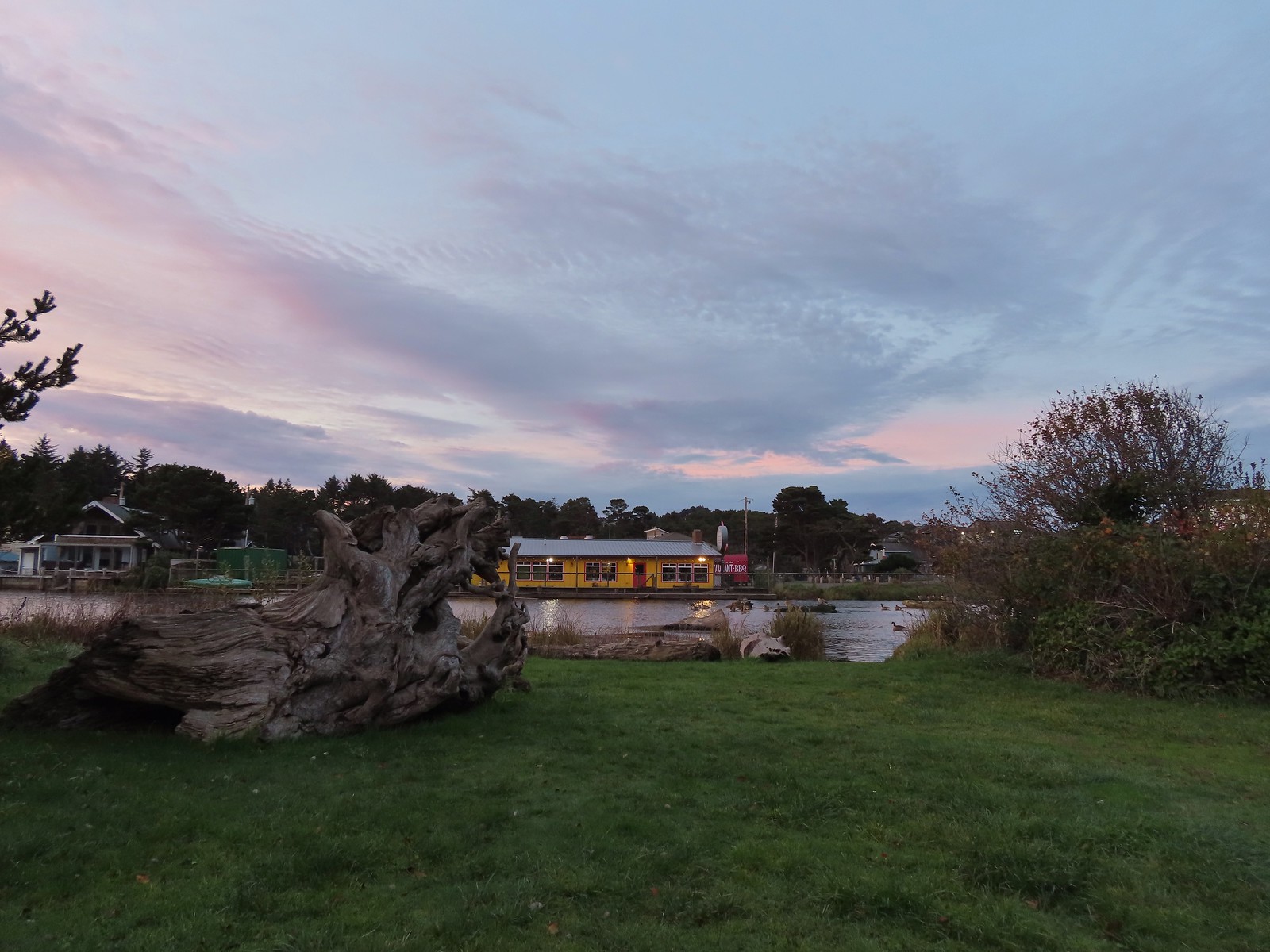 Hostetler Park.


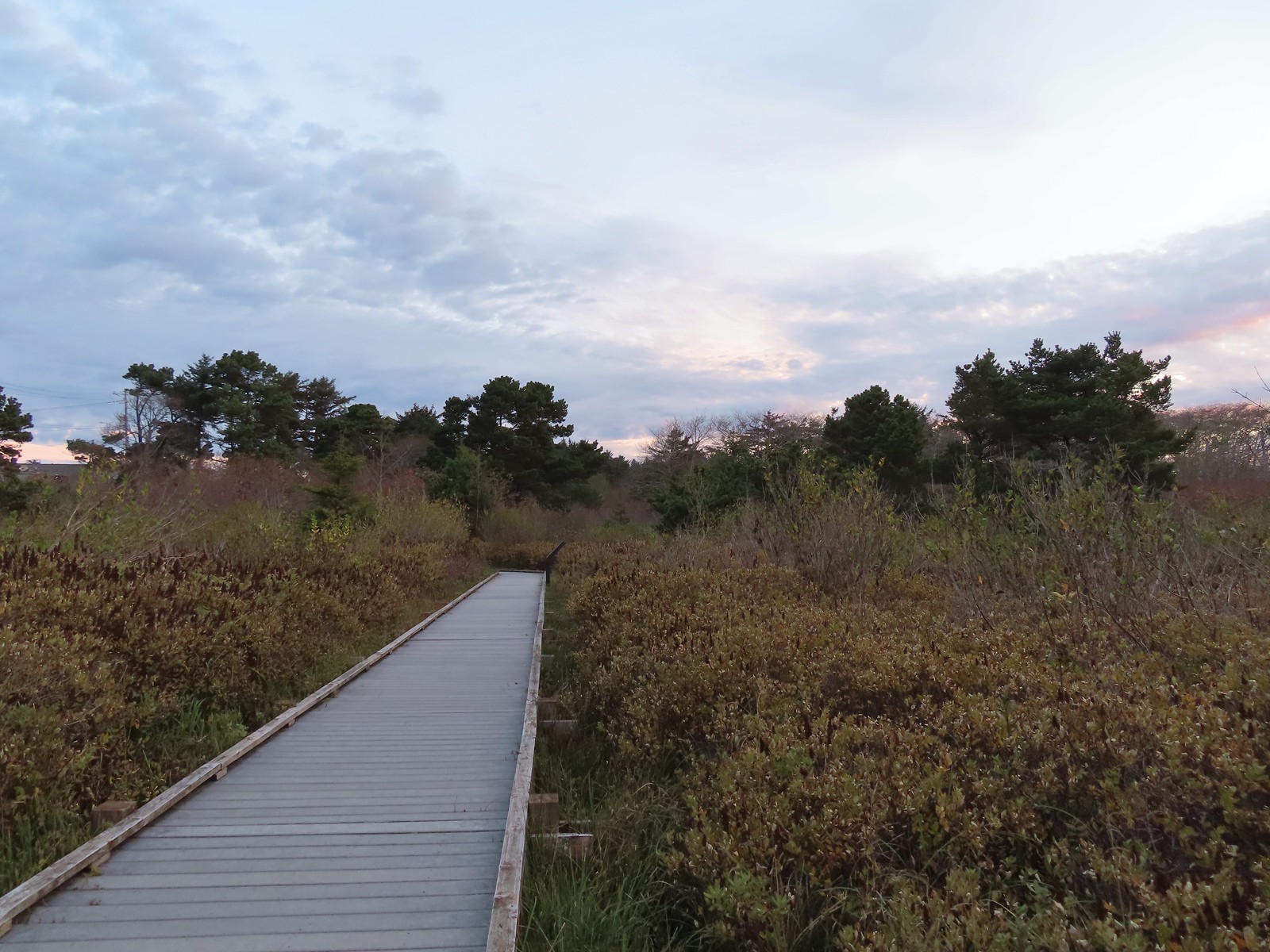 Several interpretive signs were located along the boardwalk.
 One of the interpretive signs.
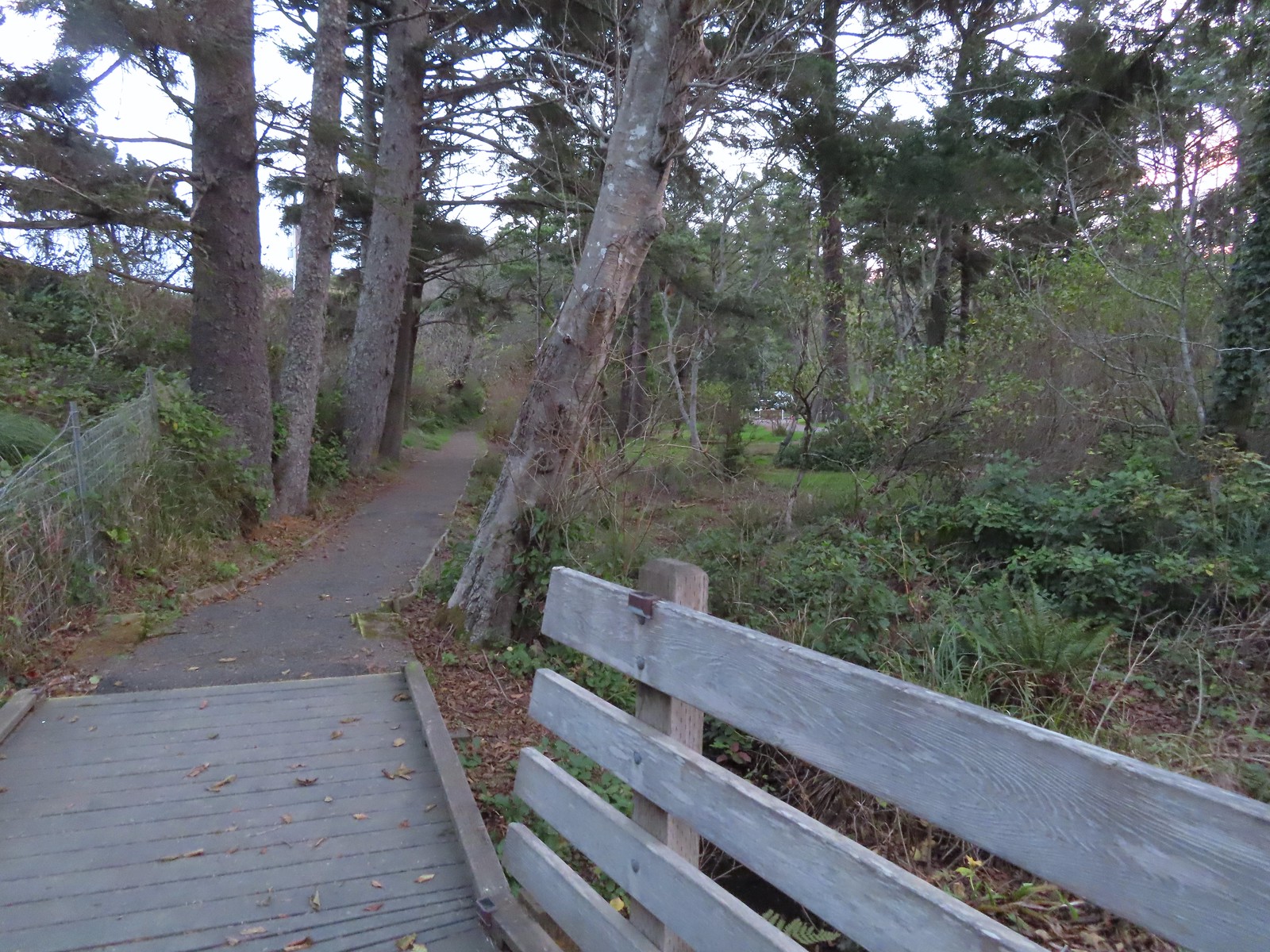 Nearing the campground.
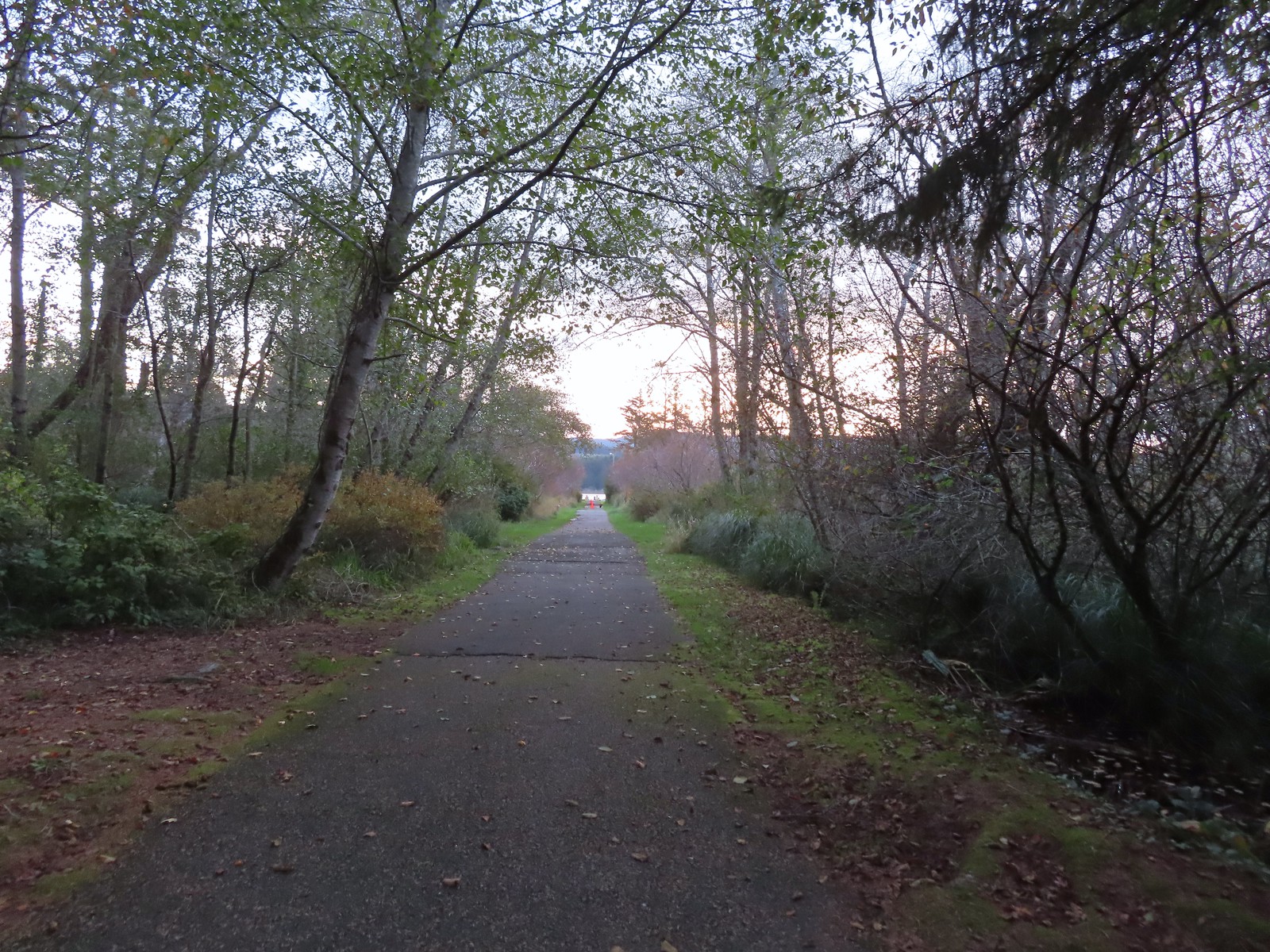 Orange cones, and a cat, at the far end of the path.
 Program area in the campground.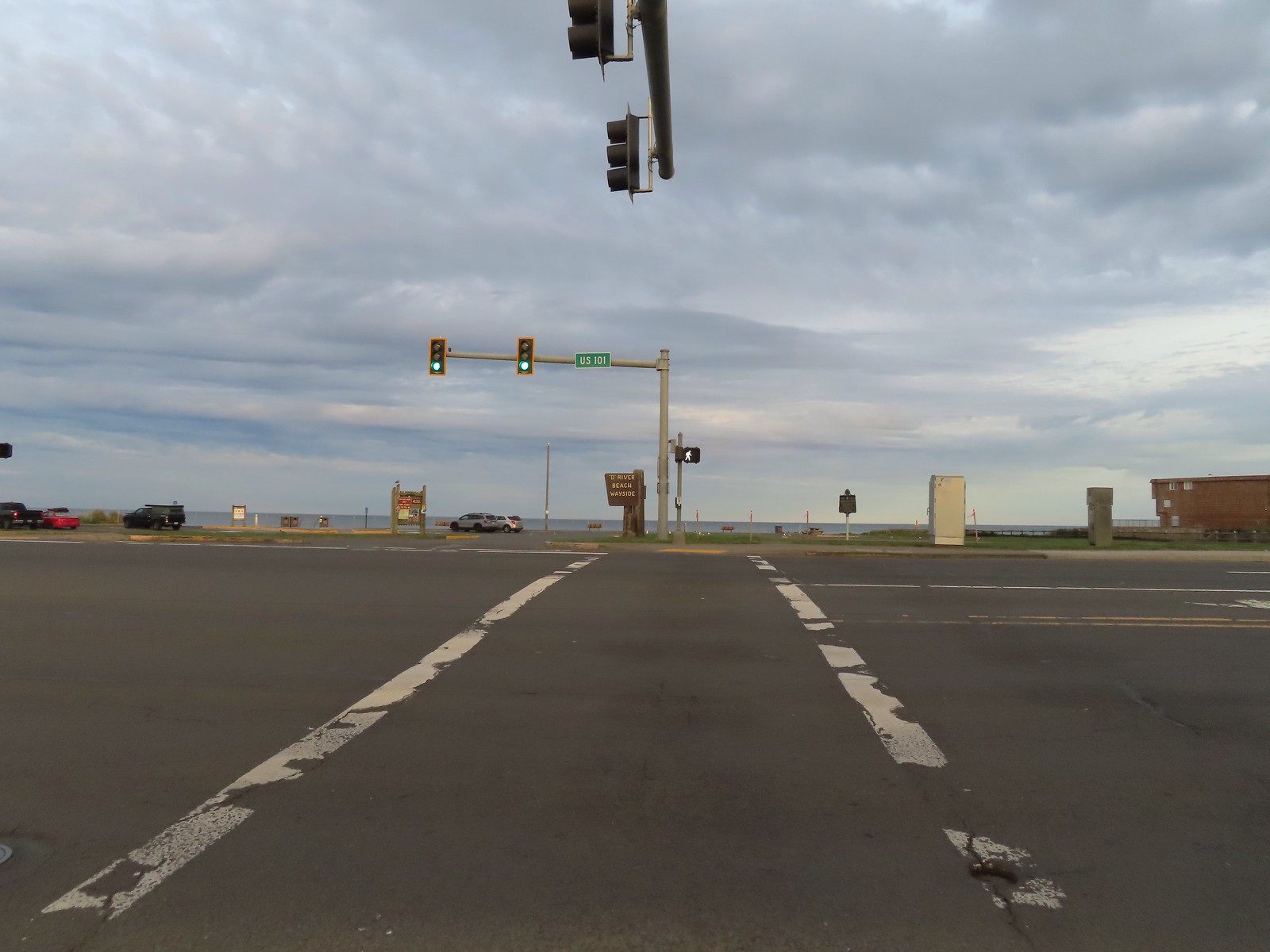
 View North from the beach.
 Cascade Head (
 Seagulls at the mouth of the D River.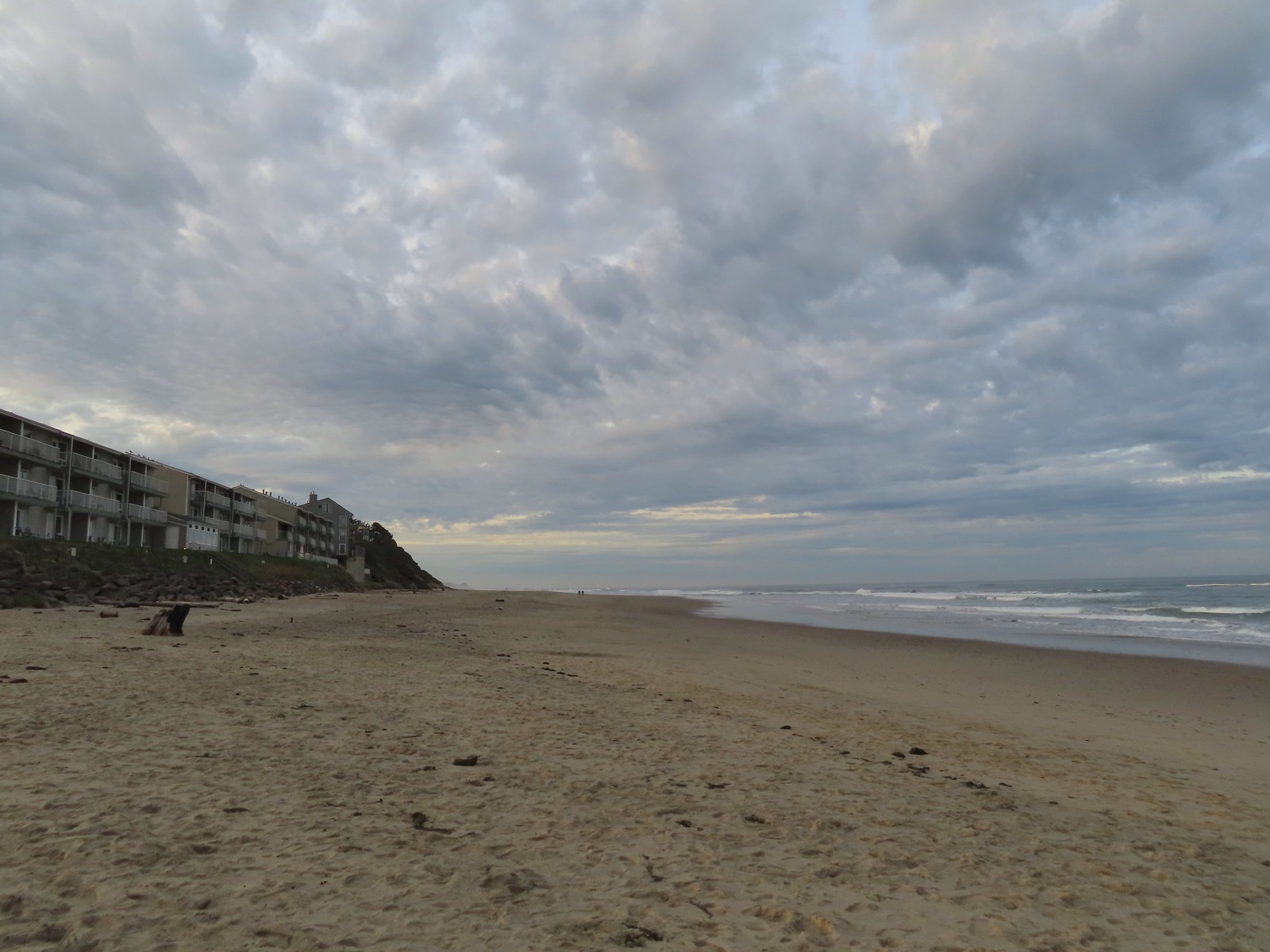
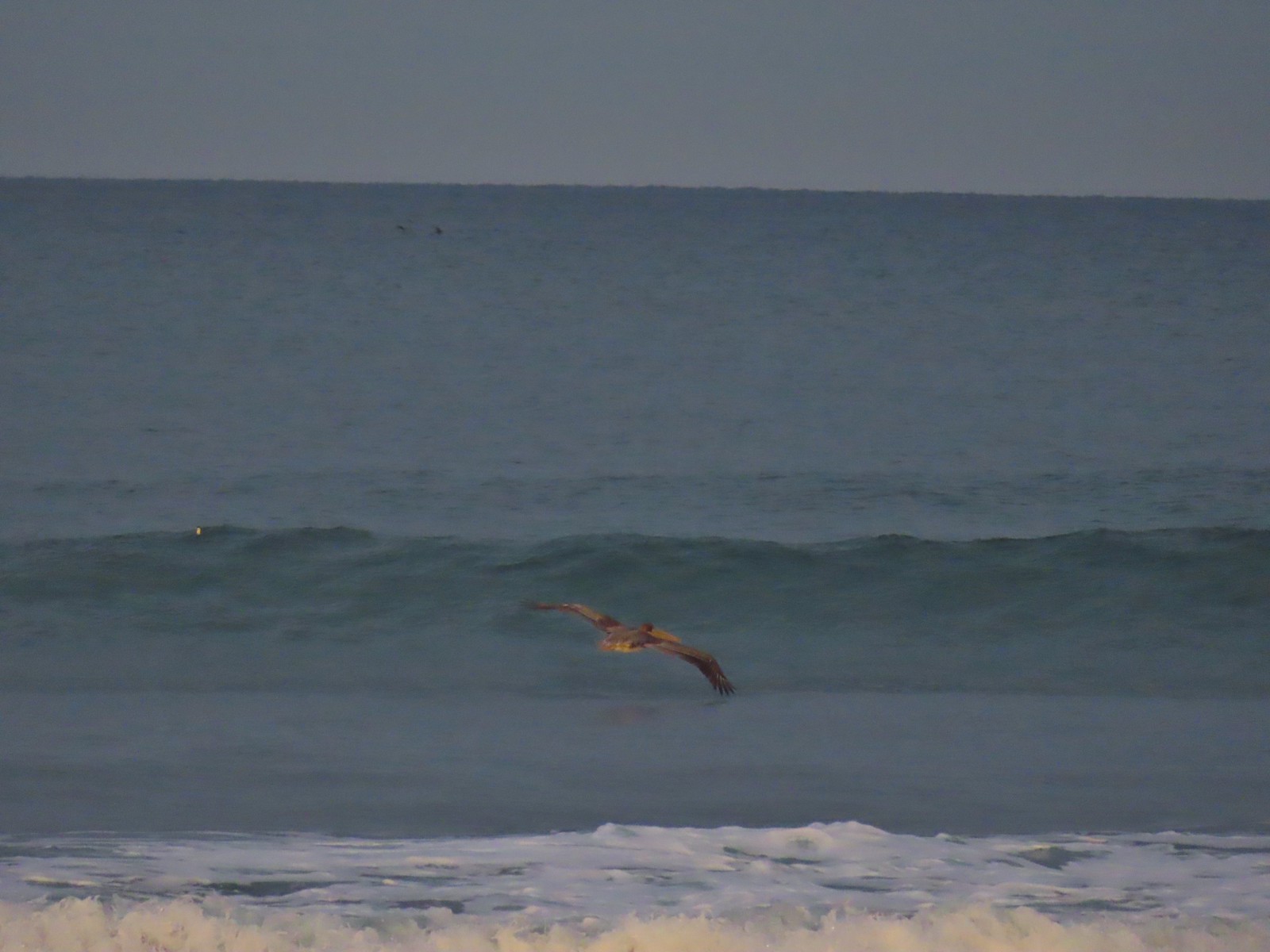


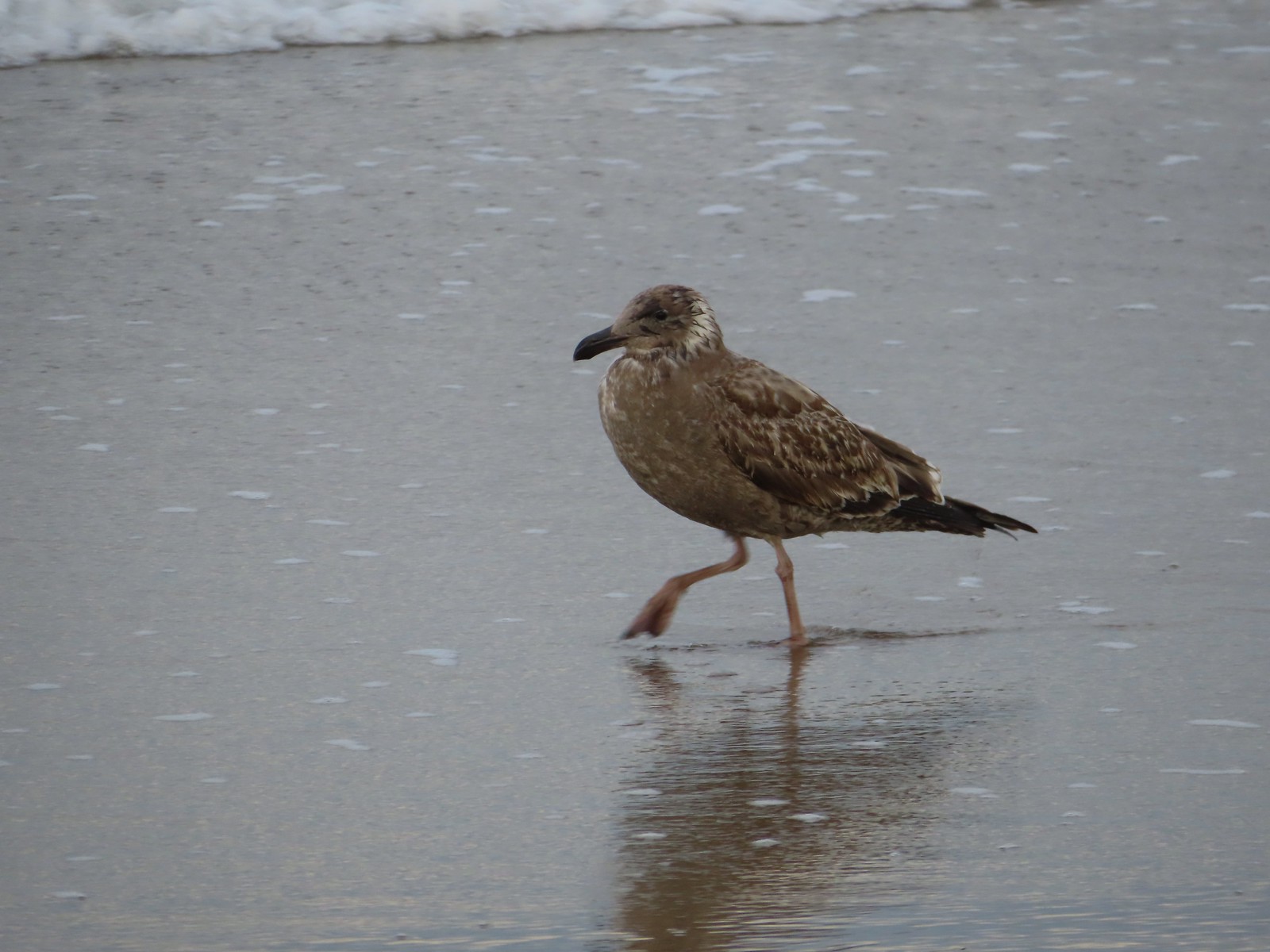 There were of course plenty of seagulls present.
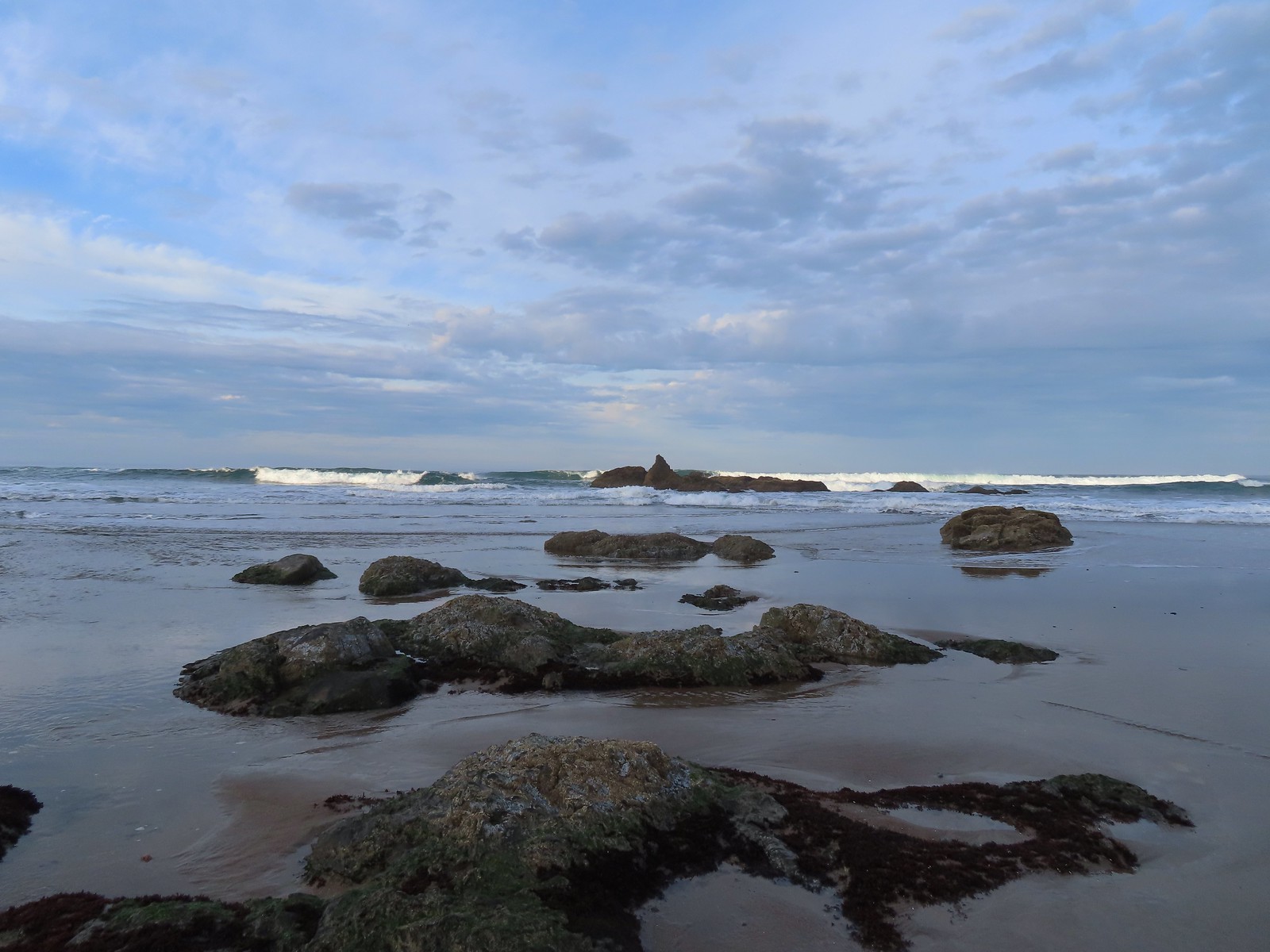
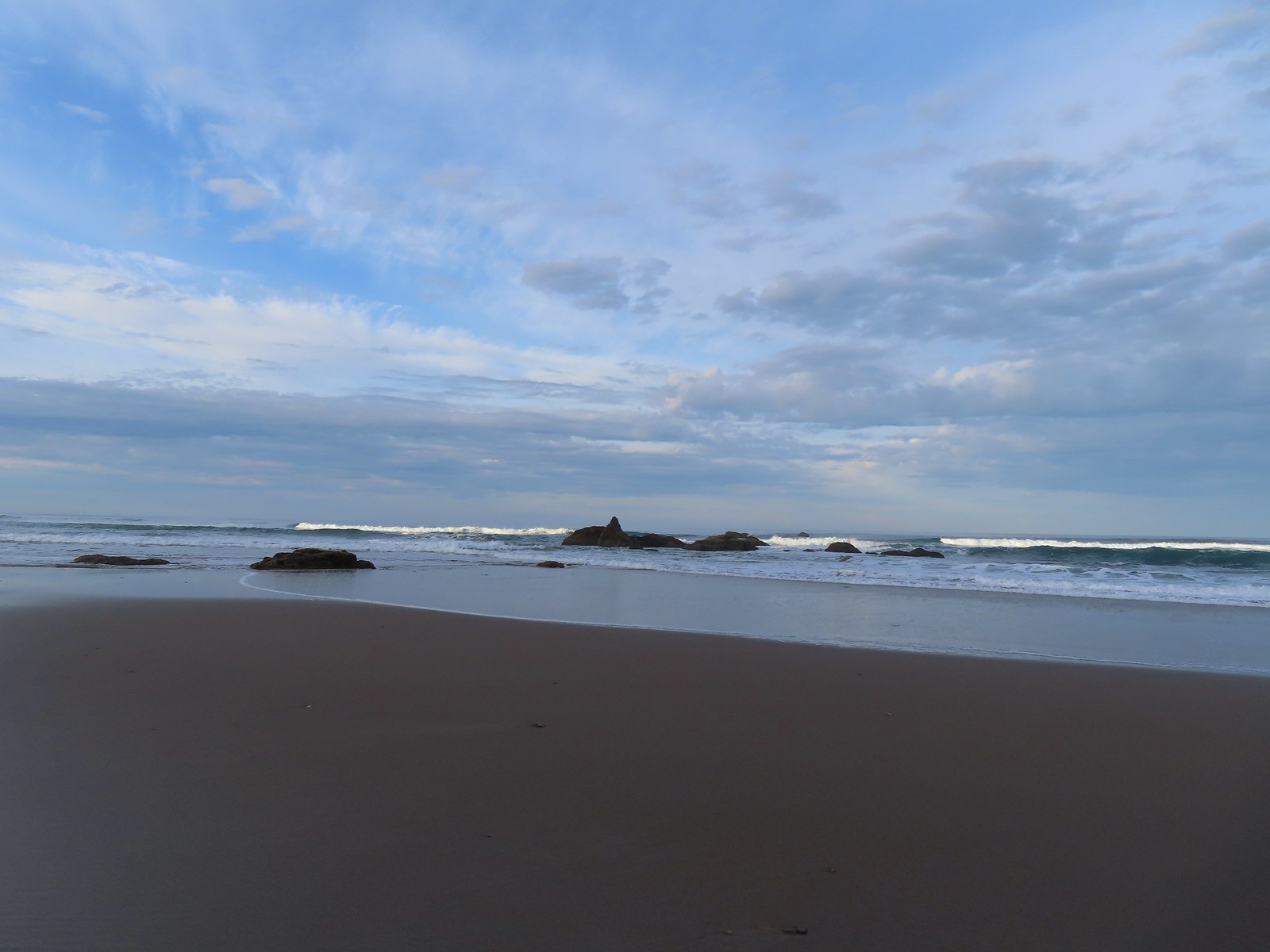 There weren’t very many ocean rocks along this stretch of beach.
 Surf scooters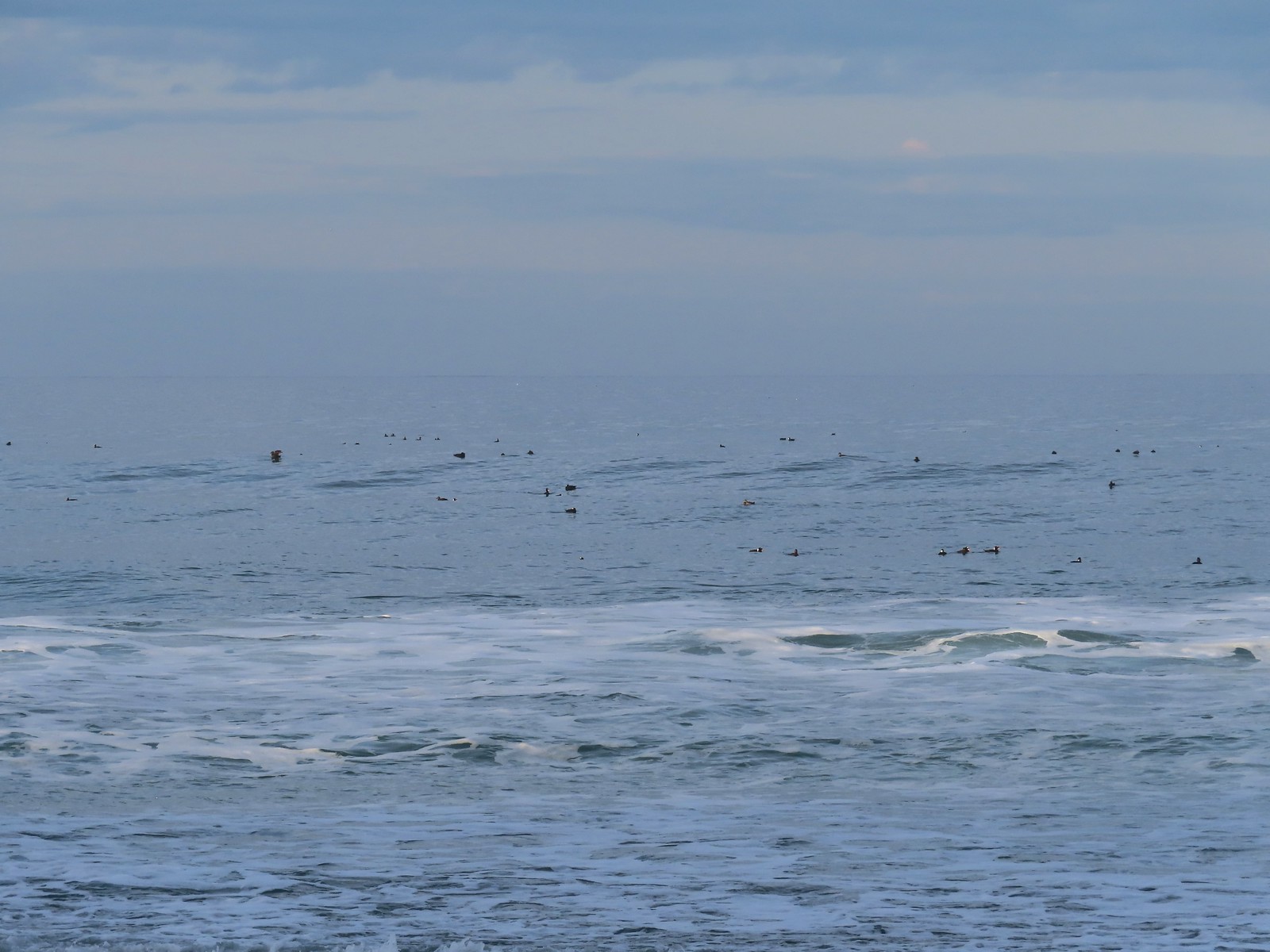
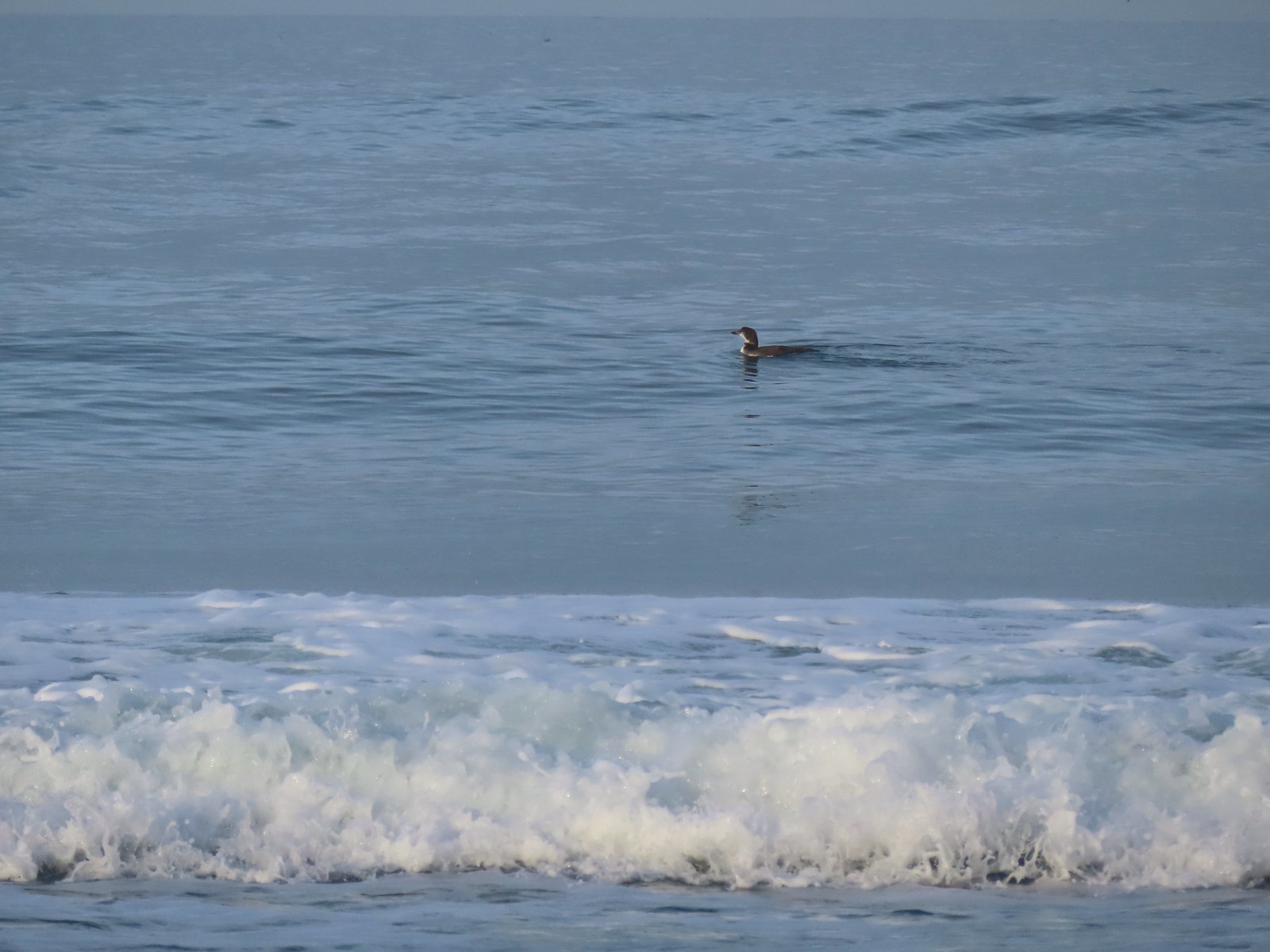 Loon, probably a common loon.
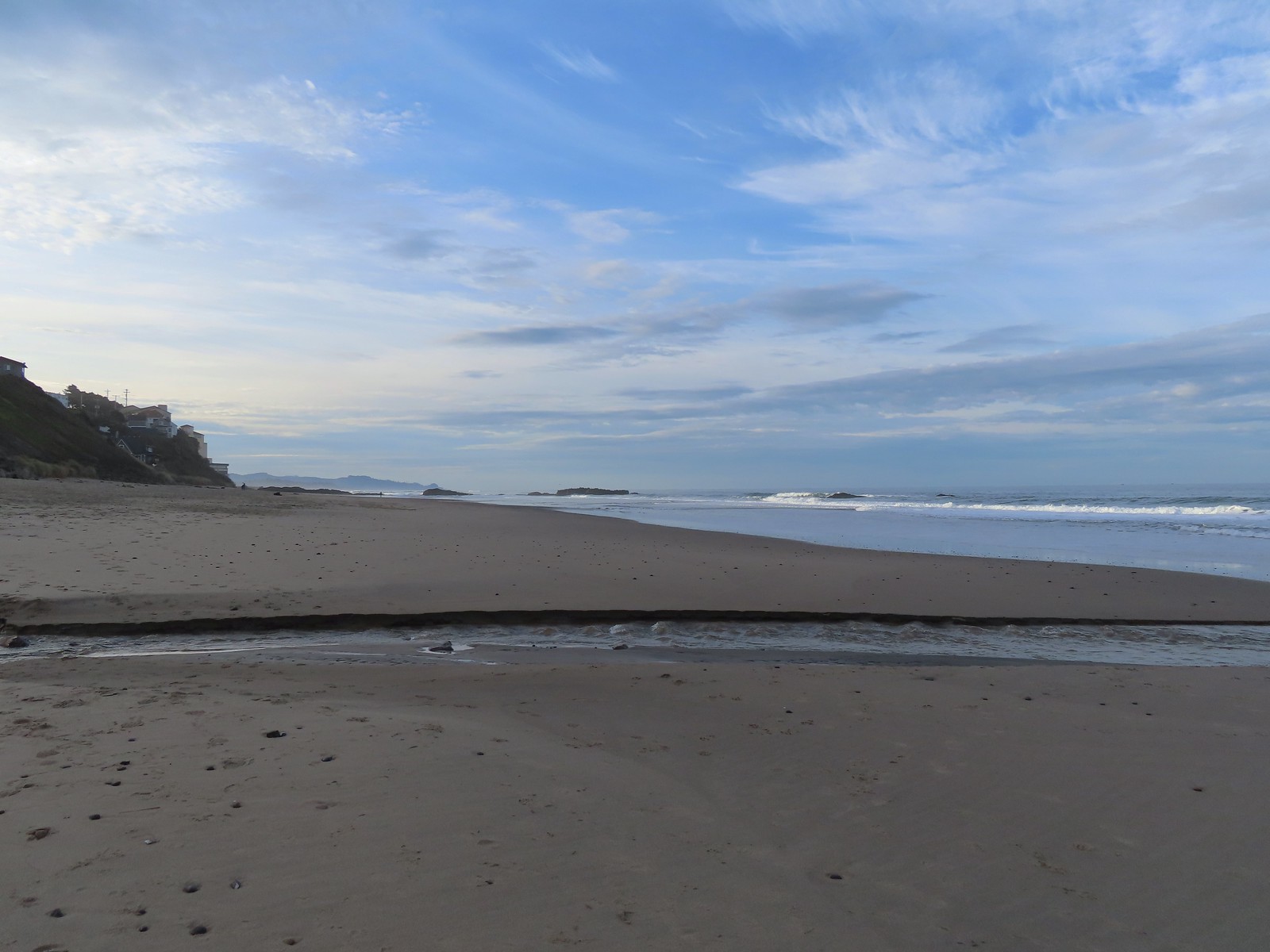 Baldy Creek
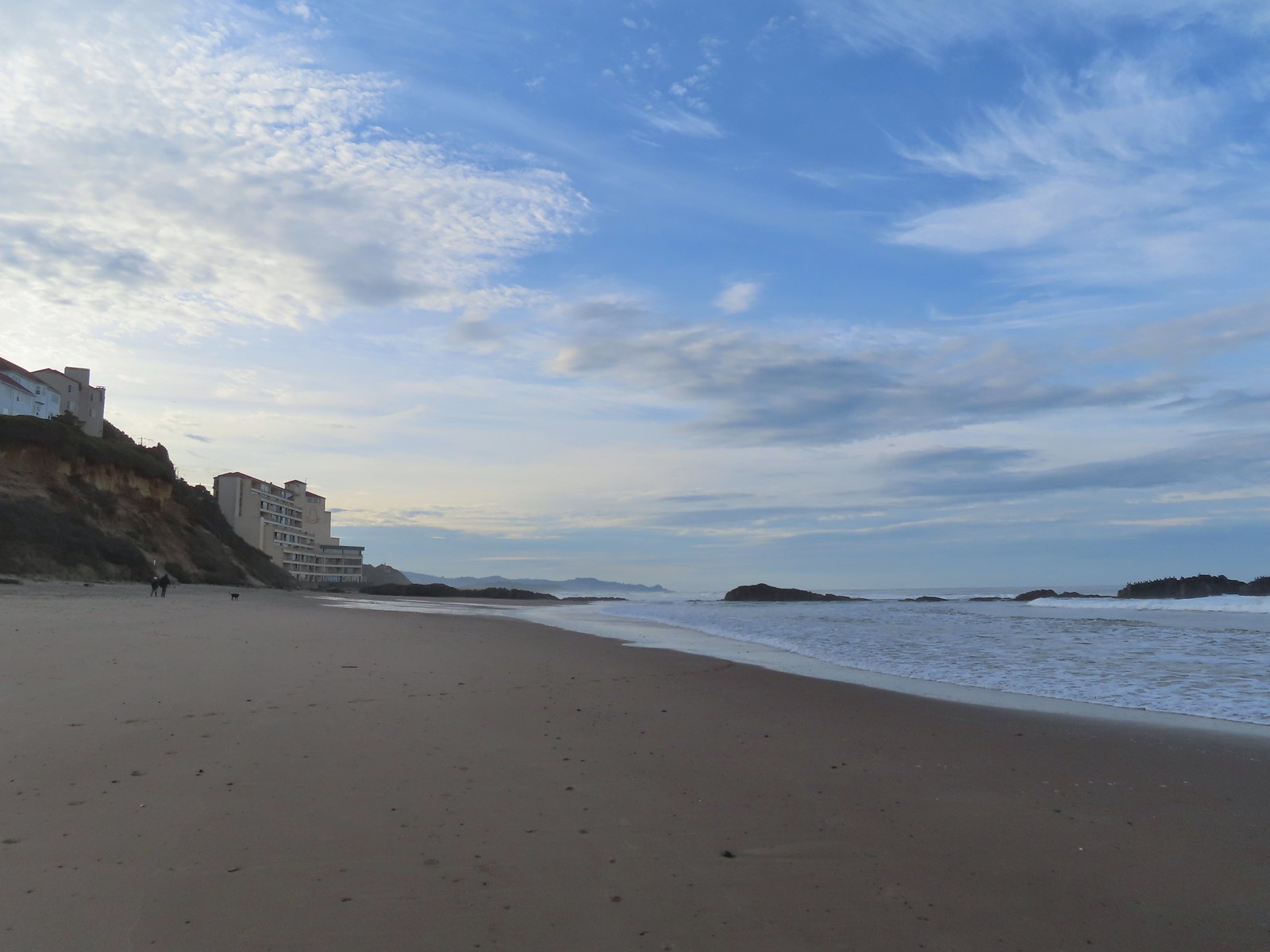 The inn on the left with the rocks extending into the Pacific.
 Cormorants and seagulls
 This was a big tree that we were able to walk under.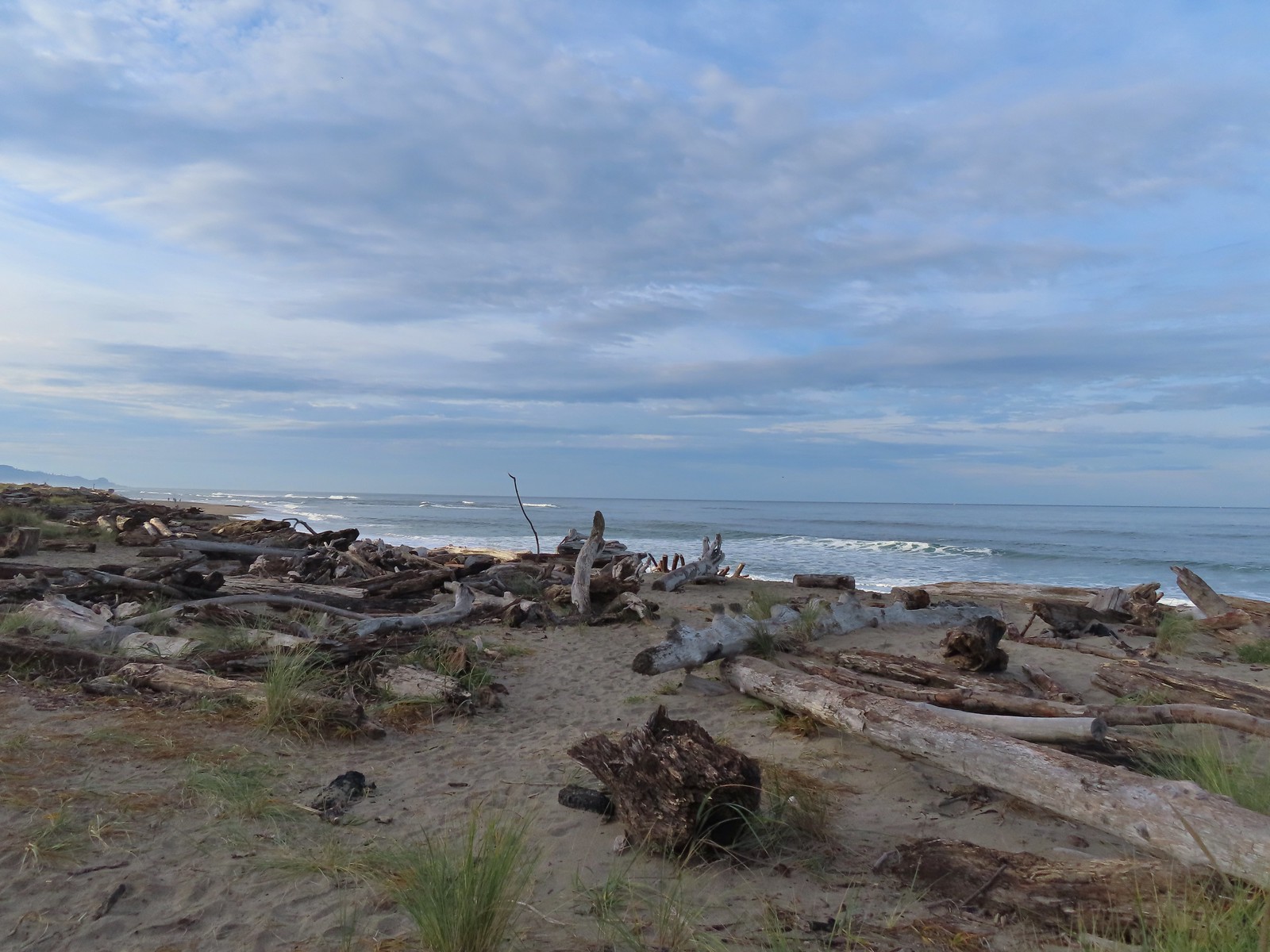
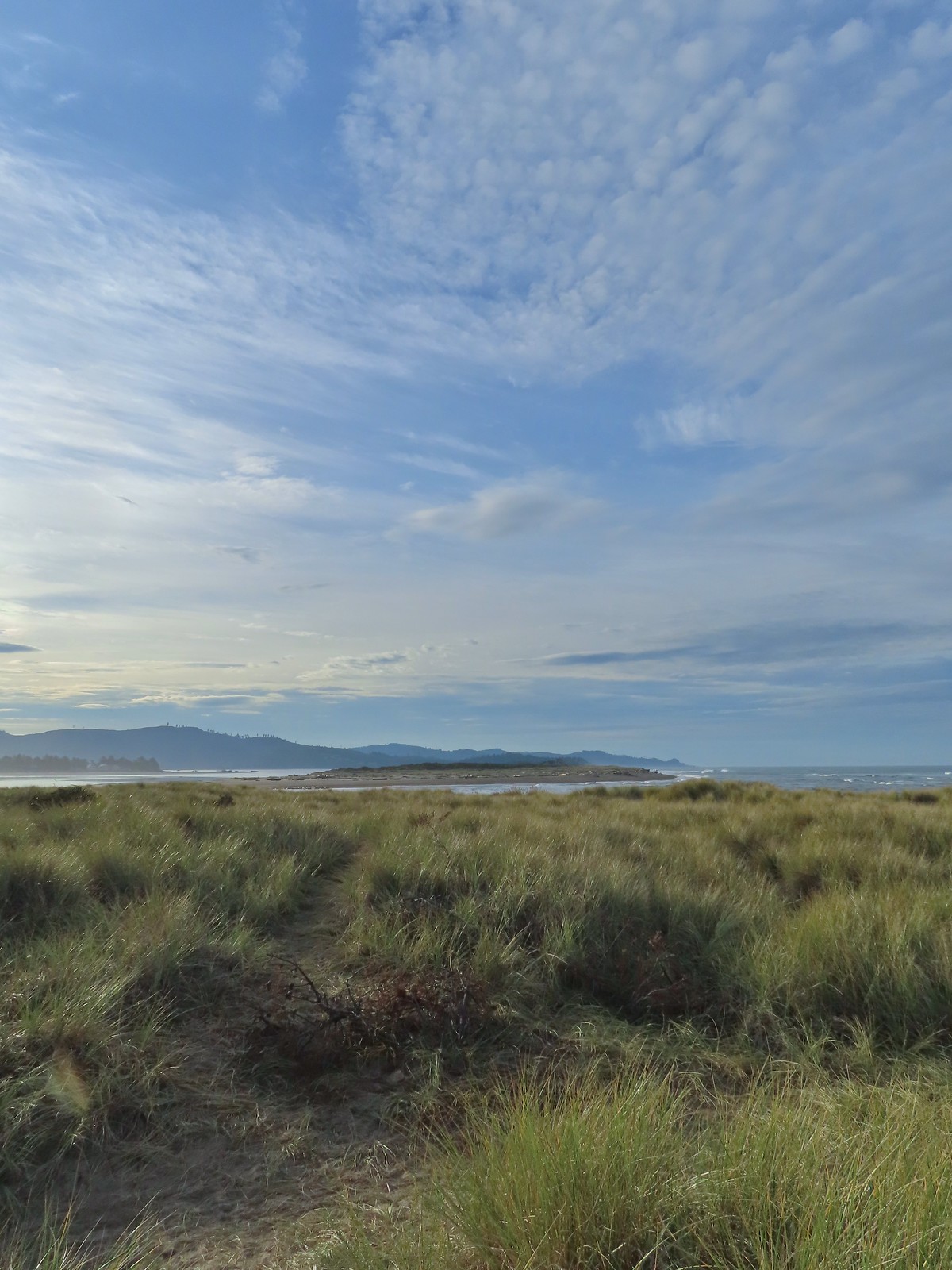 Salishan Spit across the Siletz.
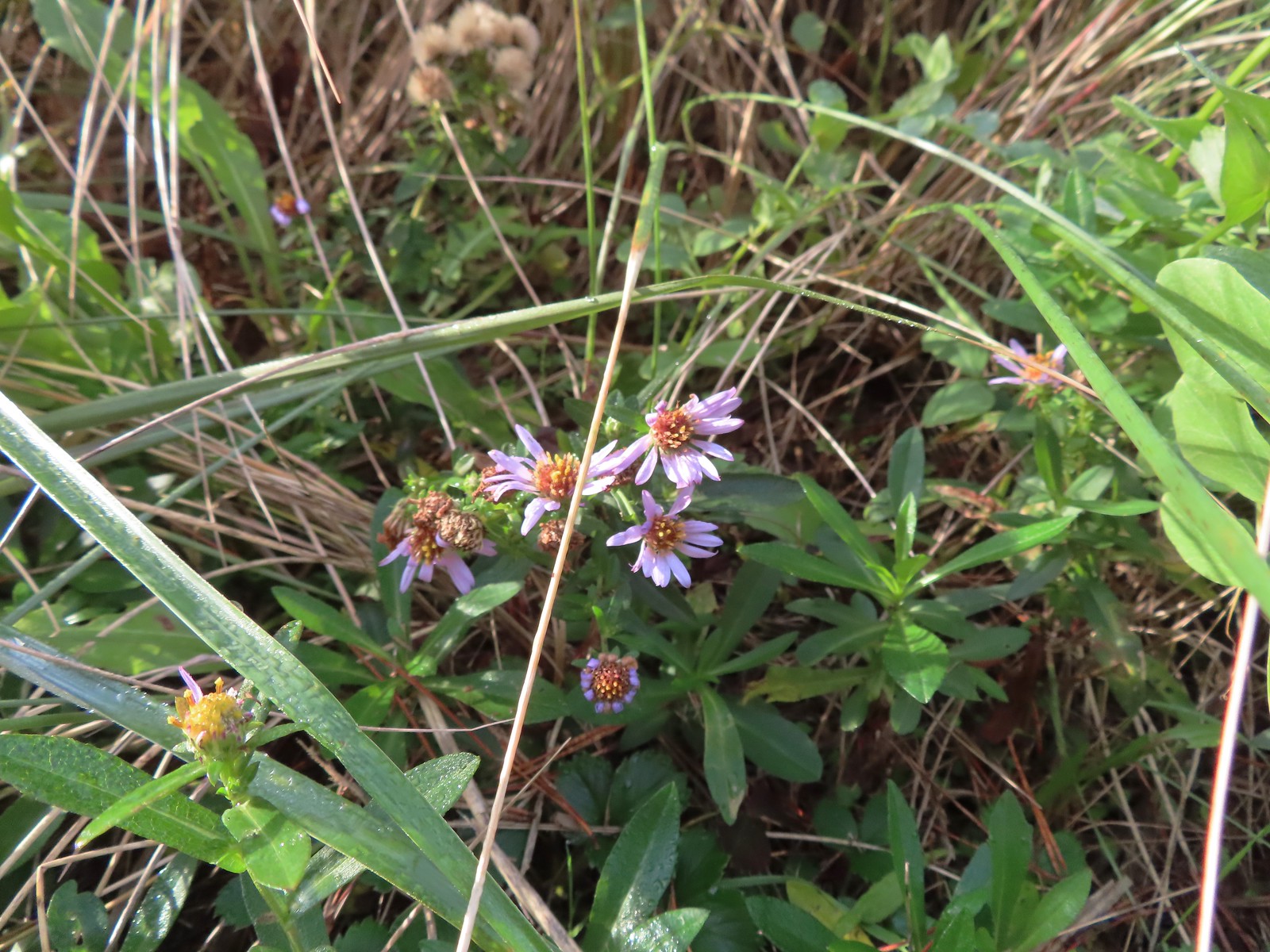 Asters on the beach.
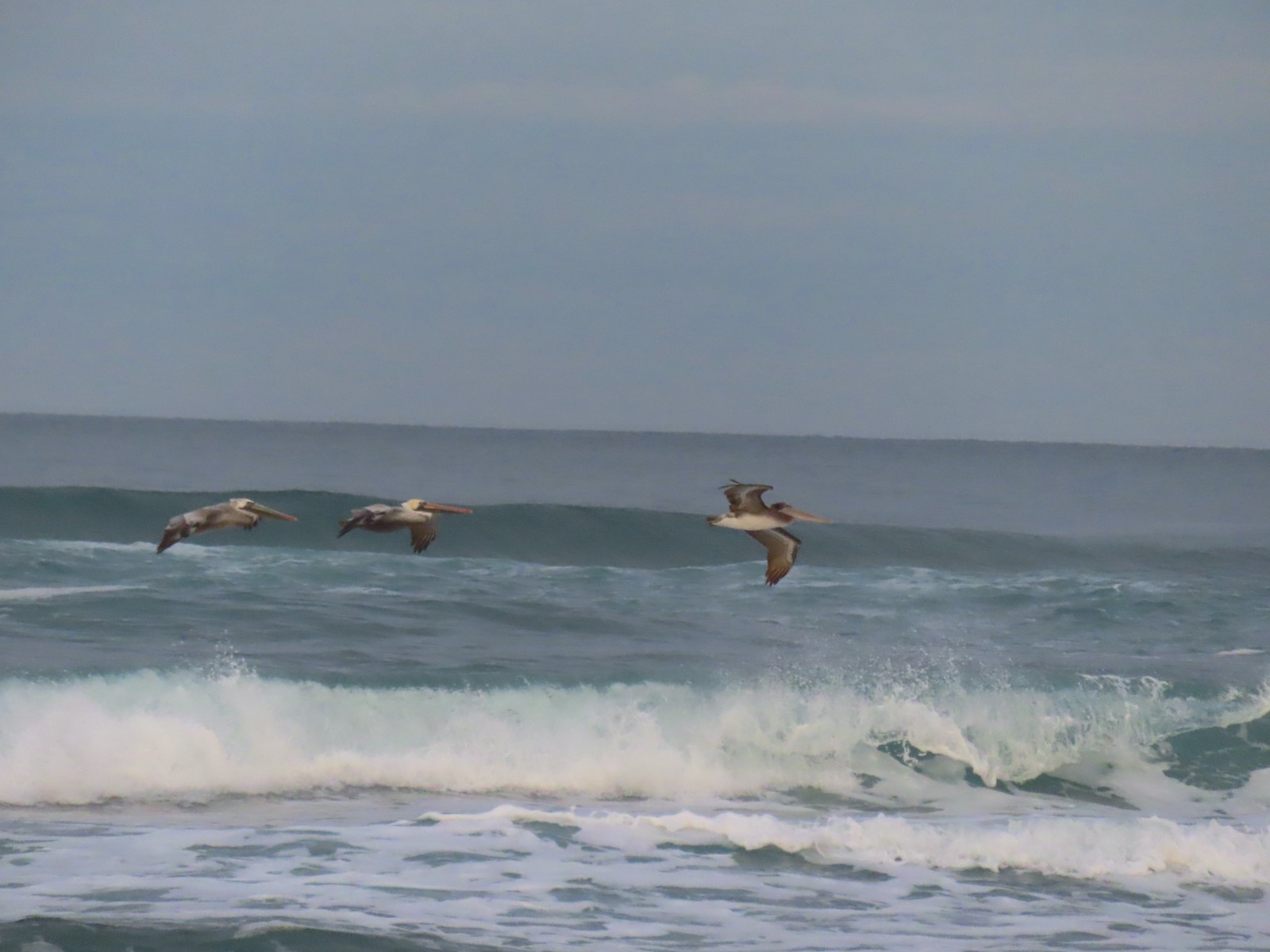
 Pelicans on the left and seals on the right at the end of Salishan Spit.
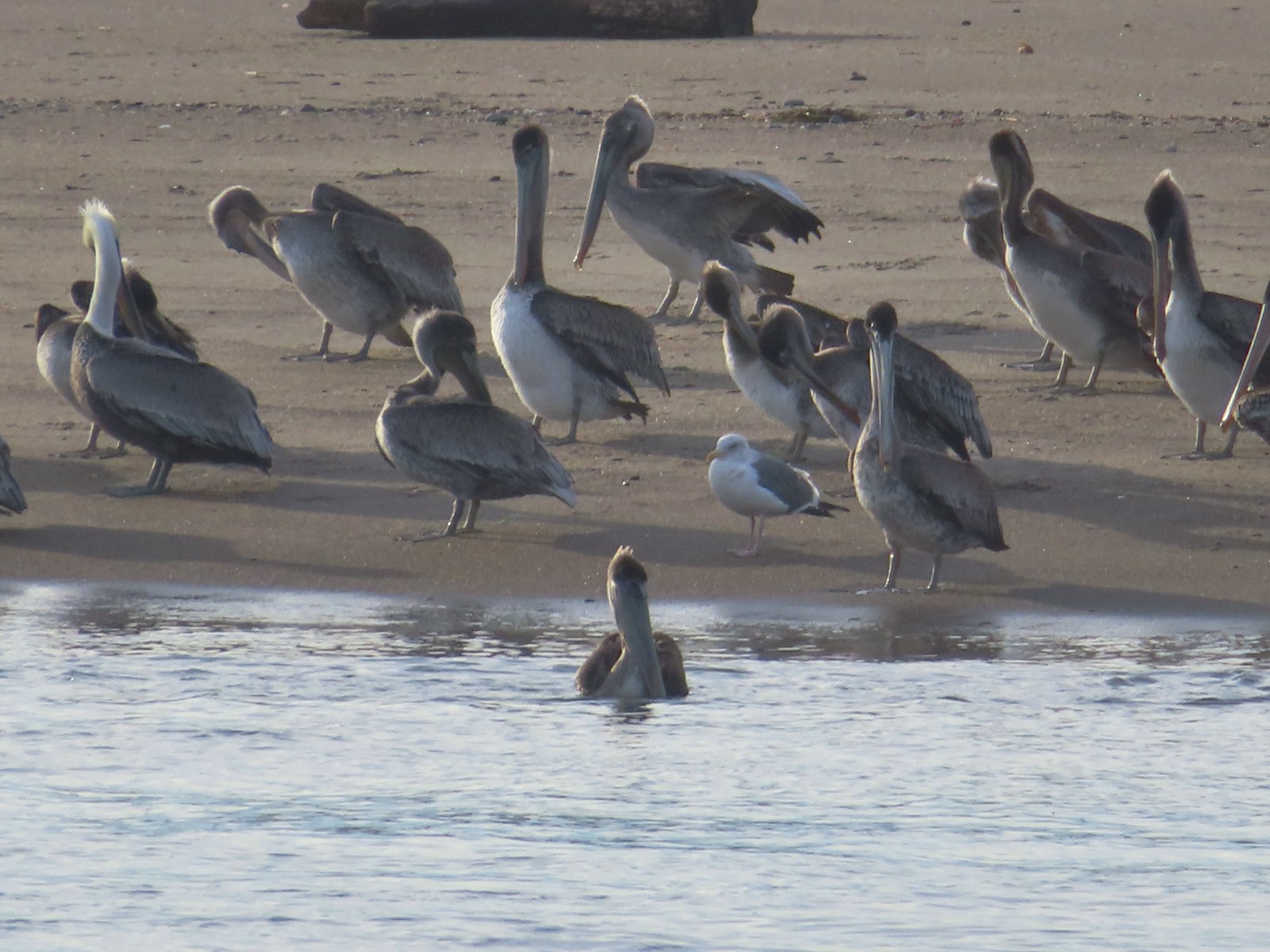 Pelicans and seagull
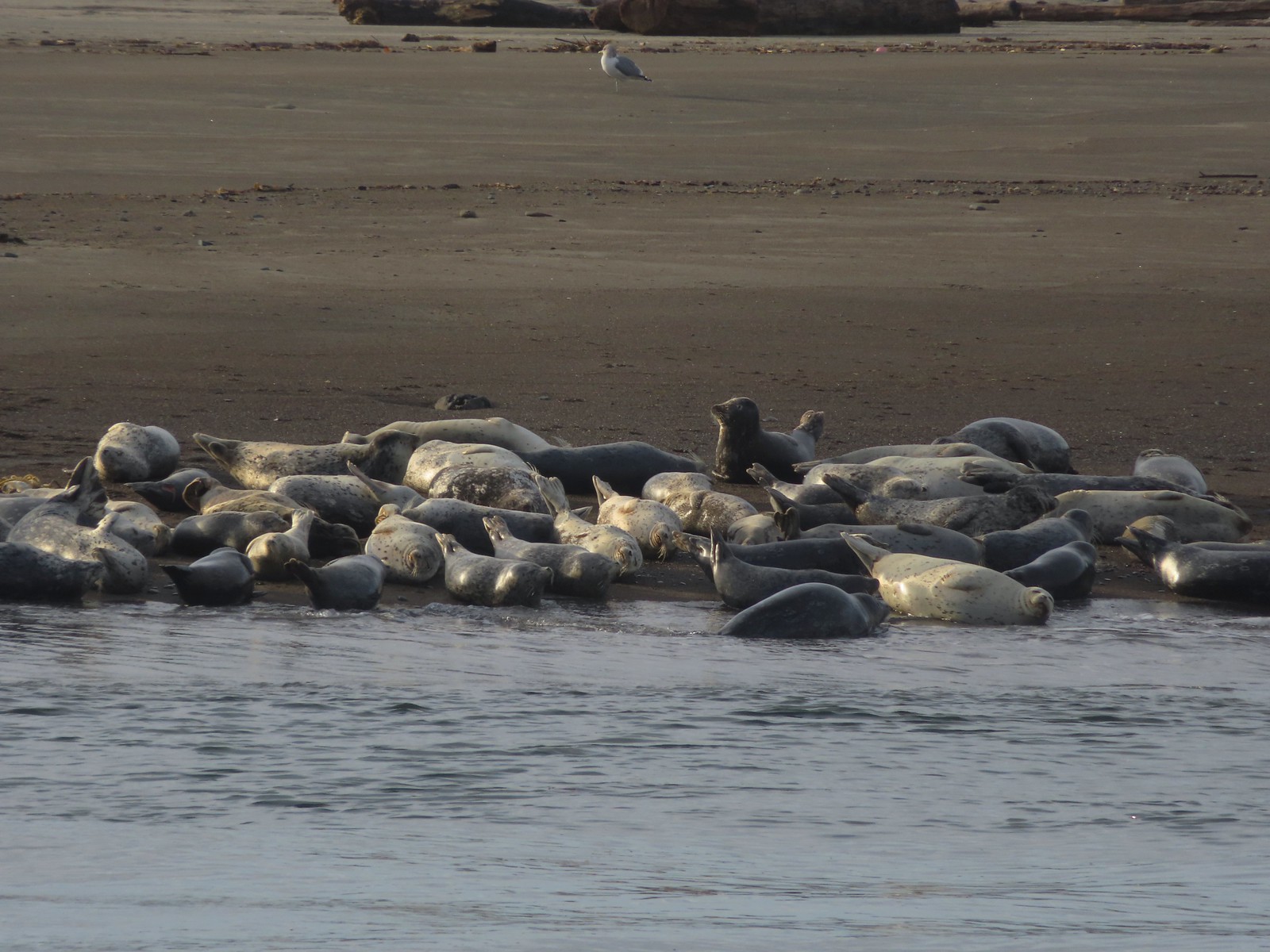 Seals and a seagull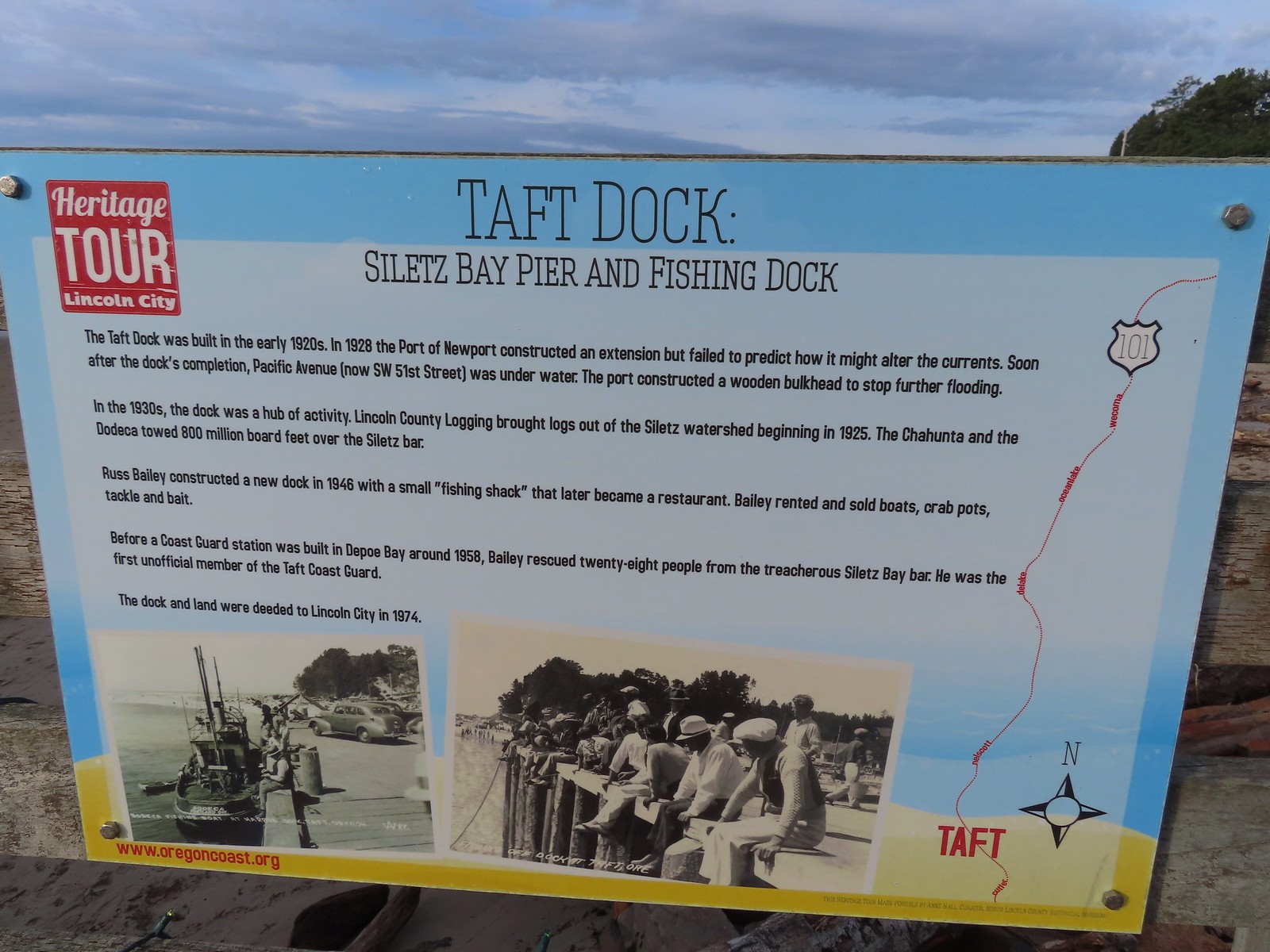


 Drying off

 Pelican mouths are a sight to behold (righthand side).
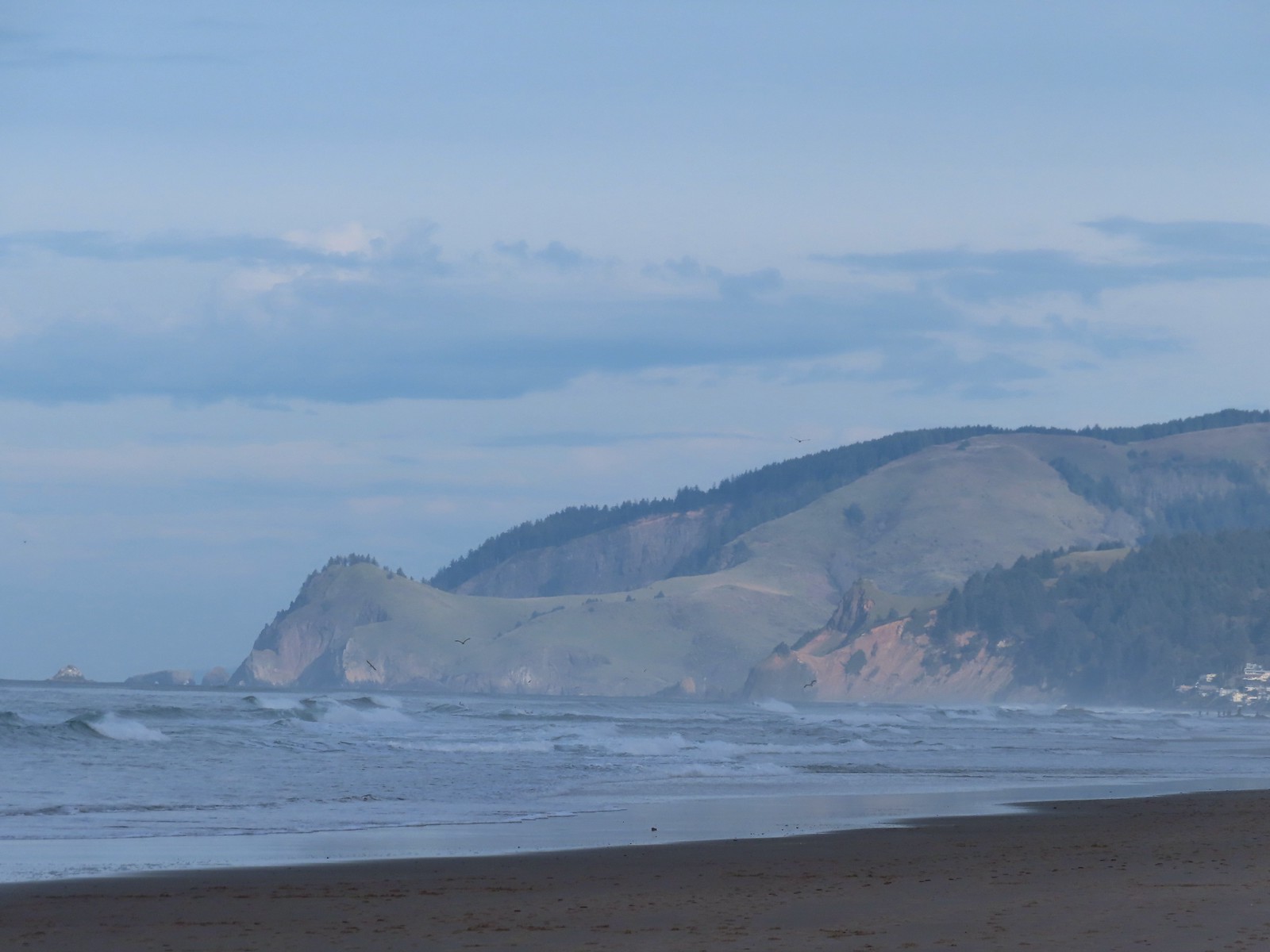 Cascade Head and God’s Thumb both in the sunlight now.

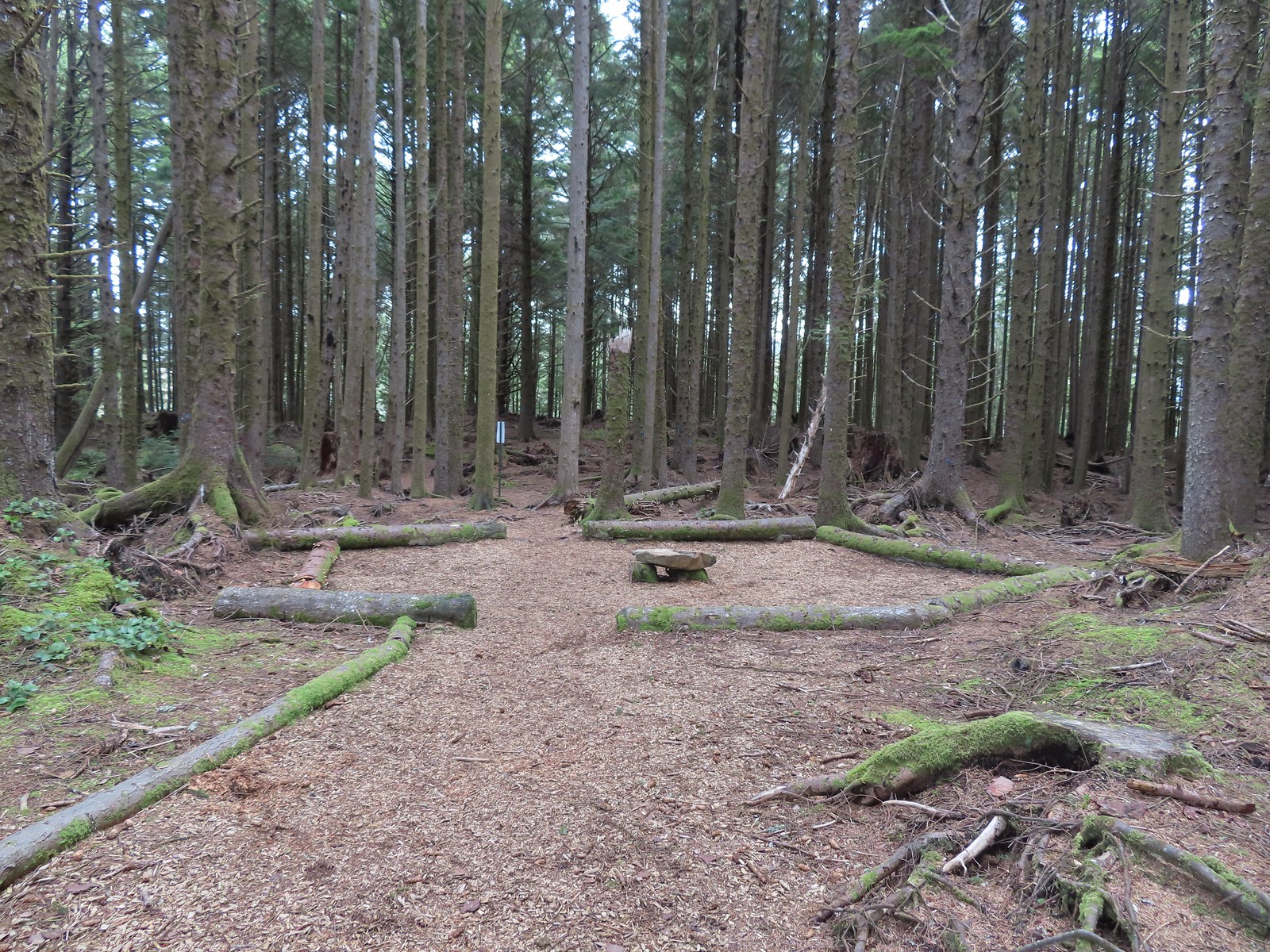 The Story Circle
 Trail Challenge sign #8.
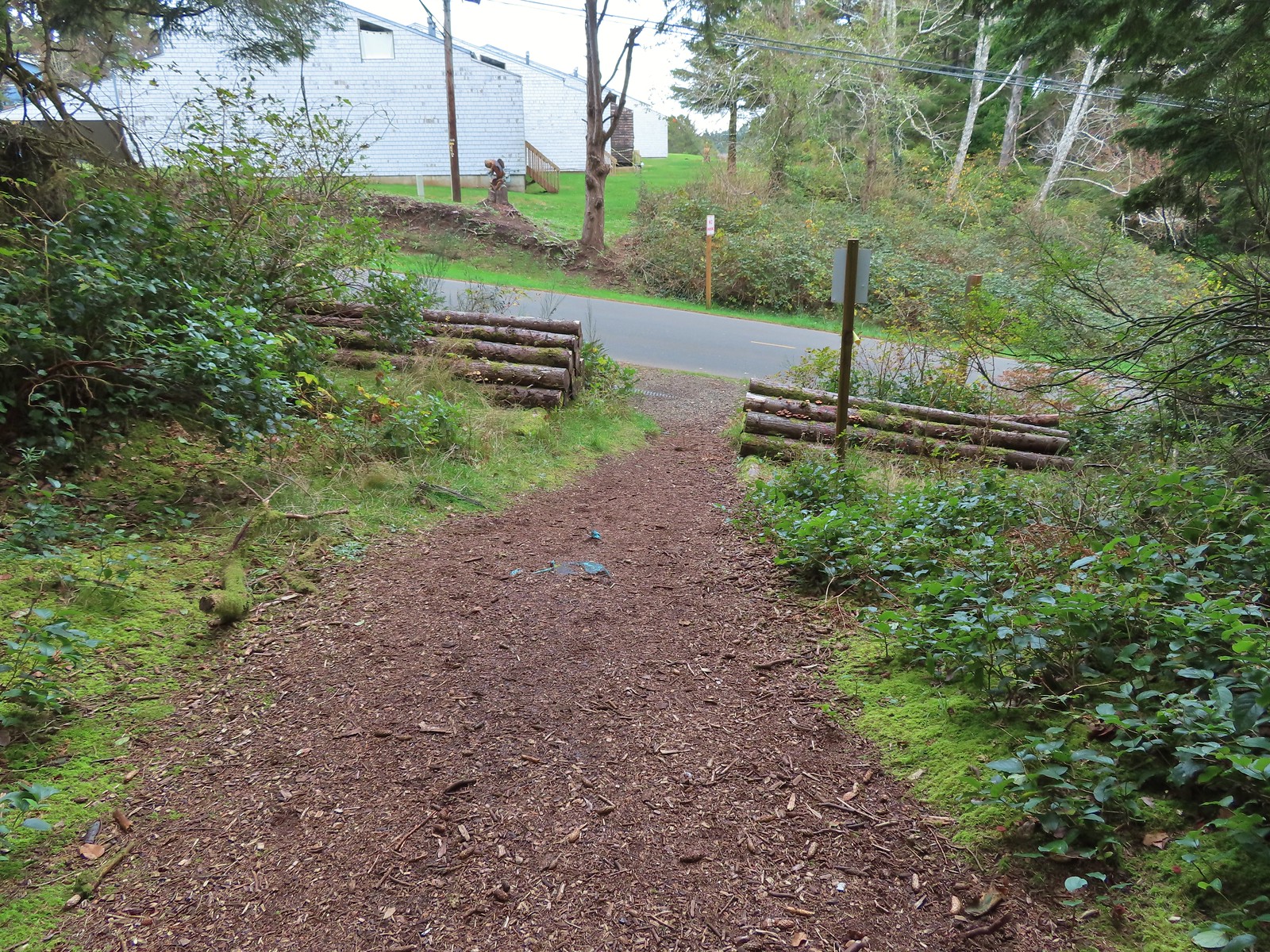 The trail ends at SE 3rd St (no parking available).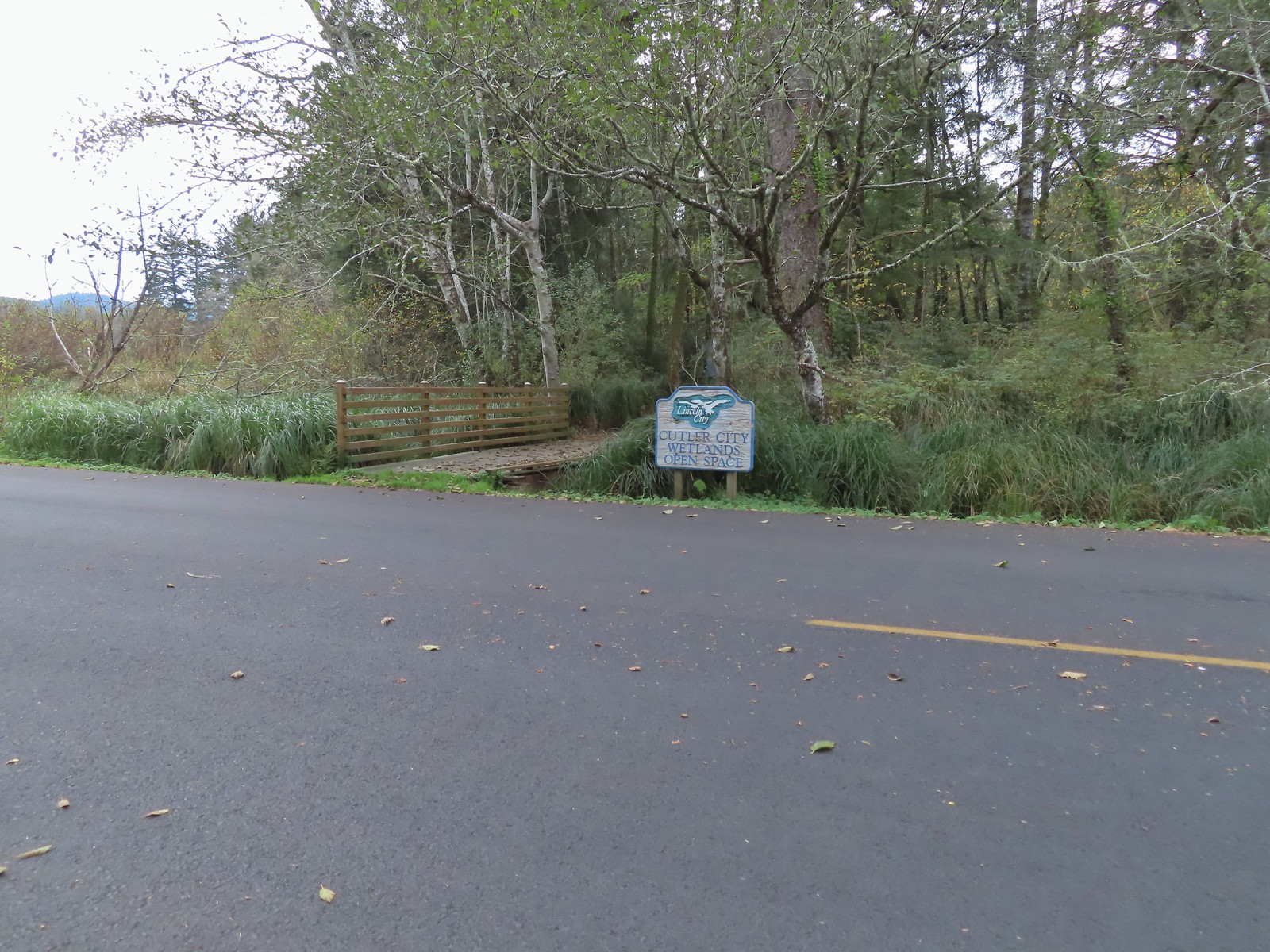

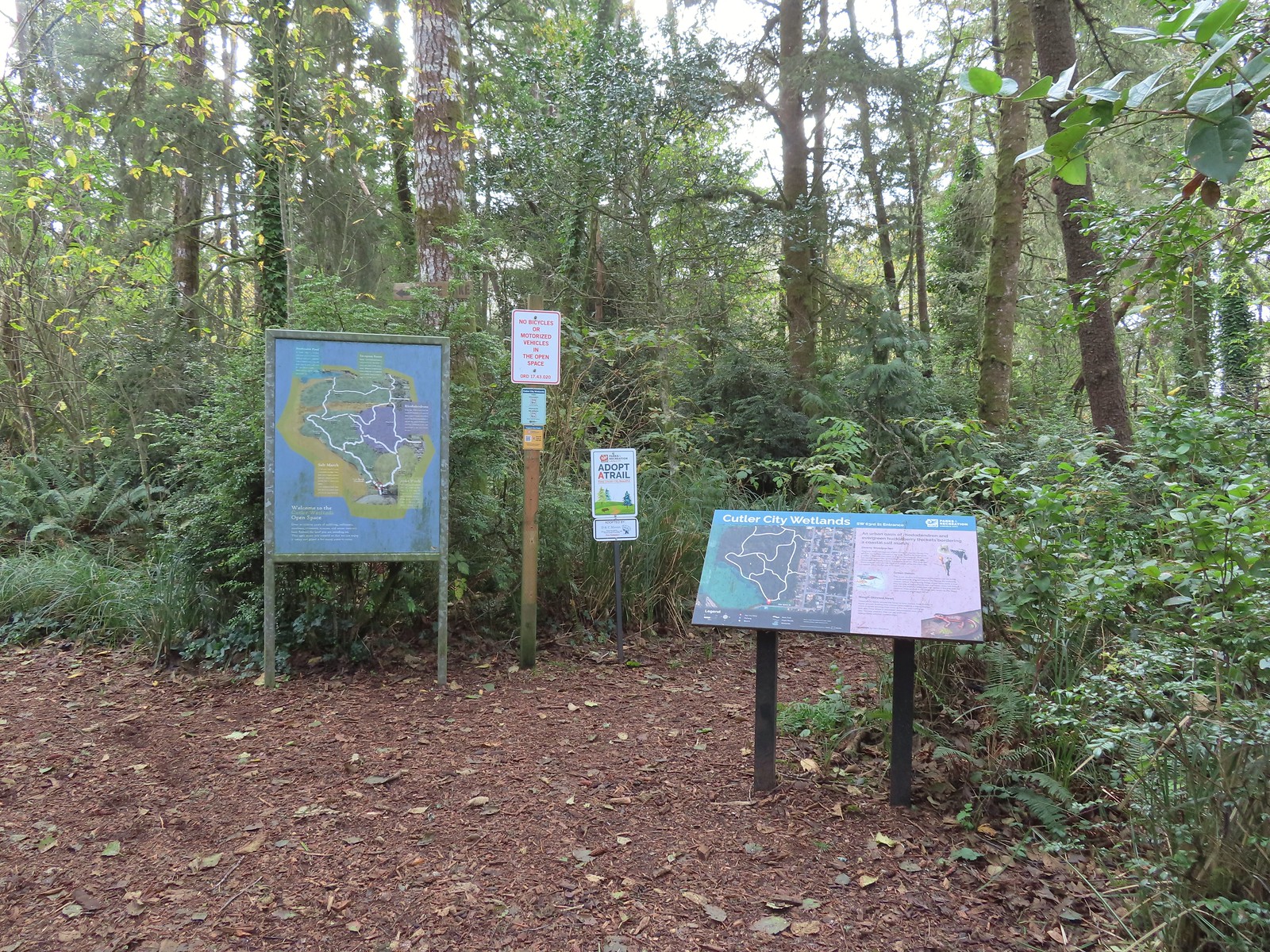
 While there are more trails to choose from here the total milage is just about 1.25 miles. We opted to loop around the outside with detours to the Salt Marsh Overlook and Pond’s Edge.
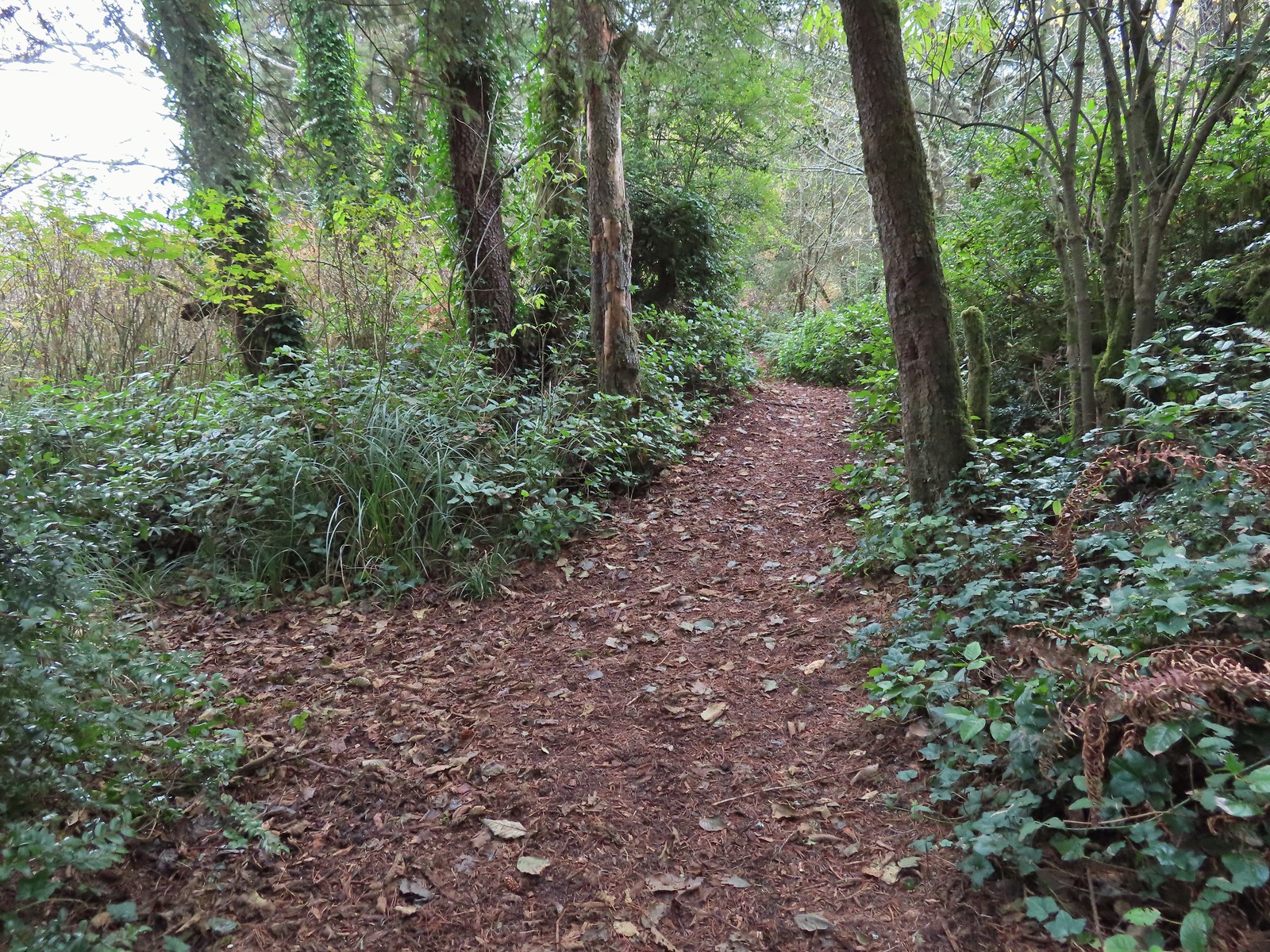 To the left is the very short spur to the Salt Marsh Overlook which was too overgrown to really see anything.
 Interpretive sign at the overlook.
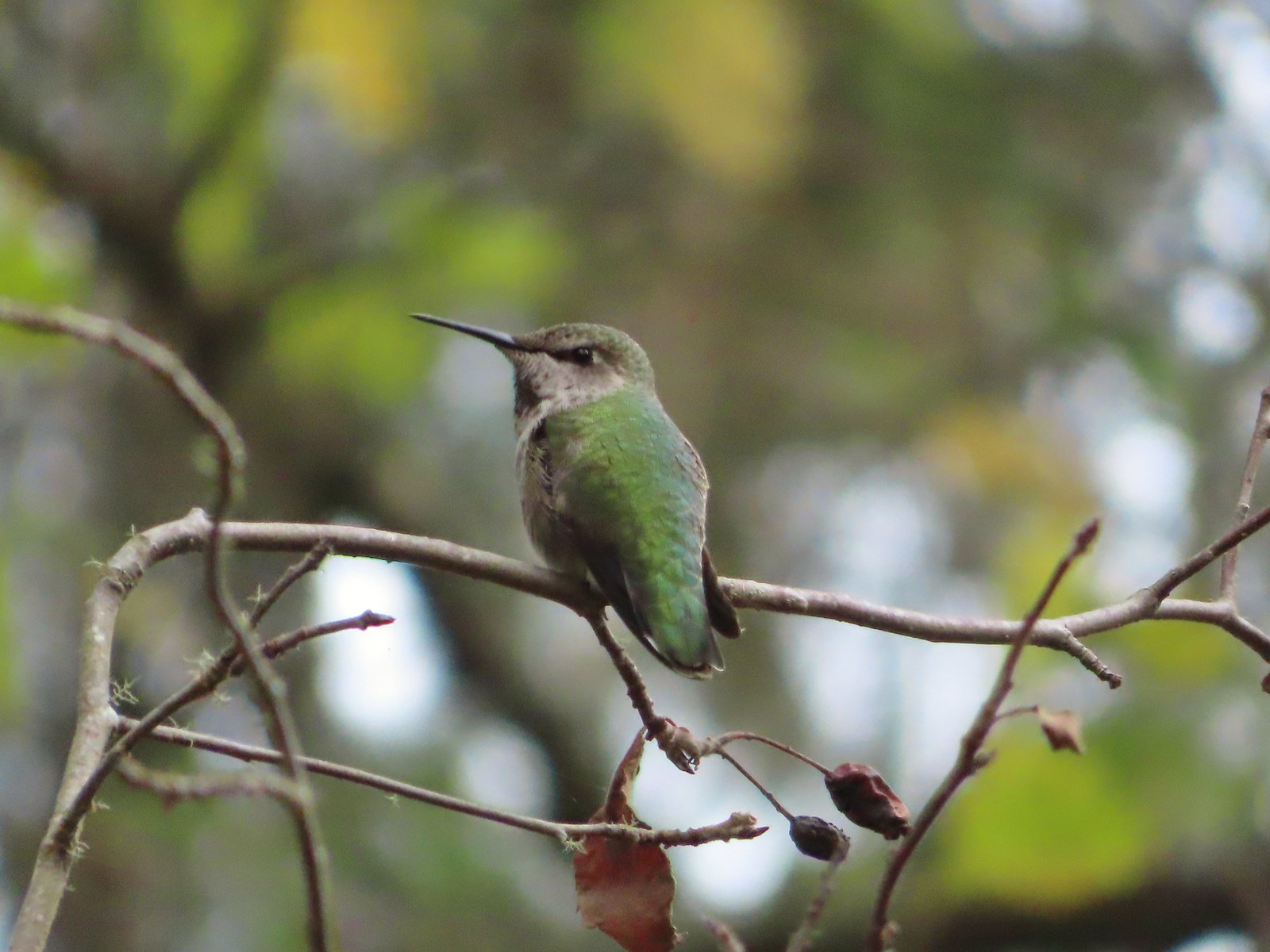 A noisy little hummer near the overlook.
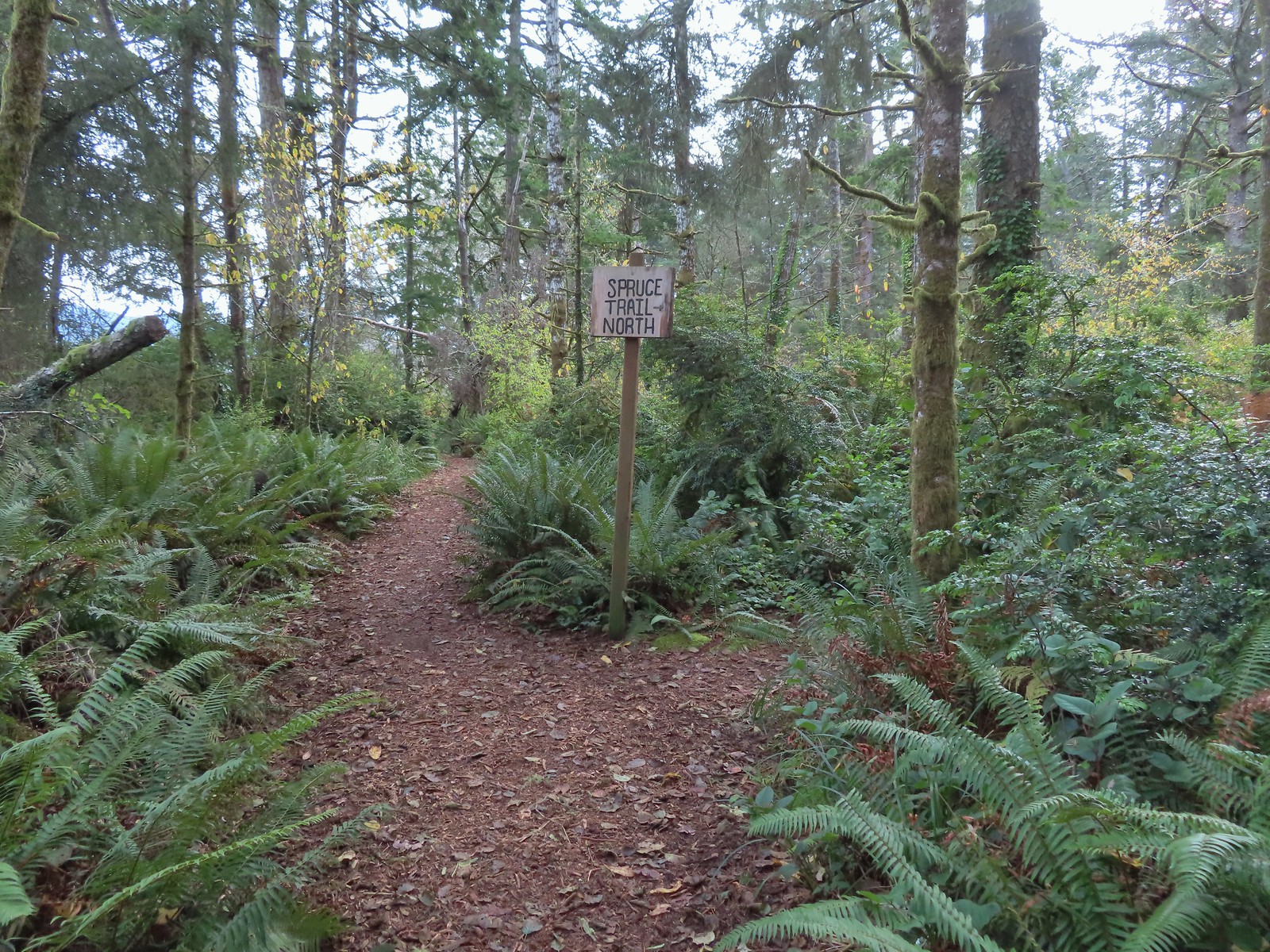 There was pretty good signage at the main trail junctions.

 Boardwalks helped cross the wet areas.
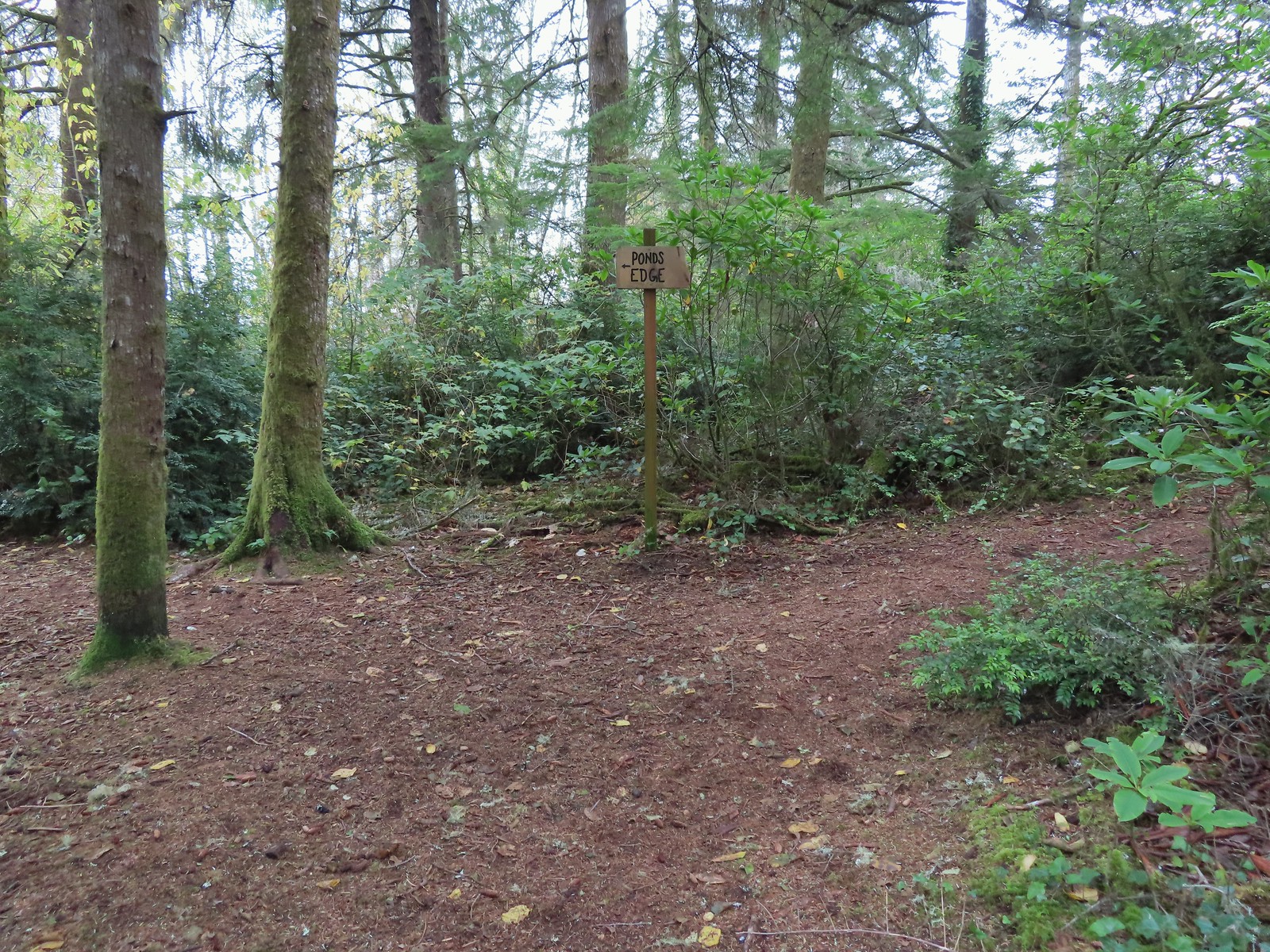 Pond’s Edge spur trail.
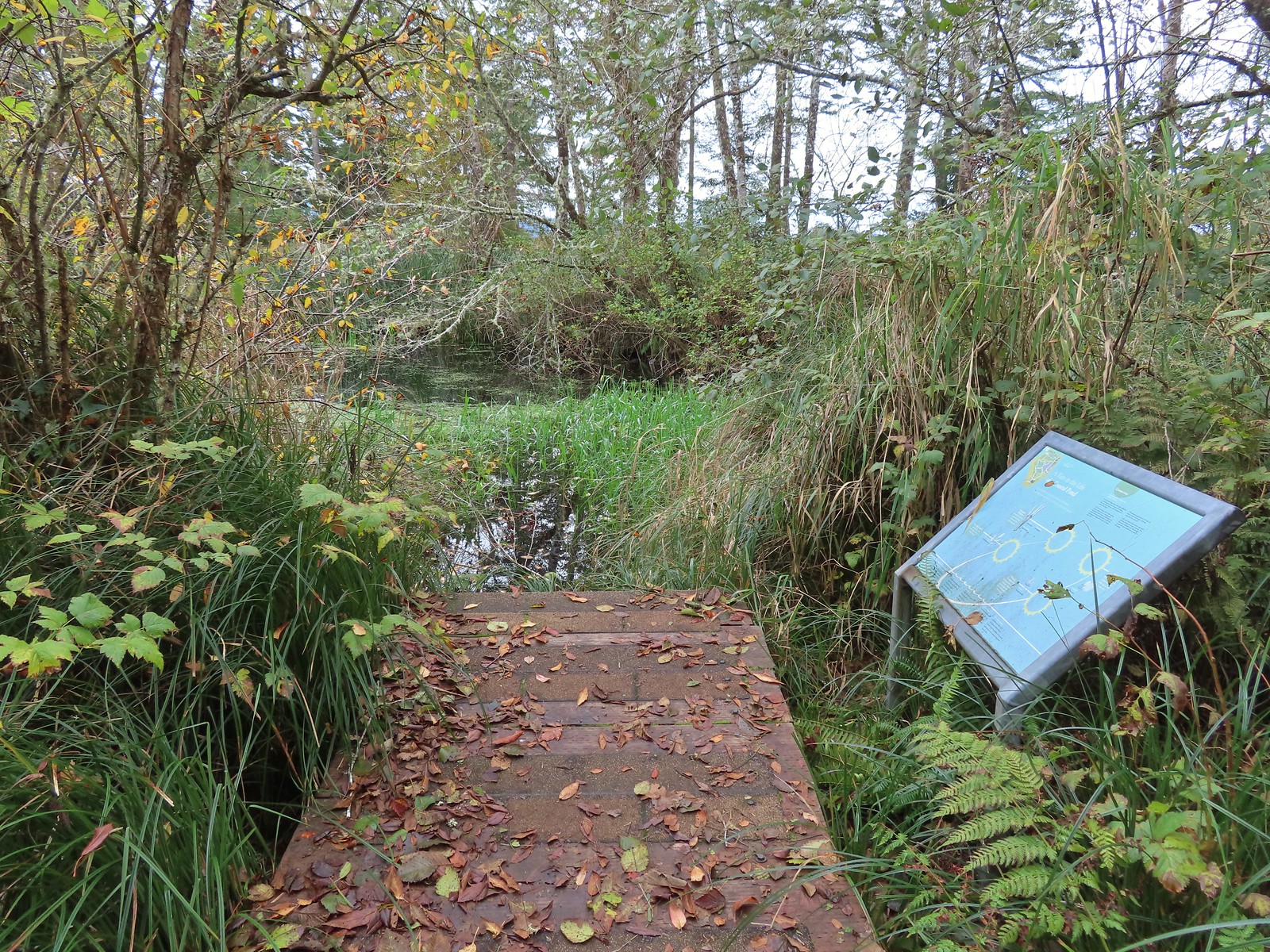 At the edge of the pond.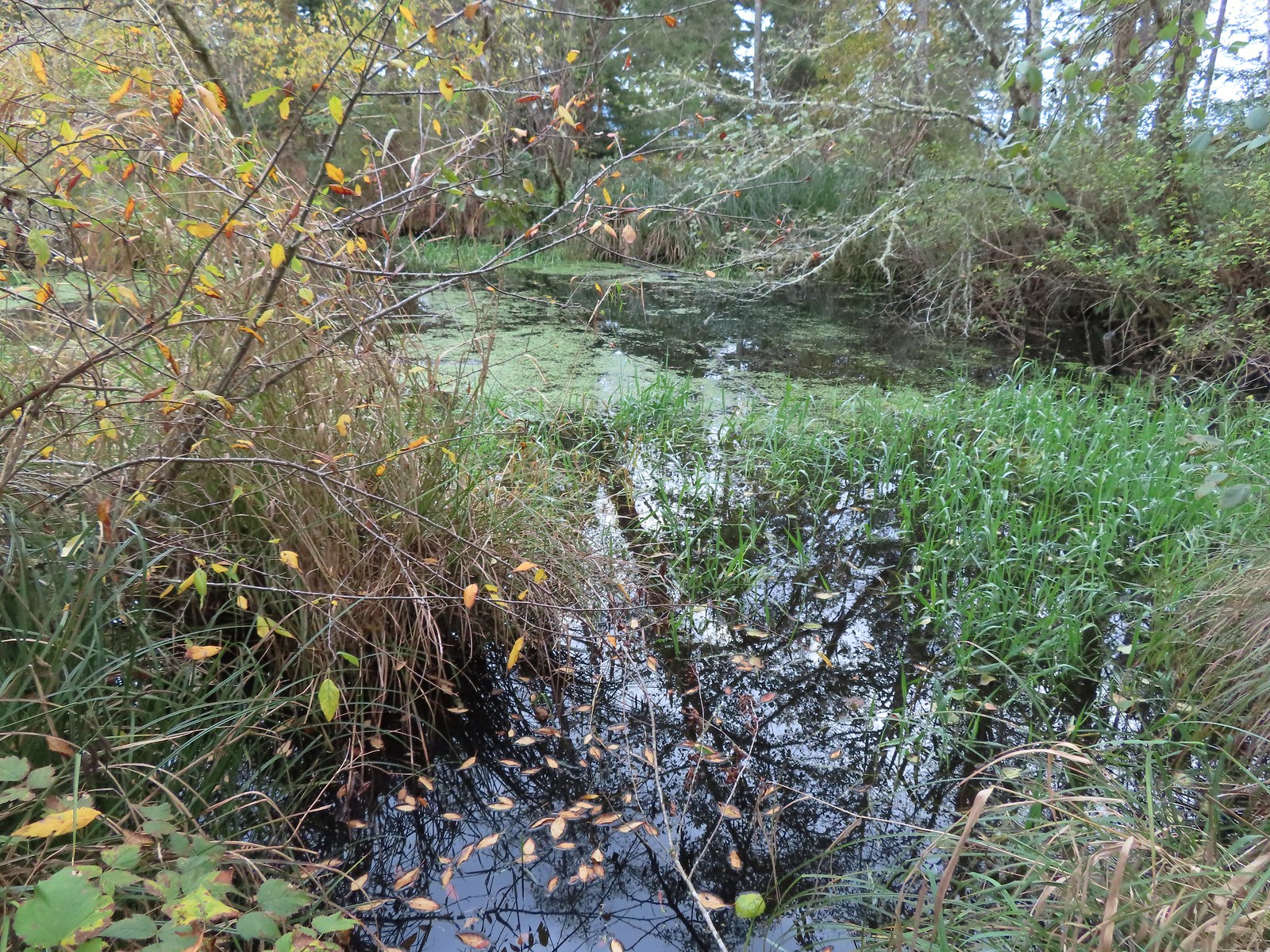
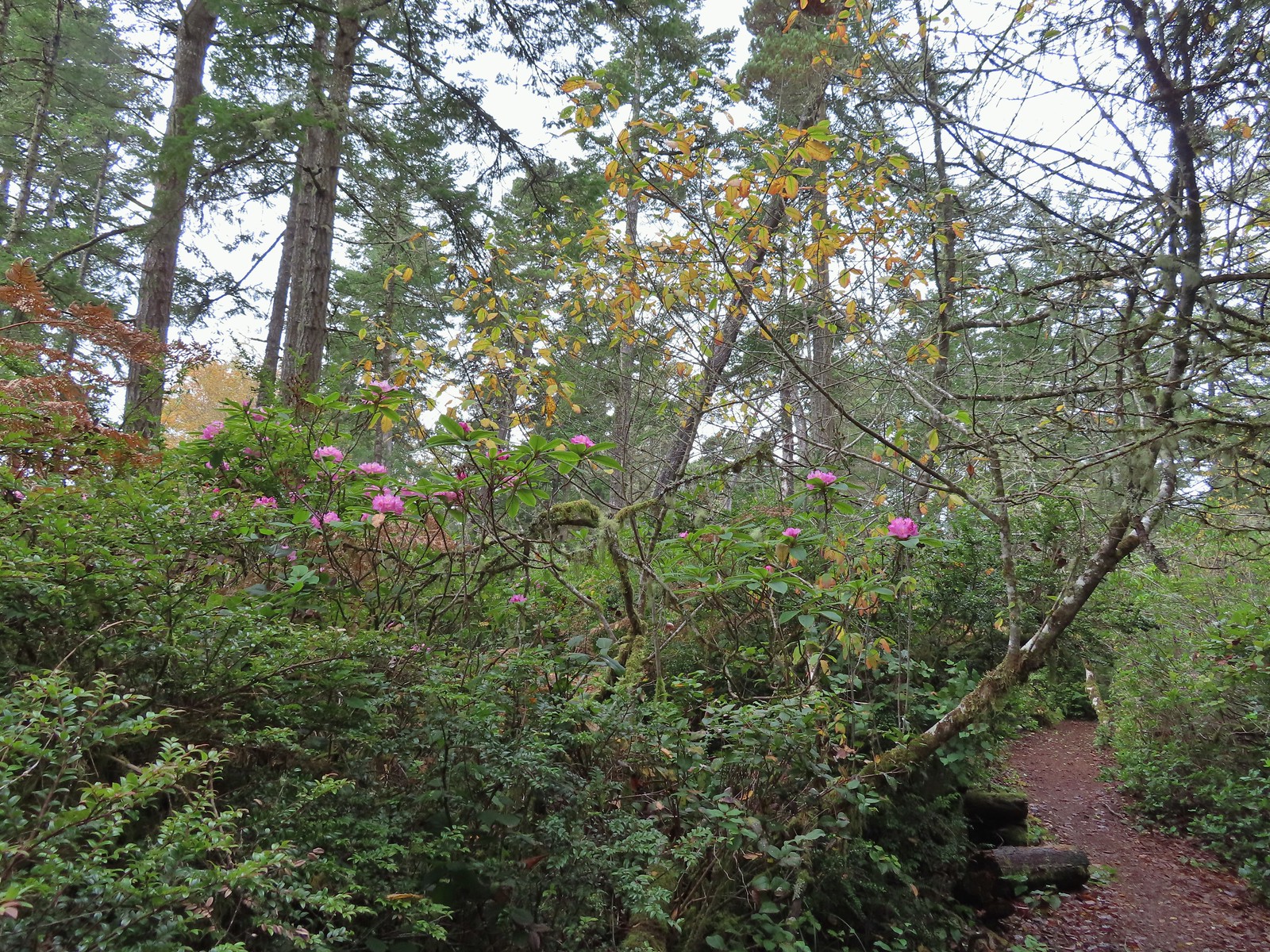 We hadn’t expected to see any blooming rhododendrons.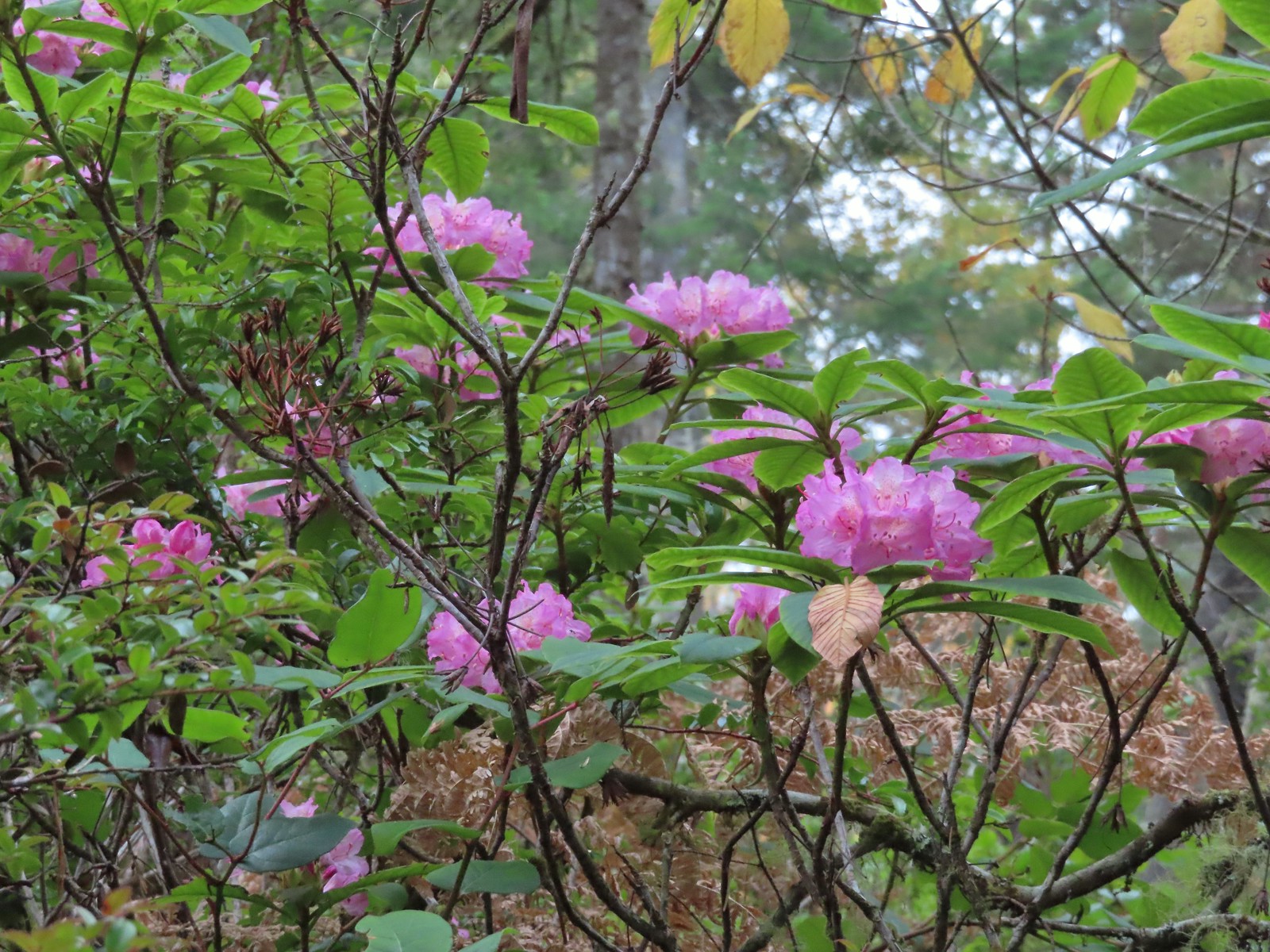
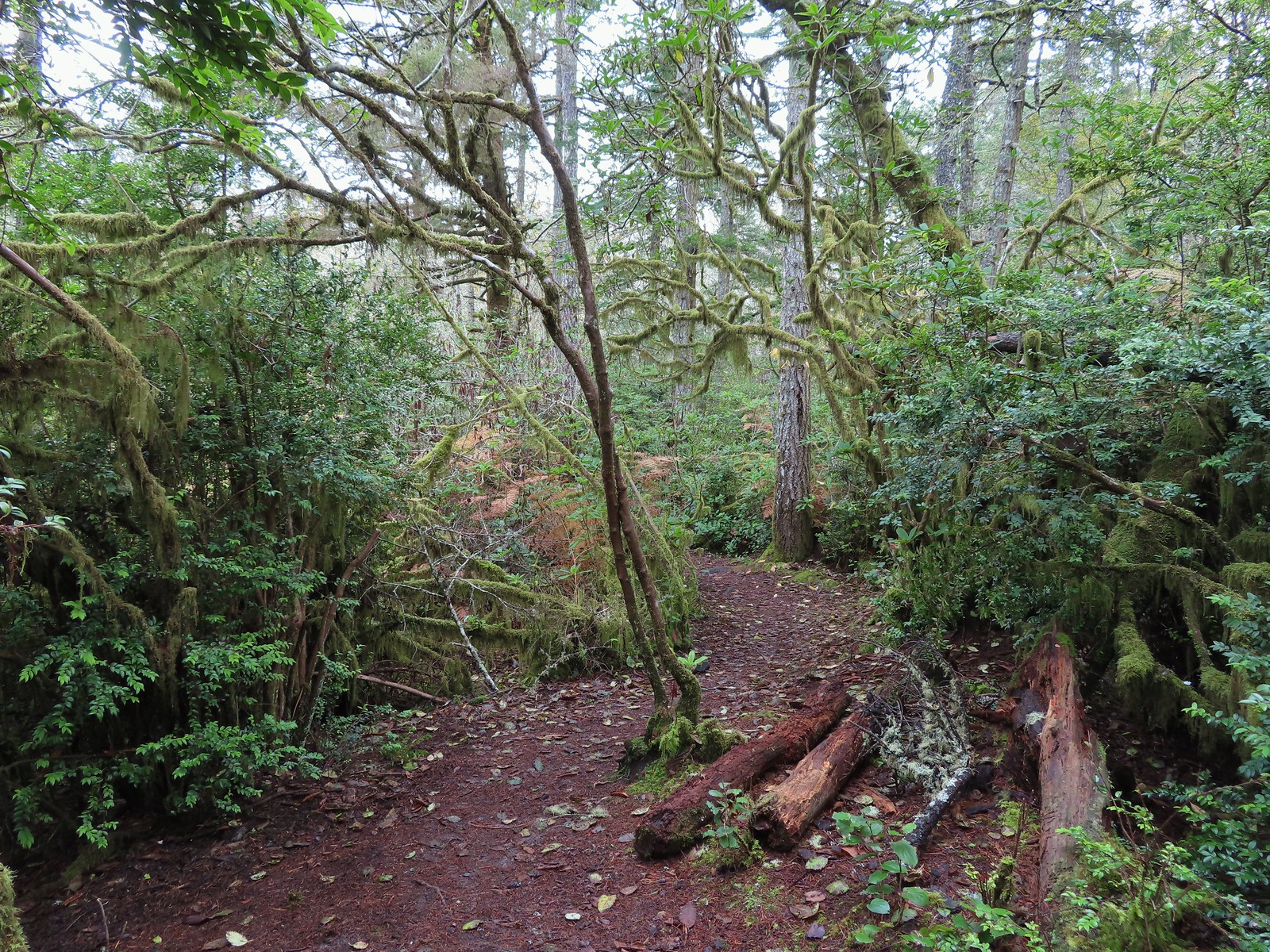
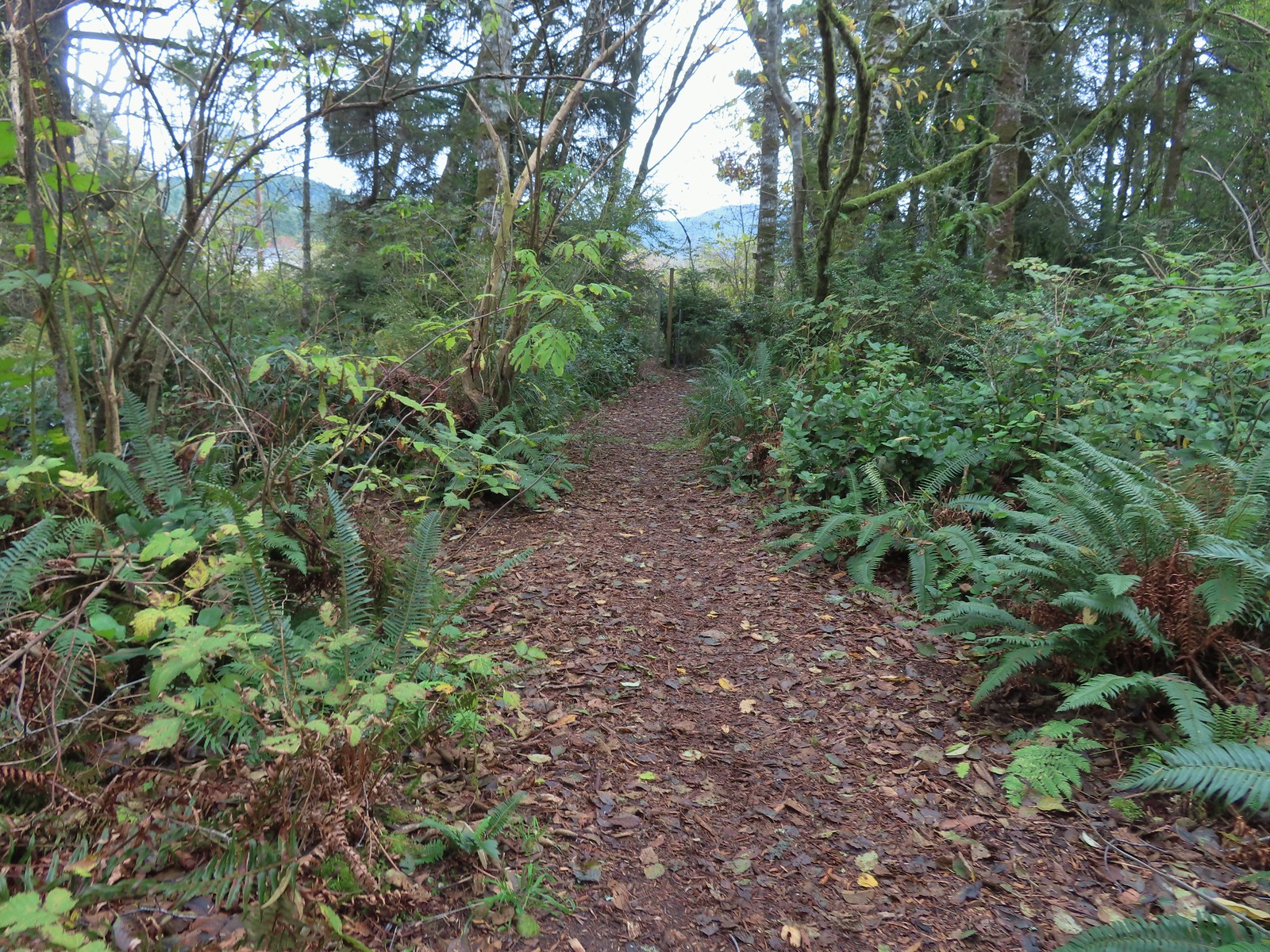 Arriving at the signboards at the start of the loop.


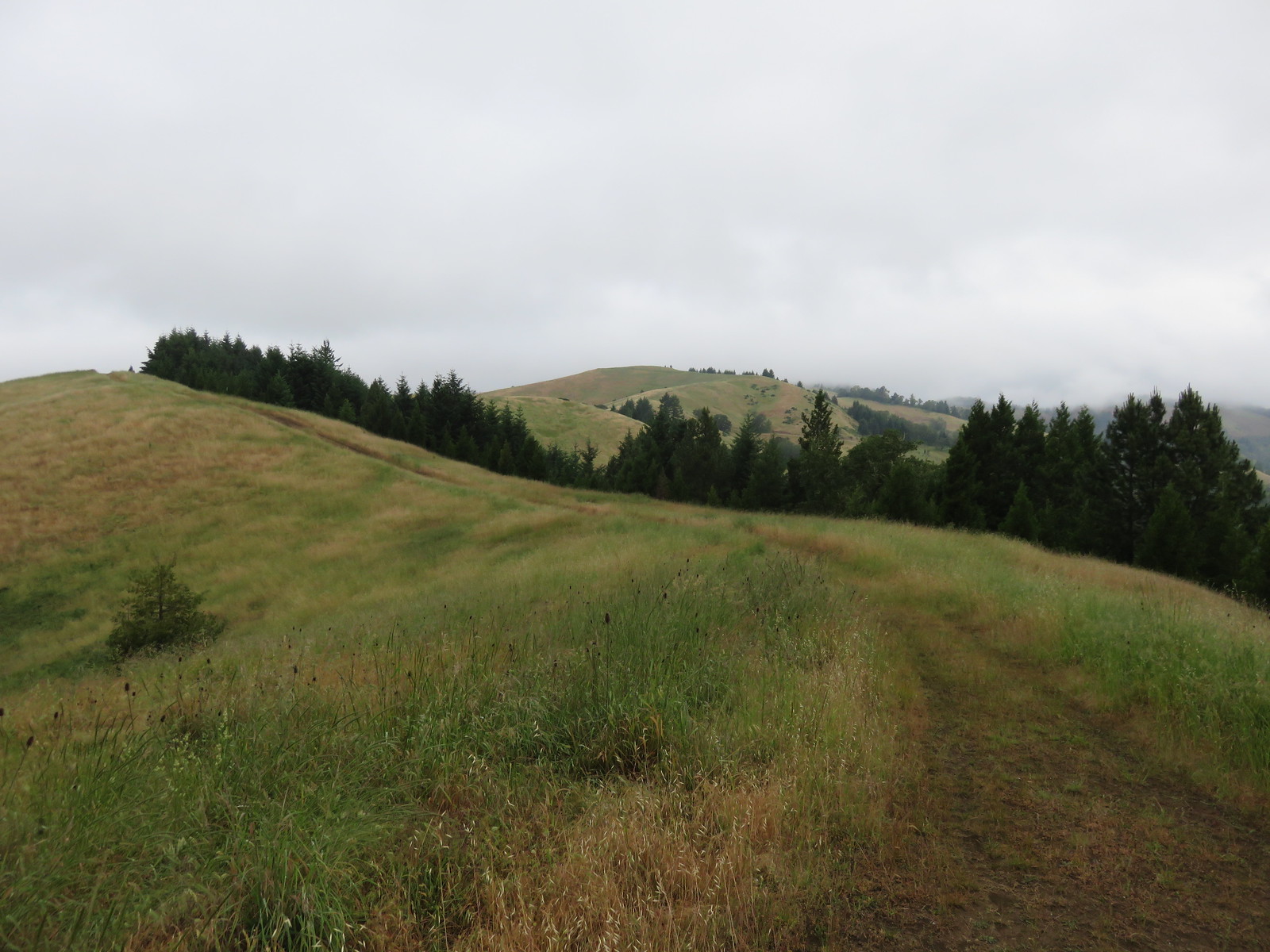
 Fall Creek Falls
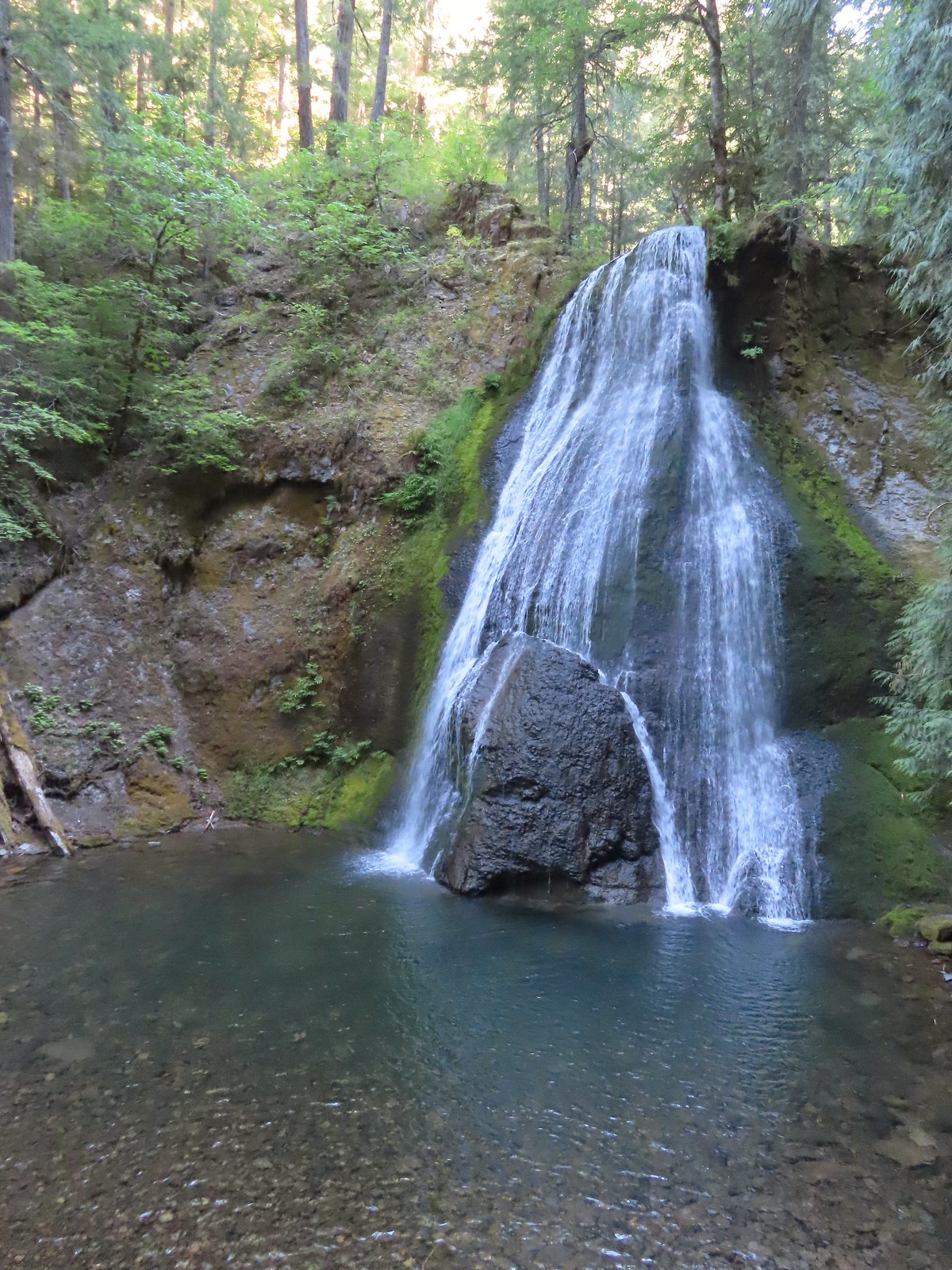 Yasko Falls
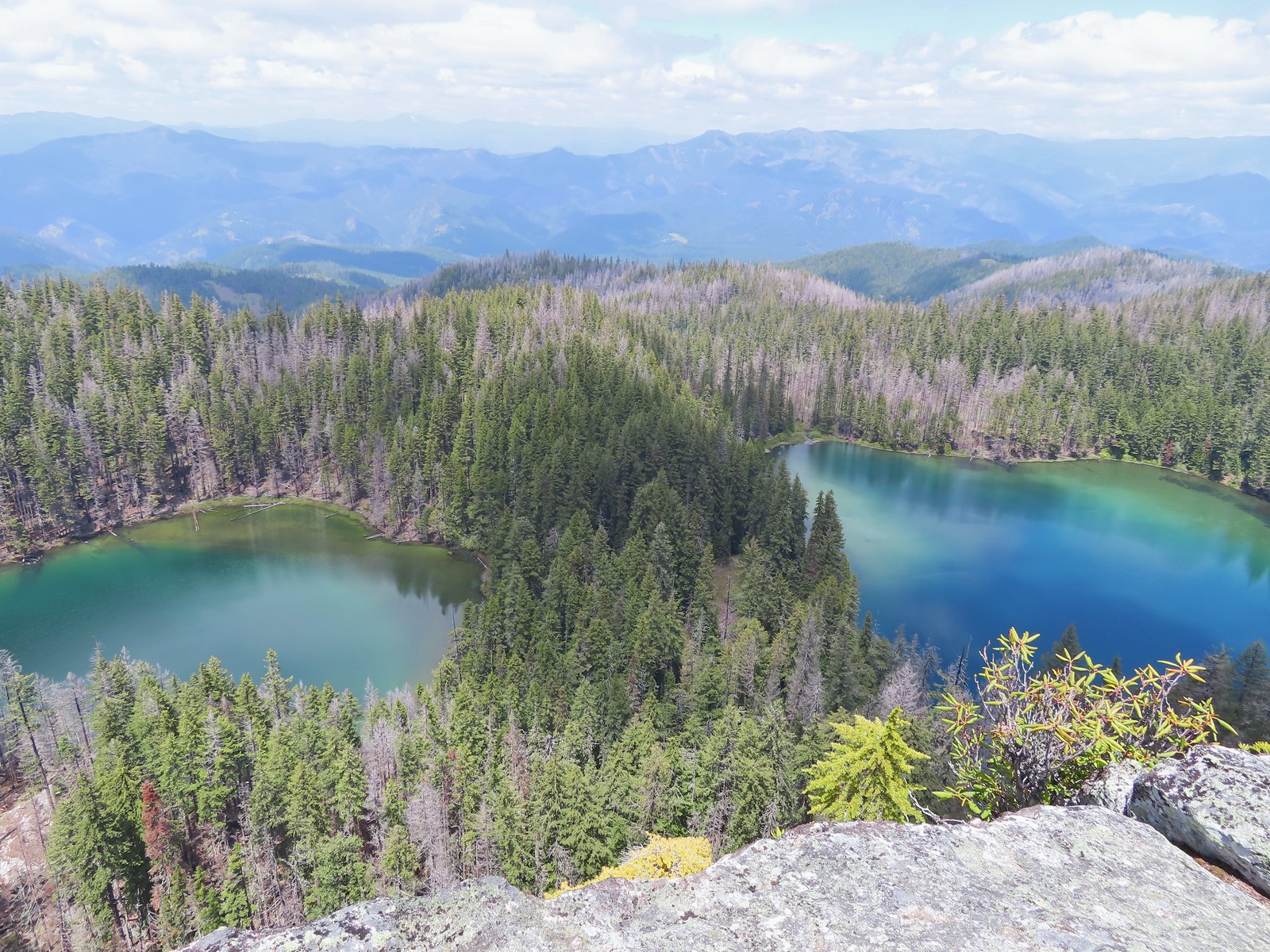


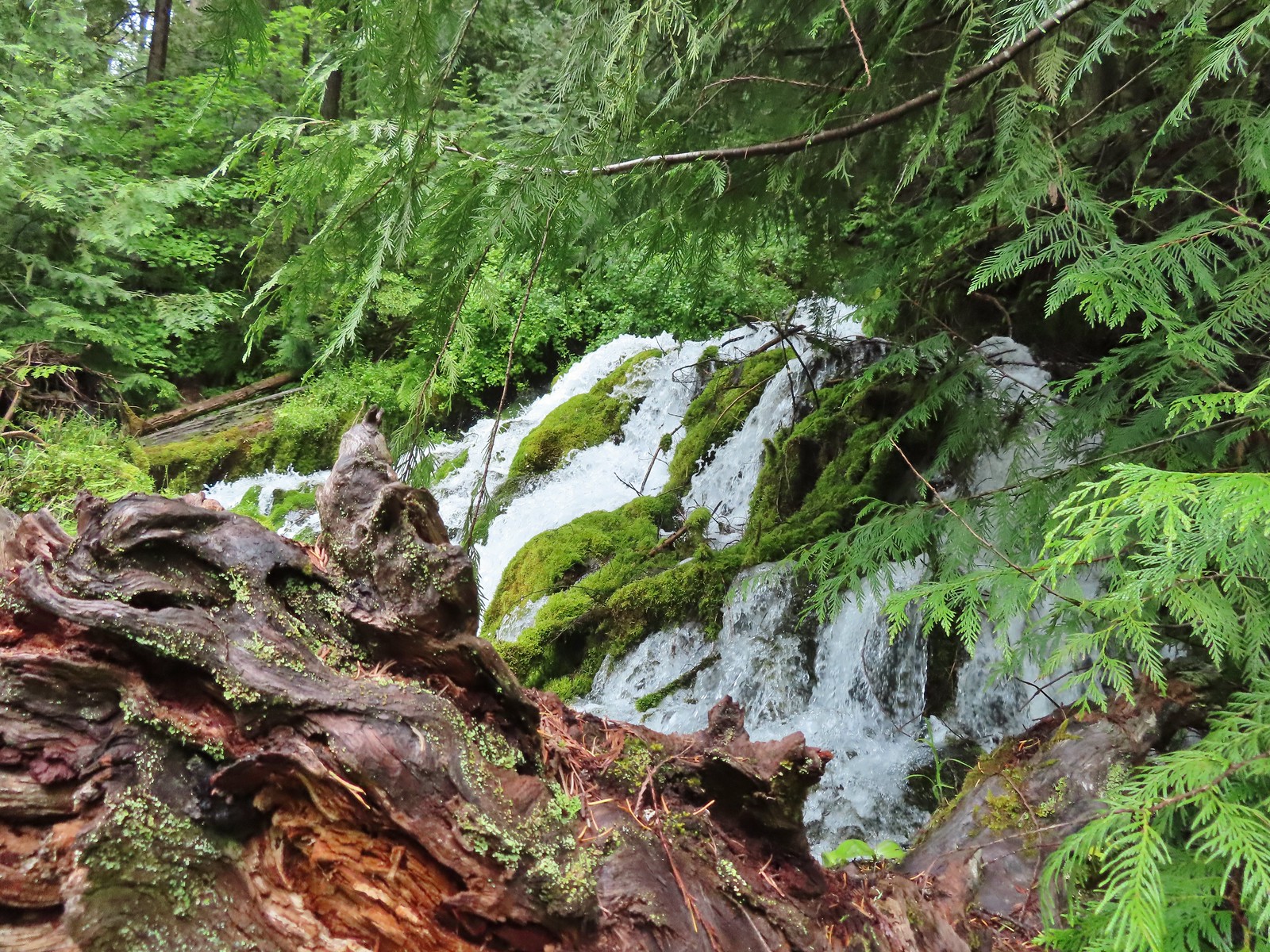
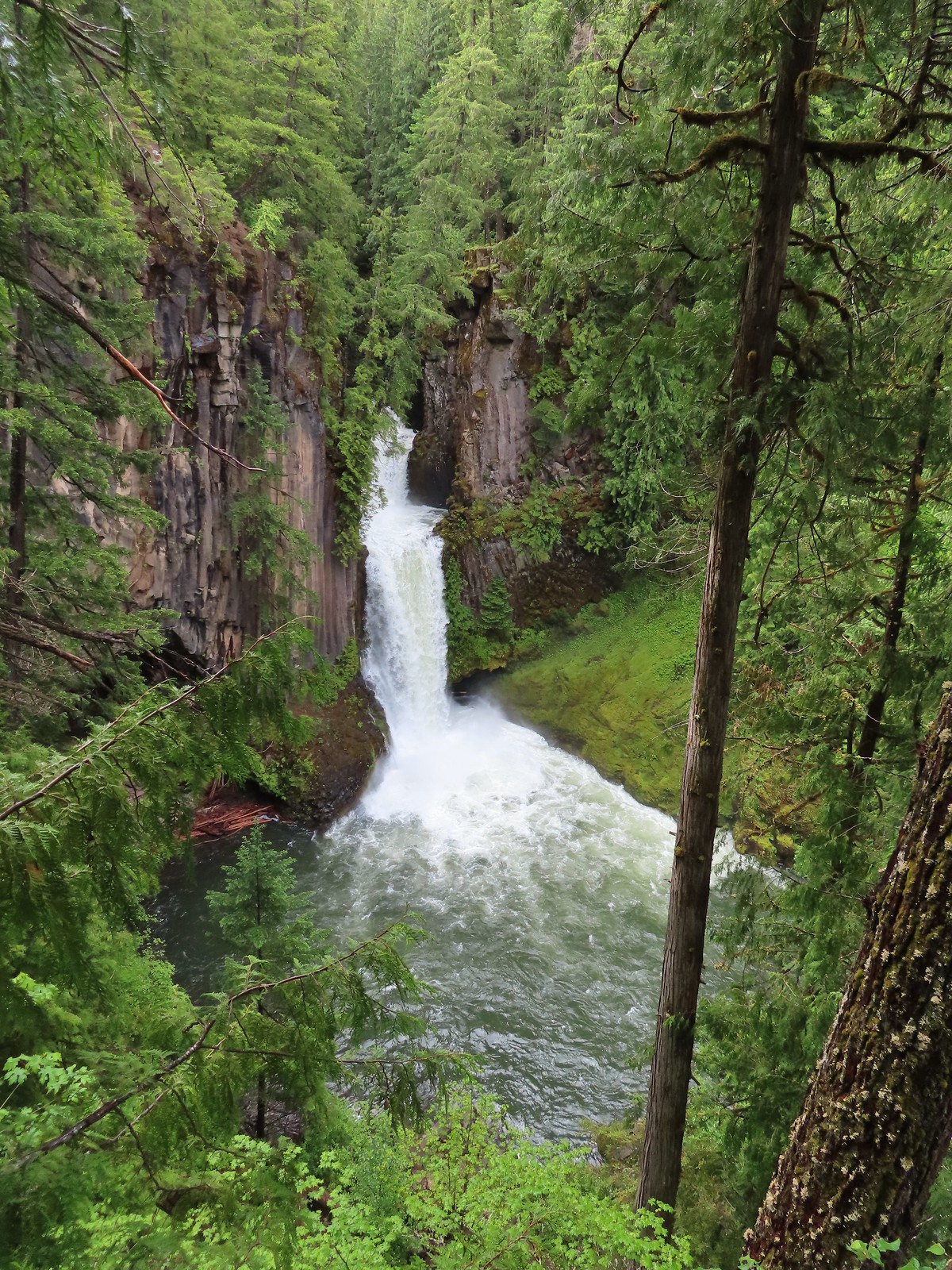


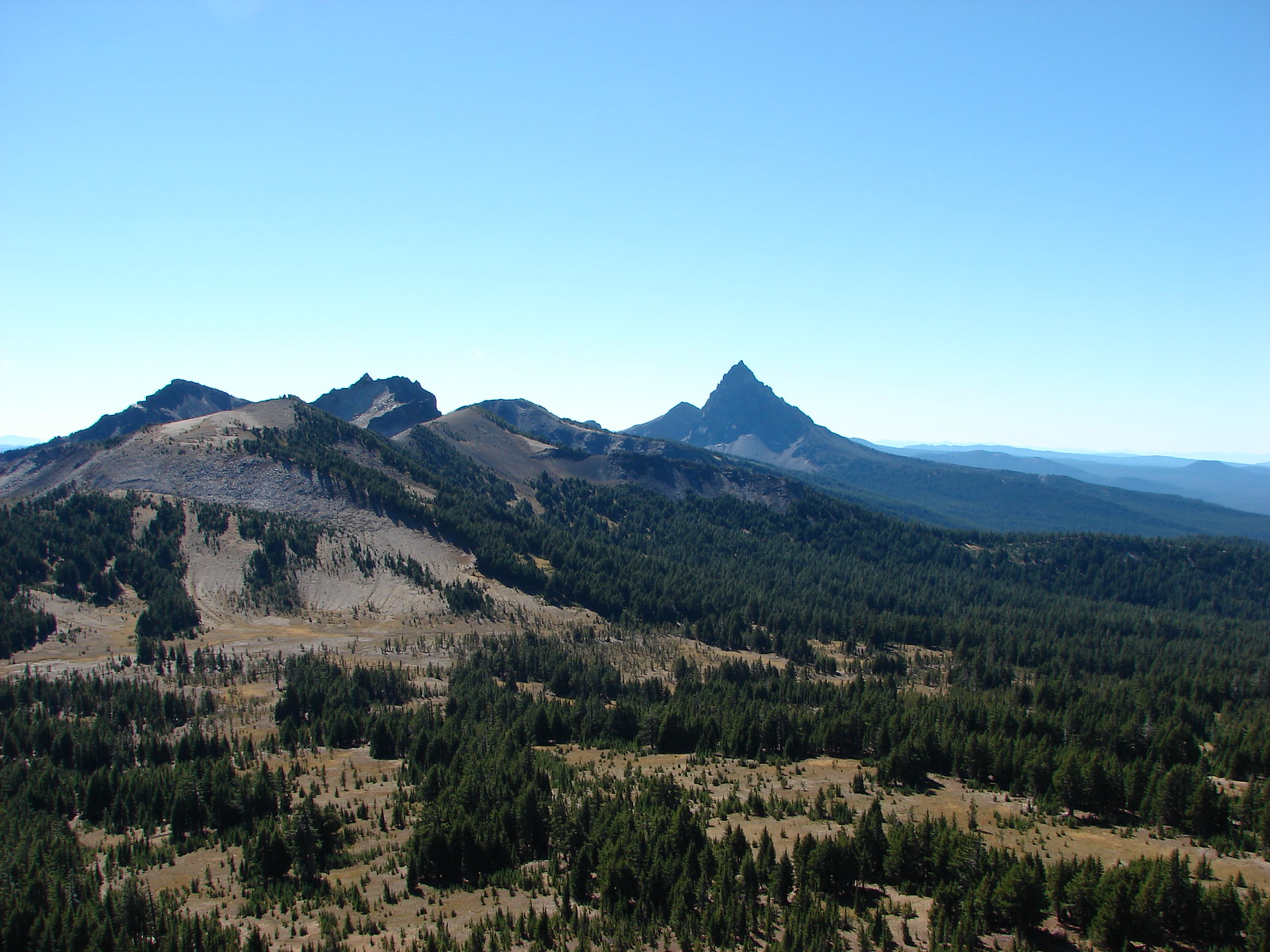





 Lower Table Rock
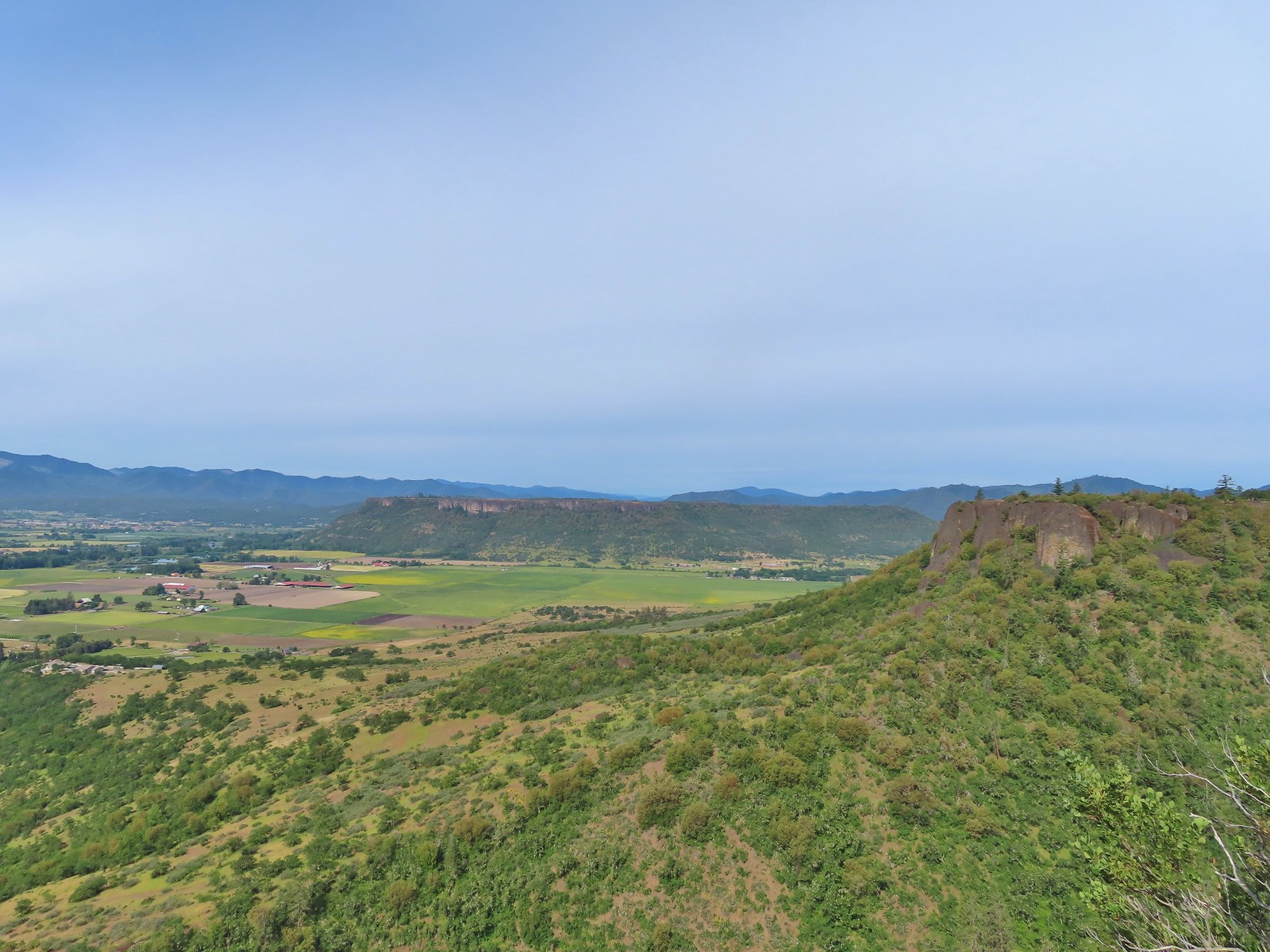 View from Upper Table Rock






























 From left to right: Storm, Finely, and Shag Rocks.
 Cape Lookout (
 Maxwell Point
 View from beside Maxwell Point.
 The Tunnel was built in 1926.

 The Tunnel from Tunnel Beach.
 Three Arch Rocks from Tunnel Beach.
 The end of Tunnel Beach. At higher tide it’s not possible to get around the point here.
 Getting closer to the end of Tunnel Beach. This set of ocean rocks are part of the
  Bald eagle on top of one of the rocks.
 Seal
Seal Agate Beach
 Cape Lookout from Agate Beach.
 An assortment of sea birds.
 Maxwell Point and Cape Lookout
 Sun starting to hit the Three Arch Rocks.
 Sand dollar
 Cormorants. There was a steady stream of flocks of birds heading south along the coastline.
 Footbridge over Fall Creek.
 Fall Creek
 Frosty leaves near Fall Creek.
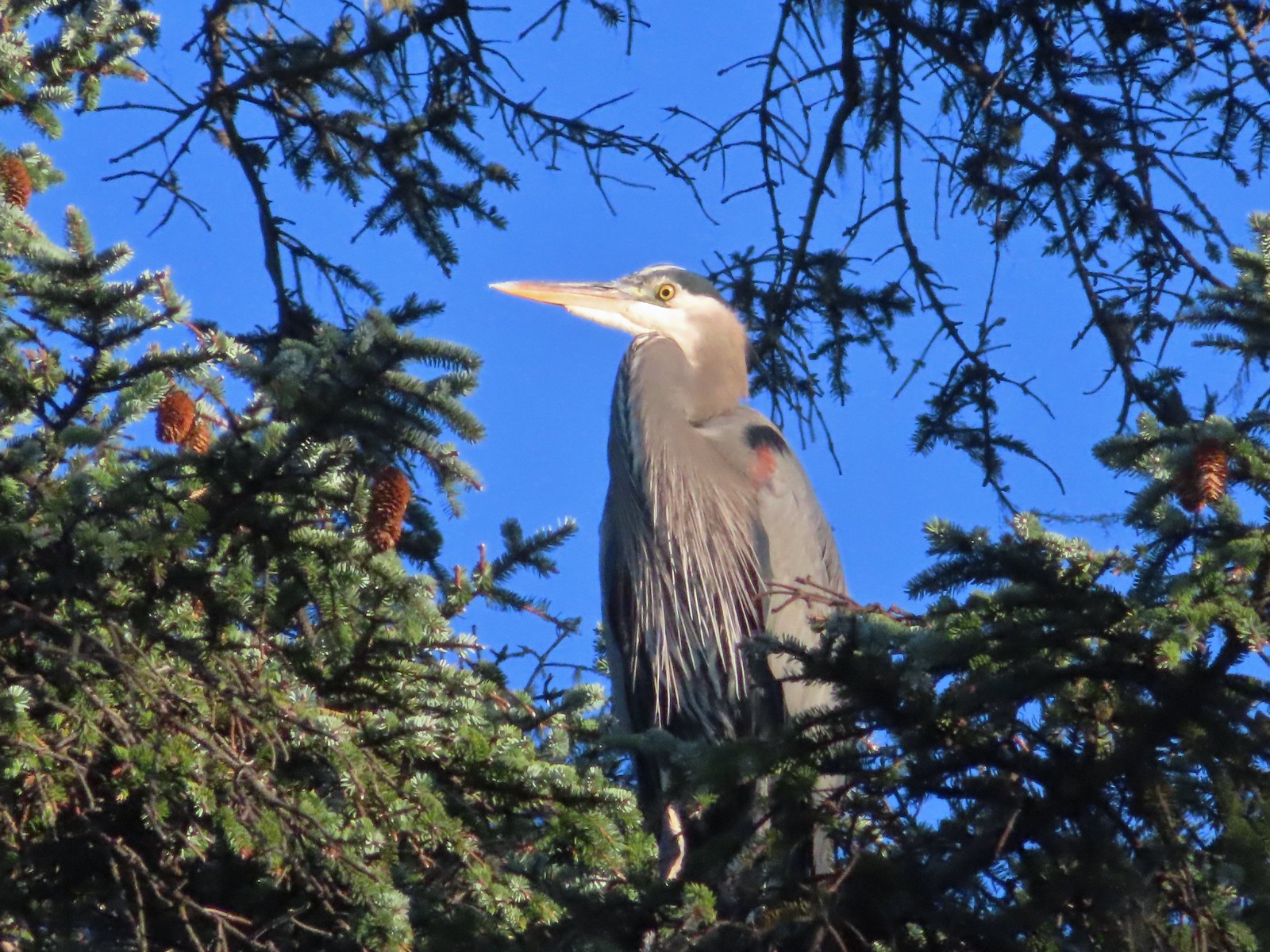 Great blue heron in a tree above Fall Creek.
 Happy Camp
 Hodgdon Creek
 Seagulls and common mergansers near Hodgdon Creek.
 Buffleheads
 Netarts Spit
 Happy Camp from our turn around point.
 Three Arch Rocks and Maxwell Point now in full Sun.


 The beach only extends a short distance to the South.
 The sea stack and Short Creek Spillway to the North.
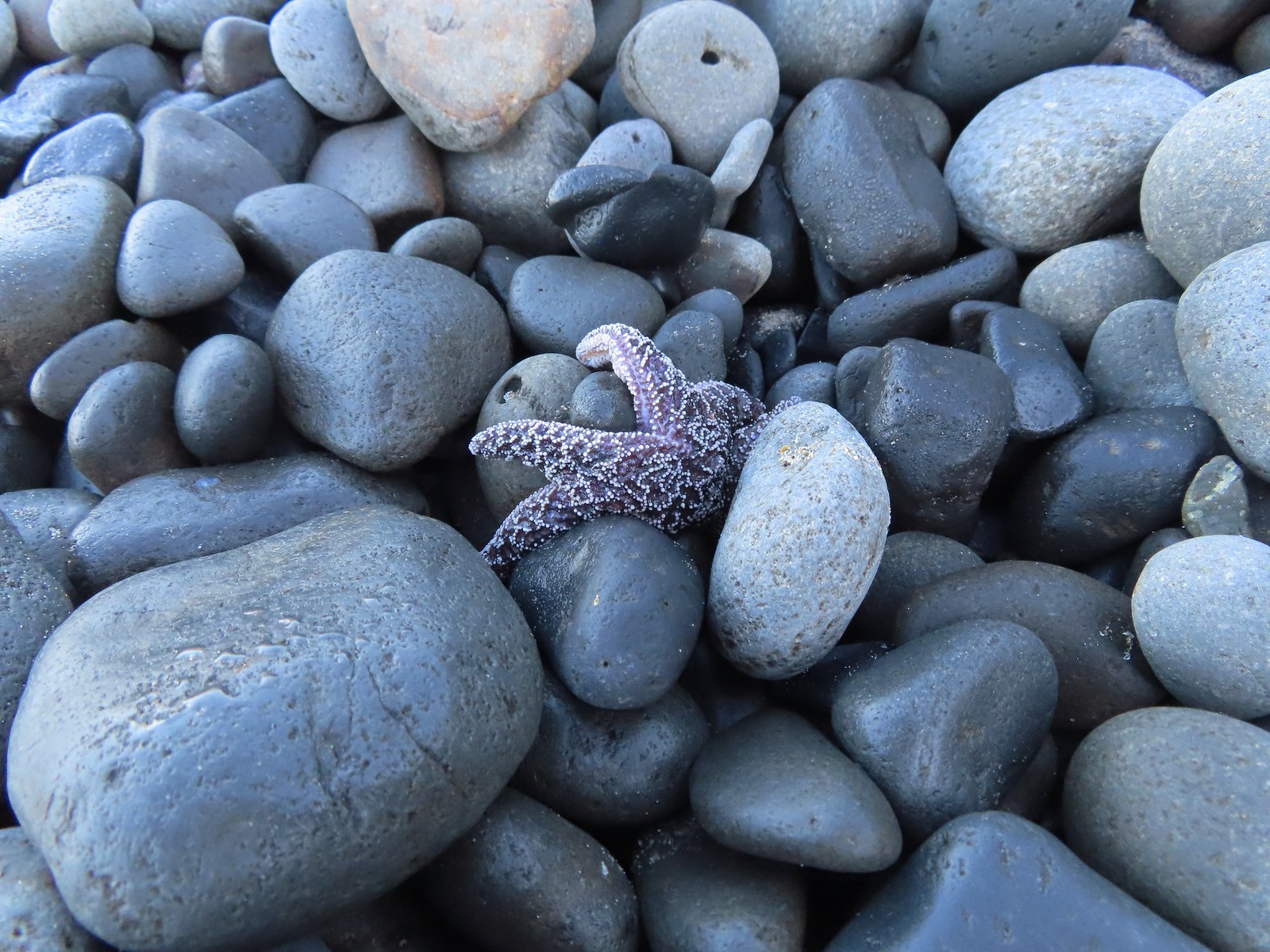 Starfish
 The sea stack
 Cape Meares (
 I didn’t notice the little waterfall along the cliffs below Cape Mears until I looked at the pictures.
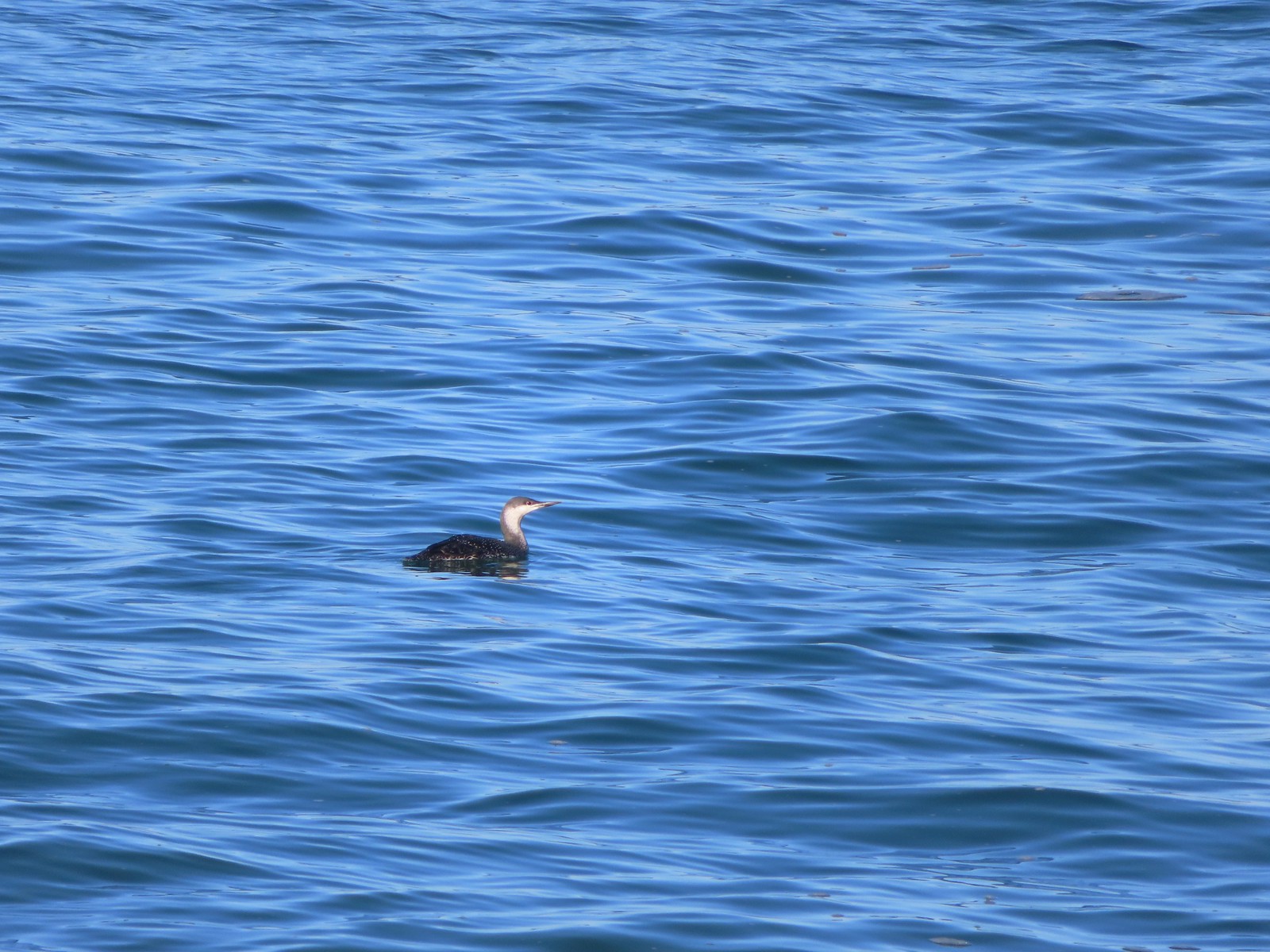 Red-throated loon

 The area ahead in the shade is where things started looking a little sketchy.


 Apparently there used to be a metal gate here instead of a the rope/chain.

 Bald eagles in the tree tops.
 Bald eagles
 This is where the dike/path turned South. Our best guess is that there has been additional wetland restoration since the entry in the field guide and some of the dikes that the guide route followed have been removed.
 We weren’t getting across that.
 Somewhere out that way, beyond the slough, was the Wilson River.
 Now heading East toward Sissek Road.
 At this point we had left Sissek Road which used to extend straight from Goodspeed Road where the signs and rope/chain is in this photo (ahead to the right at the 90-degree turn).


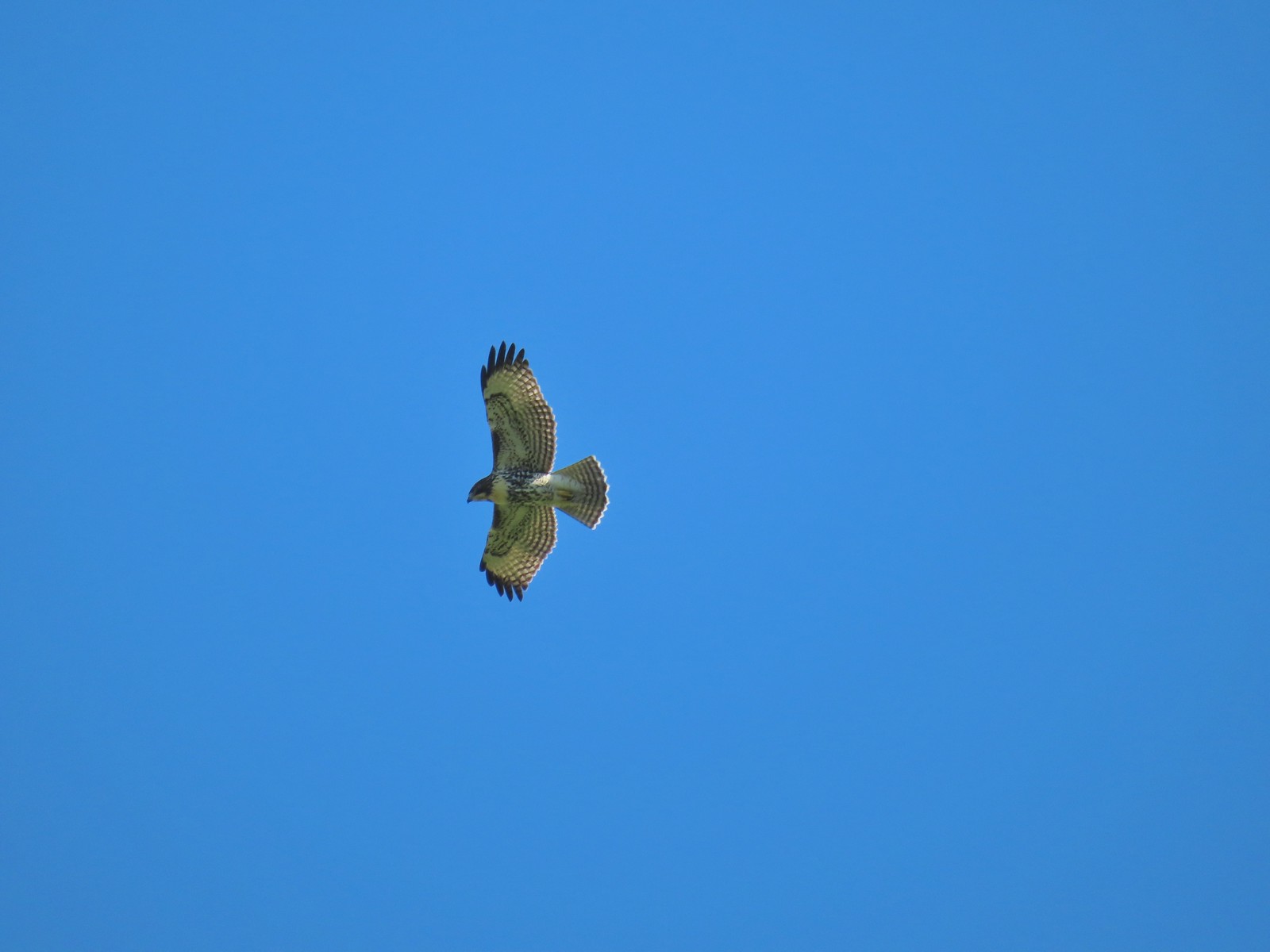 Hawk above Goodspeed Road.
 One path led down to Hall Slough ending in mud at it’s bank.
 A second path led north on what the GPS showed as a former road but it was too overgrown and flooded to make it far.


 Junction with the spur trail to the power line corridor.


 Footbridge and stairs leading back up to the picnic table.
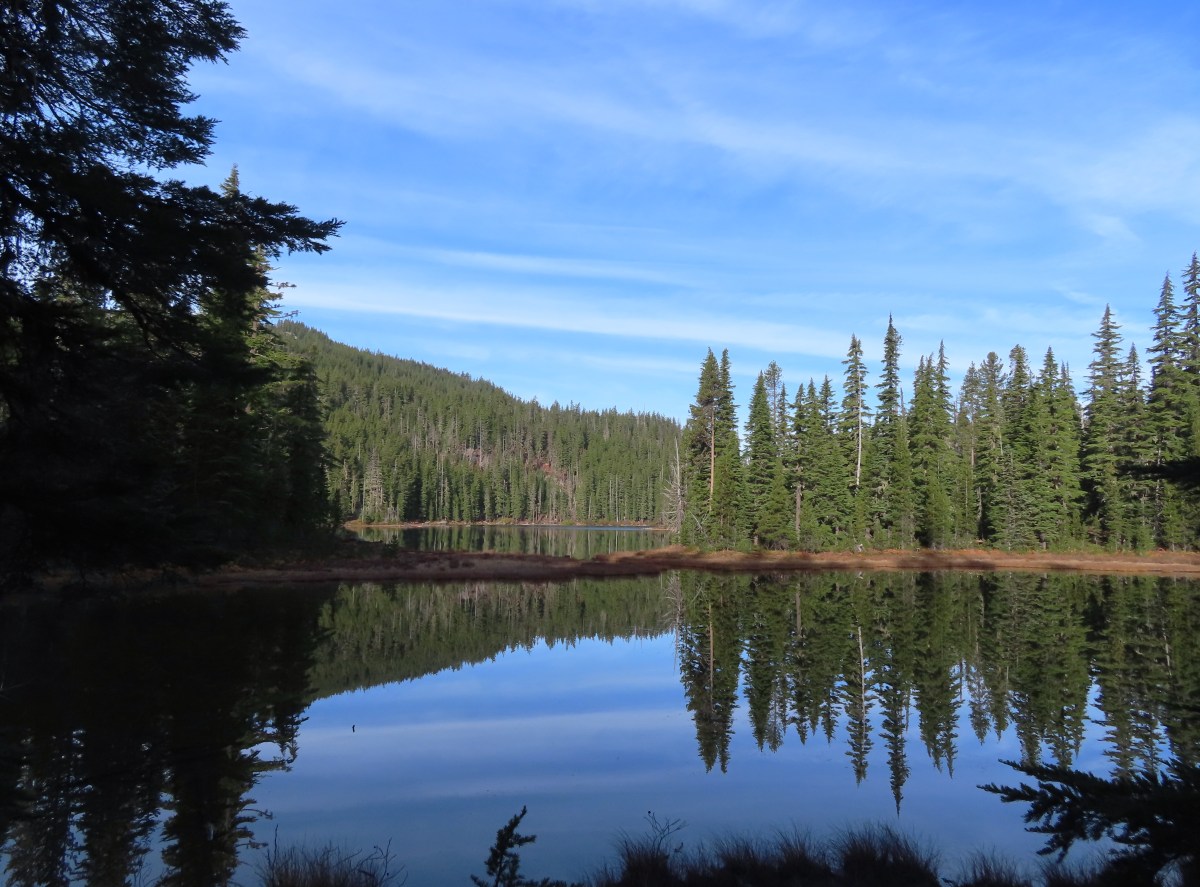


 Along the way we entered the wilderness area.


 It looks to have been a good year for beargrass.


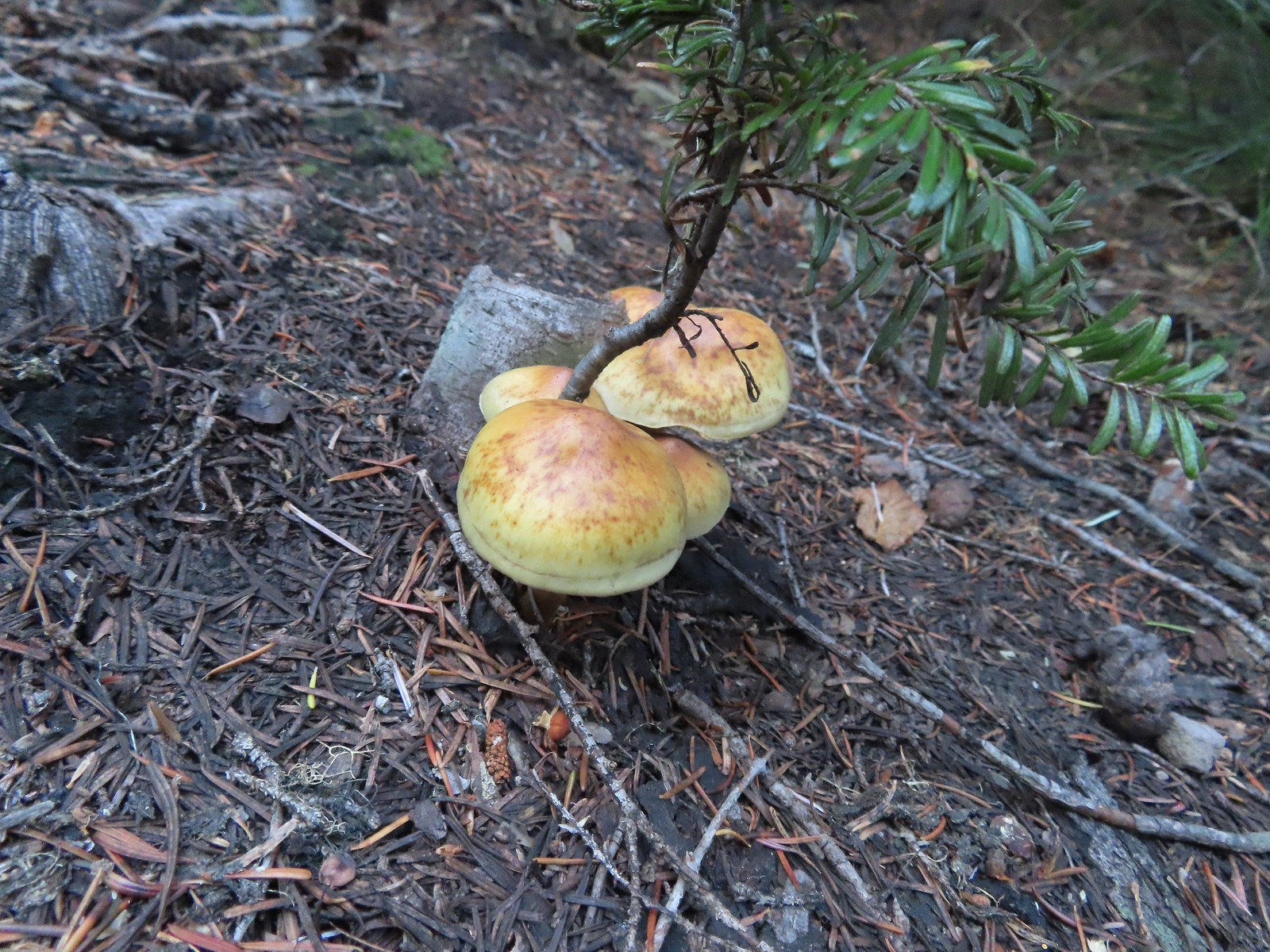
 The trail was well maintained with only one small log across the entire route to Vivian Lake.

 Another level section.
 Pond along the trail.
 The saddle at the high point of the trail.
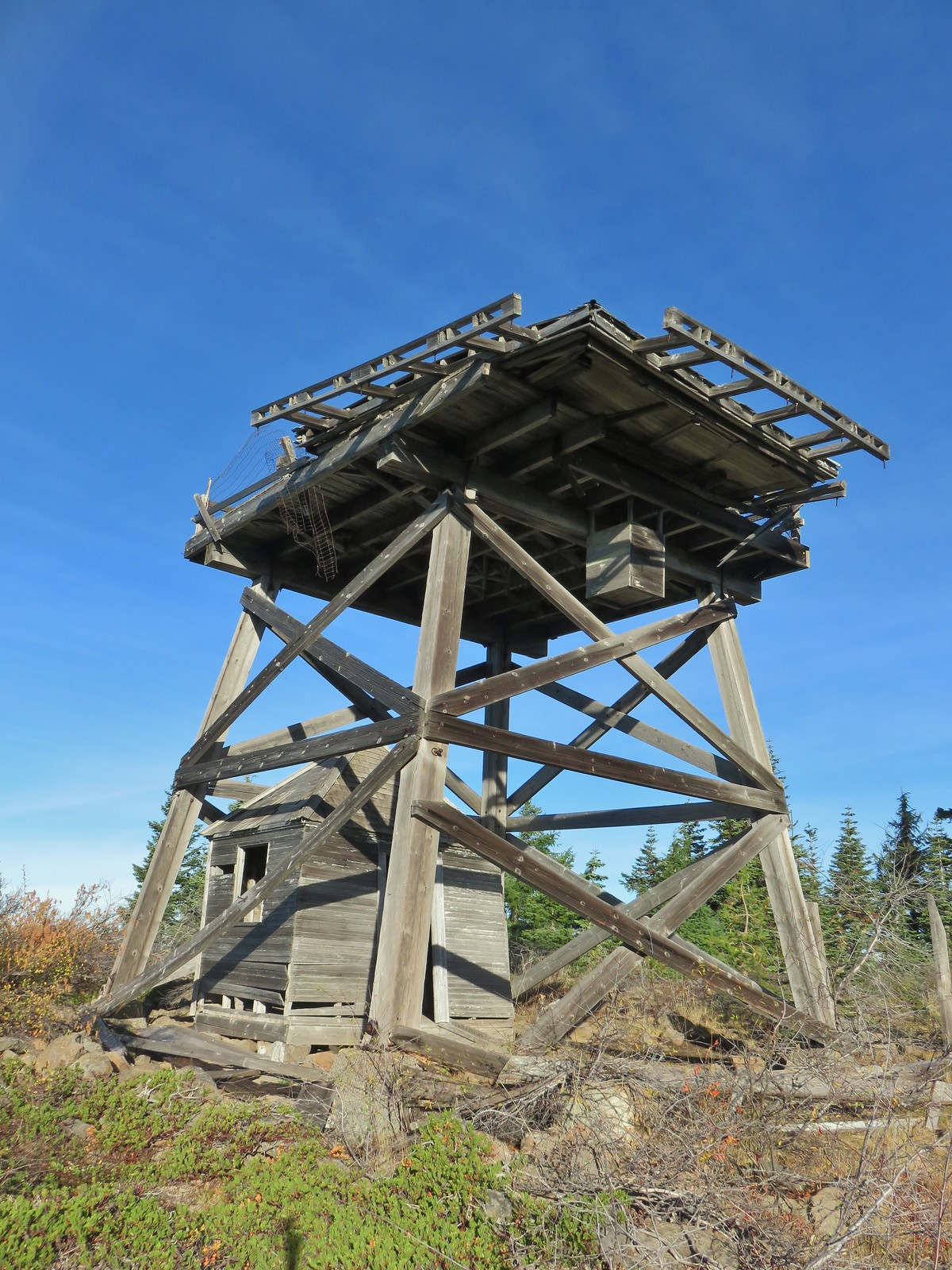
 Maiden Peak (


 We passed the smaller of the two lakes a half mile below the saddle.
 The second lake, which was just 100 yards from the first, was much larger.
 Mt. Yoran from the lake.
 Ridge above the lakes.
 Just before beginning the descent the trail passed South of a third small pond/lake that was visible through the trees.
 Heading down to the creek.

 The marsh
 Mt Yoran from the marsh. While it looks like a meadow, Fall Creek flows through here, and at times we could see water out in the grass.


 We were able to use these rocks to hop across this narrow channel to the North shore of the lake where we were able to get a view of Mt. Yoran.


 Varied thrush. These continue to be the most frustrating frequently seen bird to try and photograph.


 I believe these were ring-necked ducks.
 Diamond Peak from the trail on the way back.

 Not all of the blowdown was as easy as this log to get over/under.
 Multiple switchbacks kept the lower portion of the climb from feeling too steep.
 The Hemlock Butte Trail succumbing to the vegetation.
 An obvious spur trail at the base of the rock outcrop leads to a view of Mt. Yoran and Diamond Peak. For those not comfortable with the scramble this is a good goal.
 The trail to the summit at the junction with the spur.
 Scrambling up
 Mt. Yoran and Diamond Peak from the summit.
 Wolf Mountain to the NW with clouds covering the Willamette Valley in the distance.
 The view South.
 Looking down from the summit. (The trail is to the right.)
 The “trailhead” was just under 14 miles from Highway 58 or just over 5.5 miles from the Vivian Lake Trailhead.
 The trail sign on the right. The Pool Creek Trail #4228 shows up on the Forest Service map, but they don’t have a dedicated webpage for it. We were made aware of the trail by following
 What looks like it might be tread ahead is actually the log.
 The Pool Creek Trail to the left of the creek. Here you can see the first switchback turning steeply uphill.
 The makeshift creek crossing.
 At the third switchback.
 The reason we hadn’t noticed the trail on the far side was because it climbed quite a bit in an initial series of short switchbacks so from where we had been the trail was already much higher than we’d expected it would be. In the photo Heather is coming up to the third switchback below.
 These two trees are mentioned in the May 2022 trail update on the Cascade Volunteers webpage.
 This one was high enough to easily pass under. On the far side are more cut logs.
 First view of the falls from the trail.
 Pool Creek Falls




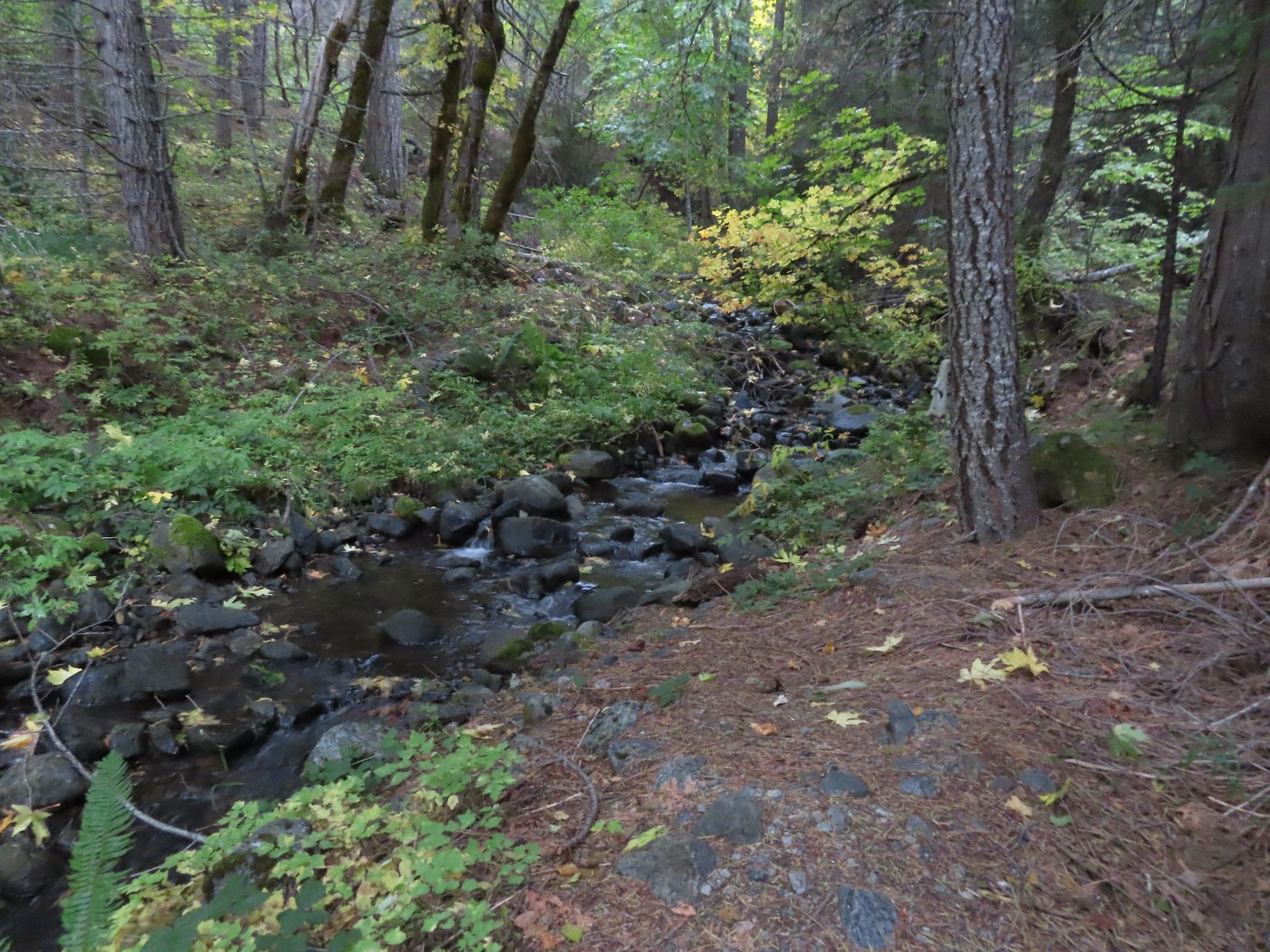 O’Brien Creek near the trailhead.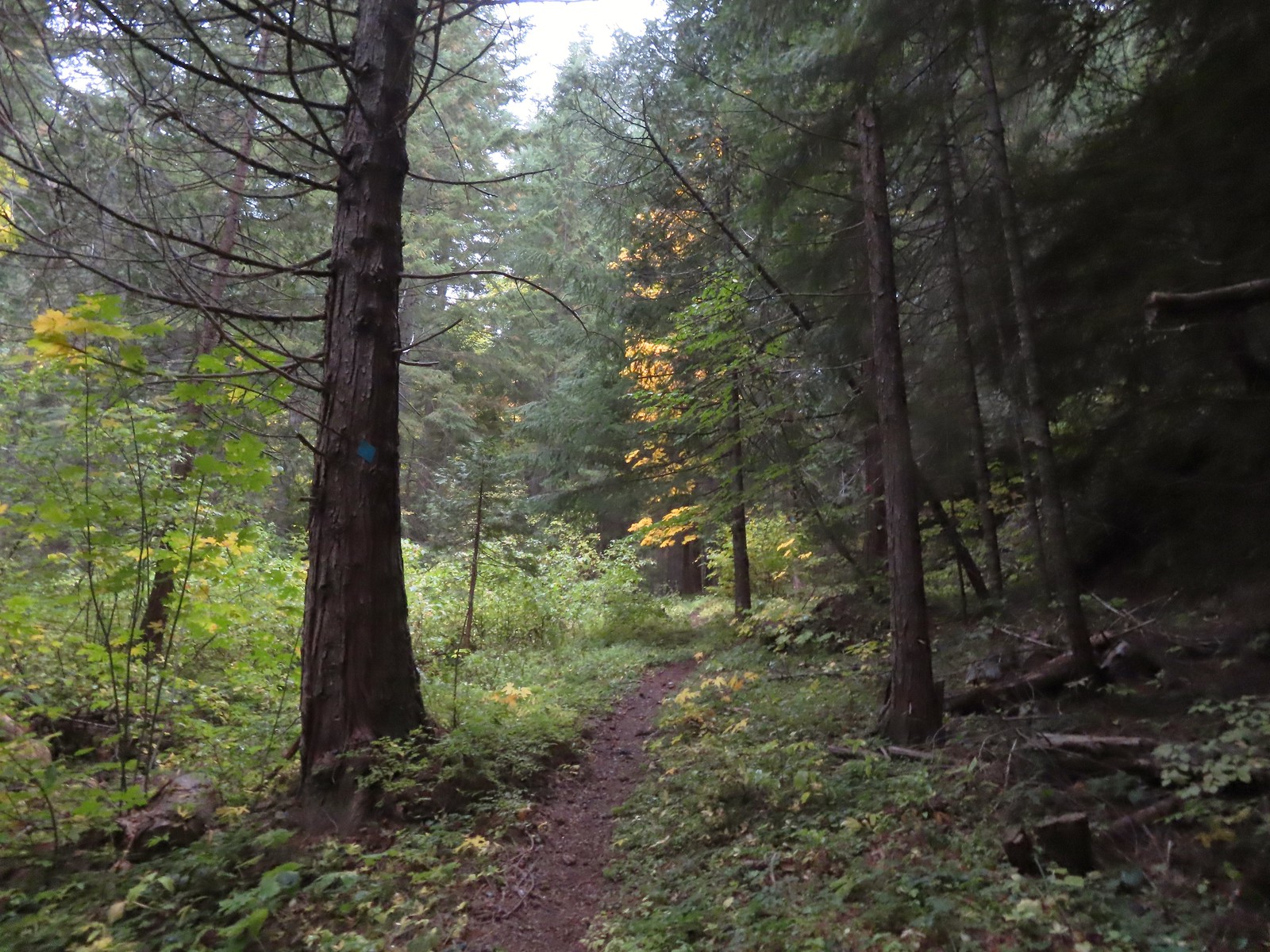
 It seemed like all of the climbs this weekend had been steep.
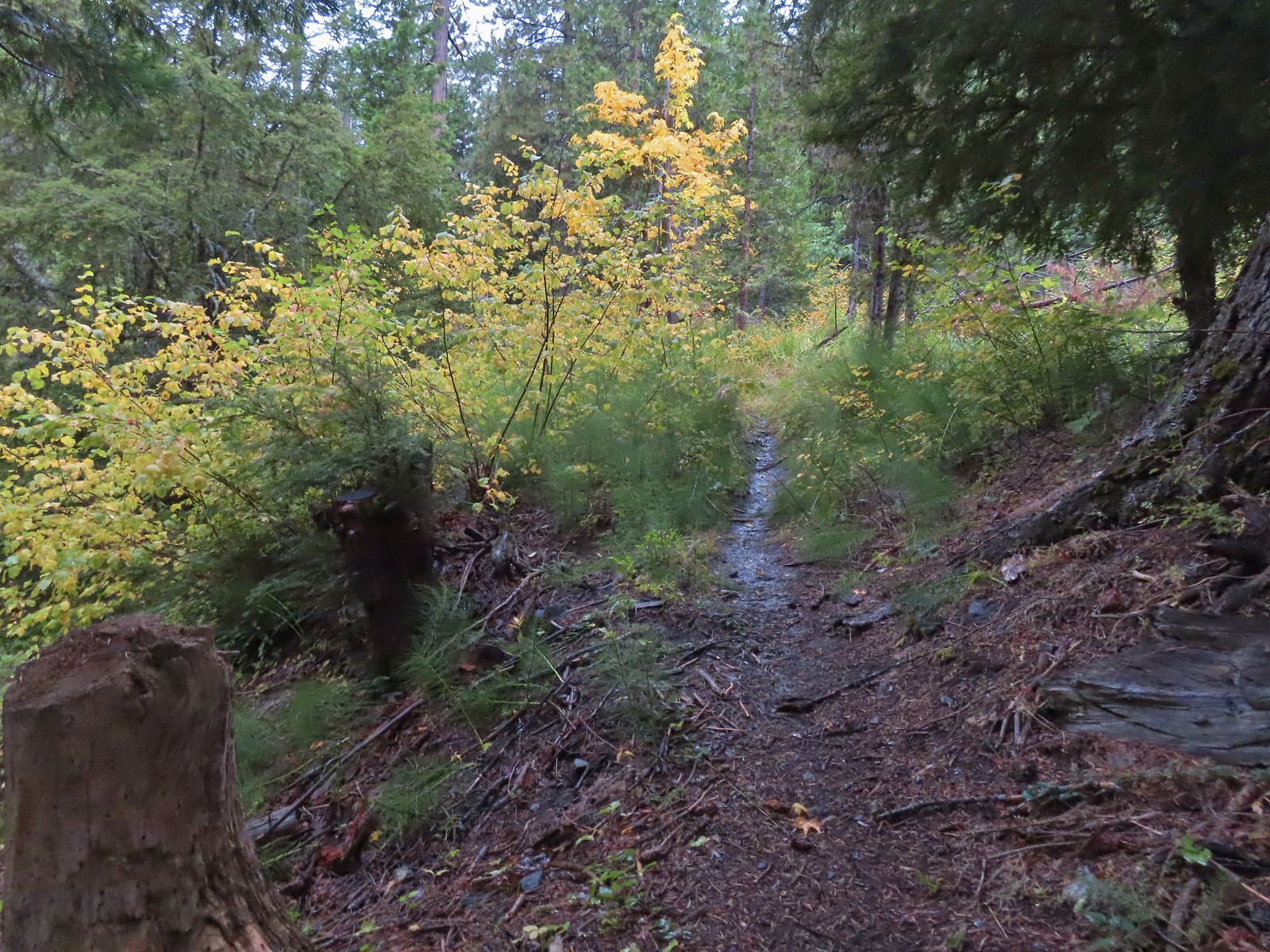 After two warm sunny days this hike finally felt like Fall.
 As I approached this footbridge I noticed a yellow jacket fly into the big hole along the right side of the trail. A quick peak in revealed a busy nest so we wound up bushwacking uphill and around it hopping onto the bridge at the edge of the marsh ahead.
 A nice newer looking sign at the upper trailhead.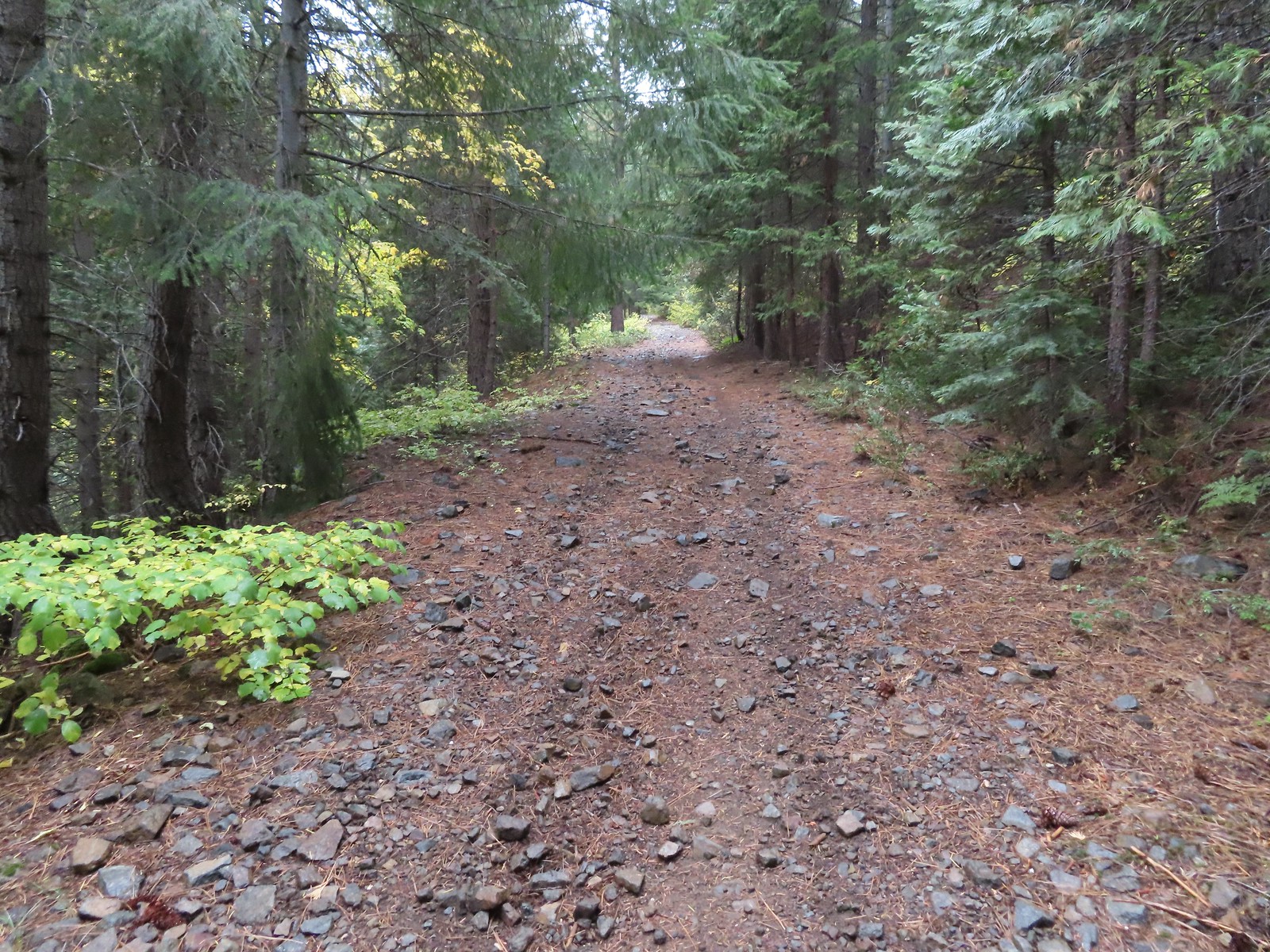


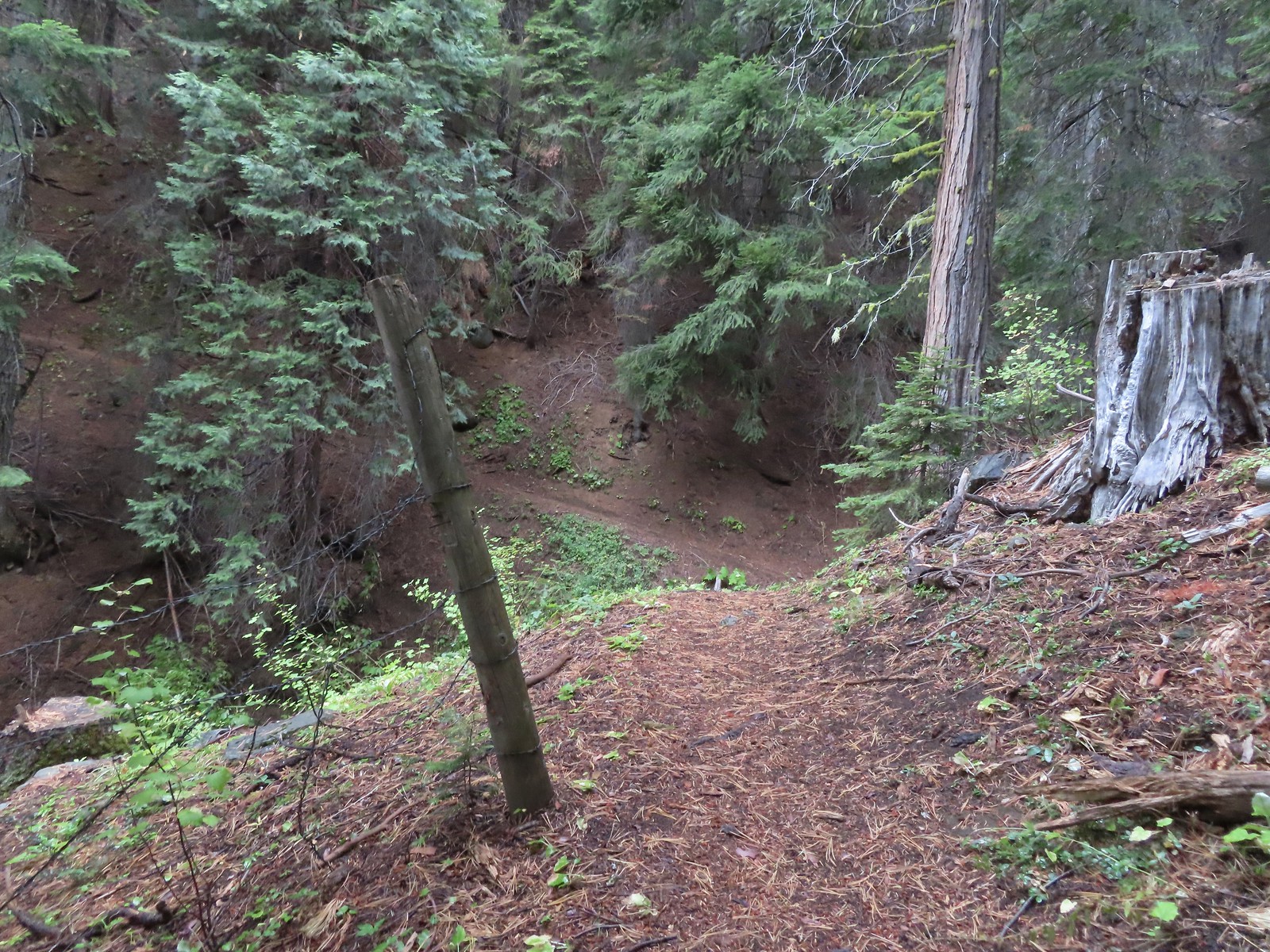
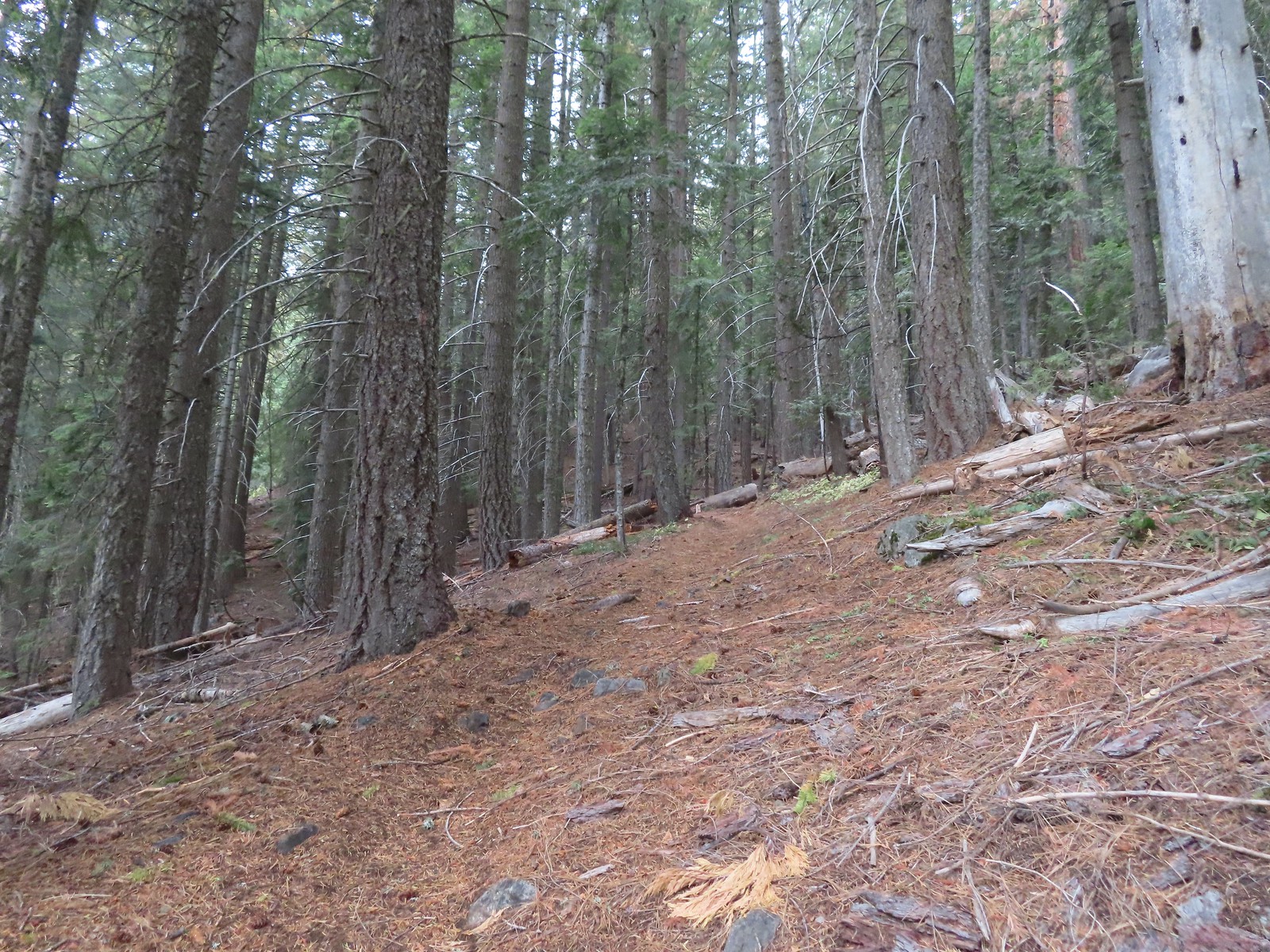
 There were a few really big trees in the forest along the trail.
 Grayback Mountain from the trail.
 The trail crossing O’Brien Creek.
 The junction with the spur trail to the snow shelter. It took me far too long to realize that the sign was upside down. I couldn’t figure out why it thought the Boundary Trail was to the left, after looking at it a few more times it dawned on me that the words were upside down.
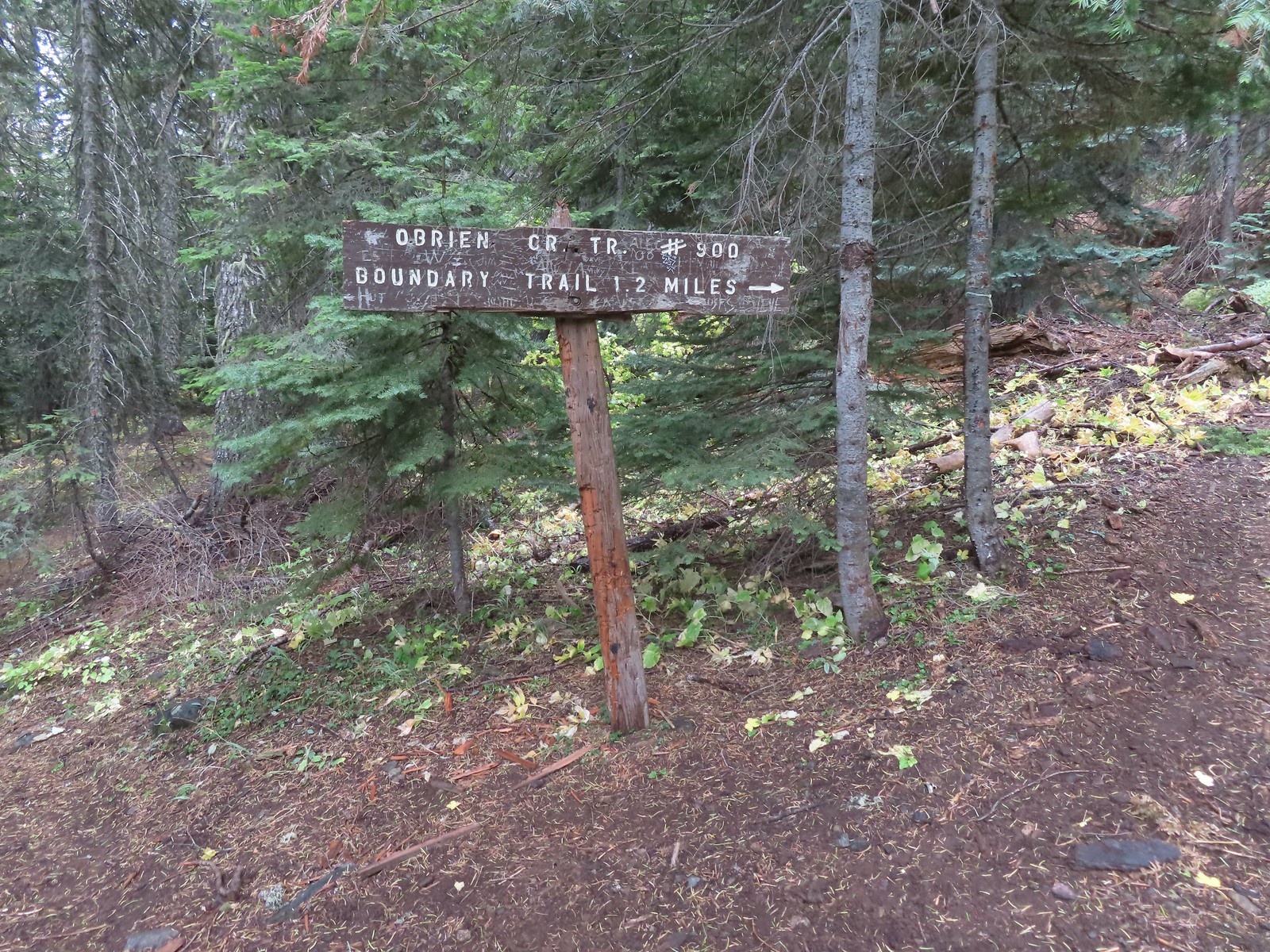 Ah ha! It wouldn’t stay this way but it sure made more sense.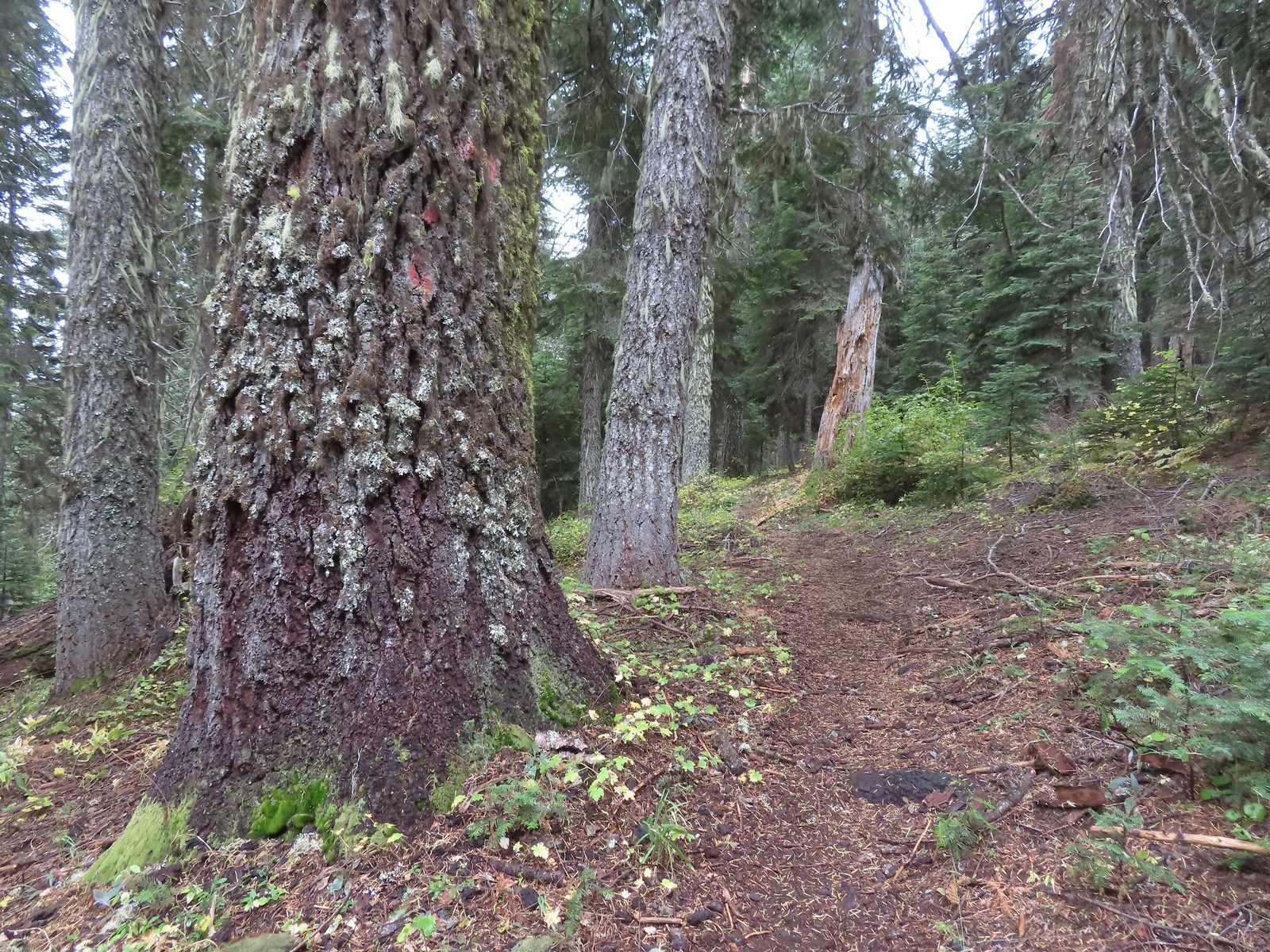


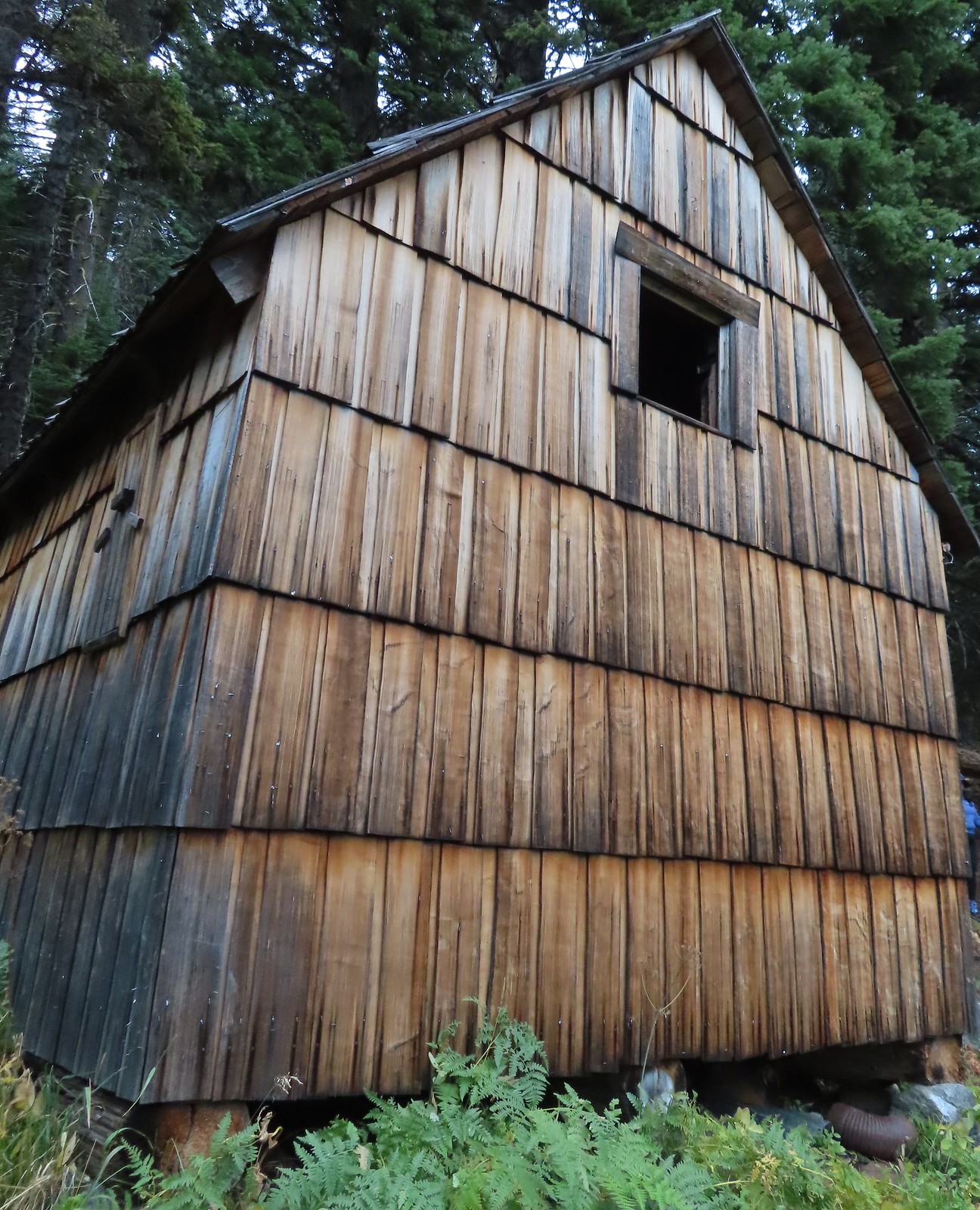
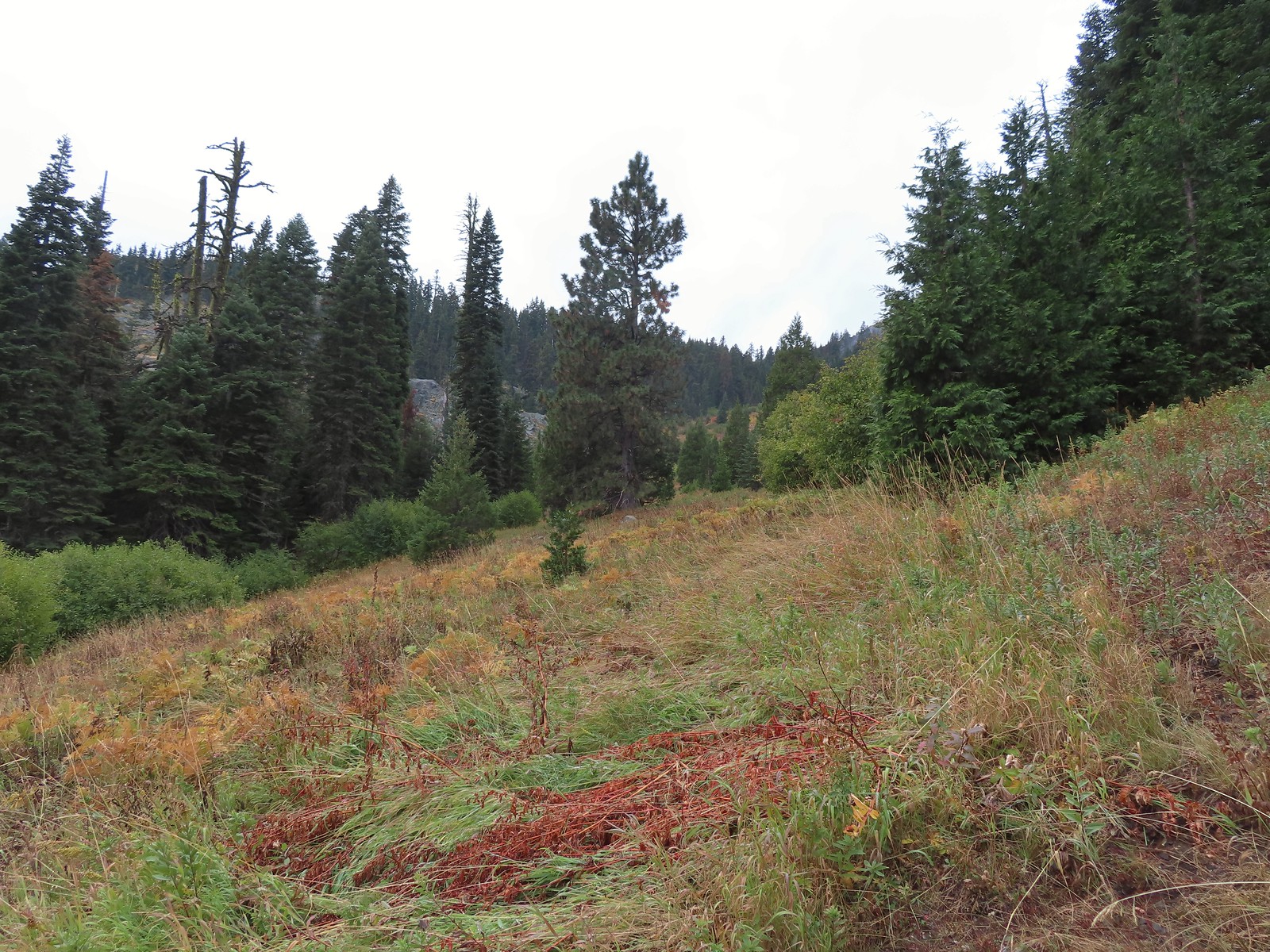

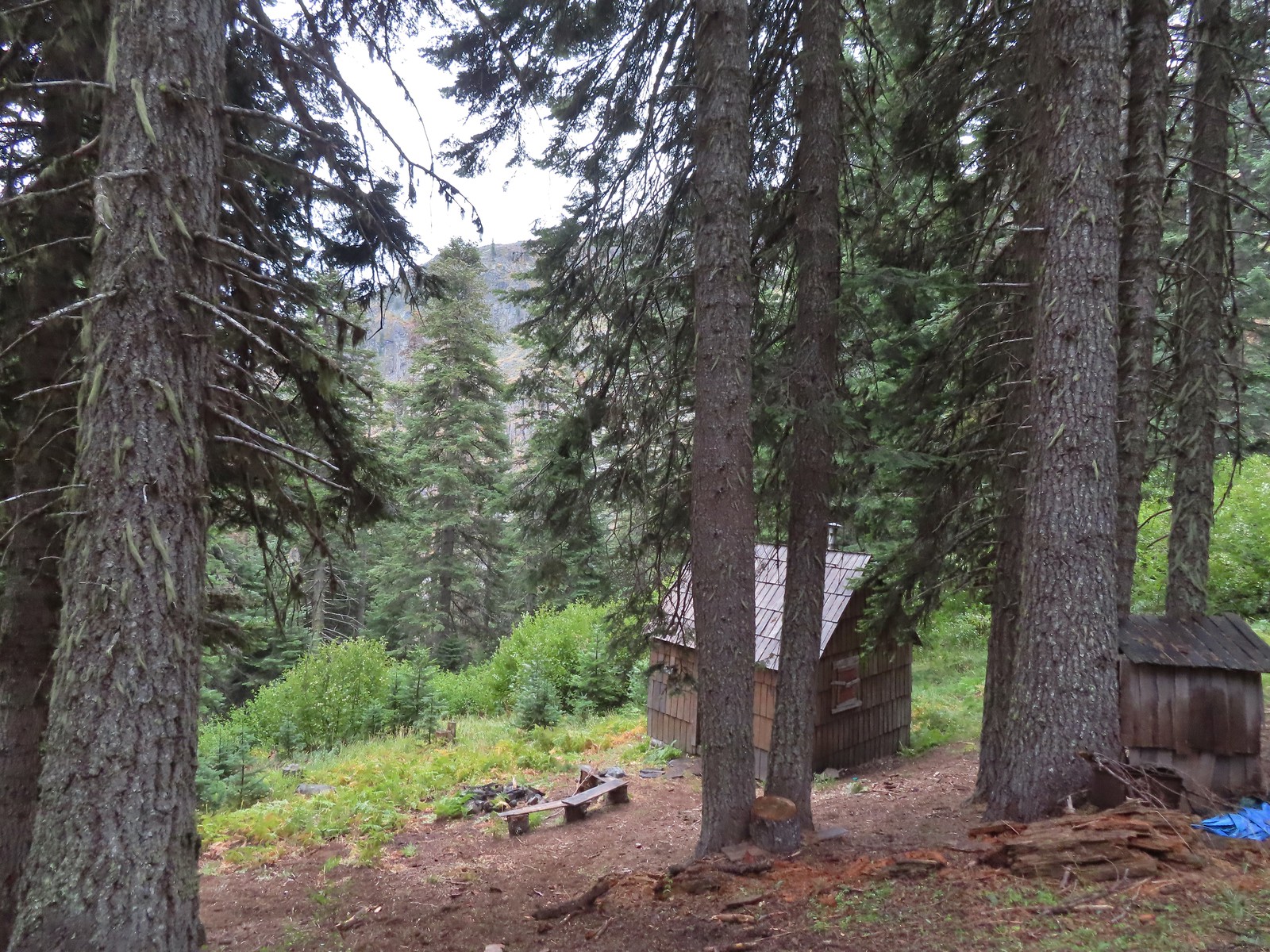
 There used to be a cabin out in the meadows and now there is a snow gauge and a campsite which may be where the voices were coming from.
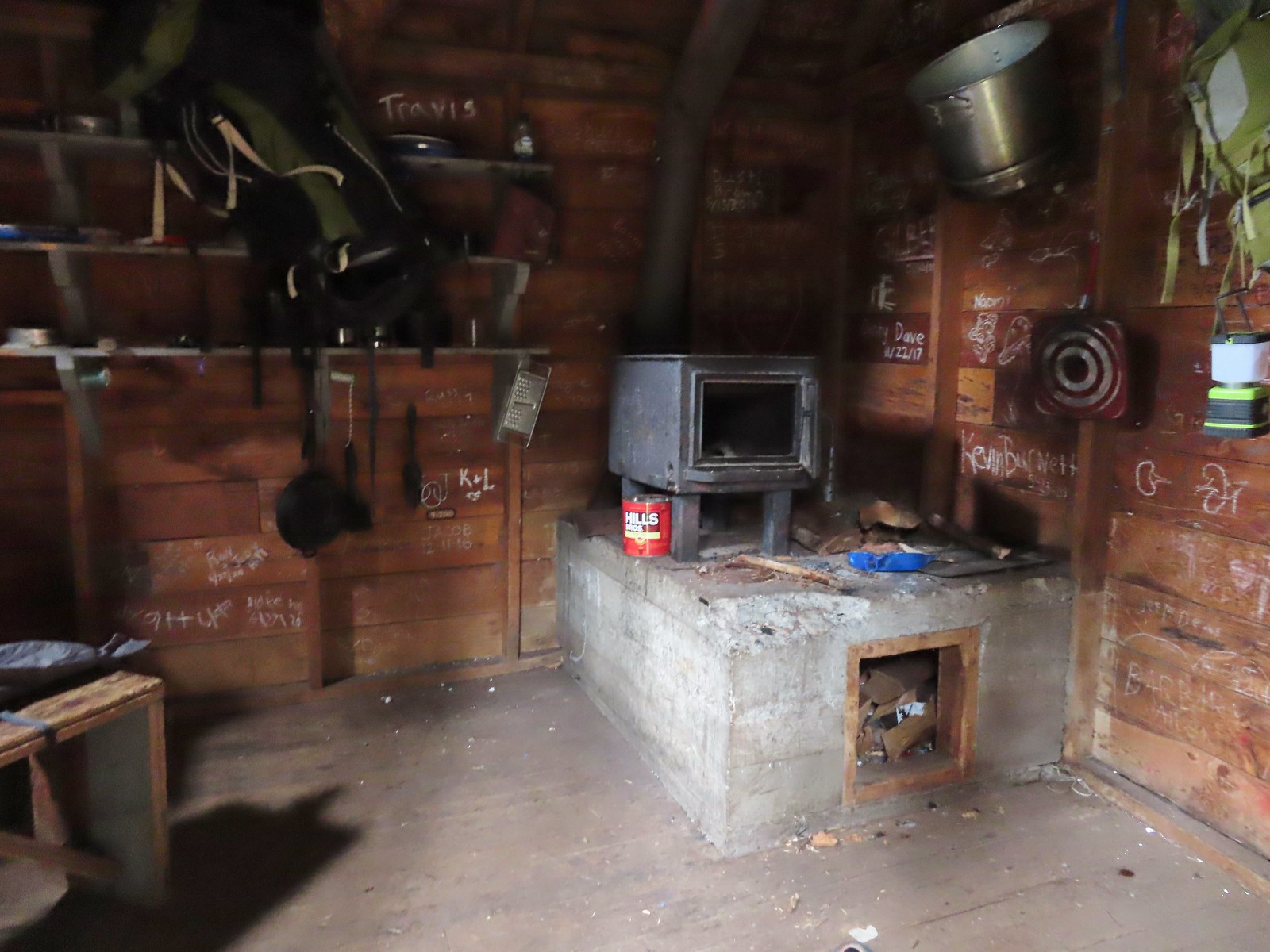 We took a quick peak inside the shelter where some of the backpacker’s stuff was.
 It was steep going down too.
 Trail pointer near the upper trailhead marking the continuation of the O’Brien Creek Trail to the lower trailhead.
 We always enjoy seeing madrones on our hikes in Southern Oregon.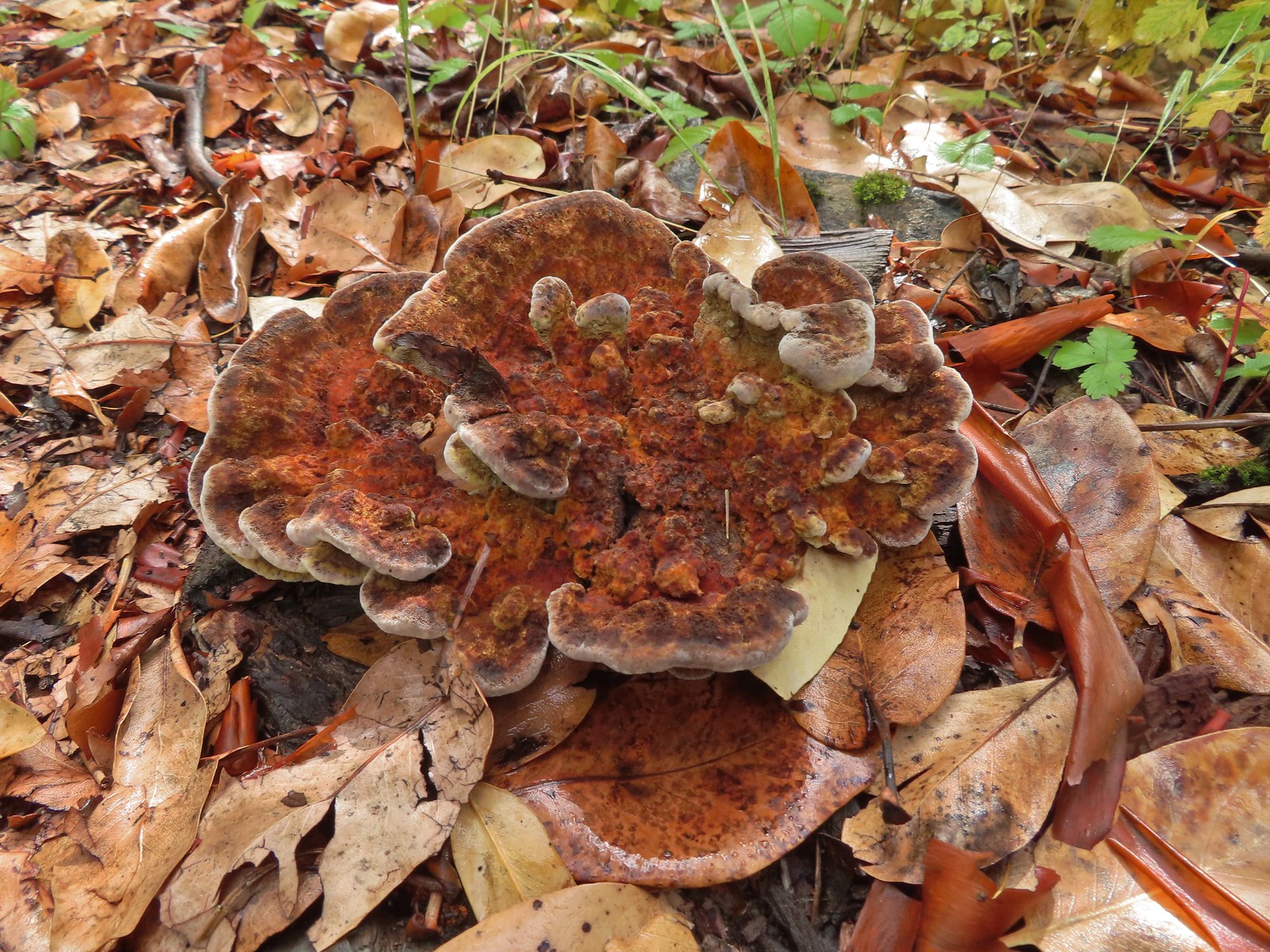

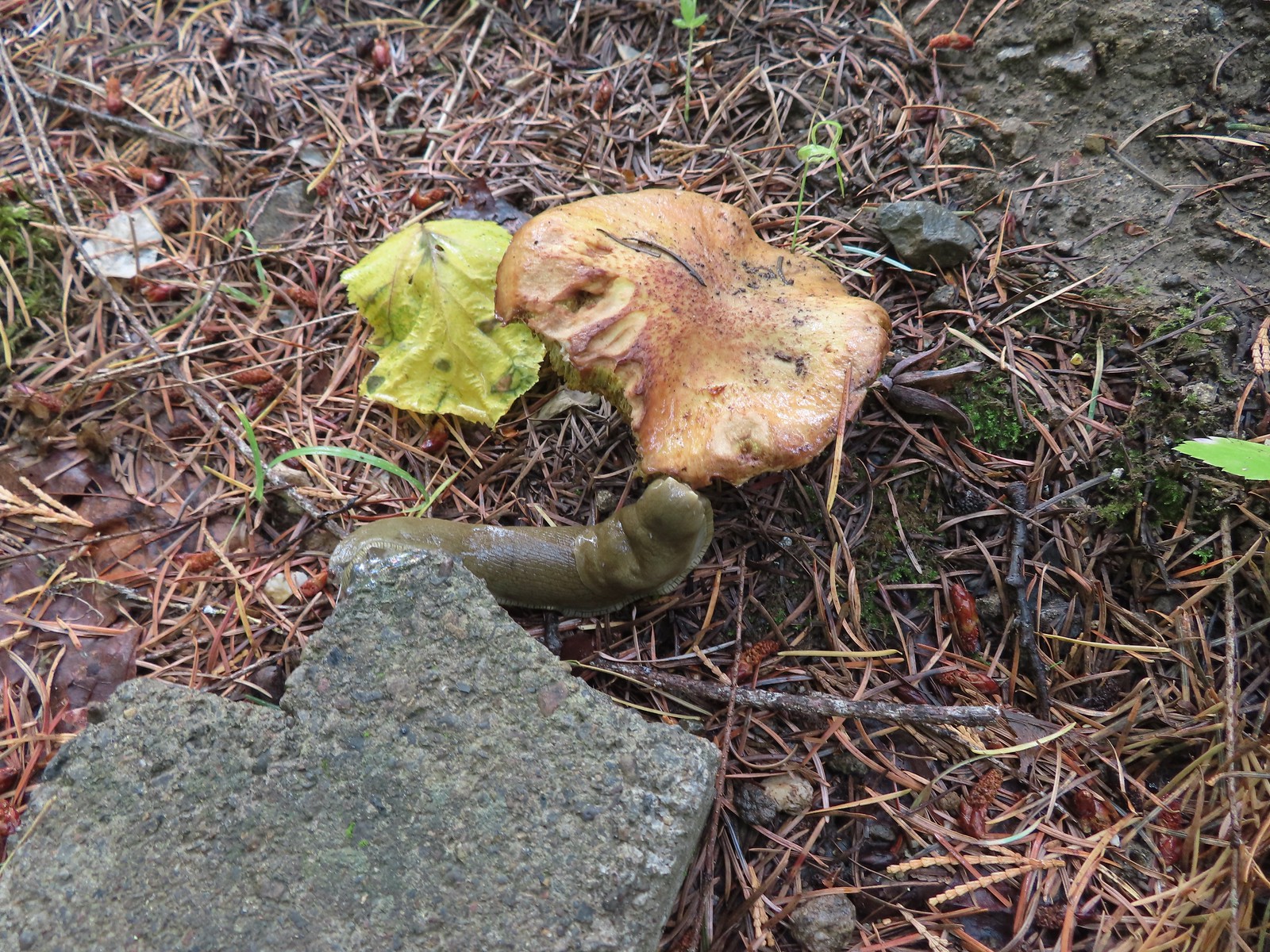 Slug on a shroom.
 Bug on a shroom.
 One more steep drop to the lower trailhead.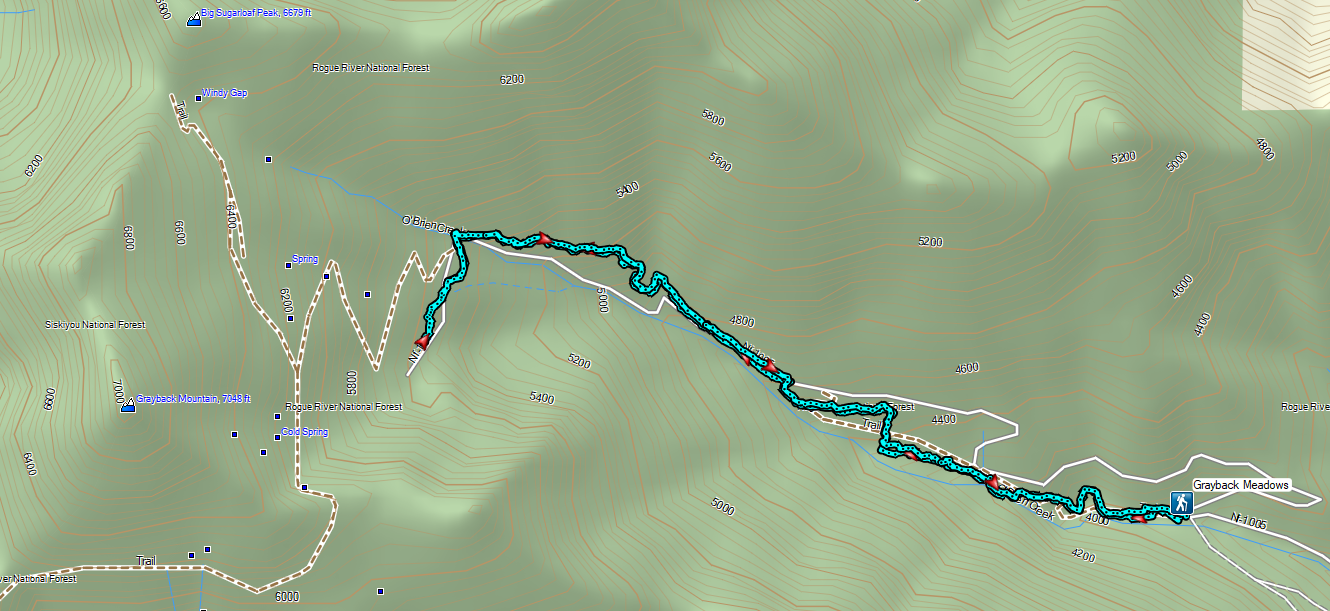
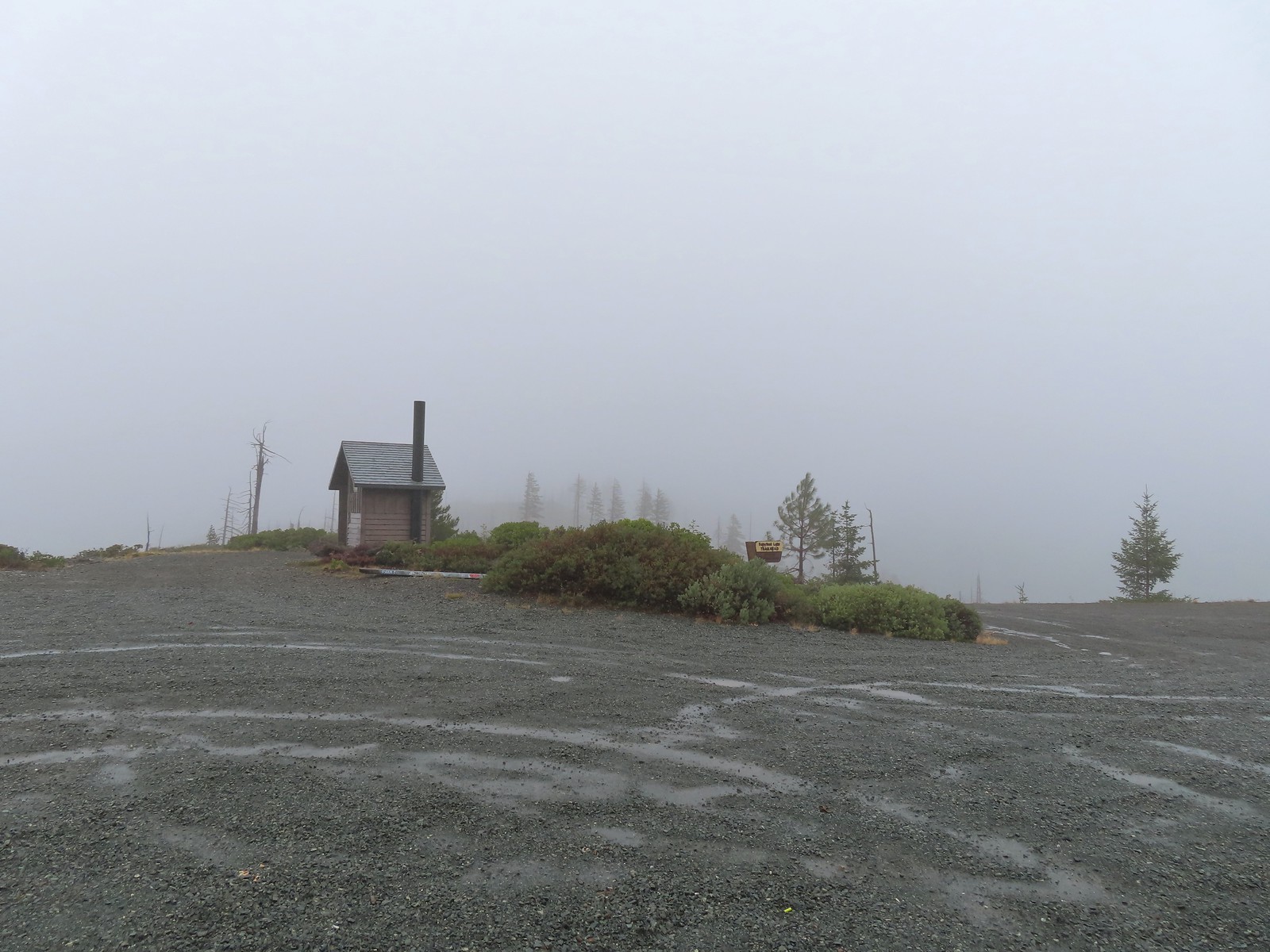

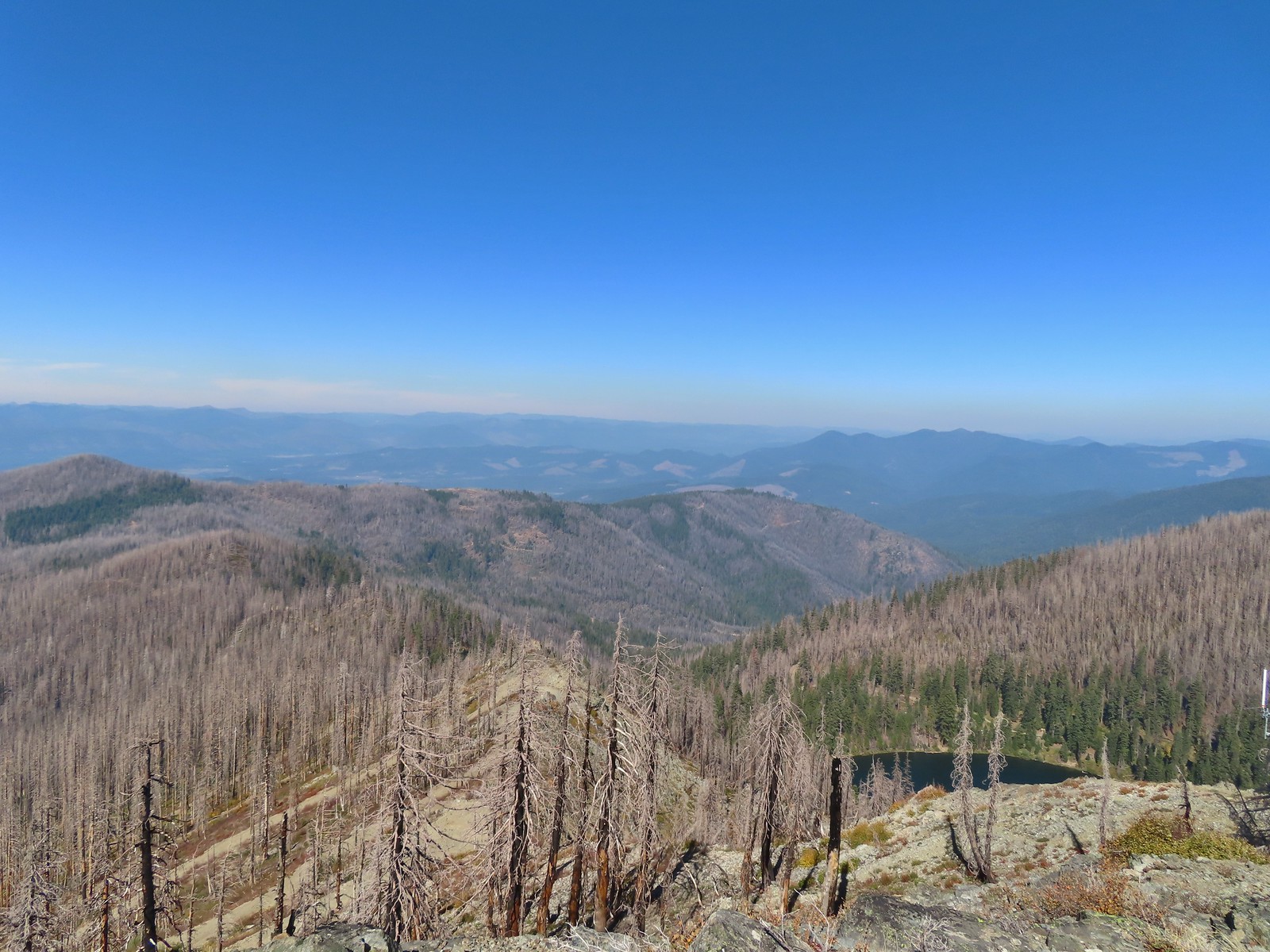
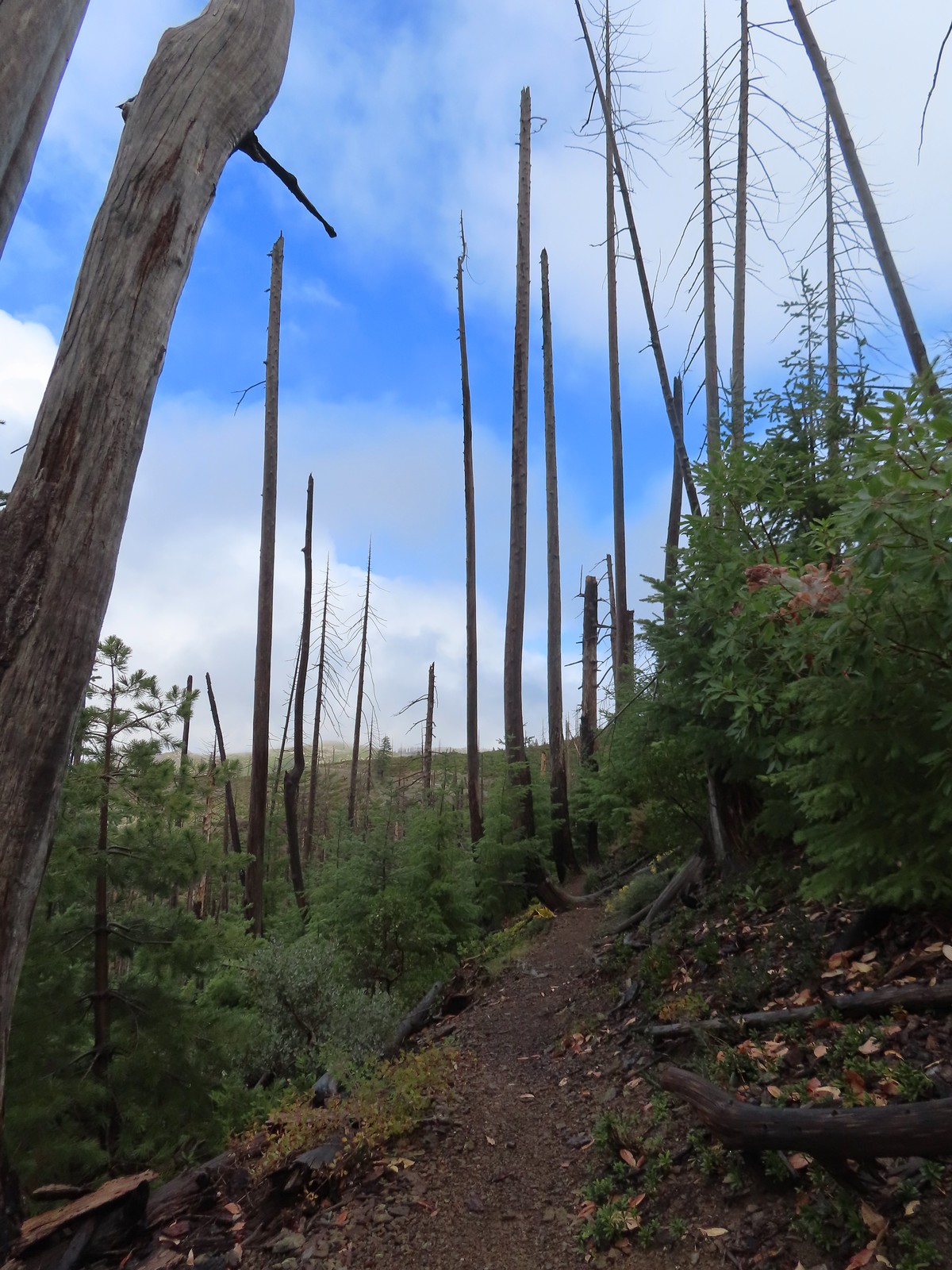
 The forest is recovering from the 2002 Biscuit Fire.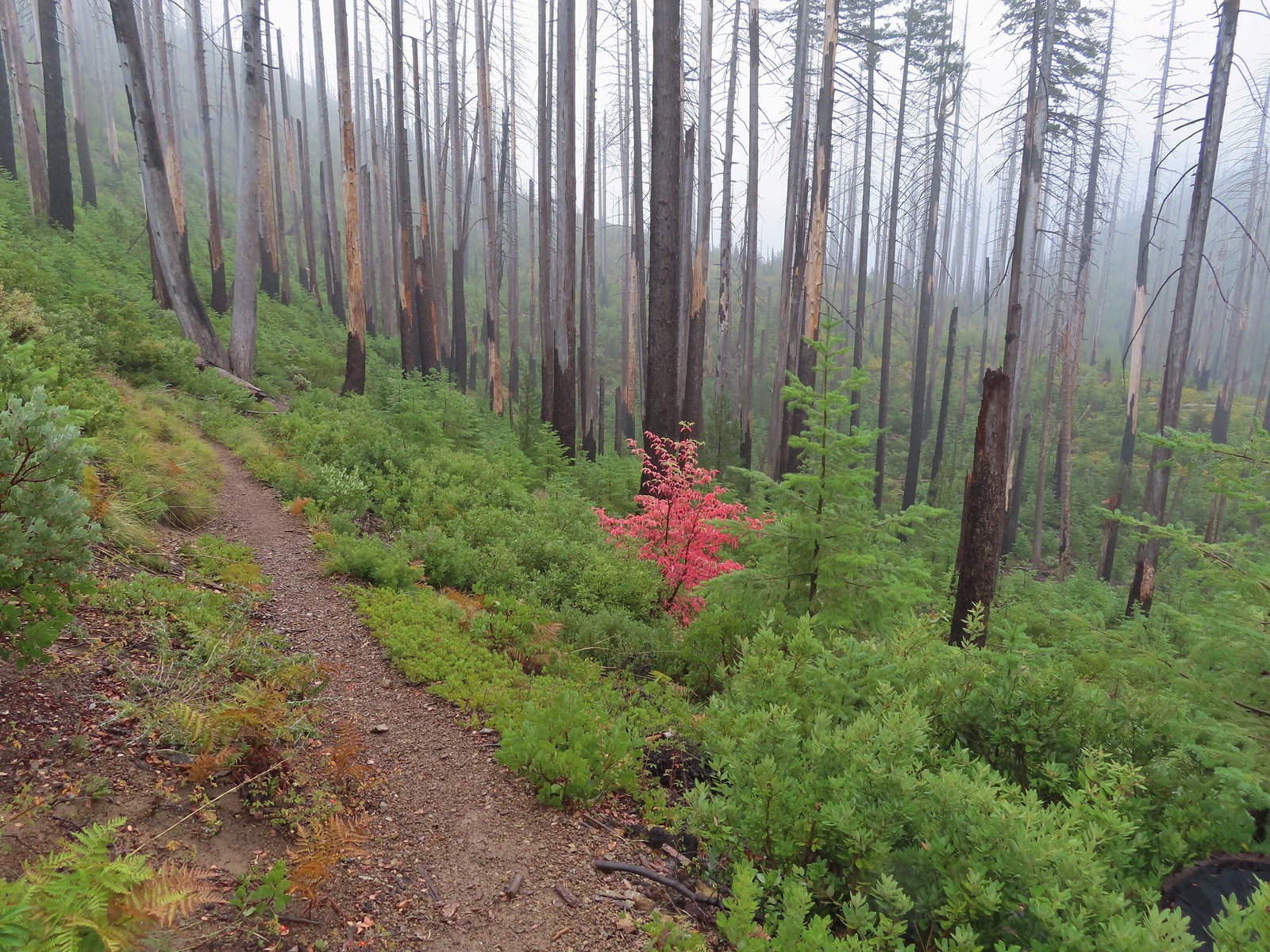
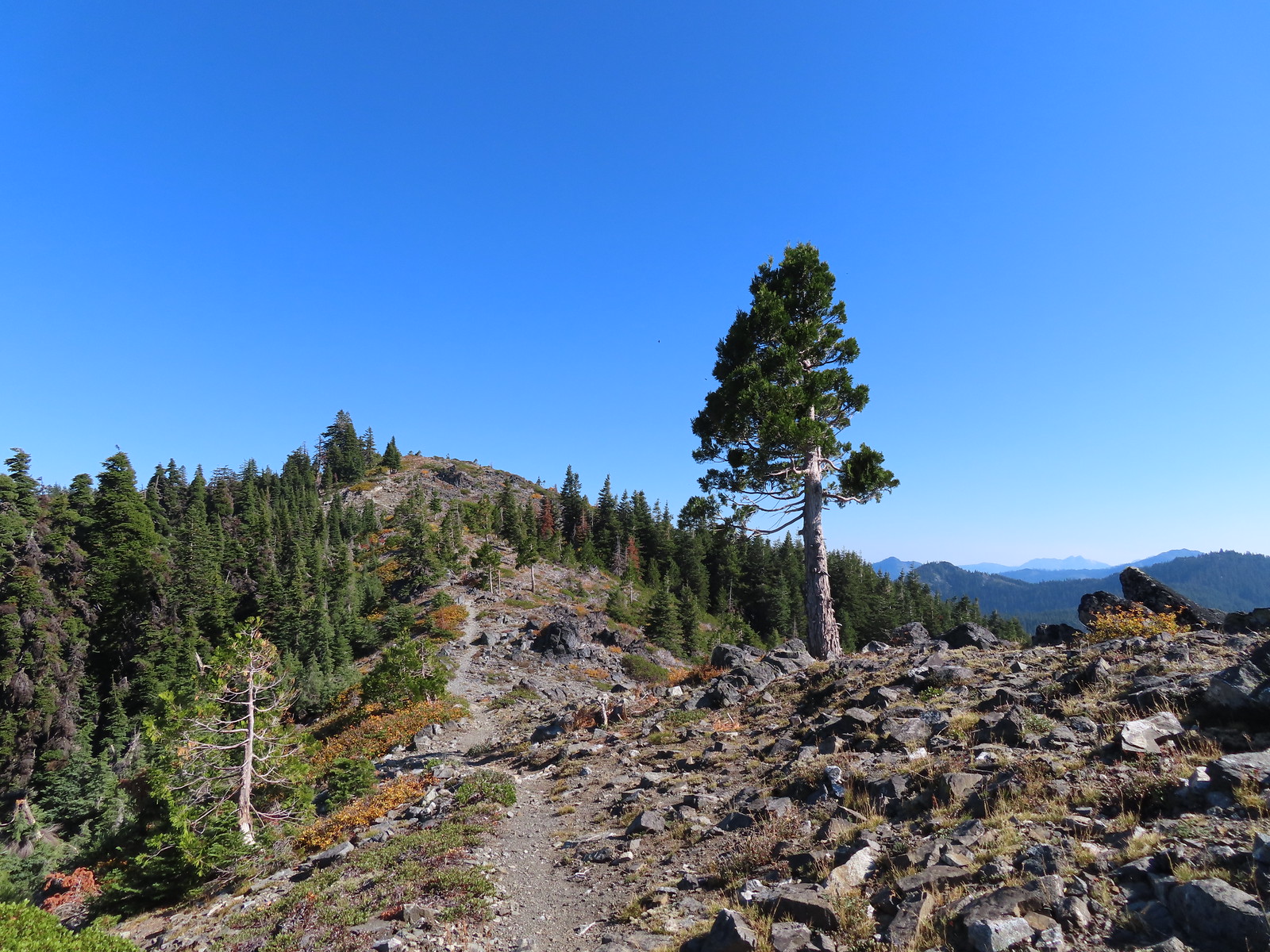
 To the left was the Babyfoot Lake Rim Trail. Sullivan’s longer option here include following this trail 0.9-miles to a viewpoint above the lake. Given the fog that seemed pointless, and it also looked like that trail was in need of some maintenance.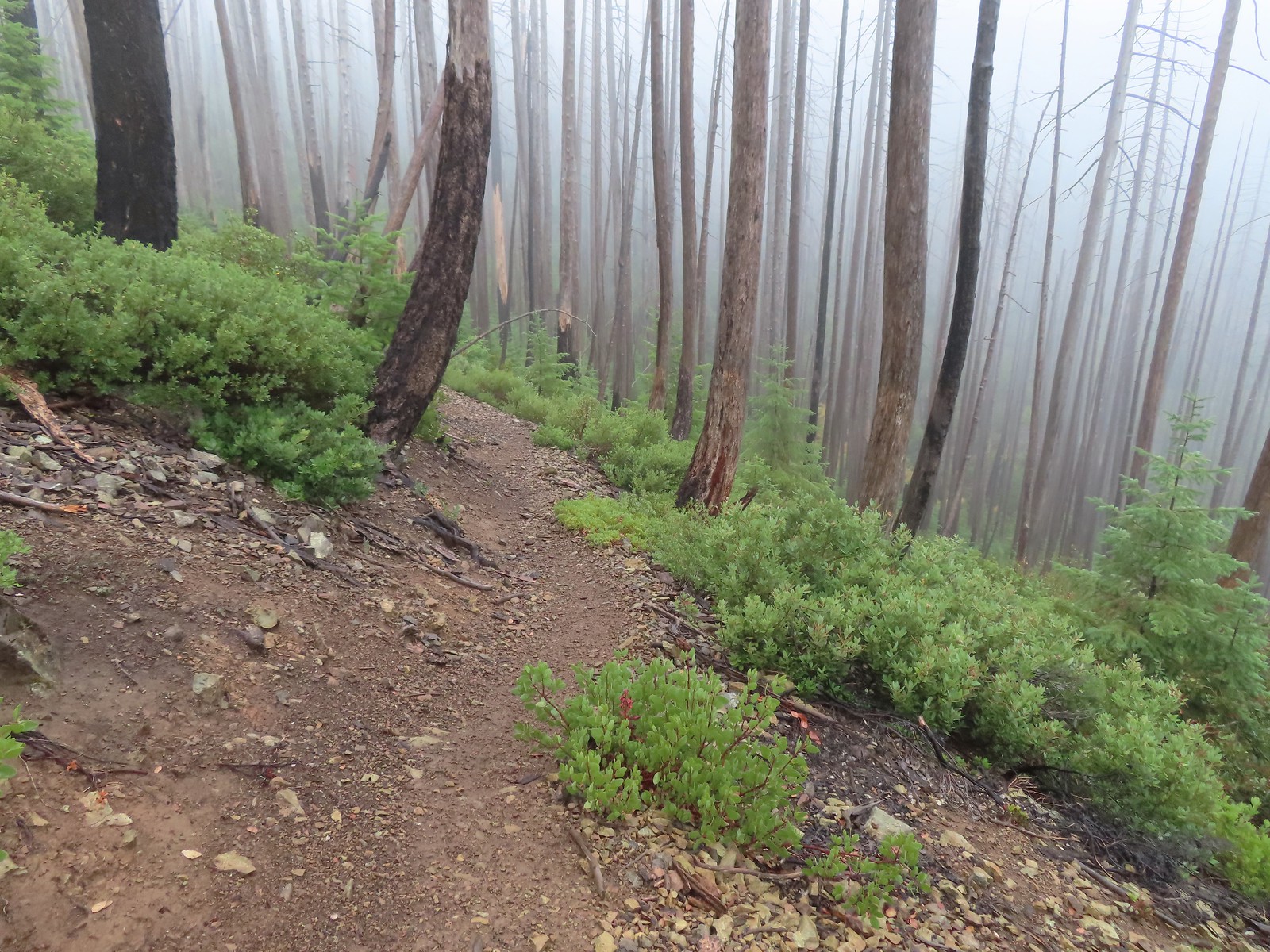
 A small stream with crystal clear water along the trail.
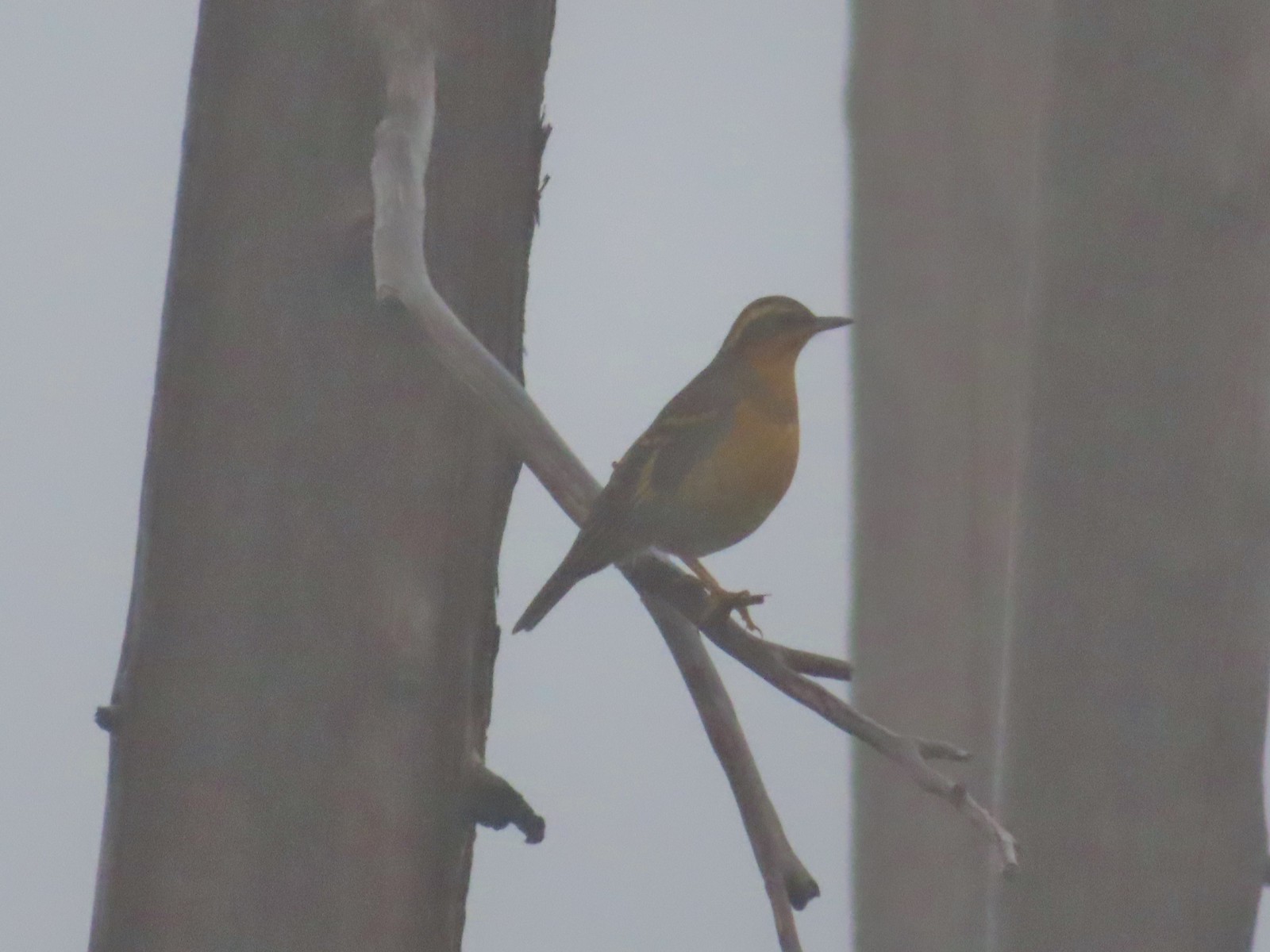 My nemesis, the varied thrush.
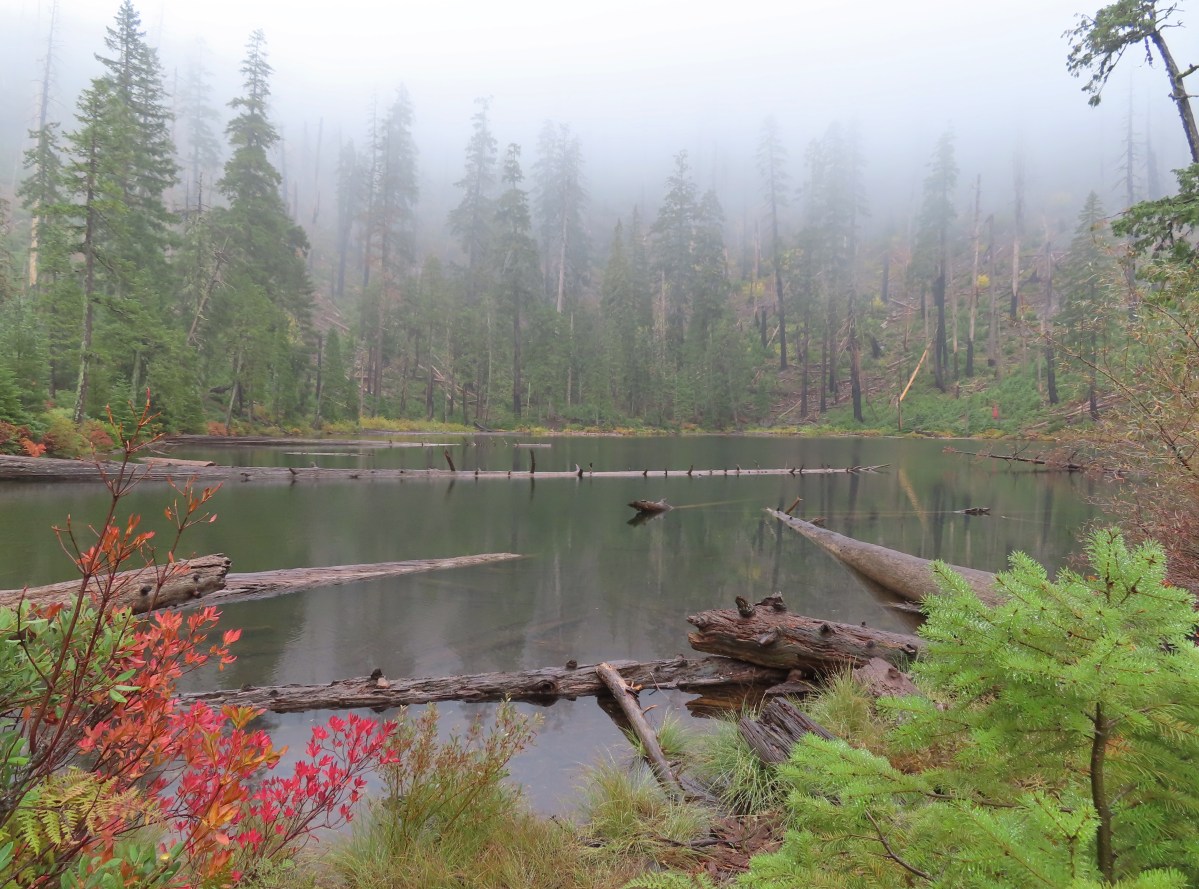
 Near the lake the trail passes this rock outcrop which is a viewpoint without the fog.
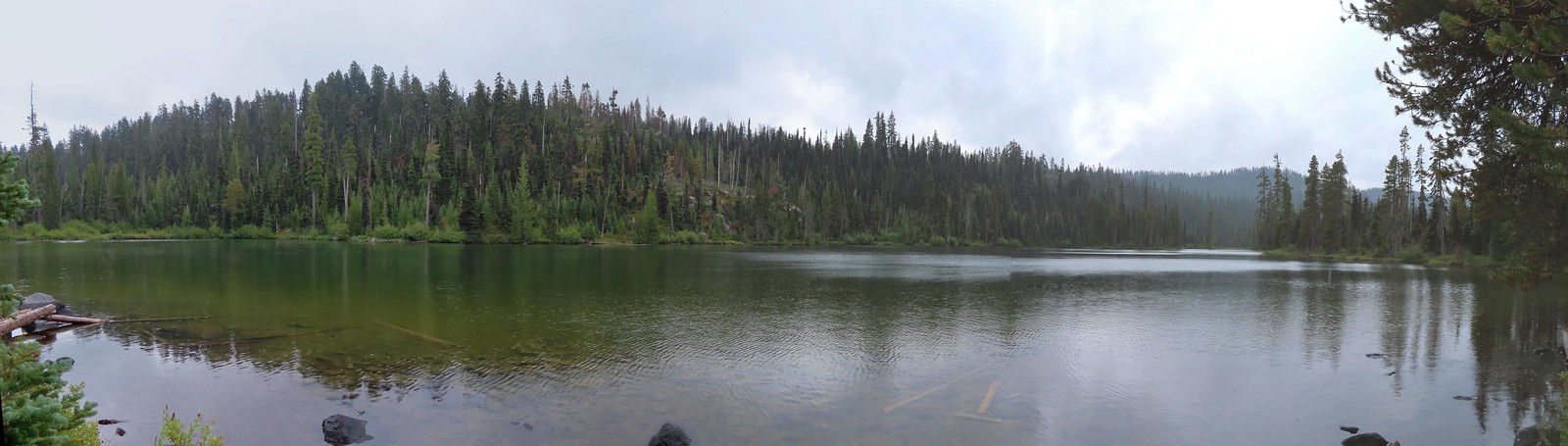
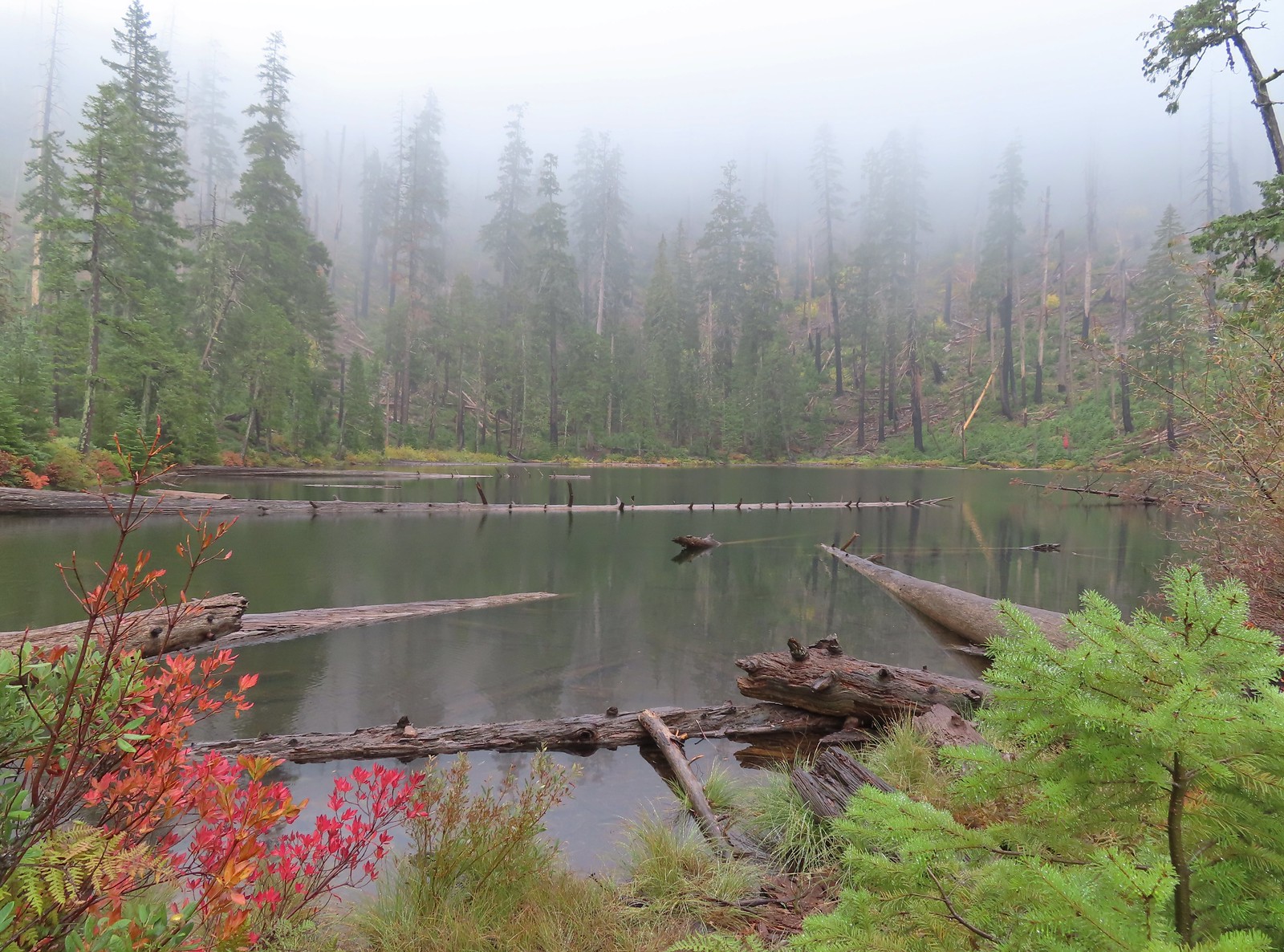
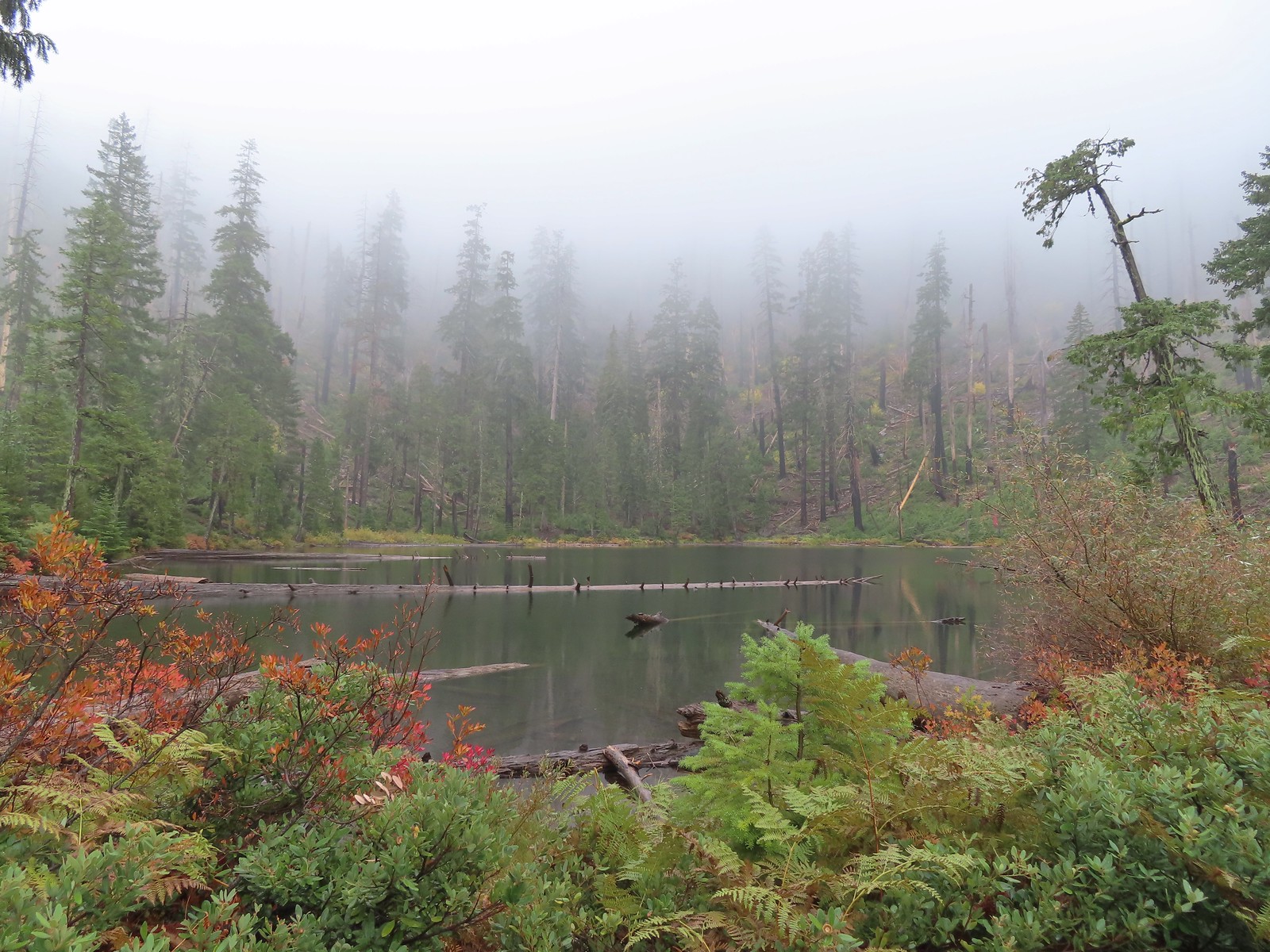
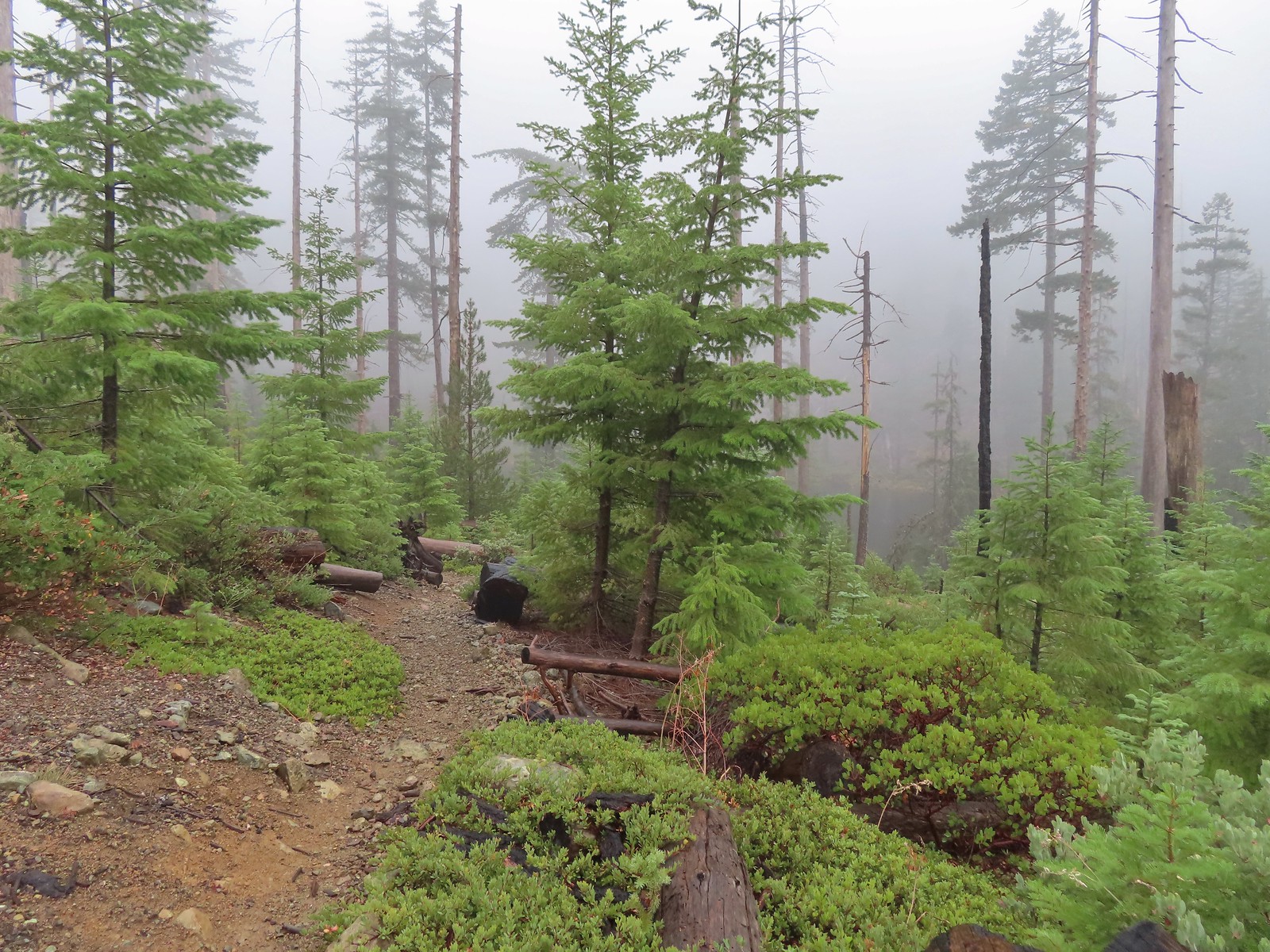 Some of the trees around the lake survived the 2002 fire.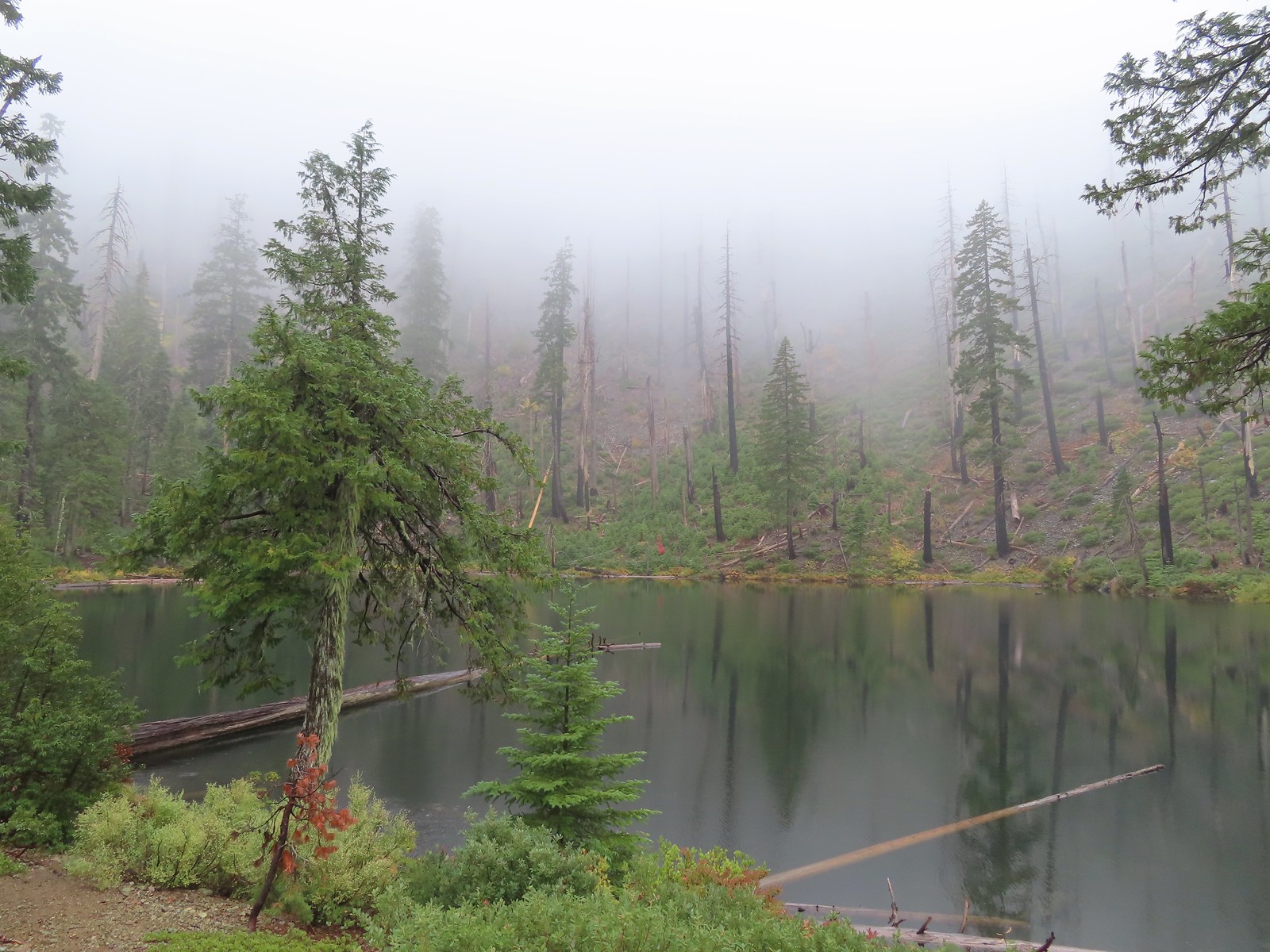

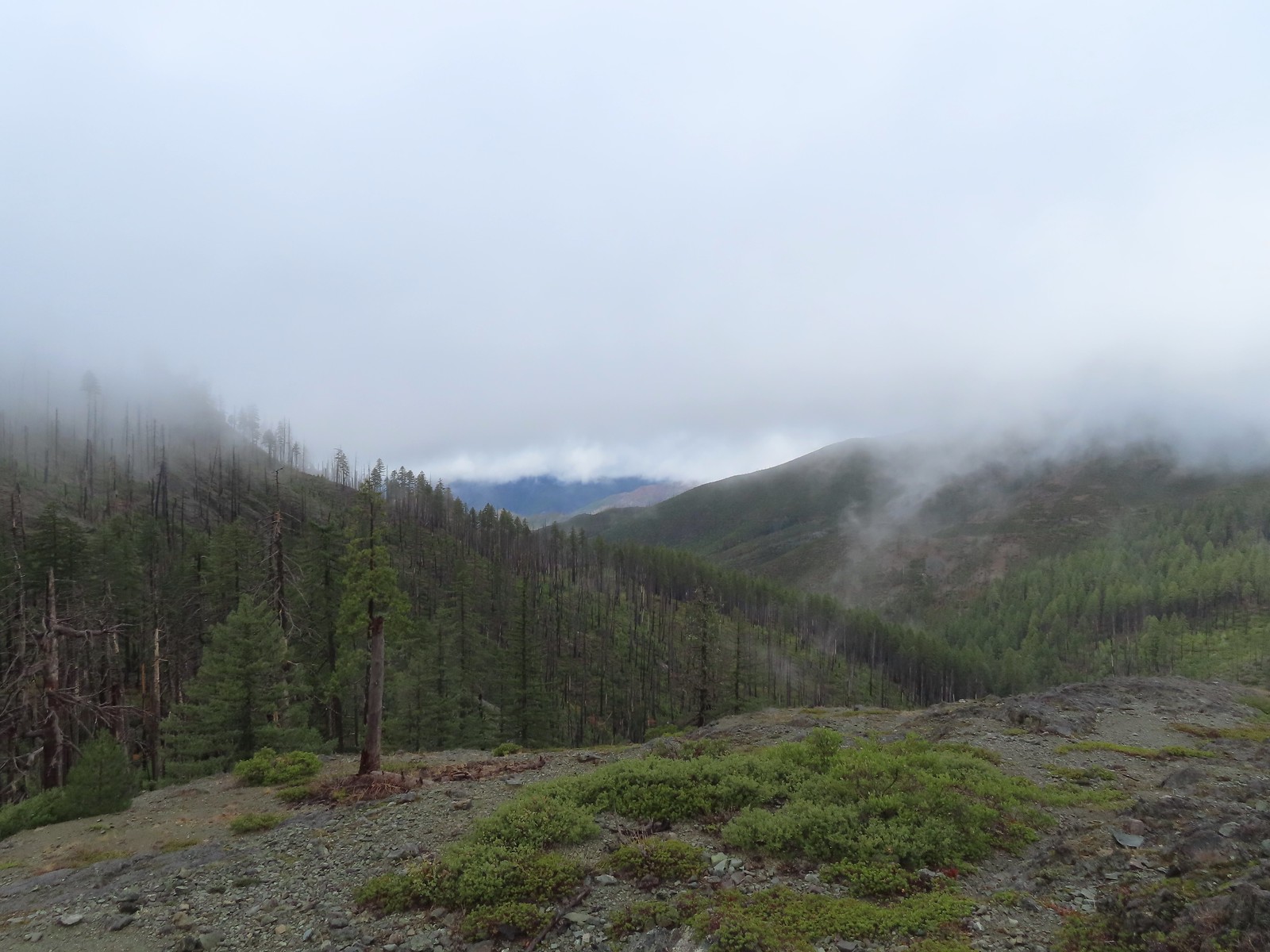 I of course had to head out onto the viewpoint given the rapidly changing conditions.
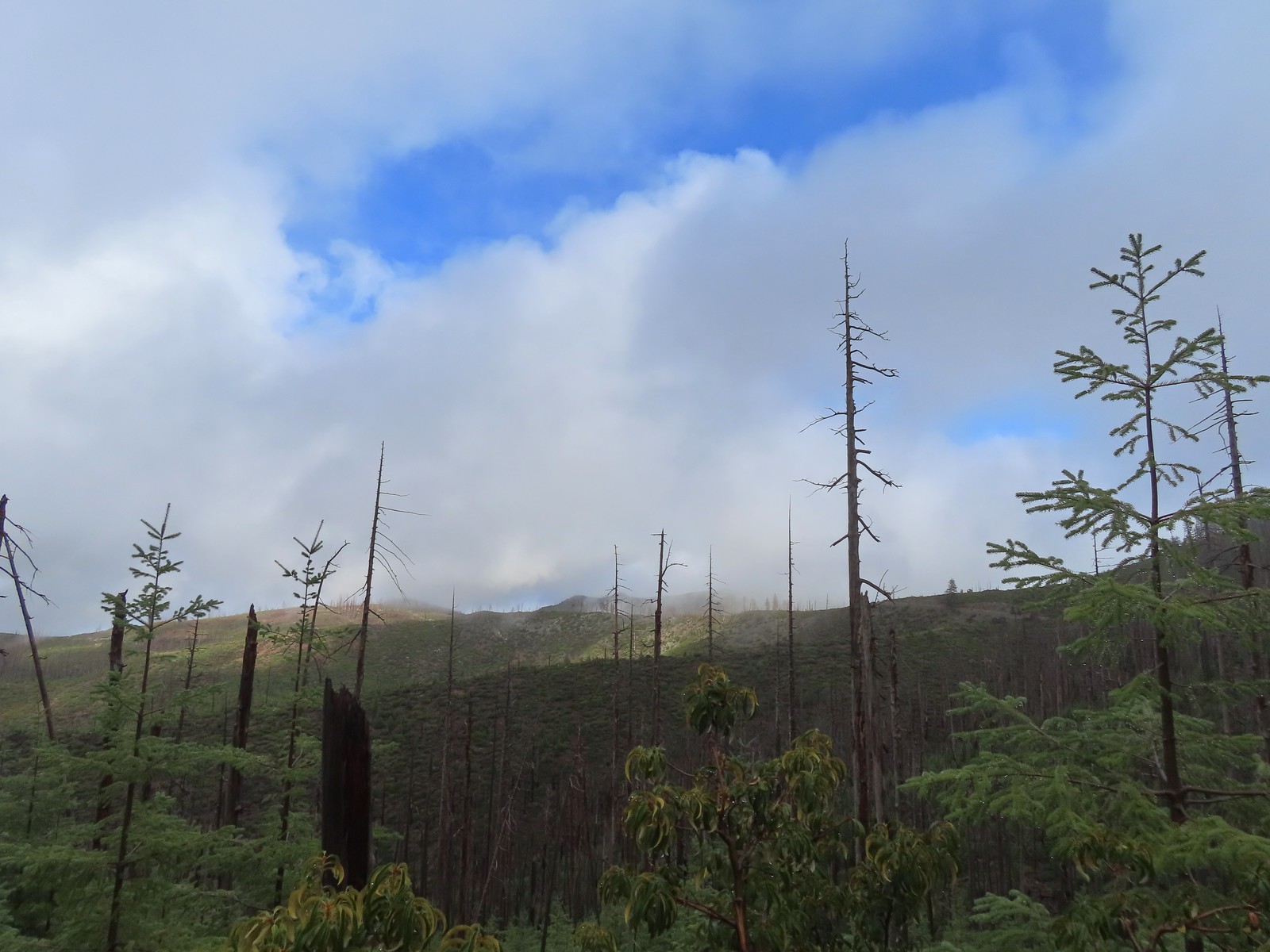
 The patterns on this snag caught my eye.
 The trailhead on the ridge ahead.