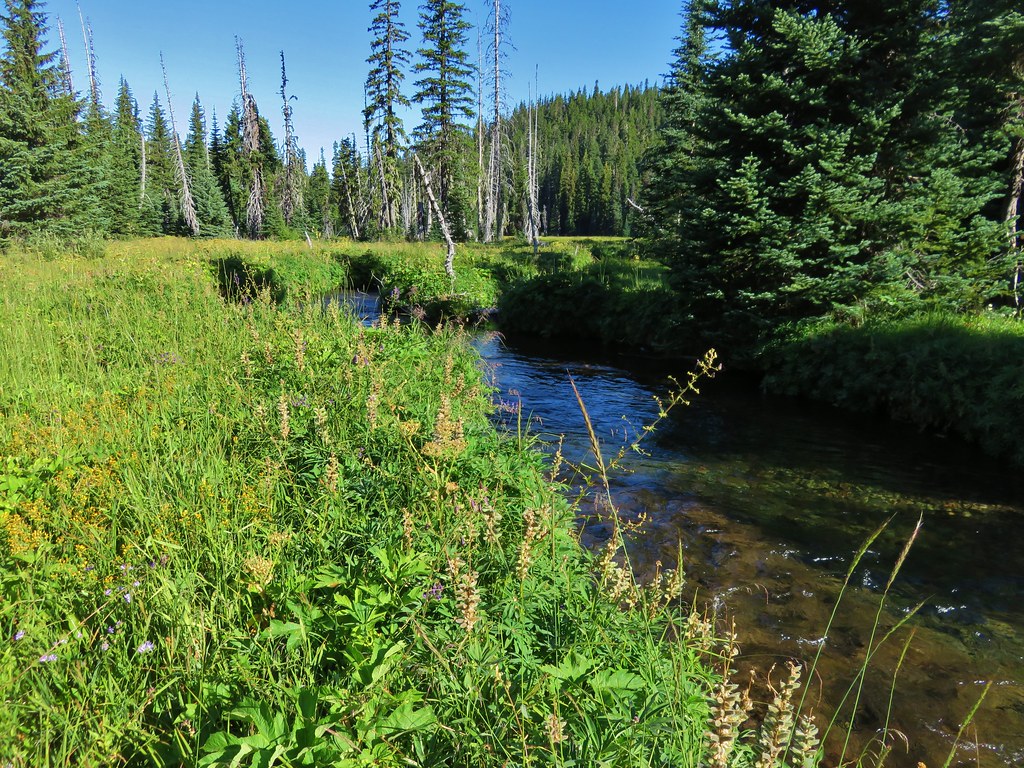
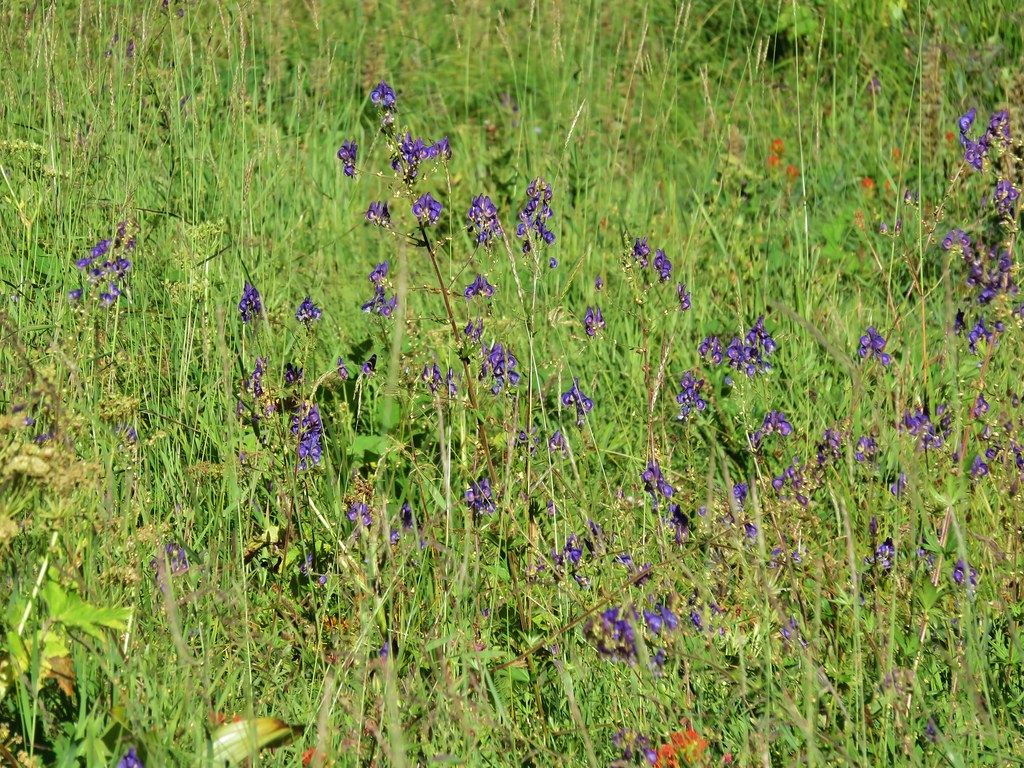
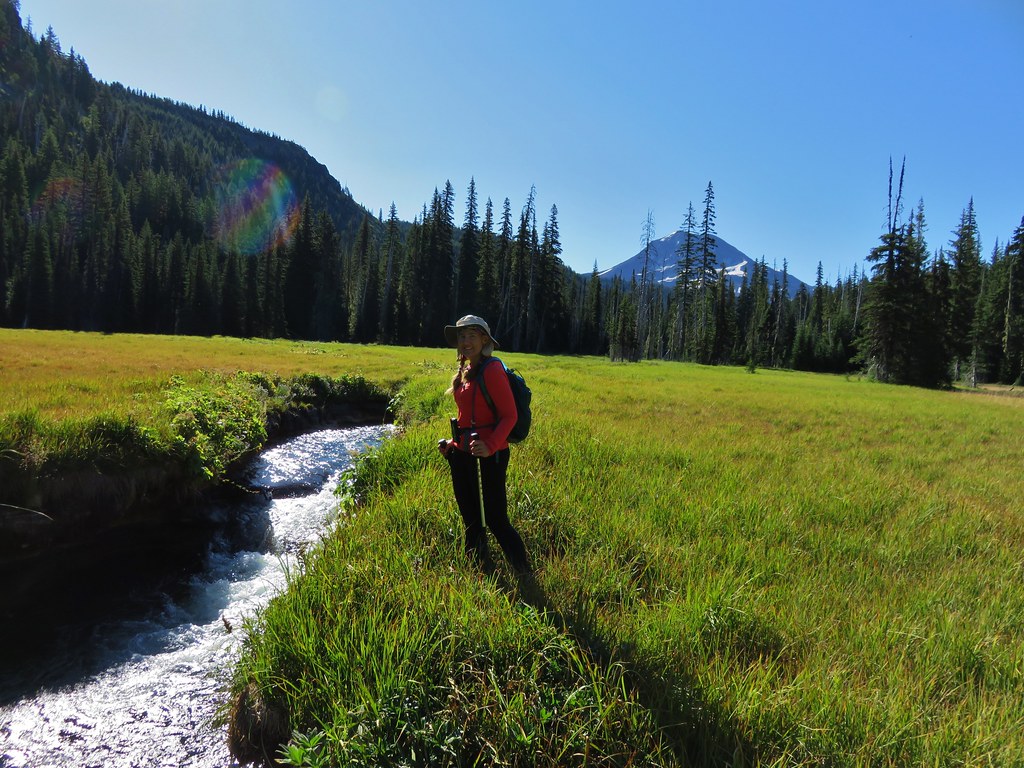
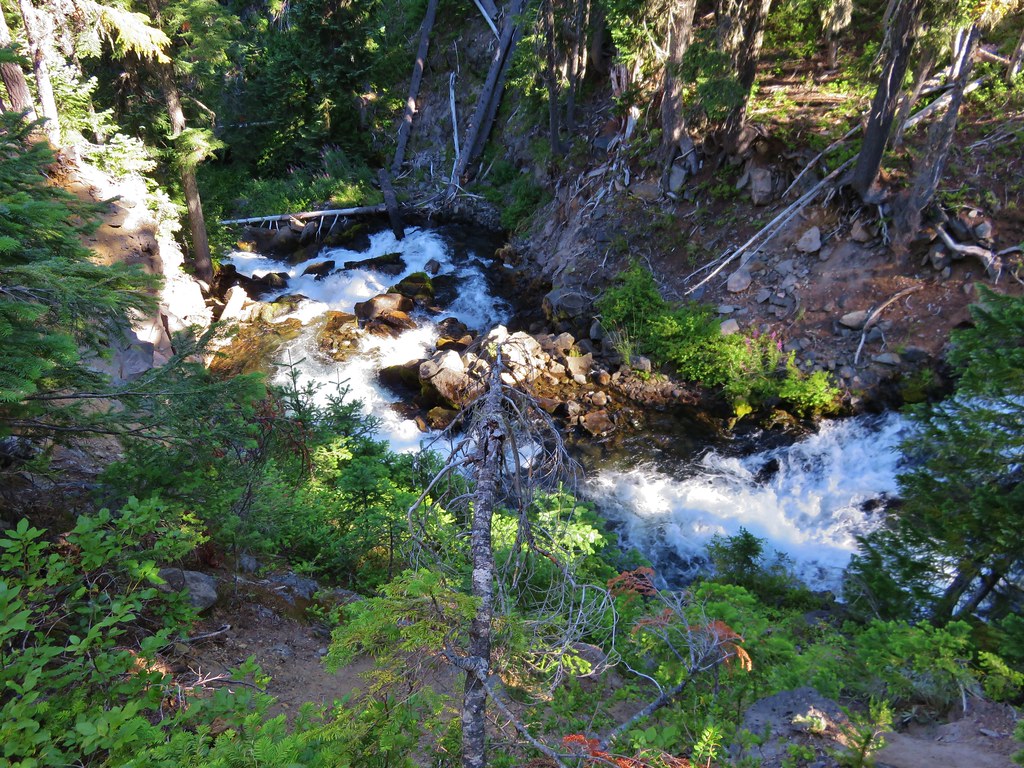
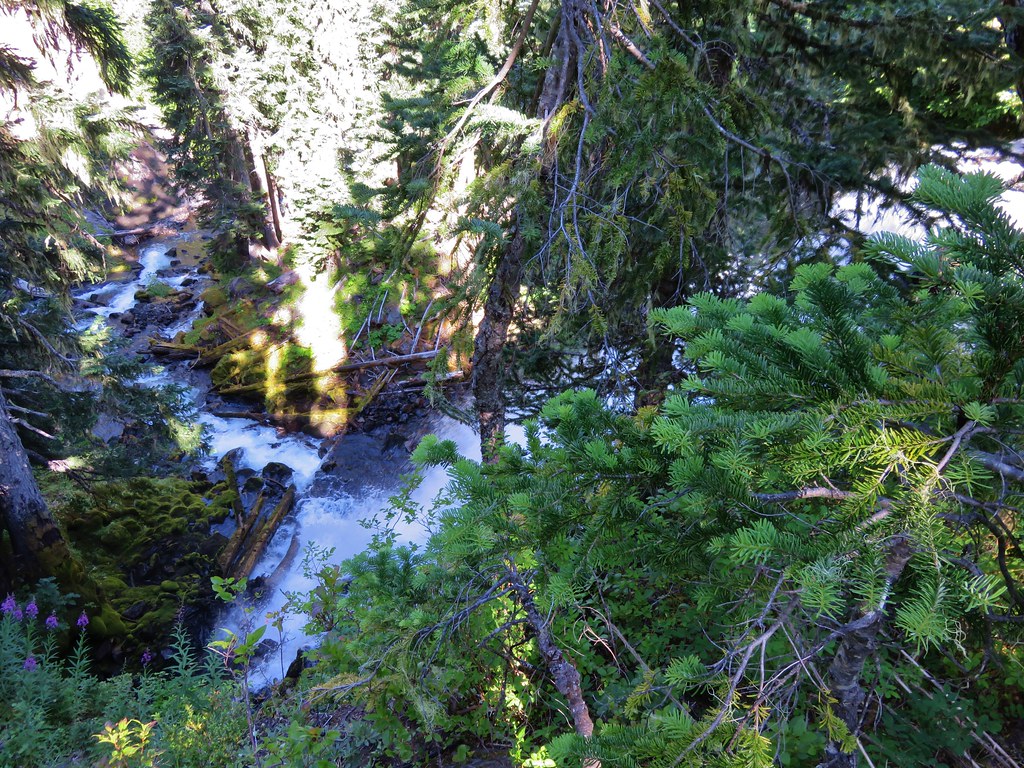
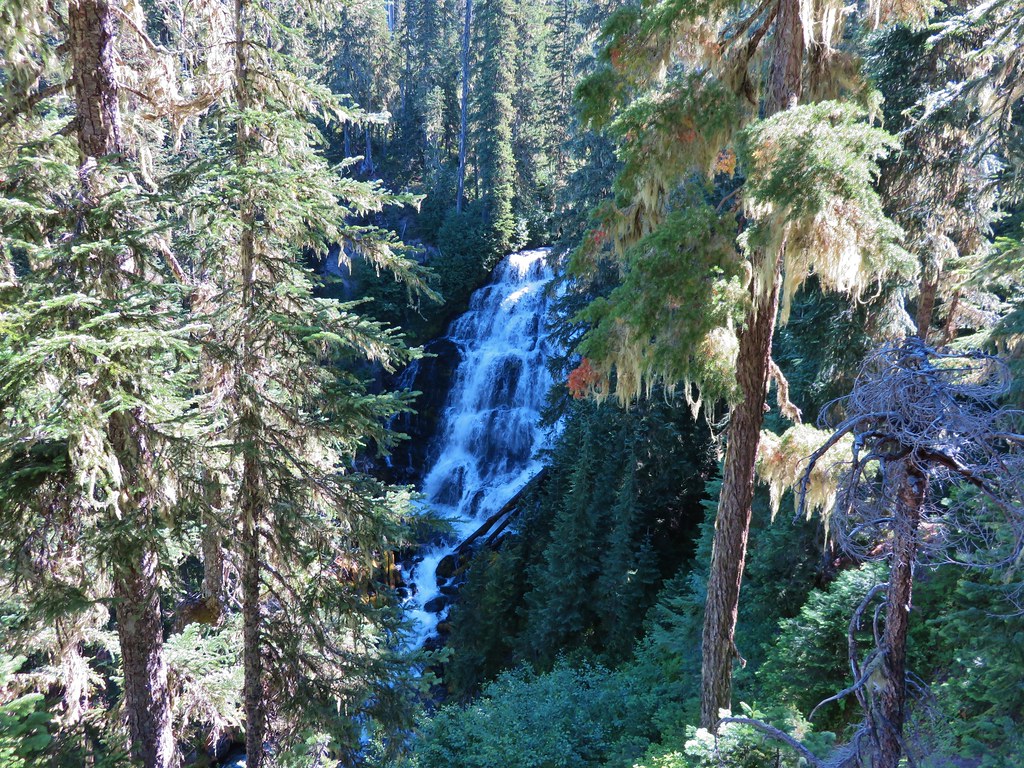
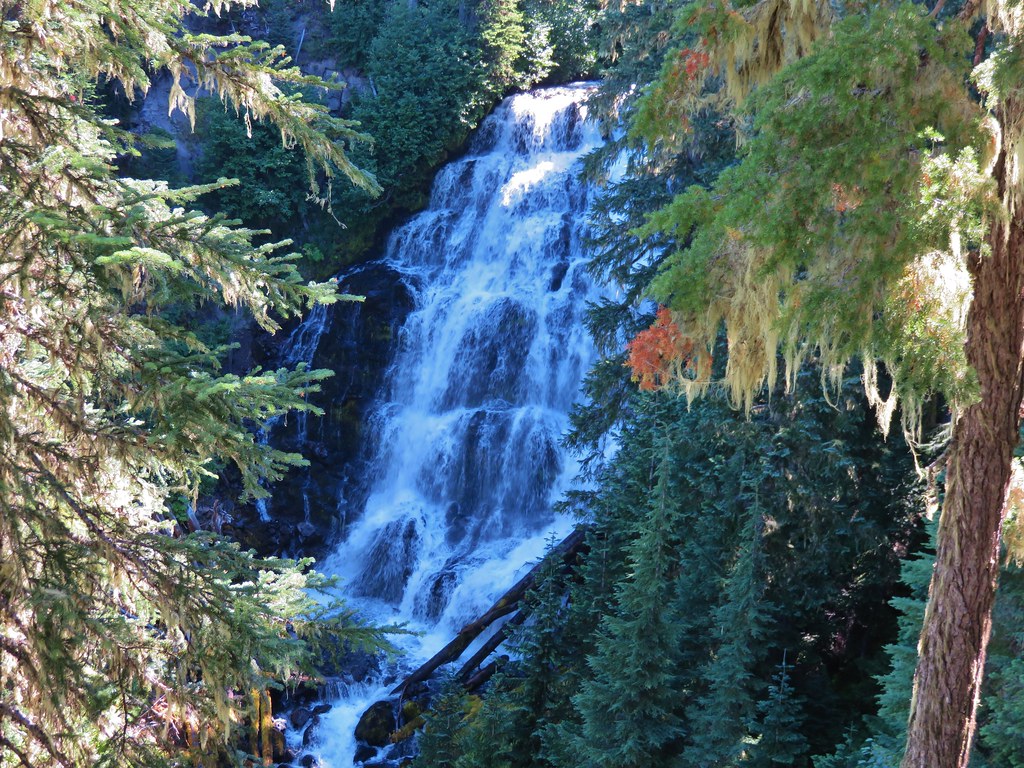
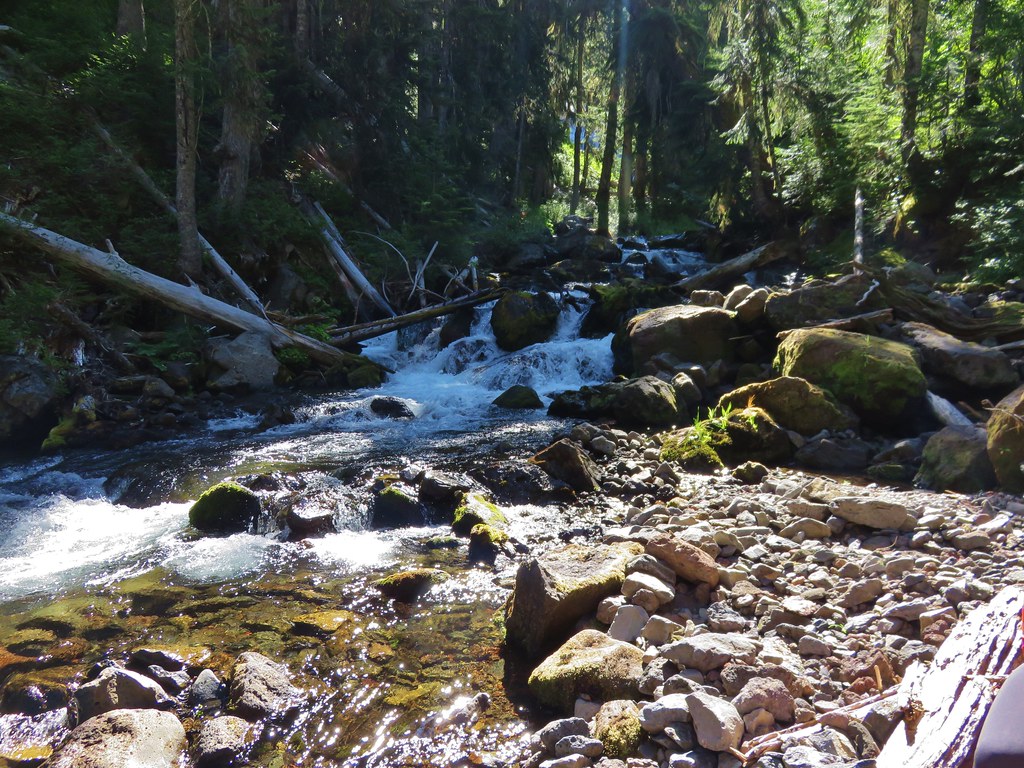
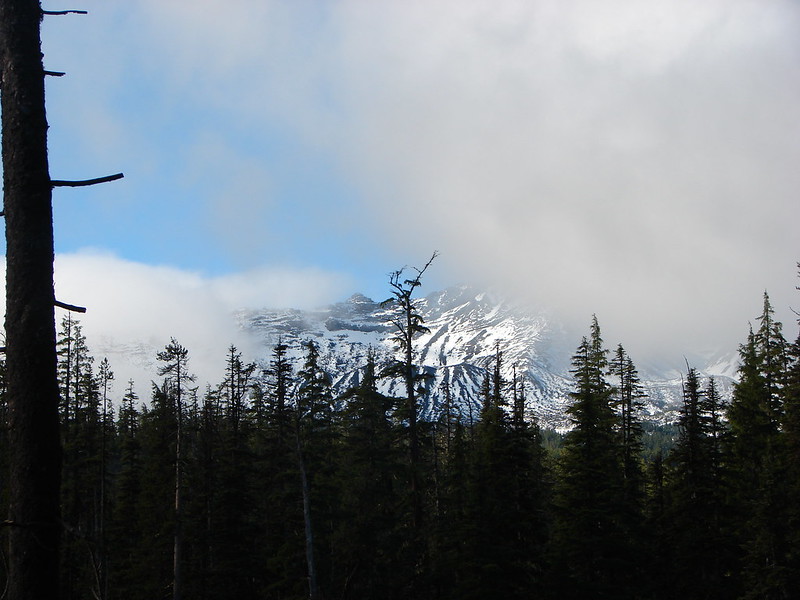
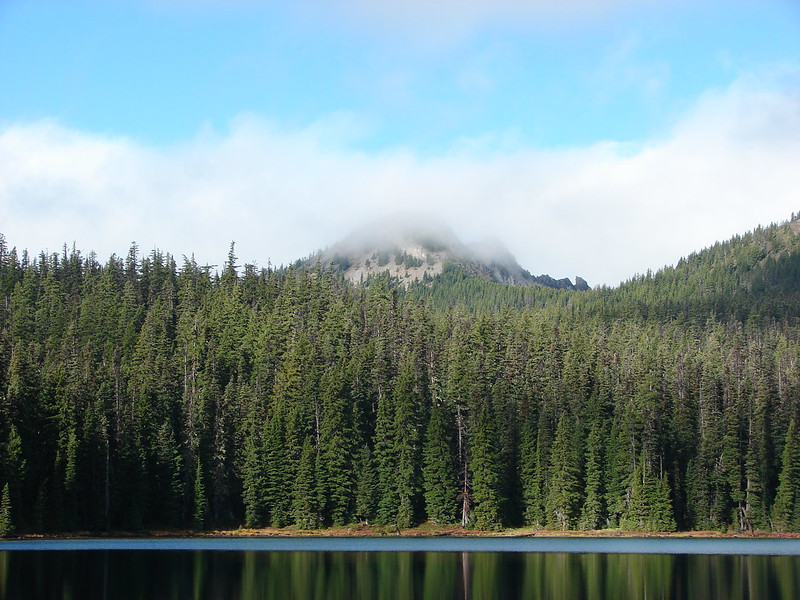
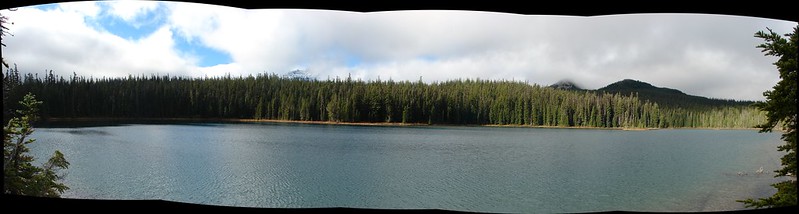
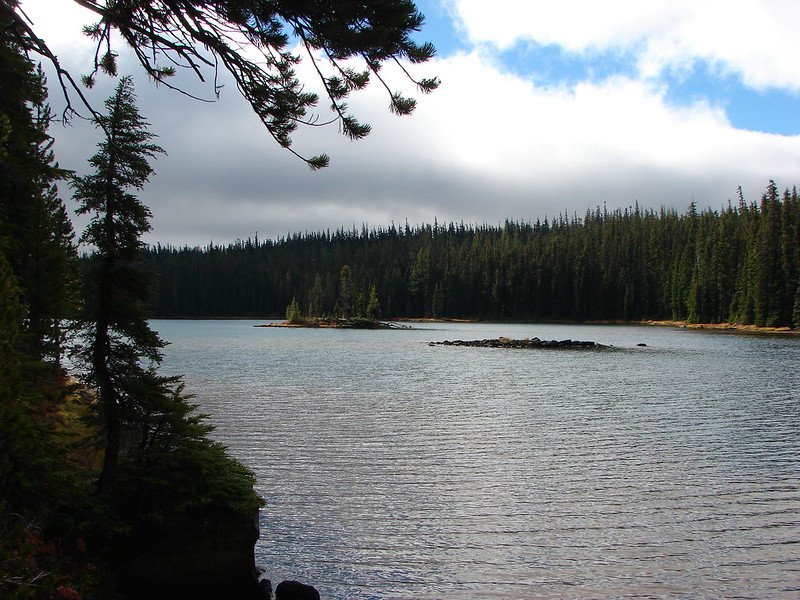
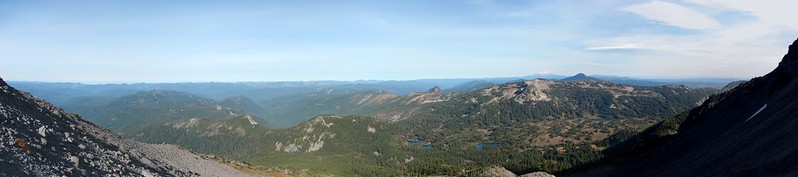
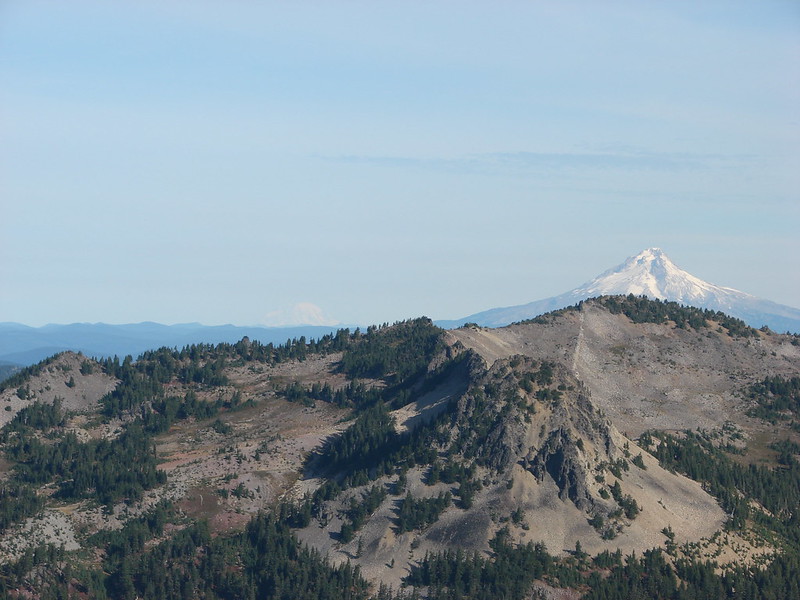
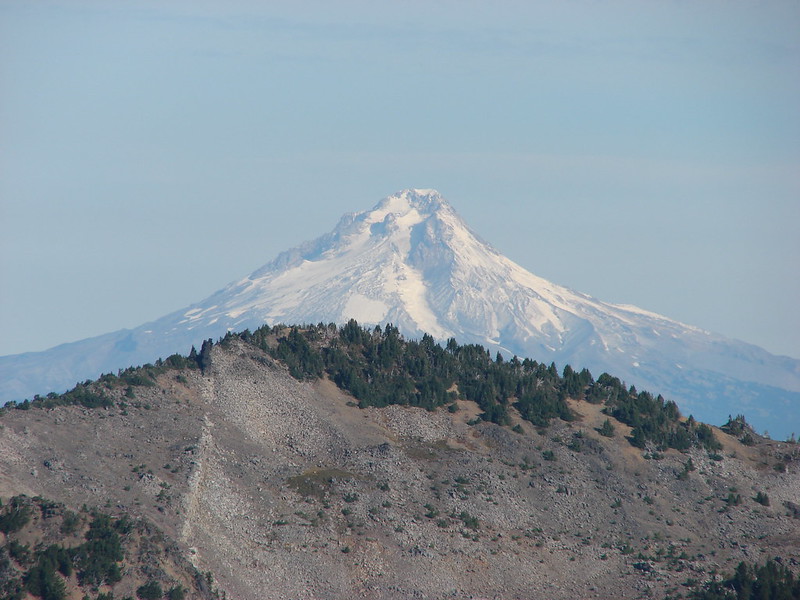
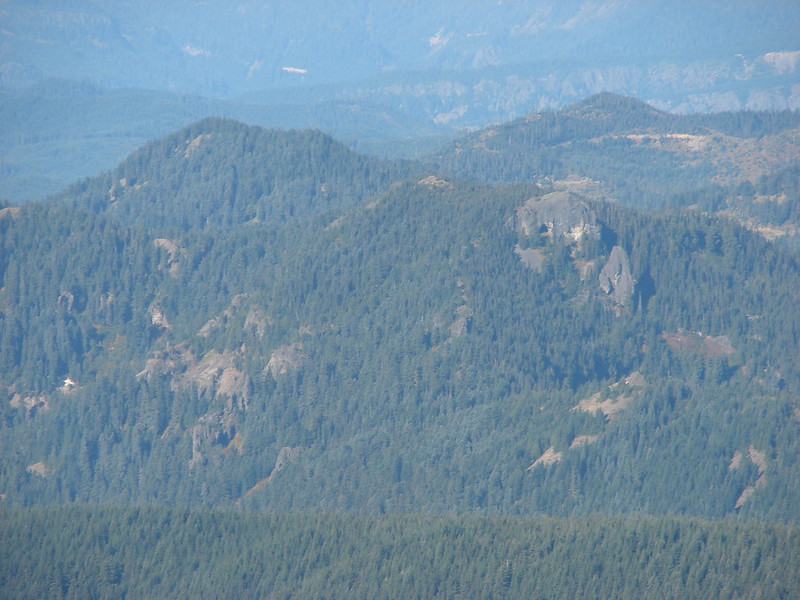
Categories
High Cascades Hiking Mt. Jefferson Area Oregon Trip report

Jefferson Park – 2015

**Note the 2017 Whitewater Fire burned a portion of this hike.**

Since 2011 Jefferson Park has been the one destination that has been on our schedule every year. This year we planned a joint outing with my parents who had not been to Jefferson Park yet. We picked them up bright and early from the Whispering Falls Campground and drove to the Whitewater Trailhead arriving shortly after 6am. We had agreed that we would hike at our own paces and would look for each other in Jefferson Park and if we didn’t meet up there we would do so back at the car. What we failed to do was set a time that we would start back to the car at in case we didn’t run into them. After giving my parents a brief description of what to expect from the trail on the way up we set off.
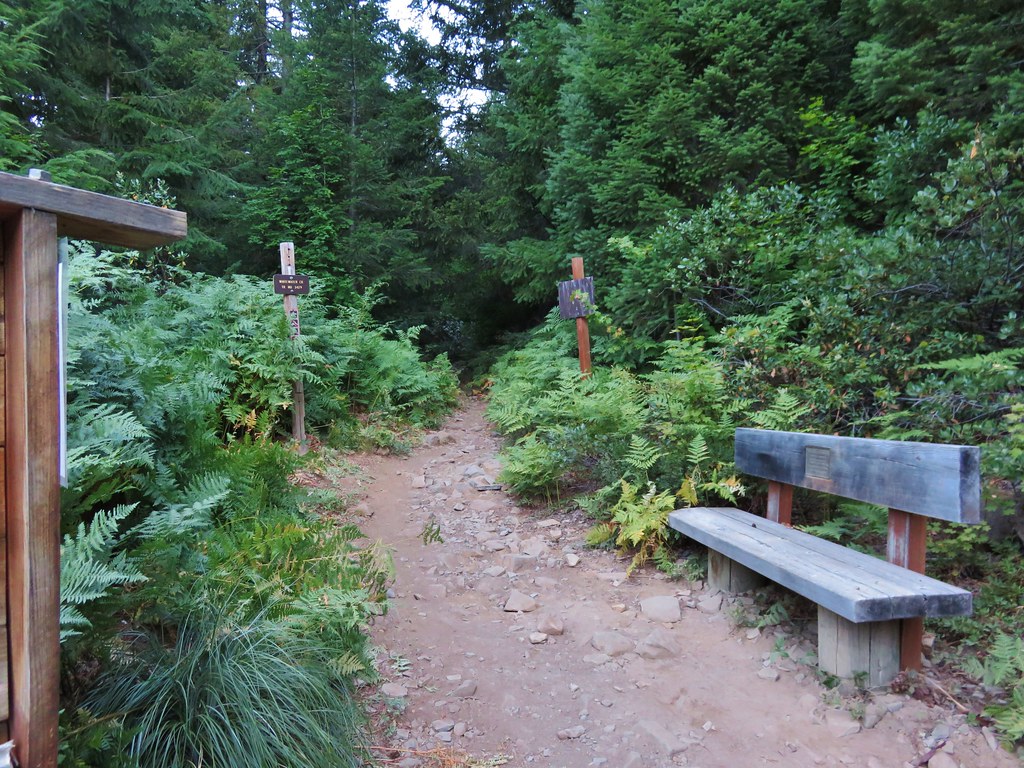
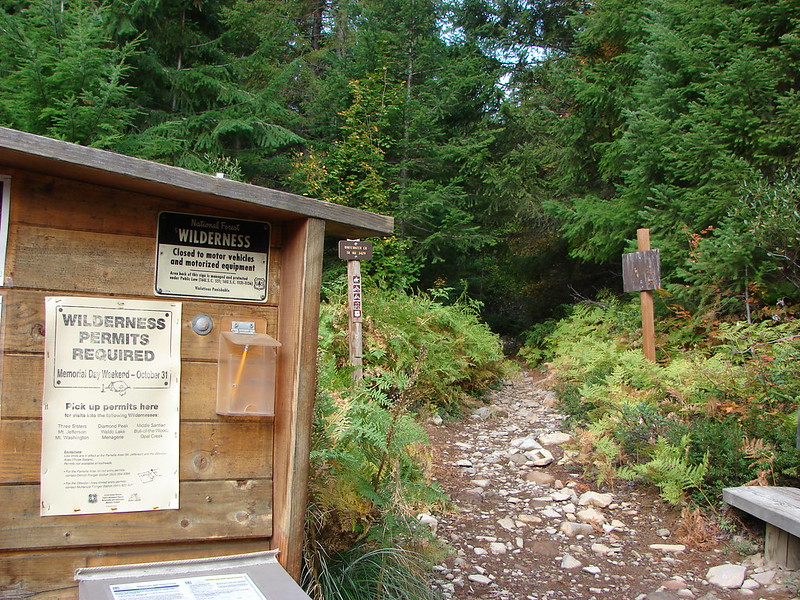
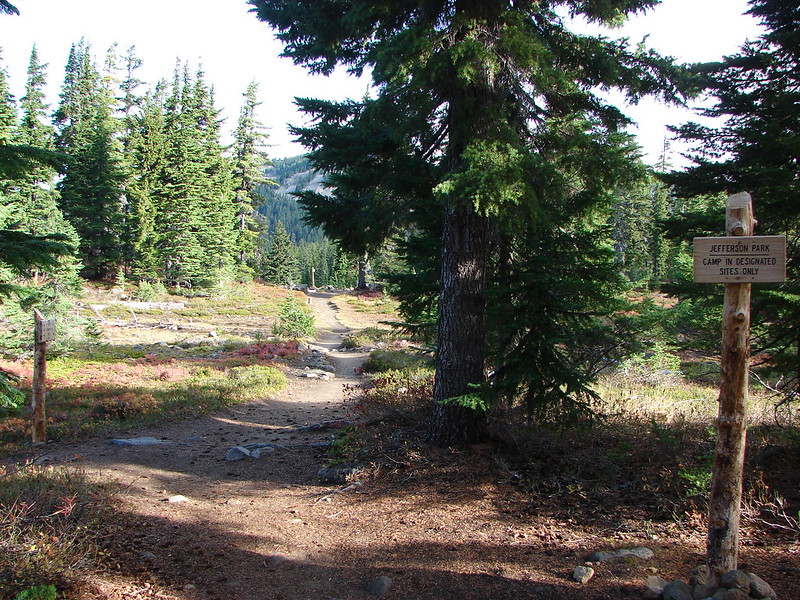
Whitewater Trailhead

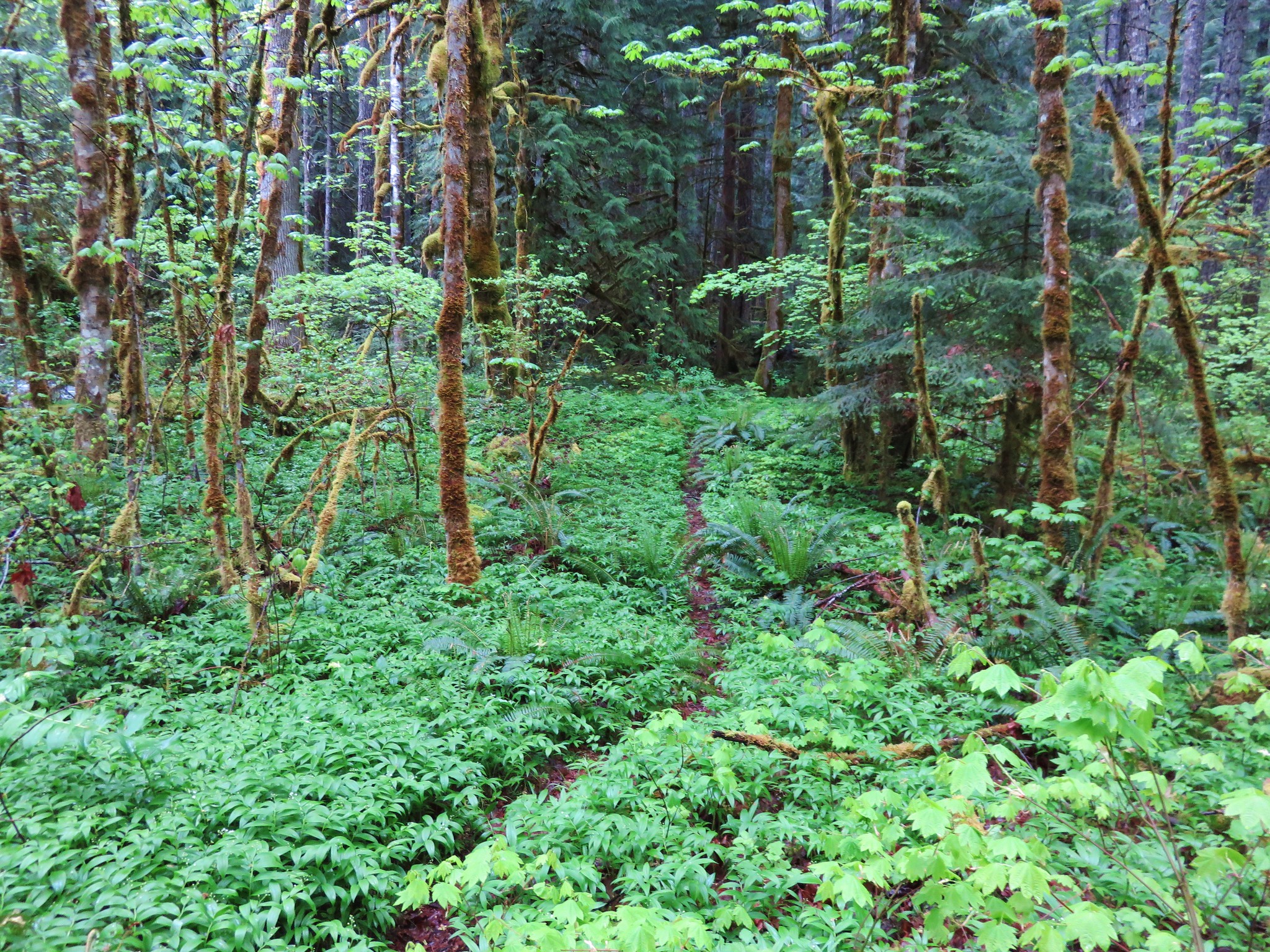
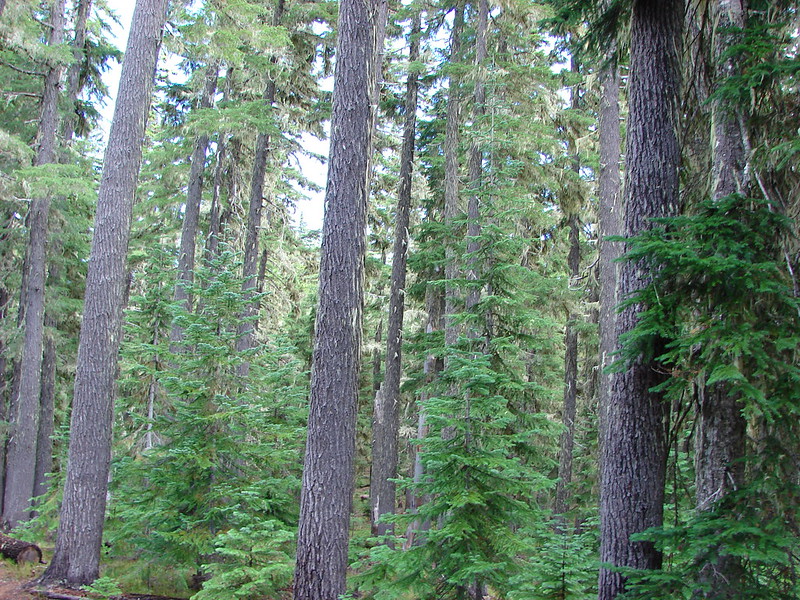
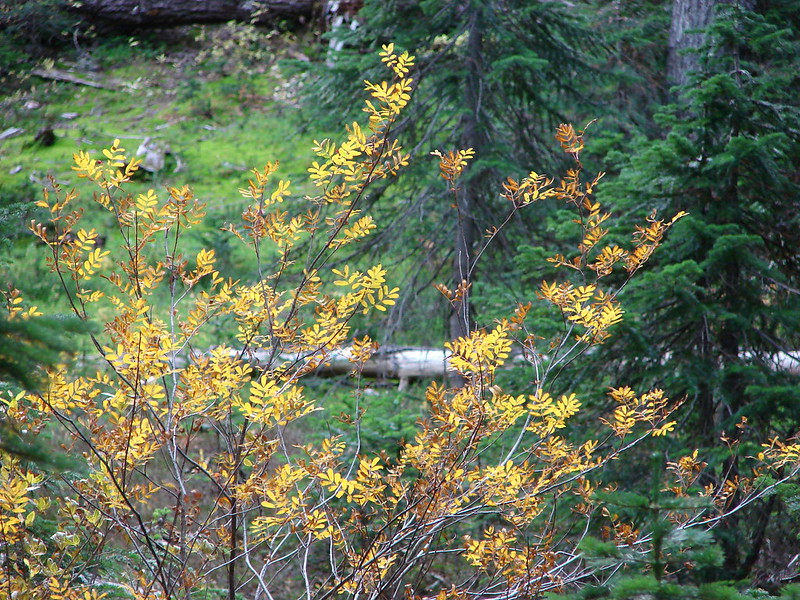
The forest showed the same signs of the warm and dry year we’ve had. Everything seemed to be at least a month ahead of schedule. Few flowers remained and some of the leaves were already starting to turn color.
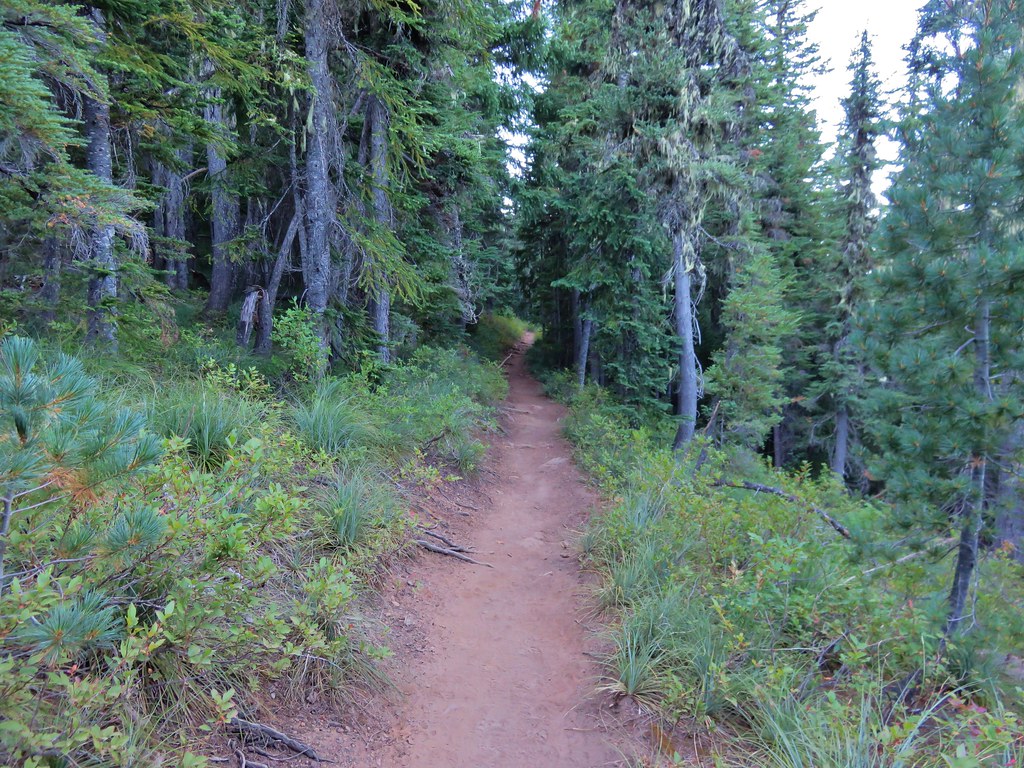
IMG_7249

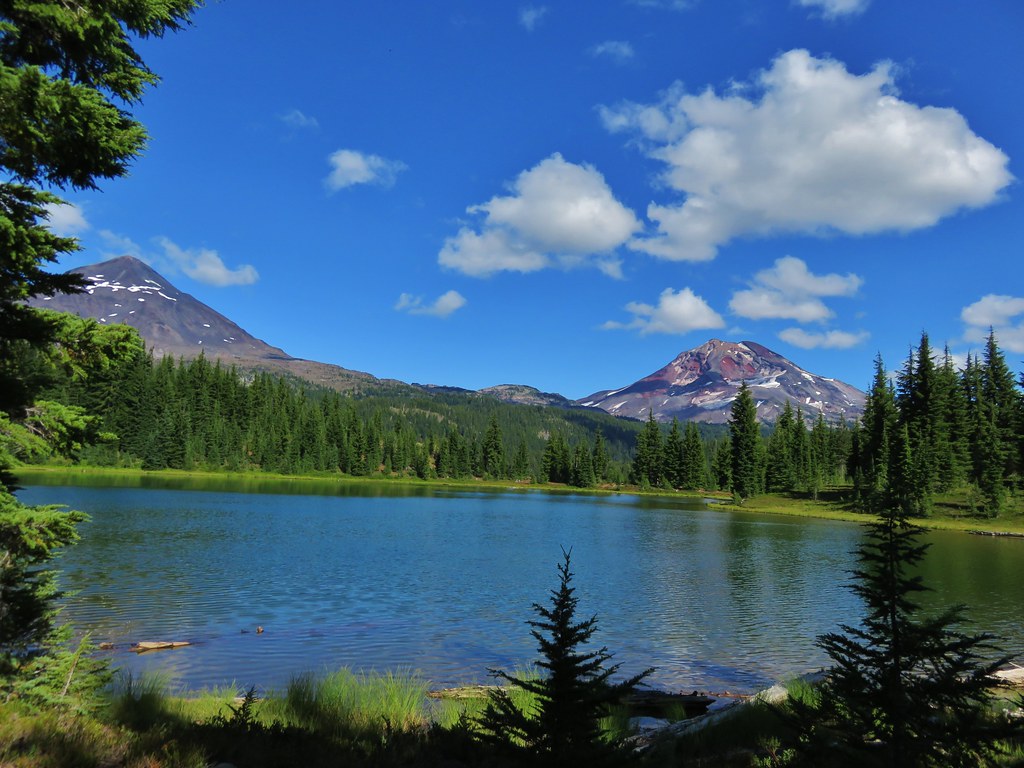
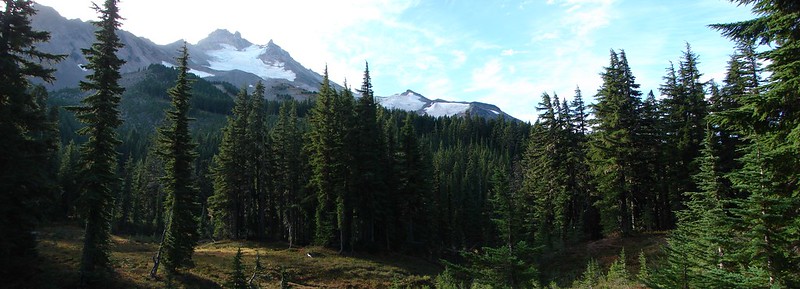
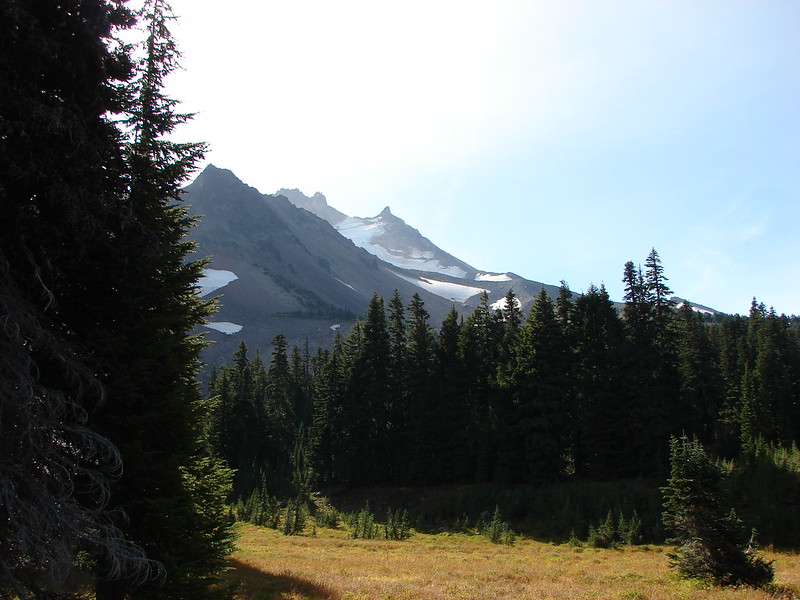
The sky to the south was a bit hazy with smoke from fires in Southern Oregon, but Mt. Jefferson was enjoying relatively blue skies.

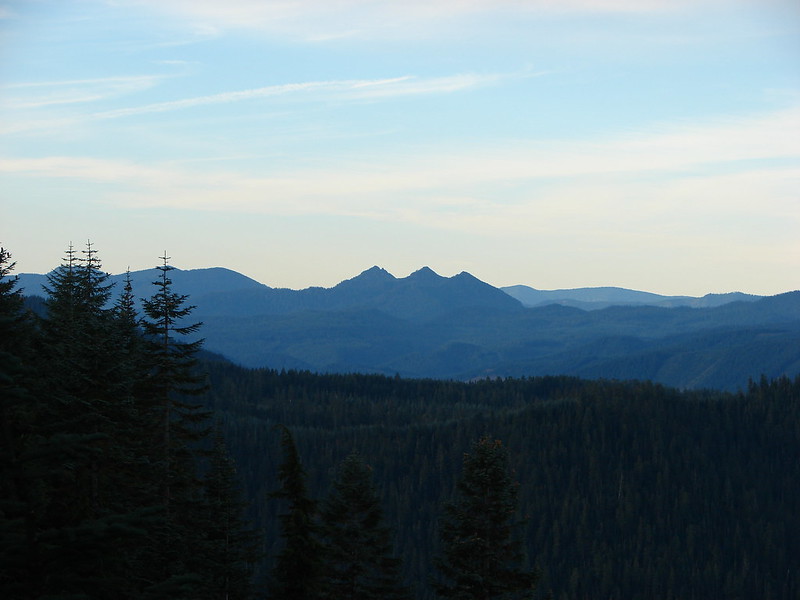
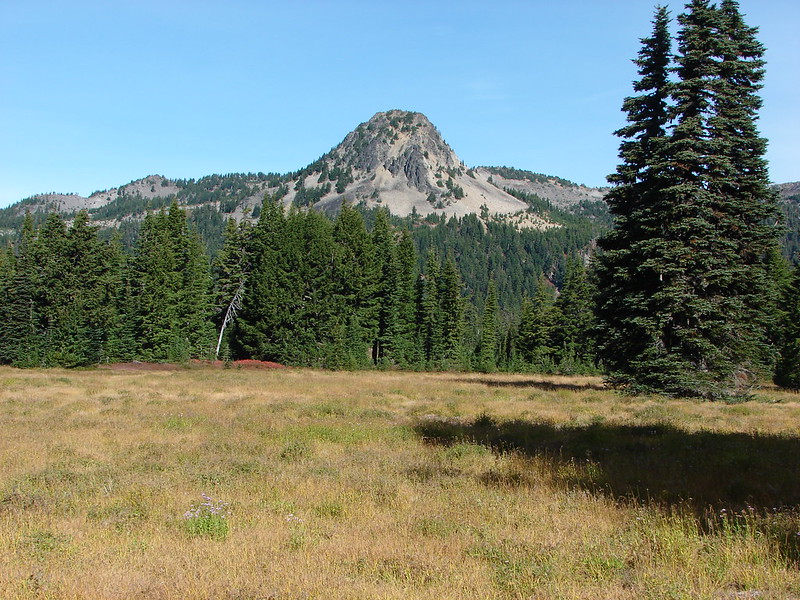
The Three Pyramids
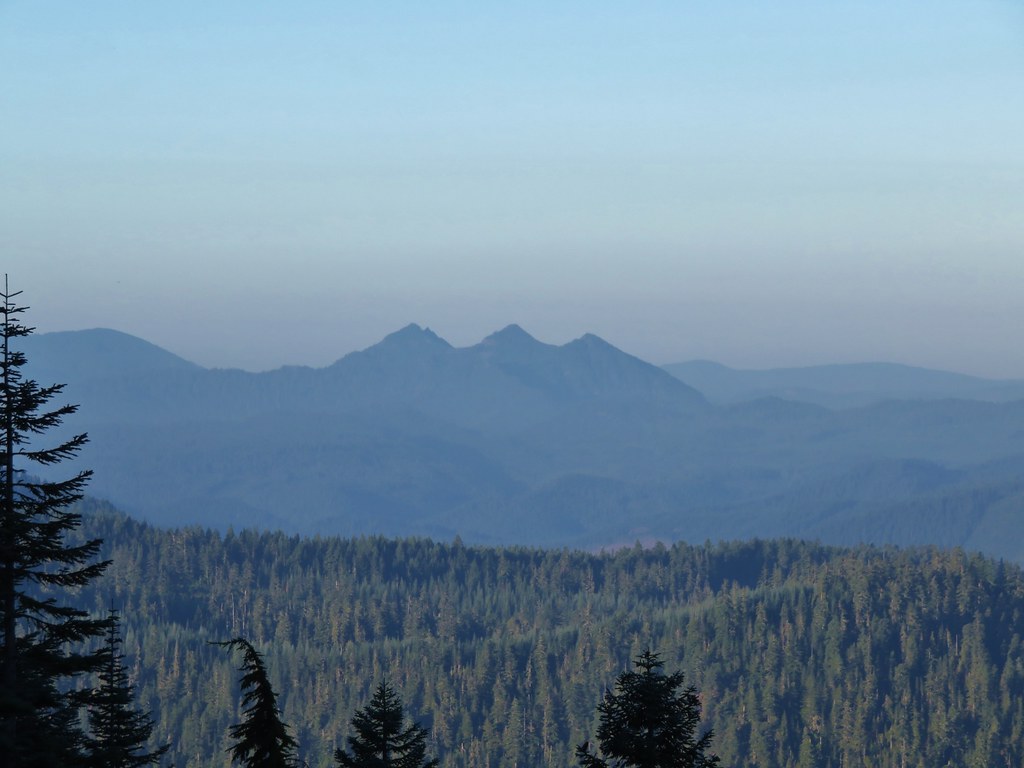
IMG_7253

IMG_7259

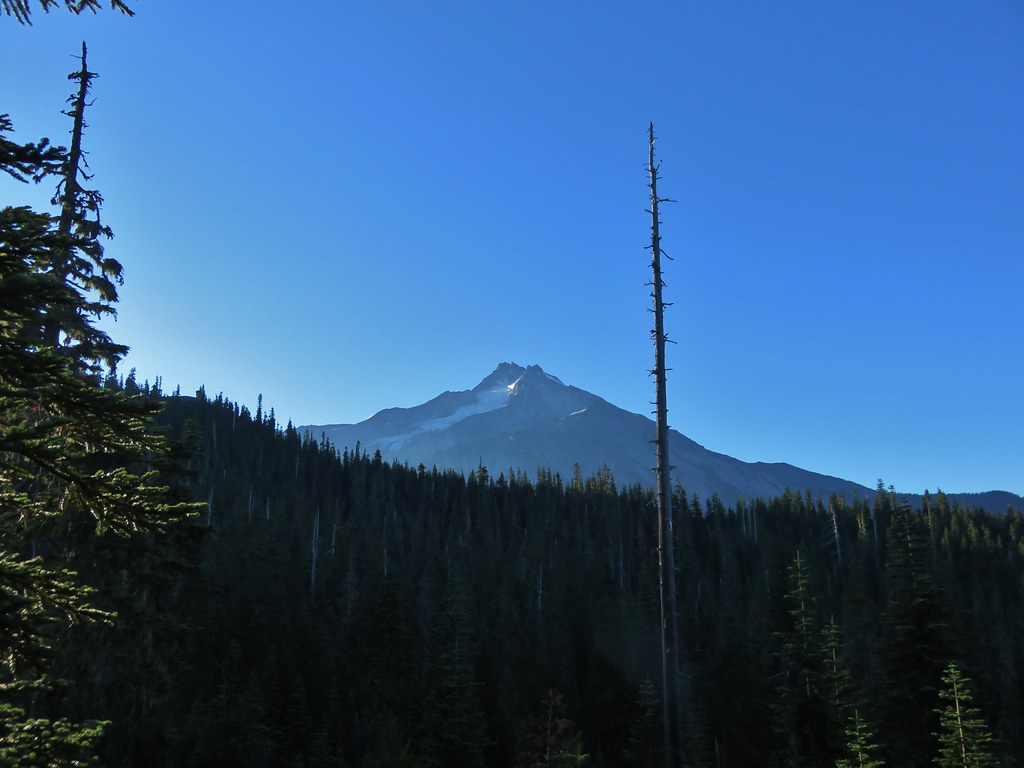
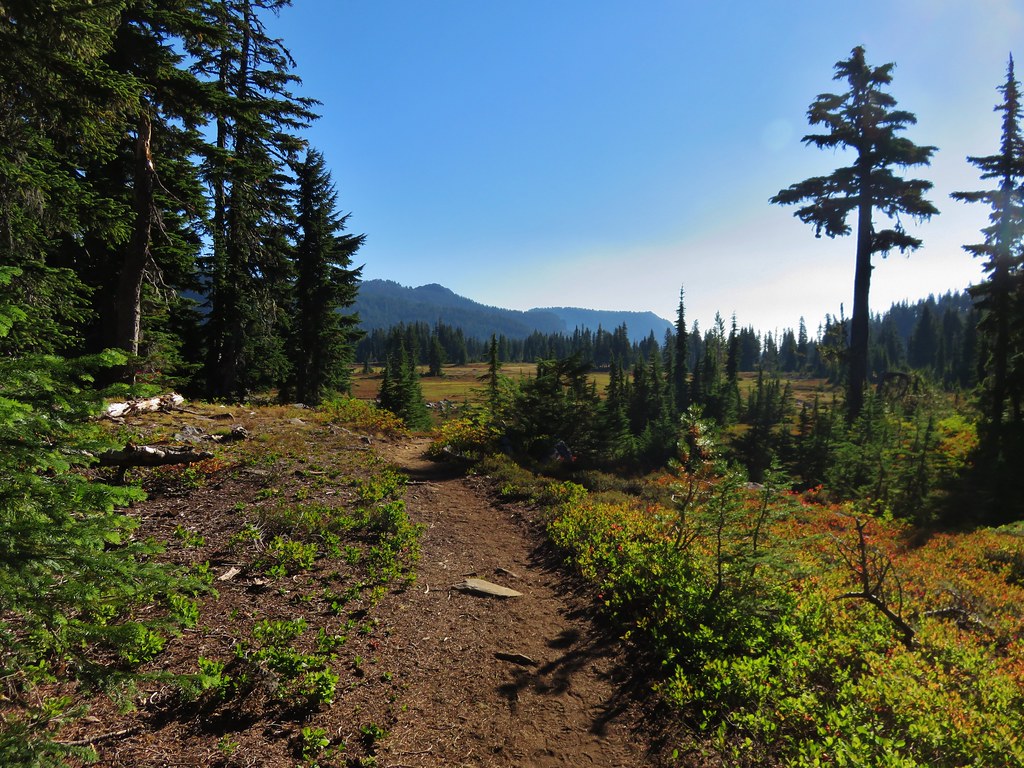
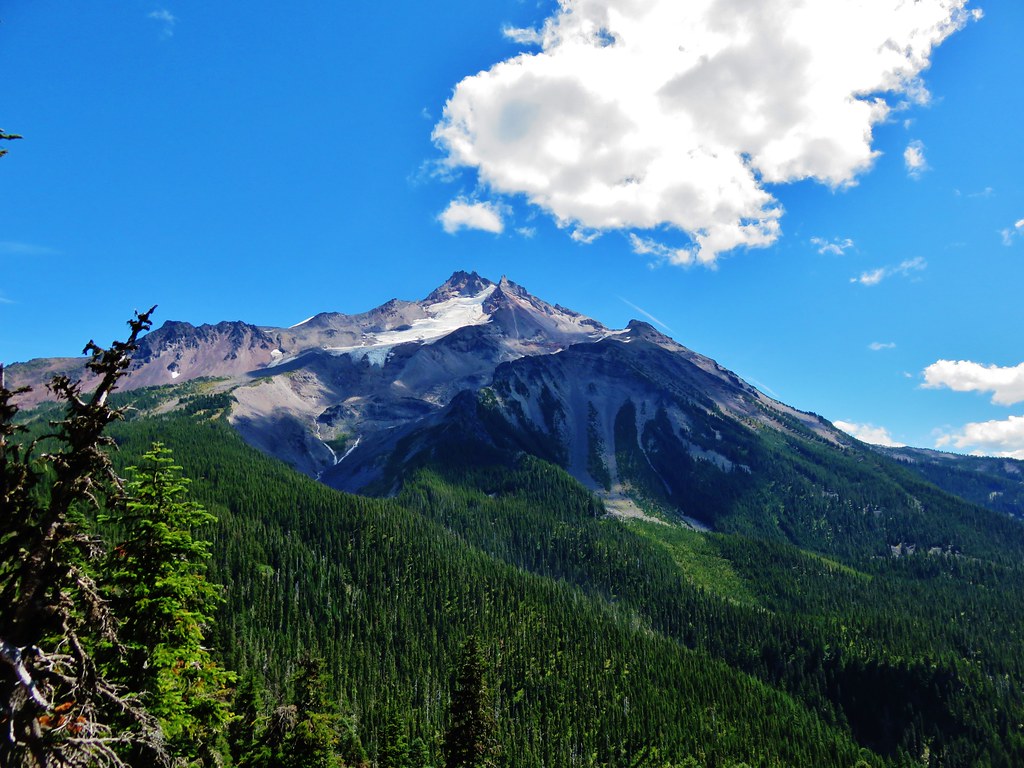
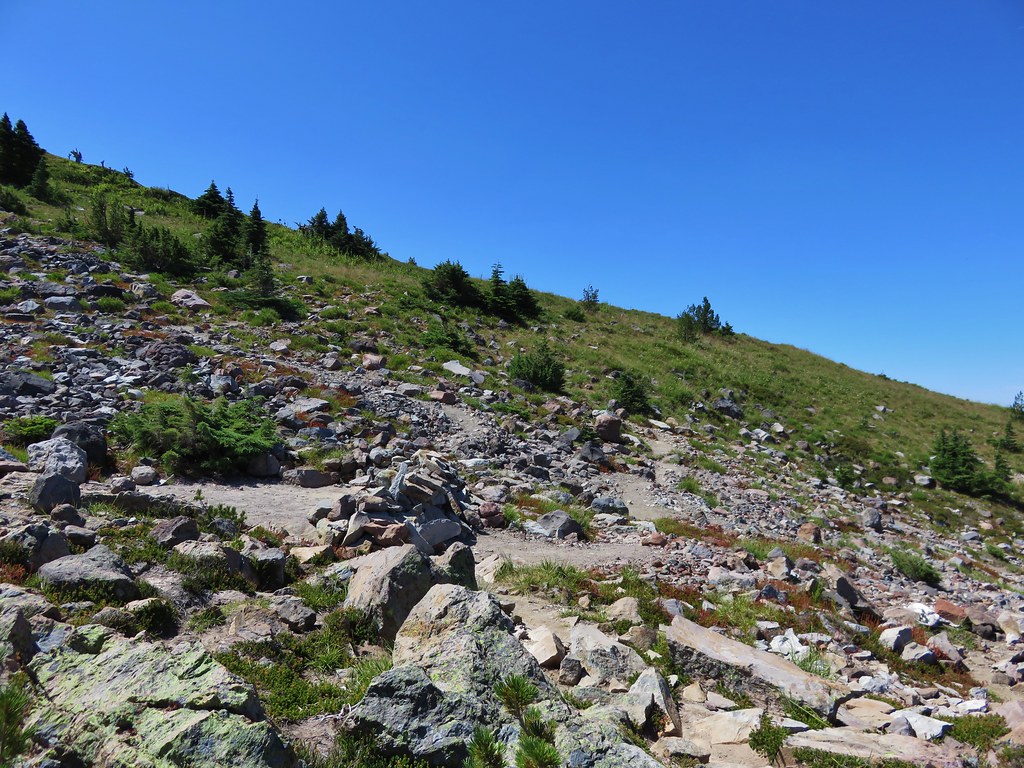
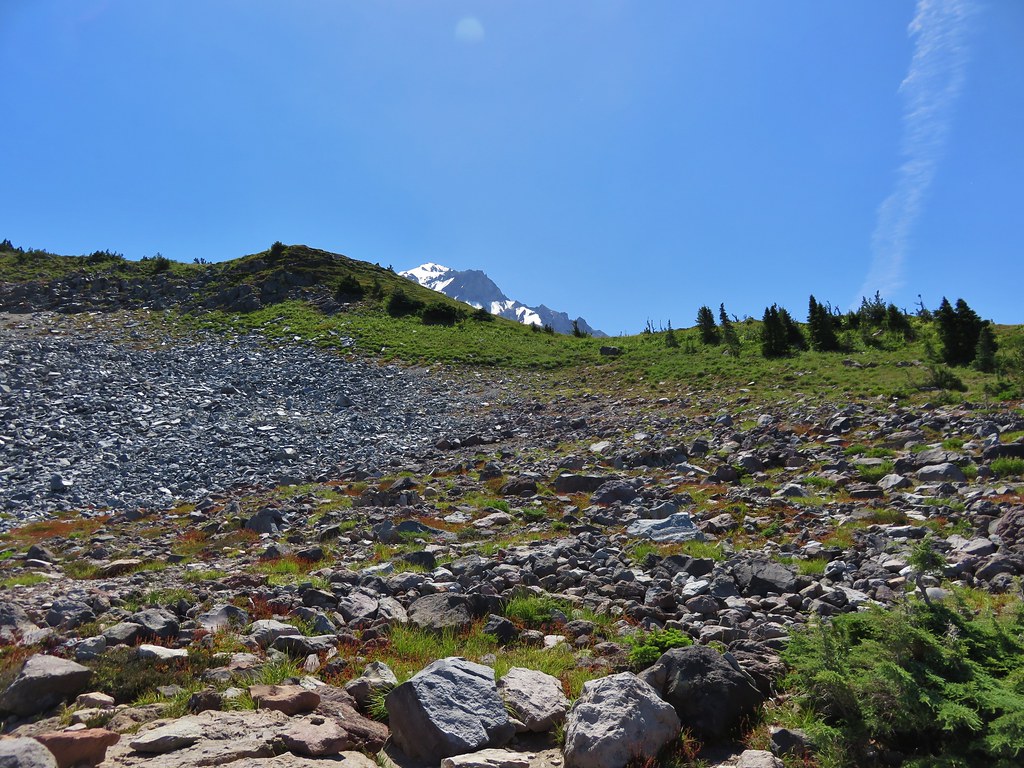
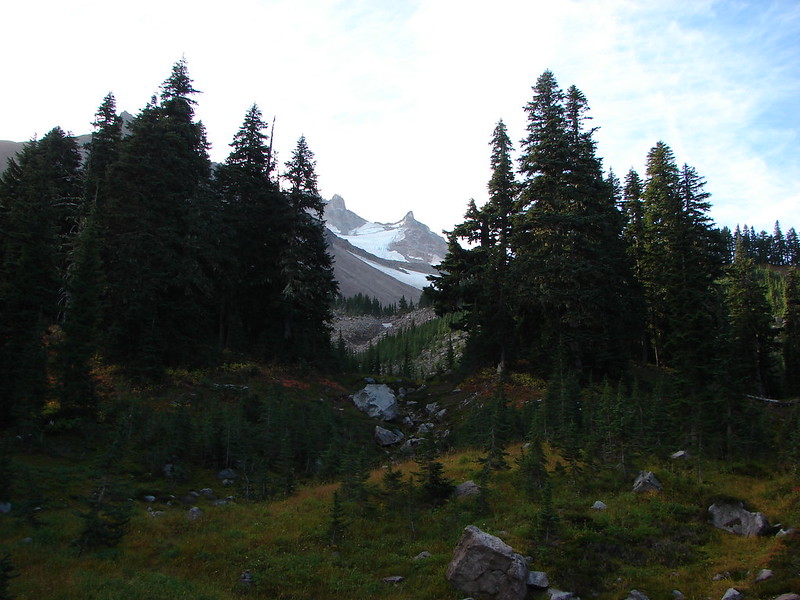
At the 1.5 mile mark the Triangulation Trail joined from the left at a saddle. This marked the end of the steepest portion of the hike which is never really all that steep to begin with. Approximately a mile from that junction the trail enters a small rock field with a view of the top of Mt. Jefferson.
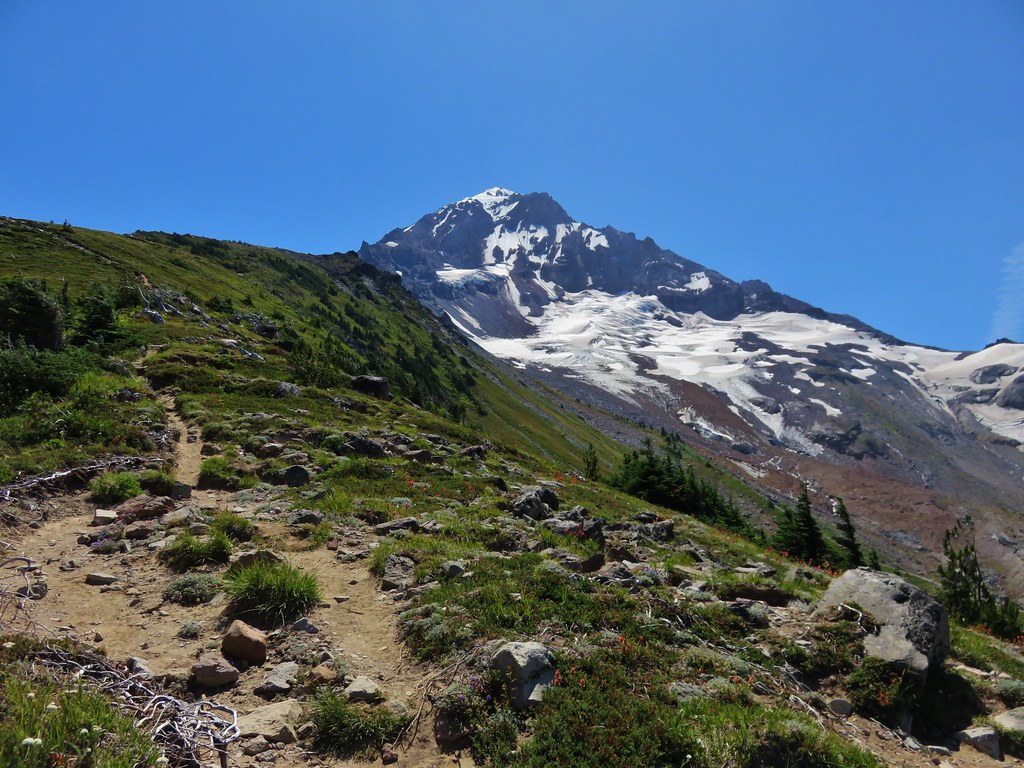
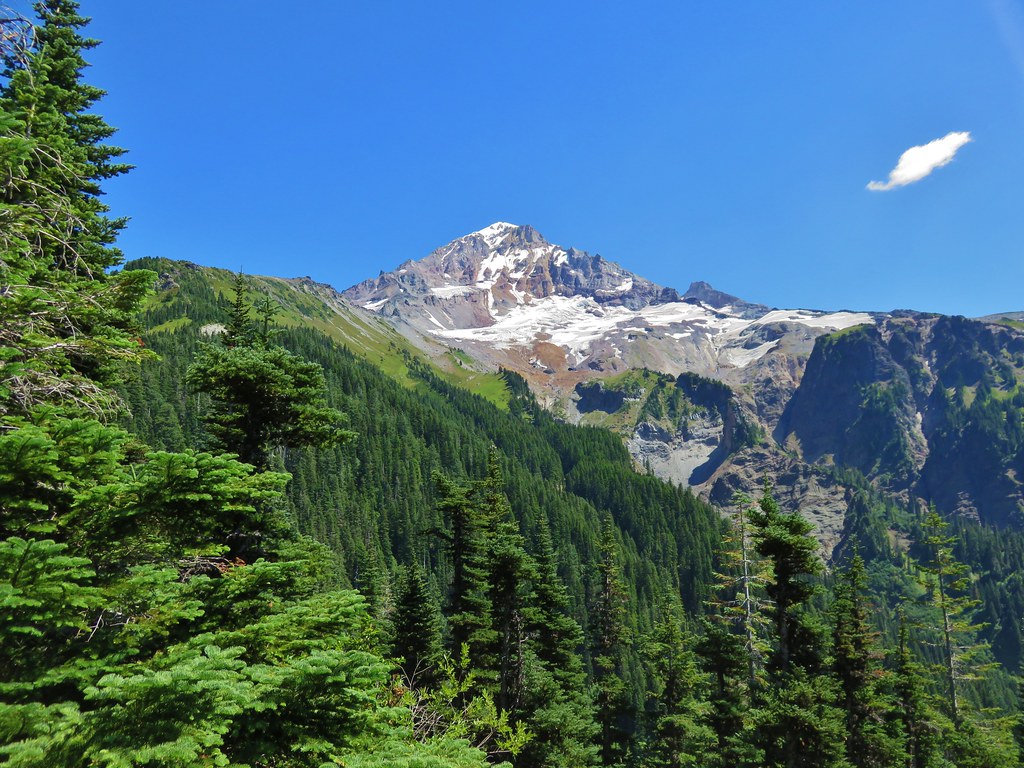
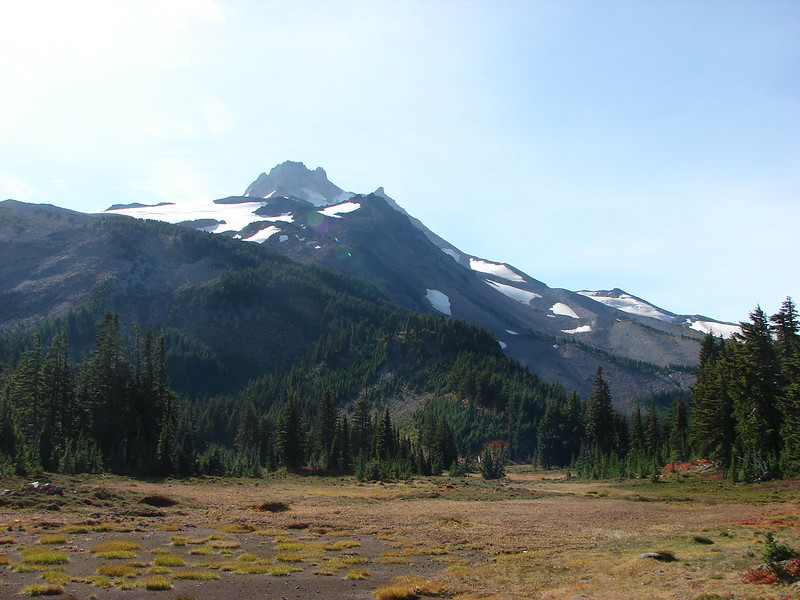
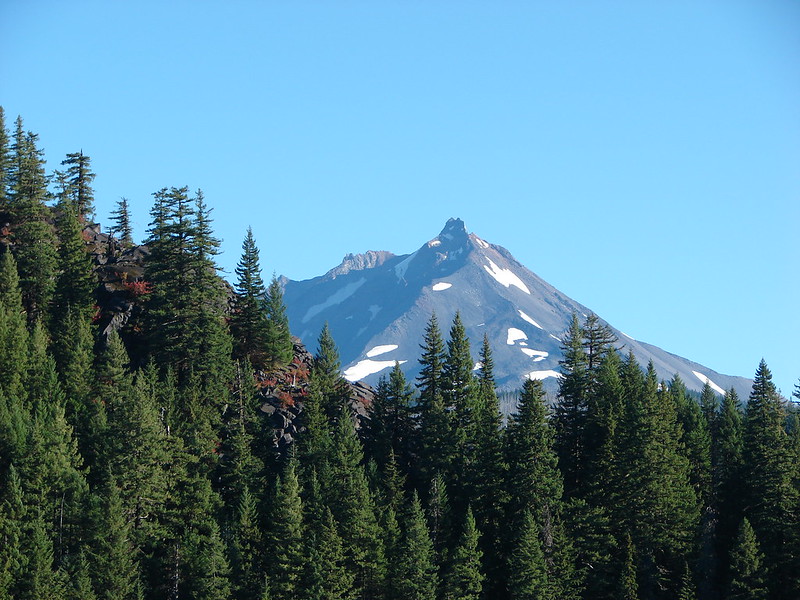
Mt. Jefferson from the Whitewater Trail

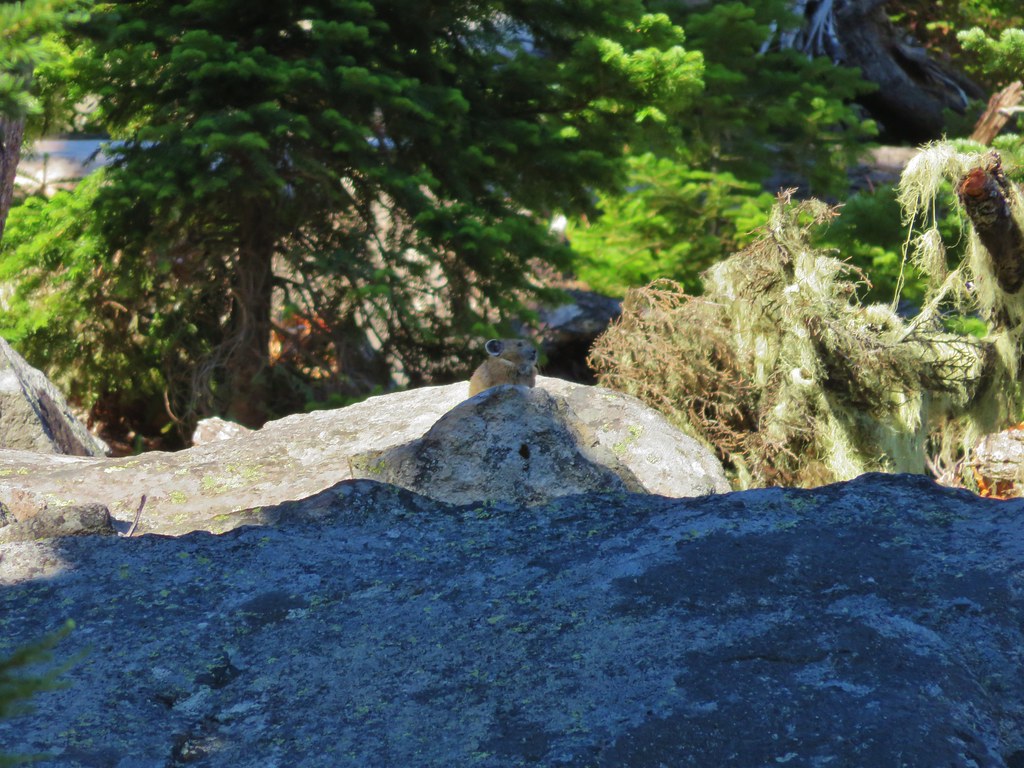
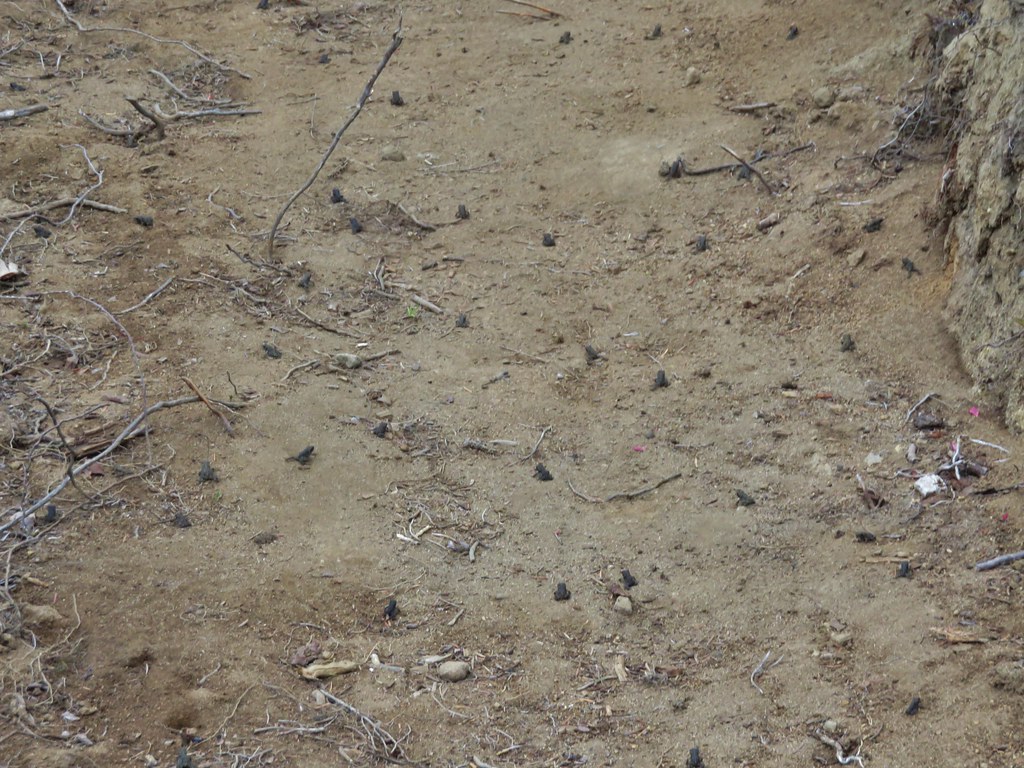
As I was taking a picture of the mountain I noticed movement in the rocks to my left. I looked over to see a pika dart out onto the rocks.
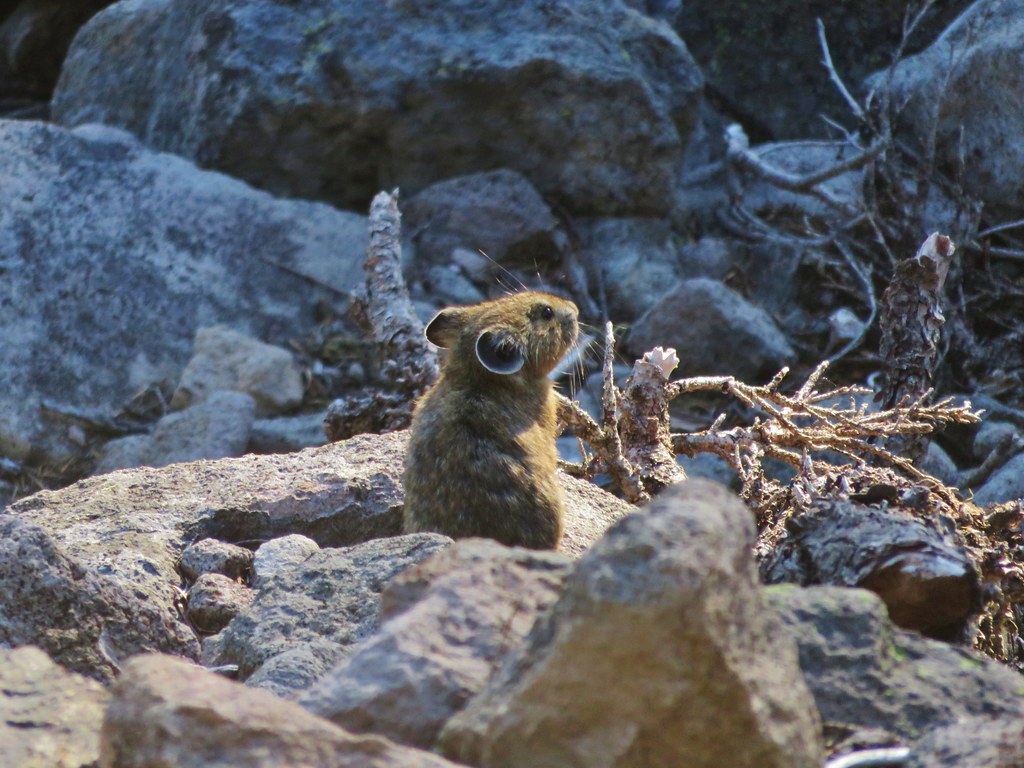
Pika

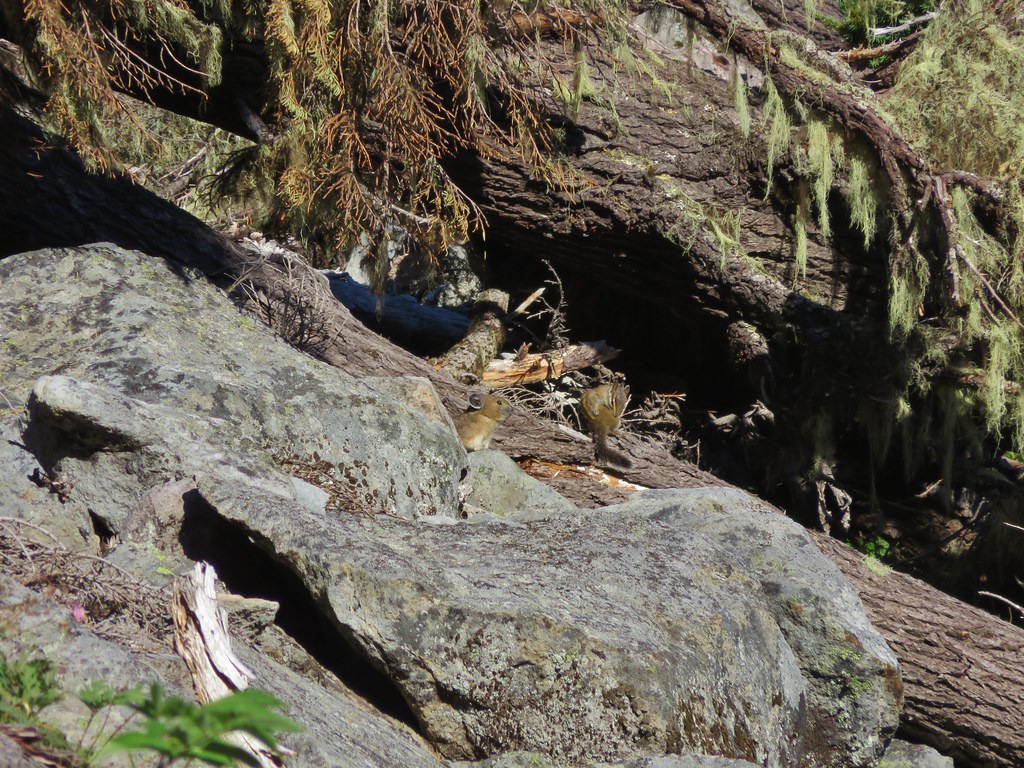
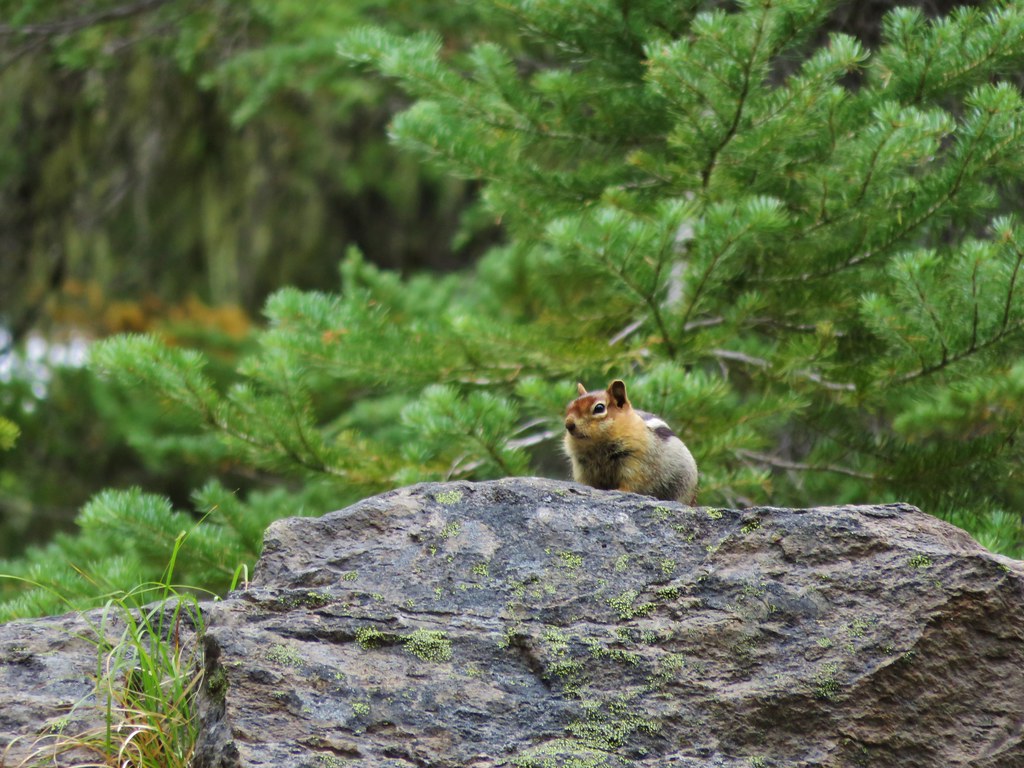
We love pikas and were excited to be getting such a good look at this one since we typically only hear their “meep” warning of our presence. As we were watching the first pika we began to notice others. In the end we’d spotted 5 different pikas and a chipmunk in the area.
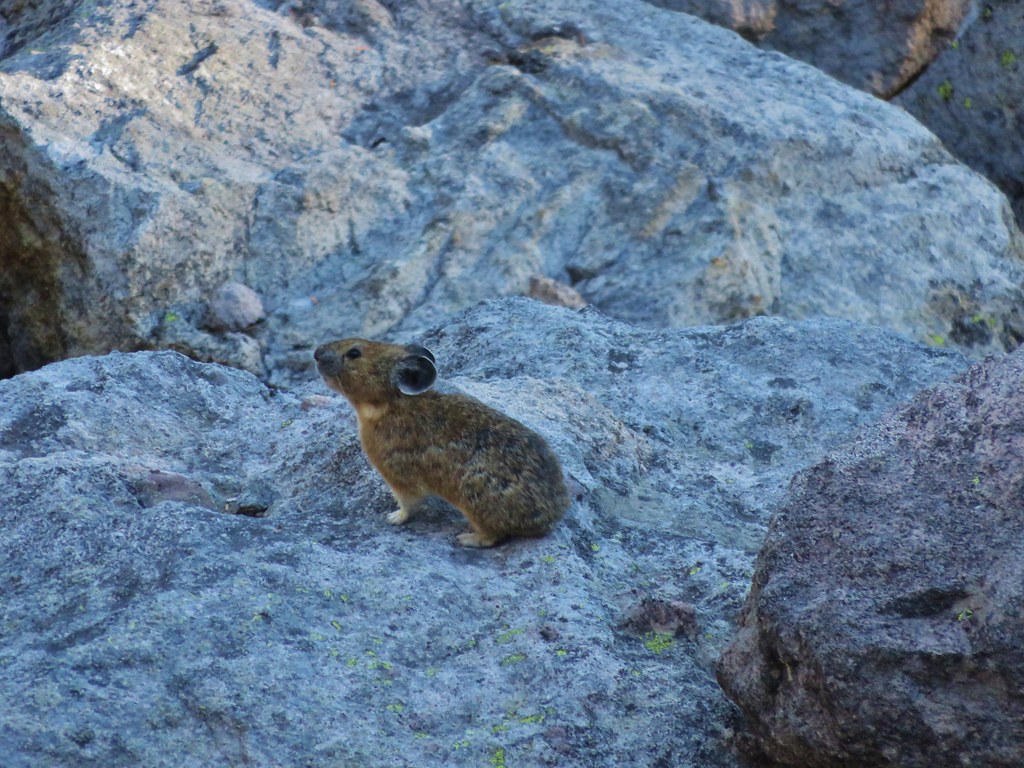
Pika

IMG_7277

Pika and a chipmunk

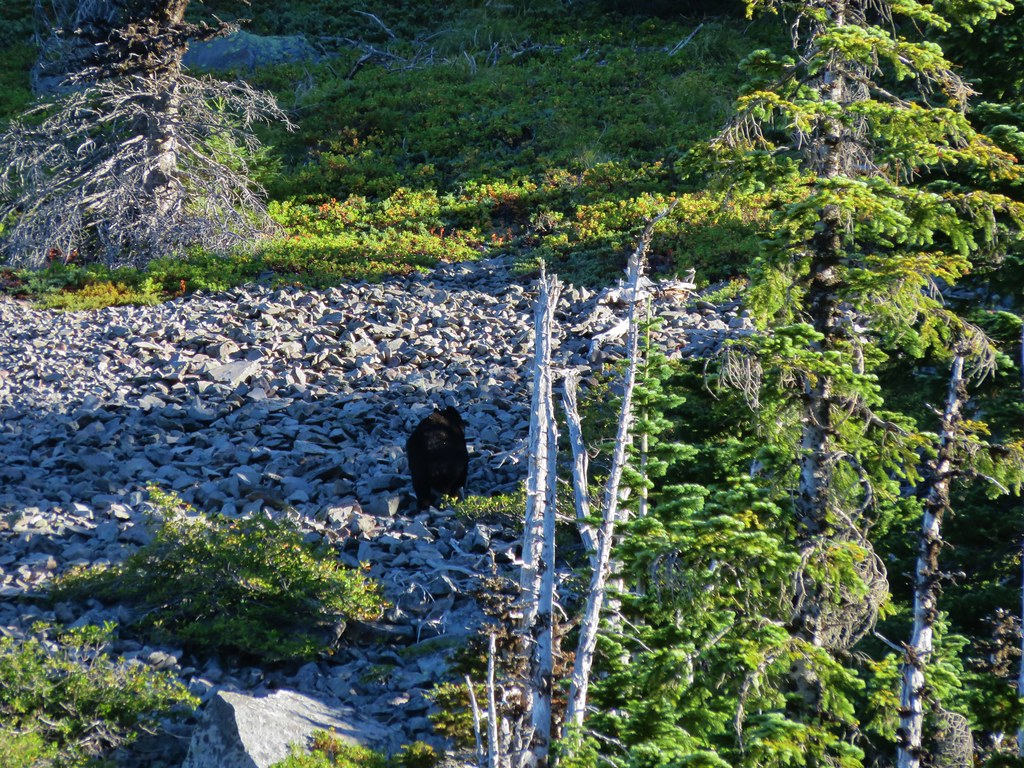
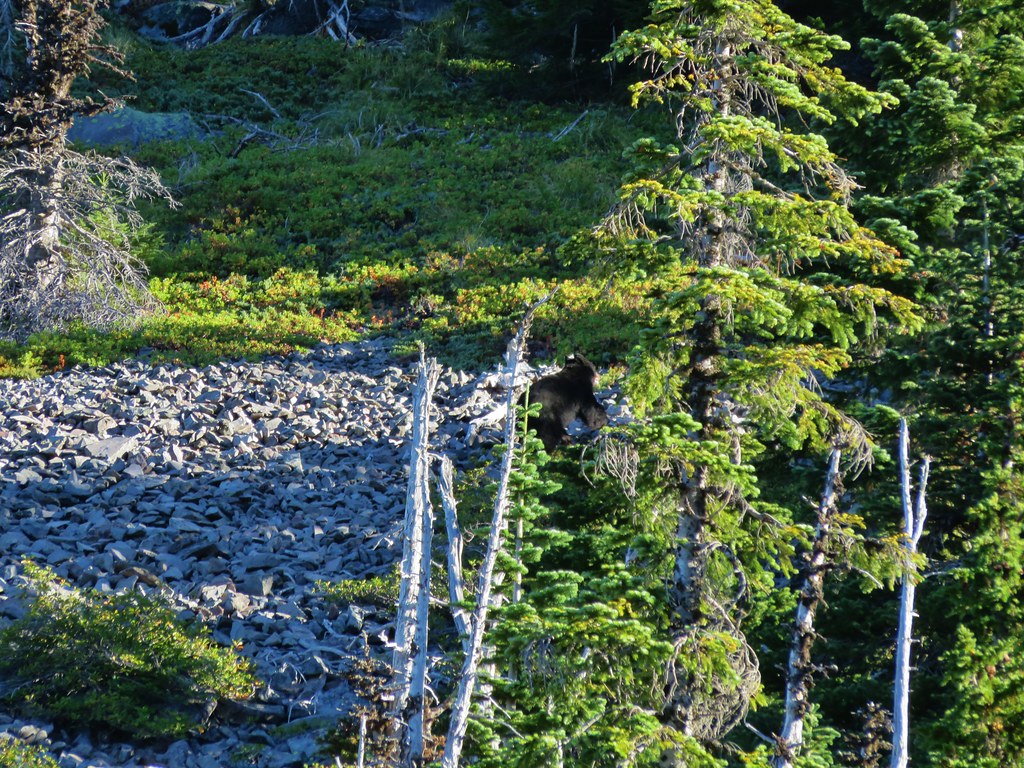
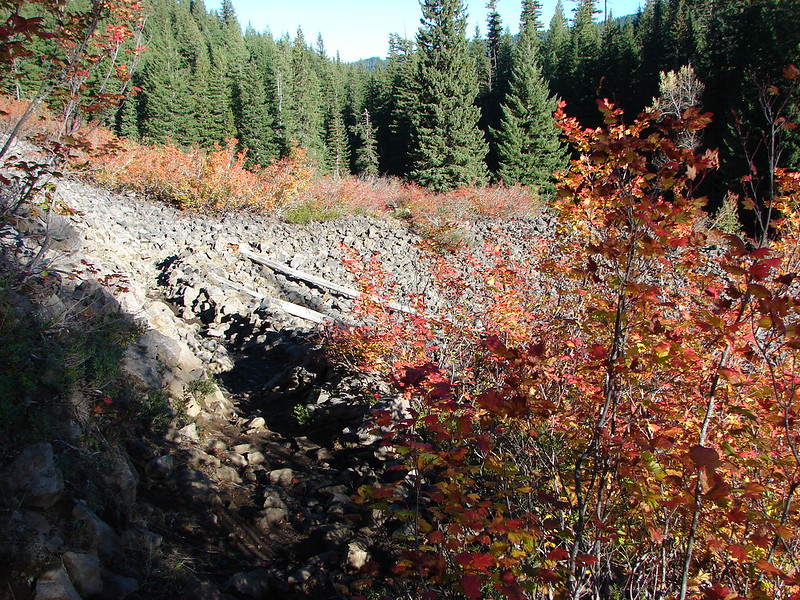
We wound up seeing a sixth pika a little further along the trail making this the highest number of pikas we’d seen on a single hike. Normally seeing a pika, let alone 6, would be the wildlife highlight of a hike, but shortly before reaching the first crossing of the Whitewater Creek around the 4 mile mark the pikas were topped. As we passed a small meadow at the base of a butte we heard some rocks sliding. My first thought was mountain lion because of a recent discussion on how many of the cougar sightings I heard about were the result of hikers hearing rocks moving. When we looked over toward the source of the noise the animal we saw was black so we knew it wasn’t a cougar. It was a bear. This was only the second bear we’d seen while hiking and the first one had run away so quickly that I wasn’t able to get a picture. This time I had my camera ready and the bear was running up an exposed rock slide so I was able to get a few pictures before it disappeared.
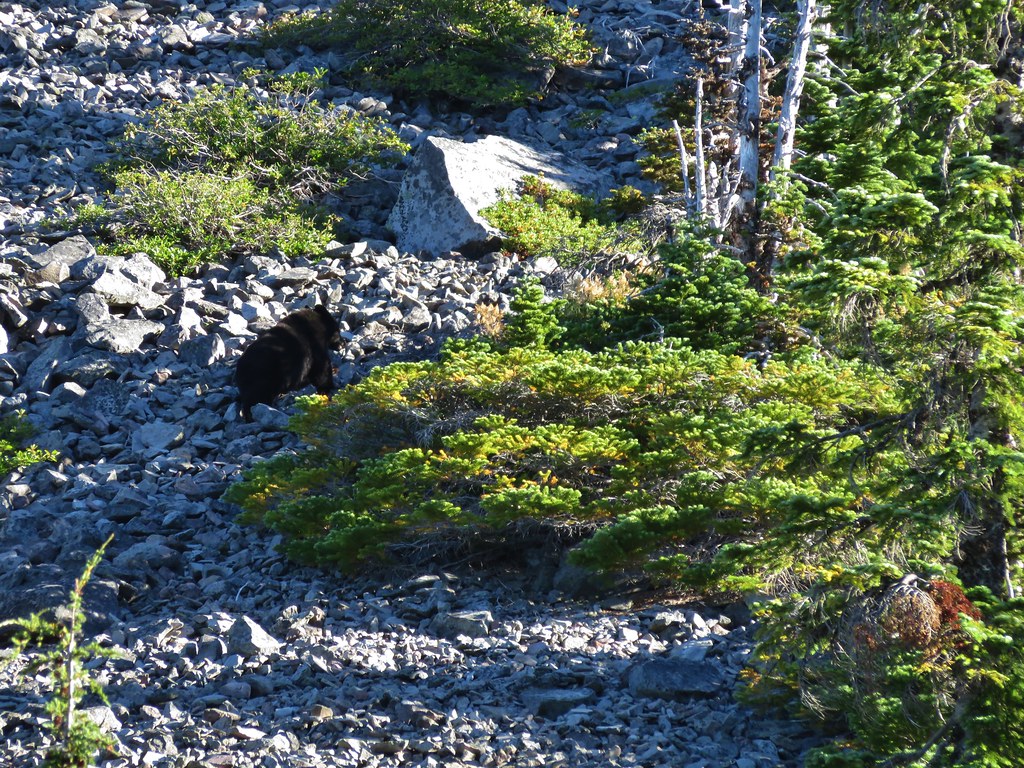
Black Bear

IMG_7289

IMG_7290

IMG_7291

We continued on to the Pacific Crest Trail energized from the excitement of seeing the bear. At the PCT we turned left, re-crossed Whitewater Creek, and entered Jefferson Park.
IMG_7301

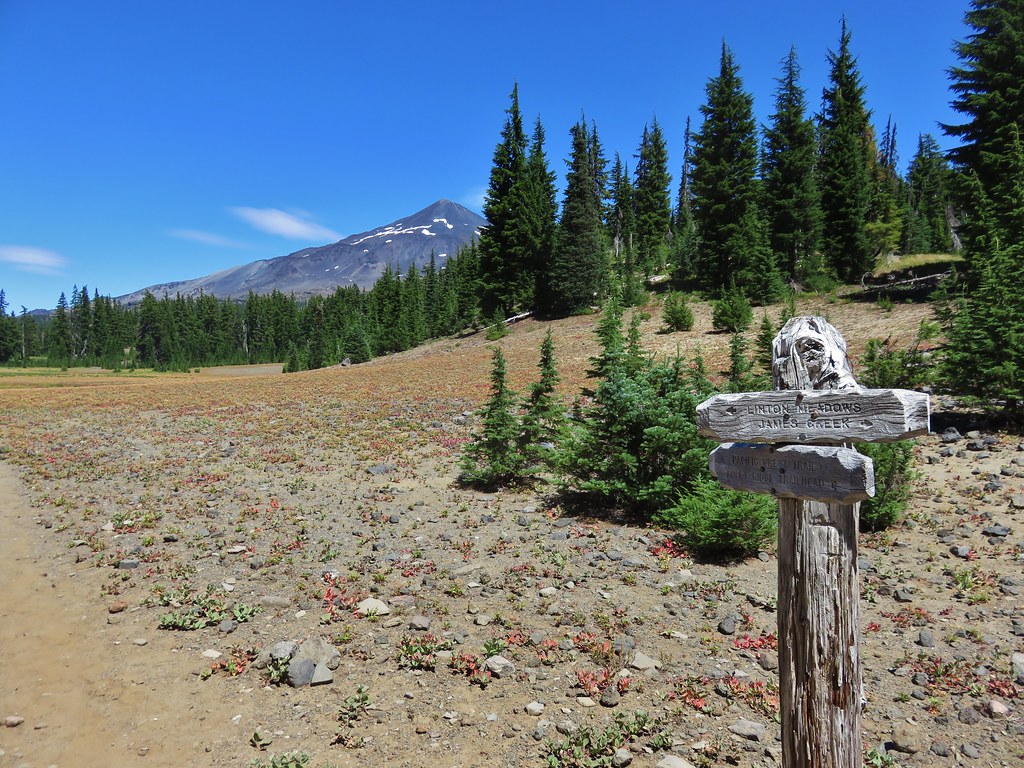
Shortly after entering the park we came to a signed junction and needed to decide where we wanted to go this time.
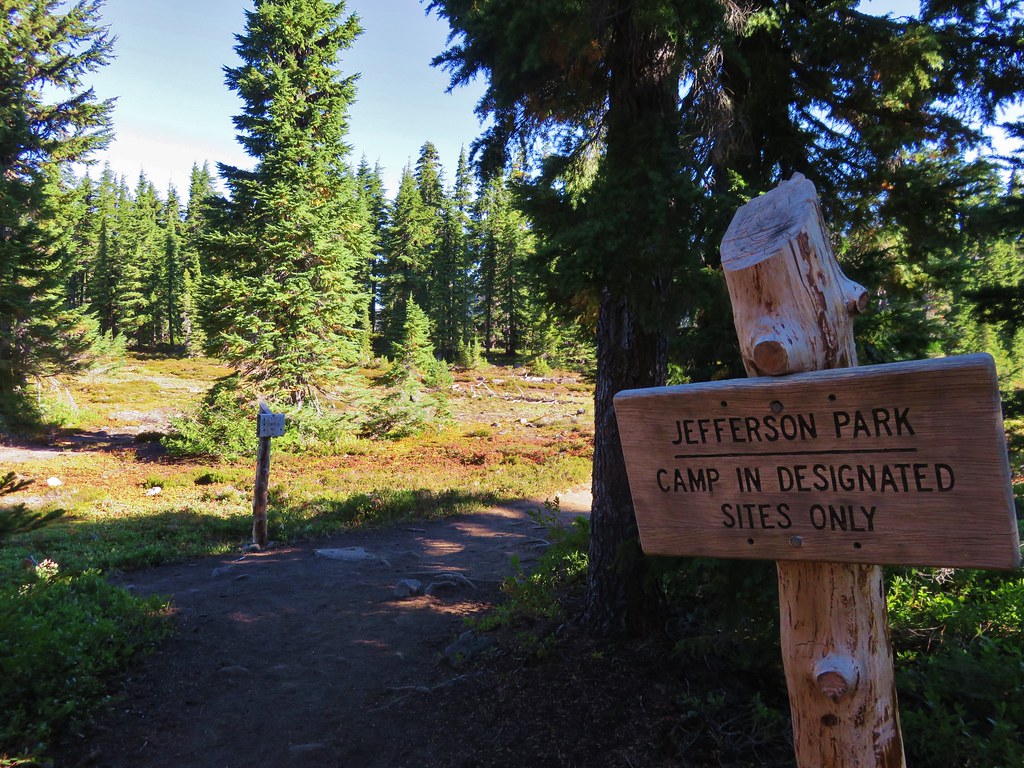
IMG_7324

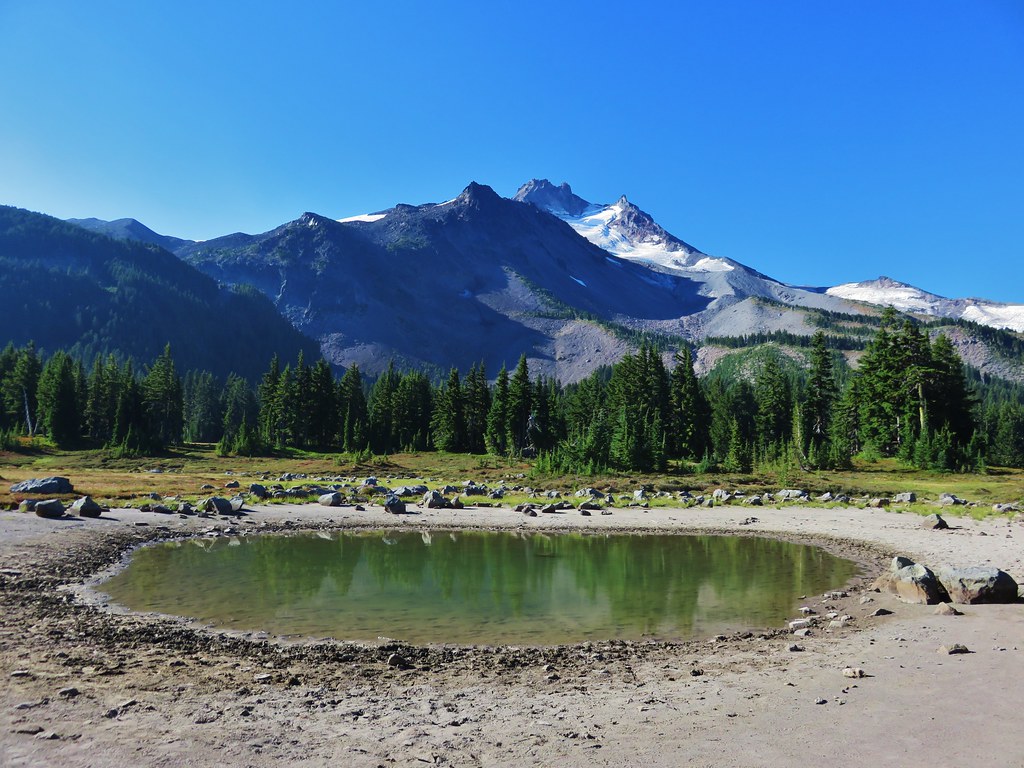
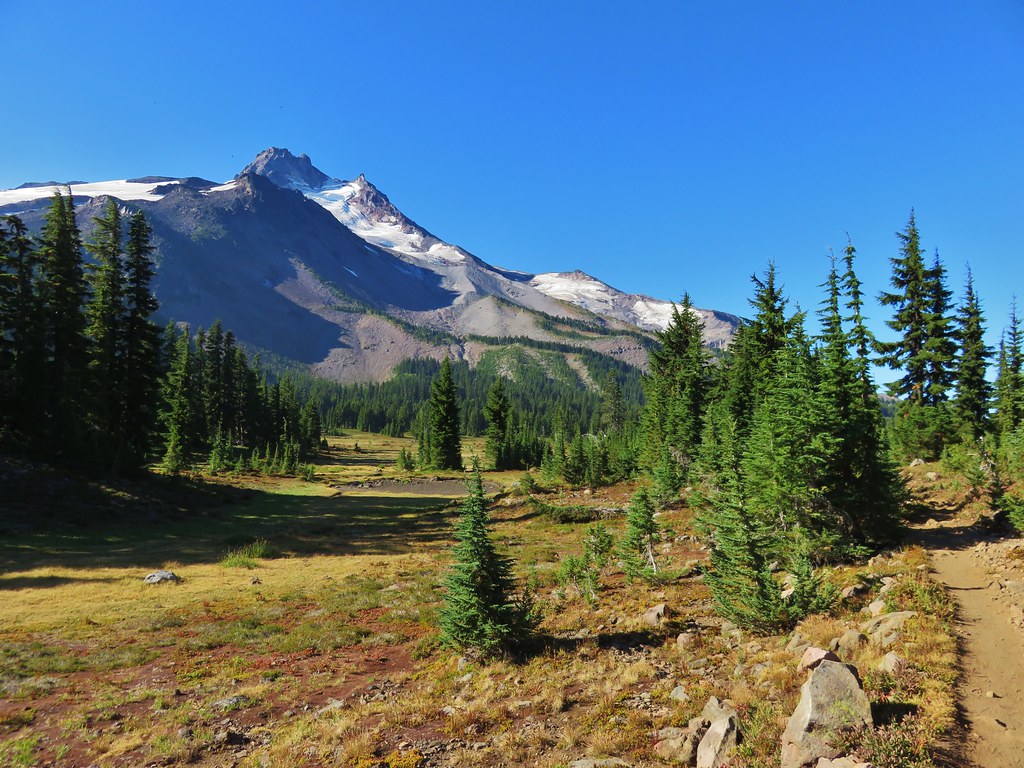
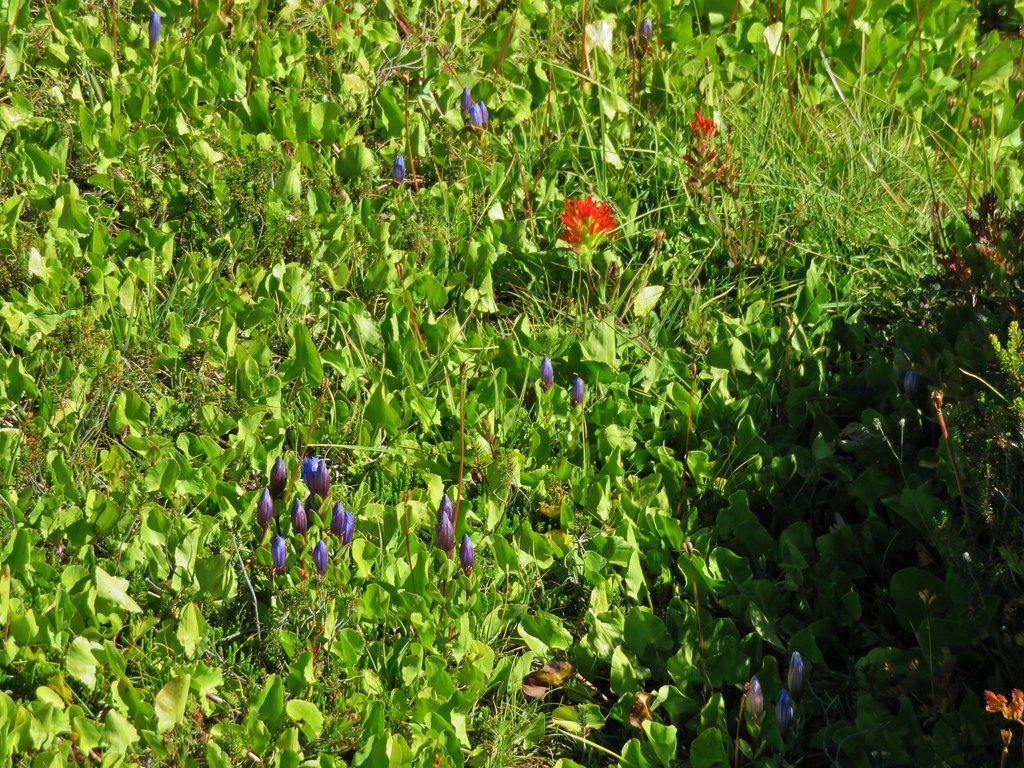
We settled on heading north on the PCT and trying to find a climbers trail that was shown on one of our maps leading up to the Whitewater Glacier. As we made our way through the park we were struck by just how dry it was and how far past all the flowers already were. The scenery was still amazing though.
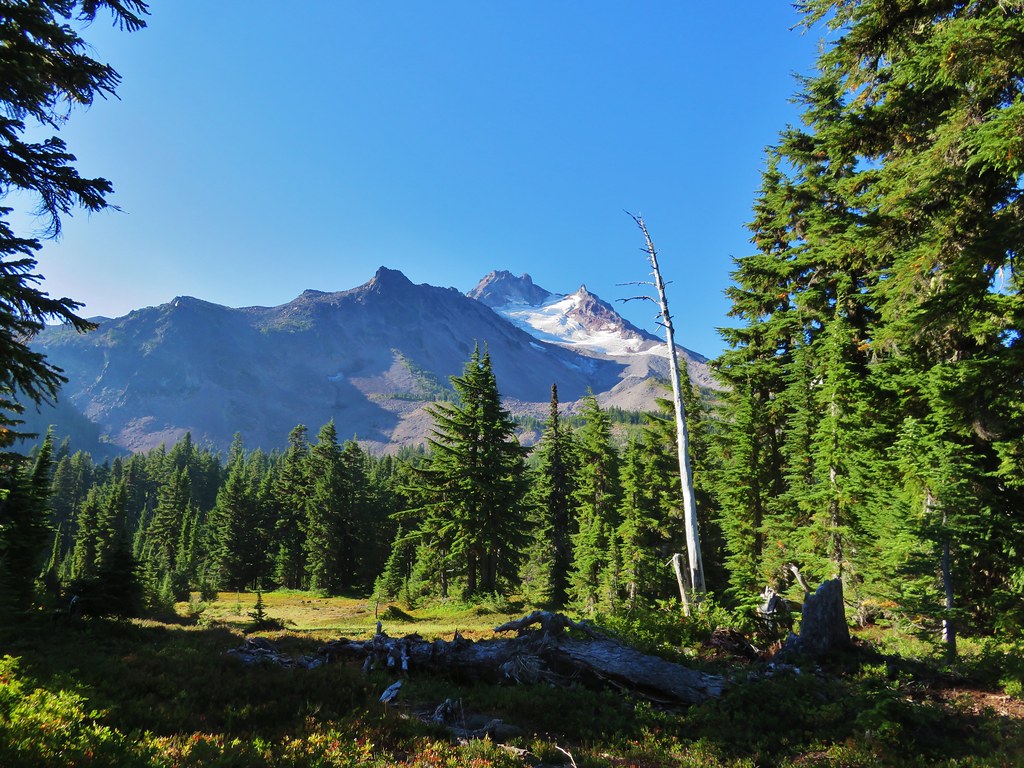
IMG_7326

IMG_7331

IMG_7333

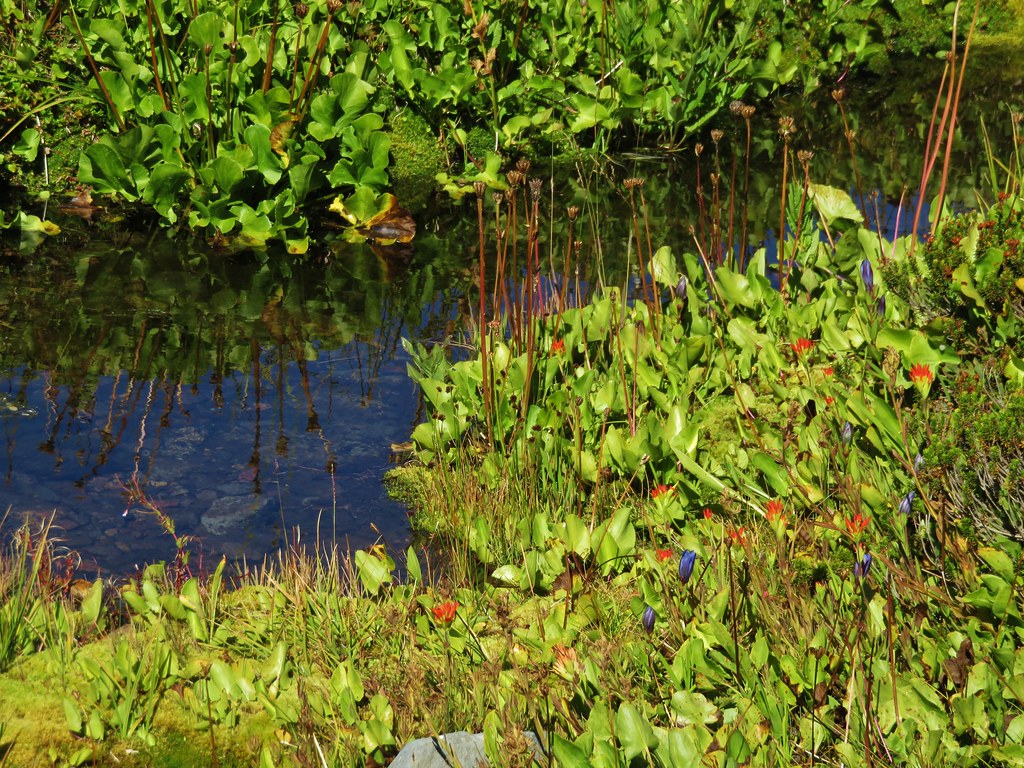
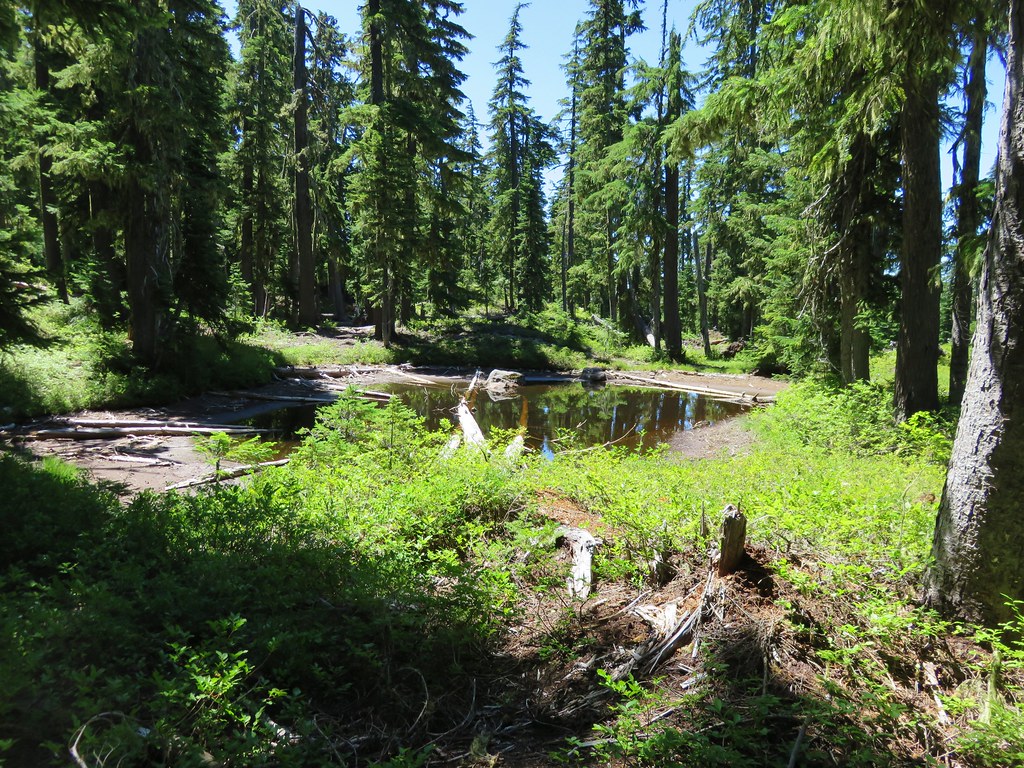
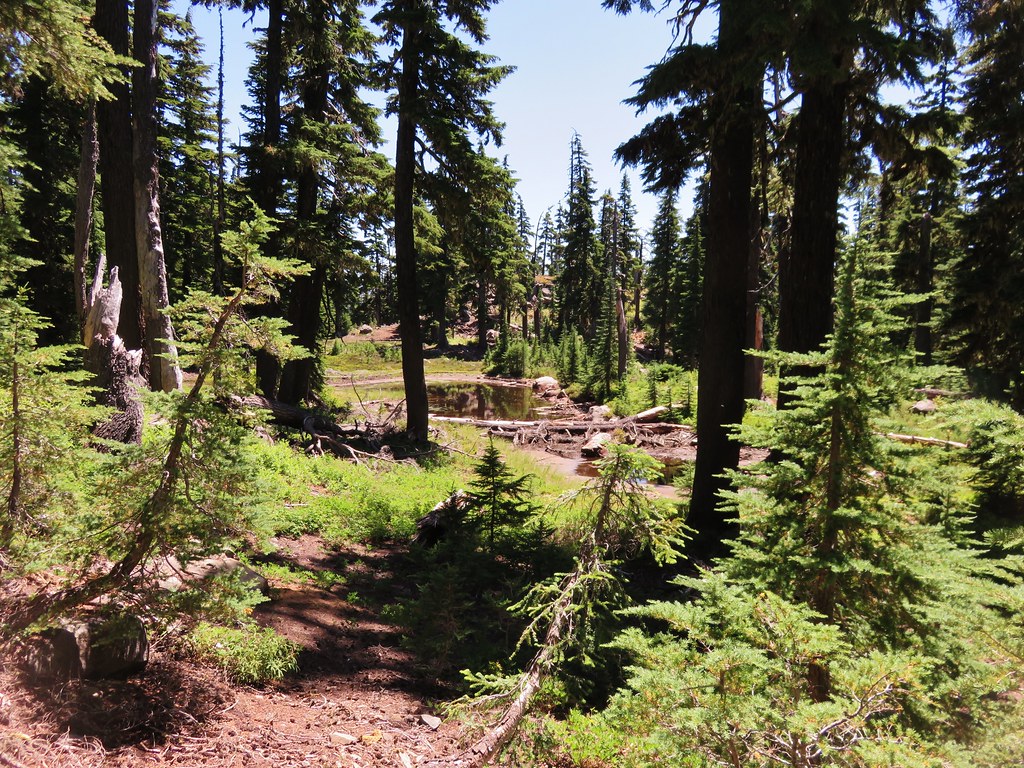
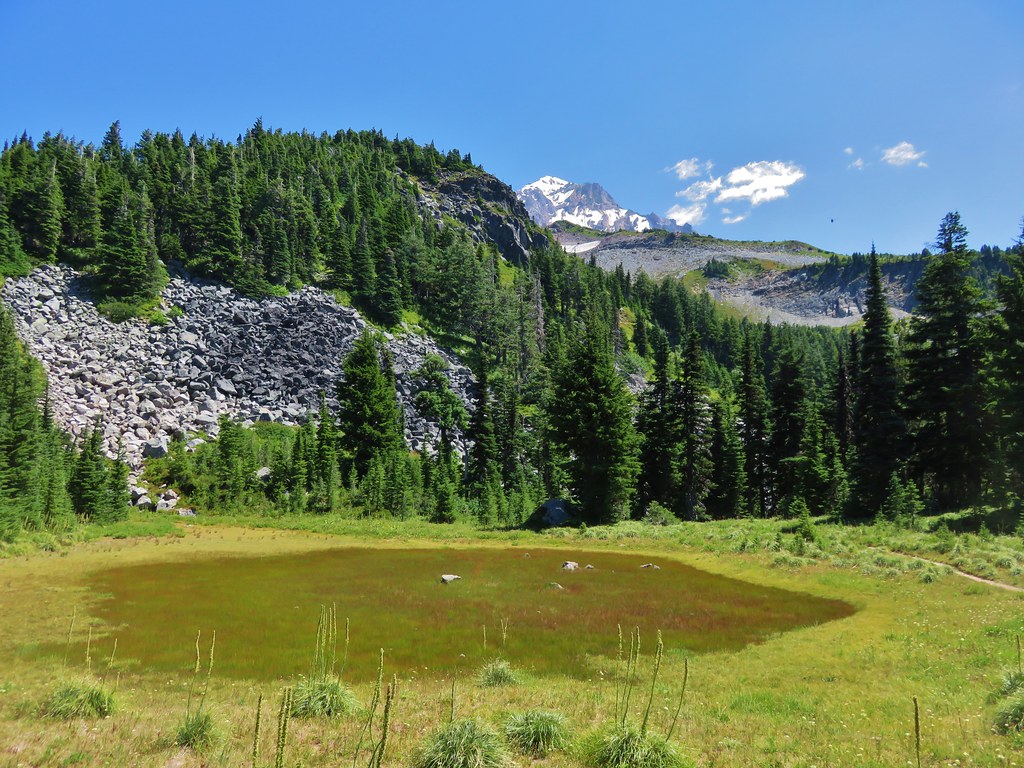
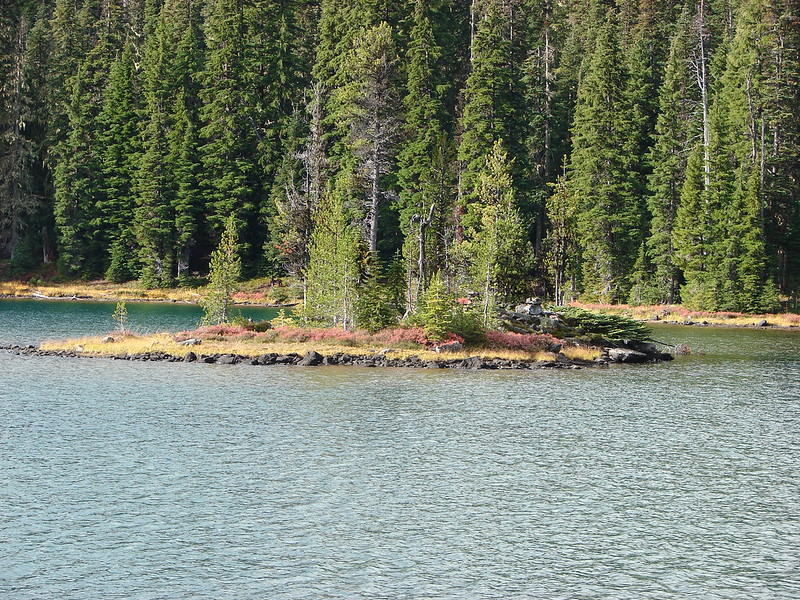
Pond in Jefferson Park

IMG_7336

We found what appeared to be a decently used trail in what seemed to be the correct area and set off toward the mountain. The trail we were following started bending back to the south though so we were forced to abandon it and take a more direct route toward the ridge where we hoped to pick up the climbers trail. We found another clear path and began following it but then it petered out on a tree covered ridge.
IMG_7345

We seemed to be in the correct area according to the map and GPS, but we were unable to spot anything that looked like a trail so we decided to go to plan b and head to Russell Lake where we could pick up the PCT again and decide what to do from there.

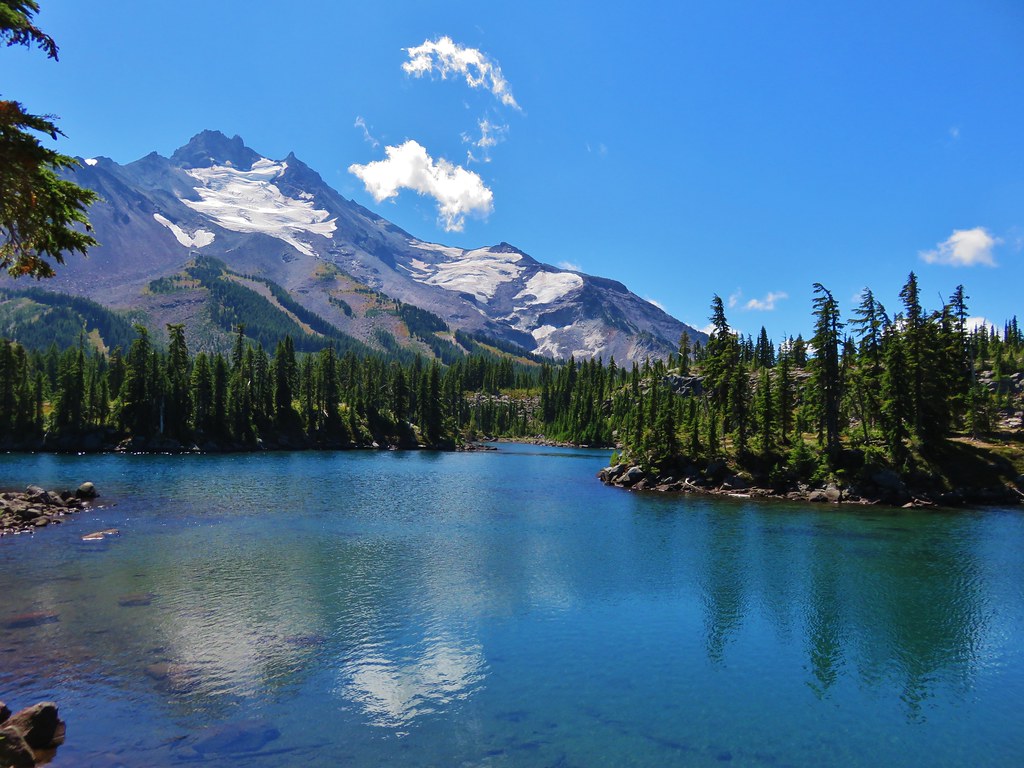
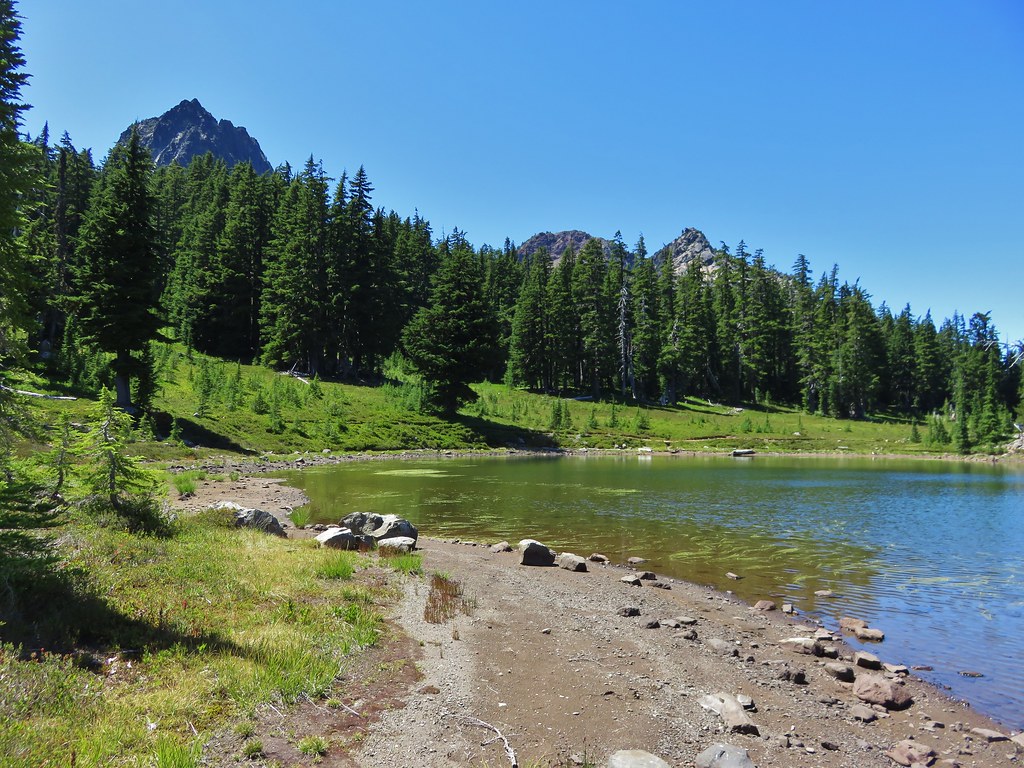
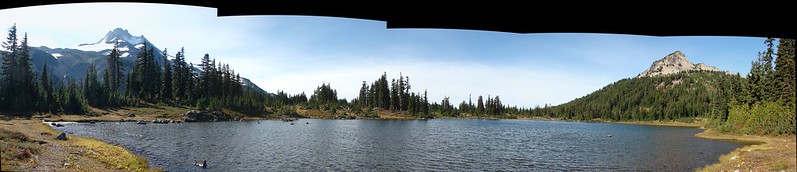
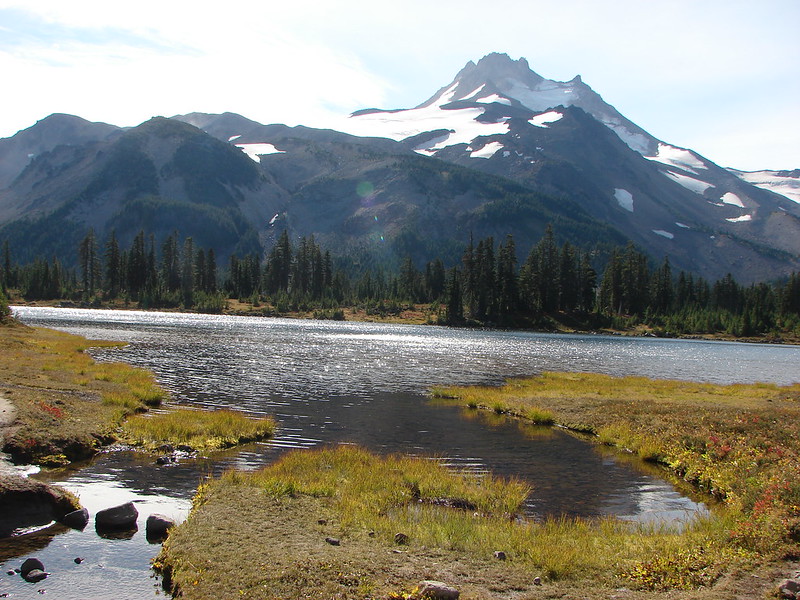
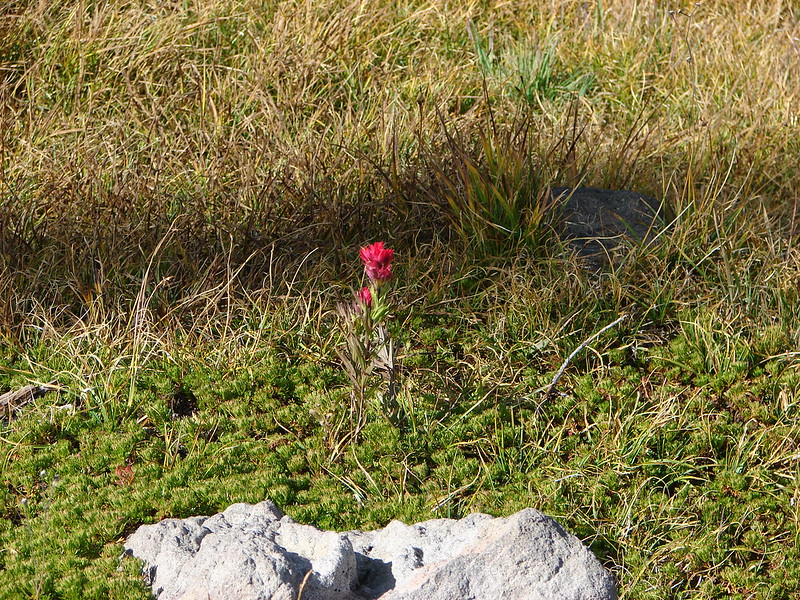
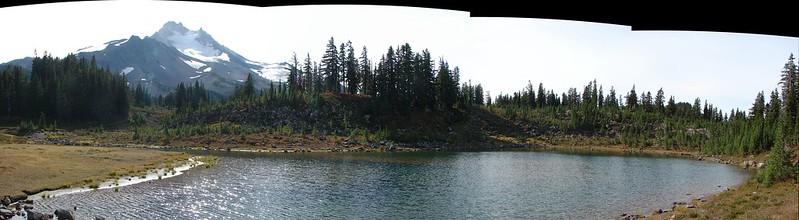
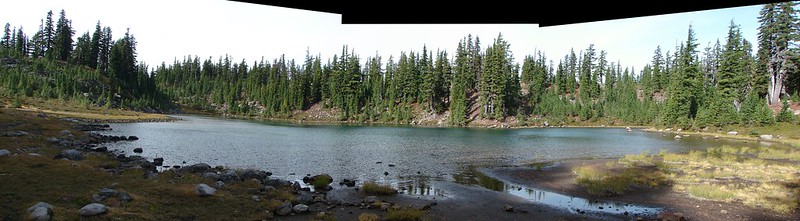
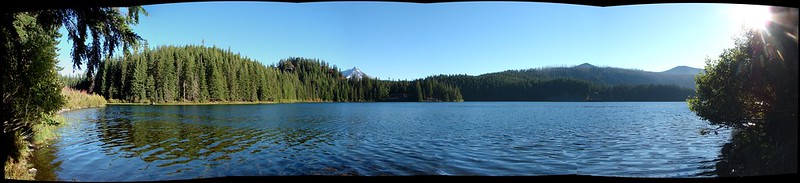
We found a few flowers around Russell Lake but again the dry year was evident. The lake was at the lowest level we’d seen and there was no water flowing out of the lake to the South Breitenbush River.
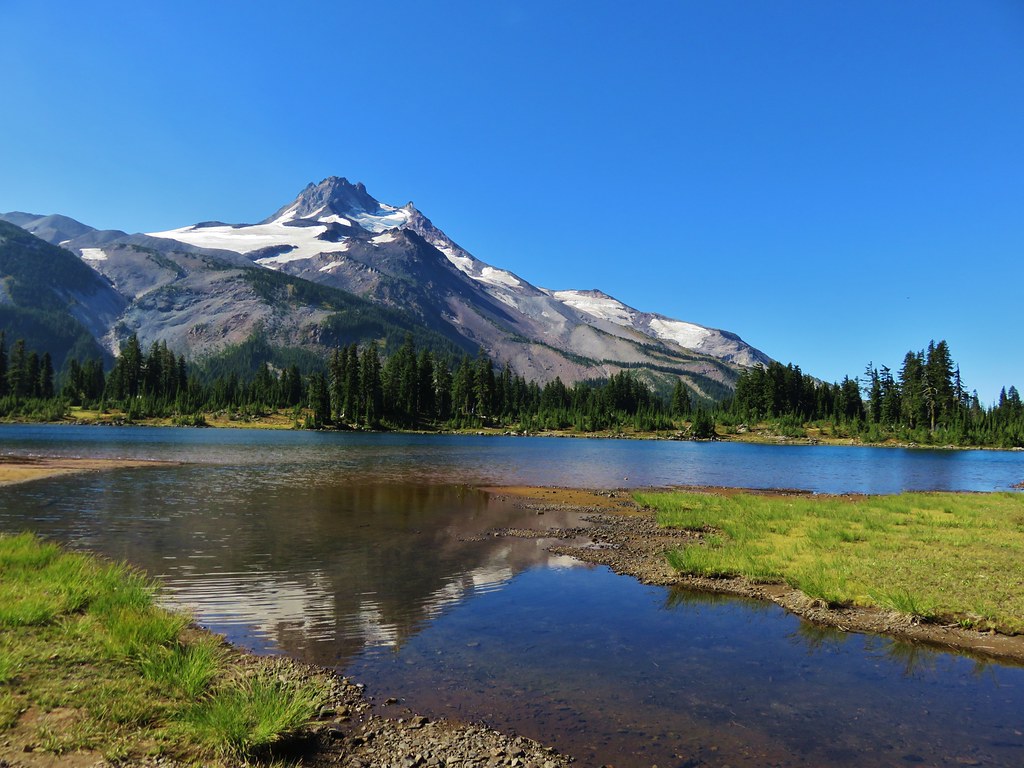
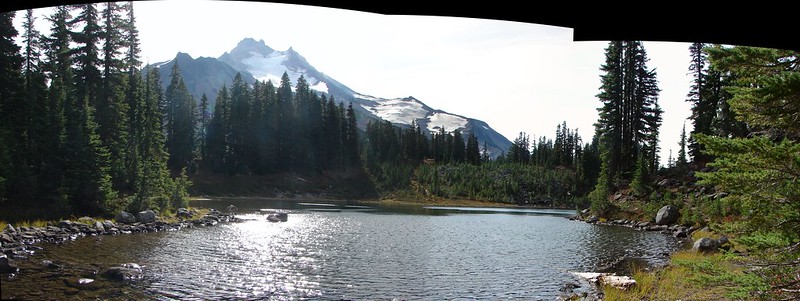
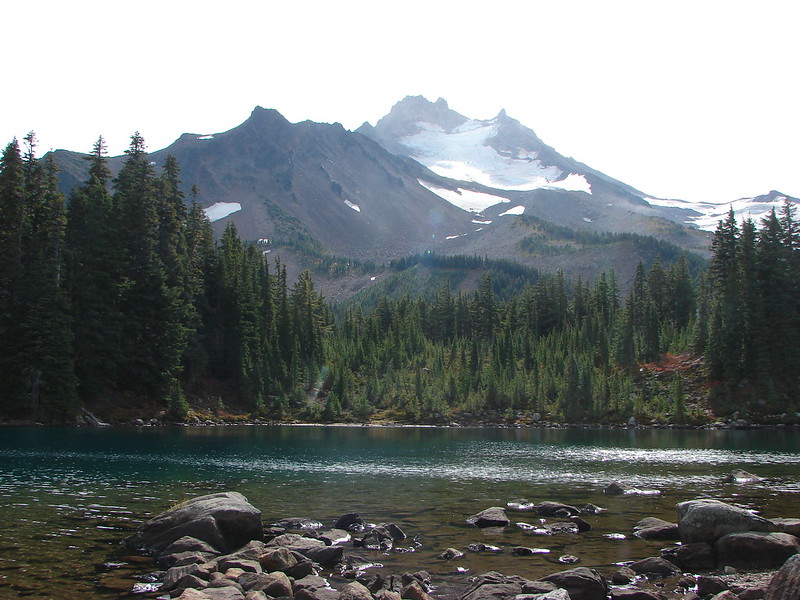
Mt. Jefferson from Russell Lake

IMG_7367

IMG_7369

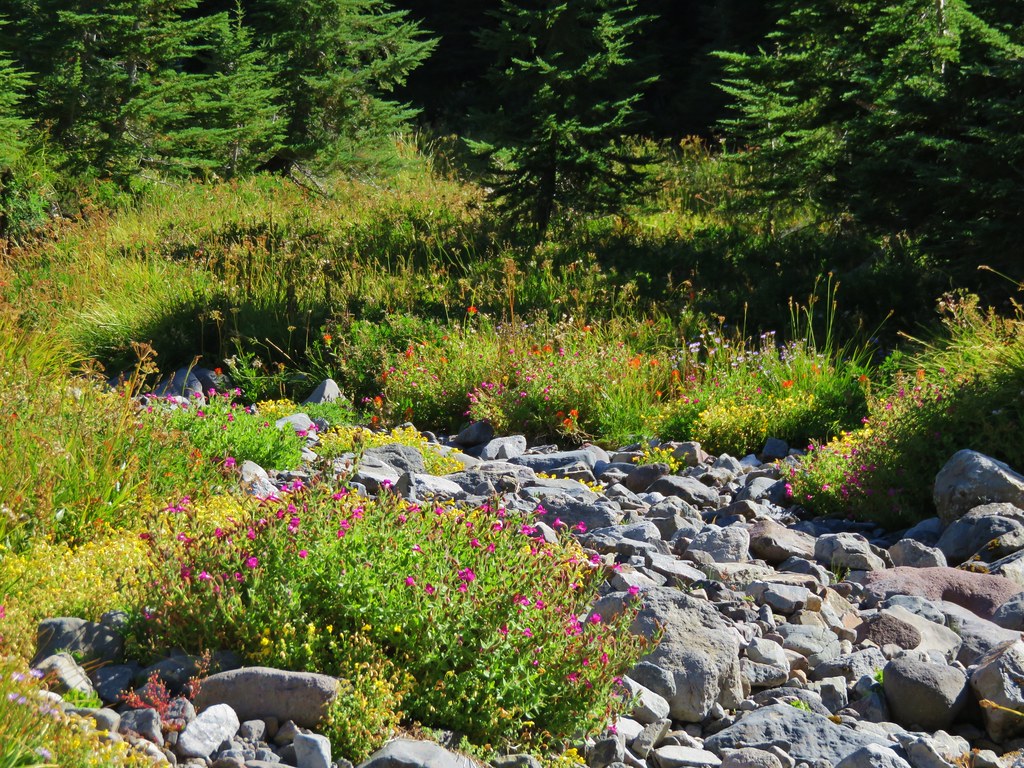
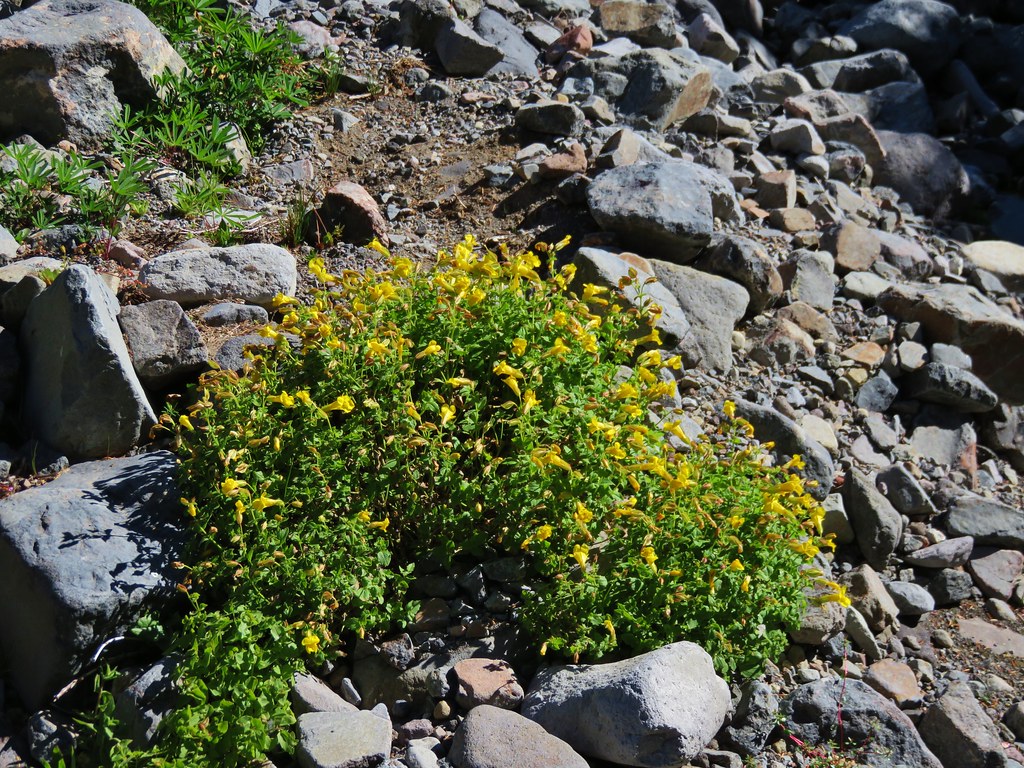
There was still a little water coming down another branch of the river from Park Ridge allowing some monkeyflowers to still be blooming.
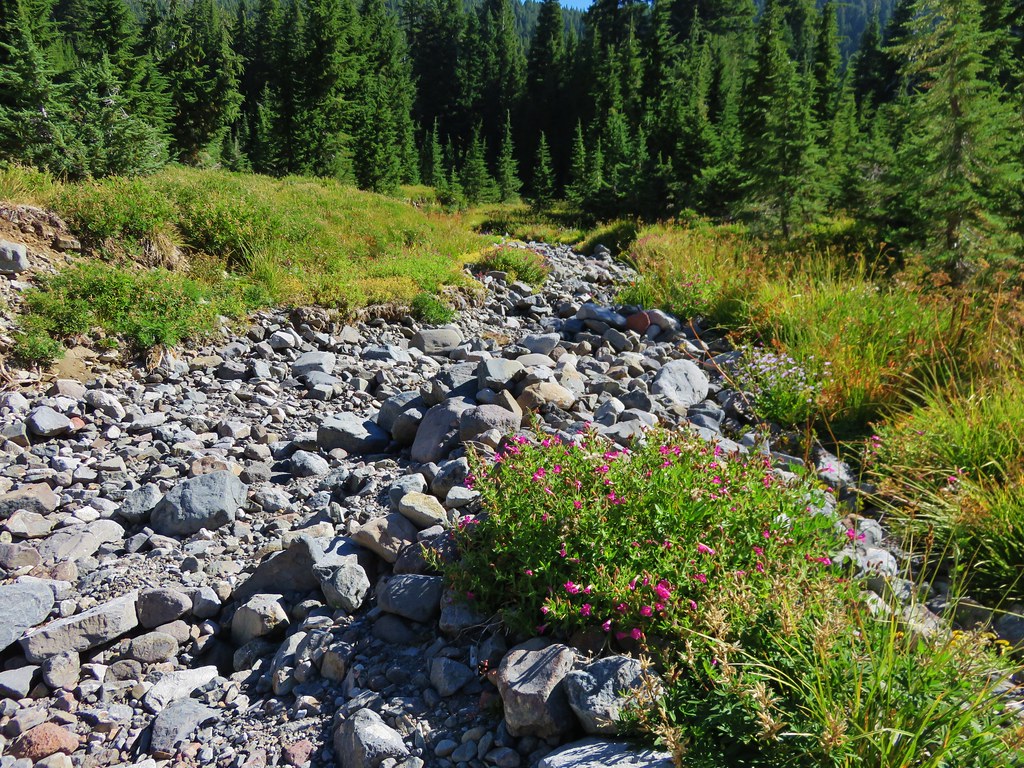
IMG_7387

IMG_7388

IMG_7386

We had considered following the PCT part way up Park Ridge and visiting Sprauge Lake which we had not done before, but after looking up at the climb we’d need to do we decided to save that for another trip and instead we headed for the South Breintenbush Trail.
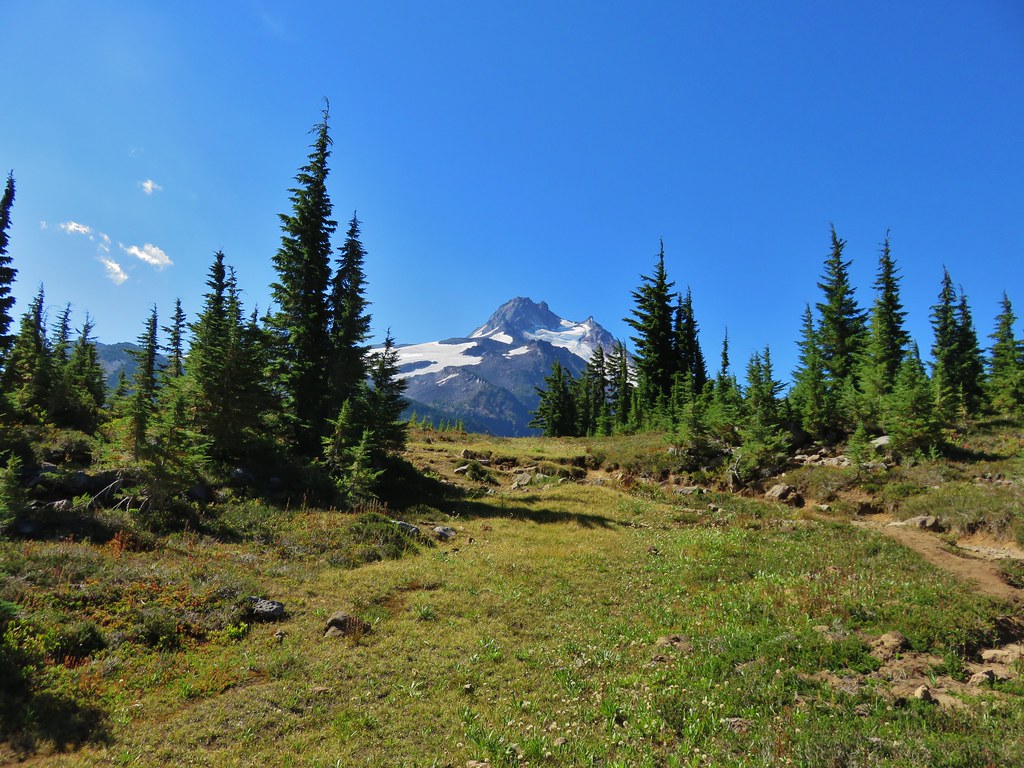
IMG_7399

As we reached the South Breitenbush Trail we ran into another couple who recognized my Portlandhikers button. They had stayed overnight near Bays Lake and were on their way up to Park Ridge. After talking for a bit we continued on watching for the side trail to Park Lake which we’d find in a hillside meadow above the river.
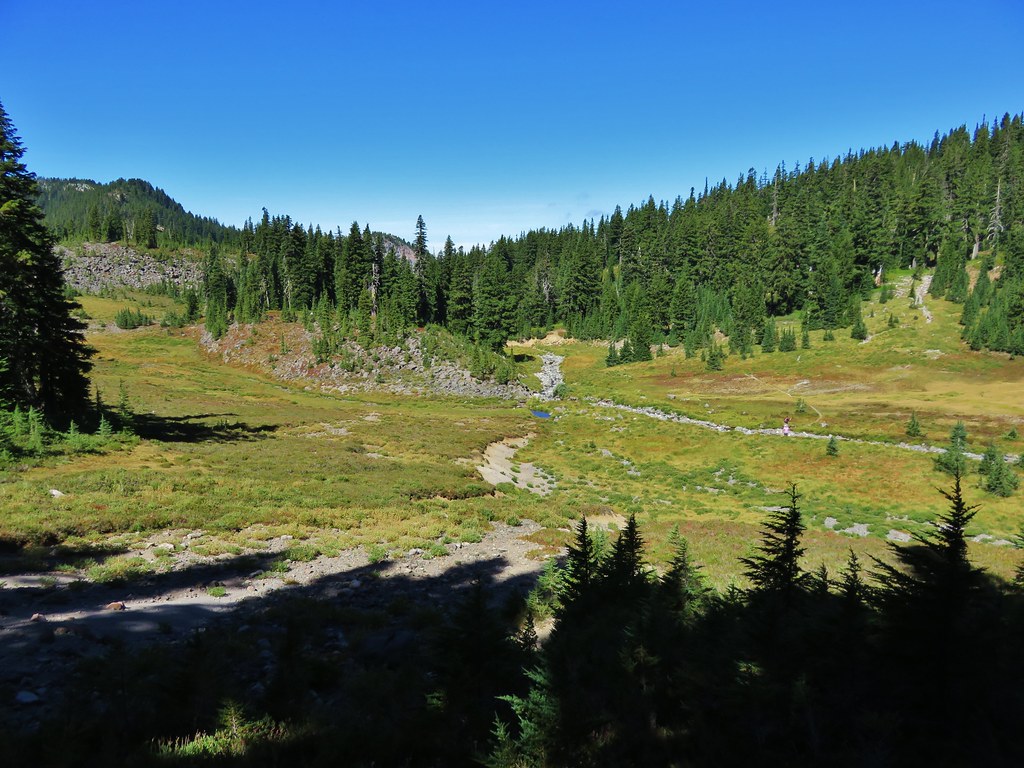
IMG_7407

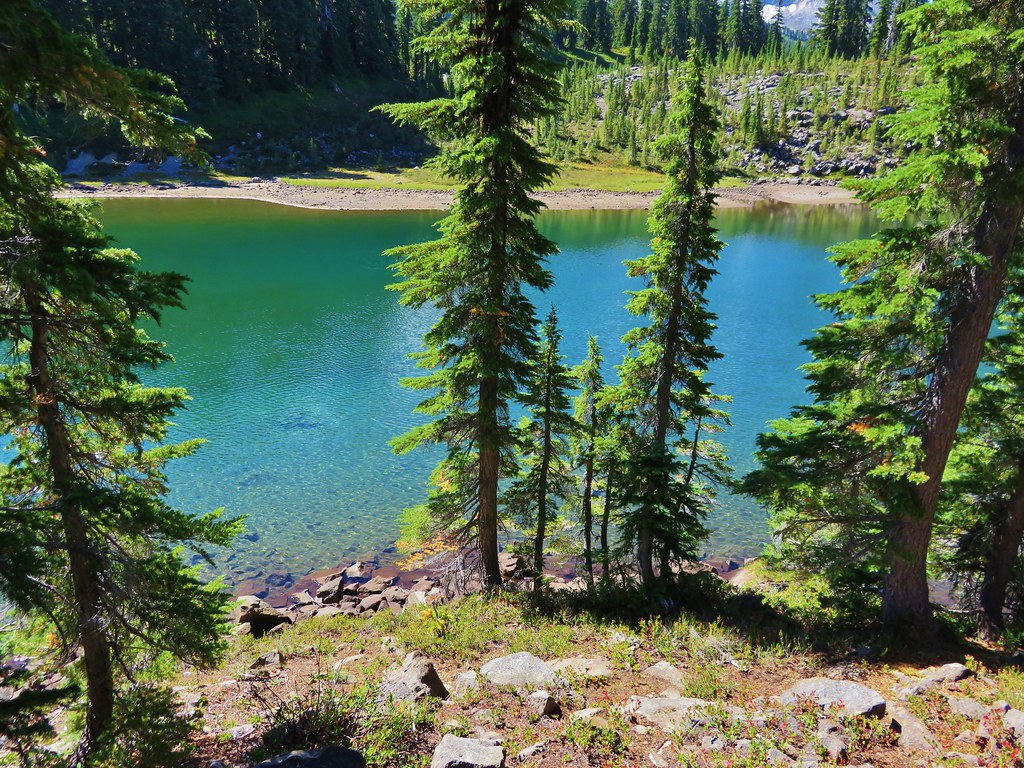
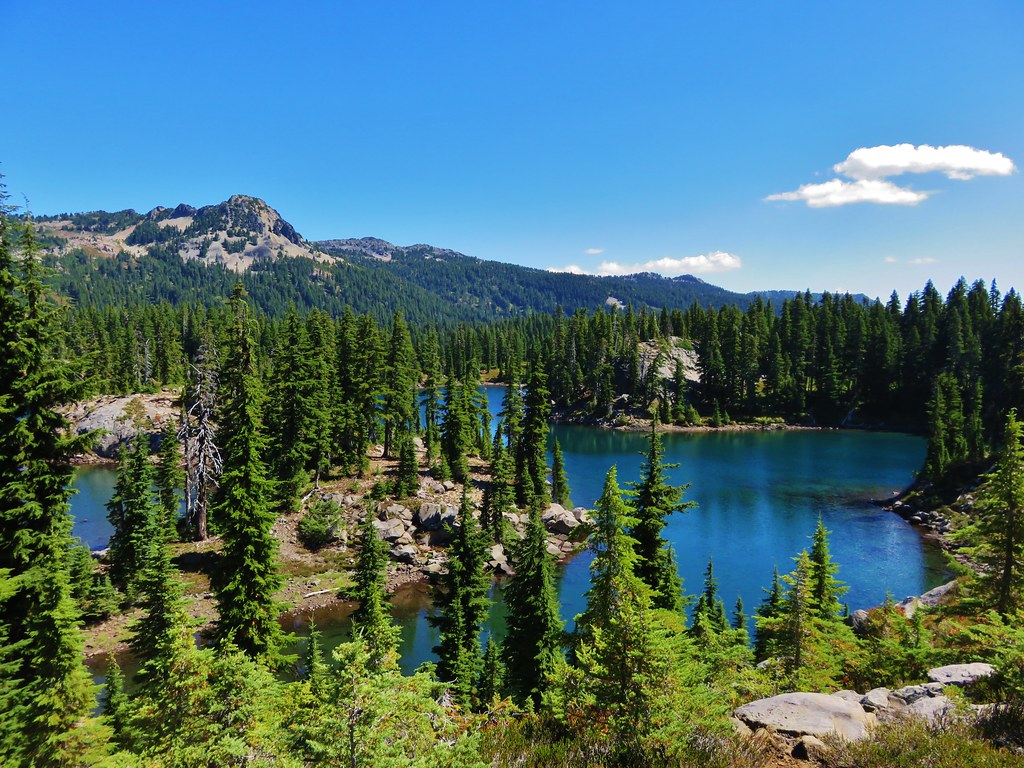
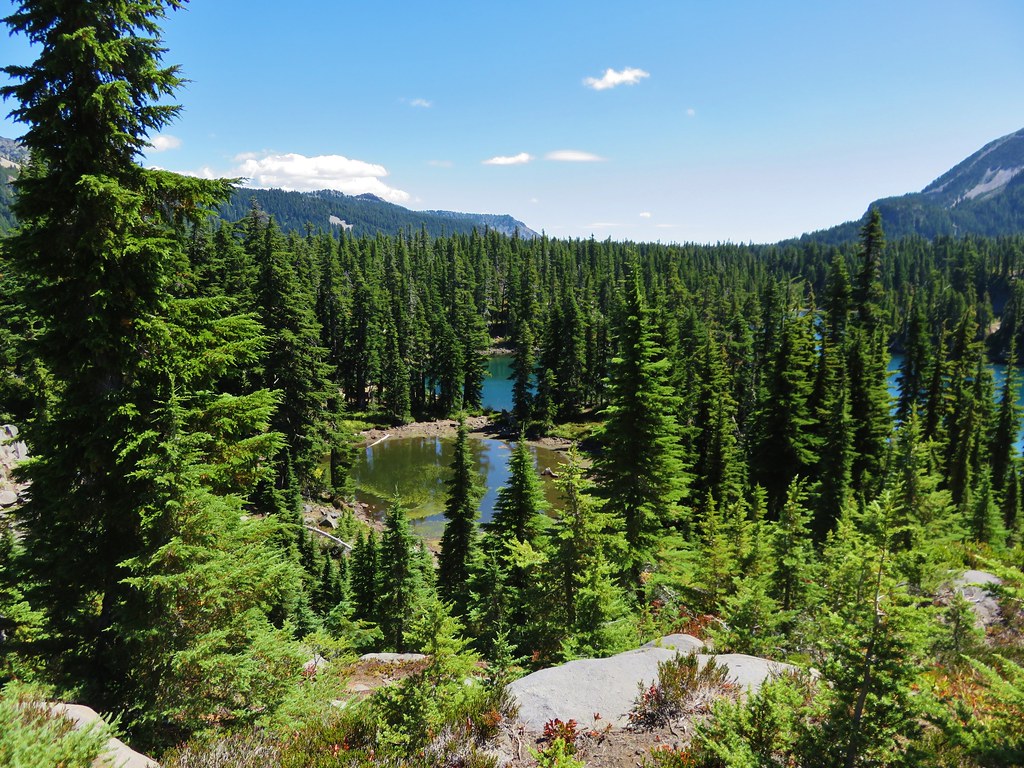
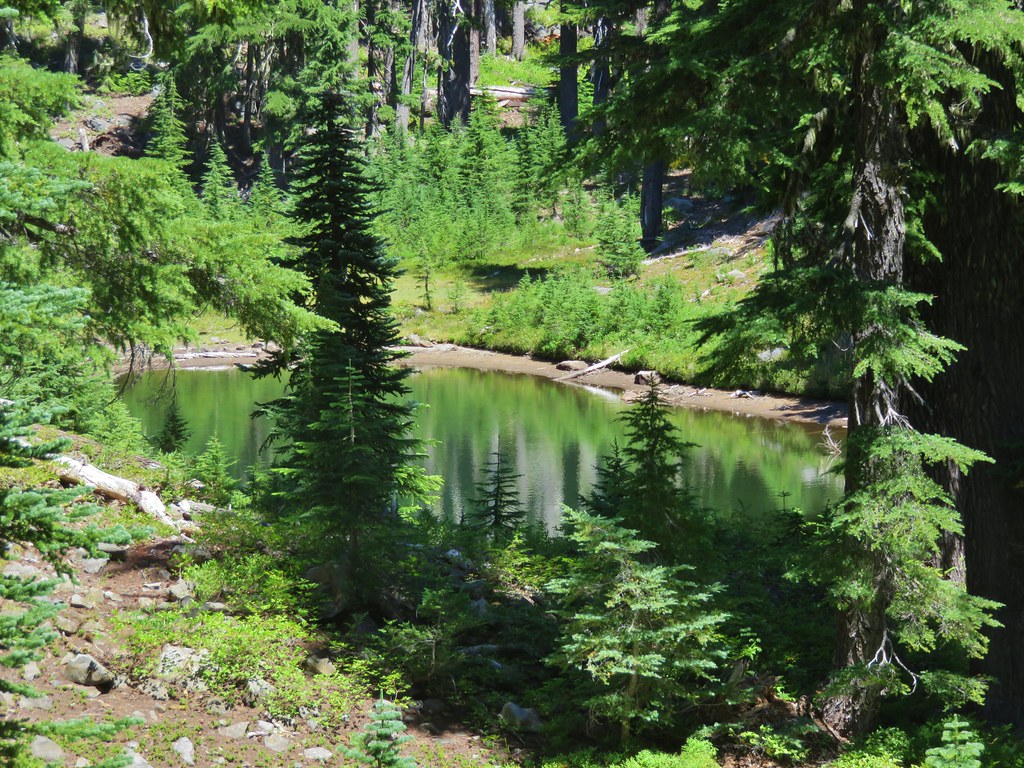
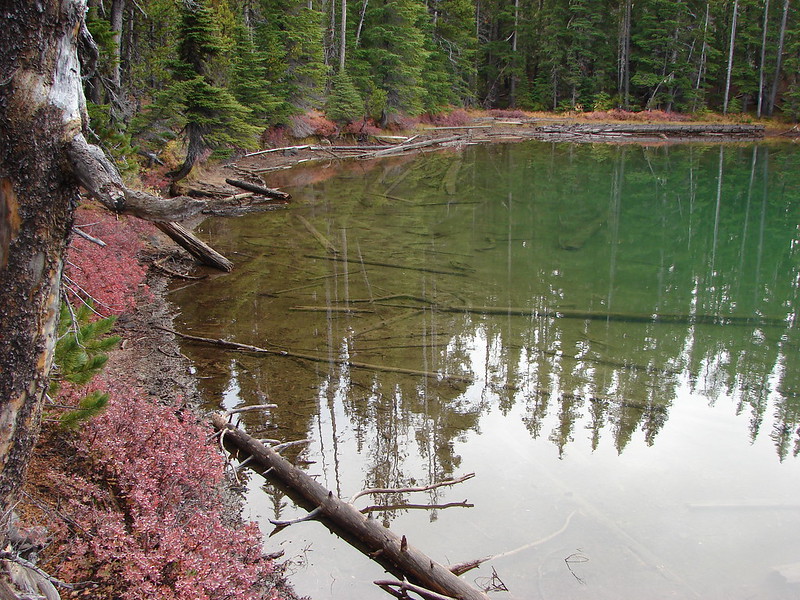
The water level at Park Lake was also lower than we’d ever seen, but we realized it was a deeper lake than we’d thought as we looked down into the green water.
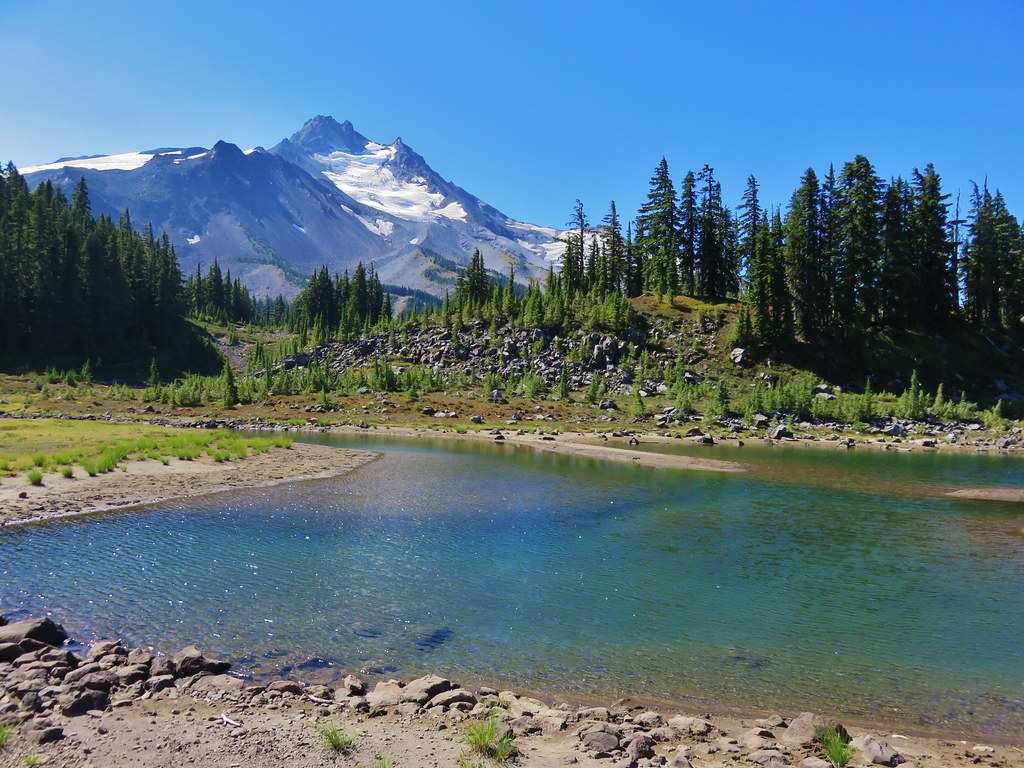
IMG_7409

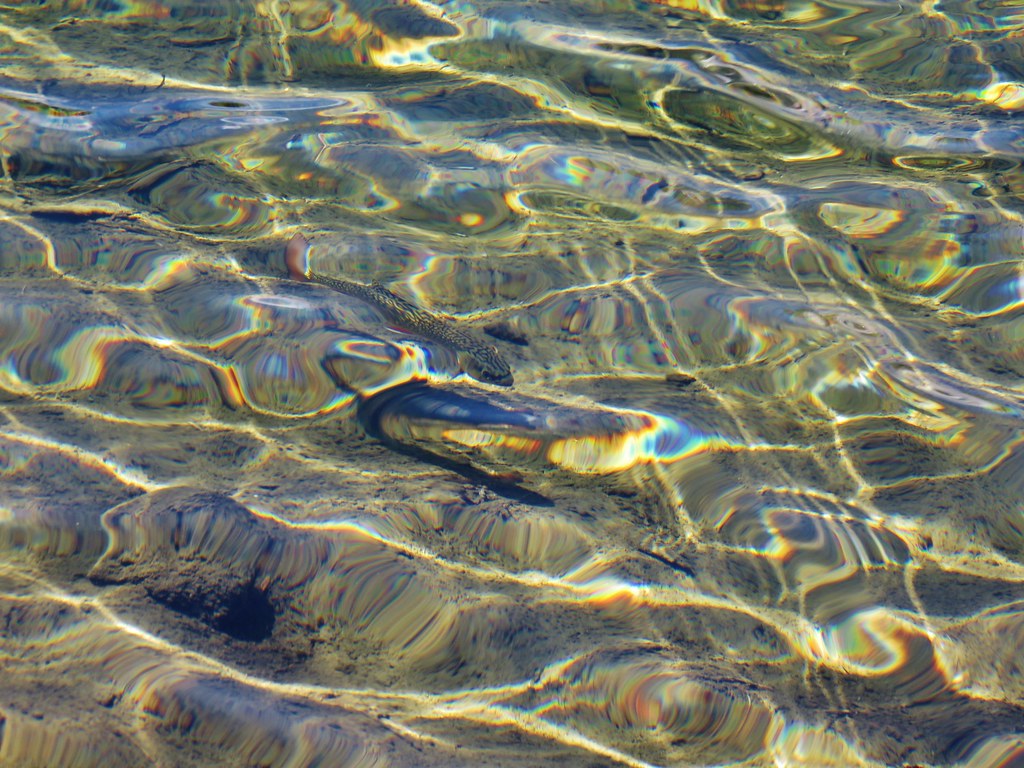
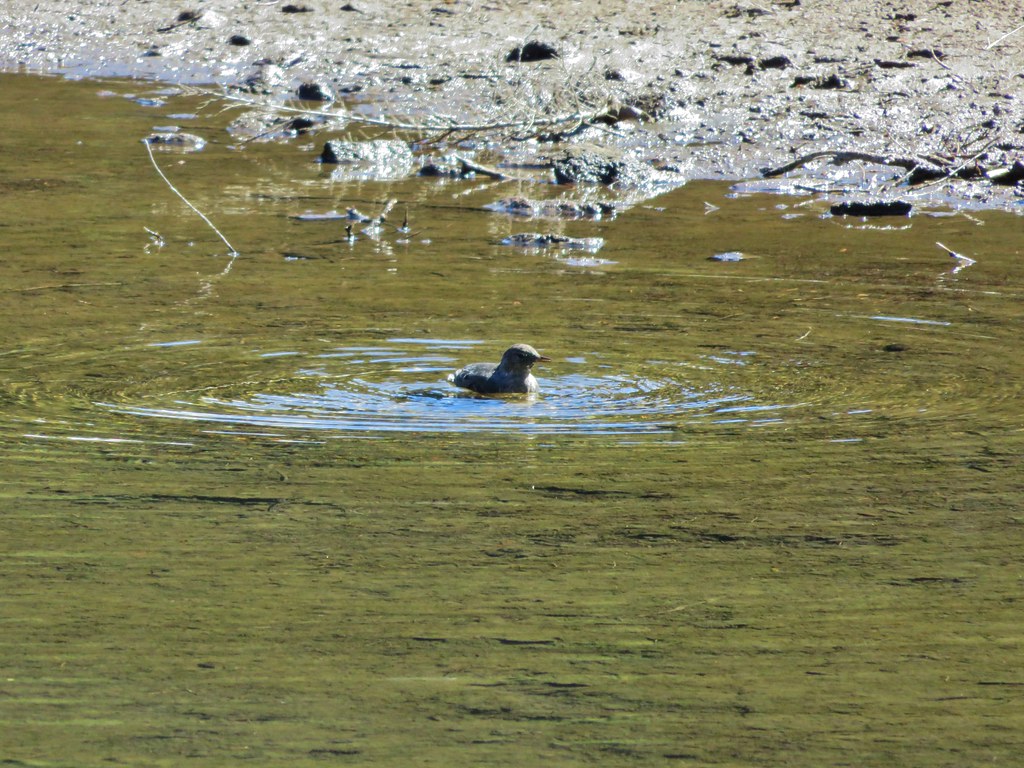
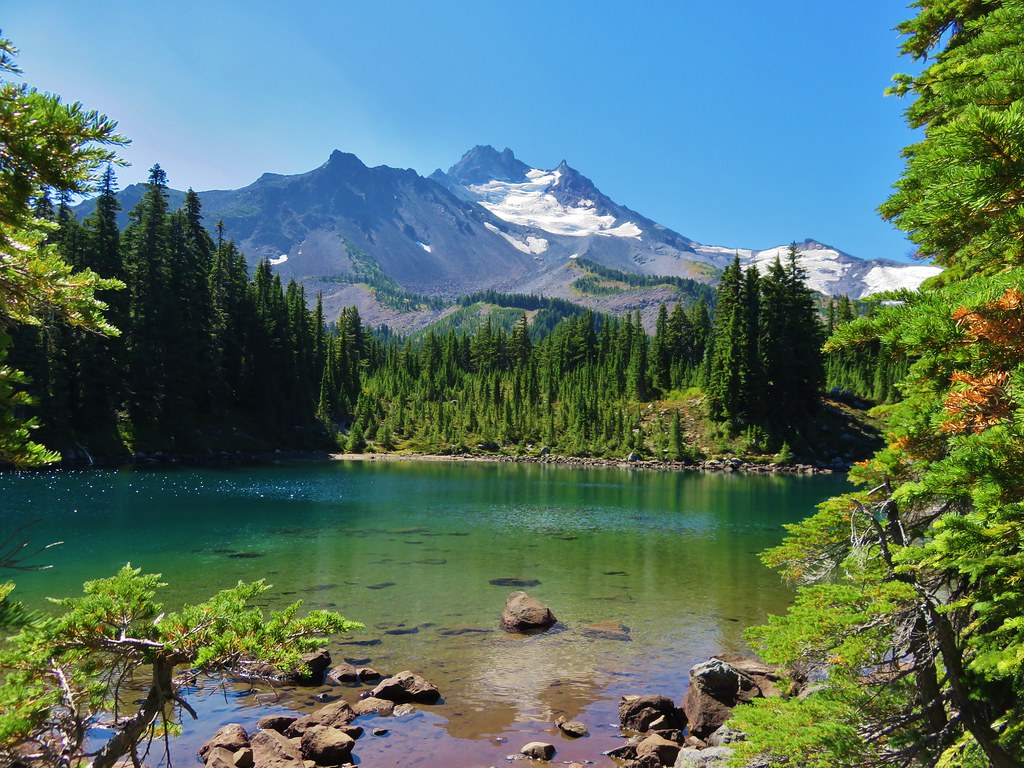
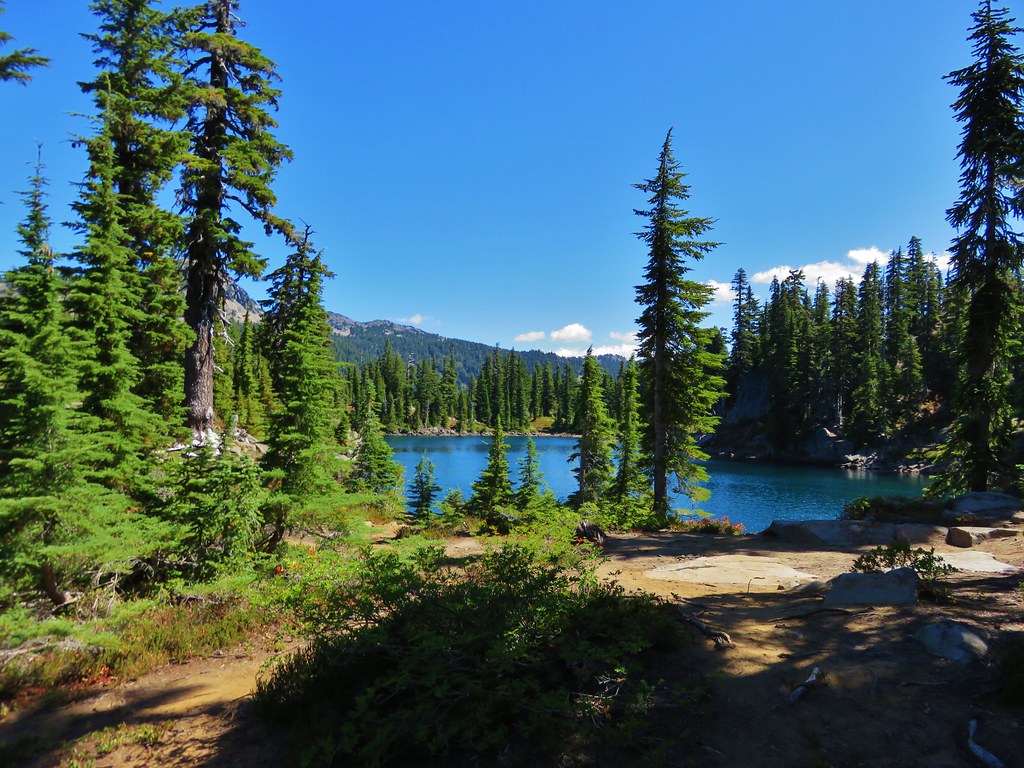
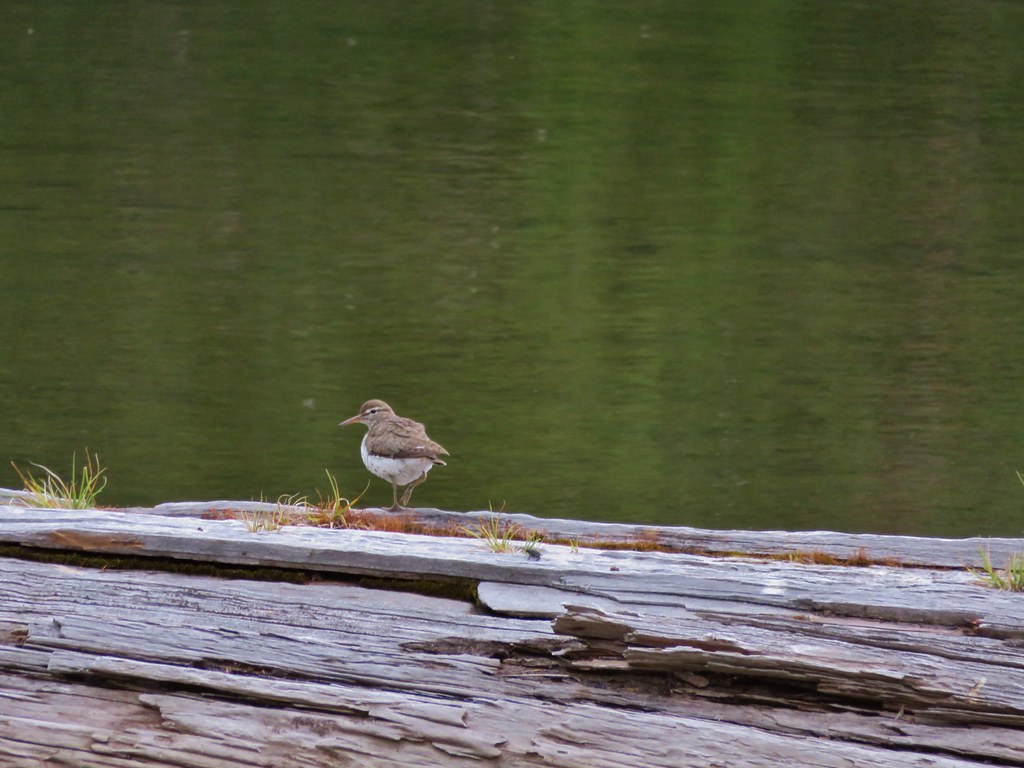
Next up along the trail was Rock Lake. Like all the lakes in Jefferson Park this one has colorful water and great views of the mountain. We spotted some trout in the lake as we passed by and got a kick out of watching a happy bird bathing along the shore.
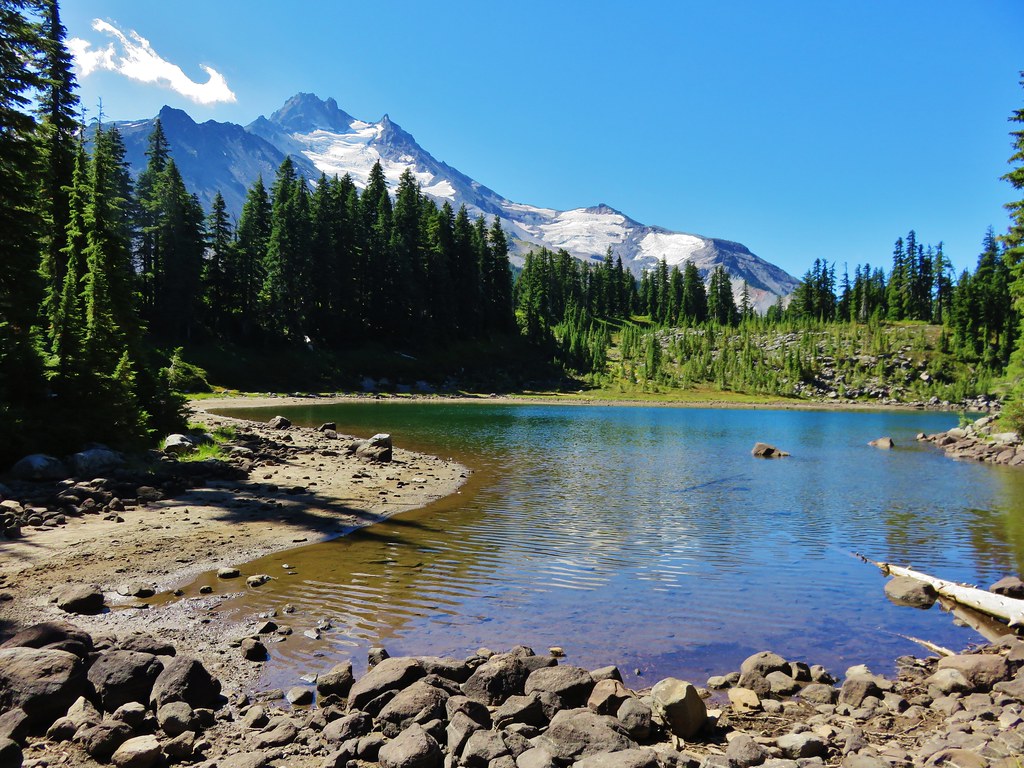
IMG_7414

IMG_7422

IMG_7425

IMG_7437

From Rock Lake we made our way to Scout Lake where we thought we might find my parents. It was around 11am and we thought they might have stopped at the lake for a break. We didn’t see them, just more wonderful Jefferson Park scenery.
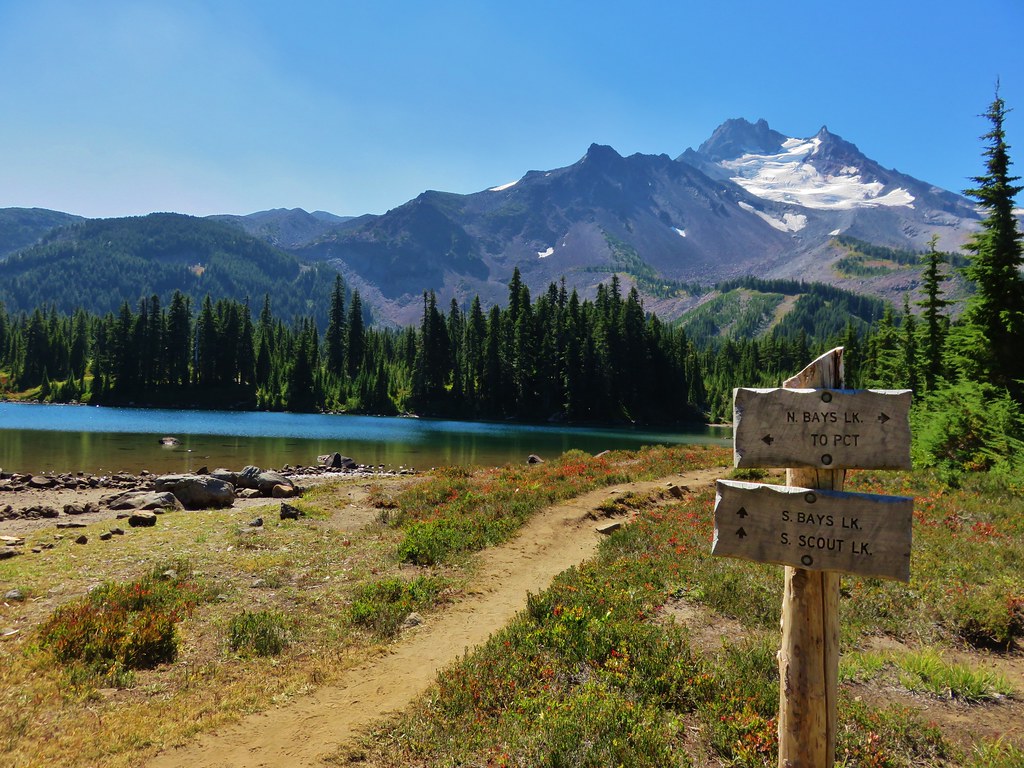
IMG_7440

IMG_7447

Our next thought was that they might be at Bays Lake so we headed over to the south end of that lake to take a look. We hadn’t spent much time on that side of Bays Lake so we decided to do some exploring.
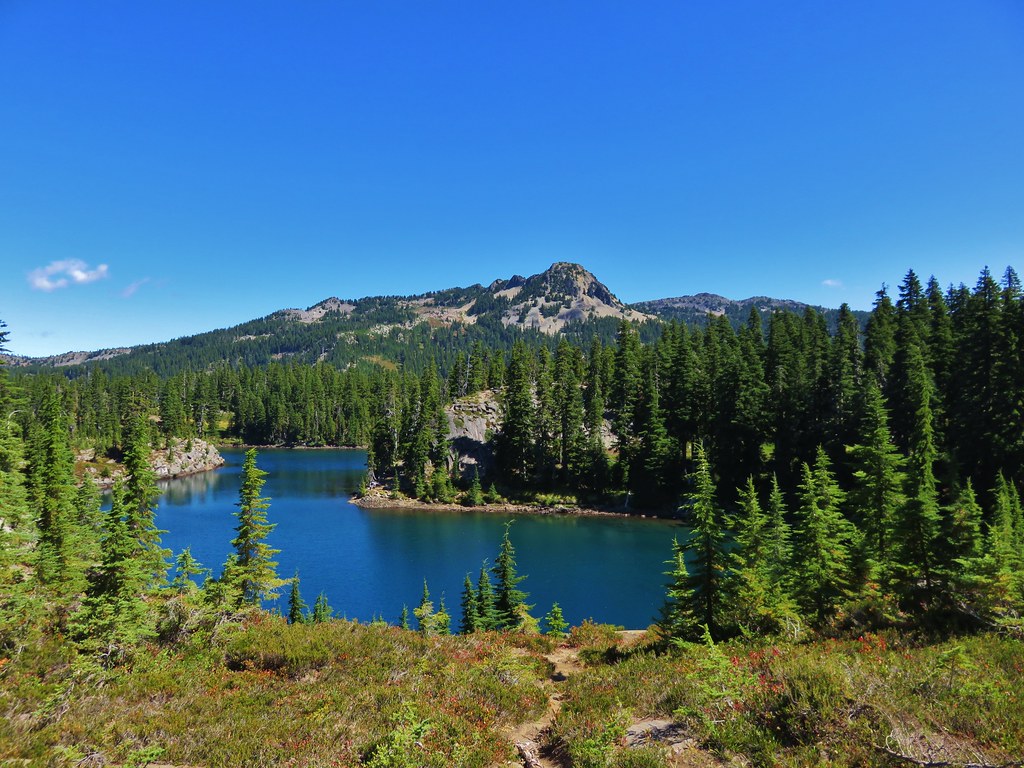
IMG_7463

Park Butte from Bays Lake

We headed down to the day use peninsula and removed our packs to take a break and check out the area.
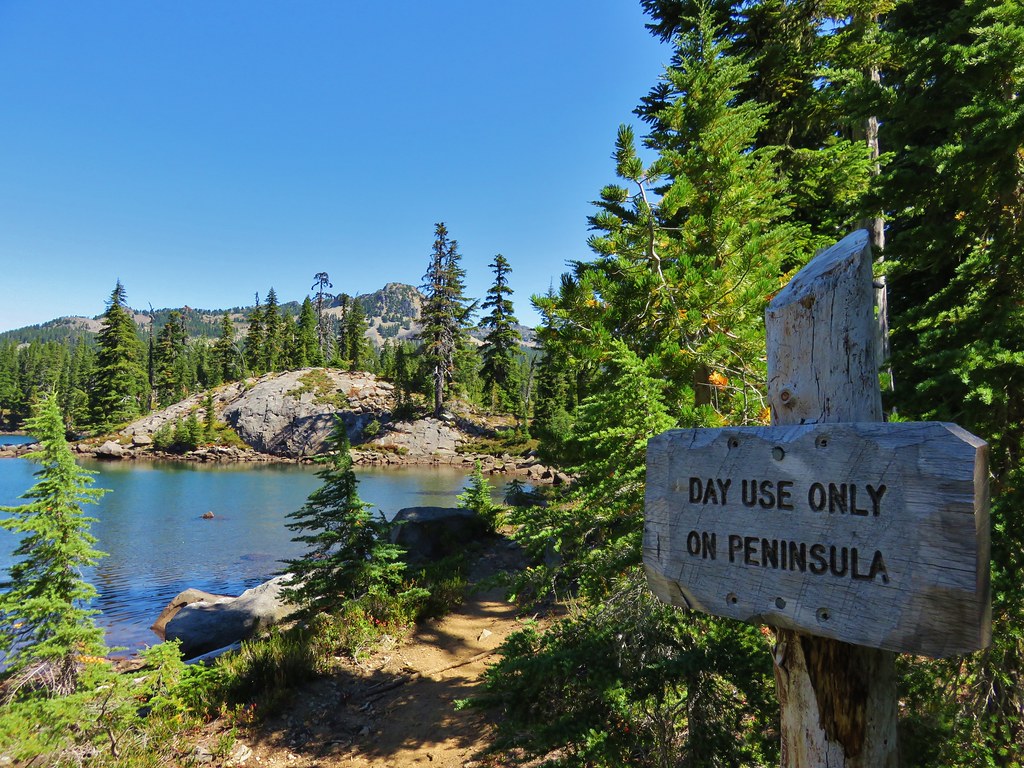
IMG_7468

IMG_7472

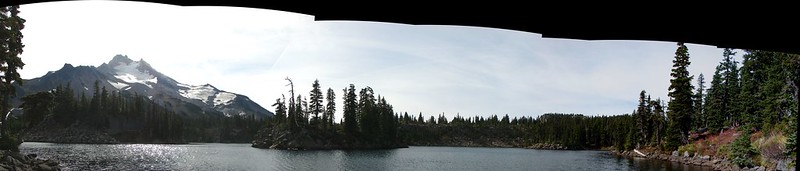
Mt. Jefferson from Bays Lake

IMG_7496

When we resumed our hike we decided to just loop around the rest of the lake and then head back to Scout Lake.
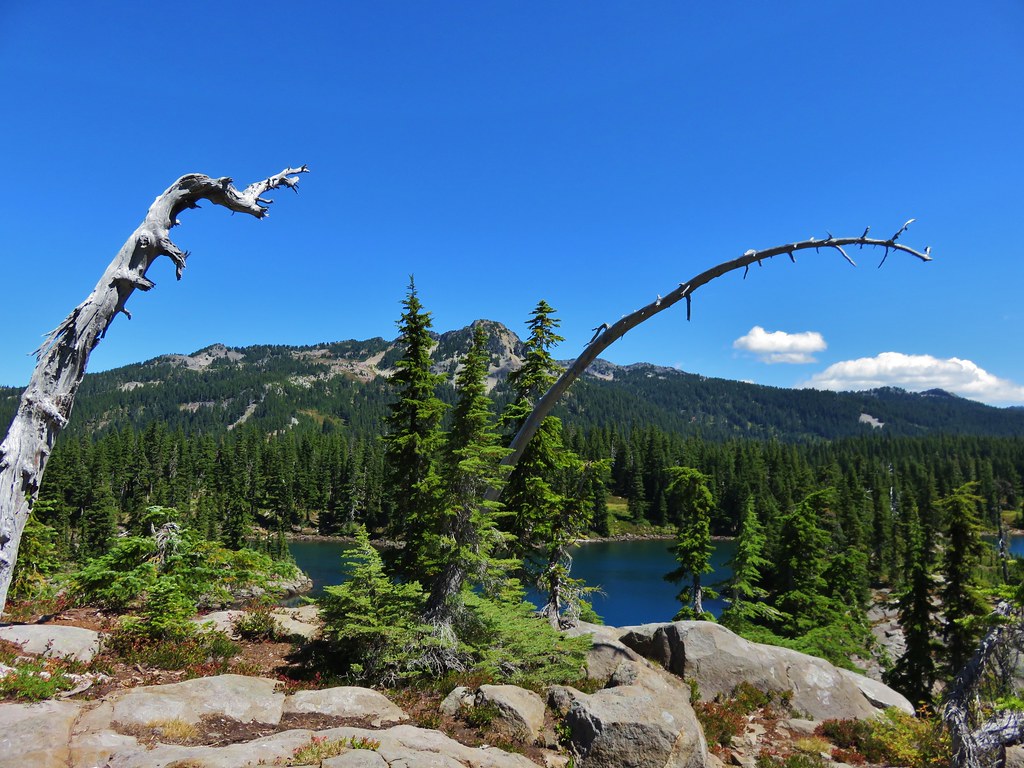
IMG_7506

IMG_7514

IMG_7526

IMG_7534

We still hadn’t seen any signs of my parents by the time we had made it back to the PCT from Scout Lake and we debated on whether to head back to the car or go up the PCT again toward Russell Lake in search of them. It was at this point that we realized that it would have been a good idea to establish a time at which we would head back to the car. We made it all the way back to Russell Lake without running into them which had us a little concerned that they may not have made it all the way to the park. Heather had come up with a theory though, she suggested that they might have gone directly to Russell Lake since that was the ultimate goal for my Mom. If they had done that we easily could have missed them while we were touring the other lakes and then missed them again while we were on the PCT if they had taken one of the other signed trials to Scout Lake. Either way we were fairly certain they were either on their way back to the car or were already there waiting so we headed back down ourselves.

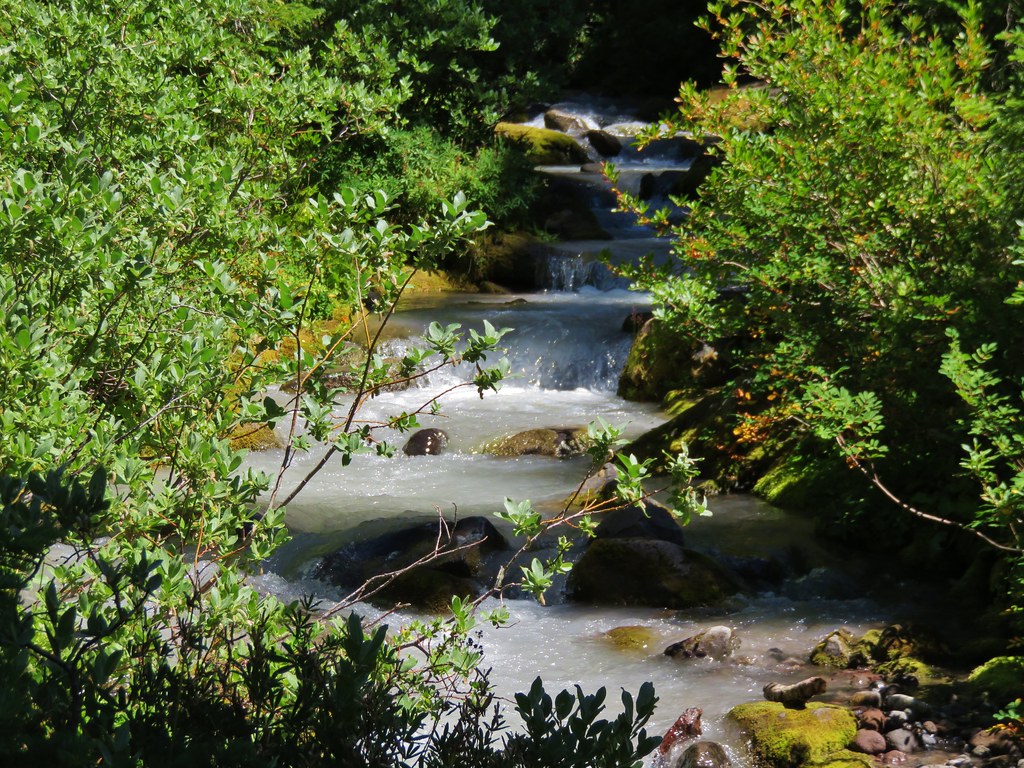
Heather asked a group of young hikers that were on their way up if they’d seen anyone matching my parents description and they had, which made us feel better. We didn’t think to ask how far ahead of us they were though. We picked up our pace but kept getting distracted along the way. It was interesting to see how much the water level had risen in Whitewater Creek as the heat caused an increase in the glacial runoff.
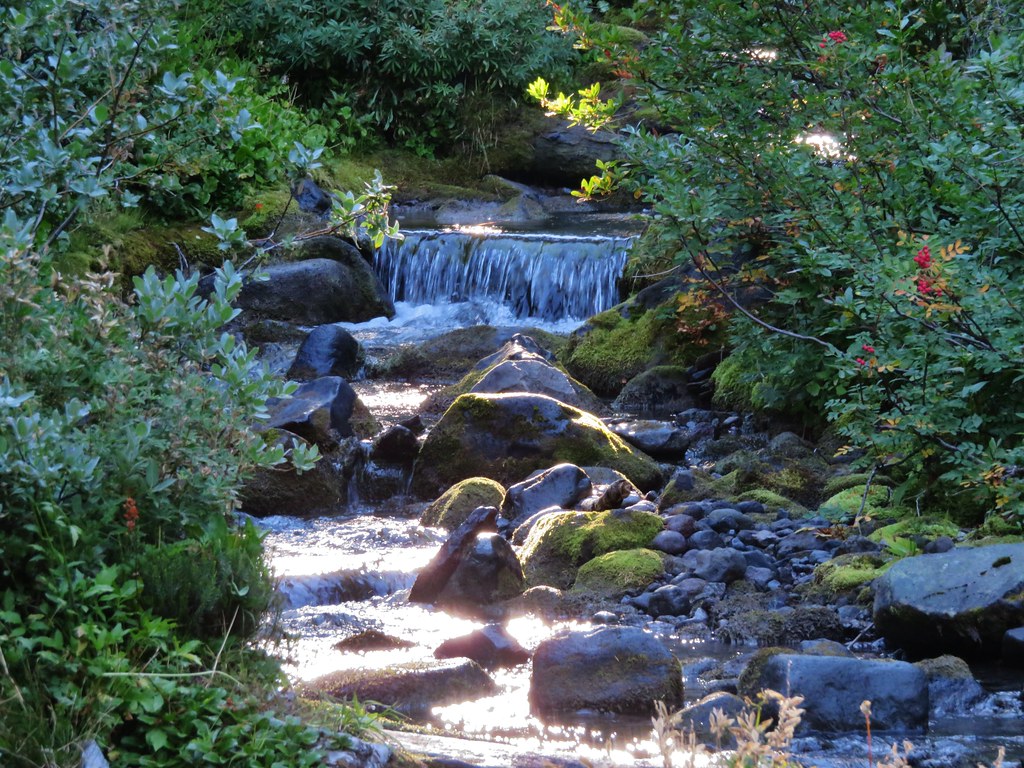
IMG_7297

IMG_7564

We also kept looking back at the views of Mt. Jefferson.
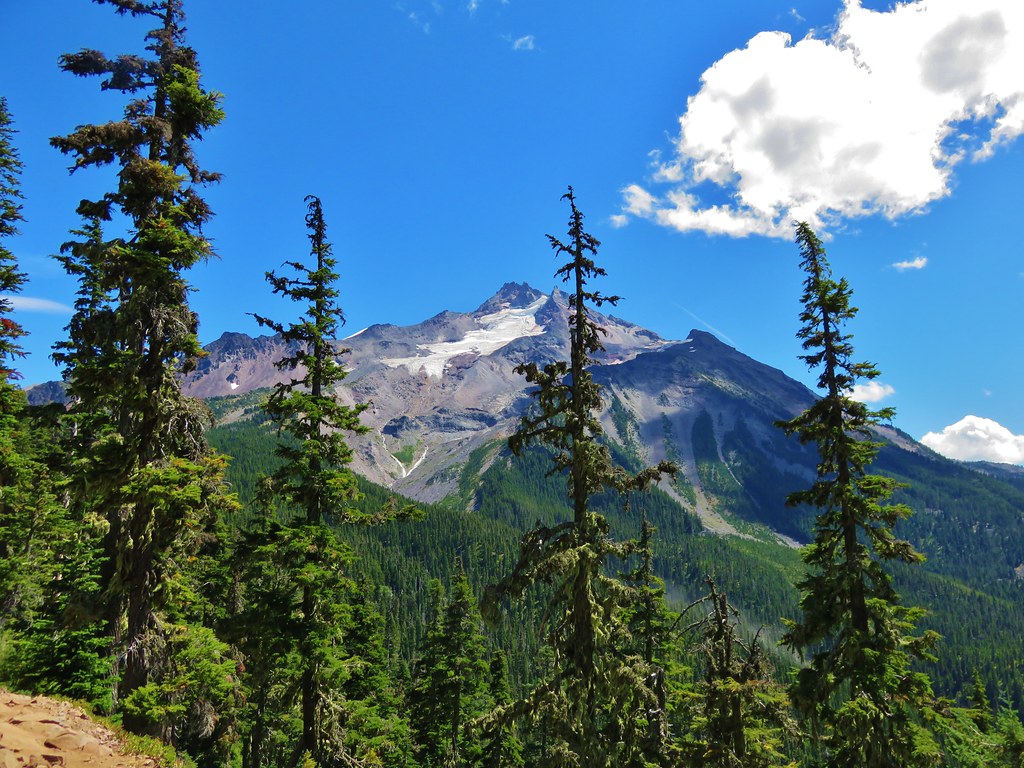
IMG_7574

IMG_7575

IMG_7576

We were still making pretty good time trying to catch them when we rounded a little bend in the trail and saw a gentleman trying to dust himself off. He was covered in dirt with some scratches on his head and there was a camera mounted on a tripod behind him on the trail. He explained that he had set the timer on the camera and was running up the trail to get in position for the picture when he had tripped. He said he was fine but hadn’t realized he was bleeding until Heather pointed it out. Luckily none of the cuts were deep and there was no real damage. He told us that it wasn’t going to affect his enjoyment of his hike. Just more proof that there is no such thing as a bad hike.

We never did catch up to my parents and I half expected to see them sitting on the bench along the trail at the trailhead, but instead we found them at a picnic table just a few feet away. We found out that they had indeed gone straight to Russell Lake and relaxed there awhile before heading to Scout and Bays Lakes. Heather had been right again. We didn’t know how far we’d wound up hiking with all the wandering we’d done, but we found out when I plugged the Garmin into the computer. According to the GPS we’d covered 18.1 miles, a little bit more than we’d planned on but that’s what can happen with a place as scenic as Jefferson Park. Happy Trails!

flickr: https://www.flickr.com/photos/9319235@N02/sets/72157656592737940

Categories
High Cascades Hiking Oregon Three Sisters Area Trip report

Three Sisters Wilderness Days 3 & 4

**Note the 2017 Separation Fire burned a portion of these hikes.**

I am combining the final two days of our Three Sisters Backpacking trip because the last day was simply a 7 mile hike back to the trailhead along portions of the Louise Creek and Separation Lake Trails that we had done on the first day.

The day after our successful off-trail exploration of Linton Creek it was time to pack up camp and move on. We woke to find that the clouds had finally won out overnight and now covered the Three Sisters.
IMG_6749

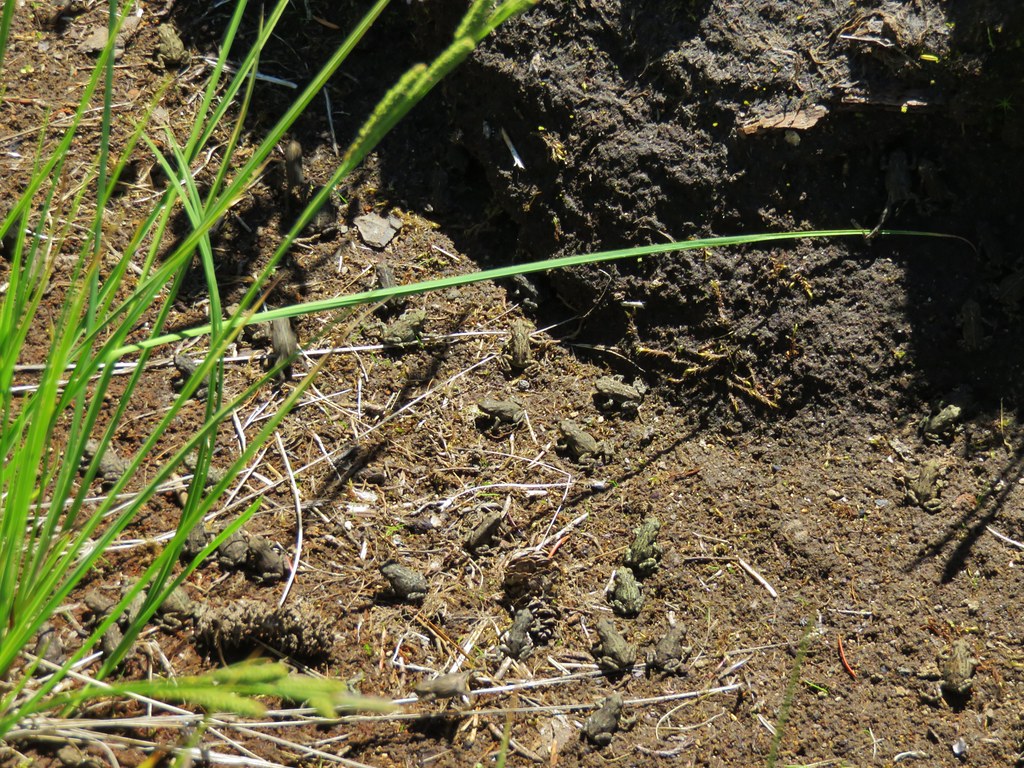
We were once again visited by the deer who stayed back in the trees this time as they made their morning rounds. We packed our things and ate some breakfast then headed back toward Husband Lake. The frog situation around Eileen Lake seemed to have worsened with the arrival of the clouds. There were even more frogs on the trail and the going was pretty slow.
IMG_6758

We discovered that tapping our trekking poles on the ground in front of us got the frogs to start getting out of the way sooner so we tapped our way through the frogs and past the lake. The frogs weren’t the only animals out as we had spotted several different types of birds by the time we’d gotten to Husband Lake.
IMG_6766

IMG_6769

IMG_6779

IMG_6781

IMG_6785

We topped off our water at Husband Lake and then headed for the big trail junction where we would be looking for the Separation Creek Meadow Trail which would take us down to Indian Hole Falls. We had not seen the trail when we were at the junction on the first day and when we got back there we still didn’t see it. Heather thought it might be just a bit up the trail toward the James Creek Shelter and went to investigate. She was right and just over a little rise there was an unsigned but clear trail heading down to the right.
IMG_6799

The Forest Service described this trail as “a primitive trail that may be hard to find at times.” That sounded a lot better than the impassable due to heavy blowdown description of the Separation Creek Trail. There were a few downed trees but the path was easy to see and some trees had been blazed to mark the trail.
IMG_6802

IMG_6844

The trail met Separation Creek in what must have been a spectacular field of lupine. Now it had all gone to seed.
IMG_6809

IMG_6806

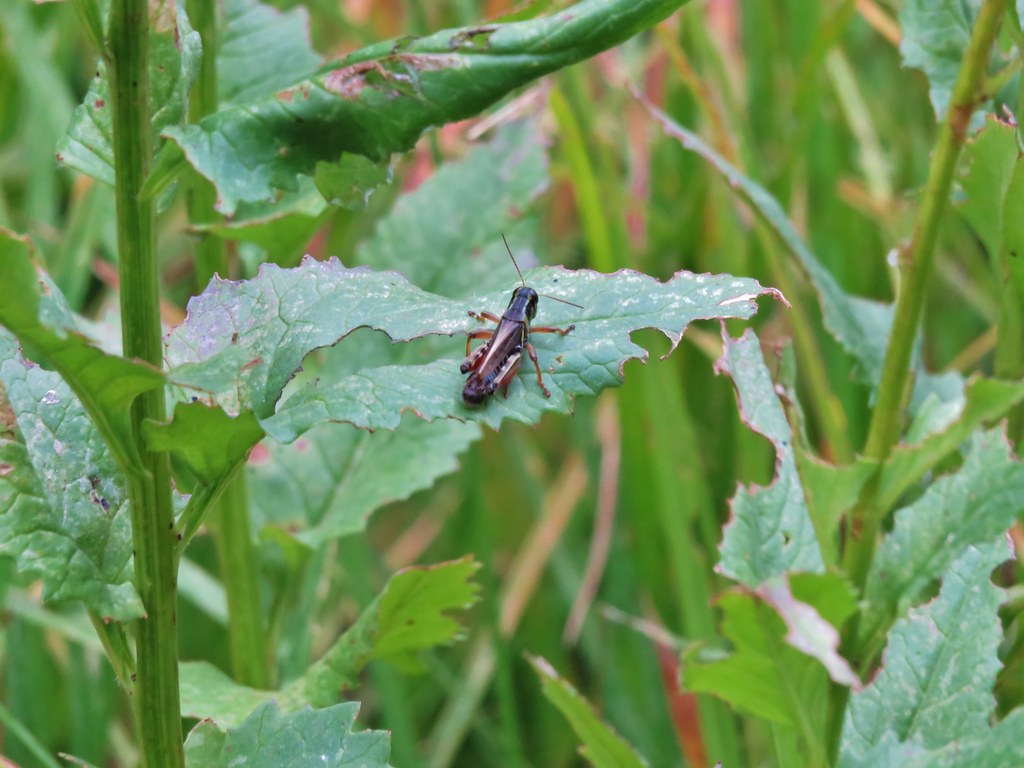
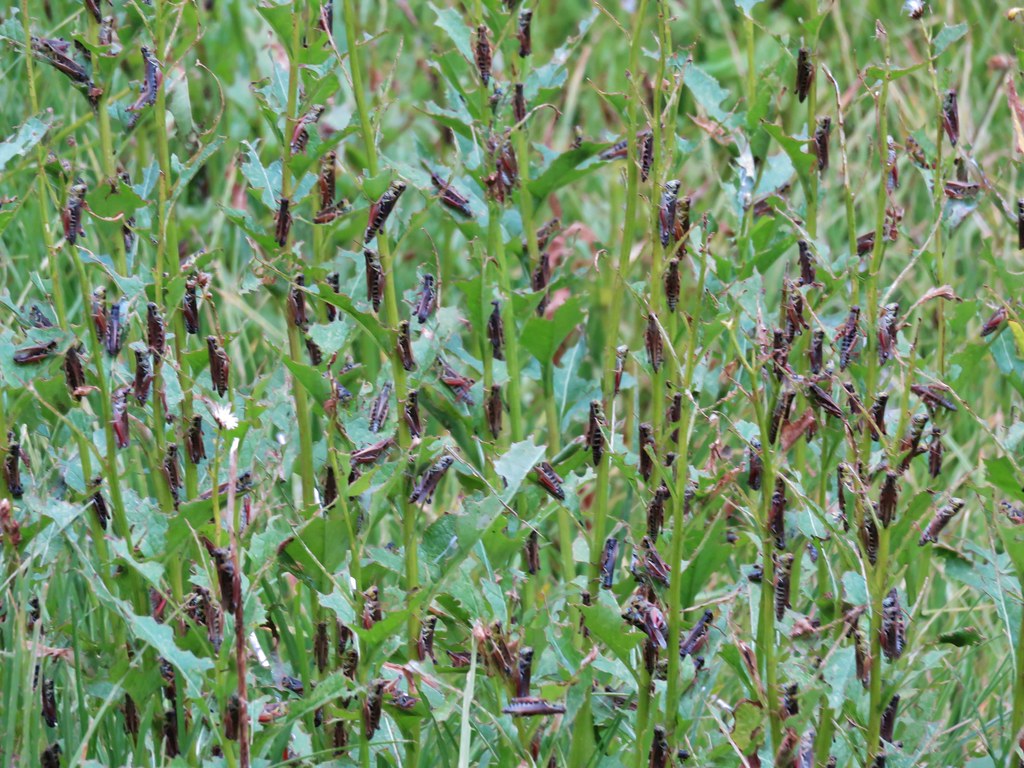
It had also been invaded by grasshoppers.
IMG_6811

IMG_6813

As we walked they would all jump in unison and make all kinds of noise. I would have liked to get a better look at them but there were also plenty of mosquitoes present and whenever I stopped they landed. We were just about to Separation Meadow and we hadn’t had any issues following the trail up to that point. Then the trail just disappeared. We knew it was to the right of the creek and we noticed a tent set up at the far end of the meadow so we simply aimed for the trees between those two things.
IMG_6816

IMG_6824

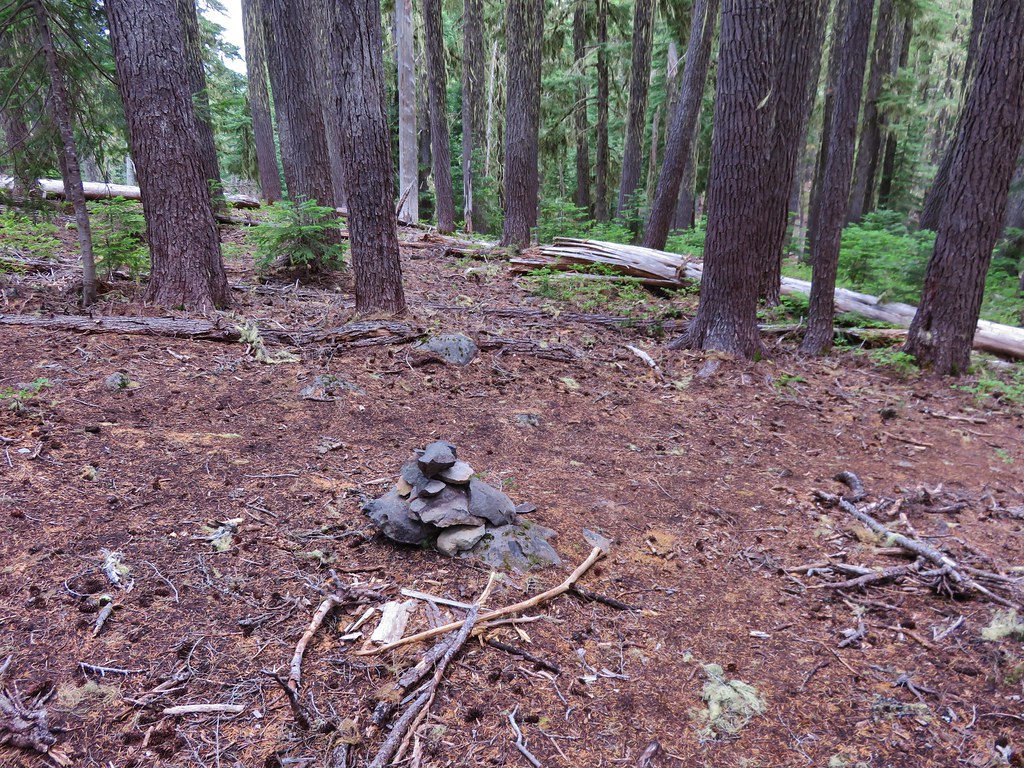
We had to hunt for a couple of minutes to find the trail again once we arrived at the trees. We managed to follow it fine after that all the way to a trail junction with the trail from Buck Meadows. This junction was also unsigned but it was marked with a rock cairn.
IMG_6849

We turned left at the junction and began to descend toward Cole Chuck Meadows. Views included Sphinx Butte and The Wife.
IMG_6850

IMG_6852

The trail went around Cole Chuck Meadows without ever entering it then headed steeply downhill. There was a large meadow below to our left and we could hear Separation Creek roaring in the distance. The trail had loose rocks and dirt and it also passed below the Indian Holes, springs that flowed across the trail and down toward Separation Creek.
IMG_6871

IMG_6861

The trail then entered the large meadow at a narrow point. The grasses were tall enough to hit us in the face as we passed through. We then entered another treed area before arriving at Separation Creek.
IMG_6878

The creek was much wider and deeper than it had been in Separation Meadow. Several other creeks and springs had fed into it since then. We crossed on an old log and and quickly arrived at another unsigned trail junction with the “impassible” Separation Creek Trail.
IMG_6880

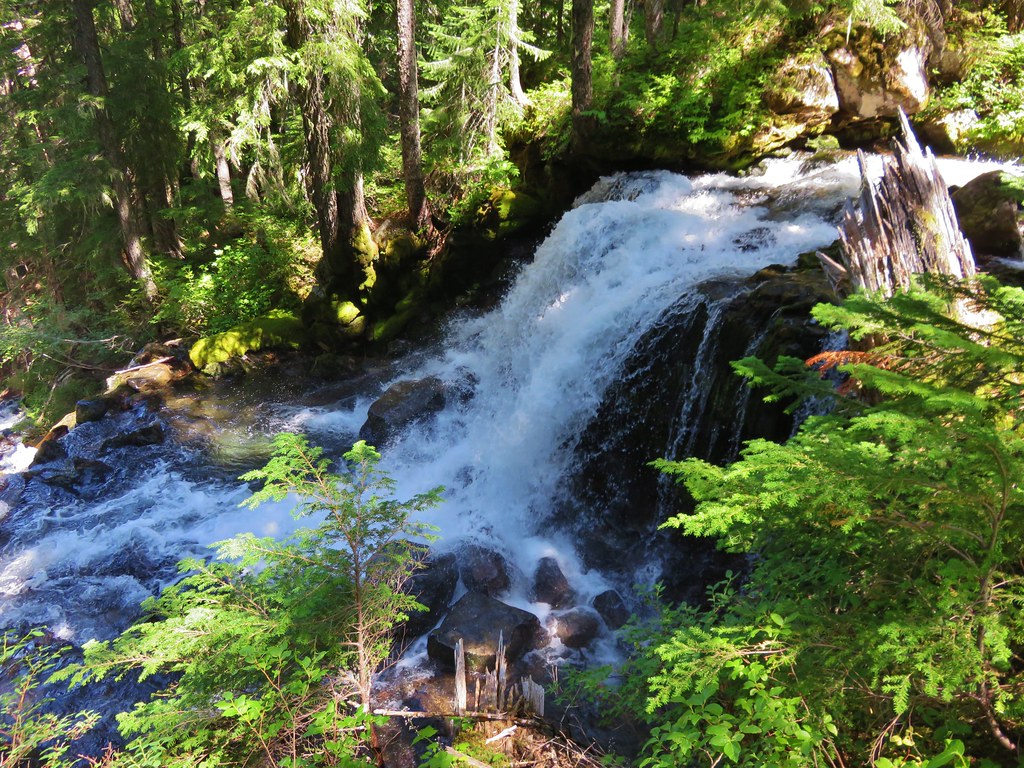
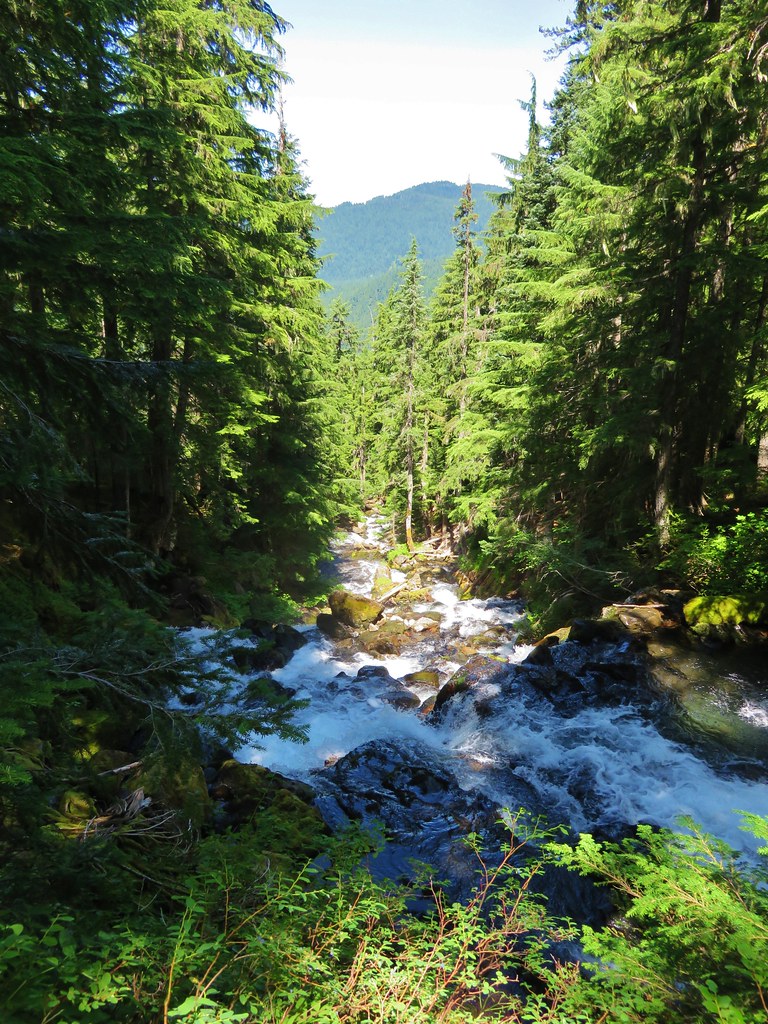
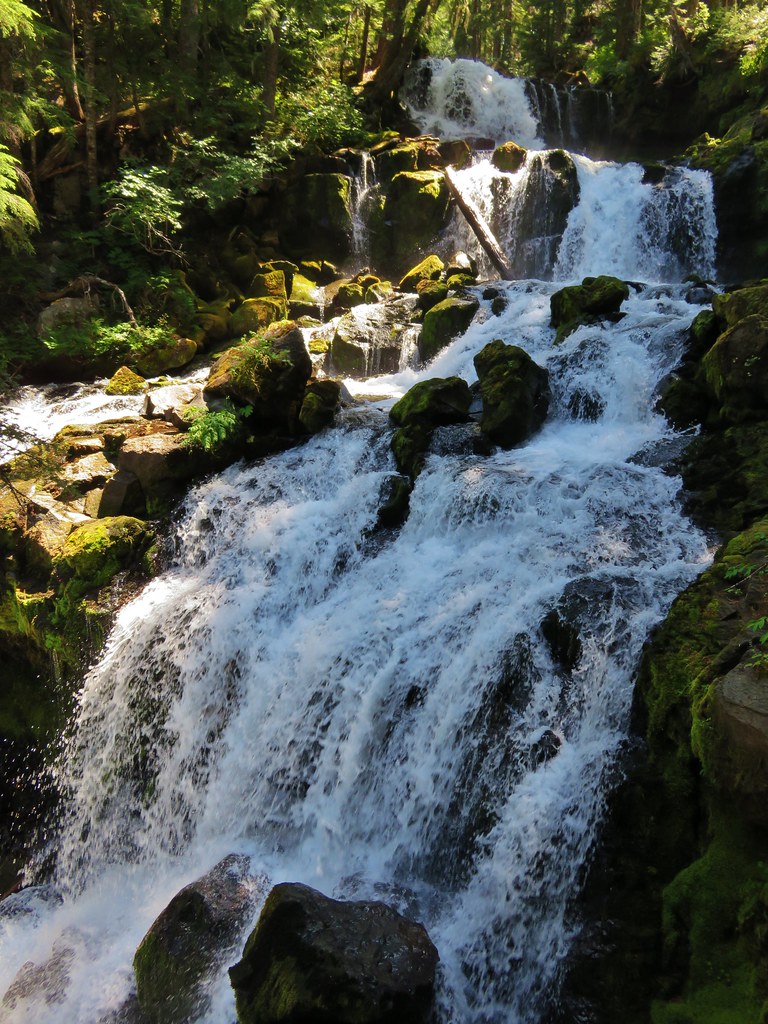
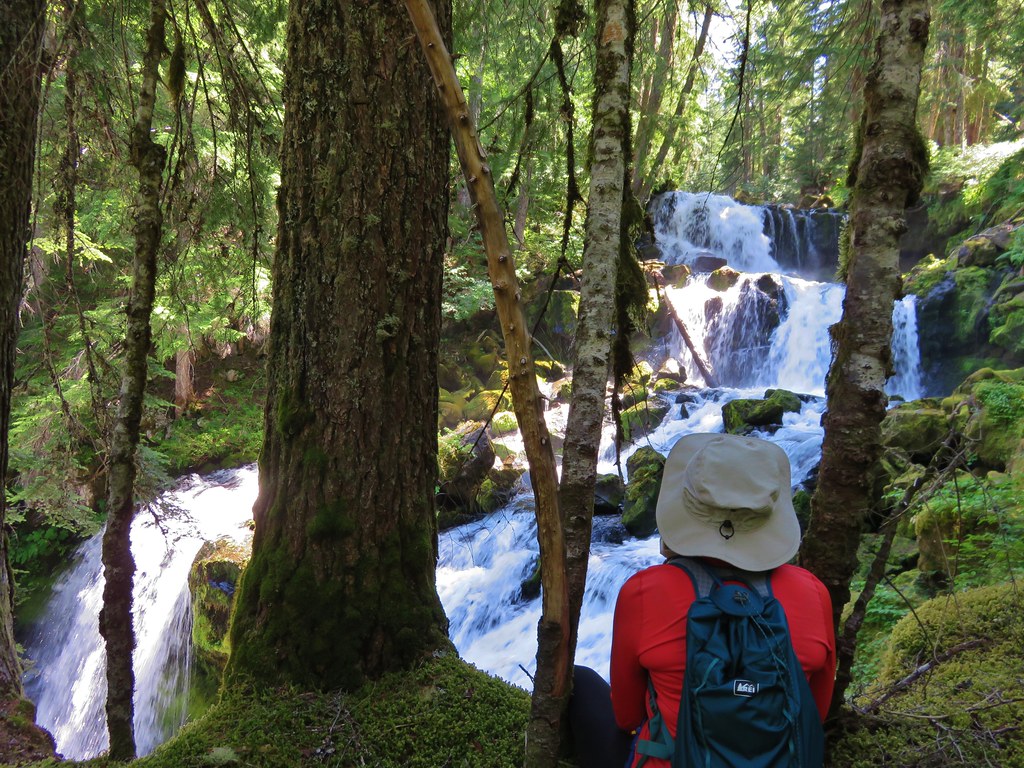
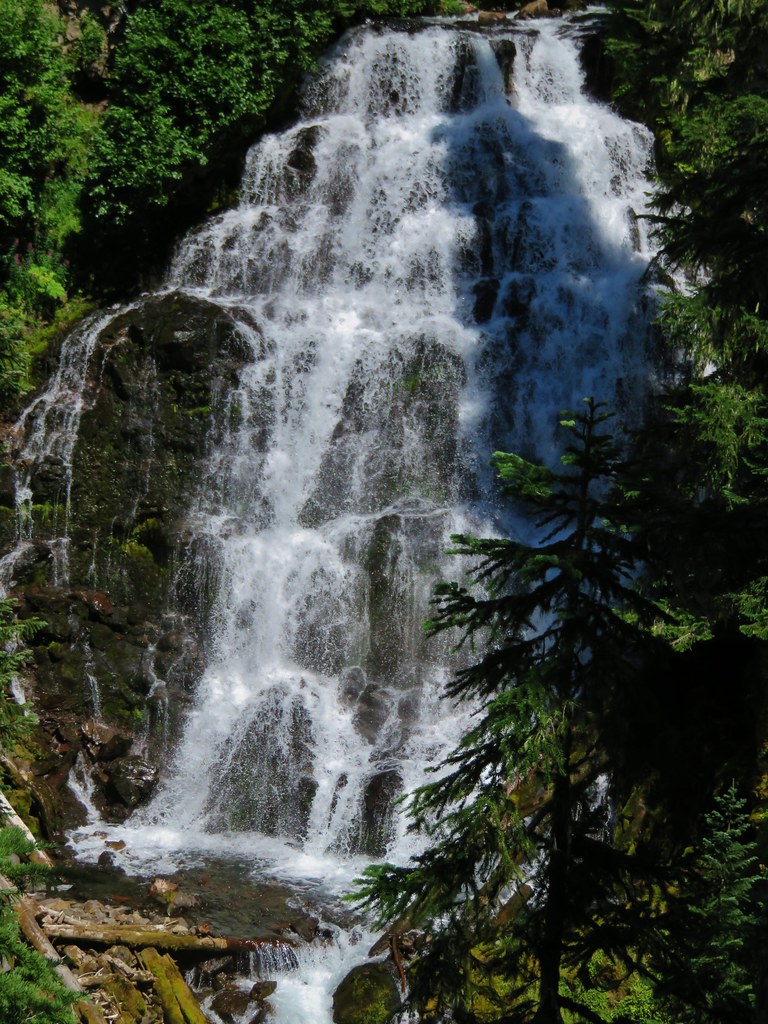
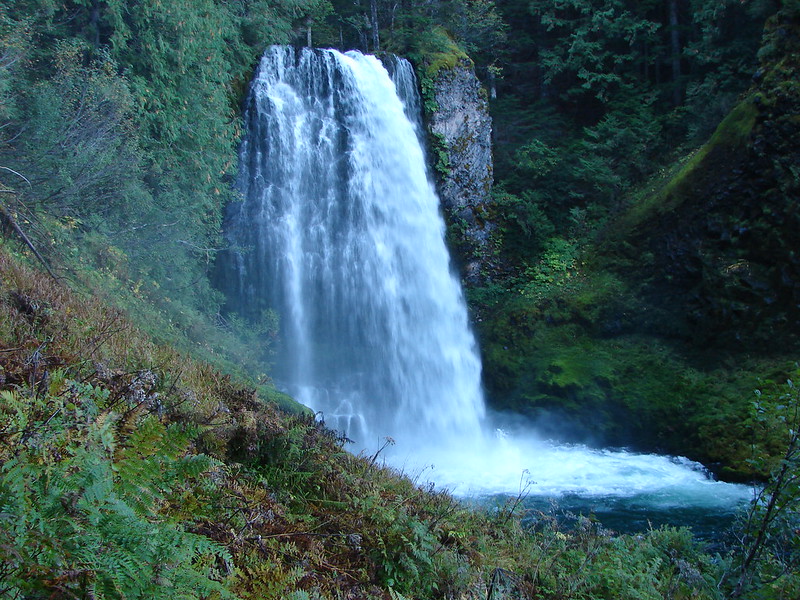
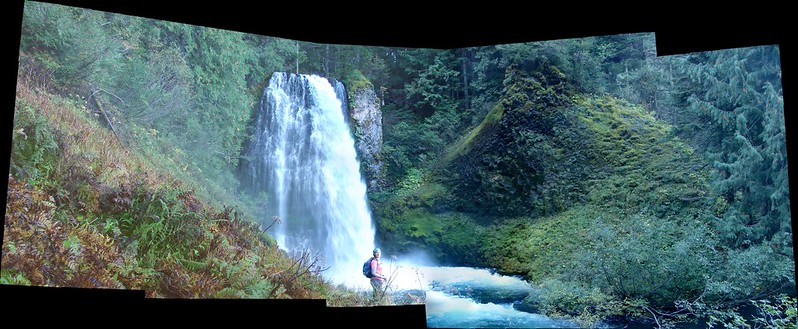
We could hear Indian Hole Falls from the junction. It was only a couple hundred yards to the top of the falls. This was another impressively massive waterfall. An upper viewpoint allowed for a close up view of the top portion of the falls while a steep scramble down along the creek led to a lower moss covered viewpoint where the entire cascade was visible.
IMG_6883

IMG_6894

IMG_6897

The Three Sisters Wilderness had managed to wow us again and we sat on the mossy ledge of the lower viewpoint in the cool breeze of the waterfall. We climbed back up from the lower viewpoint and decided to head out the the upper one.
IMG_6916

After checking out that view we headed back up to the trail to pick up our packs. It was my turn to get stung by an angry yellow jacket. Just as I was about to step back onto the trail I felt a sharp pain on my ankle bone. It took me a minute to figure out what was causing it but once I realized what it was I was able to knock it out of my pant leg. I took a moment to be a bit of a baby then we resumed our hike and head back toward the creek crossing.

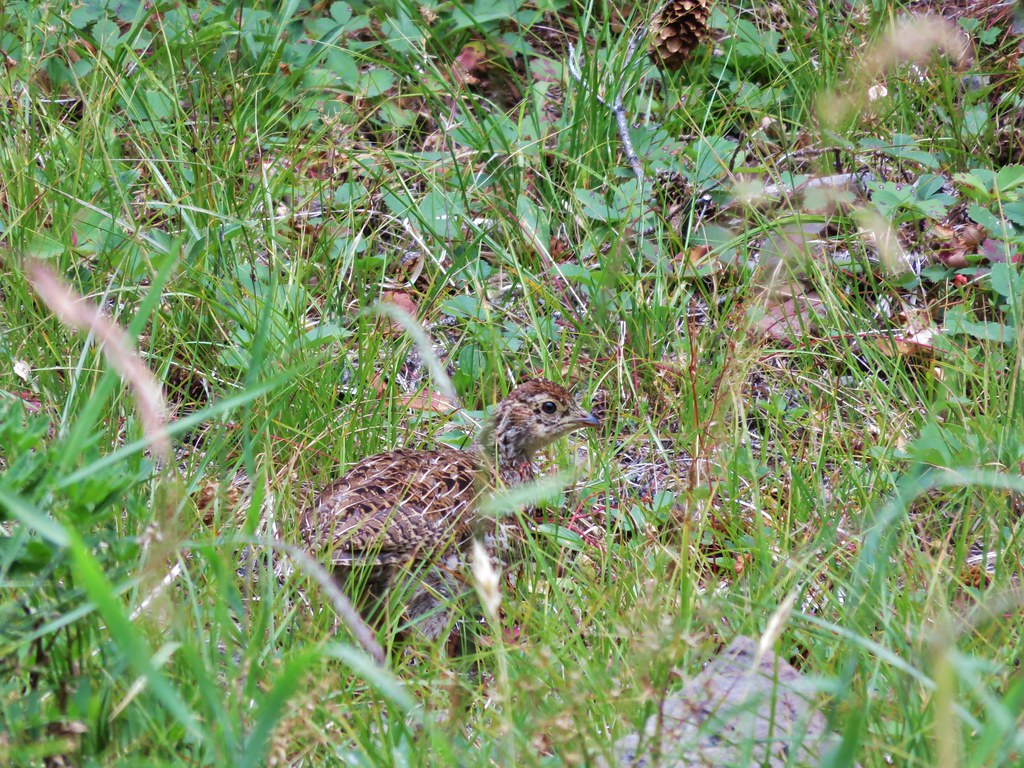
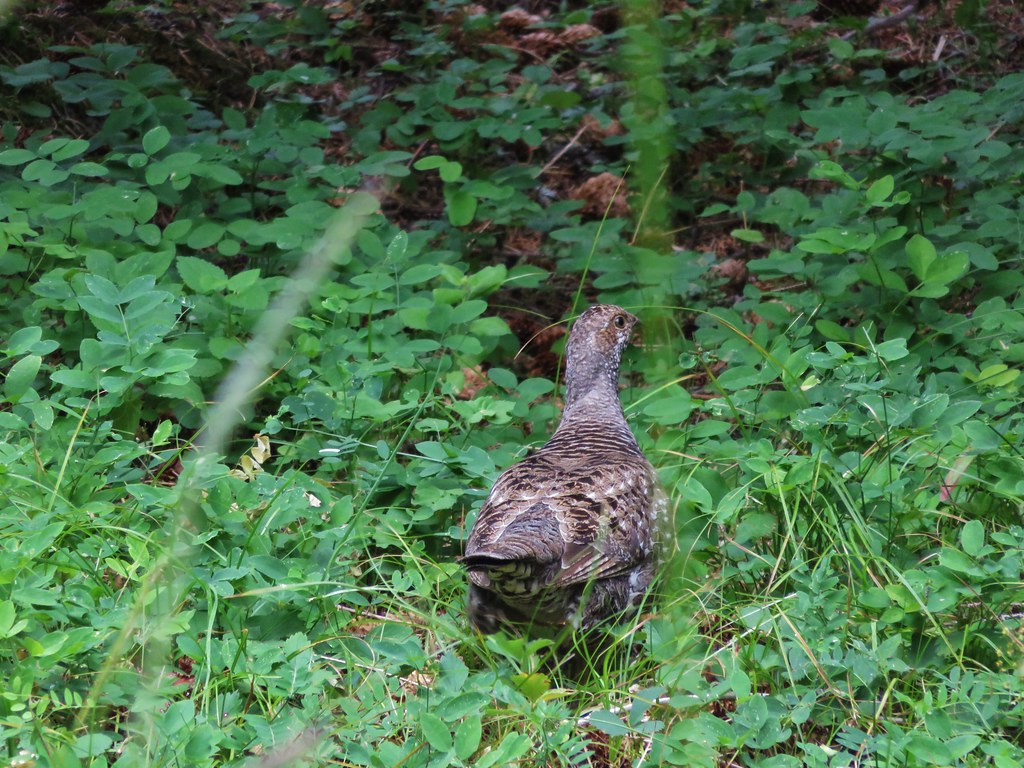
As we were passing back through the tall grasses of the meadow we heard some strange noises ahead. It was a family of grouse. The adult stood watch as the young made their way into the safety of the trees.
IMG_6938

IMG_6934

IMG_6936

She stood guard until they were all safe then headed into the trees herself.
IMG_6942

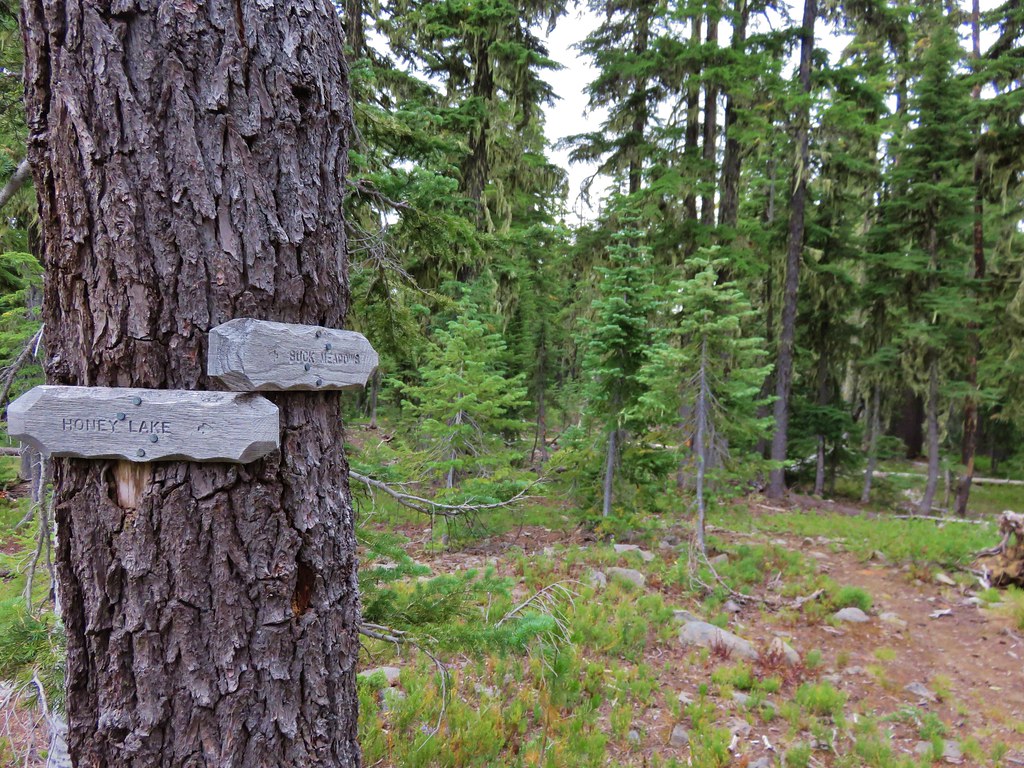
We climbed back up the steep trail past the Indian Holes and went straight past the rock cairn. Our plan was to stop at Honey Lake to fix an early dinner and fill back up on water for the final day since we knew there were no sources from Buck Meadows on. We weren’t sure what we’d find at Honey Lake because none of the maps or the Forest Service showed a trail going to the lake but we had seen the pointer for it at the junction by Buck Meadows. As we were looking for the mystery trail we spotted various wildlife along the way.
IMG_6945

IMG_6951

IMG_6956

Sure enough we came to a side trail with a pointer for Honey Lake.
IMG_6968

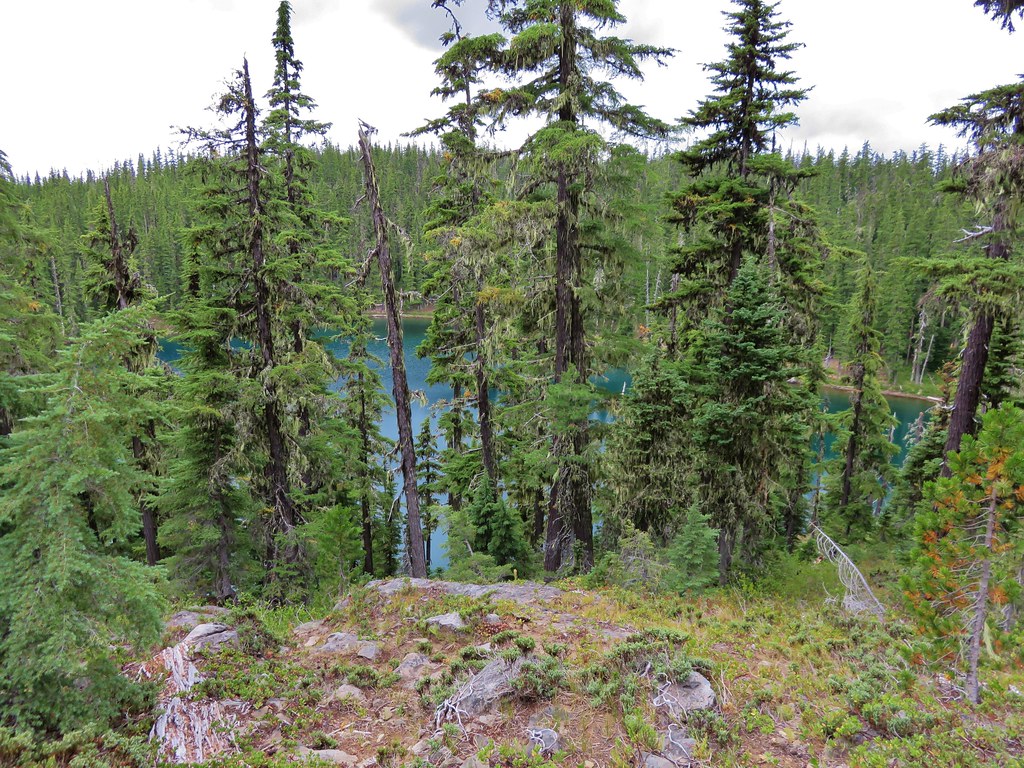
We momentarily had second thoughts about our plan when we saw how far below us the lake actually was.
IMG_6971

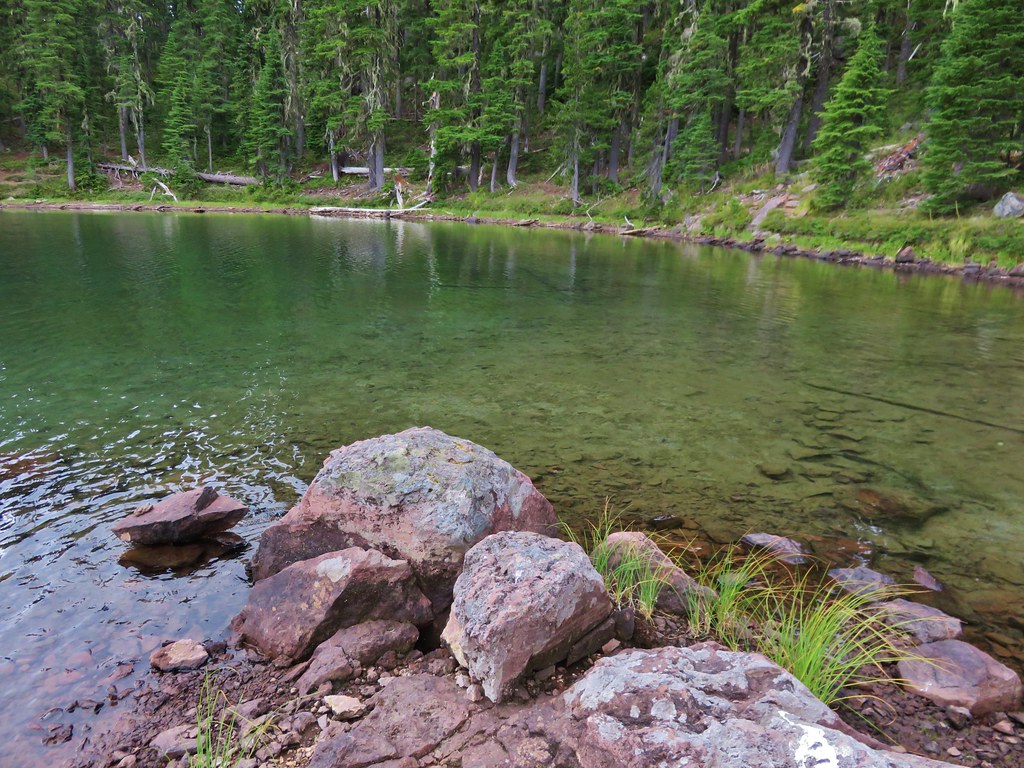
We knew we needed water though and the lake looked very pretty so we headed down the steep path to the lake shore. It really was a pretty lake and larger than we had been expecting.
IMG_6974

IMG_6976

We noticed a tent back up in the forest on the far side of the lake and headed around the lake counter-clockwise looking for a good spot where we could set our things down and cook dinner. We found a pair of spots where people had obviously camped, fire rings and all, both of which are illegal within 100 feet of water in the wilderness. One of the fire rings was full of cigarette butts. Yay for people, not 😦 We took off our packs and wandered out to a little peninsula where the breeze kept the mosquitoes at bay.
IMG_6979

IMG_6981

We took a nice long break at the lake and felt recharged after having our dinner and we were ready to tackle the climb back up from the lake.
IMG_7004

The climb back up turned out to be a lot easier than we’d expected and we were soon back on the trail to Buck Meadows. We stuck to the trail this time when we arrived at the meadows and wound up going right around the area we had considered camping in. Once we saw that we had passed it we decided to just keep going and we’d look for a spot further along the meadows. The view from the meadow was changed a bit from our first day with clouds now hiding The Husband.
IMG_7021

There wasn’t a viable spot to camp anywhere else along the meadows that we saw so we just kept going keeping our eyes open for an acceptable site. About 1 1/2 miles from the junction at Buck Meadows we came to a dry pond. On the opposite side of the trail was a flat area perfect for setting up camp.
IMG_7033

IMG_7032

We woke up so early the next morning that we needed our headlamps as we began packing up. We ate breakfast at the edge of the dry pond and then set off down the trail. The 2 man trail crew had done a fine job clearing the trail and we were making great time since we’d just been on this trail a few days earlier and weren’t distracted by many new sights. There are always some new things to see though and we noticed a few flowers we’d missed on the first day.
IMG_7037

IMG_7045

We reached the Separation Lake Trail a few minutes before 9am and according to our Green Trails map we then had 1.2 more miles to go to the trailhead.
IMG_7052

We figured we’d be back at the car around 9:45 based on our normal pace so we were surprised when we saw a familiar wooden bridge that we remembered being near the trailhead sooner than we expected.
IMG_7059

We actually wound up back at the car before 9:15. We were moving pretty fast but not that fast. Checking another map it showed the distance from the trailhead to the junction as 0.9 miles which made a little more sense. We were happy to be able to change into some clean clothes and different shoes, but we were also sad to have the trip end. We were already thinking about our next backpacking trip, wondering what new adventures awaited us. Happy Trails!

Flickr: https://www.flickr.com/photos/9319235@N02/sets/72157654071670793

Categories
High Cascades Hiking Oregon Three Sisters Area Trip report

Three Sisters Wilderness Day 2 – Linton Creek Exploration

**Note the 2017 Separation and 2024 Linton Creek Fires burned portions of this hike.**

The second day of our four day backpacking trip was set to be an adventure. Our plan was to spend the day “off-trail” exploring Linton Creek which is home to several rarely visited waterfalls. We had camped at Eileen Lake on the NE side of The Husband and originally planned on hiking down the official trail to Linton Creek where we had eaten our dinner the night before, but during our evening exploration of the area behind our campsite we realized we should be able to follow a dry creek bed we’d seen and reach Linton Creek by a more direct route. It would also allow us to avoid another trip through all the frogs along Eileen Lake.

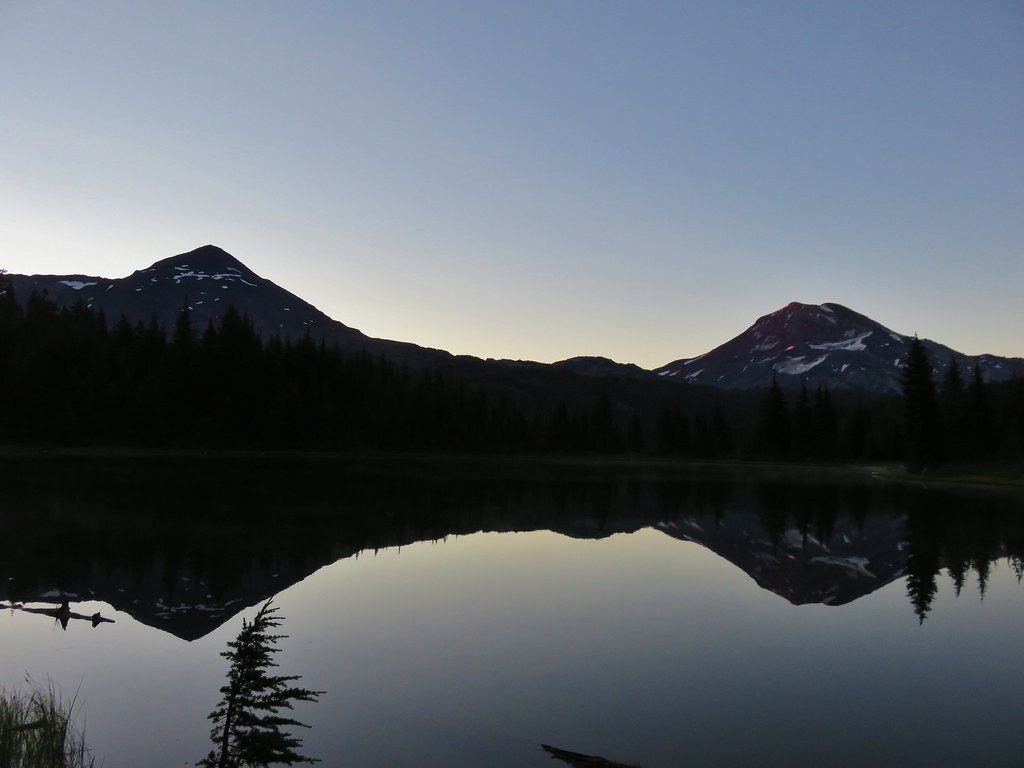
I woke up a little before 5 and went down to the lake for a bit to look at the mountains.
IMG_6484

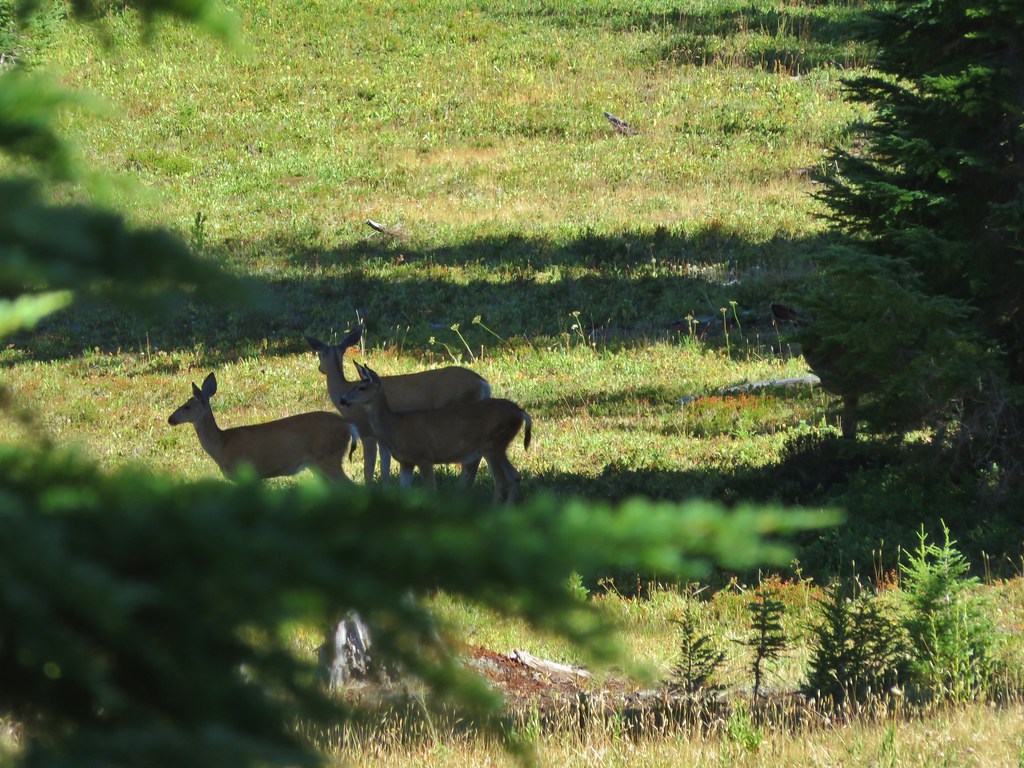
Heather woke up and I was busy getting ready for our breakfast and the days hike when I looked up and noticed there were deer about 50 feet from our tent. Heather was still inside putting her hair into braids and hadn’t noticed them yet.
IMG_6486

I got her attention and we watched as they nibbled on some plants then entered the little meadow by our site and had their own breakfast.
IMG_6501

IMG_6493

They looked up at us occasionally but didn’t seem to be the least bit concerned with our presence then left the same way they’d come slowly disappearing into the forest.
IMG_6491

IMG_6500

After our breakfast we threw on our daypacks and got ready for our adventure. We had our compass and three different maps including the map loaded on the Garmin and I had studied the area using Google Earth. That research along with information from a few trip reports and the Northwest Waterfall Survey had us feeling pretty confident that we would at least be able to reach Duncan Falls and possibly Upper Linton Falls if time allowed. I also established a turn around time in order to make sure we had enough time to climb back up from wherever we ended up.

We followed a use path from our campsite through the little meadow along the dry creek into a larger meadow. The use path ended at the larger meadow so we hopped into the dry creek bed planning on following it as far as possible.
IMG_6504

IMG_6505

We had to leave the creek bed in the meadow for a bit when we started running into small pools of water. We got back in shortly after leaving the meadow but that also didn’t last long because the creek bed was getting deeper and we spotted downed trees blocking it further downhill. We didn’t want to get stuck in the bed and be forced to backtrack so we got out and started bushwacking through the forest.
IMG_6508

We gradually made our way downhill toward the meadows surrounding Linton Creek. There was some blowdown in the forest but it wasn’t ever too bad and the vegetation was sparse enough not to cause any problems. We used the Garmin and our maps to keep us heading in the direction we wanted. We were aiming for the northwestern end of the meadows where Linton Creek enters the forest near a series of whitewater. We managed to reach the meadows fairly close to that area and made our way to the glassy creek.
IMG_6509

IMG_6523

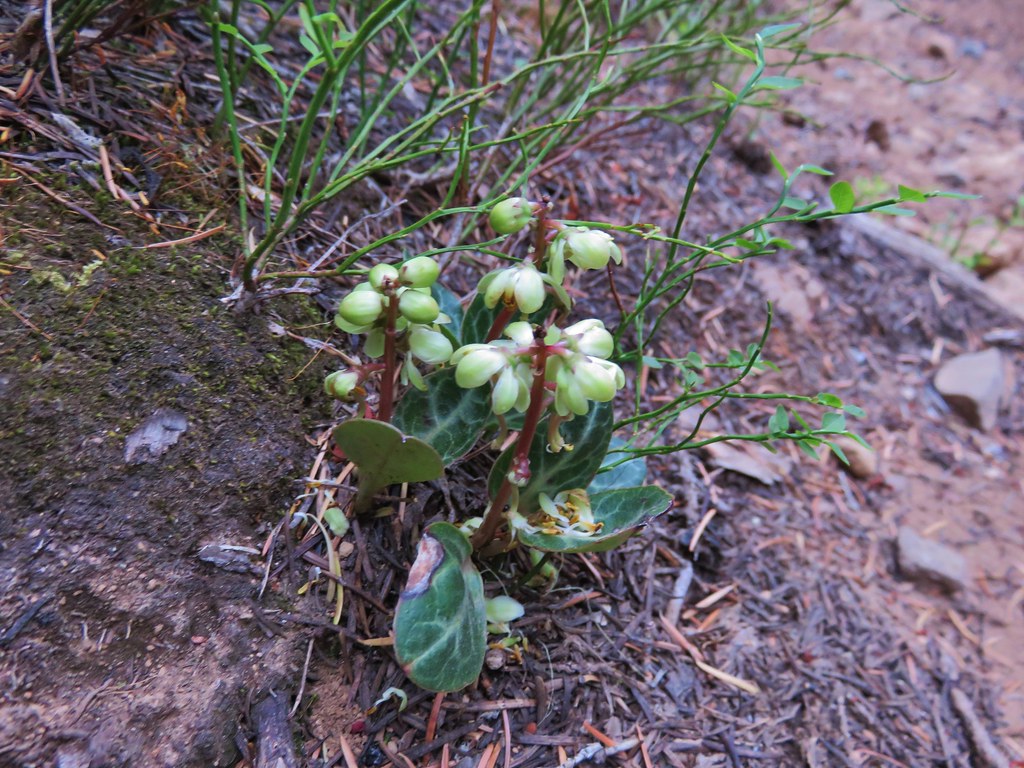
There were a few flowers still blooming including some very tall monkshood.
IMG_6511

IMG_6514

The South Sister loomed behind us over the creek and meadows.
IMG_6522

Shortly after Linton Creek enters the trees it takes a horseshoe bend through a rocky chasm where it puts on its first whitewater show. We were on the south side of the creek and able to side-hill along and around the ridge that the creek bent around which allowed us some good views of the now raging creek.
IMG_6531

IMG_6536

IMG_6540
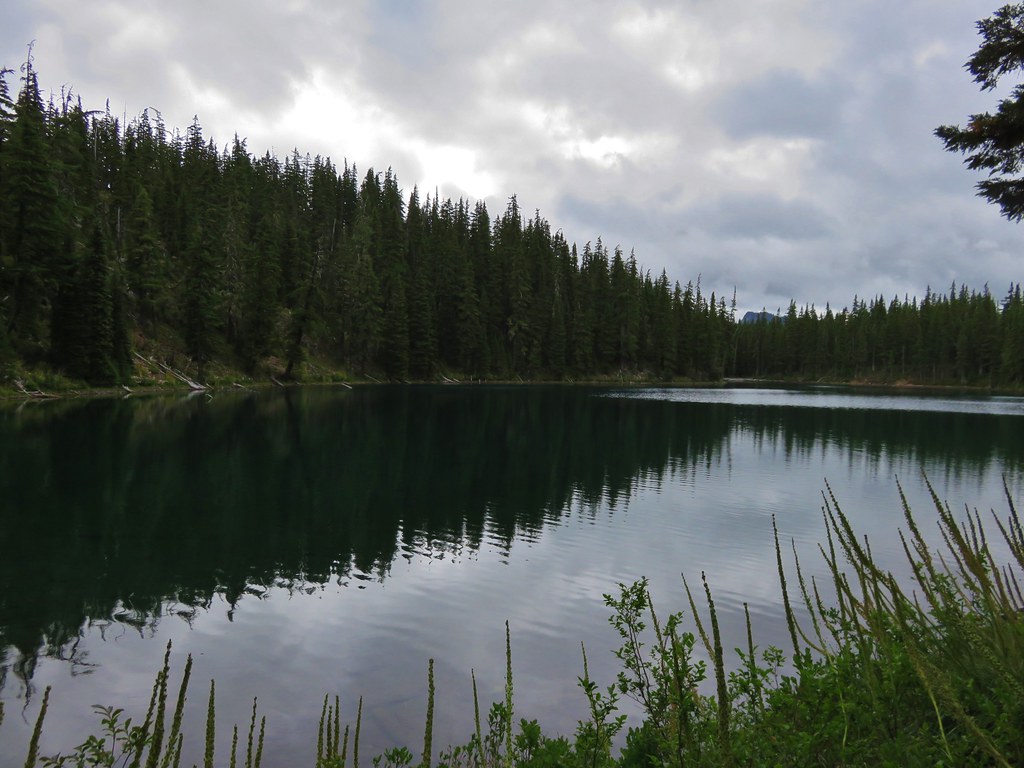
After rounding the ridge we came to the first small unnamed waterfalls. A pair of short drops were visible through the trees.
IMG_6545

IMG_6548

A little further was another whitewater slide.
IMG_6551

The creek was putting on a good show and we were trying to stick as close as possible to it given the terrain. When we couldn’t see the creek we listened intently for any indication of another fall. The creek then began a second horseshoe bend turning back toward the NW. Somewhere in the middle of the bend was where we would find Duncan Falls. It was one the two main targets for our hike and we heard it well before reaching it. We arrived at the top of the falls and could tell we were not going to be disappointed.
IMG_6560
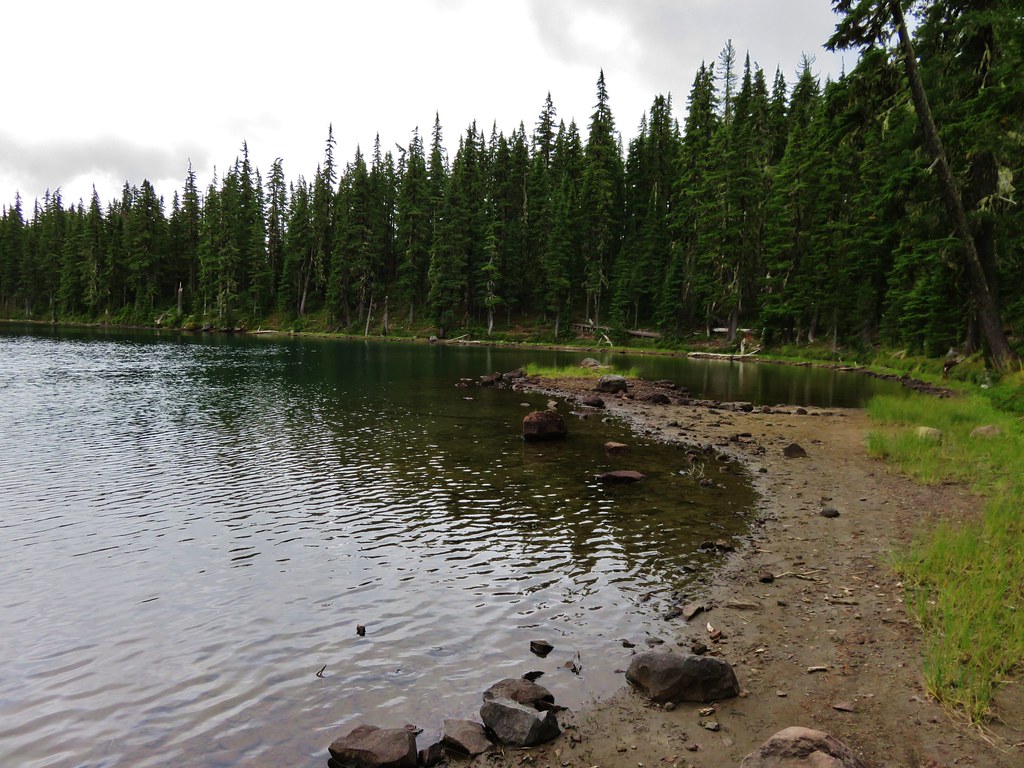
IMG_6562

The ridge stayed and made a wide swing around the falls. We were finally able to get a good view though.
IMG_6565

IMG_6567

It was a spectacular waterfall. After standing in awe of this hidden gem we worked our way down a steep hillside to the creek a little ways below Duncan Falls. We could just see the bottom of the falls through some trees and briefly considered hiking up the creek to reach the base but decided against that in the end. We still had a lot of bushwacking ahead of us and the thought of wet shoes and socks was not appealing plus I was fairly certain that I’d fall in and ruin the camera.
IMG_6575

Below Duncan Falls the creek settled down some as the terrain became a little more level.
IMG_6576

At one point we found what looked like it could possibly be a beaver pond.
IMG_6579

IMG_6580

IMG_6581

We then came upon another pair of small waterfalls.
IMG_6582

IMG_6589

IMG_6594

In the other trip reports that I had seen the hikers had been on the north side of the creek from Linton Lake until somewhere below Duncan Falls. We had originally planned on staying on the south side of the creek the entire time, partly to be different, and partly because the top tiers of Upper Linton Falls were said to not be visible from the north side of the creek. That changed when we could see that we had arrived at point directly across from the start of a large meadow on the other side of the creek. It looked so much easier than picking our way over and around logs and brush and there was a perfect log to cross the creek on near us. We gave in and walked across the log and entered the meadow. I had read about the meadow and the reports called it marshy but I was hopping the dry year we were having would lessen that, but there was still plenty of wet spongy ground and both of us had soaked shoes in no time.
IMG_6601

We aimed for the closest stand of trees and exited the meadow. We took a short side trip to check out one of two small lakes/ponds that the maps had shown toward the back of the meadow.
IMG_6602

After checking out the pond we began making our way back toward the creek. Shortly after rejoining the creek we found another log we could cross on and got back to our original plan of being on the south side of the creek for Upper Linton Falls.

We knew we were getting close to our goal but before we got to Upper Linton Falls there was another nice little fall with a great viewpoint.
IMG_6620

The next fall we came to was the top tier of Upper Linton Falls.
IMG_6623

The roar from the creek was amazing as it thundered steeply down toward Linton Lake.
IMG_6625

We found our way down to the third tier where there was a nice viewpoint.
IMG_6633

IMG_6634

The fourth tier was visible below.
IMG_6640
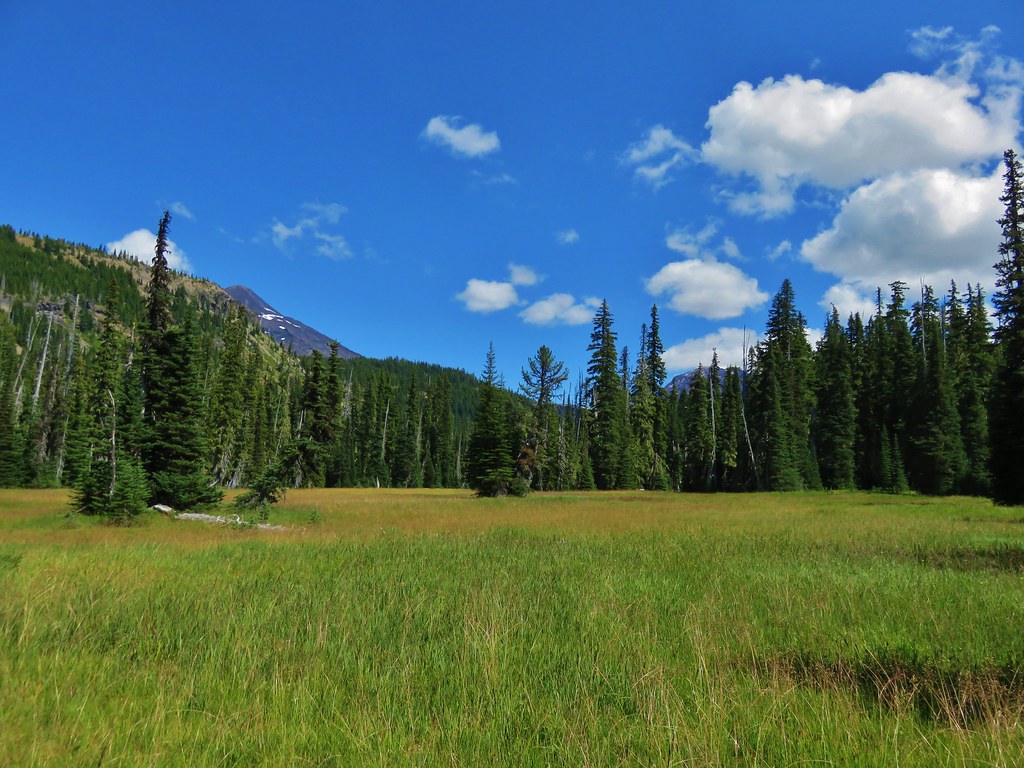
The ridge we were on began to swing away from the creek though. We could see Linton Lake far below and went in search of a decent view but there were too many trees to ever get a good clear look.
IMG_6641

IMG_6646

We found one final viewpoint of Upper Linton Falls. We appeared to be somewhere between the 5th and 6th tiers.
IMG_6655

There was a big drop below us but no way to get a look at the lower tiers from the south side. We decided that just gave us an excuse to come back some day and hike up from Linton Lake to see Lower Linton Falls and get a look at the lower tiers from the north side. In the meantime we sat at the edge of the enormous fall recharging in the cool breeze it generated.
IMG_6660
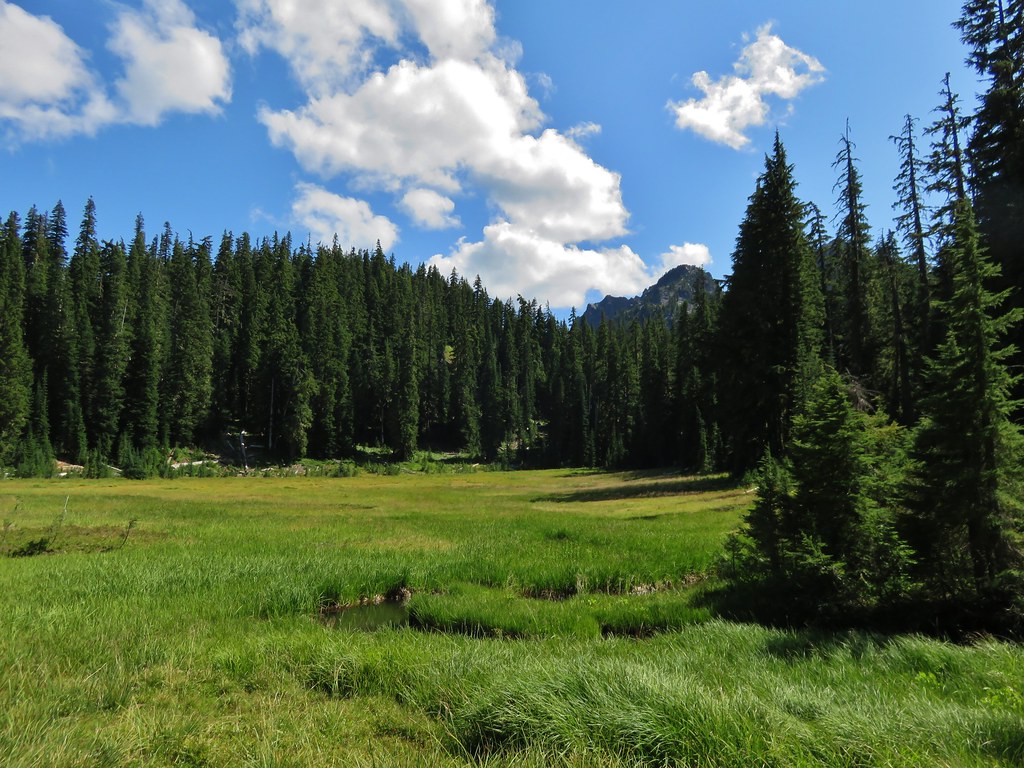
We had made it to our goal just before the established turnaround time and now it was time to climb back up to Eileen Lake. This time we did stick to the south side of the creek avoiding the marshy trap of the meadow. By doing so we located a couple more small falls we’d missed on the way down.
IMG_6678

We also managed to find a balloon which happens more often than you’d think (and we’d like) in the forest. We retrieved the garbage and packed it out with us.
IMG_6691

IMG_6692

We arrived back at Duncan Falls to find it was just as impressive the second time around.
IMG_6700

IMG_6697

After Duncan Falls we left the creek and took a more direct route toward Linton Meadows which avoided the steep ridge above the whitewater of the first horseshoe bend. White fluffy clouds hung over the mountains when we finally reentered the meadows.
IMG_6707

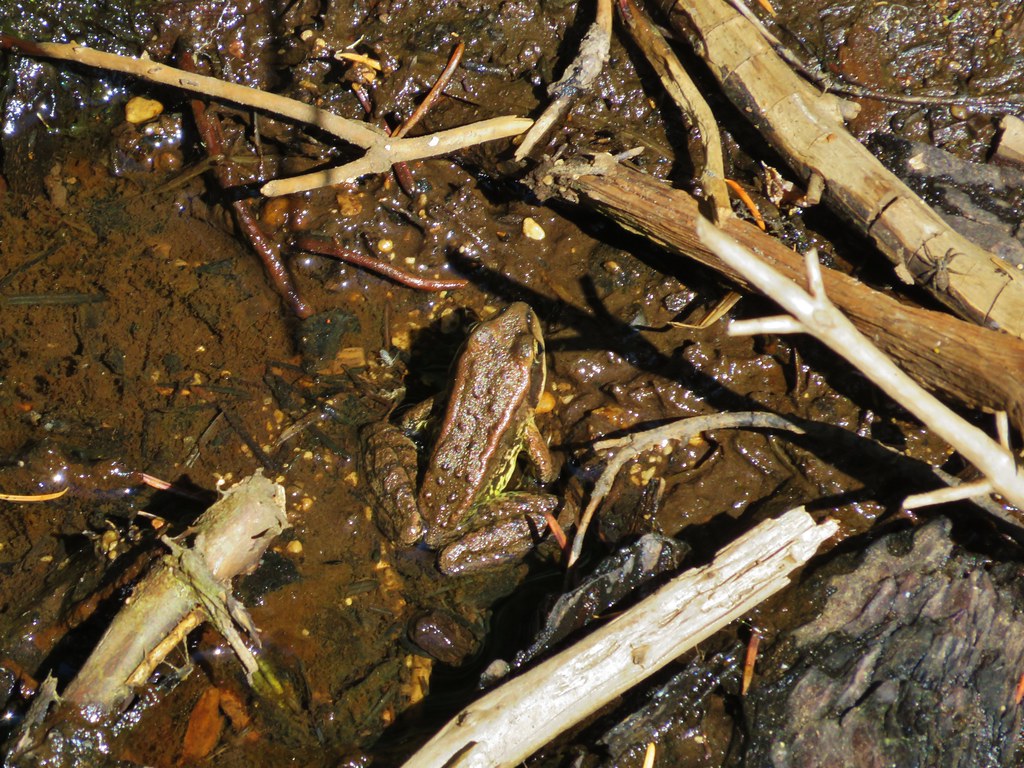
We were paying more attention to the views than to where we were going and wound up passing the spot where we had entered the meadows in the morning. We turned up a different creek bed instead. It looked similar enough that we both thought we remembered certain details as we passed them but as the drainage got steeper and we started noticing more blowdown than we’d remembered we knew we had made a wrong turn. Using the GPS and our maps we could see that we were just on the other side of the ridge we’d come down but we had found a different little meadow here and it’s creek had a little more water which was home to some larger frogs and fish.
IMG_6720

IMG_6715

IMG_6717

IMG_6719

We were able to make our way over the ridge at the far end of the meadow and picked up our earlier path just about where we had entered the dry creek bed near the start of our hike.

According to the Garmin we had covered 9.3 miles. We both had a few scrapes and bruises as well as some mosquito bites and Heather had been stung in the shin by a yellow jacket but it had all been worth it. We spent the evening at Eileen Lake watching clouds float by and then disappear over the Three Sisters.
IMG_6724

Happy Trails!

Flickr: https://www.flickr.com/photos/9319235@N02/sets/72157656375371832

Categories
High Cascades Hiking Oregon Three Sisters Area Trip report

Three Sisters Wilderness Day 1 – Separation Lake Trailhead to Eileen Lake

**Note the 2017 Separation Fire burned a portion of this hike.**

We just started backpacking last year and we really enjoyed it so we were looking forward to our first outing of the year which we recently completed. I plan on covering our trip over three entries starting with this post featuring our first day.

We had originally planned on spending a long weekend in the Opal Creek and Bull of the Woods Wilderness areas, but with the early snow melt in the mountains we changed our destination to the Three Sisters Wilderness. I had been wanting to check out the waterfalls along Linton Creek since seeing a trip report that was posted on Portlandhikers.org in 2013. There is no official trail to any of the falls along the creek and in most places there is no trail at all. The few reports I found on the area all began their hike at Linton Lake along Highway 126 and climbed up toward Linton Meadows. In the report on Portlandhikers they had hiked up the creek then over to Eileen Lake for the night then returned to Linton Lake the next day. I wasn’t too keen on the idea of carrying our full packs while bushwacking uphill so I came up with a different plan.

The solution was to start the exploration of Linton Creek from Eileen Lake where we would already have established our campsite. This would allow us to explore down stream as far as Upper Linton Falls using daypacks. I began studying our maps trying to plan the trip. The three closest trailheads to Eileen Lake are the Obsidian Trailhead, the Foley Ridge Trailhead, and the Separation Lake Trailhead. I quickly settled on the Separation Lake TH since it was the closest to us, didn’t require a limited entry permit, and offered a couple possible return loops.

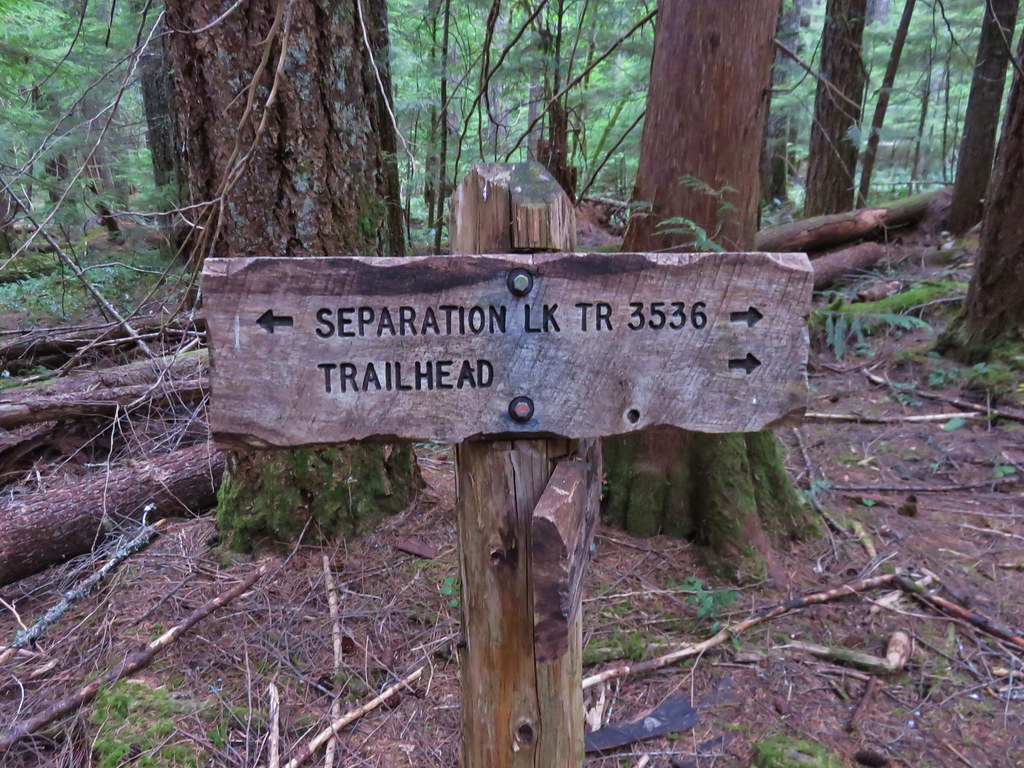
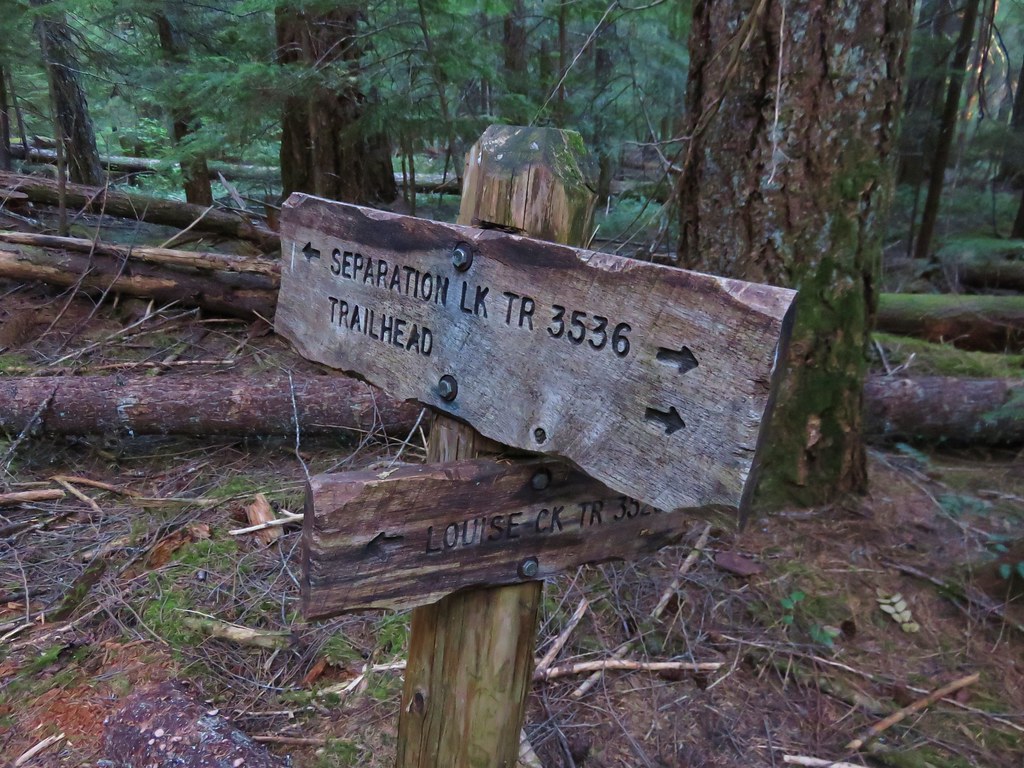
We had been to the Separation Lake Trailhead in May 2014 when we hiked to Separation Lake so we were familiar with the trail when we slung our packs on and set off into the Three Sisters Wilderness.
IMG_6216

This time we took the Louise Creek Trail when we reached the junction just under a mile from the trailhead.
IMG_6217

Our plan was to follow the Louise Creek Trial for 7.2 miles to another trail junction at Buck Meadows then continue up to the Foley Ridge Trail which would take us to yet another junction. From there we would take the Linton Meadows Trail to a final junction where we would head for Husband Lake and our ultimate destination of Eileen Lake.

As we climbed up the Louise Creek Trail we met a couple that were hiking out after having camped at Sisters Mirror Lake. They had come down a portion of the Separation Creek Trail from the James Creek Shelter to Indian Hole Falls and reported that the trail did indeed have many downed trees across it. This confirmed what the information on the Forest Service website which called the trail “impassible due to heavy blowdown”. We had planned on visiting Indian Hole Falls then taking that trail down to Separation Lake where we would camp on our third night but had nixed those plans after seeing the information on the website. The other couple said the falls were beautiful and we still planned on visiting them but by using the Separation Creek Meadows Trail instead.

They also reported that there were a couple of people doing trail maintenance just up the trail and that they had not seen any water along the trail for quite some time. We had plenty of water for the day but it was good information to have for our return trip so we didn’t short ourselves hiking out.

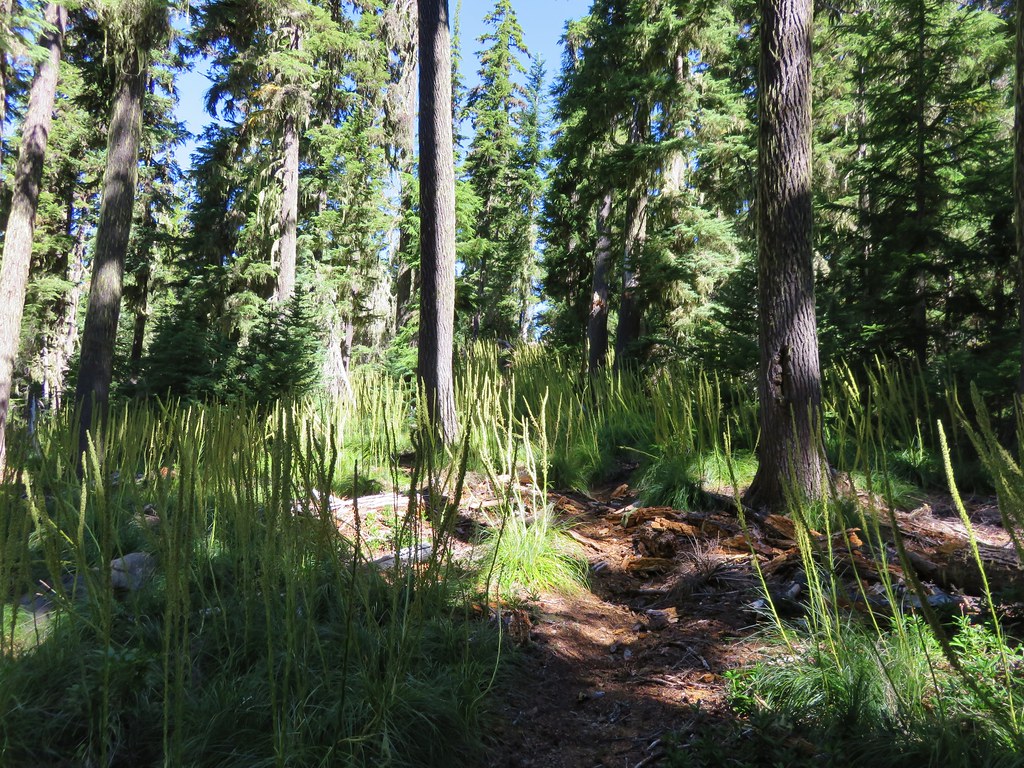
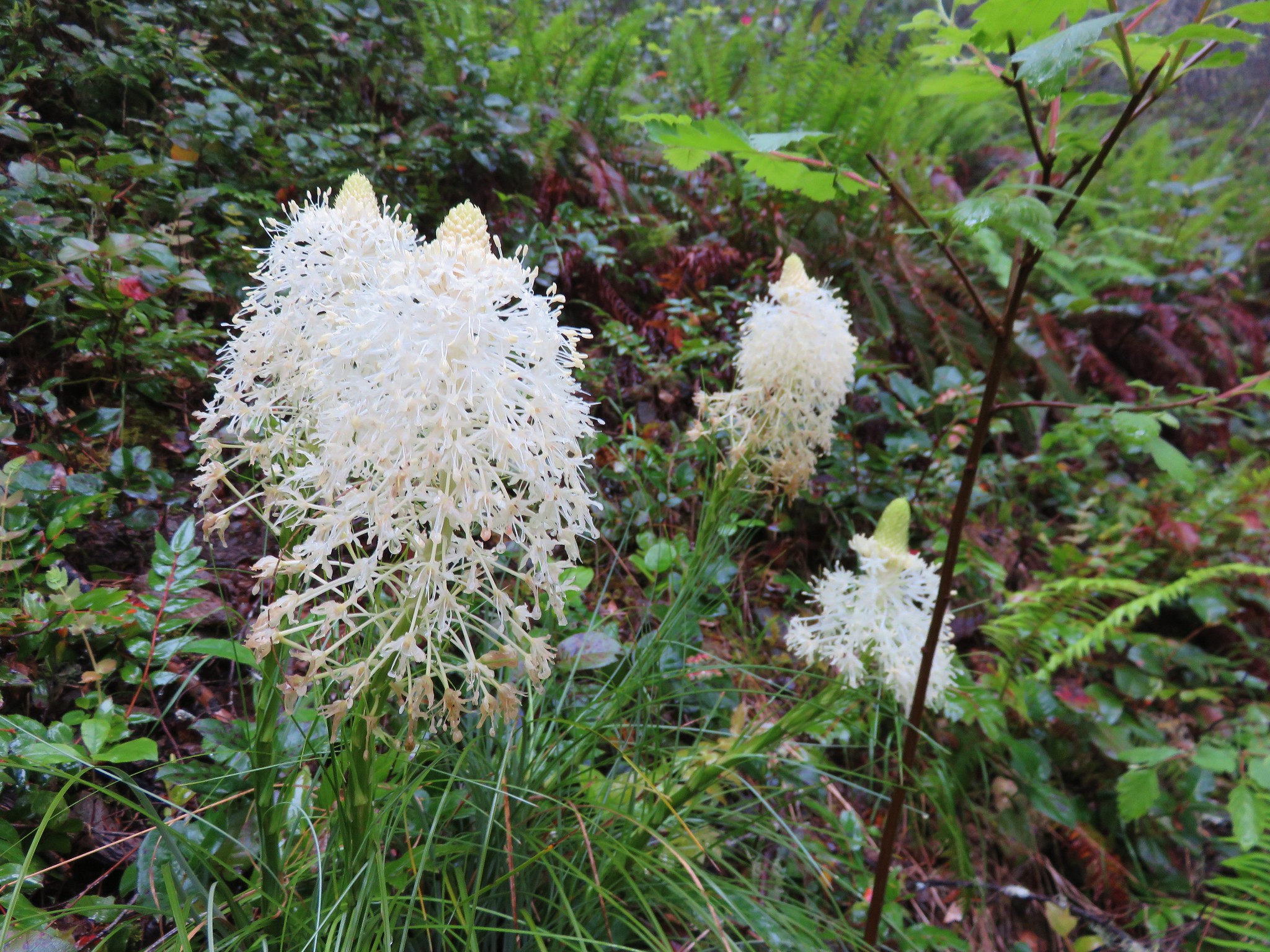
The Louise Creek Trail was indeed dry and most of the flowers had long since passed although a few stragglers could be found here and there. There was also the remains of what must have been an impressive beargrass display lining much of the trail.
IMG_6226

IMG_6229

IMG_6242

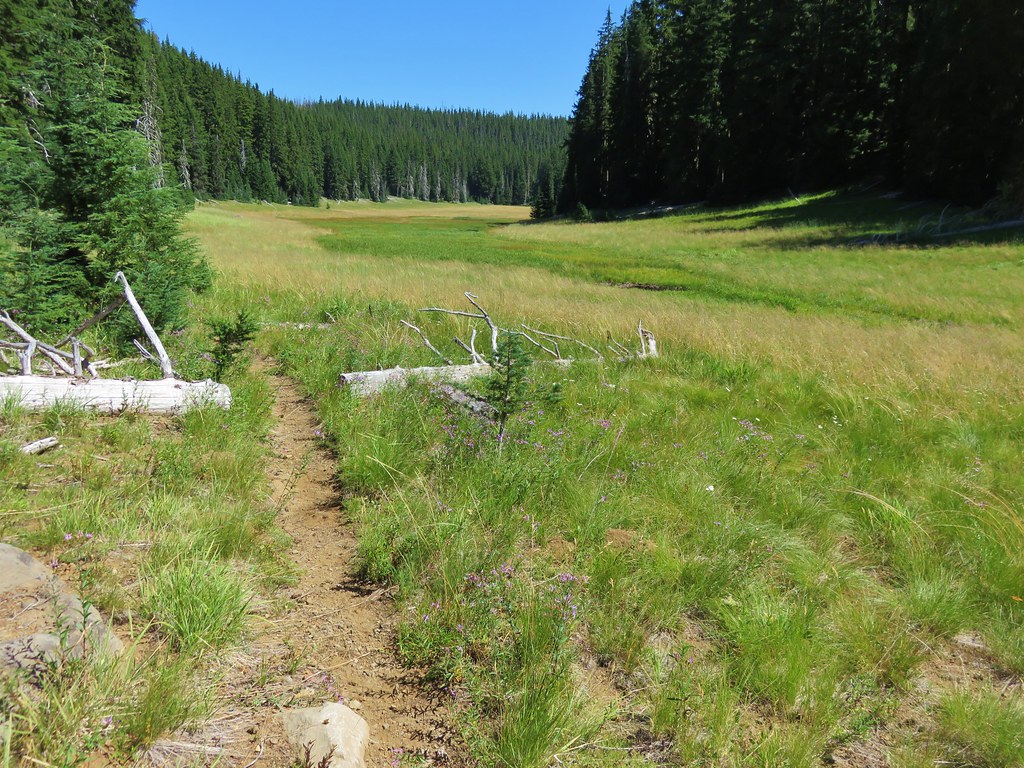
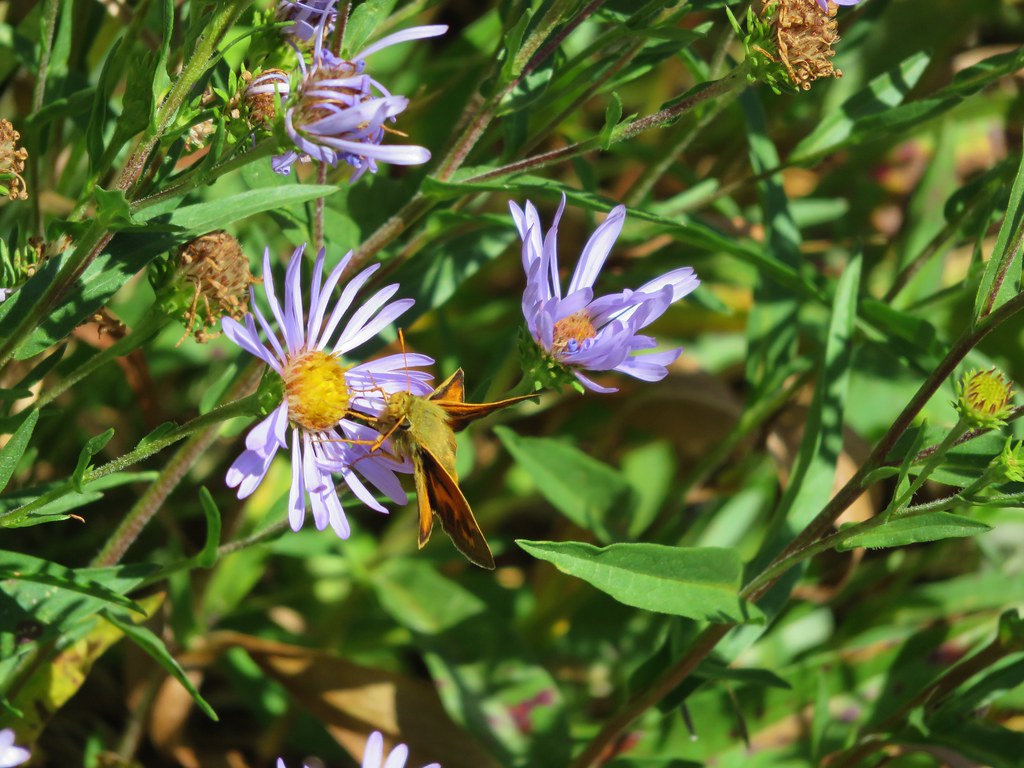
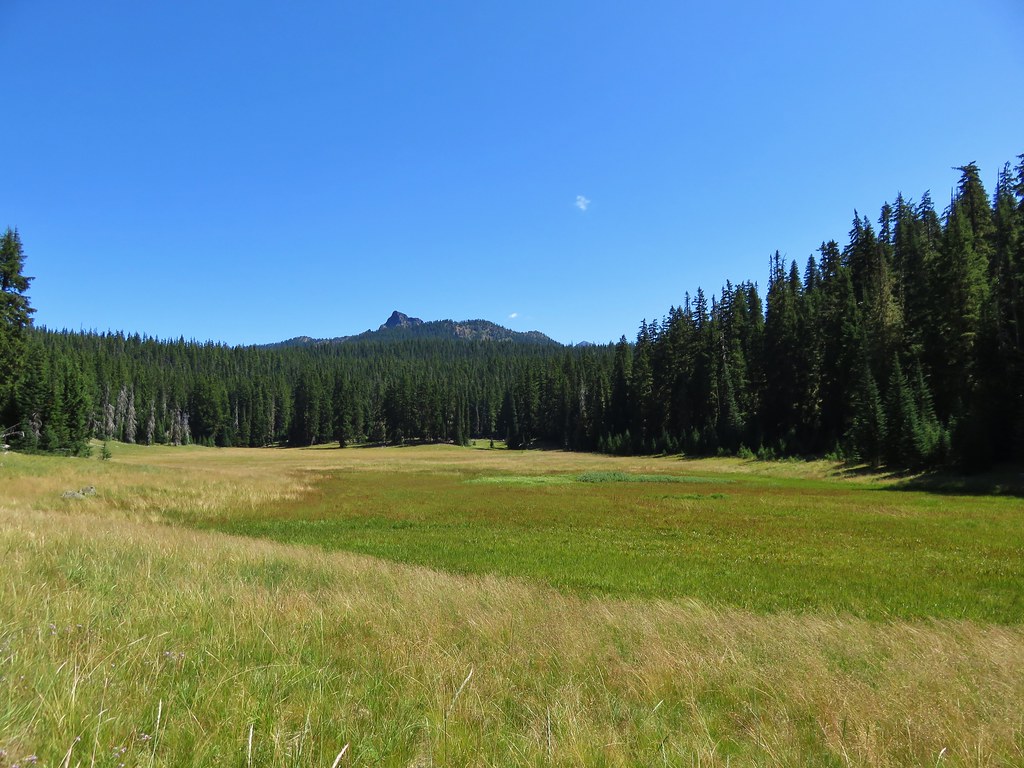
The meadows of Buck Meadows were also dry as far as we could tell. There were some patches of green but no visible water. Purple aster dotted the dry grasses and were popular with the butterflies.
IMG_6265

IMG_6263

We got our first look at The Husband from the meadows. We knew Eileen Lake was on the far side of the rocky mountain.
IMG_6273

The final meadow was surprisingly long and we wound up losing track of the trail near the far end and just headed cross county to a small knoll with trees. We were now planning on staying somewhere in the area of the meadows on our final night and this seemed to be a viable spot. We picked up the trail again near the signed trail junction.
IMG_6279

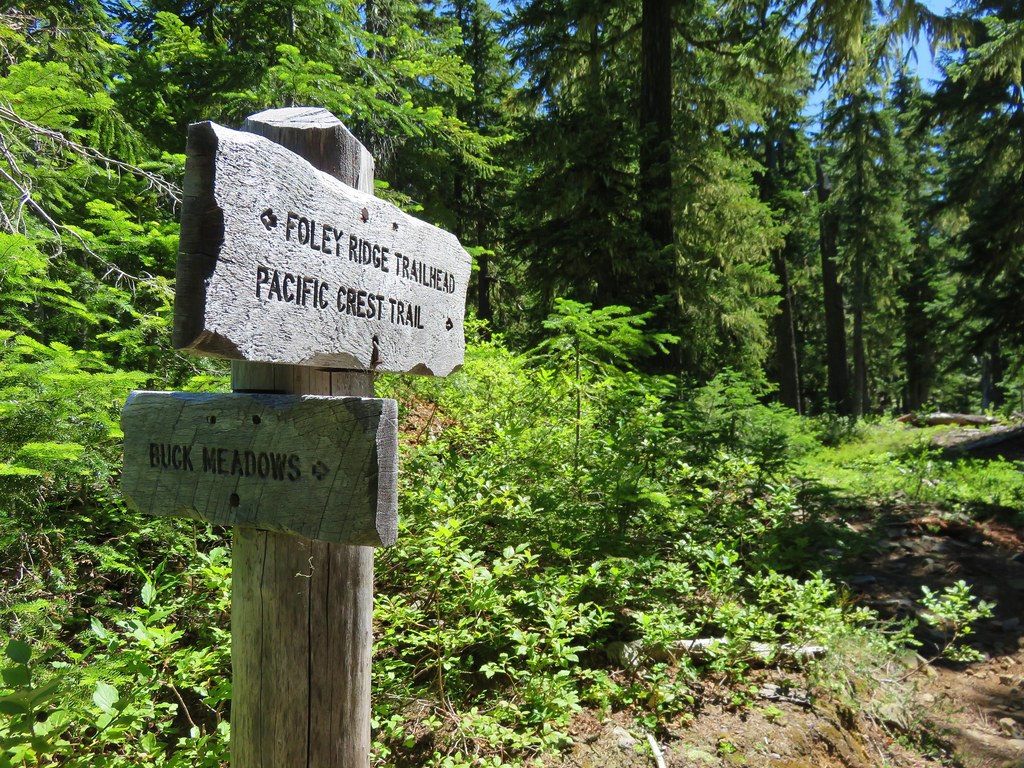
The pointer to the left was for the Foley Ridge Trail and the right was for Honey Lake. Oddly none of our maps or the Forest Service website showed a trail going to Honey Lake, instead the trail passed by on its way to the Separation Creek Meadows Trail. It was also unclear if either or both forks were still considered the Louise Creek Trail. Our two maps indicated the right hand fork was the Louise Creek Trail but the Forest Service showed it as the left fork. Either way we needed to get to the Foley Ridge Trail so we headed left. The trail switchbacked uphill offering a brief view of Diamond Peak to the south before arriving at the Foley Ridge Trail junction.
IMG_6282

IMG_6287

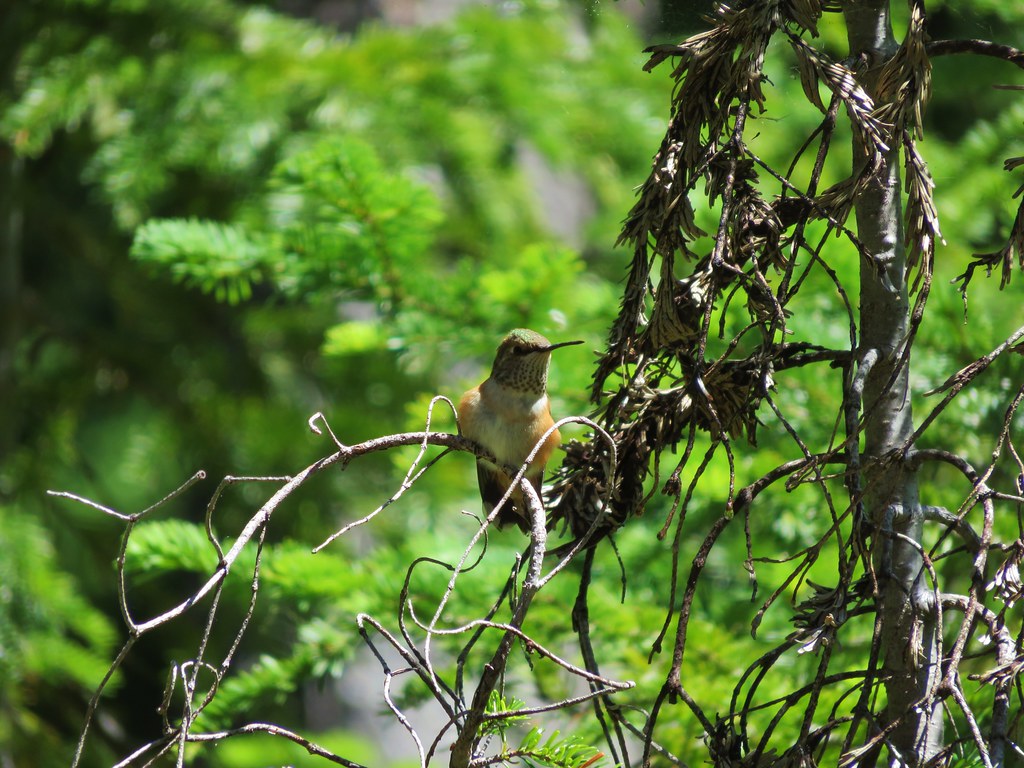
It had been a tough climb up for us not being used to carrying full packs so we rested a bit at the junction where we were joined by a hummingbird.
IMG_6291

Shortly after setting off again we passed the first water we’d seen all day, a few small ponds that still held some water.
IMG_6292

IMG_6296

IMG_6305

We followed the Foley Ridge Trail for almost two and a half miles to the next trail junction.
IMG_6316

Four trails met at this junction. The Foley Ridge Trail we had come up and on its right was the trail to the James Creek Shelter. To the left were two trails one to the Pacific Crest Trail and to the immediate left the trail to Linton Meadows. We had expected to see a fifth trail at the junction, the Separation Creek Meadows Trail, which appeared to also meet here according to the maps. We thought it was odd but it was a question for another day and headed toward Linton Meadows.
IMG_6317

We had been on this portion of trail during our backpacking loop around the South Sister the previous year. The trail passes through a pumice plain which manages to support a good amount of colorful vegetation.
IMG_6321

IMG_6322

IMG_6333

Just .3 miles from the big junction the Linton Meadows Trail split again. The right fork headed down to Linton Meadows while the left fork pointed to Husband Lake. The left fork then passes Eileen Lake before rejoining the right hand fork at Linton Creek.
IMG_6324

We stopped at Husband Lake for a moment to take in the views before continuing on our way.
IMG_6338

IMG_6342

IMG_6352

We finally came upon a creek with flowing water between the lakes coming down from The Husband.
IMG_6366

On our previous visit there had been tons of frogs along the shore of Eileen Lake and we had been wondering if we would find the same thing this time. That question was answered upon arriving at the lake.
IMG_6382

IMG_6386

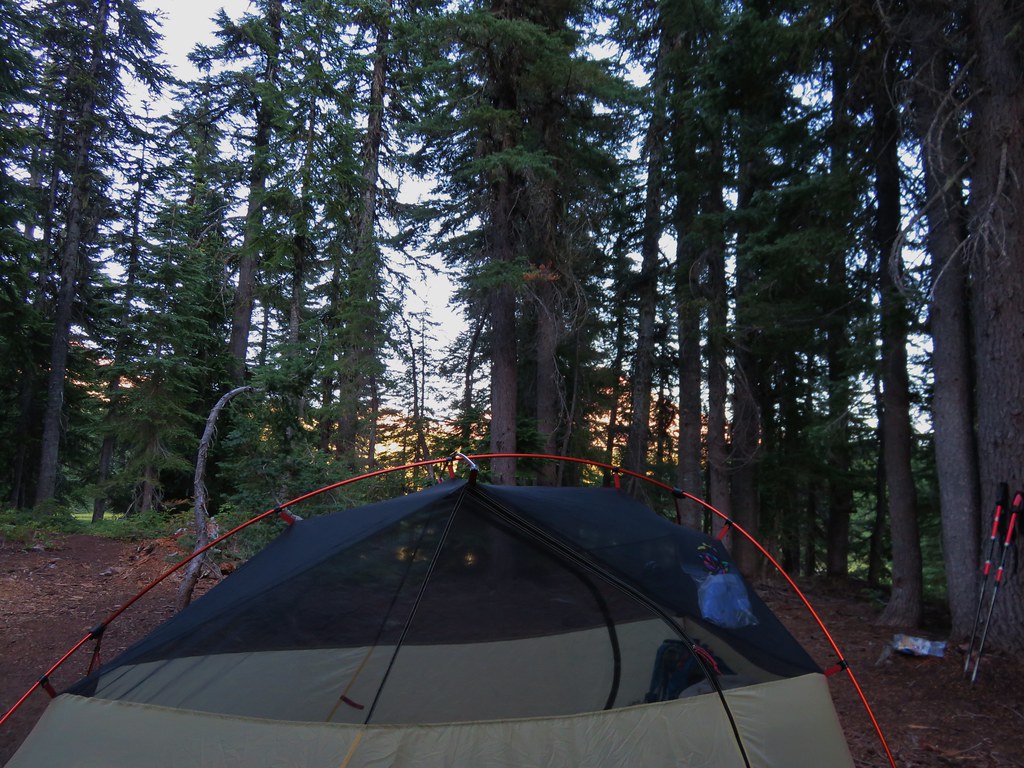
There were more this time than before and we slowly made our way around the lake being careful not to step on any of them. We were planning on setting up camp on the far side of the lake where we would be able to set up at least 100 feet away from the water and the trail per wilderness regulations. We found our spot on a small rise with a small meadow behind us and no frogs to have to watch out for.
IMG_6479

After setting up camp we decided to hike down to Linton Creek to have dinner in the same location we had eaten at the year before and to fill up on water from the creek. We tried going around the lake on the other side hoping the frogs would be less but it proved just as challenging and slow. On our way down to the creek we spotted 4 deer also making their way down the meadows.
IMG_6407

IMG_6419

We arrived at Linton Creek to find it flowing strongly. It is primarily fed by Linton Springs so the dry year apparently hadn’t effected it as much as the other creeks. The springs also mean the water is cold and we had forgotten just how cold until we tried to soak our feet. The water was too cold to keep them in for more than 10 or 15 seconds.
IMG_6425

After having dinner and filling up on the wonderfully cold water we returned to Eileen Lake where we explored the area behind our campsite then sat by the water watching the frogs along the shore and small fish occasionally jumping from the water disrupting the reflection of the mountains.
IMG_6471

It had been a great start to our trip and the adventure had just begun. Happy Trails!

Flickr: https://www.flickr.com/photos/9319235@N02/sets/72157656374056692

Categories
High Cascades Hiking Mt. Hood Area Oregon Trip report

McNeil Point

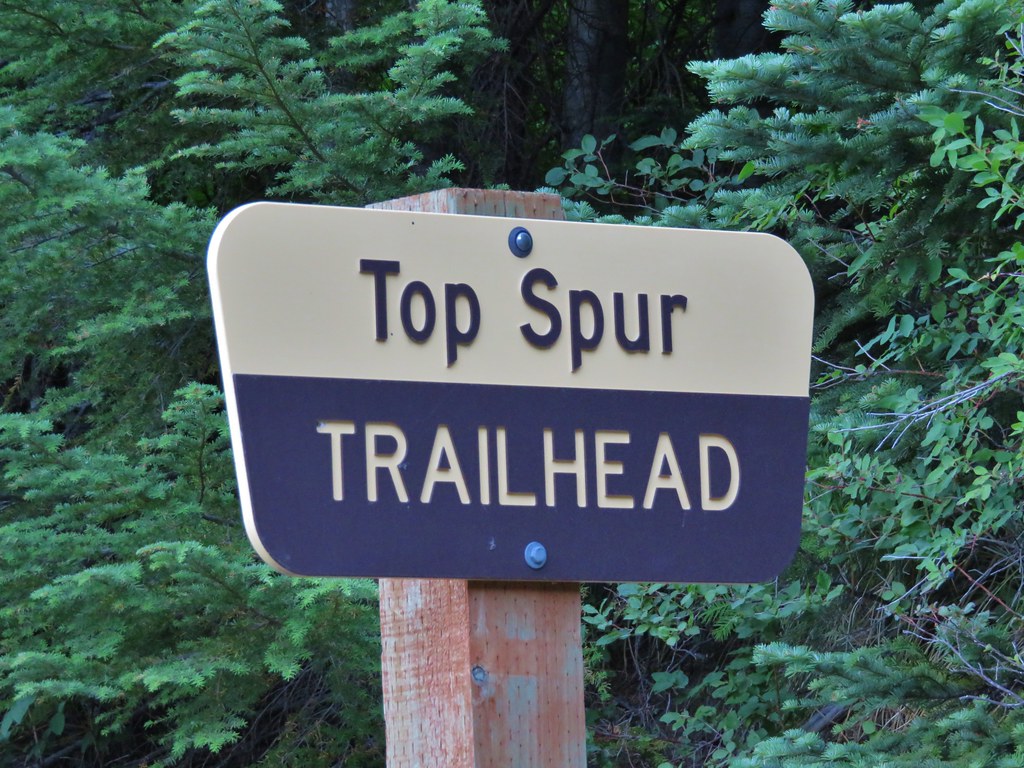
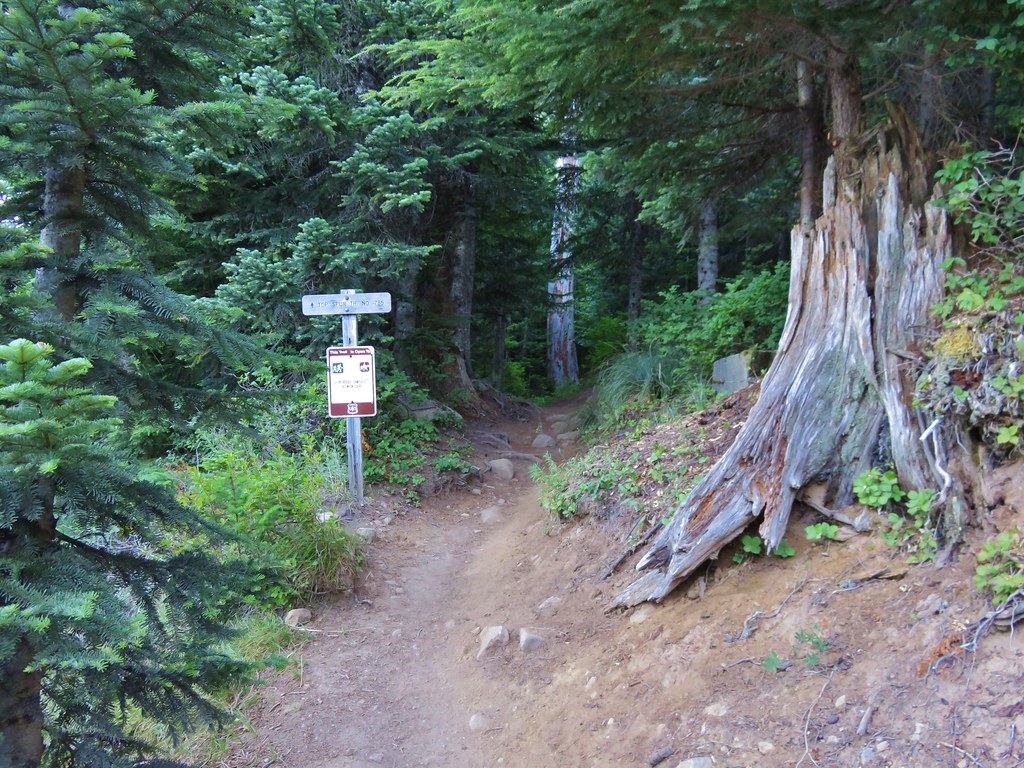
A week after visiting Mt. St. Helens we were headed to another of the Cascades volcanoes – Mt. Hood. We were meeting my parents in the morning for a hike up in the area of McNeil Point. The plan was to begin at the Top Spur Trailhead with them and hike together to an area below McNeil Point where ponds collect the melting winter snows. From the ponds Heather and I would head up to McNeil Point to visit the shelter there and continue up the ridge behind it toward Mt. Hood. We picked up my parents at McNeil Campground in the morning and were ready to set off on the Top Spur Trail just before 7AM.
IMG_5739

IMG_5740

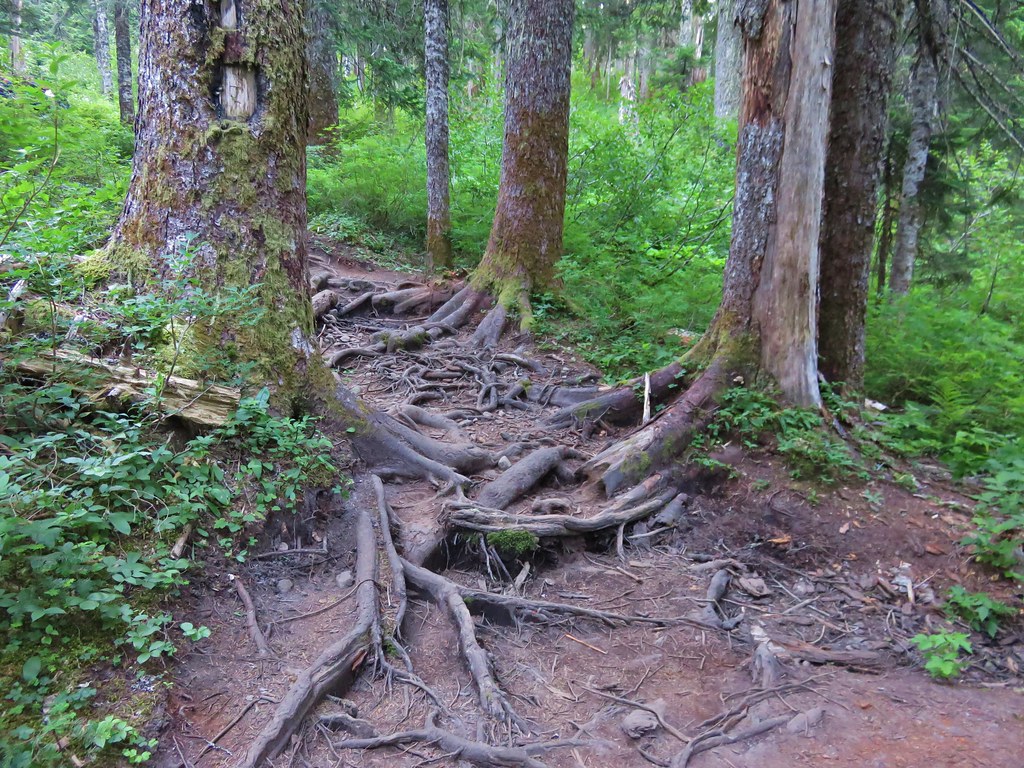
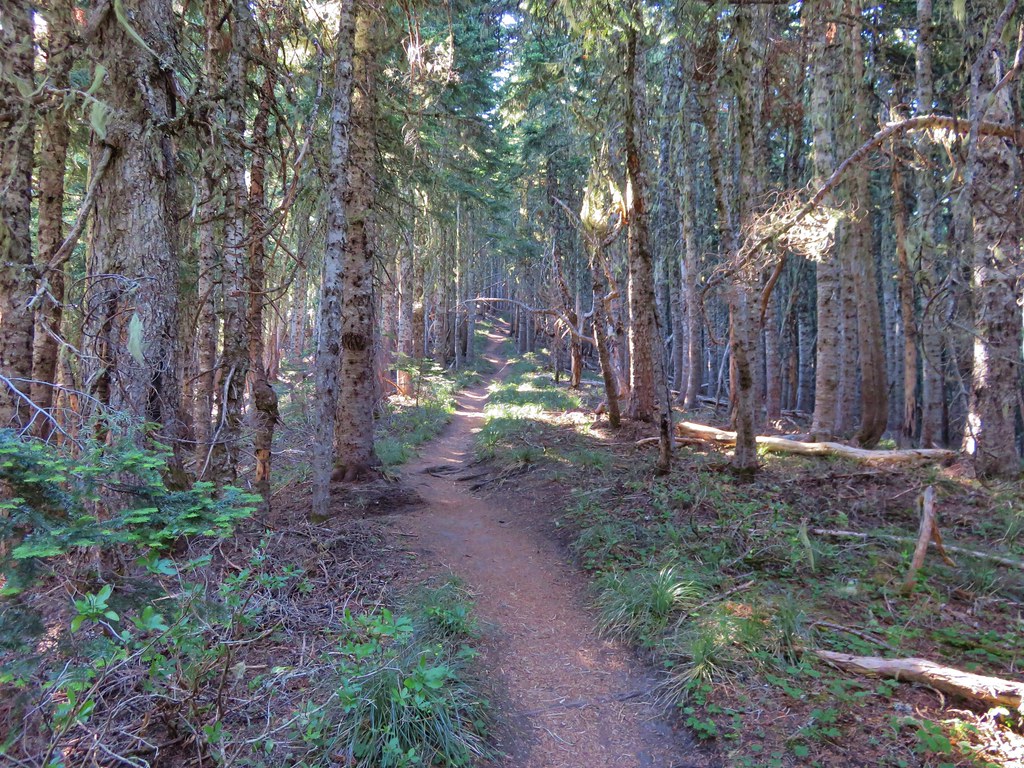
The first section of trail led through a forest filled with huckleberries and blueberries. Tree roots covered the path in many areas making for an uneven surface for walking.
IMG_5741

The Top Spur Trail joined the Pacific Crest Trail for a tenth of a mile before splitting off at a four way trail junction where the PCT and the Timberline Trail intersect.
IMG_5743

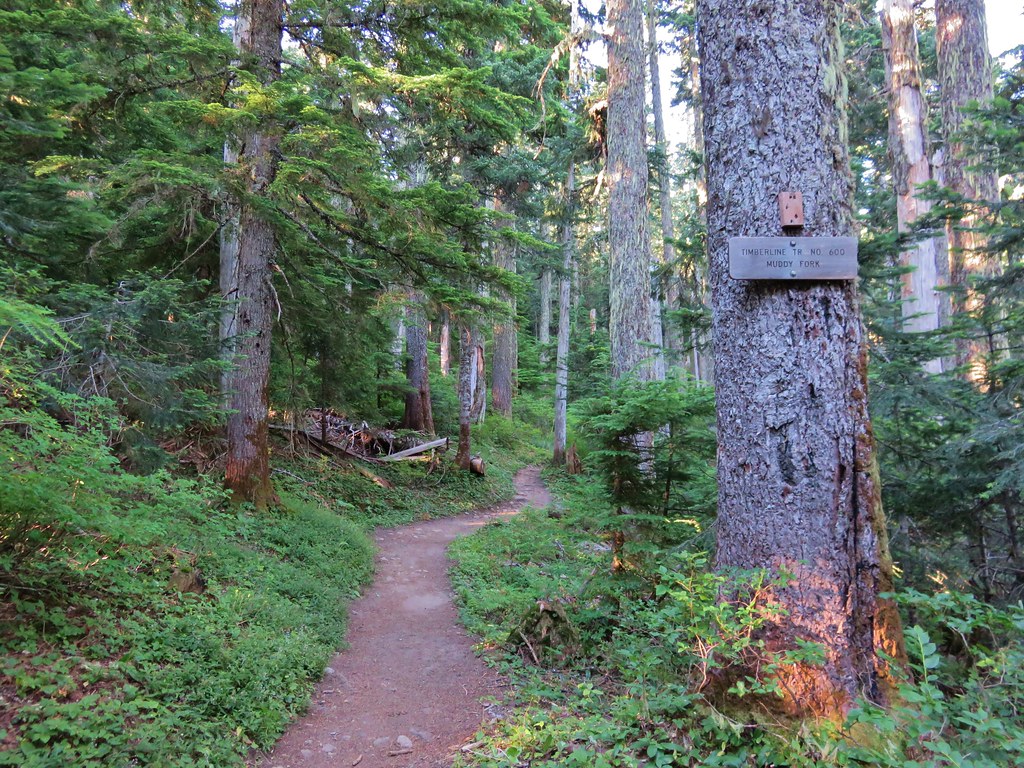
We took the middle of three forks following the Timberline Trail toward the Muddy Fork River. The PCT continued down the far right-hand fork and the left-hand fork was the continuation of the Timberline Trail on its way toward Cairn Basin.
IMG_5744

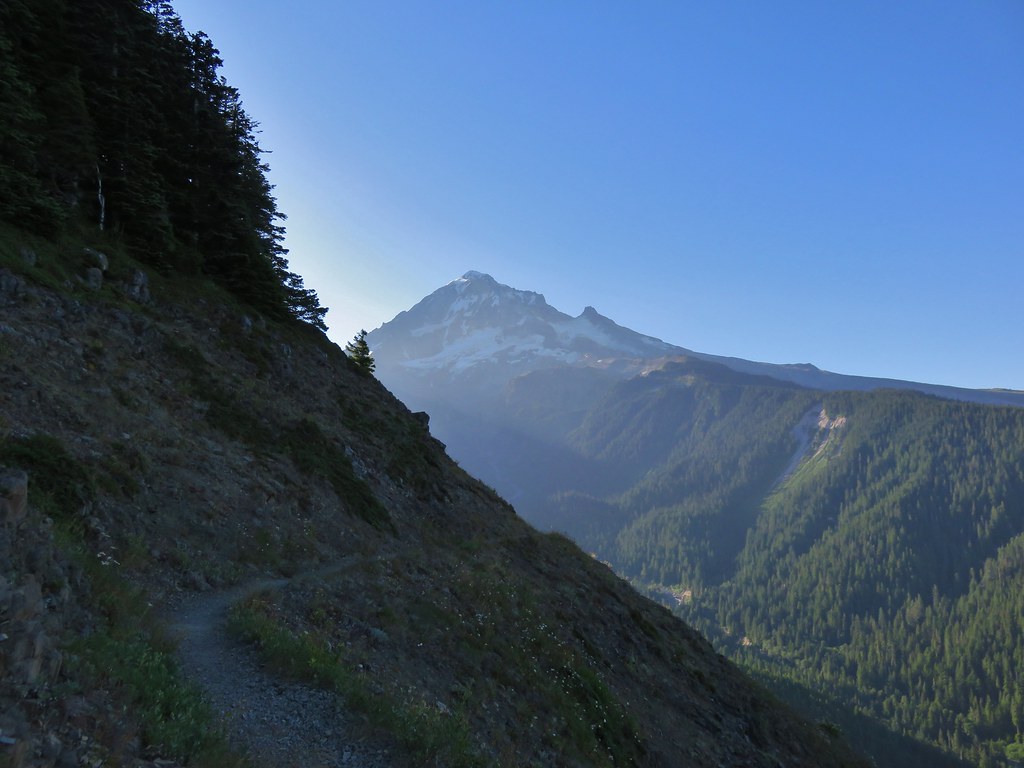
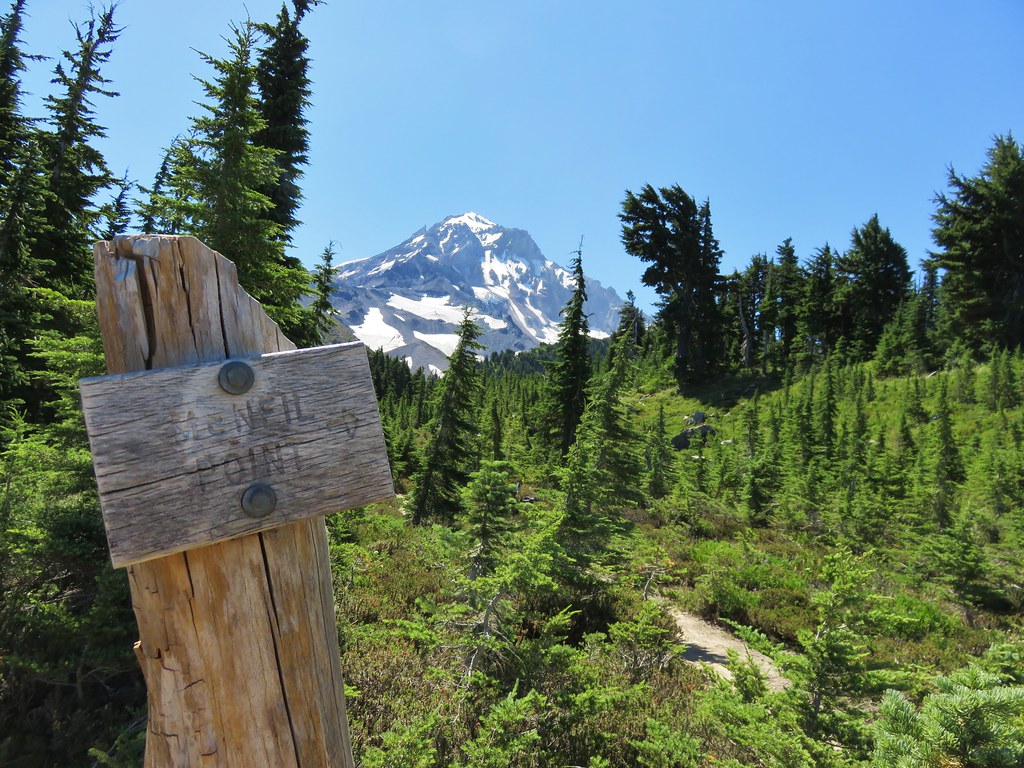
It would have been a little shorter hike if we had taken the Timberline Trail toward Cairn Basin which was the more direct way to get to the ponds below McNeil Point, but by heading toward the Muddy Fork we would pass through some open meadows on the south side of Bald Mountain where Mt. Hood would be visible. The meadows fill with flowers in early summer but were mostly passed now, however the view of Mt. Hood was still there.
IMG_5747

After passing through the second (smaller) meadow on Bald Mountain the trail reentered the forest. We were now looking for a side trail that would take us over the top of the Bald Mountain ridge to the Timberline Trail on the north side. Heather and I had taken this trail in 2012. At that time it was an unmarked use trail up and over the ridge. We spotted a worn trail to the left in the area we expected and headed toward the ridge. I managed to lead us over a small ridge and right back onto the Timberline Trail that we had already been on. We had to walk back through the small meadow and look for a different trail. Just around the corner from where we had turned off the trail the first time there was another side trail. This one had a nice new sign indicating it was the Cut Off Trail. Apparently it was now an official trail and there was a similar sign on the far side of the ridge.
IMG_6210

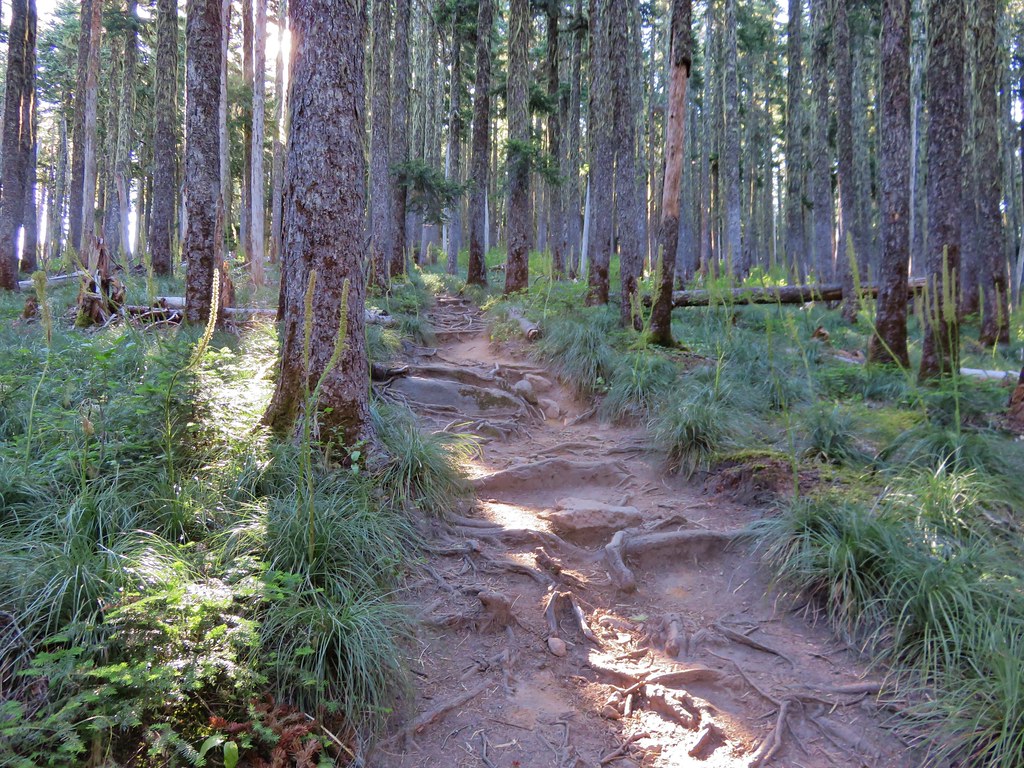
Now that we were back on track we headed uphill through the forest. More root covered trail awaited as we passed through some past-its-prime beargrass and headed up the ridge.
IMG_5768

IMG_5769

The trail climbed fairly gently up the ridge passing a couple of open views of the mountain.
IMG_5777

IMG_5786

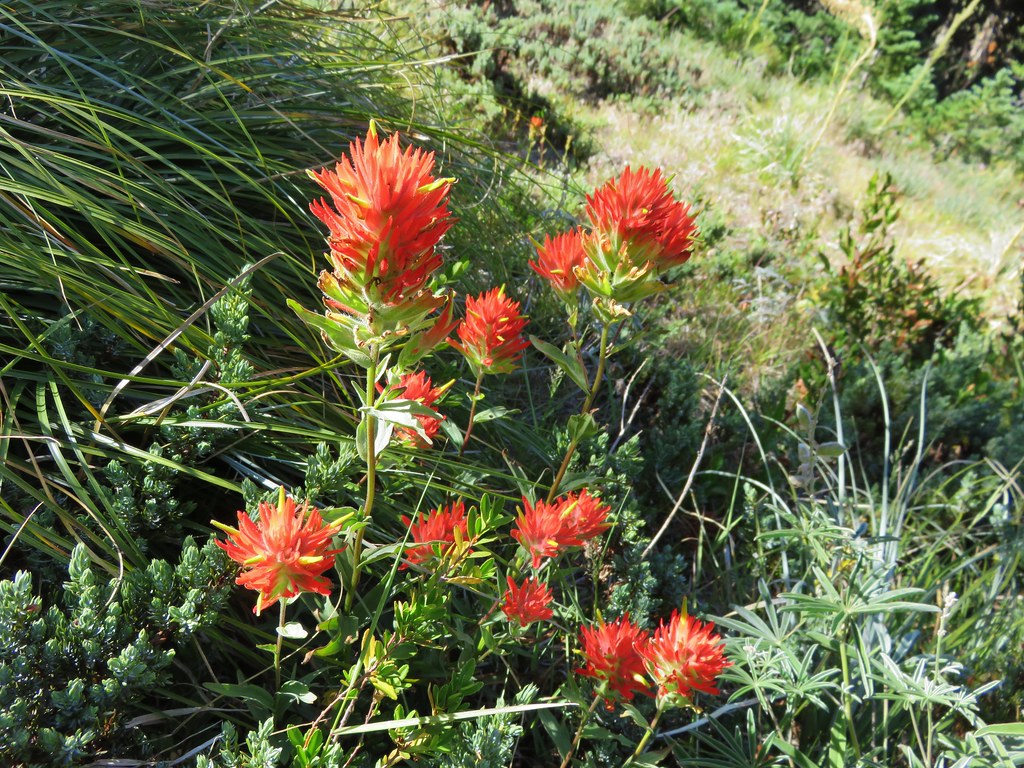
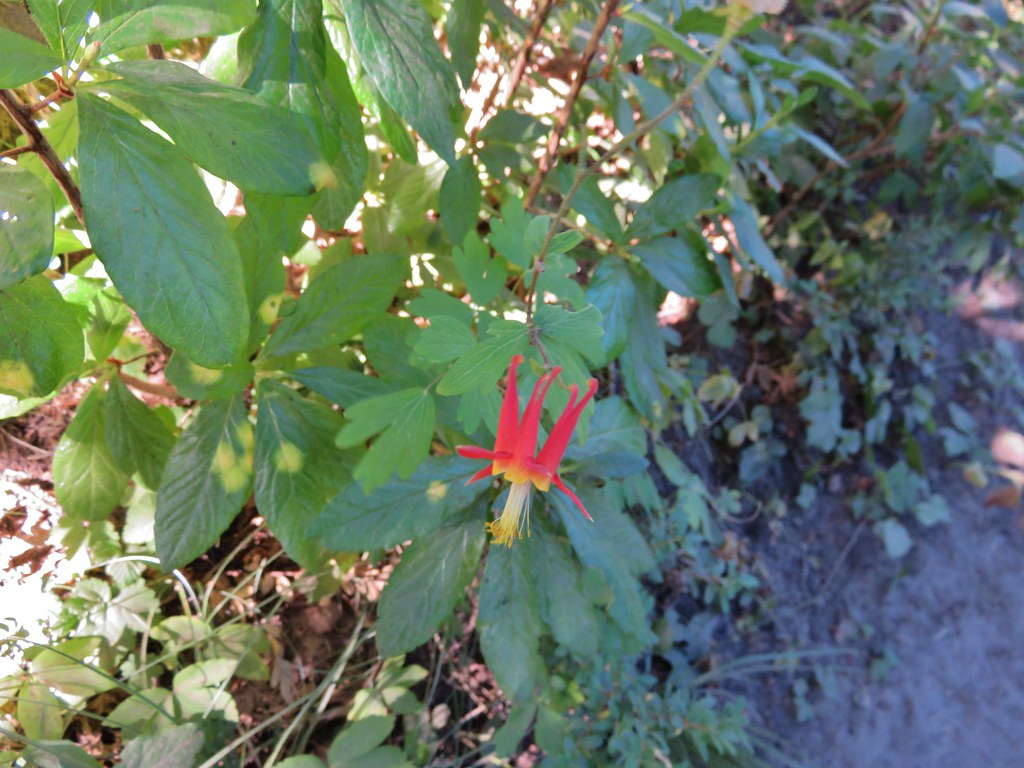
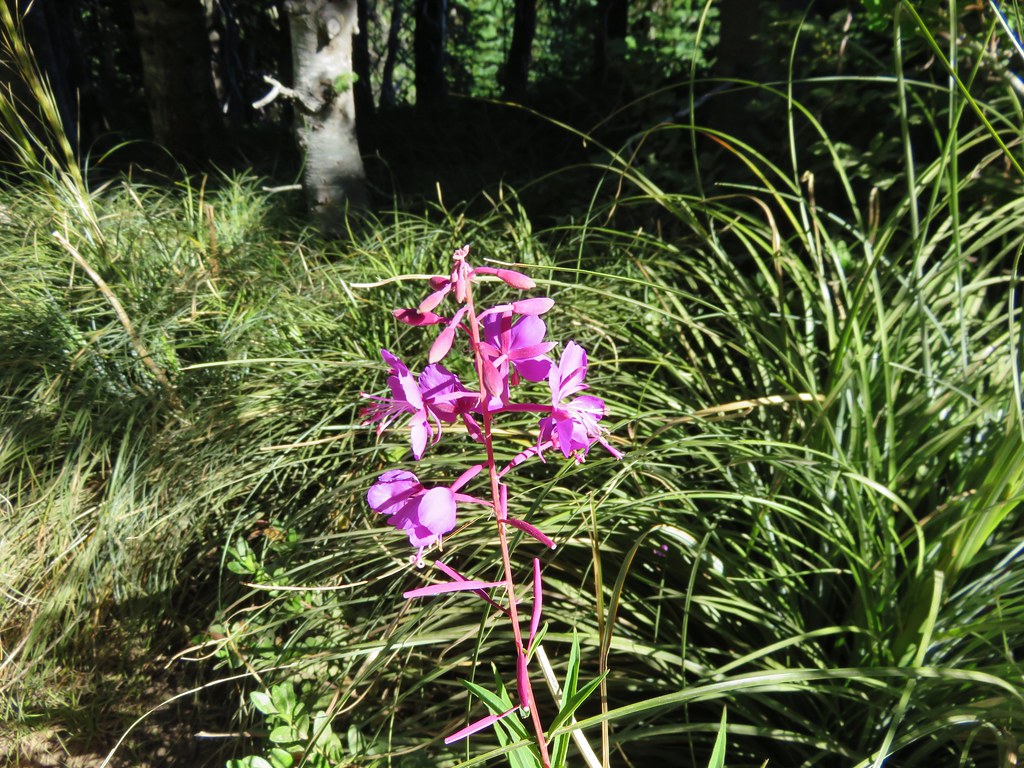
In a typical year the flowers along this hike would have been at or near their peak in mid-July but this year the majority of them had already gone to seed. We did manage to spot a few late bloomers along the ridge though.
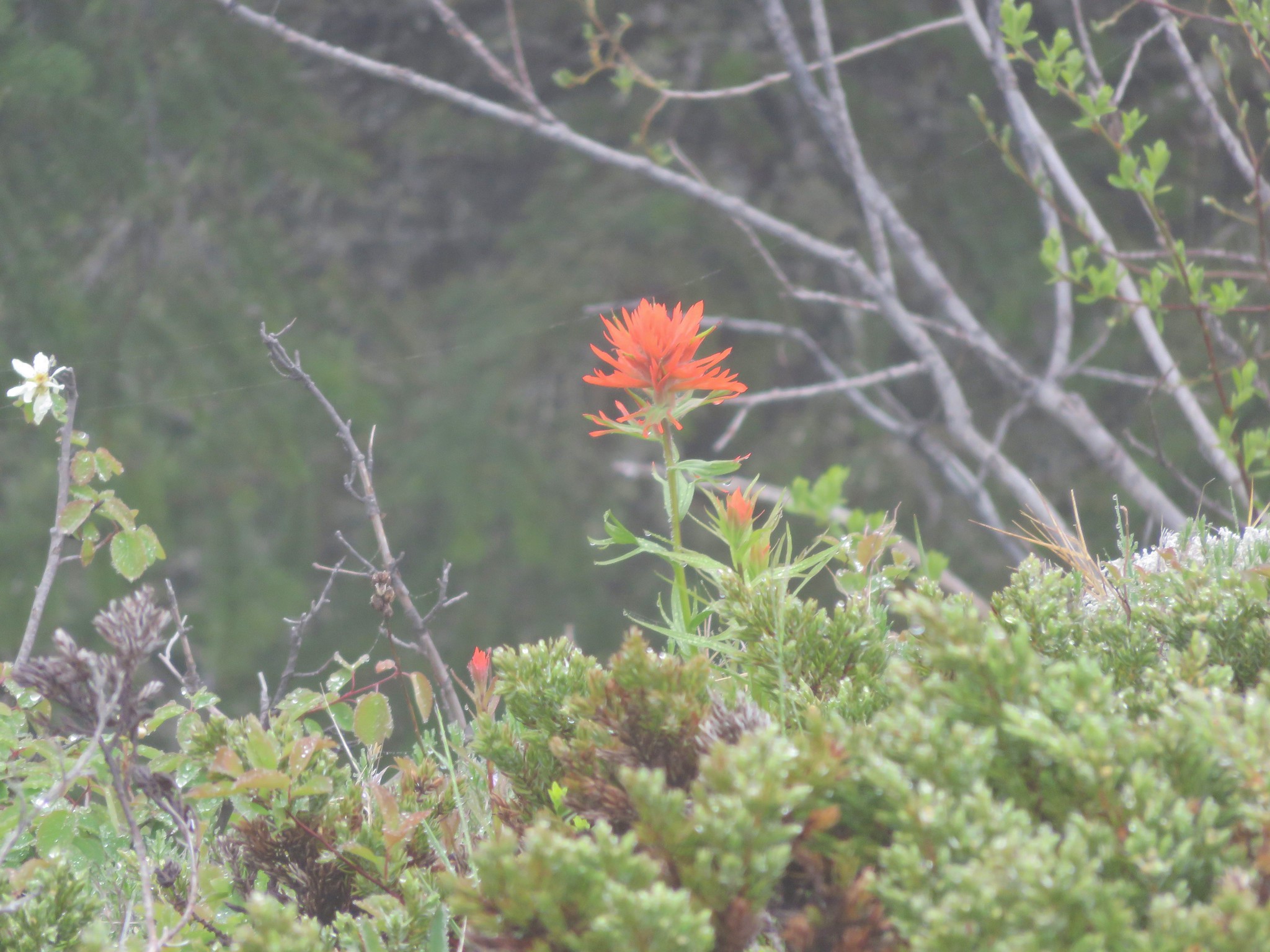
Paint
IMG_5790

Columbine
IMG_5788

Fireweed
IMG_5791

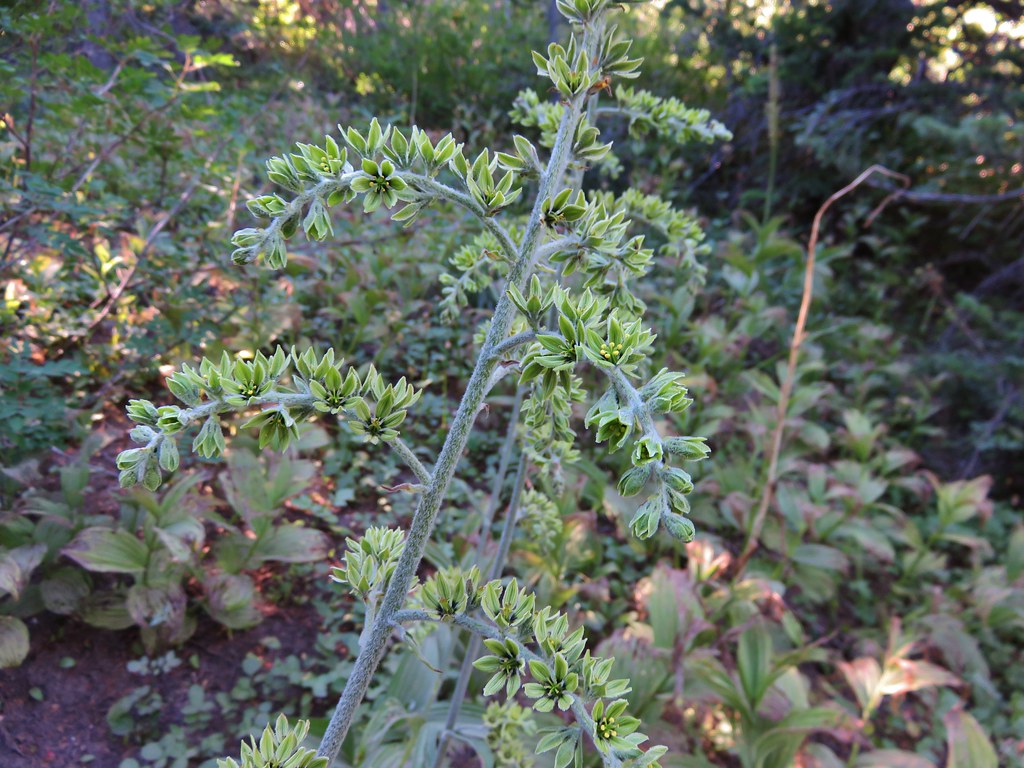
False Hellbore
IMG_5792

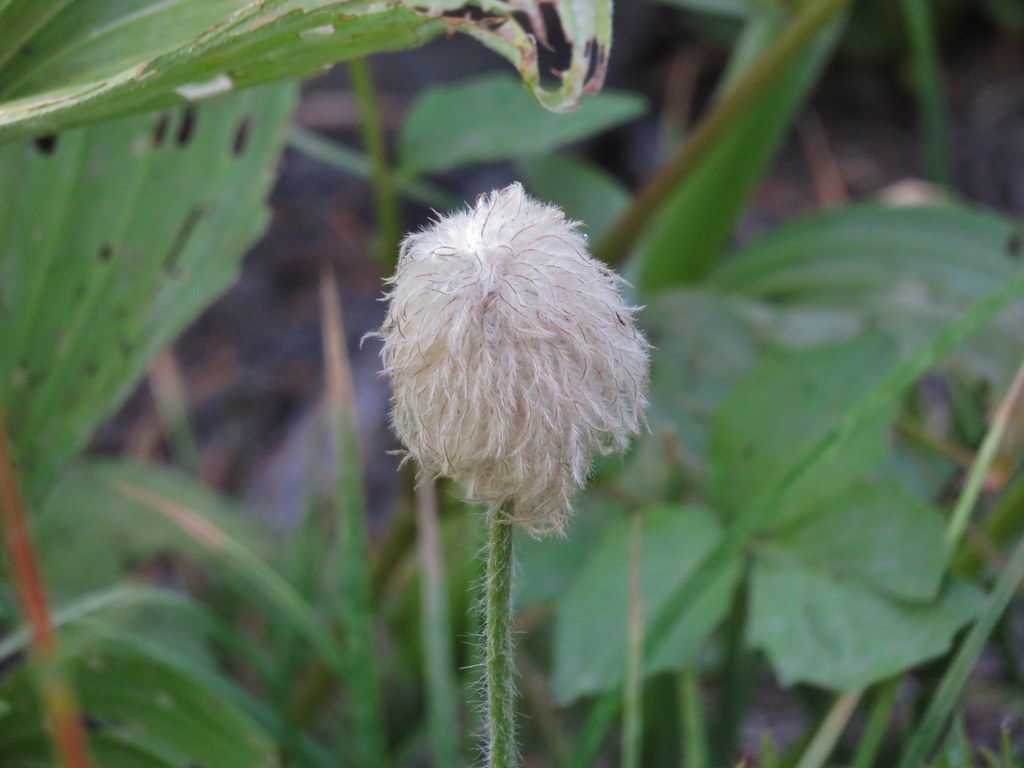
Western Pasque Flower (seed-head)
IMG_5797

After a few switchbacks the trail final leveled out some as it traversed a hillside where several branches of McGee Creek flowed across the trail. Additional flowers began popping up along this stretch but only the late blooming gentians and monkeyflower in larger quantities.
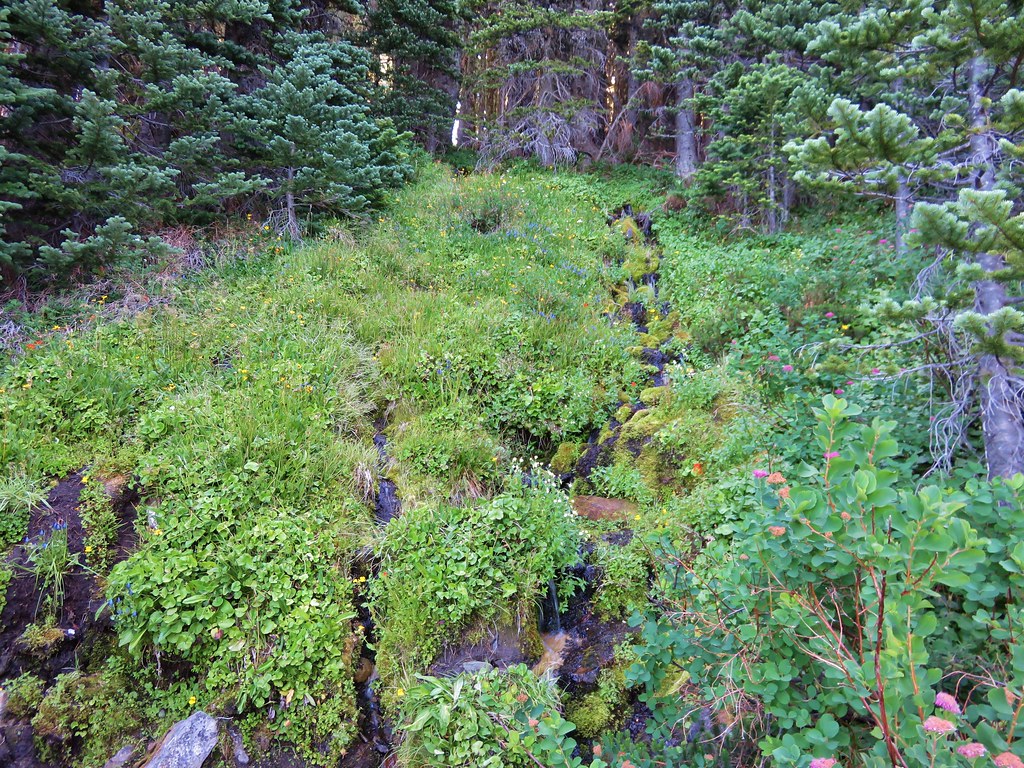
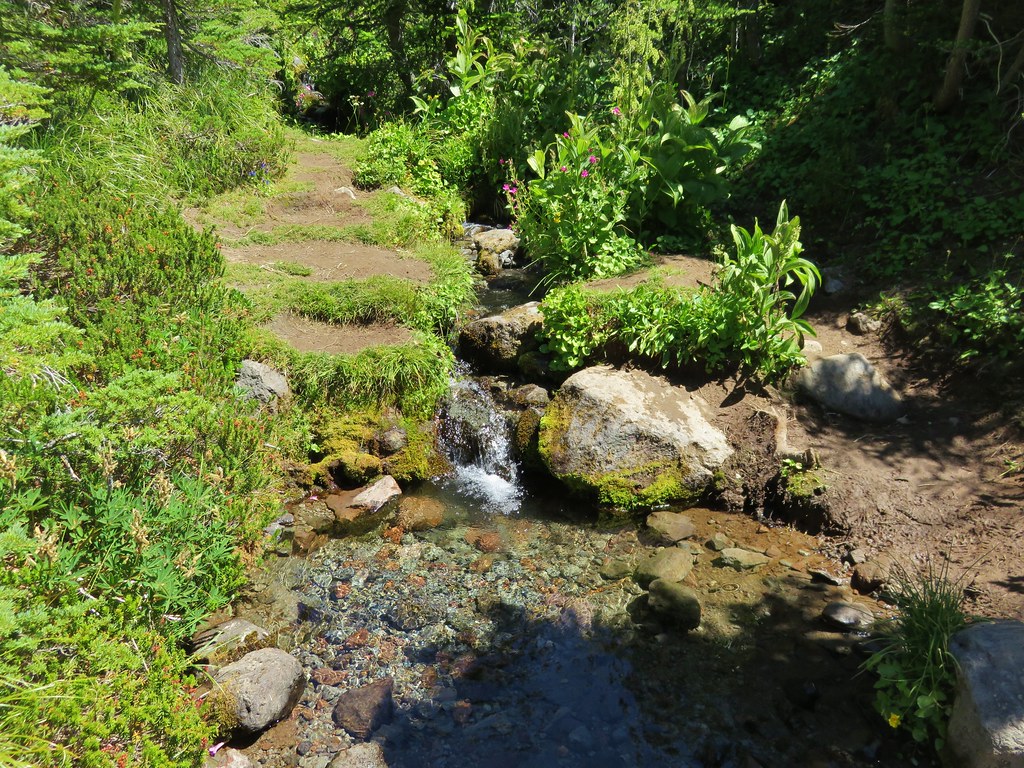
A branch of McGee Creek
IMG_5805

Aster or fleabane
IMG_5804

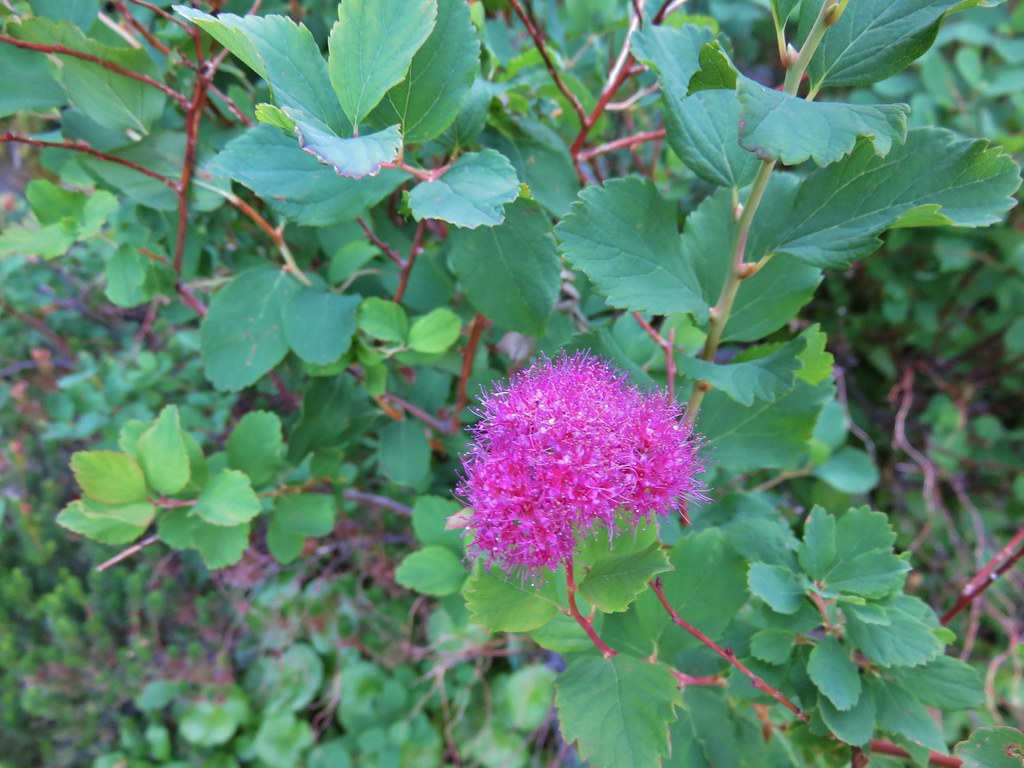
Spirea
IMG_5806

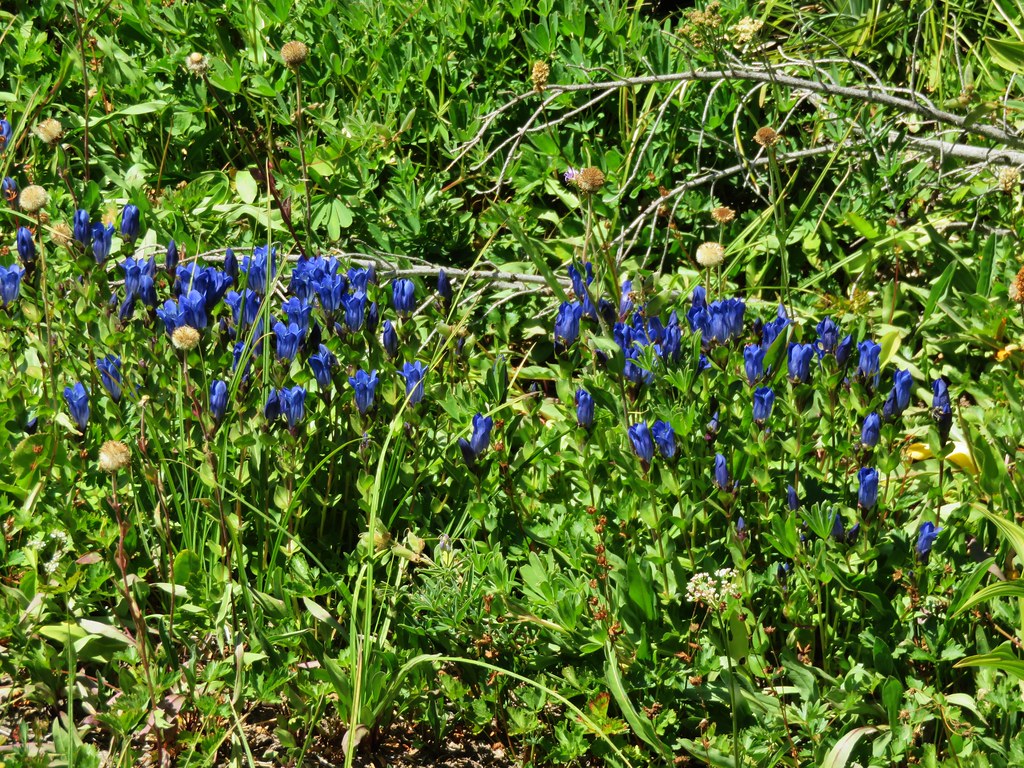
Gentians
IMG_5808

IMG_5834

Monkeyflower
IMG_5822

Another branch of McGee Creek
IMG_6188

The trail passed below a pair of rock outcroppings below McNeil Point. At the second outcropping we found the first of the ponds completely dried up.
Passing the first outcropping.
IMG_5827

Dry pond
IMG_5843

Dry pond below the rocky outcrop and Mt. Hood beyond.
IMG_5848

The second pond still had a little water and a nice view of the top of Mt. Hood.
IMG_5853

IMG_5858

We erroneously followed the trail leading away from the second pond believing it would reconnect with the Timberline Trail which had forked to the right after passing the dry pond. The trail we were on eventually petered out and we were left with a short bushwack to get back onto the correct trail. We popped back out of the trees onto the trail and turned left continuing toward the McNeil Point Trail and Cairn Basin. We passed a junction with the Mazama Trail, a trail we had hiked in 2013, and decided it was time for our party to split up.
IMG_5869

Heather and I would go ahead at our own pace and head up to McNeil Point, and my parents would continue on toward Cairn Basin. We headed off amazed at the lack of flowers along the trail. On our previous visit to McNeil Point on 8/20/12 and Barrett Spur on 8/12/13 this section had been full of flowers but here we were a full month earlier than those visits and the flowers had long since passed. It was a clear indication of just how hot and dry this year had been. The good news was it was a clear day we had still had the views. In addition to Mt. Hood we could see three Washington snow peaks to the north.
IMG_5870

IMG_5876

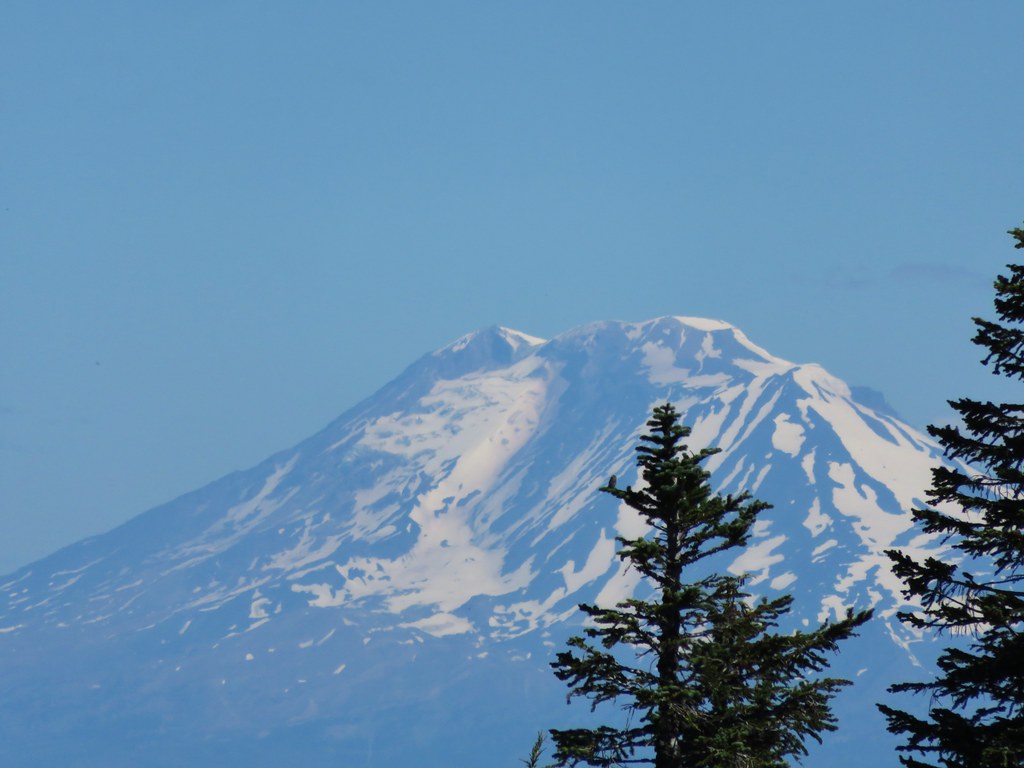
Mt. Adams
IMG_5878

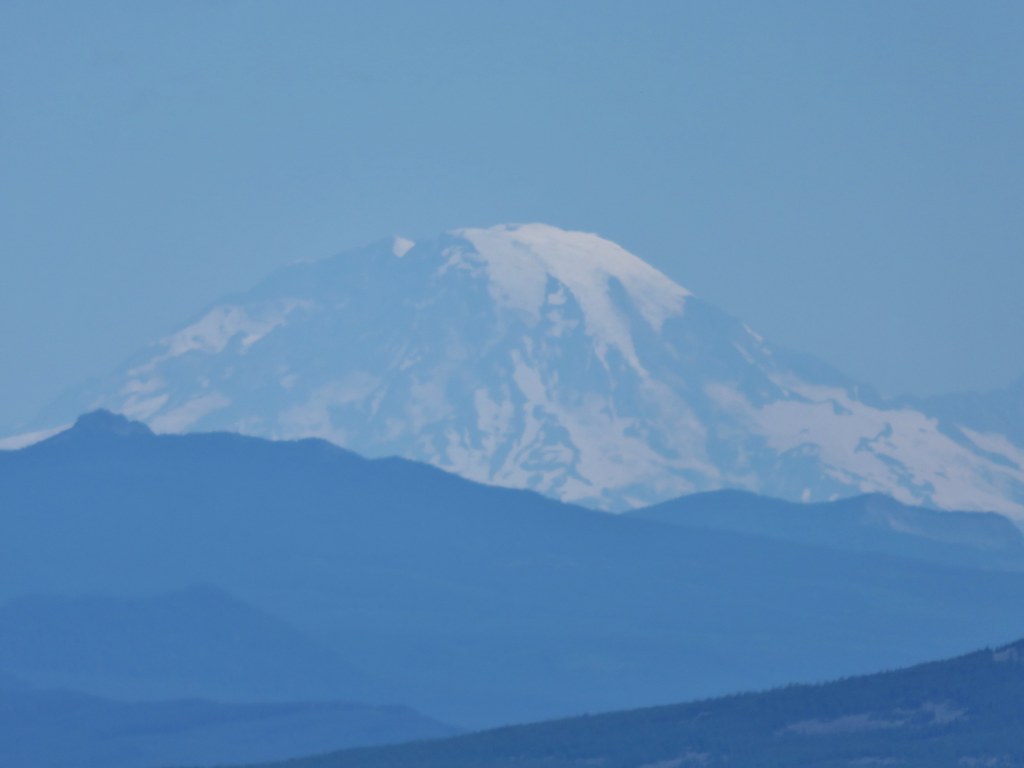
Mt. Rainier
IMG_5877

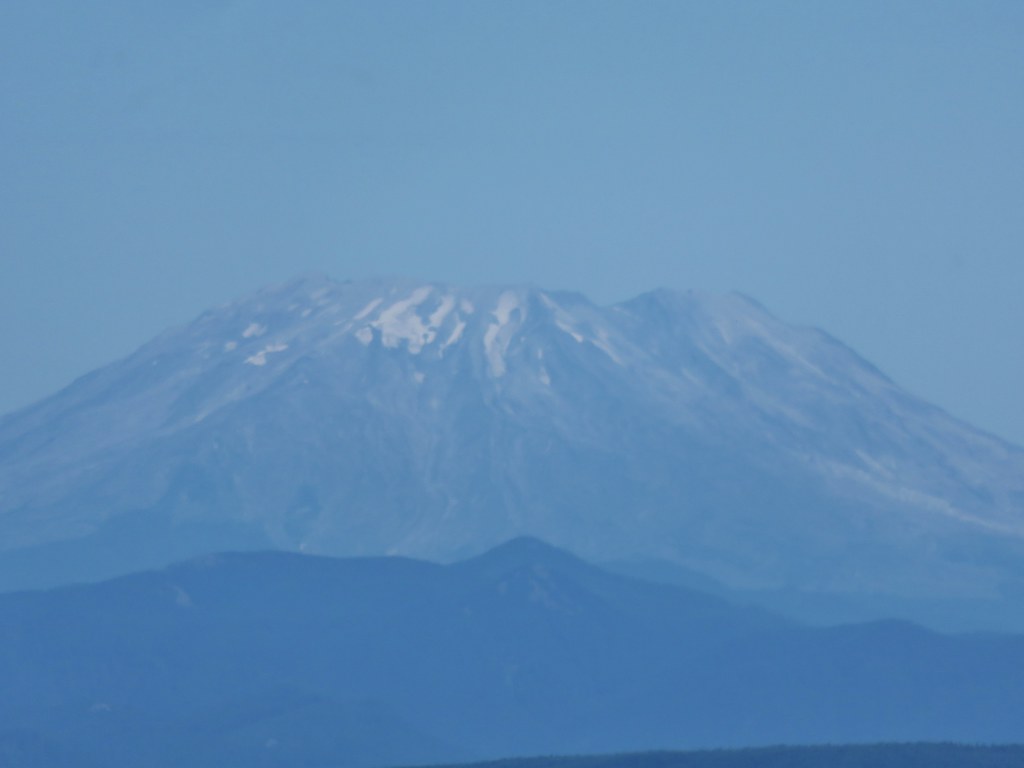
Mt. St. Helens
IMG_5879

We left the Timberline Trail at the sign for McNeil Point.
IMG_5882

The trail up to the shelter begins on a ridge next to silty Ladd Creek.
IMG_5887

IMG_5889

Heather enjoying the day.
IMG_5896

The trail then crossed a rock field where there is normally also a snowfield. Not this year though.
IMG_5905

Once past the rock field the trail passed beneath hills that hid most the mountain. Here we began to encounter more flowers in bloom.
IMG_5916

IMG_5917

IMG_5919

IMG_5932

IMG_5937

IMG_5939

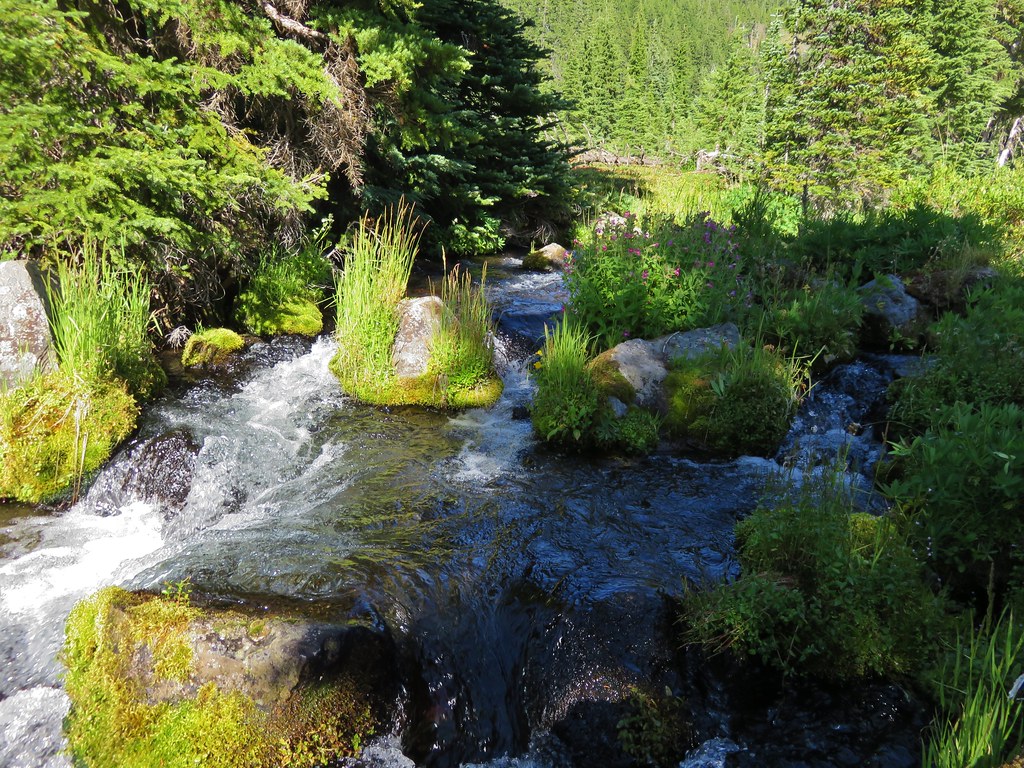
There was also a lovely little creek lined with monkeyflowers.
IMG_5925

IMG_5927

IMG_5929

We faced a choice as we neared the shelter. We could head straight for the stone building or we could veer uphill and gain the ridge behind the shelter and then head up it. On our previous visit we had simply gone to the shelter and turned back there. (We had also visited Cairn & Wy’East Basins and Eden Park that day.) We decided to head directly for the ridge and turned uphill.
IMG_5946

As we headed for the ridge Mt. Hood began to peek out from above it.
IMG_5947

Heather spotted an interesting looking ladybug along the way.
IMG_5950

We gained the ridge and could see our route laid out before us with a closer look at Mt. Hood being the reward.
IMG_5955

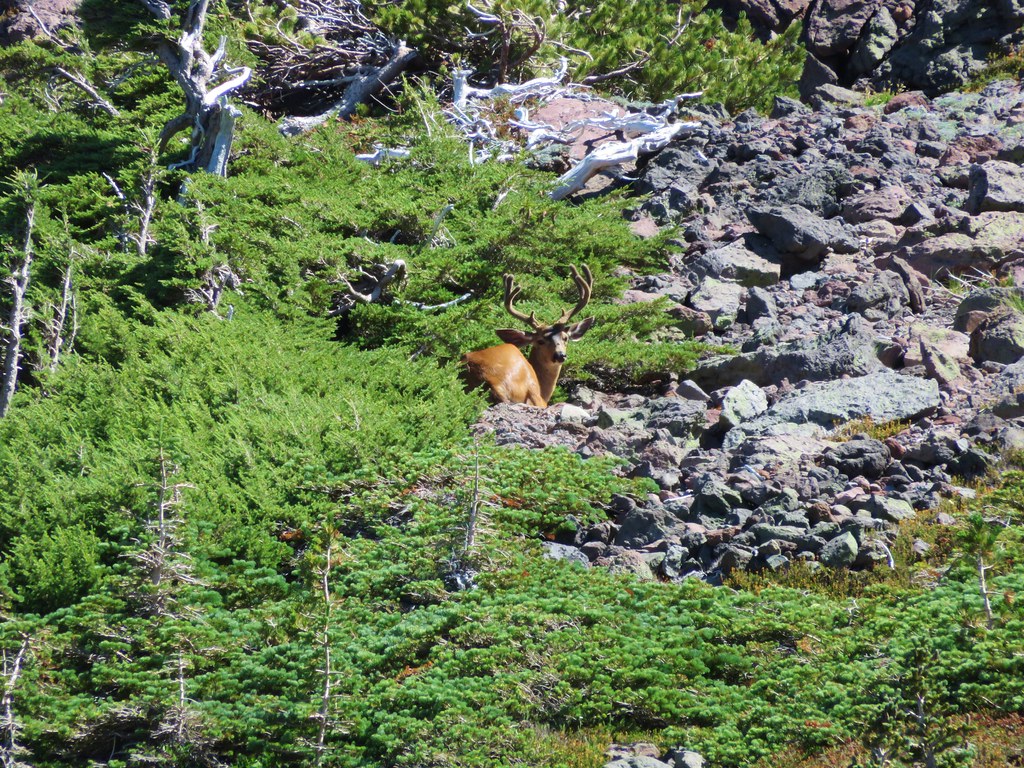
As we were climbing and looking around at all the scenery I noticed something brown near the top of the ridge to our left. It didn’t look like it belonged there but we couldn’t make out what it exactly was at first.
IMG_5988

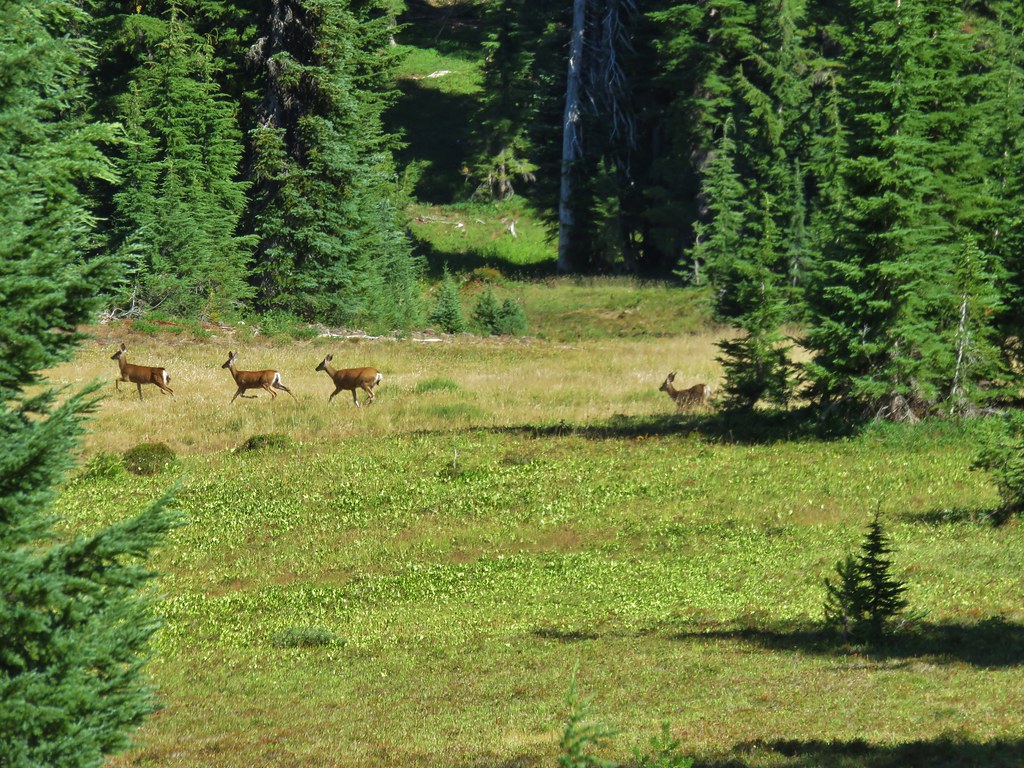
Once again the 30x zoom on our camera came in handy and we were able to see that it was a good sized buck bedded down for the day.
IMG_5998

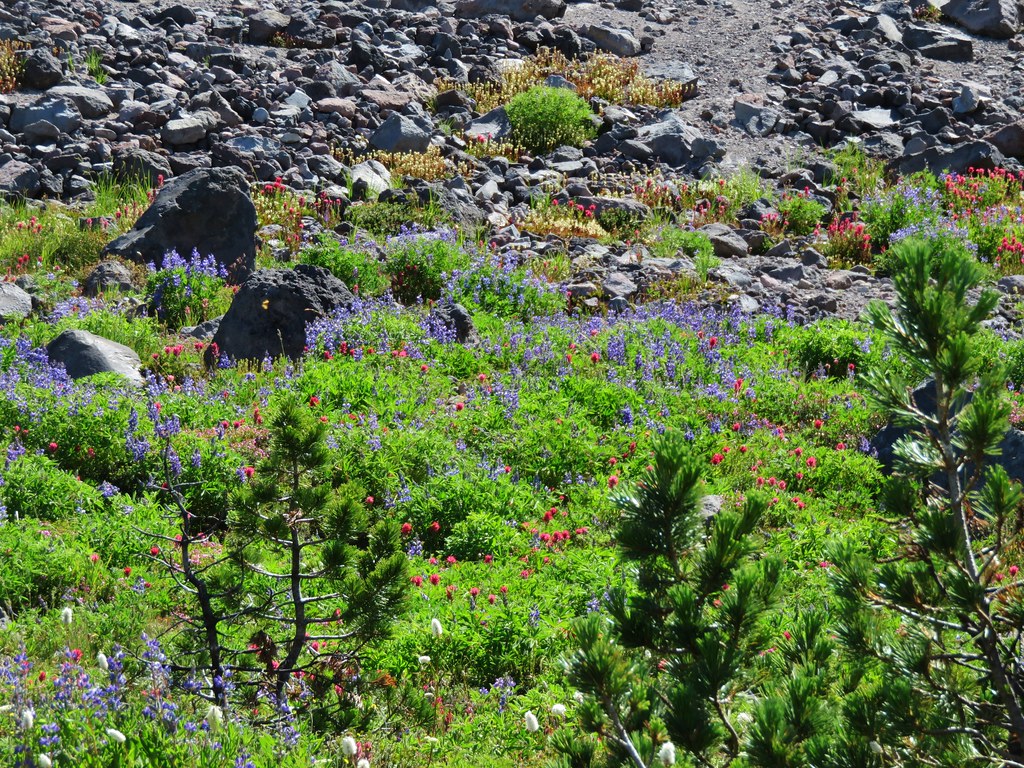
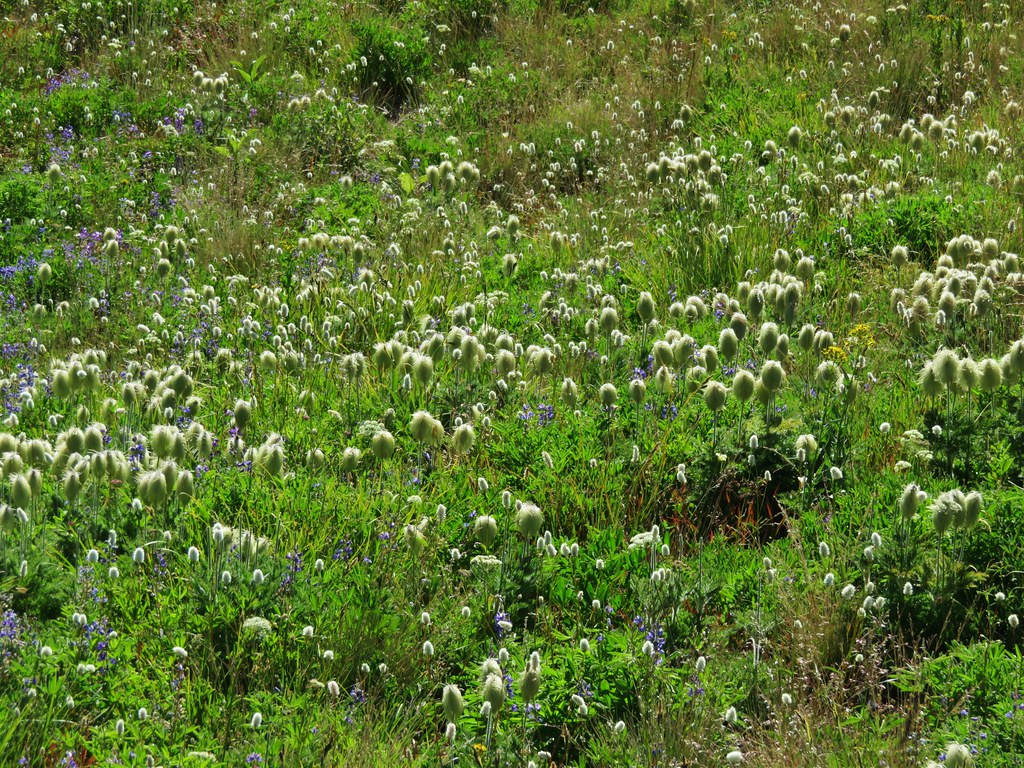
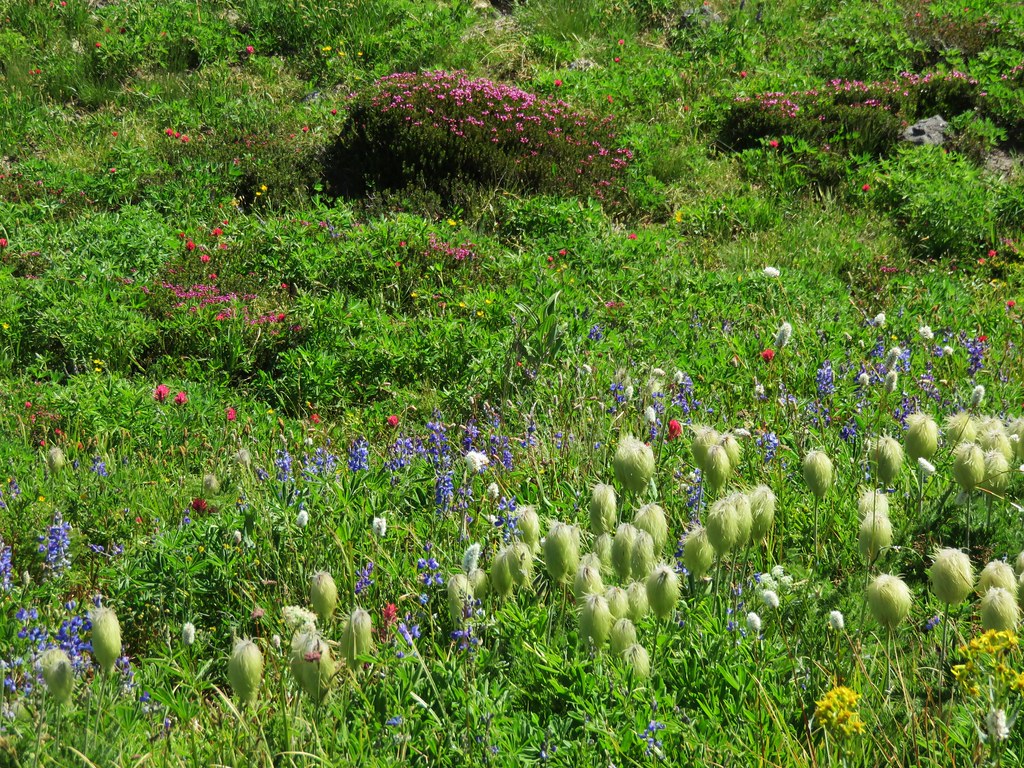
The best flower display of the day was in a little basin below the ridge where the deer was. Lupine, Mountain Heather, Paintbrush, Partridgefoot, Bistort, and Pasque flowers were all present.
IMG_5993

IMG_6008

IMG_6012

IMG_6016

The buck kept an eye on us as we continued up a very steep section of the ridge. Looking back down near we could see the trail to the shelter below and beyond McNeil Point was Bald Mountain and the ridge we and climbed from there.
IMG_6047

McNeil Point Shelter
IMG_6028

We were near what looked like the end of the climb.
IMG_6041

We were wrong and there was one more stretch of uphill ahead of us.
IMG_6043

To our left was Barrett Spur where we climbed to in August of 2013. https://wanderingyuncks.wordpress.com/2013/08/15/barrett-spur-via-the-mazama-trail/
IMG_6042

To our right was Yocum Ridge which we visited later that same year. https://wanderingyuncks.wordpress.com/2013/08/26/yocum-ridge/
IMG_6046

On our right was also the Sandy Glacier which feeds the Muddy Fork, a branch of the Sandy River. The scenery around the Sandy is just amazing.
IMG_6054

IMG_6055

IMG_6056

IMG_5966

IMG_6072

IMG_6070

We stopped on on a rocky spine just before a saddle where it would have required a sketchy looking descent to continue on any further.
IMG_6103

We took a couple of pictures then pulled out some potato chips for a snack.
IMG_6076

IMG_6080

IMG_6093

There had been two small groups ahead of us but they had since headed back down so we had the view almost to ourselves.
IMG_6088

IMG_6095

We headed back down toward the shelter, our next destination. Along the way we spotted a few flowers we’d missed on the way up.
Yellow cinquefoil
IMG_6119

Cats ear lily
IMG_6122

Blue-bells of Scotland
IMG_6131

We paid a quick visit to the shelter then continued to make our way back down.
IMG_6137

A few small clouds had formed by the time we arrived back at the ponds.
IMG_6168

IMG_6170

And the gentians had opened up some in the sunlight.
IMG_6176

It was another hot day so we stopped at a nice pool in one of the branches of McGee Creek to filter some cold mountain water into our Hydroflasks.
IMG_6179

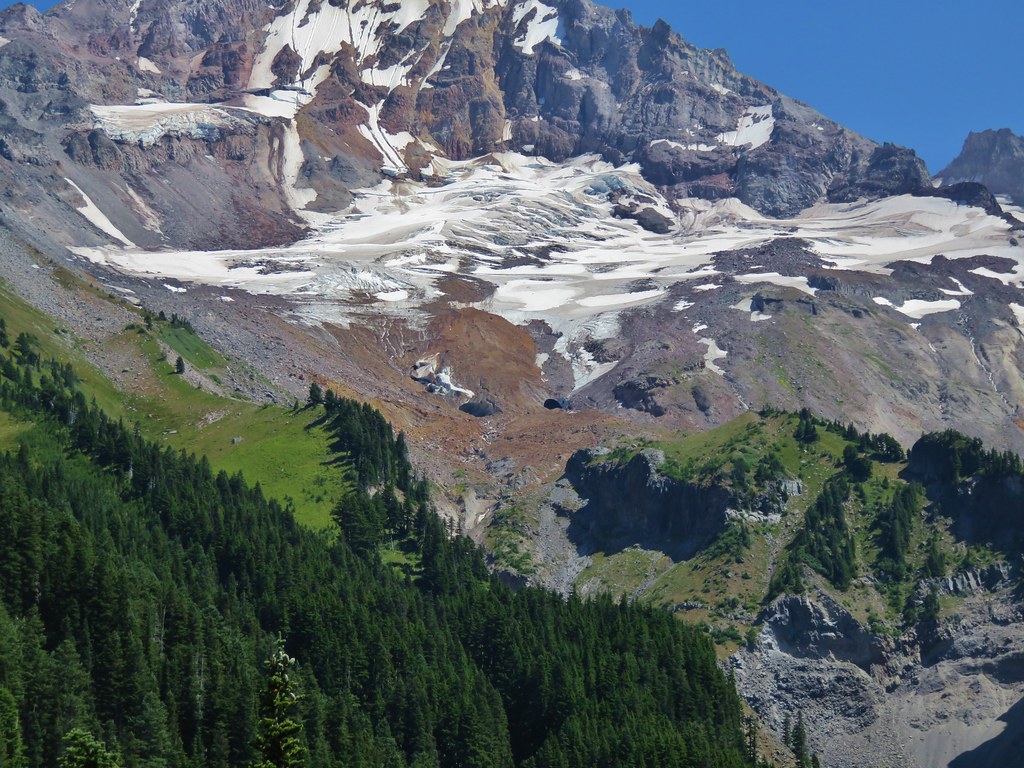
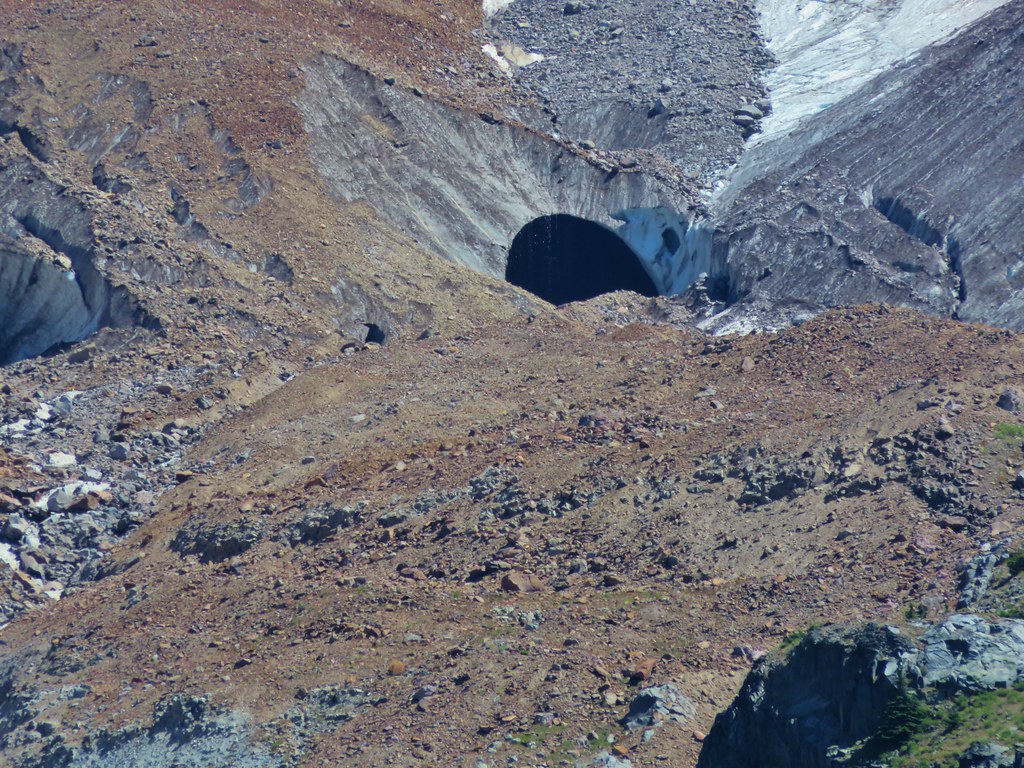
We had some great views on the way down the ridge toward the trailhead. This had been the first day we’d been able to pick out an ice cave on the Sandy Glacier.
IMG_6196

IMG_6199

IMG_6198

We had decided to take the shorter path back opting not to go around Bald Mountain with its views again so we said goodbye to the mountain at the last viewpoint along the ridge before heading back into the trees of the Mt. Hood Wilderness.
IMG_6202

IMG_6208

We found my parents back at the car, having finished their hike about 15-20 minutes prior to us. They had made it to Ladd Creek on the Timberline Trail and turned back there. It was a great day to be on the mountain and we ended it with dinner back at my parents campsite. Happy Trails!

Flickr: https://www.flickr.com/photos/9319235@N02/sets/72157655660865389

Categories
High Cascades Hiking Mt. Hood Area Oregon Trip report

Bonanza Trail – Salmon-Huckleberry Wilderness

We were looking for a hike that would avoid the crowds of Memorial Day weekend and landed on the Bonanza Trail. The Bonanza Trail starts at the edge of Welches, OR near the Salmon River where it climbs 3000′ through the Salmon-Huckleberry Wilderness to a junction with the Plaza Trail #783 on Huckleberry Mountain. The forest service lists usage as light for this trail which is exactly what we were looking for.

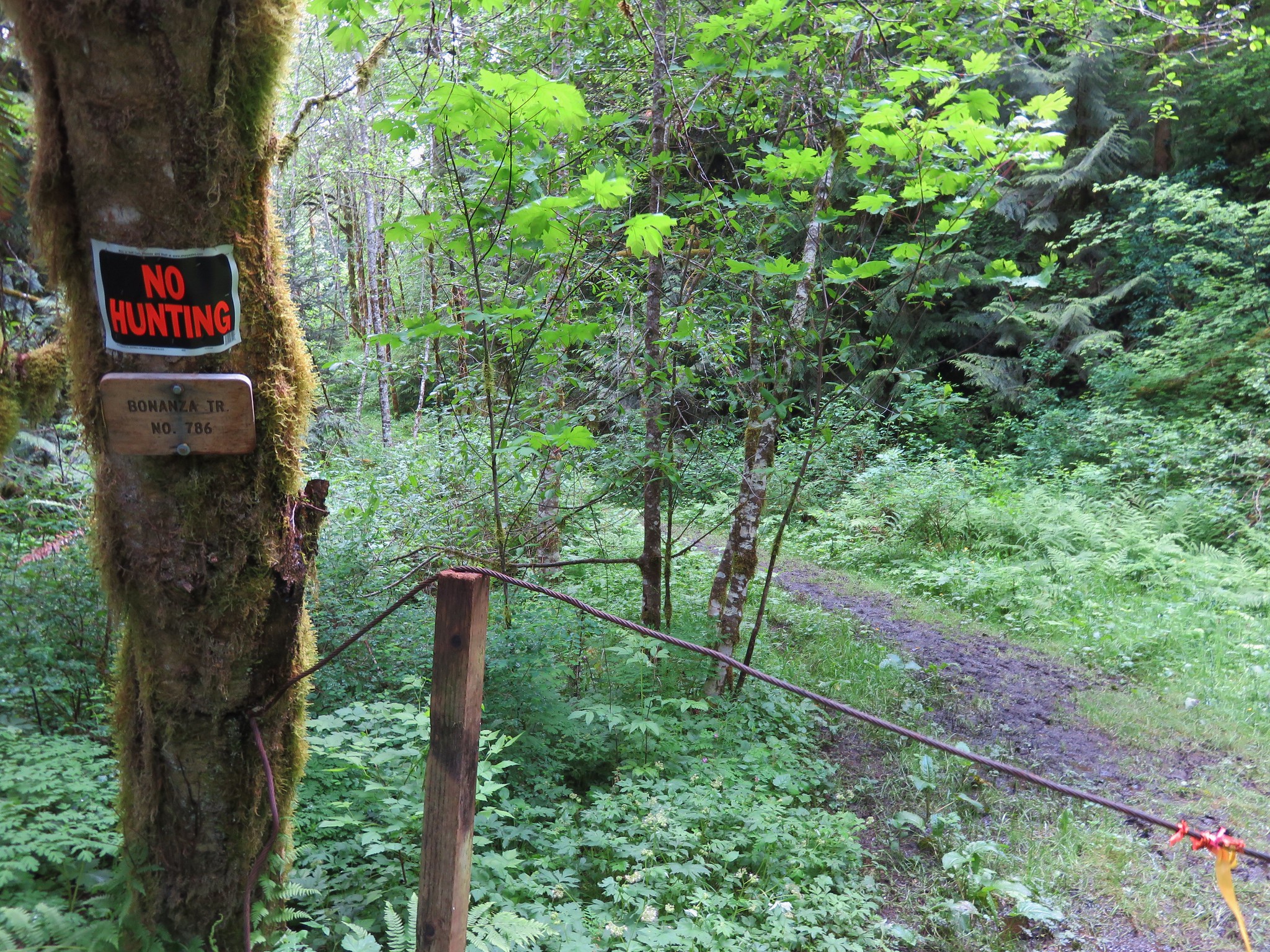
The trailhead consists of a small pullout (room for 2 cars maximum) along E. Grove Rd in Welches marked by a cable, a no hunting sign, and a small trail sign.
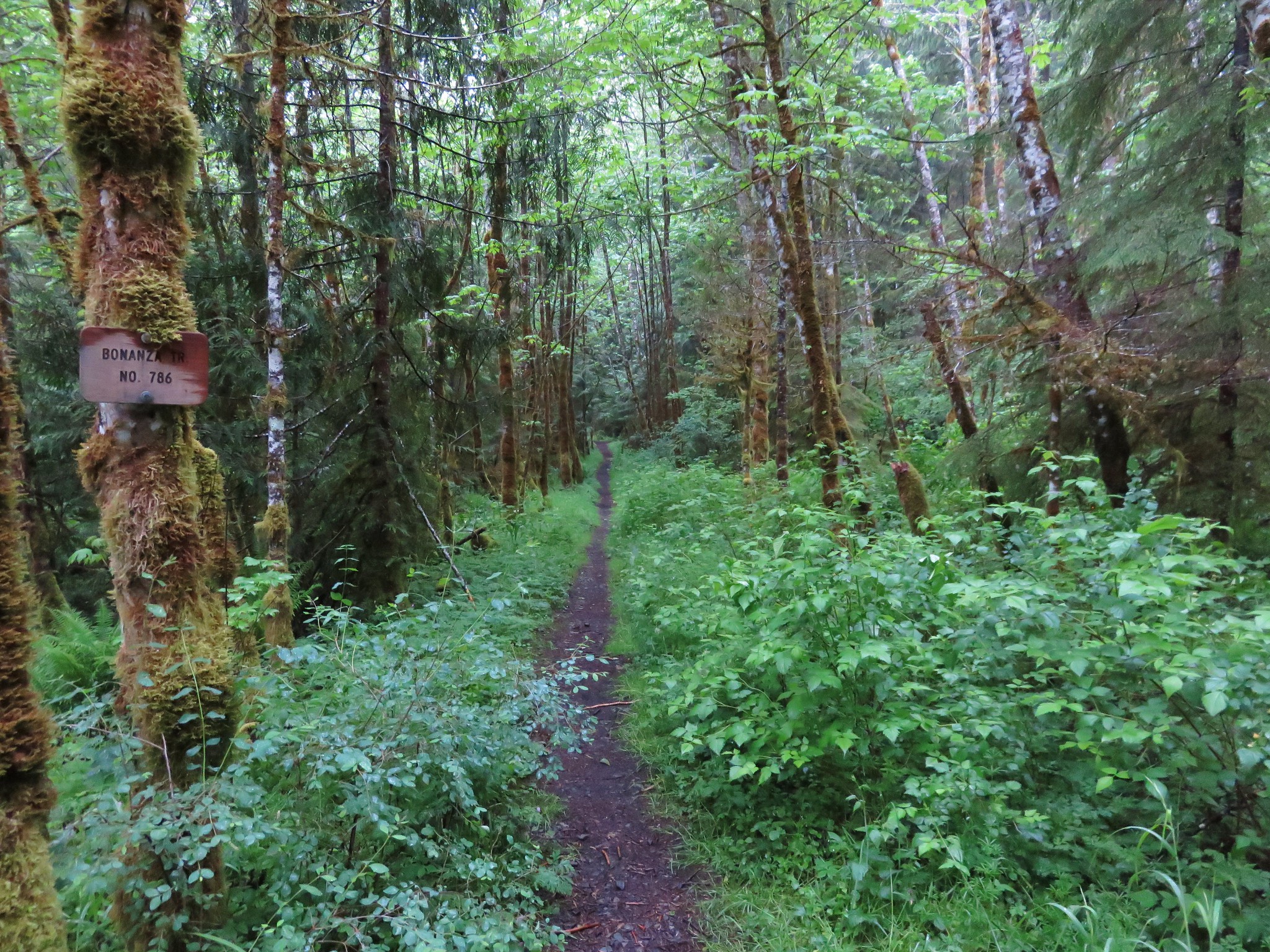
Bonanza Trail Trailhead

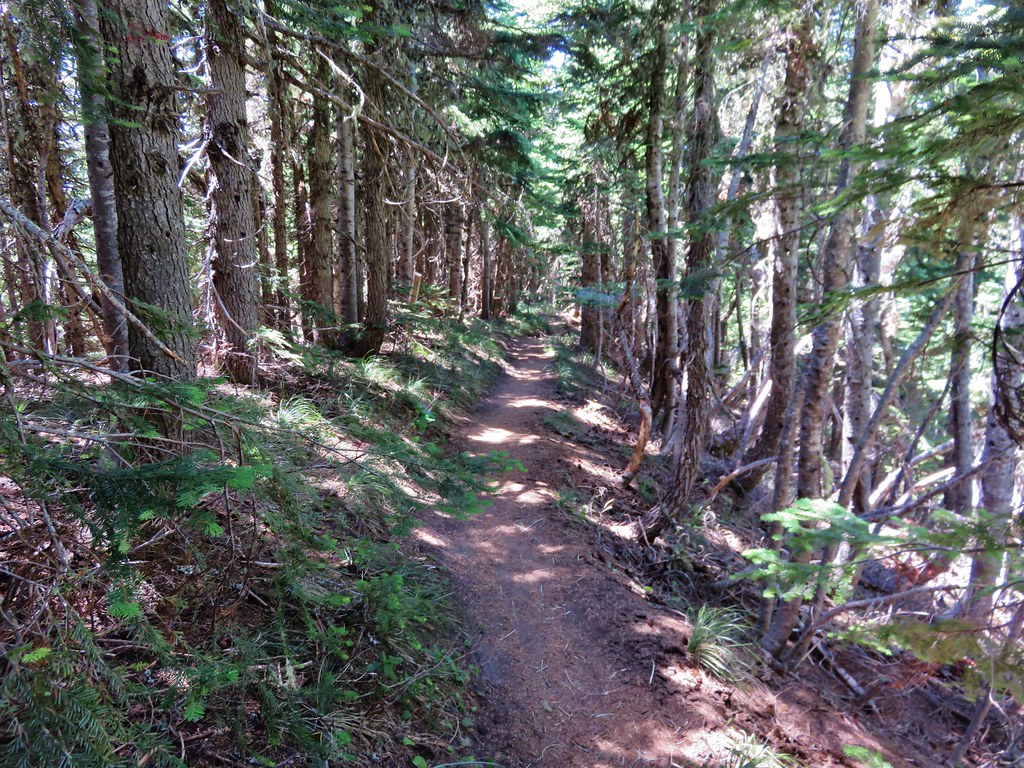
The trail begins on an old grassy road climbing up over a ridge before dropping down the other side to a crossing of Little Cheney Creek.
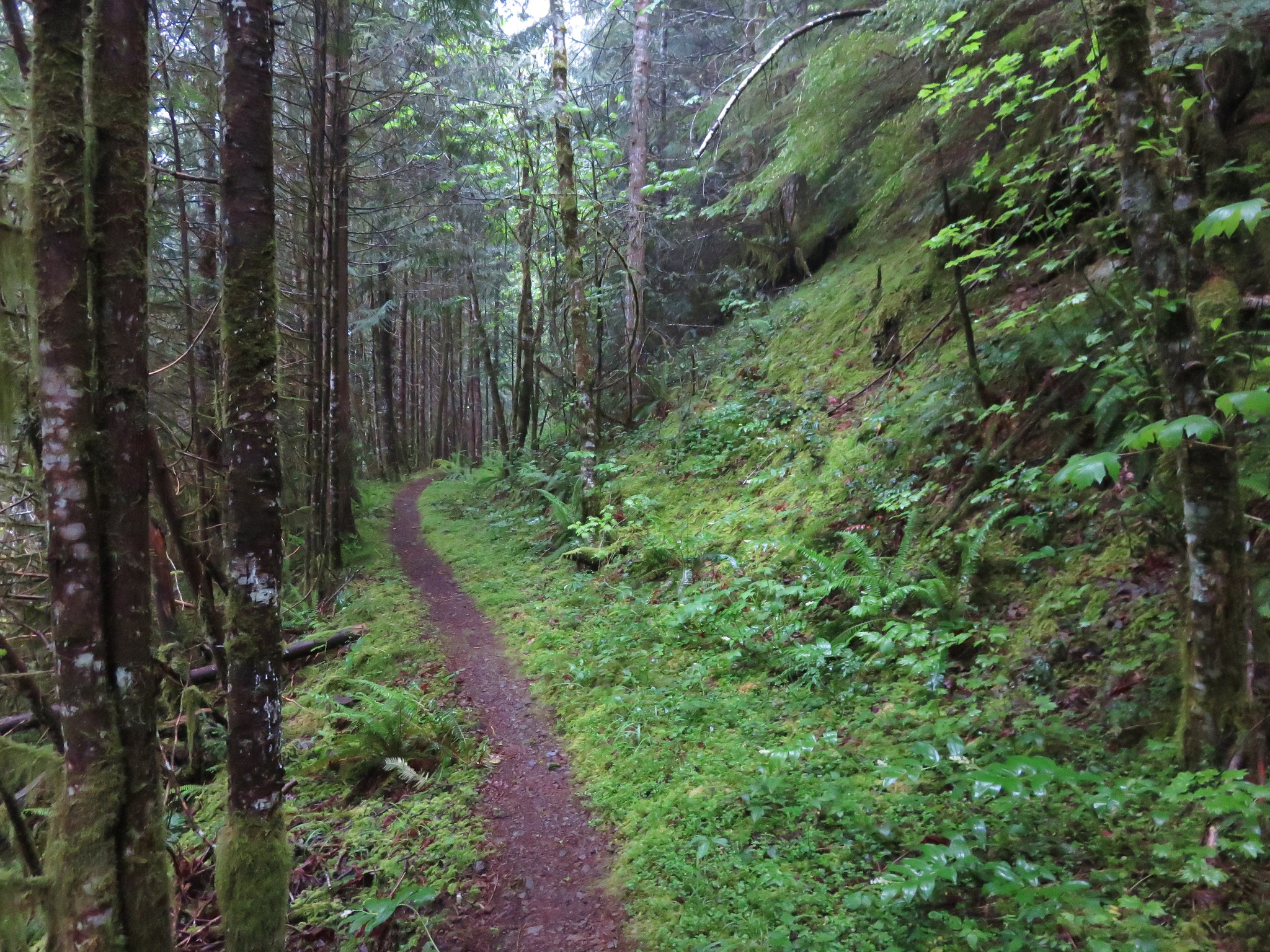
Bonanza Trail

IMG_2174

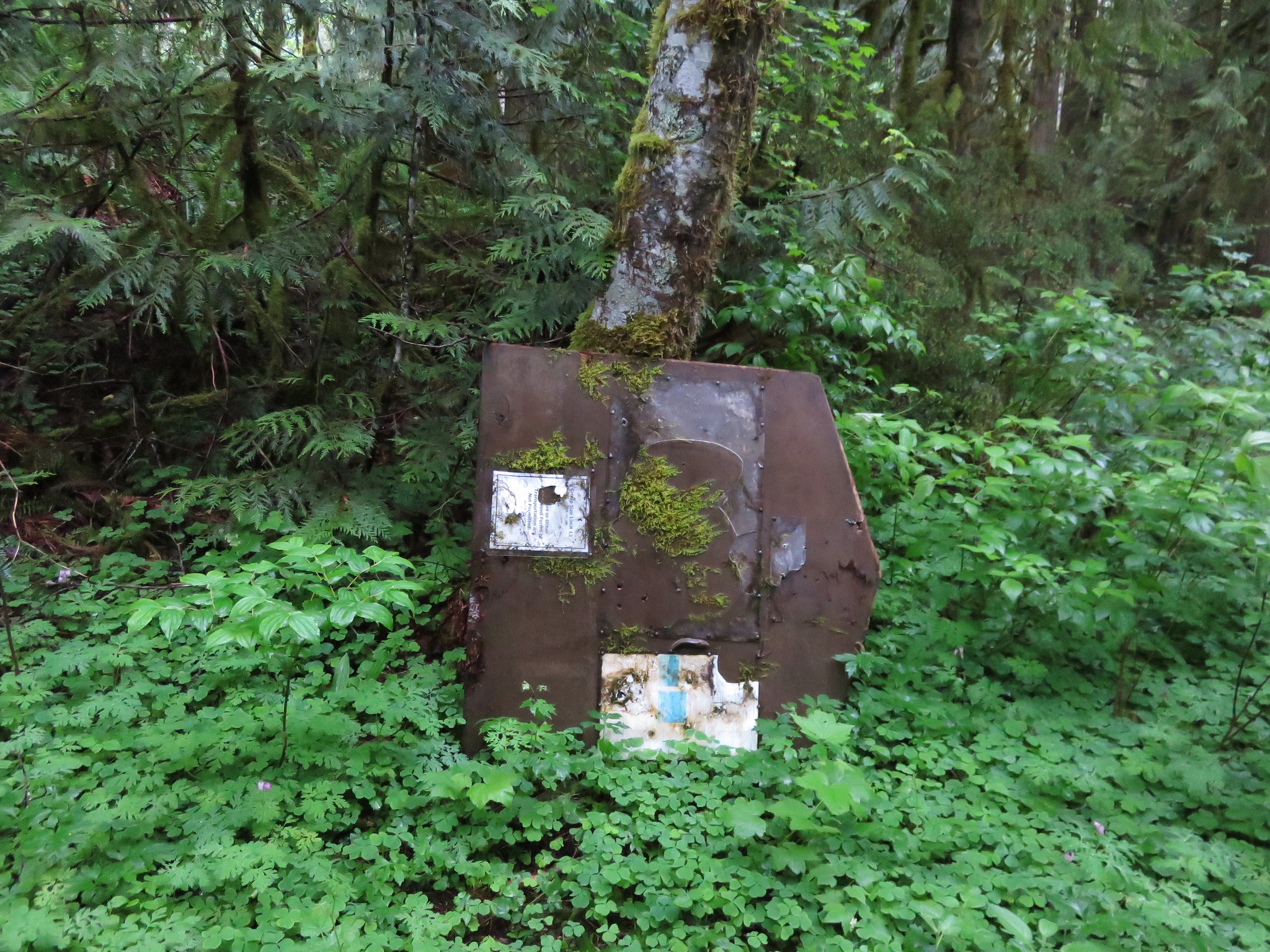
Shortly after crossing the creek the trail enters the Salmon-Huckleberry Wilderness at what has to be the most pathetic wilderness sign we’ve seen yet (note the slug attached to it).
IMG_2176

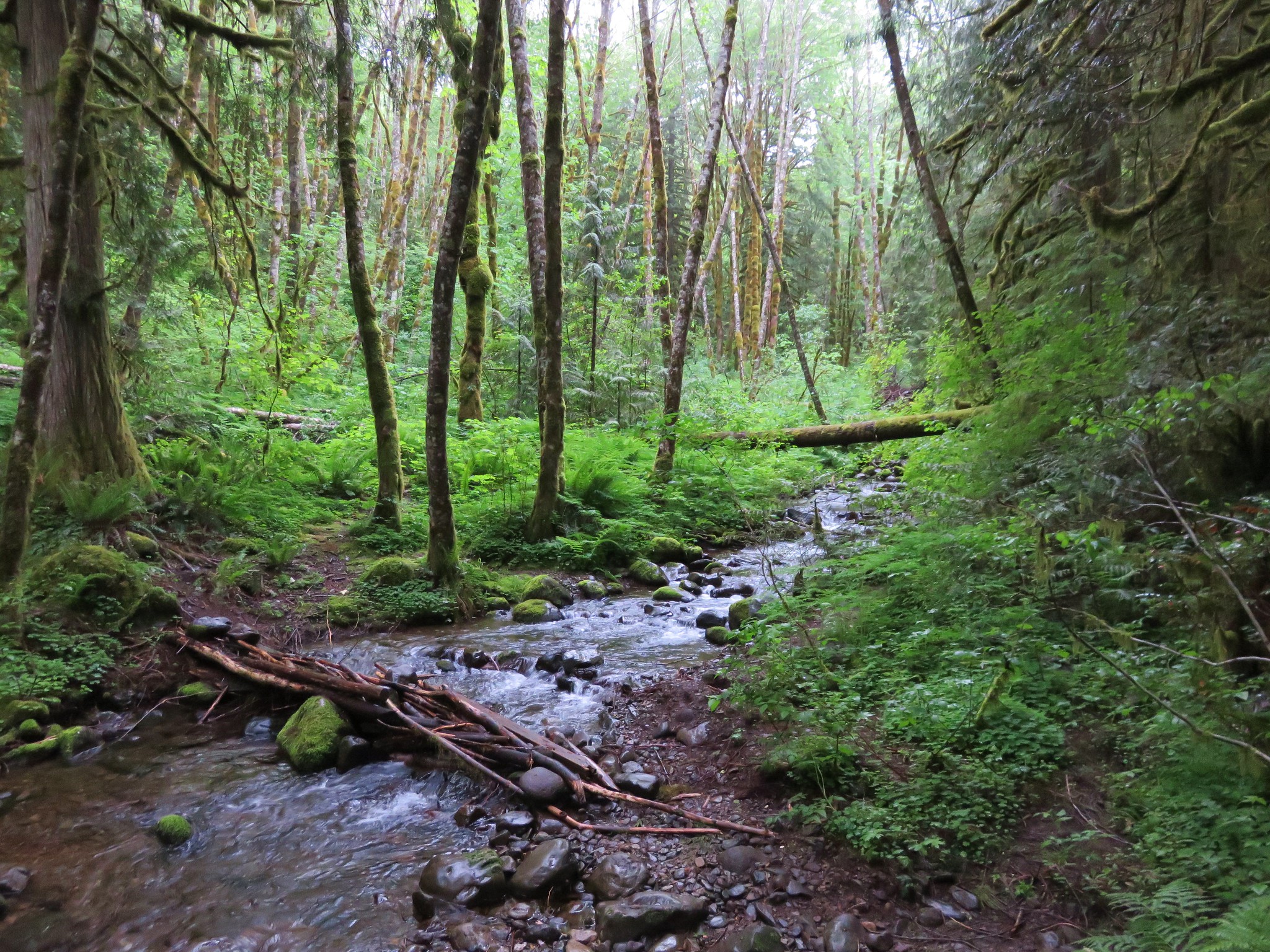
The trail then went up and down along Cheeney Creek still following an old roadbed. I am still trying to figure out why Little Cheney Creek has one “e” and Cheeney Creek is spelled with two. In places the trail was rather overgrown with salmon berry bushes and scouler’s corydalis, a rather interesting flower.
IMG_2189

IMG_2195

Scouler’s corydalis
IMG_2180

IMG_2327

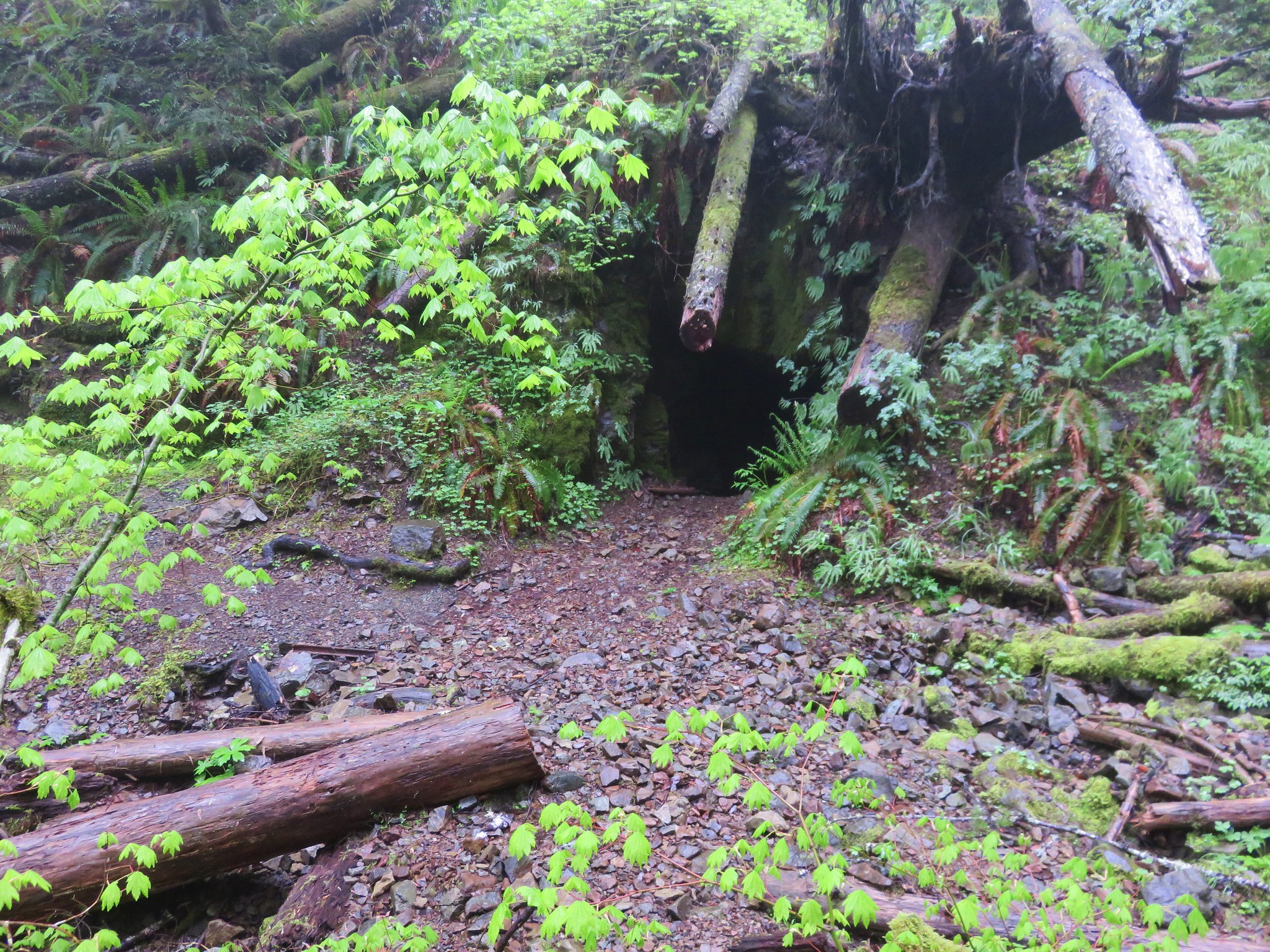
The trail leaves the creek shortly after arriving at a possible campsite near a small waterfall.
Small fall on Cheeney Creek

We had gained a little over 300′ of elevation up to the point of the campsite and then the real climbing began. One of the reasons that the Bonanza Trail is not heavily used is the 3000′ of cumulative elevation gain to reach the summit of Huckleberry Mountain. The trail only has a handful of switchbacks which means that the trail is fairly steep in some sections and even on sunny days lacks viewpoints. We had not chosen a sunny day though and so we climbed up through a forest filled with fog.
IMG_2223

It may as well have been raining as the mist in the clouds gathered on the plants and trees falling as drops of rain.
IMG_2220

Despite the lack of views there was plenty to see along the way. Flowers, wildlife, and the abandoned Bonanza mine gave us plenty of things to look for and explore.
IMG_2224

IMG_2228

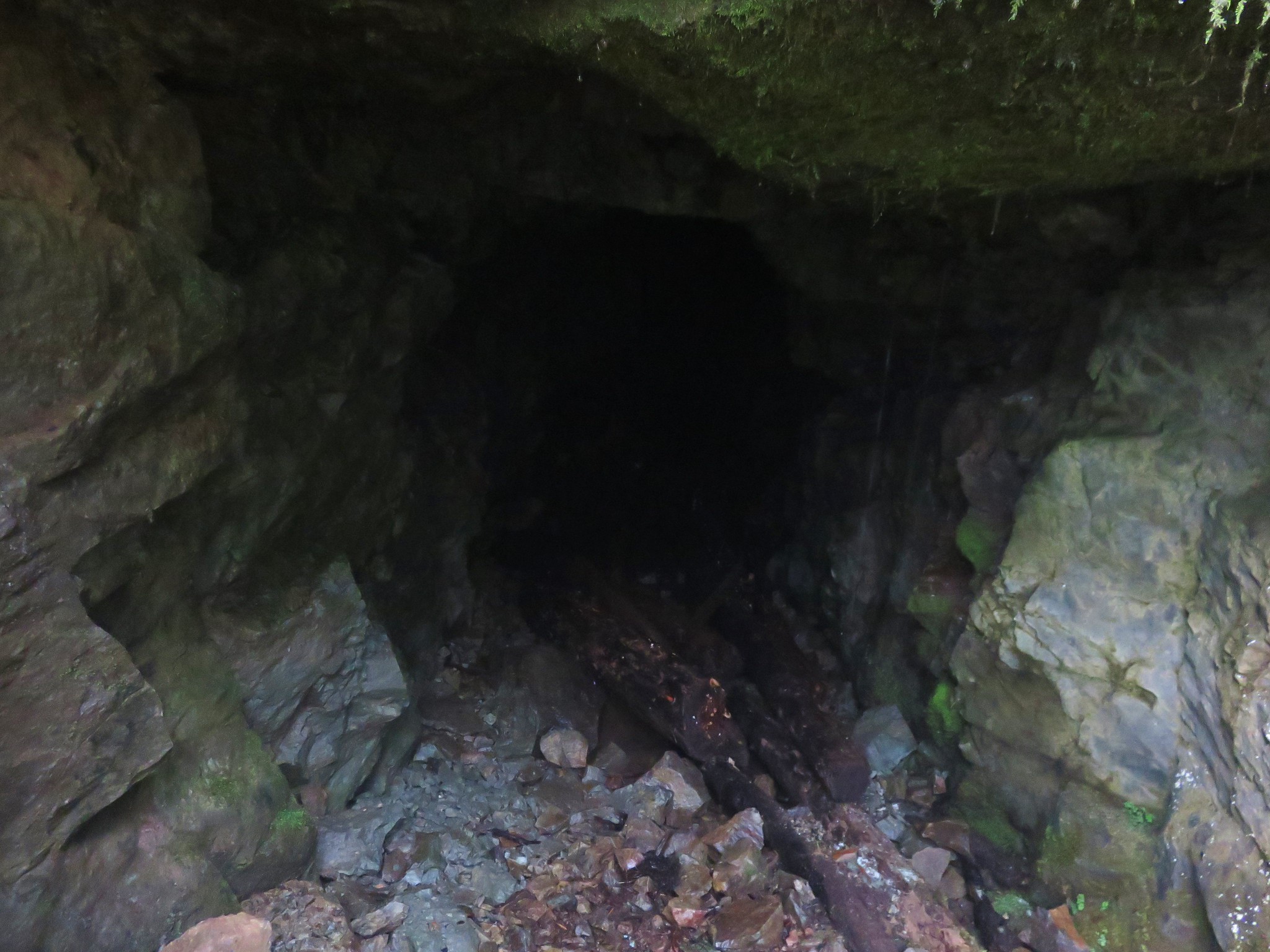
Bonanza Mine

IMG_2232

IMG_2243

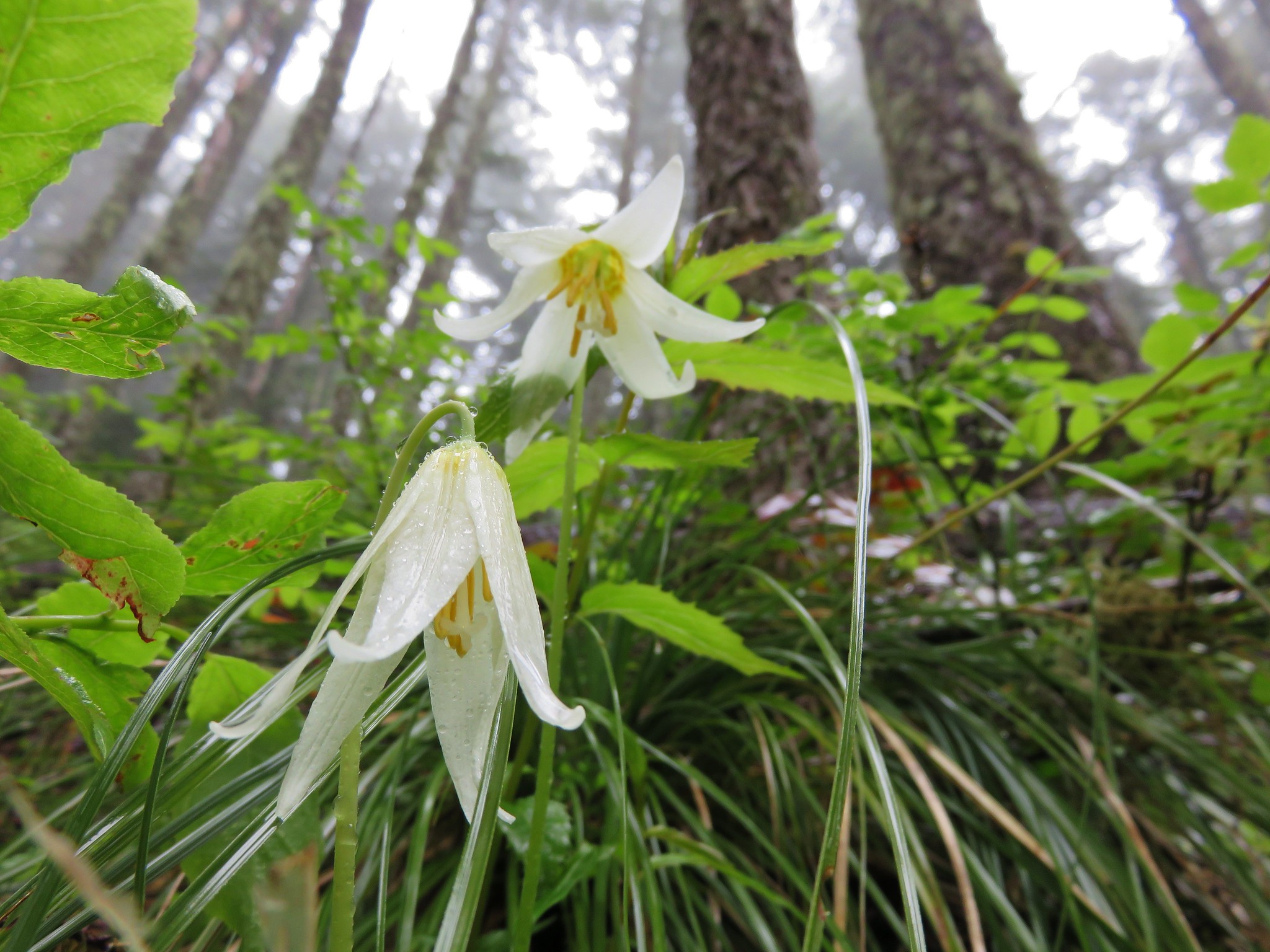
Rhododendron in the Salmon-Huckleberry Wilderness

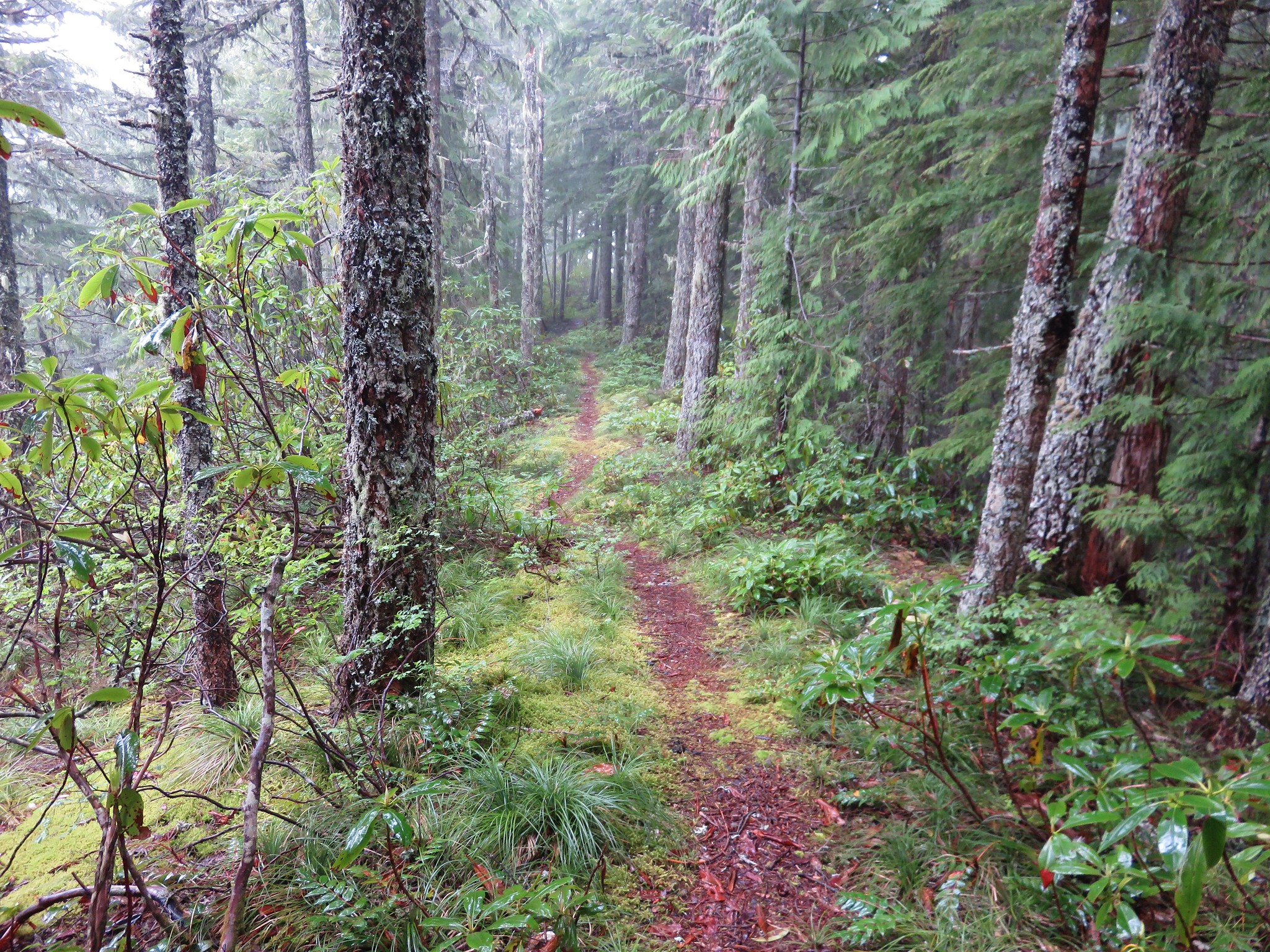
As we climbed the forest and flowers we were seeing changed.
IMG_2255

IMG_2259

IMG_2261

IMG_2263

IMG_2267

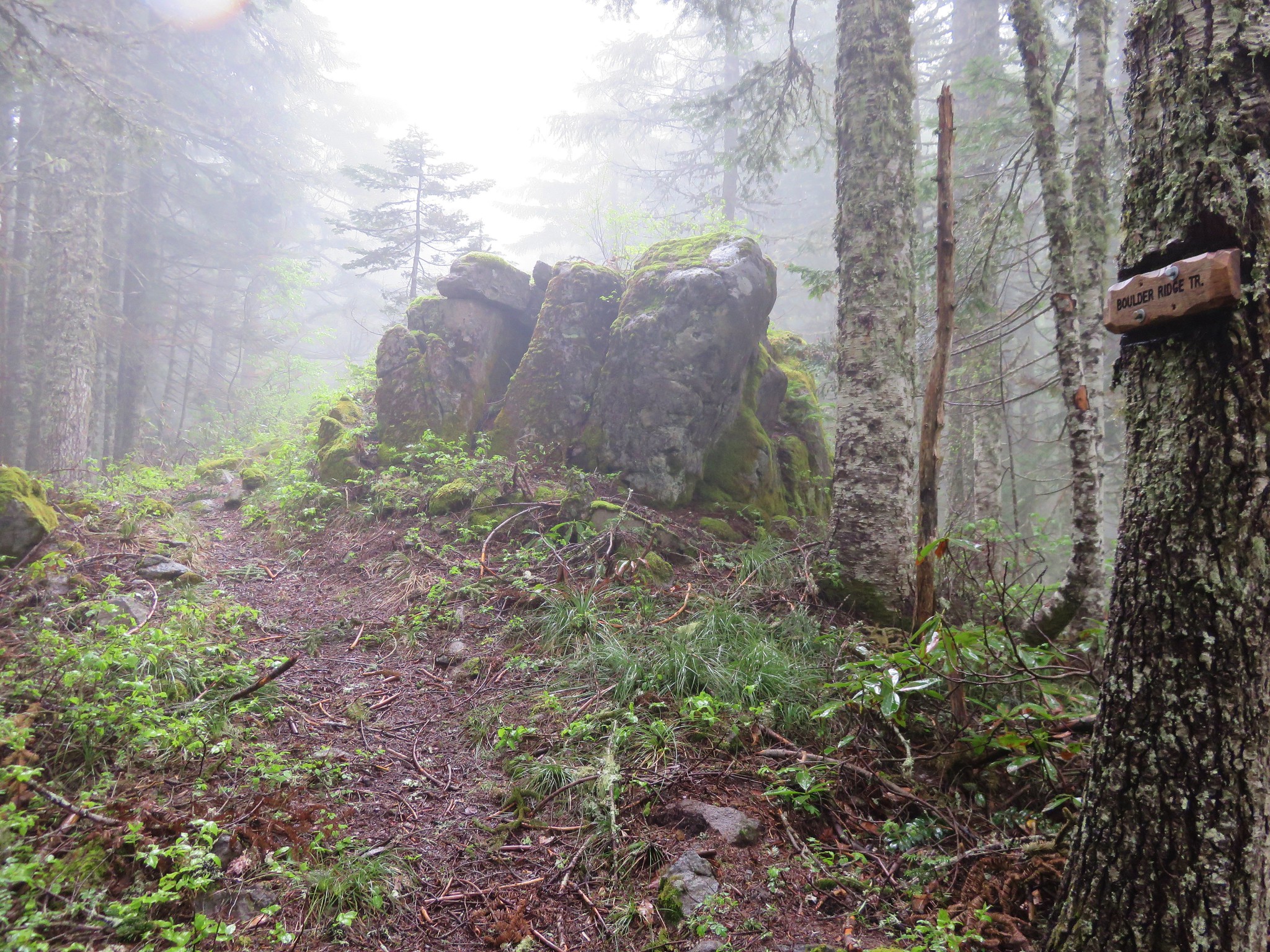
When we reached the trail junction we were a bit surprised to find a newer looking sign announcing the Boulder Ridge Trail. According to the Forest Service the Boulder Ridge Trail ends at the Plaza Trail on the same ridge further to the NW on the opposite side of the summit of Huckleberry Mountain.
IMG_2272

We turned right on the Plaza/Boulder Ridge Trail and headed for the summit of Huckleberry Mountain. We knew we wouldn’t be getting any views on this day but we wanted to bag the summit before turning around. The trail traveled up and down along the ridge entering a nice meadow after .3 miles where we spotted a number of different flowers.
IMG_2275

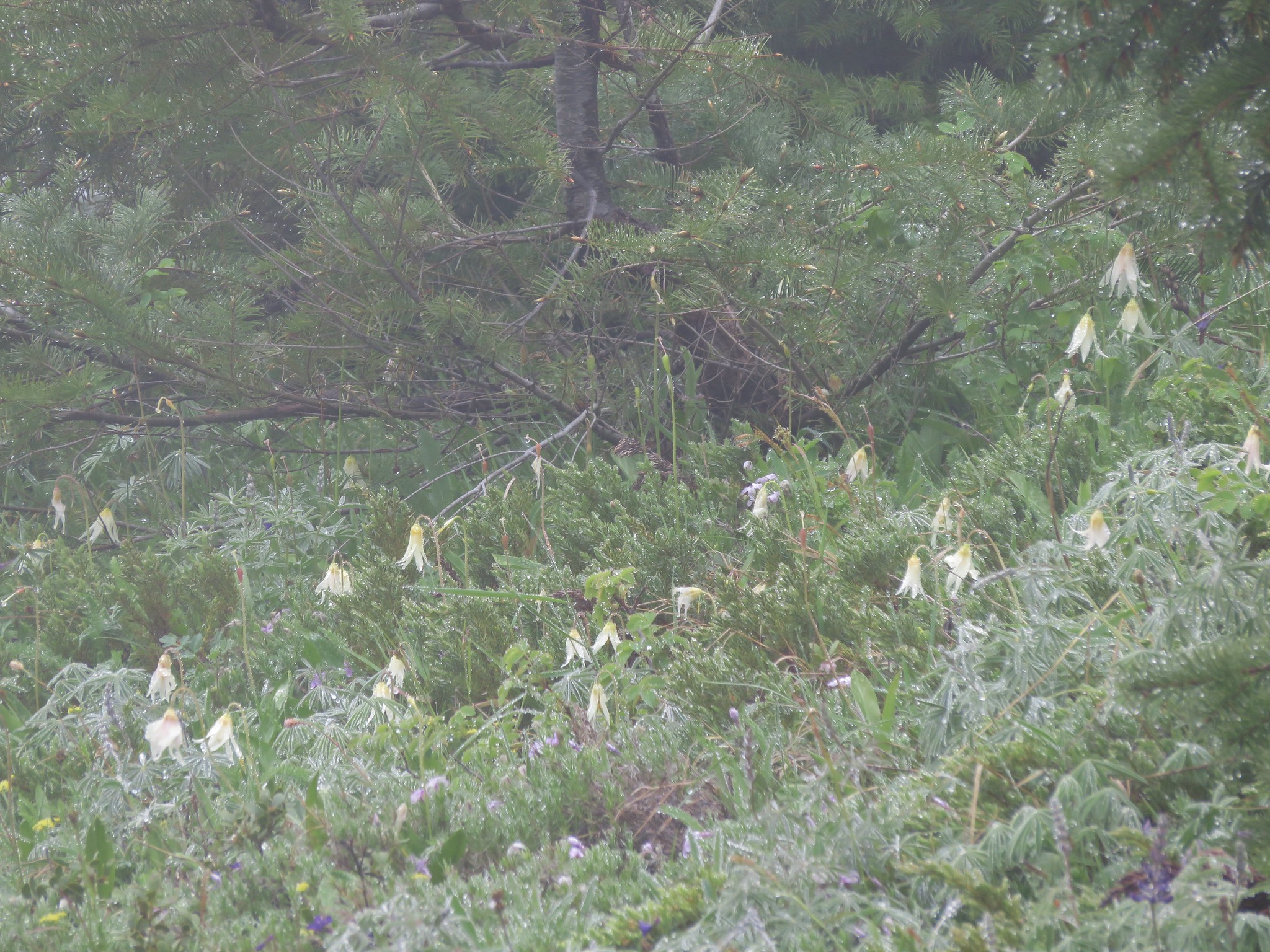
Lilies
IMG_2278

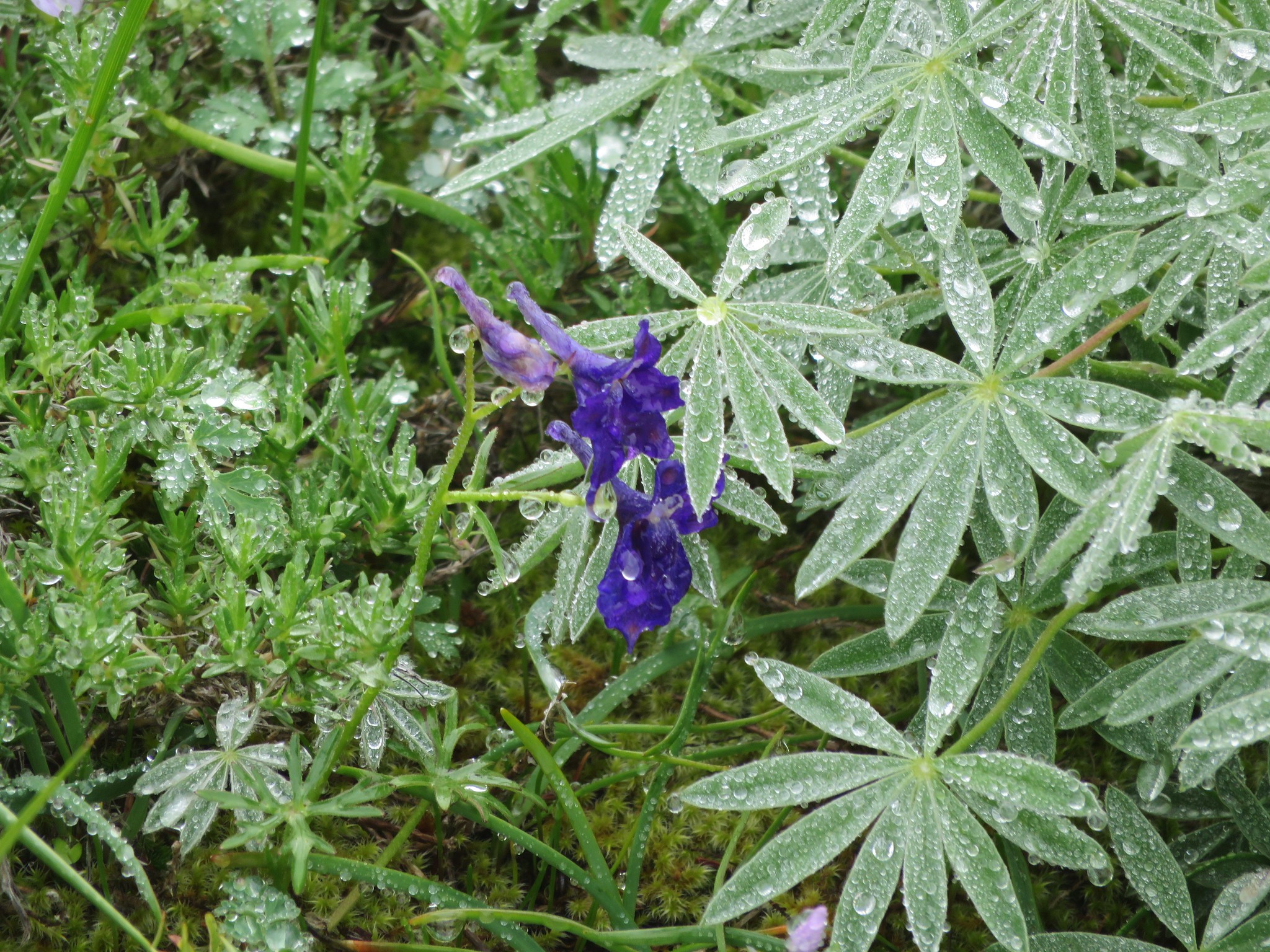
Larkspur
IMG_2283

Lupine
IMG_2289

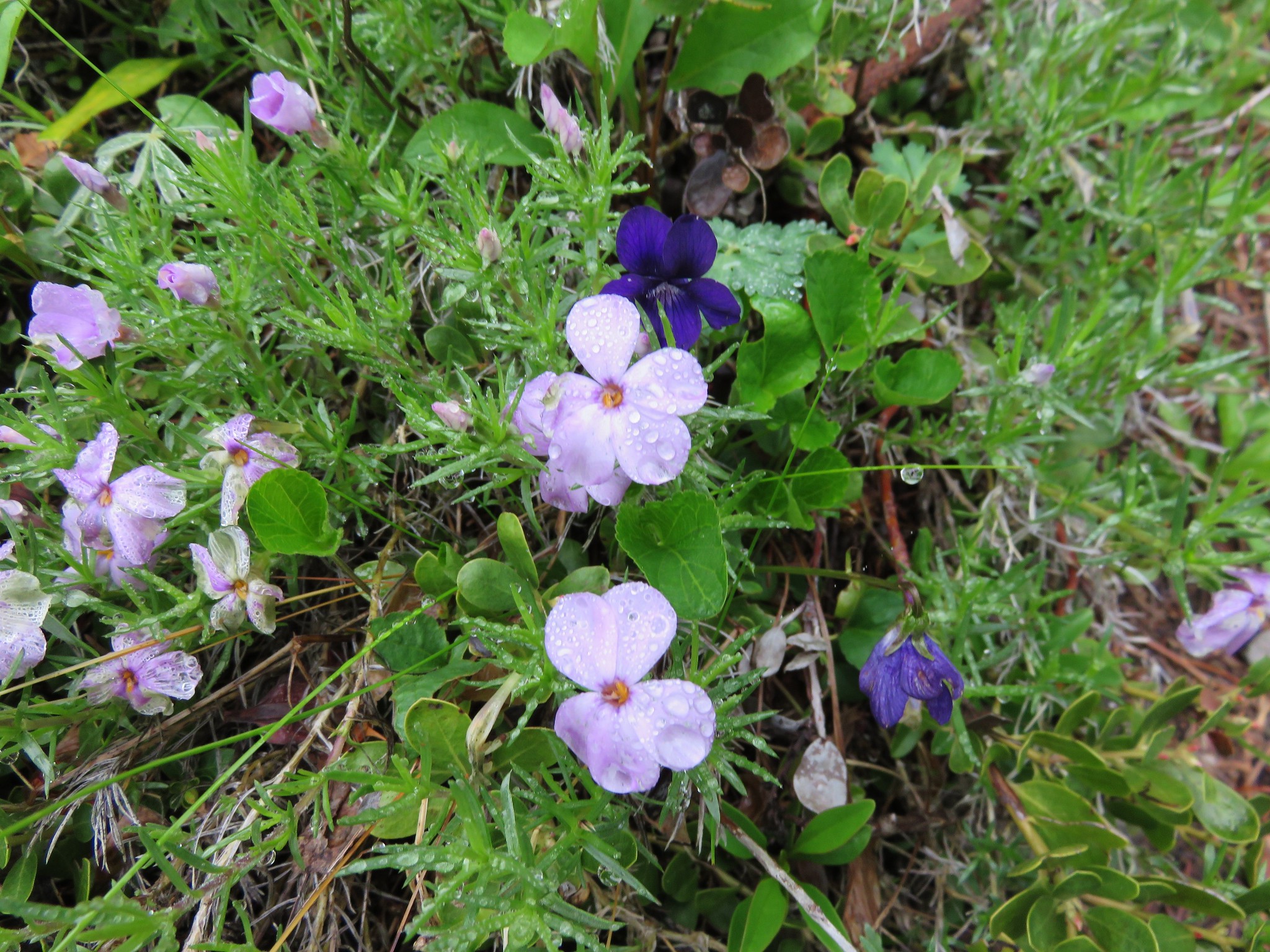
Phlox and violets
IMG_2291

Beyond the meadow the path reentered the forest which was a stark contrast to the open saddle we had just left.
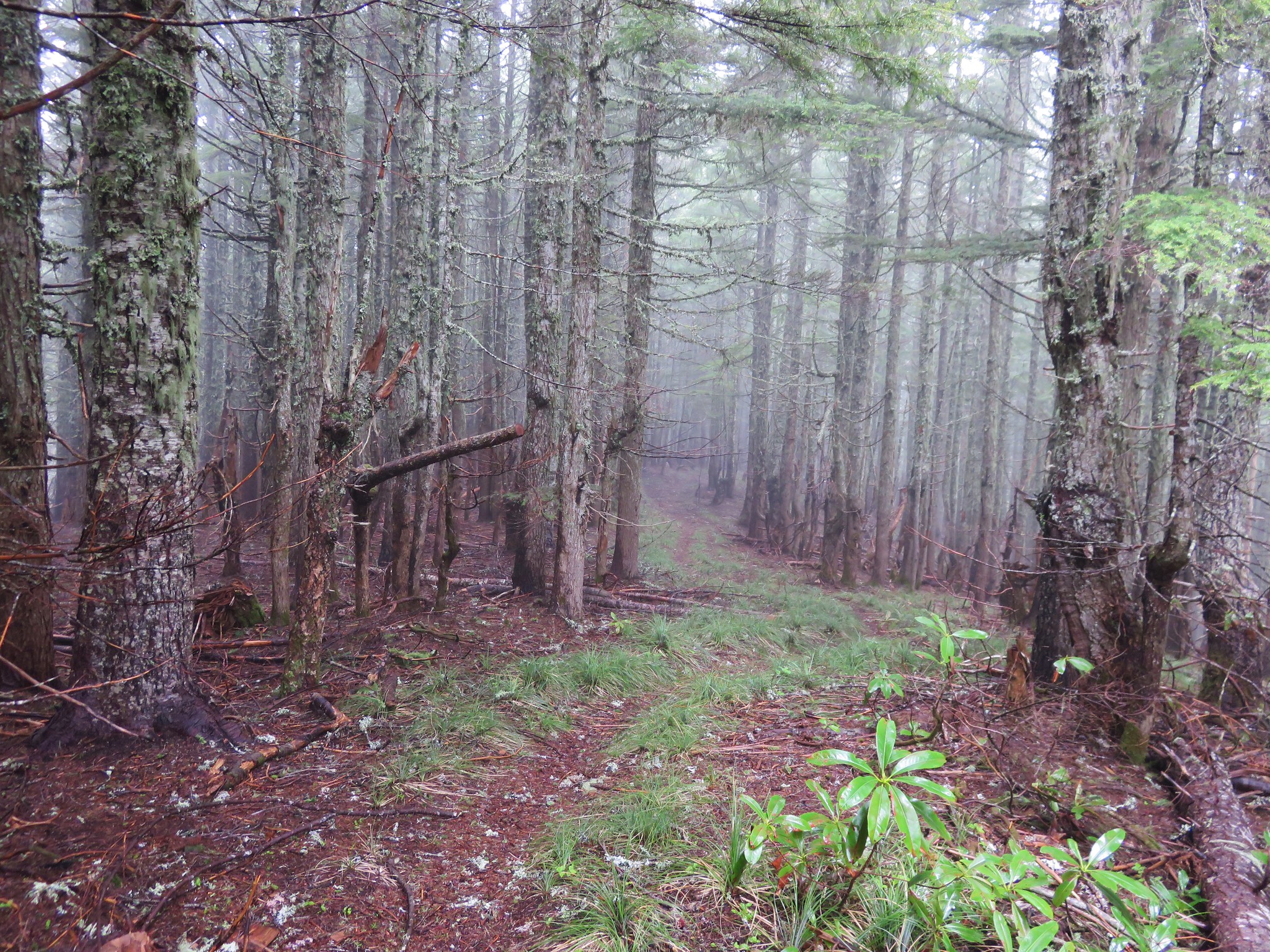
Forest along the Boulder Trail on Huckleberry Mountain

In another .2 miles the trail once again emerged from the forest in a meadow at the summit of Huckleberry Mountain.
Meadow on Huckleberry Mountain

IMG_2309

There were more flowers here, some of which we hadn’t seen on the hike until this meadows.
IMG_2300

Penstemon
IMG_2301

Paintbrush
IMG_2304

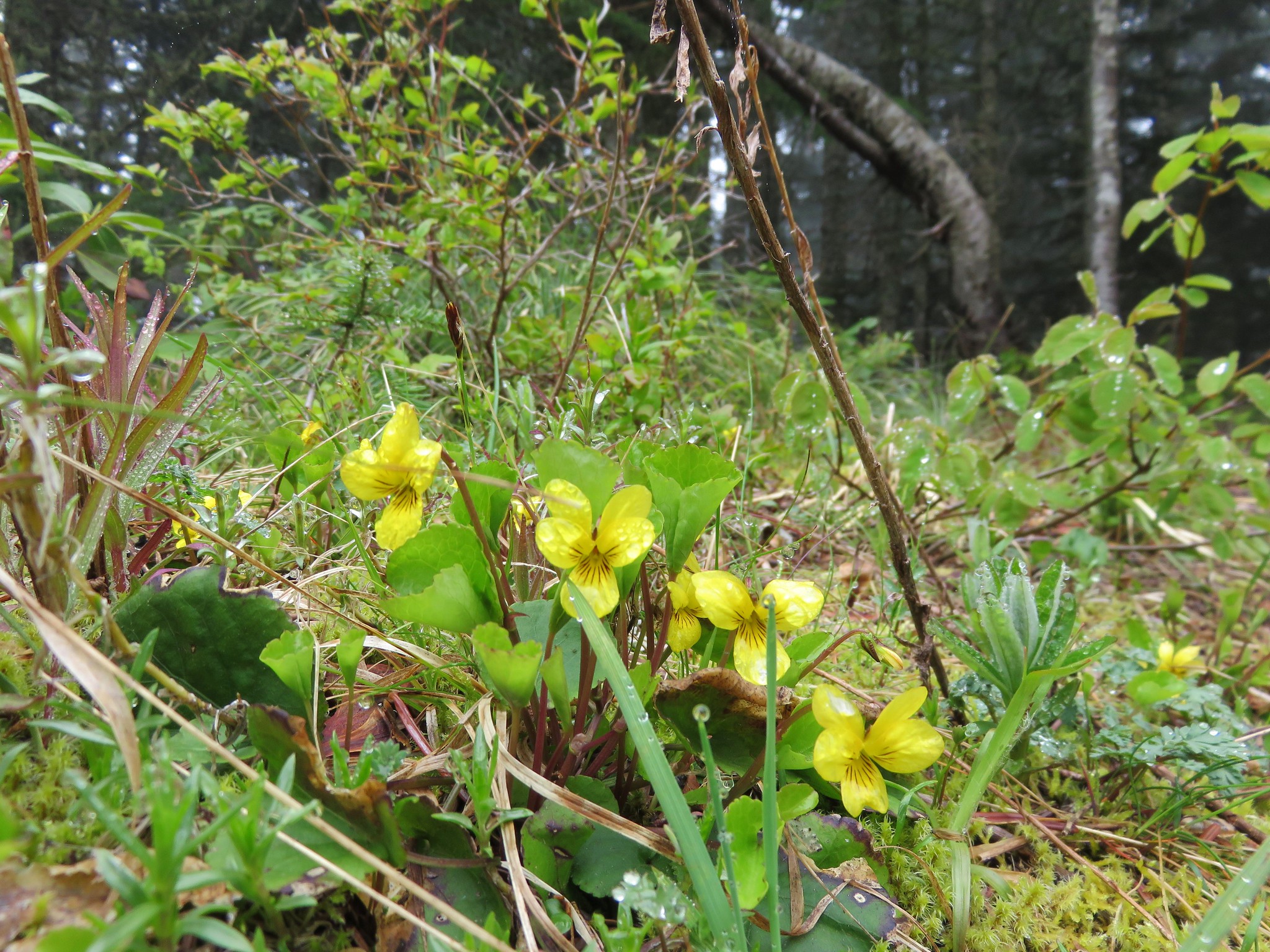
Yellow violets
IMG_2318

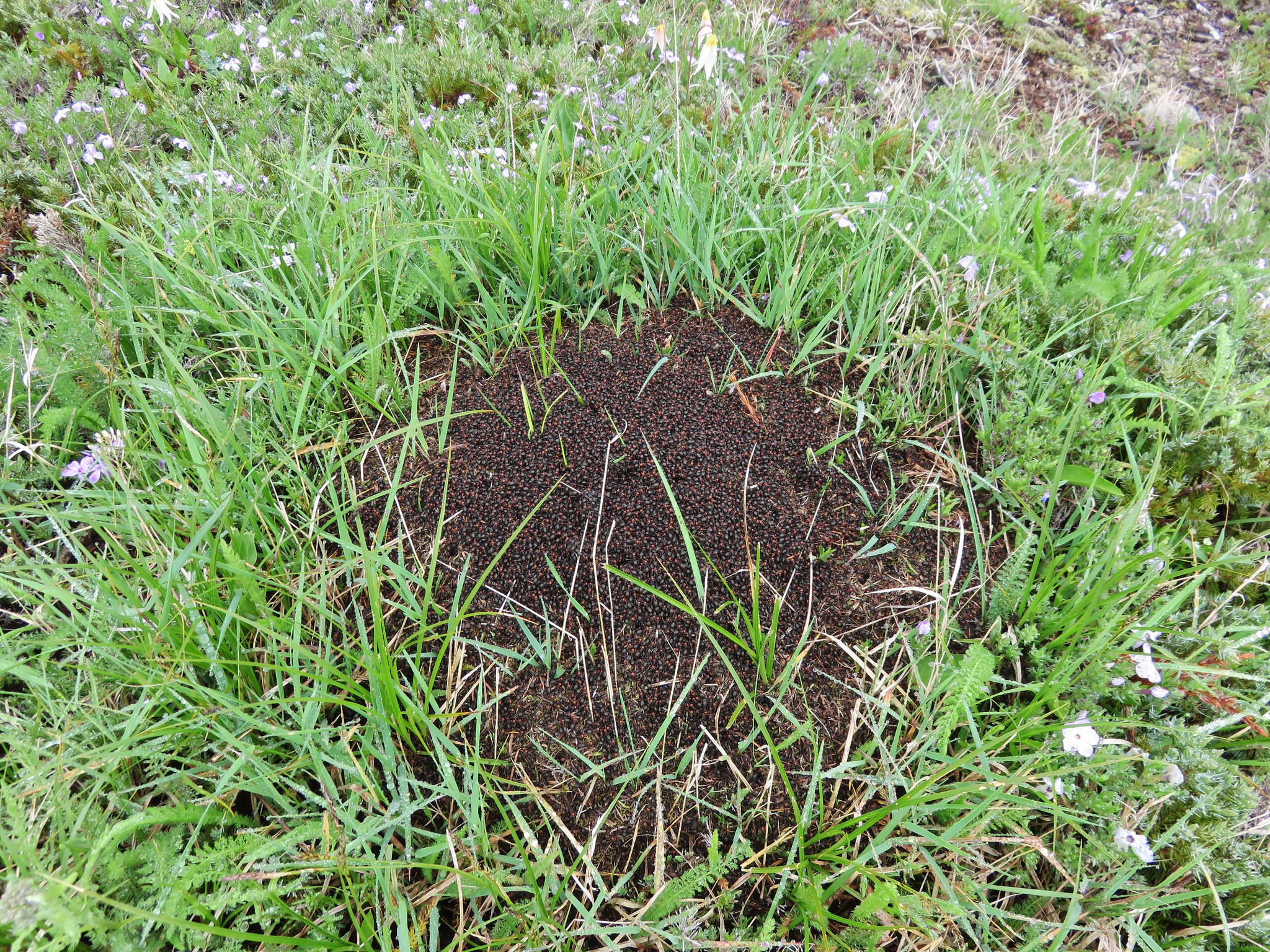
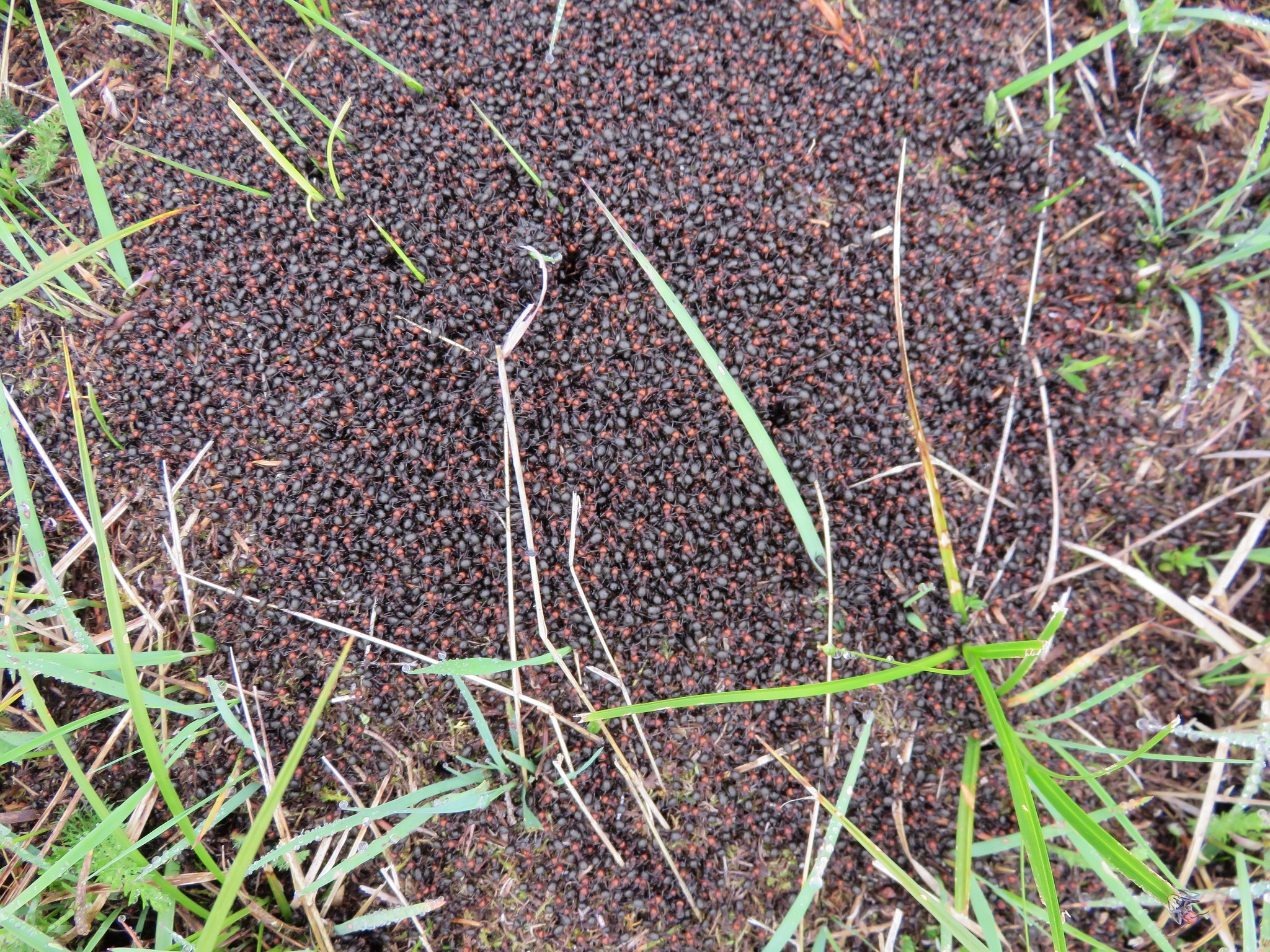
We sat on the rocky summit where at least four cascade peaks would have been visible on a clear day and took a short rest. Missing out on the view just meant we’d need to come back some other day, possibly via the Boulder Ridge Trail, and try again. As we were leaving the meadow Heather noticed an ant pile that was quite active.
IMG_2314

IMG_2316

Our descent was pretty uneventful as we made our way back down the mountain. We finally saw other people at the small waterfall, a family of four exploring the creek. The Bonanza Trail lived up to the light usage label, but despite the fact that it hadn’t been maintained by the Forest Service since 2013 it was in surprisingly good shape. Perfect for a good bit of exercise and solitude.
Happy Trails!

flickr: https://www.flickr.com/photos/9319235@N02/sets/72157653391492331

Categories
High Cascades Hiking Oregon Three Sisters Area Trip report

French Pete Creek

**Note the 2018 Terwilliger Fire burned a portion of this hike.**

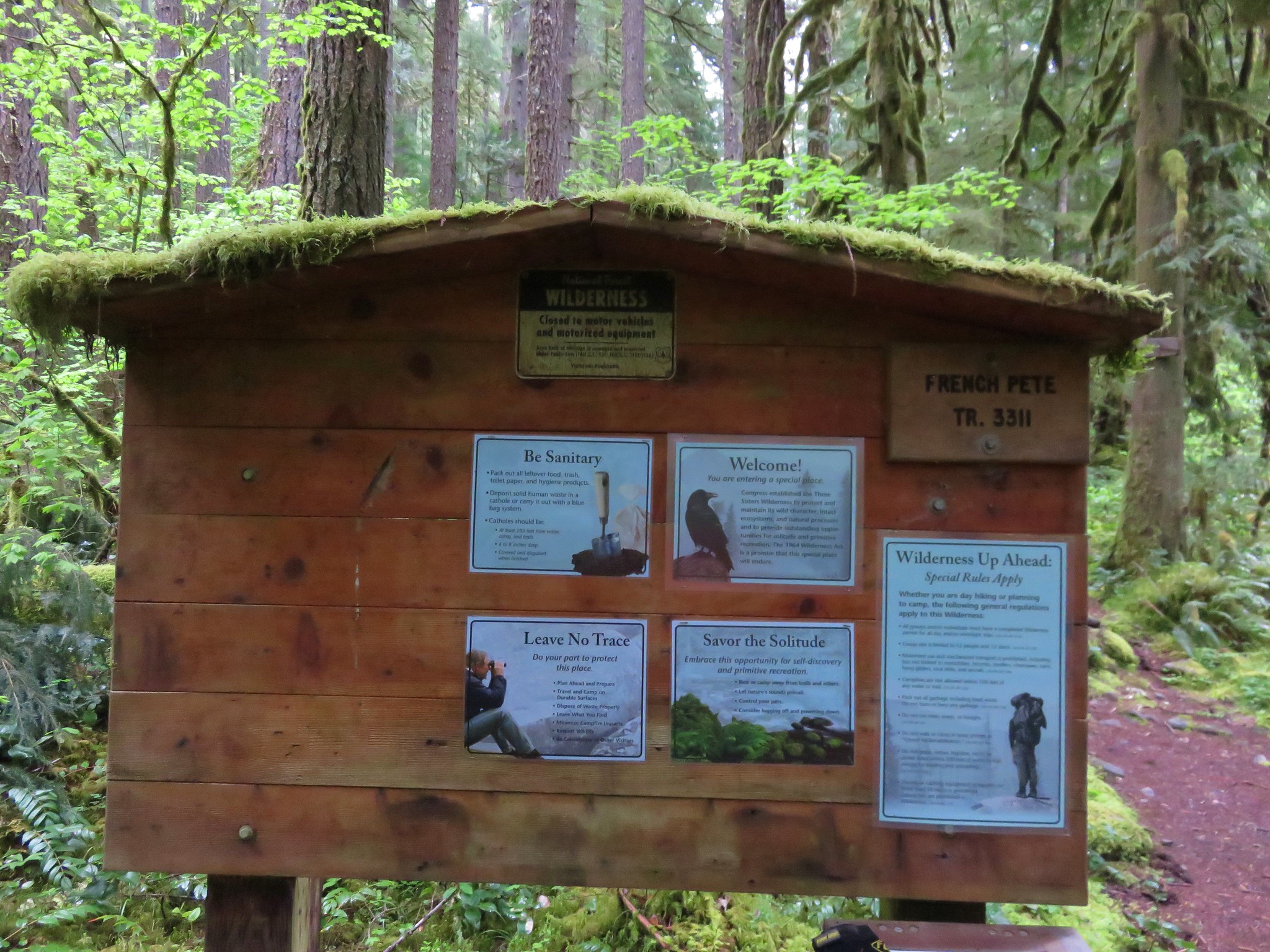
This is the third straight year we’ve had French Pete Creek on our schedule. Each of the previous years it has wound up getting bumped for one reason or another. This year was different although it had been pushed back several weeks due to the early wildflower bloom in the Columbia Gorge. A cloudy forecast made for a good day to take a hike through an old growth forest along a wilderness stream. With that in mind we headed to the French Pete trail 3311 in the Three Sisters Wilderness. Our goal was a 5 mile marker mentioned in William L. Sullivans “100 Hikes in the Central Oregon Cascades”. The trail starts at the French Pete Trailhead which is located across from the French Pete Campground a mile beyond Cougar Reservoir on Road 19. Road 19 or Aufderheide Rd runs between the McKenzie Hwy 126 and Hwy 58 near Oakridge.
French Pete Creek Trailhead

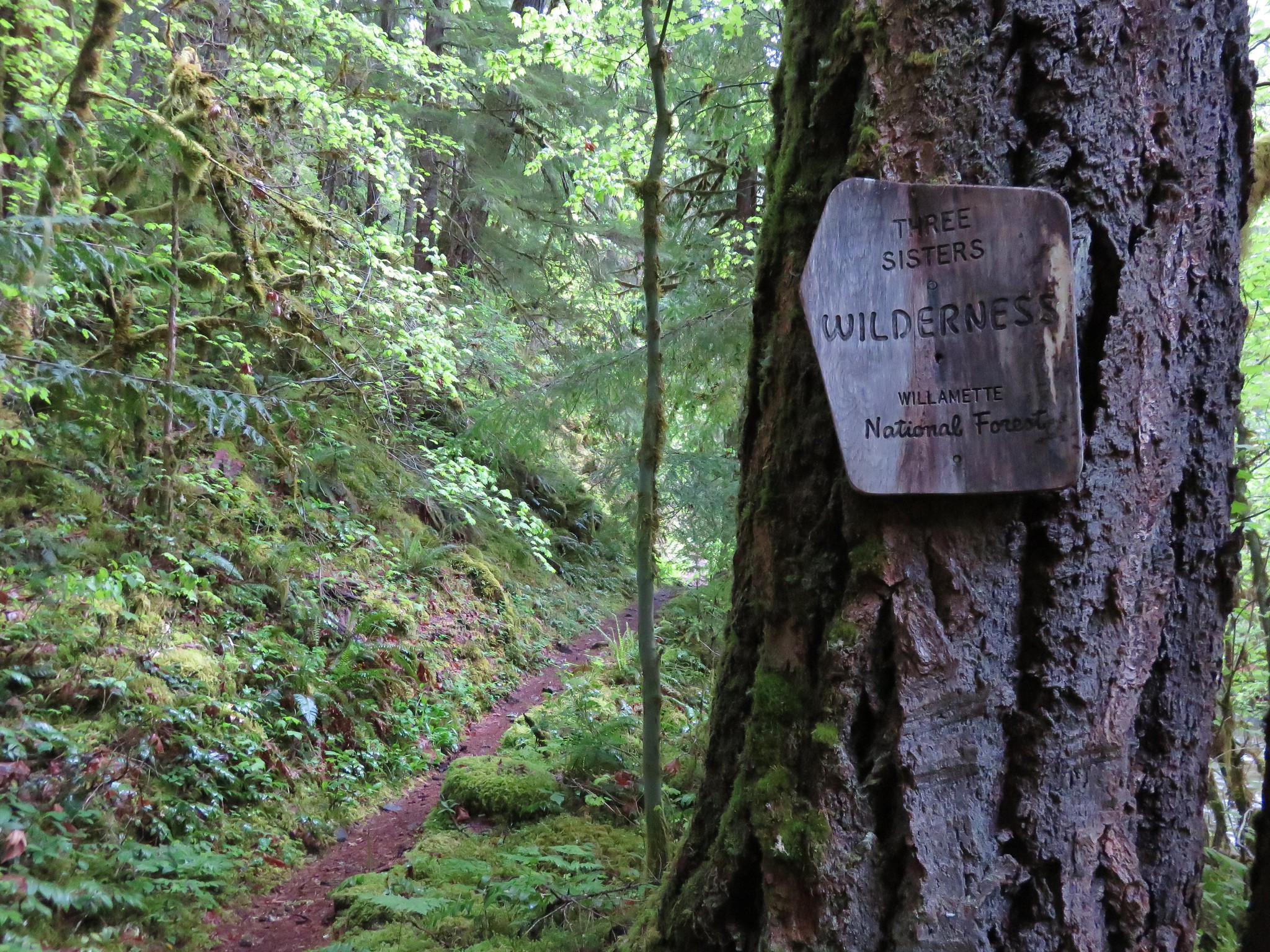
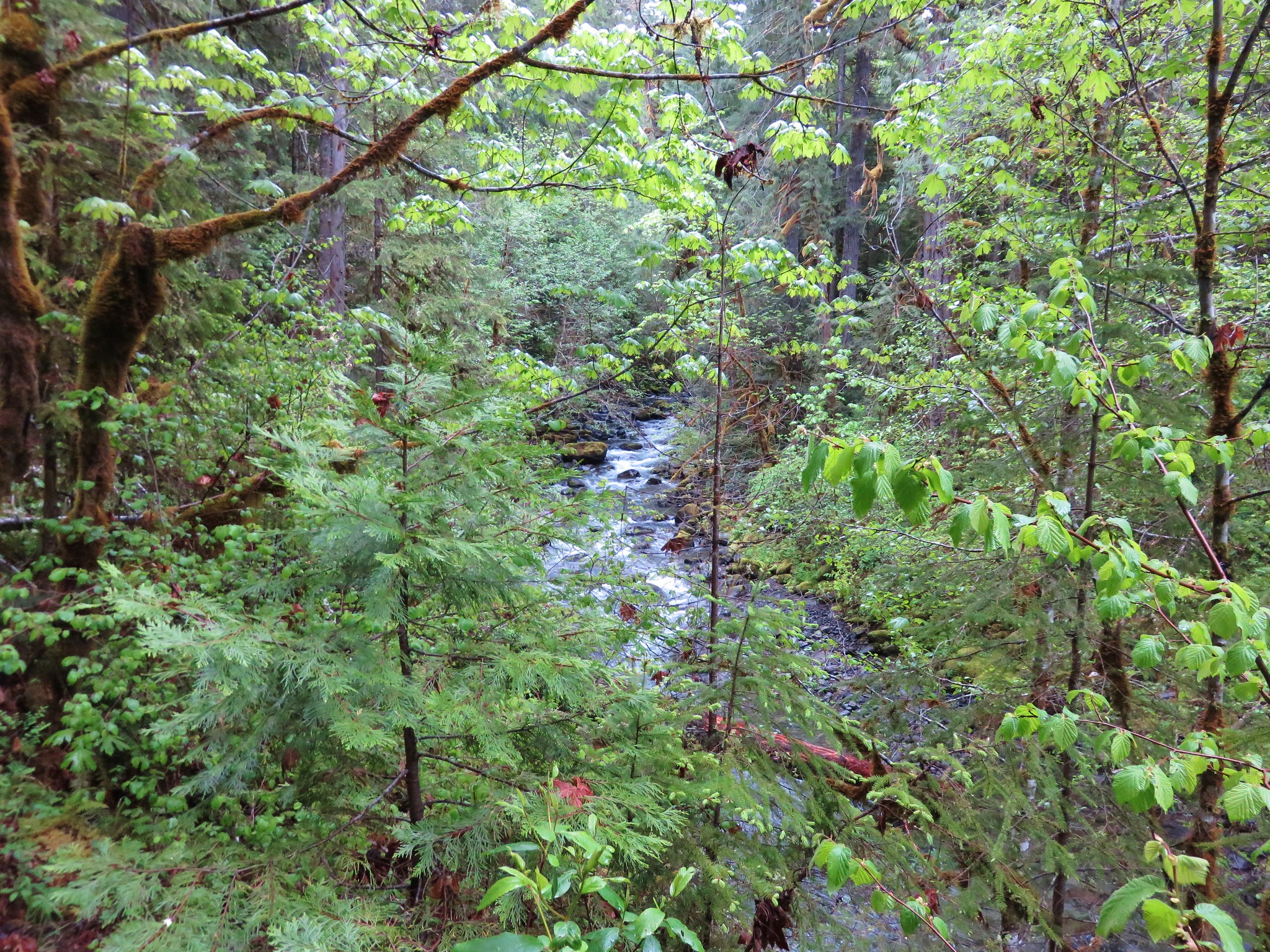
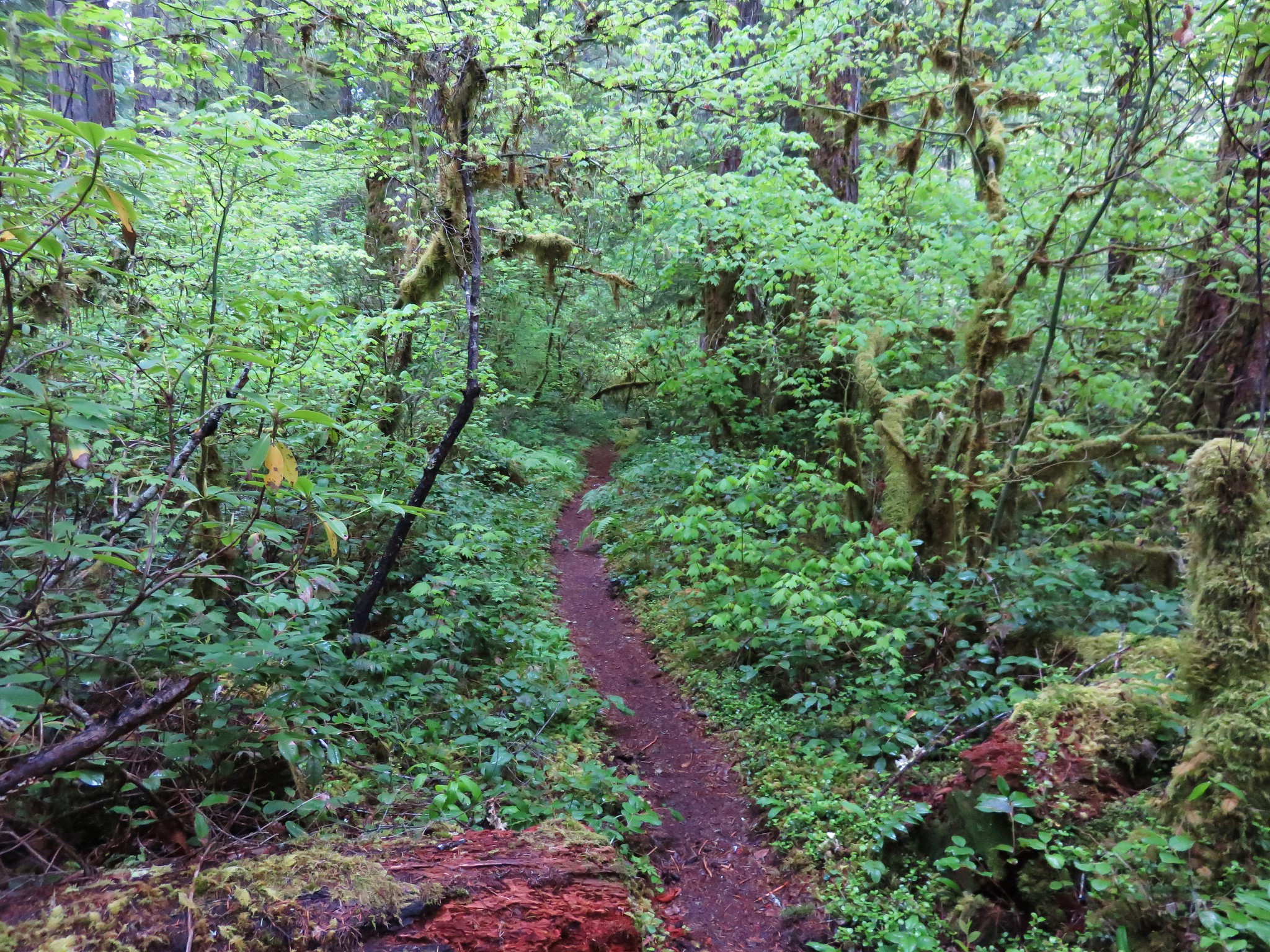
The trail promptly enters the Three Sisters Wilderness passing through nice old growth and several access points to the creek.
Entering the Three Sisters Wilderness

IMG_2038

IMG_2046

Pool along French Pete Creek

IMG_2053

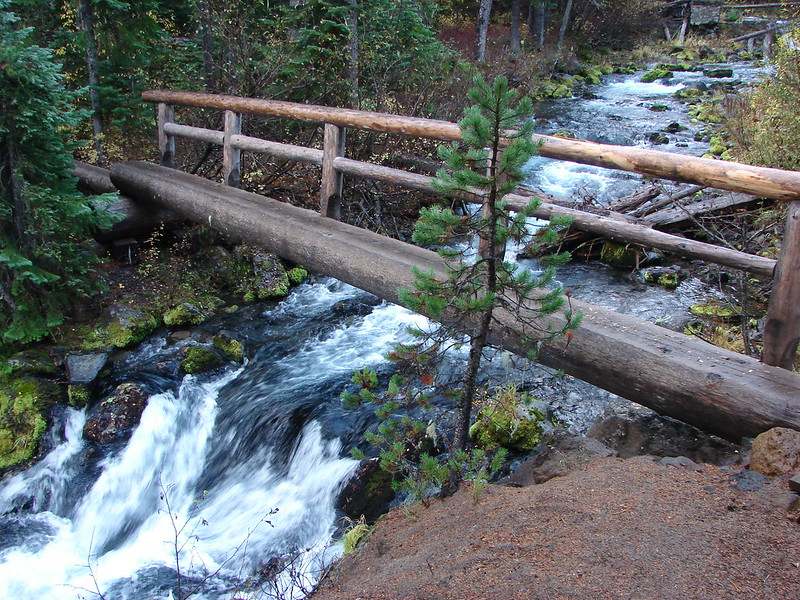
After 1.8 miles of some up and down trail we arrived at the first of two creek crossings. There had been a bridge here years ago but now if you want to continue on you either ford the creek or attempt to cross on a log jam just downstream. We inspected the log jam but given the wet weather the logs were rather slick and we decided that it wasn’t going to be the best option on this day.
IMG_2068

There was a possible third option to the ford or log jam, a rough 1.2 mile scramble trail along the north side of the creek. Where the trail turned down toward the creek there was a faint trail leading further along the creek so we decided to try that option versus the ford.
IMG_2067

This path is not mentioned in the most recent edition of Sullivans book and we soon discovered why. We do not recommend attempting this route. The tread was very narrow with some blowdown and a few sketchy spots then after about .4 miles we came to the spot of a slide about 15′ above the creek. The path (and I use that term lightly) dove down the slide to the creek bank. I made it down but when I turned around I could tell Heather was not going to be able to do the same. I managed to get back up to where she had gotten stuck and helped her do a controlled slide in the dirt/mud down to a log where she was able to brace her self and continue on down to the bank. We knew we wouldn’t be going back that way so we sallied forth to the next big obstacle – a slanted rock shelf traverse.
Bedrock along French Pete Creek

The rock was wet and slick, but we managed to find enough footholds to not slip into the creek which was quite deep in sections. A bit further along the creek we were stymied again by another big slide. While I was attempting to find a way around this new obstacle Heather realized that she had lost her phone. We backtracked recrossing the rock shelf to the spot of her slide where I found the phone wedged against the log covered in dirt. Luckily it was inside its case and undamaged. When we turned back to find the phone we had only covered about half the distance needed to rejoin the official trail and neither of us wanted to tempt fate with a third go at the rock shelf. From where we were we could tell by the GPS that the trail was just on the other side of the creek so we decided it was time to ford the creek.
IMG_2078

From the far side we had a pretty good look at the slide area that had started all the trouble.
IMG_2075

IMG_2076

We came up from the creek and only had to walk about 10′ to find the trail. The trail in this section was a bit overgrown but in pretty good shape given most hikers turn back at the first crossing.
IMG_2079

We made it to the second creek crossing where a nice cedar log serves as a suitable bridge.
Cedar log crossing of French Pete Creek

We had another 1.8 miles to go after the second crossing to reach the 5 mile marker. This section of trail was also fairly overgrown and narrow but there were no major obstacles along the way. The trail climbed up above the creek at times passing through a grassy meadow and past some nice rock formations.
IMG_2094

IMG_2103

IMG_2098

IMG_2147

It also provided some of the best views of French Pete Creek.
IMG_2110

IMG_2120

After reaching the marker we stuck to the official trail on the way back.
IMG_2129

One of many little creeks flowing into French Pete Creek

We only ran into three other groups of hikers, all on the way back between the trailhead and first crossing making for a nice quiet hike. Happy Trails!

flickr: https://www.flickr.com/photos/9319235@N02/sets/72157652543084568

Categories
Diamond Peak Area High Cascades Hiking Oregon Trip report

Midnight & Yoran Lakes – Diamond Peak Wilderness

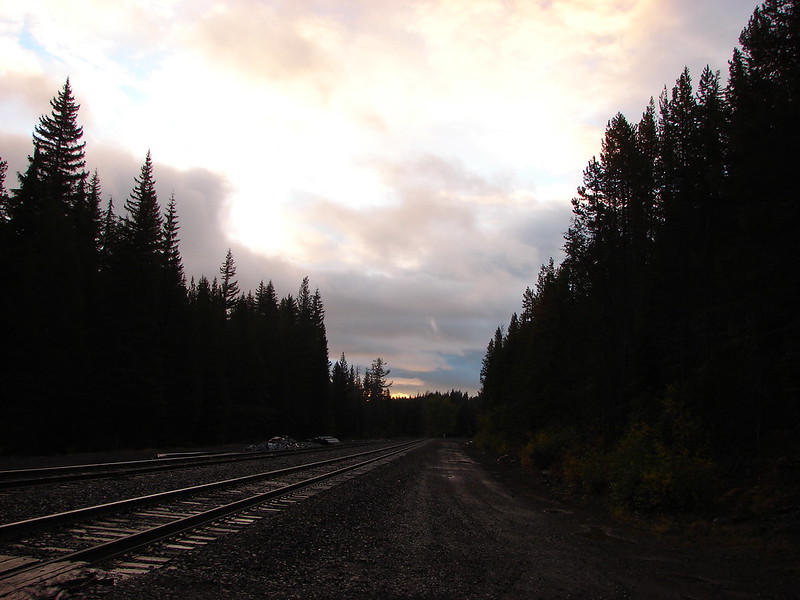
Our final October hike brought us to the Diamond Peak Wilderness for our second ever visit. This 52,611 acre wilderness is home to numerous lakes and 8,744′ Diamond Peak. Our plan for this visit was to start at the Trapper Creek Trailhead and take the Yoran Lake Trail to Yoran Lake then head cross-country to the Pacific Crest Trail returning on a loop past Midnight Lake. It was a rainy drive for most of the morning but we arrived at the West Odell lake Access off Highway 58 under clouds that were beginning to break up. Parking for the trail is located across from the Shelter Cove Resort next to some railroad tracks.
DSC07839

DSC07841

DSC07842

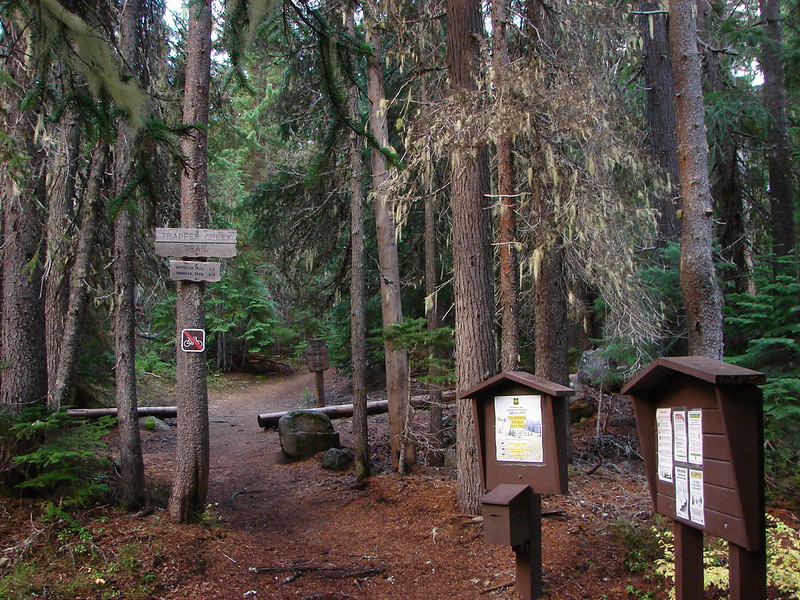
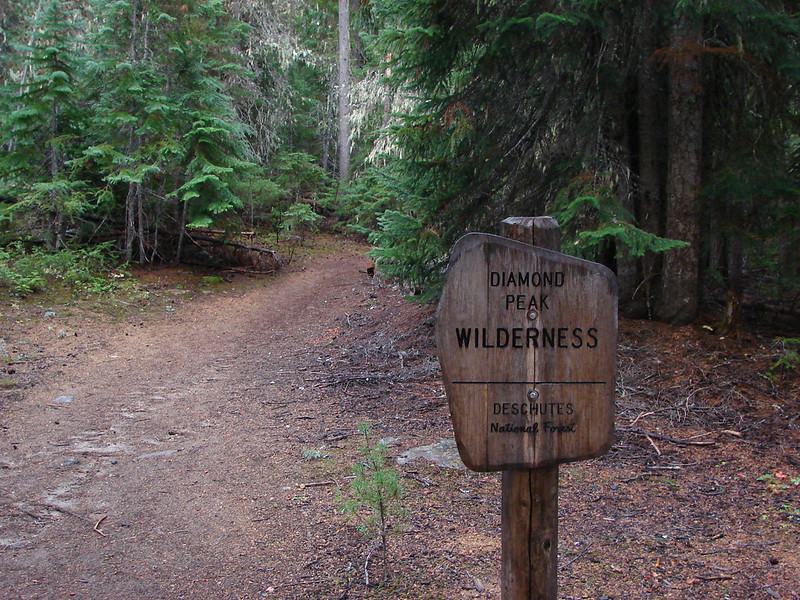
The actual trail started on the far side of the tacks and quickly entered the wilderness.
DSC07845

DSC07846

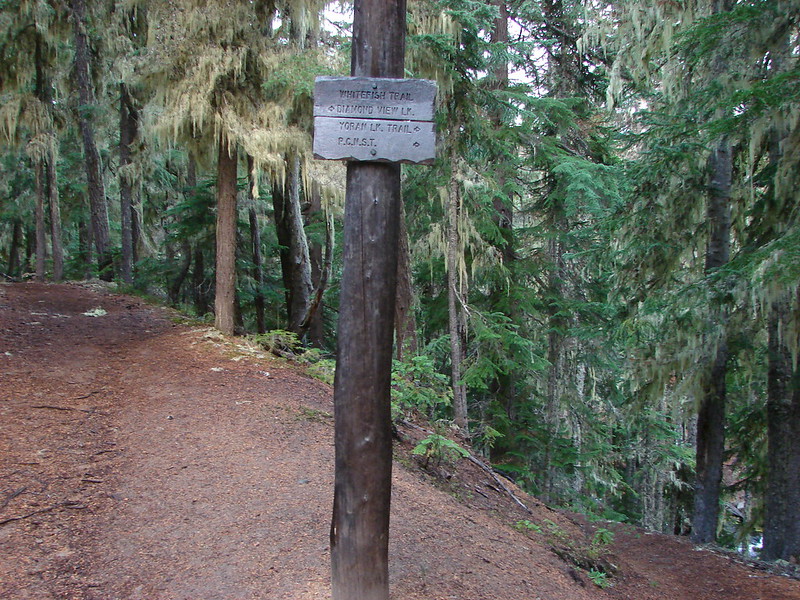
Just a short while after entering the wilderness the trail split. The left fork led to Diamond View Lake and the right to the Yoran Lake Trail.
DSC07847

We took the right hand fork which briefly followed Trapper Creek passing a small waterfall just before crossing the creek on a footbridge.
Small waterfall on Trapper Creek

DSC07853

The trail split again at the Yoran Lake Trail which headed uphill to the left while the path on the right led to Pengra Pass and the PCT. We began the steady climb up to Yoran Lake as a little fog rolled through the forest.
DSC07854

DSC07859

Yoran and Midnight Lakes were only two of several lakes we were going to be visiting on the hike as well as a number of smaller ponds. We came to the first small lake after 3 miles on the Yoran Lake Trail.
Unnamed Lake along the Yoran Lake Trail

DSC07870

In another mile we arrived at Karen Lake.
Karen Lake

On a clearer day we would have had a great view of Diamond Peak but we had to settle for some briefs peeks of the peak.
DSC07887

Just to the NW of Karen Lake we found Yoran Lake at the end of the Yoran Lake Trail. Diamond Peak was again hidden by the clouds, but we had a little better view of Mt. Yoran.
Yoran Lake

DSC07898

Yoran Lake

We made our way around the lake to the northern end where there was a pair of small islands.
DSC07929

DSC07926

We left the lake shore when we passed the second island, crossing a pretty little inlet creek, and headed true north toward the PCT.
DSC07930

At first we were following a faint path but we lost the tread as we passed by a pair of small ponds.
DSC07931

DSC07932

A couple of quick checks of the GPS showed we were on course to arrive at Liles Lake which lies next to the PCT. Our guidebook said to go around the left side of the lake but we arrived closer to the right side. We picked up a trail going around the lake and decided to just follow it around that side.
Lils Lake

DSC07941

It looked like the right side might be difficult to go around earlier in the year when the water level would have been higher but we had no problem following the path and hooking up with the PCT on the north side of the lake. We turned right and started downhill passing some small ponds and passing through some interesting forest.
DSC07950

DSC07953

The next lake we came to was Hidden Lake.
Hidden Lake

We passed several more pretty little ponds between Hidden Lake and the next named lake which was Arrowhead Lake. It was pretty clear why this forest is full of mosquitoes most of July and August with ponds and lakes seemingly everywhere.
DSC07961

DSC07963

DSC07965

We almost passed by Arrowhead Lake waiting for a clear path to it, but when we didn’t find one we made our own. We were glad we did because this lake had some of the prettiest water we had seen that day.
Arrowhead Lake

Continuing down the PCT from Arrowhead Lake we passed a rock that Heather dubbed Gorilla Rock due to it’s interesting shape. She thought it looked like a gorillas head and arm.
Gorrilla Rock - named by Heather

Shortly after passing the rock we spotted movement through the trees further down the trail. I thought we’d seen another person or dog coming up the trail and then we saw a second flash of color which we could tell was an elk. A total of four elk cows had crossed the trail and passed in virtual silence through the forest and over a small ridge. I was snapping pictures every time one appeared through the trees but I never got more than the back half of one.
DSC07978

The final named lake we visited was Midnight Lake.
Midnight Lake

We stopped at one final unnamed lake/pond before arriving at Pengra Pass.
Small lake/pond along the PCT in the Diamond Peak Wilderness

We left the PCT at Pengra Pass and followed an old road right .4 miles where a trail split off from the right hand shoulder.
DSC07997

It was only another .6 miles back to the Yoran Lake Trail and .7 more back to our car. On our way home we made a pit stop at Salt Creek Falls, the previous hike we’d taken in the Diamond Peak Wilderness. https://wanderingyuncks.wordpress.com/2013/07/07/salt-creek-falls/
Salt Creek Falls

All the lakes were very nice and we are hoping to do some backpacking in the area sometime. Diamond Peak is a non-technical climb and there are trails all the way around the mountain making for numerous possible destinations. More ideas for future trips 🙂 Happy Trails!

flickr: https://www.flickr.com/photos/9319235@N02/sets/72157648430549439/
facebook: https://www.facebook.com/media/set/?set=a.10205280662043261.1073741917.1448521051&type=1

Categories
High Cascades Hiking Mt. Jefferson Area Oregon Trip report

Jefferson Park – 2014

**Note the 2017 Whitewater Fire burned a portion of this hike.**

The only location we have visited in each of the last three years is Jefferson Park in the Mt. Jefferson Wilderness. For awhile it looked like that streak might be broken this year, but then Heather accidentally signed up for a 5k race on what was to be our final weekend of hiking in October. We rescheduled our final October hike and I decided to take advantage of the Columbus Day holiday and head to Jefferson Park to keep my streak alive.

We had rotated the trails we used to reach Jefferson Park between the three most popular approaches – The Whitewater Creek Trail, the Pacific Crest Trail from the north, and the South Breitenbush Trail. Since the Whitewater Creek Trail offered the shortest drive and hike I decided to revisit that trail.
DSC07602
It is also the most popular approach but the parking area was nearly empty when I arrived. It was a surprisingly warm morning despite the forecast of snow for the very next day and I was able to leave my hat and gloves in my pack as I set off. I’d dressed for a typically chilly Fall morning and I wound up having to remove my two lower layers before I’d gone a quarter mile, but once I got my clothing situation corrected I was able to set a nice pace as I climbed along the Sentinel Hills.

The trail started off in the trees offering only brief glimpse of the top of Mt. Jefferson. One and a half miles in an unmarked trail joined from the left coming from Triangulation Peak. Another mile from the junction is where the views started unfolding as the trail wound up and around the Sentinel Hills.

The Three Pyramids
DSC07609

Triangulation Peak
DSC07612

Mt. Jefferson
DSC07622

Fall was on display in the wilderness and the forest was full of color.
DSC07624

DSC07630

DSC07637

DSC07641

The trail joined the Pacific Crest Trail at the 4.2 mile mark which I continued North on for another .9 miles to Jefferson Park.
DSC07655

The view of Mt. Jefferson from the park is the main attraction.
DSC07653_stitch

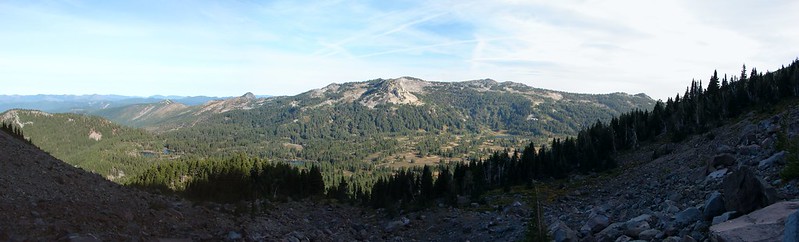
There are many other attractions in the park though including five named lakes, the South Fork Breitenbush River, and wildflower meadows (If you time it right). We had visited all the lakes and the river and seen some of the wildflowers, but we had never headed toward the mountain itself. I decided that was what I was going to do on this visit so I took the first well worn trail leading off to the right from the PCT and headed for Mt. Jefferson.
DSC07661

I wasn’t sure where this trail was going to lead as it climbed through a series of meadows.
DSC07662

Eventually I came to the tree line where a series of rock cairns appeared to lead up a ridge of loose rocks.
DSC07669

I kept going following the cairns as best as I could. As I was climbing I noticed a fellow hiker higher up along the ridge. The view behind was getting better by the minute as the elevation gain was allowing for a great look down at Jefferson Park.
DSC07671_stitch

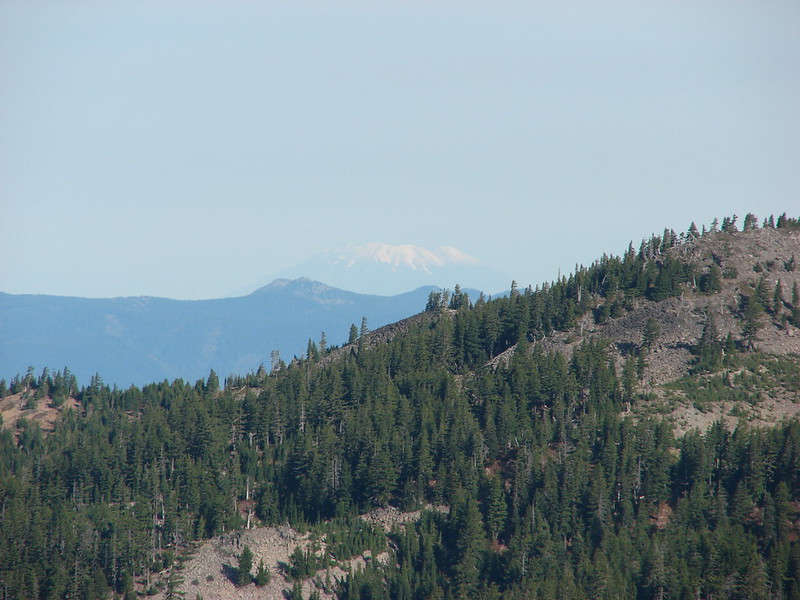
Soon I could see Mt. St. Helens with a fresh ring of snow on its upper reaches.
DSC07675

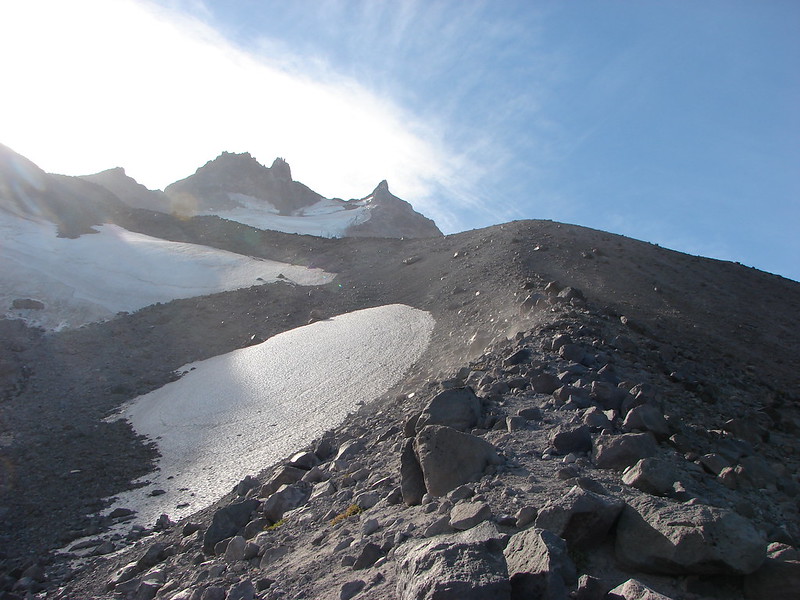
The final push to the crest of the ridge was steep and full of loose footing and the wind was whipping up dust devils.
DSC07681

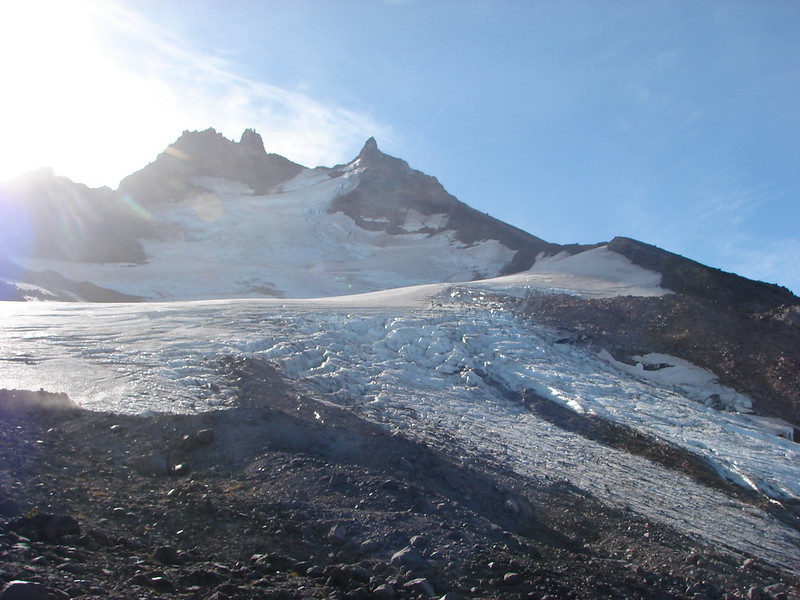
The wind had been fairly strong but it was nothing compared to the gusts that met me as when I finally gained the ridge crest. It nearly knocked me off balance so I got low and found a nice big rock to sit down on. The other hiker was about 30 yards up the ridge doing the same thing. We were at the foot of the Jefferson Park Glacier staring up at the summit of Mt. Jefferson.
DSC07694
DSC07695

Unfortunately the Sun was also almost directly in front of us making pictures difficult in that direction but the view back toward Jefferson Park did not have that same problem. Mt. Hood and Mt. Rainier had joined Mt. St. Helens on the horizon and the entirety of Jefferson Park was spread out below.
DSC07688_stitch

Mt. Rainier & Mt. Hood beyond Park Butte
DSC07685

DSC07684

To the northwest I could see Triangulation Peak and Bocca Cave where we had been about a month earlier. https://wanderingyuncks.wordpress.com/2014/09/14/triangulation-peak-boca-cave-via-cheat-creek/
DSC07713

It appeared that it would have been possible to continue east up the ridge along the glacier but the wind was blowing too hard to attempt going any further so I began my descent back down into the park. Once I had made it back down into the meadows I turned right on the first good trail I came to thinking I had hit the PCT already. It was still early enough I had decided to head across the park and visit Russell Lake and hoped to return past the other four named lakes. I quickly realized that I wasn’t on the PCT and I had taken one of the use trails that crisscross through the park. I decided to continue along it as it was leading me in the correct direction for the lake through a series of meadows. I even found some aster still in bloom along the way.
DSC07730

DSC07735

DSC07734

DSC07737

DSC07739

DSC07740

I ended up at the SE end of Russell Lake which was perfect since we had not been to this side of the lake on our previous trips.
DSC07744

Again the Sun was in a position to wash out some of the picture but the the view from the lake was as amazing as ever.
DSC07746_stitch

DSC07752

I walked around the north end of the lake and located the PCT which I turned left on and started to head back. Near the South Fork Breitenbush River I was surprised to see a single paintbrush still blooming in the middle of a meadow.
DSC07754

When I reached the South Breitenbush Trail I left the PCT and headed west. As the trail began descending a small hillside toward the river I turned left at a switchback marked with a rock cairn. This trail led to Park Lake.
DSC07759_stitch

Staying to the left of Park Lake I followed the path up to Rock Lake.
DSC07764_stitch

DSC07768_stitch

And then continued on to Bays Lake.
DSC07772_stitch

I took a break at Bays Lake and soaked my feet for a bit before heading to the East and Scout Lake.
DSC07786_stitch

DSC07793

DSC07799_stitch

Just a short distance to the East of Scout Lake I was back on the PCT right where I had left it that morning. It was time to say goodbye to Jefferson Park for another year.
DSC07808_stitch

On the way back down to the trailhead I was finally able to get a few pictures of the mountain without interference from the Sun.
DSC07823

The ridge that I had been on earlier.
DSC07825

The only real bummer of the day was not having Heather there to hike with. This was my first solo hike and I have to say I really missed sharing the experience with her. I found it hard to just stop and enjoy the surroundings as much as we normally would. It was an interesting experience but hopefully not one that happens often. Happy Trails!

flickr: https://www.flickr.com/photos/9319235@N02/sets/72157648750622555/
facebook: https://www.facebook.com/media/set/?set=a.10205245182556296.1073741916.1448521051&type=1

Categories
High Cascades Hiking Mt. Jefferson Area Oregon Trip report

Marion Lake and Marion Falls

When it was time to say goodbye to Central Oregon we packed up and headed for one final hike. We chose Marion Lake as the destination hoping for some good fall colors along the way. We passed over the crest of the Cascade Mountains returning to the west side and the Mt. Jefferson Wilderness. The Marion Lake Trail set off through a green forest before entering the wilderness area.
DSC07479

DSC07482

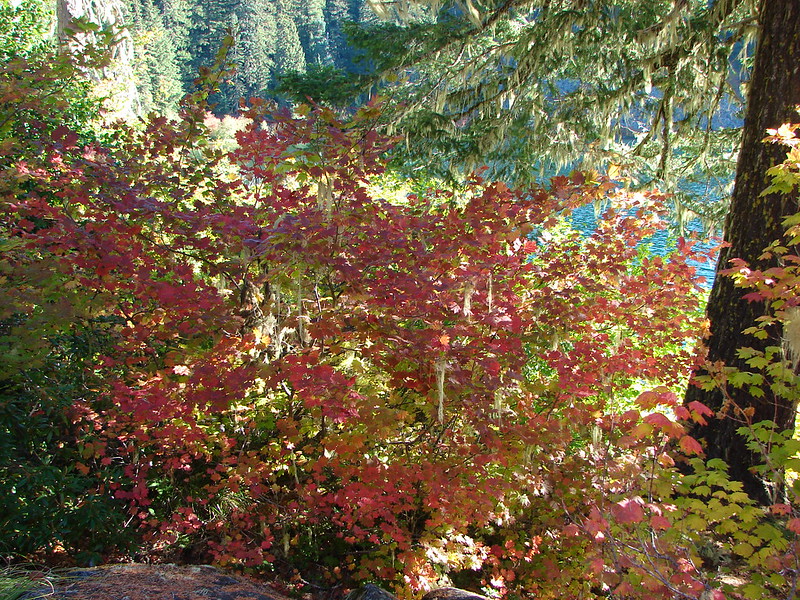
We soon found the fall colors we were looking for as we reached Lake Ann.
DSC07484

DSC07489

Lake Ann

A half mile from Lake Ann we took the Marion Outlet Trail in search of the unmarked side trail to Marion and Gatch Falls.
DSC07496

The side trail was about 200yds from the junction and we followed toward Marion Creek and the falls. Someone had put a sign up indicating a yellow jacket nest along the trail so we bypassed that section rejoining the path a bit beyond an overlook of the falls. The path continued steeply down to the base of Marion Falls.
Marion Falls

DSC07504 Stitch

From Marion Falls it was just a short distance down to a view that included Gatch Falls (which some have argued is really a lower tier of Marion Falls).
Marion & Gatch Falls

After visiting the falls we continued toward Marion Lake. At a junction with the Blue Lake Trail we crossed Marion Creek hoping to get a view of Mt. Jefferson from across Marion Lake.
DSC07530

At the edge of a rock field that was ablaze in Fall colors we followed a path down to the lake shore where there was a nice view of Mt. Jefferson to the North.
DSC07555

DSC07540 Stitch

DSC07539

There was an Osprey circling the lake apparently looking for breakfast.
Osprey over Marion Lake

We then recrossed the lake’s outlet and headed toward Marion Lake’s day use peninsula. As we made our way around the lake Three Fingered Jack came into view.
DSC07558

From the peninsula both Mt. Jefferson and Three Fingered Jack were visible but never at the same time.
DSC07569

DSC07565 Stitch

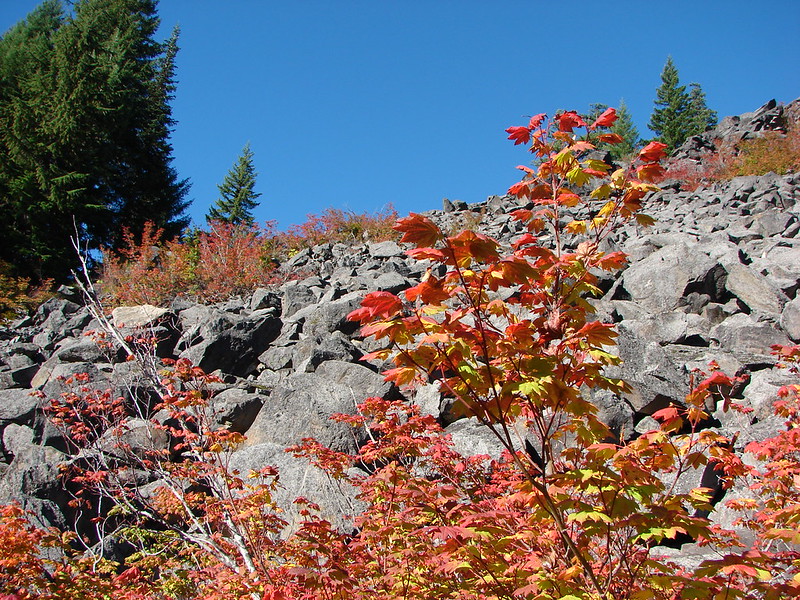
After leaving the peninsula the trail crossed over another rock field with even more colorful leaves and many small birds.
Fall colors along Marion Lake

DSC07581

DSC07584

Looking back we could see the peninsula and Three Fingered Jack.
DSC07587

After leaving the lake shore we came to another trail junction which was unsigned. We turned left to complete the small loop back to the earlier junction just prior to the Marion Falls side trail. There was more rocky hillsides and orange leaves along this portion.
DSC07590

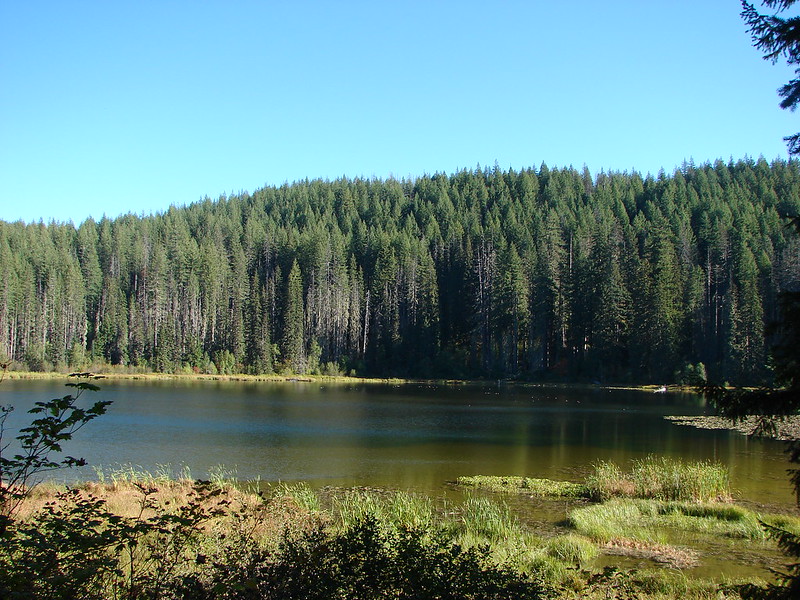
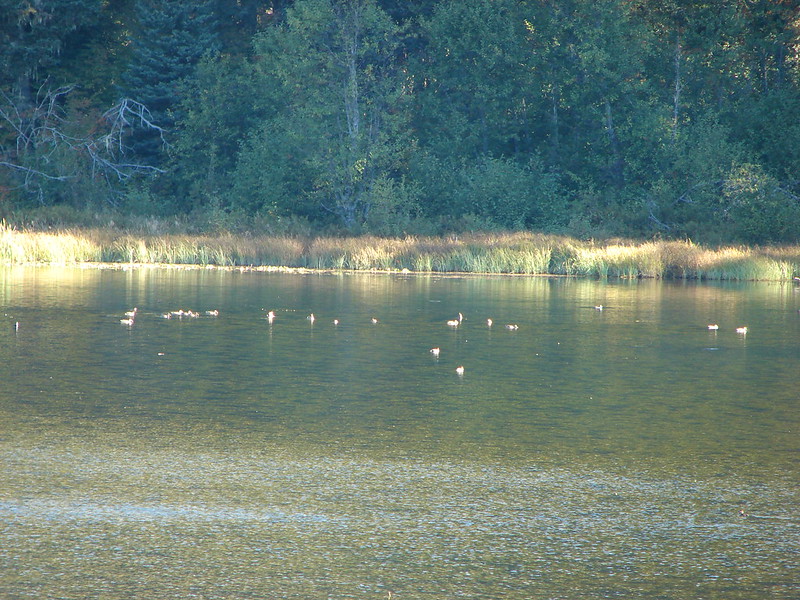
We returned to Lake Ann where we found a good number of ducks floating on the far side of the lake.
DSC07591

DSC07593

From there we finished off the final 1.8 miles of our vacation hiking. It was time to go back and get ready for my Grandmother’s 90th birthday party the next day. Happy Trails (and happy birthday Grandma!)

flickr: https://www.flickr.com/photos/9319235@N02/sets/72157648323073921/
facebook: https://www.facebook.com/media/set/?set=a.10205149523124870.1073741915.1448521051&type=1