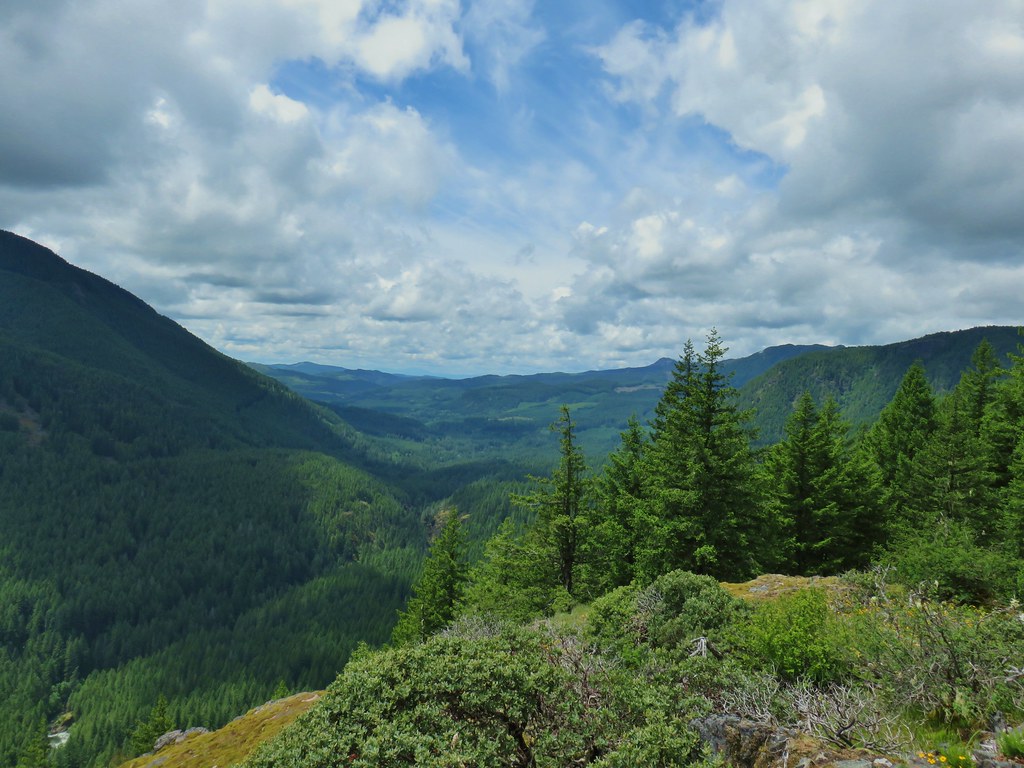
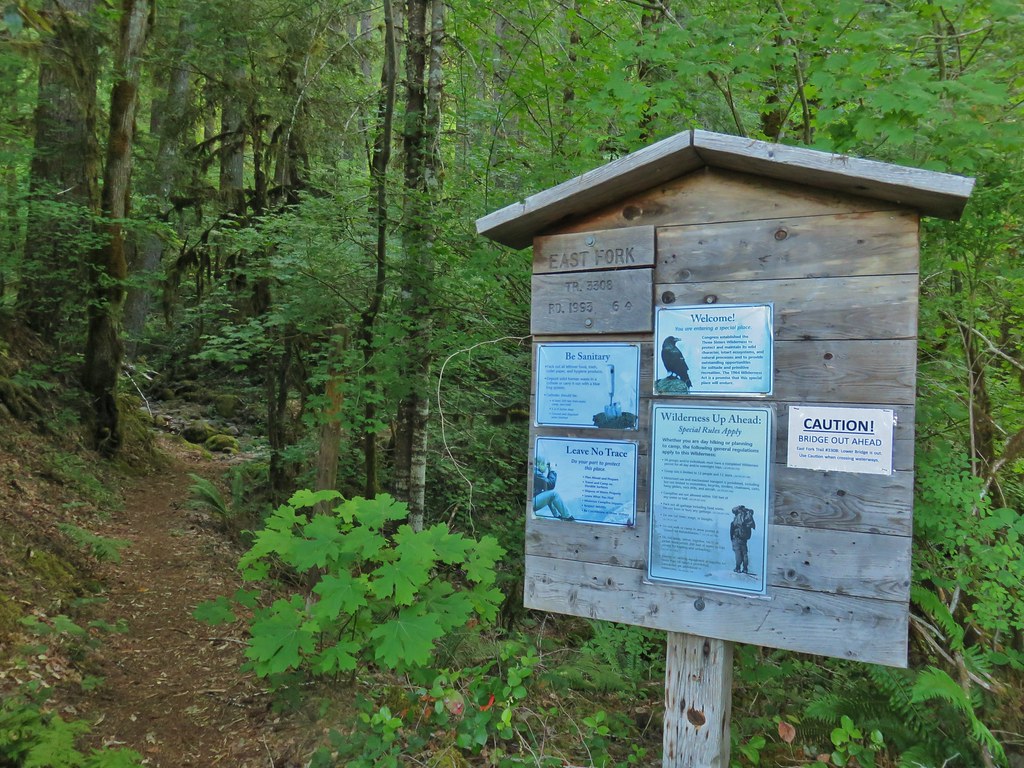
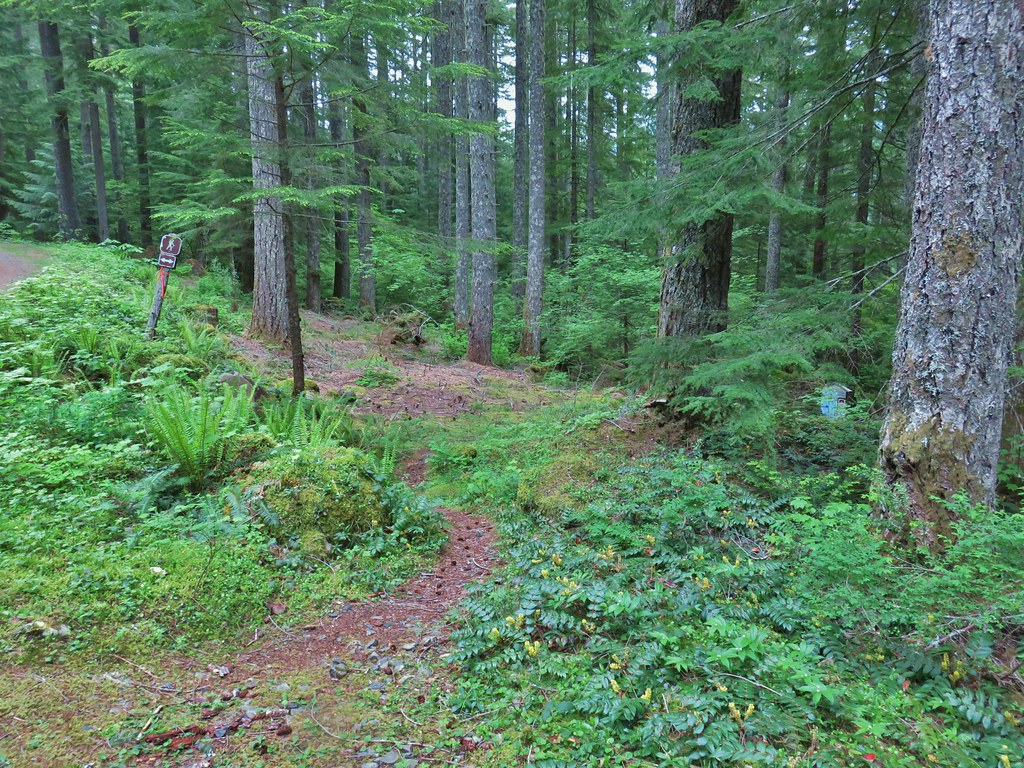
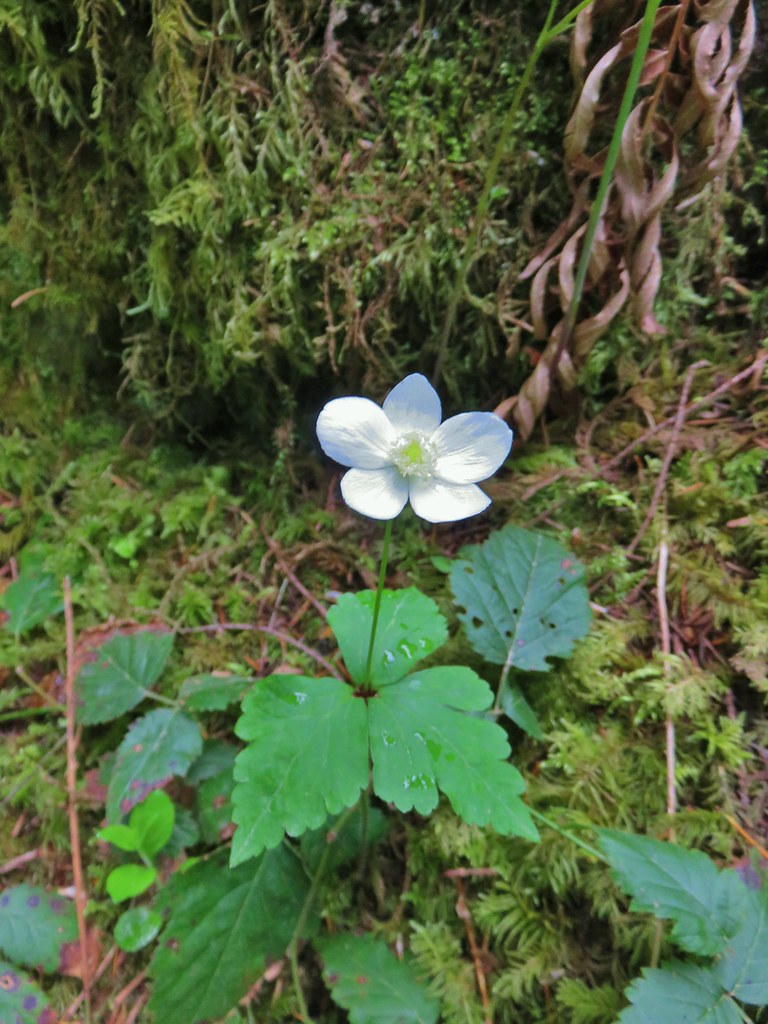
Categories
High Cascades Hiking Mt. Jefferson Area Oregon Trip report

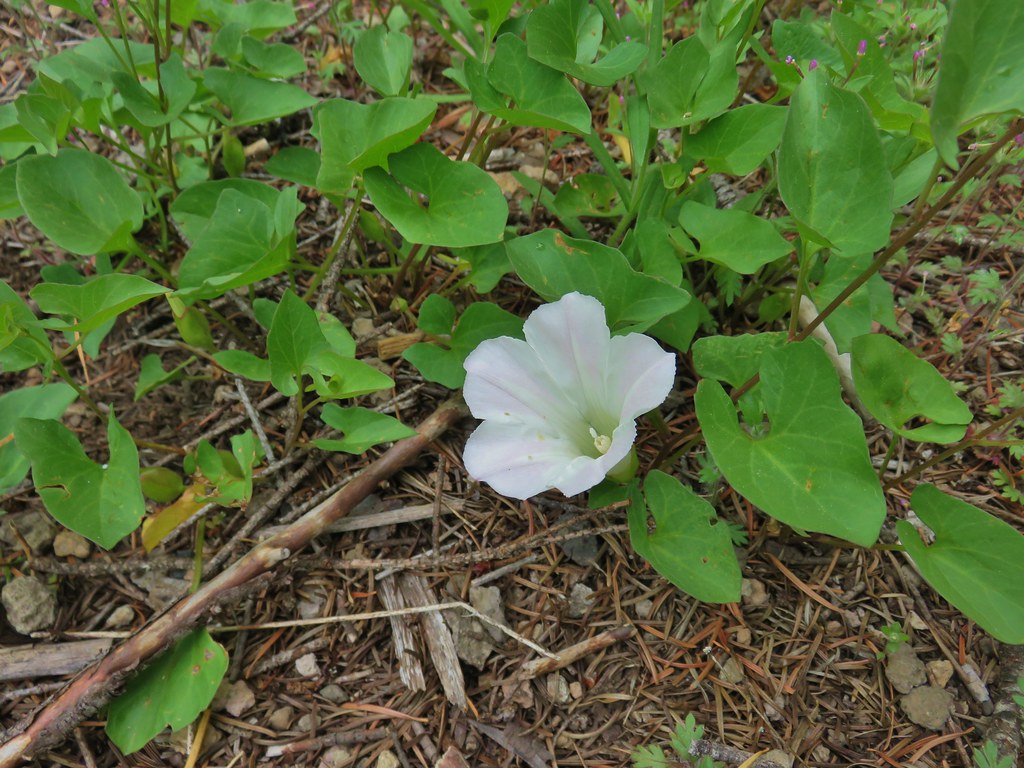
Green Ridge – 6/20/2020

**Note the 2020 Green Ridge Fire burned a portion of this hike.**

After three nice days the weather turned on us again and what had been a pleasant forecast for Saturday turned to rain everywhere I looked on the west side of the Cascades so we swapped a planned hike in Washington’s Trapper Creek Wilderness for a trip over Santiam Pass to Green Ridge where there was just the slightest chance of showers.

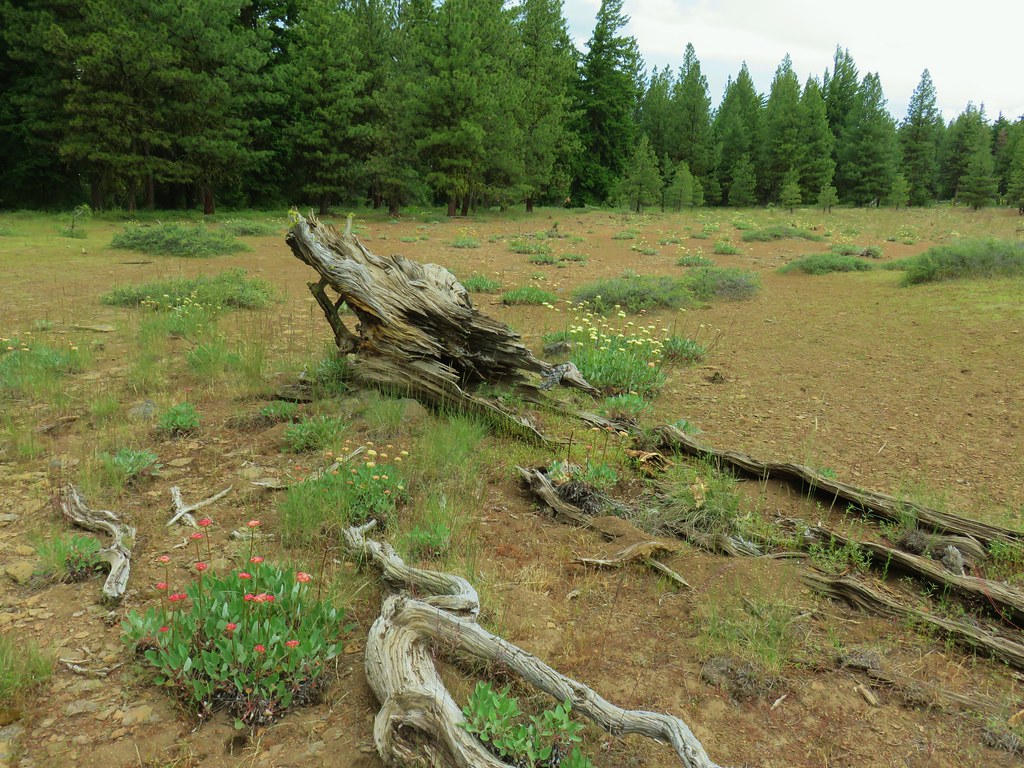
The Green Ridge escarpment sits at the eastern edge of the High Cascades graben along the Green Ridge Fault. With the ridge being the transition zone between the High Cascades and the High Desert the area is an interesting mix of trees and vegetation. The trail is popular with equestrians and mountain bikers as it connects with various longer loop options.

To reach the trailhead that we began at we drove Highway 20 to FR 11 also known as Green Ridge Road (2 miles east of Black Butte Ranch or 5.8 miles west of Sisters). We turned north onto FR 11 at a pointer for Indian Ford Campground and followed this paved road for 4.3 miles to an unmarked junction with FR 1120 at a curve. We turned left on the red cinder FR 1120 for 0.9 of washboard road to the trailhead on the left.
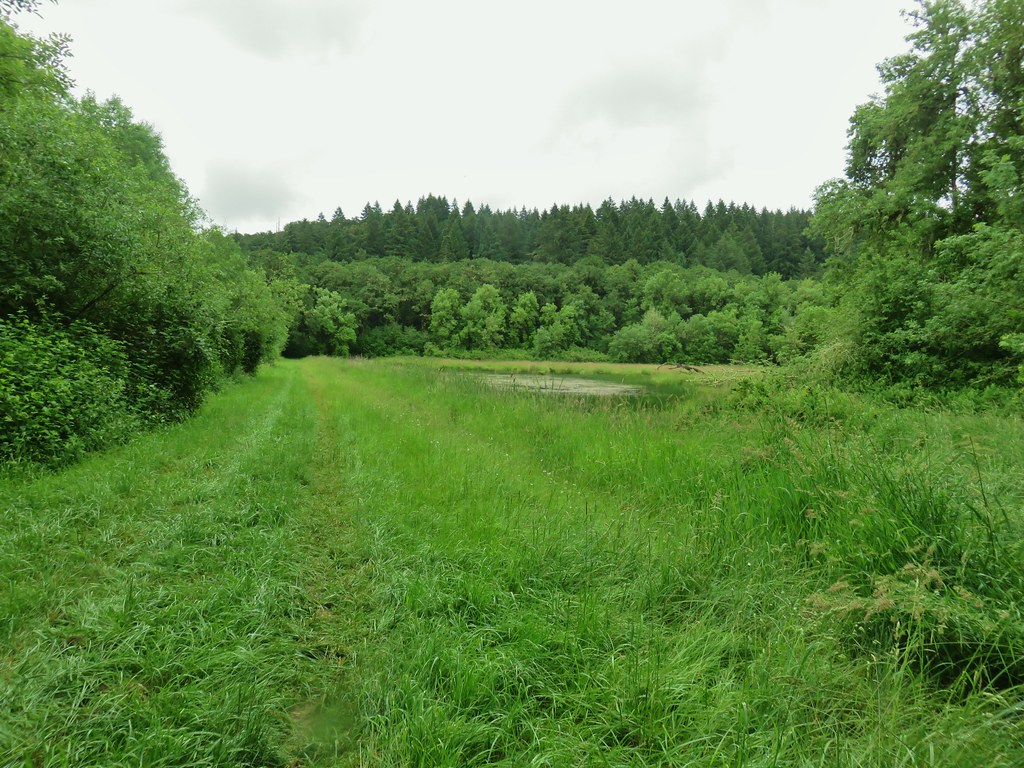
IMG_6913

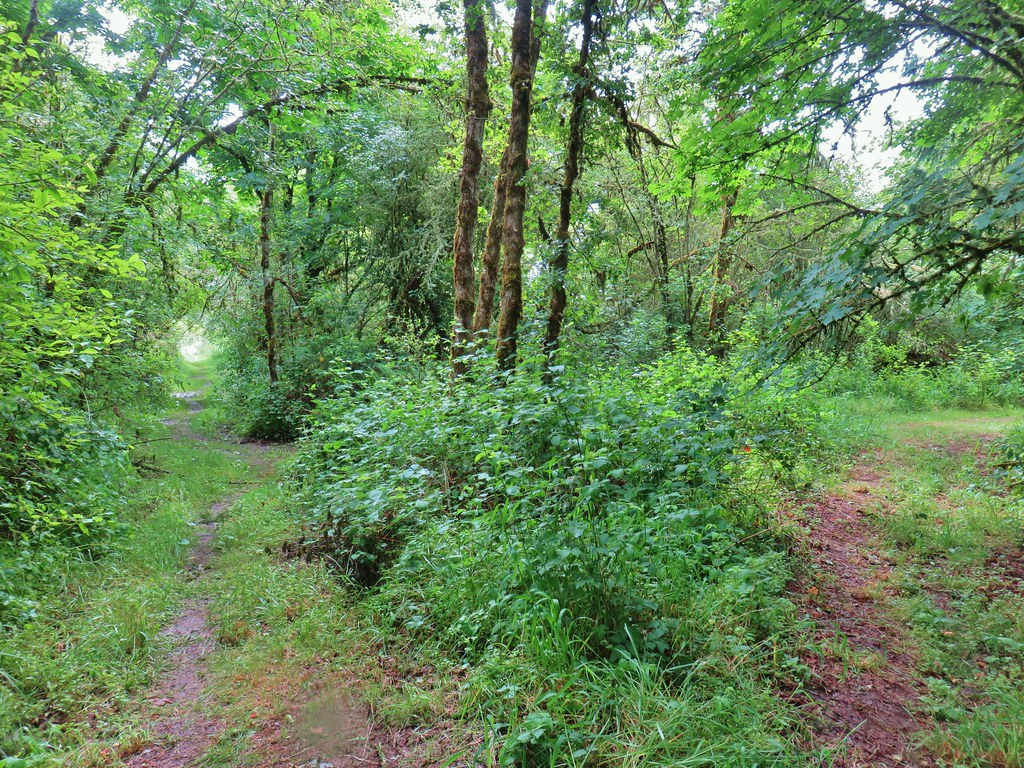
IMG_6914

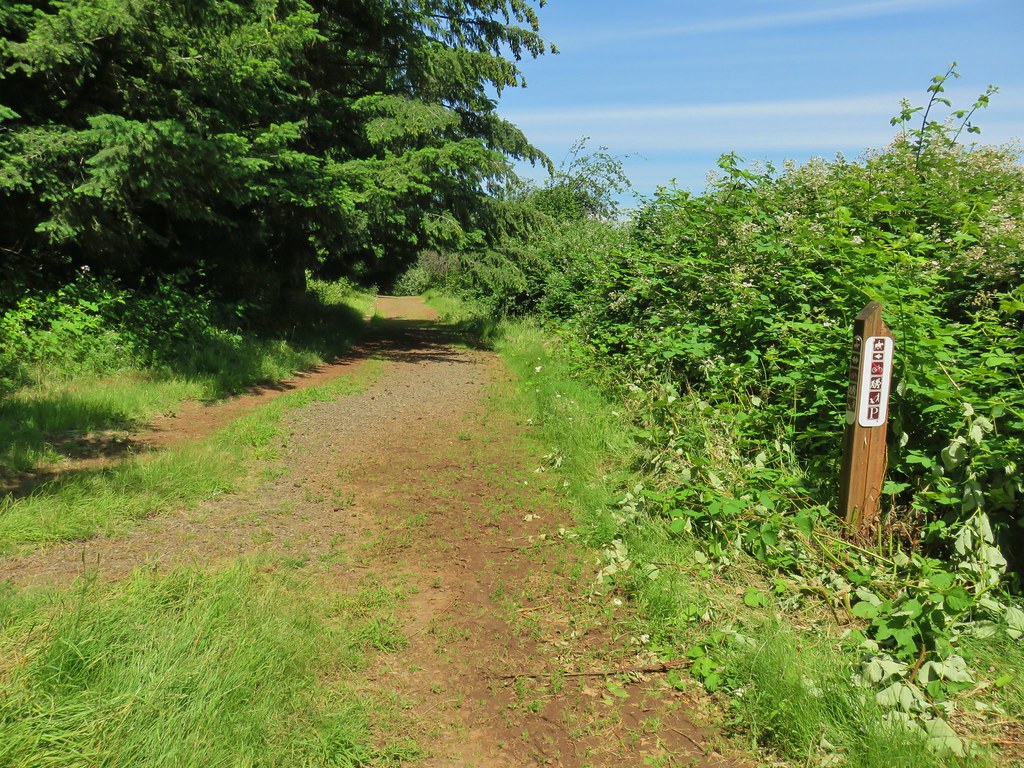
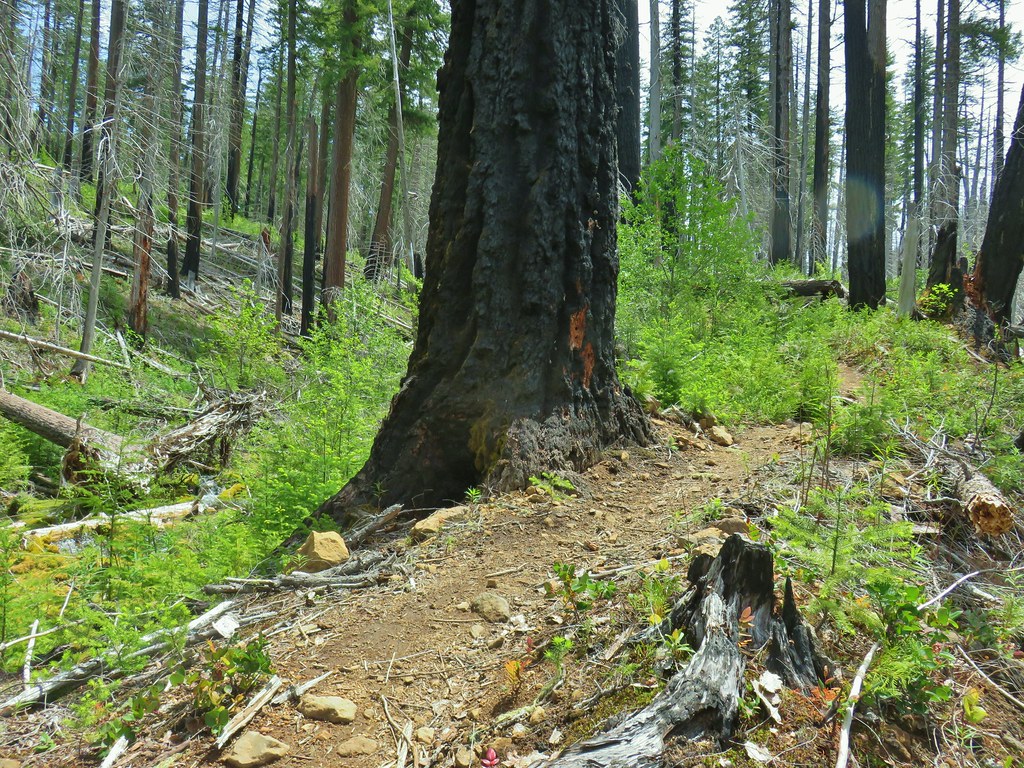
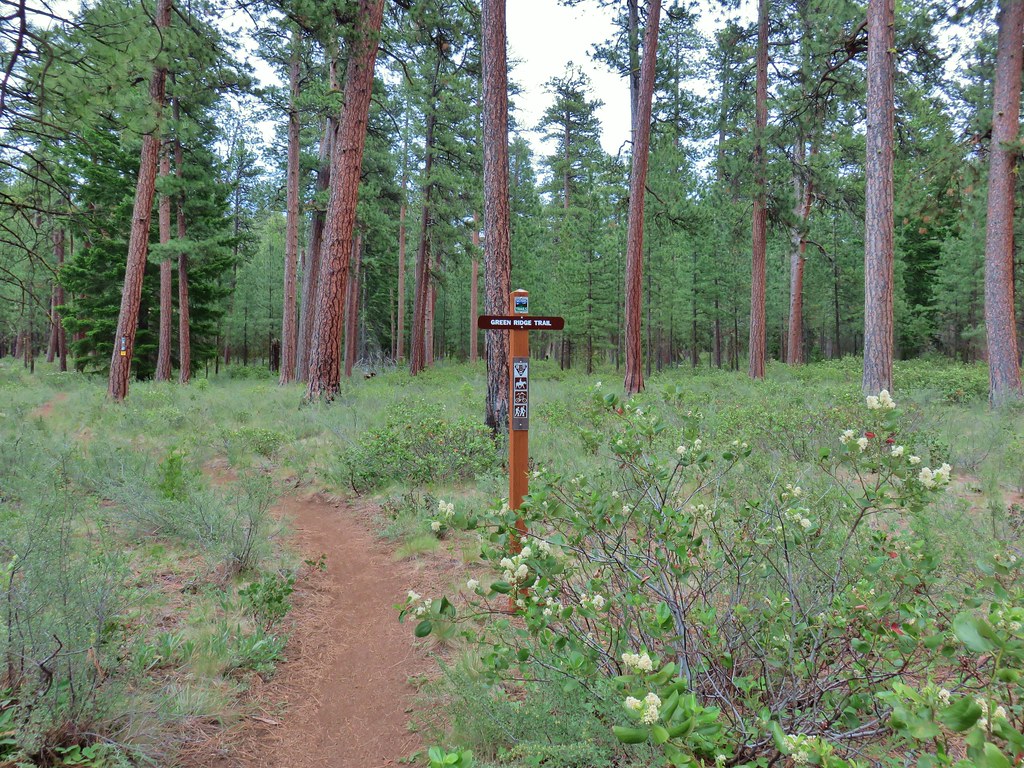
The Green Ridge Trail began on the far side of FR 1120 at a sign.
IMG_6931

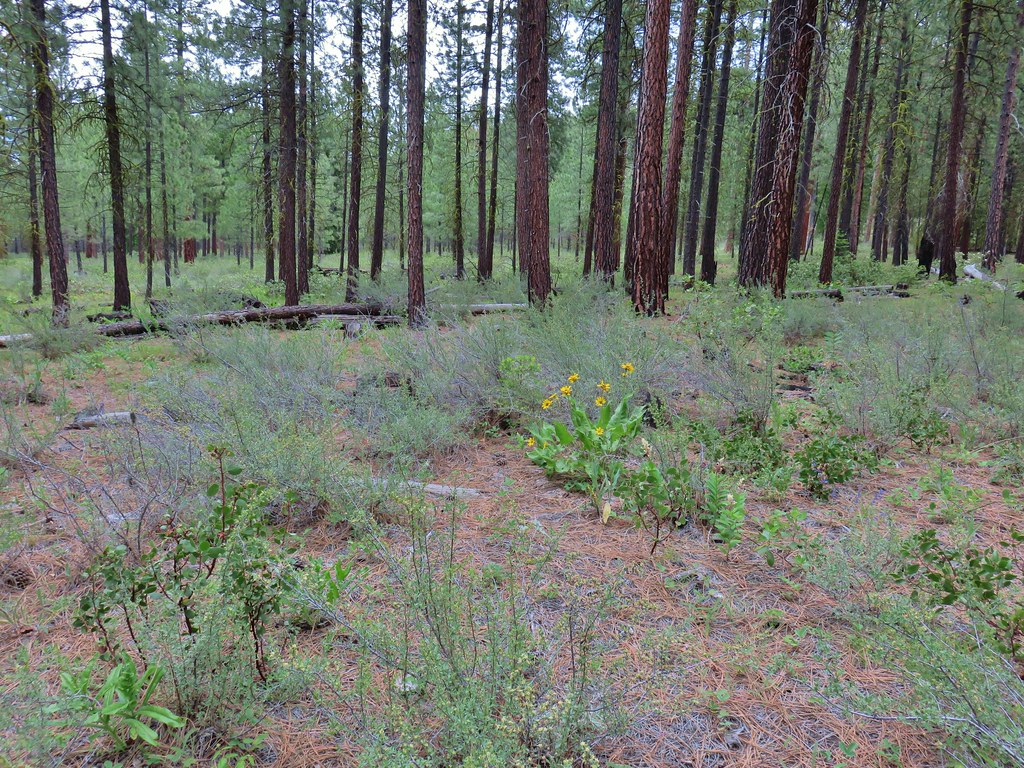
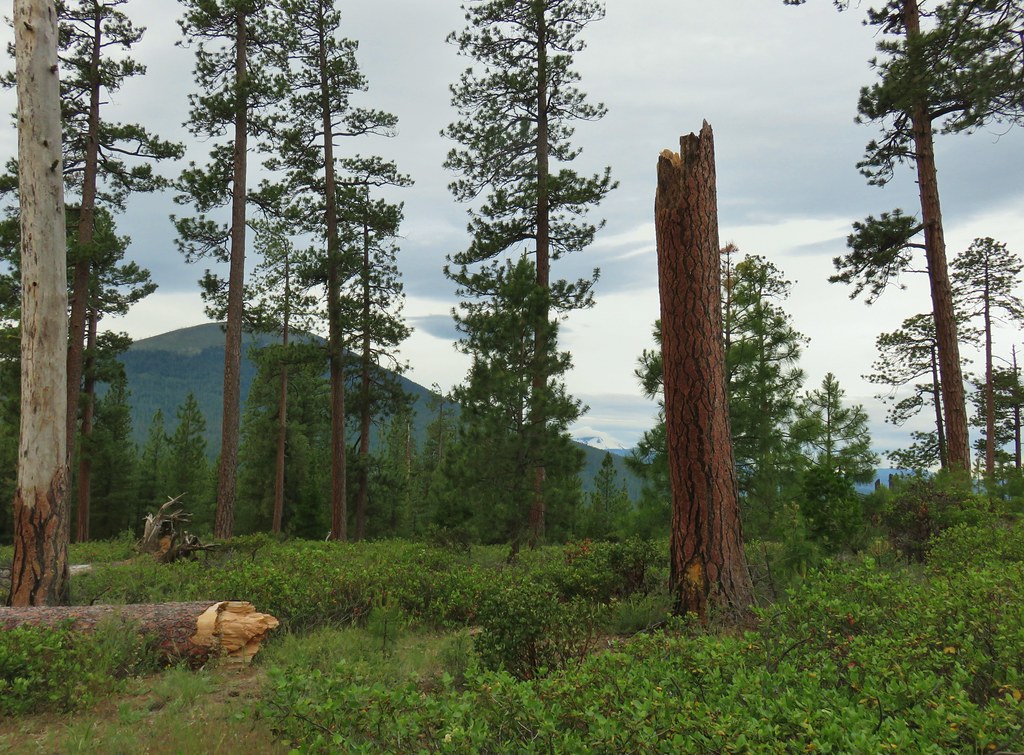
The trail passed through a forest of mostly ponderosa pine and a few scattered flowers.
IMG_6945Paintbrush

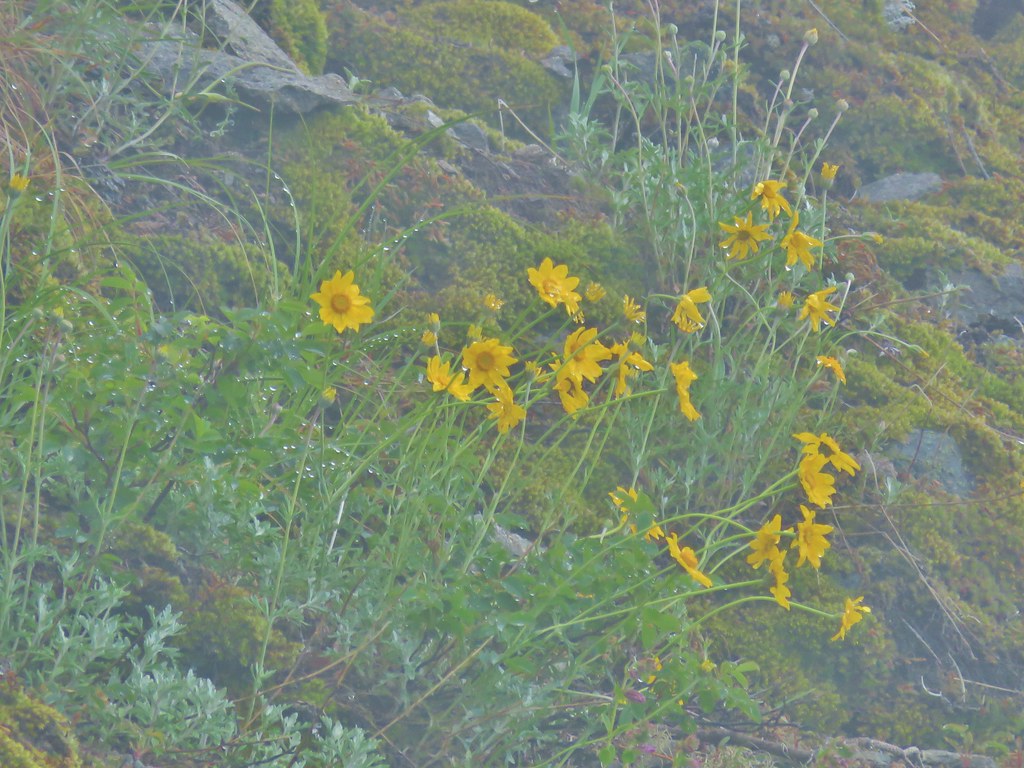
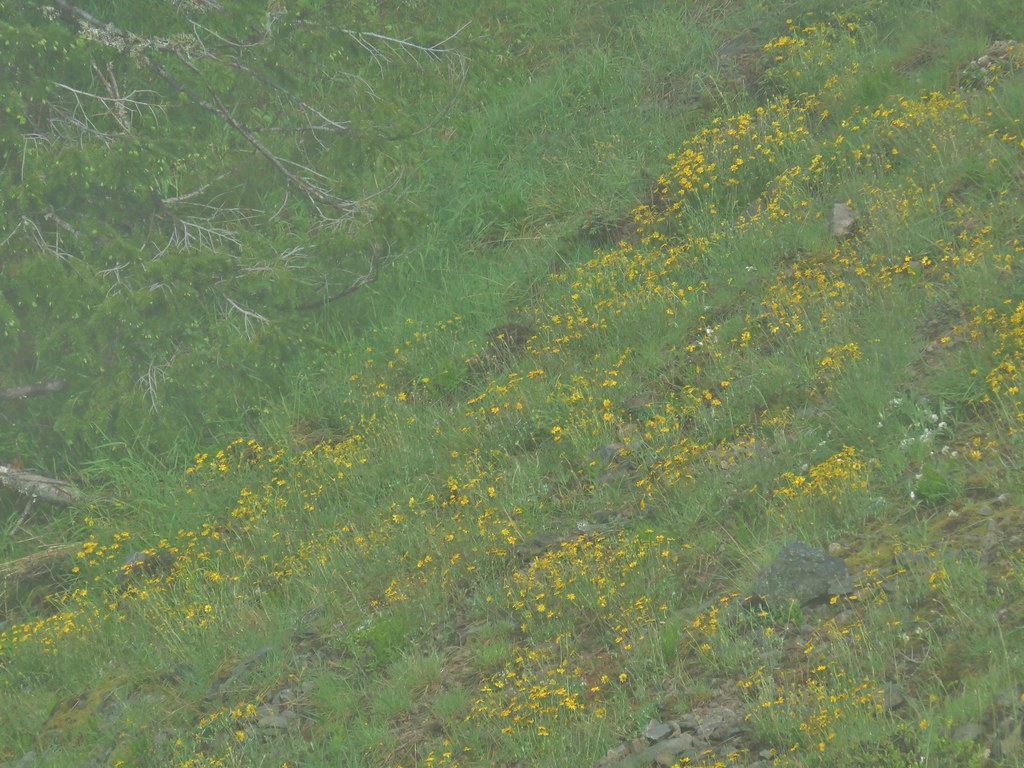
IMG_6956Balsamroot

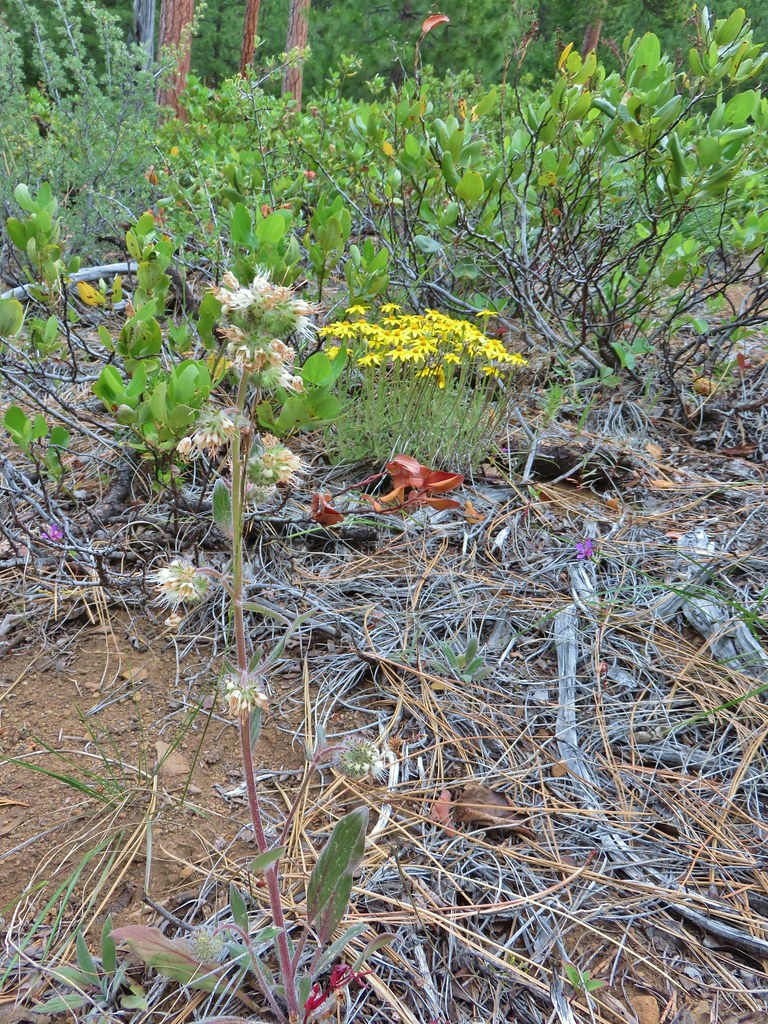
IMG_6971A phacelia, Oregon sunshine, and a little pink diamond clarkia.
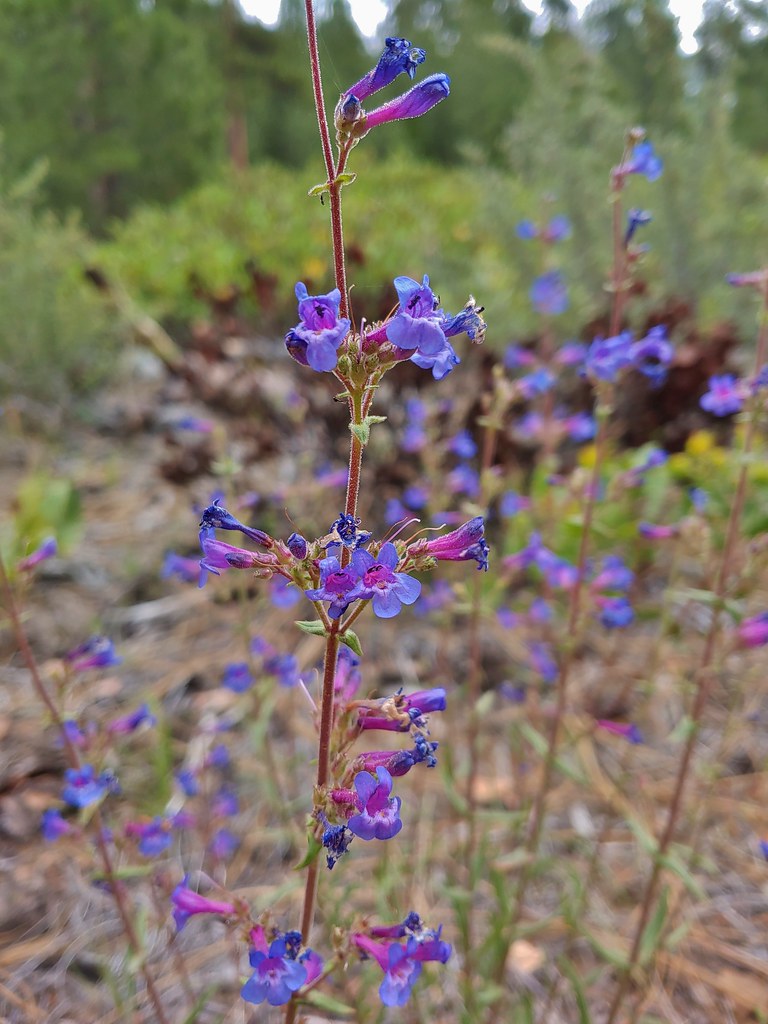
20200620_071037A penstemon

IMG_6977Washington lily

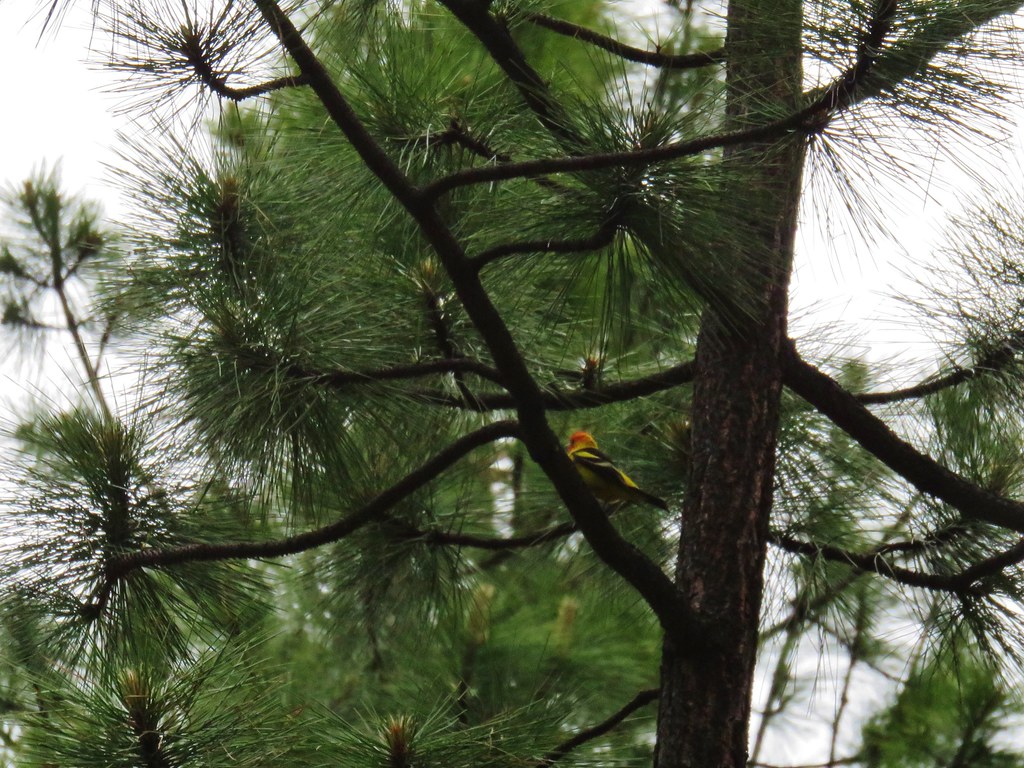
IMG_6955I couldn’t get a good shot of this western tanager but he was really colorful.

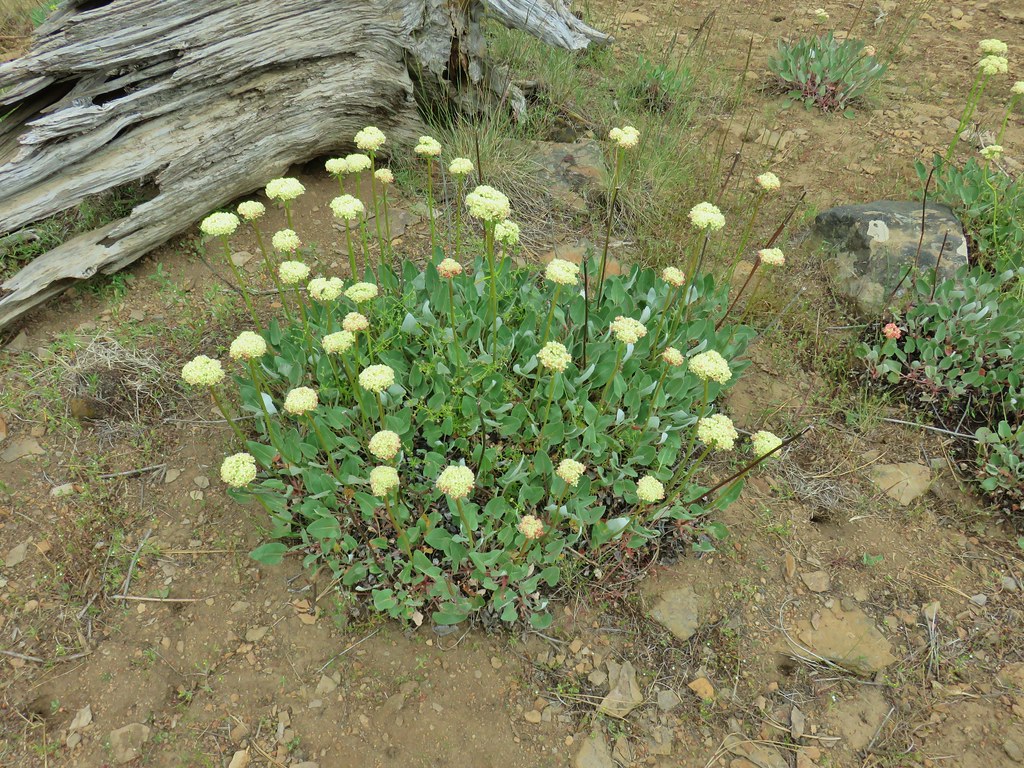
IMG_6995Buckwheat

IMG_6985Bird with breakfast

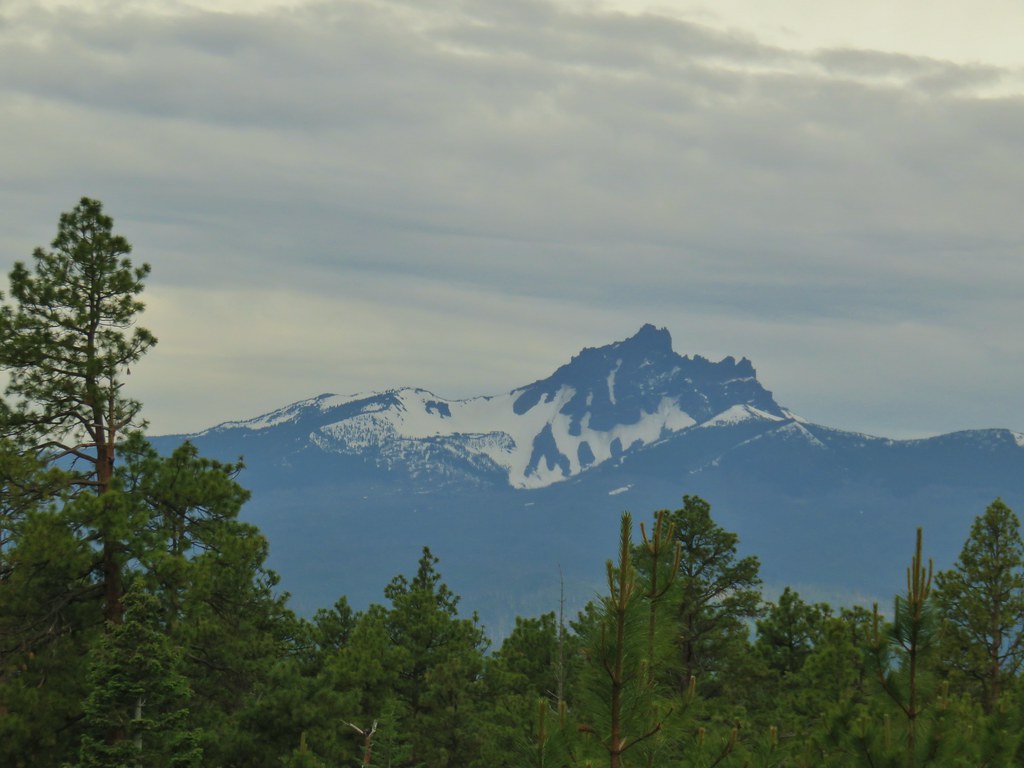
The trail soon began climbing gradually up the ridge via a long switchback. As we climbed we began to get views of the nearby Cascade peaks.
IMG_7012Three Fingered Jack

IMG_7013

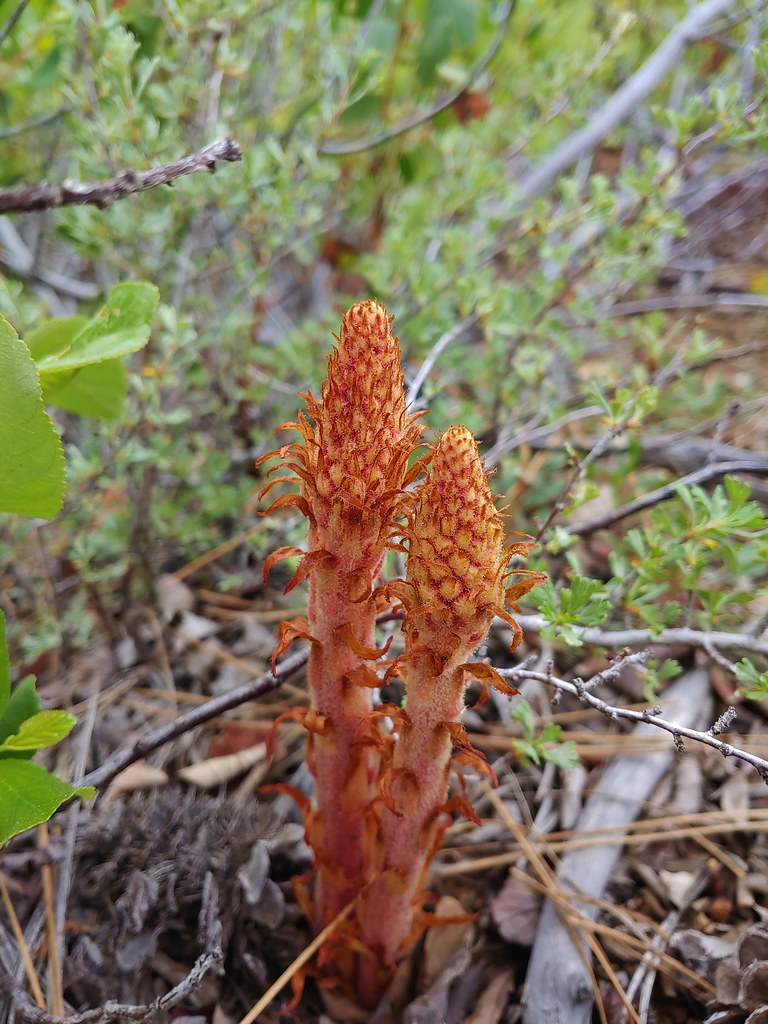
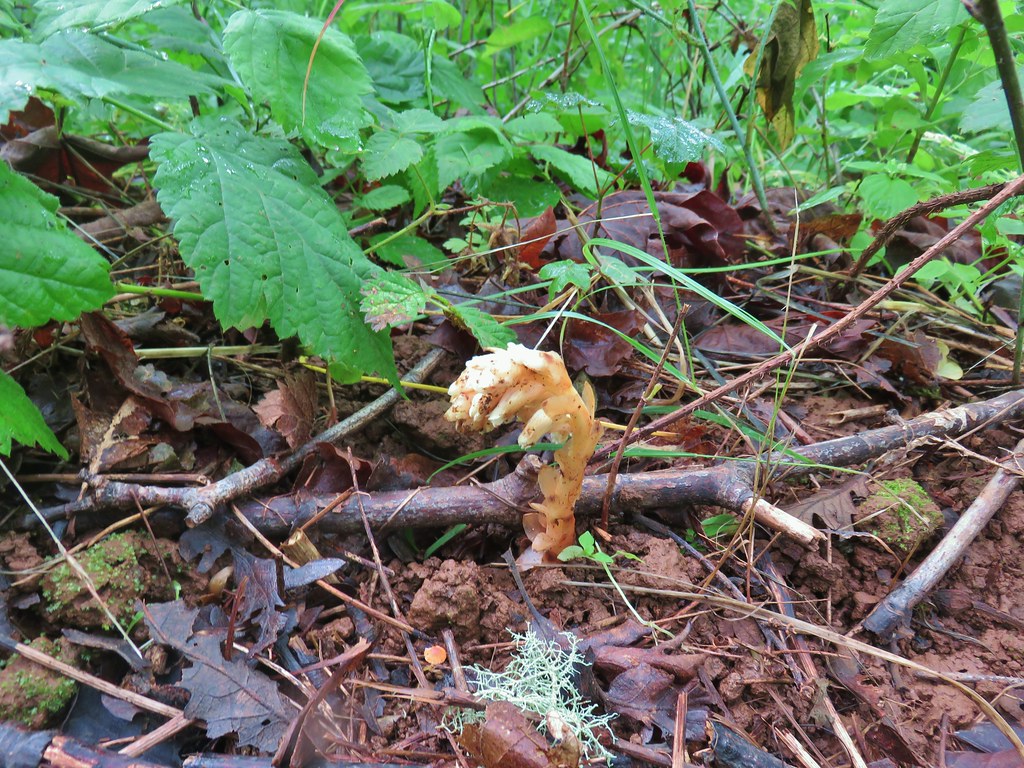
20200620_071856Pinedrops

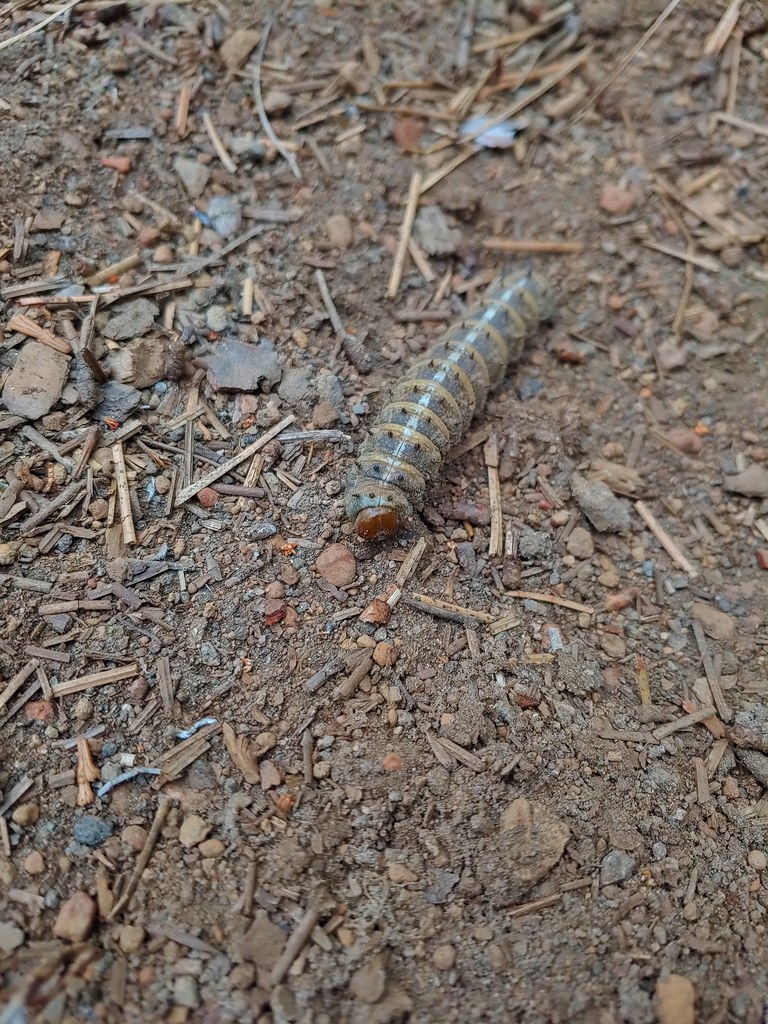
We also began to notice 3-inch long Pandora moth larva crawling across the trail.
20200620_072554

The larva spent spring feeding on ponderosa pines and are now burrowing into the ground where they will transform into pupae. They will then emerge next summer as adult moths. Based on studies of ponderosa pine tree rings up to 22 Pandora moth outbreaks have occurred in the last 600 years. When I was at Redmond High School in the late 80s/early 90s one of the outbreaks occurred and the number of the large moths was amazing.
20200620_072554

Many of the larva we saw would not be making it to adulthood as they seemed to be of particular interest to the resident ants of the area.

Three Fingered Jack was clear of clouds but the same couldn’t be said for Mt. Washington when it came into view over the shoulder of Black Butte (post).
IMG_7043

IMG_7046

While it was still climbing the trail began to level out as it followed the ridge south.
IMG_7047

IMG_7048

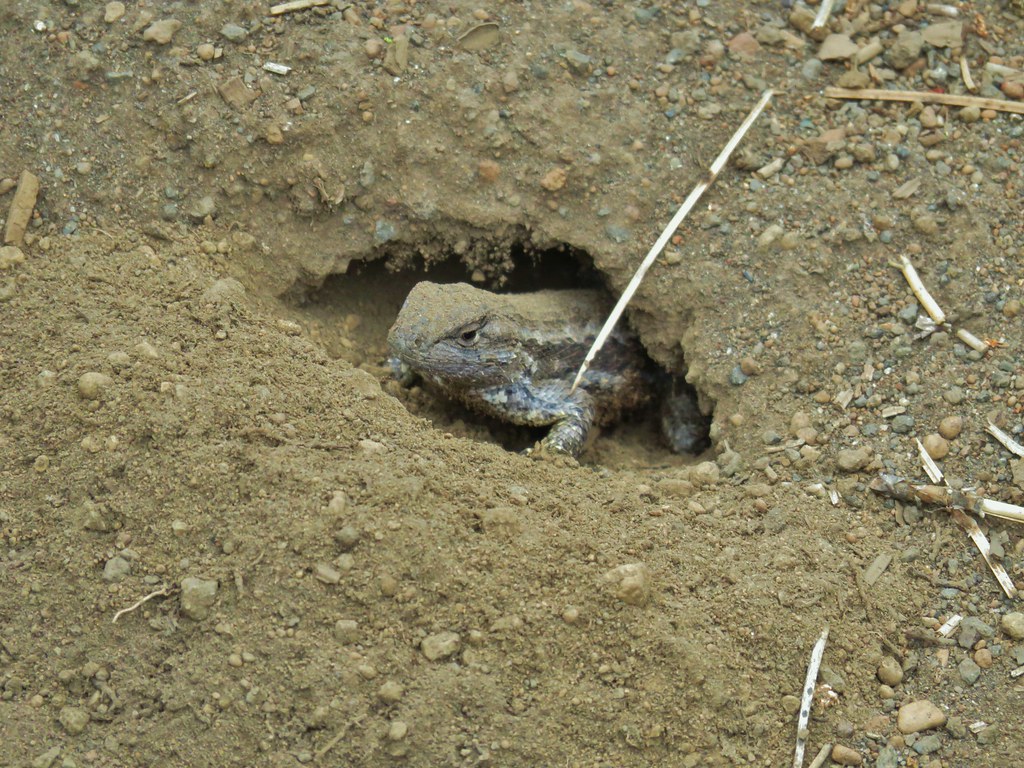
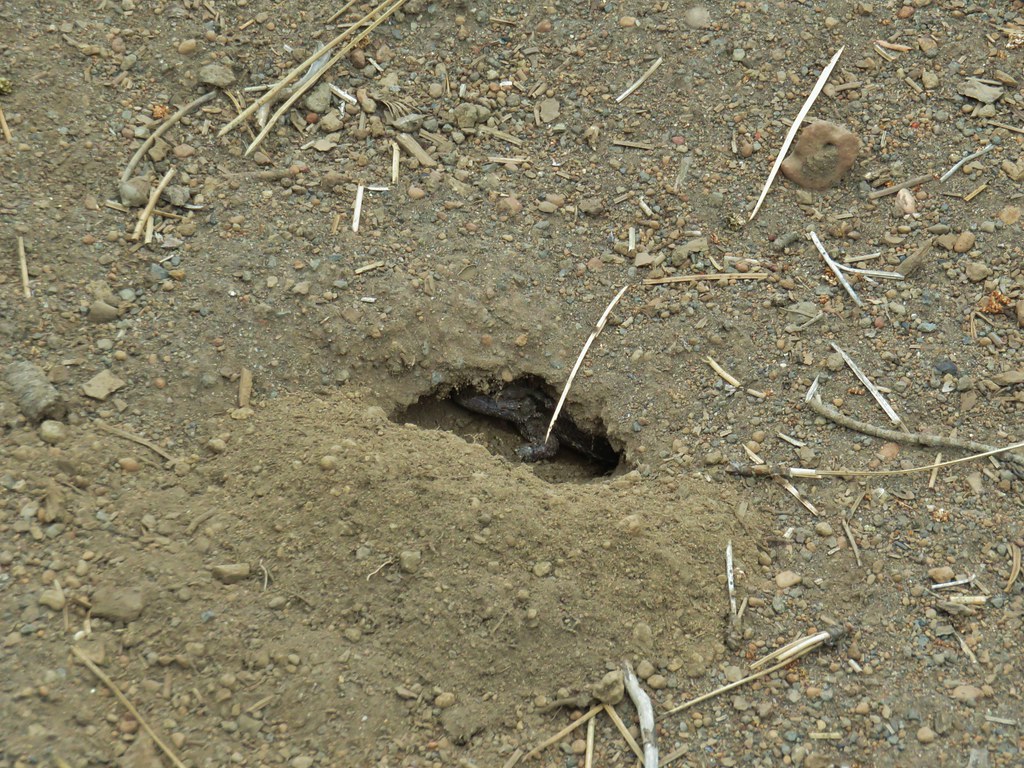
As I was watching the drama at my fleet playing out between the larva and the ants I spotted something in a hole in the middle of the trail.
IMG_7058

IMG_7067

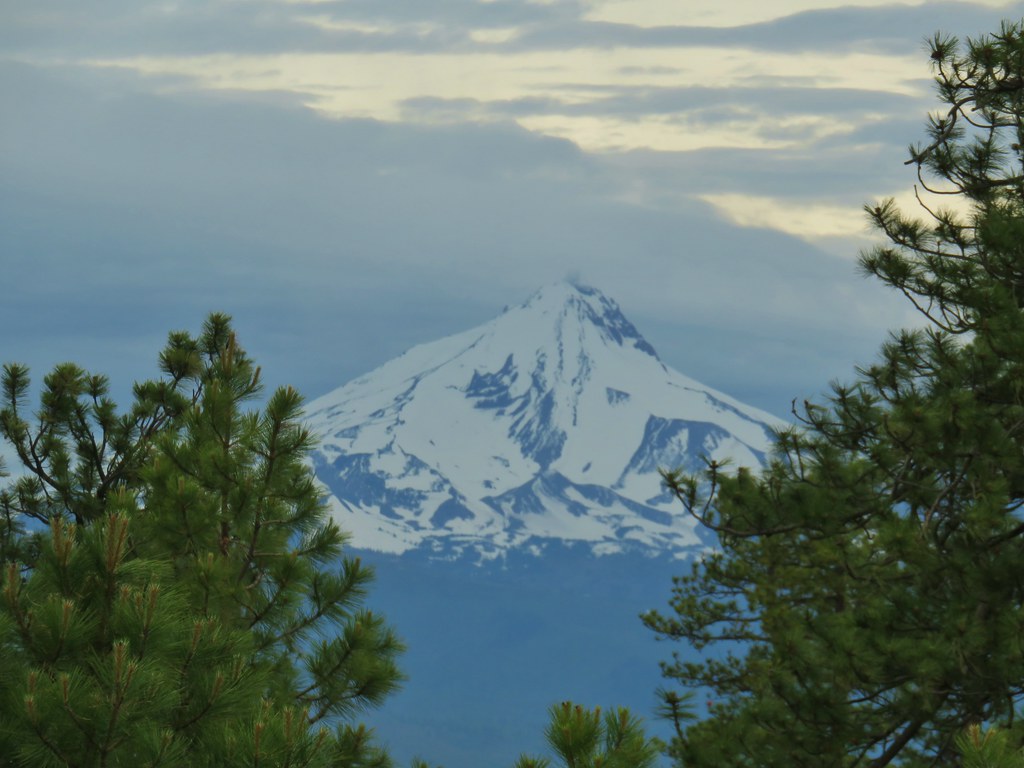
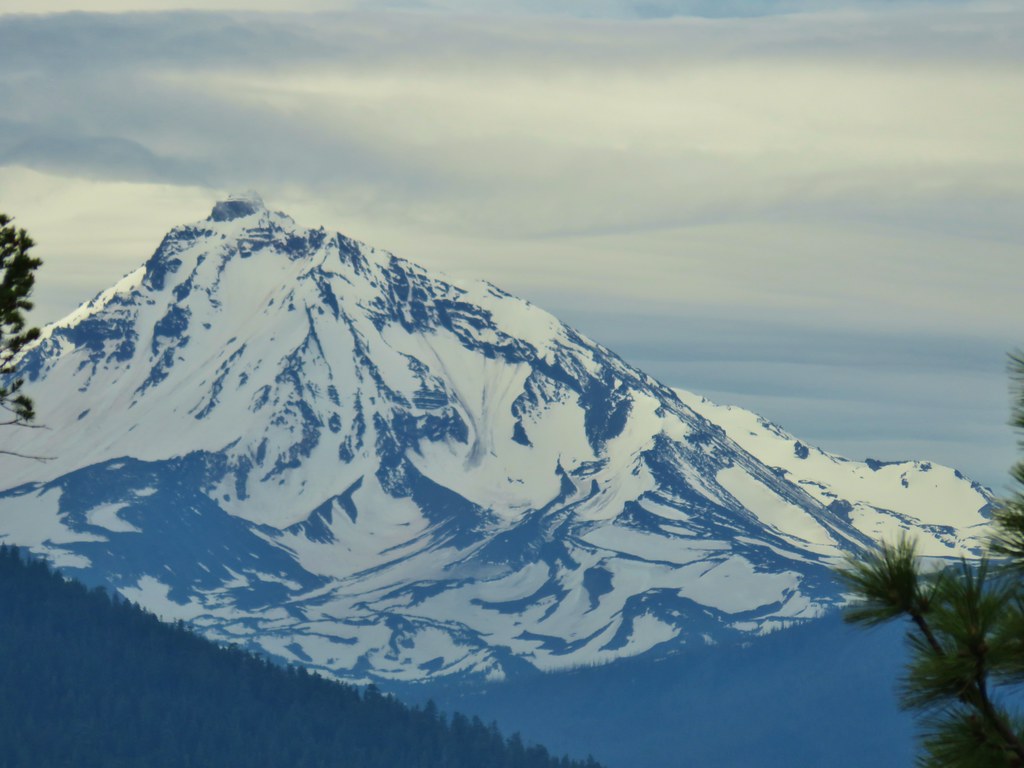
We shared a moment then the lizard scurried off into the sagebrush and we continued on. Mt. Jefferson soon joined the view and it too was relatively free of clouds for the time being.
IMG_7086

IMG_7087

20200620_075846

We spotted another familiar prominent feature along the Cascade crest as well.
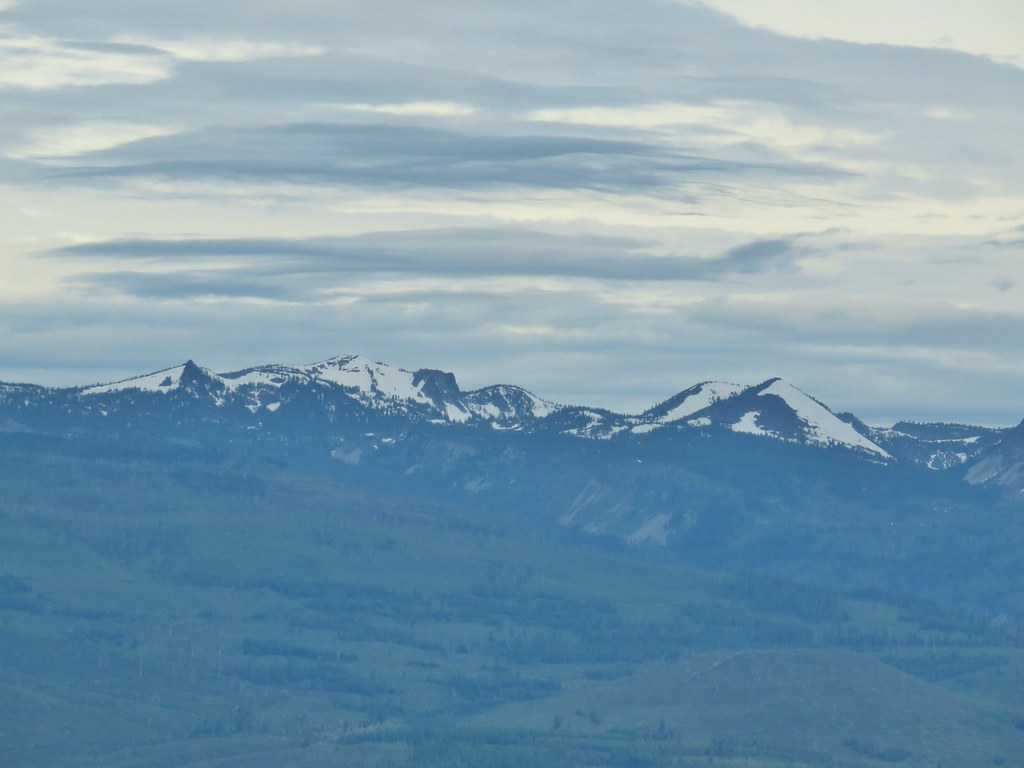
IMG_7084South Cinder Peak (post)

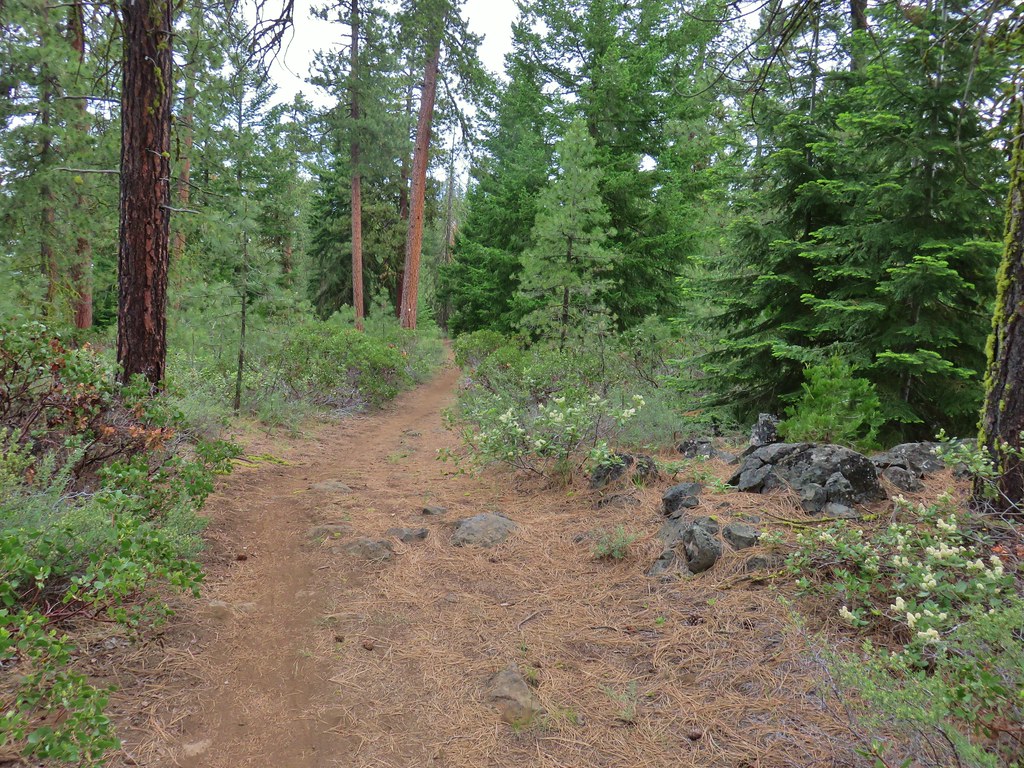
As we continued along the ridge the forest transitioned from the ponderosa pines to higher elevation furs and pines.
IMG_7106

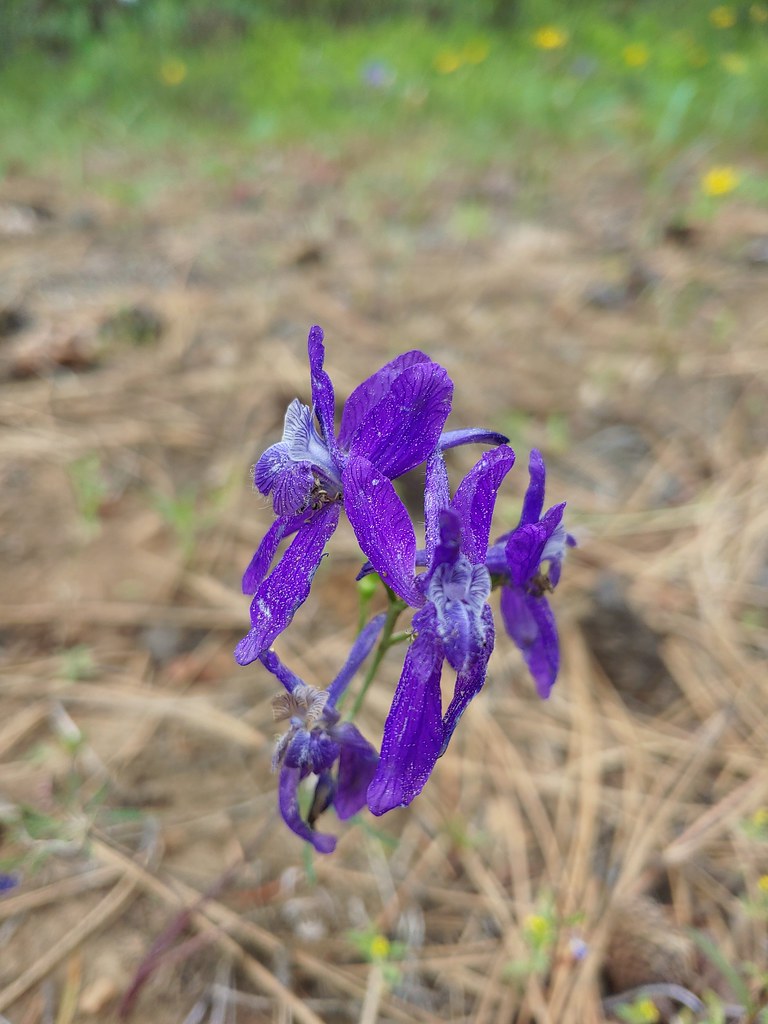
The flowers transitioned too and we were soon seeing a lot of purple larkspur red scarlet gilia, and white California stickseed as well as a few other flowers.
20200620_090342

IMG_7165

California stickseed

IMG_7163

IMG_7173

IMG_7195Lupine

IMG_7200Columbine

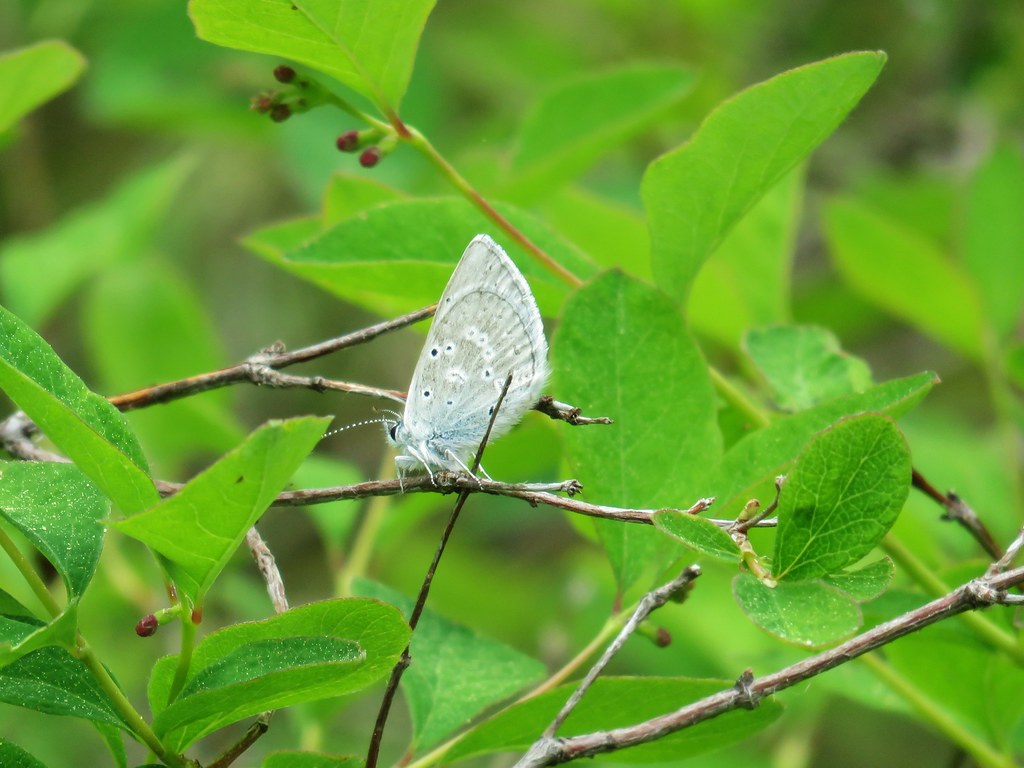
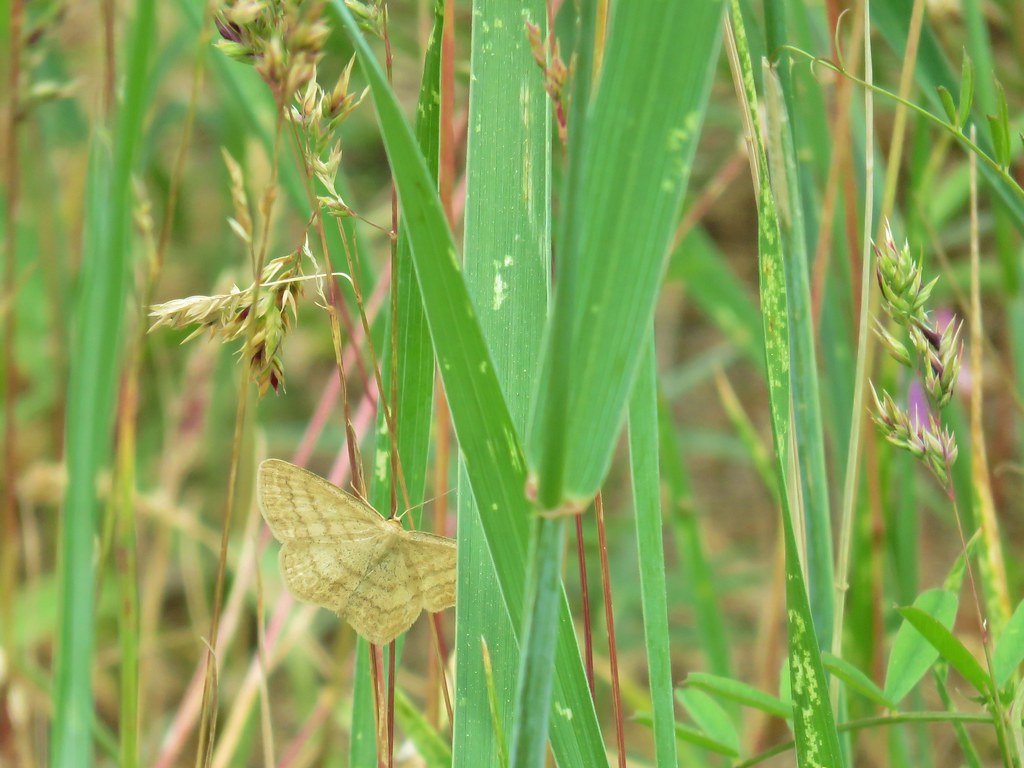
IMG_7206A moth but not a Pandora moth. 🙂

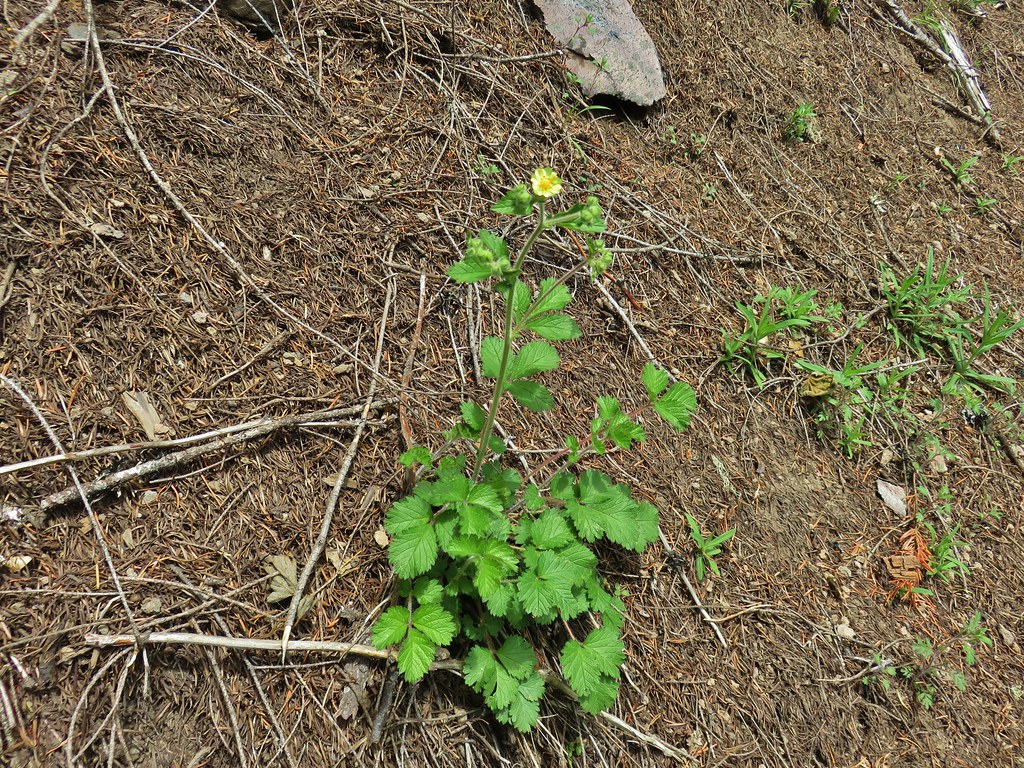
20200620_092042Sticky cinquefoil

20200620_091818Salsify

IMG_7225Tortoiseshell butterfly

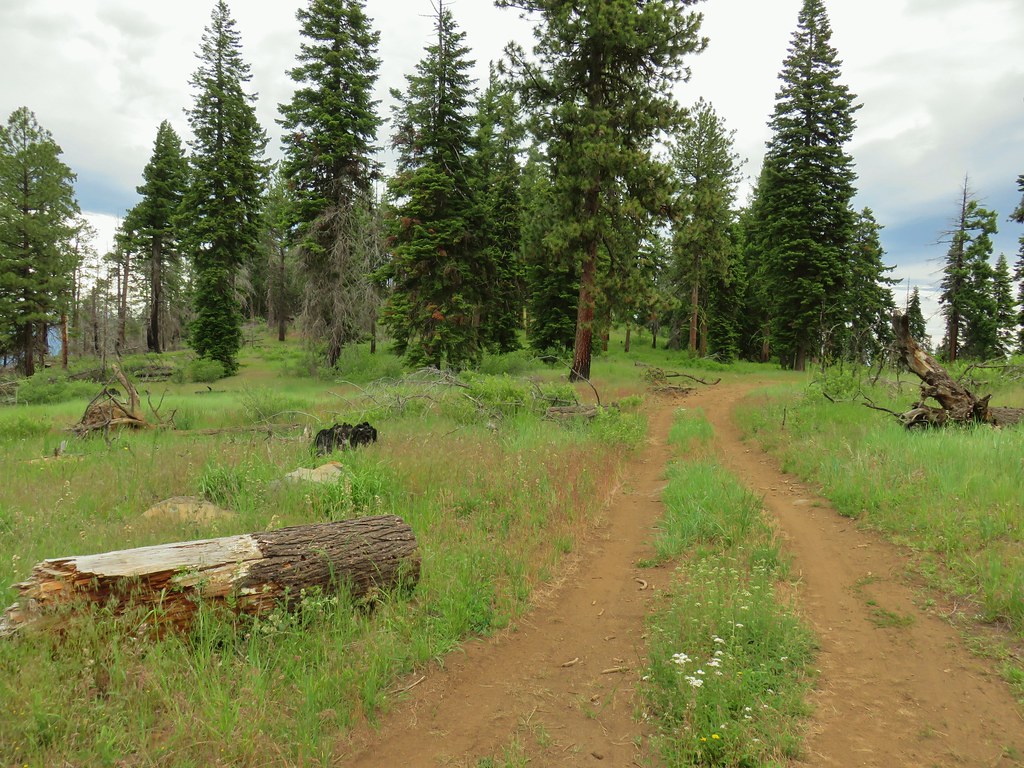
Around the 5.25 mile mark we came to a bend in an old roadbed that the trail had been following since the 4 mile mark. Past the bend the road headed downhill a bit to dip around a knoll and continue on another 4.3 miles to the Green Ridge Lookout.
IMG_7228

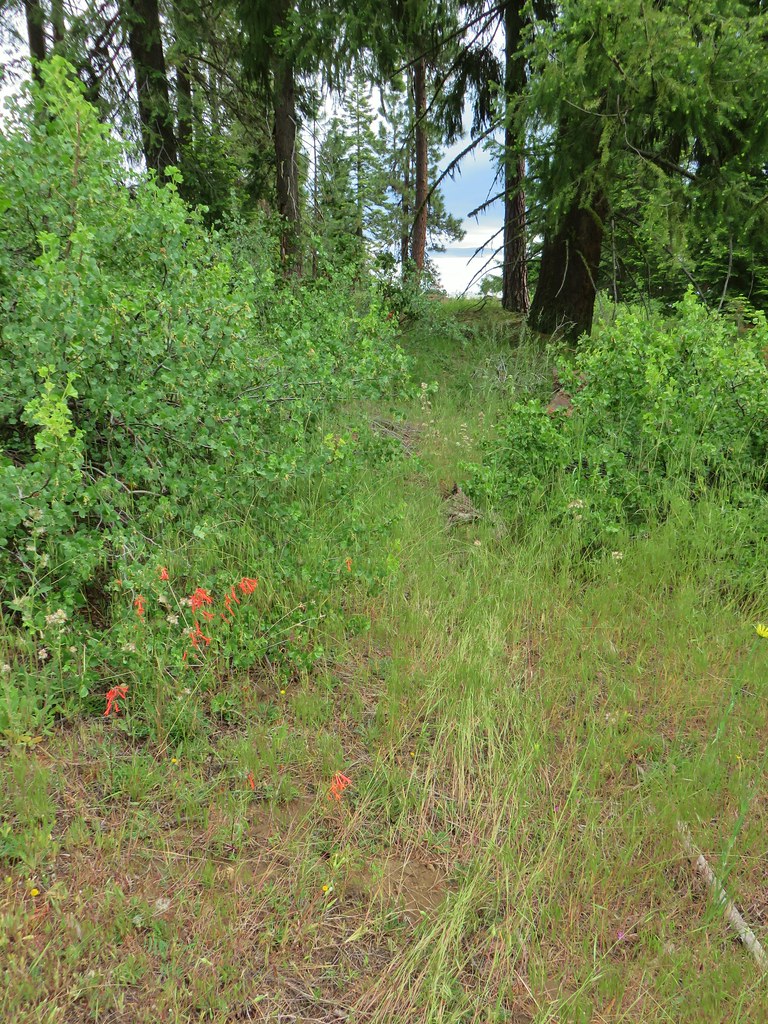
This knoll was our goal for the day. We were using Matt Reeder’s “101 Hikes in the Majestic Mount Jefferson Region” guidebook and he described a faint trail leading up past a campsite to a viewpoint. We couldn’t identify the faint trail so we simply set off cross-country up the knoll. We did pass a fire pit which we assumed was the campsite and then noticed what might have been a faint trail.
IMG_7241

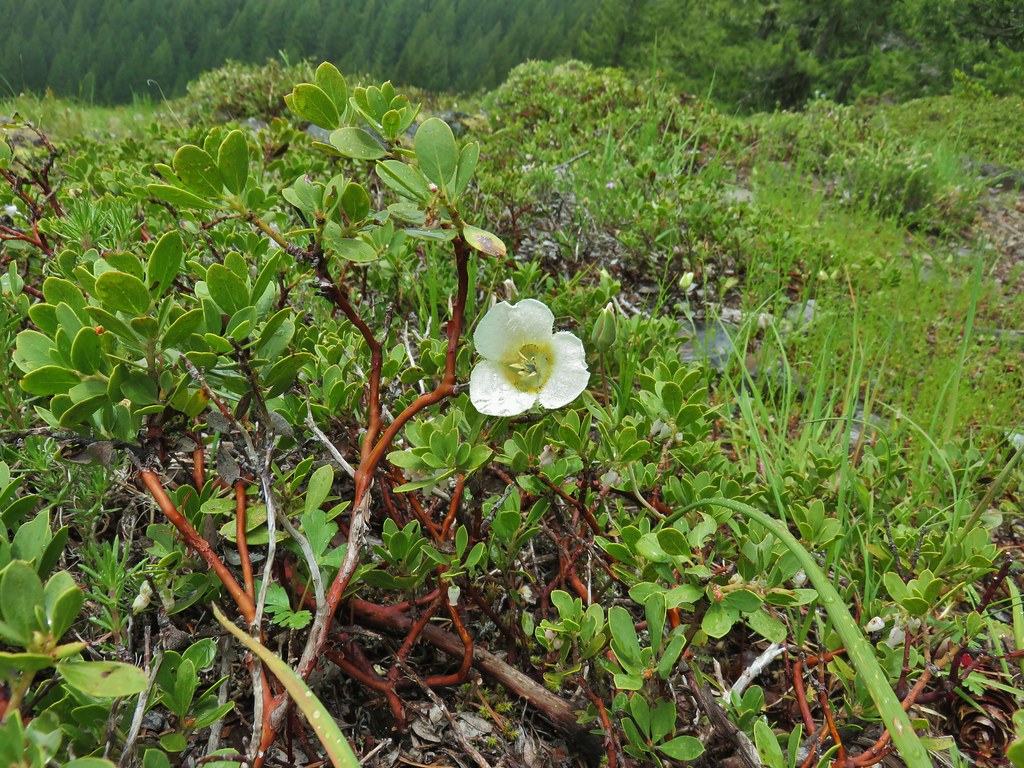
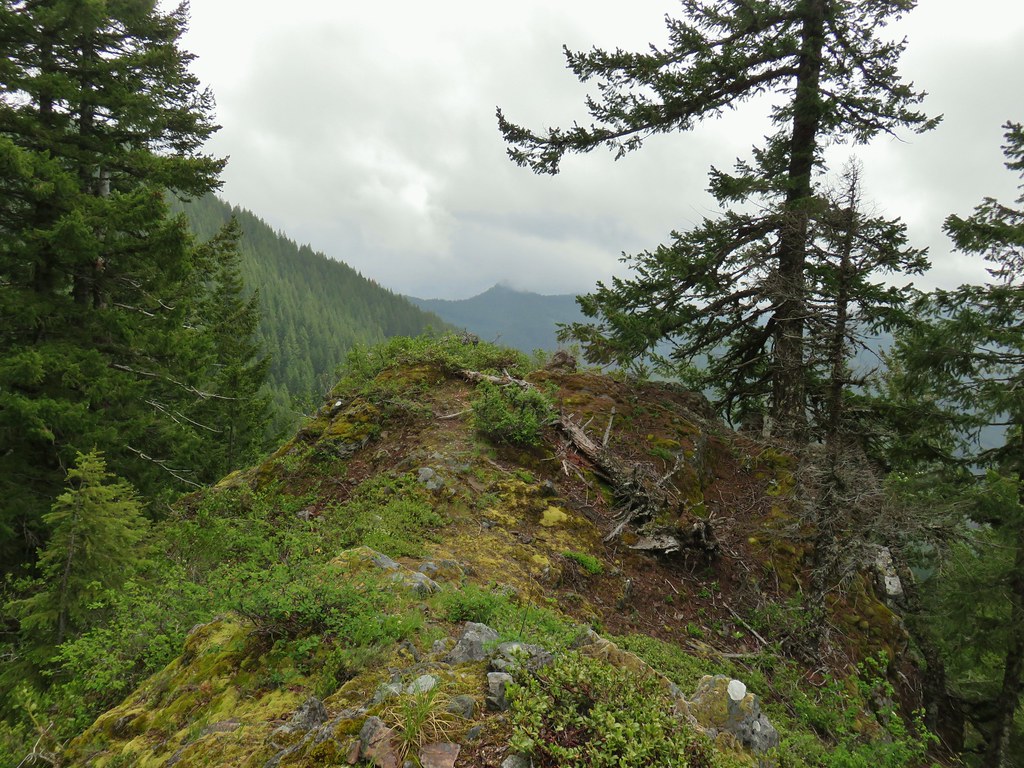
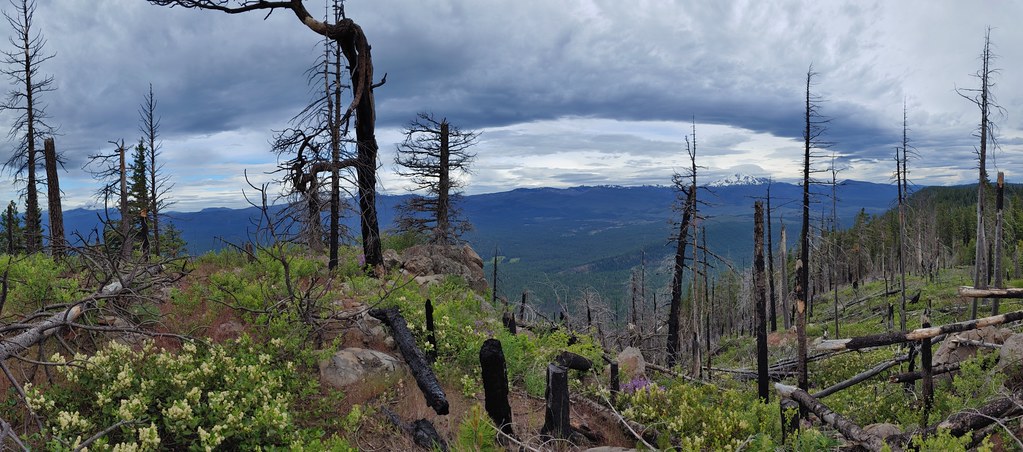
Just .2 miles from the trail/roadbed we arrived at the rocky viewpoint where we found a lot of penstemon.
20200620_094627

IMG_7255

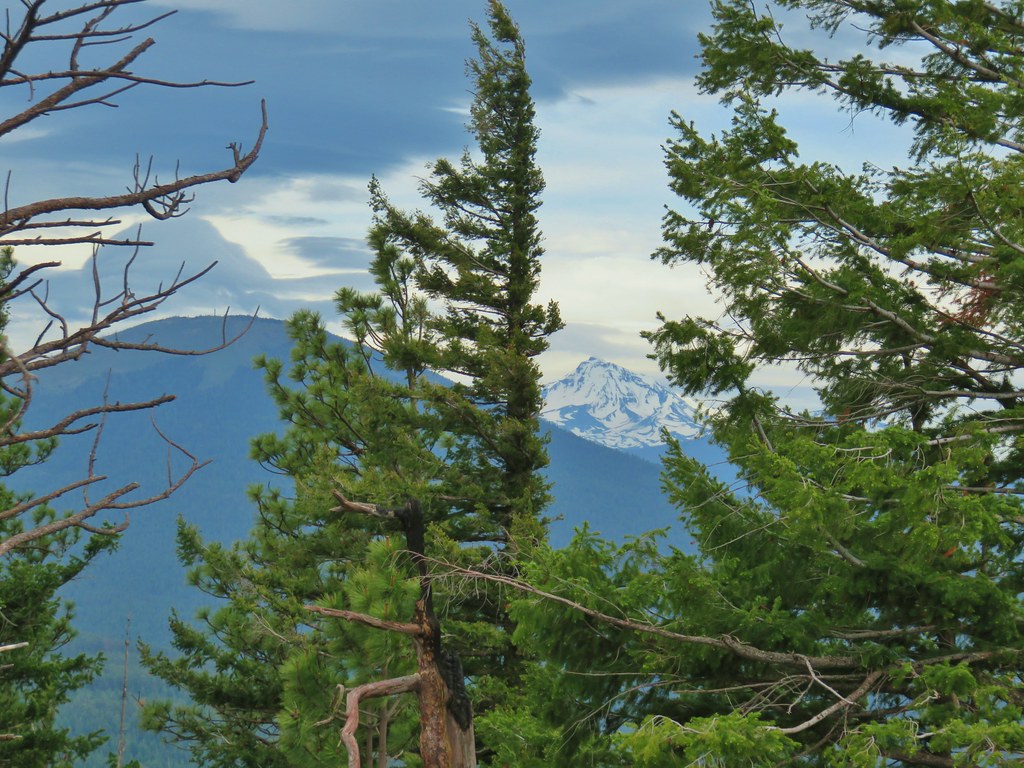
There was also a view of several mountains from the North Sister north to Mt. Hood.
IMG_7271Black Butte and the North Sister

IMG_7304North Sister

IMG_7289Three Fingered Jack

IMG_7302North Cinder Peak and Forked Butte (post)

IMG_7252Mt. Jefferson

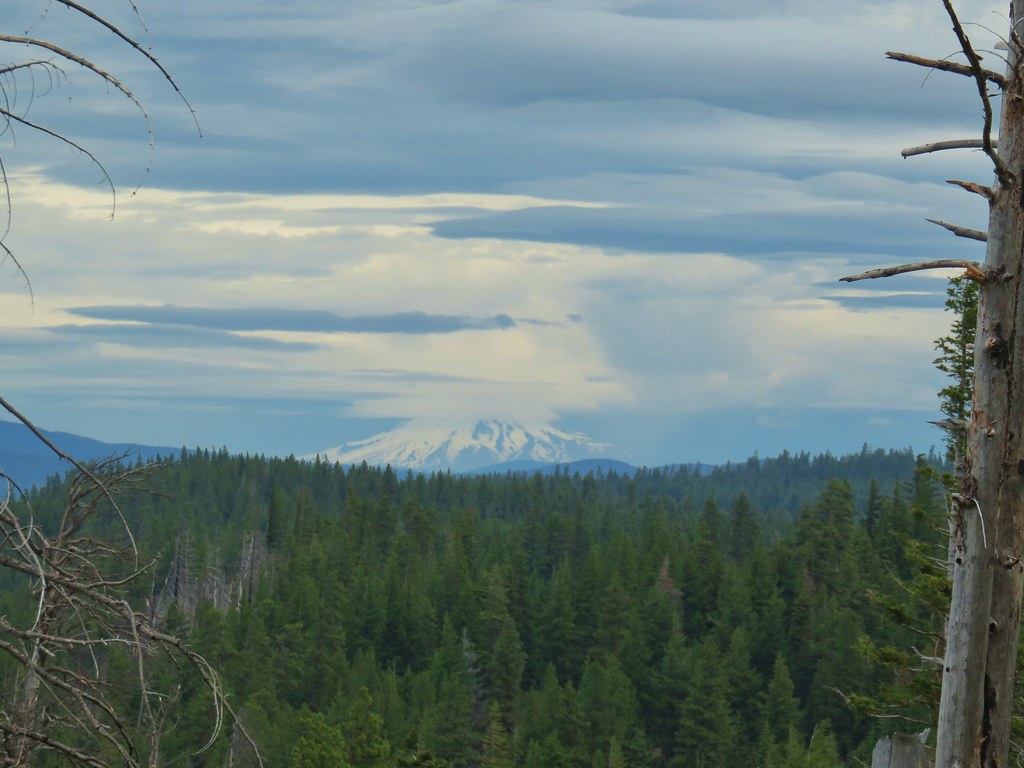
IMG_7248Mt. Hood

We could also make out just the slightest bit of the Metolius River (post) below the ridge.
IMG_7282

After a nice break we headed back along the ridge. We took one side trip on the way back down just over 2.25 miles from the knoll to check out what looked to be quite a bit of balsamroot to the east of the trail. It turned out to be a wide open area that had a high desert feel in the center with lots of buckwheat while balsamroot surrounded it near the tree line.
IMG_7320

IMG_7323Buckwheat in the center.

IMG_7324

IMG_7328

IMG_7329Balsamroot near the trees.

IMG_7319

20200620_110114

After the brief side trip we continued down the trail which was now quite a bit busier with several mountain bikers and a couple of hikers making their way up the trail. Going in this direction there were times where we were looking straight at Black Butte and in so doing we noticed that Broken Top was visible over the left shoulder of the butte.
IMG_7335

IMG_7337

IMG_7365Tam McArthur Rim (post) and Broken Top

There was a moment when a bit of blue sky opened above the cascades giving us a good look at Mt. Washington and Three Fingered Jack.
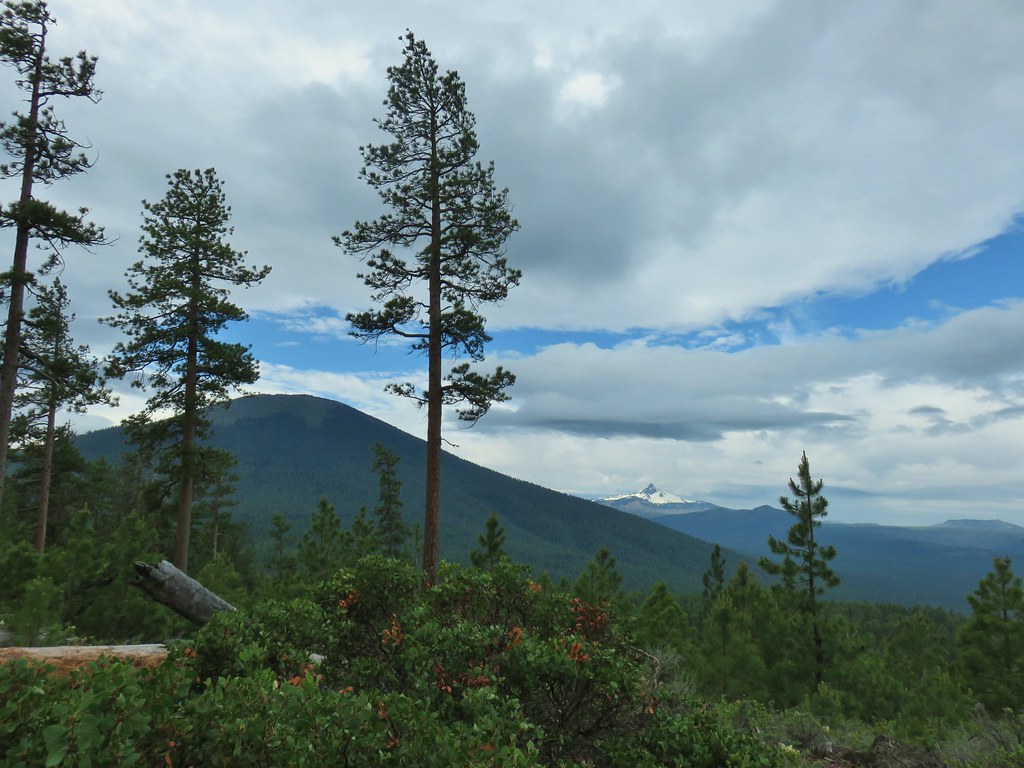
IMG_7346A sliver of blue sky over Black Butte and Mt. Washington.

IMG_7348Mt. Washington

IMG_7352Three Fingered Jack with some blue sky.

The blue sky quickly disappeared and it sprinkled ever so briefly before we arrived back at the trailhead. Our hike came in at 11.2 miles with approximately 1200′ of elevation gain which was spread out fairly well along the trail so that it never felt very steep at all. Given all the rain forecast for the west side of the cascades we felt fortunate to have gotten the mountain views we did. The best part of the hike for us though was the different vegetation and scenery along the ridge. The mix of high cascades and high desert made it a truly interesting place. Happy Trails!

Flickr: Green Ridge

Categories
Hiking McKenzie River Old Cascades Oregon Trip report

Hackleman Grove, Echo Basin and Fish Lake – 6/19/2020

Our vacation week had a theme going, multiple stop days, and we continued that on Friday with a three stop day to check off another of Sullivan’s featured hikes – Echo Basin. Actually the hike was no longer one of Sullivan’s 100 featured hikes in the most recent edition of his Central Oregon Cascades guidebook, but it was a featured hike in the 4th edition which is the one that we are using in our attempt to hike all of his featured hikes (post).

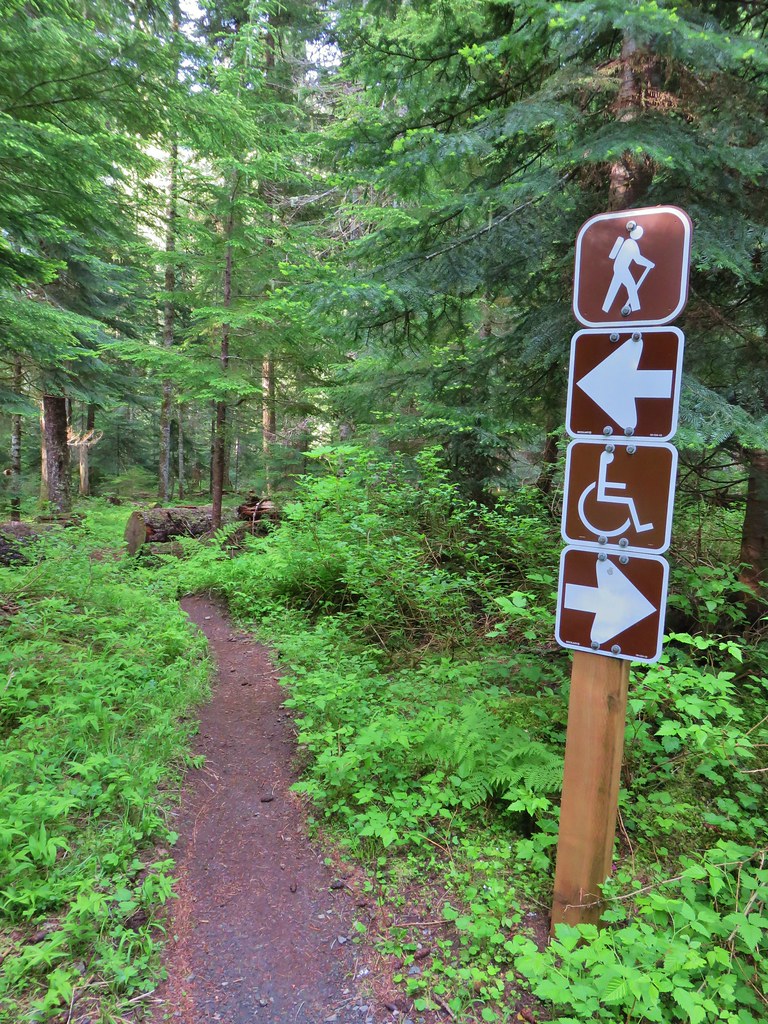
We began our day by stopping at the Hackleman Old Growth Grove Trail for a short 1 mile loop. The convenient trailhead is right off of Highway 20 near milepost 67. There is also a loop option that is marked as wheelchair friendly although on our visit there were a number of downed trees that said otherwise.
IMG_6551

IMG_6554

The wide trail led into the forest and quickly split.
IMG_6556

IMG_6564

We stayed right here and soon encountered our first downed trees.
IMG_6569

The trail descended a bit toward Hackleman Creek to a junction where two trails joined from the left. The first was the wheelchair accessible continuation and the second was not.
IMG_6576

IMG_6580The wheelchair friendly path.

IMG_6581The hiker path.

It was at this point that we realized that we probably shouldn’t have stayed right at the first junction. As we turned onto the hiker path we began seeing numbered posts for an interpretive trail. (There were no brochures or anything to tell us what the numbers represented.)
IMG_6582The hiker trail.

A short side path took us to the bank of Hackleman Creek.
IMG_6586

20200619_071852Western meadowrue

IMG_6606Mushrooms on a log.

We met back up with the middle trail at another signpost and could see more numbered posts down that trail which reinforced the idea that we should have taken the middle trail and returned on the hiker trail (based on the numbers of the posts we passed).
IMG_6607

In any event it was a nice little hike and a good leg stretcher/warm up for our next stop at Echo Basin.

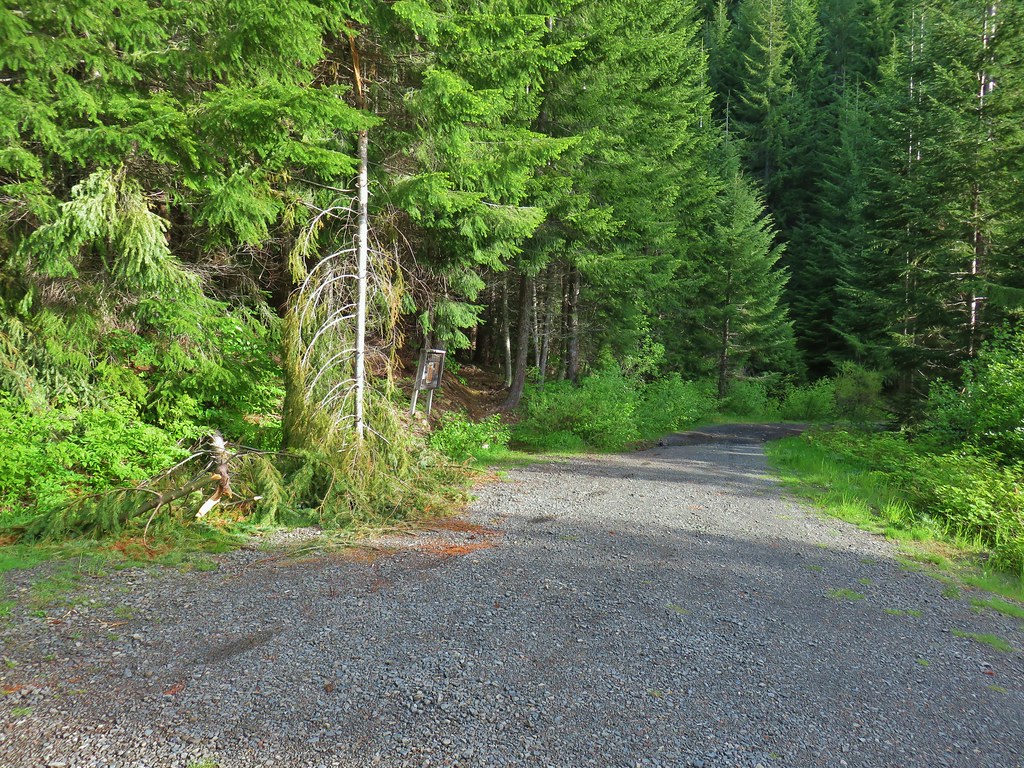
The Echo Basin Trailhead was 2 miles up Forest Road 055 which was just .3 miles east of the Hackleman Grove Trailhead. There was a fairly deep channel in the road a tenth of a mile or so from the actual trailhead that could prove difficult for lower clearance vehicles (we saw one car parked at a pullout just before it on our drive out).
IMG_6608Echo Basin Trail at FR 055.

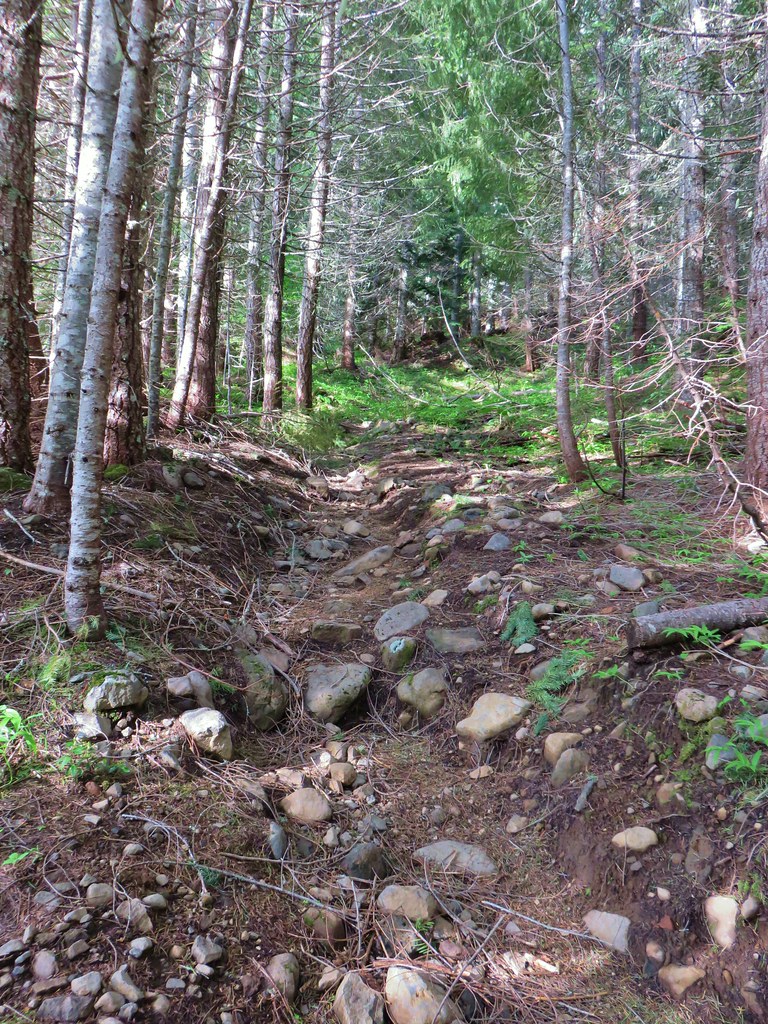
This hike is a lollipop climbing an old logging road for a half mile then starting the loop at the .7 mile mark at a foot bridge over Echo Creek.
IMG_6618Rocky start to the trail.

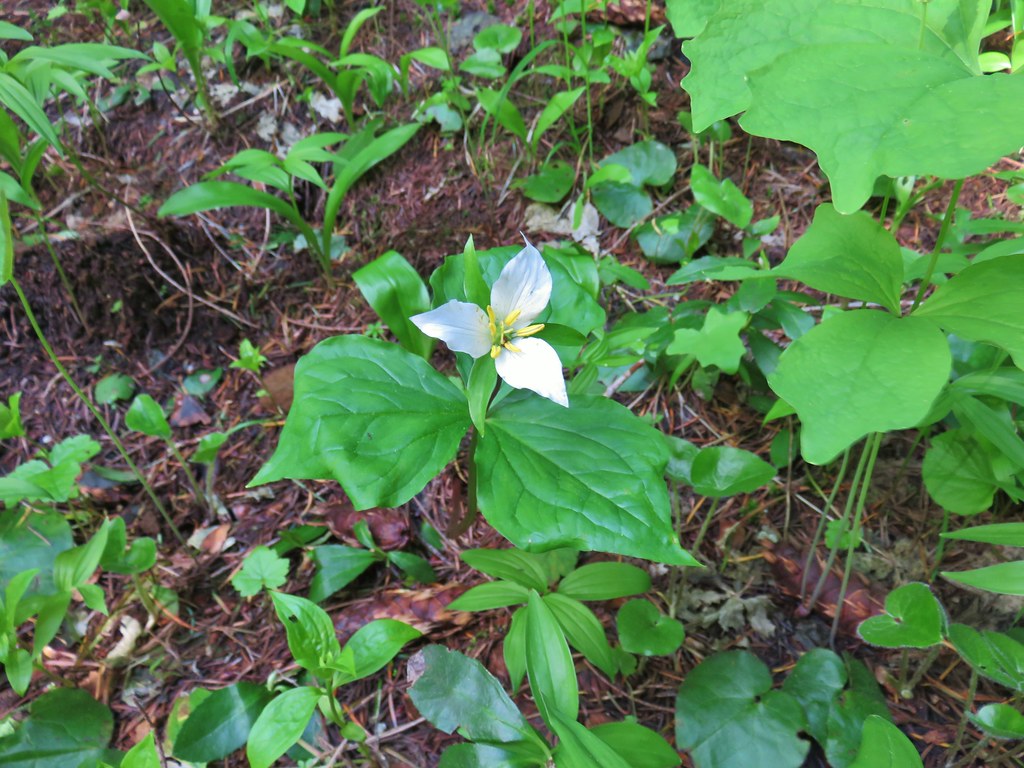
IMG_6622Trillium

Just before the start of the loop we arrived at a green meadow that wasn’t very far along with most of the plants still early in their growth cycle.
IMG_6649

We worried that we had come too early for the wildflowers higher in the basin.
IMG_6650More trillium along the meadow.

IMG_6653Swallowtail on salmonberry blossoms.

IMG_6658Start of the loop.

We crossed the creek and spotted a rabbit hiding in the brush.
IMG_6661

The trail climbed and entered the start of the meadow that fills Echo Basin.
IMG_6669

IMG_6676Orange tip butterfly

We were starting to see a few more flowers as we began to get into the meadow.
IMG_6684Bleeding heart

IMG_6686Violets

IMG_6689Fairybells

20200619_082454Royal Jacob’s ladder

IMG_6701

IMG_6710Western meadowrue

The further into the meadow that we got the wetter the ground became. Near the first of a series of short boardwalks there was a great display of shooting stars and buttercups.
IMG_6711

IMG_6725

IMG_6735

There were also a number of elephants head beginning to bloom.
IMG_6742

IMG_6748

The boardwalks helped a bit but in between the gaps the ground was muddy and wet. A perfect mixture for frogs.
IMG_6750

IMG_6751Paintbrush

20200619_084050Frog

IMG_6766Looking back at the route through the meadow.

We left the meadow and dropped down to the footbridge to complete the loop then returned to the car. We passed a few hikers on their way up to the basin and these would be the only people we would encounter all day.

From the Echo Basin Trailhead we returned to Highway 20 and continued east 2.2 miles to Hackleman Creek Road (FR 2672) on the right for our third stop of the day along the Old Santiam Wagon Road. The wagon road crosses FR 2672 about a hundred feet from the highway and there is an unmarked trailhead down a short dirt road on the left.
IMG_6777The trailhead off of FR 2672.

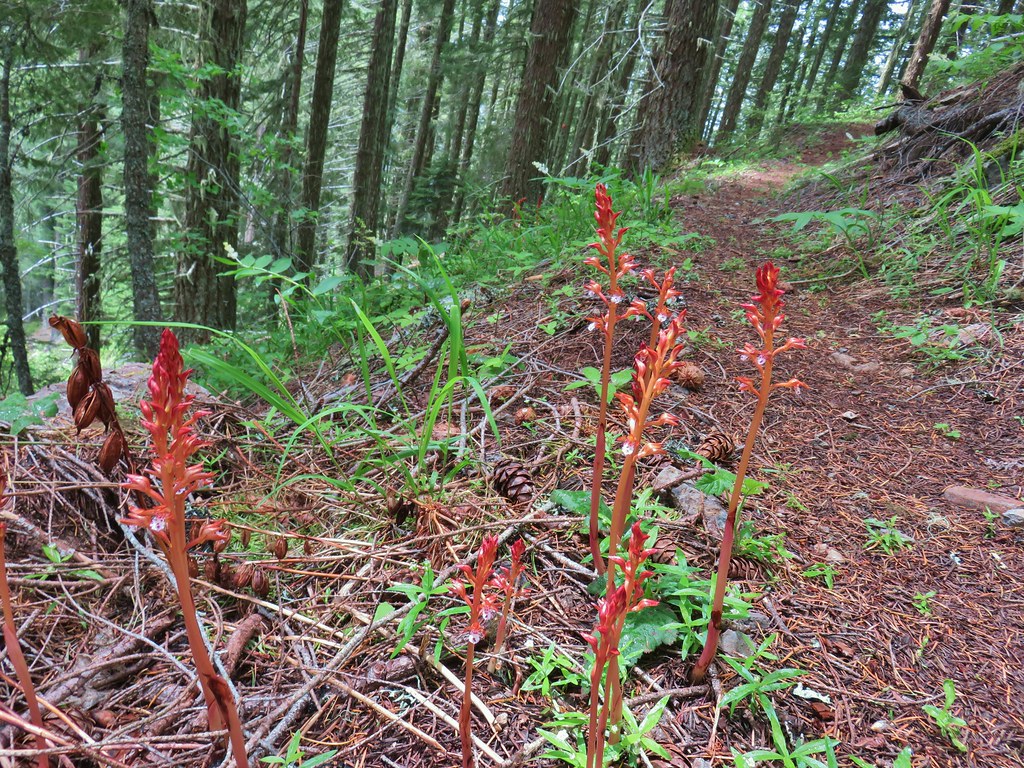
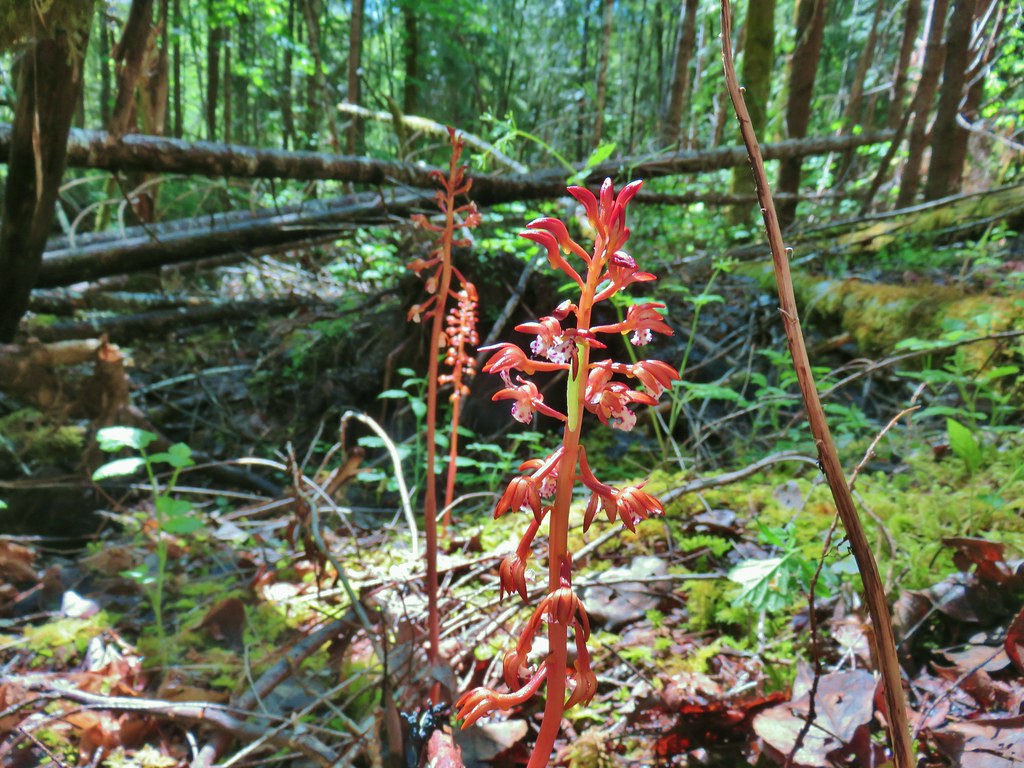
There was an amazing patch of coral root at the trailhead.
20200619_094029

We walked past a green gate and found a post indicating that this was the Old Santiam Wagon Road.
IMG_6784

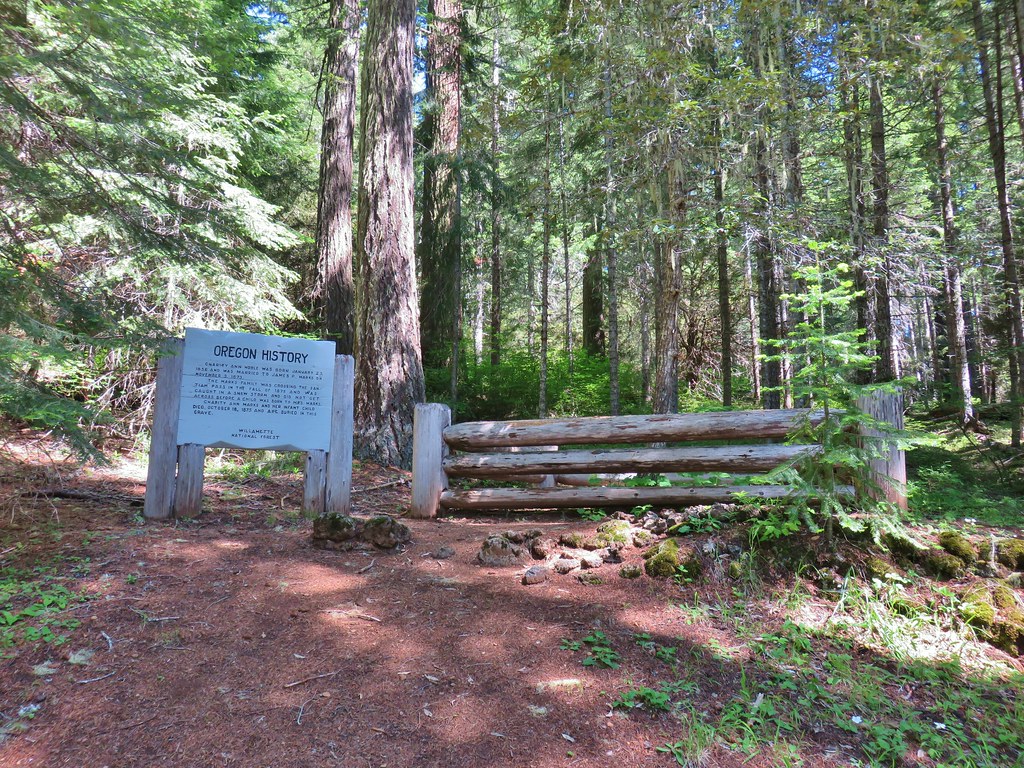
This was a deviation for Sullivan’s hike description as he would have you start at the Fish Lake Day Use Area but the entrance to the day use area remains gated due to COVID-19. From this trailhead we could follow the wagon road 2.2 miles to the Pioneer Grave and Fish Lake. There wasn’t a lot to see along the way, a few scattered flowers was about it. The road was in fairly good shape with a few downed trees near the beginning but as we got closer to Fish Lake it was obvious that there had been some clearing done.
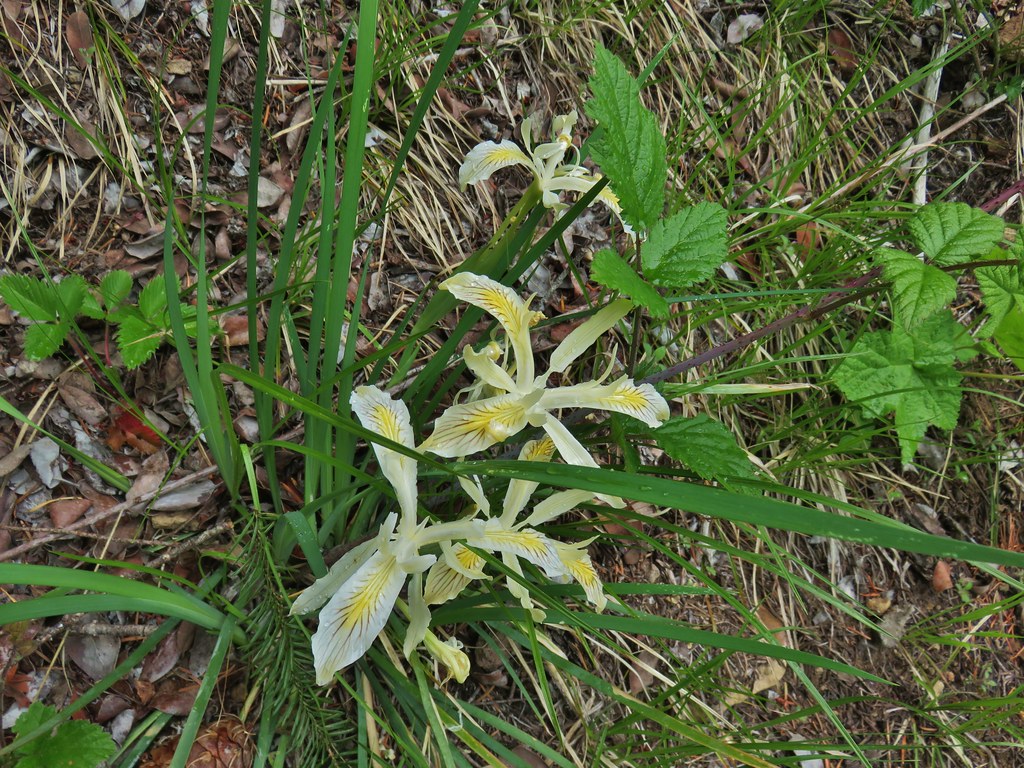
IMG_6788Iris

IMG_6799Beargrass

IMG_6816Santiam Wagon Road

IMG_6811Bunchberry

Musk monkeyflowerMusk monkeyflower

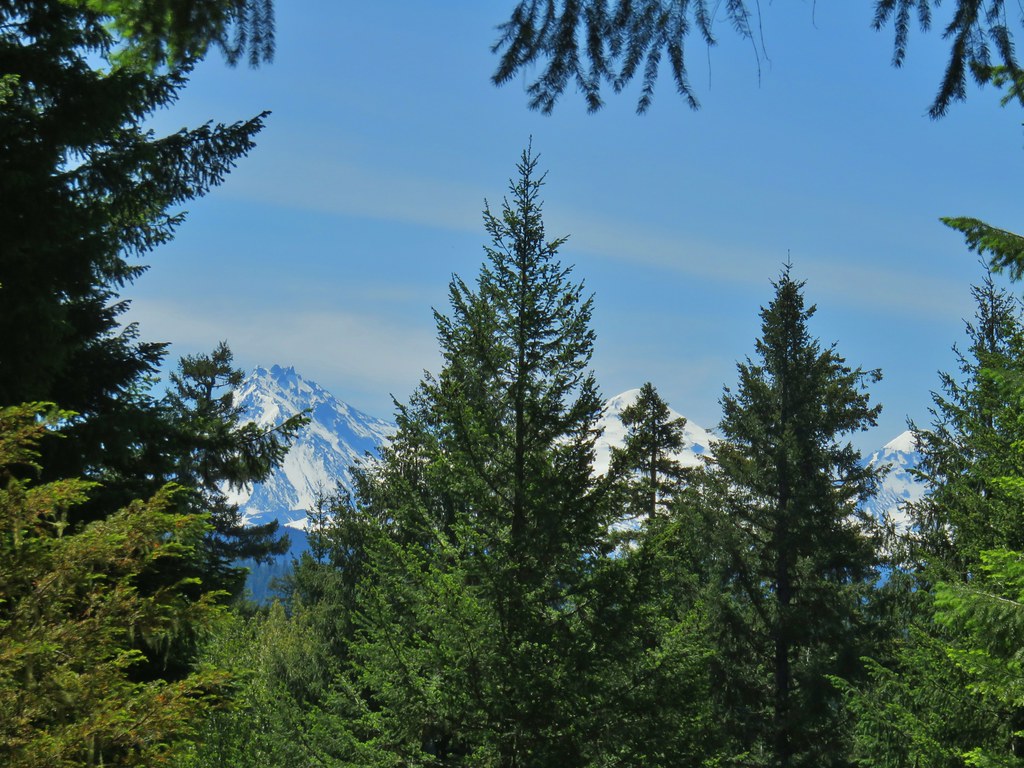
We stopped at the grave site where there is a semi-obstructed view of the Three Sisters.
IMG_6822

IMG_6823

IMG_6881

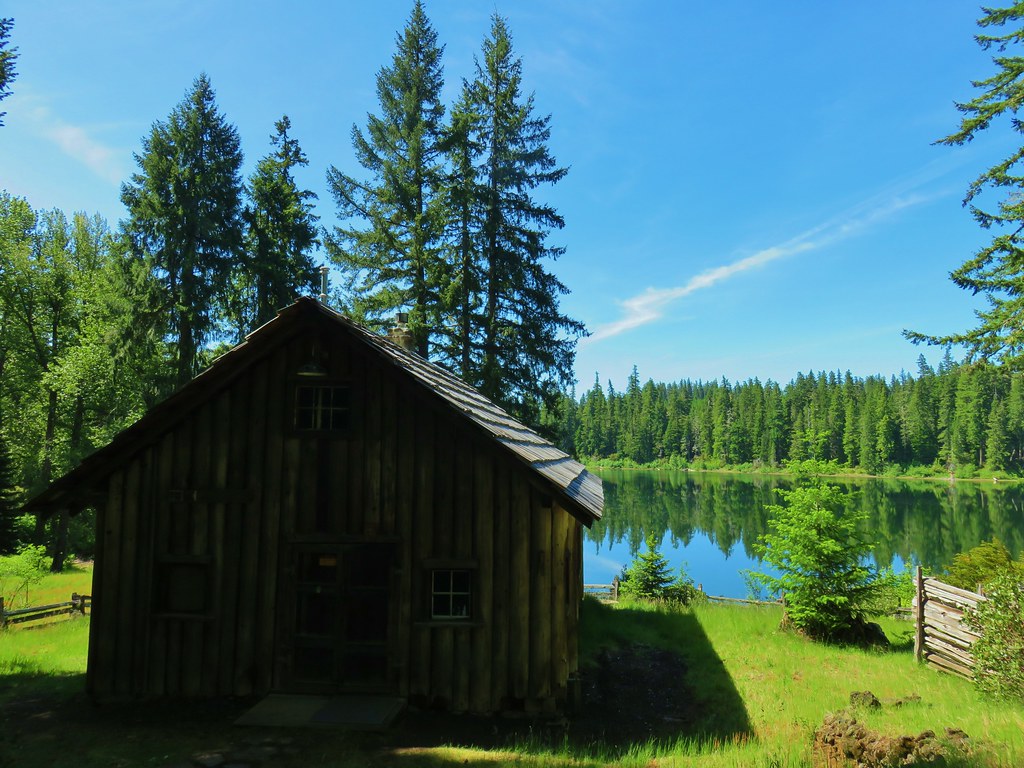
Just beyond the grave site is the Fish Lake Remount Station which served as the headquarters of the Santiam National Forest in the 1910’s. Two cabins are available for reservations in Winter. We were not entirely sure of the status of the area as I mentioned before the Forest Service website mentioned that the Day Use are gate was still closed, but the Day Use Area was .4 miles from the grave site and there were no signs indicating that the remount station was off-limits. We followed the wagon road through the station but avoided using or touching any facilities.
IMG_6832Hall House

IMG_6838Commissary Cabin

IMG_6839Commissary Cabin innkeeper?

IMG_6841More from the remount station

Fish Lake dries up annually leaving a meadow but there was a good amount of water present and we spotted a couple of kayaks or paddle boards across the water.
IMG_6867Browder Ridge (post) looming above Fish Lake.

IMG_6844Interpretive signs for the remount station.

An old lava field sits between the station and the day use area which we walked through until we could see the day use area (where there was at least one car and no gate, curious.
IMG_6855

IMG_6863

We returned the way we’d come for a 5.2 mile out-and-back giving us a grand total of 8.6 miles for the day (1.1 at Hackleman Grove and 2.1 at Echo Basin). Despite the hikes being very close to one another they each had a different feel making for a fun and interesting day. Happy Trails!

Flickr: Hackleman Grove, Echo Basin, and Fish Lake

Categories
Clackamas Hiking Old Cascades Trip report

Memaloose Lake and Milo McIver State Park – 6/18/2020

**Note the 2020 Riverside Fire burned the trails for the Memaloose Lake and South Fork Mountain hike.**

We had the rare opportunity to have company on one of our outings on our vacation. Four of Heather’s running buddies (we won’t name names but you know you you are) were open to our 5am start time so we swung by and had them follow us to the first of two stops at the Memaloose Lake Trail.

The trailhead is along Forest Road 45 which runs between Highway 242 and Highway 211. The 2014 36 Pit Fire forced the closure of FR 45 at Highway 224 after damaging a section of the road. This was the recommended way to the trailhead as the fist 11.2 miles were paved and the final mile was good gravel. While the repairs are nearly finished FR 45 was still closed 3.5 miles from Highway 242 meaning we would need to take FR 45 from Highway 211. From that highway it was 23 miles to the trailhead and although most two digit forest roads are paved or at least good gravel FR 45 was not. There was a short section of pavement before turning to a pothole filled mess. For their part the Forest Service was in the process of clearing brush and debris along the road but there was still quite a bit of work to do as some downed trees had been worked on just enough to allow vehicles to get by. We picked our way slowly around (and sometimes through) the obstacles and eventually made it to the trailhead.
IMG_6245

The Memaloose Lake Trail starts uphill into the Mt. Hood National Forest and quickly enters the Clackamas Wilderness.
IMG_6249

IMG_6402

The 1.4 mile trail gained 700′ as it climbed through a lush green forest.
IMG_6274

IMG_6252Bunchberry

IMG_6266Salmonberry

The trail crossed a couple of small streams before climbing to a more substantial crossing of Memaloose Creek.
IMG_6282First little stream crossing.

IMG_6288Another stream crossing, this one with skunk cabbage.

IMG_6296Memaloose Creek crossing.

IMG_6298Memaloose Creek above the crossing.

The crossing was made just a bit tricky by a downed log in the middle of the creek which required some awkward steps on potentially slick rocks.
20200618_082225_HDR

Beyond the creek the trail made a long switchback up to Memaloose Lake.
IMG_6309

IMG_6311

IMG_6313Skunk cabbage, shooting stars, and marsh marigolds across the lake.

There were some rough skinned newts in the water that we watched for a bit.
IMG_6323

After a short break at the lake we continued on crossing the outlet on some logs.
IMG_6317

The Memaloose Lake Trail ends at the lake, but a user maintained trail continues uphill for a mile to the summit of South Fork Mountain.
IMG_6329

The trail was in good shape for an “unmaintained” trail. There were a few trees down including a spot where we were forced to dip down on a hillside to get around one. The footing wasn’t bad but it could become an issue if not addressed.
IMG_6330Typical obstacles for the trail.

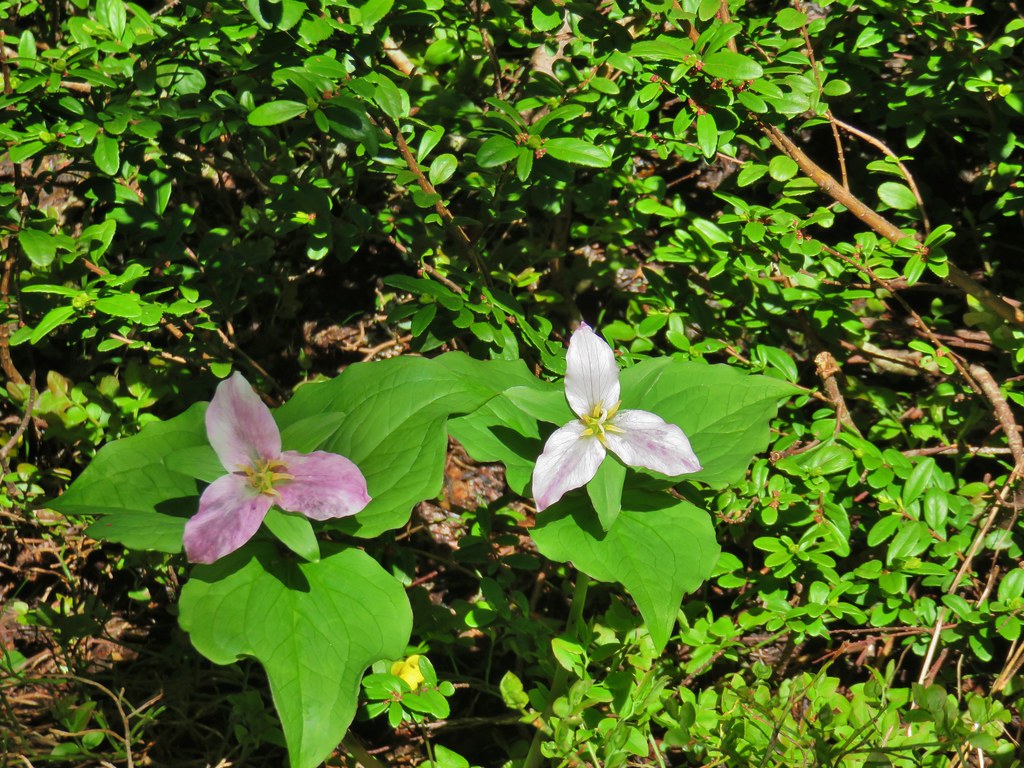
I was hoping for a few flowers on the summit but aside from some trillium a bit below the summit and some small parsley up top there weren’t any.
IMG_6339Trillium

IMG_6347

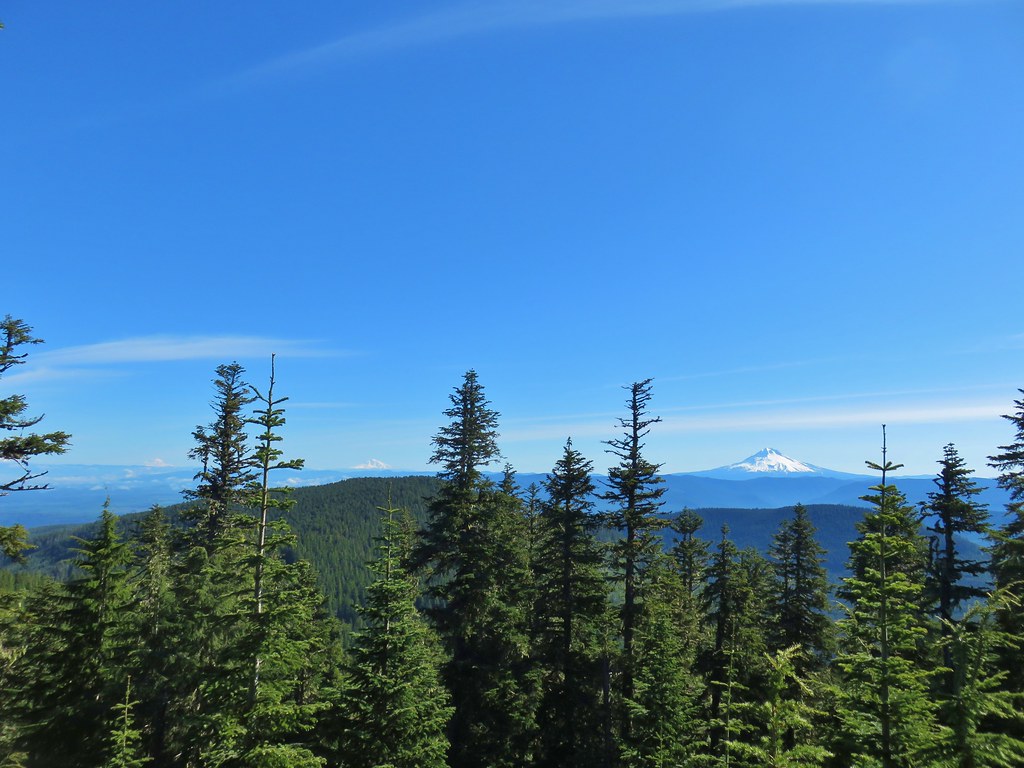
What there was though were views of volcanoes. It was pretty much cloudless and we had unimpeded views of the Cascades from Mt. Rainier down to the Three Sisters.
IMG_6352Mt. Rainier, Mt. Adams (with Goat Rocks the snowy patch just to the left), and Mt. Hood

IMG_6360Mt. Rainier

IMG_6358Goat Rocks to the left with Mt. Adams

IMG_6364Mt. St. Helens

IMG_6354Mt. Hood

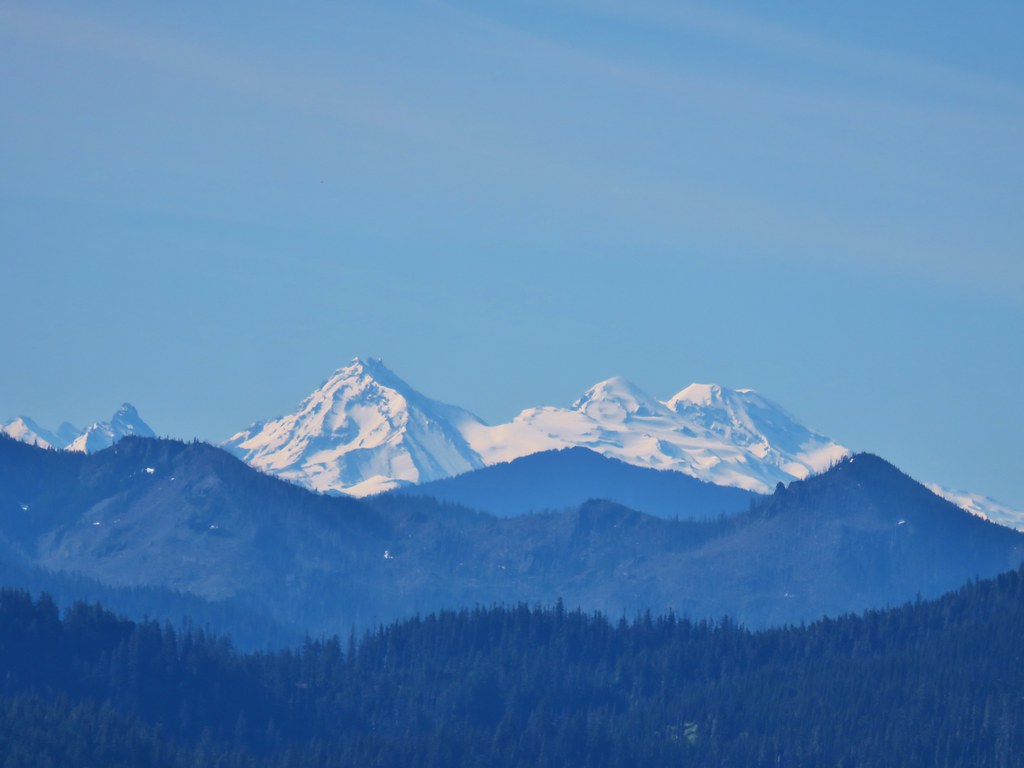
IMG_6368Mt. Jefferson, Three Fingered Jack, Broken Top, Mt. Washington, and the Three Sisters.
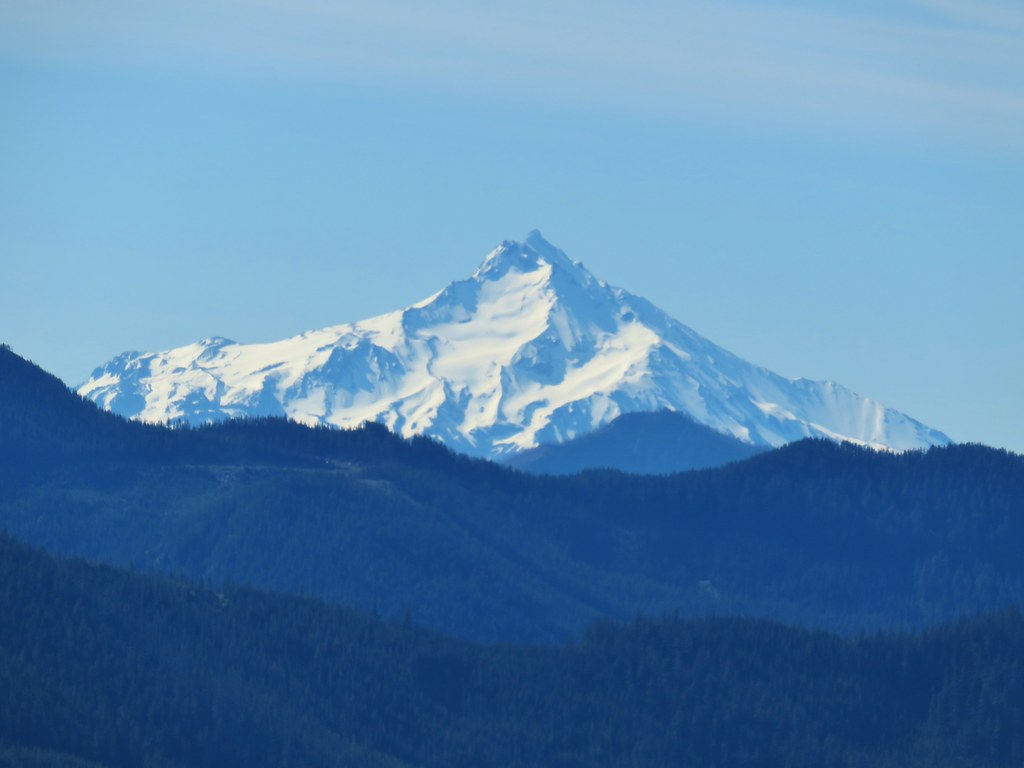
IMG_6371Mt. Jefferson

IMG_6381Three Fingered Jack

IMG_6377Broken Top, Mt. Washington, and the Three Sisters

I am often surprised by views of Broken Top forgetting that it is quite a bit east of the Three Sisters. I hadn’t clued into the fact that it was visible behind Mt. Washington until I was writing this post.

After exploring the summit and taking another short break we headed back down to the trailhead and prepared to drive back down through the potholes to Highway 211.

The hike to Memaloose Lake and South Fork Mountain was 4.75 miles so when I was planning our outing I was looking for another hike in the 6 to 8 mile range in the area. Luckily Milo McIver State Park offered a couple of loop options that fit the bill.

I had chosen the Riverside Loop Hike described in the Oregonhikers.org Field Guide.

We parked at the Riverside Day Use Area near the Clackamas Fish Hatchery and set off on the Dog Creek Loop Trail at the far end of the parking lot.
IMG_6405

IMG_6406

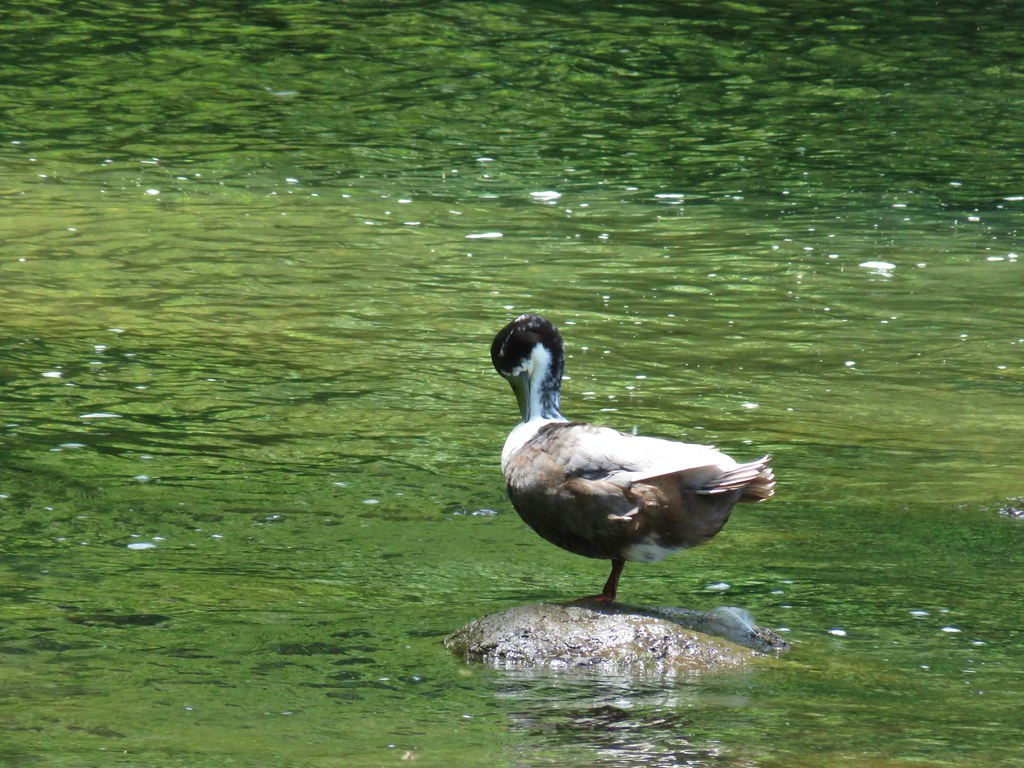
We took a quick detour to visit the Clackamas River and watch a duck on a rock.
IMG_6410

IMG_6412

The trail crossed Dog Creek twice on footbridges before arriving at the fish hatchery after .2 miles.
IMG_6420

IMG_6421

IMG_6427

We stayed right here and continued to stay right at junctions for 1.2 miles to the start of the Vortex Loop which we had originally considered taking, but the junction with the trail on the right was simply marked with a hiker symbol and no trail name. It appeared to be heading back down to the trail we just came up so we continued on until coming to a viewpoint of the Clackamas River below.
IMG_6428

IMG_6434Red elderberries

IMG_6441Youth-on-age

IMG_6443A phacelia

IMG_6445Hedgenettle

IMG_6448Tiger lily

IMG_6453Fringecup

IMG_6456

Beyond the viewpoint we arrived at a meadow with a grassy track joining on our right we reread the description and realized that this was the other end of the Vortex Loop and we had missed the turn.
IMG_6460

We decided to save the 2 mile Vortex Loop for another time and stayed on the Rivermill Trail which skirted the meadow before crossing a pair of roads, the second of which was near a horse staging area.
IMG_6473

The horse staging area was located at another meadow which we turned right at skirting the edge on a wide track which was the Bat Trail (the Rivermill Trail was further to the right in the trees).
IMG_6478

This led us to the Bat Barn and had a view of Mt. Hood which was now sporting some clouds.
IMG_6485

IMG_6488

IMG_6490

IMG_6494

IMG_6496

It was too early in the day for bats but we did see a hawk with lunch.
IMG_6491

Beyond the barn the Bat Trail rejoined the Rivermill Trail where we turned left and descended along a row of blackberry bushes.
IMG_6502

This section of the Rivermill Trail hosted a horse training circuit which the six of us took turns training on.
IMG_6499

IMG_6506

The park had a serious issue with identifying trails. Most of the junctions indicated whether or not they were open to horses or just hikers, but the vast majority didn’t give the name of the trails or any indication of what might be down the trail. There was a sign for the Estacada Lake Trail though which we turned onto when we arrived at it.
IMG_6511

We were now descending back down toward the river through a forest where a pileated woodpecker was busy working on a log.
IMG_6517

When we arrived at a muddy pond we wondered if this could be the lake.
IMG_6530

IMG_6534Dragonfly near the pond.

A quick look at the hike description let us know that this was indeed just a pond and that Estacada Lake was actually on the Clackamas River behind a dam. The Estacada Lake Trail dropped us onto South River Lake Road where we turned left along the river to the lake.
IMG_6537

IMG_6539

IMG_6545

IMG_6547

We picked up the Rivermill Trail again just beyond the dam viewpoint and followed it back to the Riverside Day Use Area and our cars. This loop came in at 6.5 miles giving us a nice 11.2 mile day. It was an interesting day in that the first hike had been in a wilderness area and we had seen no other people while the second hike was in a developed state park where there were other people and horses about. The scenery was very different but both hikes had their place.

It was also nice to share a hike with some other people. Most folks balk when they hear what time we leave in the morning (and sometimes when they hear how far we’re planning on going). Happy Trails!

Flickr: Memaloose Lake and Milo McIver State Park

Categories
Cottage Grove Hiking Old Cascades Oregon Trip report

Spirit, Pinard, & Moon Falls with the Swordfern and Row River Trails – 6/17/2020

Our knack for picking vacation weeks that coincide with wet weather was on display once again as we started a week of day hikes. In January the plan had been to travel to the Pendleton and John Day areas for this vacation but in February Umatilla County experienced severe flooding which damaged many roads and trails and then COVID-19 began shutting everything down so we settled on day hikes from Salem instead. Our vacation got off to a rocky start when Saturday’s forecast was for a lot of rain and so was Monday’s with less on Sunday and Tuesday then it looked like the rest of the week would be better. We bumped our hike to Henline Falls and Mountain (post) from Saturday to Sunday and planned our next hike for Tuesday.

By Monday afternoon the Tuesday forecast had gone from partly sunny to showers and a chance of thunderstorms so we adjusted our plans again bumping Tuesday’s hike to Wednesday. Wednesday morning we set off for Cottage Grove, OR to visit three waterfalls in the Umpqua National Forest. The hikes to Spirit, Pinard, and Moon Falls were one of Sullivan’s featured hikes that we still needed to do but for various reasons we had not been able to work them into our schedule yet.

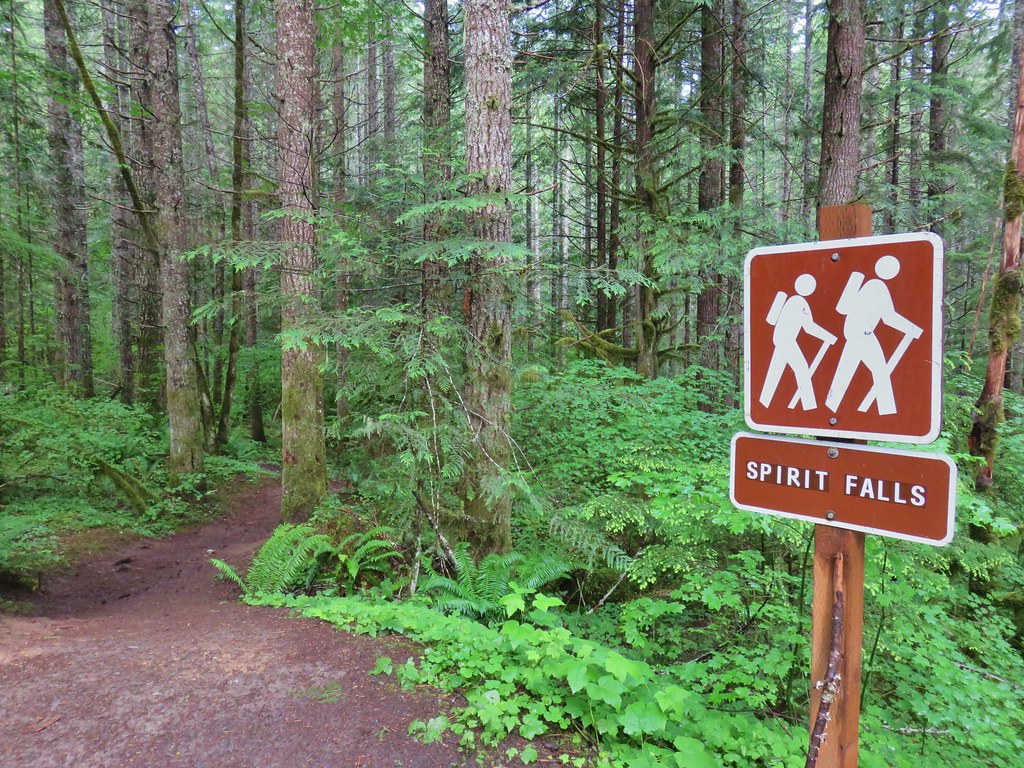
We started our day at the Spirit Falls Trailhead.
IMG_5917

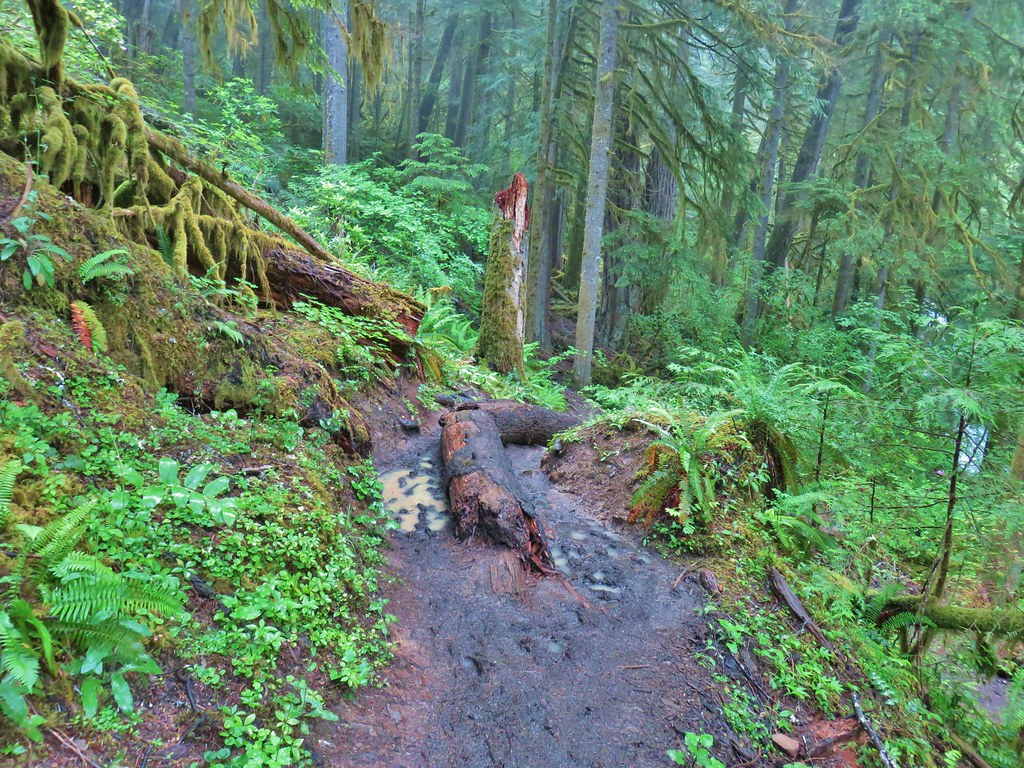
A short but muddy .4 mile path descended to the 40′ waterfall.
IMG_5931

The one positive of the recent rains was that there was plenty of water feeding the falls.
IMG_5952

Our next stop was the Pinard Falls Trail.
IMG_5961

The Pinard Falls Trail is just over a half mile long following an old road bed for the first .3 miles before turning into a true trail.
IMG_5977

Pinard Falls is a 65 foot tall horsetail waterfall.
IMG_5989

20200617_075801

Our last waterfall for the day was Moon Falls. The road to that trailhead was blocked by a large downed tree a little less than 100 yards from the trailhead.
IMG_5999Downed tree across the road.

IMG_6005

Like the trail to Pinard Falls the Moon Falls Trail was also just over a half mile long and followed an old roadbed for the first .3 miles.
IMG_6015

IMG_6023

We had unintentionally done the hikes in order of waterfall height from smallest to largest. Moon Falls is an 80′ fan which turned out to be our favorite of the three.
Moon Falls

The three waterfall hikes were excellent but short so by the time we were done with them we had hiked just a little over 3 miles. We took the opportunity to add a couple of additional stops to the day starting with the Swordfern Trail located at Rujada Campground. This 2-mile loop was on our way back from the waterfalls so we thought we’d give it a try.
The Forest Service website said the trail was open but the conditions were unknown as of 5/8/2020 but a sign at the trailhead cautioned about severe winter damage.
IMG_6048

We figured if it was still open it couldn’t be that bad and since the loop was only 2 miles a few obstacles wouldn’t hurt. The trail set off along Laying Creek and passed by a picnic area.
IMG_6056

IMG_6061

IMG_6060

It wasn’t long before we got a taste of the severe damage.
IMG_6073Looking back at some of the obstacles.

IMG_6082More obstacles ahead.

When there wasn’t nearly constant obstacles the trail was nice.
IMG_6084Ferns along the Swordfern Trail.

When the trail began to loop away from the creek we completely lost the tread under forest debris.
IMG_6085

We used the GPS to attempt to relocate the tread but to no avail which was probably for the best given the return would have been on the same hillside just a little higher up. We cut down from where we were to relocate the portion that we had already hiked and made our way back to the trailhead. Instead of a 2-mile loop we did a 1.8 mile out-and-back.

Knowing that even if we had done the 2-mile loop as planned we would still have only been around 5 miles for the day we had planned on a fifth and final stop on the way home at Bake Stewart Park.
IMG_6100

A wide path led through a meadow (with a little poison oak) to the Row River Trail, a converted rail line.
IMG_6102

IMG_6109Self heal

IMG_6117Pale flax

20200617_114902Poppy

IMG_6124Looks like something in the mallow family.

IMG_6127Red beetle

20200617_115015Sneaky poison oak

The .3 mile path brought us to the paved Row River Trail where we turned left.
IMG_6128

The trail passed several fields with flowers and butterflies before arriving at Dorena Lake, a reservoir created by damming the Row River.
IMG_6129

IMG_6138

IMG_6135

IMG_6141Approaching Dorena Lake

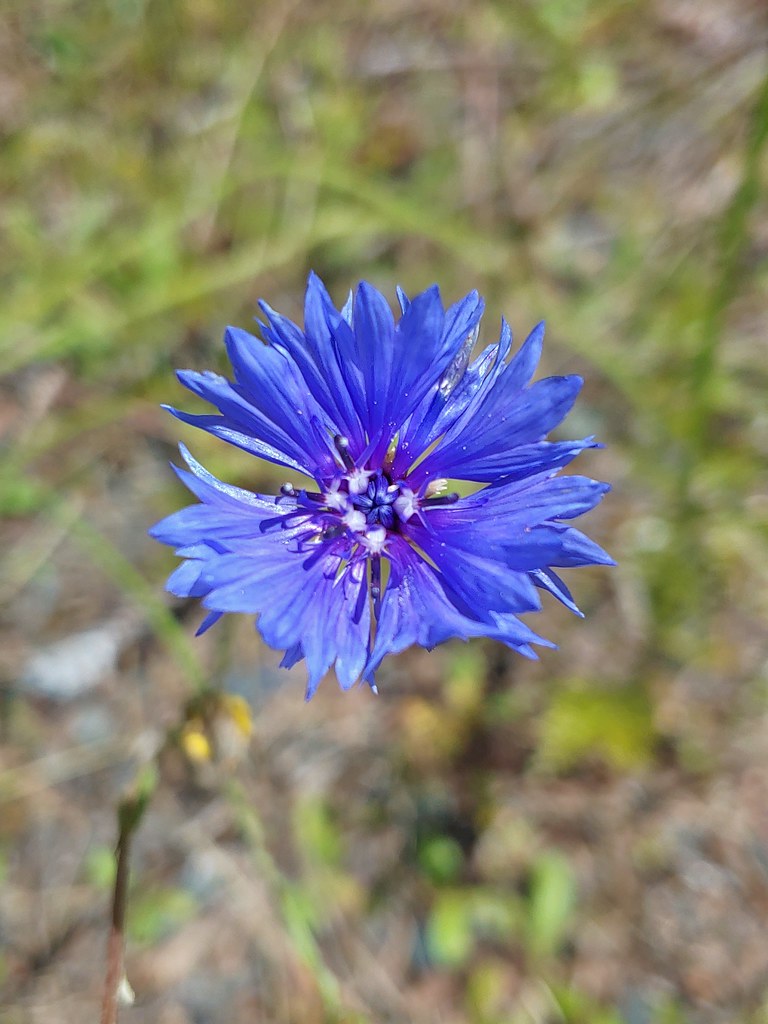
20200617_120844Bachelor button

IMG_6148No idea what this is, possibly non-native.
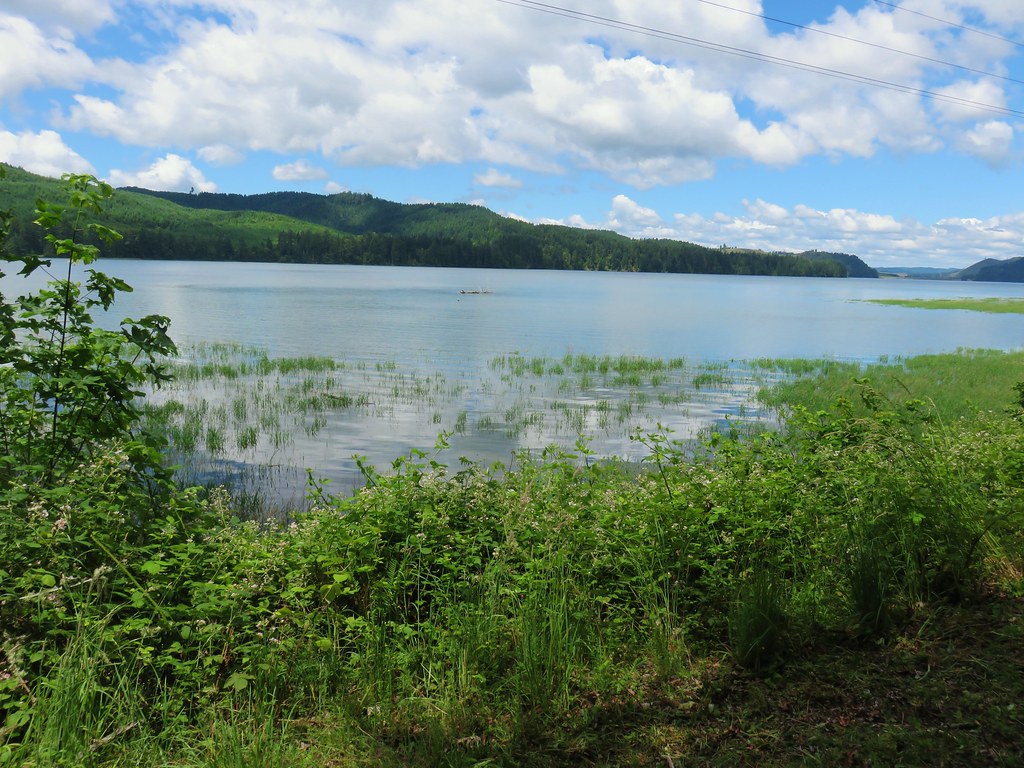
There seemed to be a good amount of water in the reservoir which made it look more like a lake than reservoirs often do.
IMG_6156

At the 1.5 mile mark we came to Smith Creek.
IMG_6162

IMG_6163

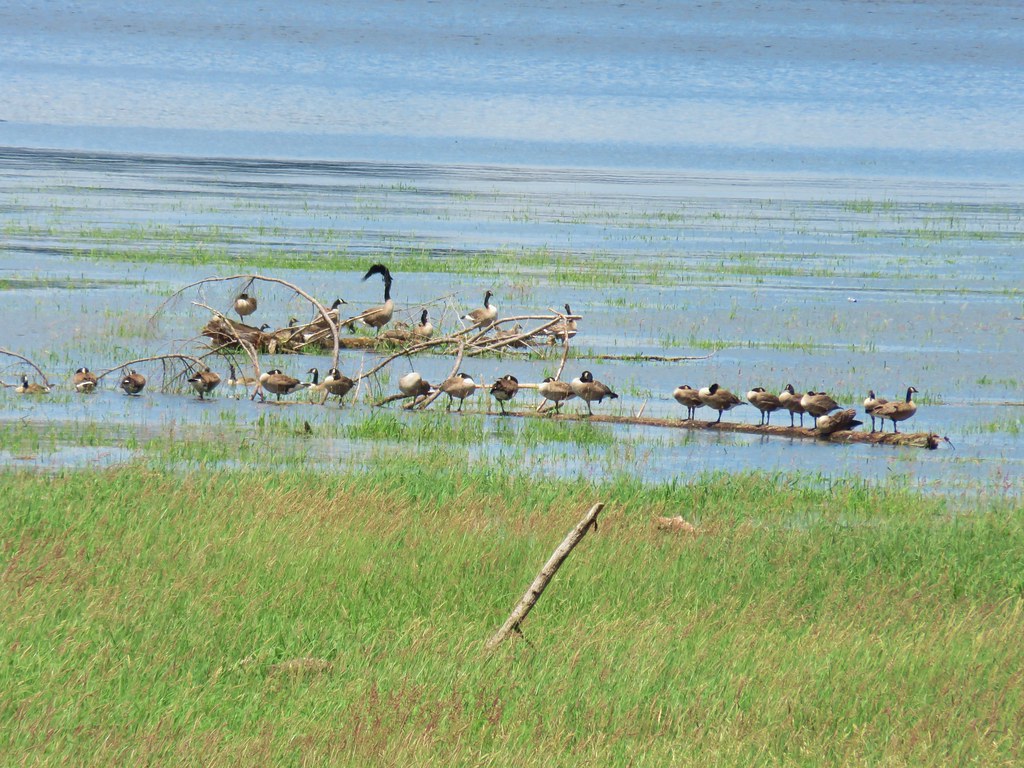
Beyond Smith Creek there were good views across a marshy wetland popular with geese, ducks and herons.
IMG_6174

IMG_6176Canada geese

IMG_6227A great blue heron with at least one duck in the grass.

The trail then passed through a few forested sections and past one rocky cliff where a viewpoint looked out across the lake.
IMG_6179

IMG_6188

IMG_6190You can see a bit of the rocks on the opposite side of the trail.
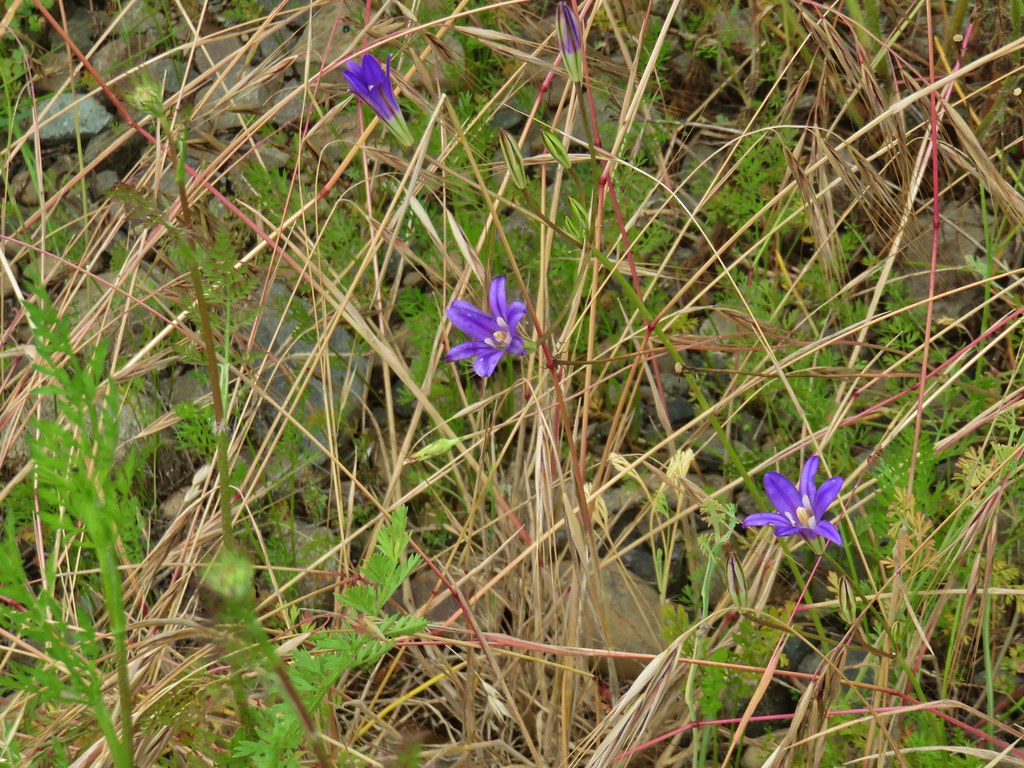
A mix of flowers, mostly non-native brightened the viewpoint.
IMG_6192

IMG_6199Brodiaea

IMG_6205Poppy

20200617_124801Scarlet pimpernel

We had decided to make Rat Creek our turnaround point which was 3.5 miles from the parking area in Bake Stewart Park. Just before reaching Rat Creek we passed through Harms Park, another possible trailhead.
IMG_6210

IMG_6211Dorena Lake from Rat Creek

IMG_6213Bug on the Rat Creek bridge.

We returned the way we’d come keeping our eyes out for anything new on the way back. In Bake Stewart Park we spotted some really tall bluehead gilia and a nice little clarkia.
IMG_6237

IMG_6240

With the 7+ miles on the Row River Trail we had finished our day with a total of 12.4 miles. The three waterfalls were great short hikes and each would be a worthwhile stop on its own. If the Swordfern Trail receives some much needed maintenance it also seemed like it would be a nice short hike although not as impressive as the falls. For a paved trail near town along a reservoir we were pleasantly surprised by the Row River Trail. We will certainly be keeping it in mind for another visit. Most likely when the higher trails are inaccessible. Happy Trails!

Flickr: Spirit, Pinard, & Moon Falls, Swordfern Trail, and Row River Trail

Categories
Bull of the Woods/Opal Creek Hiking Old Cascades Oregon Trip report

Henline Falls and Henline Mountain – 06/14/2020

**Note the 2020 Beachie Creek Fire burned the area covered by this hike.**

While 2010 is the year we consider the year we started hiking there were a few outings prior to 2009 that prompted our desire to become hikers. It took us a while to find our groove and 2009 was a good example of this. We were interested in hiking but didn’t really know what we were doing. We had a single guidebook (printed in 2004) that contained 280 hikes throughout the state but was light on the details of each hike. The book did have a very helpful 10 page section on hiking tips though that we took to heart. We had hoped to hike more regularly in 2009 but had a hard time deciding on where to go, often leaving it up to the day before of even the day we were thinking of hiking to decide where to go. That often resulted in a deferral to “next weekend” leaving us with only a couple of outings.

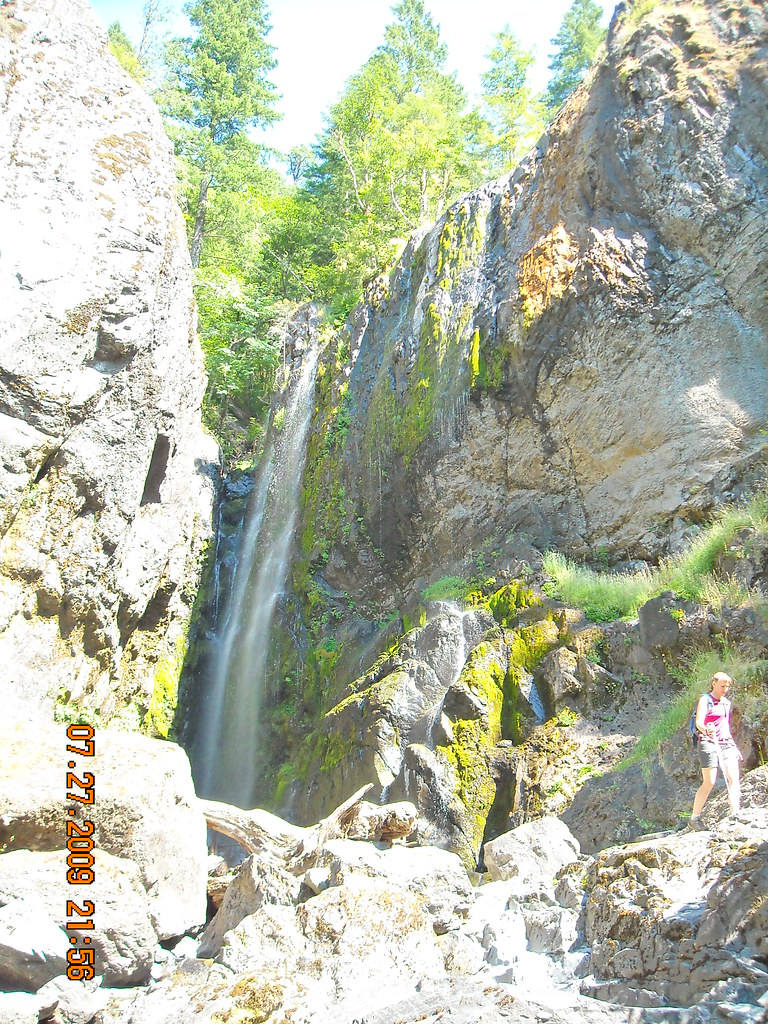
The only 2009 outing that we have photos from was our hike to Henline Falls in the Opal Creek Wilderness. Ironically this hike wasn’t in our guidebook but was suggested by a co-worker. At 2 miles round trip this was a hike we knew we could do, but being new to hiking it didn’t occur to us at the time that a July 27th outing was a little late in the year to see Henline Falls with anywhere near peak water volume.
Henline Falls

We were less than impressed with the waterfall that day and decided to also try the nearby Henline Mountain Trail which was also mentioned by my co-worker. We didn’t get far up that trail at all before the climb took it’s toll on certain members of our group (I won’t name names but you know who you are. :)) balked at the difficulty and we turned around.

Ten years and 10 1/2 months later it was finally time go back and finish the Henline Mountain Trail and revisit Henline Falls when there would be more water. The forecast called for a 30% chance of showers early, but later in the day for mostly sunny skies. Since starting early is what we do we were ready for some potentially wet conditions but it didn’t seem too bad as we drove through Elkhorn and to the junction of FR 2209 & 2207. The trailheads for Henline Falls and Henline Mountain are on FR 2209 but we had planned on making a quick stop at Sullivan Creek Falls along FR 2207 before starting our hikes.

We turned onto FR 2207 and followed it for 3.8 rough and wet miles to a pullout opposite Sullivan Creek Falls.
IMG_5459

There were scramble trails on either side of the cascade with the one on the right hand side leading to a view part way up the falls.
IMG_5464

IMG_5466

IMG_5468The scramble trail.

It may have been possible to continue higher but it was really wet and slick so back down to the car I went. Heather was putting on her rain gear which I also did before driving back to FR 2209 and continuing to the Henline Falls Trailhead.
IMG_5474

We set off on the Henline Falls Trails which quickly entered the Opal Creek Wilderness.
IMG_5480

We were watching for the Ogle Mountain Trail which was approximately a half mile along the Henline Falls Trail. We were thinking of exploring this trail a bit after visiting the falls so we wanted to make sure we knew where it was. After passing a small trail that led into the brush we spotted the obvious Ogle Mountain Trail marked by an orange-red sign with an “X” on it.
IMG_5487Not the Ogle Mountain Trail.

IMG_5488The Ogle Mountain Trail on the right.
For now we kept left and continued another relatively level half mile to Henline Falls.
IMG_5507

IMG_5516

IMG_5513

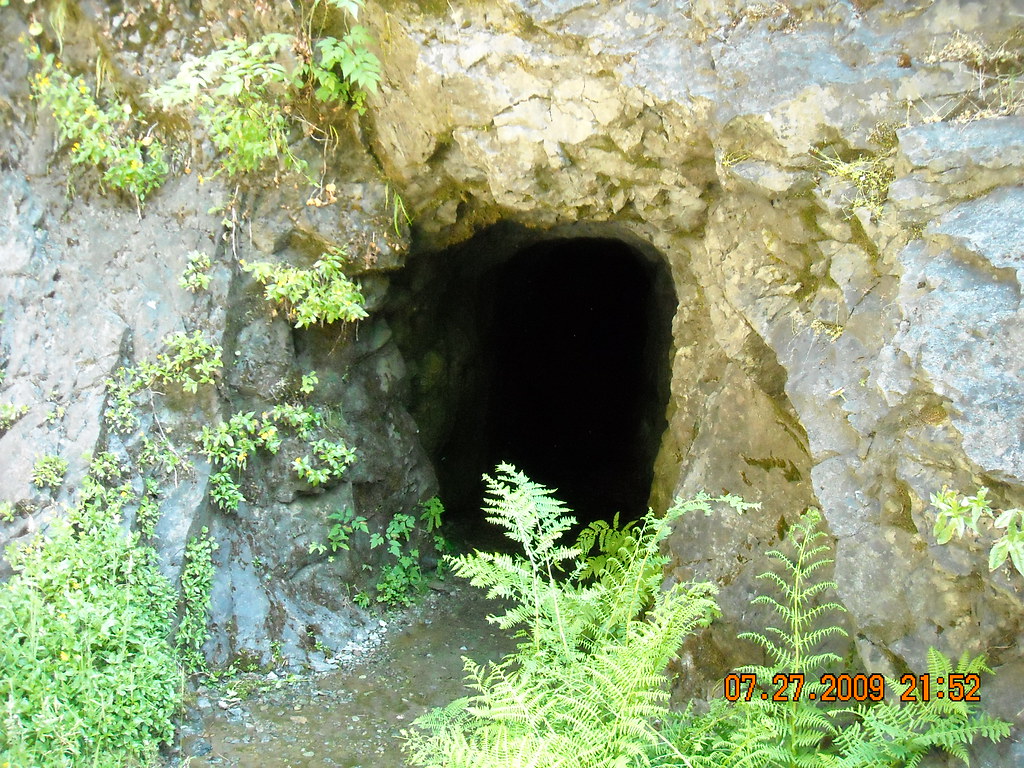
This time we could see why the falls were popular. The water was blasting down into the splash pool generating a lot of wind and mist. We skipped visiting the old mine shaft that is near the fall this time due to the slick rocks.
Abandoned mine shaft

After enjoying the falls we started back, briefly turning uphill on a steep trail that we thought might connect the Henline Falls and Ogle Mountain Trails, but we quickly turned around after consulting our GPS and seeing how much higher up the Ogle Mountain Trail was from where we were. We went back down to the Henline Falls Trail and followed it back to the junction with the Ogle Mountain Trail which we then turned up.
IMG_5536

The Ogle Mountain Trail used to extend all the way to the Ogle Mountain, but the mine is on private property and the trail now effectively ends at the forest boundary. We were wanting to scout it out for a possible hike some other time to attempt to visit some of the “Family of Falls” located above Henline Falls on Henline Creek. The trail climbed much more steeply than we had anticipated but we seemed to be starting to level out a bit after .2 miles which is when I spotted a fair amount of poison oak encroaching on the trail. That combined with the climb convinced us to let the Ogle Mountain Trail remain a mystery, at least for now. We retreated to the Henline Falls Trail and returned to our car which we then drove to the Henline Mountain Trailhead.
IMG_5548

It was still foggy but the rain had pretty much stopped as we started our climb up the Henline Mountain Trail. While there was some poison oak along the lower half of this trail it wasn’t crowding the trail like it had been on the Ogle Mountain Trial.
IMG_5559Penstemon with poison oak in the background along the trail near the trailhead.

This trail also quickly entered the Opal Creek Wilderness as it climbed relentlessly for 3 miles to the site of a former lookout.
IMG_5561

At the lower elevations we spotted a couple of flowers that we had yet to see this year.
IMG_5563Little prince’s pine

IMG_5567Twinflower

After a little over three quarters of a mile we came to short spur trail that led to a viewpoint above a talus slope which we had crossed earlier.
IMG_5584Looking up at the viewpoint from the talus slope.

IMG_5606Spur trail to the viewpoint.

We still weren’t anywhere near the mostly sunny segment of the day so there was a very limited view from the rocky outcrop.
IMG_5607

IMG_5611The trail passing through the talus slope below.
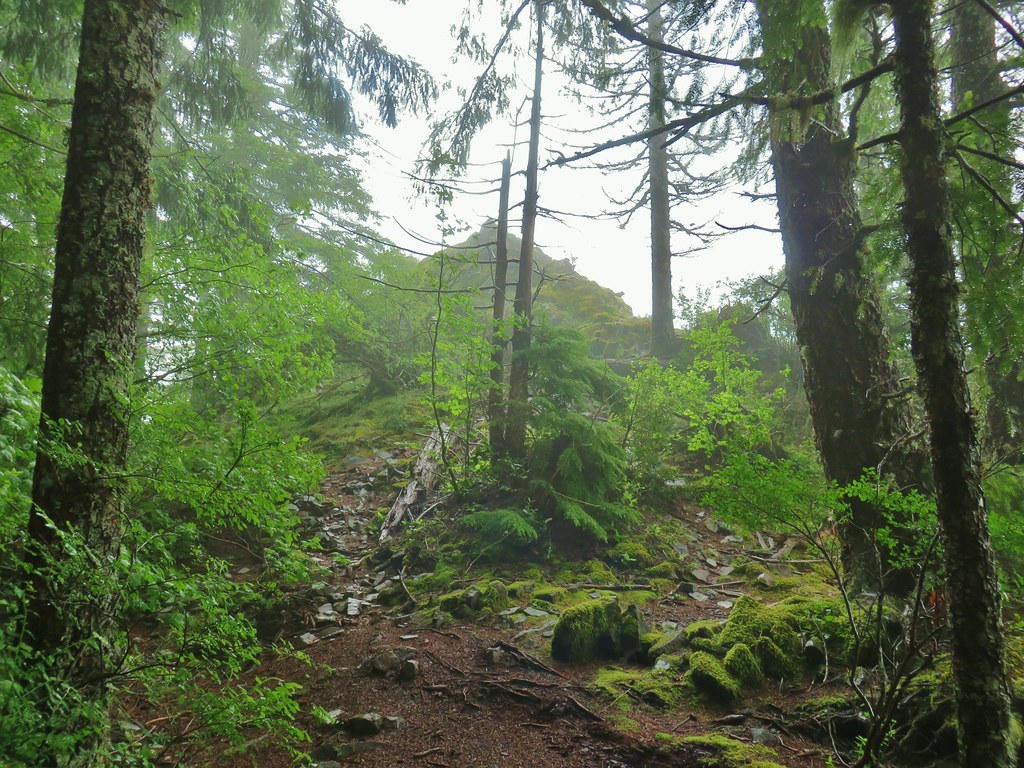
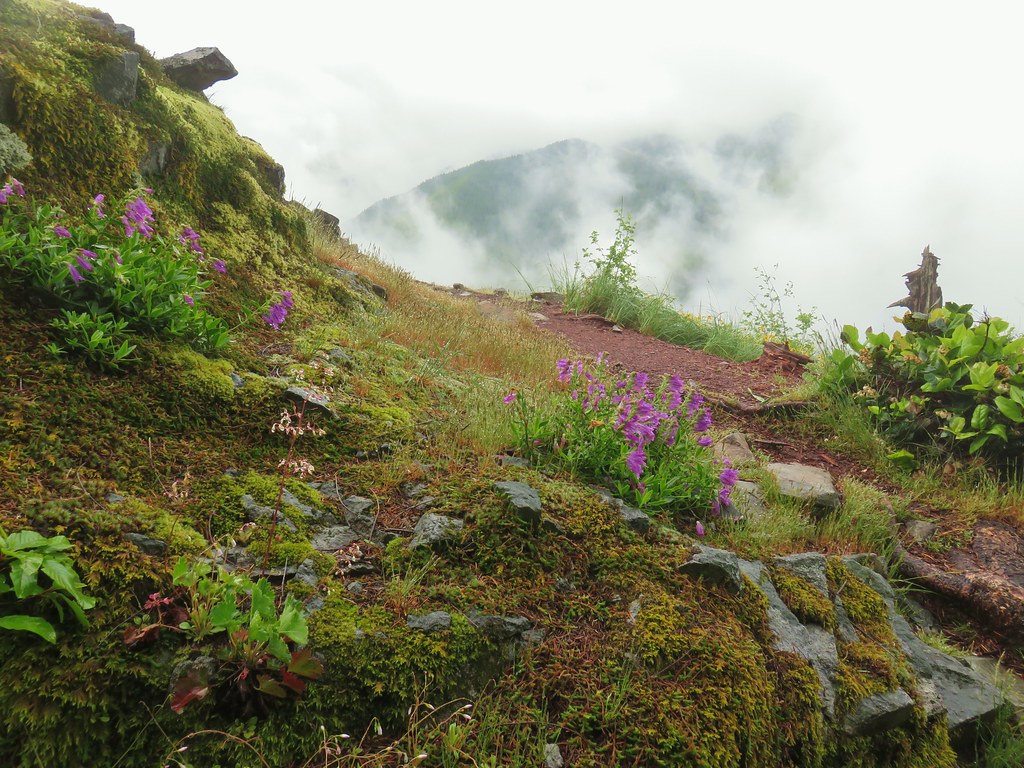
A quarter mile later we came to a second, larger viewpoint.
IMG_5622

IMG_5624Penstemon at the viewpoint.

IMG_5628Oregon sunshine

IMG_5630

IMG_5634I believe that is Rocky Top behind the clouds.
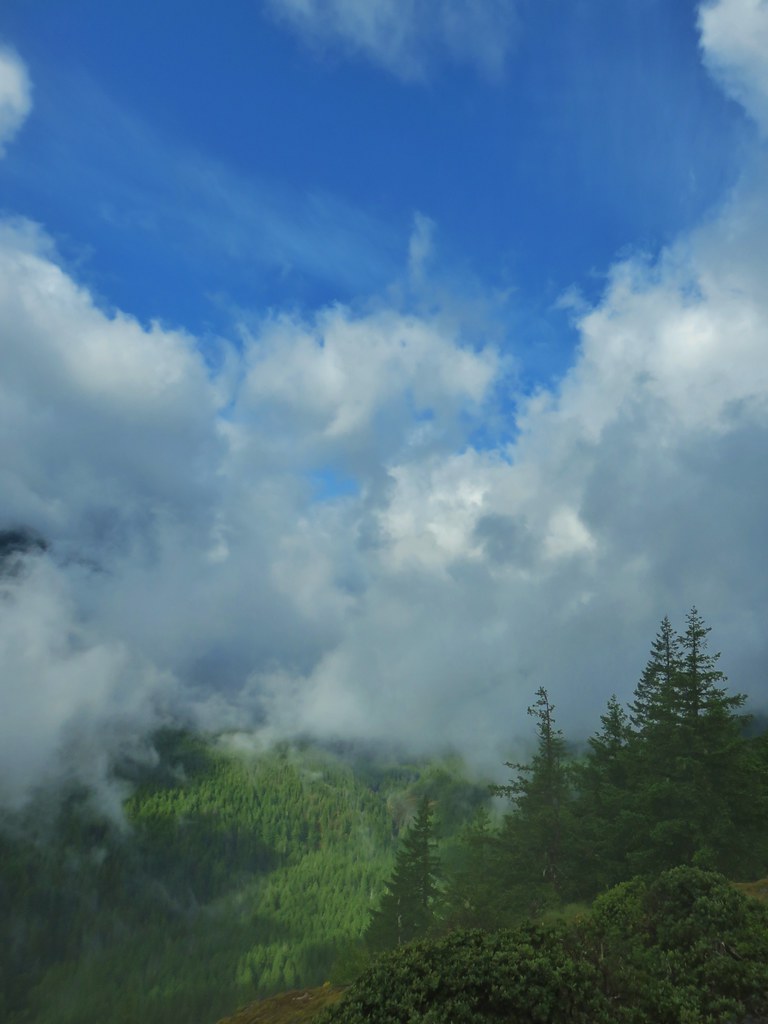
IMG_5639Blue sky to the west.

We continued climbing from this second viewpoint trading the occasional poison oak in for the more enjoyable beargrass and rhododendron blooms.
IMG_5640

IMG_5643

Despite the Sun making an occasional appearance we remained mostly in fog as we climbed. We kept our eyes out for different flowers along the way.
Neottia banksiana - Northwestern twaybladeNorthwestern twayblade

IMG_5672

IMG_5667Penstemon

IMG_5679Paintbrush

IMG_5682Bunchberry

IMG_5680

IMG_5692Trillium

IMG_5694

IMG_5705Penstemon (cliff beardtongue)

IMG_5708Oregon sunshine

At a switchback at the three mile mark we took a spur trail to the right to the former lookout site.
IMG_5728

Instead of sitting at the summit of Henline Mountain the lookout was near a ridge end a mile from the summit and over 400′ lower.
IMG_5730The ridge end beyond where the lookout was.

IMG_5731Looking back toward the summit of Henline Mountain (it is beyond and above the visible trees).

There had been increasing breaks in the clouds, enough to give us some good looks at the seasonal Elkhorn Mountain Falls across the valley.
IMG_5734The falls are obsucred here by the clouds to the lower left.

Elkhorn Mountain FallsElkhorn Mountain Falls

IMG_5738Sub-alpine mariposa lily

IMG_5740Mountain Ash

With no immediate end to the clouds in sight we returned to the Henline Mountain Trail. The official trail ends at the lookout but a volunteer maintained trail continues 1.1 mile to the actual summit so we turned right onto this trail and continued on. This section of trail finally had some downhill sections, which only meant uphill on the way back but we welcomed the change.
IMG_5743

The reason for the ups and downs was that the trail followed a narrow ridge for a half mile. A section of the ridge was open offering views although we were still dealing with the clouds.
IMG_5747

IMG_5749Oregon sunshine and cat’s ear lilies

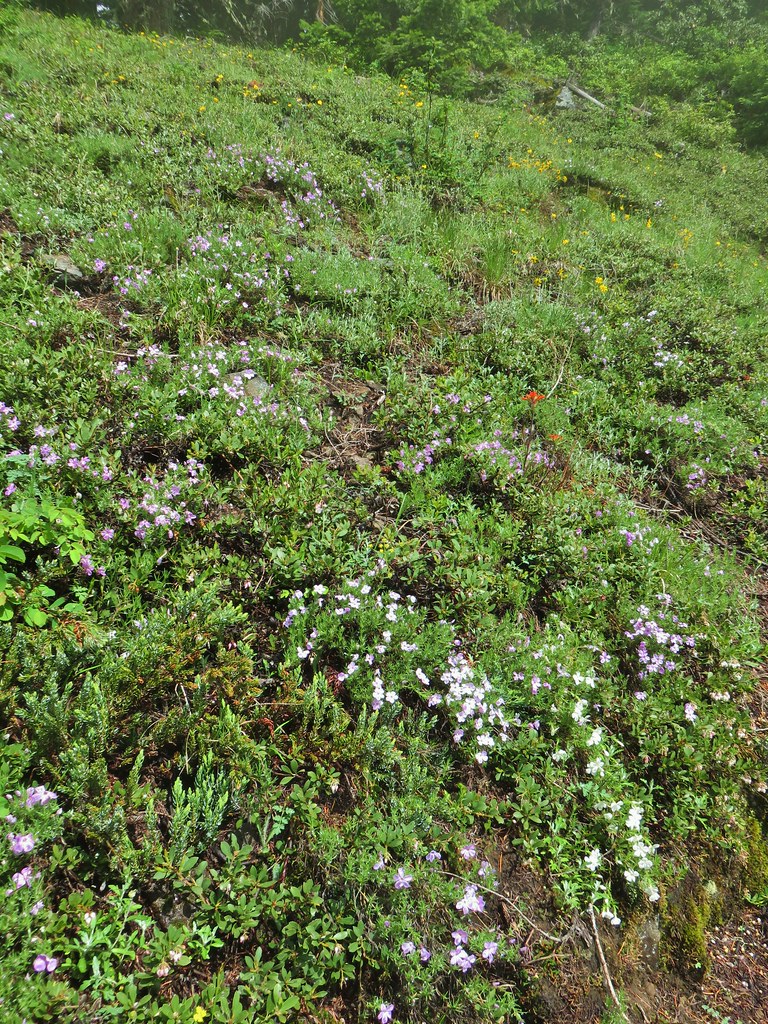
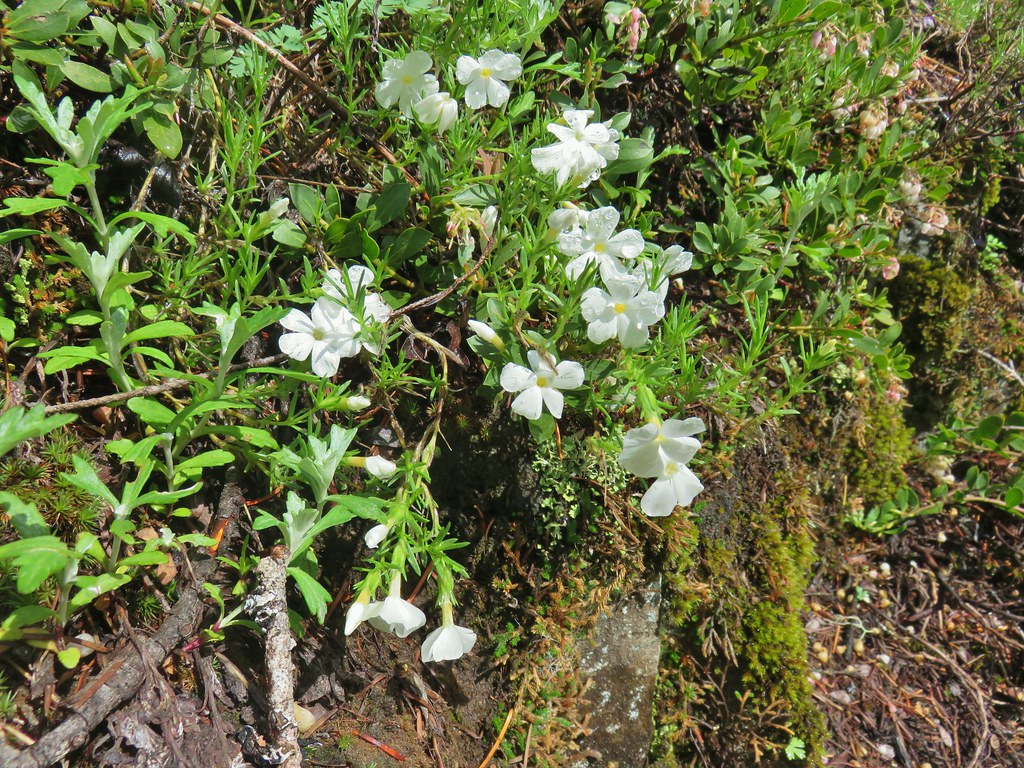
IMG_5753Phlox

IMG_5758

raceme pussytoesRaceme pussytoes

IMG_5762

IMG_5768Paintbrush

The trail crossed from the east side of the ridge to the forested west side before crossing again to the east into a little meadow with a fair amount of phlox.
IMG_5780

IMG_5787

IMG_5791

IMG_5788

IMG_5796

The trail steepened again for a bit before dropping one final time to a saddle before making its final ascent to the summit.
IMG_5802Heading uphill after the little meadow.

IMG_5806Snow in a basin below the trail.

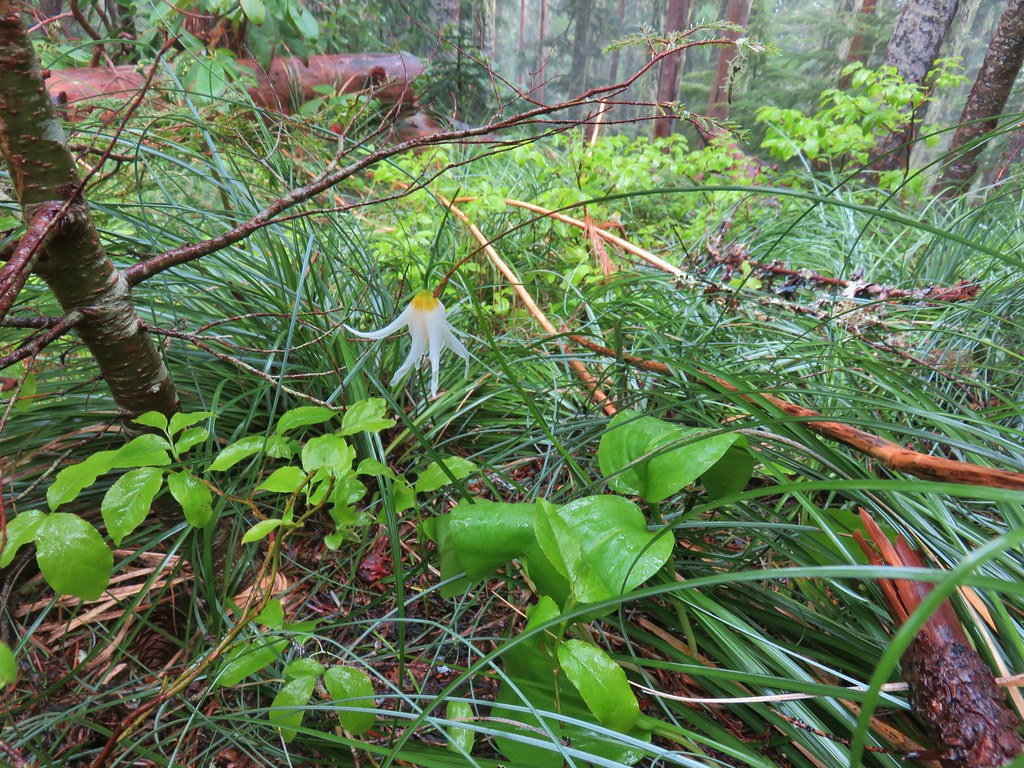
IMG_5810Fawn lily

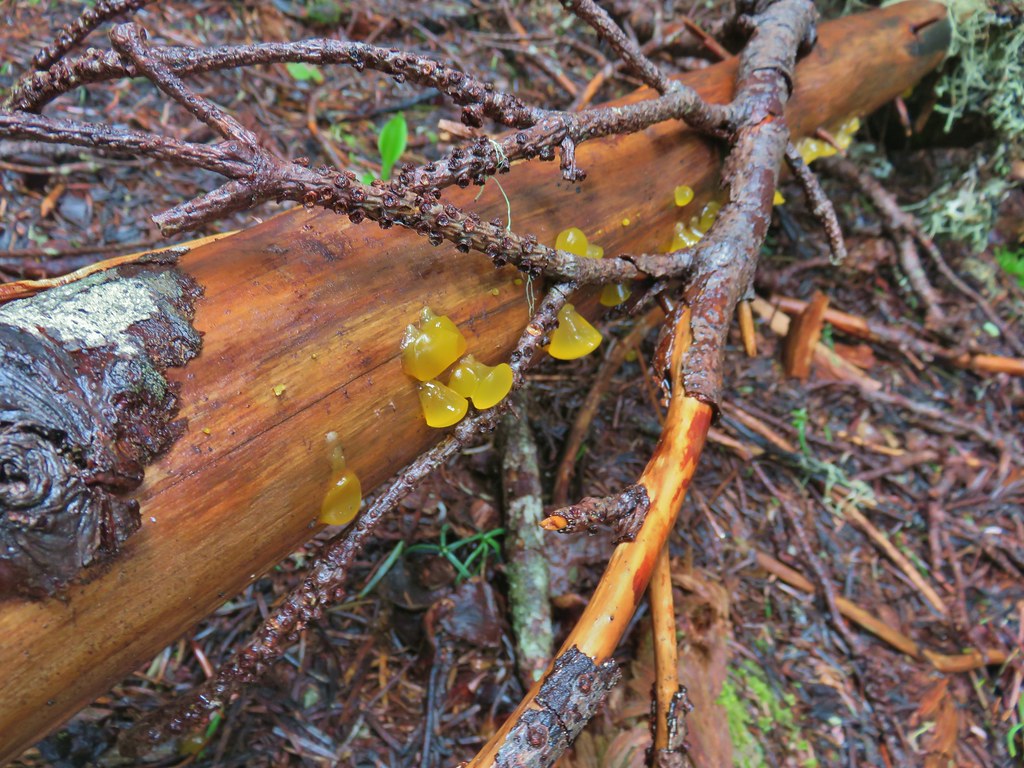
IMG_5814Jelly fungus

IMG_5816Heading down to the saddle below the summit.
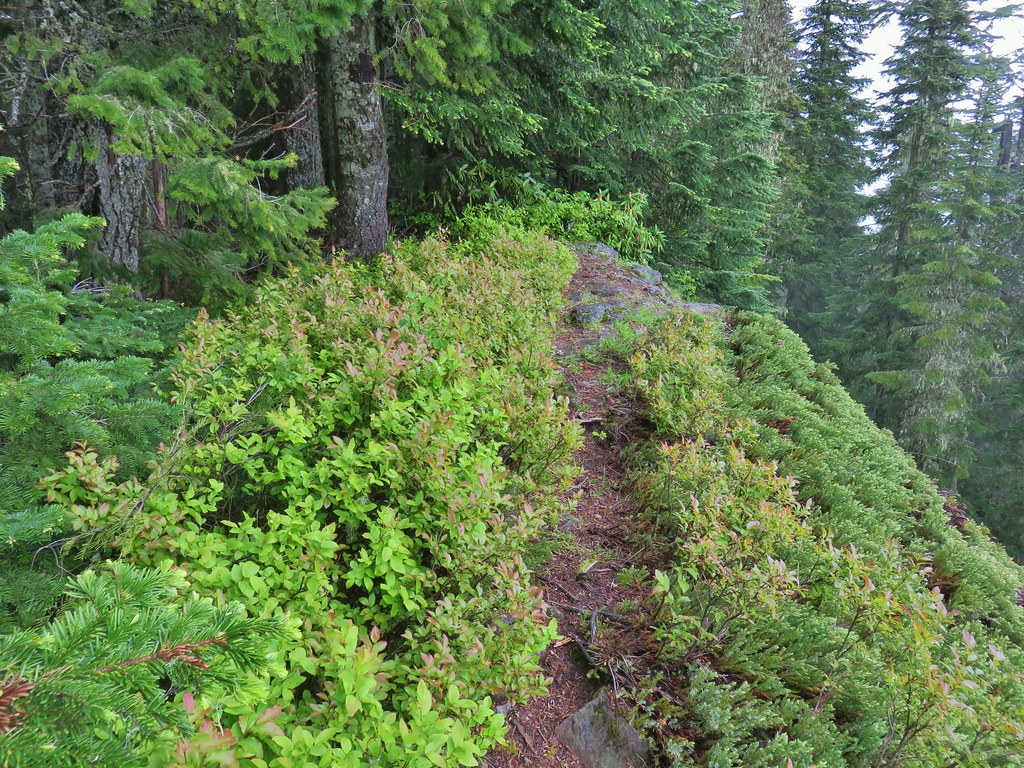
The actual summit of Henline Mountain was a little rocky opening with lots of huckleberry bushes.
IMG_5817

The trail continued an additional two hundred feet before petering out.
IMG_5824The end of the trail.

IMG_5822Bleeding heart near the end of the trail.

We took a decent break at the summit and had a snack. As we were just starting to leave a bit of a view broke out. It wasn’t much but it was something.
IMG_5829

The cloud situation began to improve quite a bit as we headed back to the lookout site. By the time we arrived at the open section of ridge there was a good deal of blue sky overhead.
IMG_5840

IMG_5846

IMG_5847Looking west down the Little North Santiam River.

IMG_5852The high point to the left is Whetstone Mountain (post), the flat topped mountain straight ahead is Battle Ax Mountian (post), and to the right the double humps are the Marten Buttes (post)

IMG_5854Closer look at Battle Ax Mountain.

We stopped at the lookout site again and took another short break now that we could see a little more of the surroundings.
IMG_5860

IMG_5861Rocky Top still with a little cloud and Elkhorn Mountain in the foreground.

IMG_5865Looking back at Henline Mountain’s summit.

IMG_5868Whetstone Mountain (center high point) with Bull-of-the Woods (post), Schreiner Peak, and North and South Dickey Peaks over its shoulder to the left.
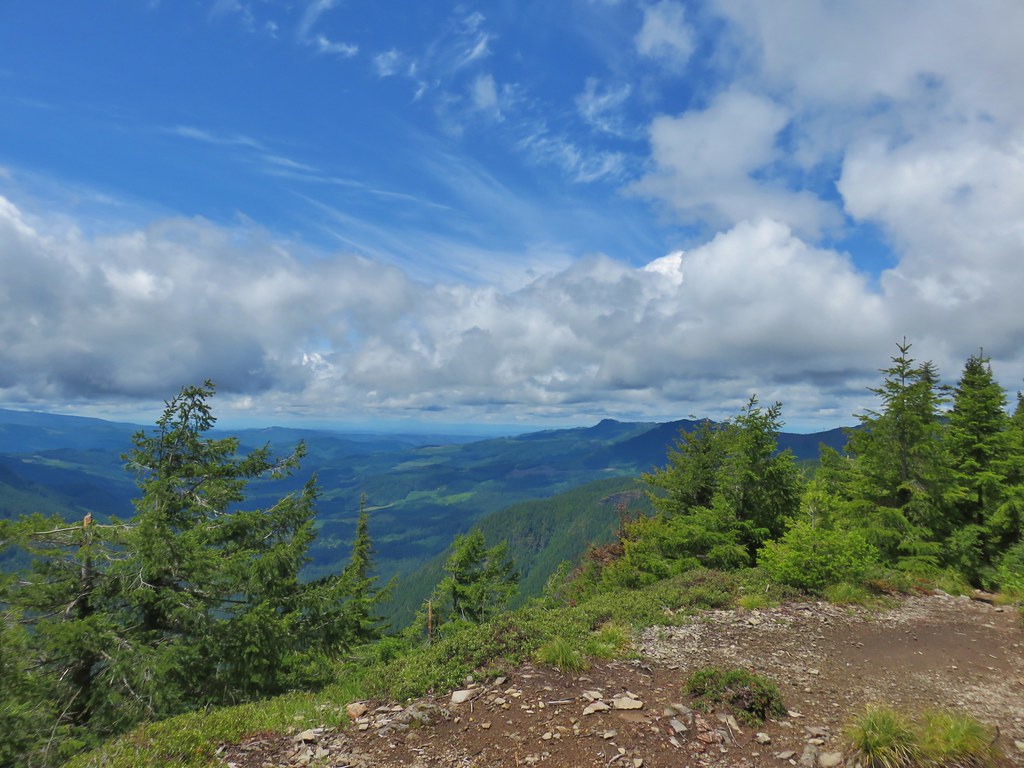
IMG_5871Looking west

IMG_5875Yellow rumped warbler at the lookout site.

We continued down under increasingly blue skies.
IMG_5883Looking up at the ridge end of the former lookout site from below.
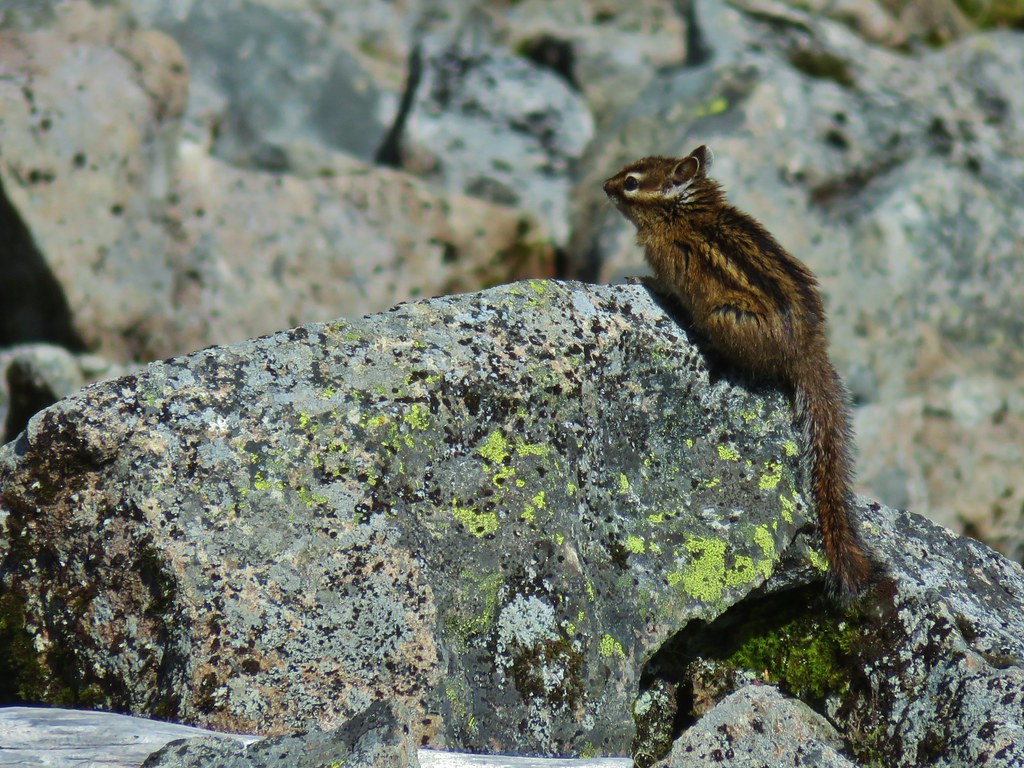
IMG_5889Chipmunk drying out on the rocks.

We also stopped again briefly at the larger viewpoint to see the difference there now.
IMG_5896Looking east

IMG_5902Looking south

IMG_5899Looking west

Rusty saxifrageRusty saxifrage at the viewpoint.
We had encountered three people between the Henline Falls Hike and the summit of Henline Mountain. It was a different story on our way down as we passed a number of hikers coming up. When we got back to the trailhead we noticed several cars illegally parked outside of the designated area along FR 2209 and it was the same at Henline Falls despite the presence of posted signs. It’s disappointing to see how many people are willing to ignore the rules. Please don’t be one of those people, either arrive at your hikes early or have backup plans if things don’t work out at your first choice. Disregarding the rules (even if you think they’re dumb) sets a bad example. Let’s do better. Happy Trails!

Flickr: Henline Falls and Henline Mountain

Categories
Hiking McKenzie River Old Cascades Oregon Trip report

East Fork and Saddle Trails – 6/6/2020

There haven’t been many times in our 10 years of hiking that we haven’t been able to do the hike (or at least the vast majority of it) that we set out to do that day. Many of the failed attempts came early in our hiking years when we didn’t do as much research on current conditions as we do now, but even with the extra research sometimes things just don’t work out. Our attempt to hike the nearly 6 mile long East Fork Trail in the Willamette National Forest happened to be one of these times.

We had switched to this hike earlier in the week due to a rainy weekend forecast. Our plan was for an out-and-back hike starting at the East Fork Lower Trailhead and turning around at the East Fork Upper Trailhead.
IMG_5088

The large parking area (with restrooms) for the lower trailhead is located at the NE end of Cougar Reservoir where the East Fork South Fork McKenzie River flows into it.
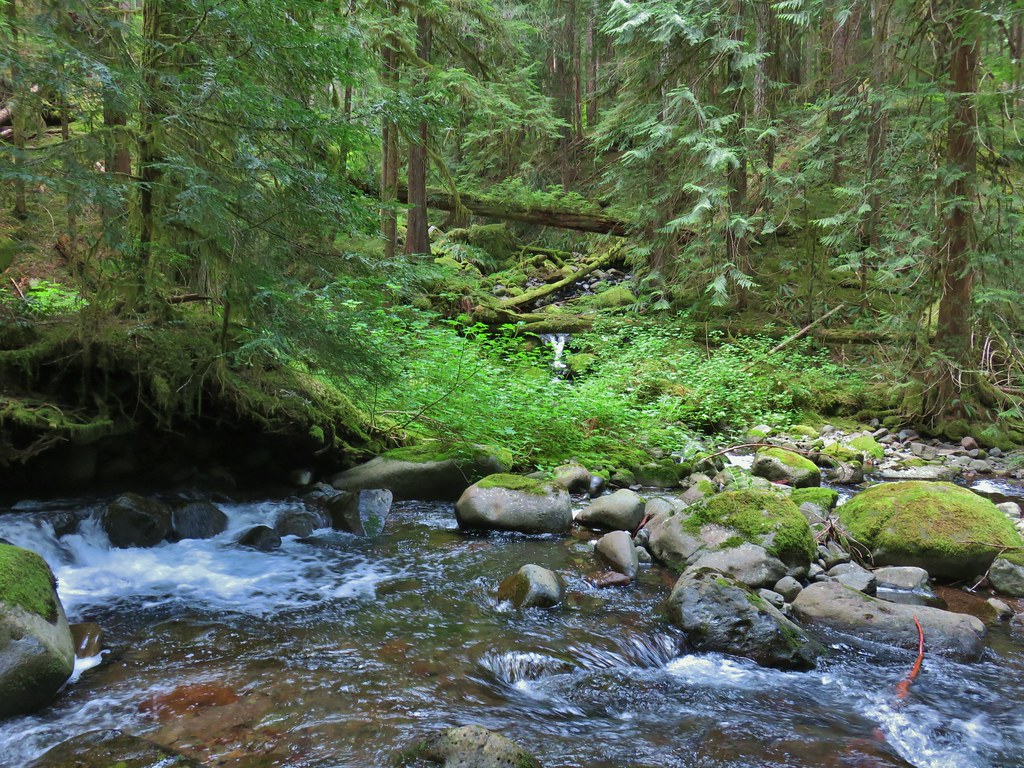
IMG_5090

IMG_5094

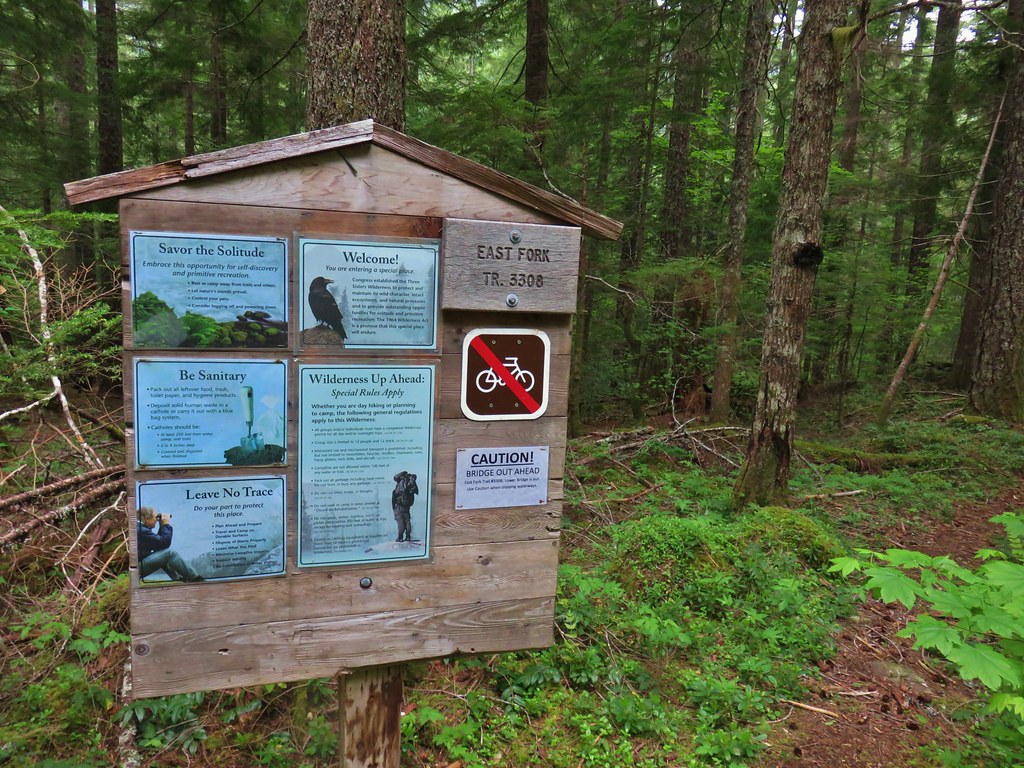
We set off on the East Fork Trail without looking closely at the signboard where it was clearly posted that the first of two footbridge leading across the river was out.
IMG_5096

This bridge was only three tenths of a mile from the trailhead so it didn’t take long for us to discover it missing.
IMG_5118

Fording the river was an option, it looked like it would have been an easier ford than the Indian Creek ford we had done on our first day backpacking the Middle Fork Willamette River (post). With that being said neither of us were keen on soaking our feet this early in the hike and knowing that the plan had been to go to the upper trailhead and back we simply decided to go back to the car, drive up to the upper trailhead, and hike down from there to the other side of the river and back which would allow us to cover the whole trail sans the missing bridge.

We were familiar with the upper trailhead having parked there in 2018 when we hiked to Horsepasture Mountain using the Saddle Trail (post). While the Saddle Trail headed uphill on the north side of FR 1993 near a small pullout, the East Fork Trail headed downhill on the south side.
IMG_5120

Anemones and bunch berries were blooming near the trailhead.
IMG_5123

IMG_5125

This time we noticed the caution posted on the trailhead signpost.
IMG_5127

The trail quickly entered the Three Sisters Wilderness.
IMG_5130

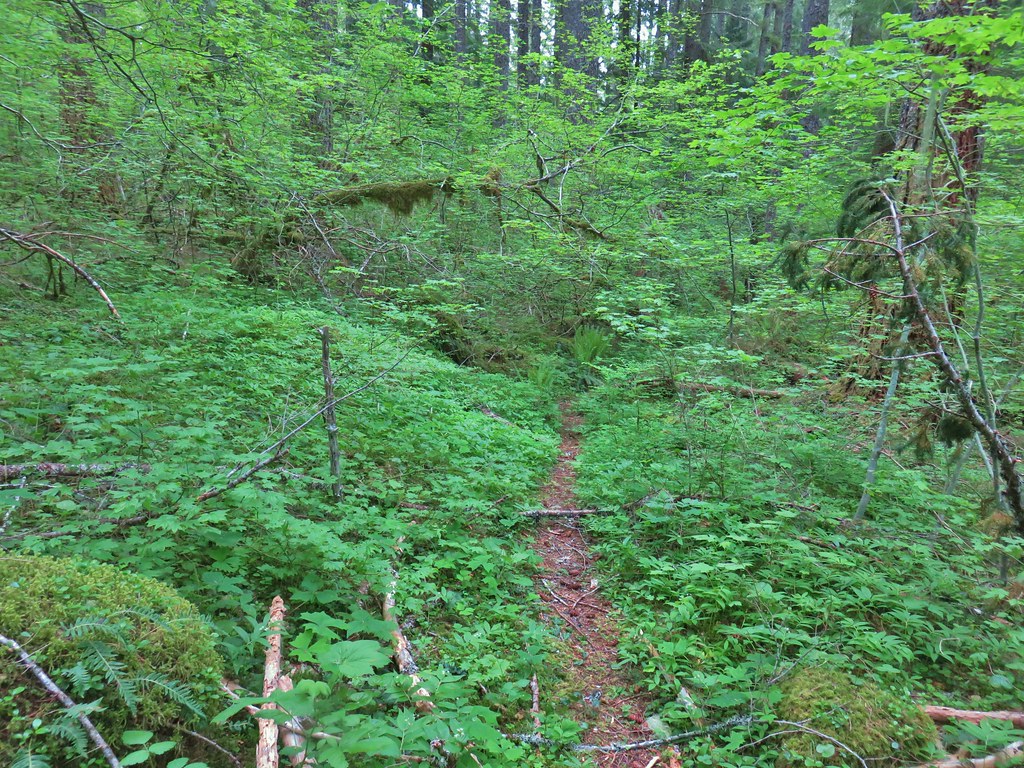
For first .6 miles from the trailhead the East Fork Trail made its way downhill through a green forest before reaching the East Fork South Fork McKenzie River.
IMG_5131

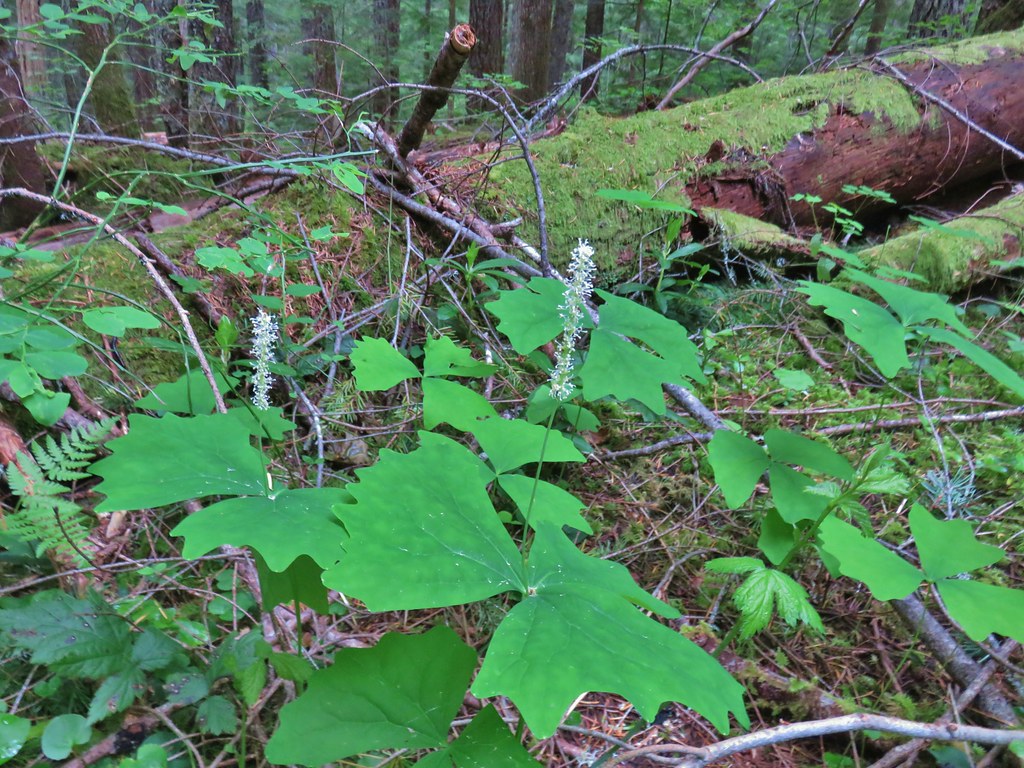
IMG_5132Vanilla leaf

IMG_5138False solomonseal

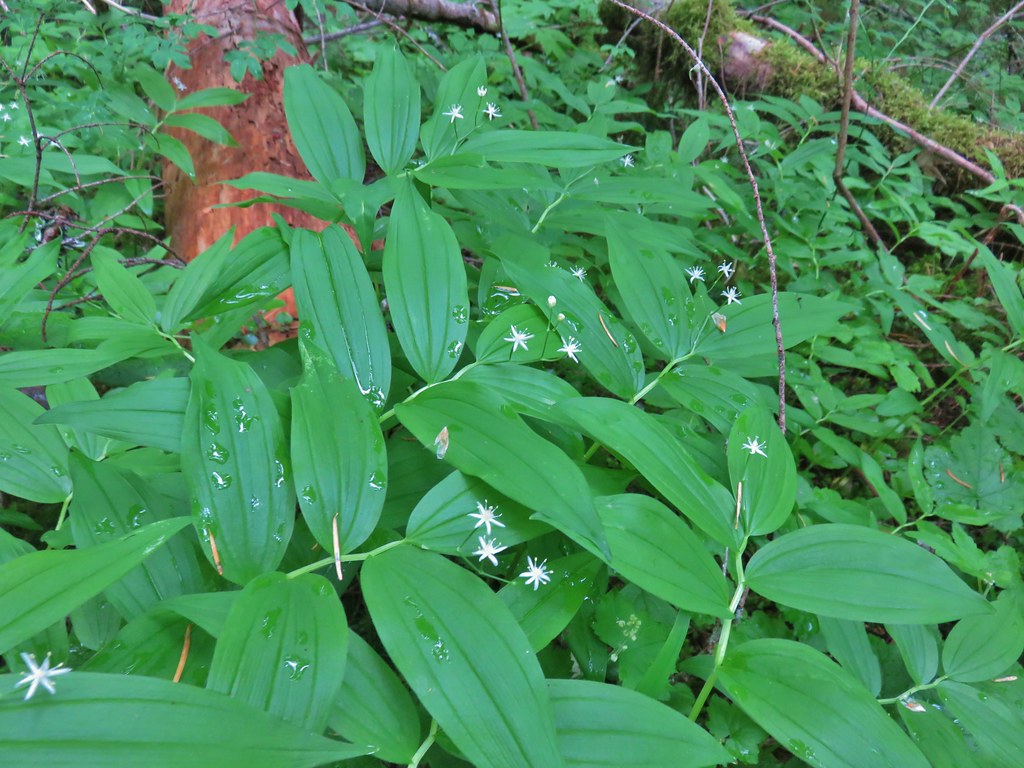
IMG_5142Star-flowered solomonseal

IMG_5143

IMG_5149Junco

IMG_5151Trillium

IMG_5154We saw a lot of this type of mushroom.

IMG_5159Fairybells

IMG_5165East Fork South Fork McKenzie River

Once we arrived at the river the trail turned west following it downhill toward the reservoir. As is the case for most river trails we were sometimes a ways above it and at other times right along it.
IMG_5175

IMG_5183

IMG_5188

IMG_5197

IMG_5200

IMG_5204

IMG_5242

There were a number of woodland flowers in bloom and lots of slugs to watch out for.
IMG_5169Vanilla leaf, valerian, and a slug.

IMG_5174Oregon grape

IMG_5178Salmonberry

IMG_5211Baneberry

IMG_5217Violets

IMG_5234Sour grass

IMG_5271Queen’s cup

IMG_5222Fern unfolding

IMG_5226Mushrooms

IMG_5258

IMG_5261Maidenhair ferns

IMG_5209We also watched out for the nasty Devil’s Club and its thorns.

The trail didn’t appear to see much use and was increasingly overgrown and also suffered from a fair amount of blowdown.
IMG_5186

IMG_5210

IMG_5246

20200606_094535

We made it approximately 3 miles before the blowdown got us. A large tree was down across the trail as it traversed along a hillside above the river. The tree was far to big to simply step over and there were no limbs or other footholds to assist in getting over. To make matters worse the trail on the opposite side of the tree was washing out a bit. That made it look like it might be difficult to get safely off of the tree if we were able to get over it without sliding down the trunk (they can be surprisingly slippery). We could also see other trees down just a little further up the trail.
IMG_5267

Our options were to scramble up and around the root ball that was a good 30 to 40 yards uphill or turn back. The fact that the trail had been getting more and more “wild” didn’t give us any confidence that the going would get any easier, especially considering that if we made it to the upper footbridge the forest on the south side of the river burned in a low intensity fire in 2018. We decided that the smart thing to do was to turn back here so we did.

On the way back we had a bit of excitement when we heard a ruckus off to our left. When we looked over we saw something brown charging down at us through the brush. It stopped several feet away for us which allowed us to identify it as a grouse. She was all ruffled up and yelling at us. We could hear other grouse still uphill so we guessed this was a mother protecting her young. After getting our attention she flew onto the trail then ran ahead in an attempt to lead us away from what we assumed were her young.
IMG_5272The grouse is the blurry brown thing ahead and to the left of the trail.

She led us for a quite a bit before she was apparently comfortable with the distance and she disappeared into the forest. As we continued we discussed our options for the rest of the day. We decided that as long as the weather held out that we would set a turnaround time and hike up the Saddle Trail a bit since it was right there where we’d parked.
IMG_5279Start of the Saddle Trail at FR 1993

We gave ourselves an hour as we began climbing this steep trail (1400′ elevatin gain over 2 miles). We were excited when we spotted some blooming beargrass and paintbrush.
IMG_5284

IMG_5281

IMG_5293

IMG_5295A penstemon starting to bloom

IMG_5296A line of paintbrush

IMG_5300

There were a number of other flowers blooming along the trail.
IMG_5311Rhododendron

IMG_5309Rhododendron

20200606_114636Pacific coralroot

IMG_5313Northern phlox

IMG_5315Pinesap (I think)

IMG_5325Oregon grape

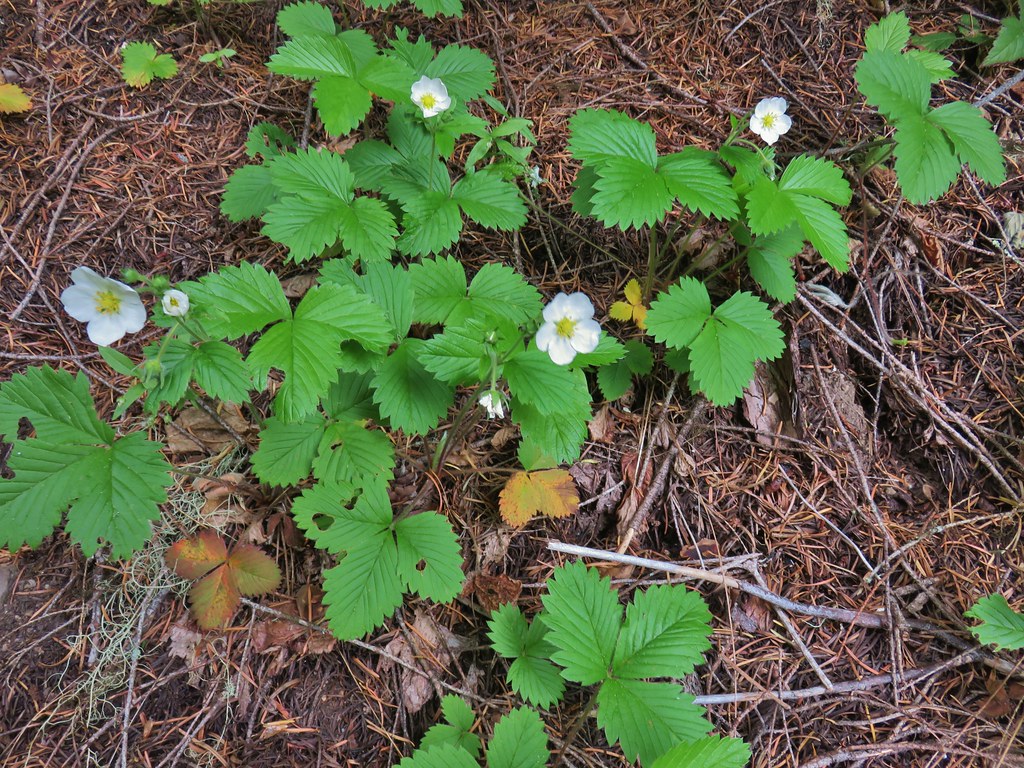
IMG_5327Strawberry

IMG_5329Yellowleaf iris

IMG_5333Sticky cinquefoil

IMG_5338Spotted coralroot

IMG_5449Nightblooming false bindweed

IMG_5453Largeleaf sandwort

We had made it about 1.5 miles up the trail when our hour was almost up. We were at a switchback which the trail launched steeply up from and Heather decided she was going to call it there. I decided that we were close enough to the end of the trail that I wanted to continue up to the junction with the Olallie Trail so Heather started back down while I continued uphill. Two tenths of a mile where we parted ways I came to a rocky viewpoint off a switchback. The view was not nearly as clear as it had been on our July 2018 visit, but there were flowers present this time that had not been then.
IMG_5345

IMG_5351Subalpine mariposa lily

IMG_5355

IMG_5357Phlox

IMG_5360Rosy pussytoes

I almost called it at the viewpoint but then remembered that there was a meadow just before the end of the Saddle Trail so I continued uphill hoping that there would be a decent wildflower display. I was not disappointed as there were quite a few flowers in bloom including large swaths of blue-eyed mary.
IMG_5443

IMG_5379

IMG_5376Larkspur

IMG_5381

IMG_5385Biscuitroot

IMG_5387Blue-eyed Mary

IMG_5391Woodland star

IMG_5397Serviceberry

IMG_5406Monkeyflower

IMG_5439Royal Jacob’s ladder

IMG_5433Something in the pea family.

IMG_5437Alpine pennycress

IMG_5445Junco amid the flowers.

IMG_5435Bear scat in the meadow.

The trail left the meadow then quickly arrived at a saddle and the Olallie Trail.
IMG_5415

Other flowers bloomed near the junction.
IMG_5430Tall bluebells

IMG_5424Trillium

IMG_5431Wild ginger

IMG_5418Bleeding heart and tall bluebells.

IMG_5420The Olallie Trail

After tagging the junction I headed back down. About halfway down I ran into Heather heading back up, she had been going up and down between switchbacks in an attempt to stay warm as the rainy weather that had been forecast had finally arrived along with a chilling breeze. Even though the day hadn’t gone a planned we managed to get in a little over 11 miles of hiking and enjoyed some nice sights and surprisingly pleasant weather (for the most part). As an added bonus we saw exactly zero other people on the trails which has become a rare occurrence. Happy Trails!

Flickr: East Fork and Saddle Trails

Categories
Corvallis Hiking Oregon Willamette Valley

Pigeon Butte – 05/31/2020

A cloudy weekend forecast had us looking for a hike that was not only open with the ability to properly social distance, and was also not view dependent. This led us to revisit the William L. Finley National Wildlife Refuge which is open except for the main entrance road, Finley Refuge Rd; was closed to vehicles. We had hiked some of the trails at the refuge in October 2017 (post), but left others unexplored. For this hike we planned to start at the Cheadle Marsh Trailhead located .9 miles along Bruce Road and hike up Pigeon Butte and then continue on a loop that had yet to be determined. We had a few possible options and were playing it by ear based on the weather and how we were feeling as we were still recovering from our first backpacking trip of the year the over Memorial Day weekend.

We had downloaded copies of the refuge map which we learned pretty quickly didn’t show everything present at the refuge. The map showed two parking areas prior to the Cheadle Marsh Trailhead so after passing two parking areas we pulled into the third small gravel lot.
IMG_4707

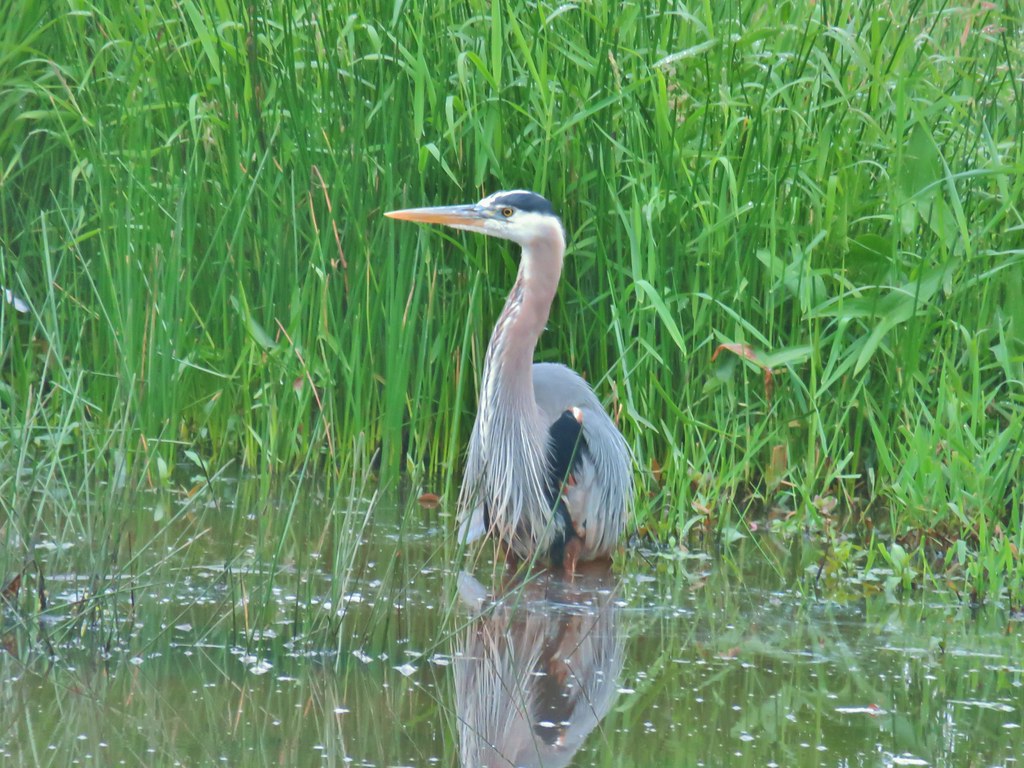
If I had been paying more attention I would have realized that this couldn’t be the right trailhead based on a marsh being on our right instead of Muddy Creek and there not being a view of Pigeon Butte from here. Maybe it was because I was distracted by a heron that flew by right as I was getting out the car which disturbed an egret on the opposite side of the road. I grabbed the camera and was trying to get to a spot where I could see the egret or where the heron might have landed. I couldn’t make anything out through the reeds in that direction but then I looked at the marsh on the side of the road we had parked on and there was another blue heron just about right in front of me.
IMG_4718

There was also a rough-skinned newt on the bridge and a duck leading her ducklings away through the marsh.
IMG_4714

IMG_4710

It also may have had something to do with it having been just before 6 am when we’d arrived but in the excitement of seeing all the wildlife my critical thinking had no chance and we set off on the grassy path which was not leading by Cheadle Marsh but rather McFadden’s Marsh.
IMG_4721

We hiked through the wet grass for .6 miles before starting to think we might be on the wrong path. It was here that we crossed a drainage ditch coming from Muddy Creek and feeding into the marsh. That prompted a look at the GPS which seemed to indicate that we were in the wrong spot, but I didn’t believe it at first because we’d parked at the third parking area and the map showed that Cheadle Marsh was the third.
IMG_4726Lupine along McFadden’s Marsh

IMG_4727Small bird in the grass.

IMG_4731I am almost never sure on yellow flowers like these which one it actually is.
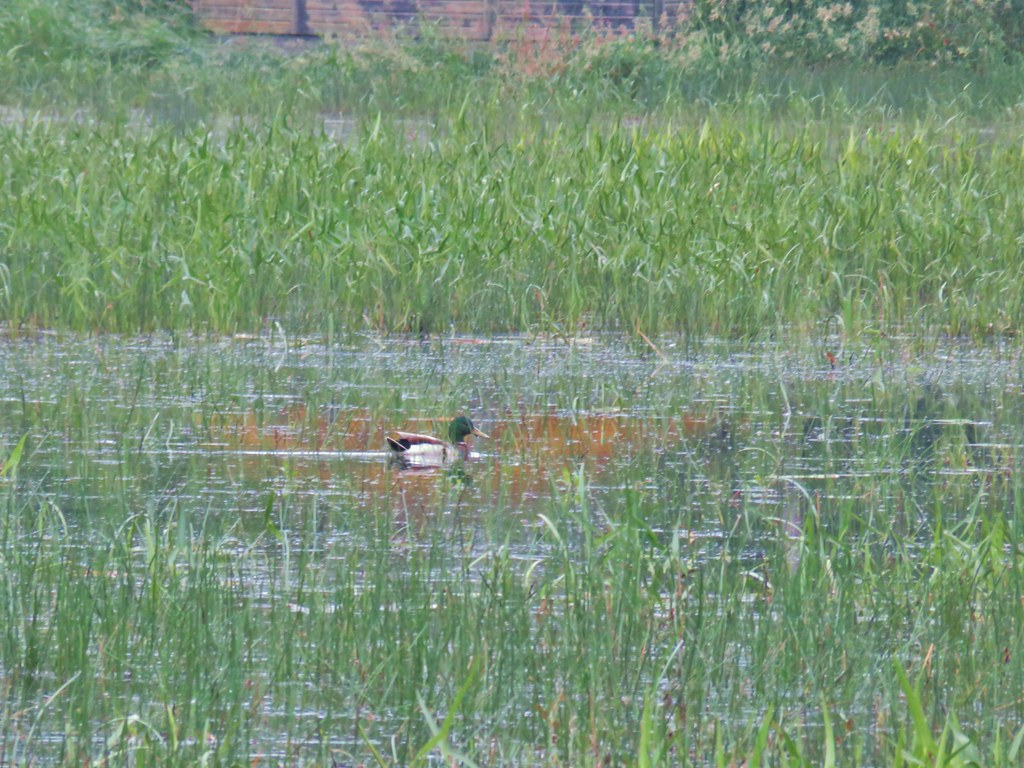
IMG_4733Mallard at McFadden’s Marsh.

IMG_4738Ditch draining into the marsh.

Wood duck and ducklingWood duck and duckling speeding away down the ditch.
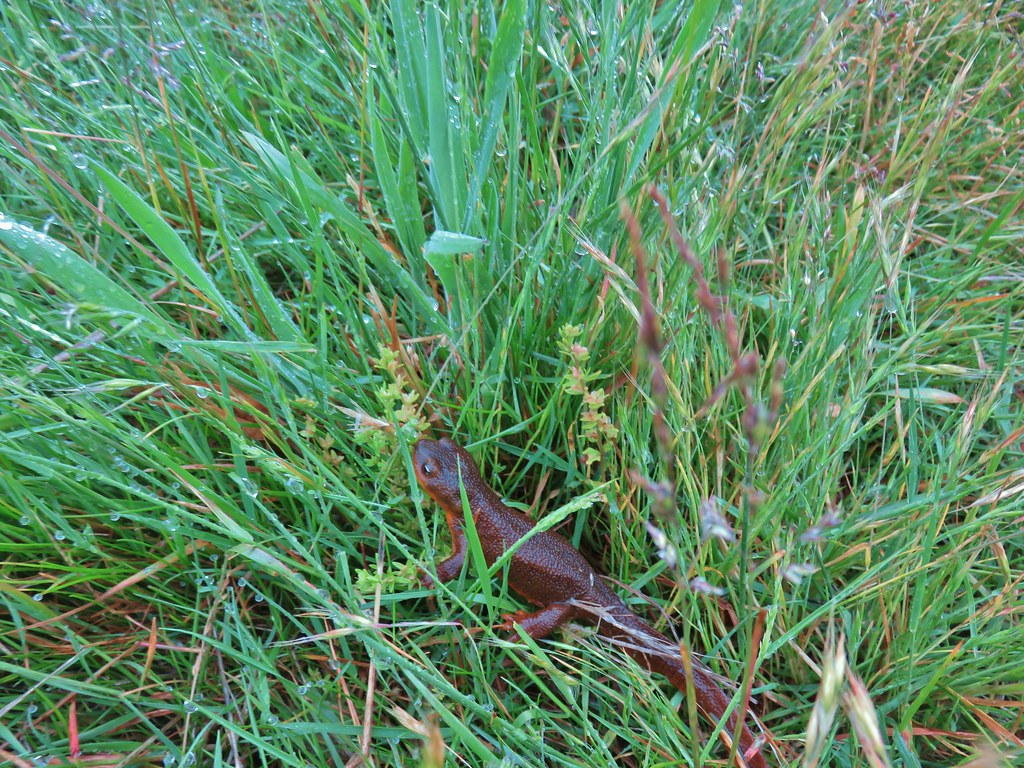
IMG_4743Watch your step in the grass!

IMG_4747Another heron standing in the marsh.

We went another quarter mile before I was able to convince myself that we were indeed on the wrong path and that I shouldn’t have trusted the map. It’s a love hate relationship with maps. You should always have at least one map of the area with you but they aren’t always accurate so sometimes you have to use other available information to get the full picture. We walked back to the parking area and decided to just leave our car there and walk up Bruce Rd. to the correct trailhead which was a little less than a quarter mile away.
IMG_4751Walking over Muddy Creek on Bruce Road.

IMG_4759A pair of California quail and a rabbit on Bruce Road near the Cheadle Marsh Trailhead.
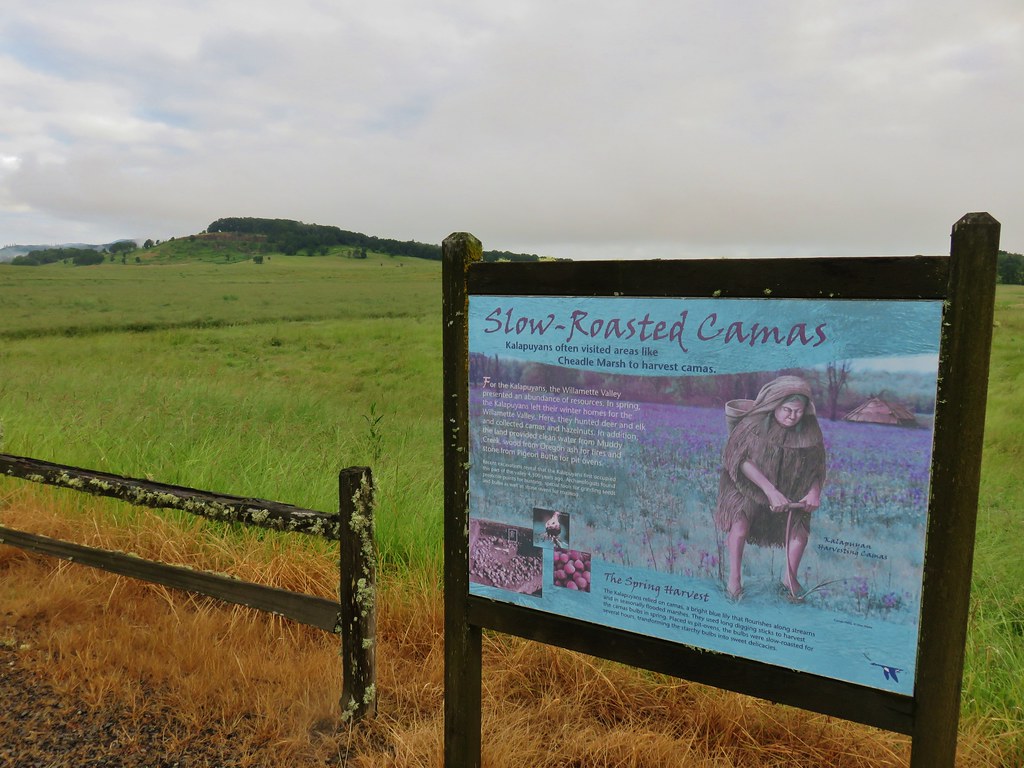
Now that we were at the correct trailhead we did indeed have a view of Pigeon Butte.
IMG_4761

We passed a gate and followed another grassy track between Cheadle Marsh on the left and the hidden (thick vegetation) Muddy Creek on the right.
IMG_4763

IMG_4765

IMG_4770

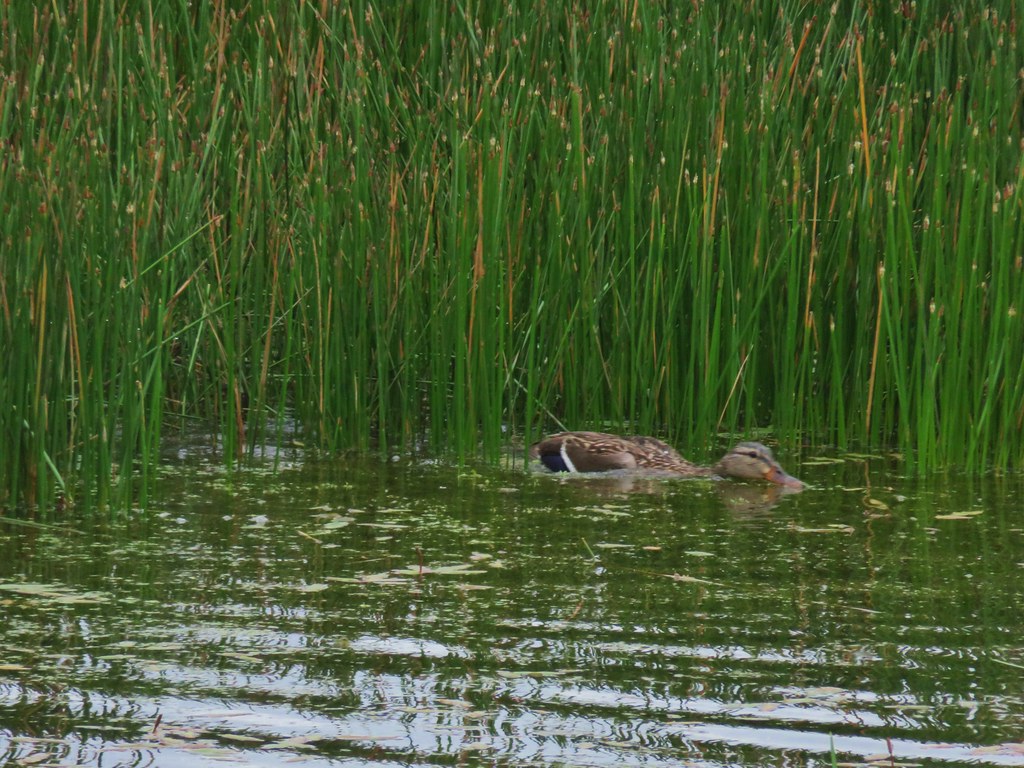
There wasn’t as much activity at the smaller Cheadle Marsh but there was a lone duck paddling about in an apparent effort to unveil breakfast.
IMG_4772

There were also numerous smaller birds which was a theme throughout the whole visit. Most were so busy flying from tree to tree or reed to reed that only quick glimpses could be had while hiking, but we could see that settling down in one spot to bird watch would likely be productive.
IMG_4769Red-winged blackbird that did pose for a moment.
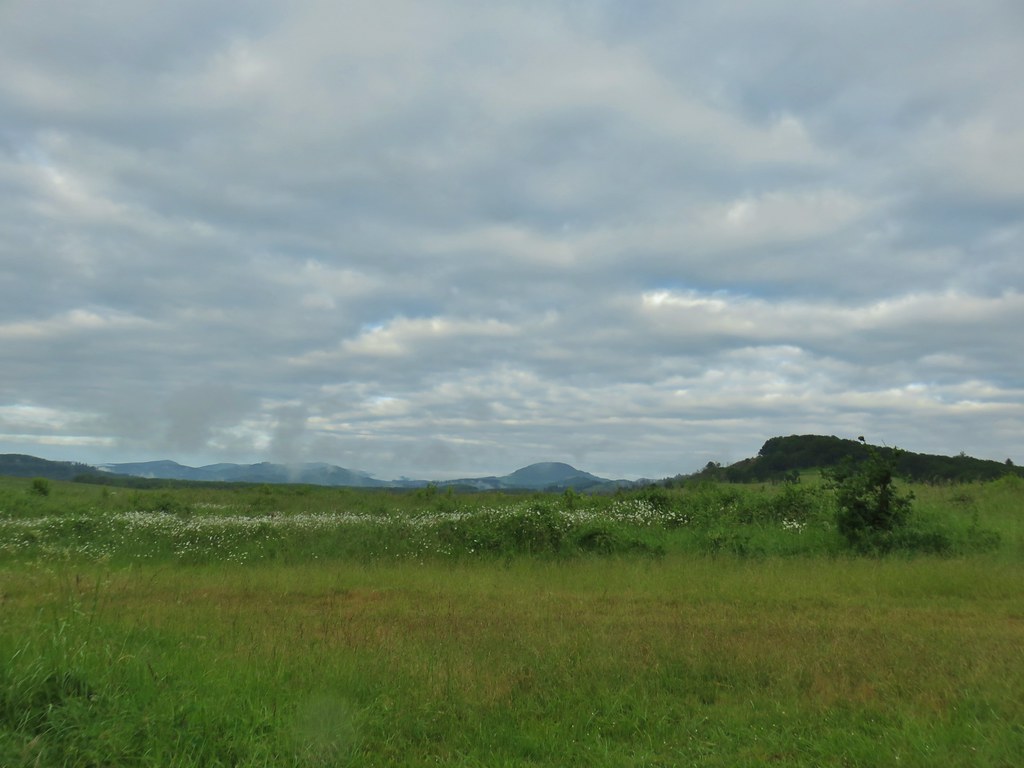
We followed this grassy path for almost a mile as it headed north past the marsh then turned west toward Pigeon Butte.
IMG_4780

Just before the mile mark we came to a junction where a short grassy track headed uphill to the right just over 100 yards to the historic Cheadle Barn. Originally constructed in 1900 the barn is now on the Benton County Reister of Historic Places and the National Register of Historic Places.
IMG_4783Note the rabbit in the foreground, this was a theme on the day.
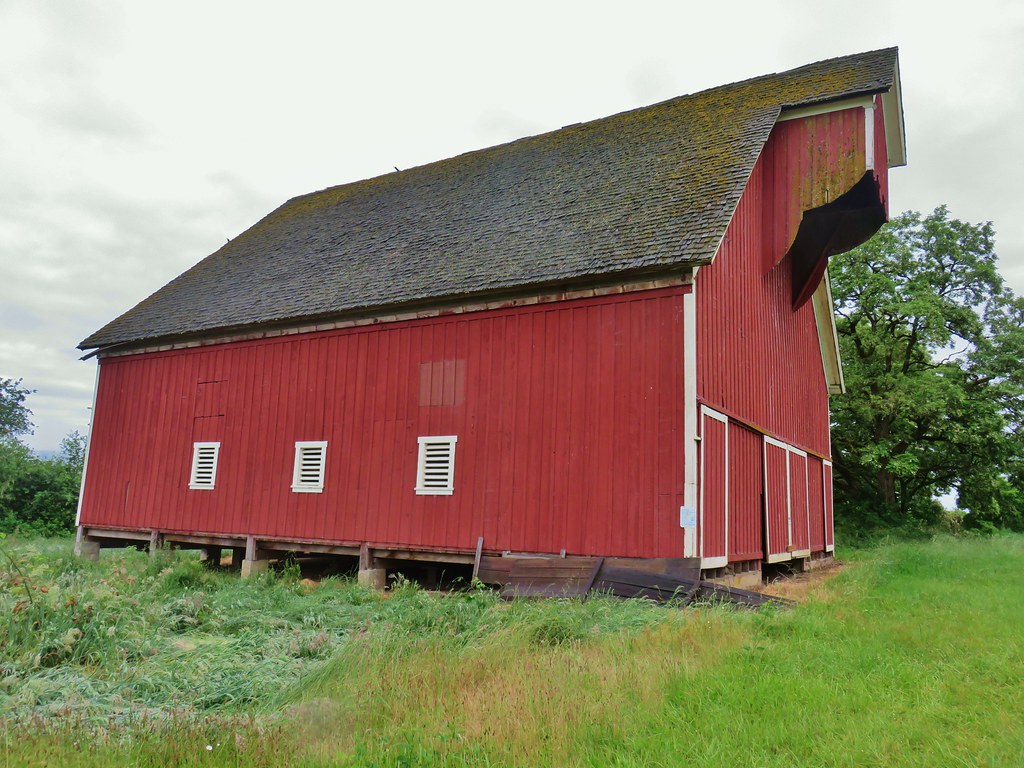
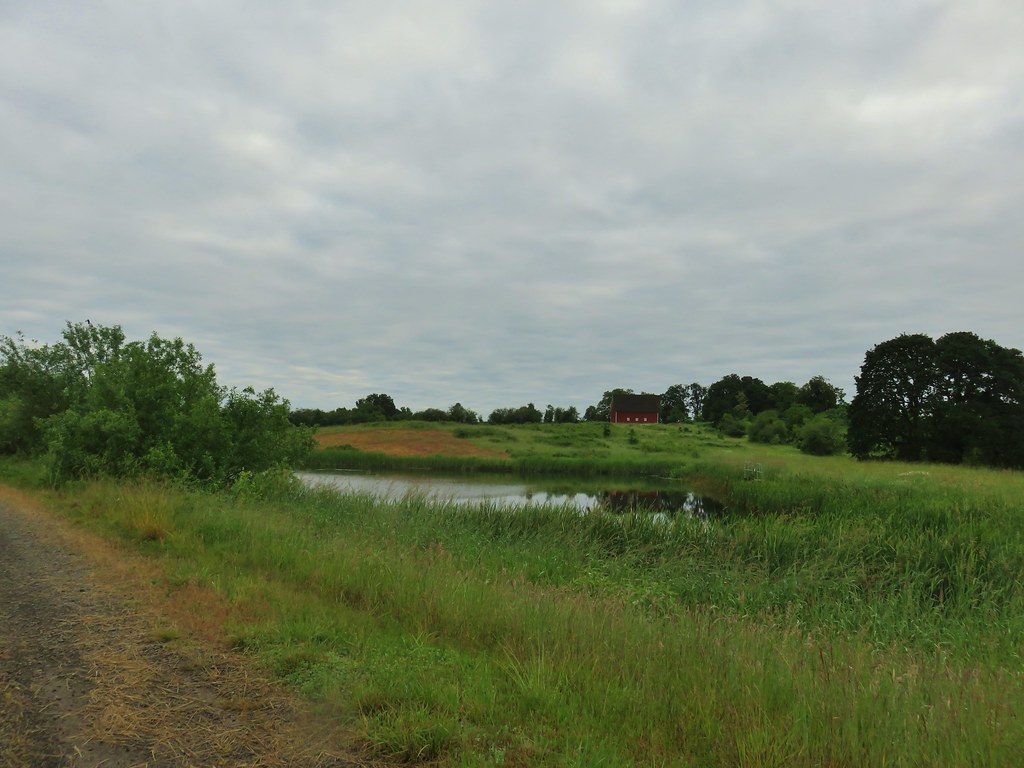
IMG_4793

After visiting the barn we returned to the junction and continued what was now south on the grassy track for another 110 yards to another junction near a pond. Continuing south would lead us back to Bruce Road not far from the Cheadle Marsh Trailhead allowing for a short (around 2 mile) loop. We turned right passing by the pond on what was now a gravel track.
IMG_4808The pond and Cheadle Barn.

Pied-billed grebe familyPied-billed grebe family at the pond.

20200531_072839Ookow

IMG_4809Heading toward Pigeon Butte.

We followed this path to the edge of Pigeon Butte where it turned north again and climbed a bit along the butte’s shoulder.
IMG_4812

We turned left on another grassy track at the edge of the tree line and headed up the 543′ butte. The road was fairly busy but not with other hikers.
IMG_4814Snail on a stick.

IMG_4820Rough-skinned newt

IMG_4825Spotted towhee that wouldn’t look at us.

IMG_4836Quail on the road near the quarry.

This old road bed led past a quarry to a viewpoint on the SW side of the butte.
IMG_4822

With all the clouds it wasn’t the greatest view and Mary’s Peak (post), the highest point in the Coast Range, was completely hidden by those clouds.
IMG_4834

There was a very overgrown trail leading up toward the summit from the viewpoint.
IMG_4832The trail is on the right of the mass of vetch blooming.

IMG_4842Checkermallow

After checking for any hidden poison oak, the trail was deemed clear and we climbed to the wooded summit.
IMG_4833

The trees obscured any view and thoughts of looping back down along the summit ridge were abandoned when we noticed the increasing presence of poison oak so after tagging the summit we returned to the viewpoint and headed back down the way we’d come. The side trip up Pigeon Butte was just a mile round trip with 180′ of elevation gain. When we arrived back at the junction on the buttes shoulder we turned left and continued north descending past some fields .
IMG_4845

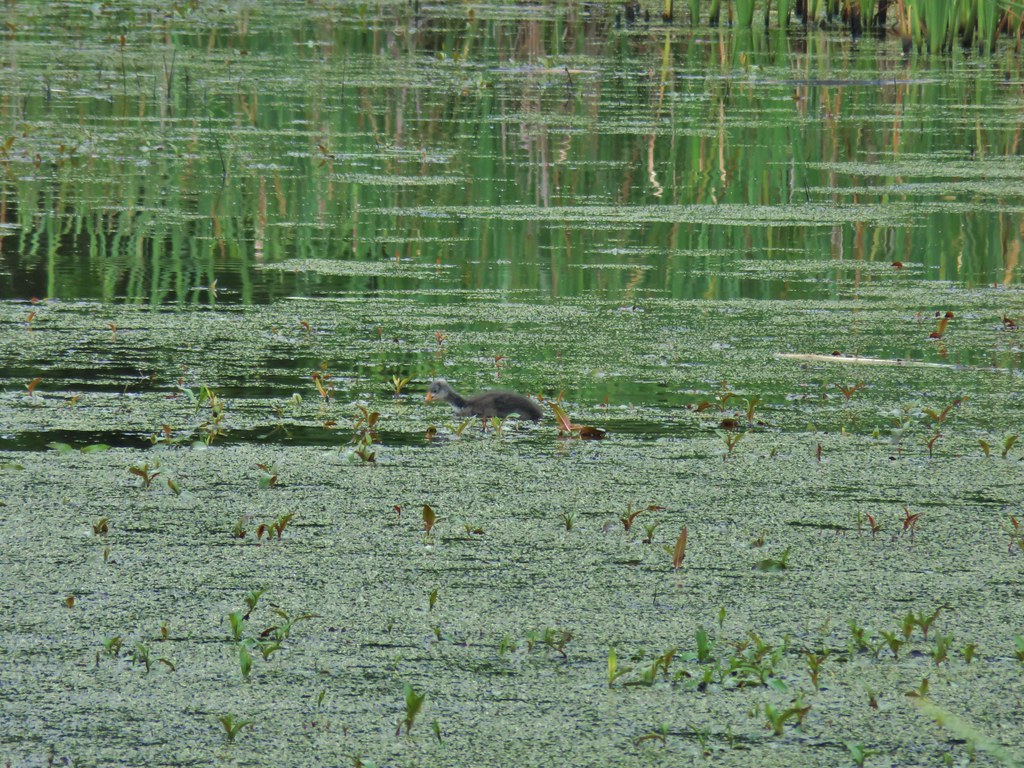
Amid the fields to the left we passed a shallow pond where we spotted an American Coot and her young.
IMG_4856

IMG_4852

IMG_4861

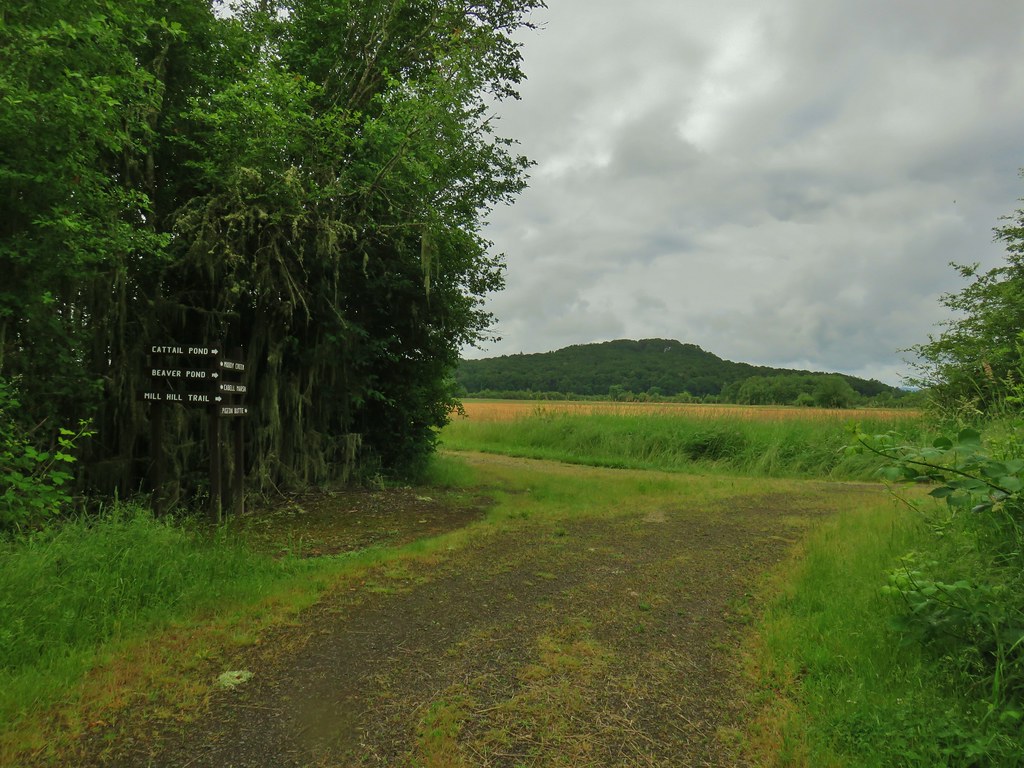
Just under a mile from the path up Pigeon Butte we came to another intersection. This one had a big sign with pointers for various refuge features.
IMG_4866

From here the loop hike described in the Oregonhikers Field Guide would have us turn left (west) toward the Cattail and Beaver Ponds. We wanted to revisit Cabell Marsh and the Homer Campbell Boardwalk though so we continued north passing some big lupine plants.
IMG_4873

IMG_4874

IMG_4871

IMG_4876

When we reached Cabell Marsh a half mile from the sign we were surprised by the lack of water.
IMG_4877

Later after returning home a little research revealed that the marsh had been drained to try and deal with some invasive species. We turned right at the Homer Campbell Boardwalk which was still as impressive as it had been on our first visit.
IMG_4878

IMG_4879With so little water there wasn’t really a reason to visit the blind.
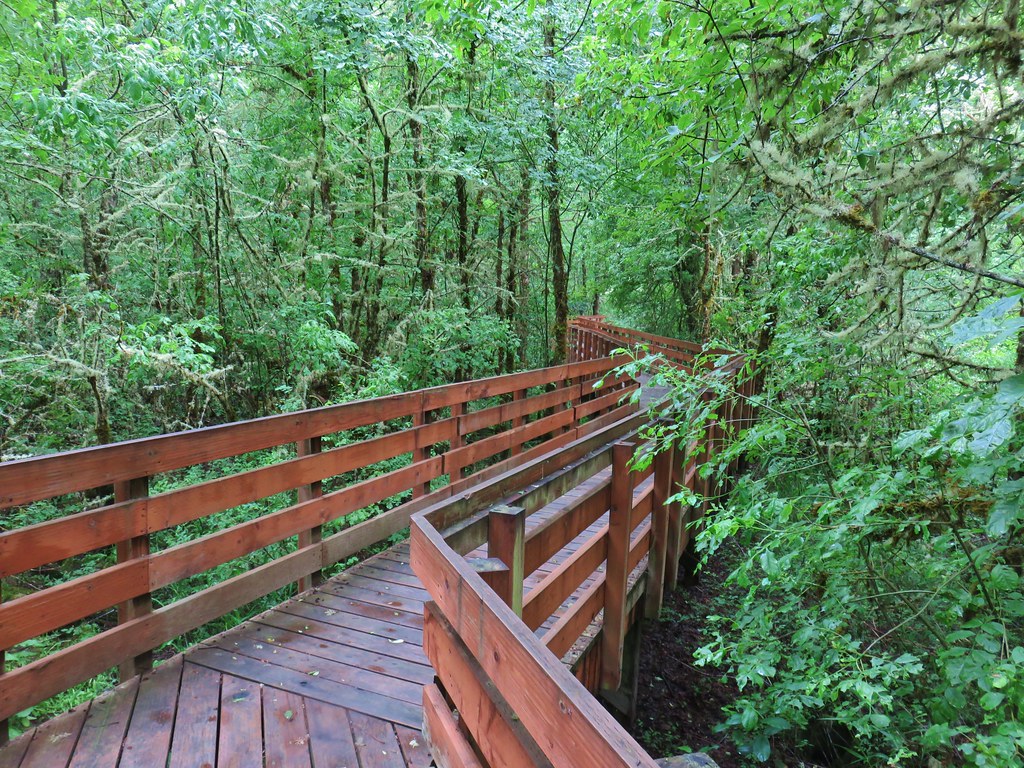
IMG_4880

IMG_4882

We arrived at the parking lot on the far end of the .4 mile boardwalk to find that despite no vehicles being allowed to the trailhead it was still busy.
Three rabbits along the side of the parking areaThree rabbits at the parking area.

IMG_4884Rabbit #1

IMG_4885Rabbit #2

IMG_4886Rabbit #3

IMG_4887Finley Refuge Rd from the parking area (the dark spot in the mowed grass along the far side of the road was another rabbit).

We had left open the possibility of doing a long loop by following this road left to the Woodpecker Loop and retracing much of our 2017 hike but better judgement (and tired feet) prevailed so we returned to Cabell Marsh via a gated grassy roadbed located at the SW corner of the parking area.
IMG_4892

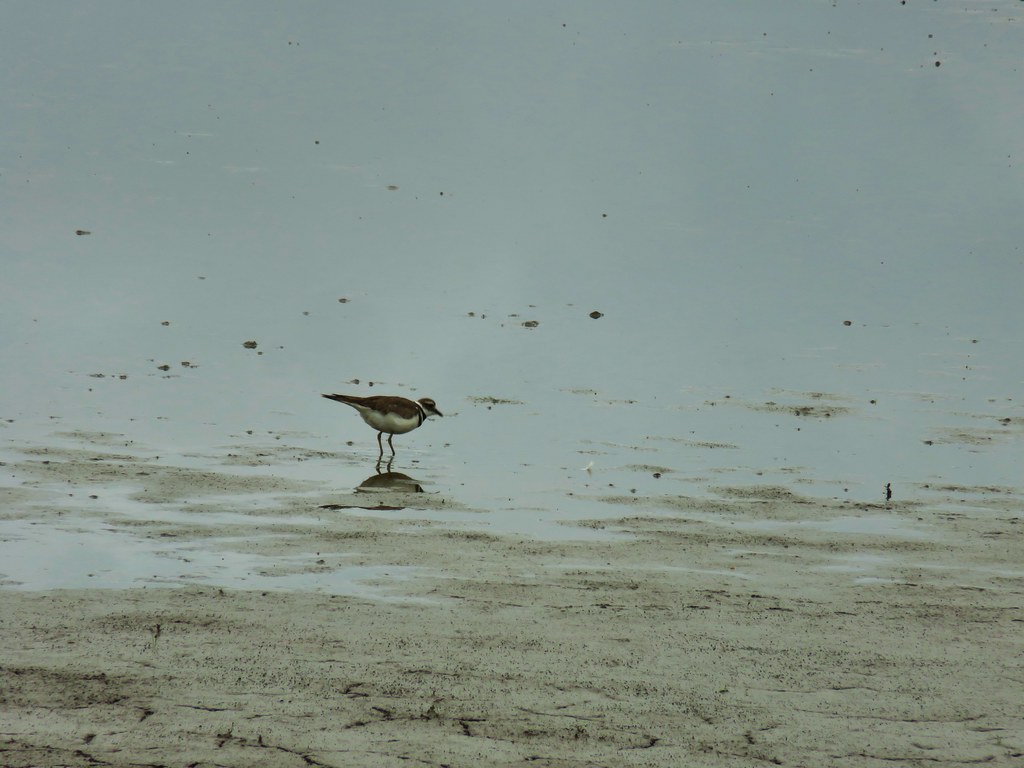
While the lack of water had an impact on the number of birds at the marsh we did manage to spot a few (and a muddy rough-skinned newt).
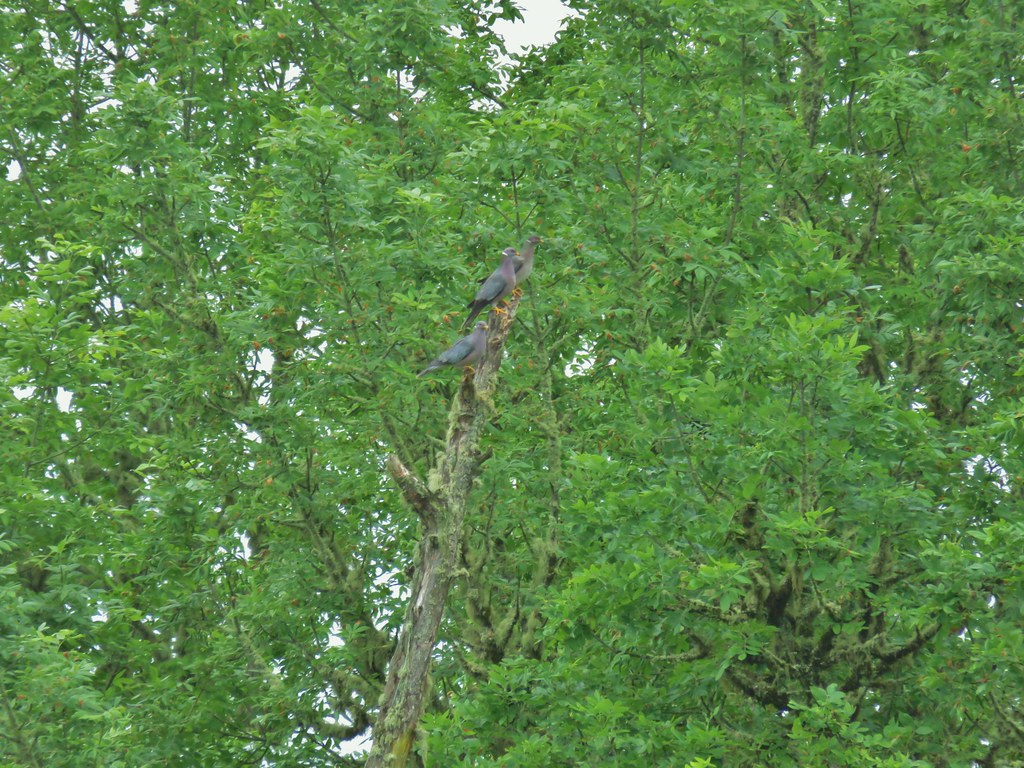
Band-tailed pigeonsBand-tailed pigeons

IMG_4897Killdeer

IMG_4902

When we arrived back at the signed juction we turned right (west) and headed for the ponds.
IMG_4908

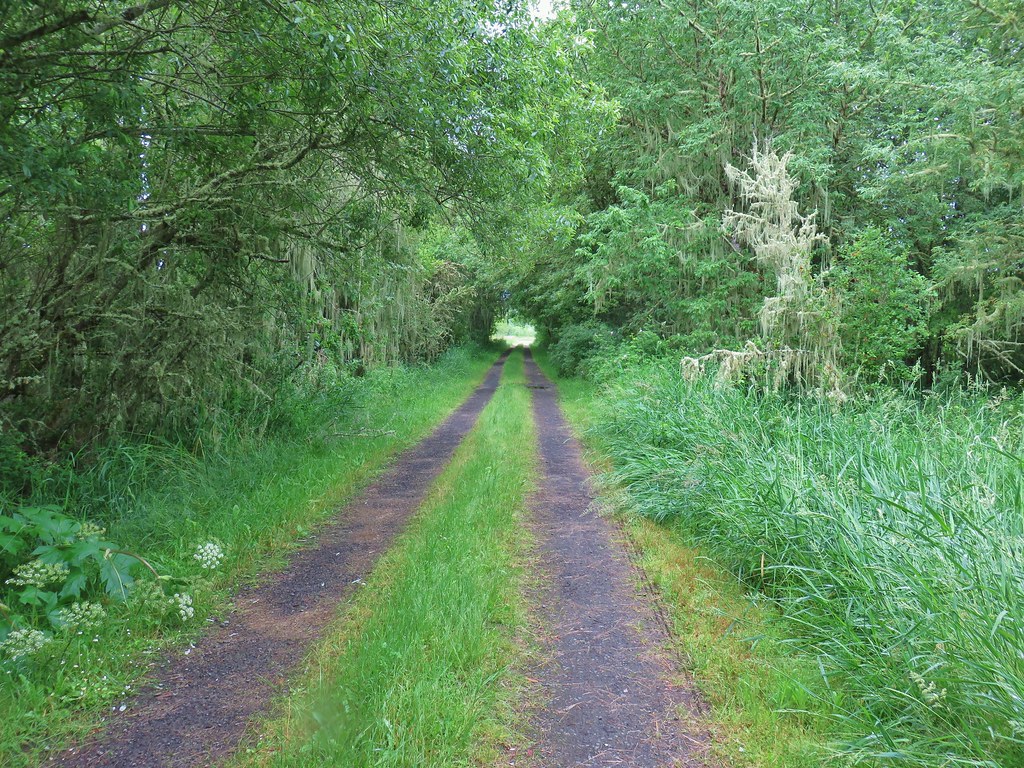
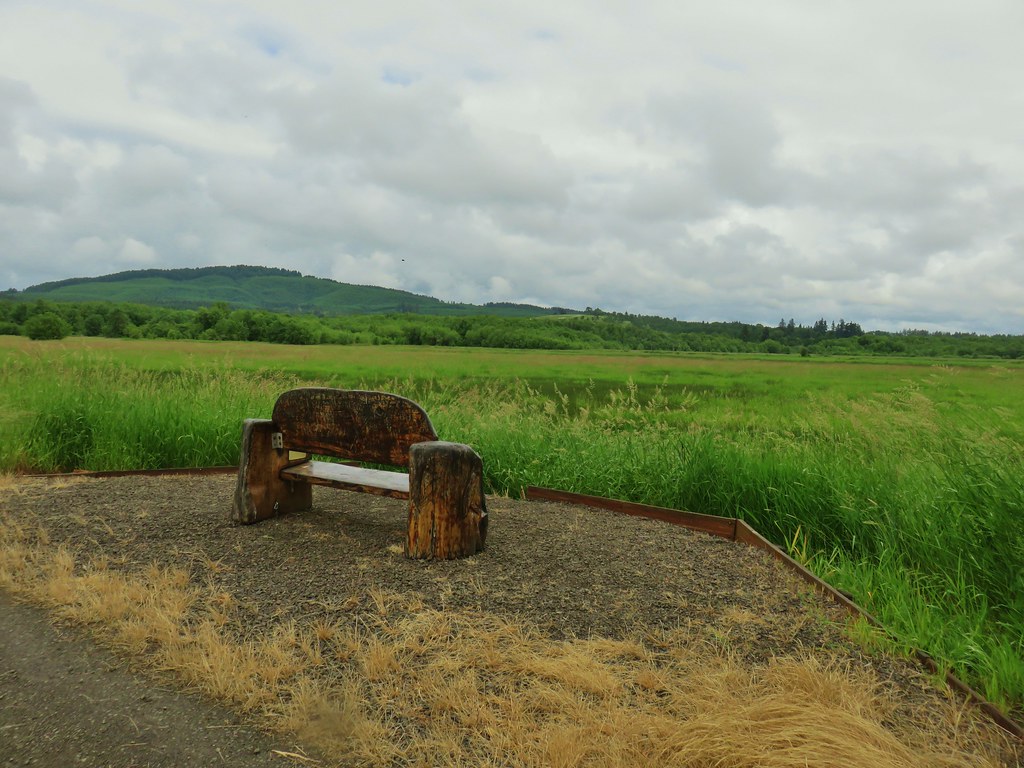
The roadbed headed west for a little over half a mile, passing a nice wooden bench with a view back to Cabell Marsh, before turning south for just under a half mile to a sign for the Cattail Pond.
IMG_4925

IMG_4920One of several male American goldfinches we spotted along this stretch.
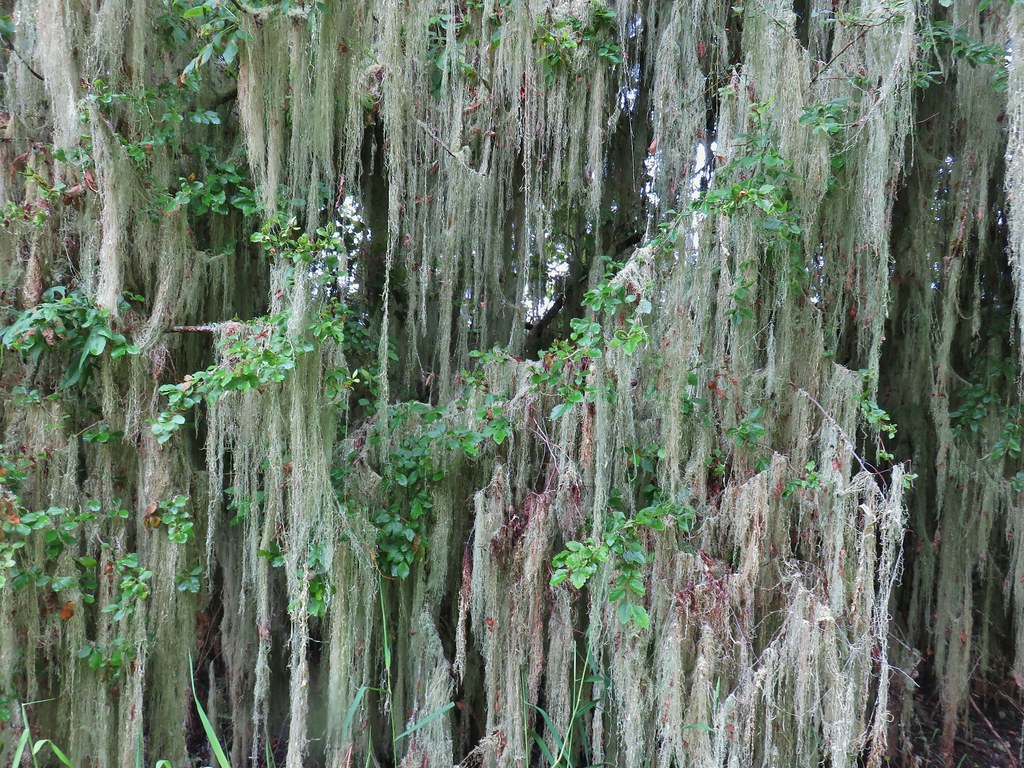
IMG_4926Vegetation along Gray Creek.

IMG_4929Mushrooms

IMG_4930

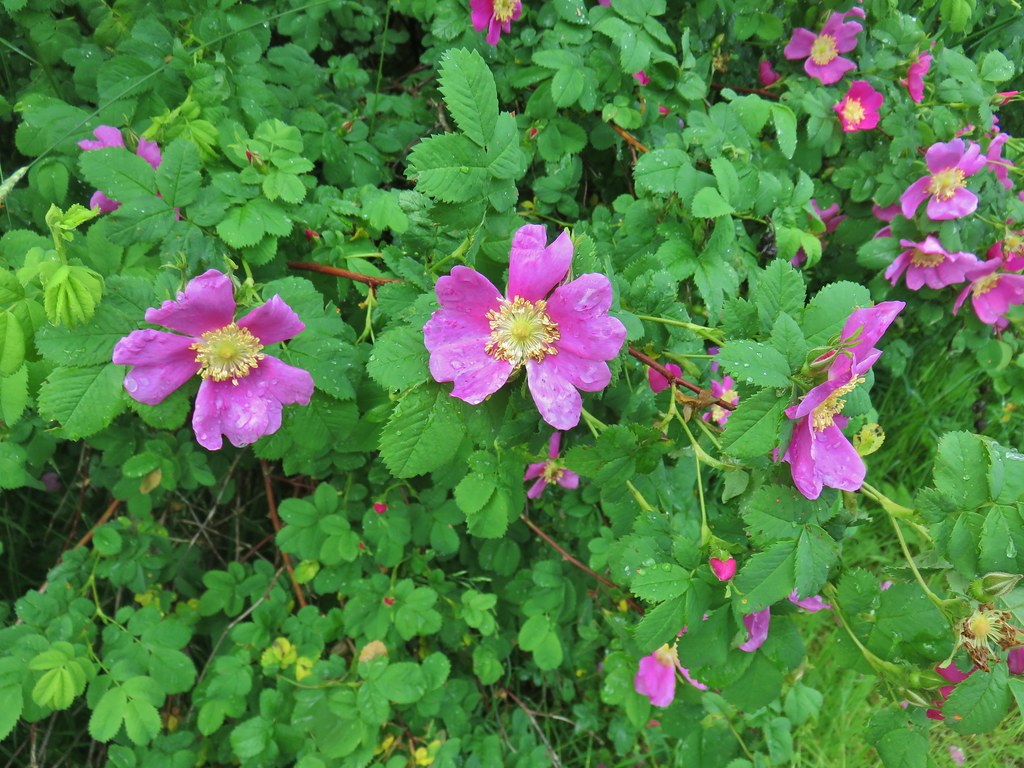
IMG_4941Roses along the roadbed.

IMG_4945

IMG_4951Slug

IMG_4954Yep, another rabbit.

IMG_4956We started to think this rabbit wasn’t going to hop into the brush like all the others had.
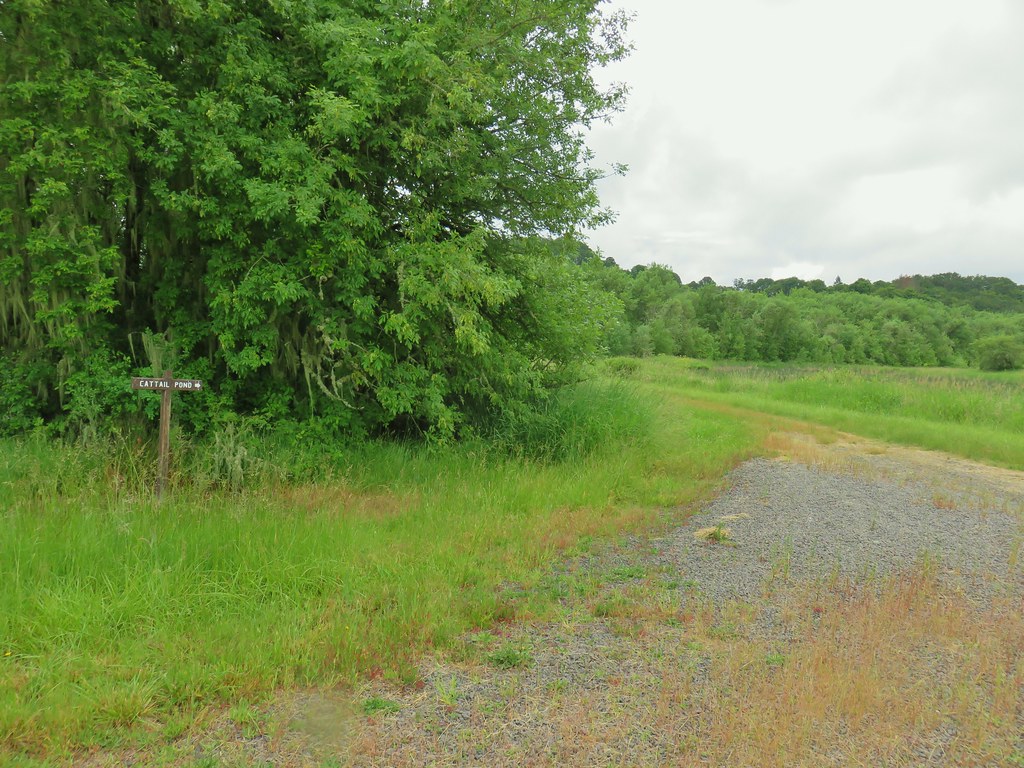
IMG_4957Sign for the Cattail Pond.

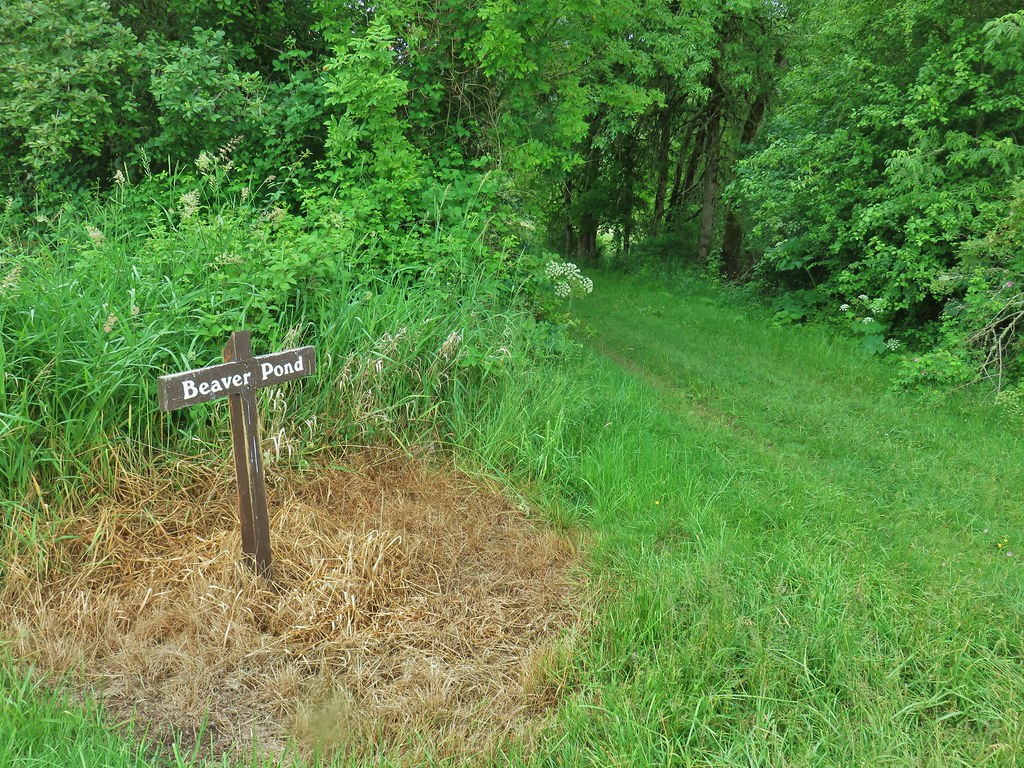
A left turn here was one option for the loop but we wanted to see the Beaver Pond so we stayed on the roadbed for just a little longer to a sign for the Beaver Pond.
IMG_4959Cattail Pond from the roadbed.

IMG_4958

Common YellowthroatCommon yellowthroat

IMG_4970

We turned left onto a grassy track at the Beaver Pond sign and were soon passing by the pond.
IMG_4971

IMG_4974

At the far end of the pond we found ourselves on an actual trail.
IMG_4980

The trail led us around the forested base of Maple Knoll a quarter of a mile to an unsigned junction.
IMG_4981The junction.

Here the maps failed us for a second time. We had expected to come to a junction with the path that had passed by the Cattail Pond at which point we would turn right and head back out to Bruce Road. The maps we had showed no other junctions so we turned right at this junction and followed it along the base of Maple Knoll.
IMG_4982Forest on Maple Knoll’s hillside.

IMG_4983Pinesap

The track we were on was sticking to Maple Knoll though and as it wrapped around the base we were quickly heading west again instead of due south to Bruce Road. After .4 miles we decided we had been fooled again and turned around. The detour hadn’t been a total waste as we got to see a hawk fly over and a group of ground squirrels plotting something nefarious from a stump.
IMG_4989

IMG_4986

IMG_4990

IMG_4996

IMG_5000It’s the one peaking out from behind the stump that had us the most concerned.

When we got back to the unsigned junction we turned right and in 175′ came to a second unsigned junction. We turned right (south) here and this time it was nearly a straight shot along a roadbed for a half mile to Bruce Road and the Beaver and Cattail Ponds Trailhead.
IMG_5010

IMG_5007Northern flicker

IMG_5011Sparrow

It was a mile road walk back to the Cheadle Marsh Trailhead (one and a quarter back to where we had parked). After the 4 mile paved road walk the weekend before (post) this one gravel wasn’t too bad. There were nice views of Pigeon Butte and quite a few flowers and birds to look at. We were especially excited to see a couple of yellow headed blackbirds, a bird we’d only seen one other time at the Malheur National Wildlife Refuge (post).
IMG_5018Pigeon Butte

IMG_5024

IMG_5028Red-winged blackbird

IMG_5062

IMG_5064

IMG_5066Pollinators in a poppy.

IMG_5070Turkey vulture

IMG_5074Douglas spirea

IMG_5076Grand collomia

Our excursion (with the two accidental out and backs came in at 11.8 miles so we were more than happy that we hadn’t tried to do the longer loop along Finley Refuge Rd. For a cloudy day this was a great hike with a lot of wildlife sightings and a few flowers. The paths were wide enough that the poison oak was rarely an issue (there was a lot of it starting on the path along the base of Maple Knoll that we had mistakenly taken). The wide paths also would have been useful for social distancing, but we only passed one other hiker all day even though there were a lot of cars parked and driving along Bruce Road.

As we were preparing to leave I mentioned that the only bummer was having not gotten a good look at the egret that morning. When we started to drive across the marsh on Bruce Road I looked over to see if there might be an egret there now and sure enough there was.
IMG_5080

We are looking forward to some of the higher country opening up and melting out so that we can take some poison oak free hikes. Happy Trails!

Flickr: Pigeon Butte

Categories
Hiking Oakridge Area Old Cascades Oregon Trip report

Middle Fork Trail Backpack Days 2 & 3 – 5/24 & 5/25/2020

**Note the 2024 208 MF Fire burned the area around Indigo Springs and the 2025 Emigrant is currently burning near Chuckle Springs in the 2009 fire scar.**

After the 14.5 mile hike to find our campsite the day before (post) we woke up a little before 6am and ate breakfast by the river. We were excited to spend a day without our full packs. Based on my calculations we were anticipating the mileage for the day to be close to 14 miles (it was more but we’ll get to that later) so a lighter weight pack was welcome.

We set off just after 7am and the trail began to climb away from the river not far from where we’d camped.Middle Fork Trail

There was still a bit of that pesky poison oak present when the conditions were just right but we could tell we were gaining elevation by the change in the forest and some of the flowers we were starting to see.Vanilla leaf along the Middle Fork Trail

Vanilla leaf

Arnica

Arnica

Middle Fork Trail

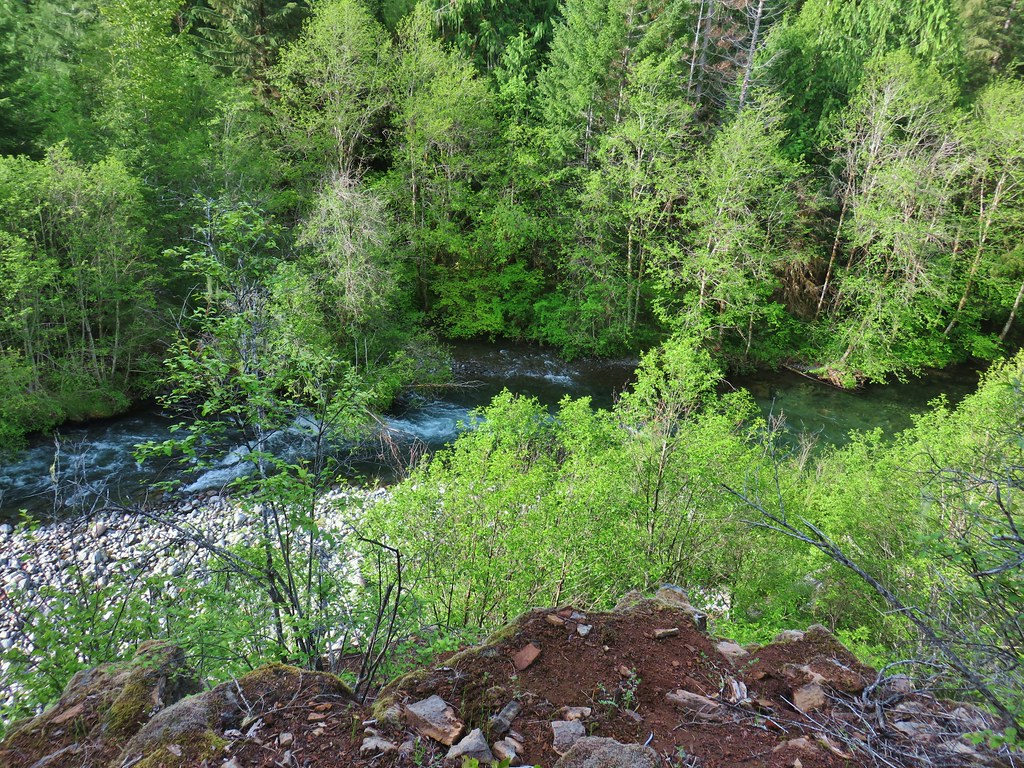
Middle Fork Willamette River from the Middle Fork Trail

Viewpoint above the river.

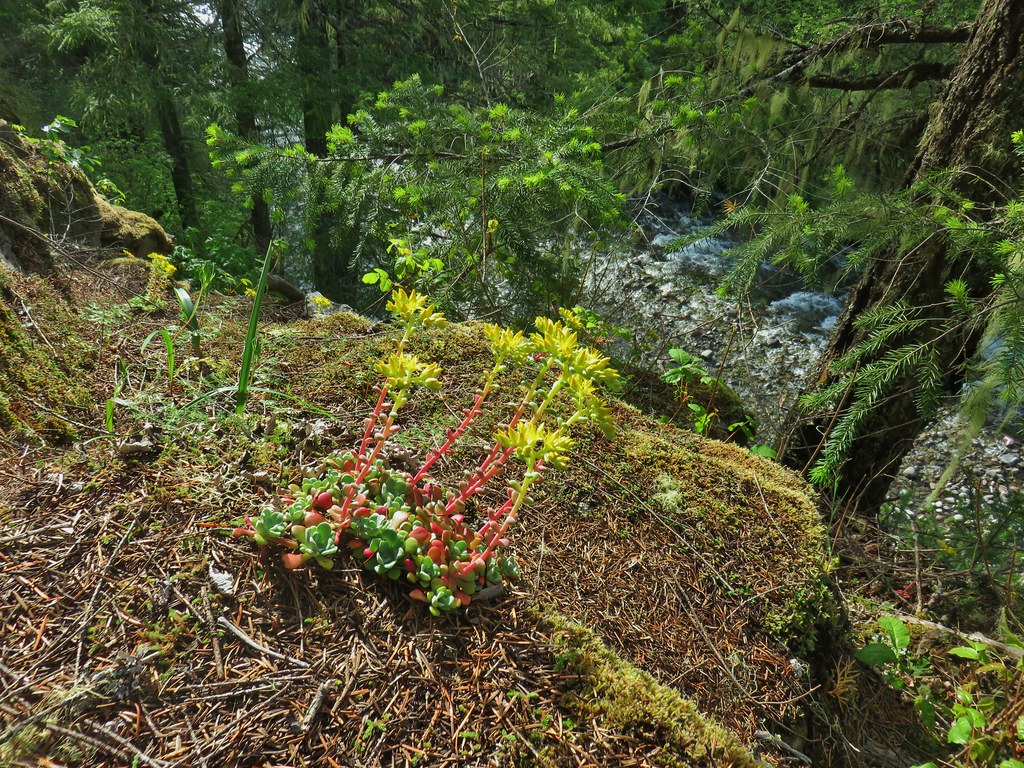
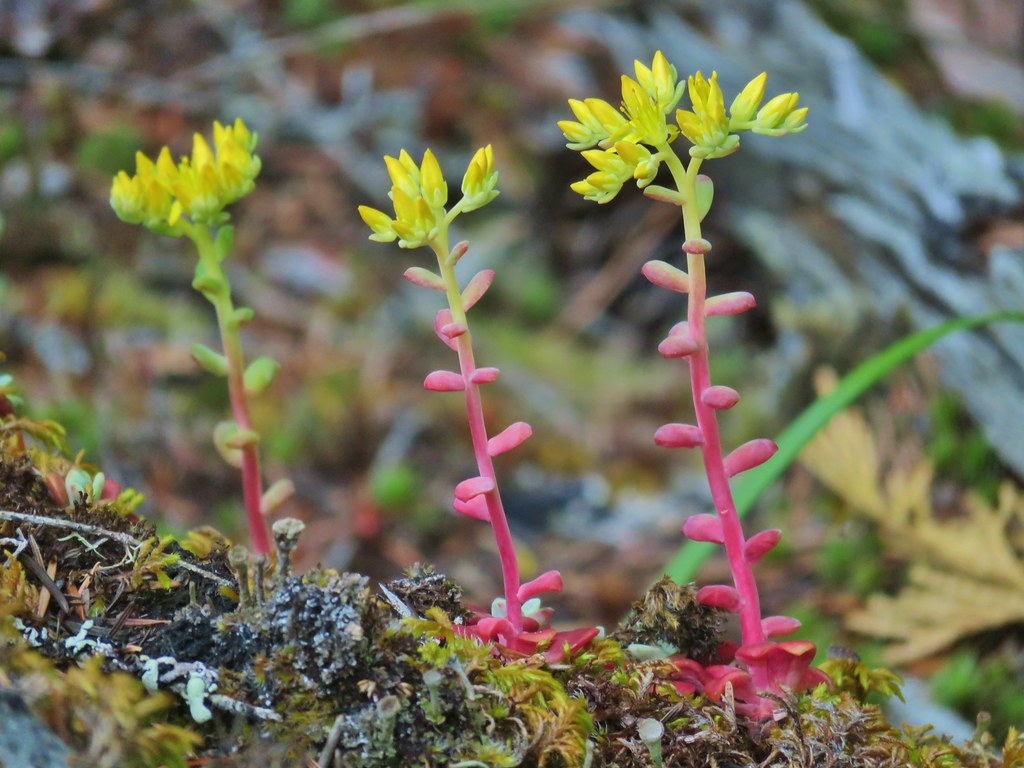
Stonecrop

Stonecrop

Stonecrop

Closer look at some stonecrop.

Just under 2.5 miles from camp we arrived at the lovely Rigdon Meadows near Sacandaga Campground (which I had begun referring to as Scandinavia because I couldn’t figure out how it was supposed to be pronounced).Rigdon Meadows

Western buttercup and camasCamas and buttercups at Rigdon Meadows.

The campground remained closed due to COVID-19 and the road was gated but there were several campers parked near the meadows.Middle Fork Trail

Gate at the closed entrance to Sacandaga Campground.

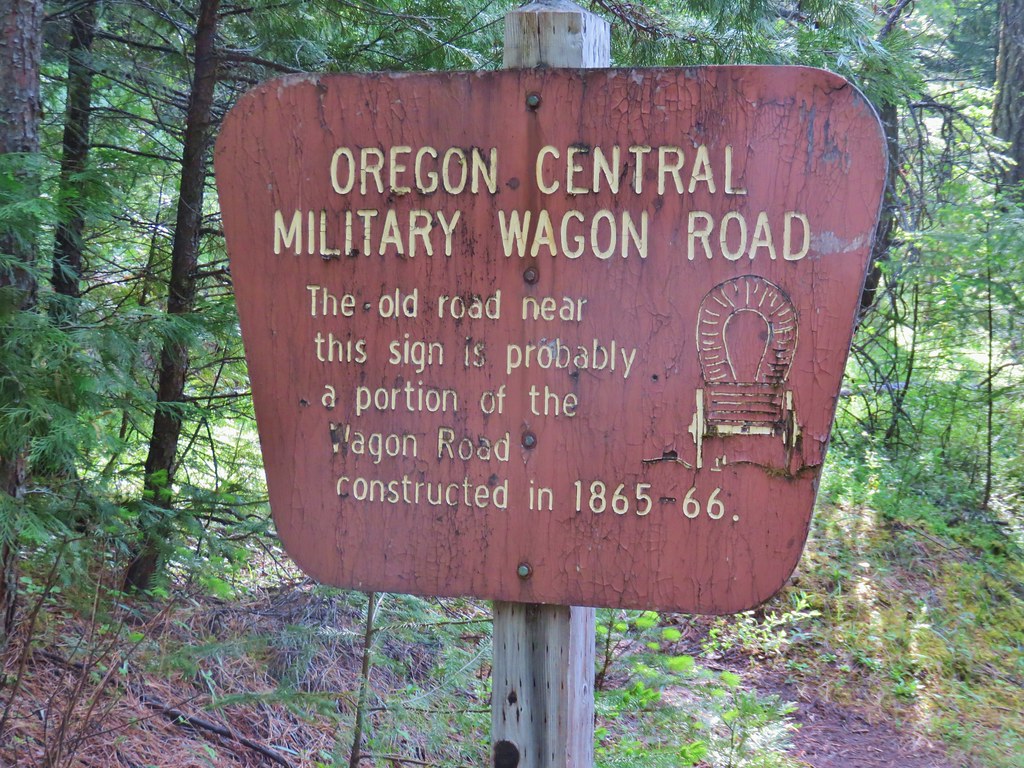
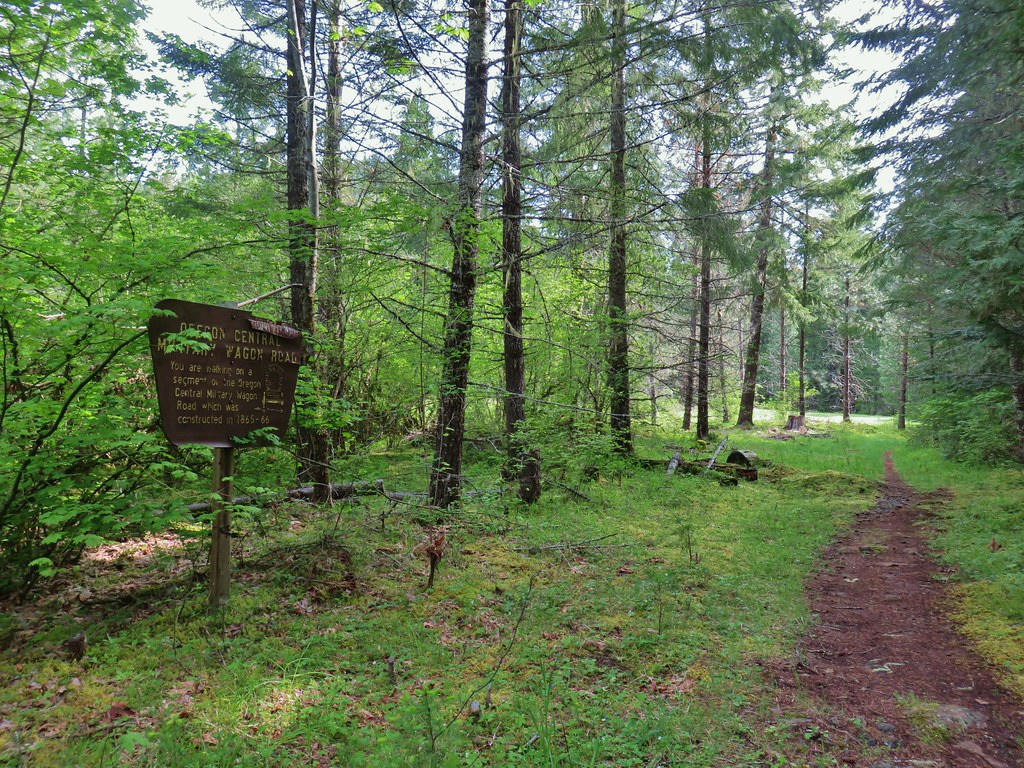
We picked up the trail on the other side of the gate where it joined the route of the Oregon Central Military Wagon Road.Middle Fork Trail at the start of the Oregon Central Military Wagon Road

Oregon Central Military Wagon Road

The wagon road was planned to stretch from Eugene, OR to Fort Boise in Idaho but much of it was nothing more than a rudimentary trail (Wikipedia) that allowed private companies to acquire public lands along the stretches of road that they “completed”.

This 1.2 mile section of the wagon road passed a small unnamed lake near its crest.Oregon Central Military Wagon Road

Unnamed lake along the Oregon Central Military Wagon Road

The other end of this portion of the wagon road was located near a meadow where some idiot had driven onto the grass from a nearby forest road.Oregon Central Military Wagon Road

Middle Fork Trail

About a half mile after crossing the road the trail crossed Noisy Creek.Unnamed Creek

A short distance later we crossed another muddy forest road and then came to a decent sized creek that wasn’t on either our paper or GPS maps.Middle Fork Trail

Noisy Creek

After the mystery creek we came to the signed Swift Creek which was the widest creek we’d crossed on the trip.Footbridge over Swift Creek

Swift Creek

Swift Creek

Former bridge over Swift Creek.

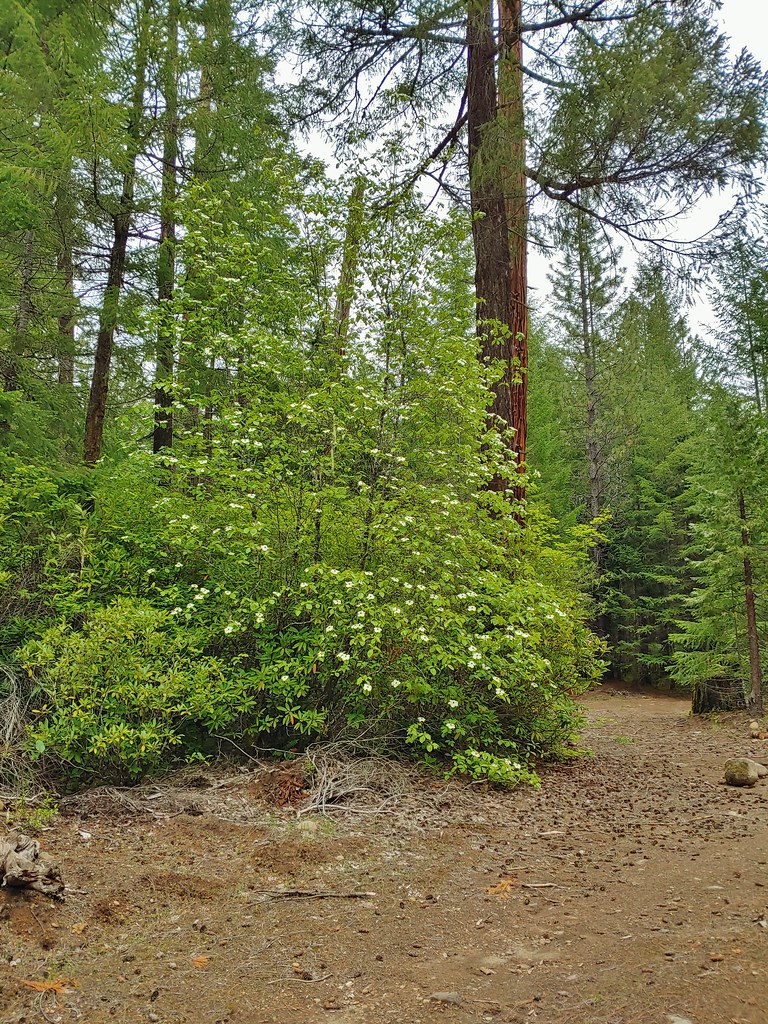
The scenery really began changing beyond Swift Creek. We hadn’t seen any poison oak since the wagon road and now we were in a drier forest with huge ponderosa pines and cedars. We were also high enough now to see some blooming rhododendrons. I did manage to pick up my second tick of the trip somewhere in this area.Dogwood along the Middle Fork Trail
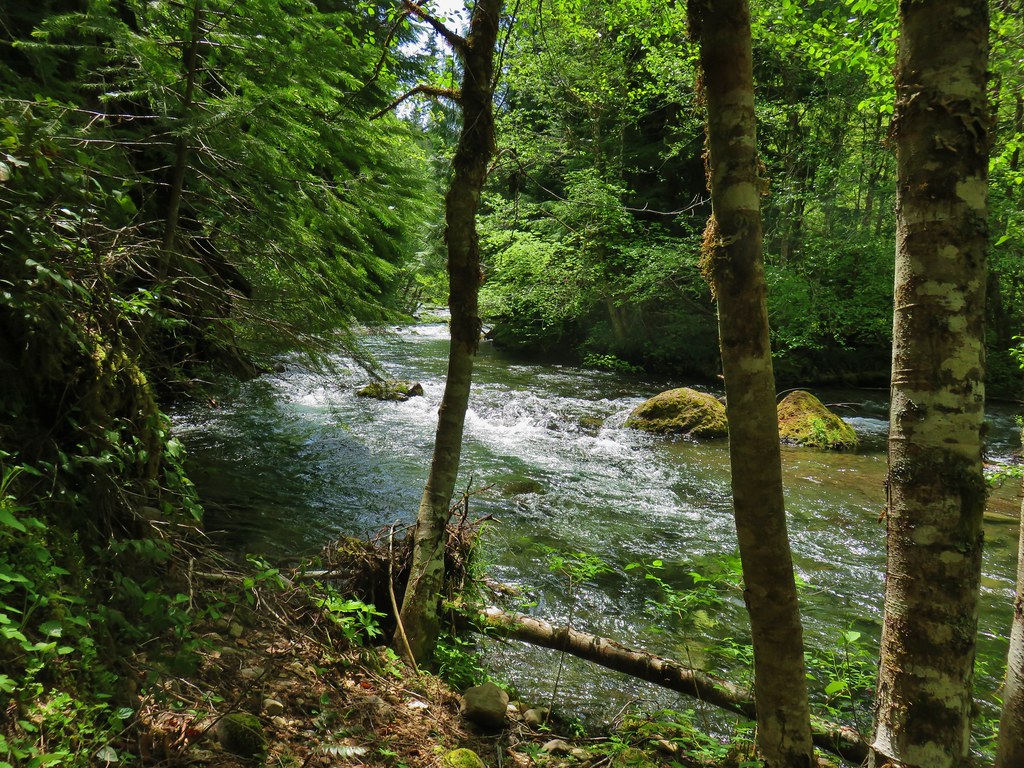
Ponderosa behind a dogwood tree.

Rhododendron

Rhododendron near the dogwood tree.

Tall cedars along the Middle Fork Trail

Cedar

The trail dropped down towards the river to a wetter area between Skunk and Found Creeks.Skunk Creek

Skunk Creek

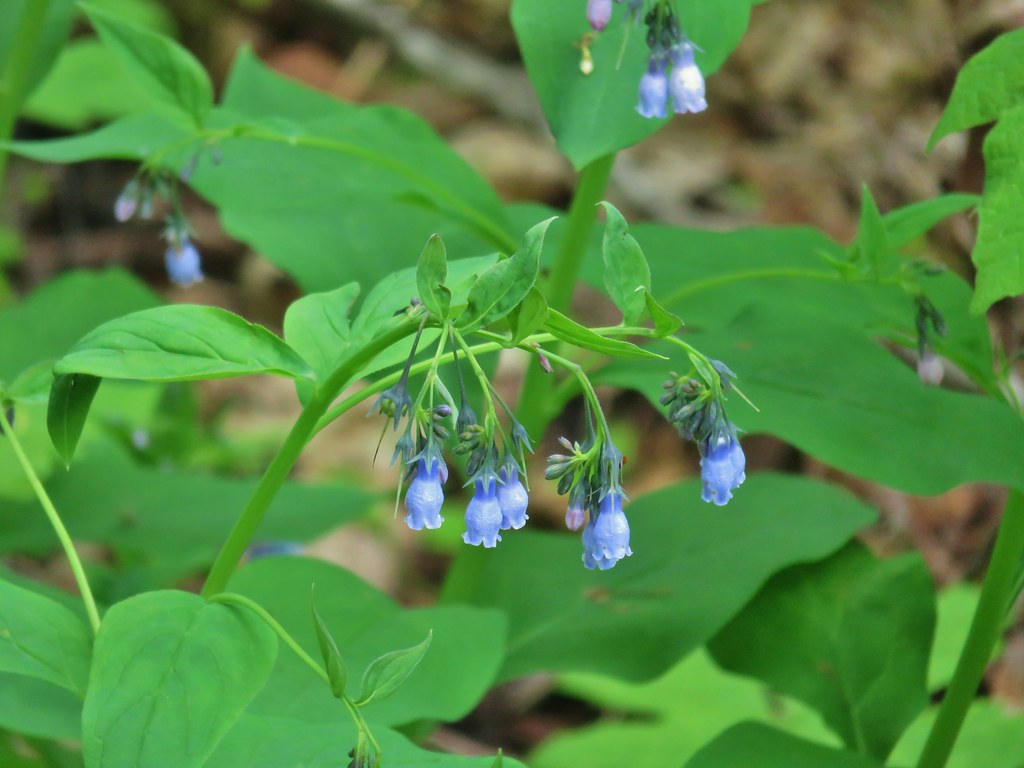
Tall bluebells

Tall bluebells

Middle Fork Trail

Slug

The Middle Fork Willamette River was a narrower here and doing it’s best to erode the riverbank.Erosion along the Middle Fork Trail

Middle Fork Willamette River

The narrower Middle Fork Willamette River

The trail soon began to climb above the river along some basalt cliffs where several springs flowed out from the rocks earning the moniker of Cliff Springs.Cliff Springs

Cliff Springs

Middle Fork Trail near Cliff Springs

On the far side of the springs the trail dropped again to a crossing of Indigo Creek.Middle Fork Trail

Before reaching the creek we stopped to listen to a wren signing.Wren

Bridge over Indigo Creek

Bridge over Indigo Creek.

Indigo Creek flowing into the Middle Fork Willamette River

Indigo Creek empyting into the Middle Fork Willamette River.

About a tenth of a mile from Indigo Creek we arrived at a junction where a trail to the left had a pointer for Indigo Springs.Trail to Indigo Springs

We turned up this short trail and climbed to FR 21 where we again turned left and followed the paved road a short distance to the entrance of Indigo Springs Campground.Heading toward Indigo Springs

Coming to FR 21.

The status of this particular area was a bit hazy. The 3 site campground was closed as well as the restrooms, but the Willamette National Forest had opened all day-use trailheads (not the restrooms at those with toilets). We walked up the access road to the 1 parking spot trailhead (which was occupied with a second car nearby). We were proceeding under the understanding that trails and trailheads were open and it was only using the campsites, restrooms, and picnic tables that was still prohibited so we followed the 0.2 mile loop clockwise around Indigo Springs.Indigo Sprngs Trail

Indigo Sprngs

Indigo Creek

There were several springs feeding the creek amid mossy green rocks.Indigo Sprngs

Indigo Sprngs

Indigo Springs

Apparently the route of the wagon road passed here too.Another portion of the Oregon Central Military Wagon Road

After admiring the springs we returned to the Middle Fork Trail and continued up river toward Chuckle Springs.Middle Fork Trail

The trail dropped down to the river and spent a good deal of time right along it with a few easy access points, something that there hadn’t been many of thus far during our trip.Middle Fork Trail

Middle Fork Willamette River

Fariy slippers

Fairy slippers

There was a bit of an up and down though and we encountered the one significant tree down of the entire trip along one of the ups.Blowdown over the Middle Fork Trail

Large tree down

Luckily it wasn’t too difficult to get around and we were soon headed back down to the riverbank.

Middle Fork Willamette River

Red rocks in the Middle Fork Willamette River

Middle Fork Trail

After just over a mile we began to enter the scar of a 2010 fire.Middle Fork Trail entering the scar of a 2010 fire

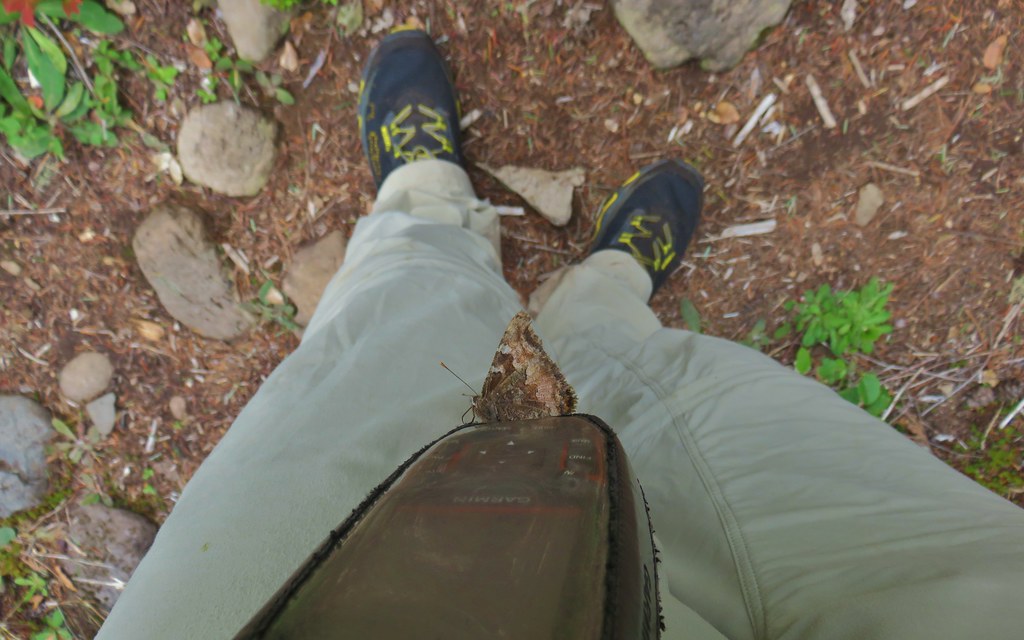
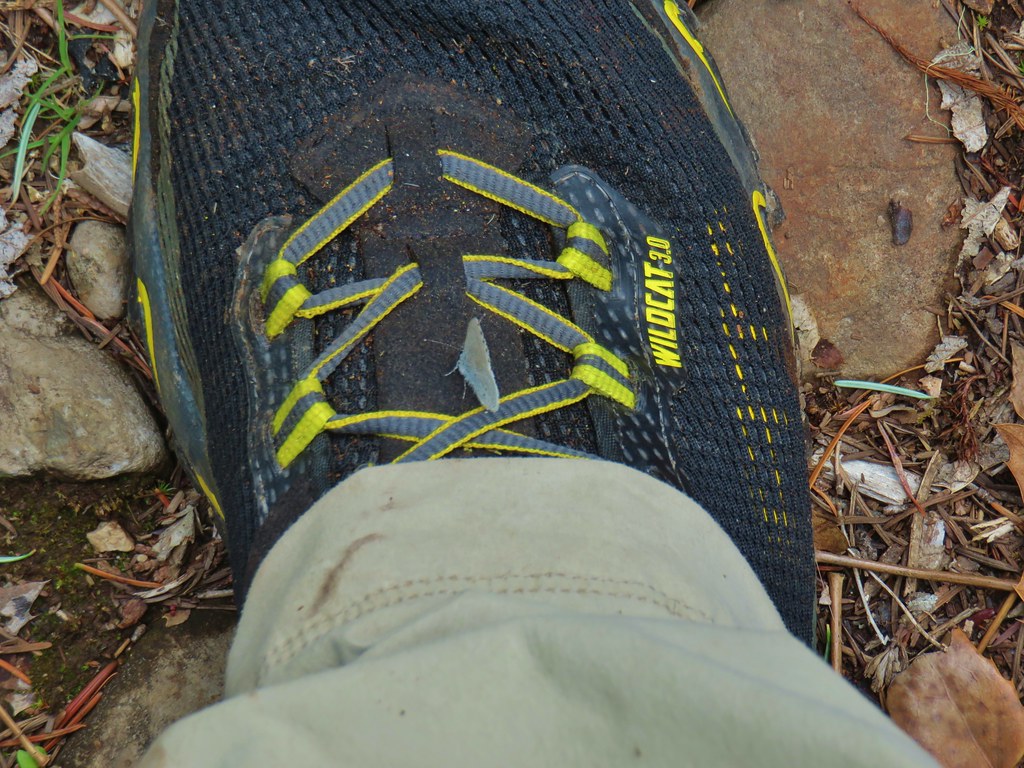
Just after entering the fire scar a butterfly landed on the Garmin followed by a second landing on my right shoe.Butterfly hitching a ride

Butterfly hitching a ride

Butterfly hitching a ride

These were much nicer insects to have on me than the ticks.

The trail had split here at one time but the right hand fork along the river was now blocked by a small log and appeared possibly abandoned although a footbridge remained in place.Closed alternate route of the Middle Fork Trail

The way to Chuckle Springs was to the left though so we headed left and soon began climbing up a narrow ridge above Chuckle Creek.Chuckle Creek

We crossed the creek on a footbridge and continued up the ridge alongside the creek.Chuckle Creek

Cascade along Chuckle Creek

Middle Fork Trail

A quarter mile from the fork we arrived at another fork where the Chuckle Springs Trail joined from the left.Middle Fork Trail junction with the Chuckle Springs Trail

A very short trail led down to a picnic table where there were two groups of people talking. We had encountered two of them before reaching Cliff Springs and the other 3 were new to us. Given social distancing guidance we took a seat on some logs near the junction and waited for them to depart before heading down to the springs.Picnic table near Chuckle Springs

Sign for Chuckle Creek

Chuckle Springs

Not quite as impressive as Indigo Springs these were still a nice green oasis amid the burn area. We didn’t stay long just in case others were on their way and sure enough we ran into another couple on their way to the springs at the junction. We left the spring to them and headed back to camp.

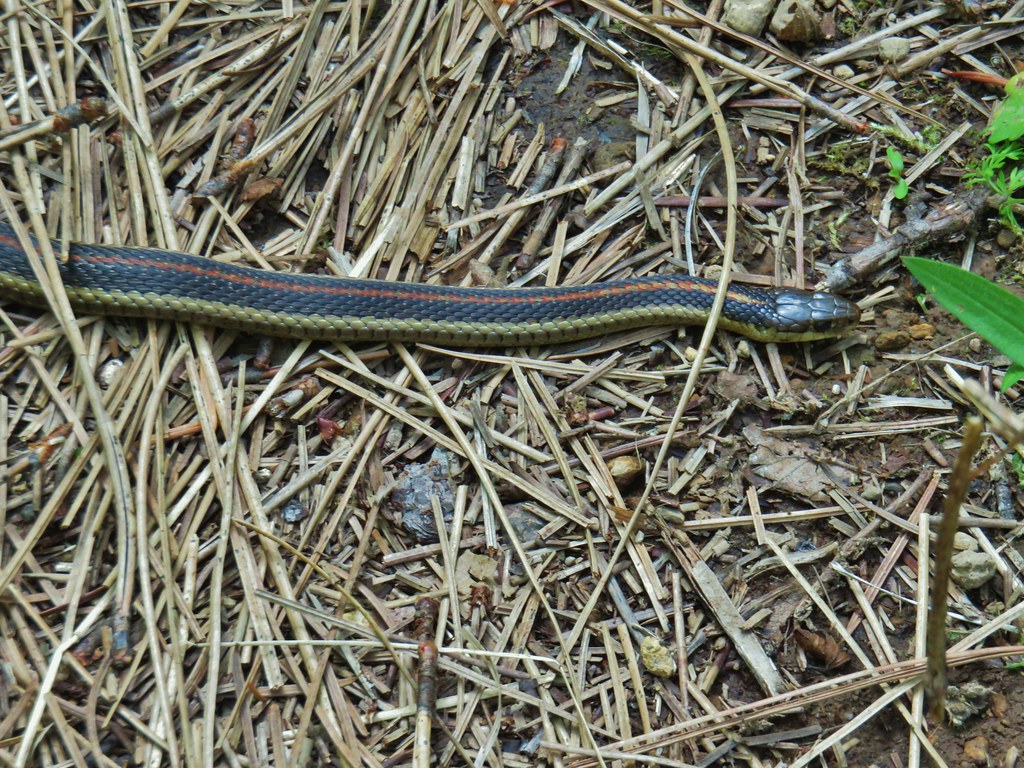
The return trip was livened up by a couple of snakes. Heather is not the biggest snake person but she does pretty well with them all things considered. The first snake was a garter snake stretched across the trail in one of the ponderosa pine areas.Snake in the trail

Garter snake

This snake had no intention of moving to the point that we thought it might have been dead (it wasn’t).

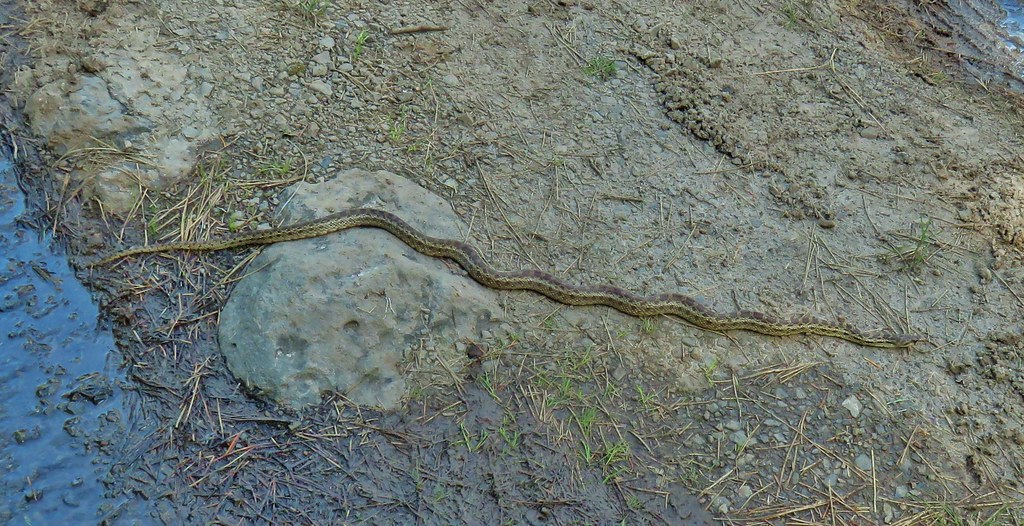
Then as we were passing Rigdon Meadows I walked right by a good sized gopher snake laying in the middle of the road bed. Heather spied it though and stopped in her tracks.Gopher snake

Gopher snake

Gopher snake

This snake also seemed intent to stay put until Heather started to go around it. Every time she took a step it would move just a bit closer to her. After about 3 rounds of this game I moved forward and the snake took its cue to head off into the grass and let Heather pass.

We stopped about one and a quarter miles from camp along the river to cook dinner and refill our water supply which had gotten fairly low. I had managed to miscalculate the distance for the day which we had clued into on the way back. For some reason, I apparently was unable to double the first portion of our hike from camp to Sacandaga Campground. I had estimated that we were roughly 2 miles from the campground and by not doubling those 2 miles I was coming up with 13.8 miles instead of 15.8. We were actually closer to 2.5 miles from the campground which would have boosted the mileage to 16.8. Add in a little extra wandering and we wound up just over 17 miles for the day.

The spot we’d found by the river had a nice view and we were joined by a caterpillar and had a brief visit from an ouzel.Middle Fork Willamette River

Caterpillar

Ouzel

We were pooped by the time we made it back to camp and we both had developed some impressive blisters. My best was on my right pinky toe and Heather’s was on one of her big toes. It was clear that we’d be spending some time applying moleskin and bandages in the morning before heading back to the car.

We turned in for the night thinking about the long hike out. I was thinking about the way we were feeling, the extra distance due to the reroute, and the ford of Indian Creek and worrying that by the time we got to that ford the combination of the sore feet and tired legs would make it even more difficult than it had been on Saturday. Additionally coming from the opposite direction might also be trickier. On Saturday getting into the creek was fairly easy and the trickiest part was just after passing the center (and strongest current) there were several large rocks which we had to step up onto. Coming from the other direction we would need to drop off of those rocks into the strongest current. I wasn’t loving that idea so Heather and I started talking about options. Both the reroute and the fords were along the same section of trail between FR 2134 and FR 2127. We got the idea to see if it looked like road walking FR 21 between the two bridges would be any shorter and from the look of it on the maps it would be so we decided that was our plan for the hike out.

We woke up at first light and packed up our little campsite and then ate breakfast along the river before throwing our packs on and heading back.Leaving our breakfast site on the last day of our trip

Our little meal site along the river.

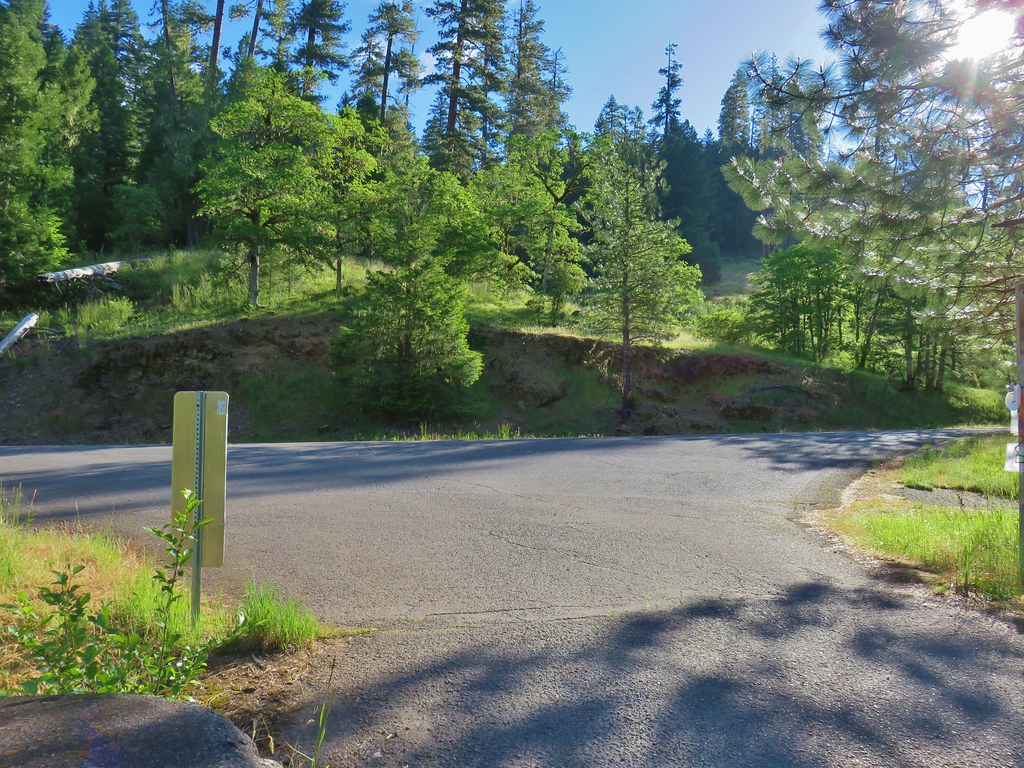
We stuck to the plan and when we arrived at FR 2134 we hopped up onto the shoulder of FR 21 and started pounding the pavement.FR 21 at FR 2134

The road walk was pretty brutal on our already sore feet, but there wasn’t a whole lot of traffic and we got to see some different things this way. It was also close to 2 miles shorter than if we had stuck to the trail.Youngs Rock Trail at FR 21

Youngs Rock Trail – A hike for another time.

Middle Fork Willamette River

Oregon geranium

Oregon geraniums

Oregon sunshine

Oregon sunshine

Plectritis and larkspur

Plectritis and the only larkspur we spotted all trip.

Boulder Creek Falls

Boulder Creek Falls

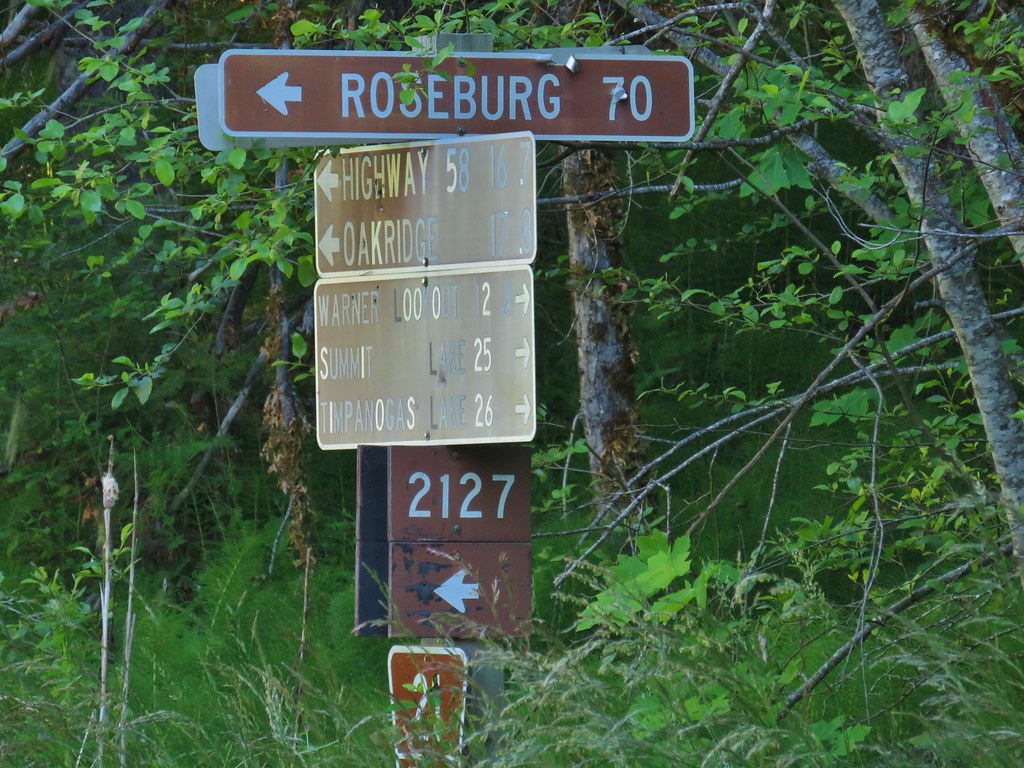
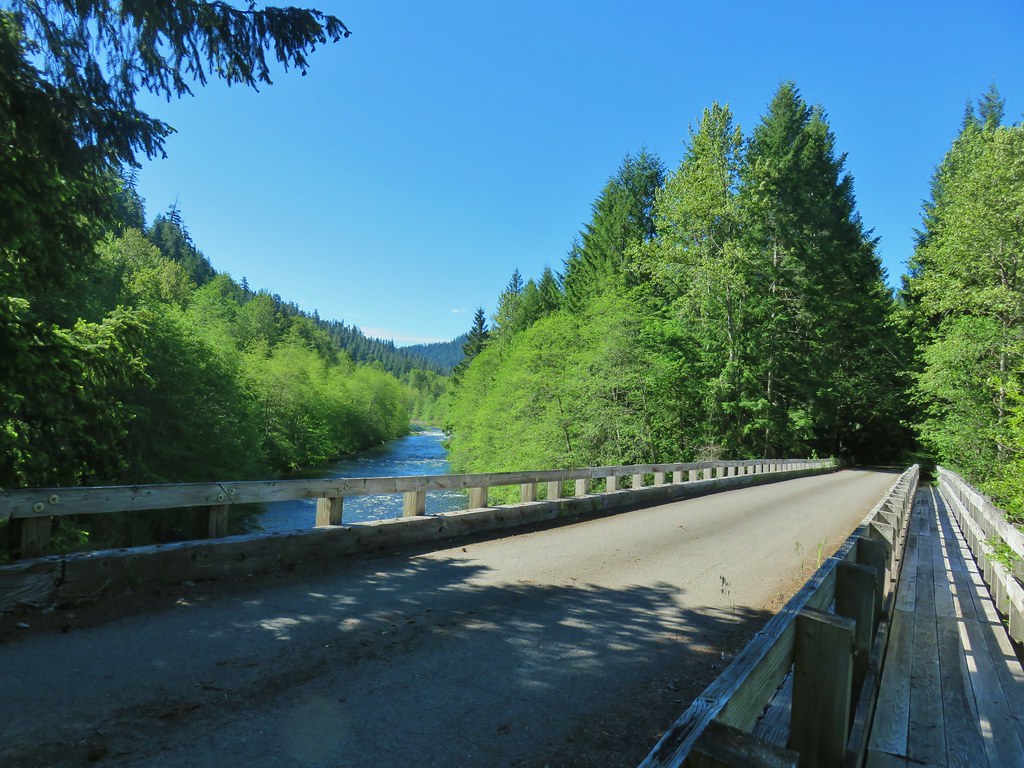
When we finally arrived at FR 2127 we took a break on the bridge.Road signs along FR 21

Middle Fork Willamette River from FR 2127

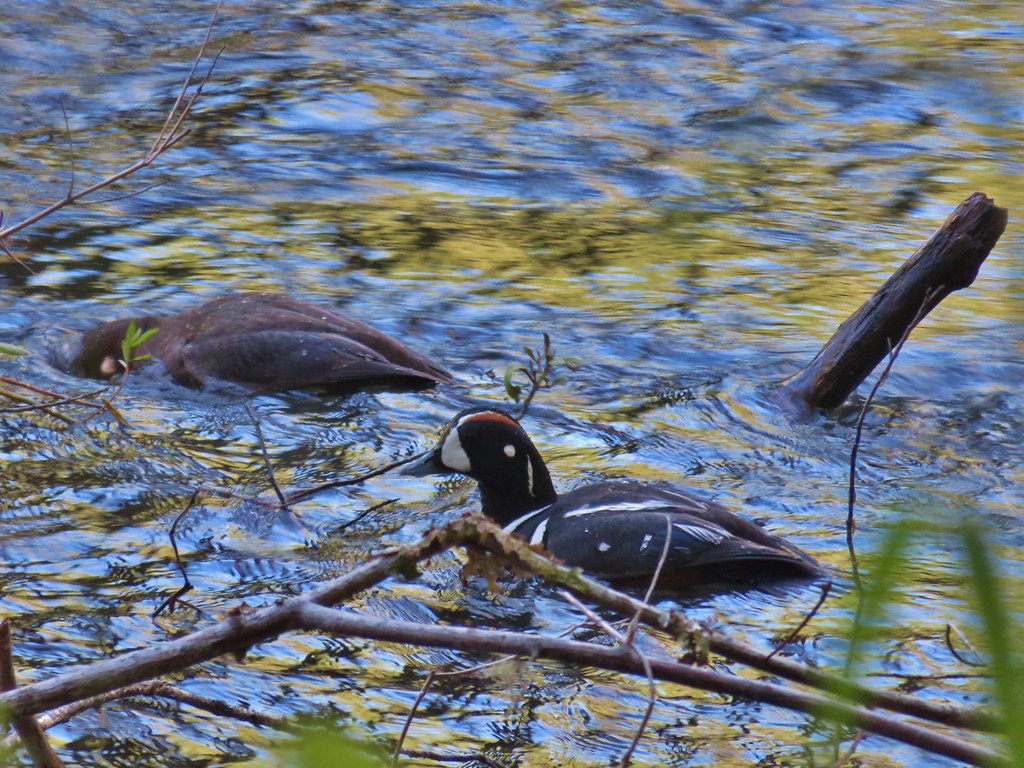
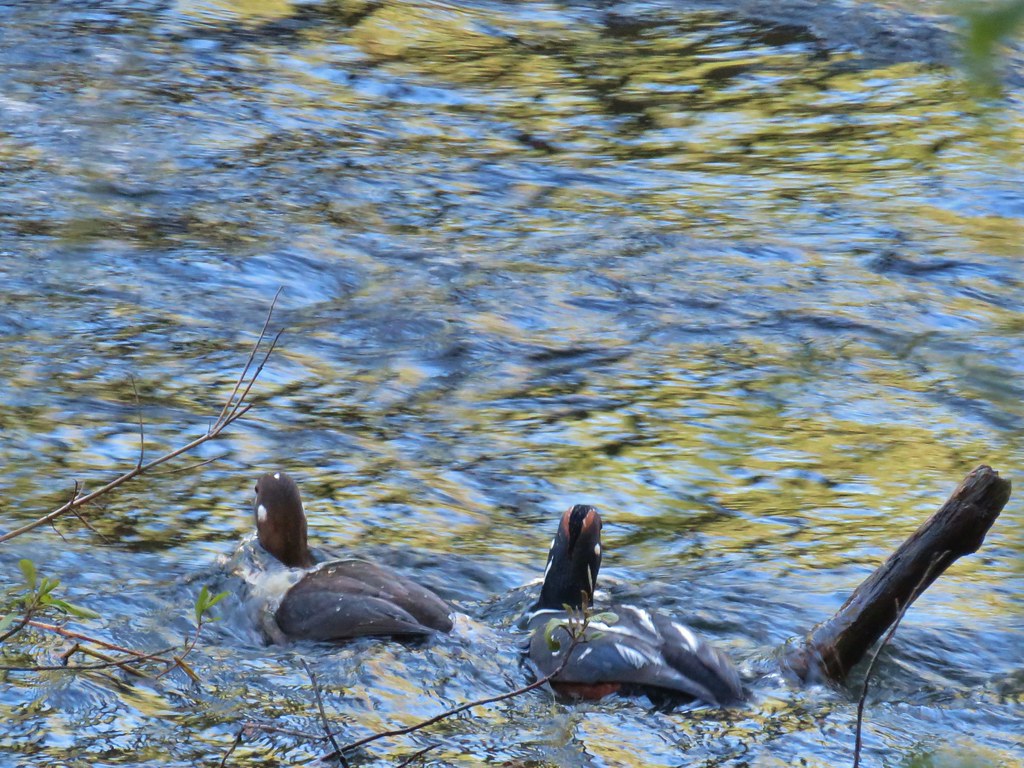
The highlight of the final leg of our hike was spotting a pair of harlequin ducks floating on the river. It’s only the second time we’ve seen these colorful ducks.Harlequin ducks

Harlequin ducks

Our distance for this final day was 12.1 miles giving us a total of 43.7 miles over the three days. I said to Heather “Leave it to me to turn a 4.4 mile easy hike into a nearly 44 mile hike.” I’m not sure if she found that as funny as I did. 😄

If I were to do it over (and the bridge over Indian Creek was replaced) I would have started at FR 2127 instead of 2120. That first 5+ miles didn’t have quite the scenery of the other sections, and it had the most poison oak. It also would have allowed us to camp closer to the springs making that day more reasonable. The view at Little Pine Openings sure was nice though.Middle Fork Willamette River

Overall though it was a good trip and it was just nice to be out again. Happy Trails!

Flickr: Day 2 & Day 3

Categories
Hiking Oakridge Area Old Cascades Oregon

Middle Fork Trail Backpack Day 1 – 5/23/2020

We continued to adjust our hiking plans to allow us our best chances of social distancing and visiting areas that are actually open. In January our plans for the three day weekend had been to stay in Roseburg and take day hikes along Highway 138. With staying in motels not the greatest way to socially distance, those plans were a no-go so we looked next to our 2021 plans. Those plans were a three day backpacking trip along the 30+ mile Middle Fork Trail SE of Oakridge to complete one of Sullivan’s featured hikes in his Central Cascades book, Indigo and Chuckle Springs (hike #83 in the 5th edition). This would be our first backpacking trip together since early September 2018 having skipped 2019 so that we could take care of our ill cat Buddy. (Heather did an overnight trip with some friends to Elk Lake Creek so she had been out once in 2019.)

The hike he describes is an easy 4.4 miles starting at the trailhead by Indigo Springs Campground. Doing the hike that he describes would have violated a couple of our self imposed rules. First the driving time to that trailhead for us would have been over 3 hours and secondly the amount of time spent hiking would have been less than the driving time (by a lot). My solution was to turn it into a backpacking trip by starting just south of the Sand Prairie Campground near milepost 12 of Rigdon Road (Forest Road 21). The plan was to hike around 13 miles on Saturday and then set up a base camp. Sunday we would hike the remaining distance to Indigo and Chuckle Springs and the return to camp and hike back out Monday morning. Our itinerary remained the same for the trip, but for reasons I’ll get to later the distances were not quite what we had planned on.

The Middle Fork National Recreation Trail stretches from Sand Prairie Campground to Timpanogas Lake (post).
There are a number of trailheads and access points for the Middle Fork Trail and we chose to start at the FR 2120 Trailhead.
Middle Fork Trail south of Sand Prairie Campground

A short distance from the trailhead we crossed Buck Creek on a nice bridge.
Buck Creek

For the first 5 miles the trail was relatively flat with a few ups and downs. This section was to the east of the Middle Fork Willamette River and to the west of Rigdon Road (FR 21). There were occasional glimpses of the river as well as some time spent along and on FR 21.
Middle Fork TrailMiddle Fork Trail along FR 21.

Middle Fork Willamette RiverOne of only a couple of spots where we were able to get to the river.
Where the trail crossed roads either signs or flagging were present to identify the continuation of the trail.
Middle Fork TrailOrange flagging on the left after crossing a gravel road.
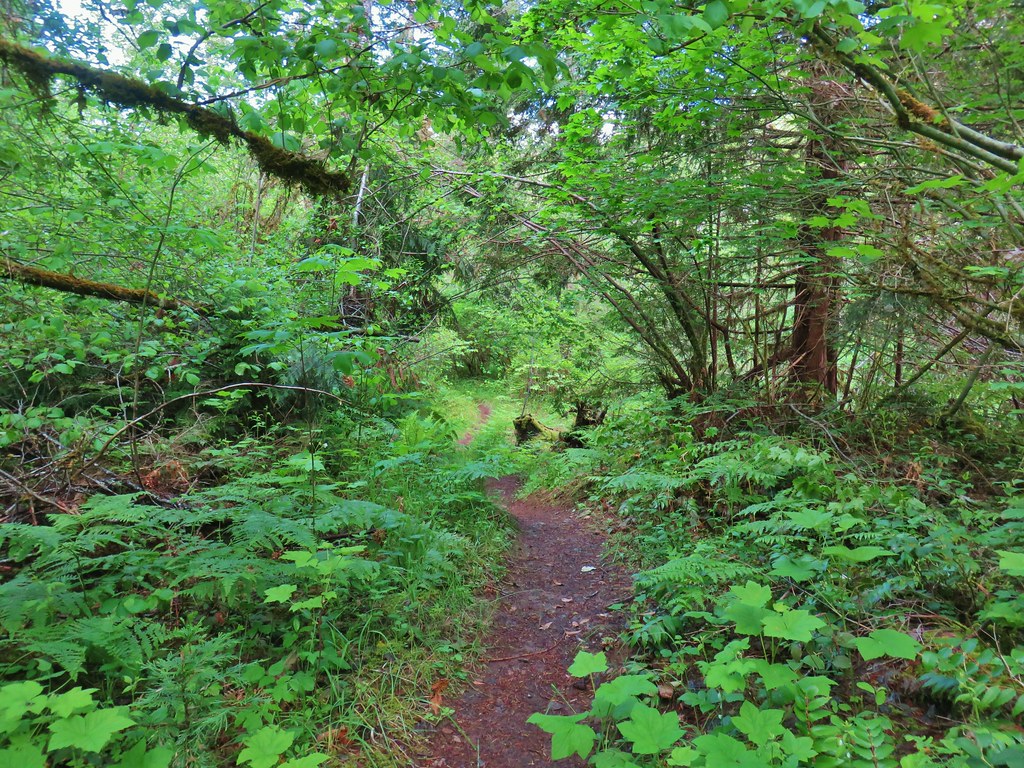
The scenery was mostly green forest with a few meadows and a couple of creek crossings along the way. There were a few woodland flowers present as well as some patches of poison oak.
Middle Fork Trail

ThimbleberryThimbleberry

Cone CreekCone Creek

AnemonesAnemones

Bills CreekFootbridge over Bills Creek

Queen's cupQueen’s cup

Middle Fork Trail

Middle Fork Willamette River

Columbine along the Middle Fork TrailColumbine

Middle Fork TrailYellowleaf iris along the Middle Fork Trail.

Pine CreekPine Creek – At first it looked like they put the bridge in the wrong spot, but there was another branch to the creek.

View from the Middle Fork TrailSmall meadow along the trail.

At the 4.4 mile mark the trail popped us onto FR 21 for a little over a quarter mile before resuming along the river.
Middle Fork Trail popping onto FR 21 for a bit

Middle Fork Trail leaving FR 21

Middle Fork Willamette River

This was short lived though as we quickly found ourselves back on FR 21 near its junction with FR 2127.
Middle Fork Trail at FR 2127

Here the trail crossed the river on the bridge.
FR 2127 crossing the Middle Fork Willamette River

Middle Fork Willamette River from FR 2127

Common merganserCommon merganser on the river below the bridge.

The bridge crossing marked the start of what Sullivan’s map showed to be a 5.2 mile section along the western side of the Middle Fork Willamette River before recrossing on bridge at FR 2134 (our Adventure Maps, Inc. Oakridge Oregon Trial Map showed the section as 5.4 miles).
Middle Fork Trail Sign at the Road 2127 Trailhead.

With FR 21 now on the opposite side of the river this section was a little quieter and more scenic. There was still occasional poison oak to keep an eye out for and somewhere along this stretch a tick hitched a momentary ride on my pant leg before being flicked off.
Middle Fork Trail

Middle Fork TrailMossy stump along the trail.

Middle Fork TrailLots of grass along portions of the trail, one of these areas was probably where the tick hopped on.

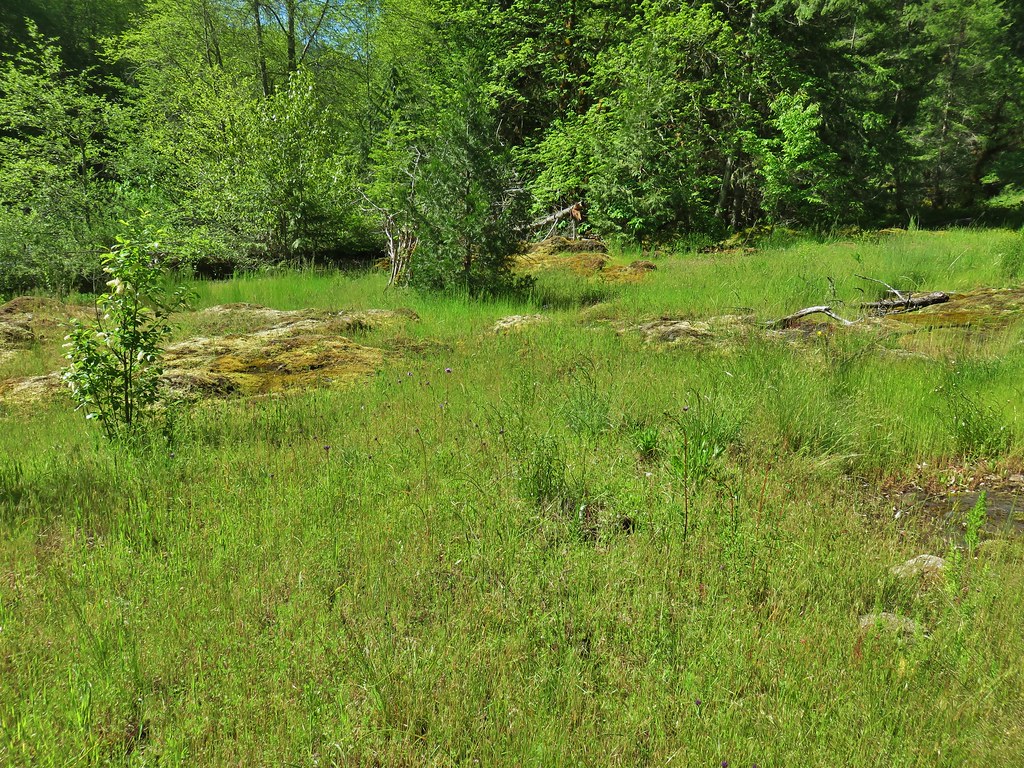
A highlight of the section was a series of rocky seeps long the river where patches of wildflowers were blooming.
Middle Fork Trail

Middle Fork Willamette River

Ookow along the Middle Fork TrailThe ookow wasn’t quite blooming yet.

Tolmie's mariposa lilyTolmie’s mariposa lily

MonkeyflowerMonkeyflower and tomcat clover

StonecropStonecrop

Plectritis and giant blue-eyed MaryPlectritis and giant blue-eyed Mary

Meadow along the Middle Fork Trail

Giant blue-eyed MaryGiant blue-eyed Mary

Western buttercupsButtercups

Meadow along the Middle Fork Trail

The trail reentered the forest where we spotted a couple of different coralroots.
Middle Fork Trail

Spotted coralrootSpotted coralroot (with a caterpillar)

Striped coralrootStriped coralroot

Two miles into this section we came to our first real obstacle of our trip. I had watched a series of Youtube videos from Hike Oregon of the trail including this section (video and in her video from a few years ago there was a footbridge over Indian Creek. No such bridge existed now. The water was flowing pretty quickly and although it looked doable it didn’t look like the easiest ford we’d done. We went ahead and gave it a go.
Fording Indian Creek

We managed to get across and continued on to find a second ford a short distance later. This one was just through some very slow moving water though.
Water covering the Middle Fork Trail

It was pretty smooth sailing for the next two miles but then we came to a sign announcing a trail closure and reroute.
Middle Fork Trail

Clear water along the Middle Fork Trail

Middle Fork Willamette River

Chocolate liliesChocolate lilies

Sign for a reroute of the Middle Fork Trail

The reroute sent us away from the river to FR 201 where we crossed Coal Creek on a bridge to FR 2133. The Forest Service map for the reroute showed that the trail will eventually continue on the other side of FR 2133 extending to FR 2134 but for now the reroute followed FR 2133 for one and a quarter miles to FR 2134.
Middle Fork TrailCompleted section of the reroute.

Signage for the Middle Fork TrailMore signs at FR 201

Sign for the Middle Fork TrailFR 201 crossing Coal Creek.

Coal CreekCoal Creek

FR 2133Road walking on FR 2133

Once we made it to FR 2134 we were back on the original route of the Middle Fork Trail as it once again crossed the river, this time using FR 2134’s bridge.
Bridge over the Middle Fork Willamette River

Middle Fork Willamette River

The reroute had added a mile to our hike for the day and we weren’t done yet. The next section of trail between FR 2134 and Sacandaga Campground was listed as just under 5 miles and we were hoping to find a camp site close to the middle of the section.

The trail picked up at the north end of the bridge (the river had turned and was now flowing east to west as opposed to the first section when it was flowing to the north).
Middle Fork Trail

Simpson CreekSimpson Creek

Northern phloxNorthern phlox

Folded fungusDon’t know what type of fungus this is but it looked neat.
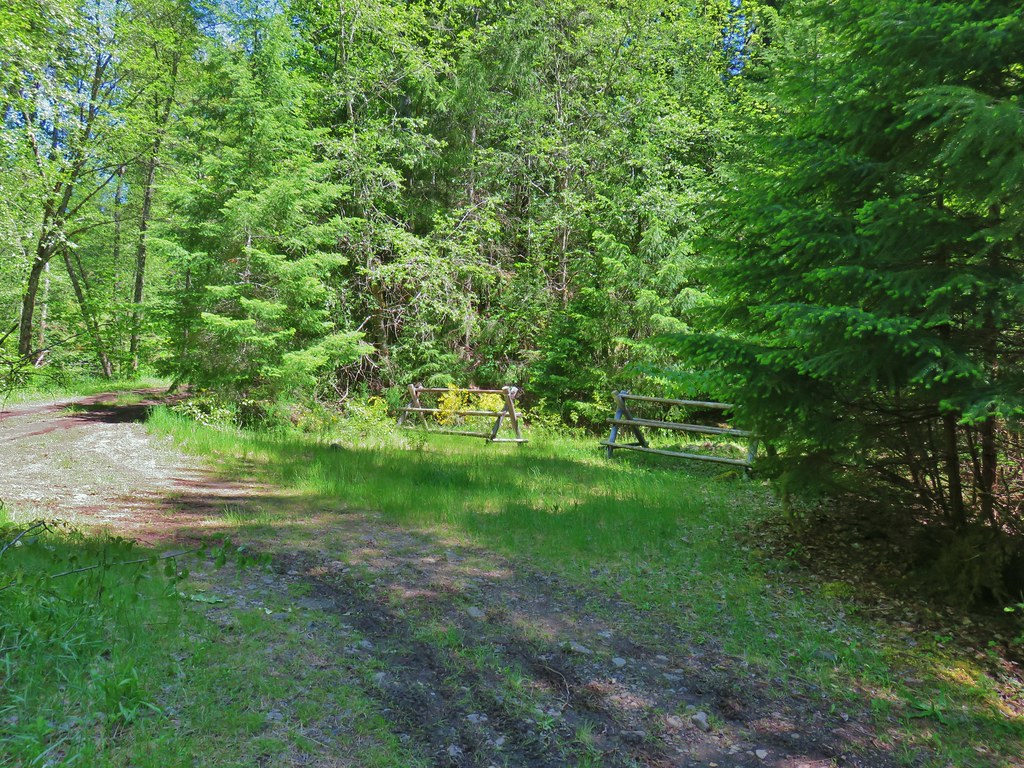
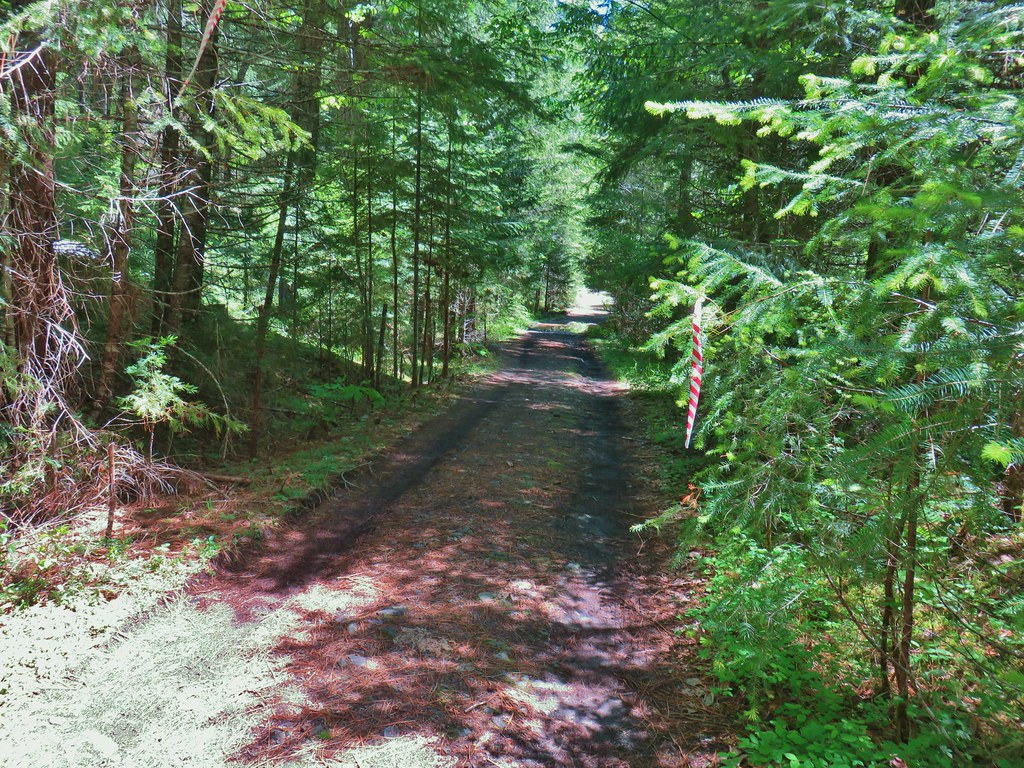
We were once again between the river and FR 21 and crossed several primitive forest roads.
Middle Fork Trail

Middle Fork Trail

After 2 miles it began to veer away from the road a bit to what appeared on the topographical map as a wide relatively flat area where we were hoping to find our camp site. We hadn’t passed many established (or even semi-established sites). We had seen one near Indian Creek and we had also seen one tent set up on an rocky island separated from the trail by a small channel of the river.

We passed up a couple of possible sites along decommissioned road beds hoping to be a bit closer to the river than they had been so when we did get back along the river we started looking.
Middle Fork Trail along the Middle Fork Willamette River

There wasn’t much, the trees and underbrush was thick enough that there weren’t many areas with enough room for a tent. Heather spotted a more open area in the trees about 2.8 miles from FR 2134 that looked promising but I stubbornly continued for another quarter of a mile before turning back because her spot appeared to be the best choice. We set up camp amid the trees on the opposite side of the trail from the river.
Campsite along the Middle Fork Trail

There was a nice little opening along the river nearby where we were able to cook our meals and watch the river flow by.
Middle Fork Willamette River from our dinner/breakfast spot

Our plan for a 13 mile first day turned into 14.5 miles due to the extra mile added by the reroute and my continuing past our eventual campsite a quarter mile and having to come back to it. The lower portions of the trail had been a bit of a mixed bag. We hadn’t expected as much poison oak as we’d seen along the way and the reroute had been a bit of a bummer since road walking, even if it’s dirt/gravel is a lot harder on us than a nice trail. The scenery was nice and there had been quite a few wildflowers but being so close to paved FR 21 for much of the hike and having a large number of other road crossings where car campers were present didn’t allow for much of a remote feeling. The middle section (prior to the reroute) was probably the nicest, but having to ford Indian Creek probably isn’t for everyone.

On the plus side we only encountered one other hiker on the trail and our campsite turned out to be pretty comfortable with a nice thick layer of cushy duff to sleep on. Happy Trails!

Flickr: Middle Fork Trail Day 1

Categories
Coastal Range Hiking Oregon Trip report

Little Luckiamute River and Valley of the Giants – 05/16/2020

***Please note that the access road was washed out in December 2023, and as of May 2024 there is no ETA to restoring access.***

As we continue to navigate this COVID-19 reality we decided to finally make an attempt at visiting the Valley of the Giants, a stand of old growth forest in the Coastal Range. Even though the Valley of the Giants is a featured hike in Williams L. Sullivan’s “100 Hikes/Travel Guide Oregon Coast & Coast Range” and we would need to complete this hike someday if we were ever going to complete our goal of hiking all 500 of the featured hikes (post) we had thus far avoided this hike for a two reasons. The first reason was that at only 1.5 miles long this hike violated our made up rule of not spending more time driving than hiking on a day trip. Despite only being 31 miles, as the crow flies, from our house  the drive to the trailhead would be around an hour and forty-five minutes.

The second reason was that we’d heard it was sometimes difficult to reach the trailhead if you could even find it at all. The area (and much of the Coast Range) is a checkerboard of public and private land with most of the private land being owned by timber companies and heavily logged. From time to time the timber companies close the roads used to reach the trailhead due to logging activity. The logging activity also means that there are often new roads or changes to existing roads that are not on maps making them unreliable.

With social distancing in mind we thought now was as good as a time as ever to finally give this hike a go. First we needed to make sure that the hike was indeed open so during the week I contacted the Northwest Oregon District Office of the BLM via email to confirm. They responded that same day saying that it was open and also attached two pdfs. One was a brochure for the trail as well as detailed driving directions and the second contained phone numbers for the timber companies to check on any potential closures they might have in place. We didn’t wind up calling the timber companies opting to just take the chance that the roads would be open.

With the hike being only 1.5 miles we also looked for some other options along the way and in the back of Sullivan’s book was an additional hike just outside of Falls City, which we would be driving through, along the Little Luckiamute River. He described the hike as an “easy mile and an additional 1.5 faint miles to a brushy clearcut”. The guidebook had us park at a locked gate at a bridge over the Little Luckiamute River along Blackrock Road.
Blackrock Road

IMG_3715Little Luckiamute River from the bridge.

The book then mentions crossing the bridge on foot and continuing up the road 200 yards to the trail on the left and shows the BLM as the land manager. When we walked up to the gate though we were met with posted signs from Weyerhaeuser stating that permits were required for all recreation beyond that point. We did walk up the road a bit to see if we could find the start of the trail to see if maybe the it was in fact on BLM land and it was only the road and possibly the land on the right hand side that was Weyehaeuser owned. Our Garmin appeared to show the location of the trail but we walked a little past where it was showing and never saw any signs of one so we quickly returned to our car. Heather had noticed another gated road just before the spot where we parked heading in the same direction that the trail on the opposite side of the river would have taken us so we walked over to it to check it out. There were signs here too but it wasn’t Weyerhaeuser land it was owned by Hancock Forest Management and they didn’t require permits for recreational use.
Informational signs at a gated logging road

We decided to hike up this road instead. We wanted to kill some time before heading to the Valley of the Giants because the Oregon Hikers Field Guide entry for the hike mentioned visiting between 8am and 5pm to avoid gates that might be opened and closed daily. It was a little before 6am when we’d discovered that our plan A was a no go so to kill enough time we set a 45 minute goal for hiking out along this road before turning around.
Logging road along the Little Luckiamute River

A quarter mile up the road we followed a well developed use trail down to the river.
Trail down to the Little Luckiamute River

Little Luckiamute River

Little Luckiamute River

SalmonberrySalmonberry blossoms along the river.

After checking out the river we continued up the road until we arrived at a 1.5 mile marker spray painted in orange on a stump. We were at almost 43 minutes and in the middle of an uphill climb so we decided that the marker was a good definitive turnaround spot.
Mile marker along the logging roadOur turnaround spot.

We returned the way we’d come arriving back at the car close to 7:20. Even though it wasn’t the trail that we’d planned on hiking this was a pleasant little hike and probably very similar to what we would have seen on the trail itself. There were a number of different flowers, slugs, a snail, a millipede, and a rough skinned newt along the way not to mention the sounds of the river and lots of signing birds.
Logging road along the Little Luckiamute River

Cinquefoil and youth-on-ageCinquefoil and youth-on-age

Snail

Small creekOne of several little creeks along the road.
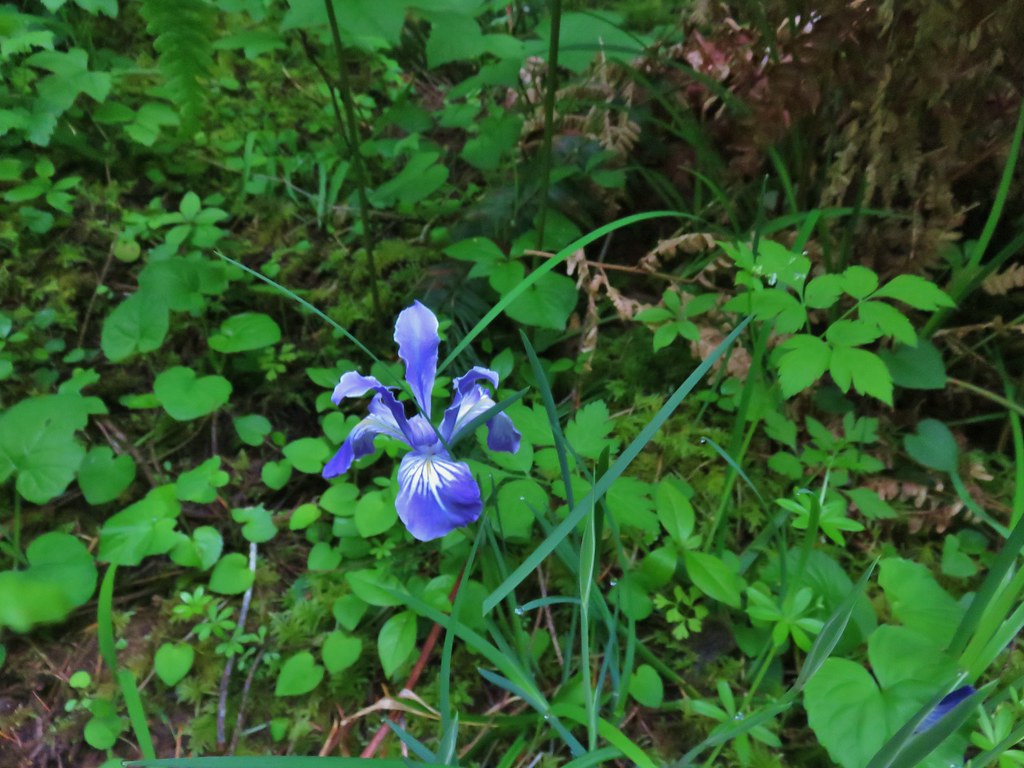
IrisIris

FairybellsFairybells

Forest along the Little Luckiamute RiverForest along the road.

Bleeding heartBleeding heart

Rough skinned newtRough skinned newt escaping into the grass.

LupineLupine

ColumbineColumbine

We drove back into Falls City and stopped at a viewpoint along Parry St. to check out the Falls City Falls.
Falls City Falls viewpoint

Unfortunately you can’t get a good look at the waterfall from this side of the river and it wasn’t any apparent access on the opposite side where a clearer view could have been had.
Little Luckiamute RiverLittle Luckiamute above the falls.

Falls City FallsFalls City Falls

Falls City FallsLower end of Falls City Falls.

That quick stop killed a little more time before we began our quest for the Valley of the Giants. The entry in the Oregon Hikers Field Guide for the trailhed begins with “Here follows one of the most convoluted approaches to a trailhead you will ever endure:”. We were primarily using the BLM directions with Sullivan’s being secondary. (All three provided similar directions although they were worded differently.) The trailhead was 31.5 miles from the Falls City Post Office with all but the first .6 on gravel roads. As crazy as the directions appeared the drive turned out to be fairly straight forward. The directions were spot on and we found that at many of the intersections the BLM had pointers for VOG.
BLM pointer for the Valley of the Giants

We weren’t expecting to see these pointers and aren’t sure how new they might be (or how long they will last given some peoples penchant for causing mischief) but they proved to be very helpful.

The roads had a few potholes but were in relatively good shape and passable for lower clearance vehicles. The scenery alternated between the bleak landscapes of clearcuts and beautifully green forests surrounding the South and later North Forks of the Siletz River.
South Fork Siletz RiverSouth Fork Siletz River along Valsetz Road.
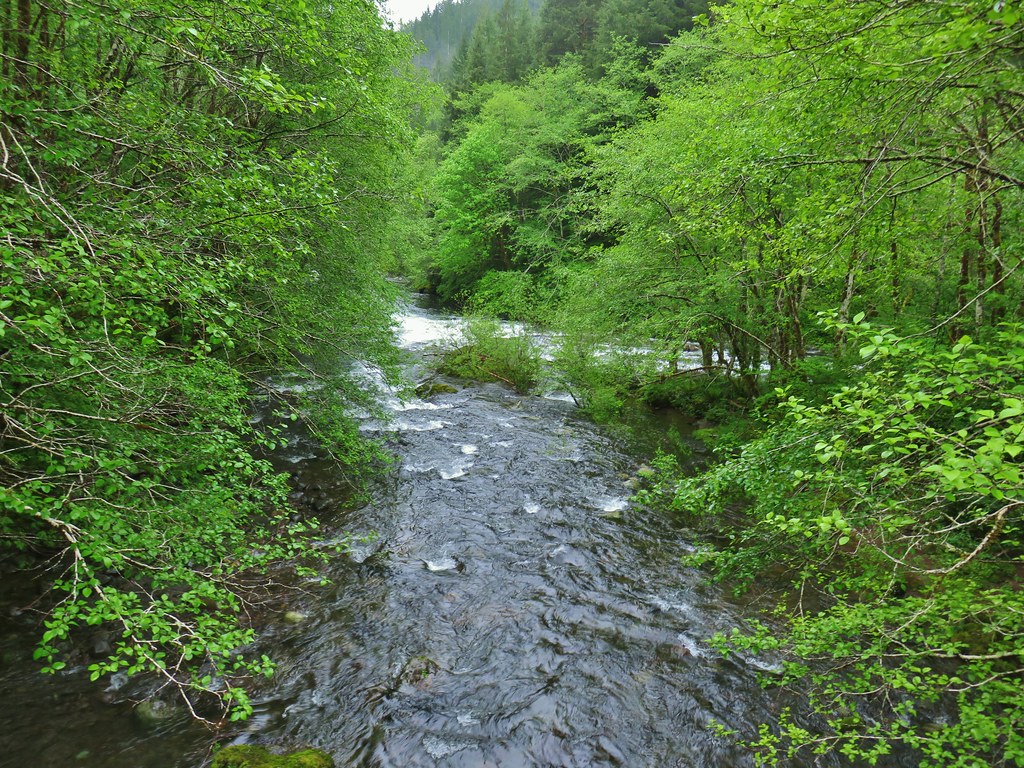
Confluence of the North and South Fork Siletz RiversConfluence of the North and South Forks of the Siletz River.

North Fork Siletz RiverNorth Fork Siletz River.

The route also took us past the historical site of Valsetz, an unincorporated community and timber company town. In 1983 the timber company announced the halting of operations there and in 1984 all structures were removed leaving just some foundations. We drove by the foundations but didn’t stop due to some sort of gathering occurring (which we were pretty sure wasn’t within the current COVID-19 guidelines).

An hour and fifteen minutes after passing the Post Office in Falls City we arrived at the Valley of the Giants Trailhead.
Valley of the Giants Trailhead

A signboard at the trailhead provided a brief history and a map of the 51 acre area.
Interpretive sign at Valley of the Giants

We followed the trail downhill to a footbridge over the North Fork Siletz River.
Trail at Valley of the Giants

Bleeding heartBleeding heart

FairybellsFairybells

Star-flowered slomonseal and false lily of the valley getting ready to blossomStar flowered solomonseal and false lily of the valley getting ready to bloom.
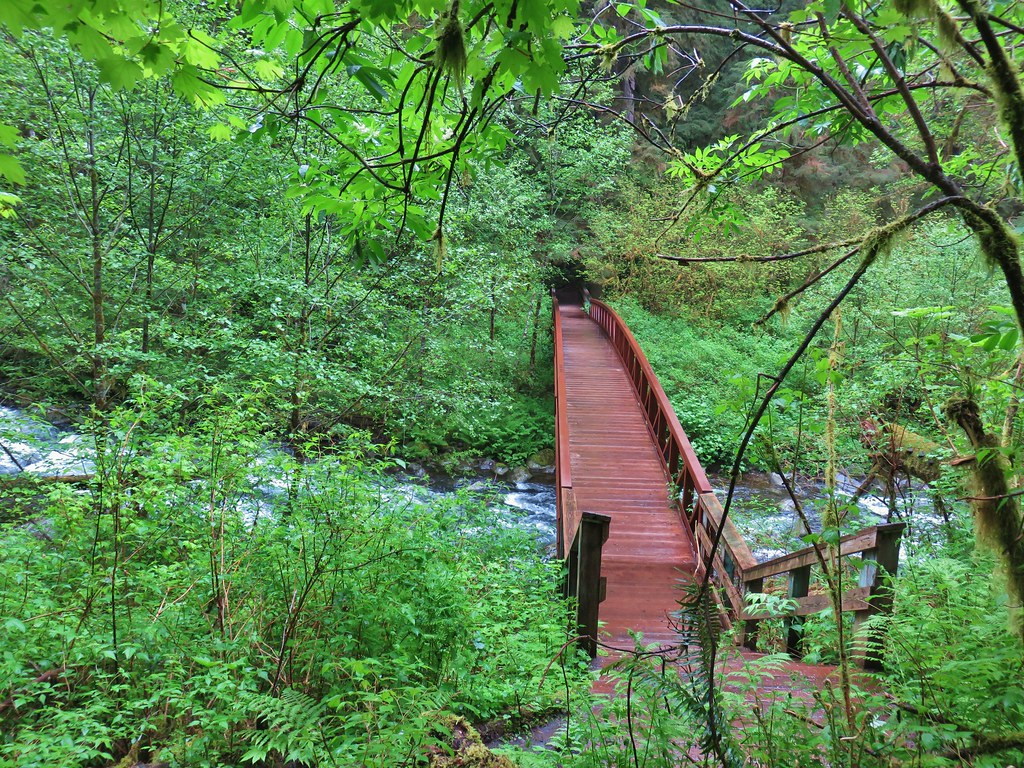
Footbridge over the North Fork Siletz River

North Fork Siletz River

North Fork Siletz River

At the far end of the footbridge was a lone picnic table.
Picnic table at the Valley of the Giants

The trail climbed a bit to the start of a .7 mile loop which itself climbed approximately 160′ to the “Big Guy”, a huge Douglas Fir that fell in a 1981 storm. At that time the tree is believed to have been 230′ tall and approximatley 600 years old.
Trail at Valley of the Giants

Valley of the GiantsOld growth giants.

Valley of the GiantsAnother huge Douglas fir.

Valley of the GiantsStanding among the giants.

FernsUnfurling ferns.

“Big Guy”

Standing in between a cut in “Big Guy”. For reference I am a little under 5’9″.

Bench at “Big Guy”

Beyond “Big Guy” the trail descended back down to the start of the loop.
Trail at Valley of the Giants

Oregon grapeOregon grape

Old growth at Valley of the Giants

TrilliumThe only trillium we saw all day that still had any petals.
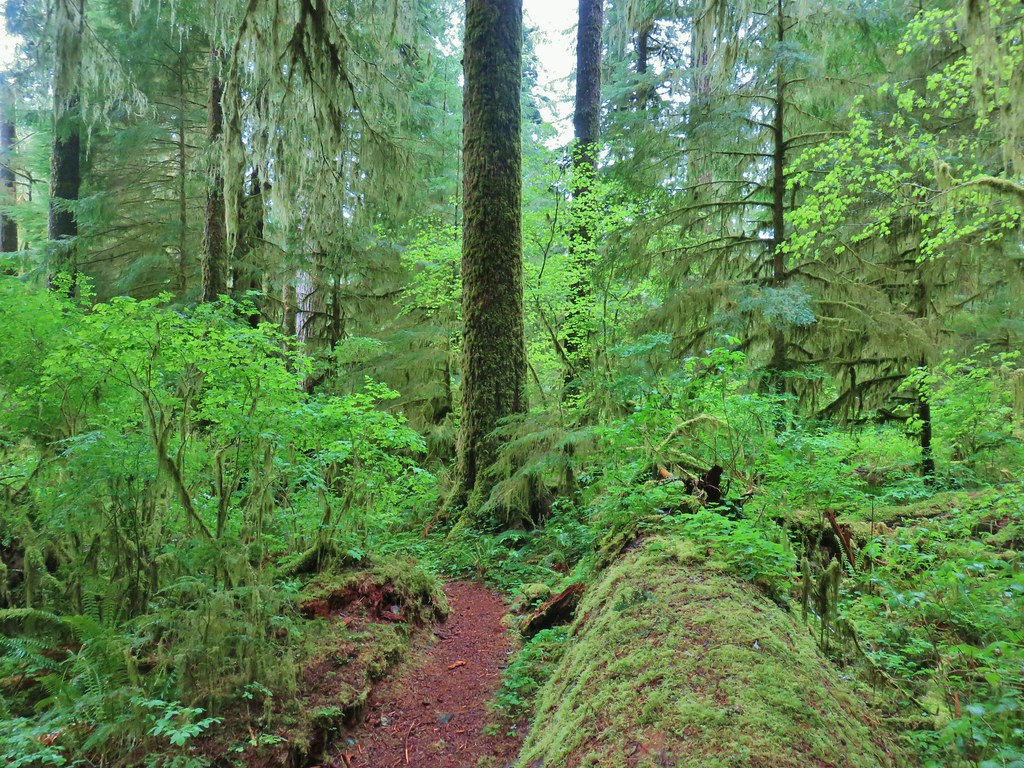
Old growth at Valley of the Giants

Valley of the Giants

We returned to the trailhead to find a second car there now and the only other hikers we’d seen that day. We chatted with them for a bit (from over 6 feet away). His grandfather had been working at Valsetz when it was shut down so he had spent time there as a child and all around the area.

Driving back past the clear-cuts after having just visited the pocket of old growth just reinforced how important it is to us to protect any wild areas lucky enough to have yet been spared from development or resource extraction. There are not that many of them left and those that aren’t yet protected deserve to be. Happy Trails!

Flickr: Little Luckiamute River and Valley of the Giants