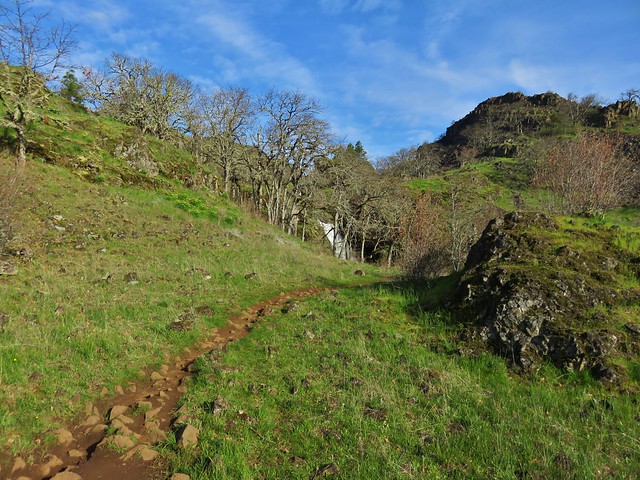
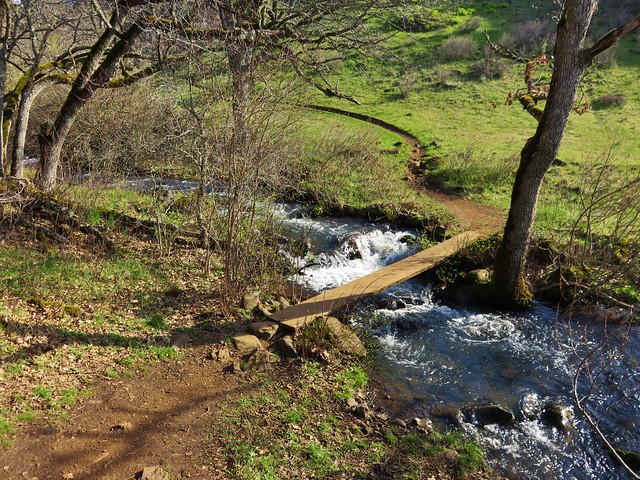
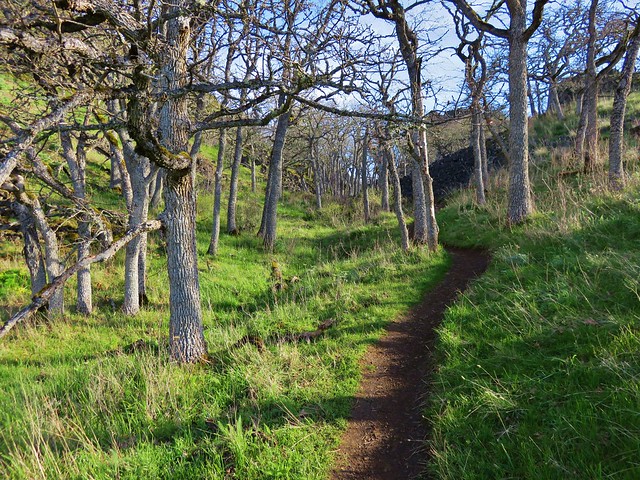
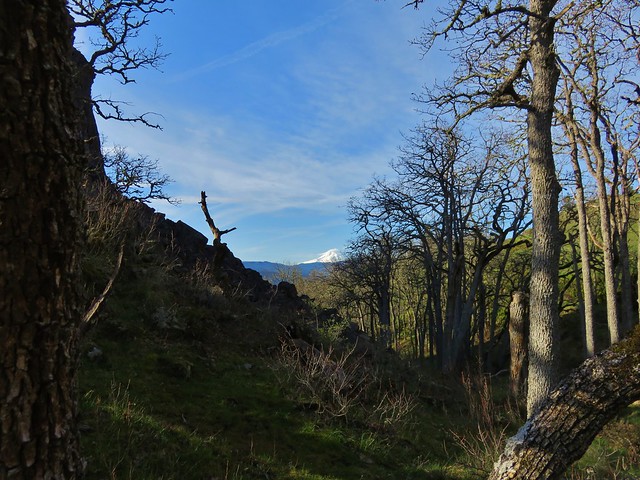
Categories
Hiking Oregon Oregon Coast Southern Coast Trip report

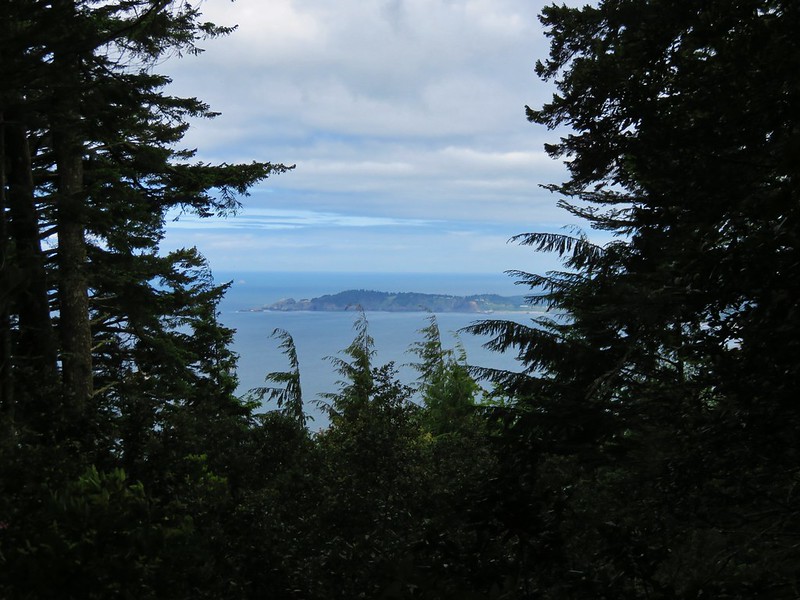
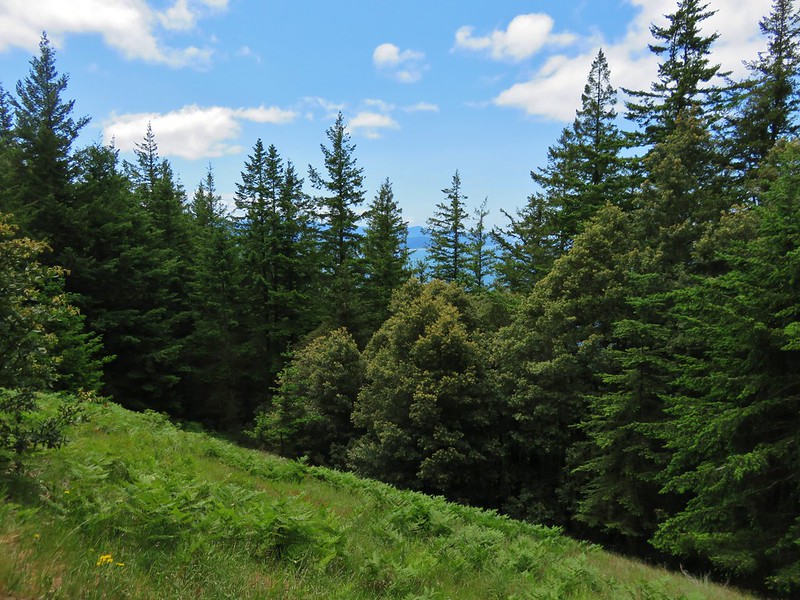
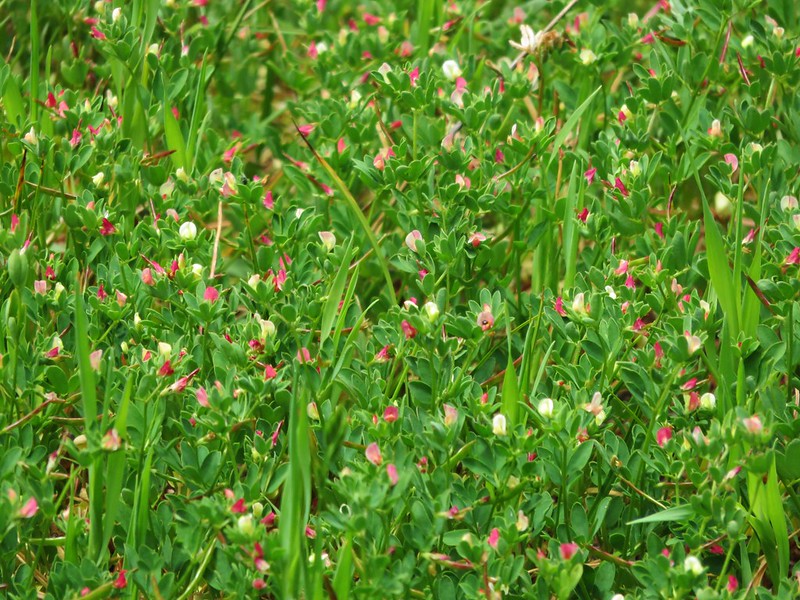
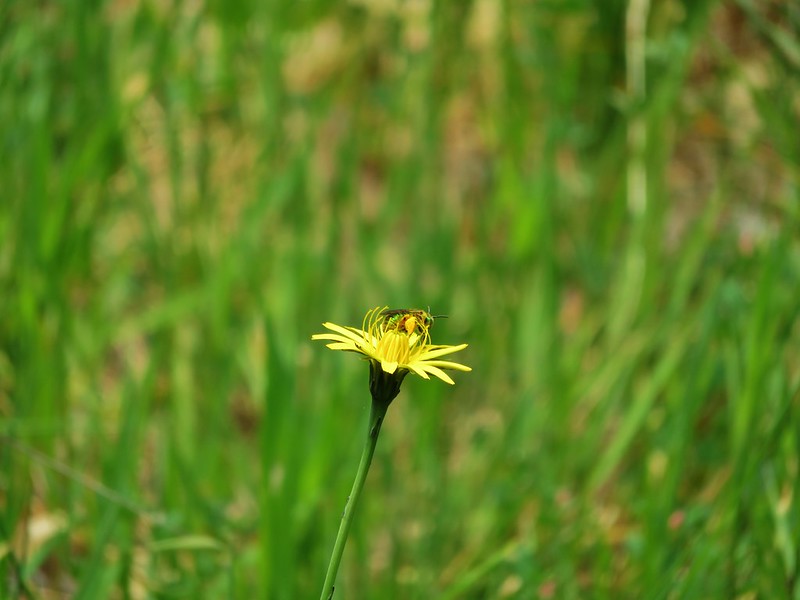
Cape Sebastian

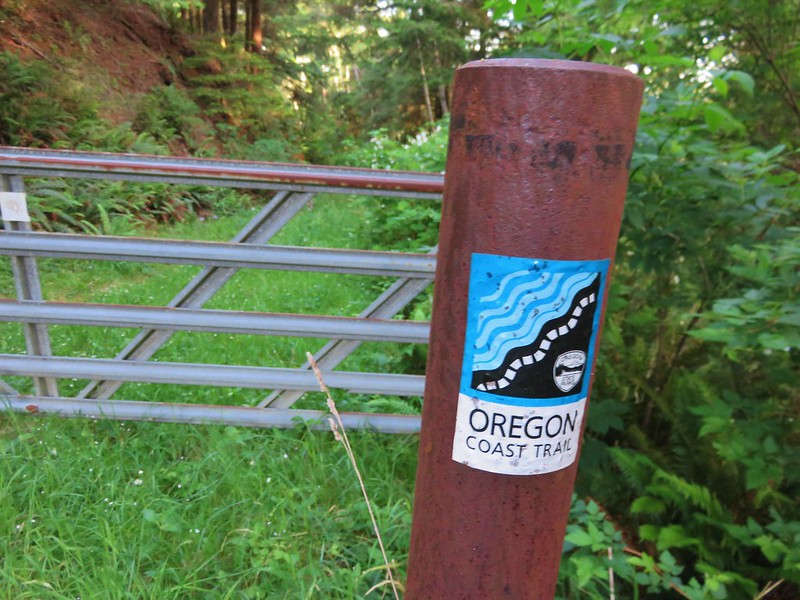
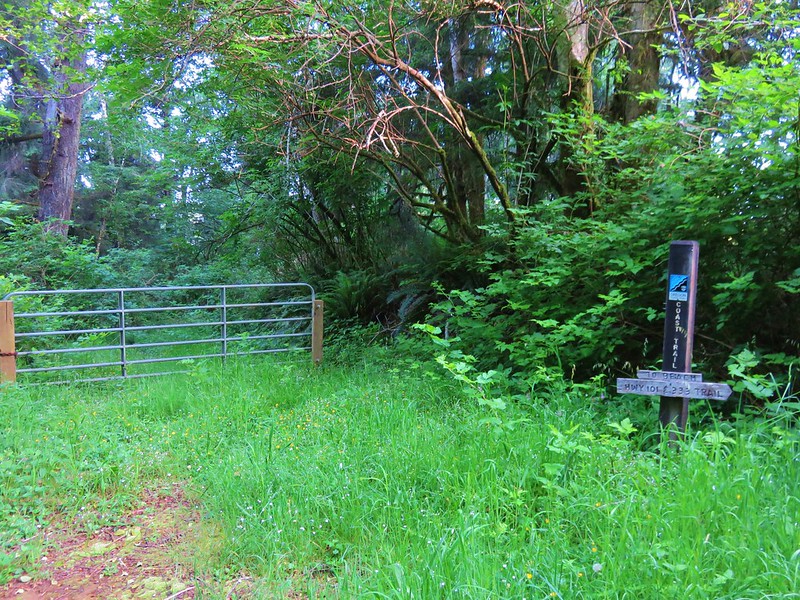
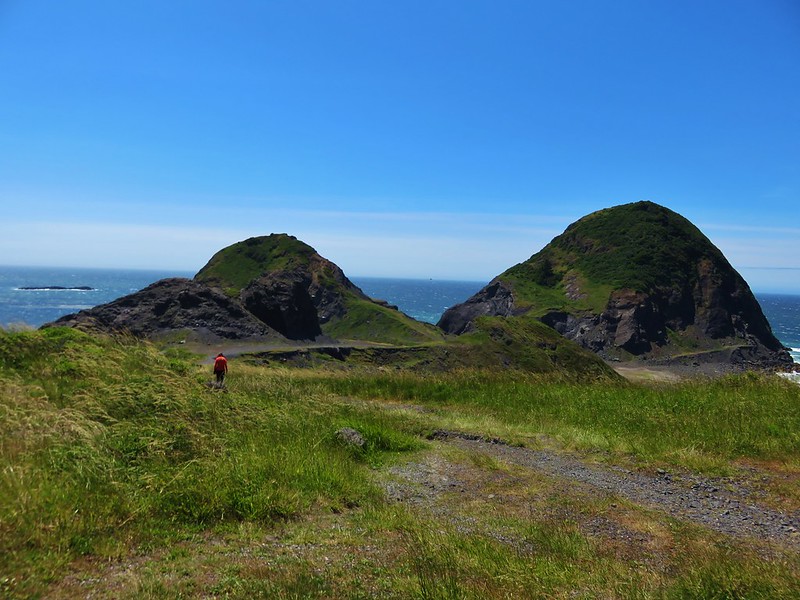
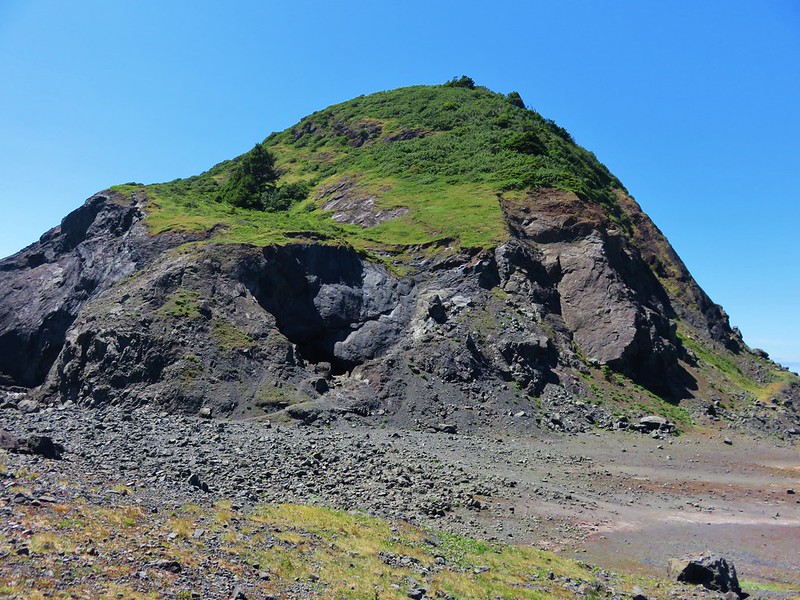
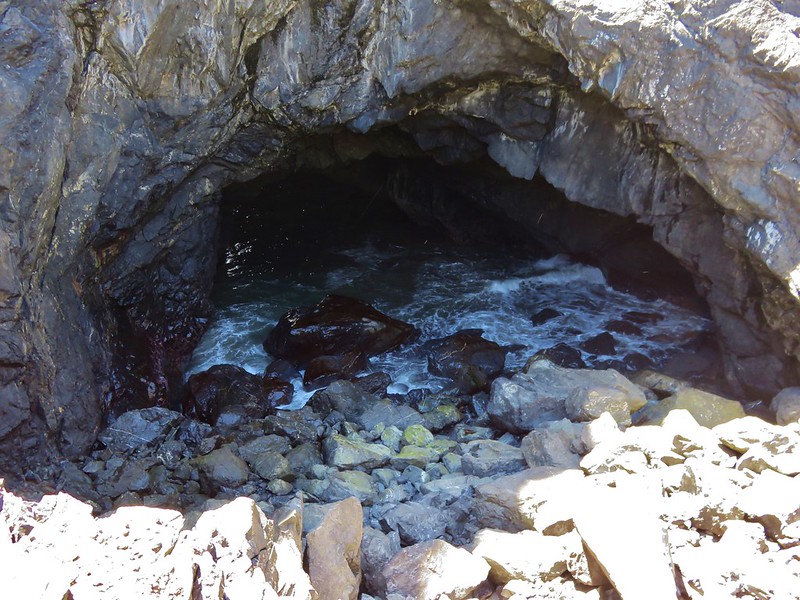
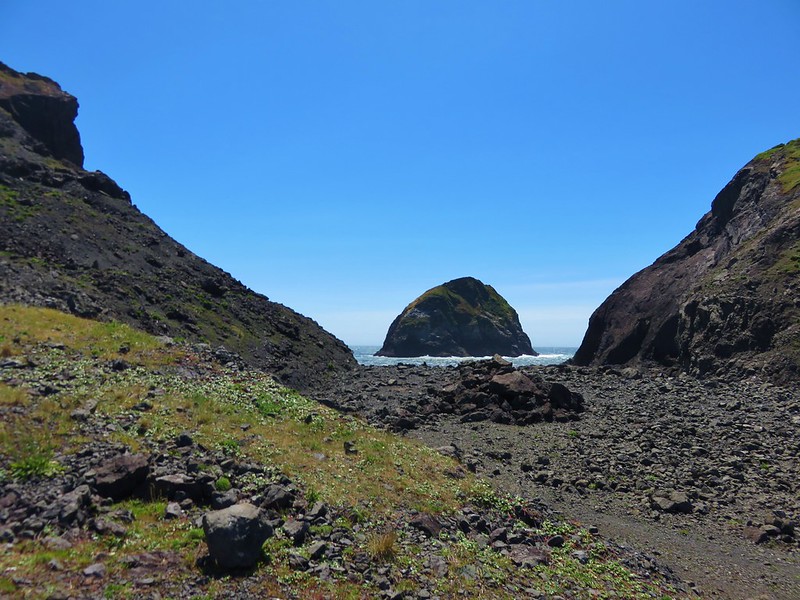
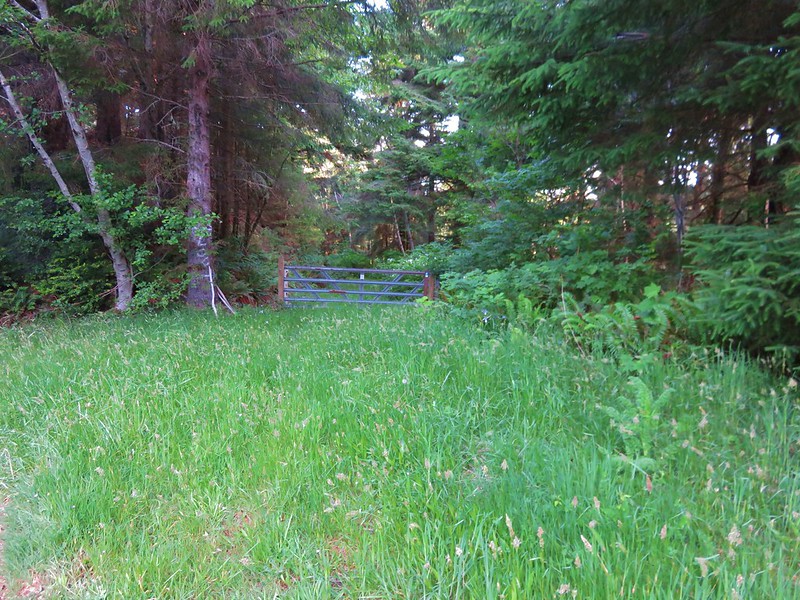
After our slow, bumpy drive to the Kalmiopsis Wilderness on Tuesday, Wednesdays hike was only about five minutes from our hotel in Gold Beach. We would be following a section of the Oregon Coast Trail through Cape Sebastian State Park. We began our hike at a gravel parking lot just off Highway 101 along Bellview Lane. A gate and sign for the Oregon Coast Trail were located just across Bellview Lane from the parking area.
IMG_6688

IMG_6690

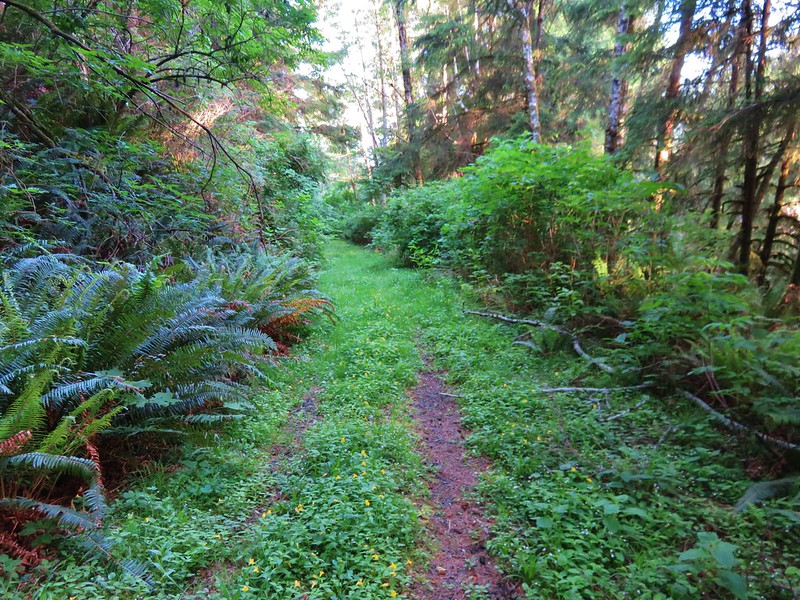
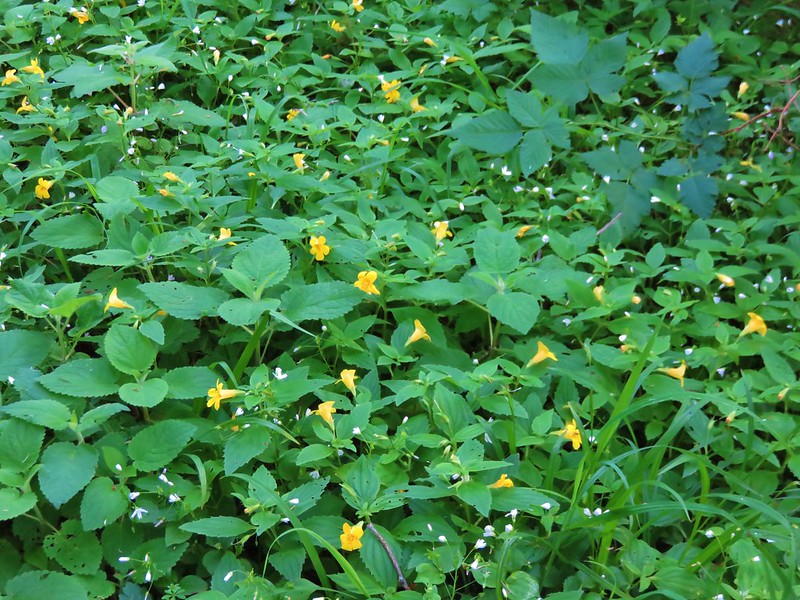
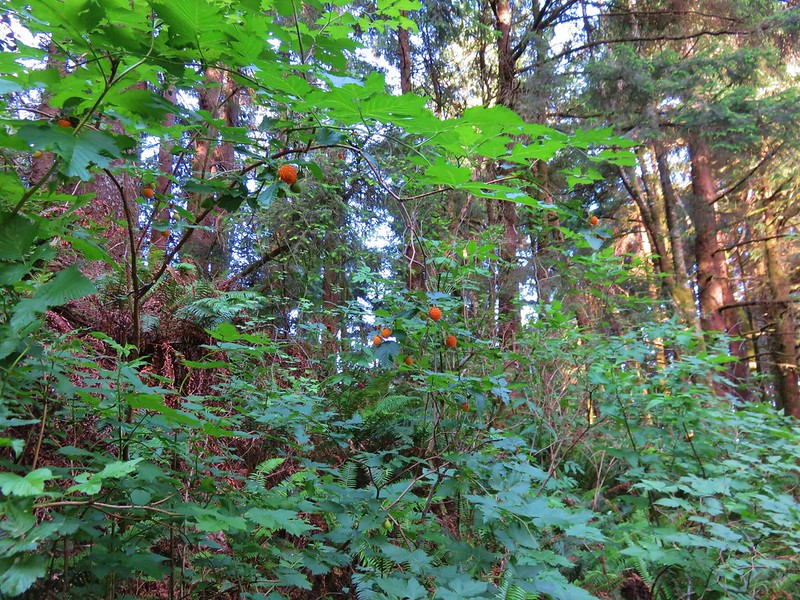
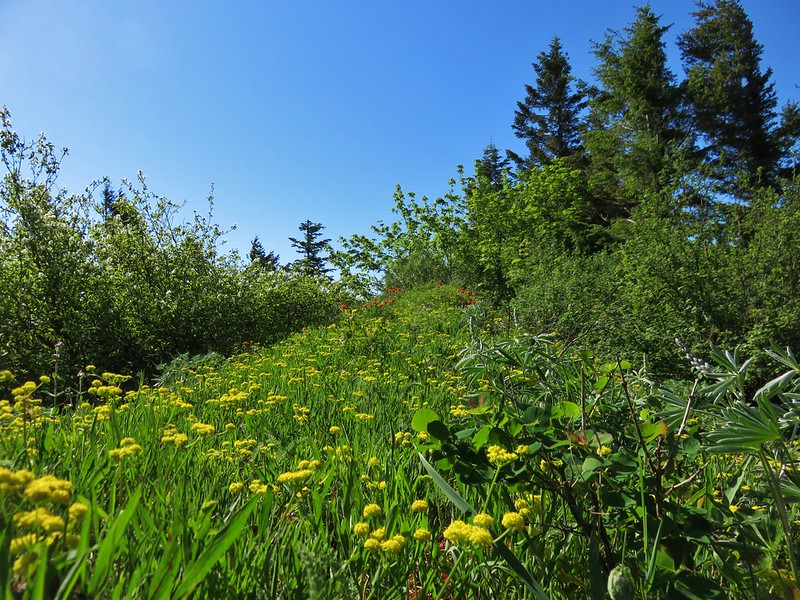
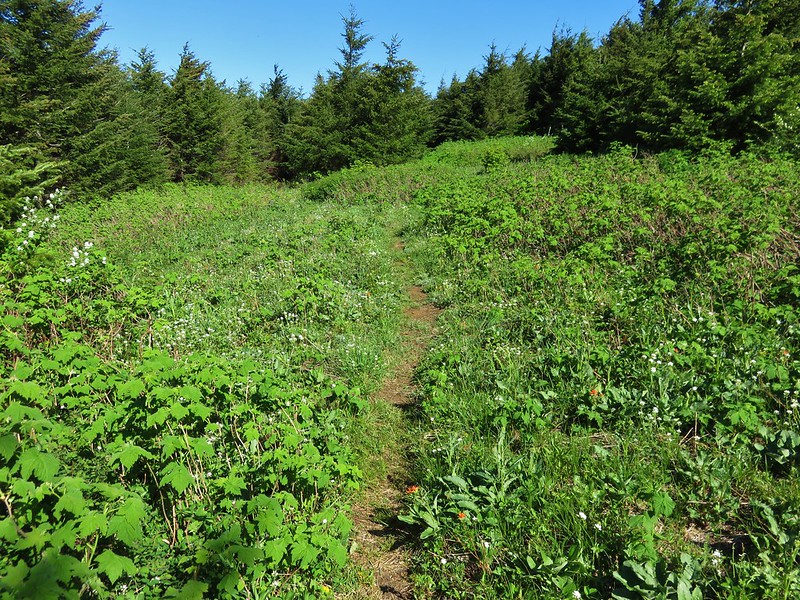
The trail was a grass and flower covered roadbed with some of the best salmonberries ever along the sides.
IMG_6698

IMG_6697

IMG_6699

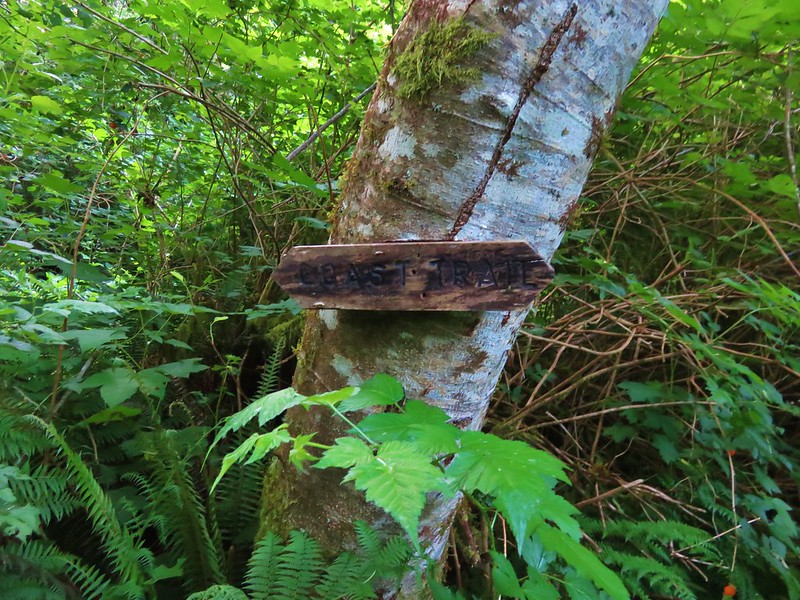
This section of the Oregon Coast Trail was well signed (we would discover later in the week this wasn’t the case for other sections).
IMG_6702

This side path led 1.1 miles to a beach that we would visit on our way back.
IMG_6703

IMG_6704

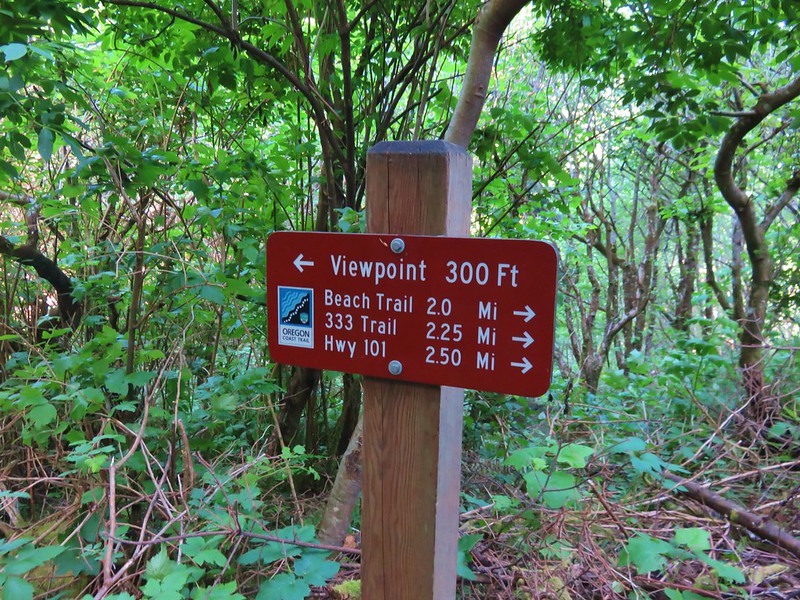
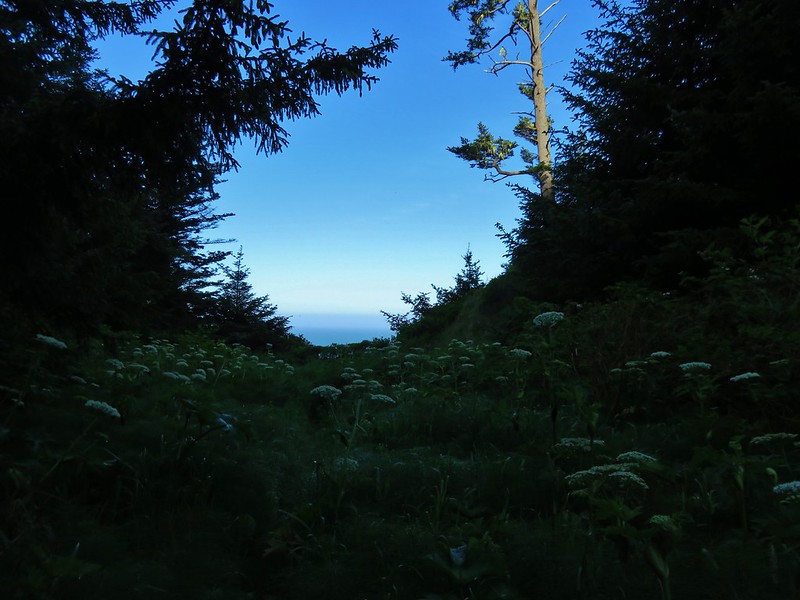
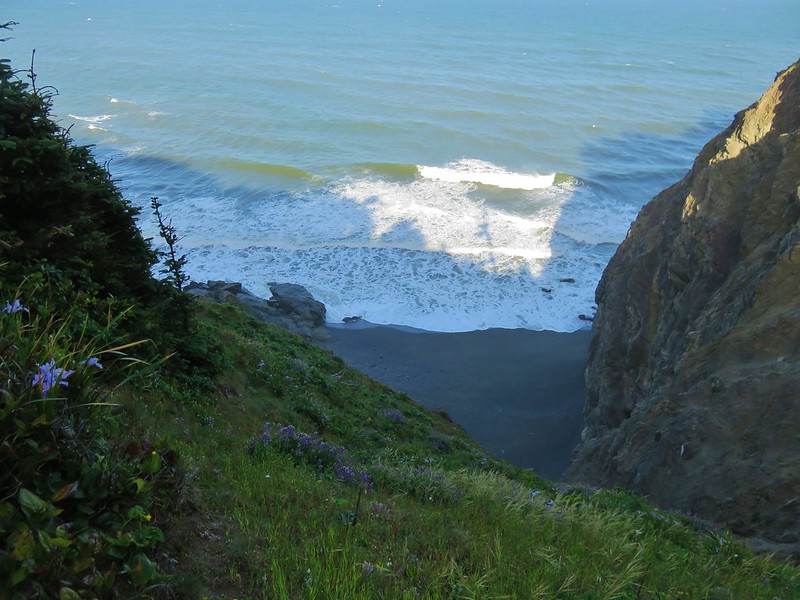
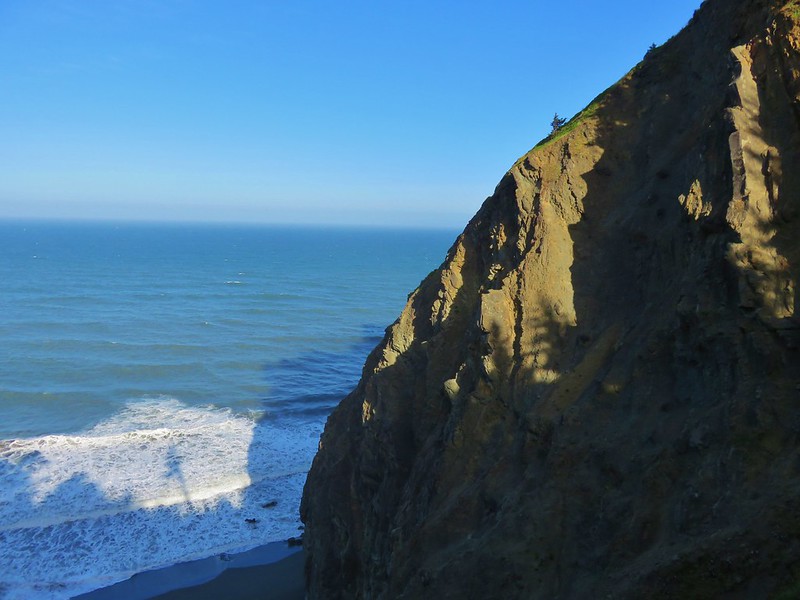
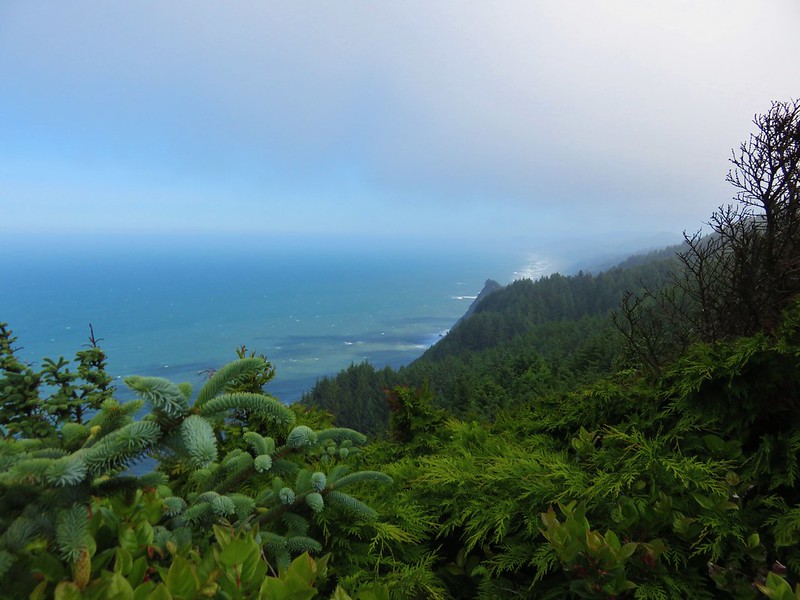
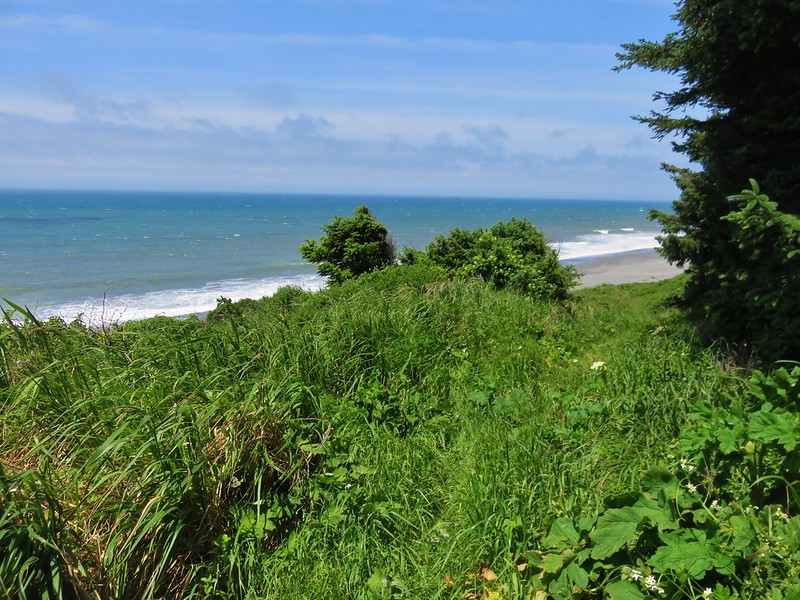
At the 2.3 mile mark a sign directed us to our first viewpoint.
IMG_6716

IMG_6718

IMG_6724

IMG_6726

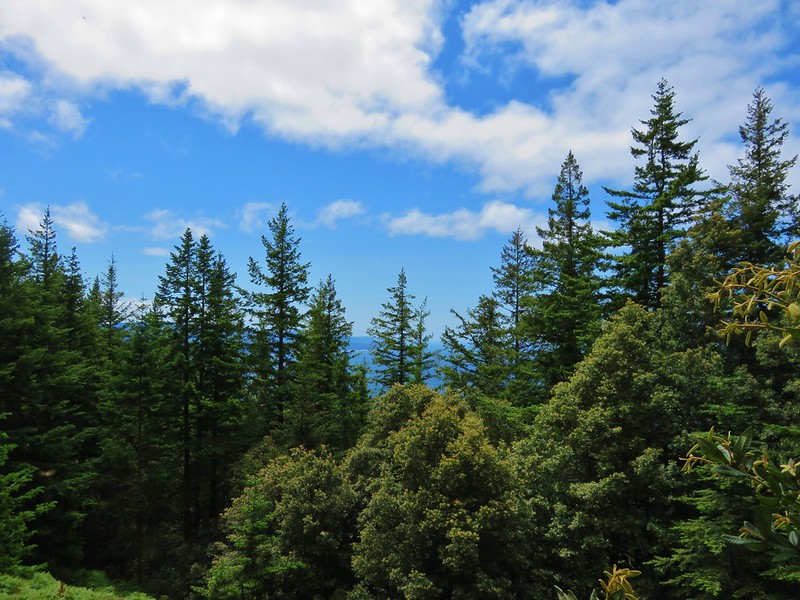
Beyond the viewpoint the Oregon Coast Trail climbed for .8 miles through the trees to a parking lot in Cape Sebastian State Park.
IMG_6740

IMG_6741

IMG_6751

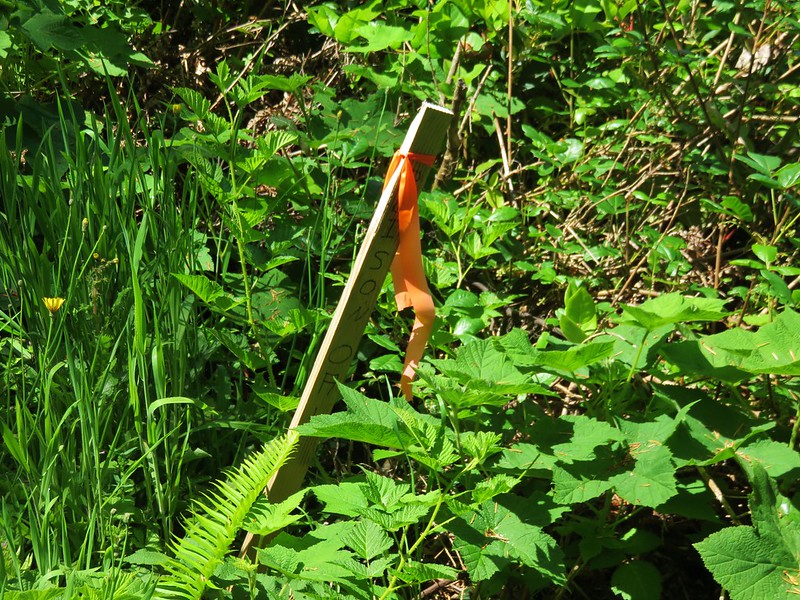
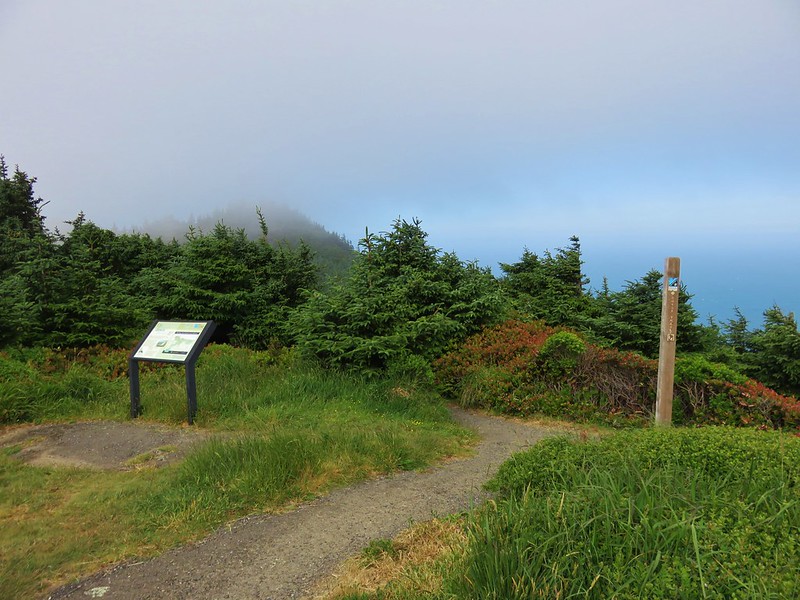
A 0.4 mile trail connected this parking lot with an upper parking lot with a better view, although we arrived just as a cloud was passing over. There was a small patch of poison oak marked with a stake along this stretch.
IMG_6869

IMG_6760

IMG_6761

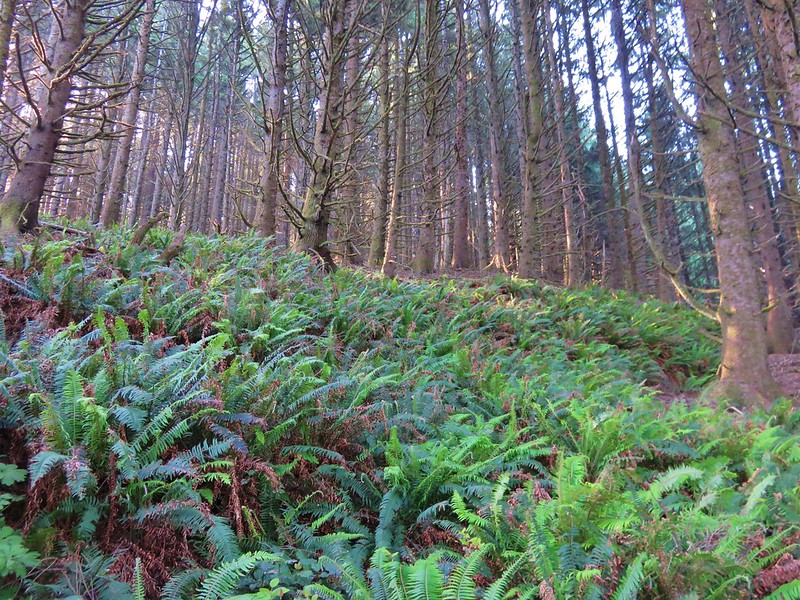
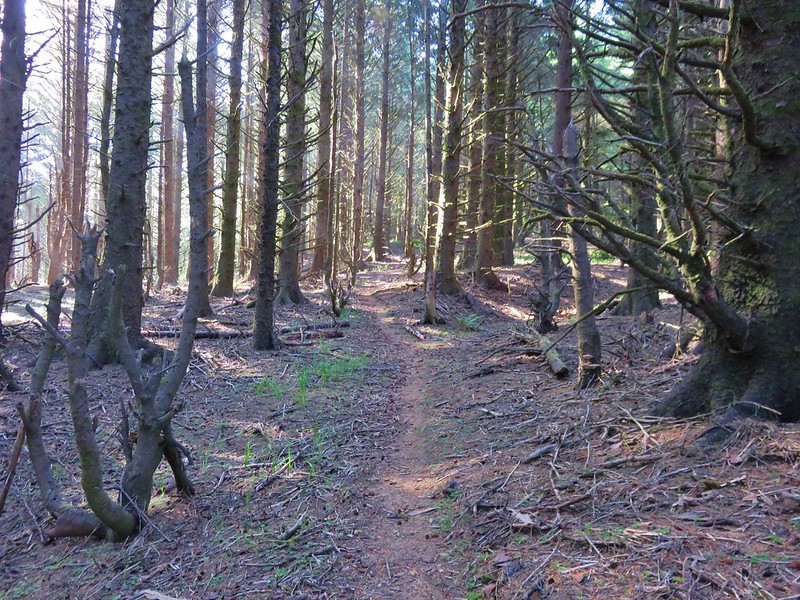
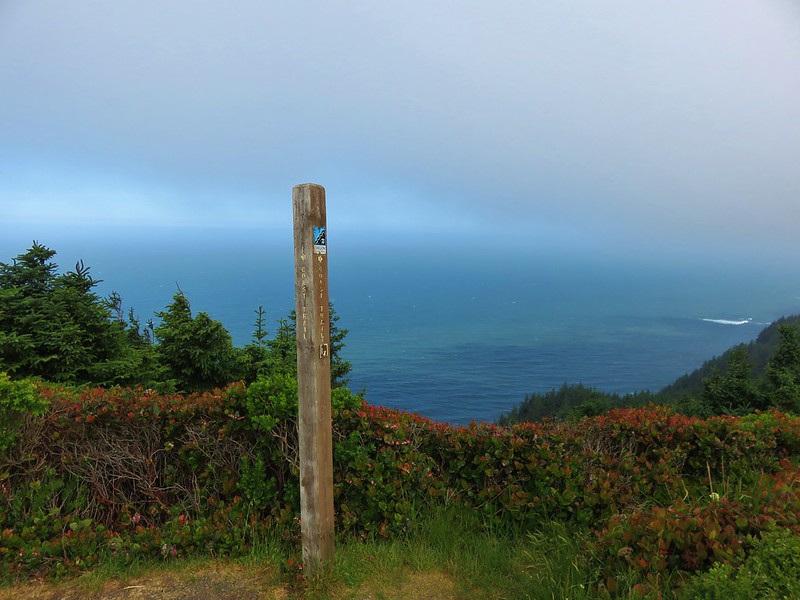
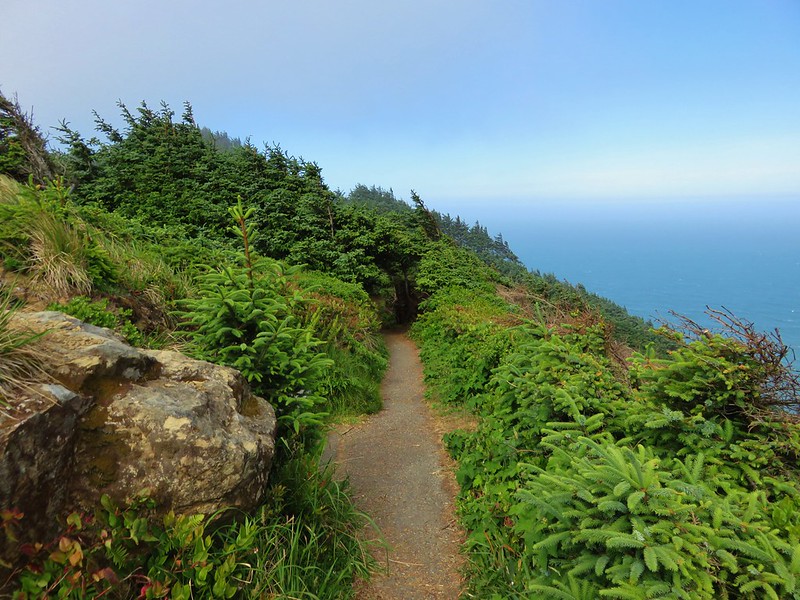
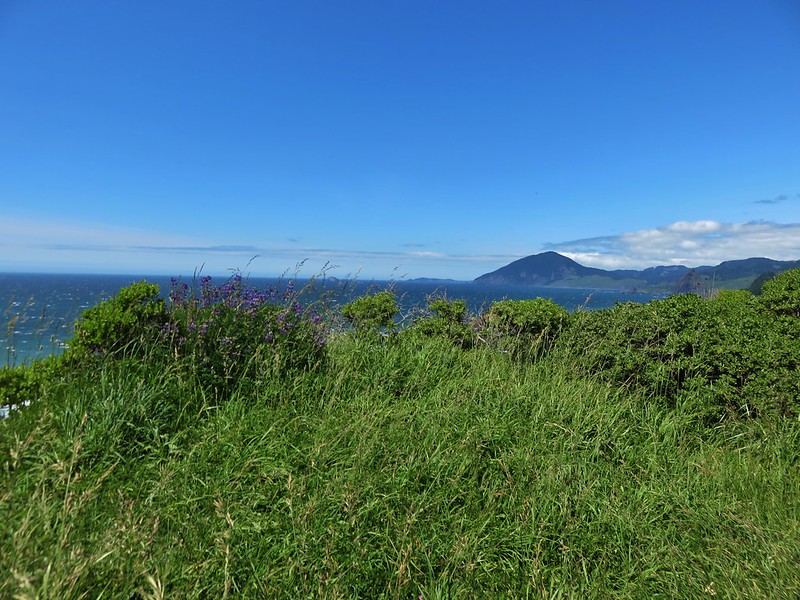
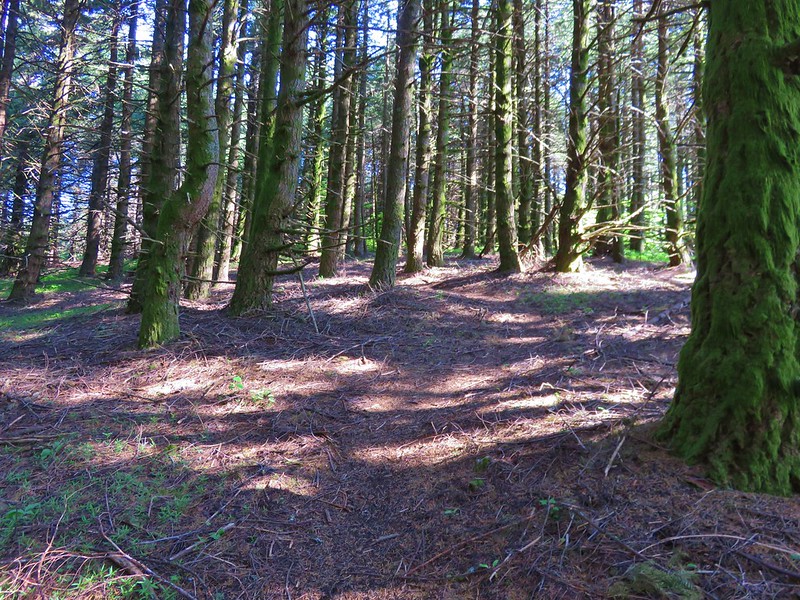
From this second viewpoint the trail passed through a windswept meadow then into a forest following an interesting ridge that ran parallel to the Pacific Ocean.
IMG_6756

IMG_6763

There was a viewpoint along they way with lichen covered rocks.
IMG_6774

After .6 miles the trail began to descend through more open woods where a good number of flowers were blooming. Along with the flowers came a fair amount of poison oak.
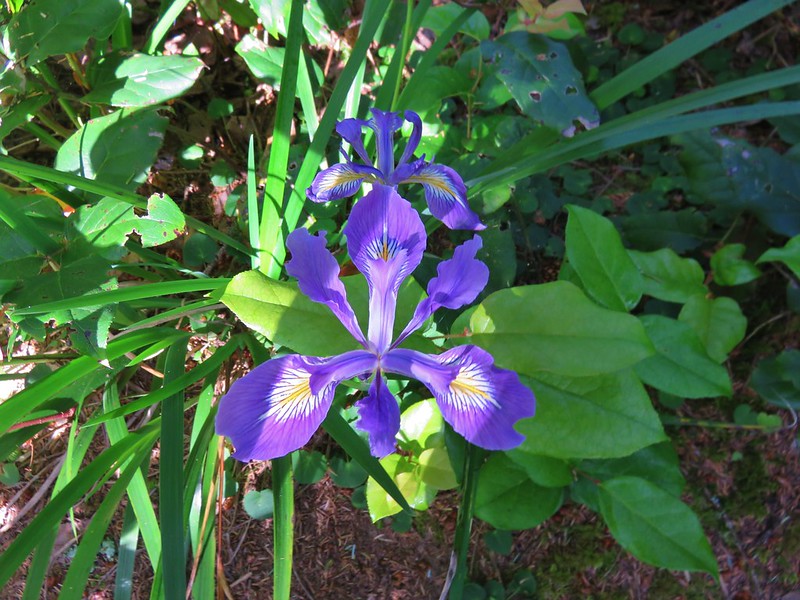
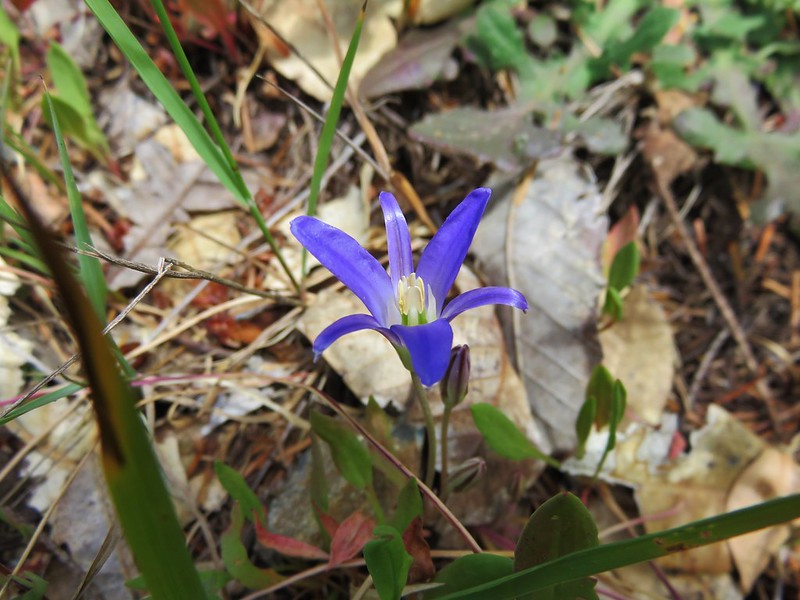
Wild iris
IMG_6777

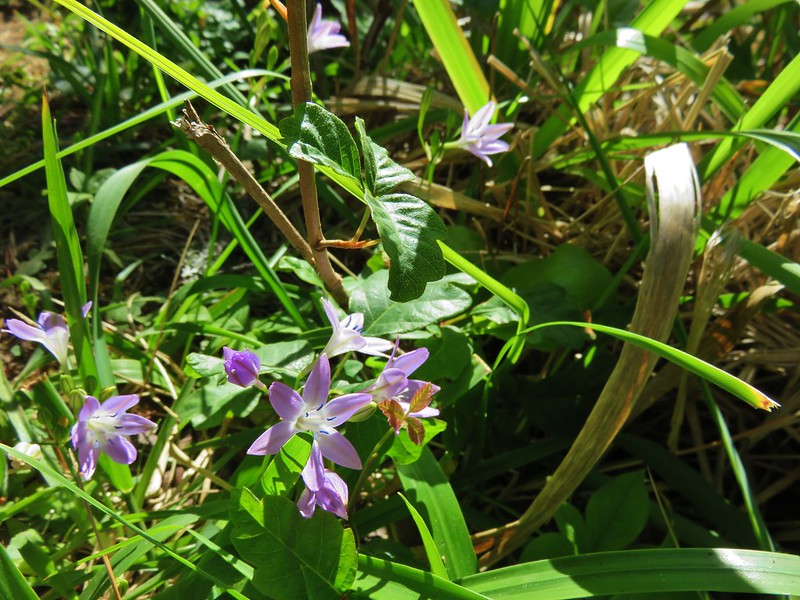
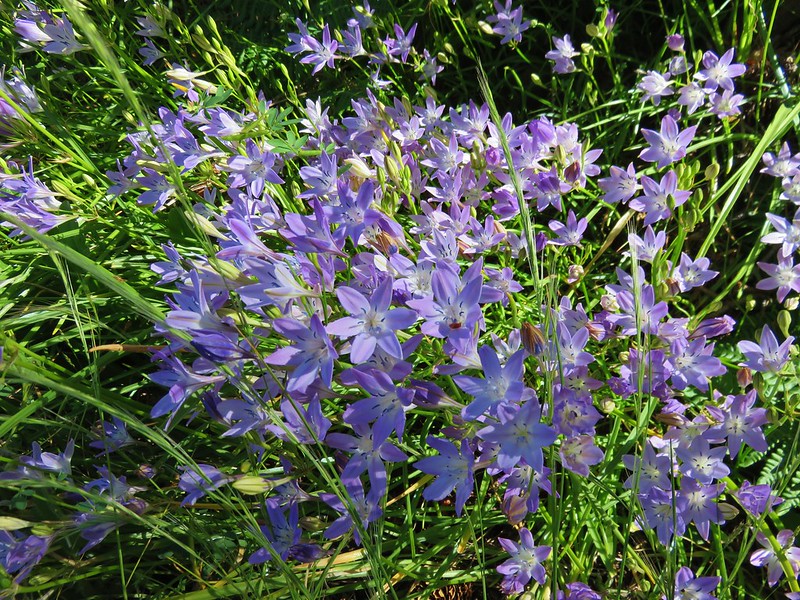
Bridges’ brodiaea and poison oak
IMG_6785

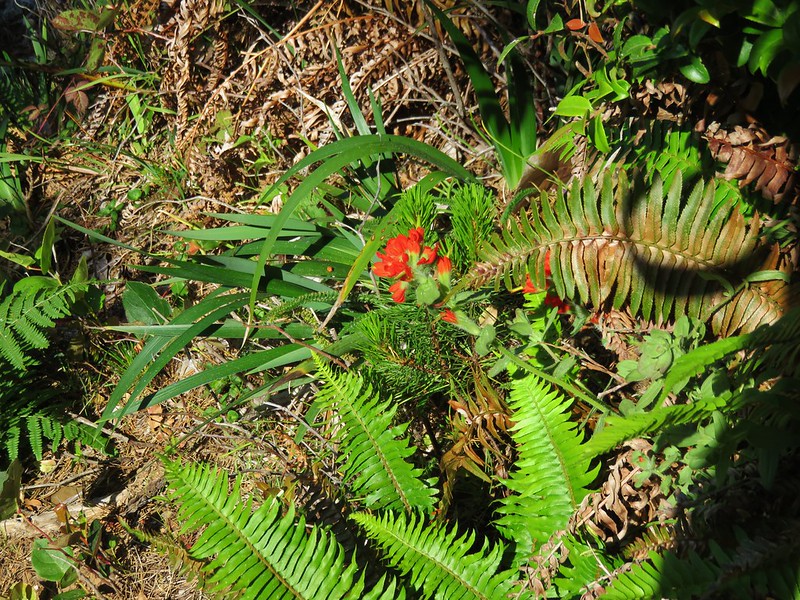
Paintbrush
IMG_6787

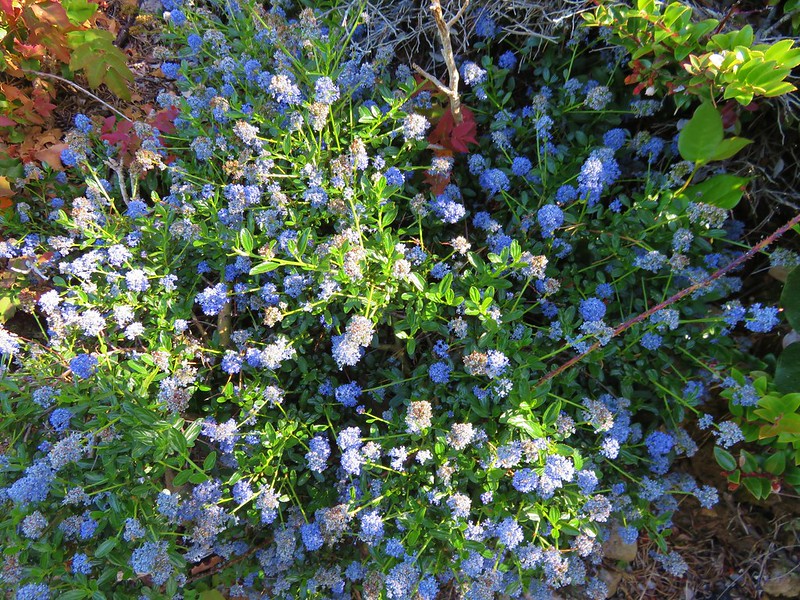
Blueblossom
IMG_6791

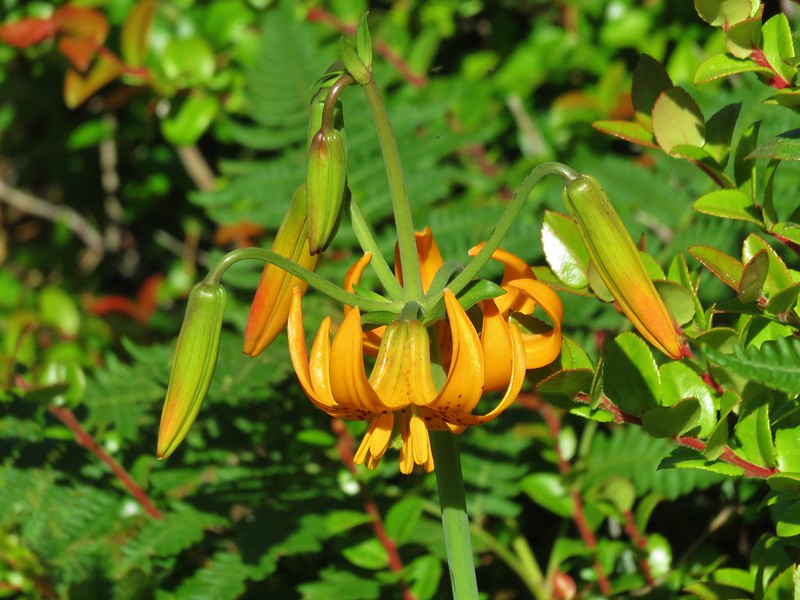
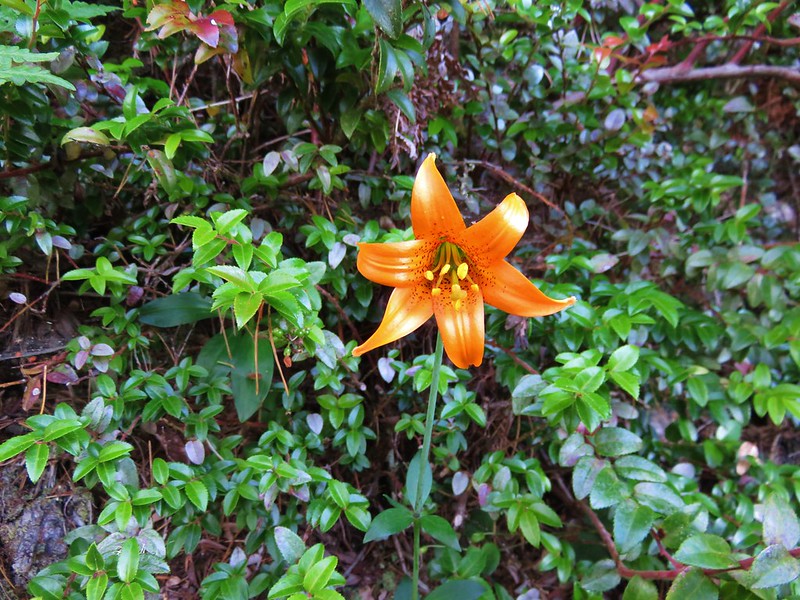
Columbian lily
IMG_6793

Another lily
IMG_6794

More Bridges’ brodiaea
IMG_6808

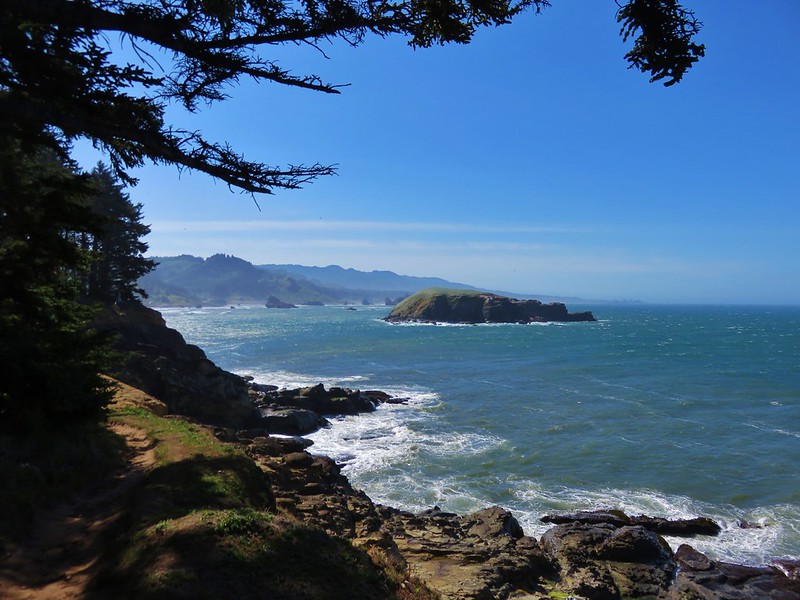
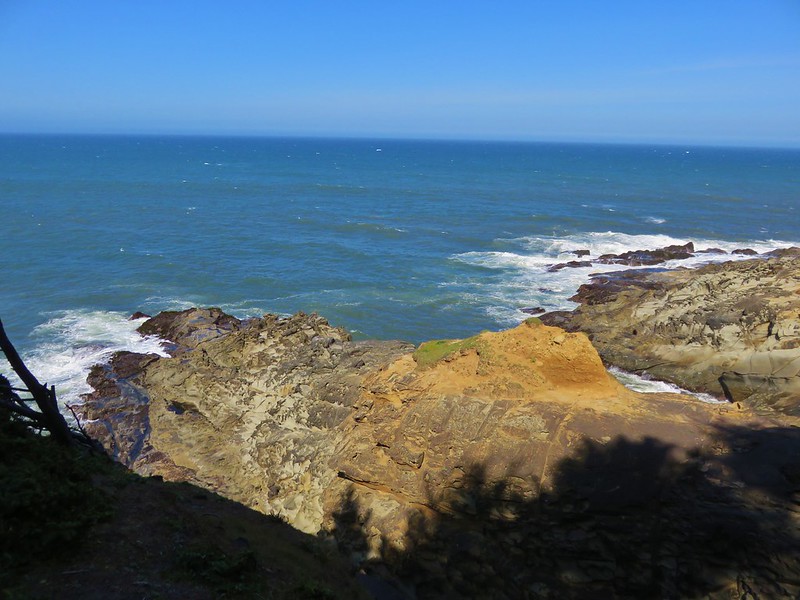
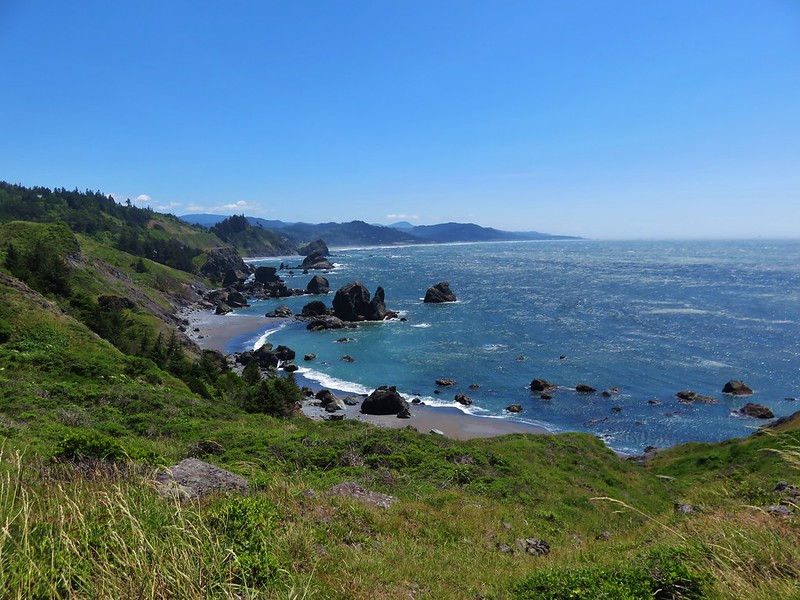
There were also some nice views along this 1.3 mile section of the trail.
IMG_6825

IMG_6815

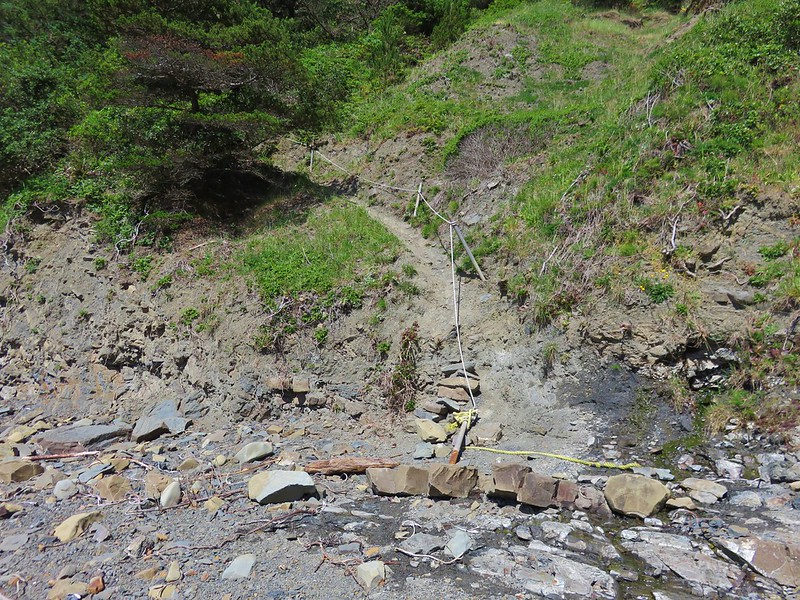
The trail eventually arrived at Hunters Beach but the final drop down to the actual beach was down a steep slope. Much of it had been worn away by the elements and a rope had been set up for assistance. To complicate the descent there was poison oak on both sides of the trail.
IMG_6834

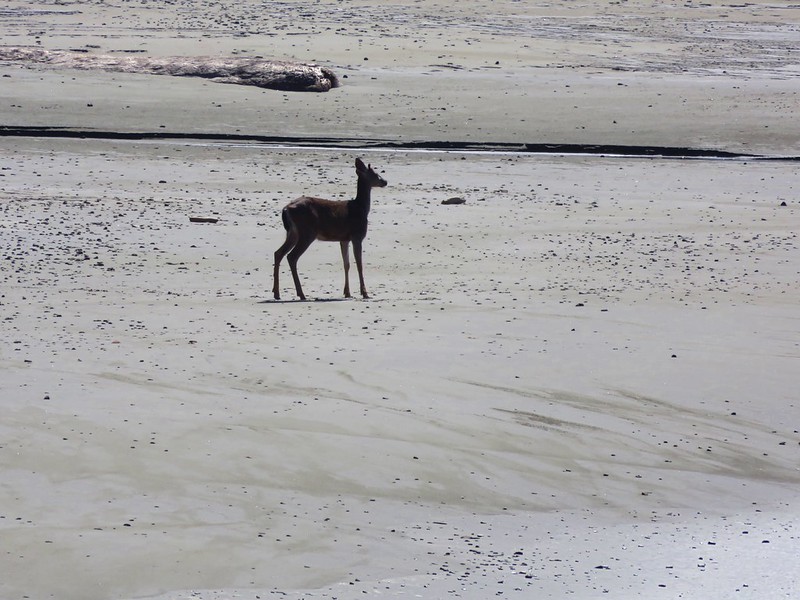
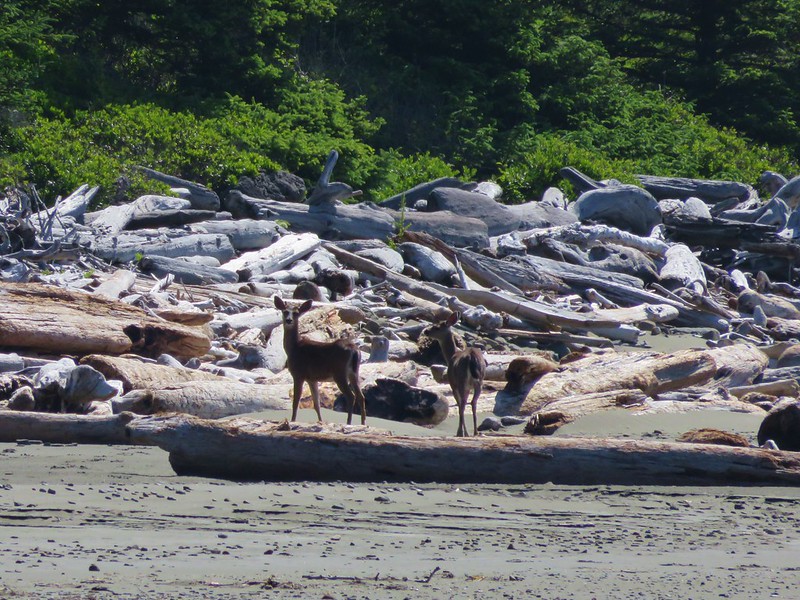
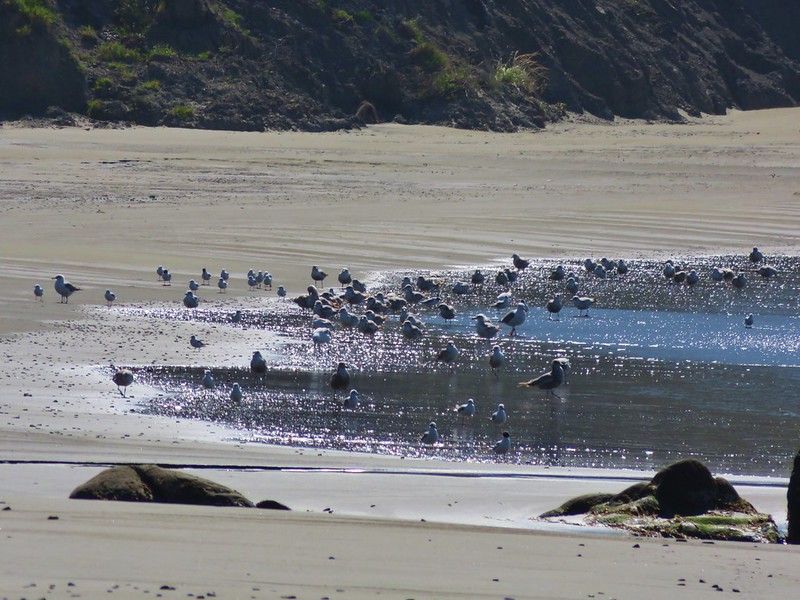
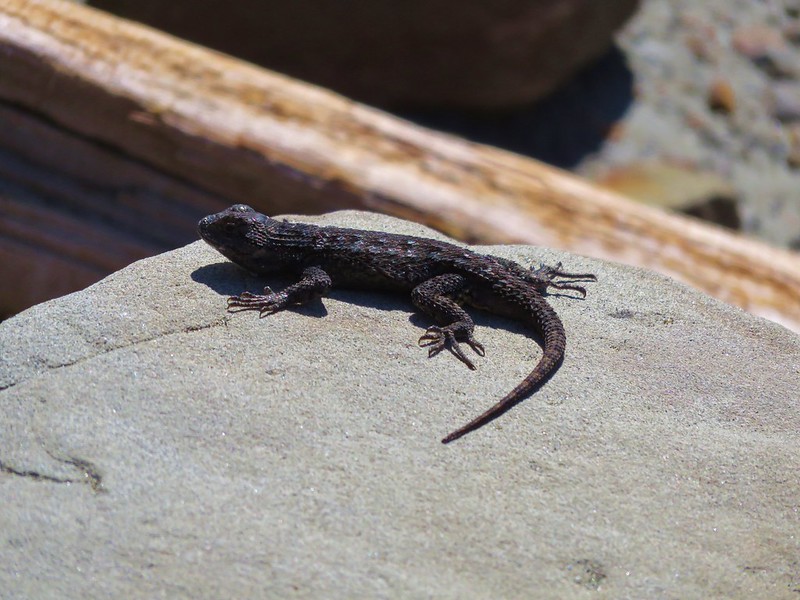
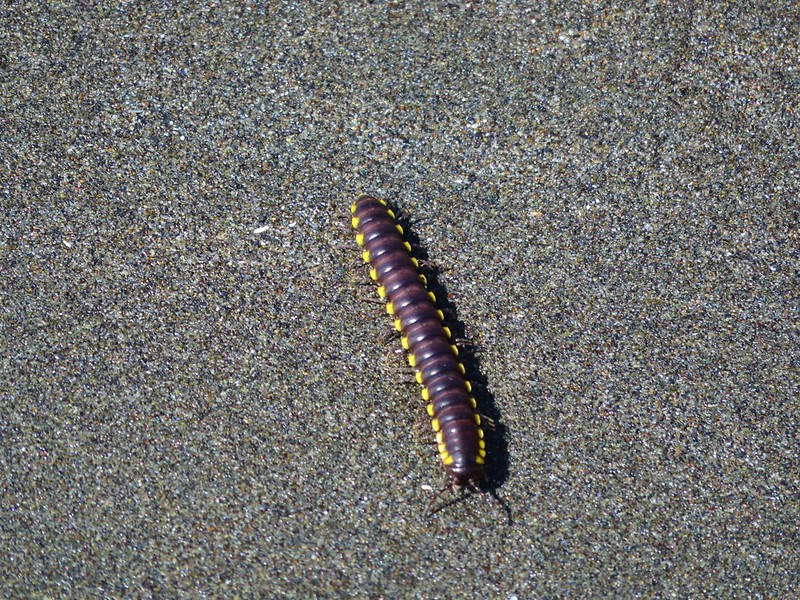
We made it down to the sandy beach where we joined a pair of deer, some birds, lizards, and a millipede.
IMG_6830

IMG_6836

IMG_6845

IMG_6859

IMG_6850

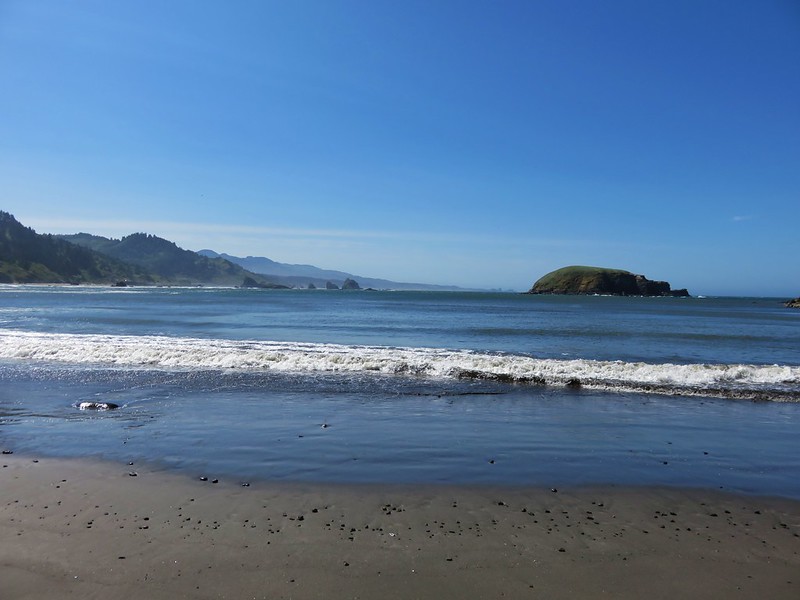
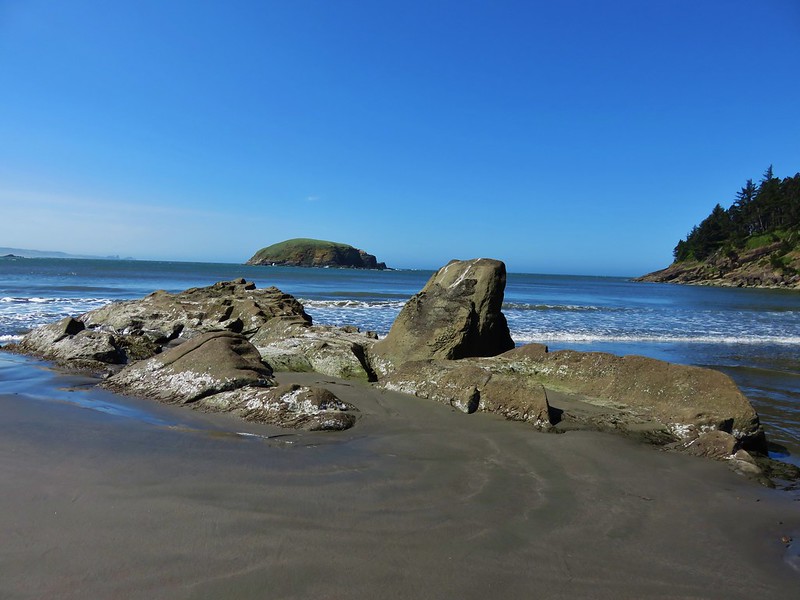
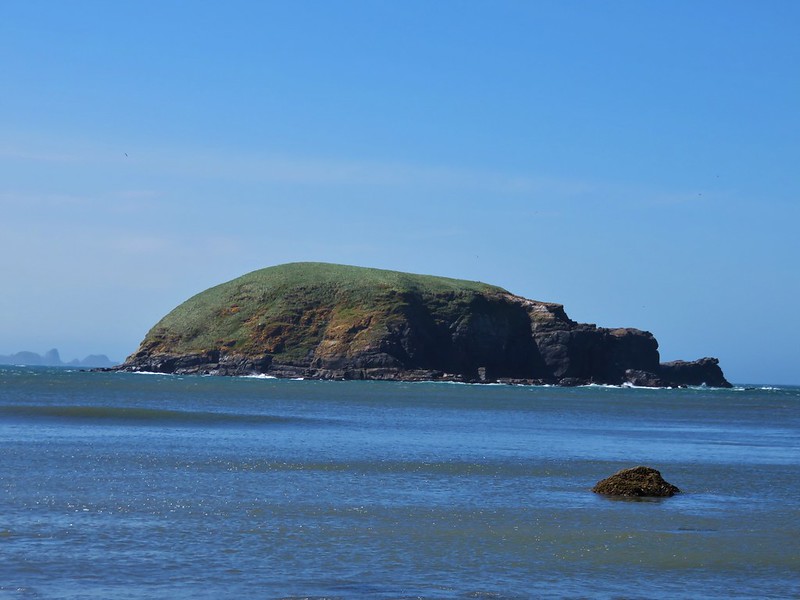
Hunters Island dominated the view from the beach.
IMG_6842

IMG_6847

IMG_6839

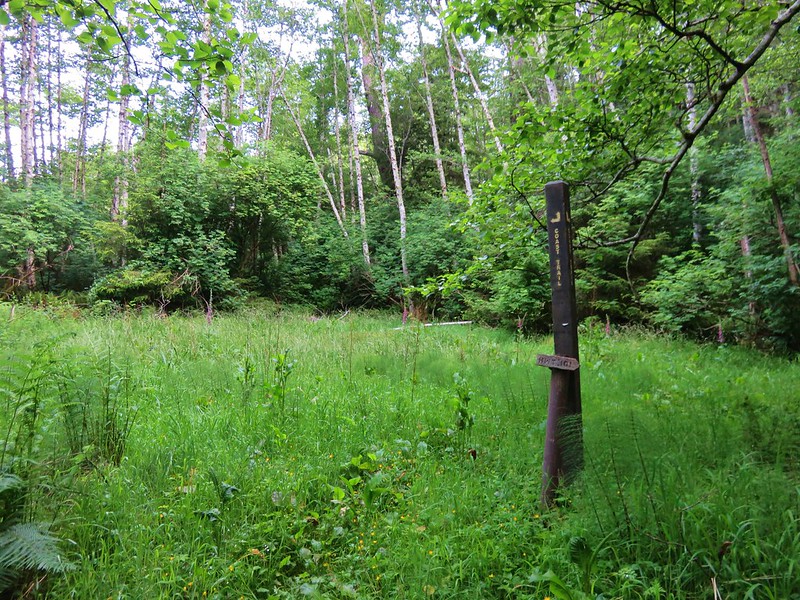
We returned the way we’d come being careful to avoid the poison oak retracting our steps all the way to the 1.1 mile side trail to a beach just a half mile from Bellview Lane. This path was along another old road that led down to an overgrown meadow.
IMG_6899

IMG_6876

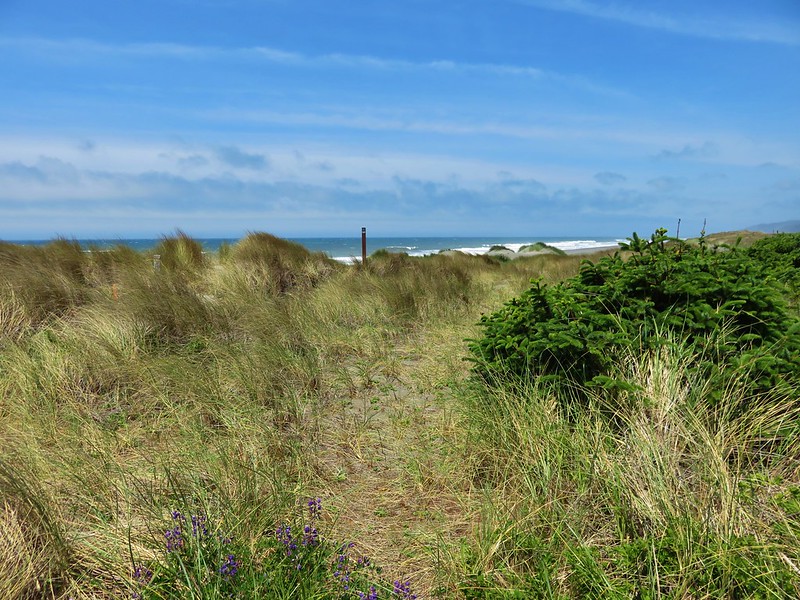
A faint path led through the vegetation to a post on the beach.
IMG_6878

IMG_6880

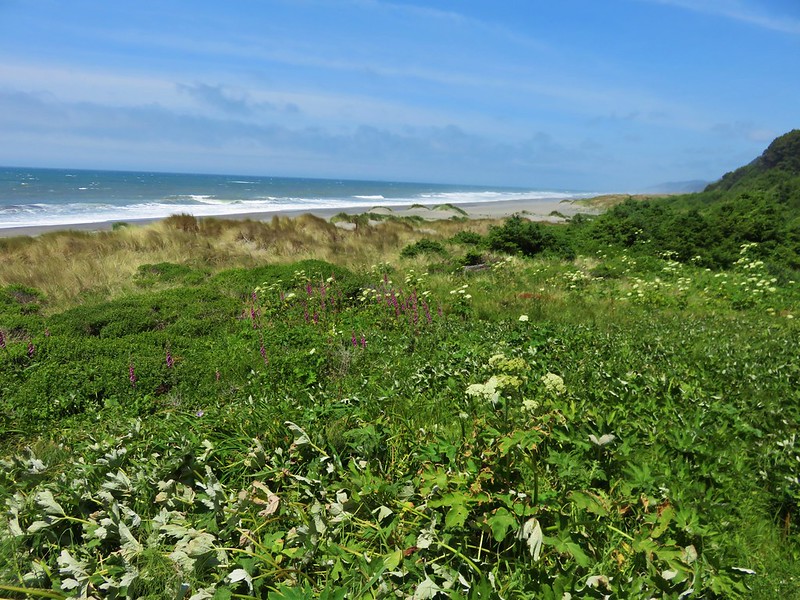
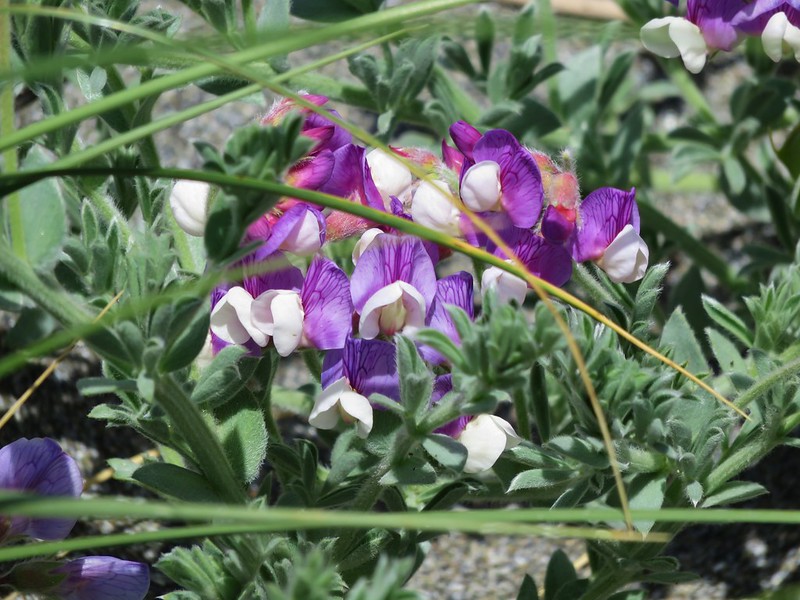
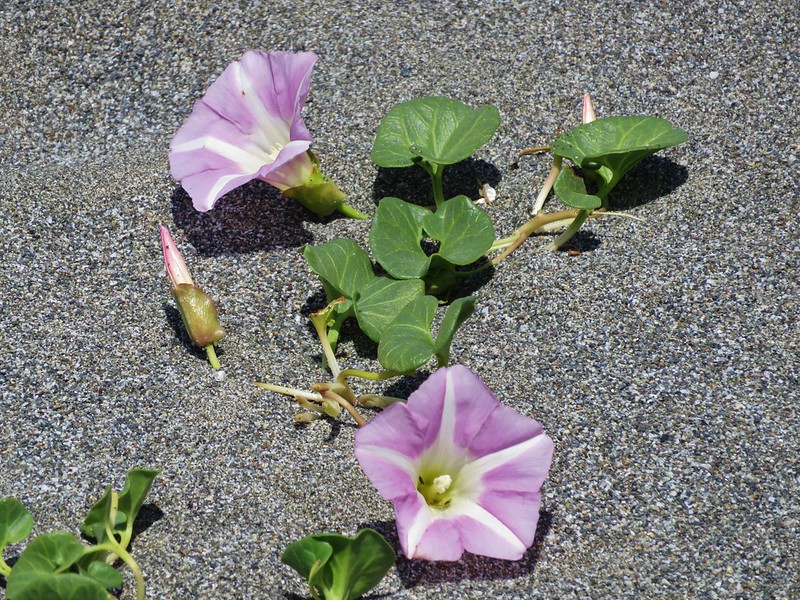
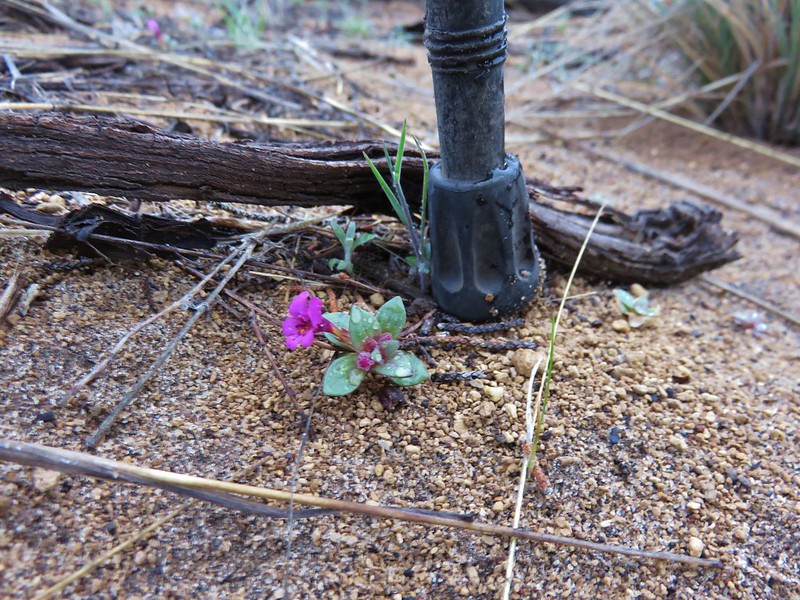
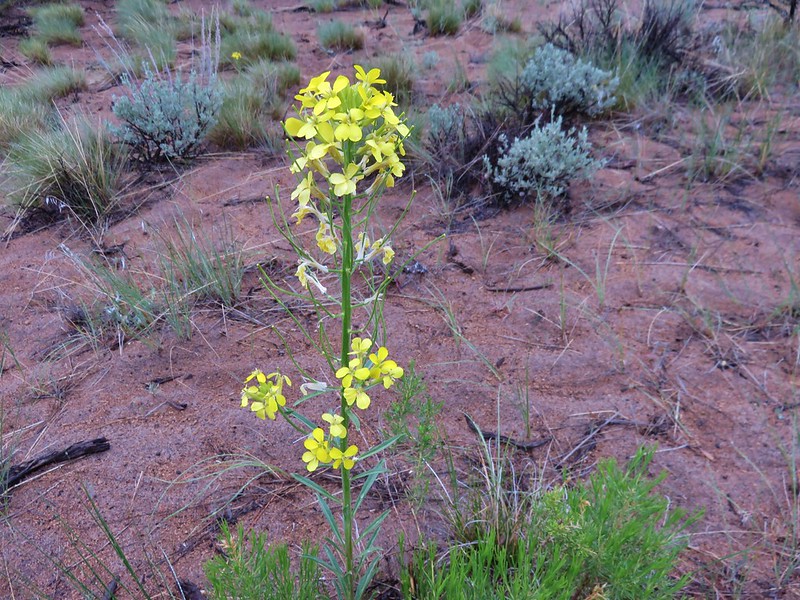
On this beach we found several new types of flowers.
yellow sand-verbena
IMG_6883

silky beach pea
silky beach pea

beach morning-glory
IMG_6891

It was pretty windy and there wasn’t much cover to be found so after a brief stay we headed back up to Bellview Lane and our car. We picked this as our evening to find a local restaurant to try and picked the Barnacle Bistro in Gold Beach. The food was great and we each enjoyed a beer from Arch Rock Brewing Company.Β  I had the Pistol River Pale while Heather tried the State of Jefferson Porter. It was a great cap to the day. Happy Trails!

Flickr: https://www.flickr.com/photos/9319235@N02/sets/72157666235841743

Categories
Hiking Klamath/Siskiyou Mountains Oregon Trip report

Kalmiopsis Wilderness and Redwoods Nature Trail

Tuesday of our vacation week brought us our longest drive from Gold Beach to the Kalmiopsis Wilderness. We had a pair of hikes planned there followed by a quick stop on the way back at Alfred Loeb State Park to see some redwoods.

Our first stop was the Vulcan Peak Trailhead. To reach this trailhead we drove to Brookings and took North Bank Road along the Chetco River for 16 miles to a T shaped junction with gravel Forest Service Road 1909. We turned right following signs for the wilderness and began a tedious 13.3 mile drive. This wasn’t the worst road we’ve been on but it was arguably the longest stretch of bad road we’ve encountered. It took over 45 minutes to reach the trailhead on a short spur road with an outhouse.

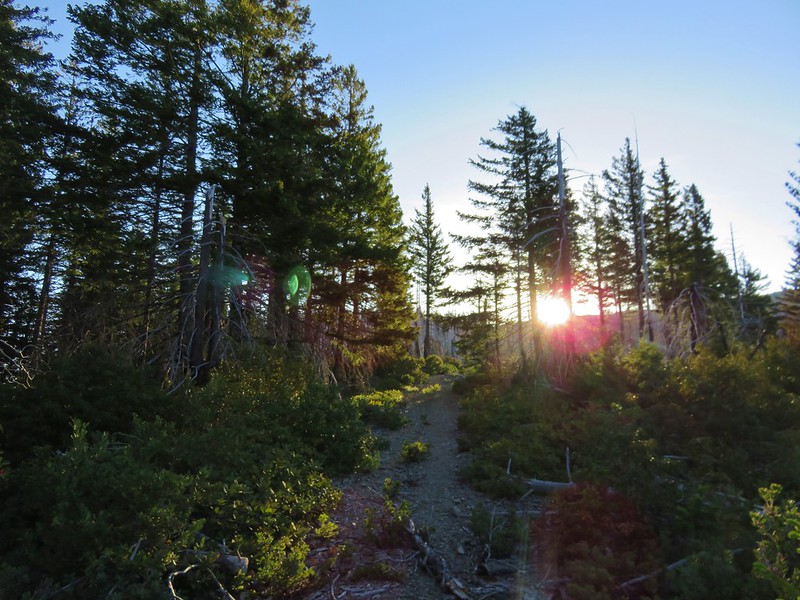
For the first mile we were actually on the Chetco Divide Trail as it followed an old roadbed along a ridge surrounded by forest burnt in the massive 2002 Biscuit Fire.
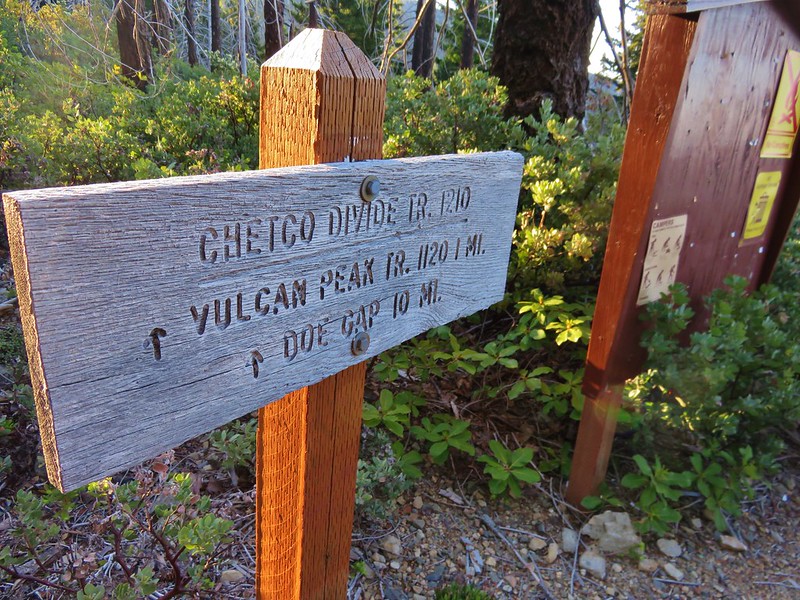
IMG_6214

IMG_6217

IMG_6222

IMG_6225

At the 1 mile mark the Vulcan Peak Trail split off heading uphill while the Chetco Divide Trail veered to the right.
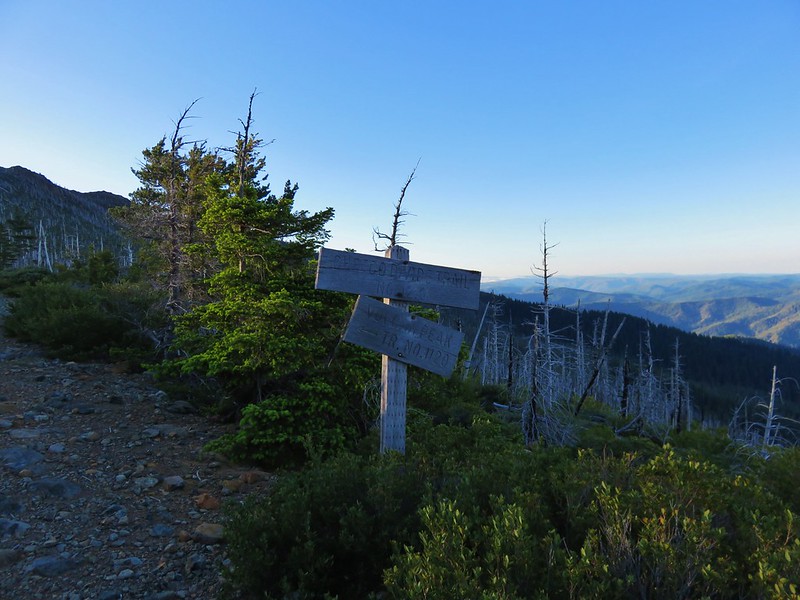
IMG_6226

Shortly after leaving the Chetco Divide Trail we entered the Kalmiopsis Wilderness.
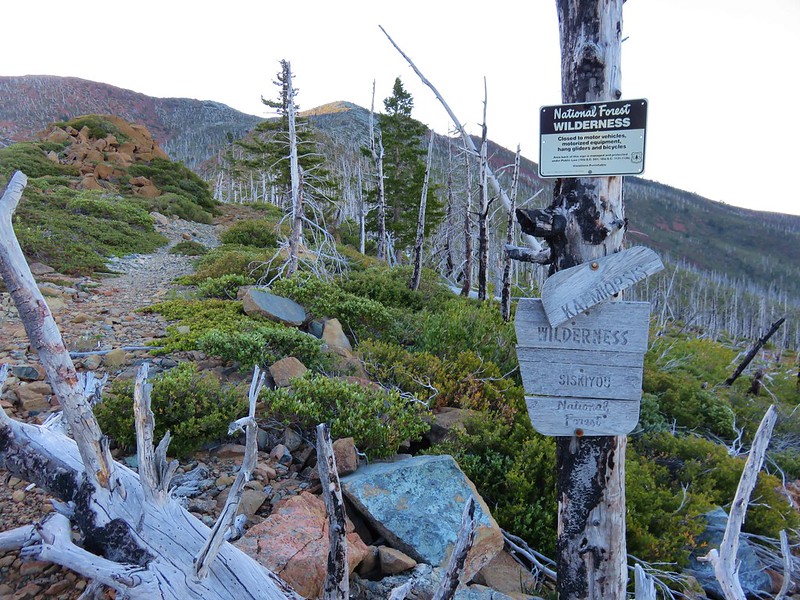
IMG_6238

It was pretty windy along the exposed ridge but it was shaping up to be a beautiful day.
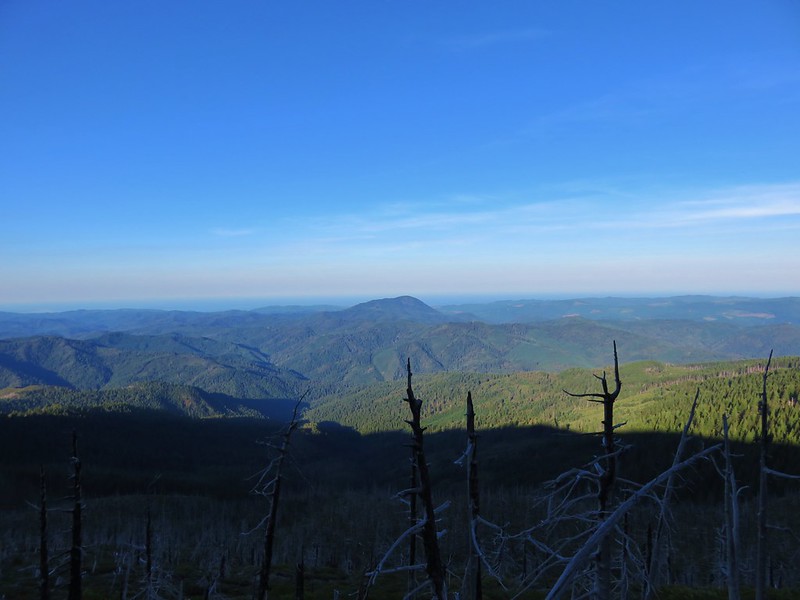
IMG_6254

The area reminded us of our trip to the Red Buttes Wilderness last October only here it was Spring and there were plenty of wildflowers.
Death Camas
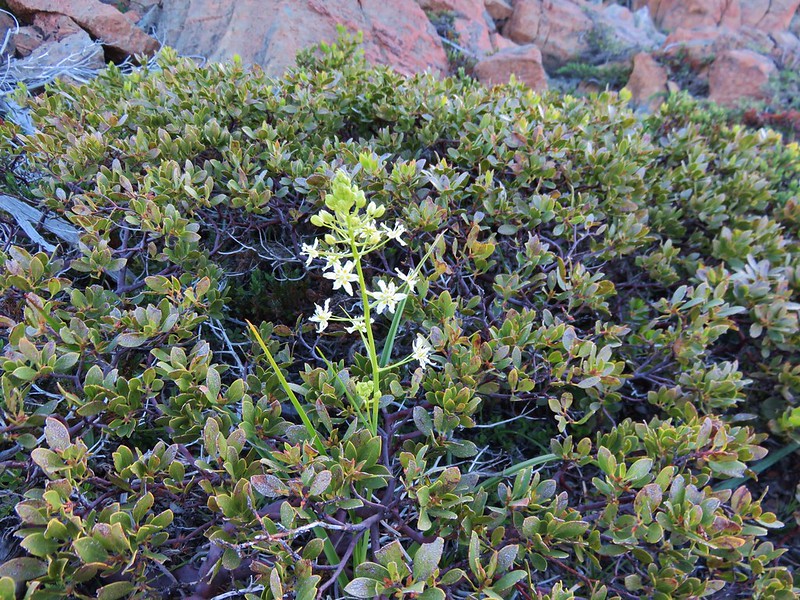
IMG_6242

Tolmie’s mariposa lily
IMG_6244

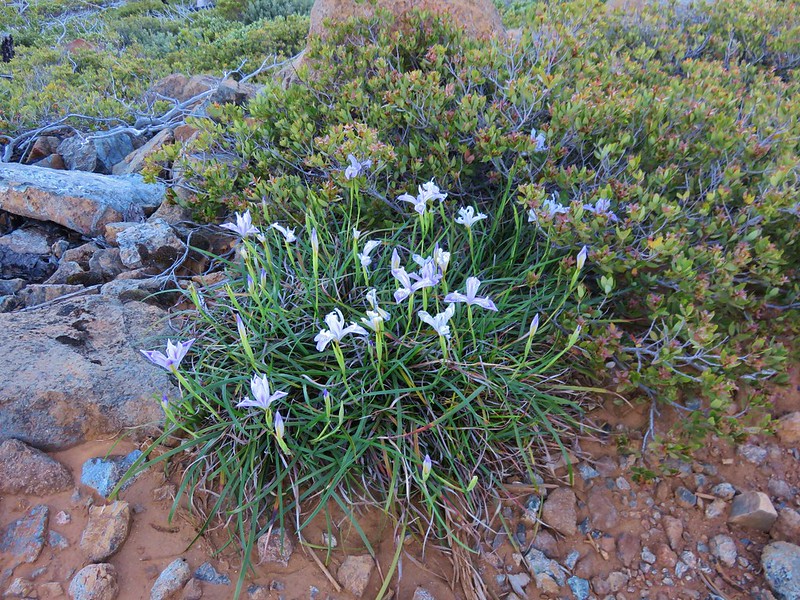
Wild iris
IMG_6250

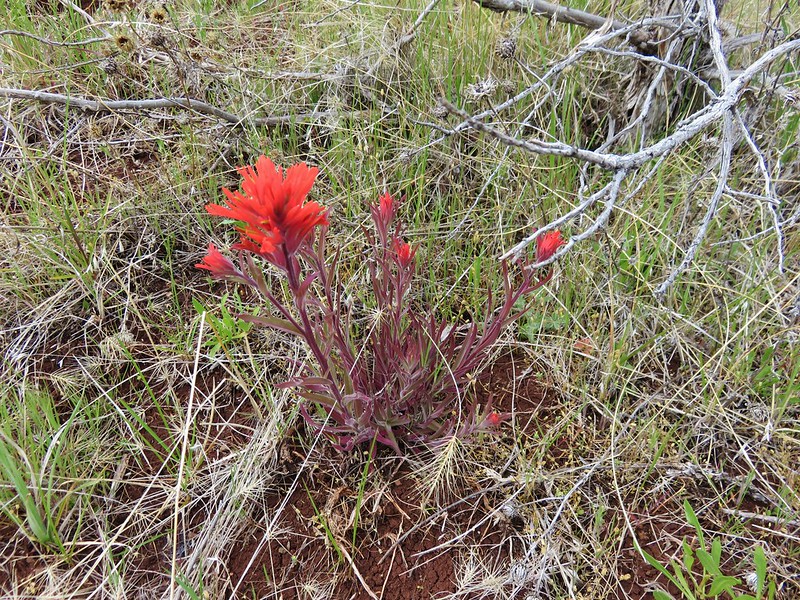
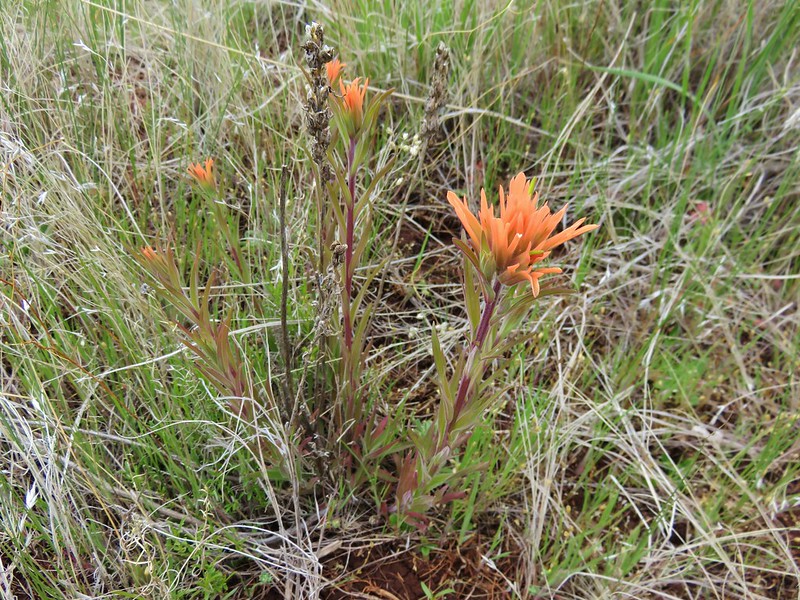
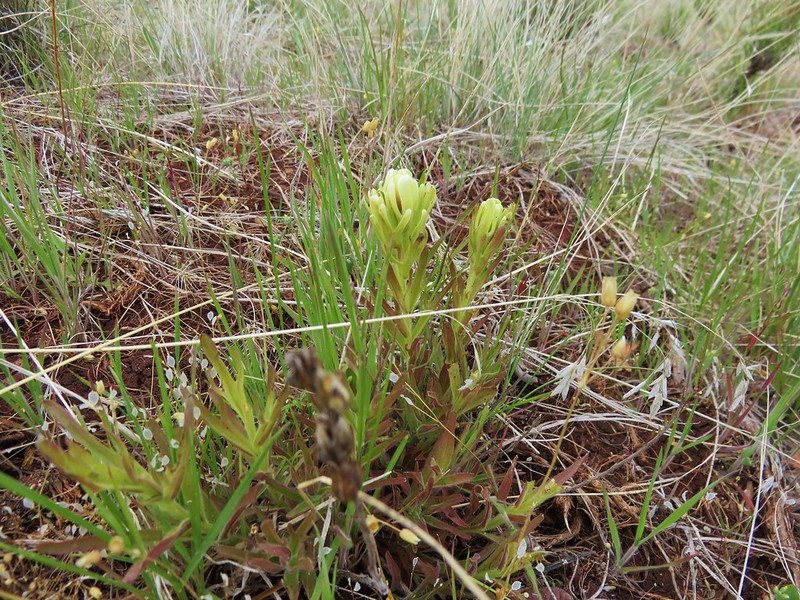
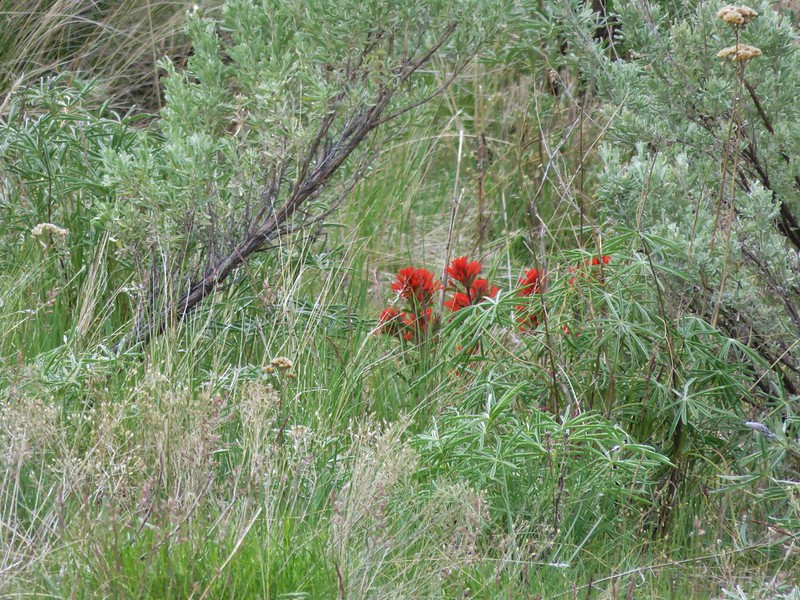
A paintbrush
IMG_6258

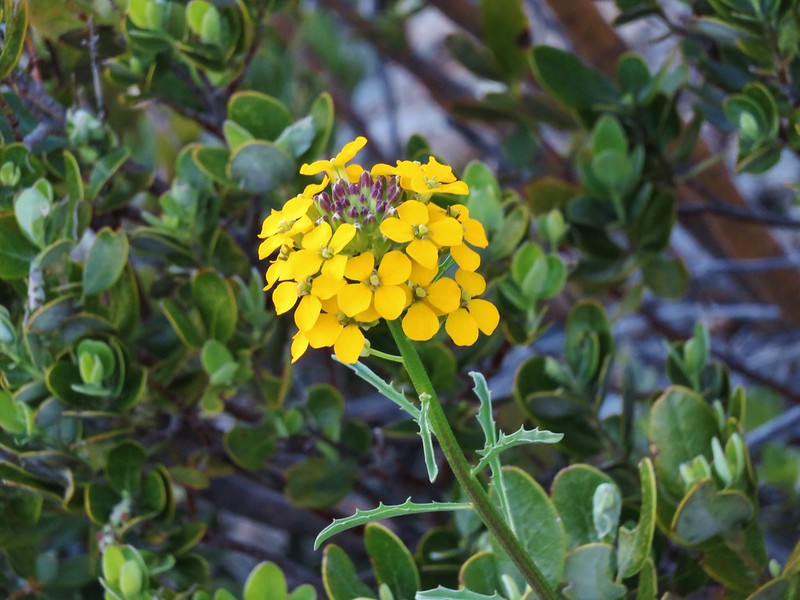
Wallflower
IMG_6265

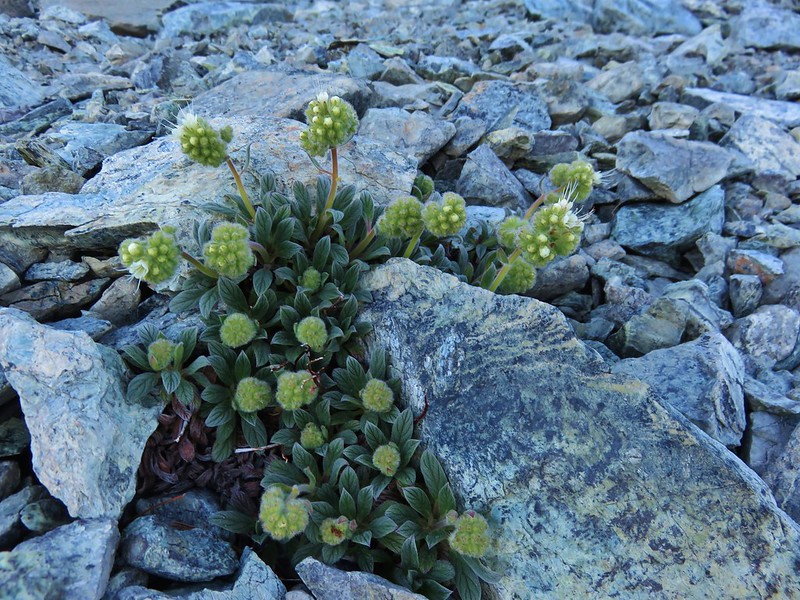
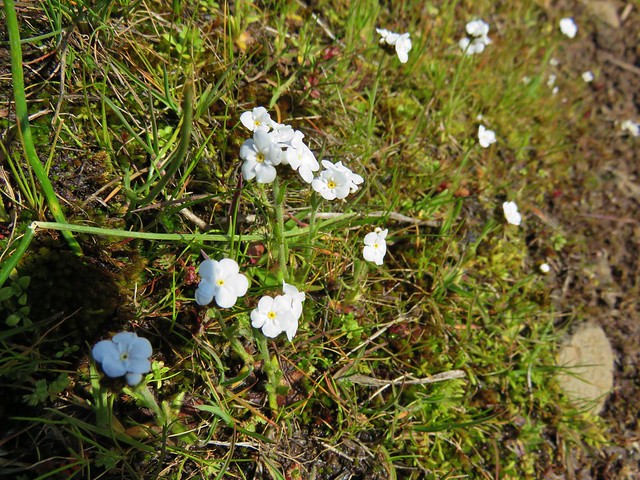
Sand Dune Phacelia
IMG_6267

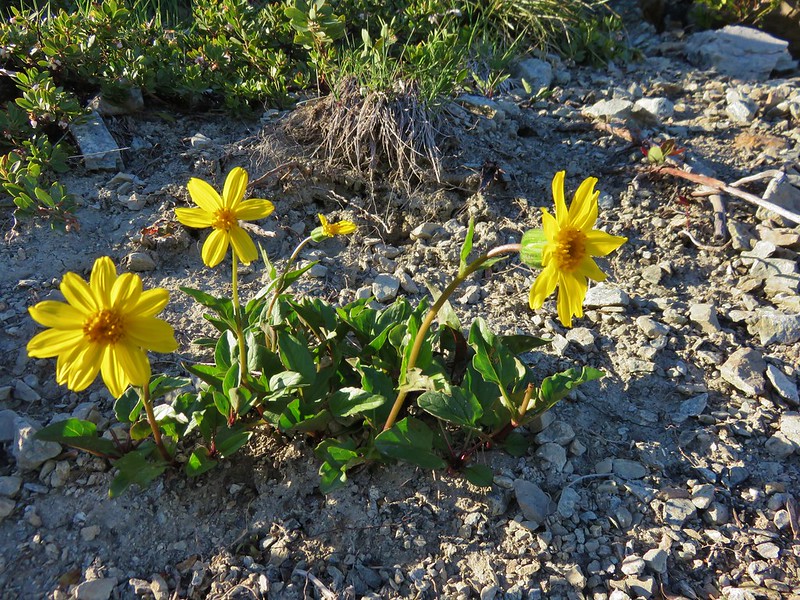
Arnica
IMG_6278

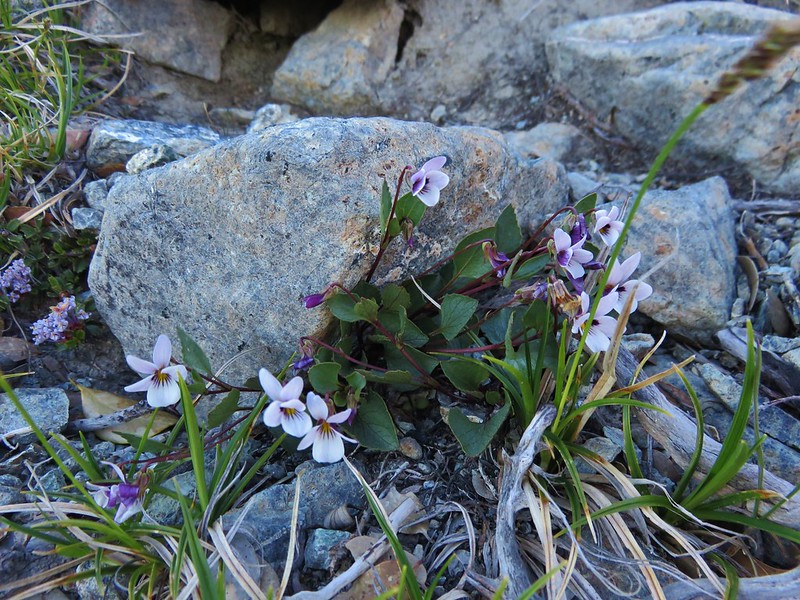
Wedgeleaf violet
IMG_6288

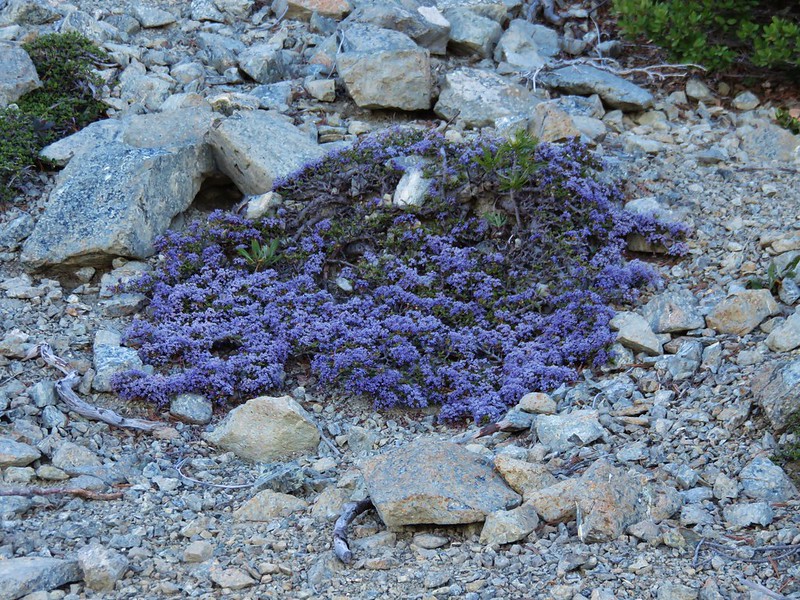
Dwarf ceanothus
IMG_6295

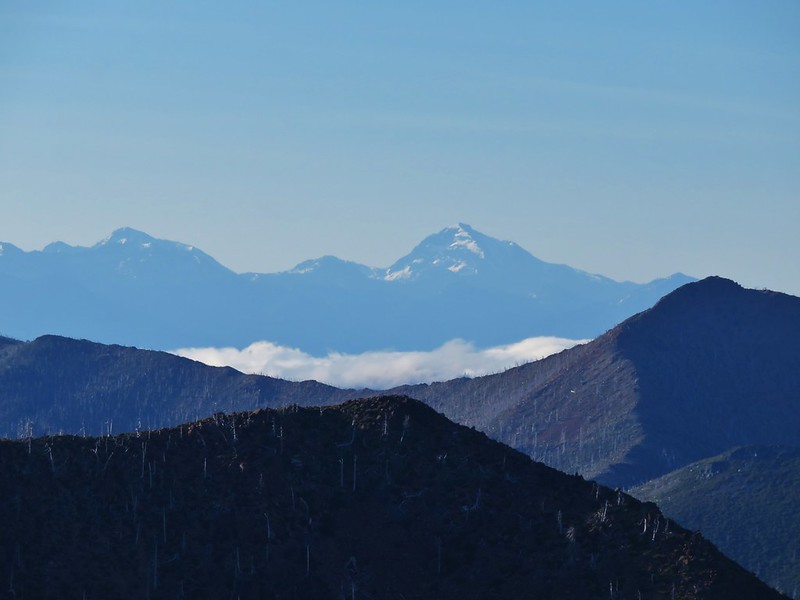
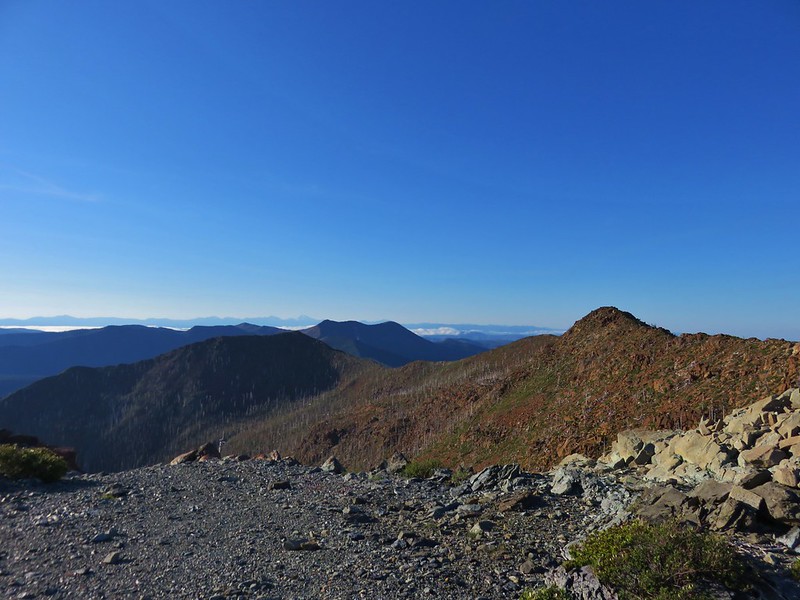
The trail wound its way up the hillsides before reaching a saddle with a nice view south to Preston Peak and the Siskiyou Mountains.
IMG_6281

IMG_6285

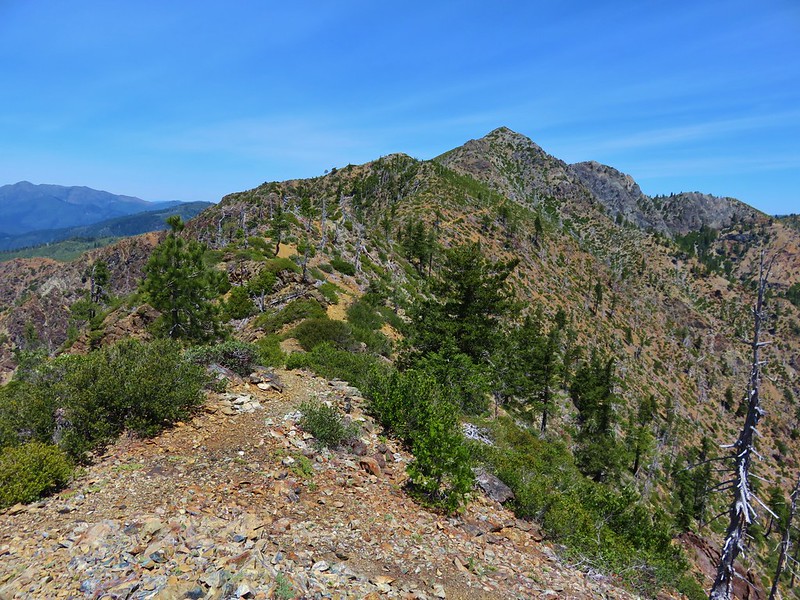
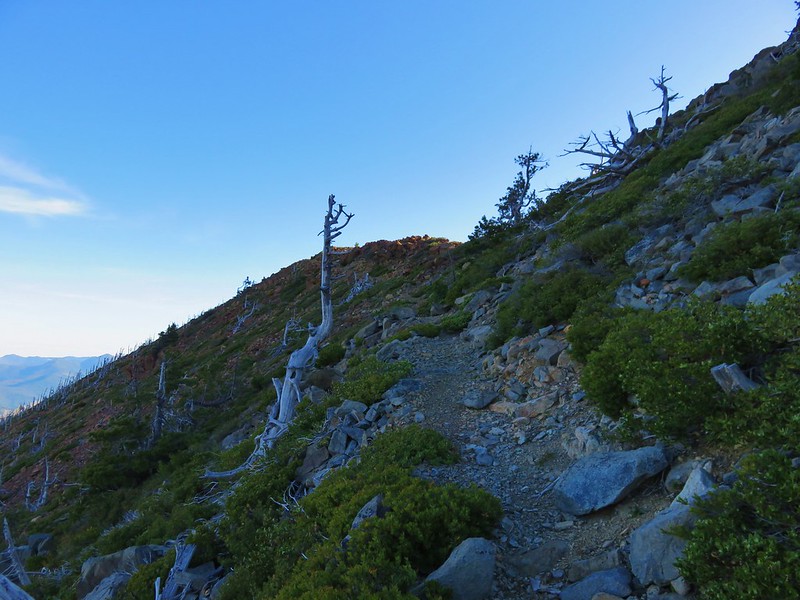
The trail then headed north to the summit of Vulcan Peak.
IMG_6298

IMG_6299

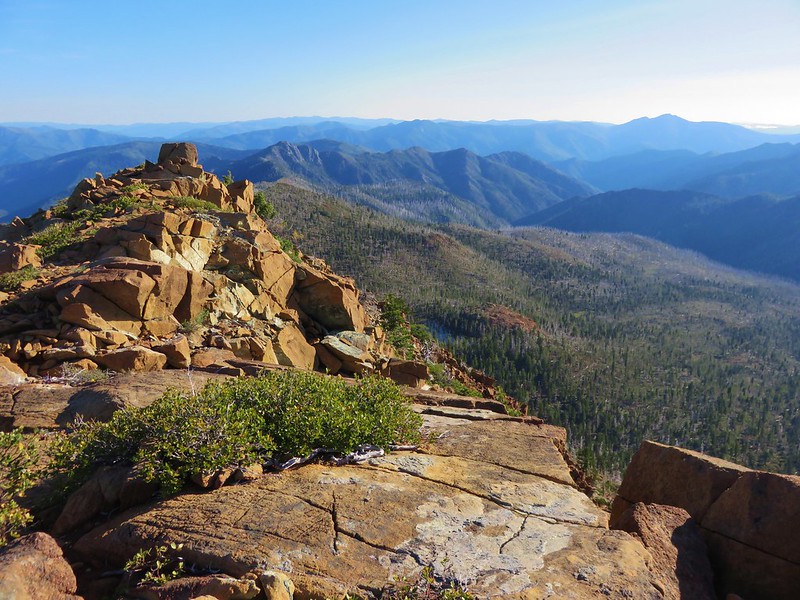
We followed the summit ridge north to a view of Little Vulcan Lake (one of our destinations on our next hike).
IMG_6306

IMG_6310

We declared victory there although the ridge continued on and would have eventually provided a view down to Vulcan Lake as well.

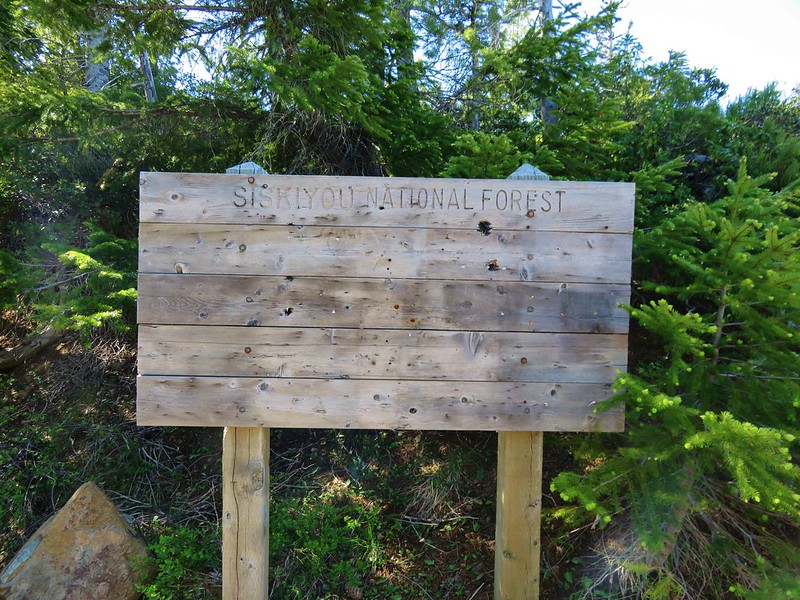
Our next trailhead was another 1.7 miles along road 1909. The final mile of this section made the first 13.3 seem like a nice country road. The trail began at a signboard where the road was blocked by some dirt mounds.
IMG_6329

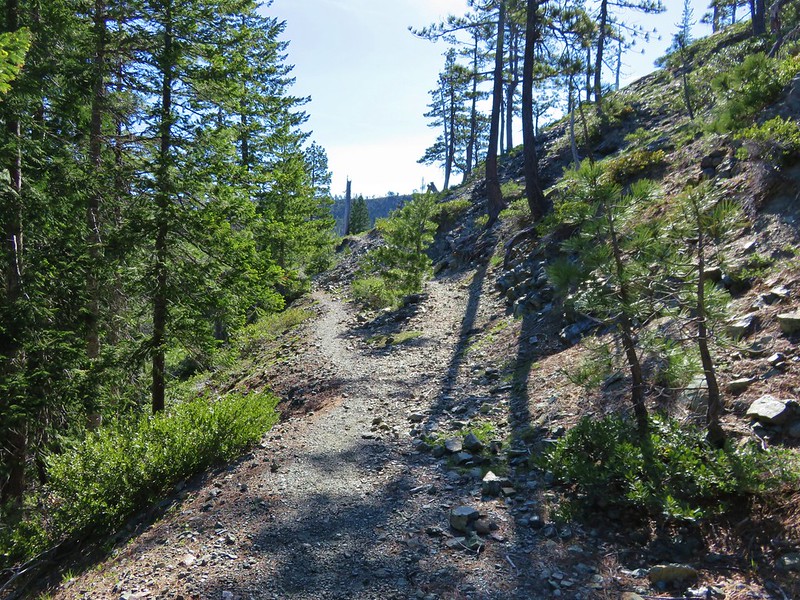
A short distance from the signboard the trail split. We took the right-hand fork uphill toward Vulcan Lake.
IMG_6331

The lakes were on the other side of a ridge so we followed the trail up to a saddle with a view of both lakes and Vulcan Peak.
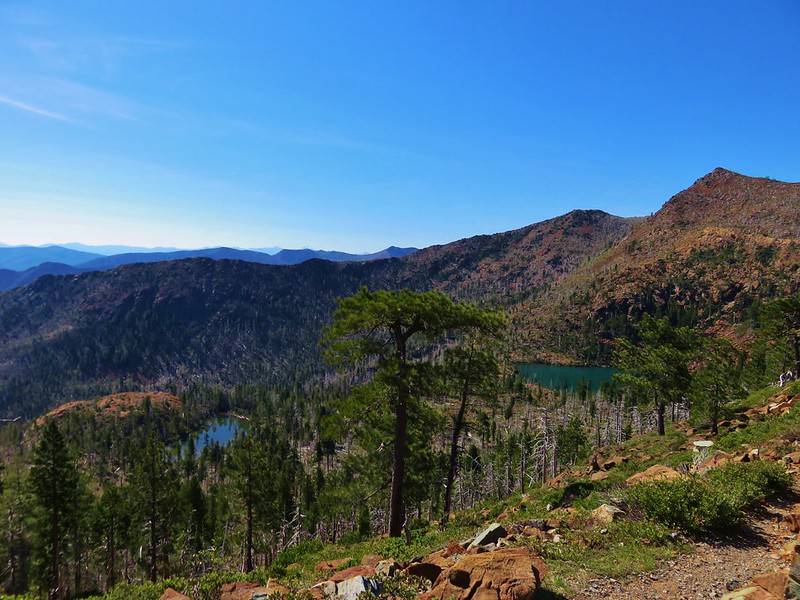
IMG_6343

Vulcan Lake
IMG_6345

Between the rocky terrain and the 2002 fire the trail grew fainter as we neared the lakes. Rock cairns helped mark the way though.
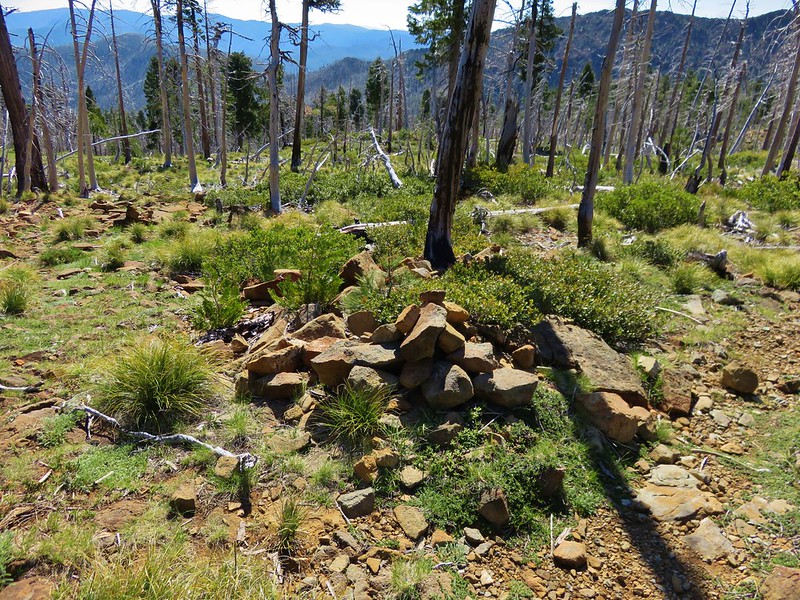
IMG_6369

IMG_6371

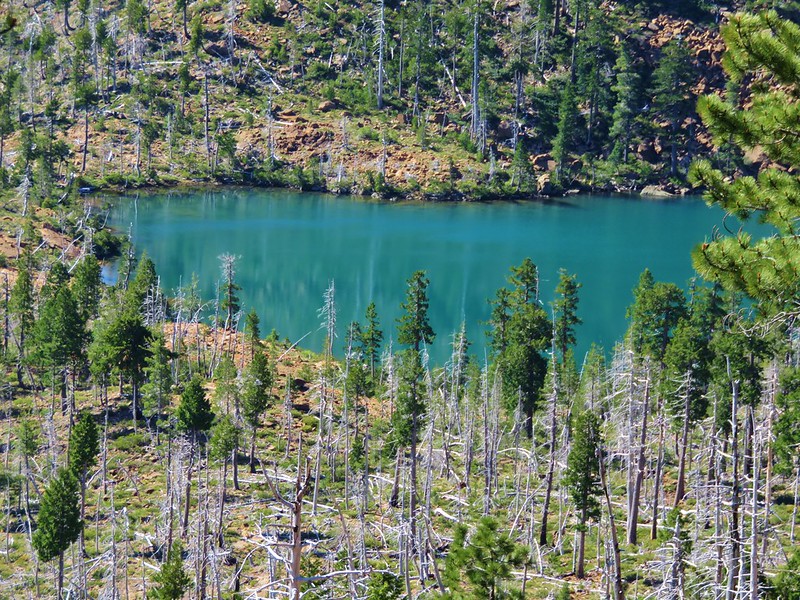
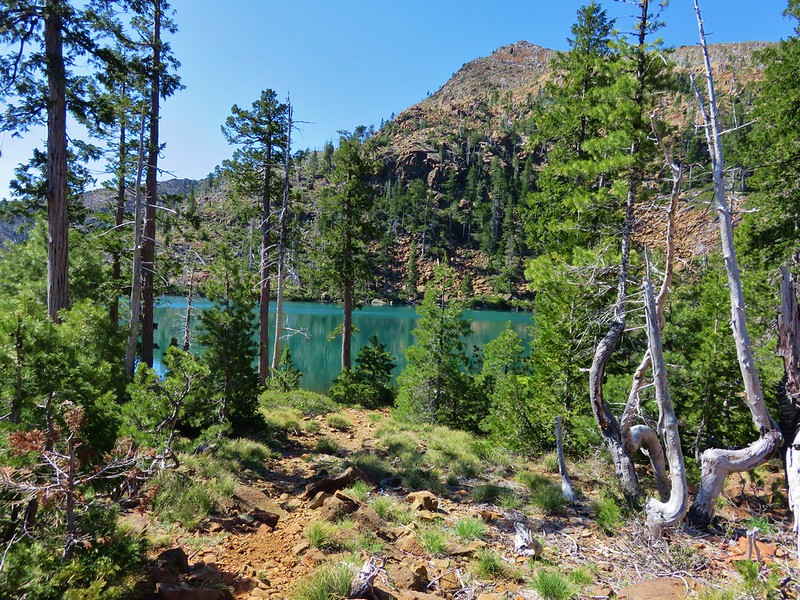
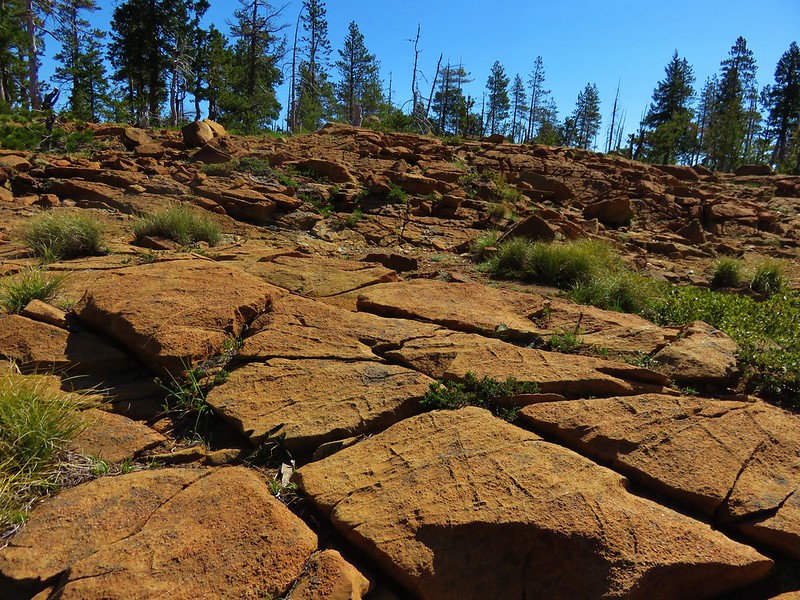
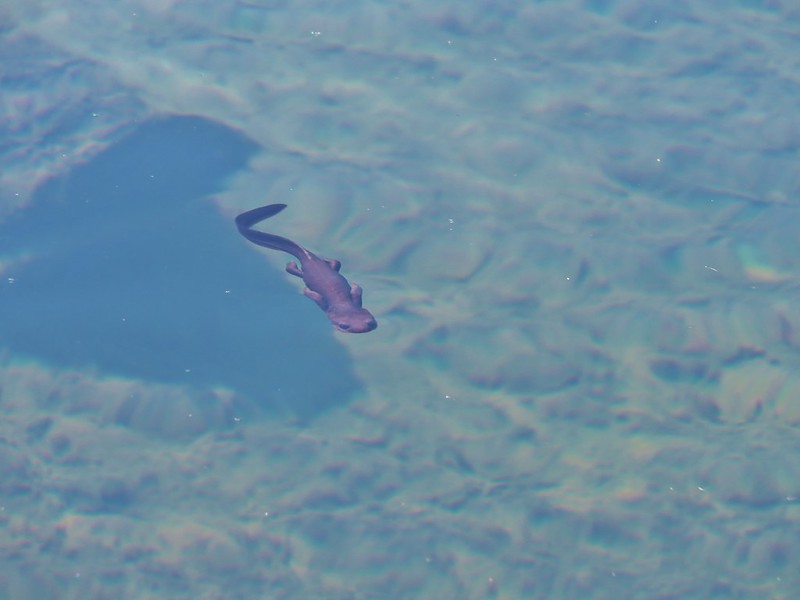
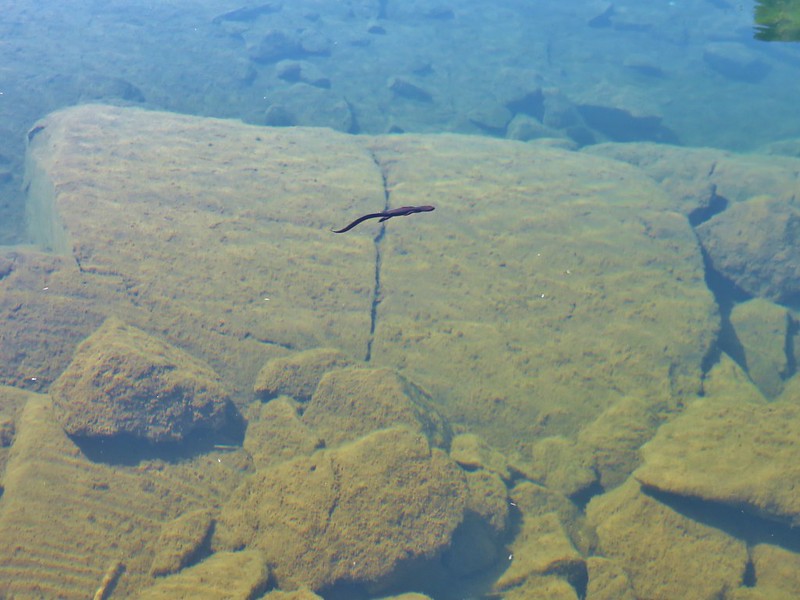
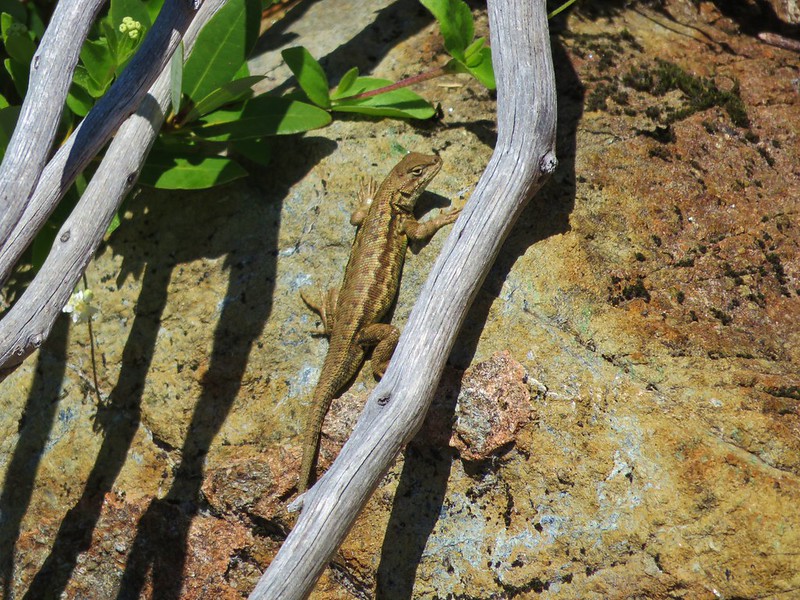
Vulcan Lake quickly ranked as one of our favorites. The colors of the water and surrounding rocks were amazing and lizards scurried along the shore while newts swam by in lake.
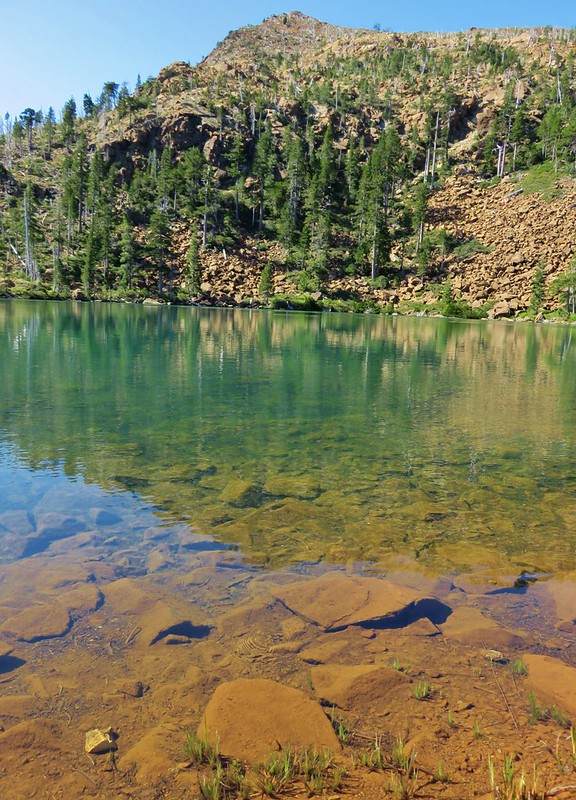
IMG_6375

IMG_6379

IMG_6393

IMG_6396

IMG_6367

The water was cool but not cold and we sat on the rocky bank soaking in the scenery. We could have easily spent hours or even days there but we had other places to visit so we eventually pulled ourselves away and continued to Little Vulcan Lake.

To reach Little Vulcan Lake we located a trail sign for the Gardner Mine Loop near where we had left the main trail to go down to Vulcan Lake.
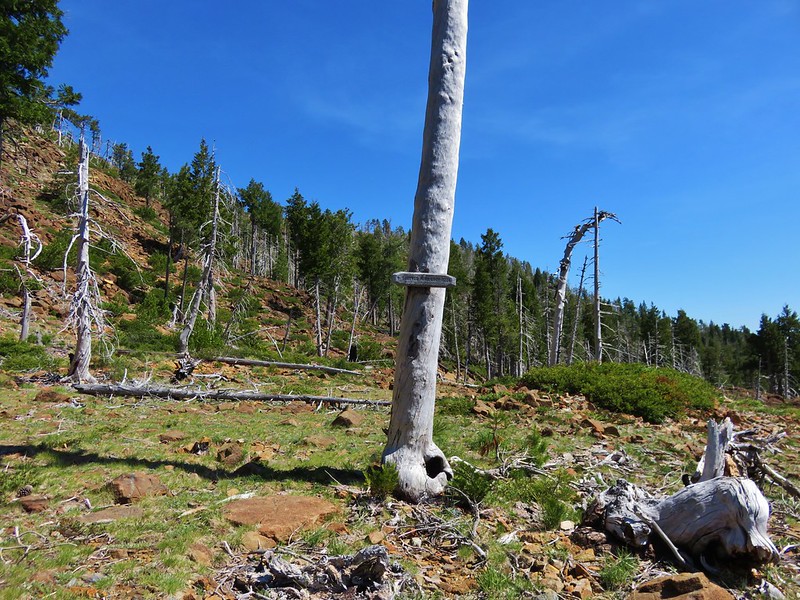
IMG_6406

IMG_6407

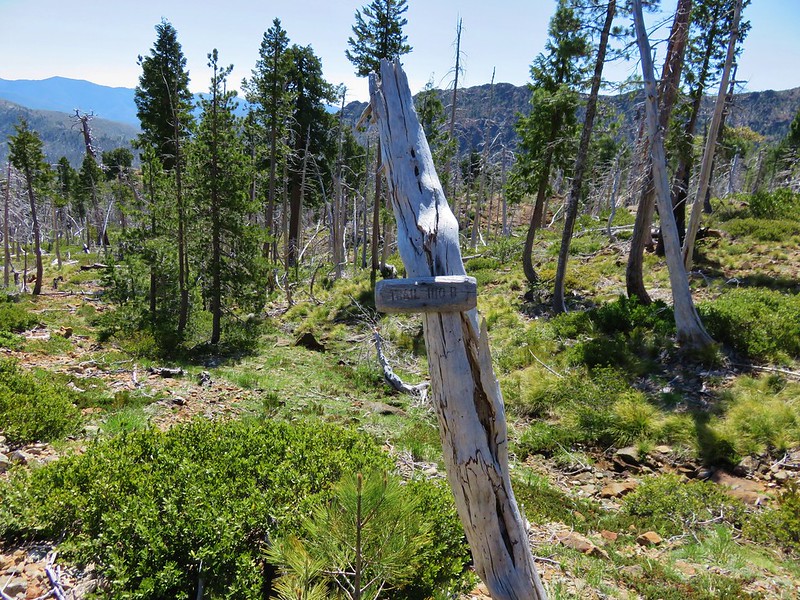
From there we could see another trail sign for the Trail 1110B.
IMG_6408

IMG_6409

Two tenths of a mile following more cairns and faint tread brought us to Little Vulcan Lake. As close as these two lakes were to one another they couldn’t have been much different.
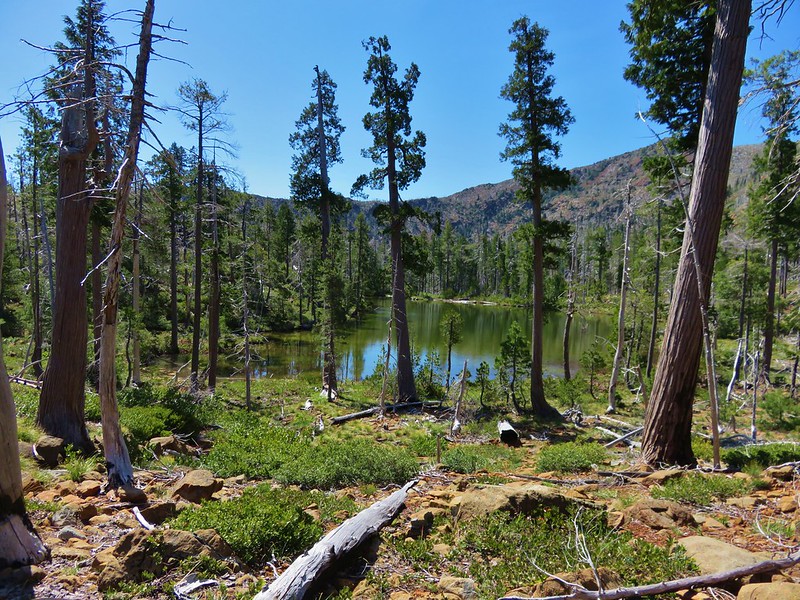
IMG_6411

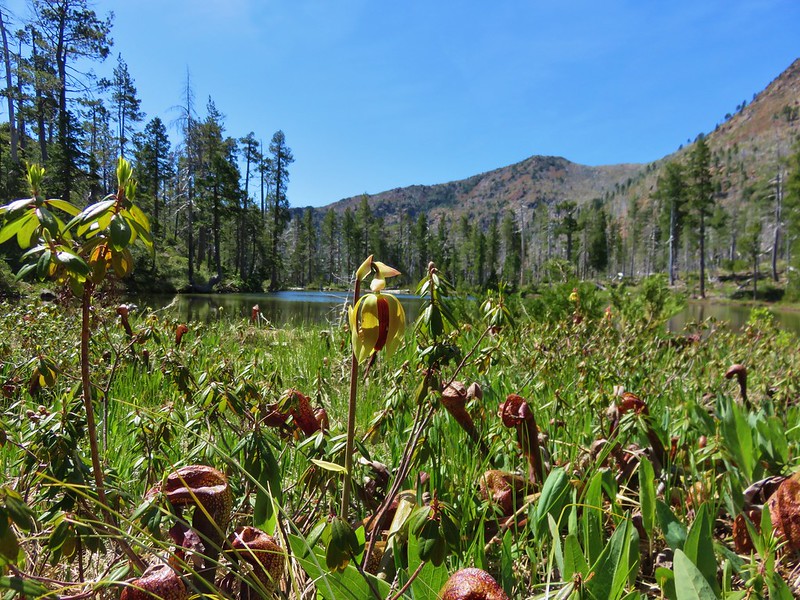
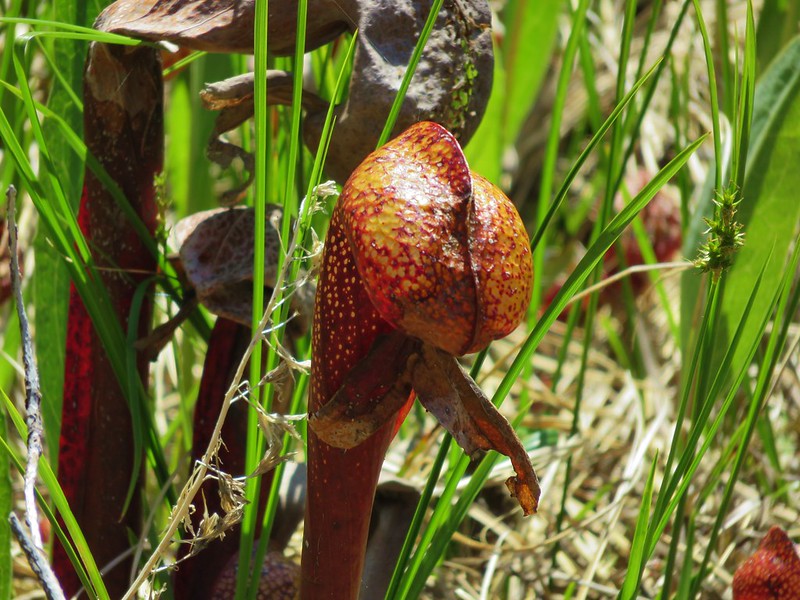
Instead of red rock surrounding the water here we found Darlingtonia californica. Insect eating pitcher plants.
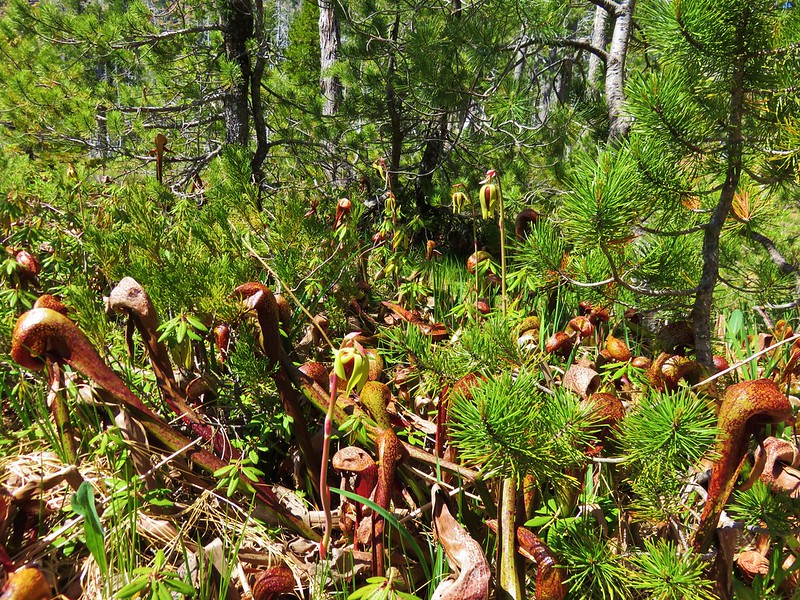
IMG_6412

IMG_6415

IMG_6416

IMG_6418

This was our first time seeing the pitcher plants and we found them to be really interesting. In addition to the pitcher plants there were a number of newts in the lake.

Six newts in Little Vulcan Lake.
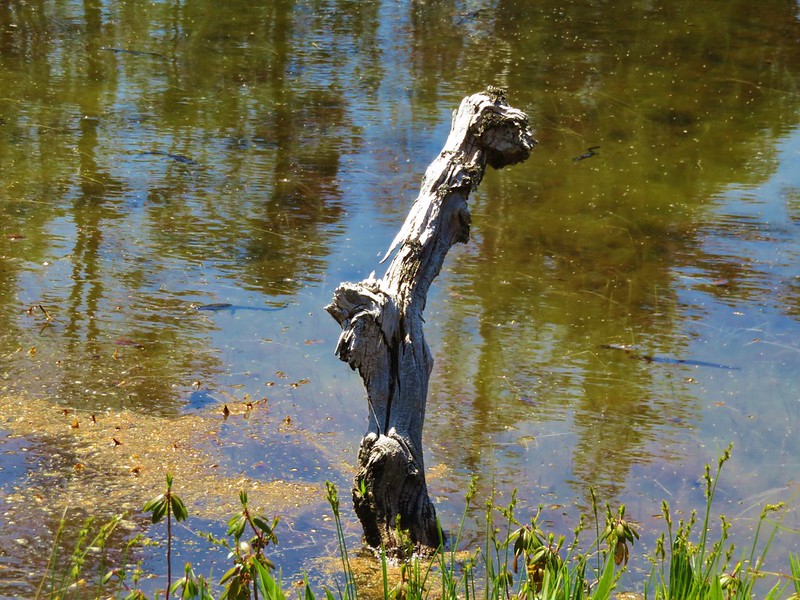
IMG_6421

From Little Vulcan Lake we returned to the Gardner Mine Loop trail and followed it as well as we could. Between cairns and our GPS we managed to stay mostly on course despite almost no sign of the actual trail tread.
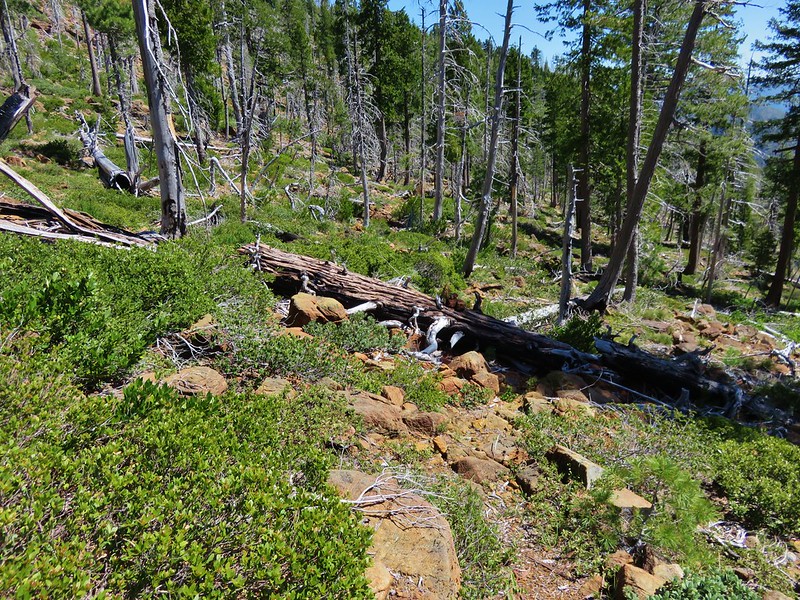
IMG_6431

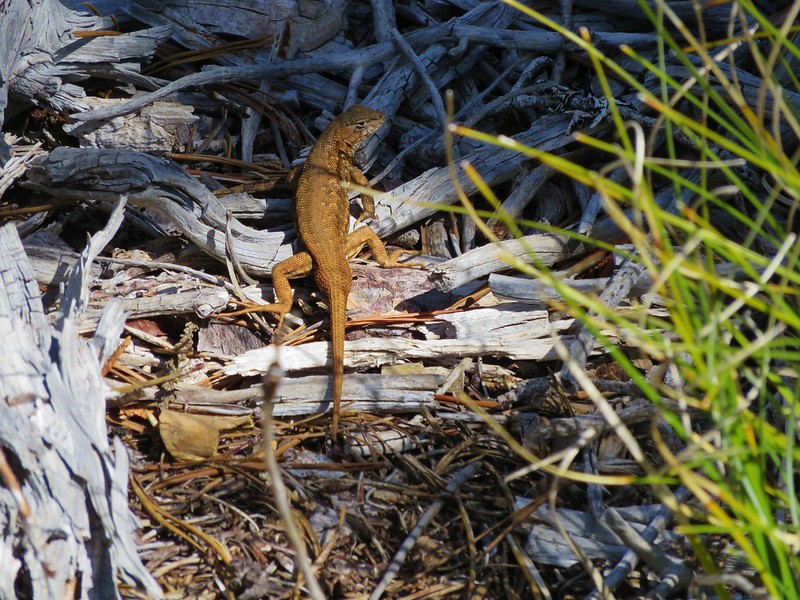
We followed the cairns for .6 miles being eyed by lizards the whole time.
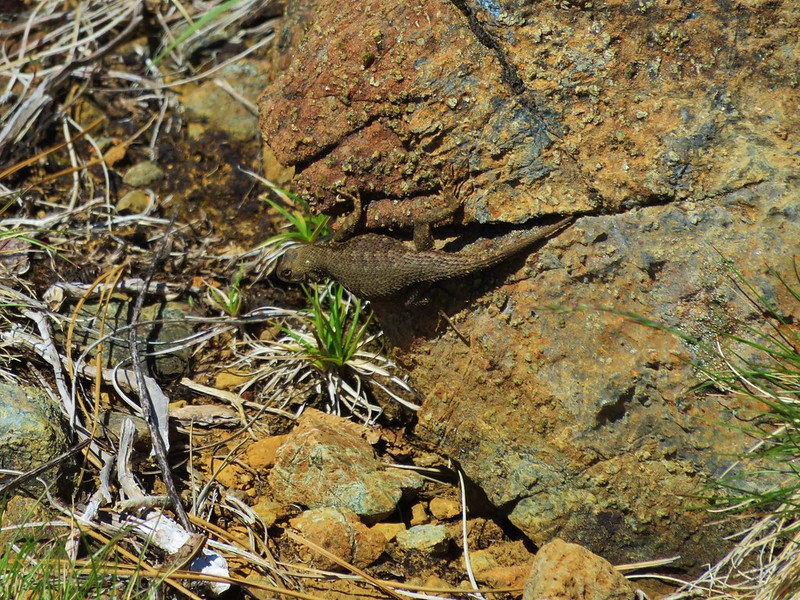
IMG_6429

IMG_6438

After the .6 miles of cairns we arrived at Sorvaag Bog.
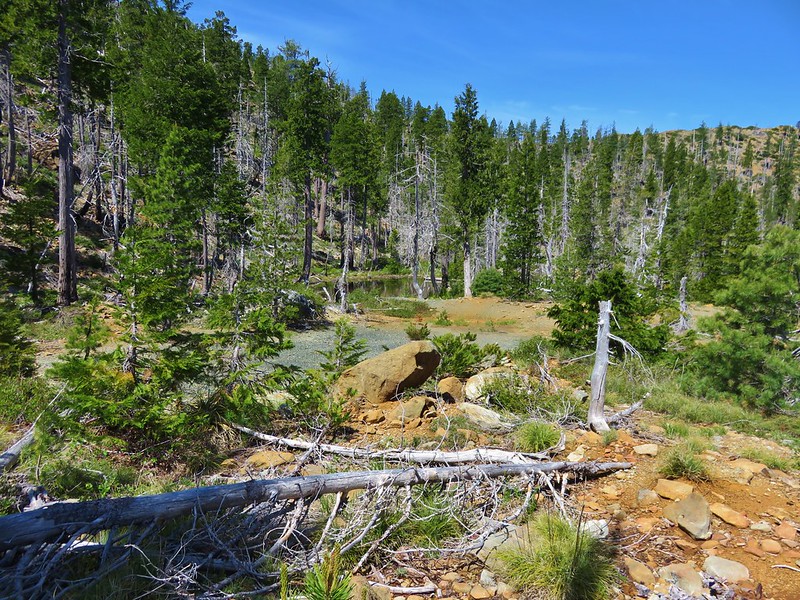
IMG_6440

IMG_6443

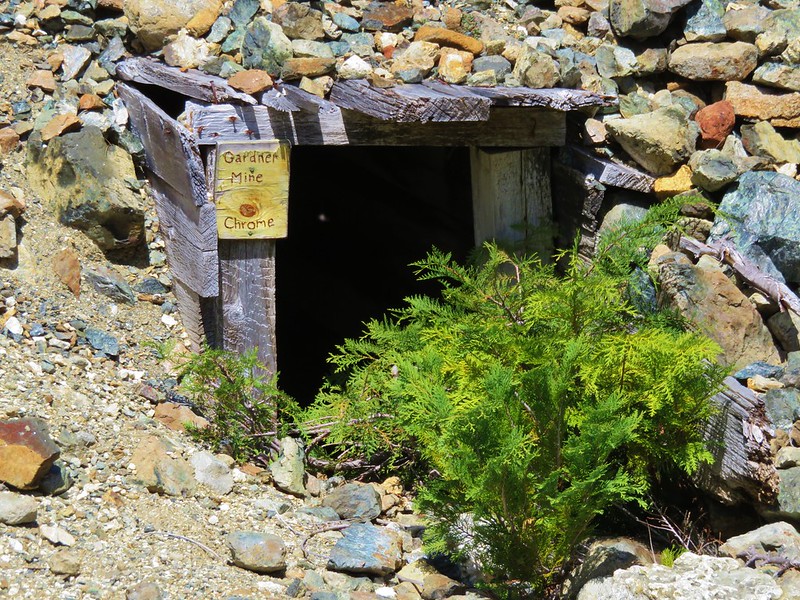
From the bog the trail followed an old roadbed making it easier to follow. We passed the entrance to the Gardner Mine before reaching a junction in a saddle with the Johnson Butte Trail.
IMG_6449

IMG_6451

IMG_6460

This junction was just .8 miles from where the trail had split and we’d taken the right-hand fork to Vulcan Lake. Before heading back though we had one final lake to visit and some rare flowers to look for so we turned right and headed deeper into the wilderness.

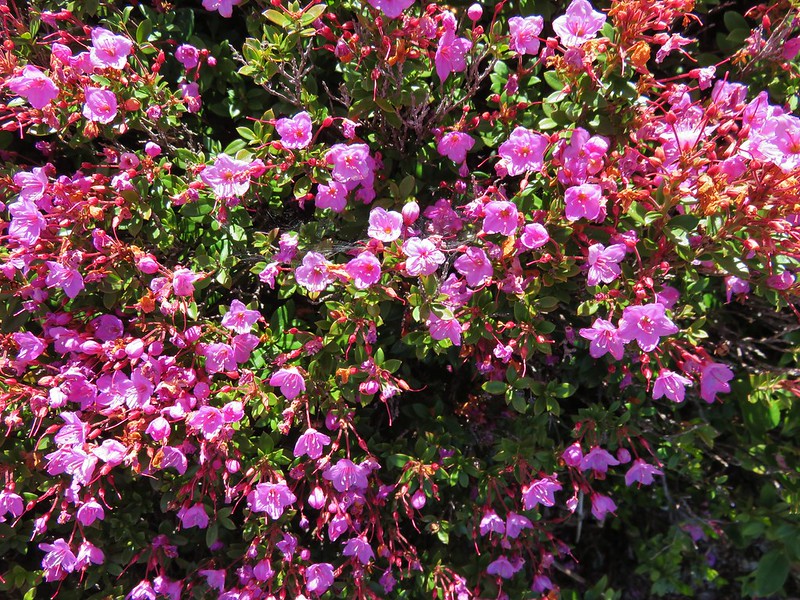
We were hoping to see some kalmiopsis leachiana in bloom. This rare flowering plant is found only in a few areas in the Kalmiopsis Wilderness. We knew that there were some along the Johnson Butte Trail so we were keeping an eye out only we weren’t entirely certain what they looked like. For some reason we hadn’t looked at any pictures online beforehand so the only information we had was the general areas we might spot them in and a belief that they were pink.

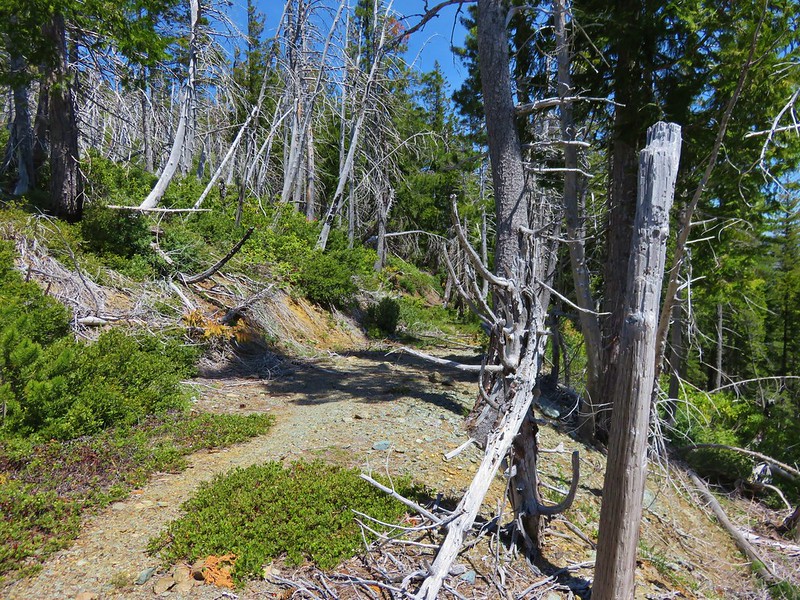
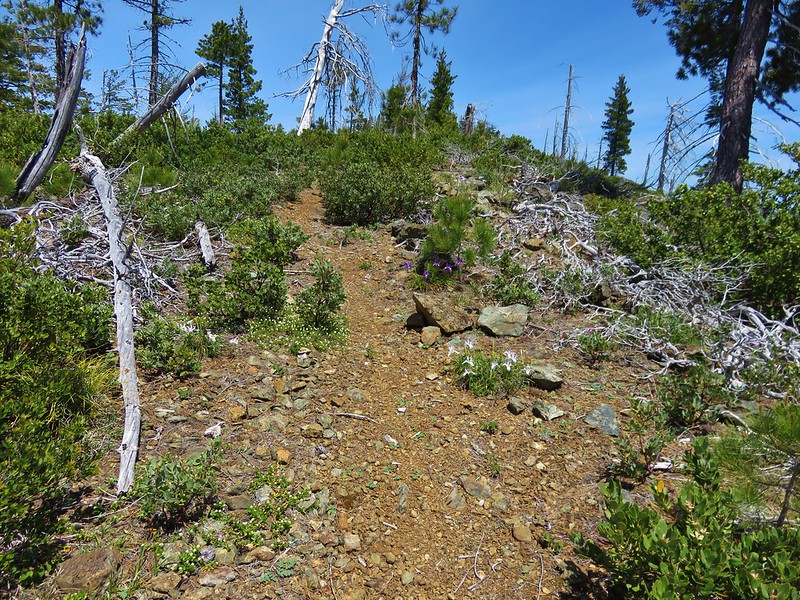
The Johnson Butte Trail followed another old road for 2.6 miles then turned to a simple trail. The whole time the trail alternated between ridges and hillsides often switching between the east and west facing sides at saddles.
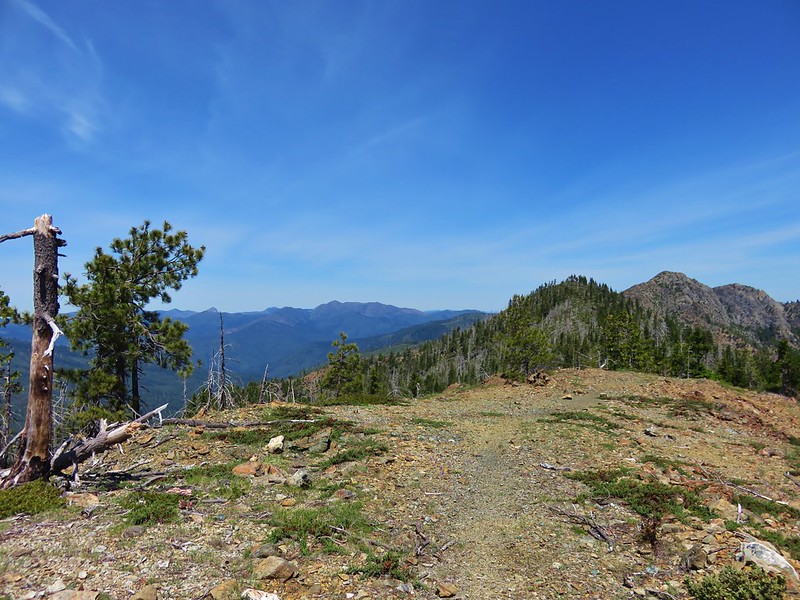
IMG_6493

IMG_6516

IMG_6534

There were plenty of flowers along the way including a surprise appearance of a single beargrass blooming.
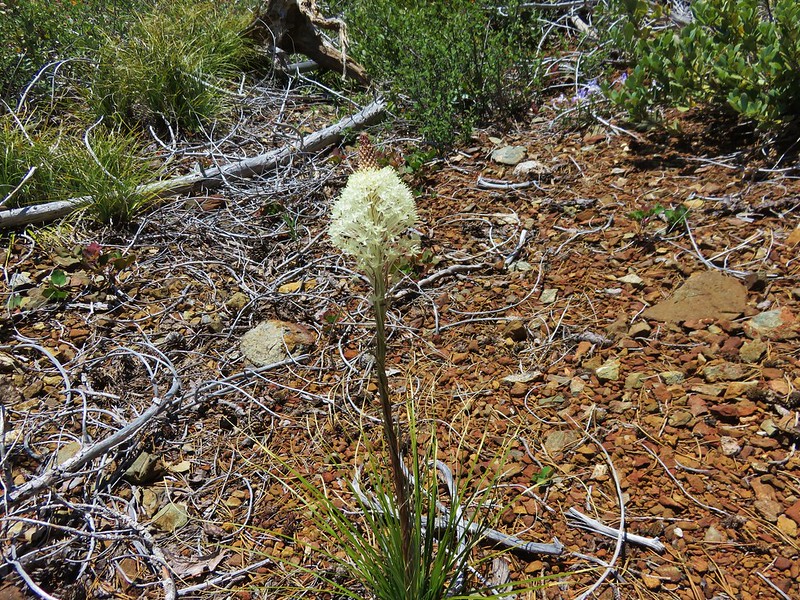
IMG_6467

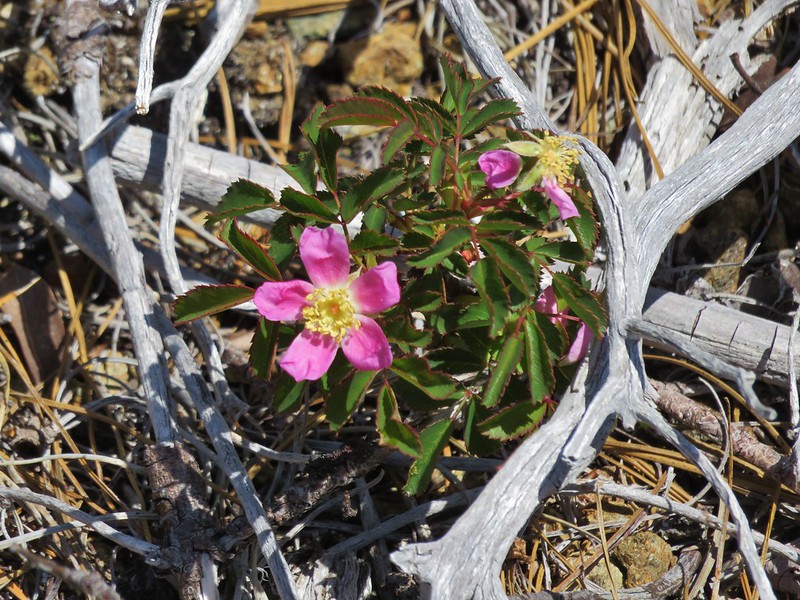
Wild Rose
IMG_6519

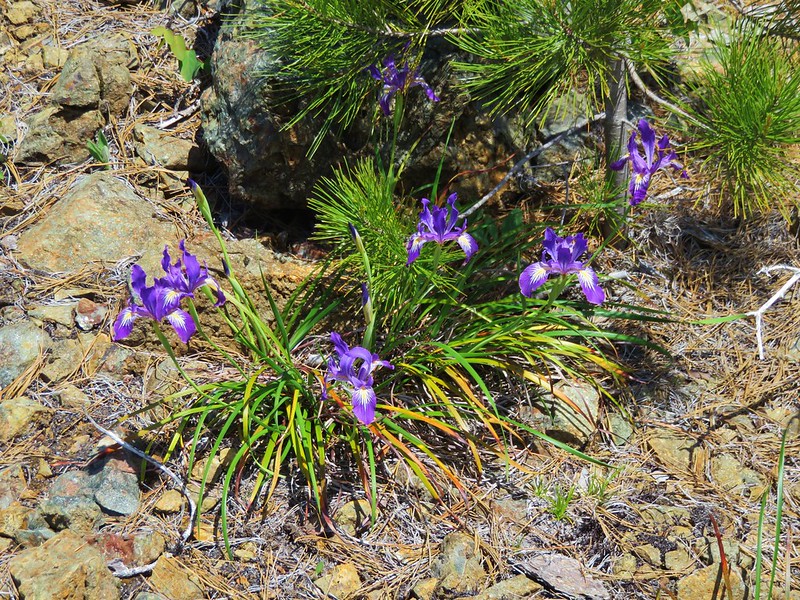
Wild iris
IMG_6518//embedr.flickr.com/assets/client-code.js

Narrowleaf blue eyed mary
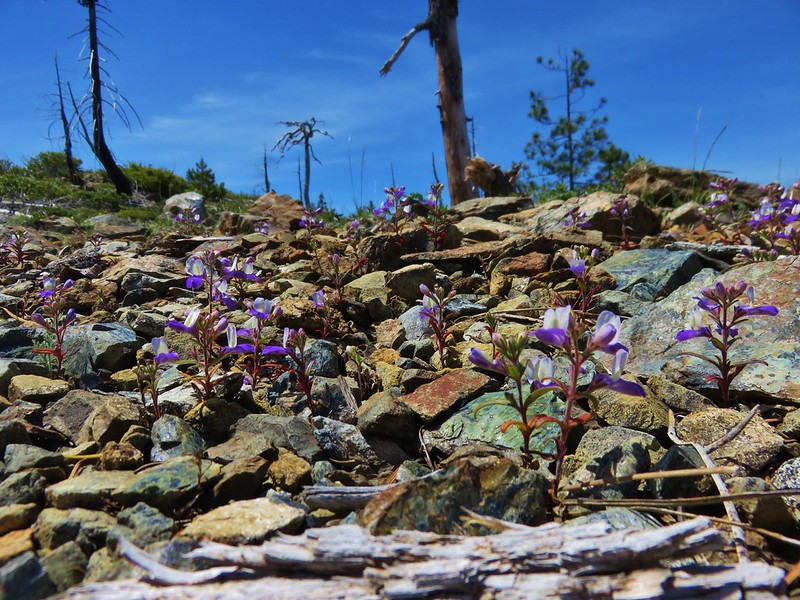
IMG_6497

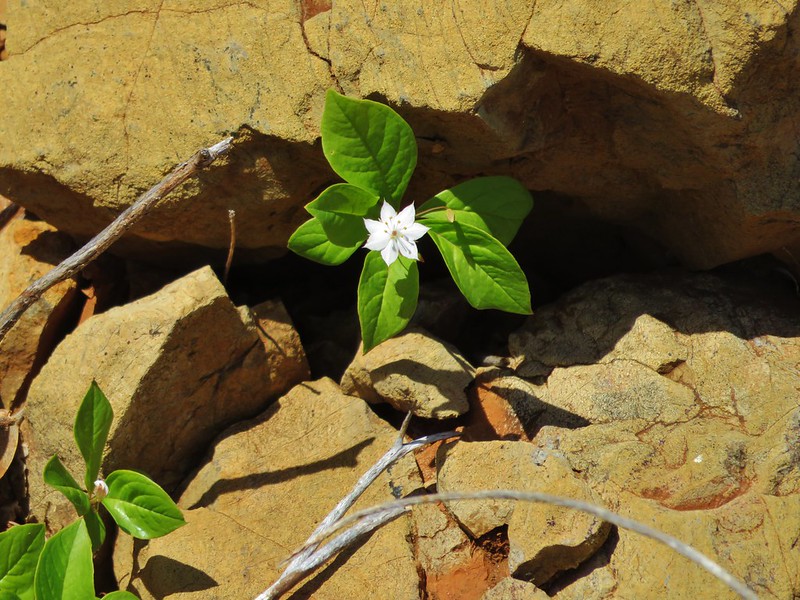
Starflower
IMG_6481

Rhododendron
IMG_6464

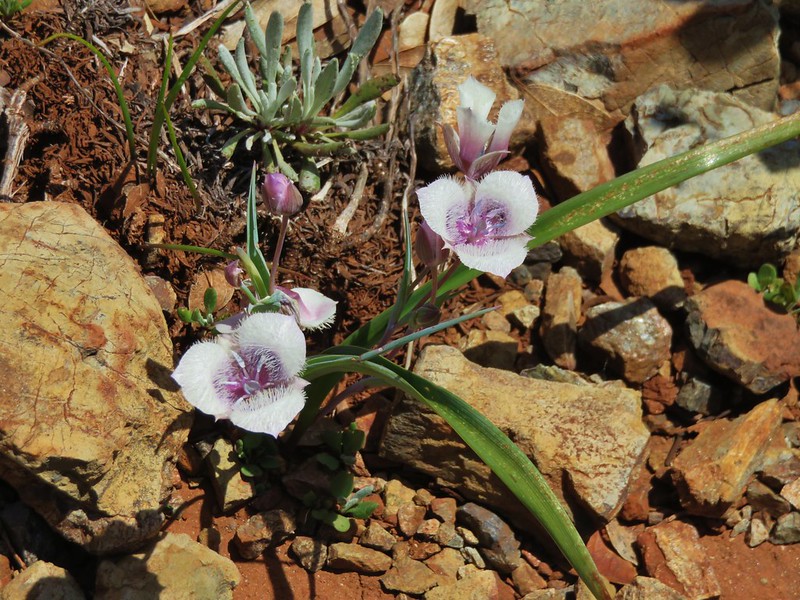
Tolmie’s mariposa lily
IMG_6483

We began seeing some pink flowers that we at first mistook for mountain heather, but after looking at them closer we realized they were something different. We eventually convinced ourselves that these must be the kalmiopsis leachiana which was confirmed later when we double checked online.
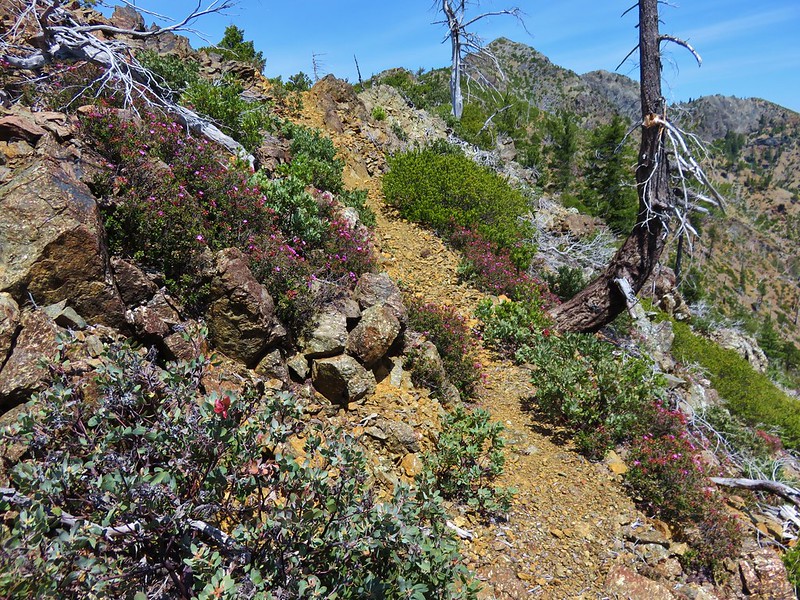
IMG_6535

The best patches were found after the trail made a sharp right turn at a ridge end below Dry Butte.
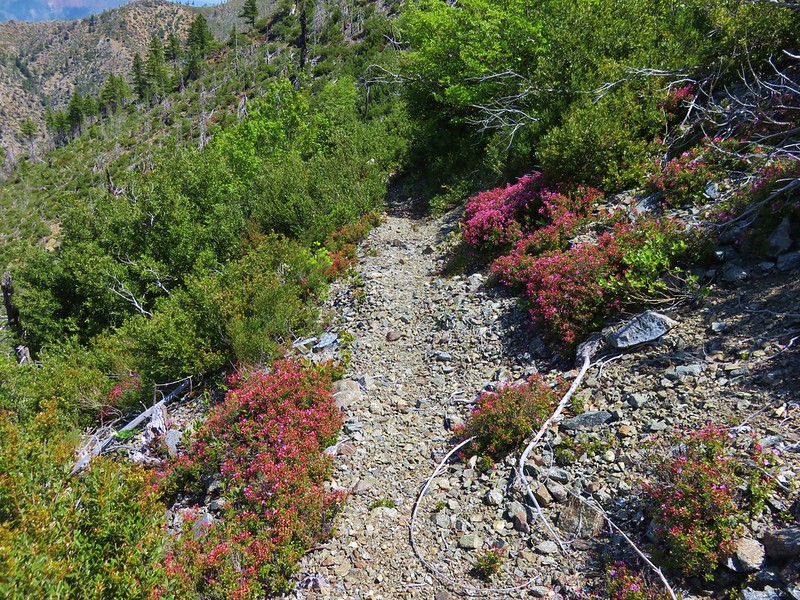
IMG_6571

IMG_6572

A few other flowers we had not been seeing were found below Dry Butte.
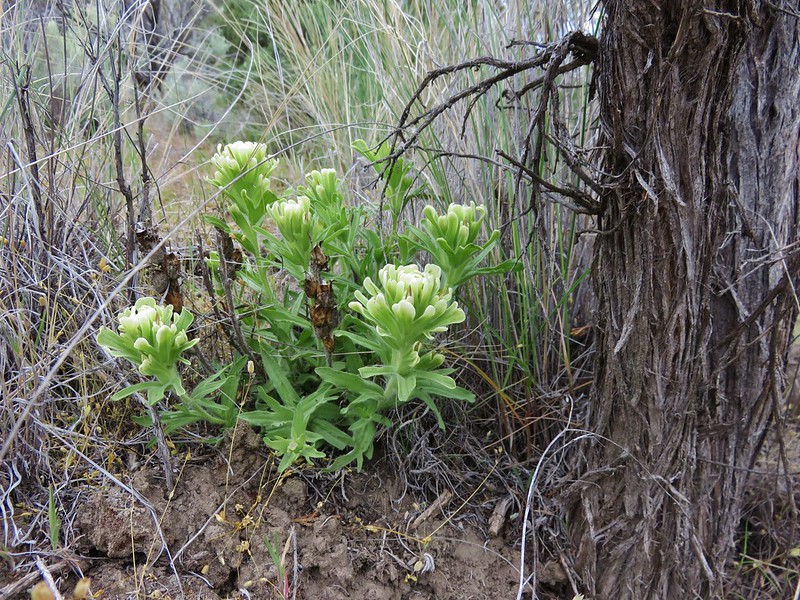
Bleeding heart
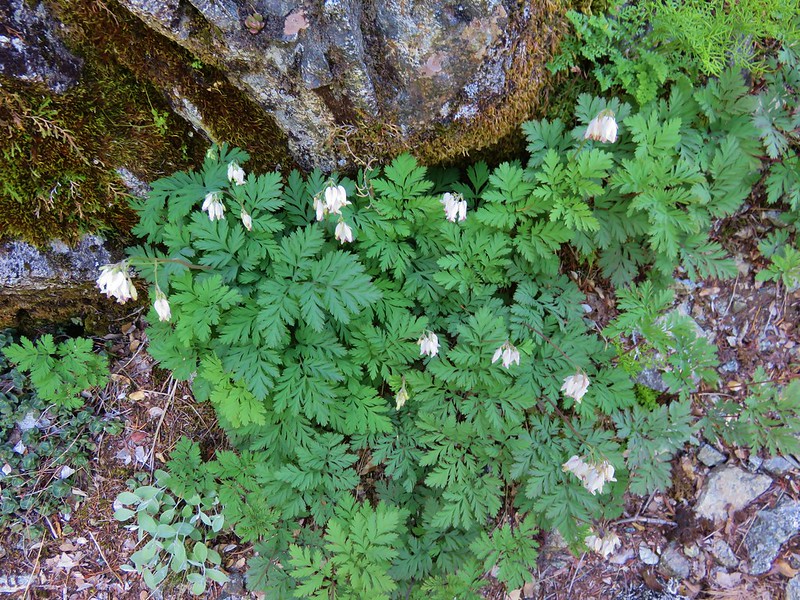
IMG_6582

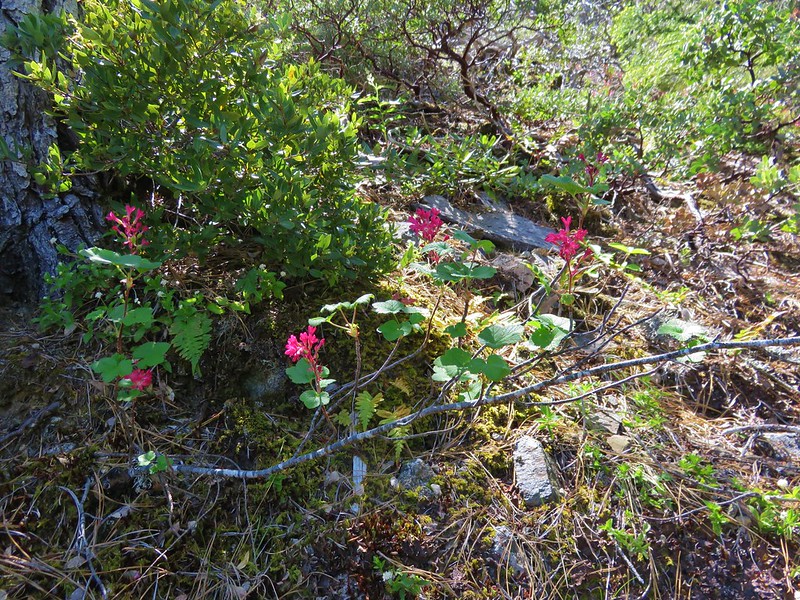
Red flowering currant
IMG_6585

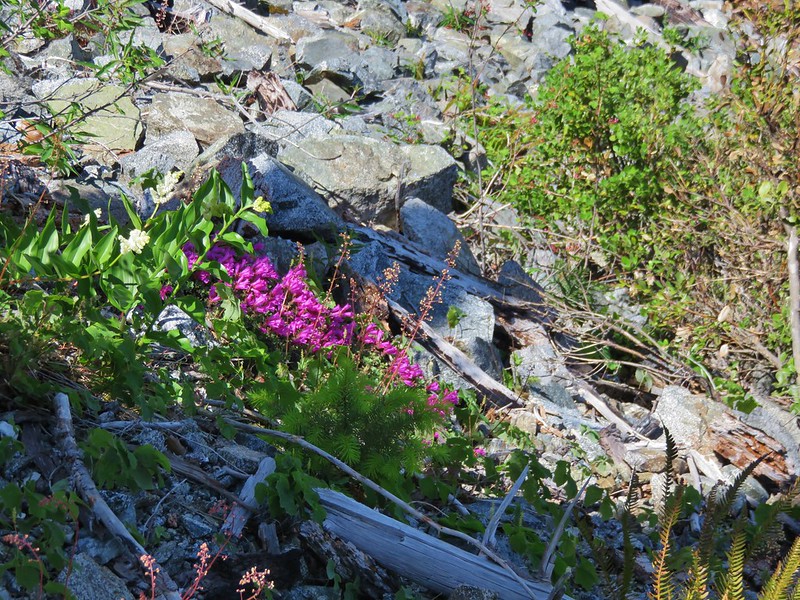
Penstemon and solomonseal
IMG_6591

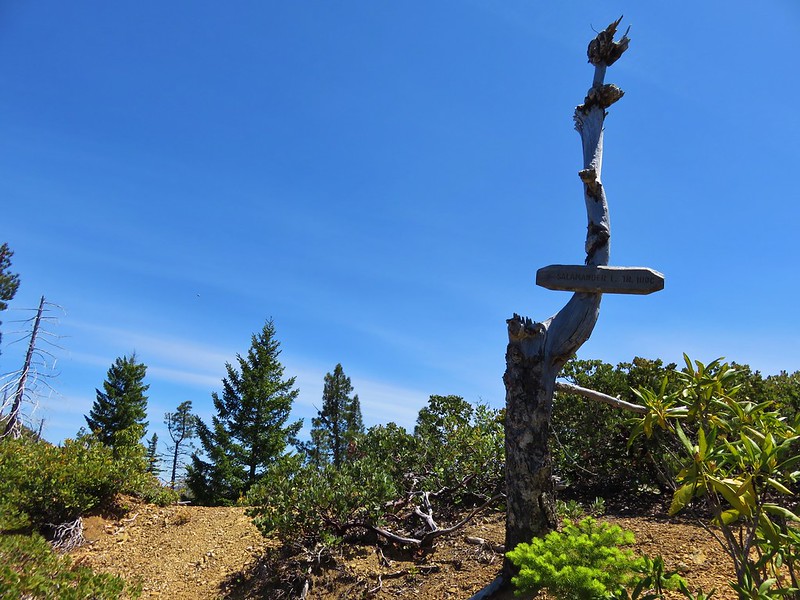
A little over three miles from the saddle where we had set off on the Johnson Butte Trail we found a sign for the Salamander Lake Trail.
IMG_6594

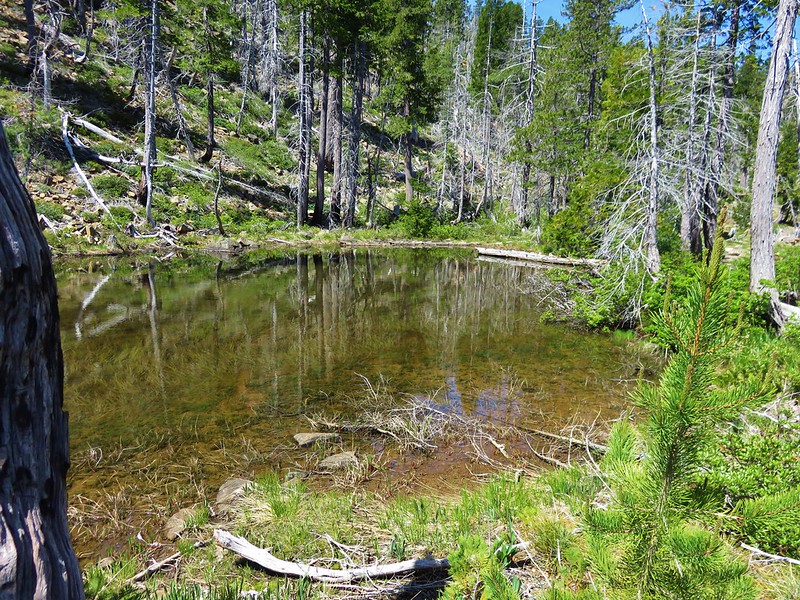
There was a campsite just below the ridge but the lake was further downhill hidden by brush and trees. The trail disappeared in the same brush and trees at the campsite and we momentarily considered not picking our way down to the lake, but that had been our planned turnaround point so down we went. We fought our way steeply down through the brush and blowdown to find the little lily pad filled Salamander Lake.
IMG_6597

IMG_6600

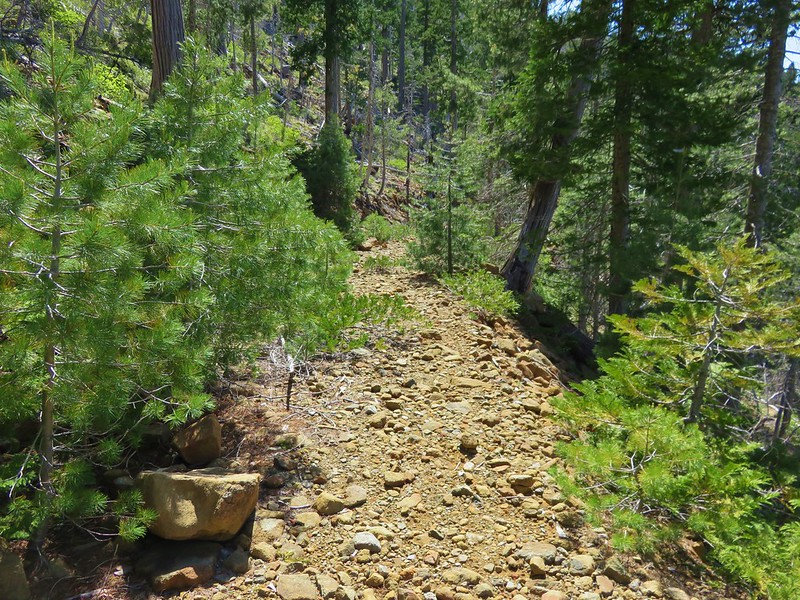
After the Vulcan Lakes this one was a bit of a letdown but we found some shade along the bank and took a short break that was interrupted by a few mosquitoes. We climbed back up to the Johnson Butte Trail and returned the way we’d come. At the saddle junction we kept straight following the trail along the old roadbed the .8 miles back to where we’d split off earlier and then completed the short walk to the trailhead.
IMG_6625

It had been a very warm sunny day and we were pretty worn out when we started the drive back out along road 1909. It was nice to rest in the car for a bit as we slowly made our way back to North Bank Road. Once we were back on North Bank Road we drove 8.5 miles towards Brookings where we turned into Alfred Loeb State Park for our final hike of the day. The temperature gauge in the car read 87 as we pulled in.

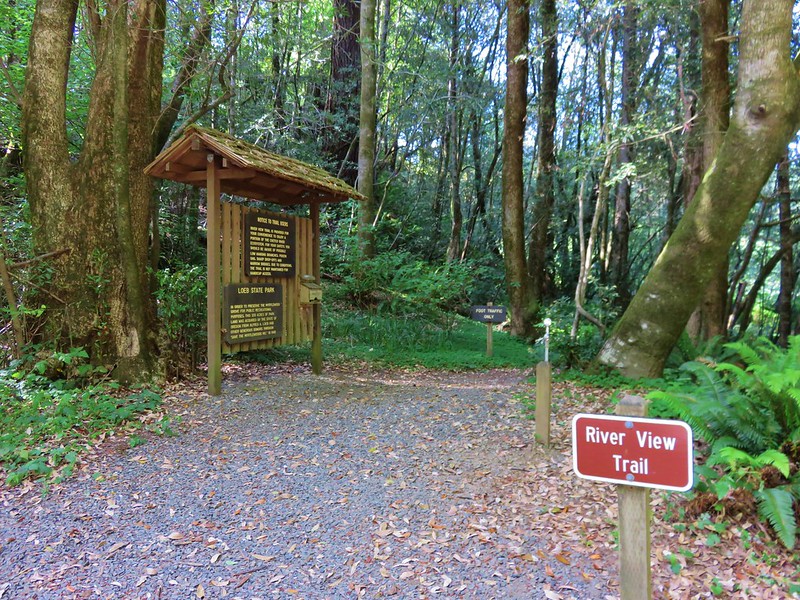
We parked at a signed trailhead and took the .7 mile River View Trail.
IMG_6629

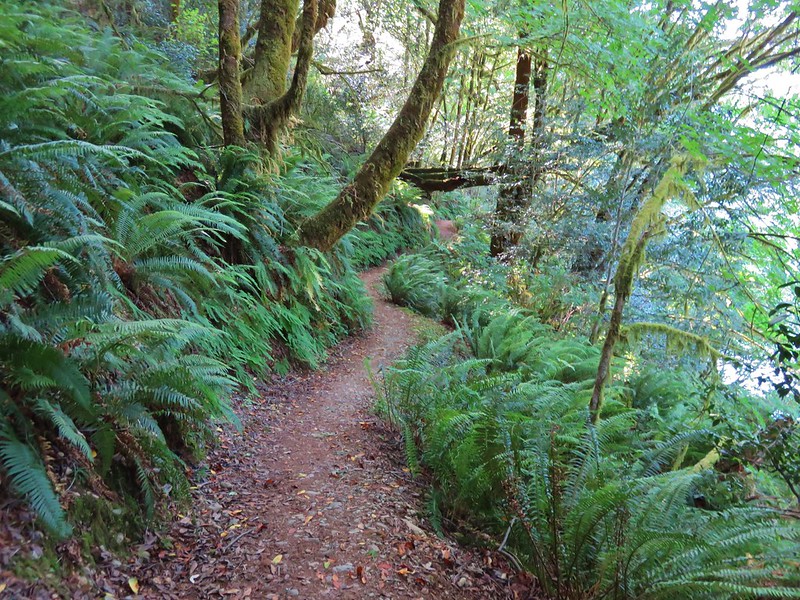
This trail passed through a forest following the Chetco River. Lettered signposts corresponded to entries in a brochure that could be picked up at the trailhead.
IMG_6639

IMG_6647

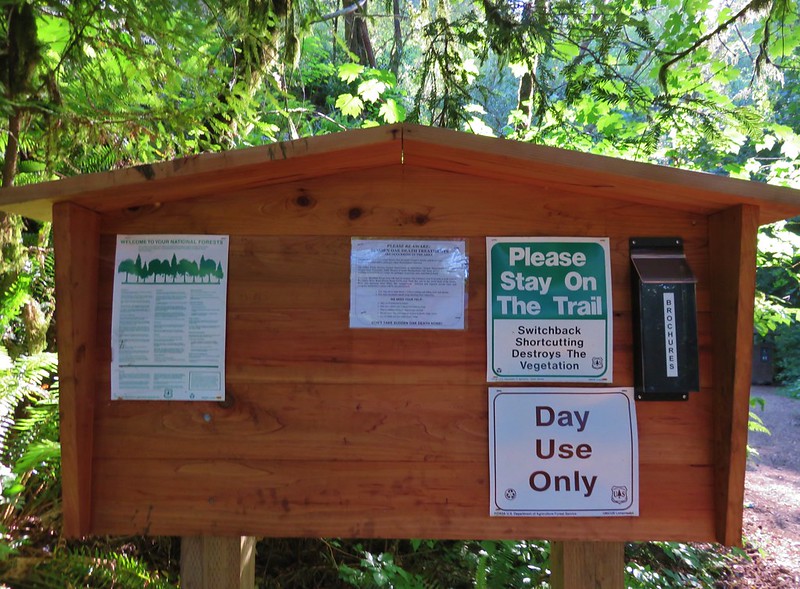
The Riverview Trail led to a crossing of North Bank Road where the Redwood Nature Trail began on the far side.
IMG_6652

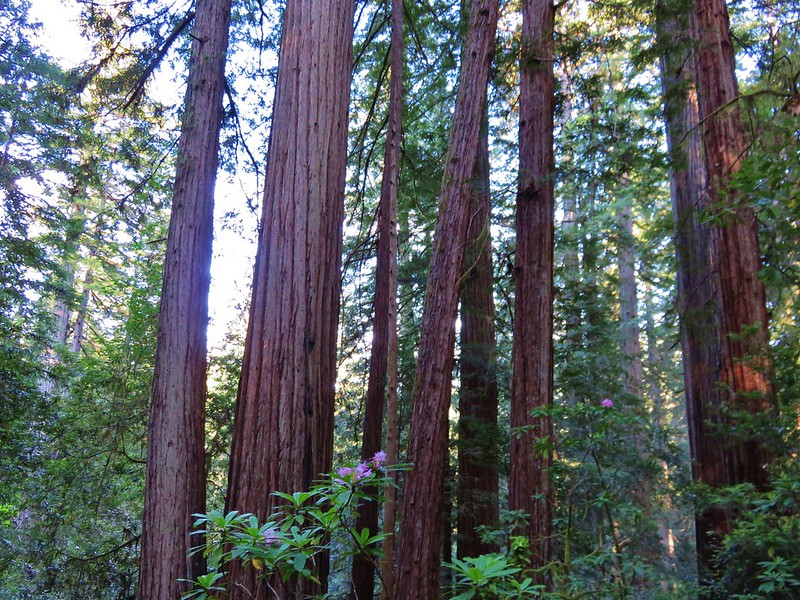
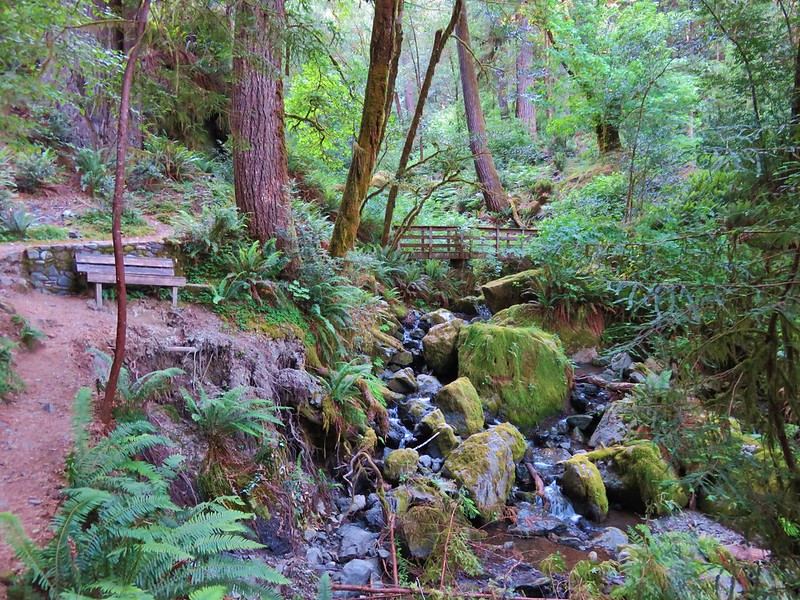
This 1.2 mile loop trail passed through a mixed forest with some nice redwoods along the way.
IMG_6658

IMG_6665

IMG_6668

IMG_6672

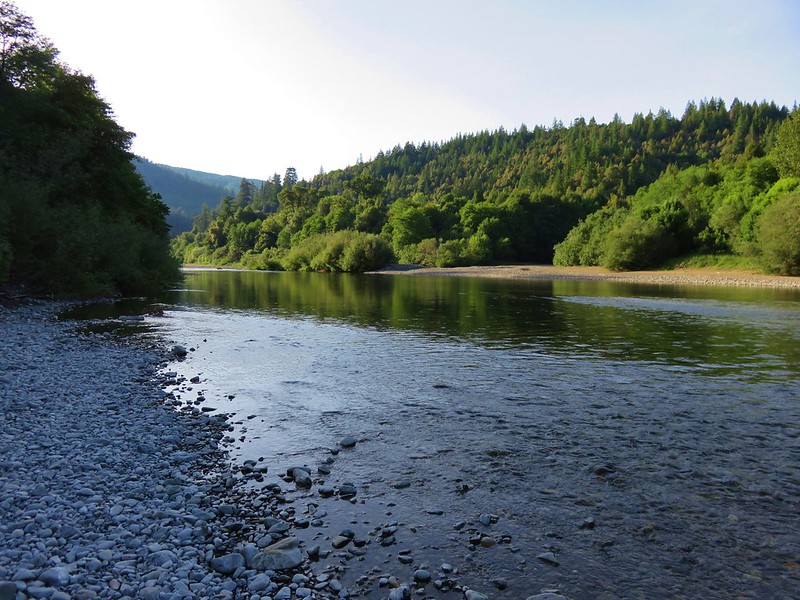
We did the loop in a counter-clockwise direction which seemed to leave the steeper sections as downhill. After finishing the loop and returning to the car we walked down to the Chetco River because there really hadn’t been a great view of it along the River View Trail.
IMG_6686

When it was all said and done our GPS showed a total of 16.6 miles for the three hikes. Three miles for Vulcan Peak, 10.7 for Vulcan and Salamander Lakes, and 2.9 for this final hike. It had been a long hot day and we decided that ice cream sounded good for dinner so we stopped at the DQ in Brookings splitting a chicken strip basket and each having a Blizzard. Such are the joys of being on vacation. Happy Trails!

Flickr: https://www.flickr.com/photos/9319235@N02/albums/72157668642744636
Categories
Hiking Oregon Oregon Coast Southern Coast Trip report

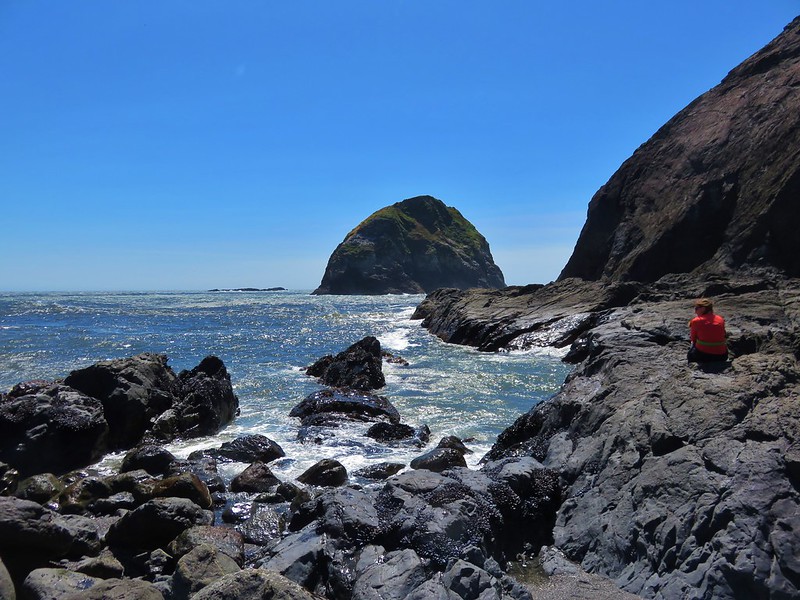
Humbug Mountain, Sisters Rock, and Otter Point

With our vacation plans changed due to the potential for rain in SE Oregon we had returned home after hiking in the Oregon Badlands Wilderness to regroup. We swapped guide books and some or our supplies and headed for Gold Beach on the southern Oregon coast on Monday morning. We took our first set of hikes on the way down Highway 101 starting with a climb up Humbug Mountain.

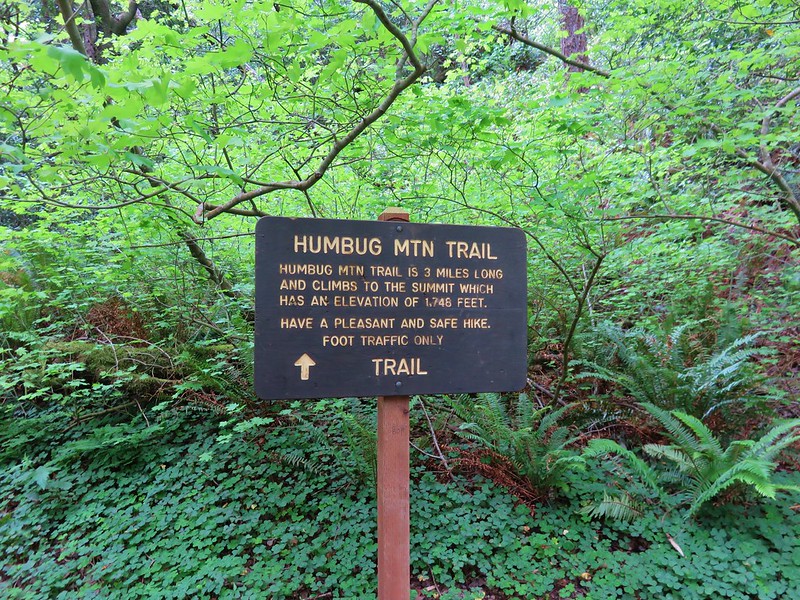
The Humbug Mountain Trail begins at the signed Humbug Mountain Trailhead across from the state park campground.
IMG_5870

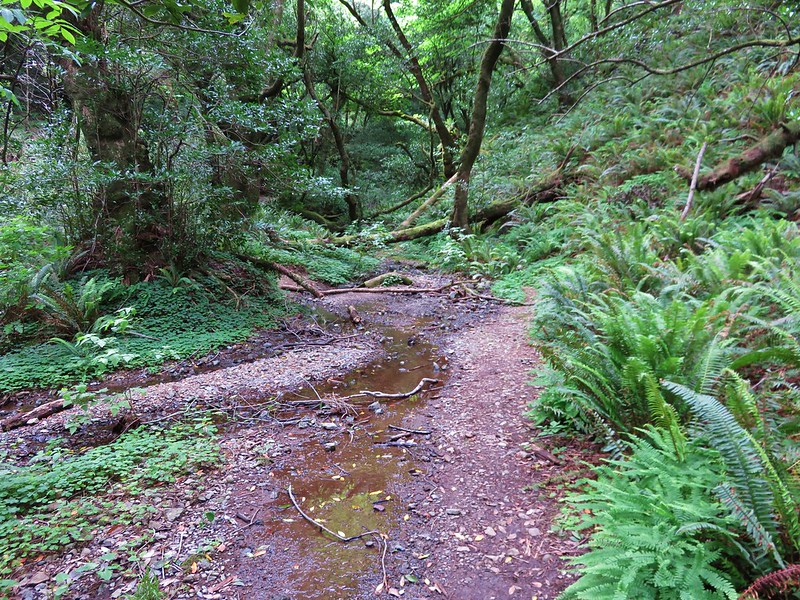
The trail promptly crosses a creek then climbs through the forest for a mile to a split in the trail.
IMG_5871

IMG_5896

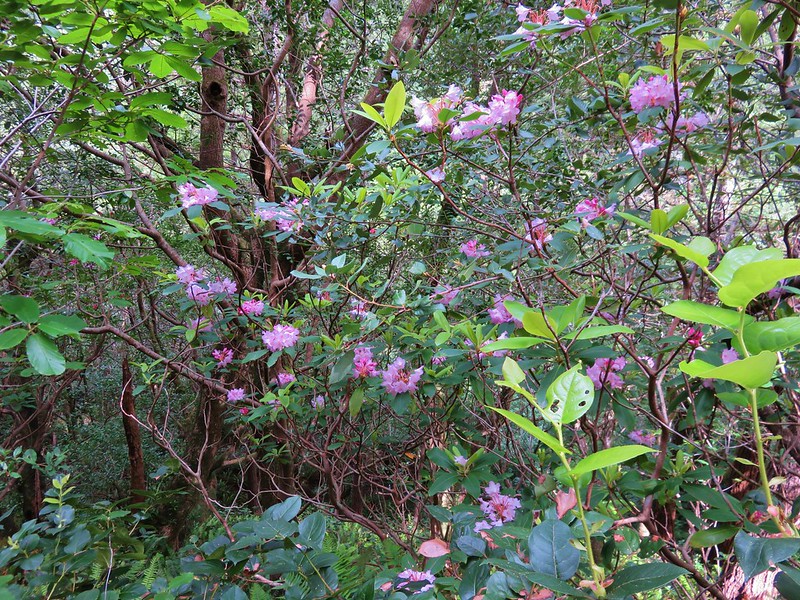
Rhododendron
IMG_5891

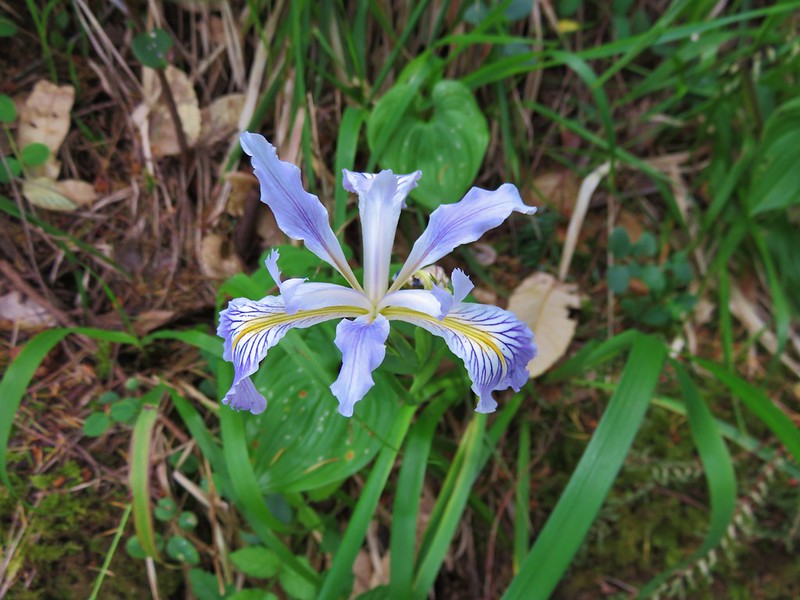
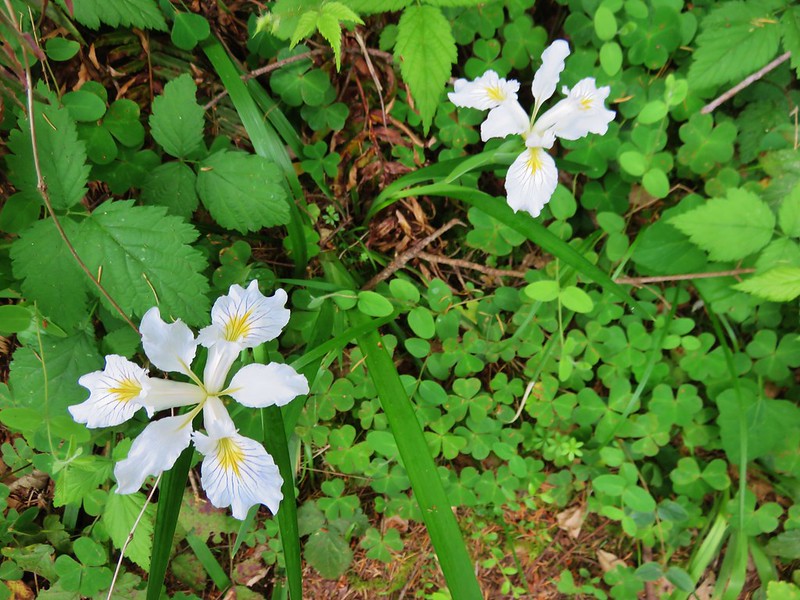
Wild iris
IMG_5903

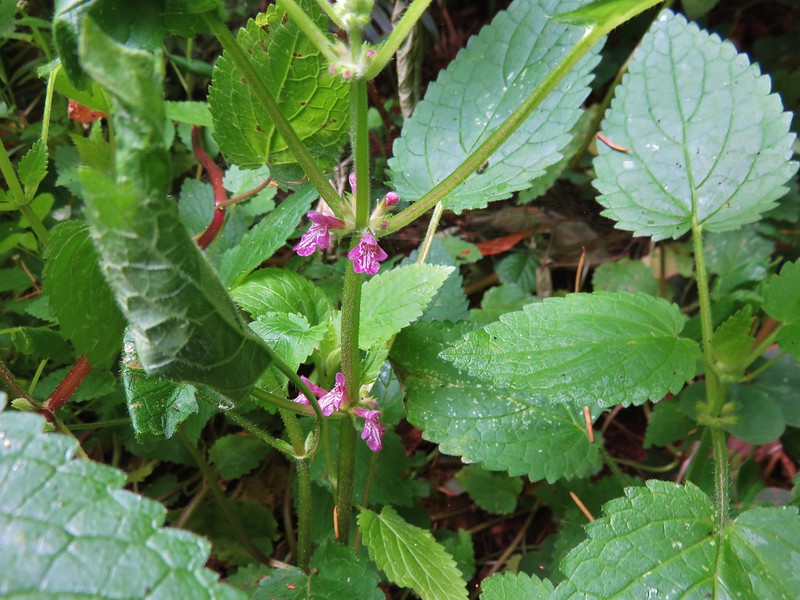
Hedge nettle
IMG_5907

Wild iris
IMG_5908

IMG_5918

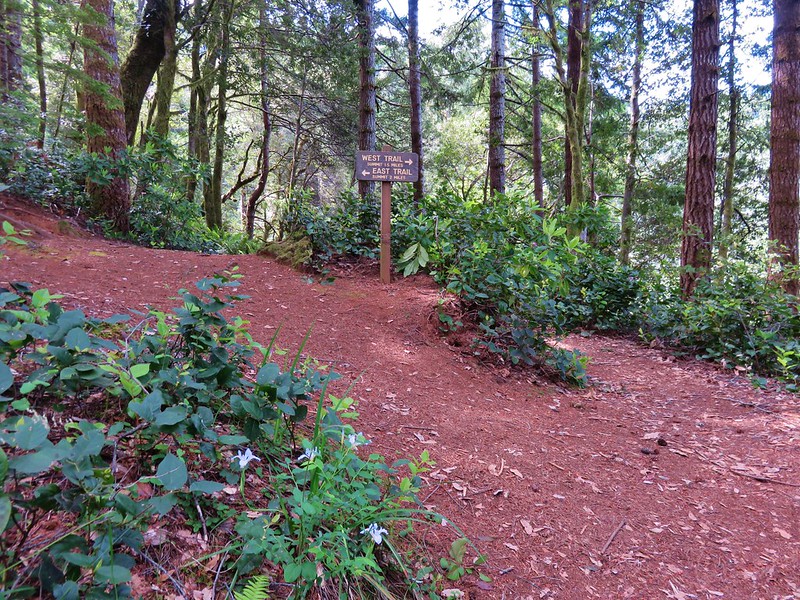
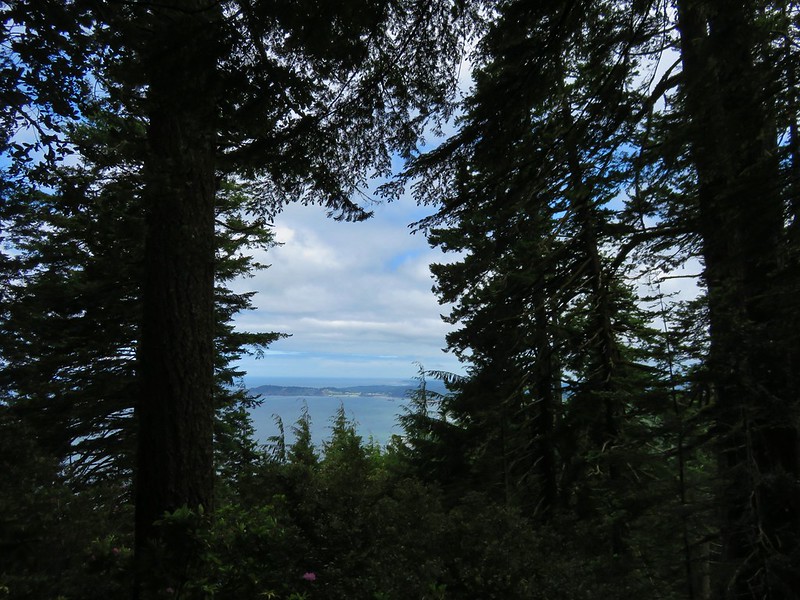
Two routes led to the summit, the 1.4 mile West Trail and the 1.9 mile East Trail, allowing for a loop. We took the shorter West Trail to the right which offered limited ocean views.
IMG_5935

IMG_5933

When the trails rejoined we took the short .1 mile trail to the right up to the small meadow at the summit of Humbug Mountain.
IMG_5960

IMG_5963

A few flowers dotted the meadow which was mostly filled with bracken ferns and trees obscured much of the view.
IMG_5977

Common catchfly
IMG_5974

IMG_5989

Elegant brodiaea
IMG_5979

IMG_5975

We took the East Trail down completing the loop and returning to the trailhead. The 5.5 mile hike was nice enough and a good climb, but the lack of views was a little disappointing albeit fitting for a mountain named Humbug.

From Humbug Mountain we continued driving south on HWY 101 to our next stop, Sisters Rock State Park. If not for our guide book describing the pullout between milepost 314 & 315 we would likely have driven right by. There was no sign for the park prior to the little pullout along the highway and the sign at the park was set back off the road making it difficult to spot while driving.
IMG_6011

The wind was really strong whenever we were exposed to the north but the half-mile path down to the Sisters Rocks was full of views and flowers. Humbug Mountain was visible to the north and to the south was scenic Franklin Beach.
IMG_6009

IMG_6020

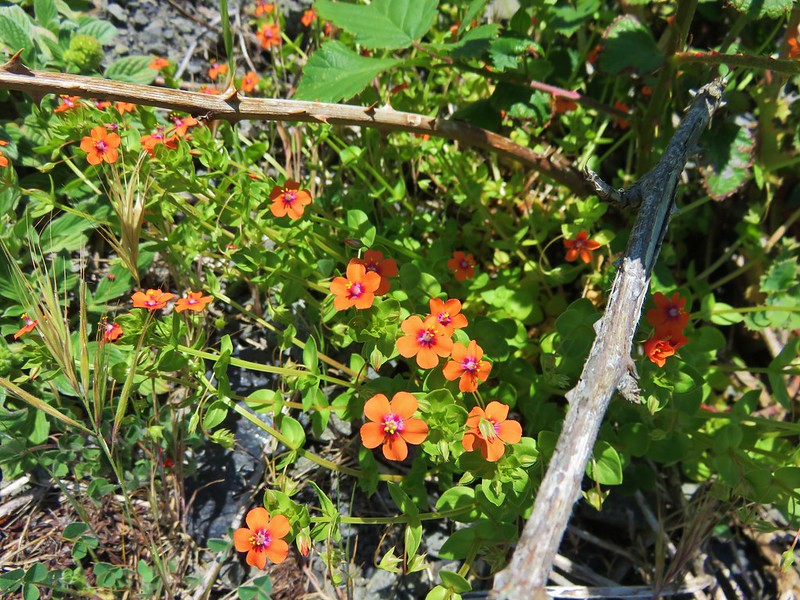
Scarlet pimpernel
IMG_6025

IMG_6027

Cows clover
IMG_6028

IMG_6073

Lupine
IMG_6095

We headed for the largest of the rocks where a trail brought us to the mouth of a sea cave.
IMG_6017

IMG_6031

IMG_6046

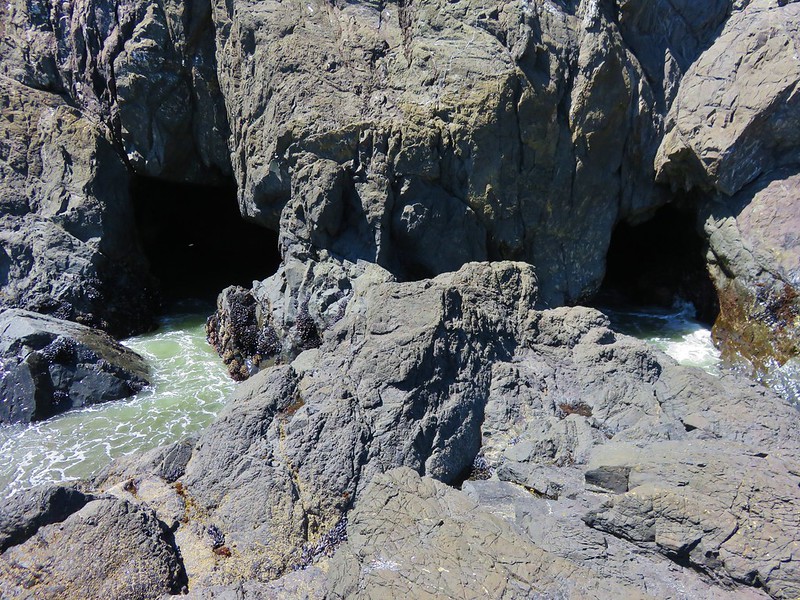
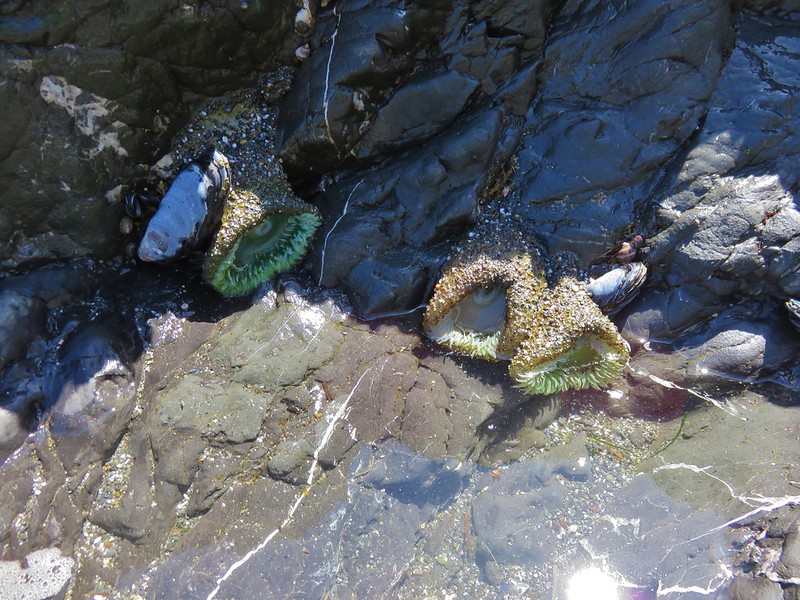
We found a spot on the rocks between the largest Sisters Rocks where we were protected from the wind. Here there were more caves and some small tide pools.
IMG_6032

IMG_6058

IMG_6067

IMG_6054

IMG_6060

IMG_6063

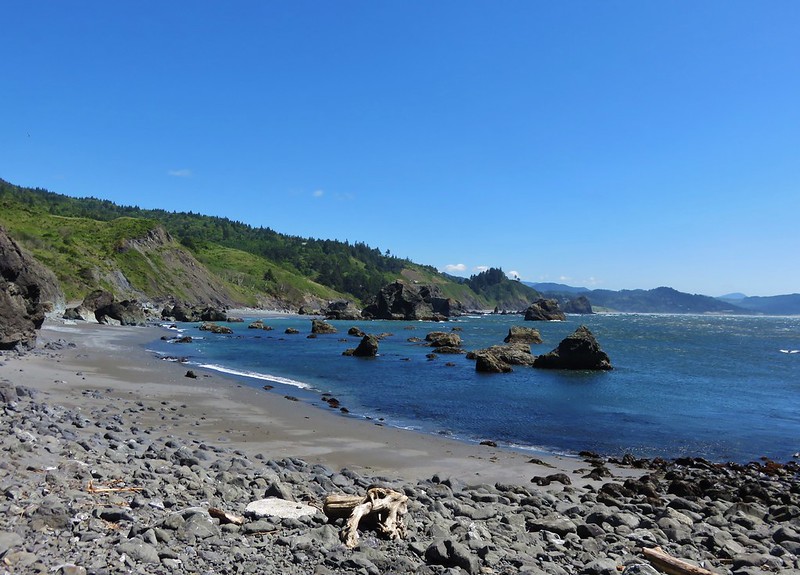
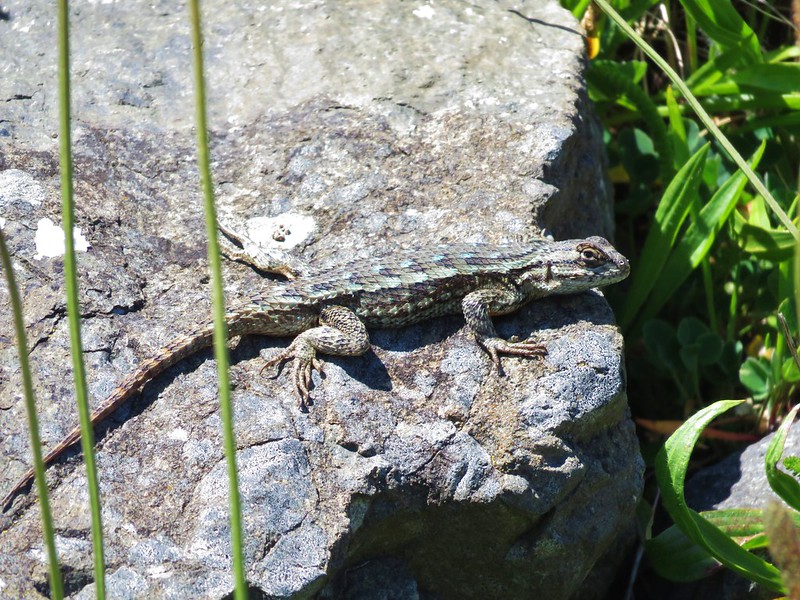
We then made our way to Franklin Beach which we shared with a lizard.
IMG_6077

IMG_6094

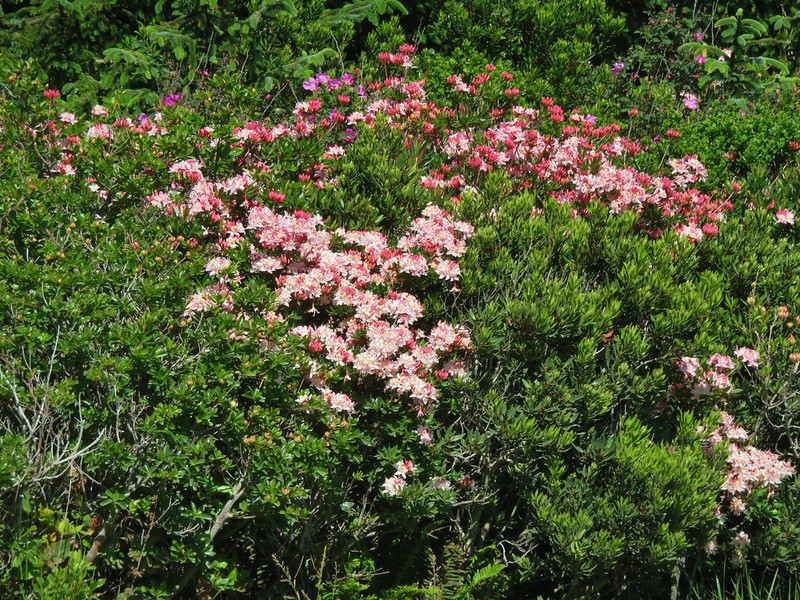
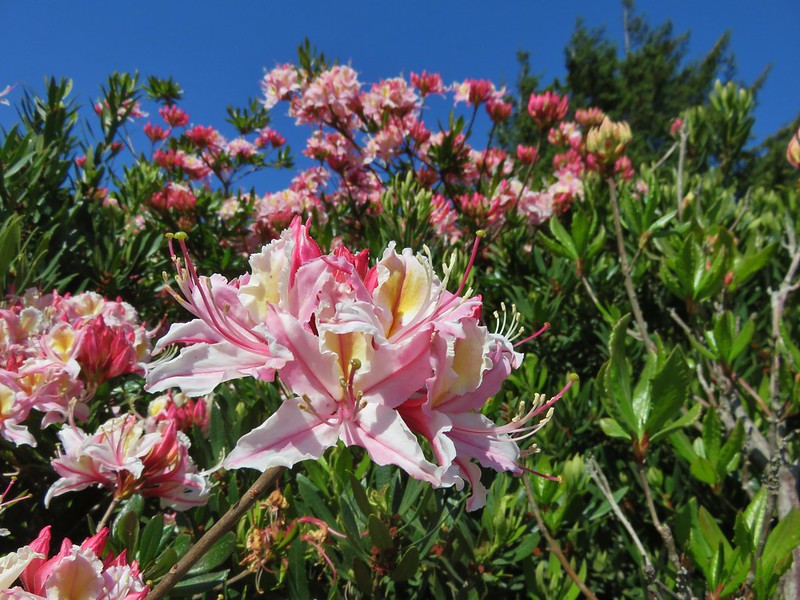
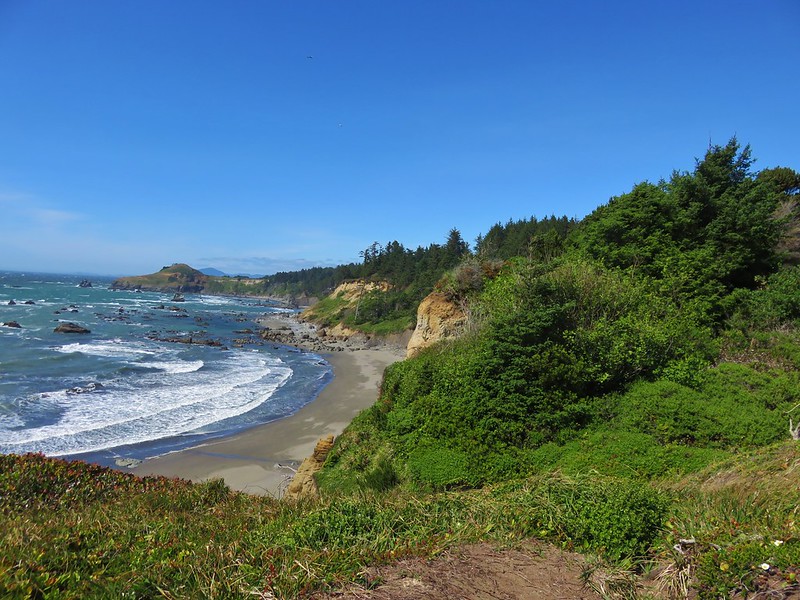
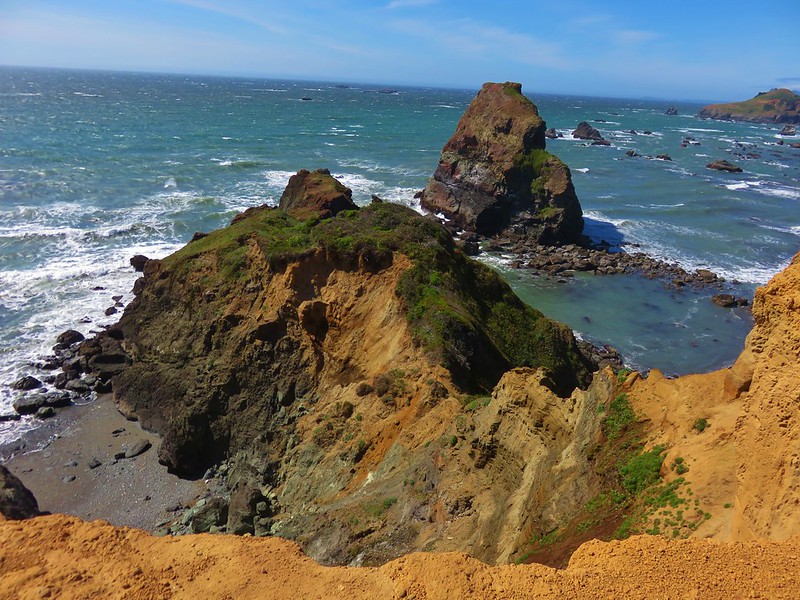
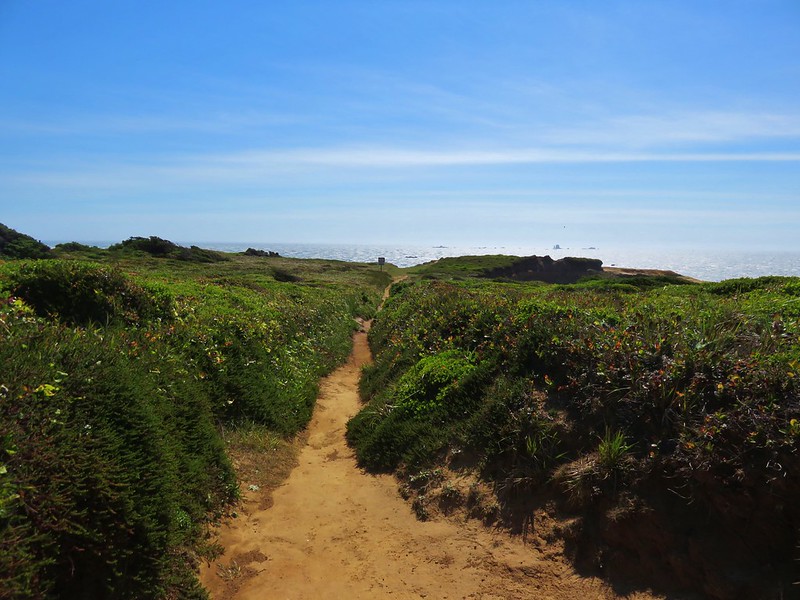
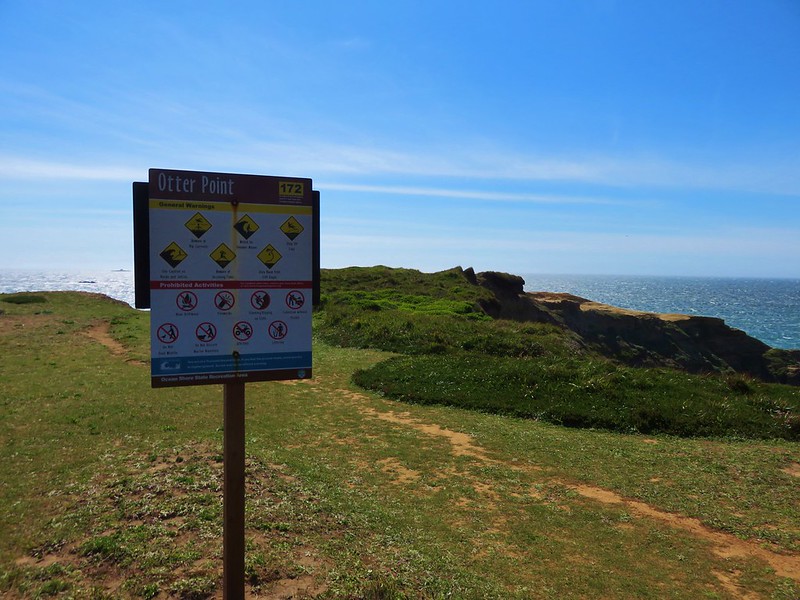
Our final stop for the day was at Otter Point State Park. This was another somewhat hidden park located along Old Coast Road 3 miles north of Gold Beach. Again signage was lacking for the park until we were at the entrance which took us some time to locate. It was worth the effort to find this little gem though. The parking area was lined with azaleas and wild roses and the trail to Otter Point had big views.
IMG_6206

IMG_6210

IMG_6131

IMG_6133

IMG_6150

IMG_6156

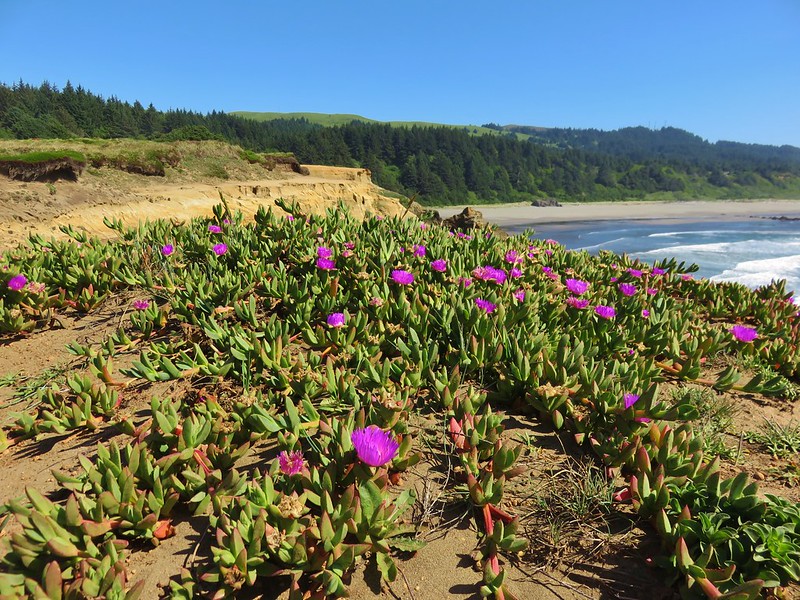
In addition to the views several types of flowers were present.
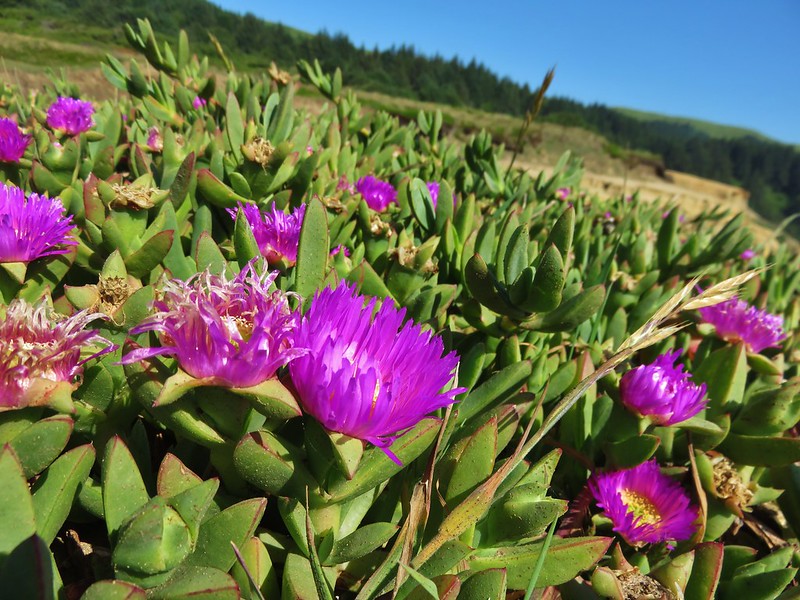
Sea Figs
IMG_6158

IMG_6161

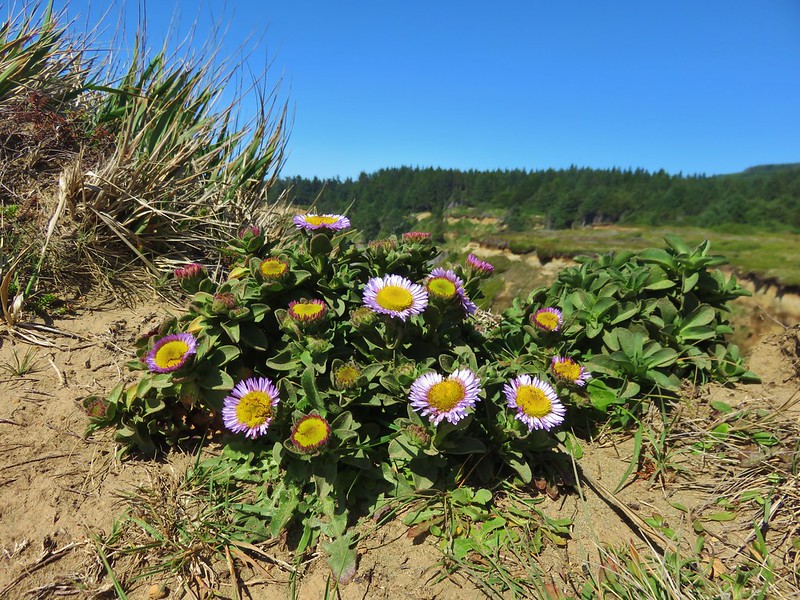
Seaside daisy
IMG_6189

Wild iris
IMG_6196

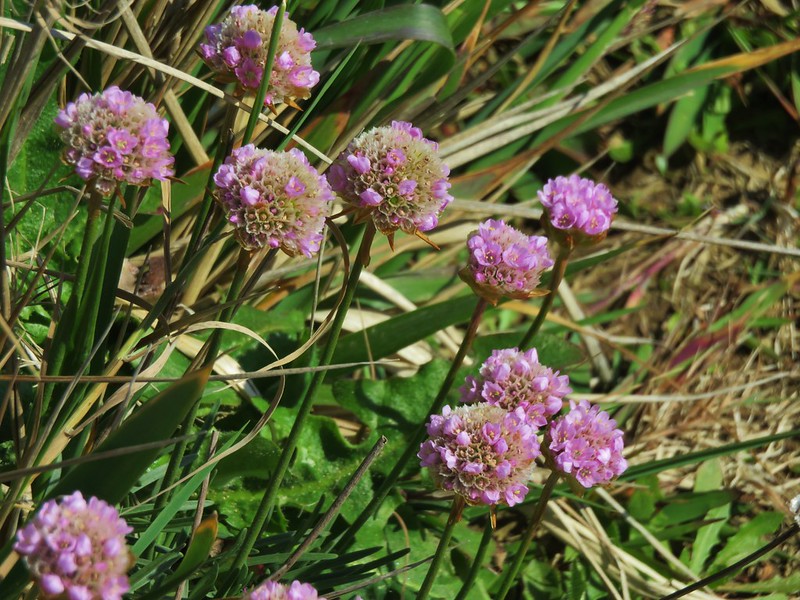
Sea thrift
IMG_6198

We were pleasantly surprised by both Sisters Rock and Otter Point and were glad we took the time to stop and check them out. These were short hikes (1.4 & 0.7 miles receptively)that really paid off. It was a nice start to the vacation and they set the bar for the rest of the weeks hikes. Happy Trails!

Flickr: https://www.flickr.com/photos/9319235@N02/albums

Categories
Bend/Redmond Central Oregon Hiking Oregon Trip report

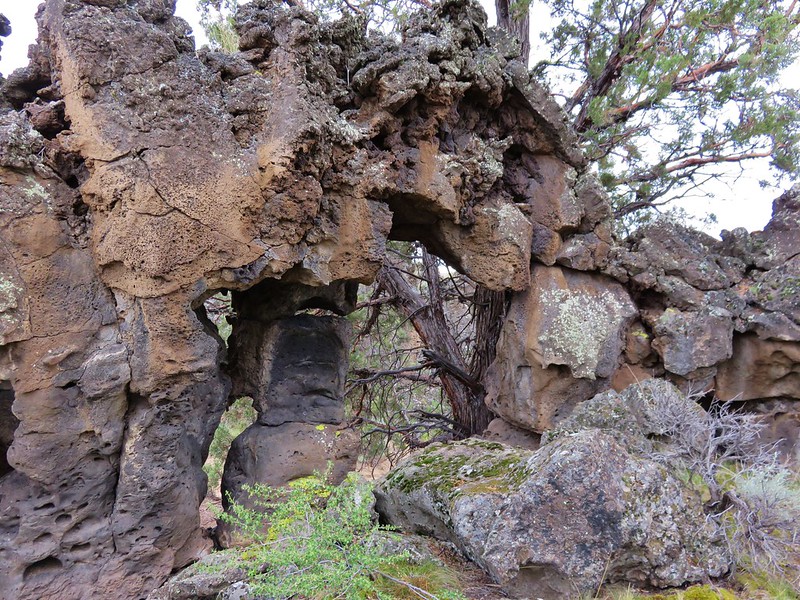
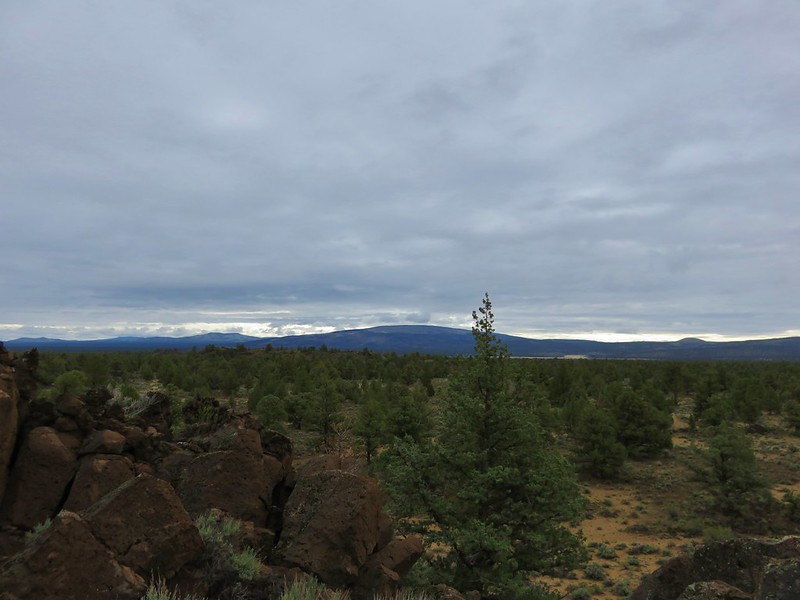
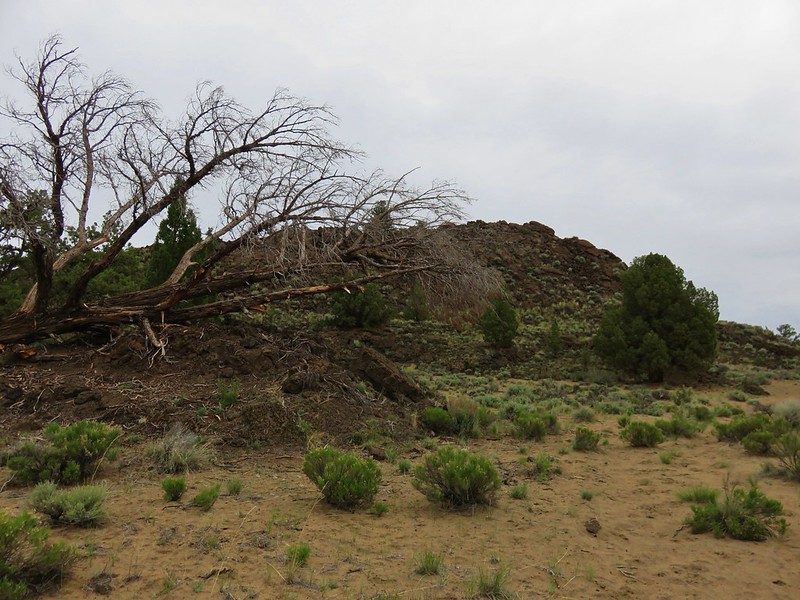
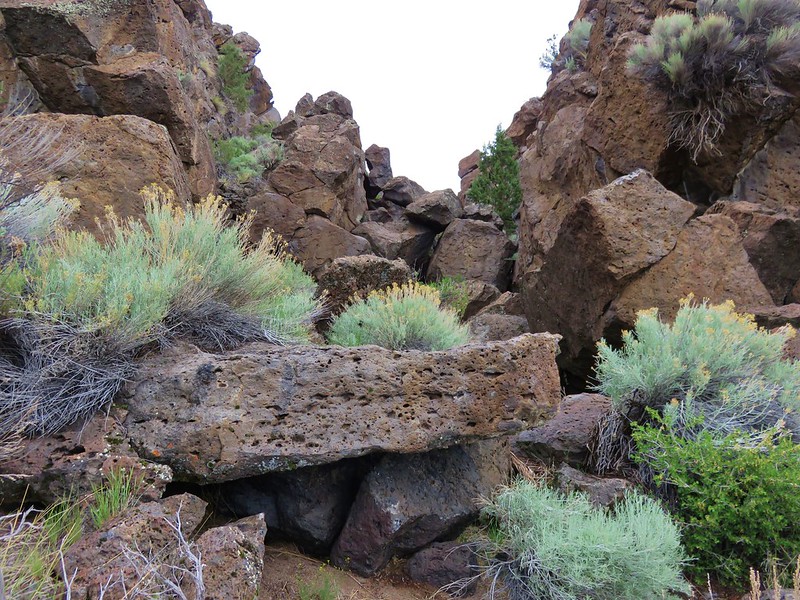
Oregon Badlands Wilderness

You know what they say about the best laid plans of mice and men…..they often go awry. After putting together a multi-year hiking schedule, much of it will need to be rearranged after our first vacation. We had planned on spending the week in SE Oregon hiking some of the most remote trails in the State, but the weather had other thoughts. Many of the trailheads in that area become inaccessible if it rains which is what the forecast was threatening heading into our vacation week.

Our original plan was to visit family in Bend on Saturday then hike in the Oregon Badlands Wilderness on the way to Jordan Valley on Sunday. We were hopeful that the forecast would clear up and headed to Bend for the visit but by Saturday night the chance of precipitation had increased so we decided not to risk traveling all that way and not being able reach the trails. We instead turned to Plan B which was to spend the week on the Southern Oregon Coast in Gold Beach. Since we were already in Bend though we stuck with our planned hike in the Oregon Badlands Wilderness before heading home to repack for a trip to the coast.

It was a drizzly morning when we arrived at the Flatiron Rock Trailhead fifteen miles east of Bend along Highway 20.
IMG_5613

IMG_5619

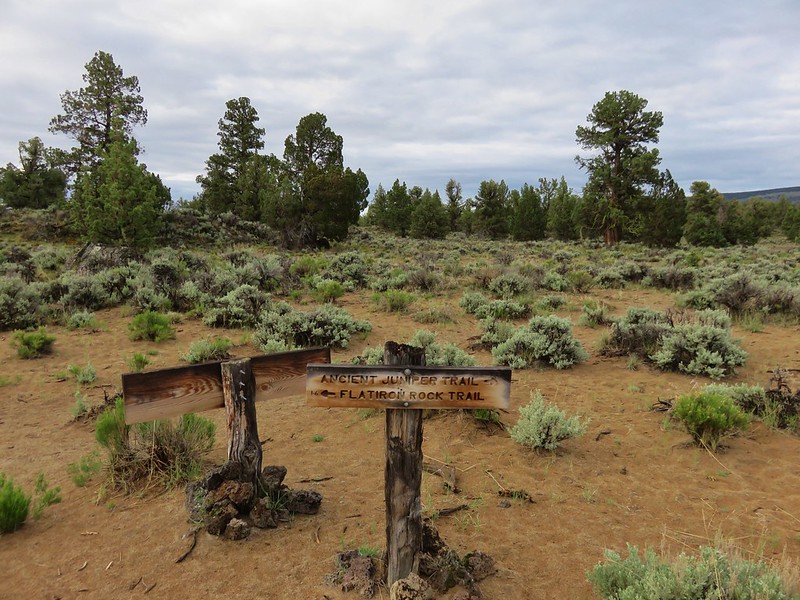
Our planned 13.5 mile hike was to start on the 1.9 mile Ancient Juniper Trail then take the Flatiron Rock Trail to Flatiron Rock. We’d then make a loop by taking the Castle Trail to Badlands Rock and the Badlands Rock Trail which we could follow to a junction with the Dry River and Homestead Trails. After taking a side trip on the Dry River Trail to visit the Dry River Channel we would use the Homestead Trail to get back to the Flatiron Rock Trail and return to the trailhead. Of course the best laid plans of mice and men……

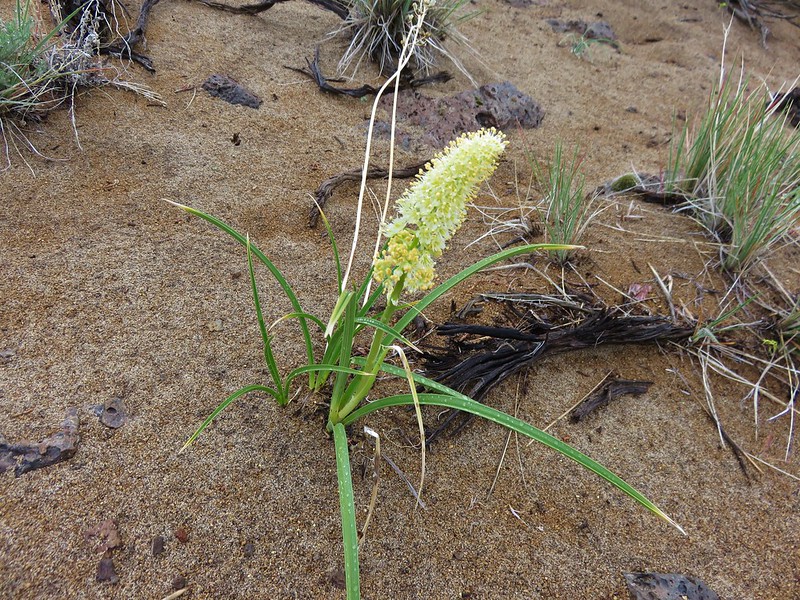
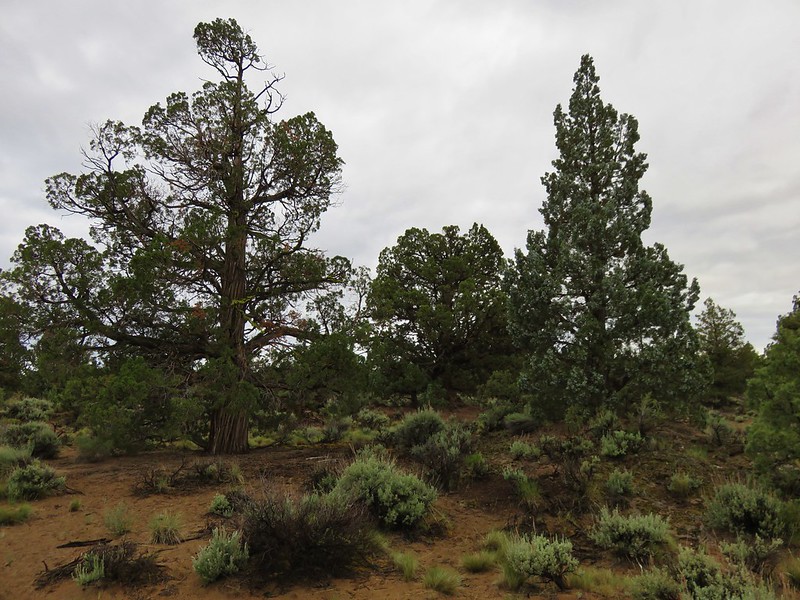
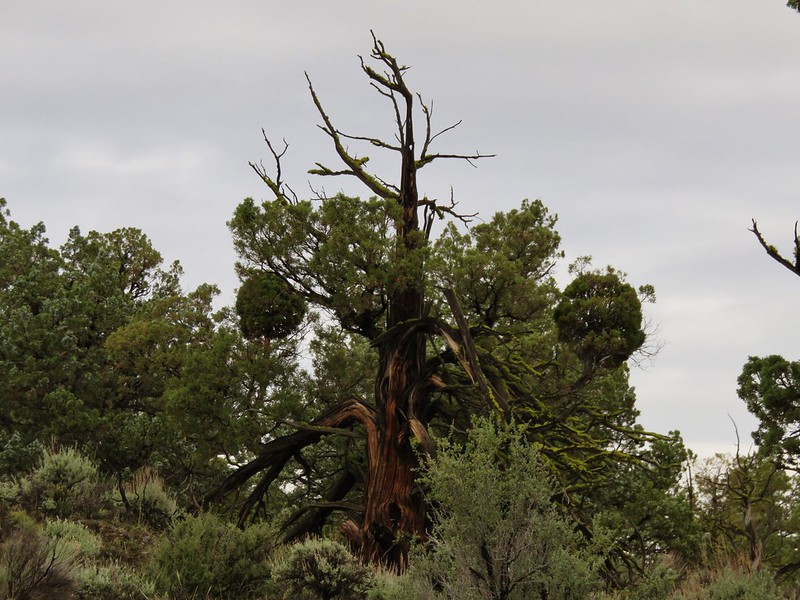
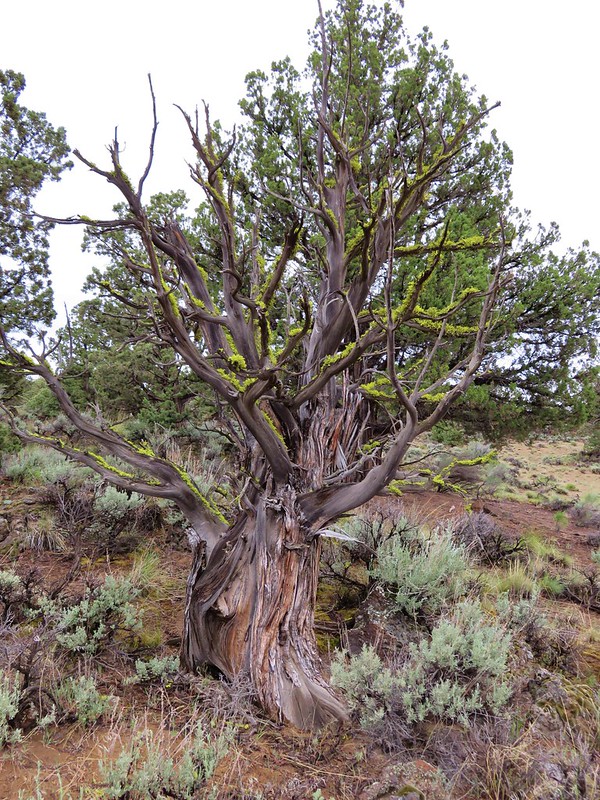
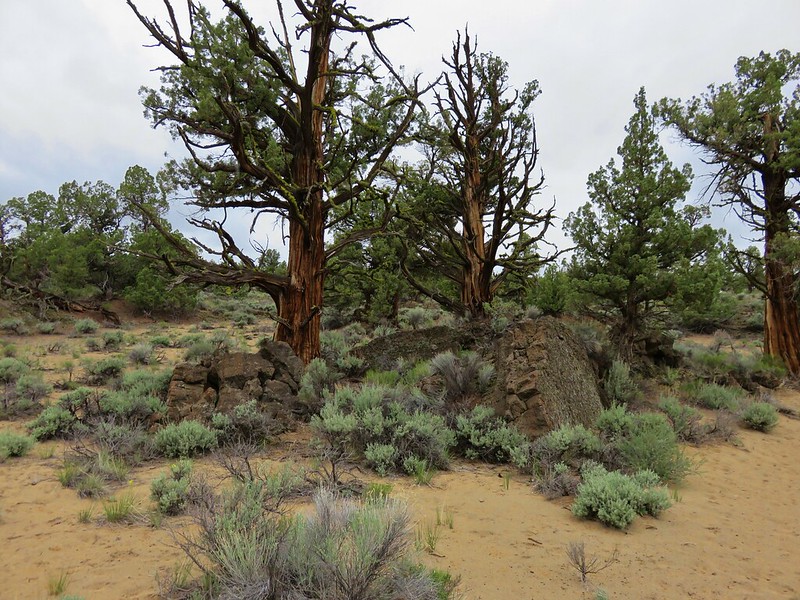
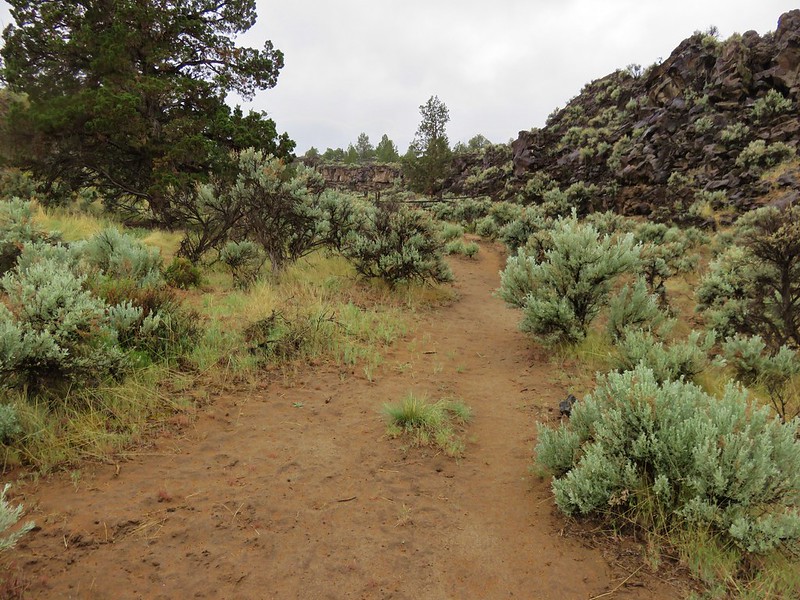
There were a fair amount of wildflowers along the Ancient Juniper Trail as well as plenty of juniper trees. We’ve always enjoyed the uniqueness of junipers and that uniqueness was on display here.
IMG_5620

IMG_5638

IMG_5632

IMG_5642

IMG_5649

IMG_5684

IMG_5690

IMG_5696

IMG_5660

IMG_5670

IMG_5678

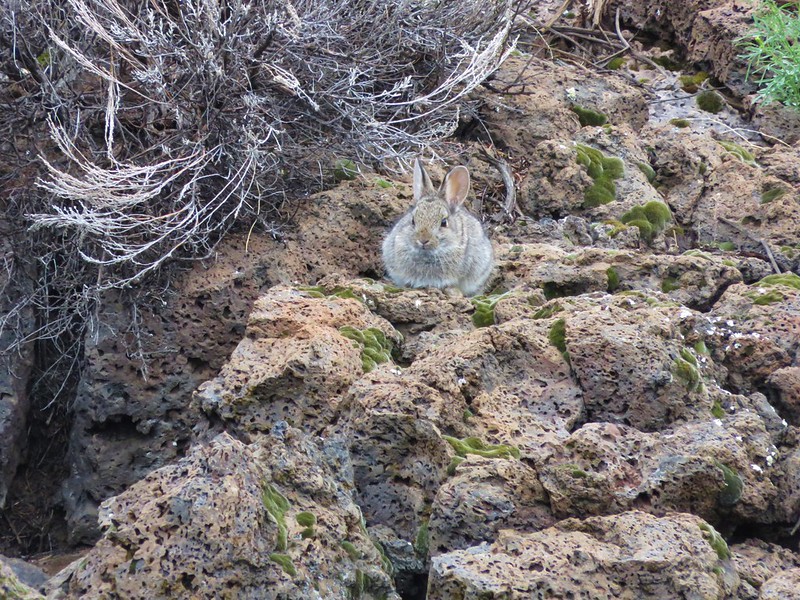
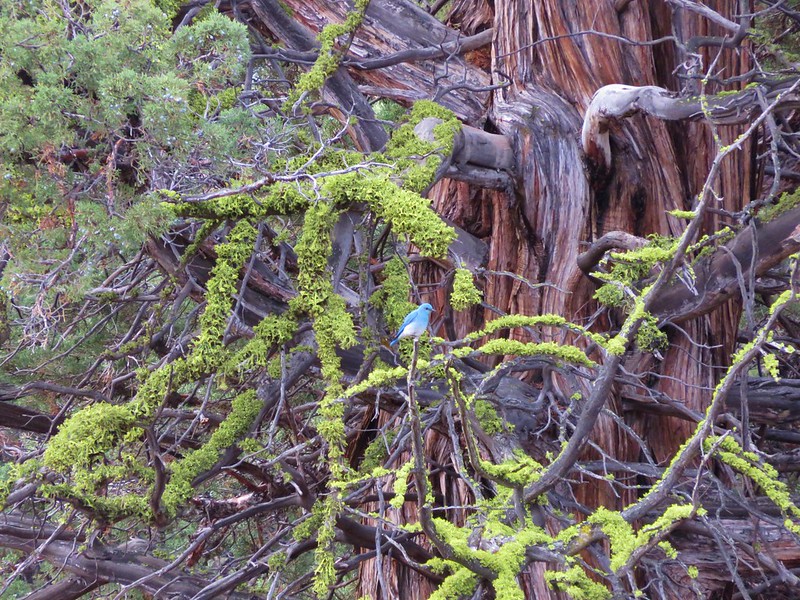
We also spotted a couple of rabbits and bluebirds along the way.
IMG_5668

IMG_5674

IMG_5705

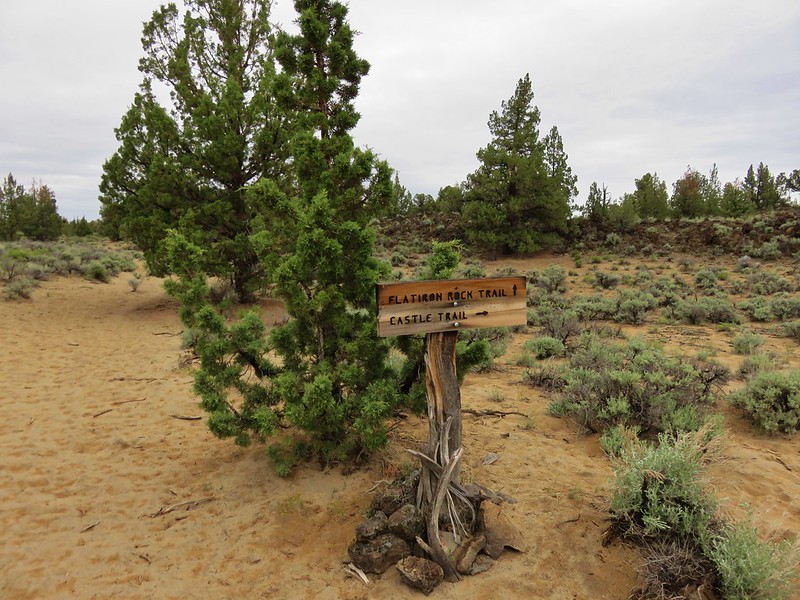
The signage was good at the first junction pointing us in the direction of Flatiron Rock.
IMG_5707

After 1.5 miles on the Flatiron Rock Trail we came to the junction with the Castle Trail.
IMG_5736
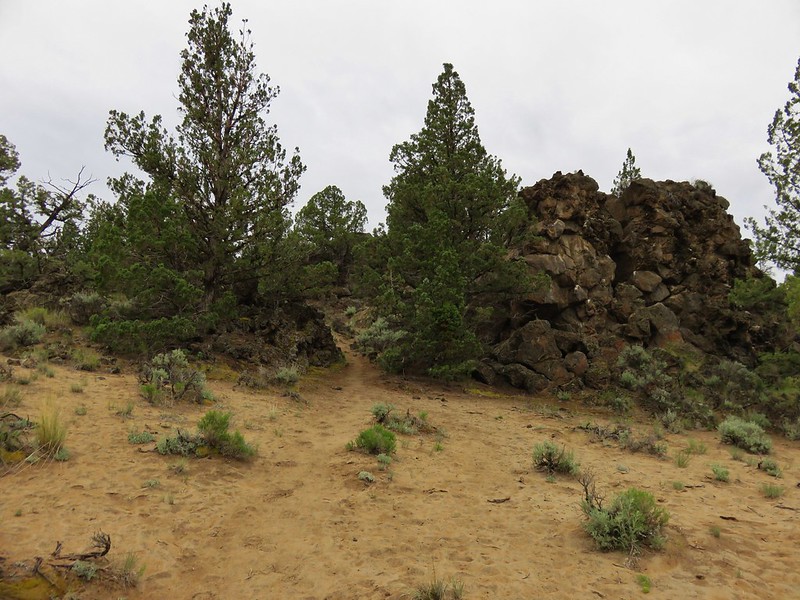
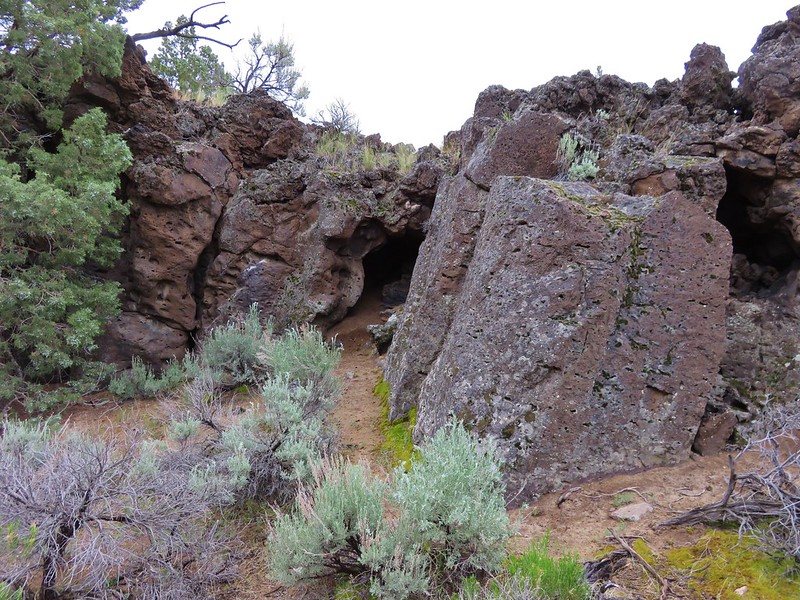
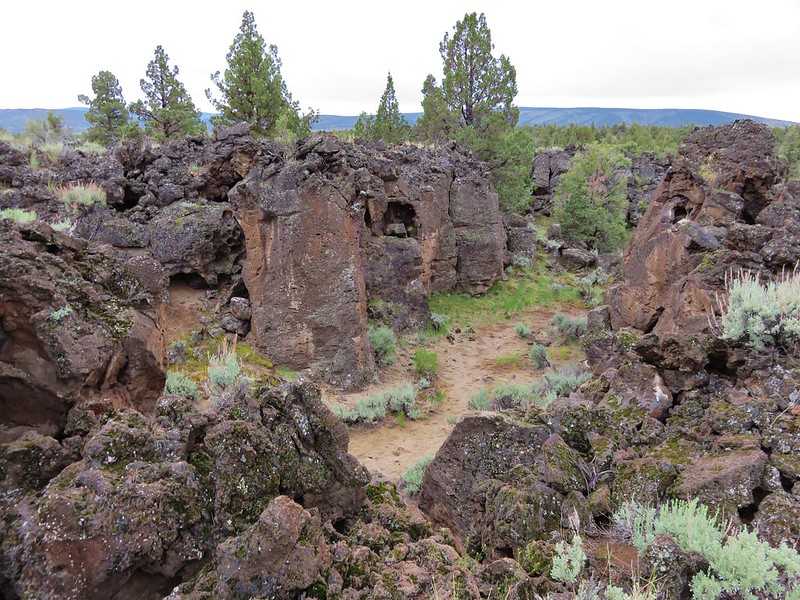
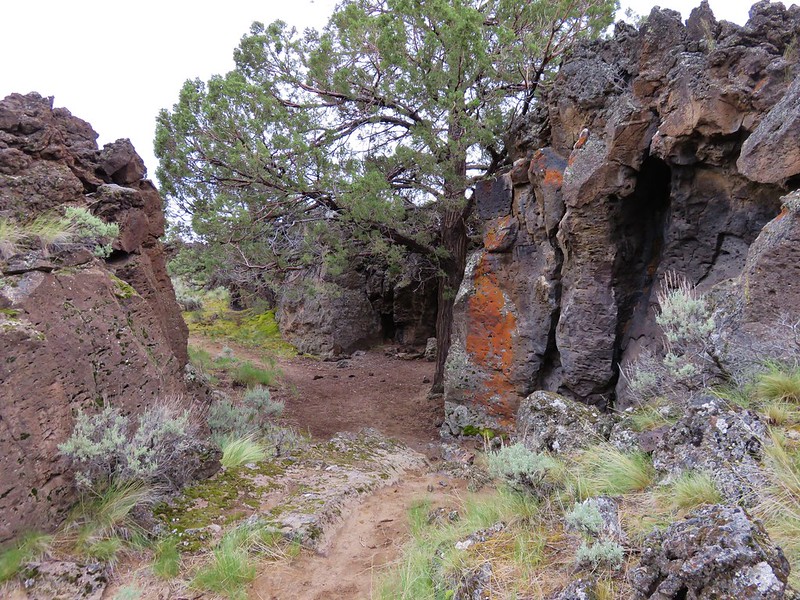
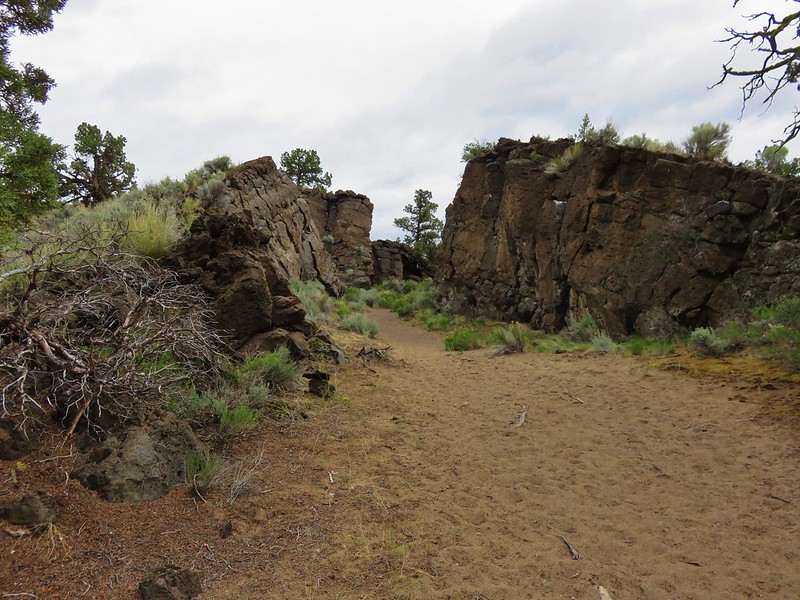
Flatiron Rock was also at this junction. One of the highlights of the Oregon Badlands Wilderness are the explore-able volcanic rock formations that dot the landscape. We followed a path between the pressure ridges and explored.
IMG_5737

IMG_5742

IMG_5747

IMG_5754

IMG_5755

IMG_5758

IMG_5773

IMG_5774

After wandering around Flatiron Rock we took the Castle Trail,Β which passed another explore-able rock formation, before arriving at Badlands Rock which towered above the surrounding area.
IMG_5779

IMG_5780

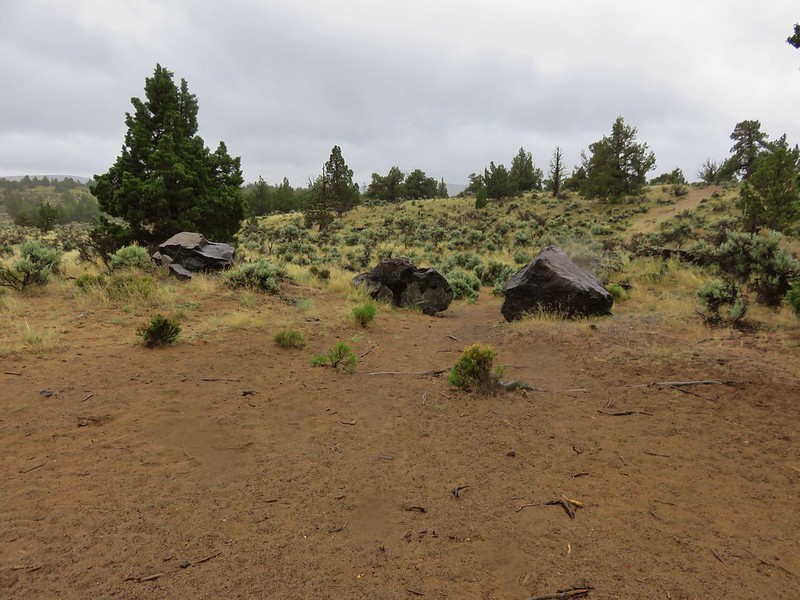
We attempted to pass through Badlands Rock from the east side but a pile of large boulders made it impossible to get through without some extra effort.
IMG_5781

We went back around to the west end and after a fairly easy scramble managed to get inside the walls of Badlands Rock.
IMG_5783

At this point our plans began to go awry. Looking at the map we were using we were expecting a trail to bend slightly to the right after passing Badlands Rock but we didn’t see a trail sign and the openness of the area and profusion of old dirt roads and game trails have left paths all over. We had briefly taken a right hand turn at the rock formation along the Castle Trail and were now thinking that maybe that had been the correct path after all. We decided to head back to that spot and inspect it more thoroughly.

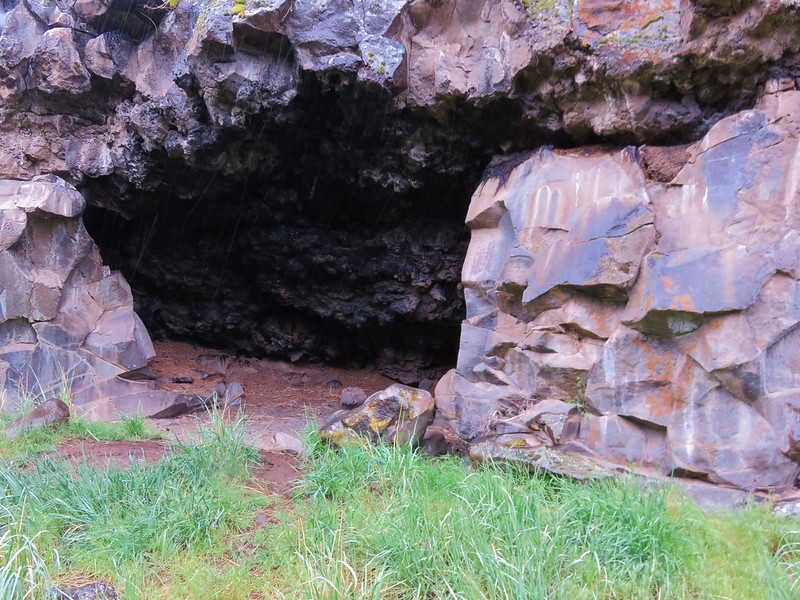
This time we explored the rock formation. It had some interesting features and a nice view of Badlands Rock.
IMG_5789

IMG_5790

IMG_5798

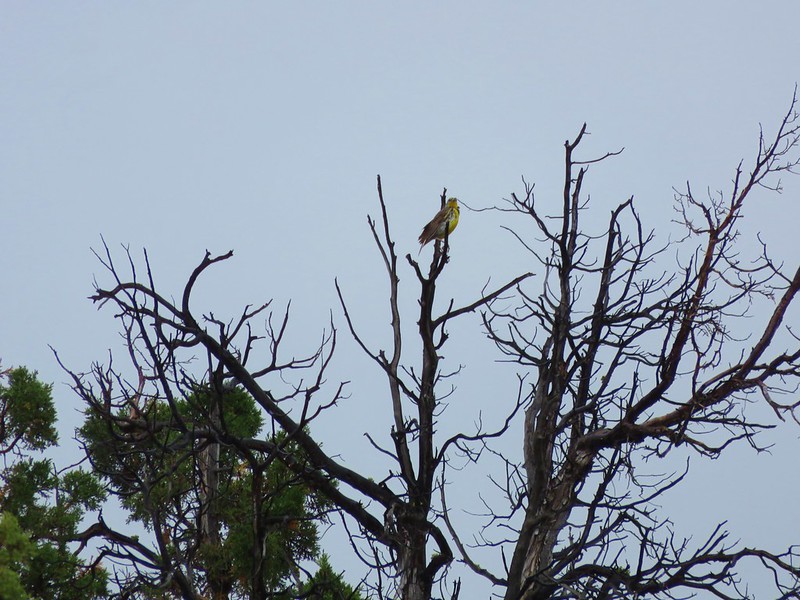
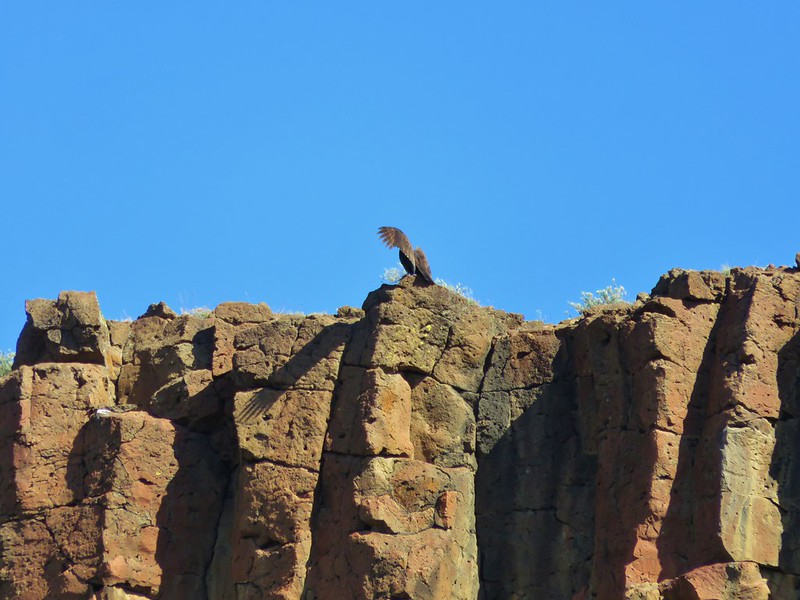
It also, apparently, had a Turkey Vulture living in it. As we were passing by, we heard a ruckus coming from the rocks and saw something moving in a crevice. A vulture popped out and stood on the rocks a short distance from us.
IMG_5797

We excused ourselves and headed back down to what we believed was the correct trail while the vulture circled overhead to make sure we left. Upon further review of the map and our GPS we decided that the trail we wanted was not here and was in fact back at Badlands Rock. We turned around and returned to Badlands Rock going a little further around it this time where we finally spotted a lone trail sign.
IMG_5804

We made our next mistake here following the pointer even though it didn’t seem to agree with what our map indicated. Instead of bending right it went left/straight but the only thing to the right appeared to be an old dirt track that made a sharp turn. We thought that the trail we decided on probably bent back around to the right just a bit further on, which it did convincing us that we were on the right track. We thought we were on a 2.7 mile stretch of the Badlands Rock Trail that led to the junction with the Dry River and Homestead Trails so we settled in and enjoyed the scenery.
IMG_5805

IMG_5807

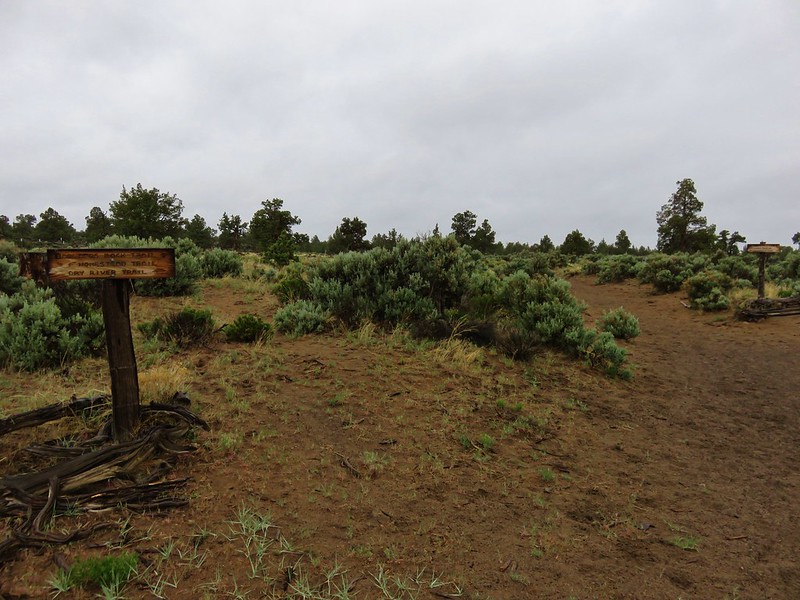
After awhile we started to feel like we should have reached that junction already. We were once again questioning our route when we did spot a sign post at a trail junction.
IMG_5810

The problem was we had no idea what the Tumulus Trail was. Our map did not show it (it didn’t extend out as far as we’d gone). We hummed and hawed for awhile looking at the map and GPS before finally deciding we had gone the wrong way at Badlands Rock. We didn’t know where the Tumulus Trail went and we weren’t sure about trying to navigate cross country, so we headed back the way we’d come, which turned out to be 3.3 miles in the wrong direction.

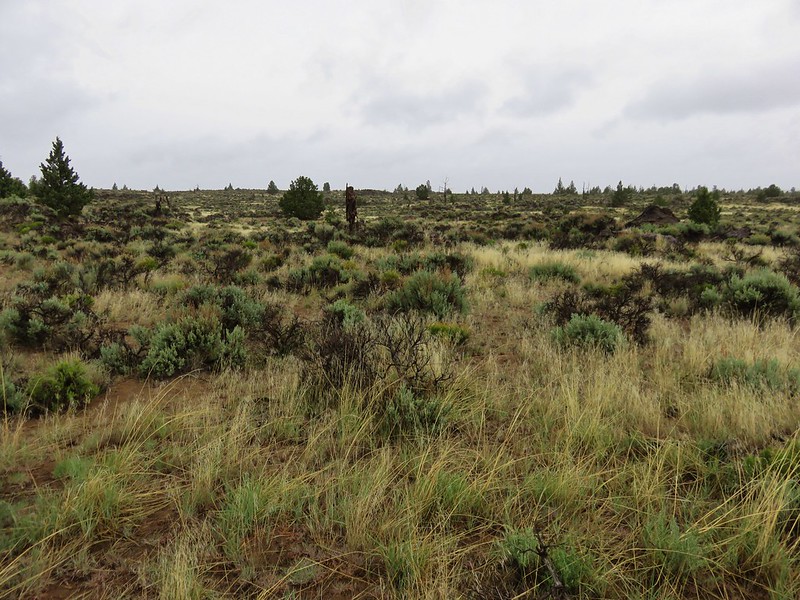
We picked up the correct path at Badlands Rock and headed south passing through a more open landscape to the correct trail junction. This area was full of birds.
IMG_5817

IMG_5821

IMG_5814

IMG_5827

IMG_5835

We turned up the Dry River Trail for .8 miles turning off at three boulders to find the Dry River Canyon.
IMG_5844

Once upon a time the canyon was home to a tributary of the Deschutes River. The rocks provided proof of the vanished river.
IMG_5848

IMG_5851

IMG_5852

We passed through the canyon for a ways then climbed out and cut cross country back to the Dry River Trail and returned to the junction with the Homestead Trail. It was another 2.2 miles on the Homestead Trail back to the Flatiron Rock Trail then an additional 1.2 miles to the car. When it was all said and done the GPS showed a total of 22.6 miles and it had taken us a little of 9 hours. We were leaving the trailhead about the time we had planned on being back home to repack for our trip to Gold Beach. Our plans had truly gone awry.
We ate dinner at Pilot Butte Drive In before leaving Bend then drove back to Salem to get ready for our next adventure in the morning. Happy Trails!

Flickr: https://www.flickr.com/photos/9319235@N02/albums/72157667960760550

Categories
Columbia Gorge North Hiking Trip report Washington

Dog and Augspurger Mountains

This was our second visit to Dog Mountain and probably our final one for several years at least. While the wildflower meadows on Dog Mountain are arguably the best in the Columbia Gorge, that distinction brings crowds. We do our best to avoid crowded hikes, but our visit in May 2014 was on a morning when low clouds covered the upper meadows limiting views of the gorge and the flowers. https://wanderingyuncks.wordpress.com/2014/05/18/dog-mountain/

Reports of the flower show being near peak and the promise of a sunny day brought us back to Dog Mountain for the views we missed and an additional visit to Augspurger Mountain which we had done on our previous trip. We left extra early arriving at the trailhead just after 6am to find close to a dozen cars already in the parking area. The parking area has recently gone through some changes reducing the number of spots from 200 to 75. For more information check out http://www.oregonhikers.org/forum/viewtopic.php?f=14&t=23519.

Two trails start from the parking lot, the Dog Mountain and Augspurger Trail, which make an 7 mile loop possible. The Augspurger trail also continues 4.7 miles beyond its junction with the Dog Mountain Trail past the summit of Augspurger Mountain to meadows with views of 3 Washington volcanoes.

We started up hill on the Dog Mountain Trail gaining almost 700′ in the first half mile to a junction in the forest.
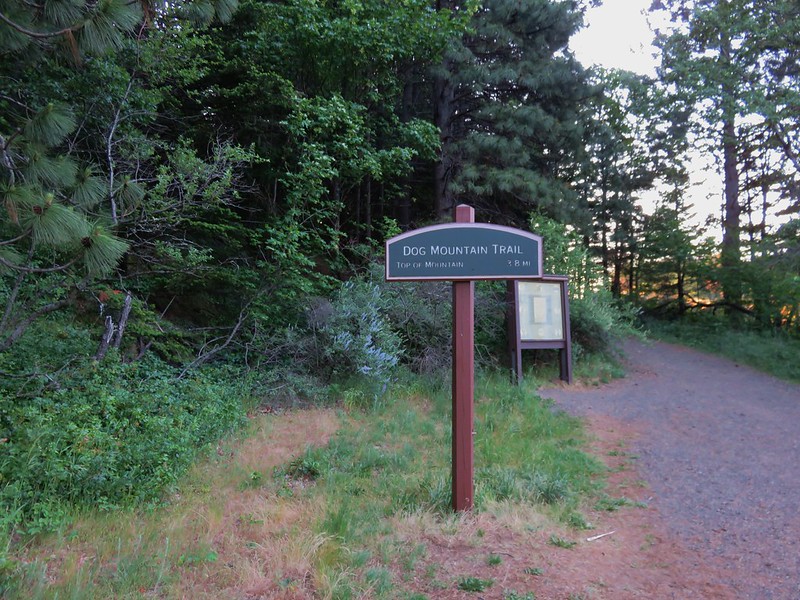
Dog Mountain Trailhead

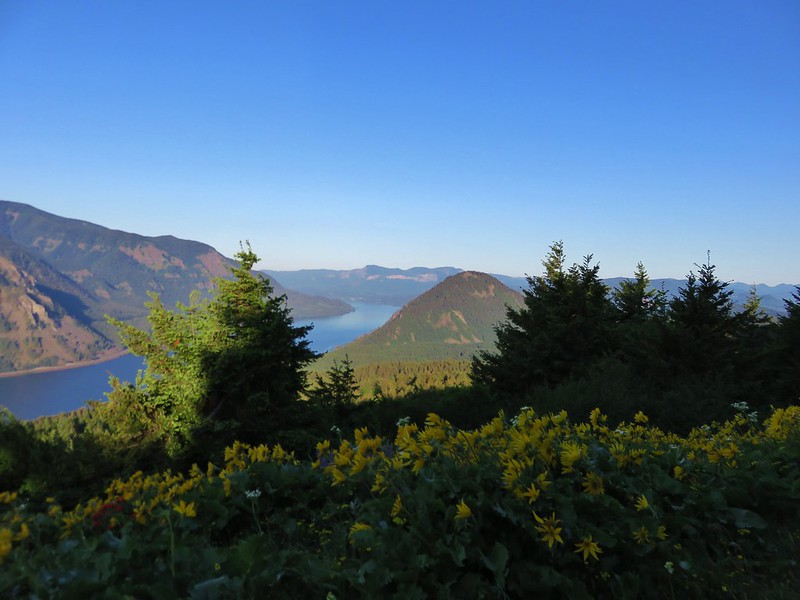
We forked right at the junction following the slightly longer, less difficult, and more scenic trail. After another mile (and another 800′ of elevation gain) we arrived at the lower meadow. The flowers were still in pretty good shape here and the view was better than during our first visit.
Upper meadow on Dog Mountain from the lower meadow//embedr.flickr.com/assets/client-code.js

Lower meadow on Dog Mountain

Columbia River from the lower meadow on Dog Mountain

Paintbrush, lupine, balsamroot and other flowers in the lower meadow

Wildflowers in the lower meadow on Dog Mountain

Wind, Greenleaf and Table Mountains from the lower meadow

The less and more difficult trails rejoined after another half mile back in the forest.
Dog Mountain Trail

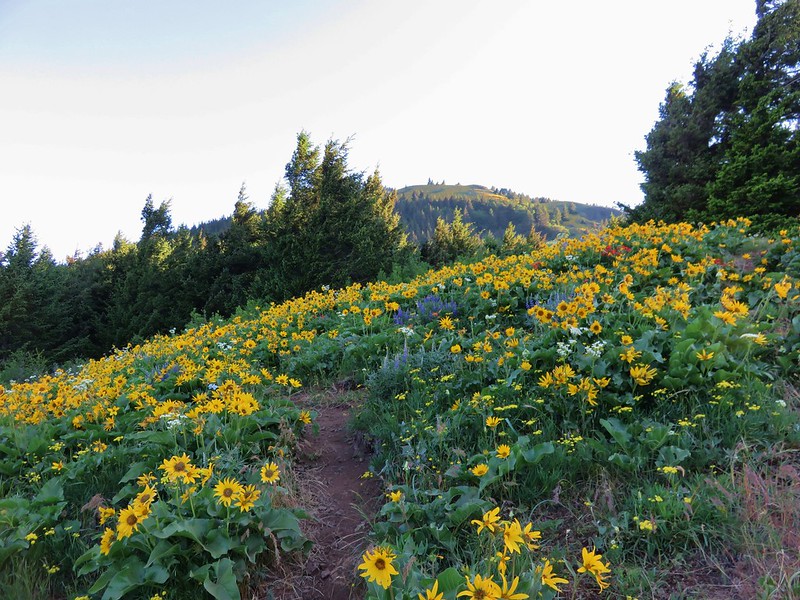
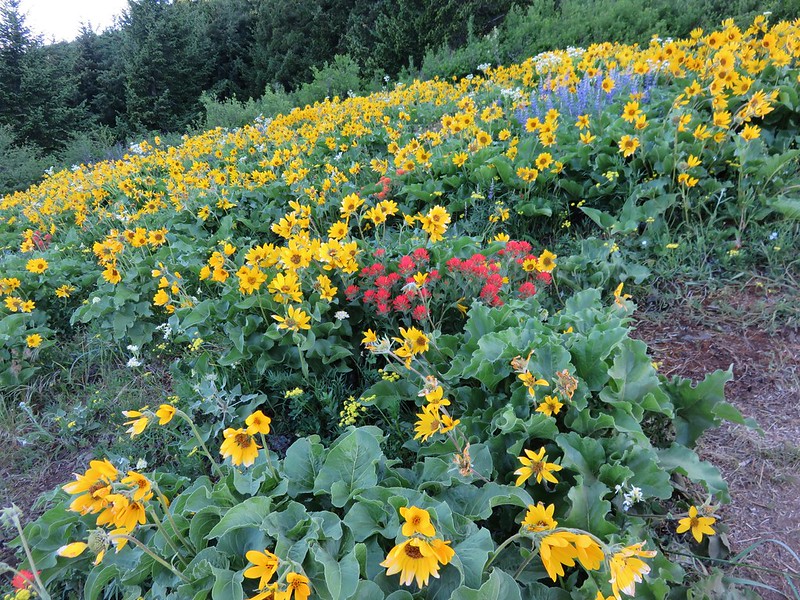
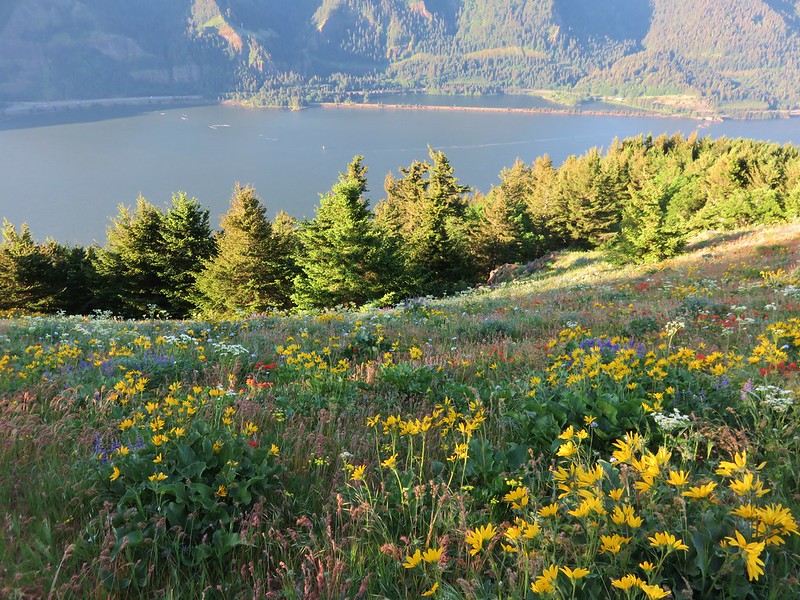
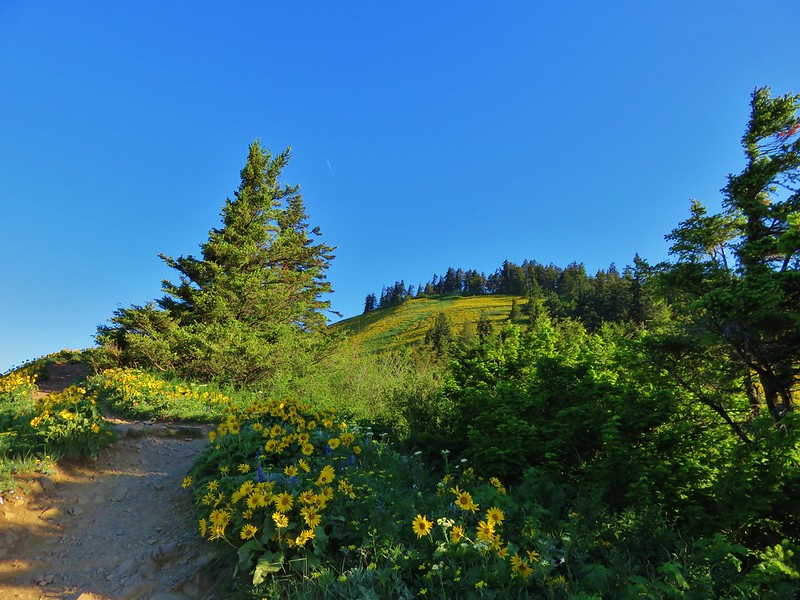
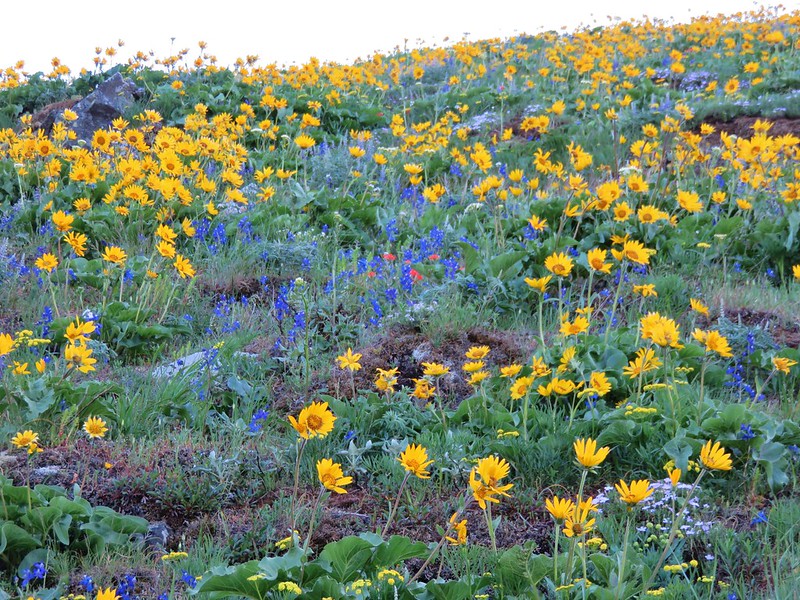
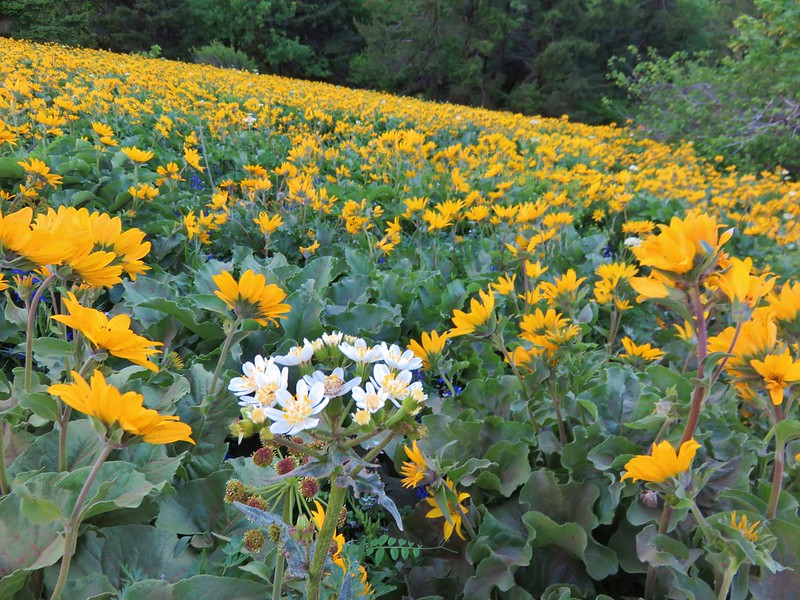
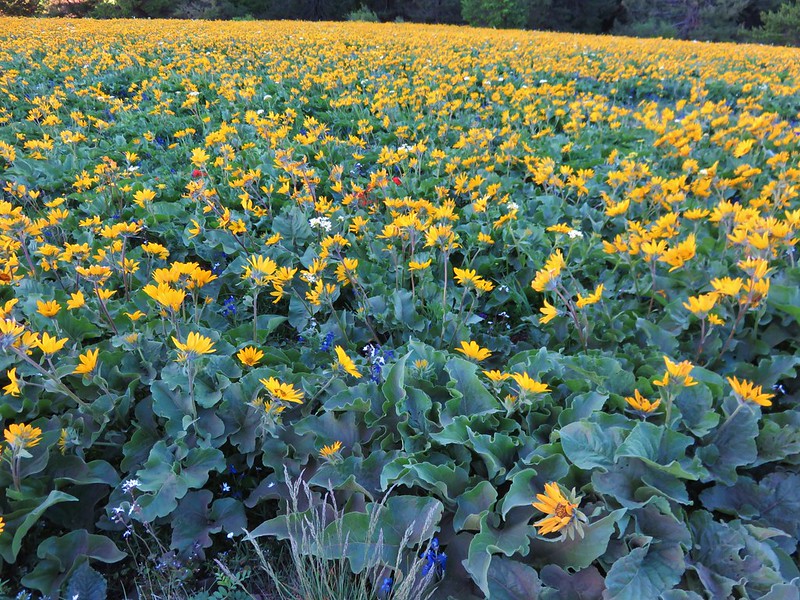
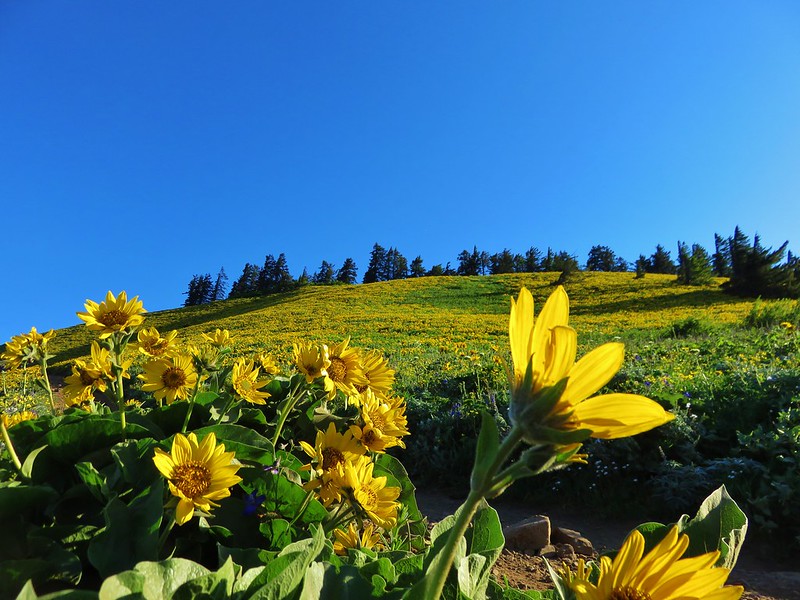
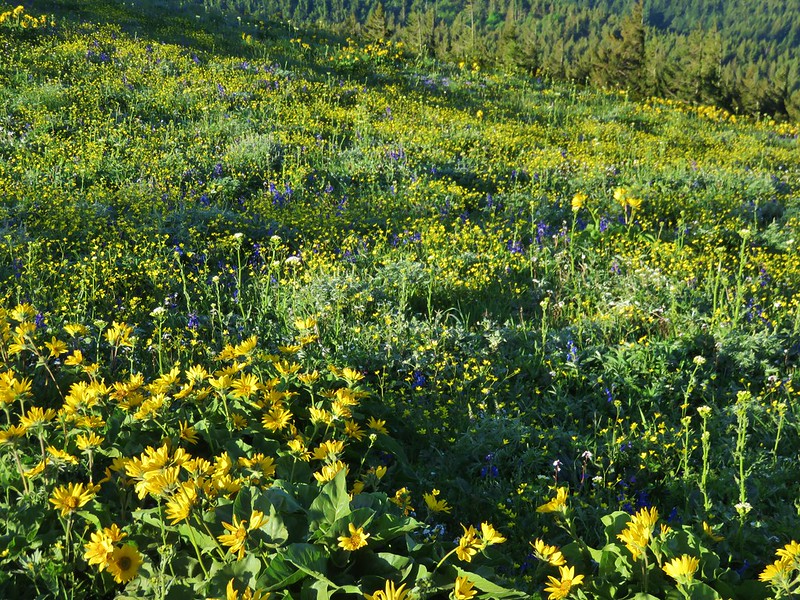
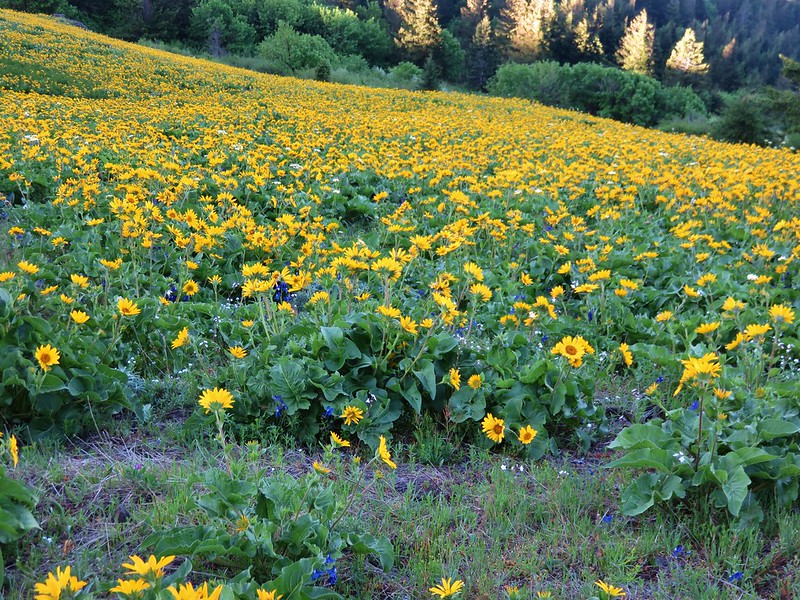
Another 550′ climb over the next half mile brought us to the site of a former lookout at the lower end of Dog Mountain’s upper meadow. The balsamroot painted much of the hillside yellow. Other flowers were mised in adding splashes of red, white, and purple to the color palette.
Dog Mountain Trail

Upper meadow on Dog Mountain

Lakrspur and balsamroot with a little paint

Balsamroot, lupine and paintbrush

Upper meadow on Dog Mountain

Upper meadow on Dog Mountain

Larkspur, balsamroot, and paintbrush

Upper meadow on Dog Mountain

We continued .4 miles from the former lookout site to a signed junction where a .1 mile path led up to the trails high point at the top of the meadow.
Upper meadow on Dog Mountain

Upper meadow on Dog Mountain

Balsamroot on Dog Mountain

Dog Mountain Trail

Junction in the upper meadow

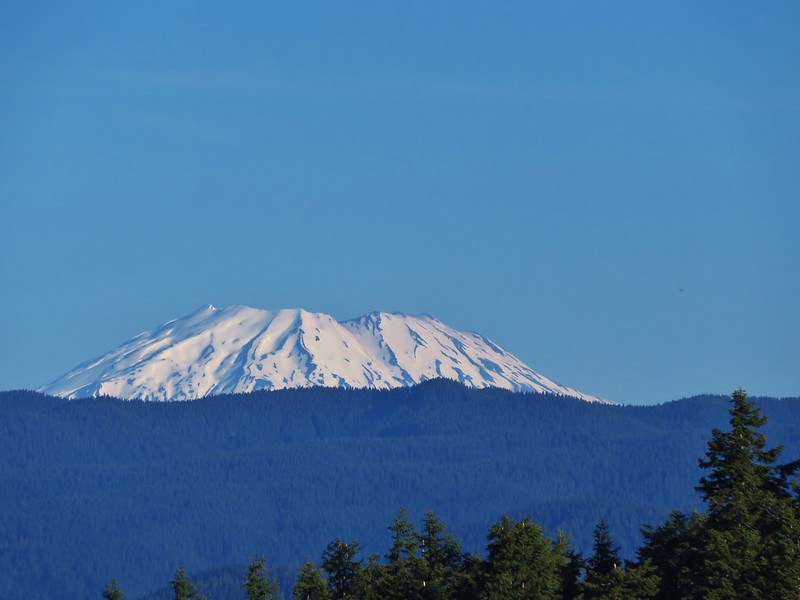
The trail had not been too crowded, but we had already encountered more people in the first three miles than we had on our previous thirty-three miles of trail. It wasn’t the people that chased us from the top of the meadow though, it was the bugs. There was no breeze to keep them down and there were a lot of them including some biting flies. After taking in the view including Mt. Hood and Mt. Defiance to the south and Mt. St. Helens to the west we headed back down to the junction.
Mt. Hood and Mt. Defiance form the top of the upper meadow

Mt. Hood

Mt. St. Helens from the top of the upper meadow

Mt. St. Helens

Wind Mountain and the Columbia River from the top of the upper meadow

We continued on the Dog Mountain Trail another 1.1 miles, passing more wildflowers and fewer people, to its junction with the Augspurger Trail.
Paintbrush, buttercup, larkspur, balsamroot and chocolate lily

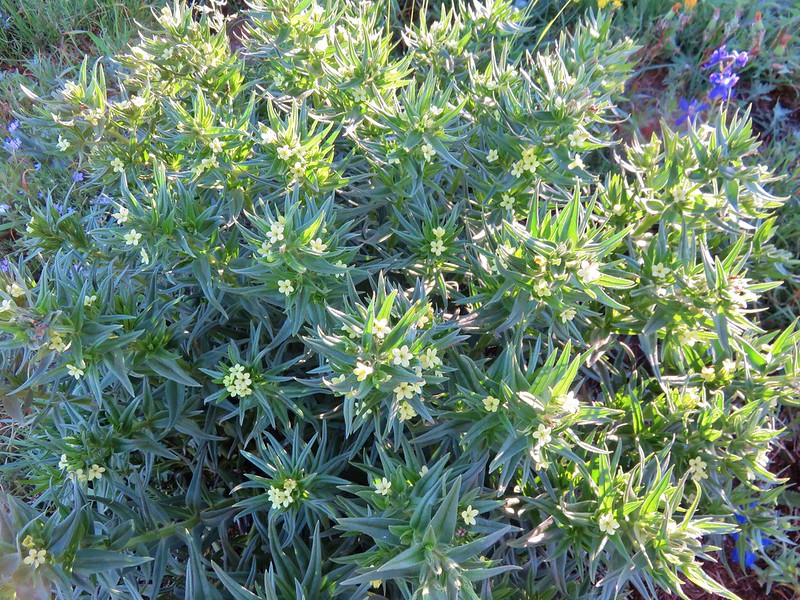
western stoneseed

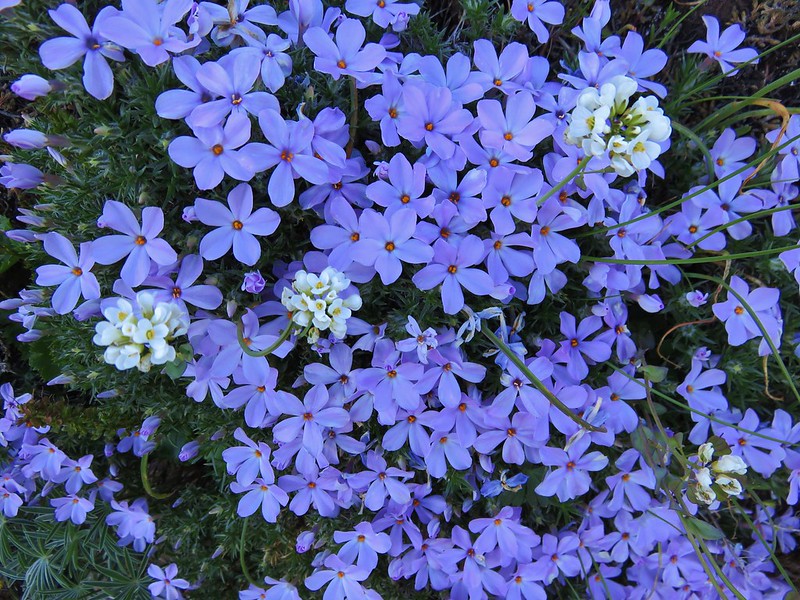
Phlox

Balsamroot, paintbrush, phlox and larkspur

Meadow on Dog Mountain

White capped sparrow on balsamroot

Vanilla leaf and star flowered solomon's seal

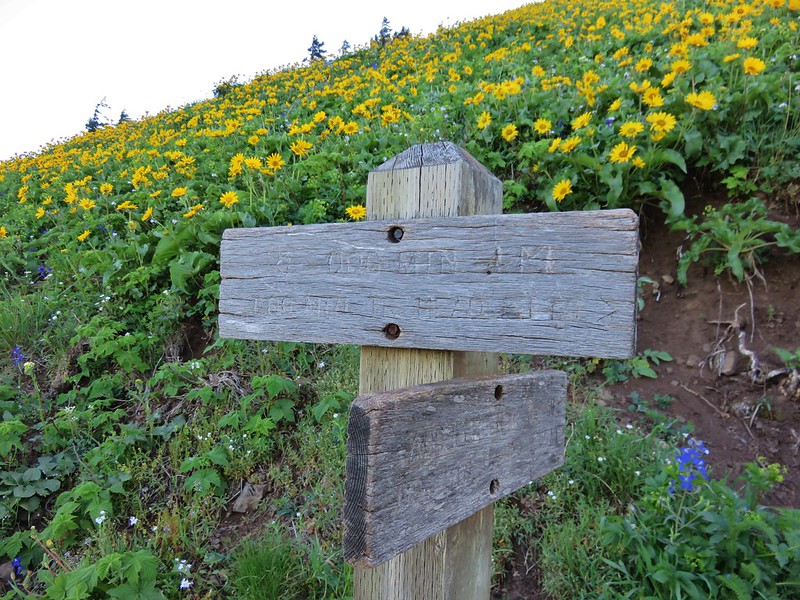
Junction with the Augspurger Mt. Trail. (The spelling is wrong on the sign.)

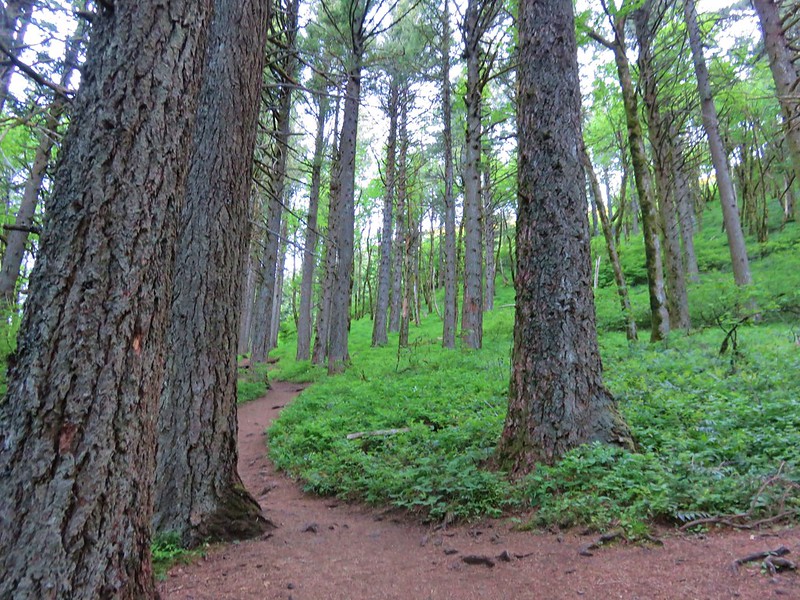
We turned right at the junction and headed for Augspurger Mountain. It was immediately obvious that far fewer hikers used this portion of the trail. Brush crowded the path as it followed a wooded ridge dropping 400′ into a small valley.
Augspurger Trail

Augspurger Trail

A fairly steep climb on the far side of the valley brought us to a dirt road which we followed uphill to the right. After passing under some powerlines the road reentered the forest. At a sharp right hand turn markers indicated the continuation of the Augspurger Trail.
Augspurger Trail

Augspurger Trail

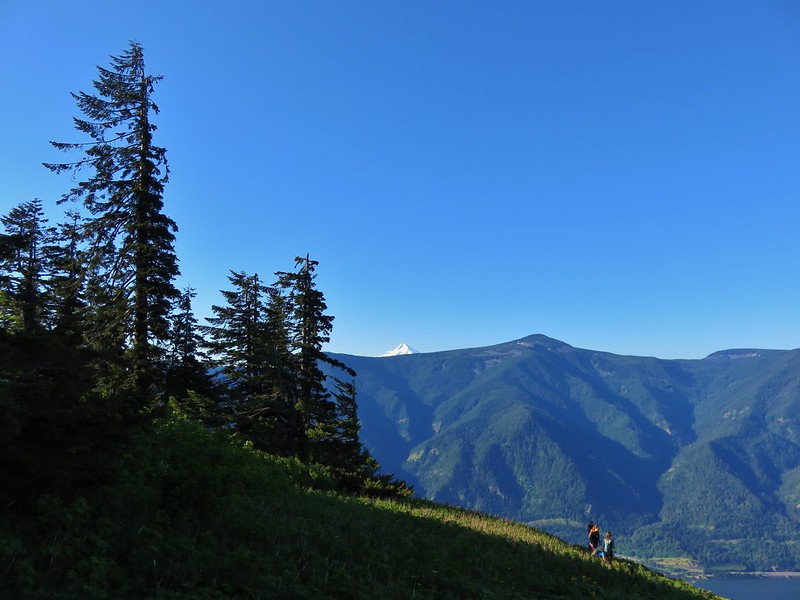
Another half mile of climbing brought us to the first of several small meadows. This one had wildflowers and views back to Dog Mountain and Mt. Hood and to the west down the Columbia River.
Dog Mountain, Mt. Hood and Mt. Defiance from the Augspurger Trail

Wind Mountain and the Columbia River

Augspurger Trail

Chocolate lily and larkspur

Serviceberry, paintbrush and larkspur
Lomatium and paintbrush

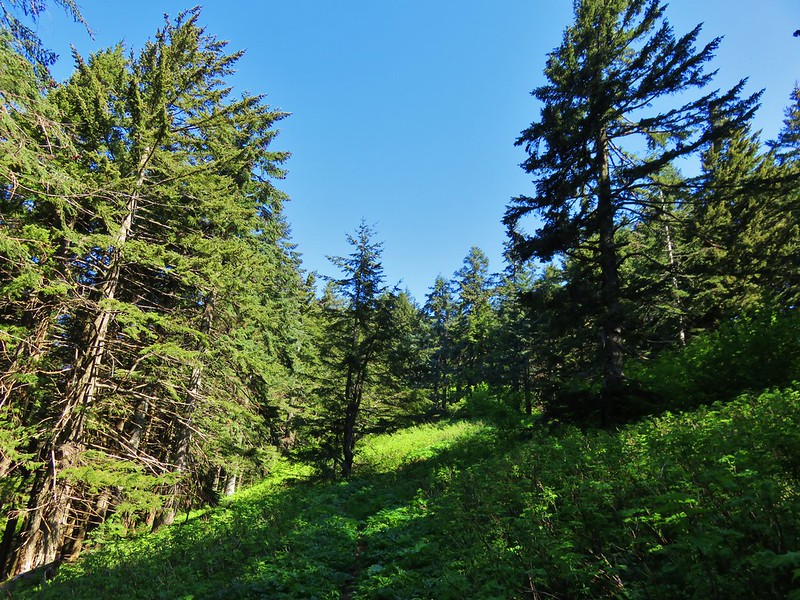
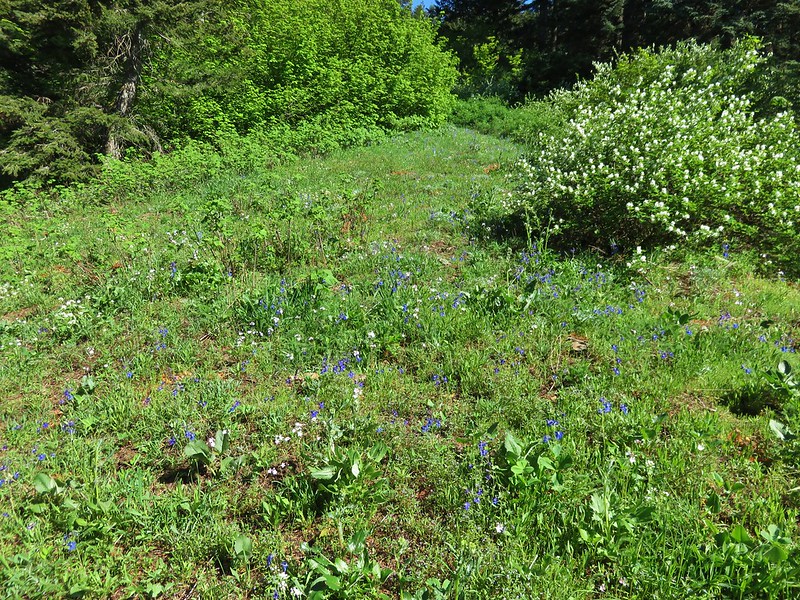
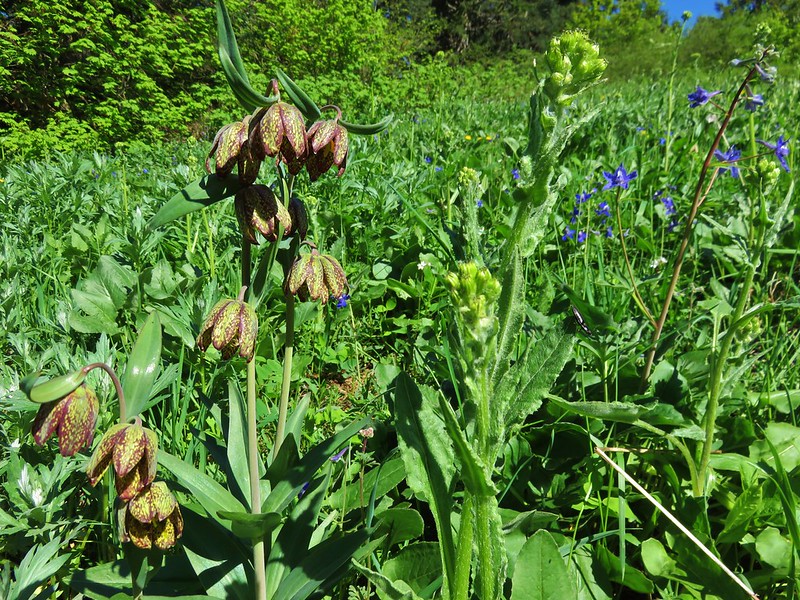
For the next 2+ miles the trail alternated between trees and meadows as it followed a ridgeline up Augspurger Mountain. Each meadow seemed to host a different combination of flowers and plants and the sections of forest all had different feels to them.
Augspurger Trail

Dutchman's breech

Augspurger Trail

Augspurger Trail

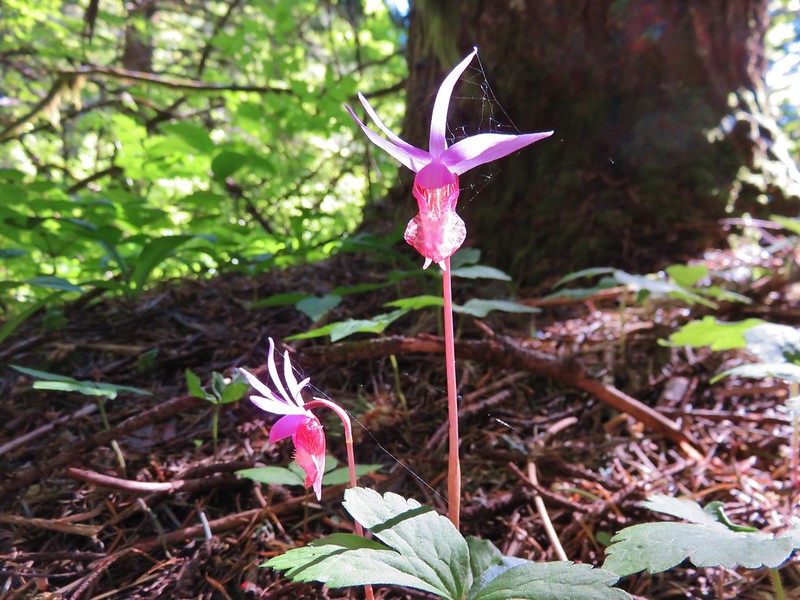
Fairy slippers

Augspurger Trail

Wildflowers along the Augspurger Trail

Chocolate lily and a beetle

Trillium

Augspurger Trail

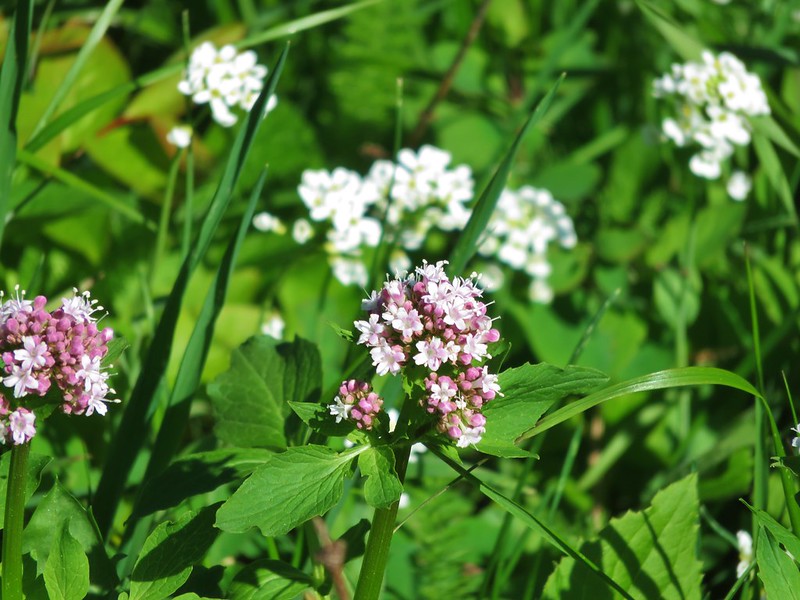
Valerian

We momentarily lost the trail in the final meadow near the top of the mountain. Between some downed trees and new growth it was hard to tell where the trail was. I thought I had found it leaving from the right side of the meadow but quickly lost an sign of it in the trees. We went back to the meadow and picked up a faint but clear path heading to the left out of the top of the meadow.
Augspurger Trail

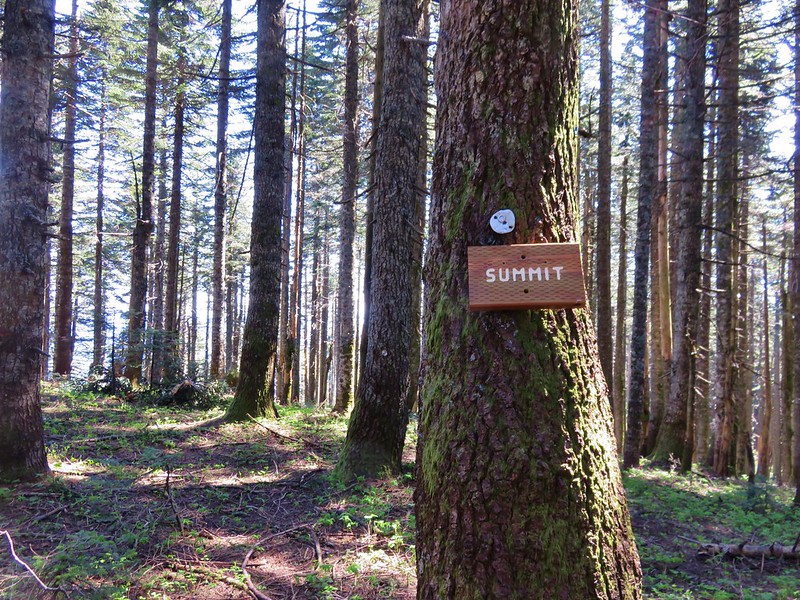
We followed this path into the trees. We were passing below the summit of Augspurger Mountain when we spotted a “summit” sign on a tree above us to the right. We headed uphill to tag the summit before continuing.
Summit of Augspurger Mountain

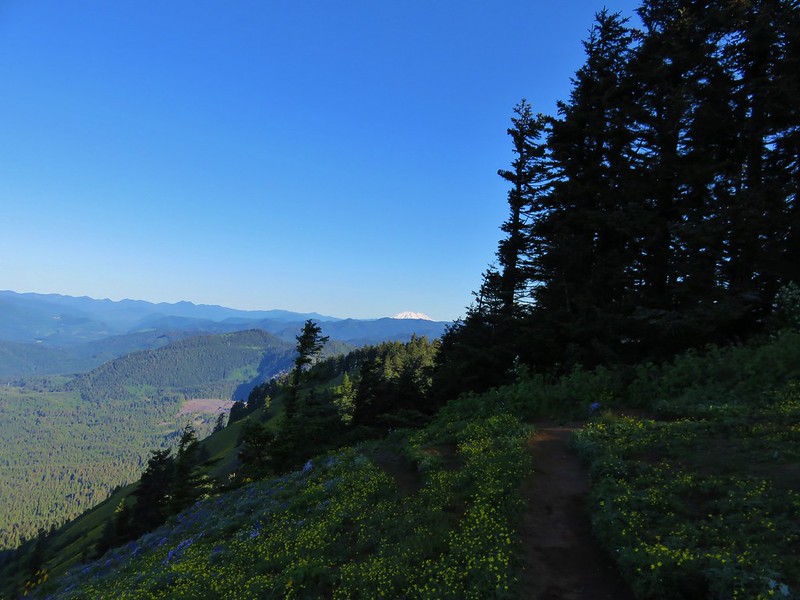
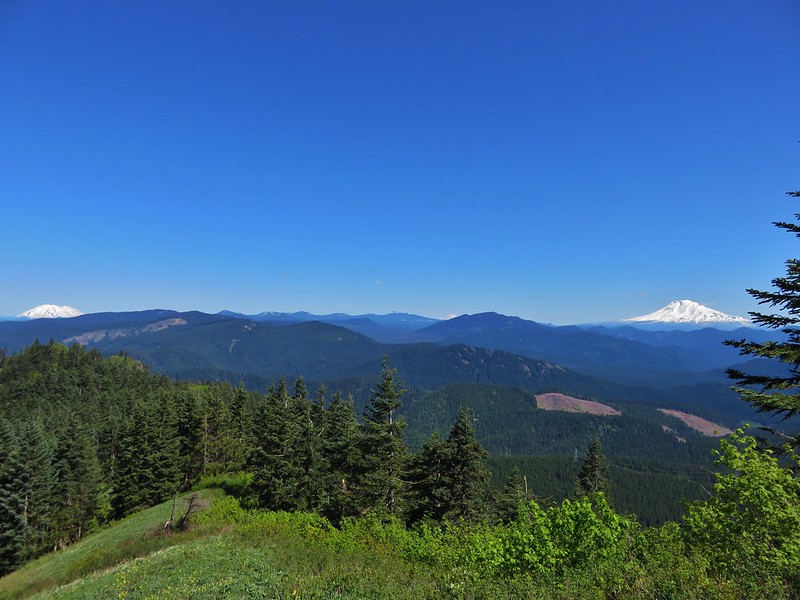
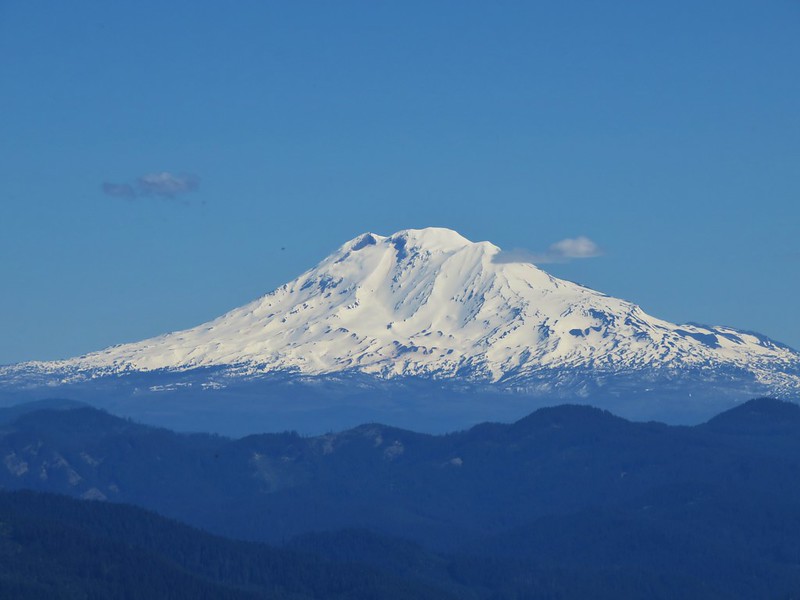
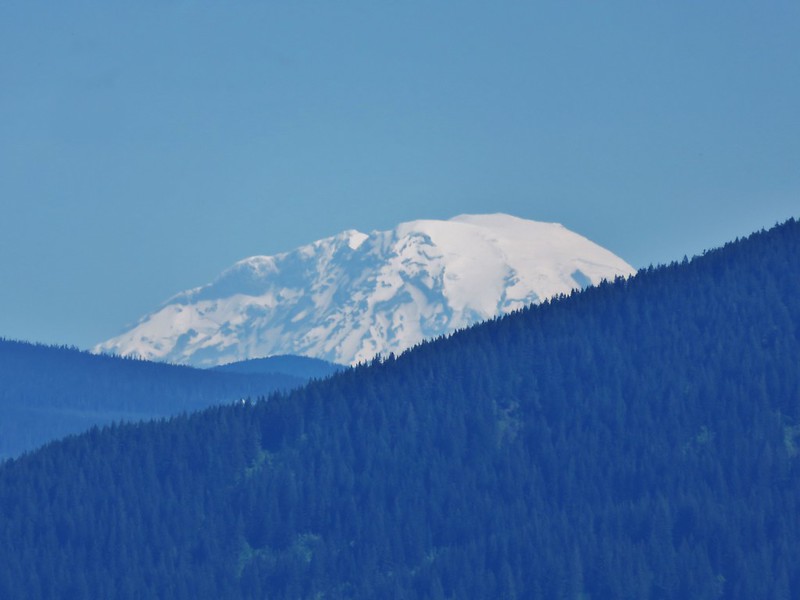
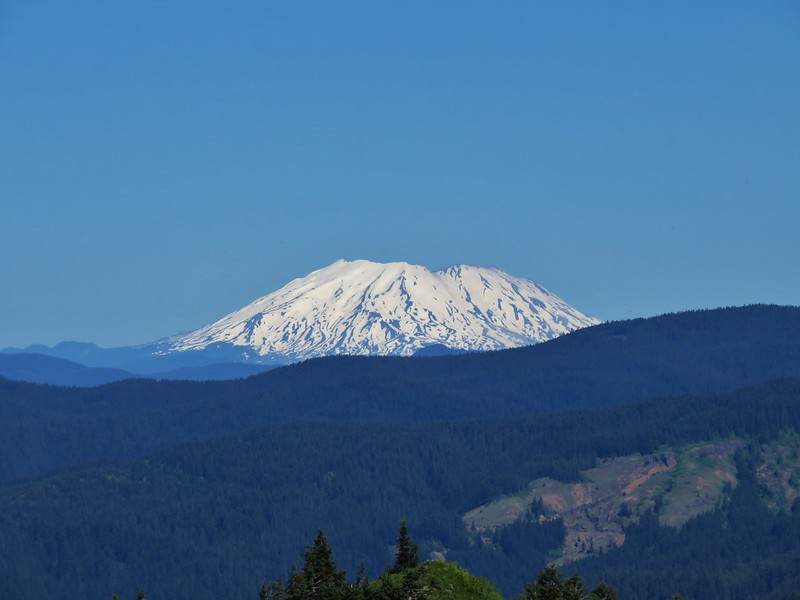
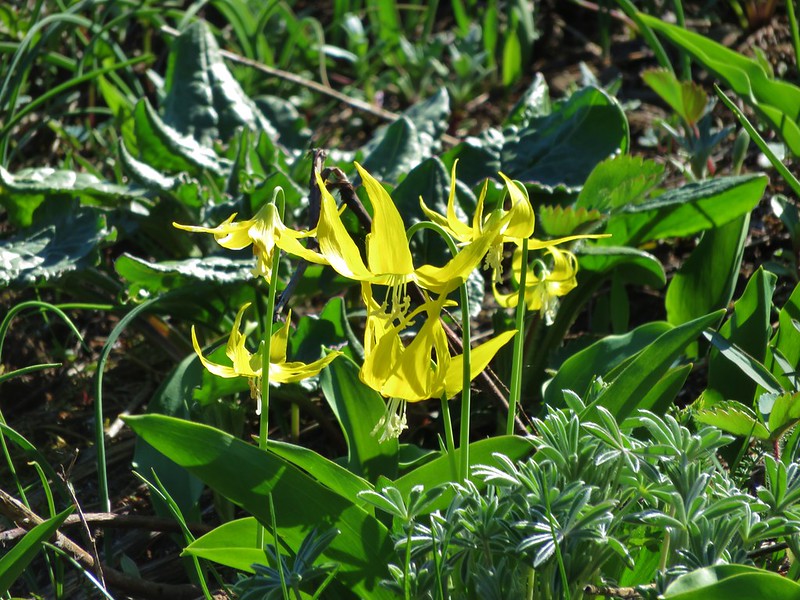
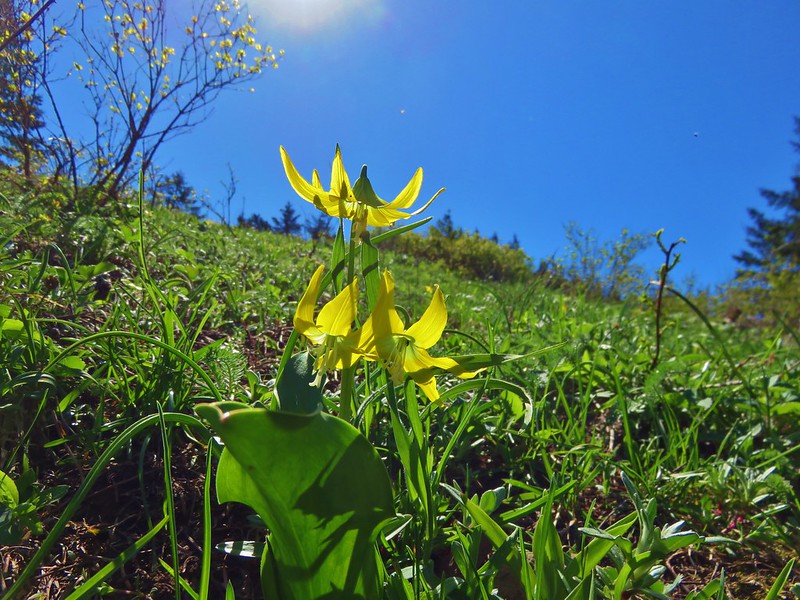
The path then began to lose elevation and entered another long meadow. This meadow provided views of Mt. Adams and Mt. Rainier in addition to Mt. St. Helens and also contained a fair amount of glacial lilies.
Mt. St. Helens, Mt. Rainier, and Mt. Adams

Mt. Adams

Mt. Rainier

Mt. St. Helens

Glacial lilies

Glacial lilies

The one constant in all the meadows we’d been through was the bugs. The trail continued faintly down through the meadow which we could have followed down another couple of tenths of a mile, but we didn’t really want to have to regain any more elevation than we were already going to need to so after a brief rest we began our return trip.
Augspurger Trail

We ran into two other groups of hikers along the Augspurger Trail on the way back to the Dog Mountain Trail junction. There was a good deal of traffic on the final 2.8 mile stretch from the junction down to the trailhead, most of which was headed in our same direction. The parking lot was packed when we arrived back at the trailhead a little after 1pm and people were walking along the highway to cars they had parked along the shoulder. We had managed to get the wildflower and mountain views that had eluded us in 2014 and now we’ll leave Dog Mountain for others to enjoy. After all there are plenty of less popular trails we have yet to explore and even though they may not have the wildflowers to rival Dog they’re all worthy of a visit. Happy Trails!

Flickr: https://www.flickr.com/photos/9319235@N02/albums/72157668107094945

Categories
Bend/Redmond Central Oregon Hiking Oregon Trip report

Steelhead Falls and Scout Camp Trail

**In 2025 the Alder Springs Fired burned over the Scout Camp Trail near the confluence of the Deschutes River and Whychus Creek.**

We had stayed in Central Oregon after visiting the Painted Hills and Sutton Mountain on Saturday. Before heading home we took the opportunity to do a pair of short hikes in the Steelhead Falls Wilderness Study Area near Crooked River Ranch. The first of the hikes started at the Steelhead Falls Trailhead.
IMG_4756

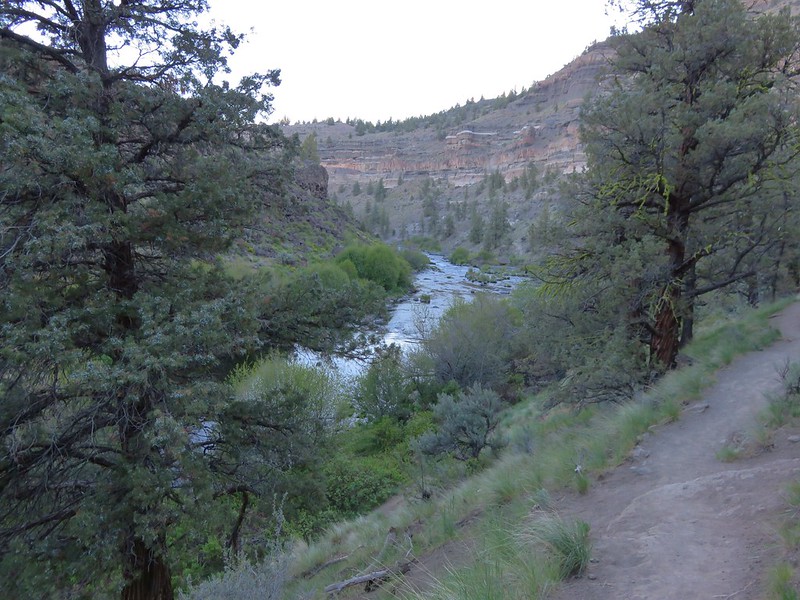
The falls are only a half mile from the trailhead and can get very busy, but we were there early and had the trail to ourselves. We followed the path down into the Deschutes River Canyon.
IMG_4767

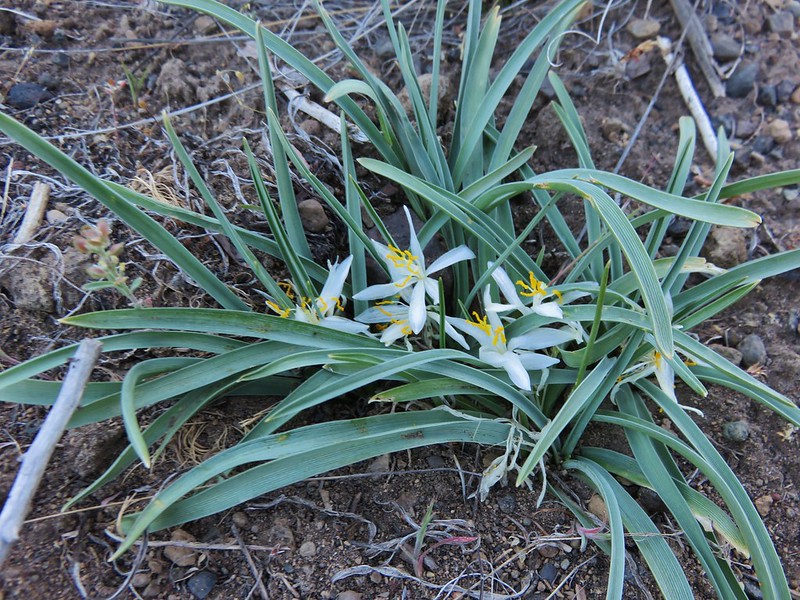
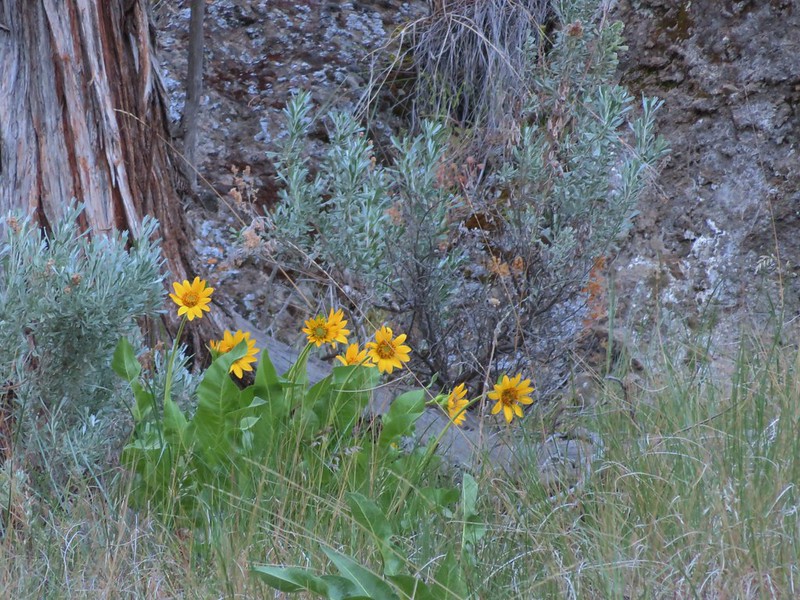
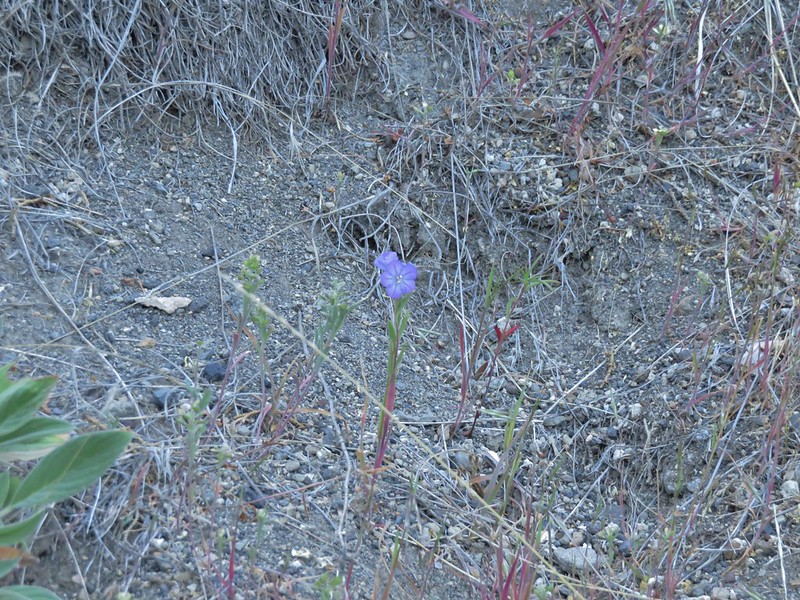
Flowers included sand lilies, balsamroot, and thread-leaf phacelia.
IMG_4761

IMG_4771

IMG_4779

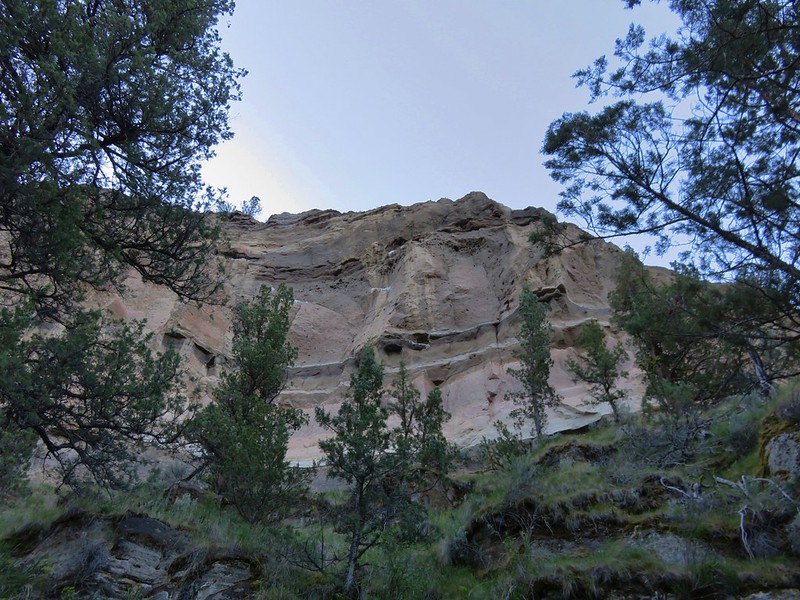
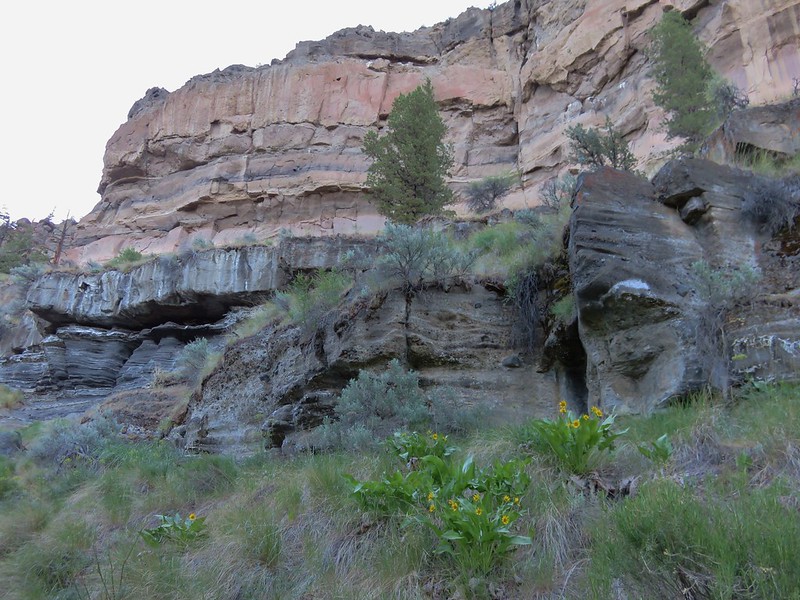
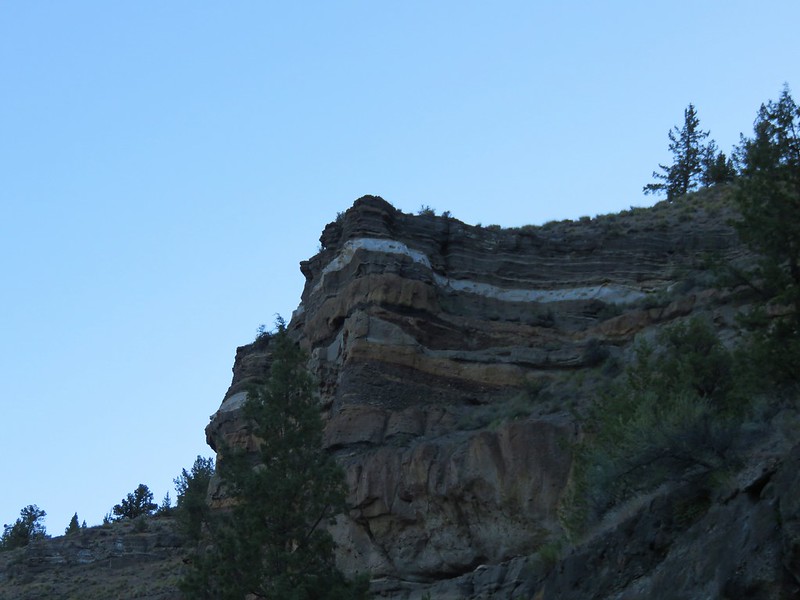
Colorful rocks formations lined the canyon walls.
IMG_4772

IMG_4776

IMG_4788

IMG_4790

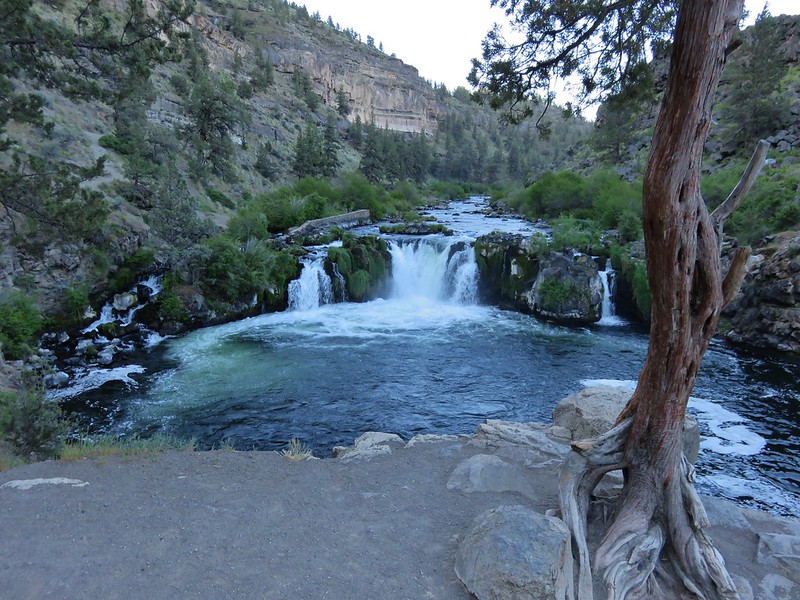
Steelhead Falls is only about 20′ tall but the width and setting of the falls makes it an impressive sight.
IMG_4795

IMG_4798

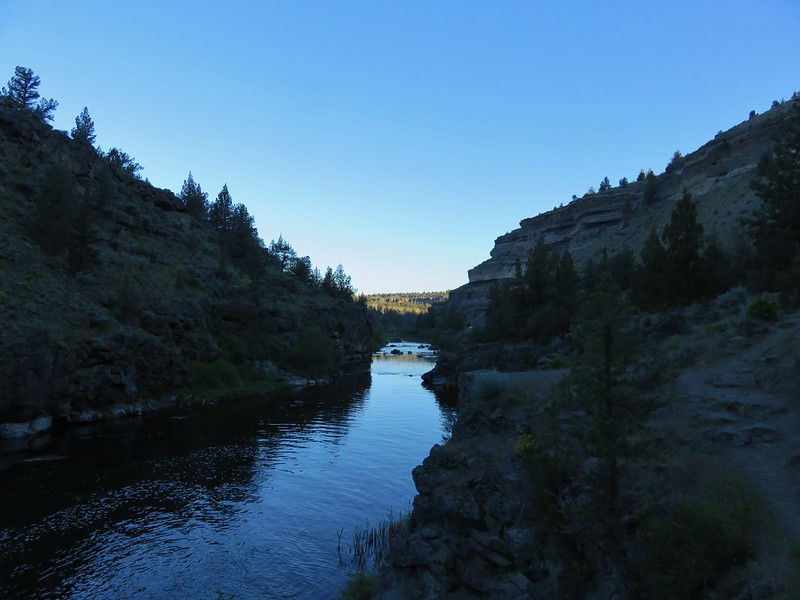
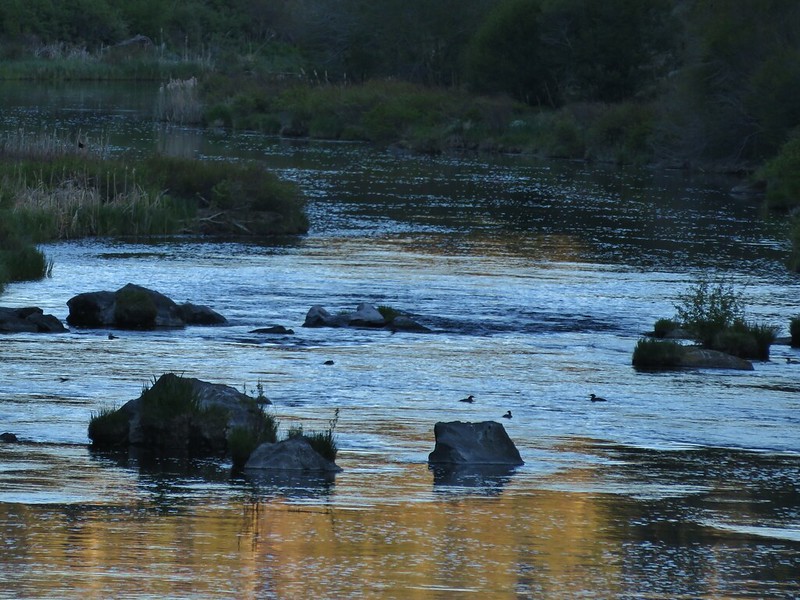
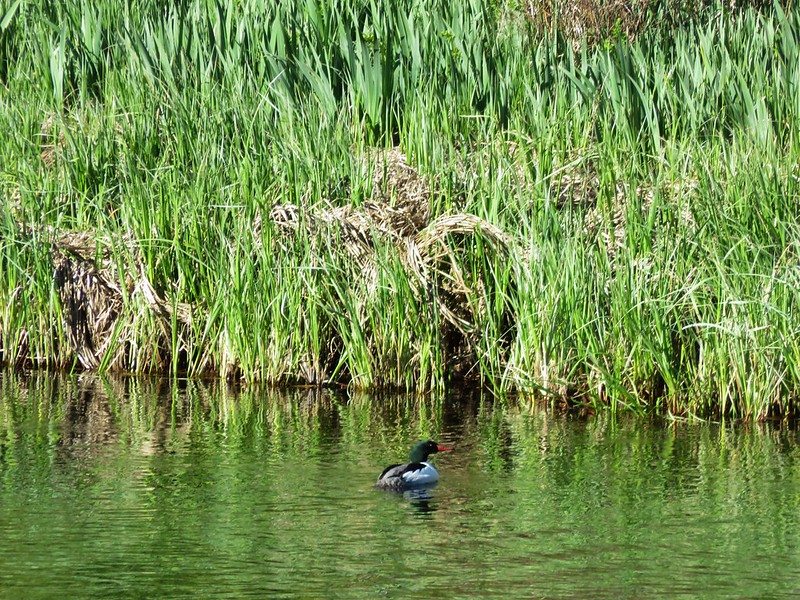
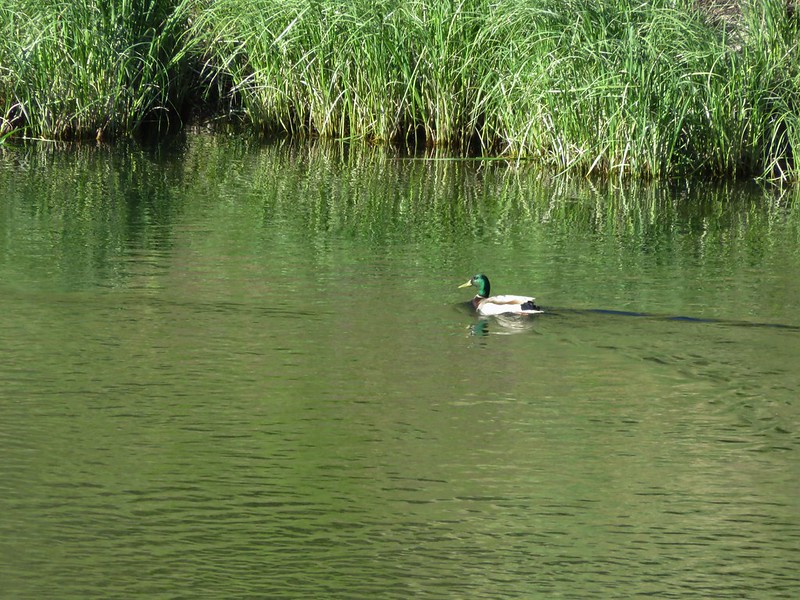
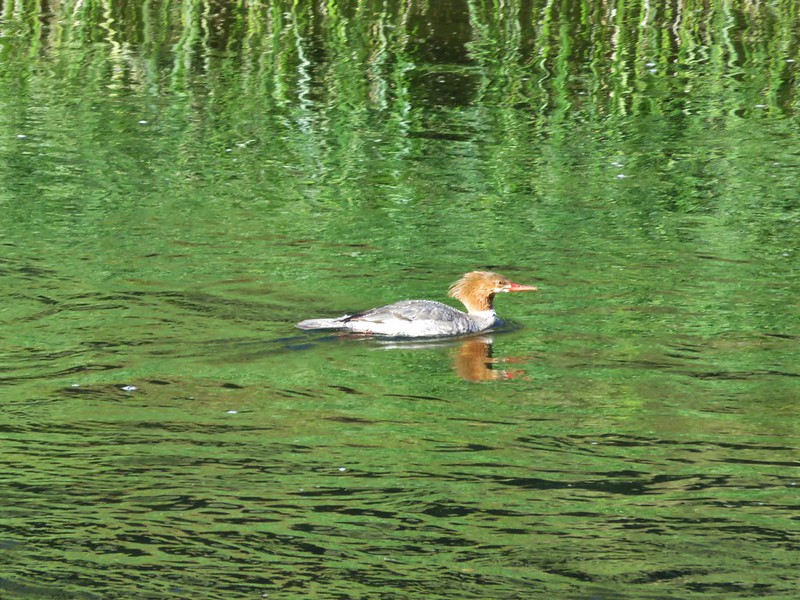
Beyond the falls the Deschutes calmed and various ducks and geese were enjoying the morning.
IMG_4804

IMG_4807

IMG_4816

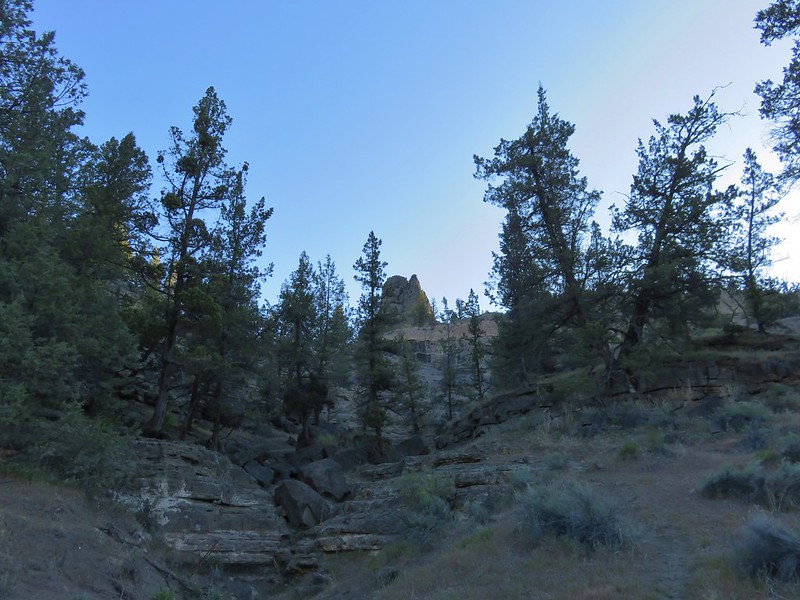
We continued past the falls for .6 miles planning on visiting the Gray Tower, a 70′ rock formation. Our guidebook instructed us to turn right at a dry wash and then “stay right at junctions” up to the tower. We turned at the wash with the Gray Tower visible up the hillside.
IMG_4840

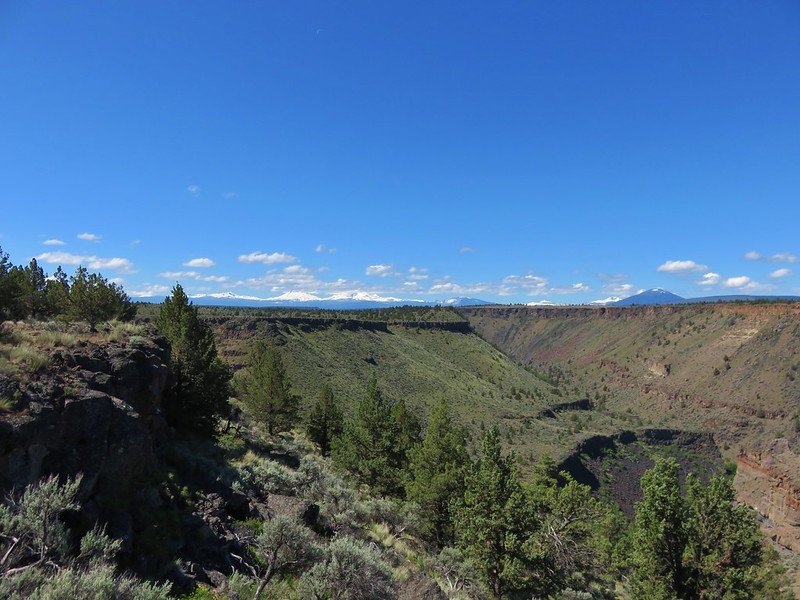
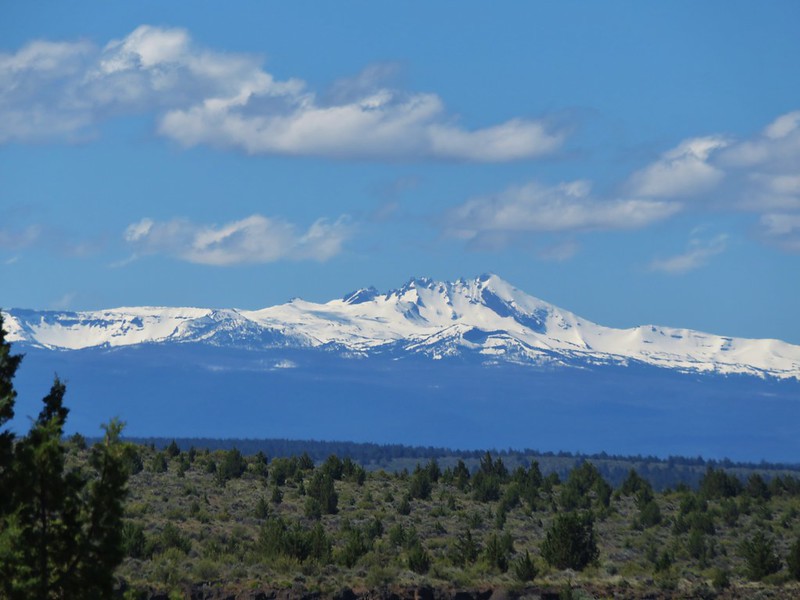
We apparently did too good a job at staying right and wound up following a path up a ridge with the wash on our left. We began to suspect that we were too far right when were getting further away from the Gray Tower and there was no sign of the ridge we were on bending back towards it. We spotted a trail on the opposite side of the wash and realized that it was the trail we should be on and headed back down. The detour had not been without its charms though, as it provided a nice view across the wash to the Gray Tower and to Mt. Jefferson (covered in clouds this morning).
IMG_4846

IMG_4853

We’d also seen some nice wildflowers.
Paintbrush
IMG_4841

Rough eyelashweed
IMG_4848

Desert yellow fleabane
desert yellow fleabane

White-daisy tidytips
IMG_4858

Once we had returned to the dry wash we headed up the left-hand side on a horse path keeping the wash on our right while we stayed right at the junctions. This trail did indeed lead us to the tower.
IMG_4866

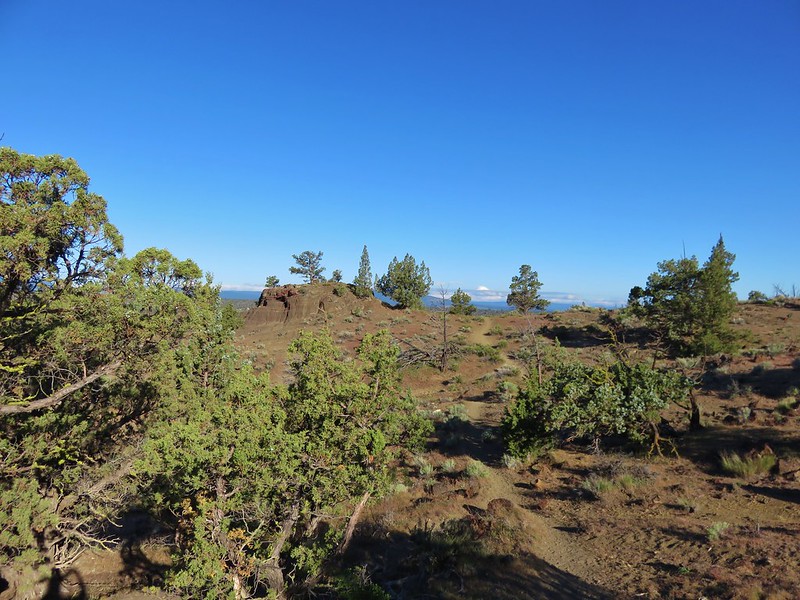
We followed the horse path past the tower veering right heading for the start a .9 mile loop described in our guide book. At some point we lost the trail as it turned uphill and we were once again forced to backtrack. We decided to head cross country to try and pick up the trail, which we managed to do. When we reached a split to the trail on top of the rim we went right to start the loop. There was a small rocky knoll a short distance to the left with some small junipers on it at this junction.
IMG_4887

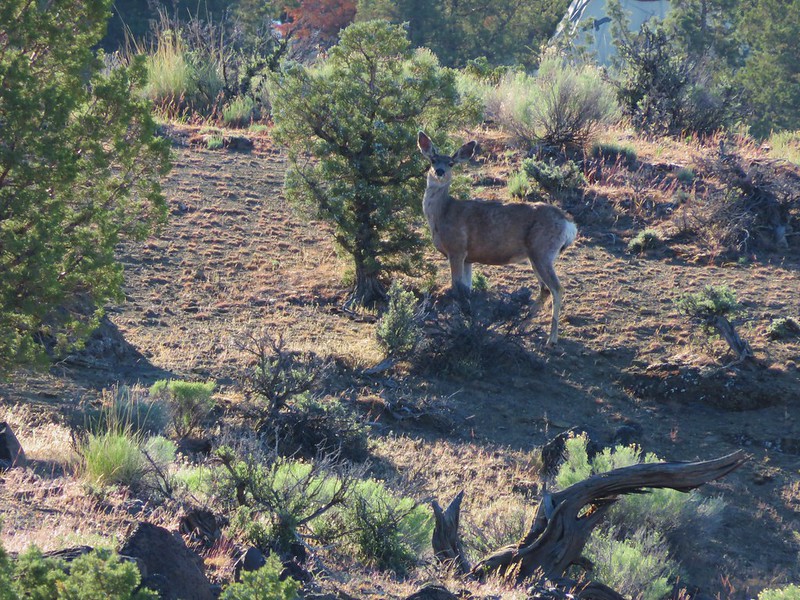
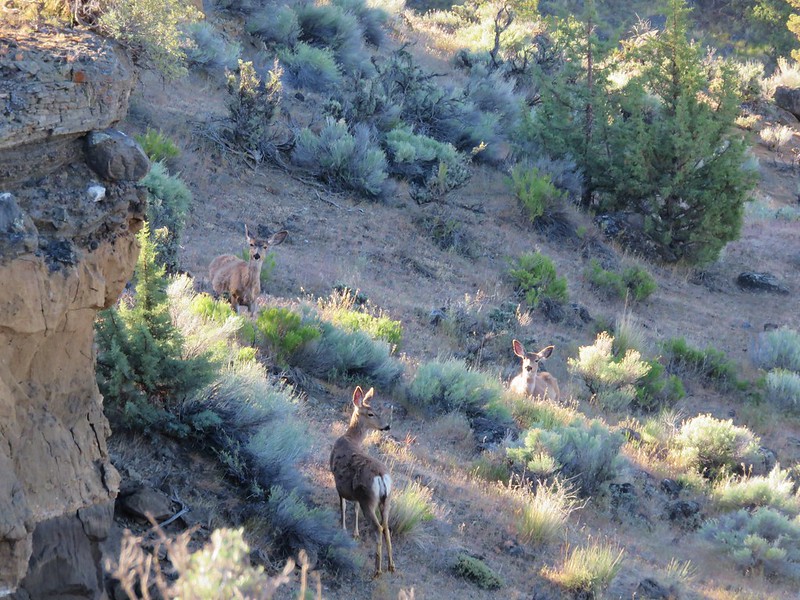
Several deer were watching us as we began the loop.
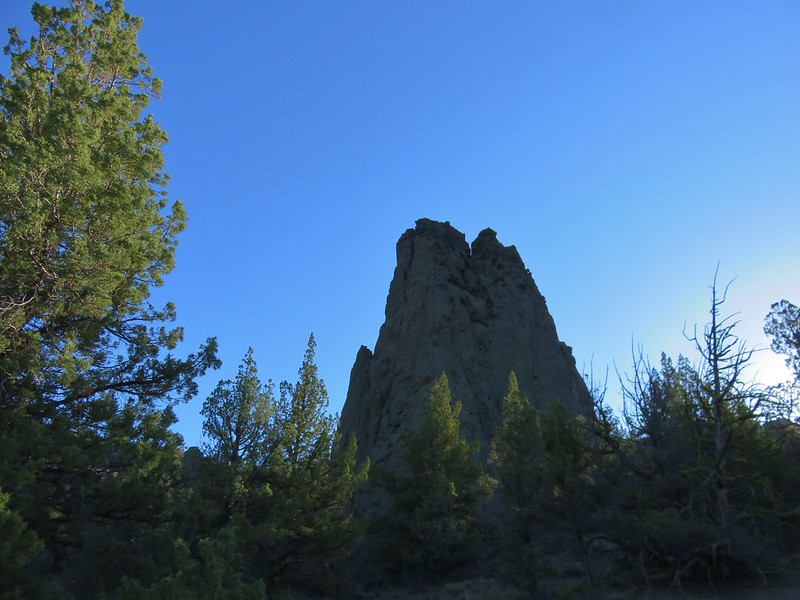
IMG_4886

IMG_4892

IMG_4897

We passed around a small hill through juniper and sagebrush keeping left at junctions marked by rock cairns.
IMG_4902

It was a beautiful sunny day which would have normally meant some nice mountain views but all the Cascade peaks were draped in clouds making for an interesting sight.
IMG_4900

IMG_4914

IMG_4919

Heather spotted a coyote that ran off too quickly for a photo, but several birds stayed put long enough for pictures.
IMG_4904

IMG_4908

IMG_4911

We completed the loop and managed to follow the horse path all the way back down to the river without losing it this time. The sun was now on the river and ducks paddled about as red-winged blackbirds filled the canyon with their songs.
IMG_4834

IMG_4938

IMG_4930

IMG_4936
IMG_4940

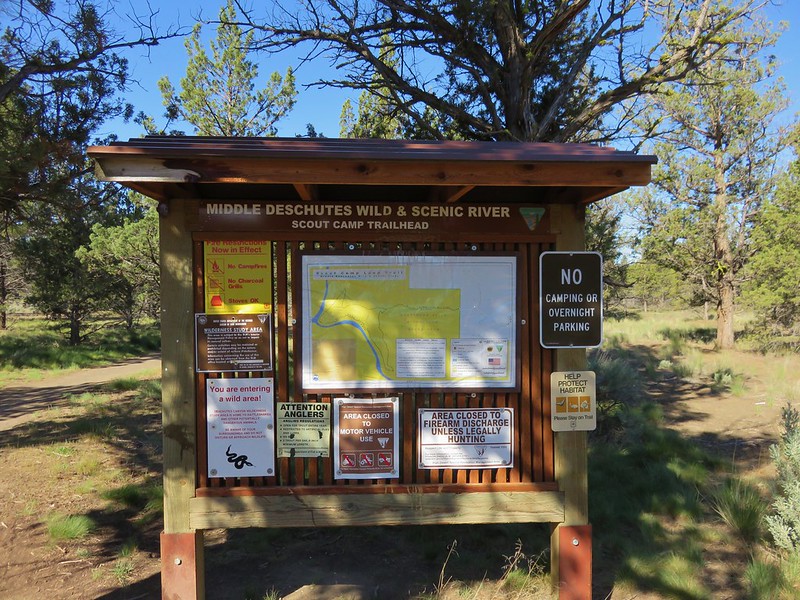
After returning to the trailhead we drove further into Crooked River Ranch to the Scout Camp Trailhead.
IMG_4951

This trail descends over 600′ to the Deschutes River and its confluence with Wychus Creek. The path starts out level passing through juniper and sage before dropping down into the canyon.
IMG_4953

IMG_4968

IMG_4975

Turkey vultures soared overhead and occasionally landed on the cliffs.
IMG_4970

IMG_4974

At the .4 mile mark the trail splits marking the start of a 2 mile loop. We went left following a trail pointer and headed downhill through fields of balsamroot and other wildflowers.
IMG_4989

IMG_4976
IMG_4984

IMG_4978

IMG_4988

IMG_4994

The further into the canyon we got the thicker the balsamroot became.
IMG_5011

IMG_5014

IMG_5026

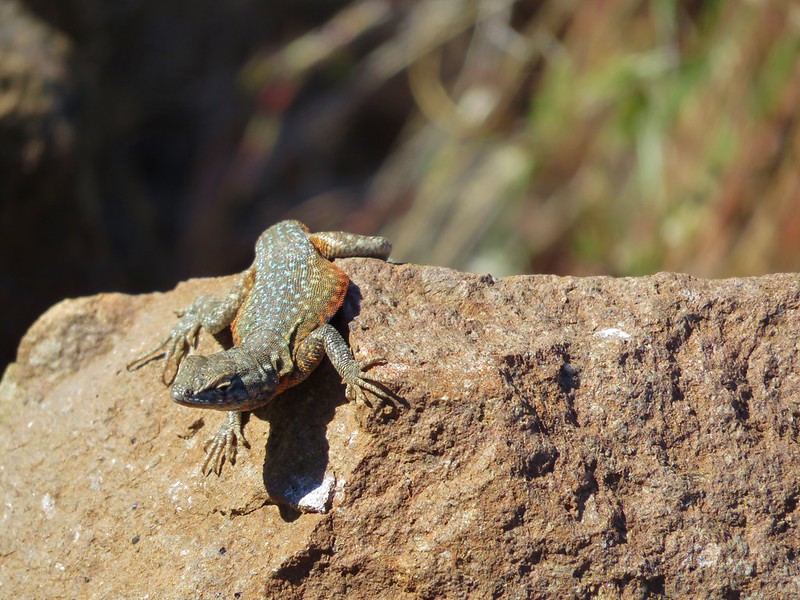
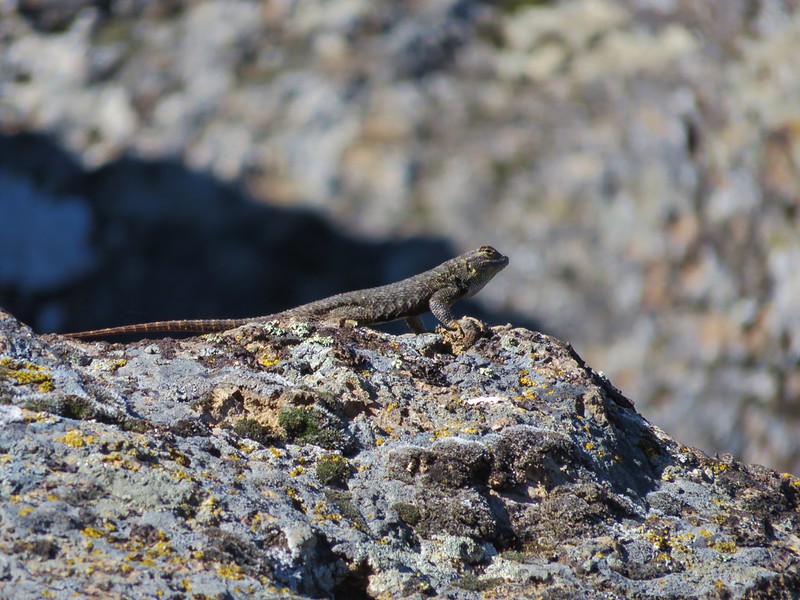
A couple of different types of lizards were sunning themselves.
Side bloctched lizards
IMG_5000

IMG_5004

Western fence lizard
IMG_5025

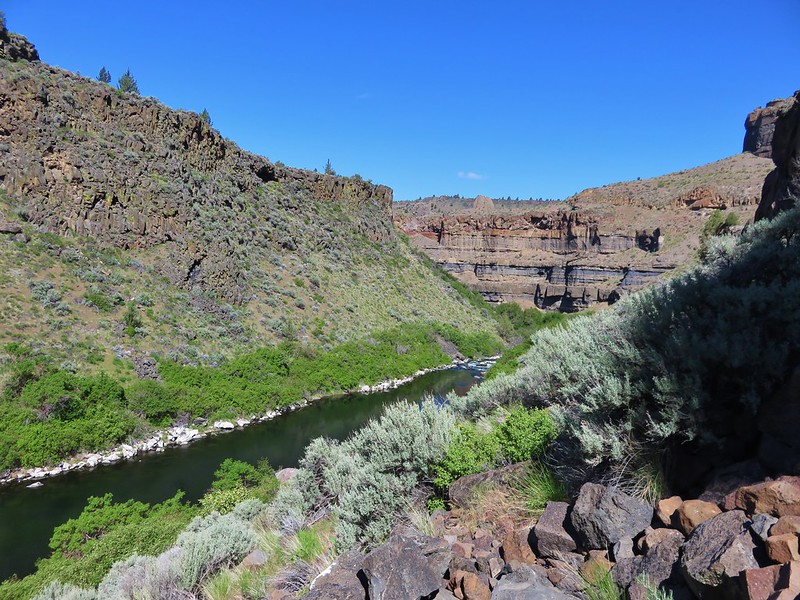
After a fairly steep .7 mile descent the trail leveled off passing along a cliff face with the river on the left.
IMG_5041

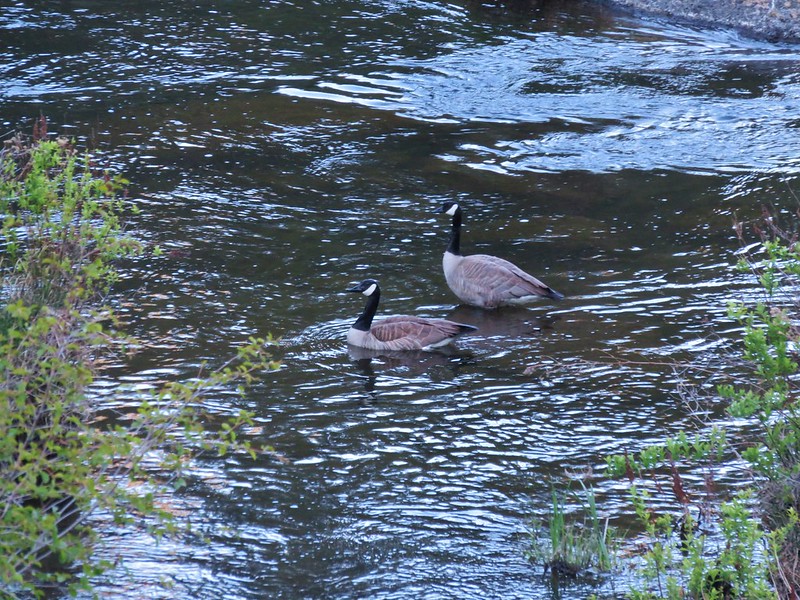
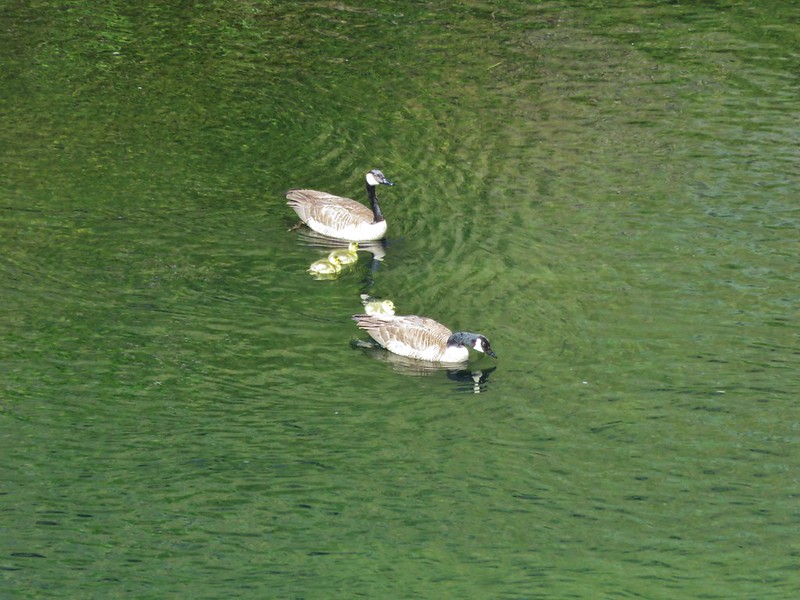
A family of canada geese paddled about on the water.
IMG_5037

The cliff face gave way to a hillside of flowers.
IMG_5050

IMG_5051

IMG_5055

we then passed through a grassy area before the trail appeared to end at a rock wall below a rock fin where a fish monitoring station was set up.
IMG_5062

IMG_5075

IMG_5078

We climbed up and over the rocks which brought us to the continuation of the loop. From here we could see the spot on the opposite side of the river where we had eaten lunch during a 2012 hike on the Alder Springs Trail.
IMG_5080

The trail then climbed up the canyon switching back once to a view above the rock fin.
IMG_5087

IMG_5090

IMG_5093

IMG_5101

IMG_5102

We continued to climb passing another set of cliffs with small caves and rocks that appeared ready to come crashing down at any moment.
IMG_5103

IMG_5116

IMG_5118

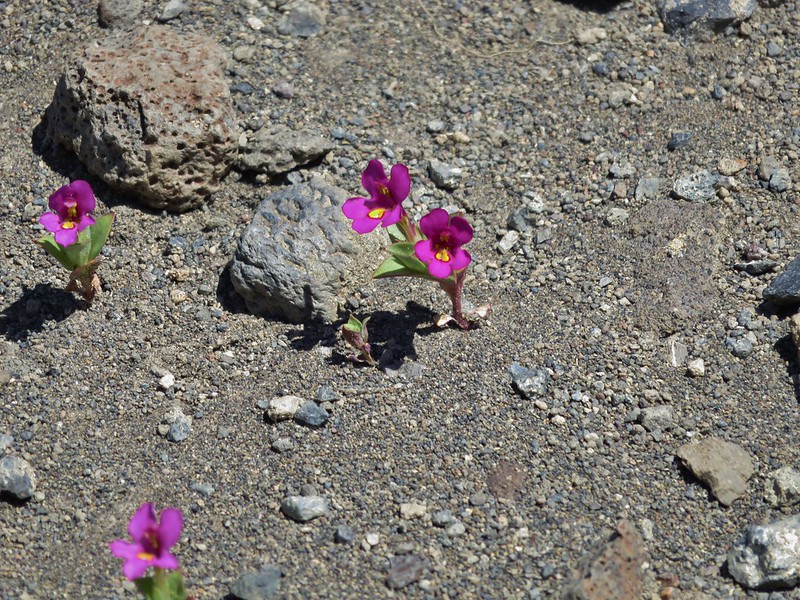
Some of the brightest paintbrush we’d seen was along the hillside below these cliffs as well as some tiny but spectacular Cusick’s monkey flowers.
IMG_5112

IMG_5114

IMG_5124

We finished the loop and climbed back out of the canyon. As the views opened up we could see that the mountains had finally managed to shed most of their cloud cover.
IMG_5128

IMG_5130

IMG_5134

We were pleasantly surprised by the amount of flowers along the Scout Camp Trail and fortunate to have had the Steelhead Falls trail all to ourselves. It was a great end to a weekend of wonderful hikes in Central Oregon. Happy Trails!

Flickr: https://www.flickr.com/photos/9319235@N02/albums/72157667267583520

Categories
Central Oregon Hiking John Day Oregon Trip report

Painted Hills and Sutton Mountain

We have lived in Oregon all our lives and yet neither of us had ever been to the Painted Hills in the John Day Fossil Beds National Monument. We finally made it there on a weekend trip to Central Oregon. We had headed to Bend after work on Friday and planned on visiting the Painted Hills then checking out a pair of nearby wilderness study areas – Pat’s Cabin and Sutton Mountain.

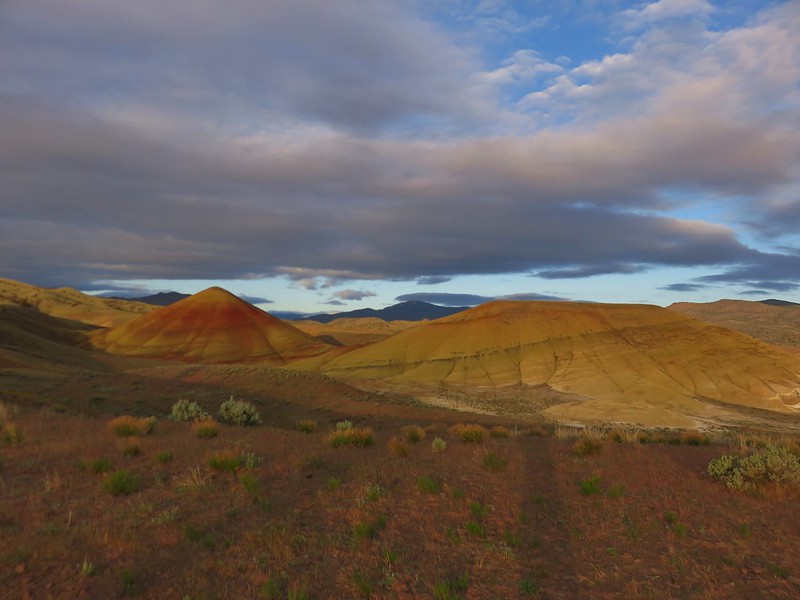
The Painted Hills Unit is one of three units making up the John Day Fossil Beds National Monument. It is located 10 miles NW of Mitchell, OR and contains five short hiking trails ranging from the .2 mile Painted Cove Loop to the 1.6 mile round trip Carroll Rim Trail. We began our visit at the Painted Hills Overlook Trailhead.
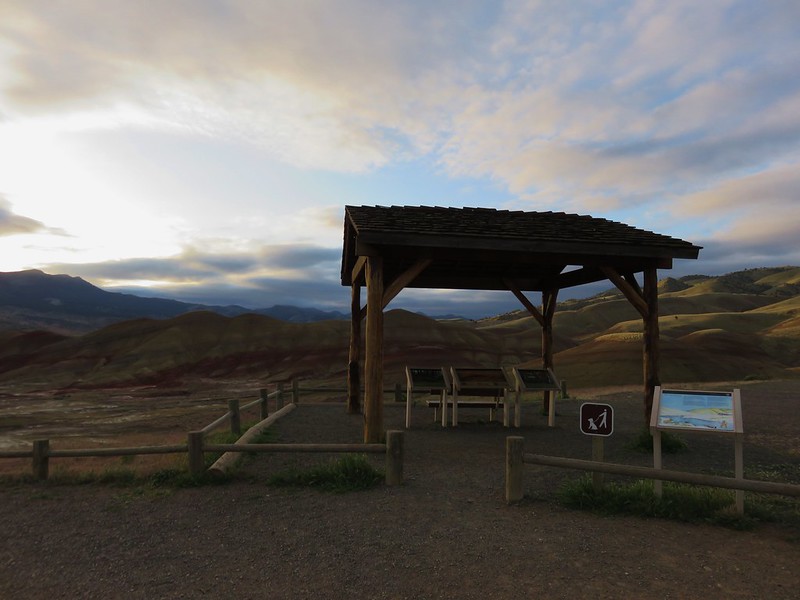
Painted Hills Overlook Trailhead

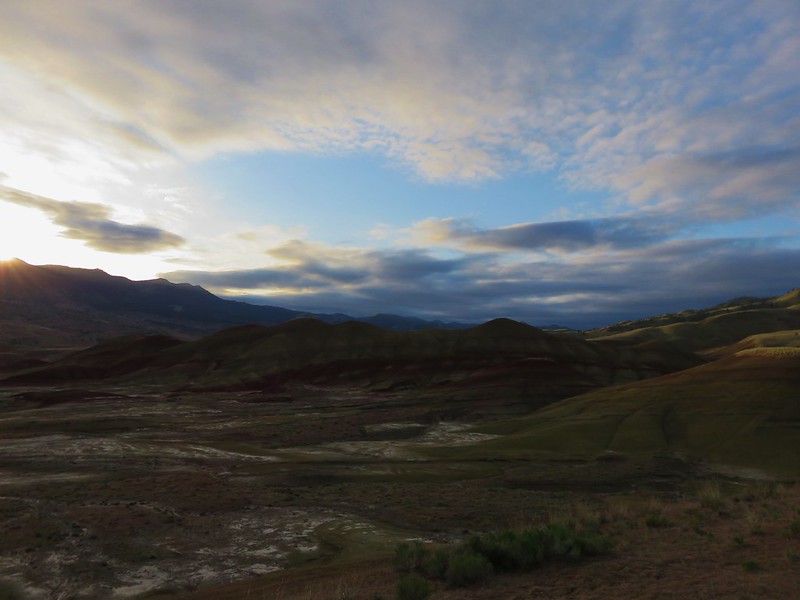
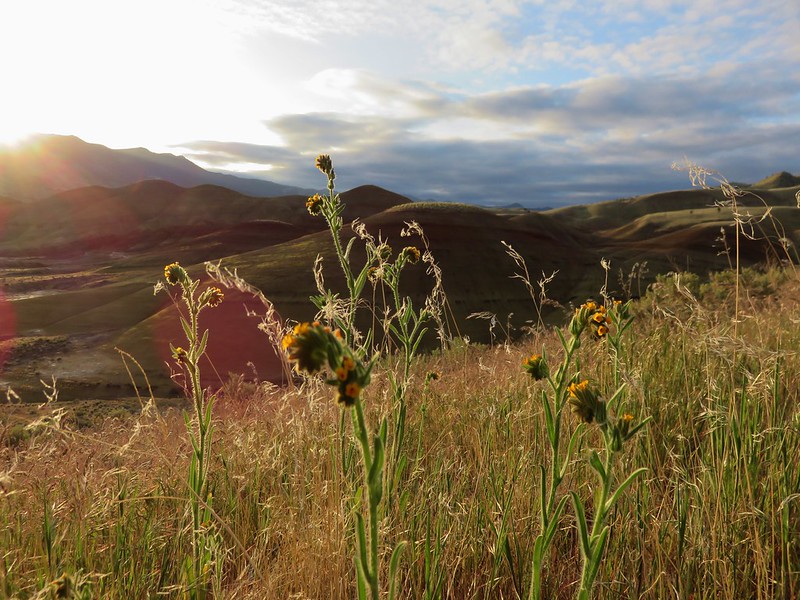
We had gotten our usual early morning start and had arrived a little before 7am. The Sun was just coming up over Sutton Mountain to the east and the sky was partly cloudy creating some interesting lighting.
Sun coming over Sutton Mountain from the Painted HIlls

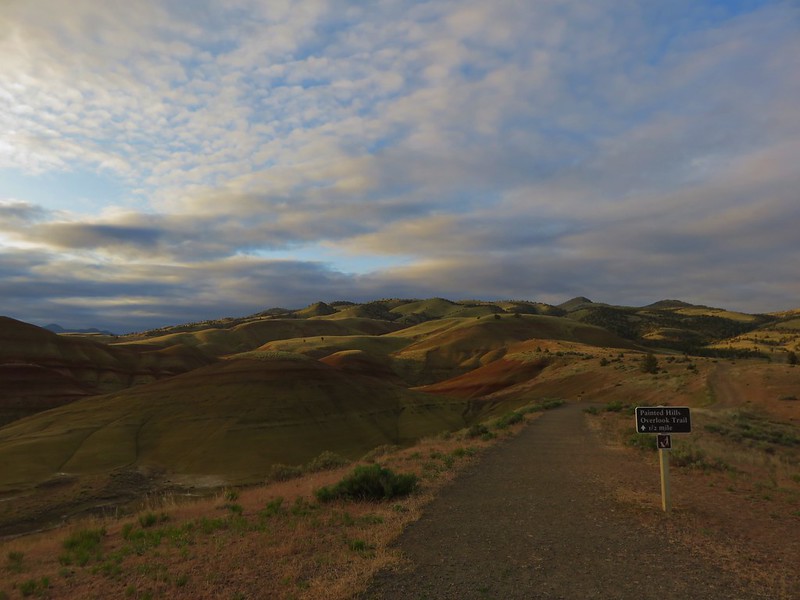
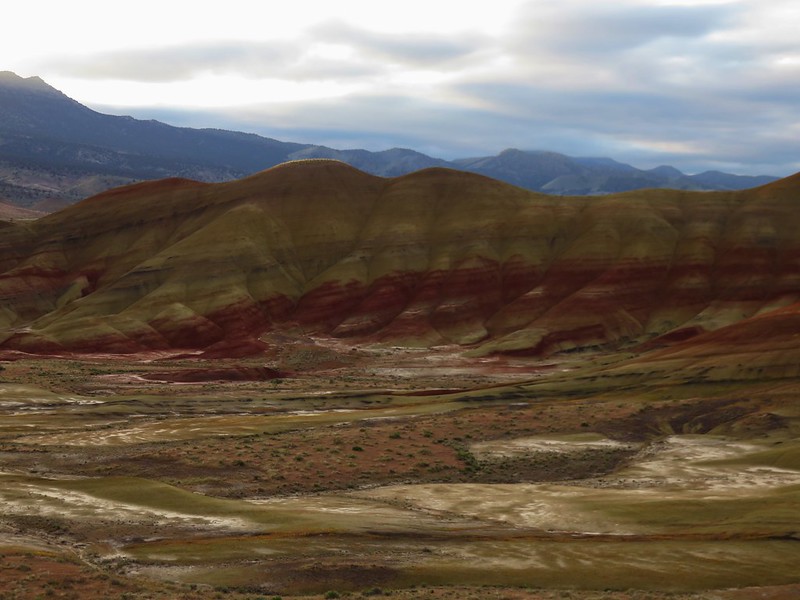
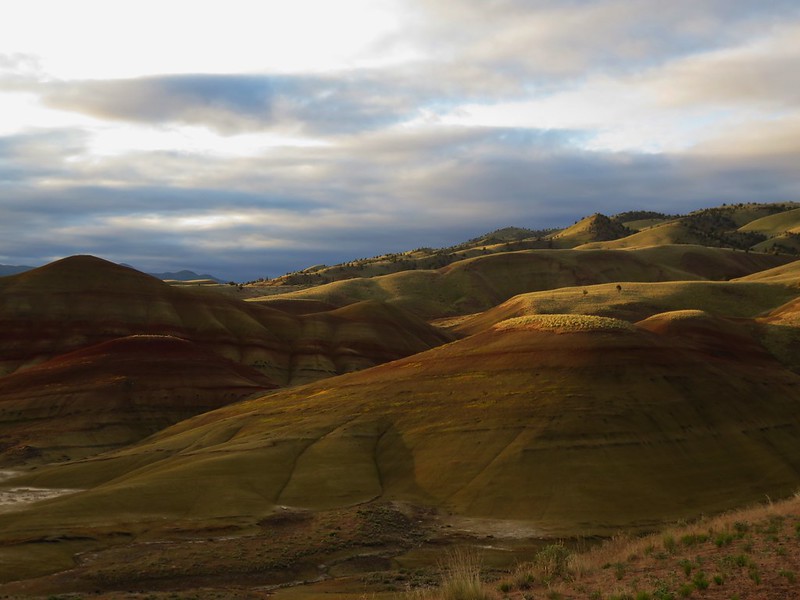
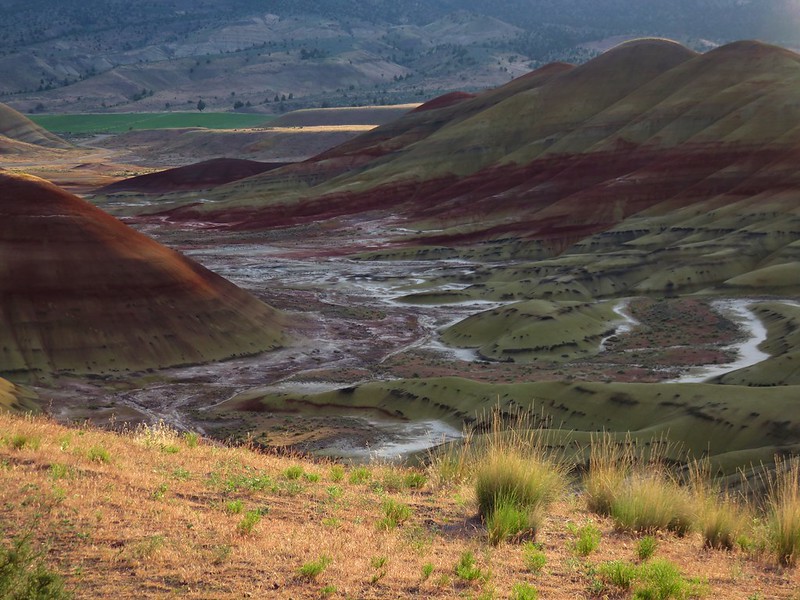
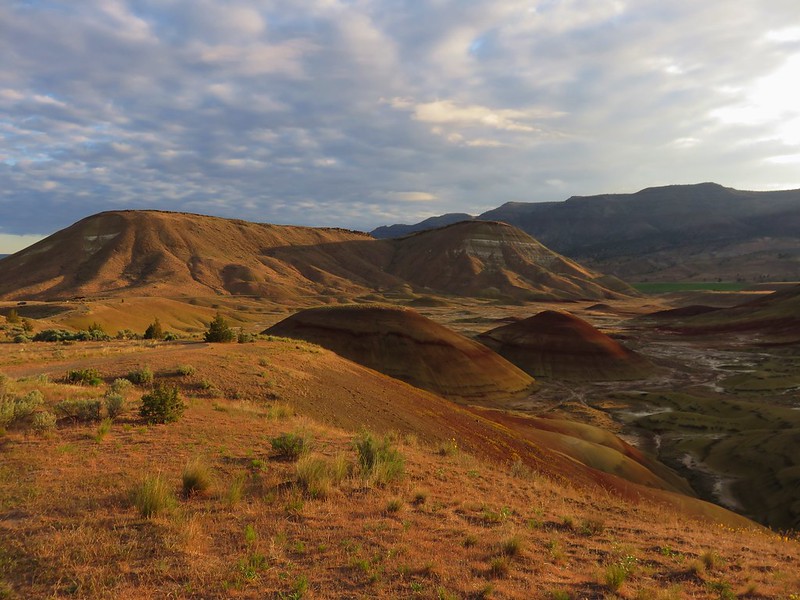
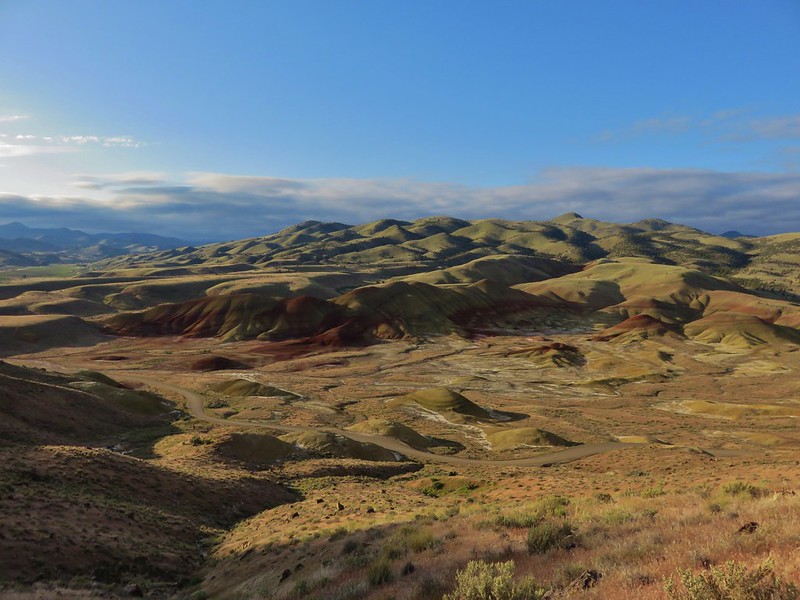
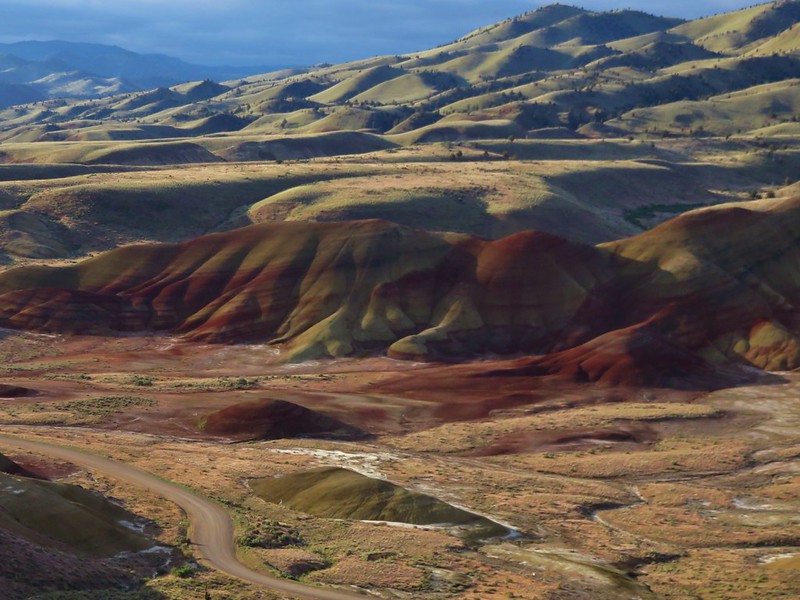
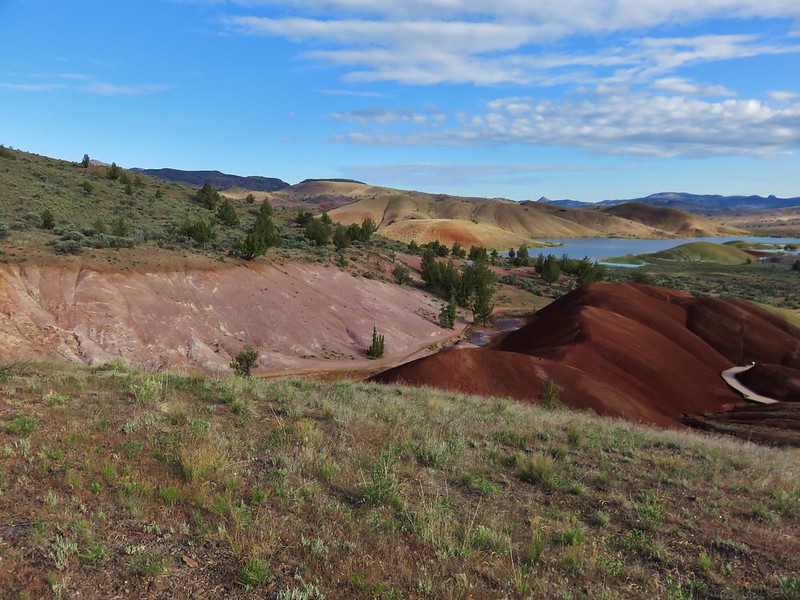
The .3 mile Painted Hills Overlook Trail began at this trailhead and provided some great views of the Painted Hills, Carroll Rim, and Sutton Mountain.
Painted Hills Overlook Trail

Painted Hills

Painted Hills

Painted HIlls

Painted HIlls

Painted HIlls

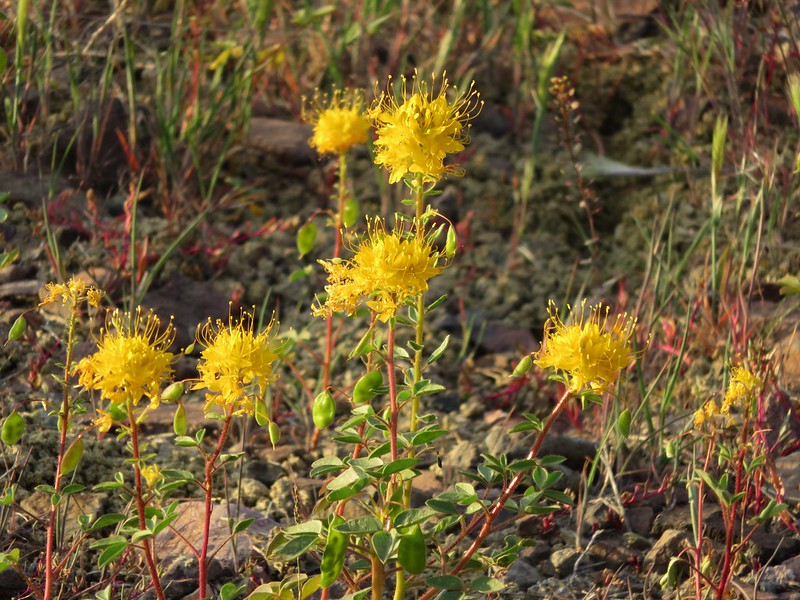
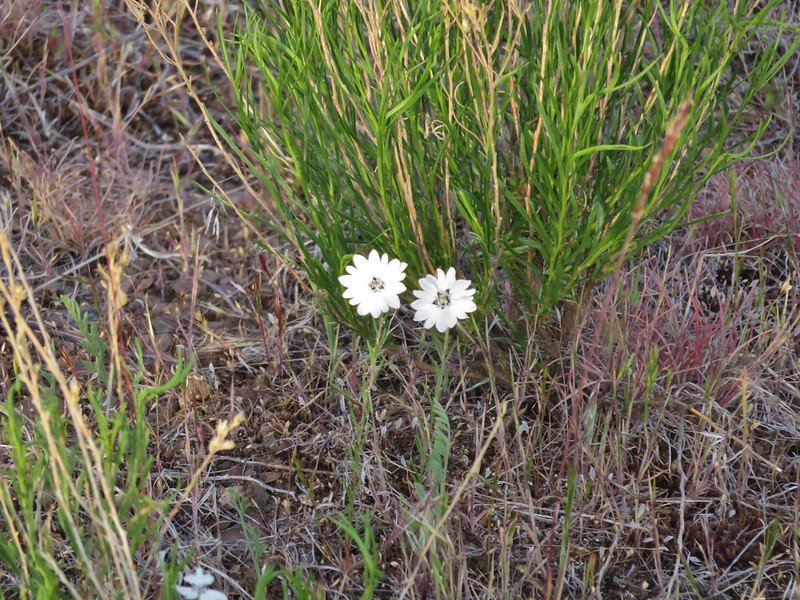
There had been one other car at the trailhead but its occupant never left that area so it was just us on the trail with a host of birds that remained unseen but whose songs filled the air. The wildflowers on the other hand remained silent but stood out with their splashes of color.

Golden Bee Plant
Golden Bee Plant

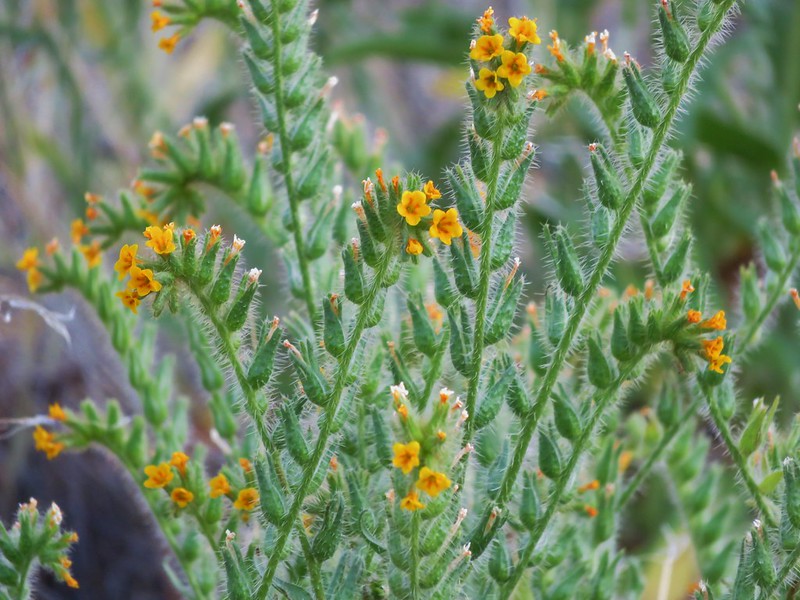
Fiddleneck
Fiddleneck

Rough eyelash weed
Rough eyelash weed

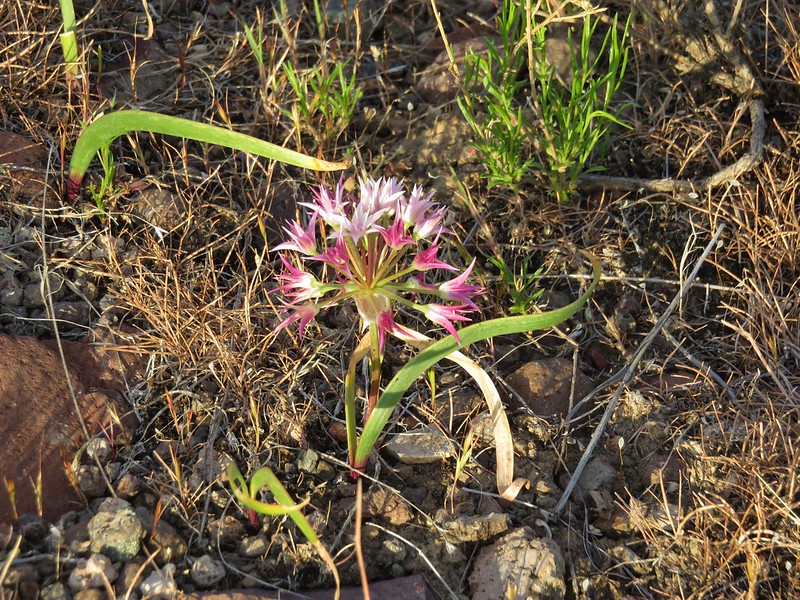
Tolmie’s Onion
Tolmie's Onion

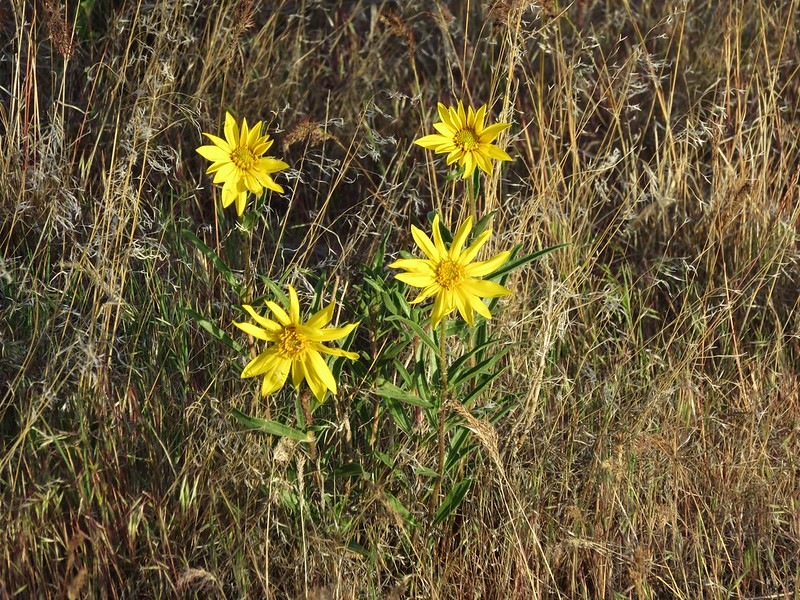
Arnica
Arnica

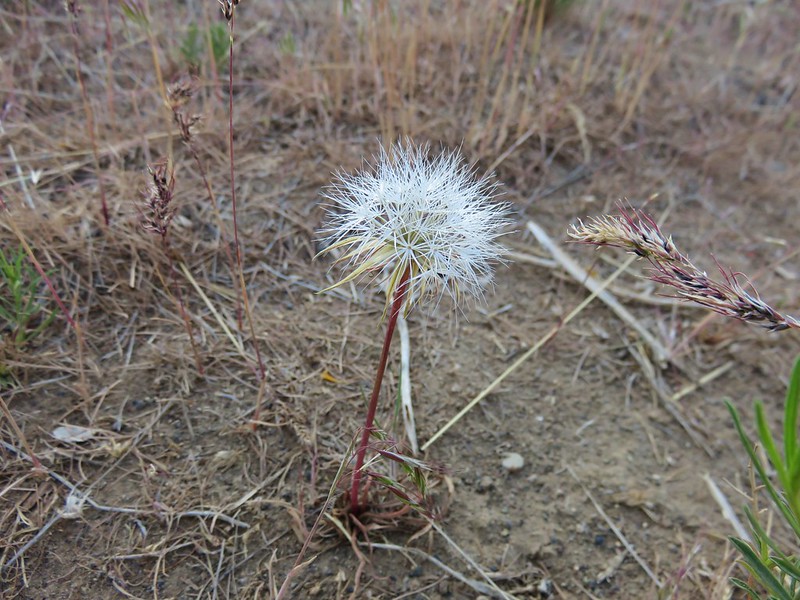
Silverpuff
Uropappus lindleyi; Silverpuffs

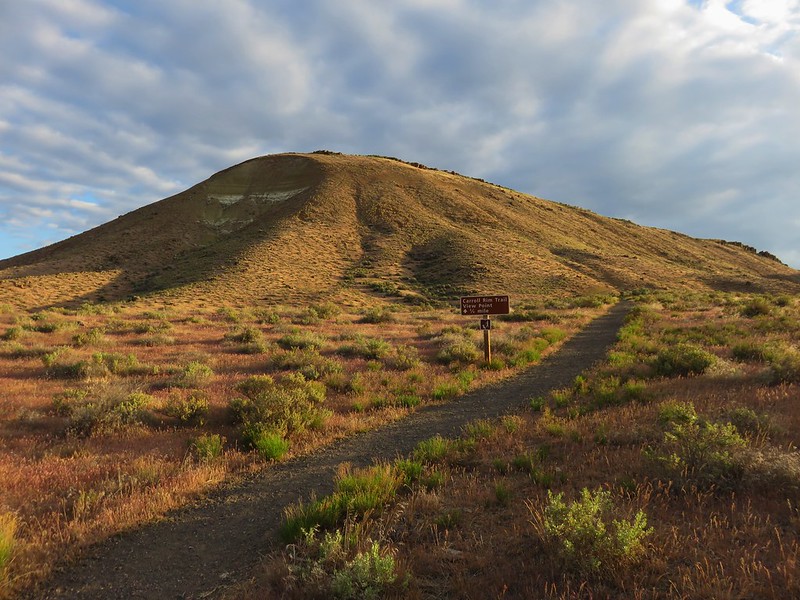
After returning to the trailhead we walked across Bear Creek Road to the Carroll Rim Trail which climbs almost 400′ in .8 miles to a rimrock viewpoint.
Carroll Rim Trail

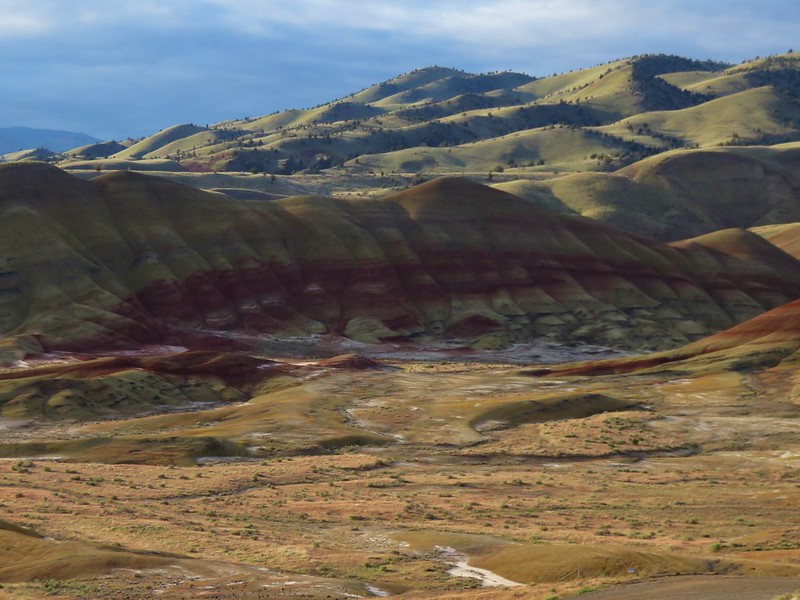
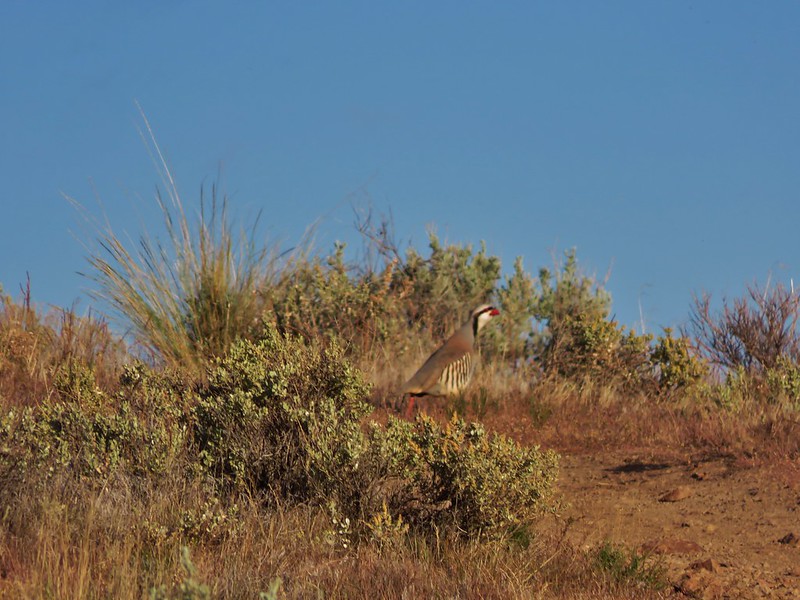
The Painted Hills stole the show, but there were other sights along this trail as well including our fist encounter with chukars.
Painted Hills from the Carroll Rim Trail

Painted Hills from the Carroll Rim Trail

Painted Hills from the Carroll Rim Trail

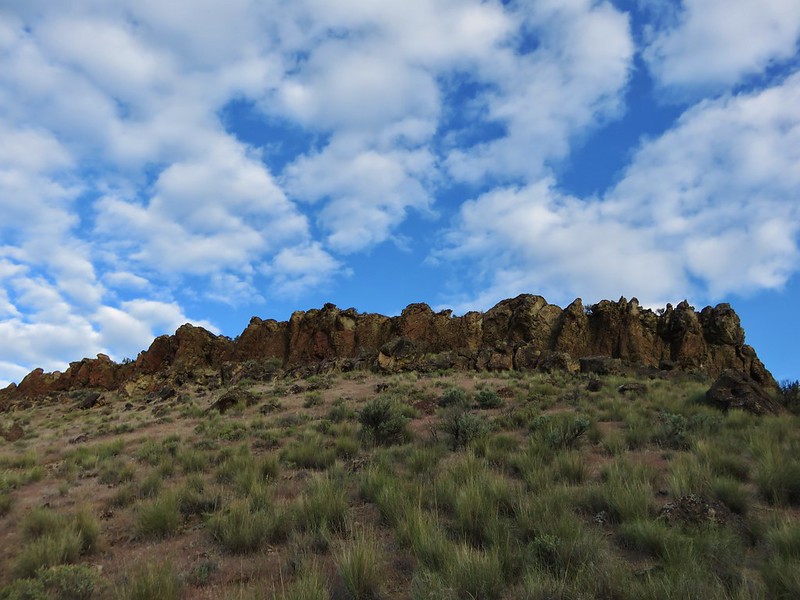
Carroll Rim
IMG_4382

Chukar
Chukar

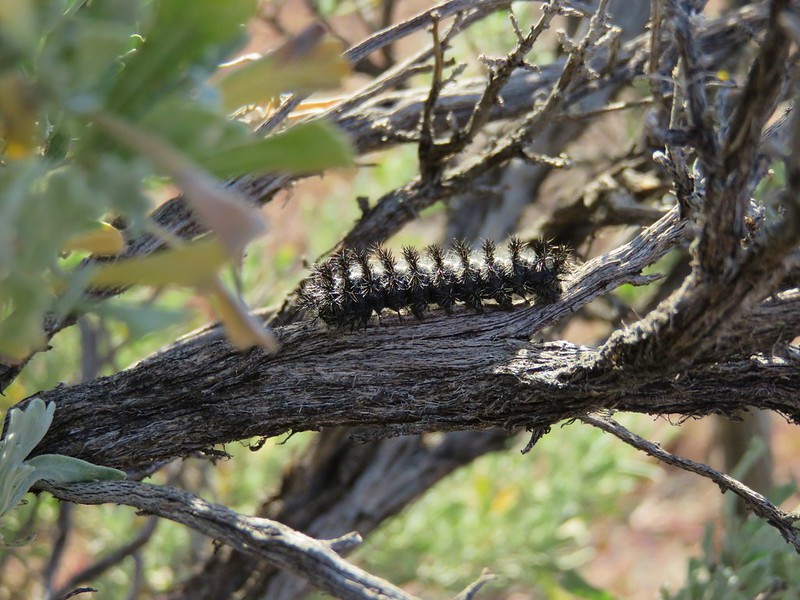
Caterpillar
IMG_4372

IMG_4384

Fiddleneck

IMG_4387

IMG_4374

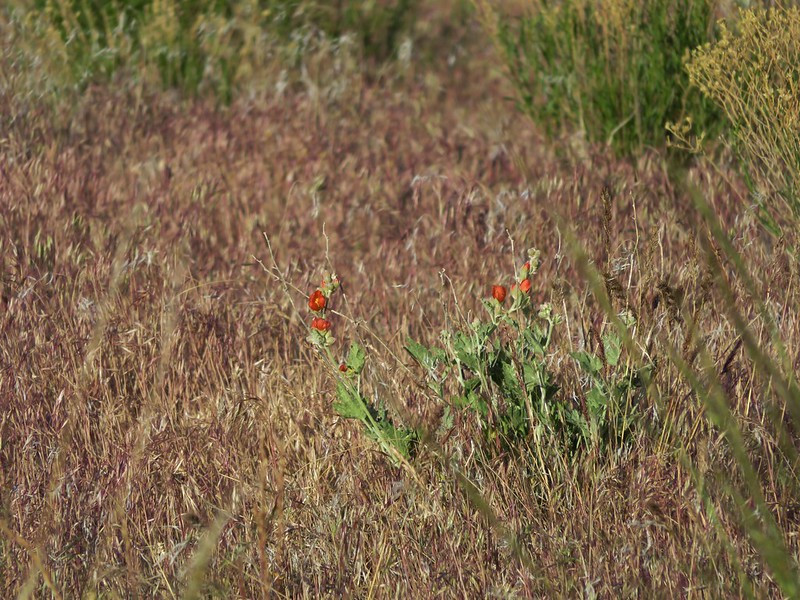
Orange globe mallow
IMG_4390

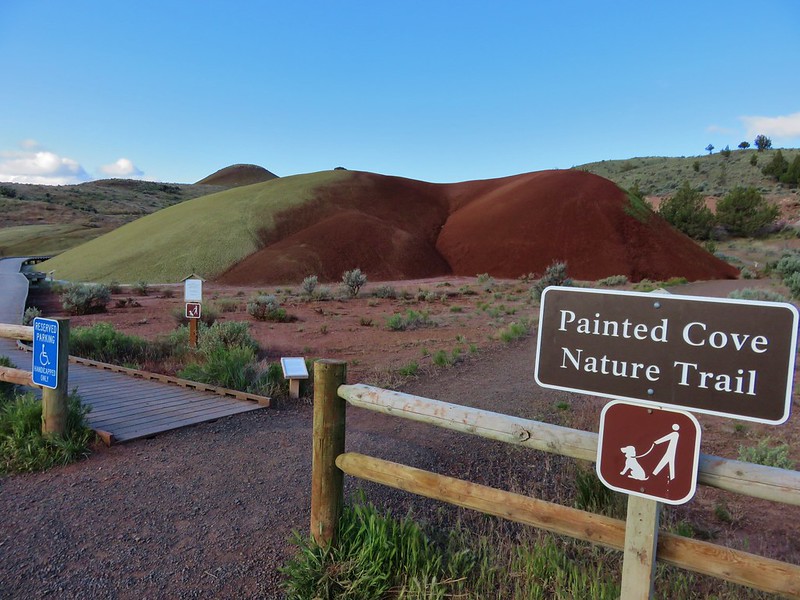
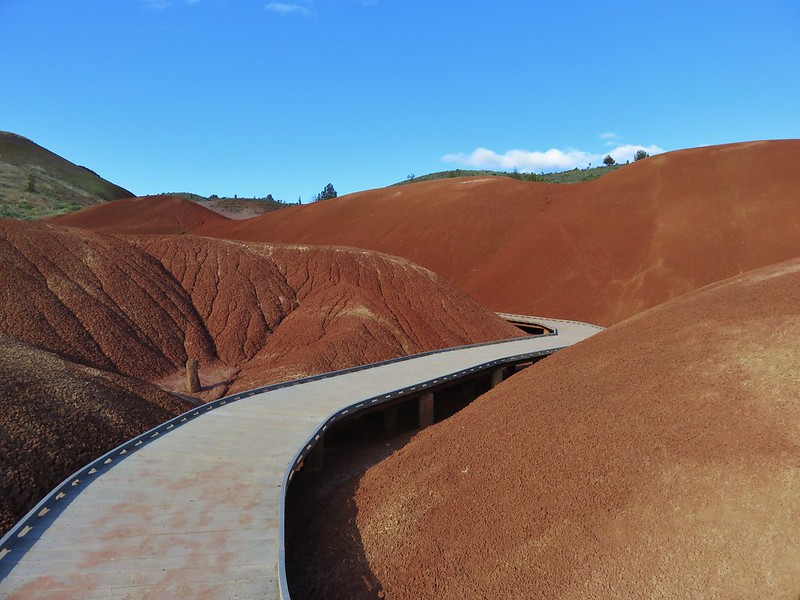
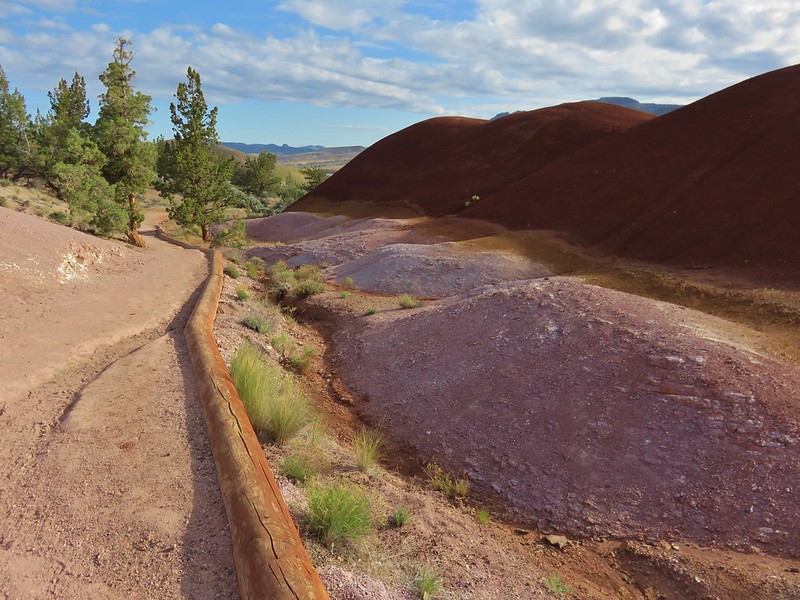
From the Painted Hills Overlook Trailhead we drove 1.2 miles following signs to the Painted Cove Loop Trailhead. Here a .2 mile loop passes colorful claystone formations.
IMG_4391

IMG_4397

IMG_4427

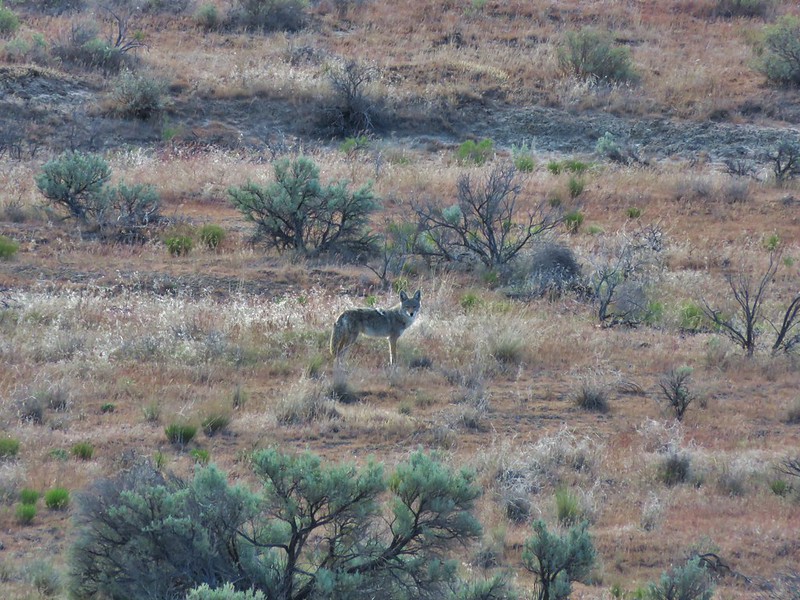
A short side trail forked off to the left leading to a viewpoint above the Painted Cove. While we were at the viewpoint Heather spotted a Coyote across the road.
IMG_4417

IMG_4410

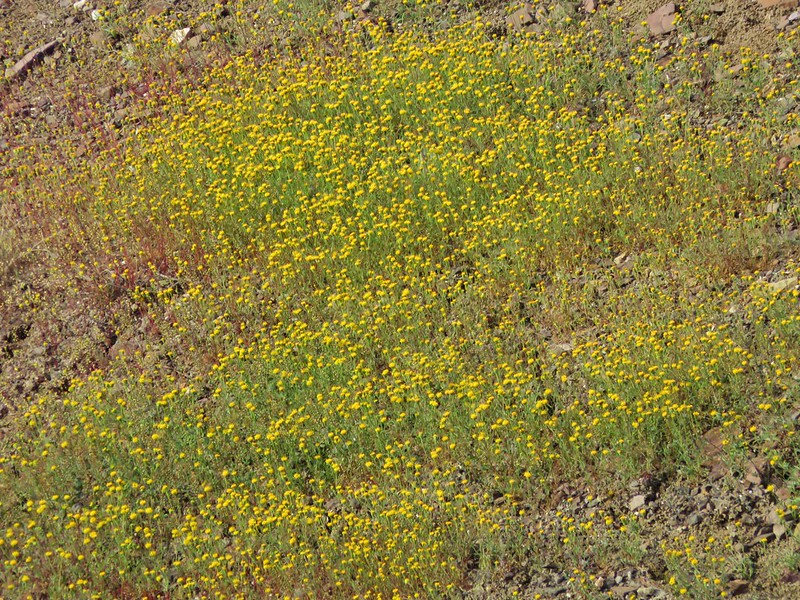
There was also a nice bloom of John Day Pincushion on the hillside.
IMG_4421

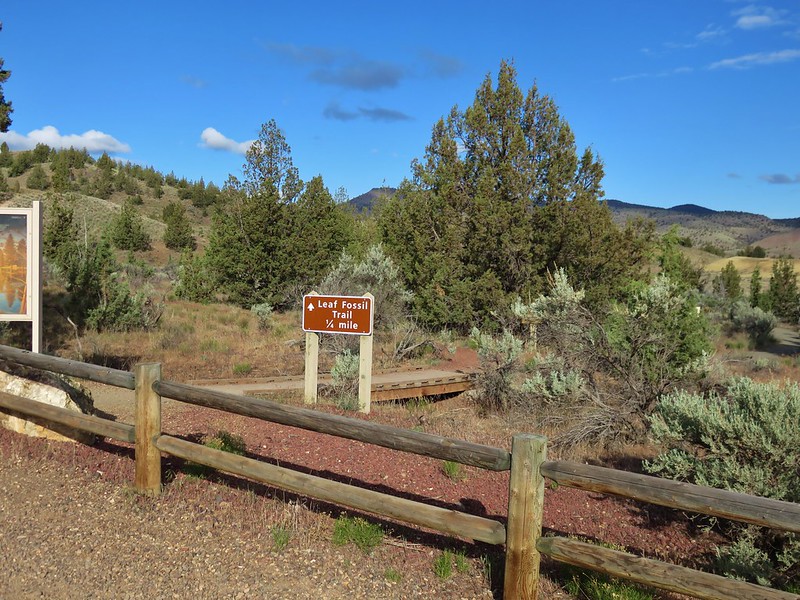
Next we headed to the Leaf Hill Trail traveling back the way we’d come and following signs to the trailhead.
IMG_4430

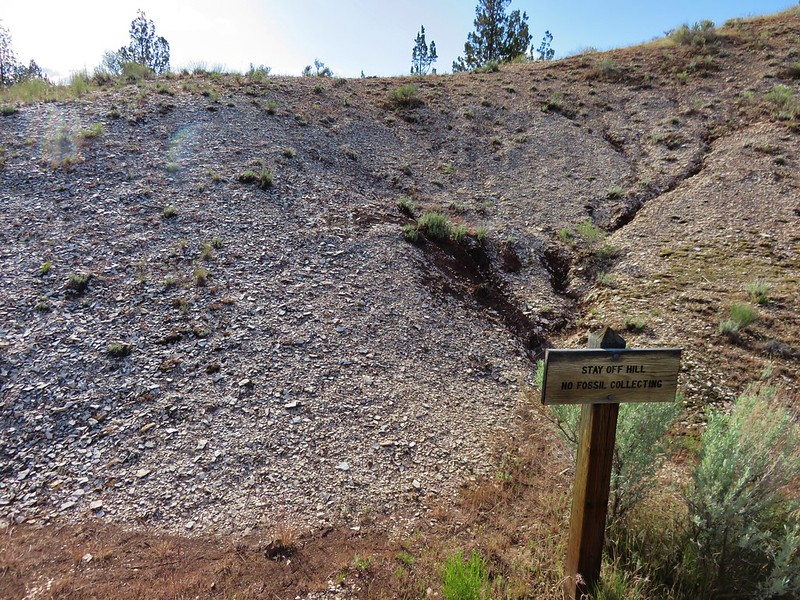
This loop passes around a small hill containing many fossils (we didn’t spot any though).
IMG_4439

IMG_4441

IMG_4445

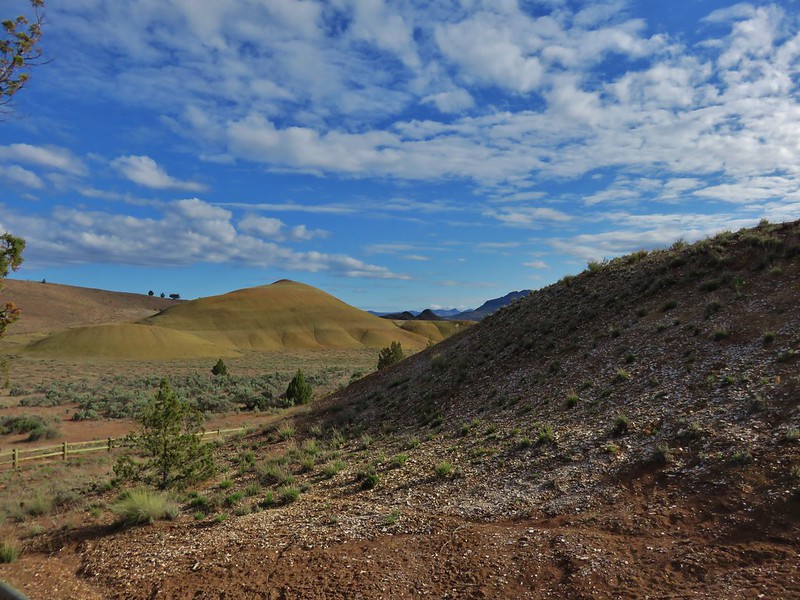
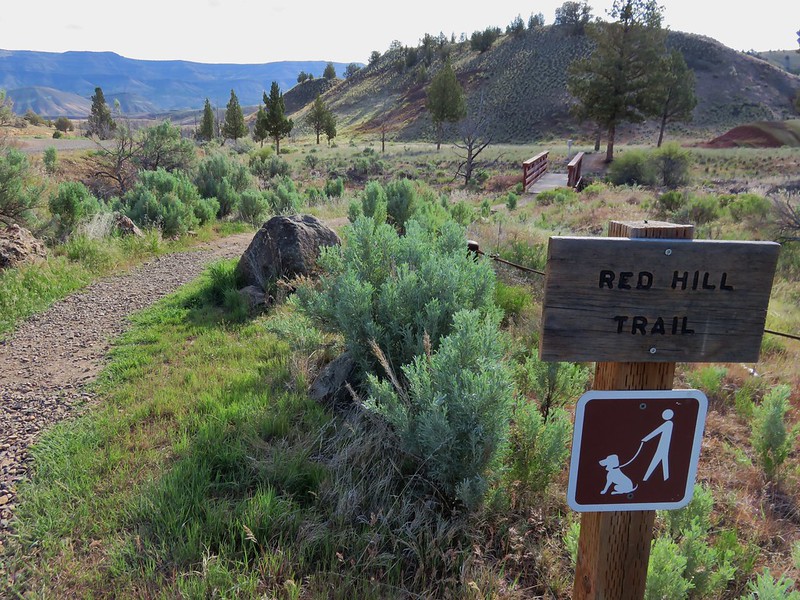
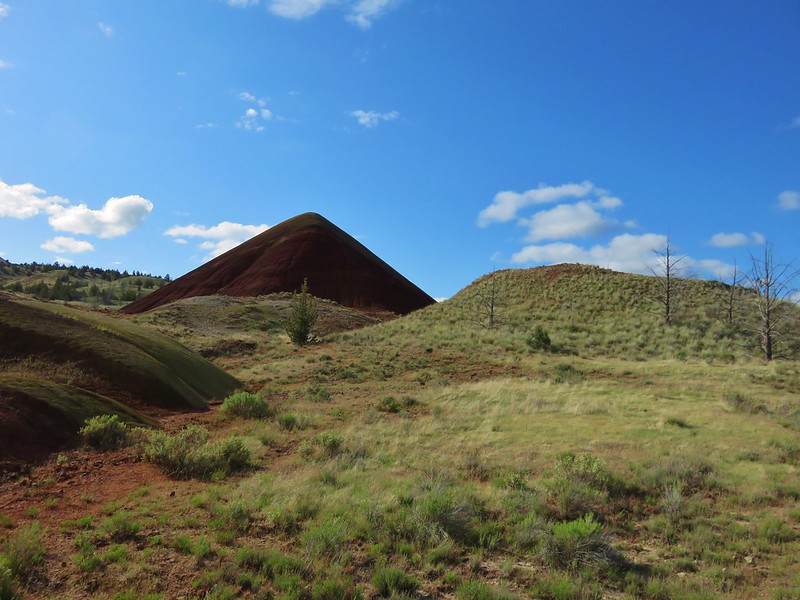
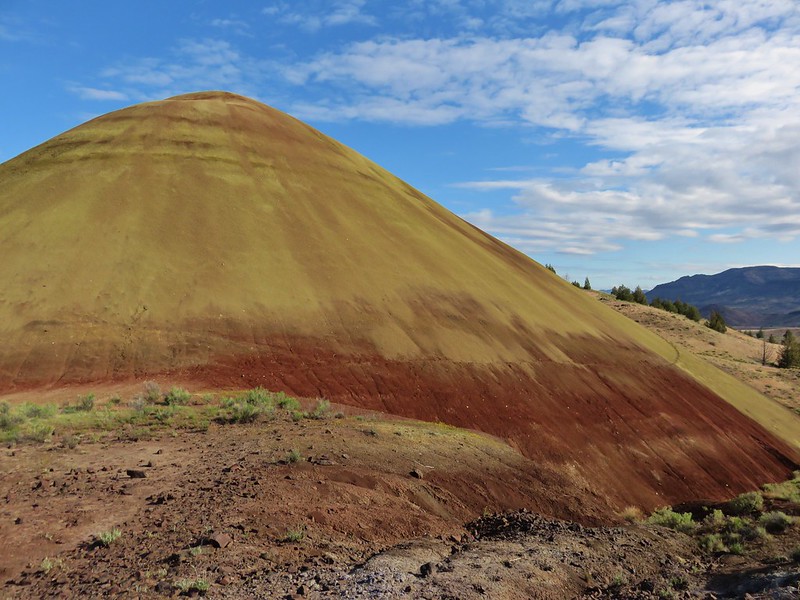
Finally we visited the Red Hill Trail which leads to a close up view of a hill of red and yellow ash.
IMG_4449

IMG_4469

IMG_4459

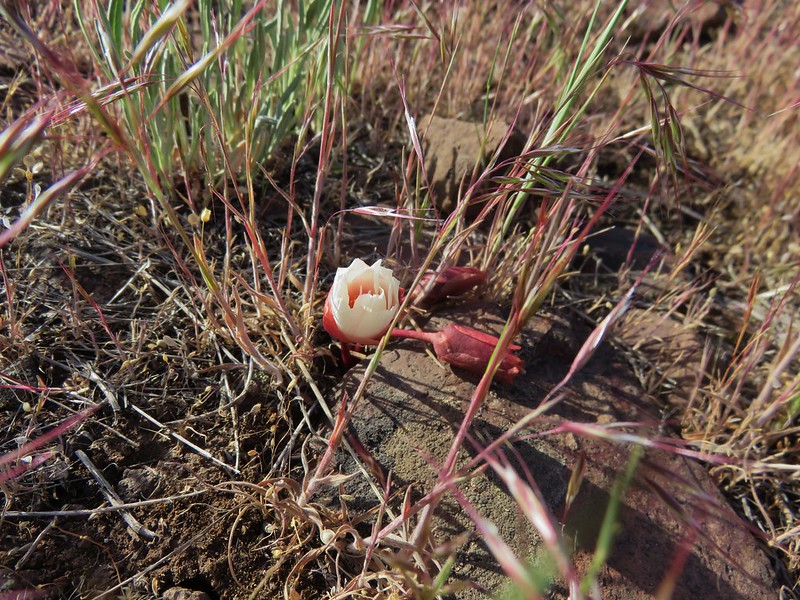
Near the end of the trail we spotted our first ever bitteroot flowers. They were just beginning to open but it was exciting nonetheless given we had looked for these on other hikes and failed to find any.
IMG_4460

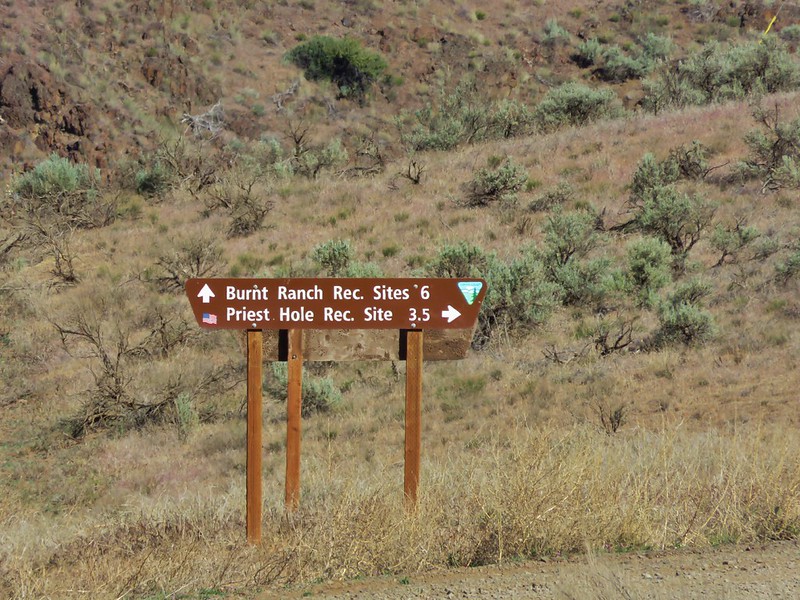
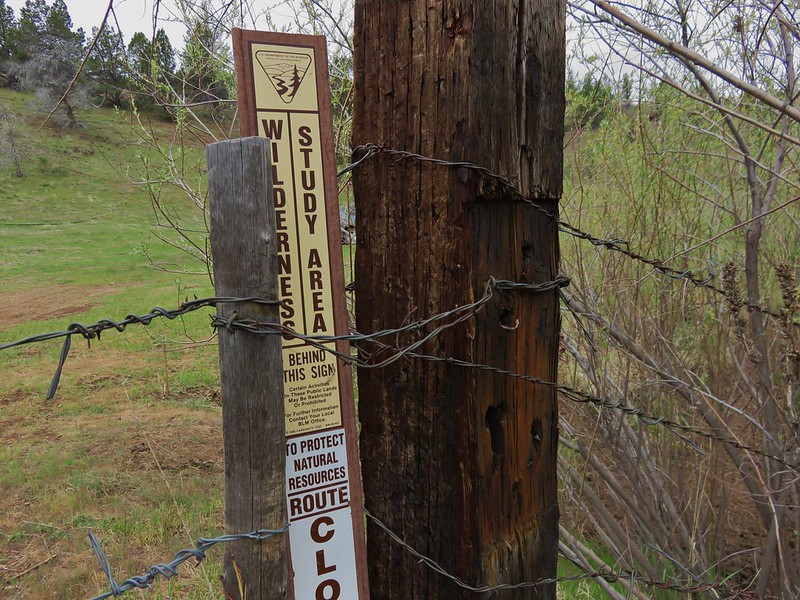
Our next destination for the day was a bit of a wild-card. While I was doing research for the Sutton Mountain hike I had seen references to another nearby wilderness study area calls Pat’s Cabin. i wasn’t able to find much information about it, but I did find a 2011 BLM map of the area showing a trail going up Pat’s Cabin Canyon. Internet searches turned up nothing in regards to the trail so we decided that we would check it out in person. The BLM map showed a parking area along Burnt Ranch Road just before reaching the Twickenham-Bridge Creek Cuttoff Road. We parked in a grassy area next to an old corral near a sign for the Burnt Ranch and Priest Hole Recreation Sites.
IMG_4474

IMG_4483

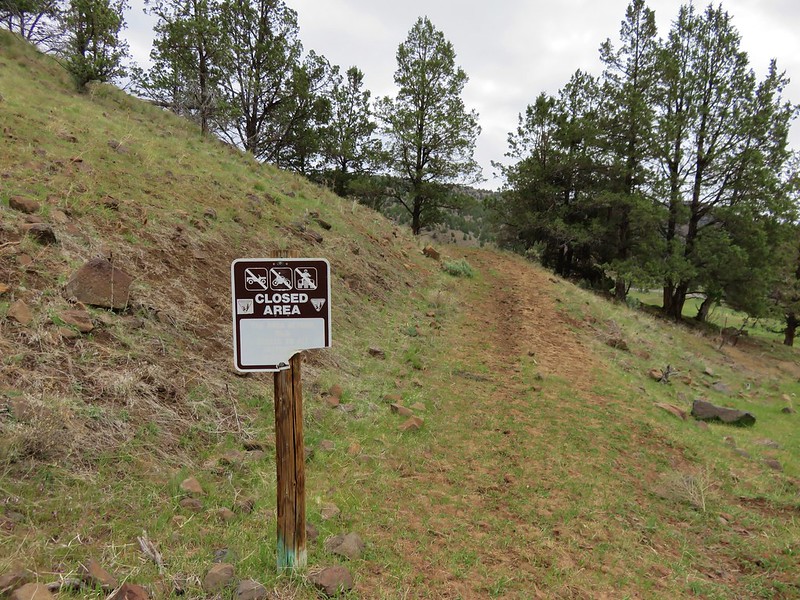
From there we crossed Burnt Ranch Road and passed through a barb wire gate on an old dirt road. After approximately a quarter mile we came to a sign marking the boundary of the wilderness study area.
IMG_4480

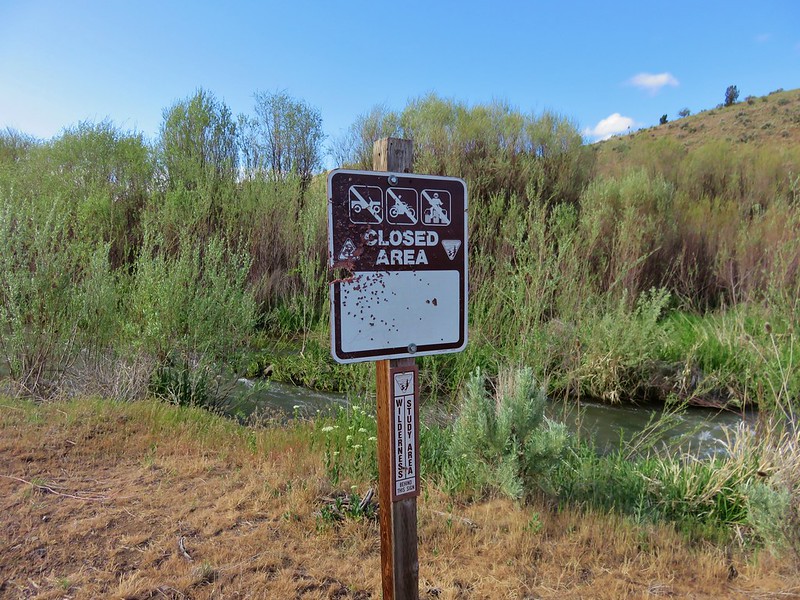
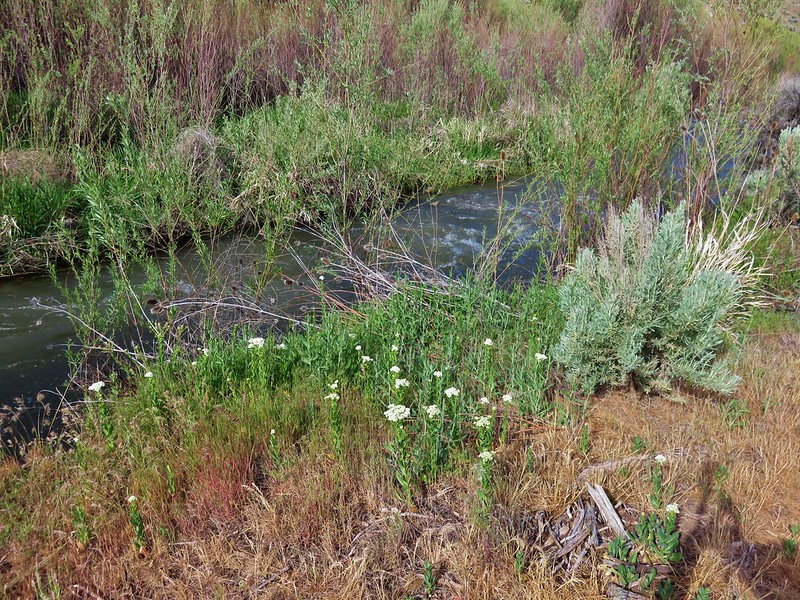
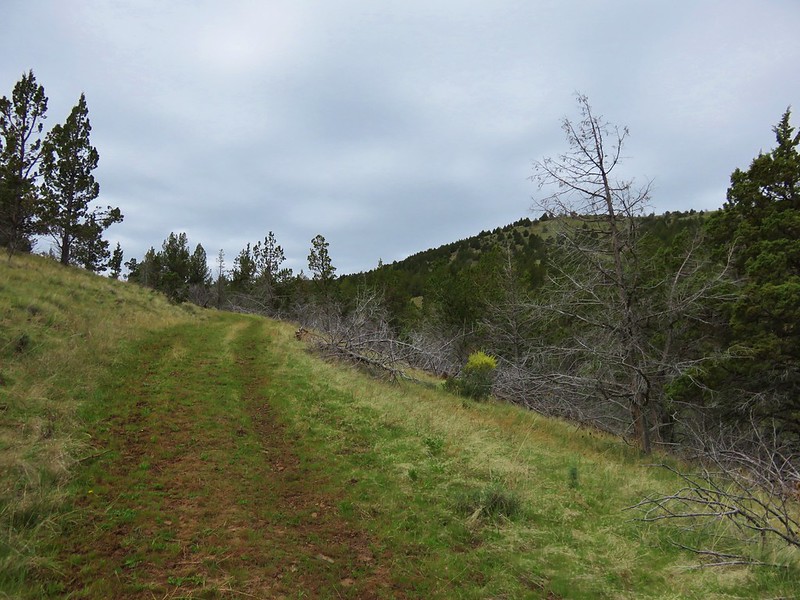
Just on the other side of the sign was Bridge Creek. Bridge Creek lacked a bridge here and the flow was swifter and deeper than we were comfortable with trying to ford. Later in the year it may have been doable but on this day Pat’s Cabin would remain a mystery to us.
IMG_4482

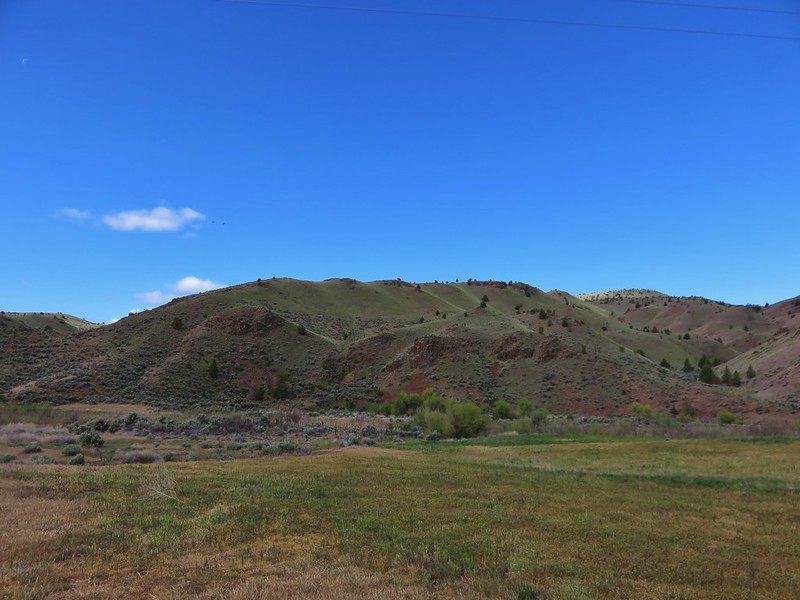
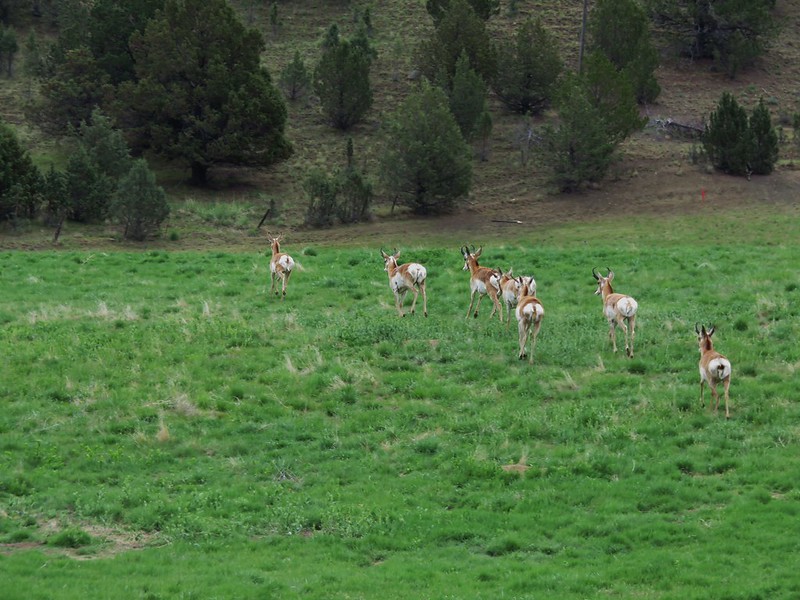
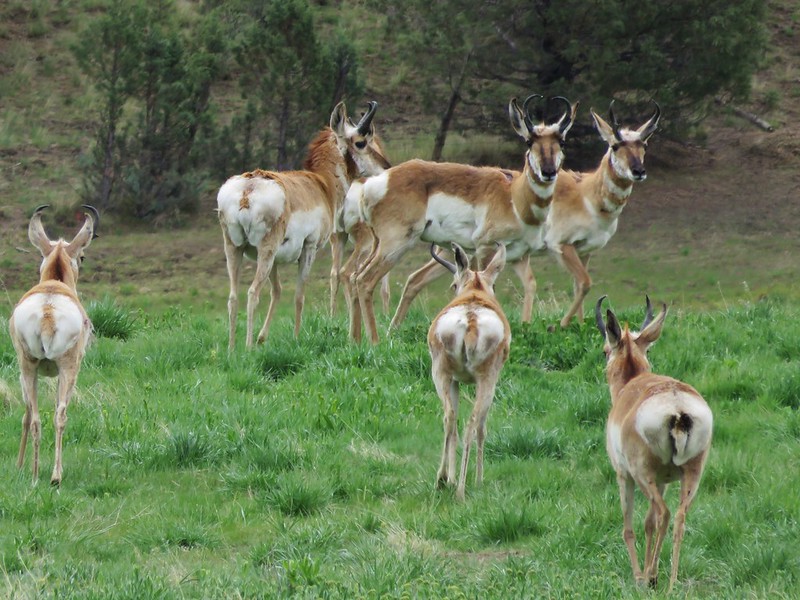
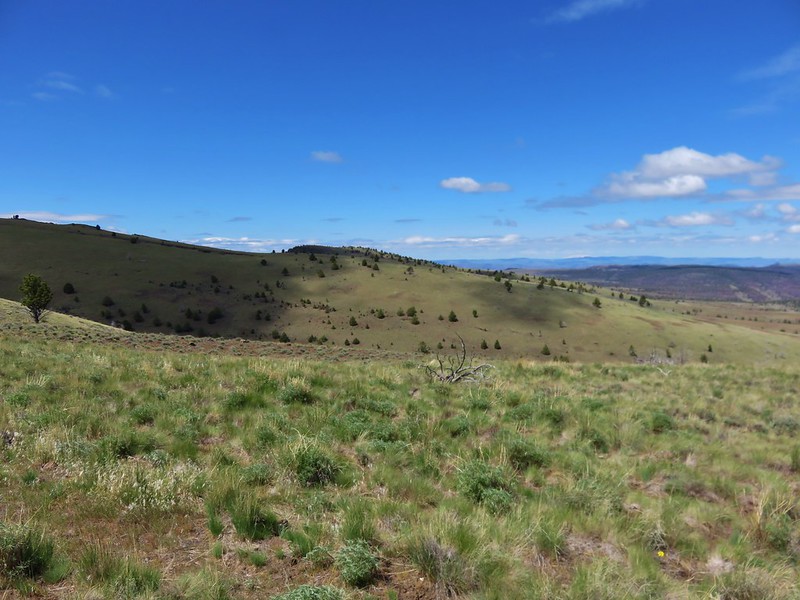
Our final destination for the day was on the other side of Sutton Mountain so we drove to Mitchell and turned north onto Highway 207 for 9.3 miles. We were hoping to spot two things during our Sutton Mountain hike that we had not yet seen during a hike, pronghorns and hedgehog cactus. We spotted some pronghorns in a field before we even made it to the trailhead.
IMG_4487

IMG_4490

That didn’t count since we weren’t on the hike yet, but it was still neat to see them.

The trailhead we were looking for was located just beyond milepost 15 behind a wire gate in a grassy meadow with lots of signs of cattle.
IMG_4497

An old roadbed serves as the trail.
IMG_4508

We followed the roadbed along a wire fence to a private barn. There were horses on the other side of the fence and cows on our side. We hesitated for a moment when we realized there was also a bull, but after he gave us a look he headed away toward the barn. The roadbed turned uphill to the left so we began to climb.
IMG_4523

There were a few wildflowers and as we climbed we began seeing more, especially different colors of paintbrush.
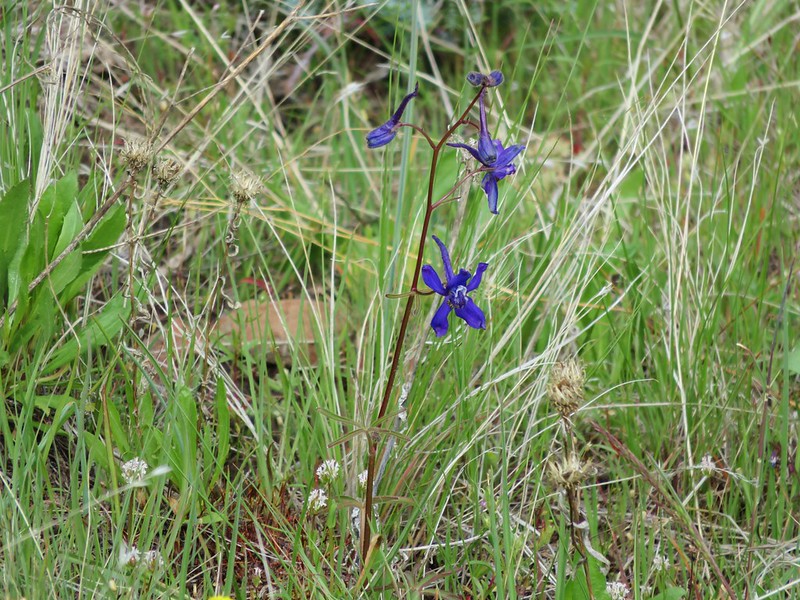
Larkspur
IMG_4526

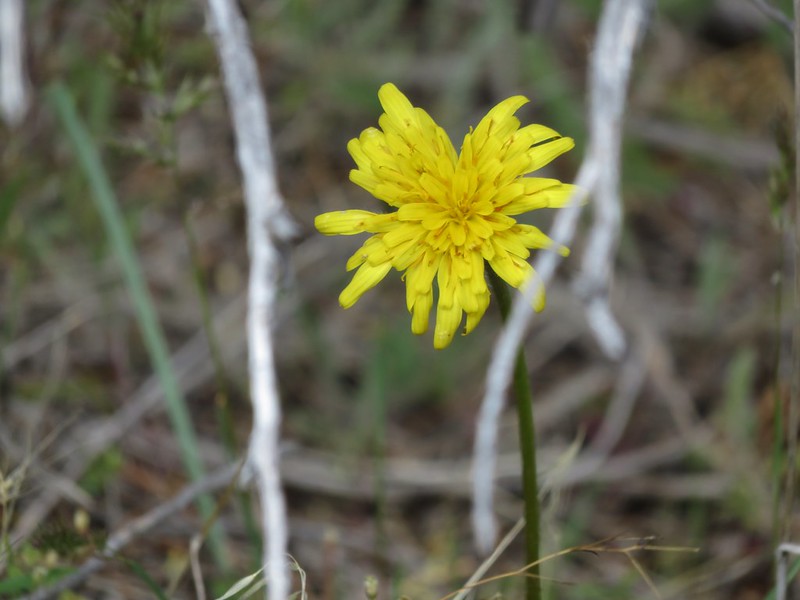
Sagebrush false dandelion
IMG_4528

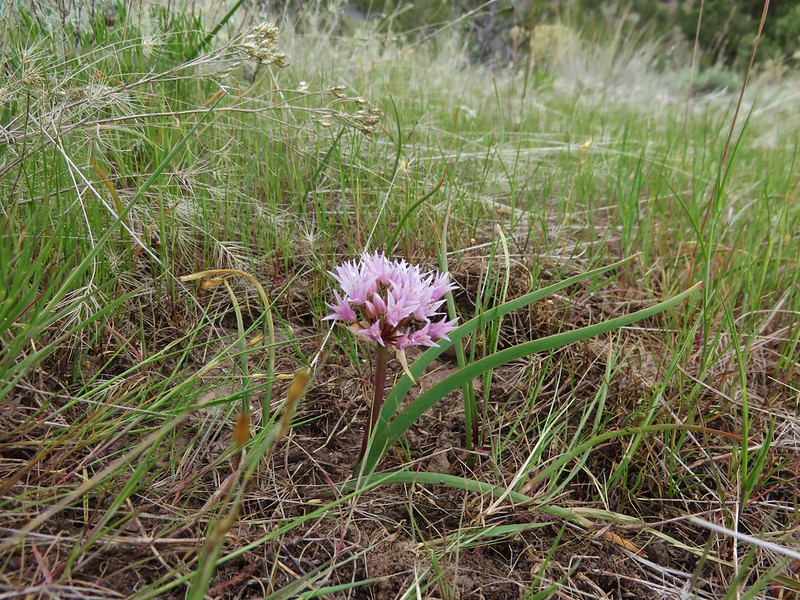
Wild onion
IMG_4533

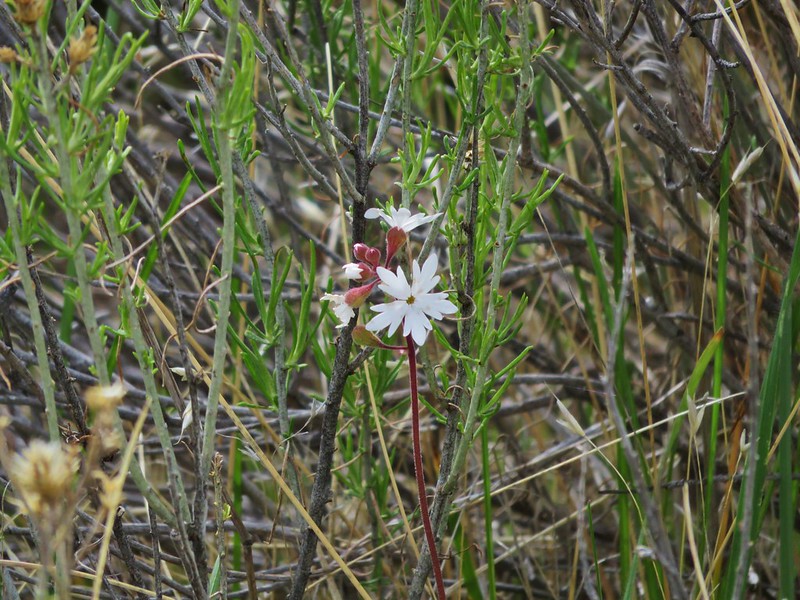
Prairie star
IMG_4534

Paintbrush
IMG_4535

IMG_4537

IMG_4540

IMG_4557

IMG_4562

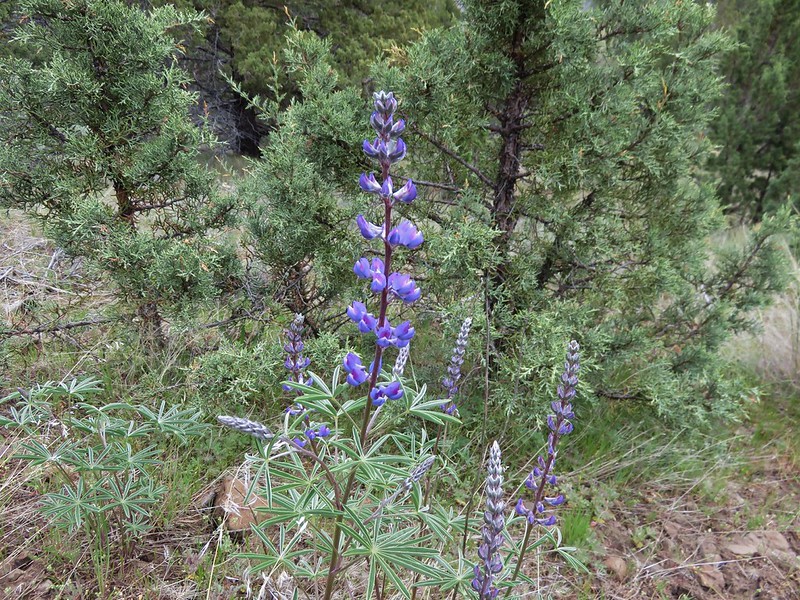
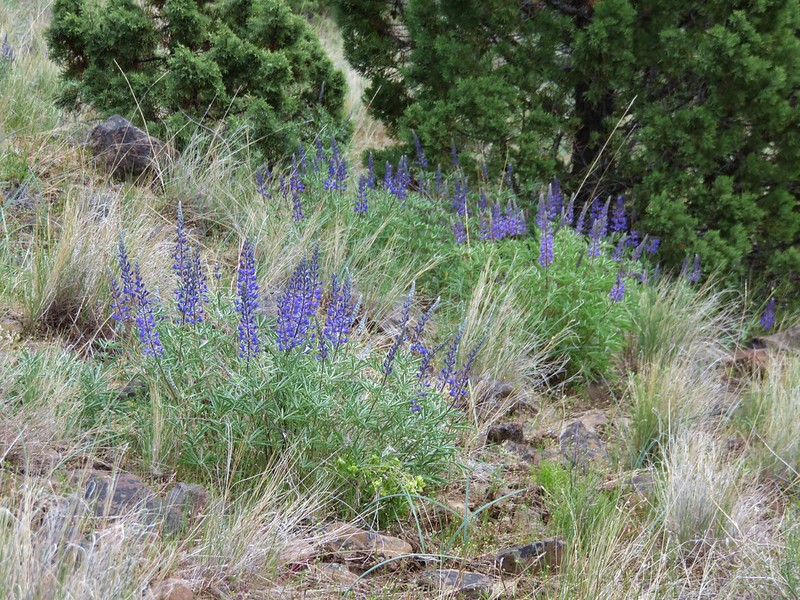
There was also plenty of lupine but much of it had not even started to bloom.
IMG_4560

A mile from the trailhead the roadbed curved to the right across a dry wash. On this side of the wash the lupine was further along and a few more flowers made appearances.
IMG_4571

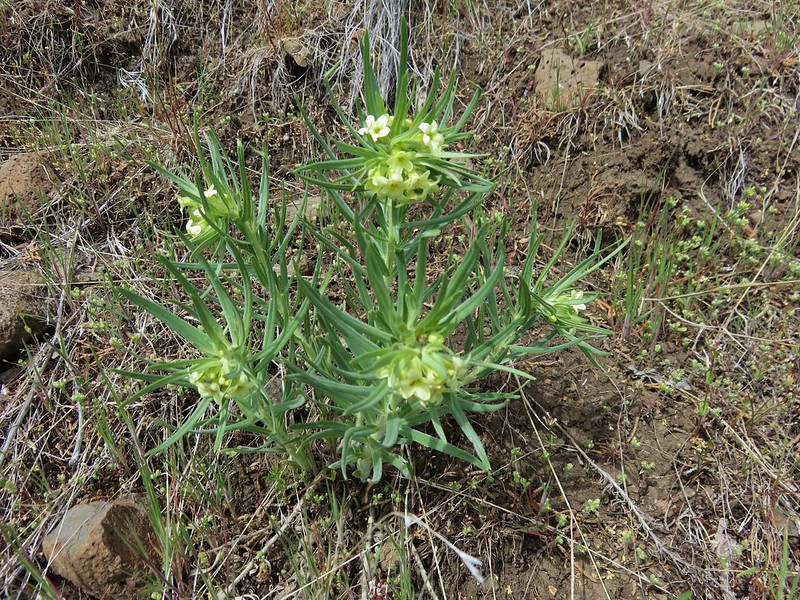
Stoneseed
IMG_4576

Wallflower
IMG_4577

Milk-vetch
IMG_4573

As we climbed the trees gave way to grassy meadows where wildflowers dotted the ground with color.
IMG_4584

Maybe a grass widow
IMG_4613

Old man’s whiskers
IMG_4607

Paintbrush
IMG_4617

An arnica
IMG_4623

Larkspur
IMG_4626

Lupine
IMG_4606

Just over a mile after crossing the dry wash we arrived at an old corral and another barb wire fence. A roadbed continued straight from the corral but the correct route turned left and continued uphill on a fainter old roadbed on the far side of the corral and fence.
IMG_4630

IMG_4639

We spotted additional wildflowers as we continued to climb.
Phlox
IMG_4645

Dwarf yellow fleabane
IMG_4664

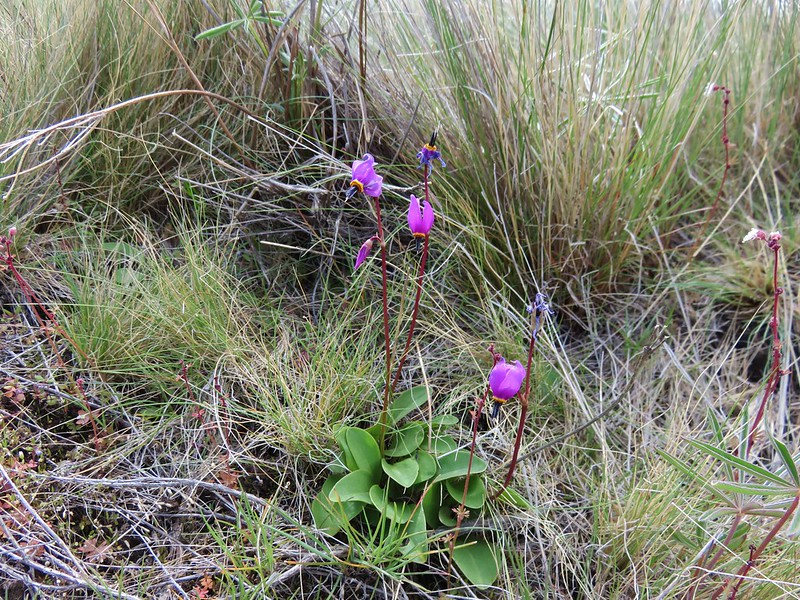
Shooting star
IMG_4680

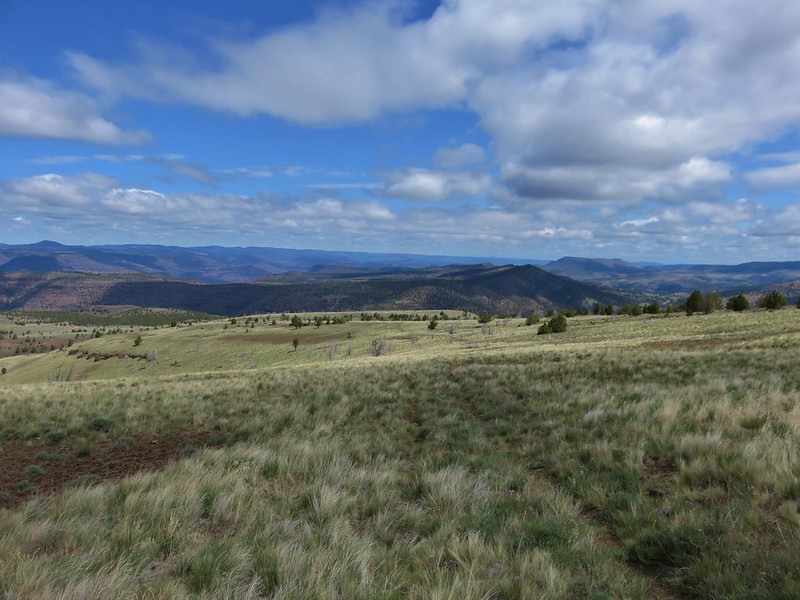
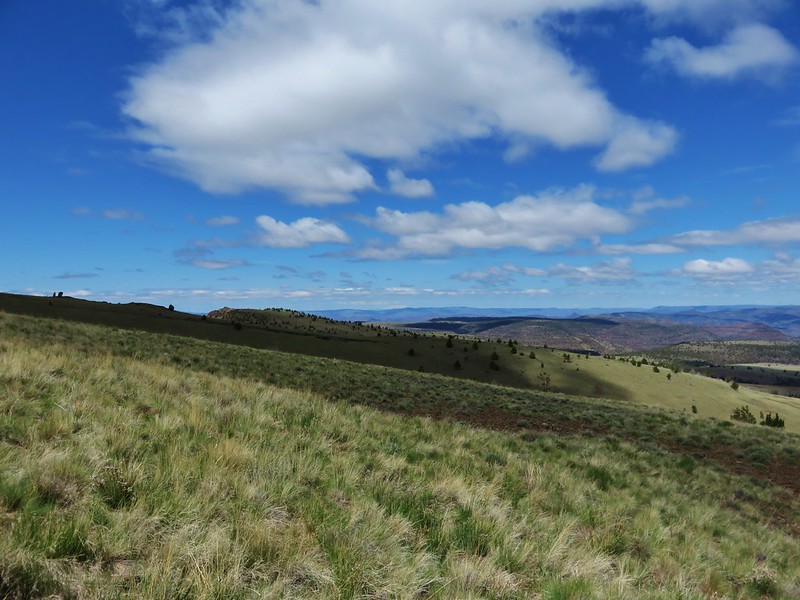
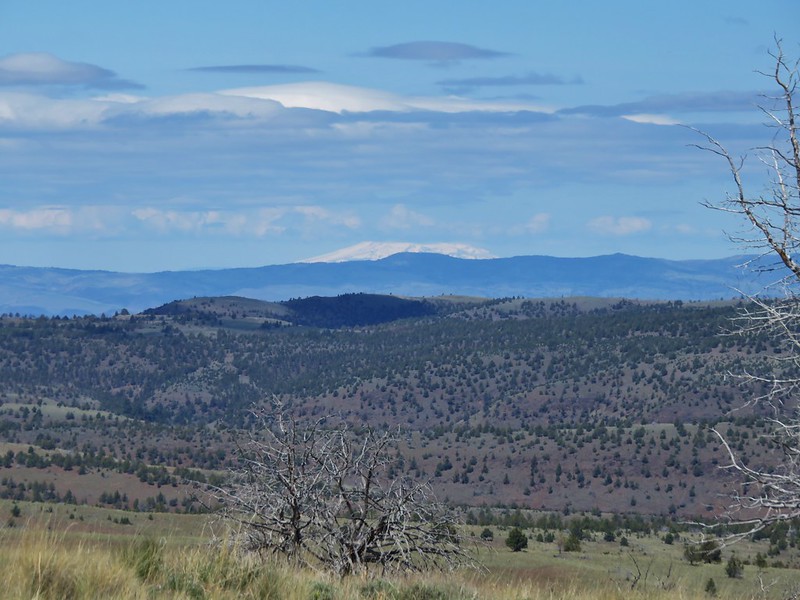
The fence eventually disappeared but we just stuck to the roadbed which was easy enough to follow. The open meadows allowed for some great views including the bottom portion of Mt. Jefferson.
IMG_4667

IMG_4668

IMG_4641

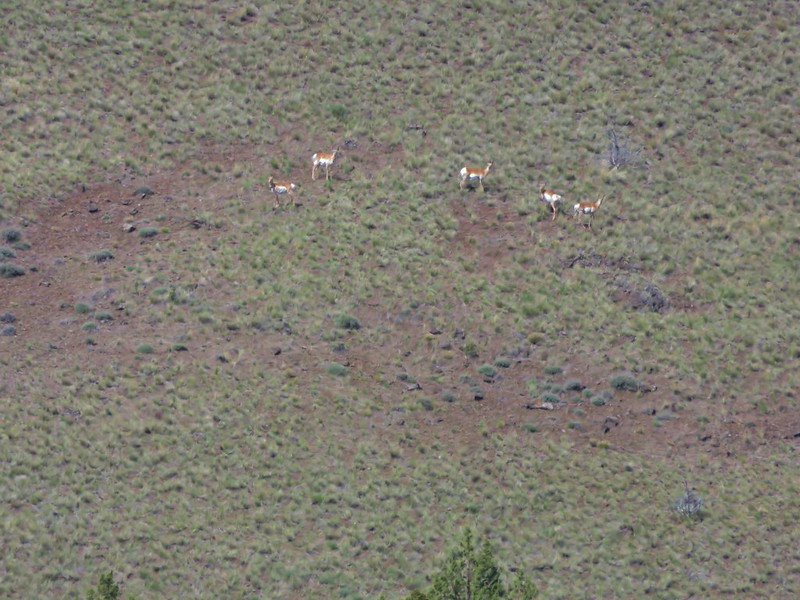
As we were taking in the views we spotted some pronghorns on the opposite hillside.
IMG_4647

IMG_4648

They were a lot further away than those we spotted in the car but at least now we could say we had seen some while hiking.

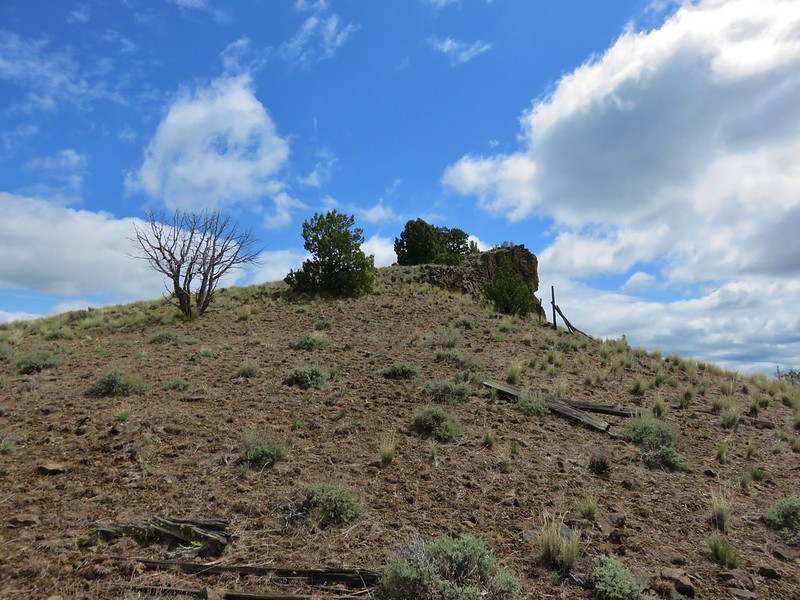
Just under a mile and a half from the old corral the roadbed came to a pass where it curved to the right and continued to the NW. Our goal, the summit of Sutton Mountain, was to our SE though so we left the roadbed here and headed uphill along the rim cliff.
IMG_4690

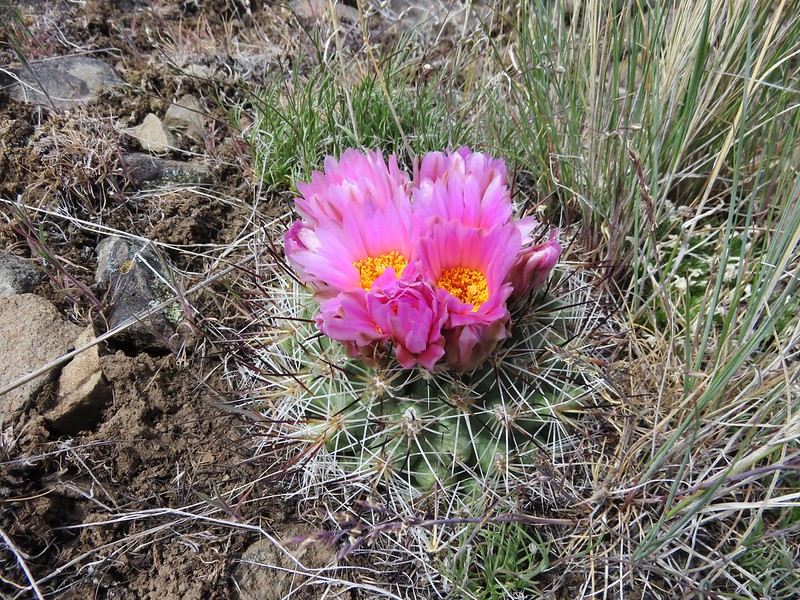
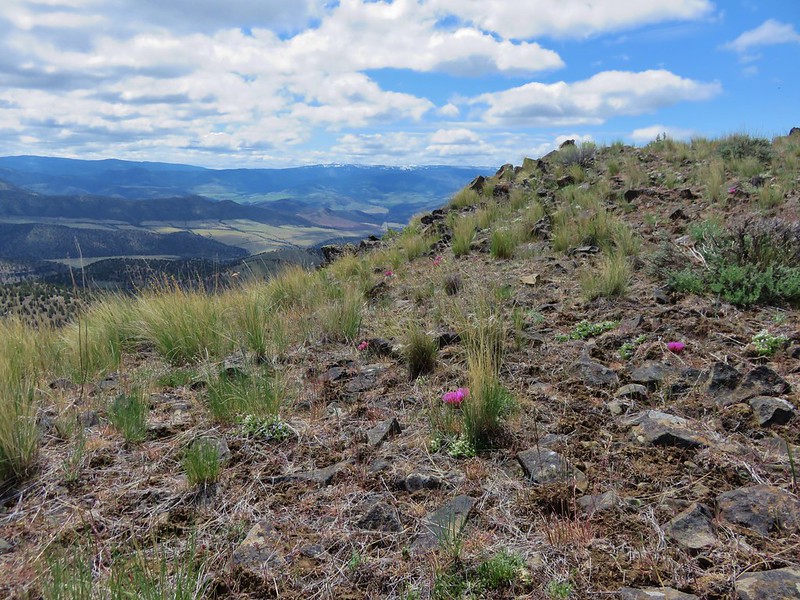
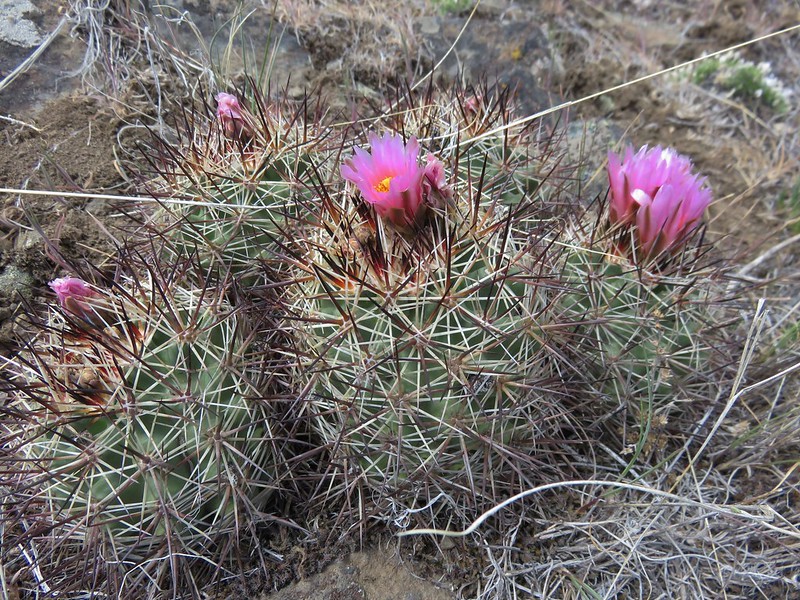
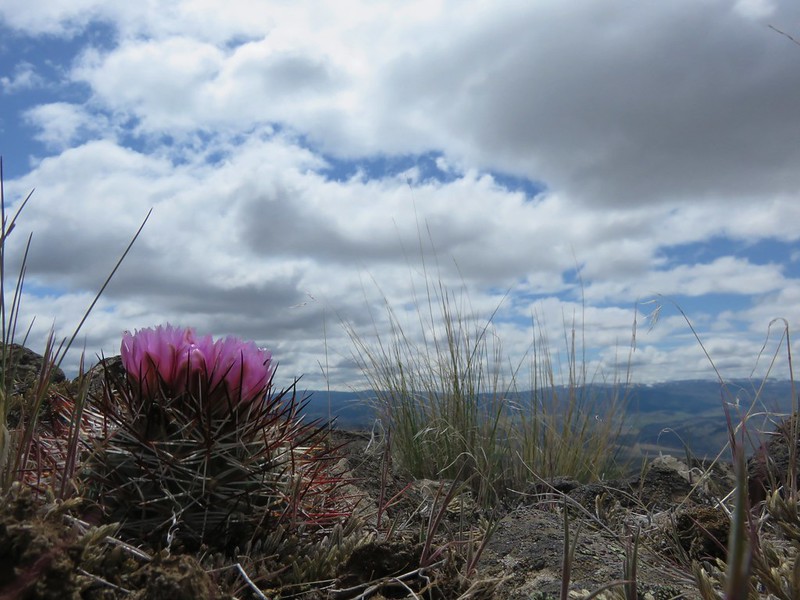
We had seen our pronghorns but not a hedgehog cactus which we knew to bloom in the area in late April or early May. We had nearly given up hope as we neared the summit when Heather spotted the first one.
IMG_4699

They seemed to only be present in a small area along the rim and then only on the SW facing slope.
IMG_4698

IMG_4703

IMG_4707

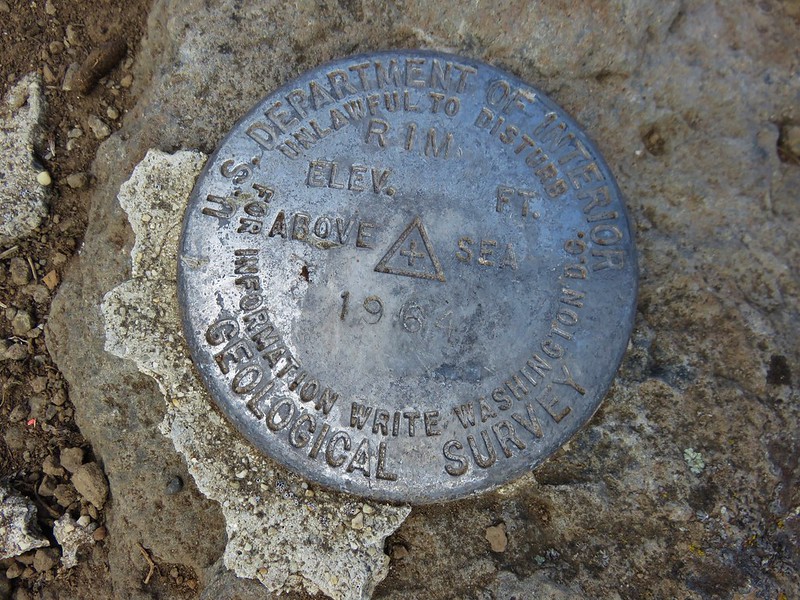
We spent quite a while studying the different cacti before finally making our way to the official summit where we took a break and admired the view.
IMG_4722

IMG_4723

Mt. Jefferson in the distance and the Painted Hills unit below.
IMG_4694

IMG_4697

Lookout Mountain in the Ochocos.
IMG_4689

Many butterflies were out as we returned the way we’d come.
IMG_4732

IMG_4743

IMG_4749

IMG_4751

We returned the way we’d come and found that the cows had moved from their earlier location and now the trailhead was crowded.
IMG_4755

The cows had thoroughly inspected our car leaving smudges in the dust along the body and drivers side window where they had licked the vehicle.

It was a wonderful day of hiking. It had been warm but not too hot which was nice given the lack of shade on these hikes. There was a great variety of wildflowers and wildlife including several of each that were new to us, and there were birds signing almost everywhere we were. We couldn’t recall another hike with as much birdsong, much of which came from western meadowlarks. For what it’s worth Sutton Mountain made its case to for becoming an officially designated wilderness. Happy Trails!

Flickr:https://www.flickr.com/photos/9319235@N02/albums/72157667625239612

Categories
Coastal Range Hiking Oregon Salem/Albany Trip report Willamette Valley

Minto-Brown Island Park and the Banks-Vernonia State Trail

We didn’t have any hikes planned for awhile after our visit to Tamanawas Falls due to Heather having a half-marathon to run on April 10th. Her half-marathon wound up being an opportunity for a pair of short hikes on race weekend though.

On the day before the race we made the short trip to Salem’s Minto-Brown Island Park for a short walk to help make sure Heather stayed loose. We’ve spent quite a bit of time in the park, sometimes walking and other times passing through on runs. This was the first time I’d brought the camera along to get some photos though.

The area used to be islands in the Willamette River but flooding changed the course of the river so that the former islands are connected to the rest of Salem. At more than 1200 acres, the park contains 19 miles of trails, a playground, a 30 acre off-leash dog area, and fishing opportunities.

The paths are a mix of paved and soft surface trails making the park a popular place to run, walk, or bike. High water does close some of the trails at times but there is almost always a few that remain passable. Later this year a footbridge connecting this park to Salem’s Riverfront Park will make it possible to visit both of these parks as well as Wallace Marine Park without setting foot on a road.

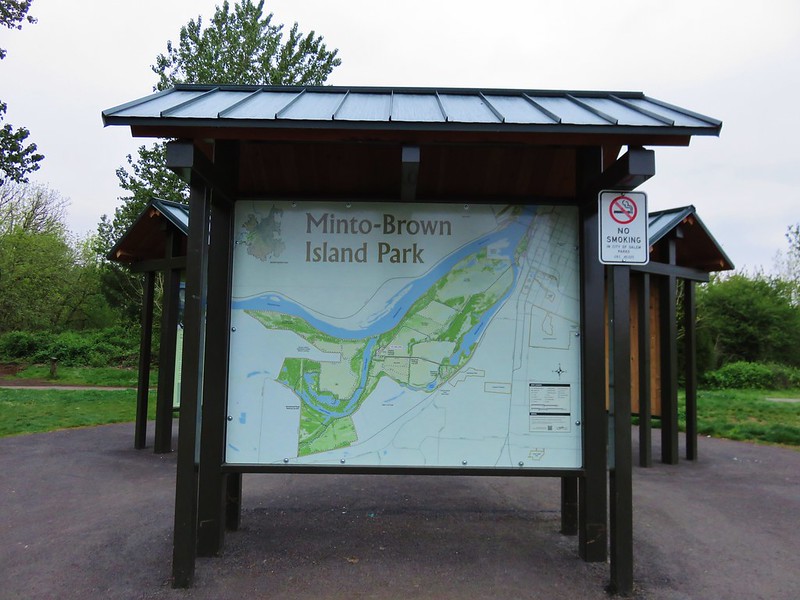
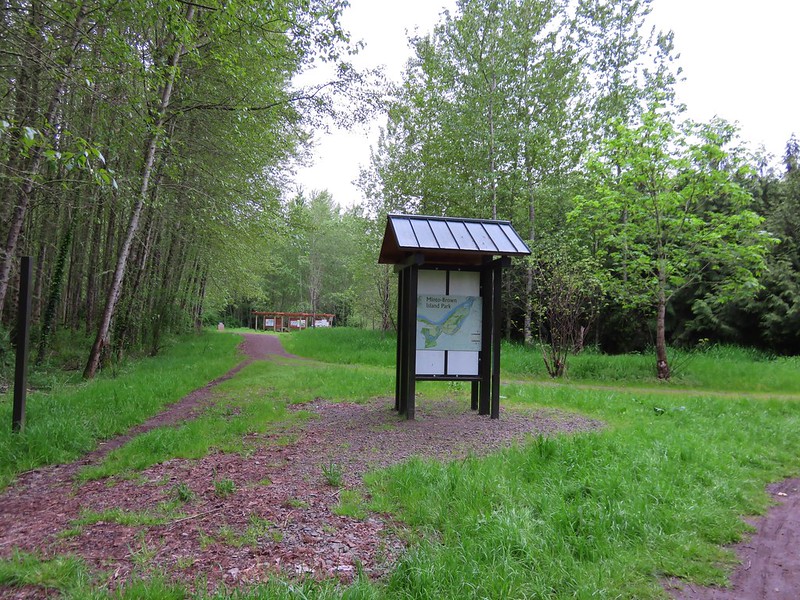
We parked at the Shelter Parking Lot at the end of Minto Island Road SW and set off toward the shelter following signs for the Blue Heron Loop. The park has plenty of signboard maps as well as trail pointers throughout.
Signboards at the parking lot near the gazeebo.

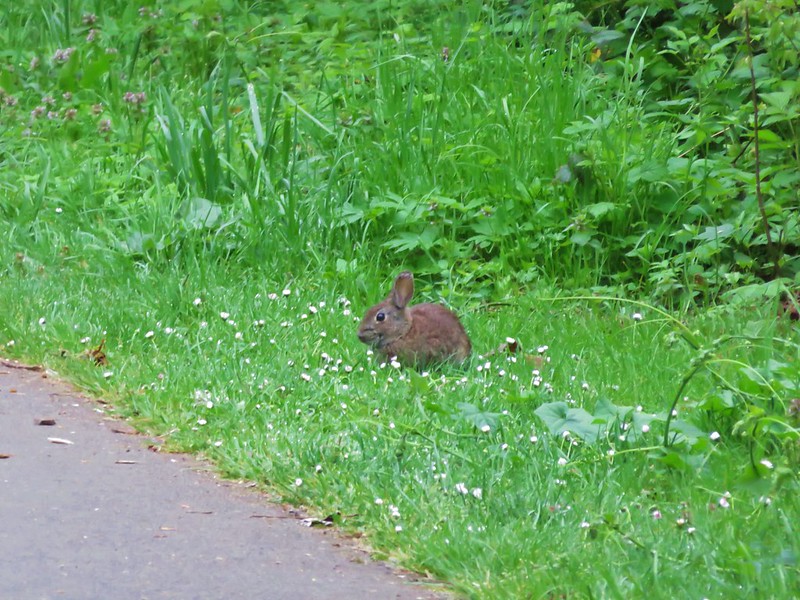
Rabbits are plentiful and often spotted in the strips of grass along the paths.
Lots of little rabbits in the park

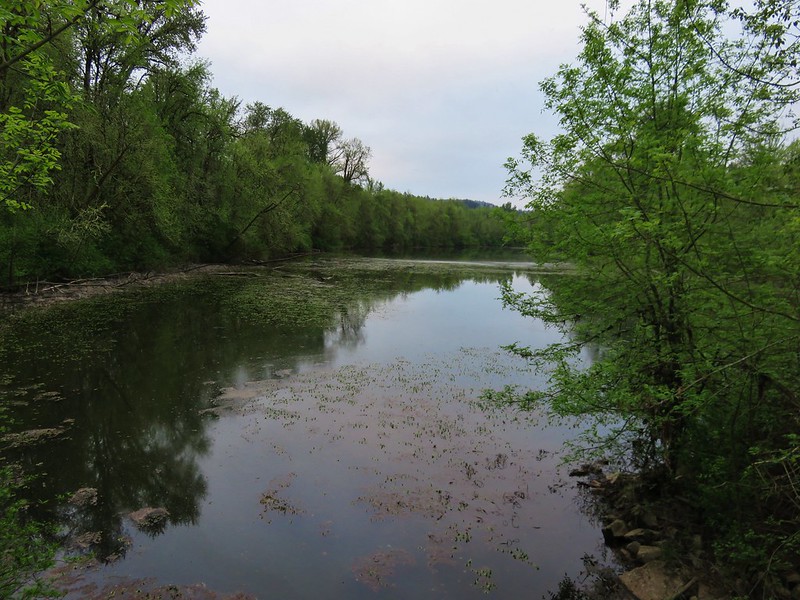
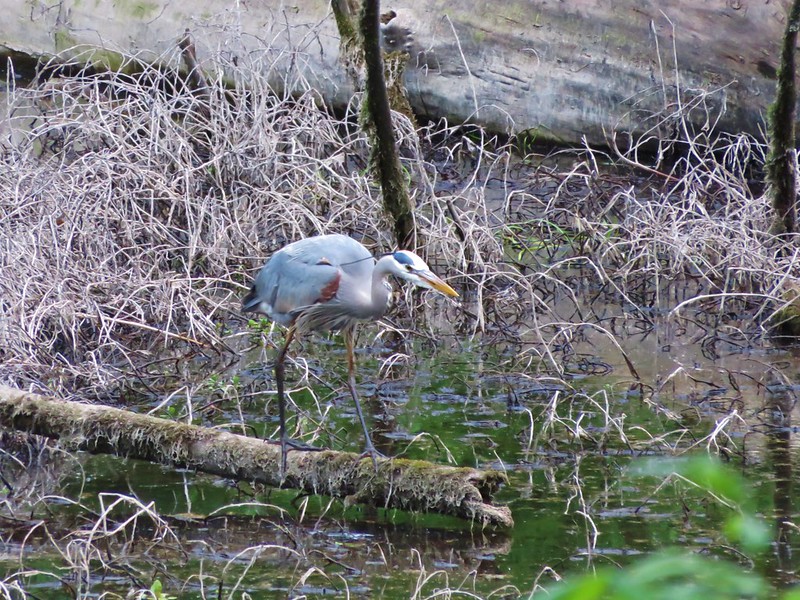
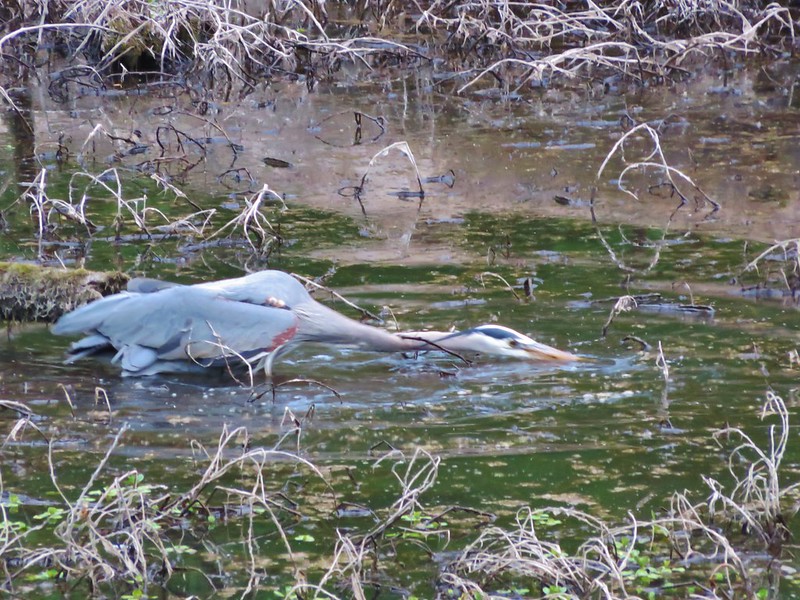
The Blue Heron Loop leads across a footbridge between a pair of sloughs where we spotted a Great Blue Heron searching for snacks.
Slough in Minto-Brown Island Park

Great Blue Heron

Great Blue Heron going after a treat

Shortly after crossing the bridge a sign for the Blue Heron Loop led us off the paved path and onto one of the parks soft surface trails.
Trail in Minto-Brown Island Park

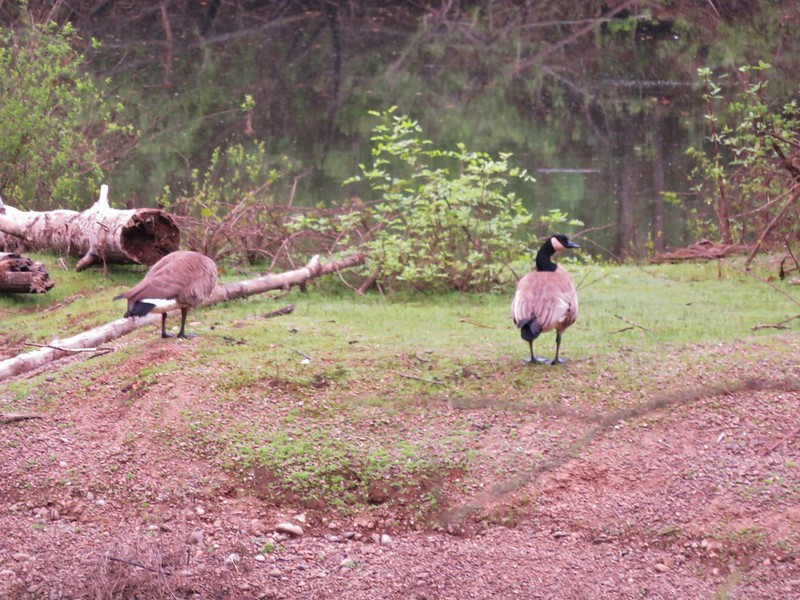
This portion of trail passed another slough on the right where we spotted Canadian Geese, a pair of wood ducks (not pictured due to fast swimming), and an Osprey sitting in its nest.
Canada Geese

Osprey in its nest

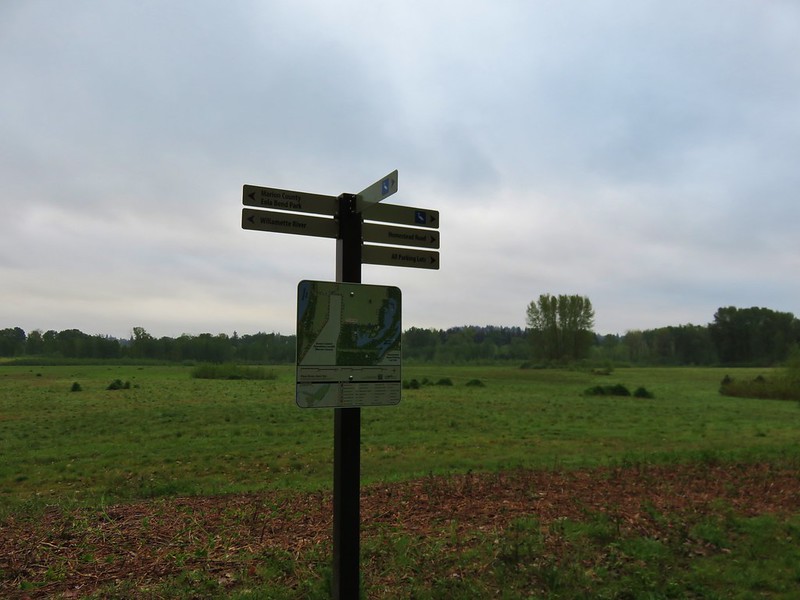
We left the wooded path and came to a trail sign at a junction near one of the many fields in the park.
Trail signs in Minto-Brown Island Park

We left the Blue Heron Loop here and headed for the Brown Island Landfill (the park has a little of everything it would seem). We skirted around it to pick up the Turtle Loop running along the north side of the landfill.
There are several connector trails running between the Turtle Loop trails making several different distances possible. We took one of these through the field to rejoin the Turtle Loop along the Willamette River. Here we found some recent beaver work.
Minto Brown Island Park

Recent beaver work

We followed the Turtle Loop back along the river to the shelter parking lot and our car. Even though the park is in Salem its size and the variety of trails makes it a nice spot to “get away” and you are almost certain to see some wildlife along the way.

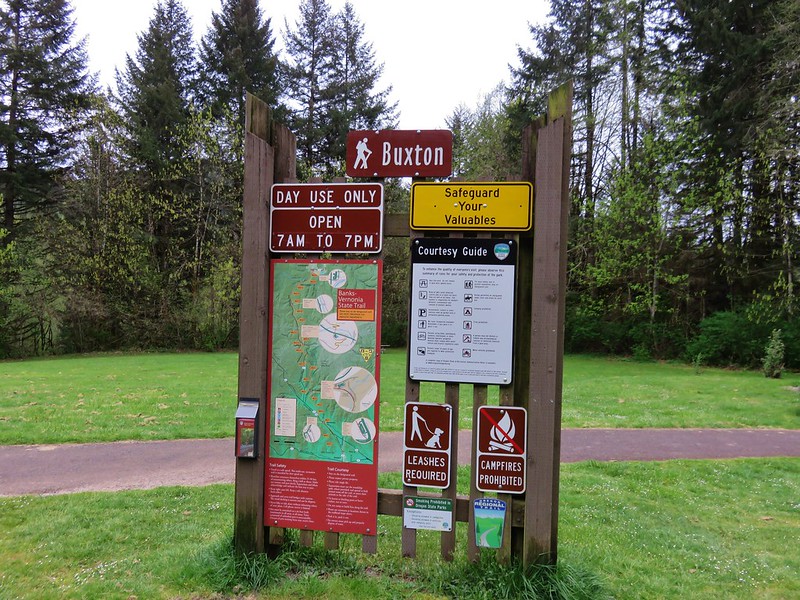
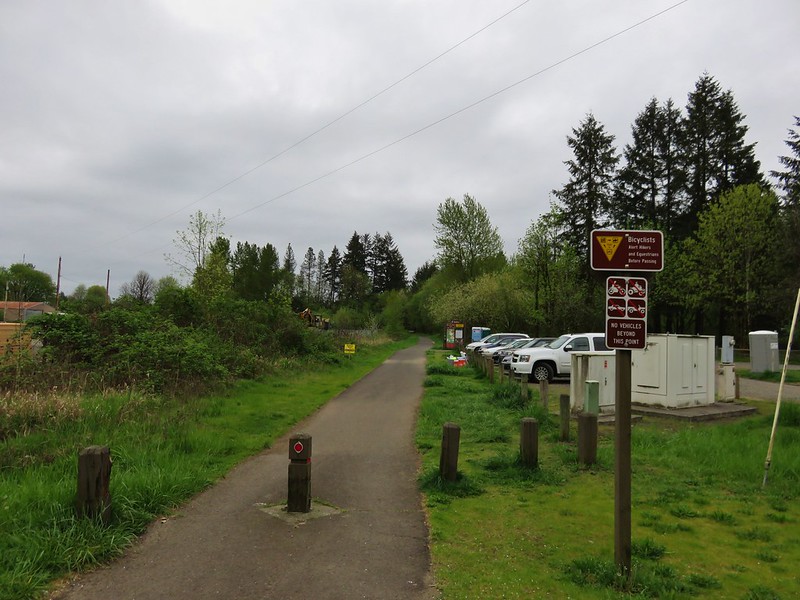
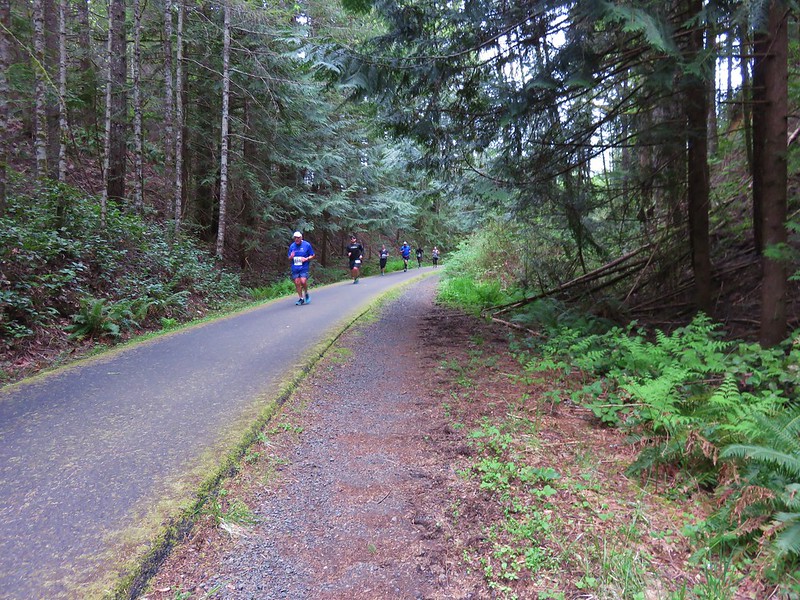
On race day we headed to the Banks Middle School in Banks, OR where Heather’s race would finish and she would catch a bus up to the starting line at L.L. Stub Stewart State Park. The race would follow the Banks-Vernonia State Trail which is a converted rail bed, Oregon’s first rail-to-trail. Heather hopped on a bus at 7am and I had a couple of hours to kill before the race would start at 9am. So I took the opportunity to hike a section of the trail. I had decided to be at the Buxton Trailhead, one of several possible traileheads to access the trail, which was near the 6 mile mark of the half-marathon.

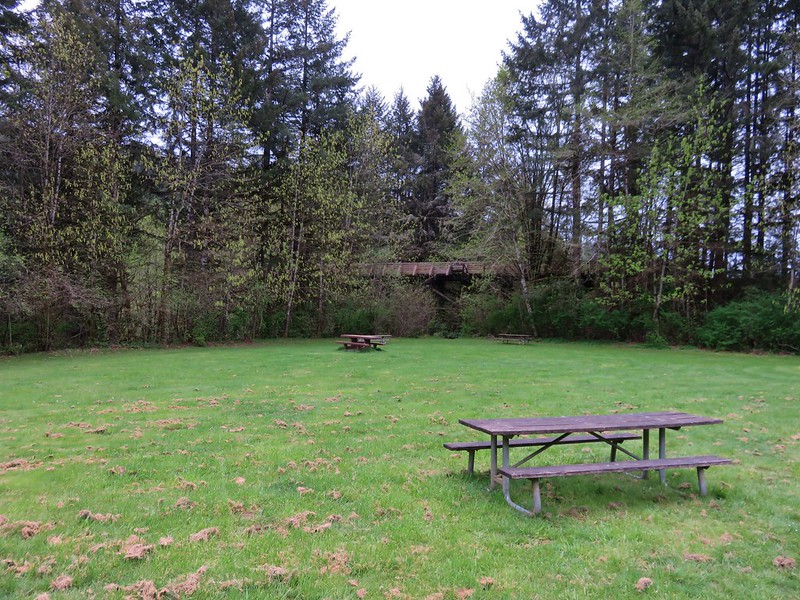
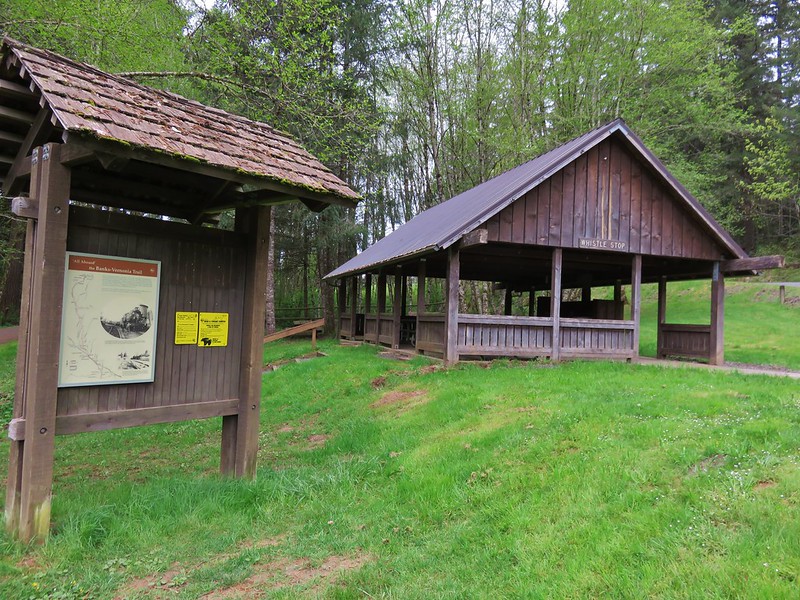
The trailhead had a large parking area with picnic tables, and a shelter.
Buxton Trailhead

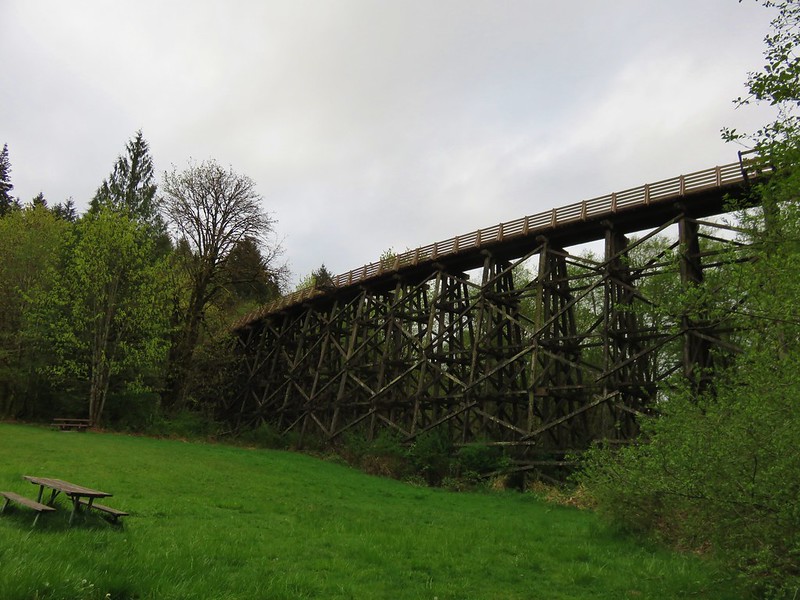
Buxton Tressel from the trailhead

Building and sign at the Buxton Trailhead

I had calculated that Heather would be passing by that spot a little before 10am so I had about 2 1/2 hours available to hike. I took a path to the left of the parking lot down to a creek crossing below the Buxton Trestle.
Footbridge over Mendenhall Creek

Mendenhall Creek

Buxton Trestle

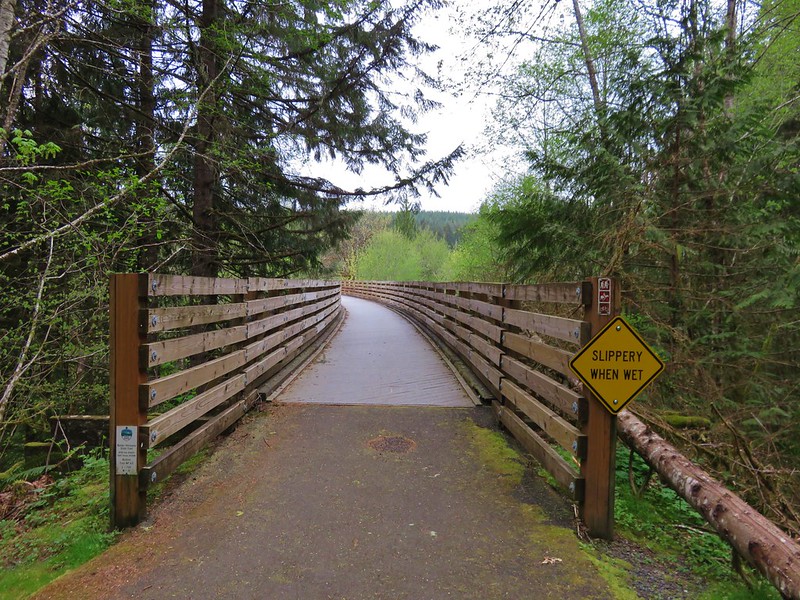
The path then led uphill joining the Banks-Vernonia State Trail just beyond the trestle.
Trail heading up to the Buxton Trestle

My plan was to head east toward the Banks end of the trail for an hour and then head back to the trestle to wait for Heather, but before I headed down the trail I wandered out onto the trestle.
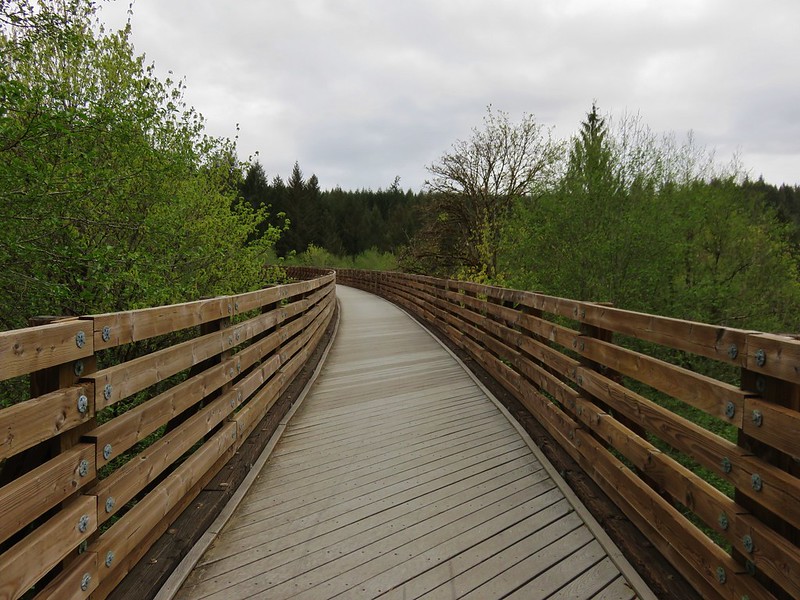
Buxton Trestle
Buxton Trestle

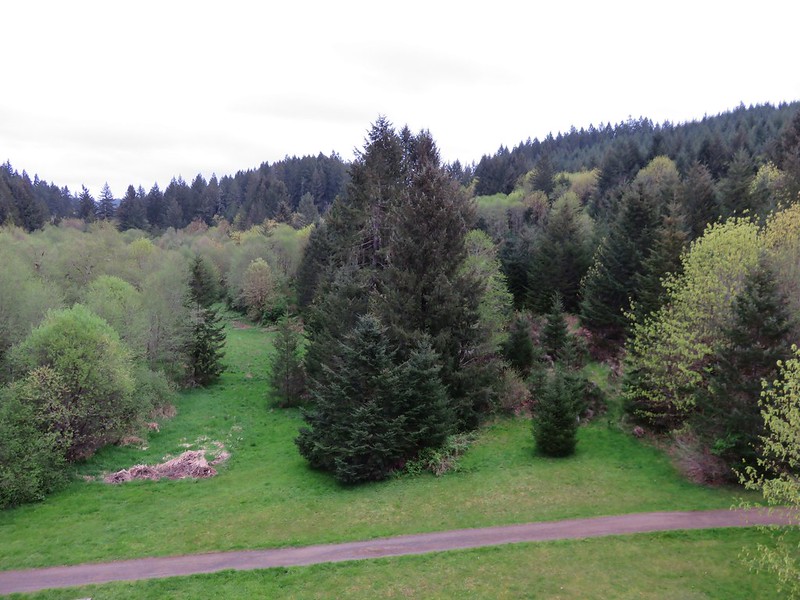
View from the Buxton Trestle

The entire 21 miles of the trail are paved which makes it popular with bicyclists, runners, walkers, and it also sees some equestrian traffic. It was still pretty early though so for the first 45 minutes I saw more wildlife than people.
Starling

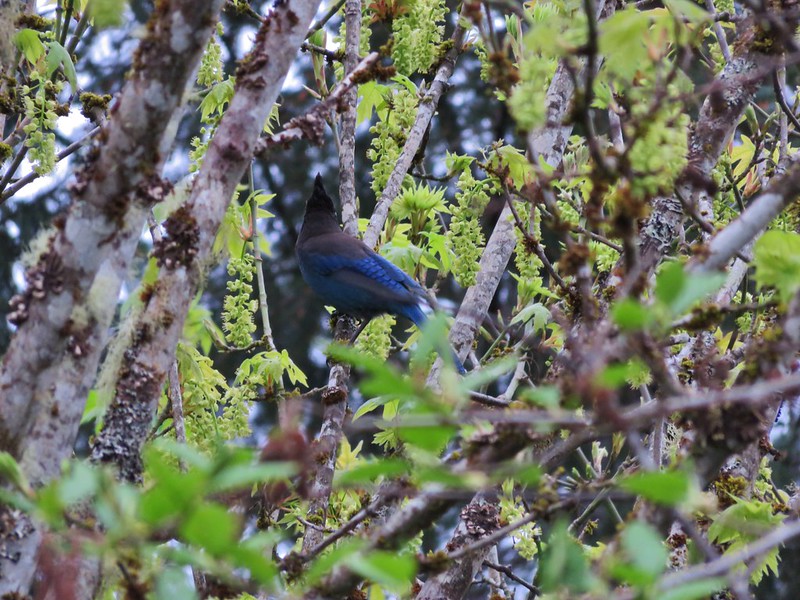
Stellars Jay

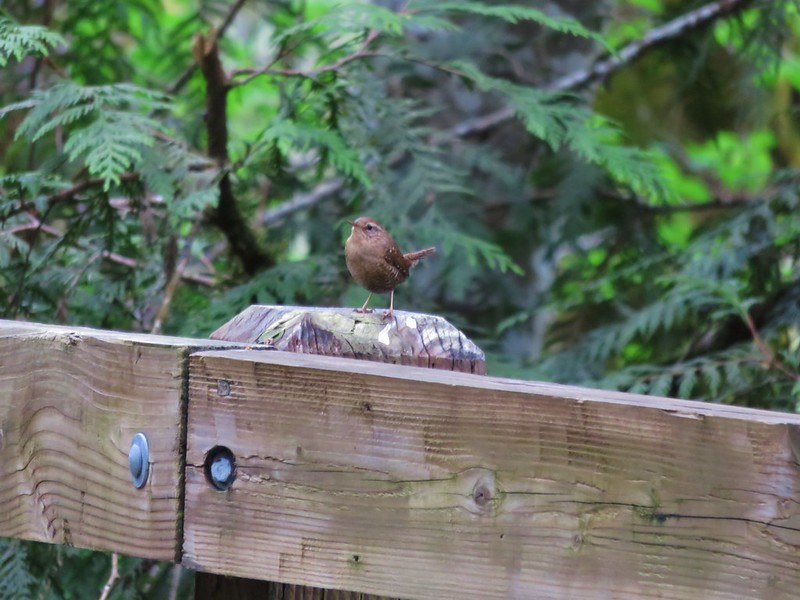
Wren

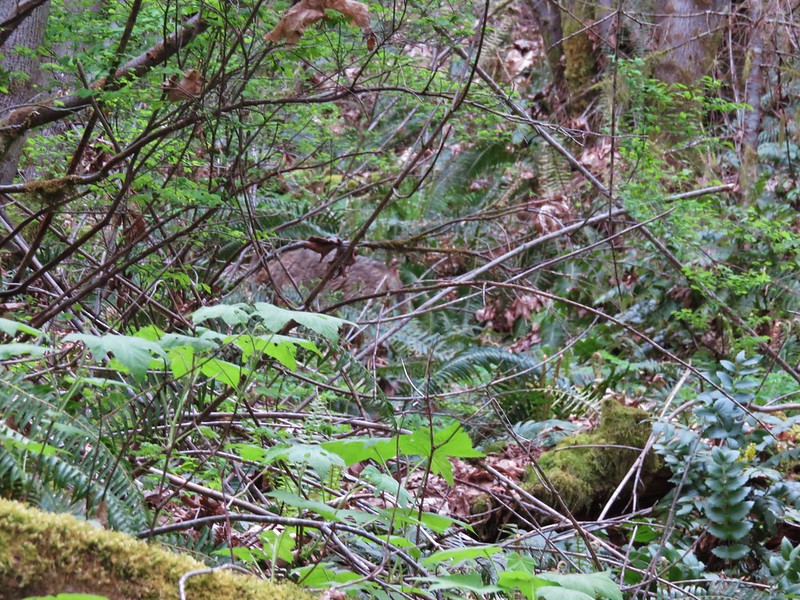
The highlight happened as I passed a draw to my left and noticed something moving up the hillside through the brush. It was a decent size but it had its head down making it hard to tell what I was seeing. When it finally raised its head I could see it was a coyote. It blended really well with the brush and wouldn’t stop moving making it extremely difficult to get a decent picture. I finally made a little noise to get its attention hoping it would pause long enough for a photo, but it was quicker than I was and darted off as soon as we made eye contact.
Coyote

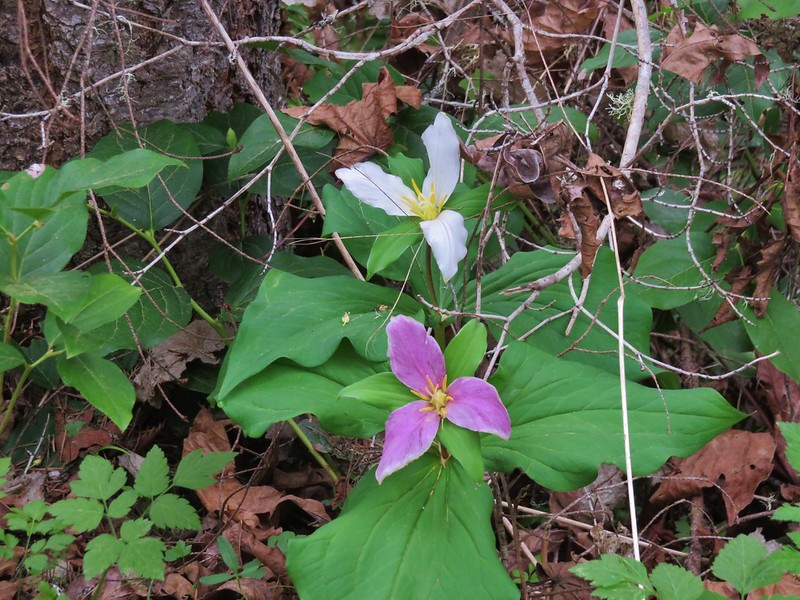
In addition to the wildlife there were plenty of Spring wildflowers along the trail. The forested hillside was dotted with trillium, bleeding heart, pioneer violets, and a few fairy bells.
Trilliuims

Bleeding heart

Violet

Fairybells

From the trestle the trail had gradually descended to a gravel road crossing where it left the trees and leveled out as it began to pass between pastures.
Banks-Vernonia State Trail

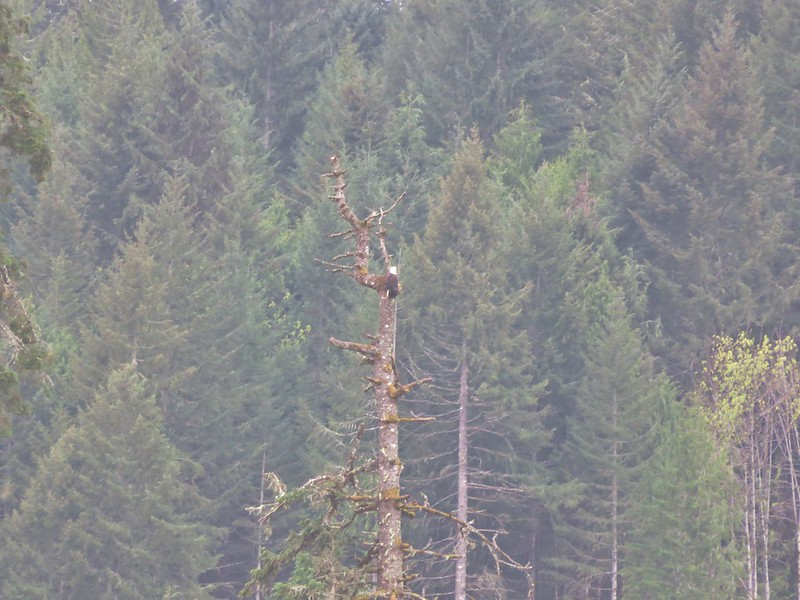
Birds were abundant, mostly sparrows, swallows, and robins but across one of the fields I spotted a bald eagle flying between trees.
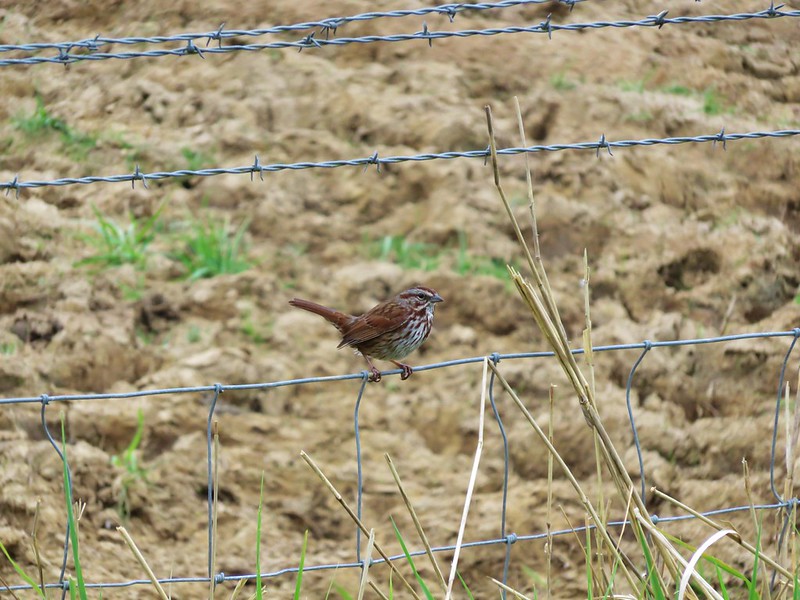
Sparrow

Sparrow

Bald Eagle

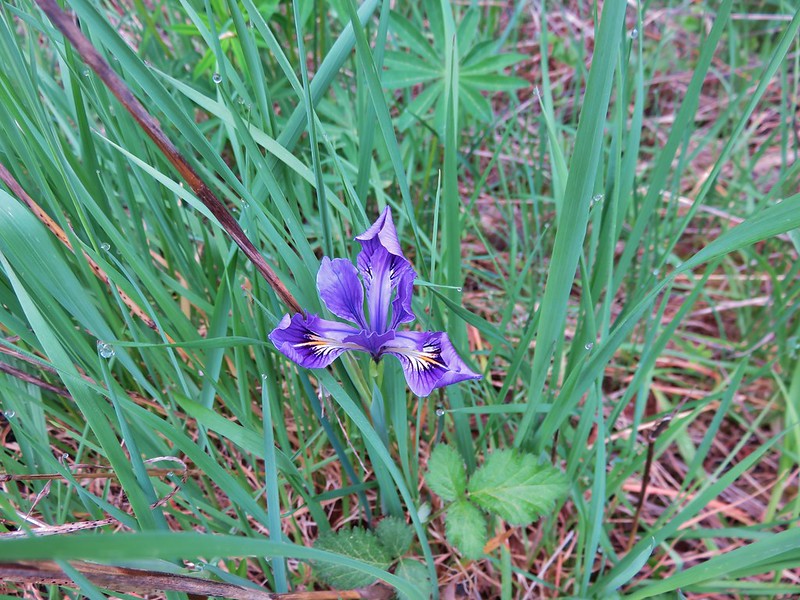
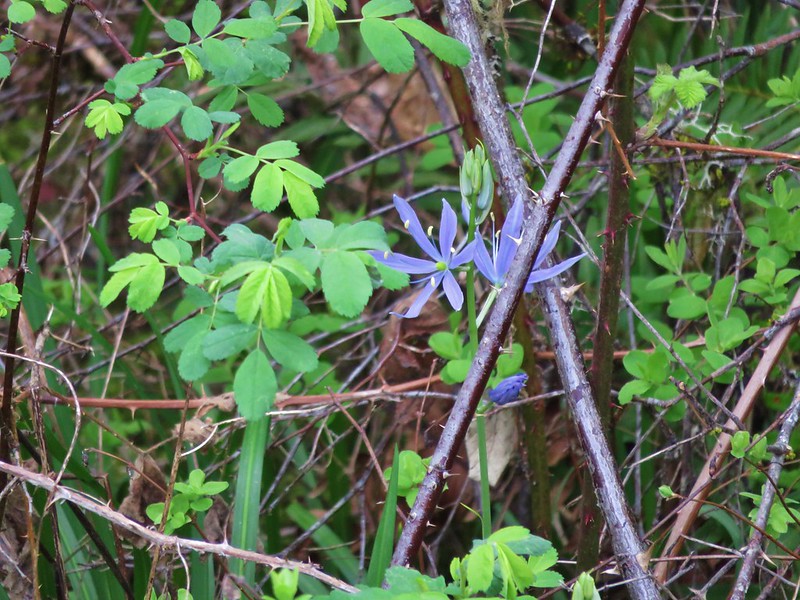
I also spotted a single tough leafed iris and a couple of camas blossoms.
Wild iris

Camas

By 8:30am the trail had become quite a bit busier, especially as I neared the Manning Trailhead which I reached just as it was time to turn around and head back.
Manning Trailhead

I had just crossed the Buxton Trestle when the first runners passed by on their way to Banks. These were the sub 6 minute milers so I figured I had about 15 to 20 minutes before Heather would be passing by. I grabbed a snack and waited along the trail for her to pass by which she did right on schedule.
IMG_4015

After cheering her on I hopped back in the car and headed for the finish line to meet her. Her goal for this racing season was to break 2hrs in a half-marathon which she managed to do finishing in 1:52:42. With the race completed and her goal accomplished our attention now turns to our hiking season which will last for the next 6+ months. Happy Trails!

Flickr: Minto-Brown- https://www.flickr.com/photos/9319235@N02/sets/72157666808908512

Banks-Vernonia – https://www.flickr.com/photos/9319235@N02/albums/72157666857451492

Categories
High Cascades Hiking Mt. Hood Area Oregon Trip report

Tamanawas Falls

It is our goal to eventually visit each of the featured hikes in William L. Sullivan’s “100 Hikes” series of guide books.Β  One of the things that I have been working on during our current off-hiking season is figuring out how to accomplish this.Β  One of the difficulties is that some of the hike distances are such that the amount of time we would spend on the trail is quite a bit less than the amount of time we’d spend driving to and from the trailhead.Β  At first glance the hike to Tamanawas Falls fell into this category for us.Β  At a little over two hours away the 3.8 mile round trip was too short and an alternate return route suggested by Sullivan would only extend the hike to 5.9 miles which was still likely too short to balance out the driving time. While rereading the description in the book and reviewing the accompanying map I found the solution which was to extend the hike along the East Fork Trail southward.

This trail incurred heavy damage during a flood event and no longer Β ties into the Robin Hood Campground to the south.Β  It continues as far south as the Nottingham Campground but there is no bridge at that point making it the unceremonious end of the trail. We just needed some extra distance on a trail though so this would give us the ability to hike south at least a mile or two and increase our hiking time enough to top our driving time.

Now that the we had a plan that fit this hike into our hike-to-drive ratio requirement we needed to figure out when to visit.Β  The hike to Tamanawas Falls is very popular given its shorter length and its location along Highway 35 on the east side of Mt. Hood. We decided that early Spring might be our best bet when the wildflowers had begun blooming in the Columbia Gorge and there would still be some snow along the Tamanawas Falls Trail.

We arrived at the Tamanawas Falls Trailhead just before 7am (our other trick for avoiding crowds) on what promised to be a beautiful mostly sunny day.

Tamanawas Falls Trailhead

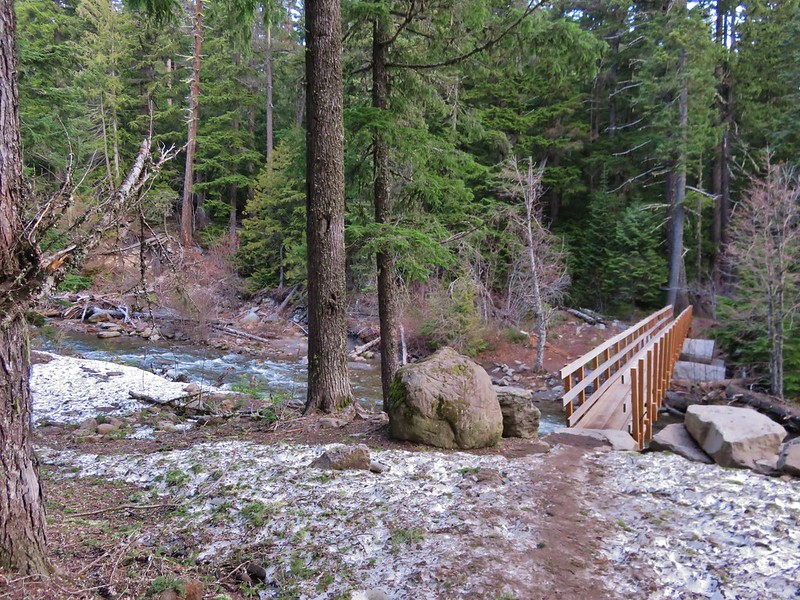
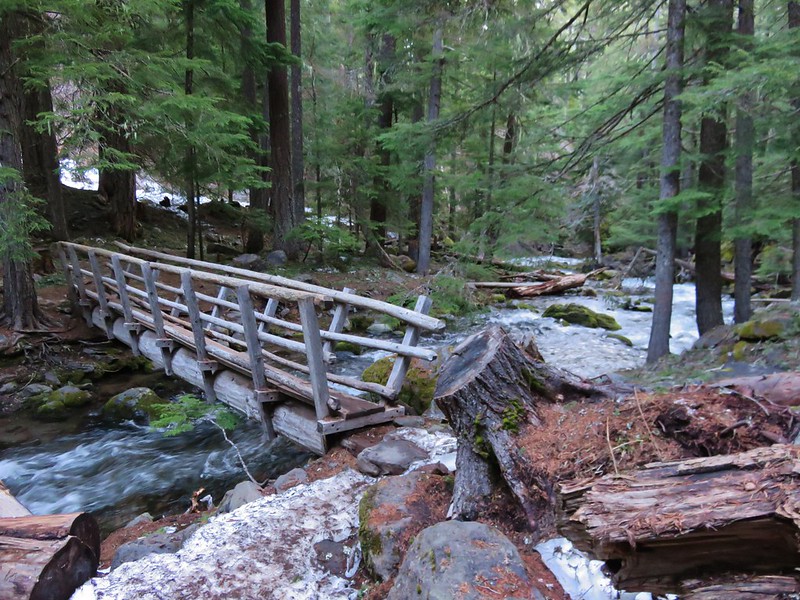
It was a crisp 37 when we arrived and the remaining snow was packed and a little slick on the way down to a footbridge across the East Fork Hood River.

Footbridge over the East Fork Hood River

Footbridge over the East Fork Hood River

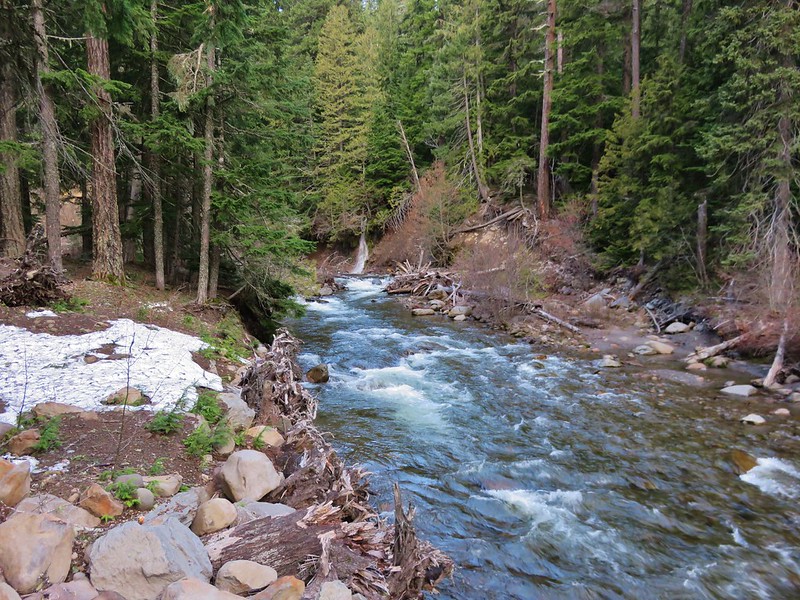
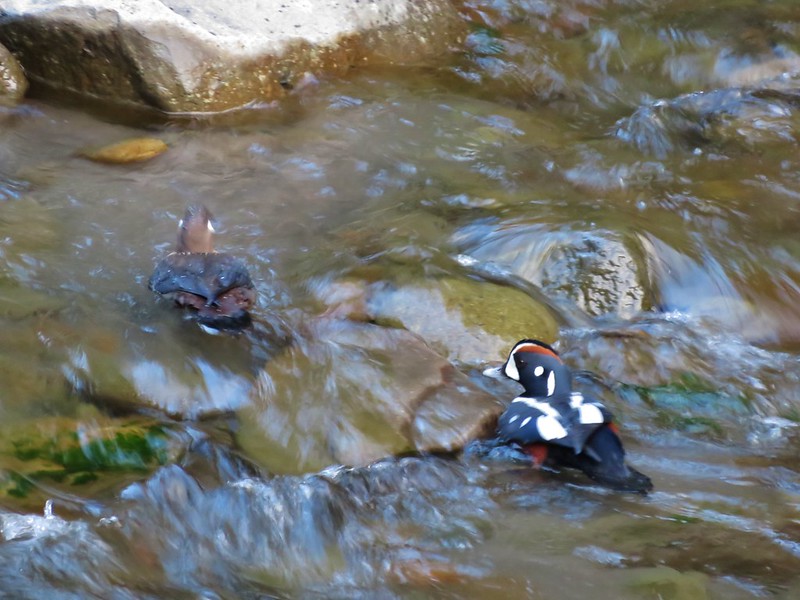
From the bridge a small waterfall cascaded down into the river and a pair of Harlequin Ducks paddled about along the far bank.
East Fork Hood River

Harlequin Ducks

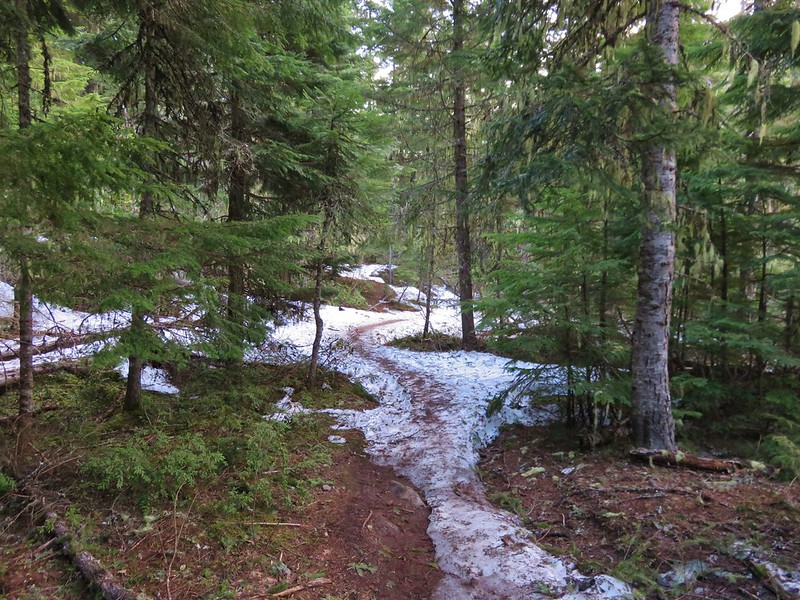
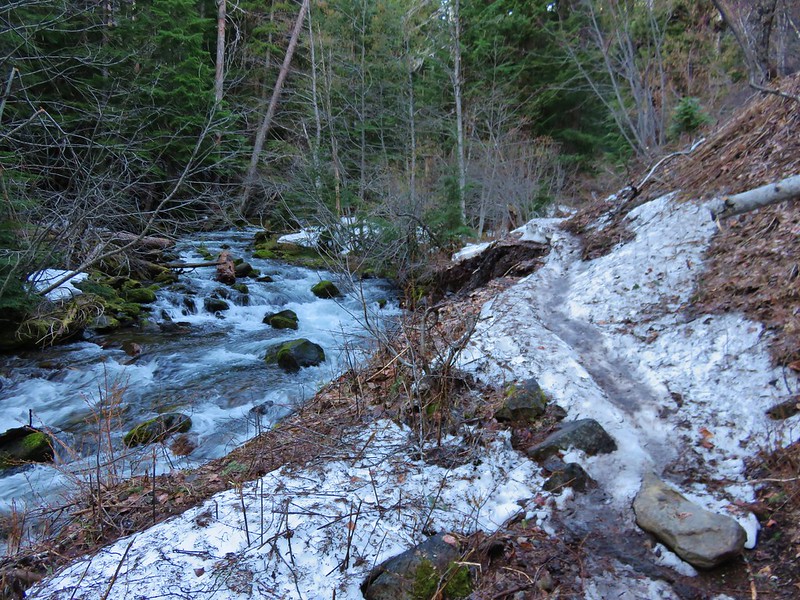
We were headed north on the East Fork Trail toward a junction with the Tamanawas Falls Trail. The trail climbed a bit and was still covered in snow in sections.
East Fork Trail

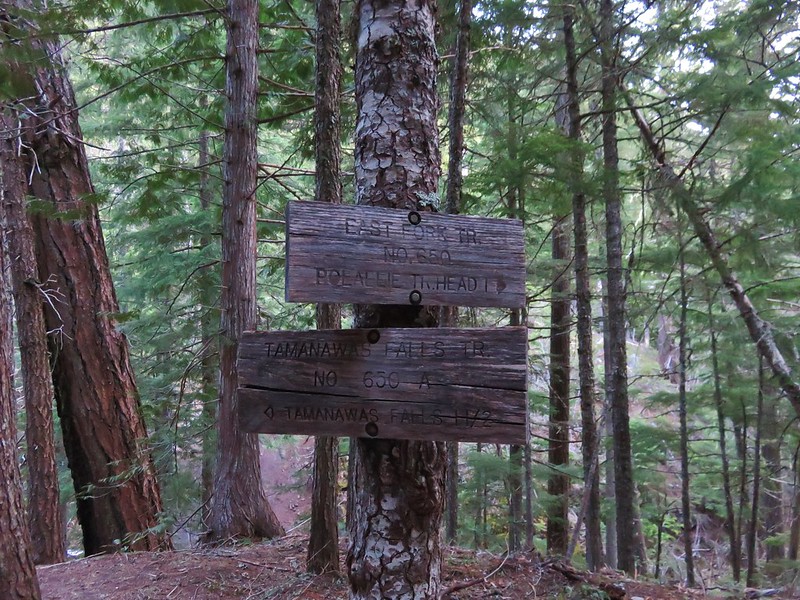
After .6 miles we reached the signed trail junction and turned left on the Tamanawas Falls Trail.
East Fork Trail junction with the Tamanawas Falls Trail

We were now heading downhill toward Cold Spring Creek and another footbridge.
Footbridge over Cold Spring Creek

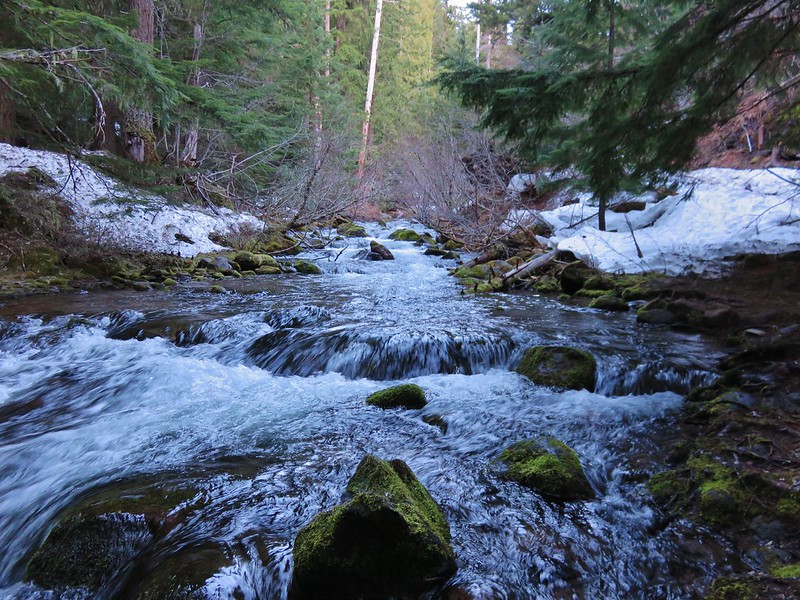
We then followed the trail up along picturesque Cold Spring Creek for almost a mile to a trail fork.
Cold Spring Creek

Tamanawas Falls Trail and Cold Spring Creek

Cold Spring Creek

The Tamanawas Falls Trail continued straight ahead at the fork, passing through a rock field while the Tamanawas Tie Trail headed uphill to the right. We would be taking the tie trail on our return trip but first we headed into the rock field and onto the slickest portions of trail we’d encountered.
View from the junction

The snow had been packed down to ice in sections and we were glad to have had our trekking poles with us. We also had brought along some traction devices for our shoes which Heather used in this section on the way back.
Tamanawas Falls Trail

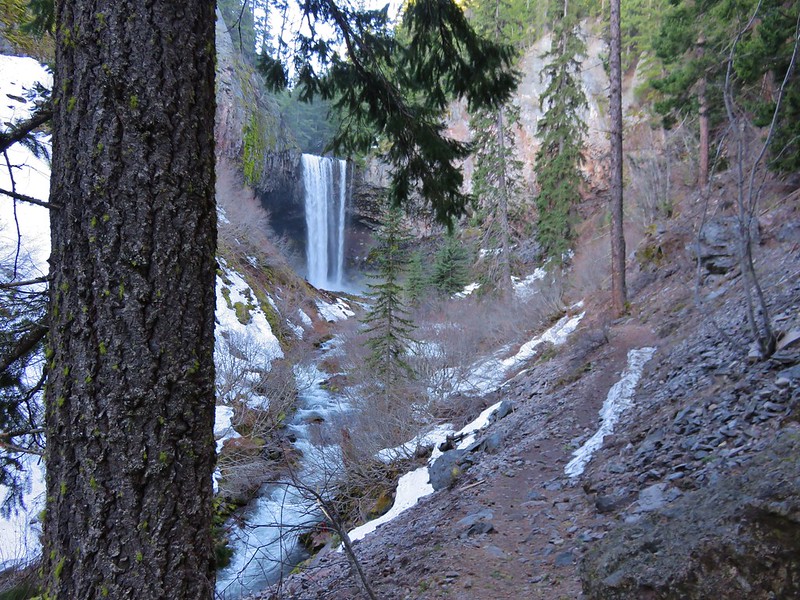
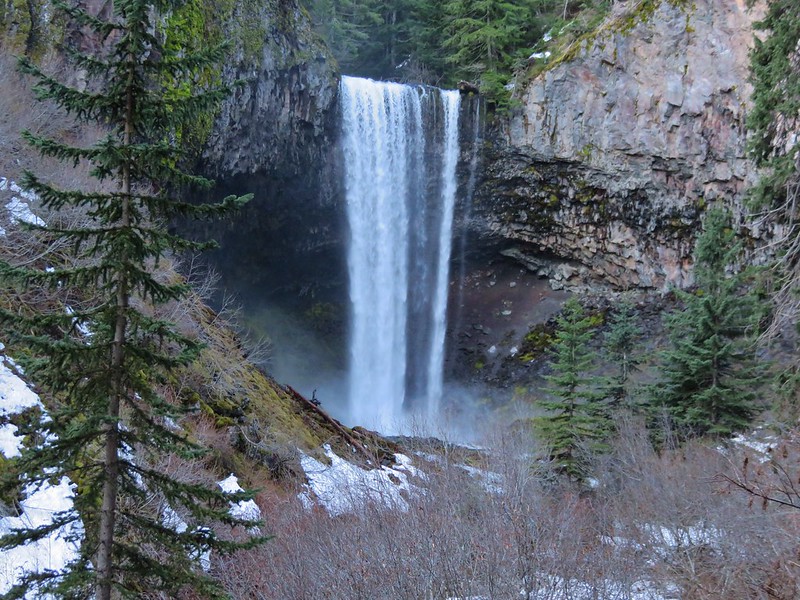
We felt the falls before we could see them. As we made our way up the trail a faint breeze met us. The air had the unmistakable feel of waterfall, cool and containing a hint of moisture. I admit to not expecting much from the falls themselves. For some reason the pictures I’d seen had left me with the impression that the falls were smaller than what they turned out to be. I was pleasantly surprised when they first came into view.
Tamanawas Falls

Tamanawas Falls

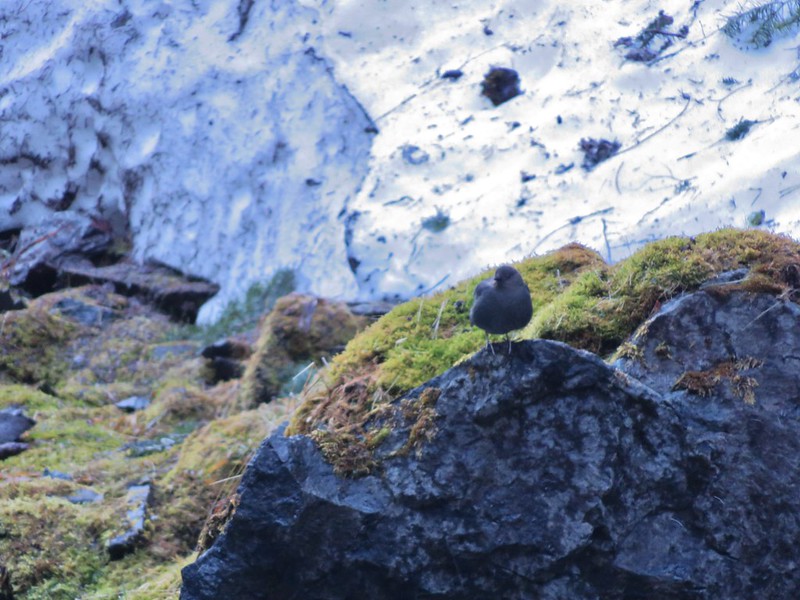
We hung around for awhile exploring and having a snack. We were the only people at the falls but we were joined by an Ouzel.
Tamanawas Falls

Ouzel

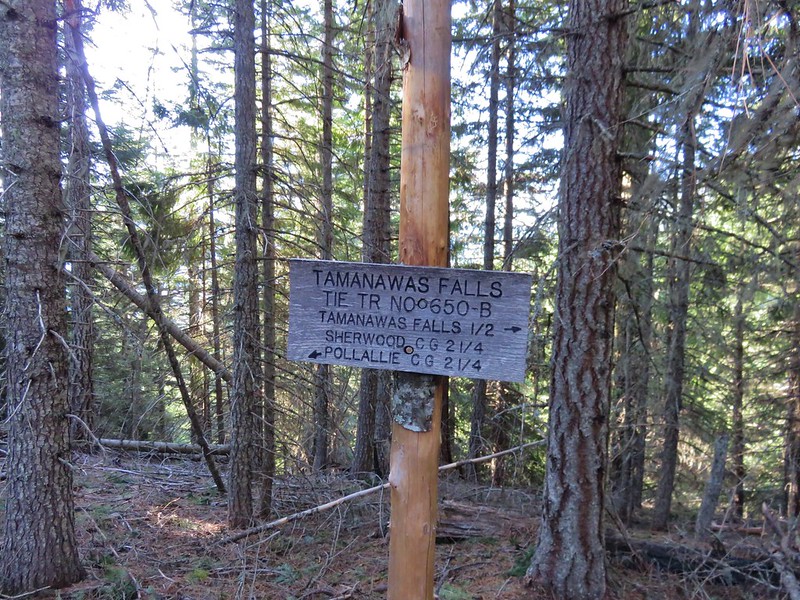
After admiring the falls we made our way back to the junction with the Tamanawas Tie Trail. We turned uphill on this trail and began the short climb up to the Elk Meadows Trail.
Tamanawas Tie Trail

Sign at the junction with the Elk Meadows Trail

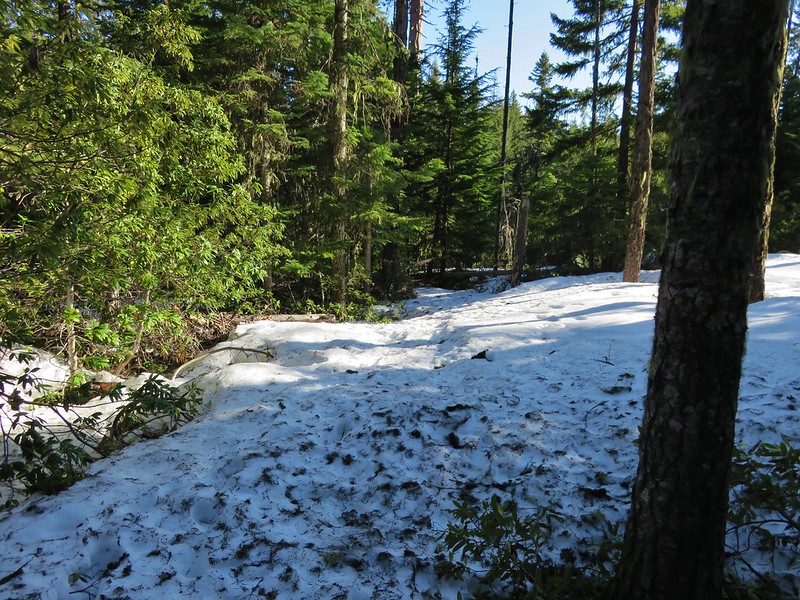
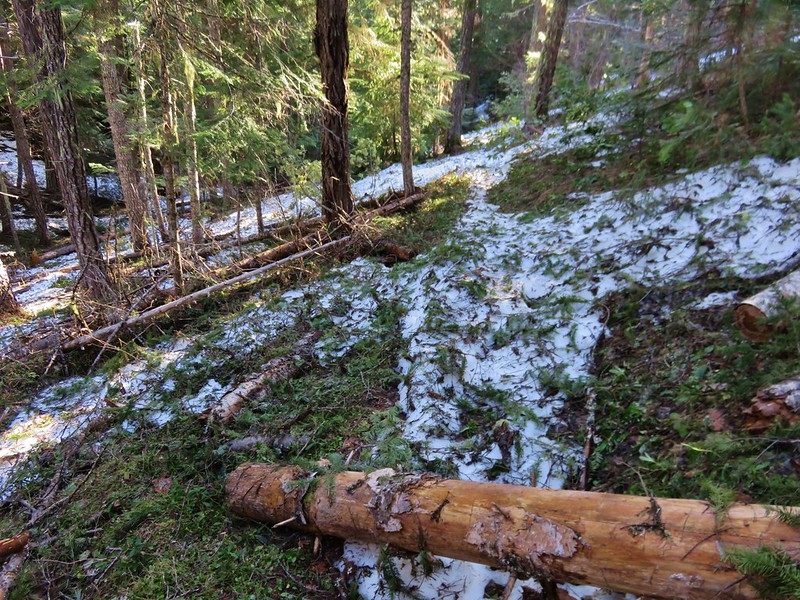
We followed the signs for the Polallie Campground and began descending a forested ridge. The Elk Meadows Trail had obviously seen less traffic and some sections still had a decent amount of snow. There was also some light blowdown to step over or around and lots of small pine tree limbs on the trail.
Elk Meadows Trail

Elk Meadows Trail

Although the ridge was forested we did get our only glimpses of Cascade peaks along this trail.

Mt. Adams
Mt. Adams

Mt. Hood
Mt. Hood

The trail had gradually made its way toward the Polallie Creek Canyon and we headed off trail just before the trail took a sharp right-hand turn around the ridge end to check out it out. A reported 80 foot deep flash flood scoured the canyon and washed out miles of Highway 35 in 1980 but there was no sign of that kind of power in the creek now.
Polallie Creek

After a brief descent we arrived at yet another trail junction. This was the East Fork Trail that we had been on before turning up the Tamanawas Falls Trail earlier in the morning.
Elk Meadows Trail junction with the East Fork Trail

We turned right to complete our loop. Along this 1.1 mile stretch we could often see the highway below, but it wasn’t without its sights including a neat little spring that flowed out of the ground into a small pool then quickly disappeared once again.
Spring along the East Fork Trail that disappeared back underground after a couple of feet

The trail had a few ups and downs before finally dropping down to Cold Spring Creek.
Cold Spring Creek

We crossed the creek on a footbridge and climbed back up to the junction with the Tamanawas Falls Trail that we had passed earlier. We had not seen anyone else on the trail yet that day but now that we were back on the main route we began to see a handful of others. When we arrived back at the East Fork Hood River crossing we stayed on the West side of the river and continued on the East Fork Trail to get our needed time in.

This section of the East Fork Trail alternated between being along the river and above it in the forest.
East Fork Hood River

East Fork Hood River

East Fork Trail

After about a mile the trail headed further uphill away from the river and entered an old snowy clear cut where the trees were much younger.
East Fork Trail

When the trail reentered older forest it switchbacked up just below an abandoned road. We had decided that we would continue on from here until the trail began to drop back down toward the river because we didn’t want to have to climb back up. We left the stand of older trees and entered another old clear cut where the trail did begin to head downhill. From this area we had a nice view of the Lookout Mountain area across Highway 35 to the East.
Looking toward Lookout Mountain from the East Fork Trail

A quick glance at the time told us that by the time we were back at the car we’d have hiked long enough to surpass our driving time so we declared victory and headed back. The parking area at the trailhead was packed but we’d encountered less than a dozen others on the trails.

All in all it was a great final off-season hike and the next time we head out our 2016 hiking season will be officially under way. Happy Trails!

Flickr: https://www.flickr.com/photos/9319235@N02/albums/72157666743878315

Categories
Columbia Gorge North Hiking Trip report Washington

Catherine Creek, Coyote Wall, and the Weldon Wagon Trail

** Note the 2025 Burdoin Fire burned over much of the route described here. **

Similar to last months hike our March trip consisted of shorter hikes at three separate locations. We had been waiting for a day off with decent weather to head out toward the eastern end of the Columbia Gorge to see some early wildflowers and finally got one on the day before Spring.

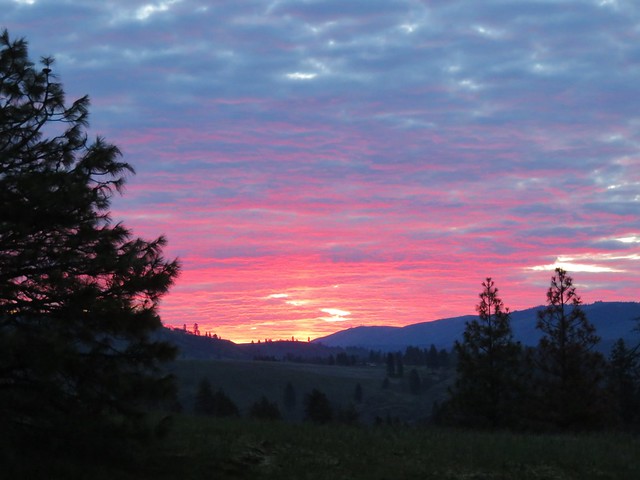
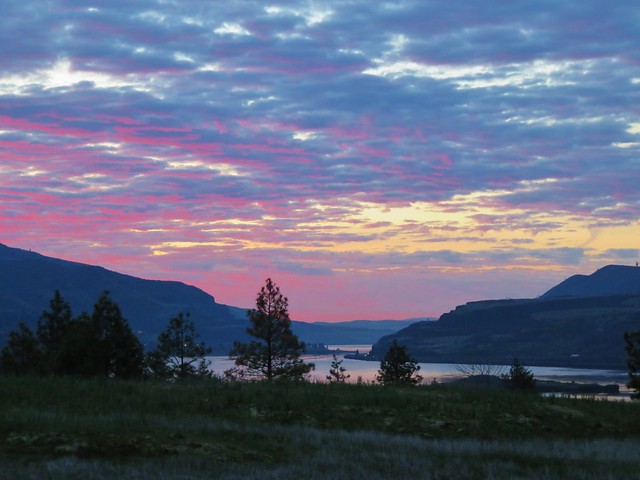
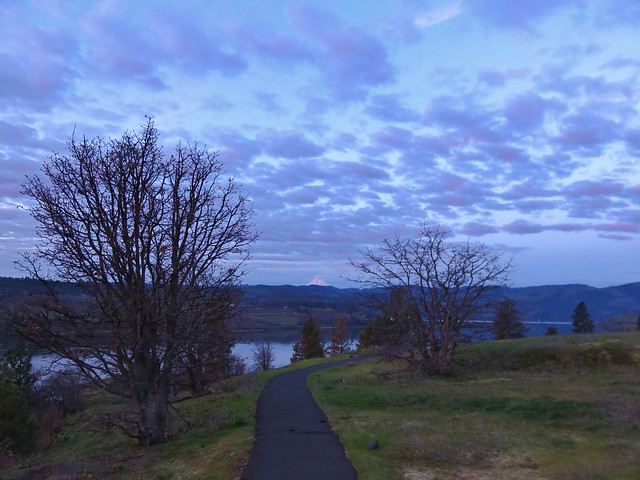
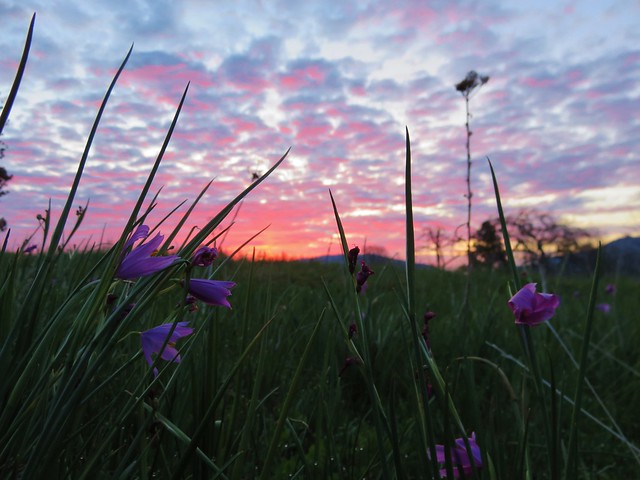
We started our day at the Catherine Creek Trailhead located approximately 6 miles east of Bingen, WA along Old Highway 8. We managed to arrive at the trailhead just as the sunrise began to light up with color.
Sunrise from the Catherine Creek Trailhead

Sunrise from the Catherine Creek Trailhead

Sunrise from the Catherine Creek Trailhead

We took the paved Catherine Creek Trail on the south side of the old highway toward the Columbia River. We followed the 1 mile loop past wildflowers, vernal ponds, oak woodlands, Catherine Creek Falls, and views of Mt. Hood.
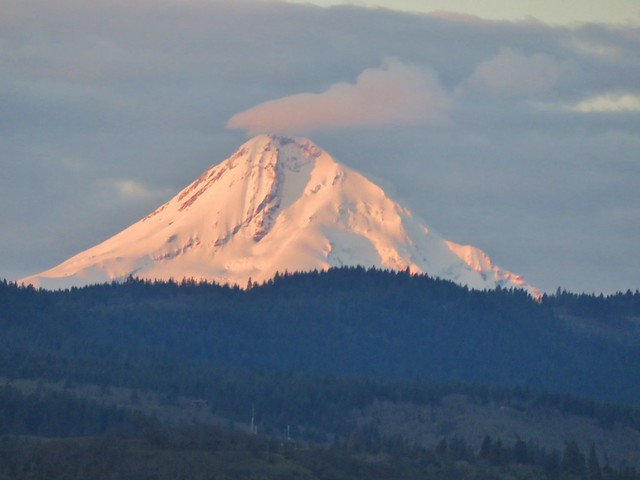
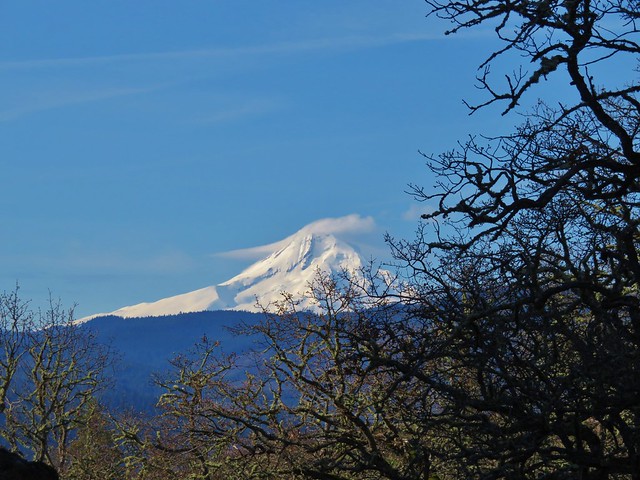
Mt. Hood catching some early sunlight

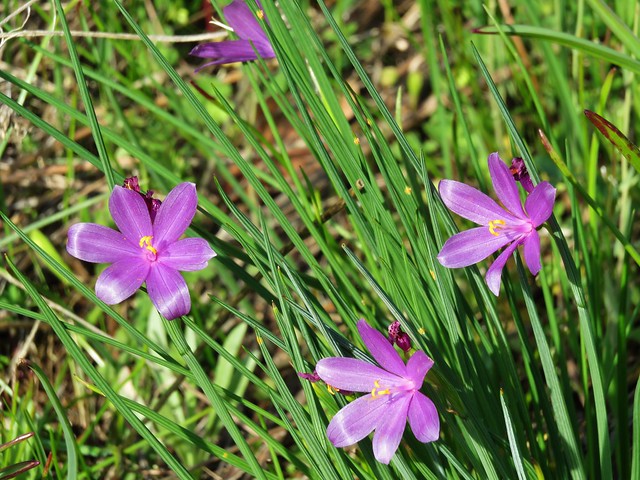
Grass widows
Grass Widows

Prairie Stars
Prairie stars

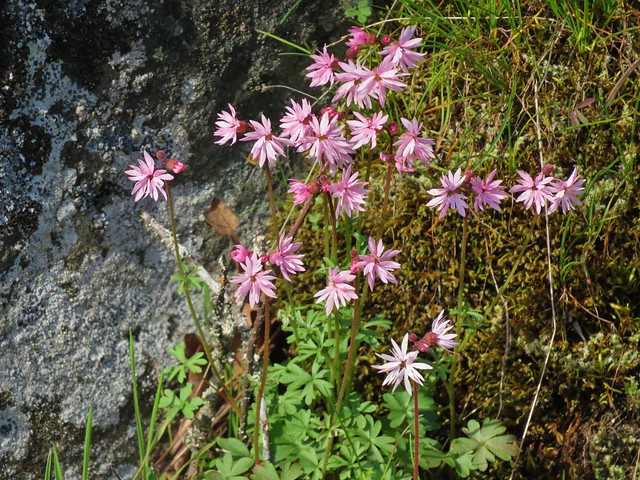
Shooting stars and saxifrage
Shooting stars

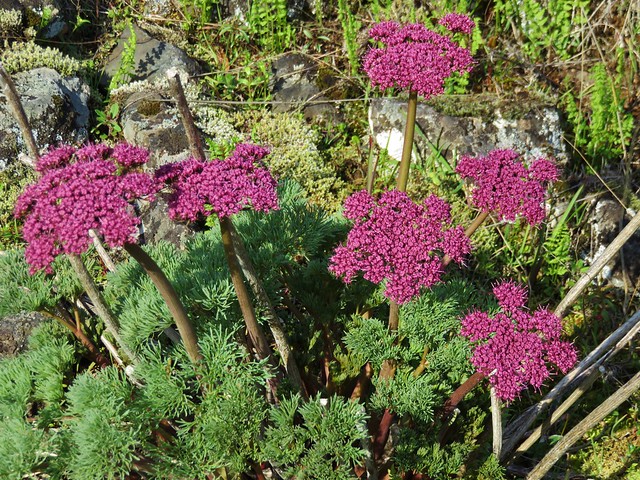
Lomatium
Lomatium

Lomatium

Mt. Hood across the Columbia River

Mt. Hood

Reflections along the Catherine Creek Trail

Catherine Creek Falls

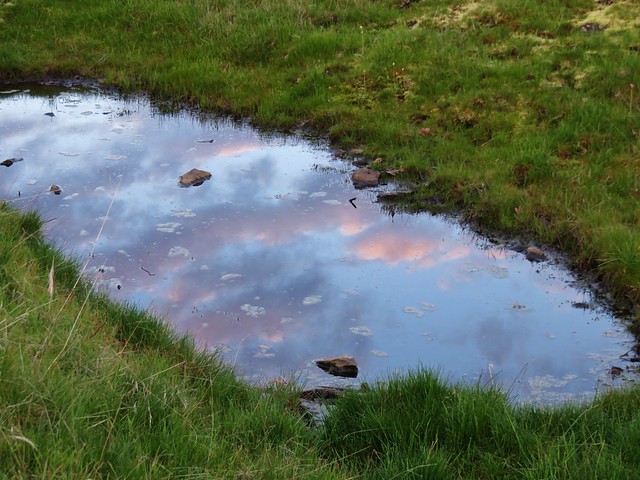
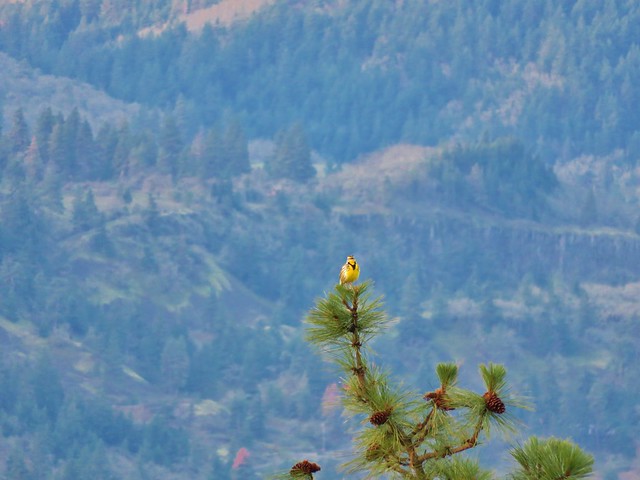
After completing the loop we crossed the road and head north on an old roadbed marked as “20”. At a fork we should have veered right on another road marked with a “21” sign but we initially missed that turn which turned out okay because we came upon a scenic vernal pond reflecting the clouds in the sky above and were serenaded by a western meadowlark.
Catherine Creek Trail

Clouds reflecting in pool of water along the Catherine Creek Trail

Western meadowlark

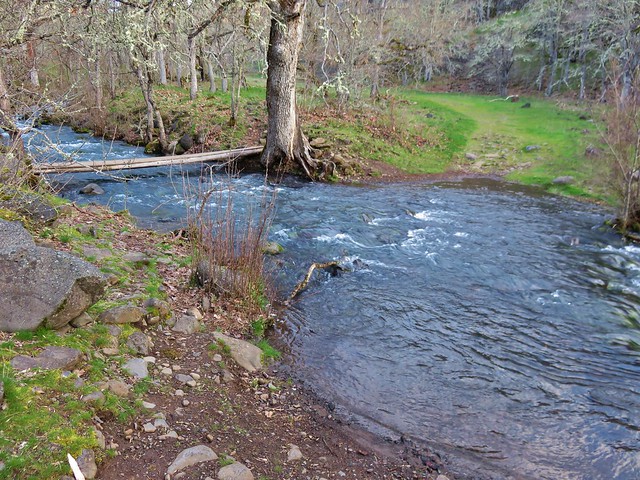
Once we had backtracked onto the correct road bed we followed it to a crossing of Catherine Creek then on to an old corral below the Catherine Creek Arch.
Catherine Creek

Catherine Creek Trail

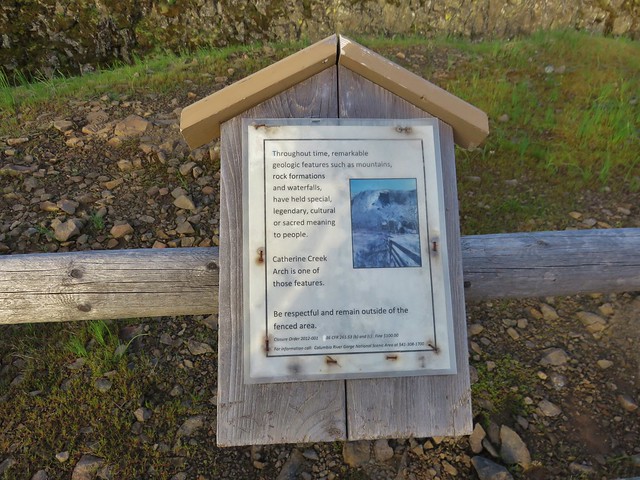
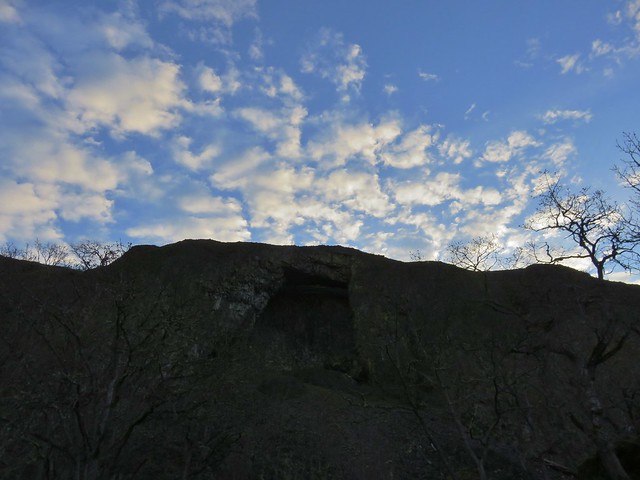
The Forest Service has closed off the area near the arch with fencing but the view from below near the corral is nice.
Sign near the Catherine Creek Arch

Catherine Creek Arch

We continued on the old road climbing gradually and after passing under a set of power lines we came to a trail junction. We took the signed trail to the right which led up a small hill to a ridge with a view of Mt. Hood.
Mt. Hood from the Catherine Creek Trail

This trail followed the ridge down toward the old highway passing the top of the Catherine Creek Arch along the way.
Mt. Hood and the Columbia River from the Catherine Creek Trail

We arrived at the old highway about a quarter mile east of the trailhead and simply walked along the shoulder back to the car. From there we headed back toward Bingen and our next stop at the Coyote Wall Trailhead just off Courtney Road (approx. 3 miles east of Bingen). Our early start allowed us to get to this second trailhead before 9am which was nice because this is a very popular destination.

From the parking area we followed a closed section of old highway 8 east passing a nice view up Coyote Wall. After passing some cliffs the scenery shifted to rocky green hillsides dotted with wildflowers.
Coyote Wall

Biscuitroot surround a small hole in the rocks

View from the old highway

Wildflowers on the rocks along the old highway

Our plan was to take the Labyrinth Trail up to the Rowland Creek Trail then head left from that junction to old road 20 following that left to a creek crossing and following it all the way to a junction with the Coyote Wall Trail. The Labyrinth Trail sets off from old highway 8 approx .75 miles from the trailhead, but before turning up that trail when we came to it we continued on a couple hundred yards to check out Lower Labyrinth Falls.
Lower Labyrinth Falls

Lower Labyrinth Falls

Mt. Hood from Lower Labyrinth Falls

After returning to the Labyrinth Trail we headed uphill climbing past wildflowers and rock outcrops to a view of Labyrinth Falls near a small cave.
Labyrinth Trail

Labyrinth Trail

Cave along the Labyrinth Trail

Wildflowers along the Labyrinth Trail

Wildflowers along the Labyrinth Trail

Labyrinth Trail

Labyrinth Falls

From the falls the trail continued to climb through a mix of grasslands and oak woods gaining better views of Mt. Hood.
Labyrinth Trail

Labyrinth Trail

Mt. Hood from the Labyrinth Trail

Mt. Hood

We saw lots of wildflowers along the way and passed a trail crew from the Washington Trails Alliance.

Grass widows
Grass widows

Prairie stars
Prairie star

Lomatium
Biscuitroot

Larkspur
Larkspur and a grass widow

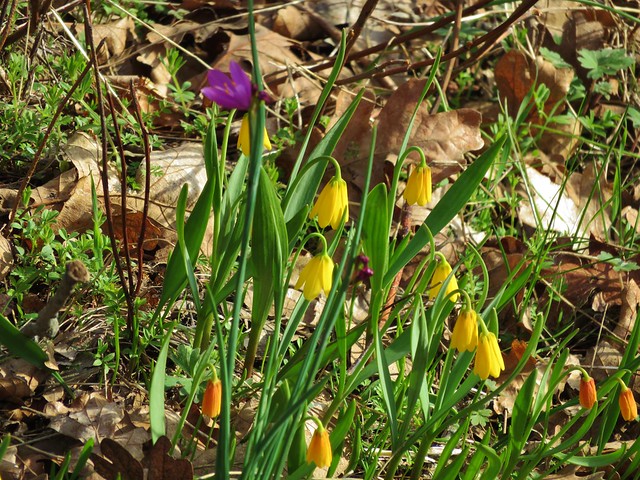
Yellow bell lilies
Yellow bell lilies and a grass widow

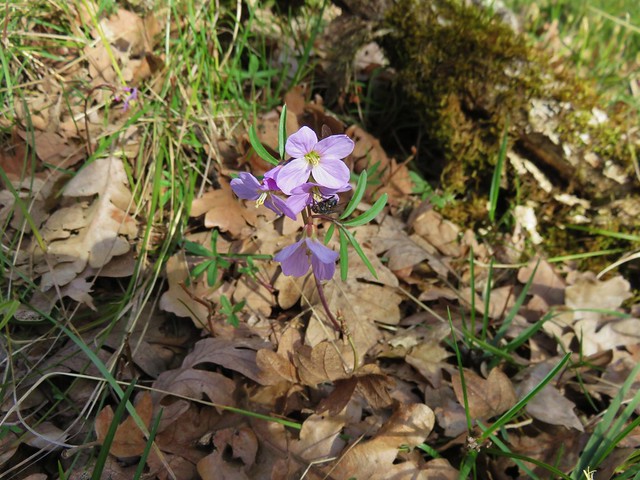
Toothwort
Toothwort

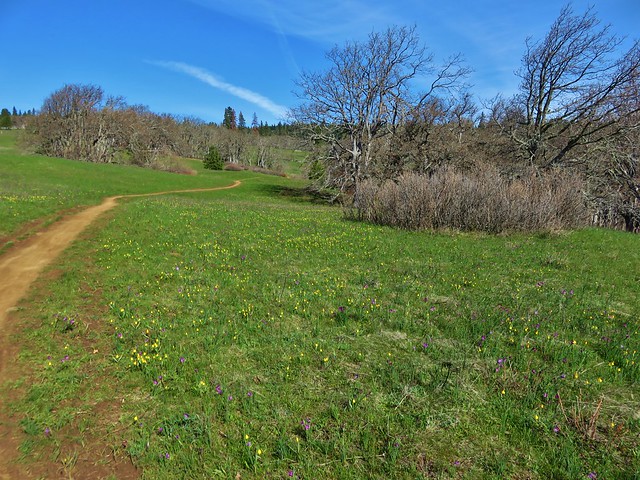
We arrived at the road 20 creek crossing as planned but things began to unravel a bit shortly afterward. Signage had been virtually non-existent and after climbing up from the creek crossing we arrived at large junction where the WTA trail crew had parked their vehicles. Several trails and old roads headed off in various directions here and were not shown on the map we were using. We first set off straight ahead on an old road bed but quickly saw a sign indicating it was private property, we turned back to the junction and began to head uphill on a clear trail. It didn’t seem like we should be going that direction though so we pulled out our guidebook and GPS before going any further. After some deliberation we returned once again to the junction and headed downhill on another old road which was the correct route. Here we passed an impressive meadow filled with yellow bell lilies and grass widows.
Labyrinth Trail

Grass widows and yellow bell lilies

Grass widows and yellow bell lilies

Grass widows and yellow bell lilies

We passed several more junctions that were not on our map and made one more wrong turn (it appears it would have led us to the top of Coyote Wall in the end) before finally making it down to the junction we had been looking for with the Coyote Wall Trail. At this point we were about halfway up the wall and made our way over to check out the view.
Coyote Wall

Mt. Defiance (with the snow)
Snow on Mt. Defiance

Mt. Hood
Mt. Hood across the Columbia River from Coyote Wall

From there we headed downhill staying as close to the wall as possible before the trail finally veered away as it neared the old highway.

We spotted a few additional flowers on this lower portion before popping back out on the old highway and making our way back to the busy trailhead.

Woolly-pod milk vetch
Woolly-pod Milk-vetch

Gold stars
Gold stars

Popcorn flower
Popcorn flower

Manroot
Manroot

The unfortunately named Broomrape
Broomrape

Fiddleneck
fiddleneck

Our final stop for the day was the Weldon Wagon Trail. For this hike we headed back through Bingen and continued west on Highway 14 to Alternate Highway 141 just before the White Salmon River. We followed this road north to Husum, WA where we turned right on Indian Creek Road. We followed signs for the Wagon Trail and parked at an unmarked pullout at the crest of Indian Cemetery Road. To reach the trail we needed to walk .2 miles up a logging road.
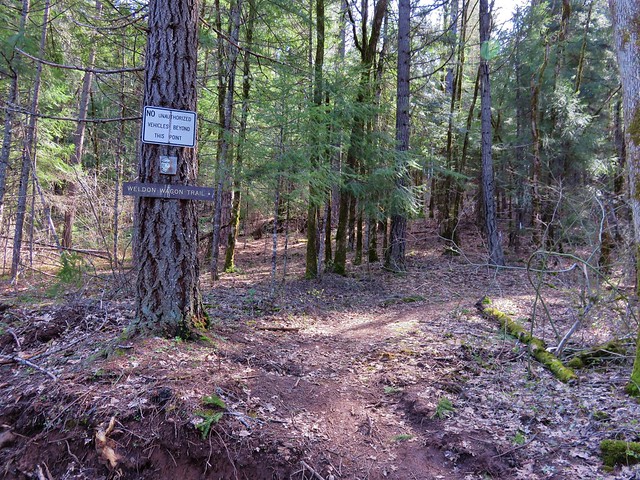
Weldon Wagon Trail

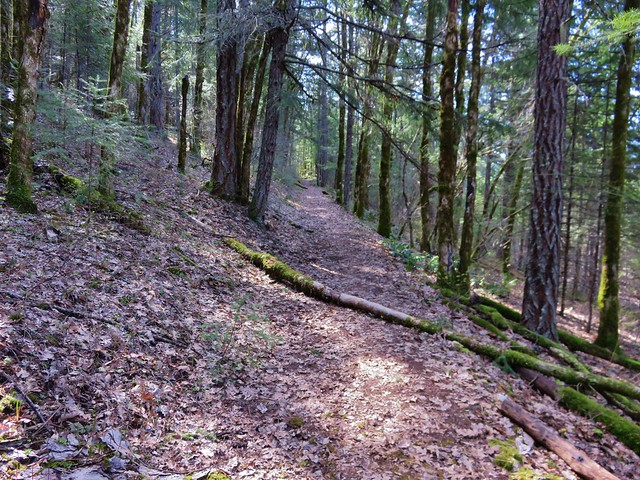
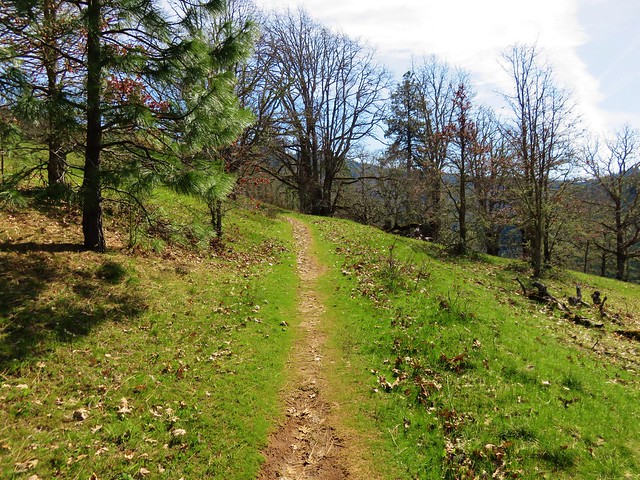
The Wagon Trail follows an old wagon road built in the early 1900’s to cart apples down to Husum. The trail began in a forest before entering more open grasslands.
Weldon Wagon Trail

Weldon Wagon Trail

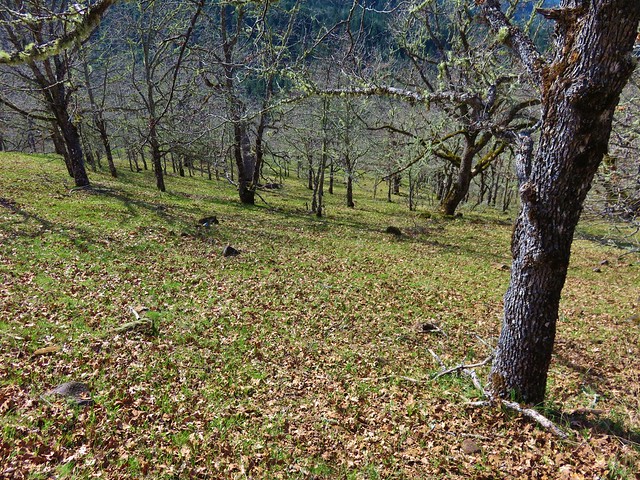
View from the Weldon Wagon Trail

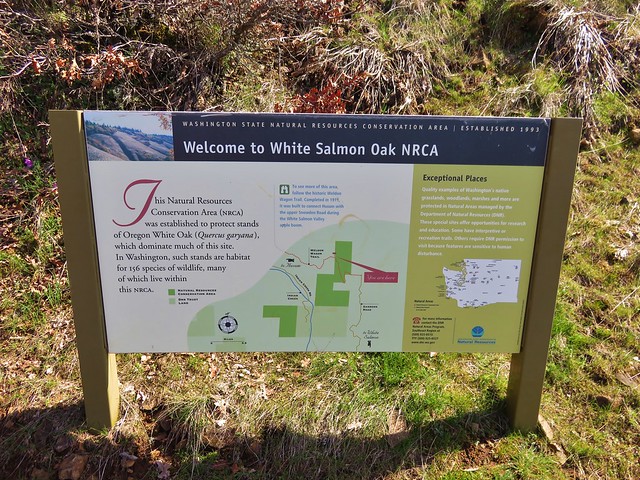
The trial offers a pretty good climb gaining over 1000′ in the first 1.8 miles where a conservation sign sits in the middle of a hillside with a view of Mt. Hood.
Interpretive sign along the Weldon Wagon Trail

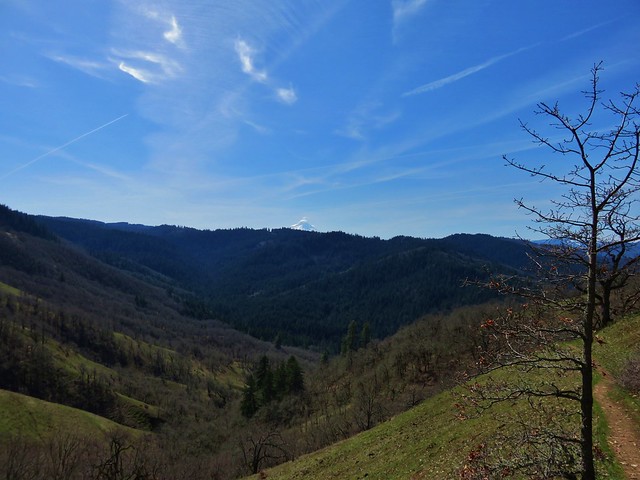
Mt. Hood from the Weldon Wagon Trail

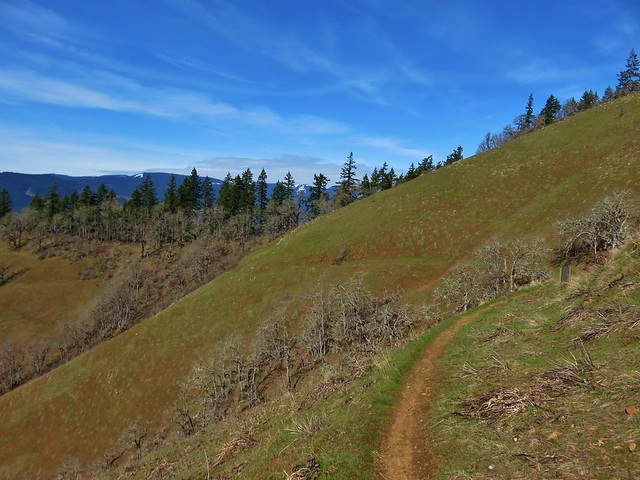
Weldon Wagon Trail

Although the trail continues another .7 miles to another road we turned around at the sign knowing we would be over 13 miles for the day by the time we arrived back at the car and that this was the best of the views from the trail.

On our way home we made one final stop, this time for food, atΒ Mekong Bistro in Portland. We’re blaming this one on the good folks over at Trail Keepers of Oregon for having their Winter Meet-n-Deet there last year. πŸ™‚ We enjoyed the food enough that night to have it now be our go to spot on the way back to Salem after hiking in the Gorge.Β  It didn’t disappoint and was a great end to a good day of hiking.

Although we did not have any issues ticks can be a problem on these hikes so be sure to keep your eyes out and check for any after your visit. Poison oak is also possible, as are rattlesnakes. Happy (and safe) Trails!

Flickr: https://www.flickr.com/photos/9319235@N02/albums/72157666169966955