Categories
Central Oregon Fort Rock Hiking Oregon Trip report

Hager Mountain Part Deux & Fort Rock

The third day of our Central Oregon visit had us returning to a hike we had done last July 31st – Hager Mountian. https://wanderingyuncks.wordpress.com/2013/07/31/hager-mountain/
Smoke from a wildfire had prevented us from having any views from the 7185′ summit that day but we had enjoyed the hike and seen signs of what seemed like it might be a decent amount of flowers if we had visited a bit earlier. We were hoping to get the views and to see some more flowers this time around and we also planned to stop at Fort Rock State Park on the way back to Bend, OR.

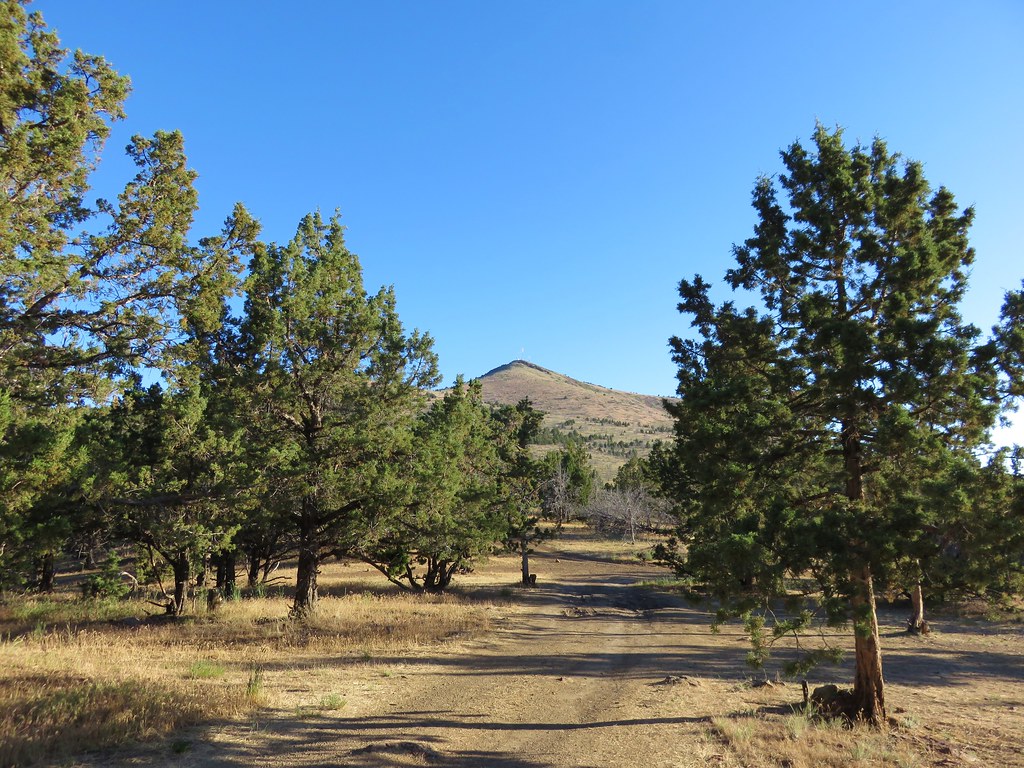
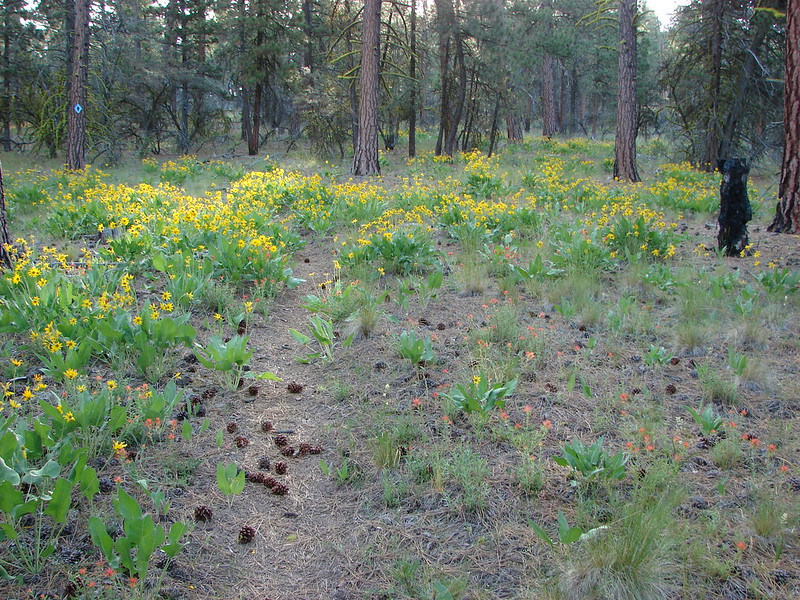
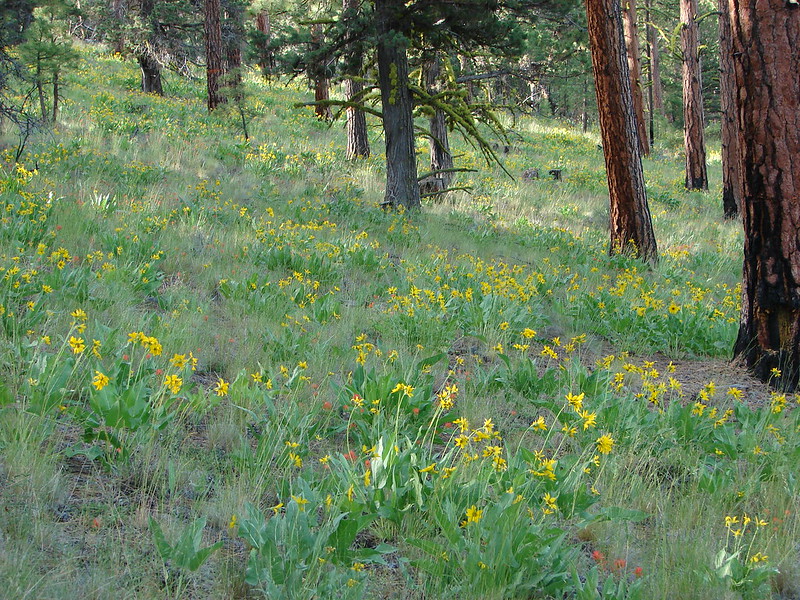
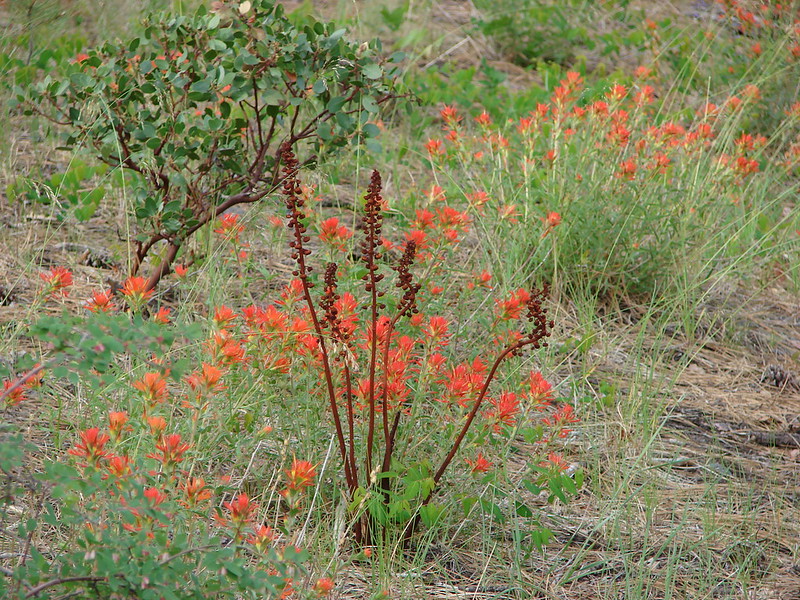
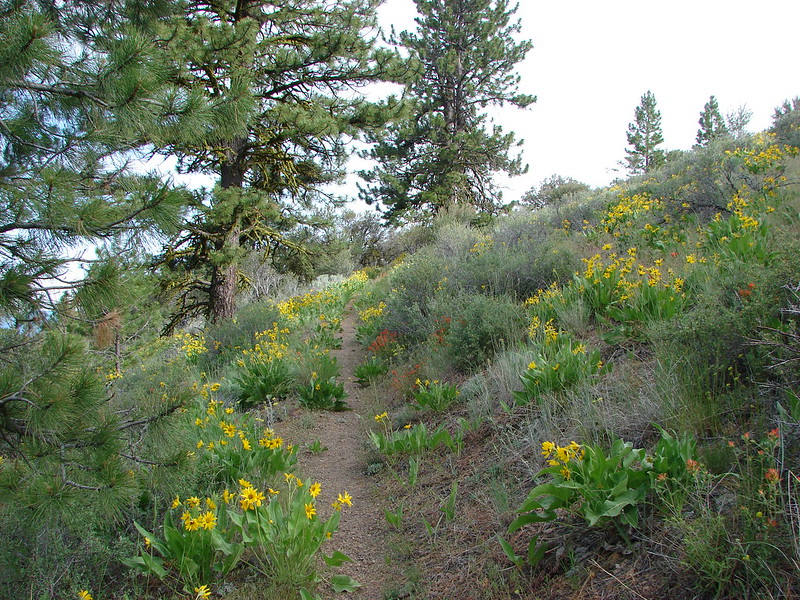
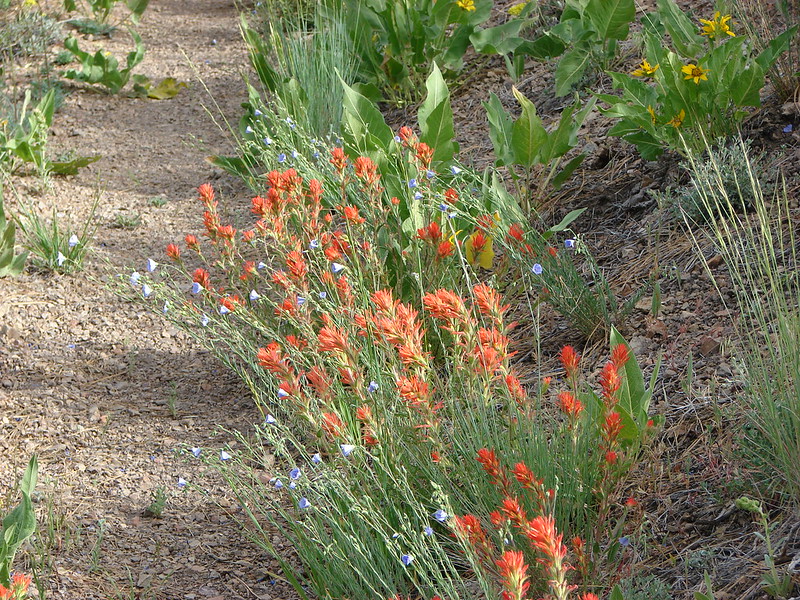
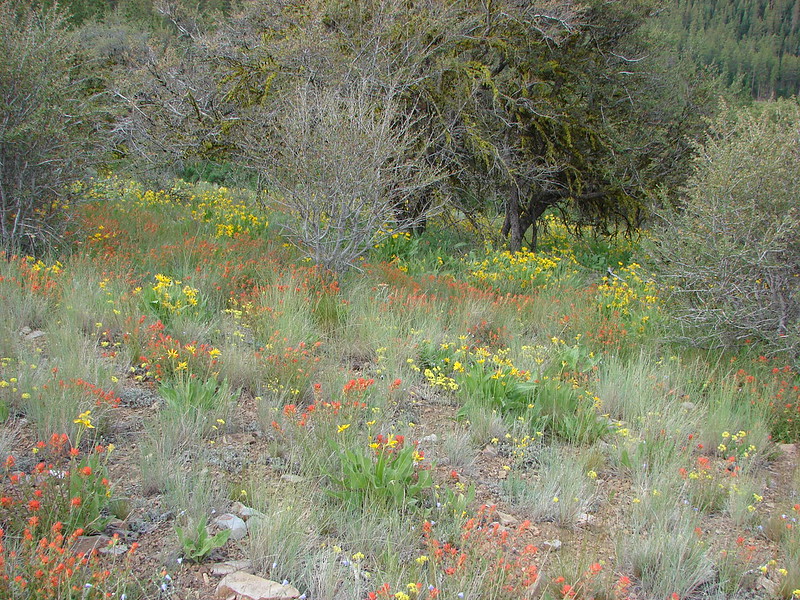
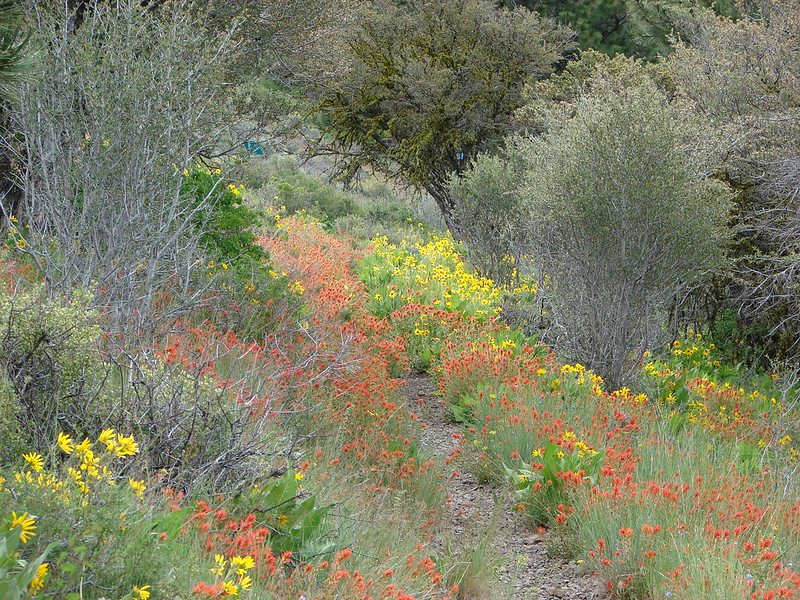
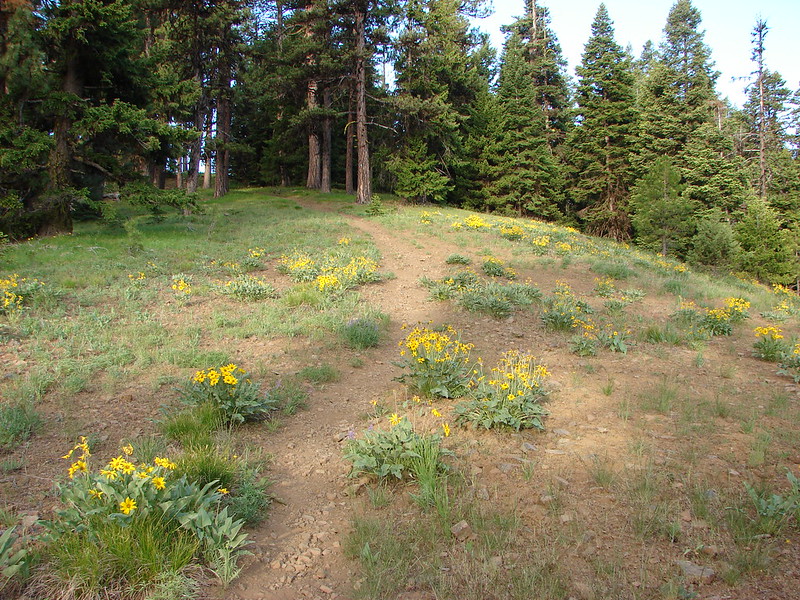
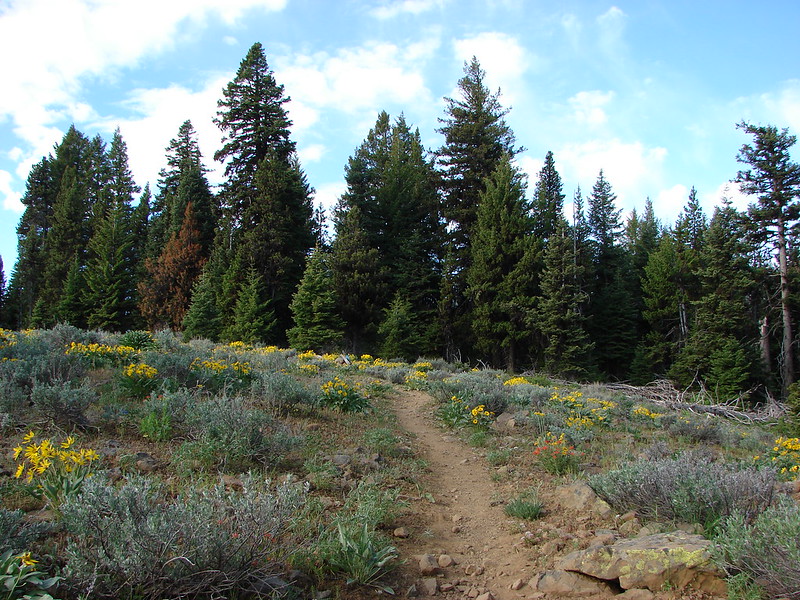
As we did on our previous visit we started at the lowest trail head located on road 28 just over 9 miles south of Silver Lake, OR. It wasn’t long before we began seeing wildflowers. Paint, lupine, death camas, and some balsamroot was scattered amid the ponderosa pines. We were thinking it was pretty good and then we looked ahead and saw a completely unexpected sight. The amount of paint and blasamroot that covered the forest floor was beyond anything we’d imagined. The flowers were spread out in every direction.
DSC08412
DSC08432
DSC08434

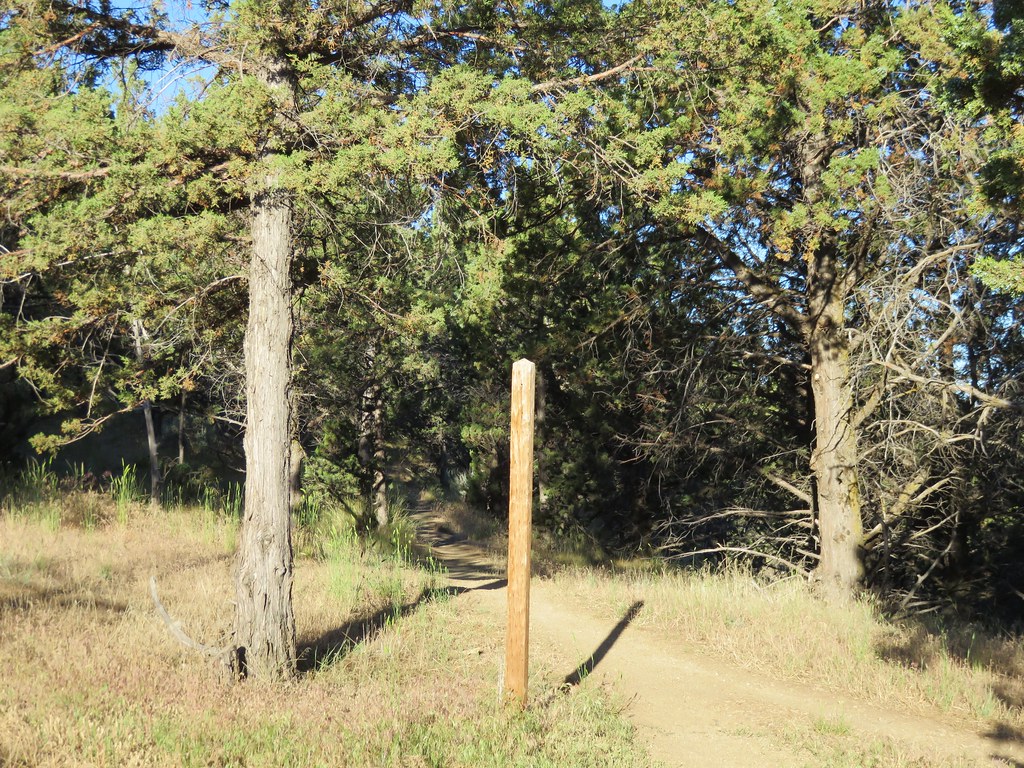
By the 1.5 mile mark the trail had left the ponderosa forest. The flowers had decreased here but there were still some to be found.
DSC08470
DSC08465

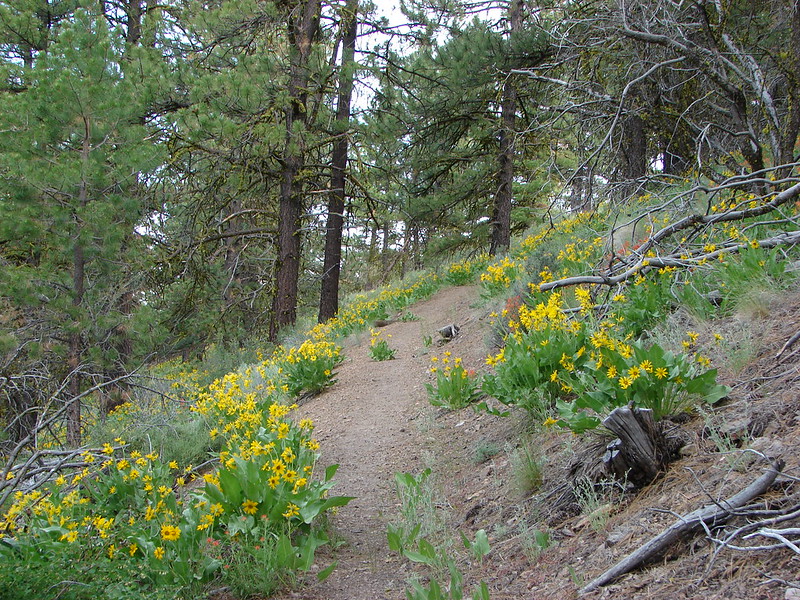
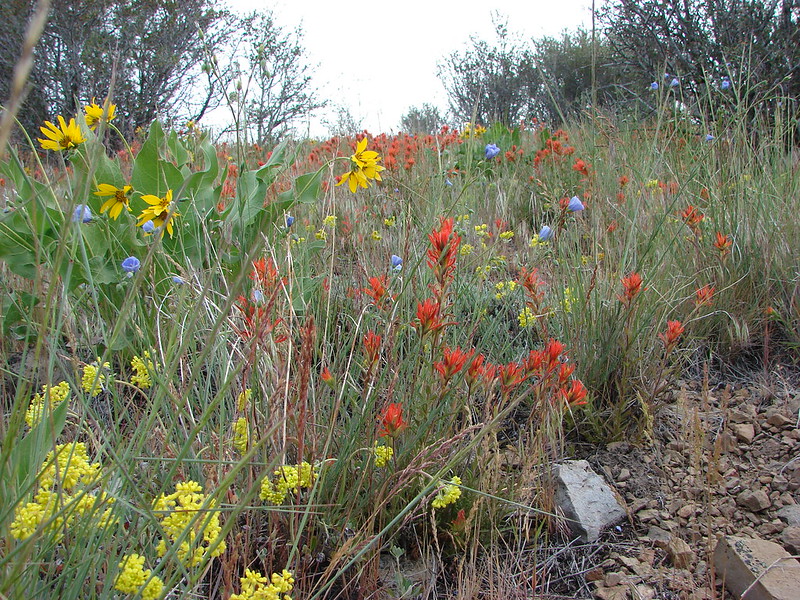
We passed Hager Spring which was as dry as it was on our last visit and began climbing to the lower meadow. We weren’t sure what to expect for flowers in the meadow. We had gotten a couple of glimpses of it from the lower trail and we thought we could see some yellow which we assumed was balsamroot. As we got closer to the meadow our suspicions were confirmed. The balsamroot was back with a vengeance along with paint and some additional flowers.
DSC08478
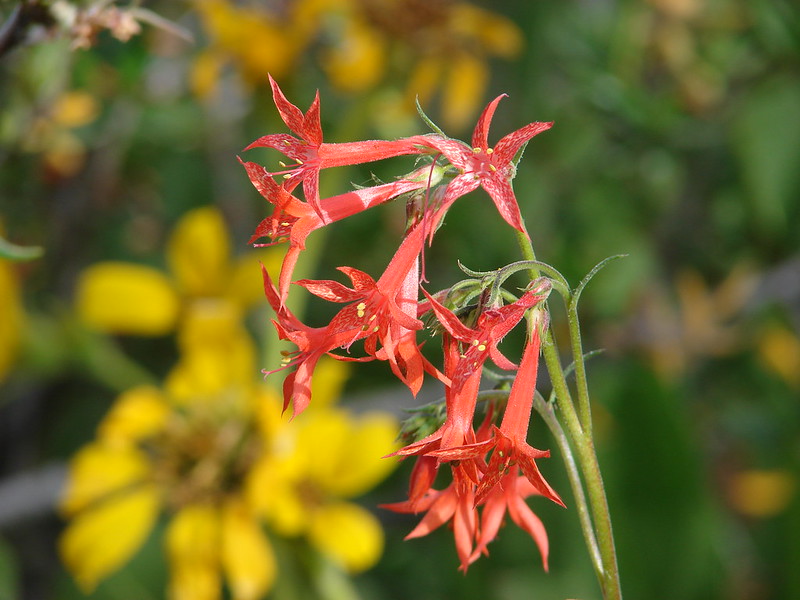
Scarlet Gilia
DSC08529
DSC08502
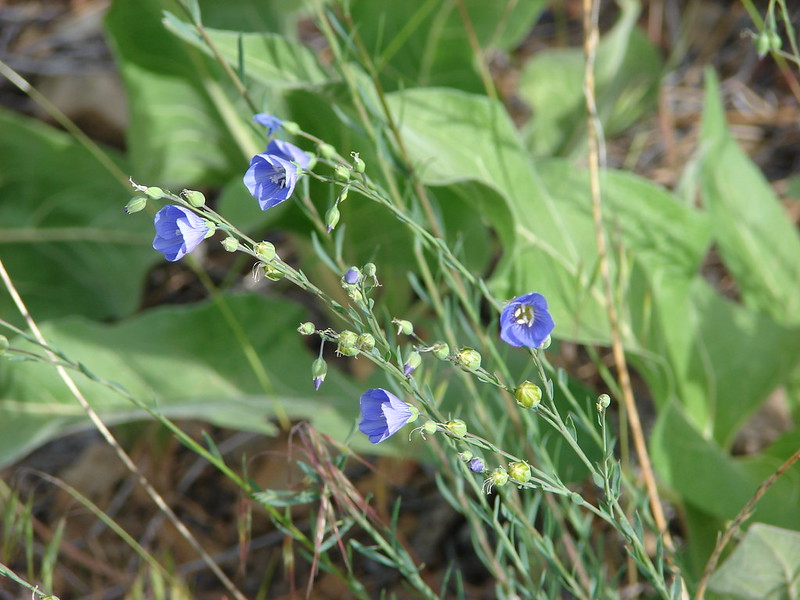
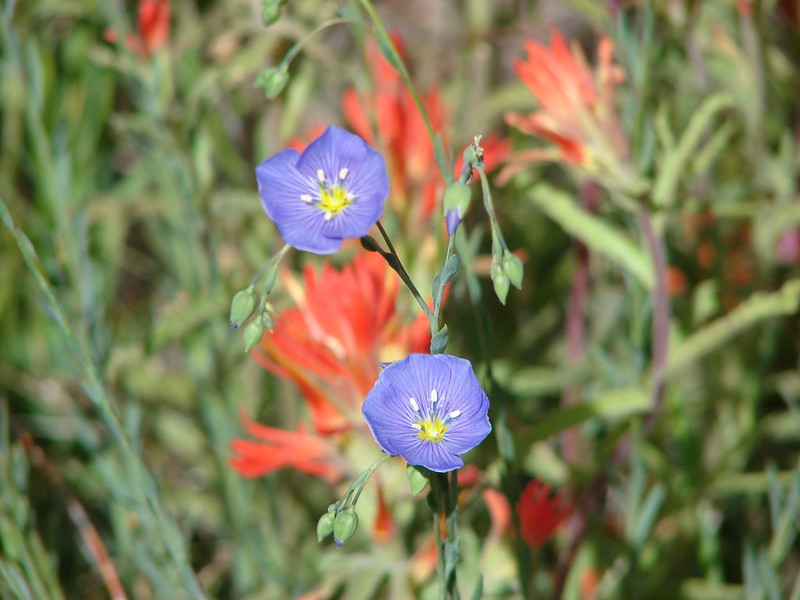
Lewis Flax
DSC08519
DSC08521
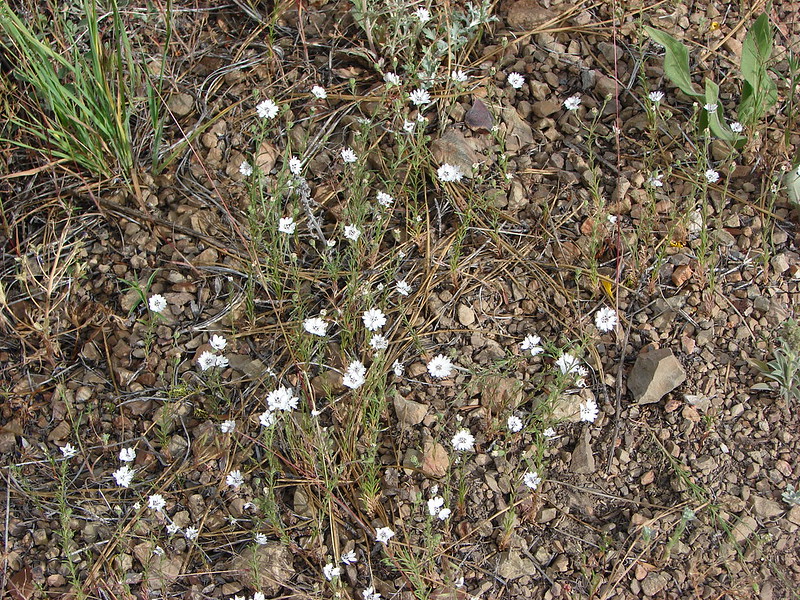
Prairie Star
DSC08538

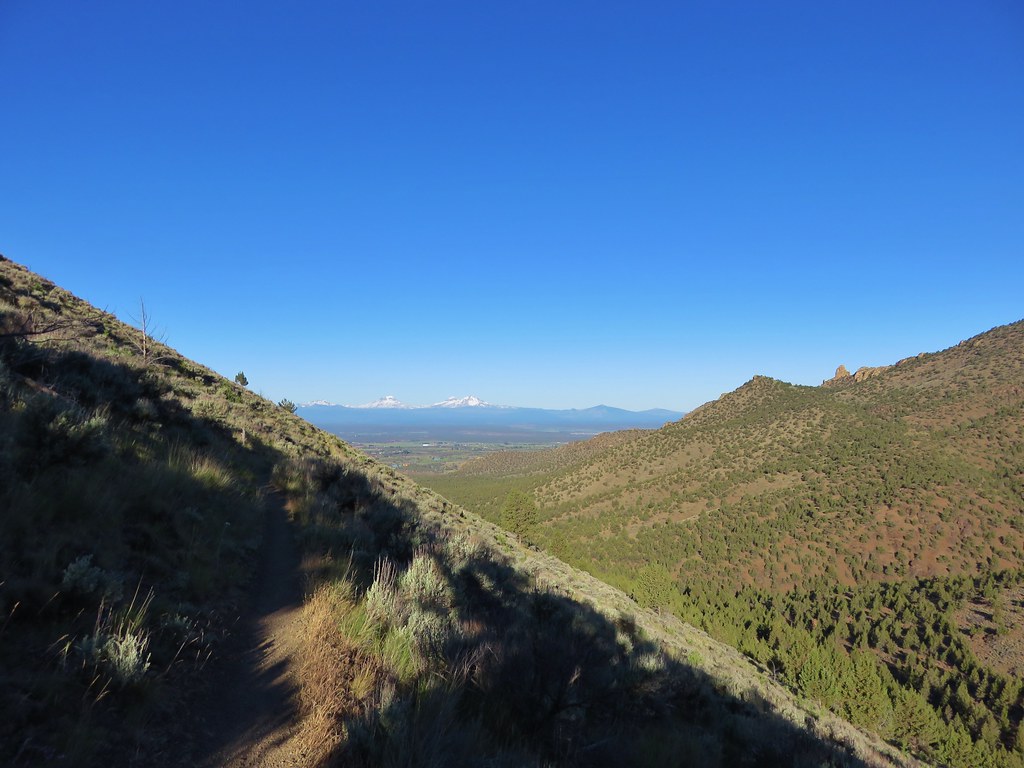
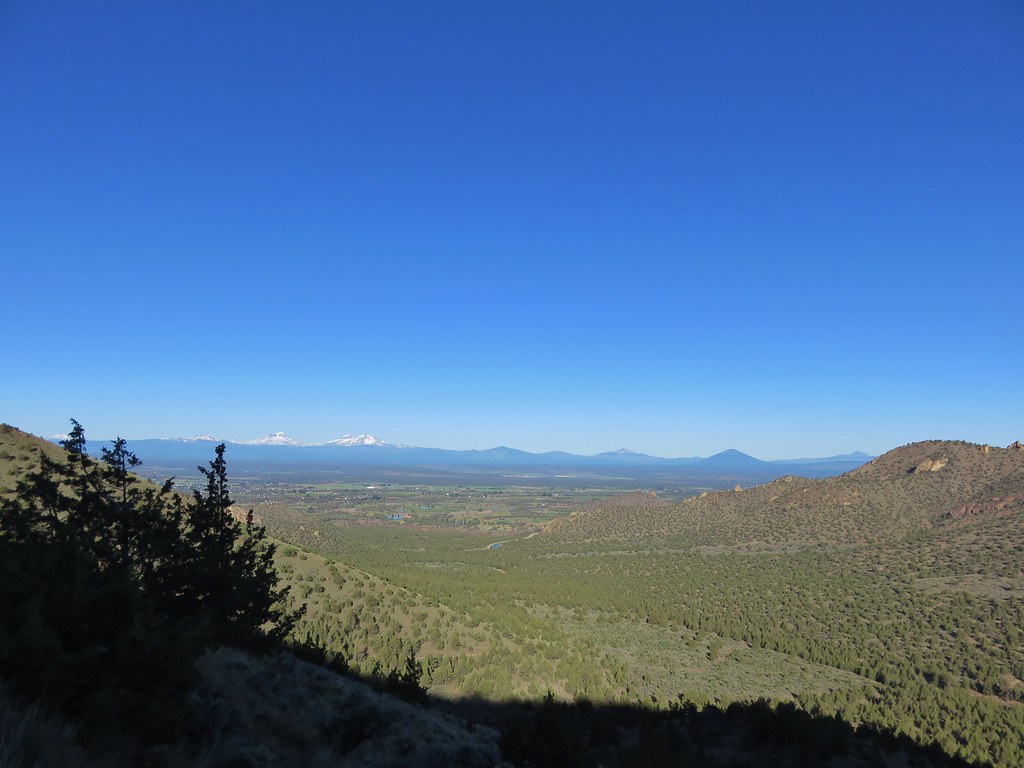
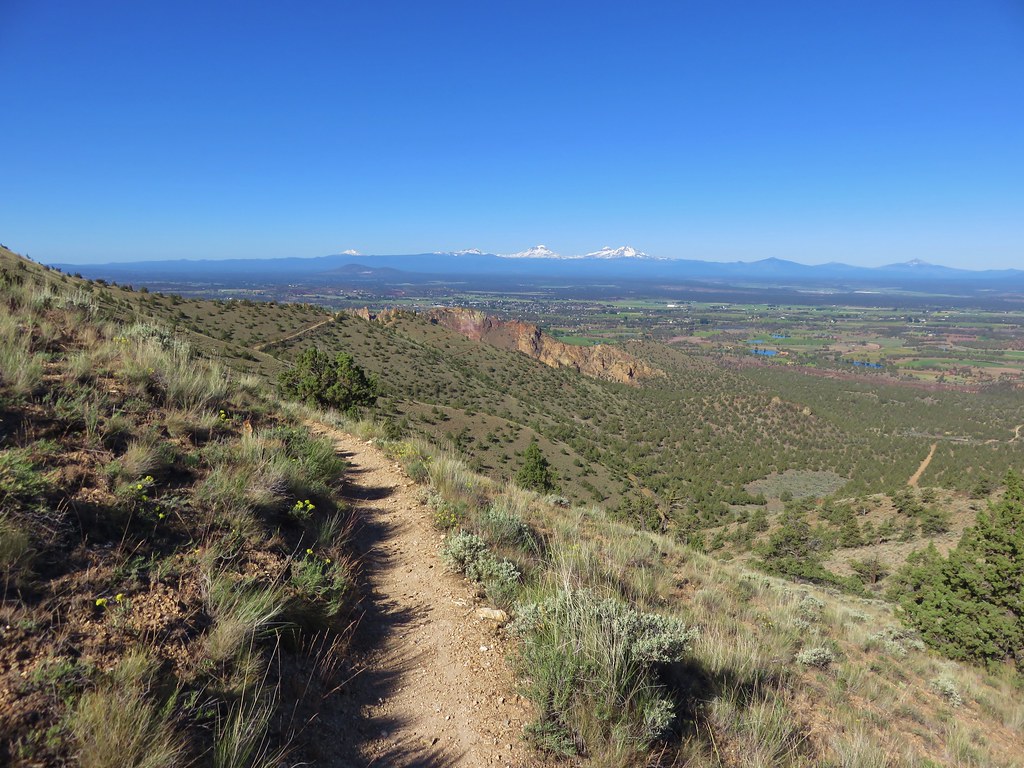
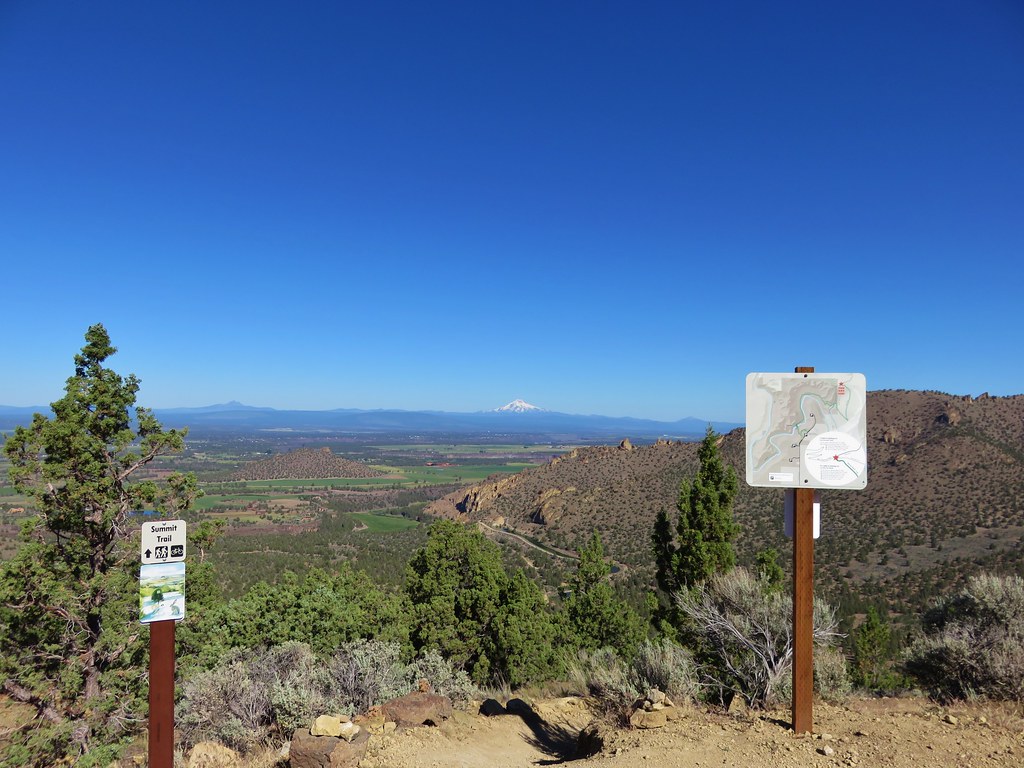
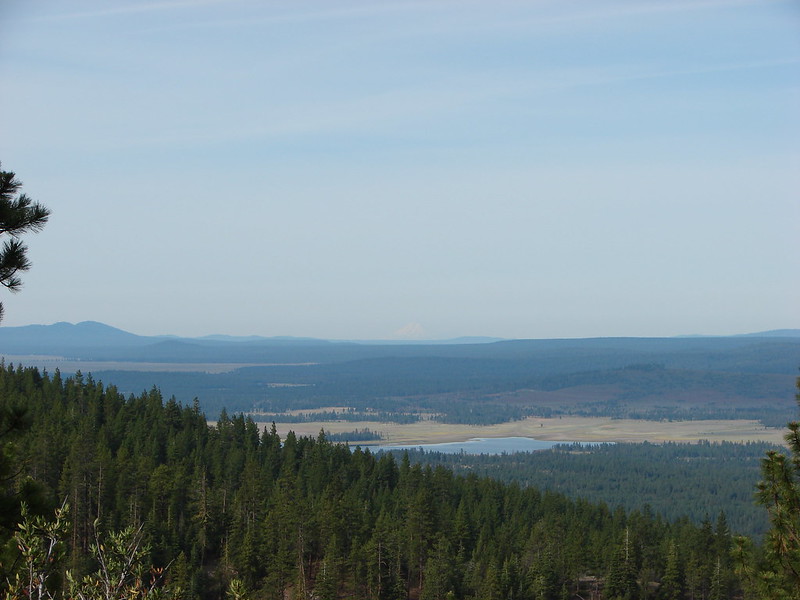
Not only were the flowers amazing but we had a view as we passed through the meadow. For the first time on a hike we could see Mt. Shasta in California beyond Thompson Reservoir.
DSC08531
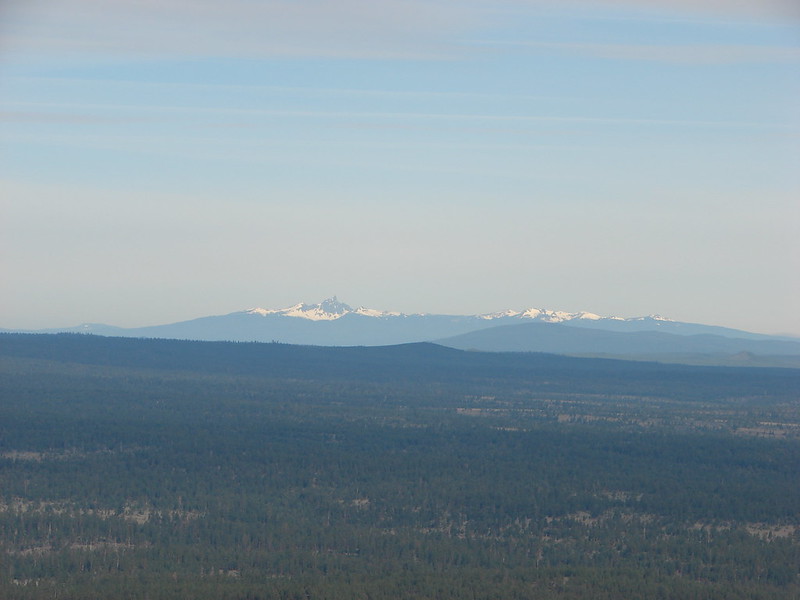
Along with Mt. Thielsen, Howlock Mt. & Tipsoo Peak
DSC08523
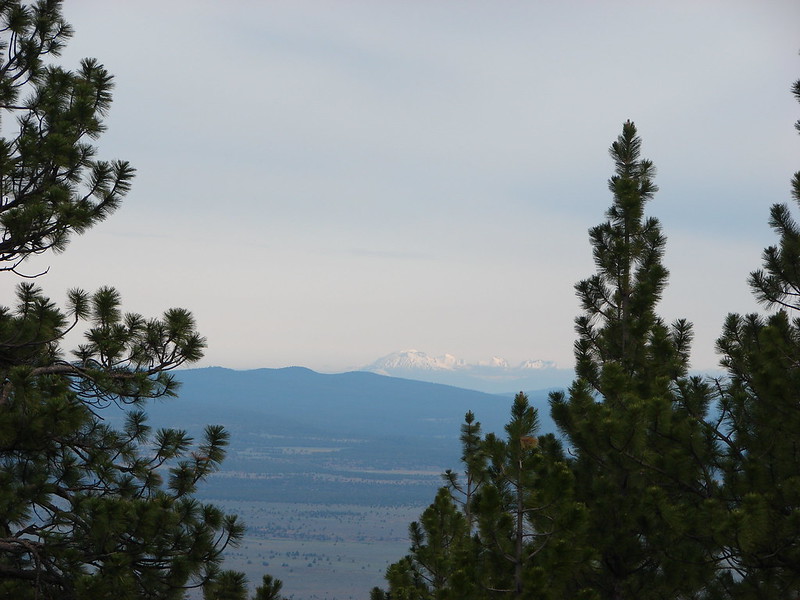
and Mt. Bachelor, The Three Sisters, & Broken Top
DSC08562

We made a switchback in the meadow and could see the summit as we continued up through the meadow. The flowers remained the star of the show.
DSC08581
DSC08585
DSC08589
DSC08598
DSC08600

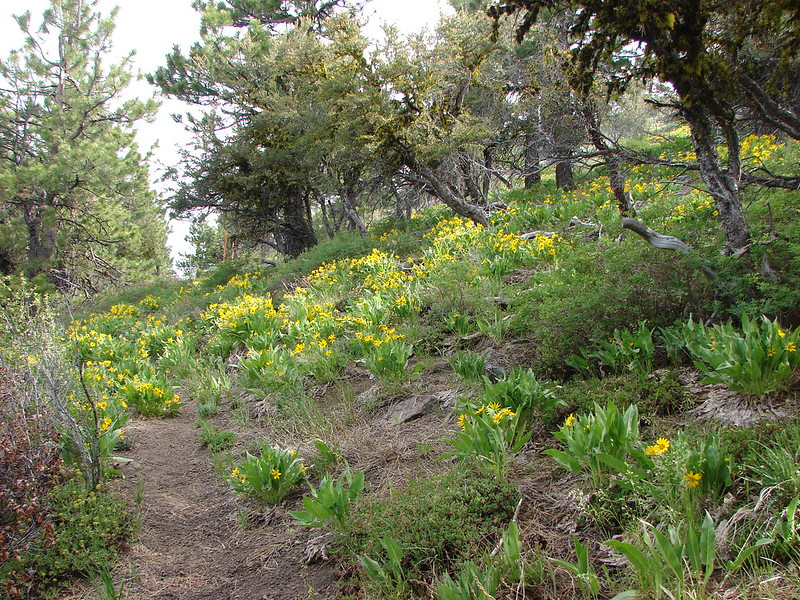
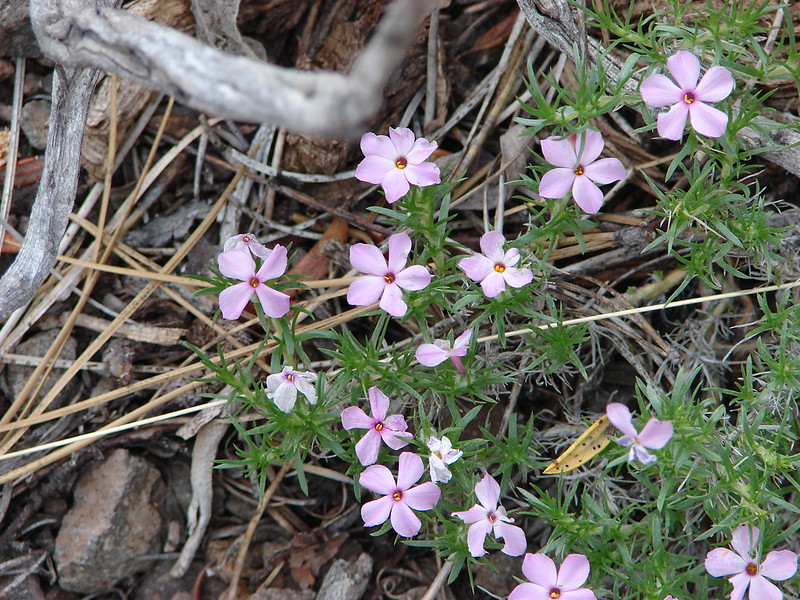
We left the lower meadow and entered another section of forest. The flowers decreased in this section but there were some arnica starting to bloom and a lot of fireweed just starting to grow. The trail climbed stiffly through the trees making this the most difficult section of the trail before leveling out briefly and then launching up again into the upper meadow. Here we found some more balsamroot and some phlox.
DSC08616
DSC08620
It was in this section that we were looking for the rare green paintbrush that grows on Hager Mountain. We had seen some on our previous visit but it was drying out that day. Now we found some lush versions growing near the trail.
DSC08654

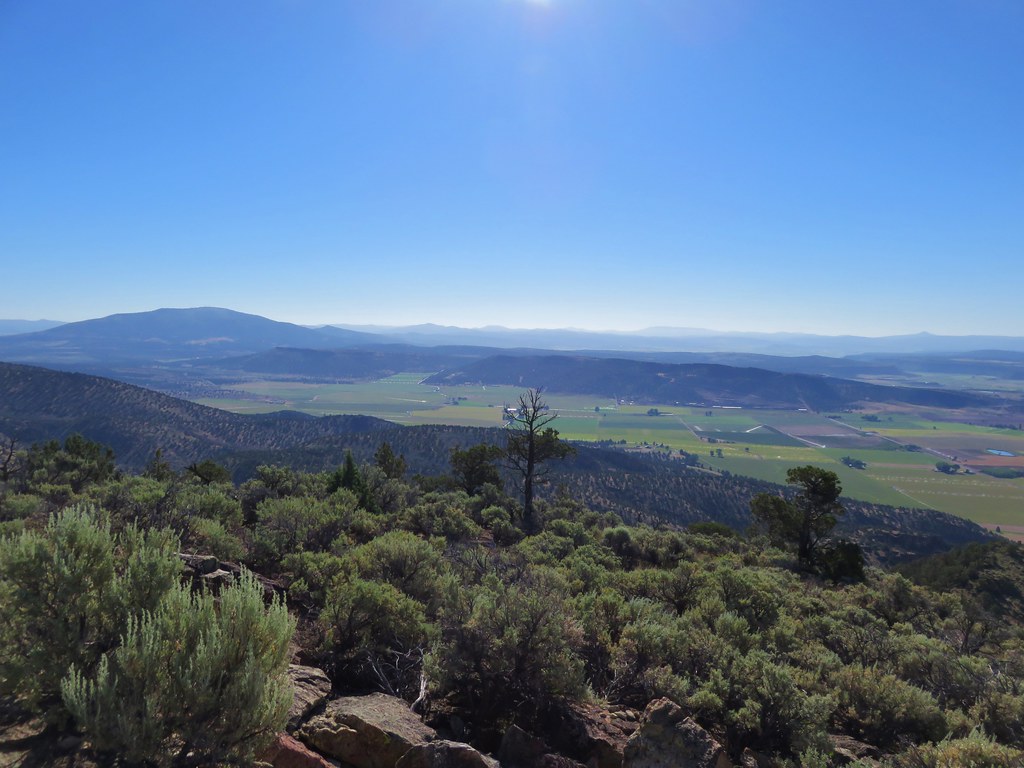
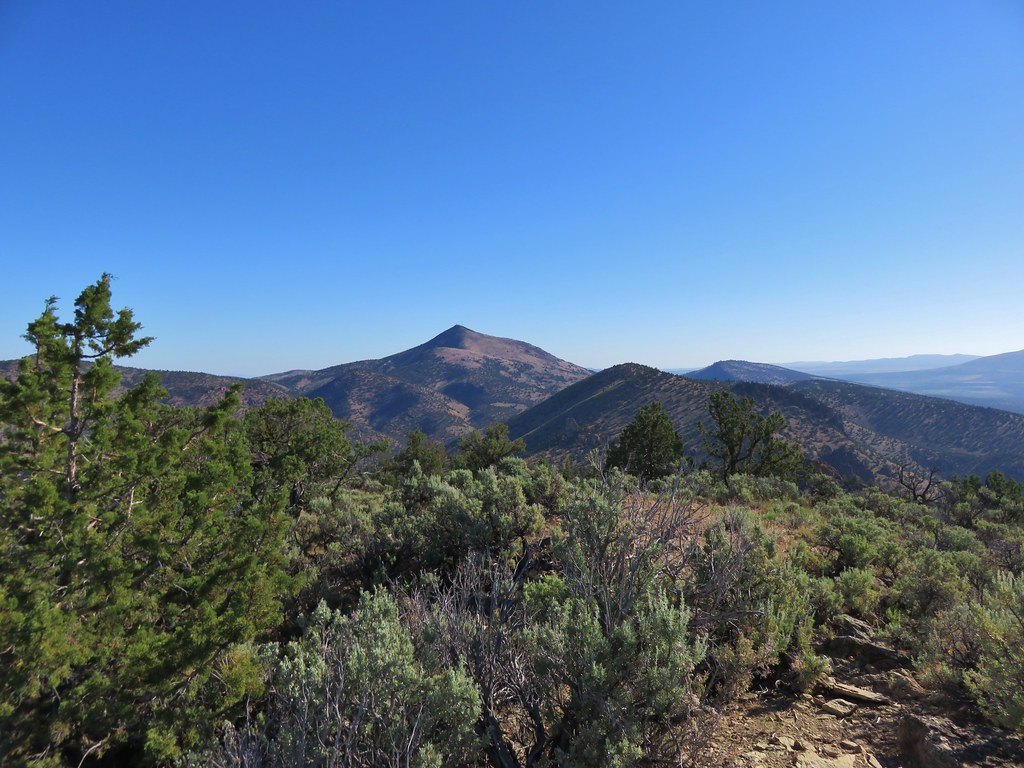
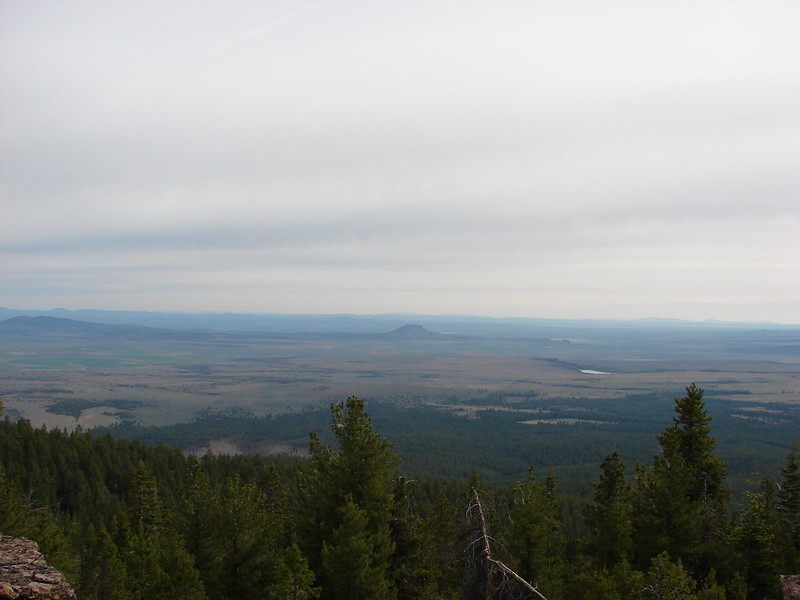
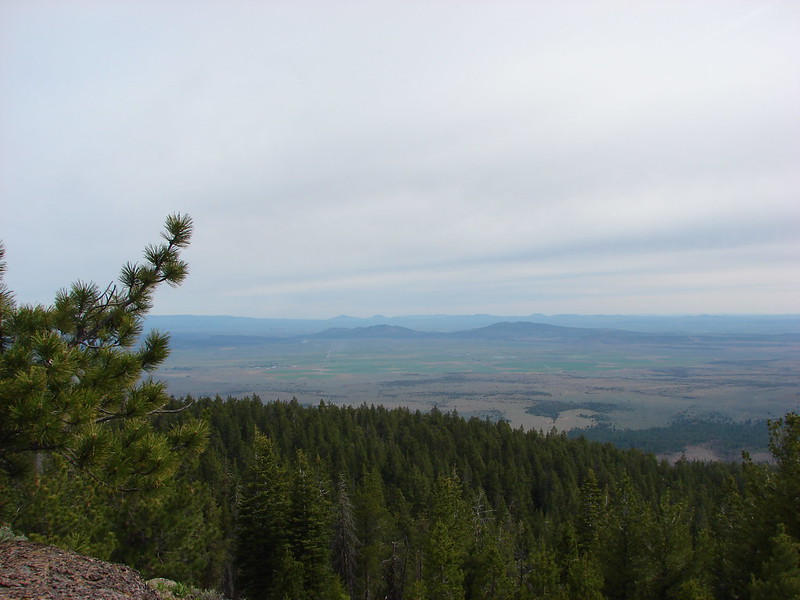
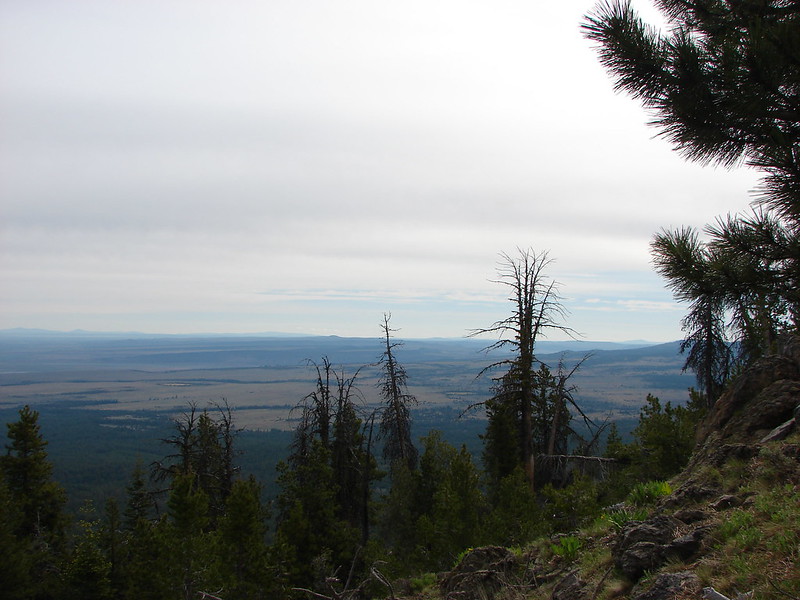
It was exciting to reach the summit to see what views we had missed on the previous hike. The day wasn’t entirely clear but it was a monumental improvement over the last time. We spent about 45 minutes studying the horizon and taking pictures. There are some very interesting geologic formation in that part of Oregon and we were intrigued by some of the odd features.
DSC08644
DSC08646
DSC08648

Warner Peak in the distance to the right:
DSC08649
Gearhart Mountain with a bit of snow:
Gearhart Mountain from Hager Mountain
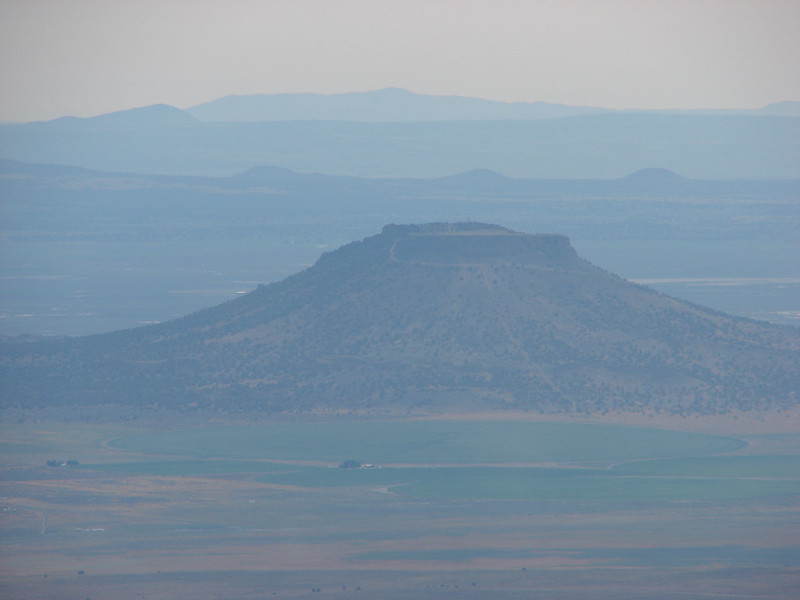
Fort Rock in the center of the flat area with Paulina Peak, China Hat & East Butte behind from left to right.
DSC08701
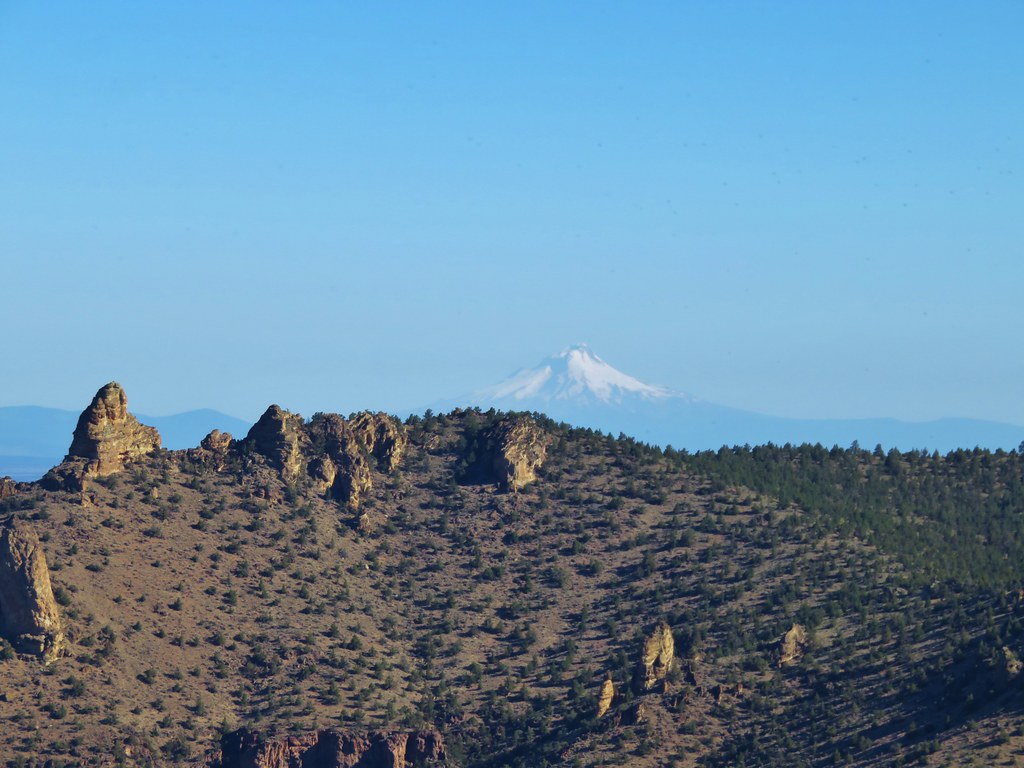
From the northwest to the southwest the horizon was dotted with snowy Cascade peaks. It was too cloudy to see Mt. Hood and Mt. Jefferson appeared like a ghost in the clouds but we had good views starting with the Broken Top, Three Sisters and Mt. Bachelor:
DSC08699
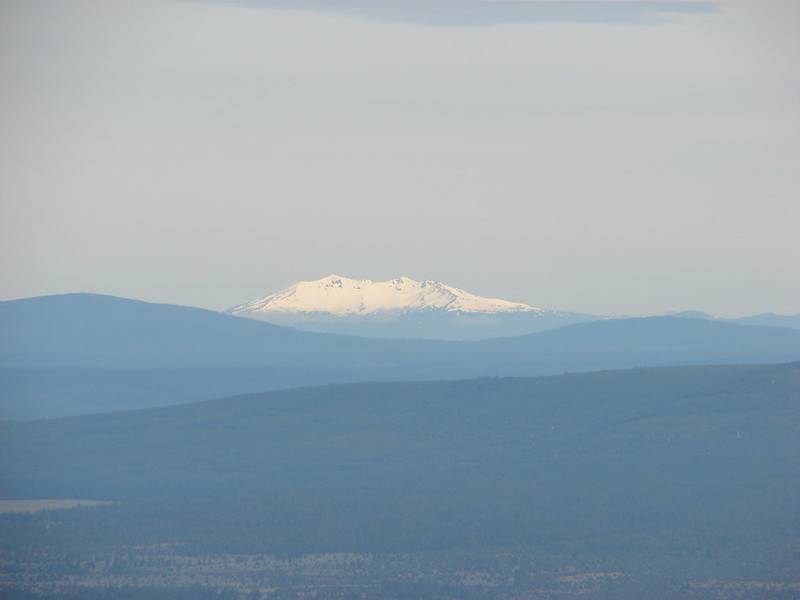
Followed by Diamond Peak to their south:
DSC08698
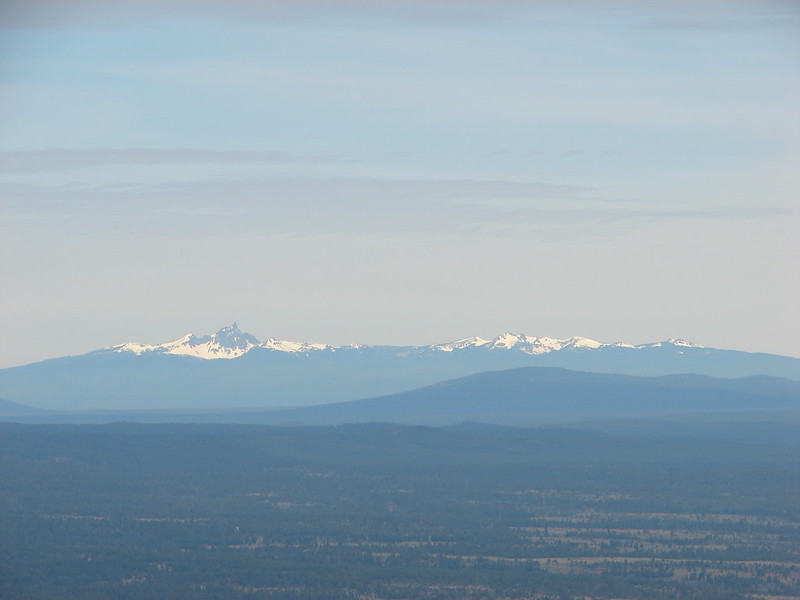
Then Mt. Thielsen, Howlock Mt. & Tipsoo Peak:
DSC08695
Crater Lake had emerged from the previous days clouds as we could easily make out Mt. Scott, The Watchman, and Hillman Peak:
DSC08756
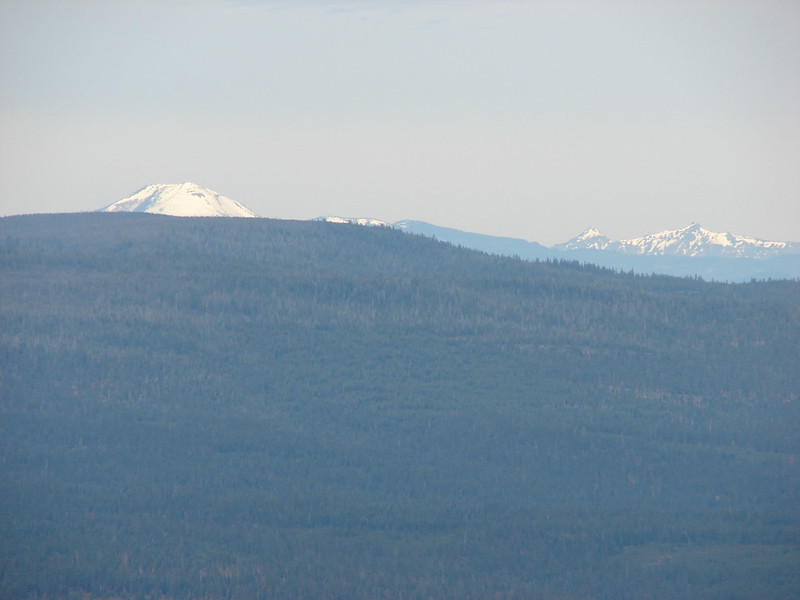
Mt. McGloughlin barely rose above the broad shoulder of Yamsay Mountain:
DSC08757
And finally Mt. Shasta looming large far to the south:
Mt. Shasta fro m Hager Mountain

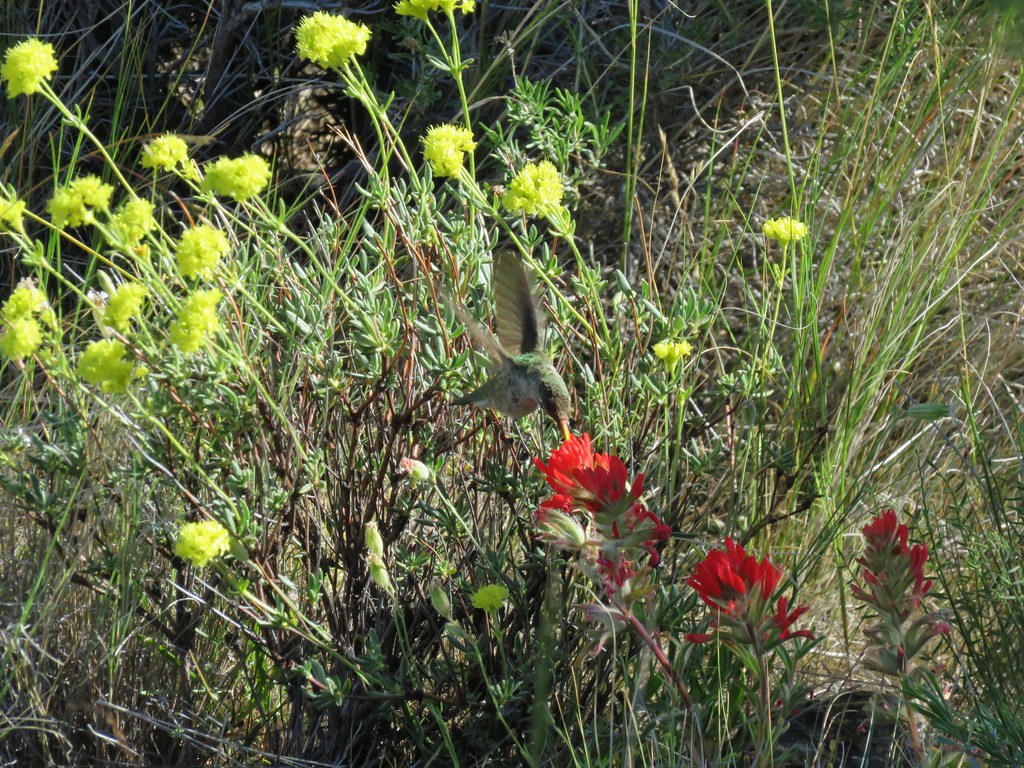
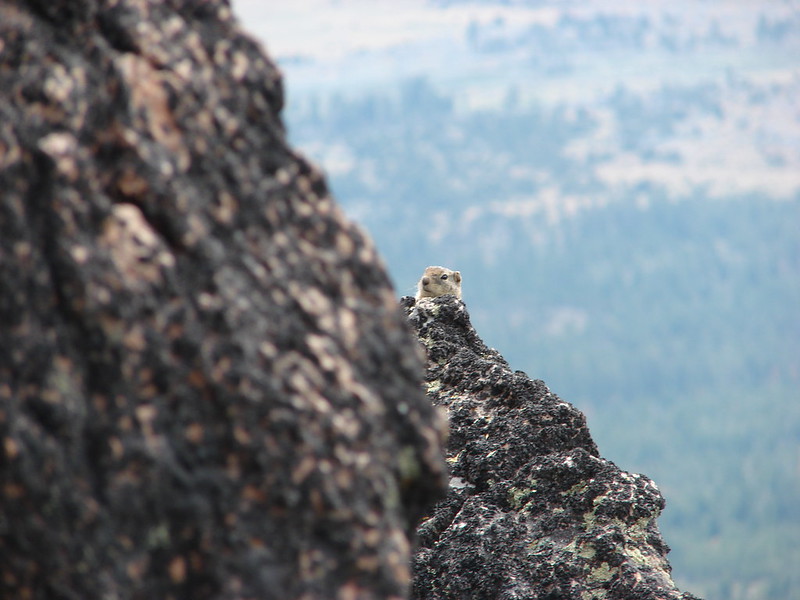
We were joined on the summit by some of the local wildlife.
DSC08789
DSC08831
DSC08815
DSC08839

By the time we were on our way back down the flower display had actually gotten better. The lewis flax was opening to the sunlight.
DSC08855
DSC08875
DSC08866

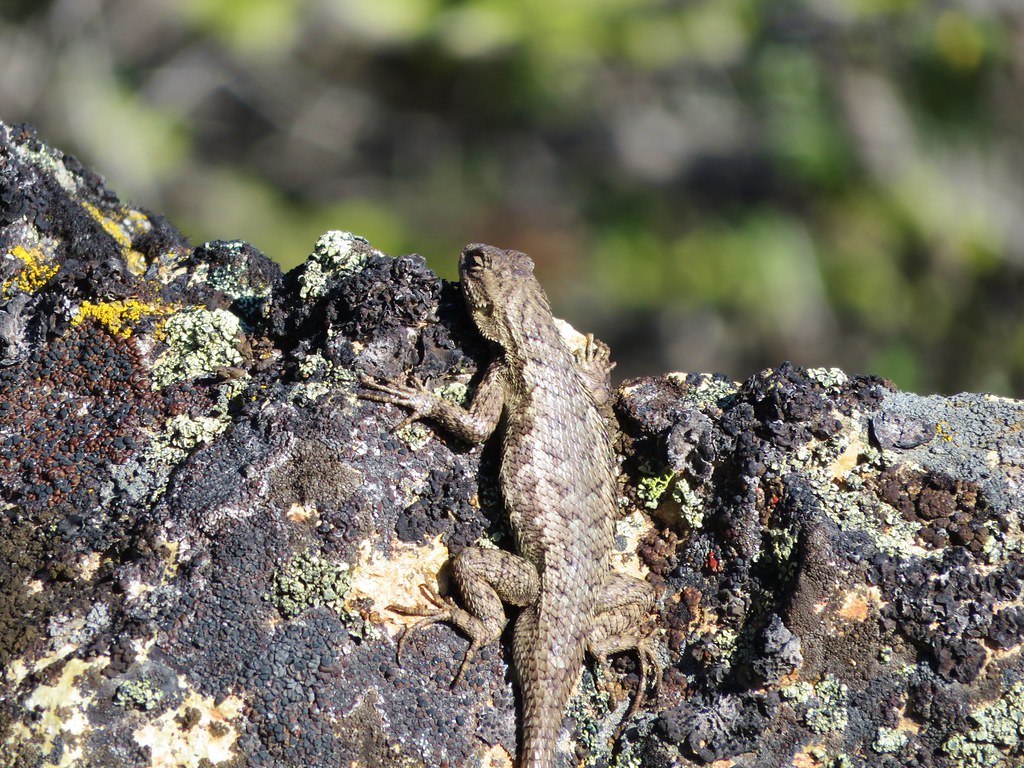
We passed four other hikers on our way back to the car as well as a noisy nuthatch and a couple of sagebrush lizards.
DSC08938
DSC08956

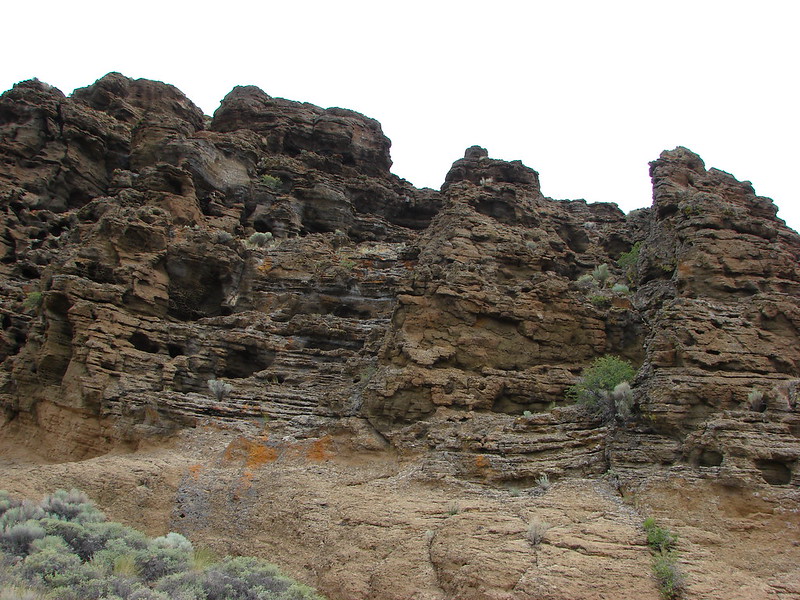
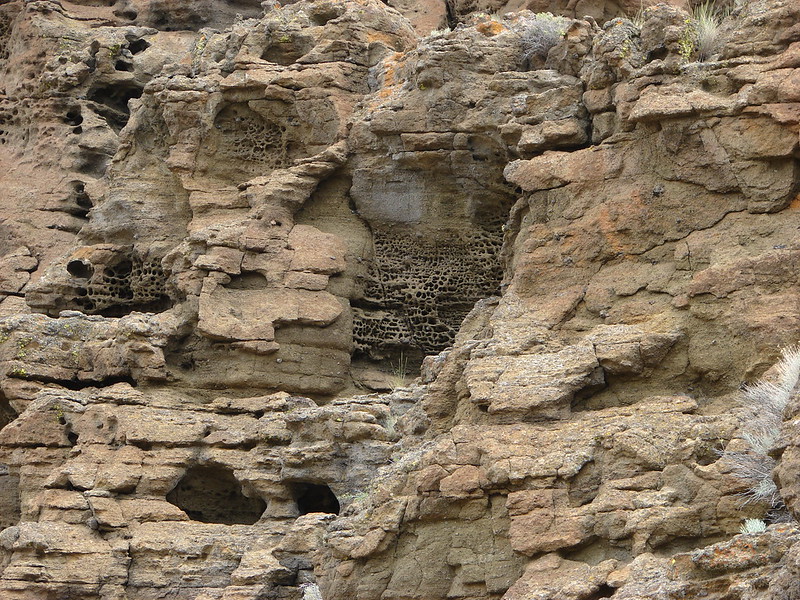
Once we were back on the road we returned to Highway 31 and headed north to Fort Rock State Park. Neither of us had been there before but it had piqued our interest on the way past the year before. The rocks are said to be the remainder of an ancient volcanic crater that was worn down by an ice age lake. Whatever the origin the result was an interesting crescent formation full of textured rocks angled this way and that.
2014-06-14 13.45.55
DSC09004
DSC09014
DSC09012

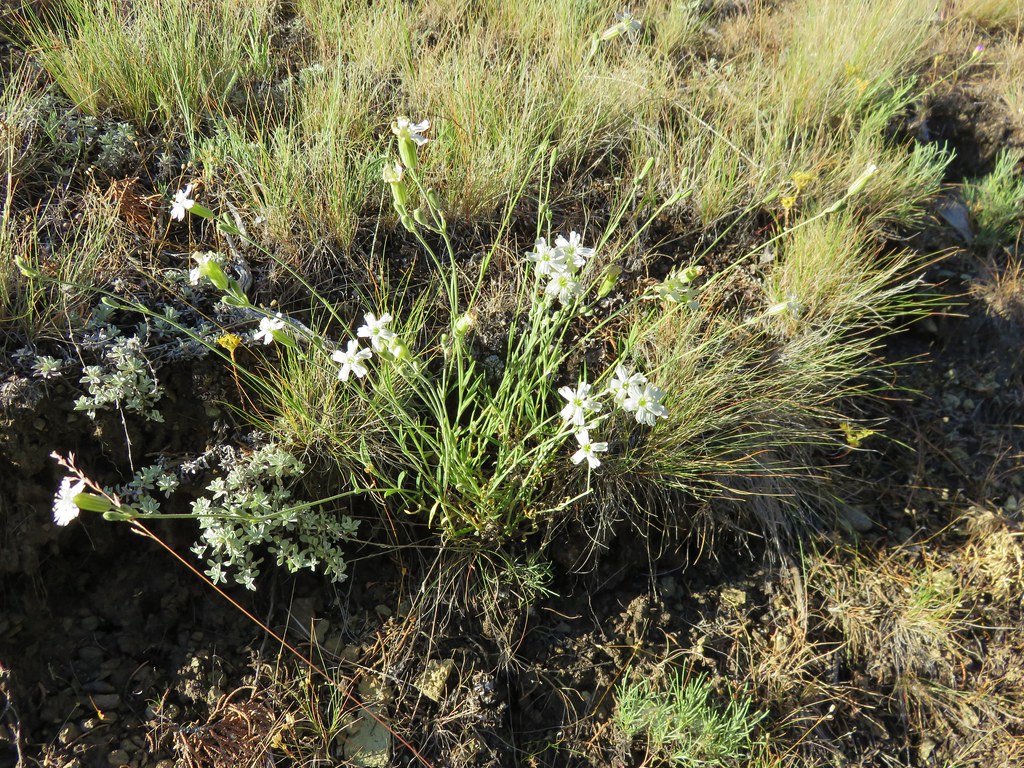
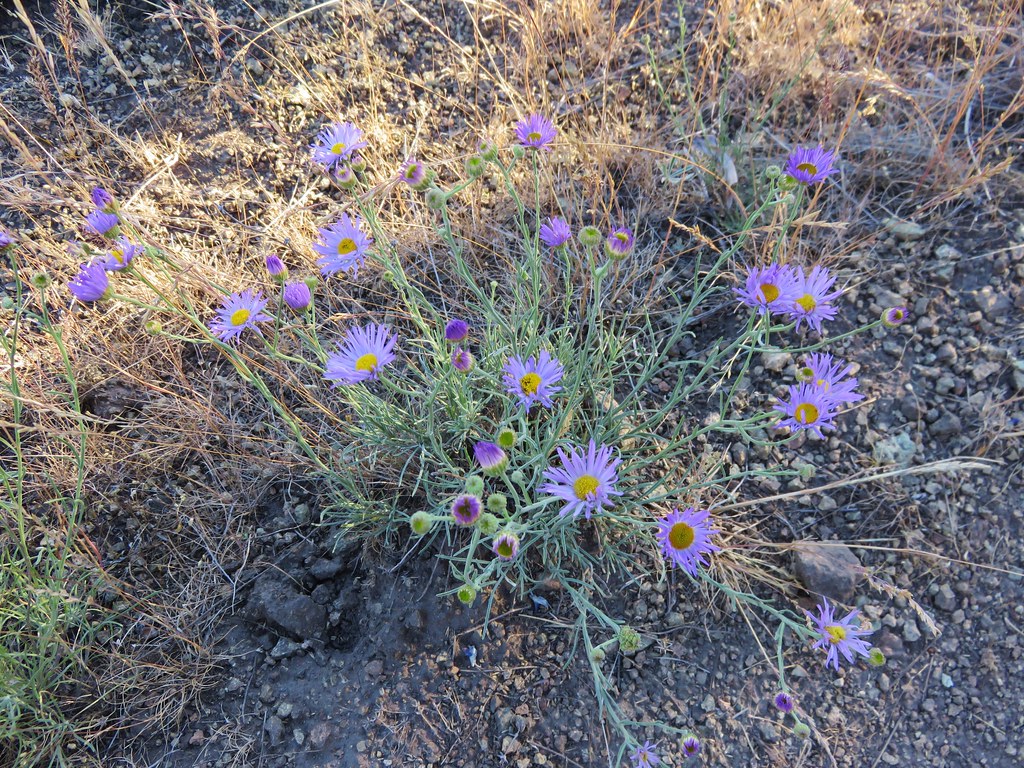
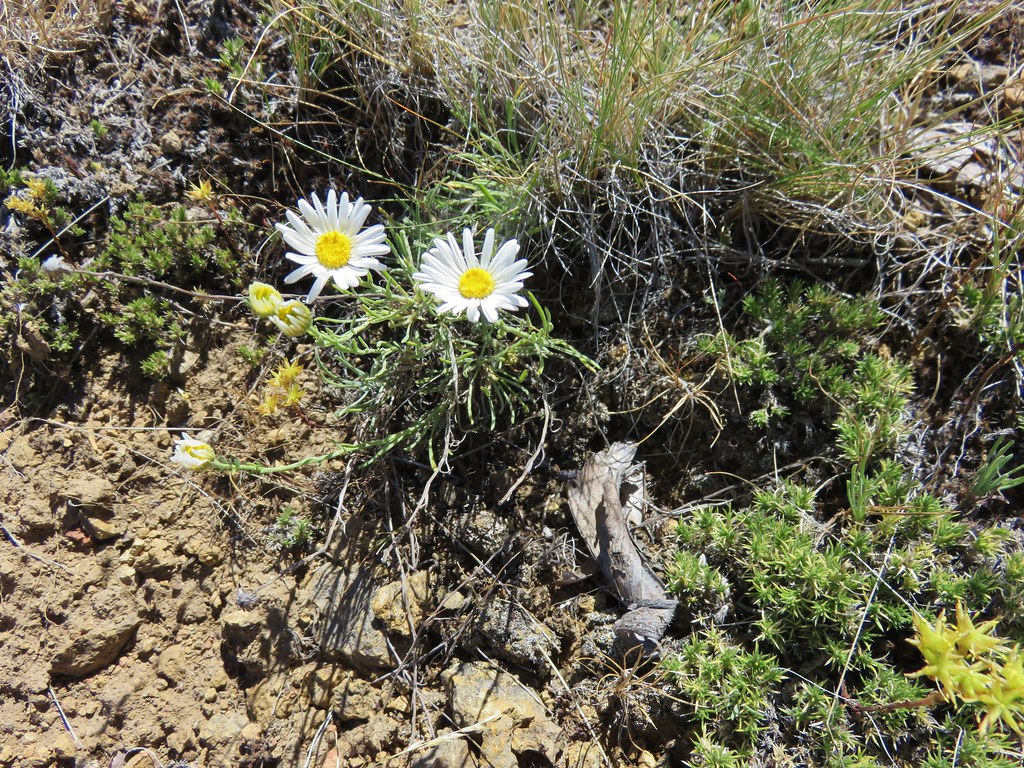
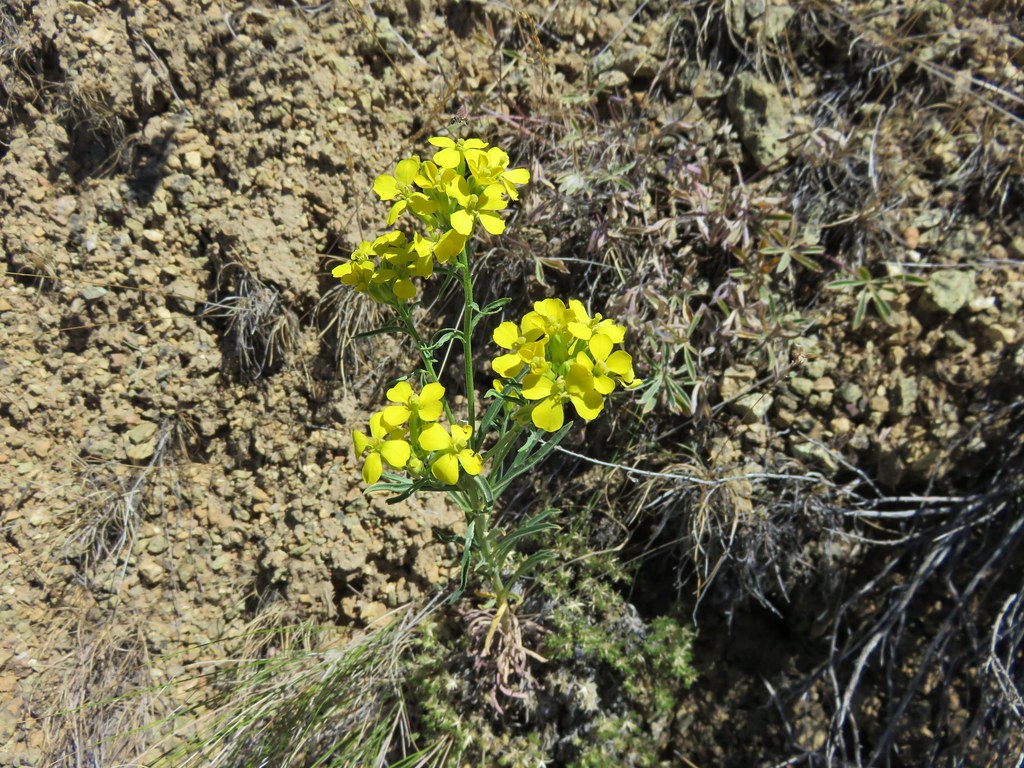
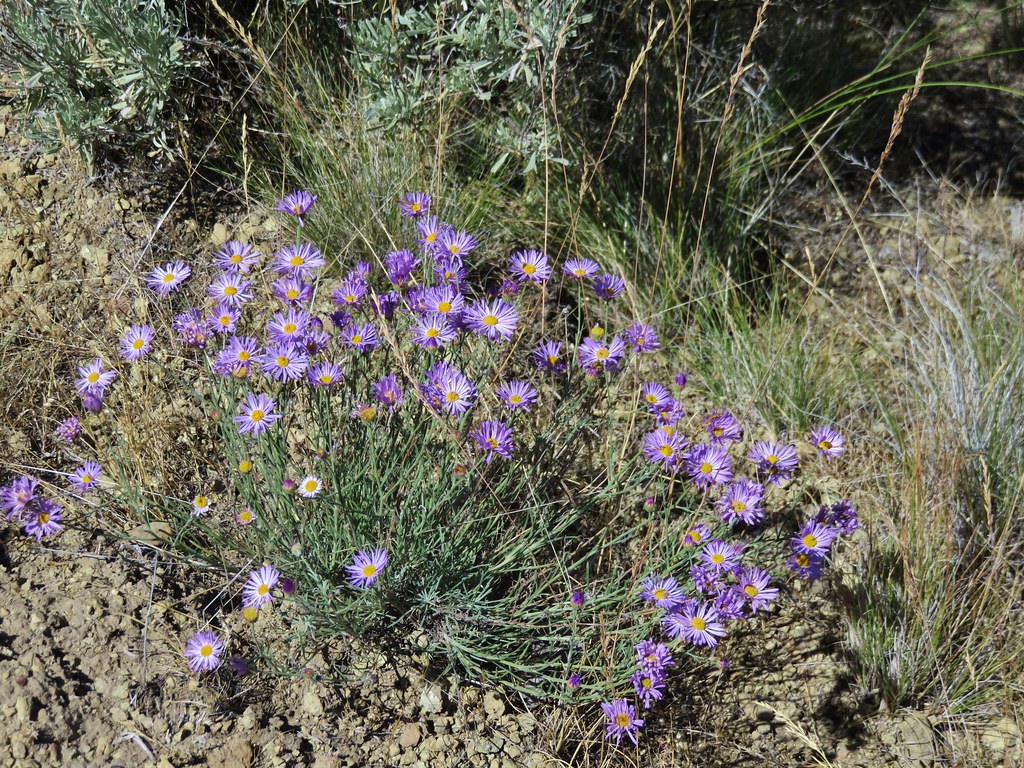
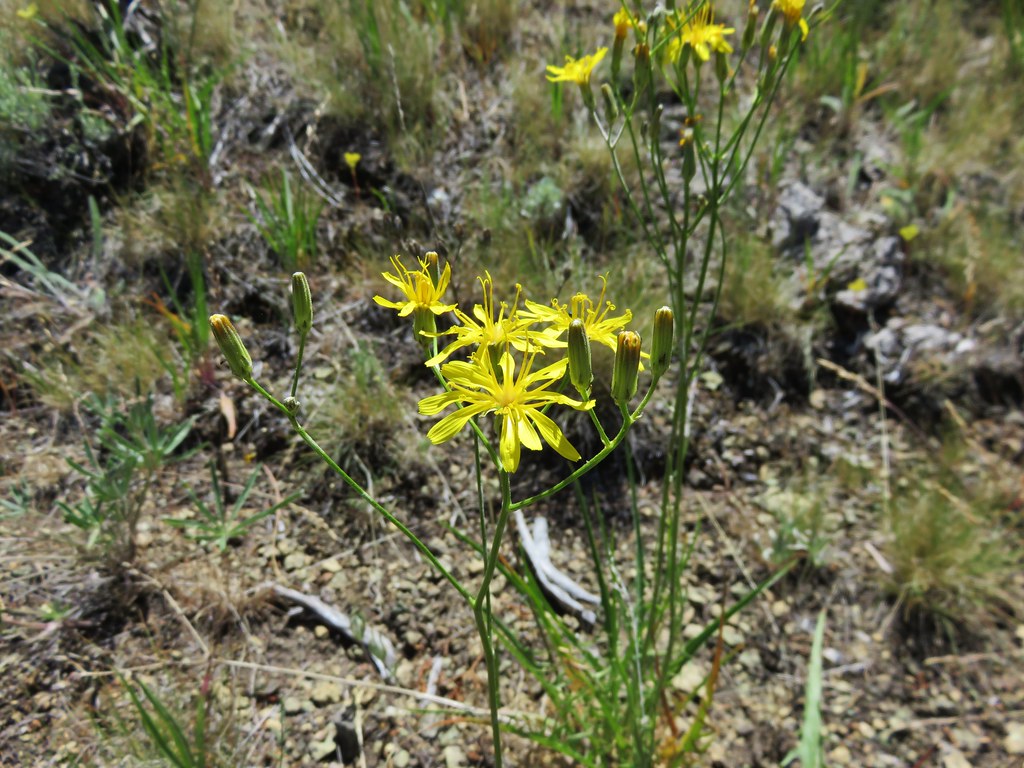
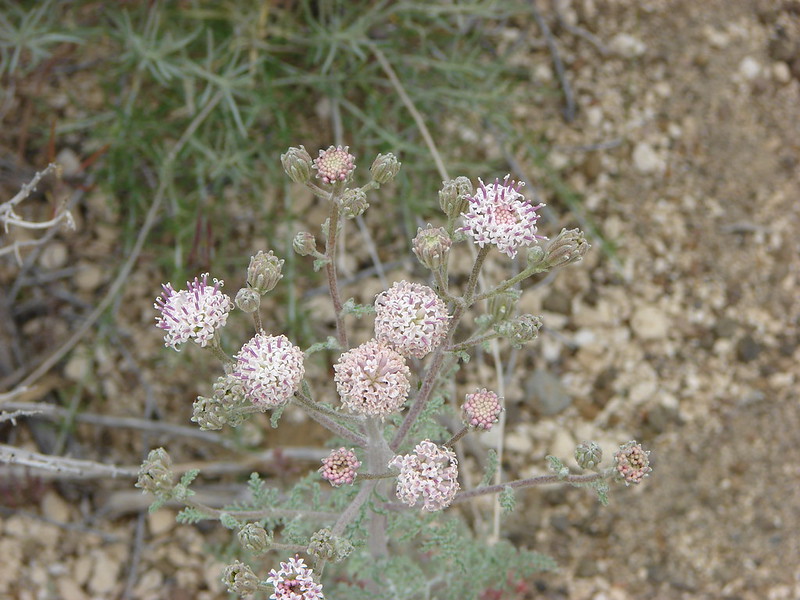
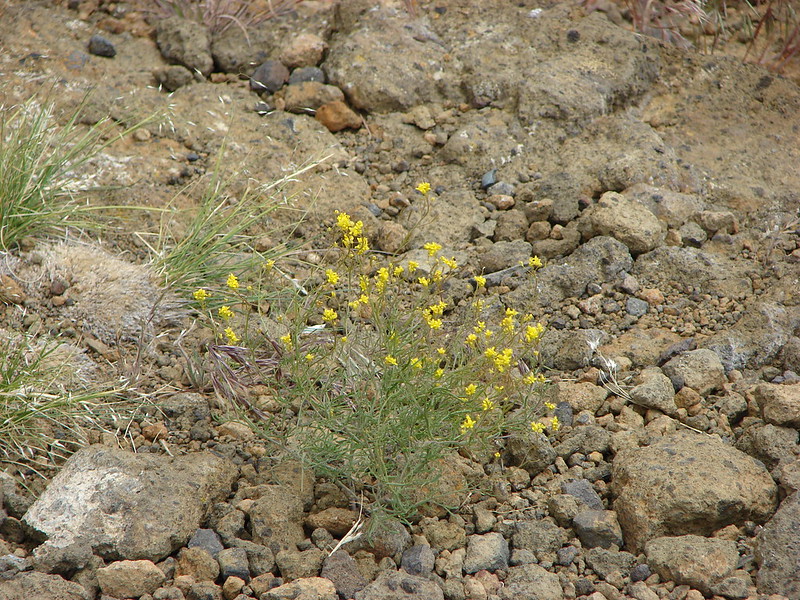
Inside the crescent the ground appeared to be covered in sagebrush, but as we hiked along the loop inside the rocks we noticed a good number of wildflowers that had sprung up amongst the sage.
DSC08987
DSC09003
DSC09032
DSC09034
DSC09049
DSC09085
DSC09110
DSC09115

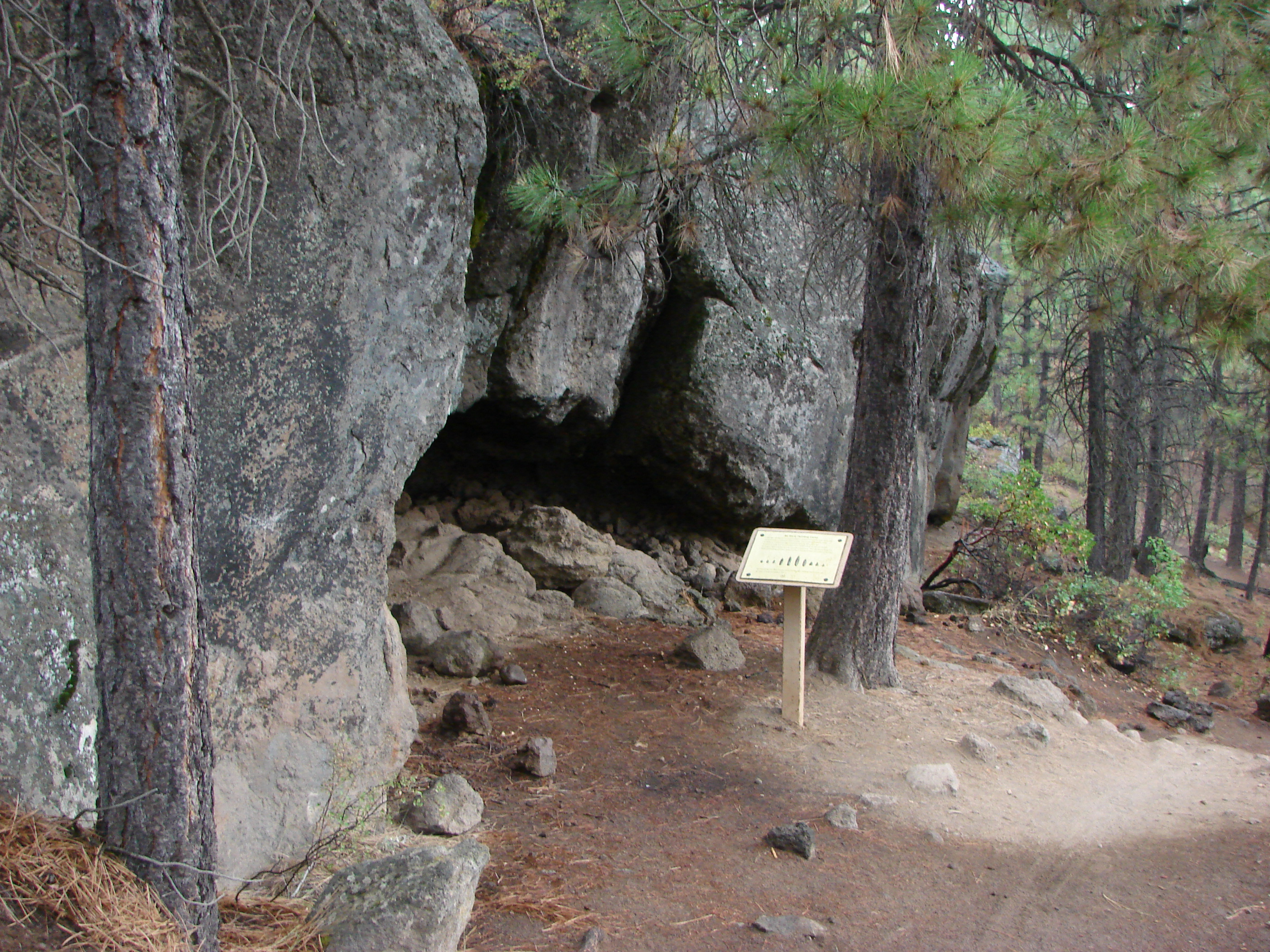
A short side path led to a notch in the rocks where you could see the Fort Rock Cave:
DSC09060
To the south we could see Hager Mountain where we had been just a couple hours earlier:
DSC09088

It had been a great day of hiking with some really interesting and beautiful scenery. One note of caution though. We both had to knock ticks off, Heather during the Hager Mountain hike and myself back at the car after being on the Fort Rock trails. Happy Trails!

flickr: https://www.flickr.com/photos/9319235@N02/sets/72157644765557647/
Facebook – Hager Mt.: https://www.facebook.com/media/set/?set=a.10204238532710679.1073741885.1448521051&type=1
Fprt Rock: https://www.facebook.com/media/set/?set=a.10204238985722004.1073741886.1448521051&type=1

Categories
Central Oregon Hiking Ochoco Mountains Oregon Trip report

Lookout Mountain – Ochoco National Forest

We recently returned from a long weekend in Central Oregon. We had a few hikes that we were wanting to try in June in that area starting with Lookout Mountain in the Ochoco National Forest. Roughly 26 miles east of Prineville, OR the summit of Lookout Mountain is the 2nd highest point in the Ochoco Mountains. The summit is part of a broad plateau of sagebrush and wildflowers which also offers a 360 degree view.

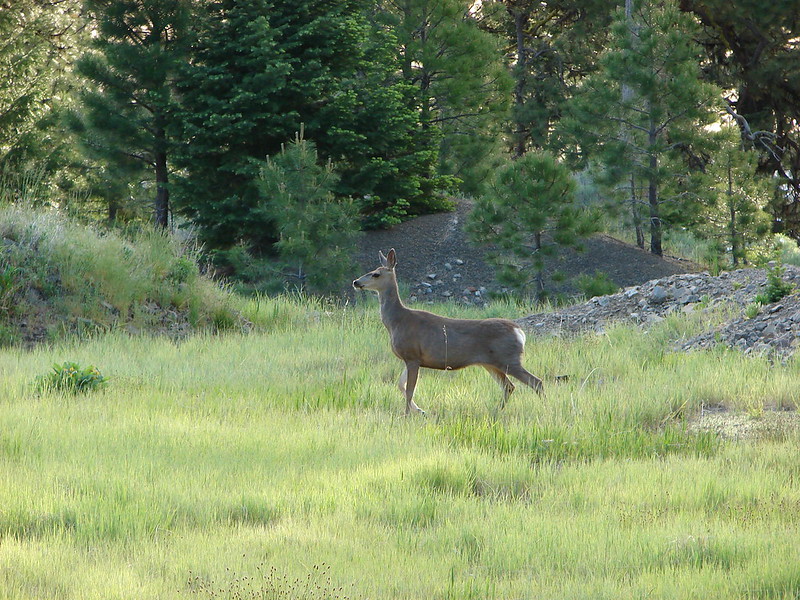
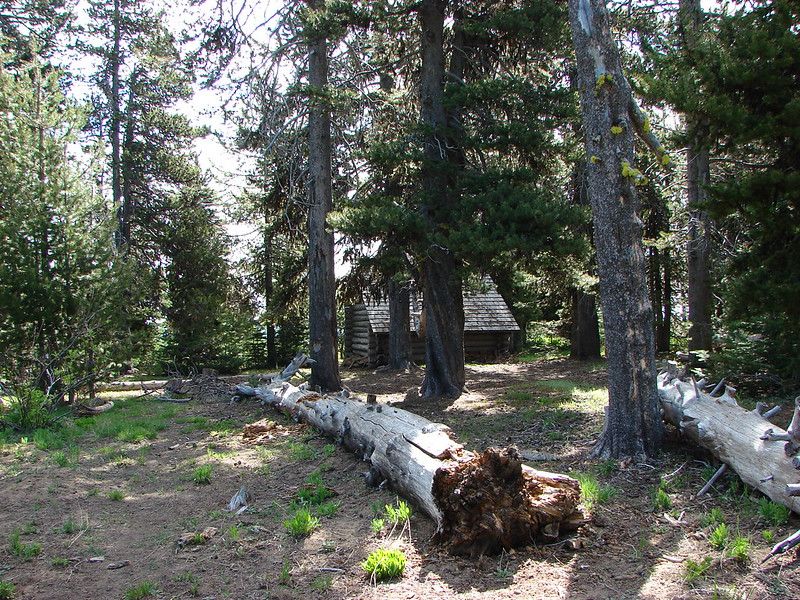
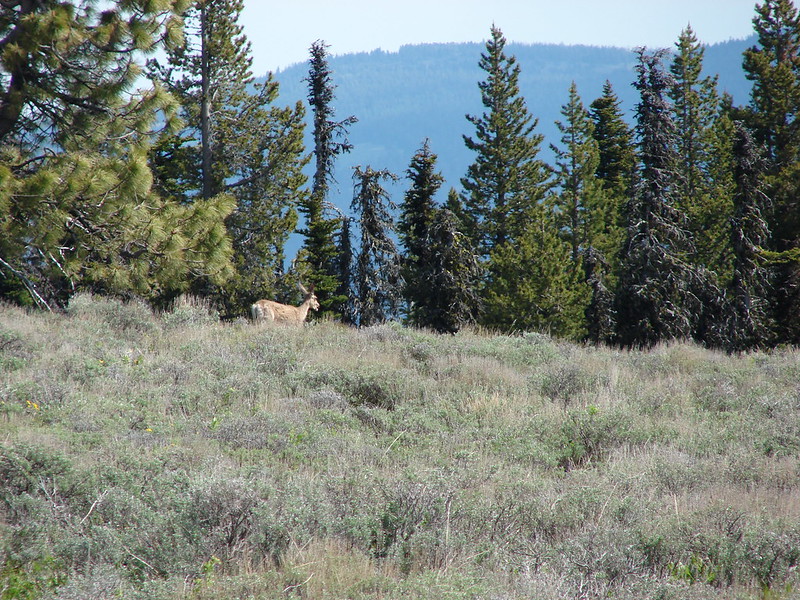
There are a couple of options for reaching the plateau. For our visit we decided to start at the Round Mountain Trailhead on road 4205 just after turning off of road 42. We could have shaved nearly 2 miles form the hike by continuing up road 4205 to the Independent Mine Trailhead but the road is quite rough and I would rather be hiking than bouncing around in a car. The 0.9 mile path between the trailheads was pleasant enough with a number of wildflowers and a deer sighting.
DSC07761
DSC07763
DSC07774

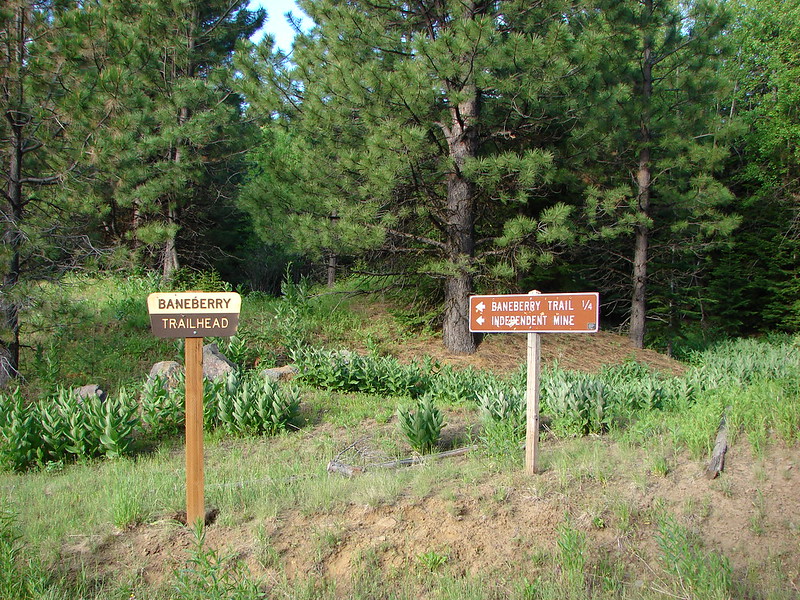
We accidently left the trail and wound up on road 4205 across from signs for the Independent Mine and the Baneberry Trailhead.
DSC07784
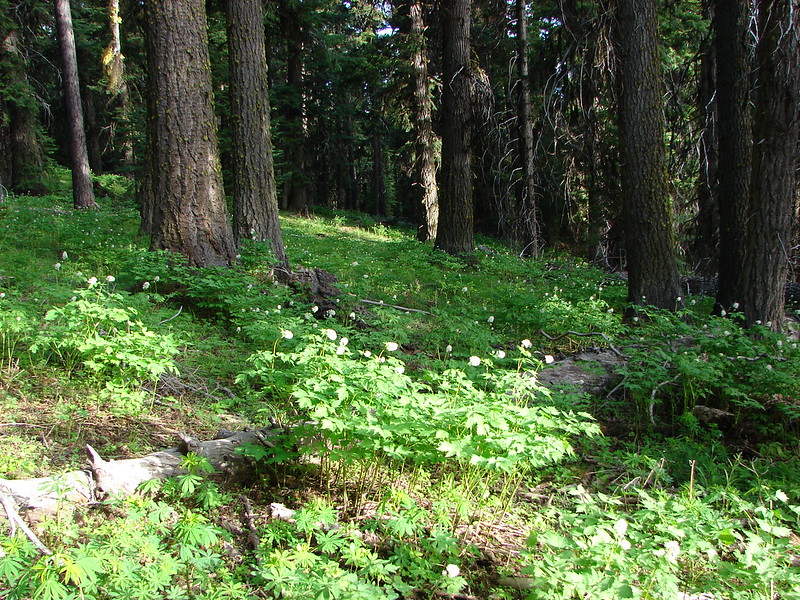
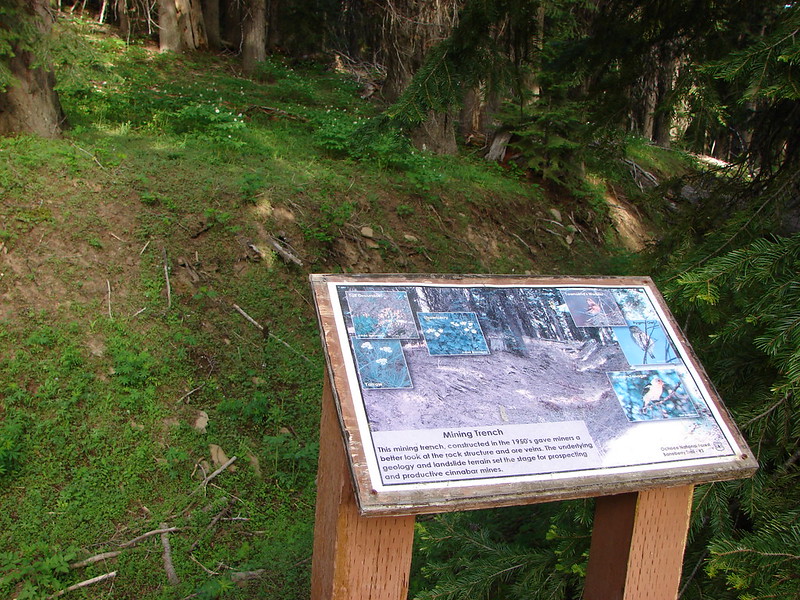
Our version (2008, 2nd edition) of 100 Hikes in Eastern Oregon didn’t give any information about this trail but a sign at the Round Mountain Trailhead made mention of extensive trail work and renaming starting in 2010. Our book did show an old road leading down to the mine though so we decided to check it out. We reached the Baneberry Trail before getting to the mine and saw that it was an interpretive nature loop. Thinking it would loop us around to the mine we turned on the trail and began the loop. It was evident why the trail was named Baneberry as the forest was full of the plant.
DSC07804
Many benches and interpretive signs were located around the trail telling of the mining activity, forest, and wildlife.
DSC07805
As we continued on the loop it became evident that we were not going to loop to the mine site but instead were heading around in the opposite direction. When we had almost completed the loop a trail shot off uphill to the left which we took thinking it might take us up to the Independent Mine Trailhead. We lost the tread in a small meadow but we could tell the trailhead was just on the other side so we followed what looked like it might be the trail through the meadow and popped out at the trailhead.
DSC07806

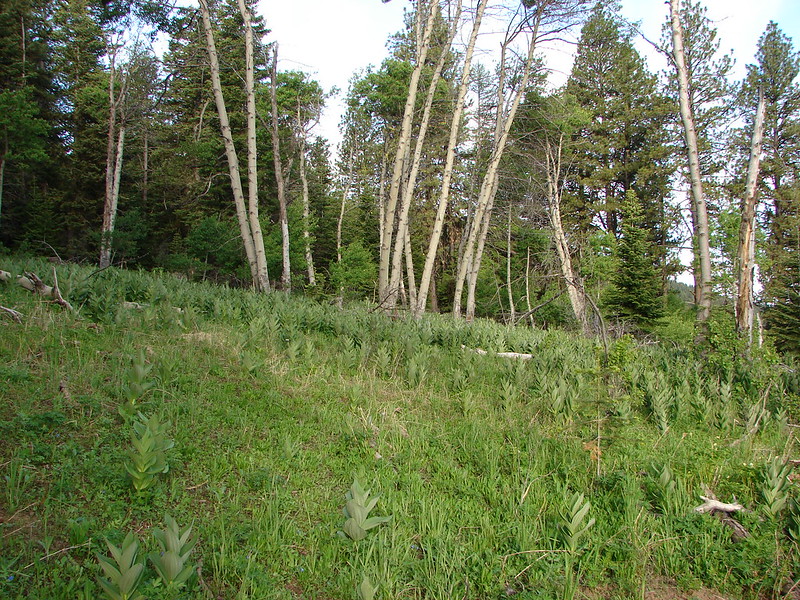
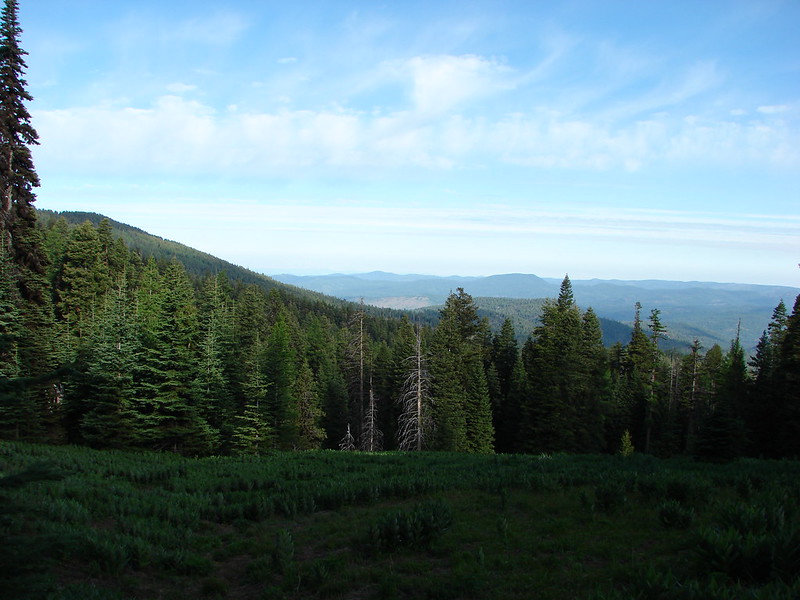
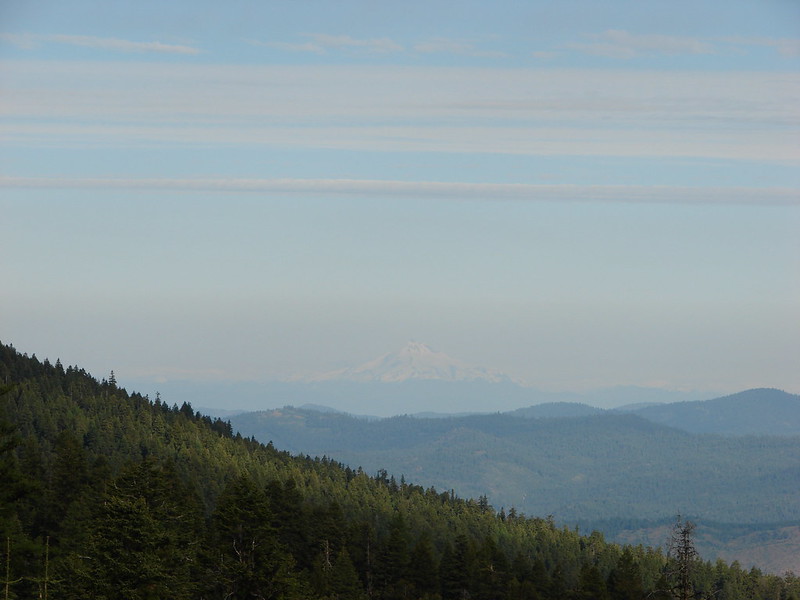
From the trailhead we had more options. Straight ahead up the shorter steeper trail 808A, right on what was now named trail 804 or left on trail 808. We chose 808 based on the suggested route in the book. The trail passed through several meadows full of hellbore with views nice views to the north with Mt. Jefferson visible on the horizon.
DSC07814
DSC07817

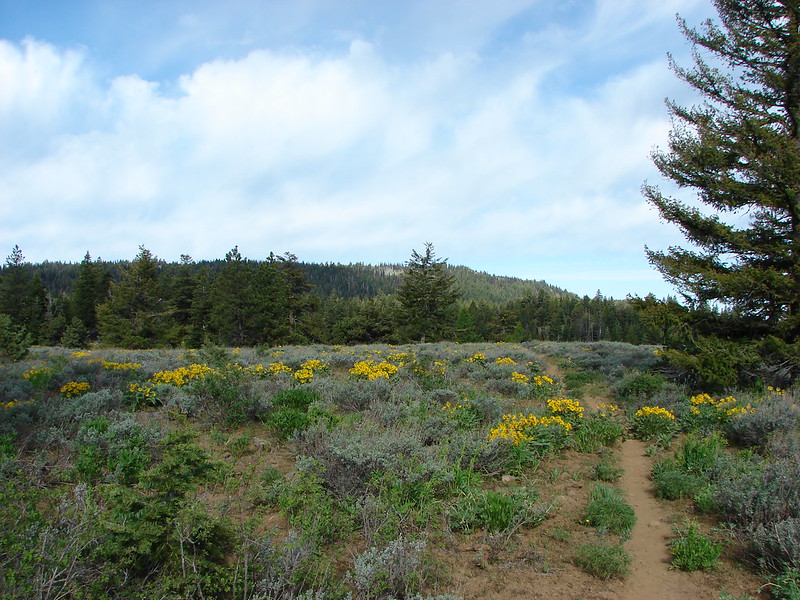
The trail then turned south and we climbed up onto the sloped plateau. From here the trail climbed through open ground covered with wildflowers and sagebrush and the occasional stand of trees.
DSC07837
Big-headed Clover
DSC07841
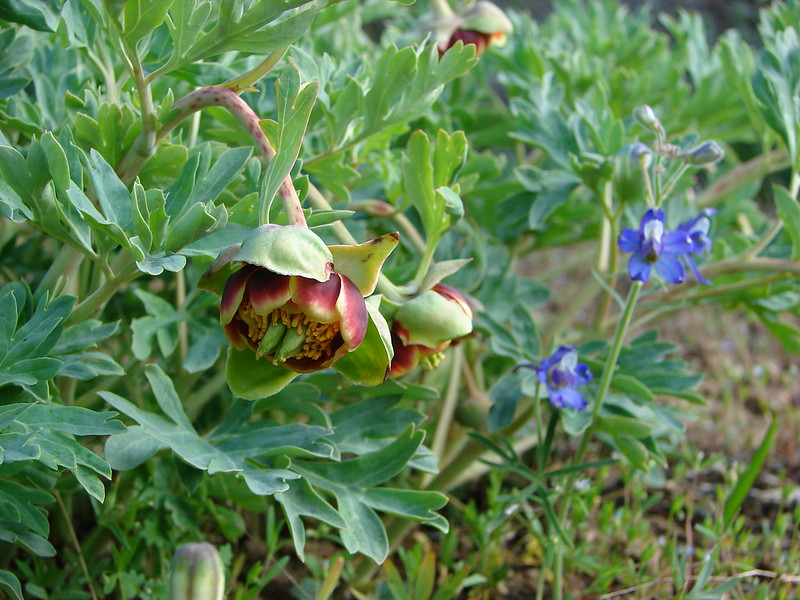
Brown’s Peony
DSC07860
Looking ahead from the lower plateau
DSC07884

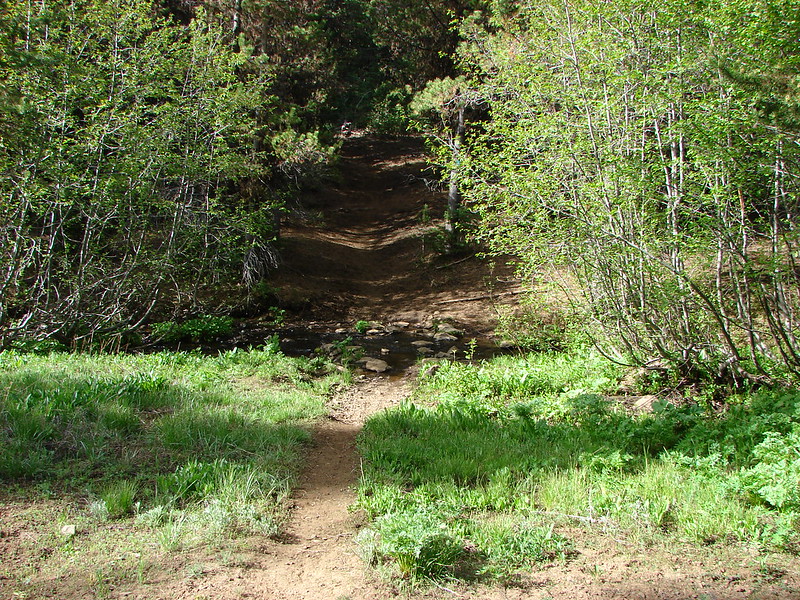
We crossed Brush Creek
DSC07920
and found some leftover of snow
DSC07940

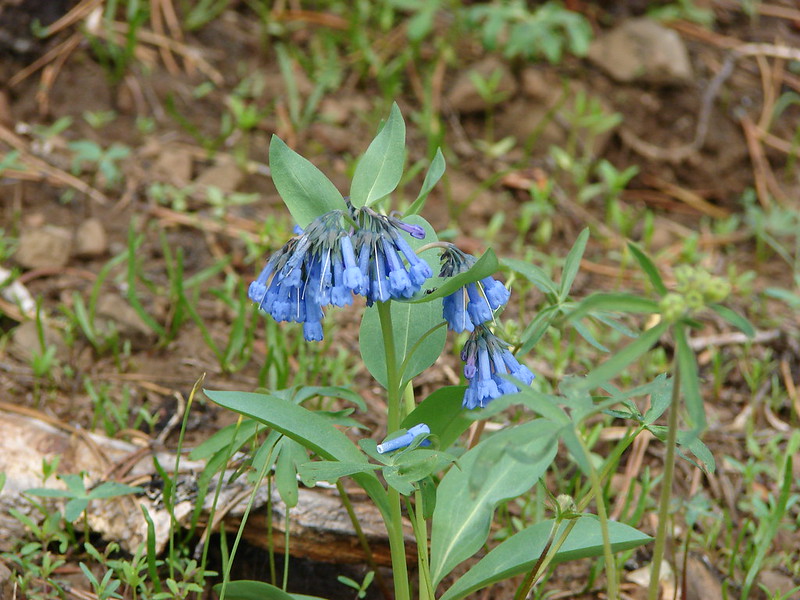
There were some small lilies in this area as well as a few shooting star and mountain bluebells.
DSC07934
DSC07937
DSC07925
DSC07948

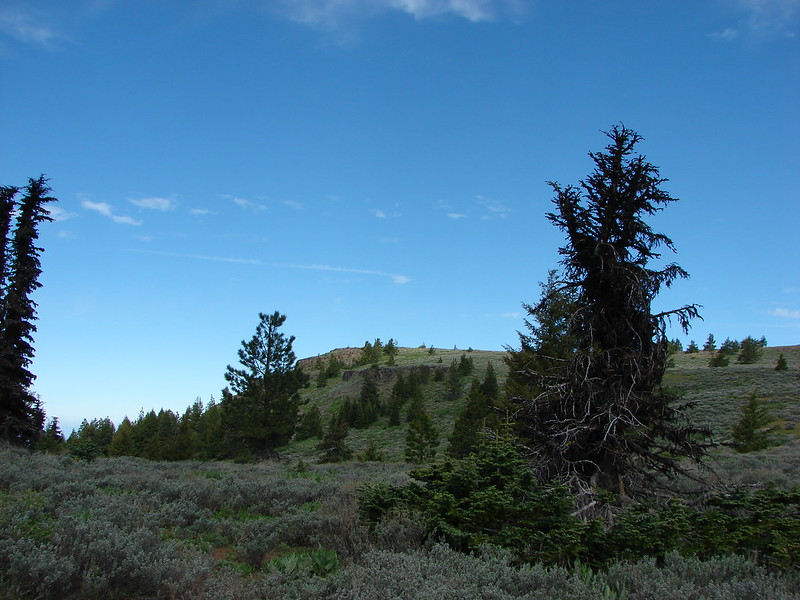
We came out of a clump of trees into another sagebrush covered meadow where we could see the summit of Lookout Mountain.
DSC07963
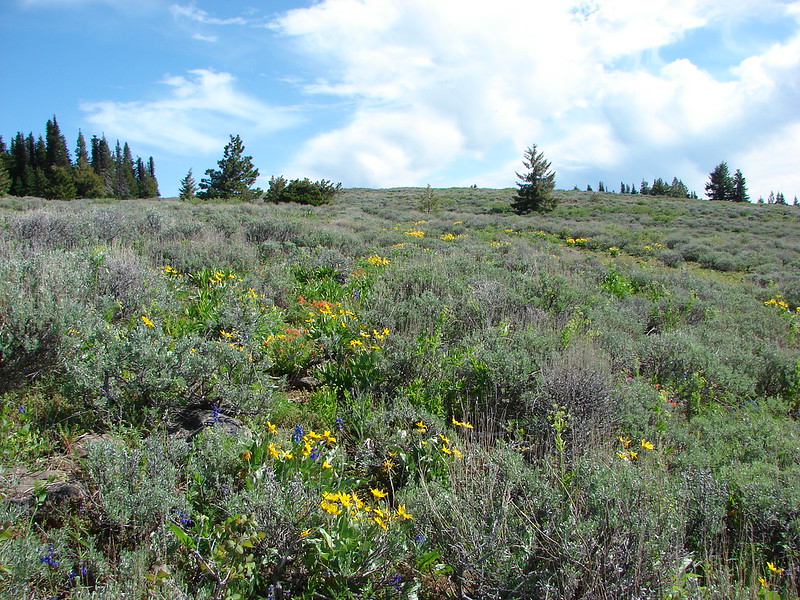
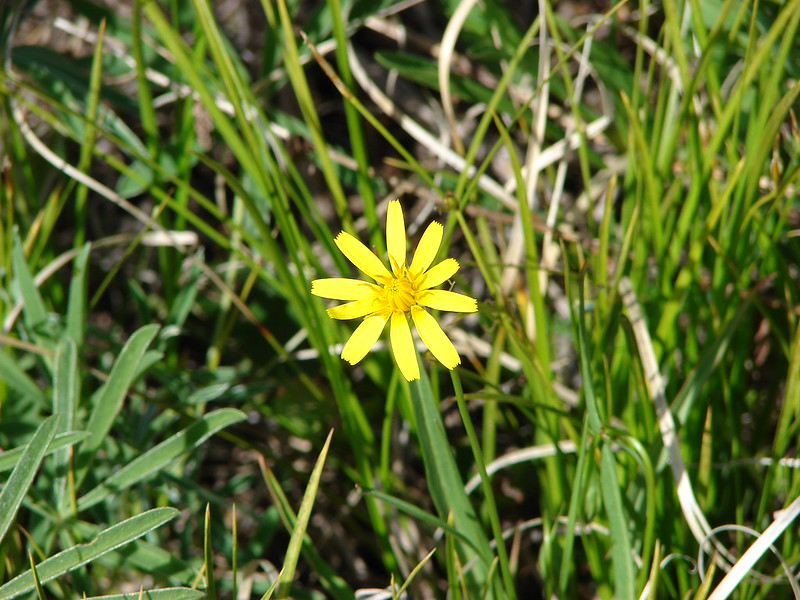
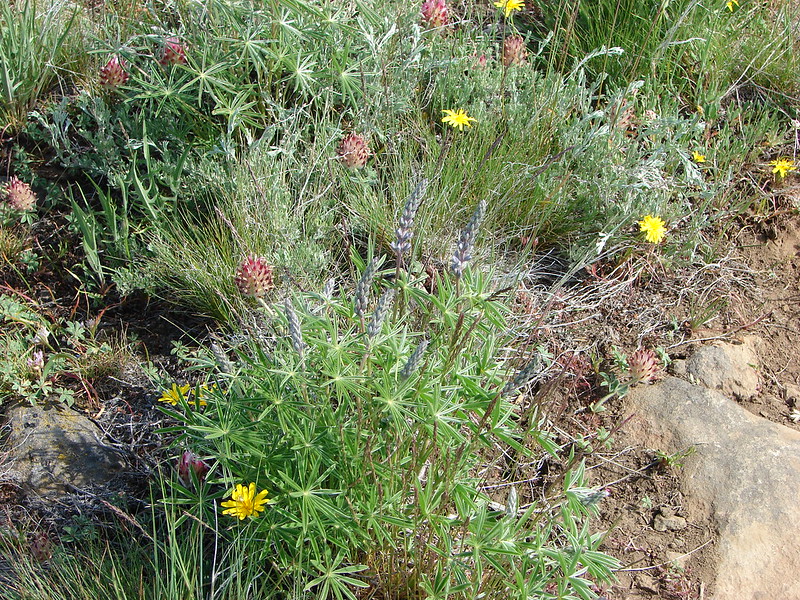
There were more flowers as we climbed through the sagebrush toward the summit. Balsamroot, paint, larkspur, and columbine dotted the landscape. There were other flowers both known and unknown to us as well.
DSC07984
Old Man’s Whiskers
DSC07996
DSC07995
The lupine was yet to bloom.
DSC08022

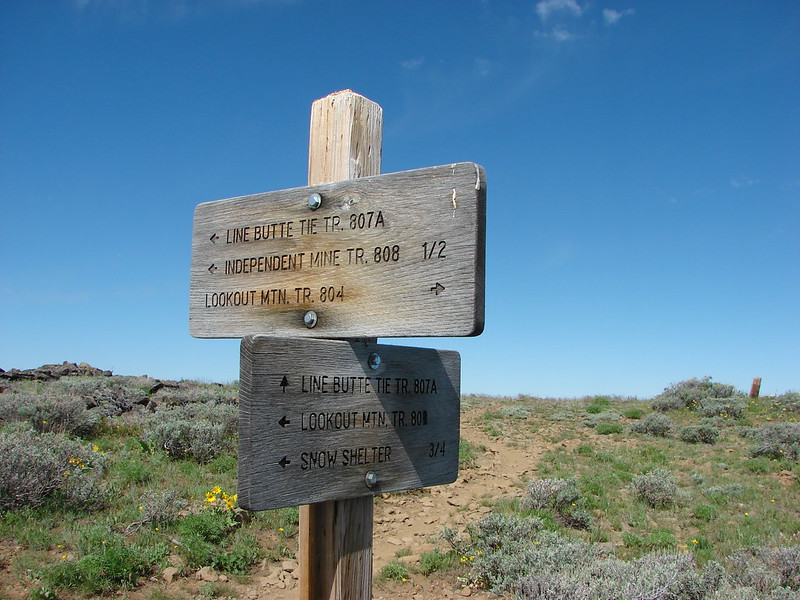
A sign stood at a trail crossroads giving directions.
DSC08024

From the summit we could see Cascade Peaks from Diamond Peak in the south to Mt. Hood in the North.
Mt. Bachelor and the Three Sisters in the distance:
DSC08023

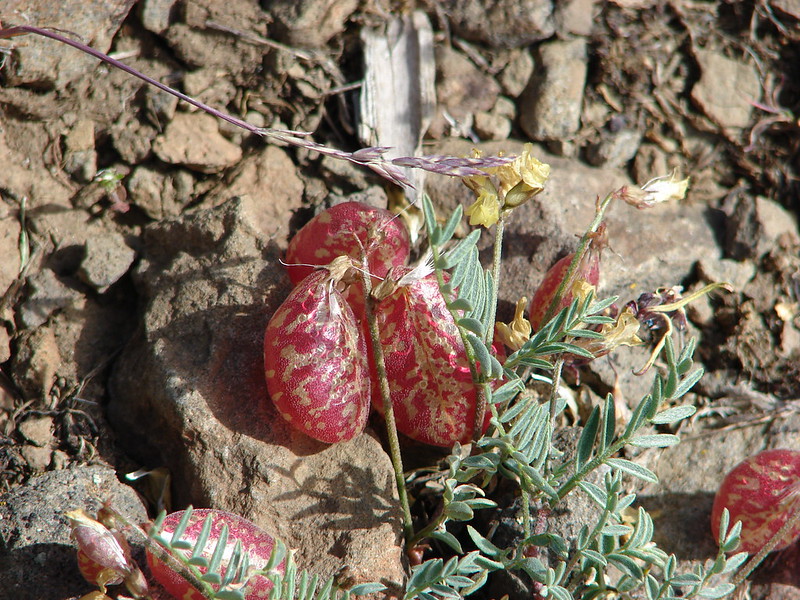
We also spotted a very strange plant on the summit which thanks to some detective work form the folks at portlandhikers we identified as balloon-pod milk-vetch.
DSC08036

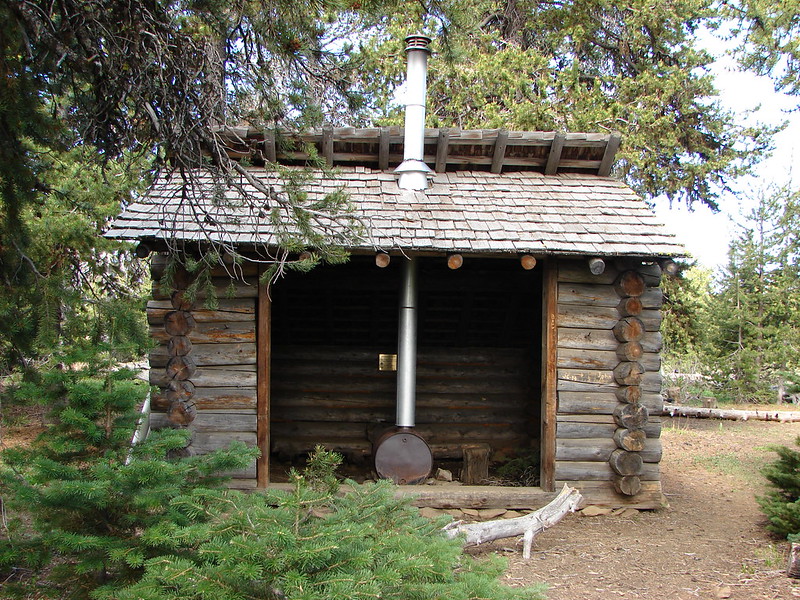
On our way down we stopped by a snow shelter built by the Oregon National Guard and U.S. Forest Service in 1989.
DSC08040
DSC08042

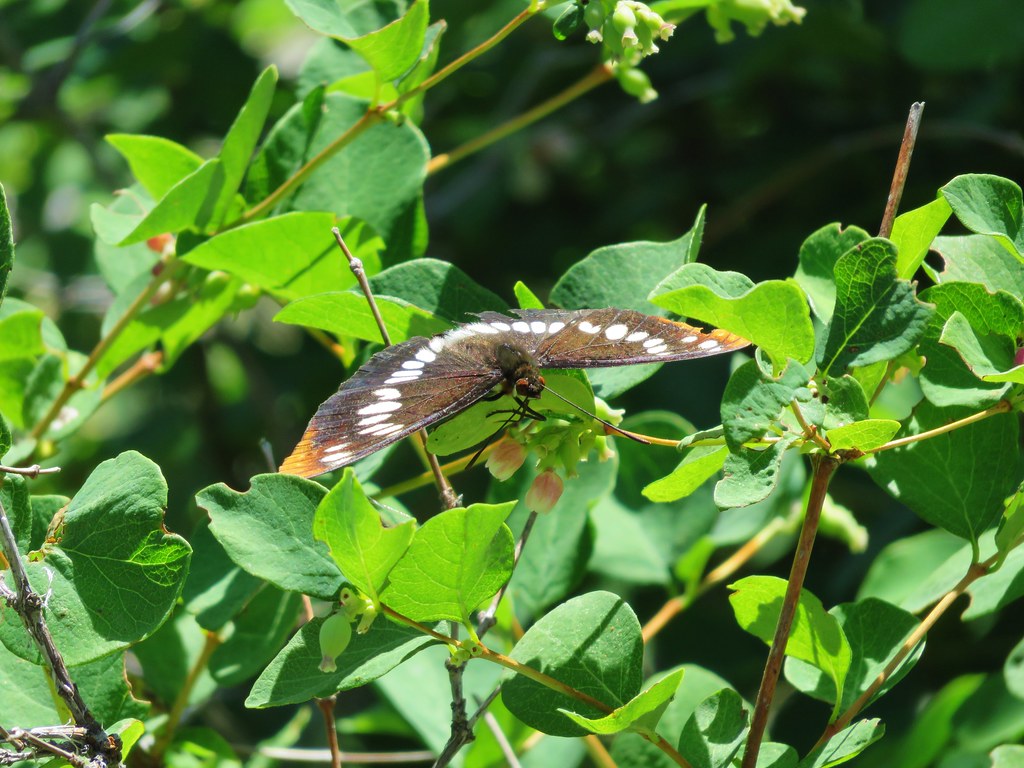
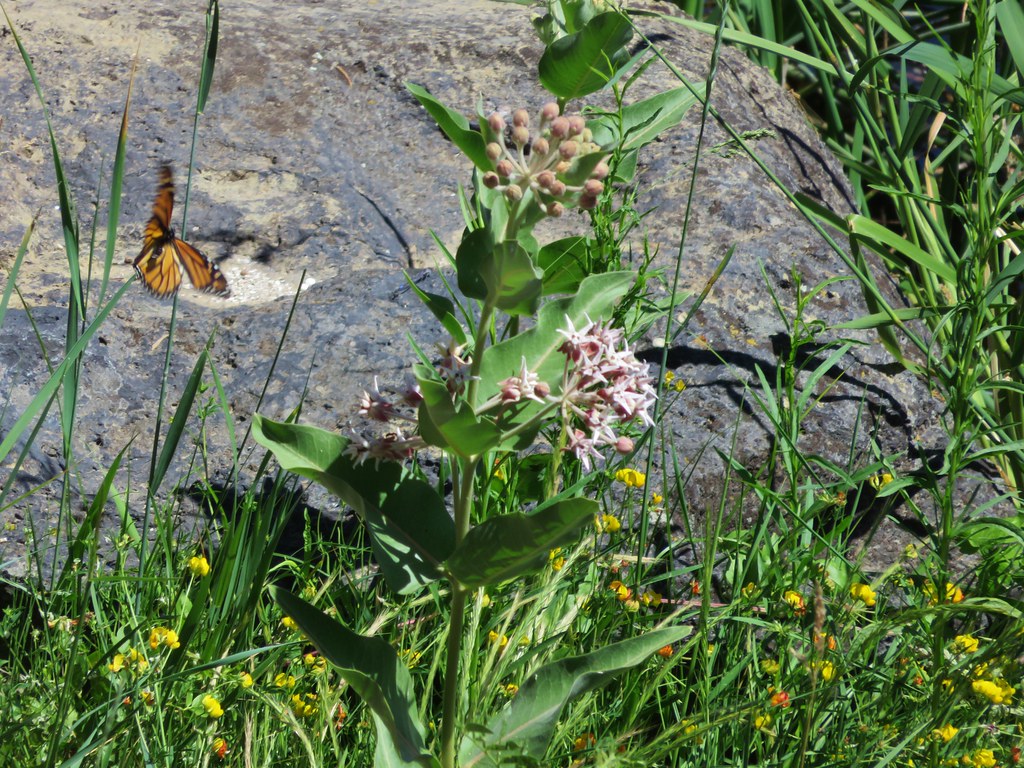
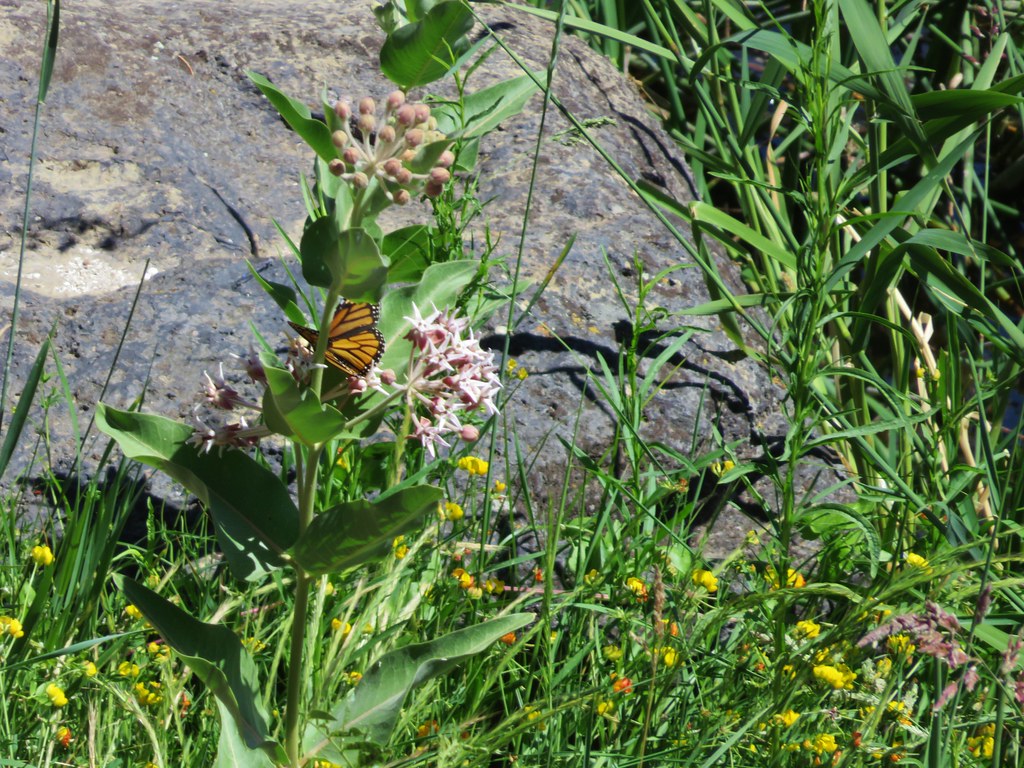
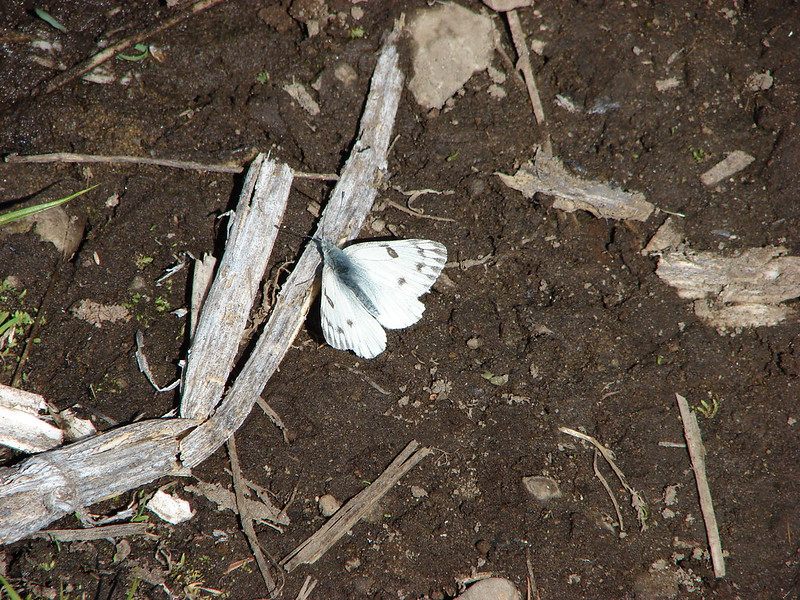
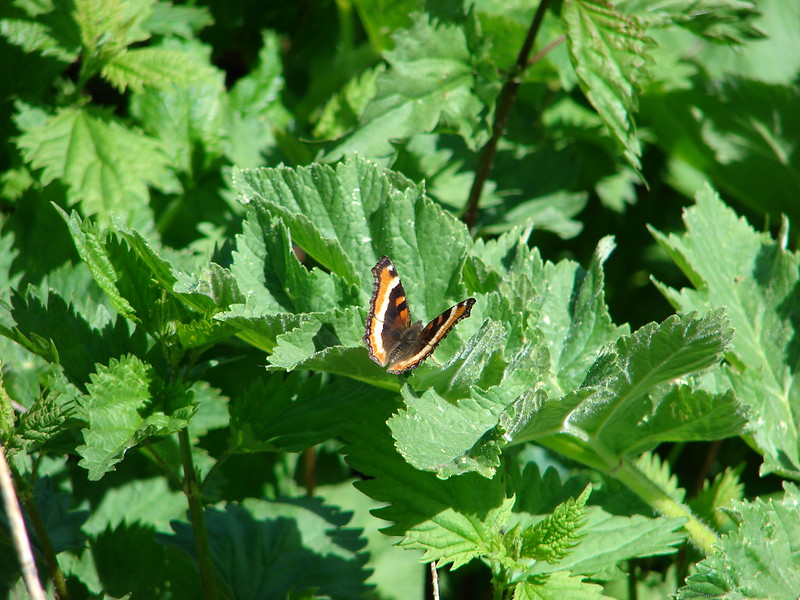
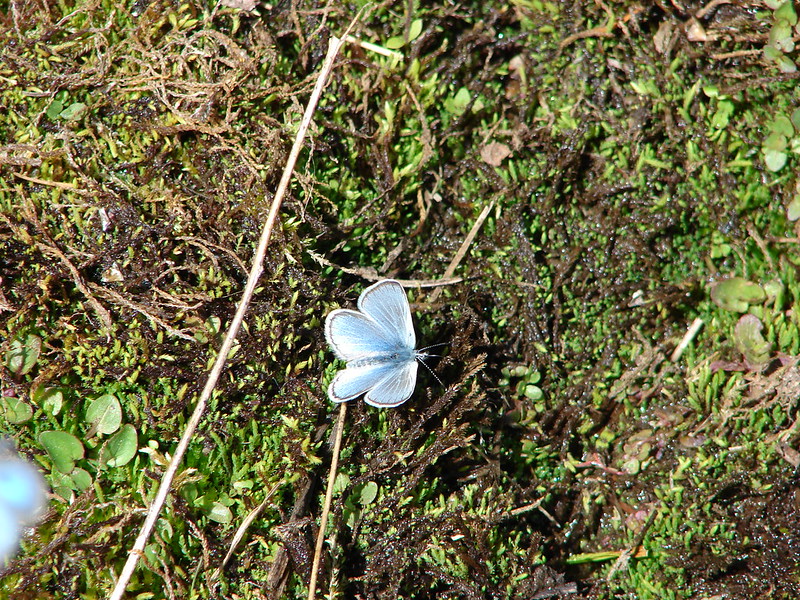
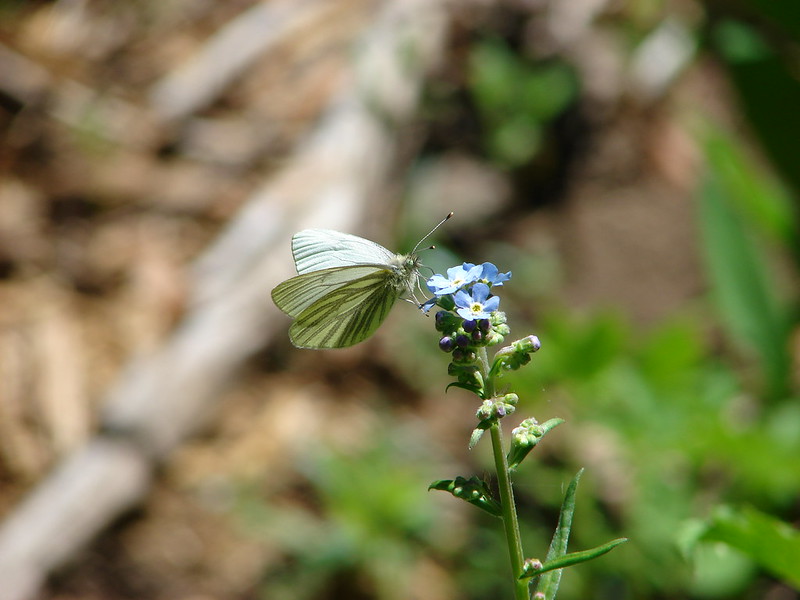
We spotted another deer on the way down and the butterflies started coming out as the day wore on.
DSC08051
DSC08067
DSC08070
DSC08074
DSC08082

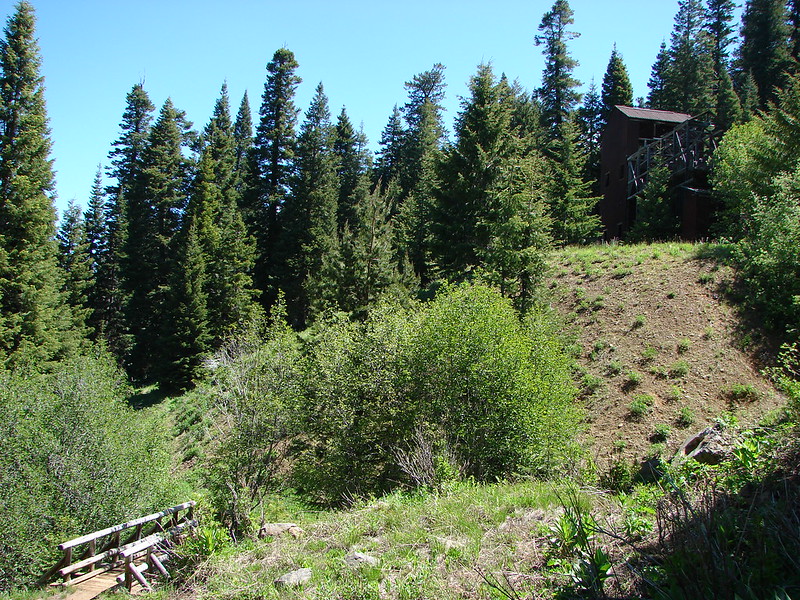
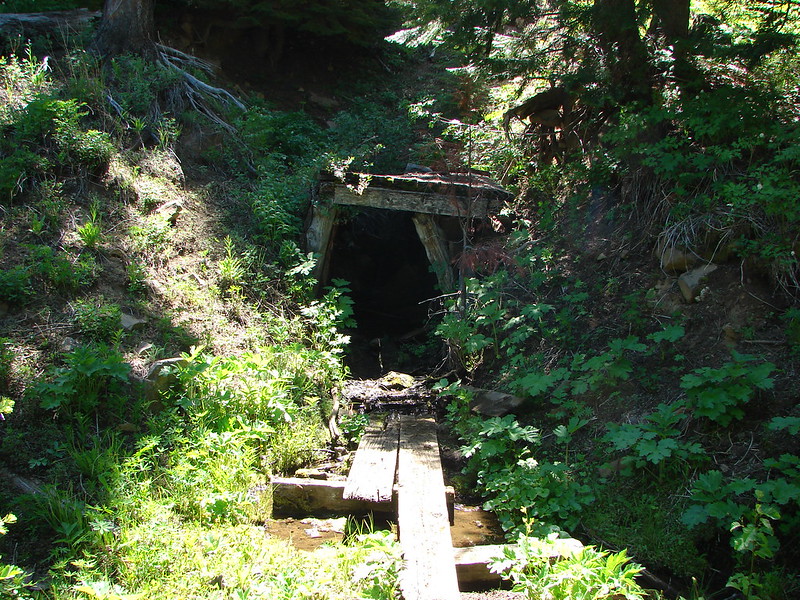
Just before reaching the Independent Mine Trailhead on trail 804 we passed a left over mining building and an abandoned mine shaft.
DSC08088
DSC08097

We saw what must have been the same doe on the way down as we saw on the way up. She came out of the exact same group of trees and we wondered if she might not have a young fawn bedded down in them. We didn’t want to disturb it if there was so we continued on back to the Round Mountain Trailhead and our car. Day one had provided a great 10.3 mile hike and we had three more days to go. Happy Trails!

flickr: https://www.flickr.com/photos/9319235@N02/sets/72157644735166968/
Facebook: https://www.facebook.com/media/set/?set=a.10204236394617228.1073741883.1448521051&type=1

Categories
Bend/Redmond Central Oregon Hiking Oregon Trip report

Black Butte

For the final hike of our vacation we decided to say farewell to the mountains for the year. Black Butte provided us the opportunity to get one last good view of the Cascades and a nice bit of elevation gain to boot. We had been checking the weather forecast as often as possible to see if it would be worth the effort and when we went to bed the night before our hike the forecast was for clear sunny skies all day long. They were wrong. lol

My first inkling that something was amiss was when I was loading the car in the morning and there were no stars visible in the sky. As we began our drive to the trailhead occasional sprinkles of rain were falling, but we were committed now and figured that it was early and maybe the clear skies were just a little late.

We arrived at the lower Black Butte Trailhead under cloudy skies but at least there was no rain. The trail set off through pine trees and a carpet of orange ferns.
198
We caught several glimpses of Black Butte on the lower portion of the trail and at least it was cloud free (it had not been on the drive earlier).

Black Butte from the lower trail

The lower portion of the trail passed through a variety of forest types. The ever changing makeup of the trees and plants was very interesting.
208

Cedars
Cedars

213

215

There would have been some mountain views on a clearer day along this portion as well but on this day all we could make out was the snow line at the base of Mt. Washington and Three Fingered Jack. We were still hoping that the cloud cover would burn off by the time we reached the summit so we continued to climb to the upper trailhead.

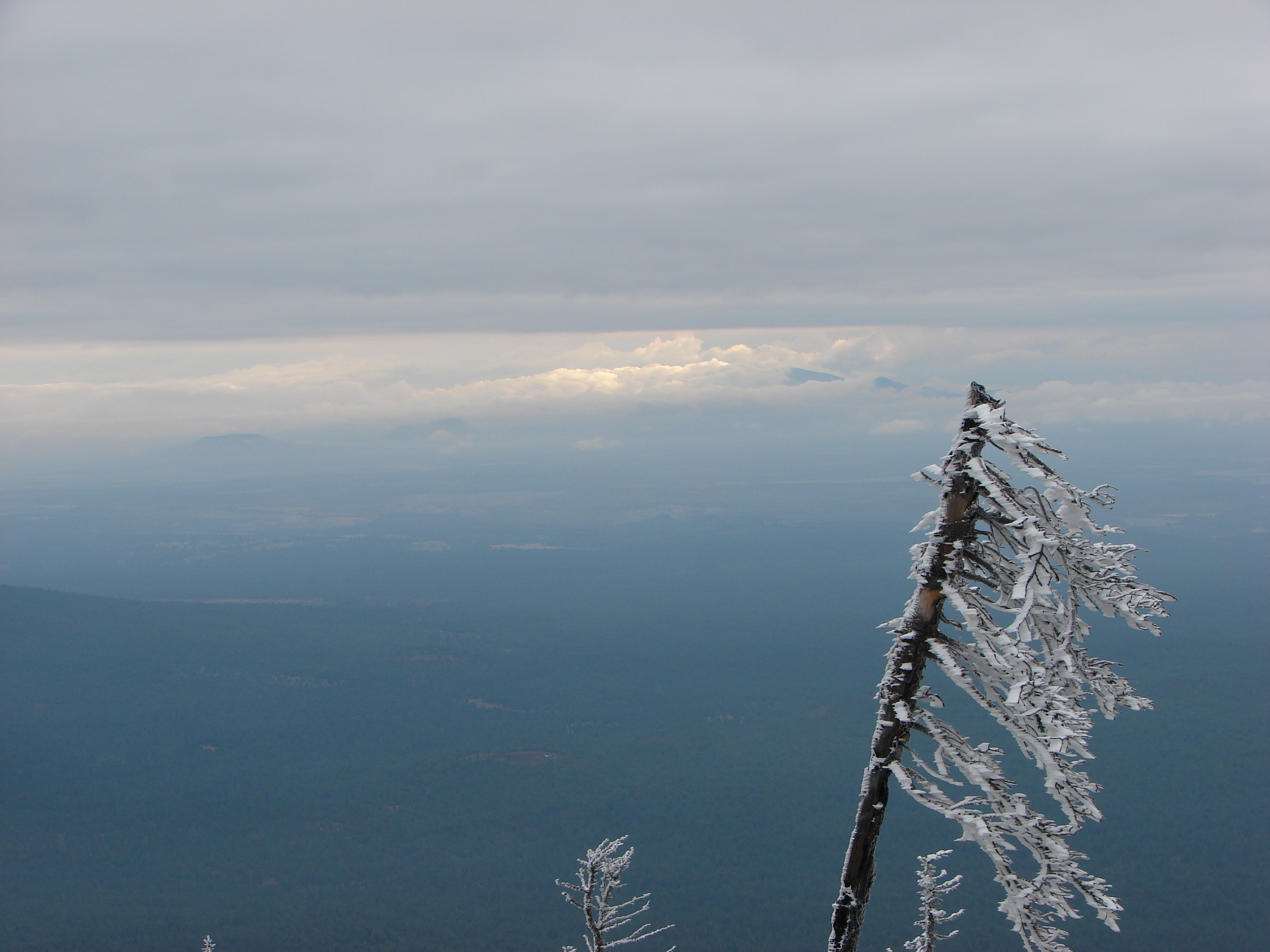
From the upper trailhead we climbed out of the forest to the more exposed upper slopes of Black Butte. Here the view was virtually unobstructed by trees but the clouds were a different story. There was a thick layer of clouds above our heads but low enough to hide the taller Cascade Peaks. Below us were smaller patches of clouds passing by and sometimes over us.

Mt. Washington
Mt. Washington
Looking down past the clouds

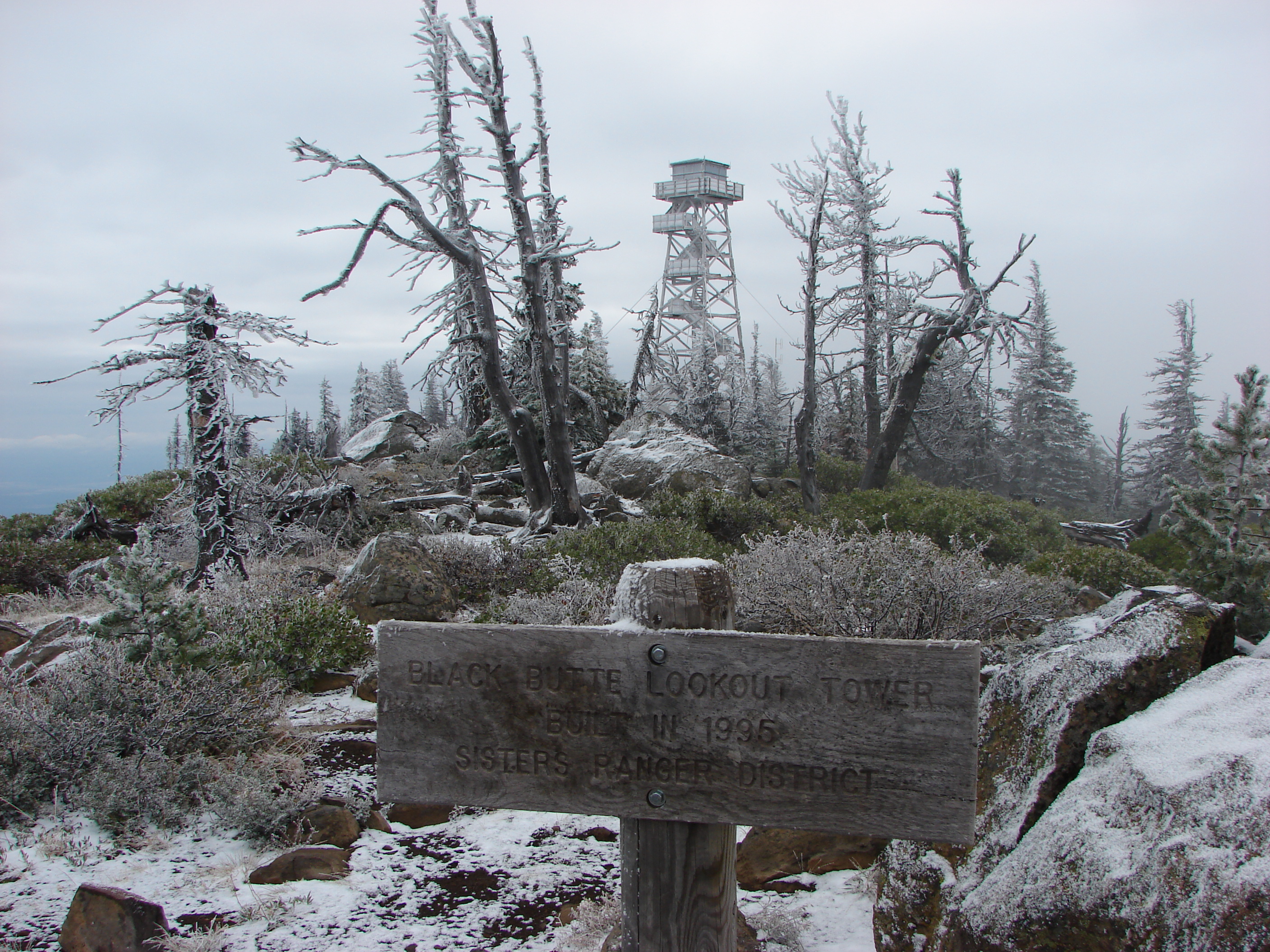
As the trail wound up and around the butte we got our first good look at the lookout tower. We also noticed that the summit appeared to be a bit snowy or at least frosty.
242

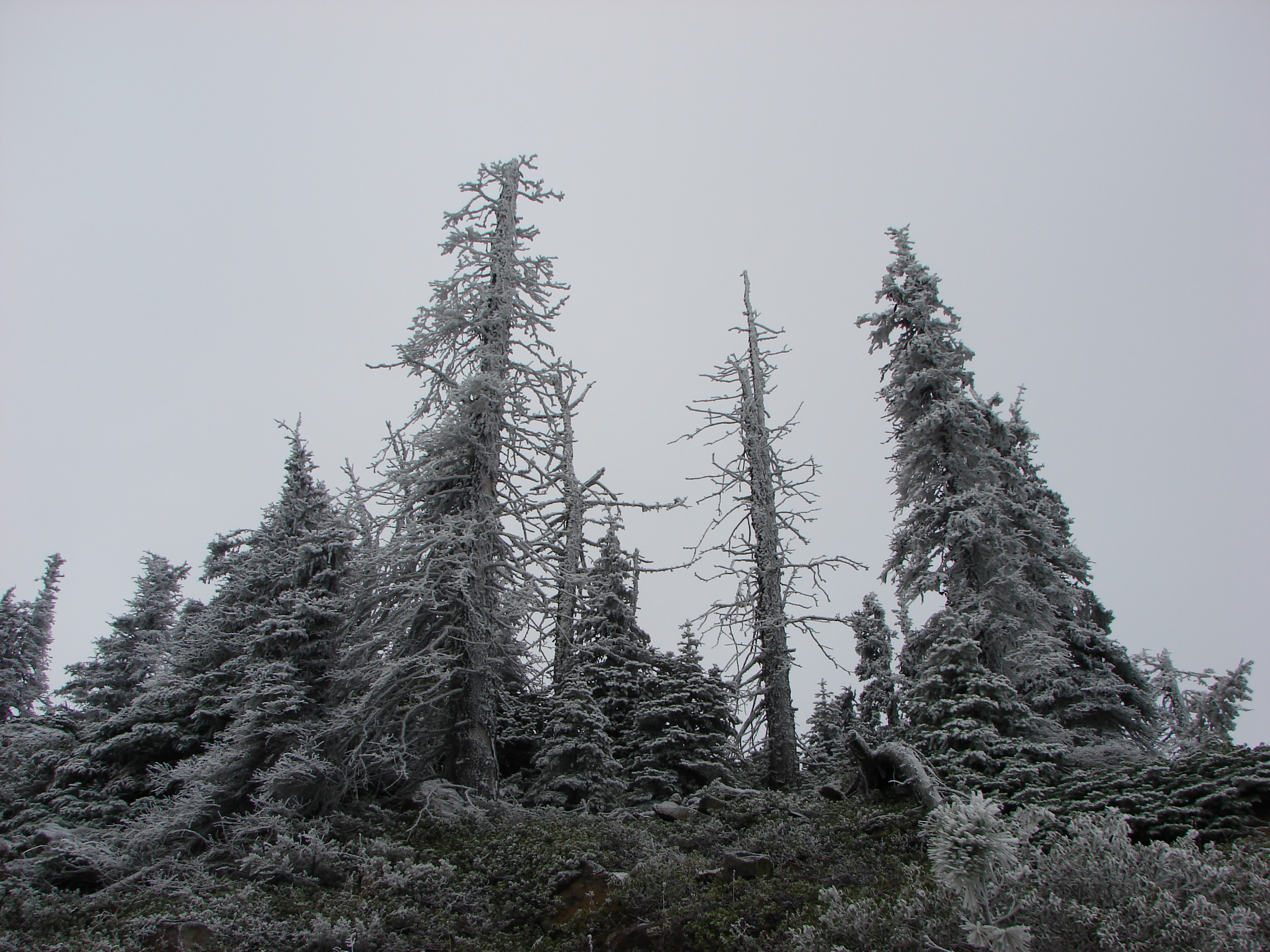
We had been overly warm as we climbed so far and had taken most of our layers off but as we entered the “white” zone we were met with much colder air. As we worked our way around the north side of the butte a slight breeze brought even colder air to us and kept this side of the butte wintry white.
264

272

283

To the north we could see the edge of the upper cloud layer as sunlight reflected off the lower clouds.
271
To the NE we spotted the top of a snowy mountain against blue sky – Mt. Hood!

Mt. Hood
Mt. Hood

Further around we found ourselves staring at the base of Mt. Jefferson. The view was strangely reminiscent of the view we’d had on Double Peaks on the opposite side of the mountain just 3 days earlier with clouds covering the upper 2/3rds of the mountain and blue sky apparently above and behind the mountain.

Mt. Jefferson hidden again

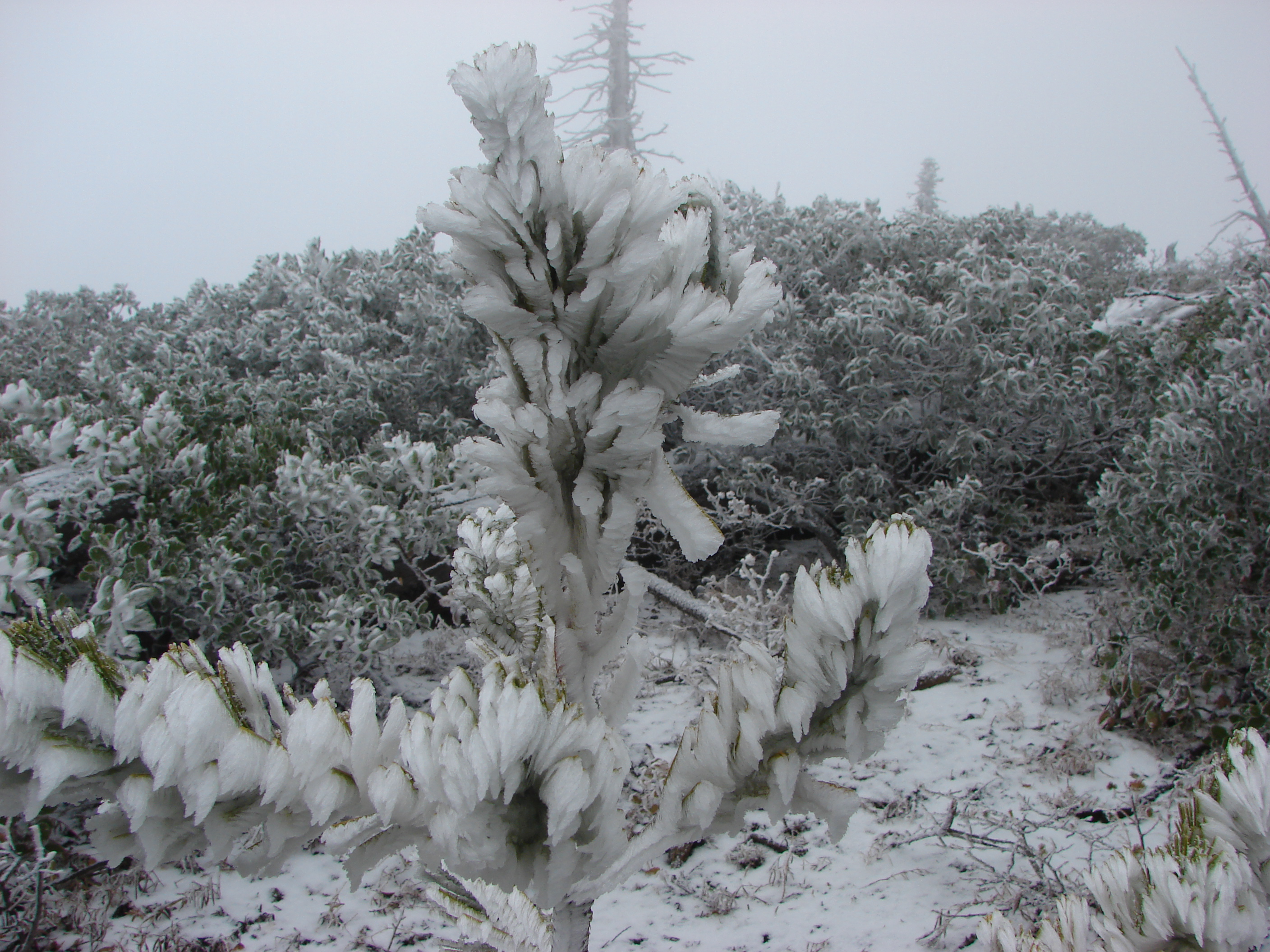
At the summit the snow/ice created some interesting scenes.
286

287

288

We explored the area on top of the butte where the lookout tower is not the only structure. A 1924 cupola that was the former lookout and a log cabin where the lookout staff lives were also present.

1924 cupola
1924 cupola

302

Signs on the summit listed the mountain peaks that would be visible on a clear day from Broken Top to the south to Mt. Adams to the north. We were mostly left with our imaginations. 🙂 Looking out over the log cabin we could see a good portion of Three Fingered Jack and some of Mt. Jefferson.

Three Fingered Jack
Three Fingered Jack

We hung around for a little over half an hour hoping that the clouds would break up but the lower clouds just kept coming up from behind us and the upper clouds didn’t seem to be budging. Just as we started to leave though we noticed the upper layer was breaking up to the north and there seemed to be some breaking up near Mt. Jefferson. We turned around and headed back toward the cabin but the low clouds were rising up just in front of us so we again headed back down. I kept looking back though hoping for something when we finally got a little break and the summit of Mt. Jefferson made an appearance over a ribbon of clouds.

Mt. Jefferson
Mt. Jefferson

As the upper clouds retreated south we suddenly had blue sky above us and the frosty coating quickly melted from the trees and plants.
As we came around to the south side of the butte Mt. Washington was a bit more visible.

Mt. Washington
Mt. Washington


The upper layer of clouds retreating south

Just as quickly as the blue sky had appeared one of the larger low clouds enveloped the side of Black Butte and we were once again without a view.

When we got down past the upper trailhead we finally got back out of the cloud and could once again see out to where the mountains would be. Even though the upper layer of clouds had mostly retreated the lower clouds were quickly replacing it and many of them clung to the taller peaks. We did manage to get a good view of several small peaks and buttes though.

Belknap Crater and Little Belknap
Black Crater
Black Crater
Hayrick Butte & Hoodoo

We even got a brief glimpse of North Sisters summit.
363

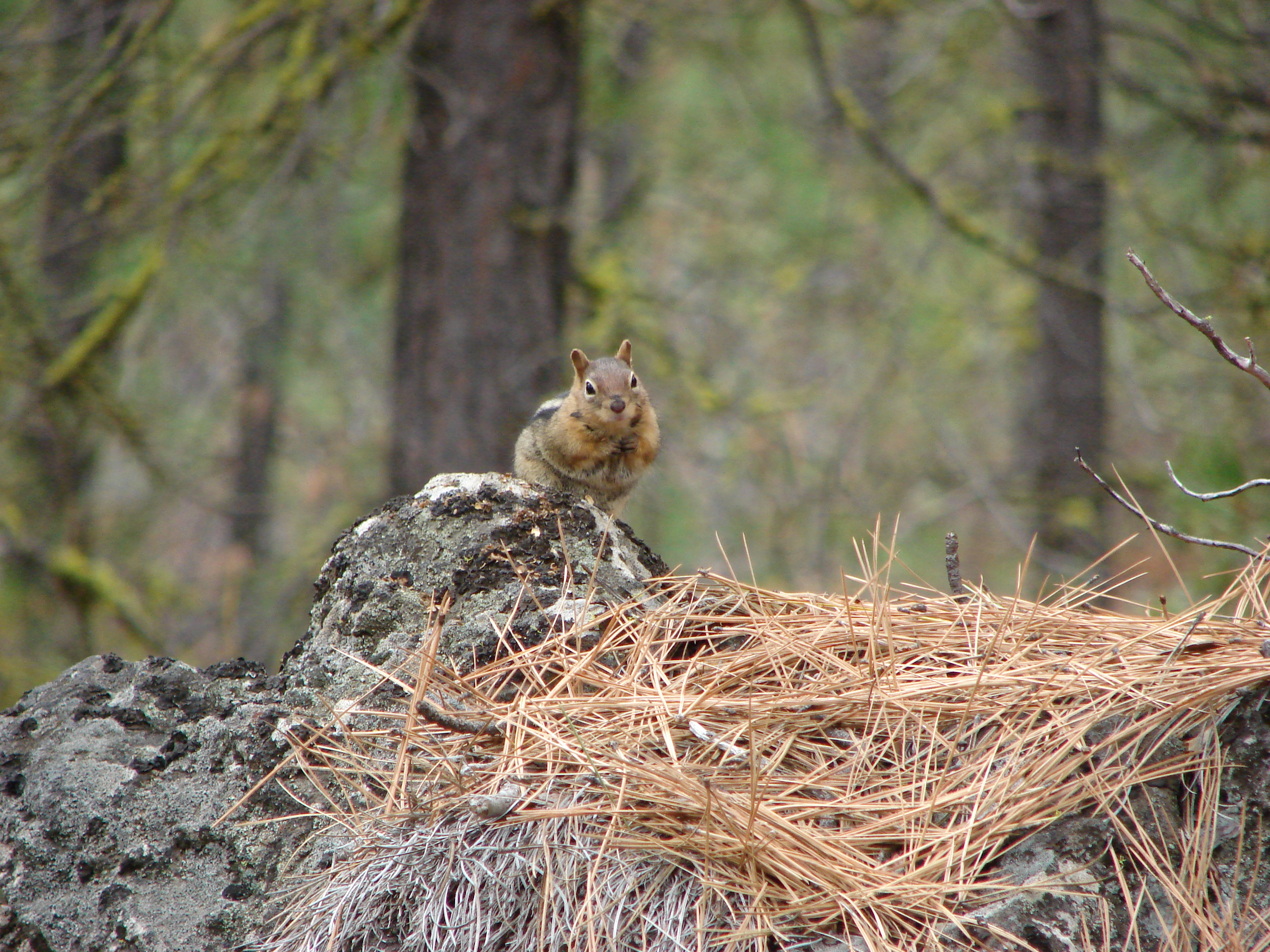
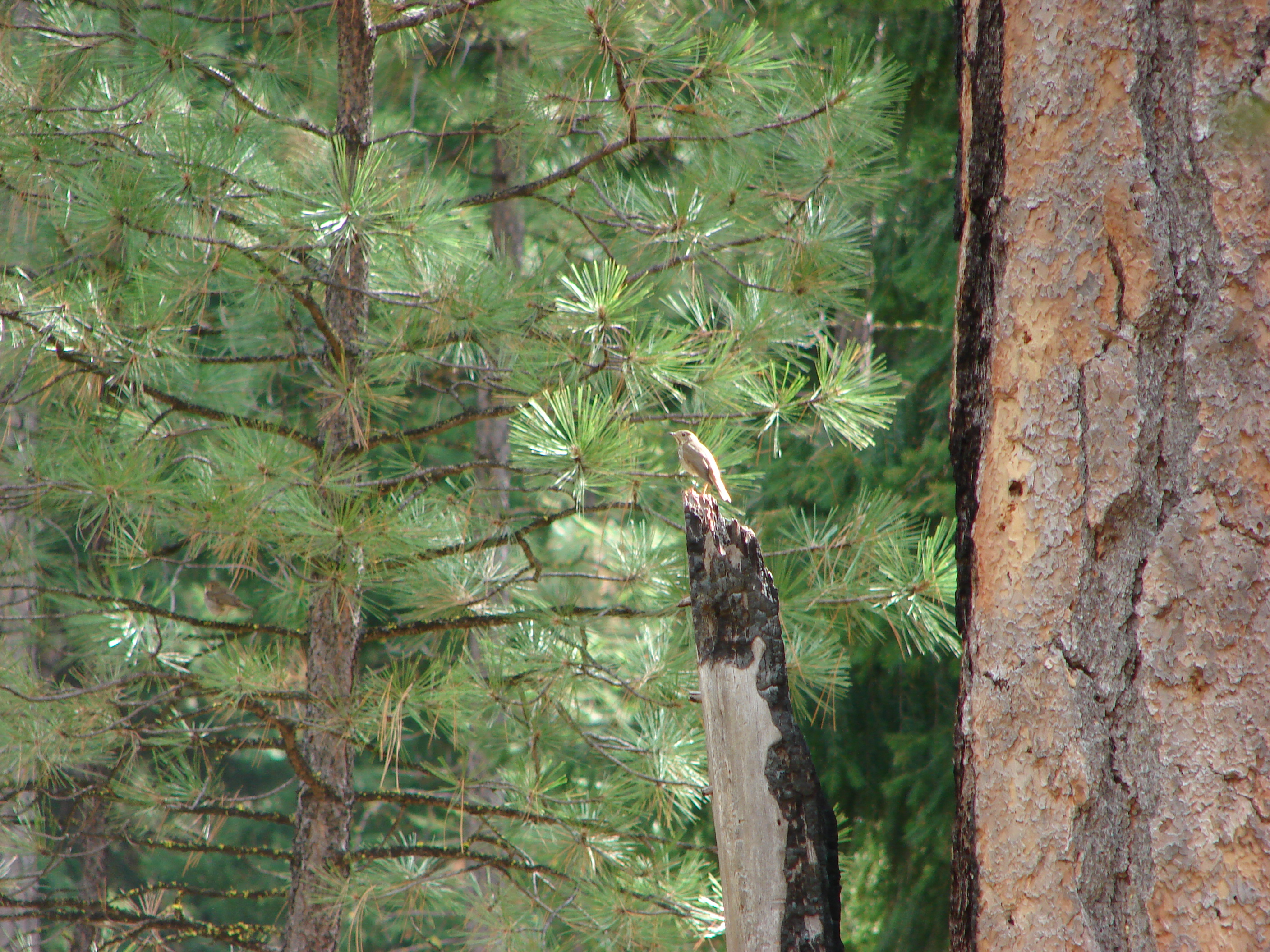
This time on the lower trail we spotted a decent amount of wildlife including chipmunks, douglas squirrels, golden-mantled squirrels, and various birds. Some were more willing to have their pictures taken than others.
351

368

369

376

We were supposed to meet my parents at the trailhead at 2:00 so they could drop off Dominique (who had chosen not to accompany us on the hike). A series of mishaps led to a bit of an adventure but while we were waiting a group of deer came by the parking area.
384

We eventually met up with my parents and reclaimed Nique and headed home. With that the bulk of our 2013 hikes were behind us. We’ll hopefully get out a couple more times this year, but our activities have now shifted to running for the next several months. It’s the beginning of our race season and we are all starting to train for a 15 mile trail run in a couple of months. Happy Trails.

Facebook photos:https://www.facebook.com/deryl.yunck/media_set?set=a.10202390873000341.1073741863.1448521051&type=1
Flickr: http://www.flickr.com/photos/9319235@N02/sets/72157636523907403/

Categories
Bend/Redmond Central Oregon Hiking Oregon Trip report

Central Deschutes River

We headed over to Central Oregon for the last part of our vacation to visit our families and get a couple more hikes in on the east side of the Cascades. Originally we had planned on combining two hikes in one day for our first hike. Tipsoo Peak in the Mt. Thielsen Wilderness followed by Mount Scott on the rim of Crater Lake. We had to abandon those plans for good when the Government Shutdown closed Crater Lake so we turned to a standby hike along the Deschutes River between Trout Creek Campground and Mecca Flats.

With a trail head at each end of this 7.6 mile segment it allowed us to set up a shuttle with Deryl’s parents where they would start at Mecca Flats with Nique while we started at the Trout Creek Campground. The idea was we would do the whole trail both ways while the went from their car to ours, then we would drive them back to Mecca Flats to pick up their vehicle. With the plan set Heather and I headed to Trout Creek and set off along the Deschutes through the rivers canyon.
007

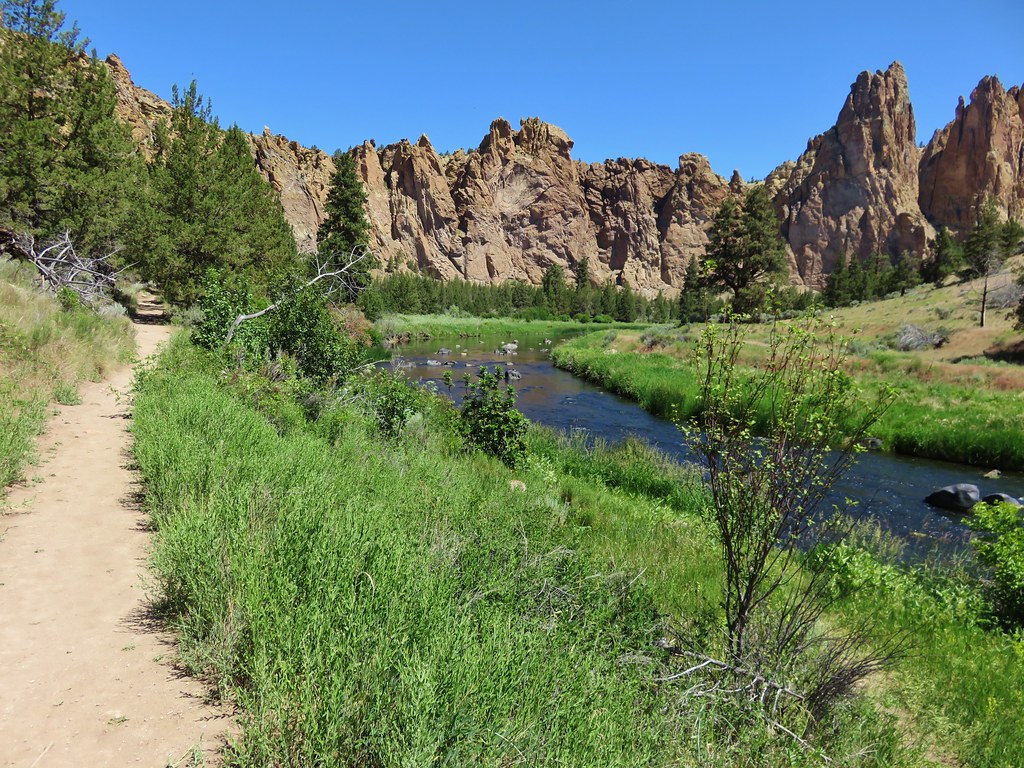
The trail follows an old railroad grade along the river surrounded by the scenic canyon walls. The river cut a colorful ribbon through the sagebrush desert. We spotted a heron standing on the river bank apparently watching for small fish.

Heron
Heron
Splashes of color in the sagebrush

We spotted quite a few birds along the way as well as some deer making their way up the canyon side.

Pair of ducks on the river

060

Deer near the top of the canyon
Kingfisher near Mecca Flats
Finch
Finch
Hidden heron on the rocks
Merganser
Merganser

There was also still a number of flowers in bloom along the river.
085

094

099

102

104

166

193

We met Dominique and my parents on the trail earlier than we had expected. They were moving a lot faster than they thought they would be. They gave us some info on what to expect on the trail ahead including to be watching for Scorpion Rock on the Warm Springs Reservation side of the river and a waterfall on our side of the river near a small creek.

Waterfall from an irrigation pipe way in the distance
Grassy creekside
Grassy creekside
Scorpion Rock
Scorpion Rock

Heather and I eventually made it to Mecca Flats where I accused my parents of hitching a boat ride with some of the many fishermen we’d seen. It was the only explanation of how they managed to make it that far that fast ;). We turned around at Mecca Flats and headed back toward our car and my family. Along the way we noticed a scenic red tree growing in the midst of a rock slide and several rock climbers high on the canyon cliffs.

The view from Mecca Flats
Red tree
Red tree
Rock climbers on the canyon cliffs

It was a nice relaxing hike and a good time of year for it since the area is known for rattlesnakes in warmer weather. It was also nice to do a hike in the sagebrush landscape of Central Oregon. Ironically enough we were almost due east of our previous hike on the Red Lake Trail in the Mt. Hood National Forest and less than 50 miles as the crow flies. What a difference location and elevation makes. Happy Trails!

Facebook photos: https://www.facebook.com/deryl.yunck/media_set?set=a.10202388684345626.1073741862.1448521051&type=1
Flickr: http://www.flickr.com/photos/9319235@N02/sets/72157636480343143/

Categories
Bend/Redmond Central Oregon Hiking Oregon Trip report

Dillon & Benham Falls

Thunderbolts and lightning, very, very frightening. We were driving up the Cascade Lakes Highway through an impressive thunderstorm attempting to reach the Green Lakes trail head at Fall Creek when we came to our senses. The second round of hail and the increasing display of lighting prompted a retreat back down toward the city of Bend, OR. We had known this was a possibility the day before when the lighting and thunder had started so we invoked our backup plan and headed south of Bend to the Benham Falls picnic area on the Deschutes River near the Lava Lands Visitor Center.

We parked on the east side of the river at the picnic area and waited for a rain shower to pass and some sunlight before setting out. We promptly crossed the river on a footbridge and remained on the west side for the remainder of the hike. The river was calm and peaceful above Benham Falls as we walked along watching the sun rise through the clouds to the east while the thunder and lighting continued to the west.
013

After approximately .7 miles the river became louder as it approached Benham Falls. The falls are not a classic waterfall but rather a series of turbulent rapids as the Deschutes flows through a lava canyon.
019
We headed up to the parking area here to make use of the facilities and had a deer bolt away as we came around a corner. Then a forest service vehicle pulled up and we spoke briefly with the driver who confirmed we made the right choice when we turned around. He said it was a mess up in the Cascades with many small lightning fires having been spotted. Indeed we heard (and saw) the helicopters and planes throughout the day flying over on their way assist with the fires.

The river calmed again after Benham Falls passing forest on the west bank and a lava flow on the east. The sun made a couple of brief appearances, once creating a faint rainbow in front of us, and then disappeared. We were heading toward the Slough Day Use area and the hike was quickly turning into a wildlife spotting bonanza. We saw douglas squirrels, golden mantled squirrels, chipmunks, and scores of birds. Heather also spotted a paper wasp nest near the trail which was not the kind of wildlife I was interested in seeing.

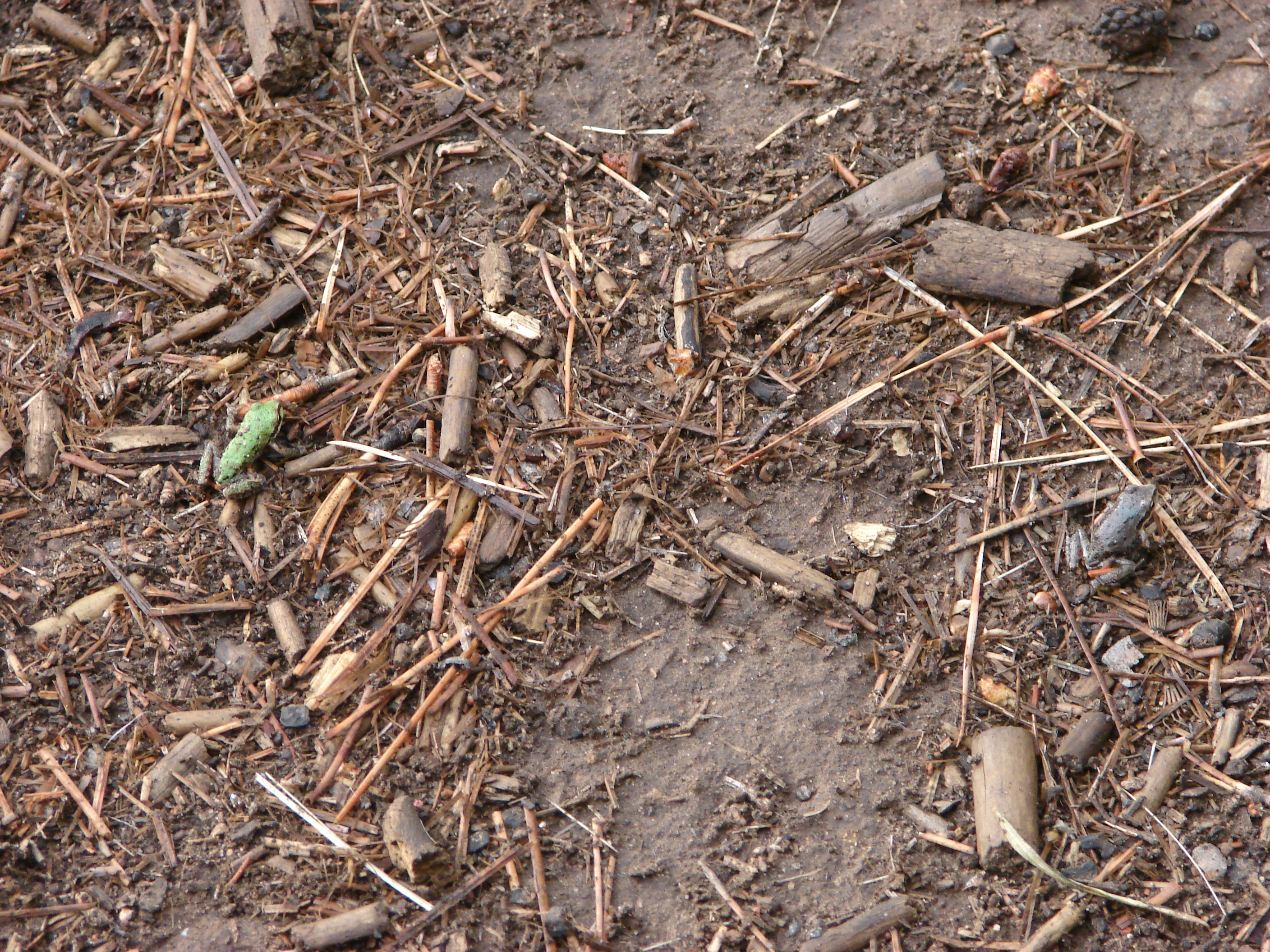
When we reached a small slough pond we started noticing little Pacific Tree Frogs hopping along the trail.

A pair of Pacific Tree Frogs

The further we walked the more frogs we spotted and soon our progress was slowed as we tip-toed along trying to avoid all the little frogs.

We made it to the day use area and went down to the river for a closer look when I noticed something staring at us from across the water. At first we thought it was another deer, but then I spotted a second one and we noticed that their heads were darker than that of a deer. We broke out the binoculars and while we were watching a couple more came into view and we confirmed that they were indeed elk. The first we have seen while actually hiking :). They headed on down the river and out of sight so we continued on as well. We didn’t have to go far when we spotted them again on the opposite bank. There was now close to 20 elk including a small bull and several calves.
109
The trail then swung around a 10 acre slough lake where the number of frogs somehow increased. There were now dozens of frogs hopping in all directions. There were also several families of ducks who left the reeds and headed for the center of the water as we approached.
133

Next we passed through a short forested section of the trail and came to the edge of a large meadow. Looking across the meadow we could see Mt. Bachelor beneath the clouds in the distance. Here we were greeted by mosquitoes which quickly became a nuisance. The thunder and lightning had not quit and as we hurried across the meadow a heavy rain began to fall. It was both a blessing and a curse as the rain helped keep the mosquitoes at bay, but drenched us in the process.
161

Shortly after leaving the meadow we reached the parking area for Dillon Falls. Like Benham Falls, Dillon Falls was a series of rapids in a lava canyon. We spotted an Osprey clenching a fish that it had snatched from the river as we descended down toward the calmer waters below the falls.
177
A series of log steps brought us down into the canyon and to the river’s bank where we passed through some different types of vegetation including a section of trail lined with ferns.

Over the next three miles we passed Aspen (where whitewater rafters put in), Big Eddy Rapids (where the rafters scream), and Lava Island (where they get out). Near Big Eddy there were several Osprey across the river including one perched on its nest.
207
A smaller bird was circling the river, occasionally diving into the water hunting for something. Just past the Lava Island Day Use area we came to our turn around point a small rock shelter used long ago by hunters.
231

The thunderstorms had ended and the trail became increasingly crowded on our way back, but the wildlife remained abundant. The birds and golden mantled squirrels kept us entertained as we returned to the car. We had started the morning expecting mountains and lakes, but instead found a river and wildlife which proved to be a more than adequate replacement.
Happy Trails 🙂
256

Facebook pictures: https://www.facebook.com/media/set/?set=a.10201735043005001.1073741847.1448521051&type=1
Flickr: http://www.flickr.com/photos/9319235@N02/sets/72157634888763551/

Categories
Central Oregon Fort Rock Hiking Oregon Trip report

Hager Mountain

Sometimes things don’t turn out the way you’d like and that was the case with our visit to Hager Mountain. Hager Mountain is a 7195′ cinder cone located in the SE portion of Central Oregon. It’s an area we had yet to explore and were looking forward to a chance to climb up to the summit and survey the area. On a clear day mountain peaks from Mt. Shasta in California to Mt. Hood can be seen. This was not to be one of those days. As we drove southeast on highway 31 toward Silver Lake the sky began to fill with the blue haze of smoke. By the time we reached Fort Rock the Sun, which had just risen, was only a red circle through the haze to the east. We arrived at the trail head in the Fremont National Forest and prepared to start our trek. The faint smell of smoke reminded us of campfires as we set off. Lighting strikes had set dozens of fires in this portion of the State just days before.

The trail set off in a forest of Ponderosa Pine and some Juniper. It looked like there should be deer everywhere but the only one we saw was on the drive there. A few flowers were left over from what appeared to have been a good bloom probably in late June or early July.
009
Our first glimpse of the lookout tower gave us an indication of what the view up top was going to be like.
005

Despite knowing we wouldn’t be seeing the views we had hoped for the quiet trail was very nice. It was well maintained and we had it all to ourselves. After a mile and a half we reached Hager Spring. It had an old log fence around it but was dry now. From the spring the trail began climbing a little faster but never too steeply. We passed through various meadows that were full of balsam root and paintbrush but little color remained from their blooms. We were too late for them but the meadows were still pleasant and we had the company of many birds the entire hike.
041
The trail crested and passed briefly through a forested area filled with fireweed and then switched back up through another set of meadows. Suddenly we came around a bend and there was the lookout.
073
Heather and I were both surprised to have already reached the summit because the last time we’d seen the lookout it seemed so far away.

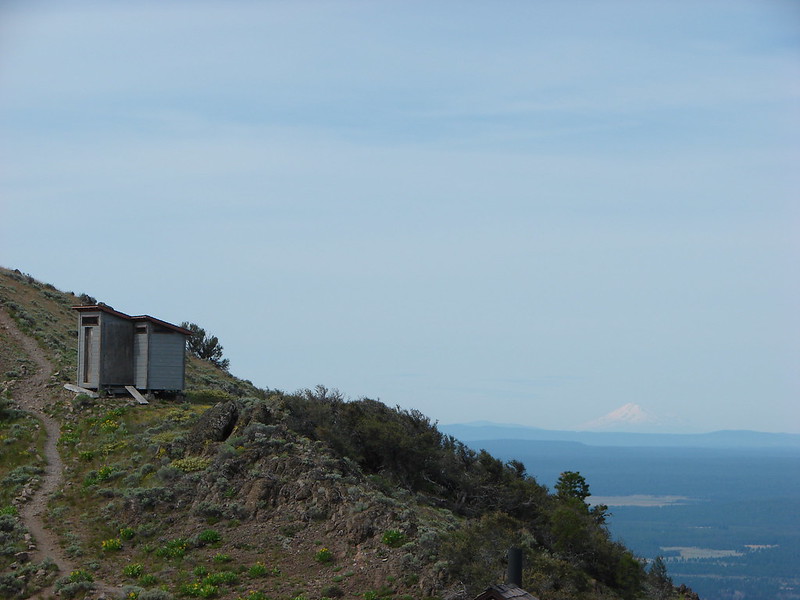
In addition to the lookout tower there was an outhouse and a picnic table. After exploring around the summit a bit we made use of the picnic table to have a snack.
074
It was only 8:45am and we had arrived before the lookout staffer who pulled up shortly after we’d sat down. We at least had some blue sky above us but the smoke surrounded the mountain on all sides leaving us with no views at all. Still it was a nice place to sit and relax a bit before starting our descent.

A plaque on the summit told us about green-tinged paintbrush which is native to Southern Oregon and has a very limited range. Apparently 95% of the world’s population is found in the Fremont National Forest. We kept our eyes open on the way down and spotted a few of the plants near the summit.
087

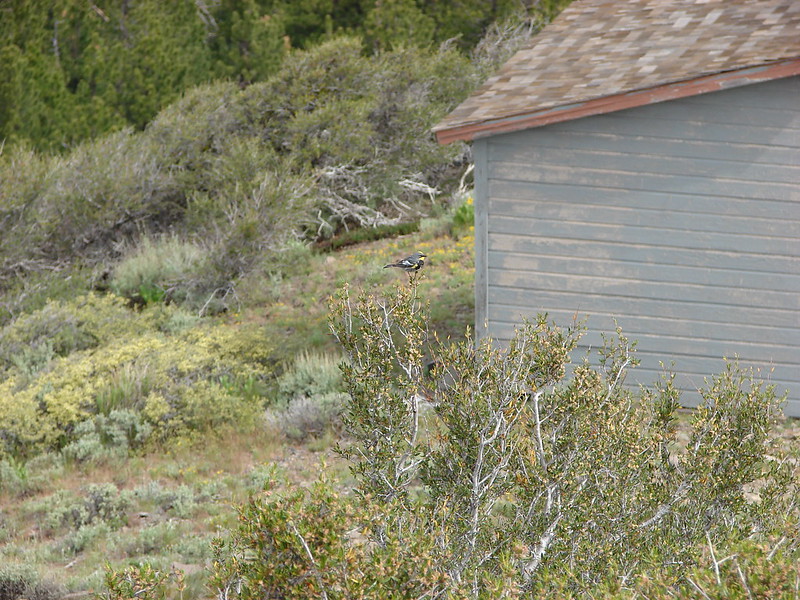
We spotted a lot of wildlife on the way down. Various birds, butterflies, and other insects were all over keeping the hike entertaining. I spent awhile attempting to get a picture of a western tanager who wouldn’t sit still but I finally managed to get a shot of him as he took flight.
111

Despite the lack of views and being too late for the really good flowers the hike was surprisingly enjoyable. We decided that we would definitely be coming back again earlier in the year to try again. What little we had seen told us it would be more than worth the trip. When we got back to our car a series of forest service vehicles and a water tanker truck went by heading for one of the fires. Happy Trails.

Facebook photos: https://www.facebook.com/deryl.yunck/media_set?set=a.10201712921331973.1073741846.1448521051&type=3
Flickr: http://www.flickr.com/photos/9319235@N02/sets/72157634860236191/with/9401767961/

Categories
Central Oregon Hiking Ochoco Mountains Oregon Trip report

Steins Pillar

In our last post I said we had completed our final planned hike with less than 1000ft or elevation gain for the year. I chose the word “planned” because I knew I needed to leave open the possibility of an unplanned hike. It only took a week for that to prove wise. We had a hike free weekend but wound up with the opportunity to go on a hike in Central Oregon with my parents and assist them with trying out their new Garmin GPS unit. We had planned on meeting them last weekend after our hike in Detroit, but a deer had different ideas and they were unable to make it.

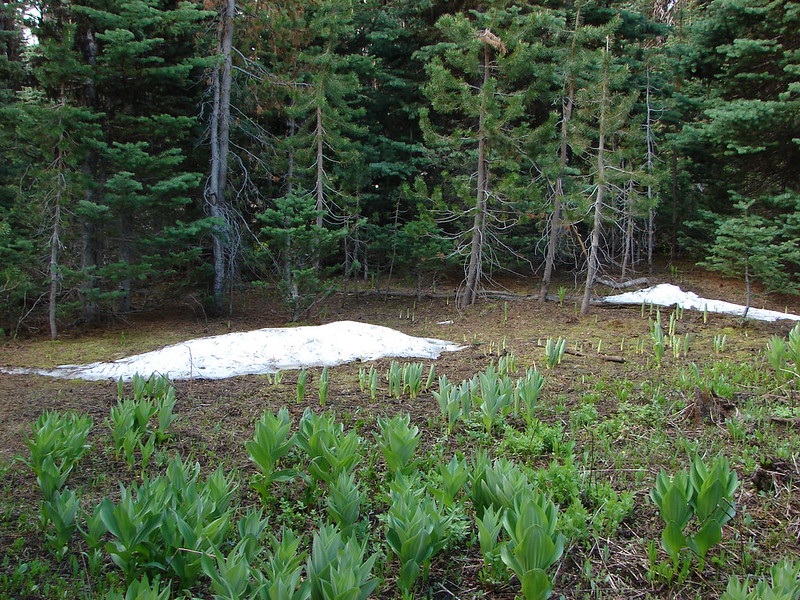
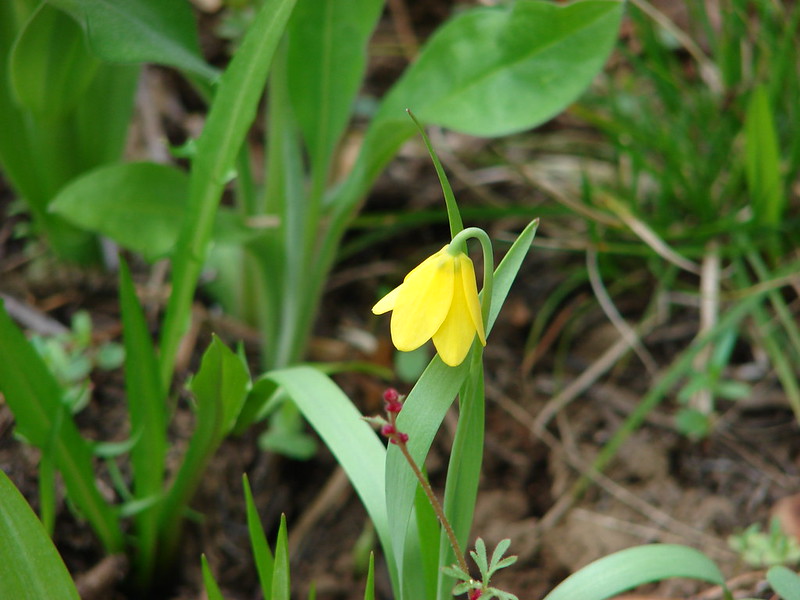
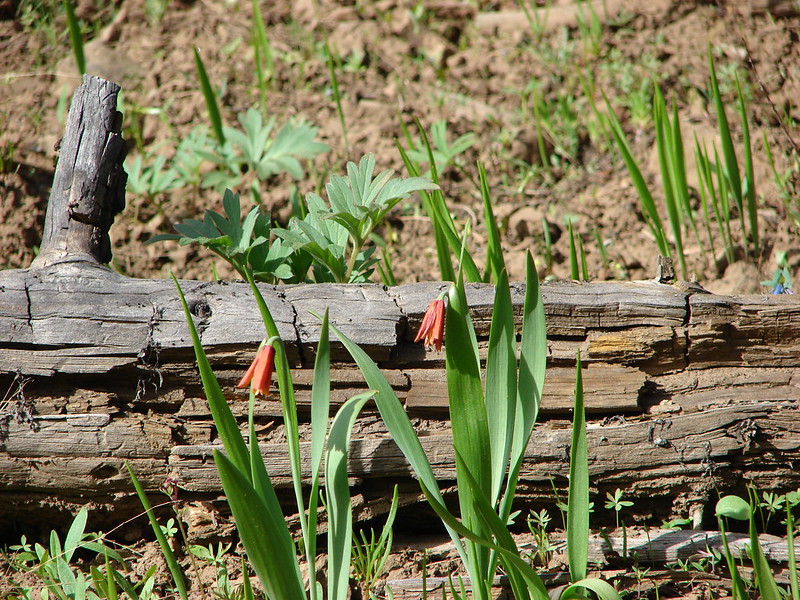
This was our first chance to take a hike together and we decided on hiking to Steins Pillar in the Ochoco National Forest east of Prineville Oregon. This was a new trail to all of us, but we had seen the pillar last year when we hiked to the Twin Pillars in the Mill Creek Wilderness. The trail clocks in at 4 miles round trip with just under 700ft of elevation gain. The trail head is near a small meadow surrounding a little spring. A number of bright yellow flowers as well as large solomonseal and wild strawberries were present. While we were getting ready to begin the hike I spotted a fritillary which was the first of that type of flower we’ve encountered.

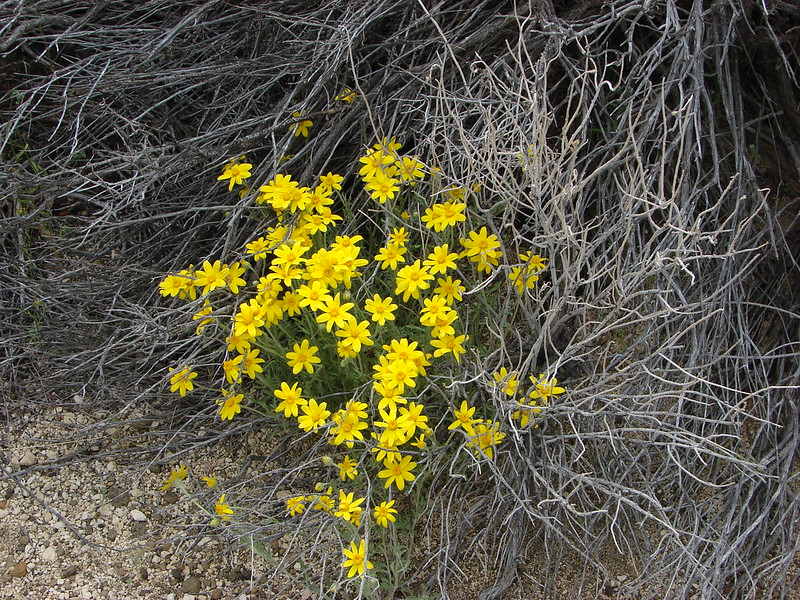
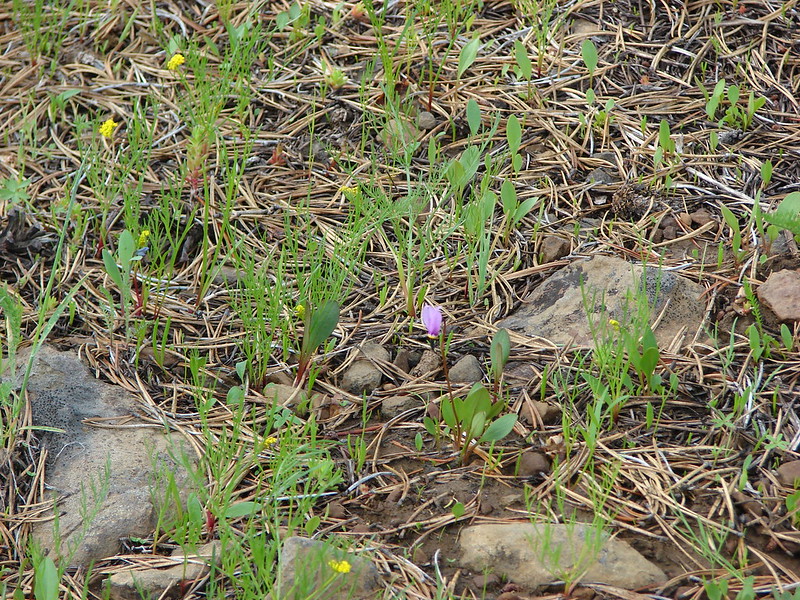
We were all pleasantly surprised by the diversity that the trail had to offer. The forest seemed to shift constantly from firs to ponderosa pine to juniper and back. The collection of wildflowers was even more diverse with white death camas, yellow balsamroot and arnica, purple larkspur and phlox, and various shades of paintbrush.
153
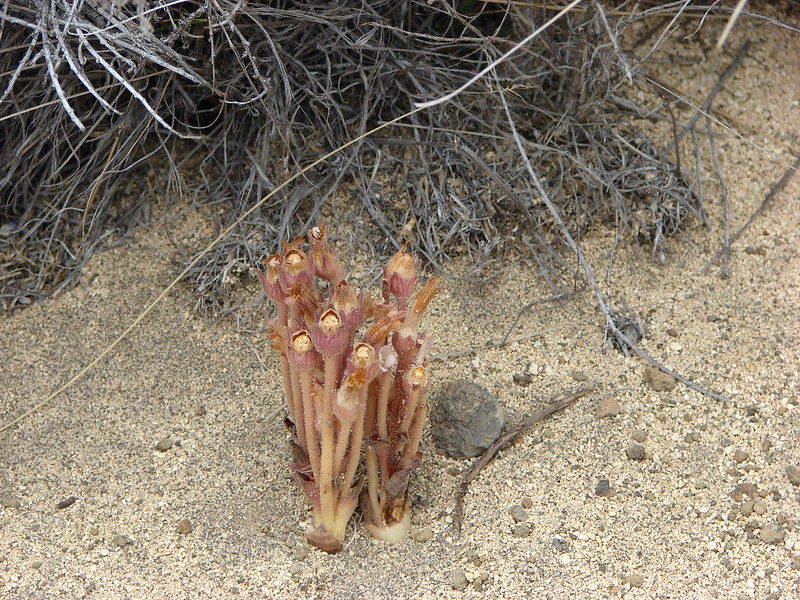
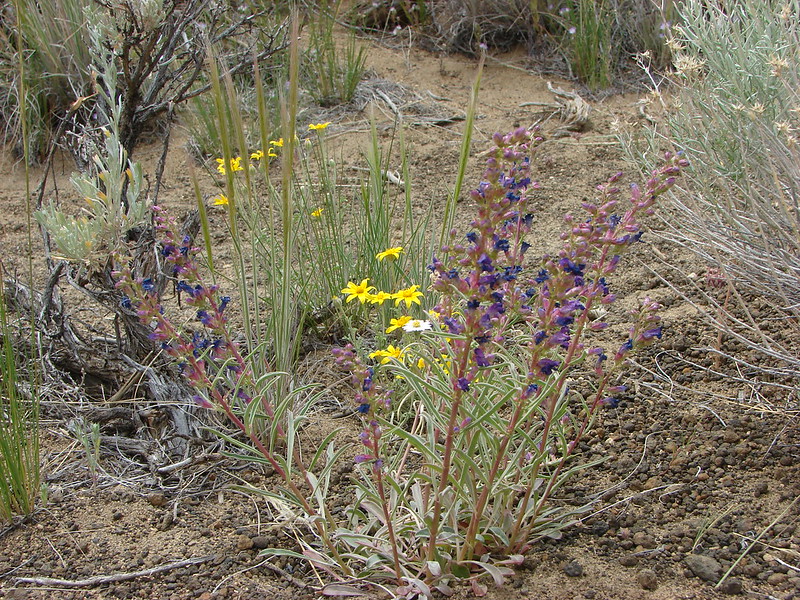
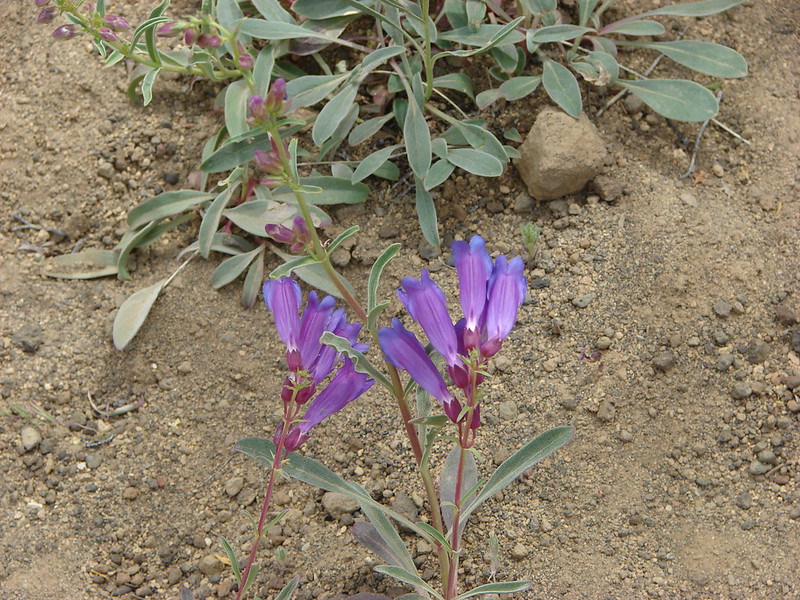
A number of others were present as well including desert parsley, giant-head clover, penstemon, and naked broomrape (an unfortunate name for a cute little flower). In addition a large number of lupine leaves promised a good show within a couple of weeks.

A nice opening offered a view toward the the Three Sisters but on this day low clouds ensured that the Cascade peaks were mostly hidden. It mattered little though as the wildflower show more than made up for the missed view. After 1.8 miles the trail finally offers the first glimpse of its goal -Steins Pillar.
181

From the viewpoint the trail descends for 0.2 miles to the base of the pillar. The pillar is made of rhyolite ash that has been compacted. The area at the base makes for a nice lunch spot with views across Mill Creek to the Twin Pillars. Much of the elevation gain is due to the climb back up to the viewpoint up several sets of stairs.

As usual most of the wildlife we spotted was from the car on the way to and from the trail head. We saw several deer from the road but the trail offered a Northern Pacific Treefrog and a few Golden Mantled Squirrels. In all this was a very nice hike and a great time of year for it. Until the next time, Happy Trials.

Pictures on flickr http://www.flickr.com/photos/9319235@N02/sets/72157633538803950/
or Facebook https://www.facebook.com/media/set/?set=a.10201207414694623.1073741830.1448521051&type=1