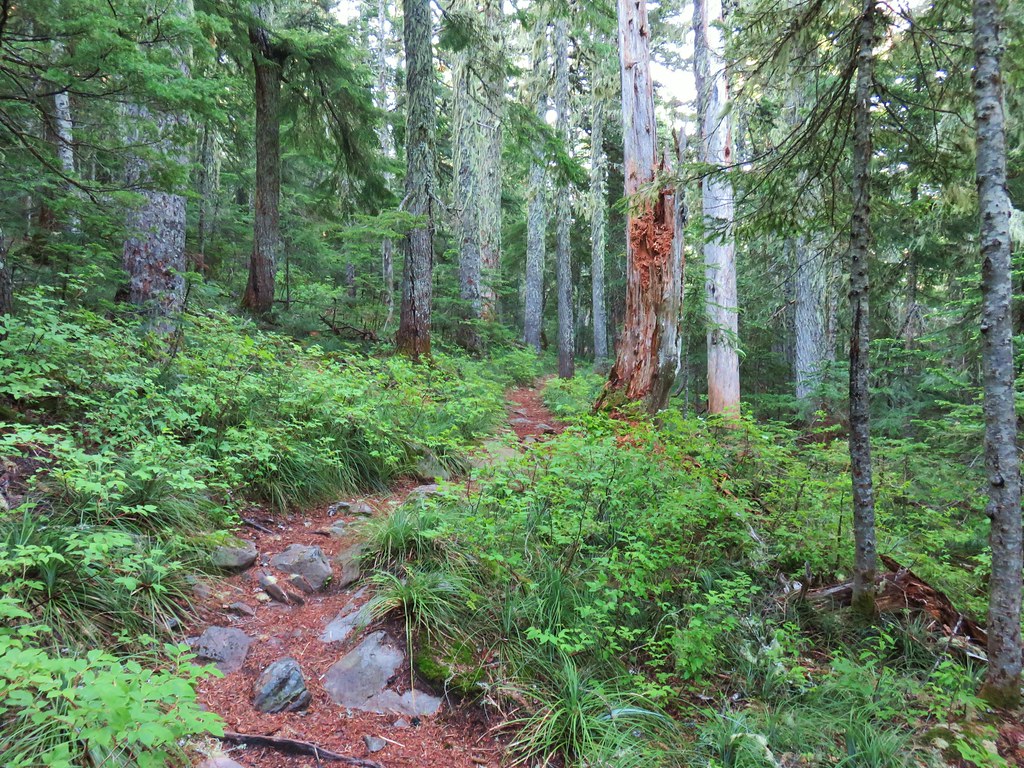
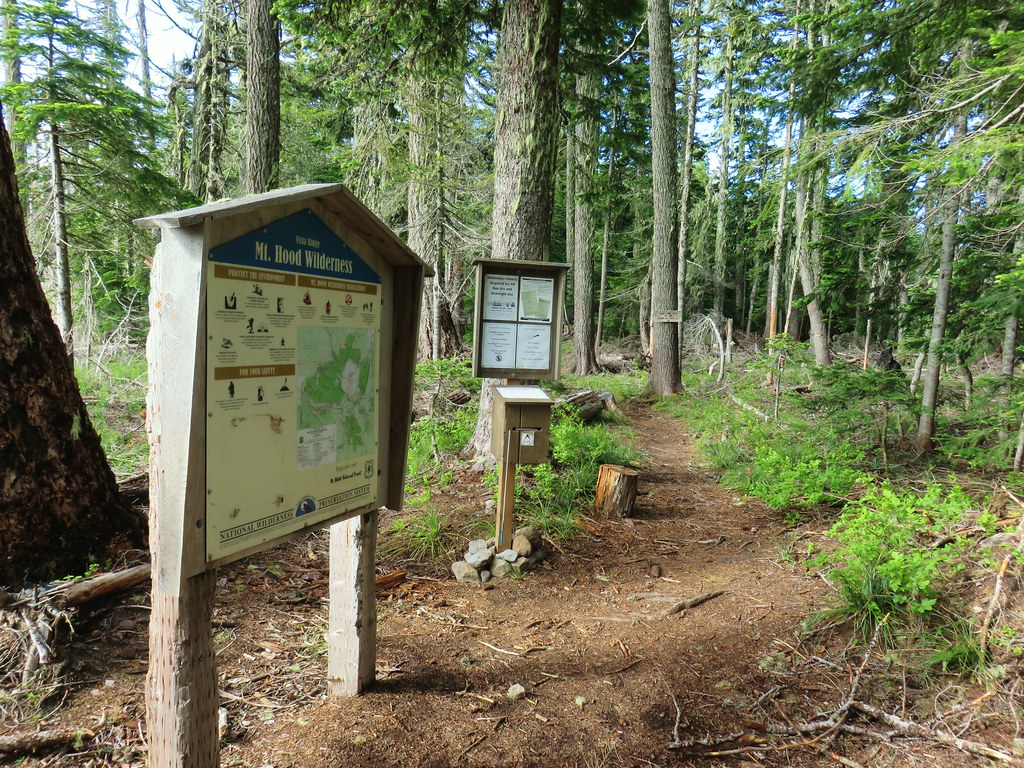
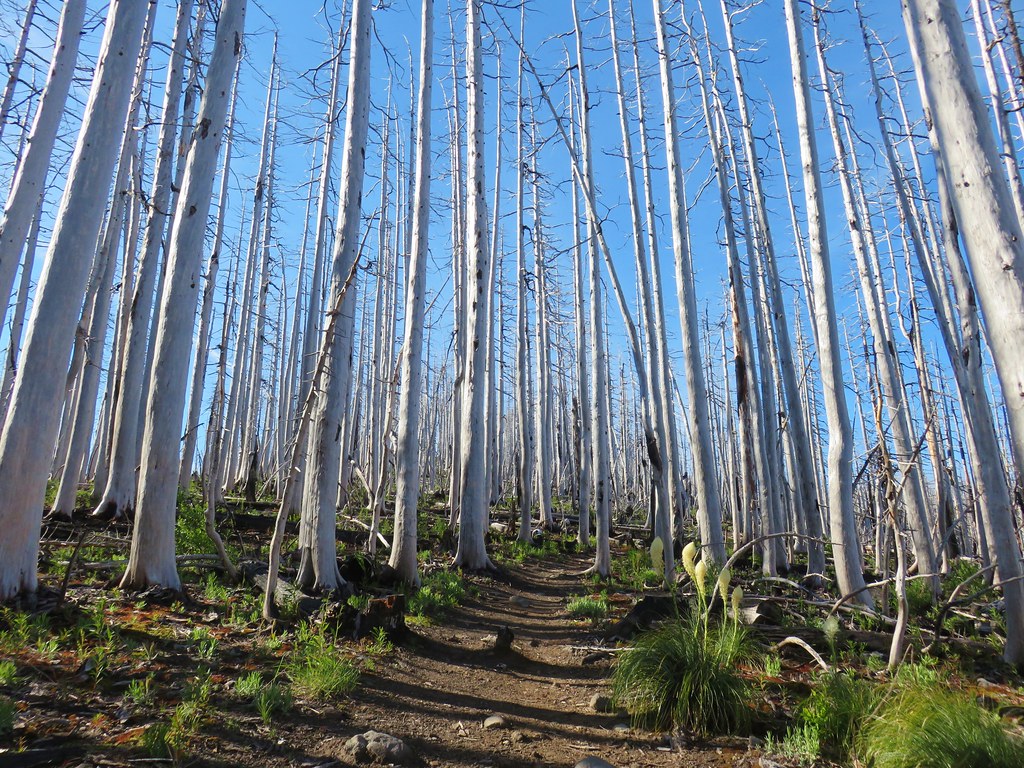
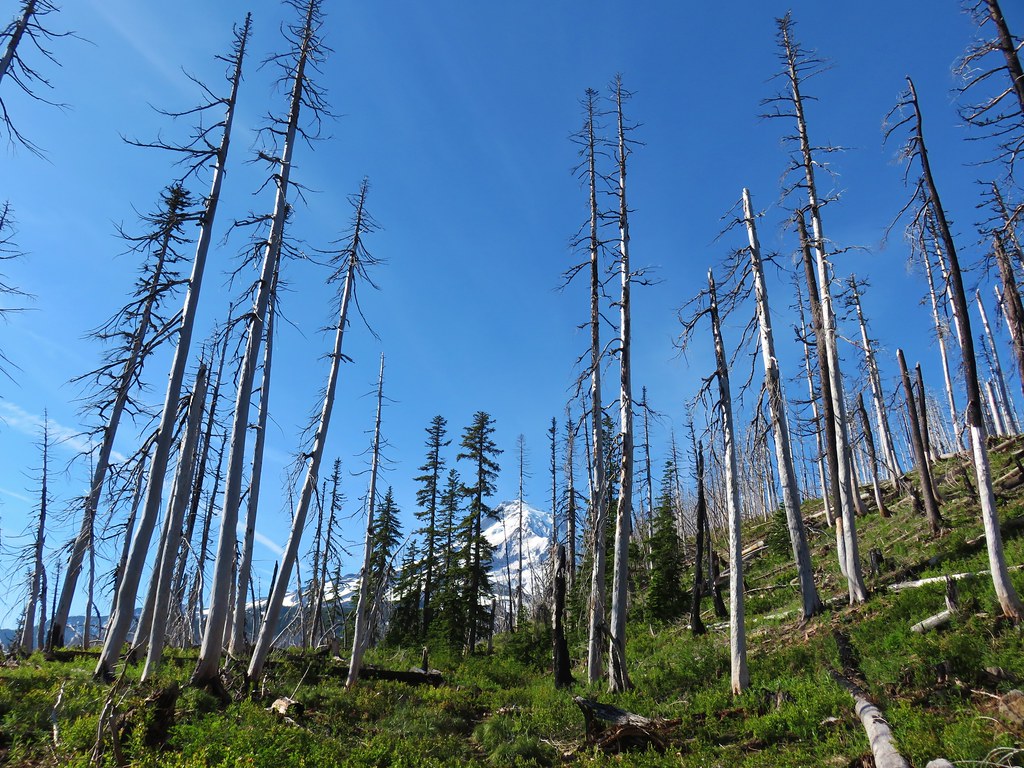
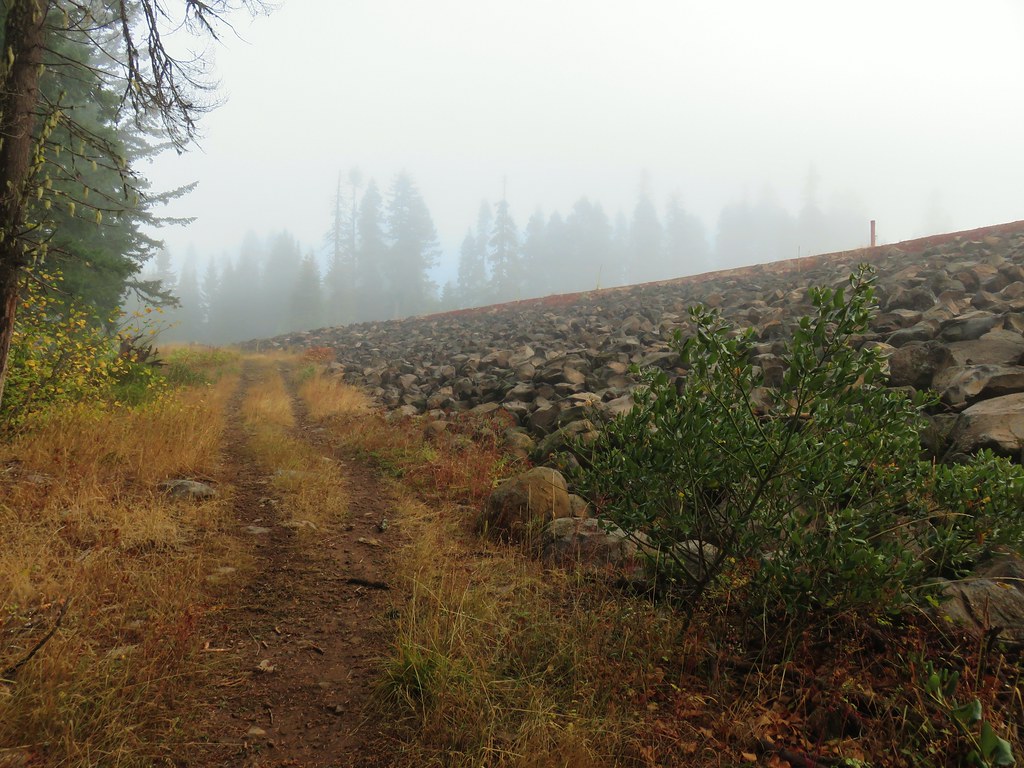
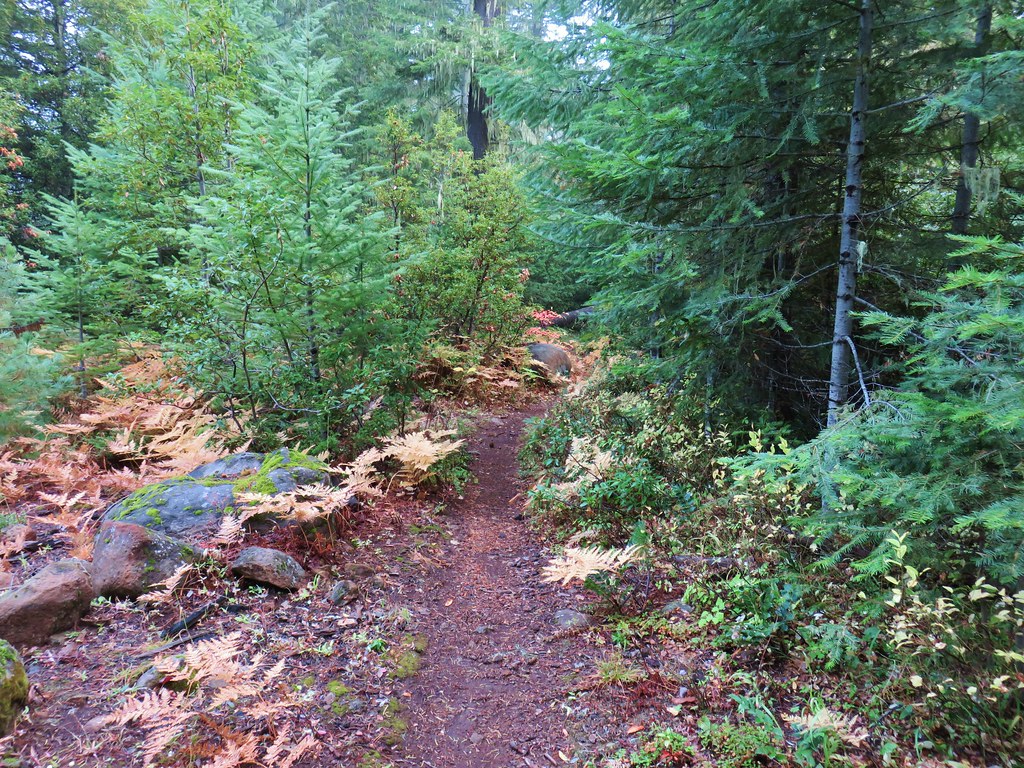
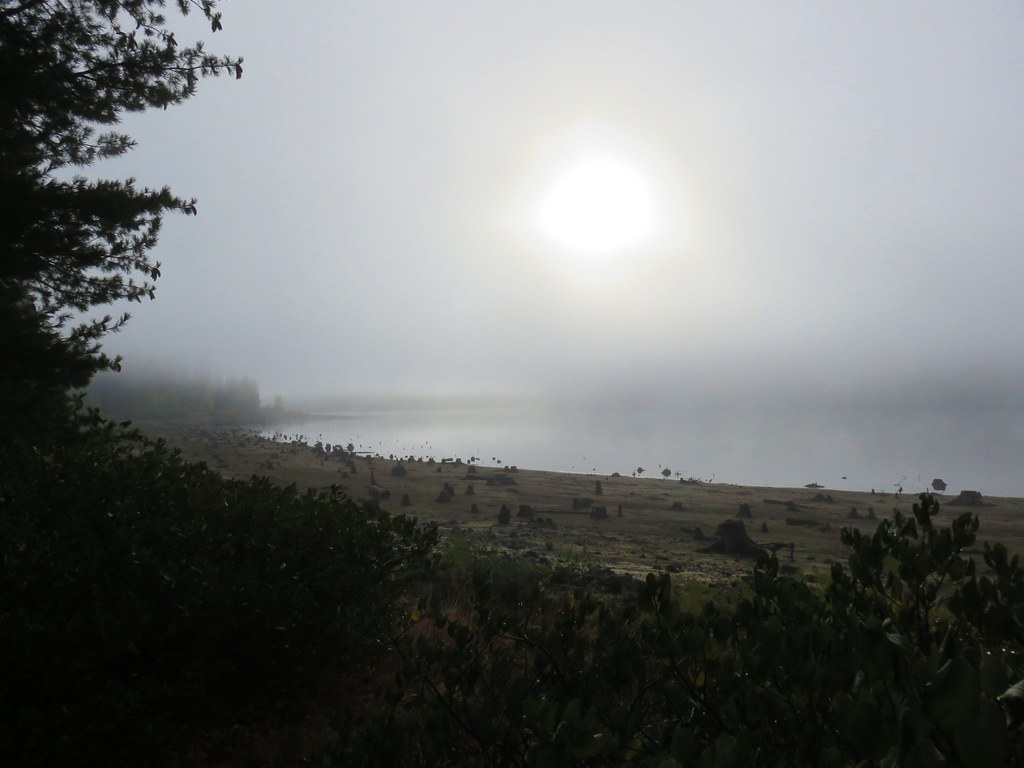
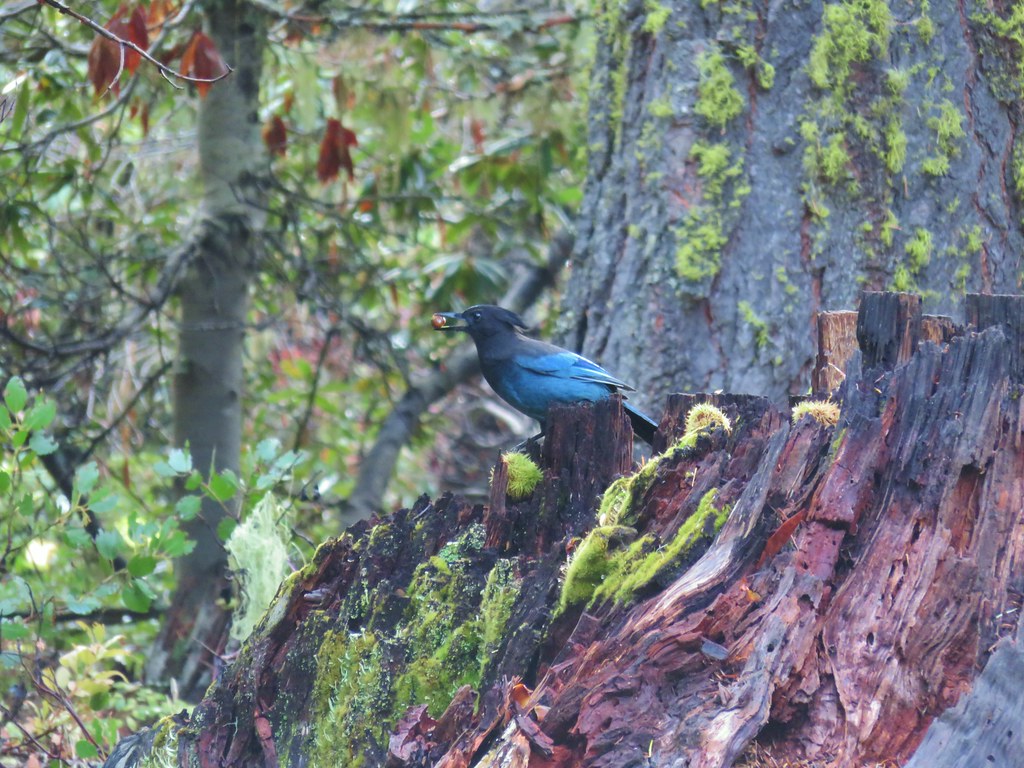
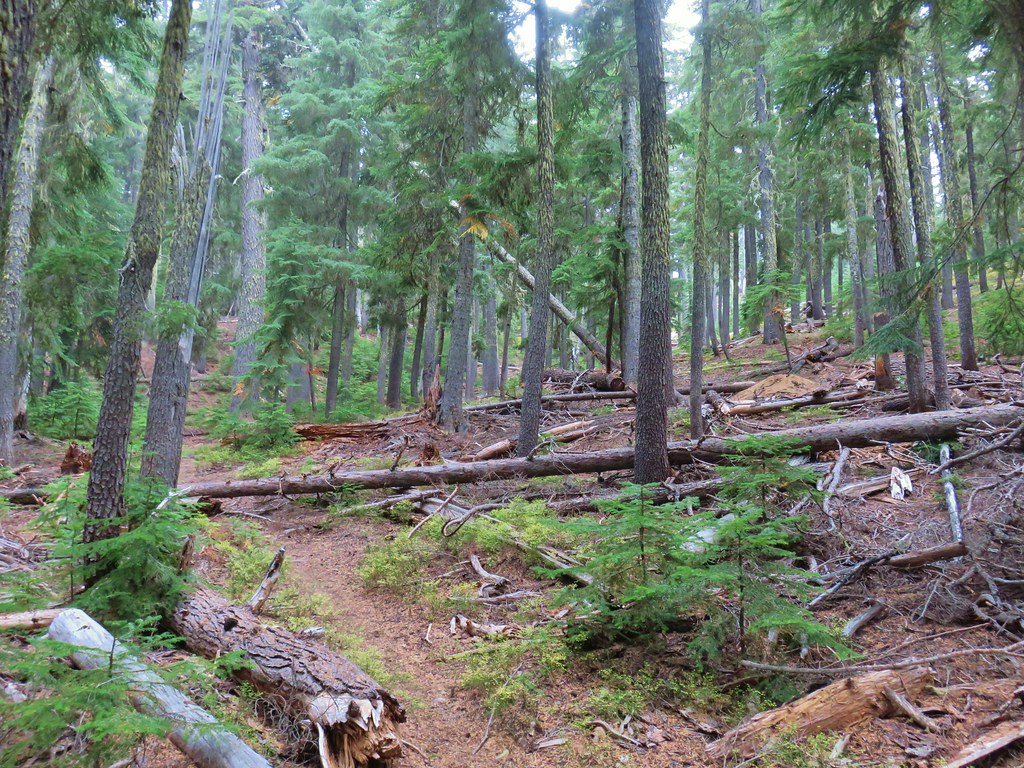
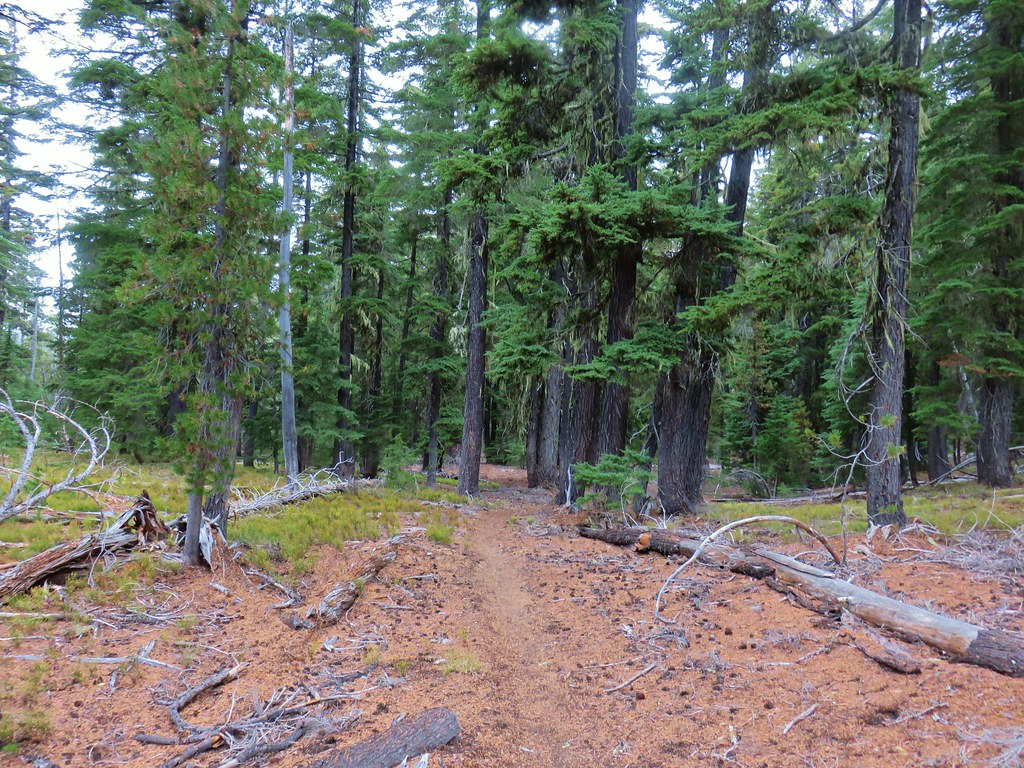
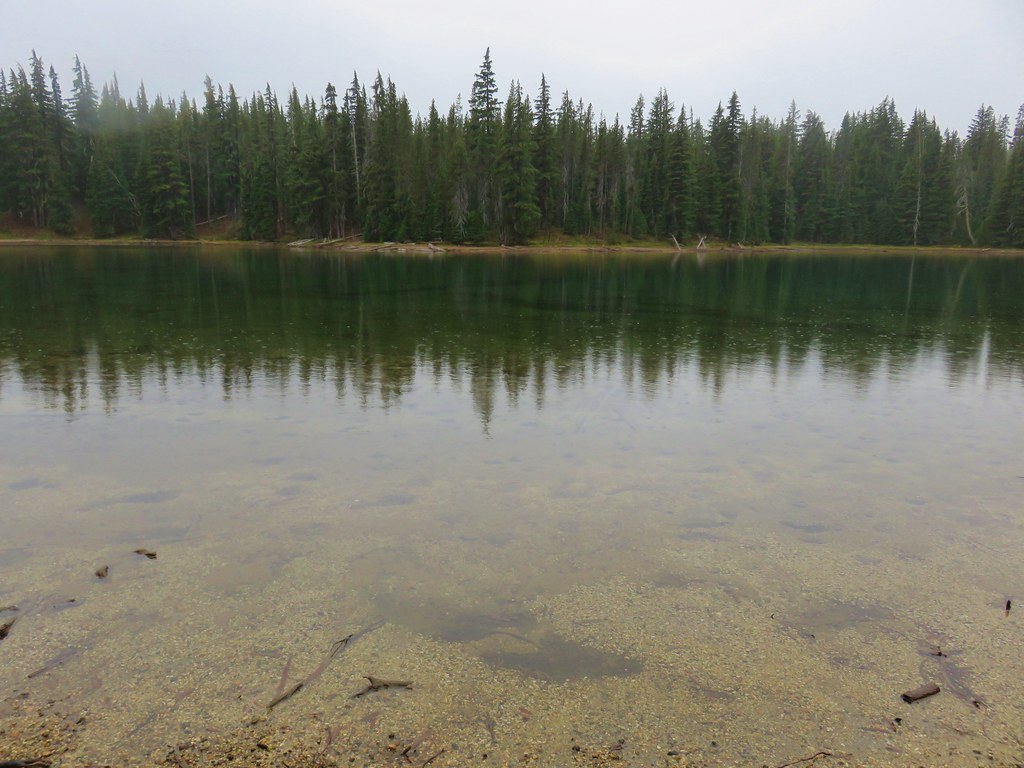
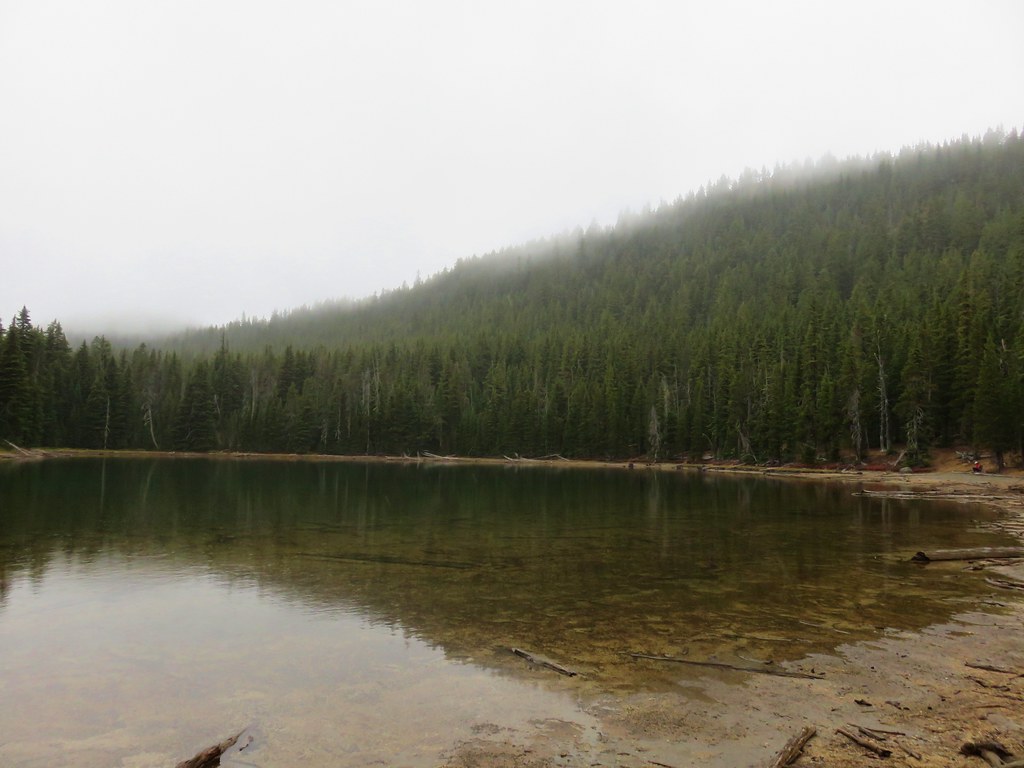
Categories
High Cascades Hiking Mt. Jefferson Area Oregon

Breitenbush Cascades & Devil’s Ridge Trail – 7/13/2019

**Note the 2020 Lionshead Fire burned the area covered by this hike.**

We were looking for a relatively short, nearby hike so that we could get back to Salem early. It was Salem Summit Companys (our favorite local outdoor store)7th anniversary so they were having a sale, raffle, and free pizza. We turned to Matt Reeder’s “101 Hikes in the Majestic Mt. Jefferson Region” for inspiration and chose a pair of hikes not far outside of Detroit, OR.

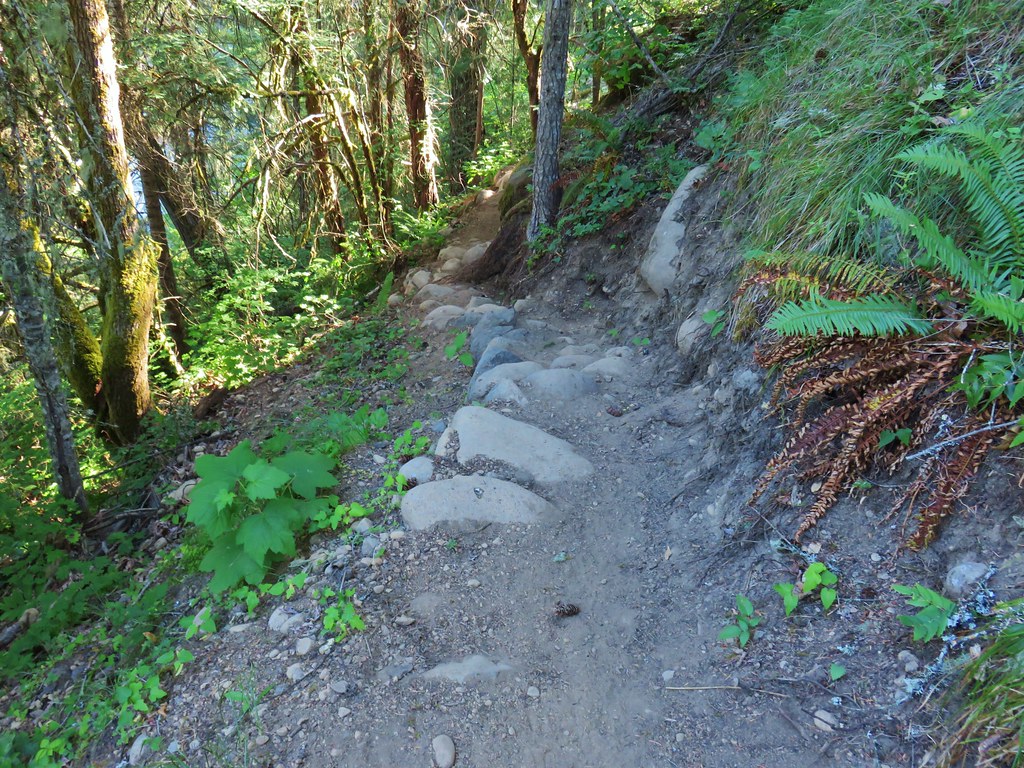
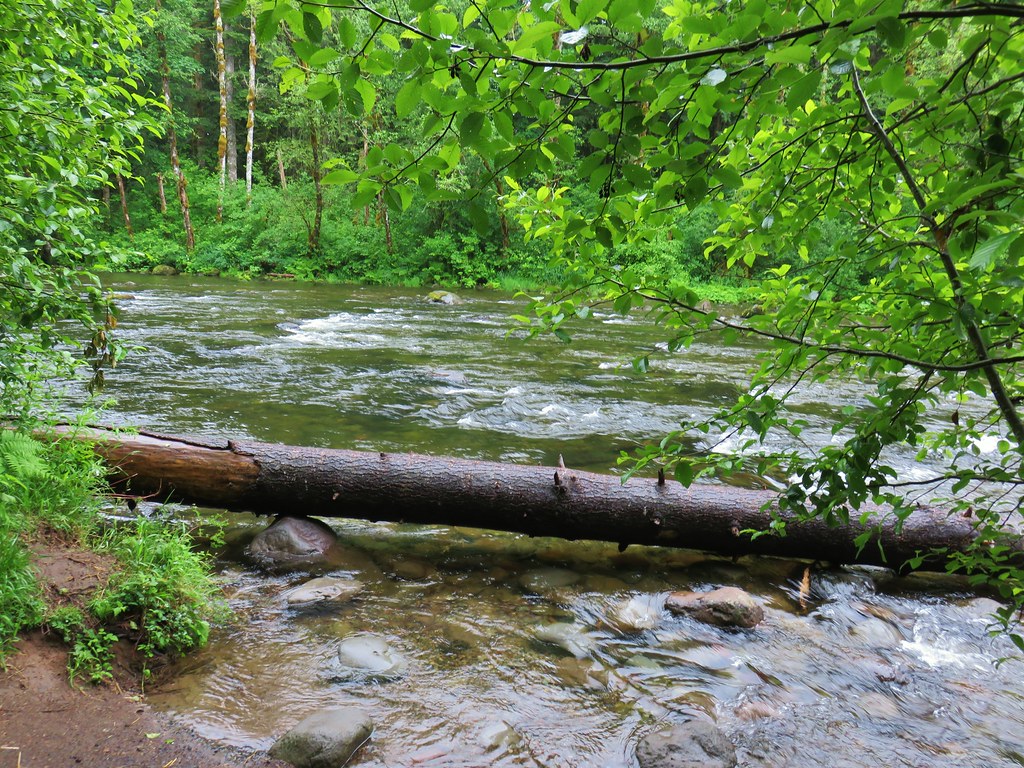
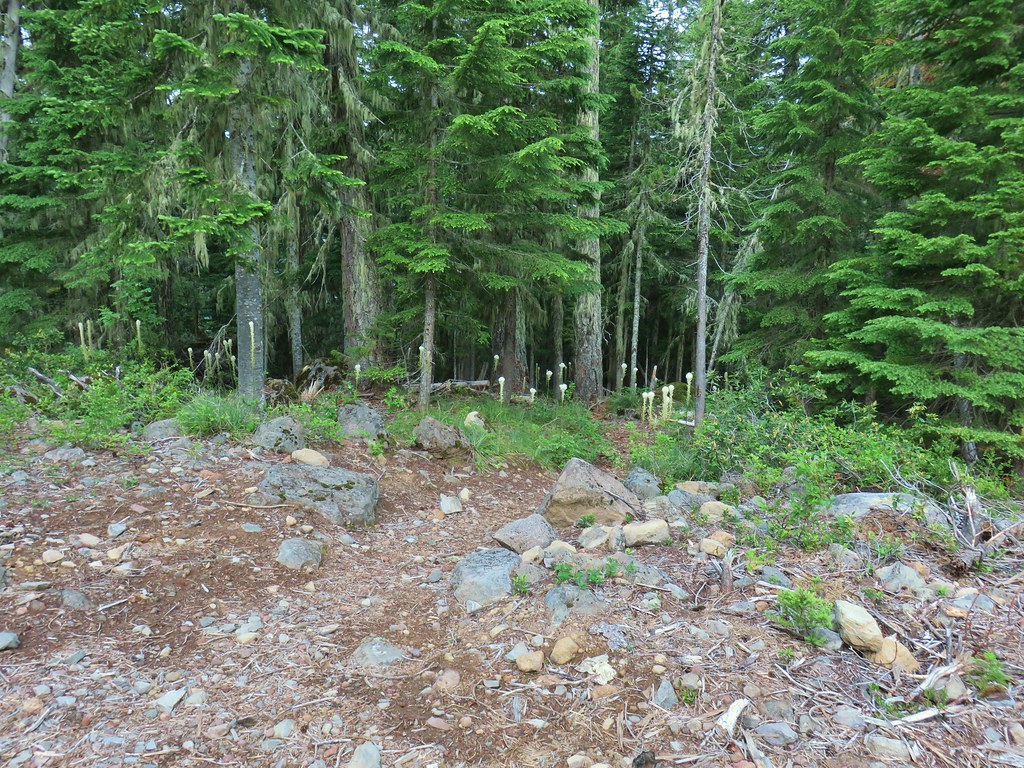
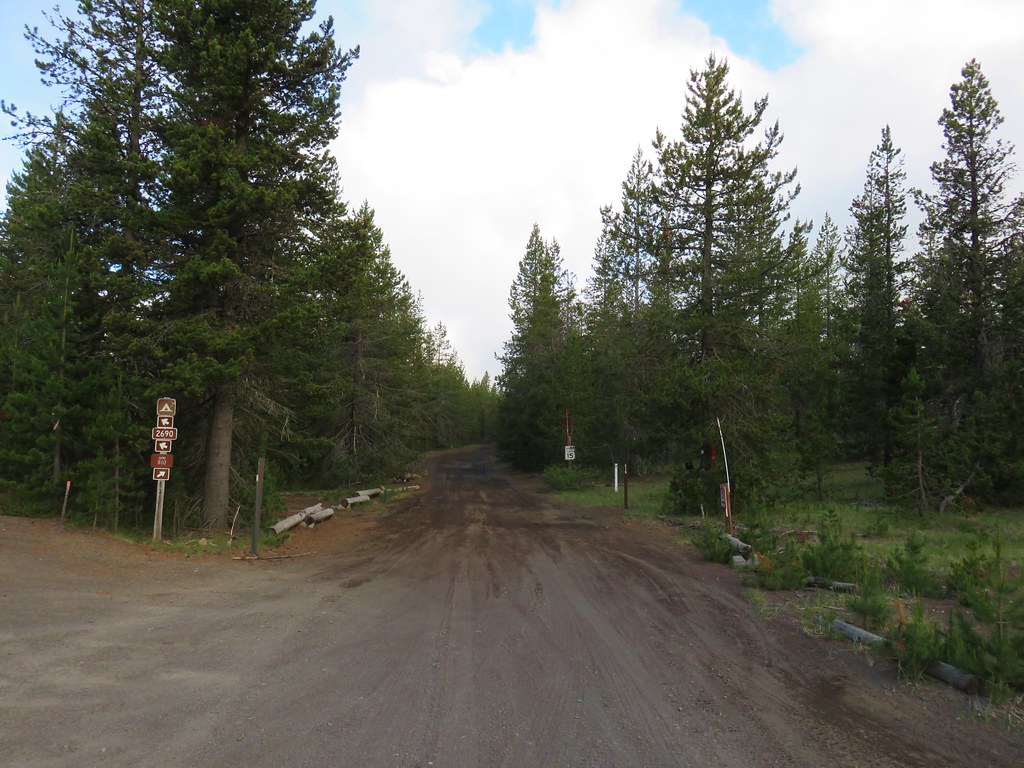
Our first stop was at the Breitenbush Cascades. The trailhead for this short (a third of a mile) hike is located on one of the worst Forest Service roads in NW Oregon, FR 4220 aka Skyline Road. We had braved this road once before on a hike to Jefferson Park Ridge (post). That had been a much longer drive on this road than the 3.5 miles we had to endure to reach the pullout on the right shortly before the the road crossed North Fork Breitenbush River. A very small temporary Forest Service sign was all that marked the trailhead where a pair of paths led into the forest. In hindsight we should have taken the path leaving to the left of the parking area, but instead we took the path straight ahead.
IMG_3260

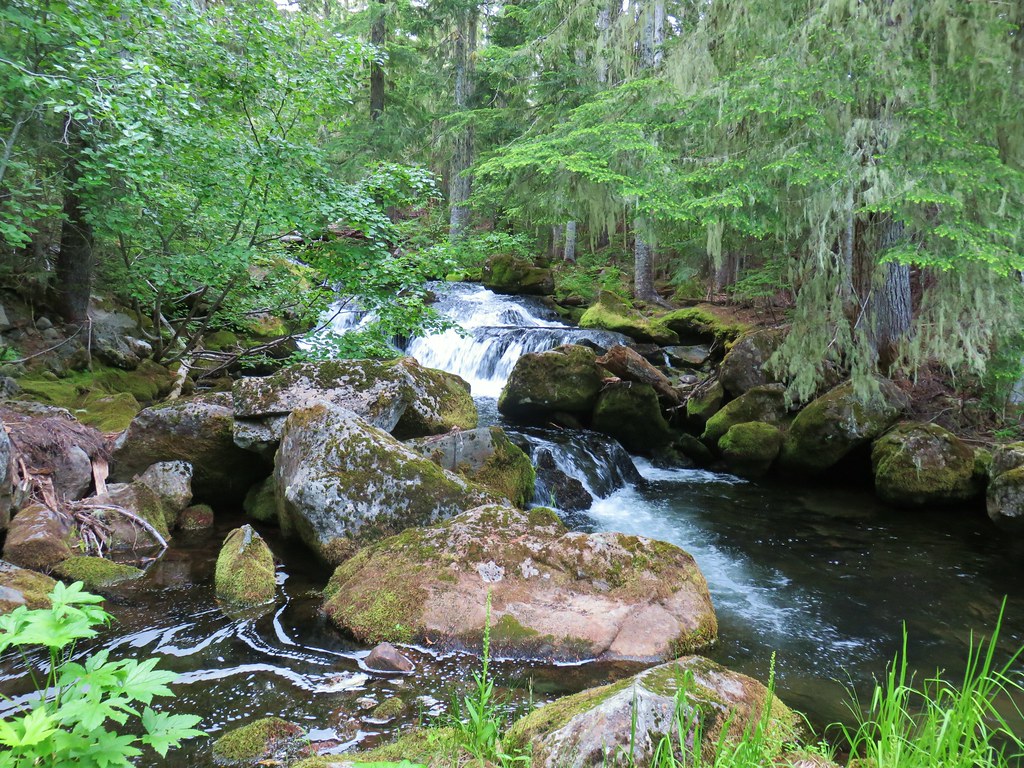
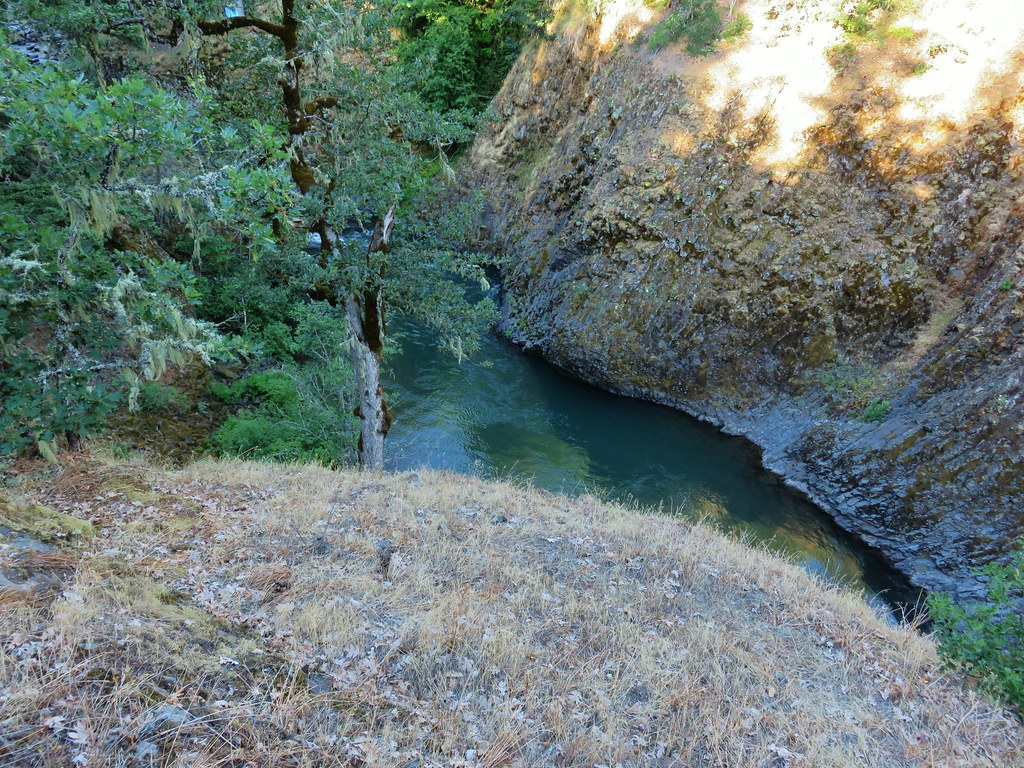
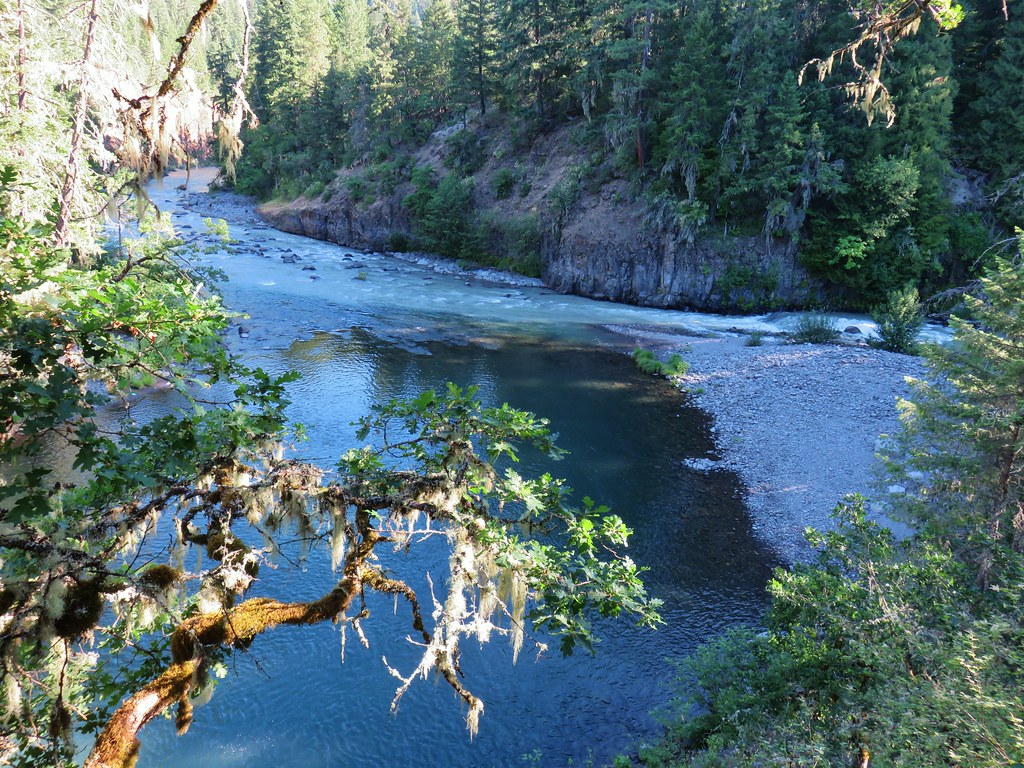
As we would discover in a few minutes the trail to the left went straight to the river then turned right along the water to meet up with the path we’d taken. The path we took descended a bit and also brought us to the river near a small cascade.
IMG_3261

IMG_3263

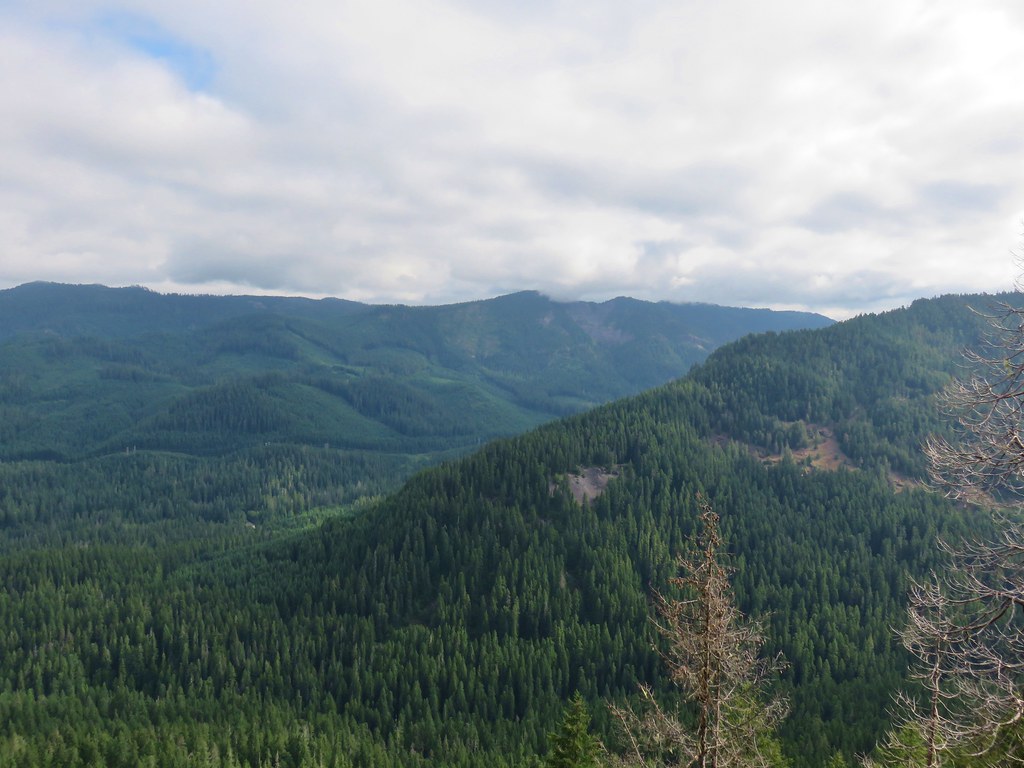
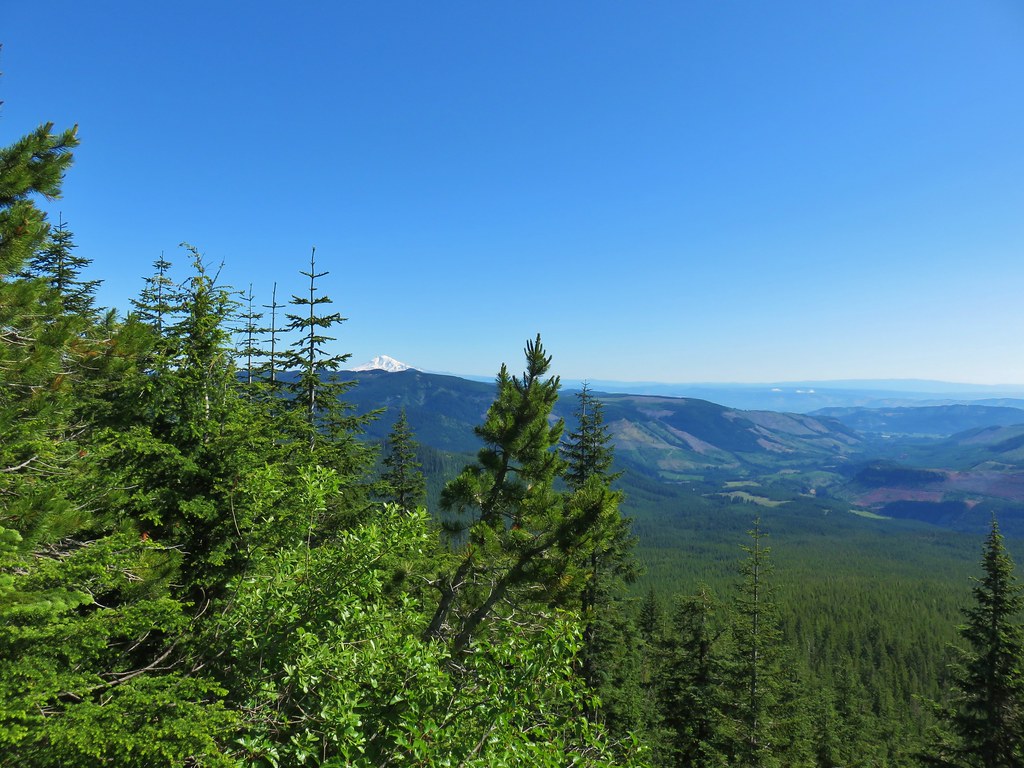
There was also a view here to Bear Point across the valley, a hike that we are hoping to do later this month.
IMG_3269

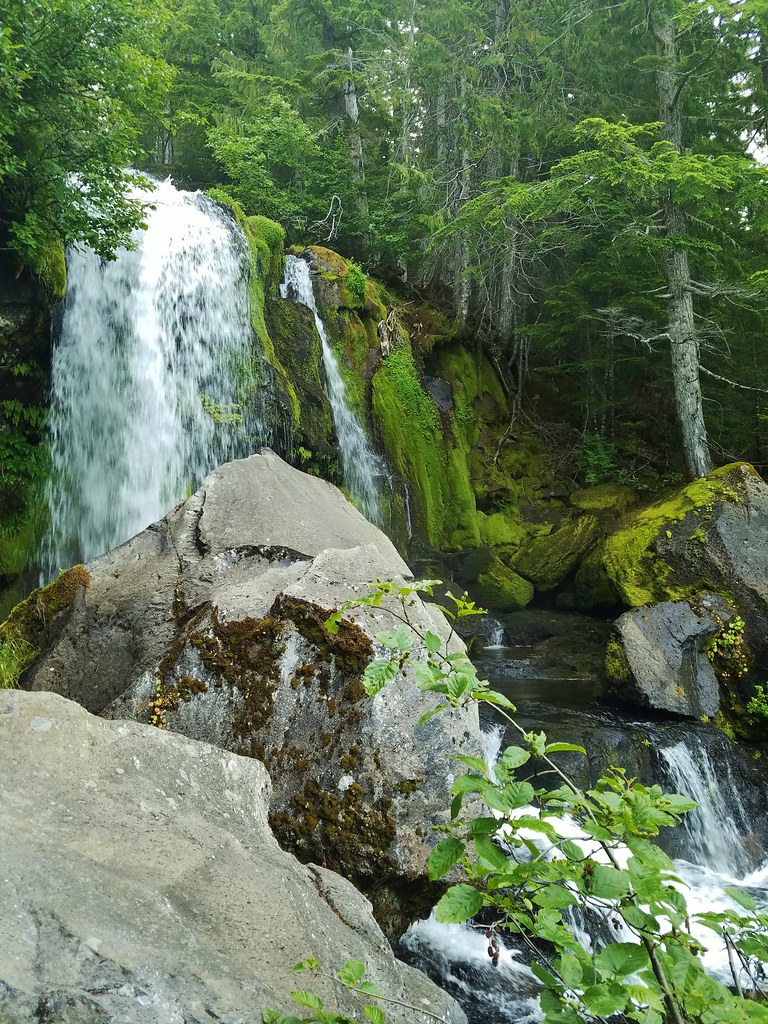
The trail switchbacked down to what Reeder describes as the top tier of the Breitenbush Cascades.
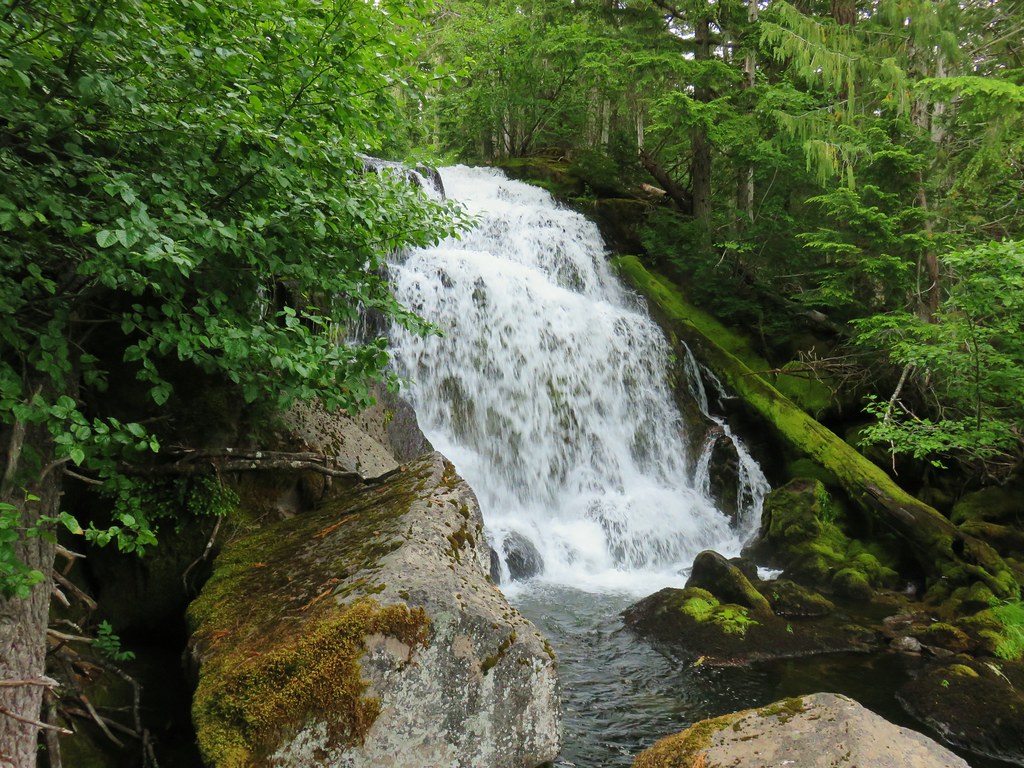
IMG_3272

IMG_3282

The river almost immediately spills over the lip of another cascade.
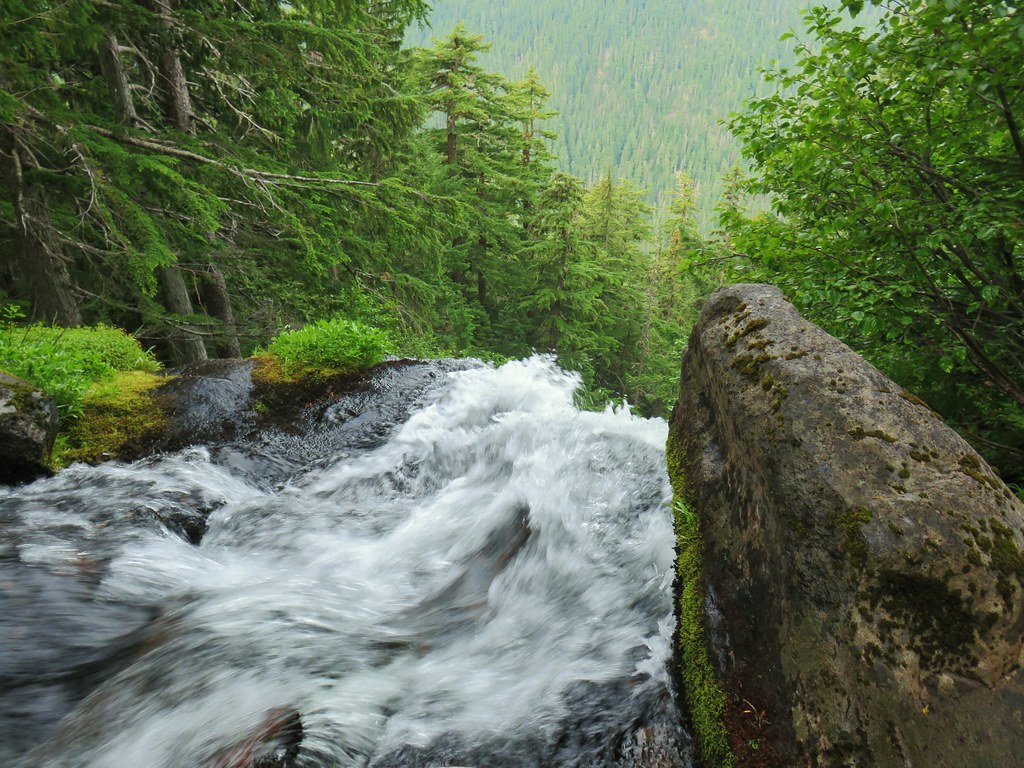
IMG_3286

This second tier is reachable via another switchback although the trail down is steeper and there is a bit of an awkward drop down some exposed rock.
IMG_3289

20190713_063926

Slick rocks and moss make caution here important as the river plunges downhill yet again beyond the second tier.
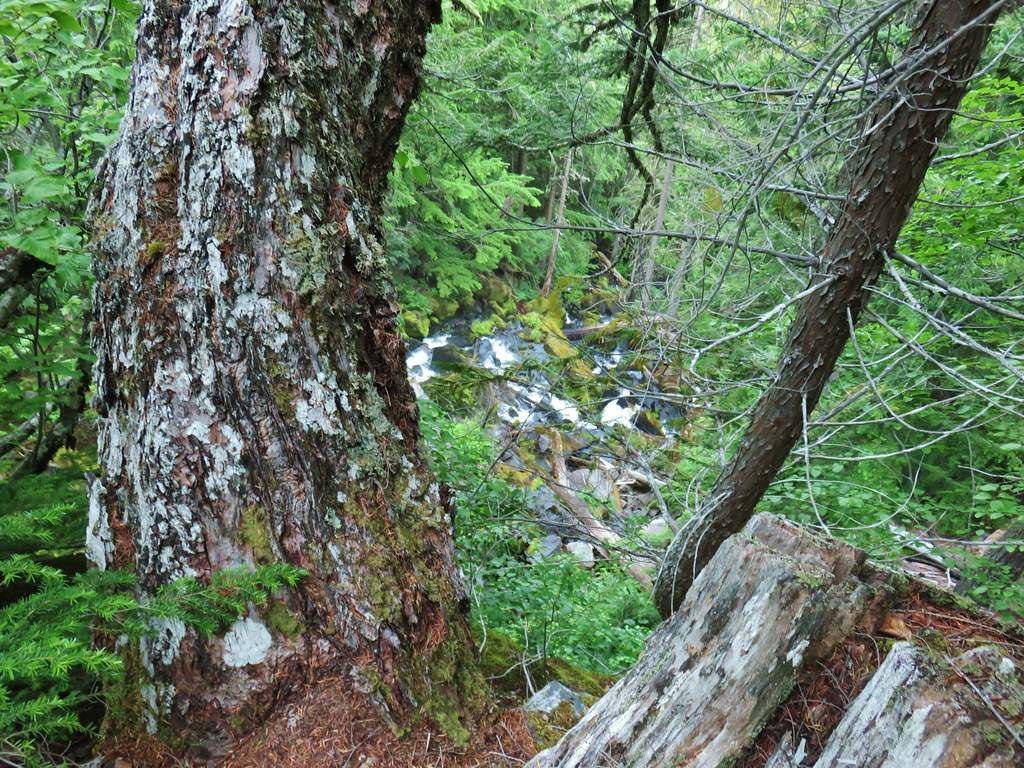
IMG_3294The river below the second tier.

The river actually loses over 1200′ from this second tier as it cascades down to join the South Fork North Fork Breitenbush River. By all accounts this is likely the tallest waterfall in Oregon if the cascades are considered a single feature, but the steepness of the terrain make this second tier the final tier that is safely reachable, at least without special equipment.

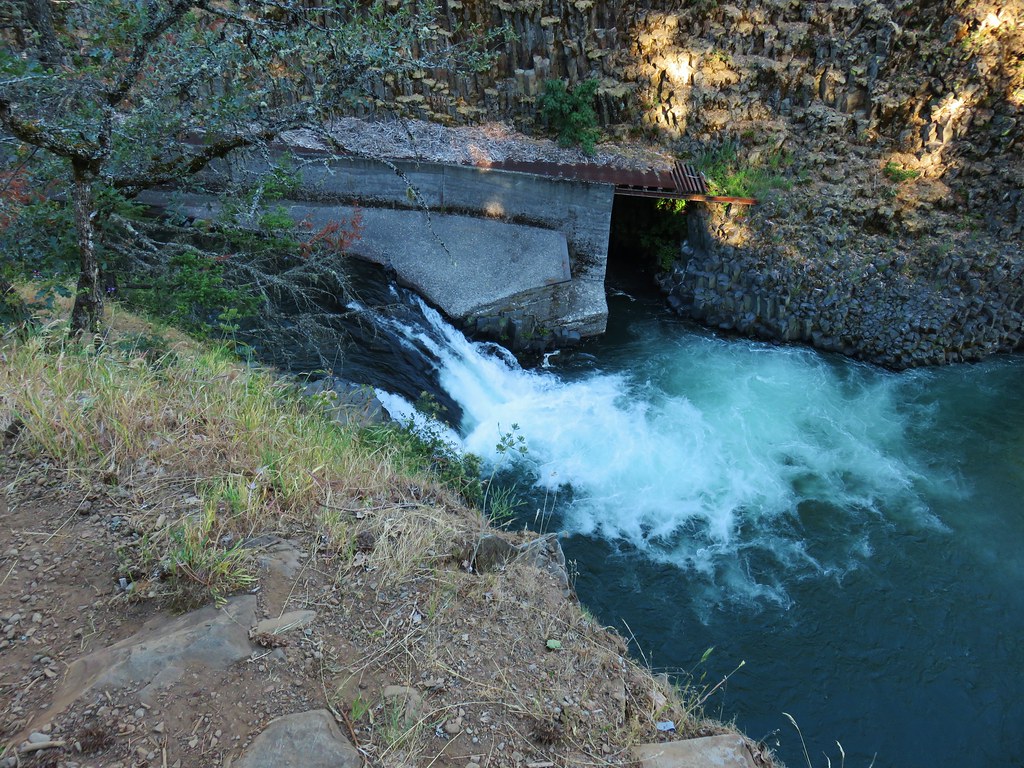
We headed back uphill to the small cascade above the first tier where we stayed right along the water. This led us back to the parking area via that left hand trail and past another nice little cascade on the river.
IMG_3298

IMG_3302

We drove back down FR 4220 and wound up passing what appeared to be a brand new Mercedes SUV (complete with dealer plates) coming up the rocky, rutted road. I guess that’s one way to break a new car in.

Once we’d finished with the 3.5 miles of FR 4220 we turned left on paved FR 46 and drove 5.6 miles to FR 50 (11 miles from Highway 22 at Detroit). After .2 miles of potholes on this gravel road we parked at a pullout on the left at the remains of a guard station that burned in 2000.
IMG_3307

From the pullout we walked down the road to a gate for the Breitenbush Hot Springs Resort and turned left onto the signed Gorge Trail.
IMG_3308

IMG_3309

We had been on this trail before in 2013 (post). This time we planned on the more strenuous hike to Devil’s Peak.

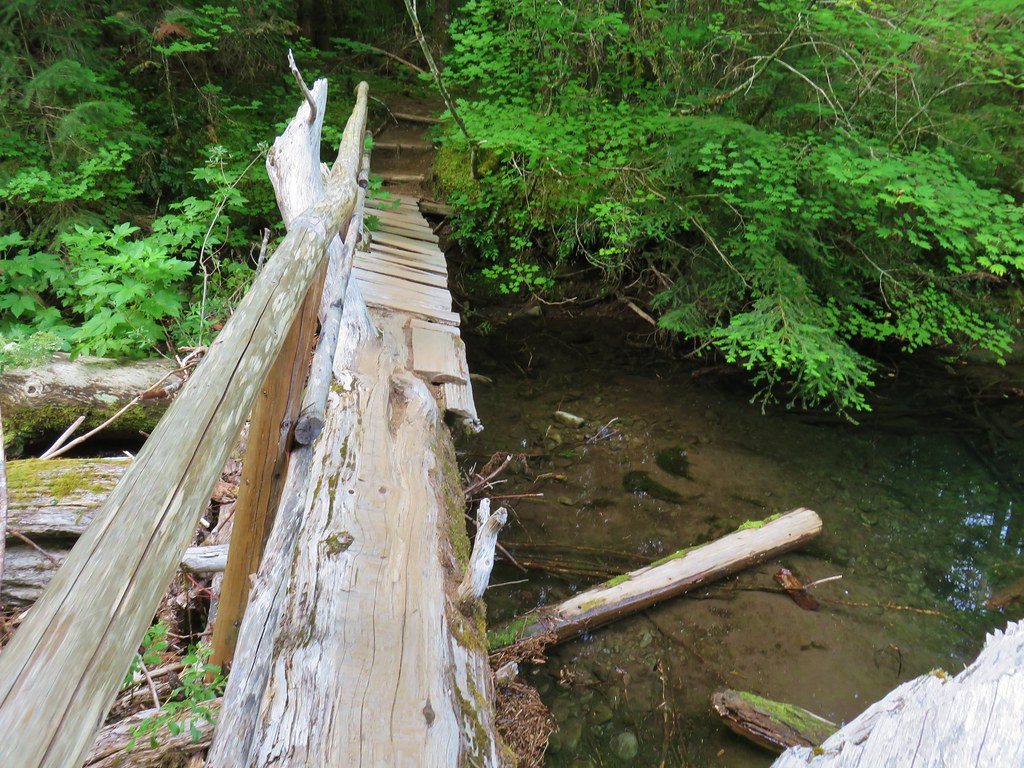
Even thought we’d been on this first section of trail there had been some changes. Namely the footbridges that lead across the North Fork Breitenbush River which need to be repaired or replaced routinely.
IMG_3315

IMG_3316

IMG_3317

IMG_3323

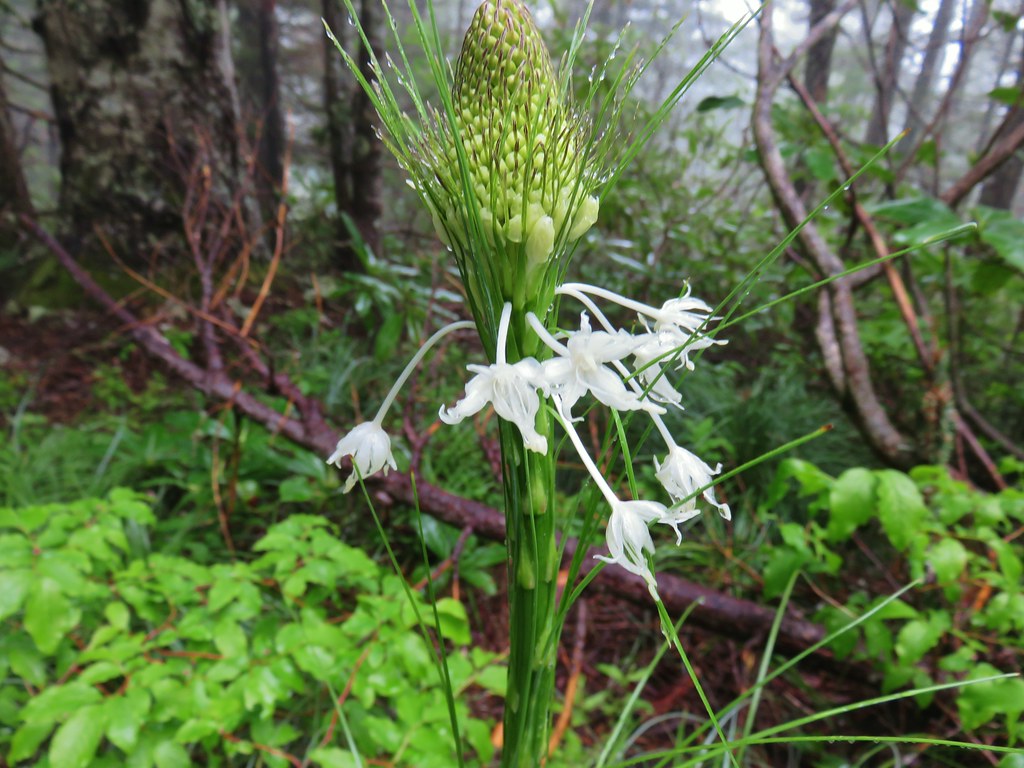
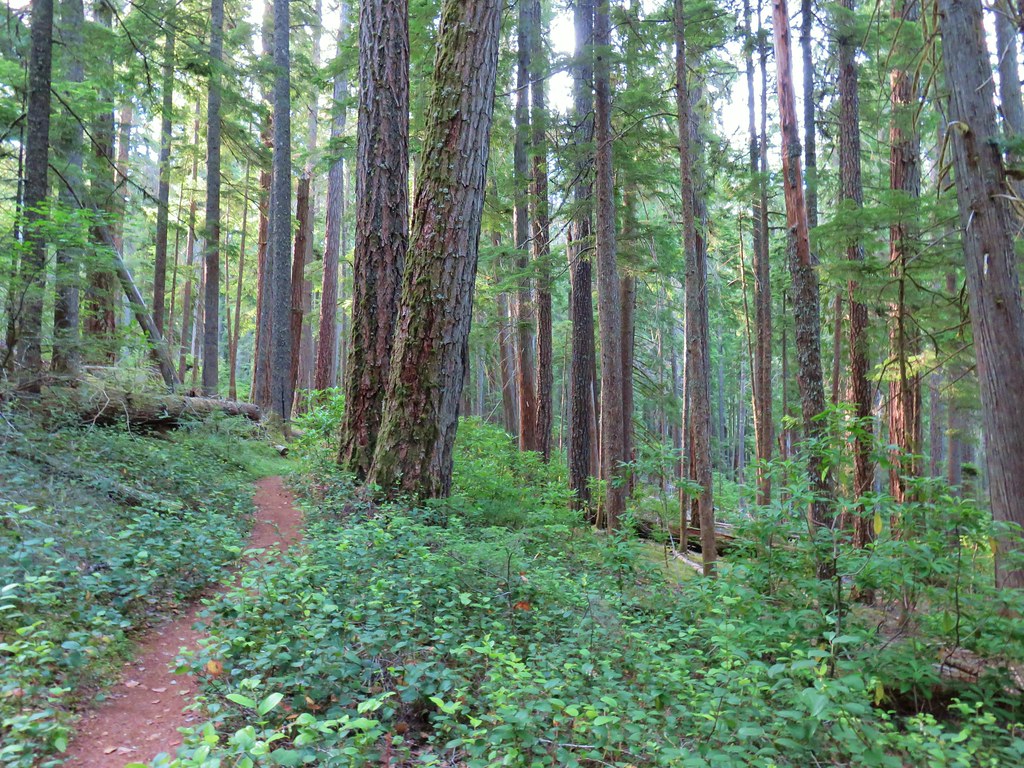
After crossing the river the trail climbed gradually through the forest where we spotted our first blooming Washington lily and prince’s pine of the year.
IMG_3328

IMG_3326

IMG_3329

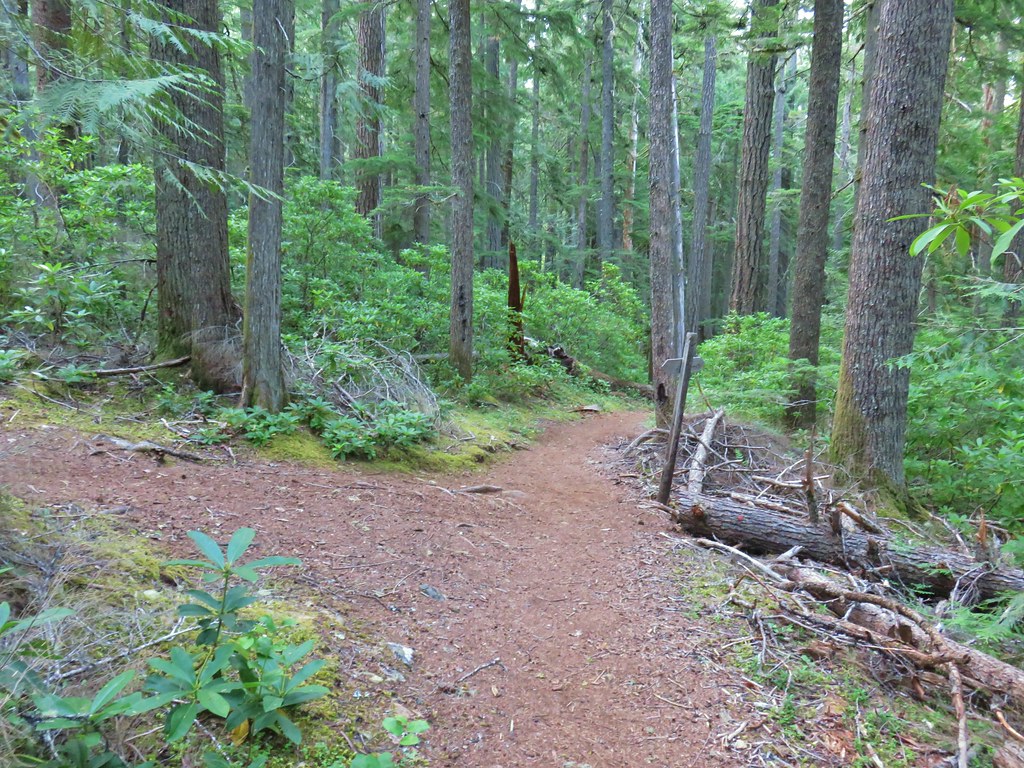
Just over a mile from the parking area we passed a spur trail on the left joining from South Breitenbush Gorge Trailhead.
IMG_3334

At the 1.5 mile mark we arrived at the signed junction with the Emerald Forest Trail.
IMG_3335

IMG_3337

While the South Breitenbush Gorge Trail is maintained by the Forest Service a network of trails including the Emerald Forest and Devil’s Ridge Trails are maintained by the Breitenbush Hot Springs Retreat and Conference Center.

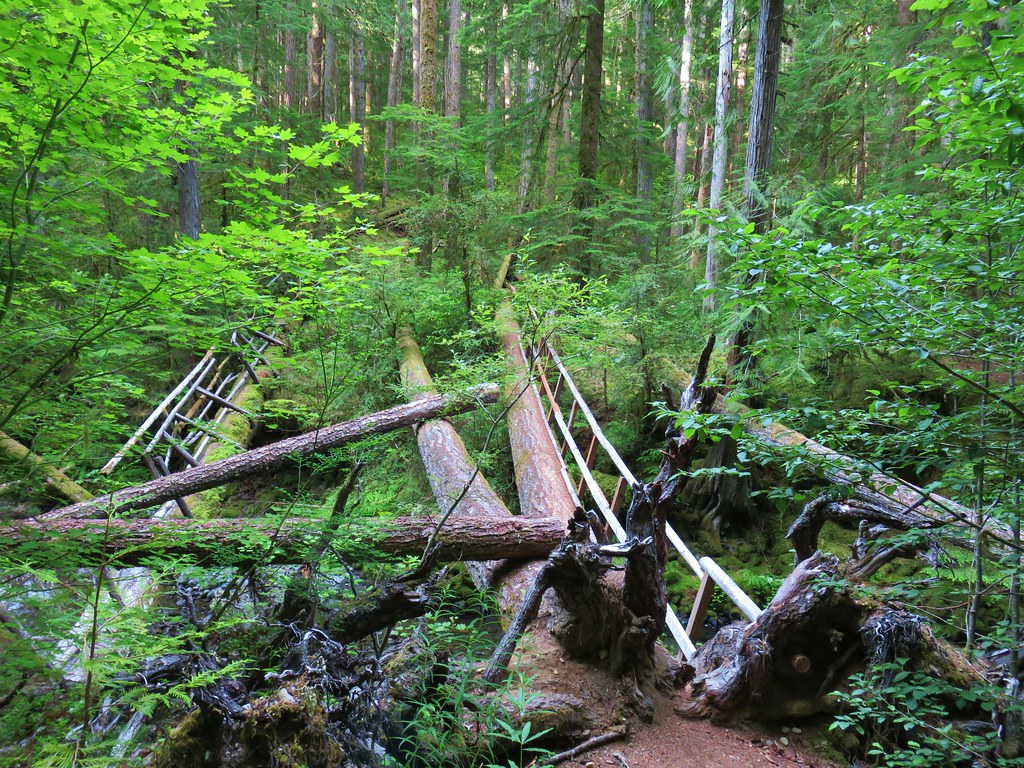
We turned onto the Emerald Forest Trail which descended for 100 yards to a footbridge over the South Fork Breitenbush River. A previous version of the bridge could be seen to the left.
IMG_3339

IMG_3342

Beyond the river the trail steadily climbed for nearly a mile to a junction with the Spotted Owl Trail. Here we turned left following pointers for the Cliff Trail and Devil’s Lookout.
IMG_3348

IMG_3350

IMG_3354

IMG_3359

IMG_3364

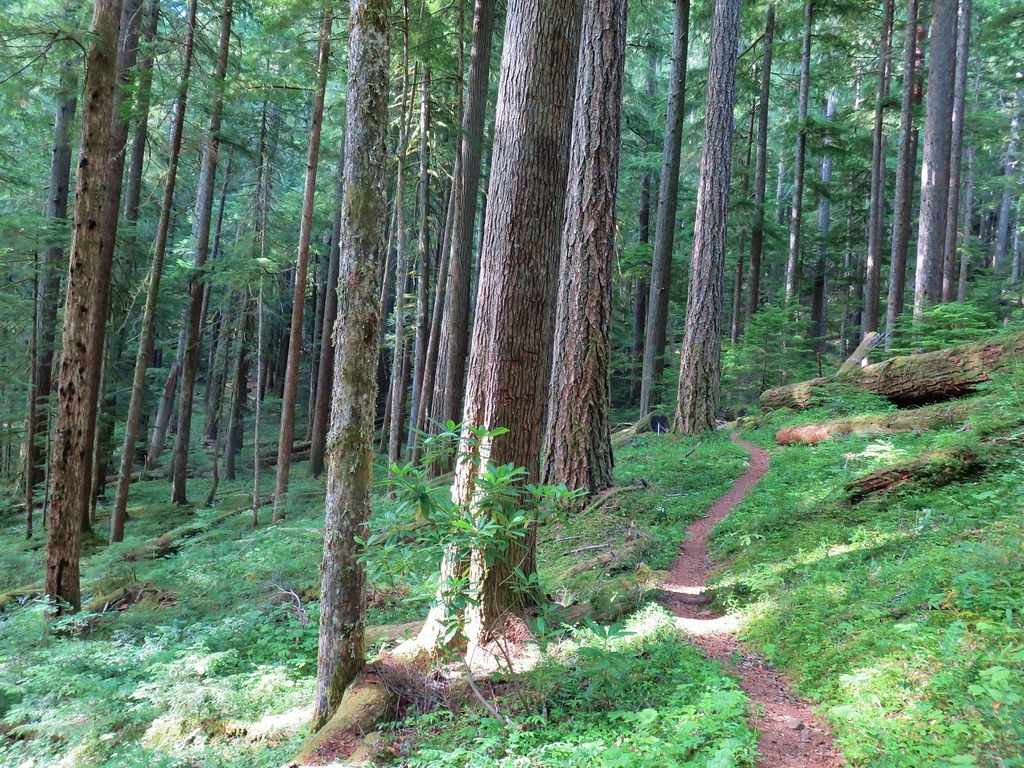
This trail also climbed as it transitioned from unburned forest to the fire scar of the 2017 Little Devil Fire.
IMG_3366

IMG_3367

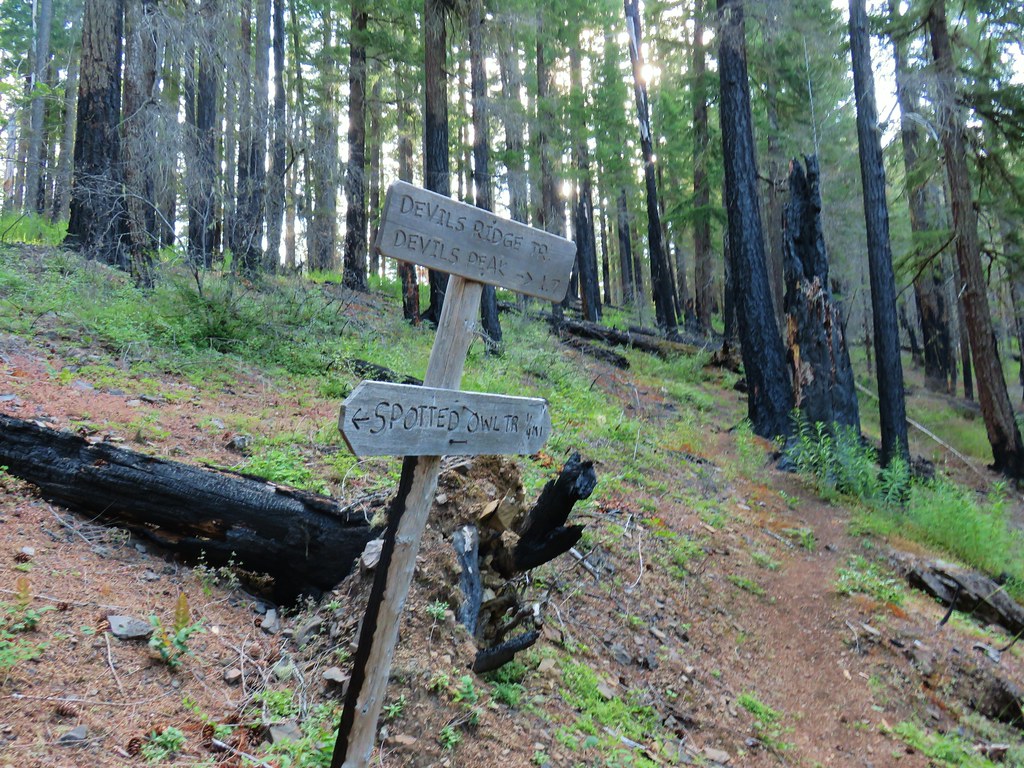
Just over a quarter mile from the trail junction we arrived at a second junction along a ridge where the Devil’s Ridge Trail continued climbing to the left while the Cliff Trail dropped to the right.
IMG_3369

IMG_3560

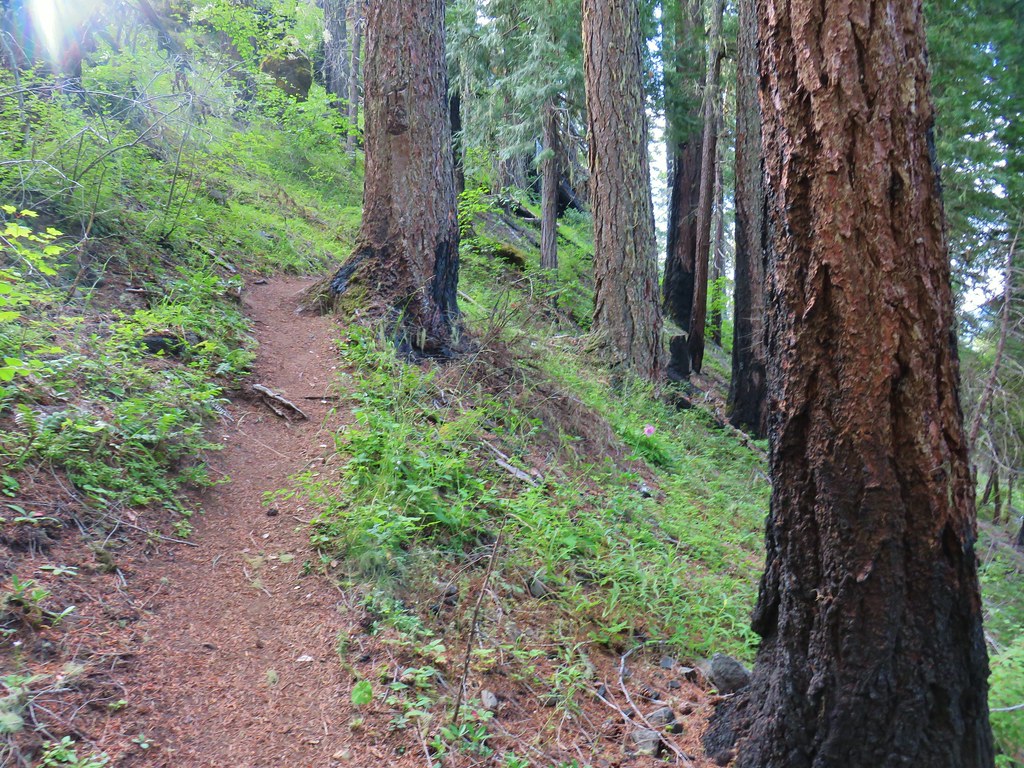
We turned left and as we started what would be a fairly intense climb a woodpecker tapped away at the trees.
IMG_3382

IMG_3374

A little less than a quarter mile from the junction we came to a somewhat ominous sign.
20190713_112834

While “at your own risk” gave us something to think about at least the trail wasn’t closed so we ducked under the sign and continued. We were ready to turn back if either of us felt uncomfortable but in the meantime we continued to climb.

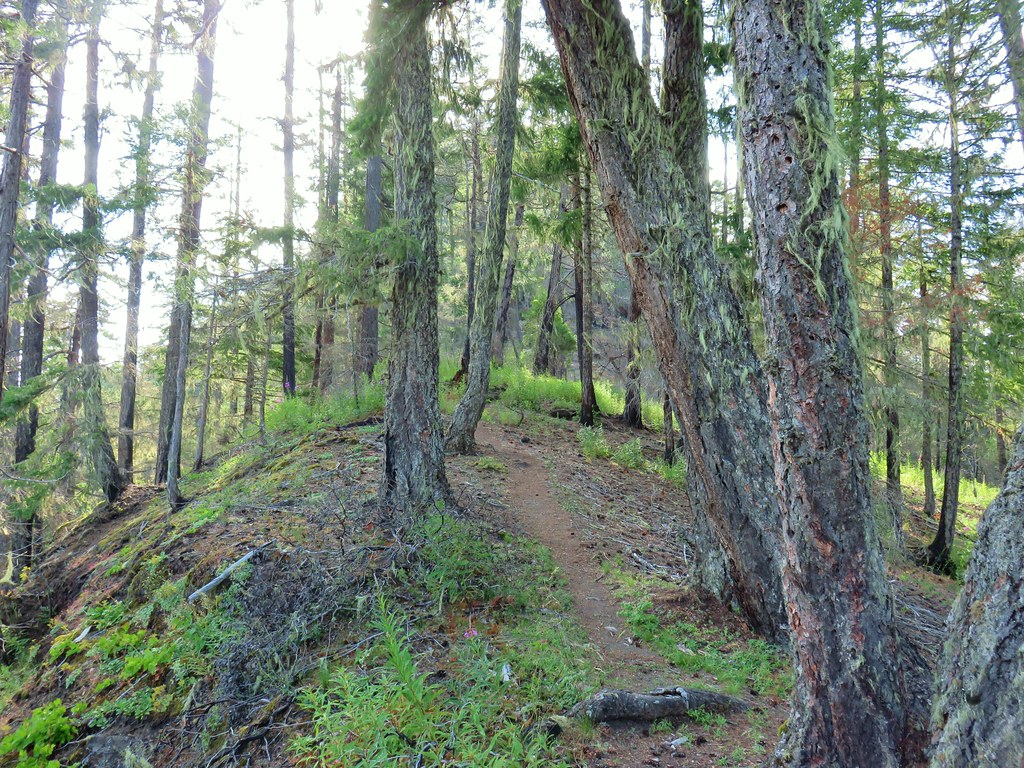
Because the trail follows the spine of a ridge there isn’t a lot of room for it to zigzag up so at times it was brutally steep. We tried to entertain ourselves with the remaining flowers which included our first fireweed, diamond clarkia, scouler’s bluebells (lots), and pearly everlasting of the year.
IMG_3396

IMG_3399A clump of fireweed.

IMG_3400

IMG_3408Scouler’s bluebells

IMG_3411Diamond clarkia

IMG_3416Cat’s ear lily

IMG_3419yarrow

IMG_3429Pearly everlasting

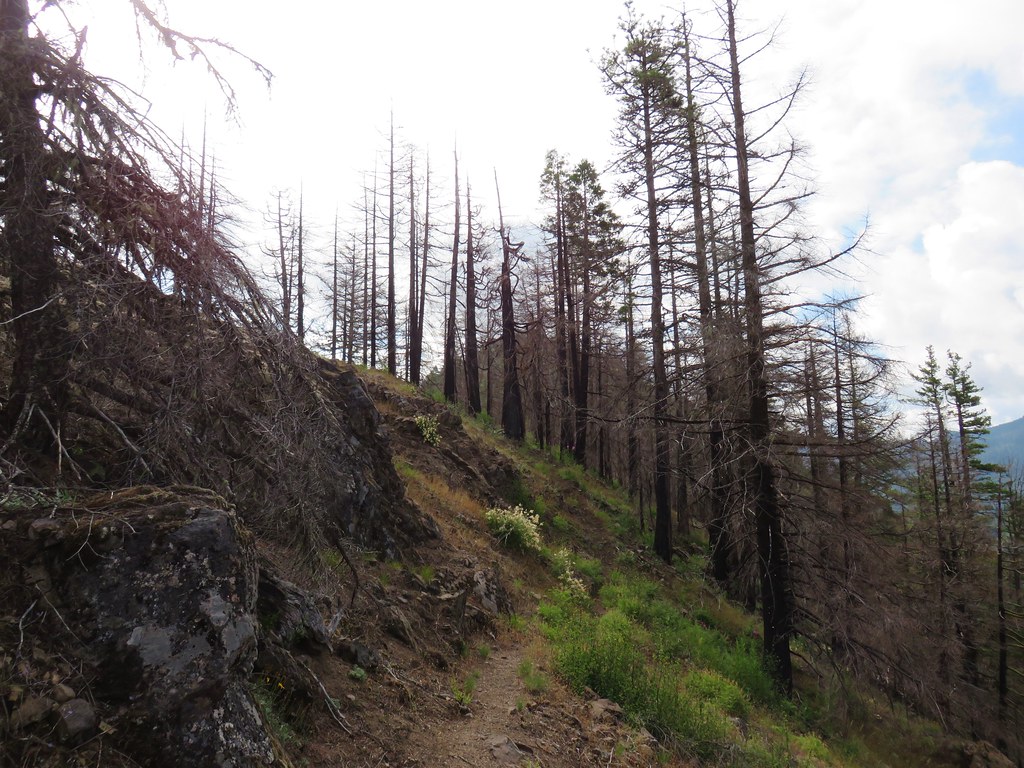
A little over a half mile from the junction we arrived at the Devil’s Lookout, a rocky viewpoint. Although we had some blue sky overhead clouds seemed to be encircling us.
IMG_3426

IMG_3424

IMG_3423

The trail then dropped a bit as it crossed a somewhat level saddle before launching itself uphill again.
IMG_3433

IMG_3438

IMG_3442Another Washington lily

IMG_3444

After gaining 200′ in a tenth of a mile the trail became more reasonable as it climbed along a much gentler slope. There were some interesting rock formations along this section.
IMG_3454

IMG_3450

IMG_3455Devil’s Peak ahead

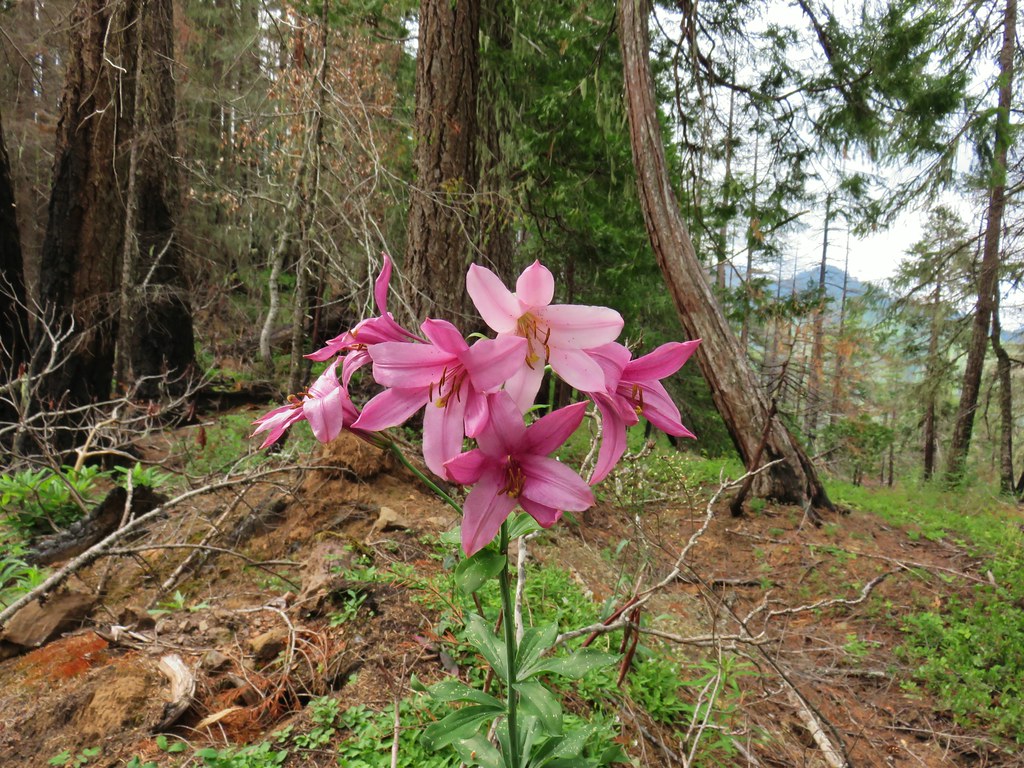
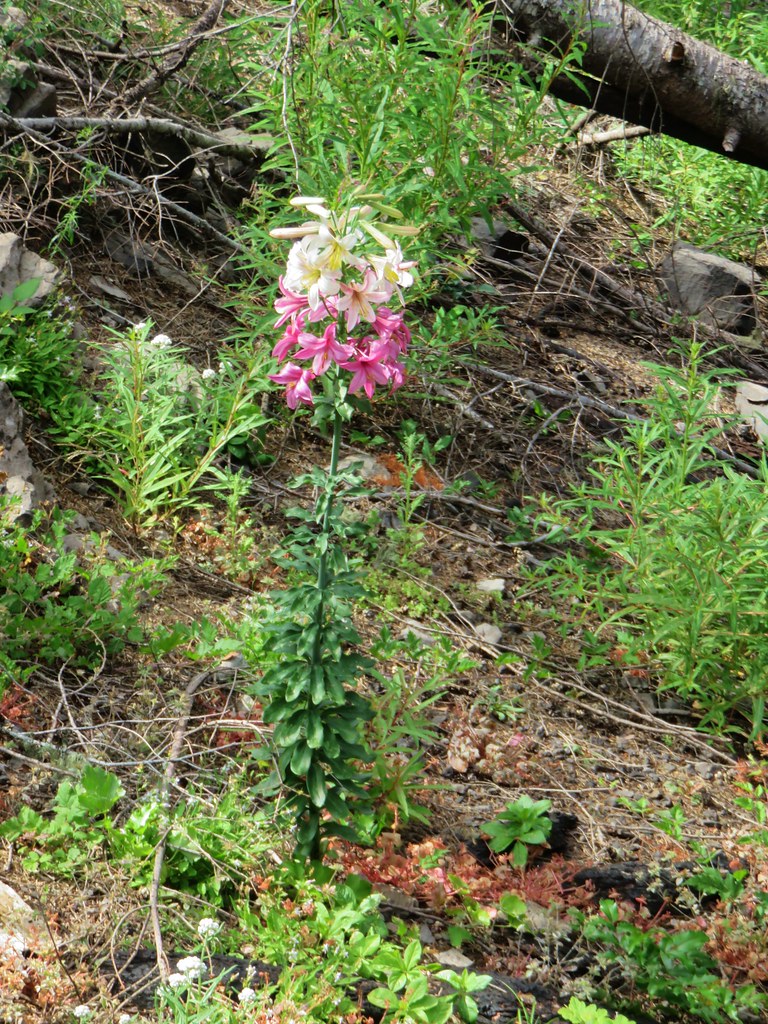
In addition to the rocks we spotted a spectacular Washington Lily with various stages of blooms. It smelled just as good as it looked too.
IMG_3458

IMG_3459

IMG_3467

As the trail neared Devil’s Peak it took a different approach than launching straight uphill and wound around to the left. The tread along the hillside had been damaged by the fire and required a little caution.
IMG_3478

IMG_3495

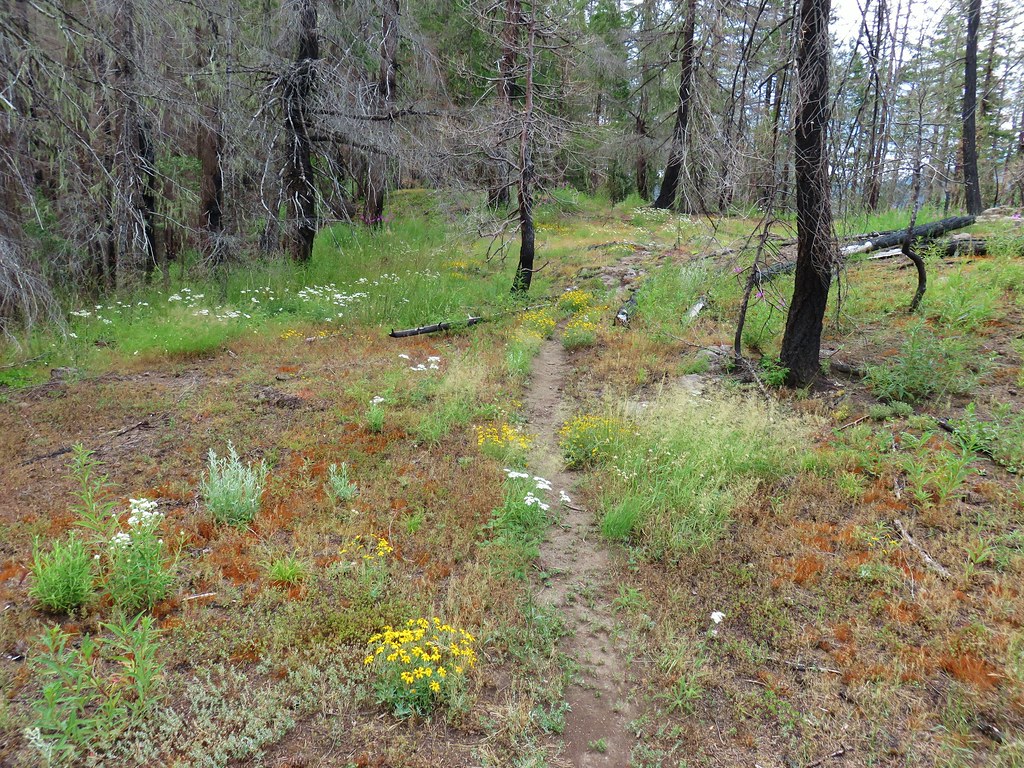
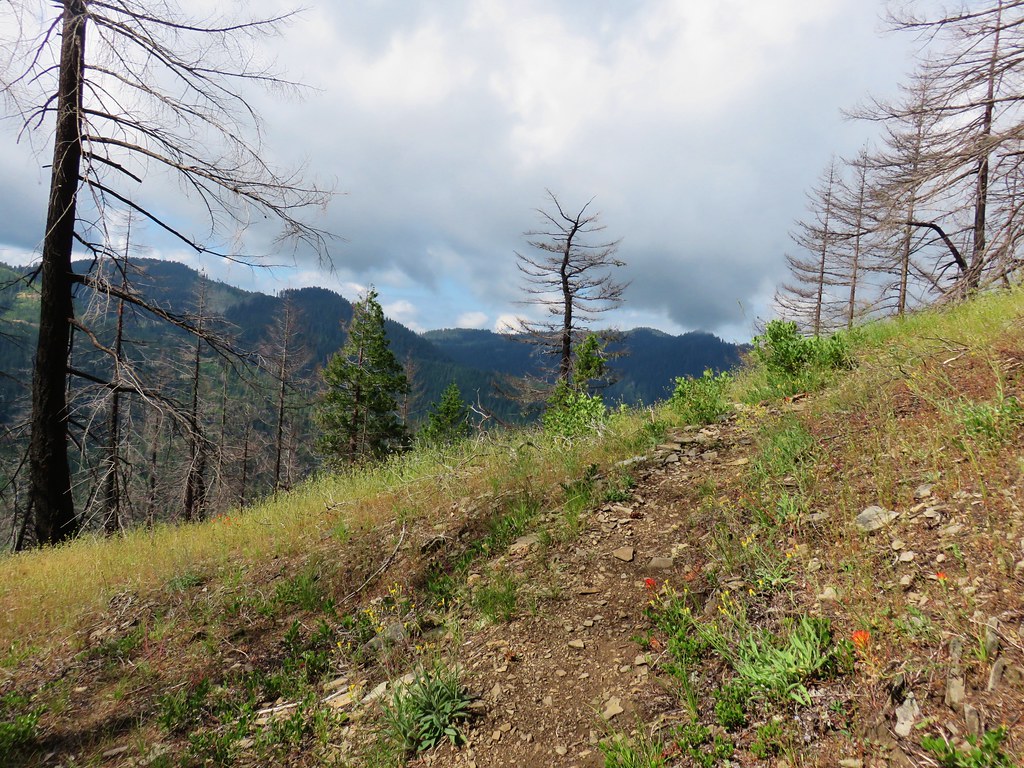
The trail wrapped around to the opposite side of Devil’s Peak where there were a few reaming wildflowers from what looked like it had been a decent display.
IMG_3498

A trail used to continue along the ridge all the way to Triangulation Peak (post) but that trail had long been abandoned before the fire.
IMG_3499

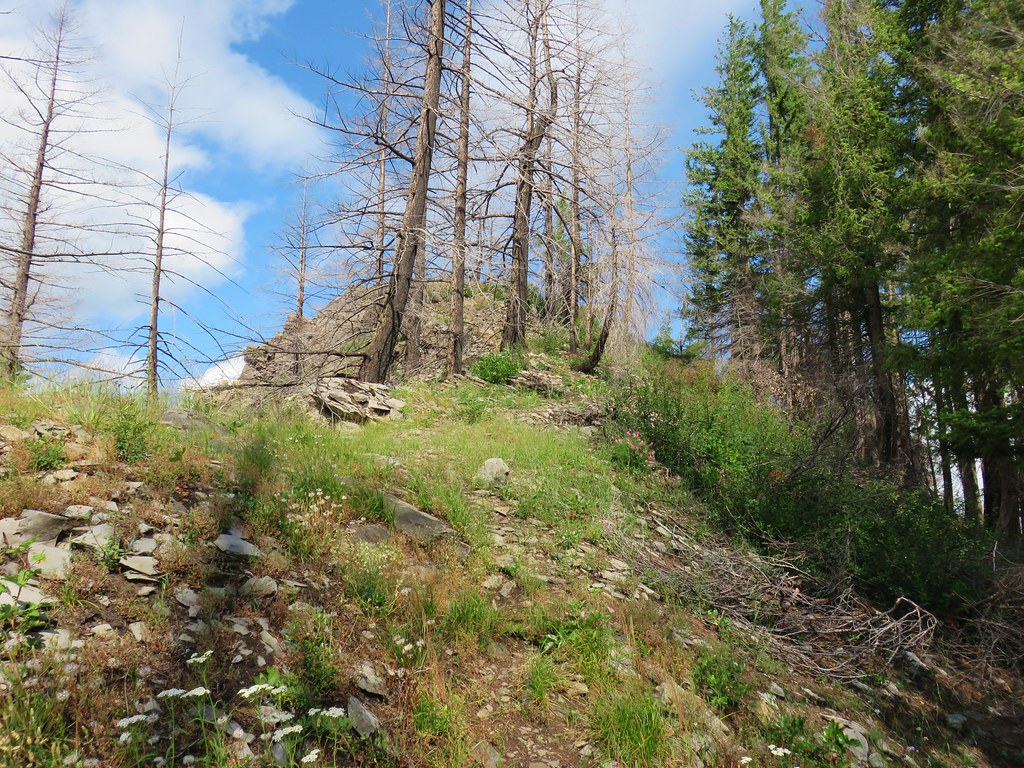
The trail now got back to business and did indeed head basically straight up to the top of Devil’s Peak.
IMG_3501

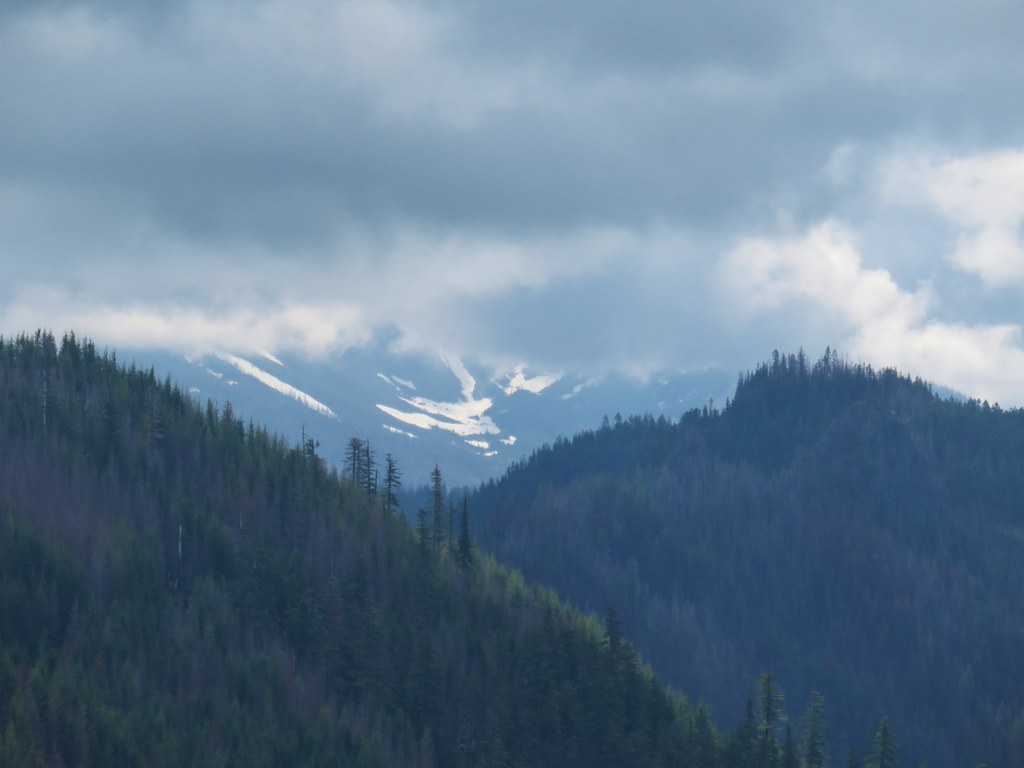
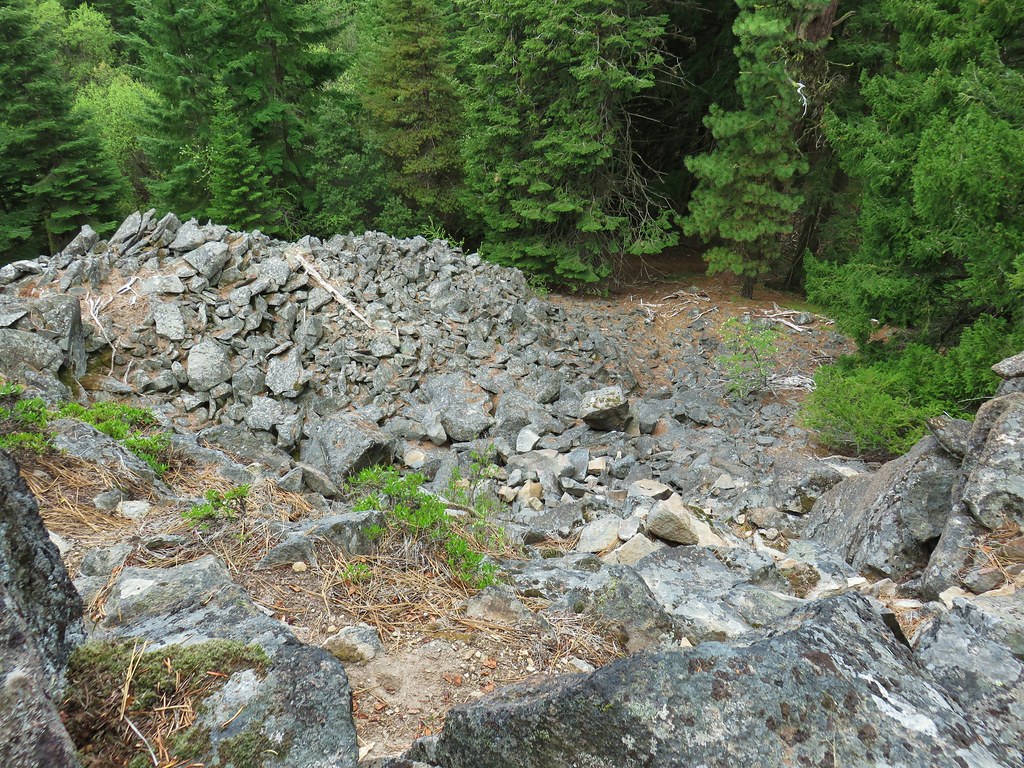
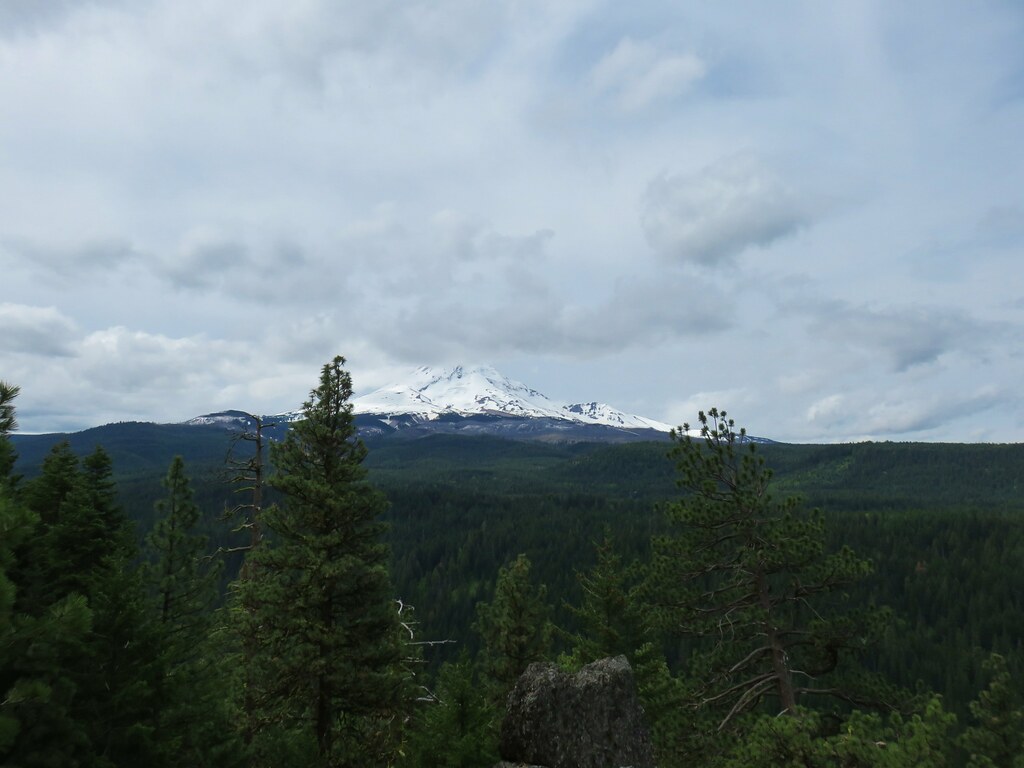
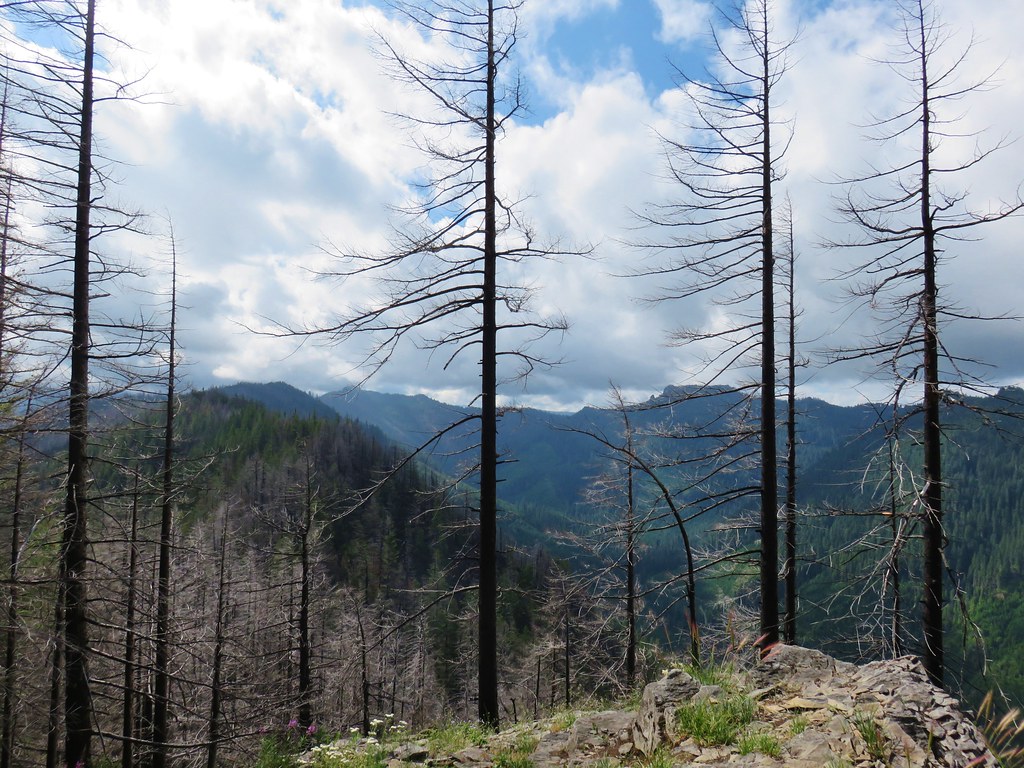
The view had reportedly been great of Mt. Jefferson before the fire and with many trees now burned the view was even more open, but those pesky clouds just weren’t cooperating.
IMG_3505
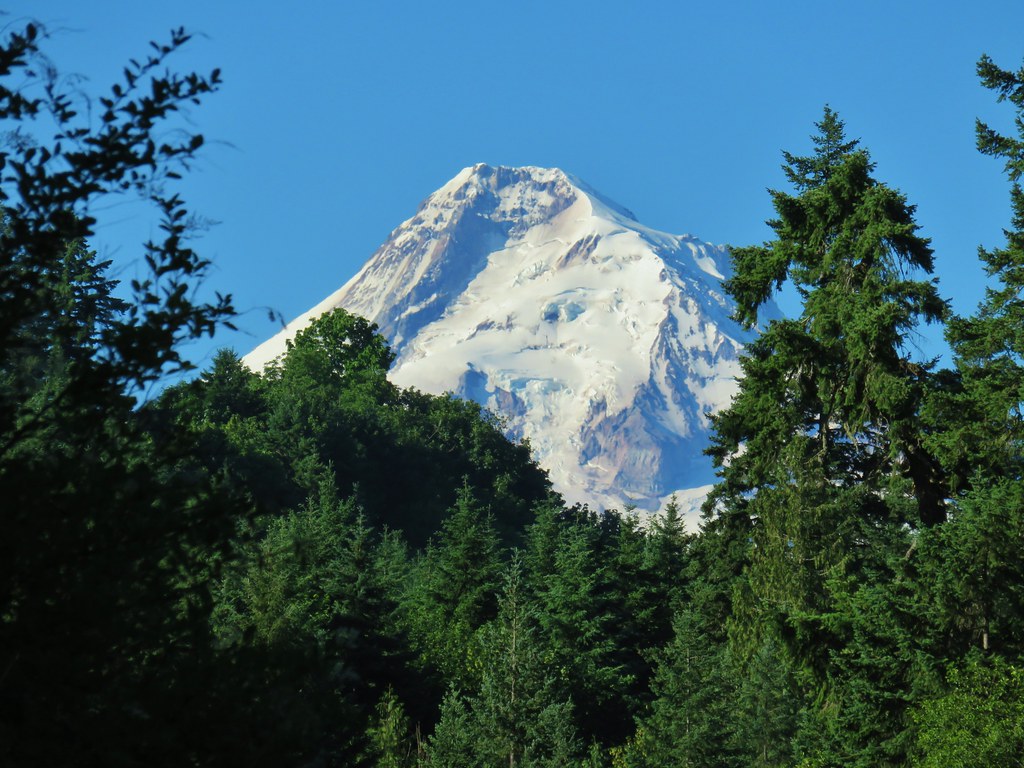
Ironically we had been able to see Mt. Jefferson clear as a bell during our drive to Detroit but the best we could get now that we were closer was a glimpse of the snowy lower flank.
IMG_3526

IMG_3527

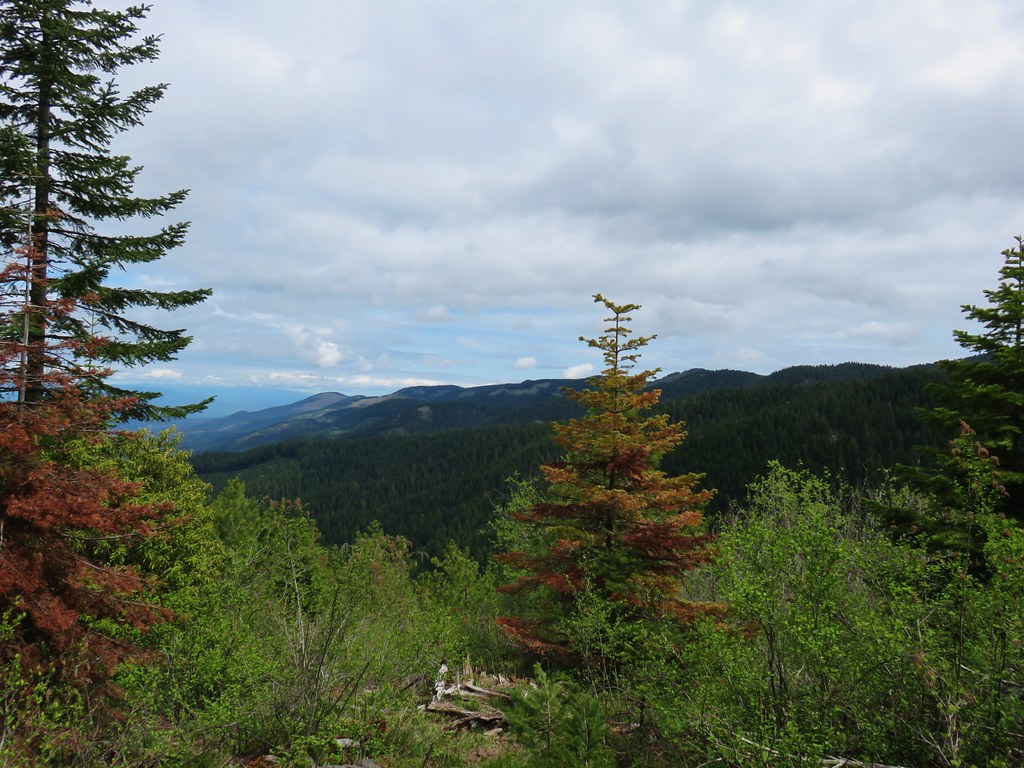
Triangulation Peak was below the clouds though.
IMG_3506

IMG_3508

We spent some time resting and exploring the summit which had some excellent rocks to sit on.
IMG_3509

IMG_3514

After a nice break we stared down. The steepness of the descent made it necessary to keep our speed under control and it was tough on the knees.
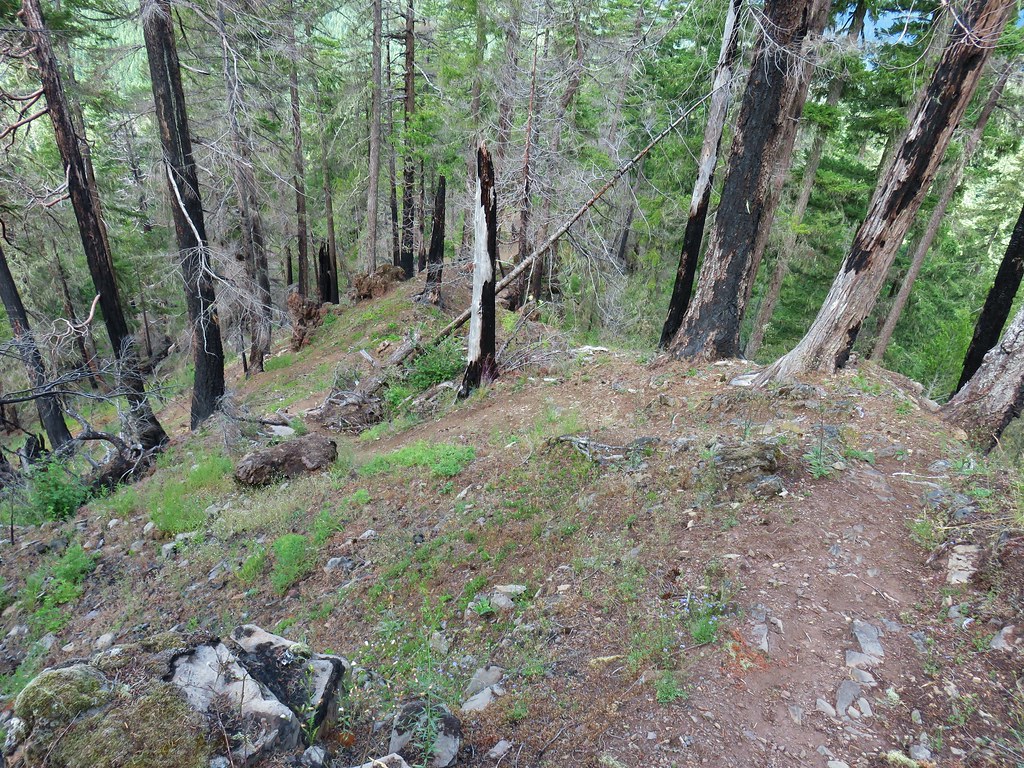
IMG_3553A typical steep section.

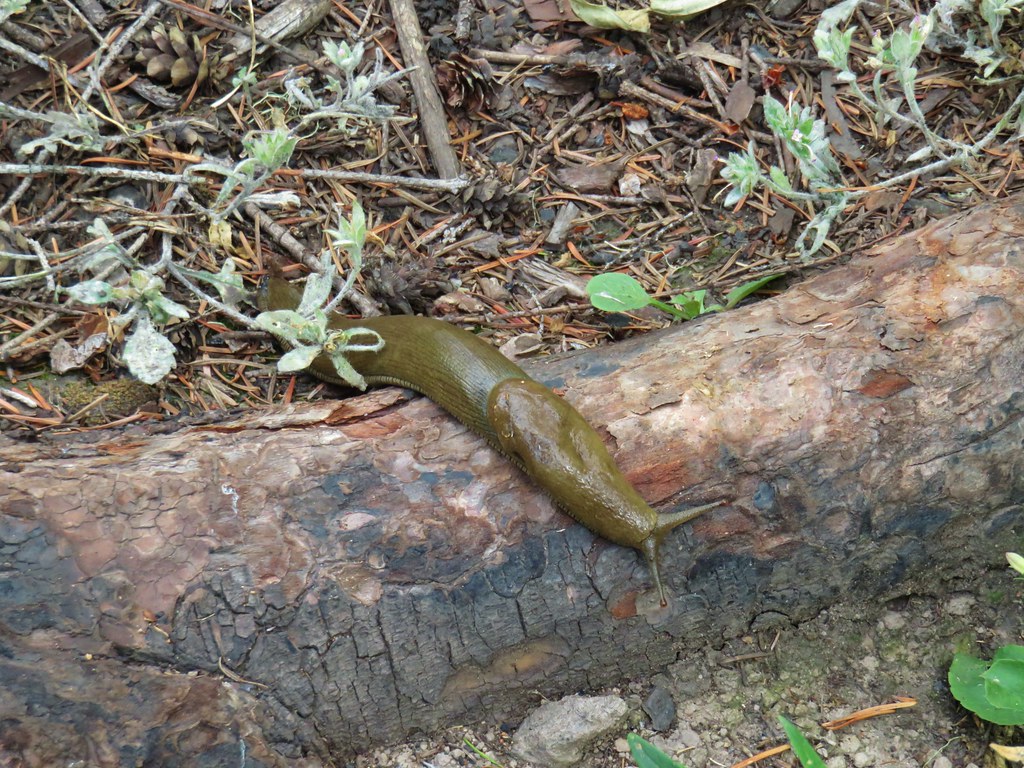
We stopped when we could, breaking for insects and ripe strawberries.
IMG_3537

IMG_3539

IMG_3547

IMG_3533

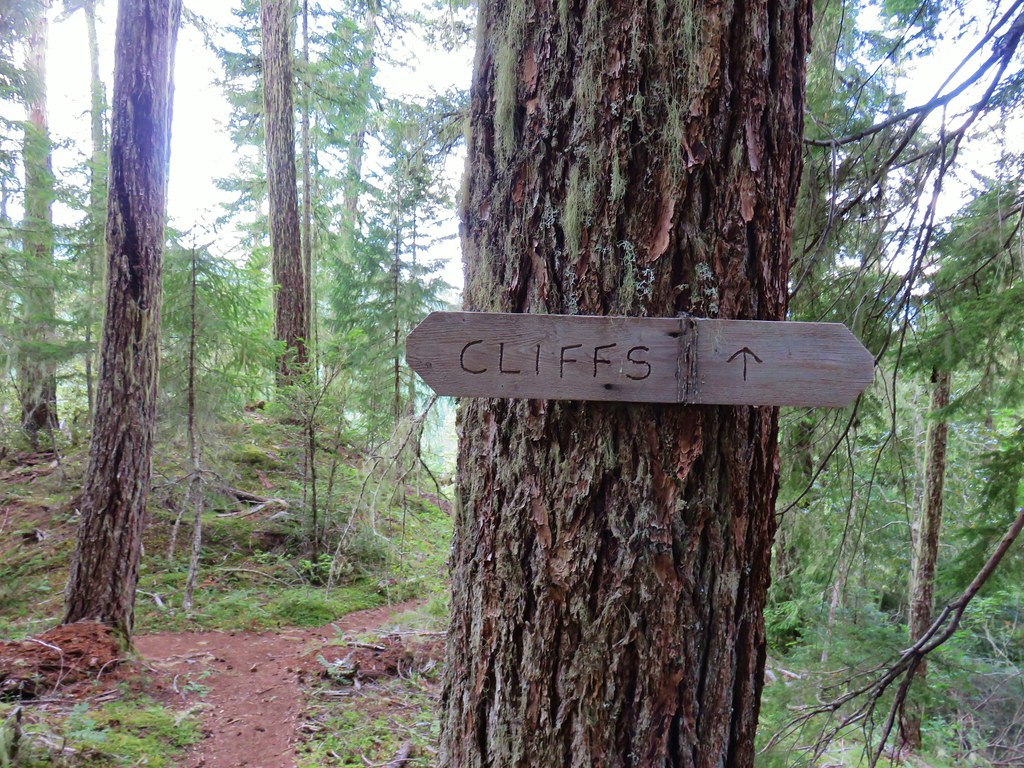
When we arrived back at the trail junction we stayed straight on the Cliff Trail which continued the theme of steep descents. After just 200 feet we veered left at a “Cliffs” pointer.
IMG_3561

IMG_3562

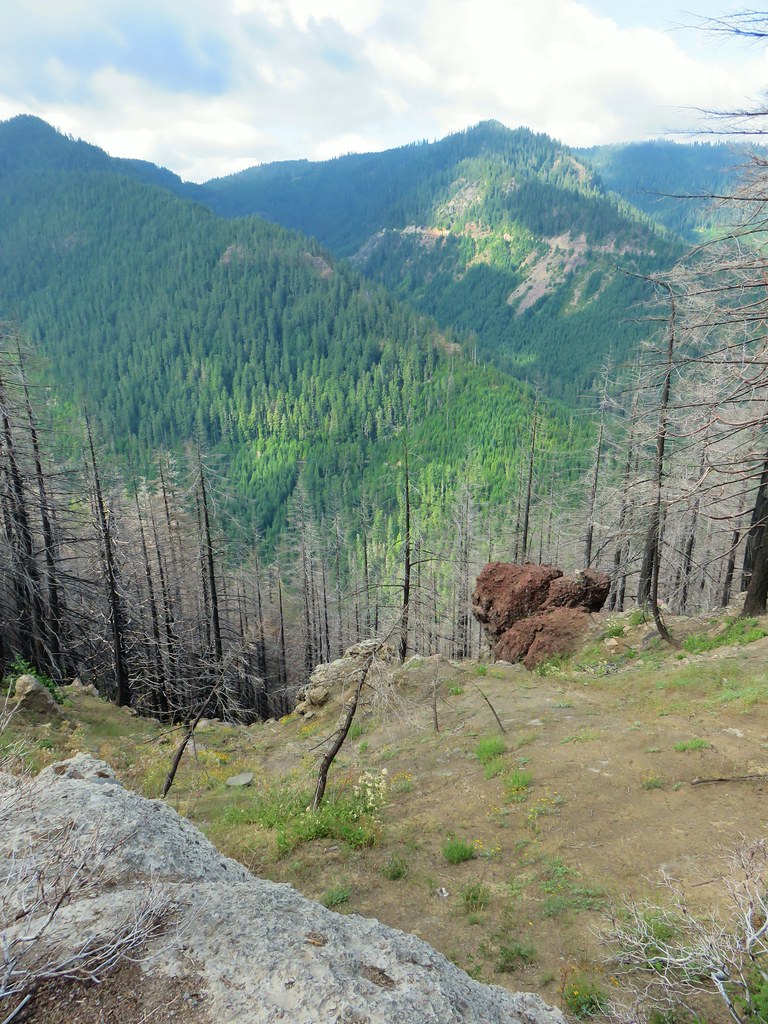
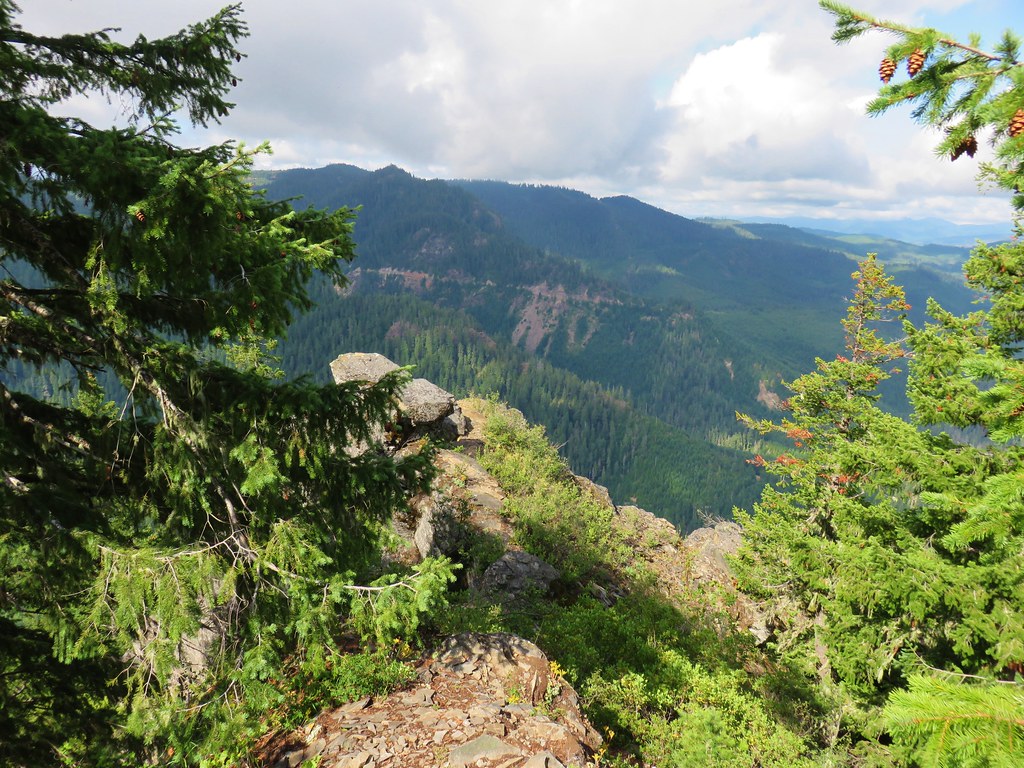
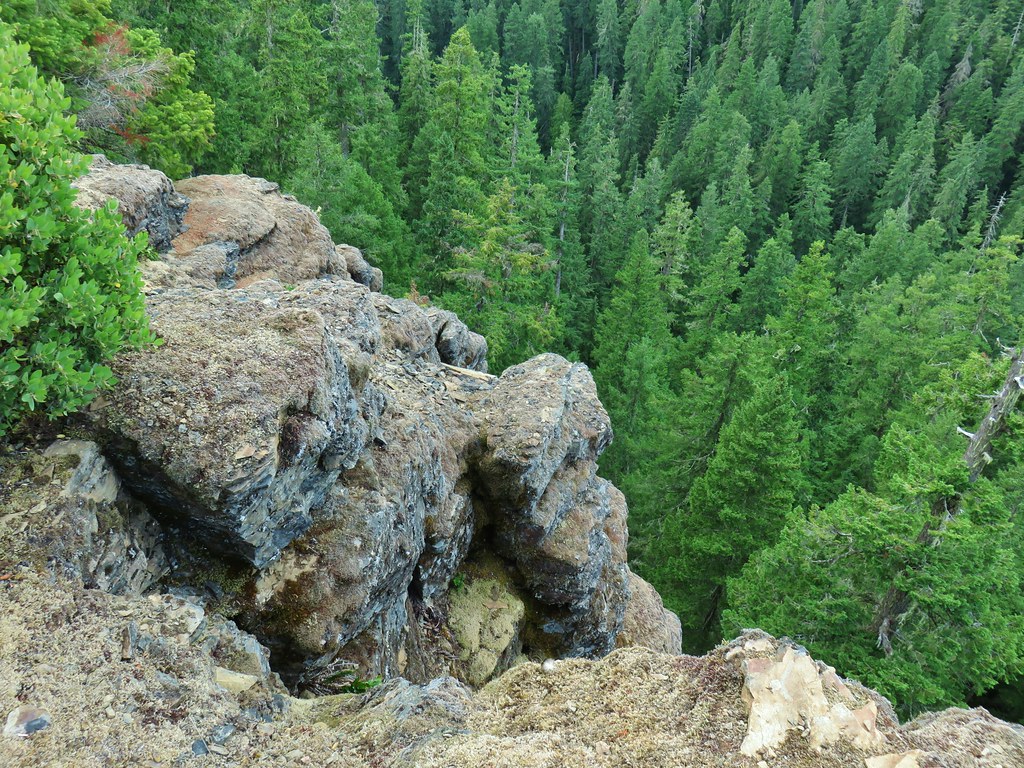
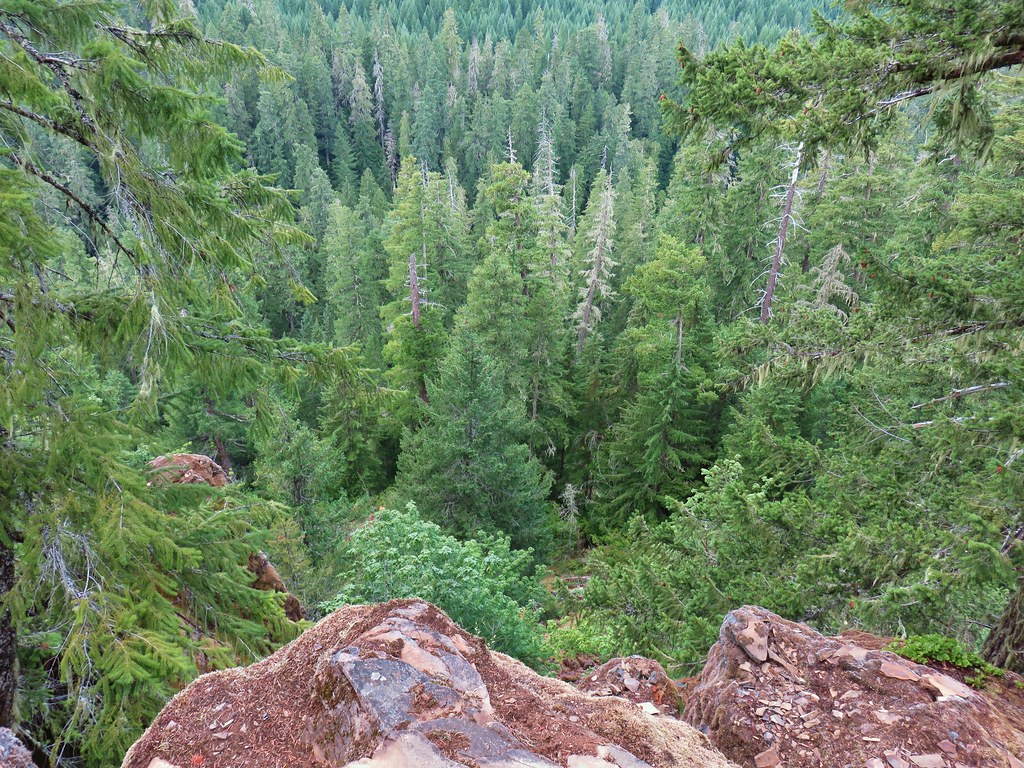
Short spur trails led out to a couple of cliff top viewpoints which overlooked the forest.
IMG_3565

IMG_3566

IMG_3568

IMG_3569

IMG_3571

IMG_3570

Beyond the cliffs the trail really dropped as it descended into a narrow valley.
IMG_3572Looking back up from the bottom.

IMG_3575Still dropping but much more gradually.

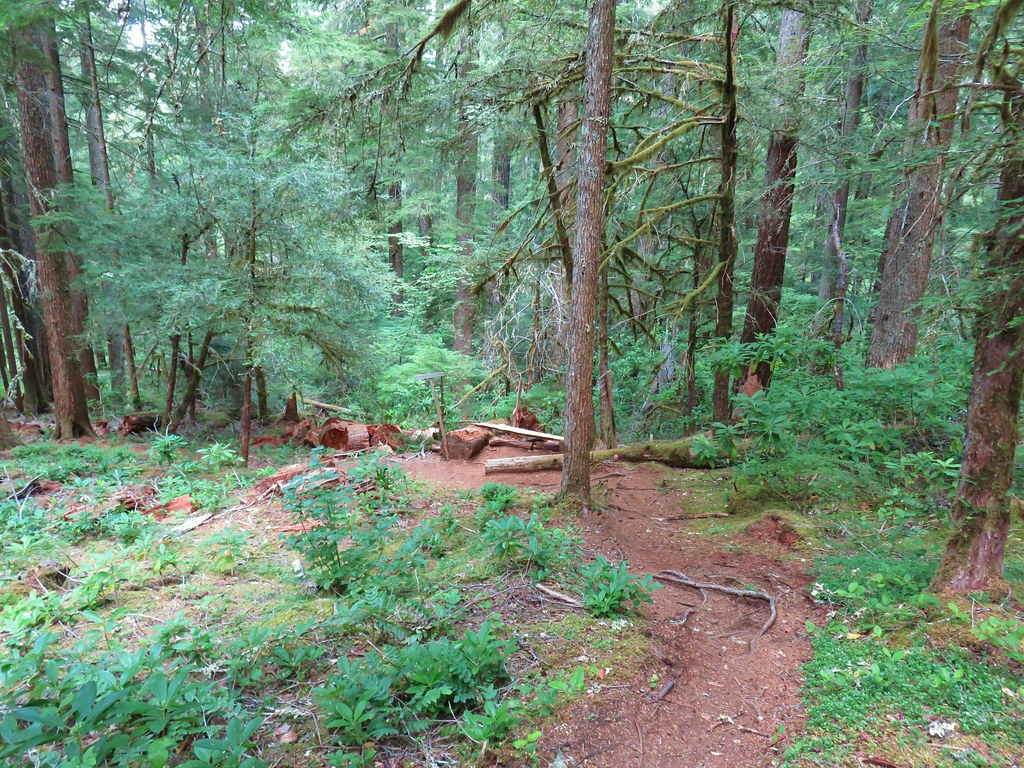
Approximately a half mile from the cliffs the trail ended at the Spotted Owl Trail. Here a right turn takes you back to the Emerald Forest Trail in half a mile where you can then return to the trailhead via the earlier route.
IMG_3577

IMG_3578

If you have a shuttle car that you left at the Spotted Owl Trailhead or if you are a guest at the resort you can turn left here and follow the Spotted Owl Trail a little over a mile to the visitor parking area at Breitenbush Hot Springs. The description in Reeder’s book has you loop through the resort but the resort has apparently hardened their stance on allowing hikers to pass through the resort itself.

This wasn’t a particularly long hike (9-10 miles) and the roughly 2400′ of elevation gain isn’t all that high a number but the steepness of those gains made this a surprisingly tough hike. It would have been nice to have had a view of Mt. Jefferson but this year seems to be the year of partly cloudy skies so all we can do is keep trying. In any event it was a nice hike and gave us a good excuse to check out the Breitenbush Cascades. Happy Trails!

Flickr: Breitenbush Cascades and Devil’s Ridge Trail

Categories
High Cascades Hiking Mt. Washington Area Oregon Trip report

Sand Mountain – 6/23/2019

For our second trip this year we had planned on heading to the North Fork Umatilla Wilderness and then to the John Day area for a couple of days but the week before our trip our 16 year old cat Buddy wasn’t doing well. After a couple of visits to the vets (and having nearly a pound of fluid removed from his lungs) he was placed on several medications. He’s doing much better now (he is currently on my lap helping me write this entry) but we didn’t want to leave him so soon so we decided to stay home and do a series of day hikes instead.
20170908_165356

Not only was this a fairly last minute change of plans but the forecast for the week was all over the place concerning chances of precipitation and the amount of clouds vs sun. We decided on a handful of potential hikes then checked the forecast for each one trying to come up with an optimal schedule. The process led us to choosing Sand Mountain for our second hike (Vista Ridge and Owl Point (post) being the first).

Sand Mountain is located near Santiam Pass in the Cascade Mountain and is a geologic study area. The U.S. Forest Service and the Sand Mountain Society seasonally staff the Sand Mountain Lookout in part to keep off highway vehicles from damaging the fragile area. Off trail travel off any kind is banned in the study area, but as we were shown by one of the Rangers in the lookout all the signs and barriers in the world can’t stop some morons from doing whatever it is they want to do as there were several tracks visible in the volcanic soil where OHVs or snow moblies had torn things up but I digress.

We chose to follow William L. Sullivan’s suggestion in his “100 Hikes in the Central Oregon Cascades” guidebook (hike #129 in the 4th edition) by parking at the intersection of FR 810 and Big Lake Road.
IMG_9950

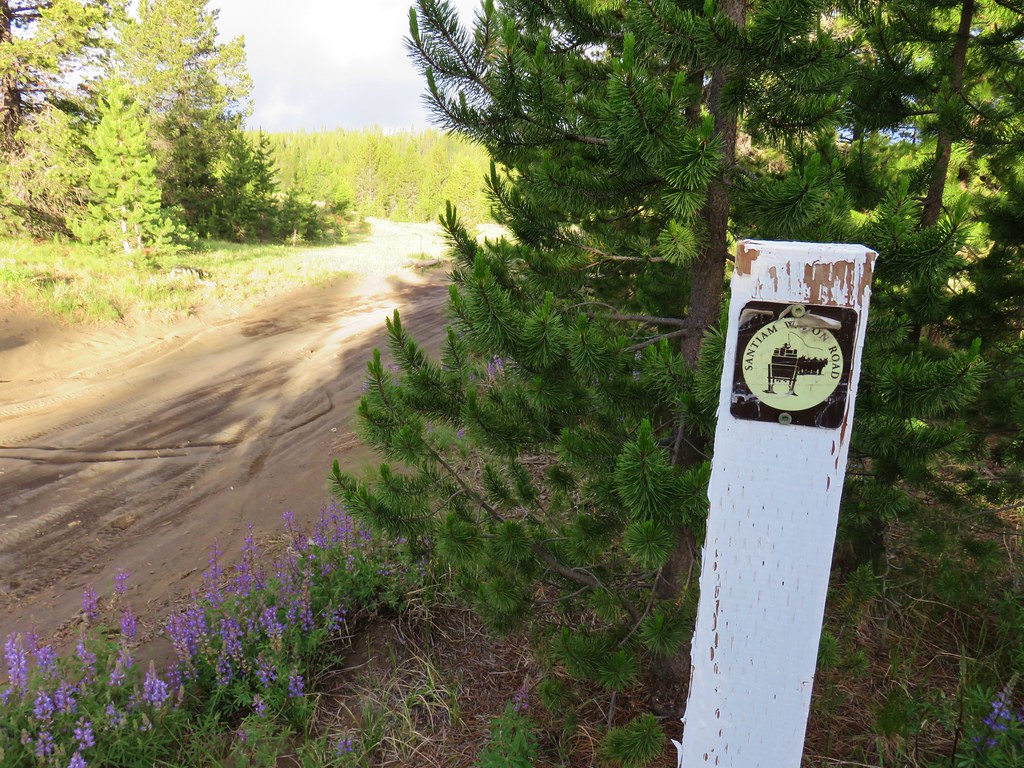
To get here turn south off of Highway 20 toward the Hoodoo Ski Area and follow Big Lake Road for 3.1 miles. FR 810 is open to vehicles which allows one to park 2.9 miles closer to Sand Mountain, but why drive on a rough 15mph dirt road if you don’t have to? Additionally FR 810 follows the route of the Santiam Wagon Road which connected the Willamette Valley to Central Oregon and was used from 1865 to 1939. The 400 mile long route is now listed on the National Register of Historic Places.
IMG_9962

IMG_9969

It was a pleasant walk with a few scattered flowers along the way.
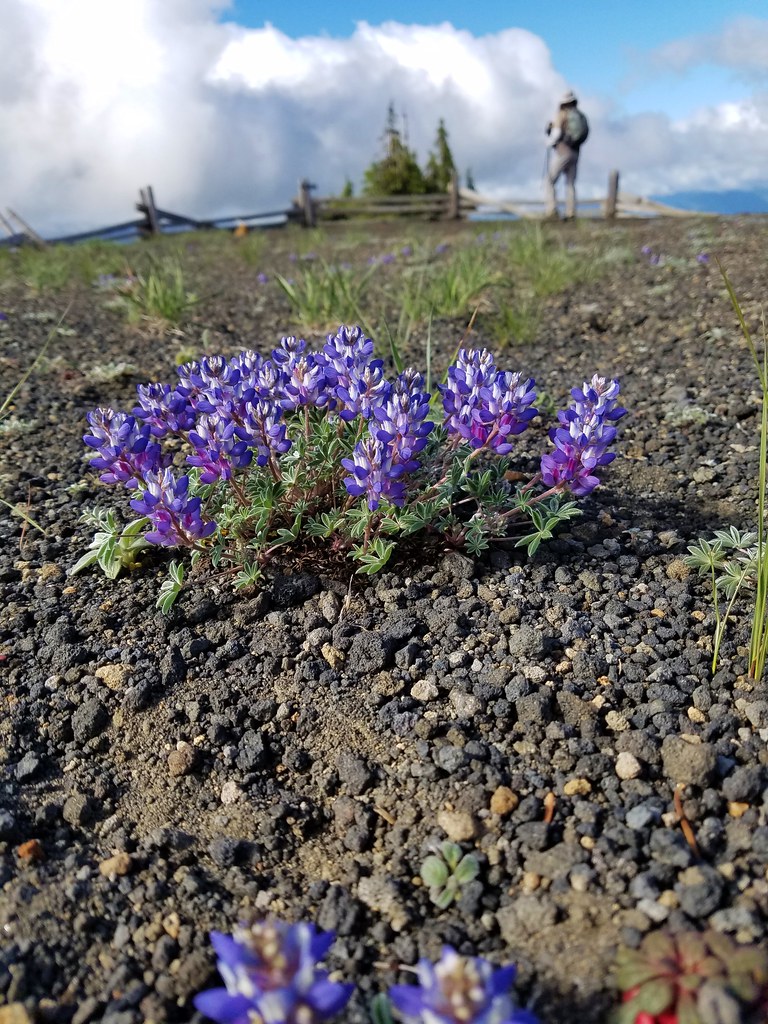
IMG_9971Lupine

IMG_9968Beargrass plumes amid the trees

IMG_9979Pussypaws

At the two and a half mile mark we came to a somewhat confusing junction.
IMG_9981

There were snow mobile signs here, one of which had a pointer for Sand Mountain.
IMG_9982

We turned left here following the pointer.
IMG_9983

After about a third of a mile we realized that we were on the wrong side of Sand Mountain so we pulled up the map and compared it with GPS to confirm our suspicions of being on the wrong track. We were indeed so we turned around, but not before getting a decent view of the Sand Mountain Lookout which appeared to be in a bit of a cloud.
IMG_9985

IMG_9986

We turned left after getting back to the junction and continued on the Santiam Wagon Road another .4 miles to a sign for the Sand Mountain Special Interest Area. This would be the starting point for the shorter hike option.
IMG_9989

Here we turned left again passing a gate and several notices regarding the prohibited activities in the area.
IMG_9991

IMG_9992

The road bed passed by a dark bed of ash as it began climbing up Sand Mountain.
IMG_0001

IMG_0008

We were seeing a bit of blue sky overhead as we climbed around and up the west side of the cinder cone but the only cloud free mountain we could make out was Iron Mountain (post).
IMG_0010

IMG_0011Iron Mountain

After a mile and a half we arrived at the old trailhead, now a large parking area for the Forest Service and volunteers who staff the lookout.
IMG_0013

IMG_0015

We headed up the trail which again had several notices stating foot traffic only and reminders to stay on the marked trail.
IMG_0016

IMG_0024

IMG_0030

IMG_0039

From this trail we could see Hoodoo, Hayrick Butte, and Black Butte (post)along with the blue waters of Big Lake.
IMG_0029From left to right – Hoodoo, flat topped Hayrick Butte, and Black Butte (behind Cache Mountain).
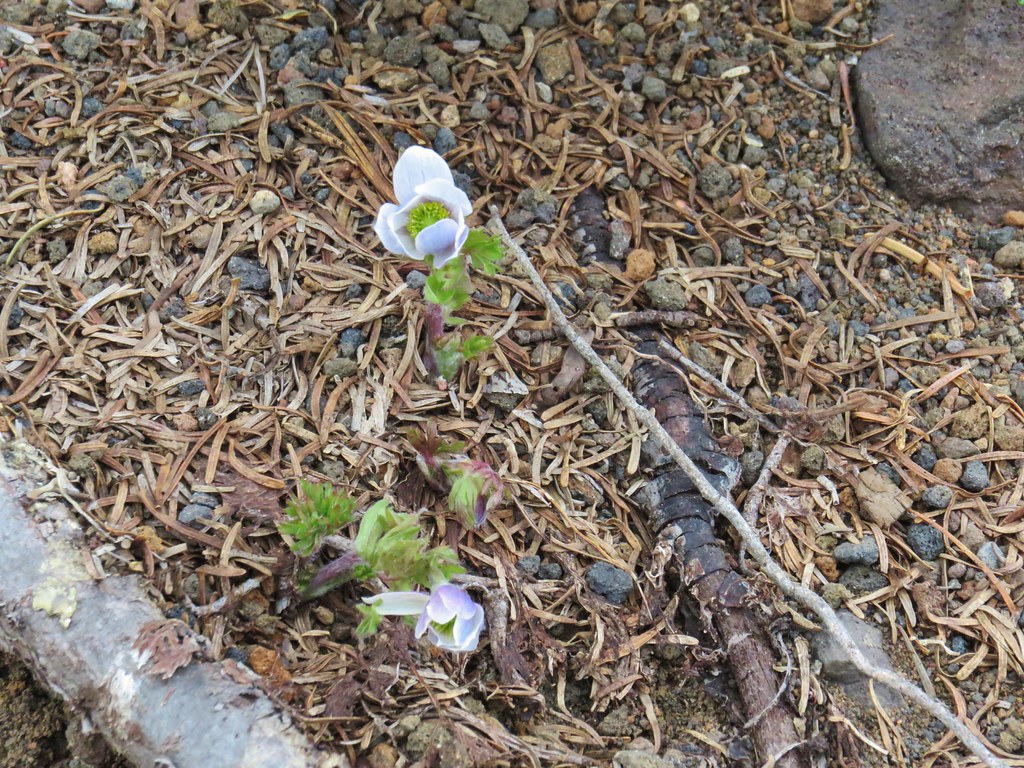
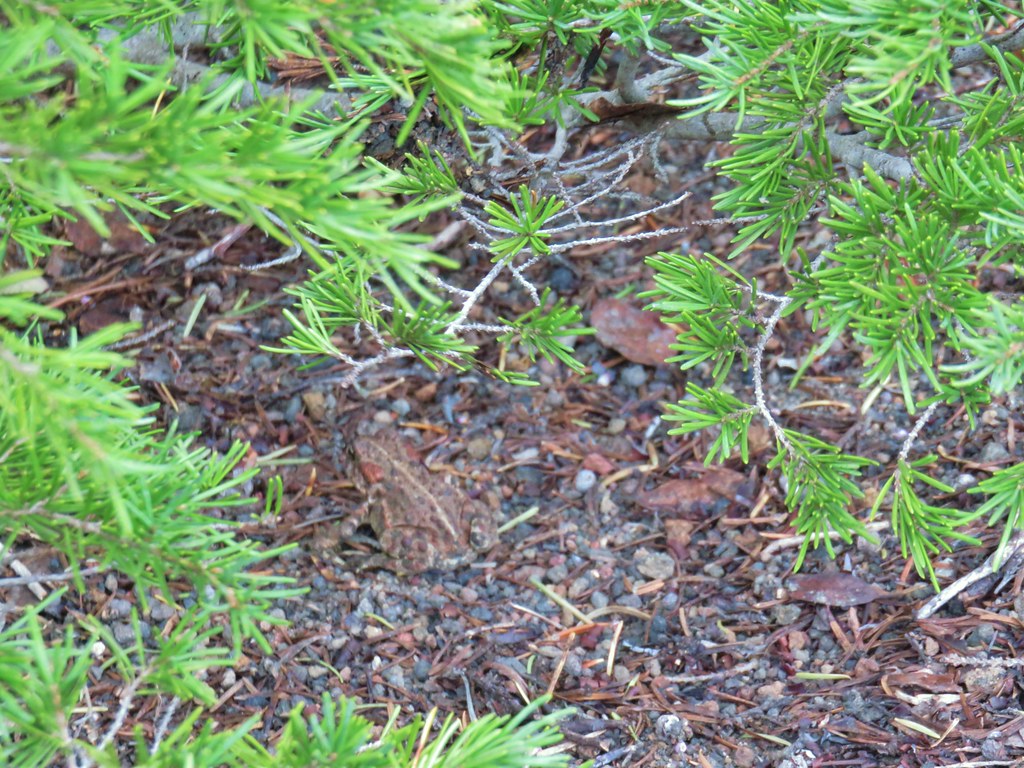
There was just a bit of snow left over on the trail and a few western pasque flowers were starting to bloom and a western toad was out and about.
IMG_0032

IMG_0035

IMG_0196

IMG_0040

We arrived at the base of the lookout tower after climbing for about a third of a mile.
IMG_0044

A Forest Service Ranger came out to greet us and give us an informative lesson on Sand Mountain and the surrounding geologic area. Sand Mountain is the largest in a series of 23 cinder cones formed along a N-S fissure which also includes 42 distinctive vents and over three quarters of a cubic mile of lava. She informed us that the snow melt from Sand Mountain seeps through the cinder and ash into a large aquifer where after approximately 2 years it makes its way into Clear Lake via the Great Springs and then down the McKenzie River. (post)

We were also informed that Sand Mountain is home to pygmy short-horned lizards but the ranger wasn’t sure that we would see any given the cloudy conditions and chilly breeze. She let us know that we could follow a path down to a viewpoint on the rim of the northern crater and that we were also allowed to hike around the rim if we wanted but she did mention that the climb up the northern end was somewhat steep. We thanked her for the information and headed down to the viewpoint.
IMG_0046

20190623_085411Dwarf lupine at the viewpoint.

The clouds appeared to be breaking up to the west over the Old Cascades.
IMG_0051

The same didn’t appear to be true to the SE though where the snowy Cascade Mountains were still squarely behind the clouds.
IMG_0055

We opted to go around the rim in a counter-clockwise rotation. That way we would be hiking directly toward the Cascades as we looped around in hopes that they might yet clear up.
IMG_0057Starting the loop from the viewpoint.

There really wasn’t any visible tread to speak of on the side of the rim below the lookout and we briefly wondered if we had done something wrong. We stepped as lightly as possible and avoided the patches of vegetation along the way.
IMG_0058

IMG_0060Penstemon and snowbrush

We eventually made it to what appeared to be an old road bed where the path became a bit clearer.
IMG_0061

IMG_0062

The hike around the crater was very interesting. A surprising amount of wildflowers were blooming in the rocks and the views down into the crater were impressive.
IMG_0069

IMG_0081

20190623_090751

20190623_090846

IMG_0096

IMG_0105

IMG_0103

As we rounded the crater there was a nice view across to the lookout.
IMG_0094

About this time the Old Cascades had finally shaken off their cloud cover allowing us to identify some additional features.
IMG_0089The Three Pyramids with Scar Mountain (post) to the far right.

IMG_0090Crescent Mountain (post)

IMG_0091Echo Mountain and North Peak

As we continued toward the Cascades things began looking up that way as well.
IMG_0104

We paused when we were directly across the crater from the lookout to watch the Three Sisters become nearly cloud free.
IMG_0126

IMG_0120Belknap Crater (post), the Three Sisters, and the Husband.

IMG_0124

I pushed on heading steeply uphill now hoping to get a view of Mt. Washington as well. As I was climbing I thought I saw another toad, but it turned out to be on of the pygmy short-horned lizards the ranger had told us about.
IMG_0140

IMG_0143Mt. Washington joining the show.

Another short but steep section of climbing brought me up to an even better view which now also included Big Lake and to a second lizard.
IMG_0153

IMG_0151

IMG_0166

IMG_0168

I waited with the lizard for Heather who had stopped at the first lizard.
IMG_0152Can you see Heather’s hat?

We hung out with our new lizard friend while we watched the mountains uncover further.
IMG_0176

IMG_0171The Husband

IMG_0178Mt. Washington

IMG_0182Scott Mountain (post) and a snowy Maiden Peak (post) in the distance.

The only one that wasn’t playing nice was Three Fingered Jack to the NE.
IMG_0181

Near the viewpoint area below the lookout we spotted our third lizard.
IMG_0186

Interestingly they all seemed to have slightly different coloration but each blended very well with their surroundings.

From the viewpoint we could now also see part of Mt. Jefferson, but like Three Fingered Jack it was still partly obscured by clouds.
IMG_0189

IMG_0190Maxwell Butte (post) in front of Mt. Jefferson.

We headed back down Sand Mountain hoping that as we did so the other peaks might come out.
IMG_0197Looking toward Mt. Jefferson and Three Fingered Jack at a quarter to ten.

IMG_0215Looking toward Mt. Jefferson and Three Fingered Jack at a quarter after ten.

IMG_0224Looking toward Mt. Jefferson and Three Fingered Jack at a 10:23am.
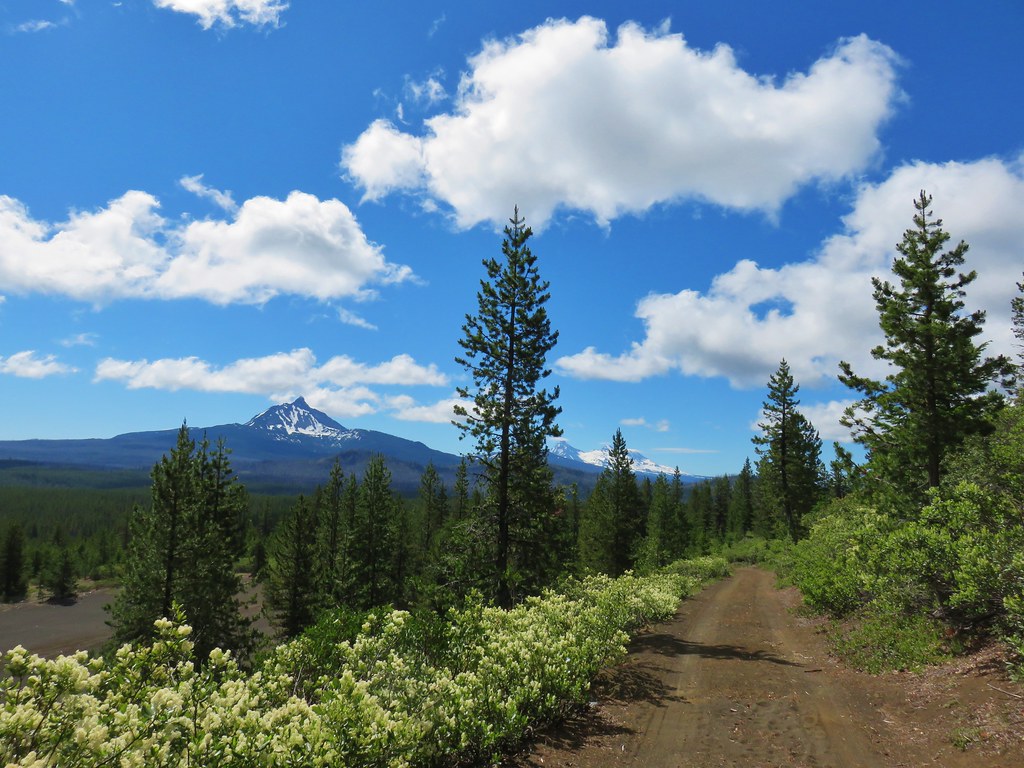
IMG_0227

As we wound our way down we ended up heading directly toward Mt. Washington and the Three Sisters. Each of the Three Sisters seemed to be working on small lenticular clouds.
IMG_0230

IMG_0234

We returned the Santiam Wagon Road and headed back. On the return trip we spotted a few butterflies, a golden-mantled ground squirrel and some orange agoseris which we had somehow missed on our way in.
IMG_0240

IMG_0249

IMG_0251

IMG_0244

I also briefly detoured to check out a beargrass patch along some of the official OHV trails.
IMG_0258

IMG_0259

With our .6 mile detour up the snowmobile track we wound up with an 11.3 mile hike, another 5.8 of which could have been removed by driving up FR 810.

We took the long way back to Salem opting to follow Highway 20 over Tombstone Pass to stop at the Rooster Rock Trailhead.
IMG_0270

This was less of a hike and more of a quest for a picture of a Menagerie Wilderness sign. We had hiked to Rooster Rock in 2016 (post) from a different trailhead but there had been no wilderness sign on that route. The shorter but steeper Rooster Rock Trail enters the Menagerie Wilderness less than a quarter mile from the trailhead and before the trail starts its climb so I hopped out of the car and hustled up the trail to see if there was a sign along this path.
IMG_0273

There was part of a sign at least at the wilderness boundary which was better than nothing.
IMG_0275

I did do a quick search in the immediate vicinity hoping to locate the other half but was unable to. Satisfied with the outcome I returned to Heather and the car and we headed home to Buddy (and Hazel our other kitty). Happy Trails!

Flickr: Sand Mountainm

Categories
High Cascades Hiking Mt. Hood Area Oregon Trip report

Vista Ridge and Owl Point – 6/22/2019

In 2017 we hiked the Vista Ridge Trail to Eden Park, Cairn Basin, and Elk Cove in the Mt. Hood Wilderness (post). It had been a cloudy August day which deprived us of any views of the mountain save for a brief glimpse from Elk Cove. The lack of views was enough to put the trail back on our to do list, but there were a couple of other reasons we had wanted to get back to this trail. First was the side trip to Owl Point along a segment of the Old Vista Ridge Trail which was reclaimed by volunteers in 2007. The second was a desire to see the avalanche lilies that bloom profusely on Vista Ridge in the fire scar left by the 2011 Dollar Fire.

We had been following reports on the avalanche lilies from fellow hikers and after seeing that they were blooming we checked the weather forecast for a clear day and headed up to the Vista Ridge Trailhead.
IMG_9657

The view of Mt. Hood had been clear on our drive so we decided to head out to Owl Point first and then up Vista Ridge for the lilies. We followed the Vista Ridge Trail for .4 miles to a junction with the Old Vista Ridge Trail at the edge of the 2011 fire scar.
IMG_9661

IMG_9664

We turned left onto the Old Vista Ridge Trail and headed toward Owl Point. The trail, which relies on volunteers to keep it maintained, was in good shape.
IMG_9666

As we made our way north along though we began to run into some fog.
IMG_9667

We had gone a little over half a mile from the junction and decided to turn back and save the viewpoint for later not wanting to risk missing out on a view. We backtracked to the junction, filled out a wilderness entry permit and headed up a fog free Vista Ridge.
IMG_9671

IMG_9675

Unlike our last visit this time we could see Mt. Hood through the snags as we climbed.
IMG_9683

Looking back over our shoulders we could see the cloud that had caused us to turn back was not actually over Owl Point.
IMG_9689

IMG_9690 Mt. Adams beyond Owl Point

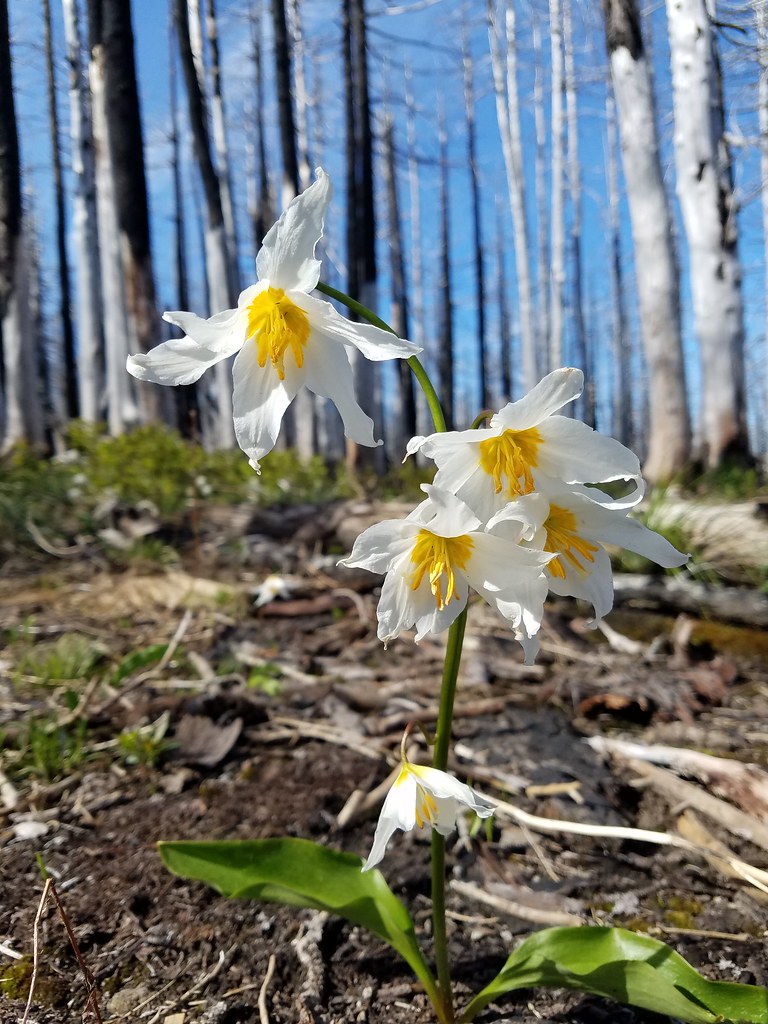
Most of the avalanche lilies were already past until shortly after entering the Mt. Hood Wilderness a mile up the Vista Ridge Trail.
IMG_9692

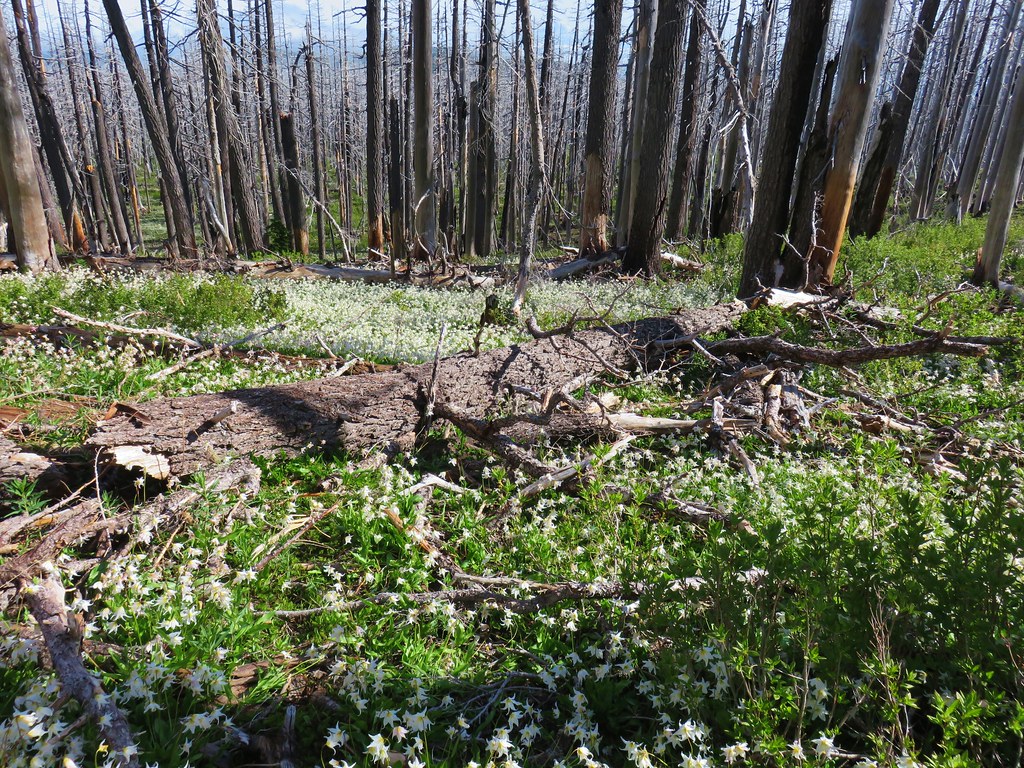
At first the lilies were sparse but then small patches appeared followed by increasingly large fields of white.
IMG_9696

IMG_9697

IMG_9700

IMG_9702

IMG_9706

IMG_9721

20190622_091402

As we gained elevation we left the heavy bloom behind and began seeing flowers that had yet to open.
IMG_9736

We hit snow about two and a quarter miles from the trailhead.
IMG_9738

IMG_9739

It was patchy and navigable without needing our microspikes and we continued uphill for another quarter mile passing a nice view of Mt. Adams and the Eden Park Trail along the way.
IMG_9745

IMG_9748

IMG_9749Eden Park Trail

We ended our climb at a snowfield where the Vista Ridge Trail headed left of the ridge toward its junction with the Timberline Trail.
IMG_9765

The trail looked passable with the microspikes but we had a nice view from where we were and didn’t see a point in continuing on given we still wanted to get out to Owl Point and we were planning on hiking for the next three days straight.
IMG_9763

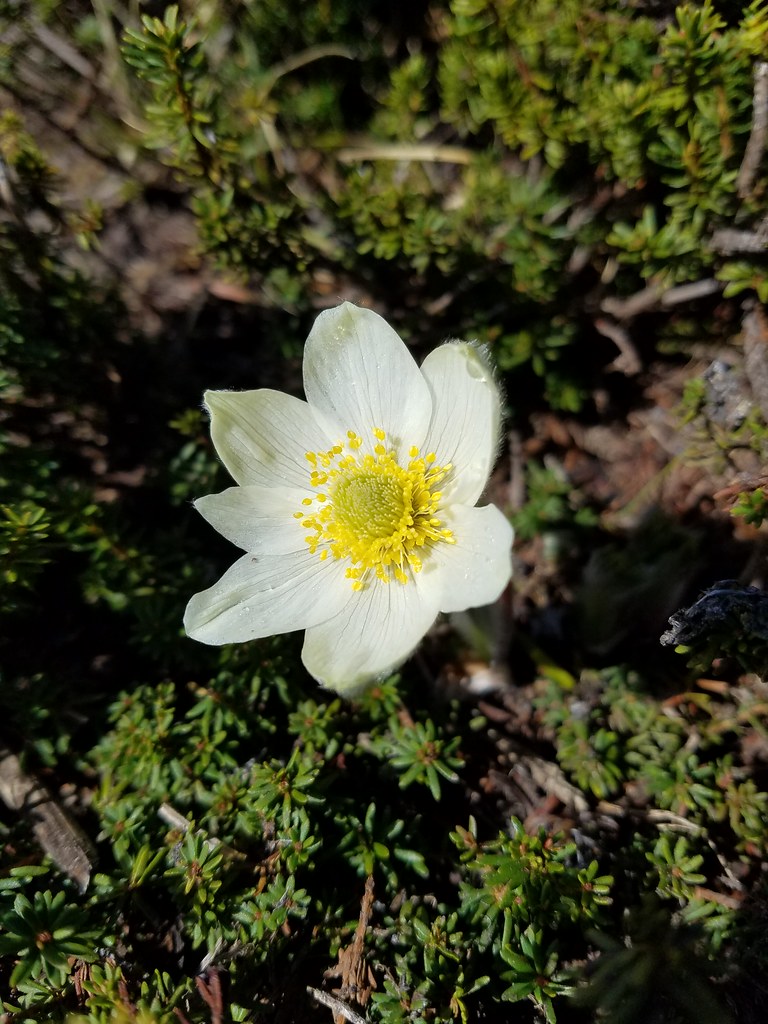
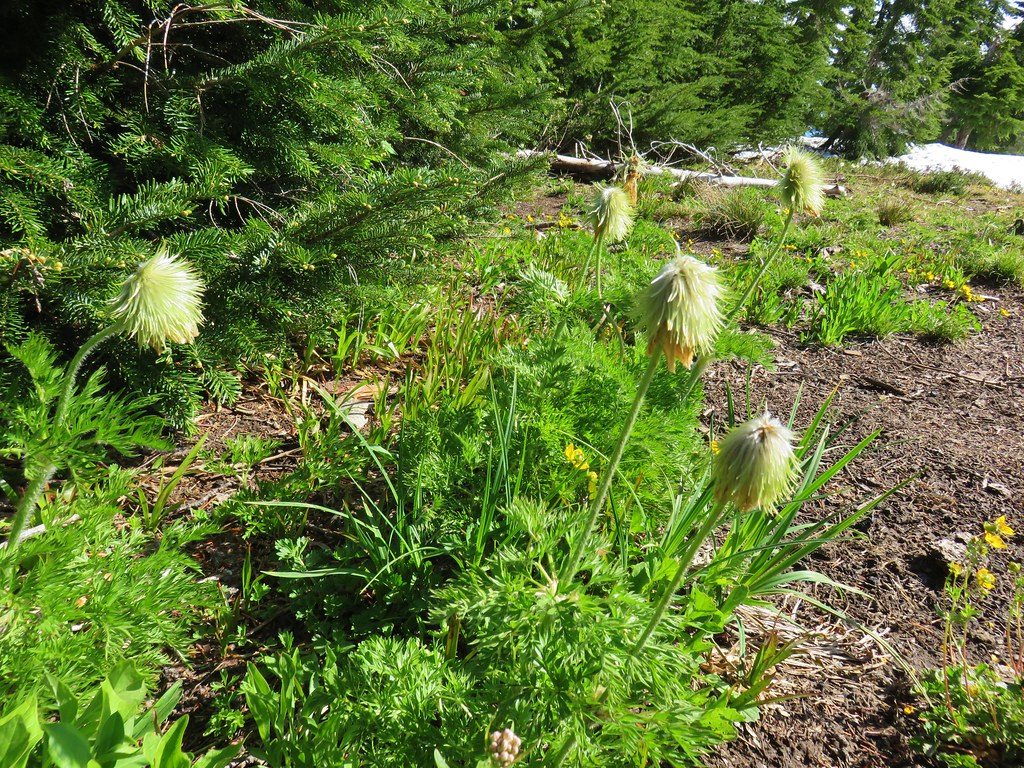
Near our turn around we spotted some other early bloomers – western pasque flowers aka hippies on a stick.
IMG_9769

20190622_093738

IMG_9774western pasque flowers already going to seed
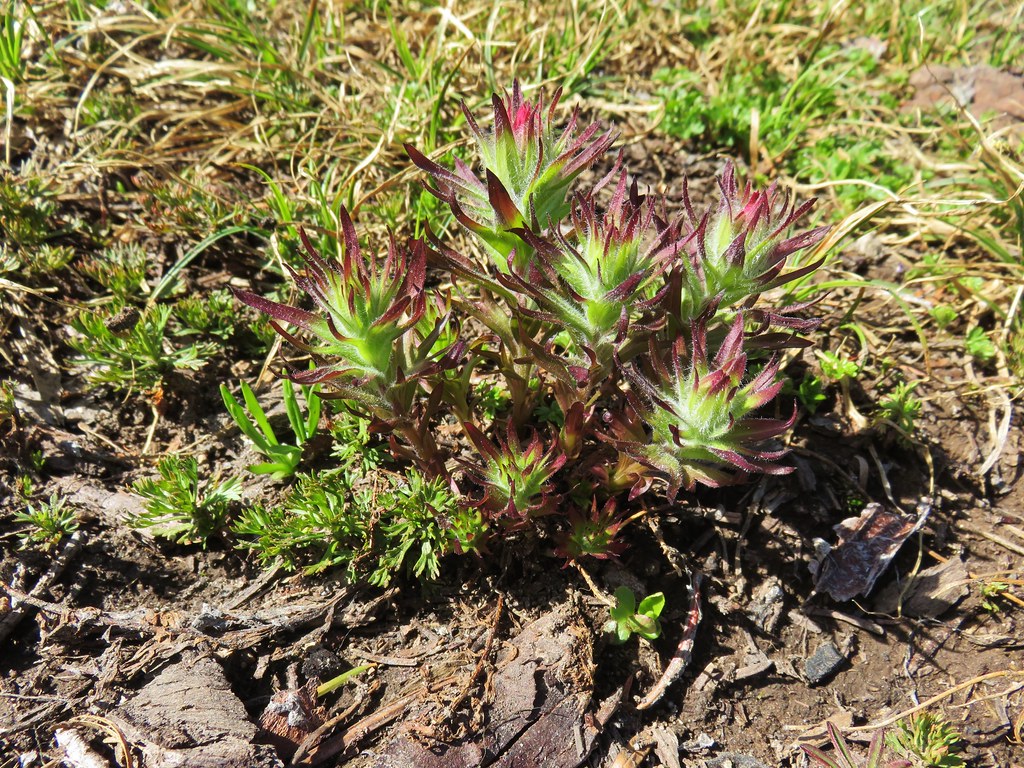
Paintbrush and cinquefoil was also present.
IMG_9781

20190622_093621

After an extended break enjoying the view of Mt. Hood we headed back down to the Old Vista Ridge Trail junction stopping along the way to once again admire the avalanche lilies and also to share a moment with a friendly yellow-rumped warbler.
IMG_9826

IMG_9834

We turned back onto the Old Vista Ridge Trail and repeated the first section which seemed to climb more this second time. (At least our legs felt like it did.) This time there was no fog though and we soon found ourselves at a viewpoint looking at Owl Point.
IMG_9856

There was also a decent view of Mt. Hood.
IMG_9866

After the initial climb the trail leveled out some along the ridge top where a few patches of snow remained.
IMG_9874

That meant more avalanche lilies, although nowhere near the numbers that Vista Ridge was home to.
IMG_9879

After climbing to a saddle we came to a sign for The Rockpile viewpoint.
IMG_9885

IMG_9886

The short spur trail led out to a nice view of Mt. Hood but we had startled a dog that was with some backpackers and it wouldn’t stop barking so we quickly took our leave heading for quieter surroundings.
IMG_9888

IMG_9892

The spur trail to Owl Point was just a tenth of a mile from the trail to the Rockpile.
IMG_9894

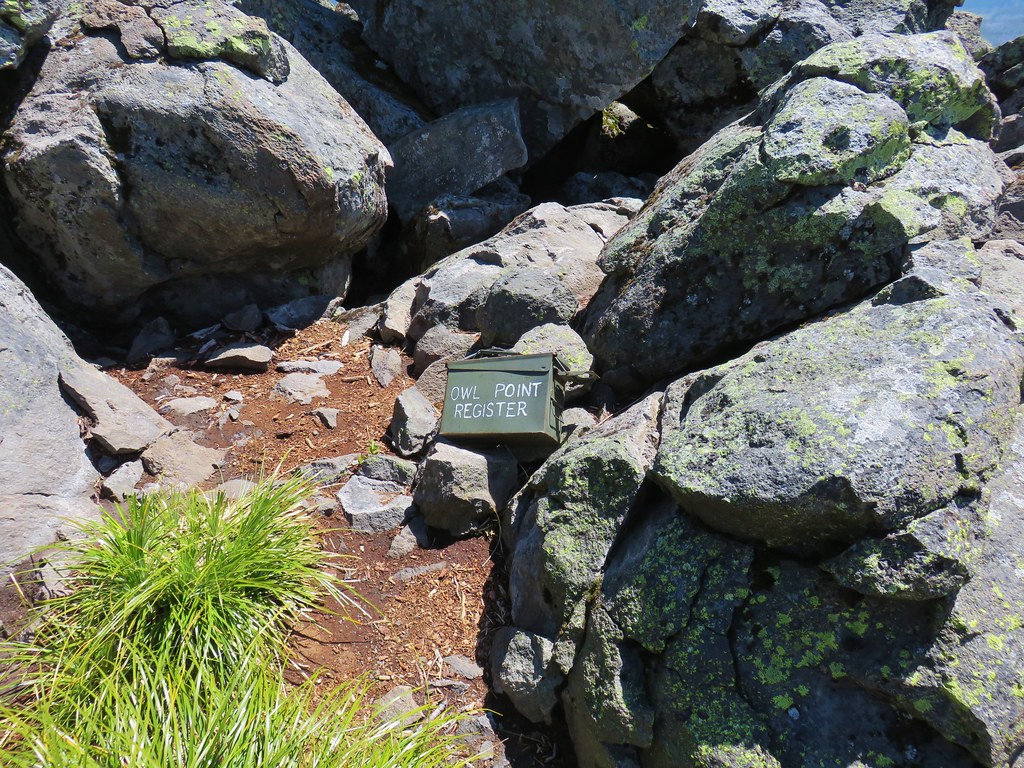
We followed this spur to it’s end at a register at Owl Point.
IMG_9898

IMG_9899

Laurance Lake lay below to the east with Surveryors Ridge beyond.
IMG_9900

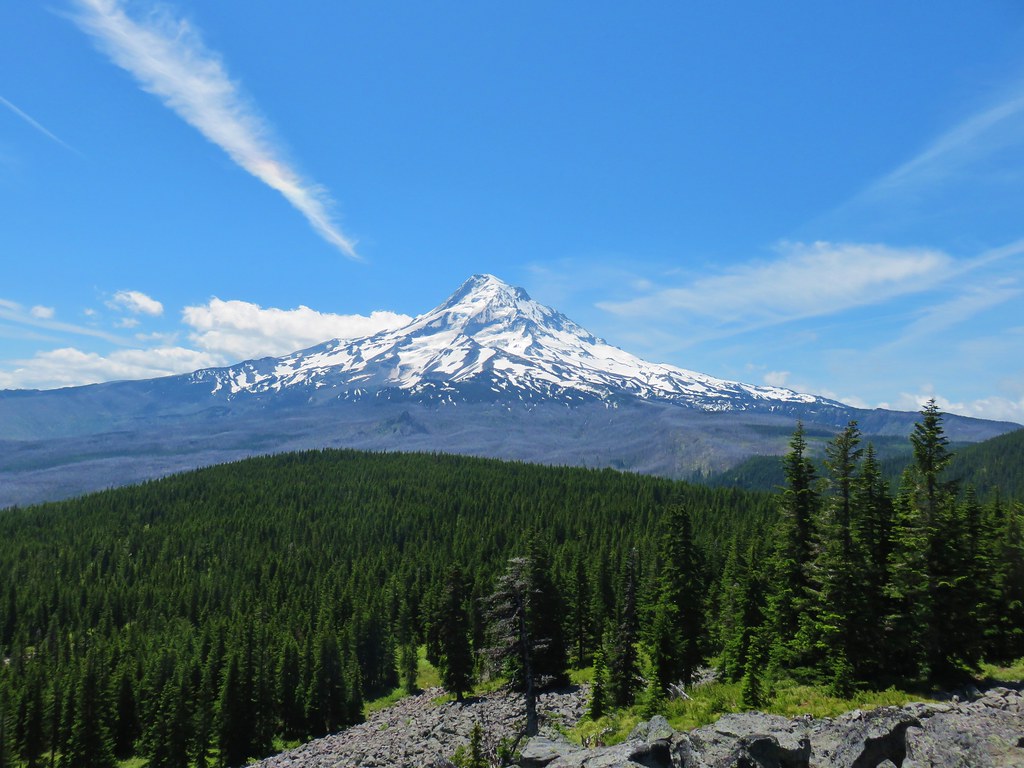
Mt. Hood was the main attraction though.
IMG_9902

IMG_9928

We sat for awhile admiring the mountain and studying Vista Ridge where we could see the trail cutting across the snow beyond where we had turned around.
IMG_9922

IMG_9923

We also spent some time looking for pikas but never saw (or heard) any. We did however have a butterfly join us briefly.
IMG_9925

When we had returned to the Old Vista Ridge Trail we continued north for another tenth of a mile to visit Alki Point.
IMG_9935

This viewpoint looked north and on a cleared day would have offered views of Mt. St. Helens, Mt. Rainier, and Mt. Adams. We settled for a glimpse of Rainier’s summit above some clouds (that’s Mt. Defiance in the foreground) and a semi-obstructed view of Mt. Adams.
IMG_9938

IMG_9939Mt. Rainier (sort of)

IMG_9941Mt. Adams

We headed back to the trailhead completing a 10.8 mile hike that would have been under 10 had we not had the false start on the Old Vista Ridge Trail in the morning. The avalanche lilies had not disappointed, it was a great way to start a four day stretch of hiking. Happy Trails!

Flickr: Owl Point and Vista Ridge

Categories
Columbia River Gorge South Hiking Mt. Hood Area Oregon

Gorton Creek Falls, Punchbowl Falls Park, and Lost Lake

After striking out on a view of Mt. Hood during our previous hike on the Boulder Ridge Trail (post) we planned on trying again during our next outing by visiting Lost Lake. The hikes around Lost Lake and up Lost Lake Butte had been on our schedule in both of the previous years but changes in those plans had bumped it back to this year.

A featured hike in Sullivan’s NW Oregon book (hike #74 in the 4th edition) it presented an issue with our rule to not have our driving time be longer than our hiking time. At a little under 8 miles for both trails we figured the hike would wind up taking us around 4 hours based on our typical pace leaving us an hour short of the 5 hour round trip driving time. Our solution was to add a pair of stops along the way where we could do a couple of short hikes which would bring the times closer in line with each other.

Our route to Lost Lake would be via Interstate 84 through the Columbia River Gorge to Hood River so for our first stop of the day we chose the less than a mile and a half round trip to Gorton Creek Falls. This hike began at the same trailhead (at Wyeth Campground) that we had used in 2016 for the Wyeth Trail (post) which REMAINS CLOSED after the 2017 Eagle Creek Fire.
Wyeth Trailhead

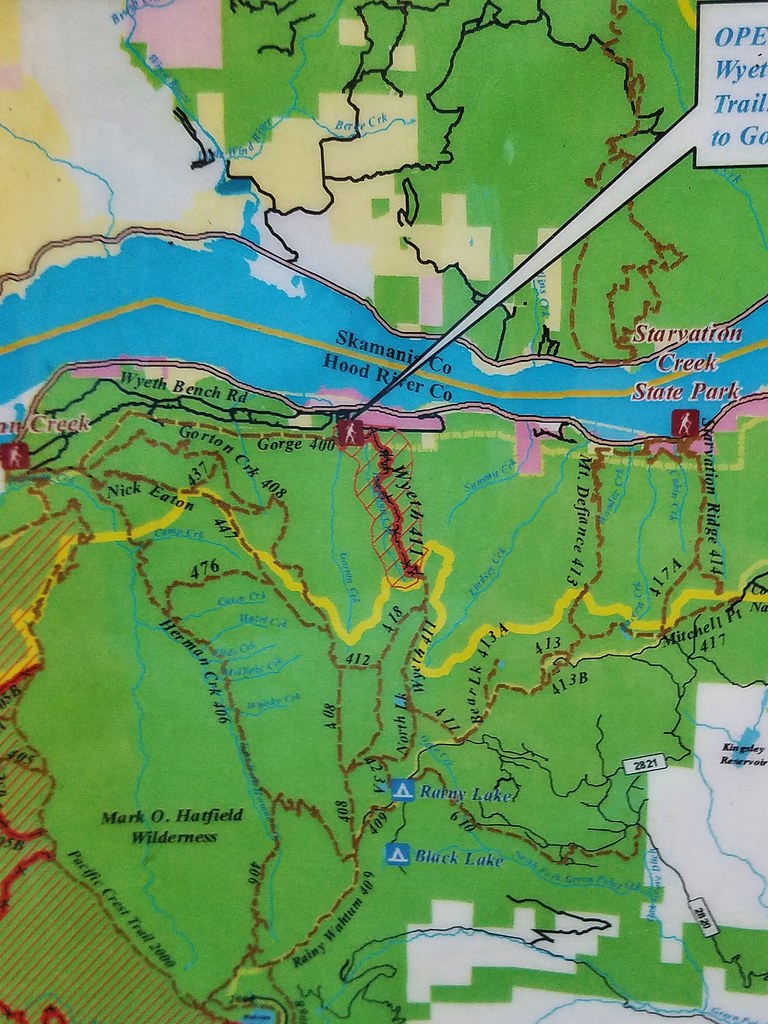
In fact with closures still in place over numerous parts of the gorge we stopped to consult the closure map both at the trailhead and then at the fence erected blocking access to the Wyeth Trail at its junction with the Gorge Trail.
Eagle Creek Fire closure map

With Gorton Creek outside of the closure area and no visible signs of closure we followed the unofficial trail along Gorton Creek from the junction.
Trail along Gorton Creek

A nice path follows the creek for about a half mile where it ends near Emerald Falls, a small 10′ cascade.
Emerald Falls

Emerald Falls

The much taller Gorton Creek Falls is another 100 yards up the creek and requires a bit of scrambling along the left side of the creek over boulders and through trees.
Gorton Creek

Gorton CreekLooking down the scramble route.

Obstacles along Gorton CreekSome of the obstacles

Gorton Creek below Gorton FallsFirst sight of Gorton Creek Falls through the trees.

Gorton Falls

It is a nice two tiered waterfall but the upper tier is only visible from certain angles.
Gorton Falls

Gorton Falls

After admiring the falls we headed back down to the trailhead completing the very nice 1.3 mile hike. We then continued driving east on I-84 to Hood River where we took exit 62 and followed our GPS to the Punchbowl Falls Park Trailhead. Not to be confused with the more famous Punch Bowl Falls which is located on Eagle Creek (also CLOSED due to the Eagle Creek Fire) this Punchbowl Falls is located on the West Fork Hood River in a county park established in 2016 after the land was purchased by the Western Rivers Conservancy. Trailkeepers of Oregon have since constructed trails (with a new one set to open this year) allowing for a short loop hike through oak woodlands and past a pair of waterfalls.

The trail starts at a gated service road.
Punchbowl Falls Park

Just beyond the gate are a signs for the park and trails.
Punchbowl Falls Park

Trail sign in Punchbowl Falls Park

We took the West Fork Trail which led to an open hillside with a few lingering ookow in bloom overlooking the West Fork Hood River.
West Fork Hood River

Ookow

The path followed the river gorge through the oak woodland where there had been a nice lupine display by the looks of it.
West Fork Trail

Lupine

As we neared Punchbowl Falls we could see the crumbling remains of a staircase that had led down to a fish ladder along the river.
Old staircase to a fish ladder

Old staircase to a fish ladder

A very short side trail led to a viewpoint overlooking the falls and the wide bowl at the base.
Punchbowl Falls

Pool below Punchbowl Falls

We could also see the top of Mt. Hood rising up above the trees up river. There wasn’t a cloud to be seen near the mountain which was a great sign for our hike up Lost Lake Butte later.
Mt. Hood above the trees

Mt. Hood

From the viewpoint we continued on the West Fork Trail toward Dead Point Falls.
Trail sign in Punchbowl Falls Park

Another viewpoint along the way looked back up river to Punchbowl Falls and Mt. Hood as well as across the gorge to Dead Point Falls.
Punchbowl Falls

Dead Point Falls

Dead Point Falls

Just a little further along was a signed spur trail to another viewpoint of Dead Point Falls and the confluence of Dead Point Creek and the West Fork Hood River.
Sign for Dead Point Falls

Dead Point Falls

Beyond the Dead Point Falls viewpoint we came to a junction with the Dogwood Trail which could be used to make a short loop back to the trailhead. We stuck to the West Fork Trail which descended slightly to another viewpoint, this time of the confluence of the West and East Forks of Hood River.
Trail junction in Punchbowl Falls Park

Punchbowl Falls Park

The East Fork Hood River was noticeably siltier having the clouded color indicitive of glacier runoff.
Confluence of the West and East Fork Hood Rivers

At a junction just beyond the viewpoint we turned right at a point for the East Fork Trail opting not to continue down to the river which was only a tenth of a mile or two away but we didn’t really feel like climbing back up.
East Fork Trail sign

By the end of this year the East Fork Trail will extend out along the East Fork Hood River but for now this path brought us to the gated serviced road which we turned right onto and followed back toward the trailhead.
Punchbowl Falls Park

After about 150 yards we came to the Dogwood Trail as it crossed the road where we turned uphill to the left.
Dogwood Trail

A lone pink pyrola was blooming along this trail which we followed through the wood for two tenths of a mile to signboards and completing a .9 mile loop.
Pink pyrola

Dogwood Trail

From Punchbowl Falls Park we drove back the way we’d come a mile to Lost Lake Road were we took a right and followed a car with Florida license plates nearly the entire 13.5 paved miles to the entrance to the Lost Lake Campground. I bring this up to ask that if people aren’t comfortable driving on the narrow curvy forest roads that’s fine but when you have cars following you and are going 20 mph below the speed limit and have multiple chances to pull over, please do it (end mini-rant).
Lost Lake Campground entrance

There is currently a $9 day-use fee charged to enter the Lost Lake area but the OregonHkers Field Guide mentioned a possible starting point along gated Jones Creek Road just before the campground entrance. We parked at a small pullout here (room for a couple of cars).
Pullout near Lost Lake Campground

The precursor to the Pacific Crest Trail, the Oregon Skyline Trail (now the Old Skyline Trail) could be accessed here and followed up to the Lost Lake Butte Trail. The only problem was we didn’t read the field guide closely enough. It states that there is a sign for the Old Skyline Trail at the road junction, but the GPS map showed the trail leaving the road a little beyond the gate. Having missed that detail we headed up the road watching for the trail which didn’t materialize. Just under a quarter mile from the gate the road forked and we followed the left hand fork which led toward the location of the trail on the map. Approximately 100 yards later we found the unsigned Old Skyline Trail crossing the road.
Old Skyline Trail

We turned right onto the trail and followed it through the forest looking for a four way junction where we would turn onto the Lost Lake Butte Trail. That trail was also not where the map on the Garmin indicated it would be. The junction was about a tenth of a mile further south than shown on the map but it was obvious and well signed.
Lost Lake Butte and Old Skyline Trail junction

Old Skyline Trail junction with the Lost Lake Butte Trail

At the junction we took the Lost Lake Butte Trail and began the 1000 plus foot climb to the summit. A Forest Service Crew had just come through the weekend before to do maintenance, so it was in great shape.
Lost Lake Butte Trail

Lost Lake Butte Trail

The forested route offered no views to speak of and there was as an unusual lack of flowers along the route but it wasn’t a bad climb and in 45 minutes we were passing the remains of the Lost Lake Butte lookout tower.
Foundation from the old lookout on Lost Lake Butte

Although much of the former 360 degree view is now blocked by trees the view south to Mt. Hood remains and is spectacular.
Mt. Hood from Lost Lake Butte

Mt. Hood from Lost Lake Butte

Mt. Hood from Lost Lake Butte

To the right of Mt. Hood we also had a pretty good view of the upper portion of Mt. Jefferson.
Mt. Hood and Mt. Jefferson from Lost Lake Butte

Mt. Jefferson from Lost Lake Butte

It was also possible to look north across the Columbia River and see Mt. Adams.
Mt. Adams from Lost Lake Butte

Mt. Adams from Lost Lake Butte

After spending some time enjoying the view and talking with a couple form Astoria who were staying at the Lost Lake Lodge we headed down. When we arrived back at the four way junction we crossed over the Old Skyline Trail and followed the trail down to a paved road crossing.
Trail crossing of the Lost Lake Camground road

Google has this marked as the Old Growth Trailhead but the sign here called this the Rhododendron Trail which led to the Old Growth Trail.
Rhododendron Trail to the Old Growth Trail

Rhododendron Trail

We followed this trail through the forest to a junction where we turned left onto the Old Growth Trail.
Rhododendron Trail

Trail sign at Lost Lake

The Old Growth Trail is an interpretive trail with a number of informational signboards along the way. It joined the Shrader Old Growth Trail (post) as one of our favorite interpretive trails. Much of the trail was boardwalk and there were a few pullouts with benches where one could sit and enjoy the forest.
Interpretive sign along the Old Growth Trail

Old Growth Trail

Old Growth Trail

Bench along the Old Gowth Trailone of the pullouts

Interpretive sign along the Old Growth Trail

Interpretive sign along the Old Growth Trail

The Old Growth Trail ended at another paved road crossing (it was a mile one-way in between the two roads).
Connector trail between the Old Growth and Lakeshore Trails

We crossed the road and followed a pointer for the Lakeshore Trail.
Connector trail between the Old Growth and Lakeshore Trails

The Lakeshore Trail, as it’s name suggests, loops around the shore of Lost Lake. We turned left when we reached the trail and started our way clockwise around the lake.
Lost Lake

We passed the Huckleberry Mountain Trail which connects up with the Pacific Crest Trail on the ridge above Lost Lake. We had passed the upper end of the trail on our visit to Buck Peak in 2016. (post)

Lakeshore Trail junction with the Huckleberry Mountain Trail

The trail looped around to the west side of Lost Lake where the hillside was much steeper than that of the opposite side where Lost Lake Butte rose up from the forest.
Forest along Lost Lake

Lost Lake Butte from Lost Lake

There was one short section where the trail was under water and a brief but steep detour led up the hillside and back down. Other than that the trail was in good shape. Flowers including rhododendron, anemones, bleeding heart and wild bugbane were in bloom.
Lakeshore Trail

Rhododendron blossoms

Anemone

Bleeding heart

Wild bugbane

The trail briefly becomes a boardwalk as it passes over the lake’s inlet creeks where small fish and rough skinned newts could be seen swimming.
Lakeshore Trail

There were some little fish swimming here

Rough skinned newt

As we made our way around the lake Mt. Hood finally began to come into view.
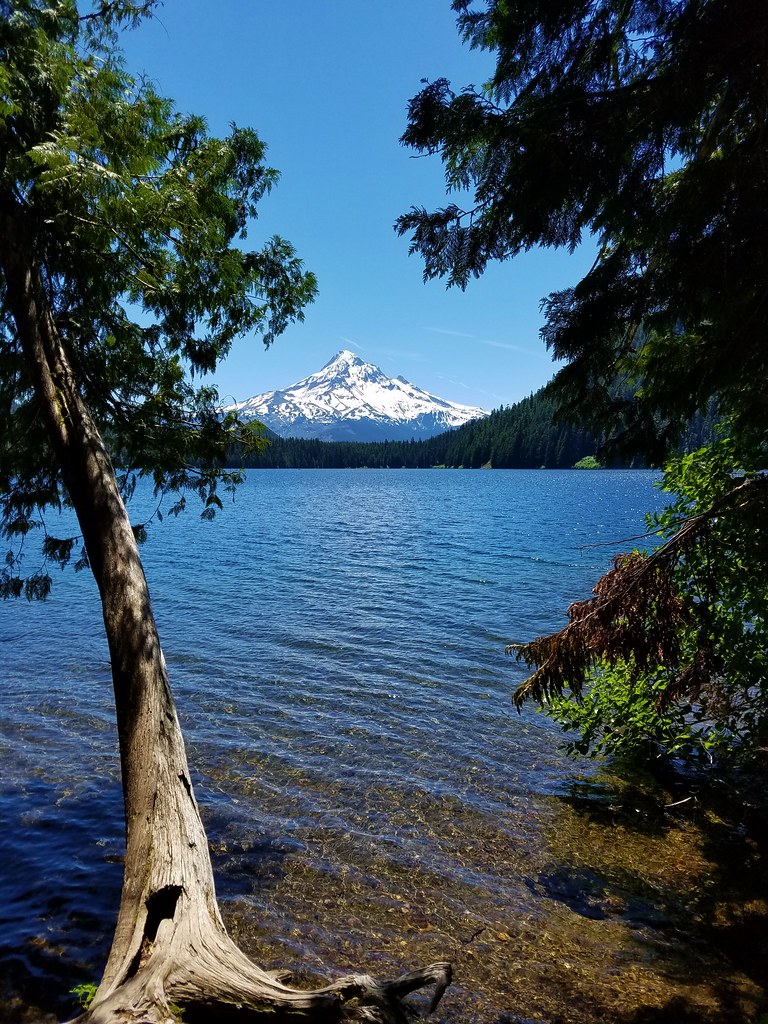
Mt. Hood across Lost Lake

Numerous side trails led down to the shore between the boardwalk and the Lost Lake Resort providing excellent views of Mt. Hood and lots of newts to watch in the clear water.
Mt. Hood from the Lakeshore Trail

Rough skinned newts

Rough skinned newt

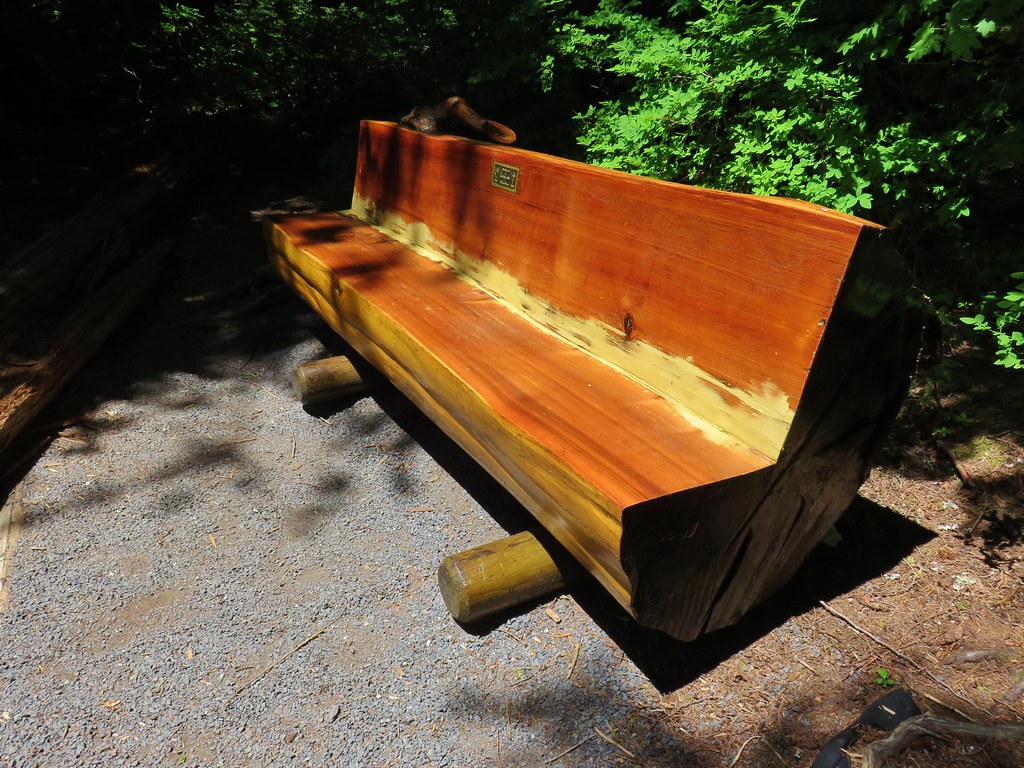
Bench along the Lakeshore Trail

Mt. Hood from the bench

Things were pretty hectic as we neared the day-use area and only got busier as we neared the lodge.
Sign for the Lost Lake General Store

We left the Lakeshore Trail near the lodge and cut up through the resort toward the entrance road in hopes of following it back to our car. We had just popped out of some trees onto that road when a pickup passed us and we heard someone call out my name. We turned to look as the truck stopped and realized it was my cousin Lance and his family. They were visiting the lake for the first time too and were planning on doing some kayaking. It was quite the random encounter. After saying hi we went our separate ways and returned to our car and headed home. We wound up taking Highway 35 to Highway 26 around Mt. Hood instead of returning via I-84 after pulling up Google traffic and seeing that there were at least two accidents holding up traffic on the Interstates.

Our route on the trails at Lost Lake added up to 7.7 miles giving us 9.9 miles combined. It turned out to be a nice combination of hikes with varying scenery and different types of trails and best of all we got to see Mt. Hood this time around. Happy Trails!

Flickr: Gorton Creek Falls, Punchbowl Falls Park, and Lost Lake

Categories
High Cascades Hiking Mt. Hood Area Oregon Trip report

Boulder Ridge Trail and Wildwood Recreaction Area

Our most recent hike brought us to the BLM managed Wildwood Recreation Site. We were going to be taking the Boulder Ridge Trail from the site to a viewpoint along Huckleberry Mountain in the Salmon-Huckleberry Wilderness. The view had escaped us during a 2015 hike the same viewpoint using the Bonanza Trail (post). Cloudy conditions that day had been our downfall so we were a little apprehensive when we saw the forecast calling for a slight chance of showers in the morning but then it called for the skies becoming mostly sunny.

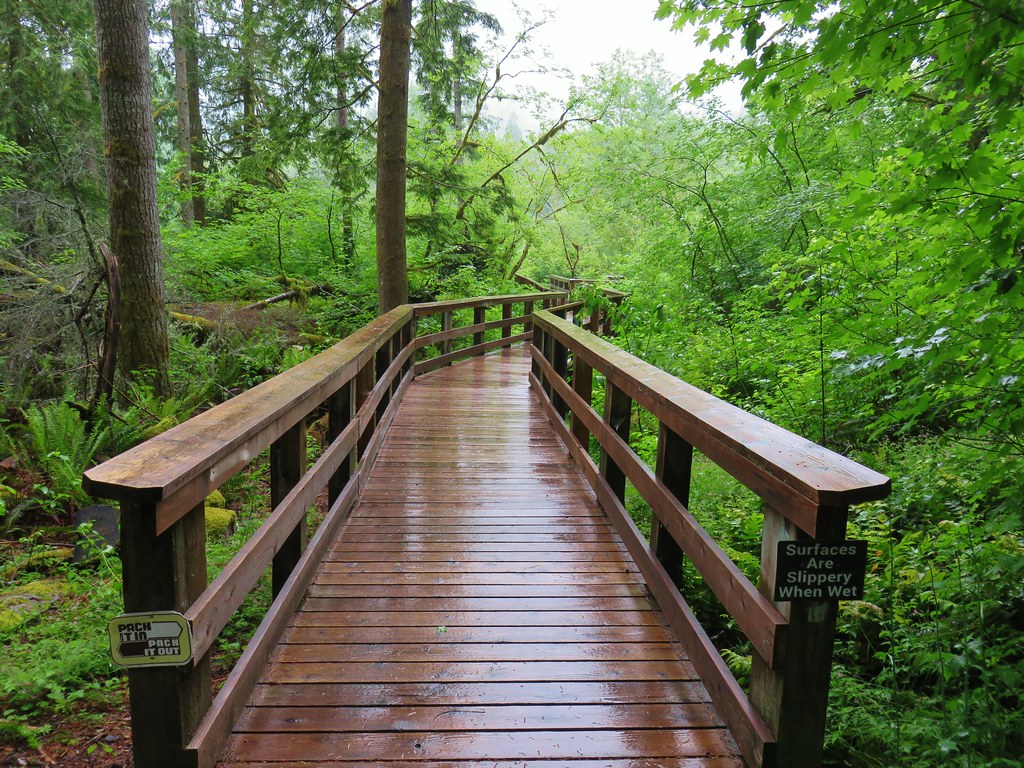
With the Wildwood Recreation Site not opening until 8am (the road is gated) it meant we would be getting a little later start than we normally would which would hopefully give the clouds more time to burn off. After paying the $5 day use fee we parked at the trailhead parking area which acts as the trailhead for the Boulder Ridge Trail as well as for two short interpretive trails – The Cascade Streamwatch and the Wetlands. We decided to do both of these before heading up the Boulder Ridge Trail to give the weather even more time to clear up.
IMG_9096

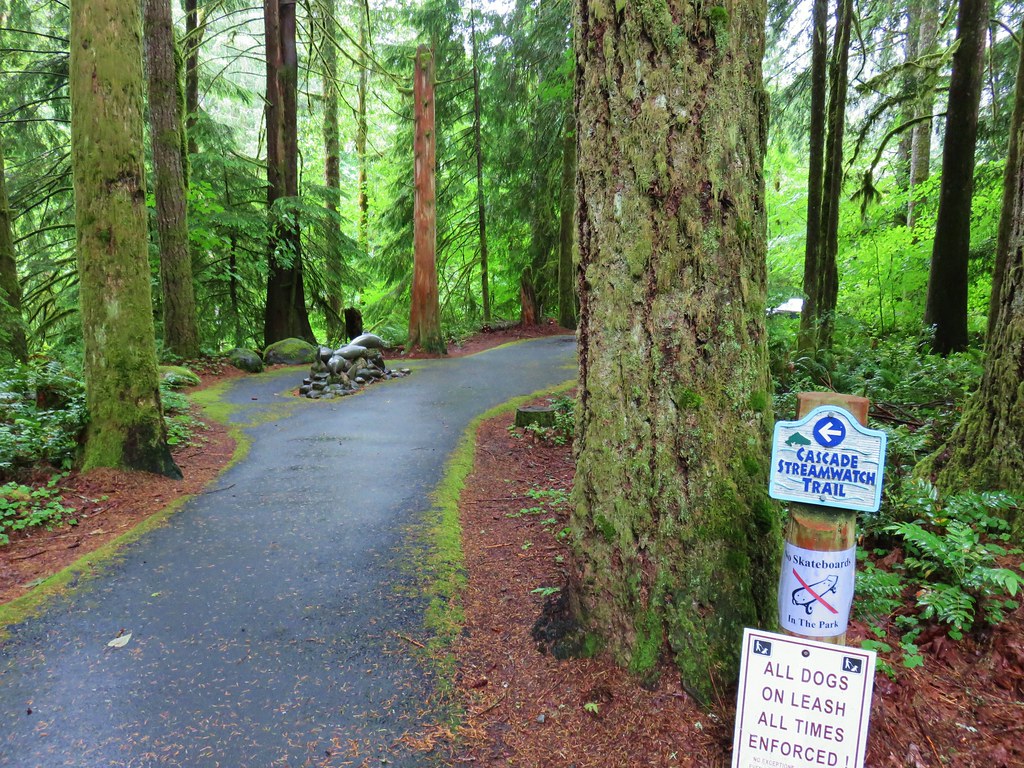
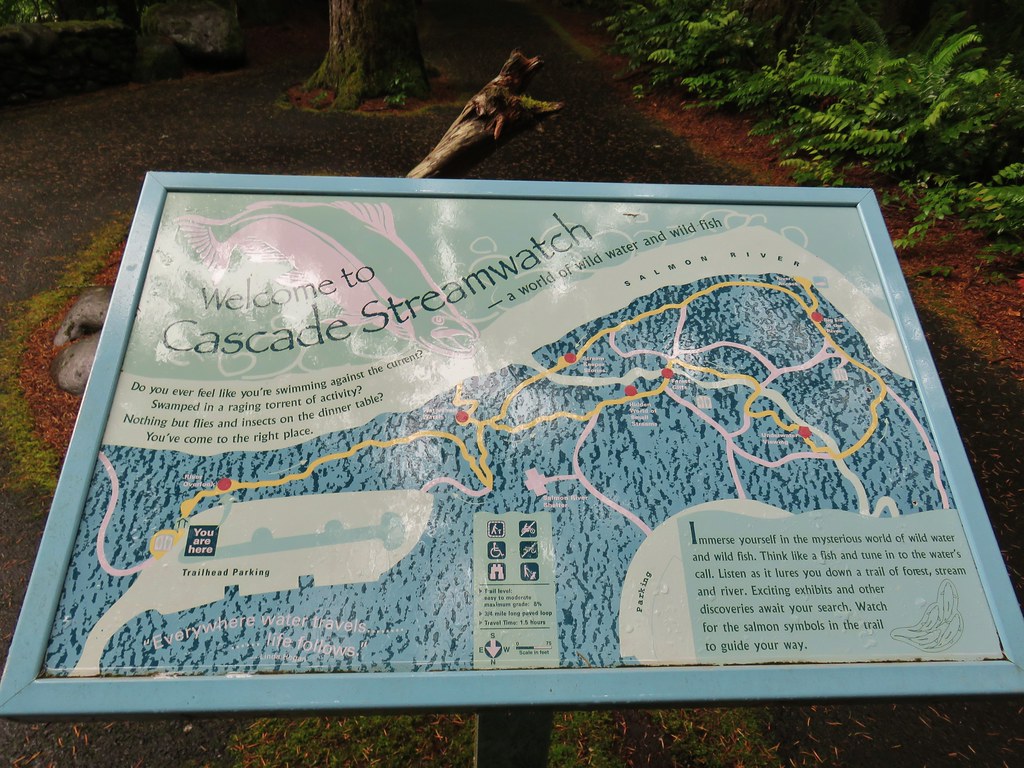
We began with the paved Cascade Streamwatch Trail.
IMG_9098

IMG_9101

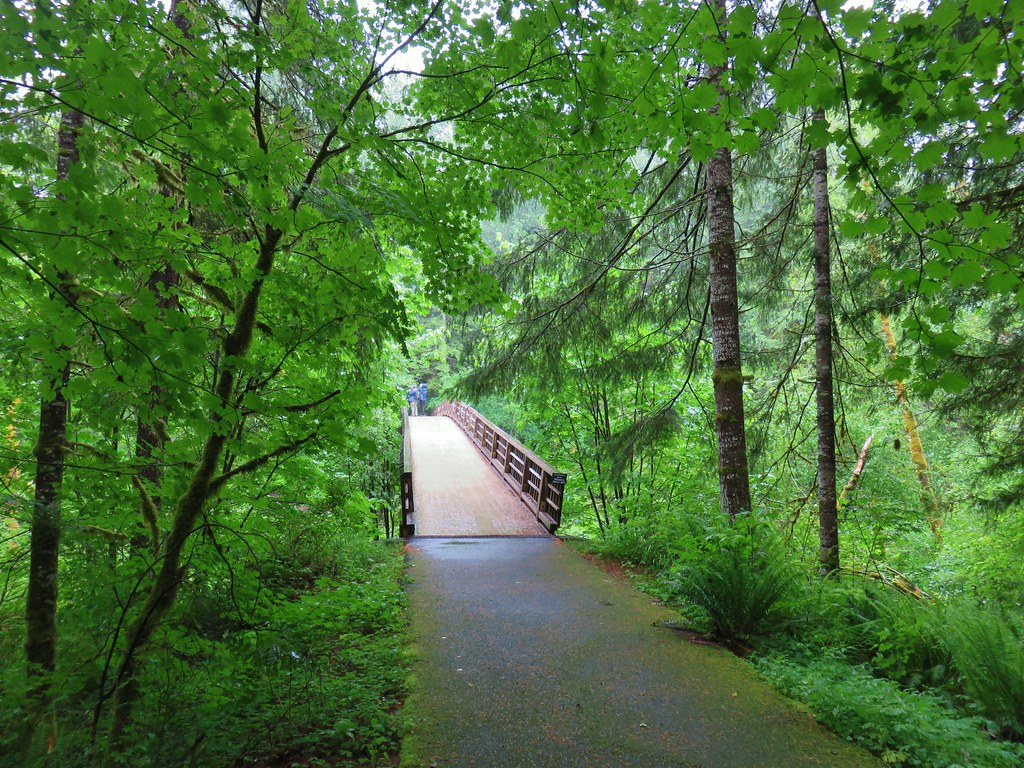
The trail led down through the forest to the bank of the Salmon River with several interpretive signs along the way.
IMG_9104

IMG_9108

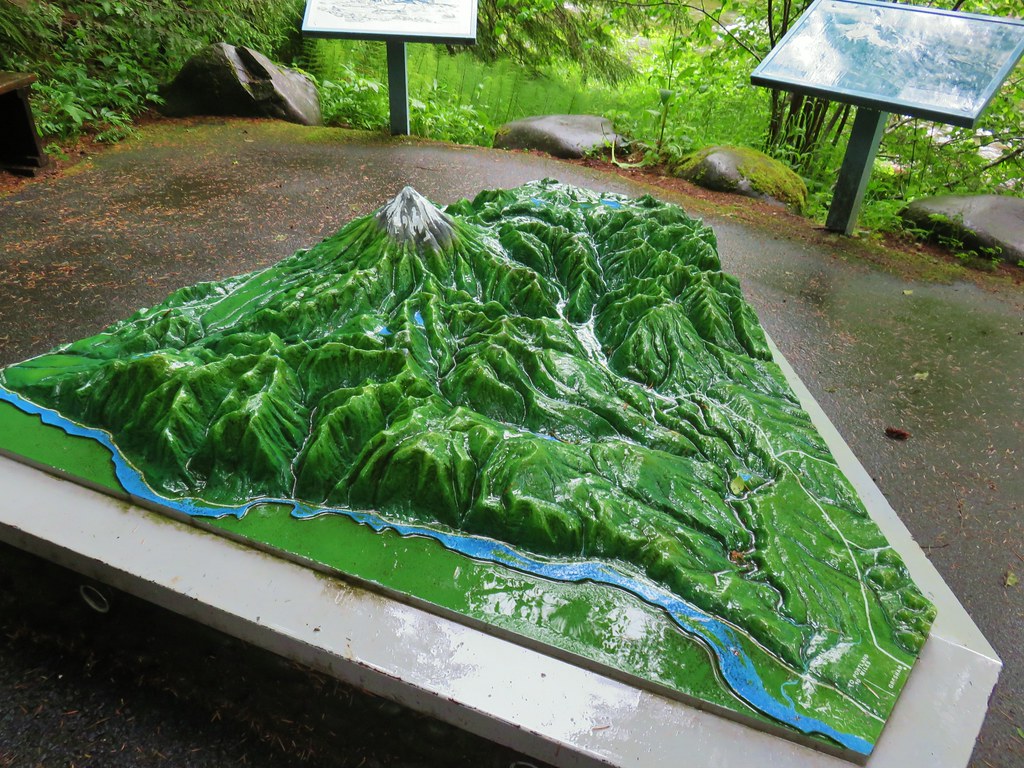
Of particular interest was a 3D model of the Salmon River drainage including Mt. Hood. It mapped out the southern and western flowing creeks and rivers drain into the Sandy River and eventually the Columbia.
IMG_9106

Further along the loop is an underwater viewing area. There were only a few small fish visible on this day but we imagined that at times it would be quite a sight.
IMG_9117

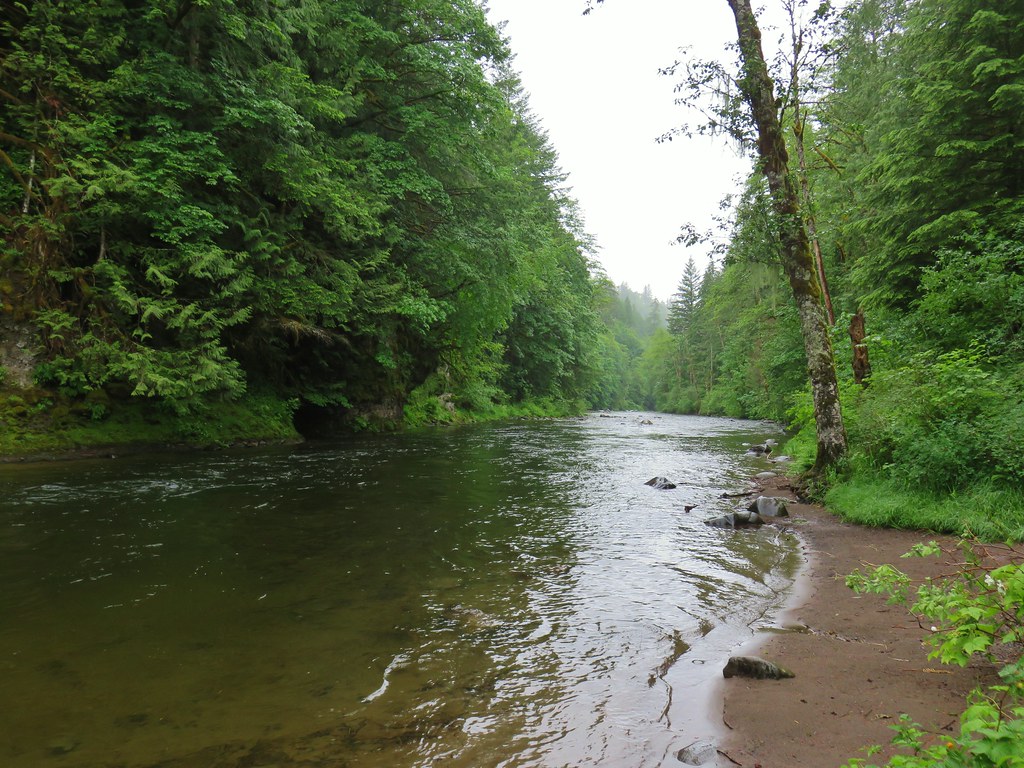
We continued on the loop which passed a sandy beach near a deep hole in the Salmon River where at times spawning steelhead trout and chinook salmon can be seen.
IMG_9124

IMG_9123

After completing this short (under a mile) informative loop we returned to the trailhead parking and walked over to a signboard for the Boulder Ridge Trail.
IMG_9132

A paved path here lead to a bridge spanning the Salmon River and the start of the Wetlands Boardwalk.
IMG_9135

IMG_9137

IMG_9139

We took each of the side trails along the boardwalk starting with the detour to Cattail Marsh.
IMG_9140

IMG_9141

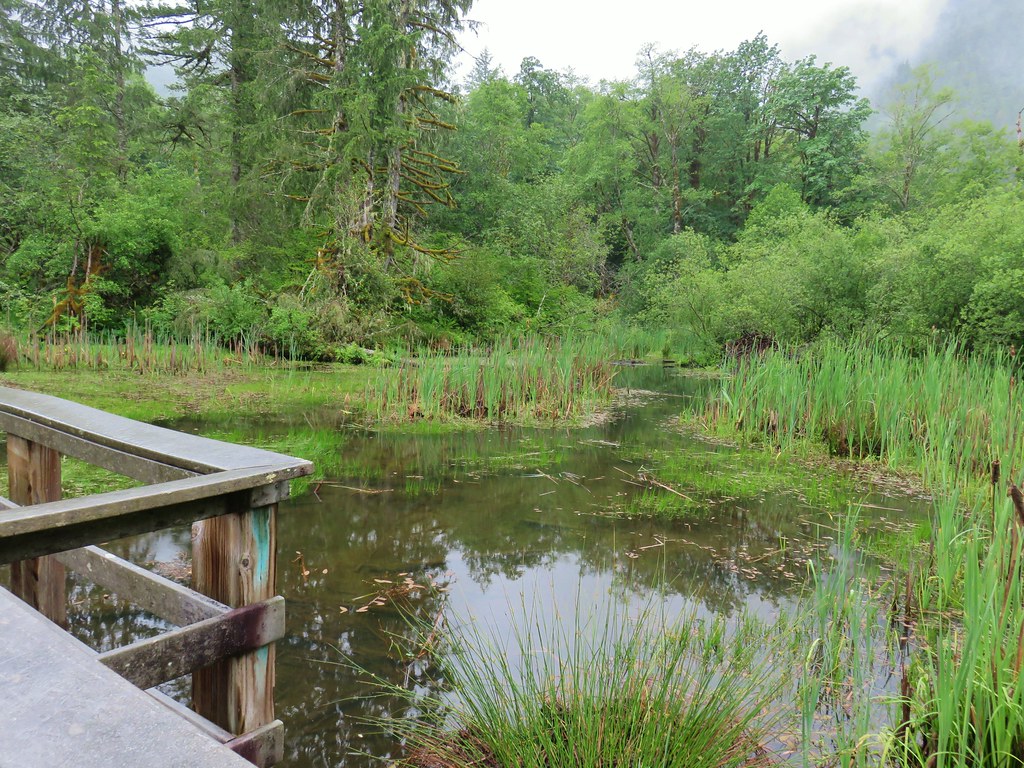
The next side trip was to see the results of beaver dams and how they help create the wetlands. We didn’t see any beavers (yet again) but there were some newts swimming in the waters.
IMG_9147

Next up was a “Ghost Forest” caused by rising waters caused by the beavers work.
IMG_9150

The boardwalk then passed a large amount of skunk cabbage before reaching a final detour to a view of the transition from a wetland to a stream.
IMG_9153

IMG_9155

The boardwalk ended at a junction where a left turn led to the Boulder Ridge Trail while a right turn would complete a short loop back to the parking area (also under a mile total).
IMG_9156

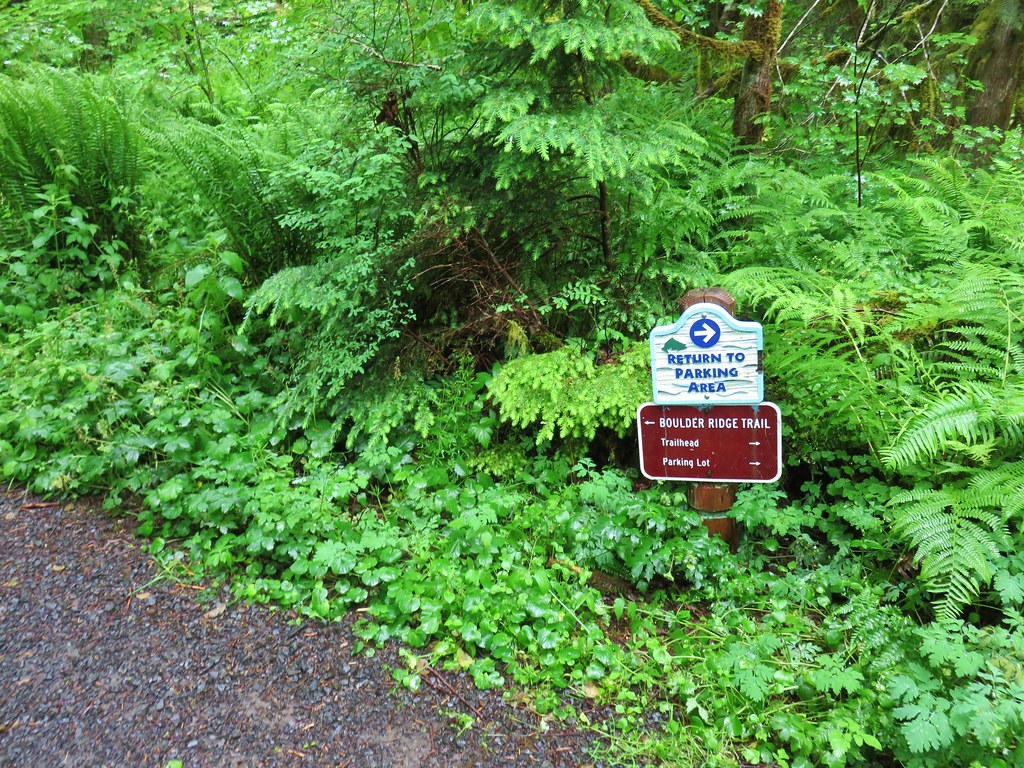
Left we went passing a sign for the Boulder Ridge Trail and signing in at a signboard.
IMG_9157

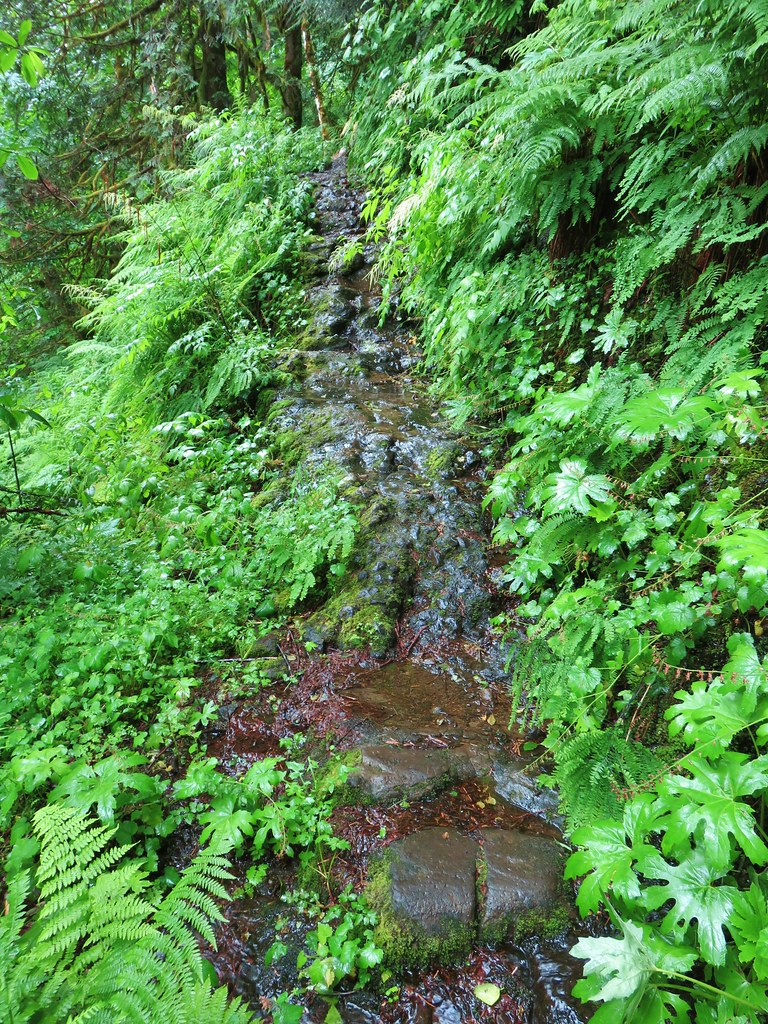
The trail wasted little time in launching uphill needing to gain 3100′ to reach the top of Huckleberry Mountain. Not only did it head uphill immediately but it crossed a rocky area that had been exposed by a series of seeps. It looked narrow and possibly slick.
IMG_9158

The trail climbed steeply gaining 1400′ in then next two and a quarter miles where a rocky viewpoint looked into clouds instead of Mt. Hood. Just a bit before reaching the viewpoint we had entered the Salmon-Huckleberry Wilderness. One thing that has never disappointed us about the Salmon-Huckleberry Wilderness and surrounding area is the beauty of the forest. The clouds might have been blocking our views of Mt. Hood but the fog added a nice element to the forest.
IMG_9164

IMG_9166

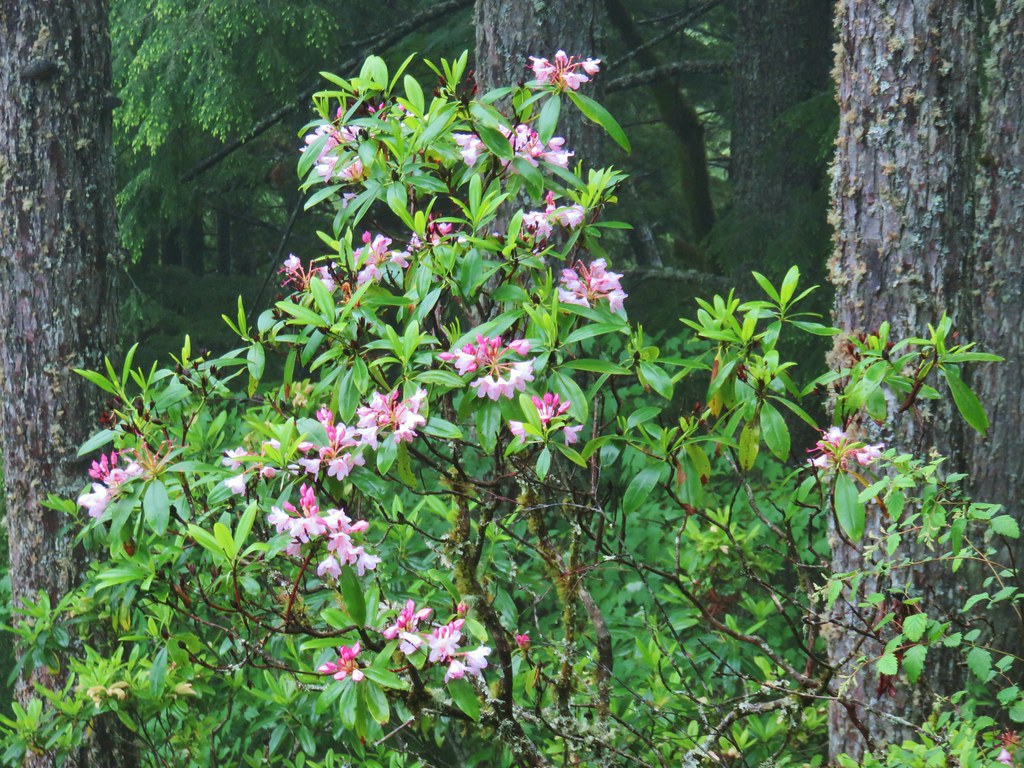
IMG_9169Rhododendron

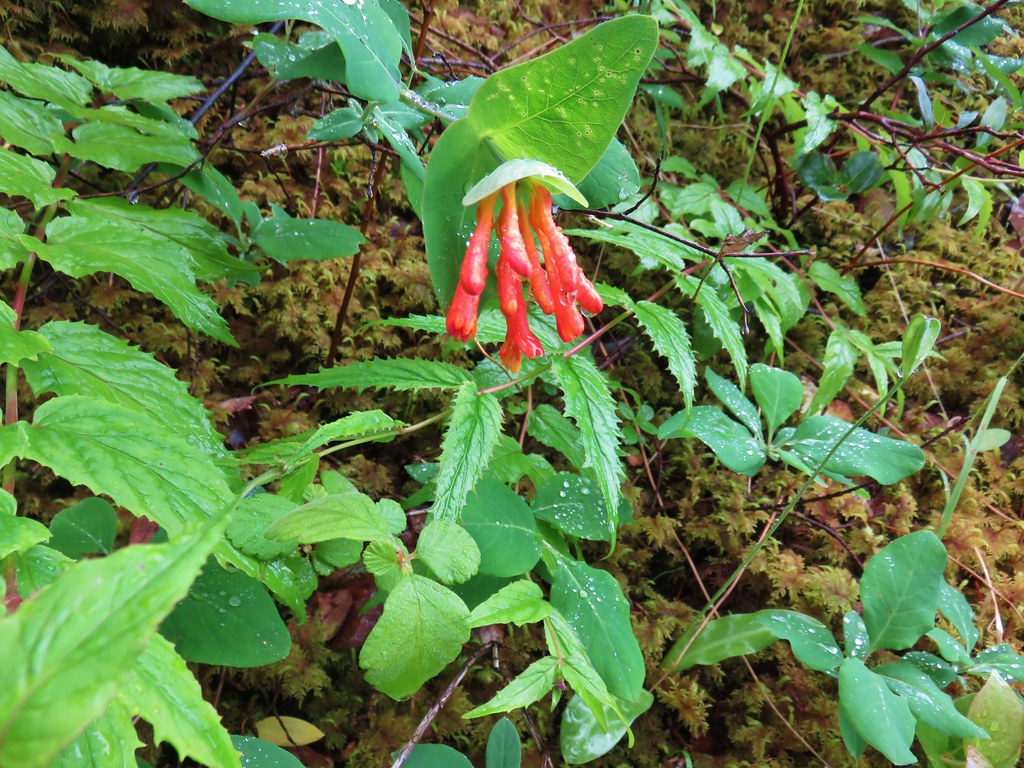
IMG_9171Honeysuckle

IMG_9172Beargrass and rhododendron along the trail.

IMG_9180Coralroot and sourgrass

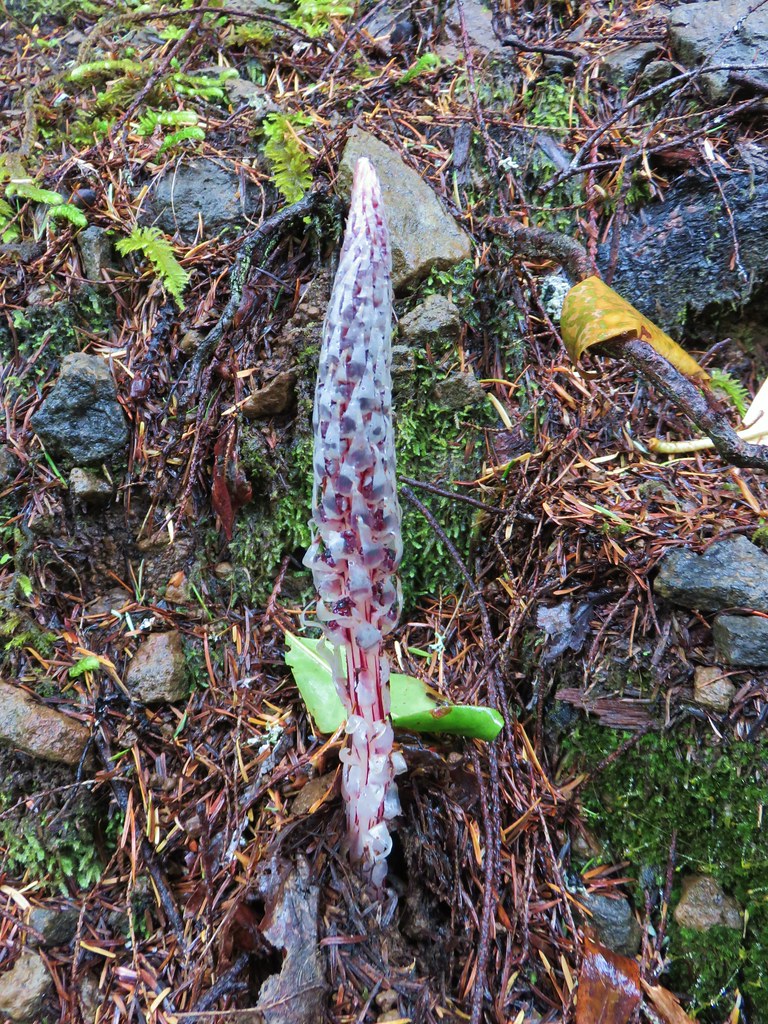
IMG_9188Candy stick

IMG_9194

IMG_9197Damp iris

IMG_9202

IMG_9216

We passed by the viewpoint hoping that maybe there would be a view by the time we were headed back down. The trail continued to climb gaining another 800′ over the next mile and a quarter where another rock viewpoint looked east.
IMG_9220

IMG_9222Green lichen

IMG_9236

IMG_9255A few trees peaking through the clouds along McIntyre Ridge (post)

With no view to speak of we turned our attention to the flowers in the area.
IMG_9248Penstemon

IMG_9245Paintbrush

IMG_9250Biscuitroot

IMG_9252Beargrass

IMG_9358Lupine

For the next half mile the trail climbed more gradually spending some time on the ridge top amid a carpet of green before dropping off and arriving at a small seasonal stream where some Scouler’s corydalis was blooming.
IMG_9263

IMG_9270

IMG_9274

Another half mile of climbing brought us to the end of the Boulder Ridge Trail at a signed junction with the Plaza Trail.
IMG_9283

The only choice to continue here was to turn right onto the Plaza Trail as there is no longer any discernible continuation of it to the left of the junction.
IMG_9284

It was almost 11:45 now and we had been hoping that the skies would be starting to clear but looking up revealed no sign of it happening anytime soon. We still had approximately a mile and a half to our goal though so we sallied forth. After a brief respite from climbing the trail headed uphill into more fog.
IMG_9288

IMG_9292

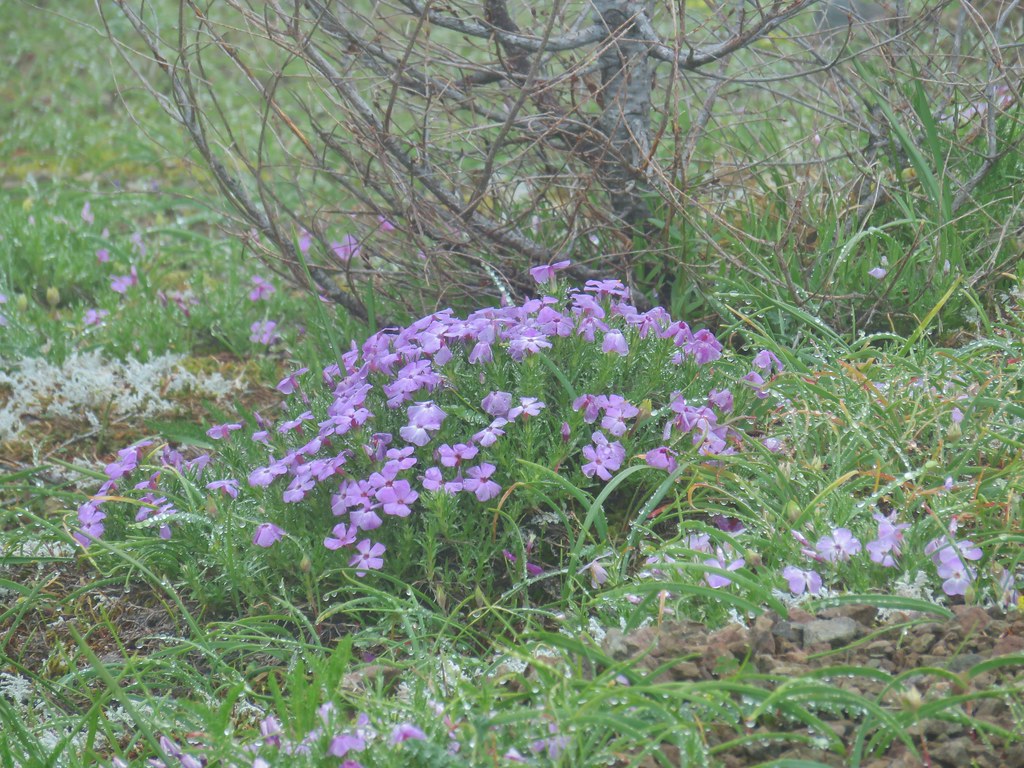
As the trail passed the 4000′ elevation it passed through a small grassy meadow where a few phlox were blooming.
IMG_9302

IMG_9312

As the trail gained the final 280′ of elevation there were more open areas where indian plum was blooming while the beargrass was just starting.
IMG_9303

IMG_9313

IMG_9315

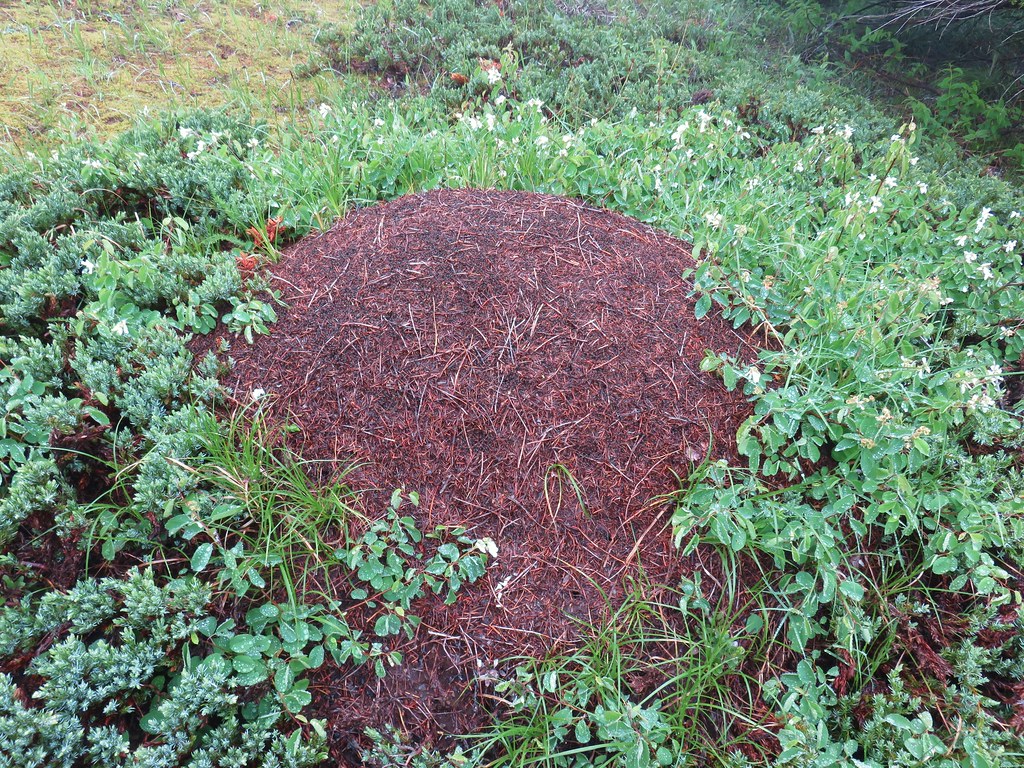
We passed by a large ant pile.
IMG_9306

IMG_9305

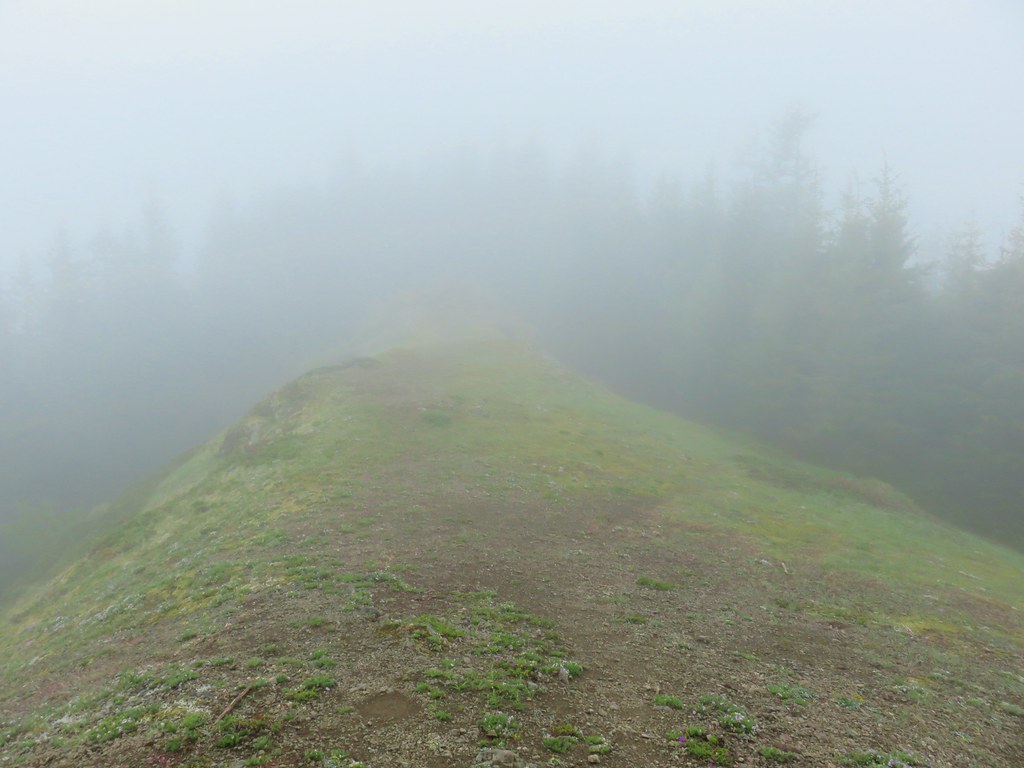
When we reached the viewpoint the clouds had not only not lifted but they were actually worse than they had been in 2015.
IMG_93162019

Huckleberry Mountains summit2015

Slightly disappointed we made our way to a rock outcrop and again looked to the nearby flowers instead of Mt. Hood.
IMG_9317

IMG_9319Phlox

IMG_9329Paintbrush

IMG_9333Penstemon

IMG_9342Avalanch lily

IMG_9322Wild onion

We stayed for a bit looking for any hint of the clouds breaking but they sky remained a canvas of white so we started back down shortly before 1pm. The view had changed quite a bit at the eastern facing viewpoint when we arrived 45 minutes later. It was still overcast but the clouds had lifted noticeably.
IMG_9353

By the time we reached the lower viewpoint that we had not stopped at earlier there was a significant amount of blue sky overhead.
IMG_9360

The only problem was a mass of clouds directly over (or in front of) Mt. Hood.
IMG_9363

You win some you lose some. We made our way back down to the Salmon River stopping to admire some yellow coral root along the way.
20190608_145138

20190608_145110

IMG_9374

Despite missing out on the view again the 12.9 mile hike was a good one albeit challenging with over 3000′ of elevation gain. The interpretive trails were a lot of fun and the Mt. Hood National Forest in the Salmon-Huckleberry Wilderness was as scenic as ever. Happy Trails!

Flickr: Boulder Ridge

Categories
Hiking Mt. Hood Area Oregon

Dog River Trail

A bit of potentially wet weather had us looking for a hike that had the potential to be dry and not too dependent on having a view.  We, of course, also preferred it to be a new hike.  We turned to Matt Reeder’s 2nd edition of “Off the Beaten Trail” for inspiration.  A recent addition to our collection of guidebooks, “Off the Beaten Trail” features 50 hikes plus 5 bonus hikes within a two and half hour drive of downtown Portland.  While a number of the hikes are also mentioned in Sullivan’s “100 Hikes” guidebooks (our usual go-to source) they are typically additional hikes from the back of the books so they lack in-depth detail.  There are also several hikes that don’t appear in Sullivan’s books.

We chose the Dog River Trail (Reeder’s Hike #30) due to its location and a favorable looking forecast. According to NOAA there was a 30% chance of showers after 11am and being located on the east side of Mt. Hood often meant less cloud cover. After driving through a few showers in the Columbia Gorge we did indeed find some blue sky near Hood River and the views of Mt. Hood were perfect as we drove south on Highway 35.

The Dog River Trail
begins at the Dog River Trailhead along the eastern shoulder of Highway 35 18.2 miles south of Hood River (20 miles north of the junction with Highway 26).
Dog River Trailhead

The most common users of this trail are mountain bikers, a group of which have adopted the trail.
Plaque at the Dog River Trailhead

The trail starts off at an elevation just over 2100′ and climbs steadily nearly 5.5 miles to its end at a three way junction with the Zigzag and Surveyor’s Ridge Trails.

Just beyond the gate at the trailhead the trail passes very close to the Dog River.
Dog River

We quickly lost sight of the river as we climbed along a hillside to a footbridge over Puppy Creek.
Dog River Trail

Puppy Creek

The next 1.8 miles was a gradual climb past a variety of wildflowers before dropping slightly to the Dog River.
Chocolate LilyChocolate lily

Vanilla leaf along the Dog River TrailVanilla leaf

AnemoneColumbia windflower (anemone)

Red flowering currantRed flowering currant

Ball-head waterleafBall-head waterleaf

Dogwood and a crab spiderDogwood (and a crab spider)

ArnicaArnica

LupineLupine

Lupine starting to budLupine yet to bloom

Woodland starsWoodland stars

Larkspur and biscuitrootLarkspur with biscuitroot in the background

Fairy slippersFairy slippers

PaintbrushIndian paintbrush

Popcorn flowerPopcorn flower

SandwortSandwort

sticky blue-eyed marySticky blue-eyed mary

Fairy bellsHooker’s fairy bells

Solomon's sealSolomon’s seal

One of the reasons for the variety of flowers was the variety of forest types along this stretch.
Dog River Trail

Dog River Trail

Dog River Trail

Dog River Trail

Another footbridge led us across the Dog River.
Dog River Trail

Dog River

Beyond the Dog River the trail climbed to a saddle and crossed over a ridge.
Dog River Trail

Dog River Trail

We were now on the west facing side of the ridge and had our first looks at Mt. Hood. Initially the mountain is only visible through the trees but 1.3 miles from the Dog River crossing we came to a rocky viewpoint. From the time we had last seen the mountain driving to the trailhead a line of clouds had begun to make there way in between.
Mt. Hood from the Dog River Trail

Mt. Hood

Mt. Hood

Mt. Hood

Mt. Hood from the Dog River Trail

Mt. Hood

Considering we had started the day thinking we would be lucky to see even part of the mountain this was a pretty nice treat, but after having an unobstructed view during the drive the clouds were a minor disappointment. While the view was impressive it would have been spectacular minus the clouds in front.

In addition to the view there were a couple of other types of flowers to be seen at the viewpoint.
PenstemonPenstemon

PhloxPhlox

Reeder has this viewpoint be the turn around point in the guidebook making for a 6.6 mile out and back. He also describe a couple of options to extend the hike which of course interested us (okay mostly me). We continued on from the viewpoint promptly crossing over the ridge again. From this side we could now see Mt. Adams through the trees to the north. A bonus volcano sighting.
Mt. Adams

Mt. Adams

A series of switchbacks brought us back over the west facing side of the ridge and up a short, steep, rocky section of trail.
Dog River Trail

We began watching for any signs of an old road bed on top the ridge above the trail. The plan we had settled on to extend the hike was to hopefully use a forest road shown on the map to make the hike a lollipop by taking the Surveyor’s Ridge Trail to the forest service road. Approximately 100 yards from the end of the switchbacks we spotted a promising looking unmarked spur trail heading uphill to our left.
Dog River Trail on the right with a spur to FR 620 on the left

We marked that spot on our GPS and continued on the Dog River Trail which had leveled out a bit passing another viewpoint that Reeder has marked on his map as “Ponderosa Point”. The view here would have also been impressive but we arrived in conjunction with enough clouds to cover the upper 3/4ths of the mountain. A talus slope nearby was more impressive at that point and we wondered if any pika lived there.
Talus field along the Dog River Trail

We didn’t see or hear any and continued on. The trail began to descend slightly passing through some nice forest. We kept our eyes out for flowers and any other interesting sights.
Dog River Trail

ManzanitaManzanita

CurrantA currant

Jacob's ladderJacob’s ladder

Something has been busyPopular tree

There were a few openings toward Mt. Hood but the clouds were keeping most of it covered. We did get a nice look at Polallie Creek Falls though.
Polallie Creek Falls

We had been watching for wildlife too but aside from a few birds and a couple of millipedes all we saw was a slug on one of several small bridges over wet spots.
Slug on a footbridge

Slug

When we arrived at the junction with the Zigzag and Surveyor’s Ridge Trails we noticed a fourth trail signed “Viewpoint”.
Viewpoint at the Dog River Trail and Zig Zag Trail jct

This short trail led briefly downhill to a view north of Highway 35 and the East Fork Hood River (Mt. Hood was still hiding).
Highay 35 and the East Fork Hood River

After checking out the viewpoint we returned to the junction and turned onto the Surveyor’s Ridge Trail.
Surveyor's Ridge Trail sign

The Surveryor’s Ridge Trail climbed gently through the forest for nearly a mile before arriving at Forest Road 620 and Dufur Mill Road (Forest Road 44).
Surveyor's Ridge Trail

Trillium

Jacob's ladderThere was quite a bit of Jacob’s ladder along this stretch of trail.

Oregon anemoneOregon anemone

Forest Road 620Forest Road 620.

There was a single truck parked here and an outhouse. Along the shoulder of Dufur Mill Road there was also a small patch of snow. We had wondered if there was any remaining at this elevation (4240′). We turned left and headed north along FR 620 where we soon found a few more patches of lingering snow.
Snow along Forest Road 620

Forest Road 620

It was a pleasant but uneventful road walk. We followed the road downhill ignoring two forks to the left followed by an overgrown fork to the right.
Forest Road 620

After entering an area that had been clearcut sometime in the past Heather spotted a sign post off to our right (approximately 1.75mi along FR 620). I went to investigate.
Wy'East Middle School sign amid trees planted by the 1994 8th grade class

Just in case anyone from the Wy’East Middle School 1994 8th grade class is wondering here are the trees that were near the sign.
Trees planted by the 1994 8th grade class of Wy'East Middle School

Shortly after finding the sign the road finished bending to the west and we began heading toward the Dog River Trail. The road then turned northward again along the ridge above the Dog River Trail. There were a couple of viewpoints along this stretch including one at the top of the talus slope we had scanned for pikas earlier that day.
Mt. Hood behind some cloudsA still cloudy Mt. Hood

Dog River Trail below the talus slopeLooking down the talus slope with the Dog River Trail visible between the trees to the right.

The road bed had been steadily narrowing the further we went.
Forest Road 620

After a little over 2.5 miles on the road we passed a promising view of Mt. Adams if not for the clouds that had now overtaken it as well. We settled for a nice view of Bald Mountain which we had hiked in 2017 (post) and is accessible via the Surveyor’s Ridge Trail.
Bald Butte in the distance

Bald Butte

Not far from that viewpoint the old roadbed ended and we found ourselves on a short section of trail connecting us back to the Dog River Trail.
Trail connecting Forest Road 620 to the Dog River Trail

We had indeed come out via the spur trail we had marked that morning. The stretch between the Surveyor’s Ridge Trail and Dog River Trail was 2.75 miles and we were now just over 3.5 miles from the Dog River Trailhead. We had seen the first other people of the day from the viewpoint atop the talus slope when a pair of trail runners went by down on the Dog River Trail. Now that it was later we encountered a few mountain bikers on our way back but it was far from busy. We stopped at the first viewpoint again to say goodbye to the mountain. The clouds had changed again and now they were just covering the very top portion.
Mt. Hood behind some clouds

This gave us a nice look at Barrett Spur.
Barrett Spur

We also had a good view of the Eliot Glacier.
Elliot Glacier on Mt. Hood

Our lollipop came in at 13.3 miles with approximately 2500′ of cumulative elevation gain. The showers never developed and we got to see a lot more of the mountains than we had honestly expected. The variety of wildflowers was good and there looked to be plenty more getting ready to bloom in the next week or two. It certainly felt off the beaten trail but it was definitely worth the visit. Happy Trails!

Flickr: Dog River Trail

Categories
High Cascades Hiking Oregon Sky Lakes/Mountain Lakes Area Trip report

Fish Lake and Lake of the Woods

Sunday of Columbus Day Weekend was the only day of the four where the forecast in the Cascade Mountains looked promising so on that morning we headed west from Klamath Falls on Highway 140 to visit a pair of lakes near Mt. McLoughlin.

The skies over Klamtah were pretty much clear as was the case for most of the drive, but as we crossed over the Cascade Crest we found ourselves in a fog bank. We turned off the highway at sign for the North Fork Campground between mileposts 28 and 29. We parked at a small trailhead parking area a half mile down this road on the left.

It was a chilly morning in the fog as we set off on the Fish Lake Trail, but it wasn’t raining.
IMG_4025

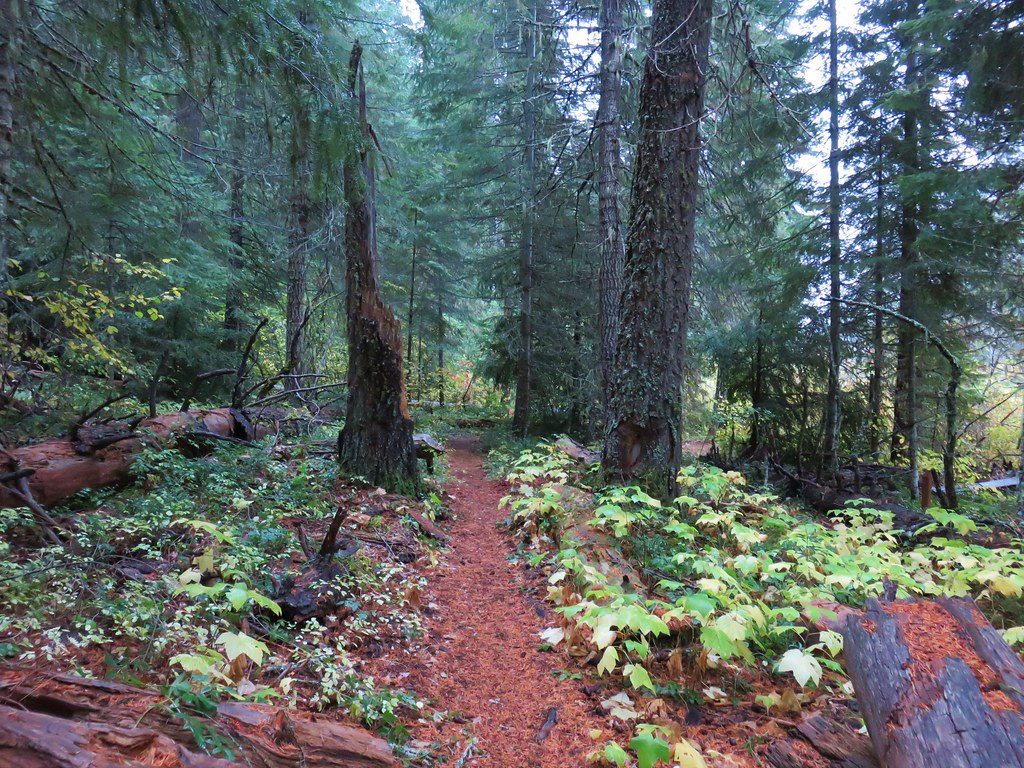
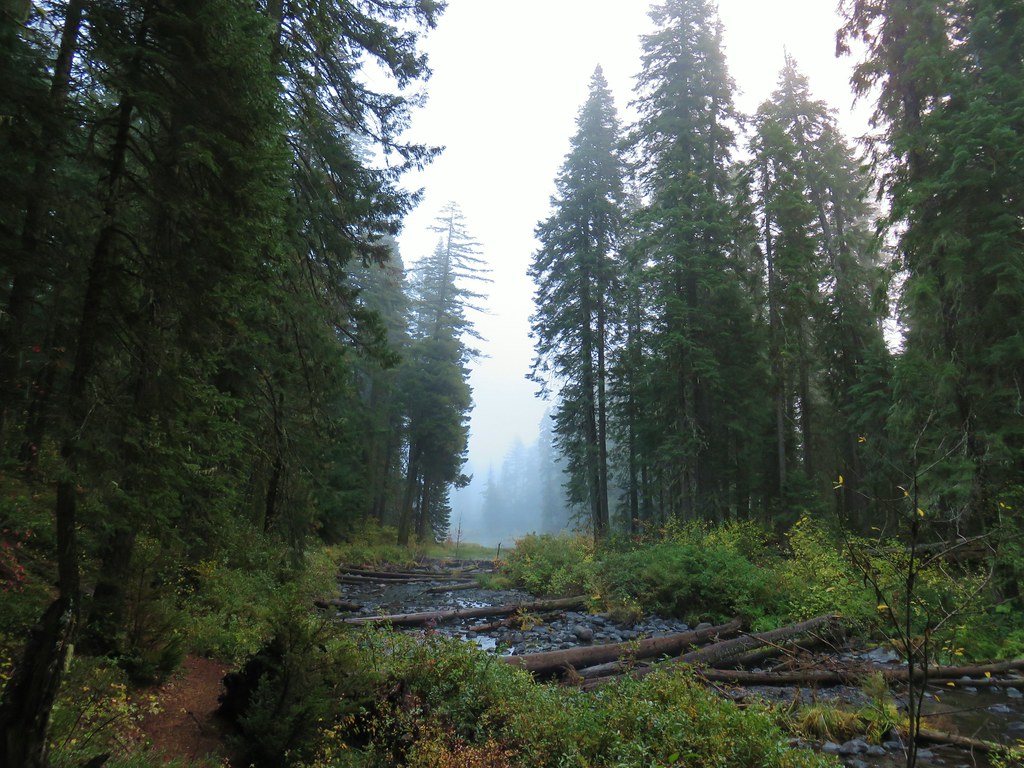
The trail began by passing through a nice fir forest with occasional views of North Fork Little Butte Creek.
IMG_4029

IMG_4031

IMG_4033

IMG_4041

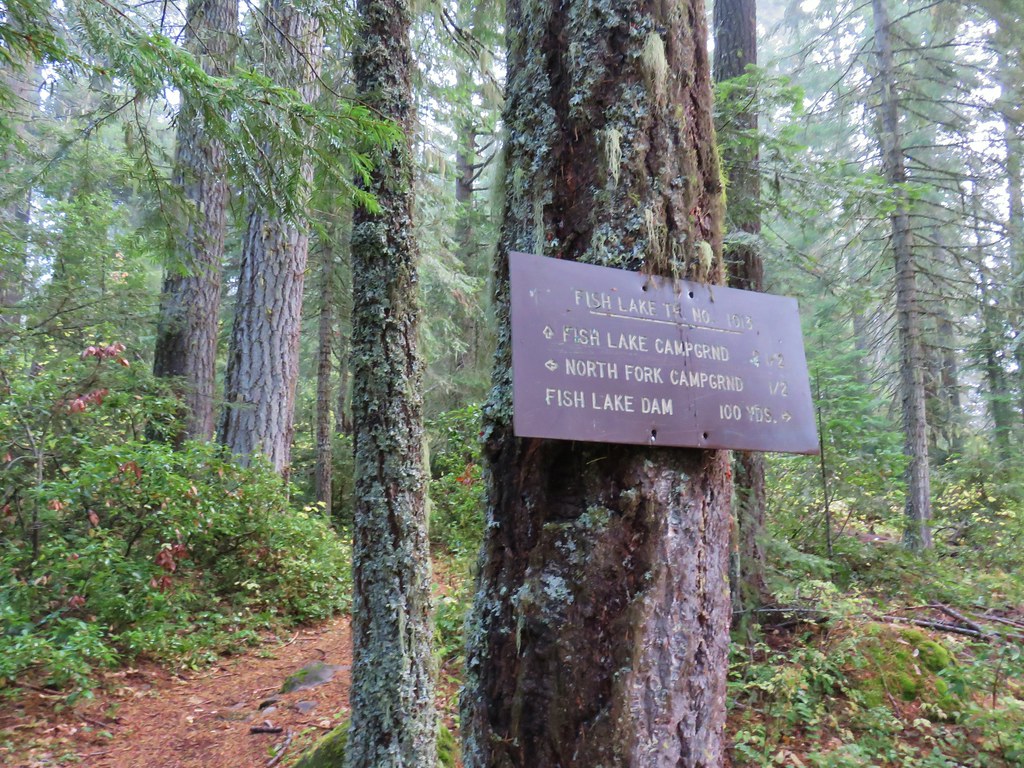
After .6 miles we came to a signed spur trail which we followed 100 yards to the Fish Lake Dam.
IMG_4042

IMG_4043

IMG_4044

For the better part of the next mile the Fish Lake Trail veered away from the water as it curved around some private summer homes.
IMG_4048

IMG_4049

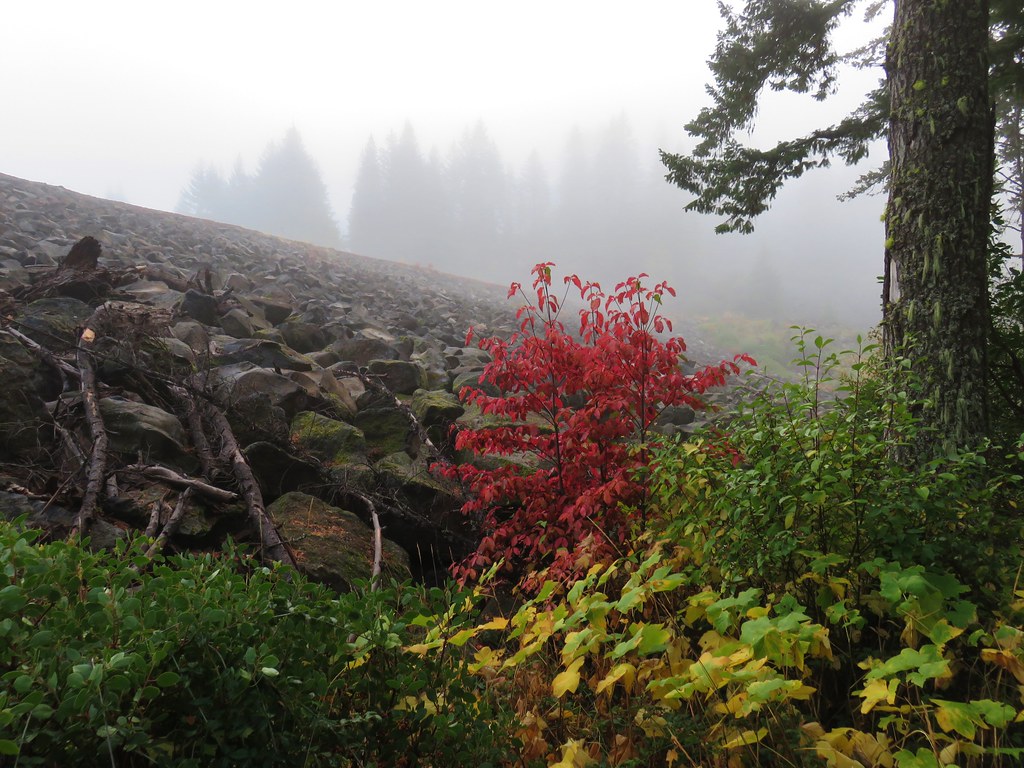
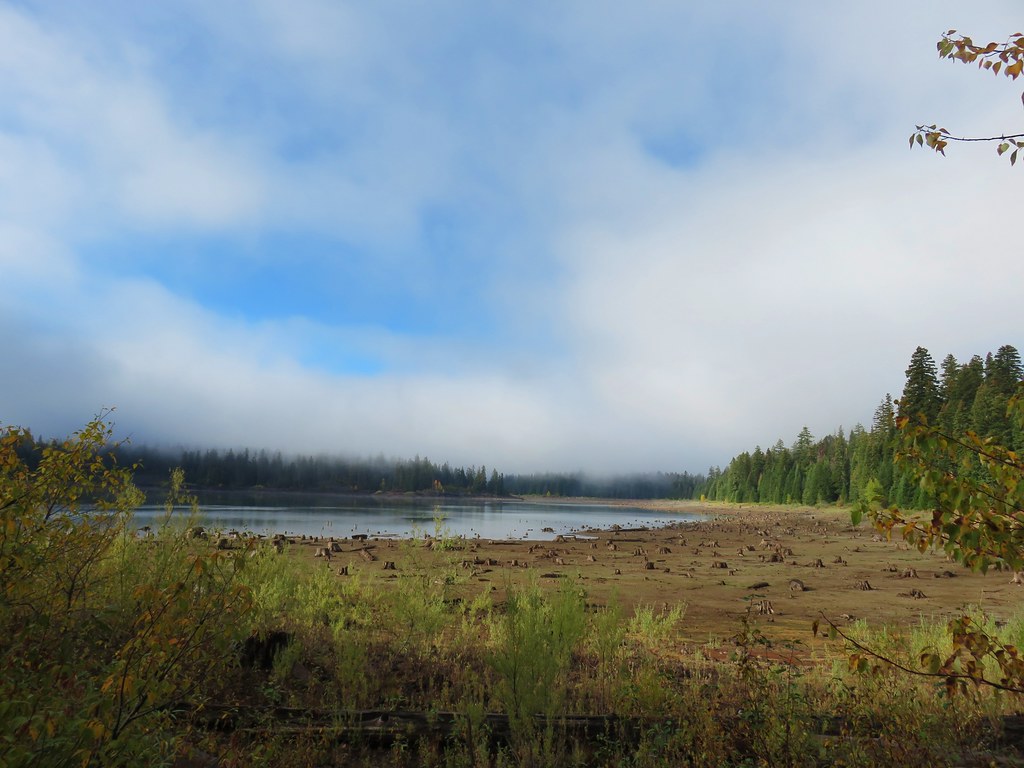
When the trail did make it to the lake there wasn’t much to see due to the fog.
IMG_4057

The trail stuck closer to the lake shore for the next .8 miles before arriving at Doe Point and the Doe Point Campground. As we made our way around Doe Point the fog began to lift revealing some of the blue sky we had seen on our morning drive.
IMG_4059

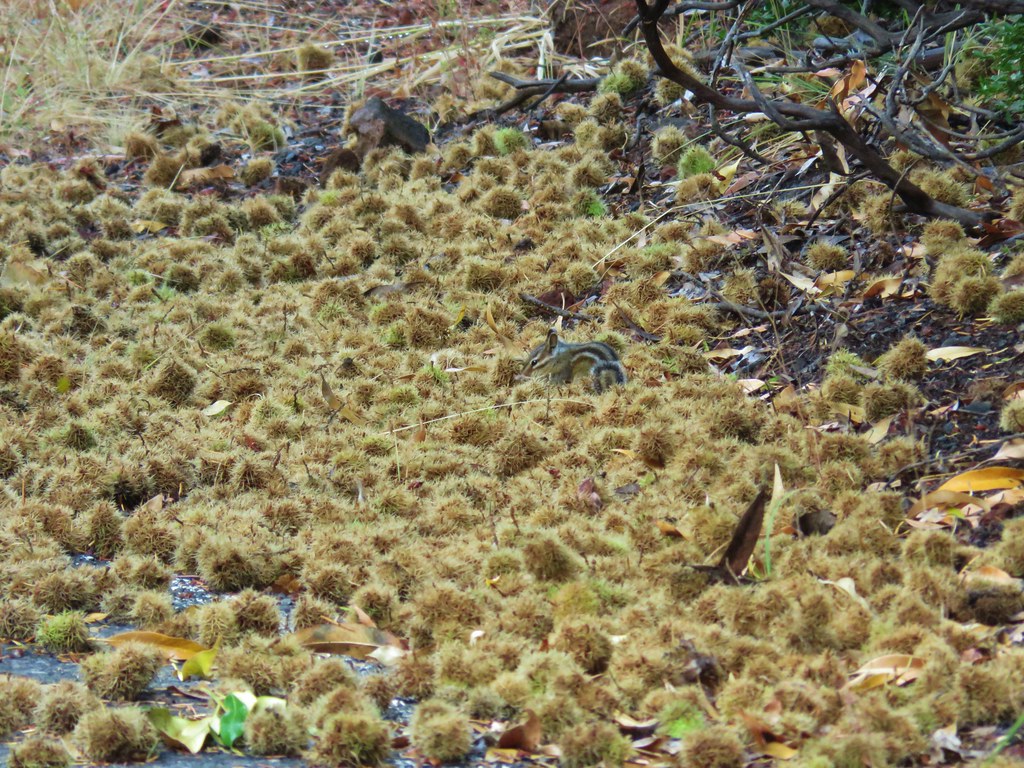
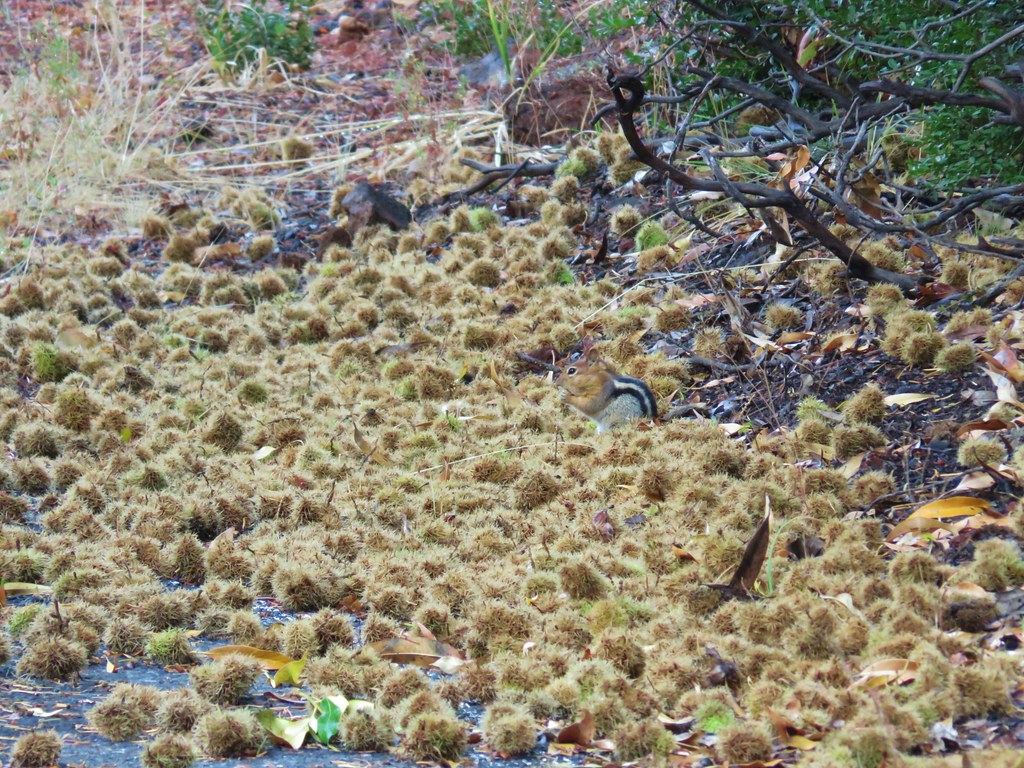
A quarter mile after rounding Doe Point we arrived at the Fish Lake Campground and boat ramp where a variety of woodland animals were busy harvesting chinkapin.
IMG_4068Stellar’s jay

IMG_4069Chipmunk

IMG_4072Golden-mantled ground squirrel

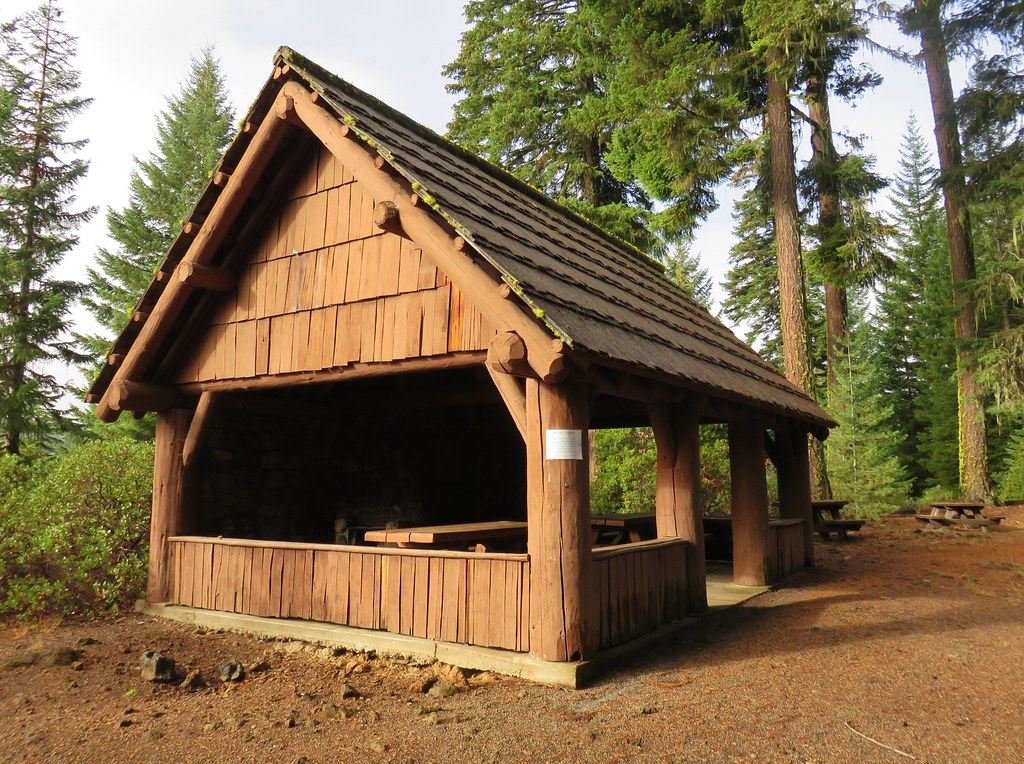
Our guidebook suggested turning around at the Fish Lake Resort, but we wound up losing the trail near the picnic shelter and decided not to try and walk through the campground to find the continuation of the trail and turned around.
IMG_4077

It was a different hike on the way back as the fog had entirely lifted from the lake and was breaking up overhead.
IMG_4081

By the time we were hiking back along the creek the sky was a beautiful blue.
IMG_4091

Typically having a hike only clear up near the end is a bit of a bummer, but we had another hike to go and with the clear skies we knew we should have a good view of Mt. McLoughlin from Lake of the Woods.

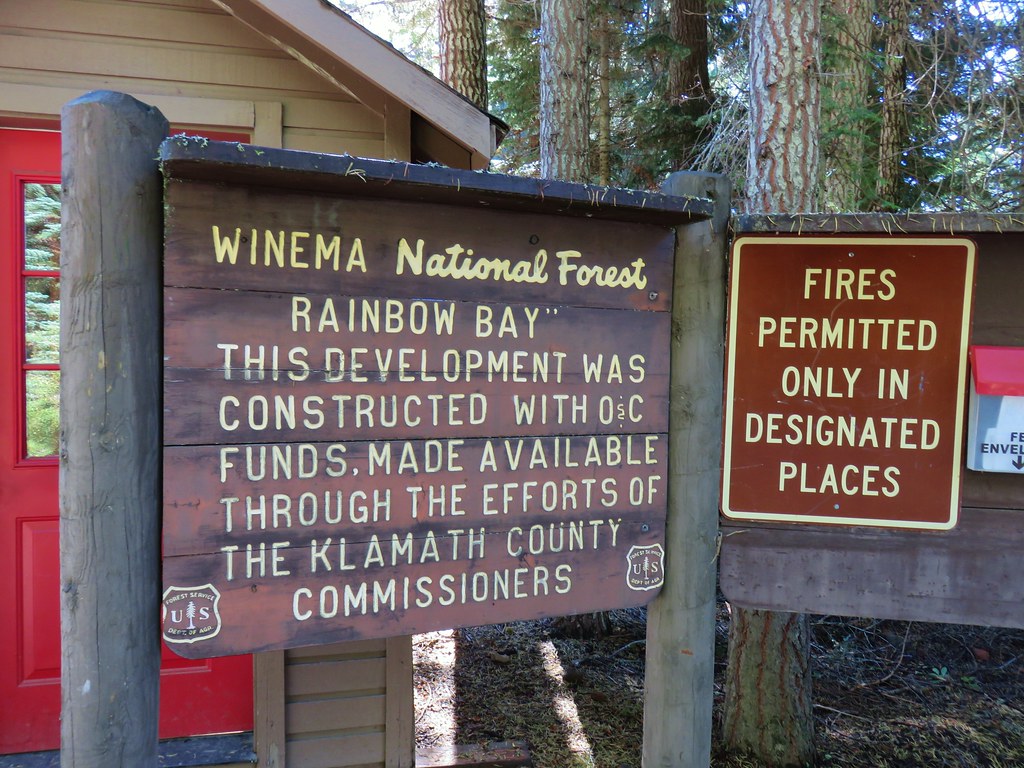
From the Fish Lake Trailhead we drove back east on Highway 140 to a sign for Fish Lake. We turned right at the sign and followed this road for a mile and a half to the Dead Indian Memorial Highway where we turned right again. The suggested starting point for this hike in our guidebook was at the Sunset Campground which was a mile down this highway. When we arrived at the entrance road we found it was gated so we turned around and wound up parking at the Rainbow Bay Picnic Area near the Lake of the Woods Resort after obtaining a $6 parking pass.
IMG_4097

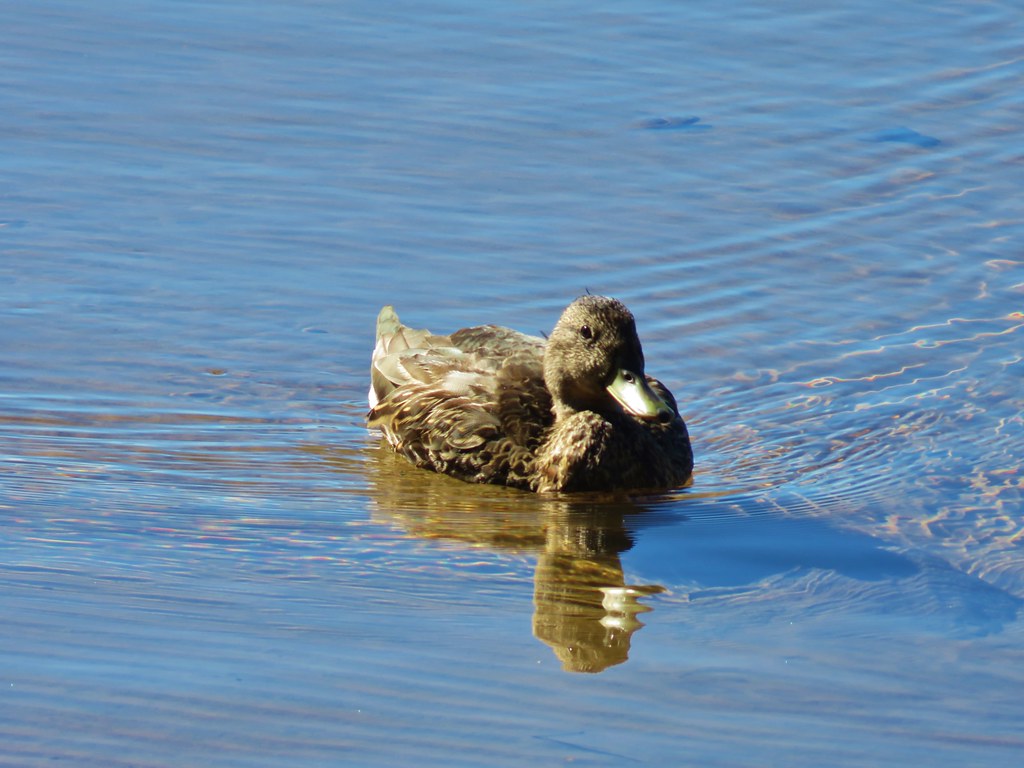
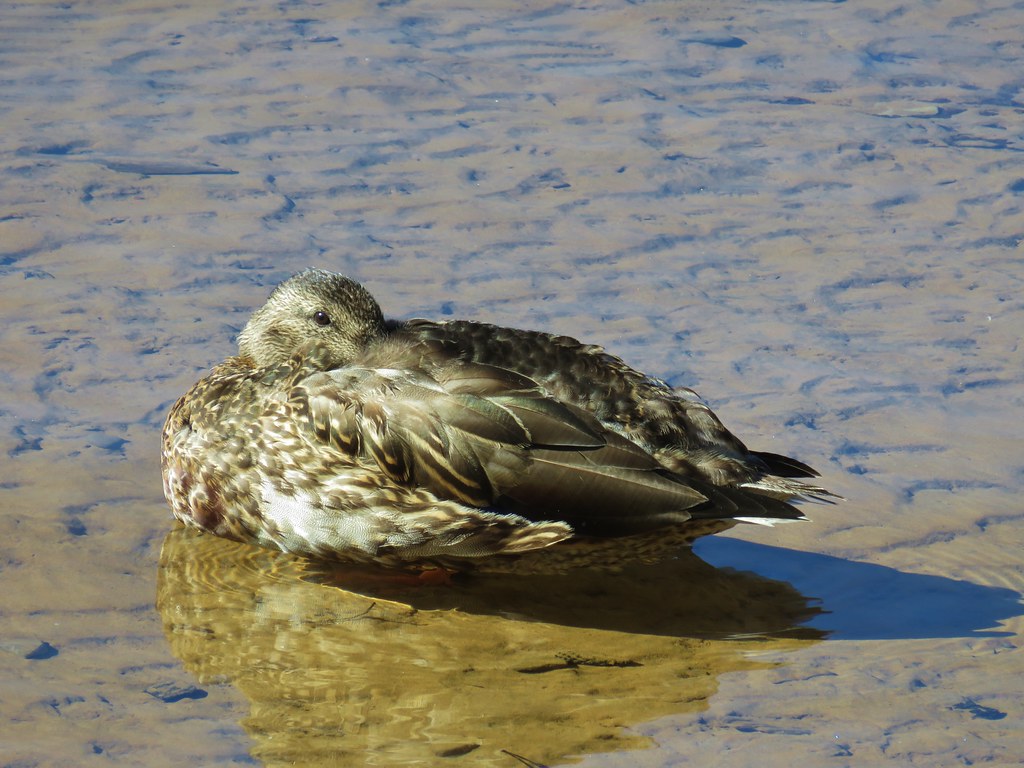
From the parking lot we headed SE along the lake shore around Rainbow Bay where some ducks were enjoying the wonderful weather.
IMG_4099

IMG_4102

IMG_4104

IMG_4107

The first mountain to come into view was Brown Mountain across the lake.
IMG_4106

Shortly after rounding the bay we arrived at the Sunset Campground where we did indeed have a nice view of Mt. McLoughlin. The mountain was sporting a dusting of new snow at its summit.
IMG_4108

IMG_4109

IMG_4121

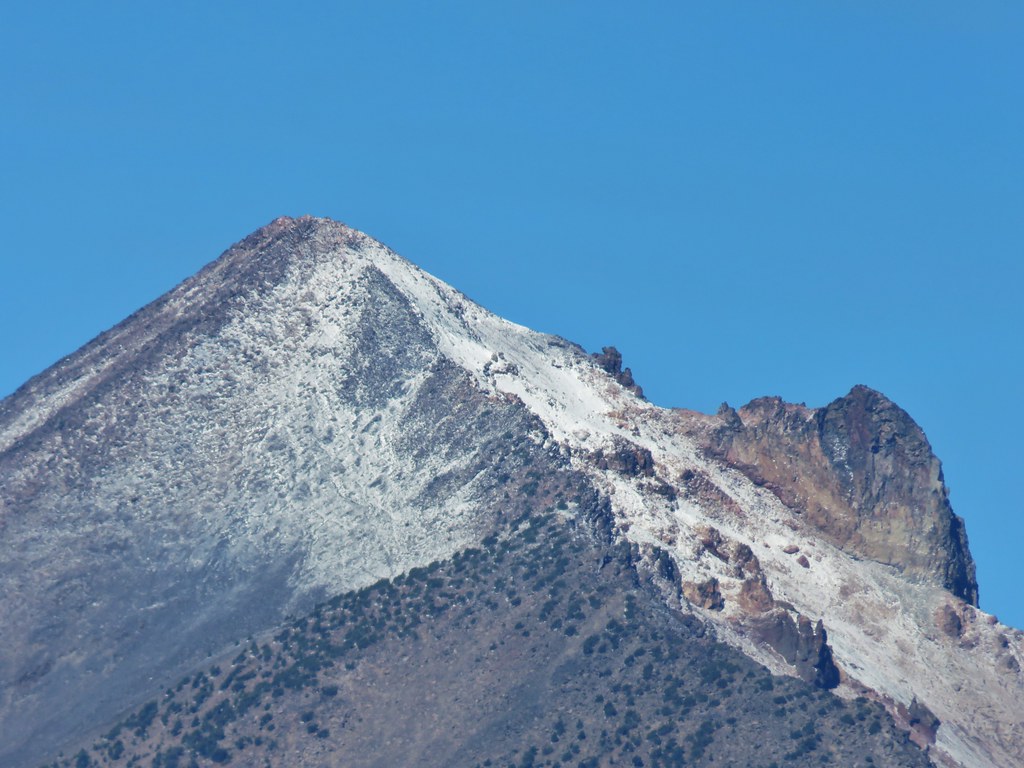
We could picture the route up to the summit that we’d taken a couple of years before (post).
IMG_4123

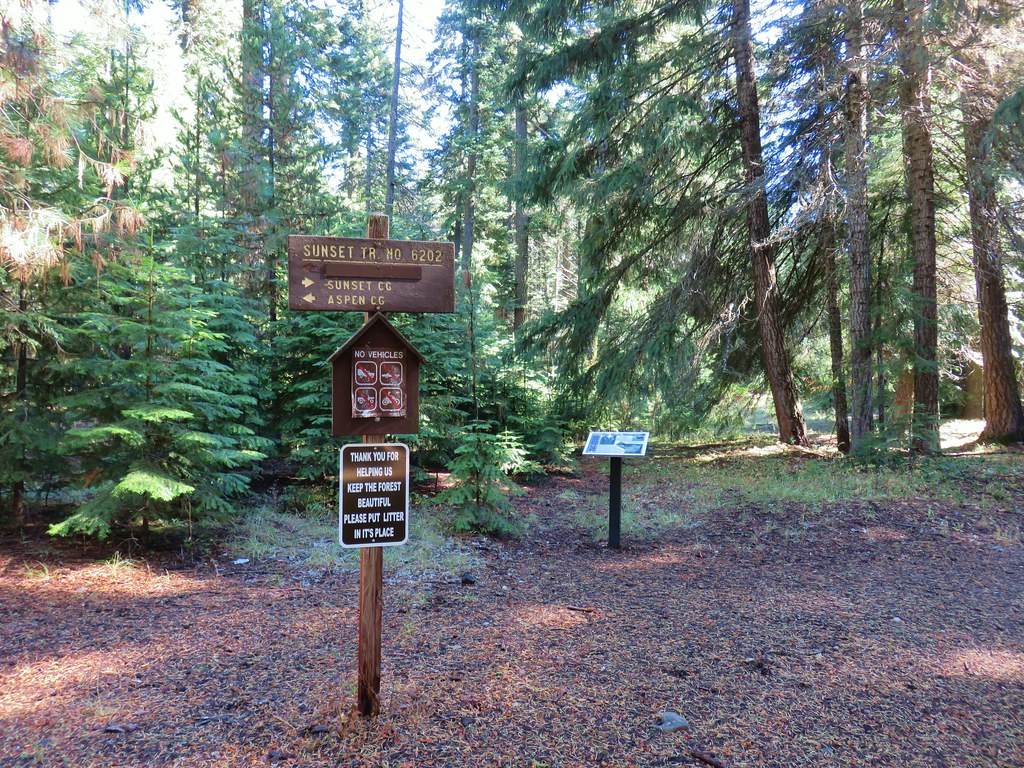
Satisfied with our view we turned around and headed back toward the Rainbow Bay parking area. We weren’t done hiking though and we veered behind the parking lot on the Sunset Trail toward the Aspen Point Campground.
IMG_4124

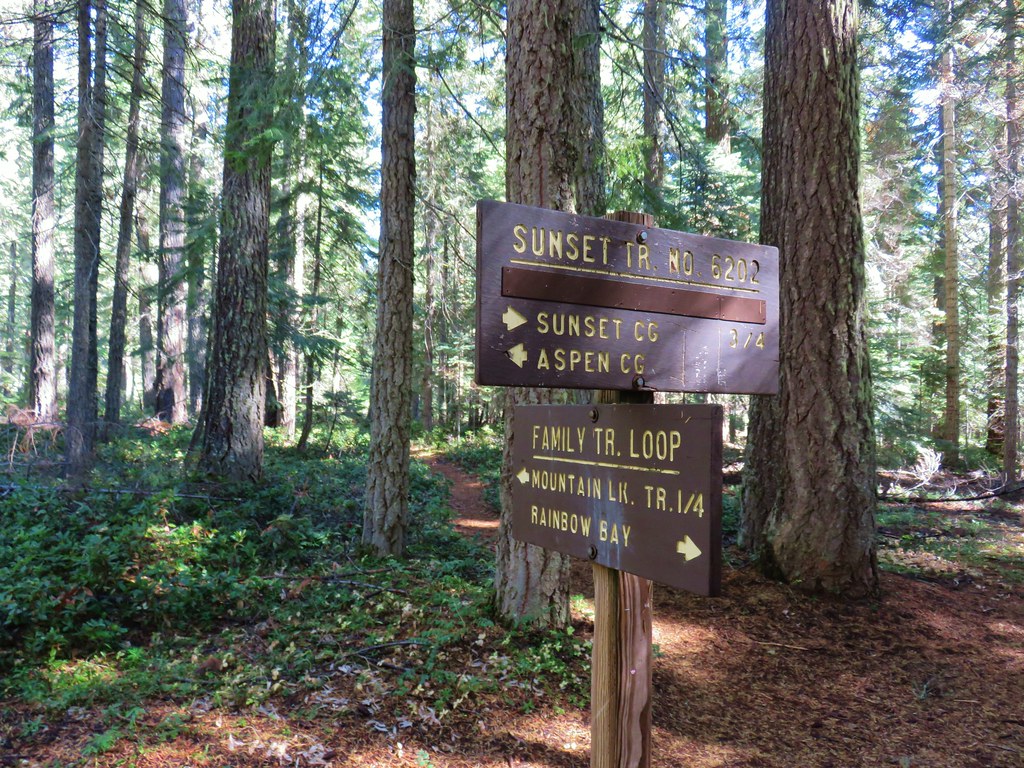
At a three way junction we turned right onto the Family Trail Loop.
IMG_4128

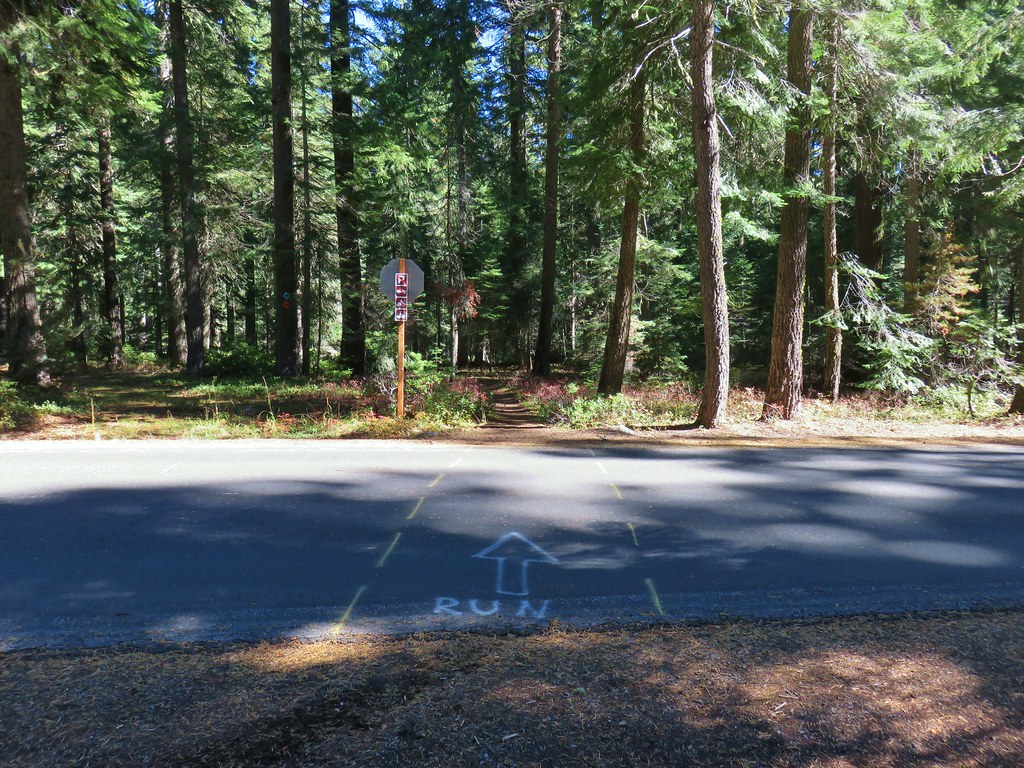
The Family Trail Loop crossed the paved road we’d been on earlier after a tenth of a mile.
IMG_4130

Just after crossing the road the Mountain Lakes Trail split off to the right while we stayed left.
IMG_4133

Several interpretive signs were set up along this trail.
<IMG_4135

IMG_4134

IMG_4138

IMG_4141

We stayed left ignoring a tie trail that would have looped us back to the Mountian Lakes Trail junction and arrived at the Great Meadow .6 miles from the road crossing.
IMG_4145

IMG_4149

IMG_4152

At a junction with the High Lakes Trail at the Great Meadow we turned left skirting the meadow in the forest for .7 miles to another road crossing across from the Aspen Point Campground.
IMG_4160

IMG_4162

At a junction on the other side of the road we went right keeping on the High Lakes Trail which led around Lake of the Woods to the NW. This section of trail passed some golden aspen trees and a leaf covered slough where ducks, geese, and a heron were spending their Sunday.
IMG_4163

IMG_4182

IMG_4181

IMG_4183

IMG_4209

We followed this trail past an old Forest Service complex and planned on turning around at the guidebooks suggested location, a small canoe launch.
IMG_4188

IMG_4189

The canoe launch wasn’t much, but there was a nice view of some of the peaks in the Mountain Lakes Wilderness (post) across the water.
IMG_4189

A solitary duck was swimming around in the launch and it apparently expected us to have some food because she came right up to us.
IMG_4194

IMG_4198

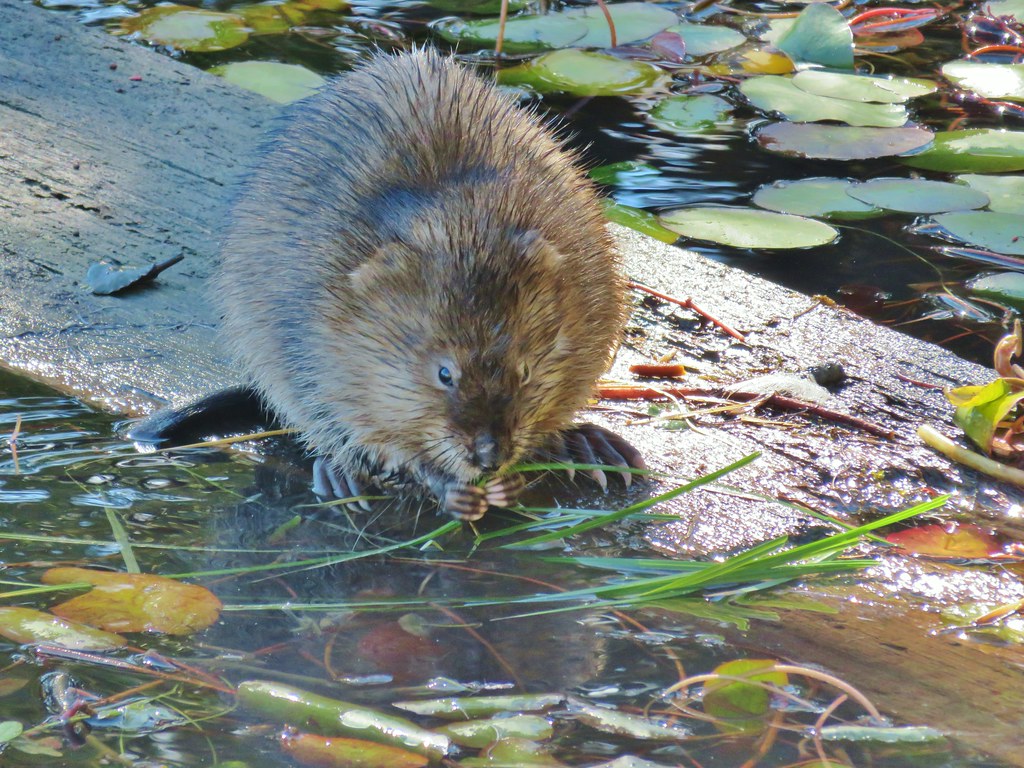
We did our best to explain that we don’t feed the wild animals and she waddled back to the water. At that point Heather asked about something on a plank in the water that I had originally thought was another duck but then decided it was just a rock set on the wood. She had taken it for something inanimate as well but then thought she saw it move. Upon closer inspection we discovered that it was a muskrat (initially we thought nutria but it was cuter than that invasive species).
IMG_4202

IMG_4205

It wasn’t particularly concerned by us but eventually it disappeared into the water. Then a dragon fly showed up and hovered over the water just below me.
IMG_4207

After our unique little interaction with nature it was time to start back. We returned to the Aspen Point Campground and followed paths near the lake shore back to the Lake of The Woods Resort.
IMG_4221

IMG_4215

IMG_4218

IMG_4228

IMG_4229

Our hike here was 6.3 miles long while the hike at Fish Lake had been 7 miles giving us a nice 13.3 mile day. After the cold, foggy start the day had turned out beautiful. We would be heading home the next morning (with a stop along the way of course) and this was a perfect way to end our time in the Klamath Falls area. Happy Trails!

Flickr: Fish Lake and Lake of the Woods

Categories
Hiking Mt. Hood Area Oregon Trip report

Devil’s Peak

The end of September/beginning of October brings us a pair of birthday celebrations, my Grandma on 9/30 and our Son on 10/1. We planned a joint celebration dinner in Portland but before the festivities we headed out on a hike to work up an appetite.

Due to the plans we needed a hike near Portland in the 8 to 10 mile range and hiking up the Cool Creek Trail to the Devil’s Peak Lookout fit the bill perfectly. We headed out early to the Cool Creek Trailhead. Oddly our guidebook had us turn on Road 20 at the east end of Rhododendron, OR instead of west of Rohododendron on Still Creek Road which is how the Forest Service directions have you go. We followed the guidebook directions only to be turned back by a closed bridge and had to go back to Still Creek Road. After finding the open route to the trailhead we parked along the shoulder of the road and set off on the Cool Creek Trail.
IMG_3124

The trail started with a steep incline, a reminder that it needed to gain over 3000′ over the next 4 miles. Not far from the trailhead we entered the Salmon-Huckleberry Wilderness.
IMG_3133

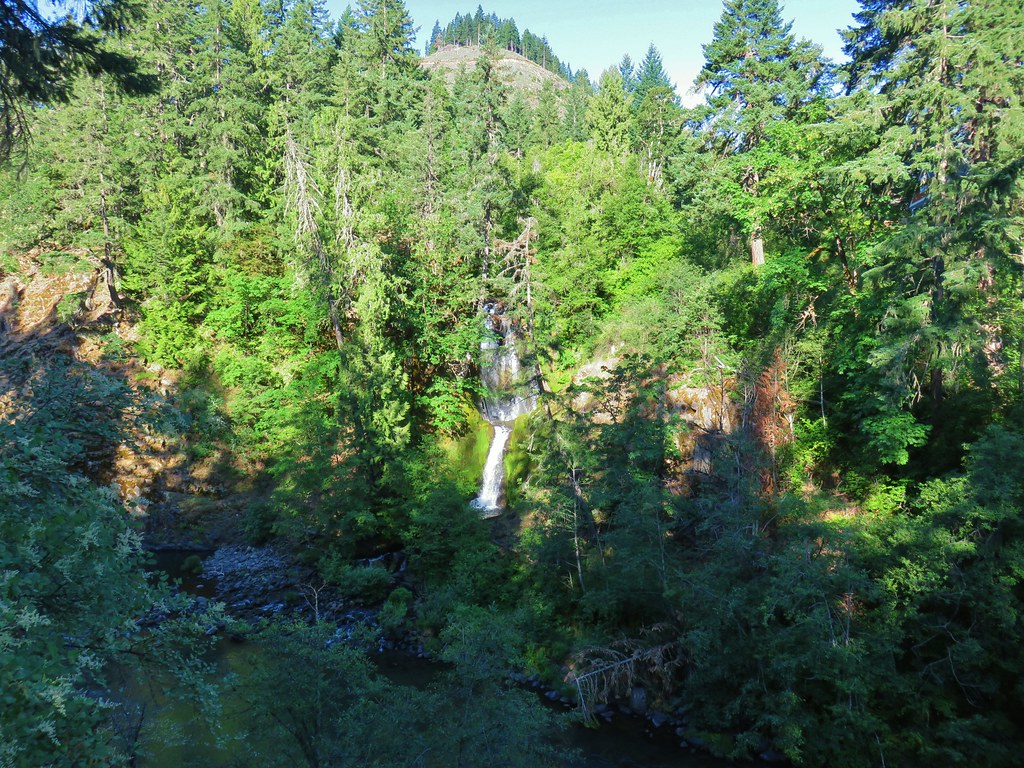
The trail is mostly forested with a few glimpses of Mt. Hood through the trees.
IMG_3144

IMG_3145

IMG_3148

IMG_3157

The best early view came just over a mile along the trail. For about two tenths of a mile the trail passed along an open hillside with a view across the valley to Mt. Hood.
IMG_3165

IMG_3166

The trail then passed around to the other side of a ridge where it pretty much remained for the next two miles. The forest here still housed a good number of red and blue huckleberries.
IMG_3176<

IMG_3177

IMG_3184

IMG_3187

IMG_3183

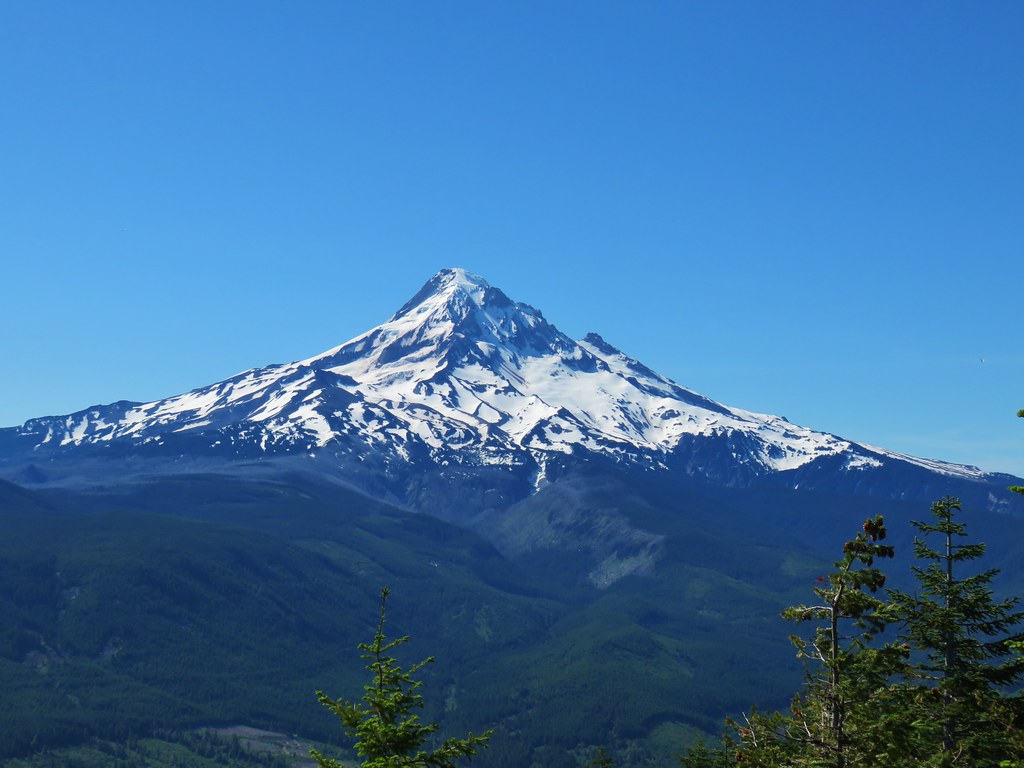
There were sections of more level trail in the forest which gave a nice break from the climbing, but also meant that the elevation would need to be made up on the sections of uphill.
IMG_3197

IMG_3198

Approximately 3.25 miles from the trailhead a spur to the left led to a rocky ridge top which provided what turned out to be the best viewpoint of the day.
IMG_3201

IMG_3232The rocky ridge

IMG_3203

From this point four Cascades were visible, Mt. St. Helens, Mt. Rainier, Mt. Adams, and Mt. Hood.
IMG_3213_stitch

IMG_3207Mt. St. Helens

IMG_3209Mt. Rainier

IMG_3210Mt. Adams

Tom Dick and Harry Mountain (post) was also clearly visible to the NE.
IMG_3229

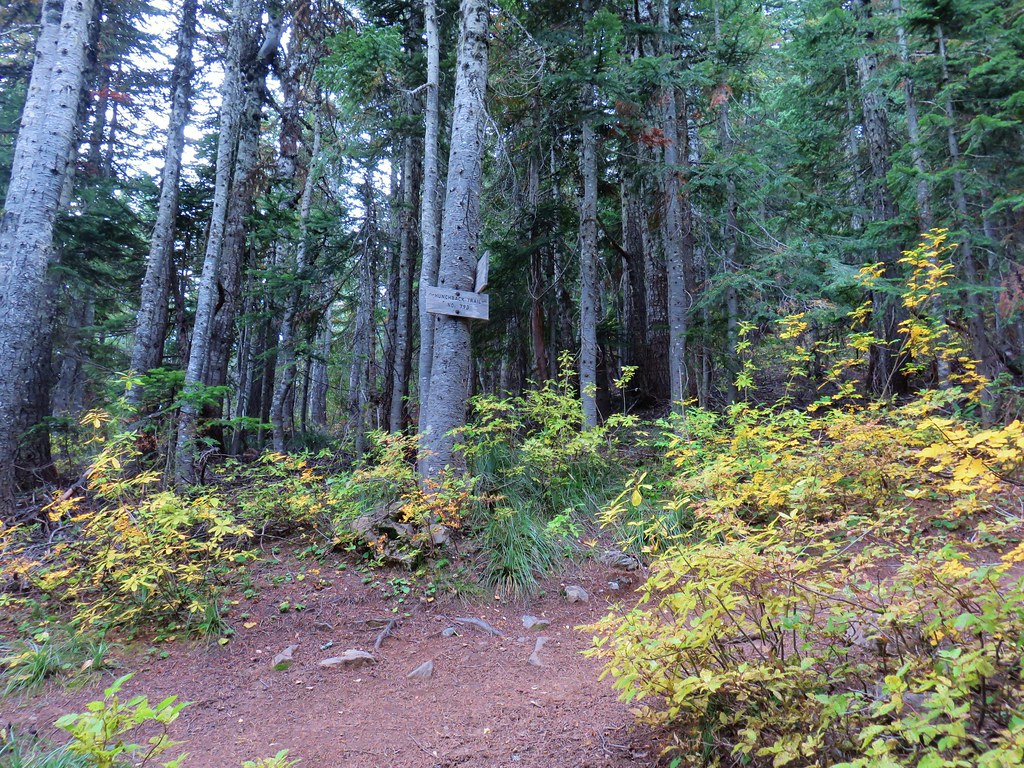
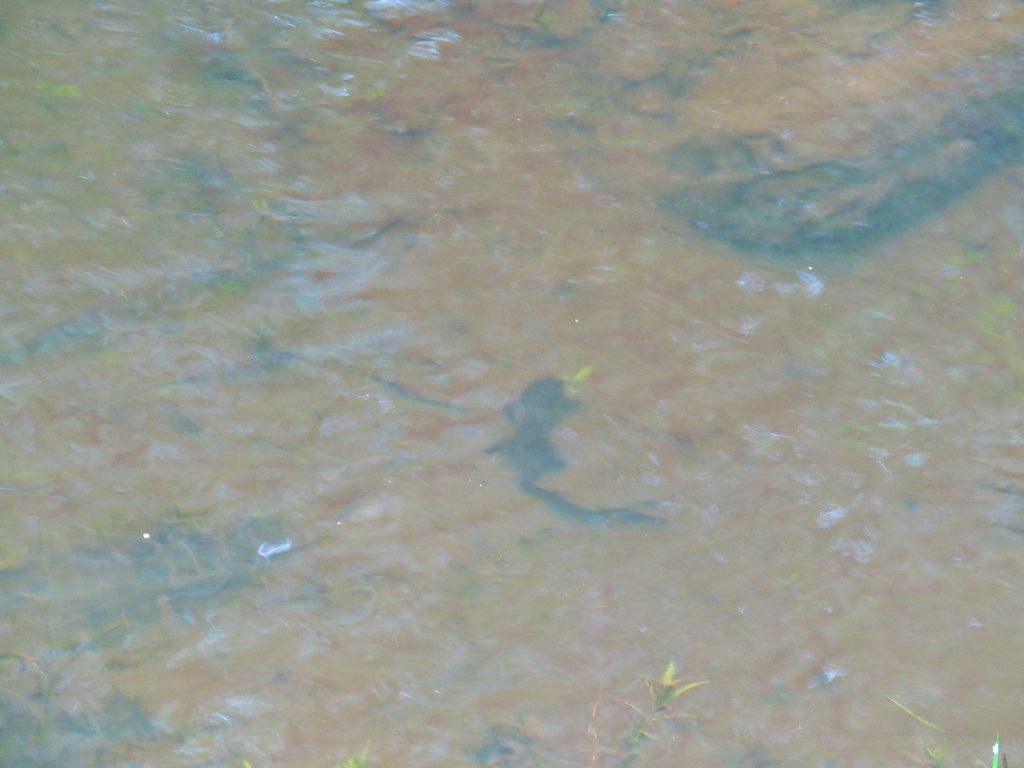
Beyond the ridge viewpoint the trail traversed the hillside on the west side of the ridge climbing for another quarter mile past one more viewpoint of Mt. Hood to its end at the Hunchback Trail.
IMG_3235

IMG_3238

IMG_3240

IMG_3244

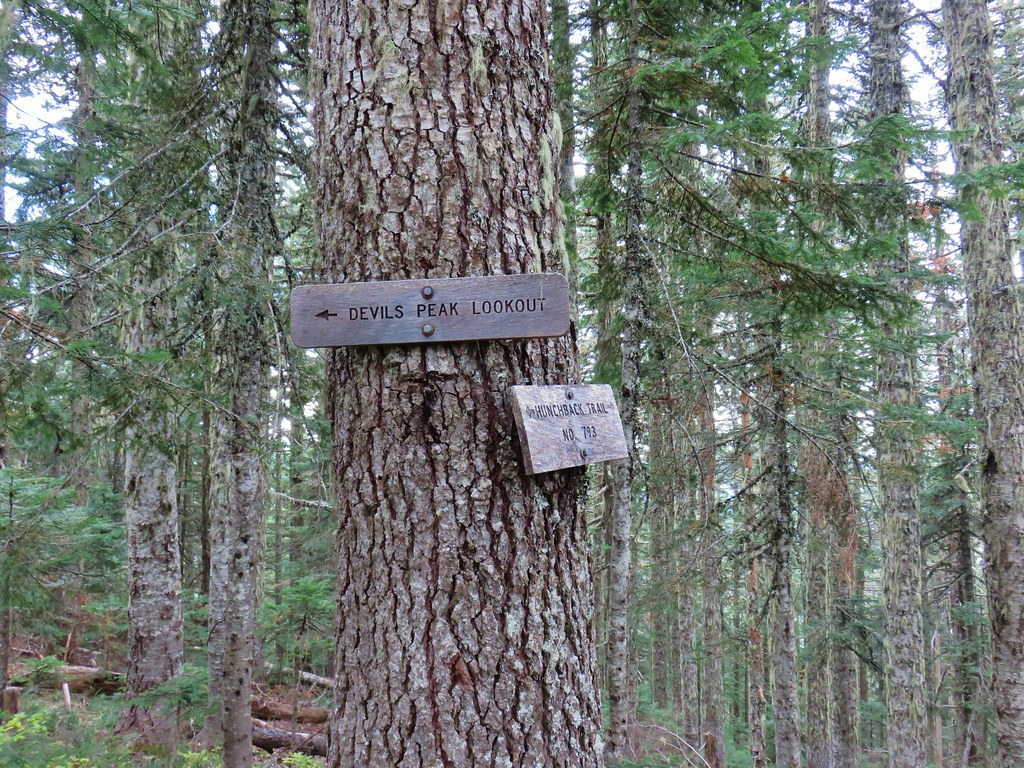
A spur trail to the Devil’s Peak Lookout is just 500 feet after turning right onto the Hunchback Trail.
IMG_3247

IMG_3248

The lookout is a little over 200 feet up this spur.
IMG_3249

IMG_3250

The tower is available for use on a first come, first serve basis so there was a possibility that it was occupied but it turned out to be empty.
IMG_3257

IMG_3285

IMG_3288

IMG_3289

IMG_3290

Mt. Hood was visible from the lookout.
IMG_3286

I had gone ahead of Heather and Dominique who had joined us for the hike so I explored Devil’s Peak while I waited for them to arrive.
IMG_3259

IMG_3263Mt. Jefferson in some haze to the south.

IMG_3268Mt. Hood

IMG_3272Salmon-Huckleberry Wilderness

IMG_3283

IMG_3300Clouds coming up the Salmon River Valley

IMG_3339Butterflies on the lookout.

IMG_3346One of several birds foraging in the bushes near the lookout.

It turned out that I had gotten quite a bit ahead and wound up spending about an hour and a half at the tower watching the clouds break up above while they also moved in below.
IMG_3306

IMG_3332

IMG_3350

After they joined me at the lookout they took a break as well then we headed back down. At the ridge viewpoint the view of Mt. Hood was better than it had been earlier, but not for the other Cascades.
IMG_3355_stitch

We continued back down stopping to gather some huckleberries to take to my Grandmas house. We wound up passing beneath the clouds losing Mt. Hood for the last mile and a half.
IMG_3363

IMG_3366

IMG_3370

IMG_3369

It was a tough 8 mile hike given the elevation gain but the views were well worth the effort. That effort was also rewarded with a nice birthday dinner and a tasty piece of cake. Happy Trails!

Flickr: Devil’s Peak

Categories
Diamond Peak Area High Cascades Hiking Oregon

Fawn Lake – Diamond Peak Wilderness

A week after scrapping a planned four day backpacking trip in the Diamond Peak Wilderness due to weather we found ourselves heading to that same wilderness because of weather. Our one available day for hiking this week coincided with the one wet day in the forecast. When that happens we usually look at several different areas to find the one with the best chance to stay dry. This time that appeared to be Fawn Lake in the Diamond Peak Wilderness with just a 30% chance of showers. With our plans set we drove to the Fawn Lake Trailhead near Crescent Lake. To reach the trailhead we turned SW onto NF 60 at a sign for Crescent Lake between mileposts 69 and 70 along Highway 58 (in Crescent Junction). After 2.2 miles we continued on NF 60 where it made a right turn at a sno-park. After an additional .3 miles we turned left at a sign for the Crescent Lake Campground/Fawn Lake Trailhead.

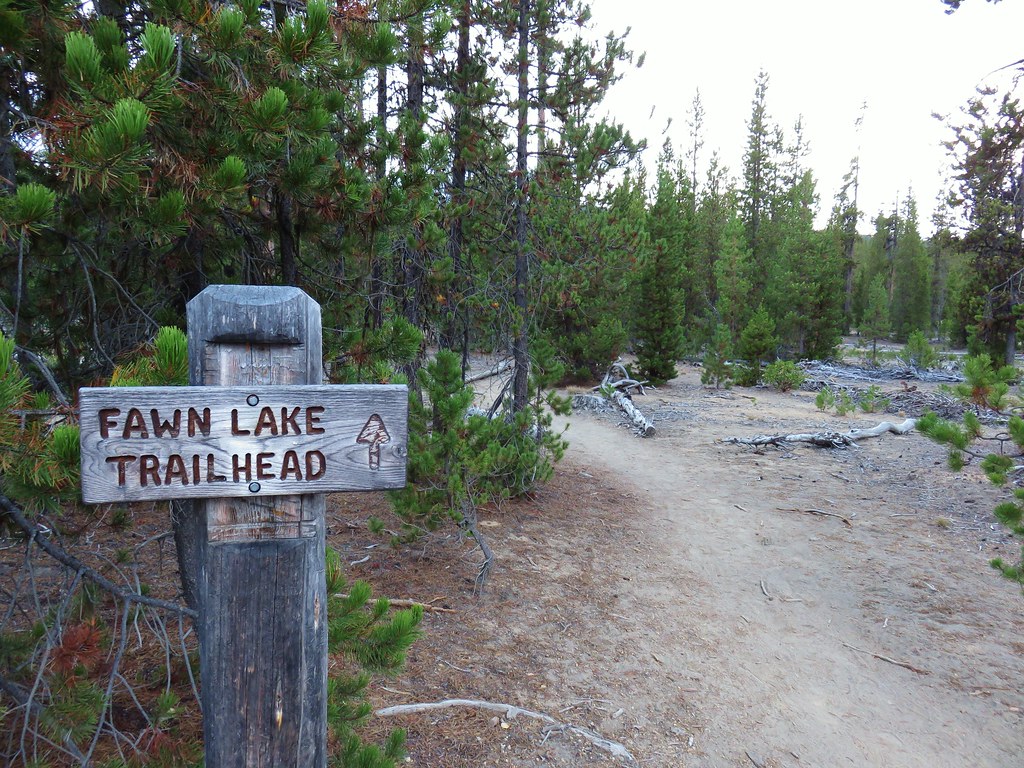
It is an interesting trailhead, the parking area is a day use lot located next to the Crescent Lake Campground. A trail sign at the far end of the parking lot pointed to the Fawn Lake Trailhead.
IMG_3023

IMG_3025

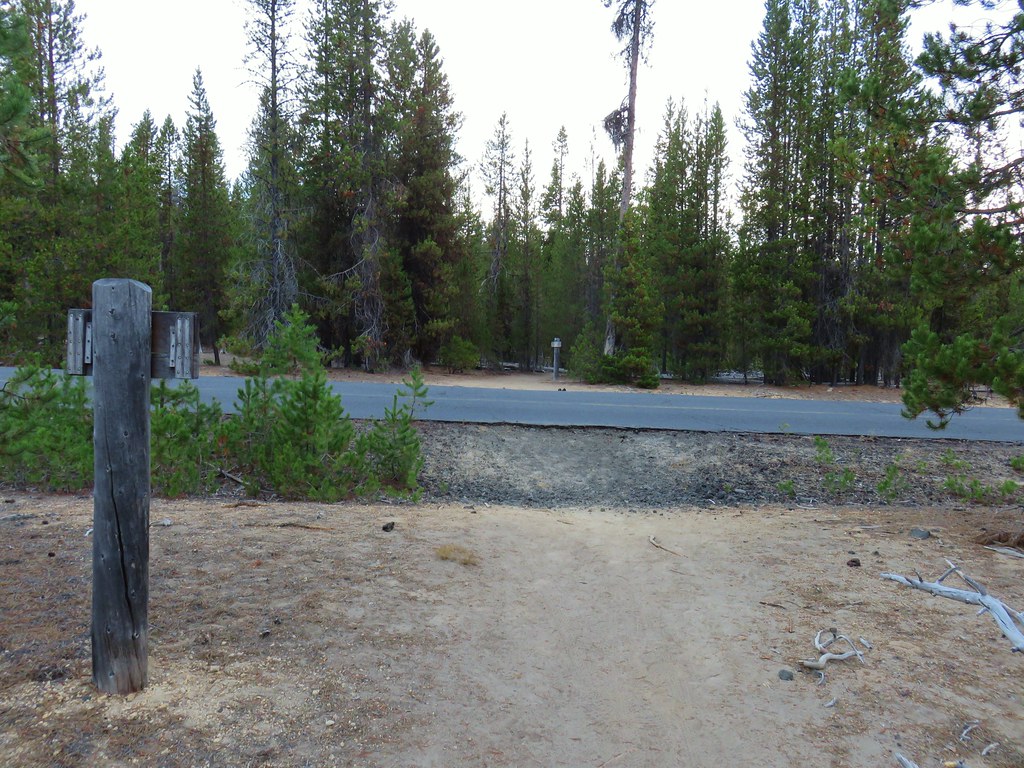
We followed this path and in a tenth of a mile came to a crossing of NF 60.
IMG_3027

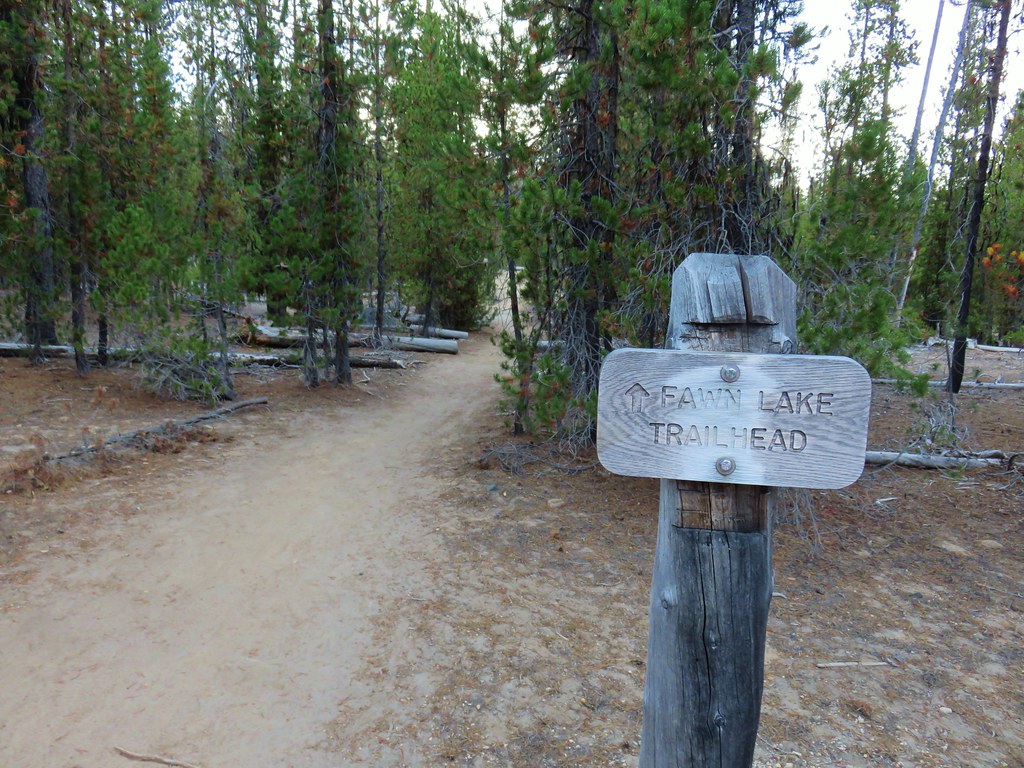
Another pointer for the Fawn Lake Trailhead lay on the far side of the road.
IMG_3028

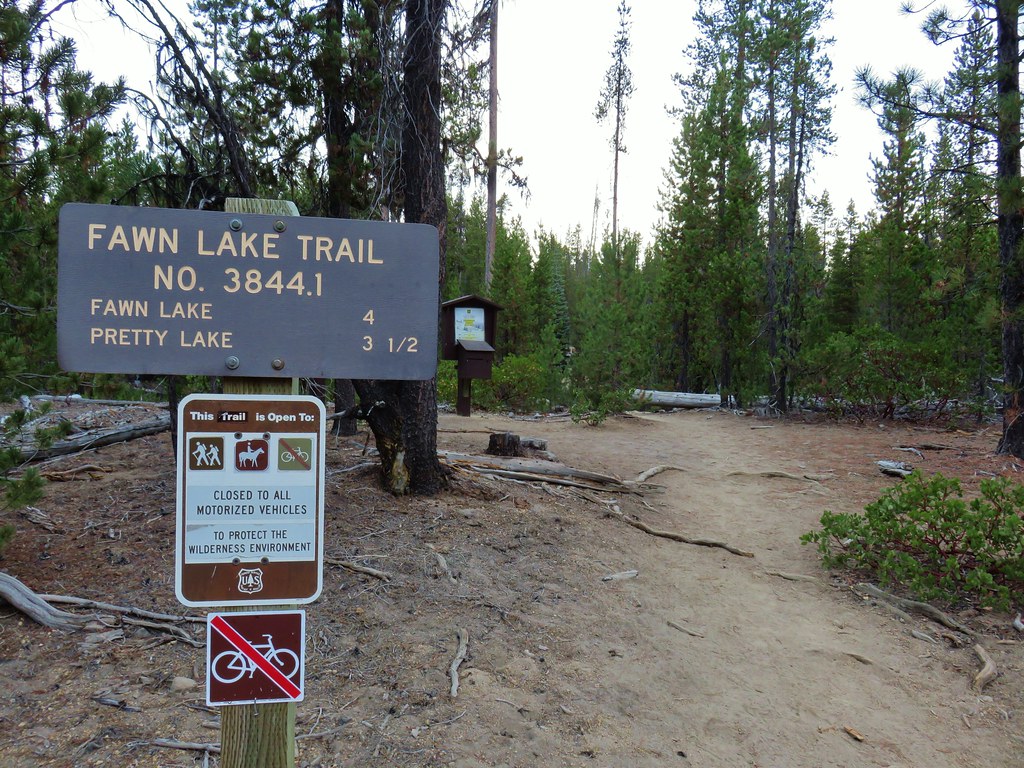
A short distance later we arrived at a sign for the actual Fawn Lake Trail and a signboard with self-issued wilderness permits.
IMG_3030

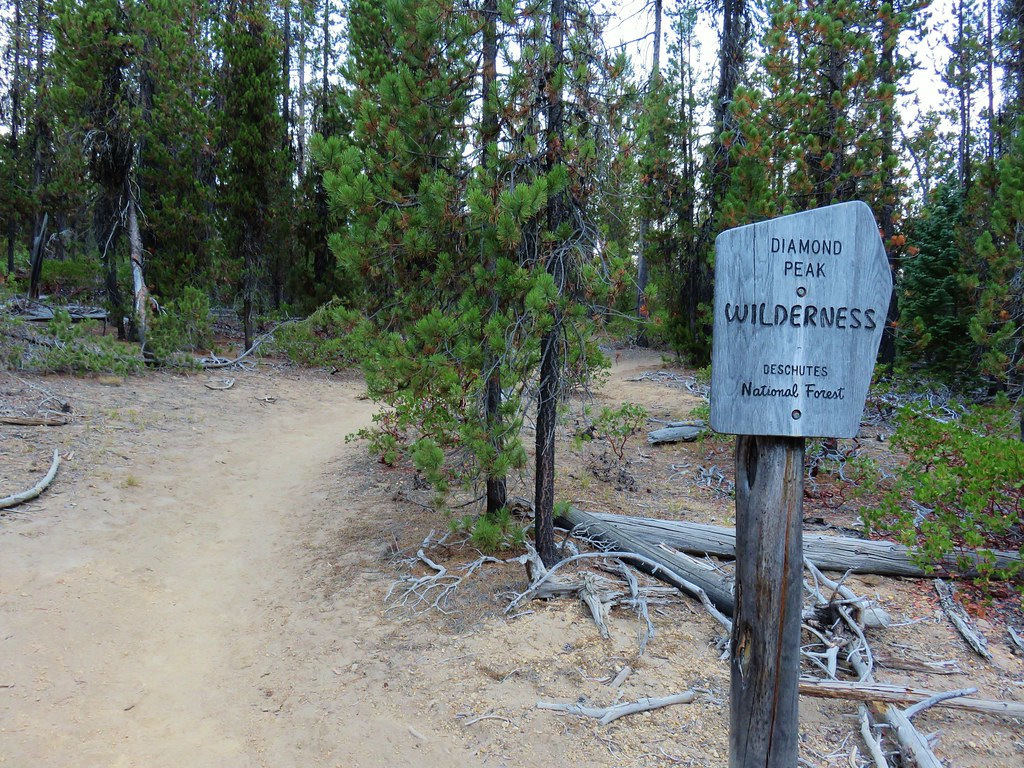
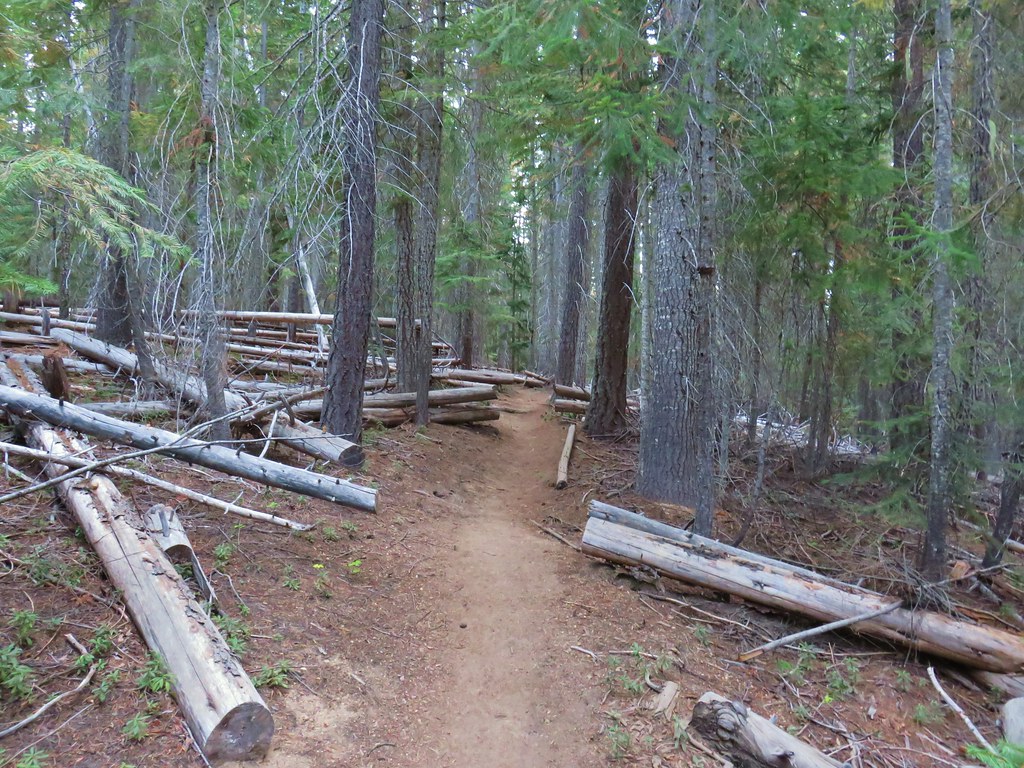
The Fawn Lake Trail set off in a mostly lodgepole pine forest and just after a 4-way junction with the Metolious-Windigo Trail entered the Diamond Peak Wilderness.
IMG_3032

IMG_3035

After entering the wilderness the trail climbed gradually for approximately three quarters of a mile through a mix of lodgepole and fir forest to a fork.
IMG_3036

IMG_3037

IMG_3038

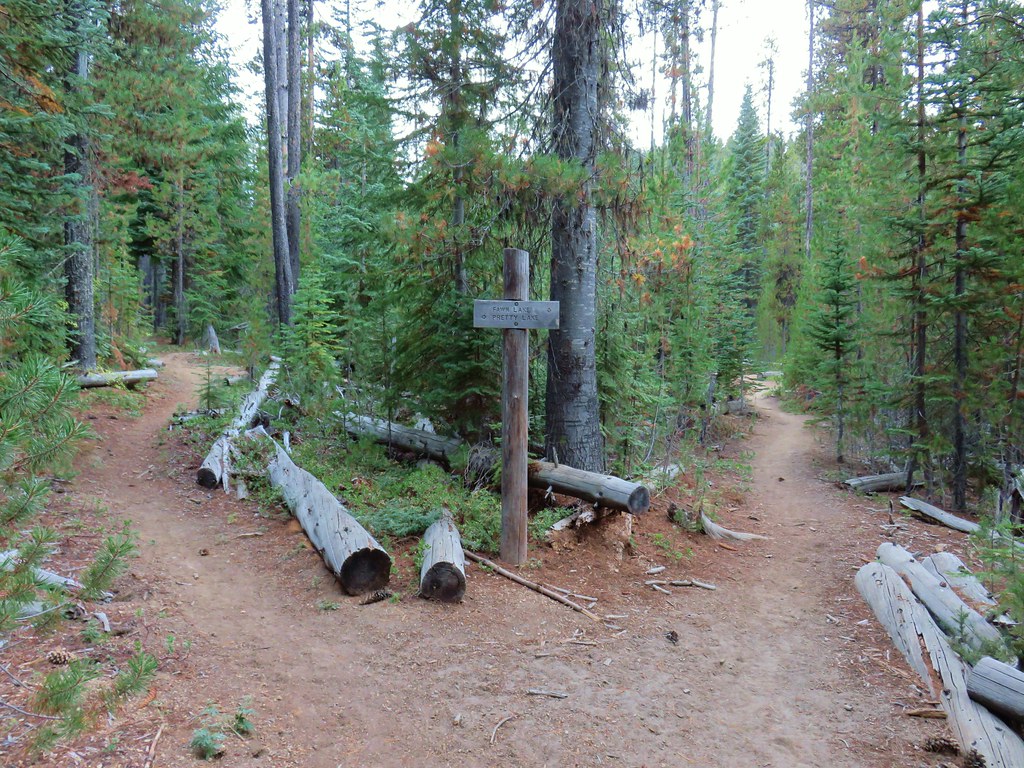
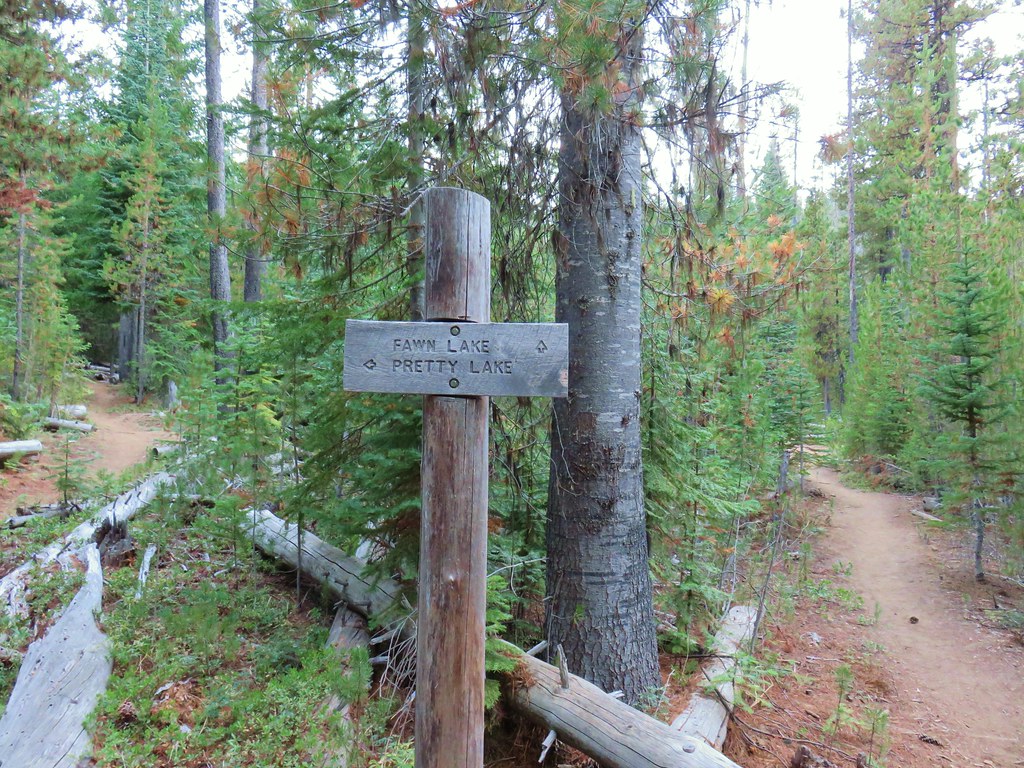
This was the start of a loop past Fawn and Pretty Lakes.
IMG_3039

We went right heading for Fawn Lake which was just over 2.5 miles away. The trail contoured around a ridge end climbing gradually through a nice forest.
IMG_3041

IMG_3042

IMG_3044

The trail split again at Fawn Lake.
IMG_3045

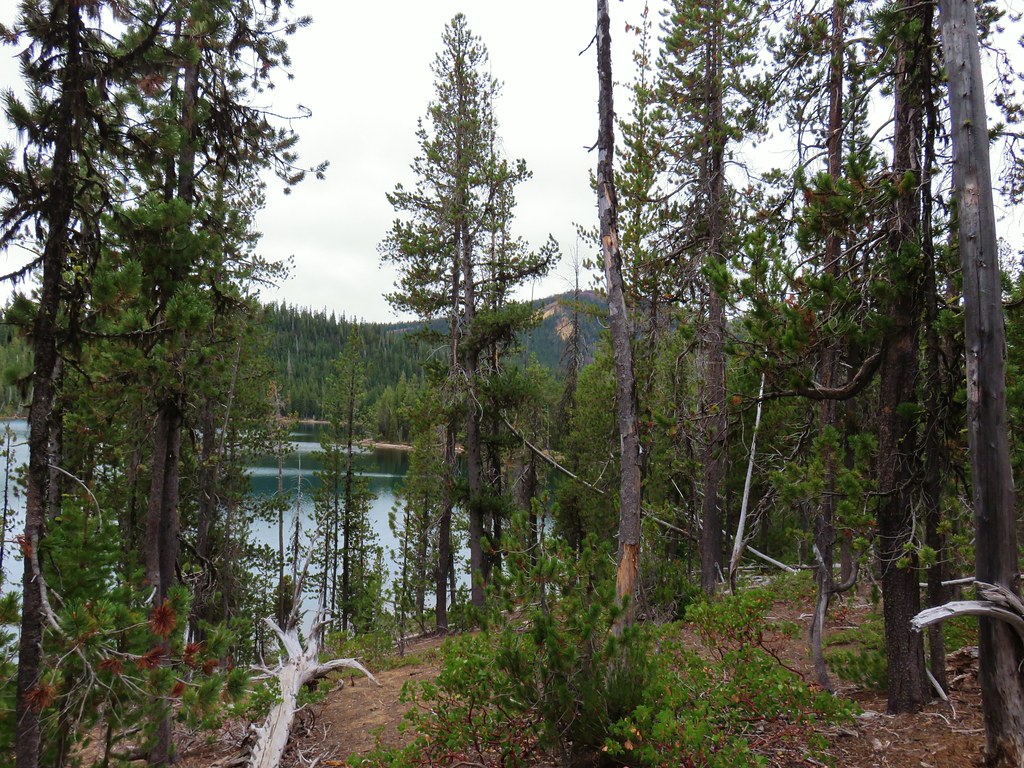
The left fork was the upper end of the loop, but before we started on the loop we had plans to visit a couple of other lakes in the wilderness so we went right stopping briefly to visit the shore of Fawn Lake. We had driven through a number of showers on the way to the trail but so far the hike had been dry. From the lake Redtop Mountain to the SE was cloud free while Lakeview Mountain to the SW was not.
IMG_3047Redtop Mountain

IMG_3048Lakeview Mountain (to the right behind clouds)

We continued on around the north end of the lake to the end of the Fawn Lake Trail at a junction with the Crater Butte Trail.
IMG_3053

Here we stayed left and climbed above Fawn Lake.
IMG_3055

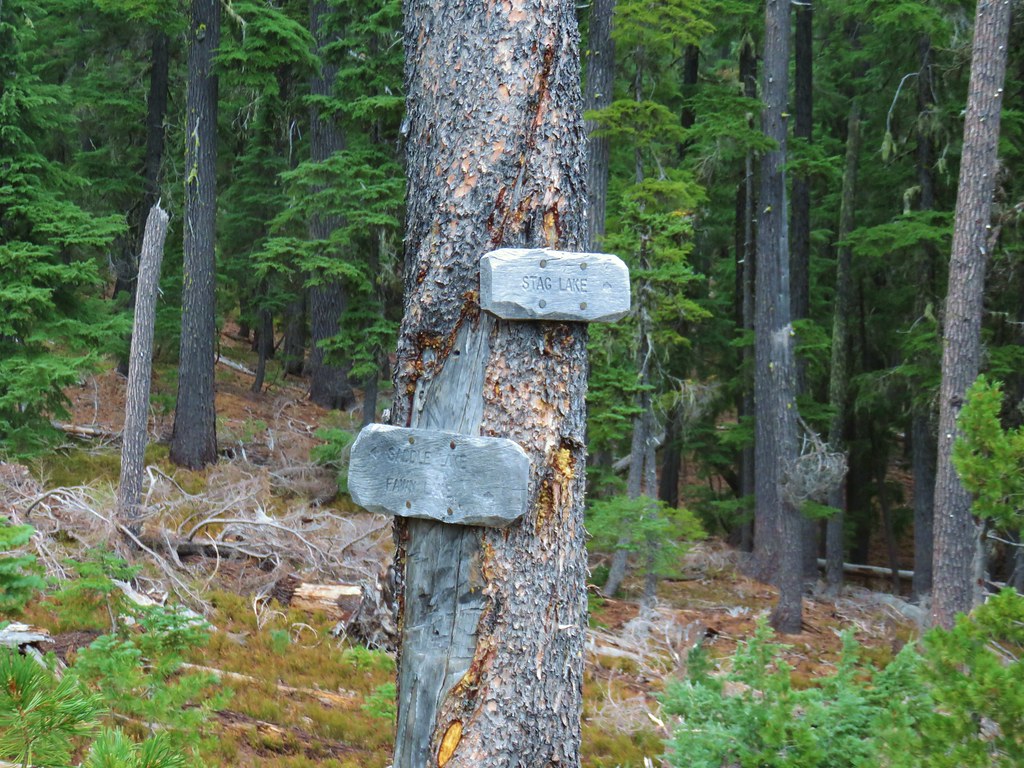
A mile from Fawn Lake we came to the Stag Lake Trail.
IMG_3059

It was clouding up at this point and a light mist was falling. We decided to wait on the side trip to Stag Lake which lay at the base of Lakeview Mountain hoping that it would be a little clearer on the way back.
IMG_3057

We followed the pointer for Saddle Lake and continued uphill through the forest.
IMG_3061

After .6 miles the trail steepened as it climbed out of a gully to a saddle.
IMG_3062

After .3 miles of switchbacks we arrived at the saddle where the trail leveled out for a tenth of a mile to Saddle Lake.
IMG_3063

IMG_3067

A steady light rain was now falling but not enough for us to need to break out the rain gear.
IMG_3072

The weather and the scenery really let us know that Fall had arrived.
IMG_3069_stitch

After a break at Saddle Lake we headed back to the junction with the Stag Lake Trail and turned left onto it.
IMG_3077

This fairly level .4 mile trail passed a small pond before arriving at Stag Lake.
IMG_3078

IMG_3089

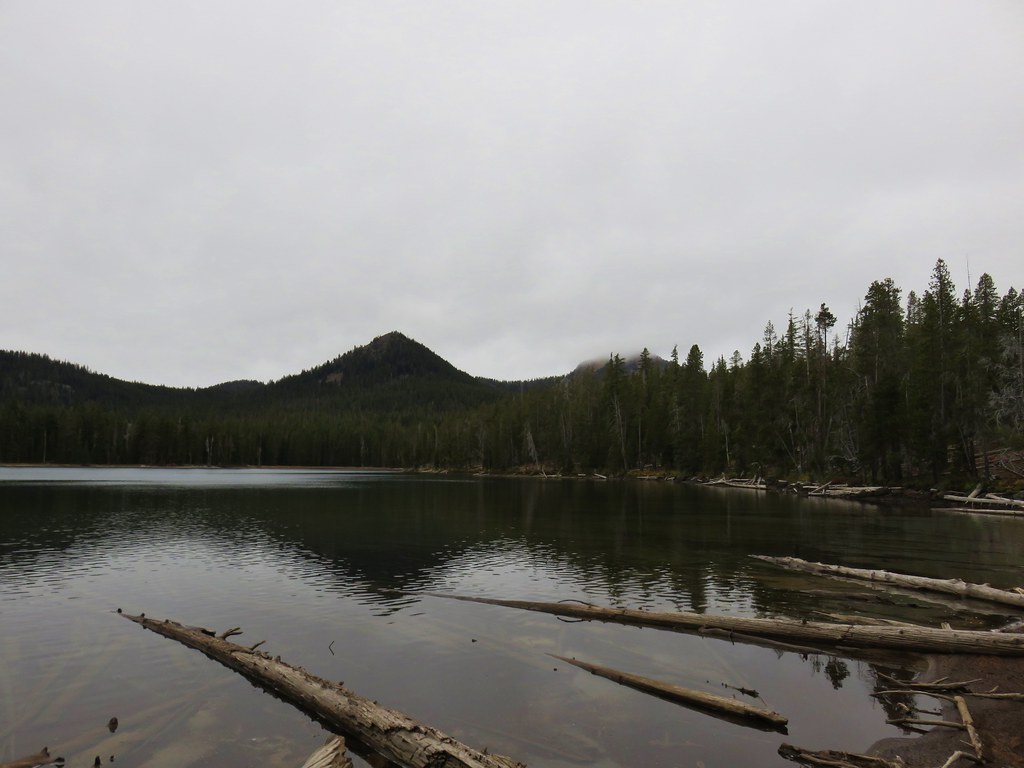
The clouds had not lifted so our view of Lakeview Mountain was fairly obscured.
IMG_3084

We would get a much better look at the mountain from the car as we were trying to leave (more on that later).

After visiting Stag Lake we returned to the Crater Butte Trail and headed back toward Fawn Lake. Shortly before reaching the lake we turned right on a path we had noticed earlier hoping to pass around the west side of the lake and hooking up with the Pretty Lake Trail to the SW of the lake.
IMG_3091

The open forest made cross country travel relatively easy.
IMG_3092

IMG_3097

Using our GPS we made our way to the SW shore of Fawn Lake where the Pretty Lake Trail was just a few feet away in the forest.
IMG_3094

IMG_3098

IMG_3100

Once we were on the Pretty Lake Trail we turned right for a fairly level .4 miles to the start of a short .3 mile climb.
IMG_3104

IMG_3105

The trial then crested a low pass and descended slightly for another .3 miles to Pretty Lake.
IMG_3107

IMG_3108

IMG_3114

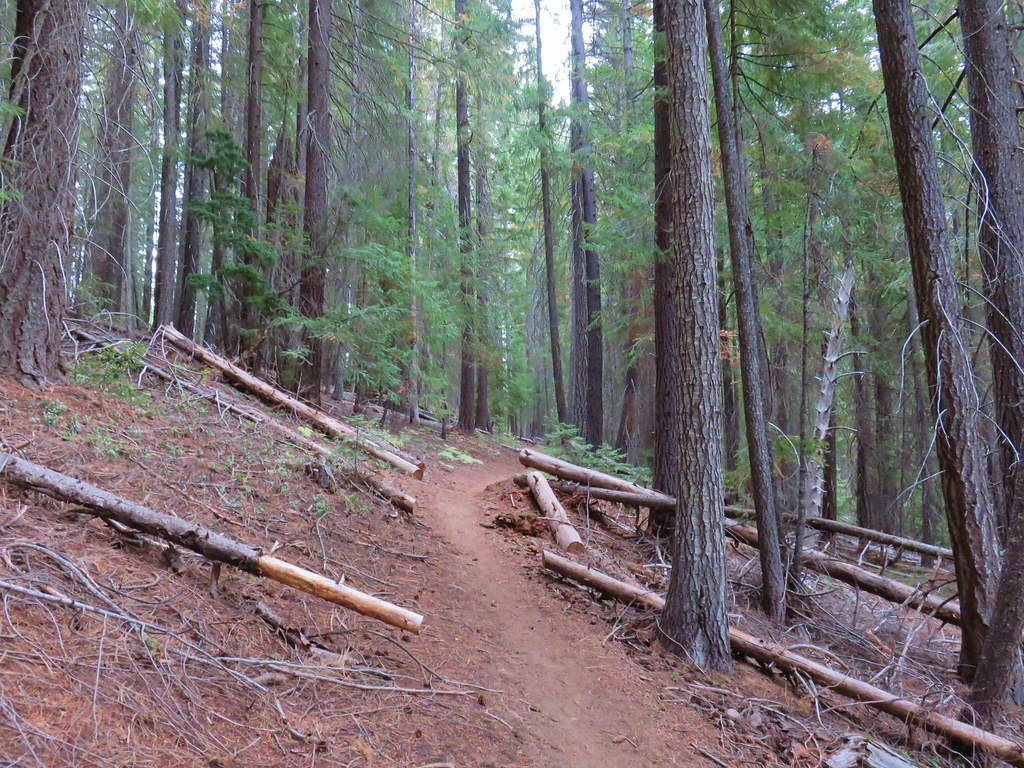
It was a little under 2 miles from Pretty Lake back to the Fawn Lake Trail junction. The trail descended a ridge with a bit of a view of Odell Butte to the north.
IMG_3120

IMG_3118

We completed the loop then followed the Fawn Lake Trail back .8 miles to our car. With the side trips to Saddle and Stag Lakes this was a 12.7 mile hike with approximately 1500′ of elevation gain. It would have been nice to have had better views of Lakeview Mountain, but it was still a nice hike and we have a good excuse to go back and redo this hike someday.

The only real negative to the day was as we were headed home. A train was stopped blocking NF 60 and we were informed that it could be a couple of hours before it was able to move. We didn’t have a sufficient road map to figure out which forest roads might bypass the train and after a failed attempt to find an alternate route we returned to the stopped train and waited. As we were driving around though we noticed that Lakeview Mountain was now entirely free of clouds. After sitting at the tracks for a little over an hour the train was finally on its way and so were we. Happy (train free) Trails!

Flickr: Fawn Lake

Categories
High Cascades Hiking Mt. Jefferson Area Oregon

Pamelia Lake Overnighter

As I mentioned in our recent Table Lake Loop Trip Report (post)we had plans to visit Goat Peak, a 7159′ peak just south of Mt. Jefferson. We had obtained a Pamelia Limited Area Entry Permit in May when they became available for September 8th and 9th. It was a roll of the dice not knowing what the wildfire or weather situations would be four months down the road but it ensured that we would be able to go if conditions permitted it. Aside from a slight chance of showers the morning of the 8th the forecast looked good so that morning we drove to the Pamelia Lake Trailhead and set off.IMG_1945

IMG_1946

We had been here once before in 2013 on a long loop to Hunts Cove (post).

From the trailhead the Pamelia Lake Trail travels just under two and a quarter miles to the lake. Along the way the trail passes through some very nice forest scenery with several views of Pamelia Creek.IMG_1948

IMG_1950

IMG_1954

IMG_1955

Just prior to arriving at the Pamelia Lake the trail veers left at a junction with the Grizzly Peak Trail which heads to the right.

IMG_1963

Our original plan for this trip had been to take the Pamelia Lake Trail to the Pacific Crest Trail via the Hunts Creek Trail and follow the PCT up to Coyote (aka Mud) and Shale Lakes where we would set up camp before attempting to reach Goat Peak. After some additional consideration though we decided that setting up camp at Pamelia Lake might be a better option. Setting up camp there would eliminate the need to haul our heavy backpacks up the PCT while also leaving us with a hike out the next day of less than two and a half miles. It did mean we would be adding nearly 4.5 miles to Saturdays hike, but on paper it would still only be around 15 miles. The designated campsites at the lake were all along its left (north) side so we followed a use trail straight ahead from the junction and started looking for an open site.

We wound up choosing site #3 which kept us relatively close to the Grizzly Peak Trail junction as well as the Hunts Creek Trail junction.IMG_1966

IMG_1972

After setting up camp we briefly visited the shore of Pamelia Lake then we headed up to the Hunts Creek Trail.IMG_1967

IMG_1970

IMG_1974

We turned left onto the Hunts Creek Trail and followed it around a ridge for nearly three quarters of a mile to its end at a junction with the Pacific Crest Trail gaining a view of Mt. Jefferson along the way.IMG_1975

IMG_1977

IMG_1979

IMG_1981

On our loop to Hunts Cove I had taken the short side trip north on the PCT to see Milk Creek but Heather had not so we turned left at the junction and followed the PCT for a tenth of a mile through vine maple donning its fall colors to a viewpoint above the creek of Mt. Jefferson.IMG_1983

IMG_1989

IMG_1984

After checking off the viewpoint we turned around and headed south on the PCT which climbed gradually through a varied forest.IMG_1990

IMG_1991

IMG_1992

IMG_1997

IMG_2003

IMG_2007

Along the way some movement in a fir tree caught our attention. At first we thought it might be a medium sized mammal of some kind but it turned out to be a squirrel harvesting cones that were crashing down through the limbs after being detached.IMG_1995
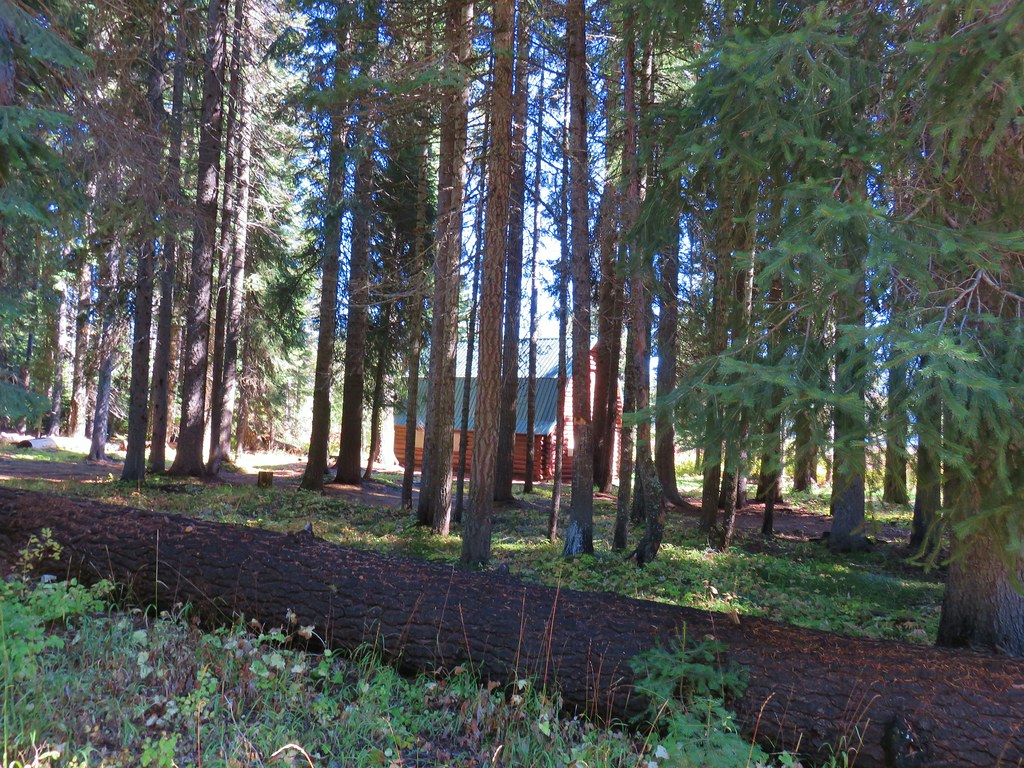
Approximately four and a quarter miles from the junction we arrived at Mud Hole Lake. (On some maps it is identified as Coyote Lake but on the USGS Topographic Map the name Coyote Lake is assigned to another lake on the west side of the PCT.)IMG_2010

We turned off the PCT just before the lake on an unsigned but clear trail leading NE through a meadow.IMG_2014

We were using “75 Scrambles in Oregon: Best Non-Technical Ascents” by Barbara I. Bond as our reference for the hike. This was our first time using this particular guidebook but so far everything was going smoothly. The book did not mention that there was a clear trail to follow but we were headed straight for Goat Peak and we’d turned off the PCT at the right spot so we figured we were good to go.IMG_2016

Our intended route would lead us up above a talus slope to the north (left) of Goat Peak where we would then bend to the south at about 6800′.IMG_2020

IMG_2019

It was a lovely area with red huckleberry leaves and a few butterflies still flying about.IMG_2027

IMG_2025

The tread petered out for a bit in one meadow in particular but small cairns helped lead the way.IMG_2030

The unexpected presence of the well marked trail got us off our guard and we weren’t paying enough attention to the fact that our heading was drifting further north than we’d intended. In the meadow where the trail grew faint the cairns led to the left of a rocky ridge end. In order to reach Goat Peak we should have veered to the right here to find the correct gully uphill.IMG_2031

Instead we continued to follow the trail as we now were hearing other voices ahead. The trail began to climb away from the meadow passing more rock covered hillsides.IMG_2035

Three Fingered Jack

IMG_2038

It started seeming really odd that we seemed to be heading directly at Mt. Jefferson but kept thinking that maybe the trail would bend right around some geologic feature.IMG_2042

IMG_2043

I really started to question things when we caught up to the group of gentleman who were ahead of us. They asked how high we were planning on going which is when I became fairly certain we were on a climbers route and not the scramble route to Goat Peak. I replied “as high as our legs will take us”, knowing that if this wasn’t the right way to Goat Peak we’d gone to far to correct it by then. Shortly after we crested a rise and left the tress. We were now at the bottom of a boulder filled gully.IMG_2046

There wasn’t much we could do at that point other than go back or continue on so up we went.IMG_2048

IMG_2047

Cliffs on the right side of the gully.

As we gained elevation the views to the south opened up and the Three Sisters joined Three Fingered Jack on the horizon.IMG_2049

IMG_2051

IMG_2054

IMG_2056

We were well above the summit of Goat Peak by the time we reached the lip of the gully where stunted white bark pines clung to the steep slope.IMG_2057

Anxious to see what spectacular view awaited I charged up the final pitch only to find a second albeit smaller gully.IMG_2059

At least it had a view of Mt. Jefferson. There were a couple of bivouacs here and I waited for Heather to decide our next course of action. When she reached the second gully I decided to continue on and told her I would wave her up if I thought there was something that she just had to see. From where we were I could already see the top of Goat Peak below to the south as well as The Table and Cathedral Rocks.IMG_2060

IMG_2062

Goat Peak

IMG_2063

The Table

IMG_2064

Cathedral Rocks

Getting out of the second gully was much easier than the first and I soon found myself walking along a snowfield.IMG_2066

Later research would reveal that we were indeed following a climbers trail to the South Ridge Route up Mt. Jefferson. I ended my climb at the top of the snowfield but did a little exploring to the high points on either side of the gully.IMG_2069

Climbers trail continuing up Mt. Jefferson

IMG_2071

View south from the ridge to the north of the gully.

IMG_2074

Looking out along the ridge.

IMG_2076

IMG_2079

Where we had intended to be.

IMG_2084

View from below the snowfield.

IMG_2082

Paintbrush below the snow.

IMG_2086

Looking south from the opposite ridge top.

IMG_2094

Wildflower atop the ridge.

IMG_2091

Bear Butte along the nearest ridge.

IMG_2099

Looking back at Mt. Jefferson

The views were nice but I didn’t think they warranted waving Heather up so I headed back down to where she was waiting. After a short break and a snack we began the half mile decent down the lower gully.IMG_2114

We passed the other group, who were still on their way up the lower gully, just after starting our descent. When we’d finally gotten back to level ground in the meadow we decided to check out the other side of the ridge to see if we find any sign of a trail we’d missed.IMG_2128_stitch
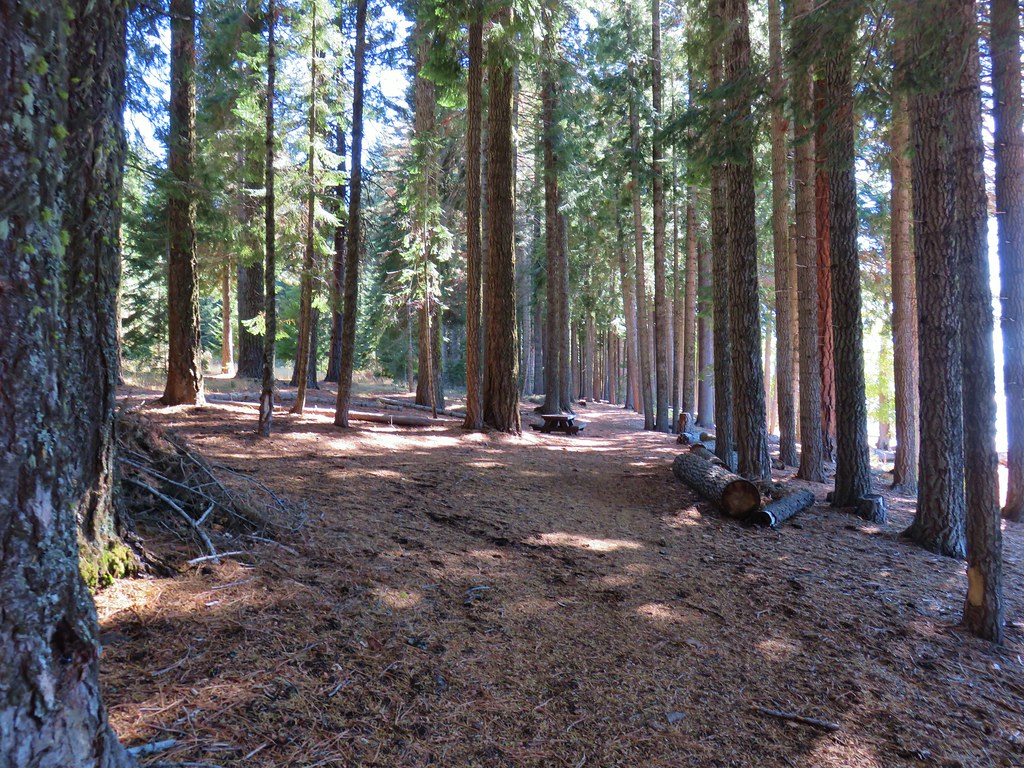
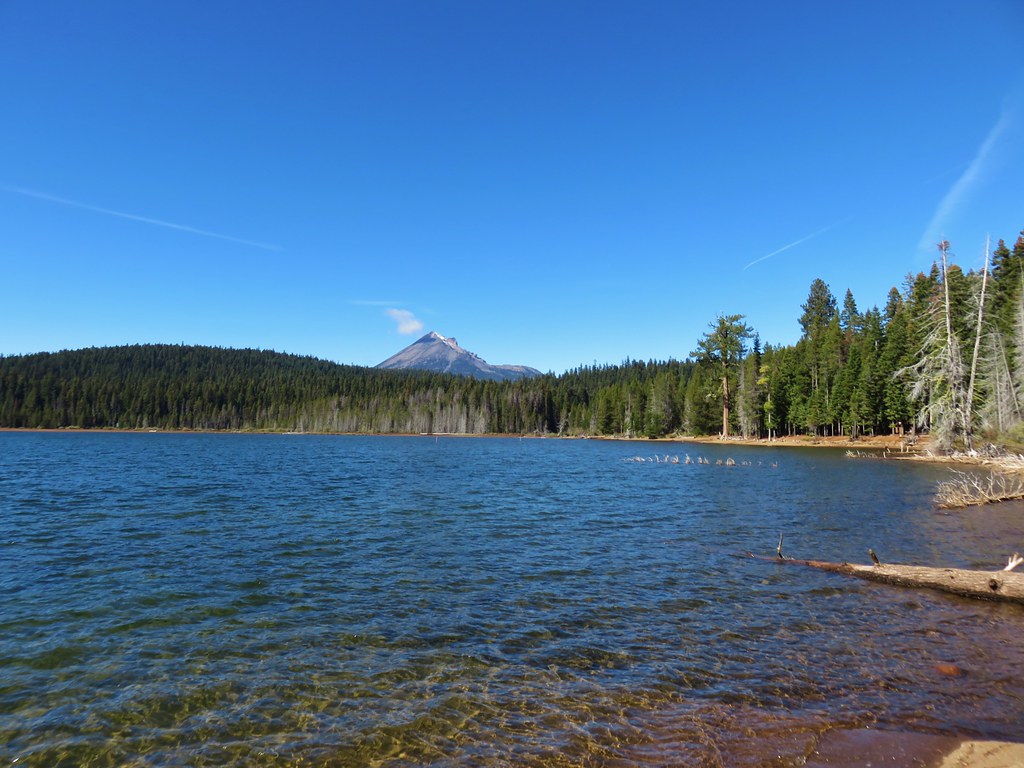
There wasn’t anything we could see, but based on all the information in the book including the map and GPS coordinates we definitely had wanted to be on this side of the ridge. Once we had gotten into the area we noticed that there were several ponds/lakes showing on the map to the south. The terrain appeared to be level enough to make a cross country jaunt inviting.IMG_2137

We used the map and GPS to locate several of the ponds but they were all dry save one unnamed lake. We did get some really nice views of Goat Peak though.IMG_2139

IMG_2149_stitch

IMG_2157

IMG_2158

IMG_2159

We took another break at the lake.IMG_2162

IMG_2176

IMG_2180

There were some tents set up nearby in the trees so we thought that there might be a trail somewhere nearby and set off looking for it when we left the lake. It didn’t take us long to spot the clear tread.IMG_2182

This path led us west between Mud Hole and Shale Lakes and back to the PCT.IMG_2186

Mud Hole Lake

IMG_2187

Shale Lake

We turned right on the PCT and continued a short distance until we spotted another use trail heading further west. We followed this path past more dry (or nearly dry) ponds to Coyote Lake.IMG_2190

IMG_2191

IMG_2197

Our urge to explore was now satisfied and we returned to the PCT and headed back to Pamelia Lake, which looked like it was way, way down below us.IMG_2206

It was closing in on 6pm when we finally made it back to camp. We went down to the lake to get water then cooked dinner and relaxed in our camp chairs.IMG_2223

IMG_2230

Ouzel

IMG_2235

IMG_2236

IMG_2245

Marty, a wilderness ranger, stopped by to check our permit and make sure we were aware of the campfire ban. She seemed relieved that we had a permit and knew about the ban. We got the feeling that a fair number of folks aren’t as friendly as we were which is a shame.

Even though we hadn’t made it to Goat Peak and we’d hiked much further than originally intended (19.4 miles) it had been a great day. It helped knowing that we only need to hike 2.5 miles the next day to reach our car.

The next morning we were up before 5am and on the trail by 6:30.IMG_2265

IMG_2275

IMG_2277

We made it home just after 9am which gave us plenty of time to unpack, clean up, and do some laundry. Happy Trails!

Flickr: Pamelia Lake Overnighter