
For our fourth day of hikes in the Grants Pass area we had chosen a series of short hikes along the Illinois River which would allow us to check off two more featured hikes (post). Going in we knew that our hikes wouldn’t exactly match Sullivan’s description in the featured hikes because of a closure of the Swinging Bridge which is part of the Fall Creek Trail. Repairs need to be made to fix a hole in the bridge so it is currently under a closure order until 10/31/23 (may be lifted sooner). Several of the hikes we had planned were also in the path of the 2018 Klondike Fire so we weren’t sure what condition the trails might be in.
Our first stop at the Eight Dollar Mountain Botanical Area was not in the fire scar.

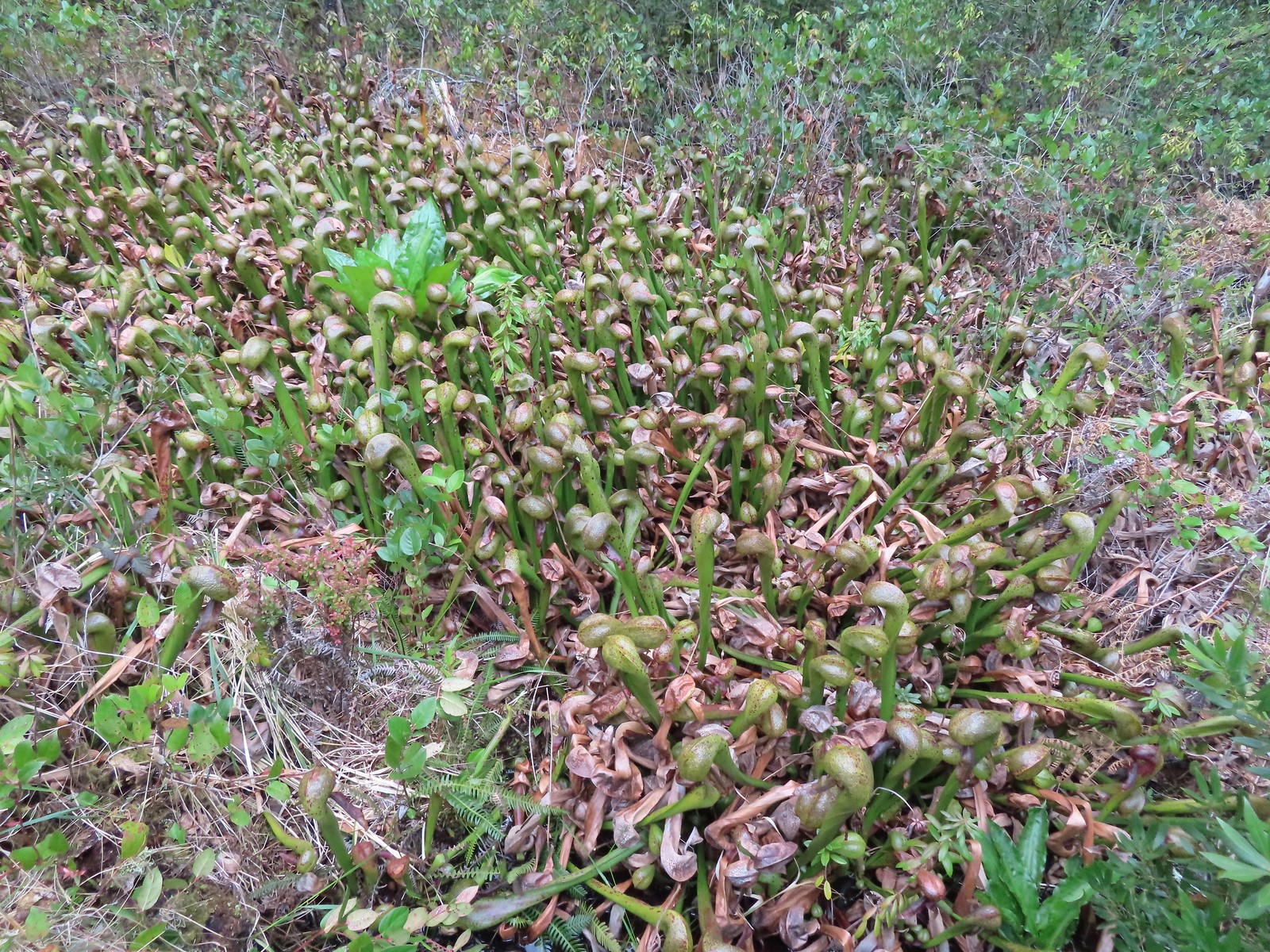
From the parking area we crossed 8 Dollar Road and hiked 0.1-miles to a small, two parking spot, ADA Trailhead where a 0.2-mile boardwalk led to a Fen with California darlingtonia.

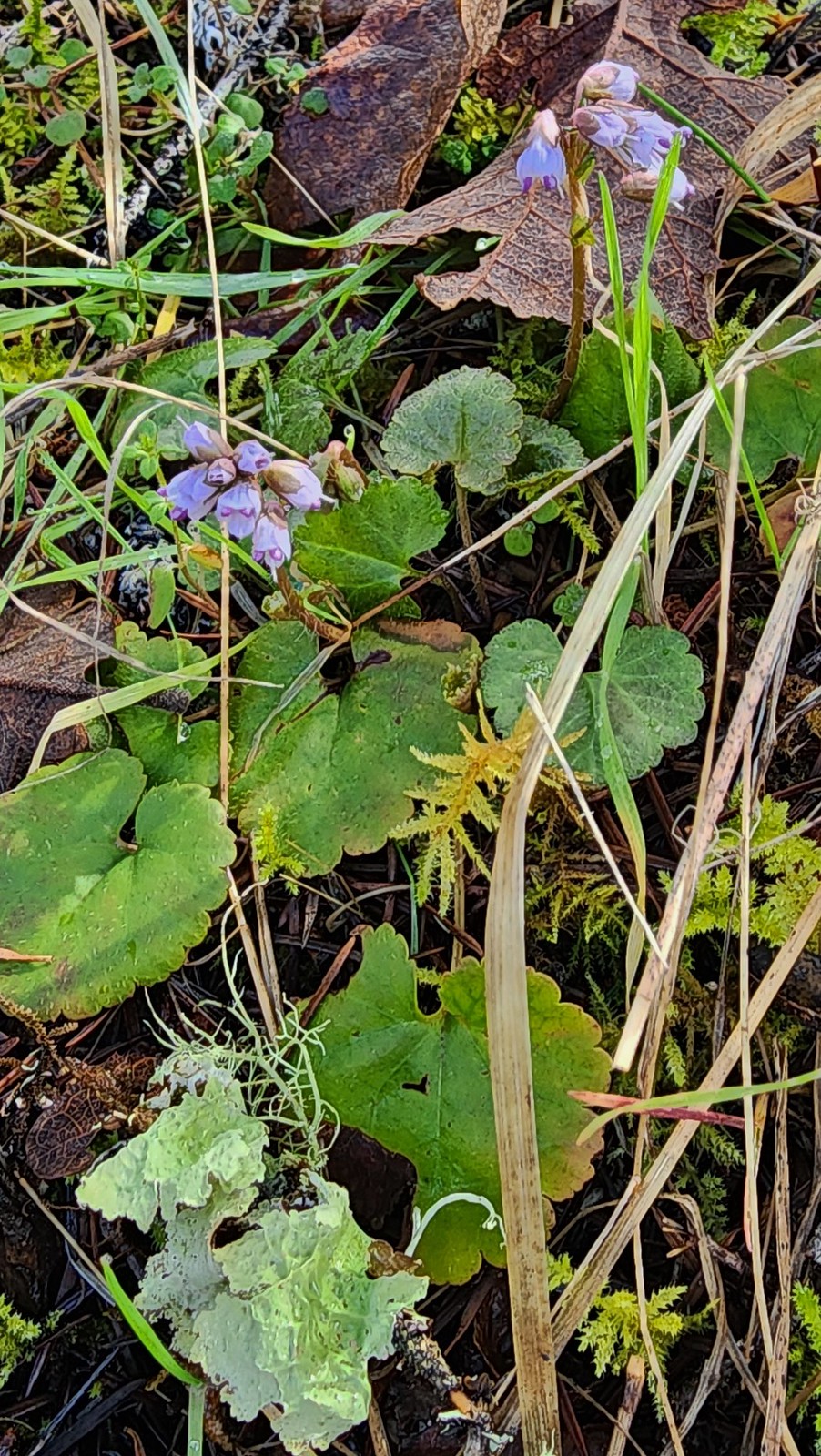
 Wedgeleaf violets
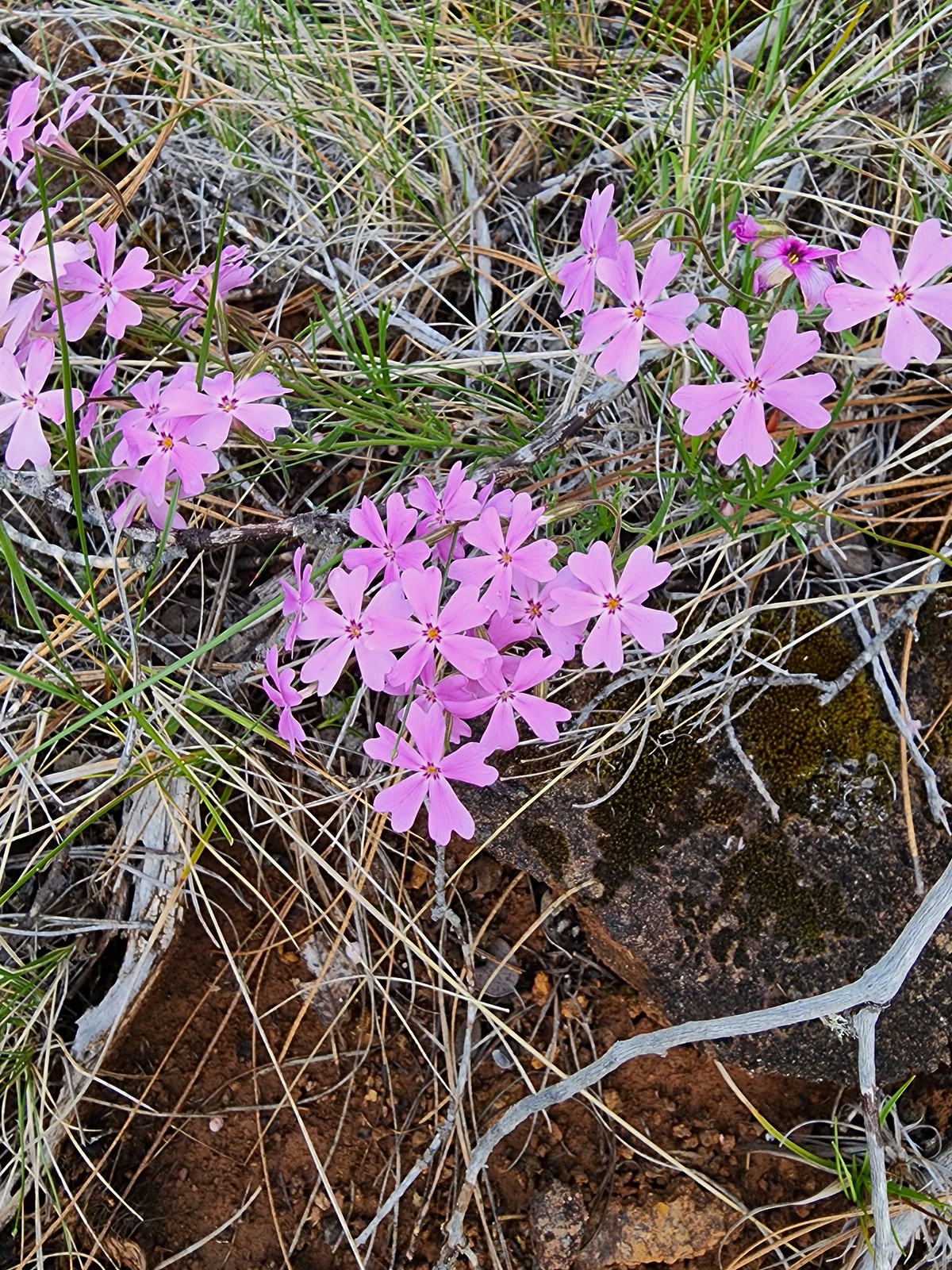 Showy phlox
 Oregon rockcress
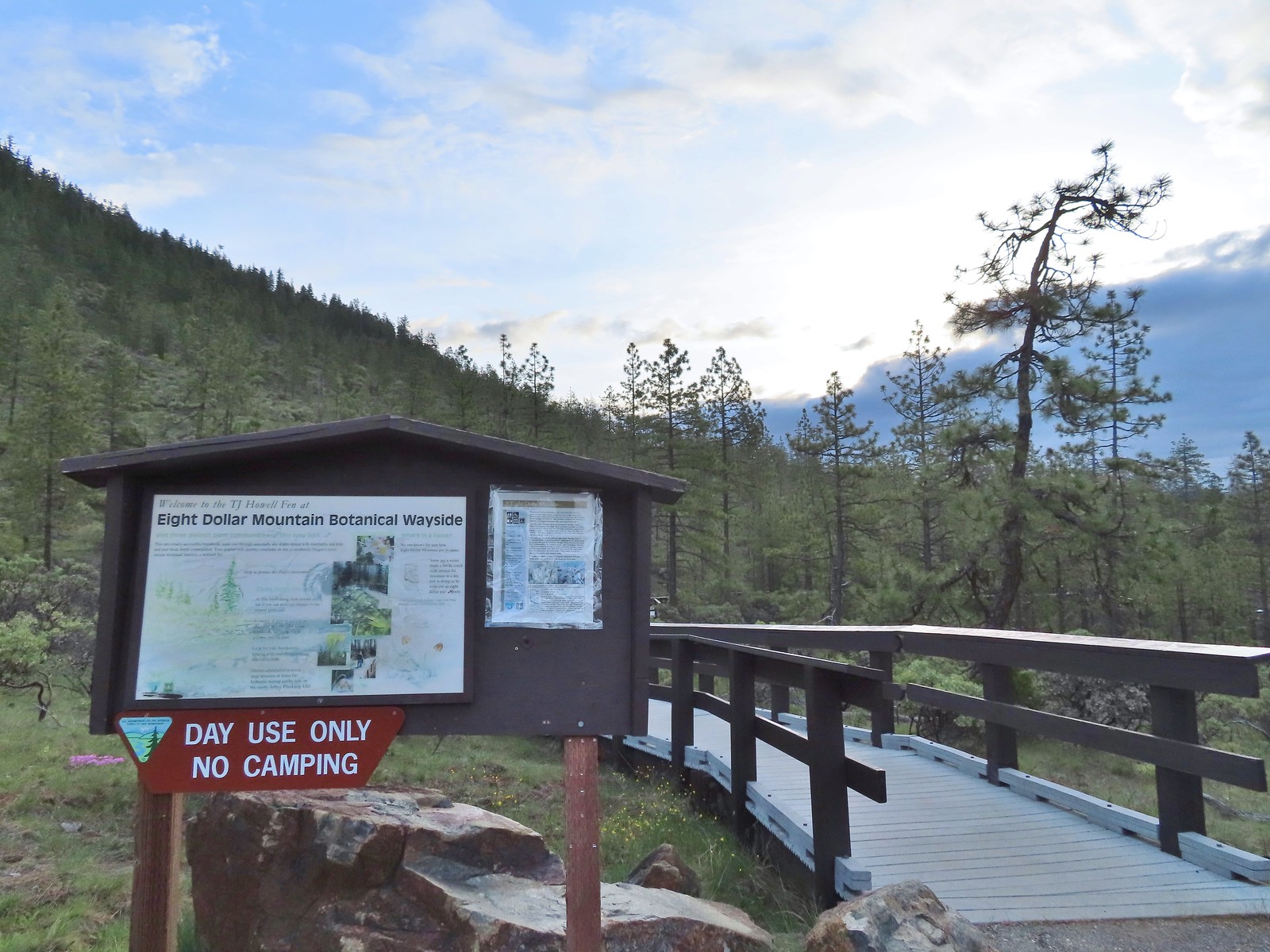
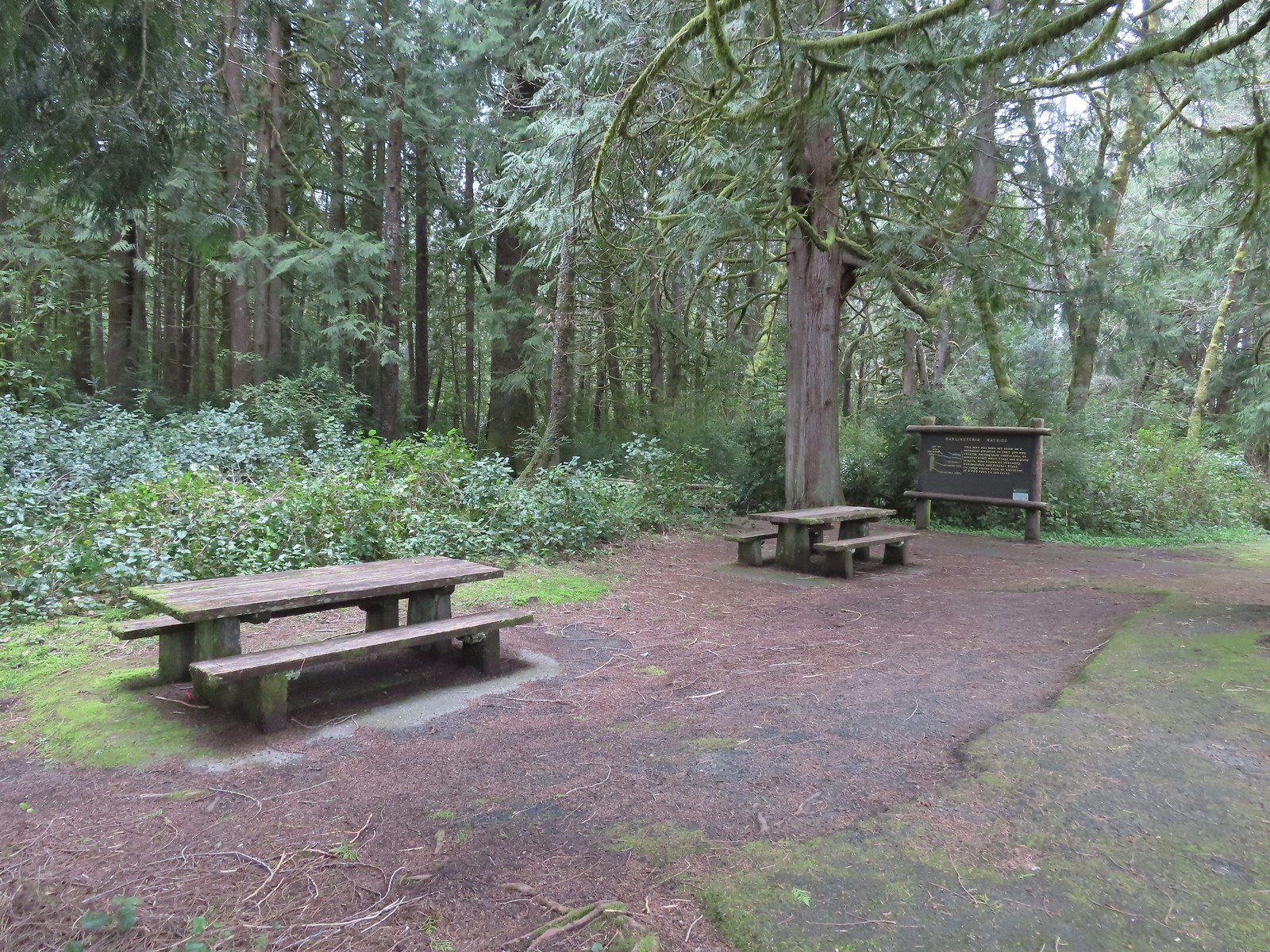
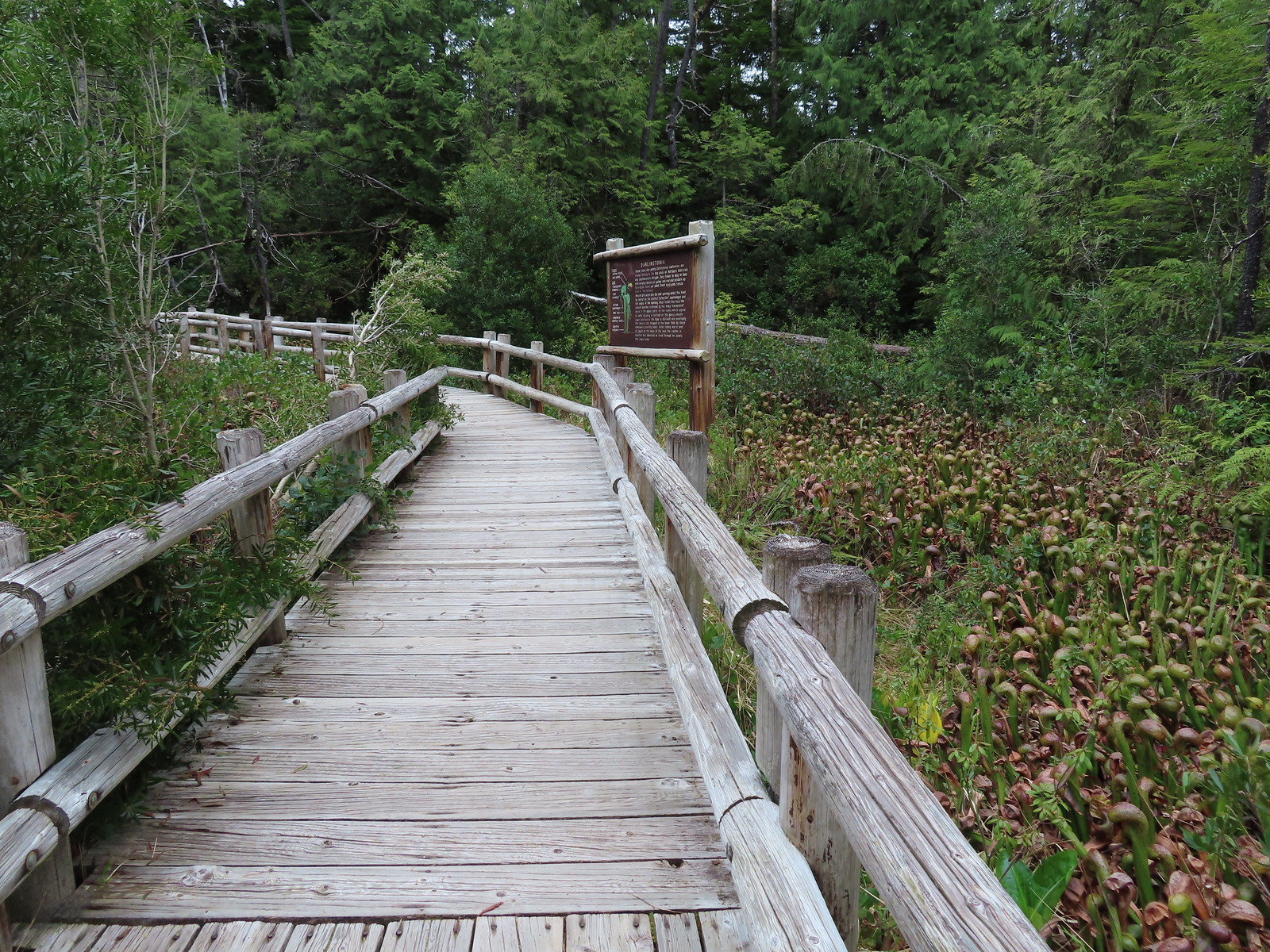
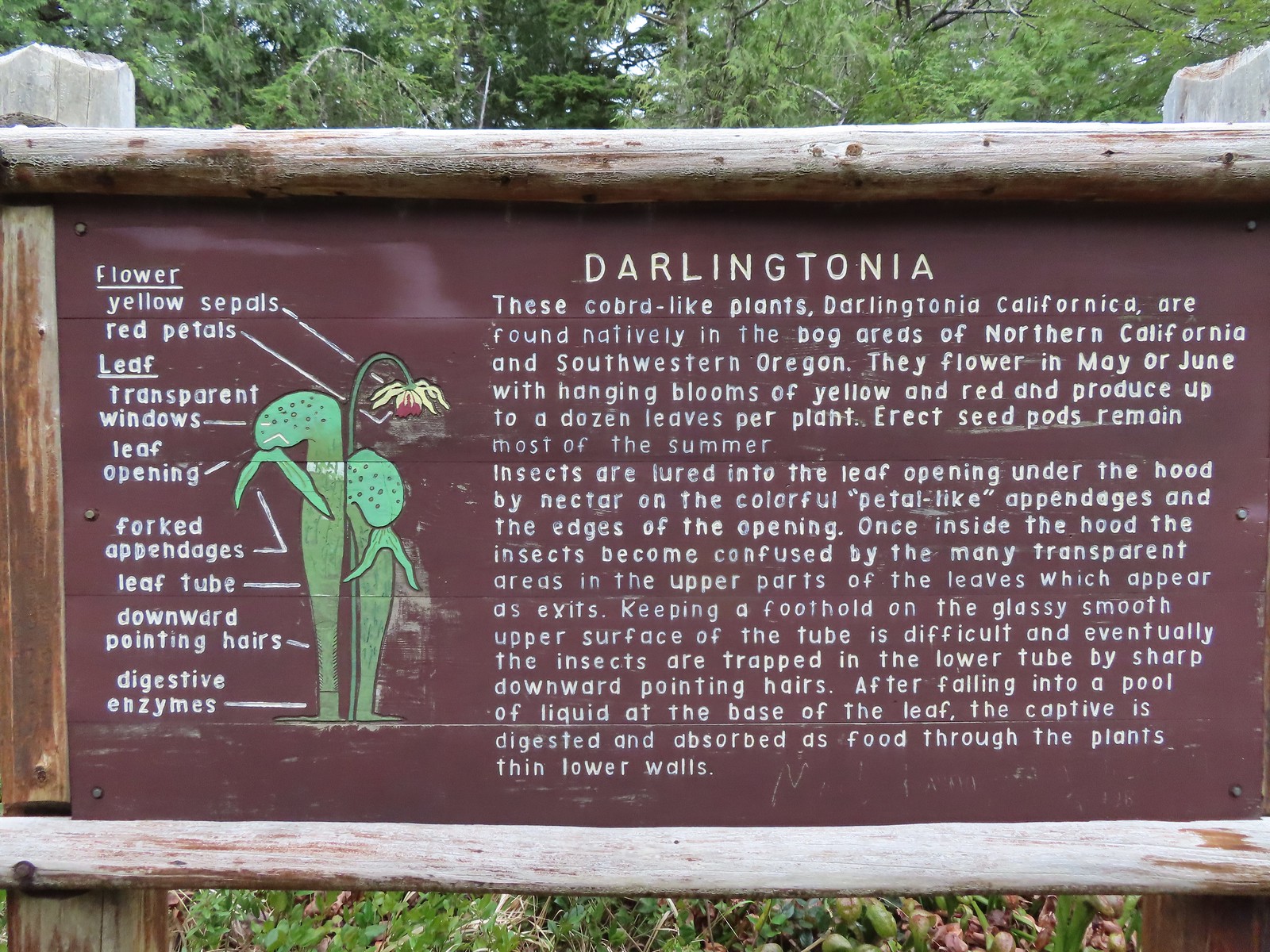
Many of the flowers were just getting started but there were a few darlingtonia blooming in the fen. This was our second stop this year that involved the Cobra lilies, having visited the Darlingtonia Wayside near Florence in April (post).
 Camas and buttercups
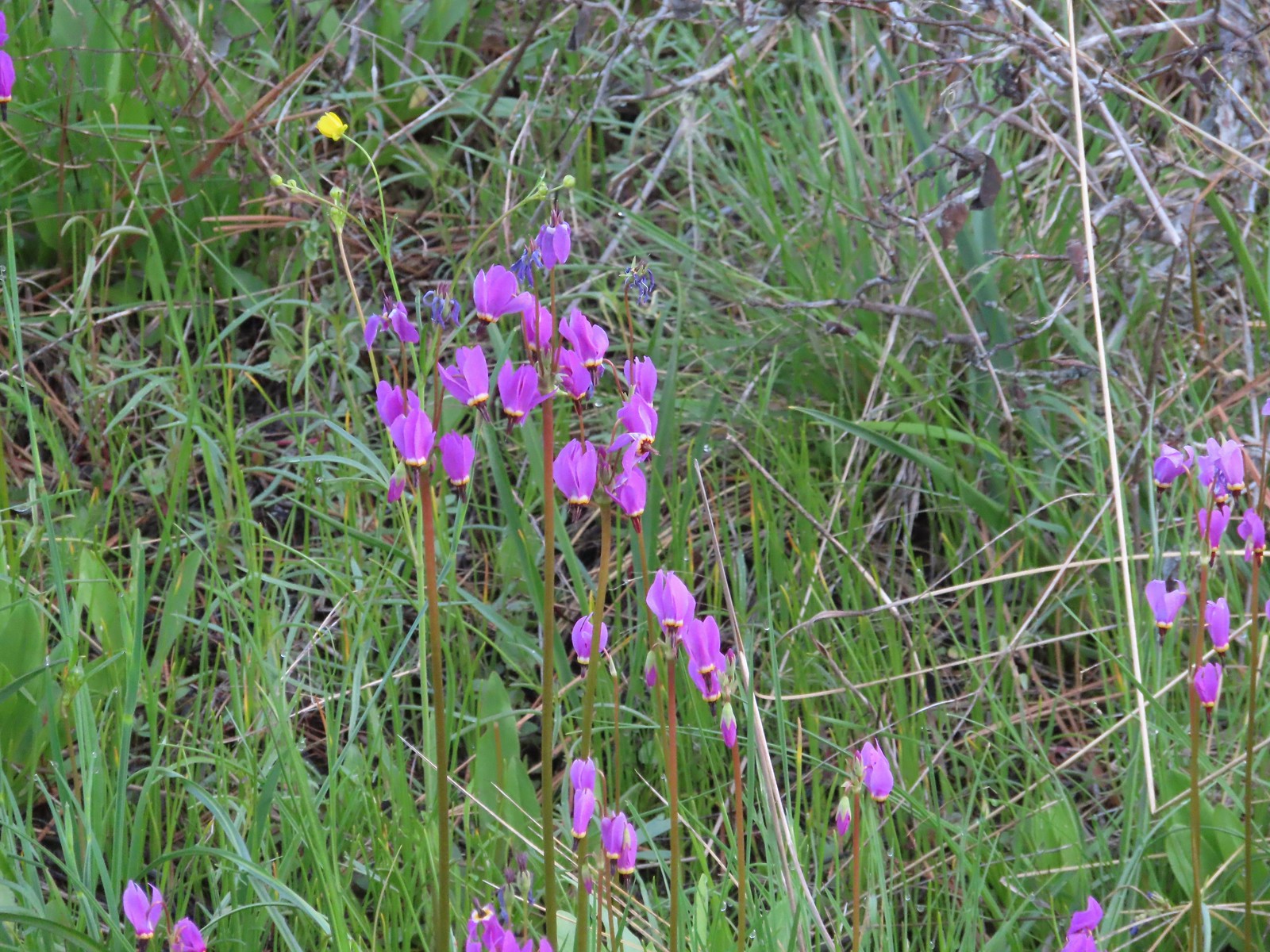 Shooting star
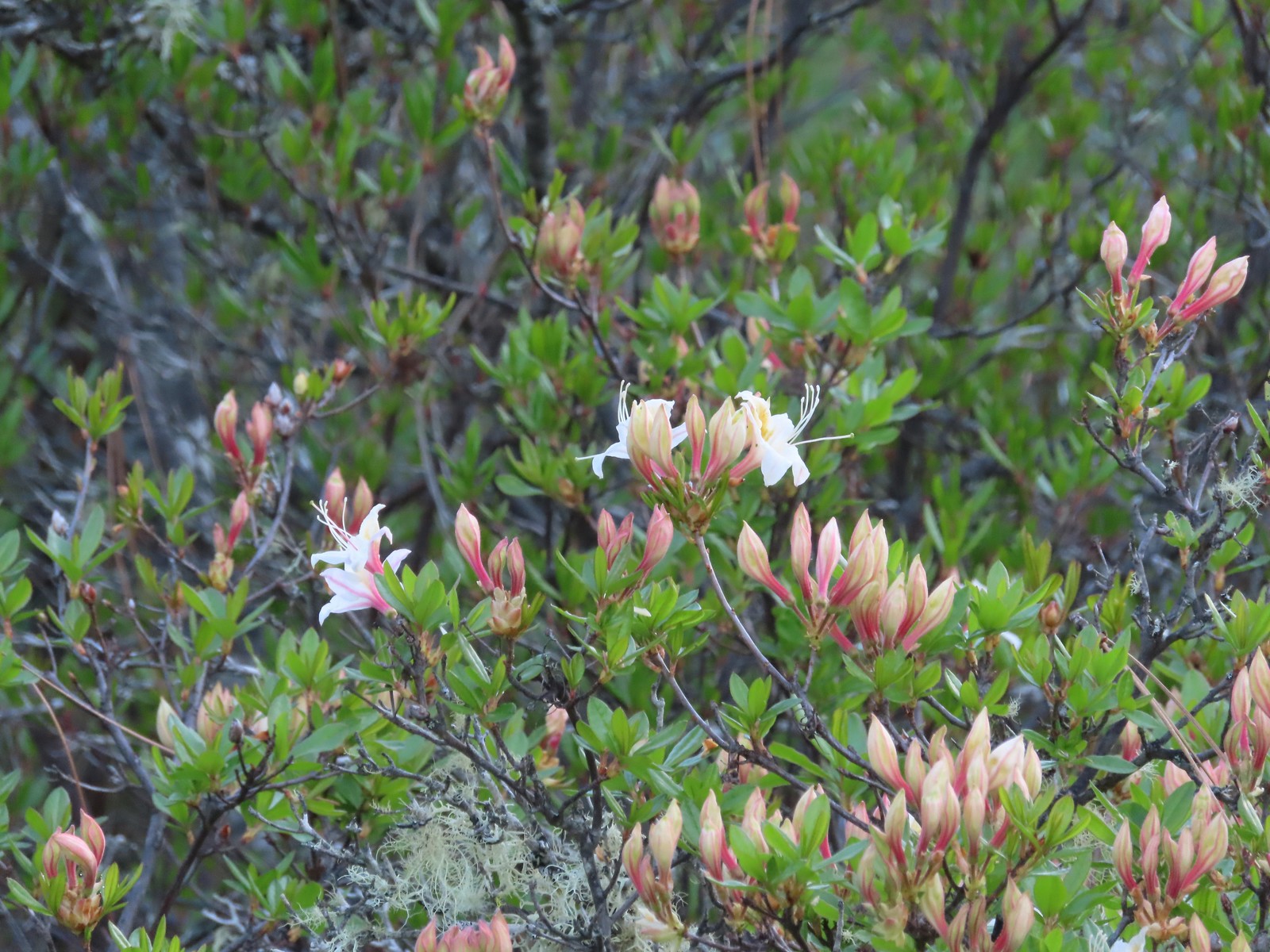 Western azalea
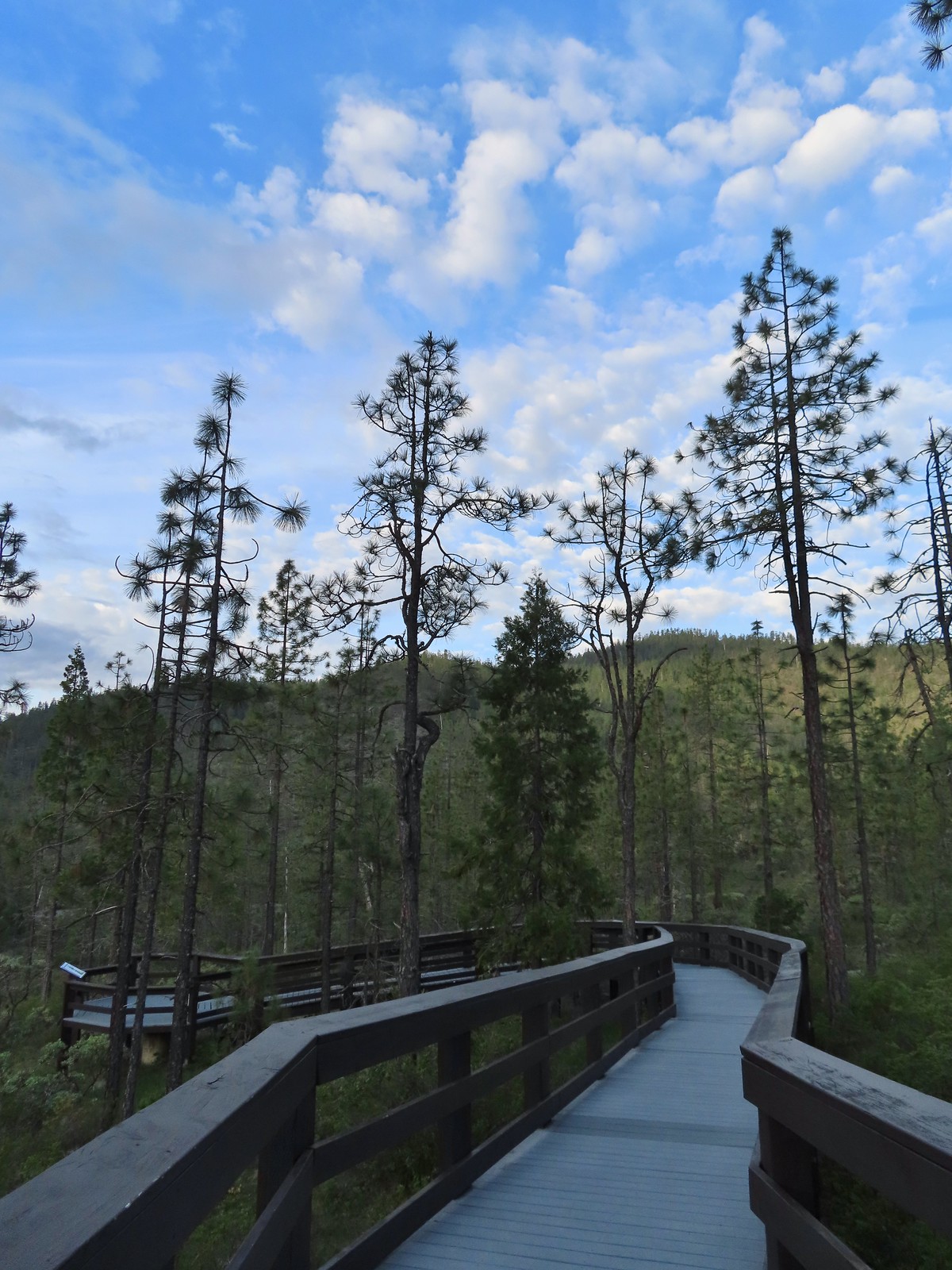
 The fen at the end of the boardwalk.
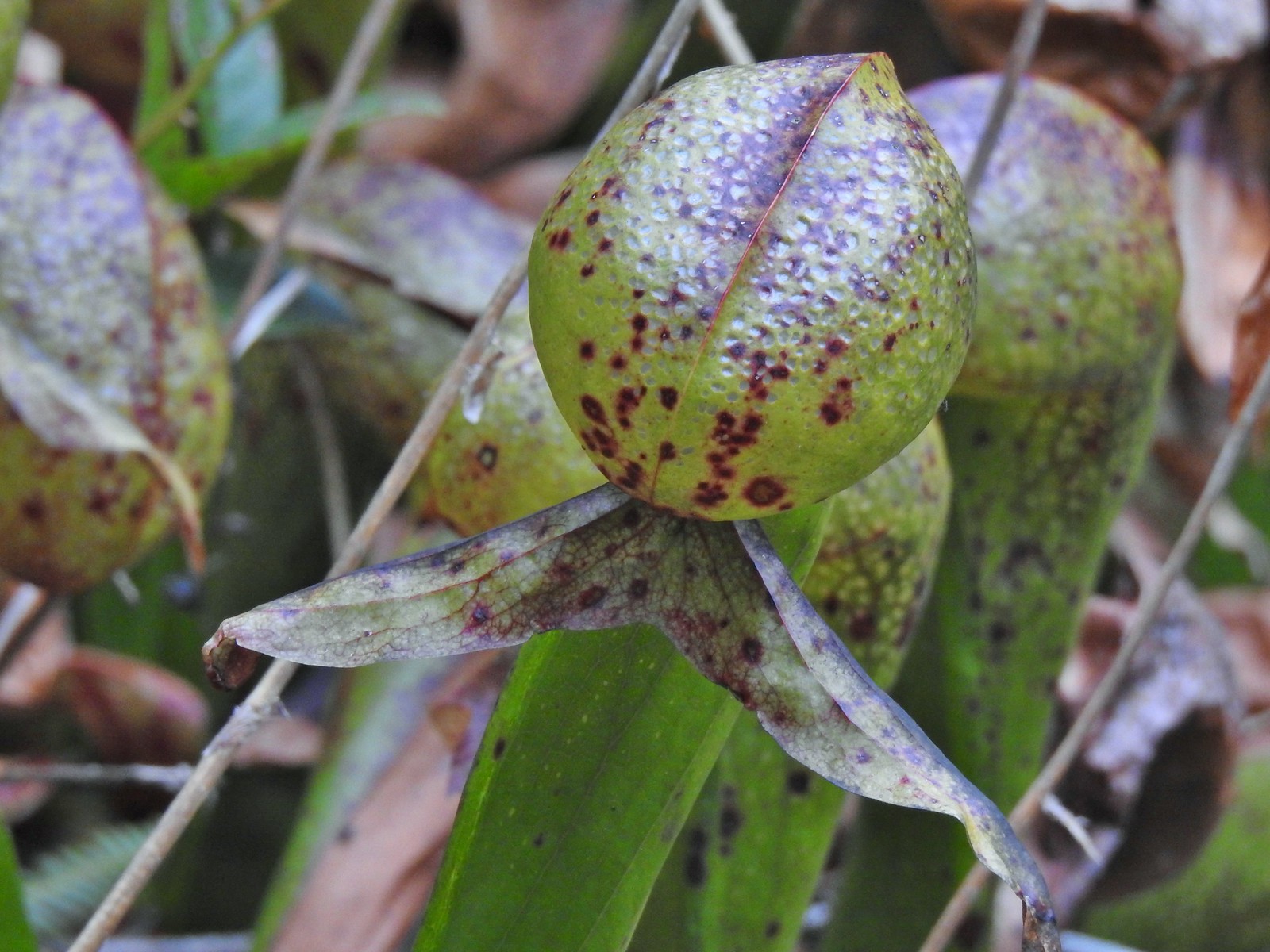
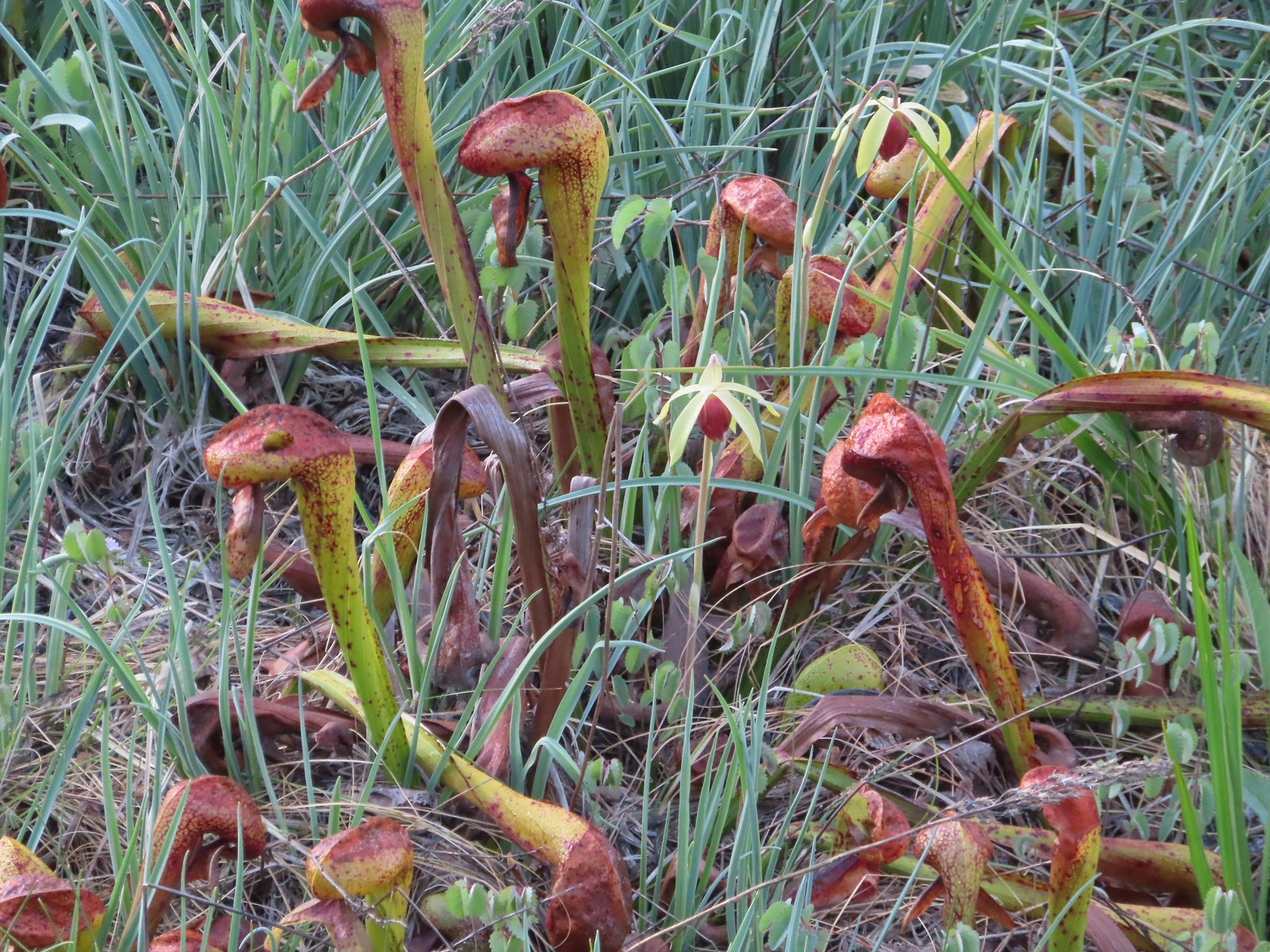 A darlingtonia blossom.
The trailhead where we parked also acts as the trailhead for the Jeffrey Pine Loop Trail, so after returning from the boardwalk we started down this trail.
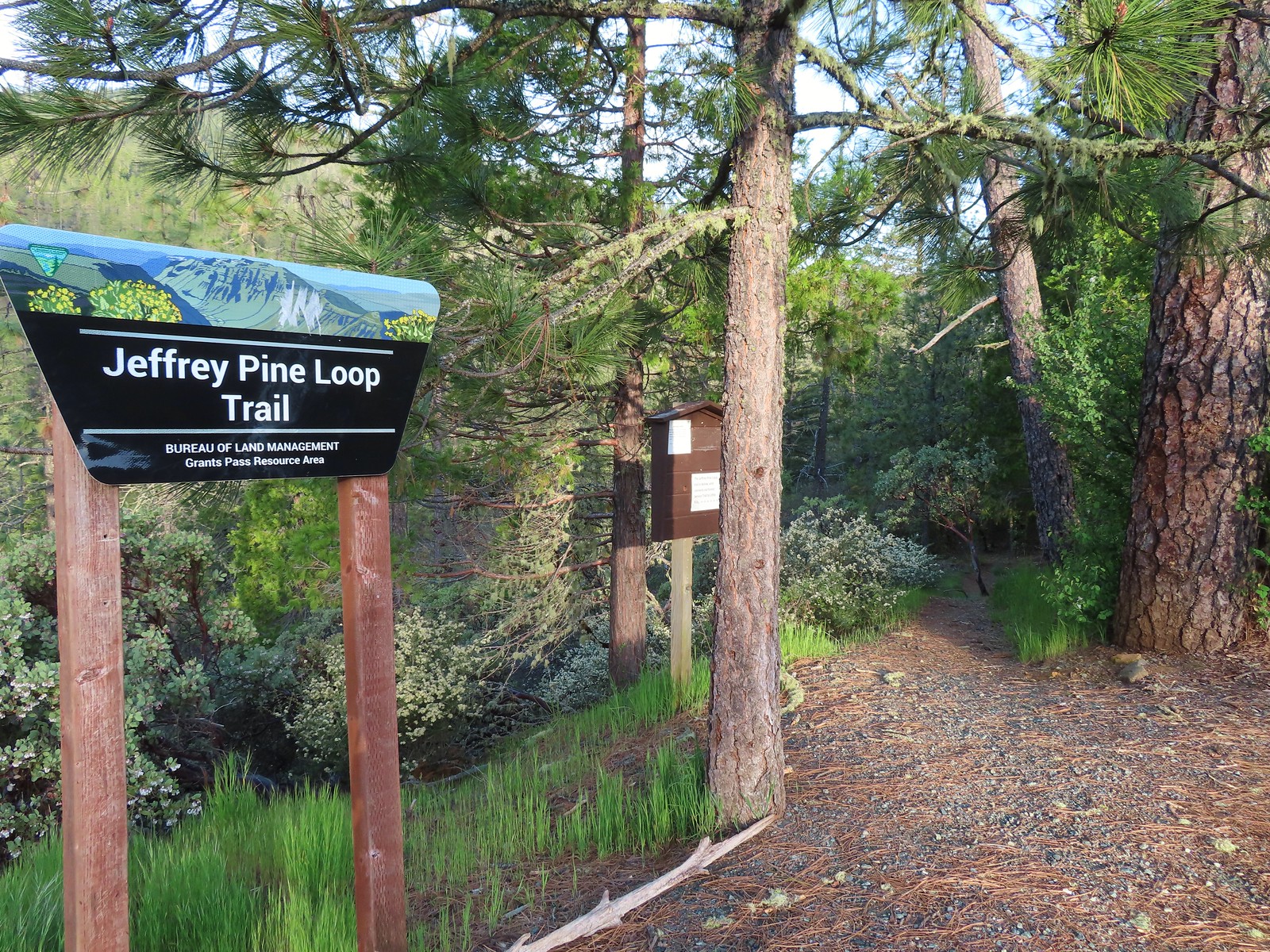
Our plan for this trail was to follow it NW for 1.2-miles to the Little Falls Trail Loop. The Jeffery Pine Trail drops to the Illinois River then follows the route of a former flume to the Little Falls Loop Trail. We were a little apprehensive knowing that we’d be hiking along the Illinois River once again. Our only previous hike along the river was a bit of a nightmare (post). We had stumbled into some sort of tick convention and spent nearly the entire hike brushing the little blood suckers off our clothing. Add in a good amount of poison oak crowding the trail and let’s just say this wasn’t one of our best experiences. That being said the Illinois River itself is beautiful, so we were willing to give it another chance. The scenery was nice and there were a number of wildflowers along the trail as we headed down toward the river.
 We stayed right at this junction just below the trailhead. There is a 0.5-mile loop option which we planned on skipping.
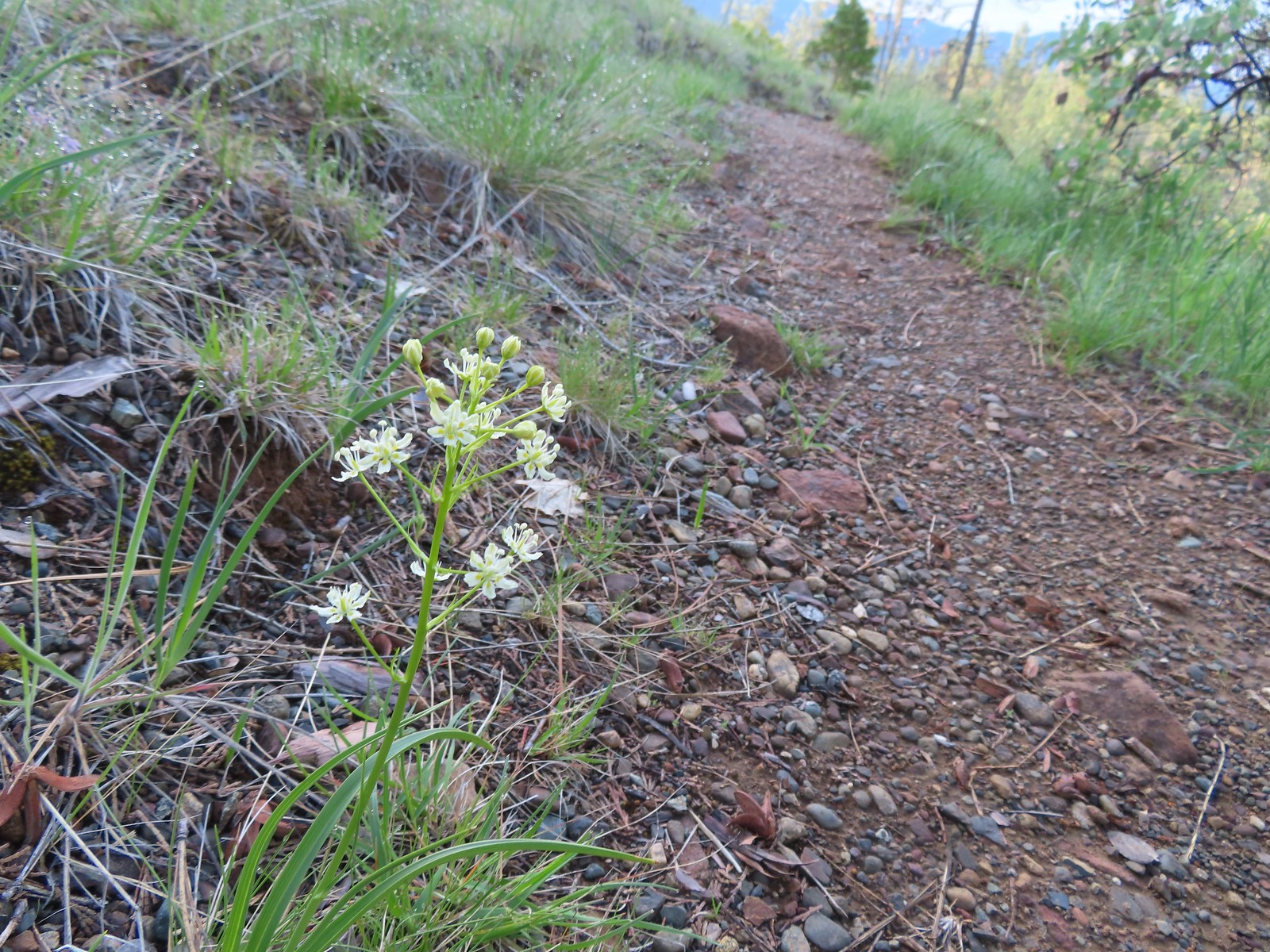 Death camas
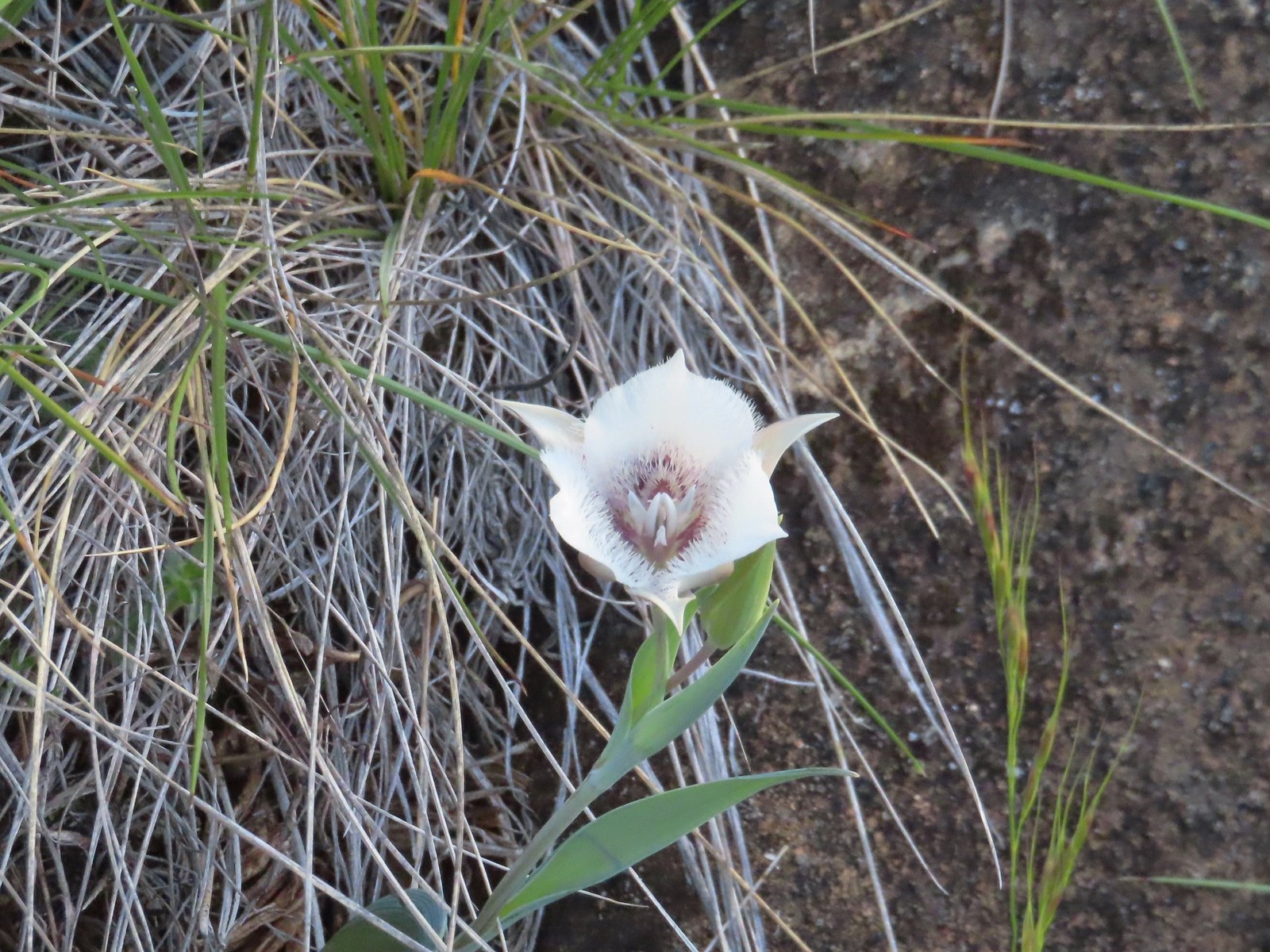 Mariposa lily
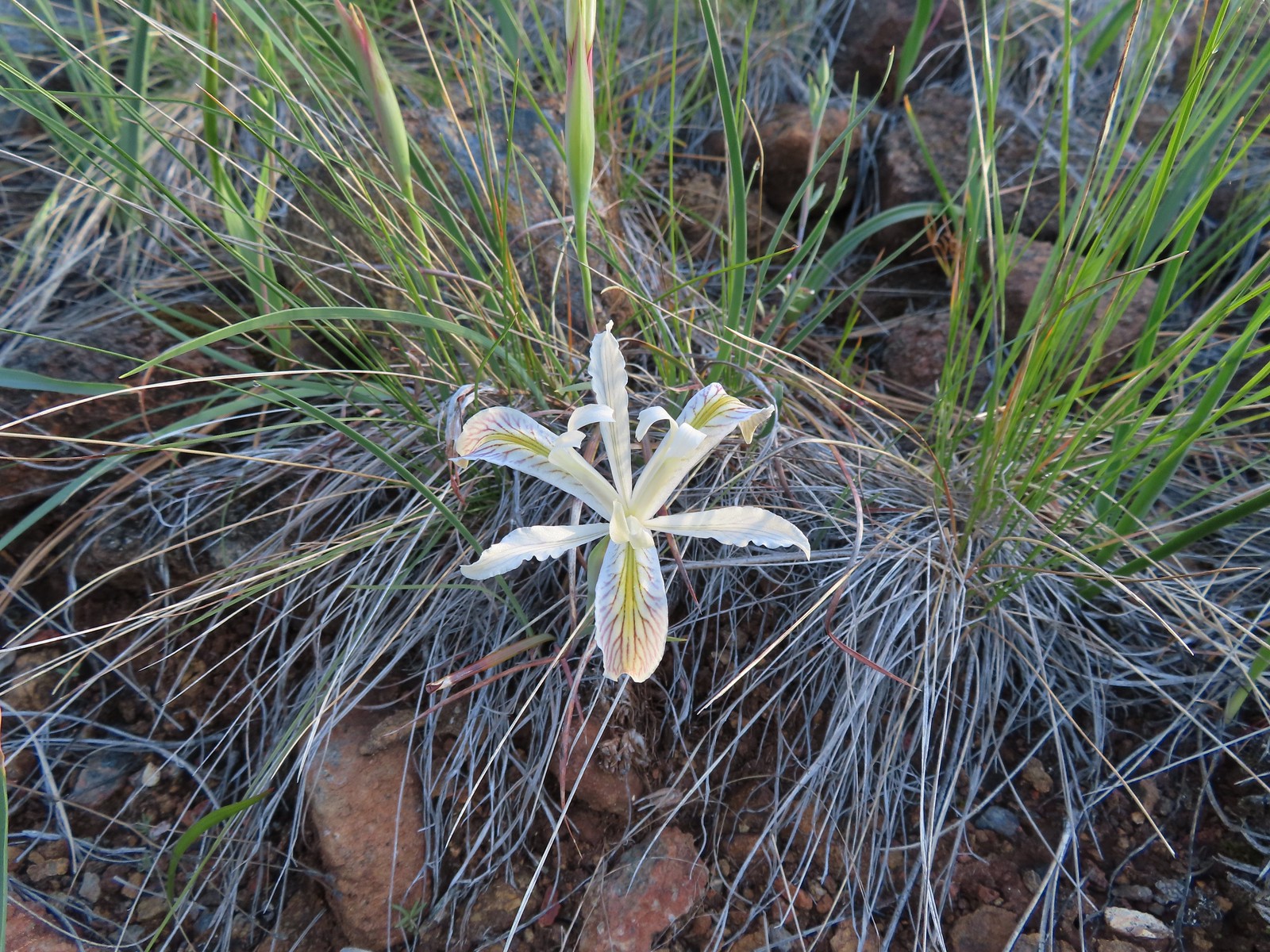 Yellow leaf iris
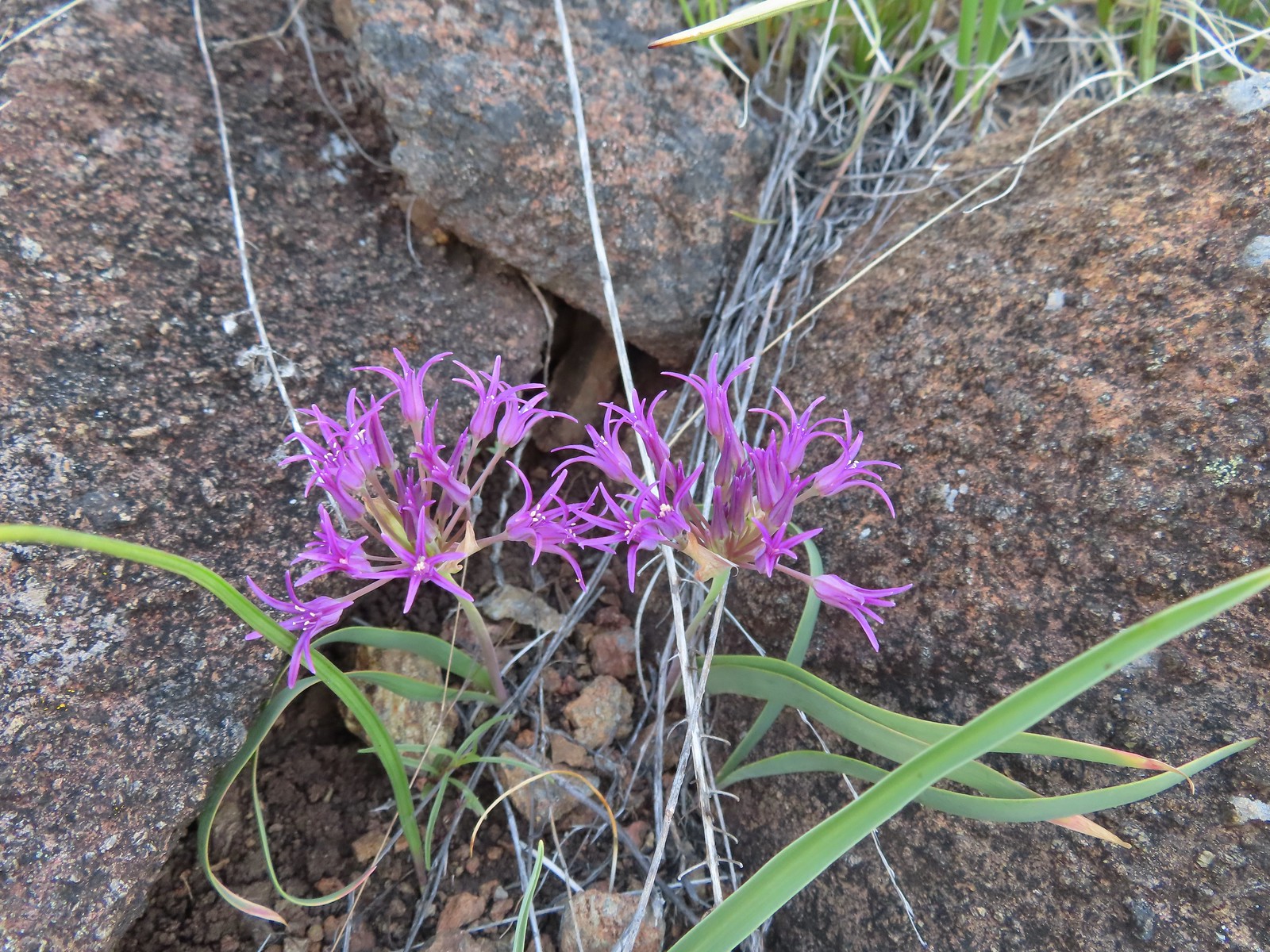 Coast flat stem onion
 Heather picked up a tick passing through the grass on the hillside.
We turned right at a sign for the Little Falls Trail Loop.


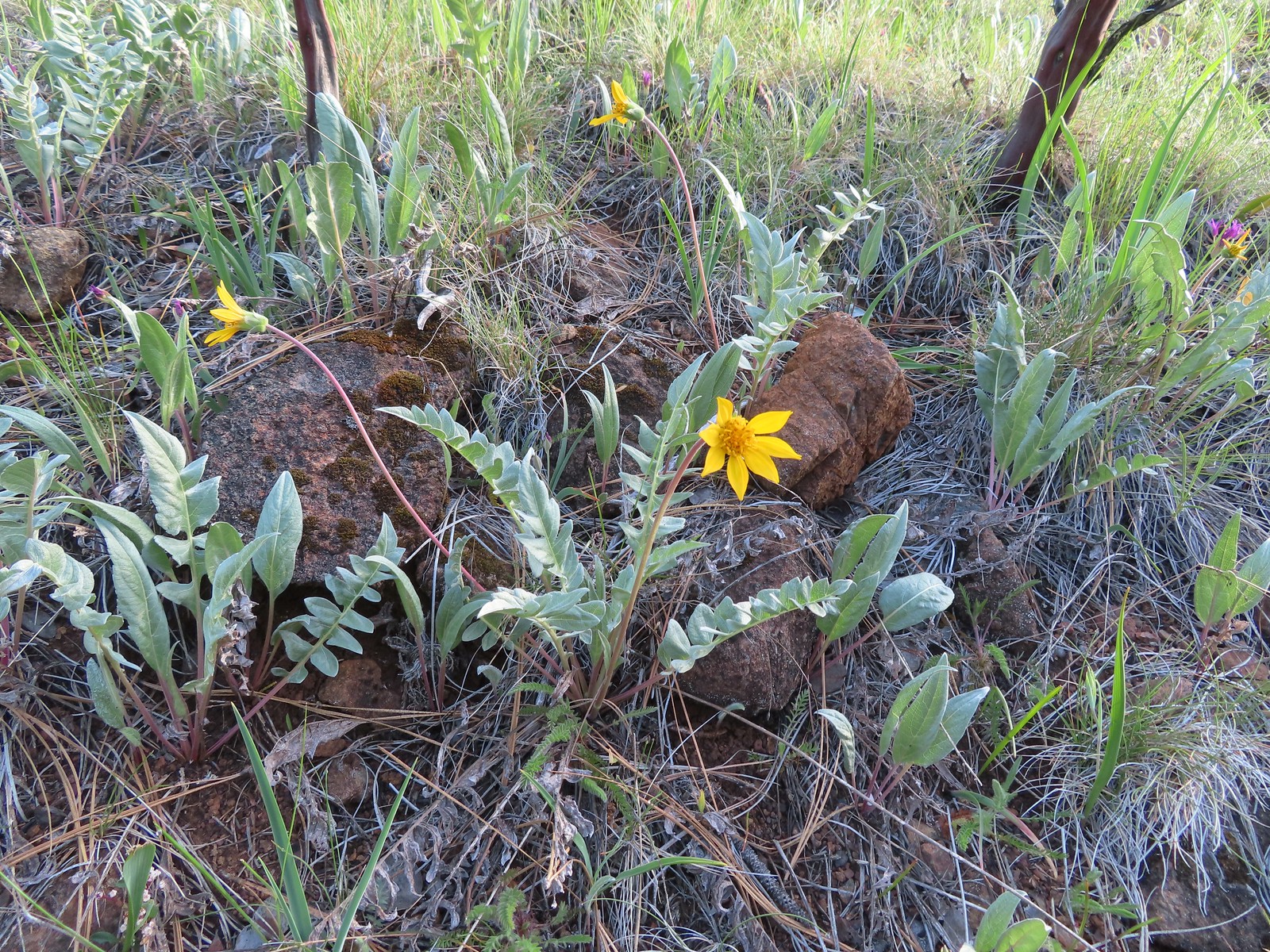 Silky balsamroot
The trail crossed an old roadbed at the half mile mark which gave us a chance to get down to the river without having to dodge poison oak.
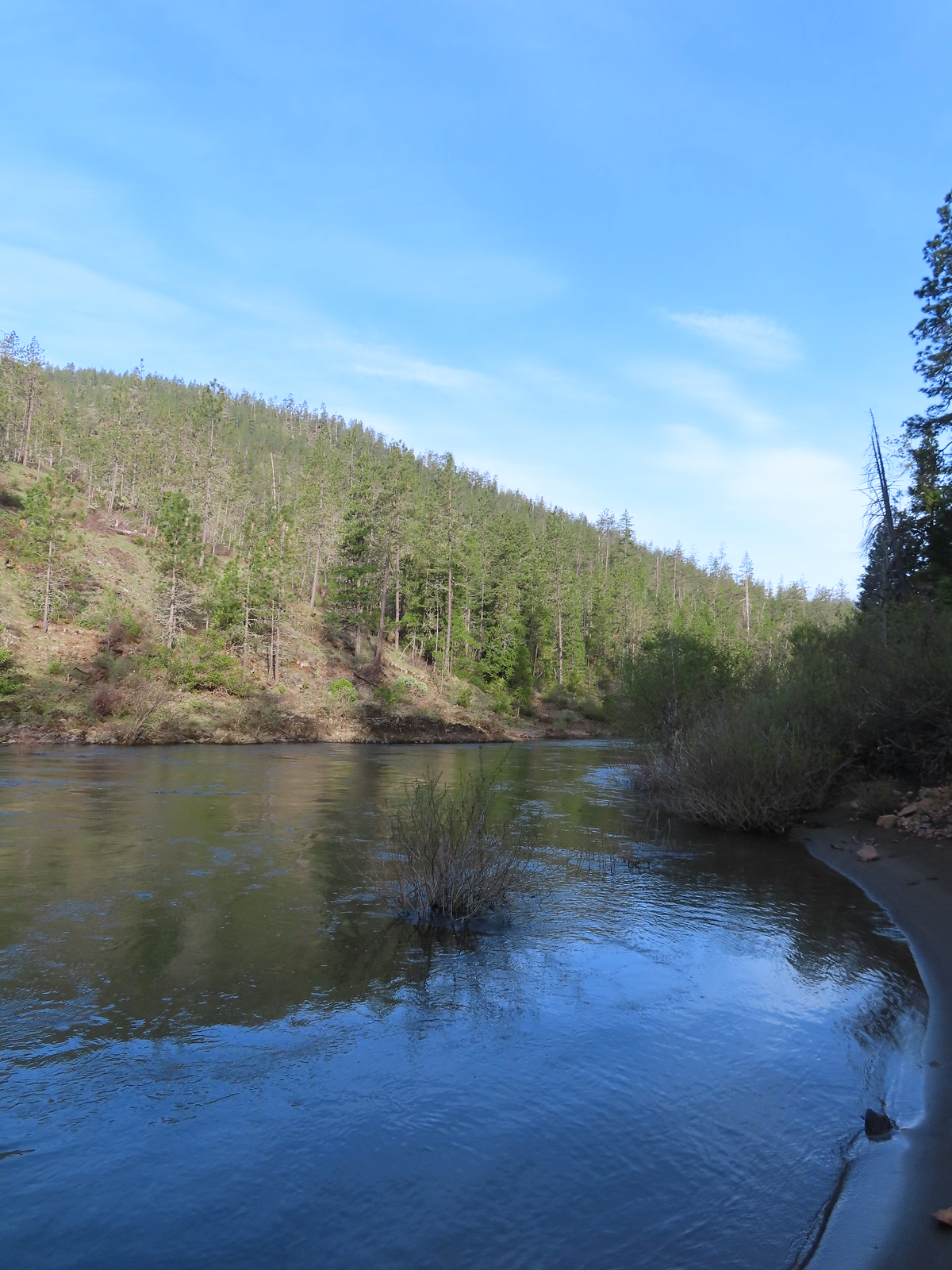
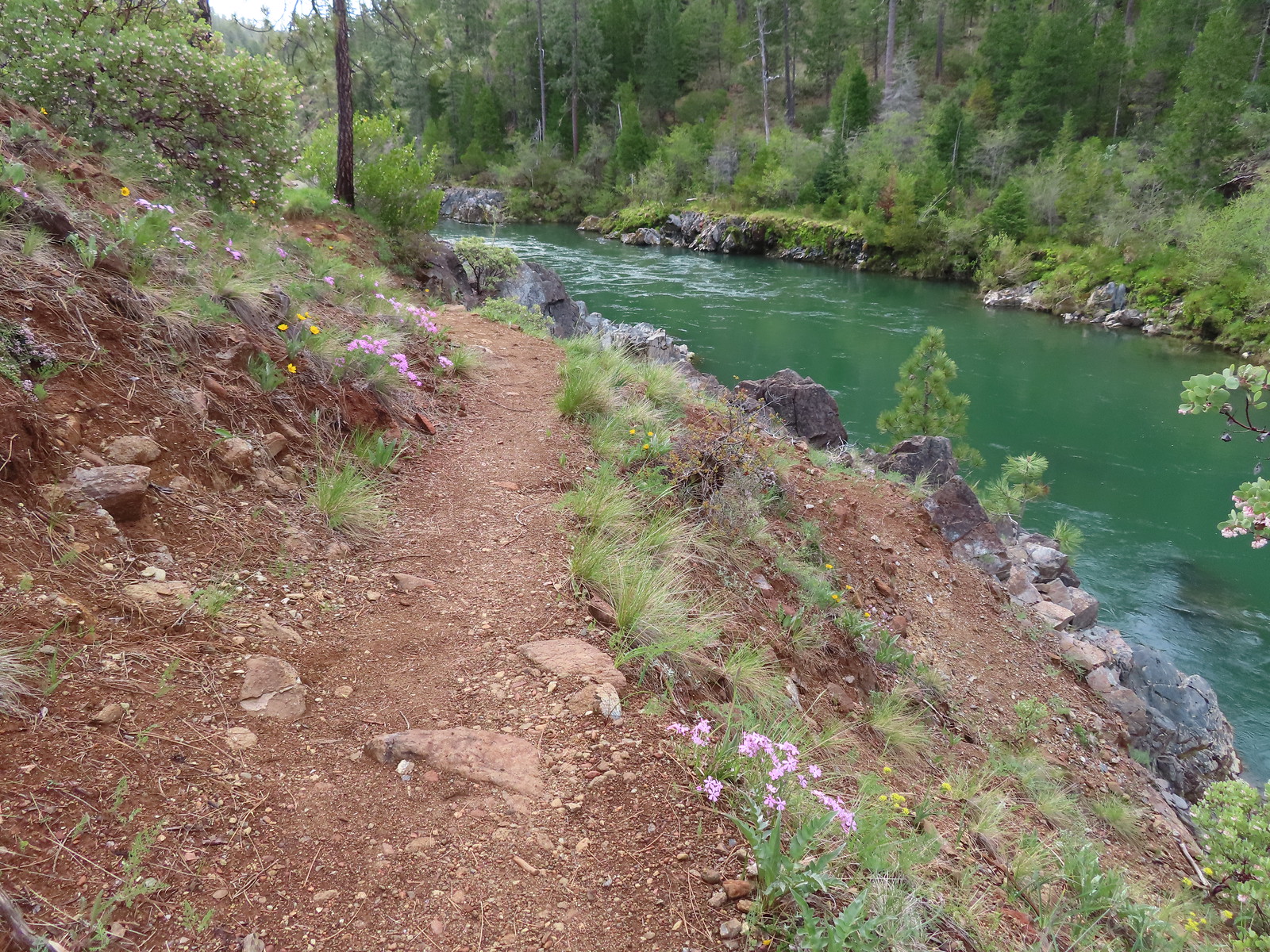
The trail jogged away from the river at the road, presumably to reach the old flume. We started up the hill but the trail condition got a little rougher here and poison oak began crowding the trail to the point where we became uncomfortable. We had already had it brushing against our pant legs, but it was now tall enough that our hands were at risk and in order to avoid it we would need to move off trail into the brush on the opposite side. Having already seen a tick we didn’t really want to go through any vegetation.
 The trail as we started up the hillside.
We quickly devised a Plan B which was to follow the old roadbed up to 8 Dollar Road (Forest Road 4201) and walk that road to the Little Falls Trailhead where we could attempt the 0.9-mile Little Falls Loop.
 Checker lily
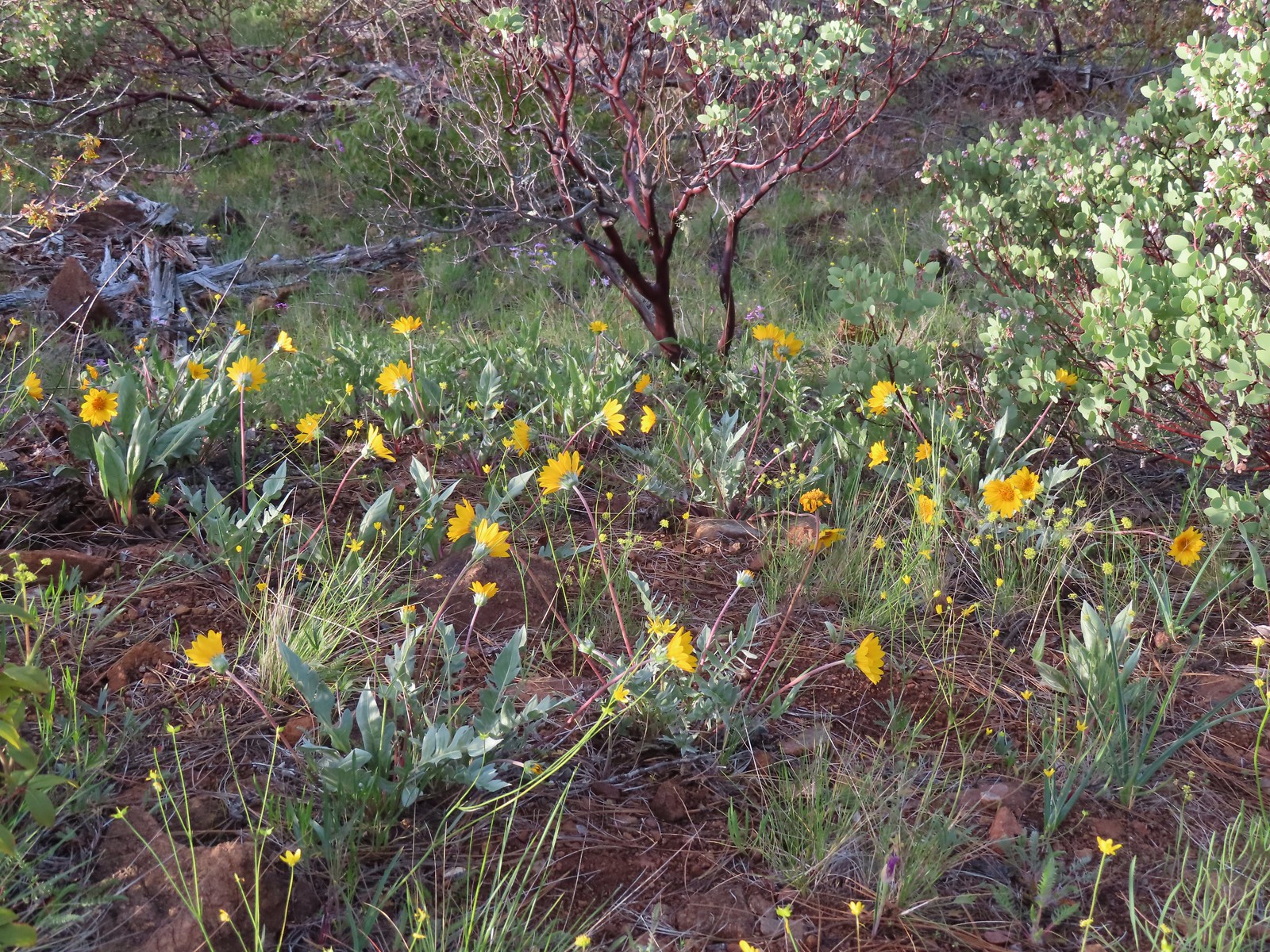 Silky balsamroot and buttercups
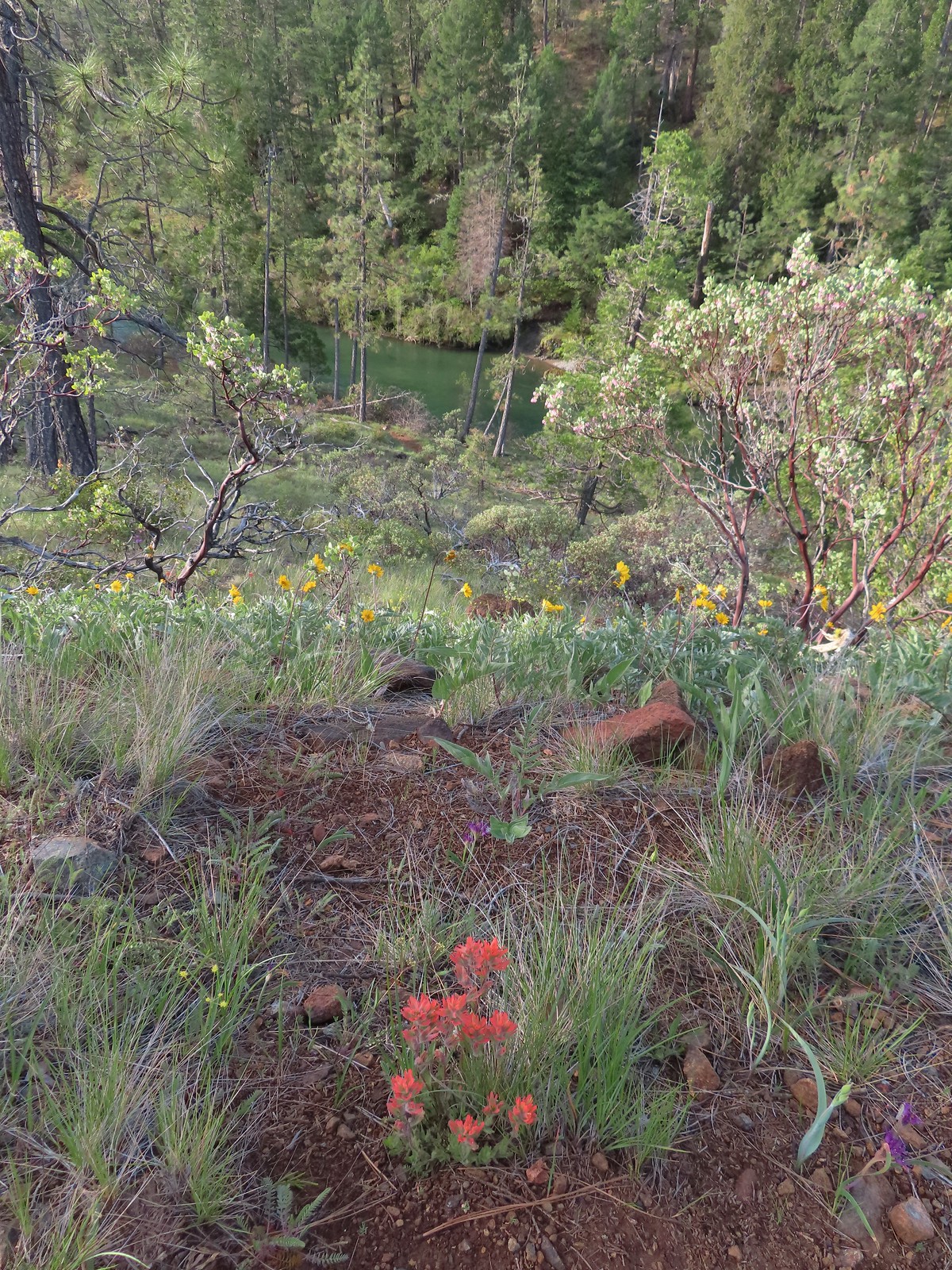 Paintbrush and silky balsamroot with the Illinois River below.
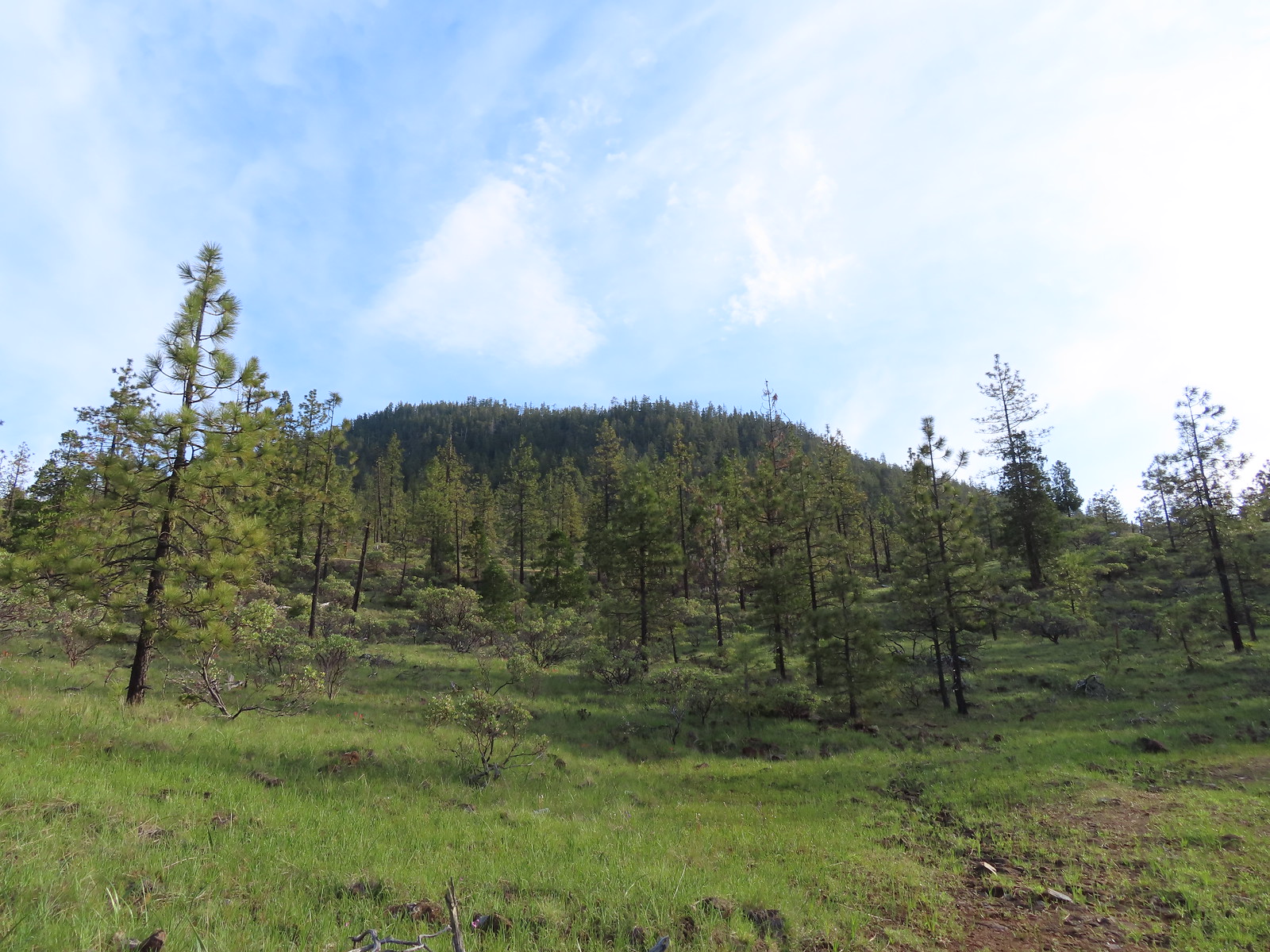 Eight Dollar Mountain from the roadbed.
 We saw a lot of these getting ready to bloom but none actually blooming. Really curious as to what they are.
The roadbed bent back toward the trailhead where we’d parked and we wound up just a tenth of a mile away from our car but instead of just walking back to it and driving to the Little Falls Trailhead we turned left and road walked the mile.

As road walks go this one was fine, and we passed another bunch of darlingtonia along the way.
 Western azalea

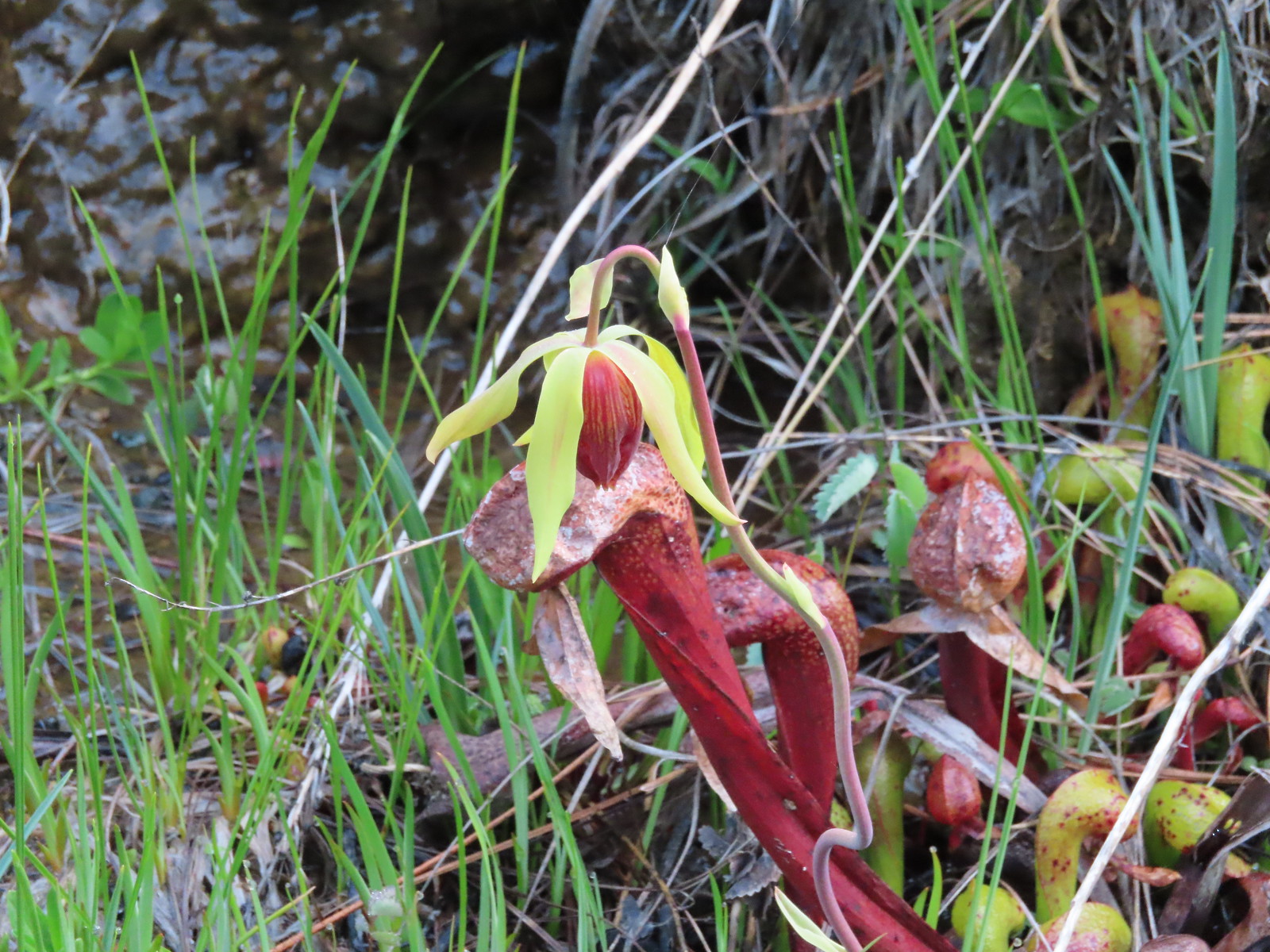 A closer look at a darlingtonia blossom.
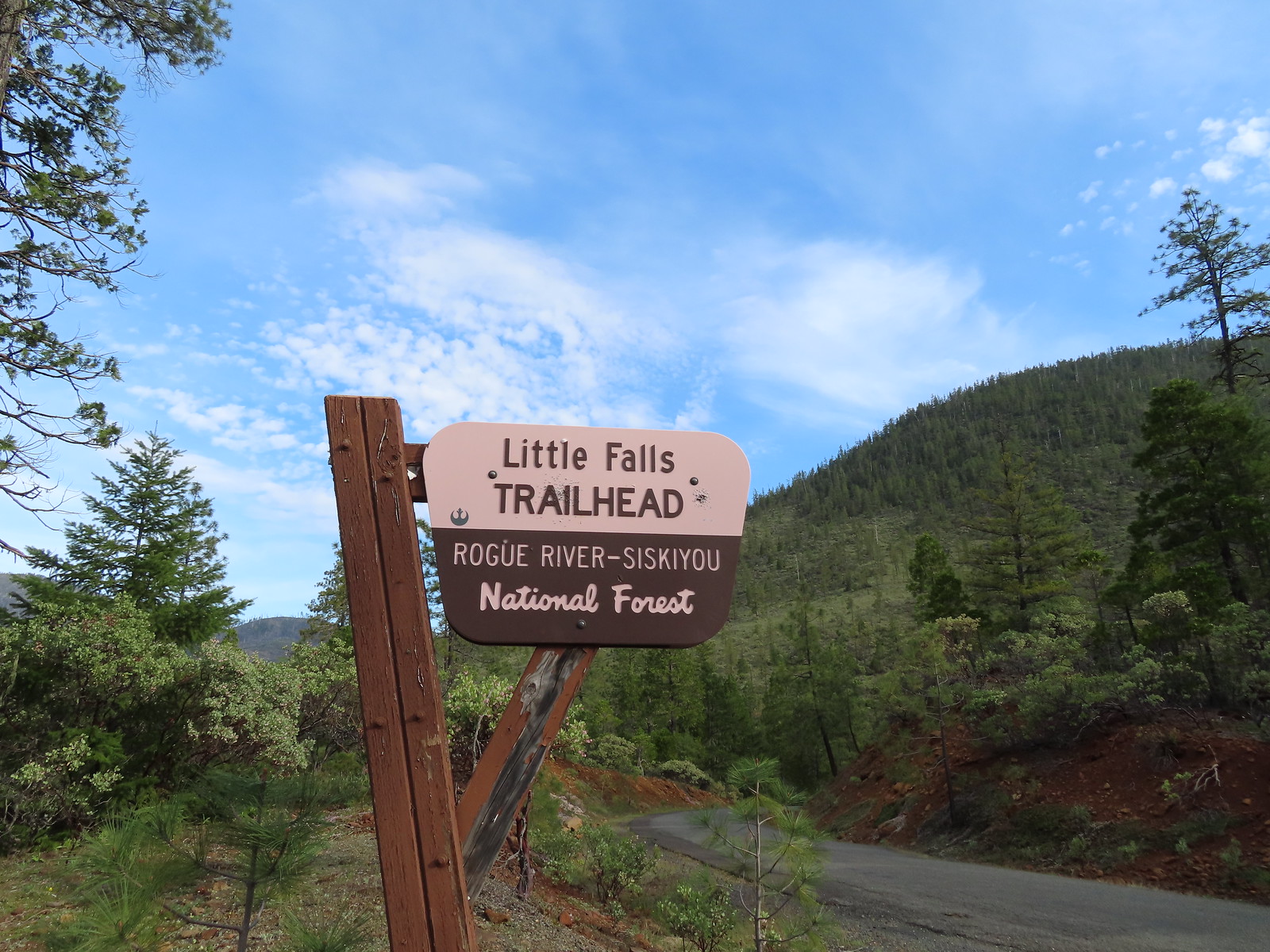
At the trailhead we walked through the small campground to the signed Little Falls Trail Loop.

At a 4-way junction we turned right briefly following the flume before turning downhill toward the river.

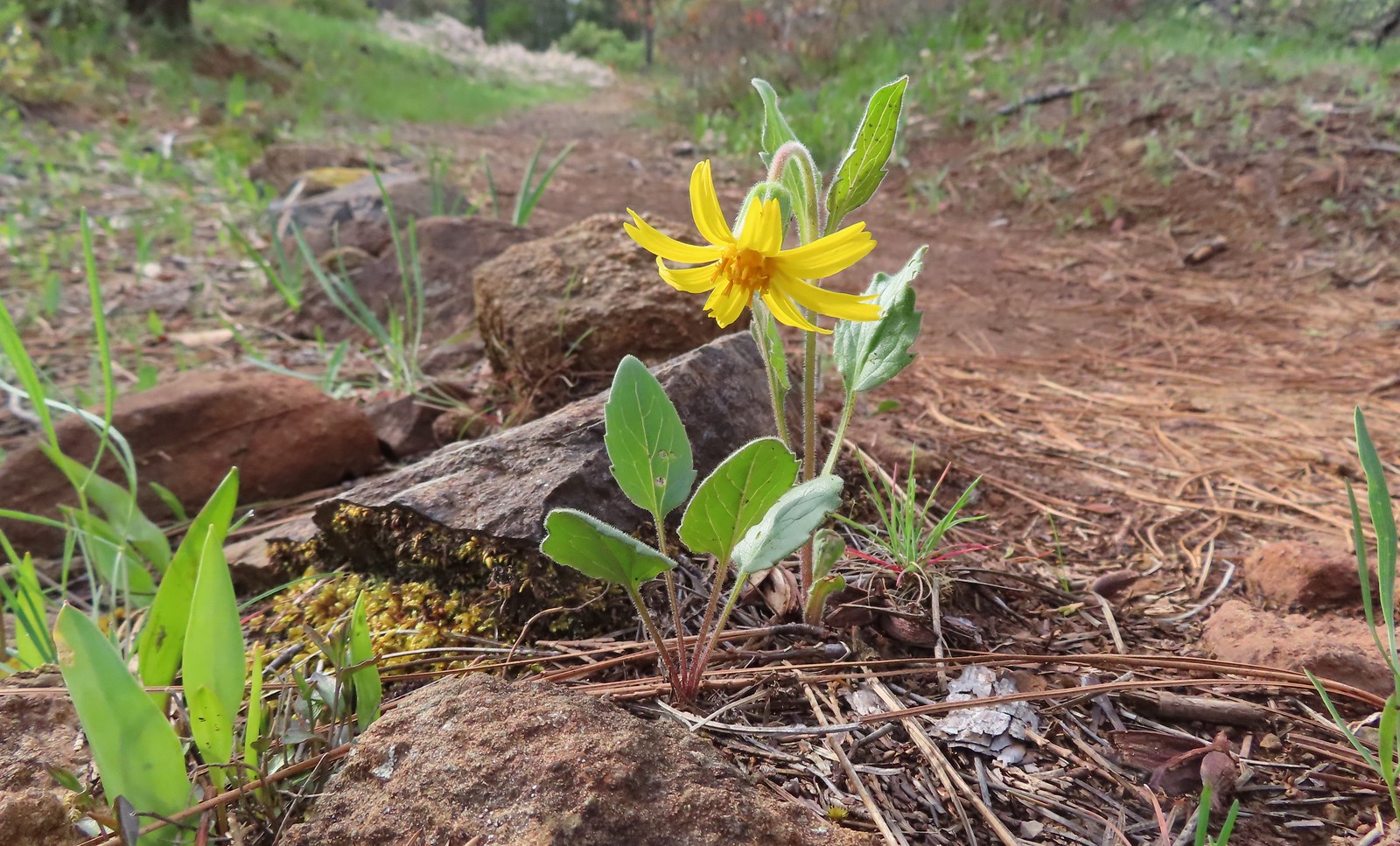 Serpentine arnica

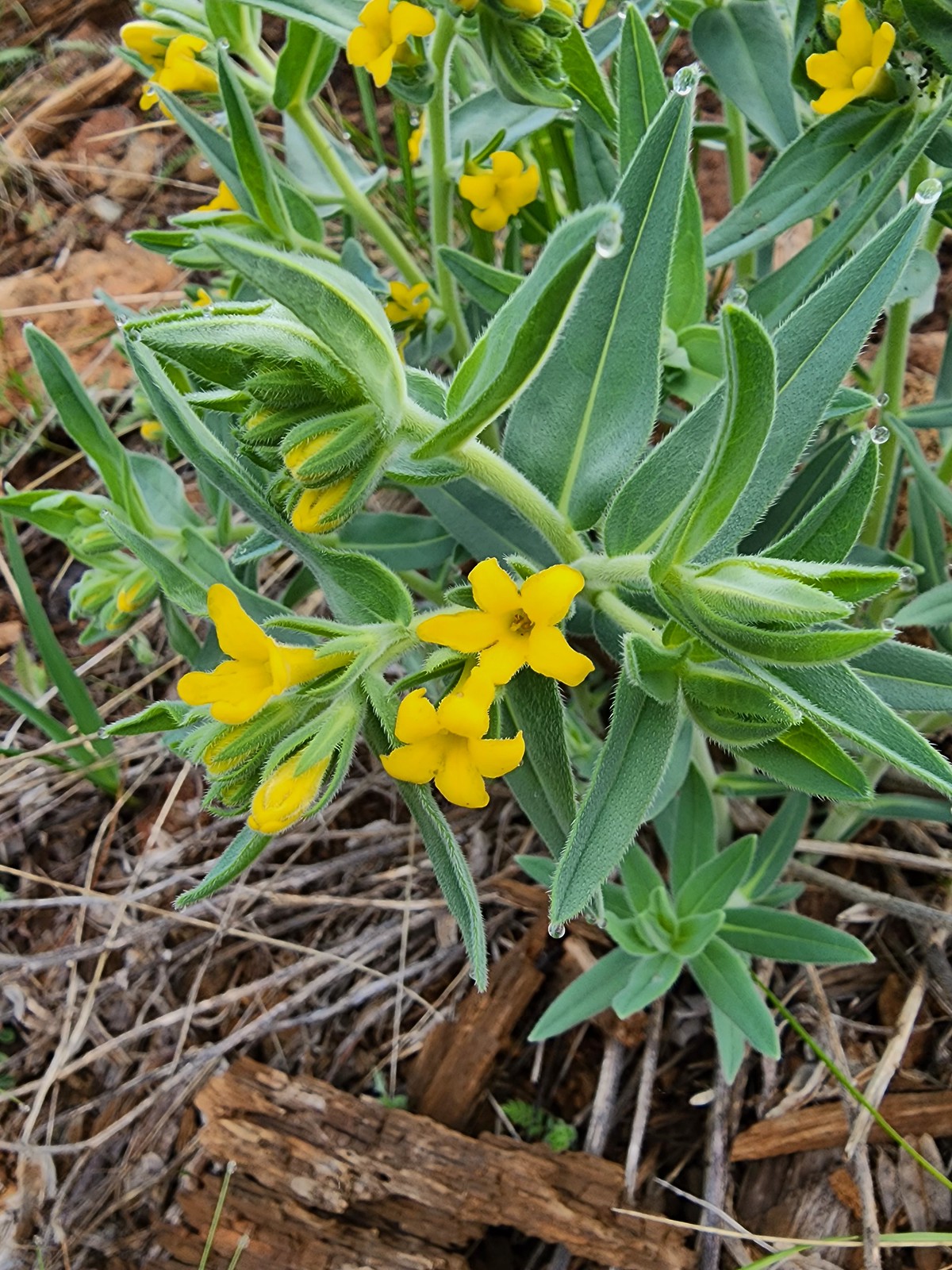 California gromwell
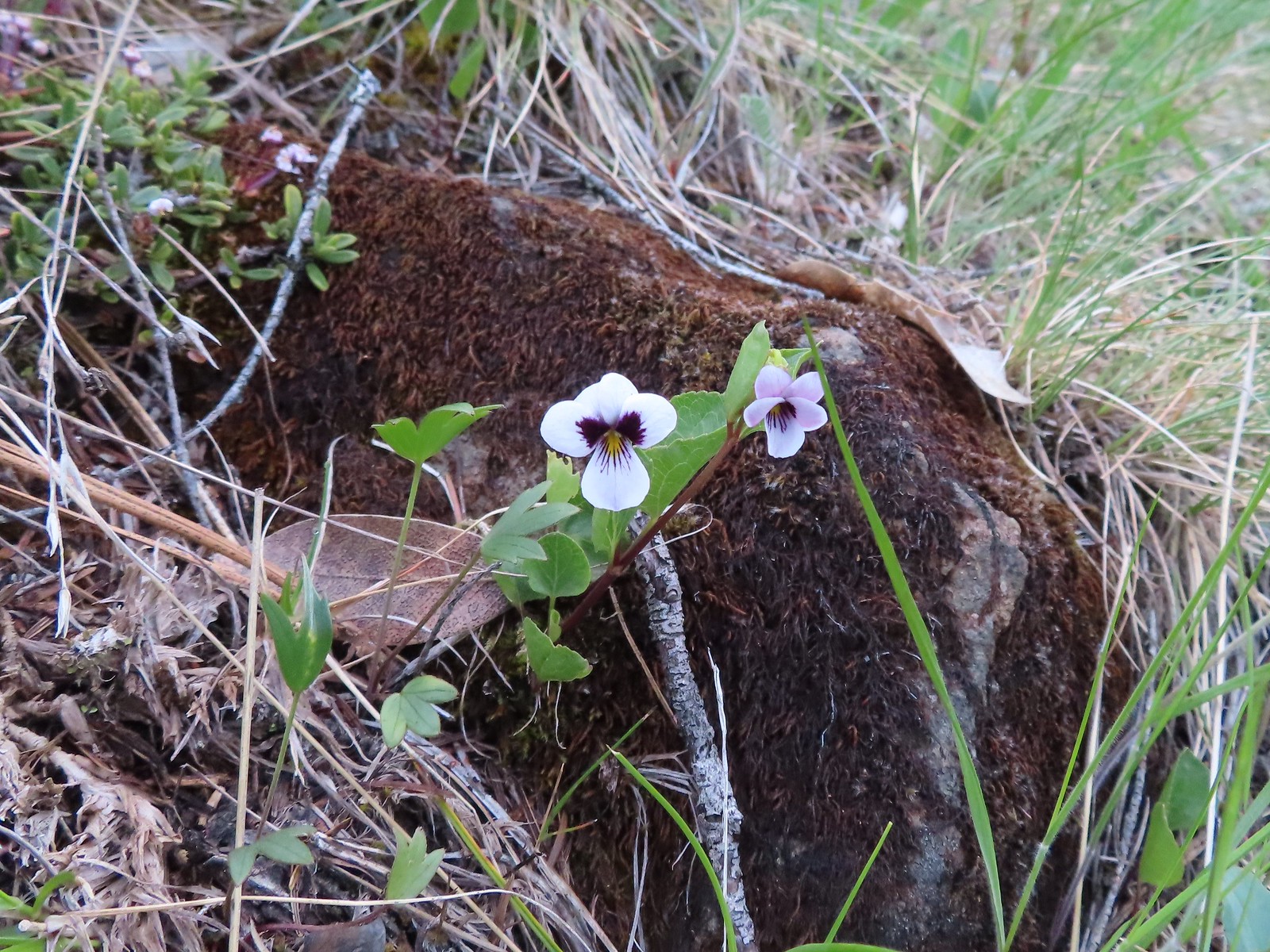 Wedgeleaf violet
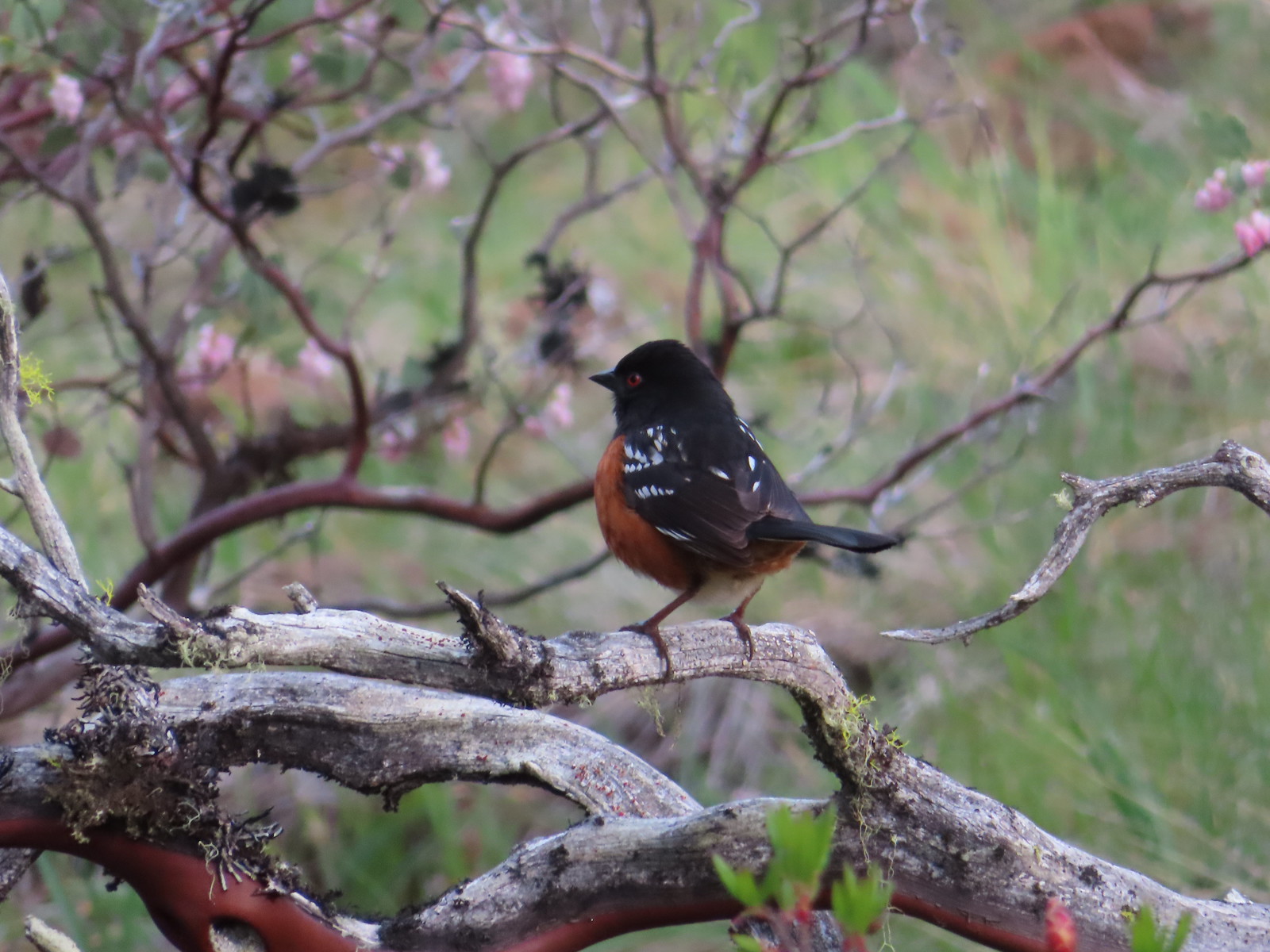 Spotted towhee
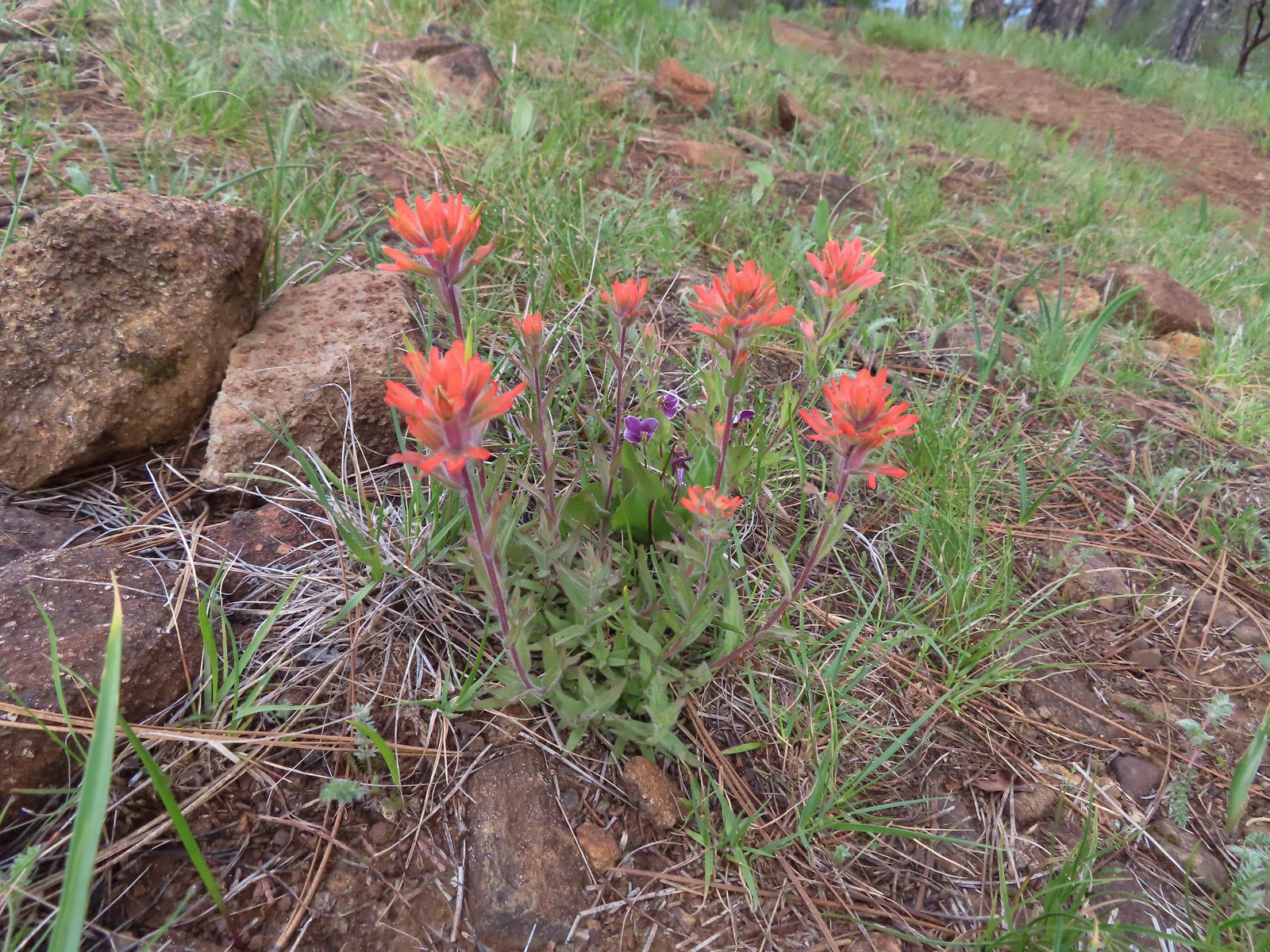 Paintbrush and violets
 Narrowleaf blue-eyed Mary
 Deltoid balsamroot
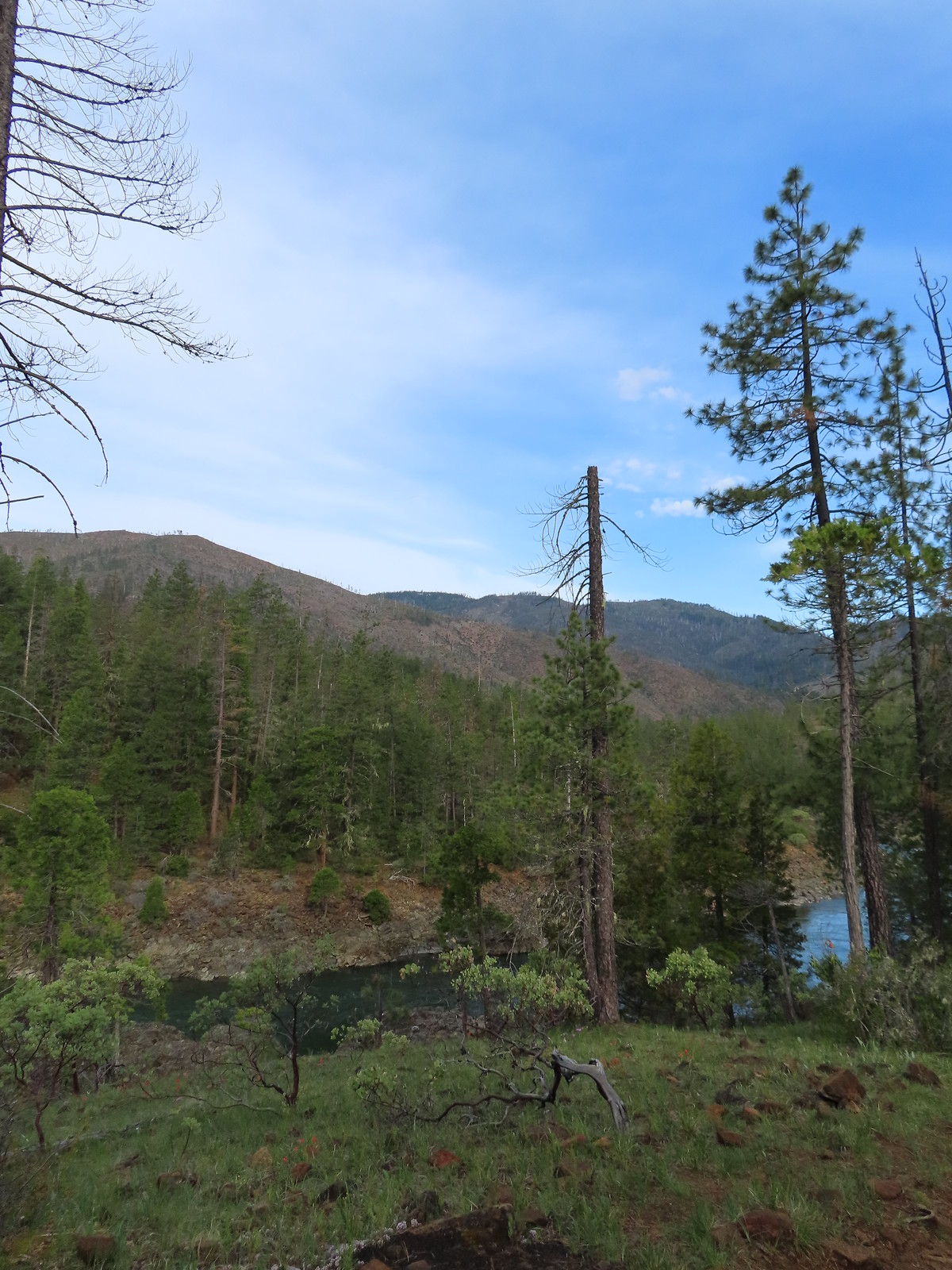
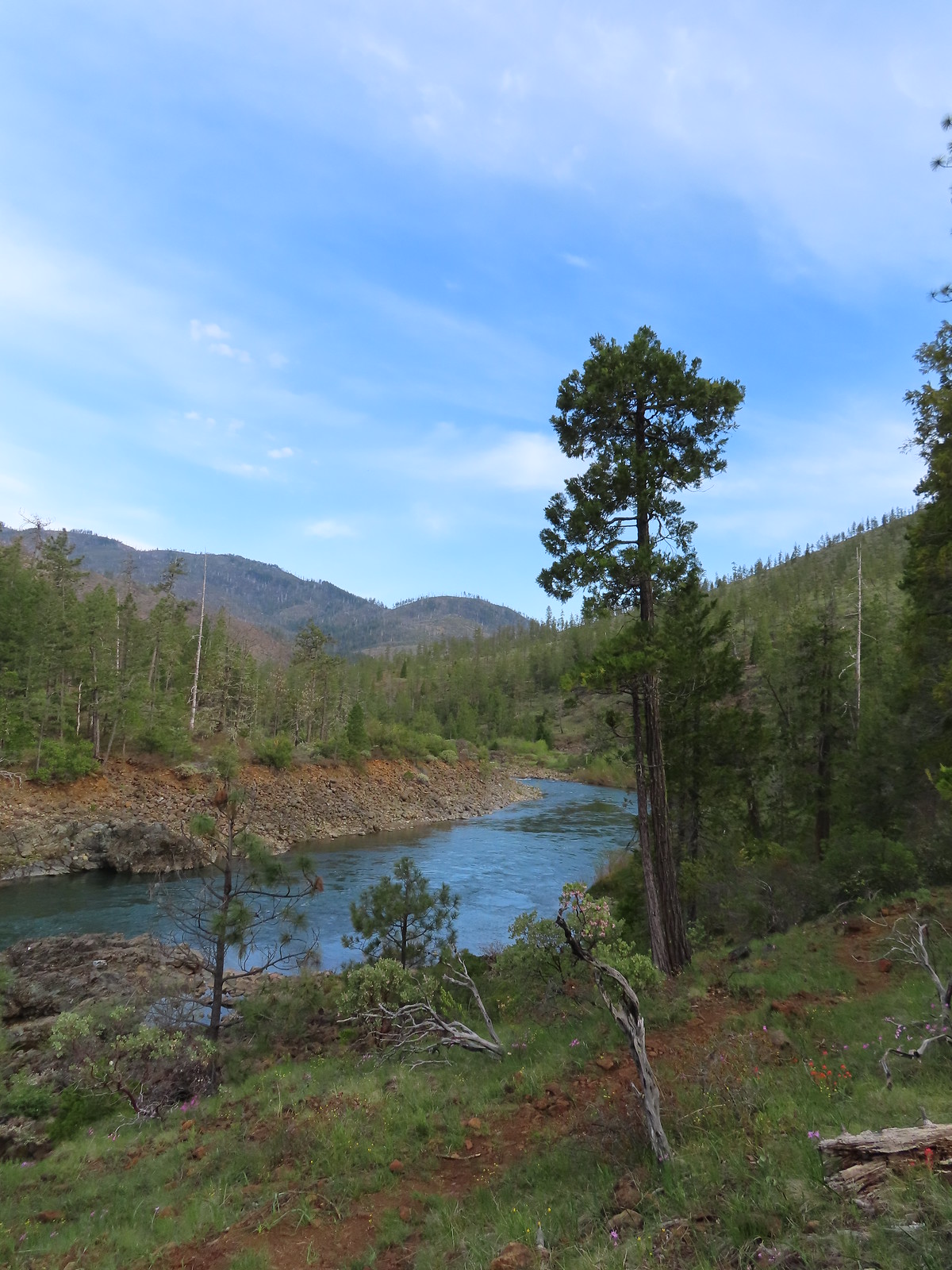
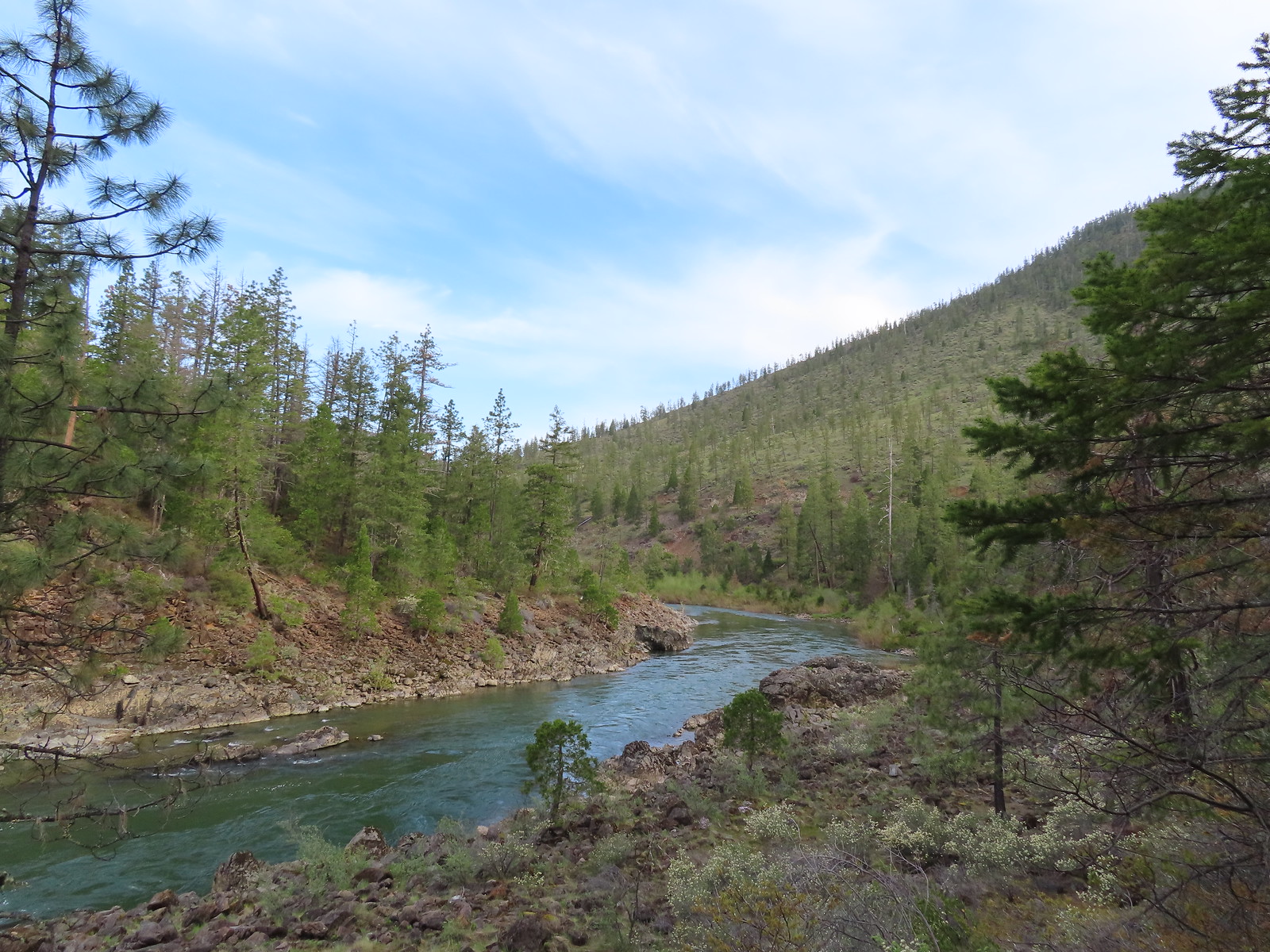 Illinois River
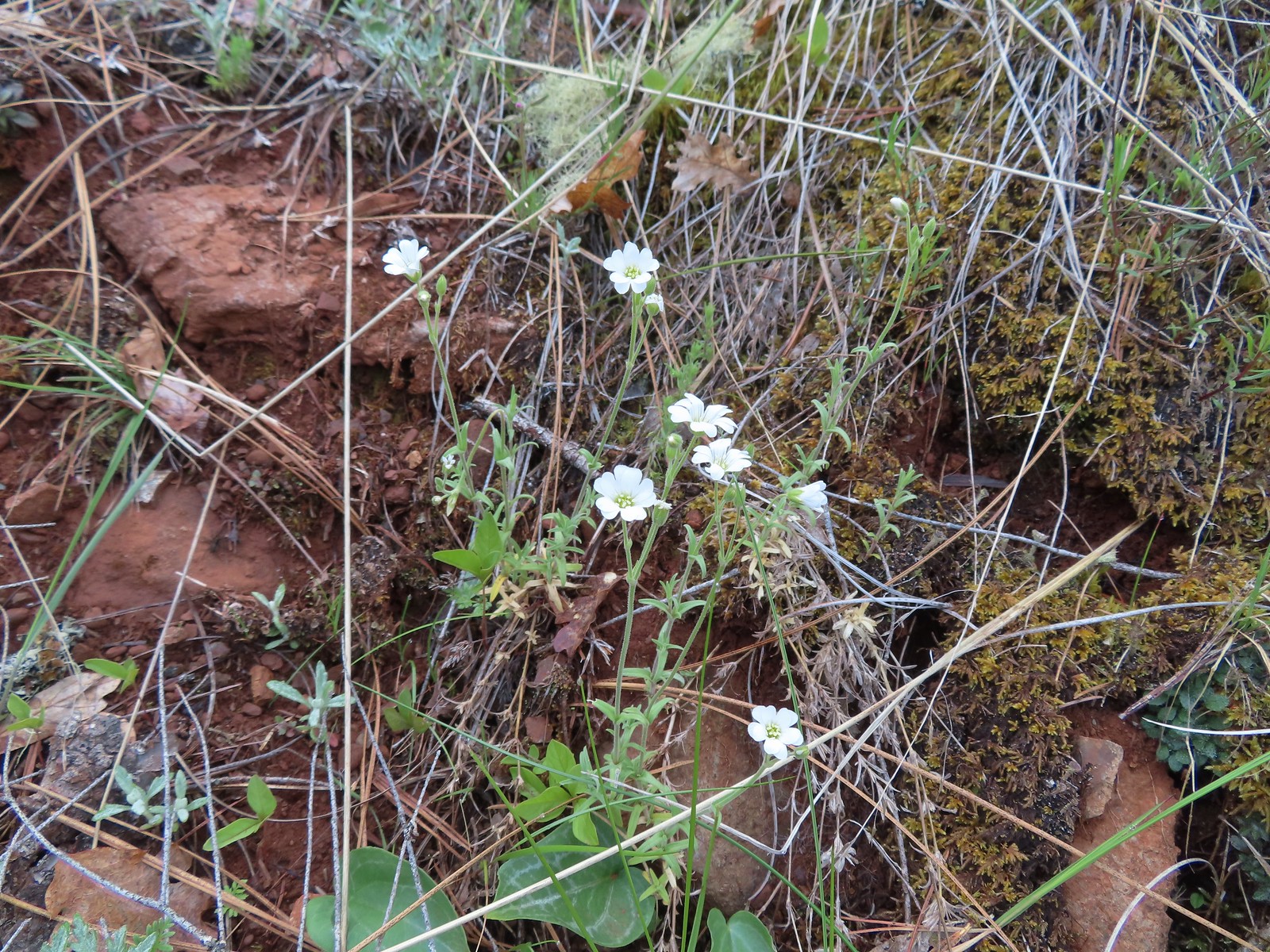 Field chickweed
 Spreading phlox
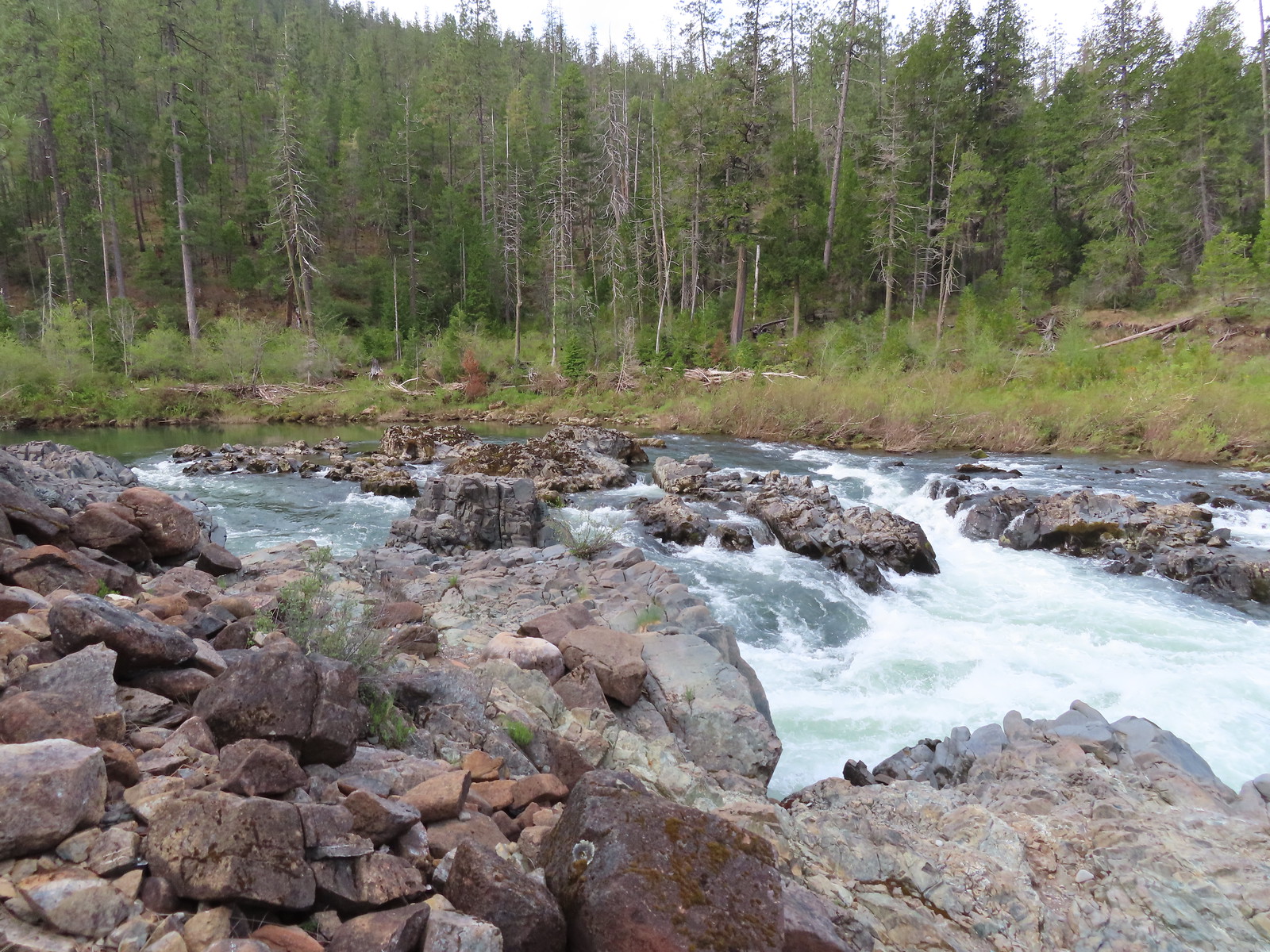
We took use paths down to the rocks near Little Falls to explore along the river a bit.
 Mallard drakes
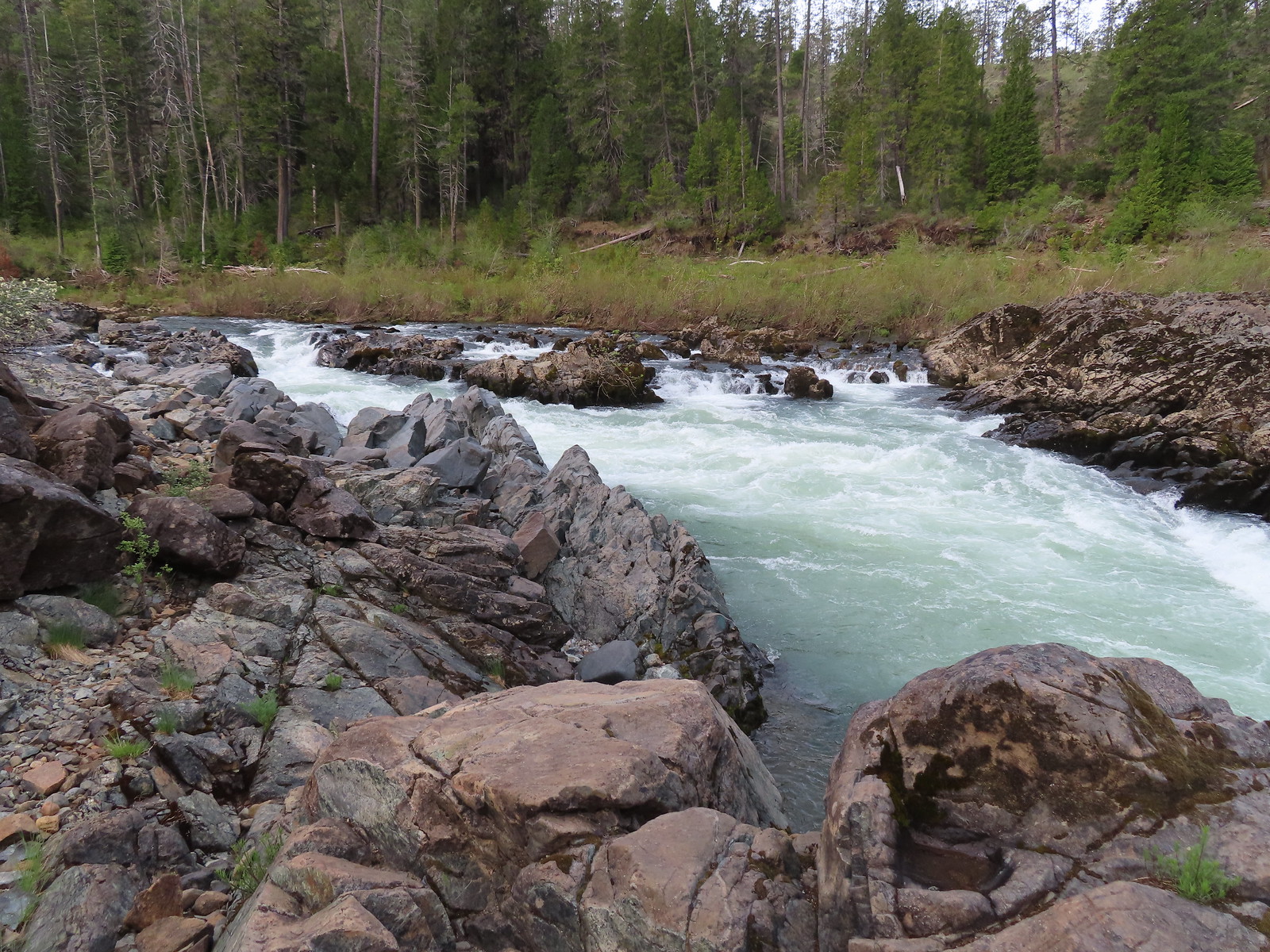
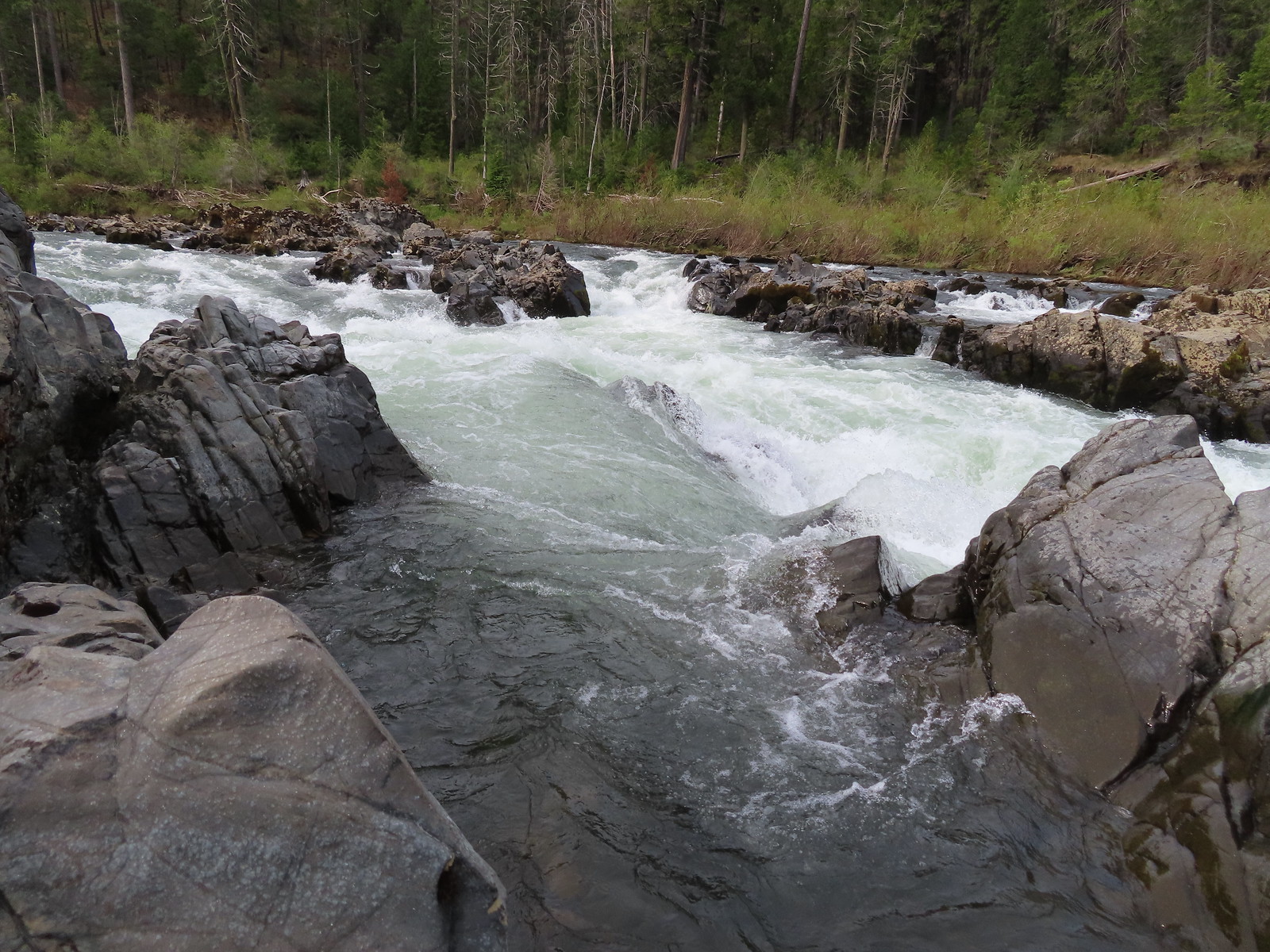
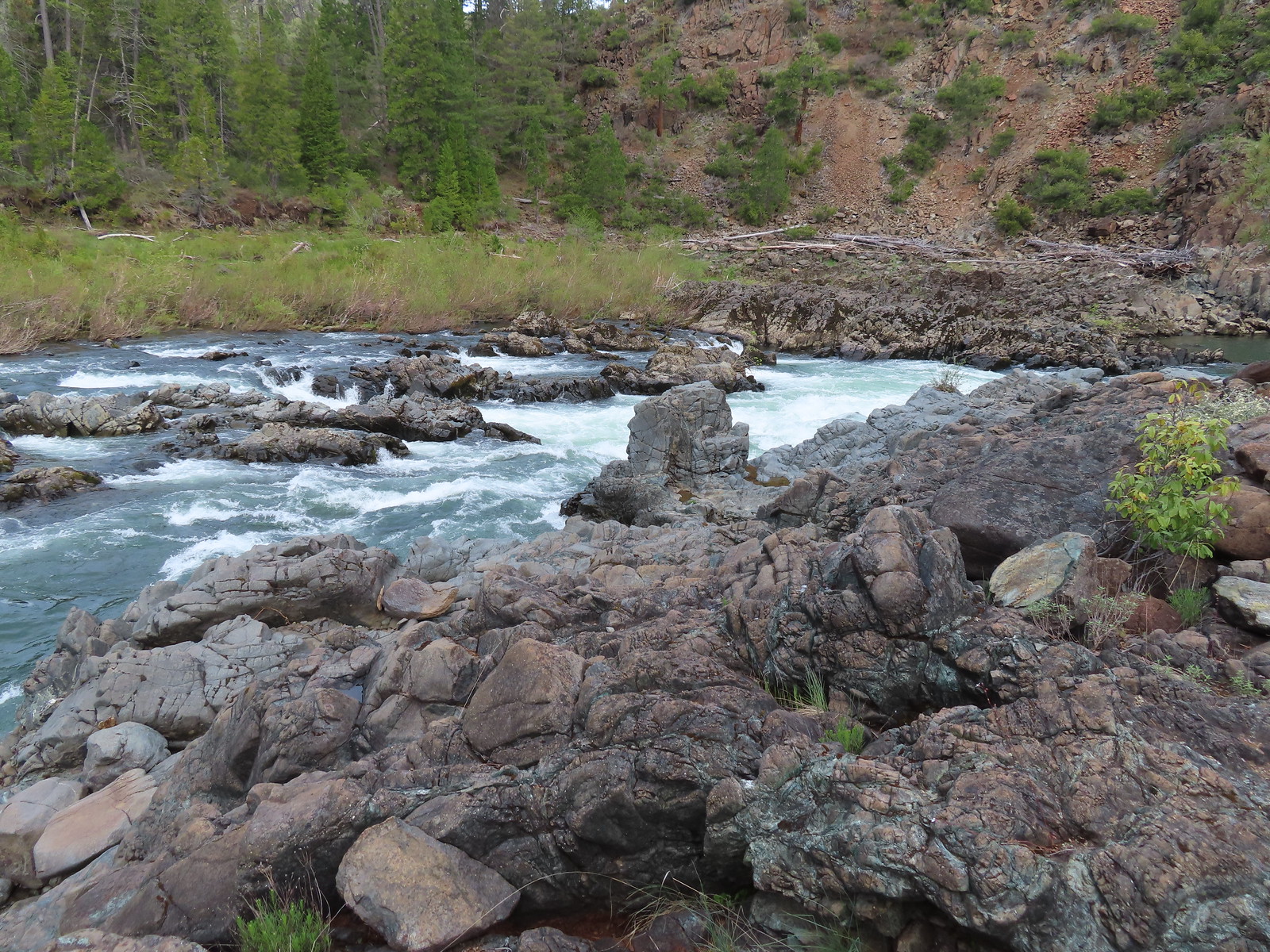
After exploring the rocks we continued on the loop trail.
 Pool above the falls.
 Wildflowers above the trail.

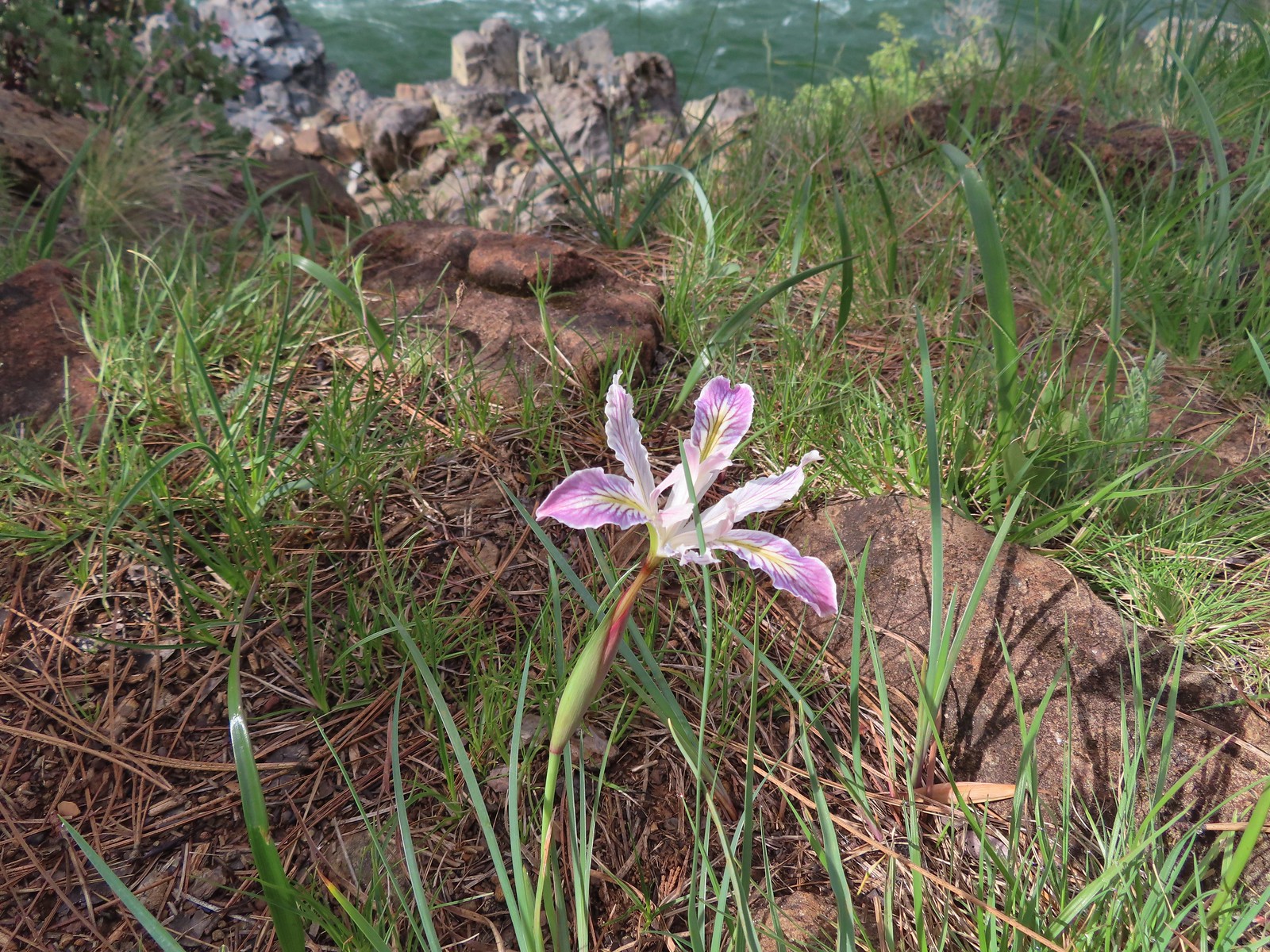 Interesting colors on this iris.
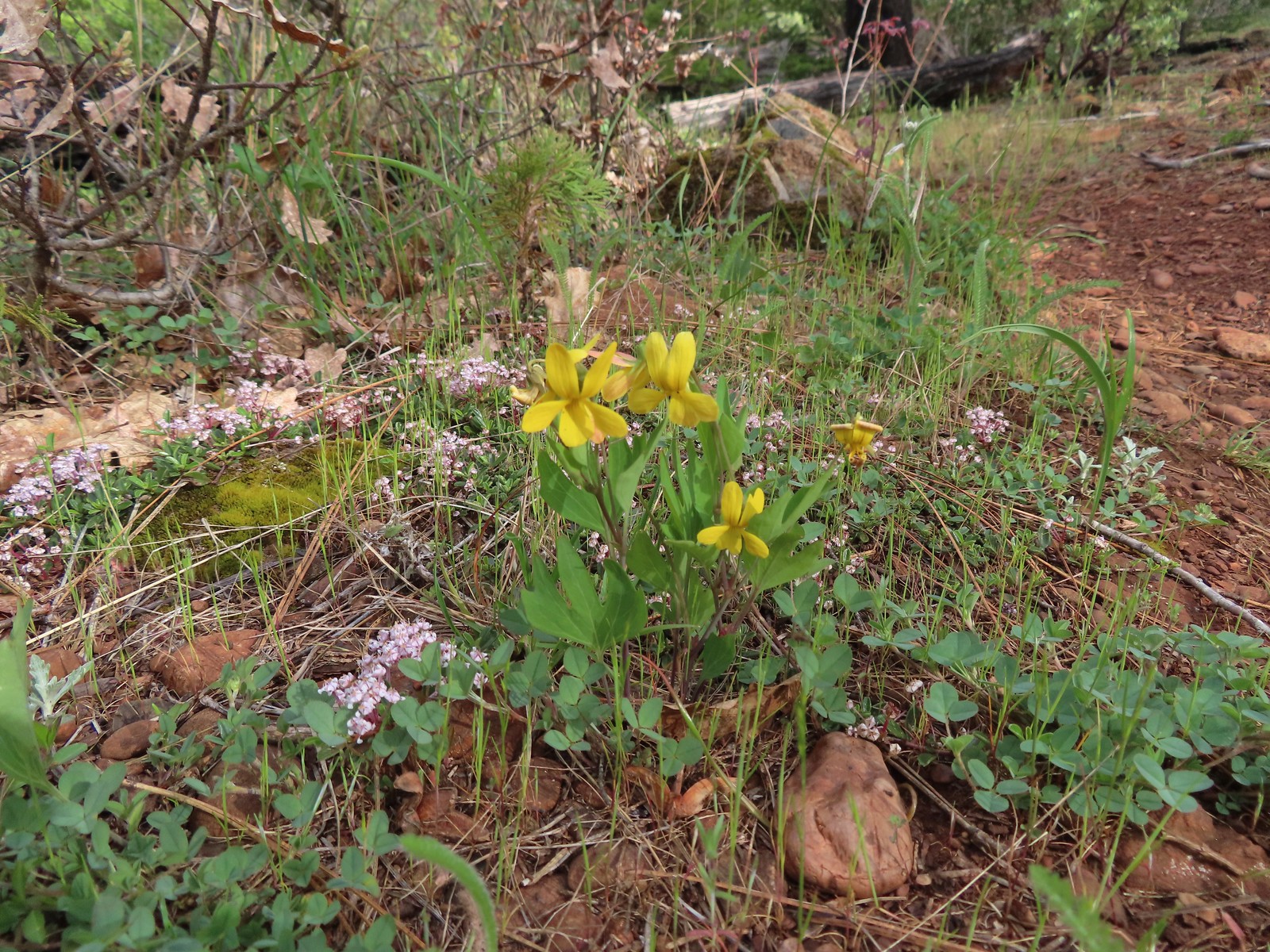 Pine violets
The trail eventually veered uphill away from the river to complete the loop.
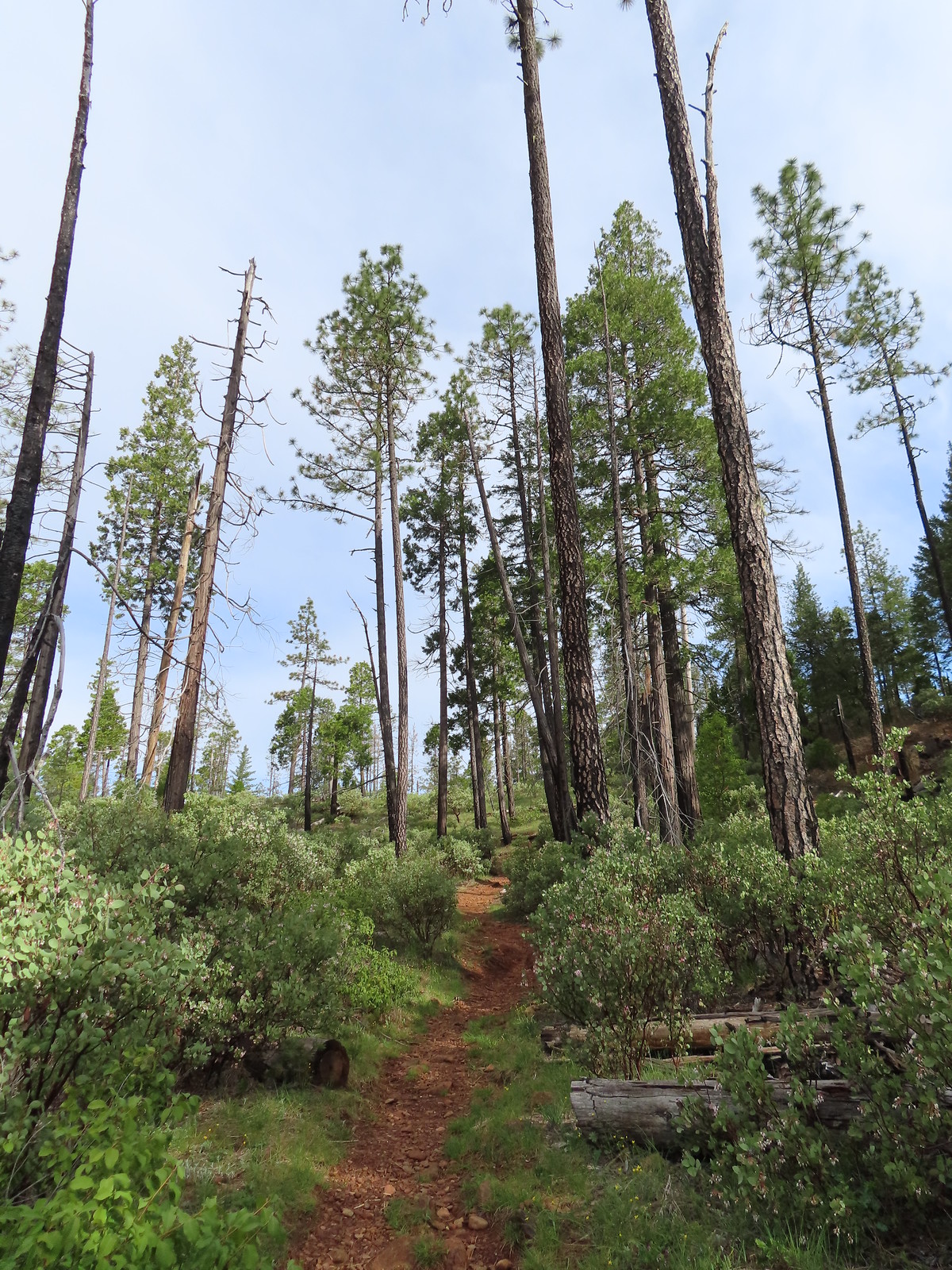
After completing the loop we returned to FR 4201 and walked back to our car at the Eight Dollar Mountain Trailhead and headed for our next stop, the Kerby Flat Trailhead.

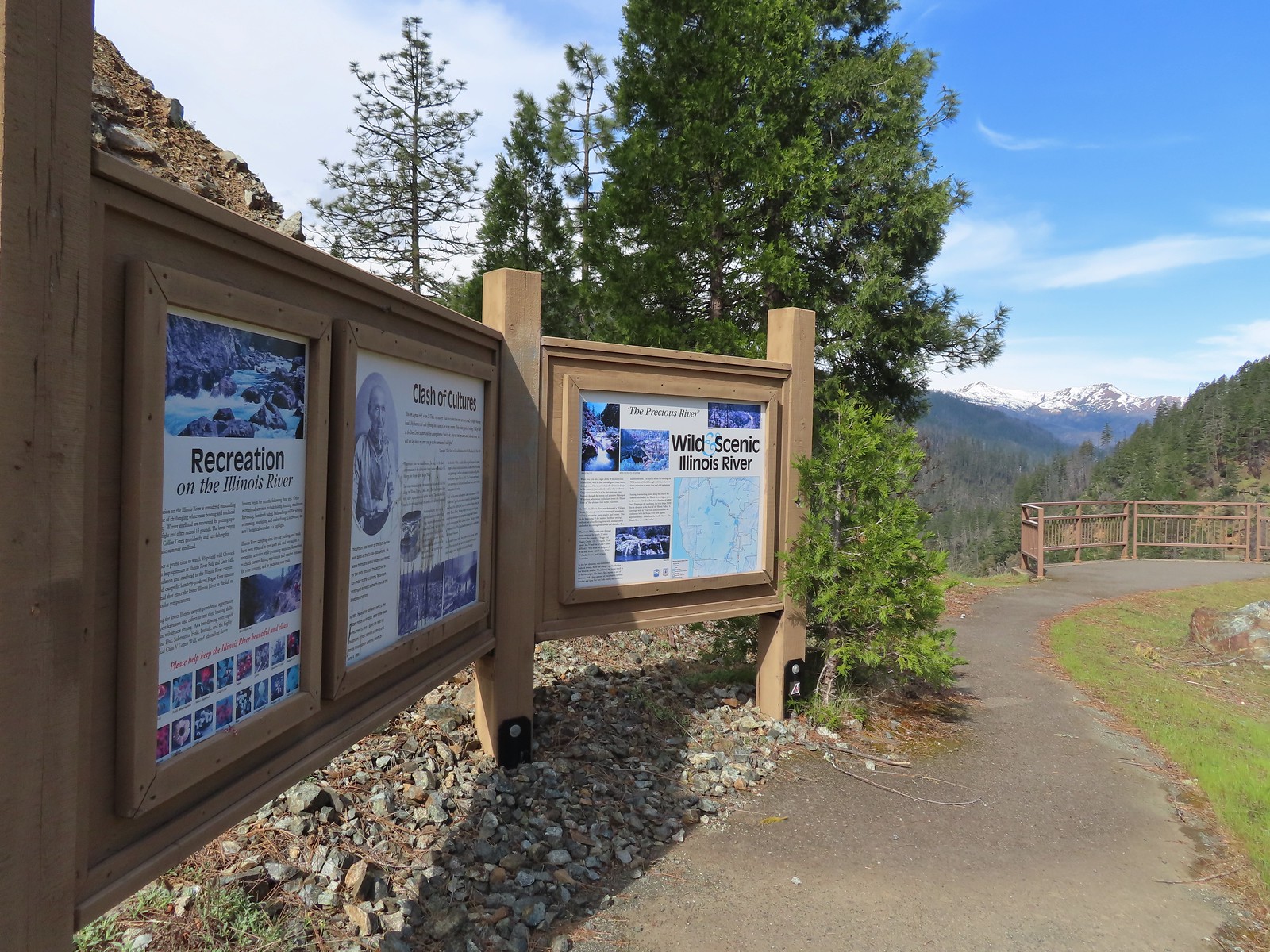
The view from the trailhead was great and wound up being the best part of our attempted hike here.
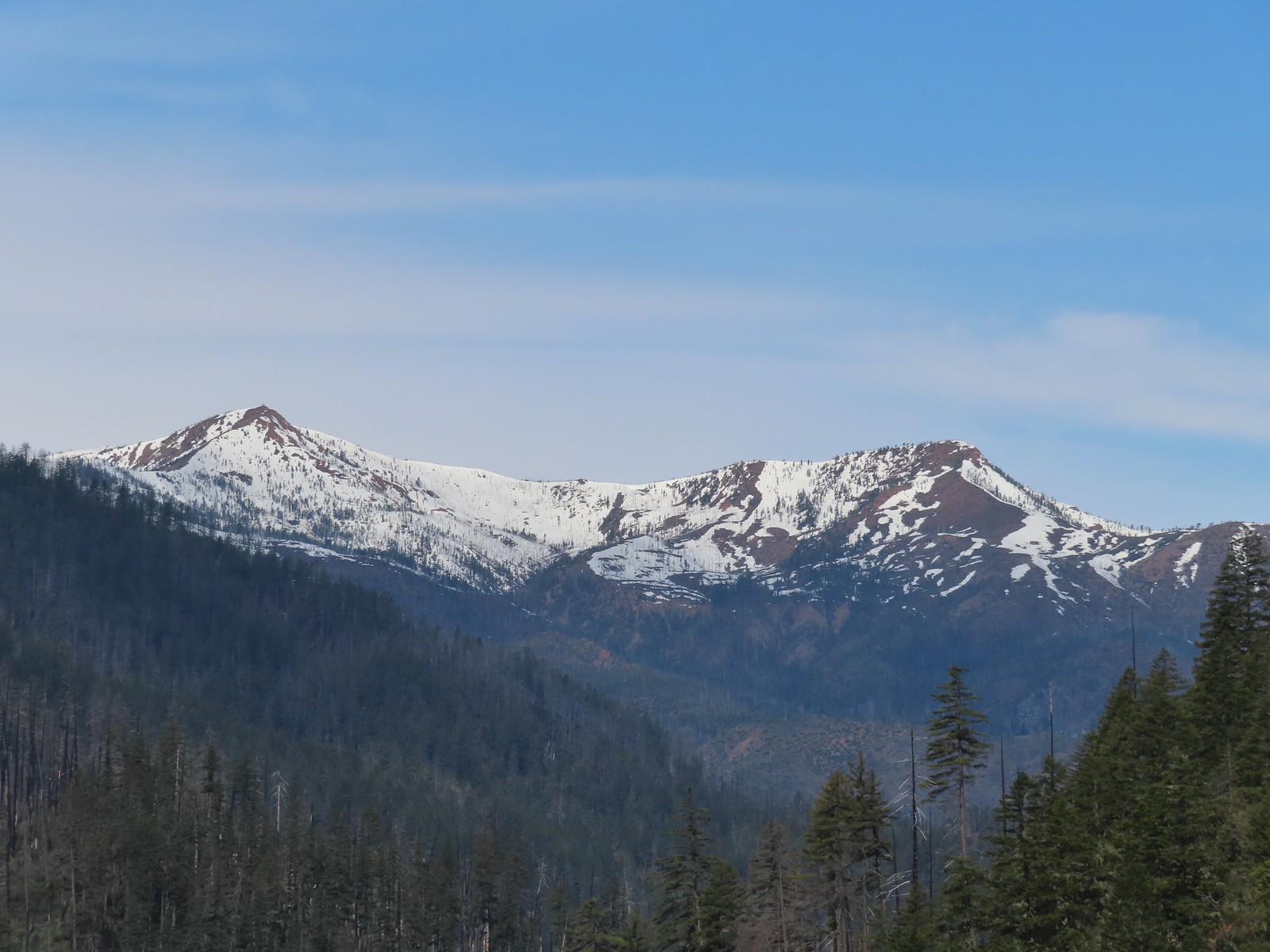 Pearsoll Peak and Gold Basin Butte in the Kalmiopsis Wilderness.
The trail begins at the railed viewpoint and heads downhill.
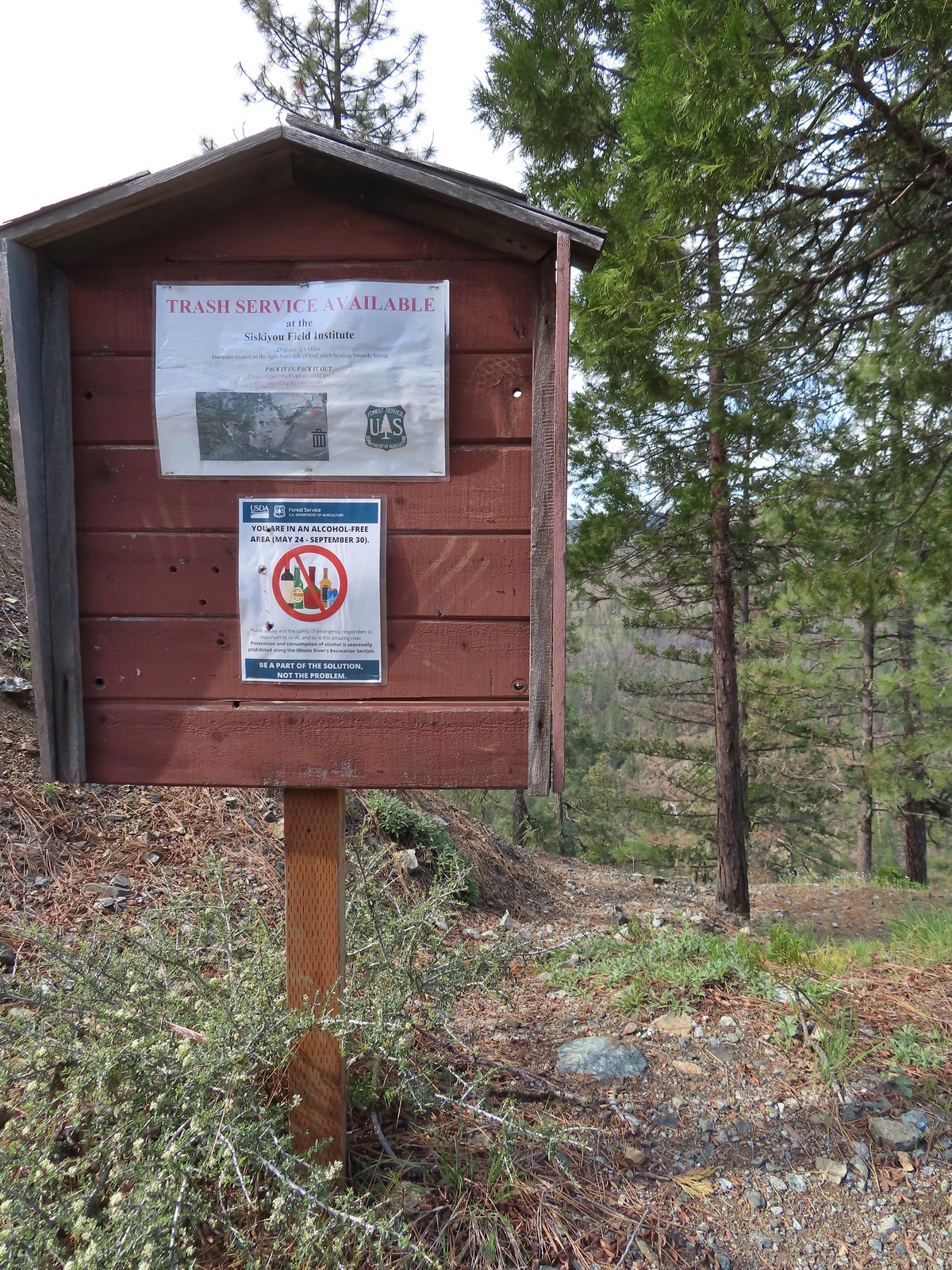
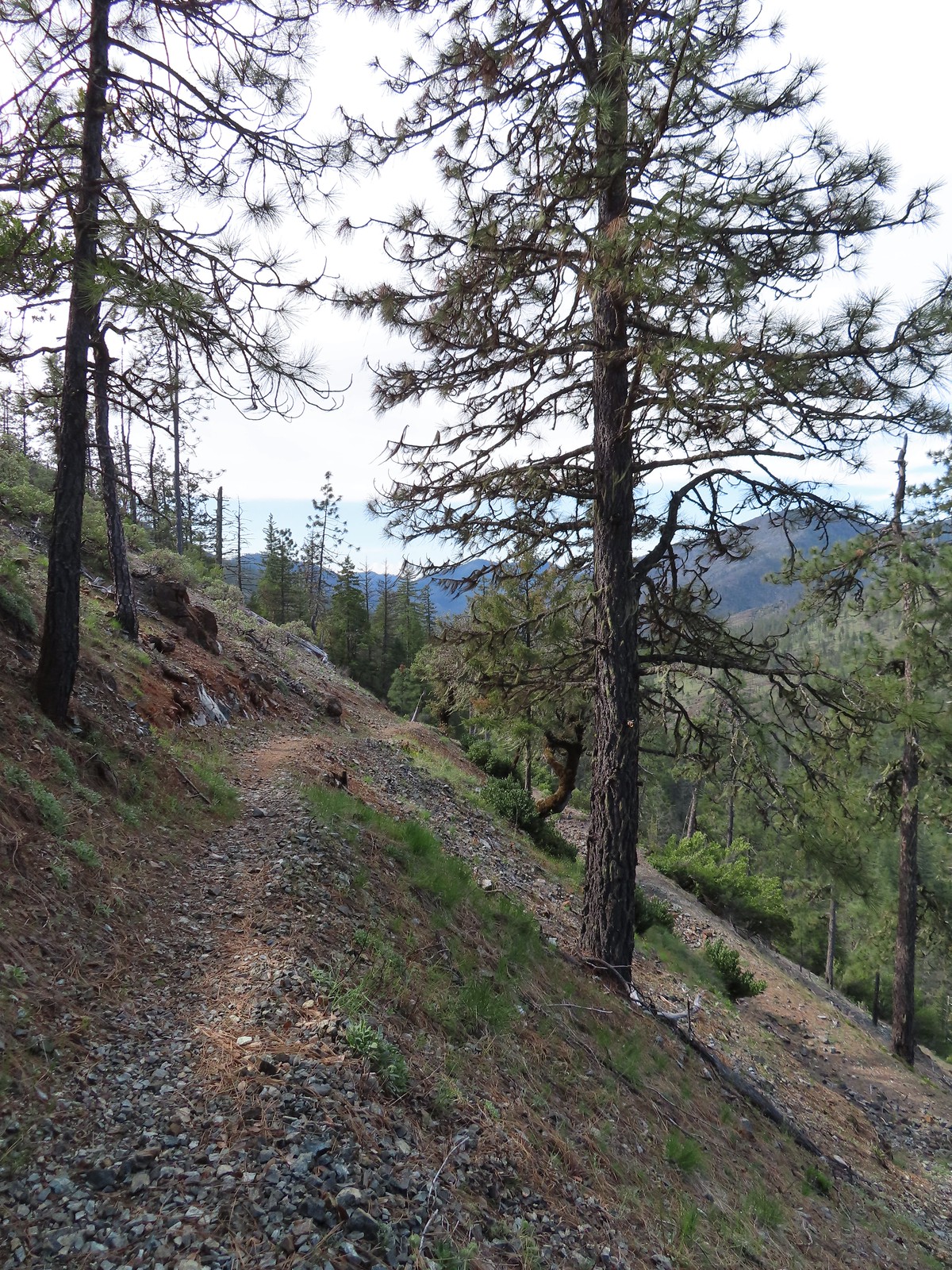
 The Illinois River below.
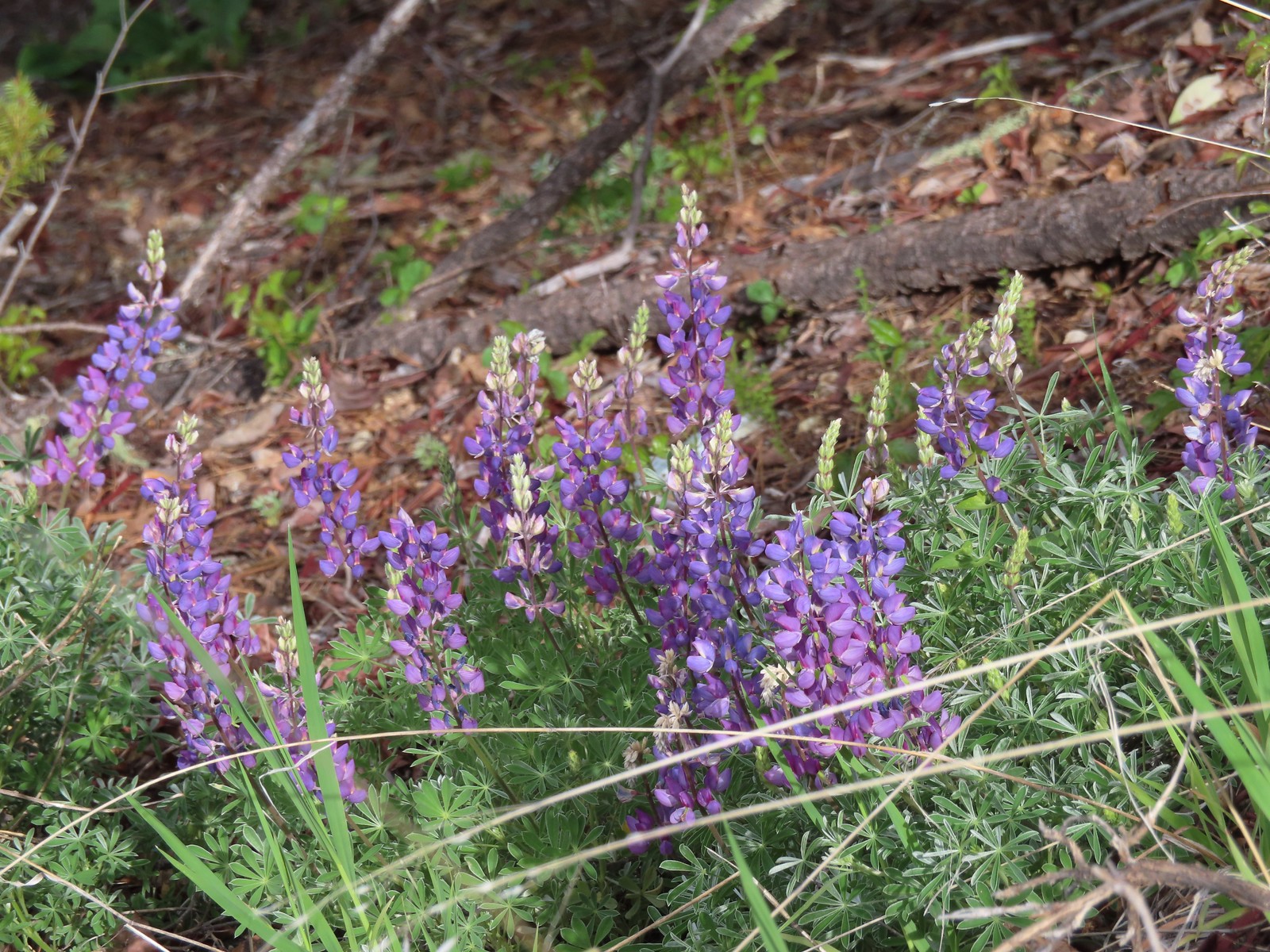 Lupine
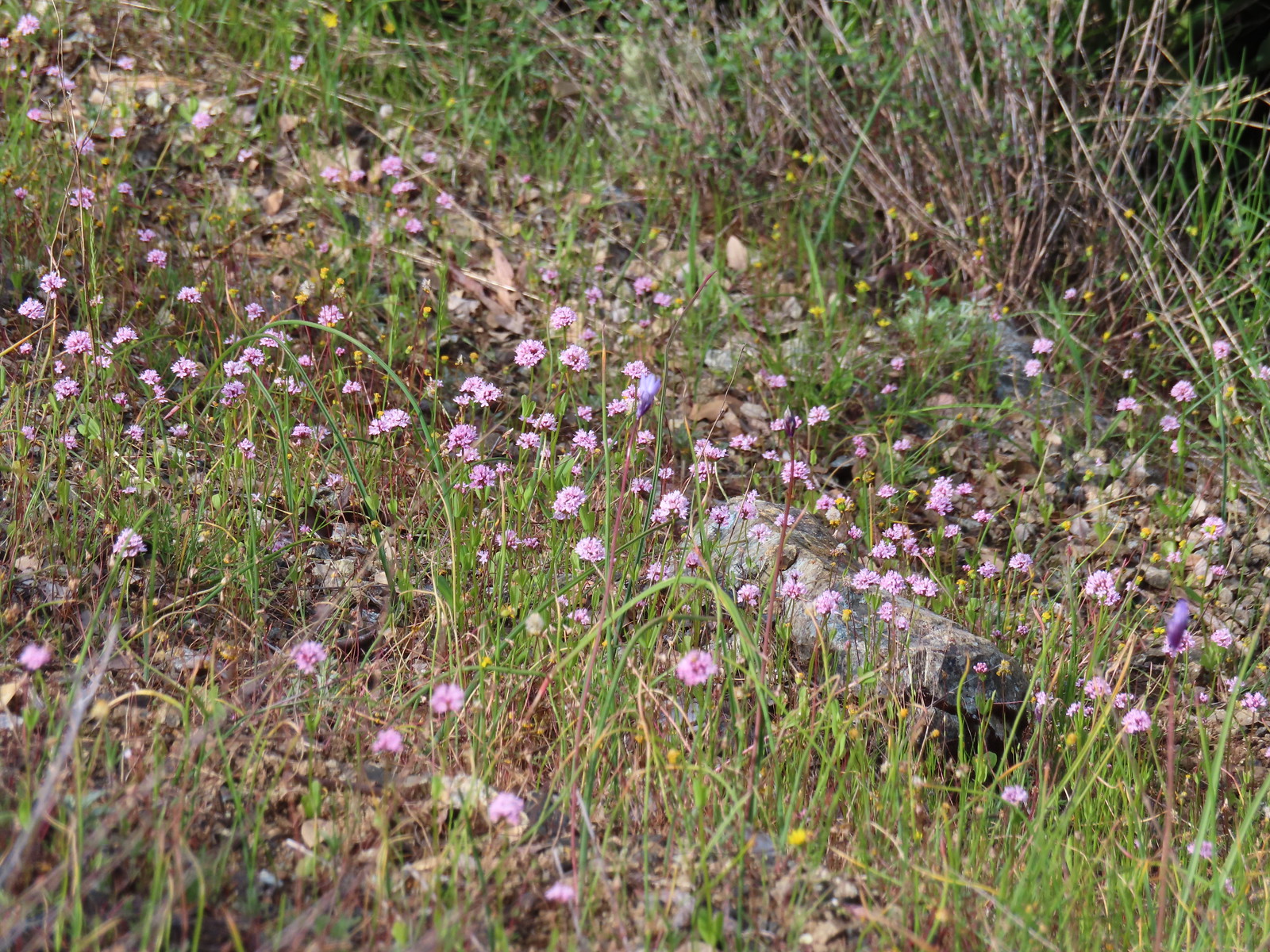 Plectritis
At first the trail followed what may have been a fire road and was nice and wide but as it began to follow a ridge downhill it quickly became crowded by poison oak.

We managed to find a way around the first bad section but then we were stymied. With no desire to come in contact with poison oak we turned back after just a third of a mile and headed back to the car.
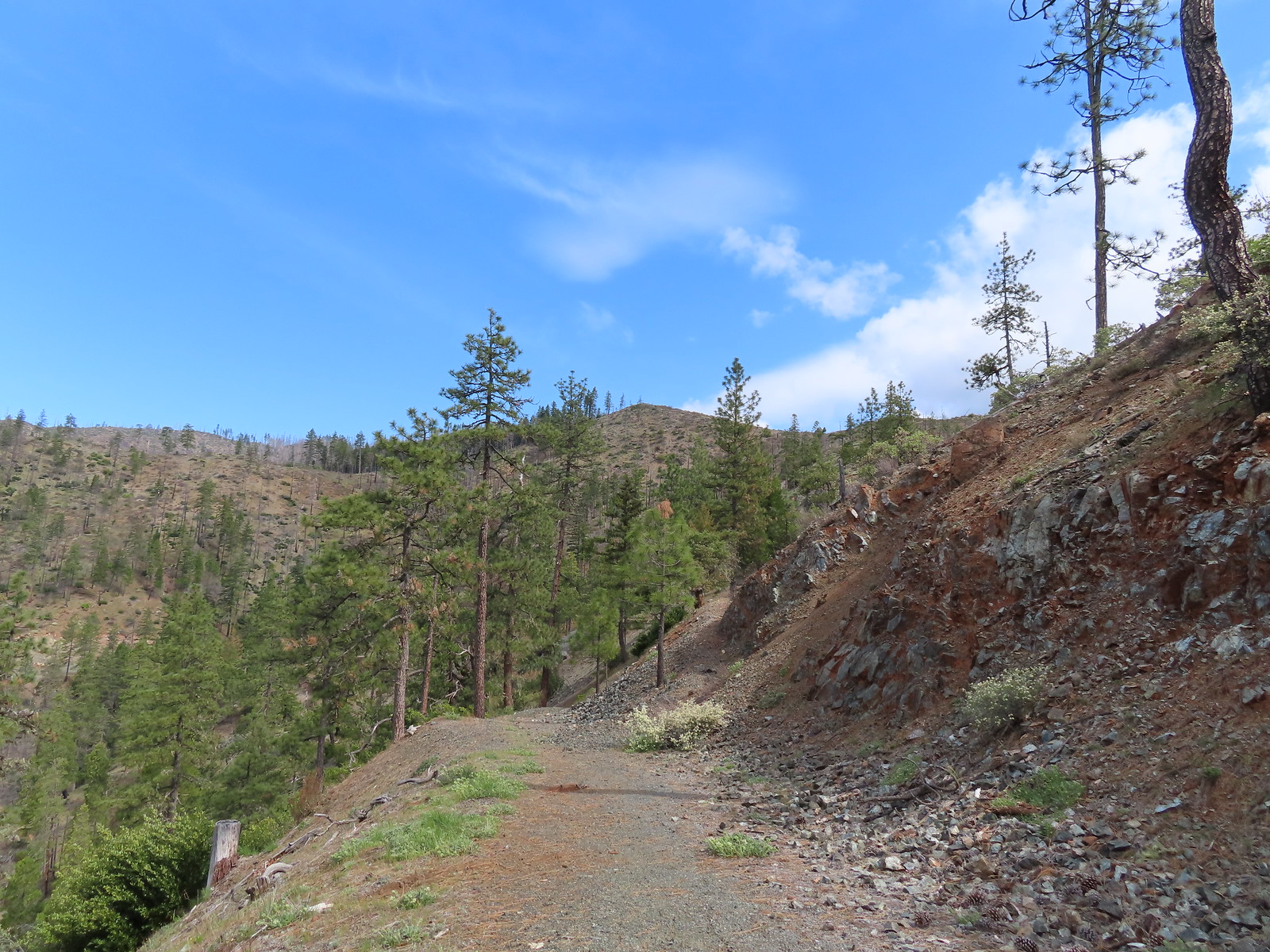 This section was great.
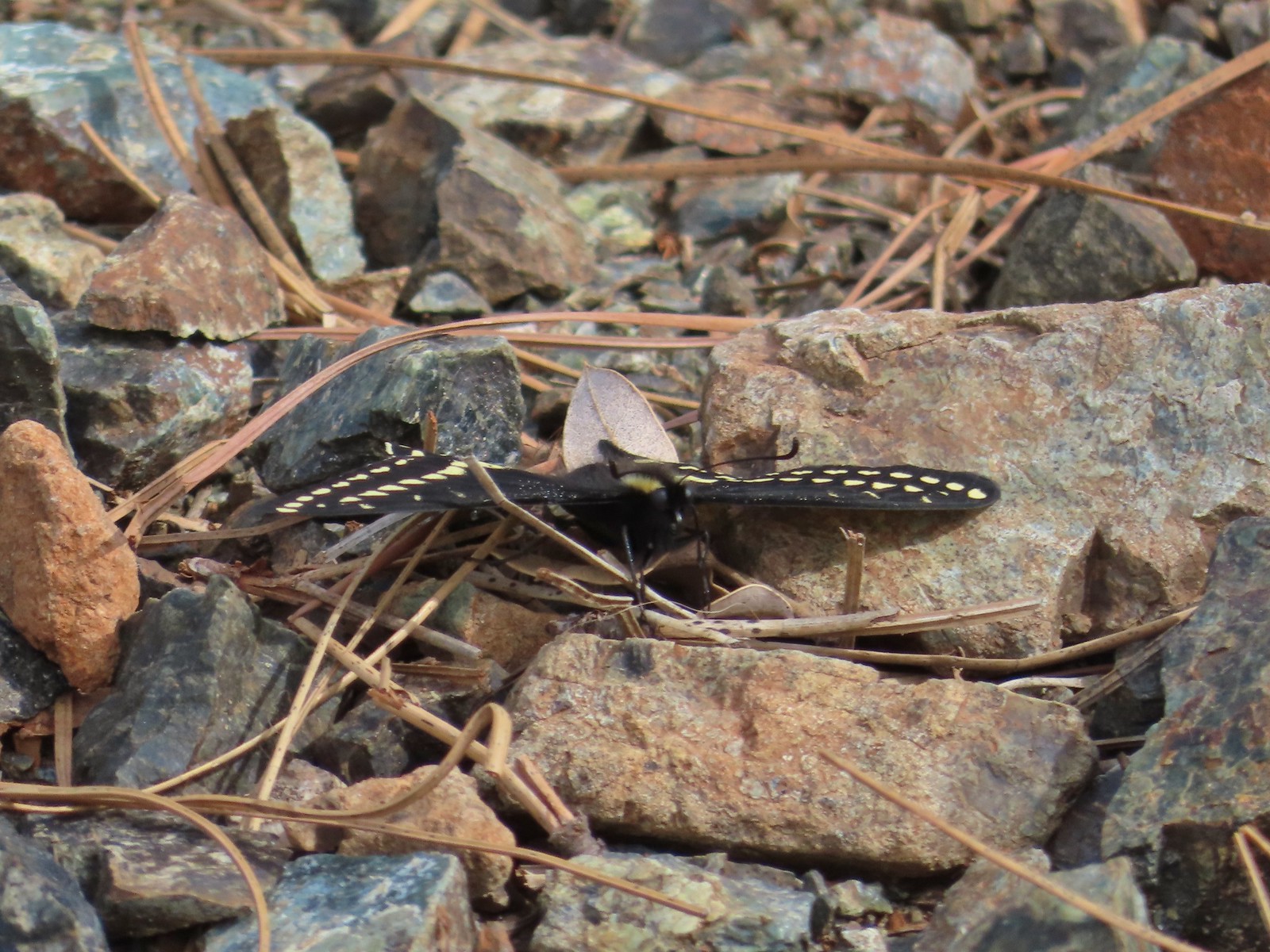 Swallowtail
This stop was supposed to have been a 4.3-mile lollipop loop visiting both Kerby and Star Flats, but it wound up being a 0.6-mile out-and-back. The good news was we had three other stops that were part of Sullivan’s featured Illinois River Beaches hike. The second stop was for Snailback Beach, just a 1.1-mile drive from the Kerby Flat Trailhead. We parked in a small pullout on the left side of the road at a small signboard.
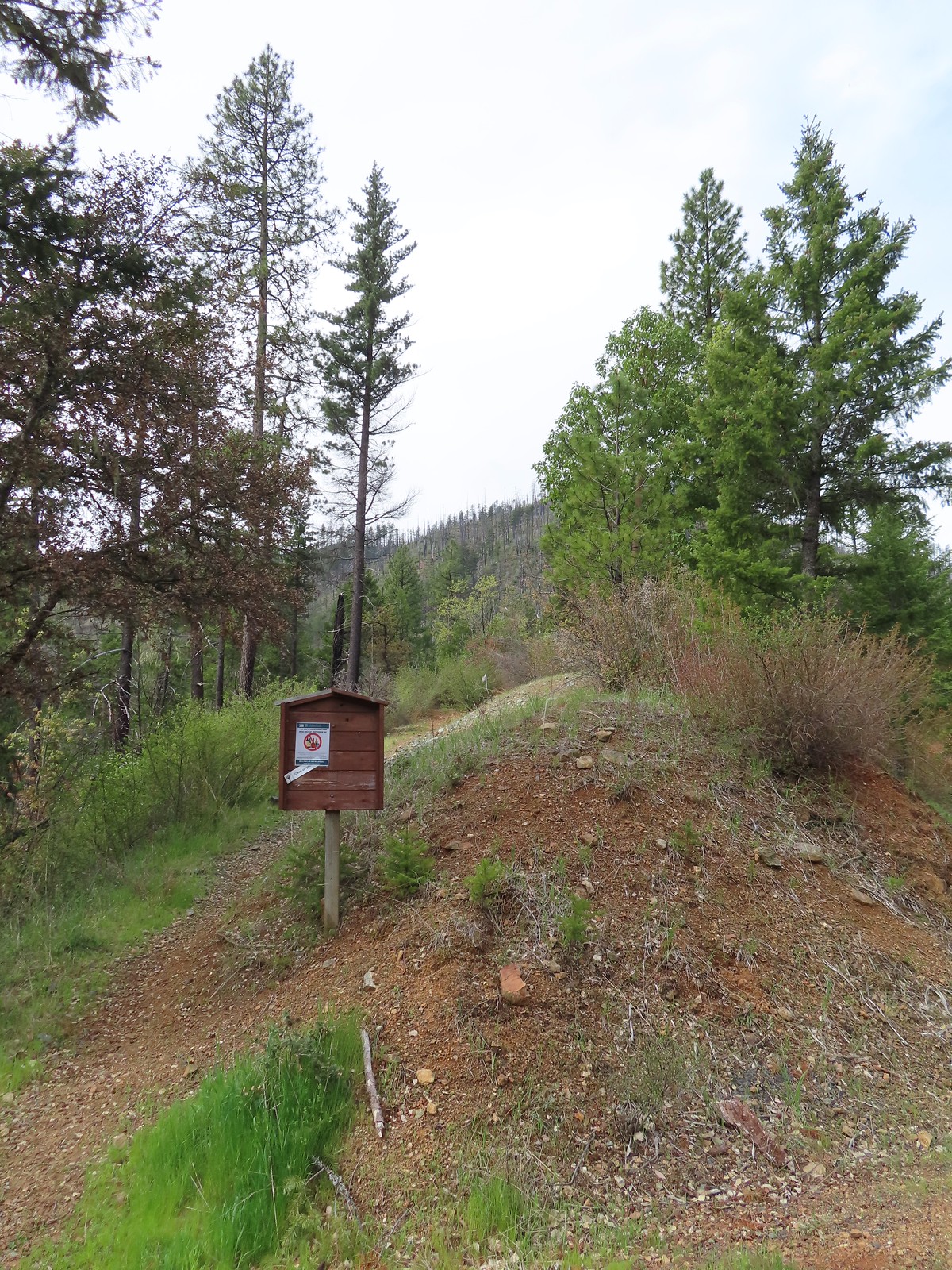
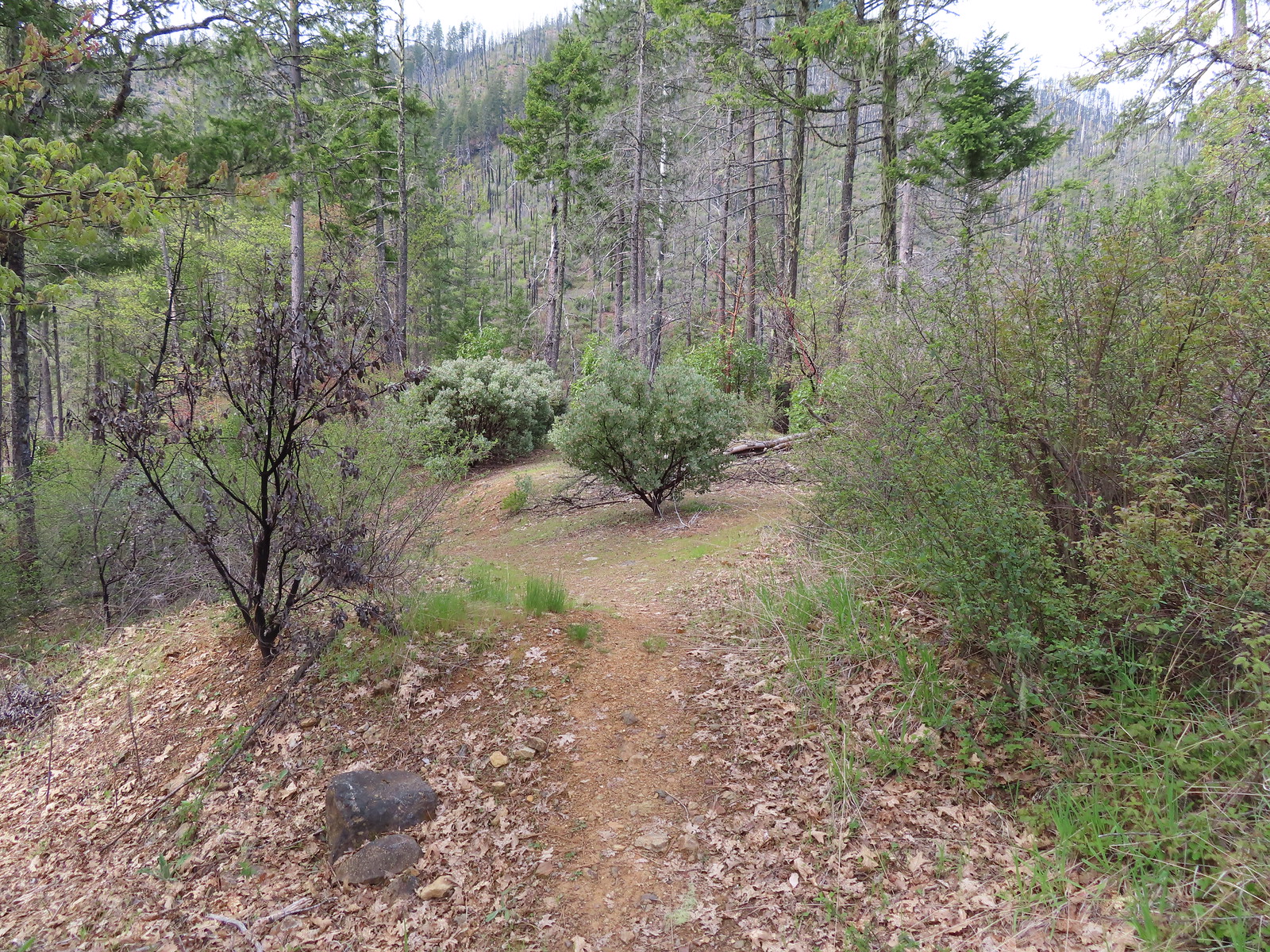
Here a half mile trail follows an old roadbed down to Snailback Beach. This hike started encouragingly as the wide roadbed helped keep the poison oak to the sides.
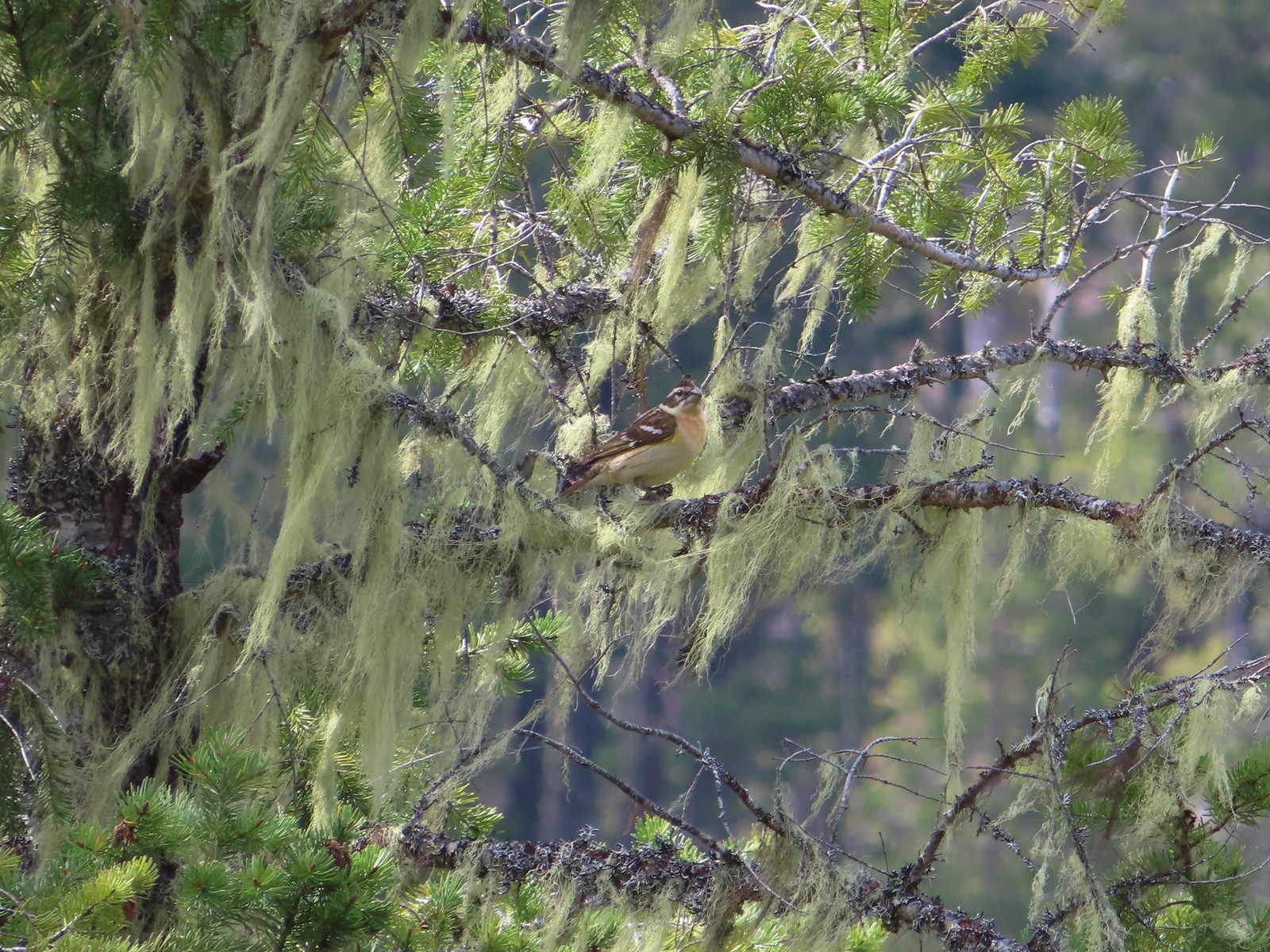 Female black-headed grosbeak
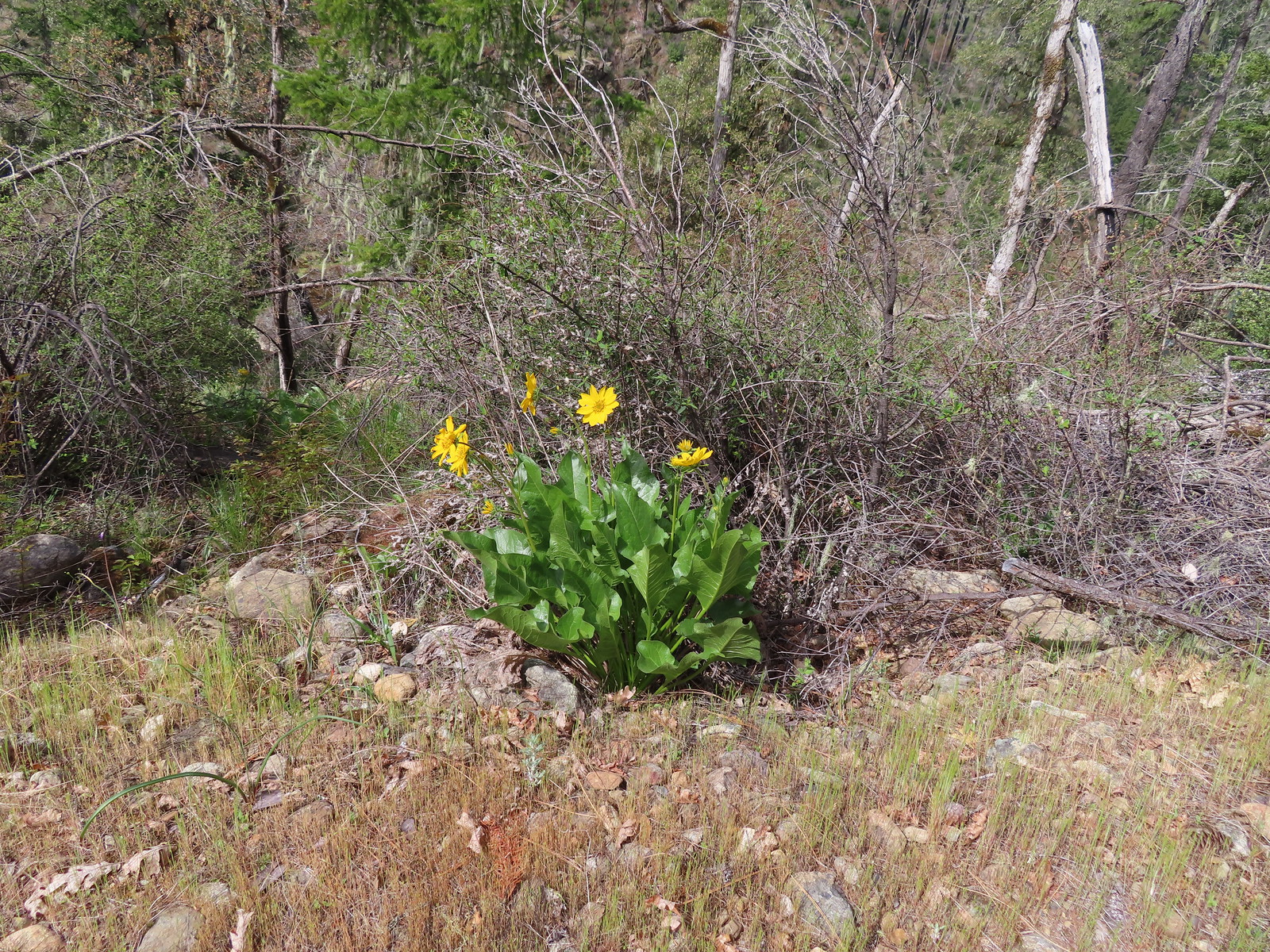 Balsamroot
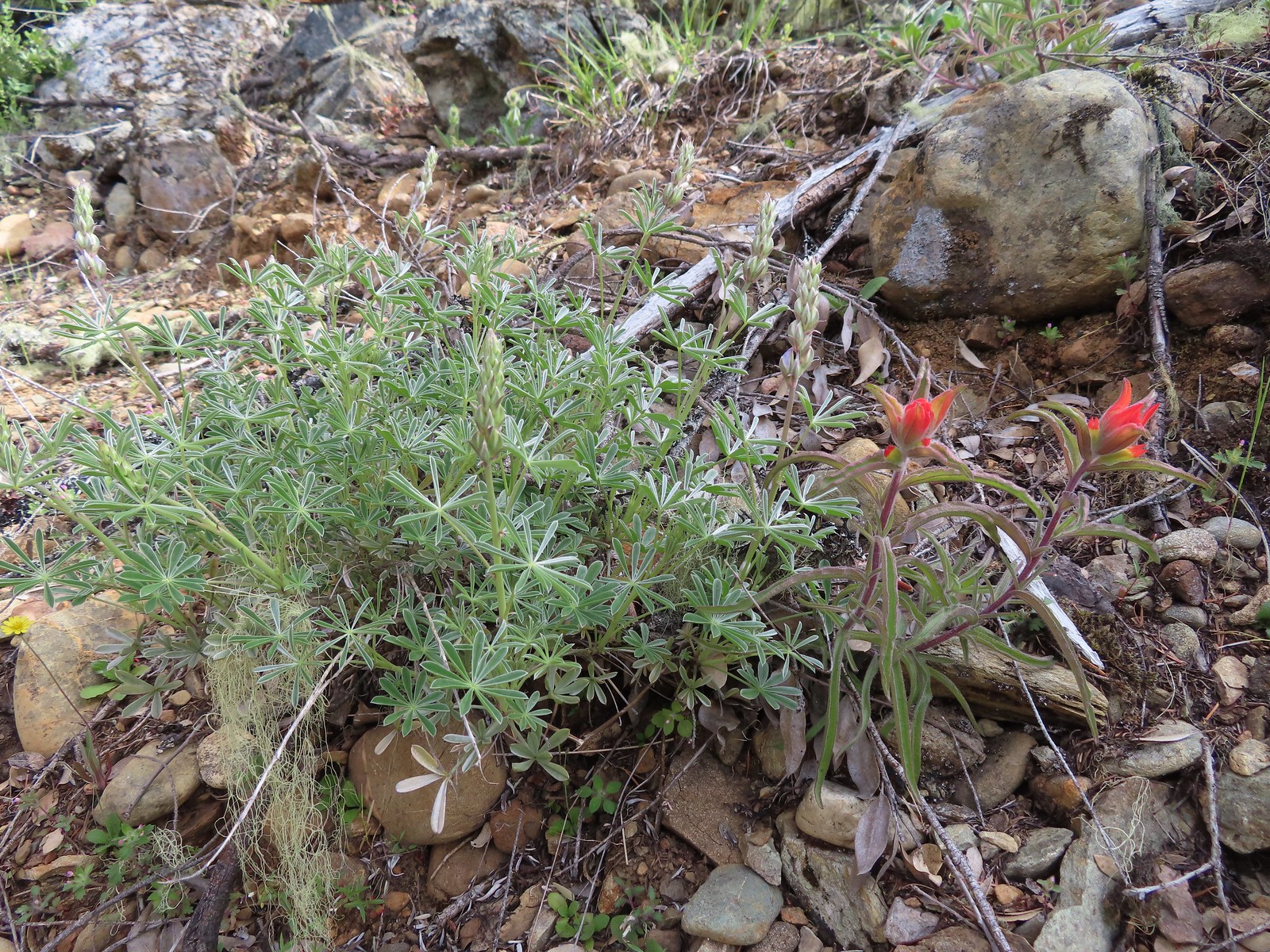 Paintbrush next to some yet-to-bloom lupine.
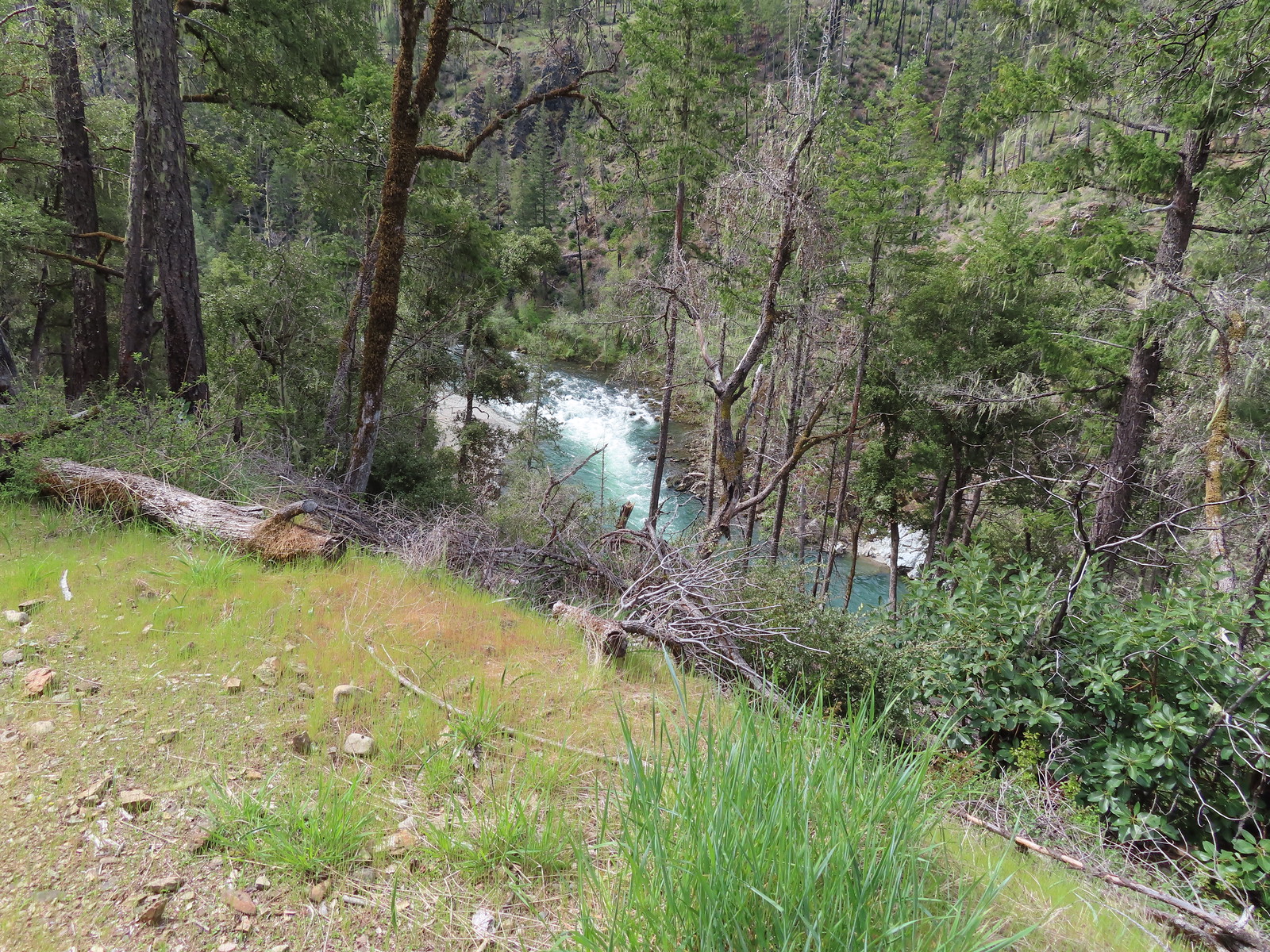 The Illinois River below.
Our optimism about reaching the beach here took a hit when we arrived at Snailback Creek. The creek was flowing pretty good and would have required fording in calf deep water to continue. Normally that wouldn’t stop us, but it also looked like the trail on the far side was in need of maintenance which made us question if we would be able to reach the beach even if we did ford the creek. At the time the chance of reaching the beach wasn’t worth the assuredly wet feet that would result from the ford, so we once again turned back after just a third of a mile.

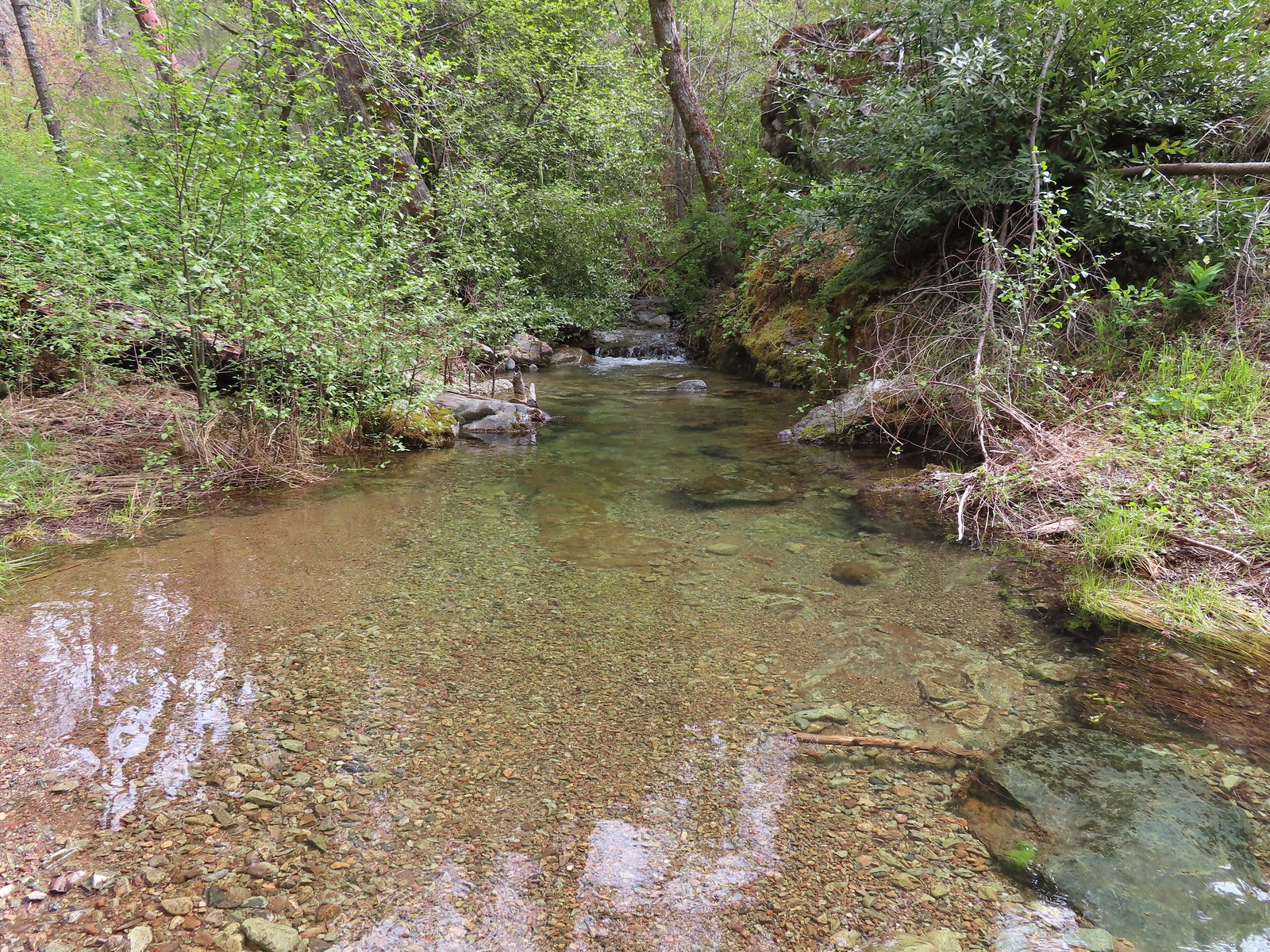 Snailback Creek
We hiked back up to the car and drove another 1.6-miles west on Illinois River Road to the signed Horn Bend Trailhead.
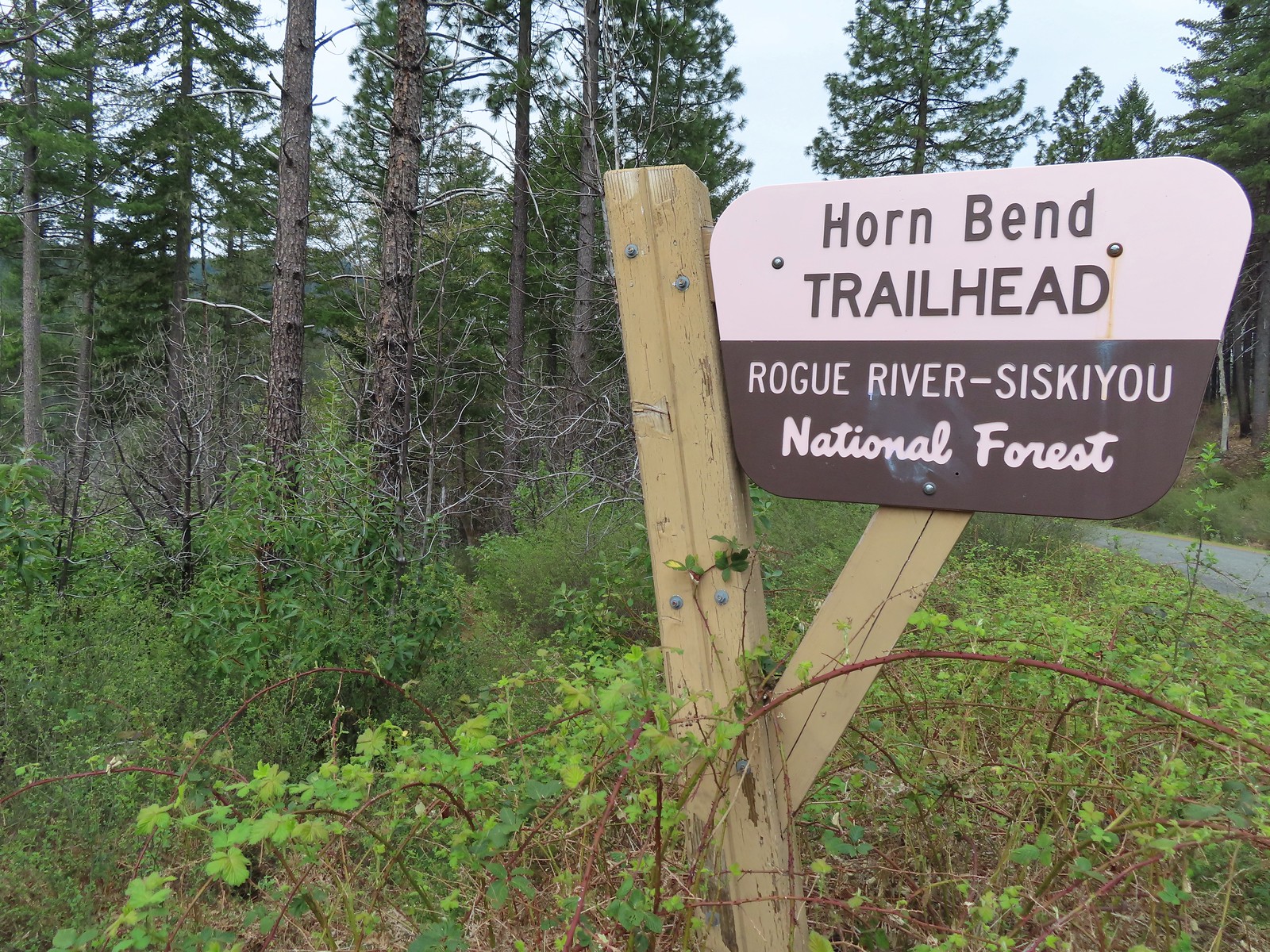 The “trail” is immediately to the left of the sign here. You can make out some of it further back through the bushes.
This trail supposedly follows the road for 0.4-miles before turning downhill on a cat road that leads to the beach. The 2018 fire (this area also burned in 2002) damage was most evident on what was left of this trail. Heather decided not to even bother opting to wait at the car while I attempted to make the 0.7-mile hike down to the river.
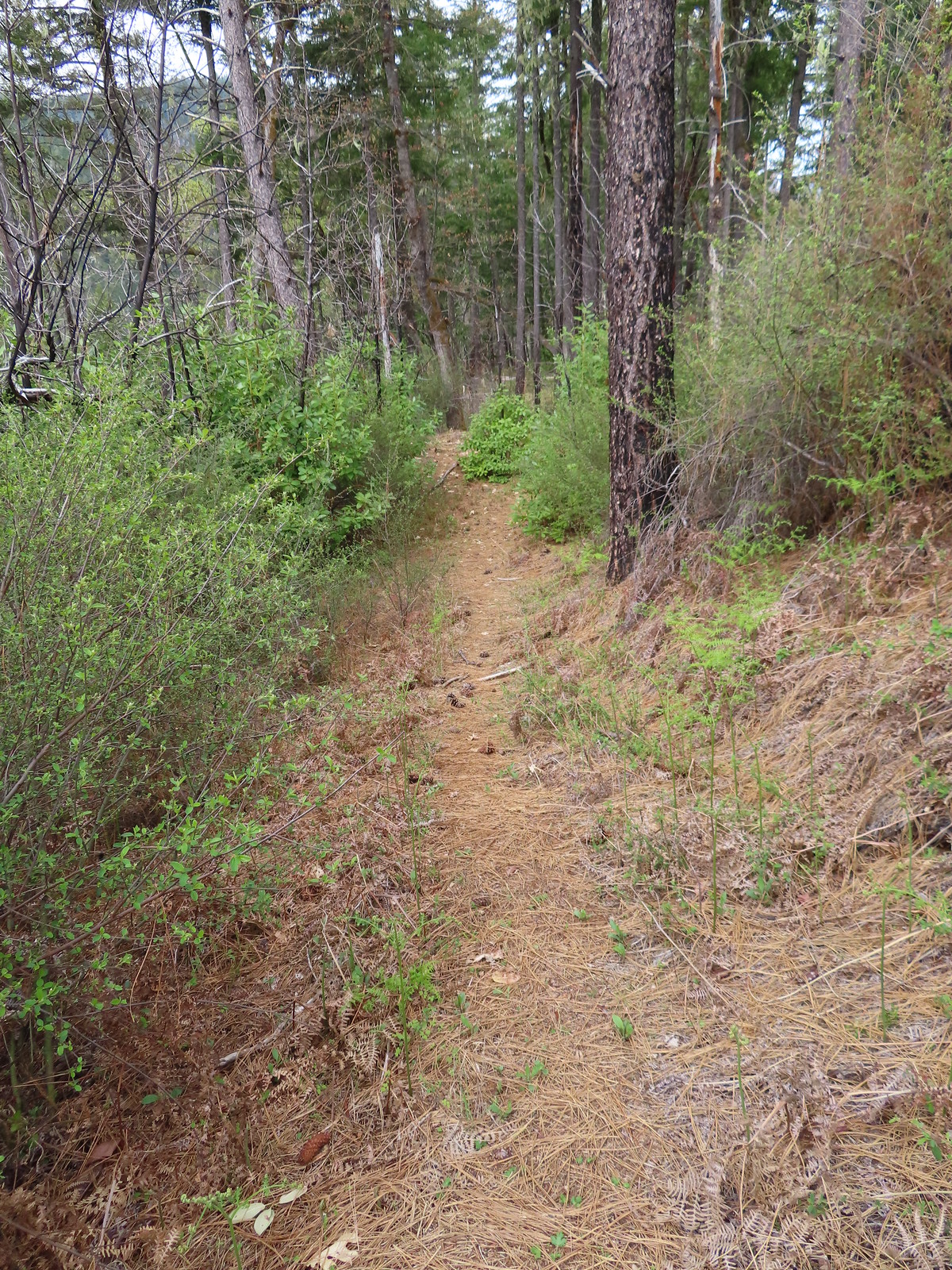 After crashing through the initial brush the trail cleared for a moment.
 The clear trail didn’t last long.
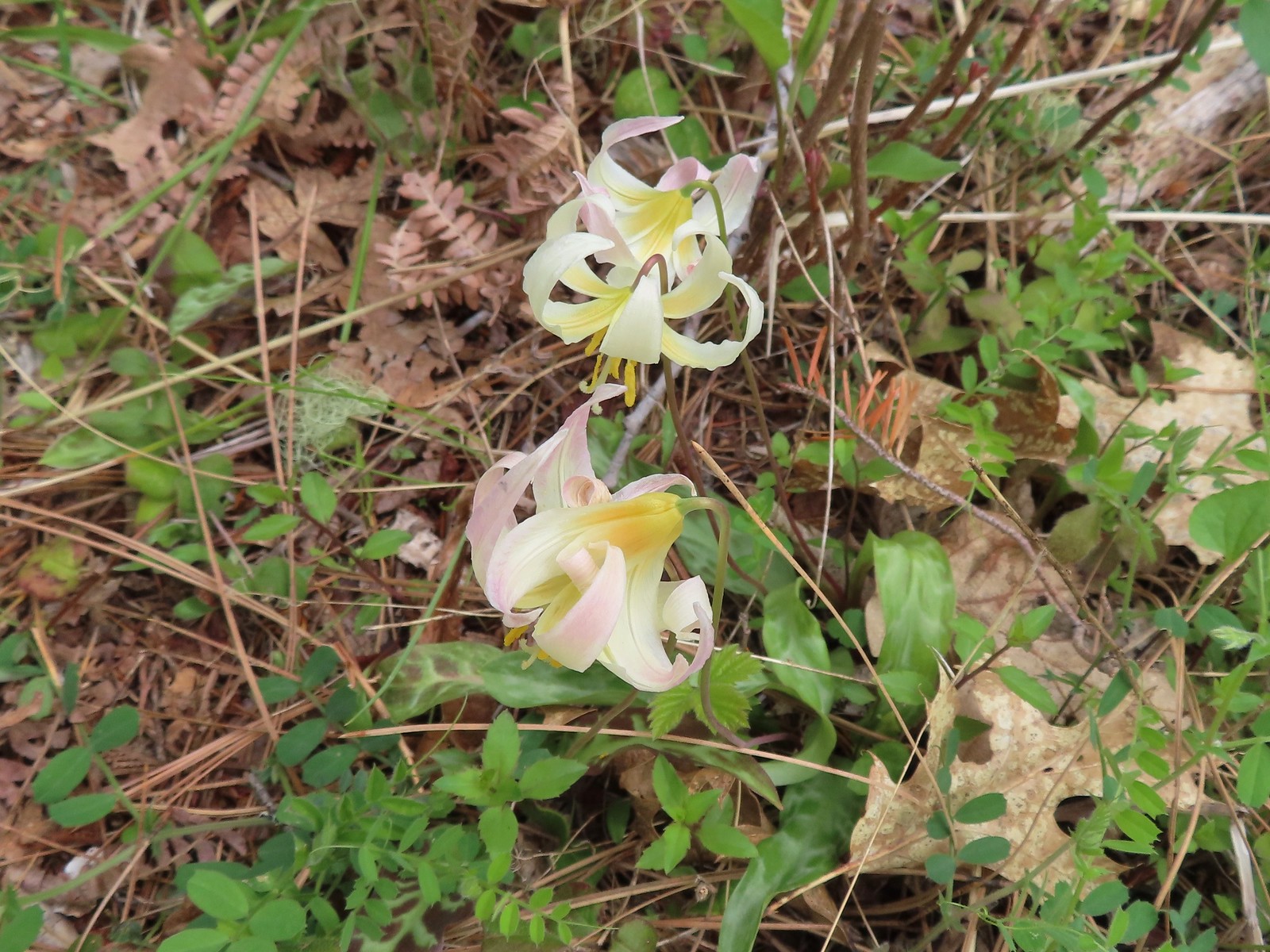 Fawn lilies
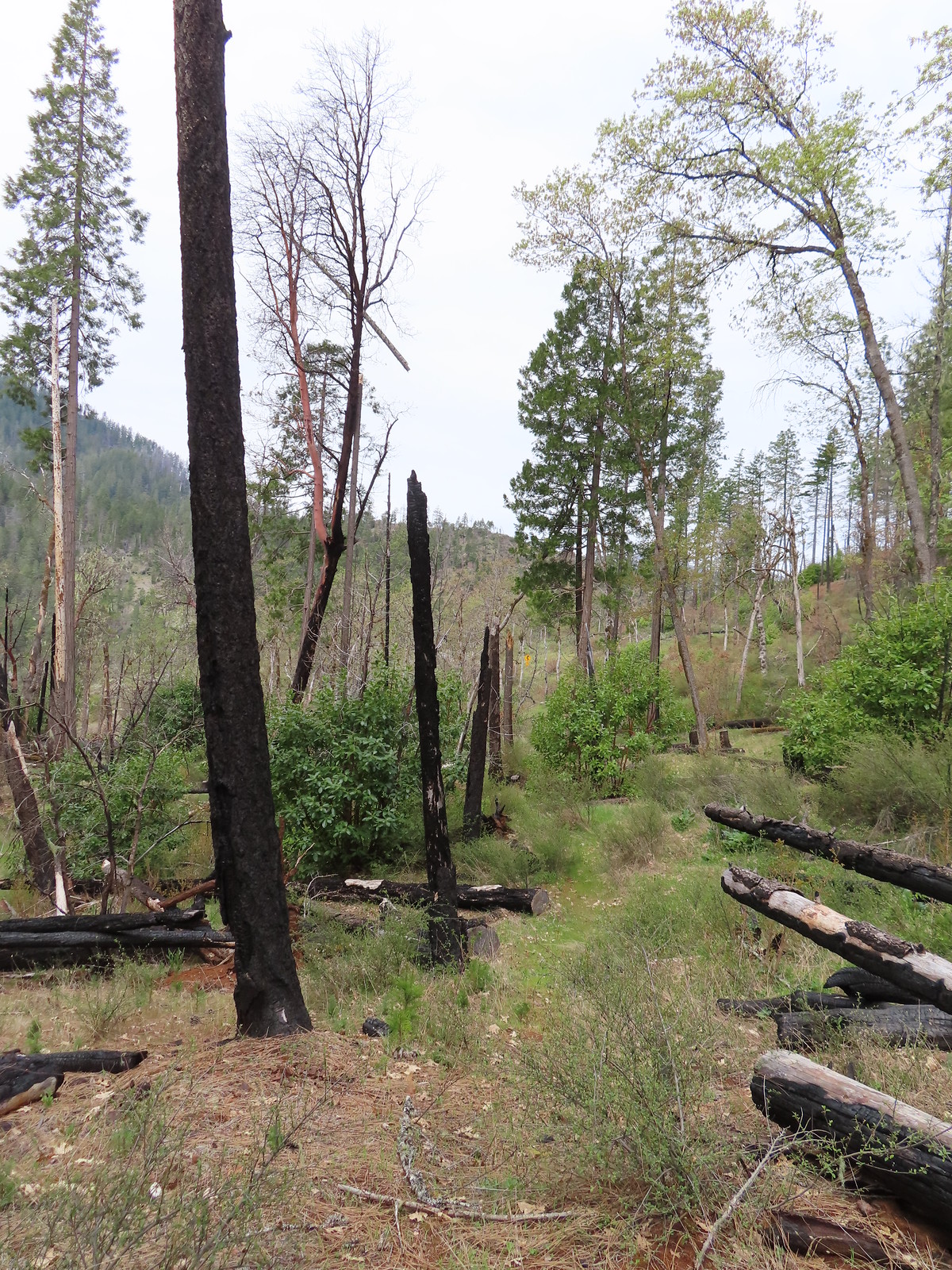 The road sign in the distance was easier to see than the trail here.
Poison oak and downed trees forced me off the tread and after just 0.2-miles I’d lost any sign of it.

I’d also picked up one tick as I wandered through the brush so enough was enough and I found a break in the poison oak where I could hop onto the road and followed the shoulder back to Heather and the car.
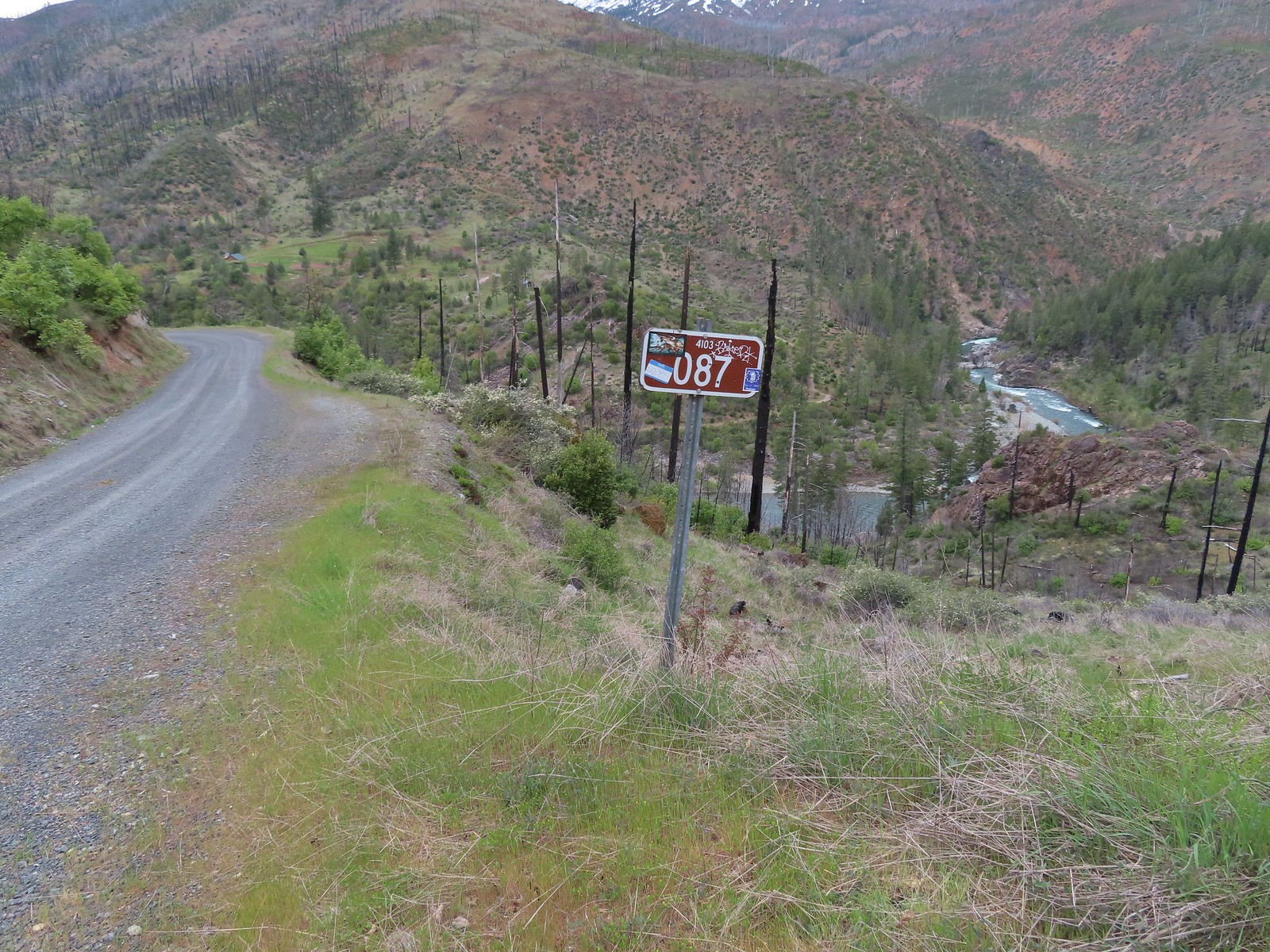
We had one stop left from the featured hike description, the Swinging Bridge which we knew was closed. While the bridge was closed Forest Road 087 was not and it led down to the river past the bridge so we had decided to road walk down and at least see the bridge. From the Horn Bend Trailhead we drove another 4.2-miles and parked at a pullout at Road 087.
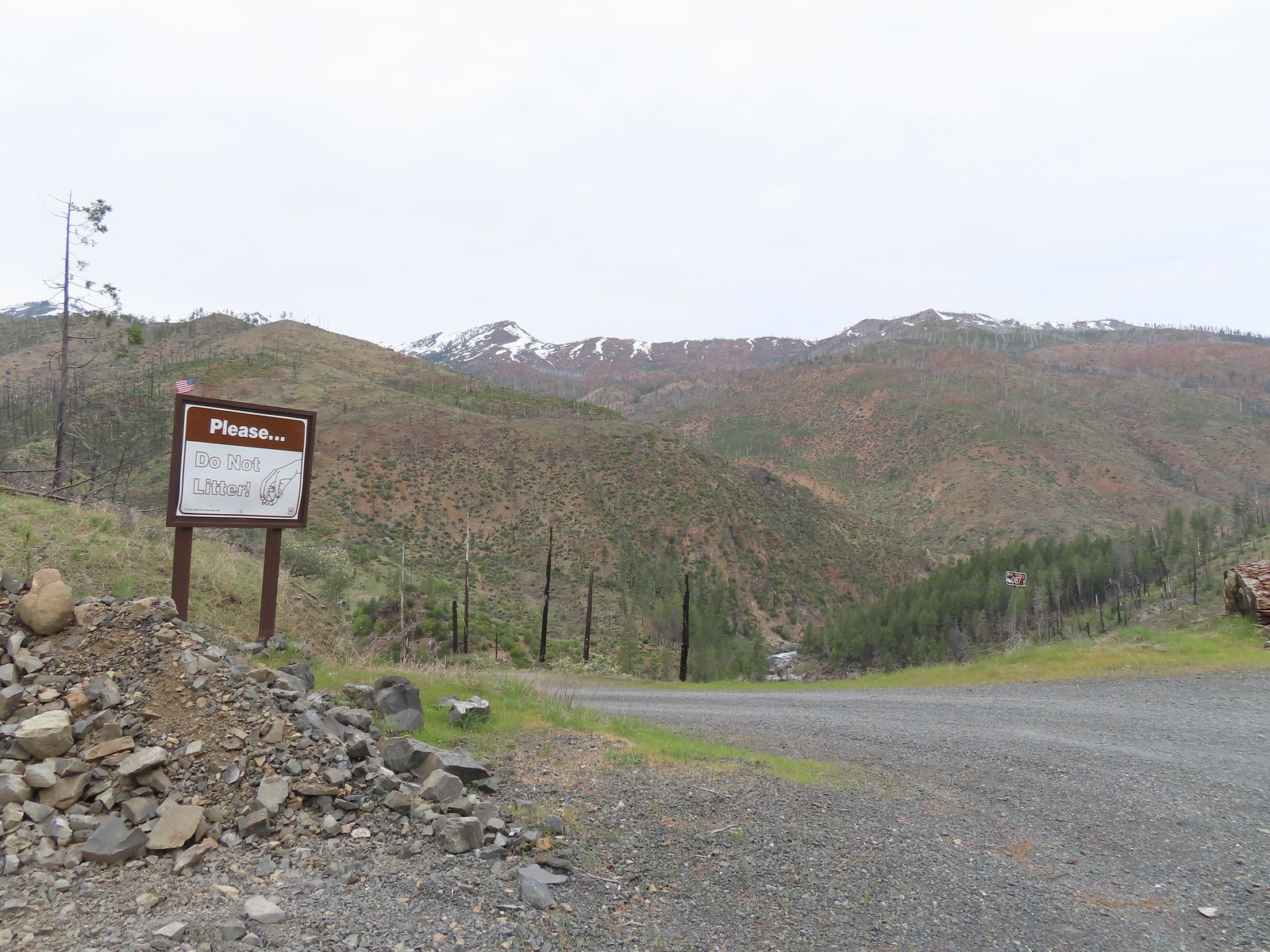
We hiked down the gravel road a half mile, passing the Fall Creek Trailhead along the way, to the bridge.
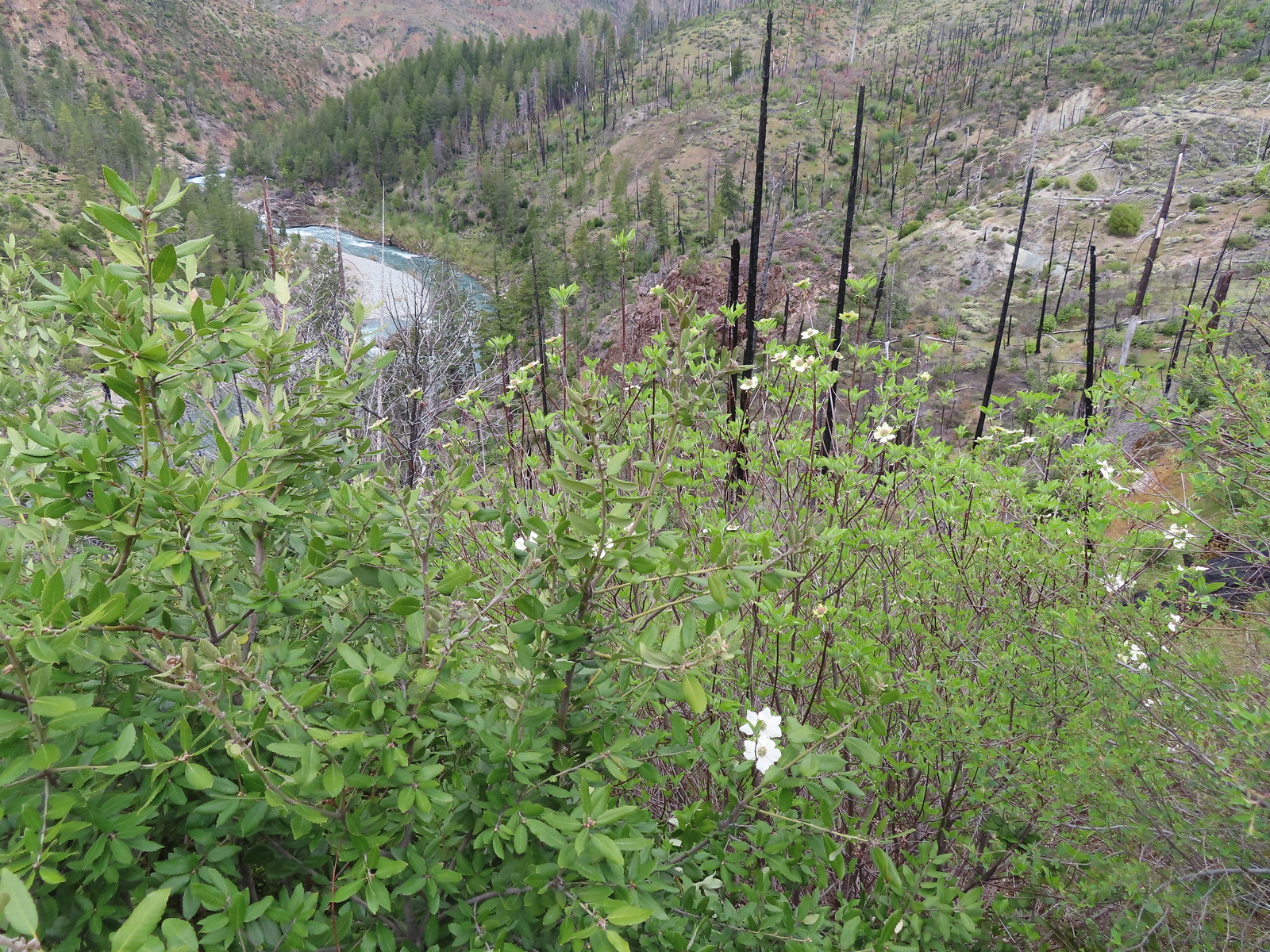 Dogwood blossoms
 The Fall Creek Trailhead to the left.
 The car bridge across the Illinois River to McCaleb Ranch. Technically we could have continued down to that bridge and crossed on it then turned left onto the Fall Creek Trail for a half mile to Illinois River Falls, but the closure order posted at the Fall Creek Trailhead was unclear. It stated that it was illegal to be “on a trail” not just on the suspension bridge itself. The Forest Service webpage seems to indicate that it is only the bridge that is closed until repaired. Either way we were just happy to see the bridge as that was the turnaround in Sullivan’s description.
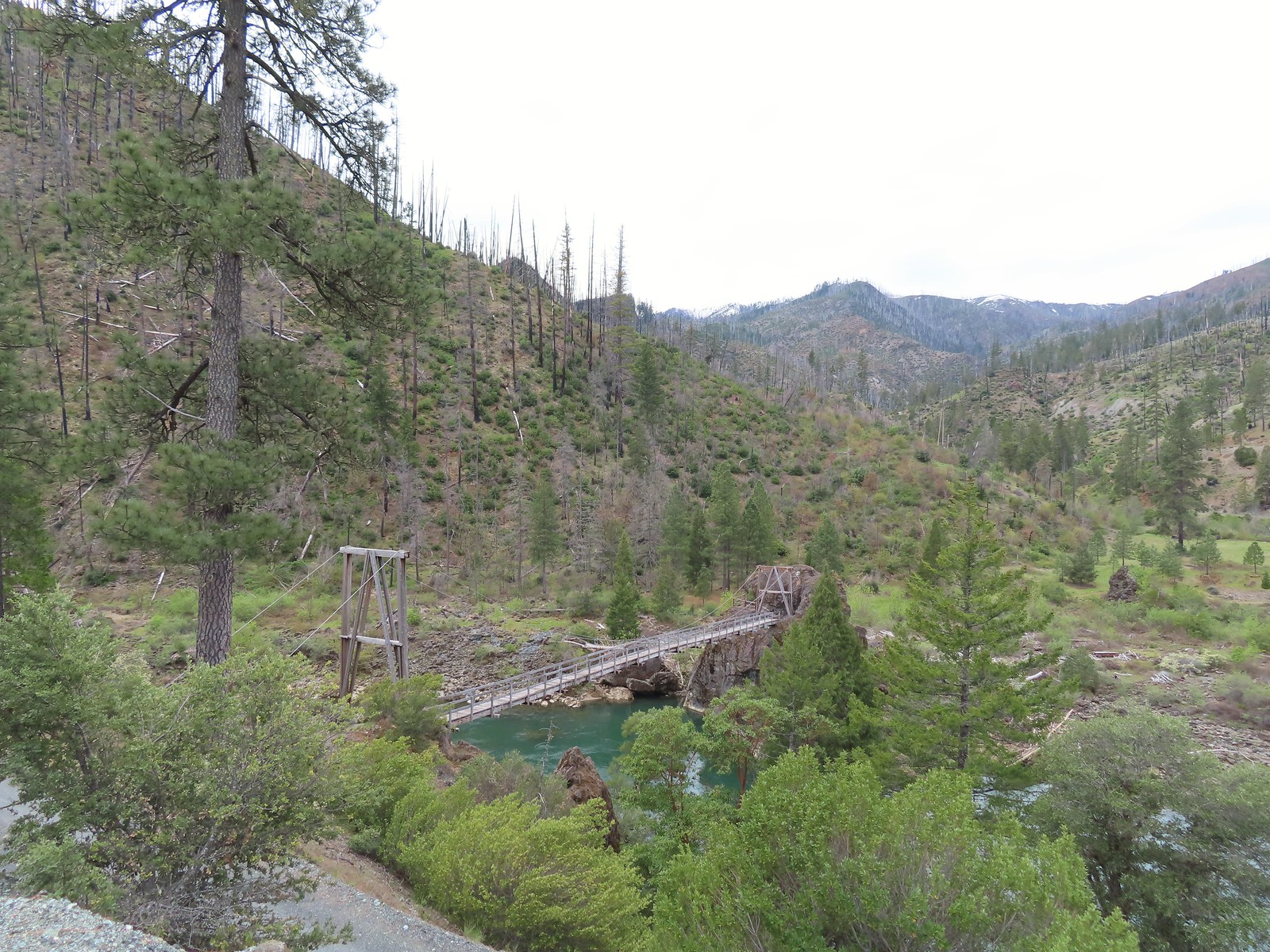
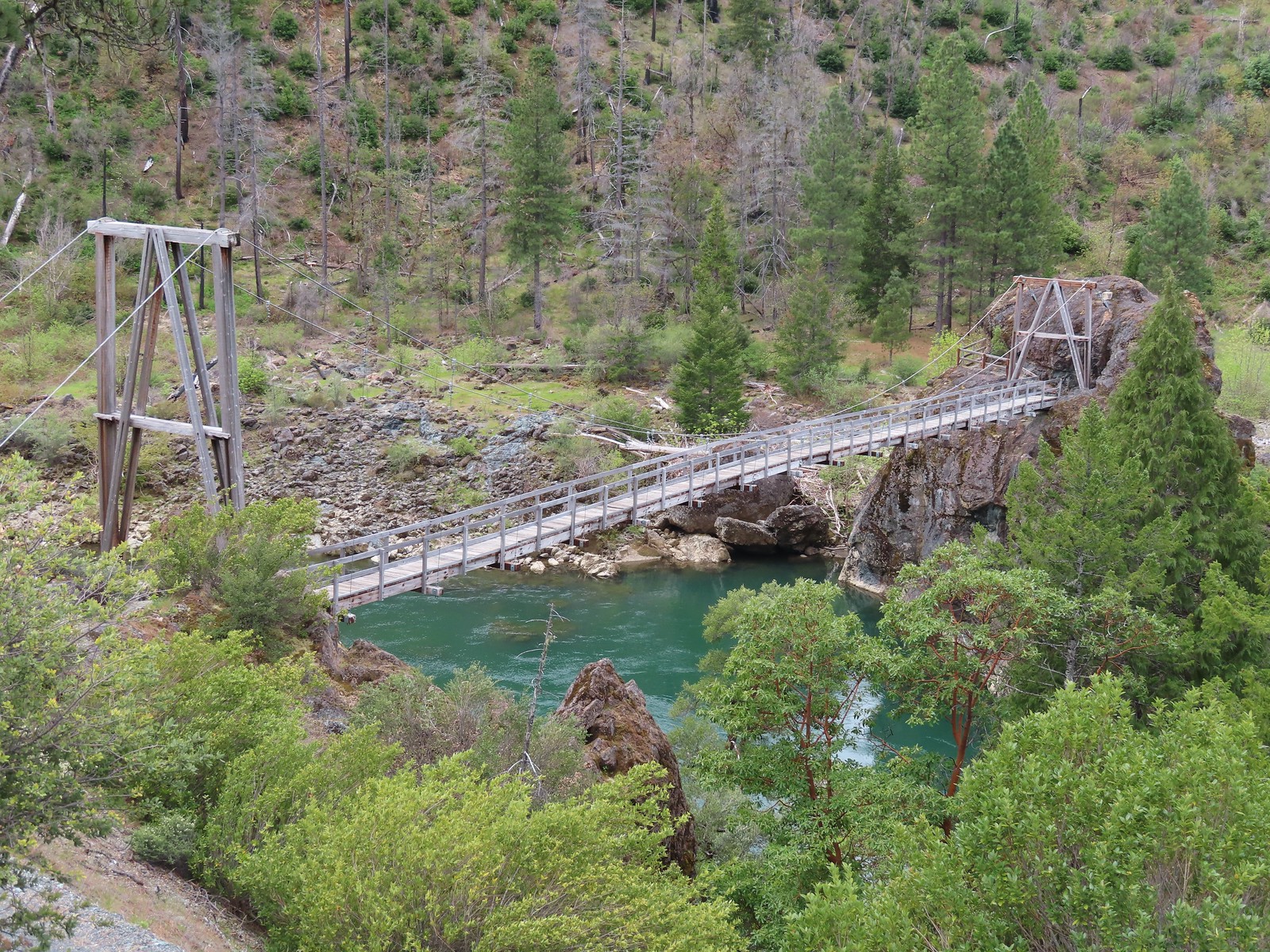
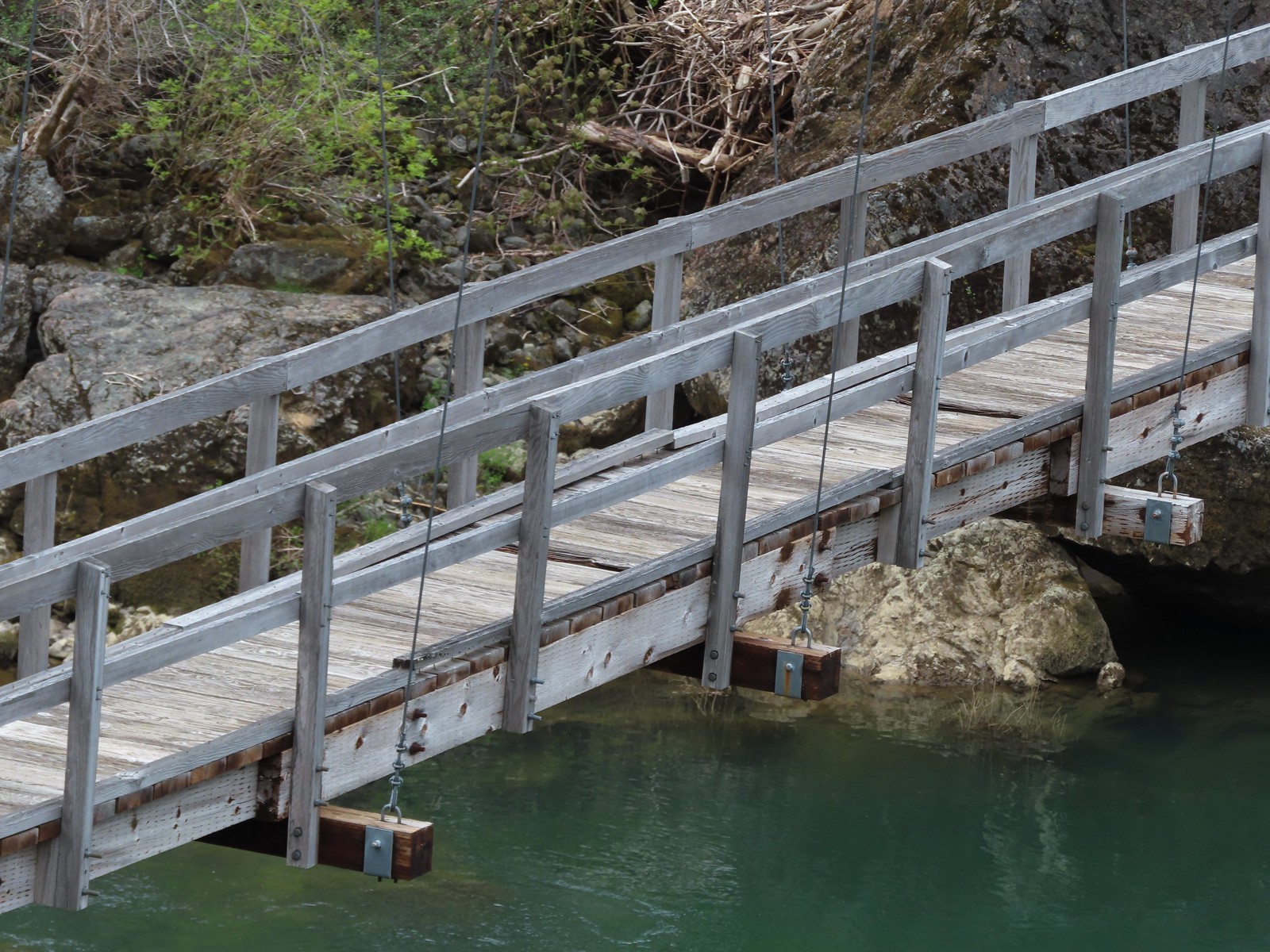 Assuming these are some of the needed repairs.

We climbed back up to our car and started back toward Highway 199. At some point earlier between trailheads I had come up with an idea to try an alternate way to reach Star and Kerby Flats. Sullivan’s map showed a roadbed off of Illinois River Road 0.7-miles east of the Kerby Flat Trailhead that led past Star Flat to a ford of Deer Creek. I remembered seeing the road on the way to the Kerby Flat Trailhead so we decided to try parking on the shoulder and seeing if the road was a better option. When we arrived there was another vehicle parked there which gave us some hope.
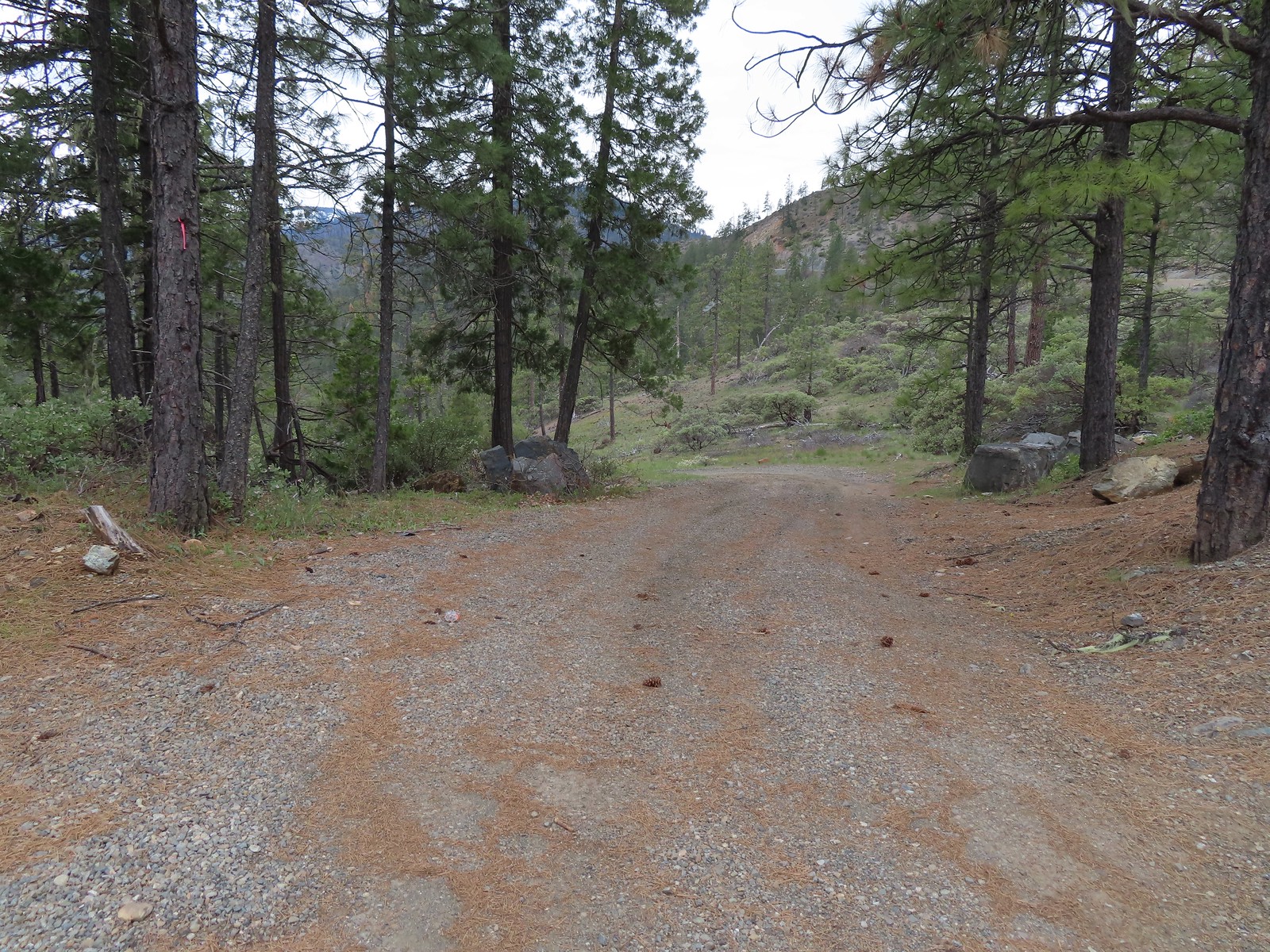 The start of the road which the map lists as Forest Road 011.
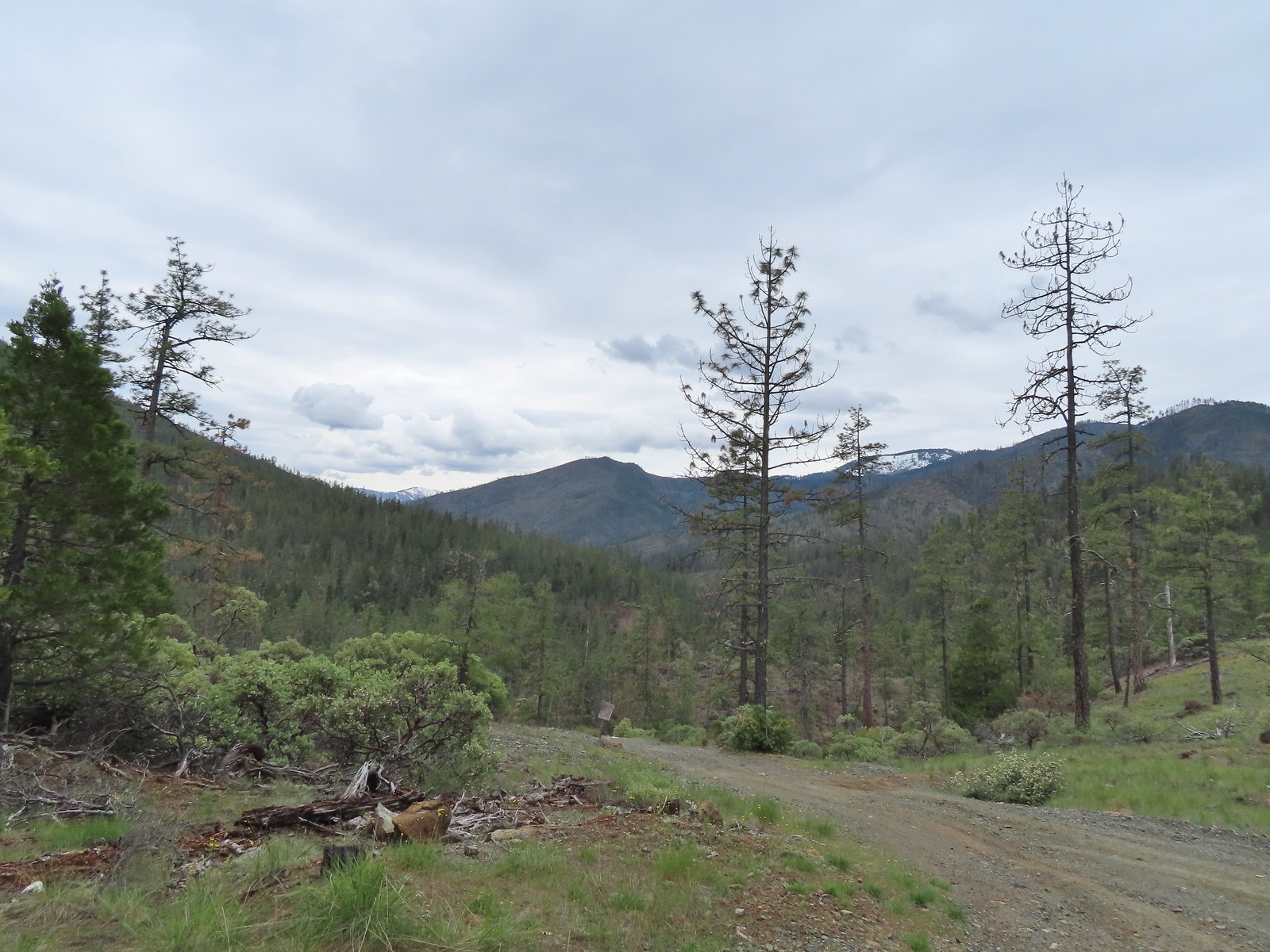
As we started down this dirt road we passed the group from the other vehicle on their way back. They were locals who apparently hike this road regularly. They had been to the ford and said that the flowers were good and they also mentioned that there was a car in Deer Creek at the ford. They said it hadn’t been there the week before but that there had been a different car there in the past that had finally washed away. Now a new one had taken its place. We thanked them for the information and continued downhill.
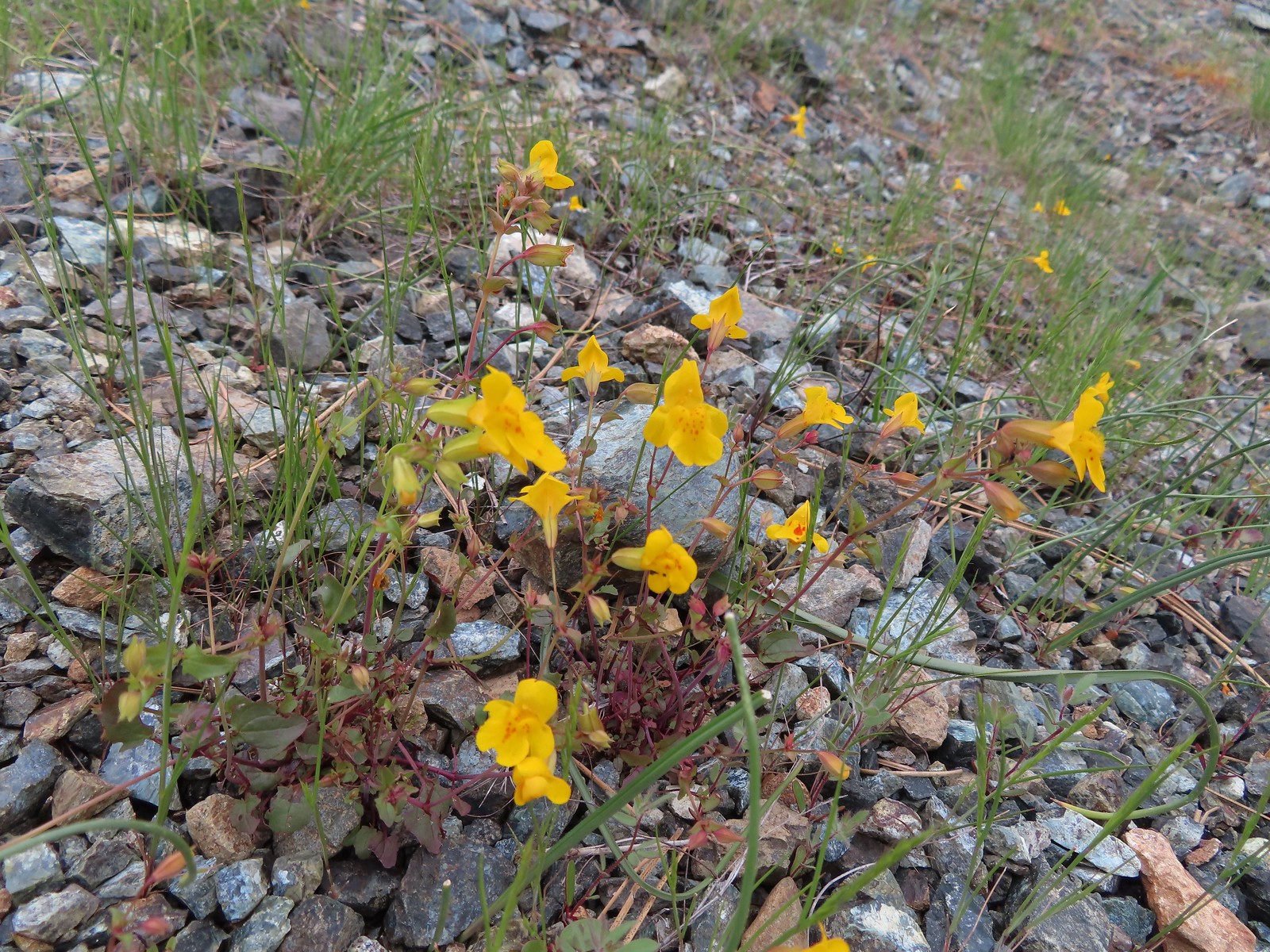 Monkeyflower
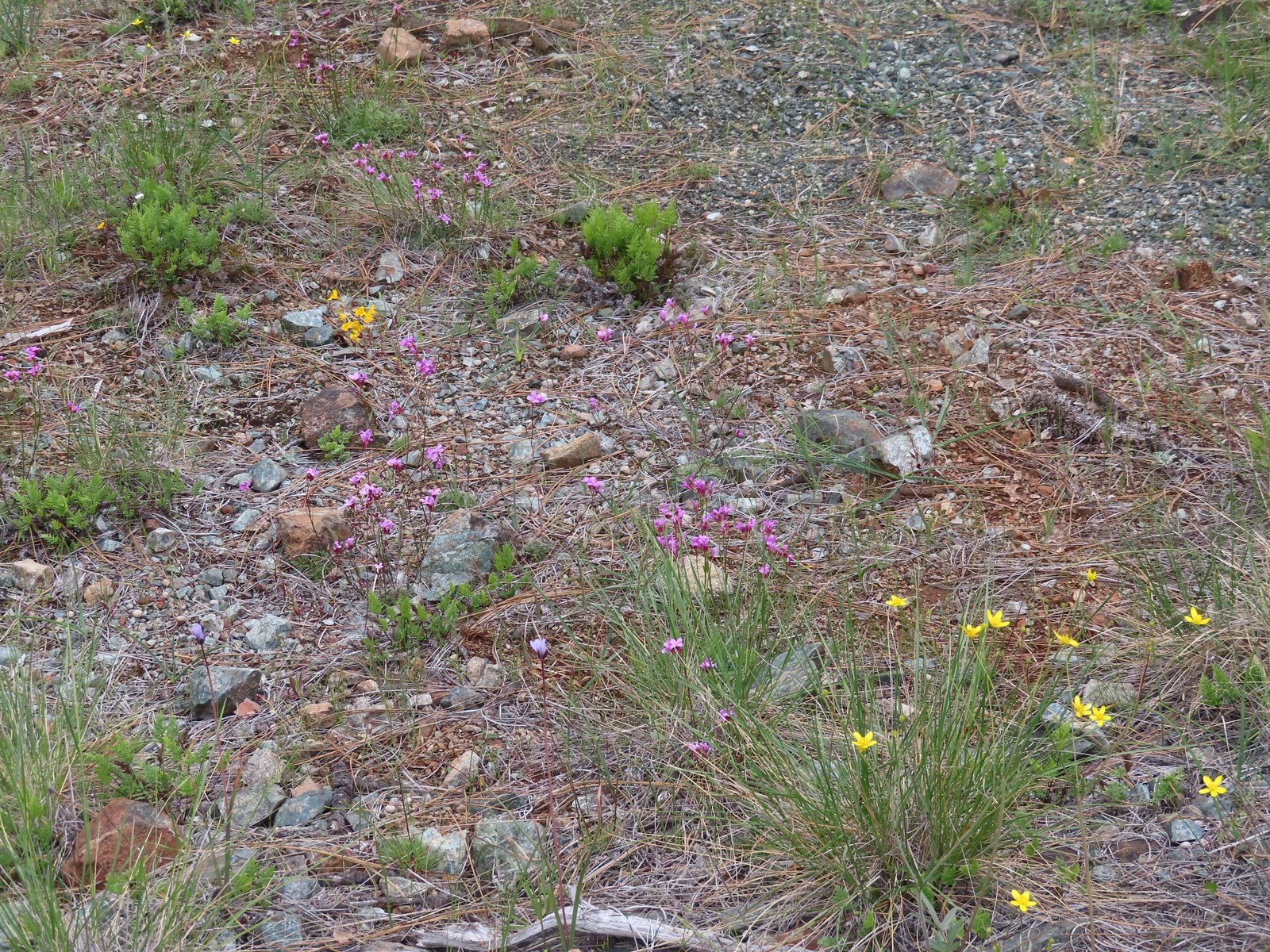 Oregon rockcress and buttercups
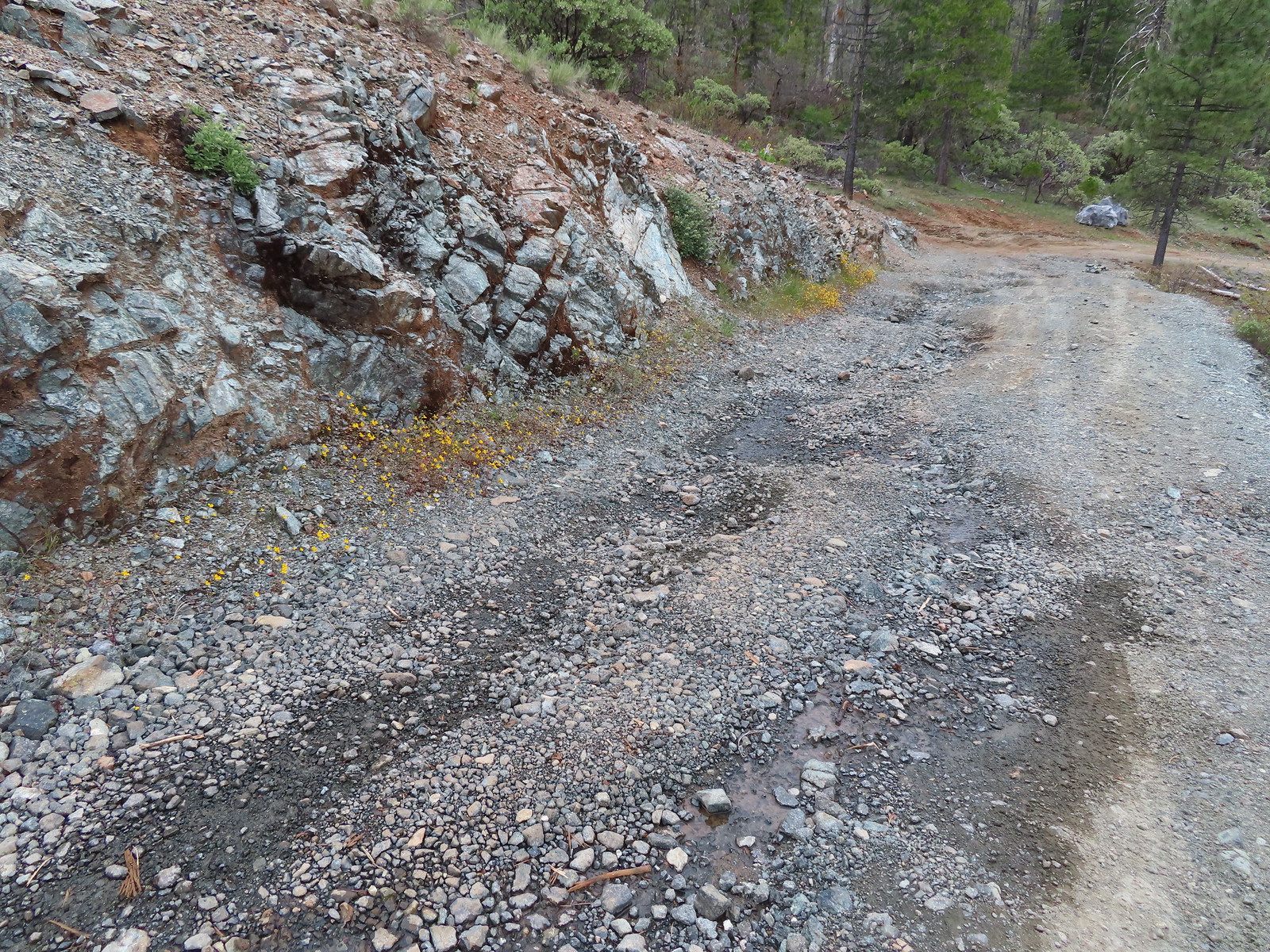
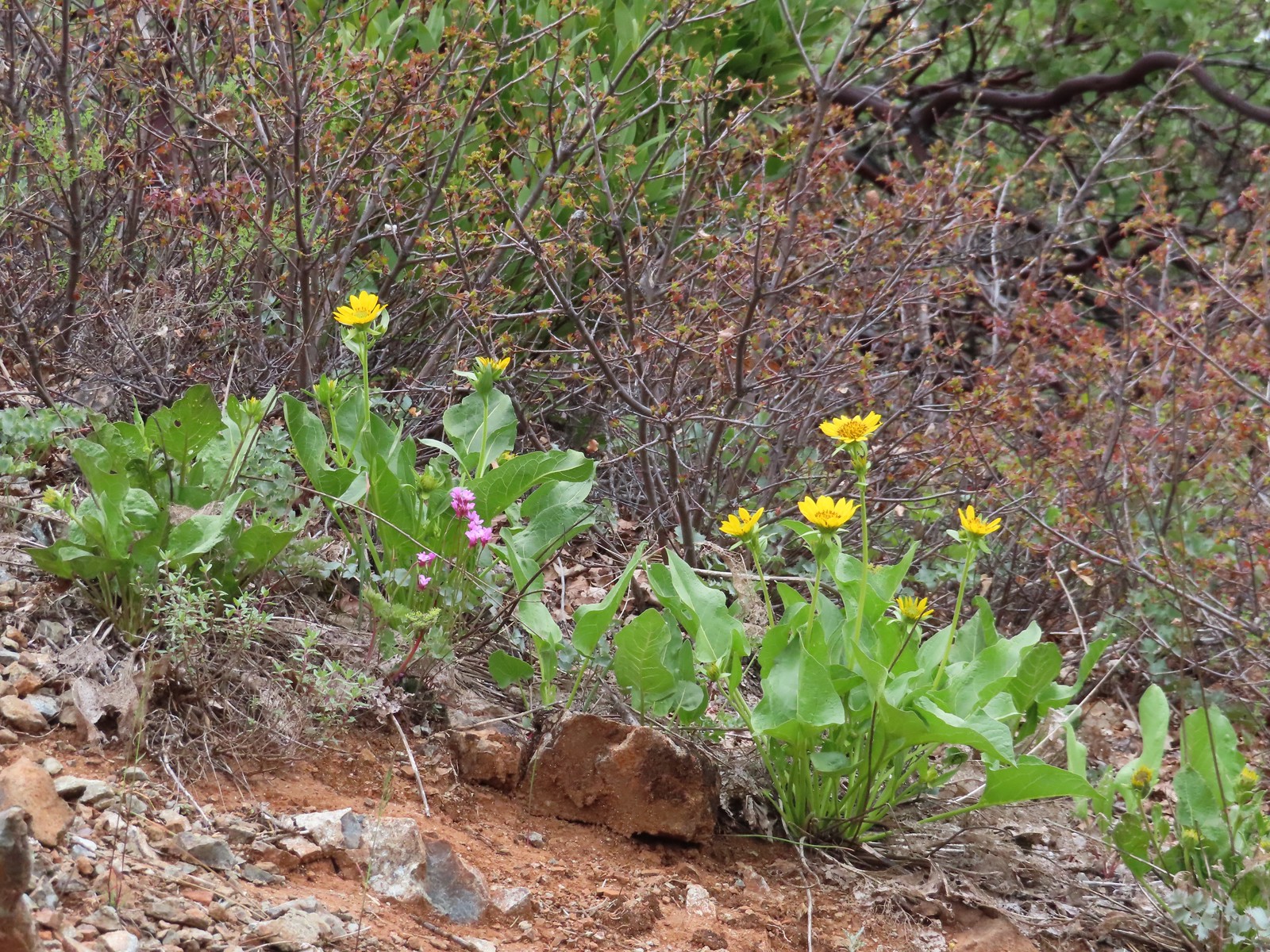 Balsamroot and Oregon rockcress
 Alpine? pennycress. There was a lot of this along the road, the first we’d seen of it this trip.
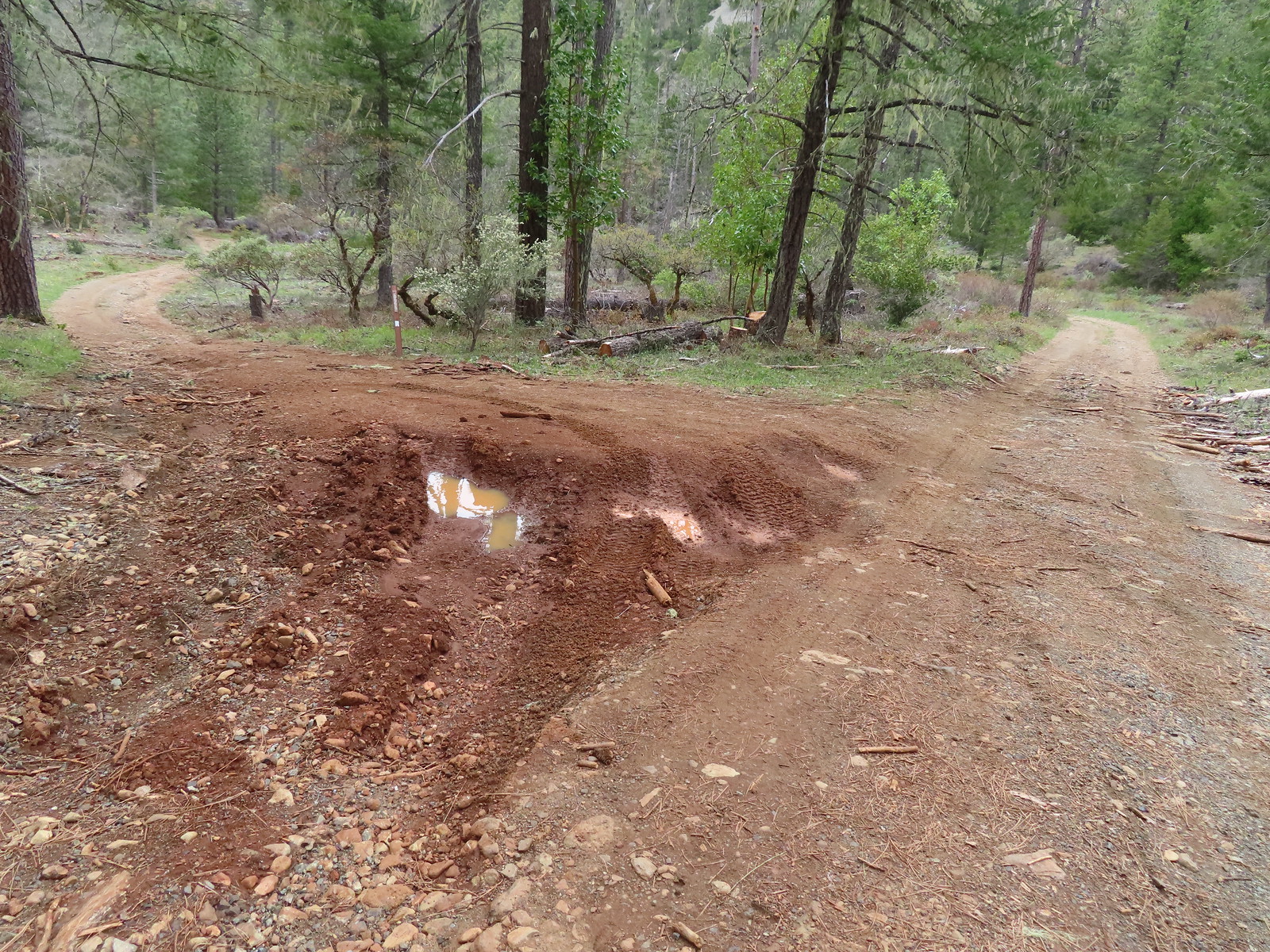 Star Flat. It was obvious from the tire marks which extended into the vegetation in places that yahoos like to come here and tear things up (sigh).
 Duskywing
 There was a fence around the bog at Star Flat which hosts more California darlingtonia.
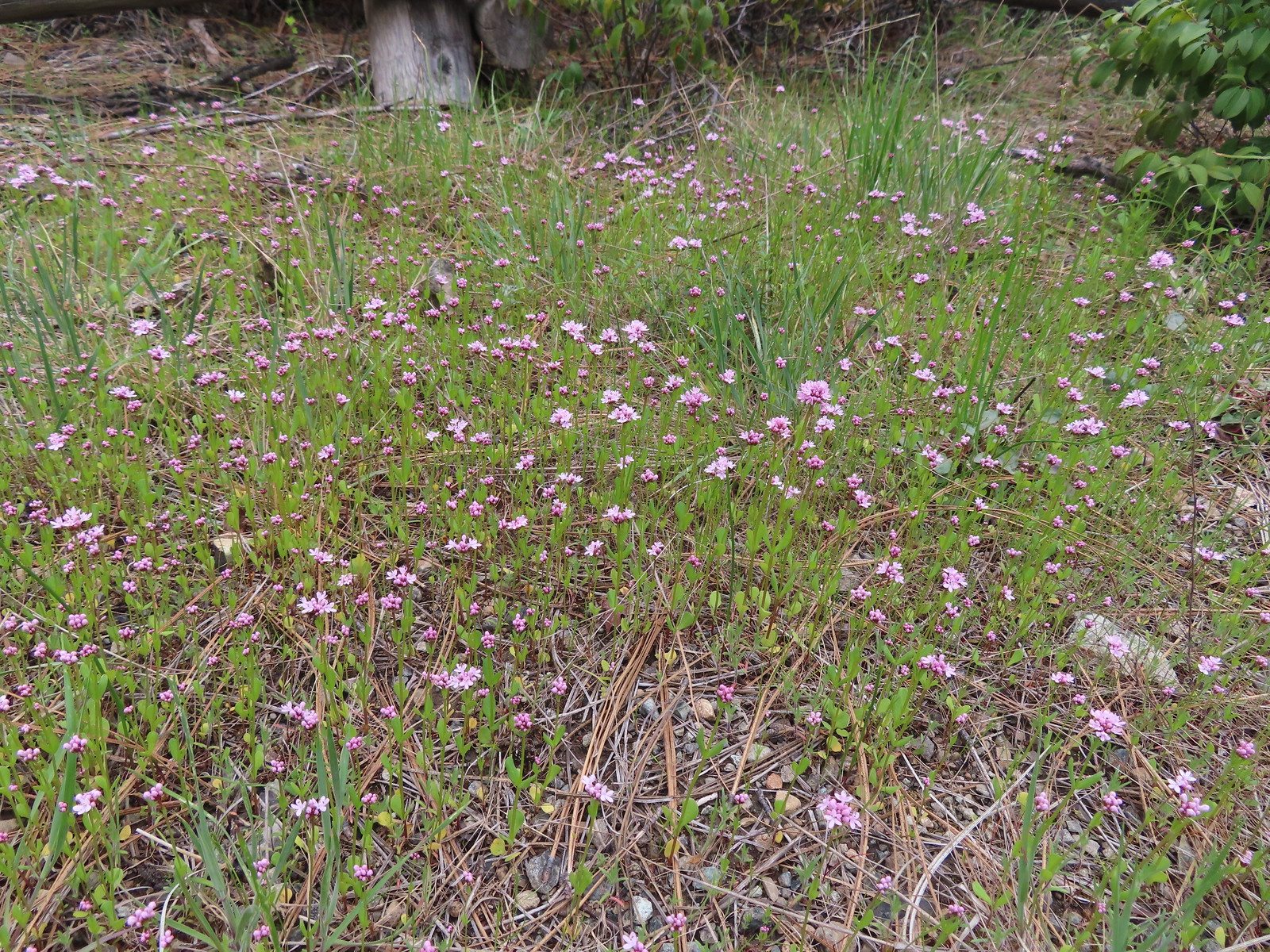 Plectritis
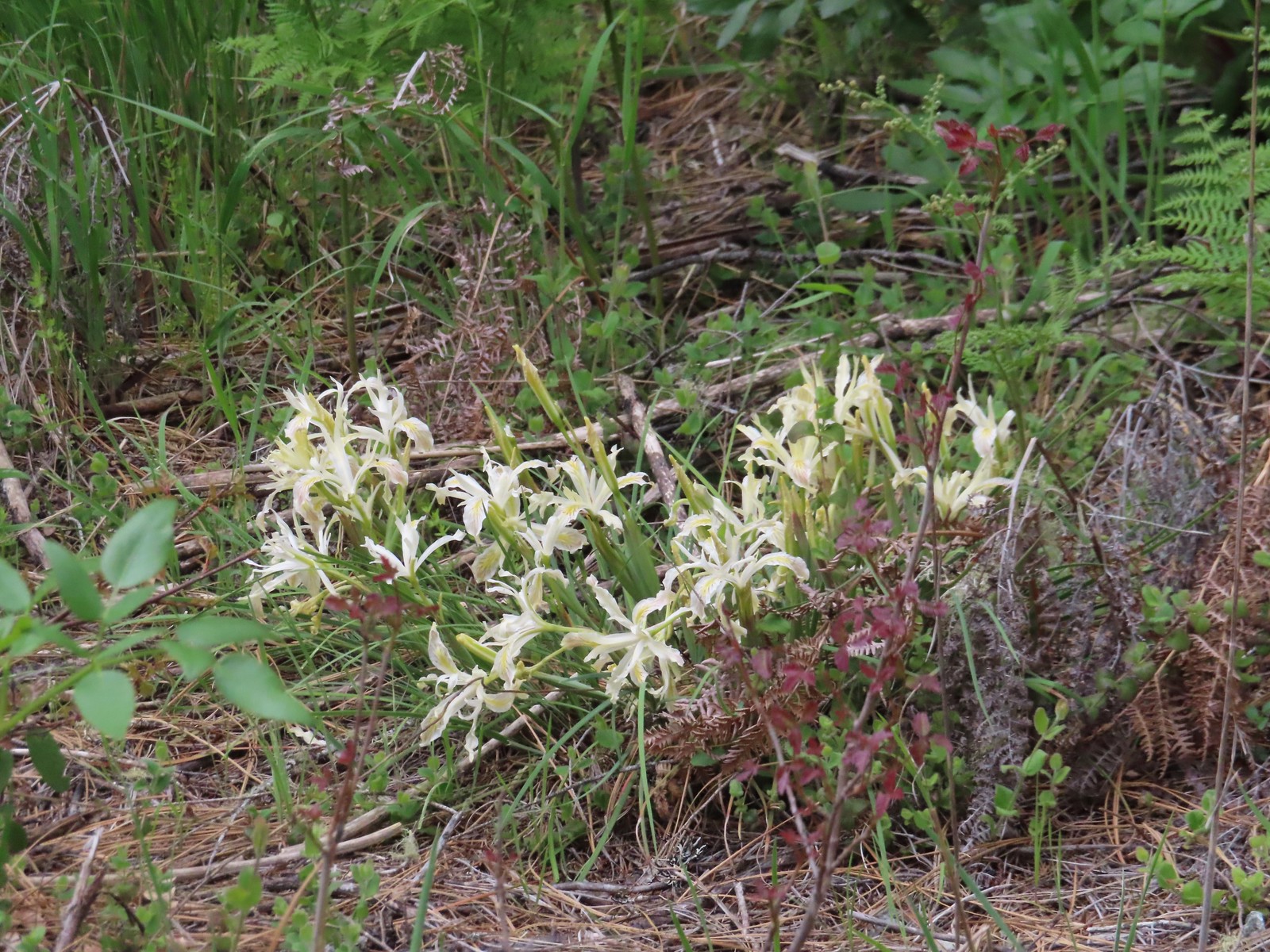 Iris
Iris
 Darlingtonia
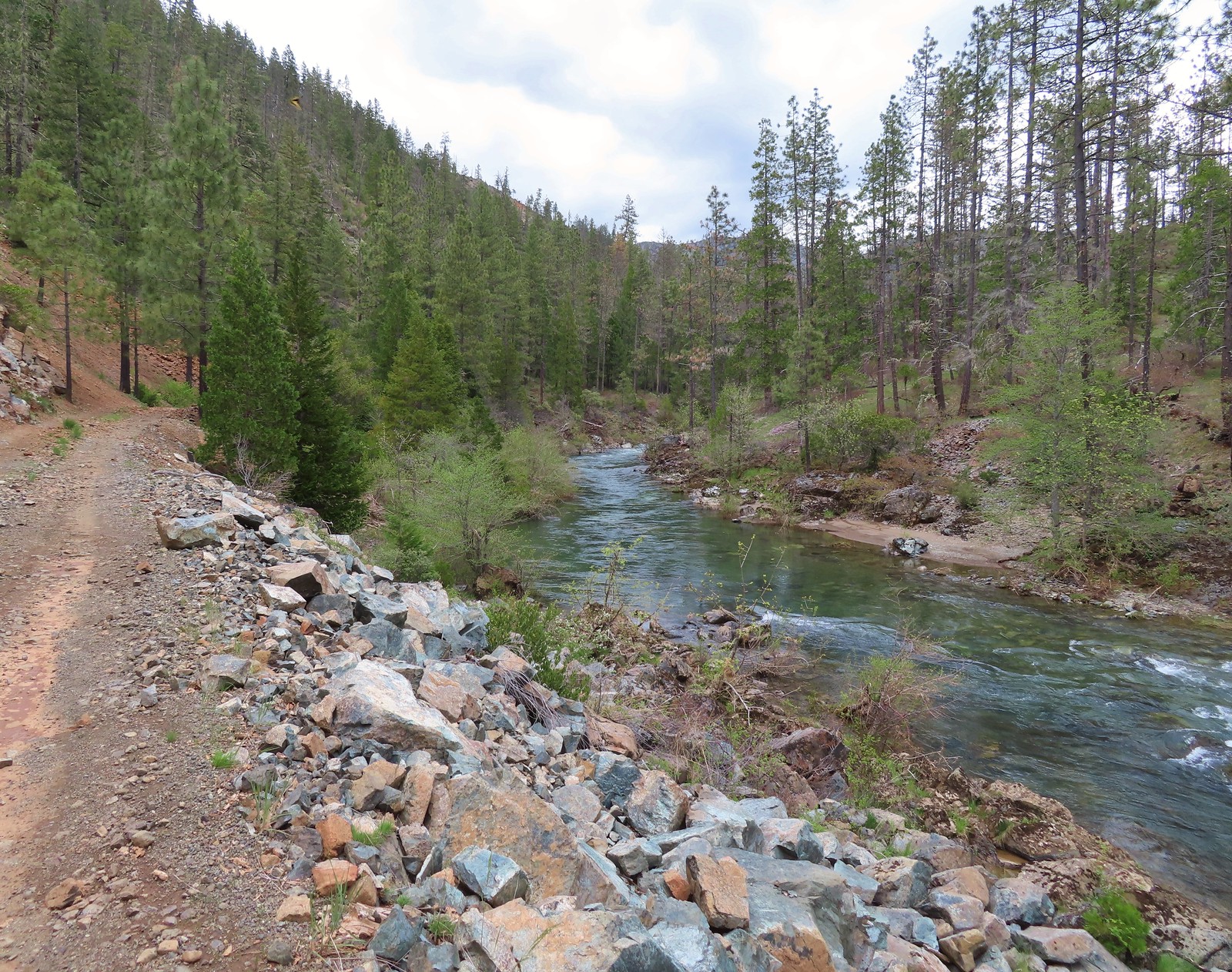 Deer Creek
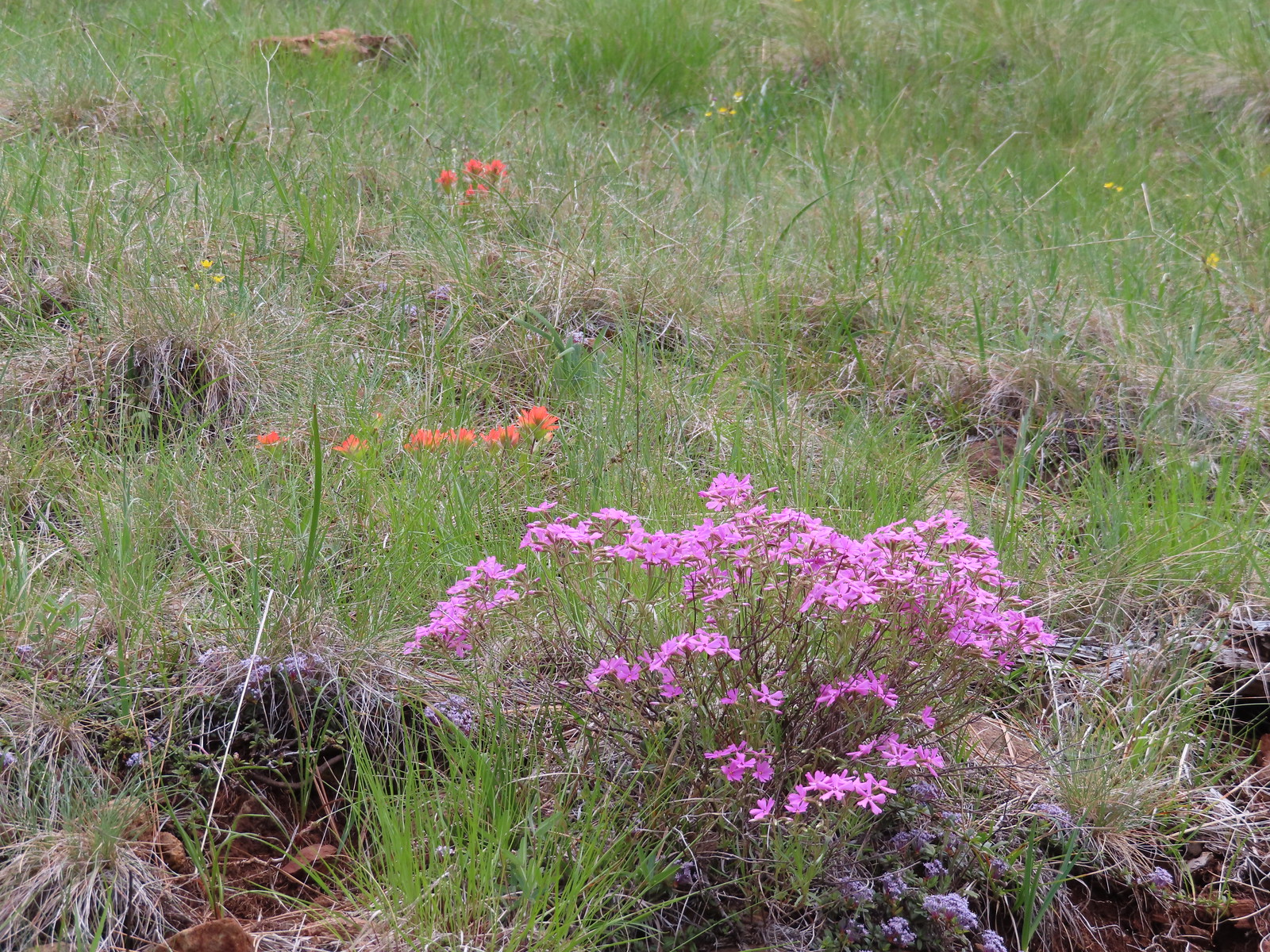 Showy phlox and paintbrush
Just over a mile on the road we passed the rocky trail that we would have taken back up to the Kerby Flat Trailhead had we made it down from there.

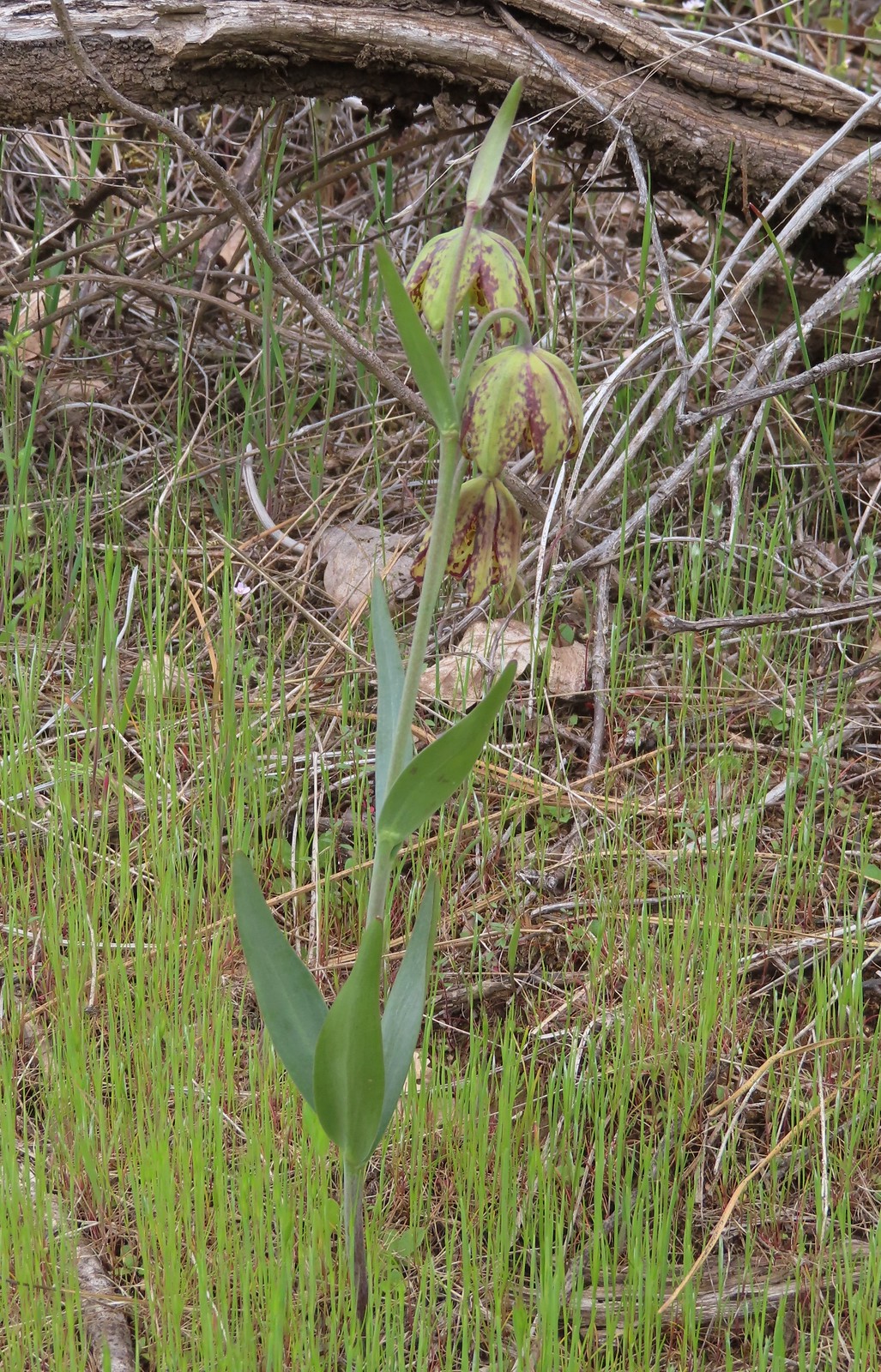 Checker lily
Just before the ford we passed an old car with kids toys on it. Not pictured is the tower of Coors Light cans that was just off to the left.

Just as advertised there was indeed a car abandoned in the ford.
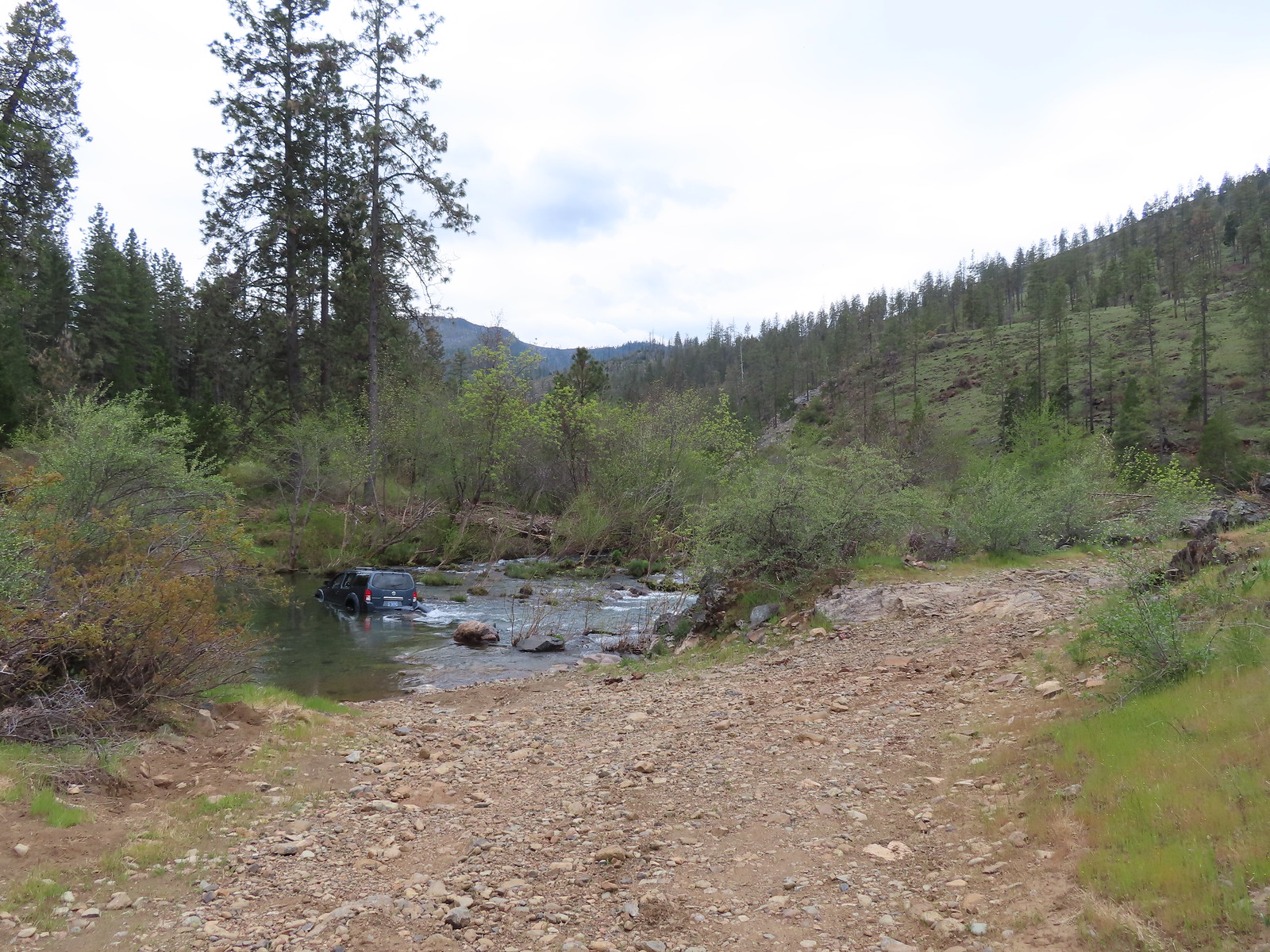
We assume it was a stolen vehicle (or someone was really drunk/high). From the amount of garbage and fire pits in the area it was clear that people drive down here to party and do stupid stuff. Truly unfortunate because the beach at the confluence of Deer Creek and the Illinois River could have been really nice but the general feeling all the trash gave off made it uncomfortable.
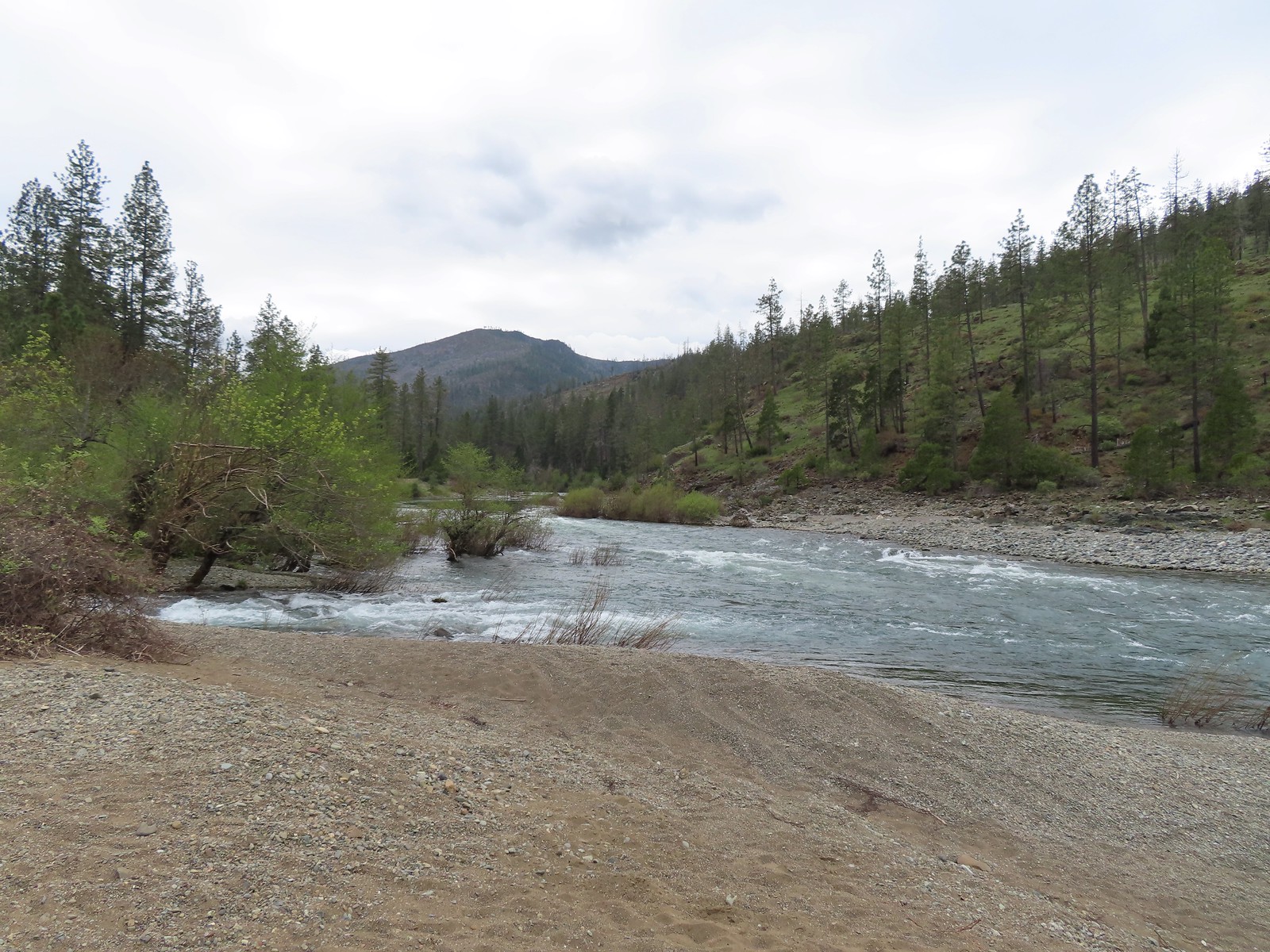

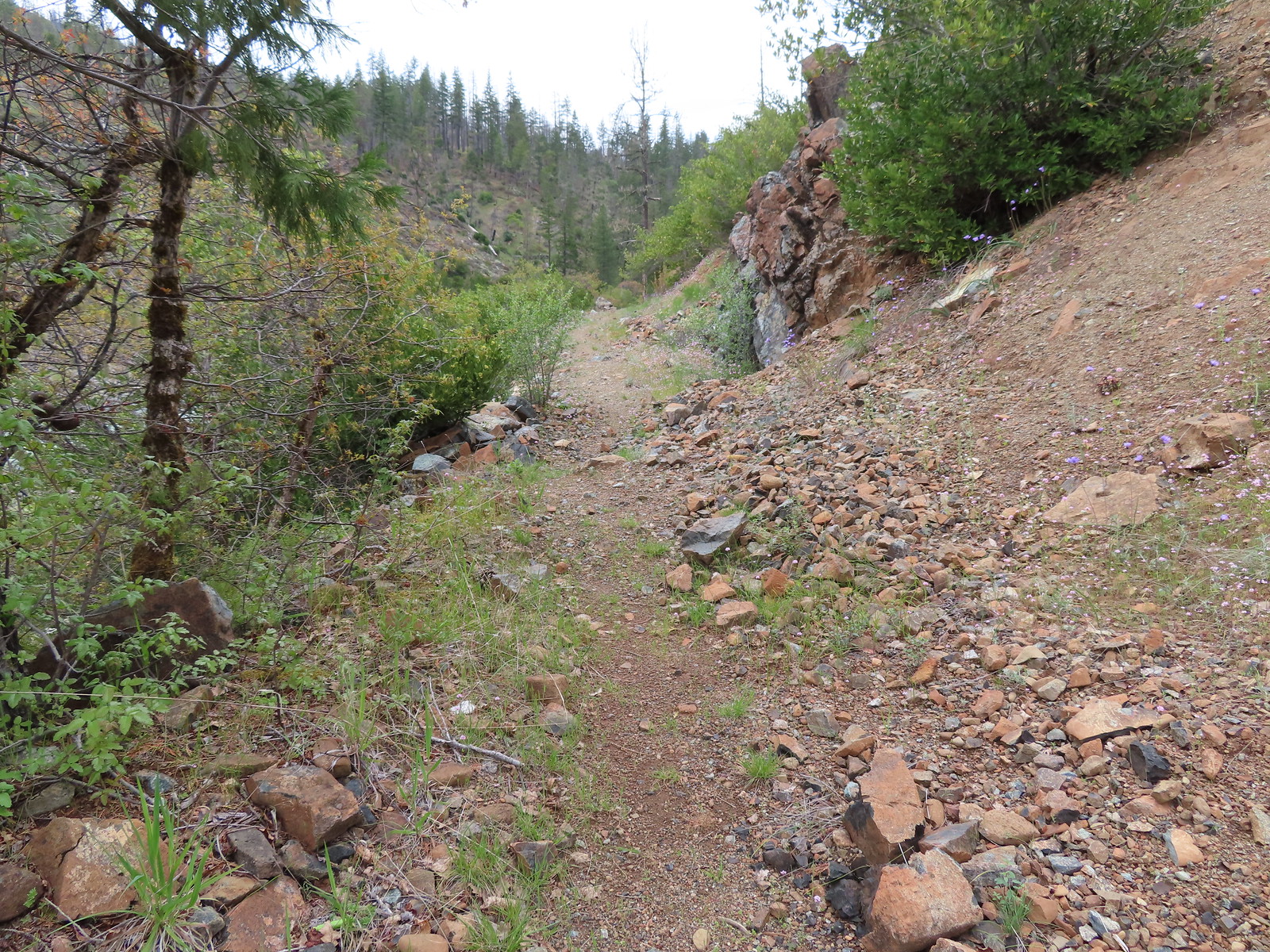
We continued past the beach following the trail toward Kerby Flat.
 Hairy pink

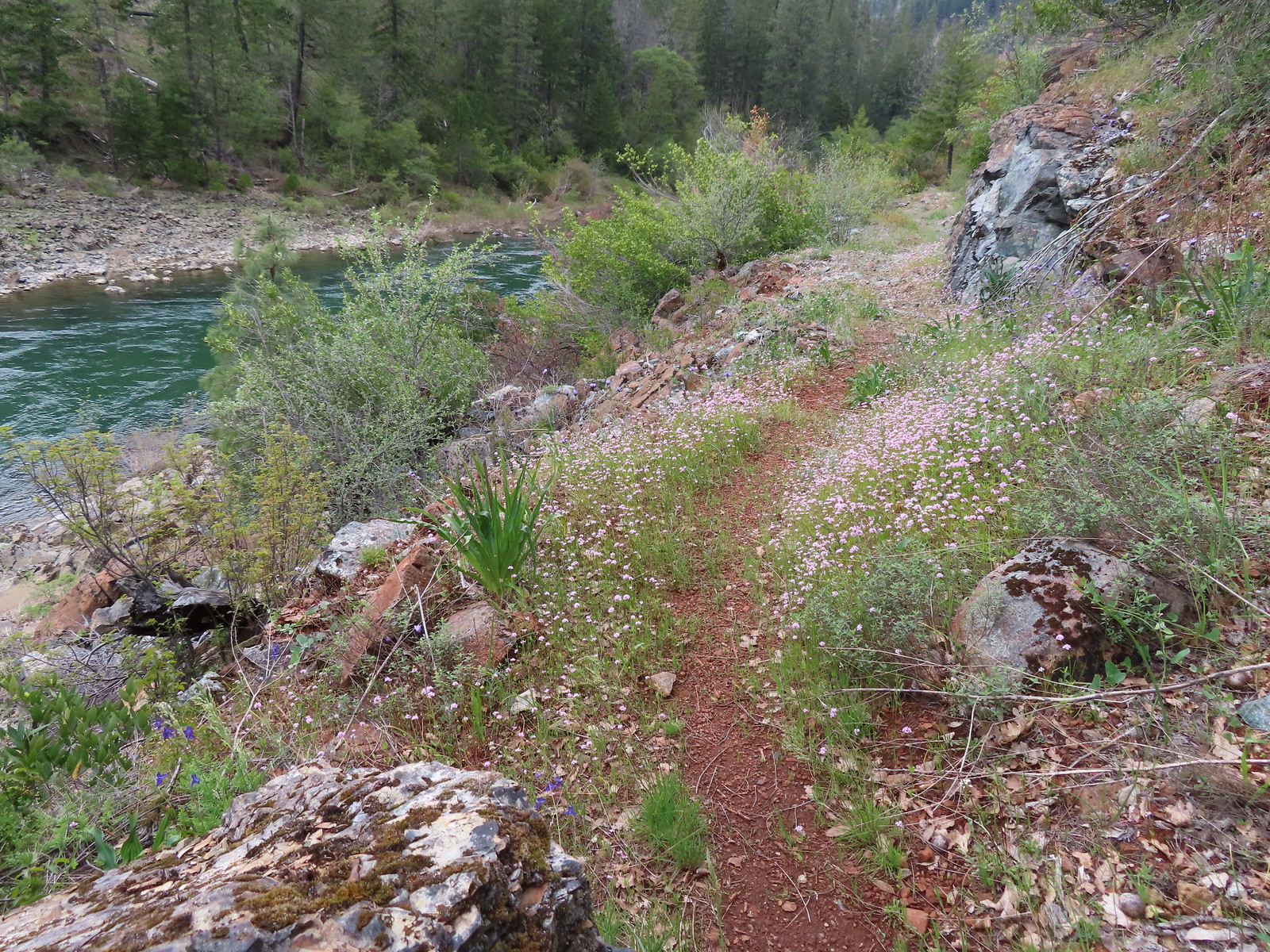 Plectritis along the trail.
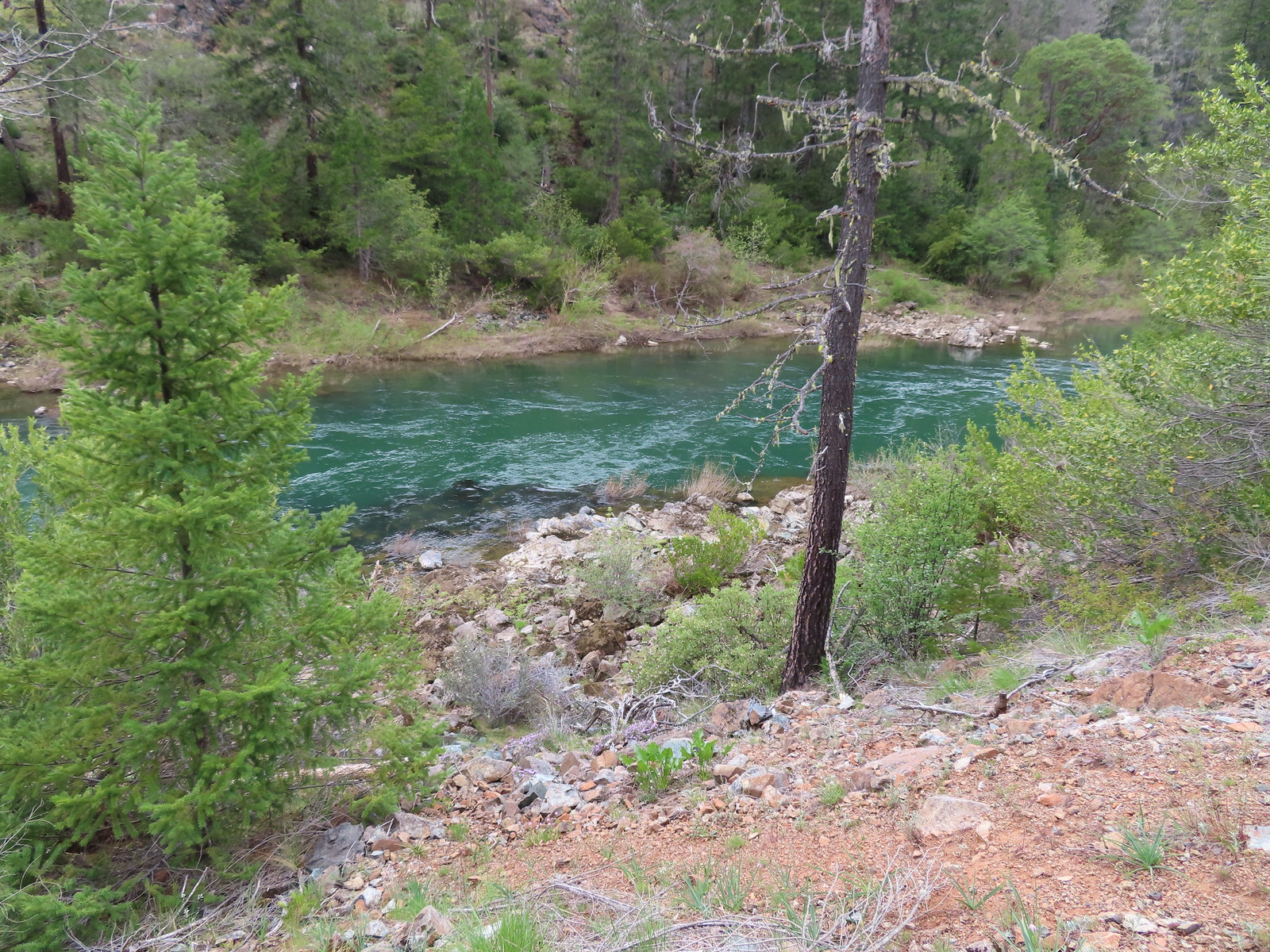 Illinois River
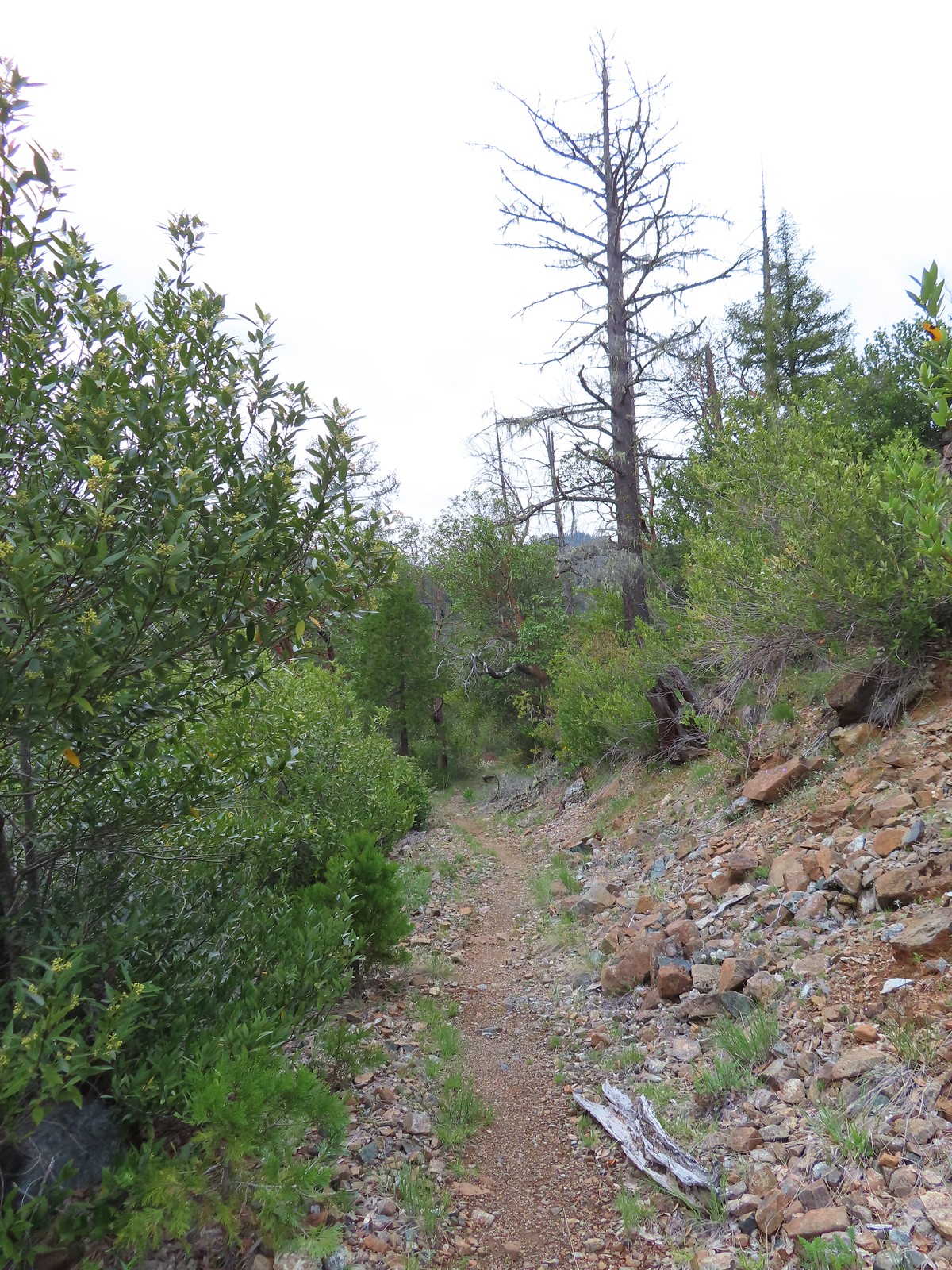
After 0.2-miles the trail ahead appeared to begin to get overgrown and we’d had enough of that for the day so we declared victory and turned around.
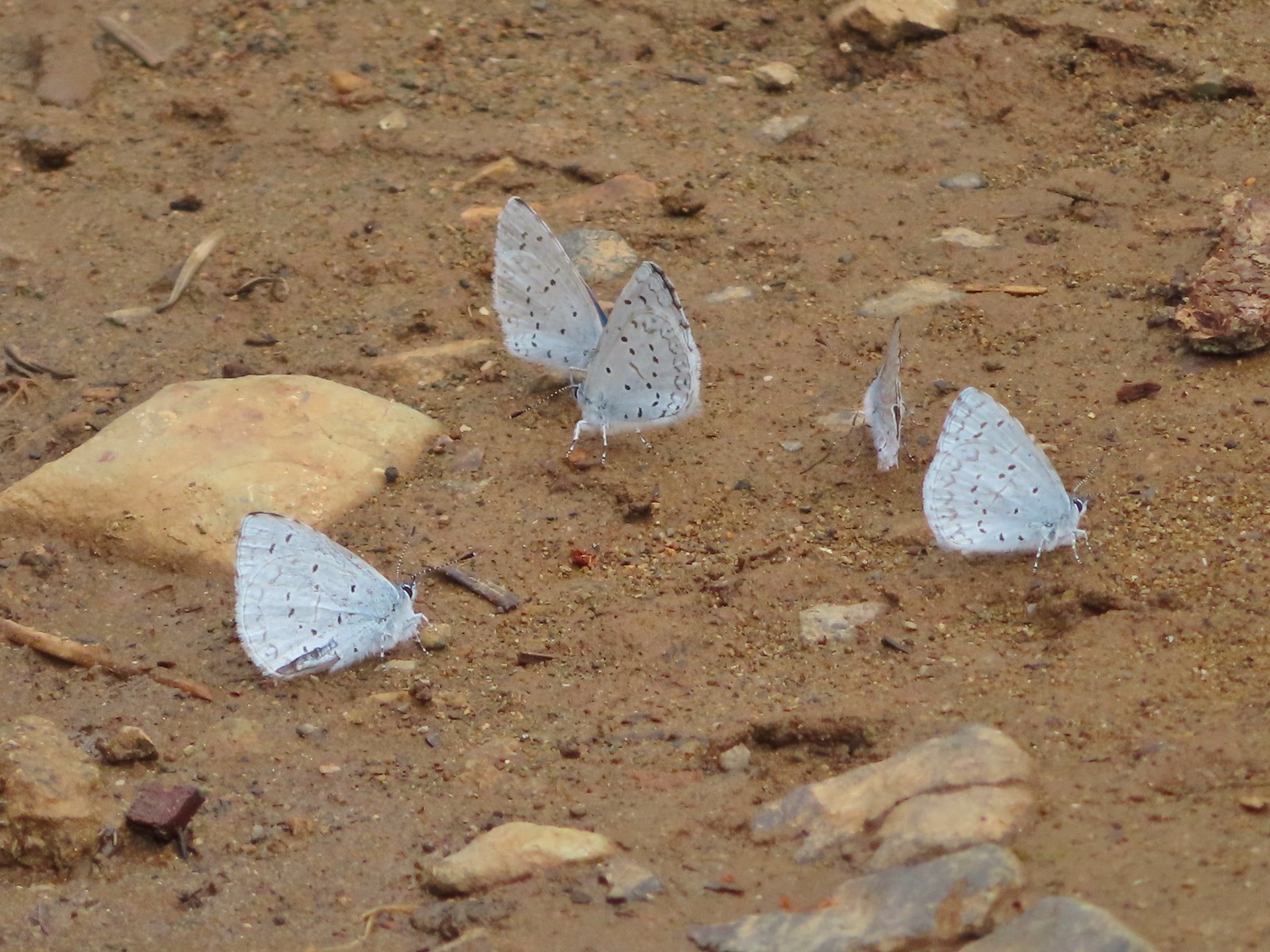
We returned the way we’d come half expecting to encounter some ne’er-do-wells heading down to party. Thankfully that didn’t happen although we did come across a suspicious group of butterflies.
 Star flower
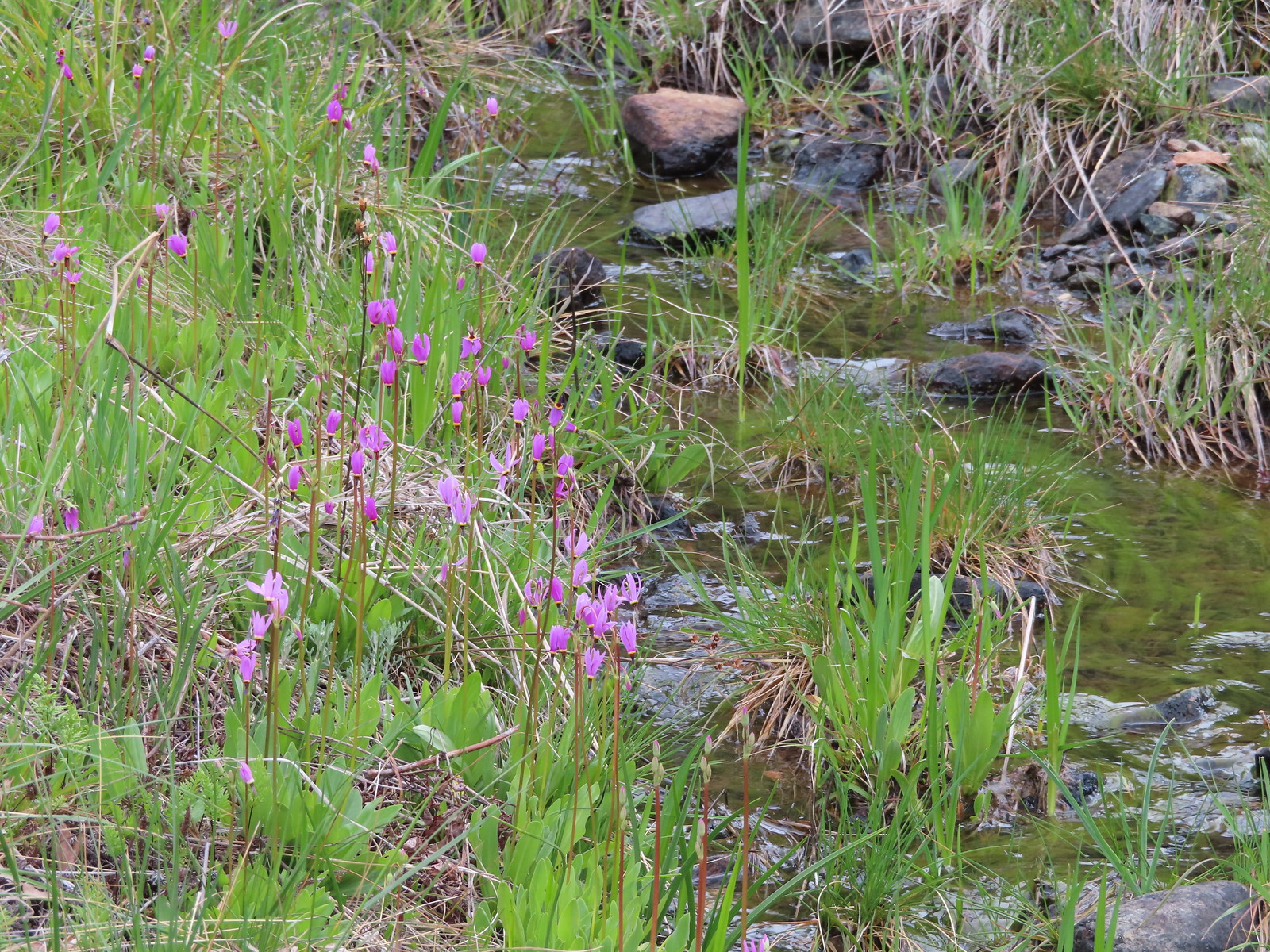 Shooting stars along the creek leading to the bog in Star Flat.
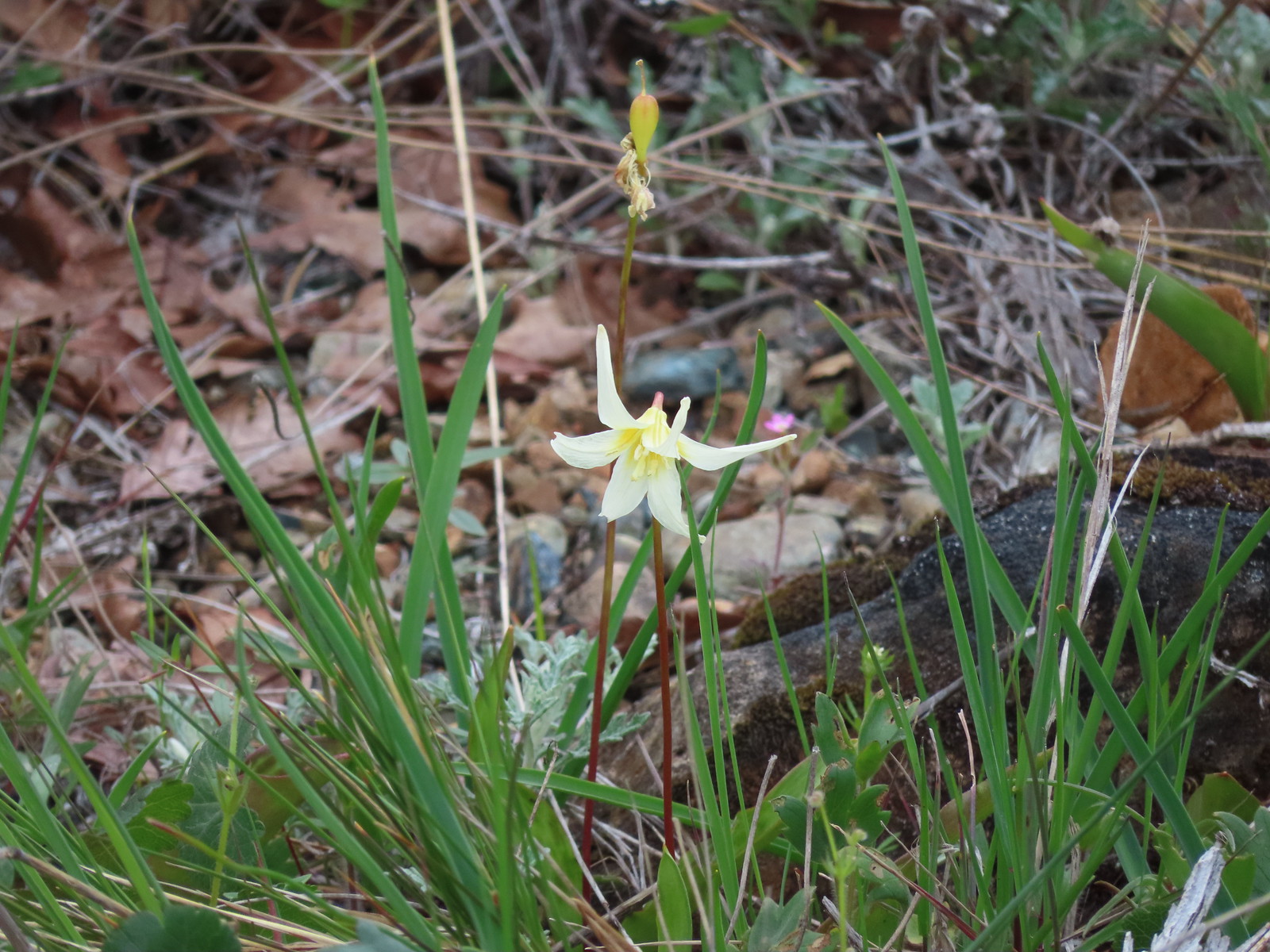 Fawn lily
It started to sprinkle as we neared the car which was the opposite of how the weather had been all week. Monday through Wednesday it had been cloudy in the morning and cleared up in the afternoon but today the clouds moved in later.
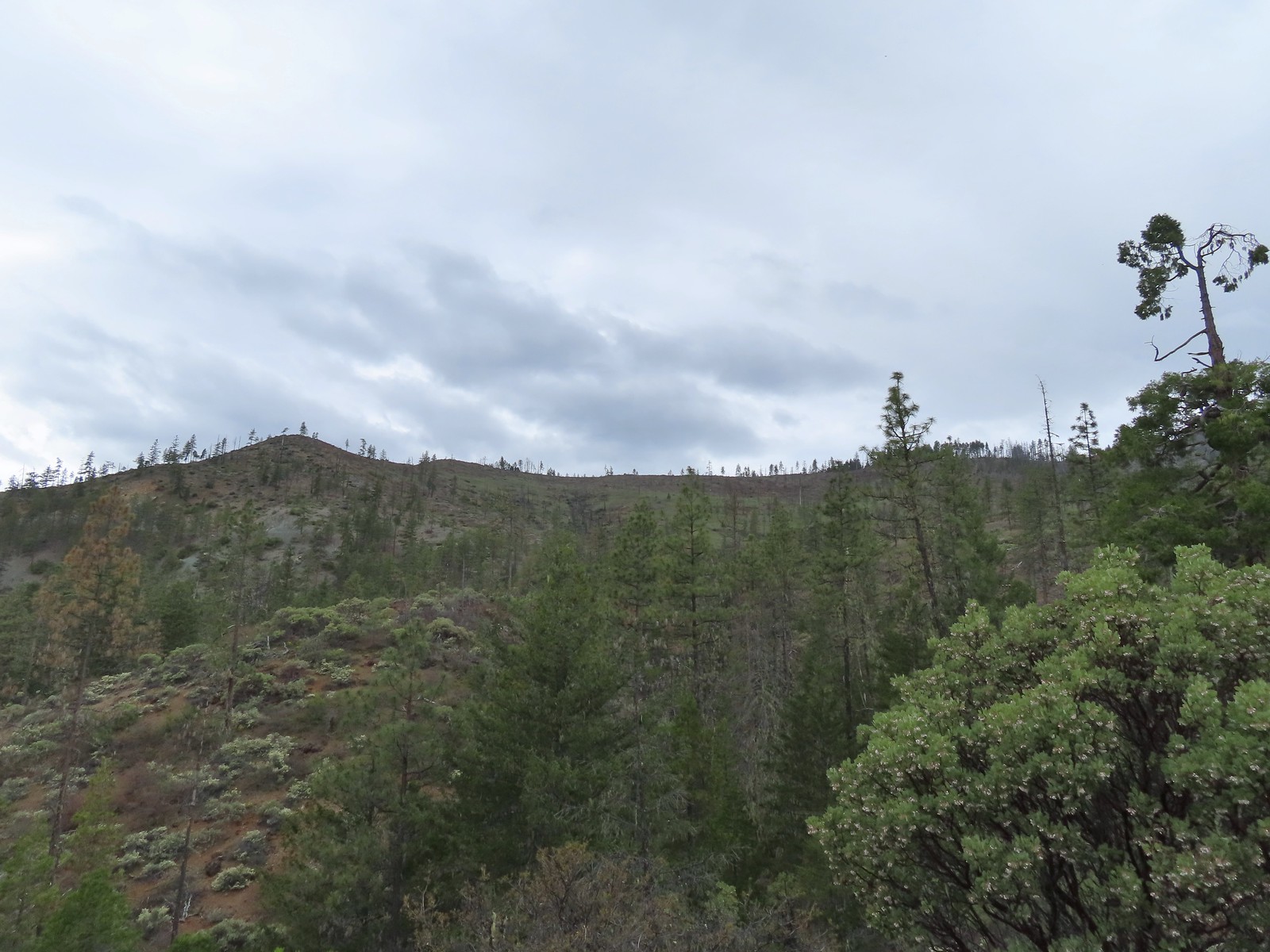
We were back to the car a little before 2pm but it had felt like a much longer day. We’d managed to get 10.2-miles of hiking and road walking in over the course of our six stops. The cumulative elevation gain was just over 1300′ so it was a pretty solid day of hiking even though none of the stops went as originally planned. Sometimes you just have to get creative, and we seem to be getting more and more practice at that.


Back in Grants Pass we picked up dinner from the Tacos Don Goyo food truck on K Street (excellent food) and started packing up for our drive home the next day. We decided not to try and replace the Rogue River hike that we didn’t do on Wednesday (post) opting instead to get home to Merry and Pippin. This was the first time we’d been away from them since adopting the kittens in October and we missed the little guys. Happy Trails!


 Larkspur along the trail.
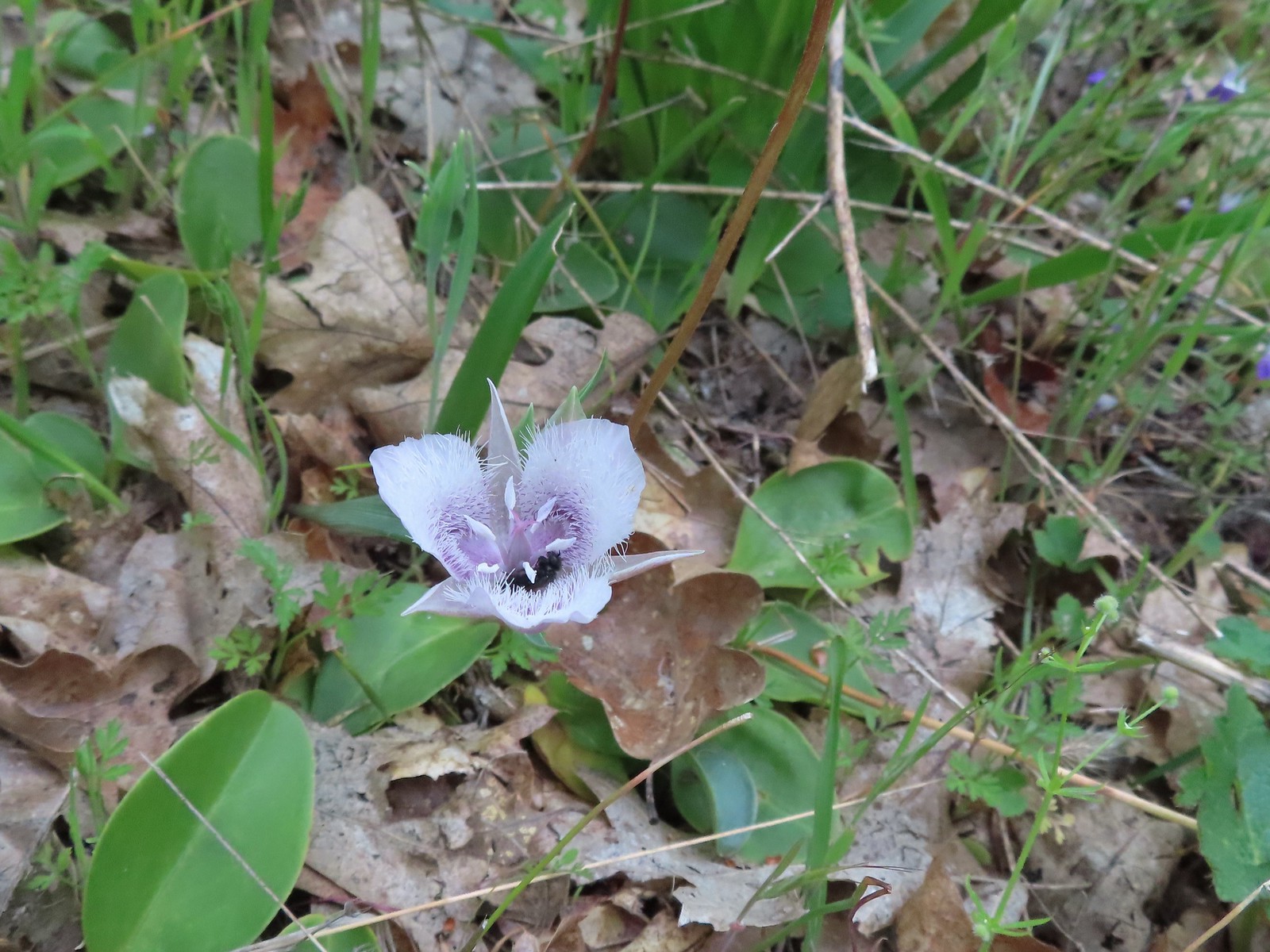 A pollinator in a Tolmie’s mariposa lily.
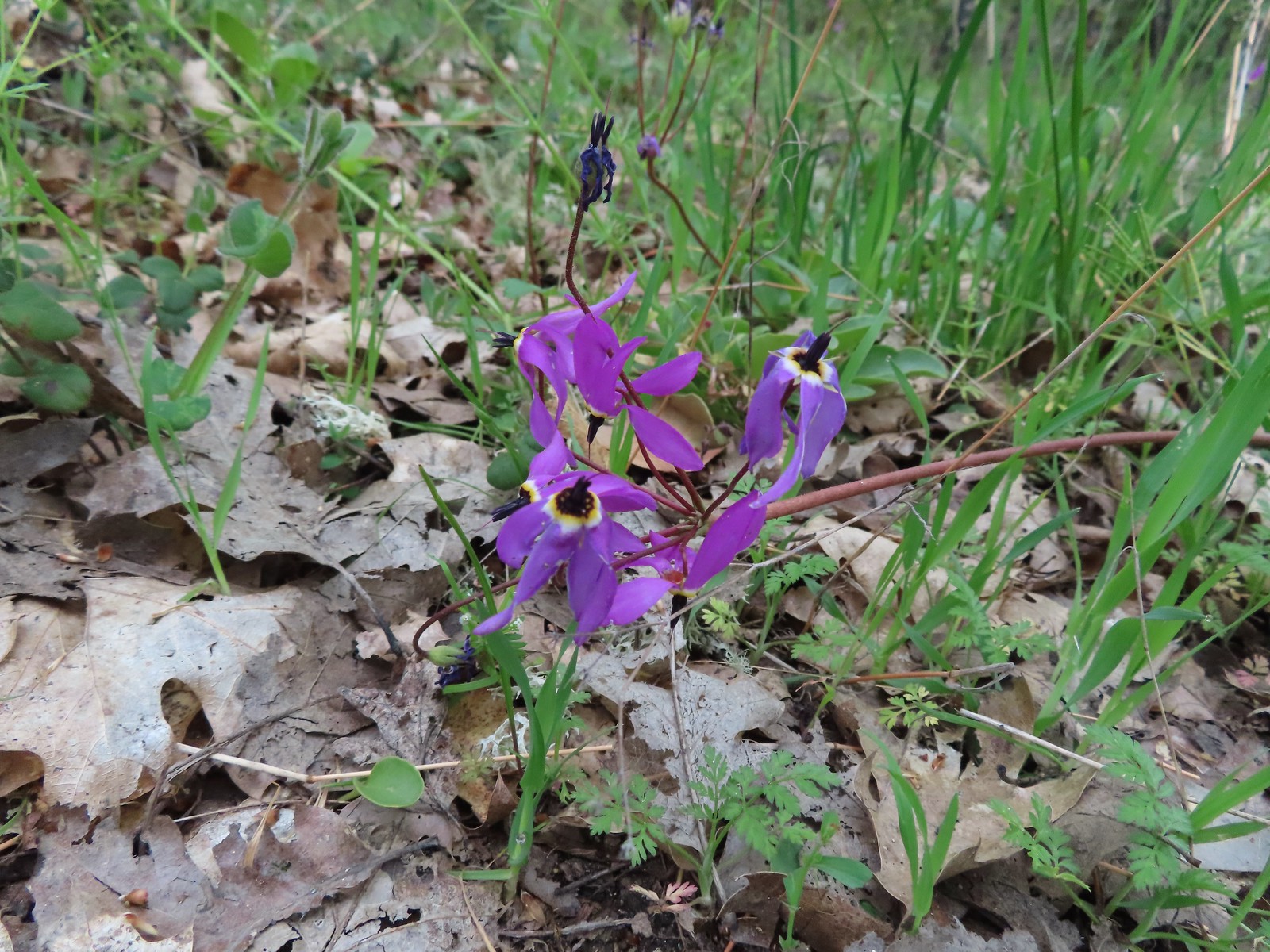 Shooting star
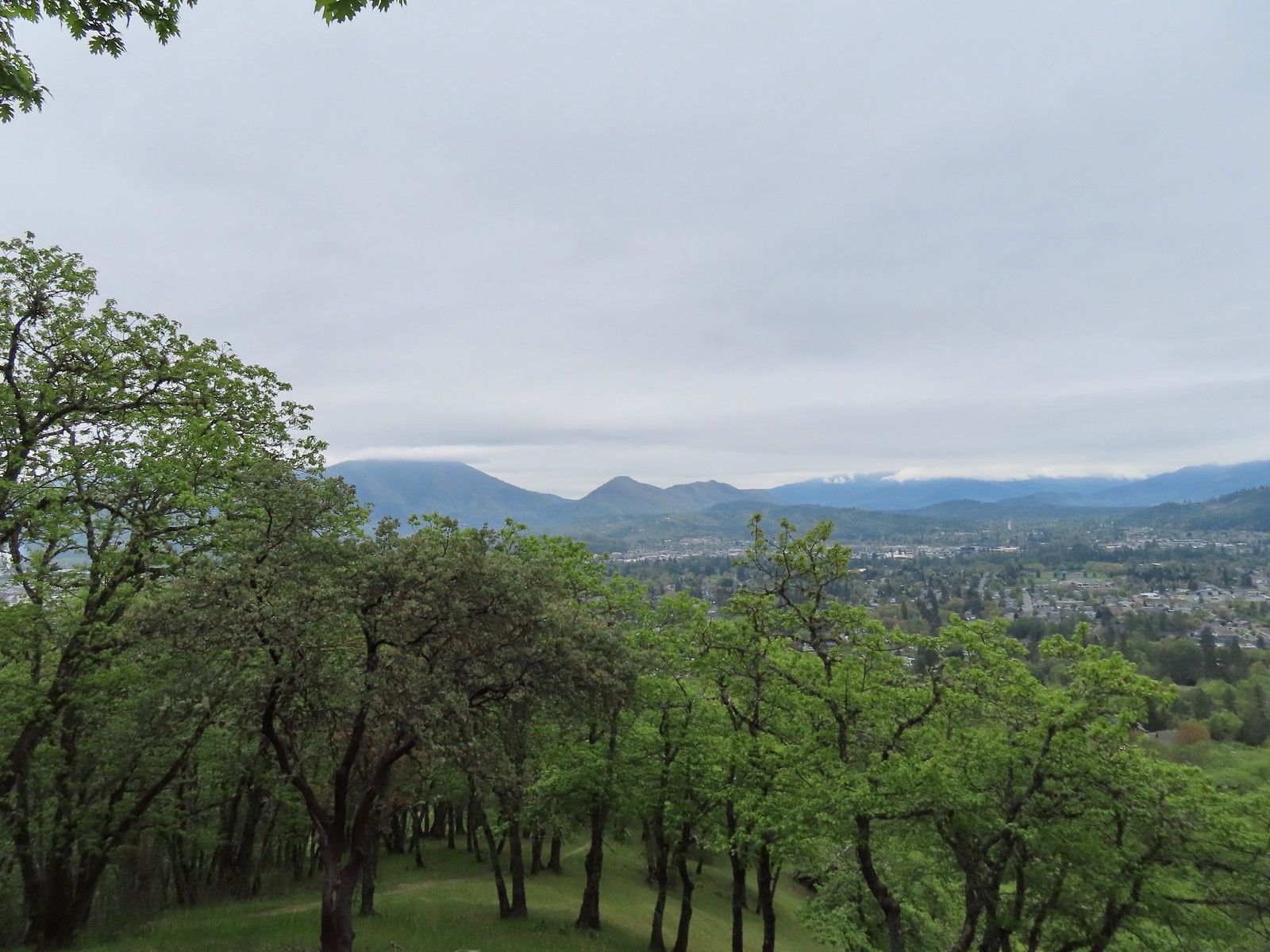 Grants Pass below Dollar Mountain.
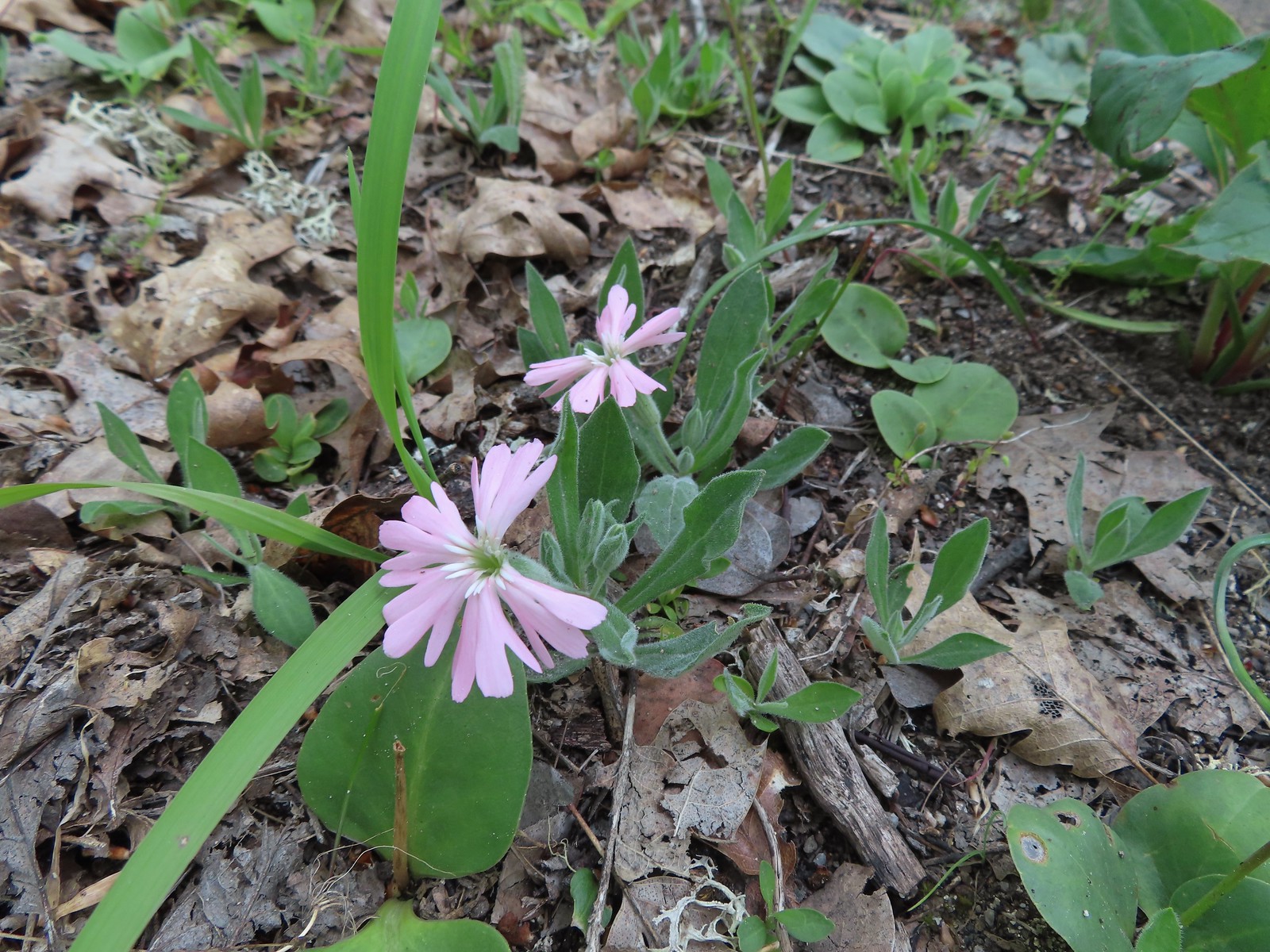 Hooker’s Indian pink
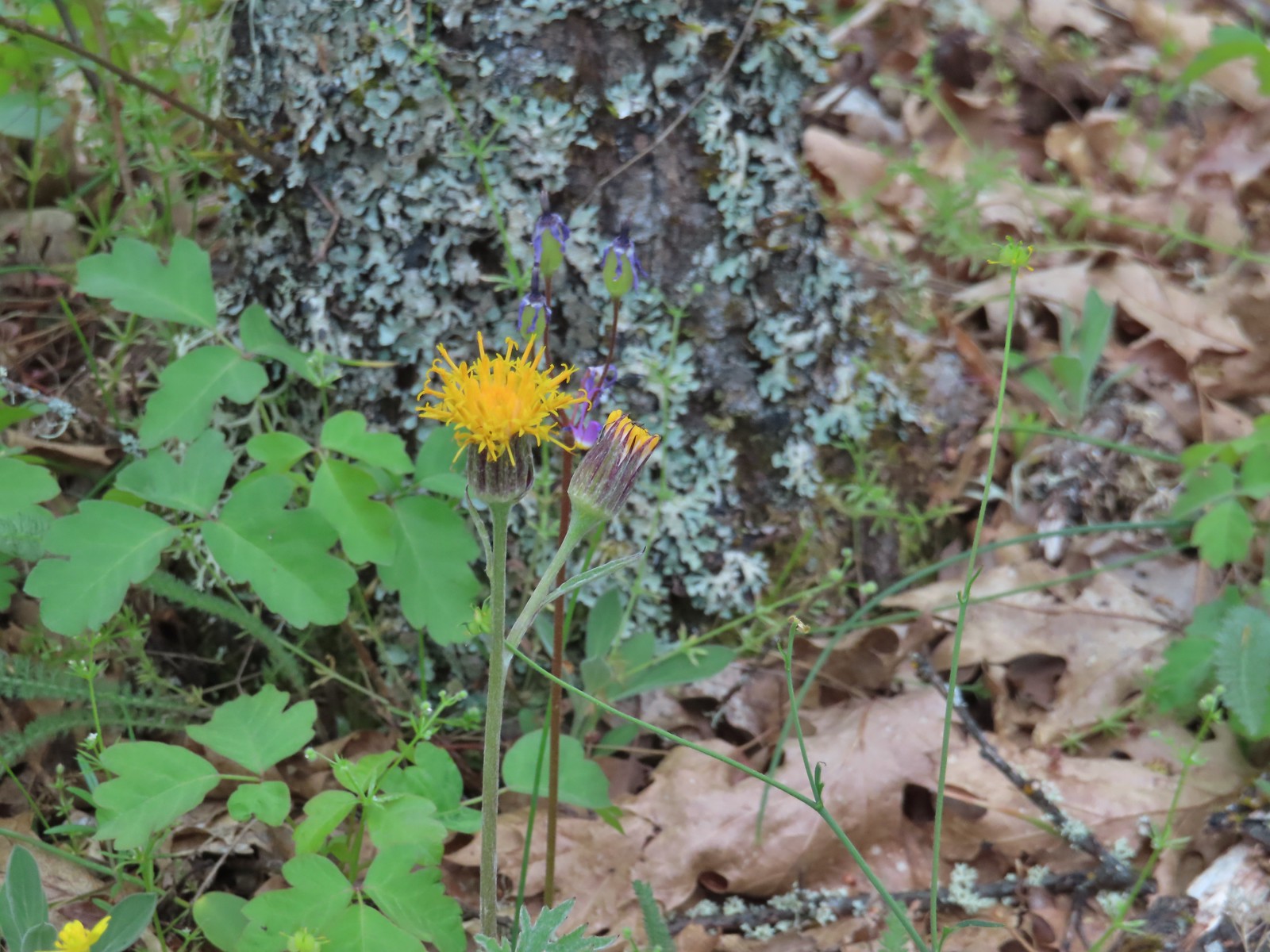 Silver crown
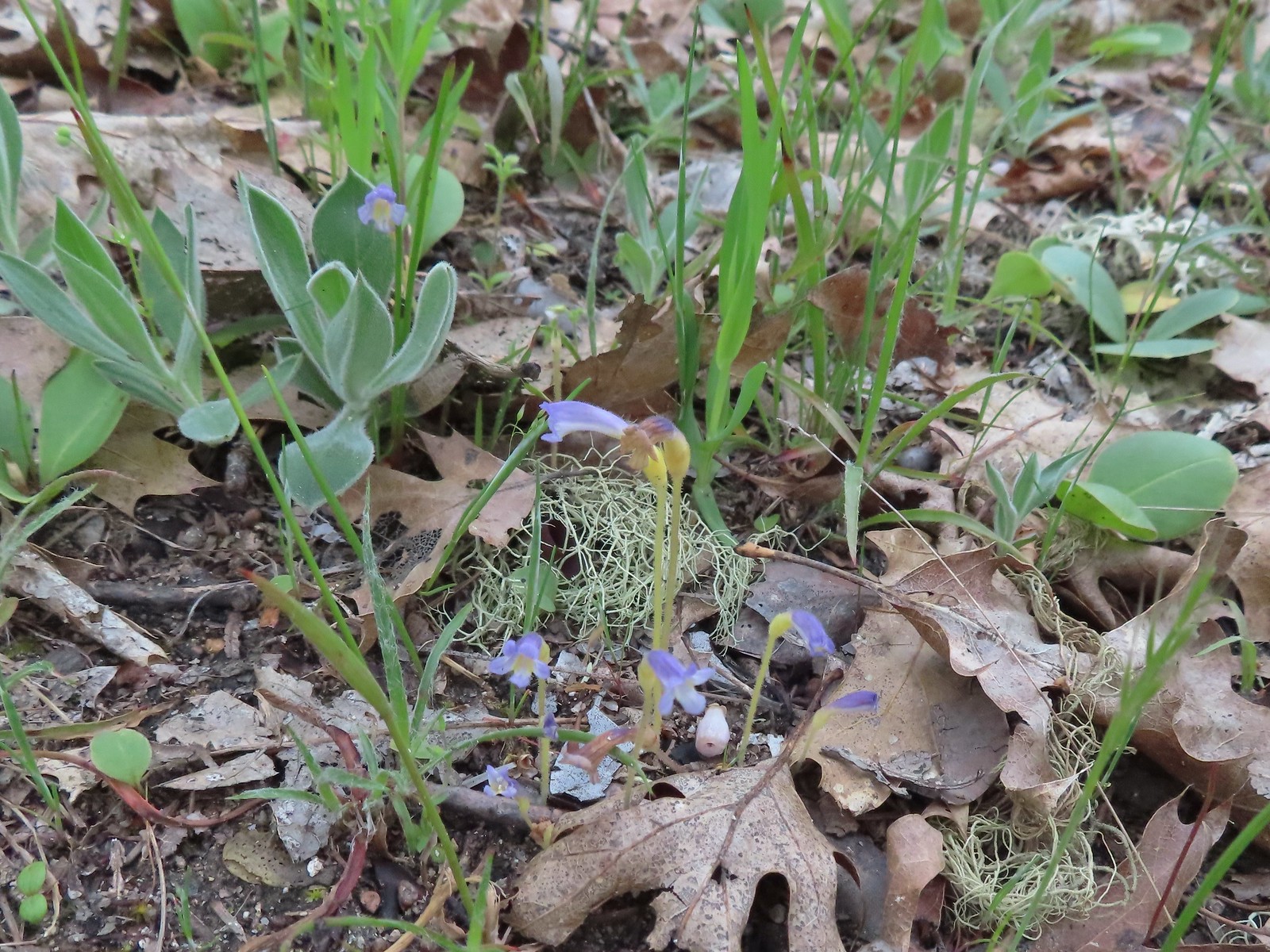 Naked broomrape
 Too cloudy for a good view.
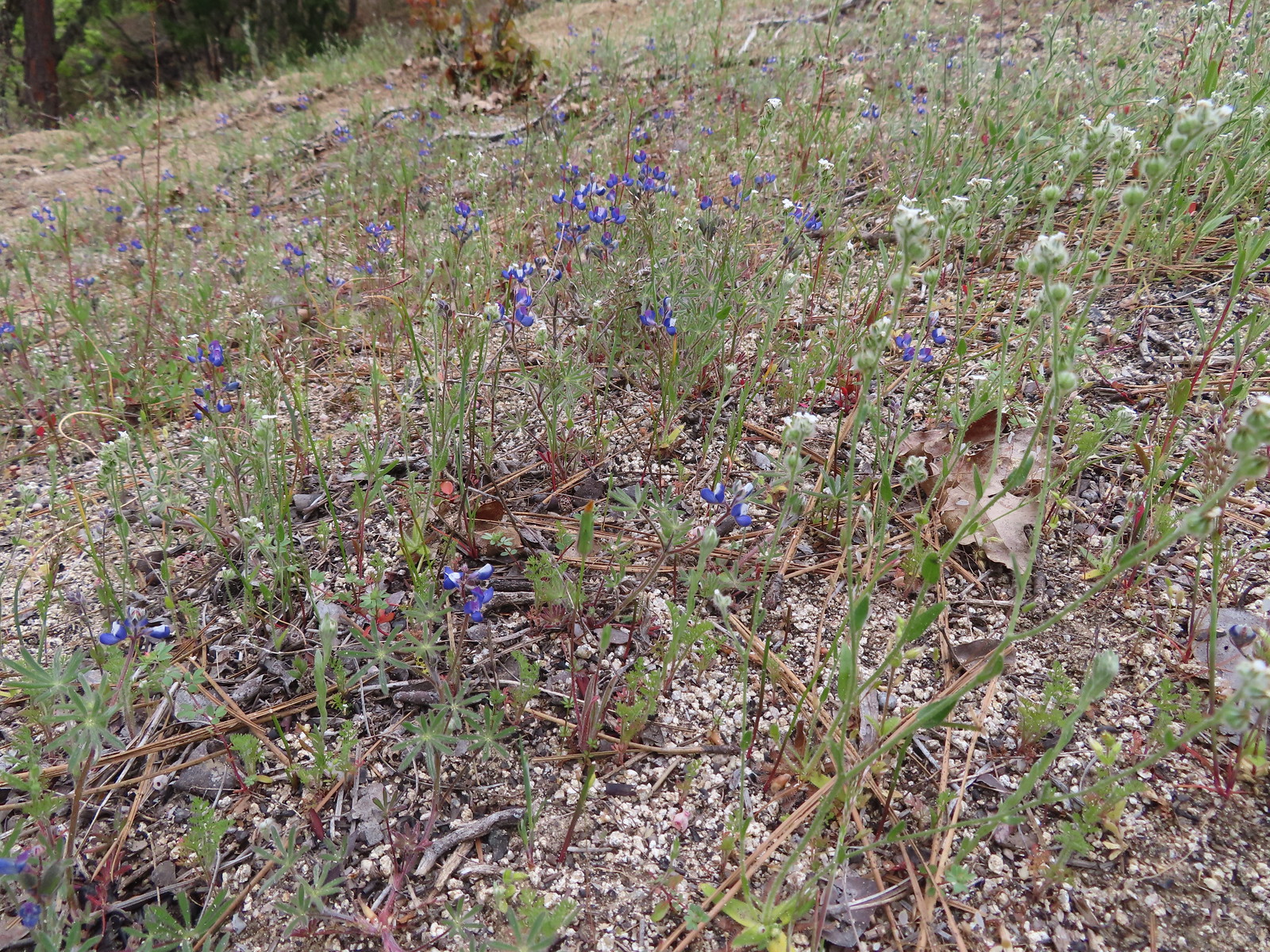 Lupine
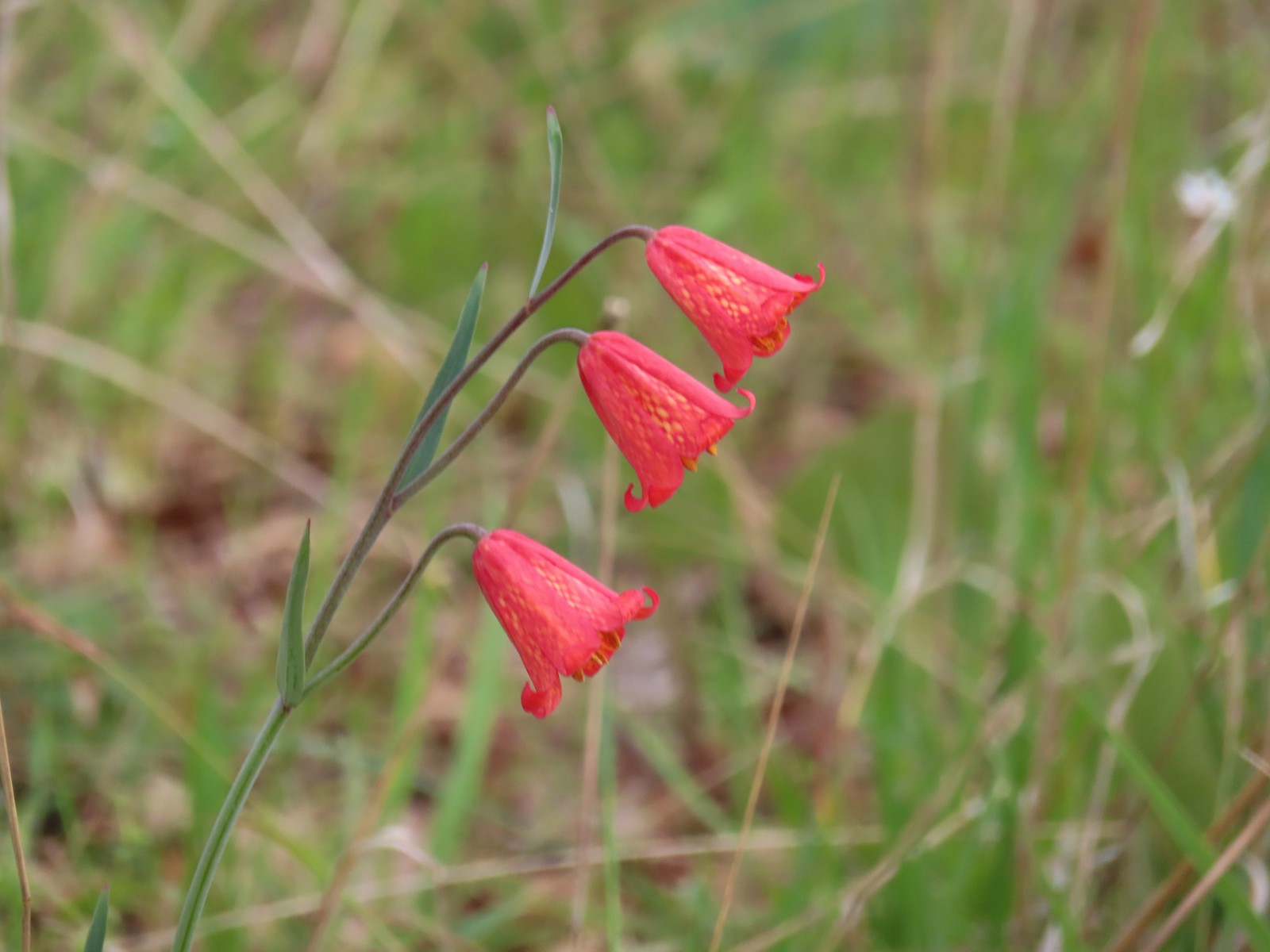 Scarlet fritillary
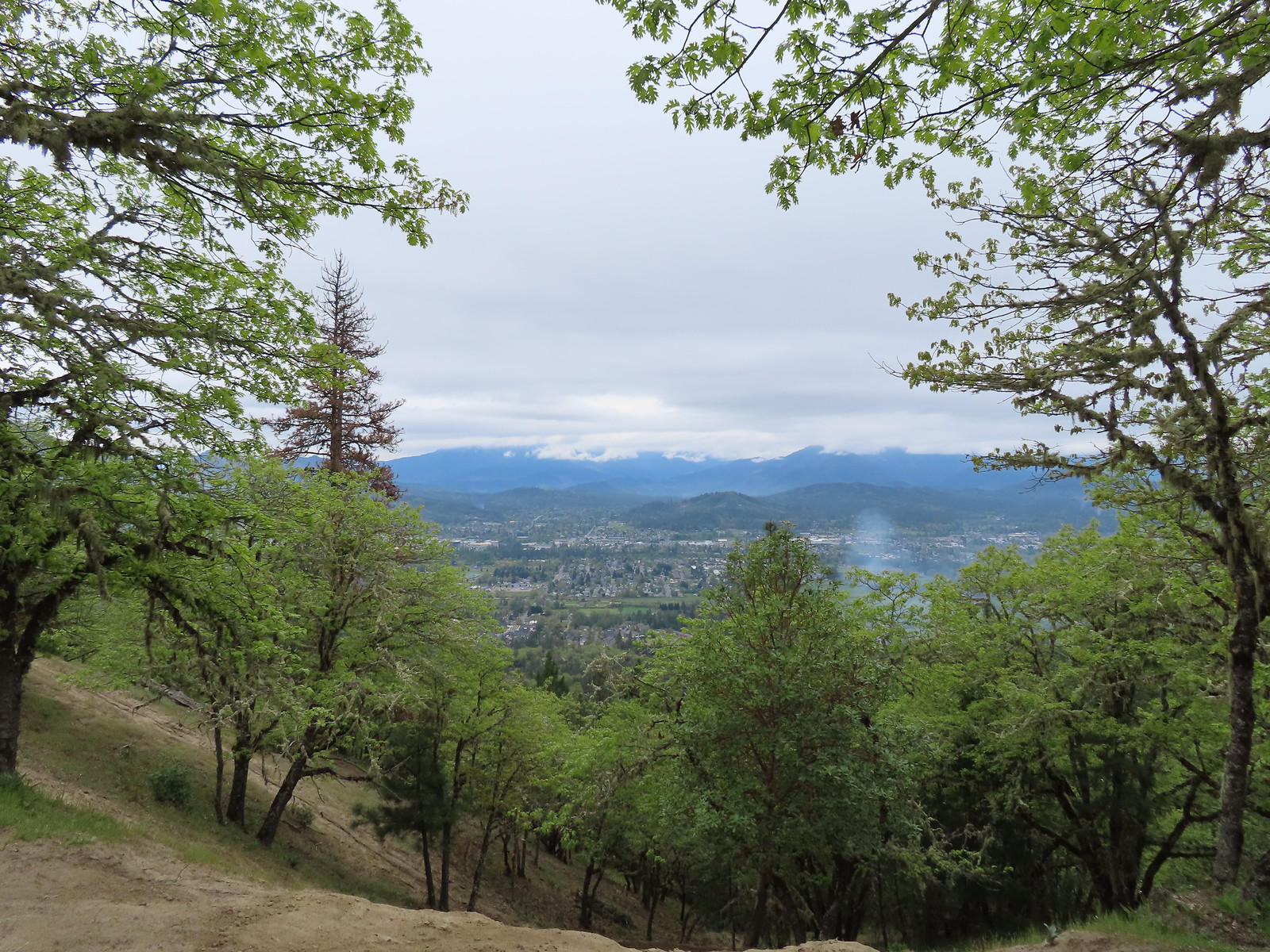 View from the summit.
 We stuck to the road ignoring any side paths like this one since we had no idea where they might lead.
 There were dozens of California groundcones along the roadbed.
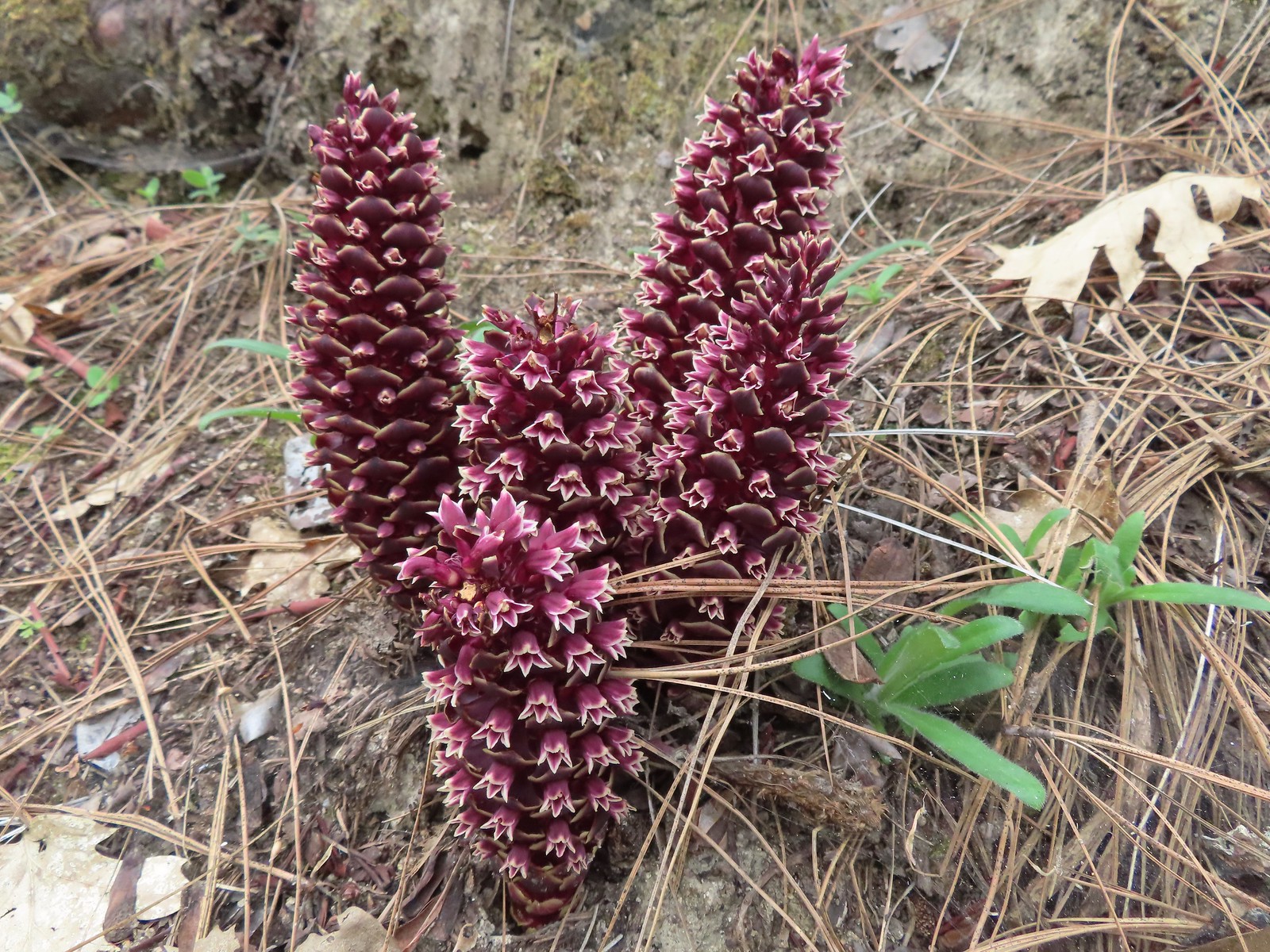 California groundcones
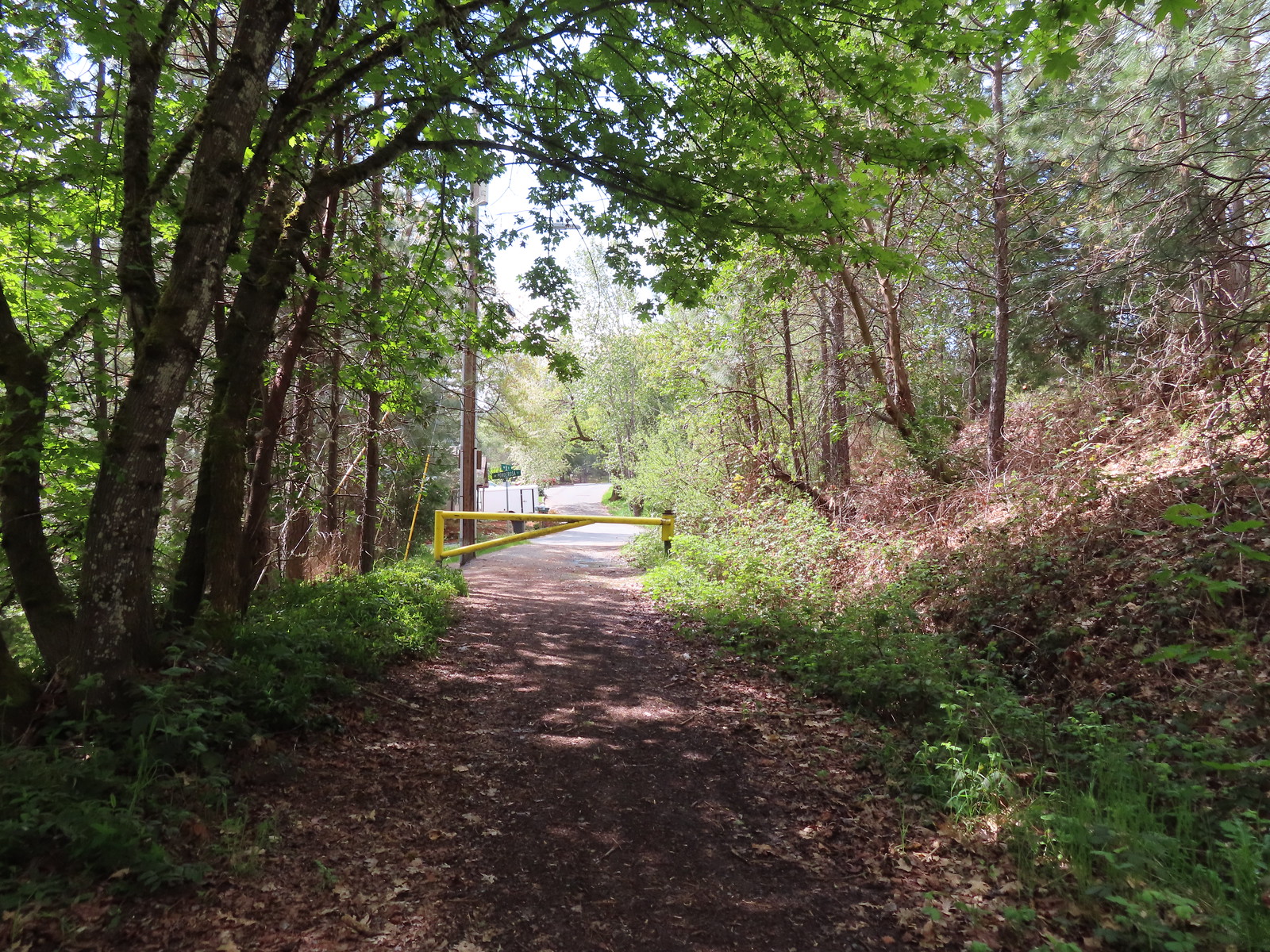 Approaching Crescent Street.
 Monkeyflower
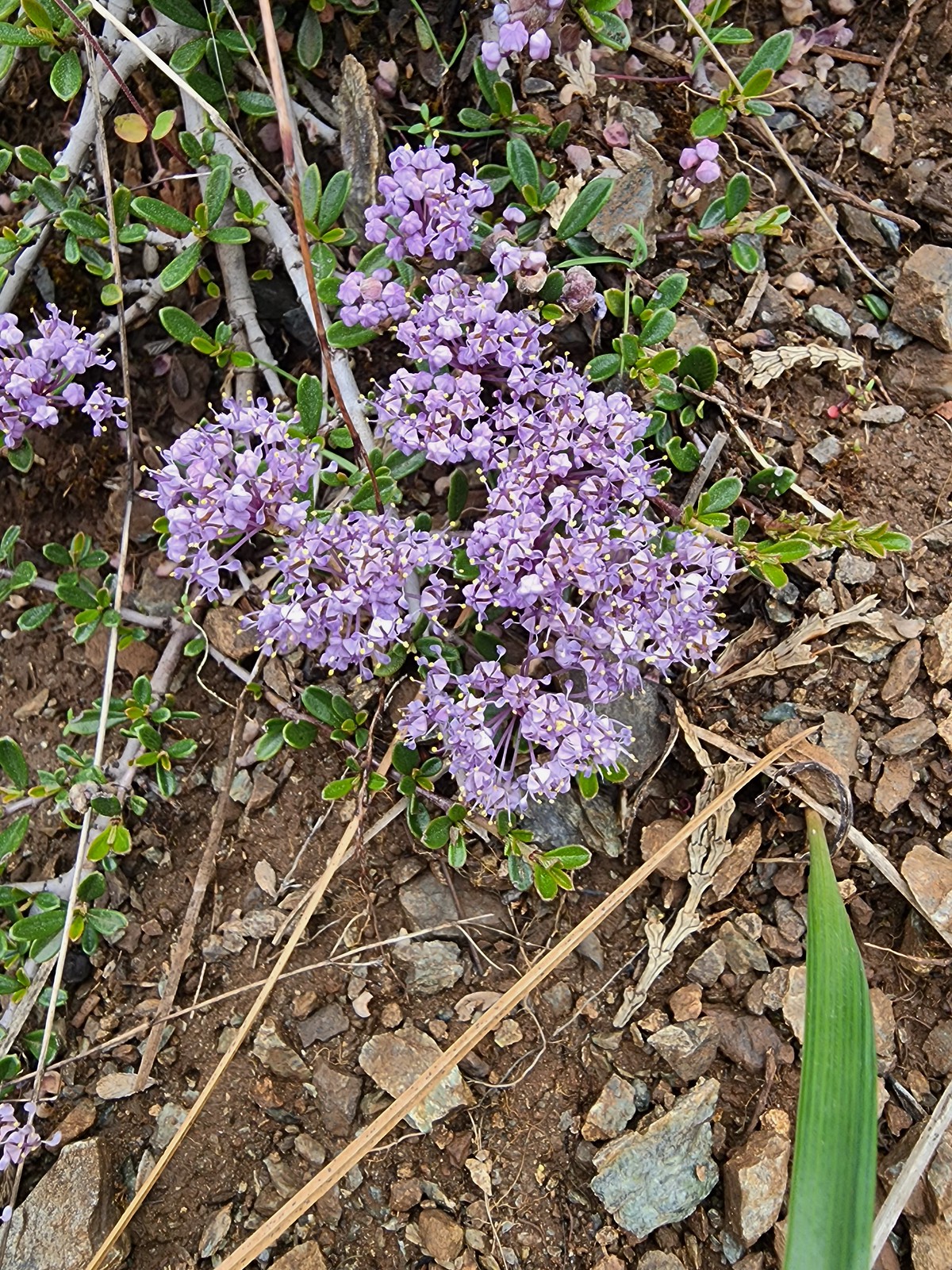 Dwarf ceanothus
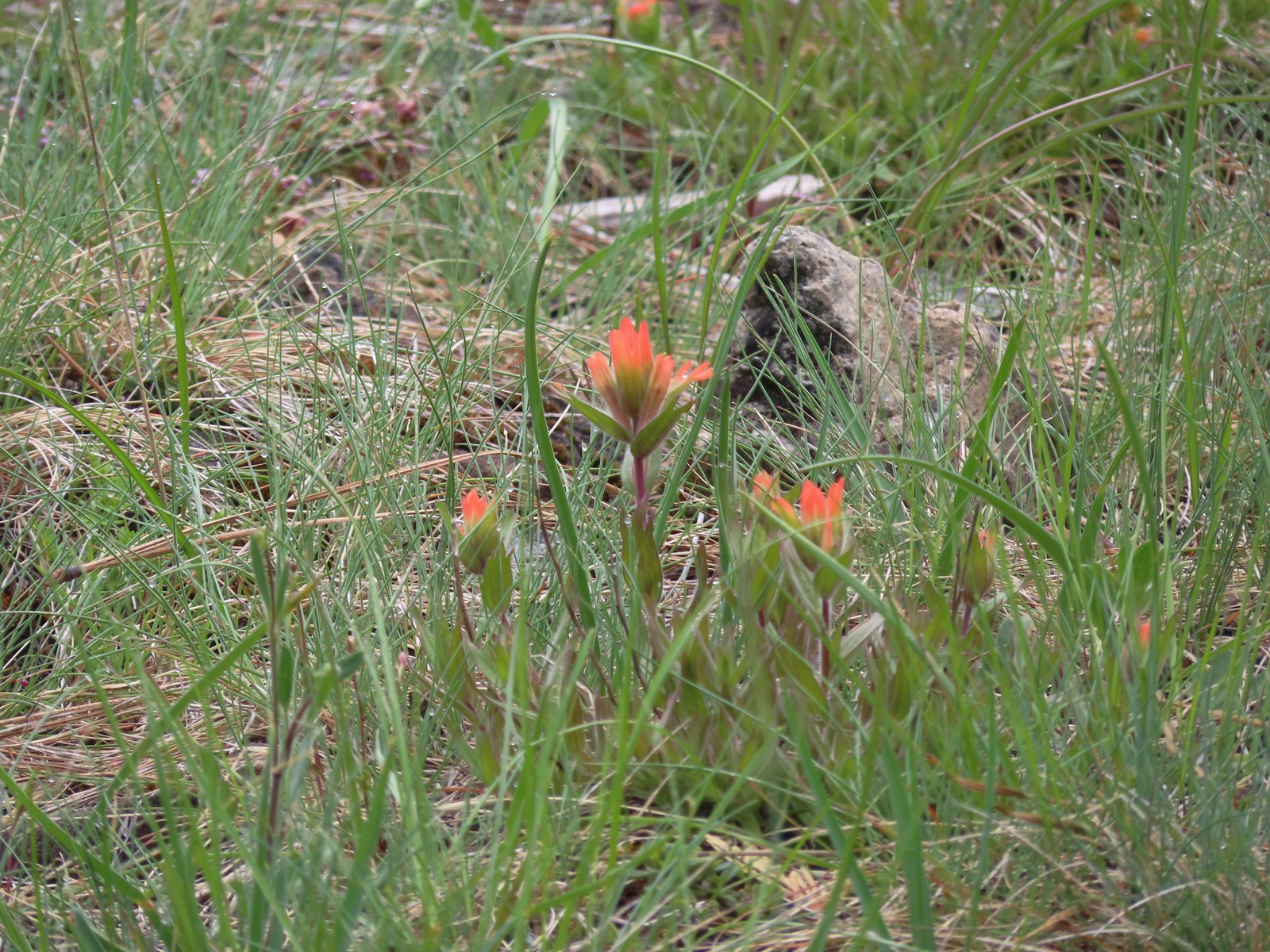 Paintbrush
 Camas and shooting stars
 Siskiyou fritillary
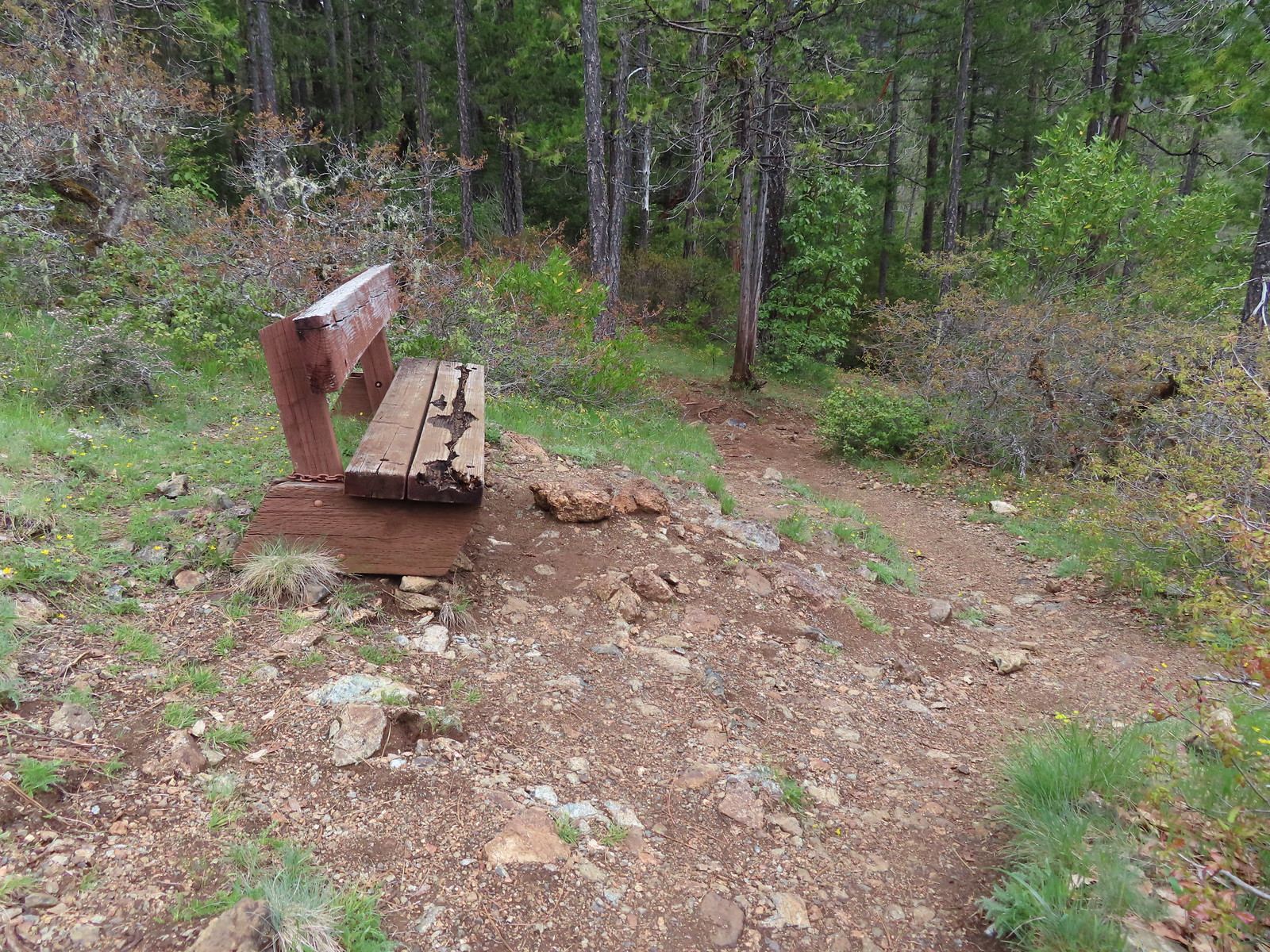 Passing the bench.
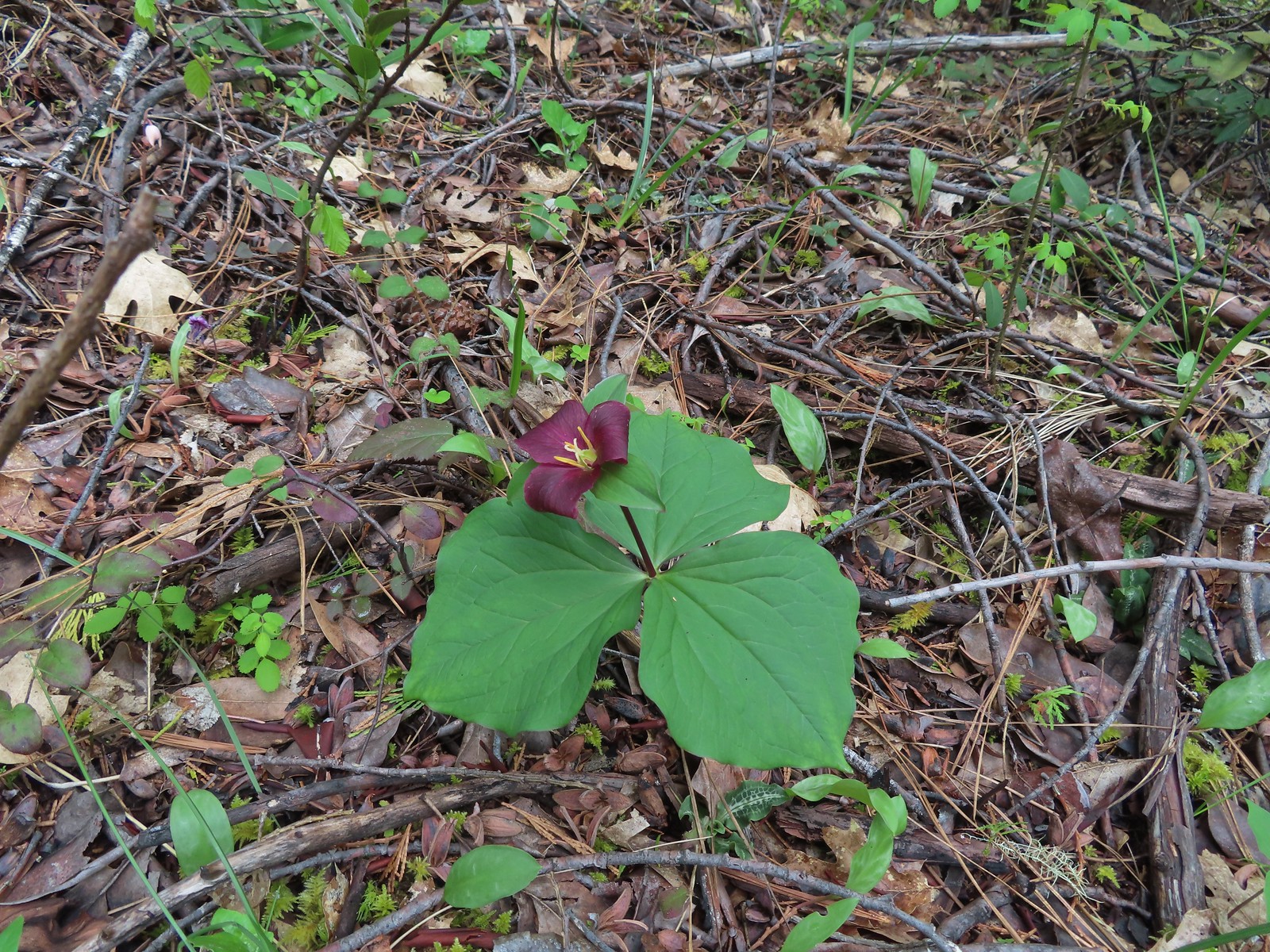 Trillium
 Fairy slippers
 Boardwalk #1
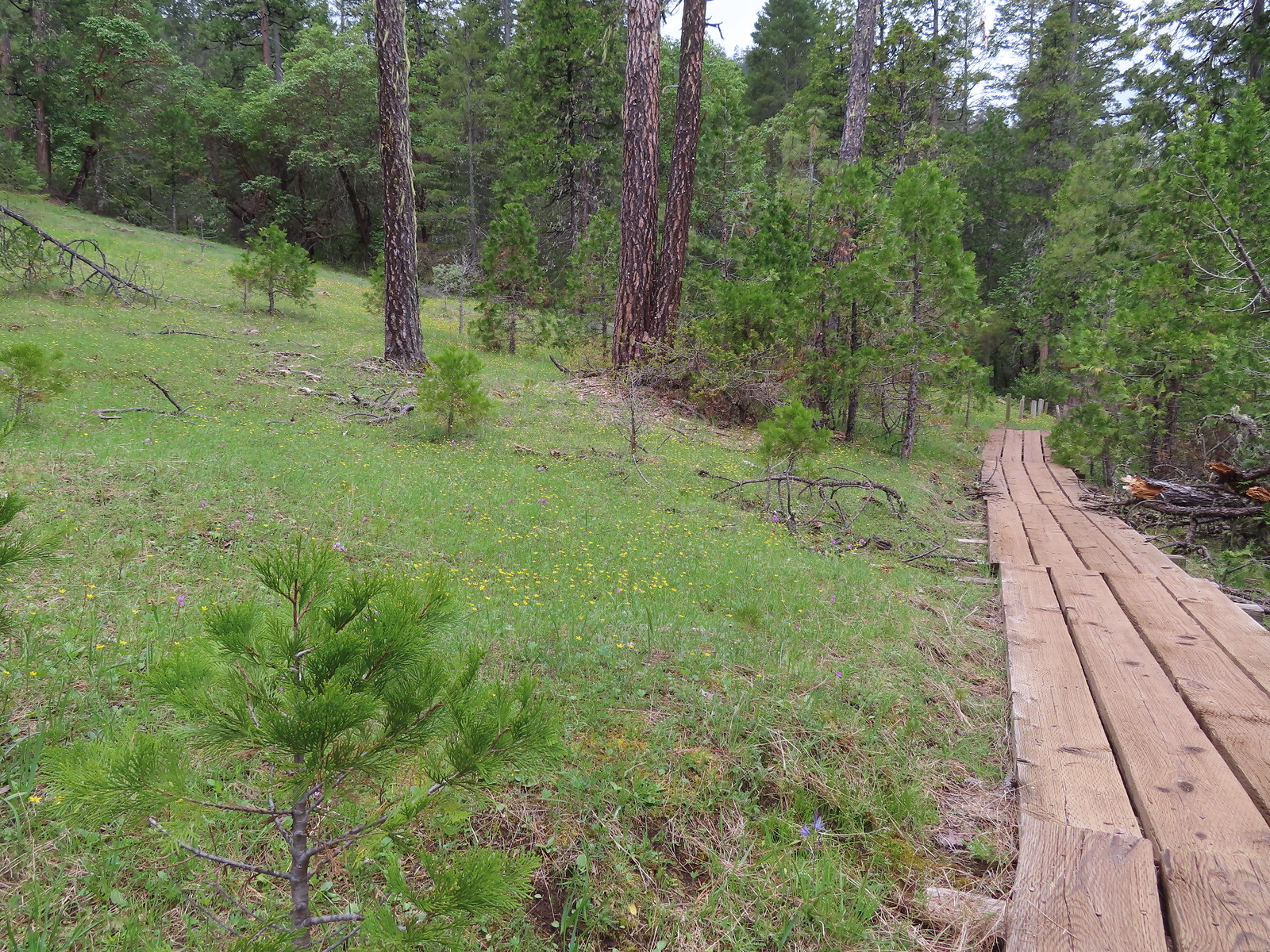 Second boardwalk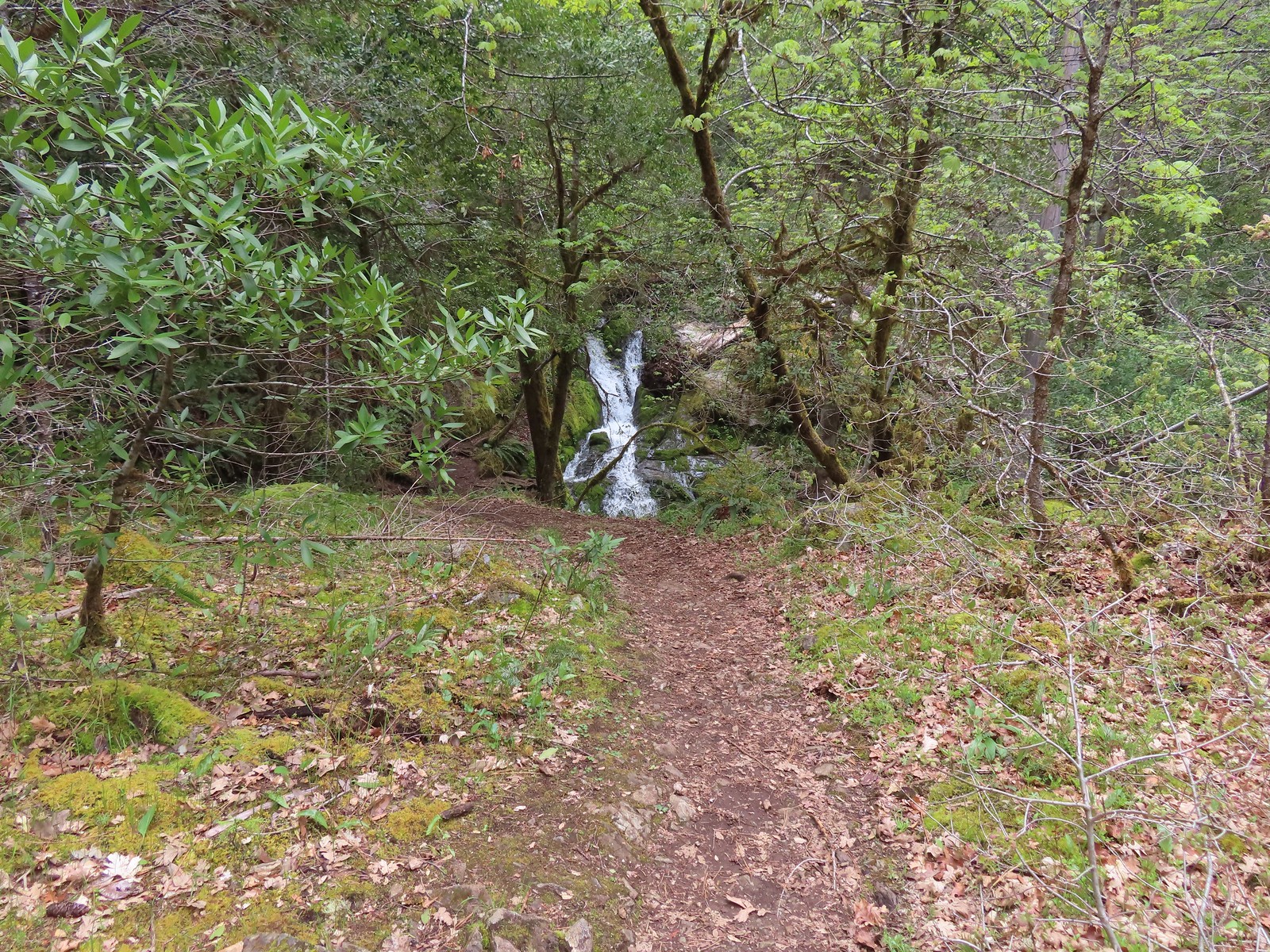
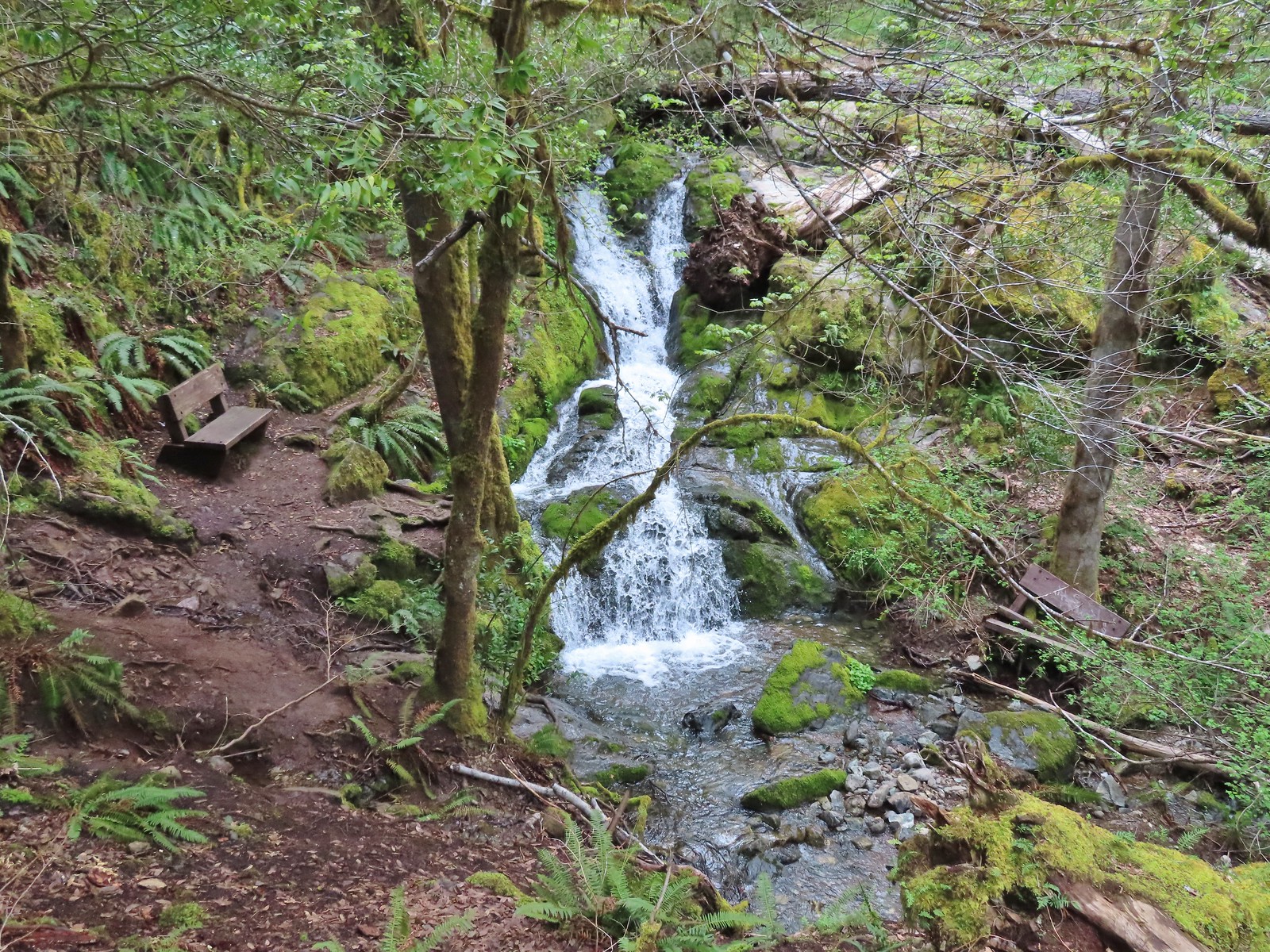 Waterfall on Limpy Creek.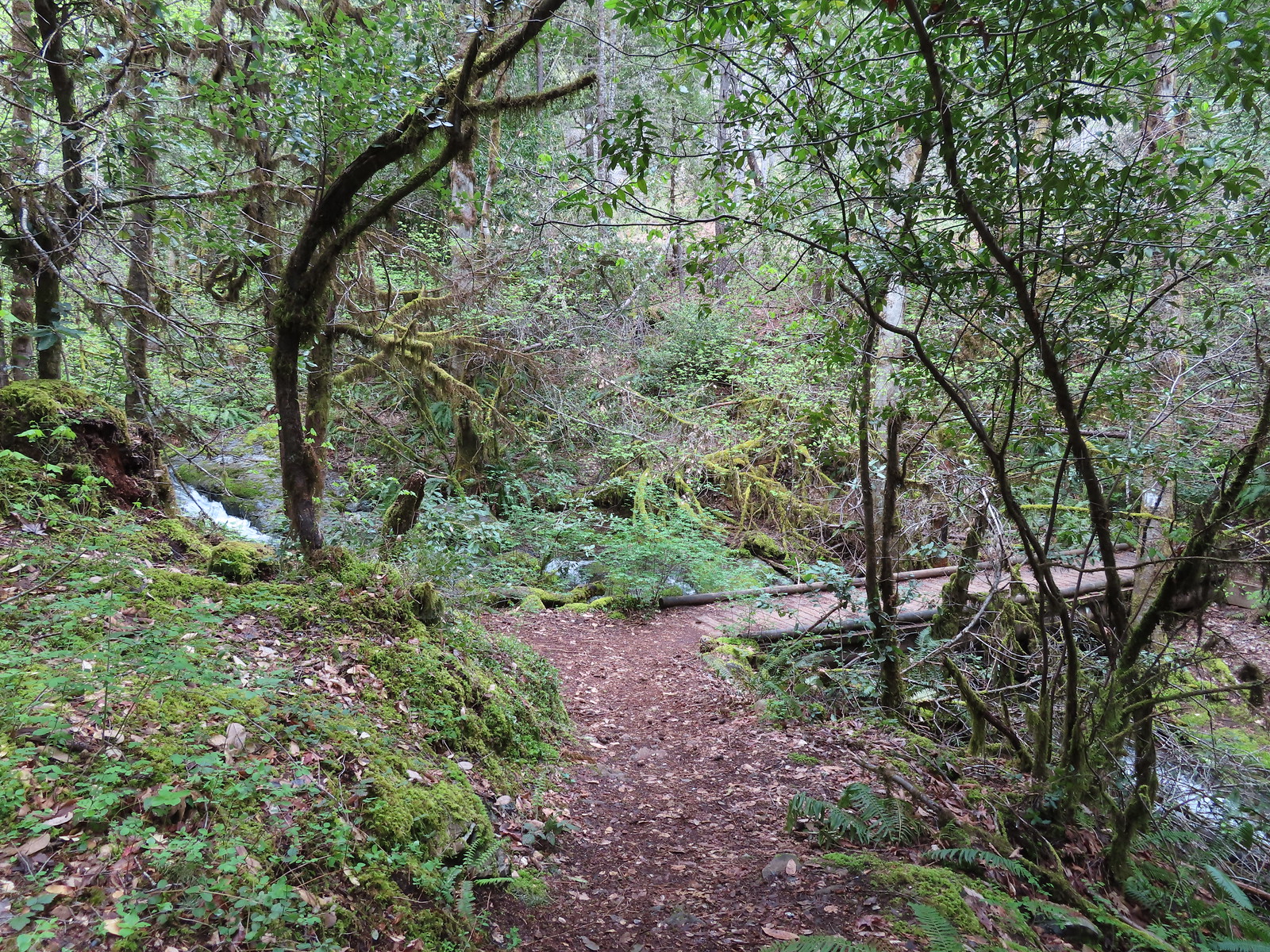
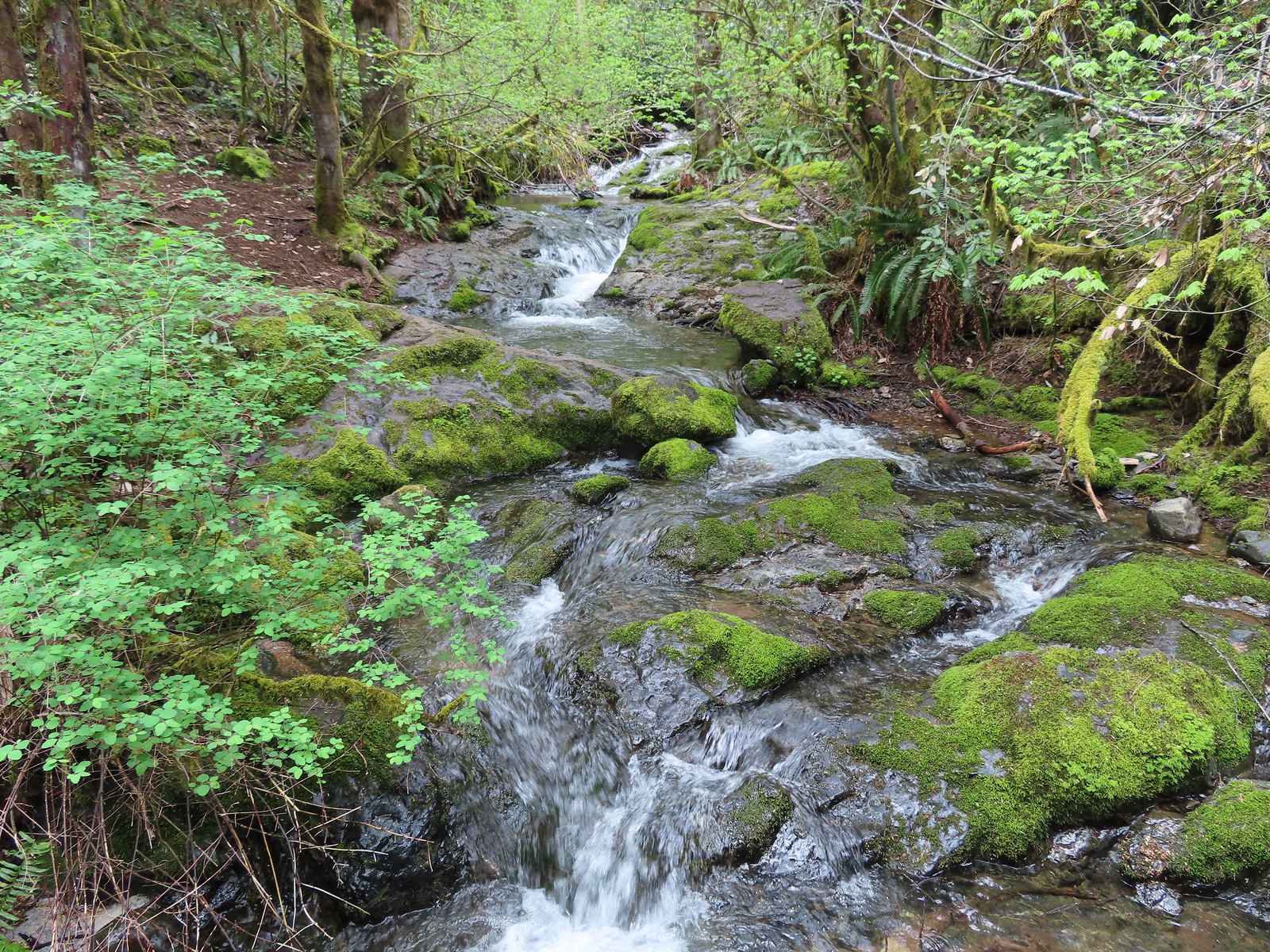 Limpy Creek
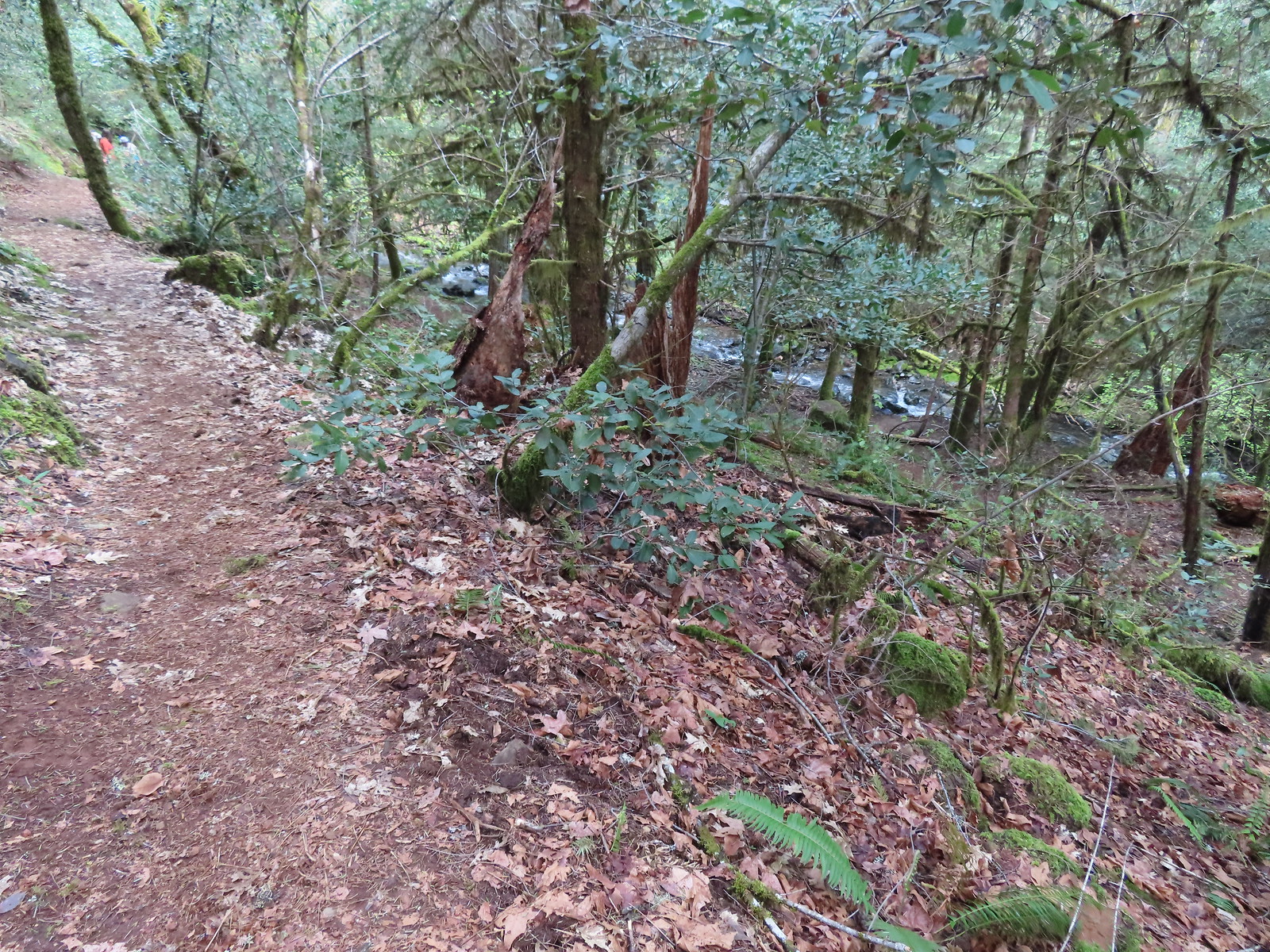 Arriving at the second creek.
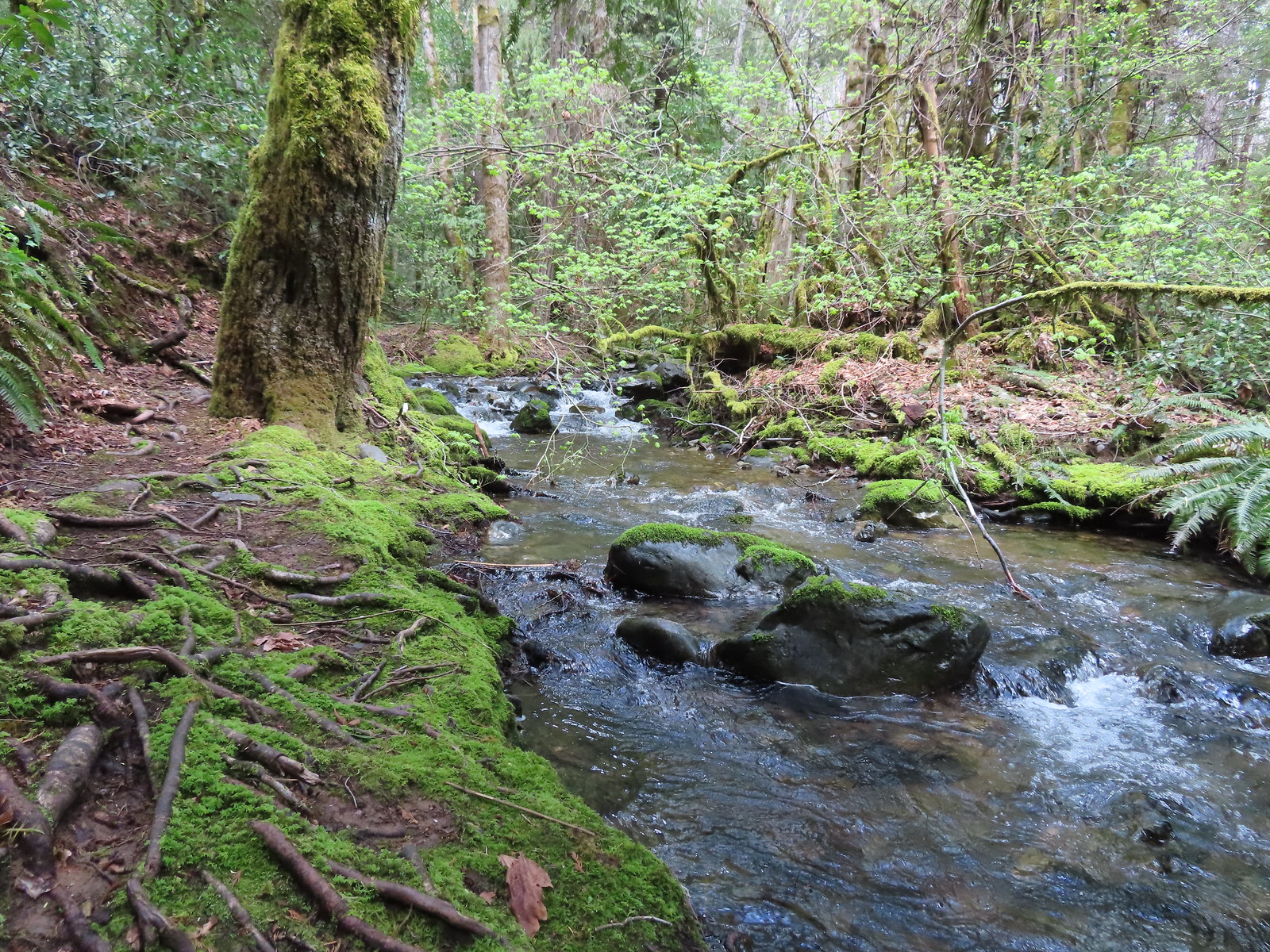 Unnamed creek
 Mushrooms
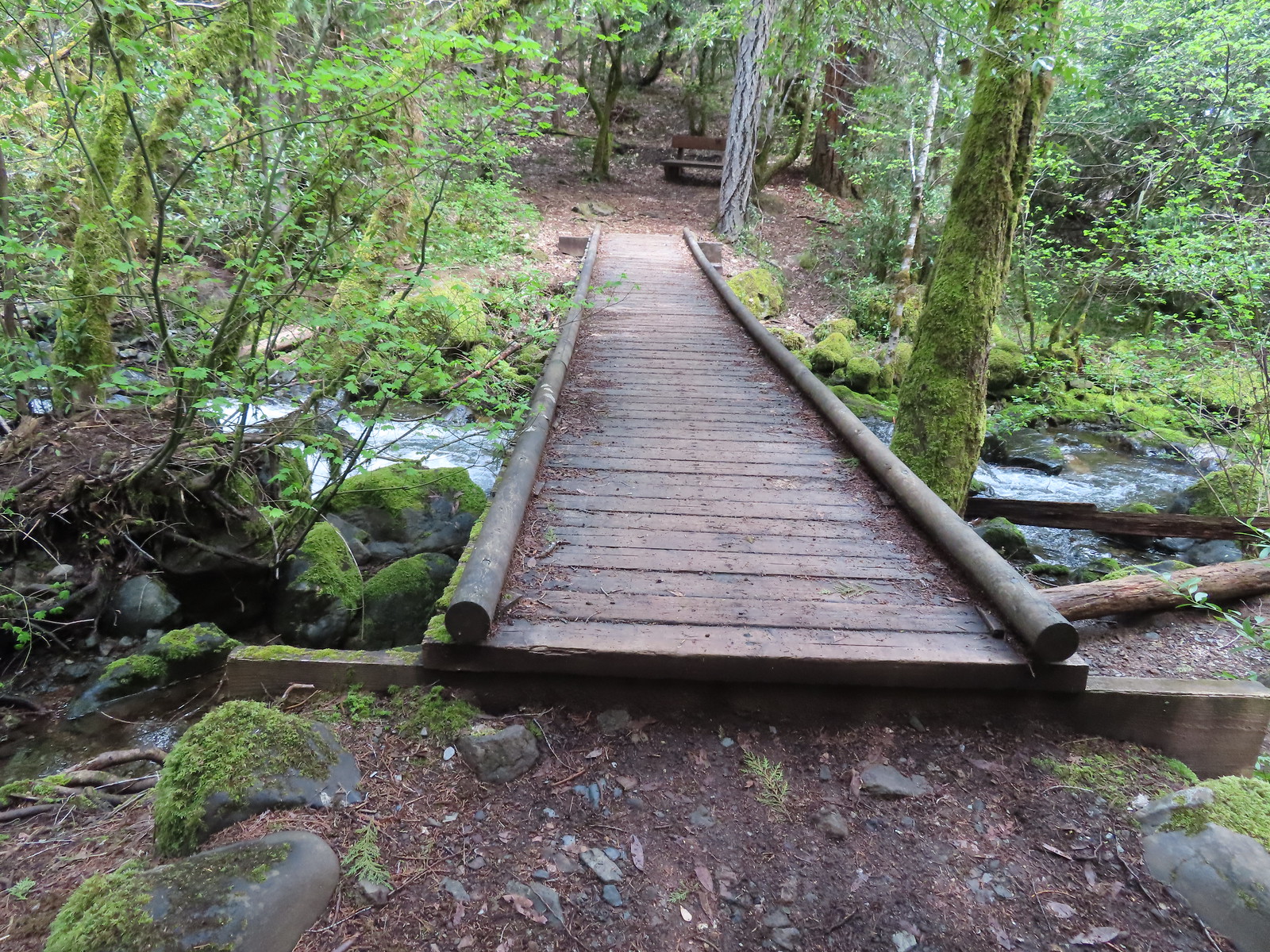 Final crossing of Limpy Creek.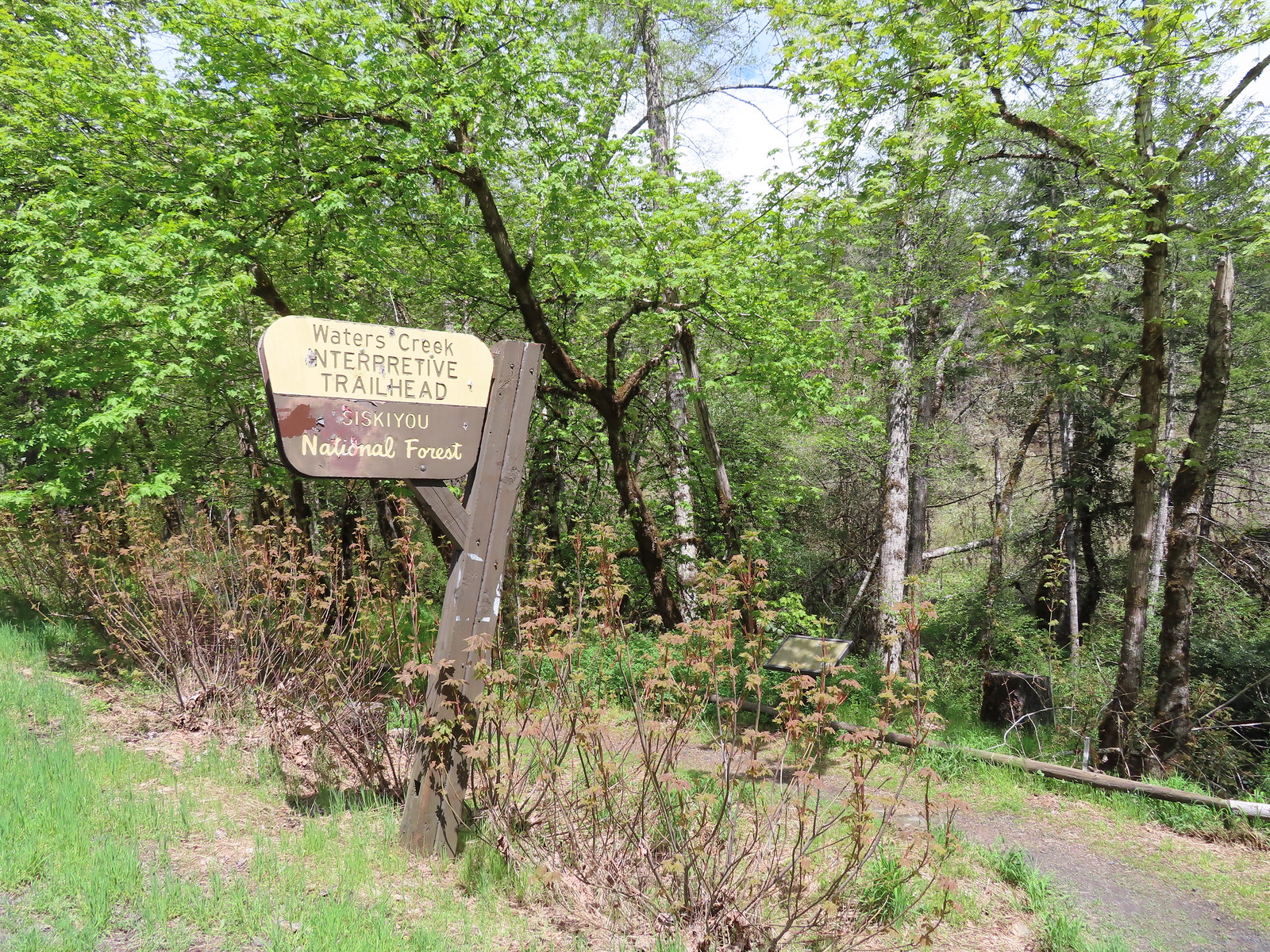

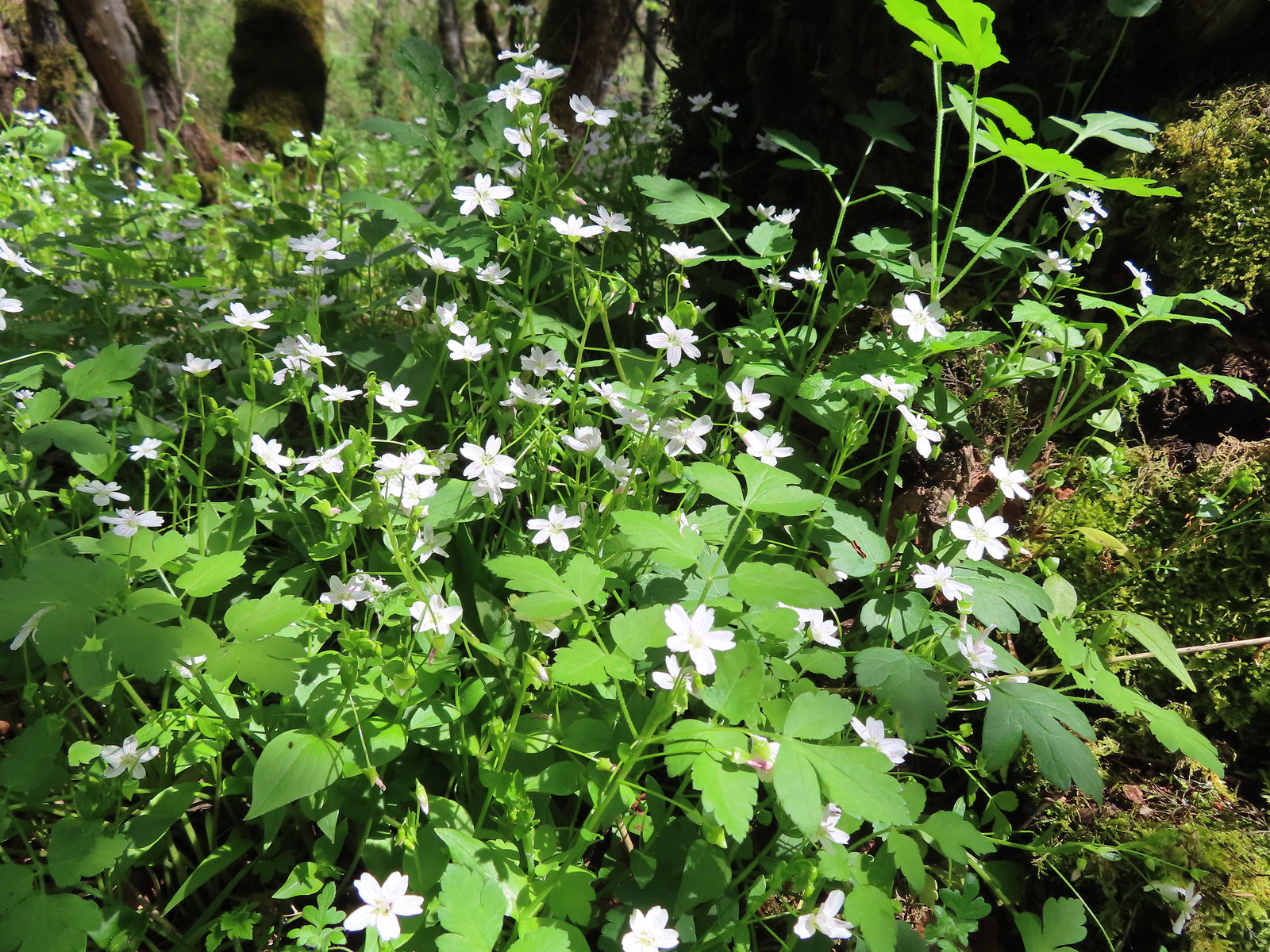 Candyflower
 Waters Creek
 A phacelia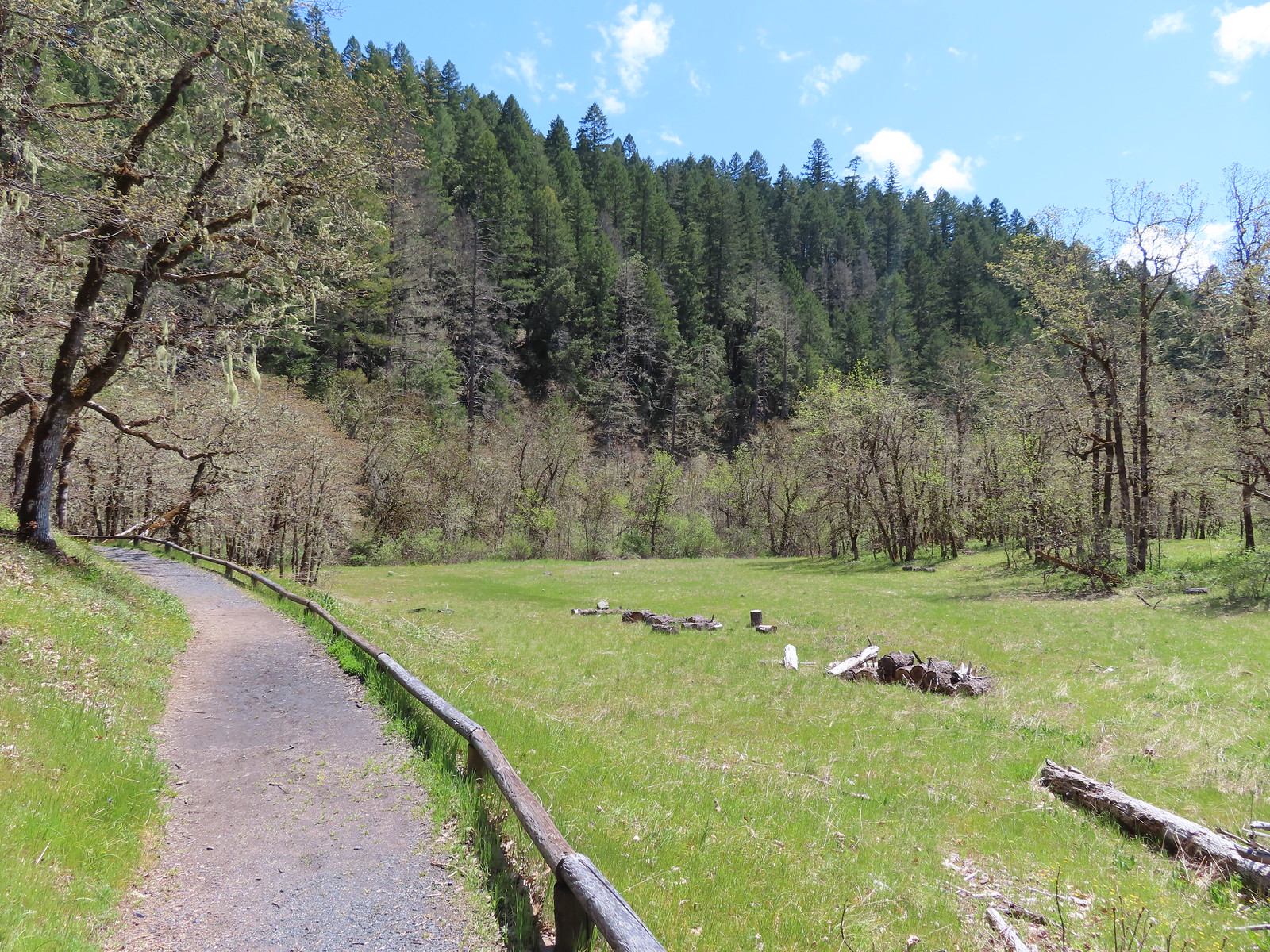
 The start/end of the loops with the bridge being our return route.
 Staying left.
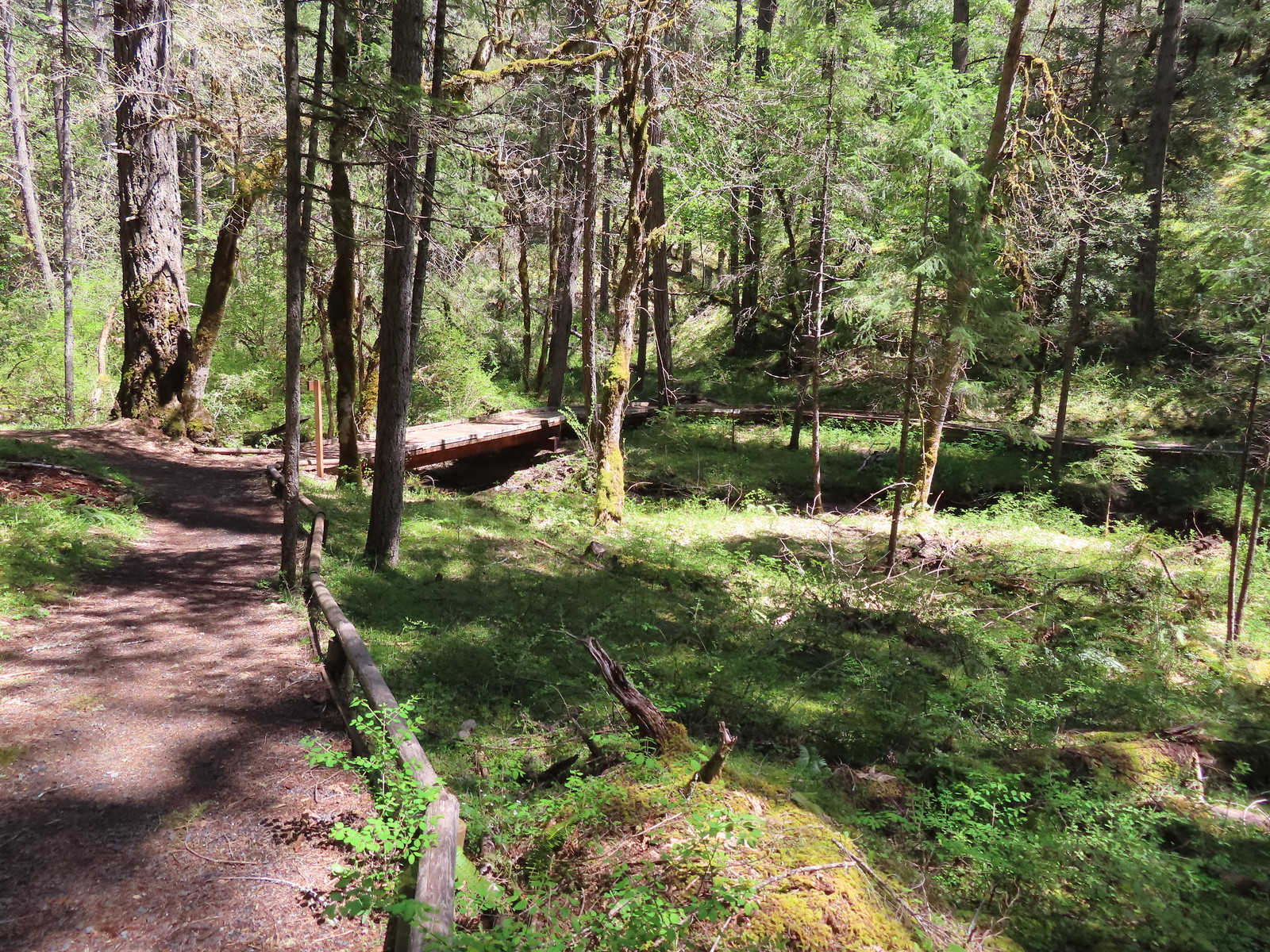 This was the barrier free loop splitting off and heading back across an unnamed creek.
 Sign announcing the hiker only extended loop.
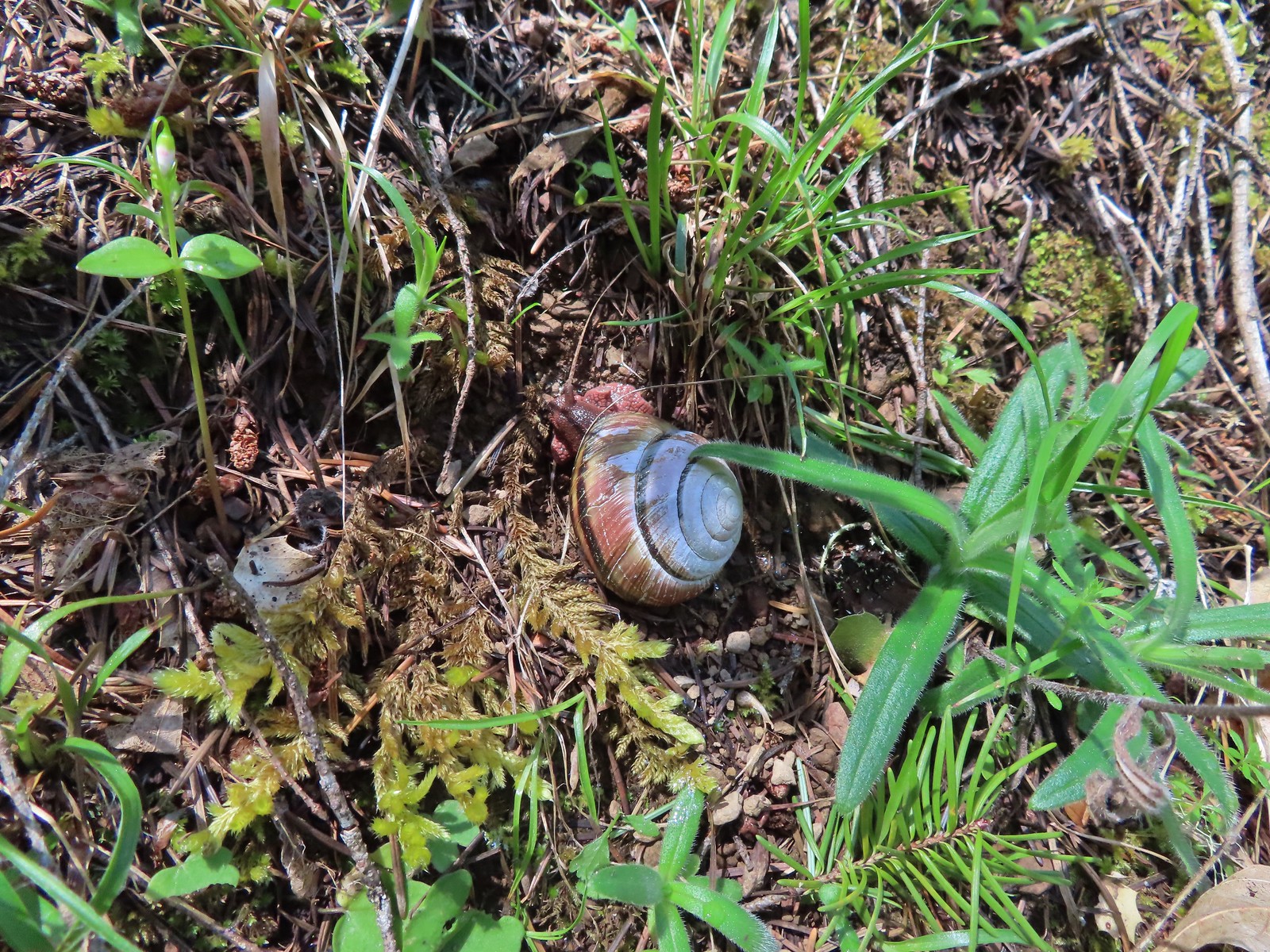 Snail
Snail The first vanilla leaf we’ve seen blooming this year.
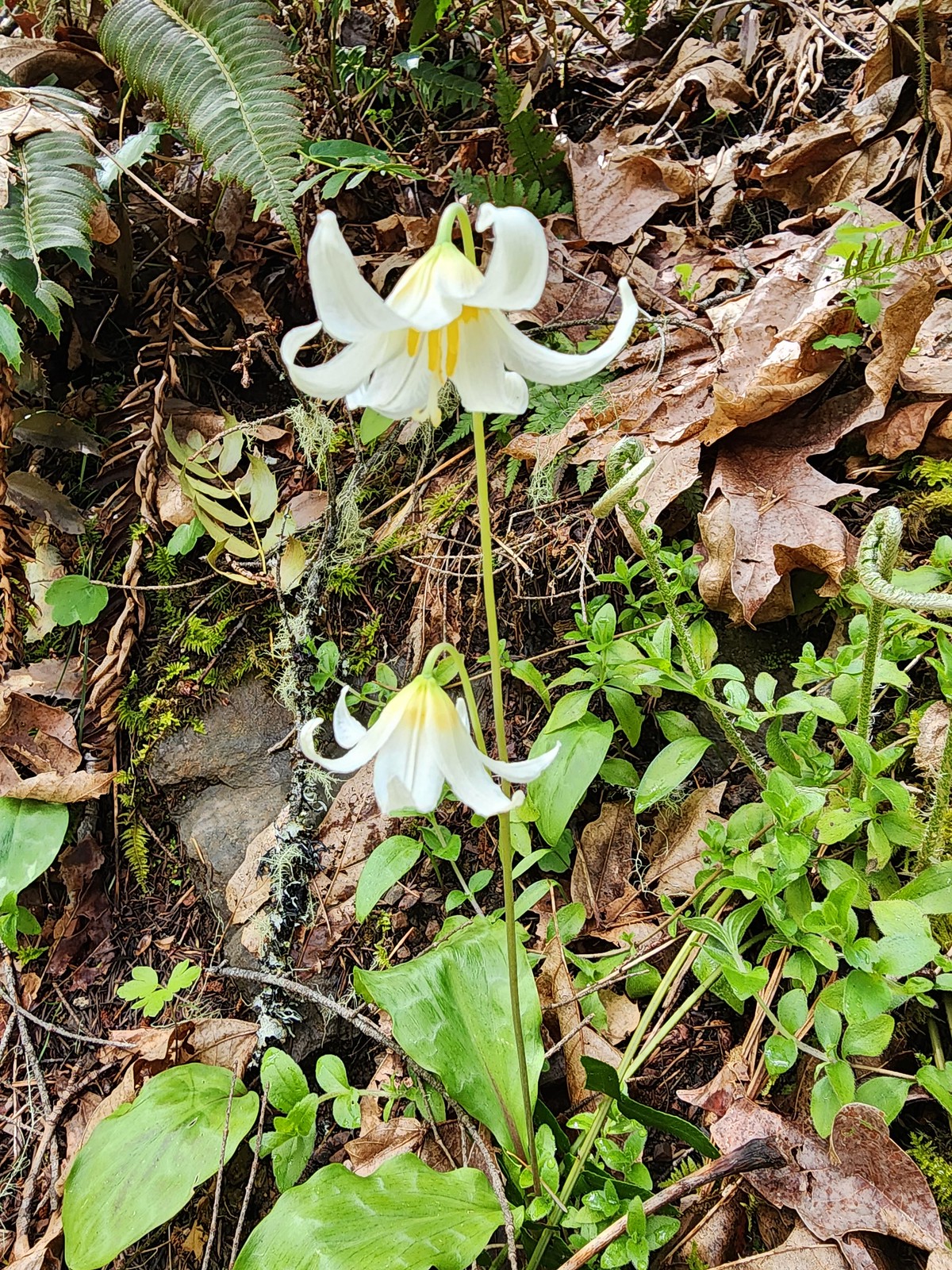 There were a bunch of fawn lilies blooming along this trail.
 One of several little footbridges across side streams.
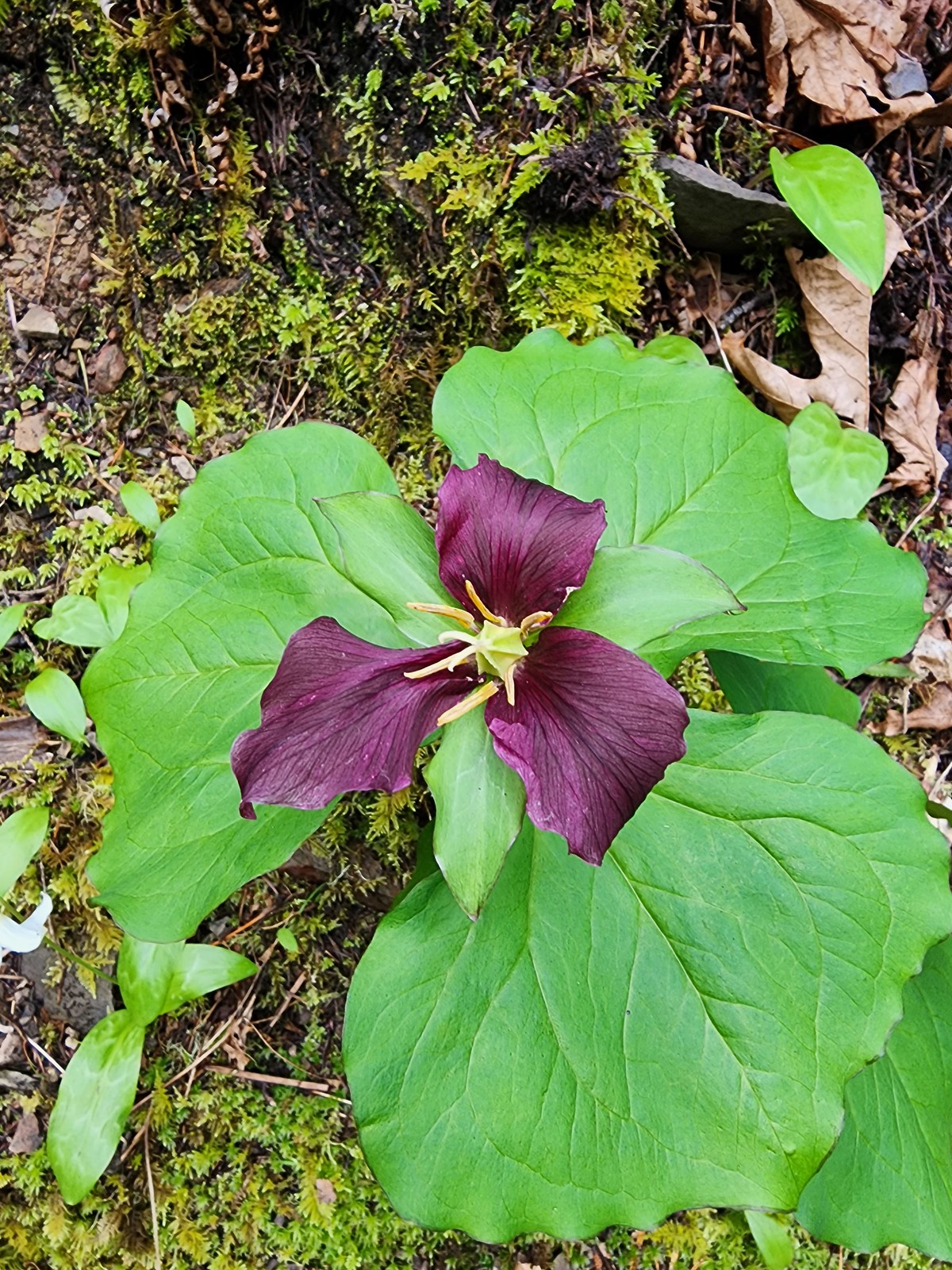 Trillium
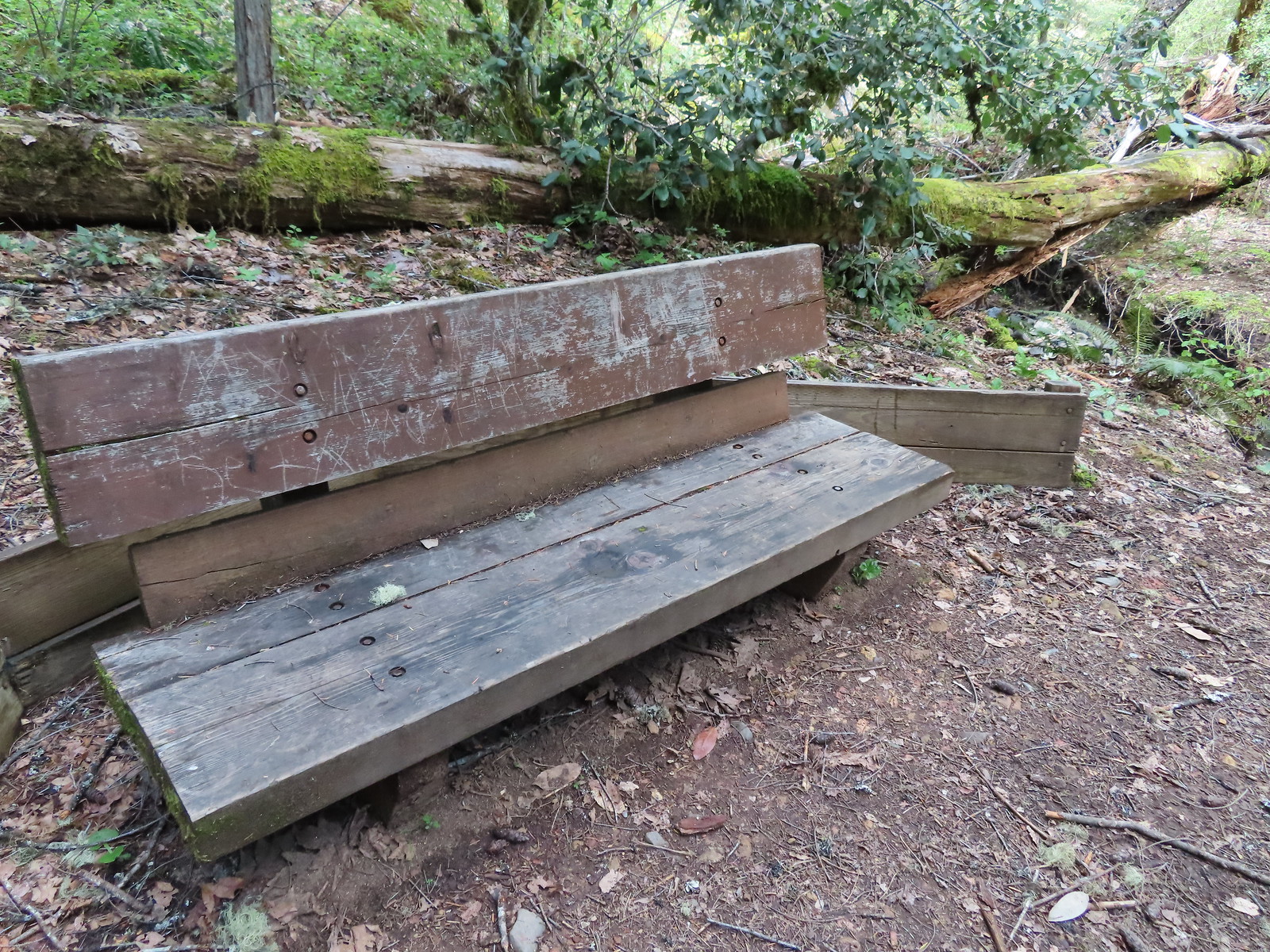 Bench where the trail turned to head back on the opposite side of the unnamed creek.
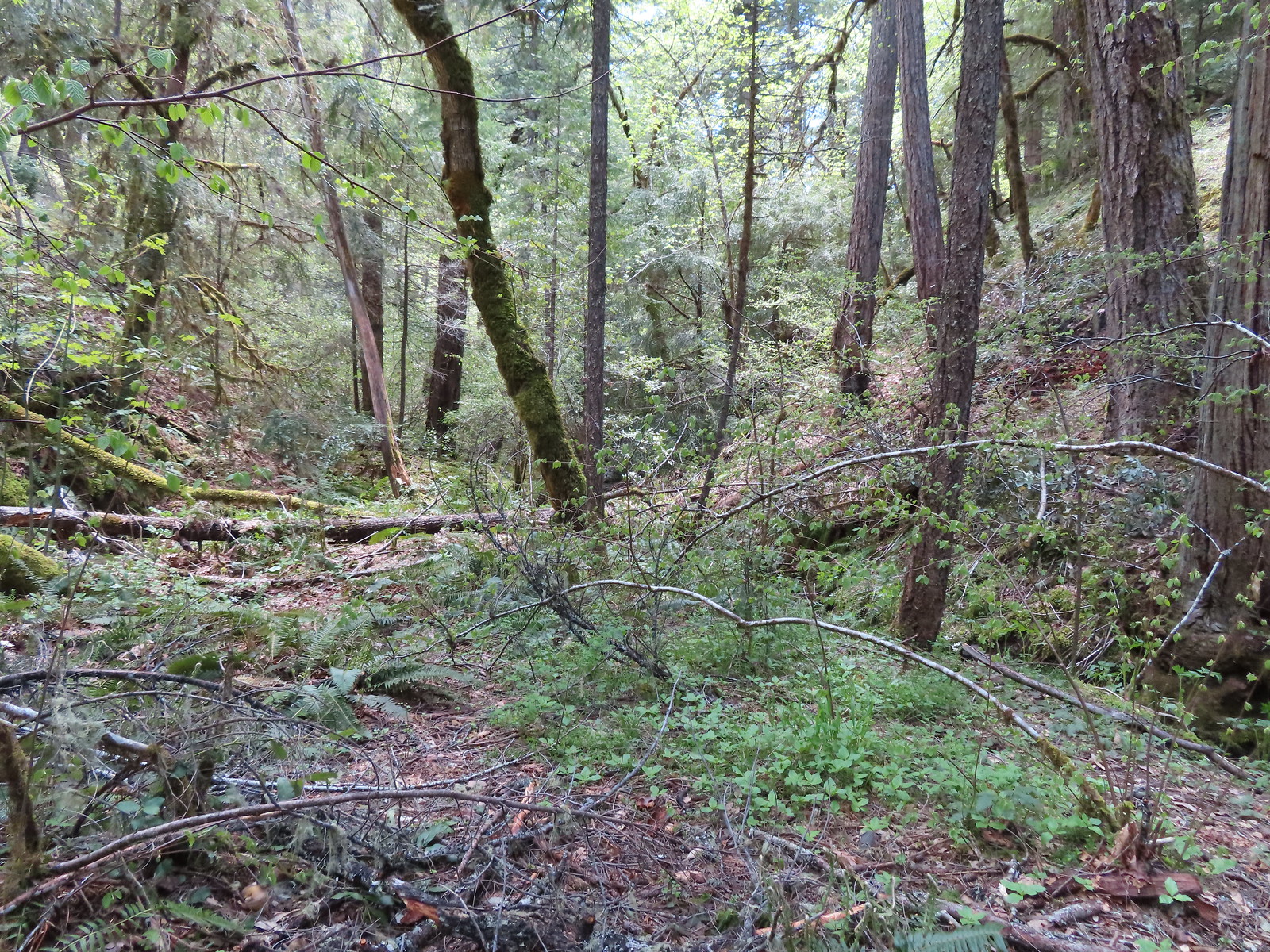 The view from the bench.
 Houndstongue
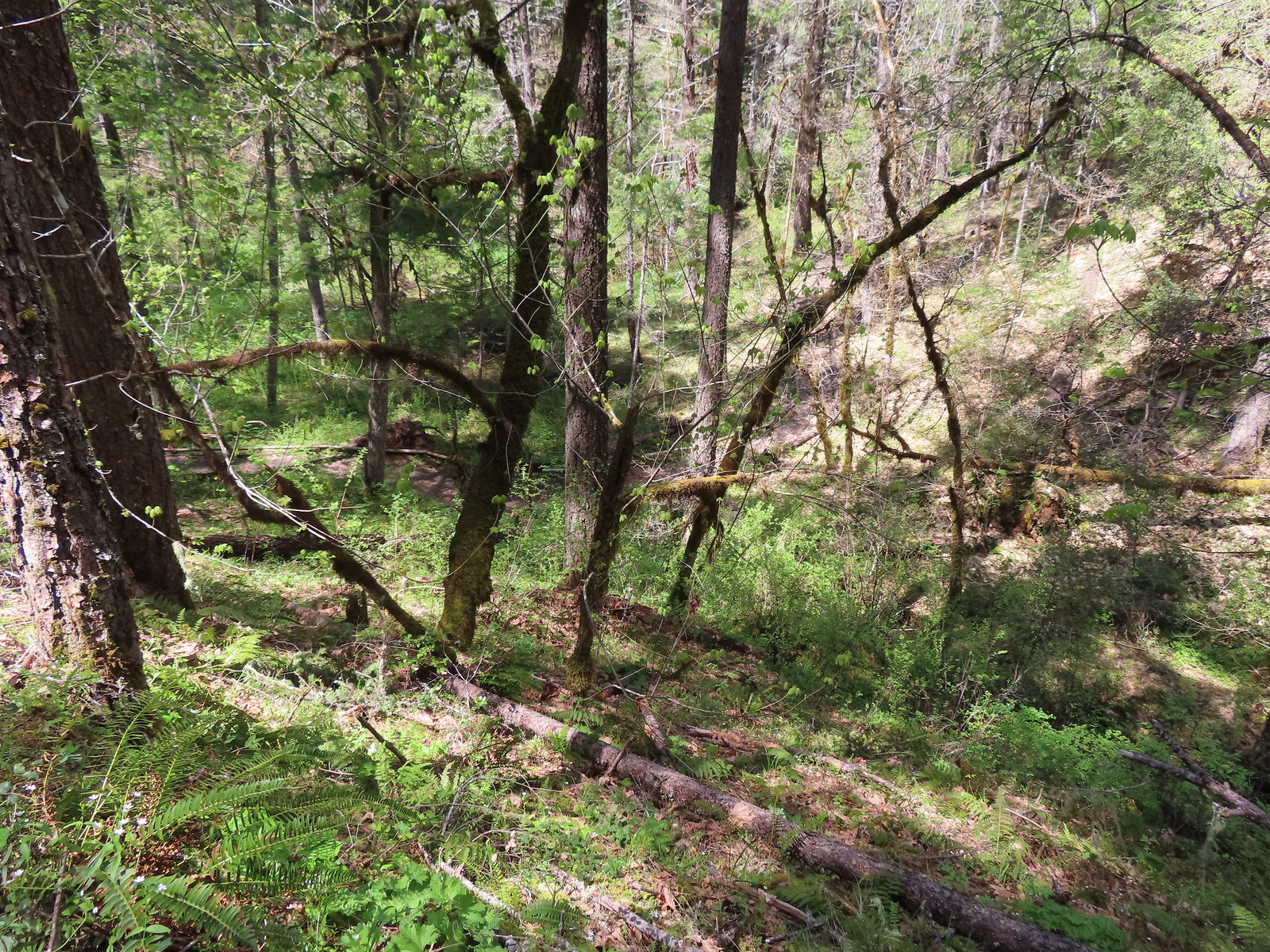 The barrier free trail below in the trees.
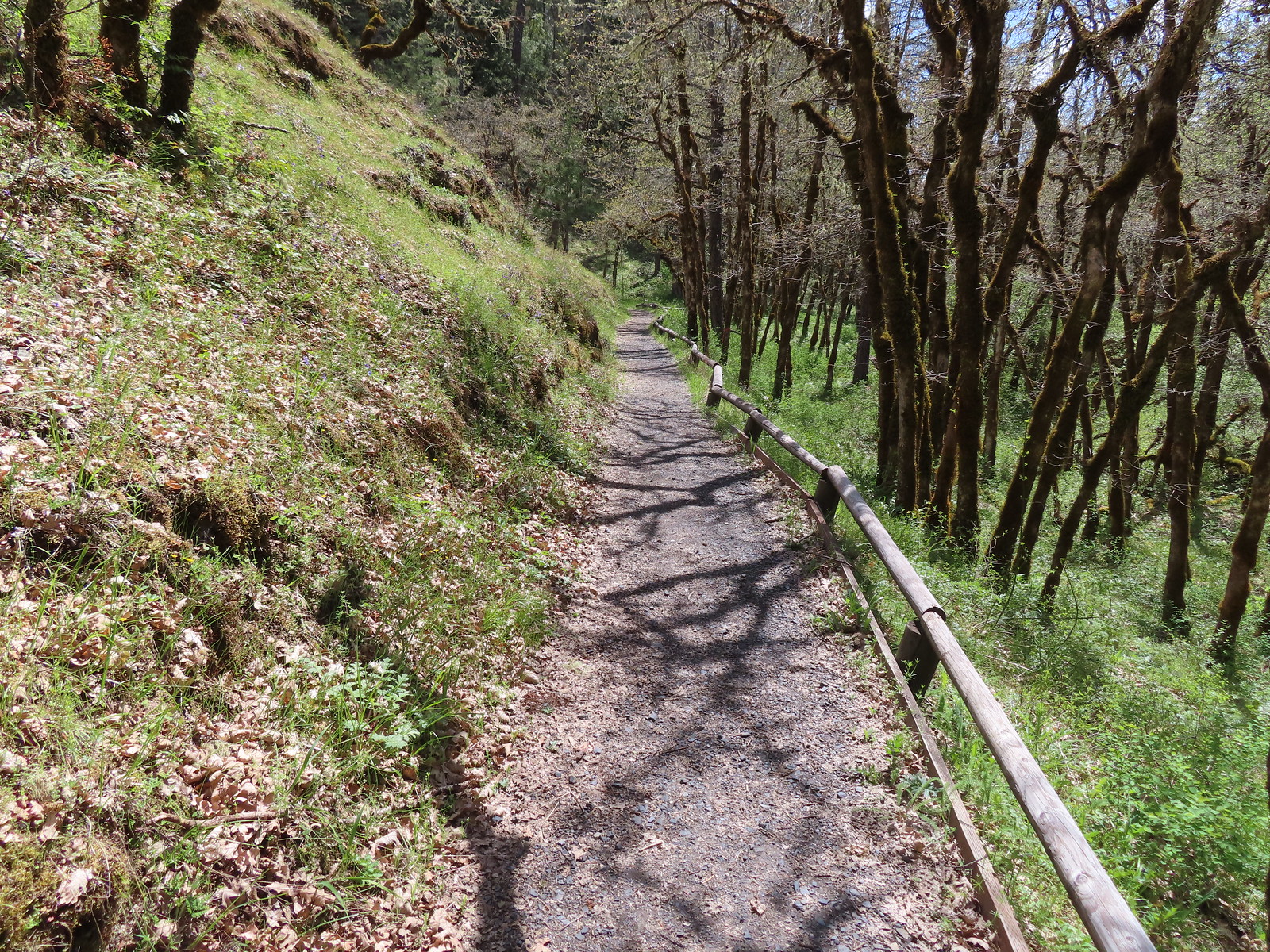 Back on the barrier free trail.
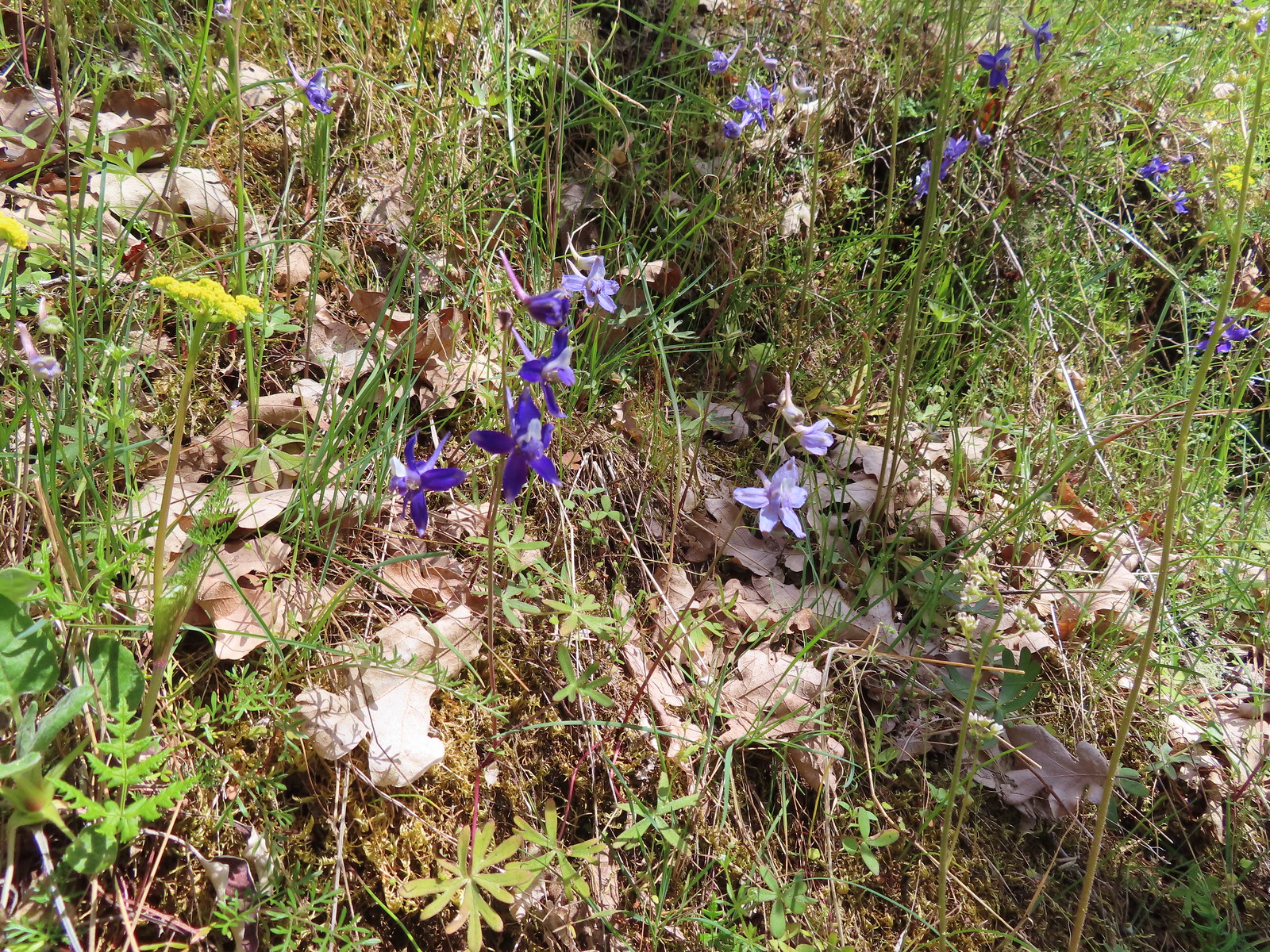 Biscuitroot and larkspur
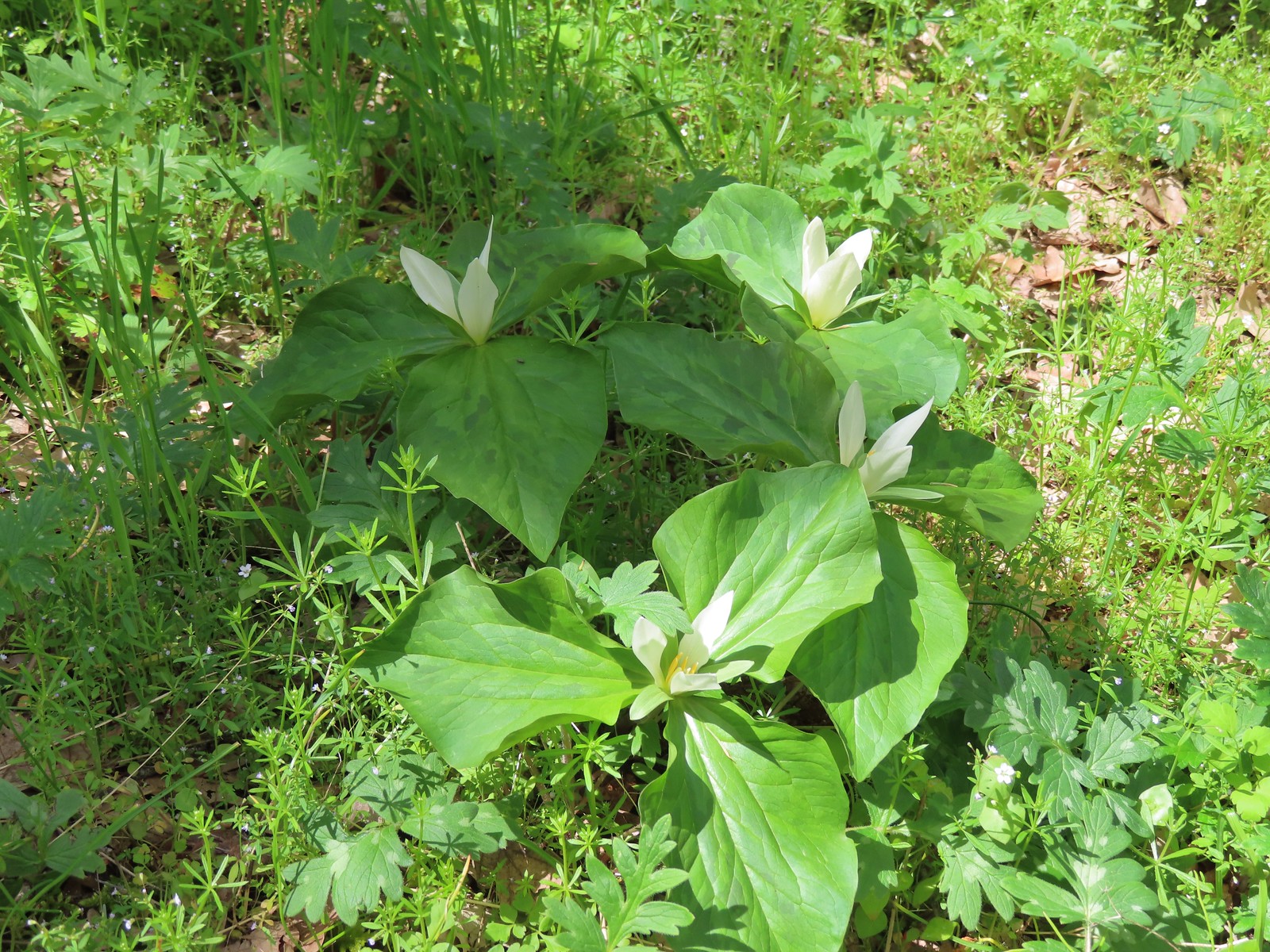 Giant white wakerobin
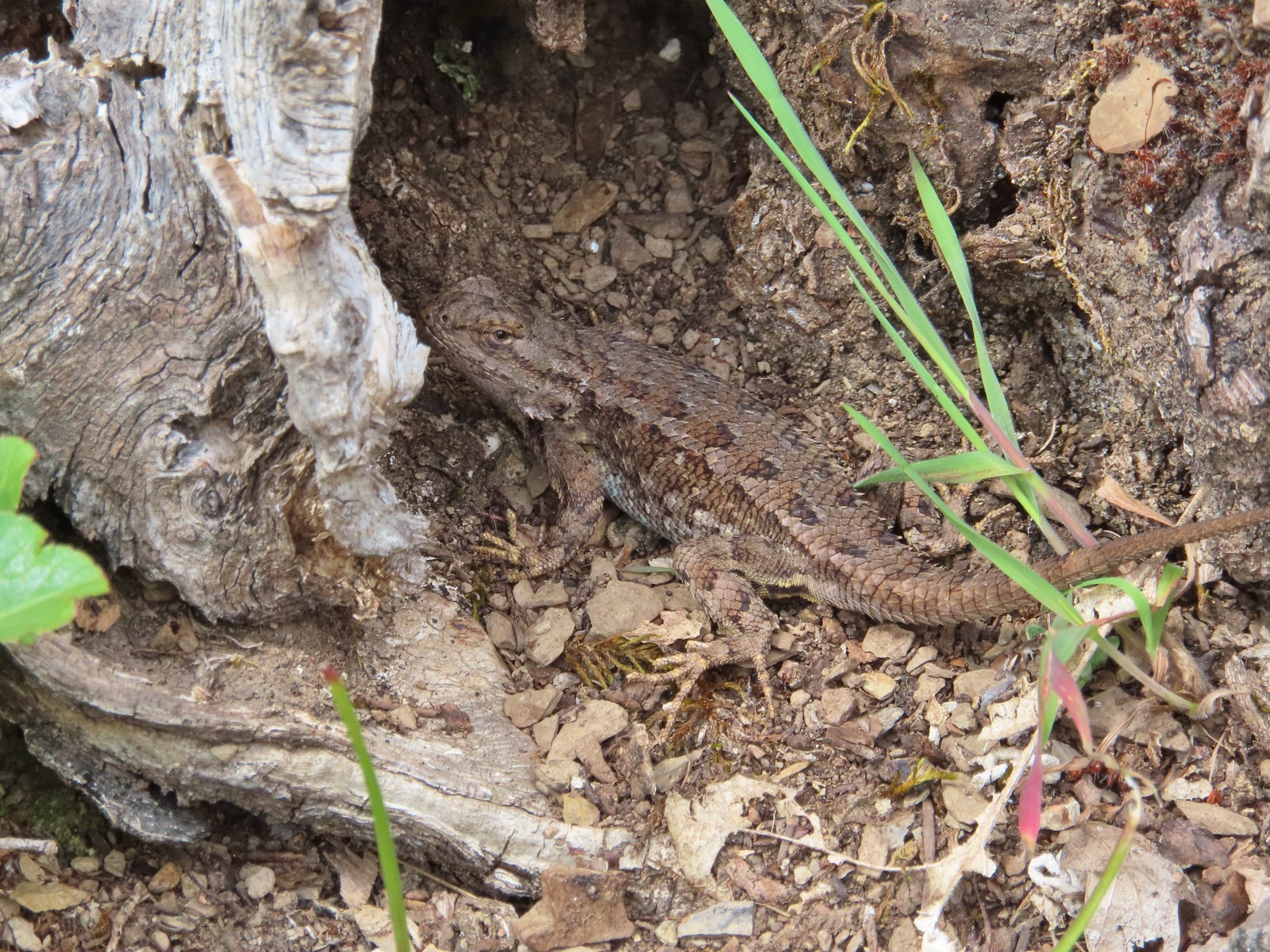
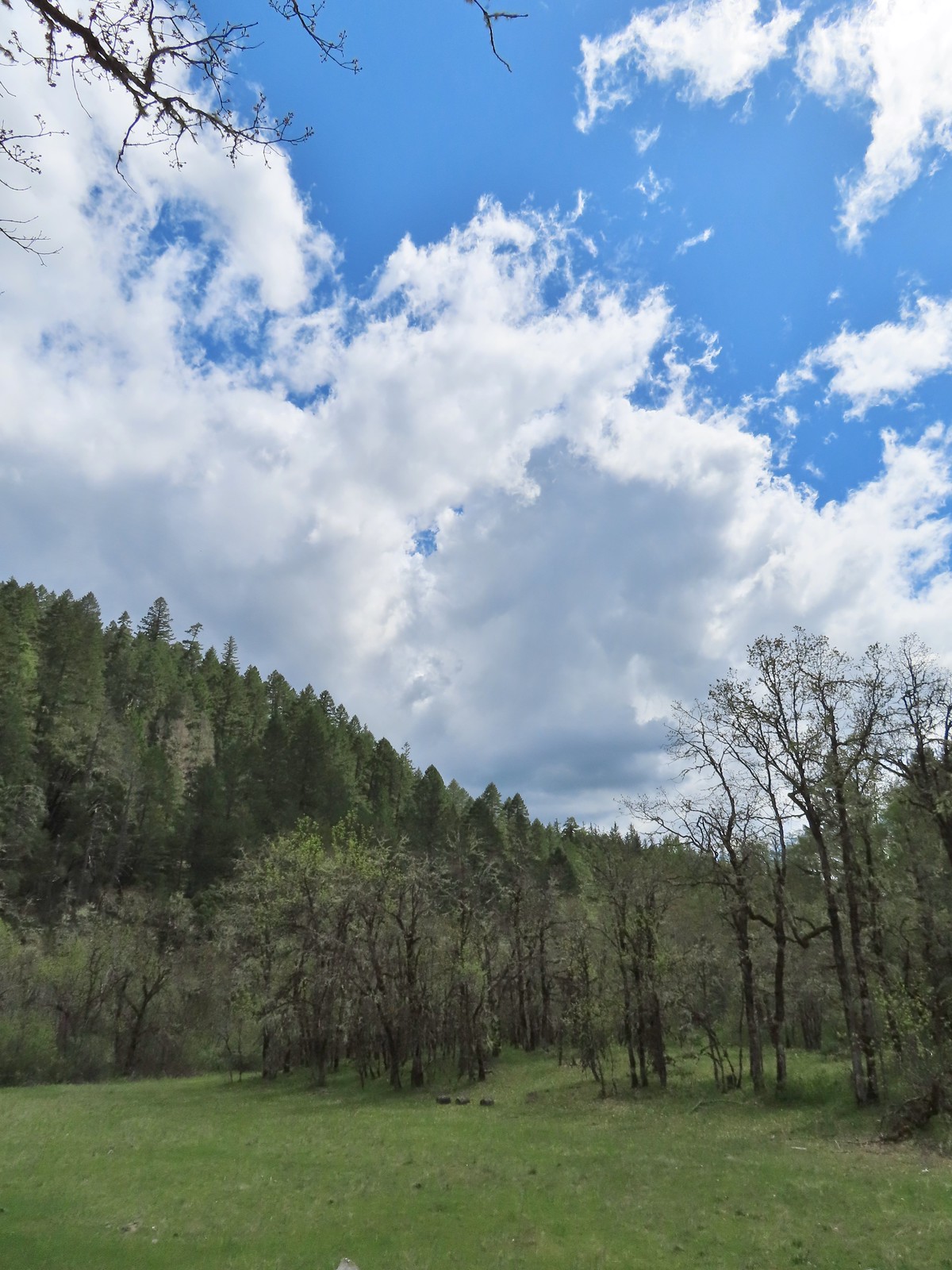 The Sun was starting to shine a bit as we passed back by the meadow which brought out some butterflies and lots of lizards.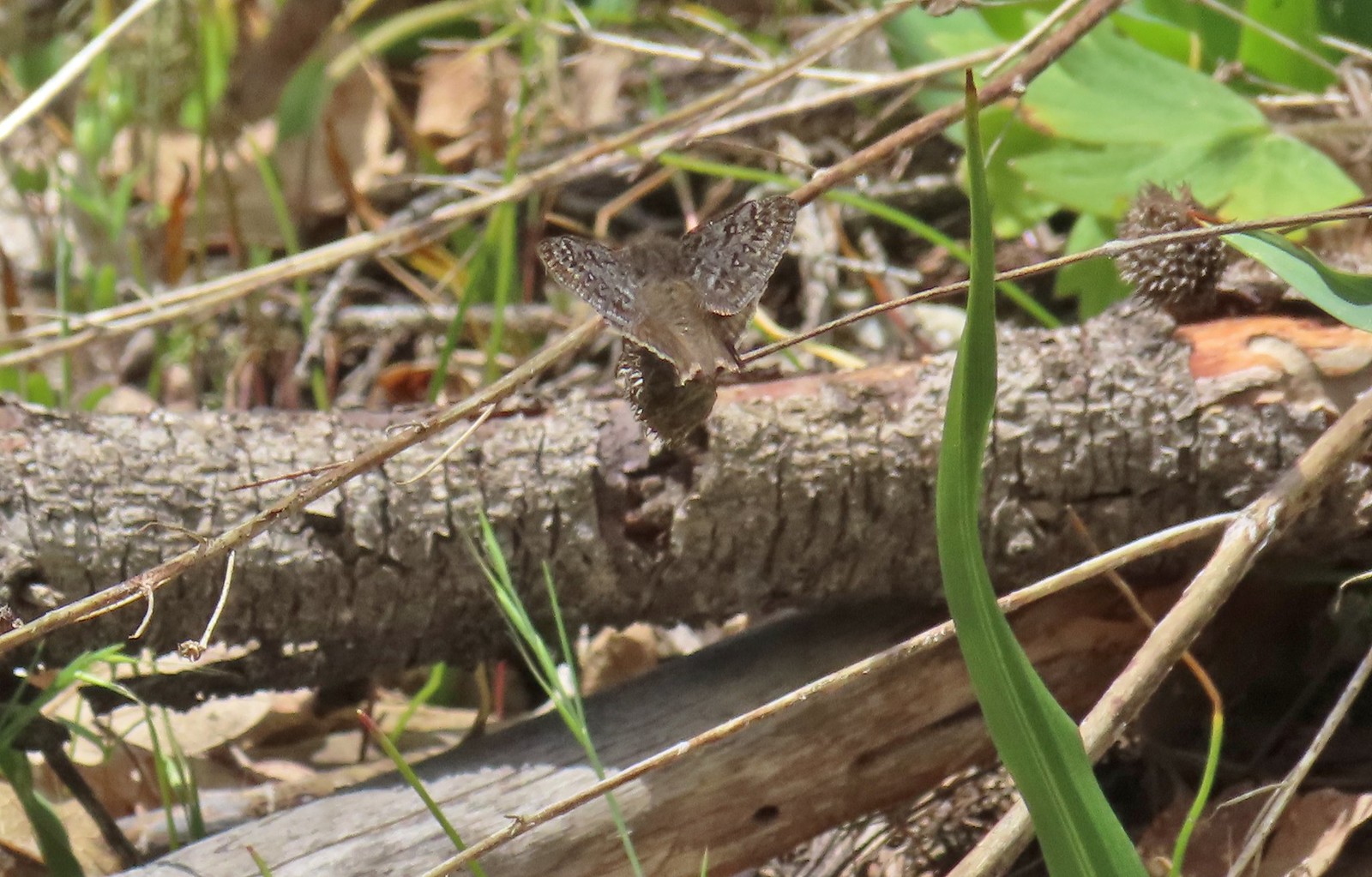


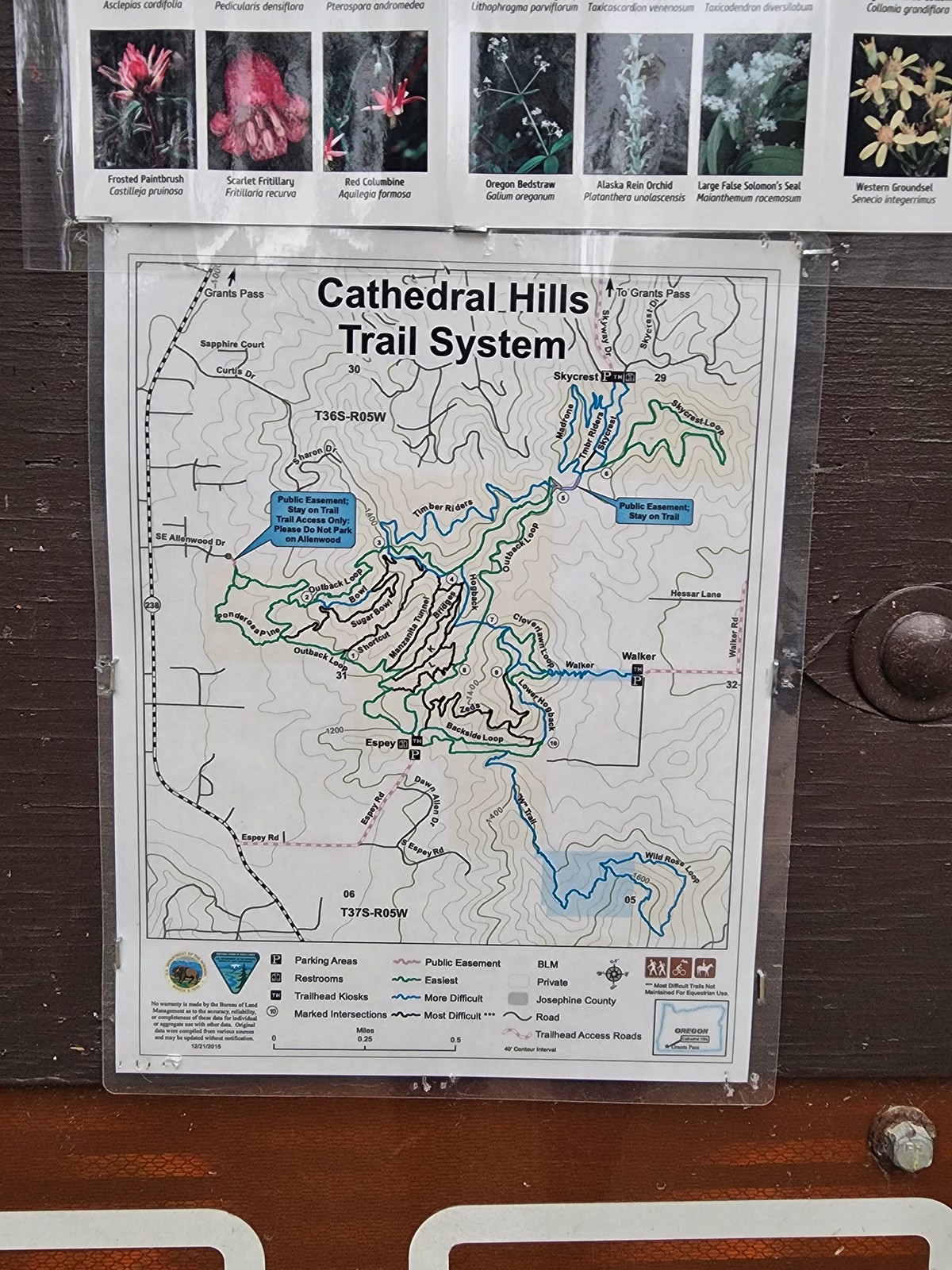
 There are a couple of the red Indian warrior behind and to the right of the trail marker.
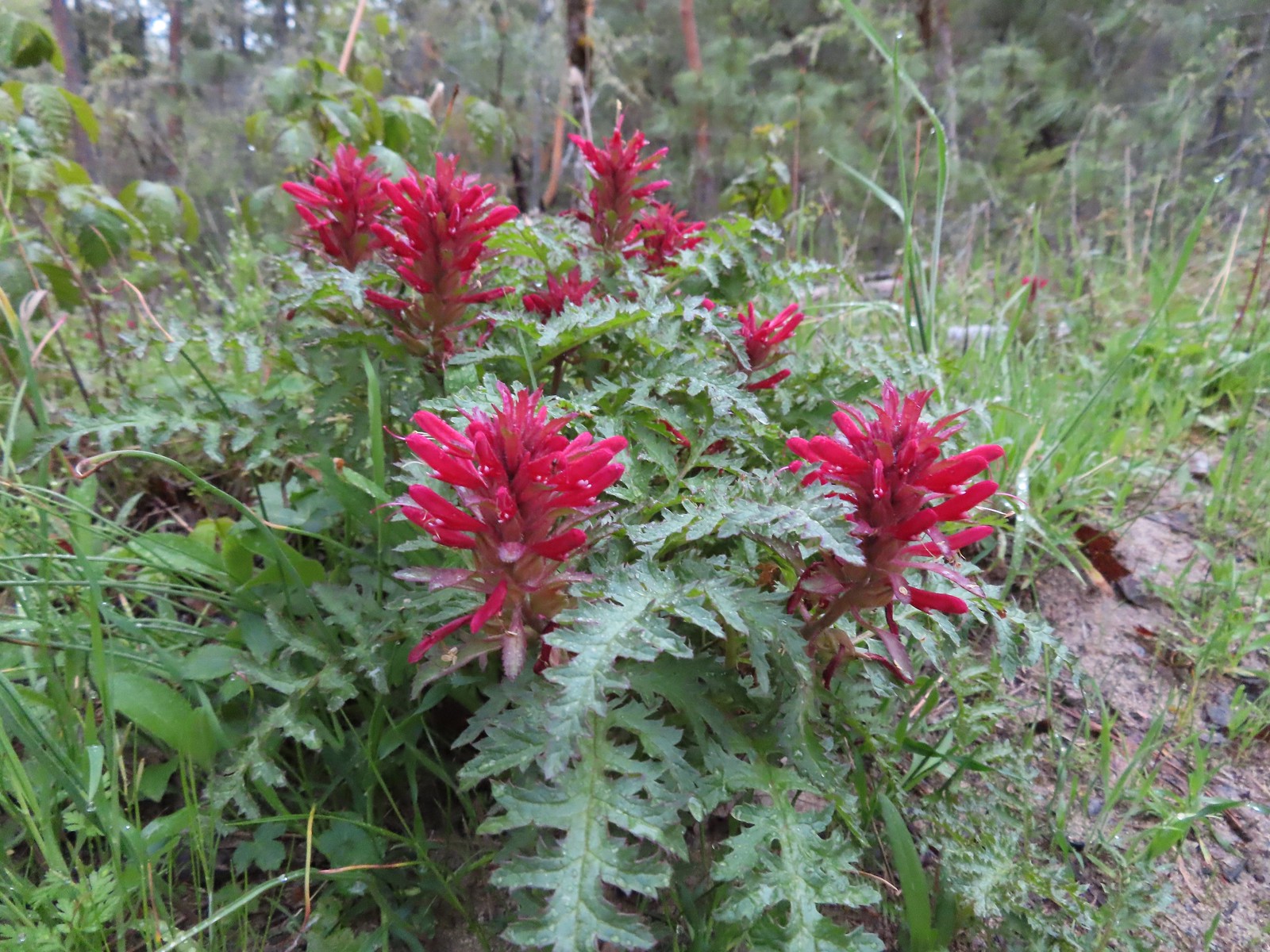 Indian warrior lousewort
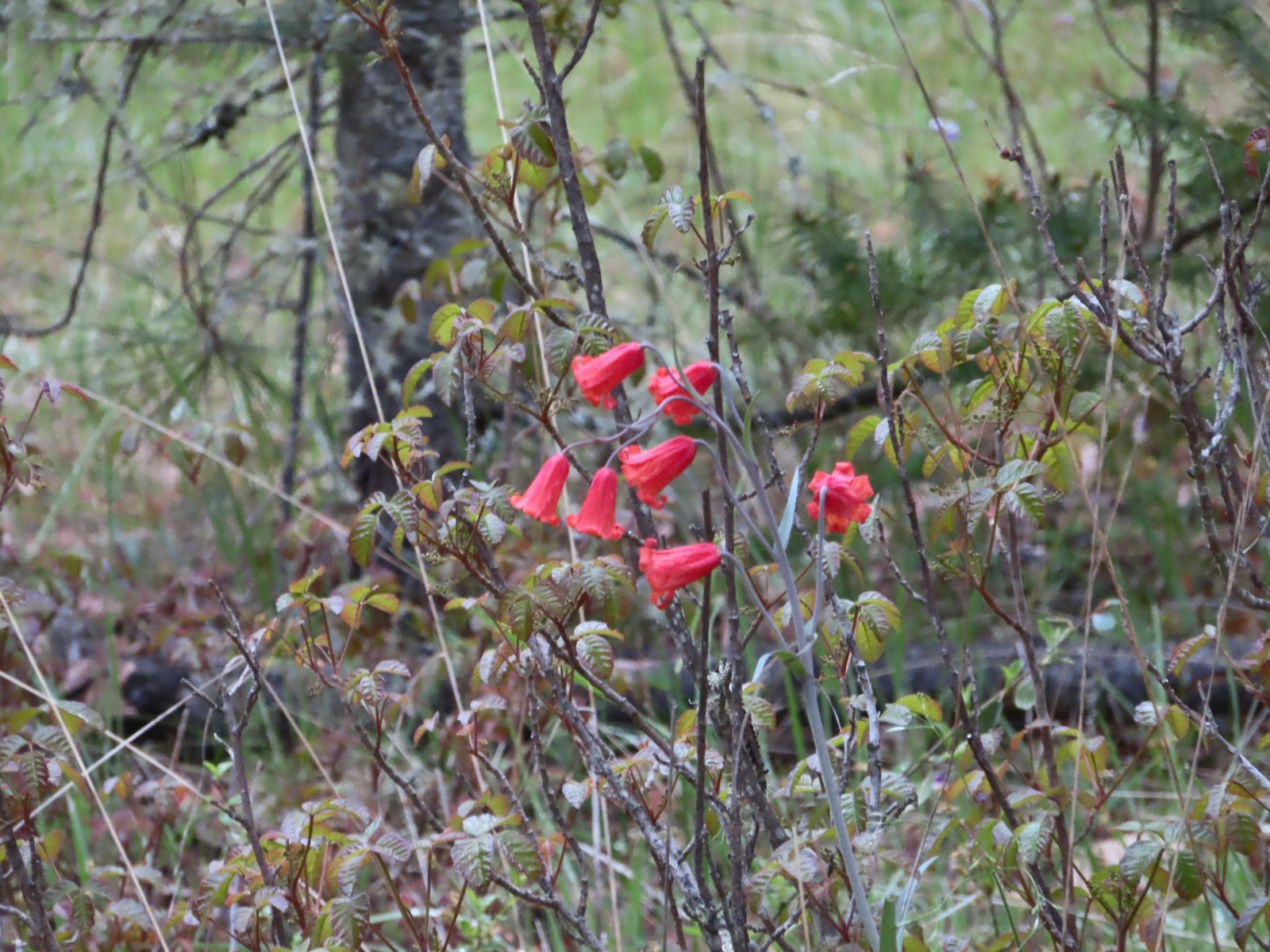 Scarlet fritillary along with poison oak. There was a lot of poison oak in the area but the trails were wide enough to keep users away from it.
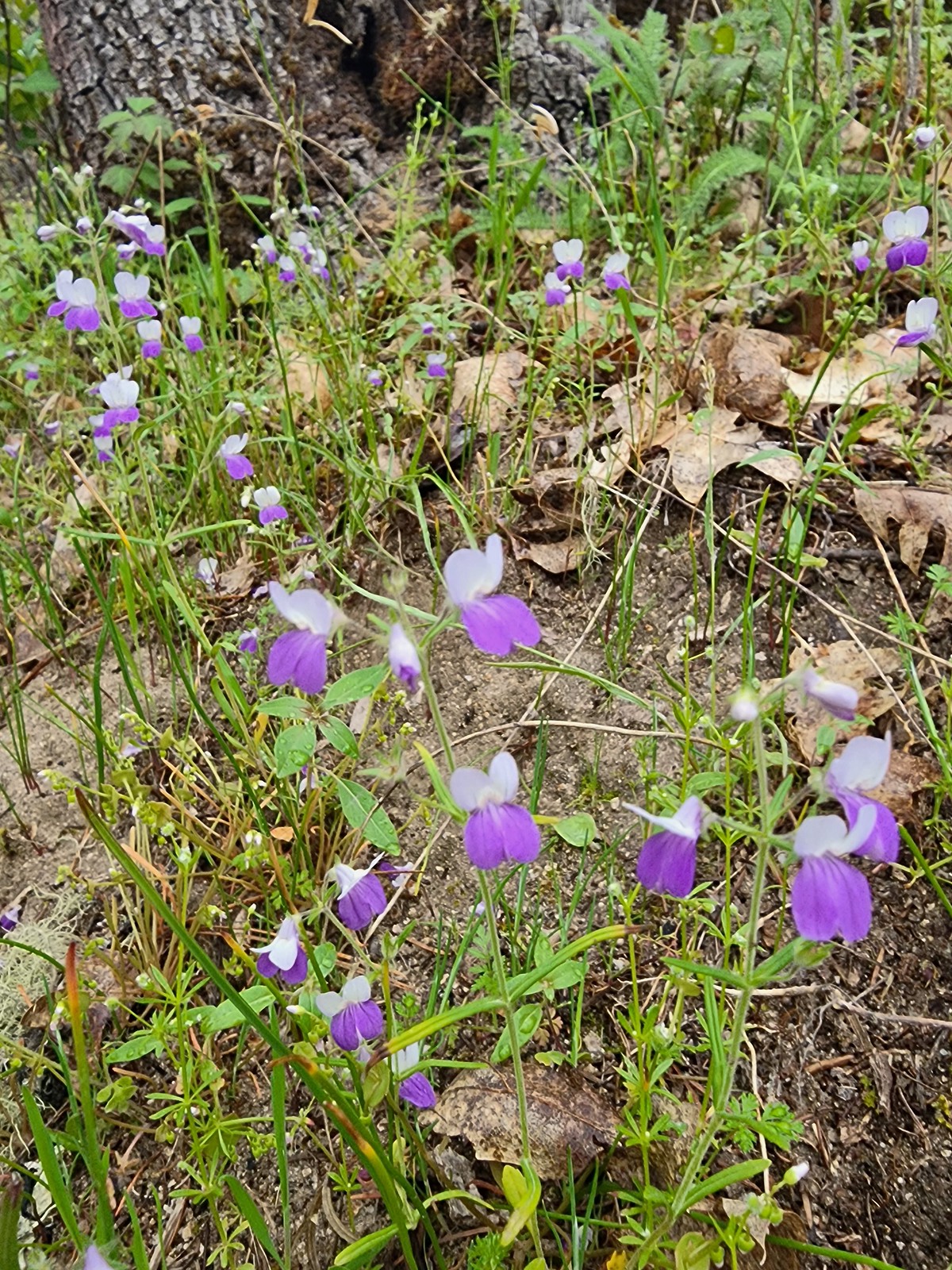 A blue-eyed Mary
 Shooting star
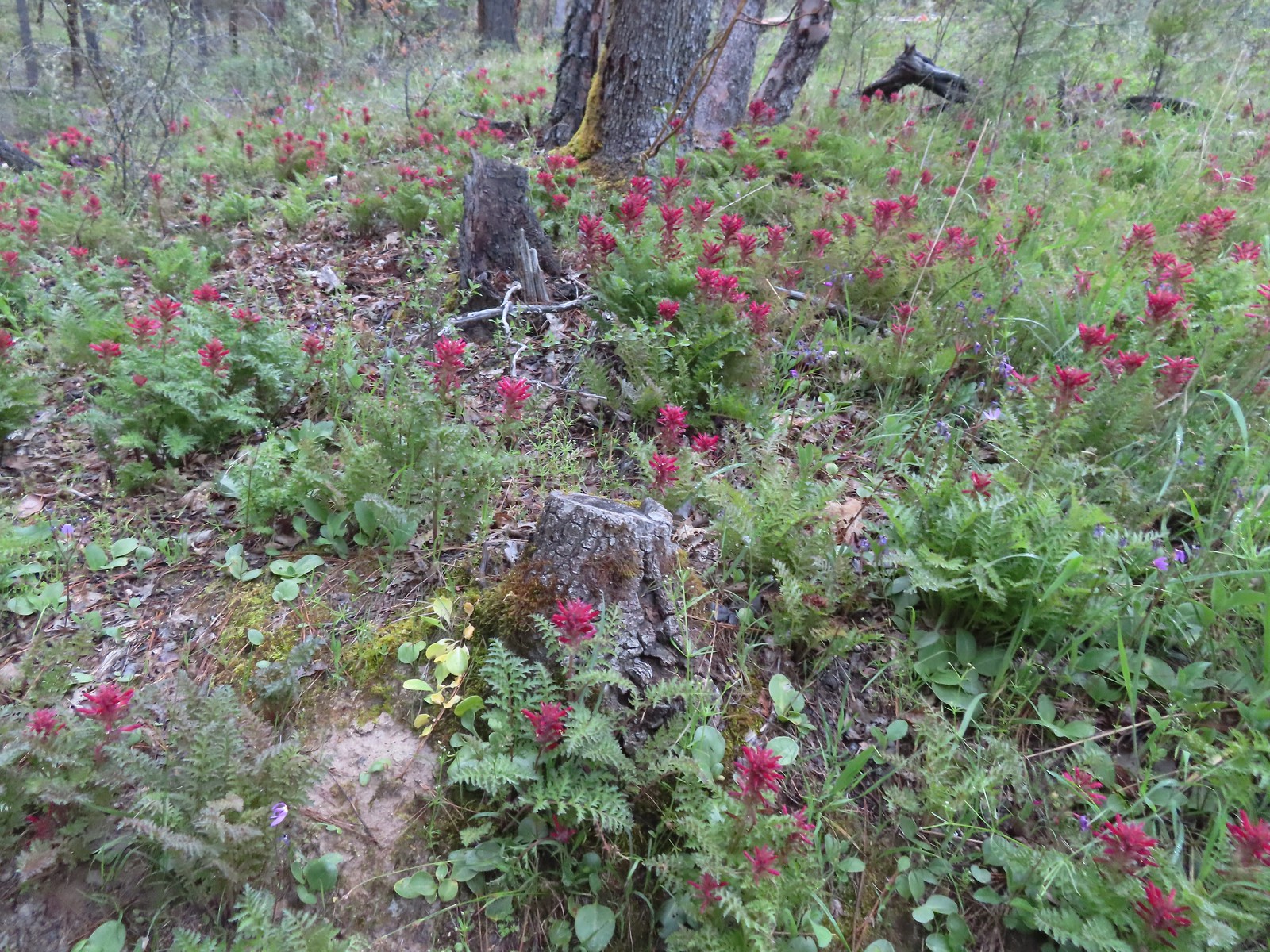 Indian warrior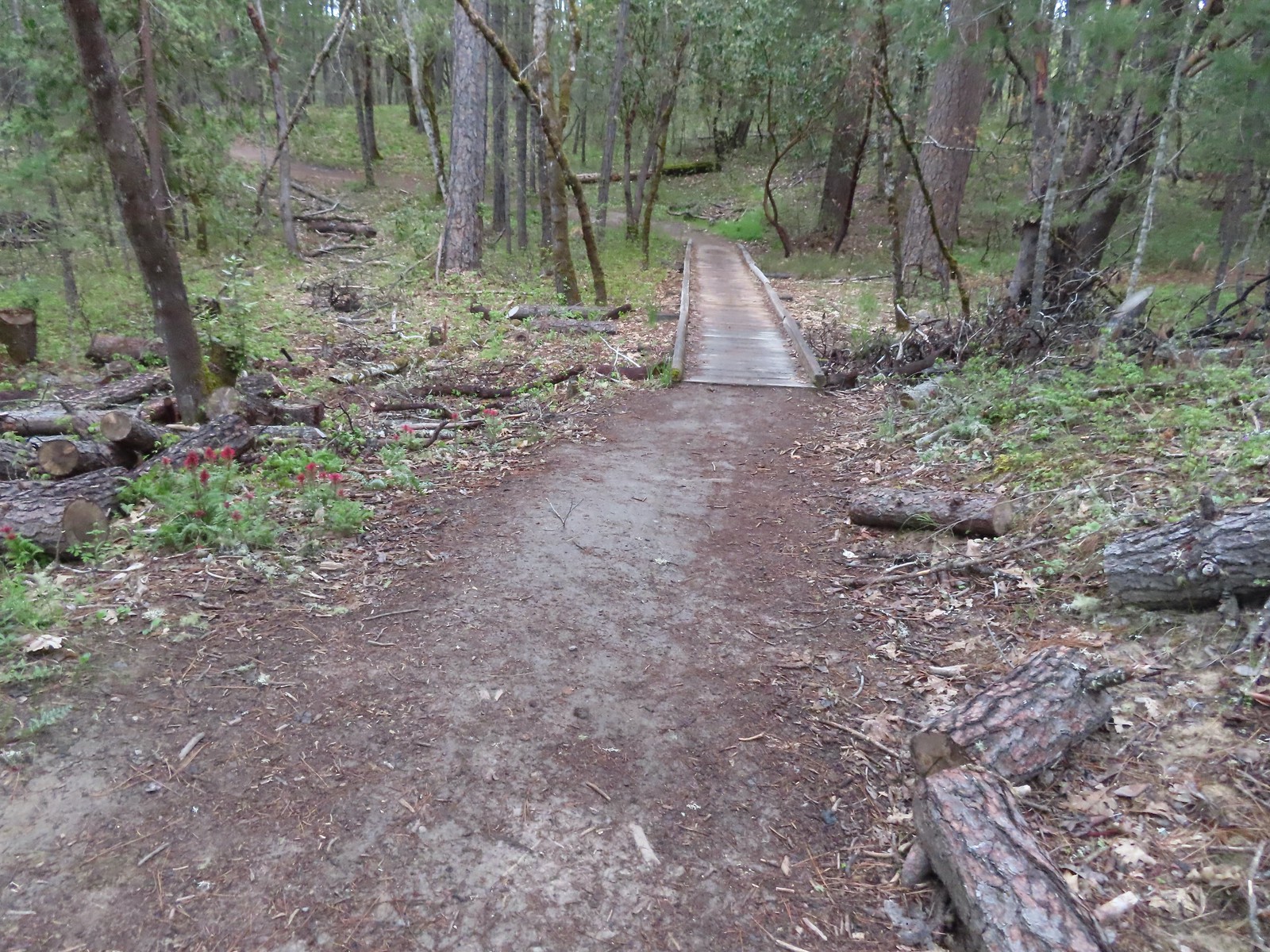
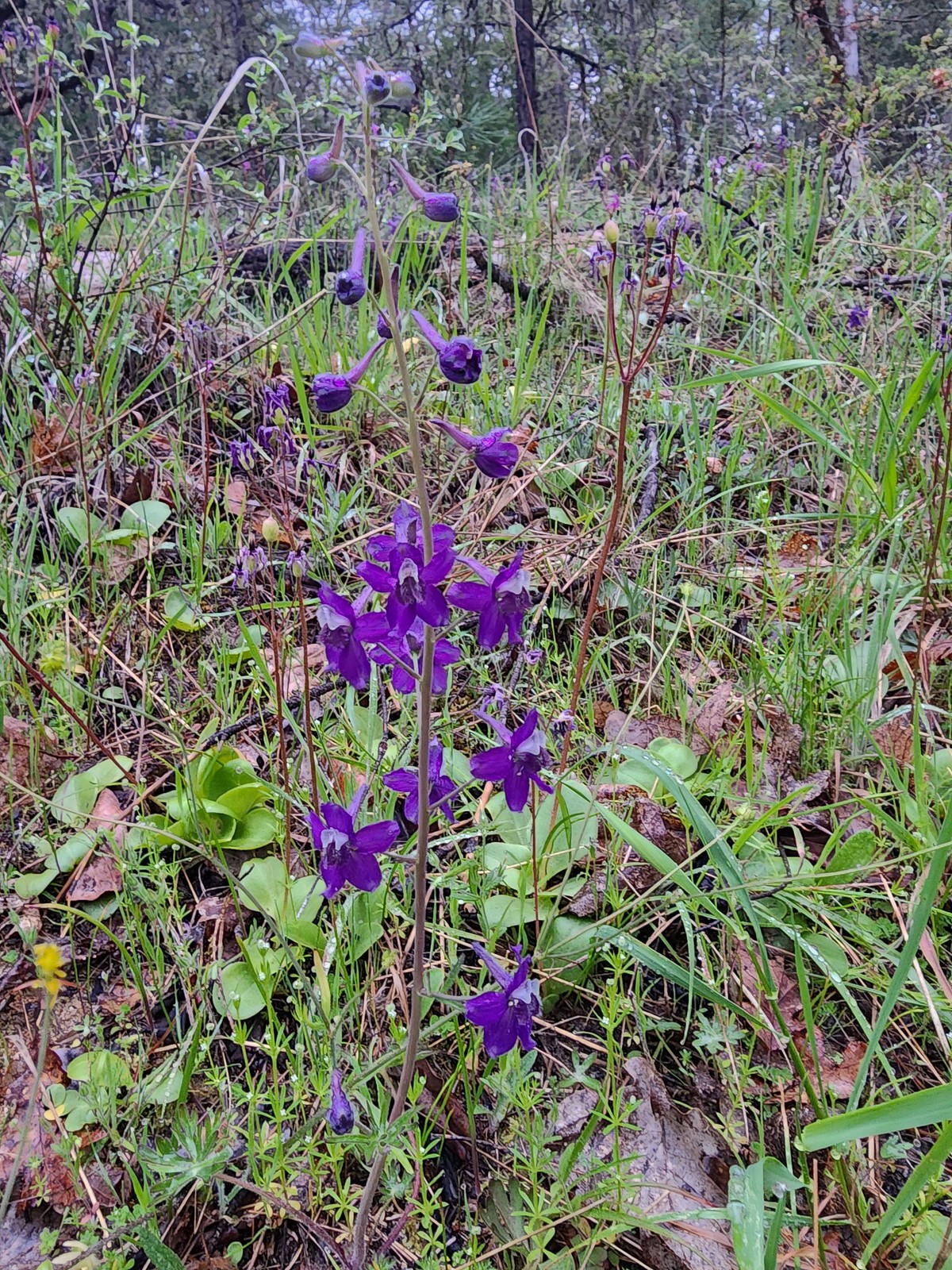 Larkspur
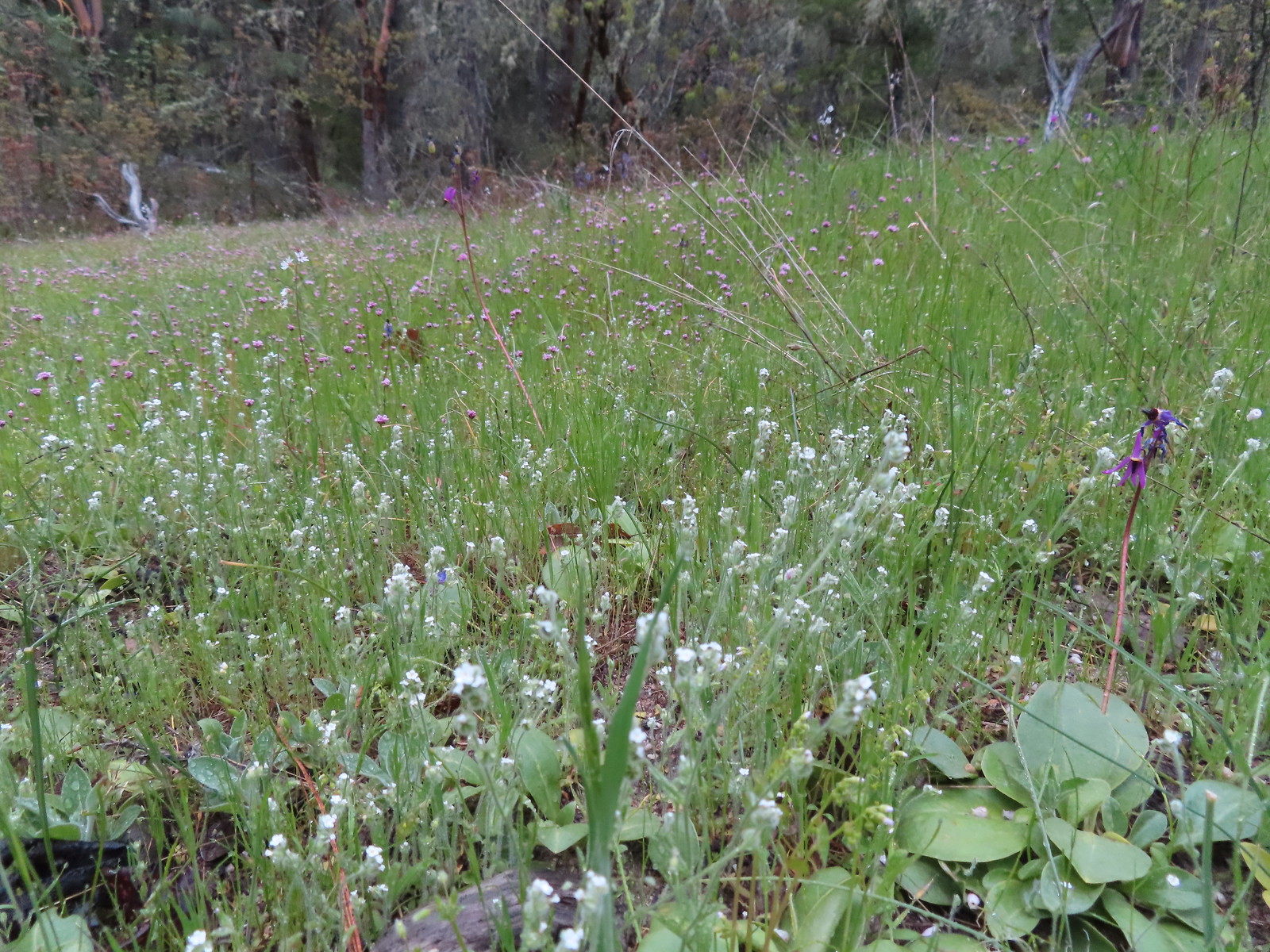 Cryptantha, shooting stars, and plectritis
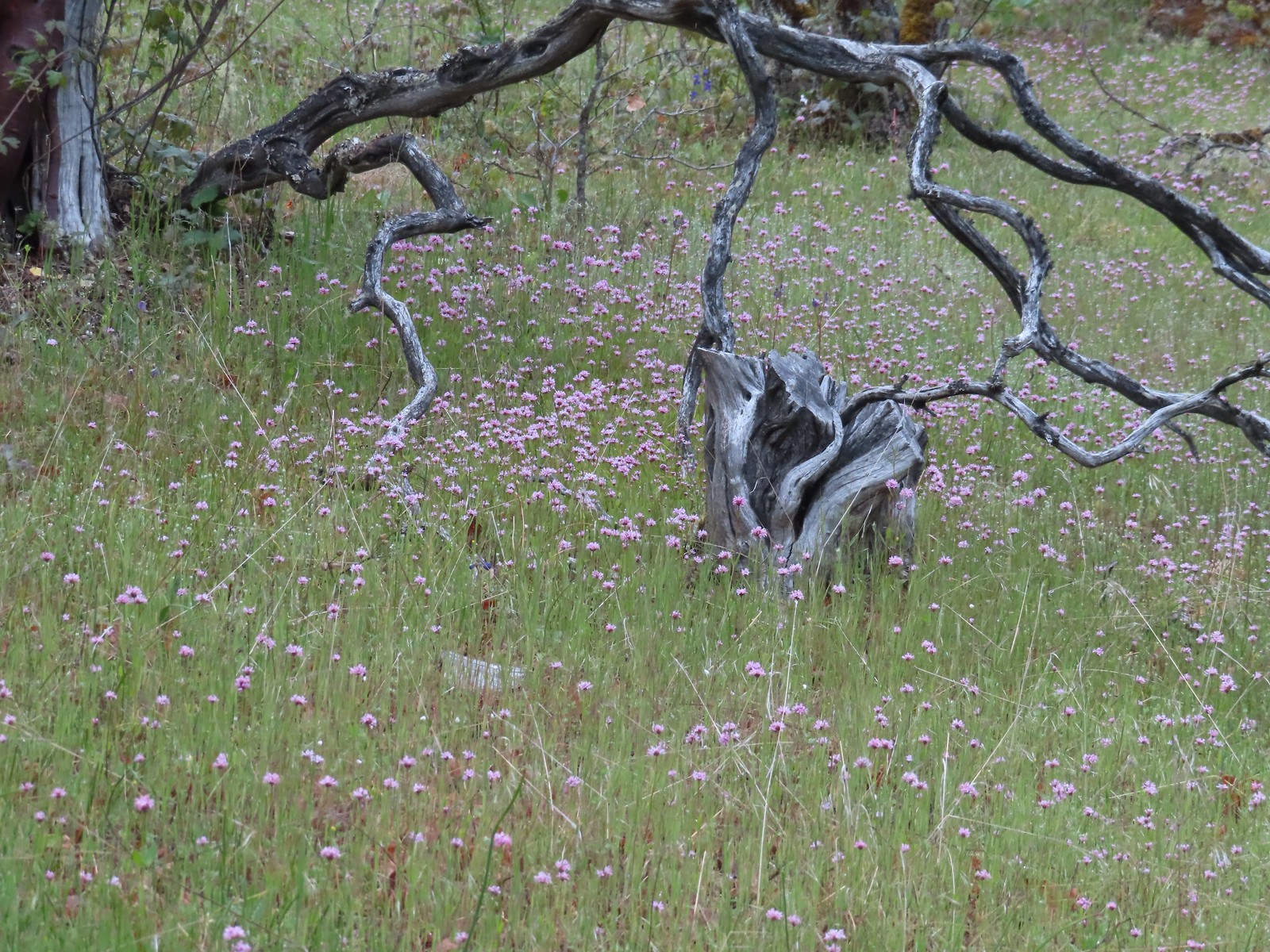 Plectritis
 Pacific houndstongue
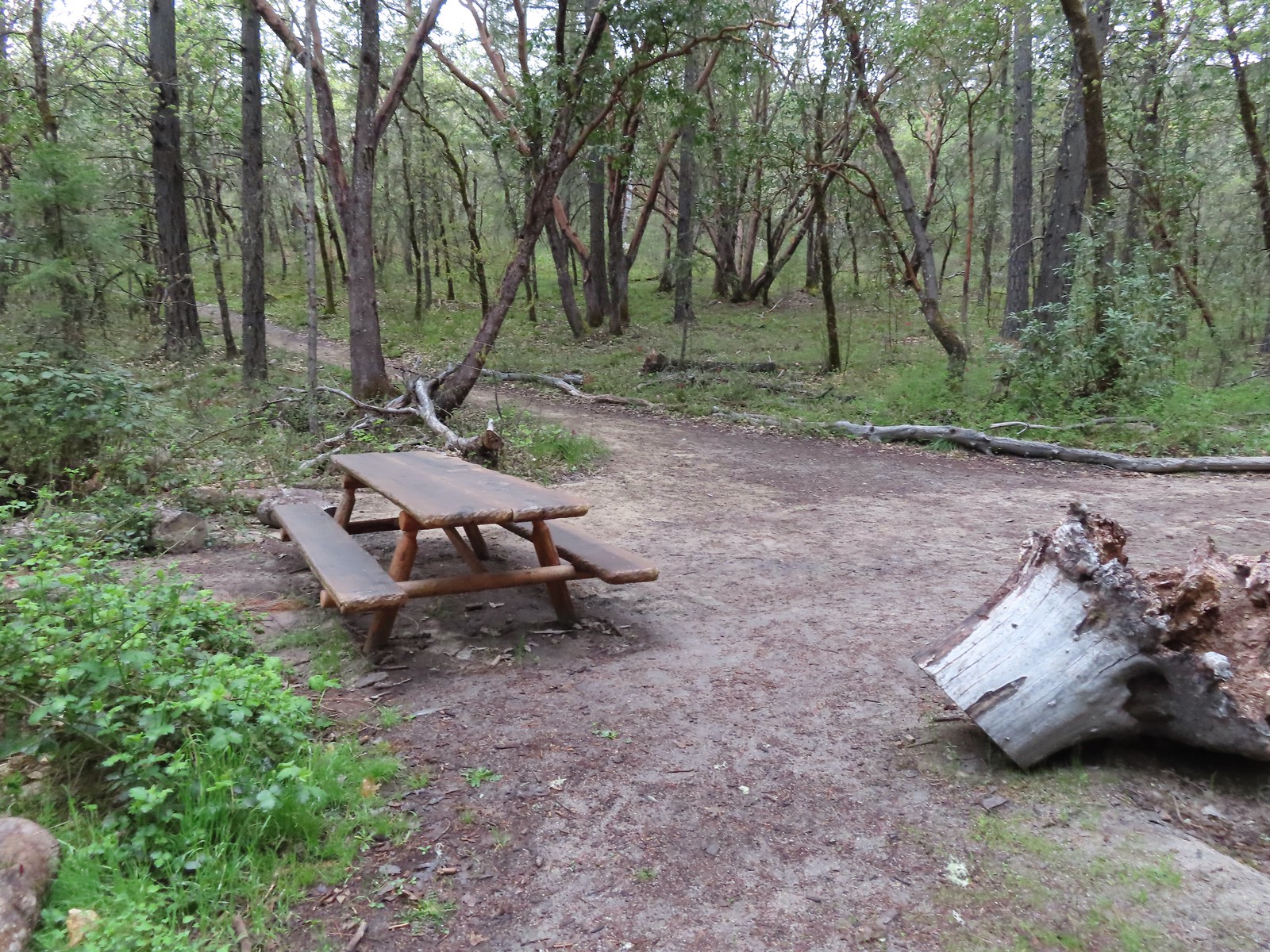 A picnic table at the junction with the Hogback Trail.
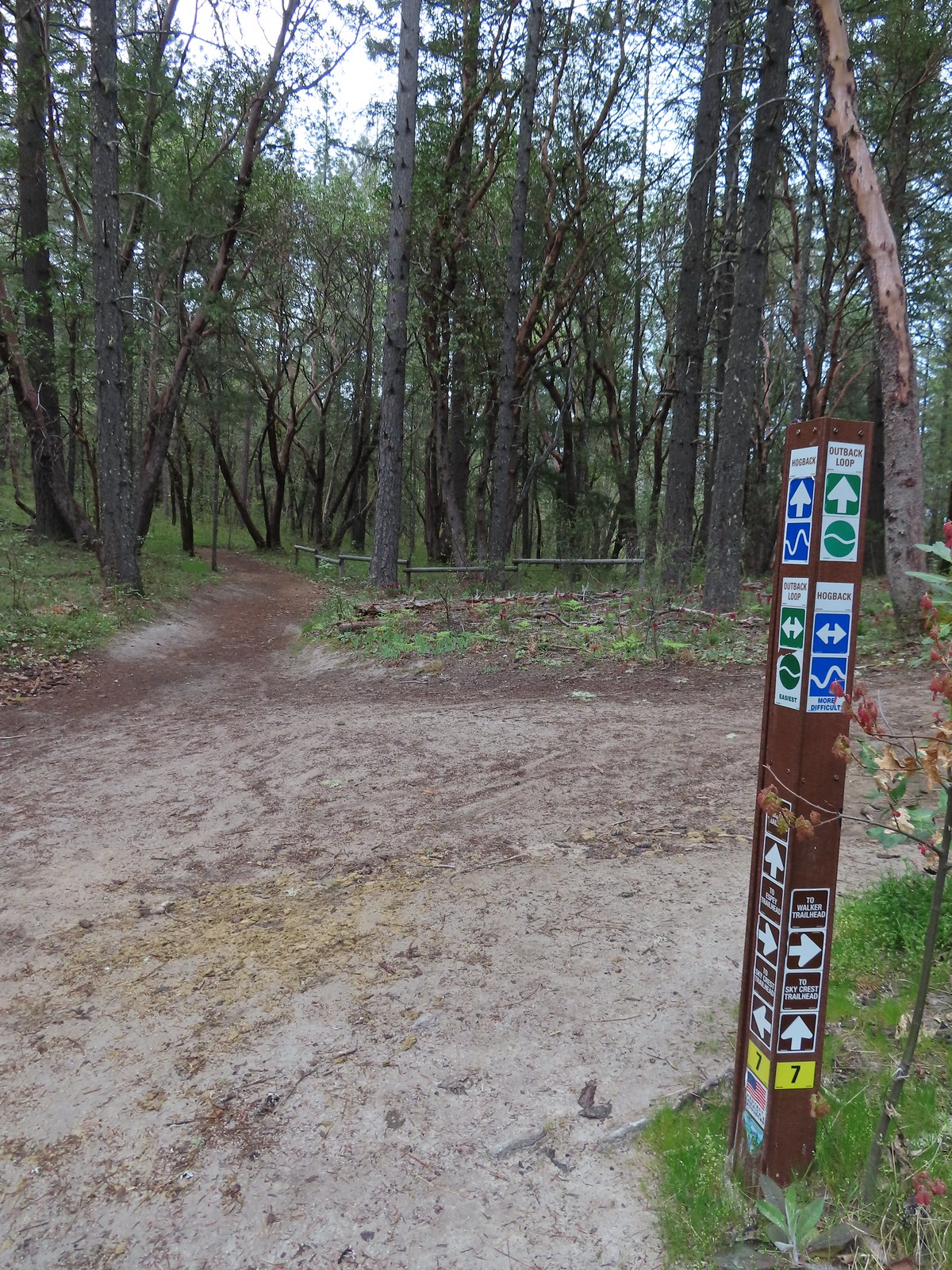 Most of the junctions had markers.
 Giant white wakerobin
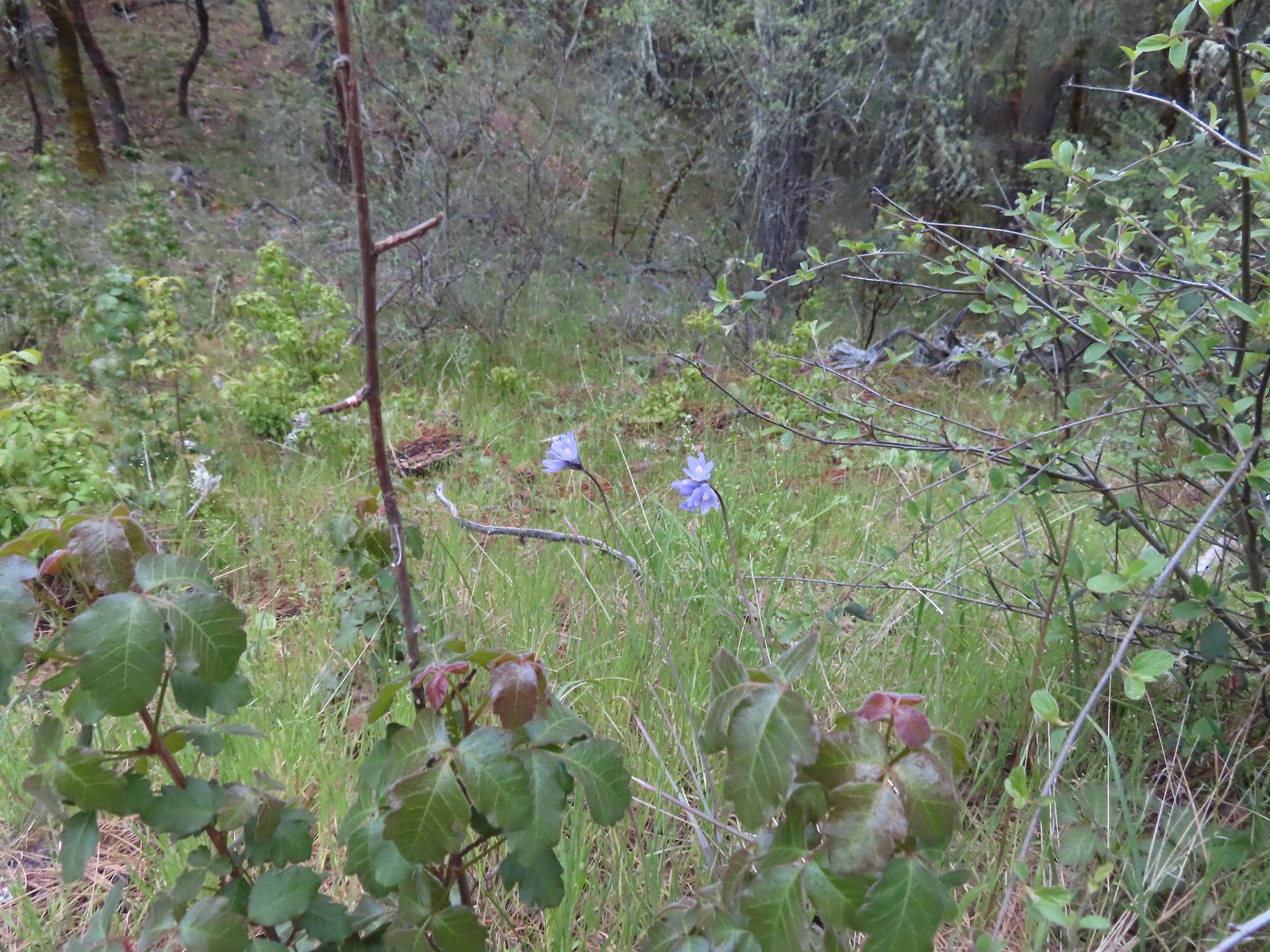 Blue dicks behind more poison oak.
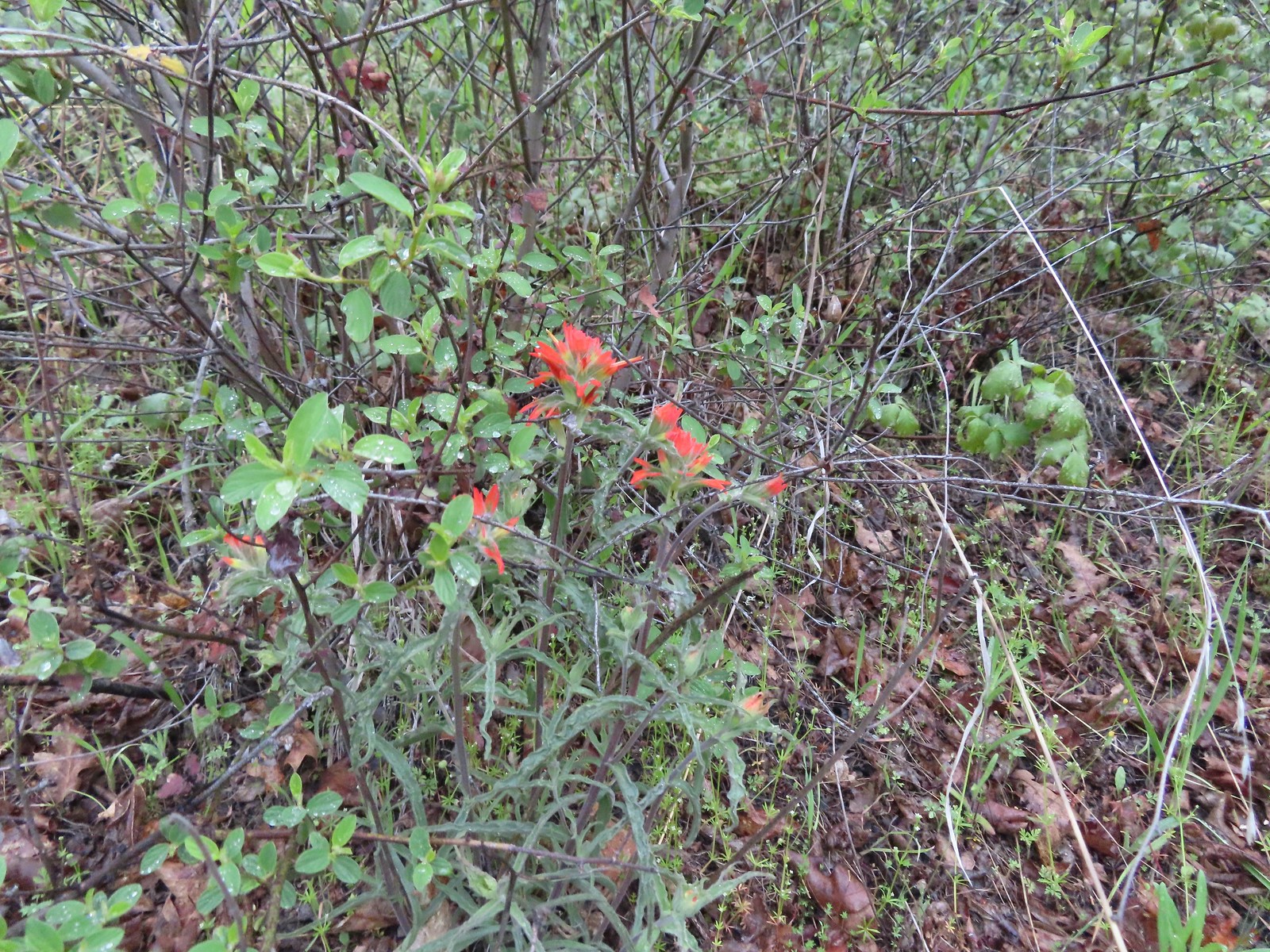 Paintbrush
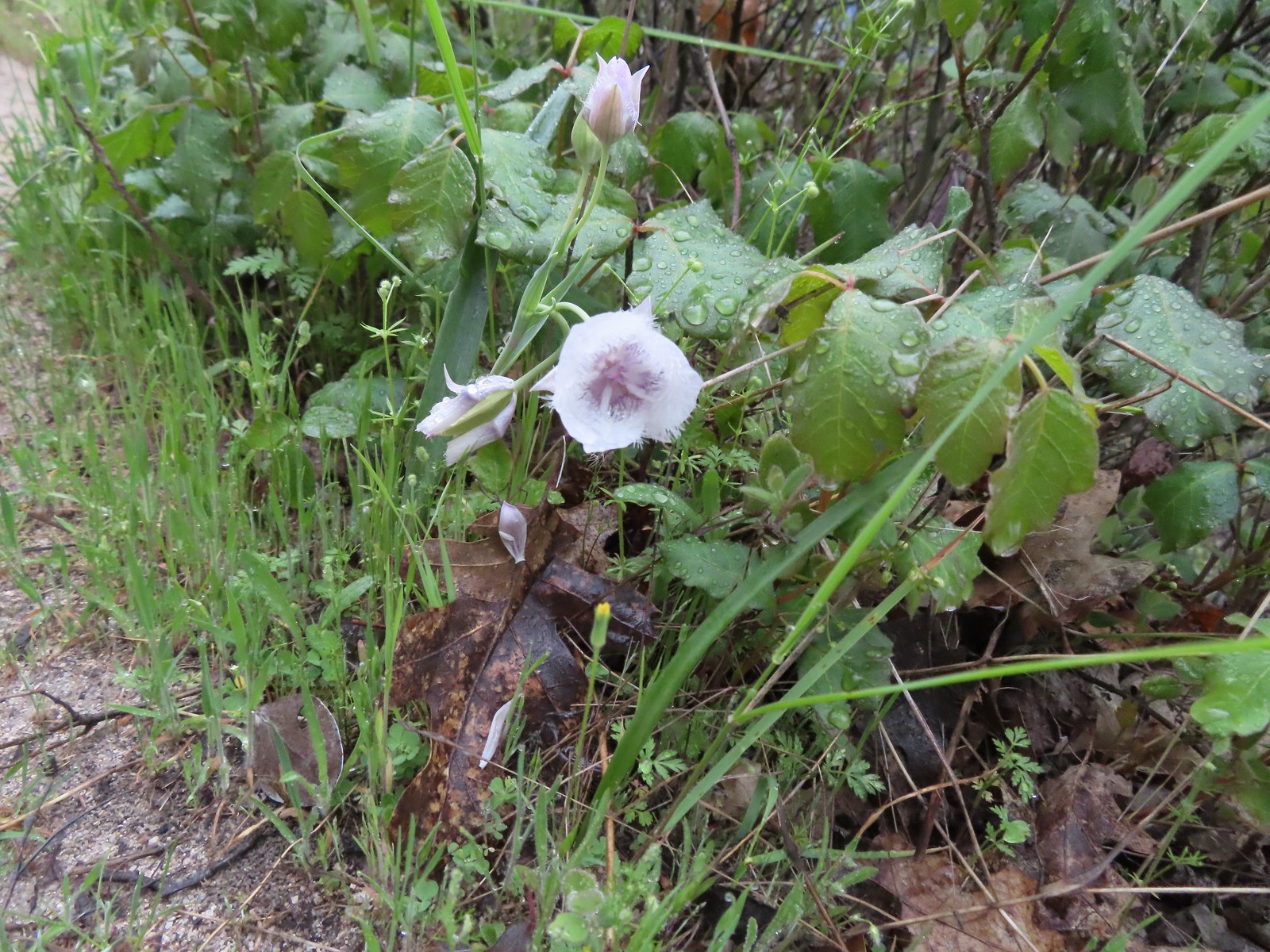 Tolmie’s mariposa lily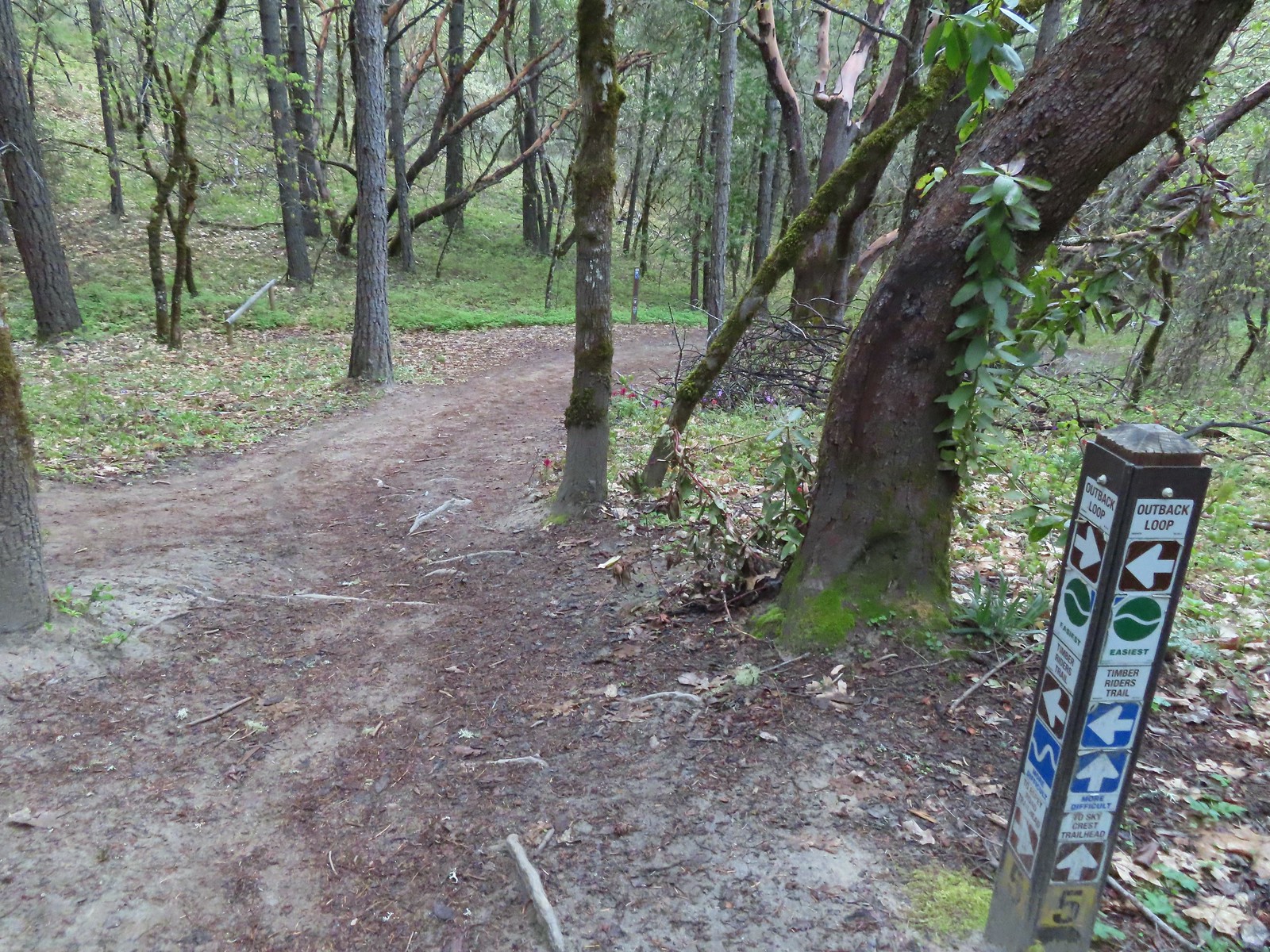

 Henderson’s fawn lily
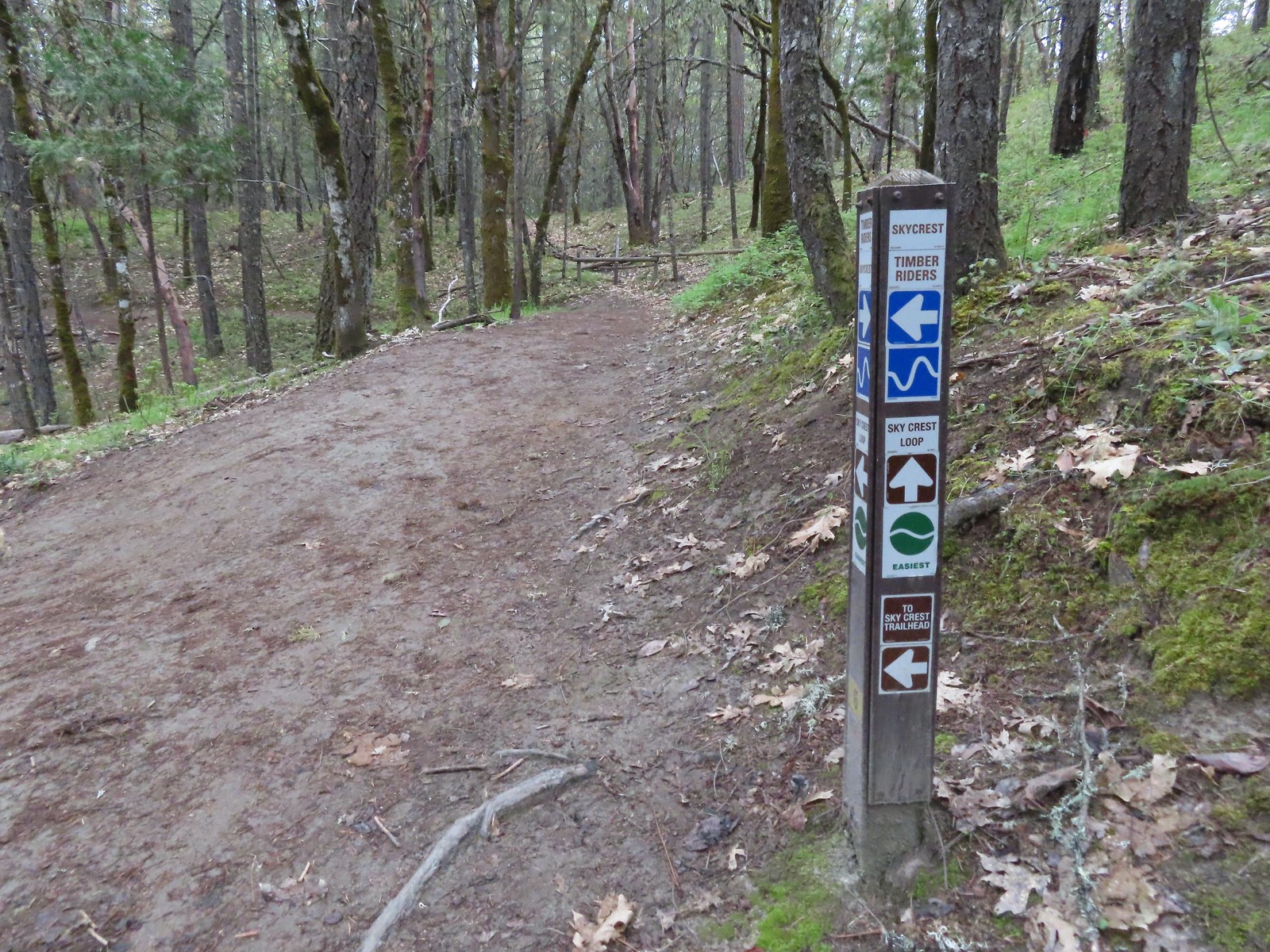 Pointer for the Skycrest Loop.
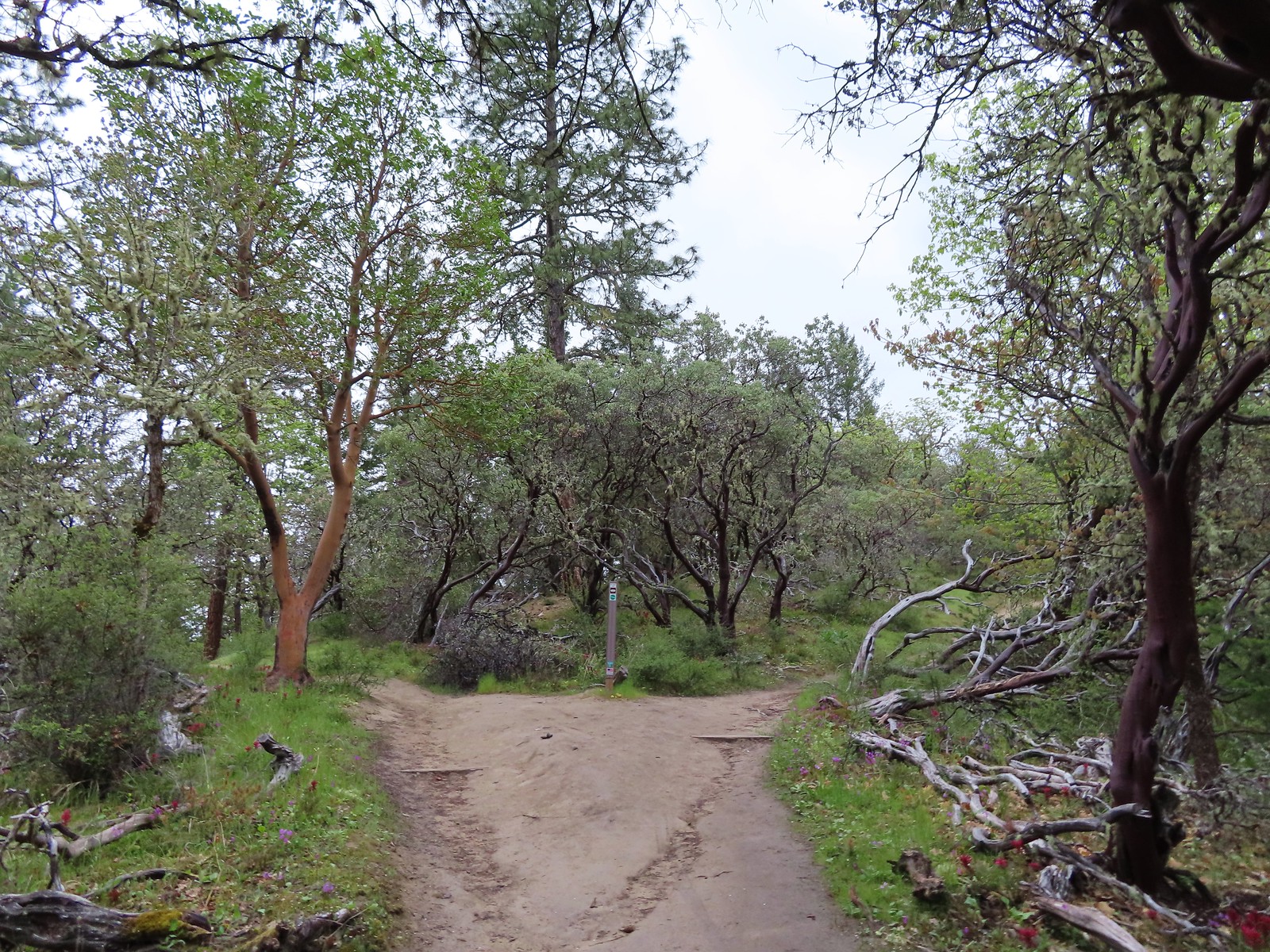 The start of the loop.
 Skullcap (possibly Danny’s)
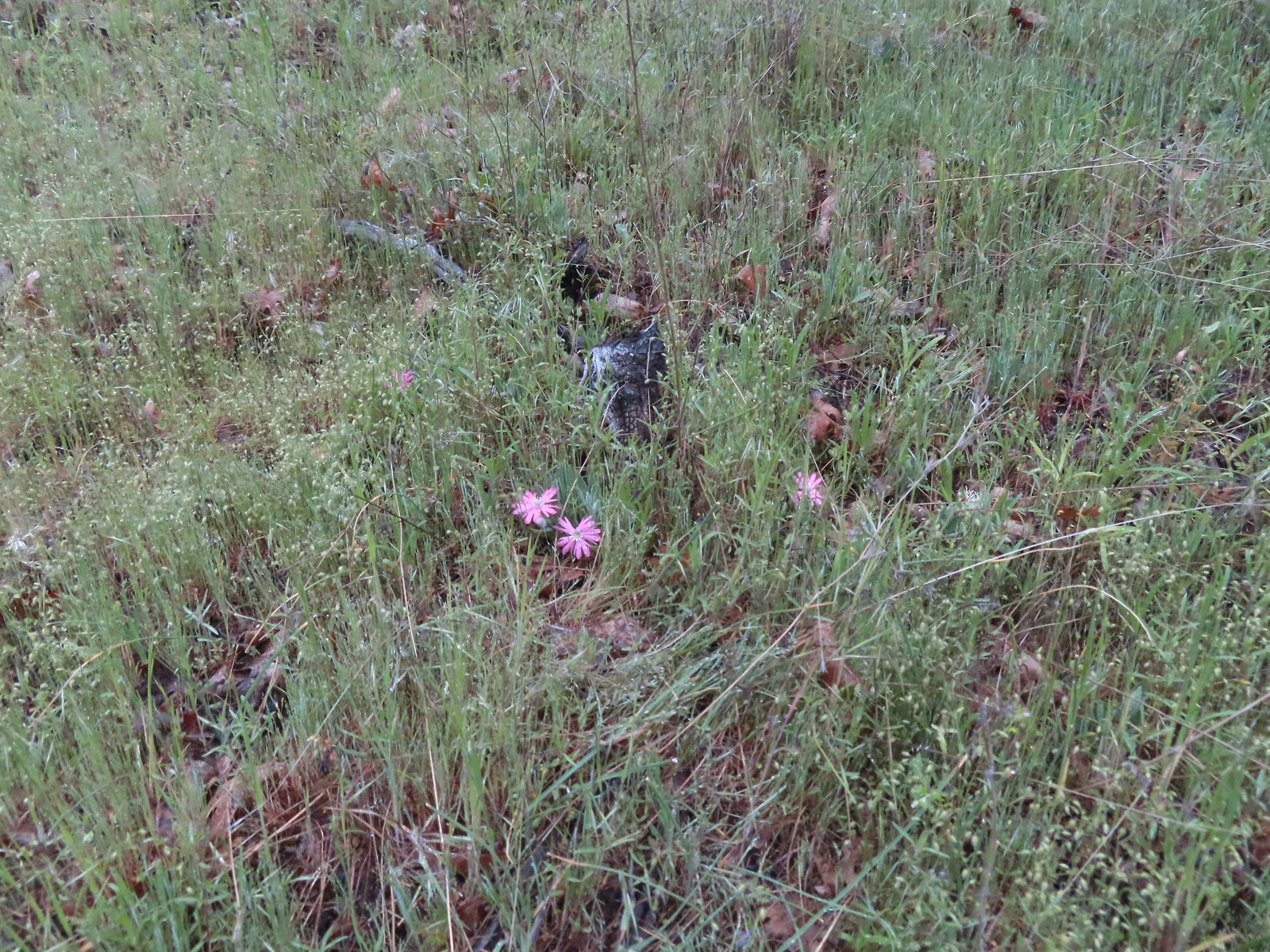 Hooker’s Indian pink
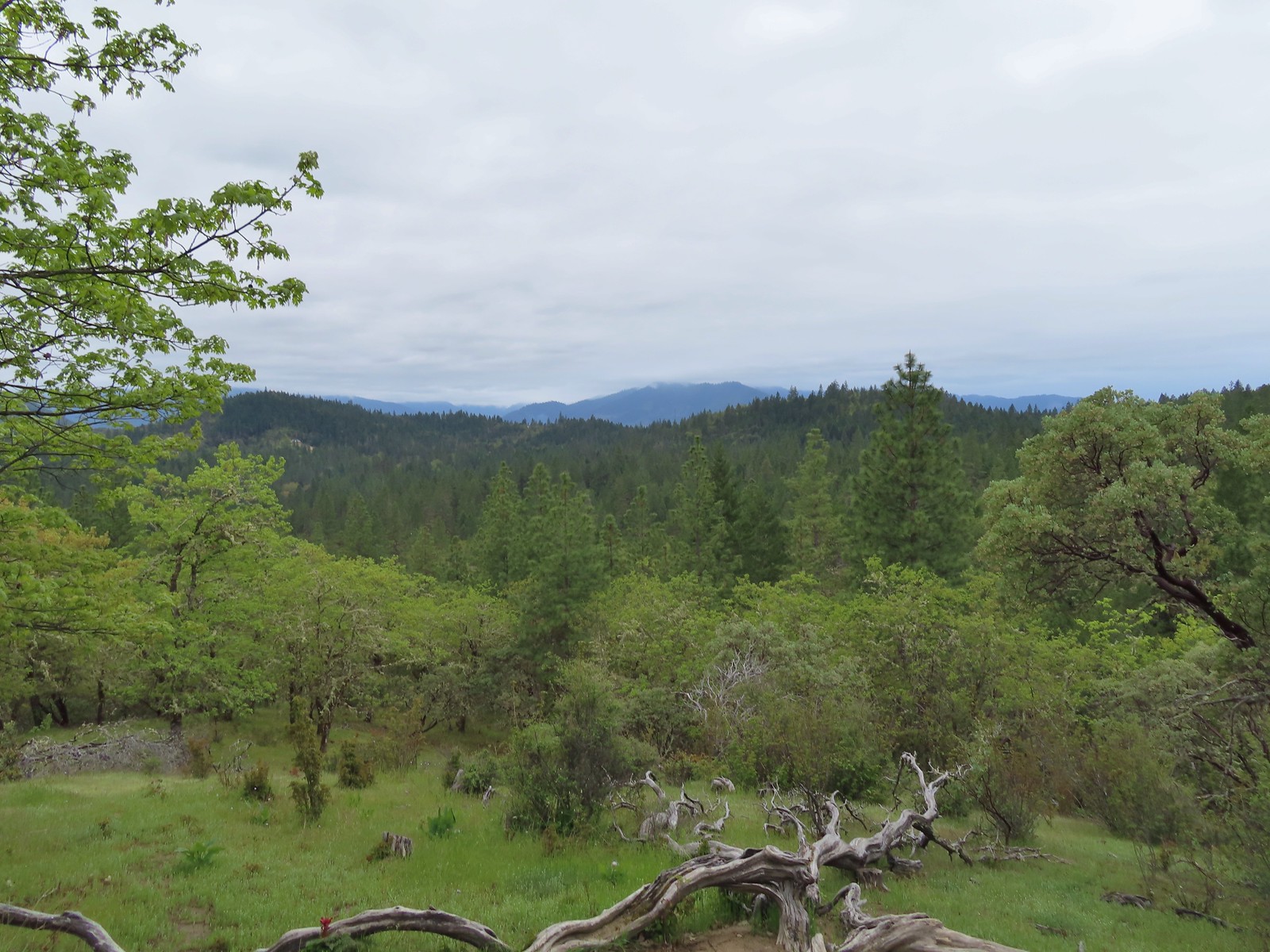 A cloudy view from the Skycrest Loop.
 Ragwort
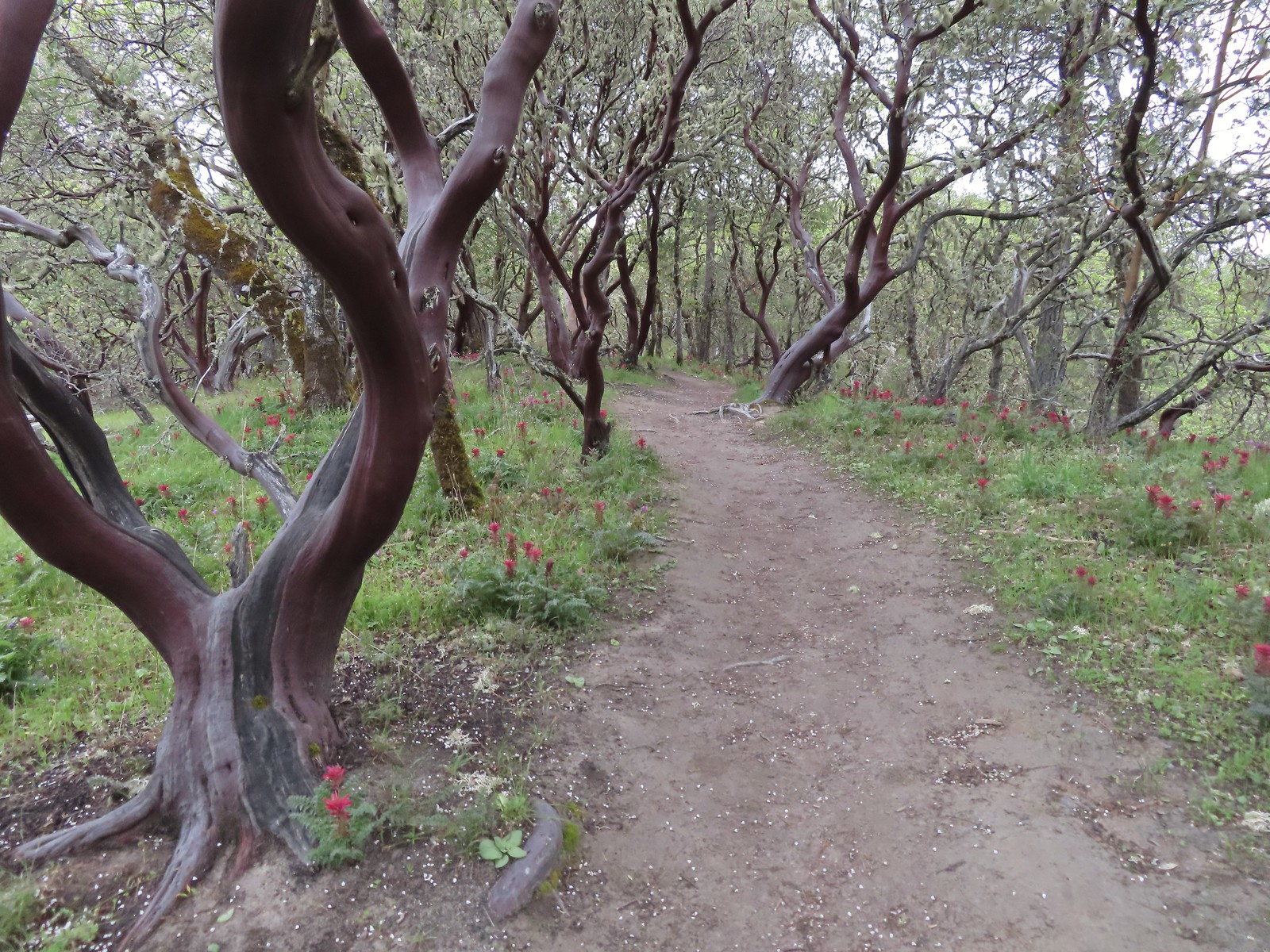 Indian warrior beneath white-leaf manzanita.
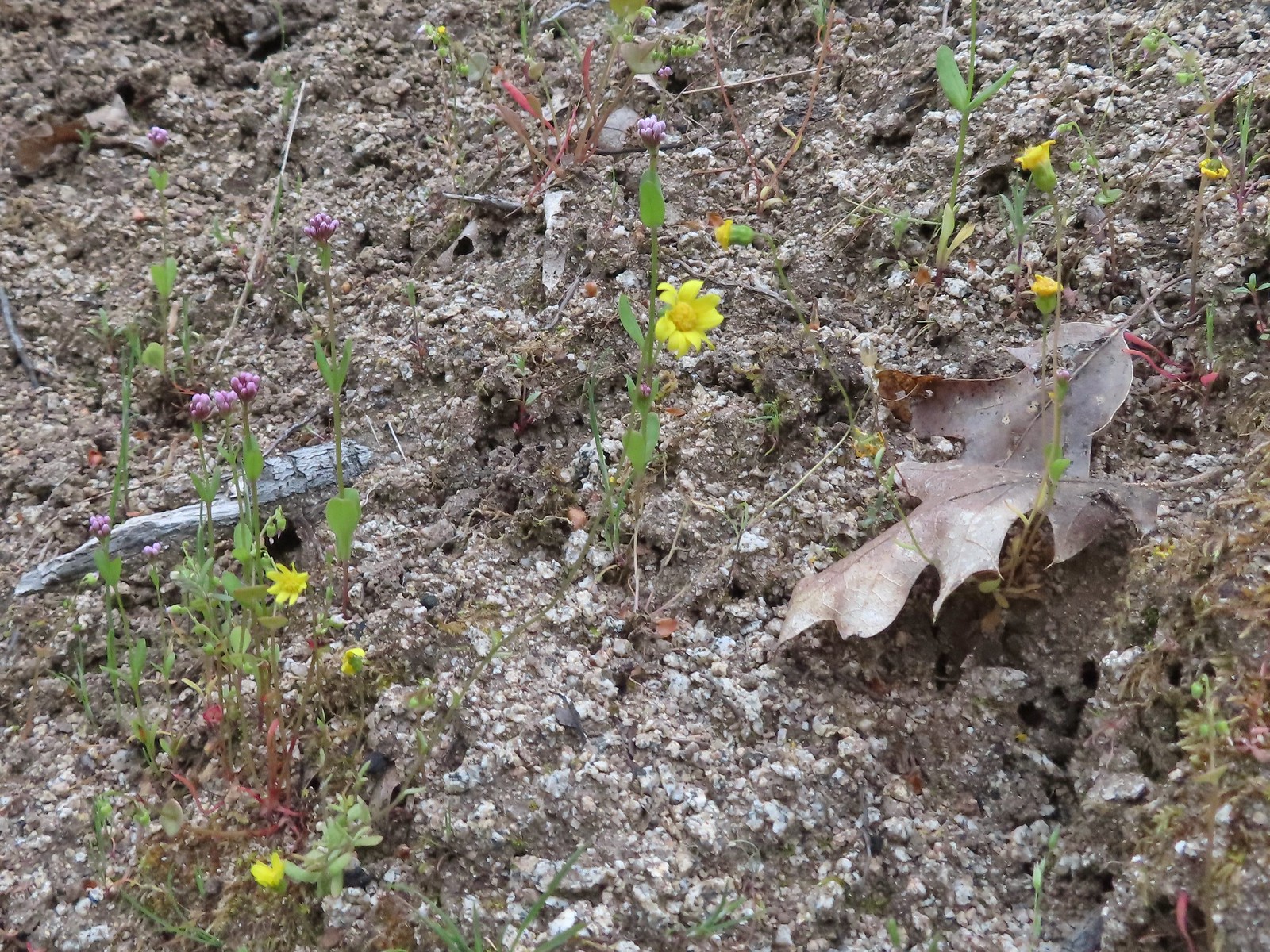 Last of the gold stars.
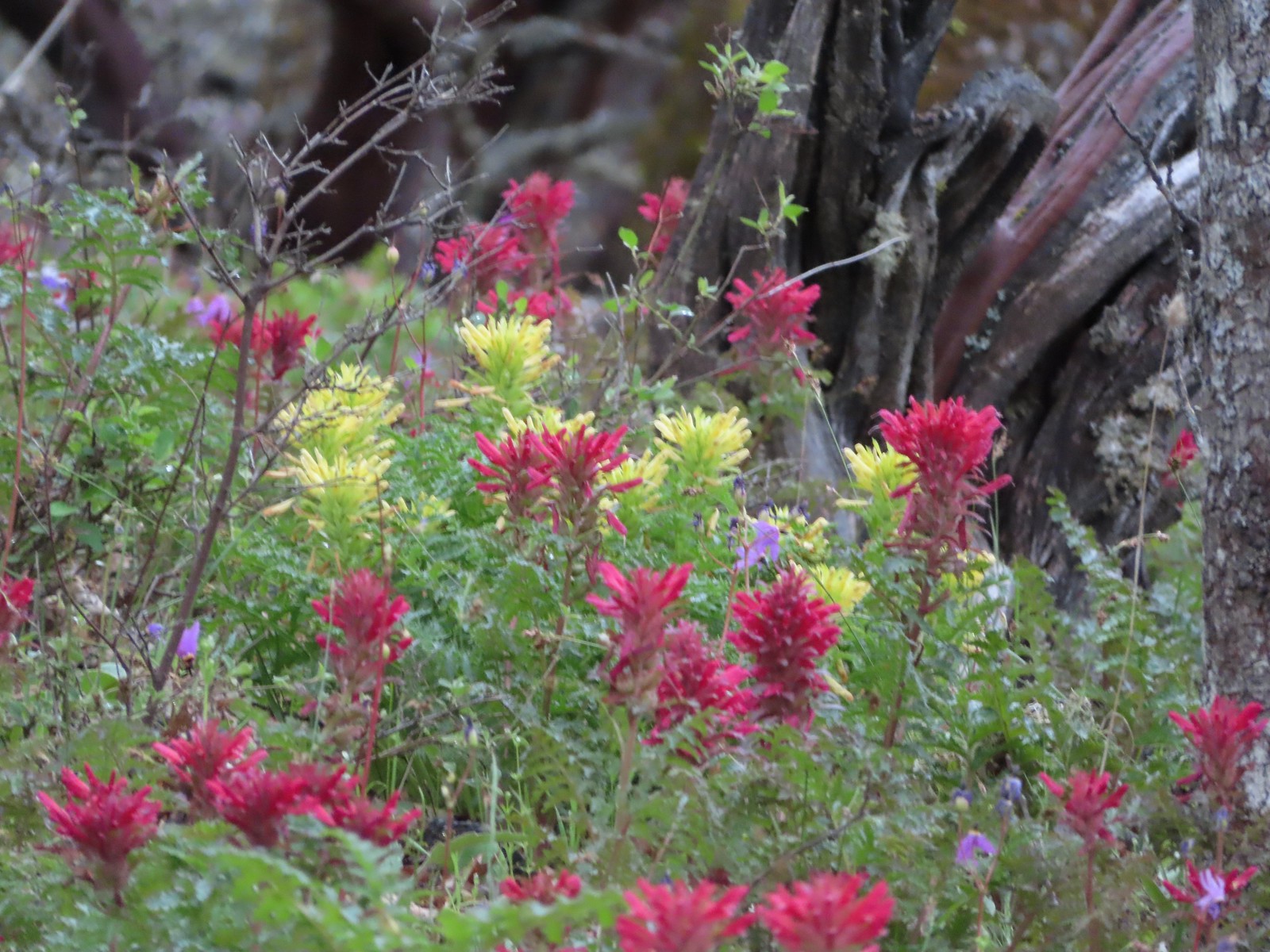 A few yellow Indian warriors.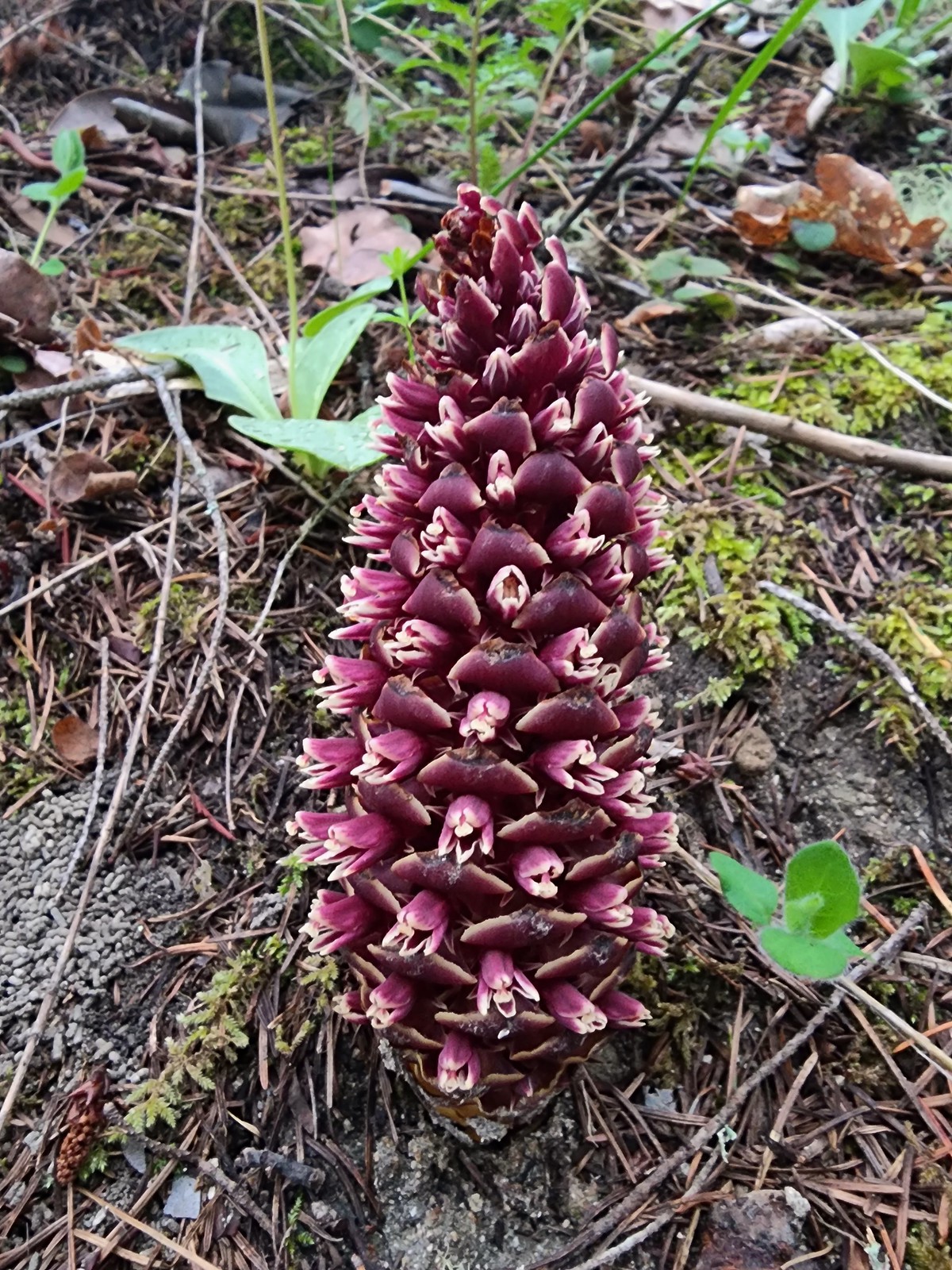
 Even though it didn’t look familiar we both thought we’d come from the trail to the left earlier when in fact that was the continuation of the Outback Loop.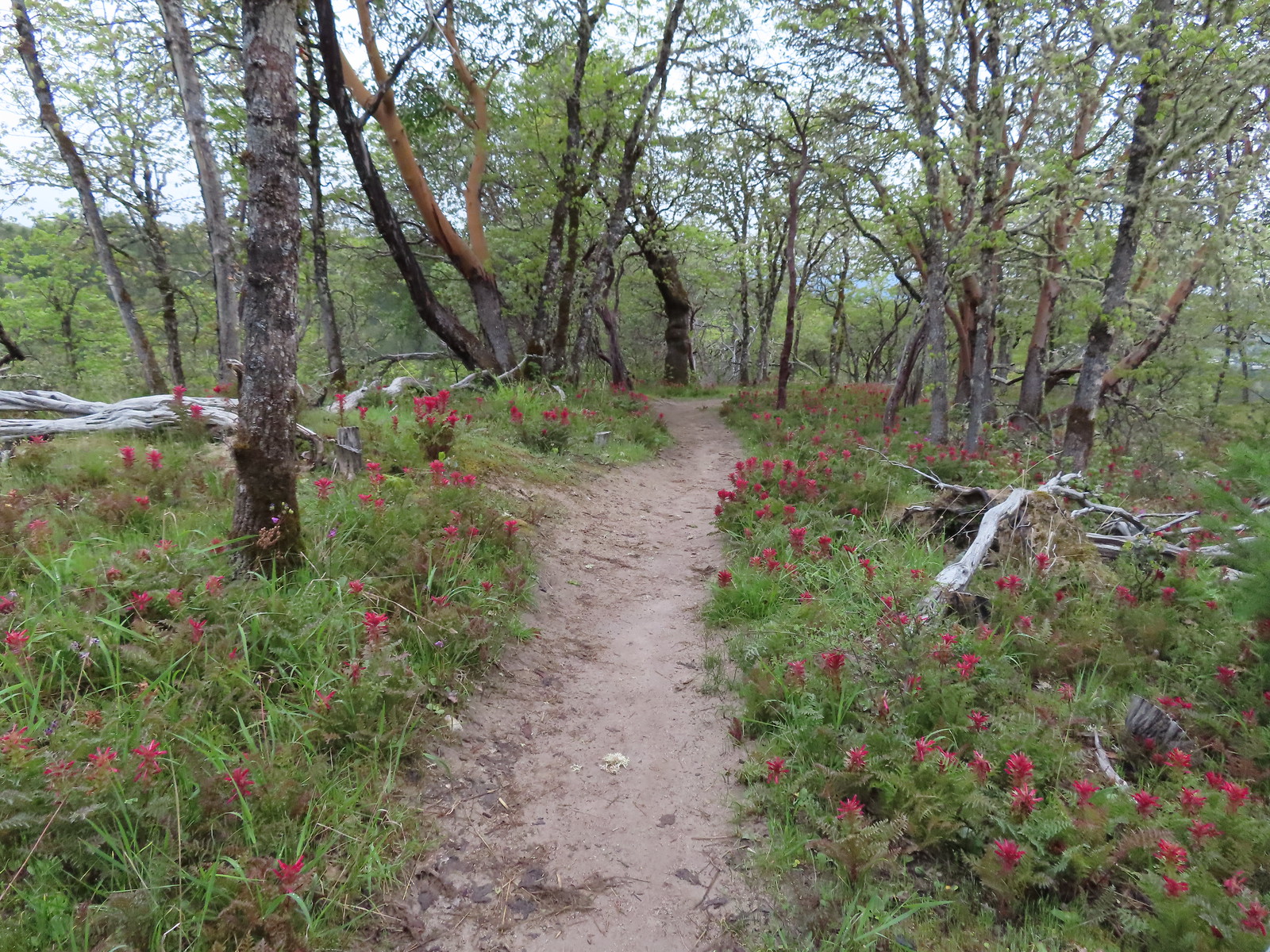
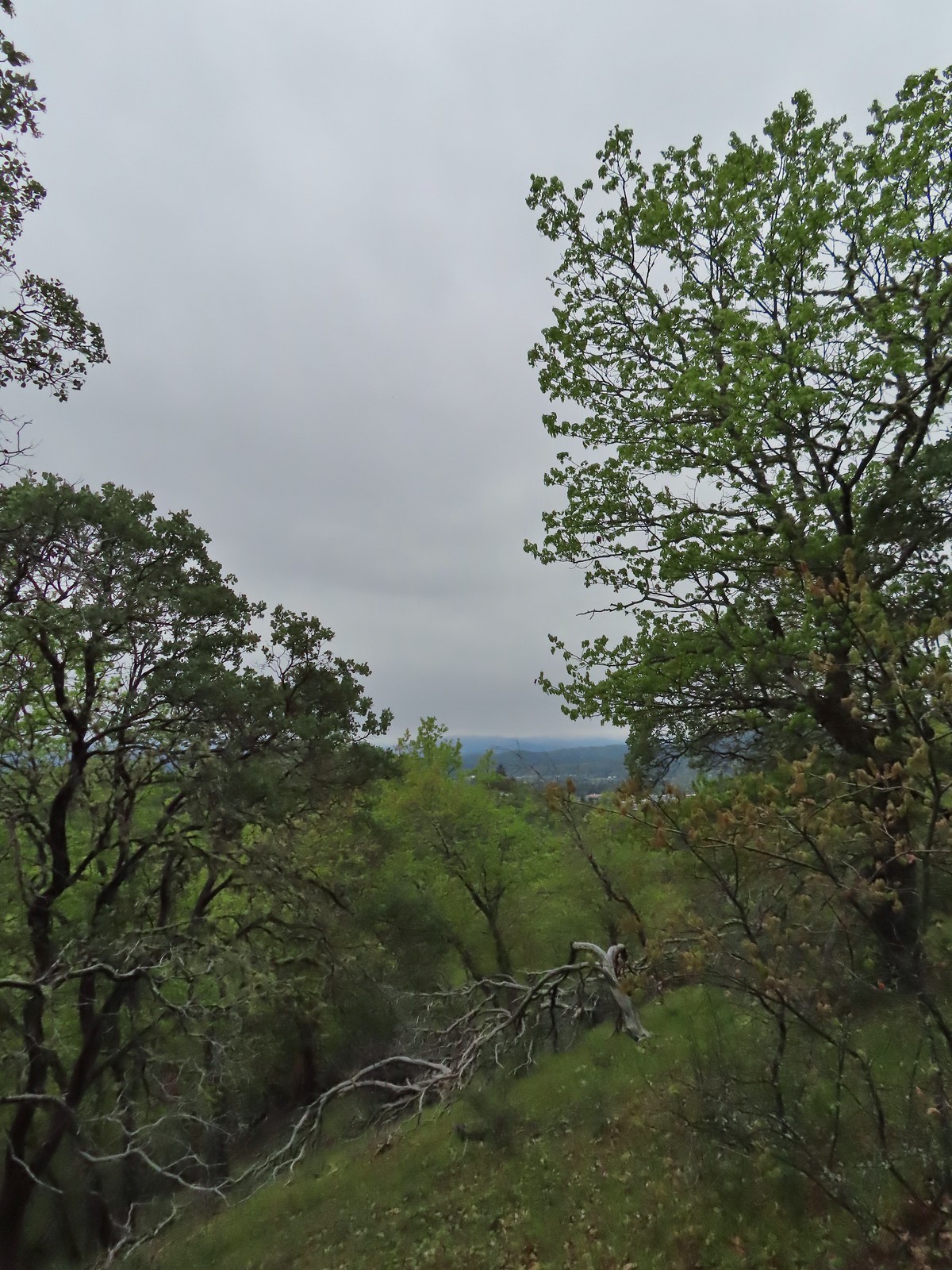 Rain clouds in the sky.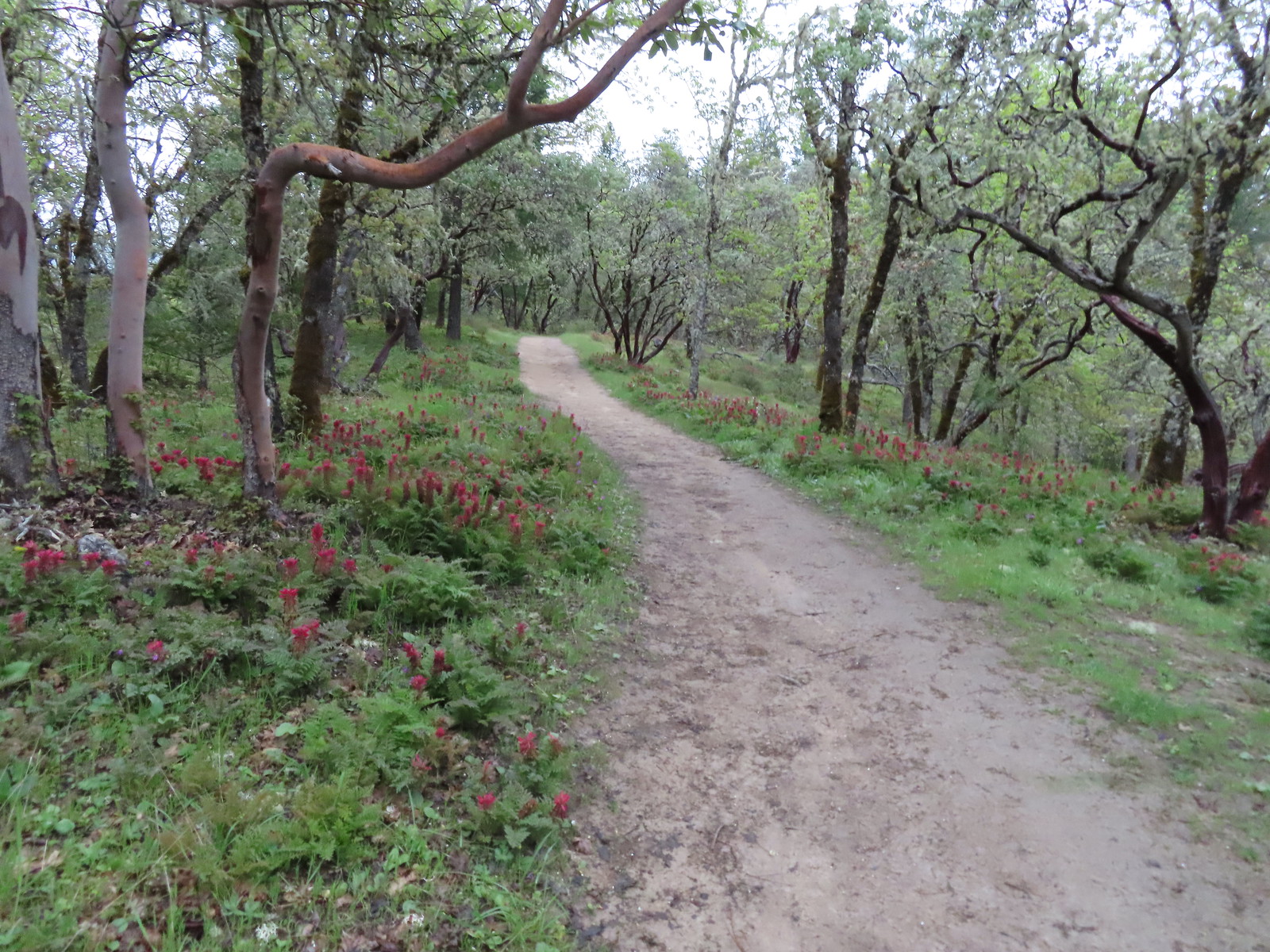
 Trail marker along the Outback Loop.
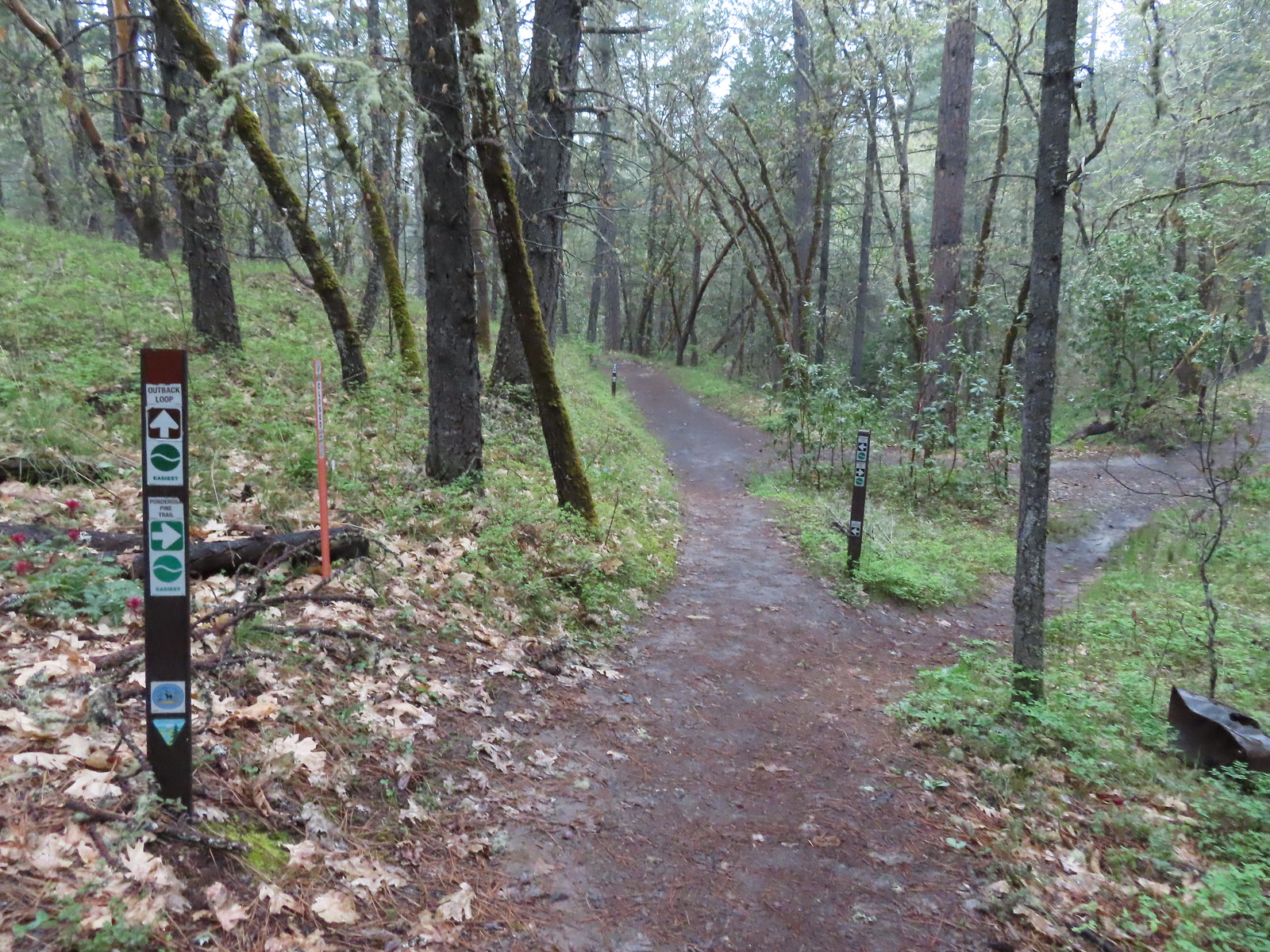 Turning onto the Ponderosa Pine Trail
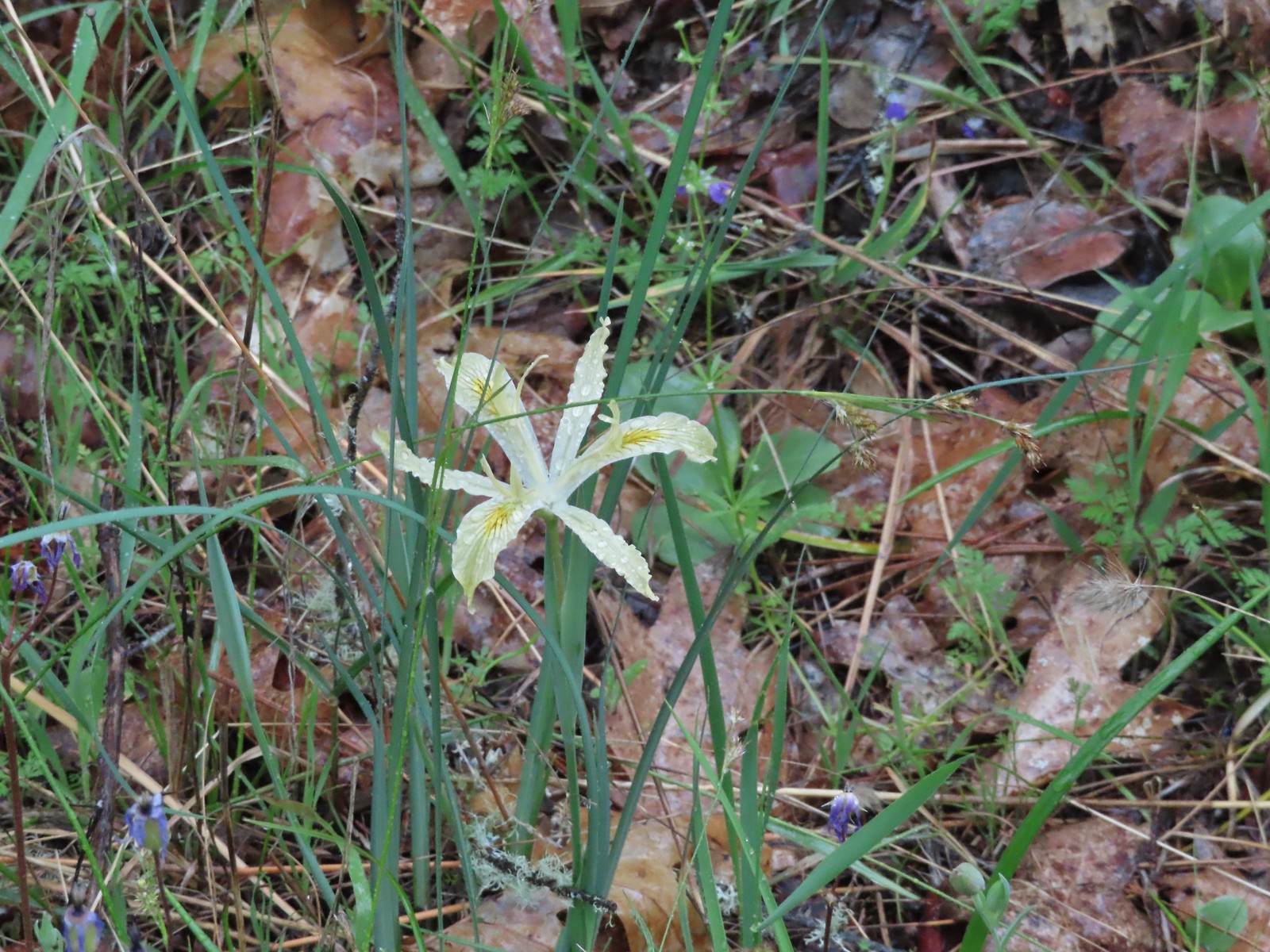 Iris
Iris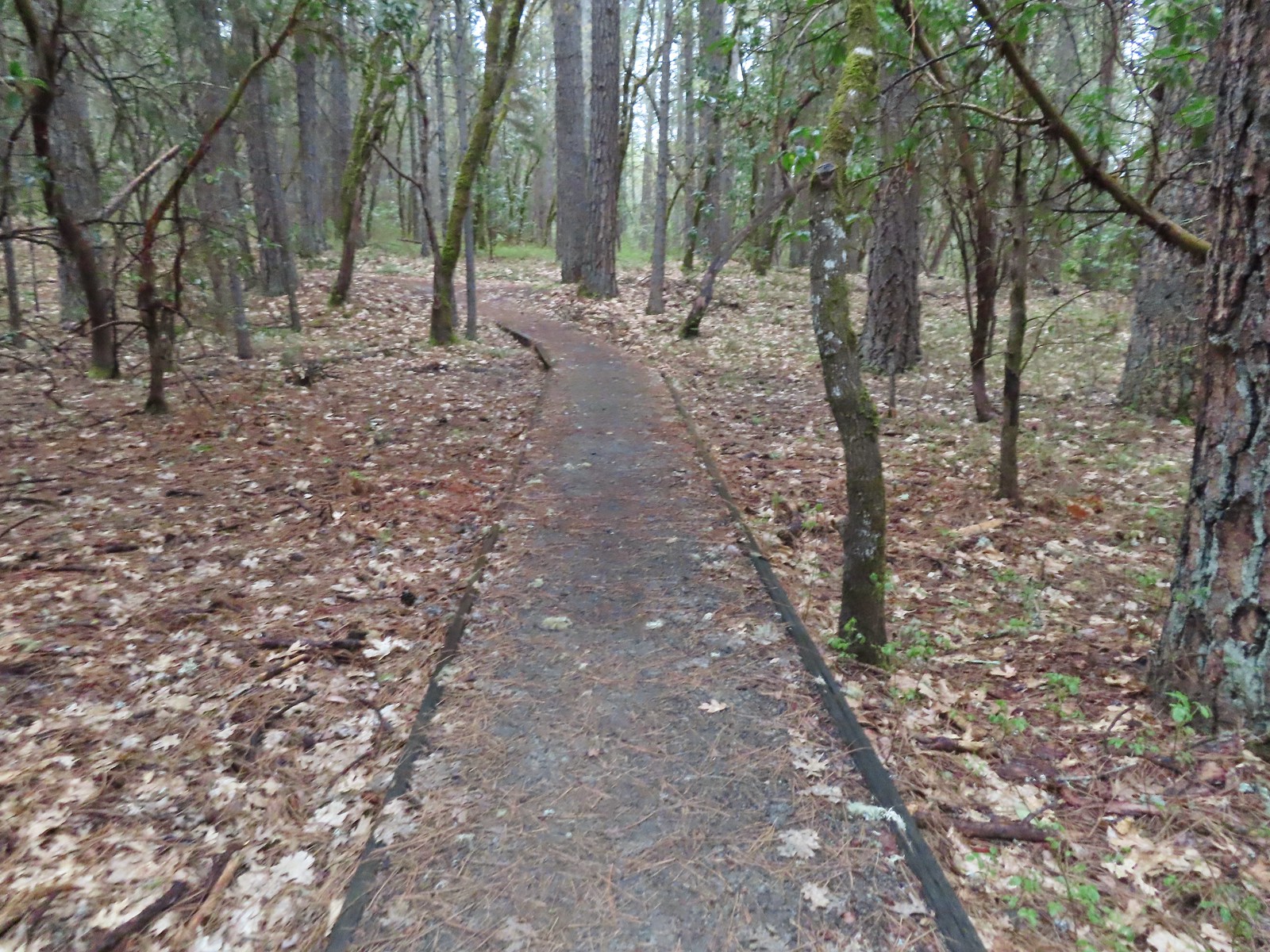 Ponderosa Pine Trail
 Back onto the Outback Loop.
 Quite a bit more water on the trail as we finished up.
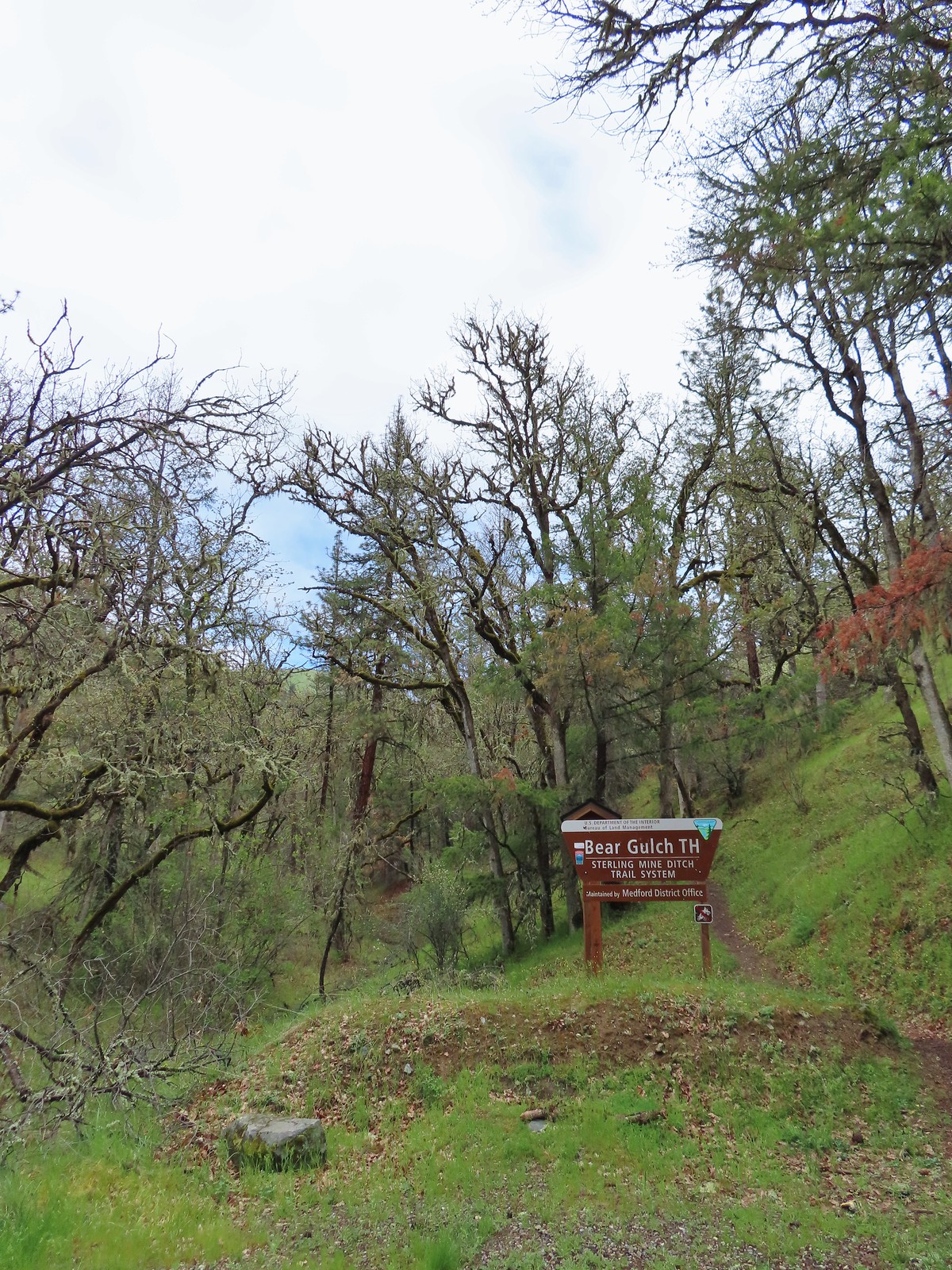
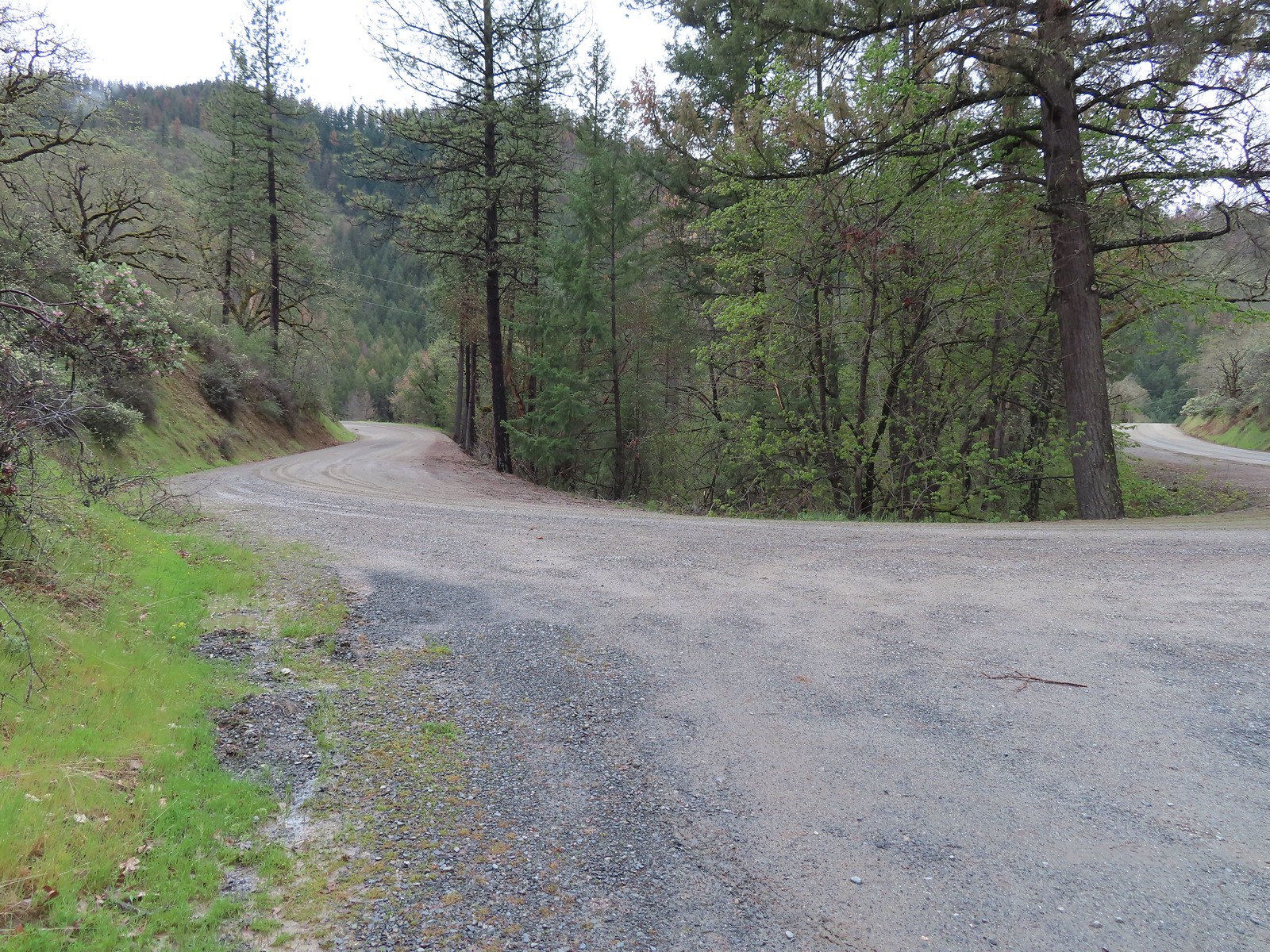 View from the Bear Gulch Trailhead of Little Applegate Road.
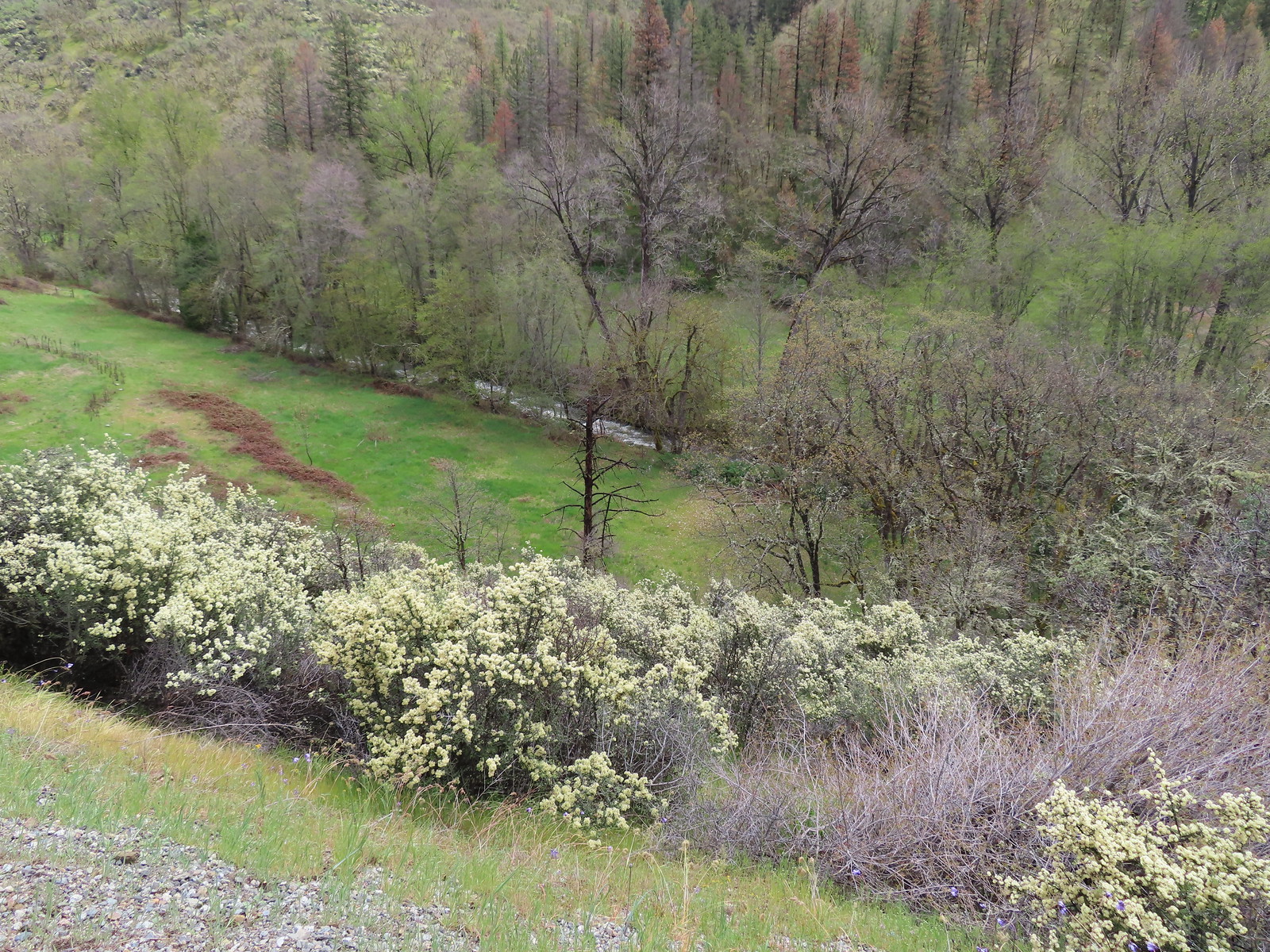 The Little Applegate River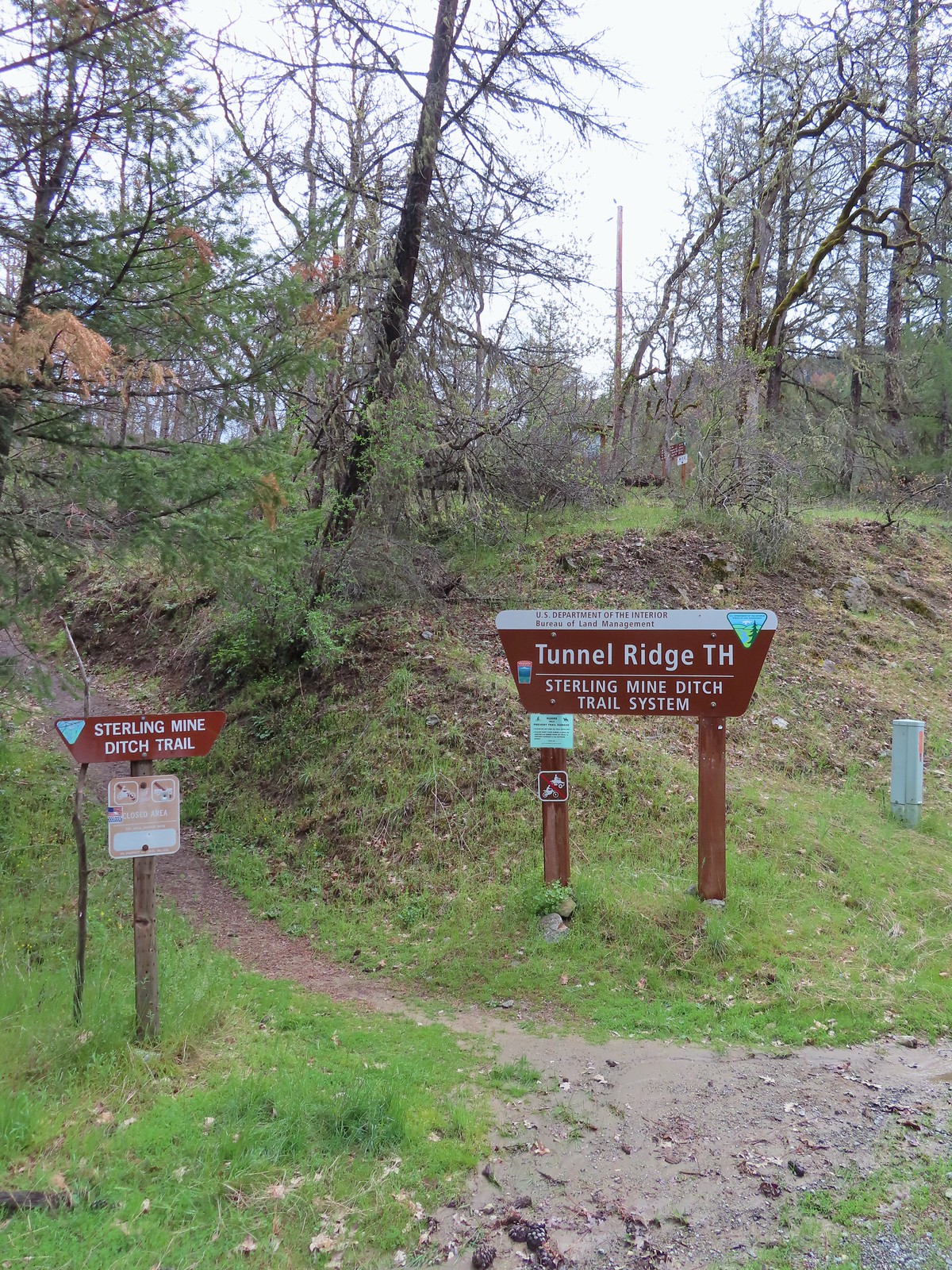
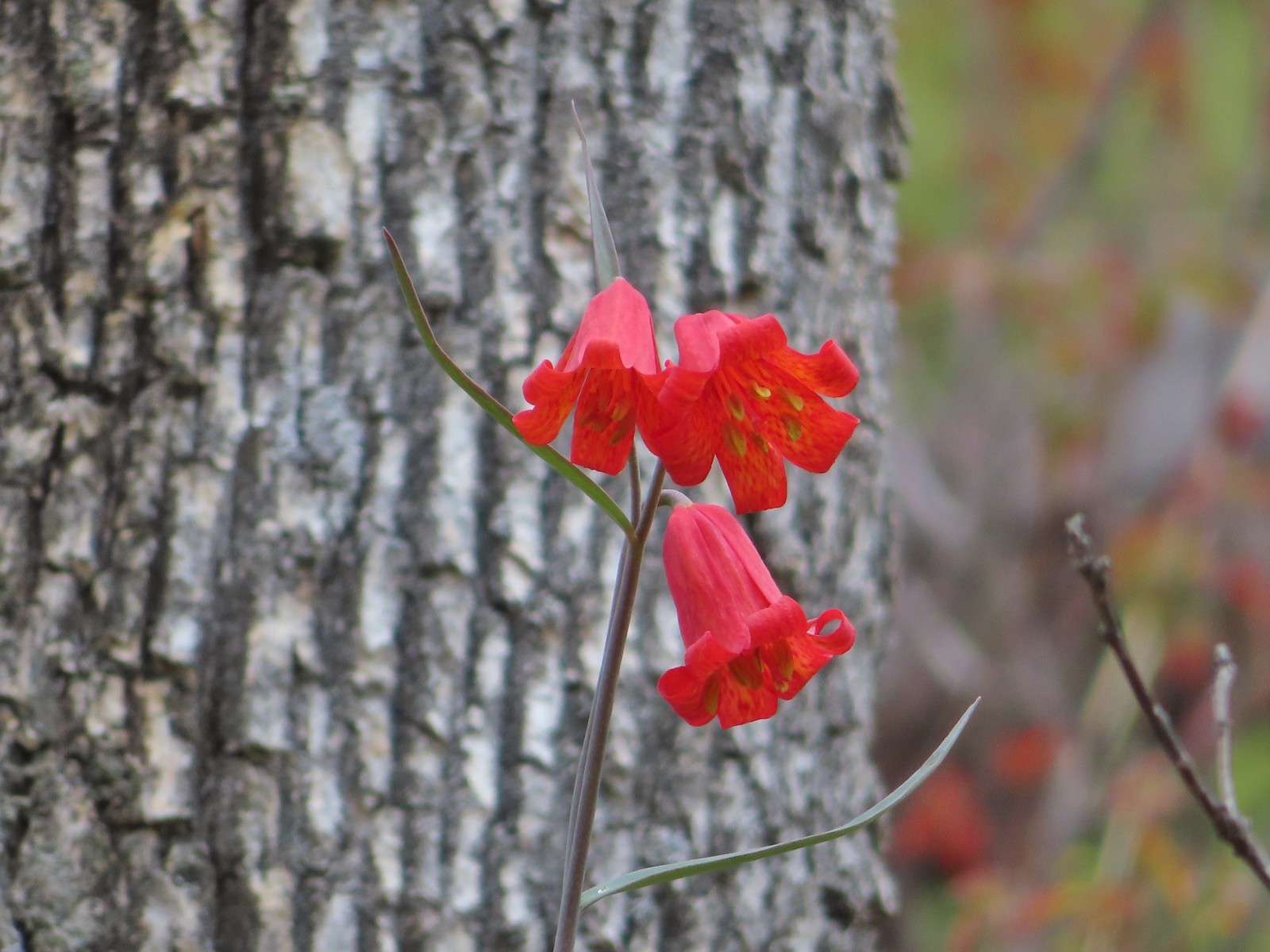 Scarlet fritillary
 Houdnstongue and a pacific waterleaf (white flower under a big leaf to the left of the houndstongue).
 A snowy Wagner Butte (
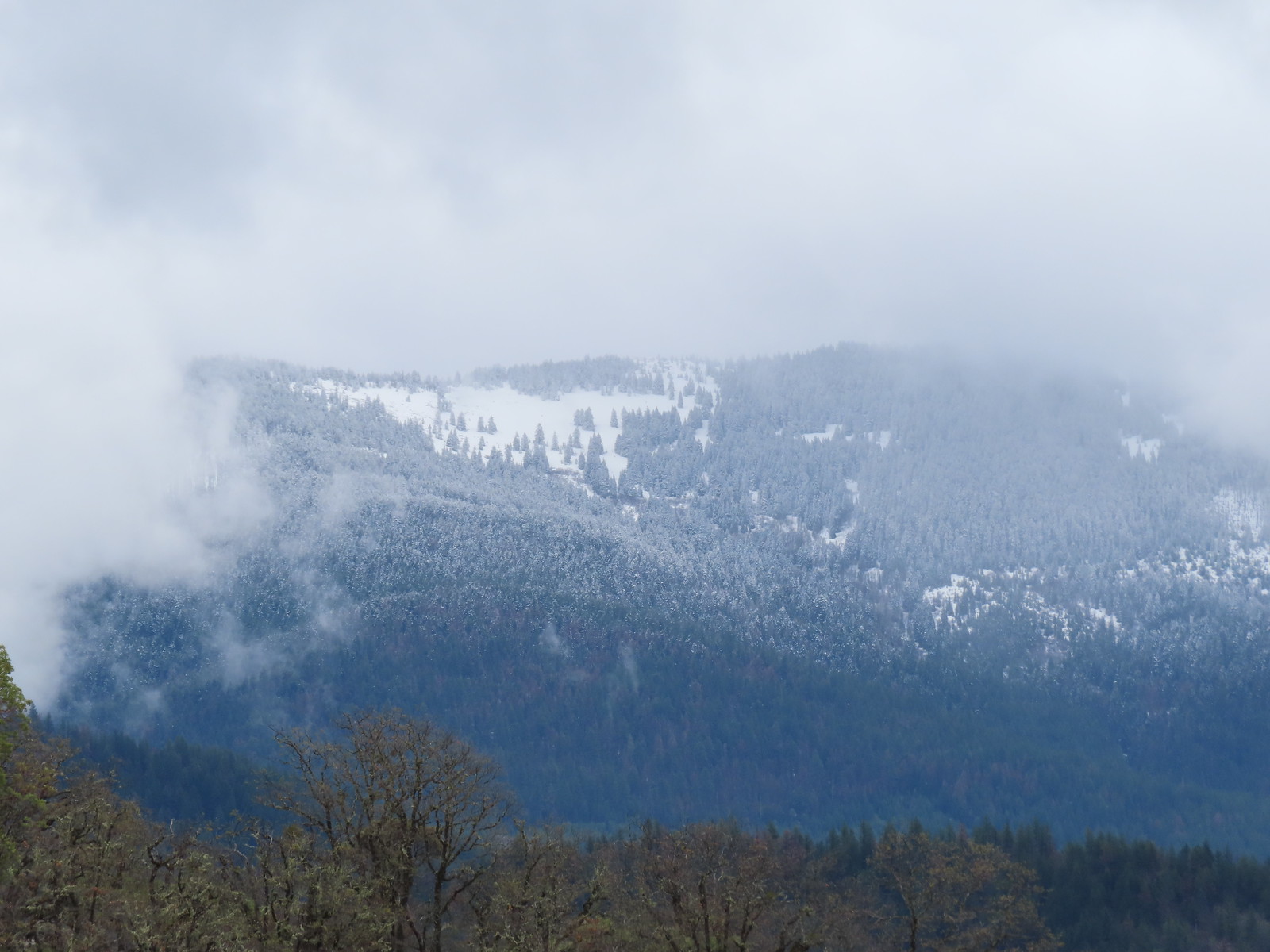 Based on the trees it looked like the thunderstorm provided some fresh snow at higher elevations.
 Couldn’t really get a good picture but this might be a bushtit.
 There were a couple of nice benches along the trails here.
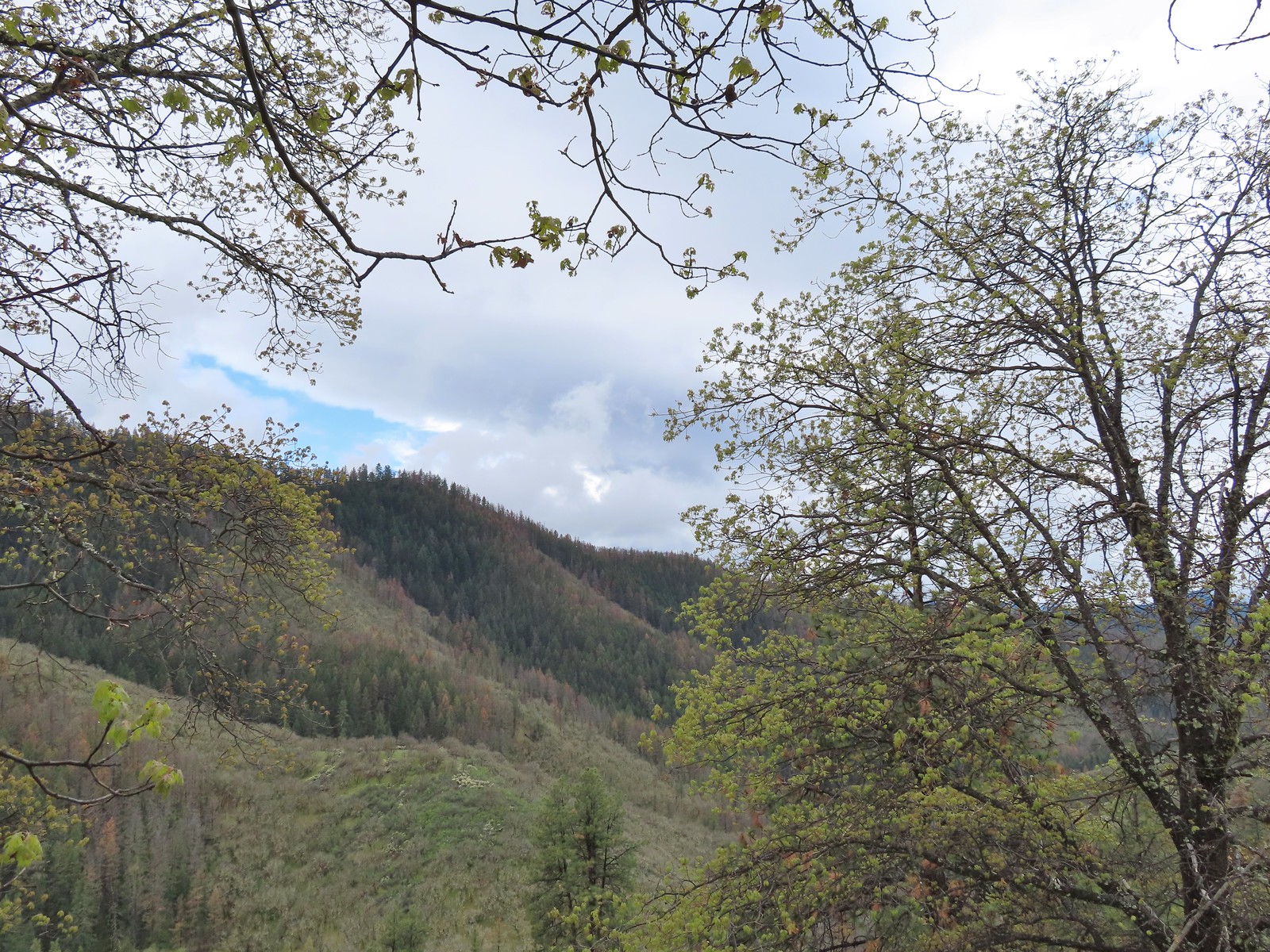 Some of the view from the bench.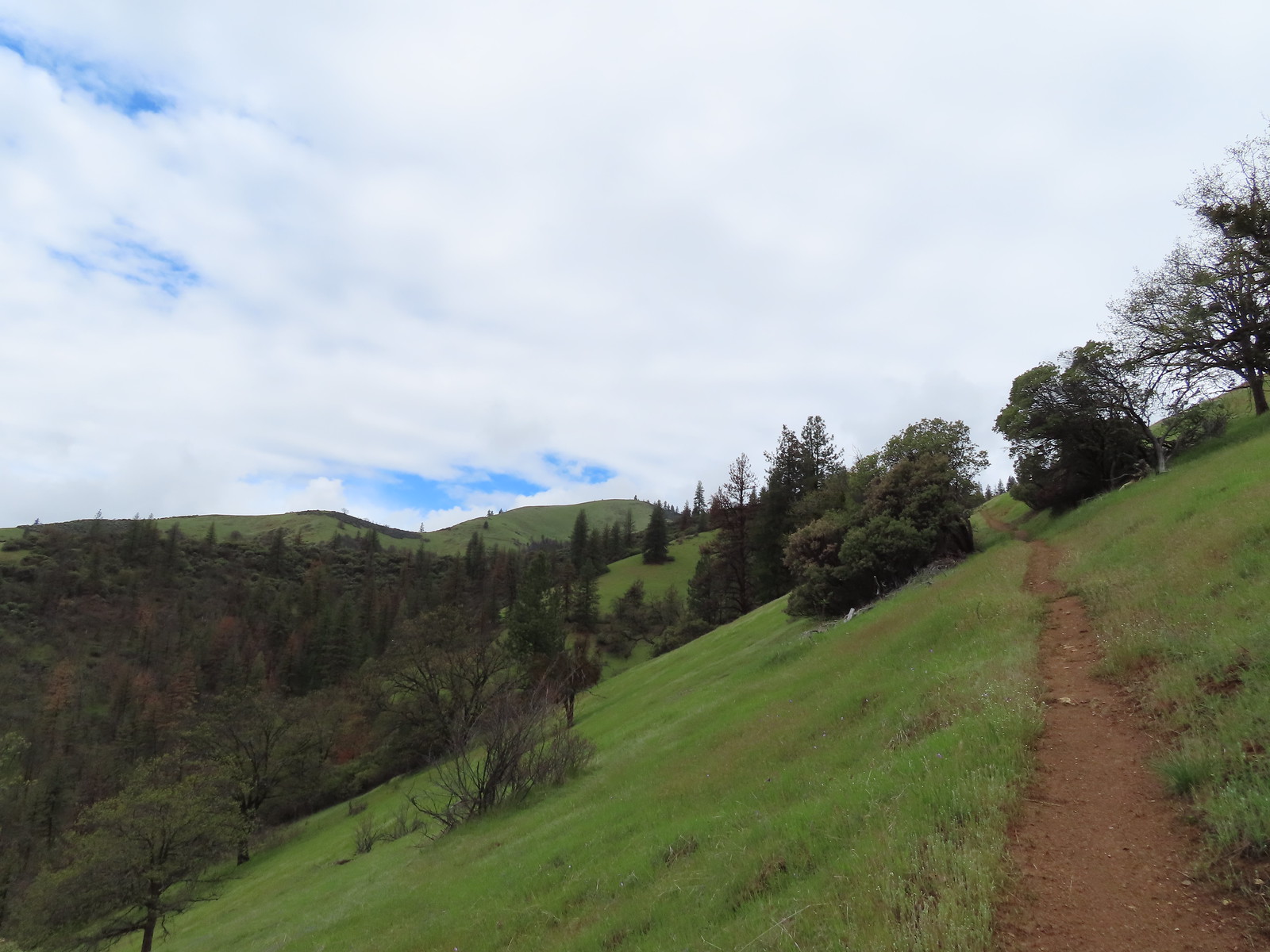

 Manzanita
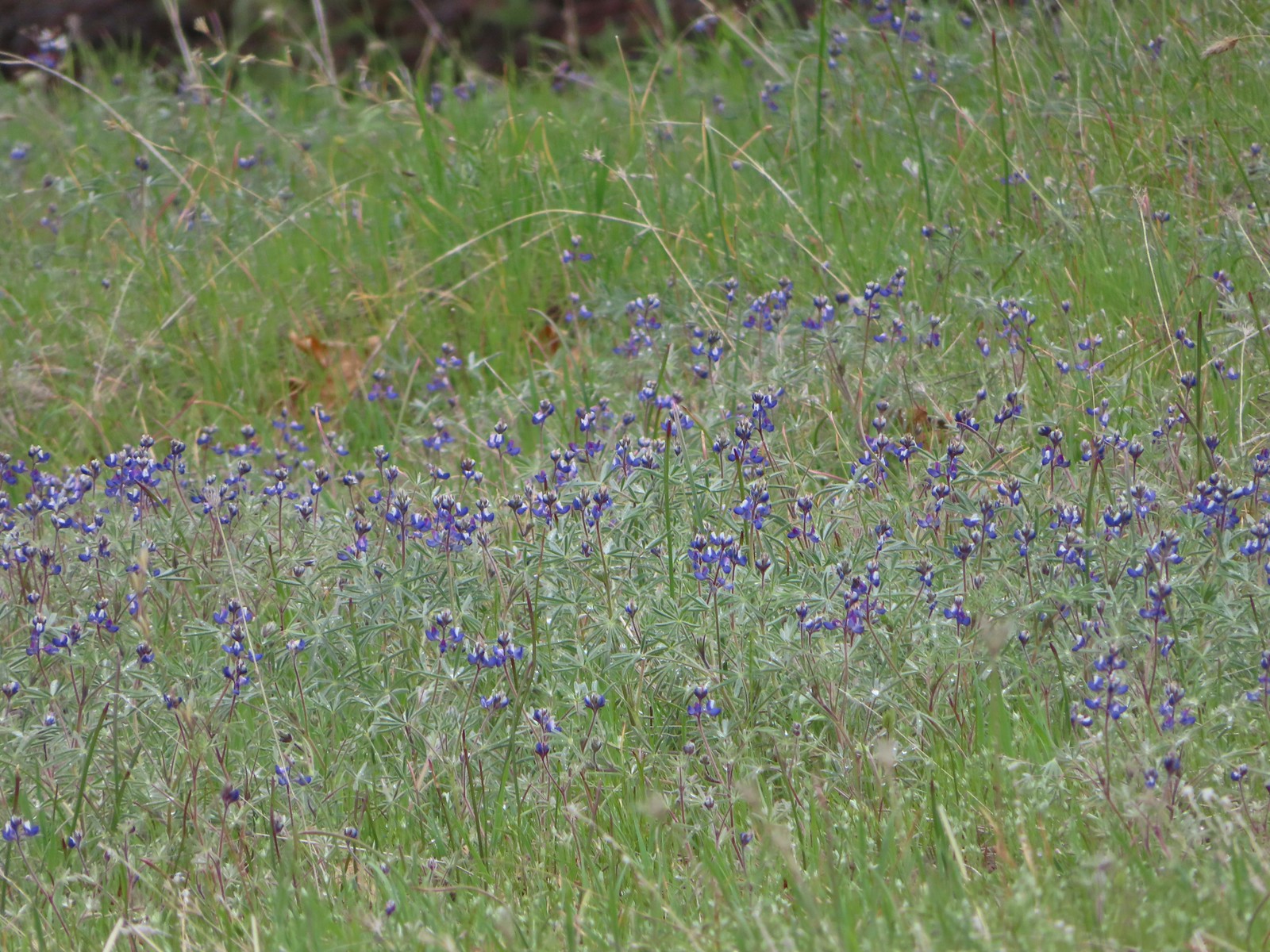 Lupine
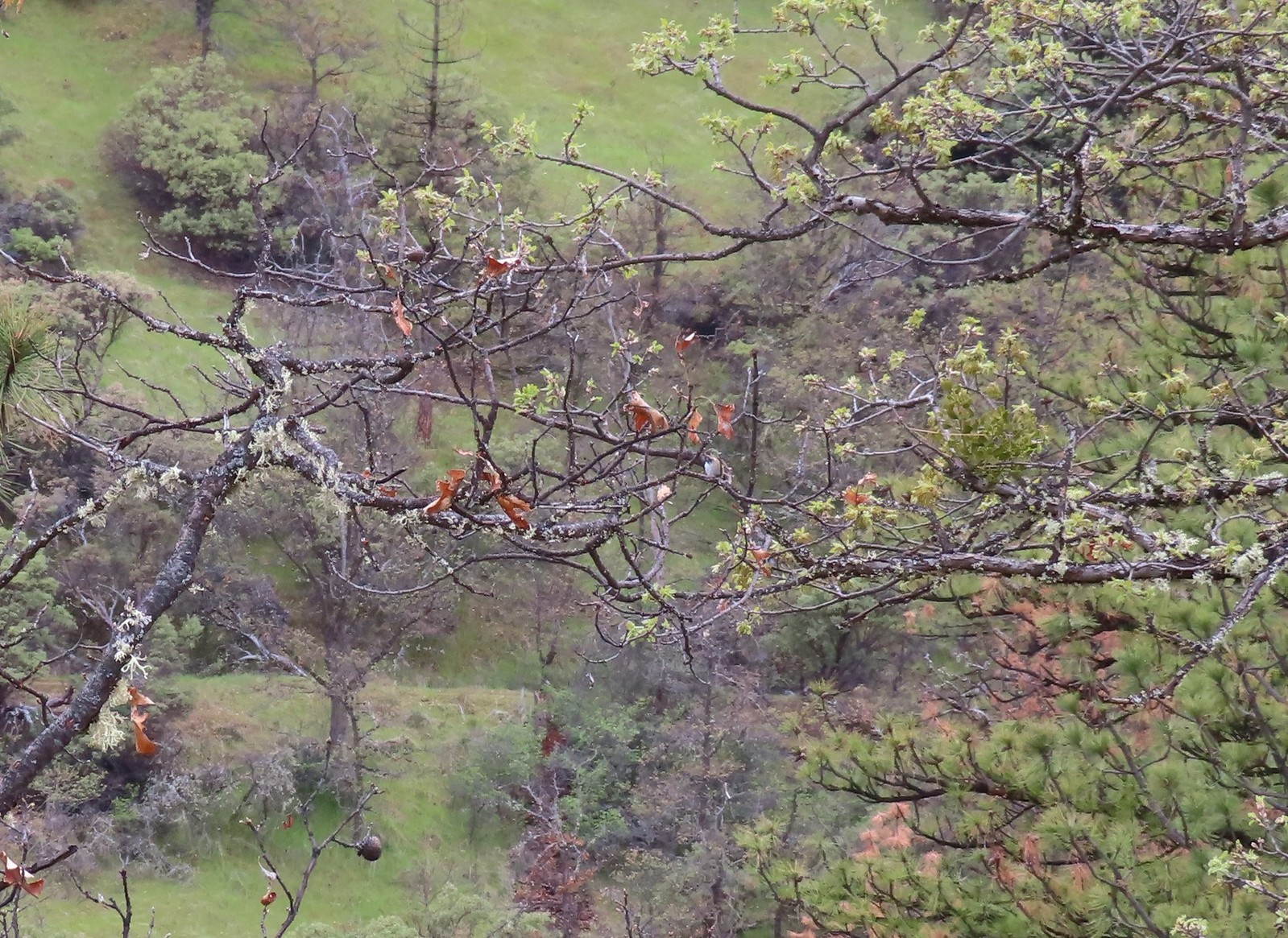 There is a hummingbird in the center on a branch.
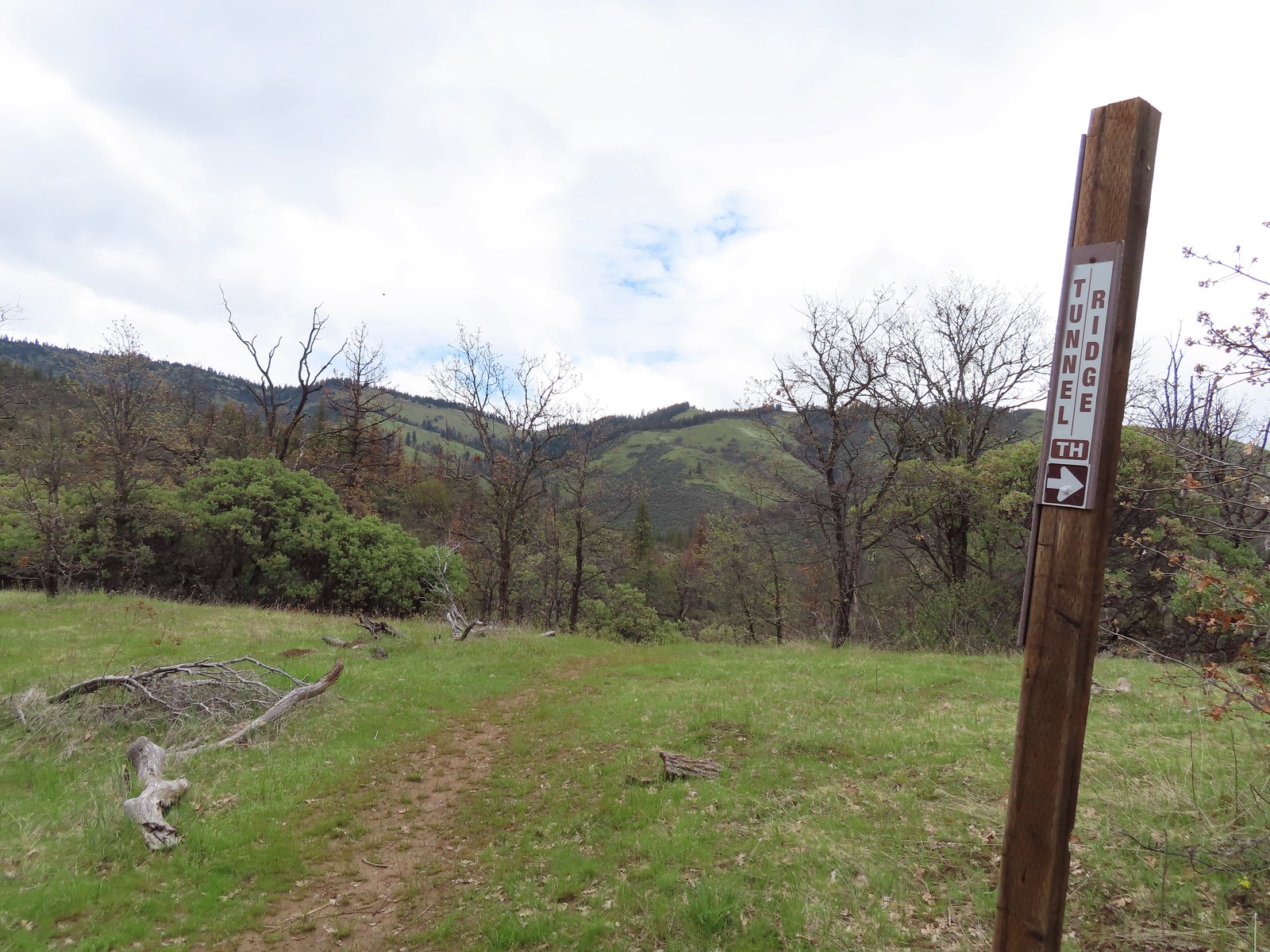 At the saddle a faint trail continued straight ahead toward the Little Applegate Trailhead. It didn’t appear to get much use.
 Trail sign at the junction.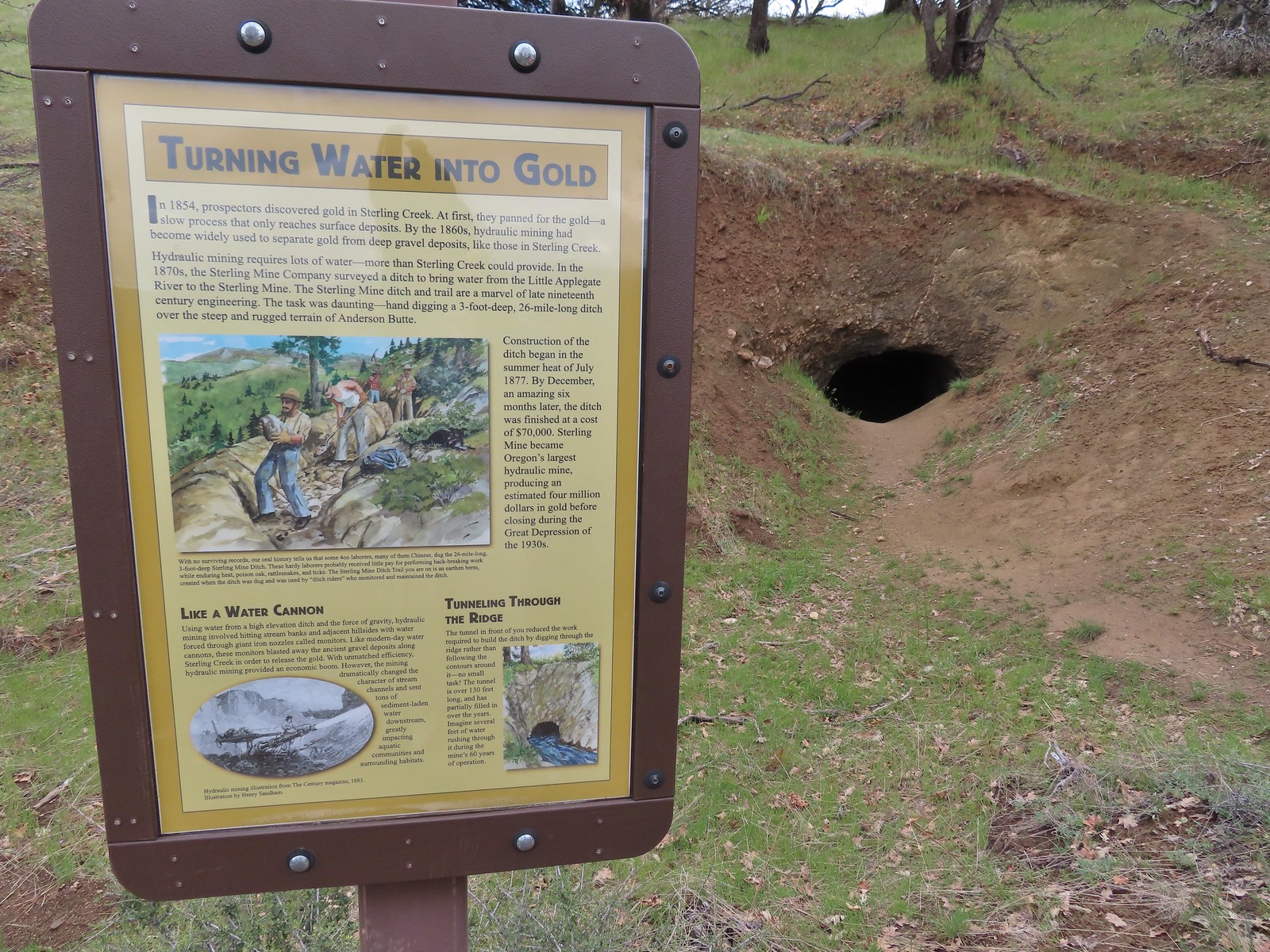
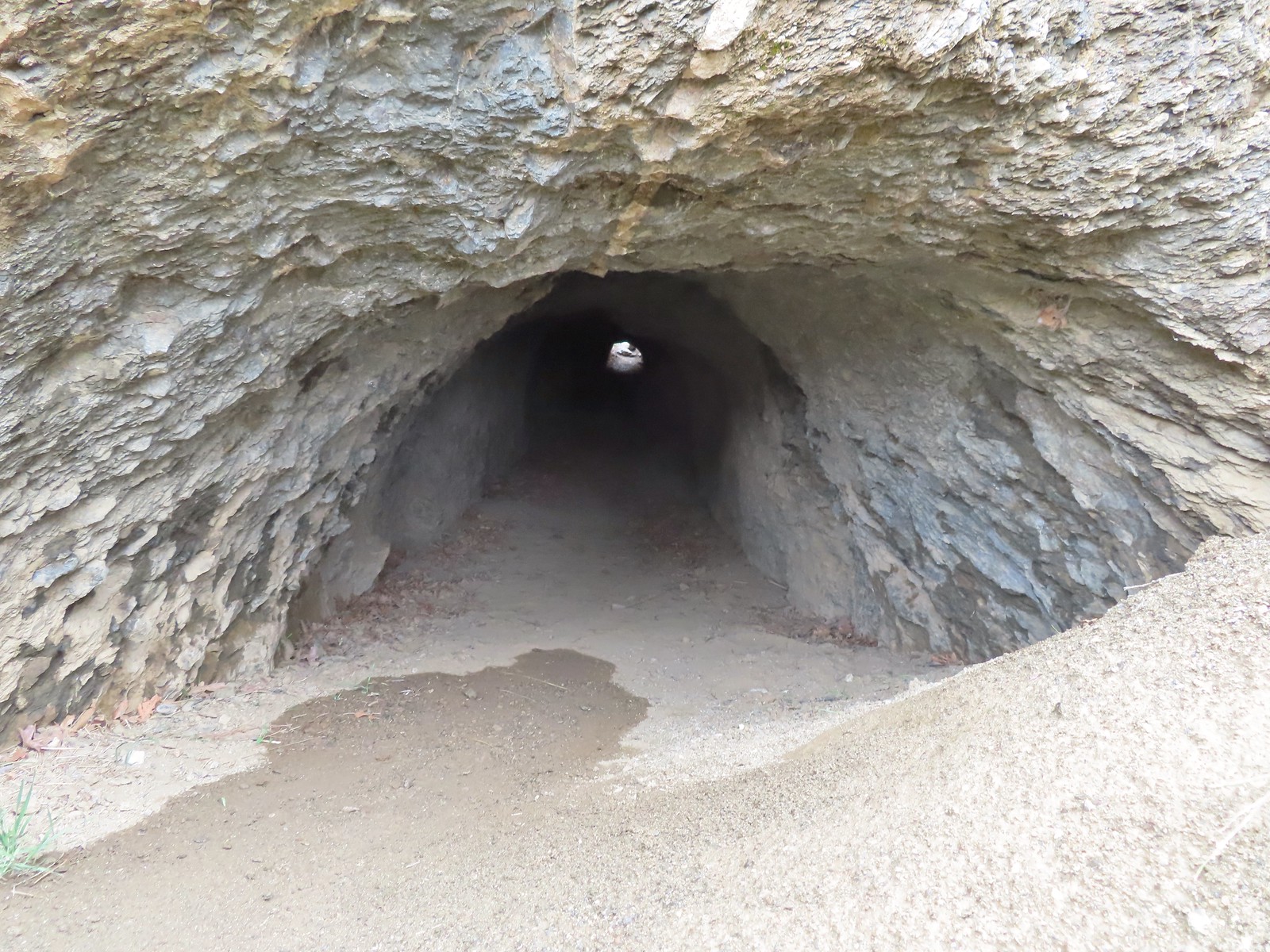
 I had to get a closer look.
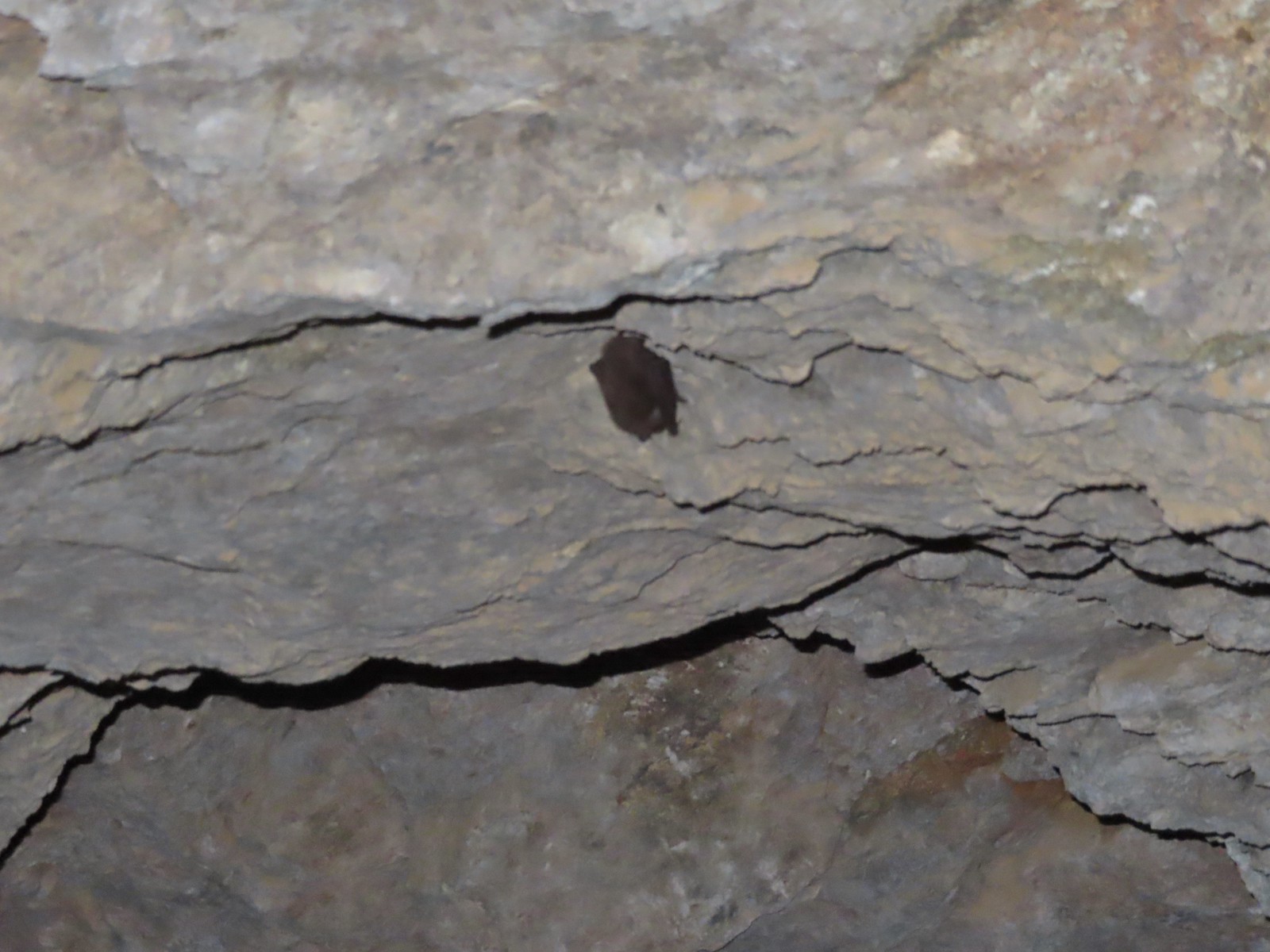 I didn’t go all the way through so as not to disturb this napping bat.
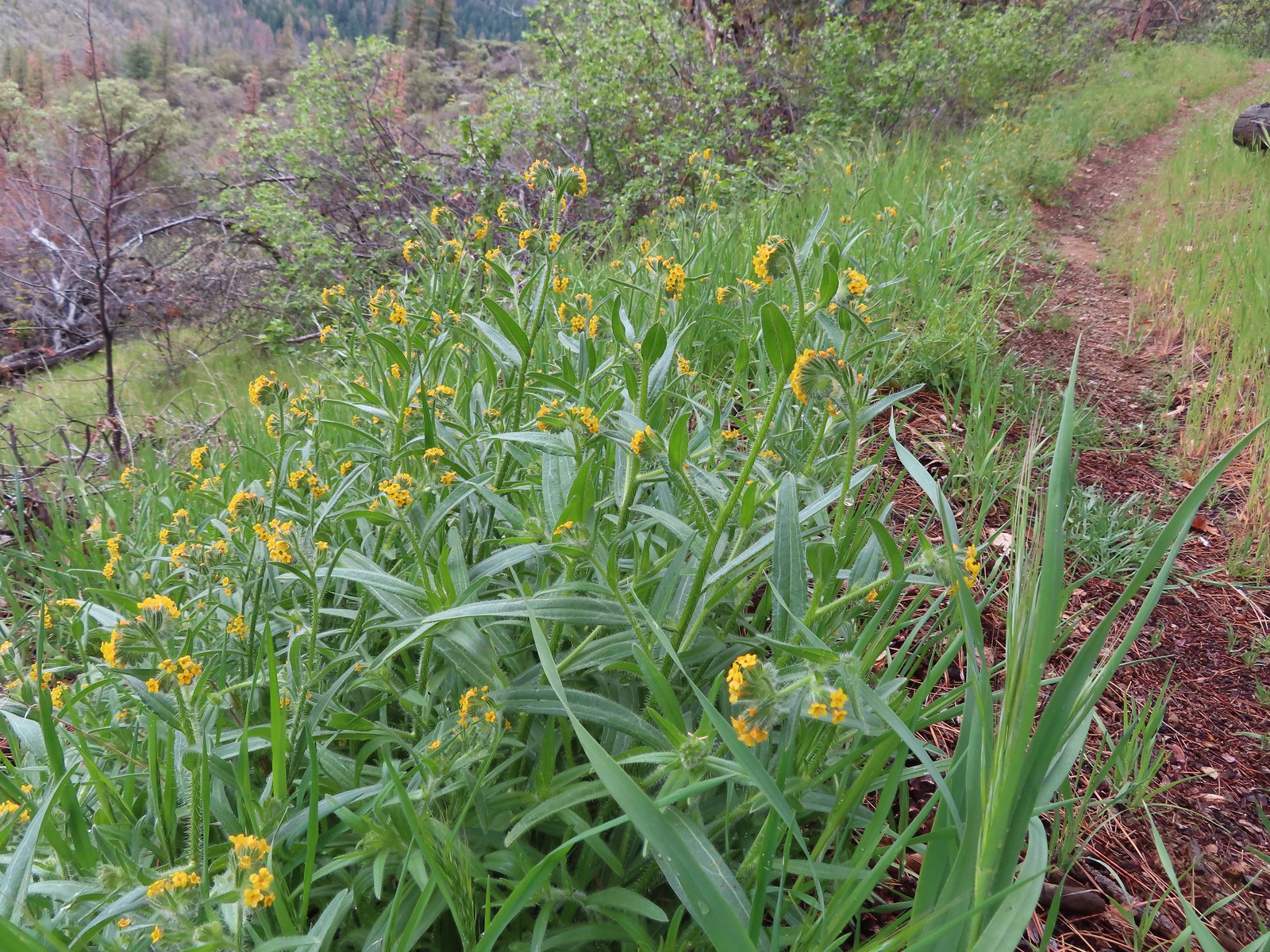 Fiddleneck along the trail.
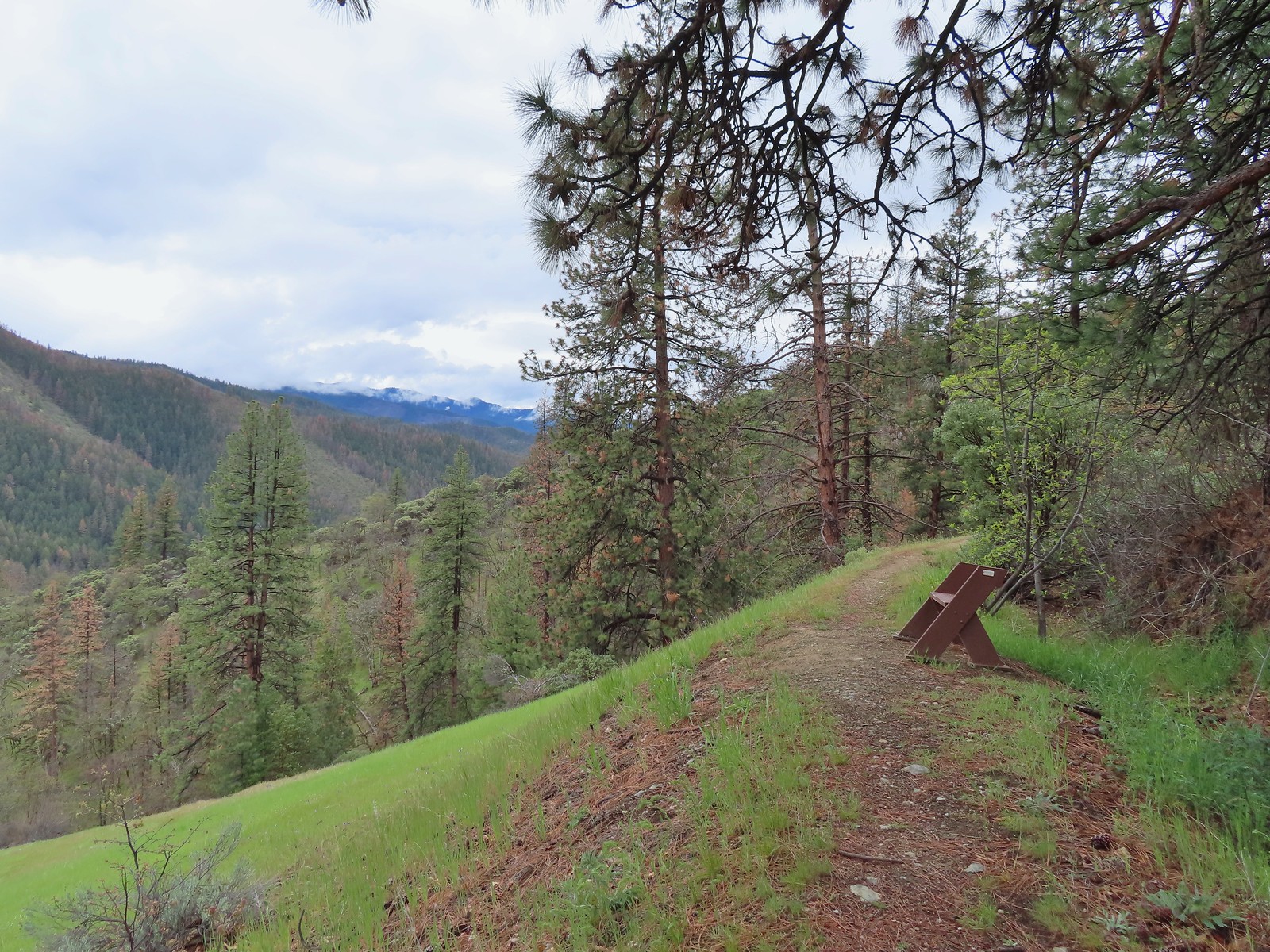 Another bench
 Emerging from the ditch.
 Scarlet fritillaries lining the trail.
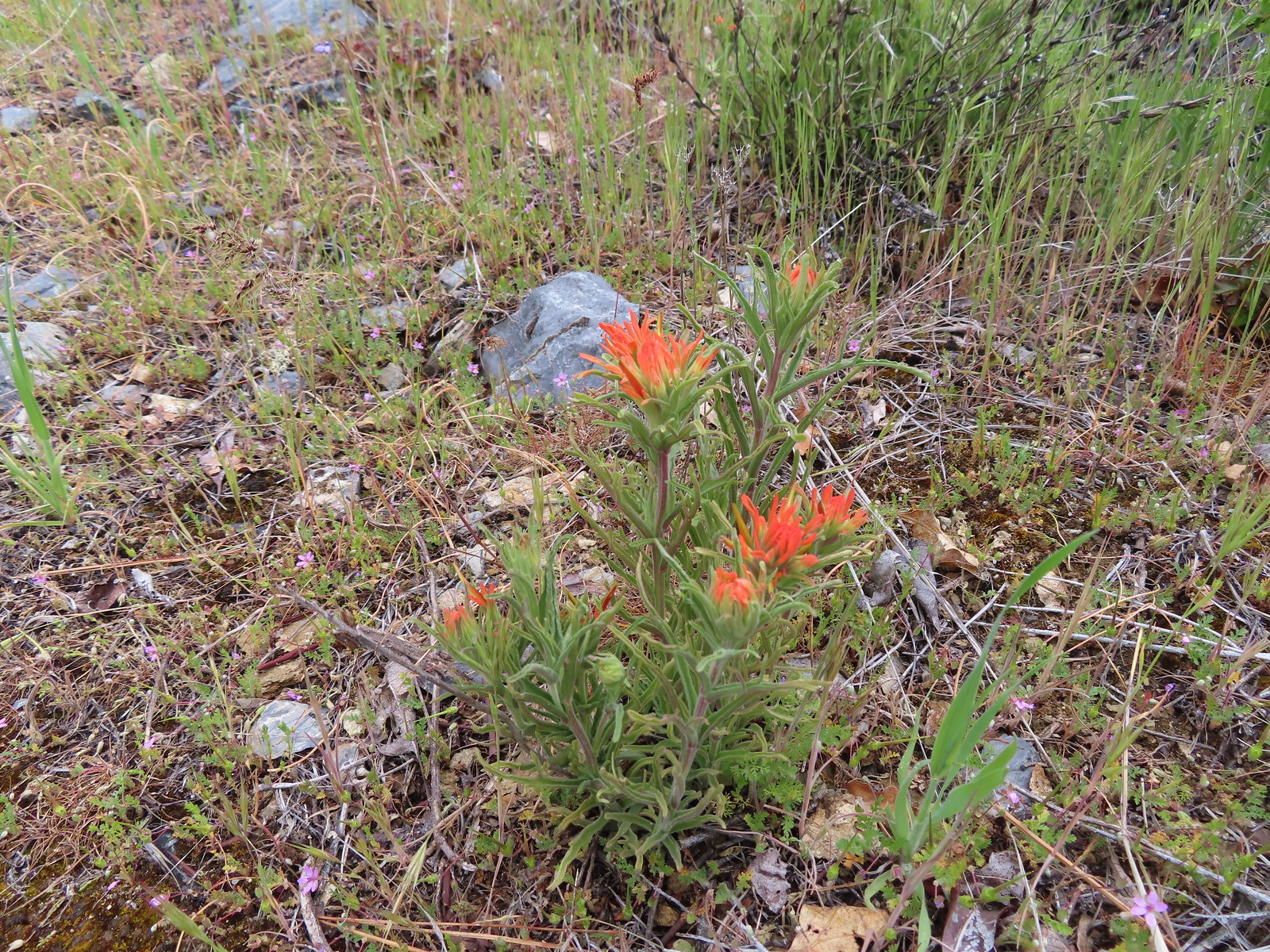 Paintbrush
 Balsamroot
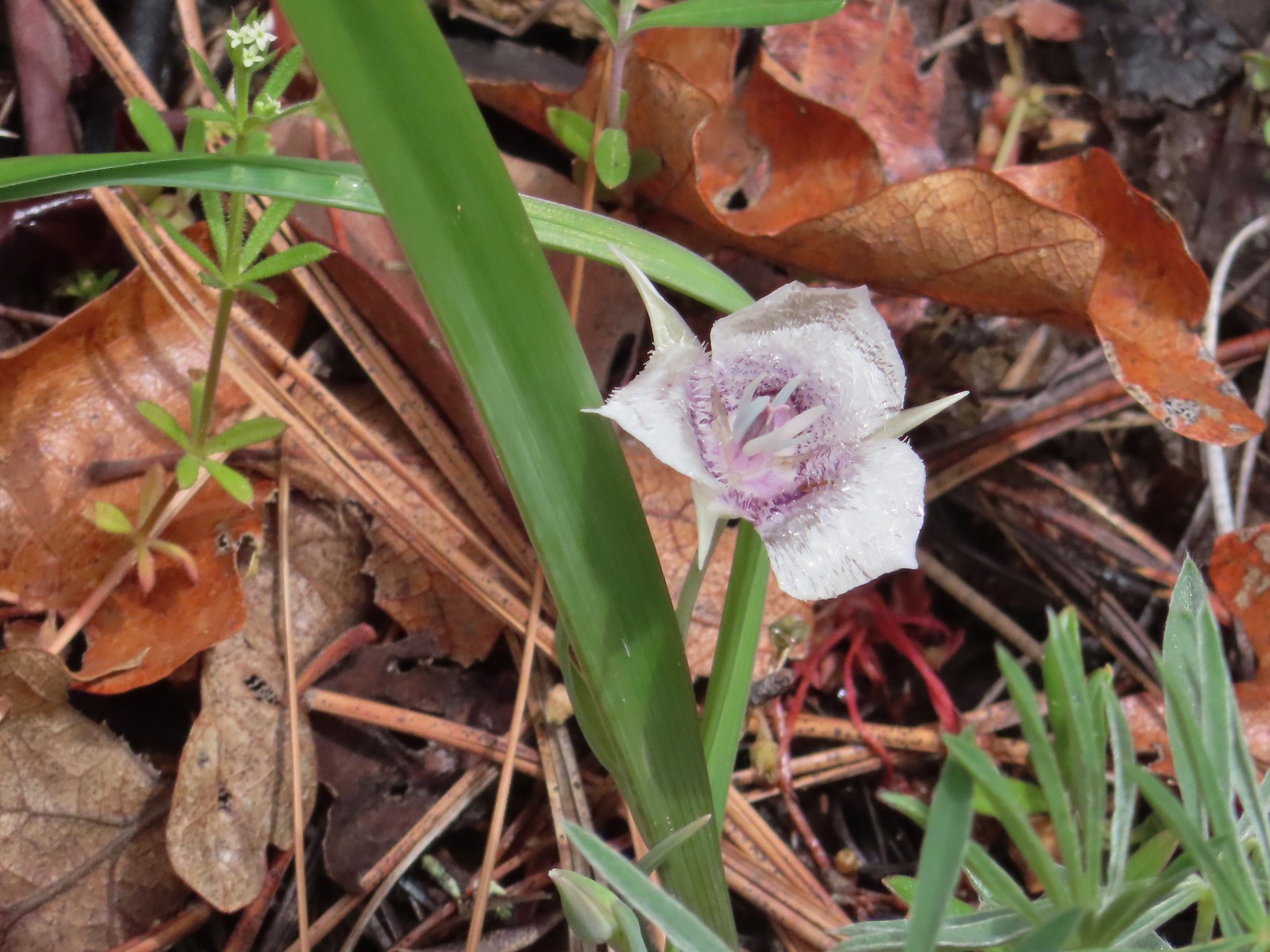 Tolmie’s mariposa lily
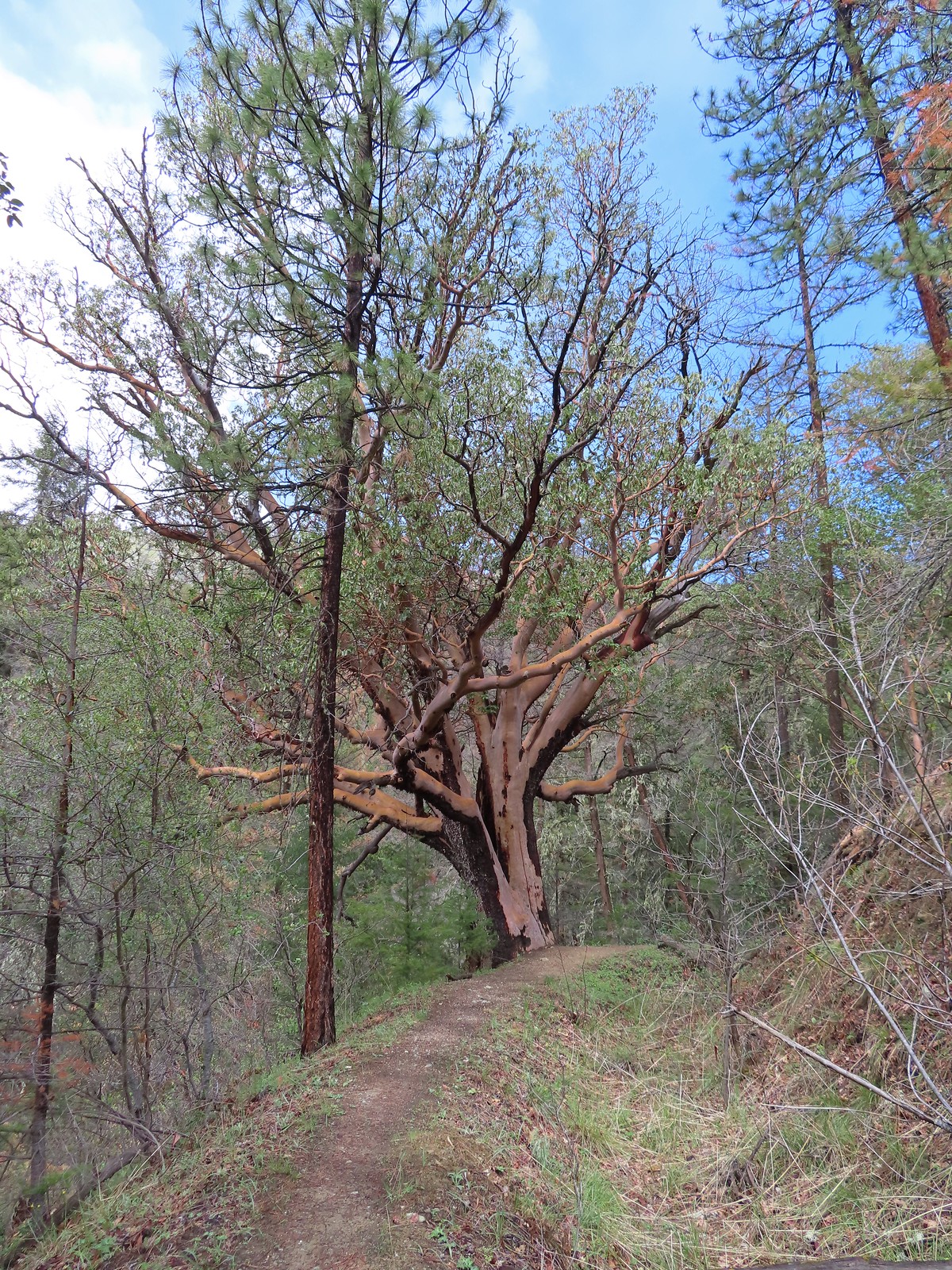 An impressively large madrone.
 Henderson’s fawn lilies
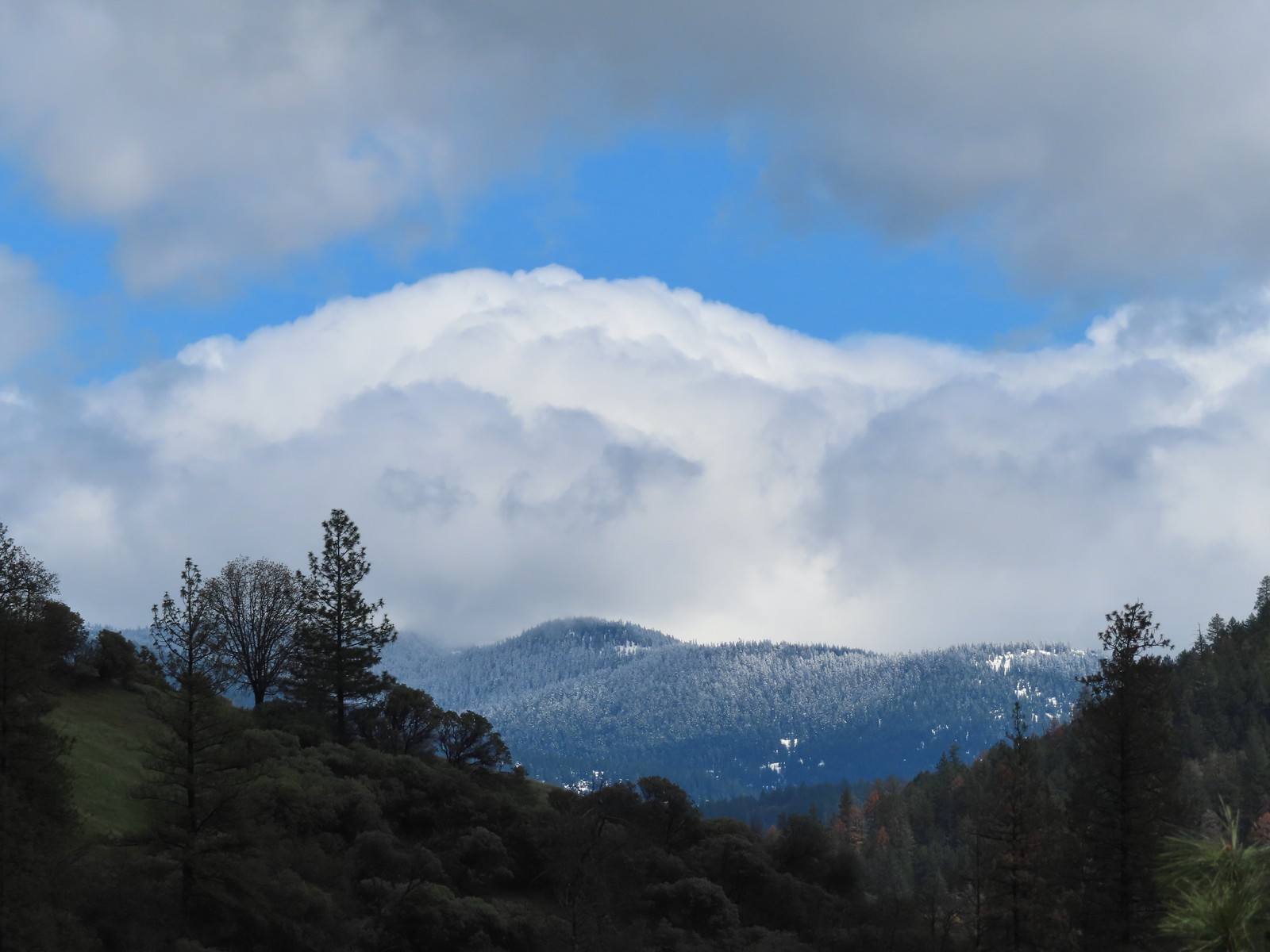 More fresh snow on a ridge.
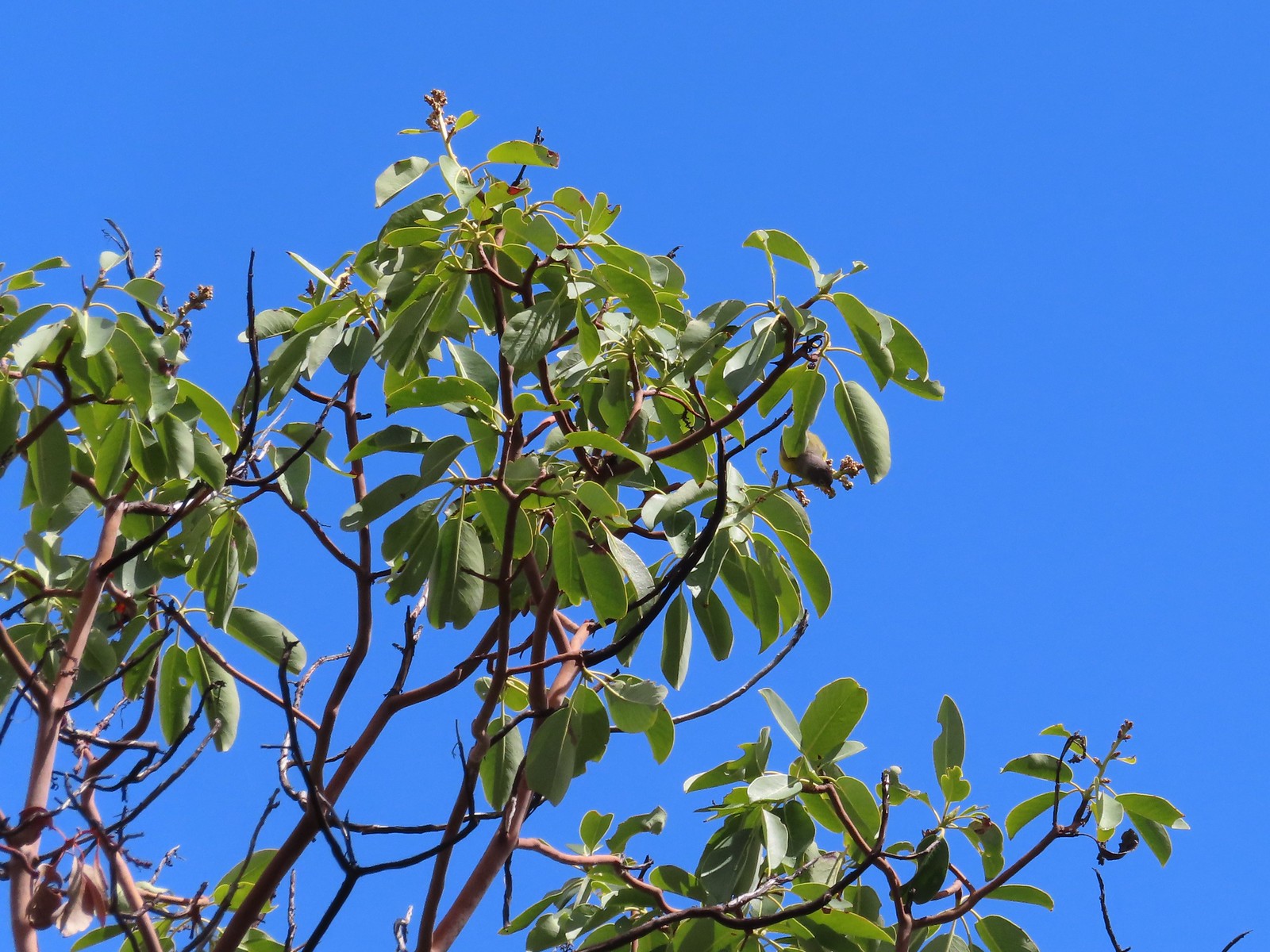 An upside-down warbler (upper right of the tree).
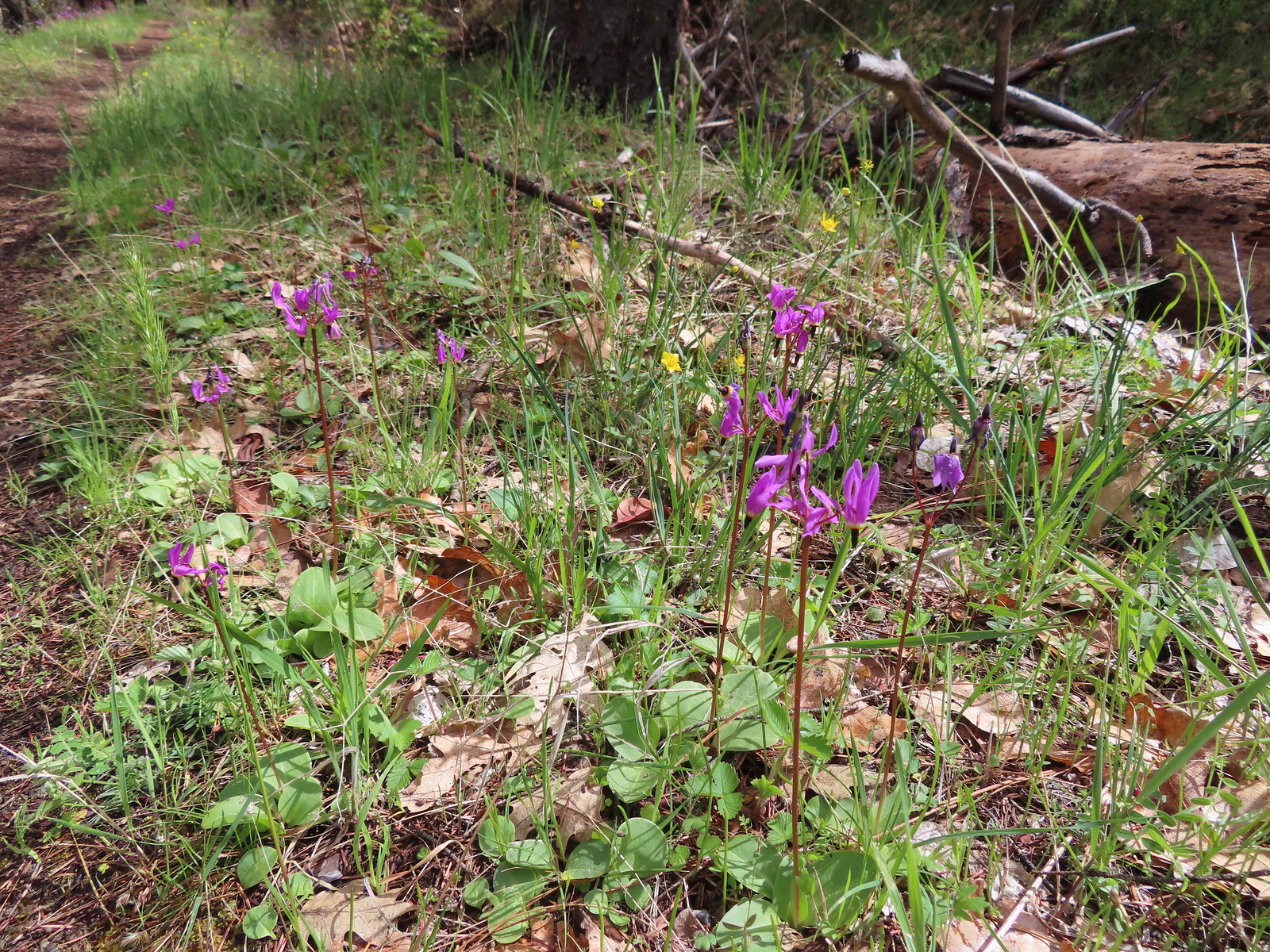 Shooting stars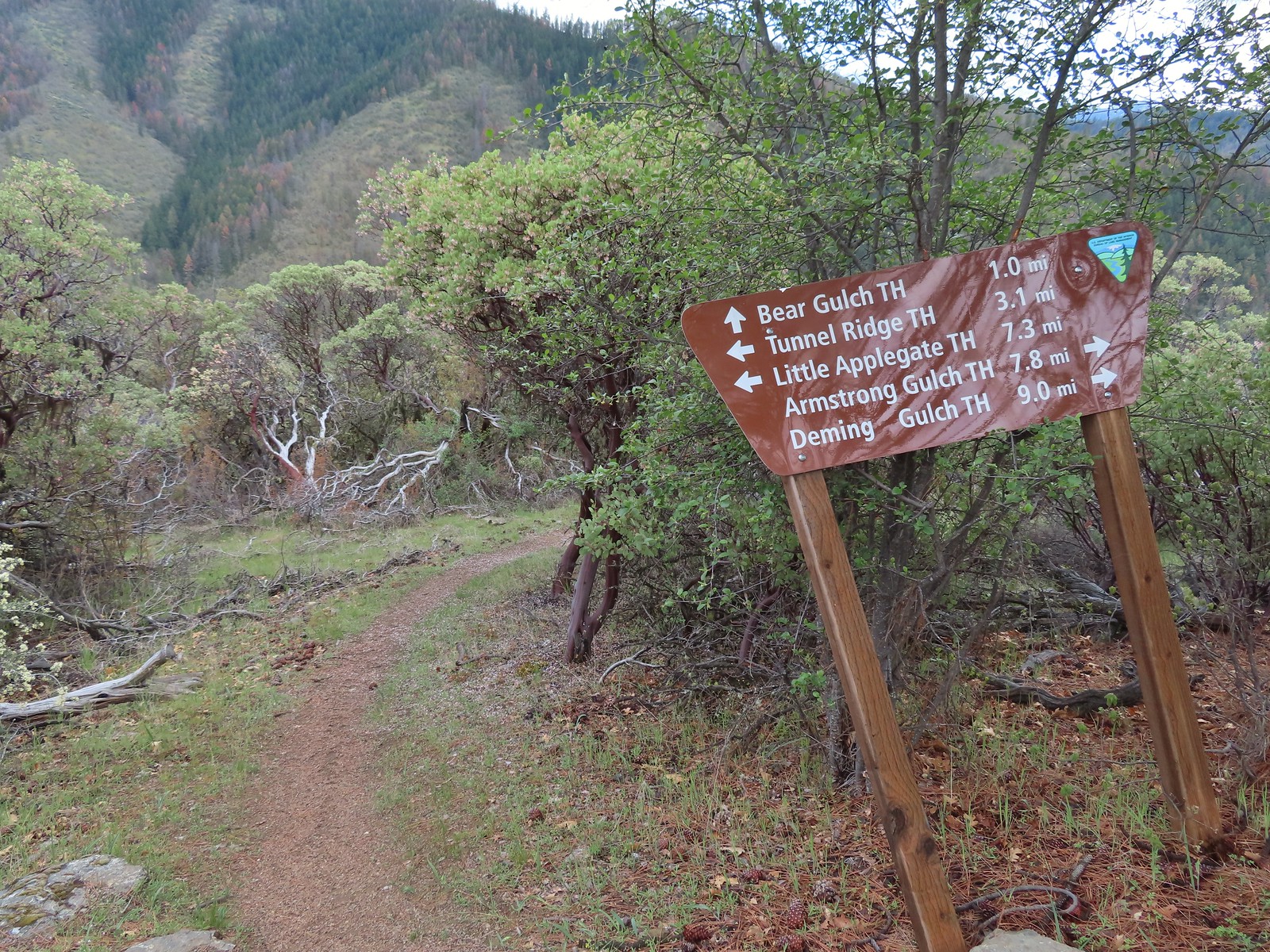
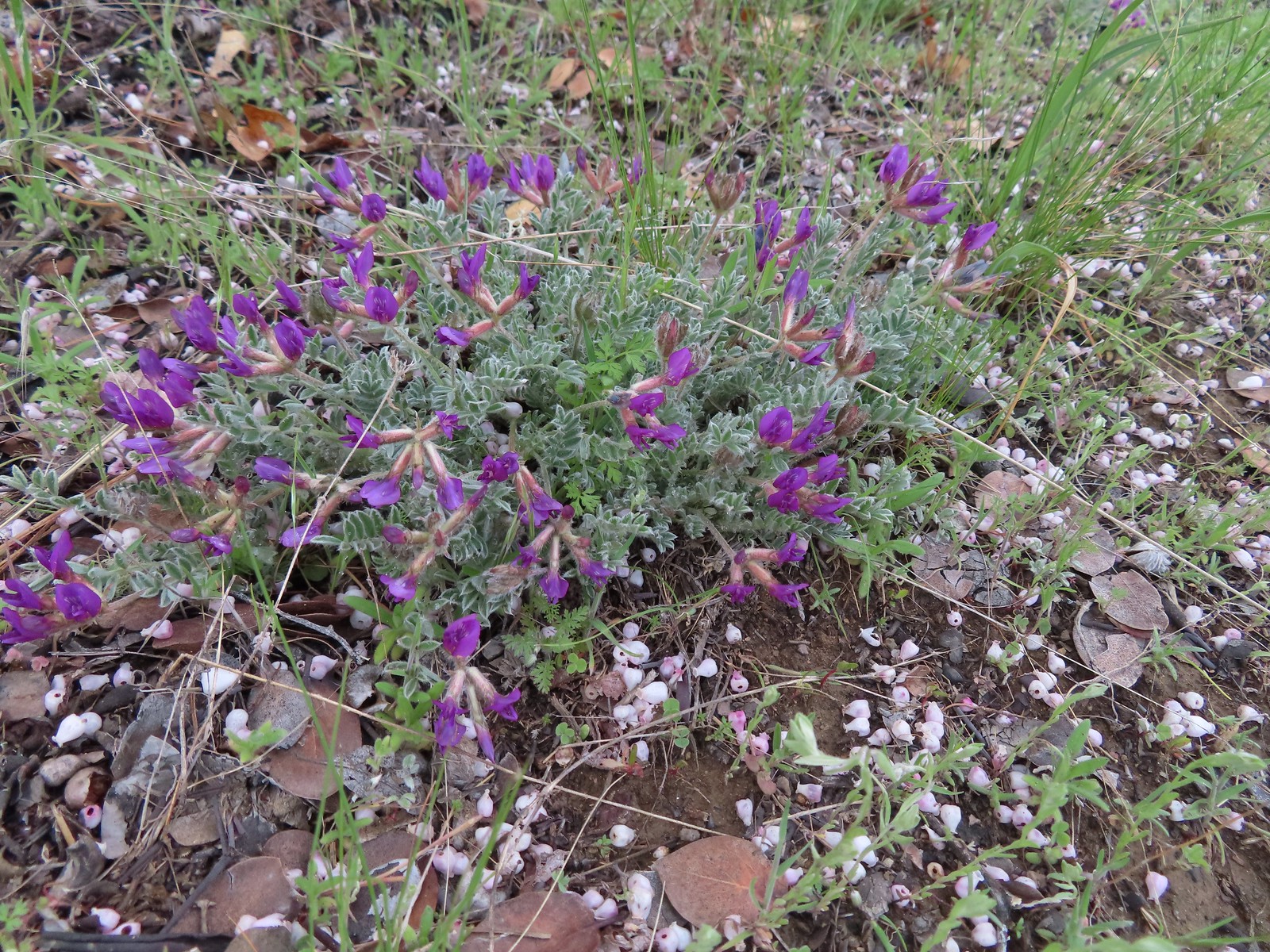 Woolly-pod milkvetch
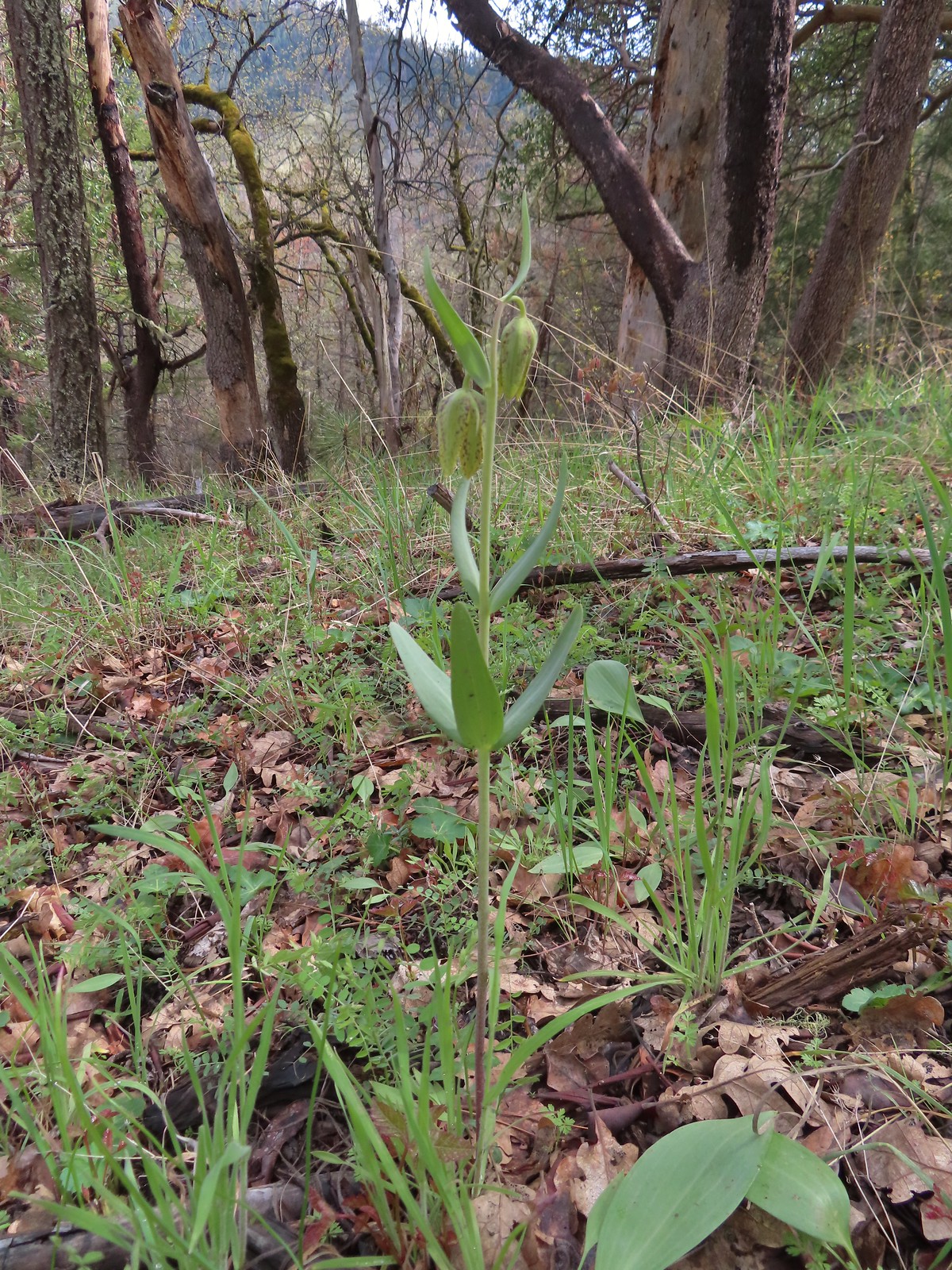 A fritillary, just not sure which one.
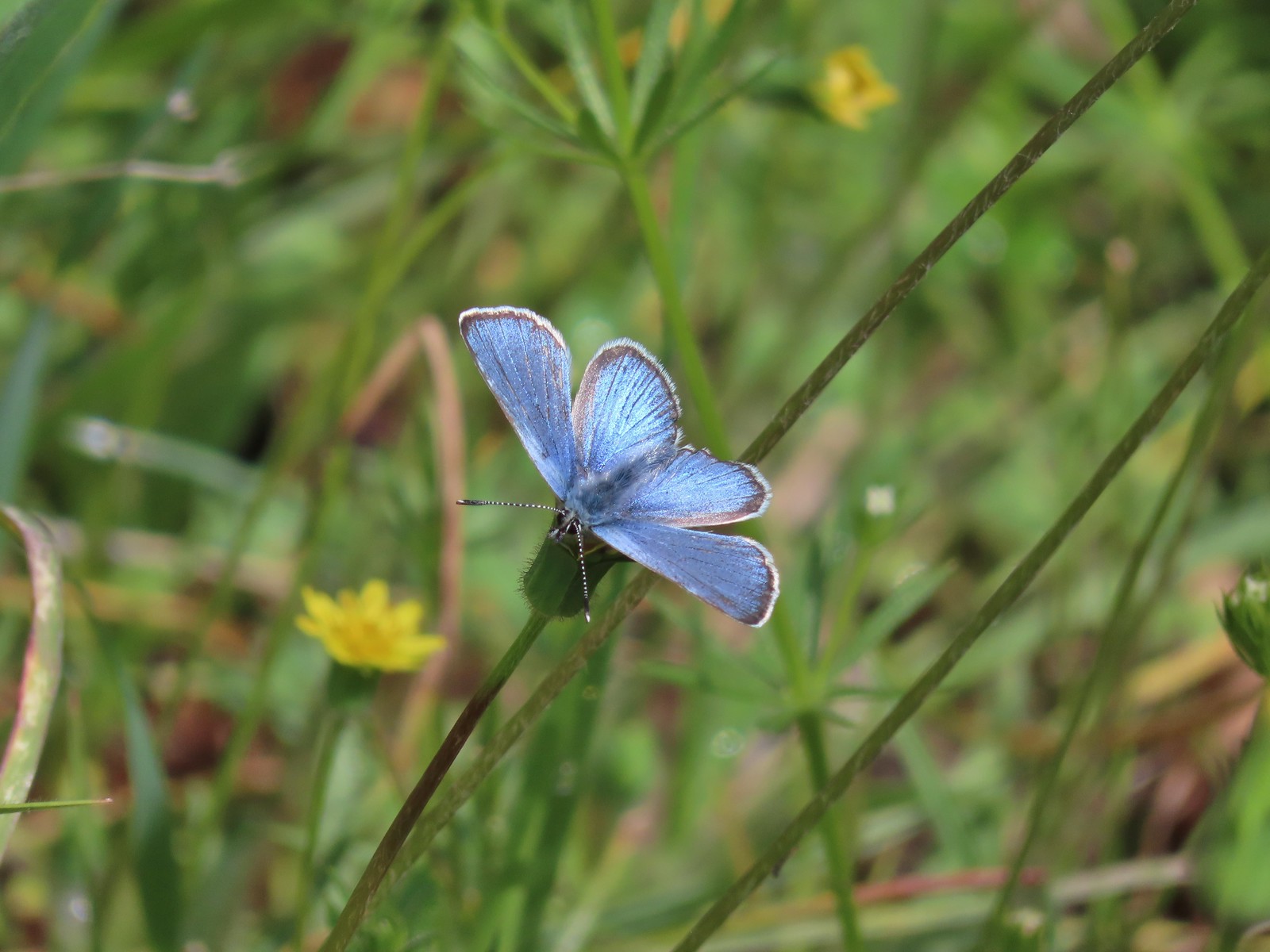 It was nice to start seeing some butterflies out and about.
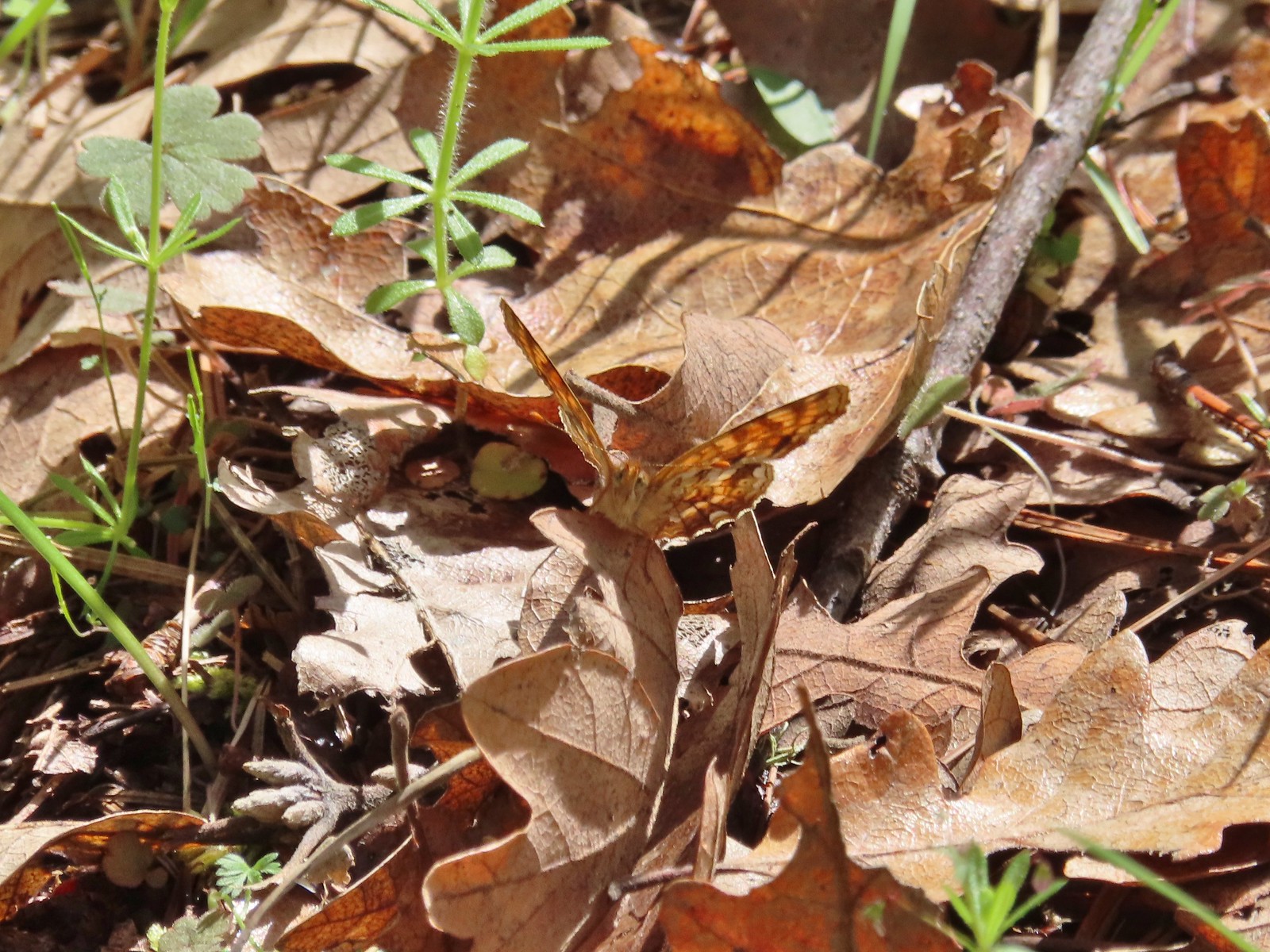 Another butterfly. It blends pretty well with the leaves.
 White-breasted nuthatch
 There was a decent amount of water running through parts of Bear Gulch as we neared the trailhead.

 Red larkspur with blue dicks in the background.
 Lupine
 Red larkspur, madia, blue dicks, and tomcat clover along the trail.
 Blue dicks
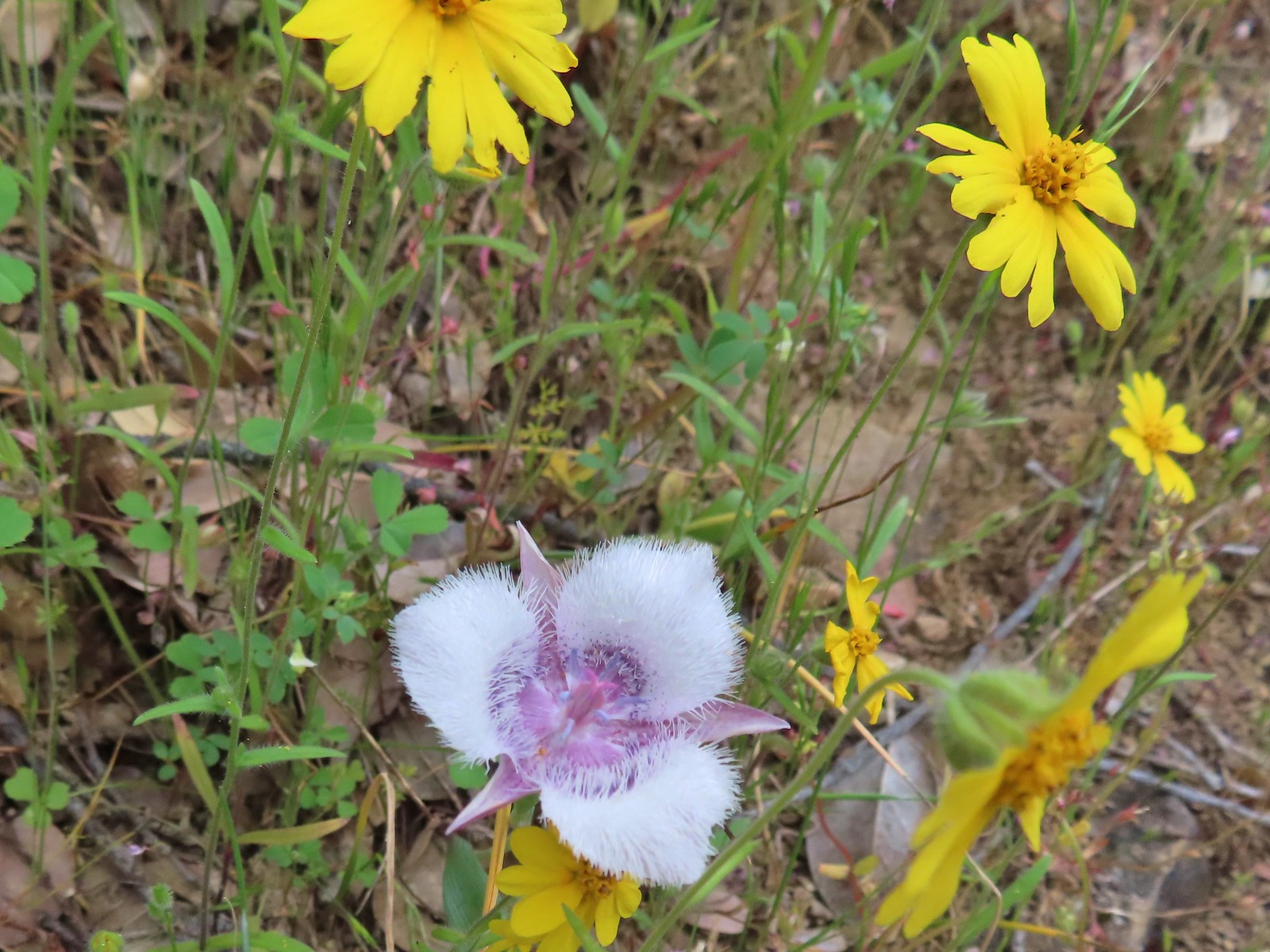 Tolmie’s mariposa lily and some madia.
 Larkspur and a red larkspur
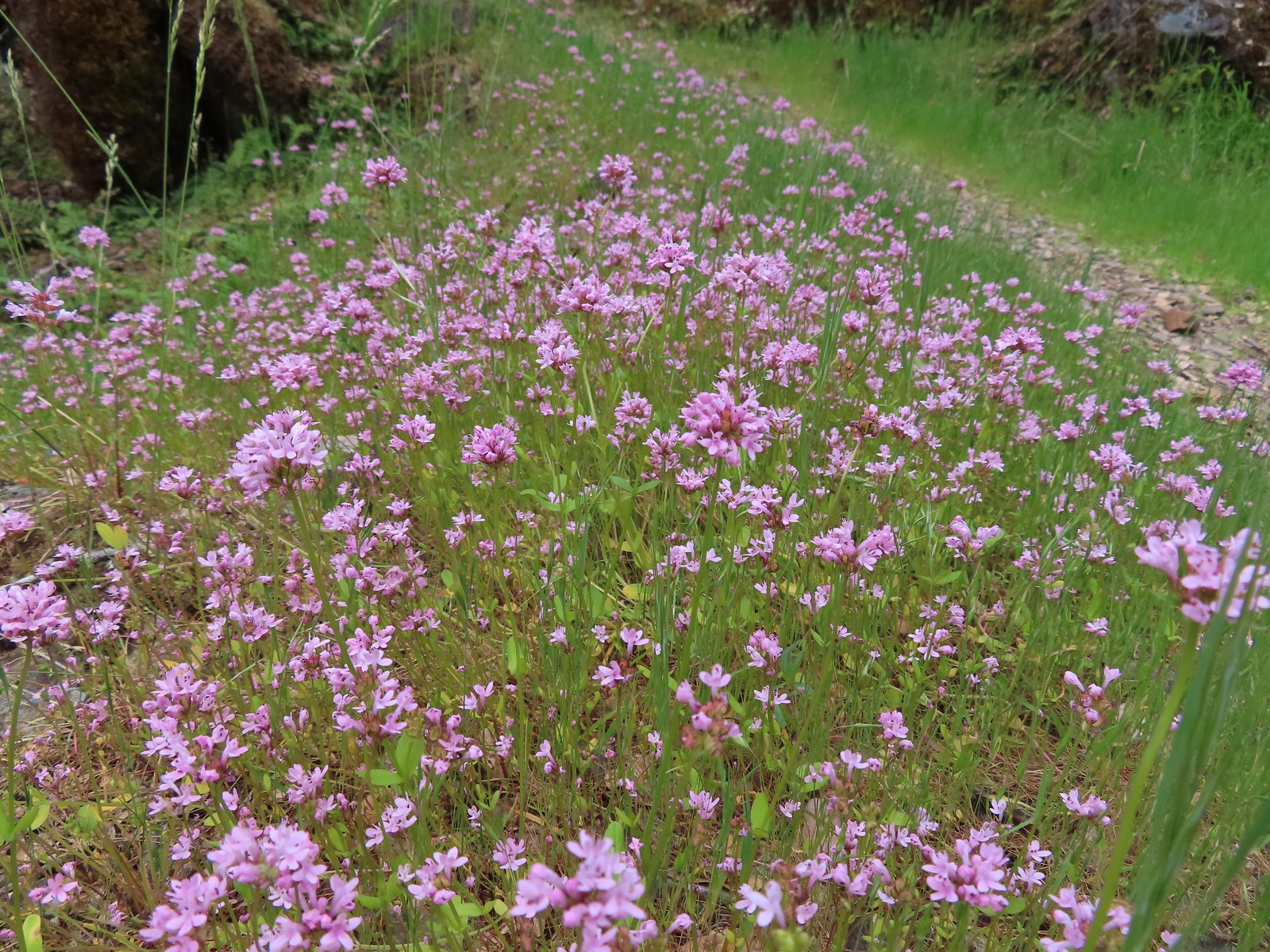 Plectritis
 Monkeyflower
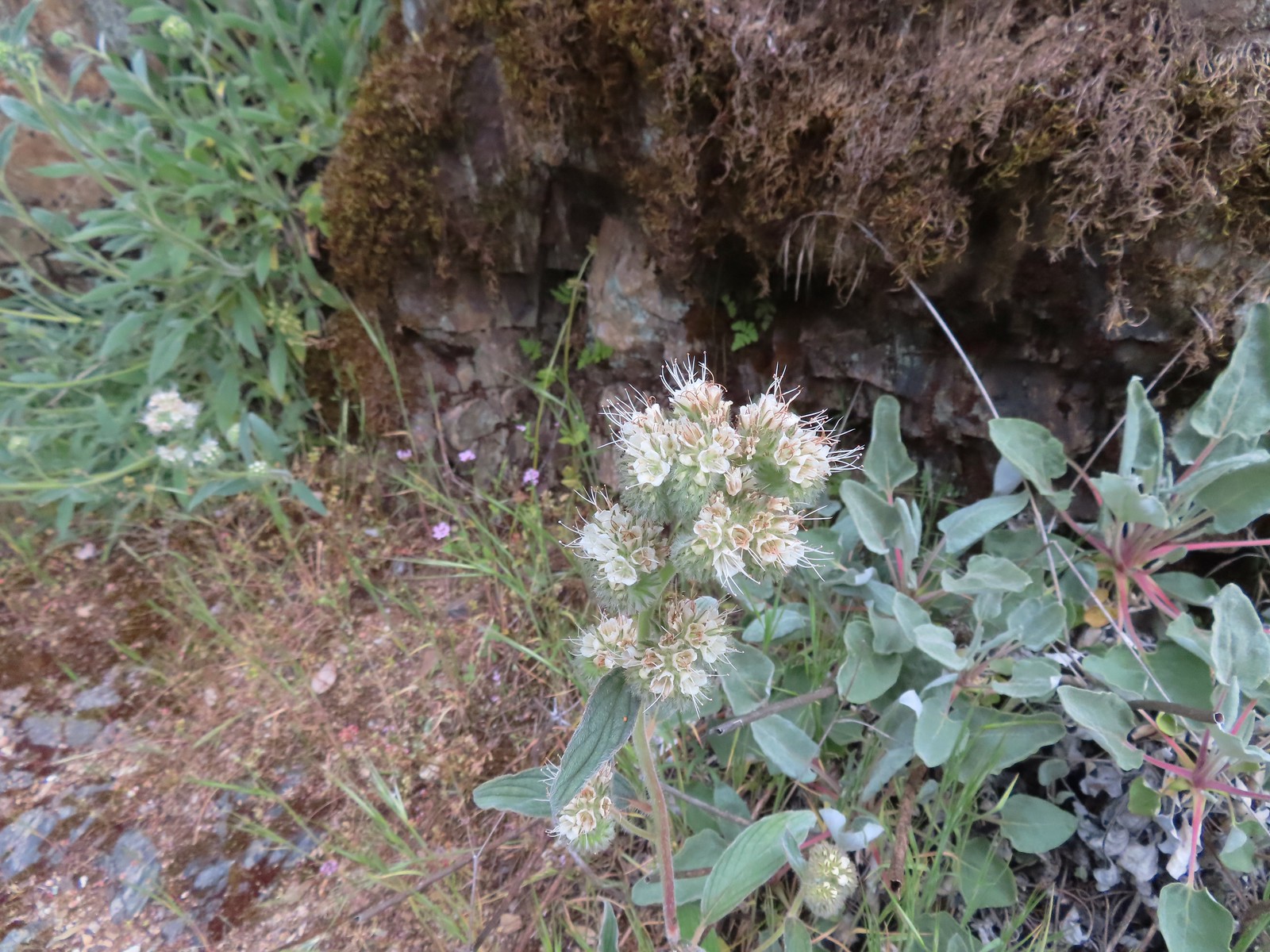 Serpentine phacelia
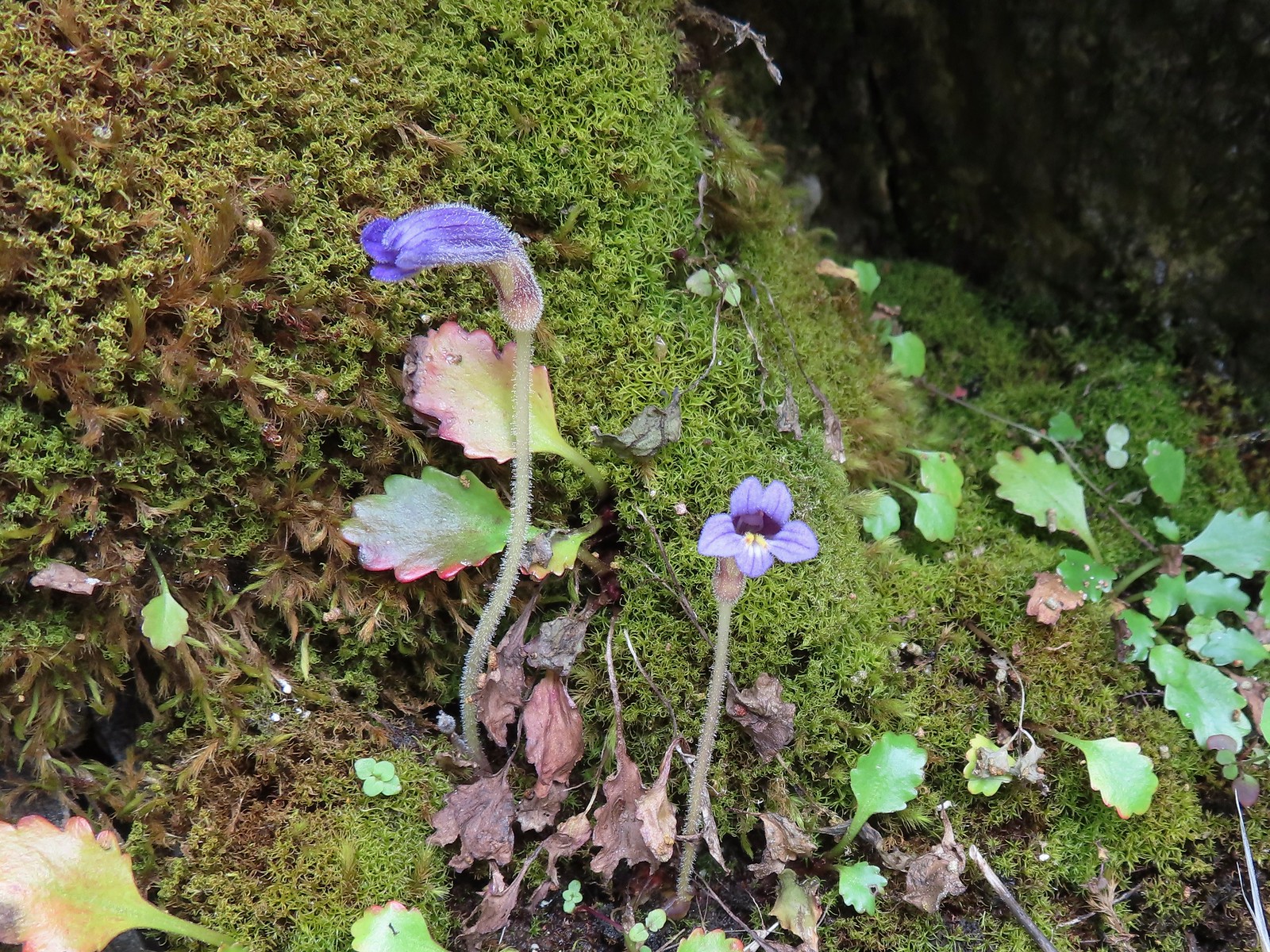 Naked broomrape
 Camas with monkeyflower and plectritis
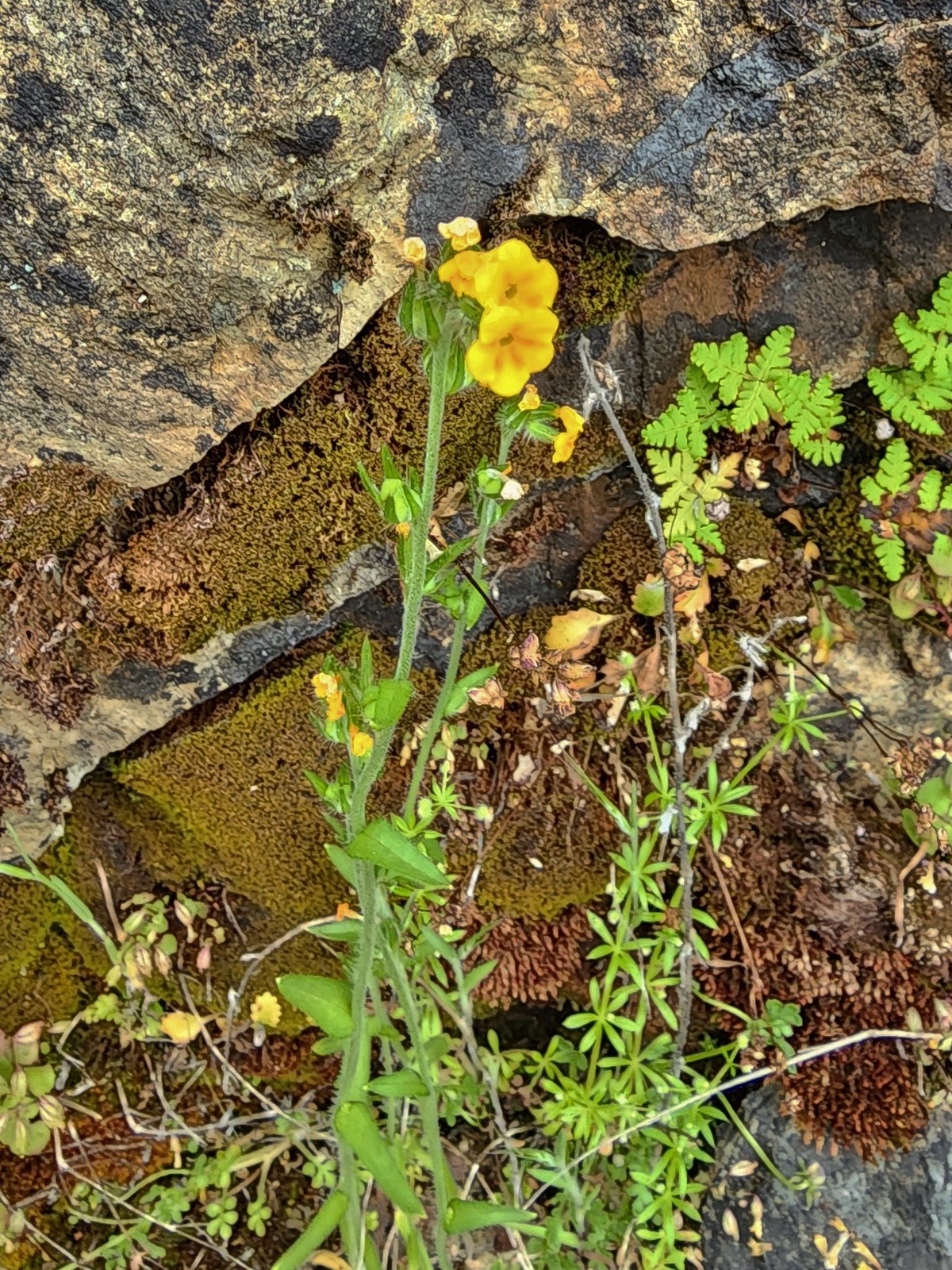 Fiddleneck
 Saxifrage
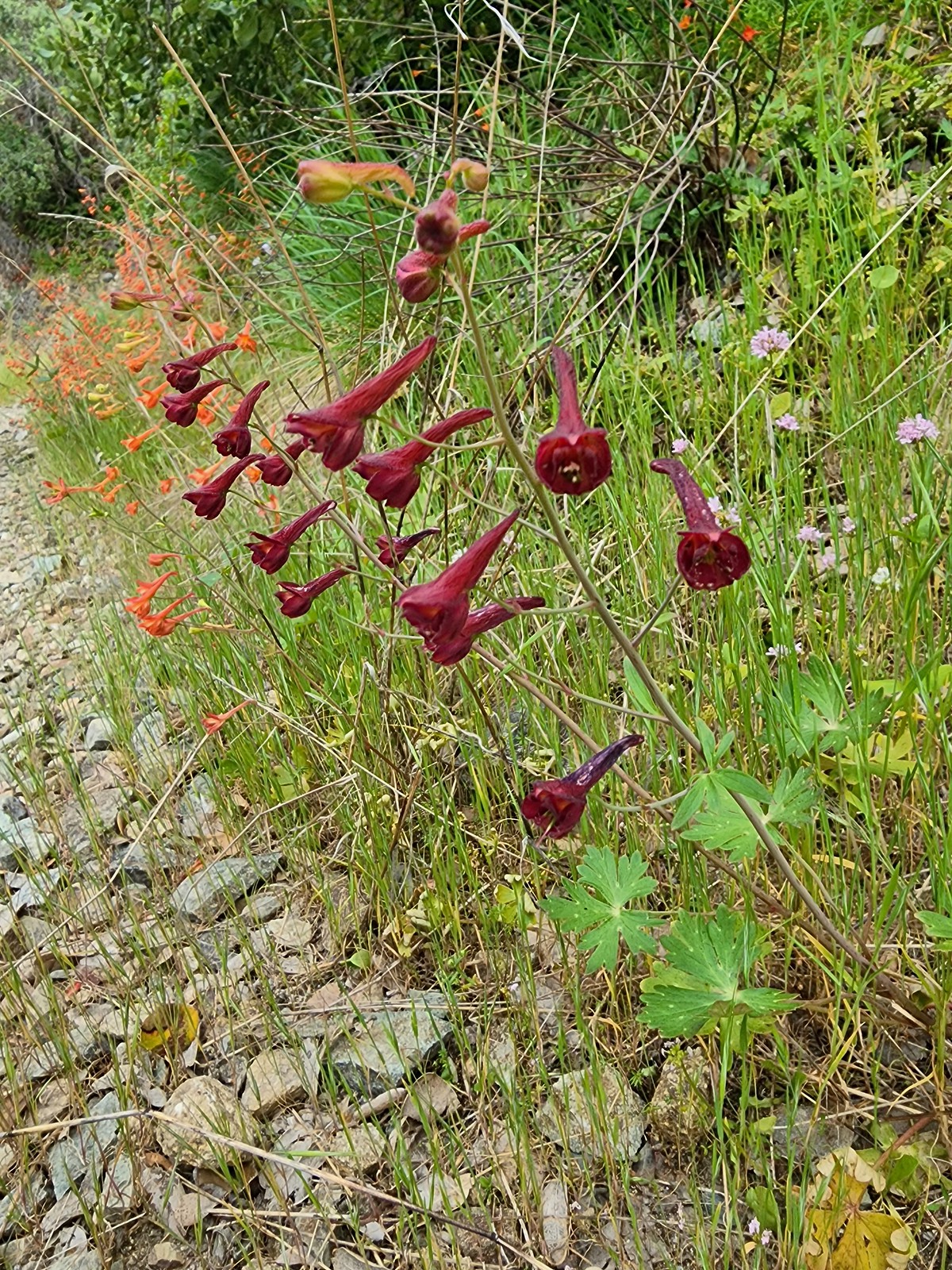 A darker red larkspur
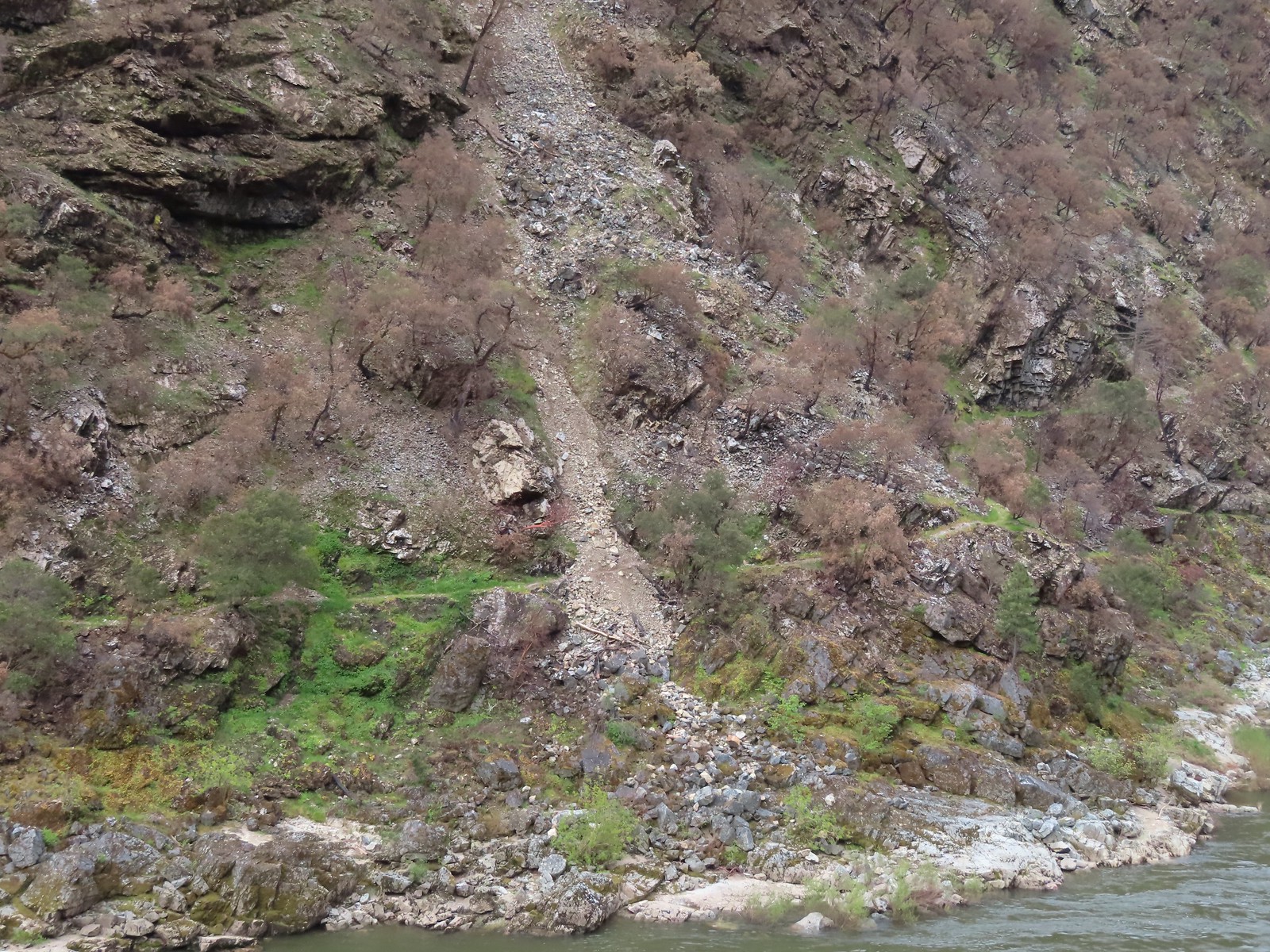 Some of the damage to the trail to Rainie Falls on the opposite side of the river.
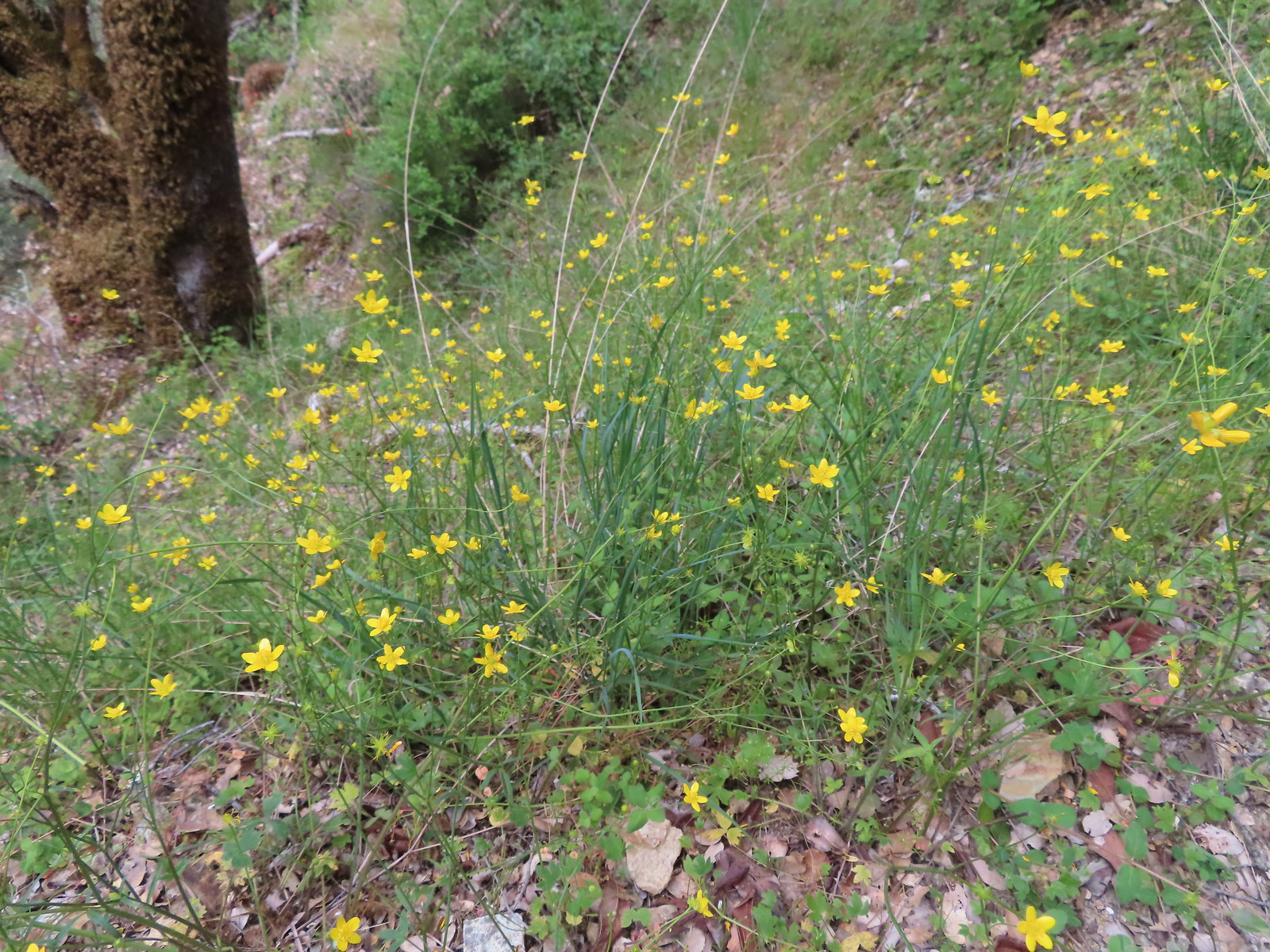 Buttercups
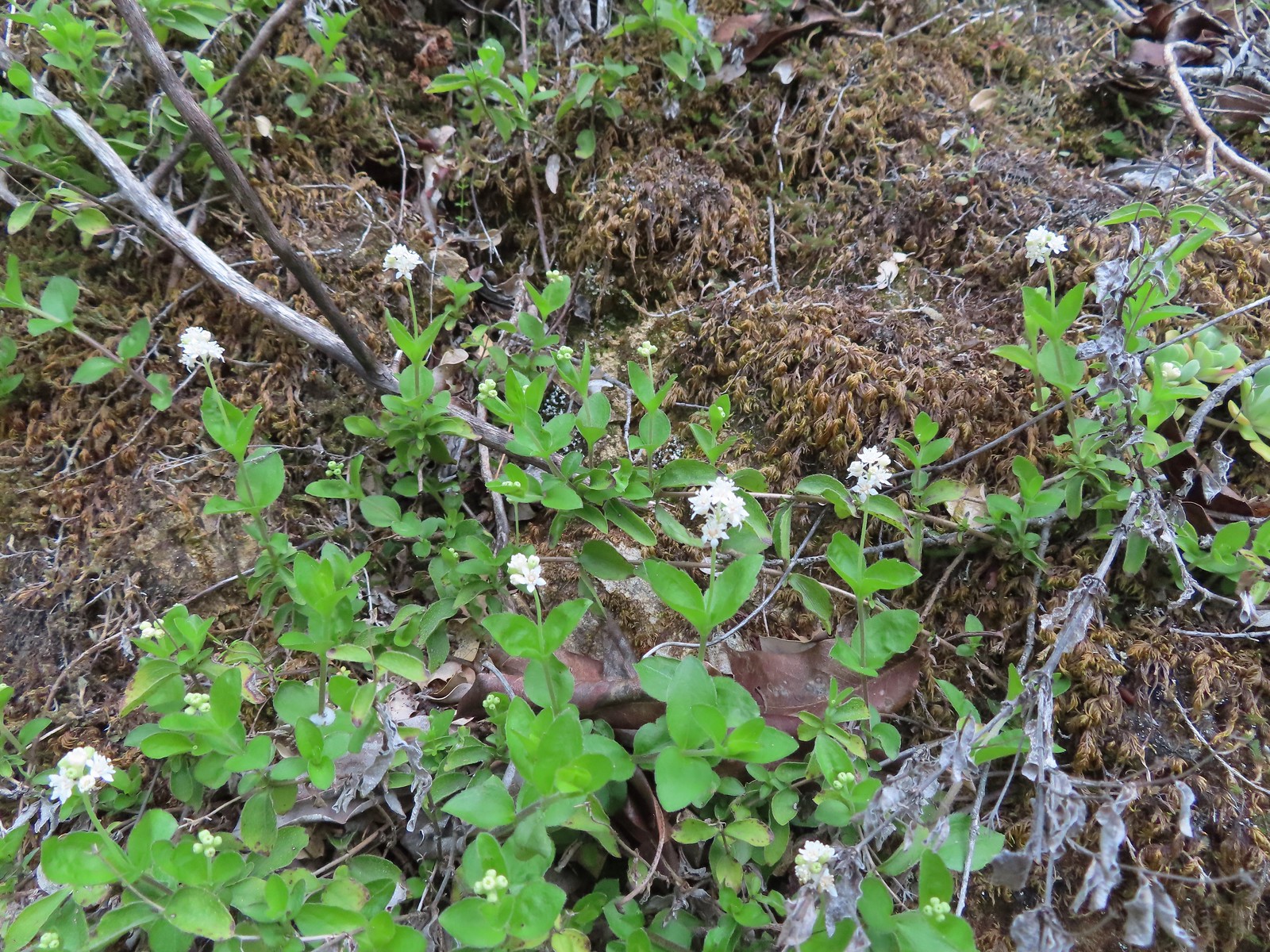 Common whipplea
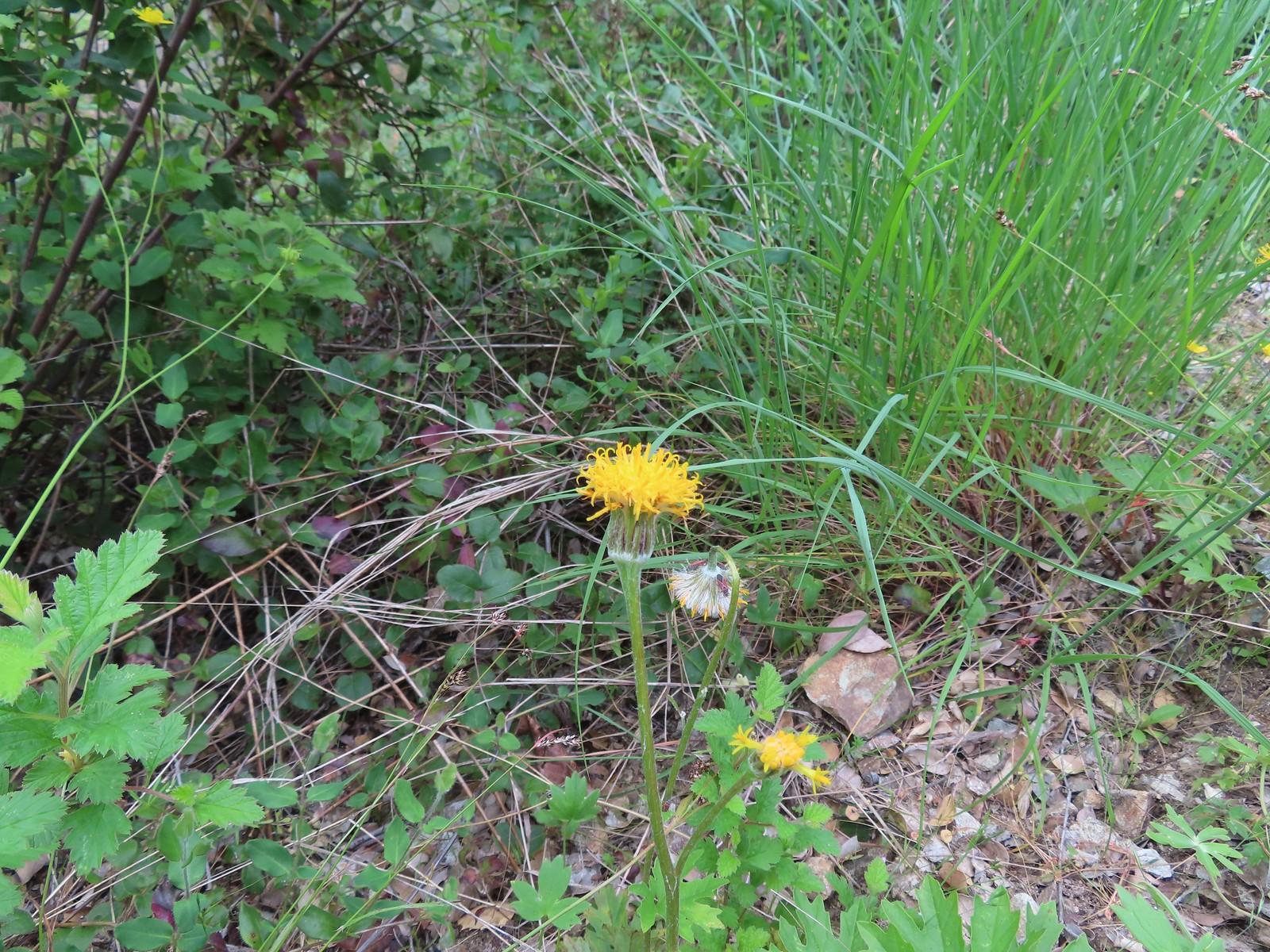 Silver crown
 The wet rock here was sneaky slick.
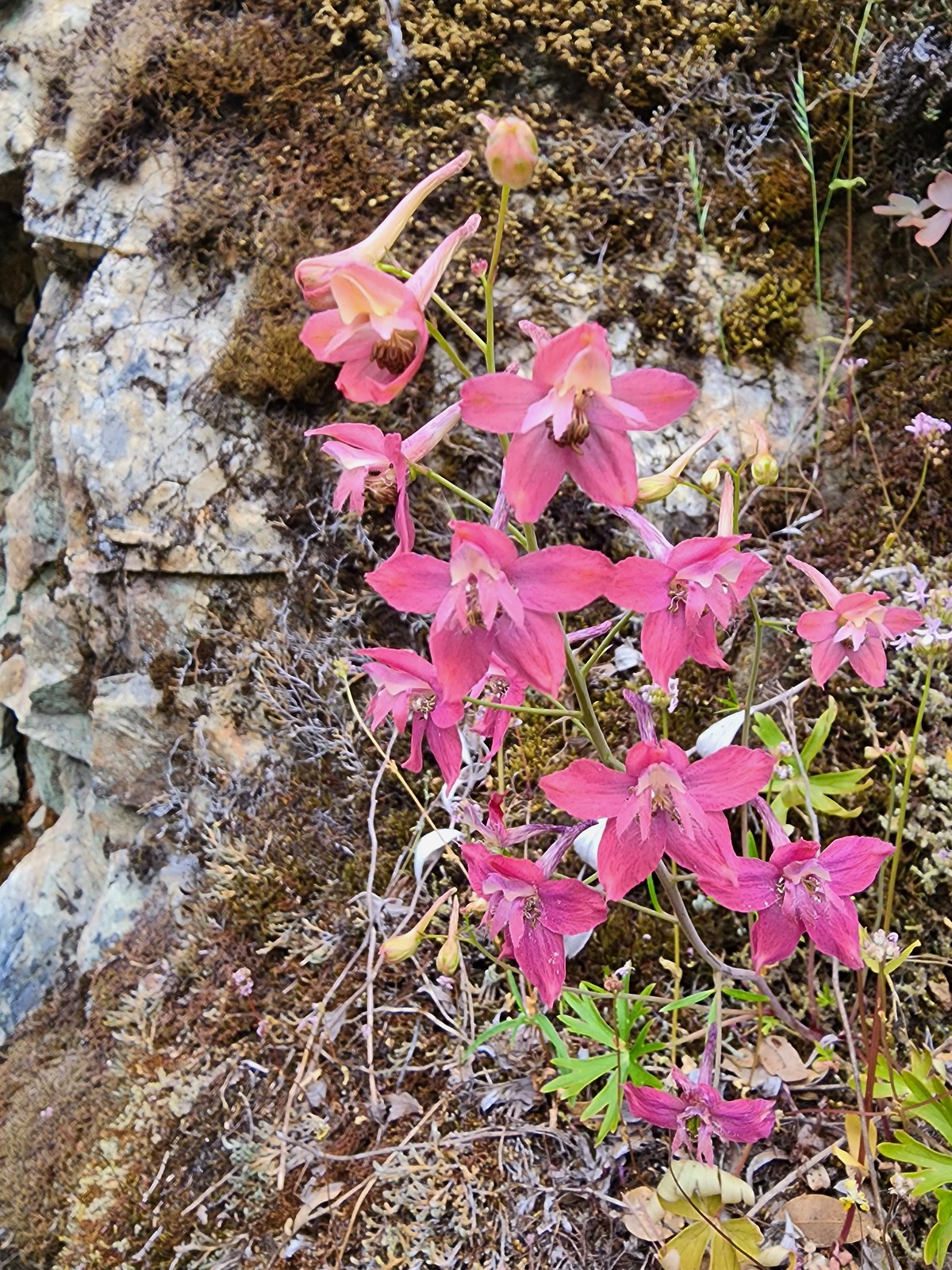 We spotted a couple of pink larkspur.
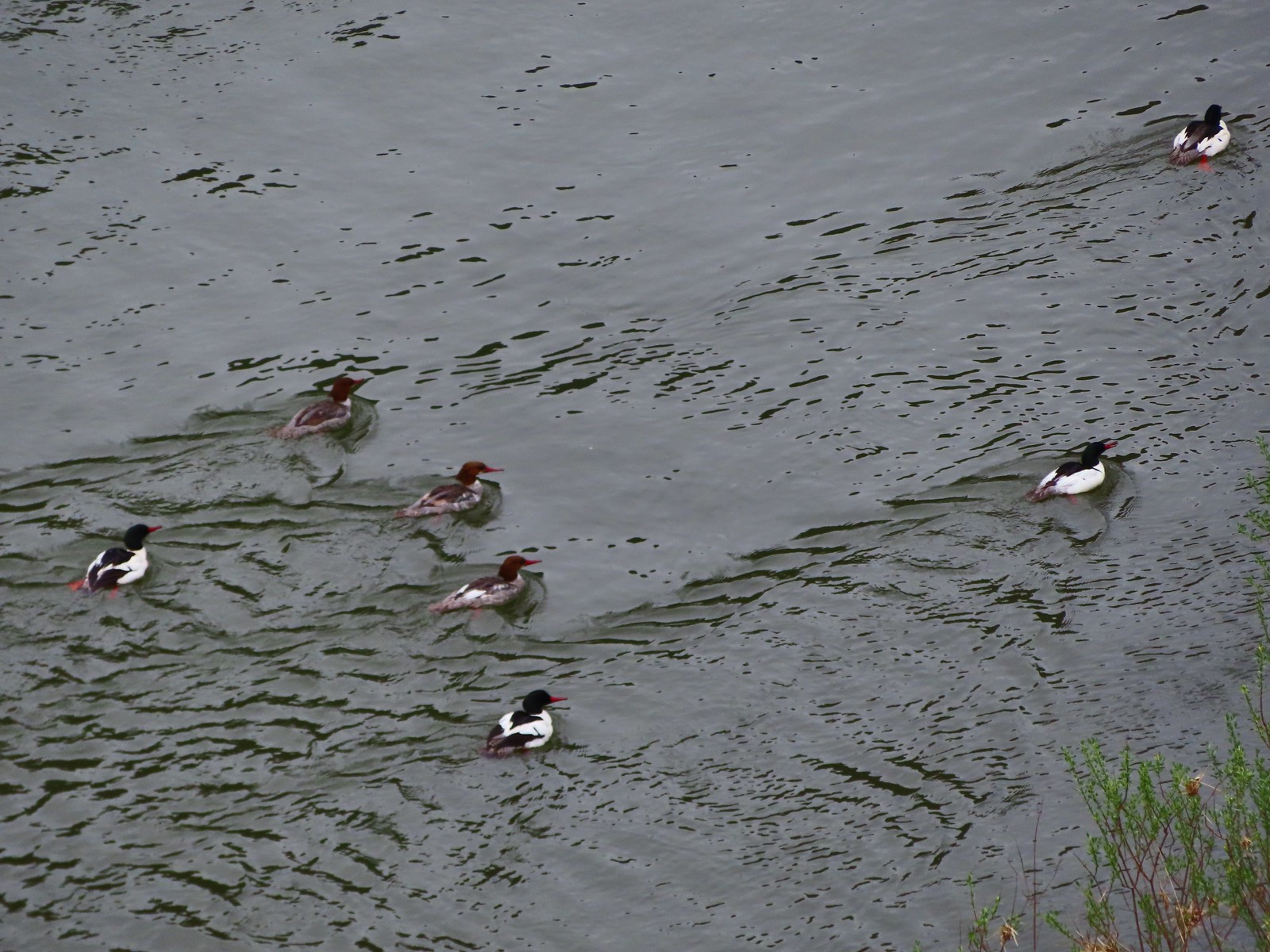 Common mergansers
 Common cryptantha
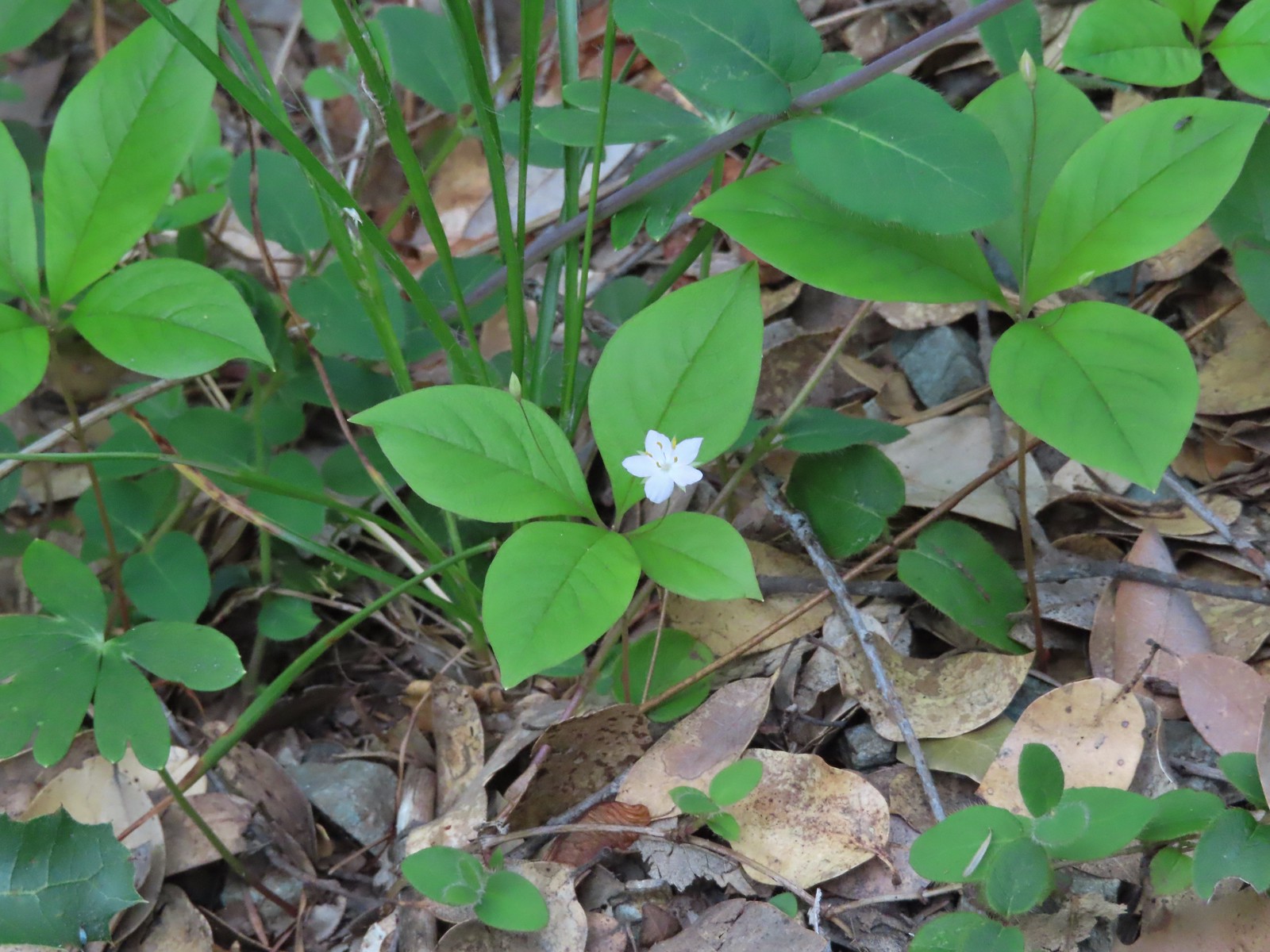 Starflower
 Paintbrush
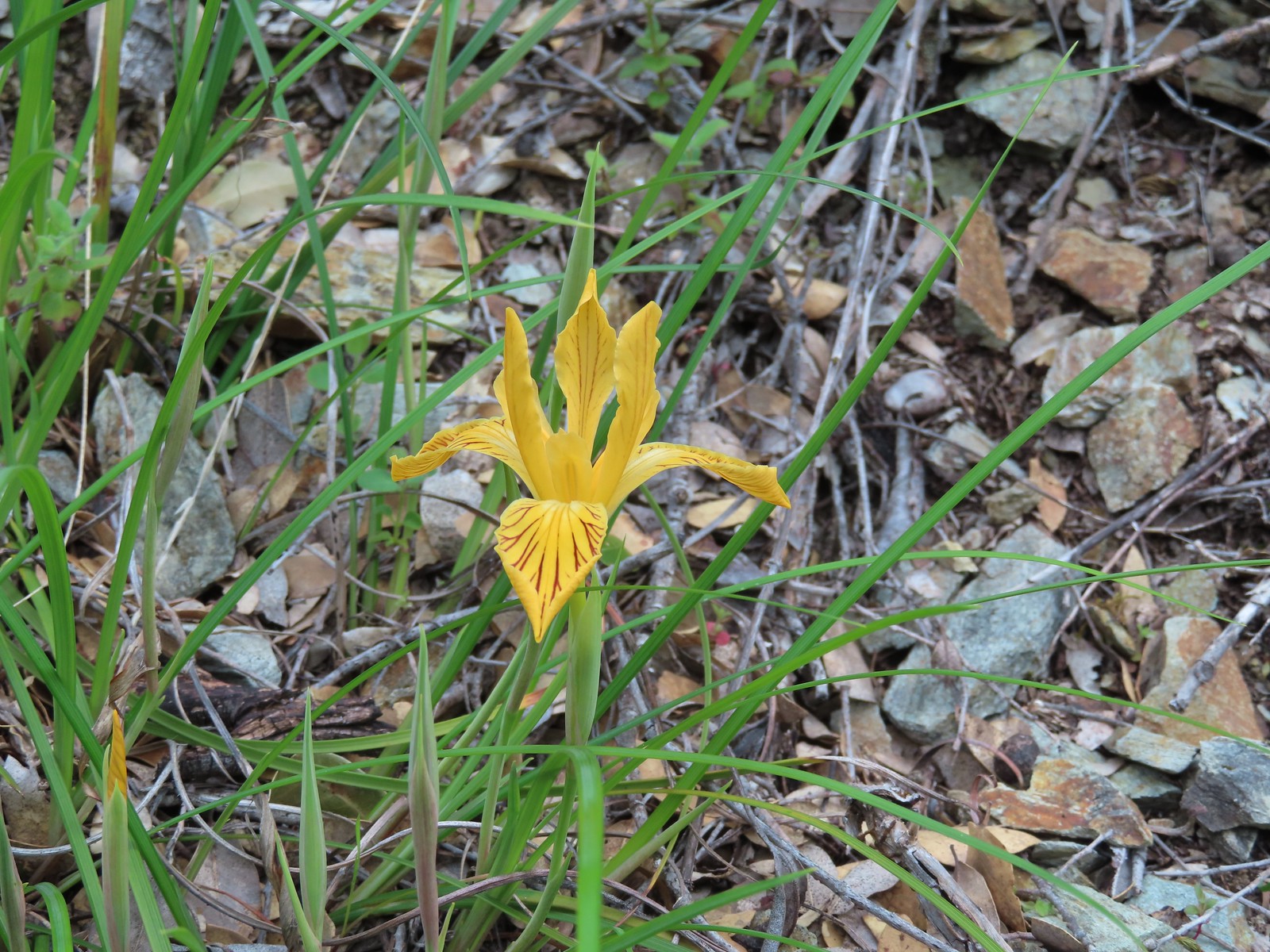 Del Norte iris
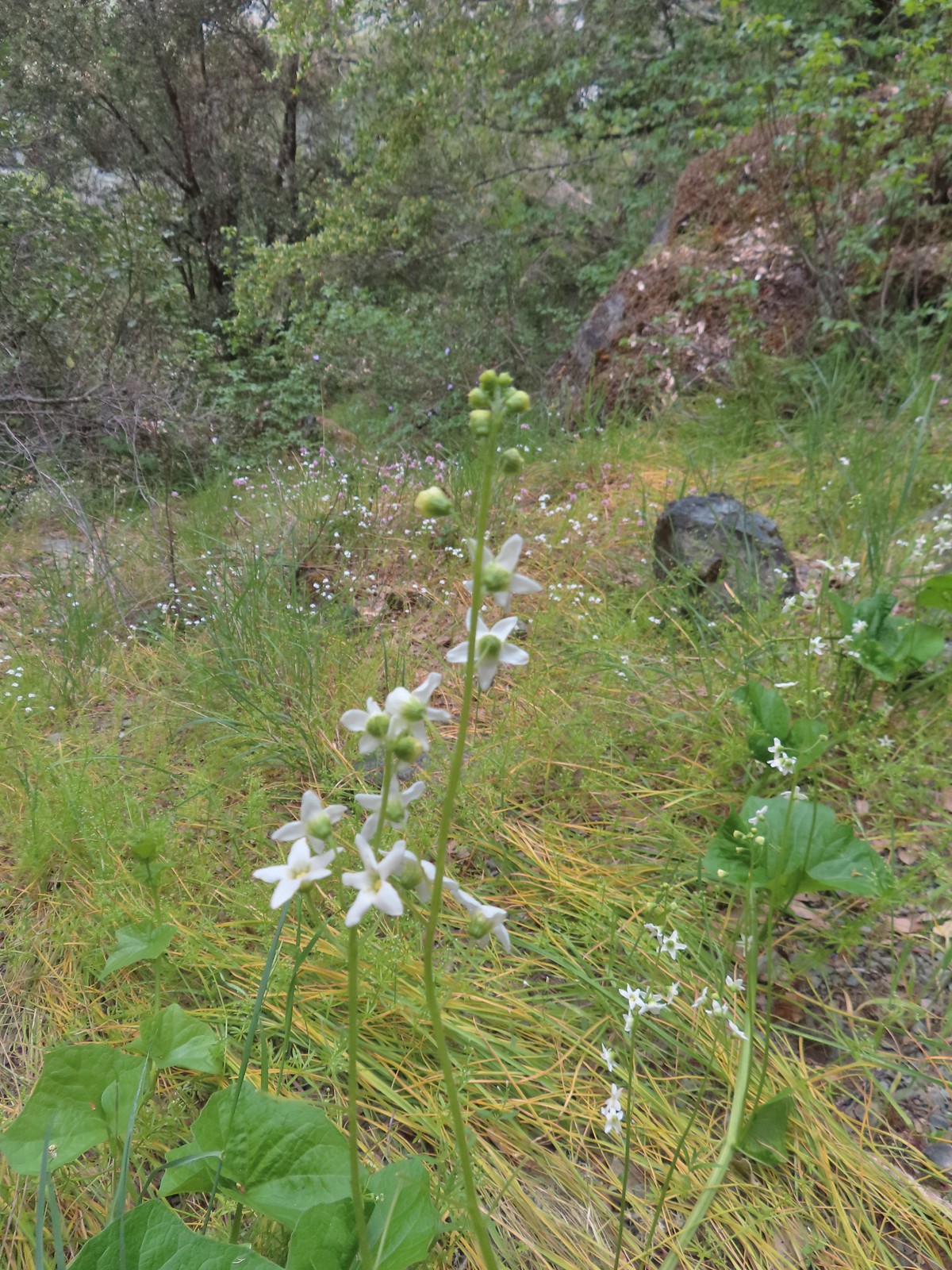 Coastal manroot
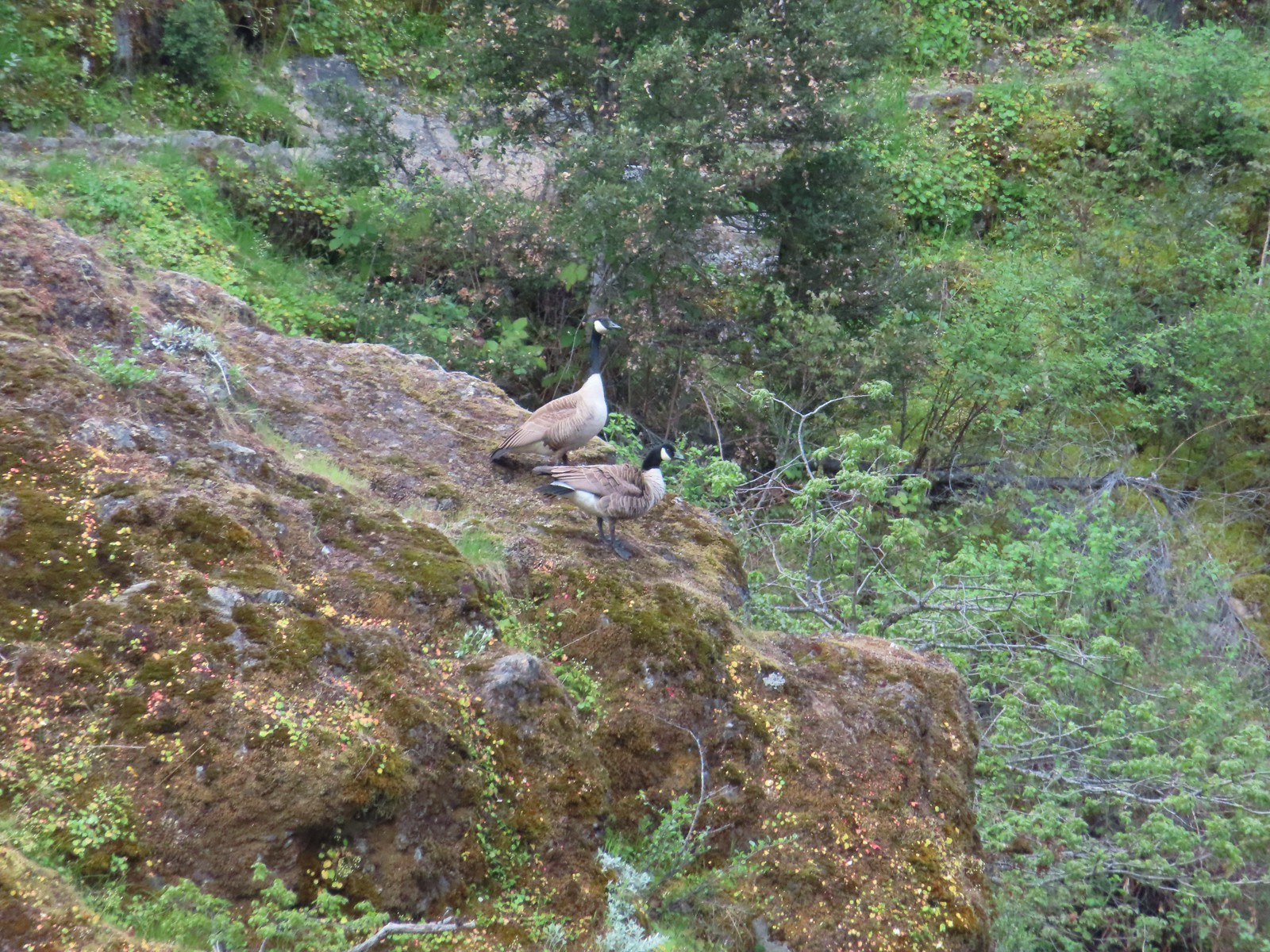 Canada geese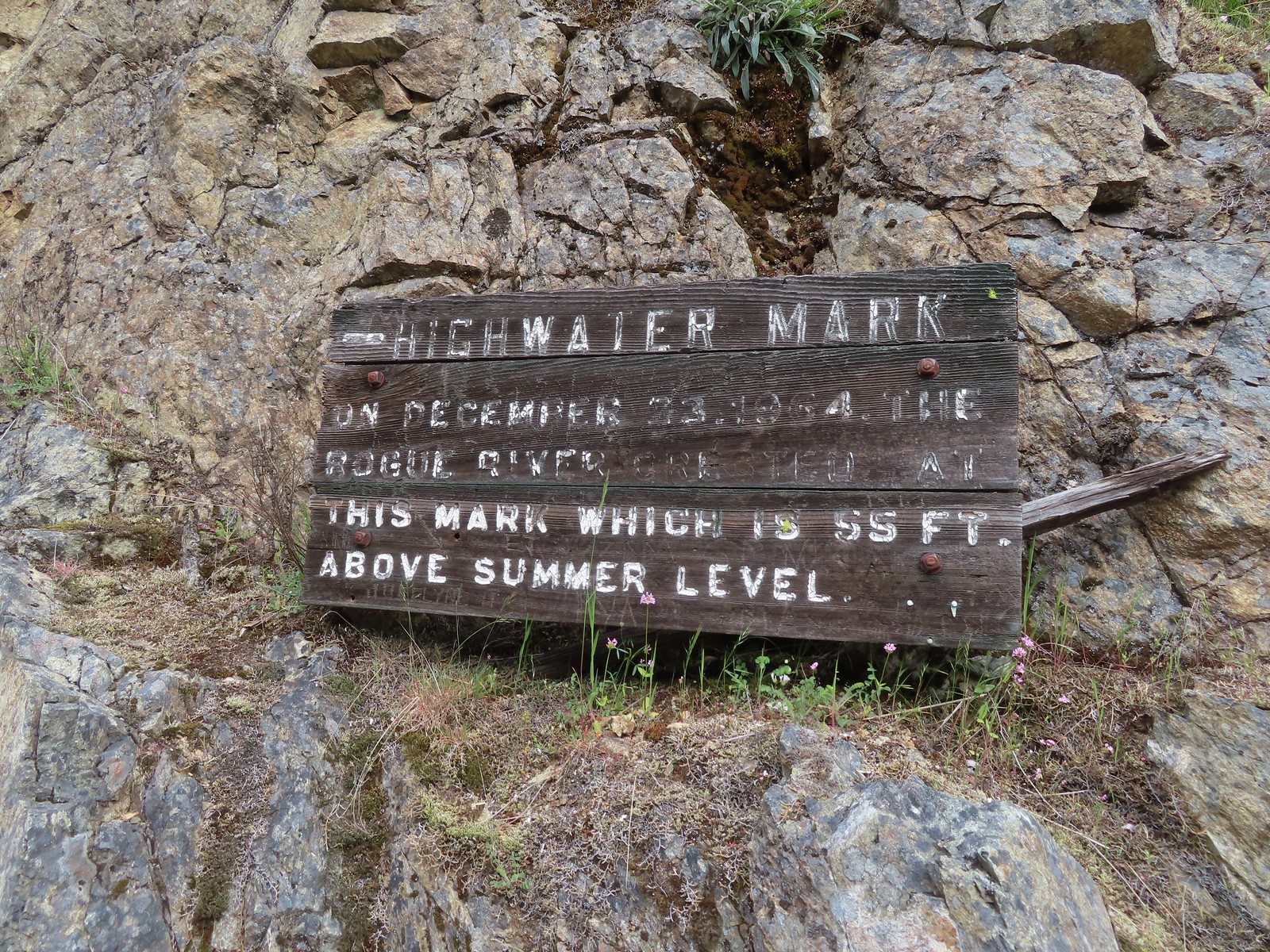
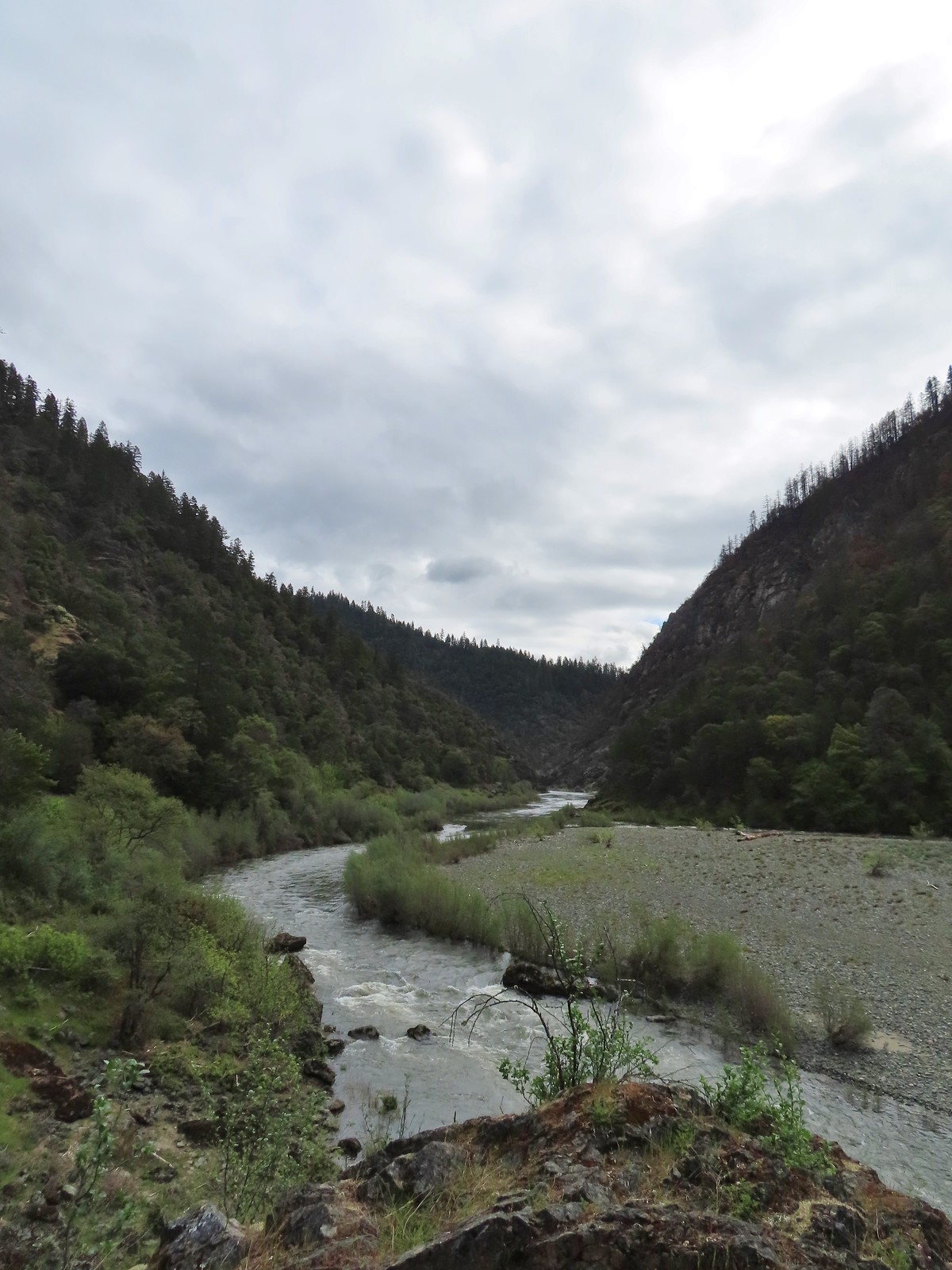 Looking back upriver from the high water sign.
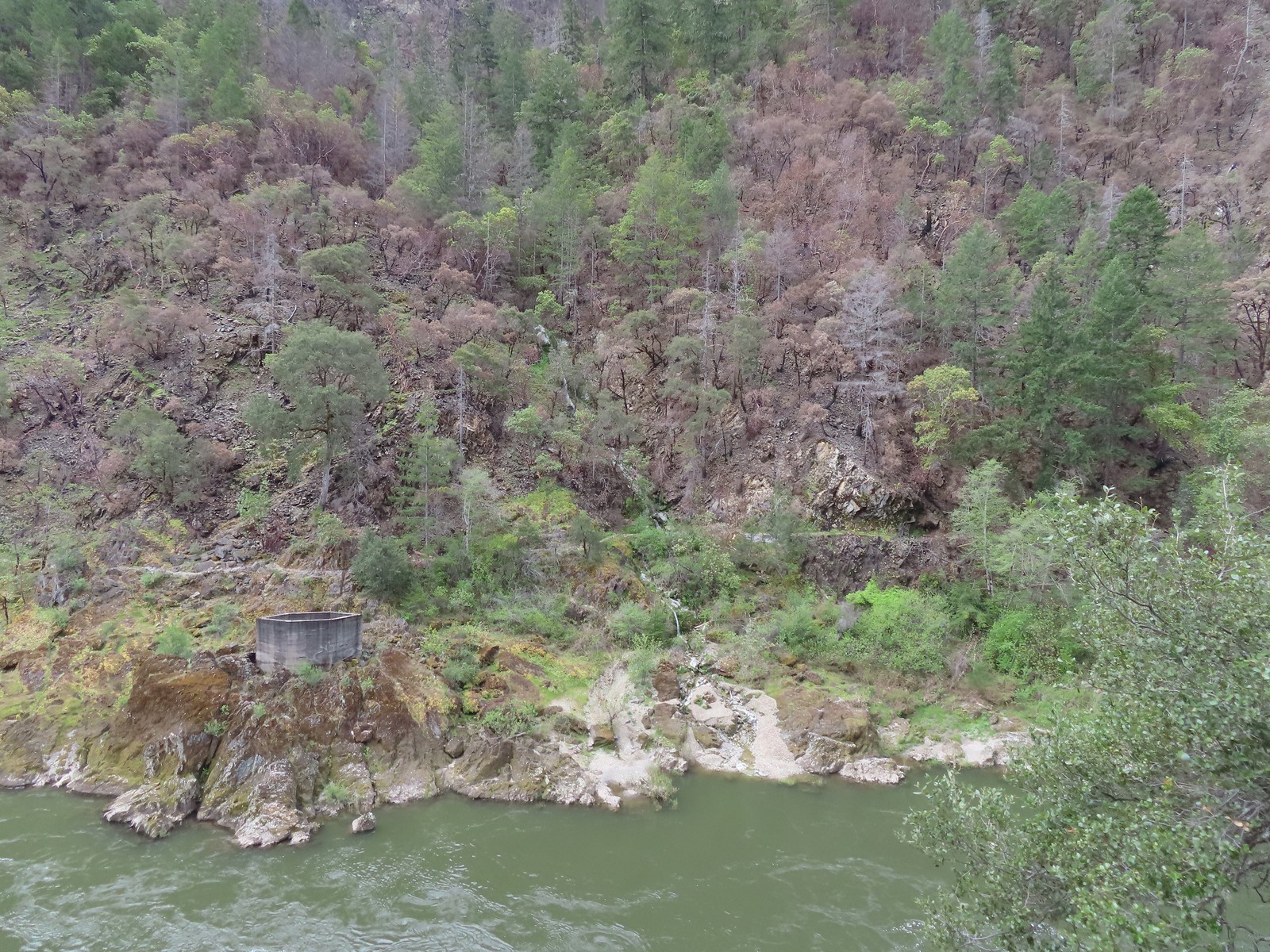 Sanderson Bridge site
 Golden-crowned sparrow
 Scarlet fritillary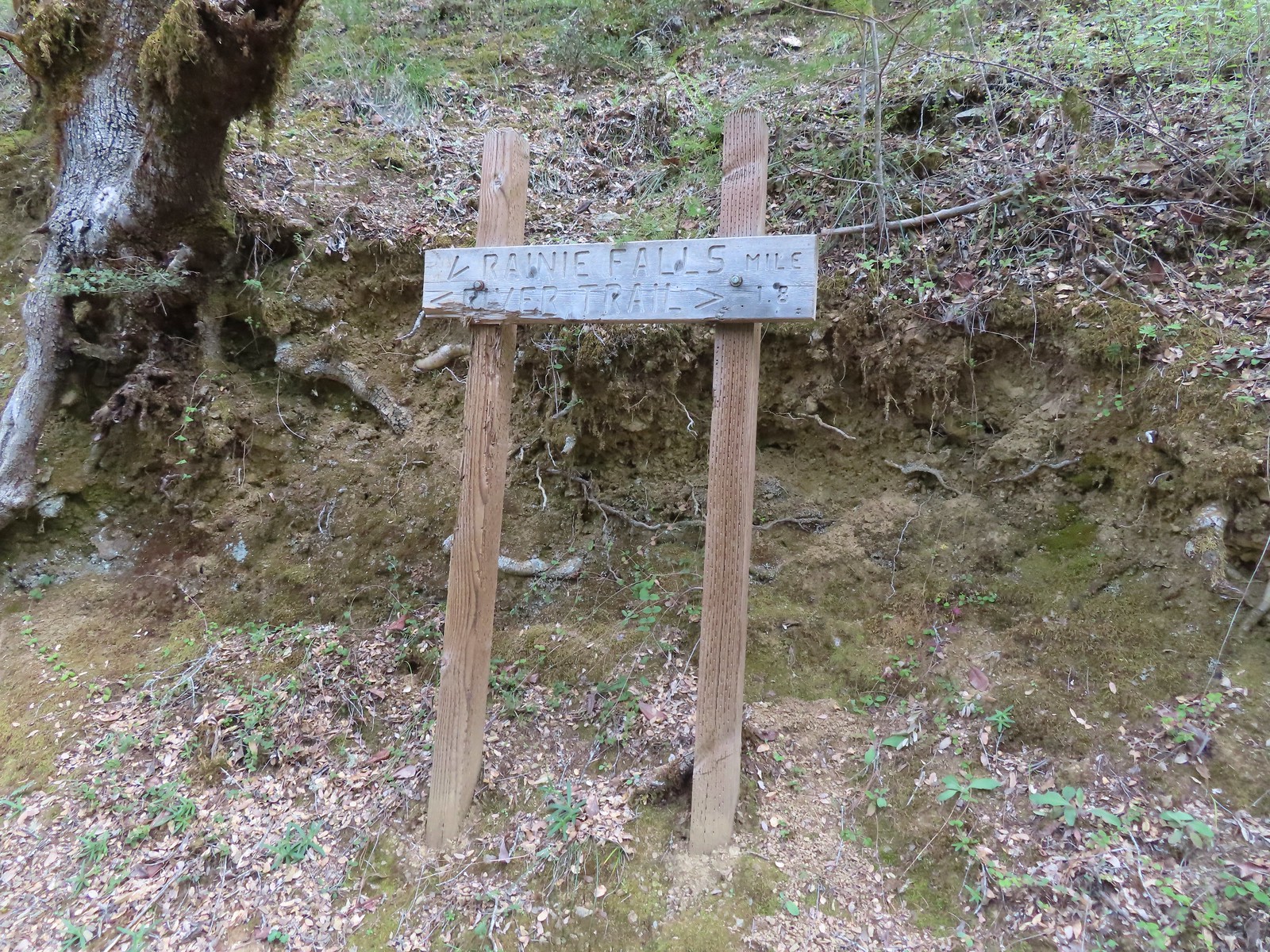
 White campion
 The only water we could make out on the far side of the river.
 Bullock’s oriole
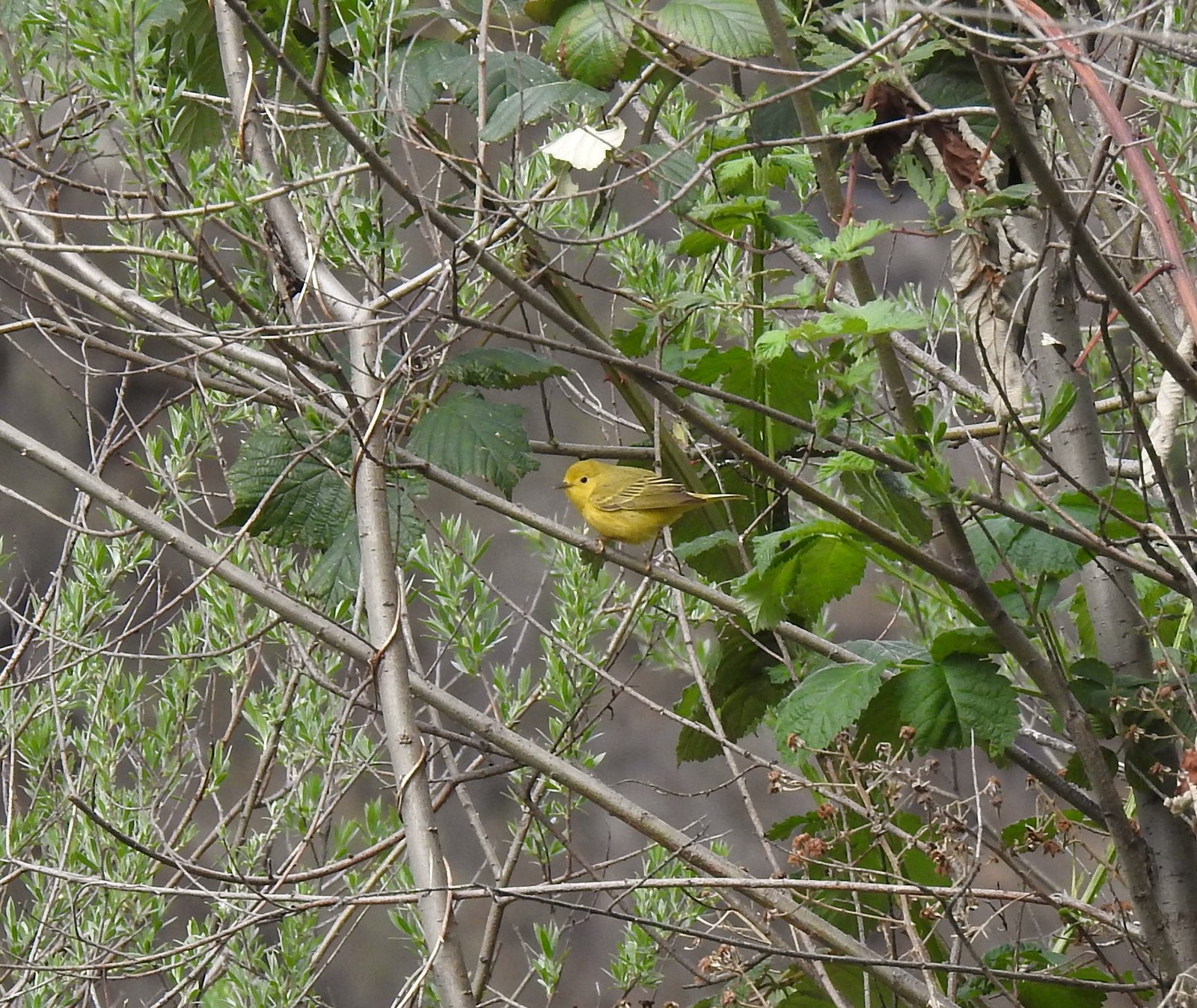 Yellow warbler
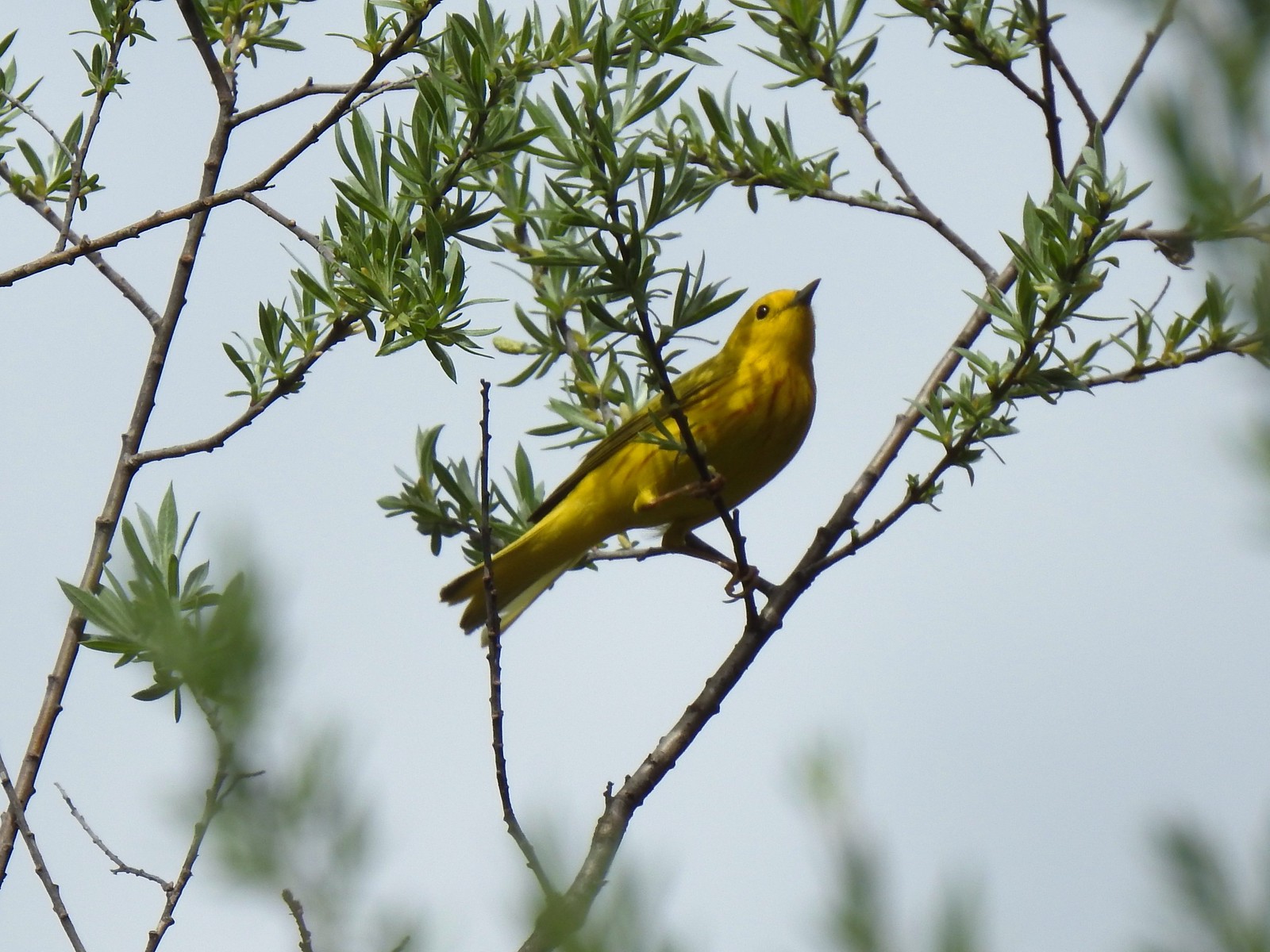 Yellow warbler
 Sandy beach along the Rogue River.
 Shooting star
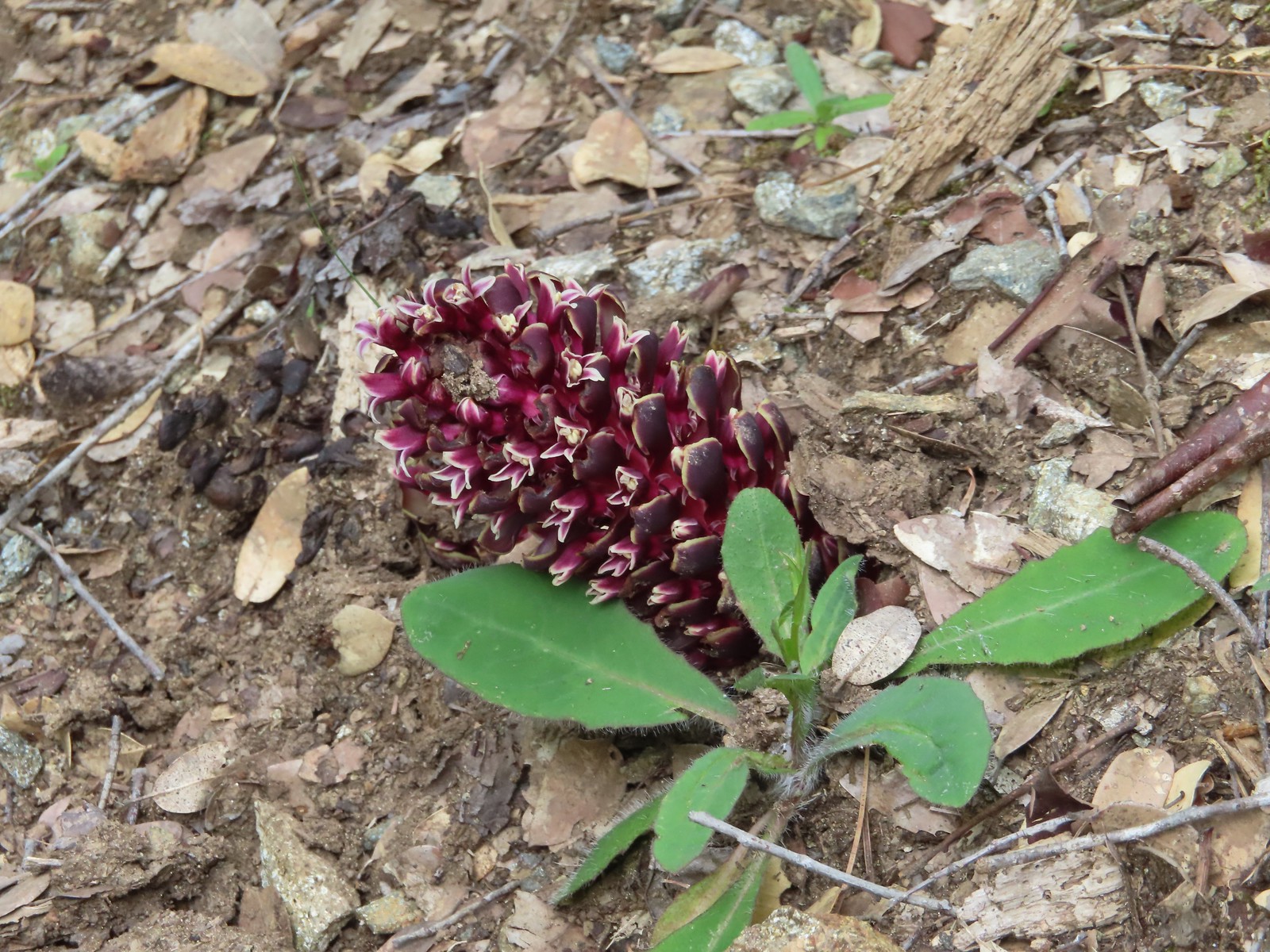 California groundcone
 Small-flowered woodland-star
 Approaching China Gulch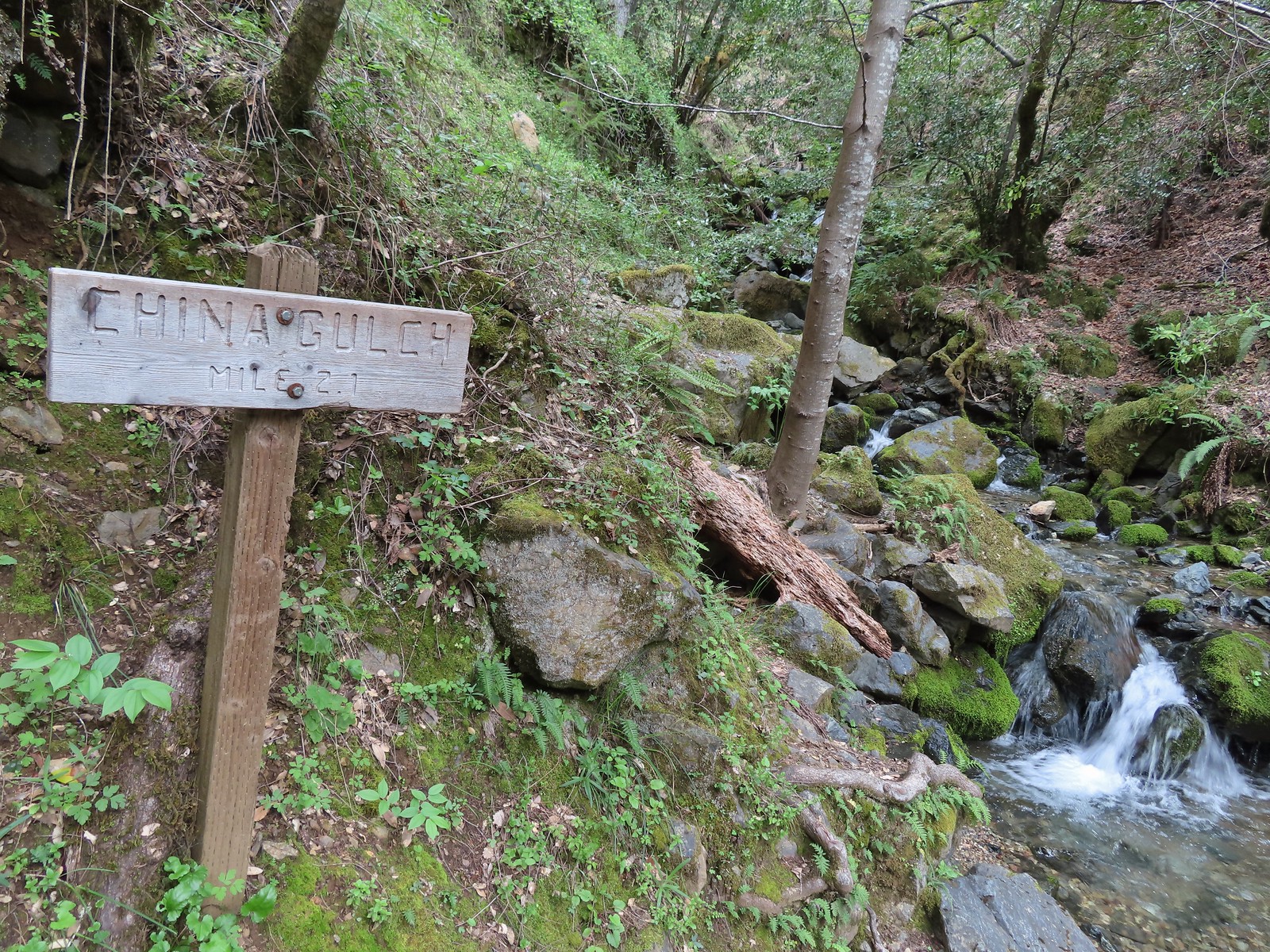
 Vetch
Vetch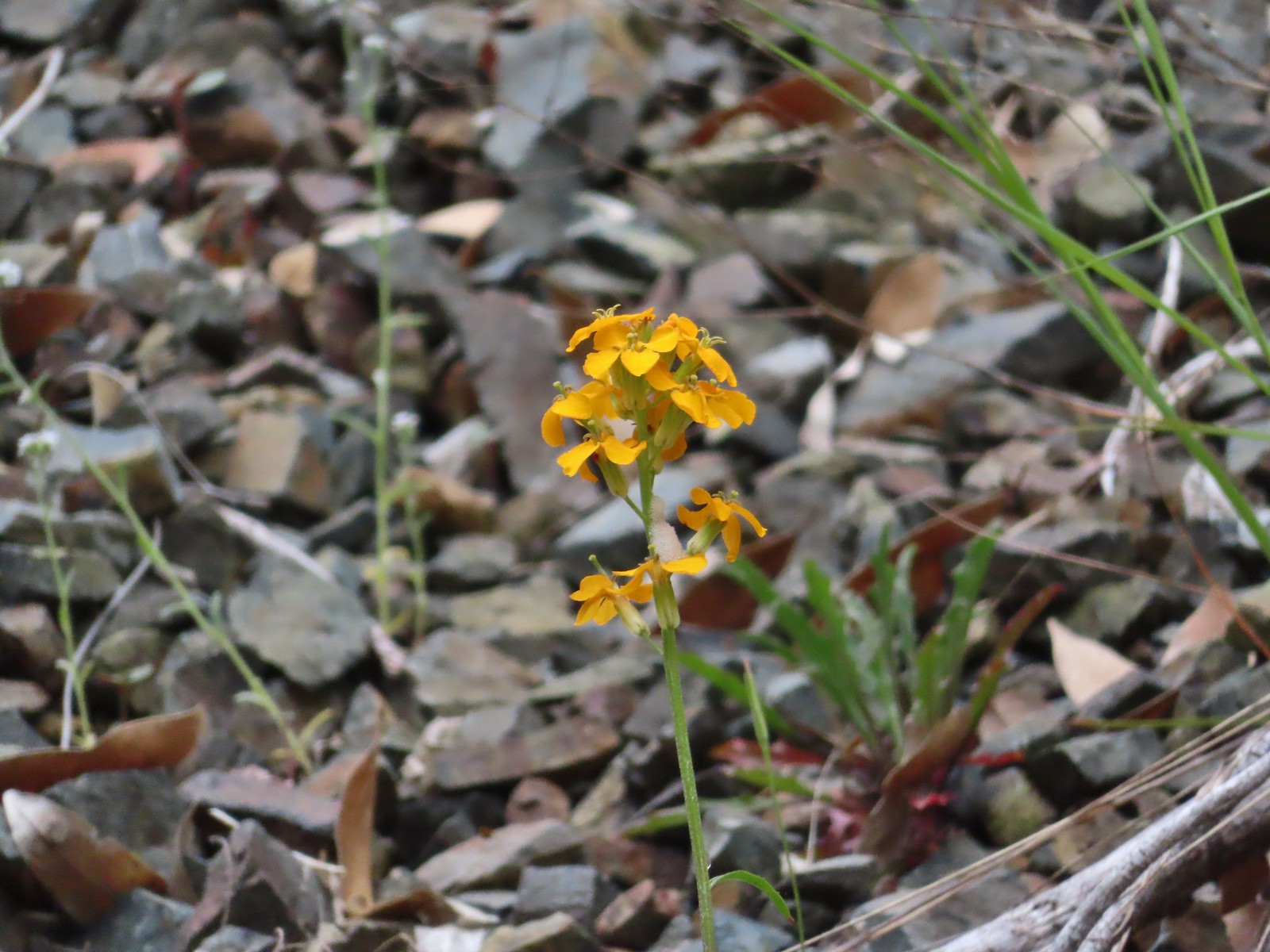 Wallflower
 Silverpuffs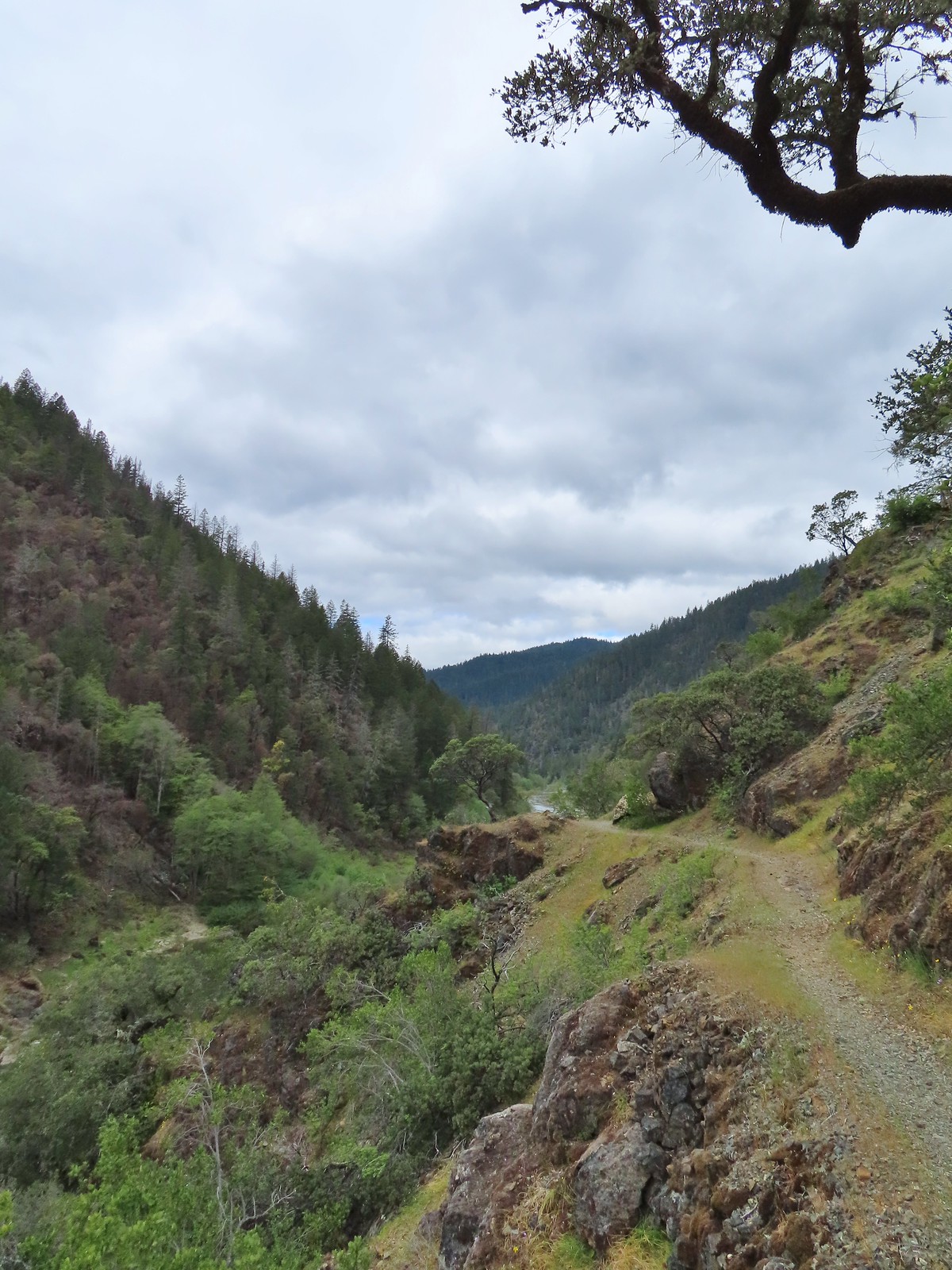
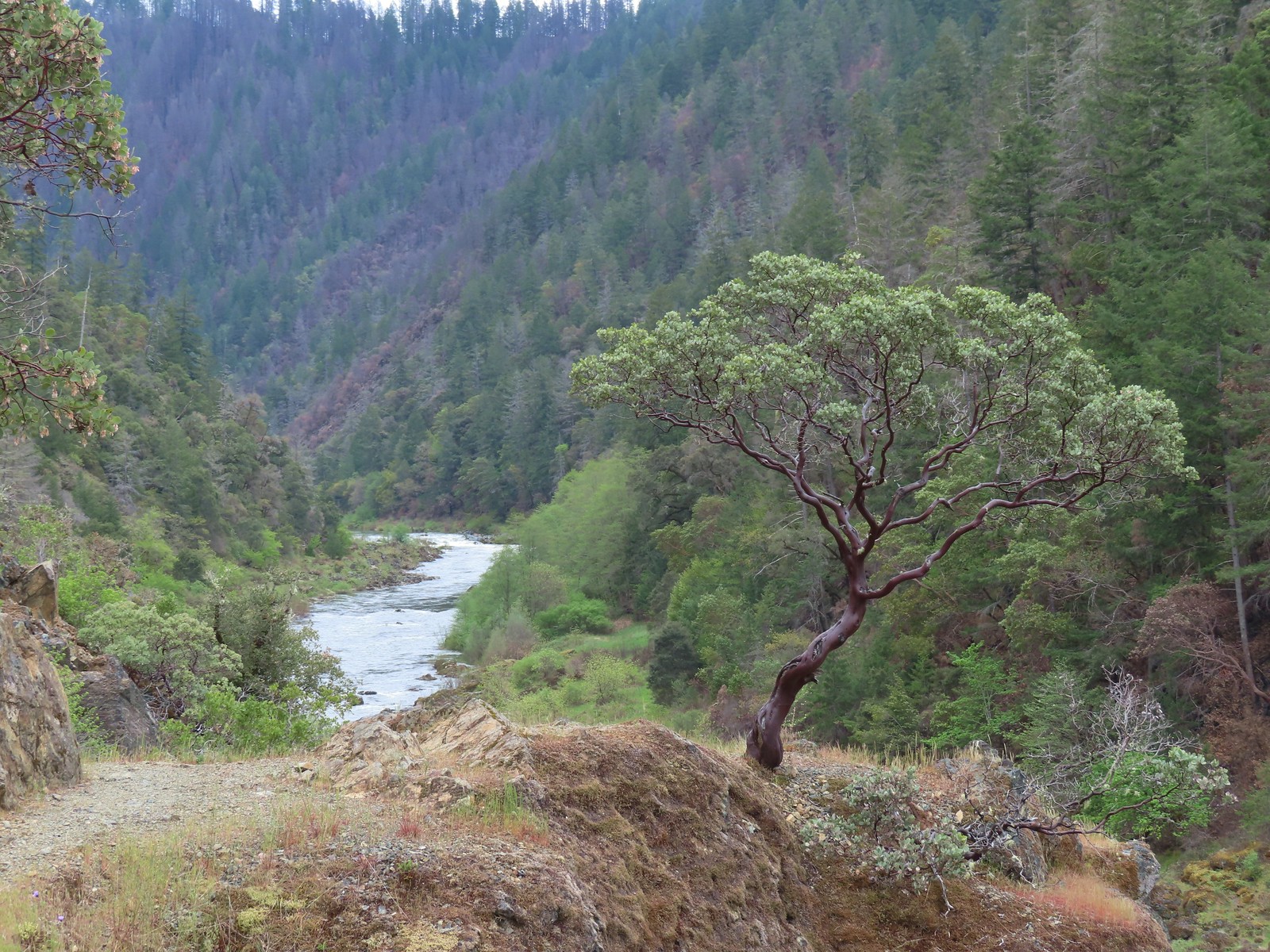 This manzanita was particularly striking in person.
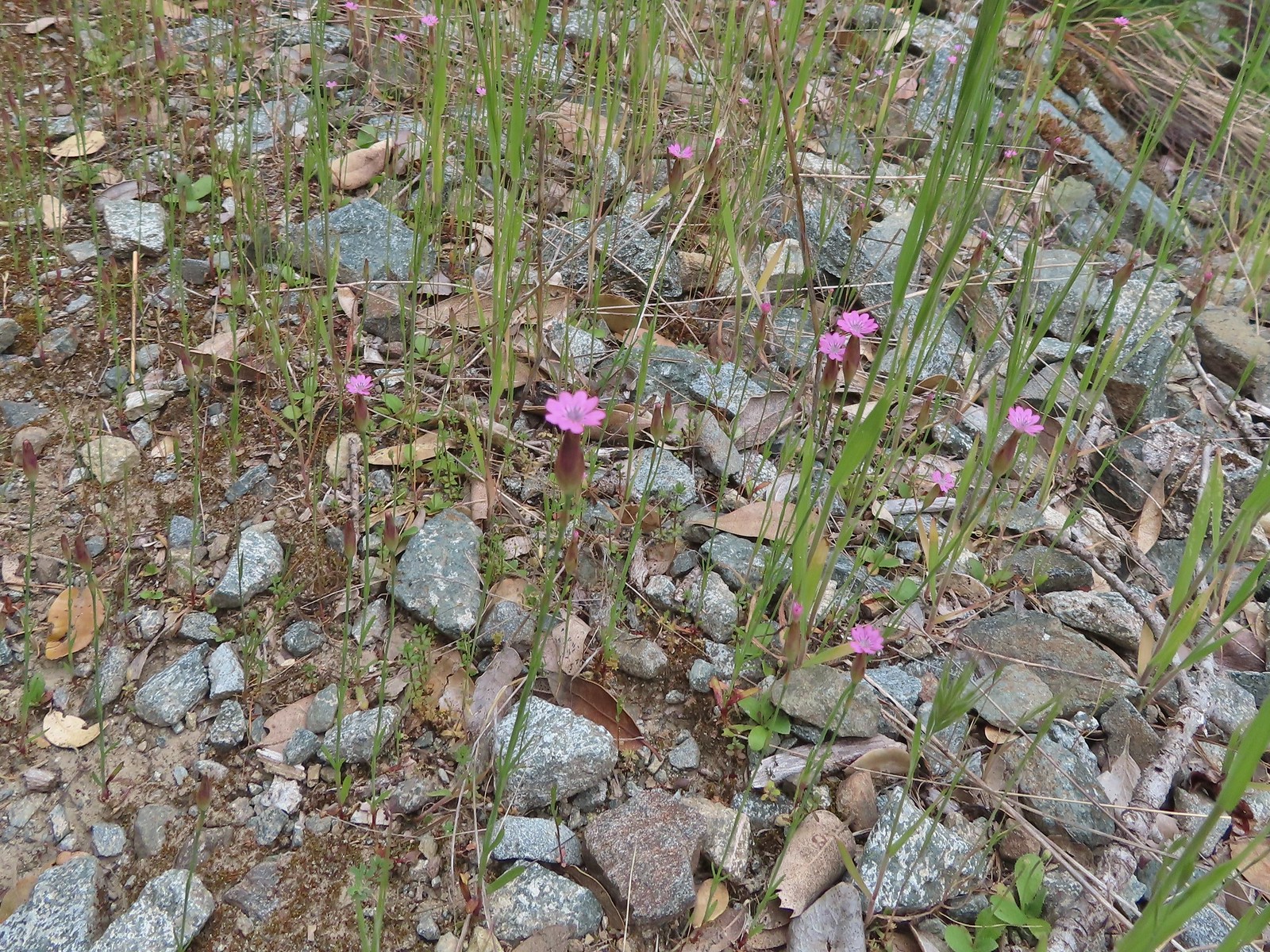 Hairy pink
 Robin
Robin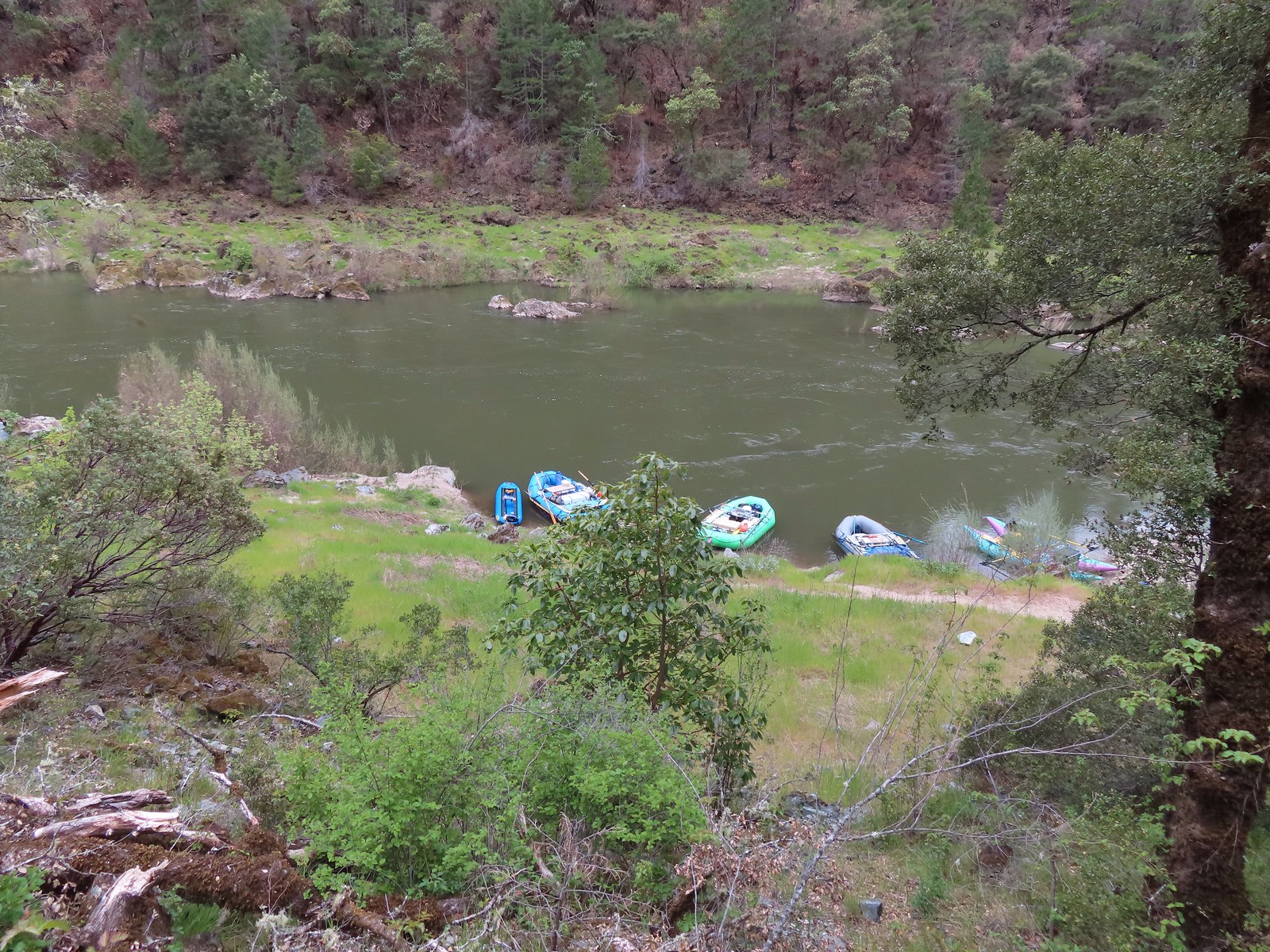 Rafts at Whiskey Camp.
 Whiskey Creek
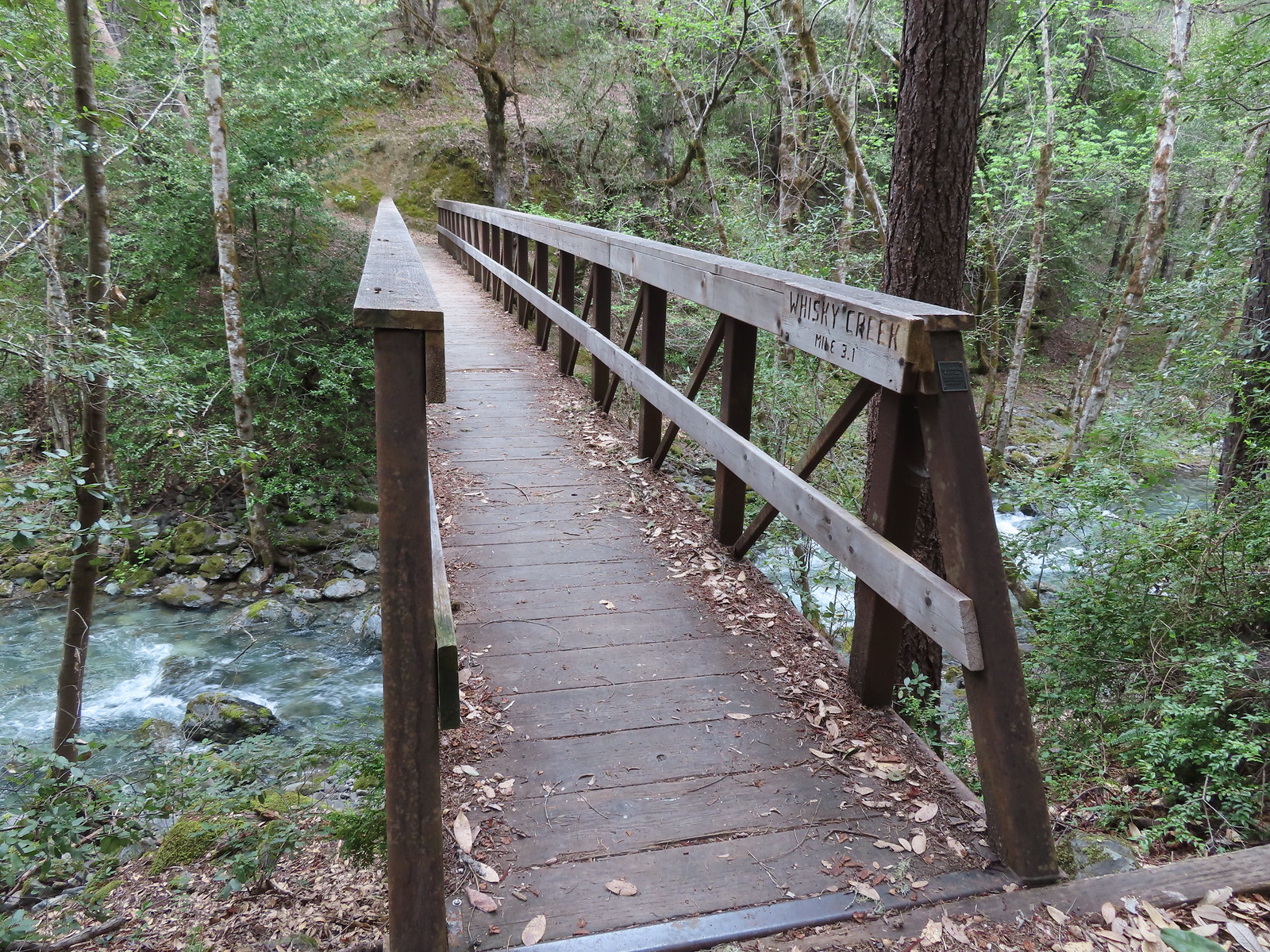 Footbridge over Whiskey Creek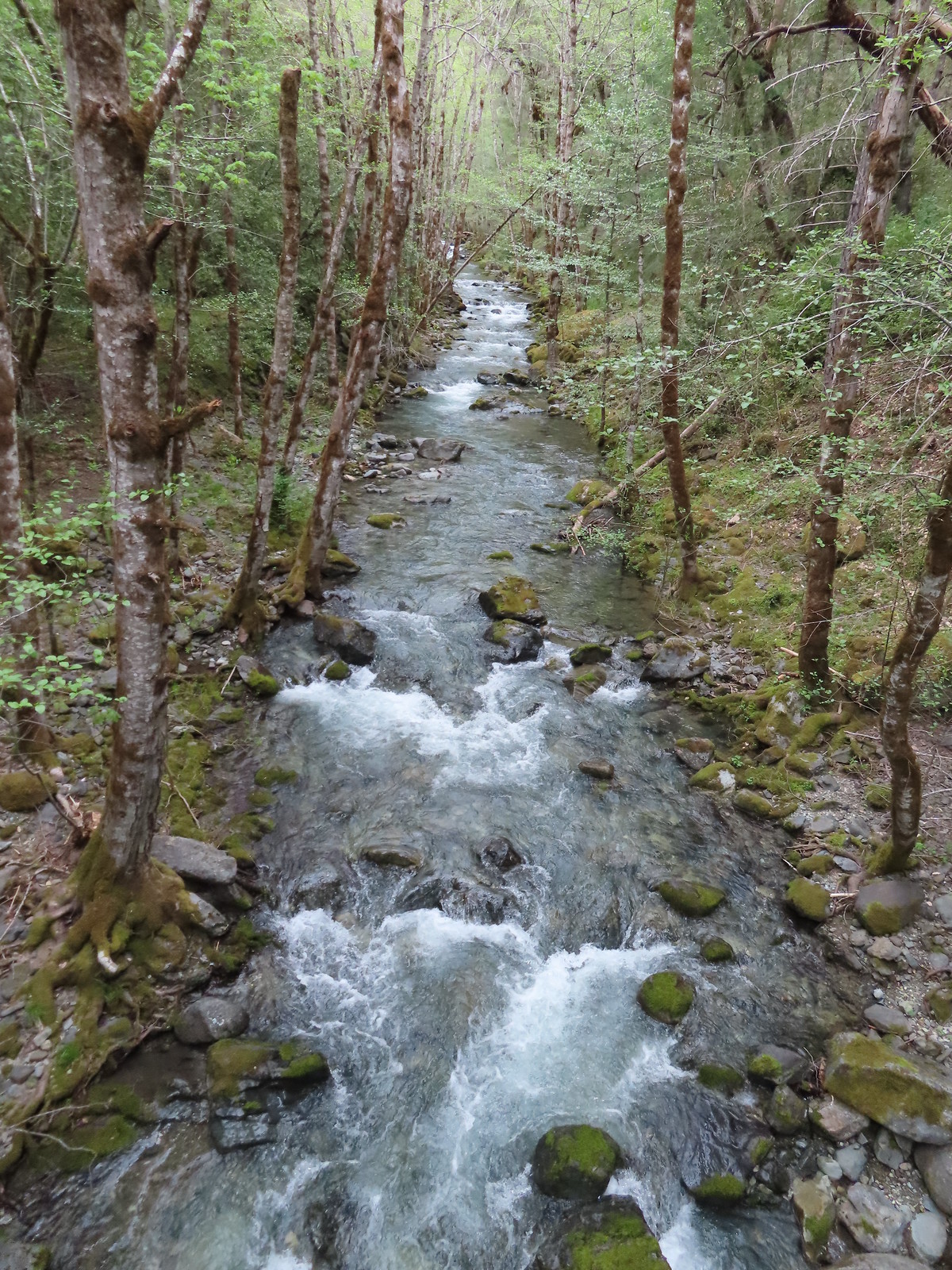
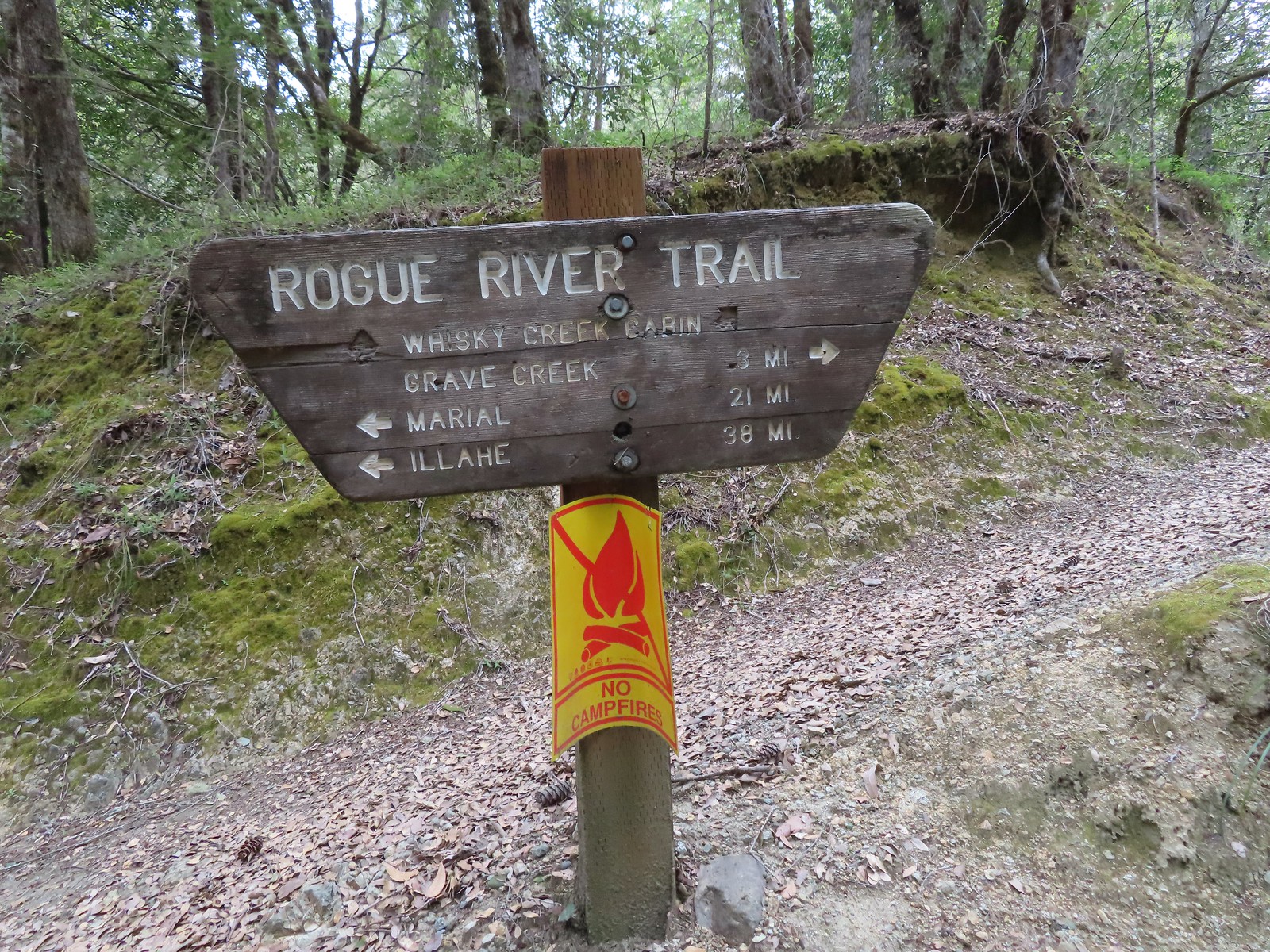 Sign at the spur trail to the cabin.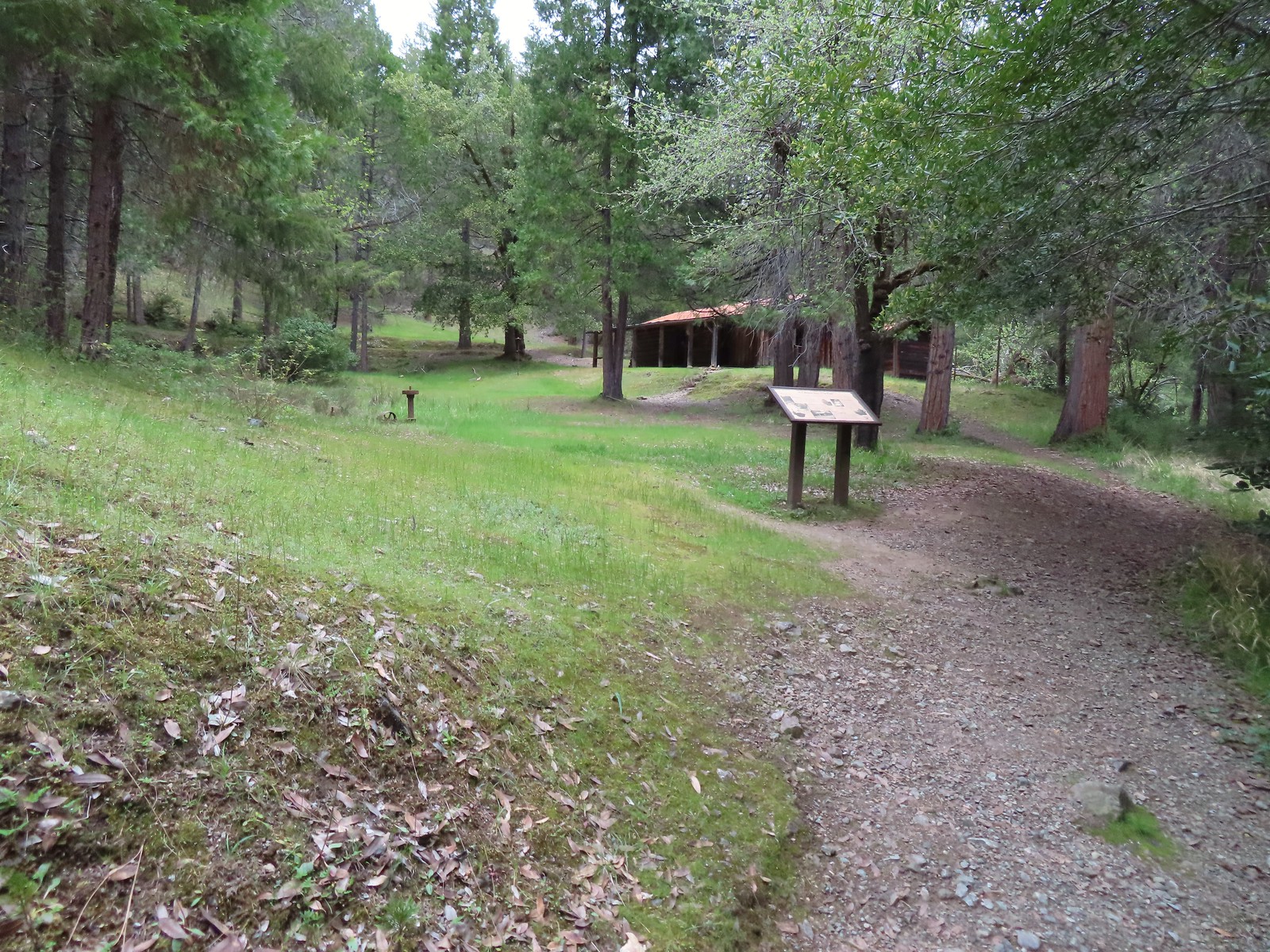
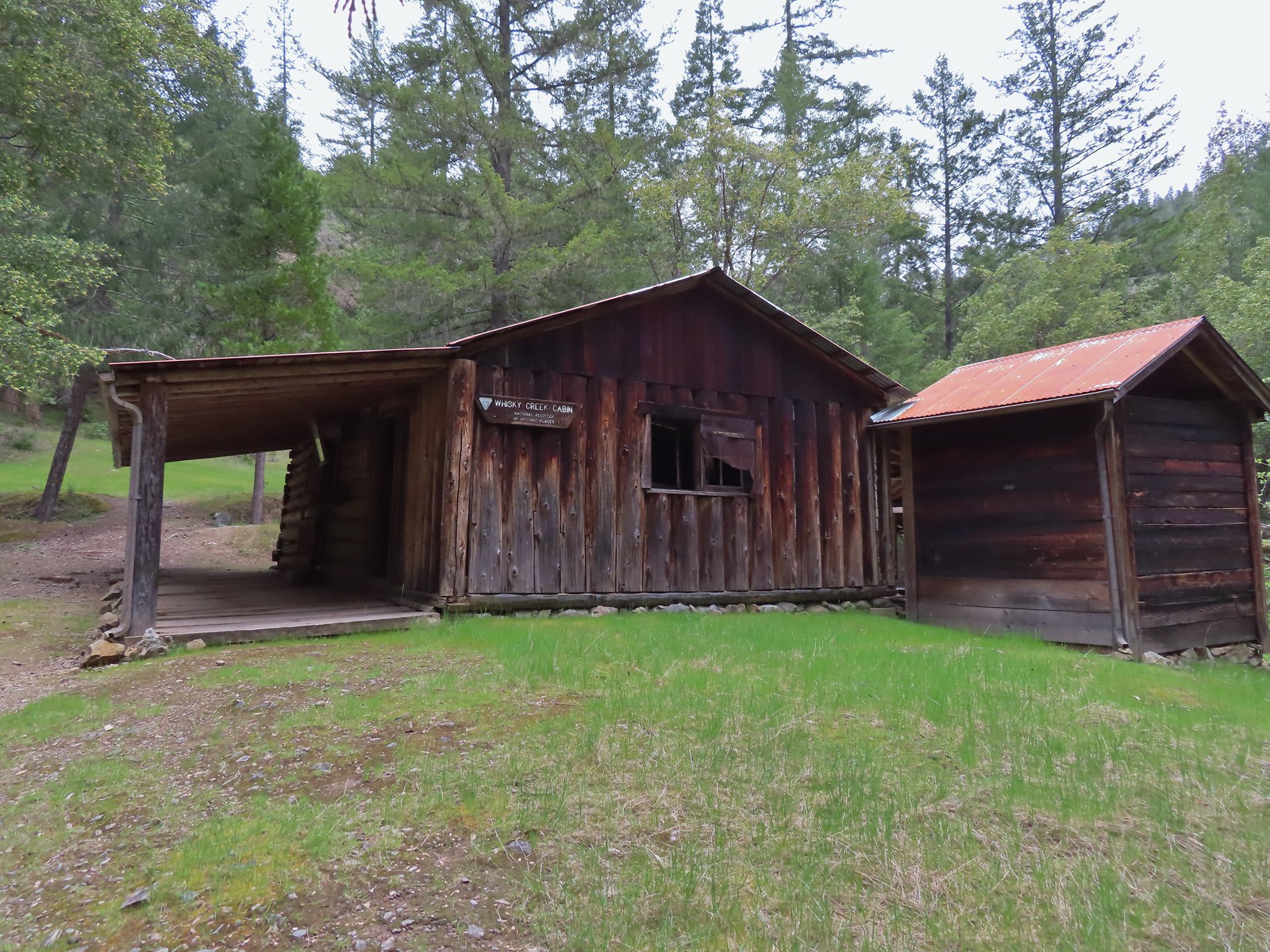
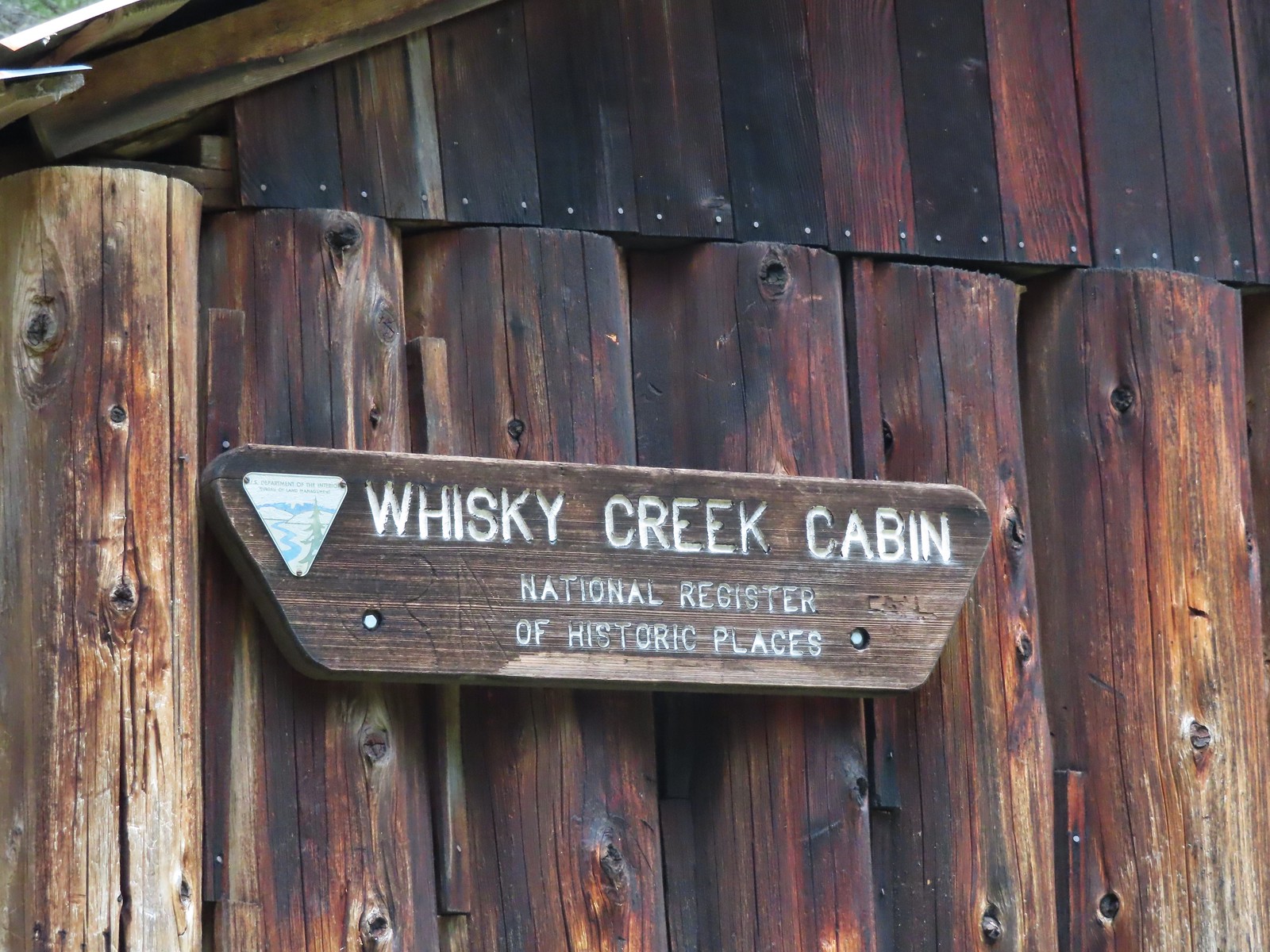


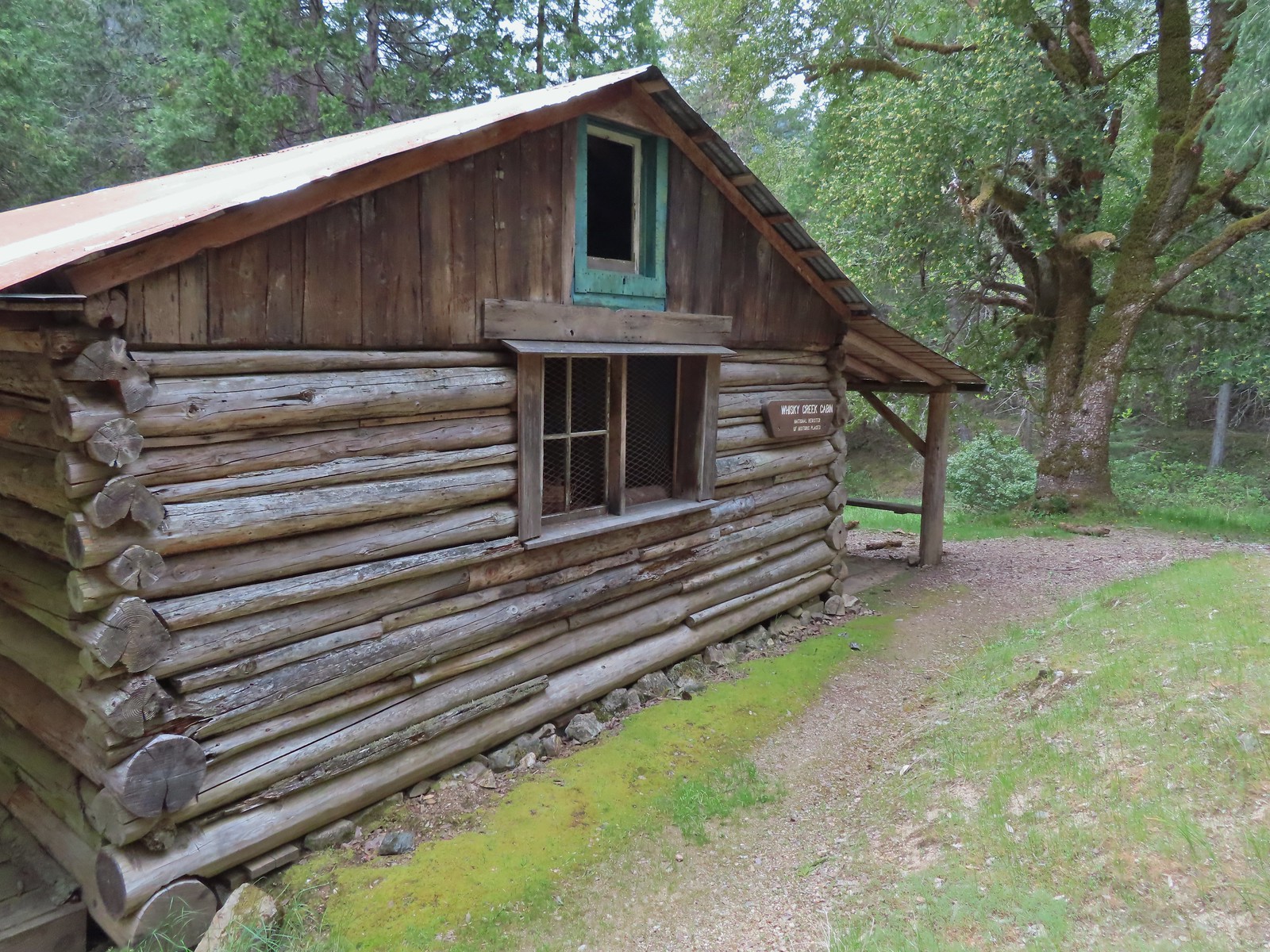
 Del Norte irises
 Big Slide Camp to the left.
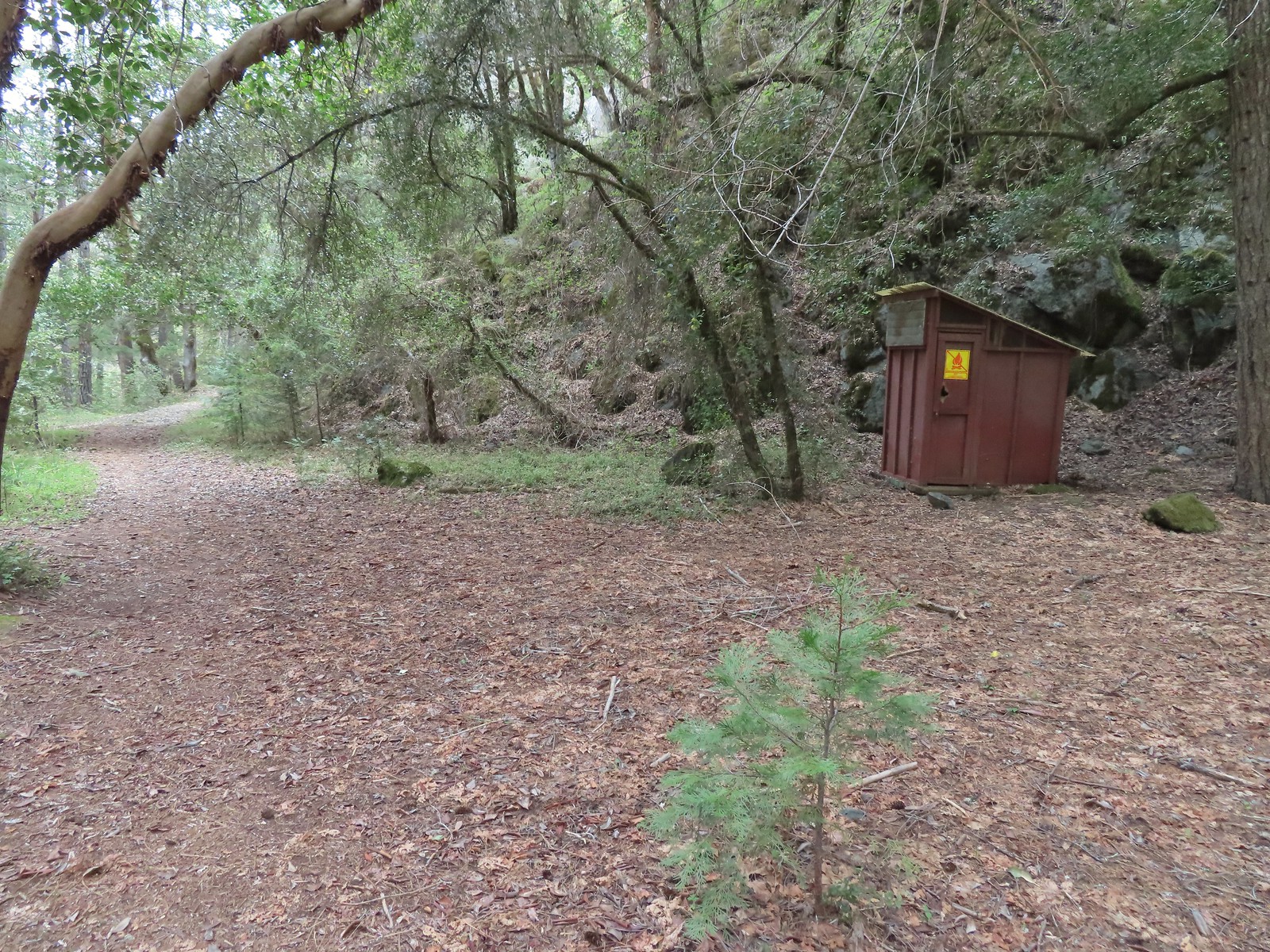 Outhouse at Big Slide Camp.
 Common mergansers
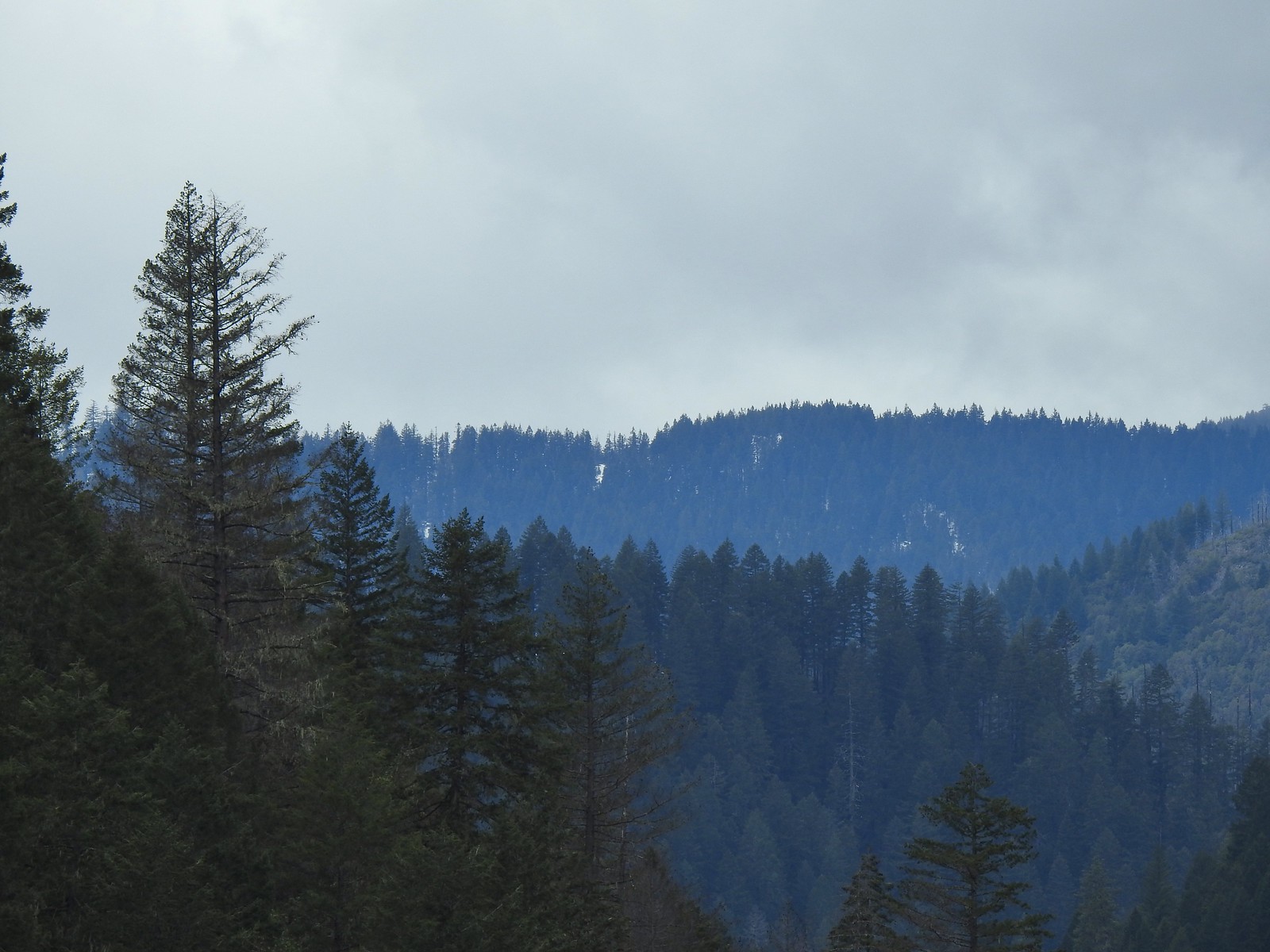 Snow on a ridge above the Rogue River Valley. (This was a sign of issues for us later in the week.)
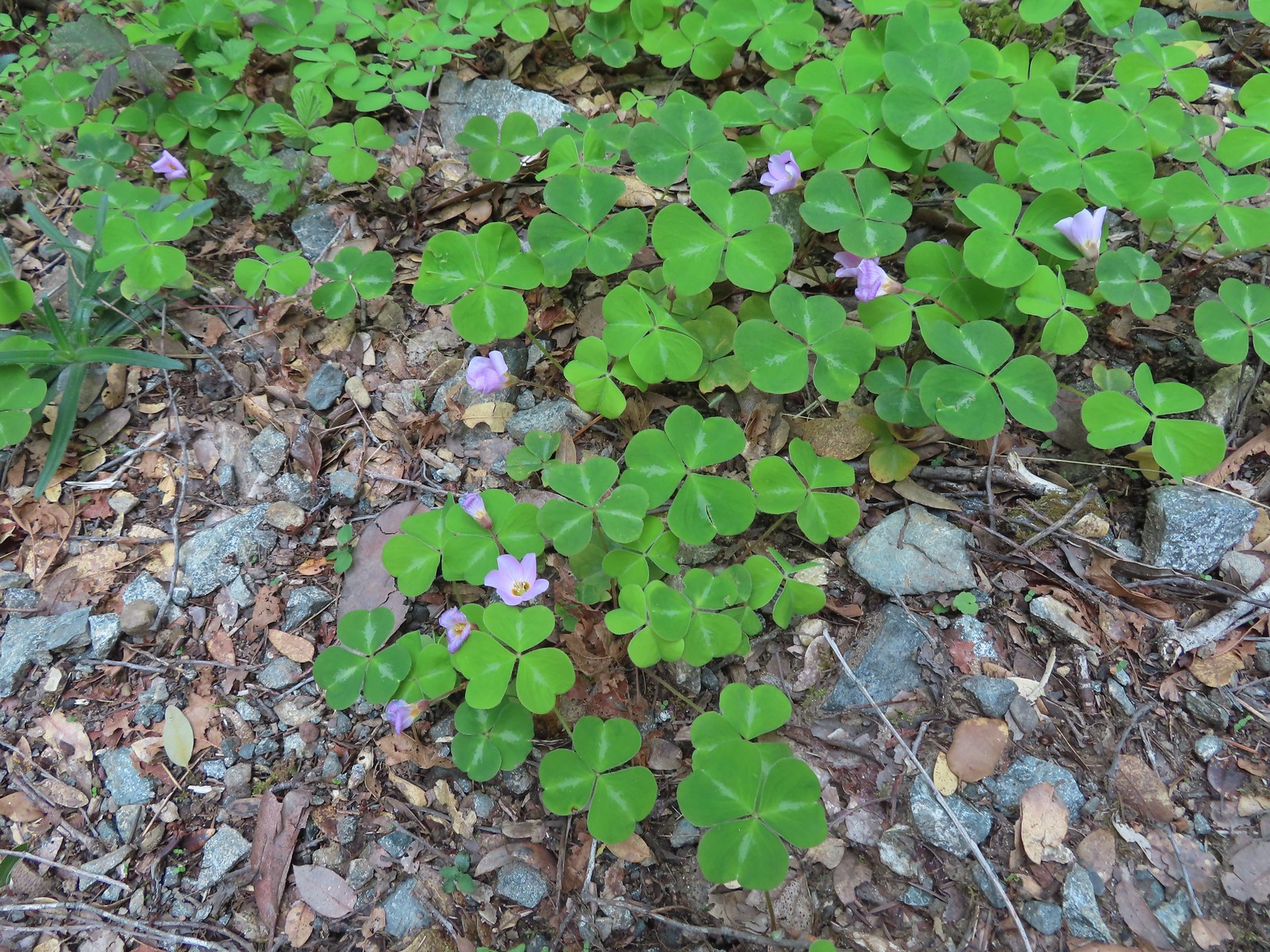 Redwood sorrel along Whiskey Creek.
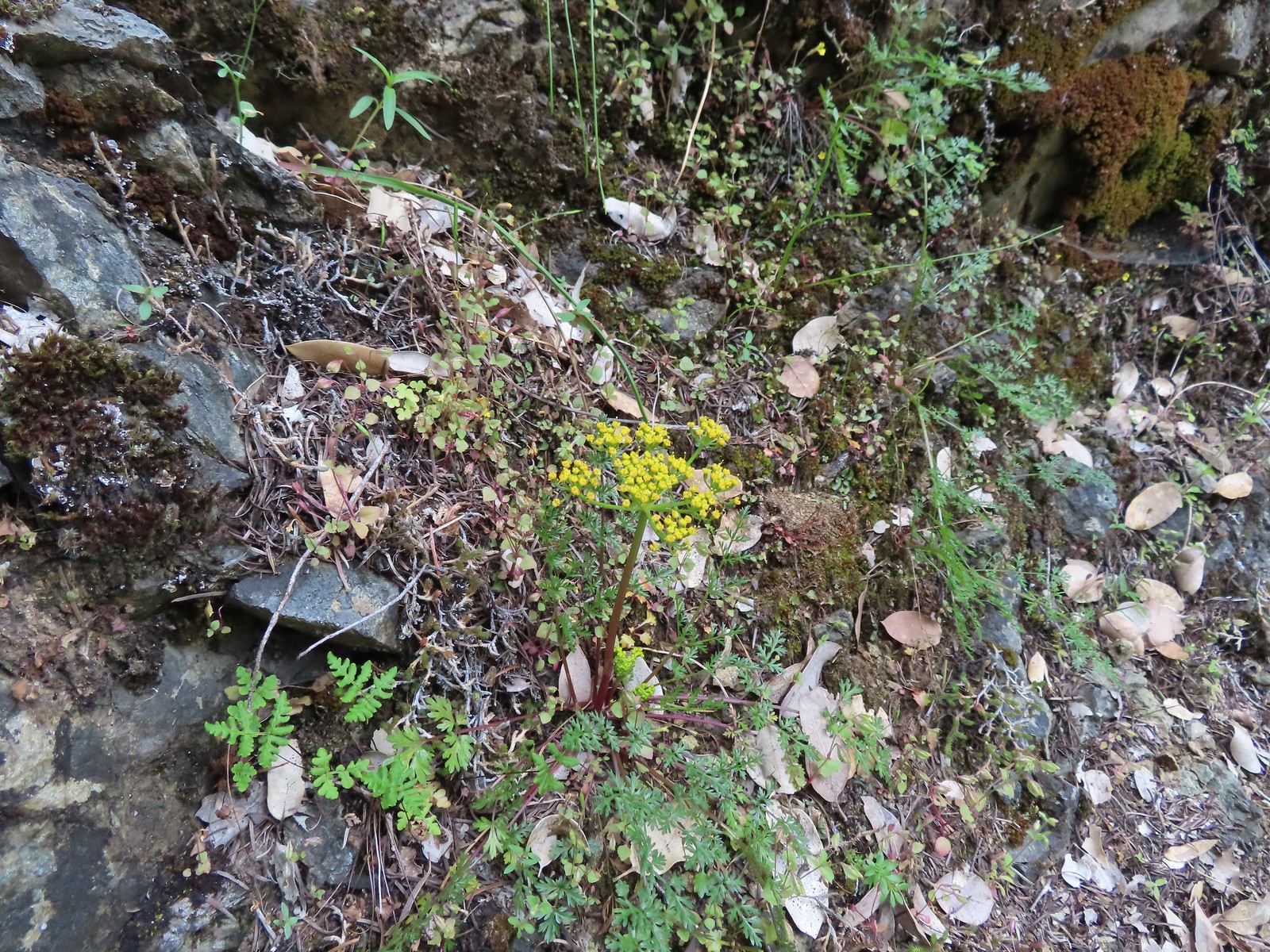 Buiscuitroot
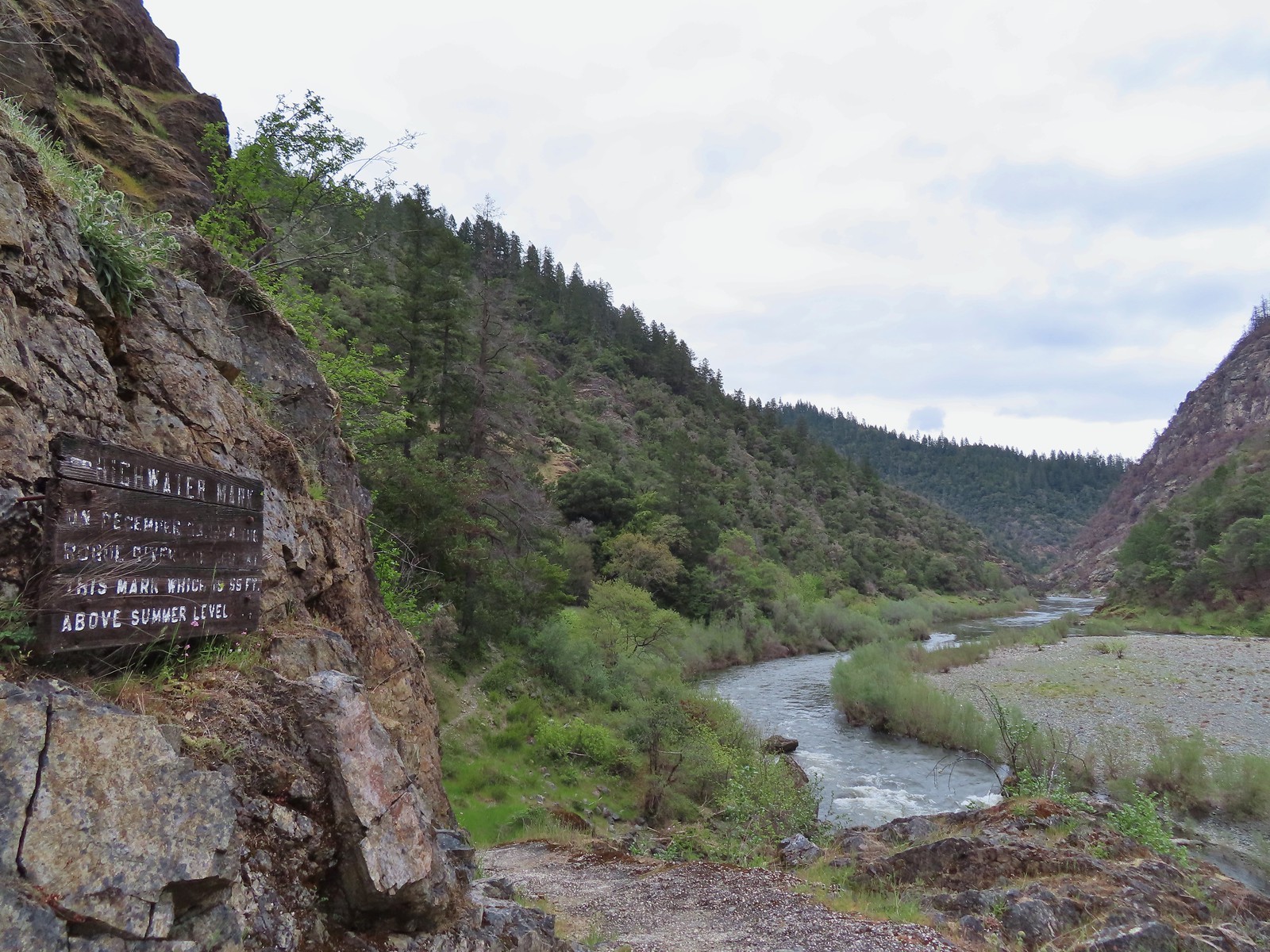 Passing the high water mark.
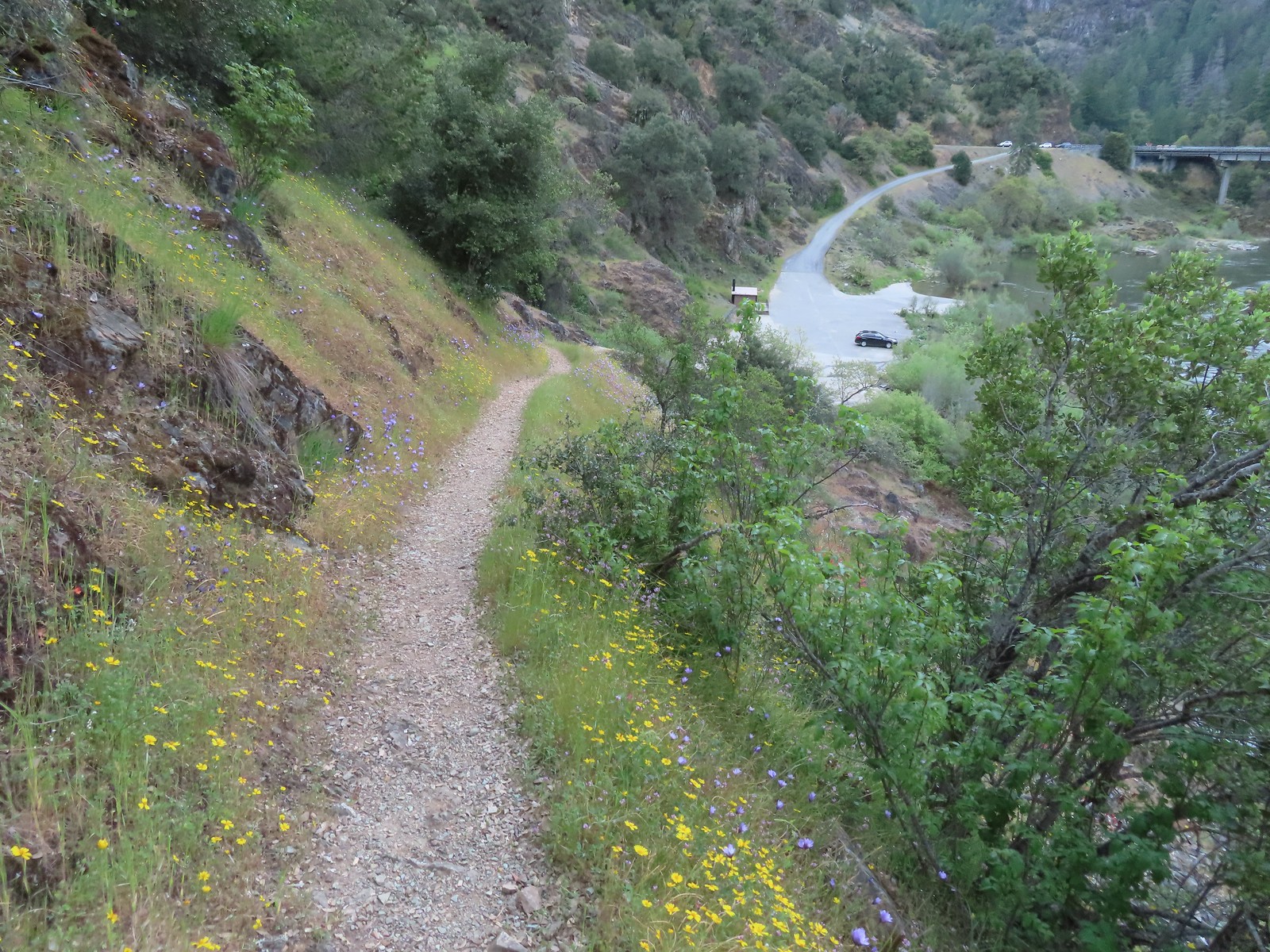 Arriving back at the trailhead.




 Most of the camas was still working on blooming but a few were open.
 Buttercups
 Dark eyed junco
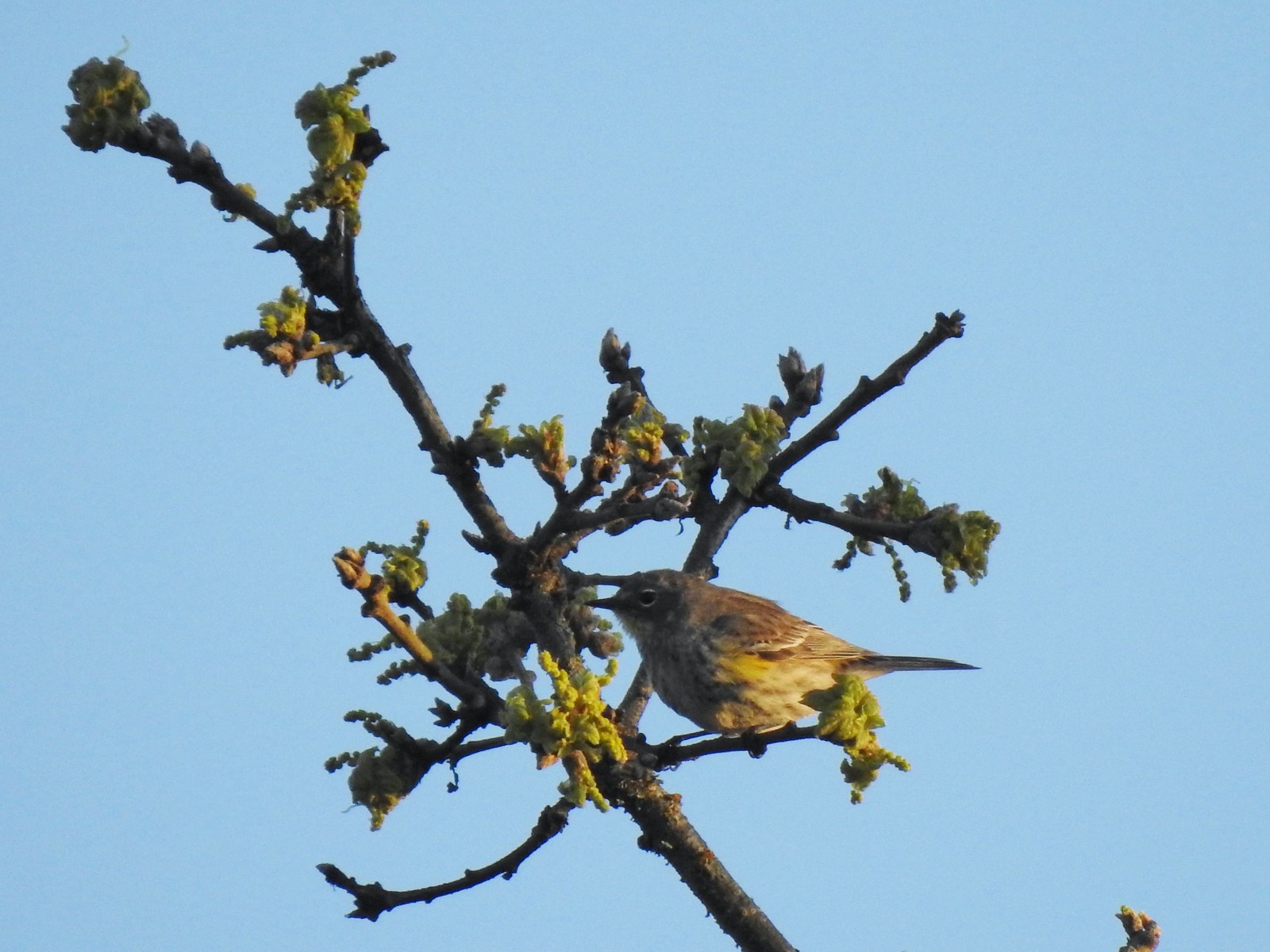 Possibly a female yellow-rumped warbler.
 Plectritis
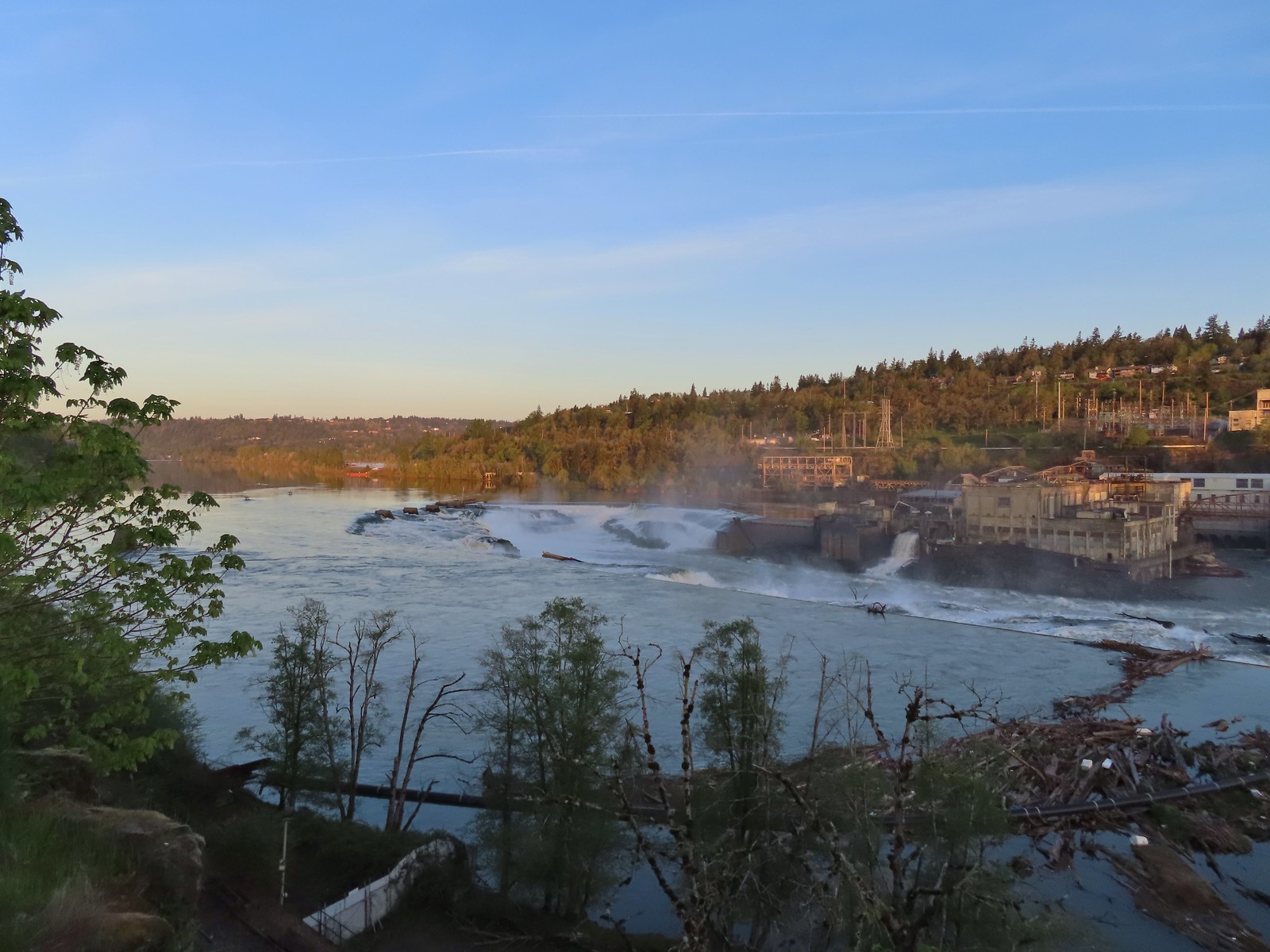
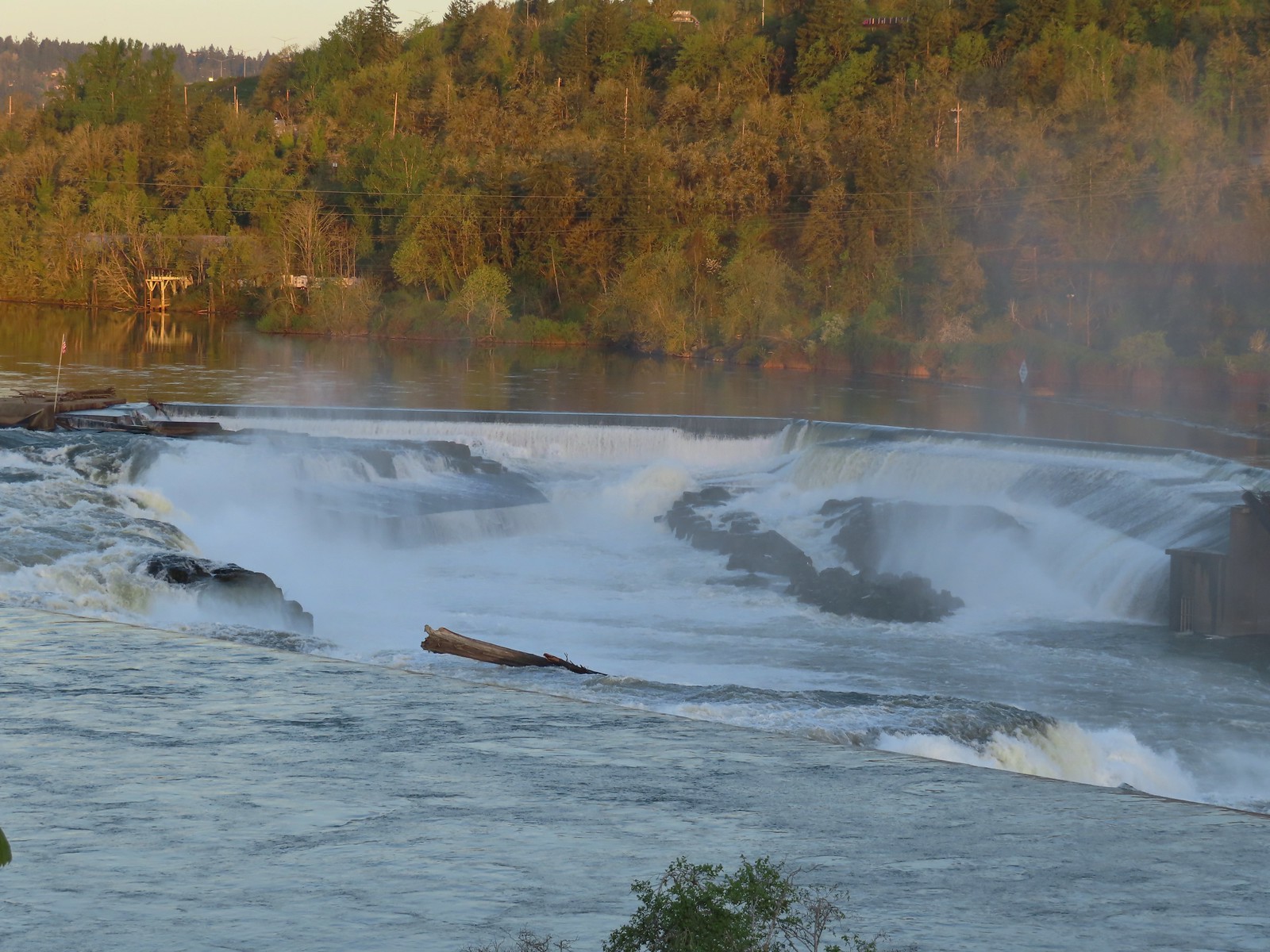
 Willamette River
 Robin
Robin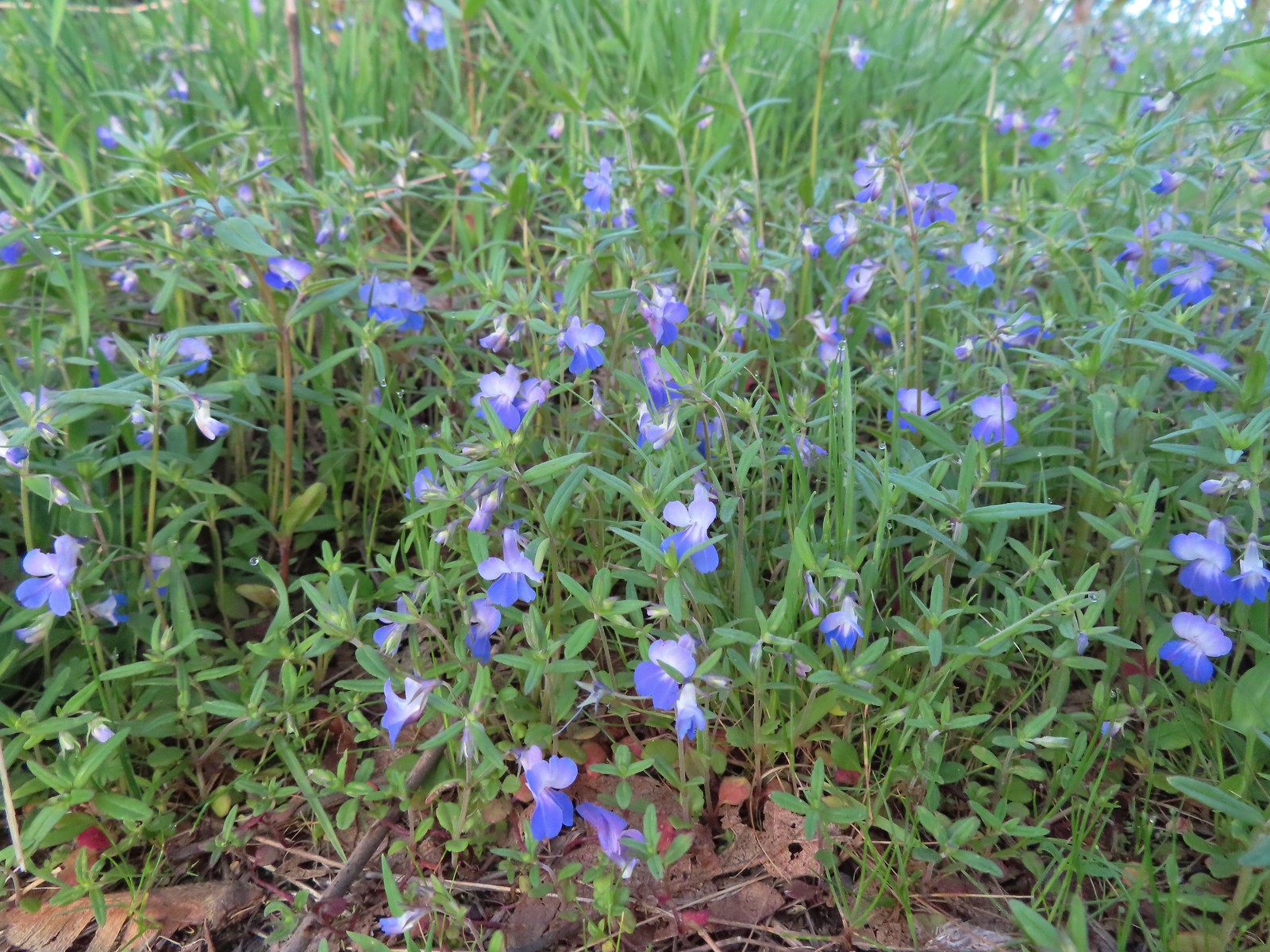 Giant blue-eyed Mary
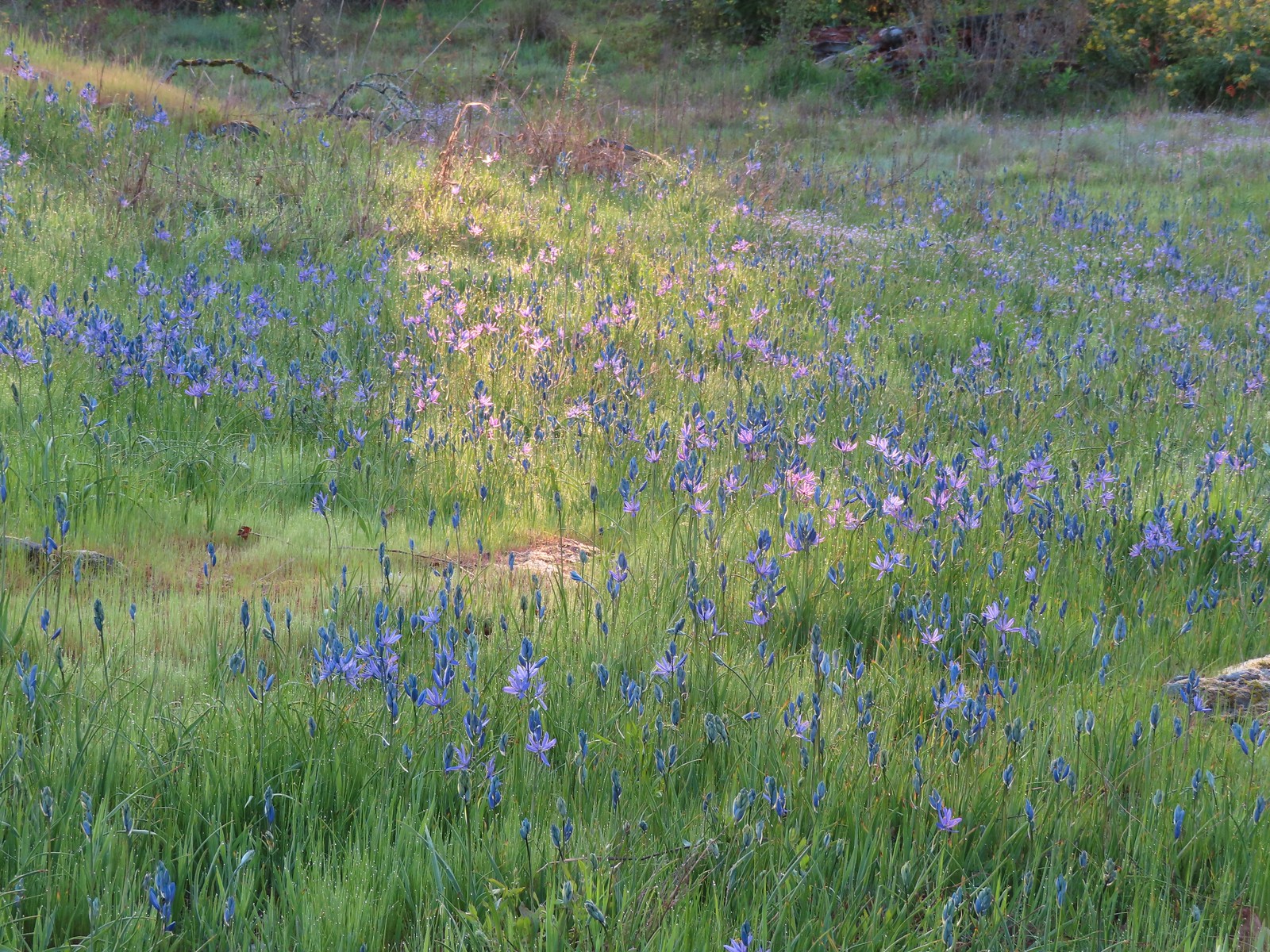 Camas catching a little sunlight.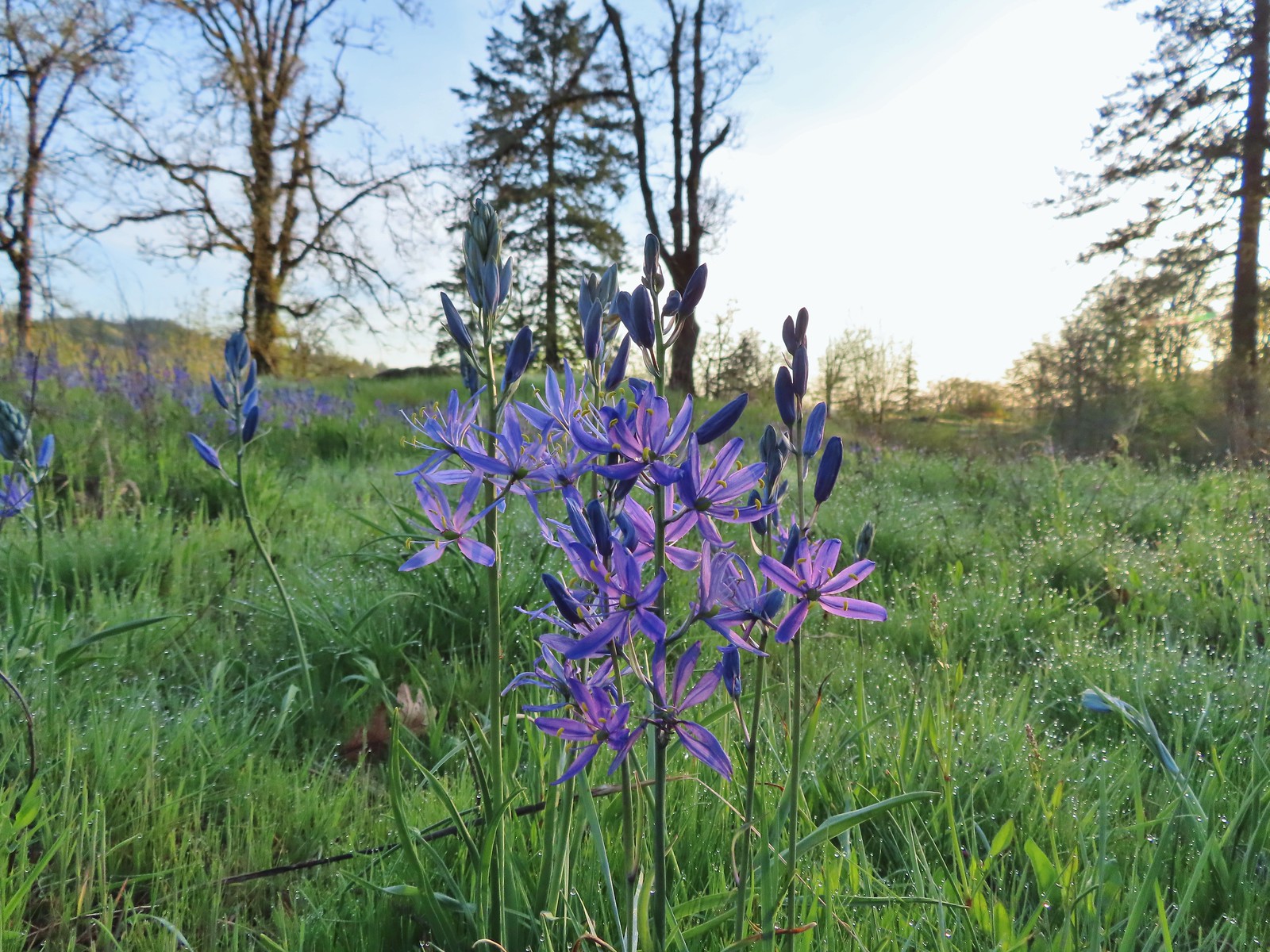

 Red flowering currant
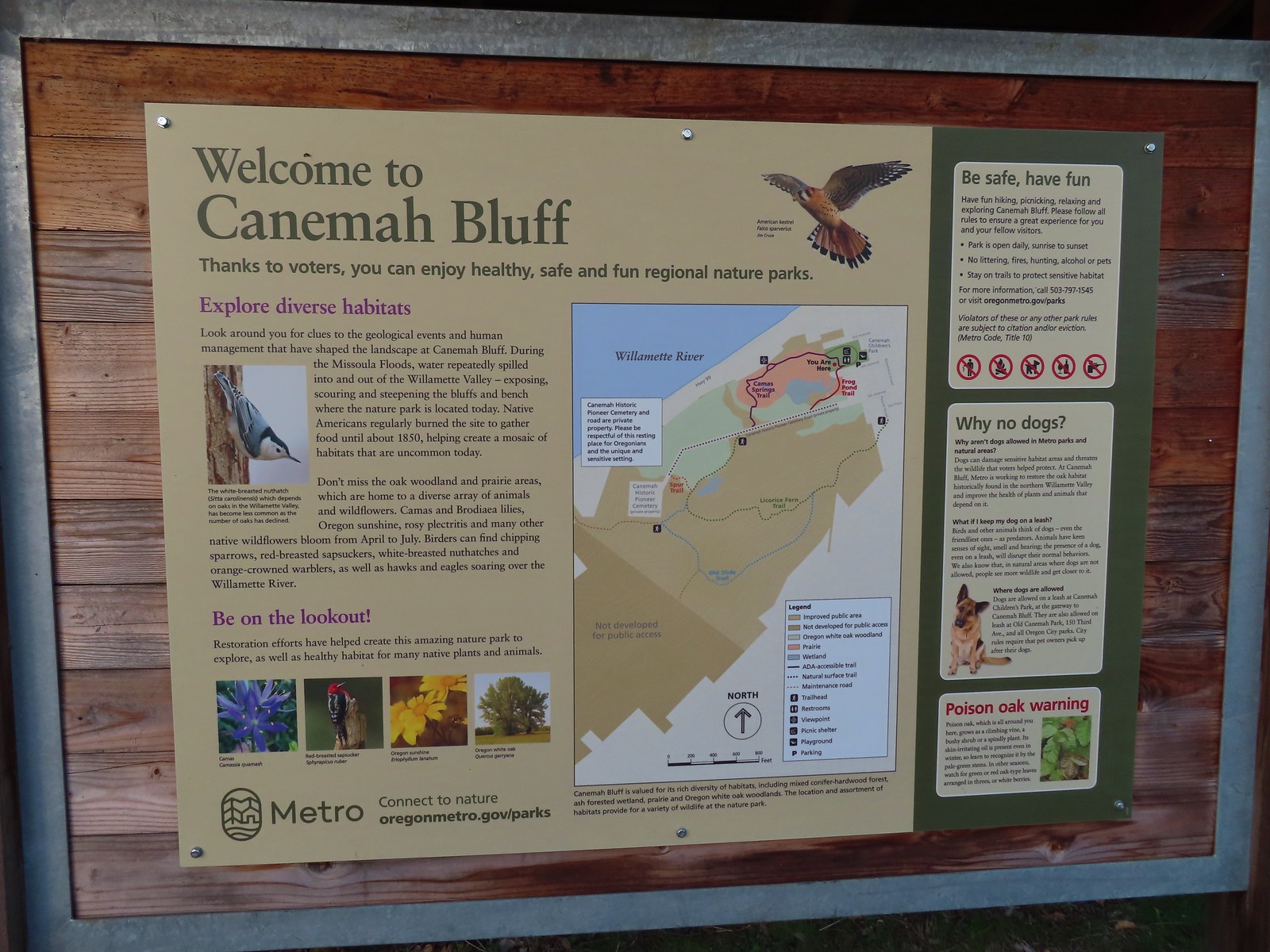
 Metro’s signage has been top notch in the parks we’ve visited so far.
 Hooker’s fairy bells
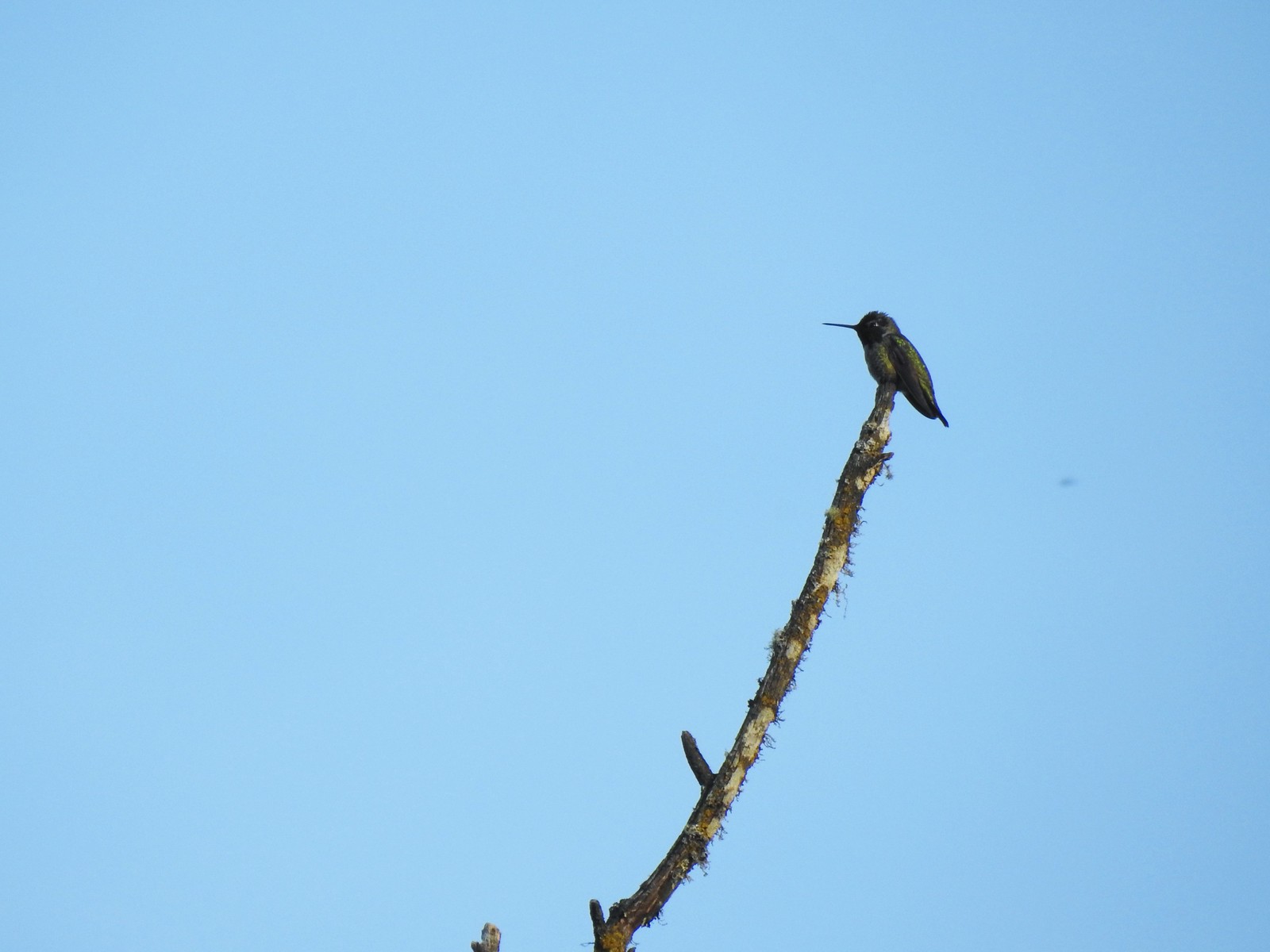 Hummingbird
 Fawn lilies
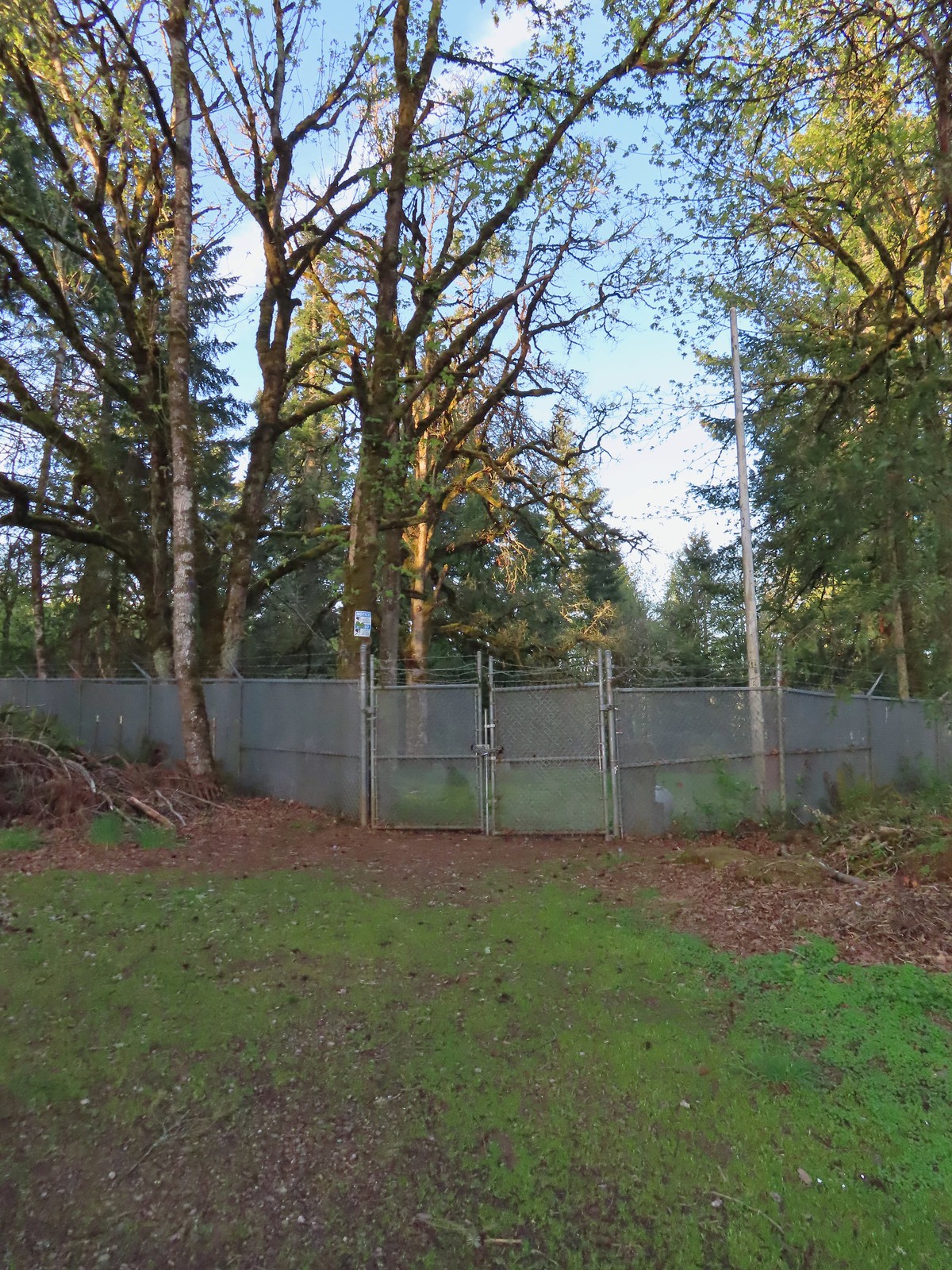 The cemetery behind the fence.
 The Spur Trail.


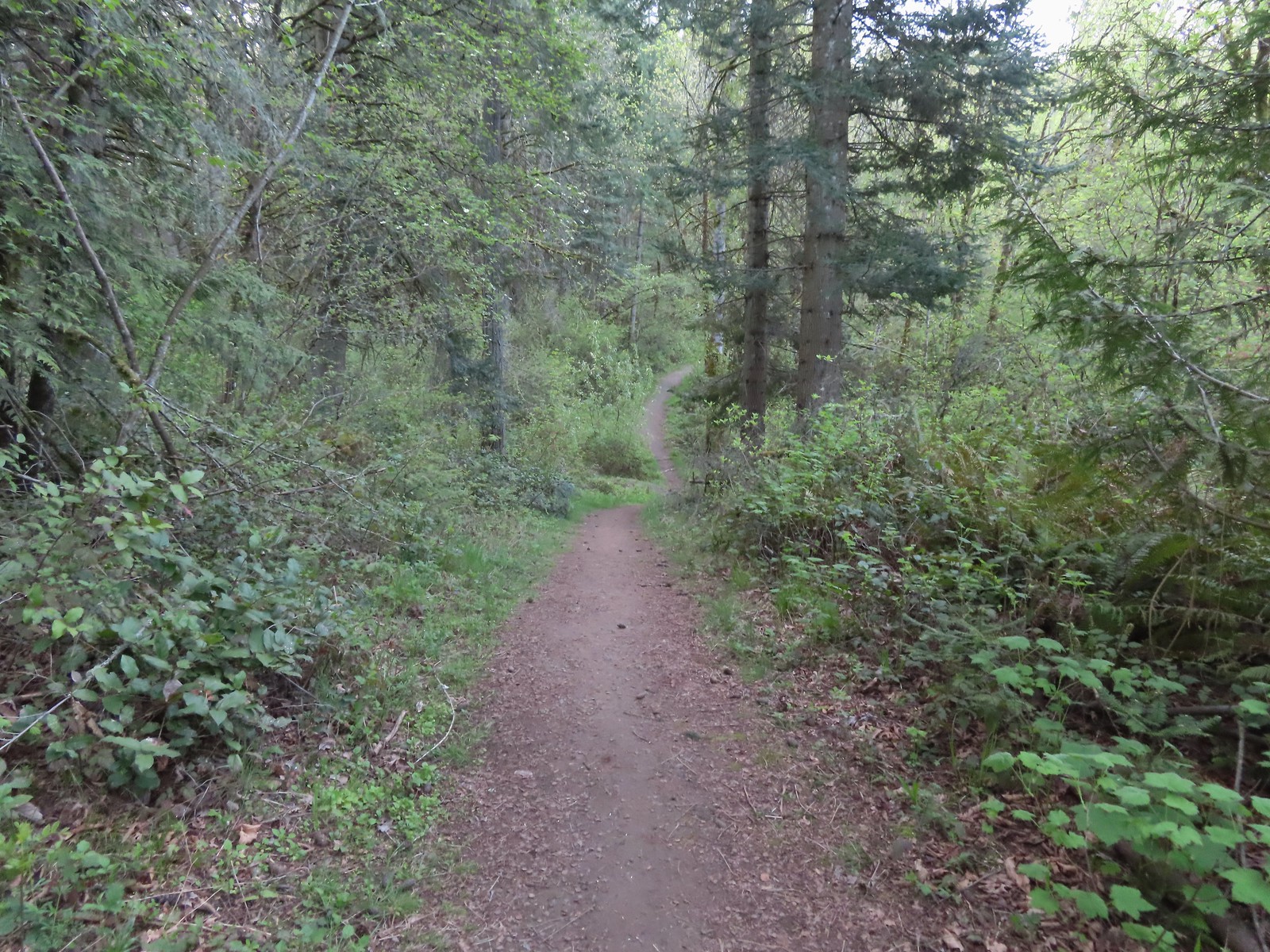
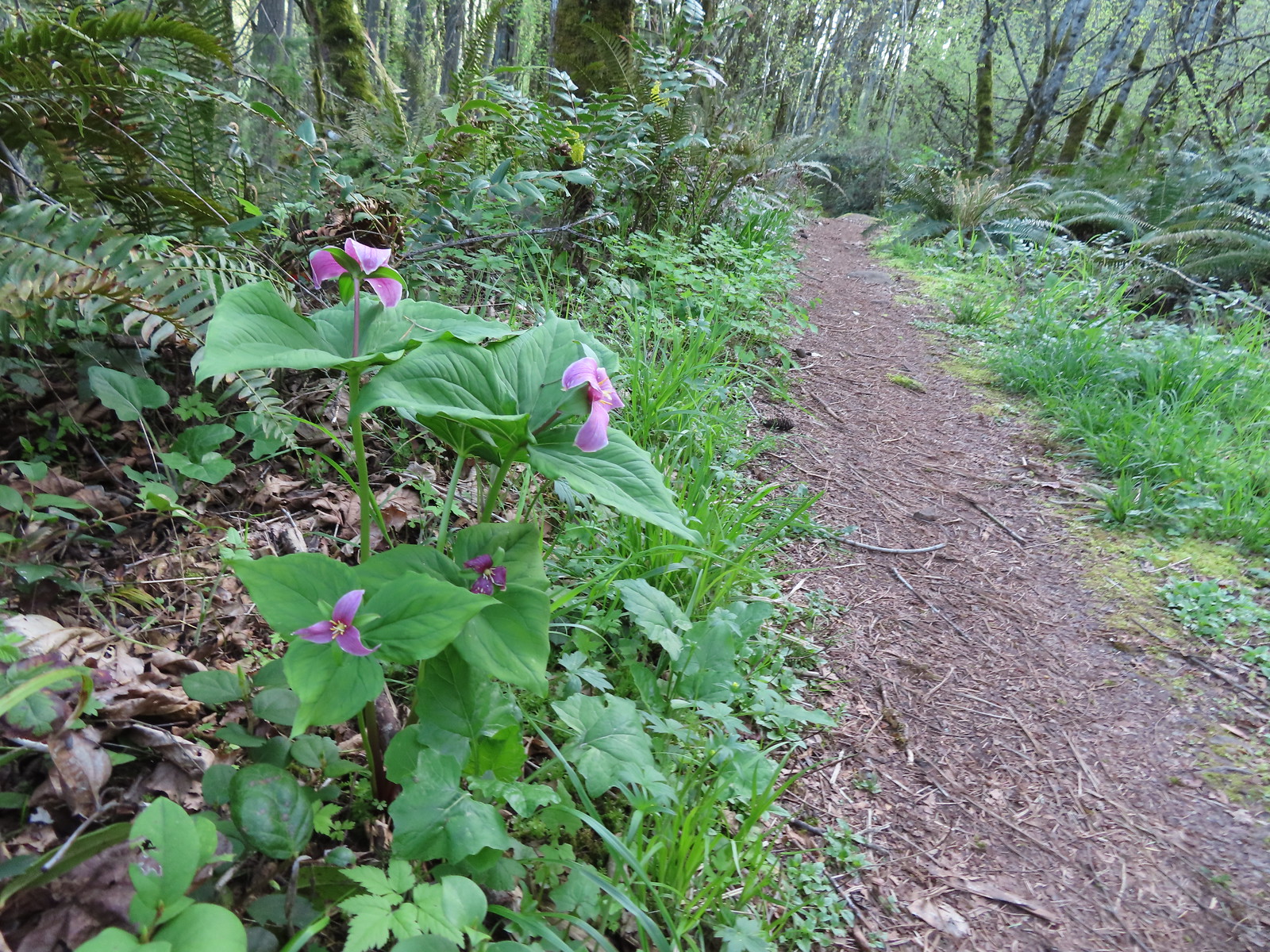
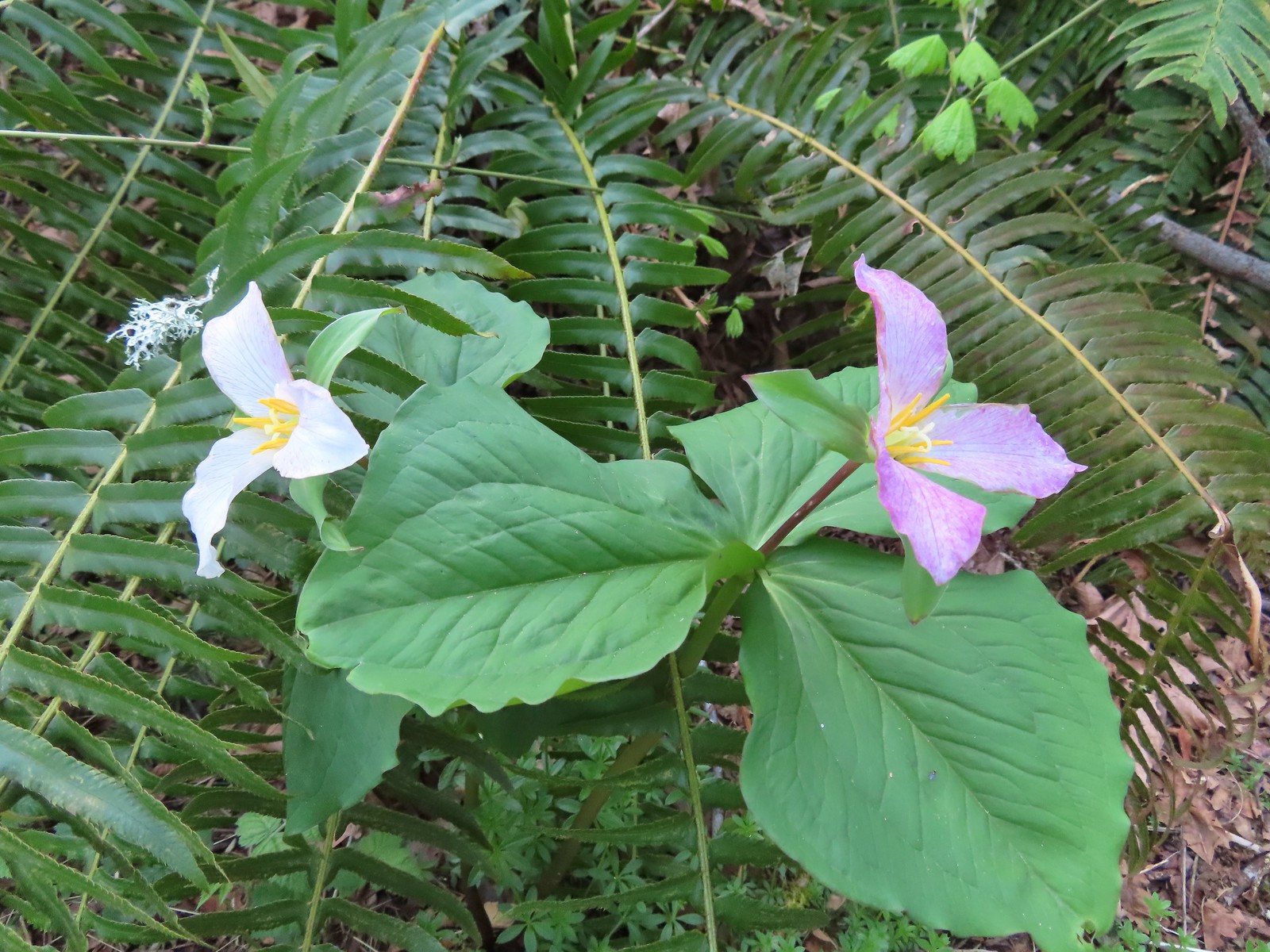
 The boundary marker. The trail continues a short distance to 5th Place.

 Youth-on-age
 Salmonberry
 Violets
 Back on the road.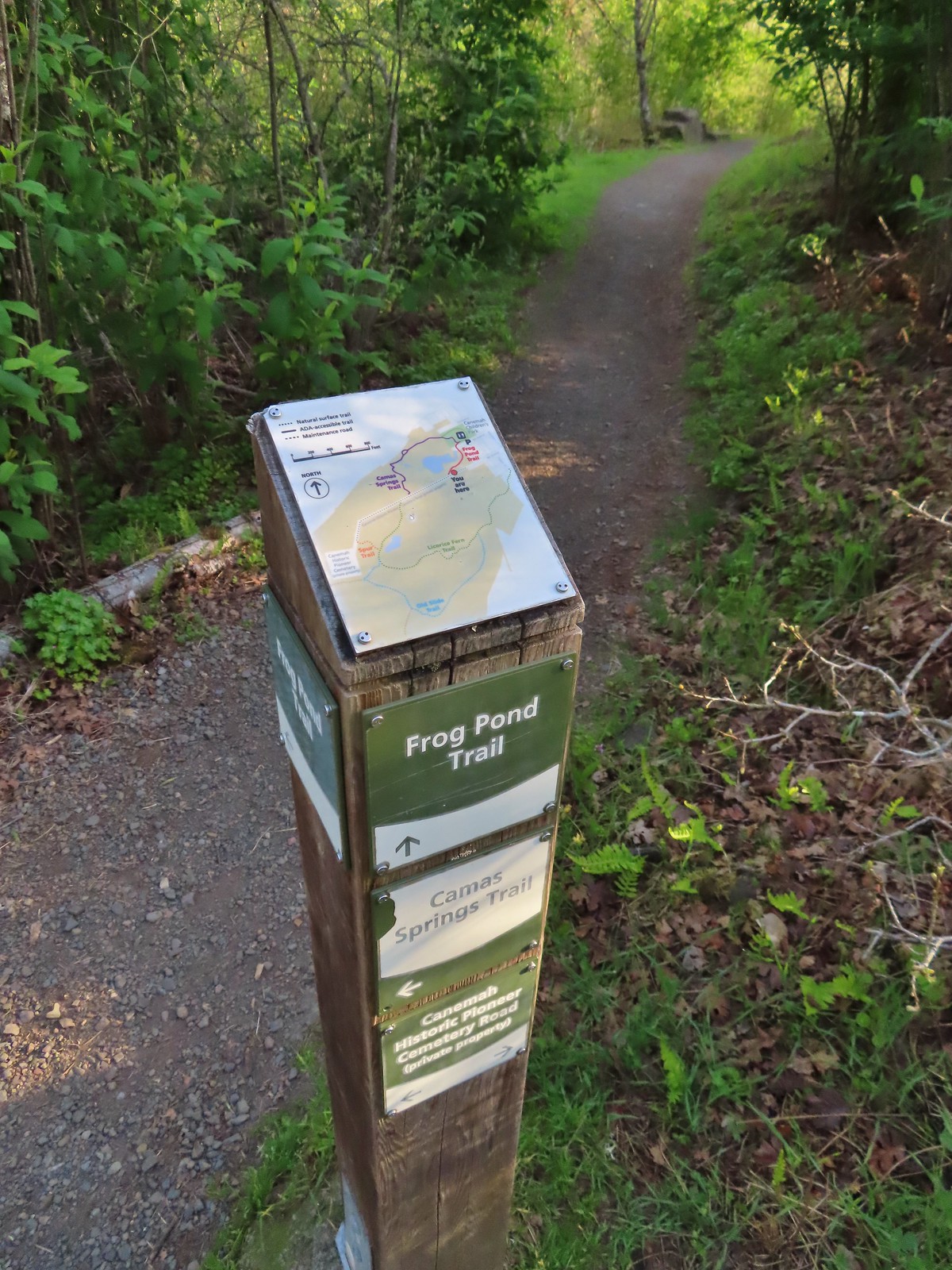
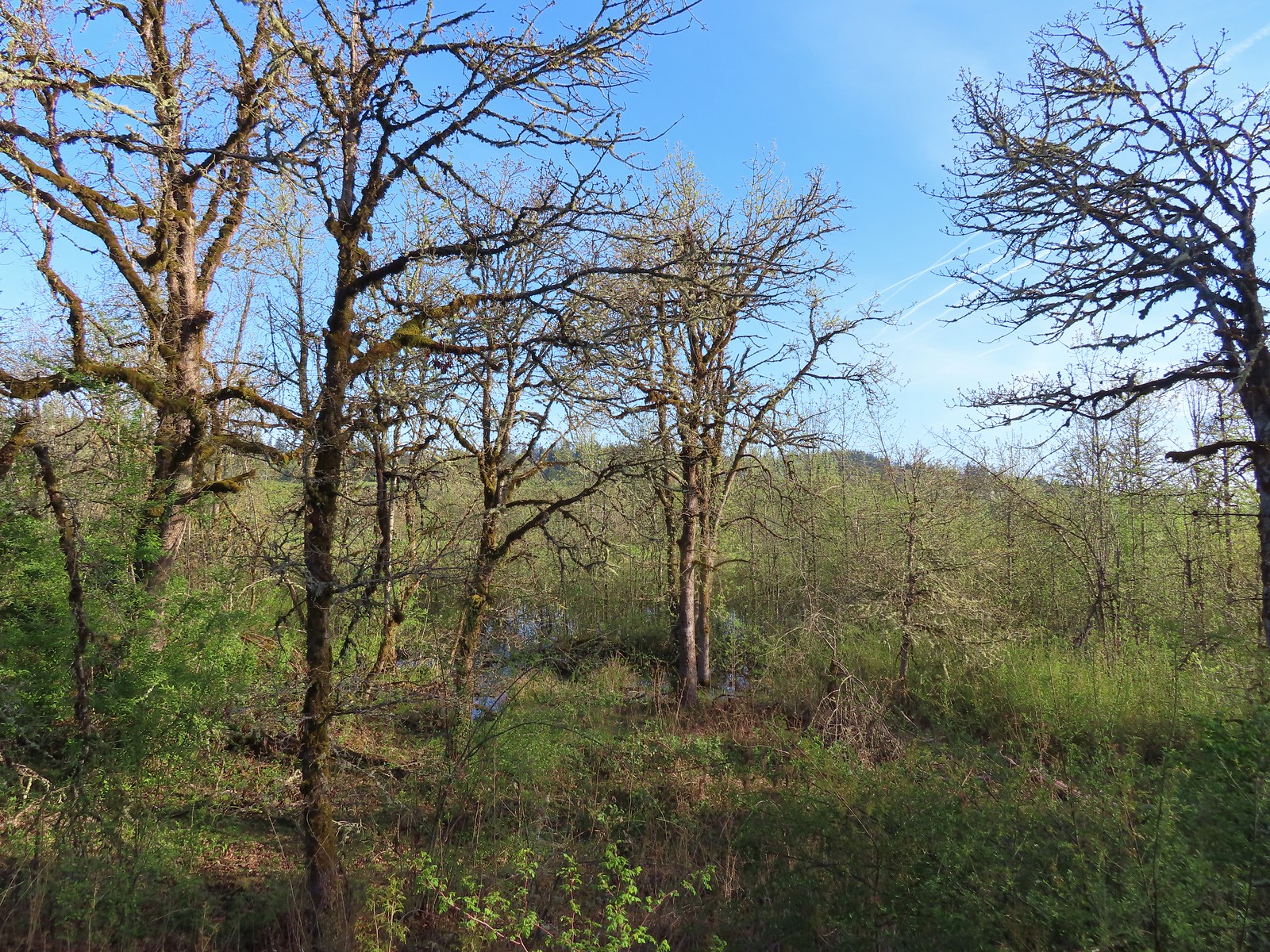 The frog pond.
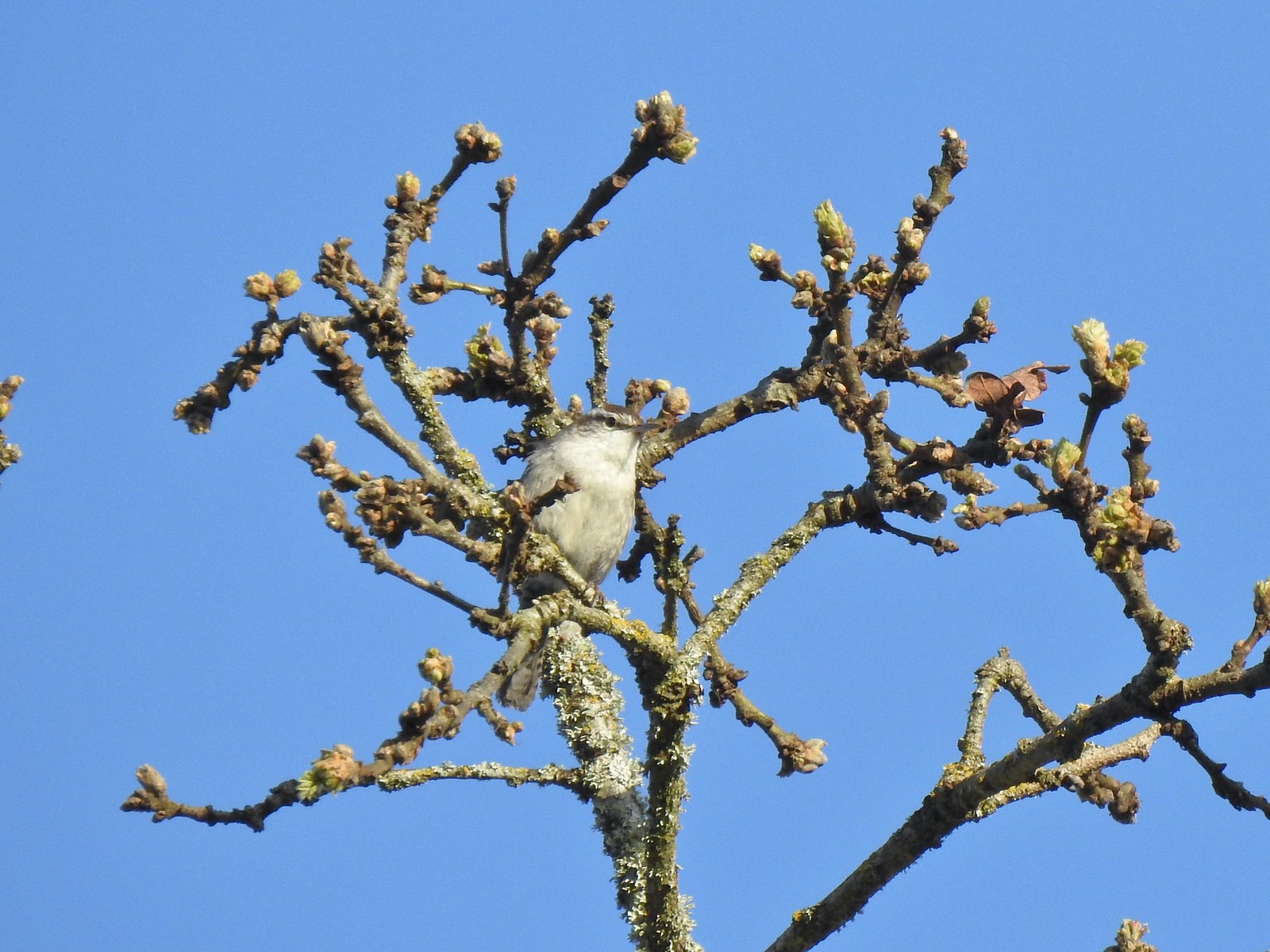 Bewick’s wren
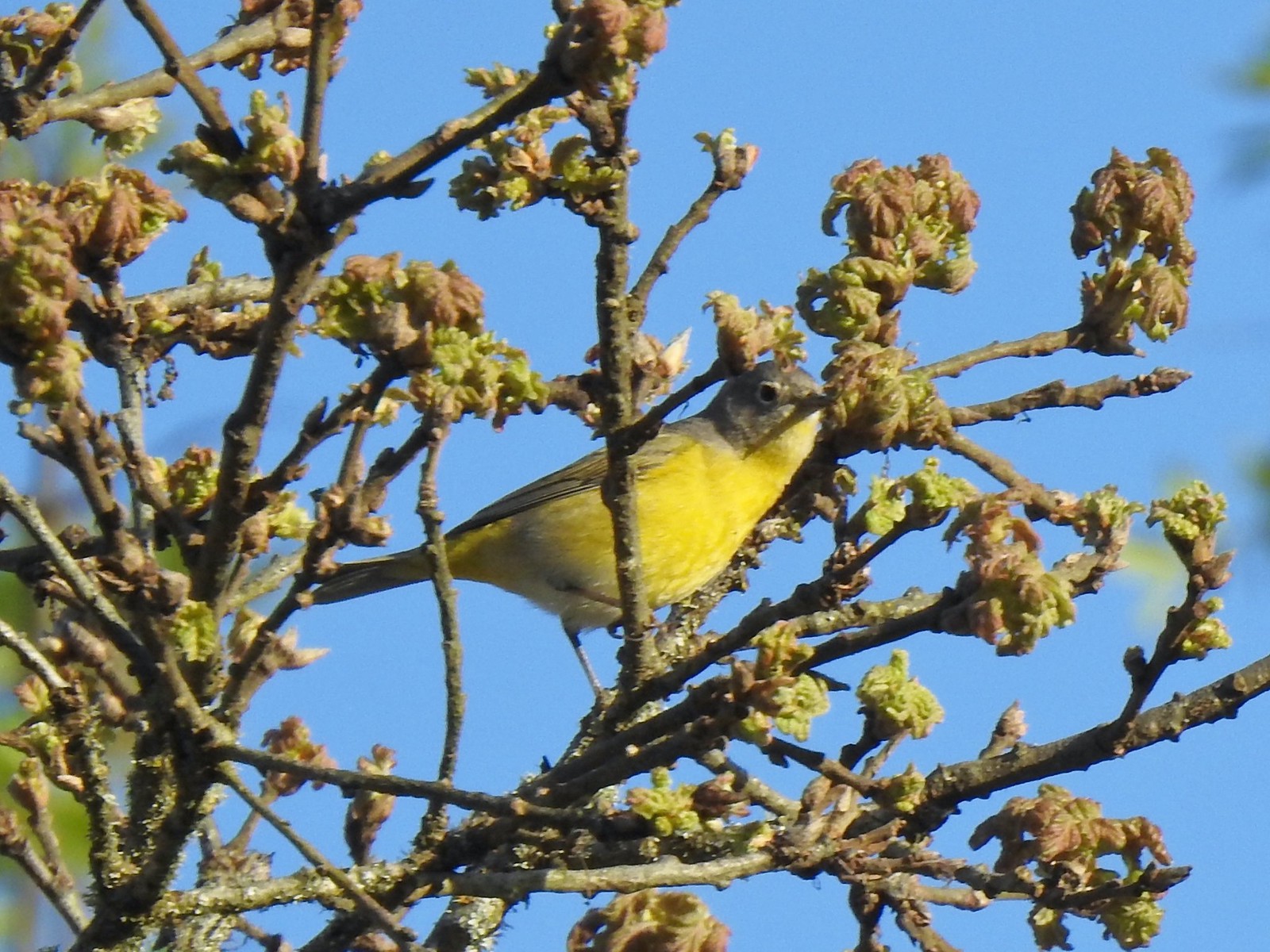 Nashville warbler?
 House finches
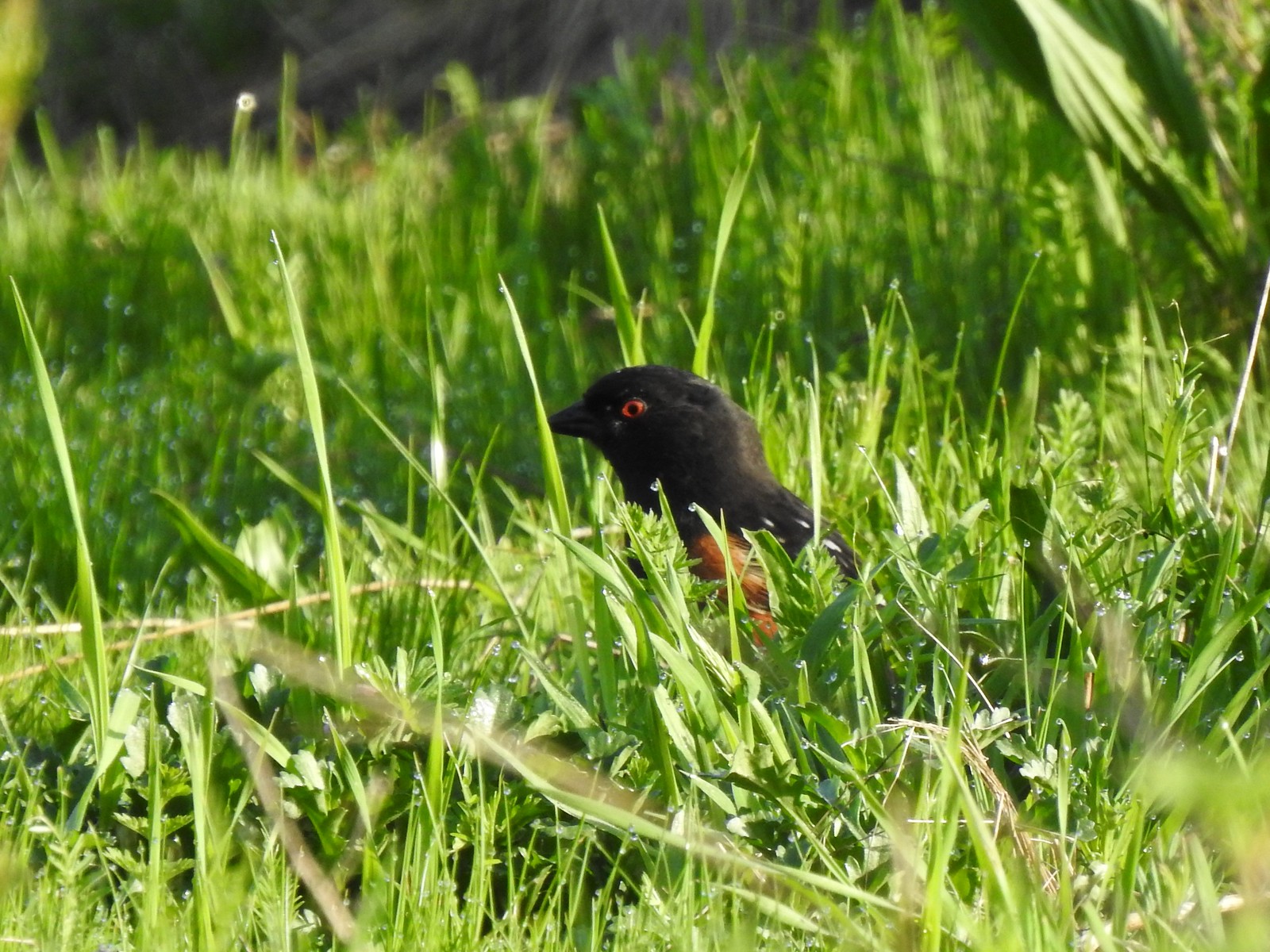 Spotted towhee
 Bleeding heart near the pond.
 Arriving back at the trailhead.
 View from the trailhead.
 Trailhead signboard.
 Please note that pets are not allowed at most Metro parks.
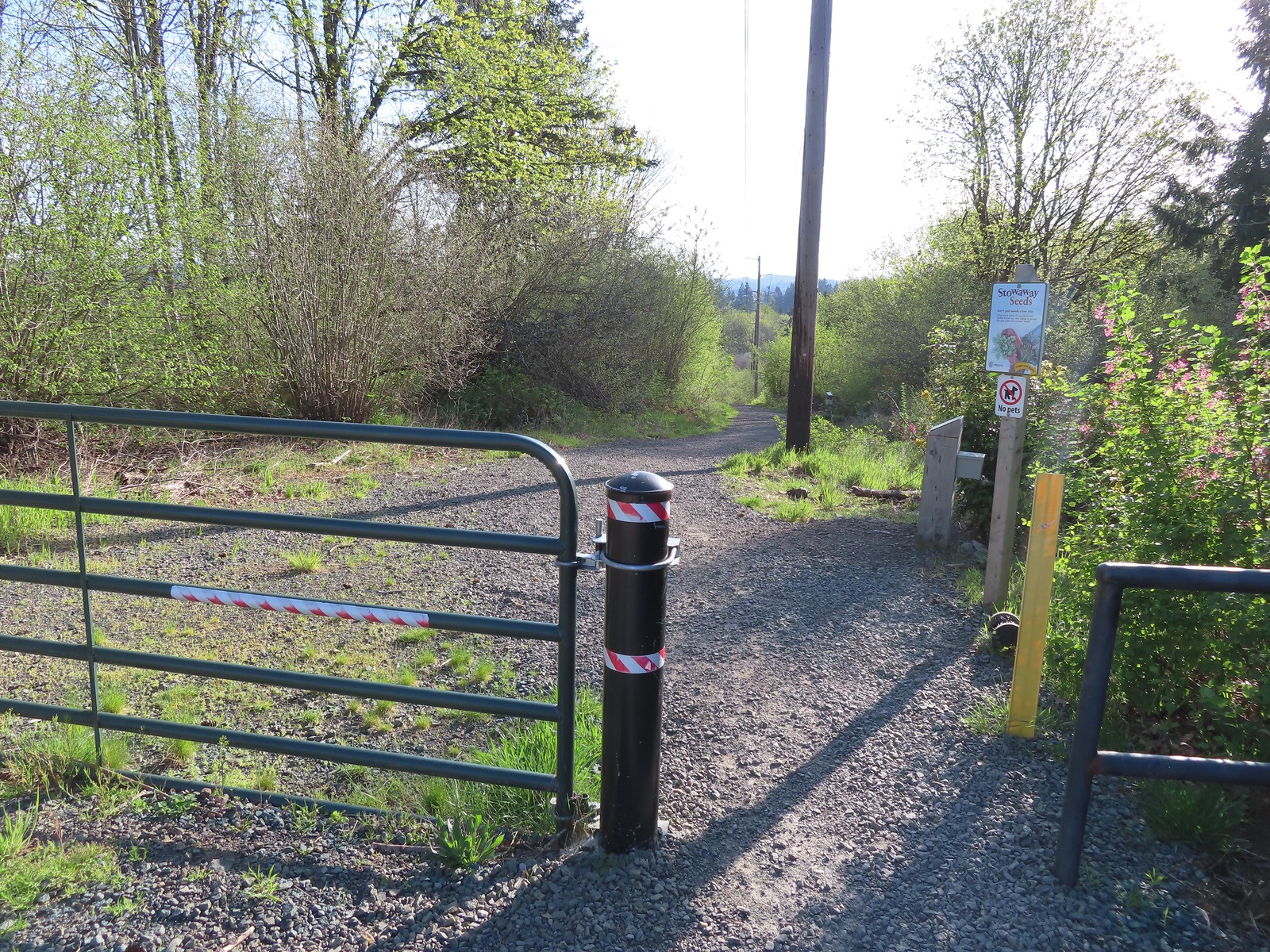 Don’t forget to brush off your shoes when brushes are available.
 The Shady Lane Trail.
 Oregon grape, red flowering currant and Indian plum
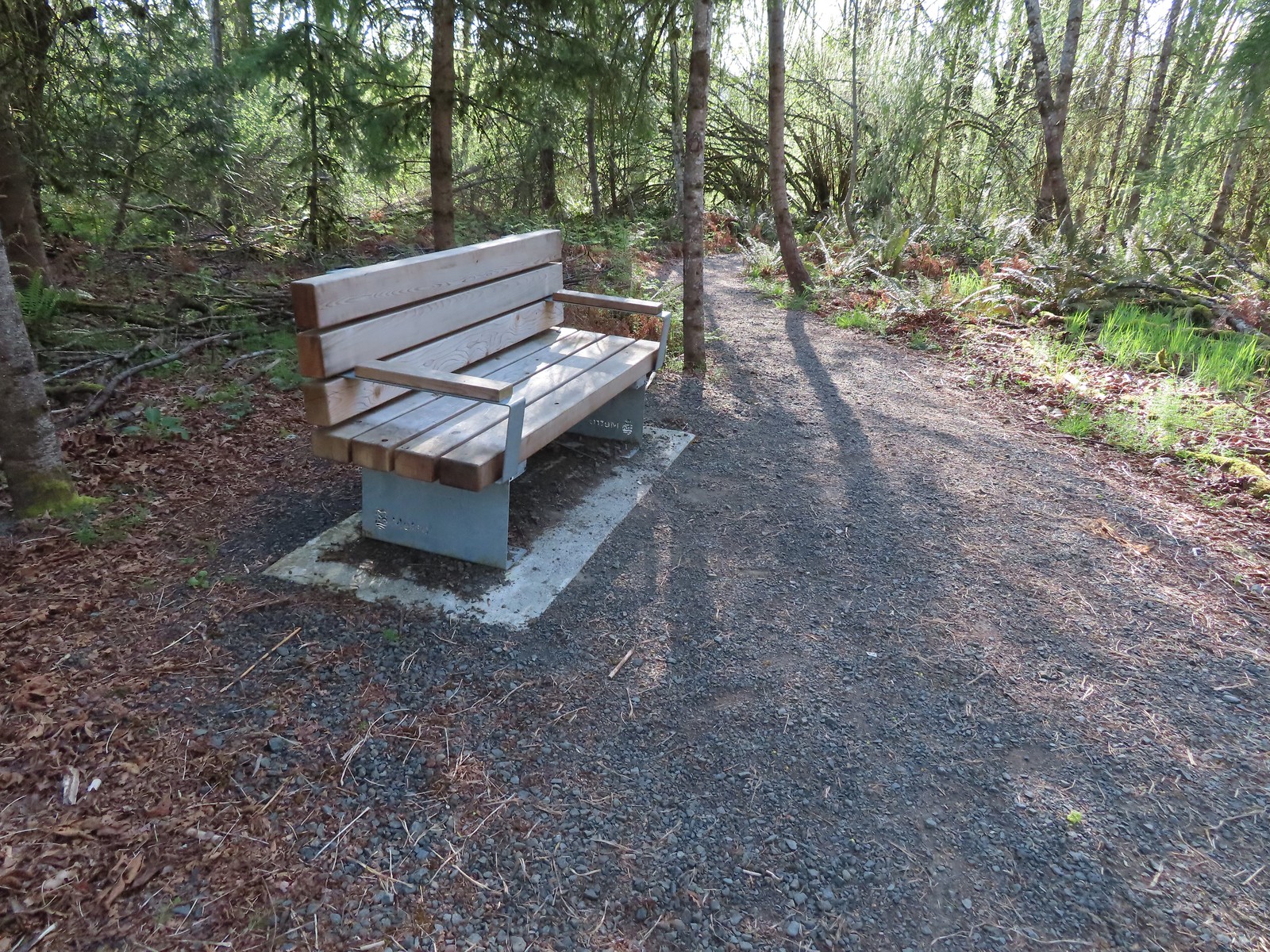 One of several benches located throughout the park.
 The connector trail.
 Candy flower
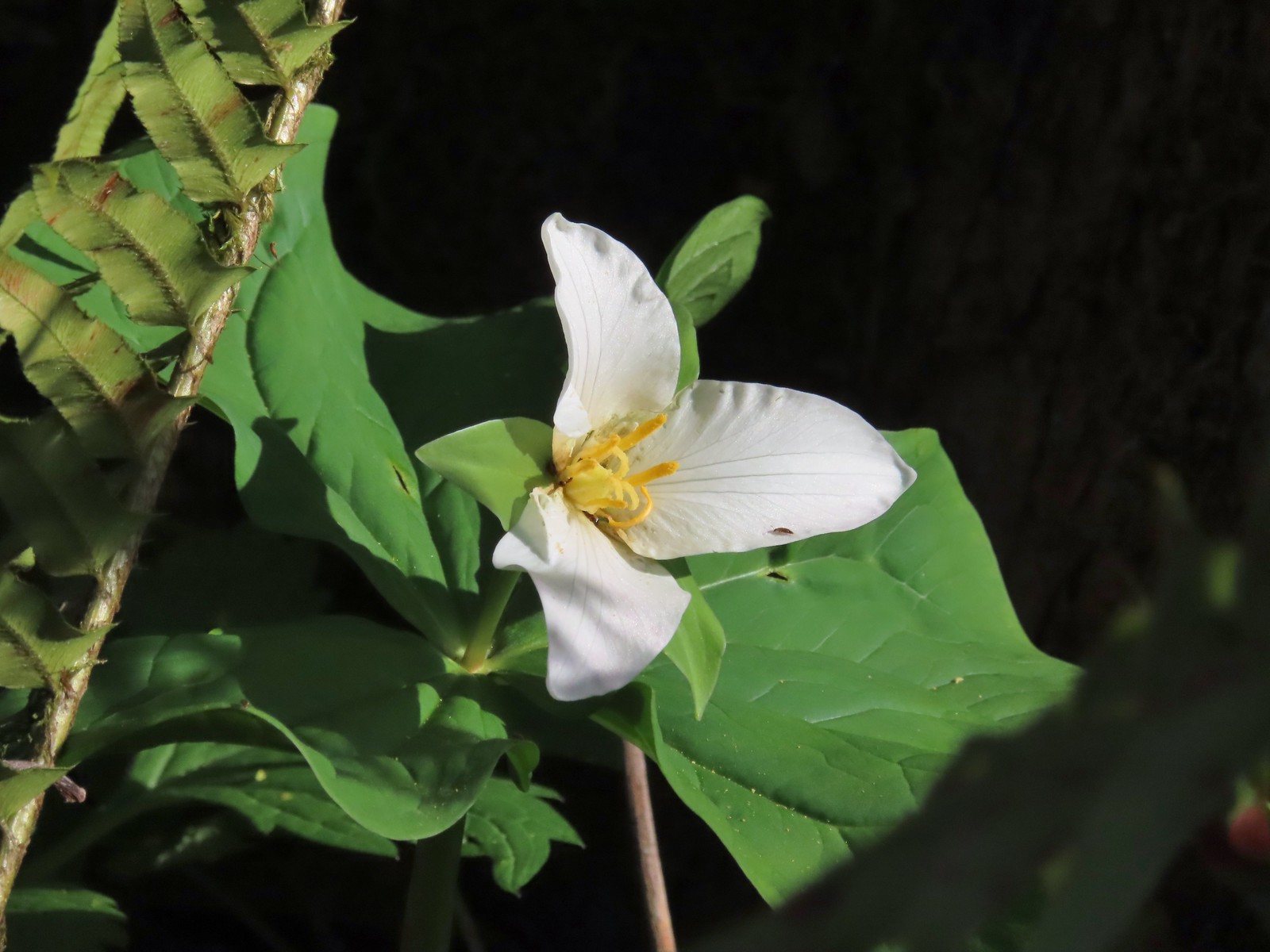 Trillium with a tiny insect.
 Carpet of green.
 A rare bluebird day for us this year.
 Salmonberry blossoms
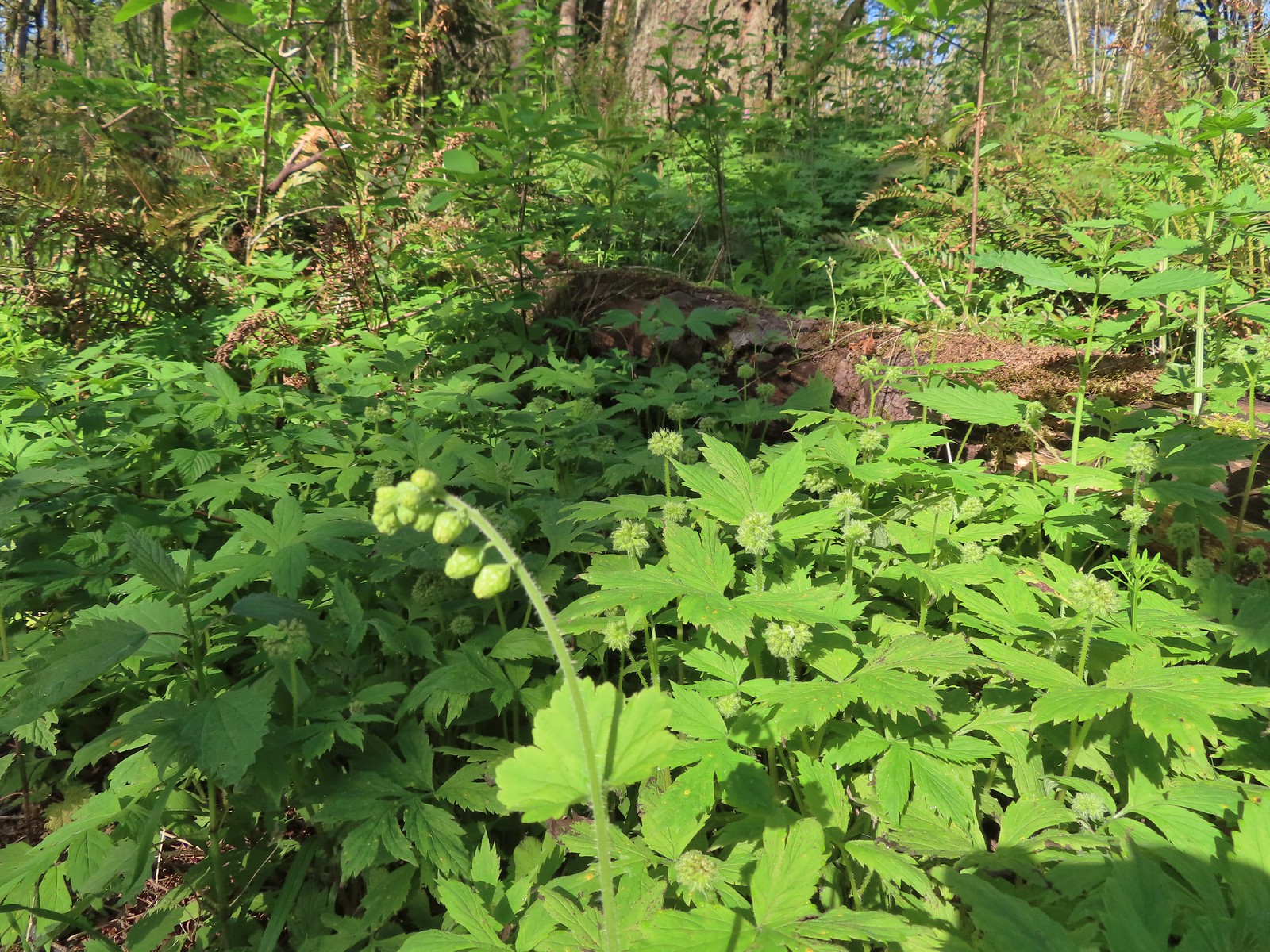 Fringecup and pacific waterleaf that had yet to start blooming.
 The Tumble Falls Bridge.
 Tumble Falls
 The Red Soil Roller Trail to the right.
 A small pond along the trail.
 Song sparrow
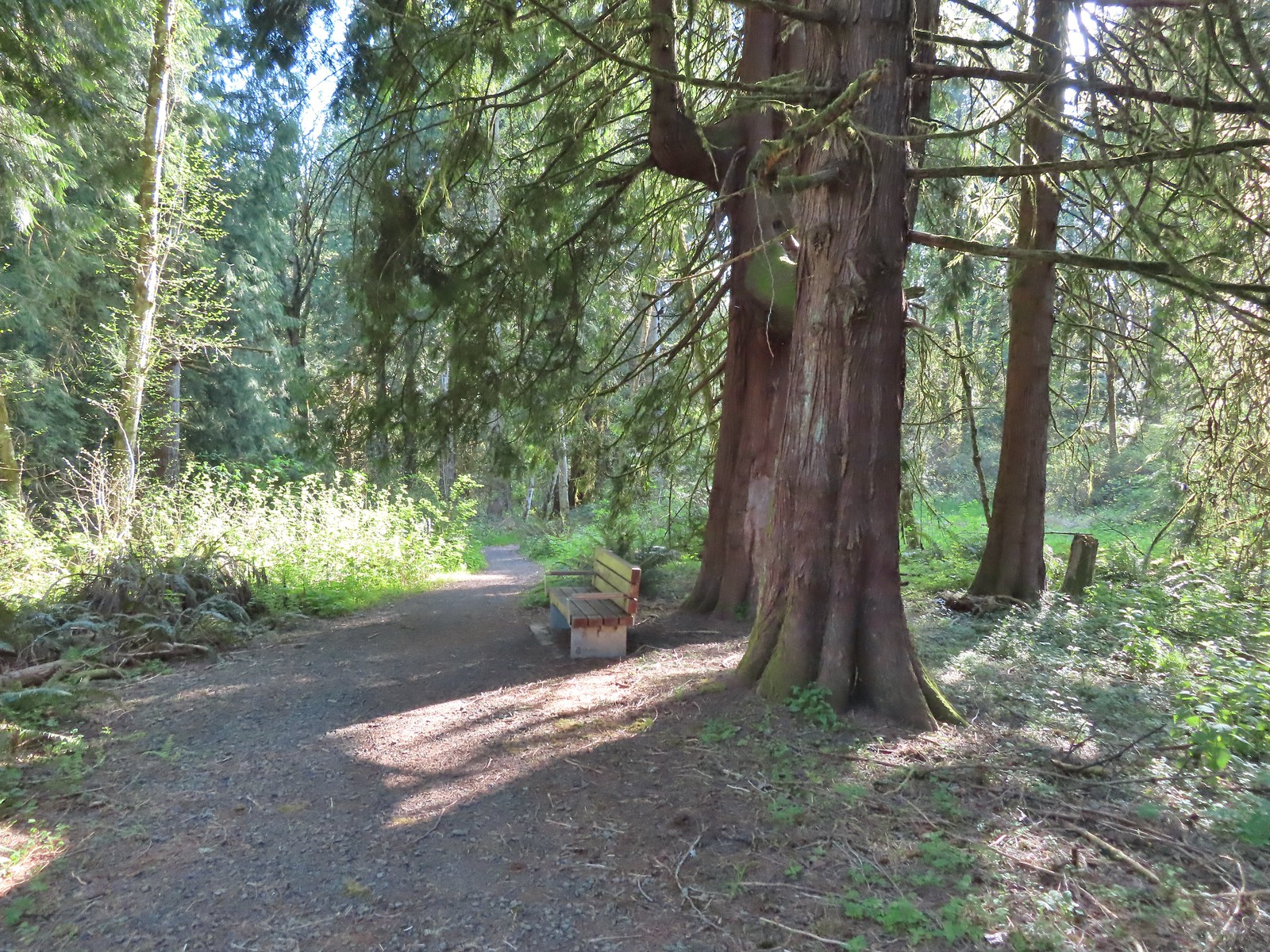 Western red cedars
 Nearing the end of the trail.
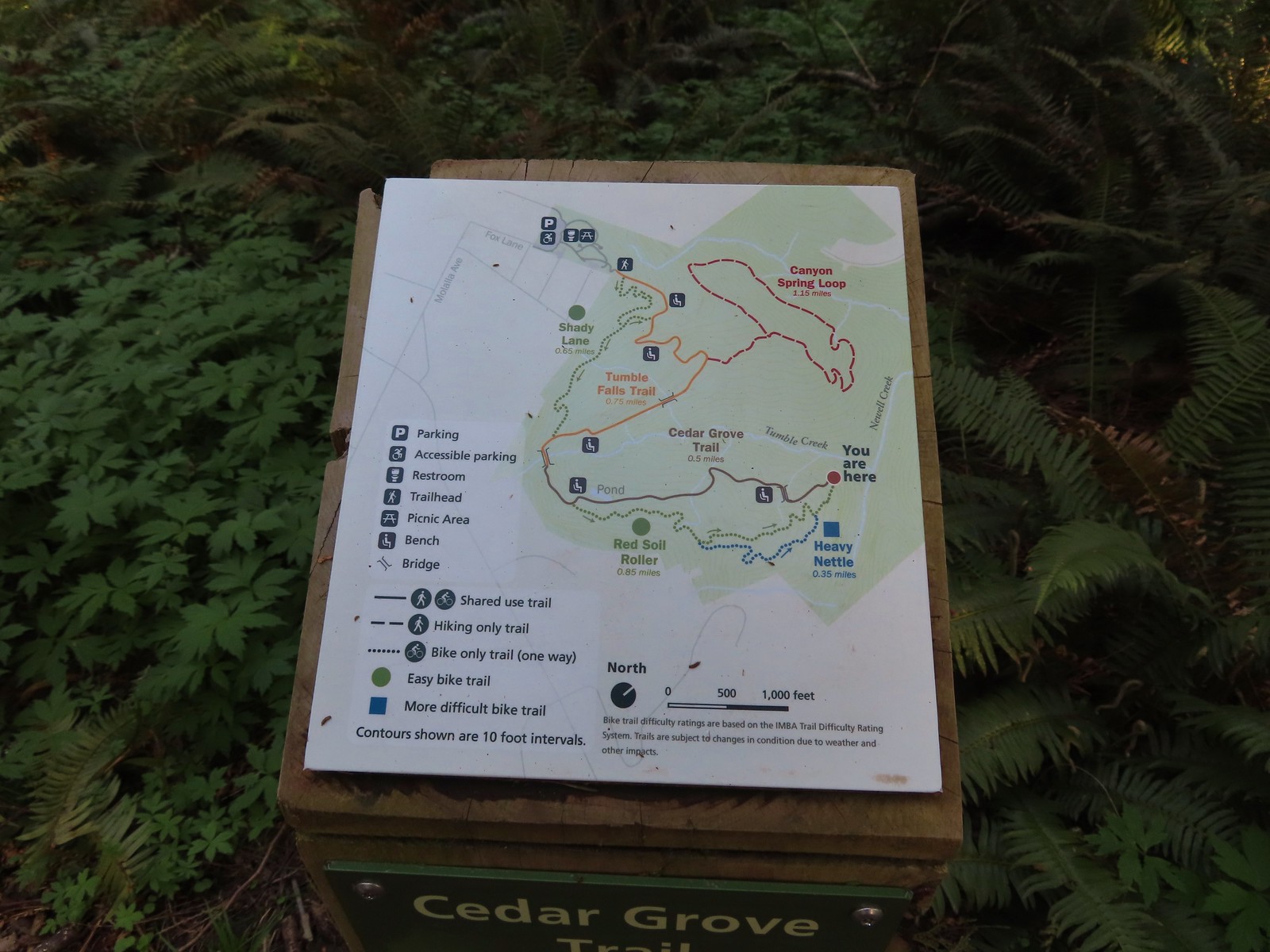 Map at the end of the Cedar Grove Trail.
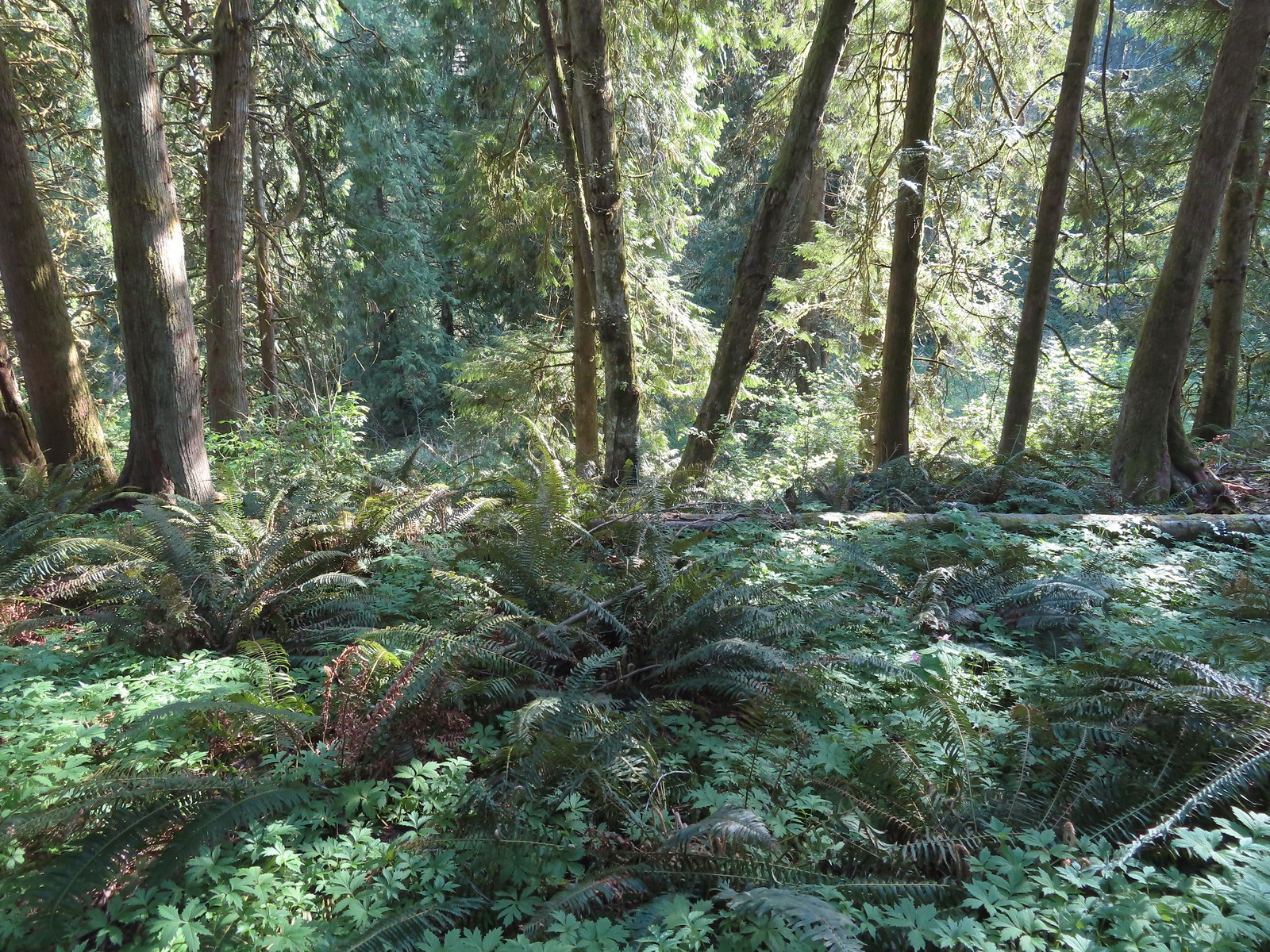 Newell Creek is down there somewhere.
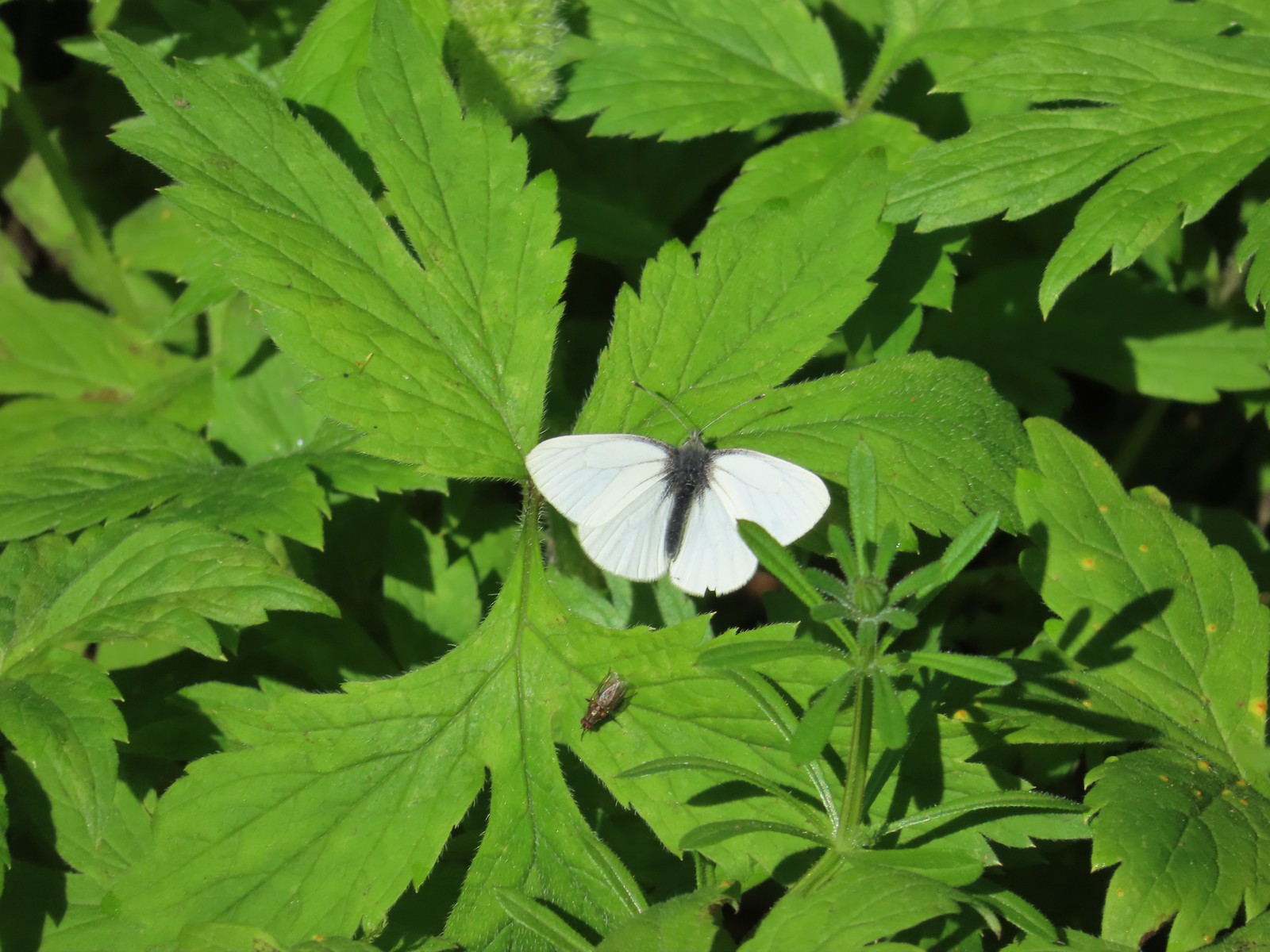 Male margined white?
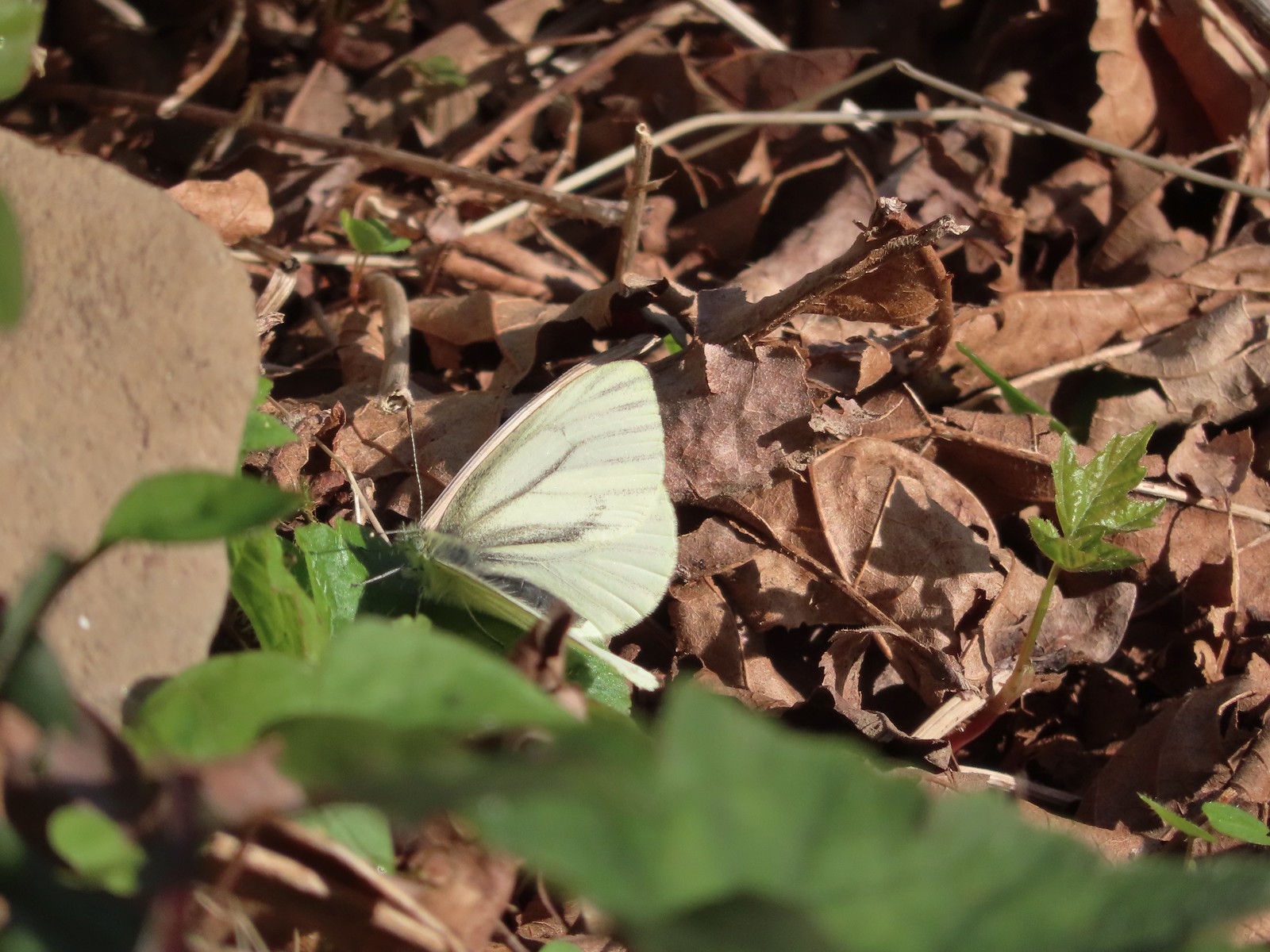 Female margined white?
 Slender toothwort
 The Canyon Spring Trail below in the trees.
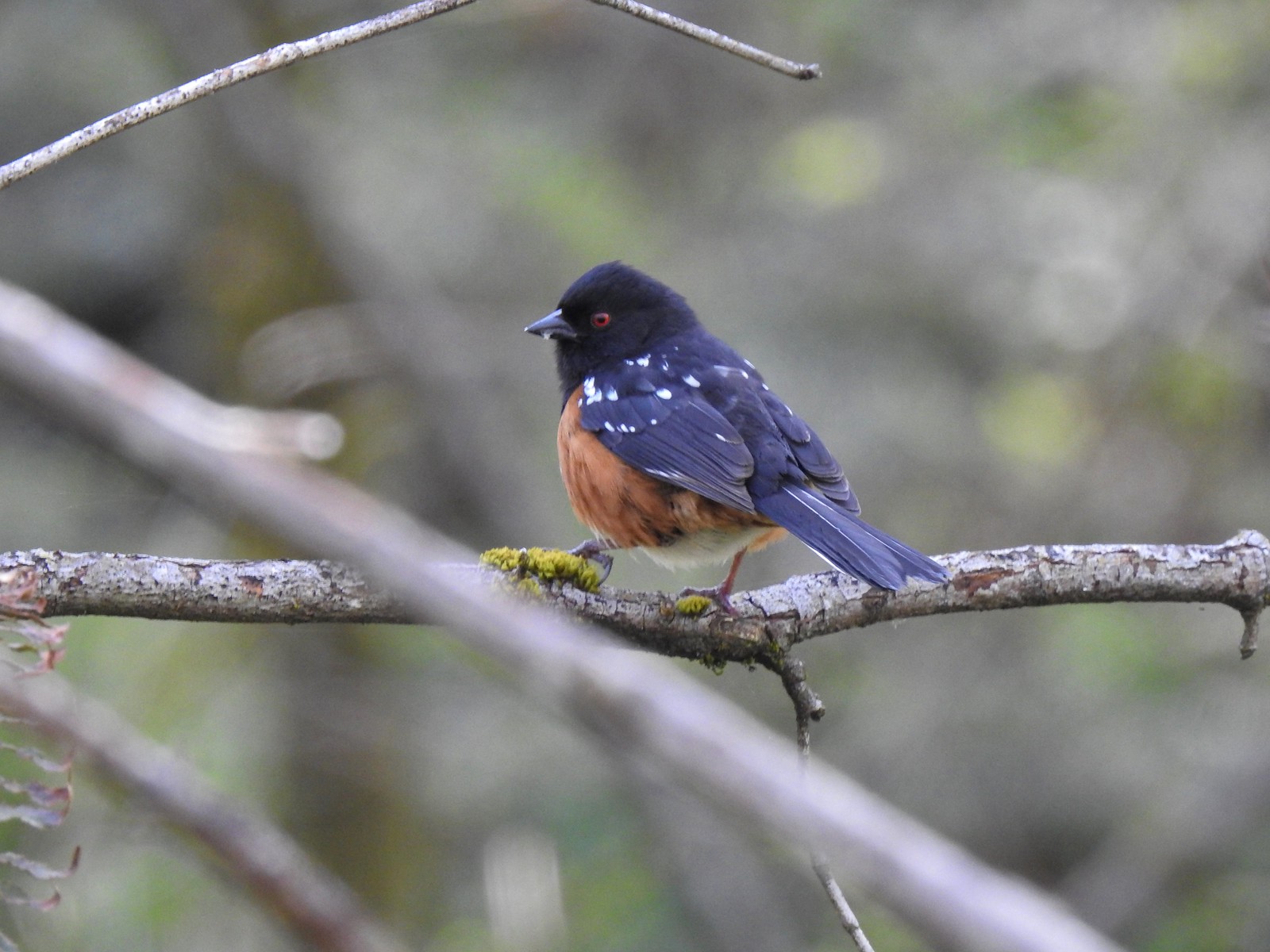 Spotted towhee
 Chipmunk
 Heading back beneath the ridge.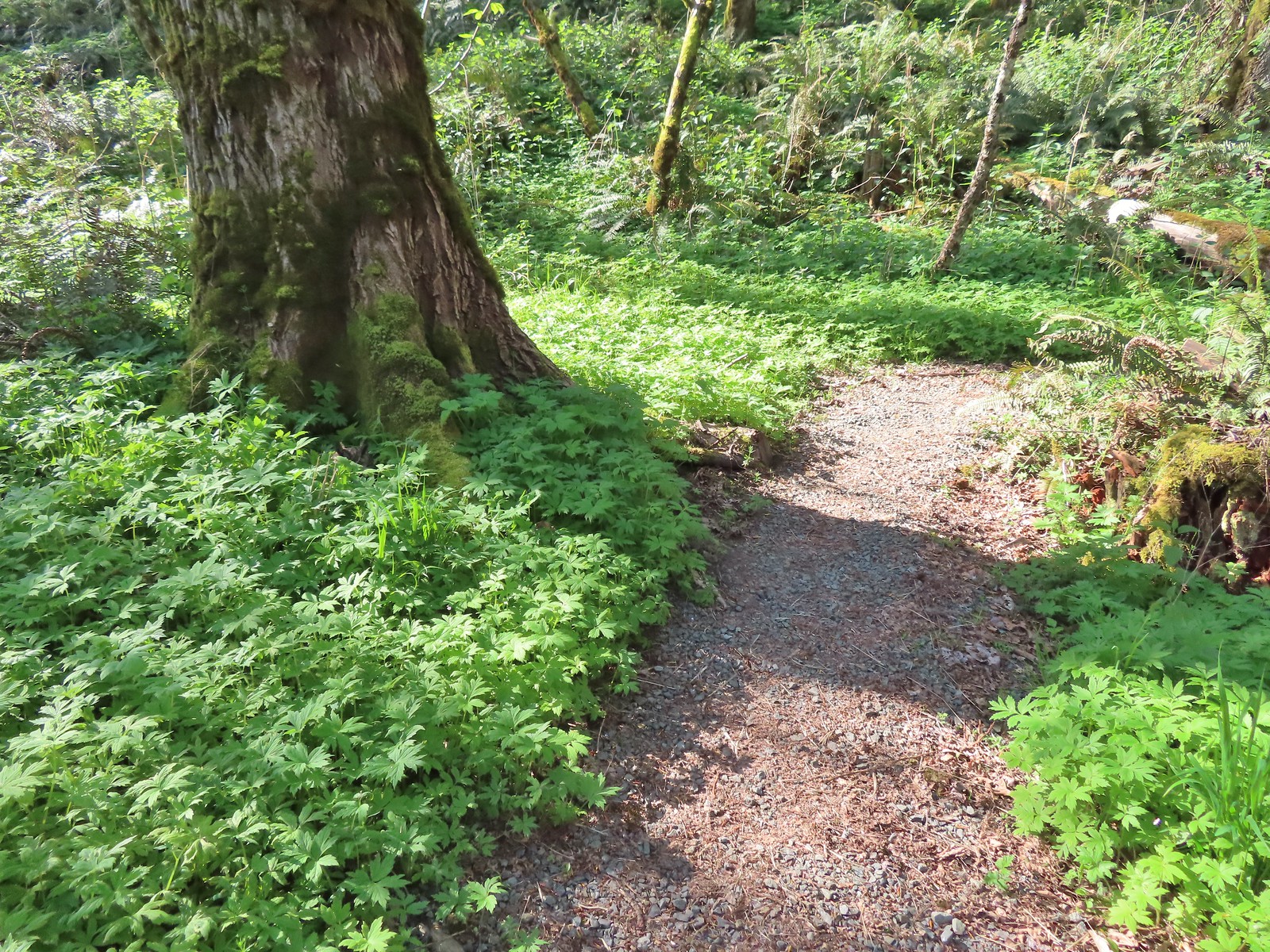
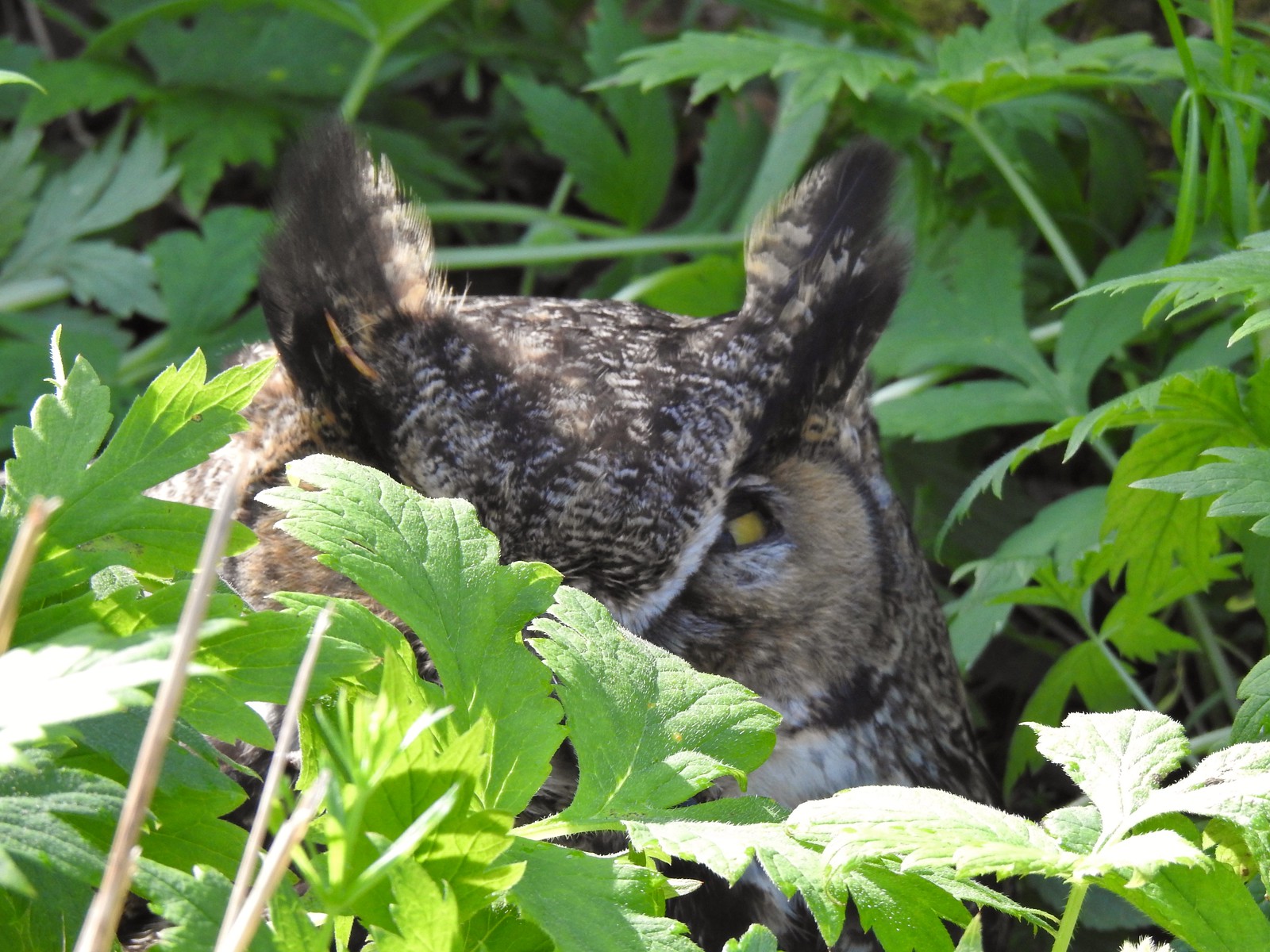

 Trillium and mushrooms
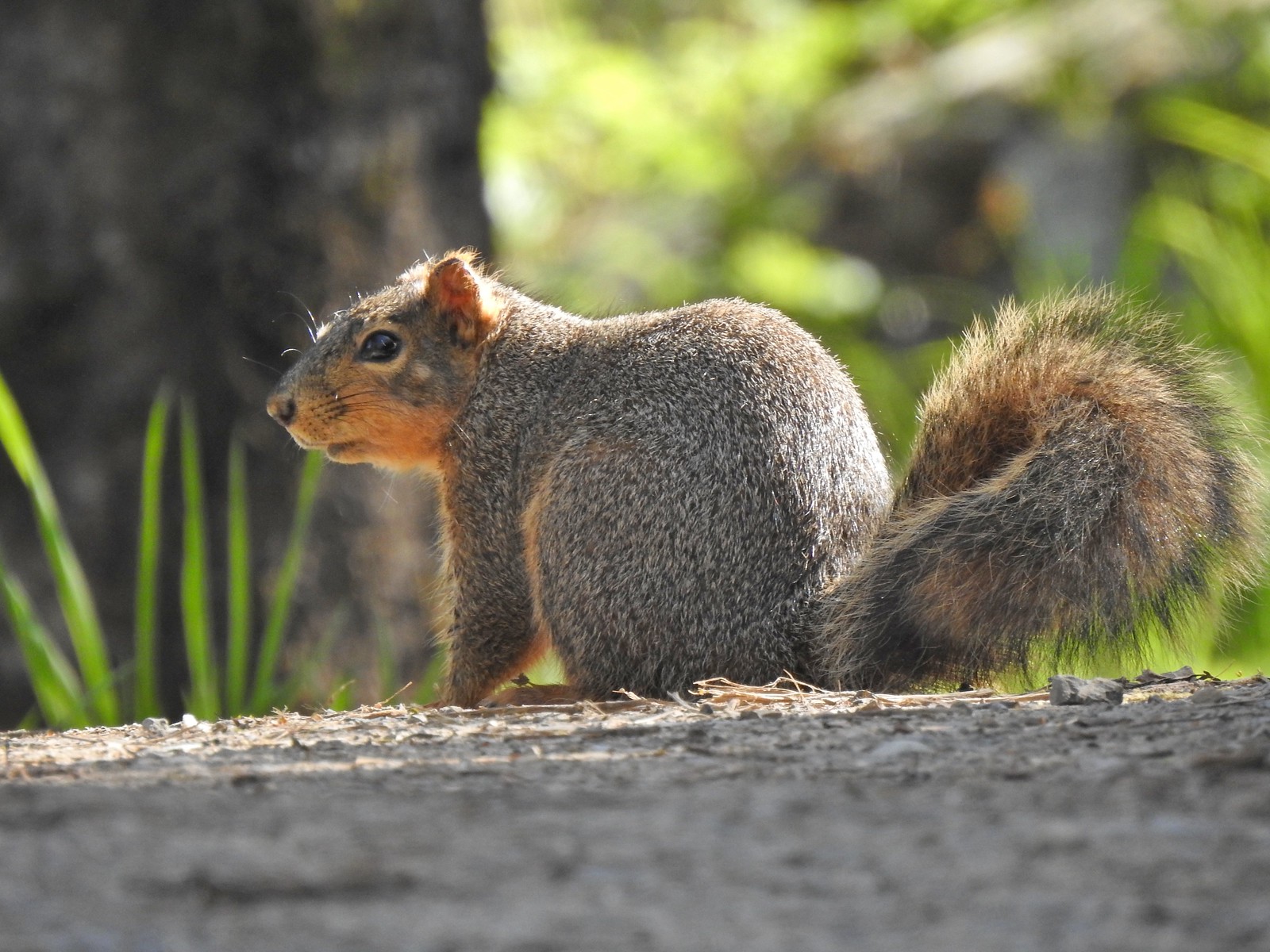 Squirrel
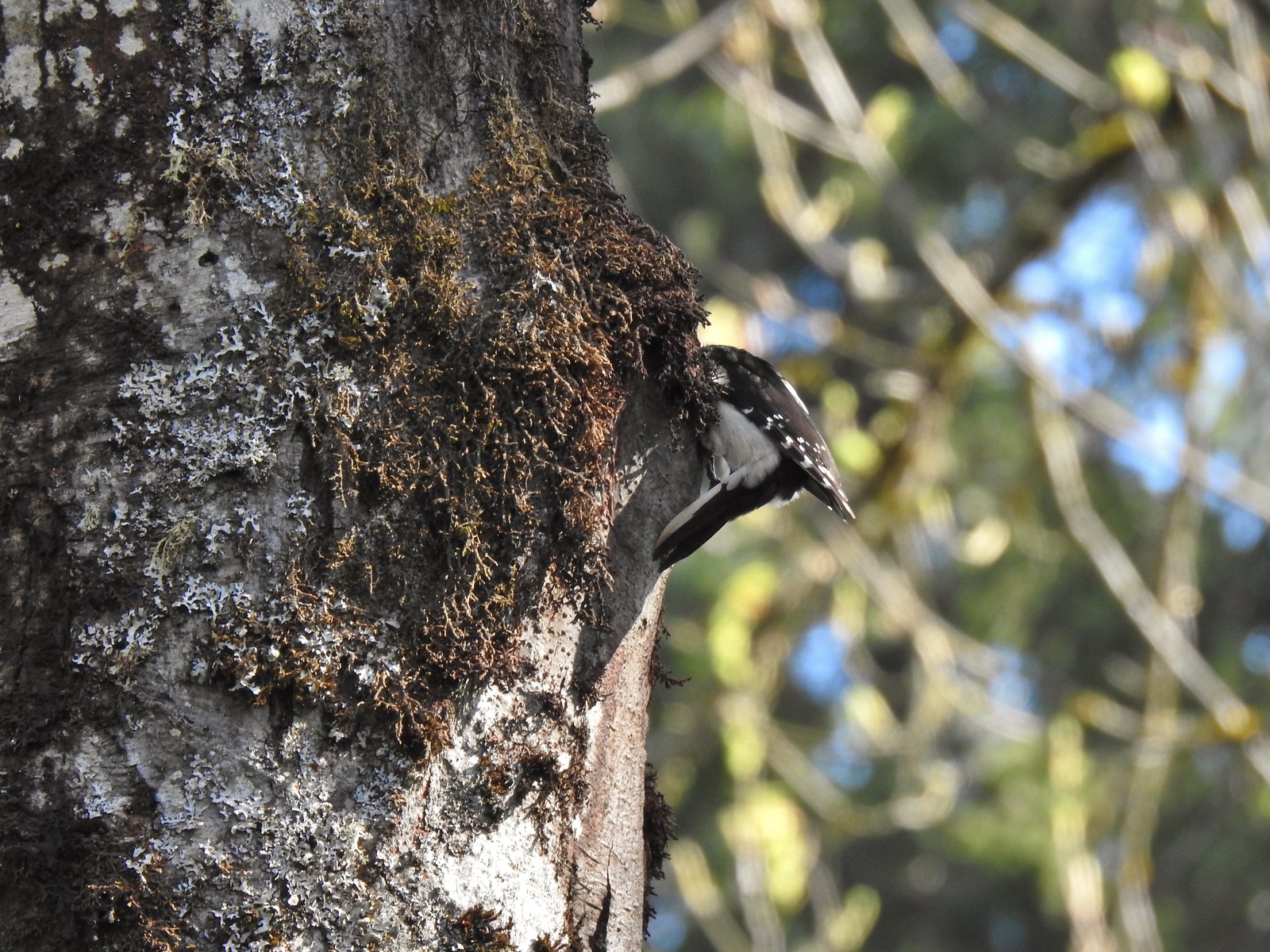 Woodpecker
 Stellar’s jay
 Back at the Tumble Falls Trail.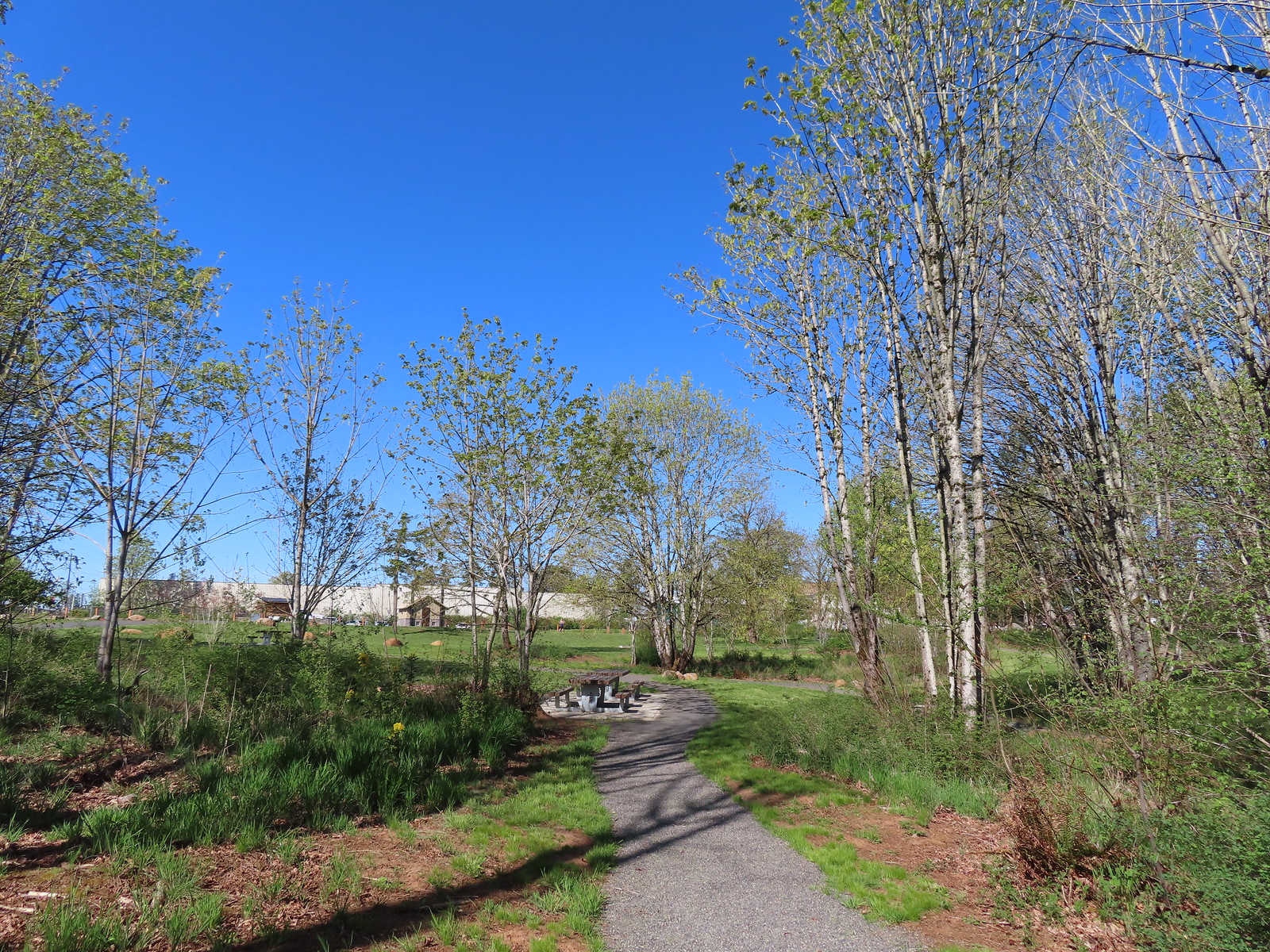


 Not sure how “official” the writing is on the map, but it wasn’t wrong about the Turtle Loop being “closed” (high water).

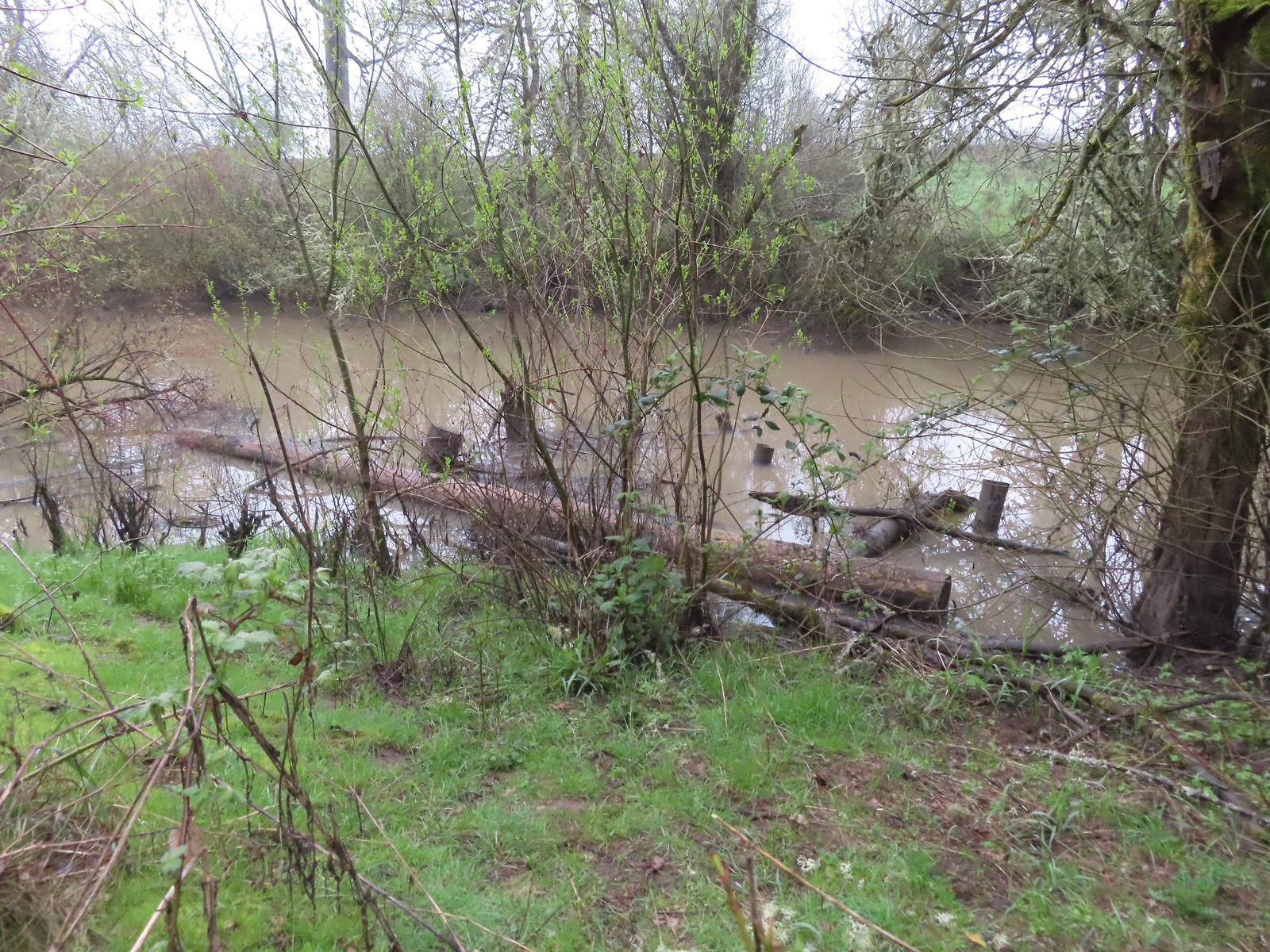 A swollen Lake Creek
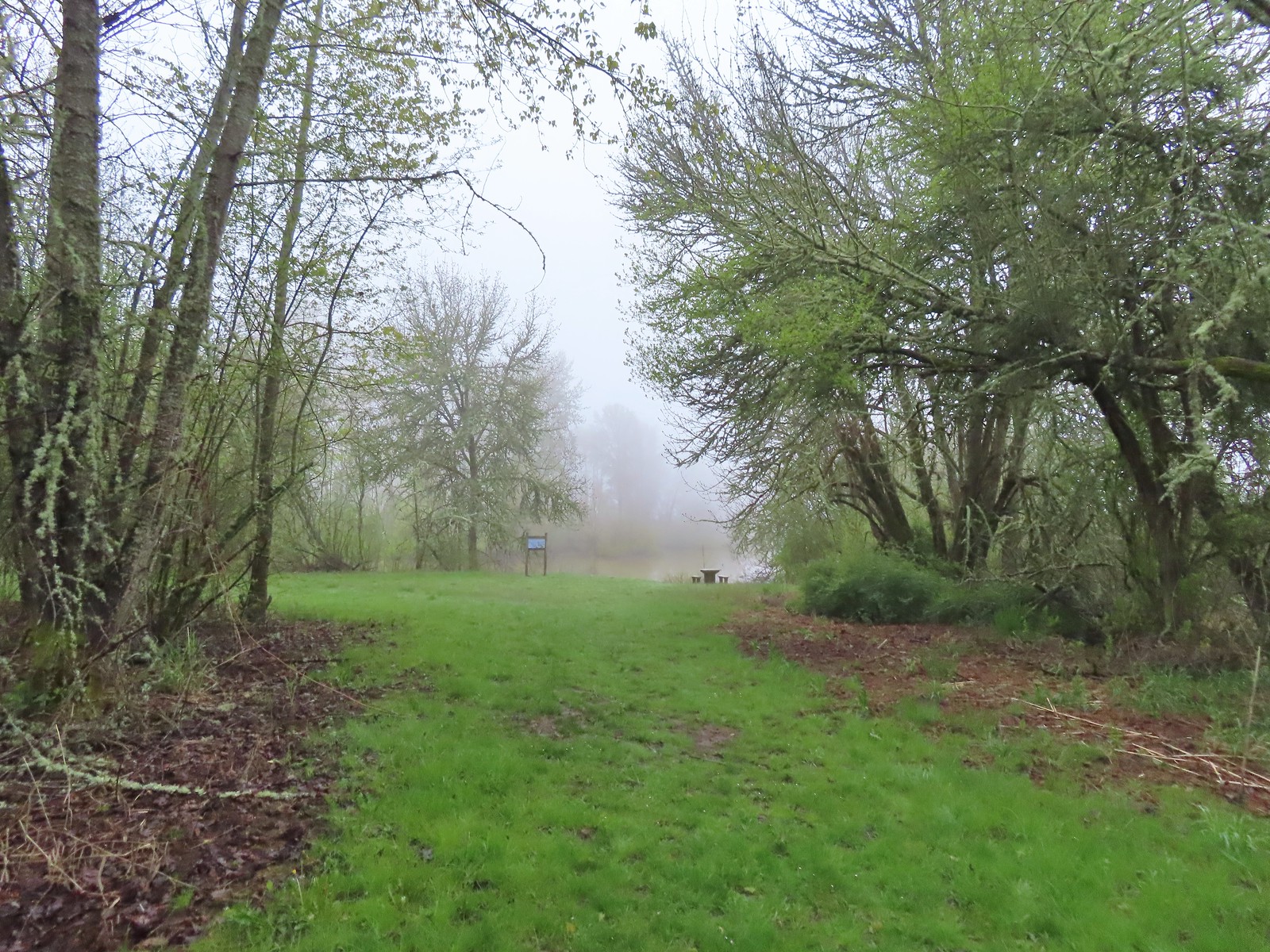 A third of a mile from the trailhead is a picnic table overlooking a former channel of the Willamette River that is now an oxbow lake filled by Lake Creek.
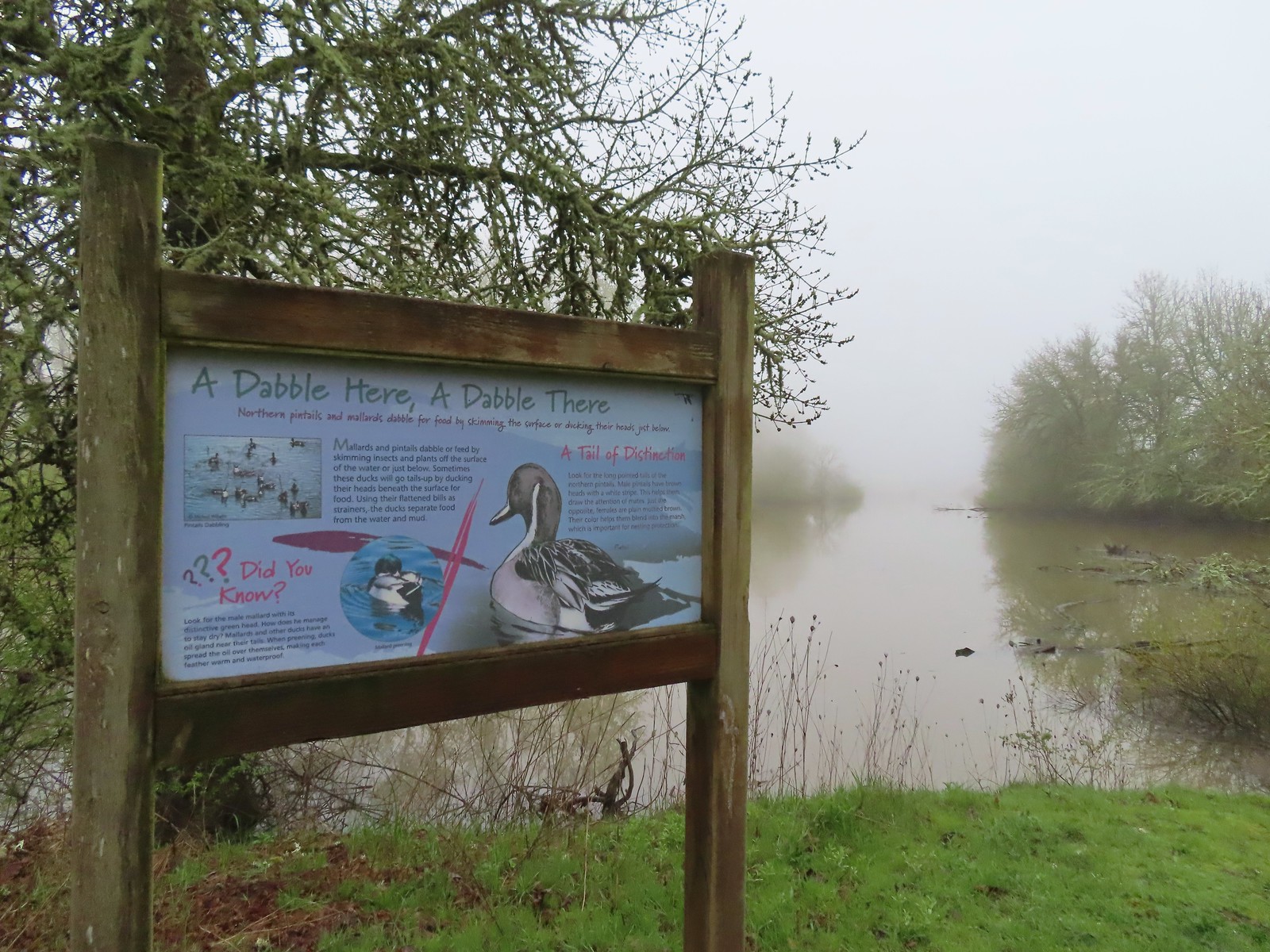 The oxbow lake.
 Lots of water in the lake.
 Woodpecker hiding in the trees.
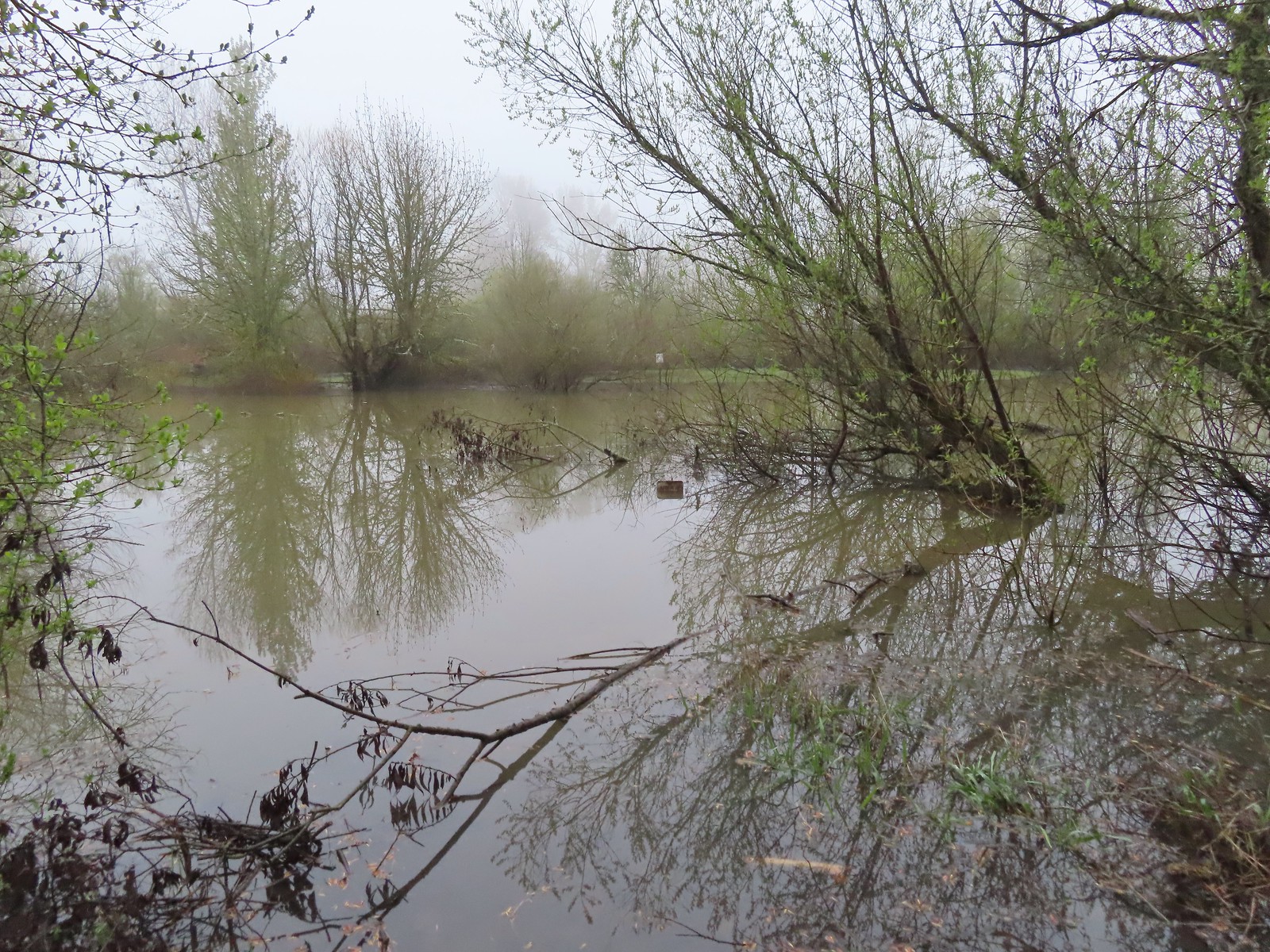 Note the sign on the far side vs the closer sign barely sticking up out of the water.
 Oregon grape
 Red flowering currant
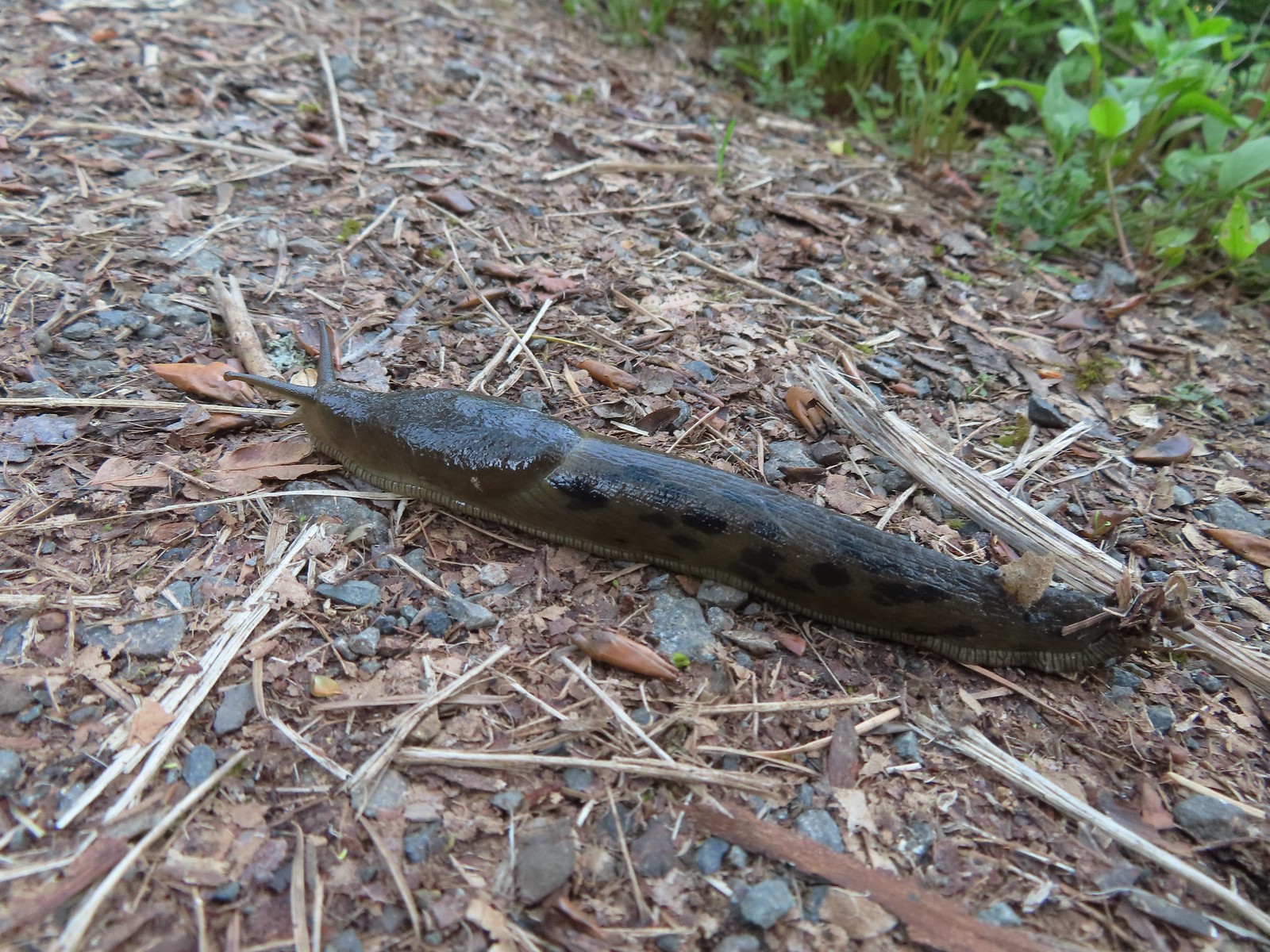
 Slug
Slug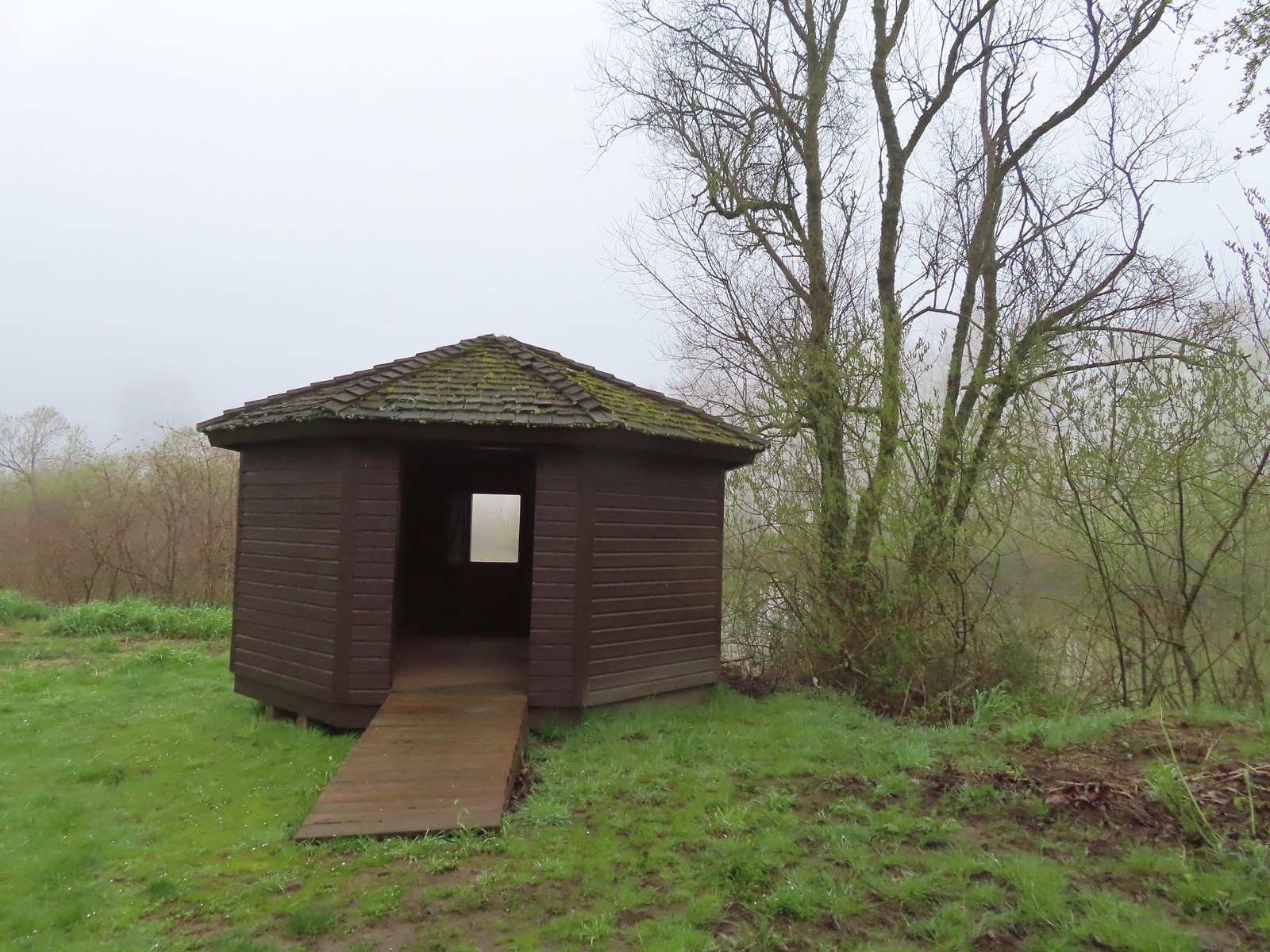 The observation blind.
 Goose
Goose Spotted towhee
 Mallard drake
 The Blue Heron Trail followed the boarder of the refuge and some private farmland.
 Blue Heron Trail to the left and Turtle Trail on the right.

 American widgeon


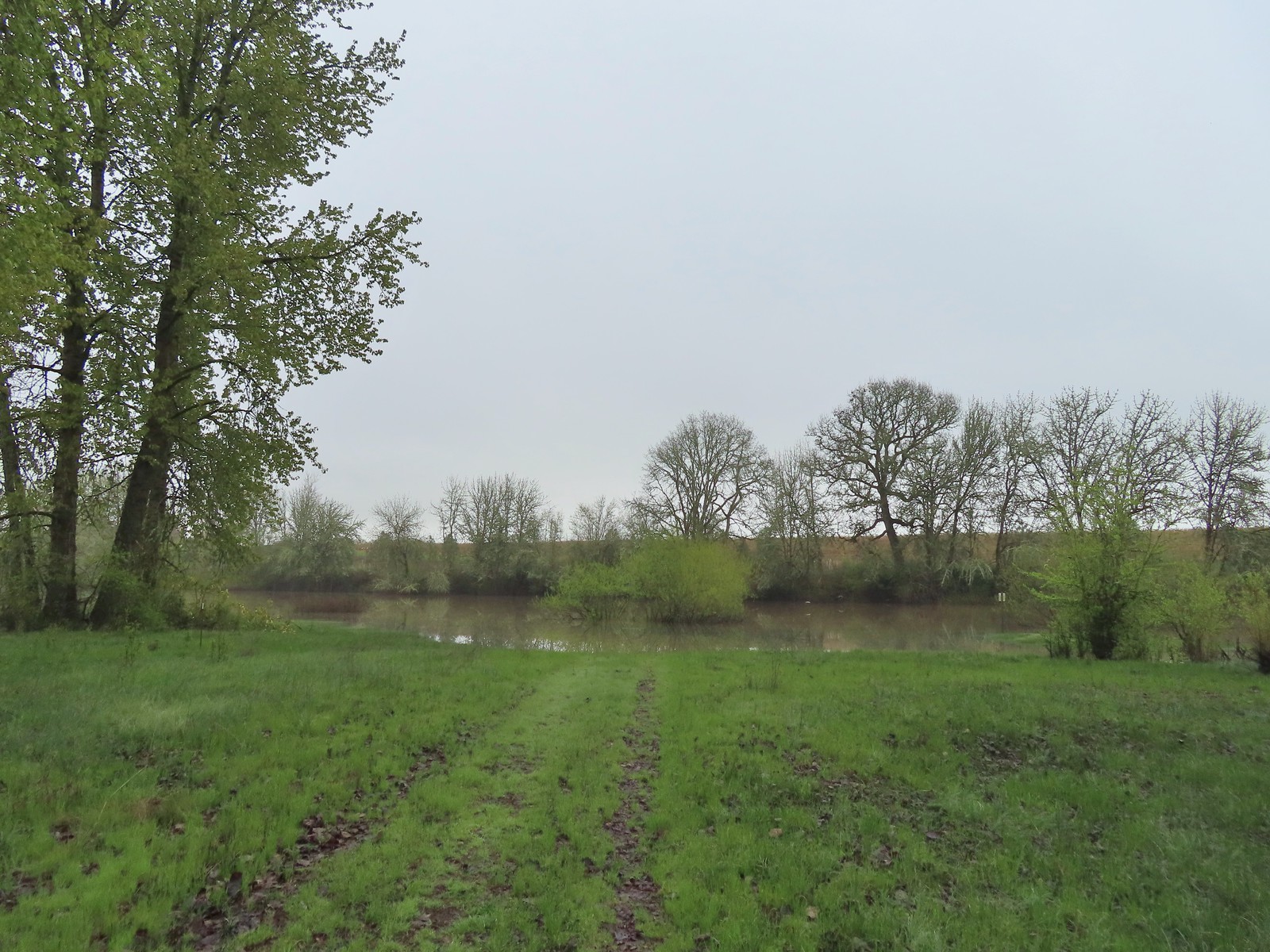
 Another sign out in the middle of the water.
 The start of a possible loop using the Blue Heron Trail. The fainter track on the right heading downhill was flooded just 100 feet or so away.
 The flooded area where the loop would end.
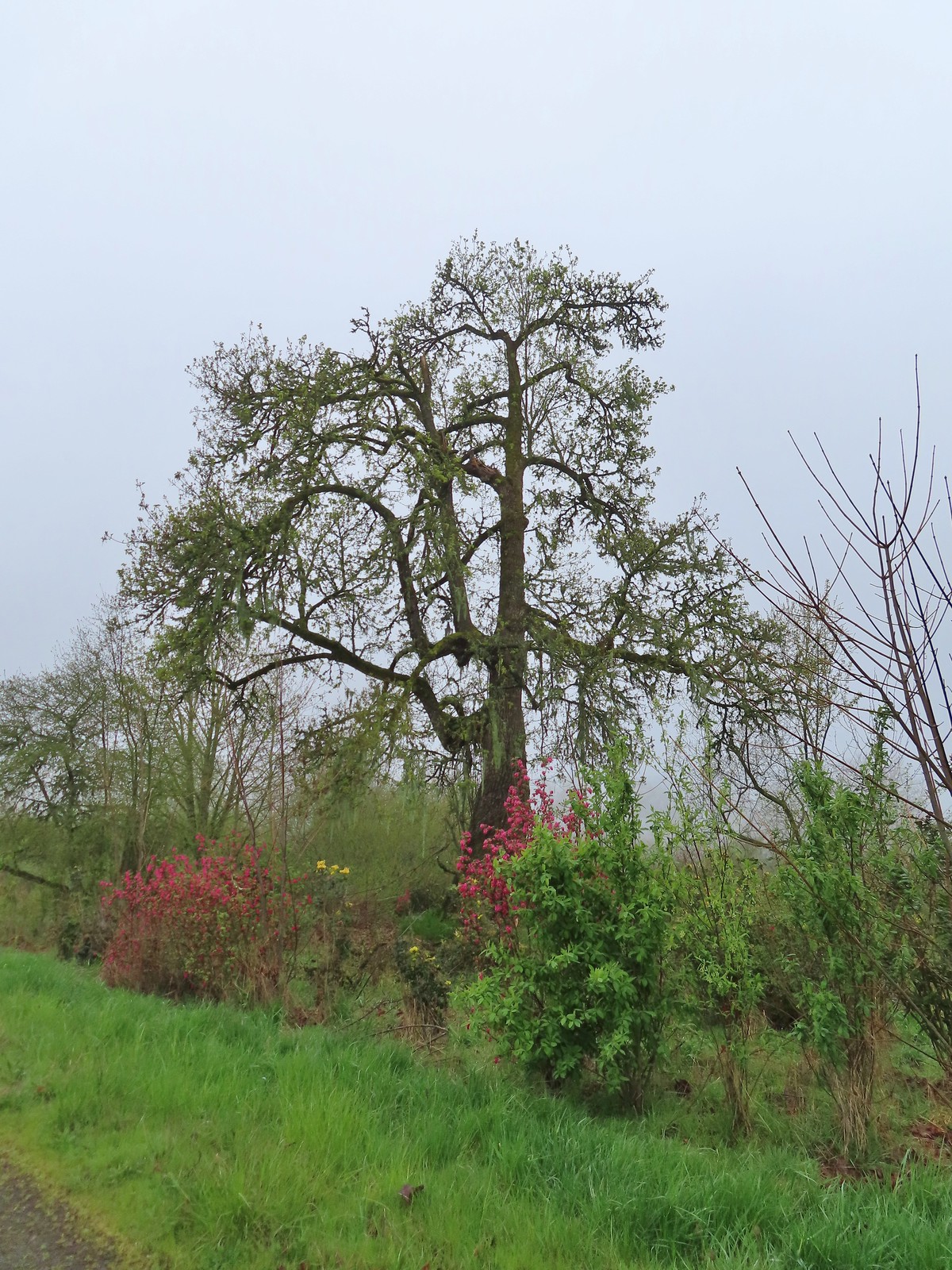 Cottonwood with red flowering currant, Oregon grape, and Indian plum blooming in front.
 We were able to keep our feet dry on the gravel surfaces.
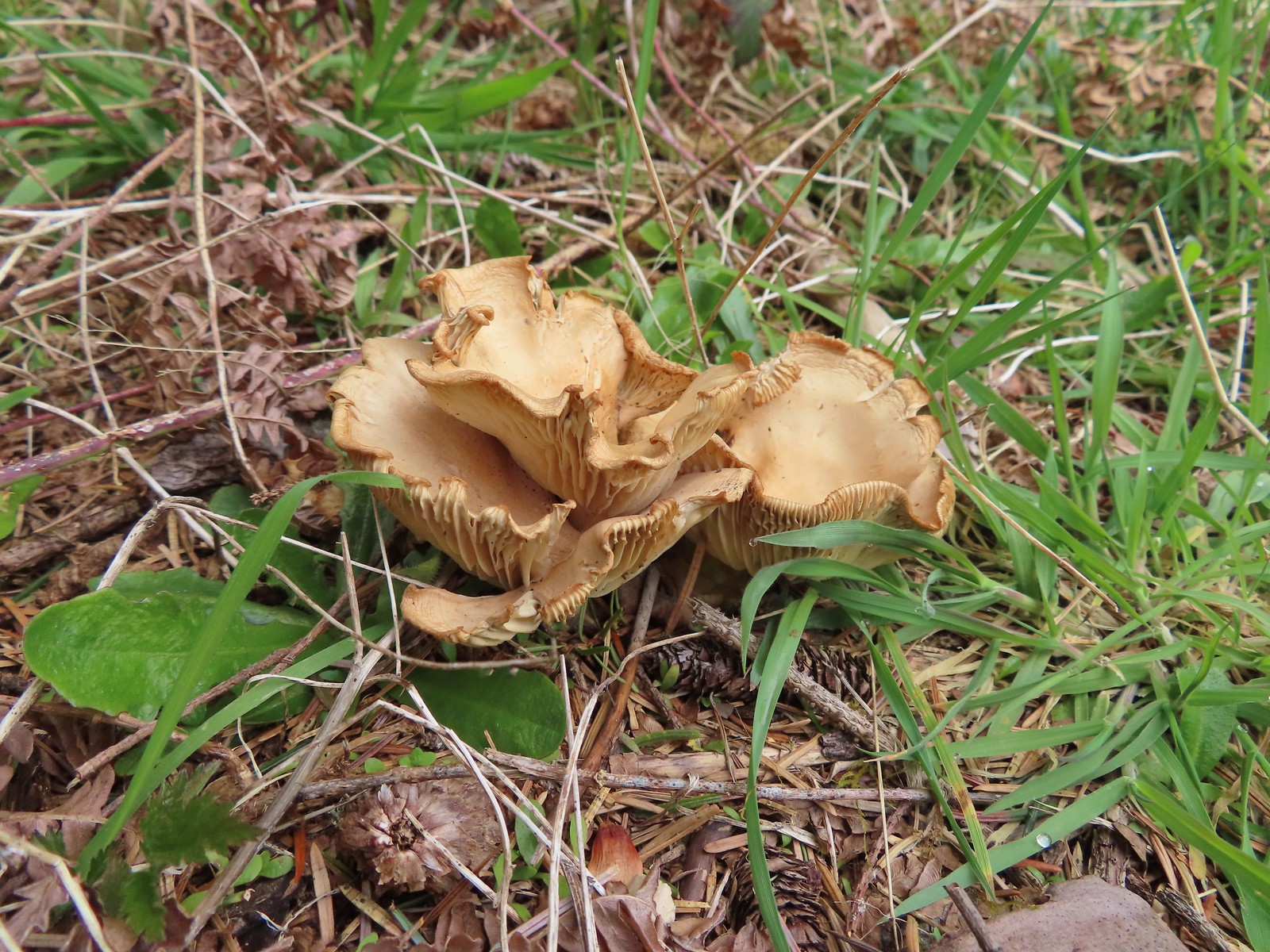
 Mushroom
 Rufous Hummingbird
 Hawk preparing for takeoff.
 We had started to go past the turn for the Blue Heron Trail so this photo is as we headed back toward the turn. We came from the right-hand side so the path straight ahead would have been the “sharp right”.
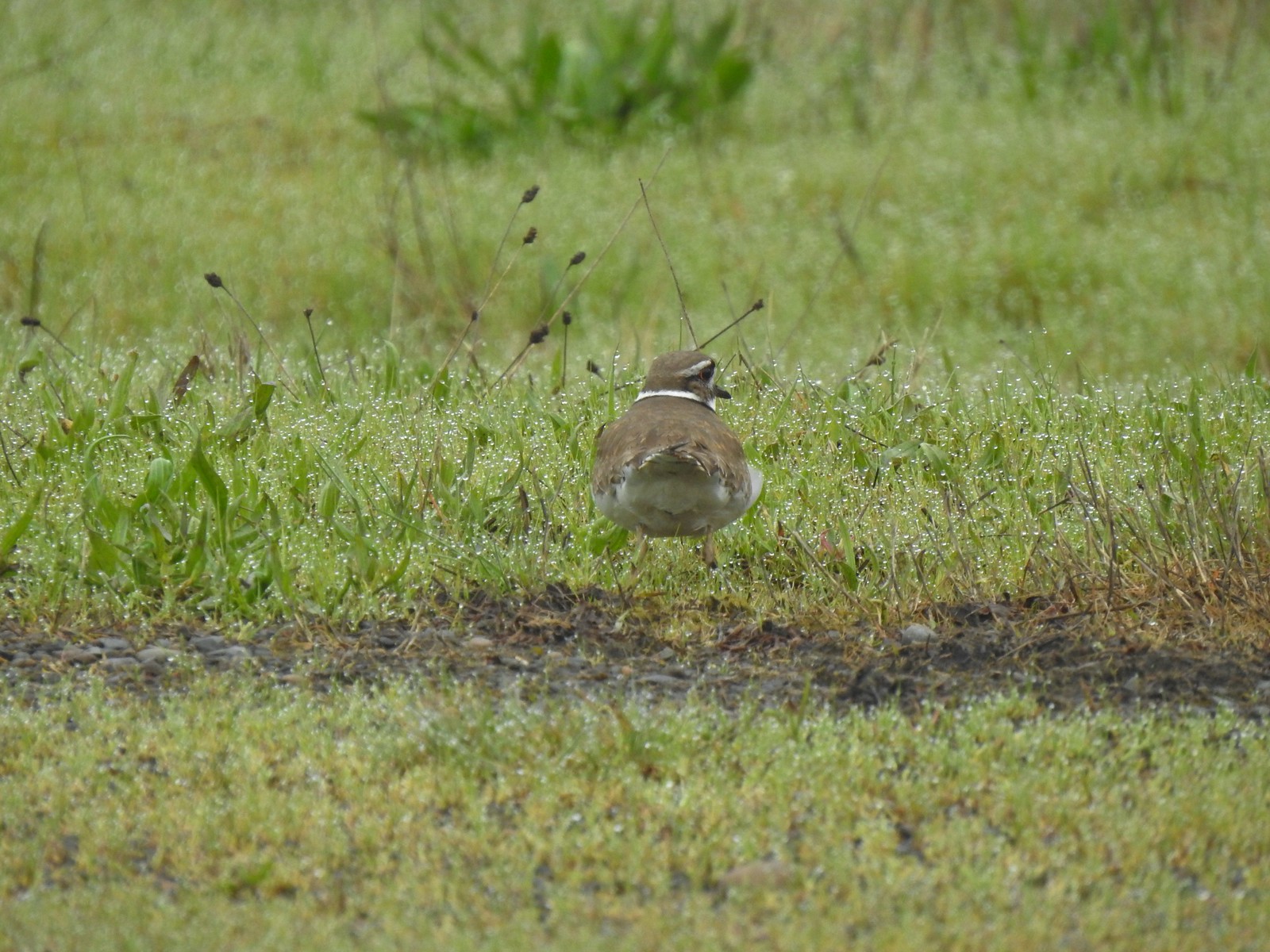 Killdeer
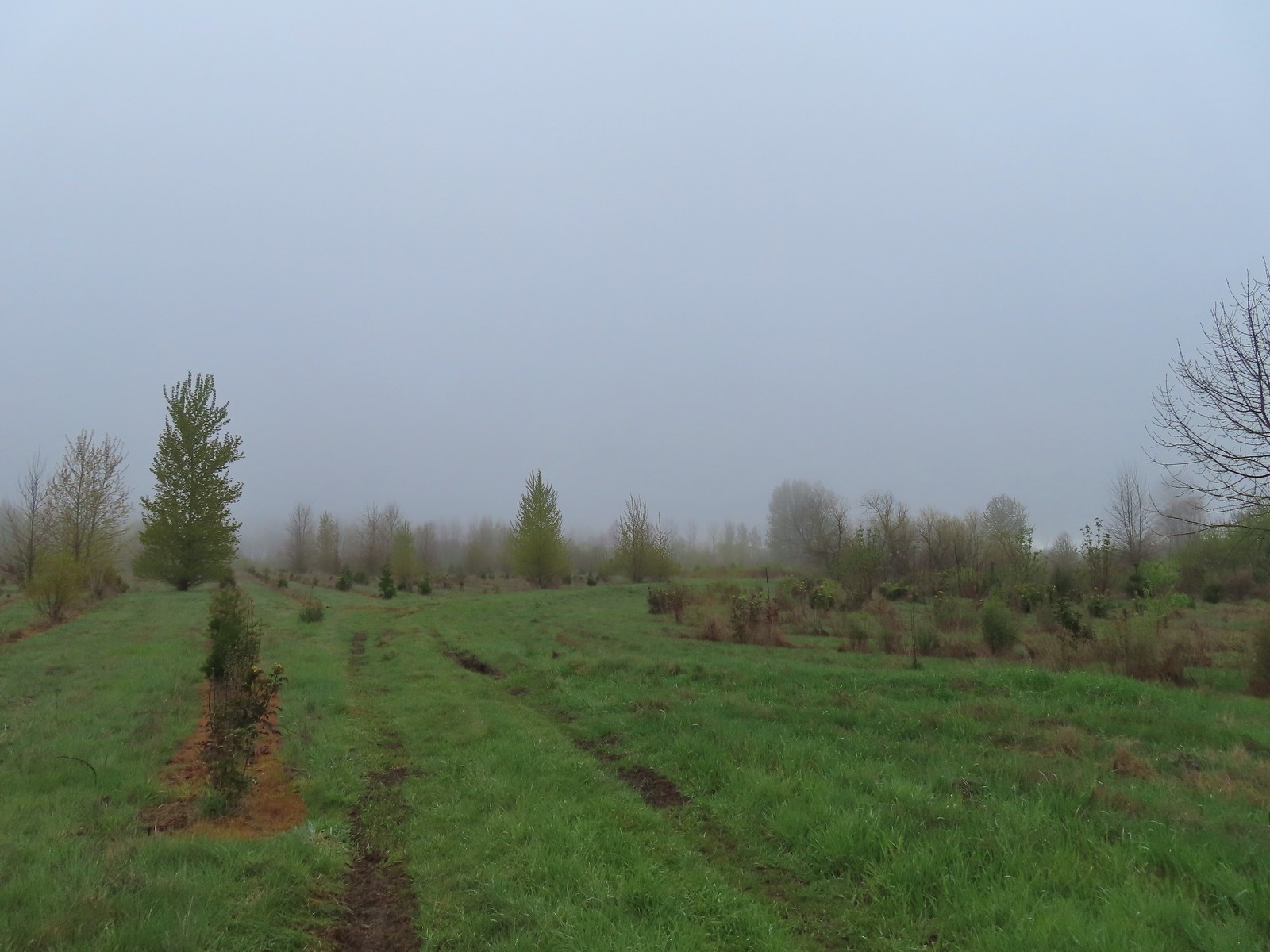 Our turn around spot. The trail was beginning to bend back to the East here.
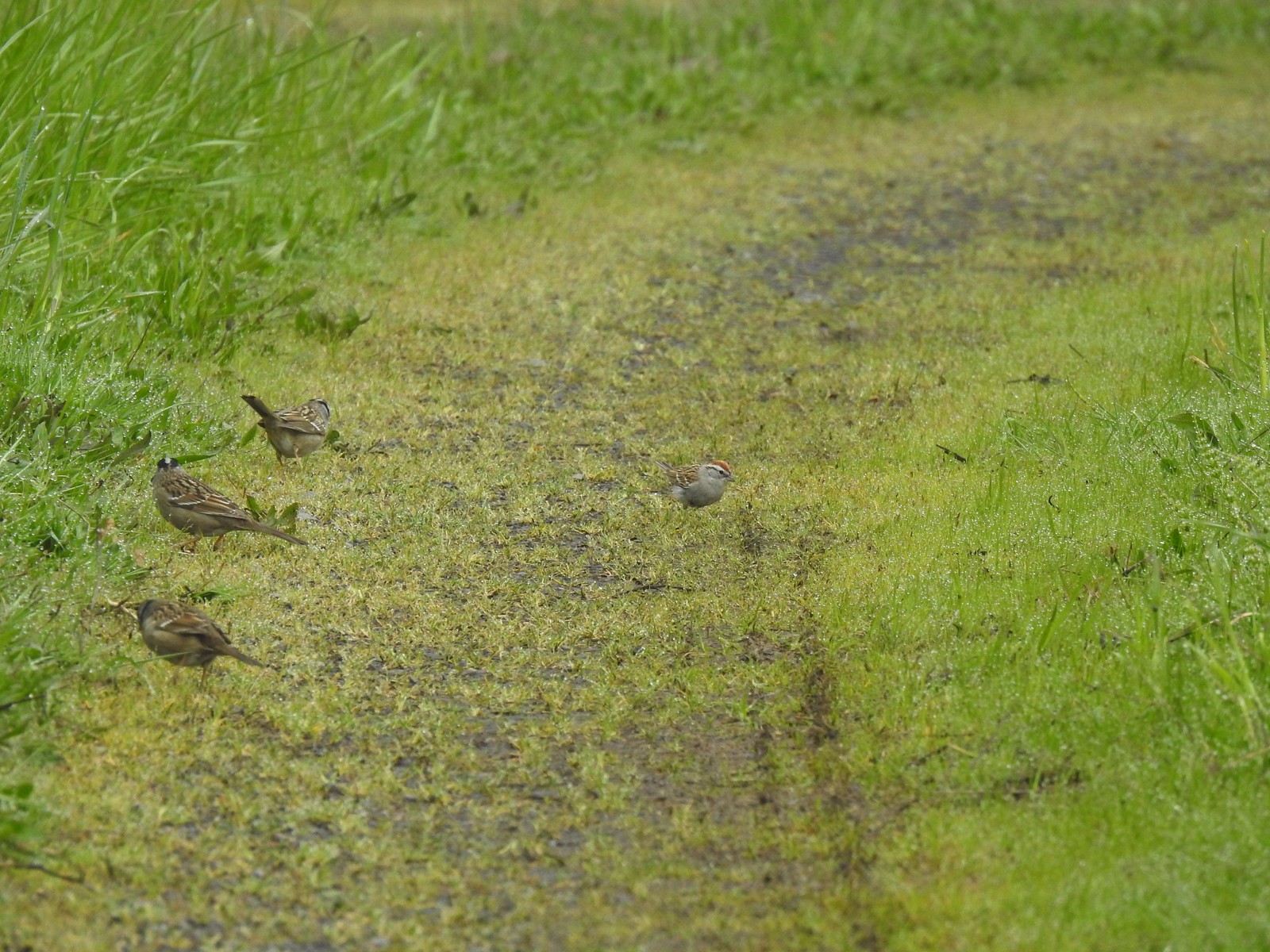 A chipping sparrow among the golden-crowned sparrows.
 On the Snag Boat Bend Loop
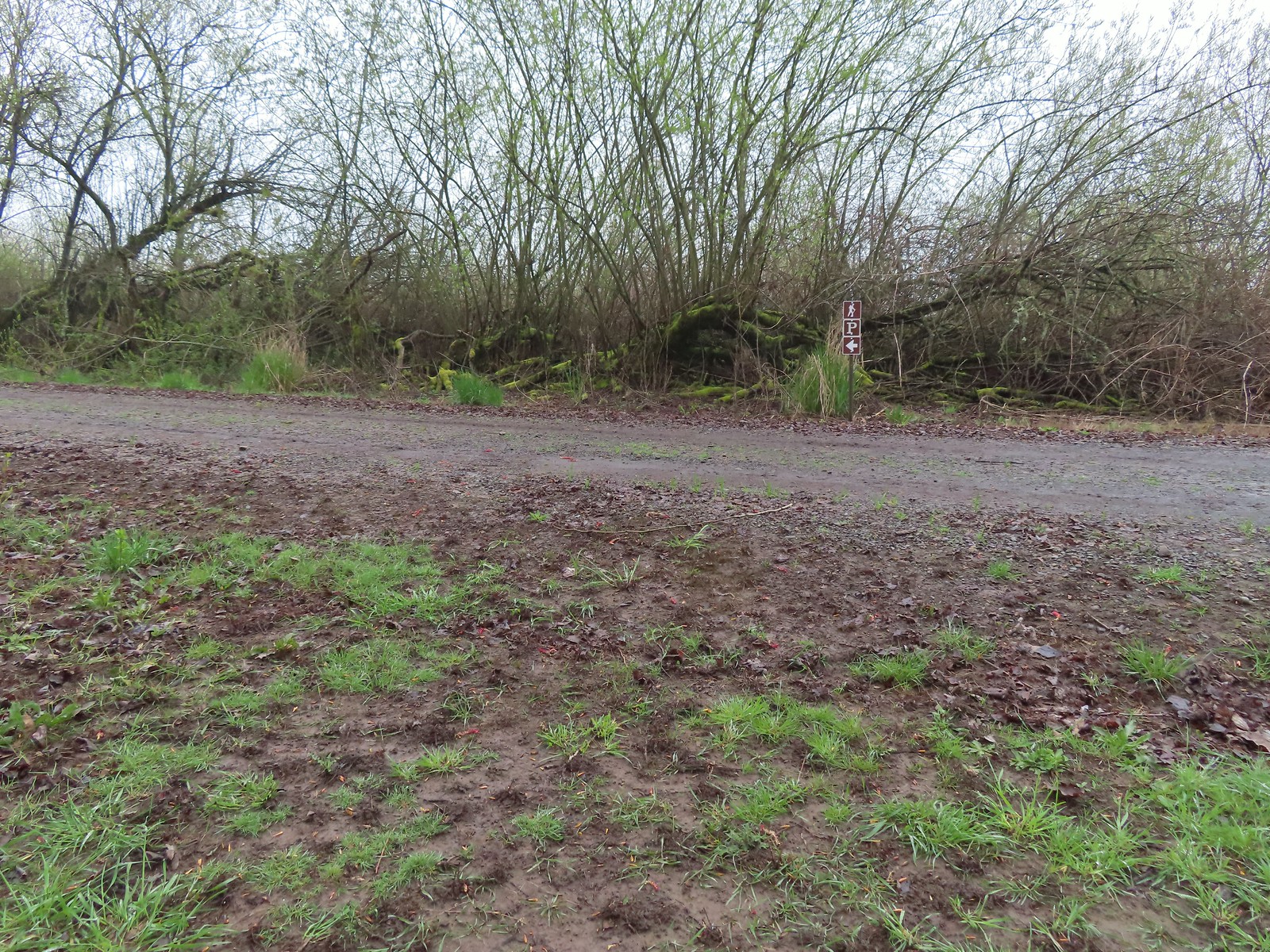 The trail turned left to follow this gravel roadbed for the final third of a mile.
 The gate in the distance is at the trailhead.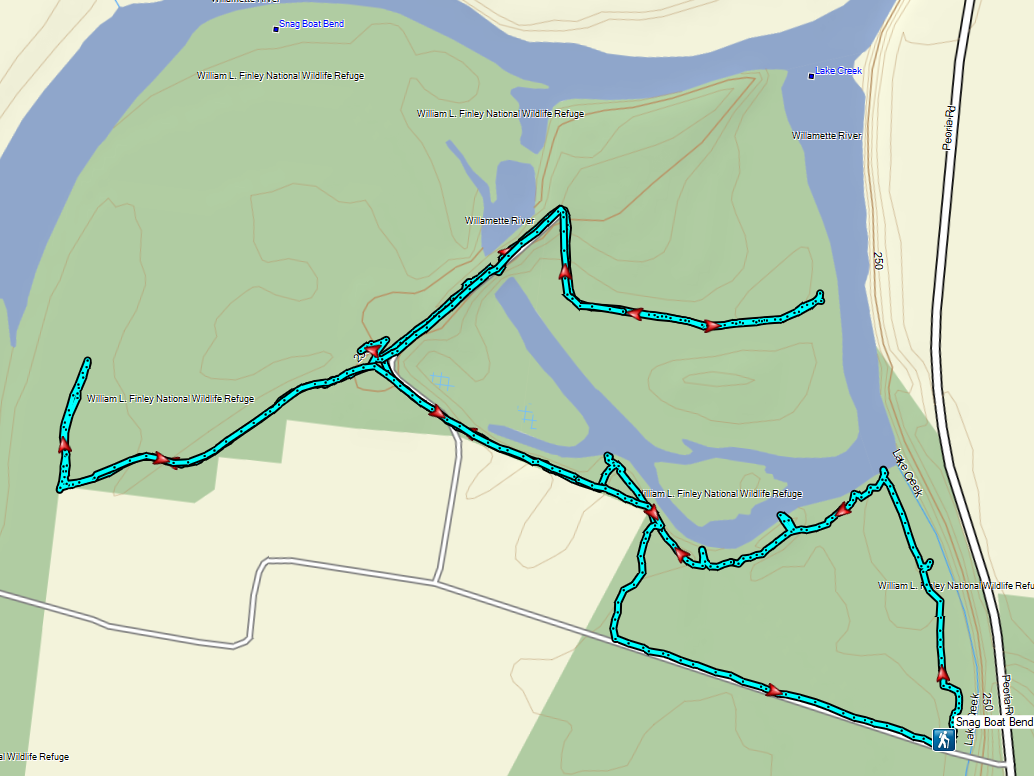
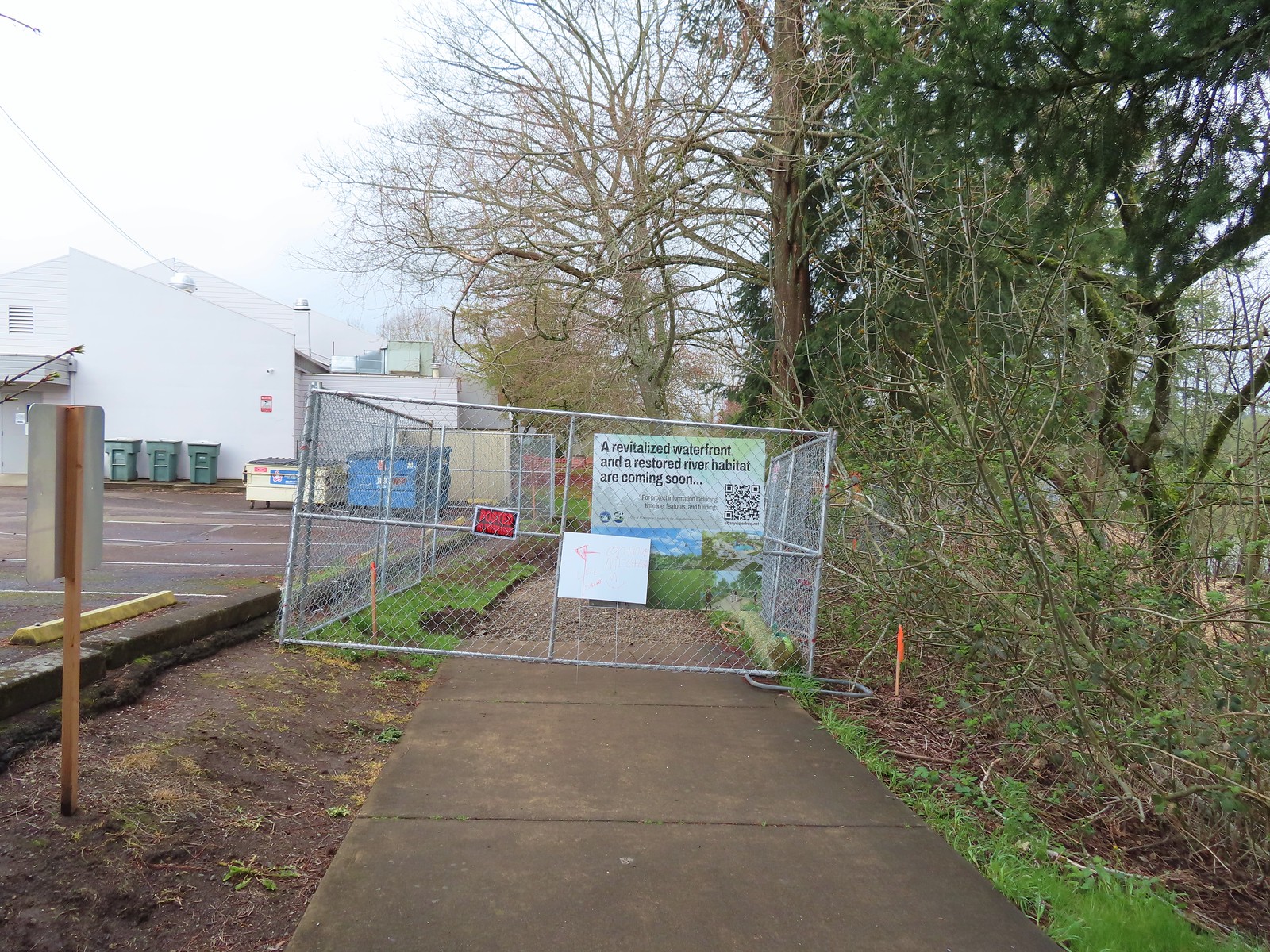 We wound up parking East of the Riverfront Community Center and hoping on the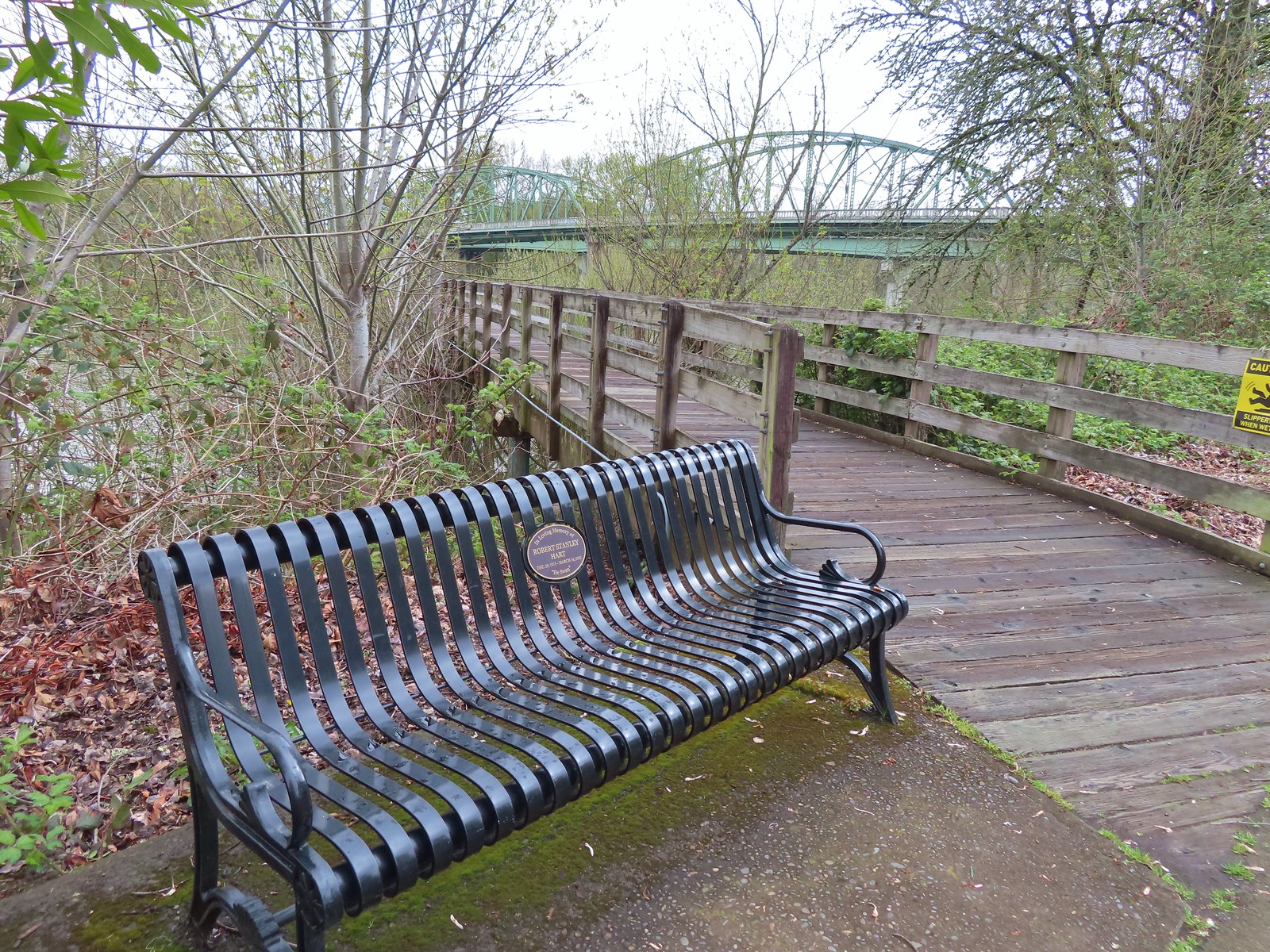
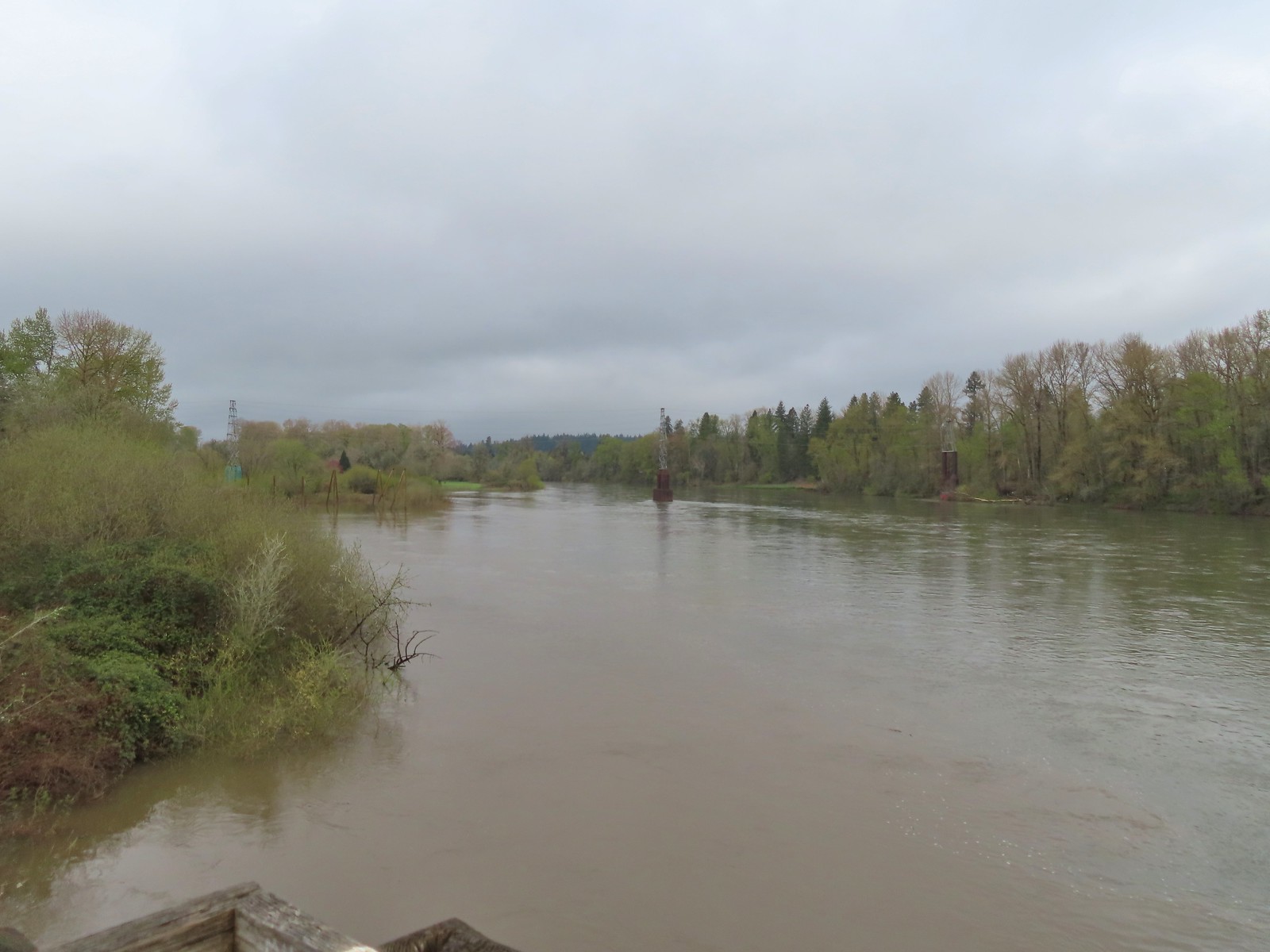 The confluence ahead to the left.
 Highway 20 passing over the Willamette to the left. Fun fact about U.S. Highway 20 – It runs from Newport, OR to Boston, MA and is the longest road in the USA according to the Federal Highway Administration. Click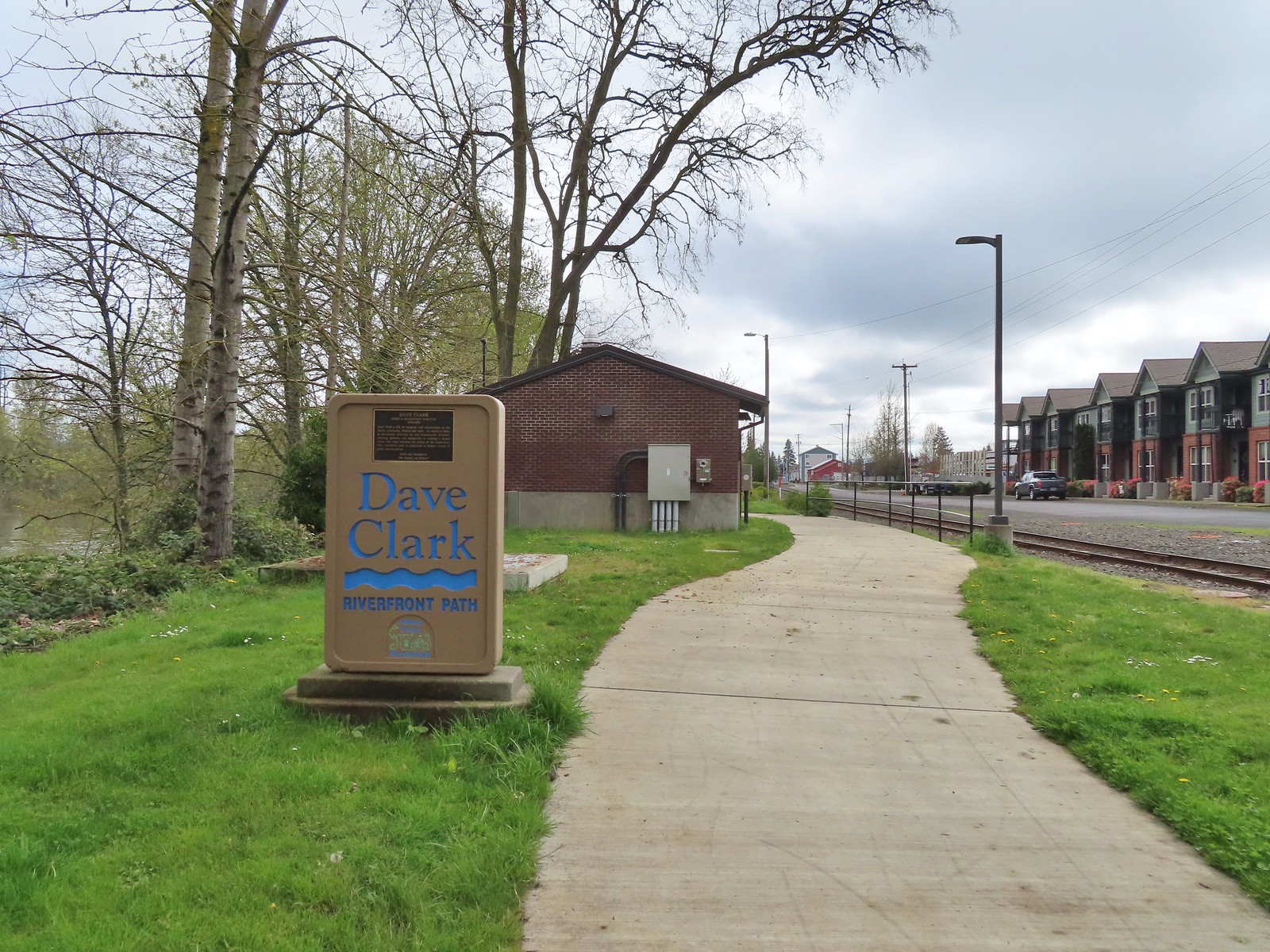
 Orange crowned warbler. One of many small birds we saw along this trail.
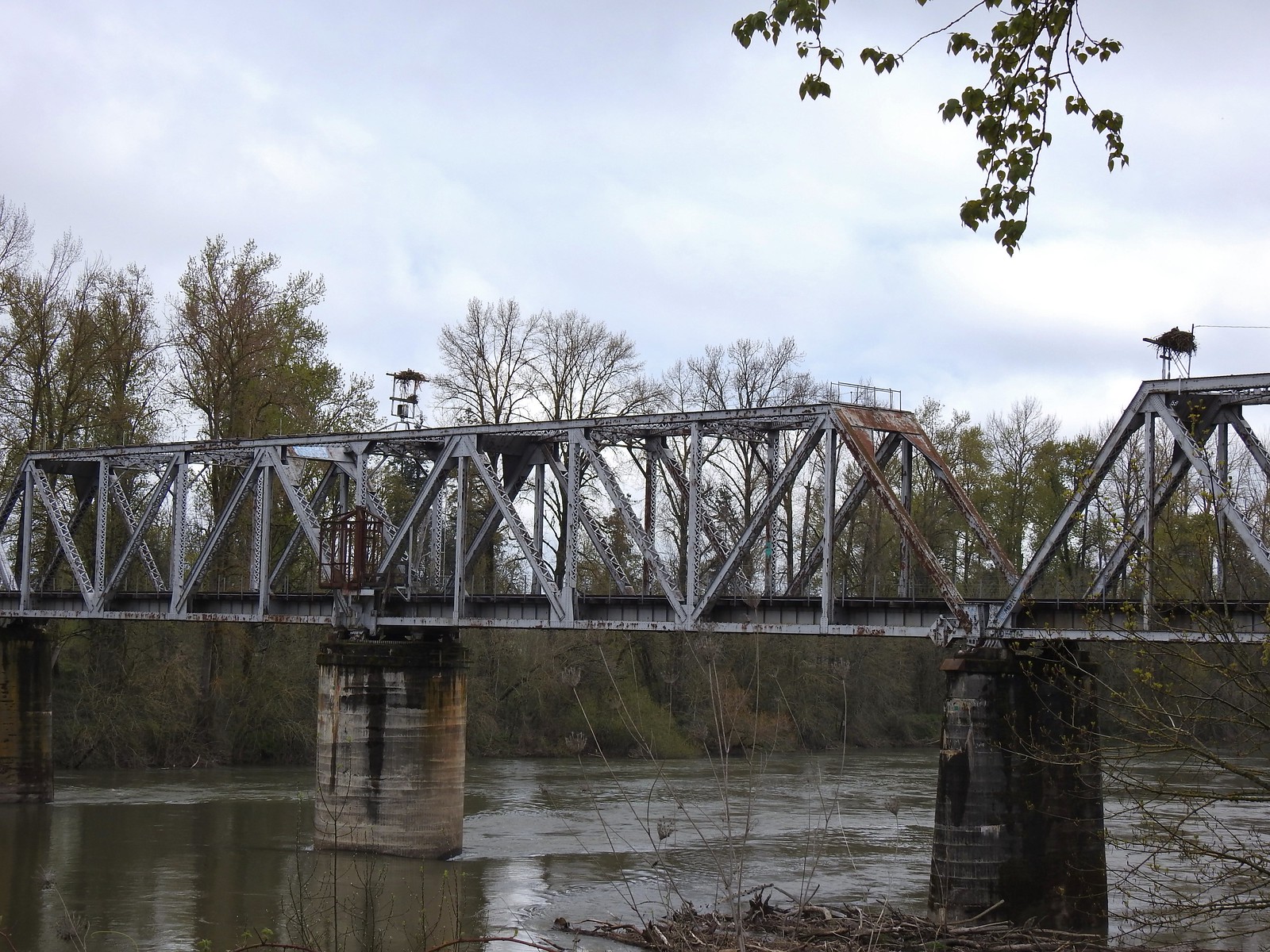 We thought it was a little odd to see two occupied nests atop the railroad so close together until we realized that the occupants weren’t both birds of prey.
 Canada geese were using one of the nests.
 Might be the mate looking acting as lookout from the bridge.
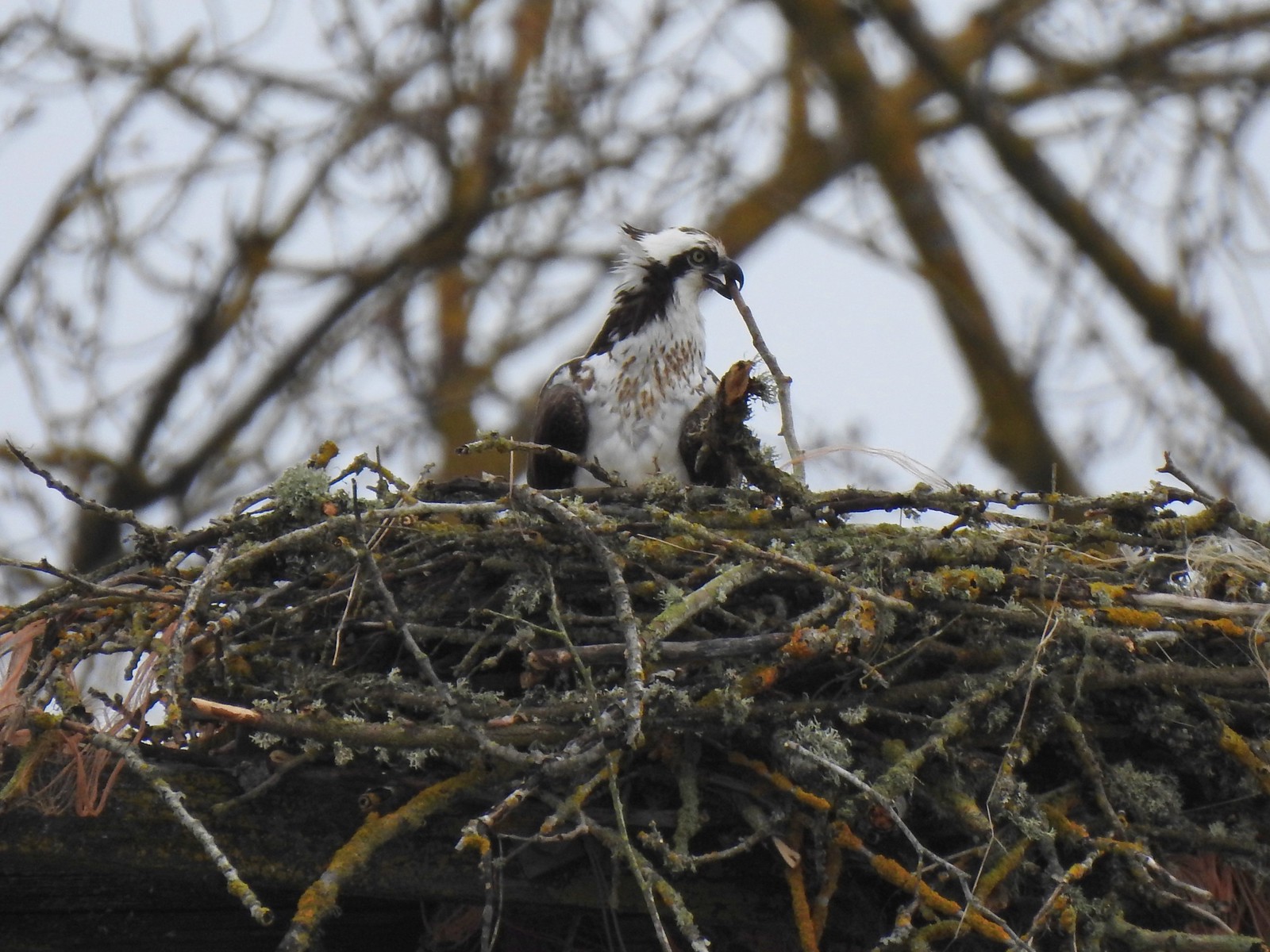 Osprey occupied the other and appeared to be in the process of renovations.
 His bright pink head was more impressive in person.
 The community garden (not pictured) was on our right.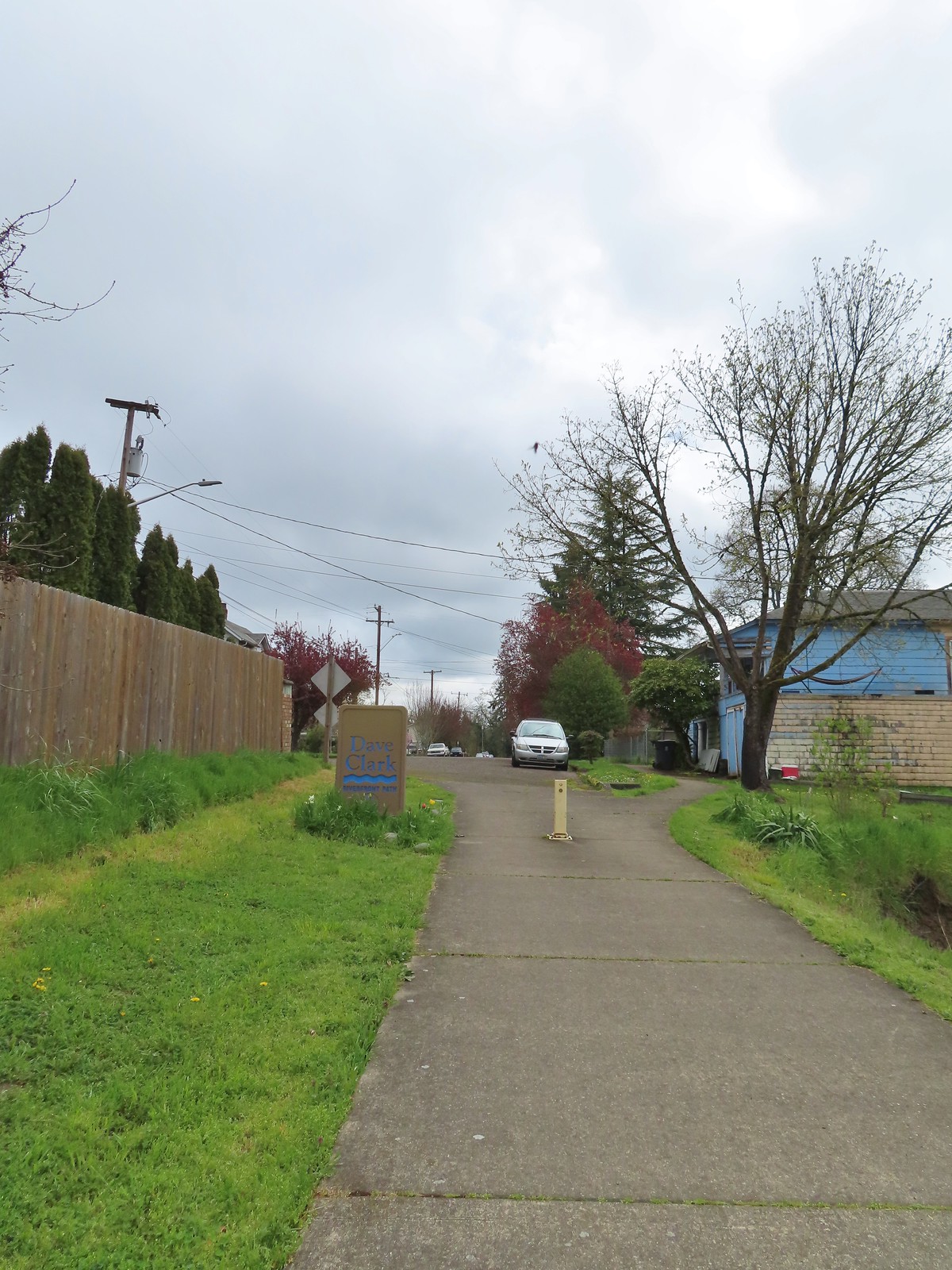
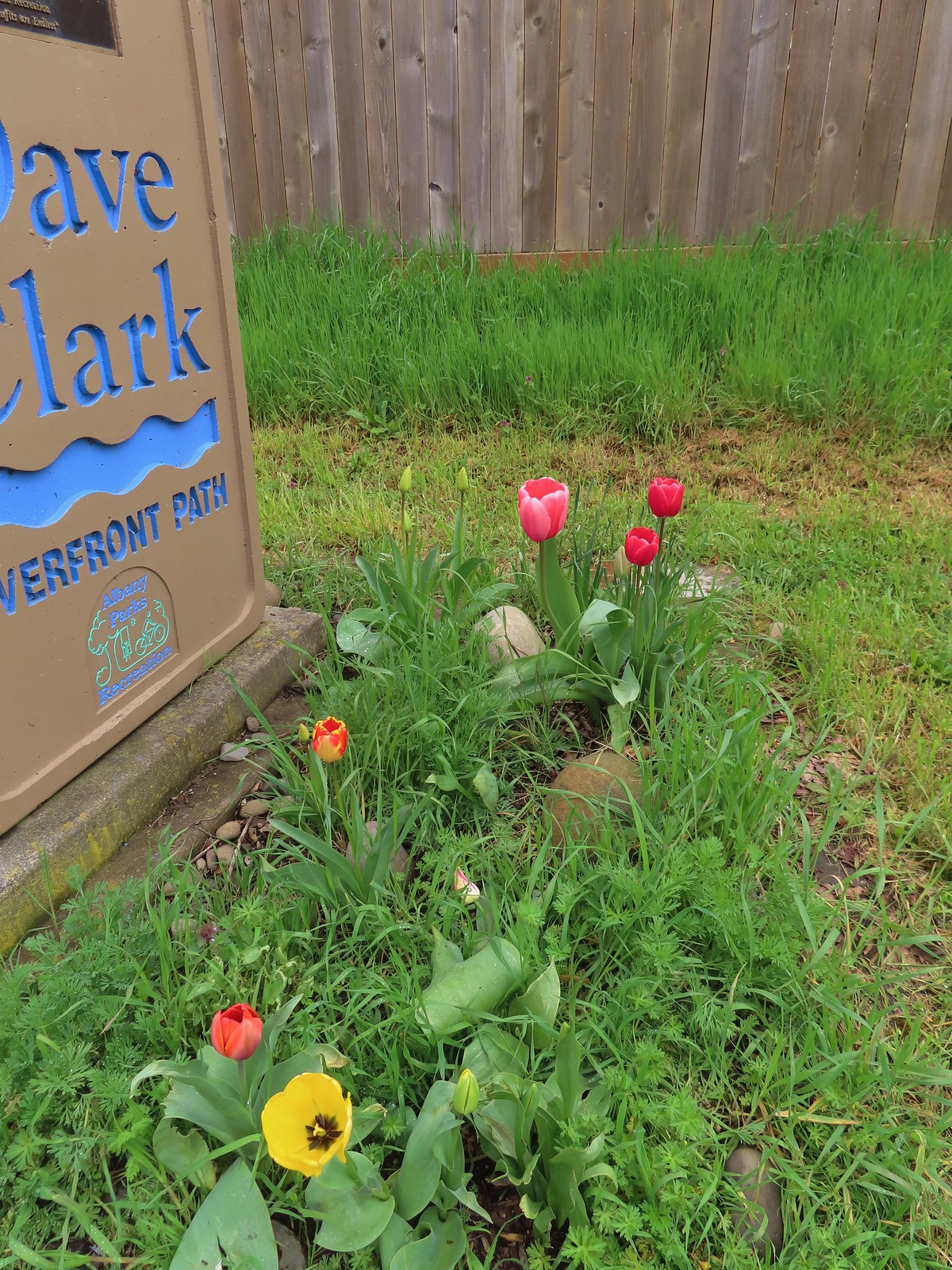 Pretty tulips at the sign.
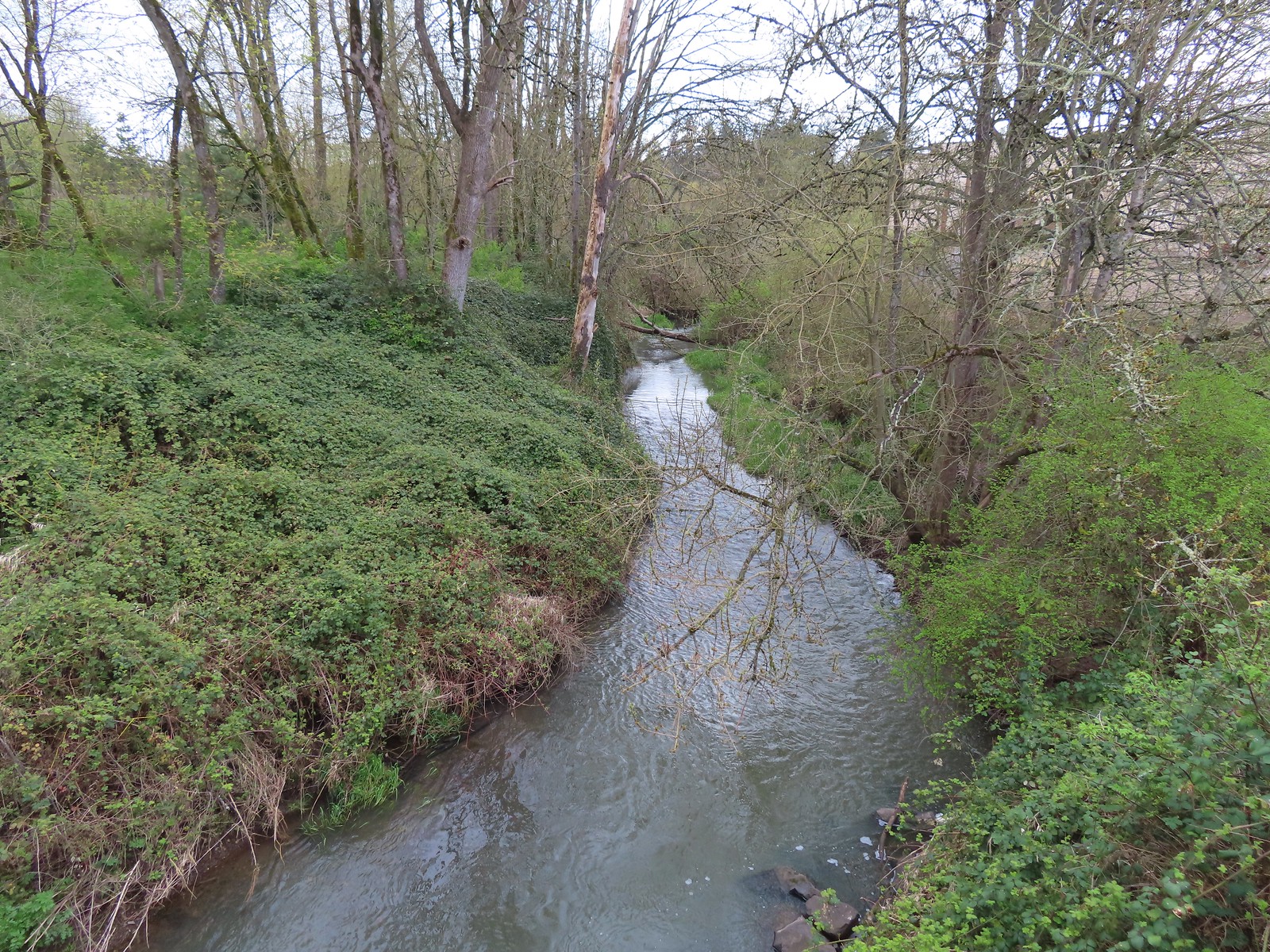
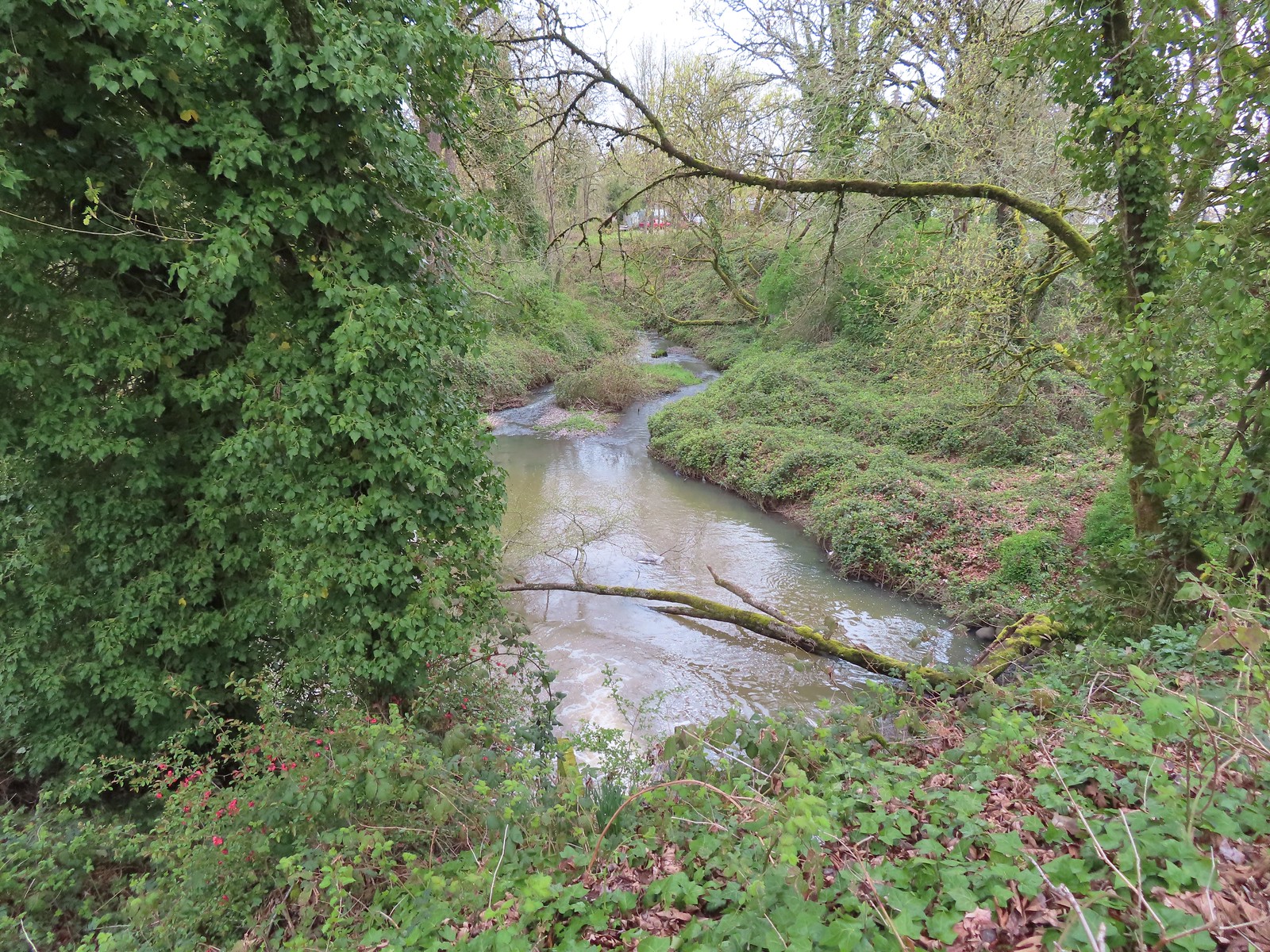 Not a lot to see in the residential neighborhoods but we did cross Pettyjohn Creek along the way.
 Sign for Bowman Park at Geary St.
 Bowman Park on the left and the paved path we took on the right.

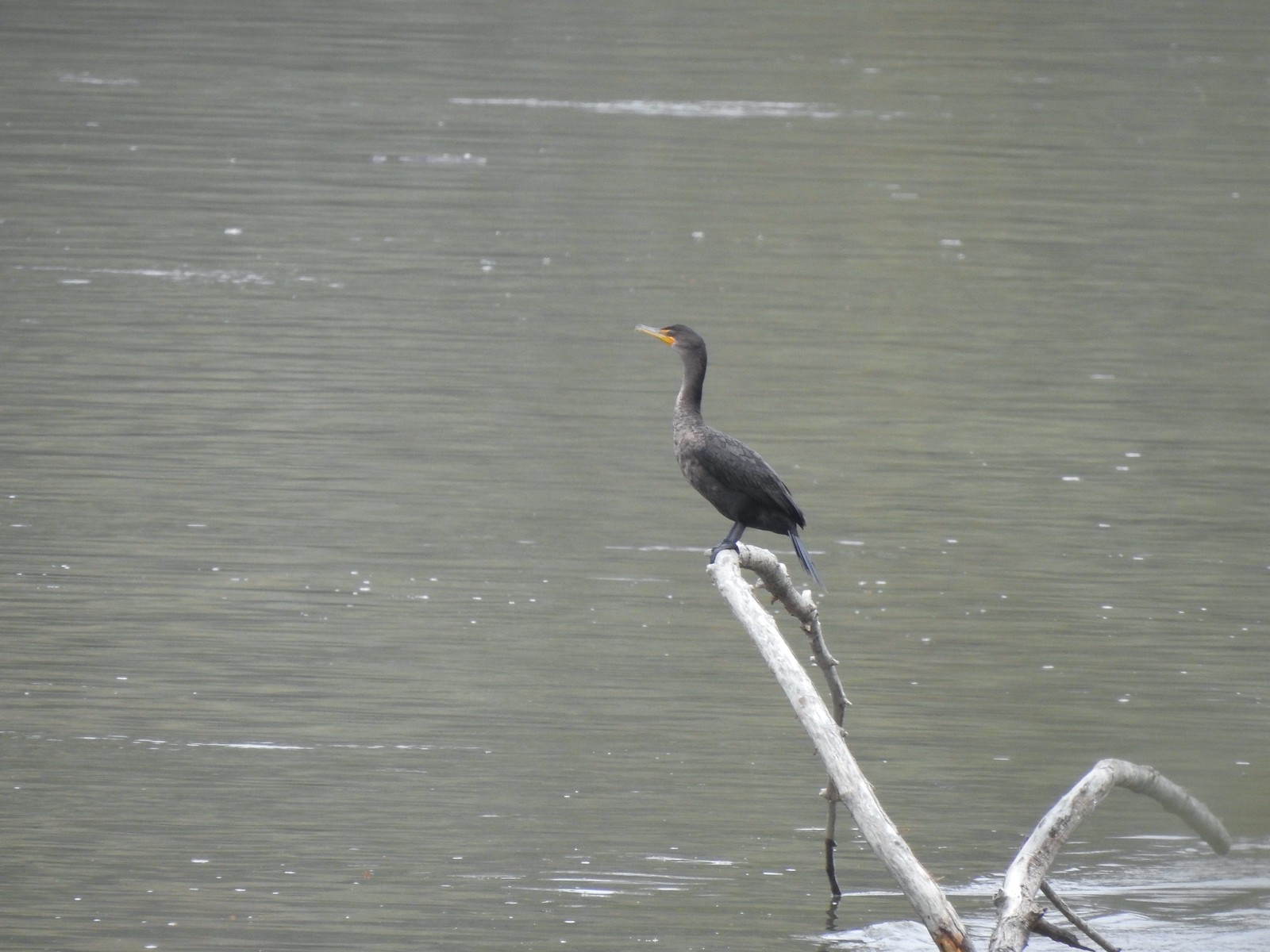 Cormant in the middle of the Willamette.
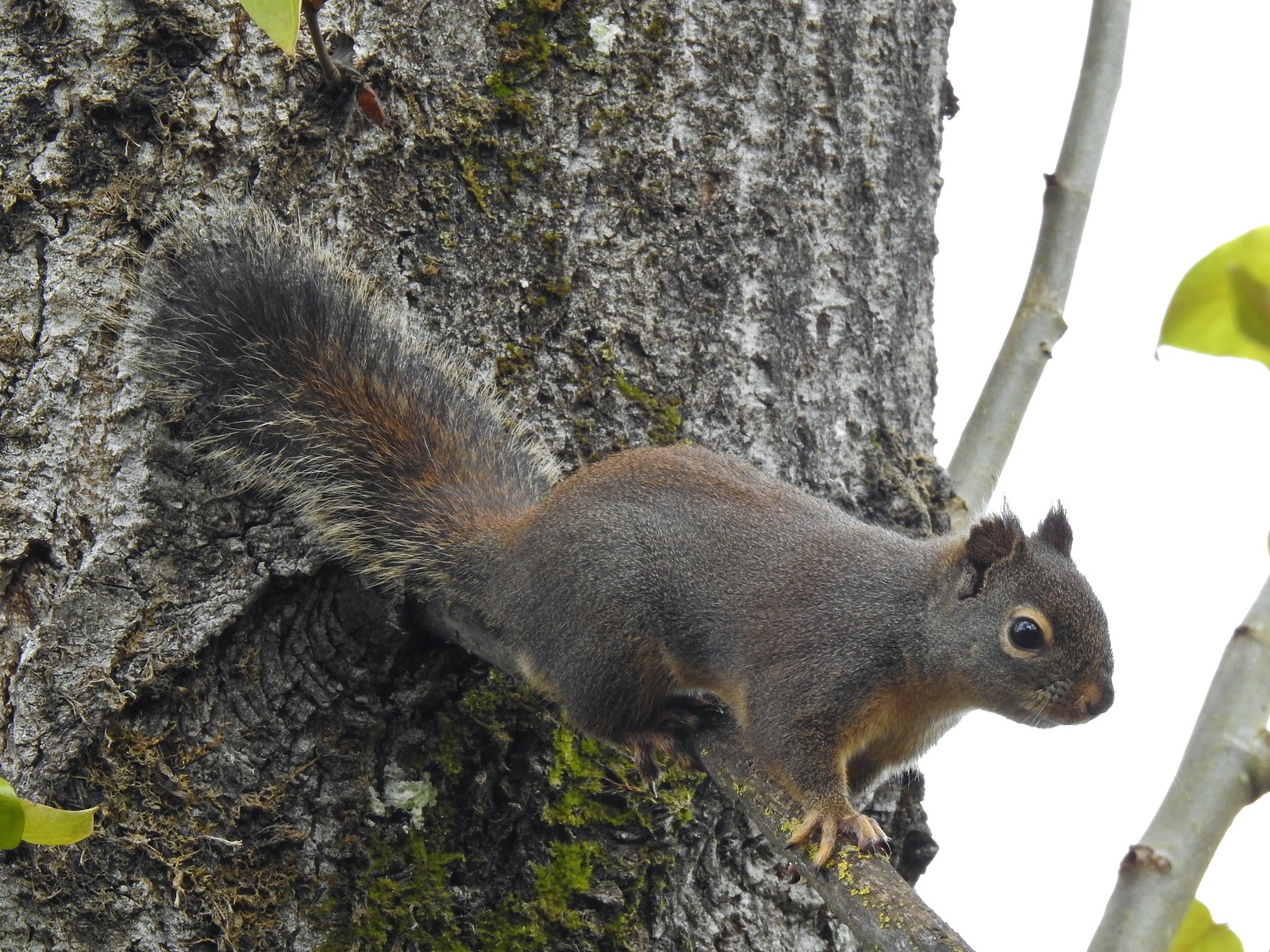 Squirrel
 Seen near a homeless camp which sort of captures the situation. A combination of unaffordable house, drug abuse, and mental illness has created a crisis up and down the West Coast with no simple (or quick) answer.
 We initially mistook all the footprints and bike tracks as a sign that the trail saw good recreational use.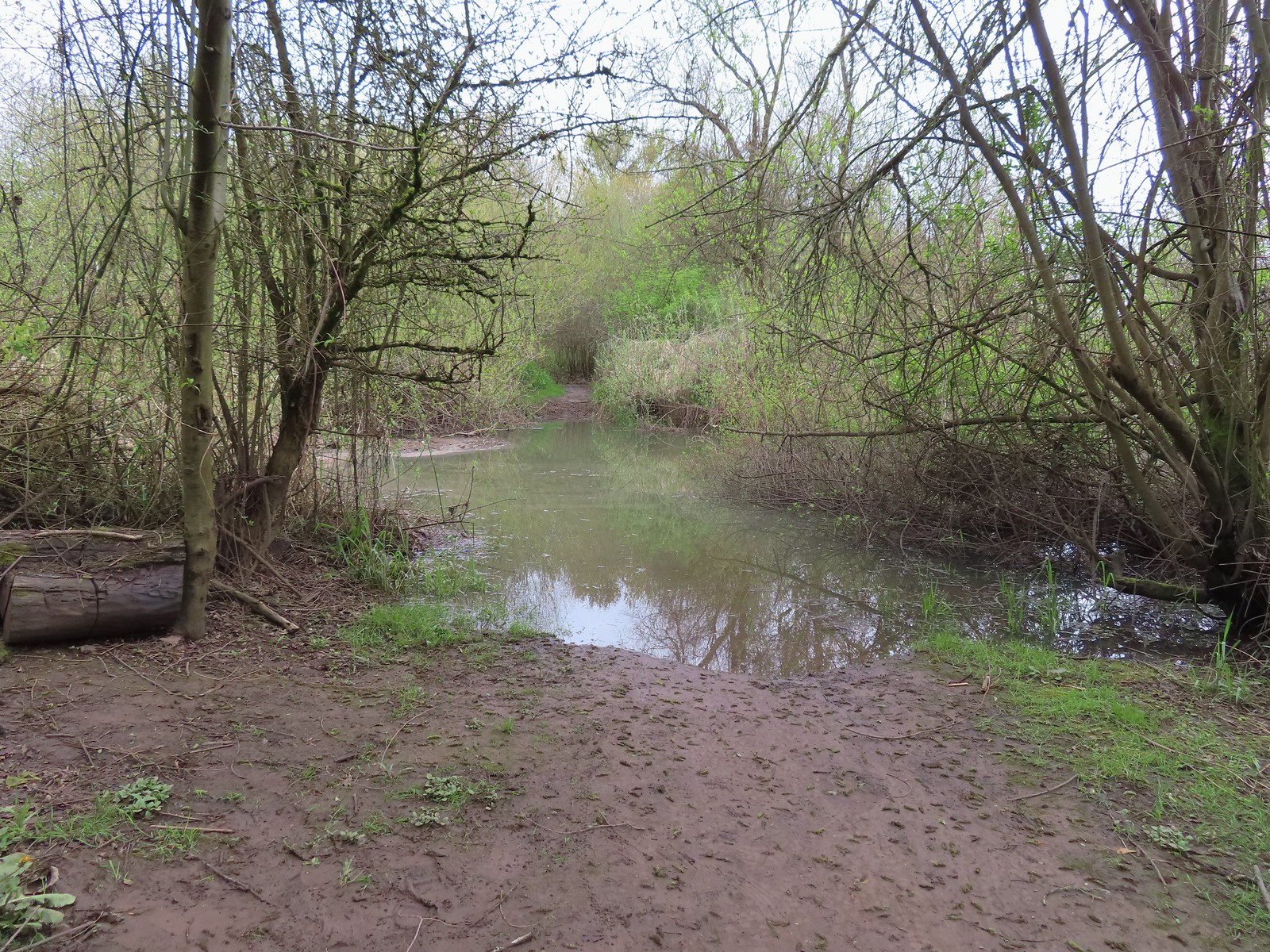




 Buffleheads
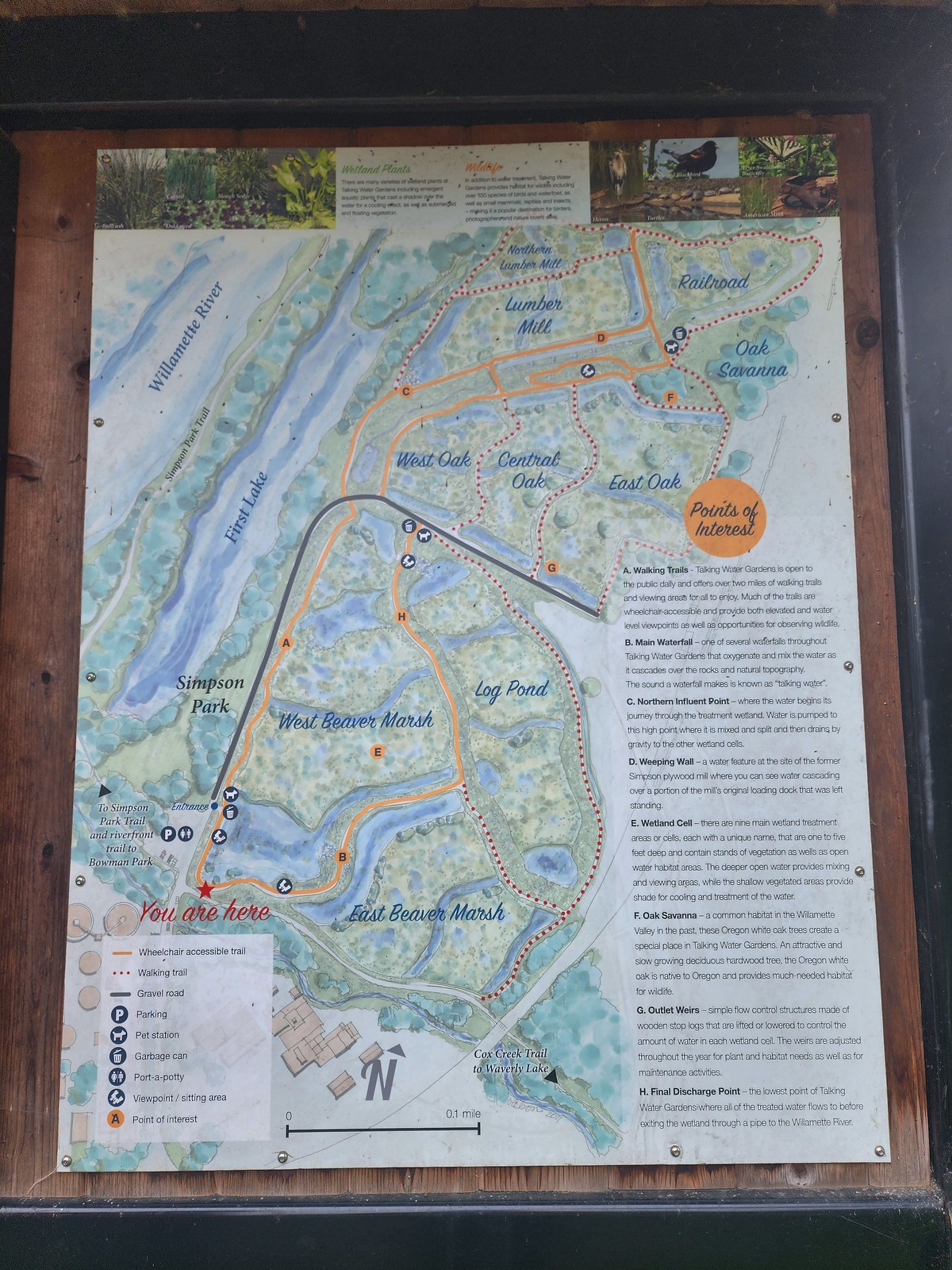 We decided to loop around the West Beaver Marsh and Central Oak areas before heading back.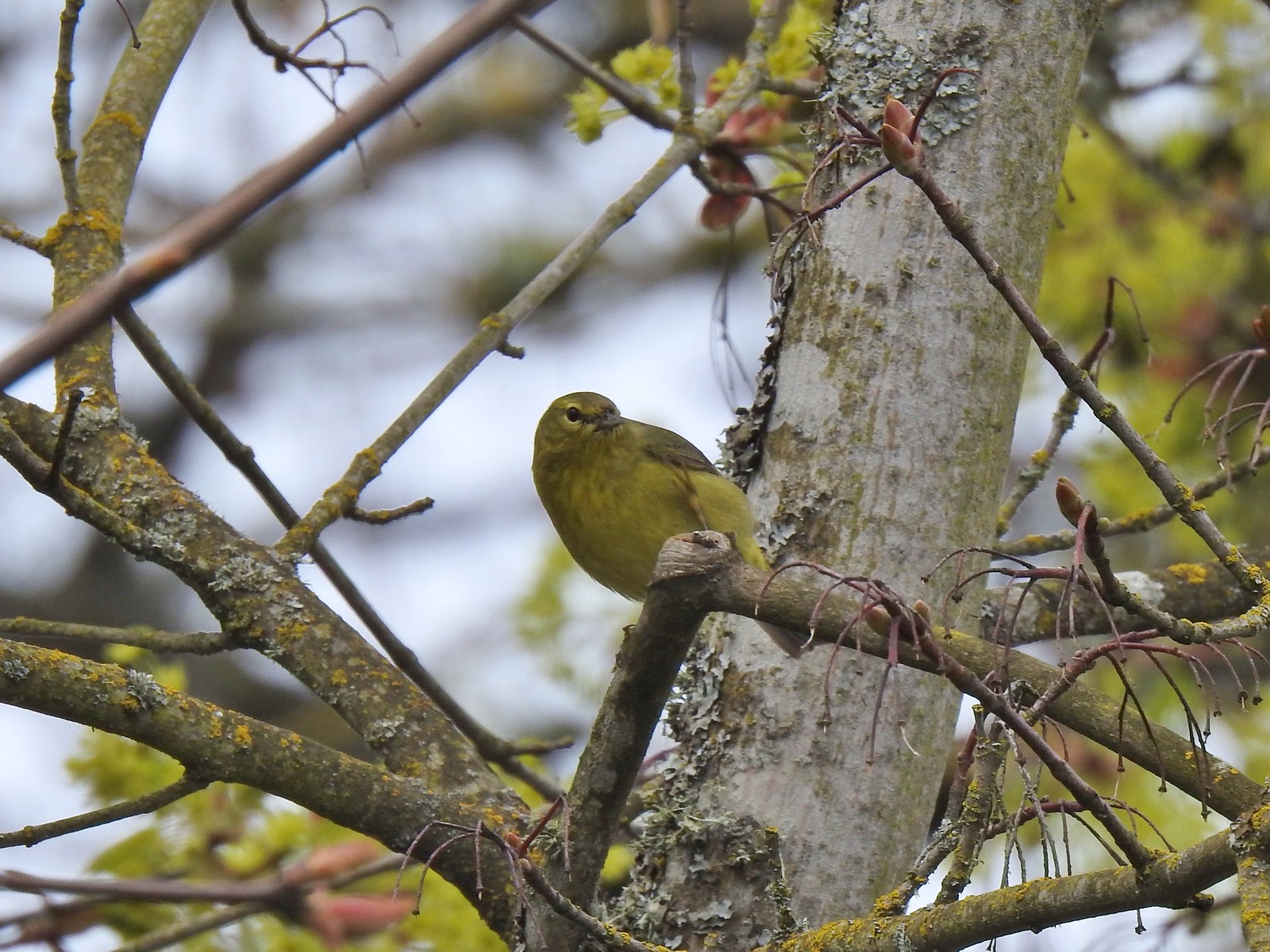
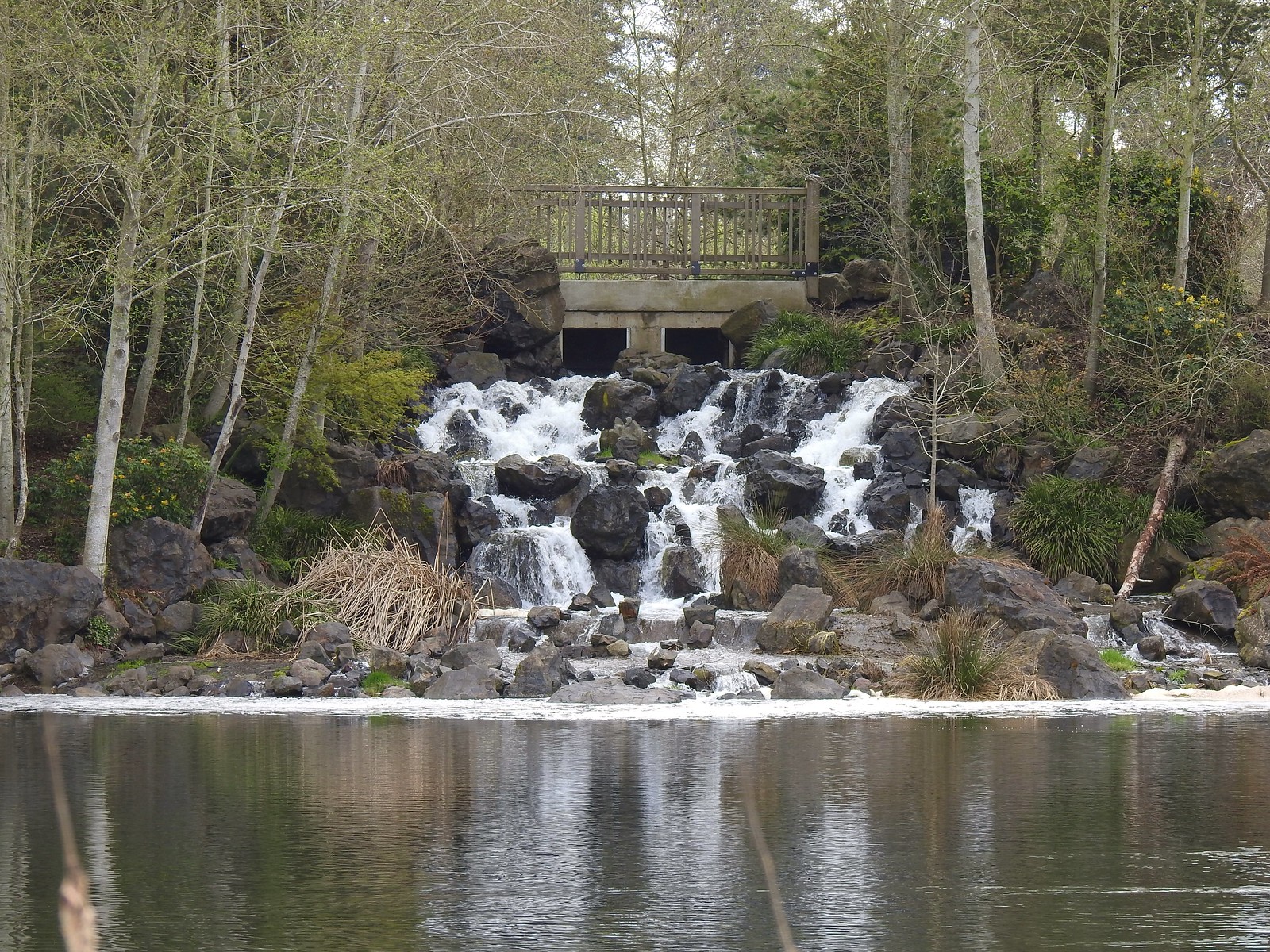
 View from above the waterfall.
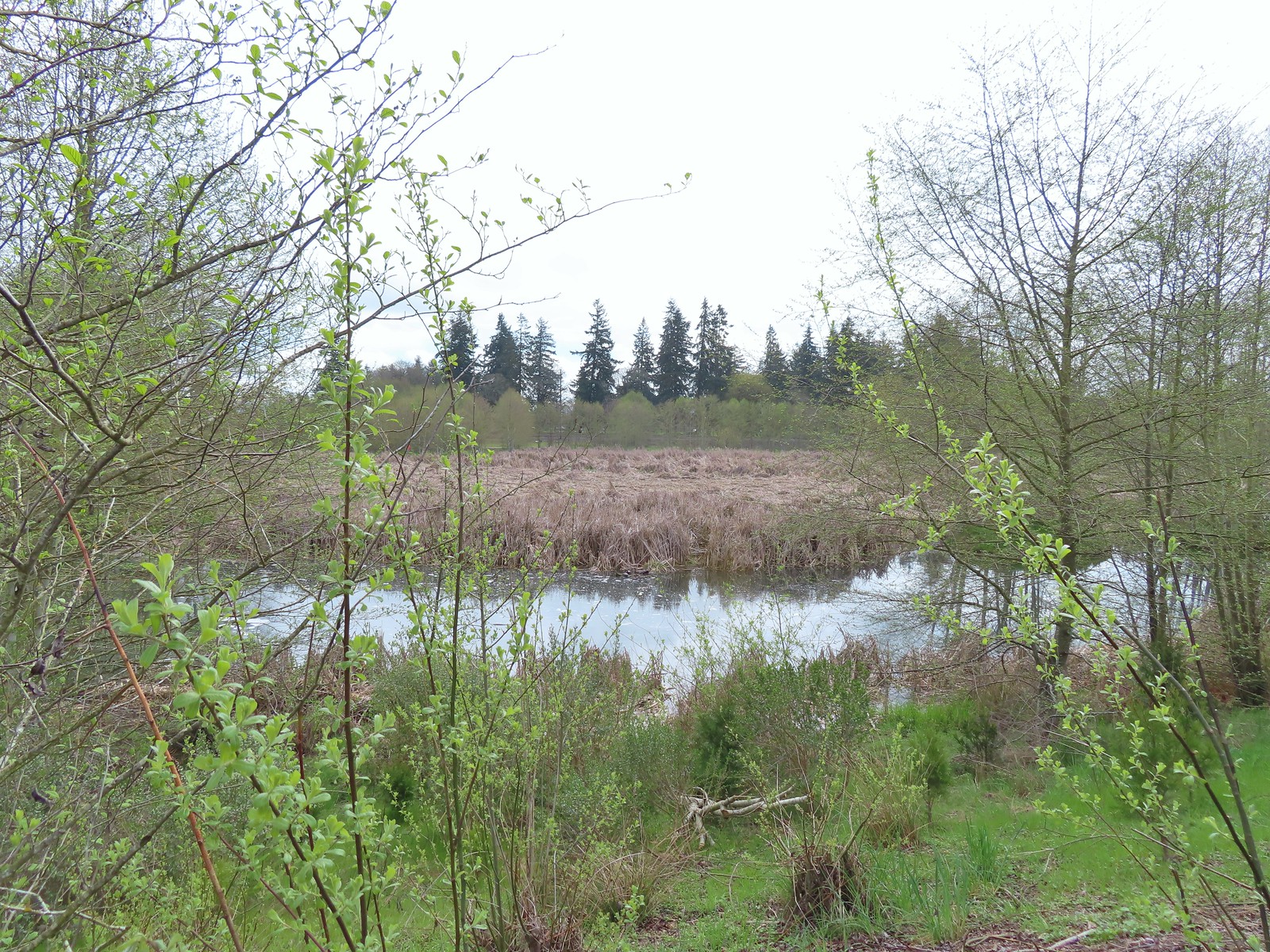 The first set of turtles we spotted.
 Western pond turtles.
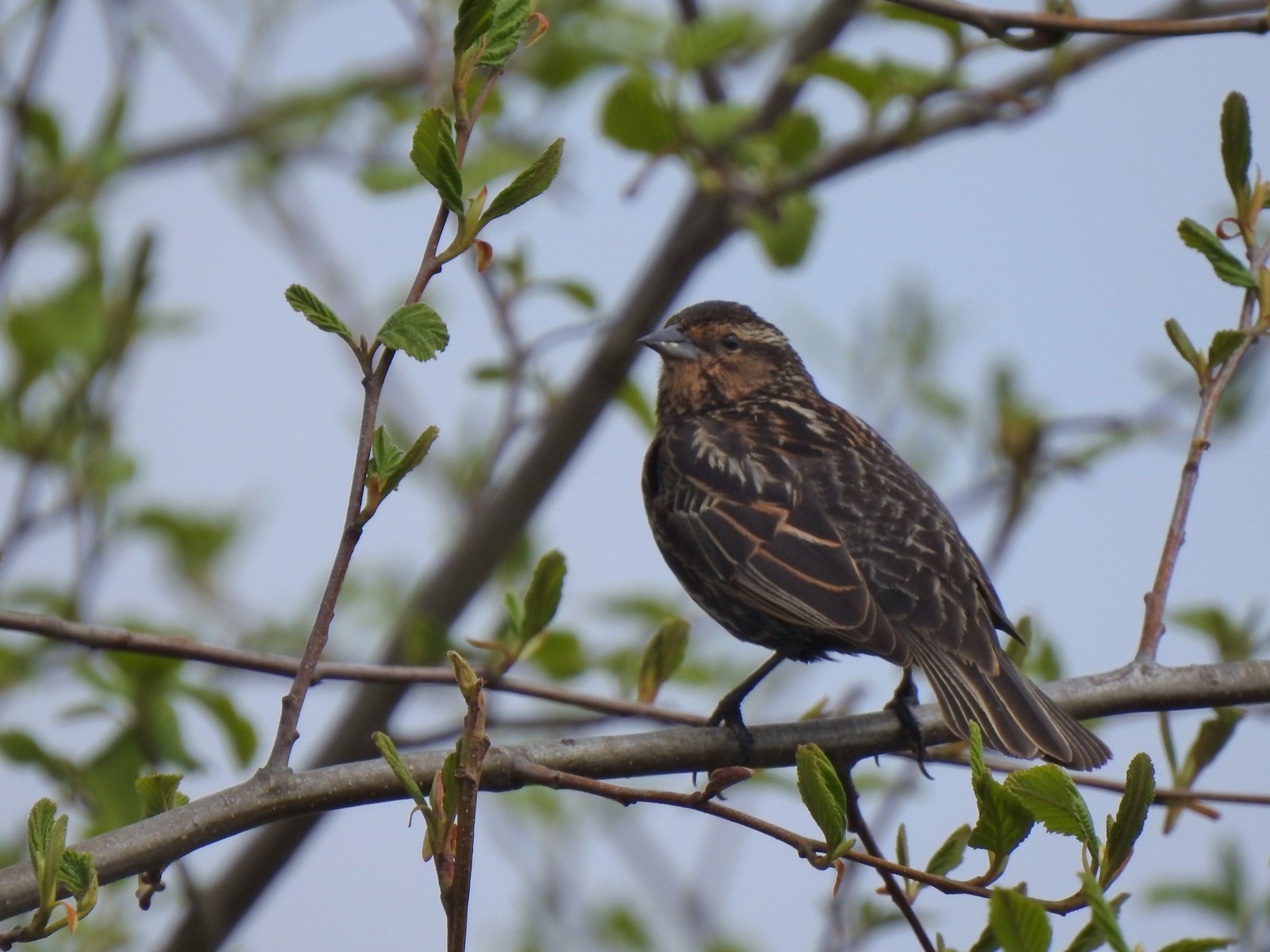 Female red-winged blackbird
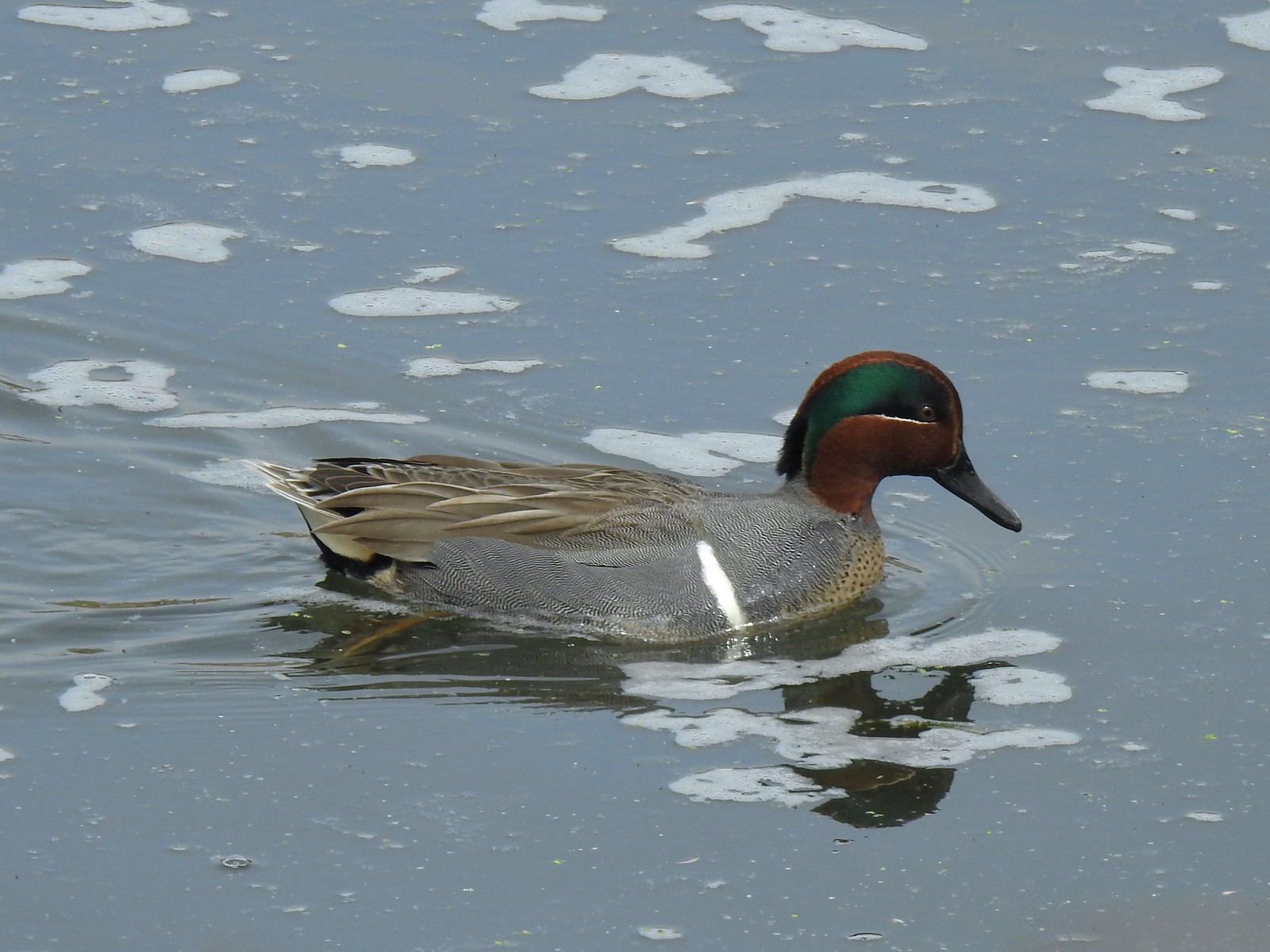 Green-winged teal
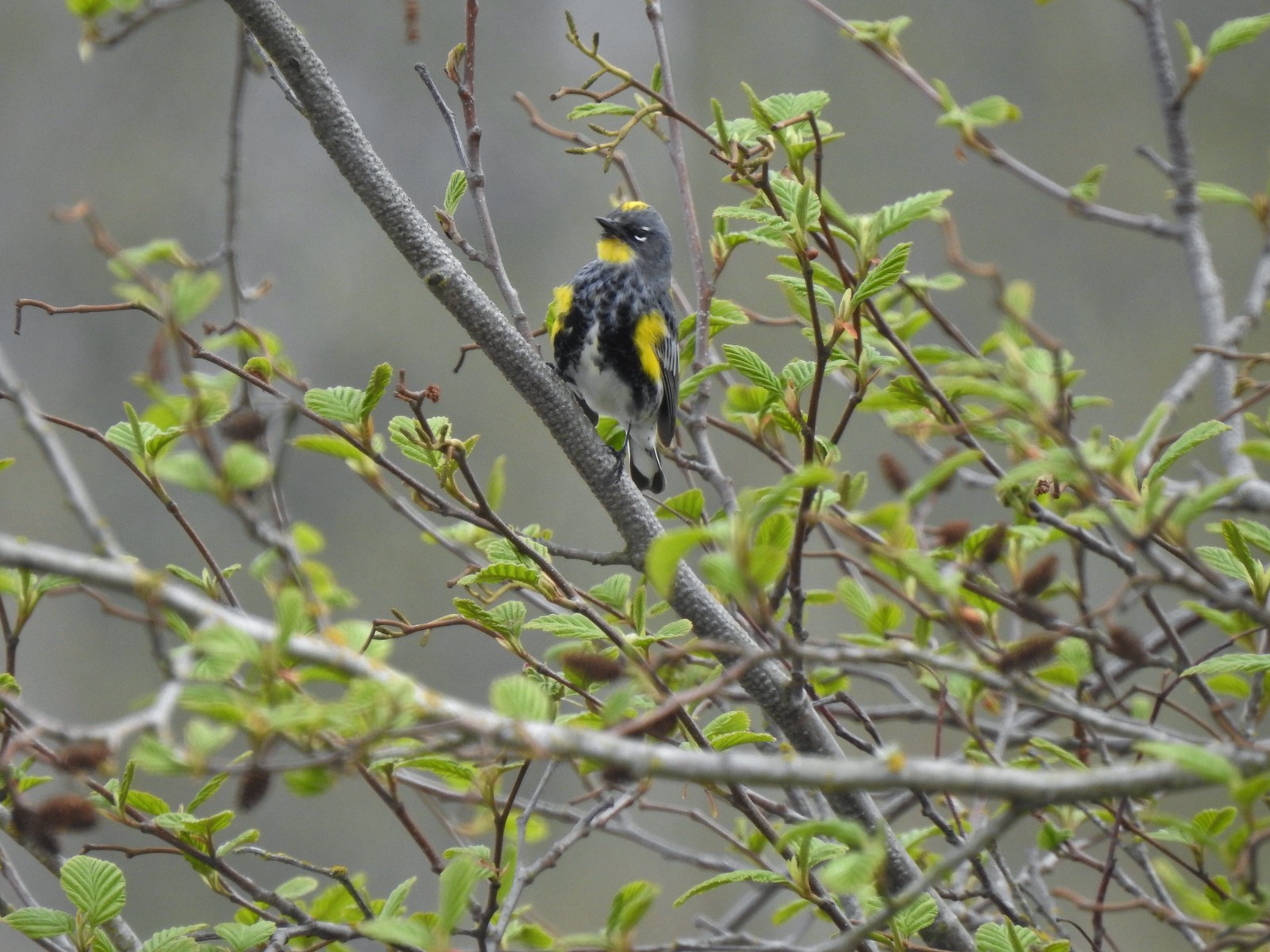 Yellow-rumped warbler (Audubon’s)
 More turtles
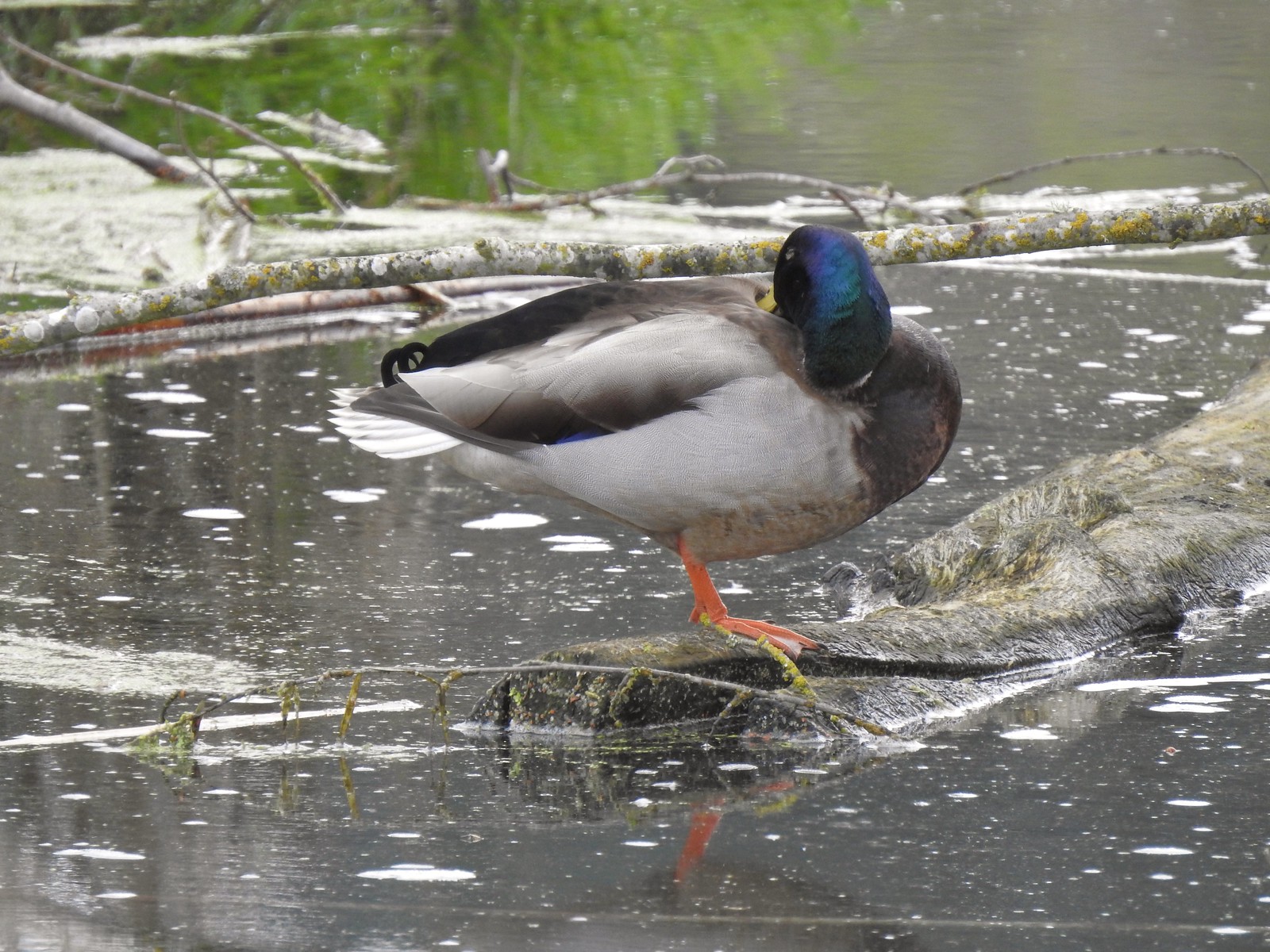 Mallard drake
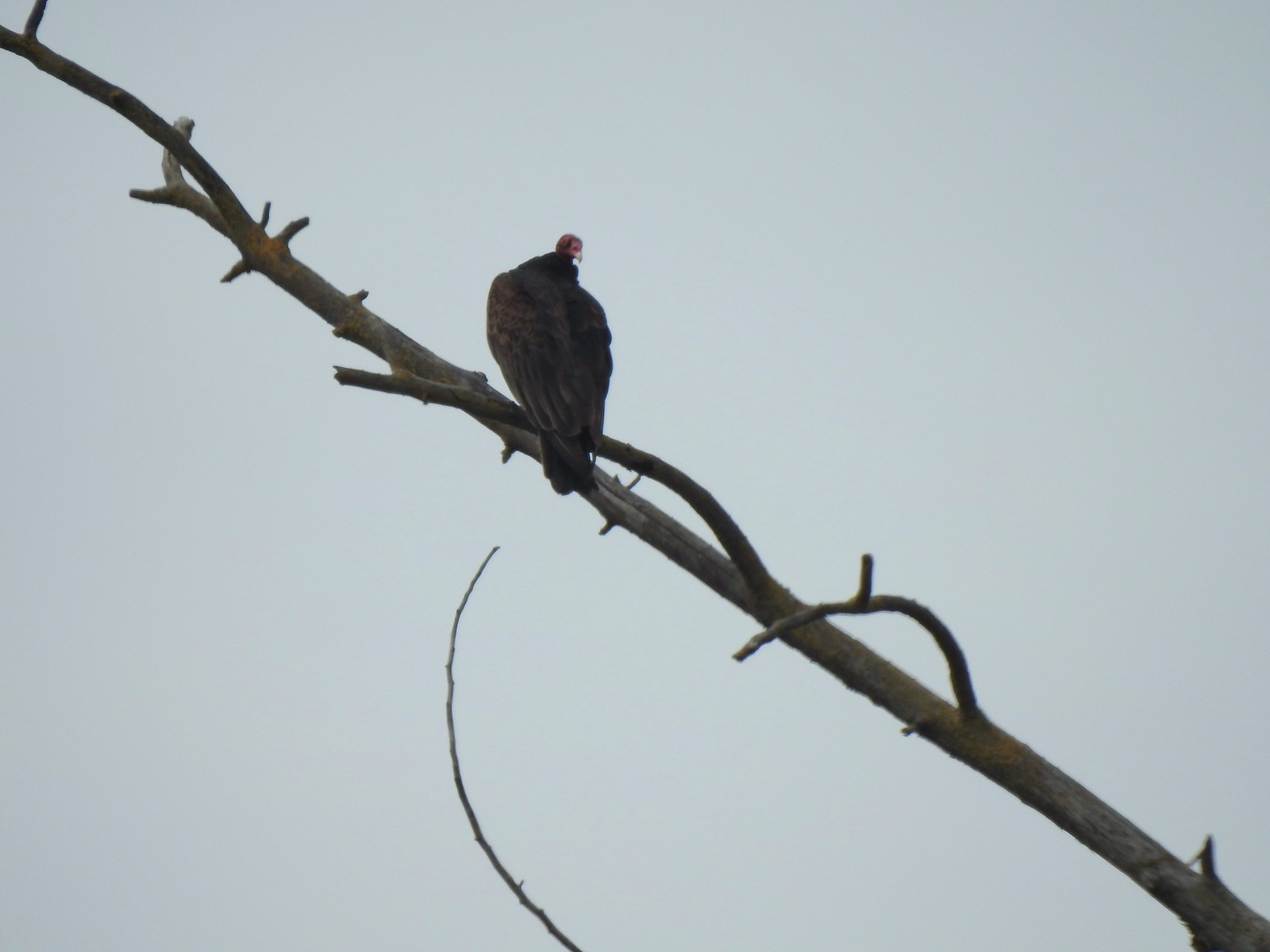 Turkey vulture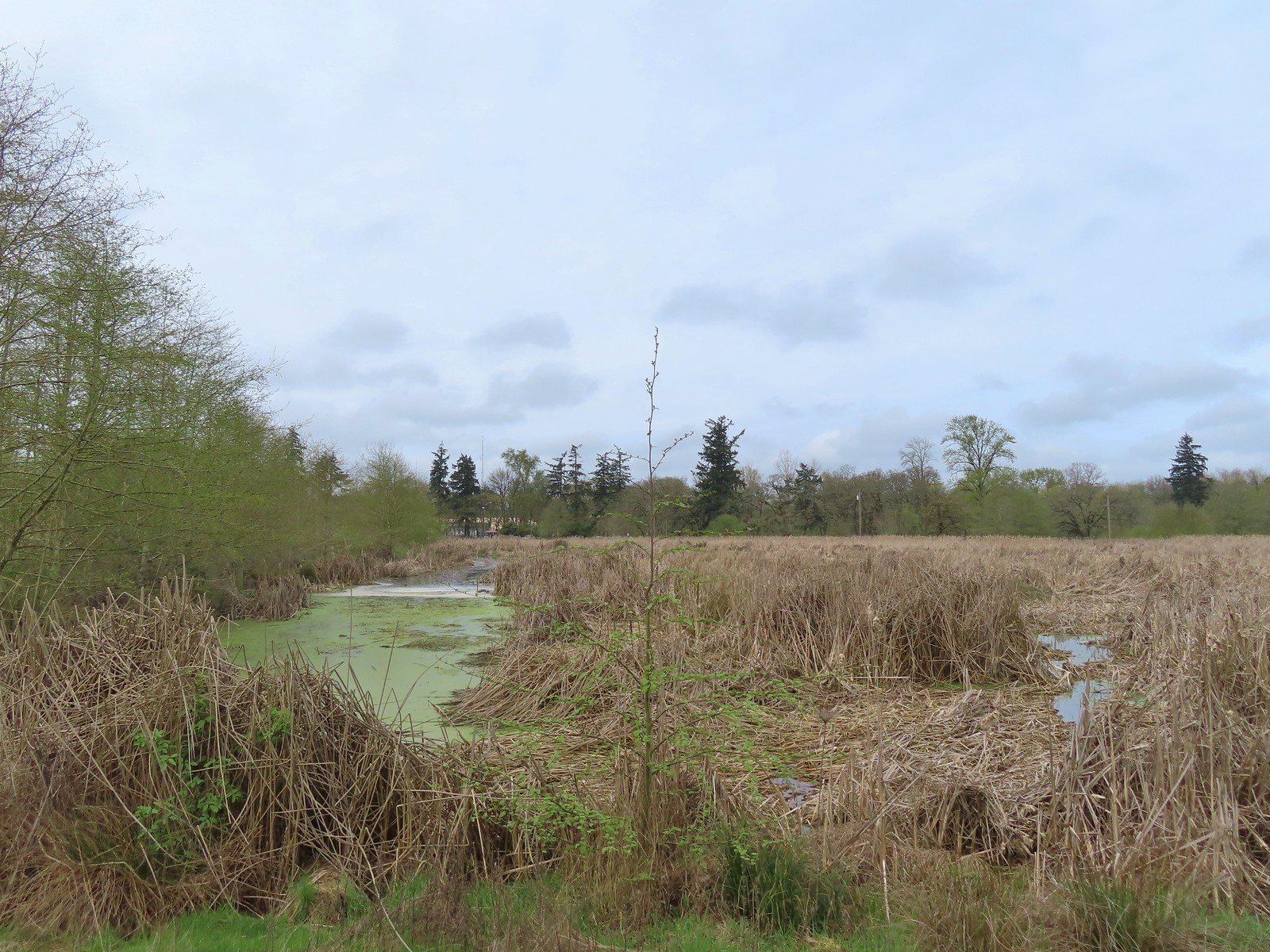
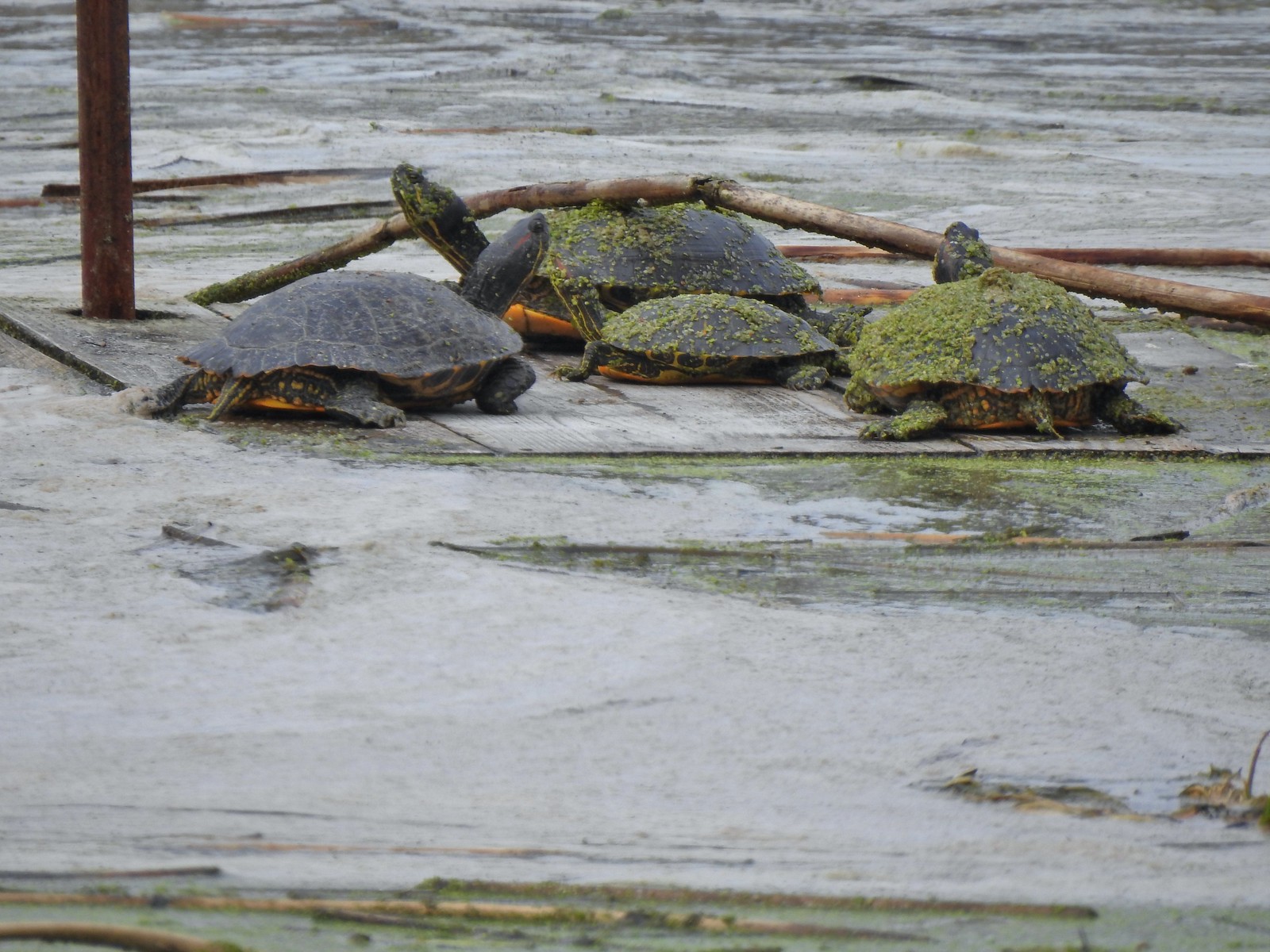 Another bale of turtles. (I had to look up “bale” because I had no idea what a group of turtles was called.)
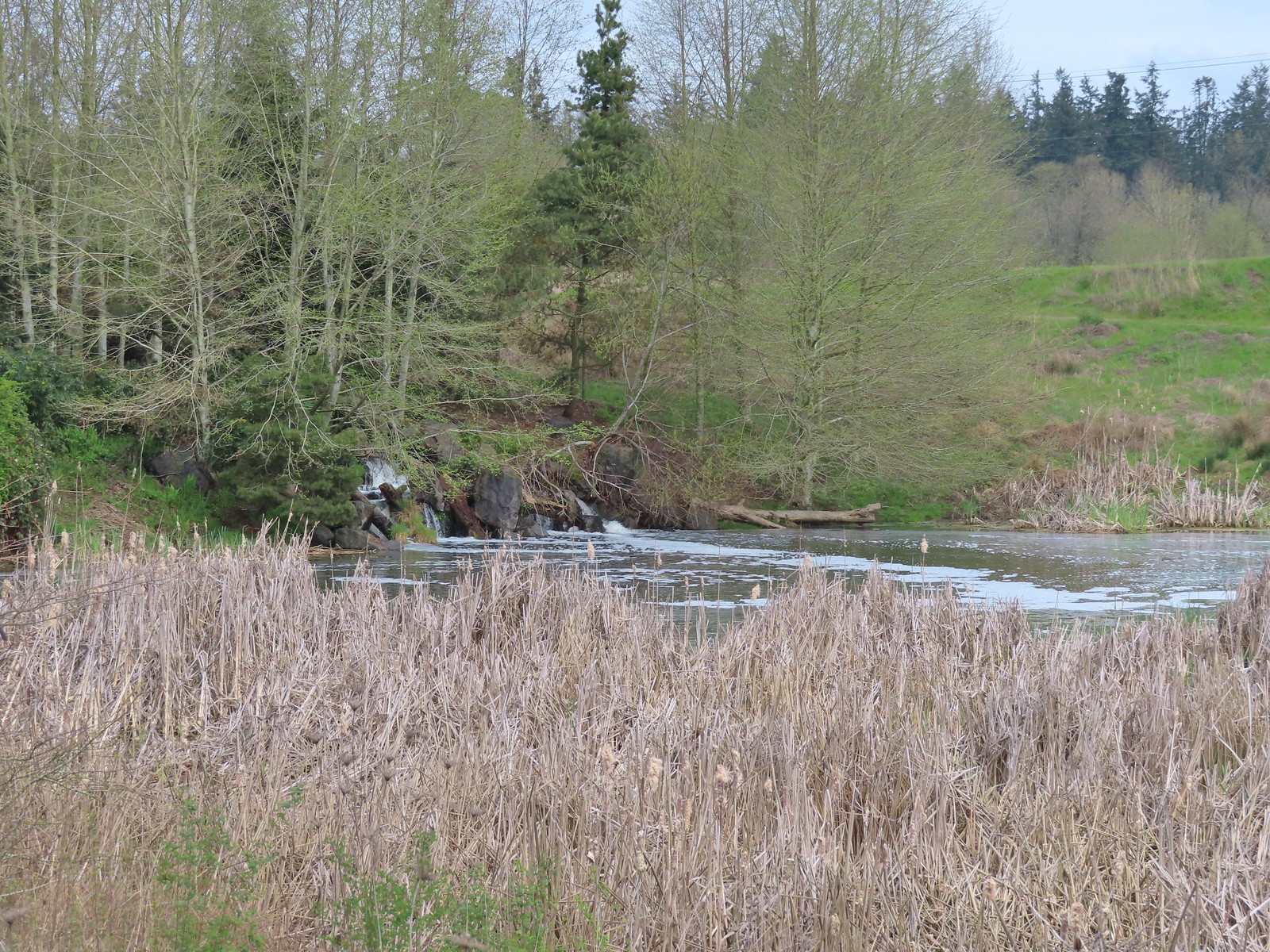 Another man-made waterfall.
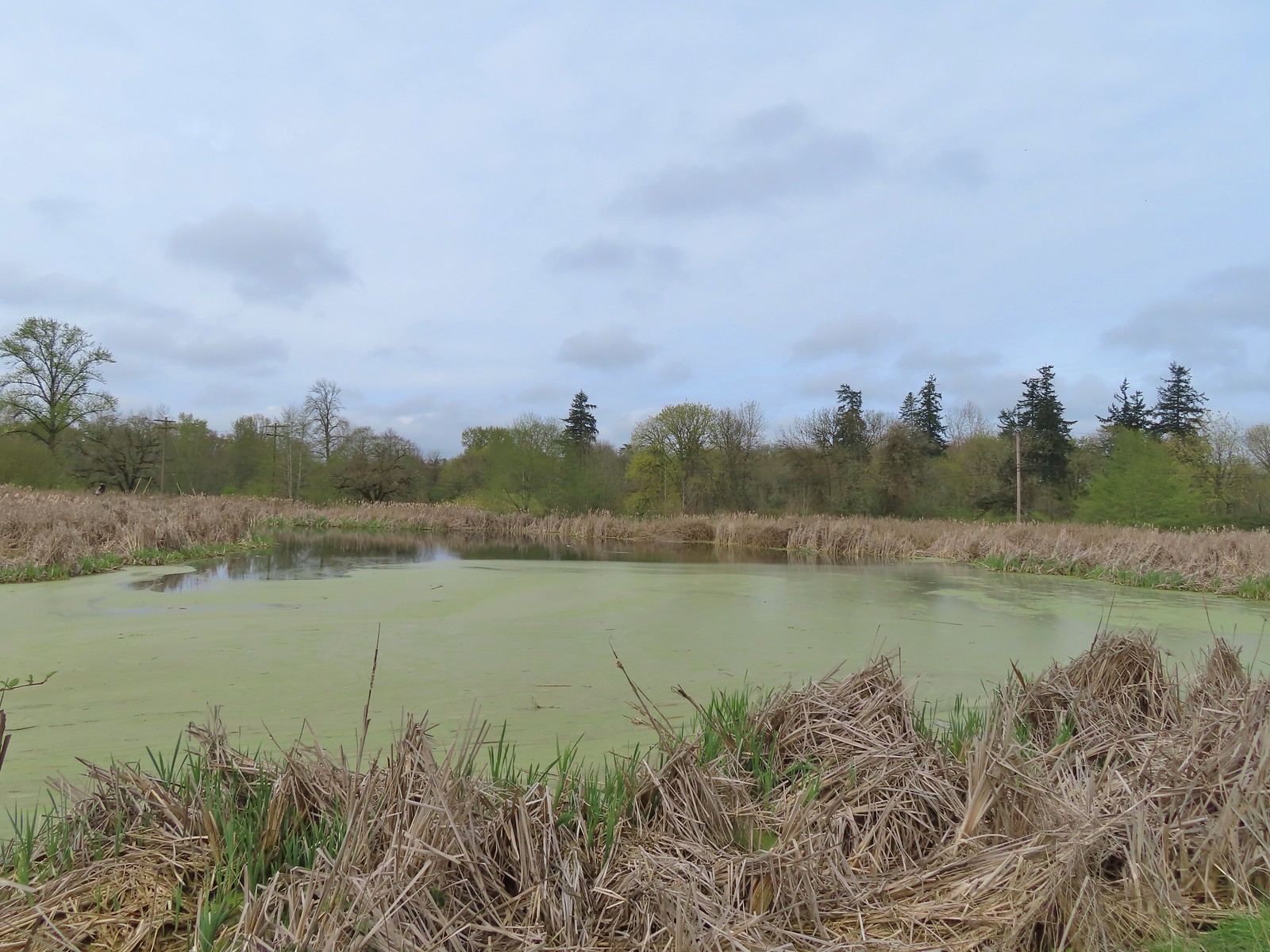 This had been full of ducks on our previous visit.
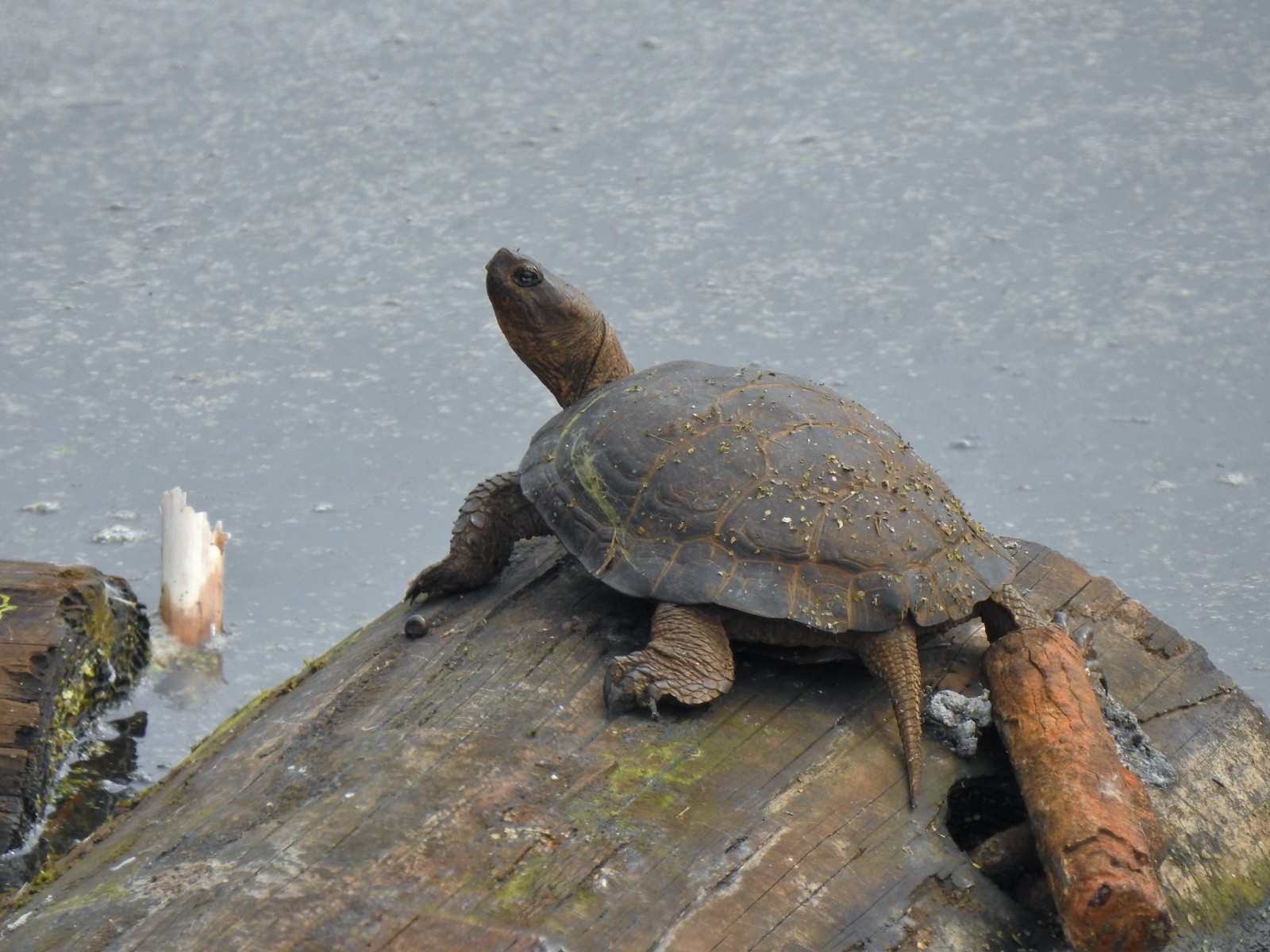 Yet another turtle.
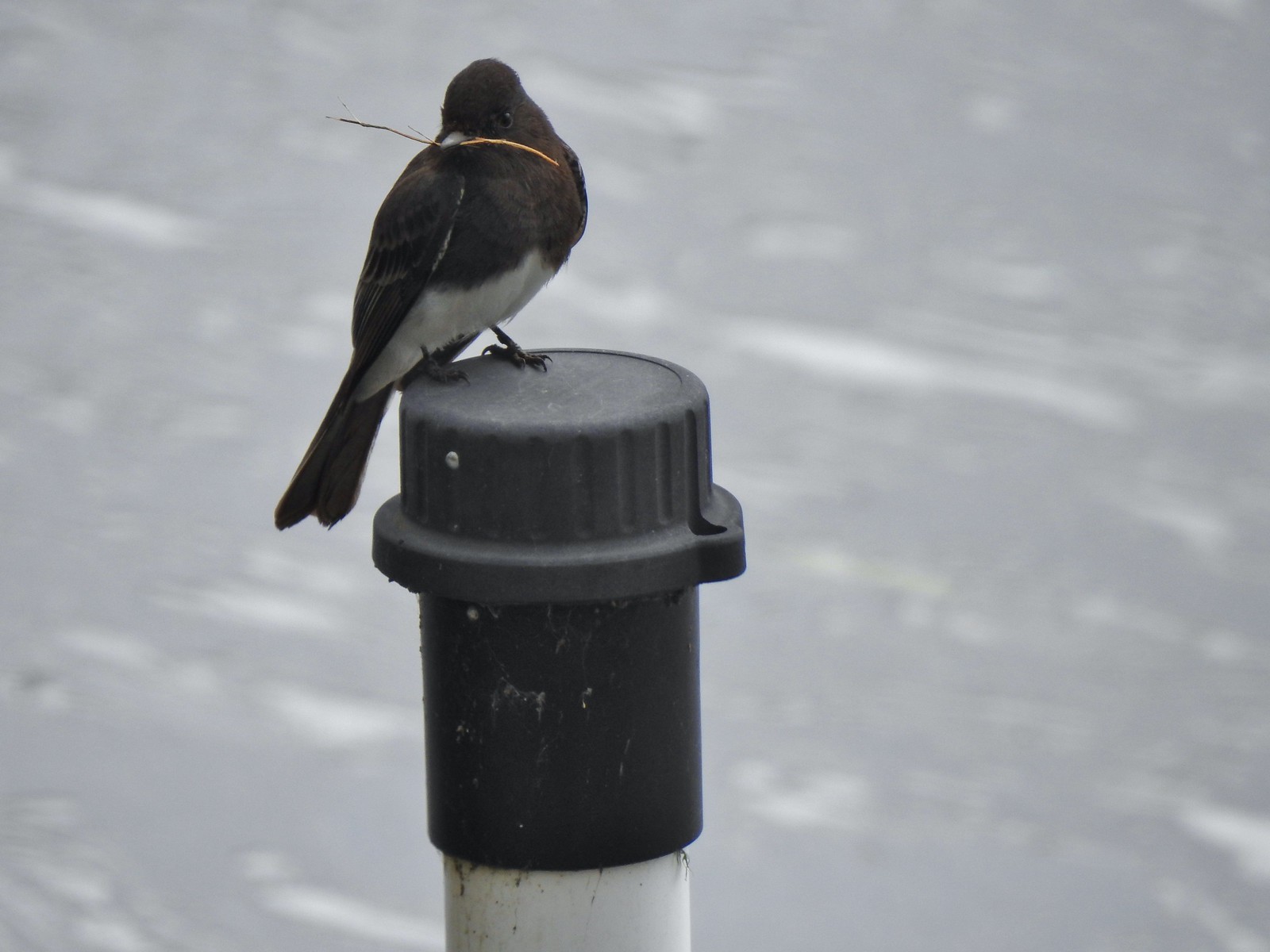 Black phoebe
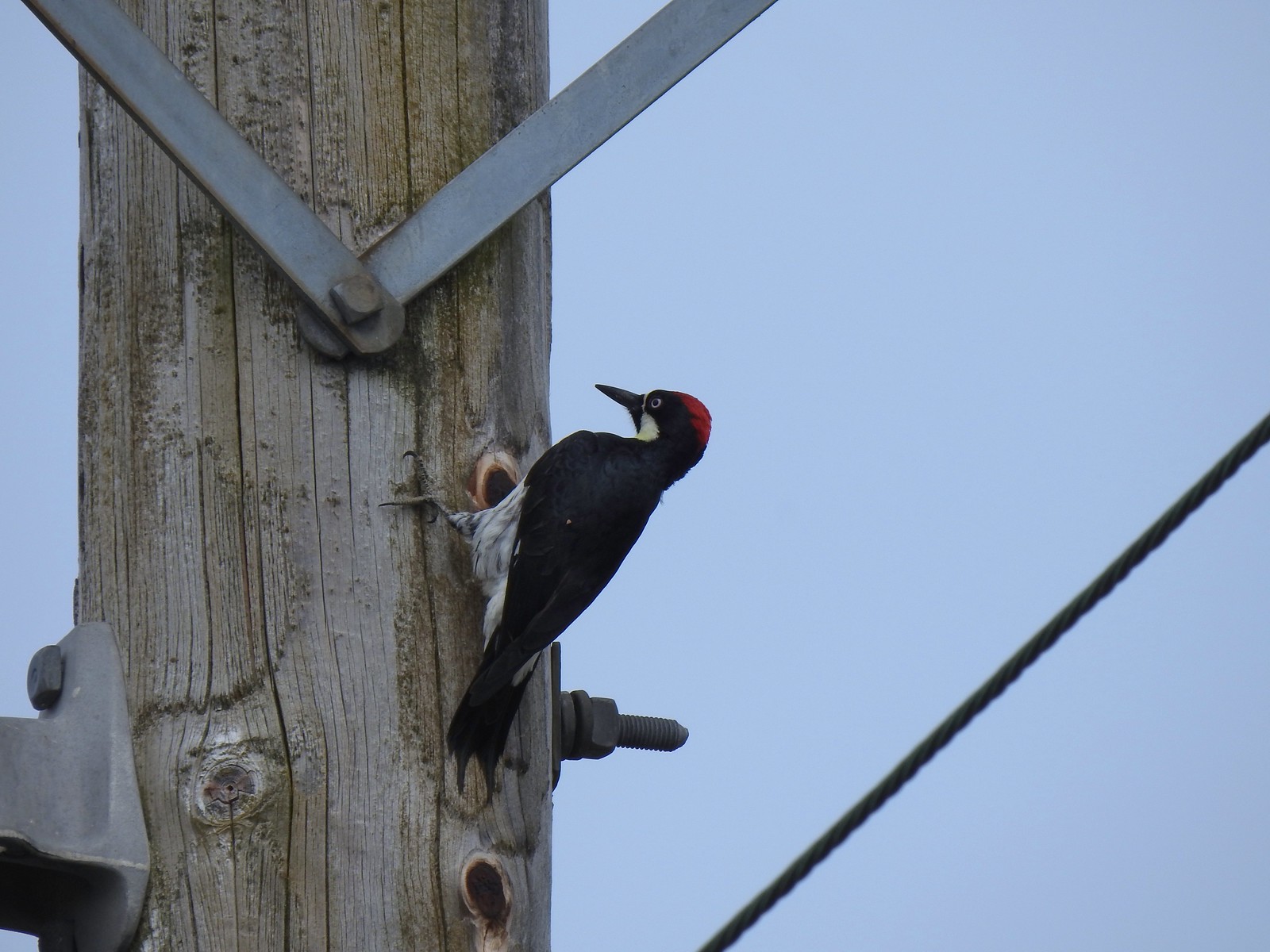 Acorn woodpecker
 Sparrow
 Northern shoveler
 Hummingbird
 Red-winged blackbird
 Bench along the Central Oak area.
 The first goslings we’ve spotted this year.
 Very zoomed in shot of a hawk seen in the distance.
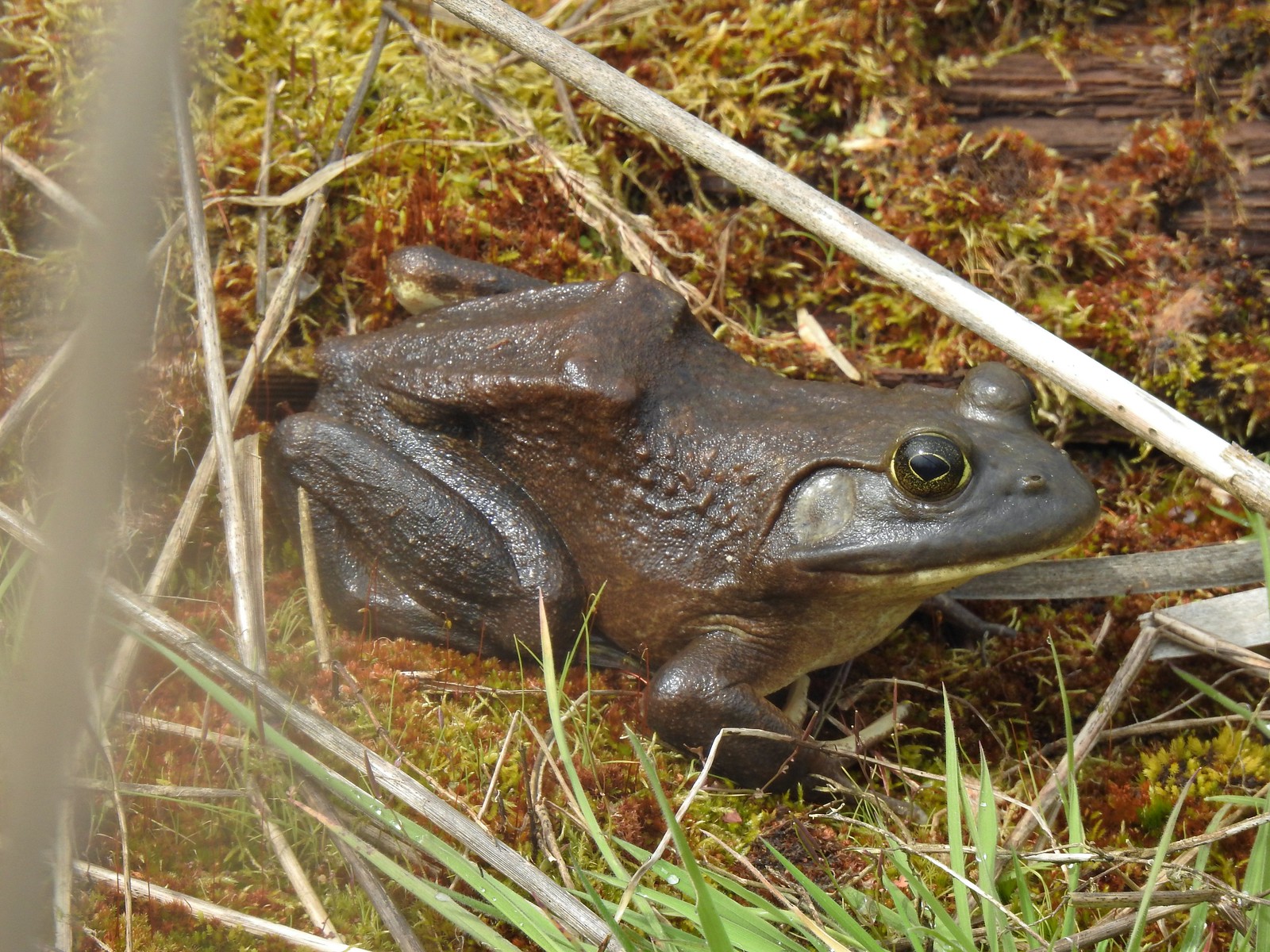 Bullfrog
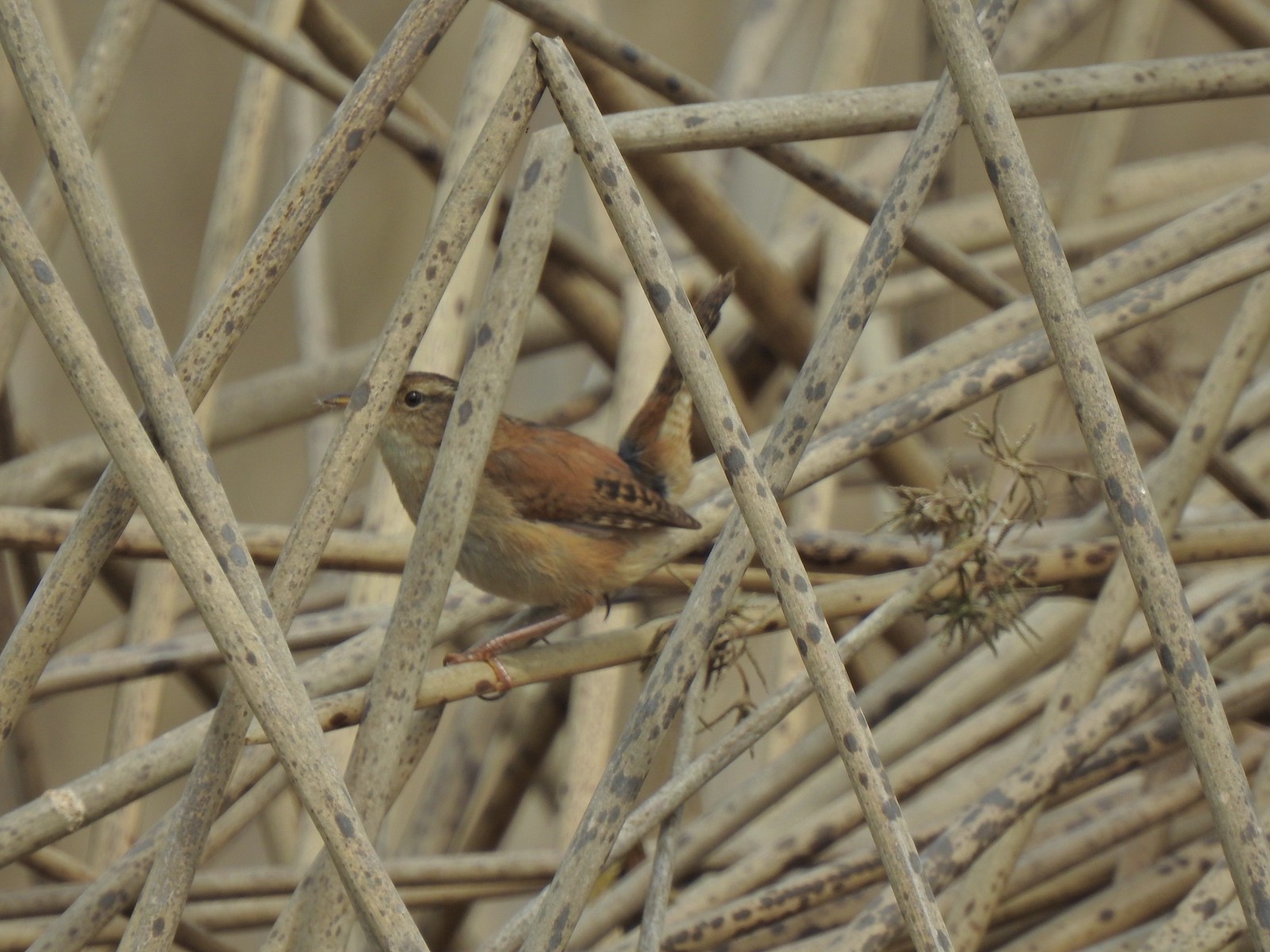 Marsh wren
 Final set of turtles.
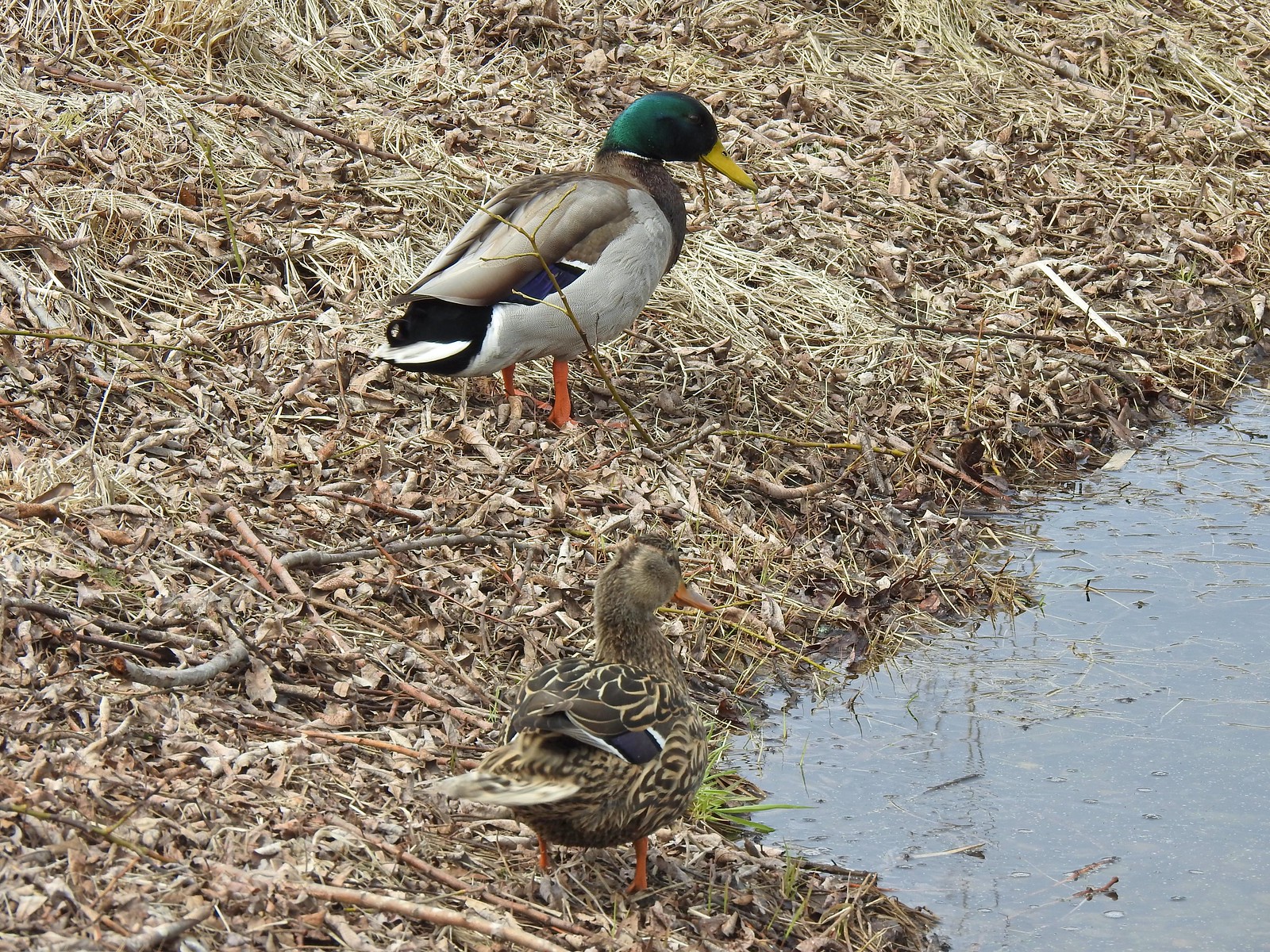 Mallard pair
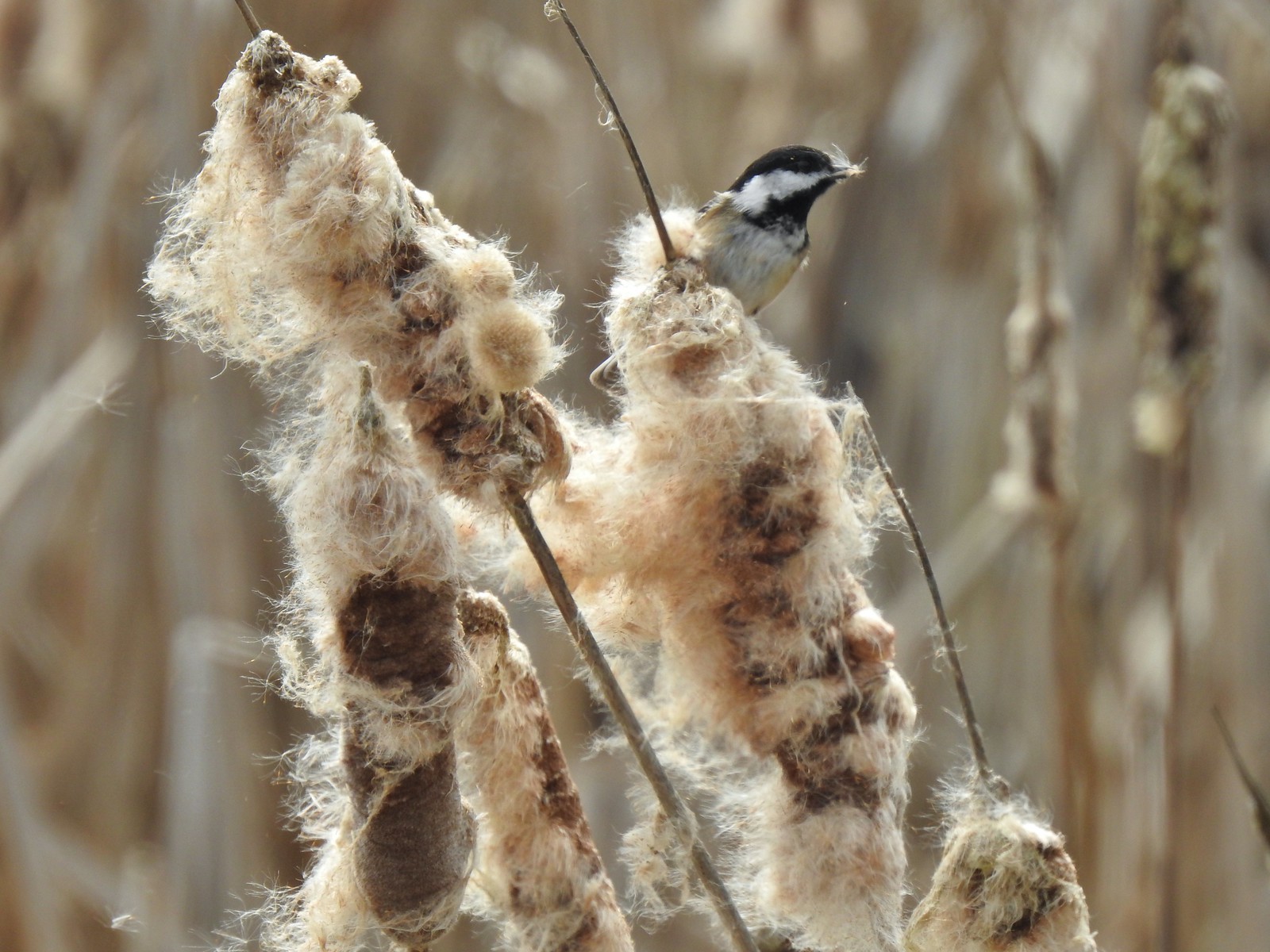 Chickadee
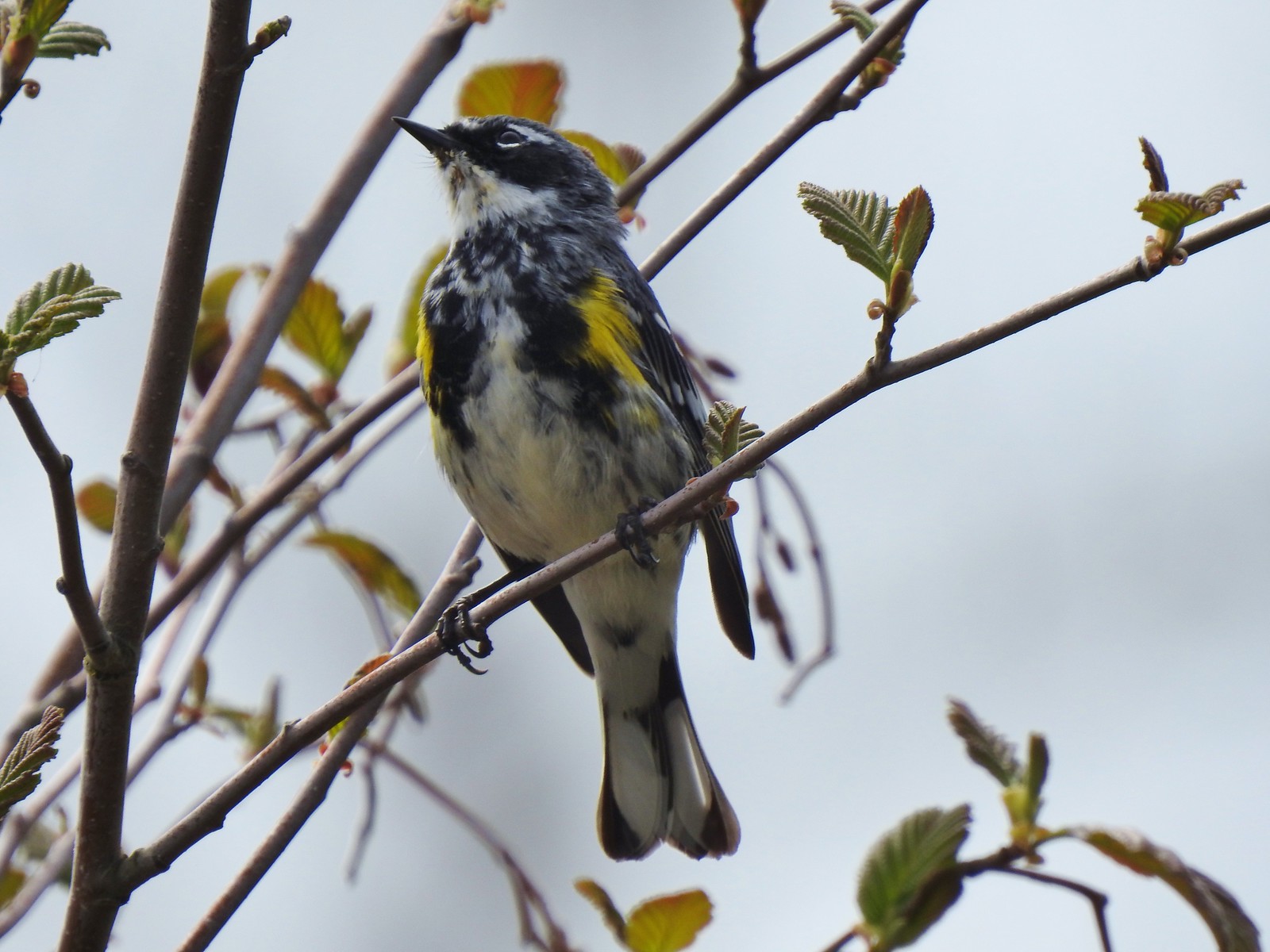 Yellow-rumped warbler (Myrtle)

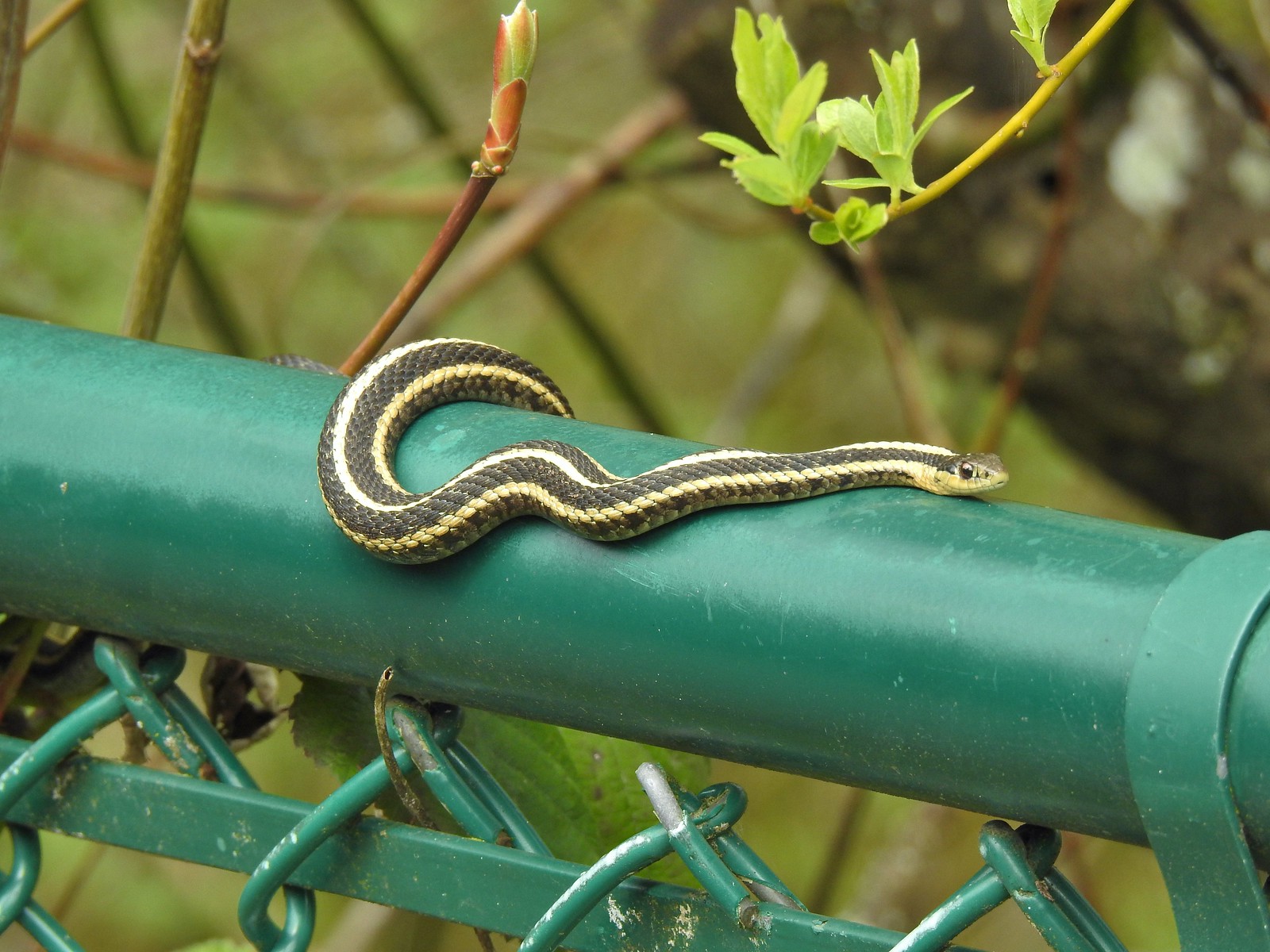 A couple ahead of us on the trail spotted this guy for us.
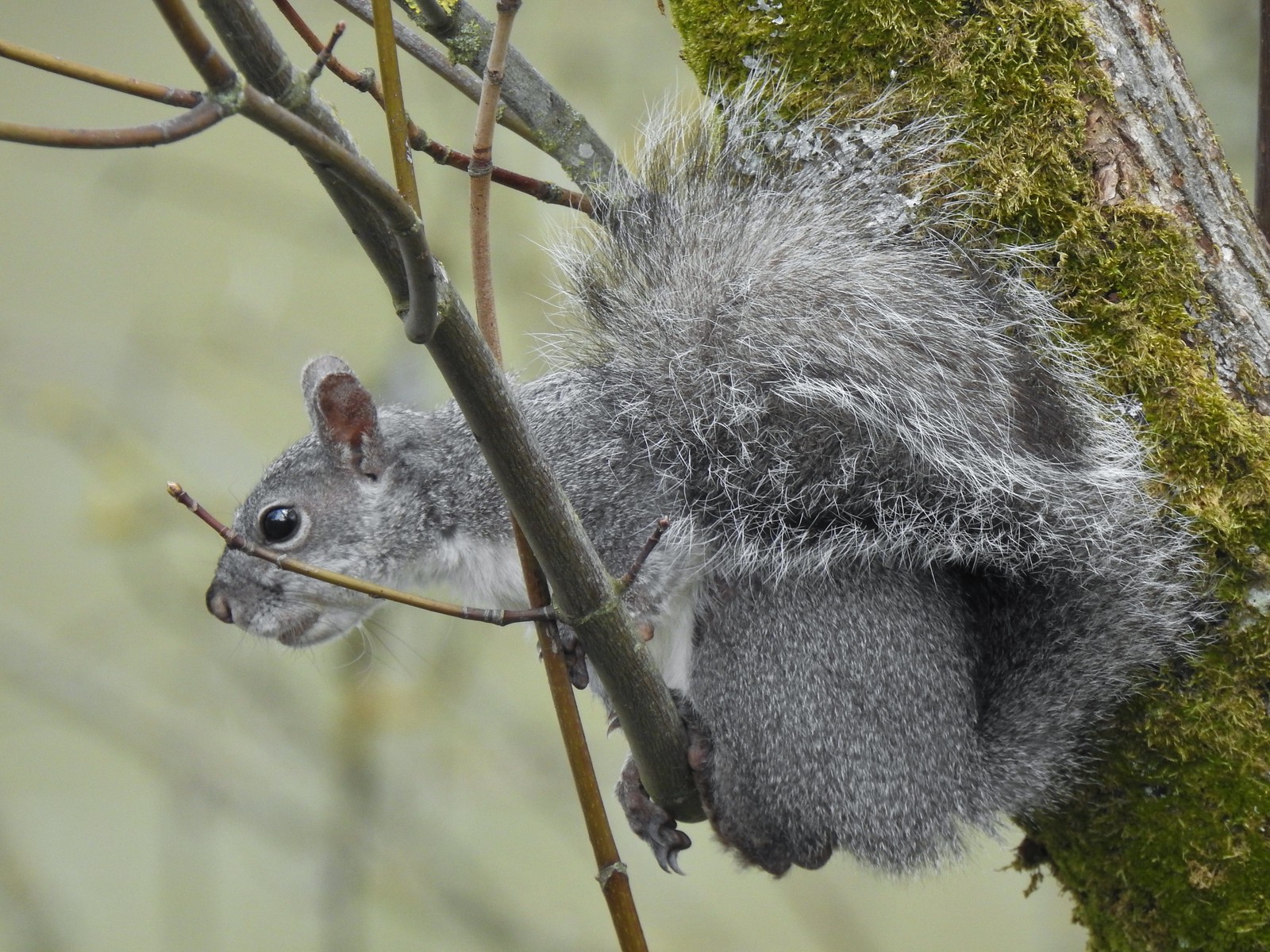 Squirrel


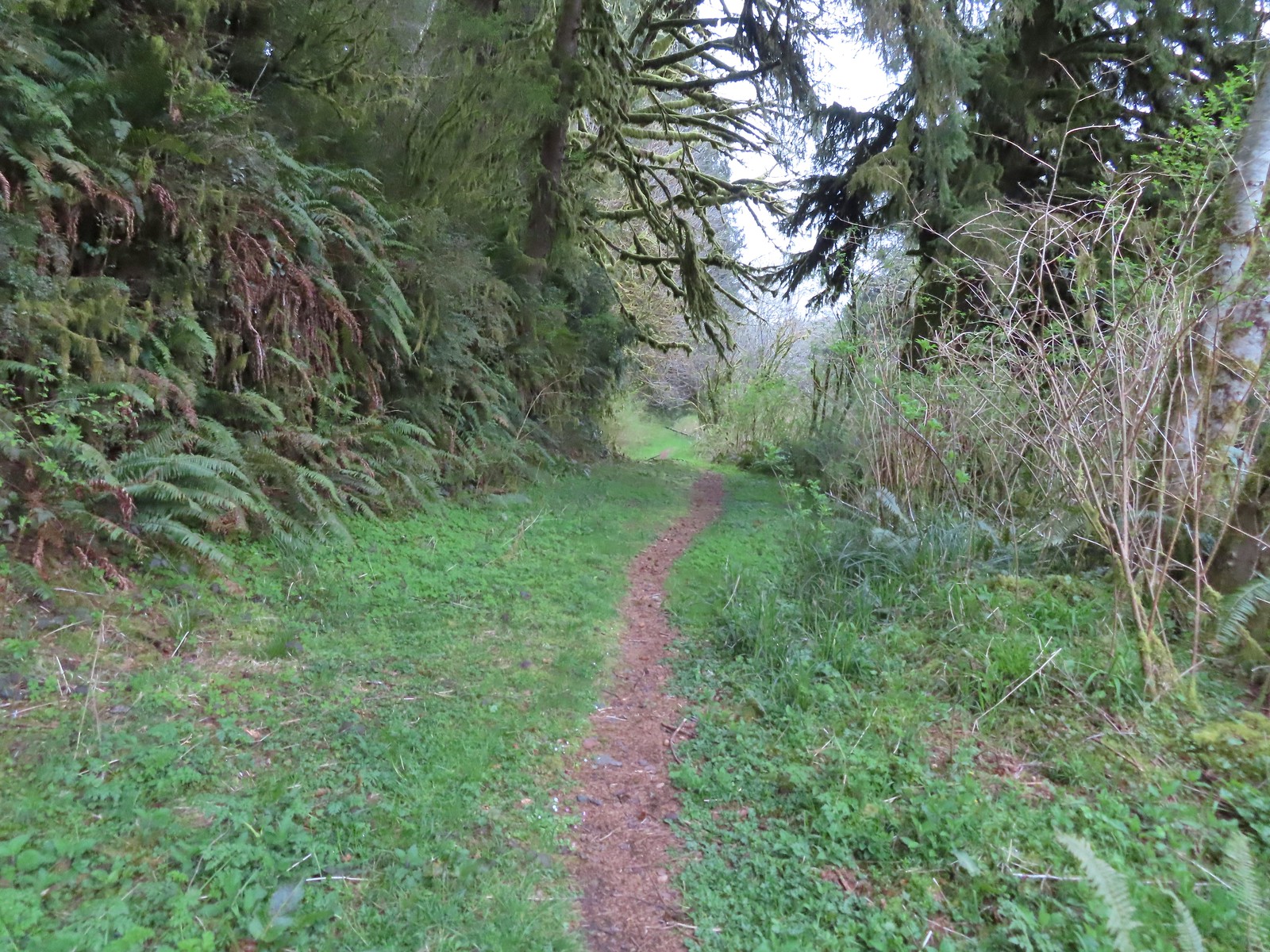
 One of the muddiest sections was just beyond a small footbridge near the trailhead.
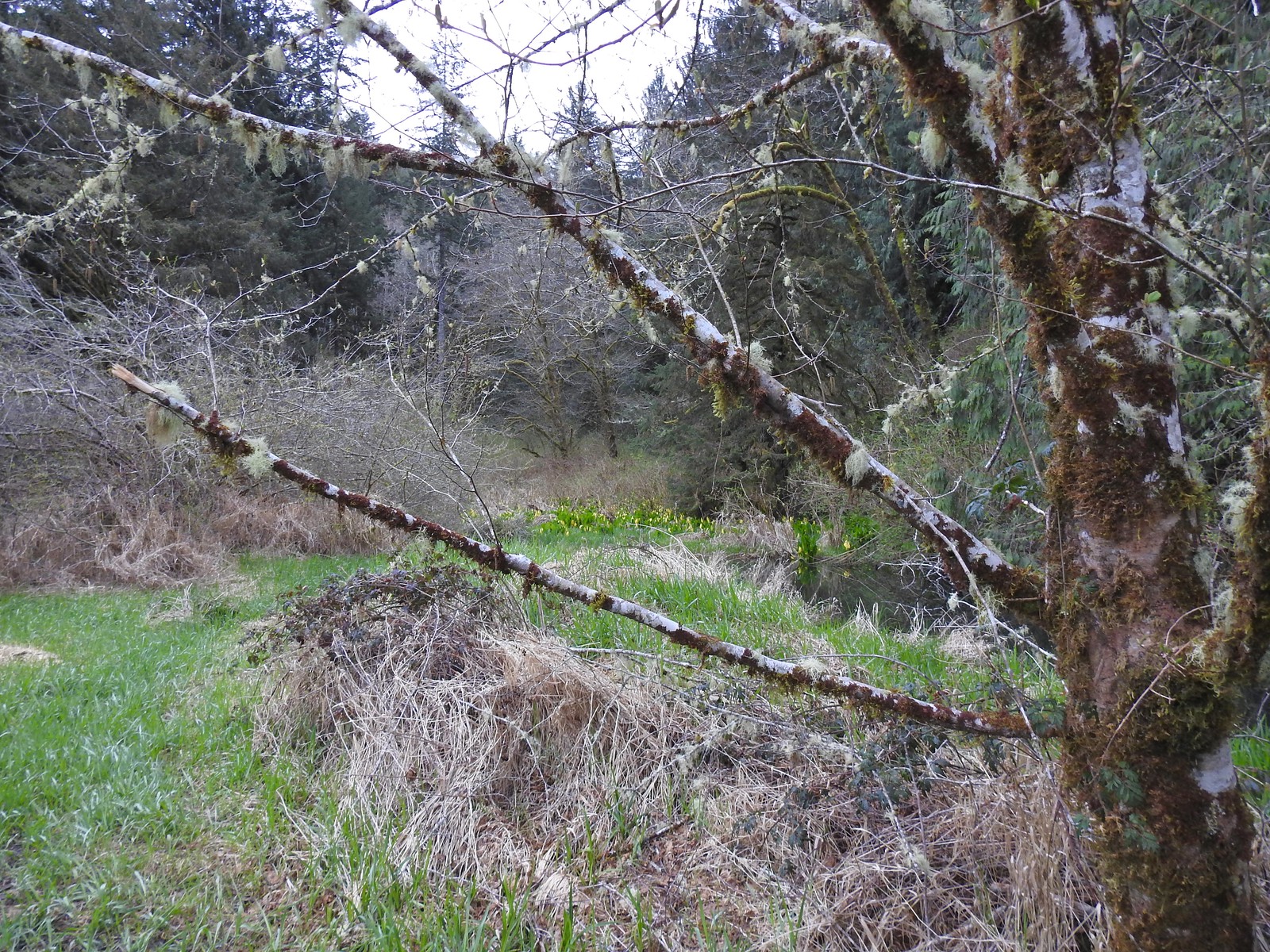 Skunk cabbage blooming along Bailey Creek.
 Skunk cabbage
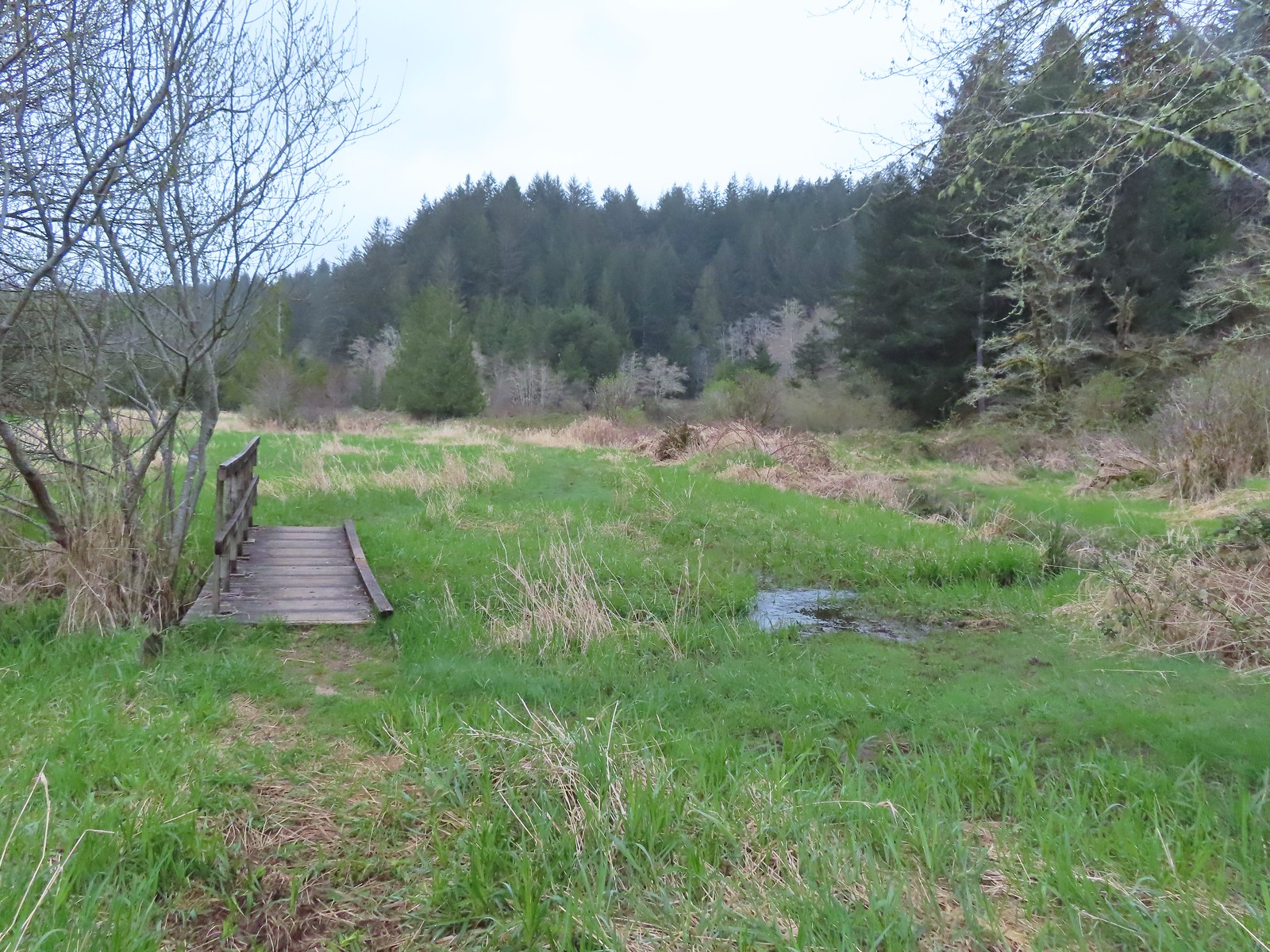 A second little footbridge.
 Coltsfoot
 Closer look at the coltsfoot.
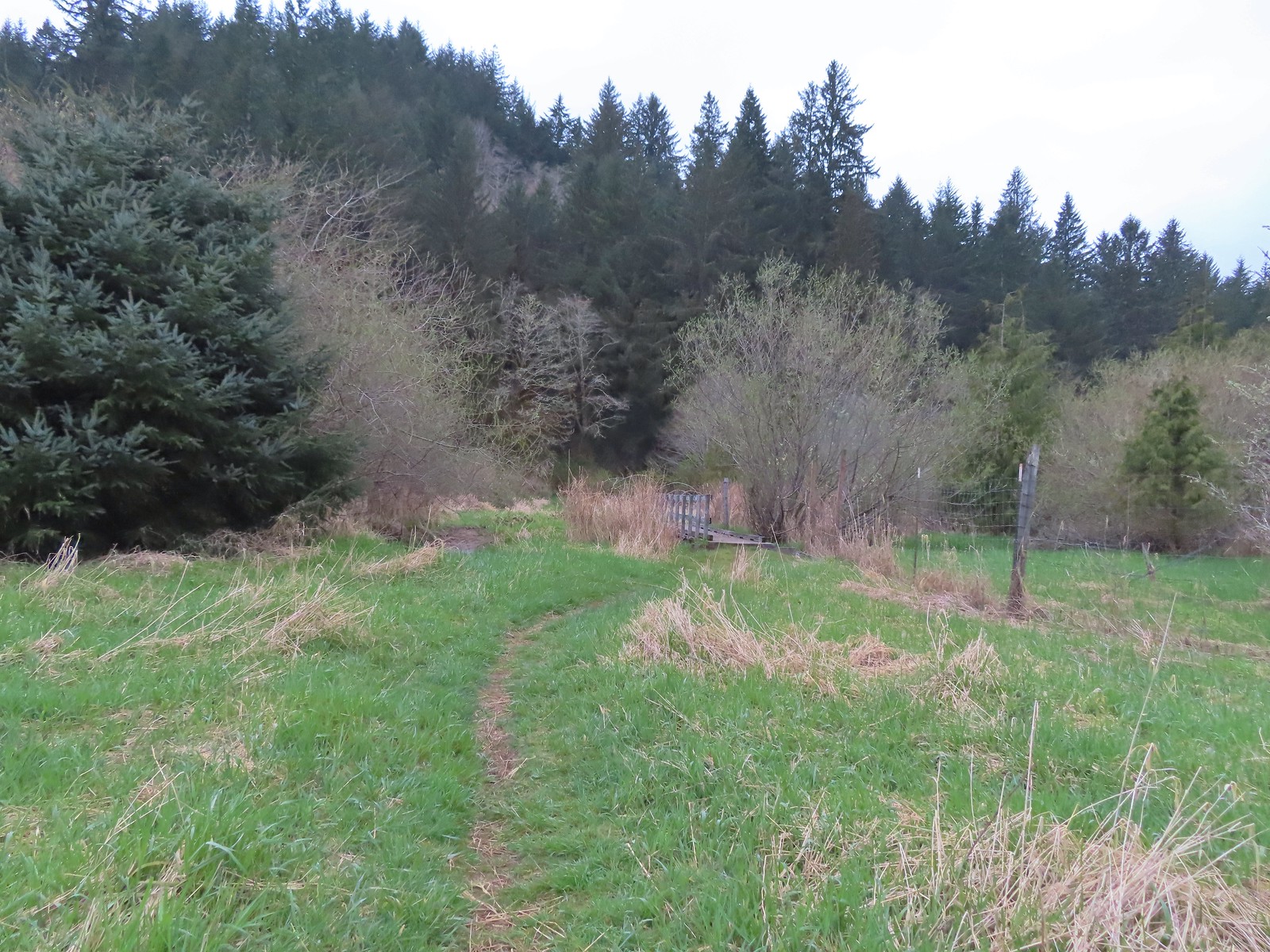 Approaching the footbridge over the unnamed creek.
 This creek was really deep here although it’s hard to tell from the photo.
 Wood sorrel
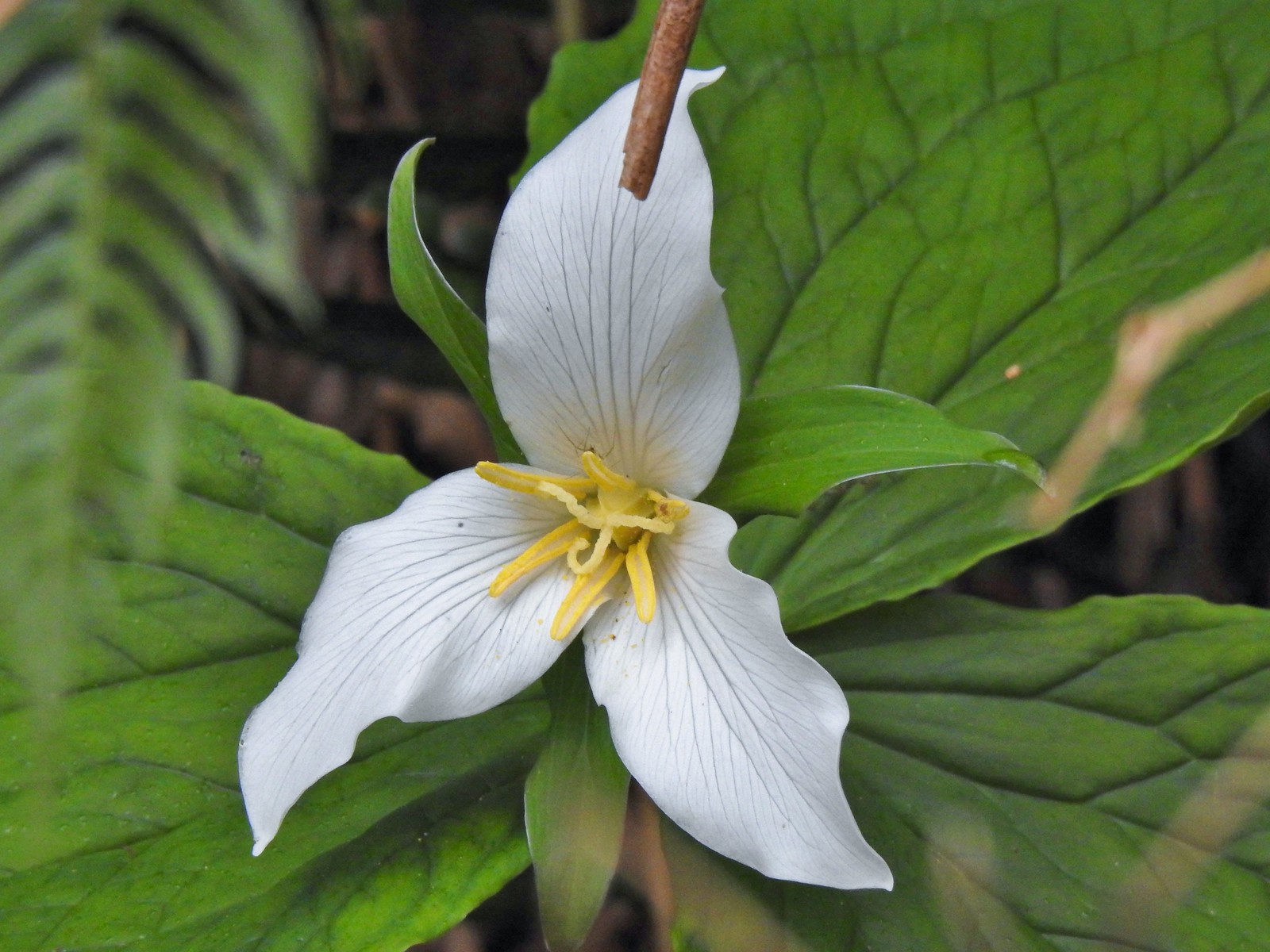 Trillium with a resident spider.
 More skunk cabbage, also with a resident spider.
 Violet
 Bleeding heart
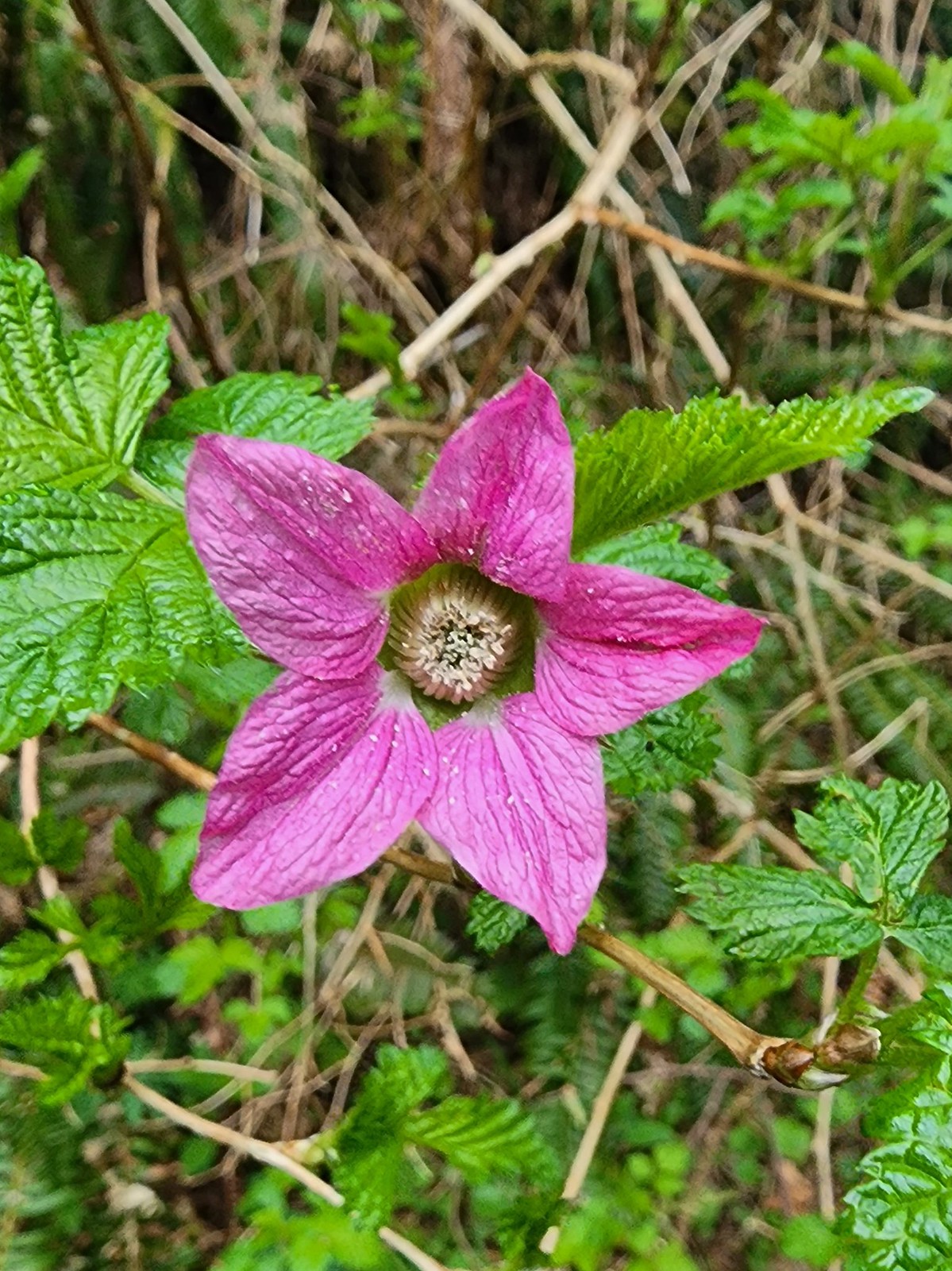 Salmonberry
 Toothwort
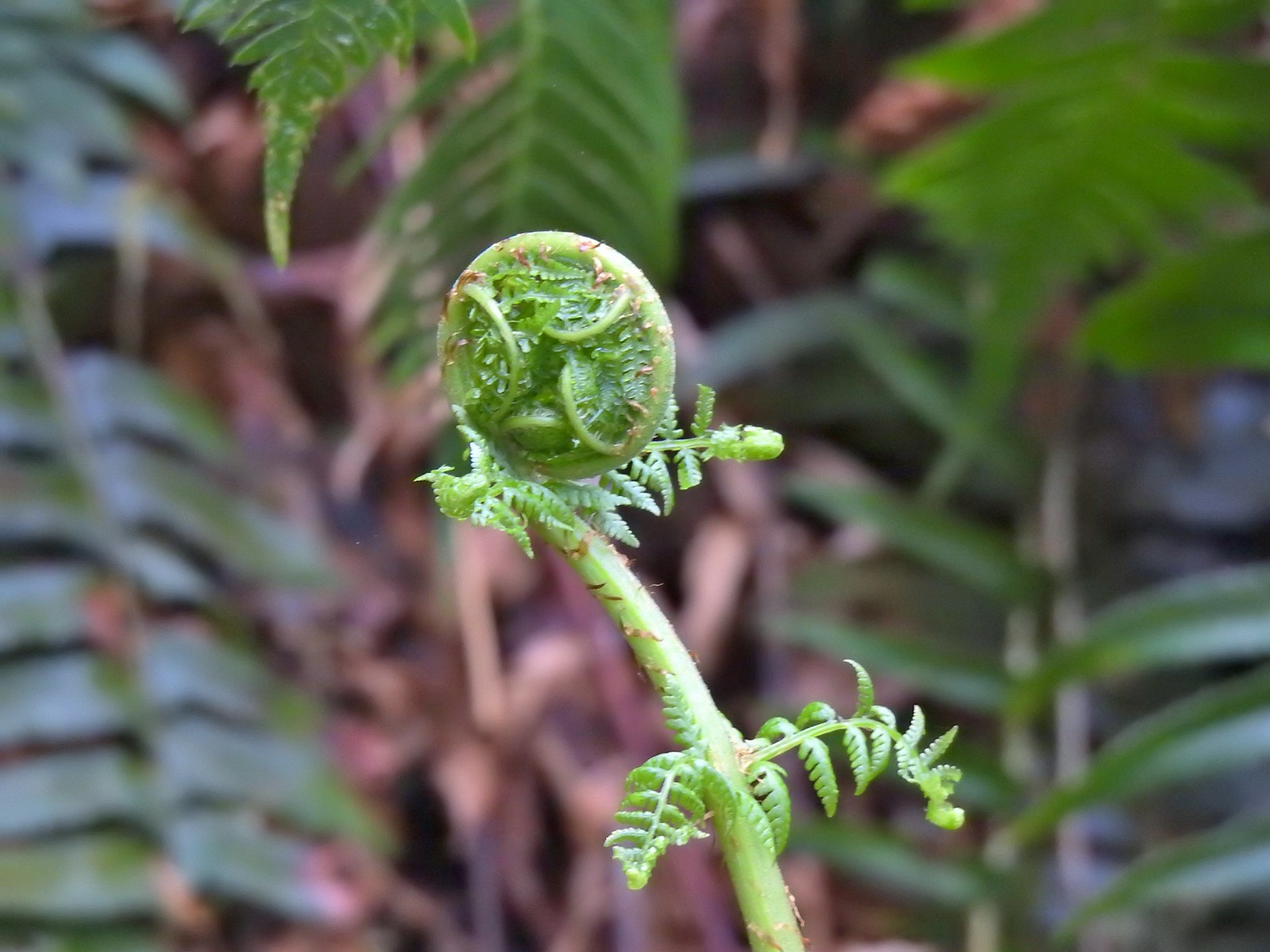 Unfurling fern
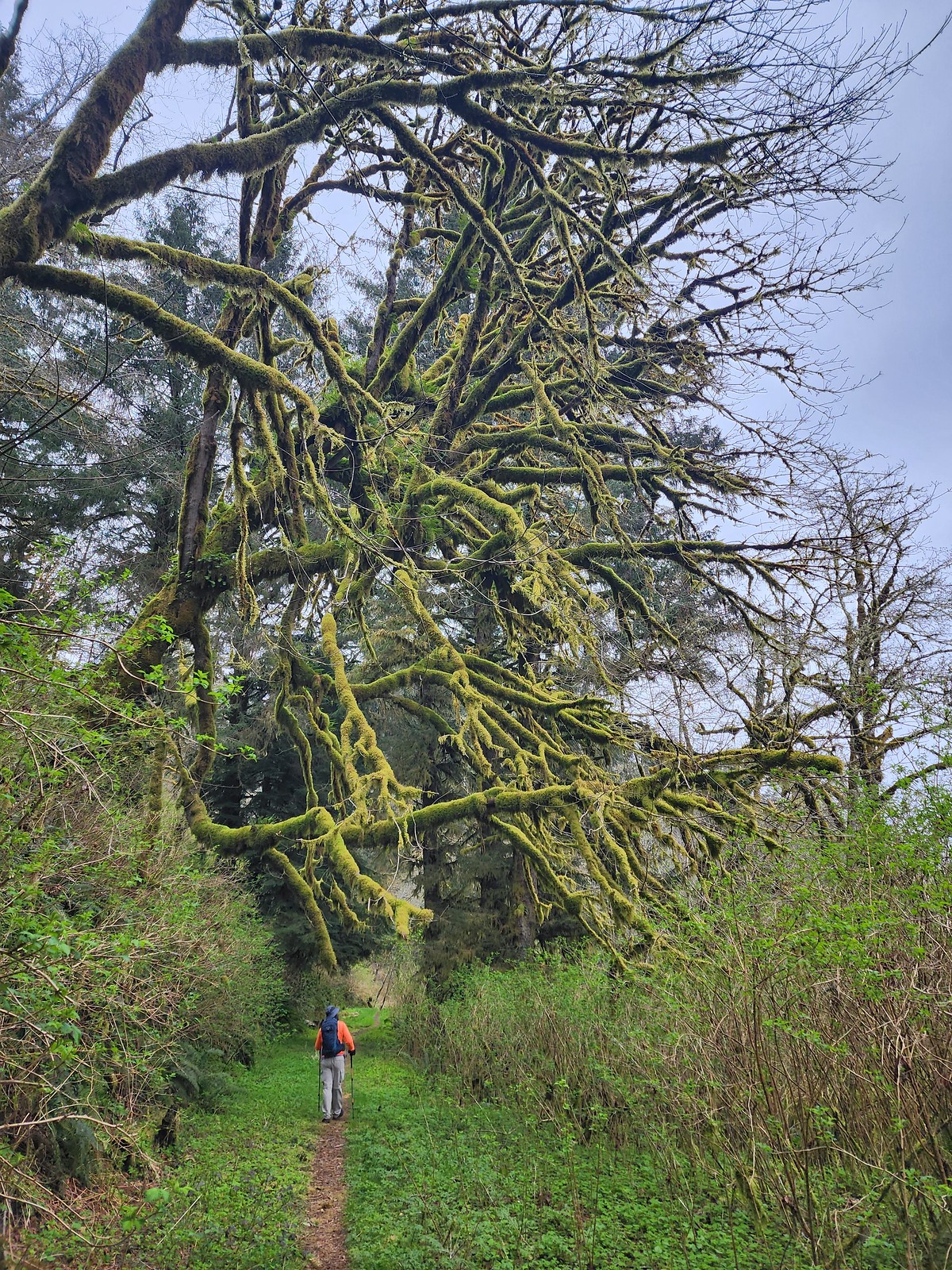 Me passing under a mossy tree.
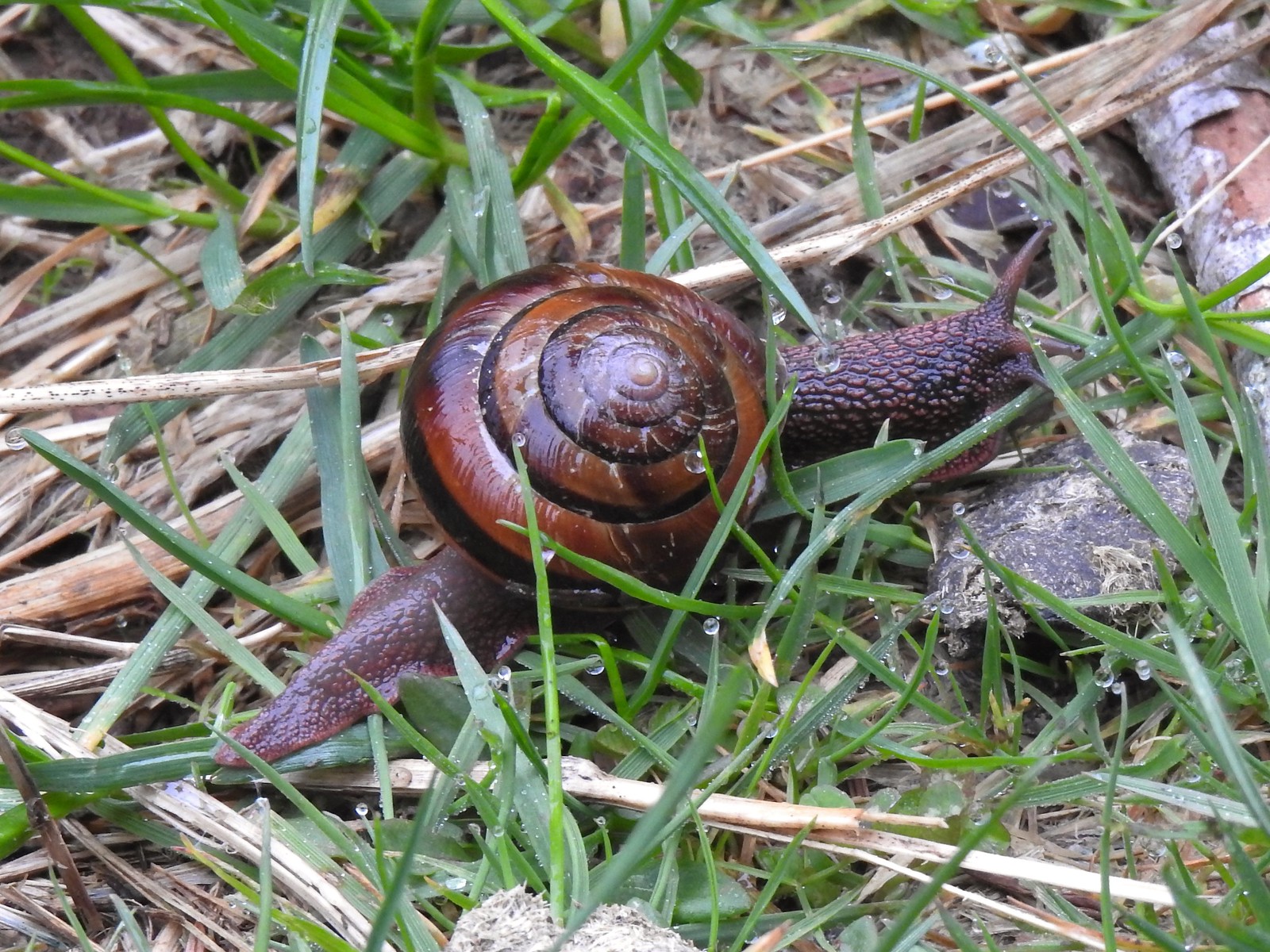 Snail on the trail.
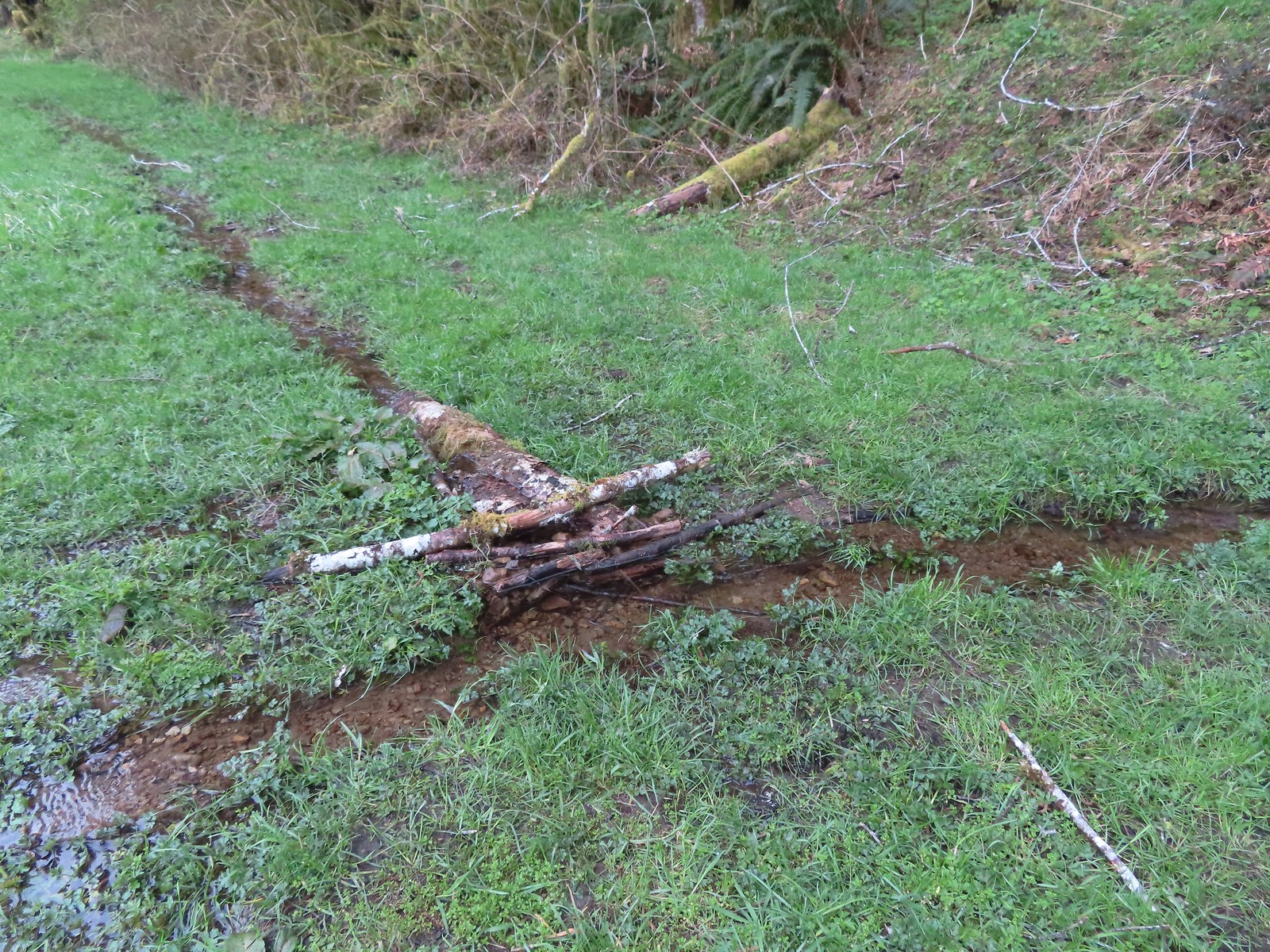 This makeshift damn was not stopping the water from flowing down the trail.
 Another of the small stream crossings.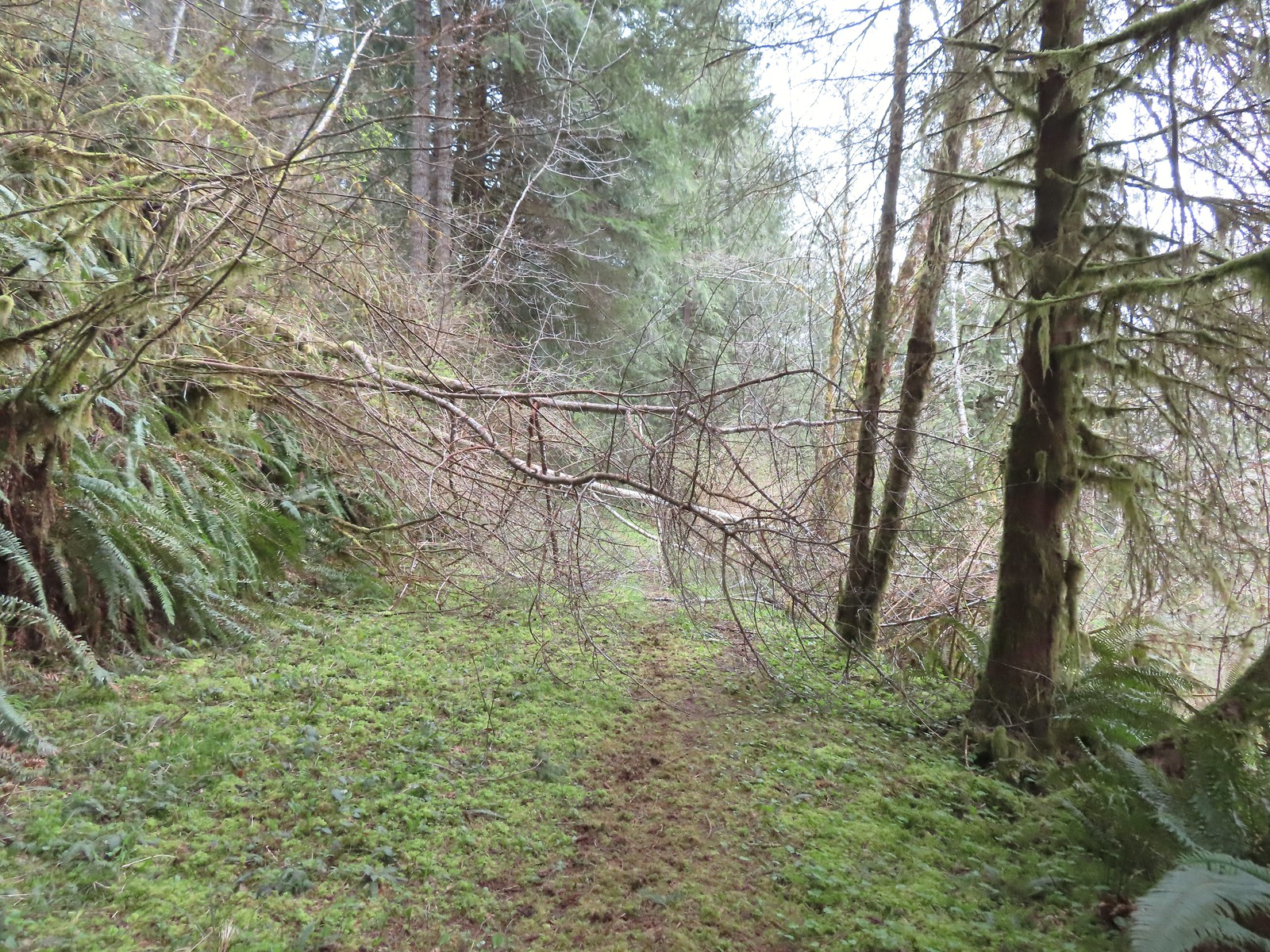
 The creek was actually pretty deep here with the recent wet weather we’d had.




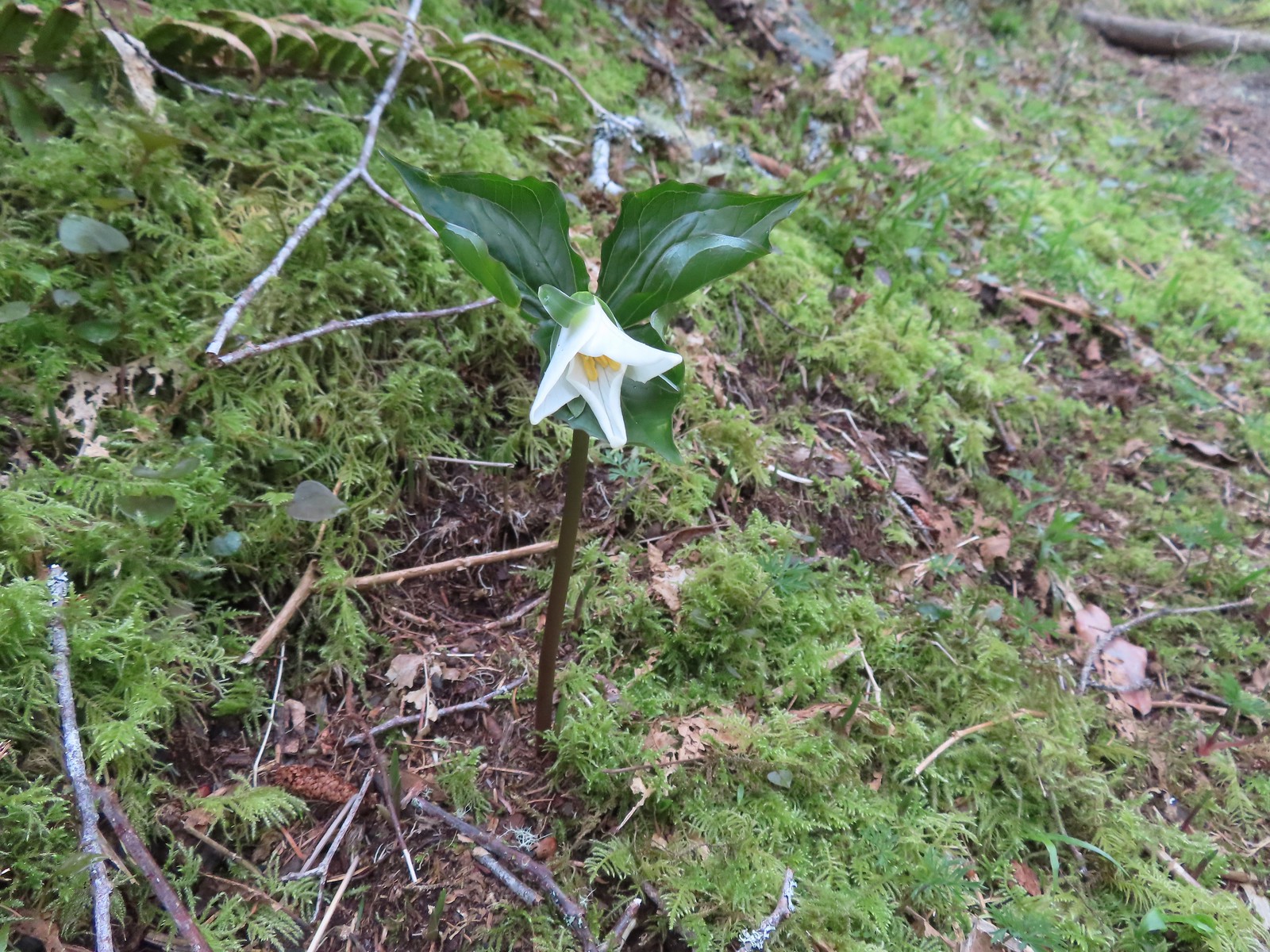 A trillium unfurling.
 Violets
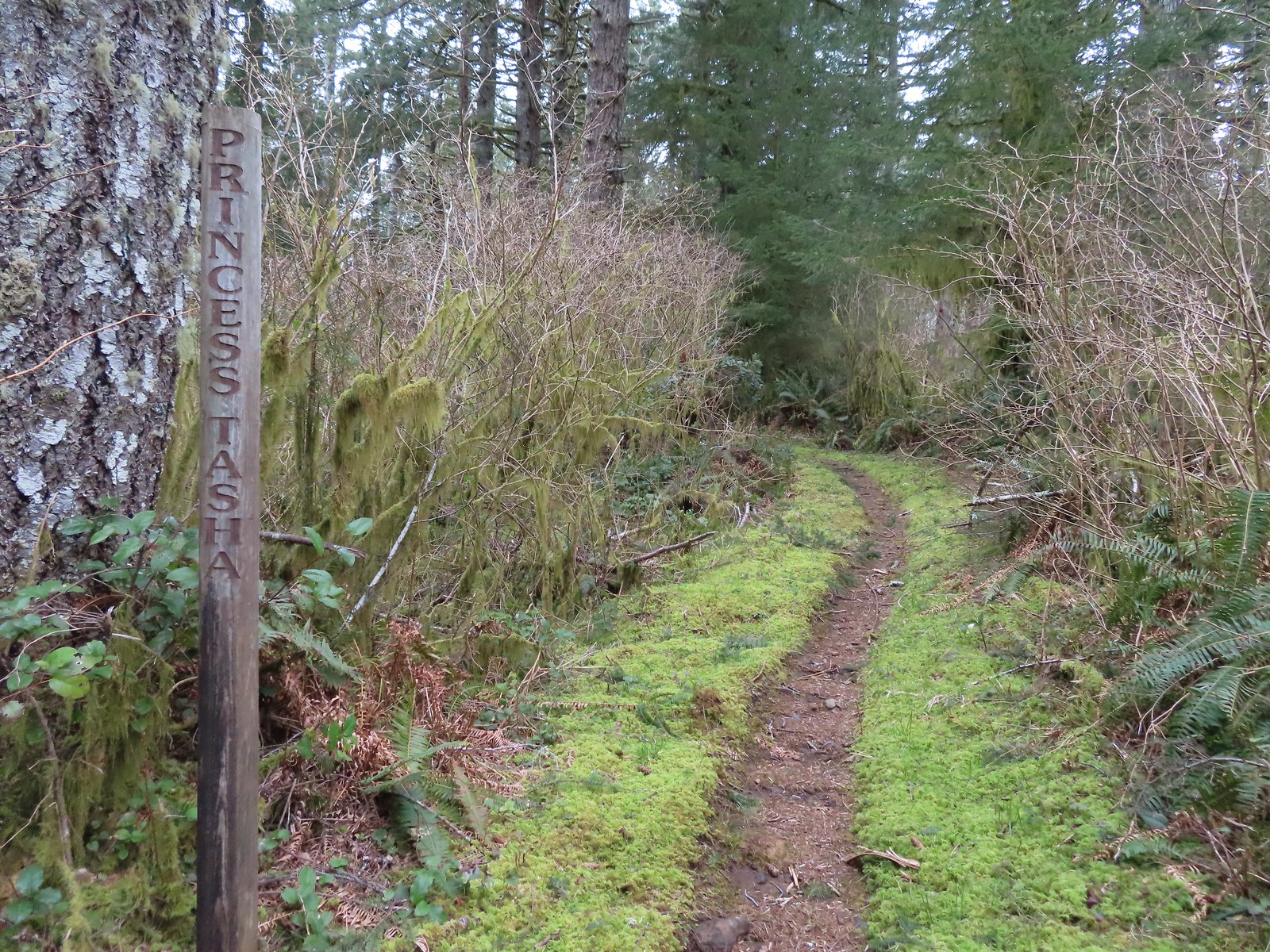
 Several trails have similar markers with most of them being at or near junctions. This one was just alone along the trail.


 Rough skinned newt
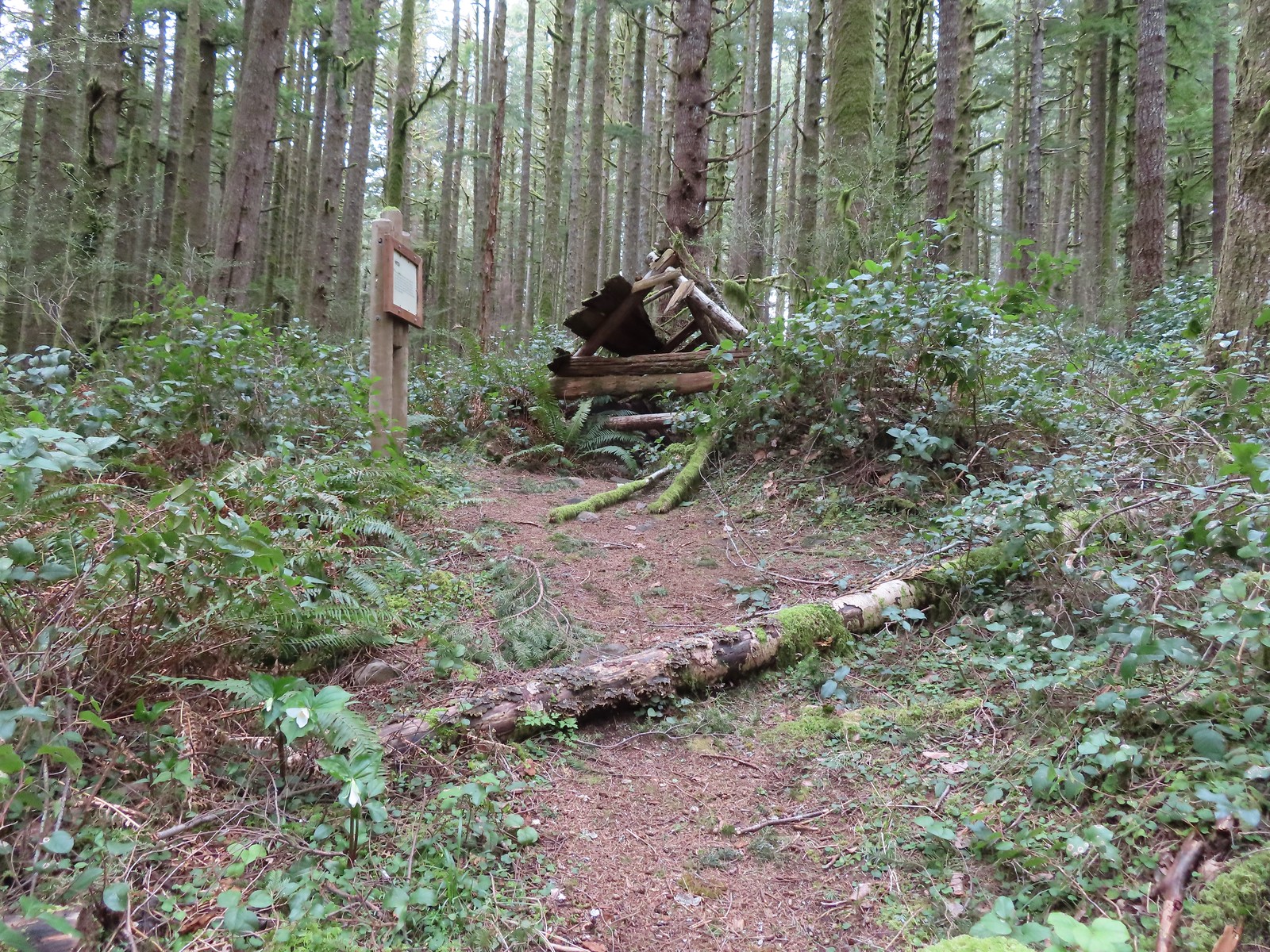
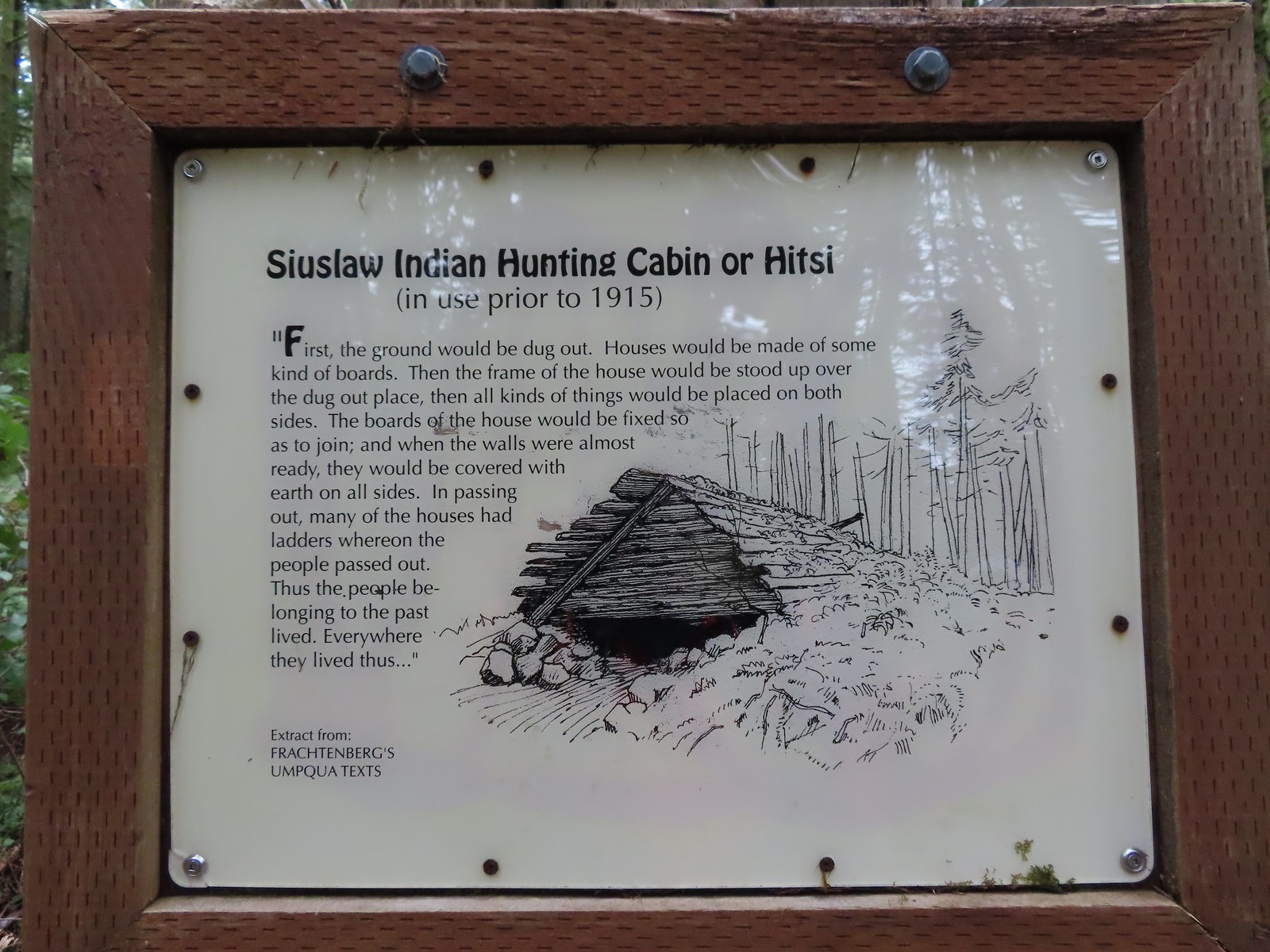

 Time has not been kind to the hitsi.


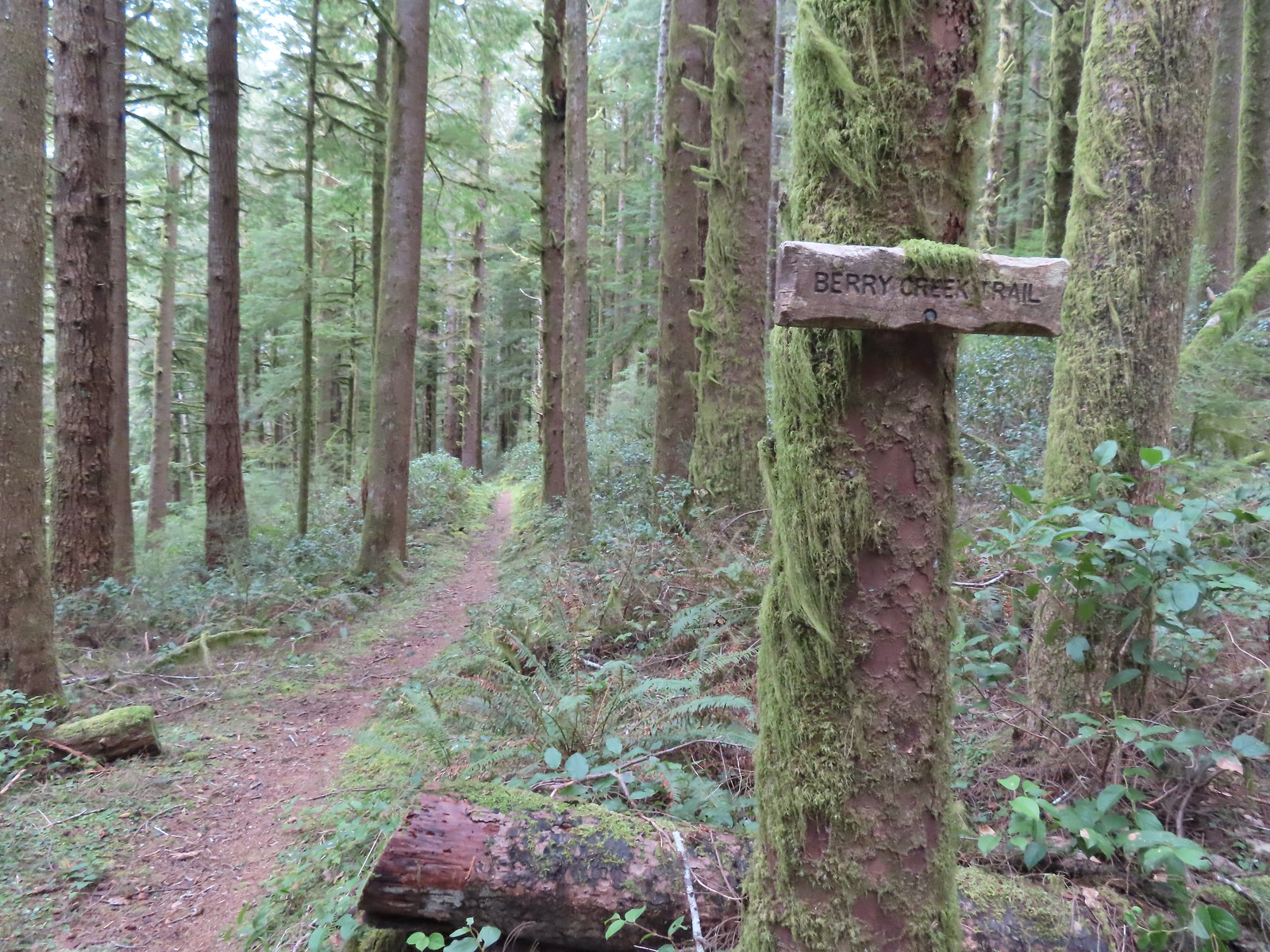
 The trail briefly followed an old roadbed.
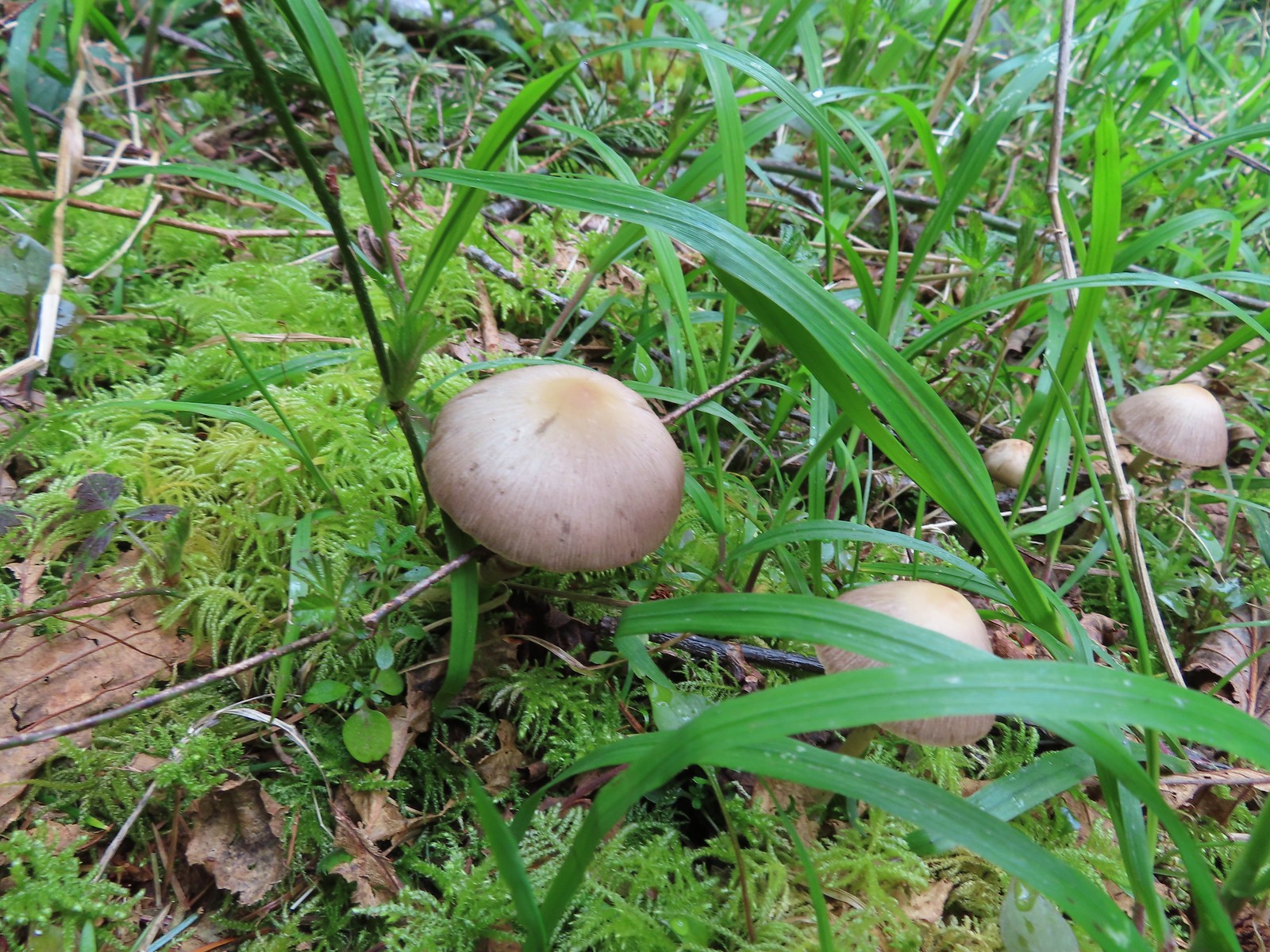 Mushrooms along the roadbed.
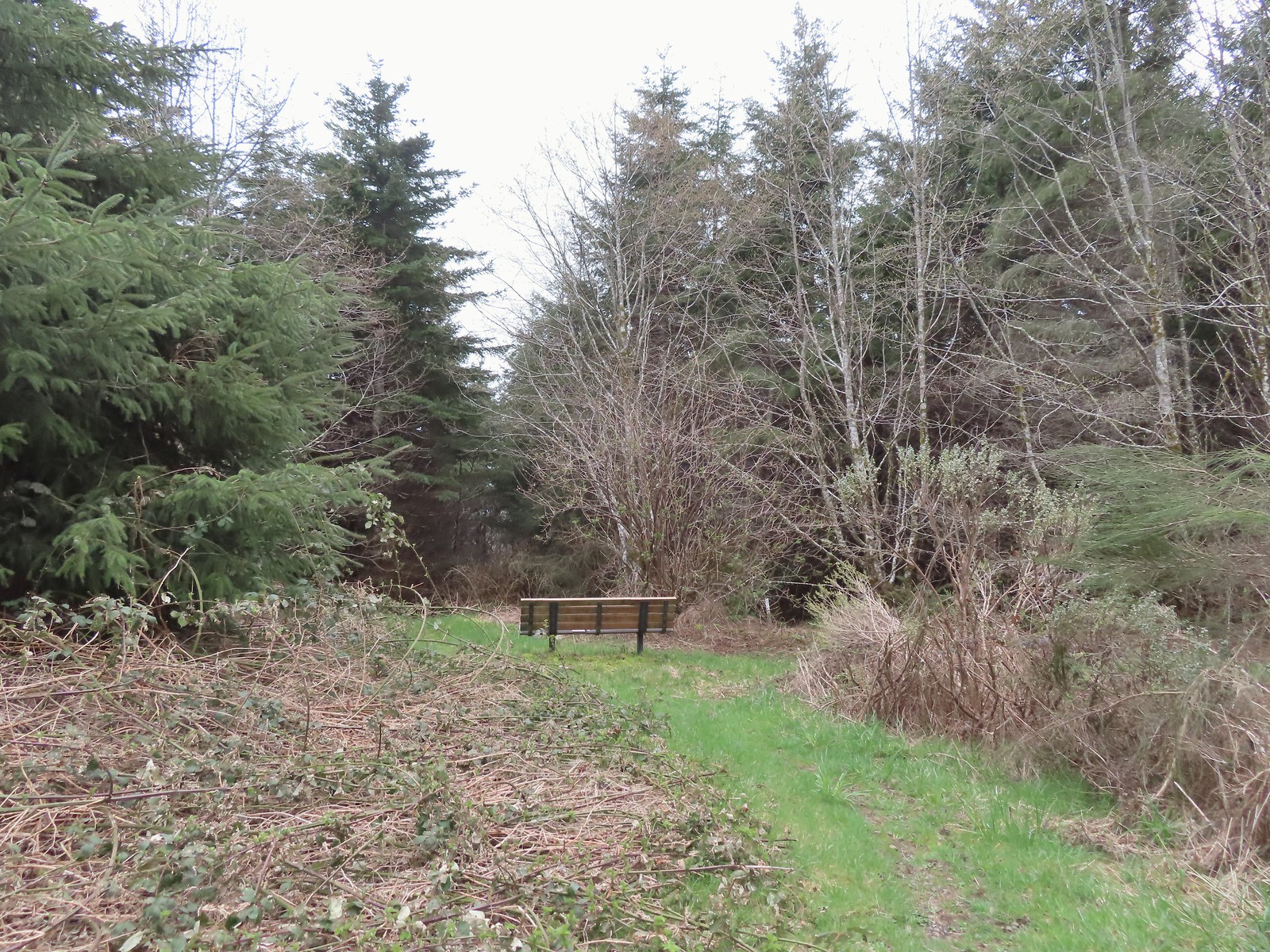 Another bench with a questionable view at the end of the roadbed segment.
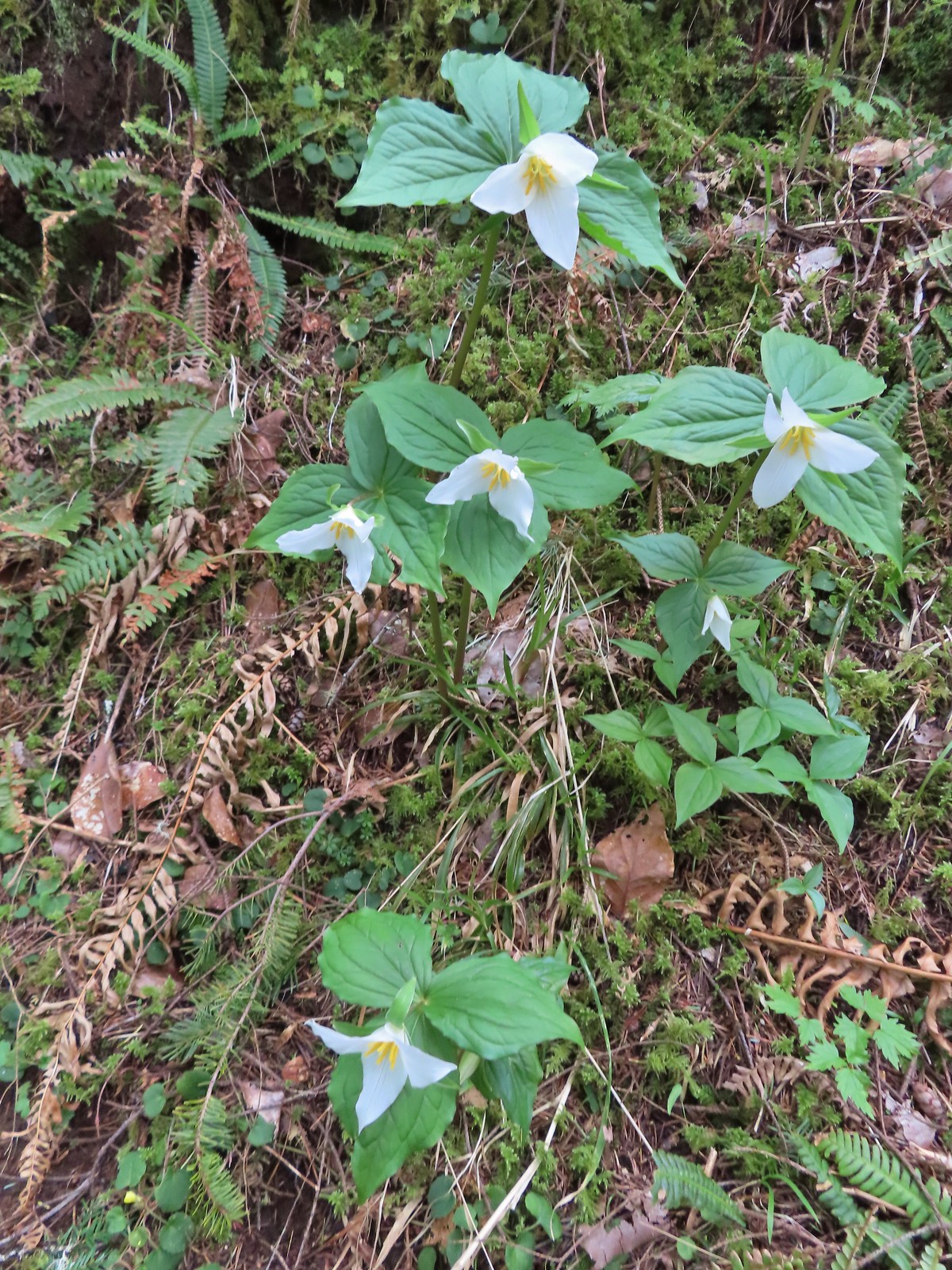 Flowers are a few weeks behind this year but there were quite a few trillium along the trails.
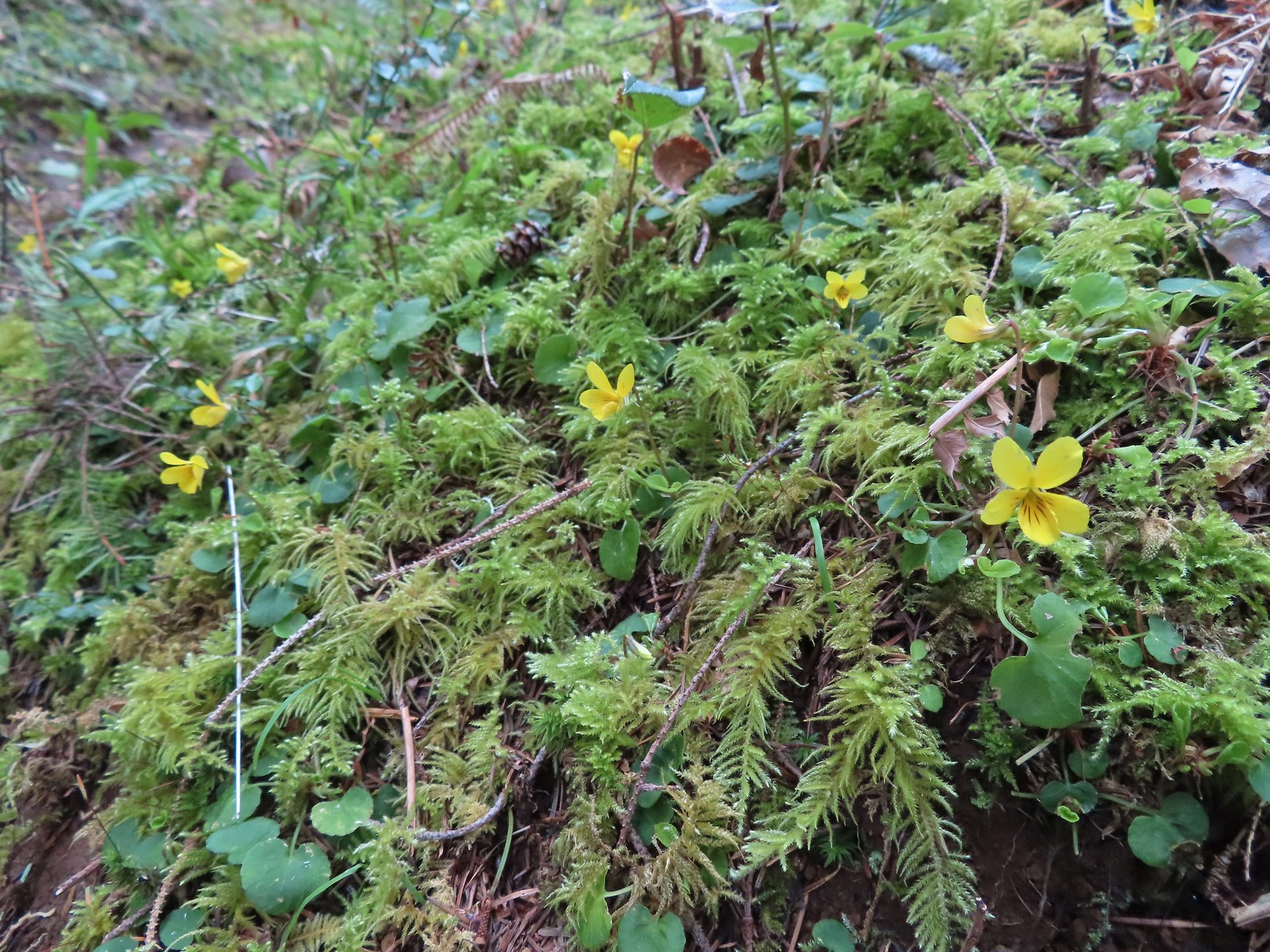 Violets were the other abundant flower.
 Red flowering currant beginning to bloom.
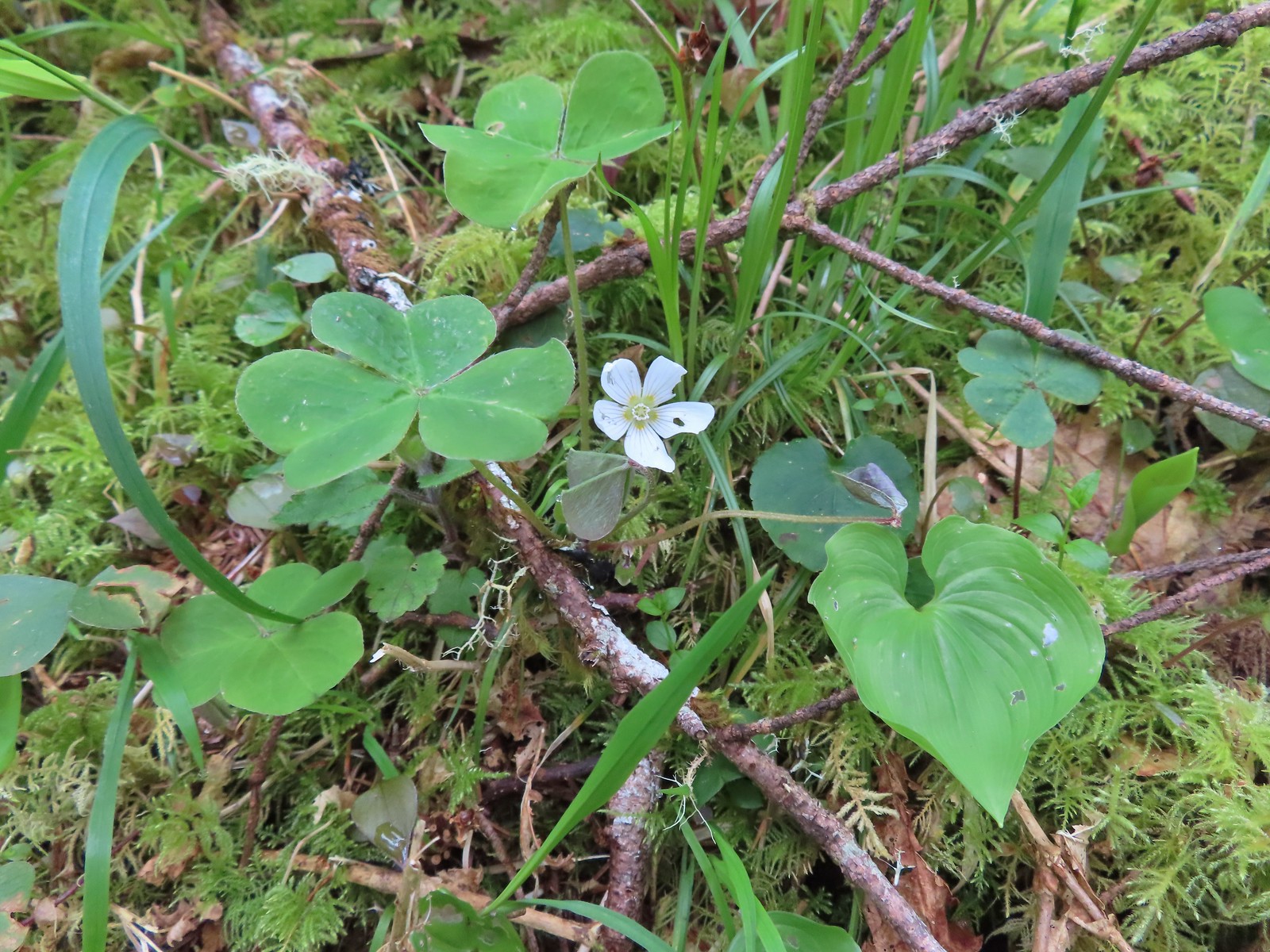 Wood sorrel
 This looked to be a fairly recent uprooting.
 A cute fungus
 Looking back after fording.

 We made a sharp right here onto the Nelson Ridge Trail.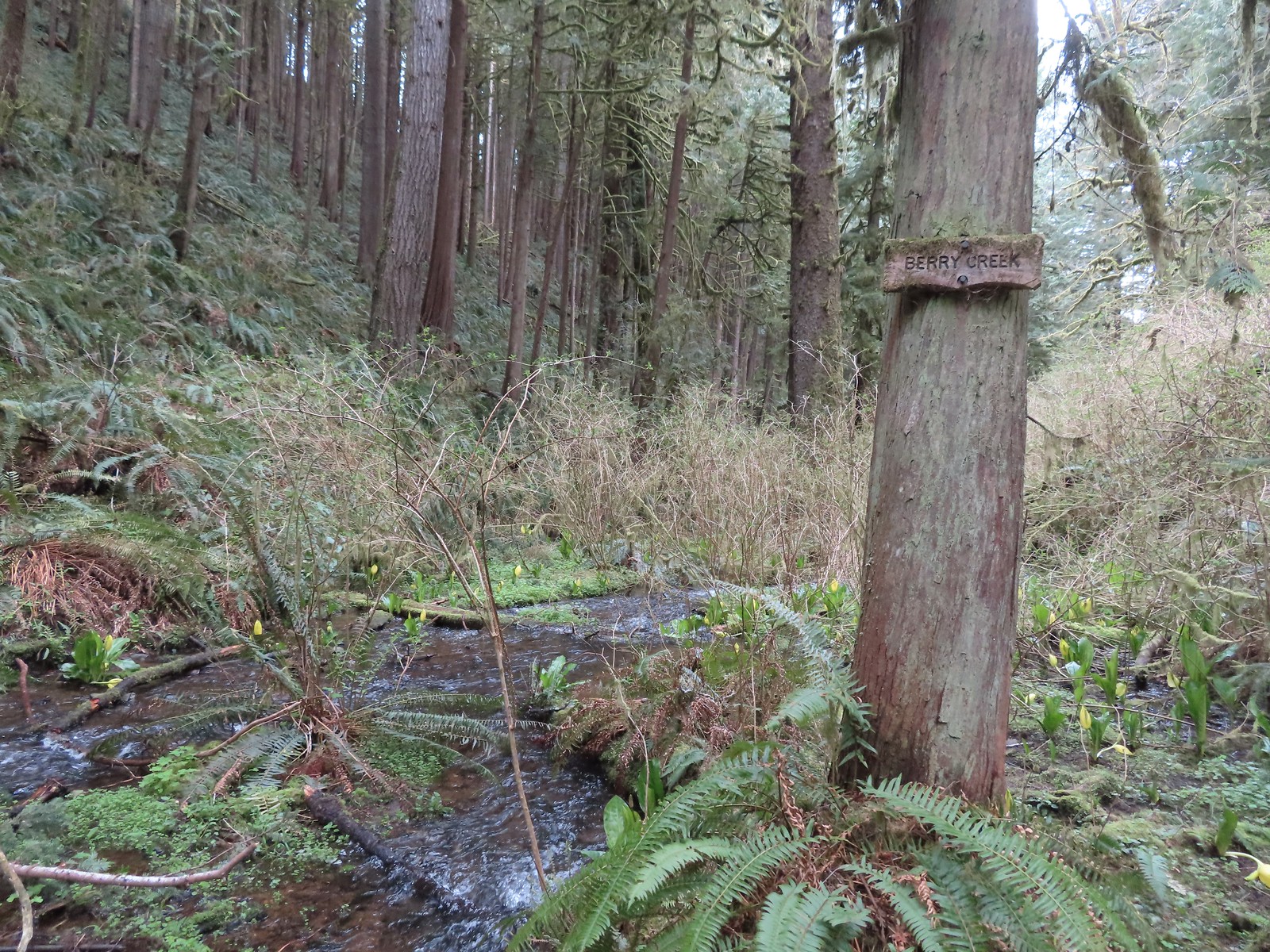
 Skunk cabbage at Berry Creek.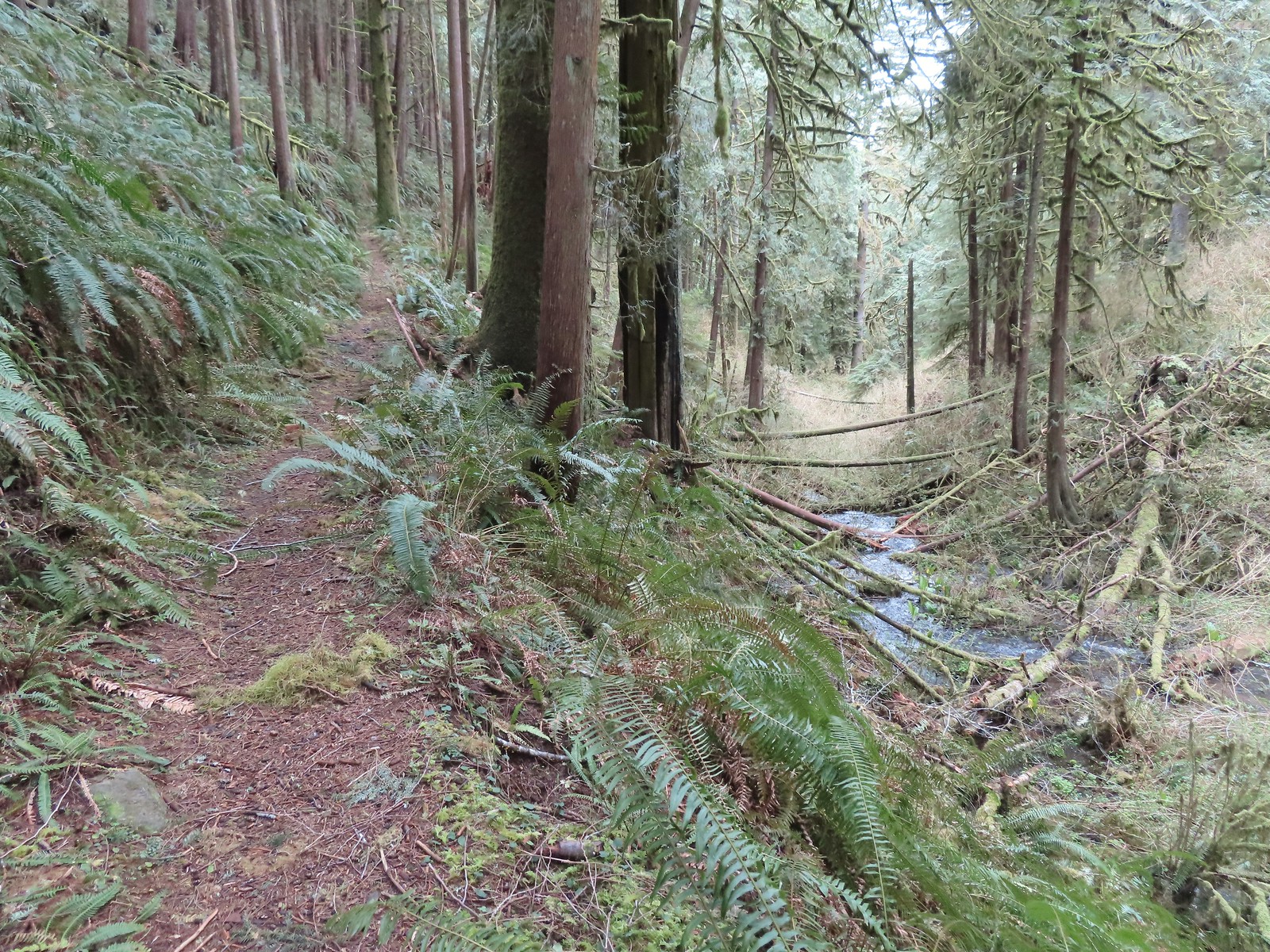
 A few bleeding-heart blooms.
 At least this bench had a view of the Pacific Ocean.
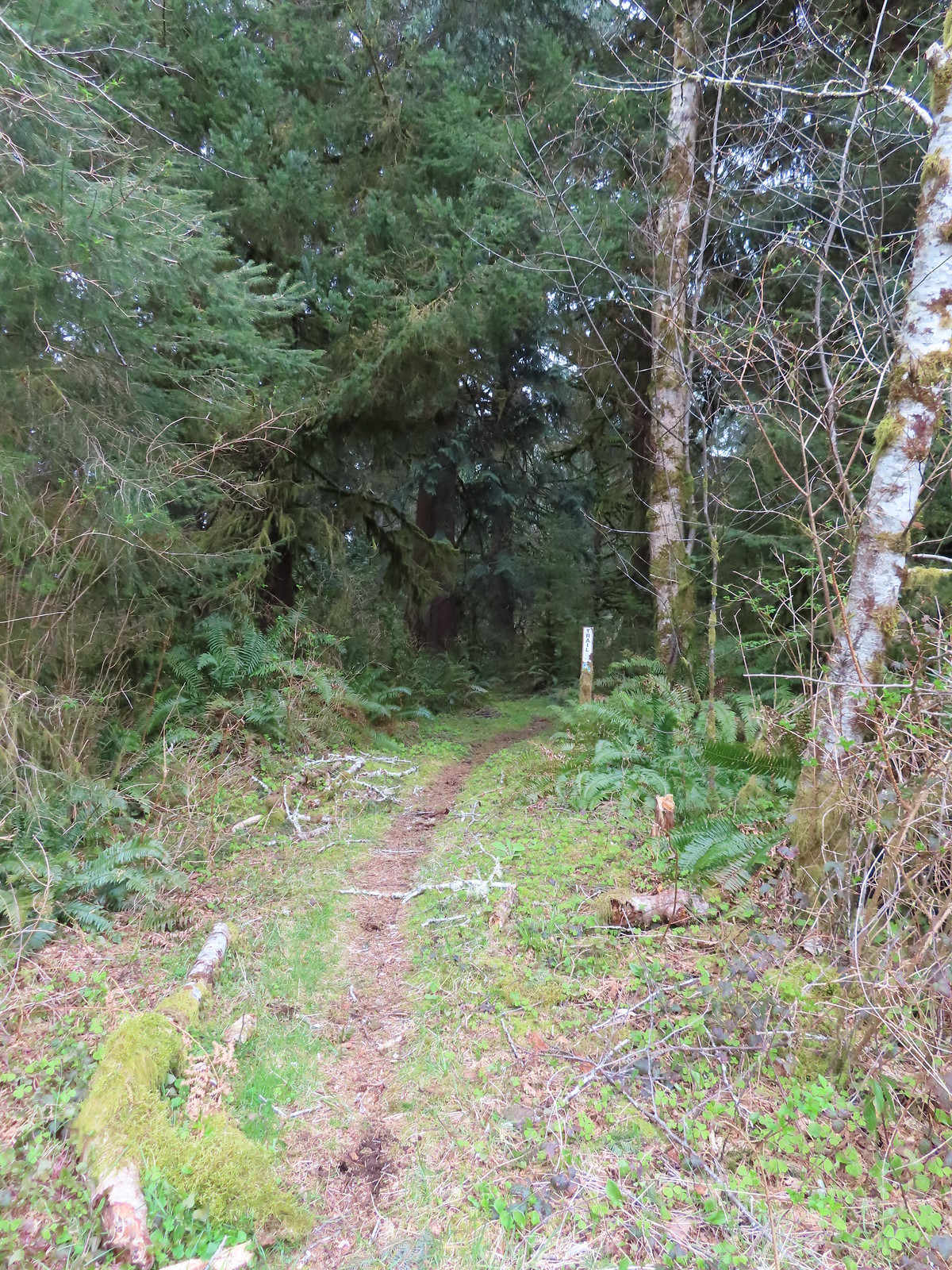 Passing through a stand of trees along the ridge.
 Another bench.
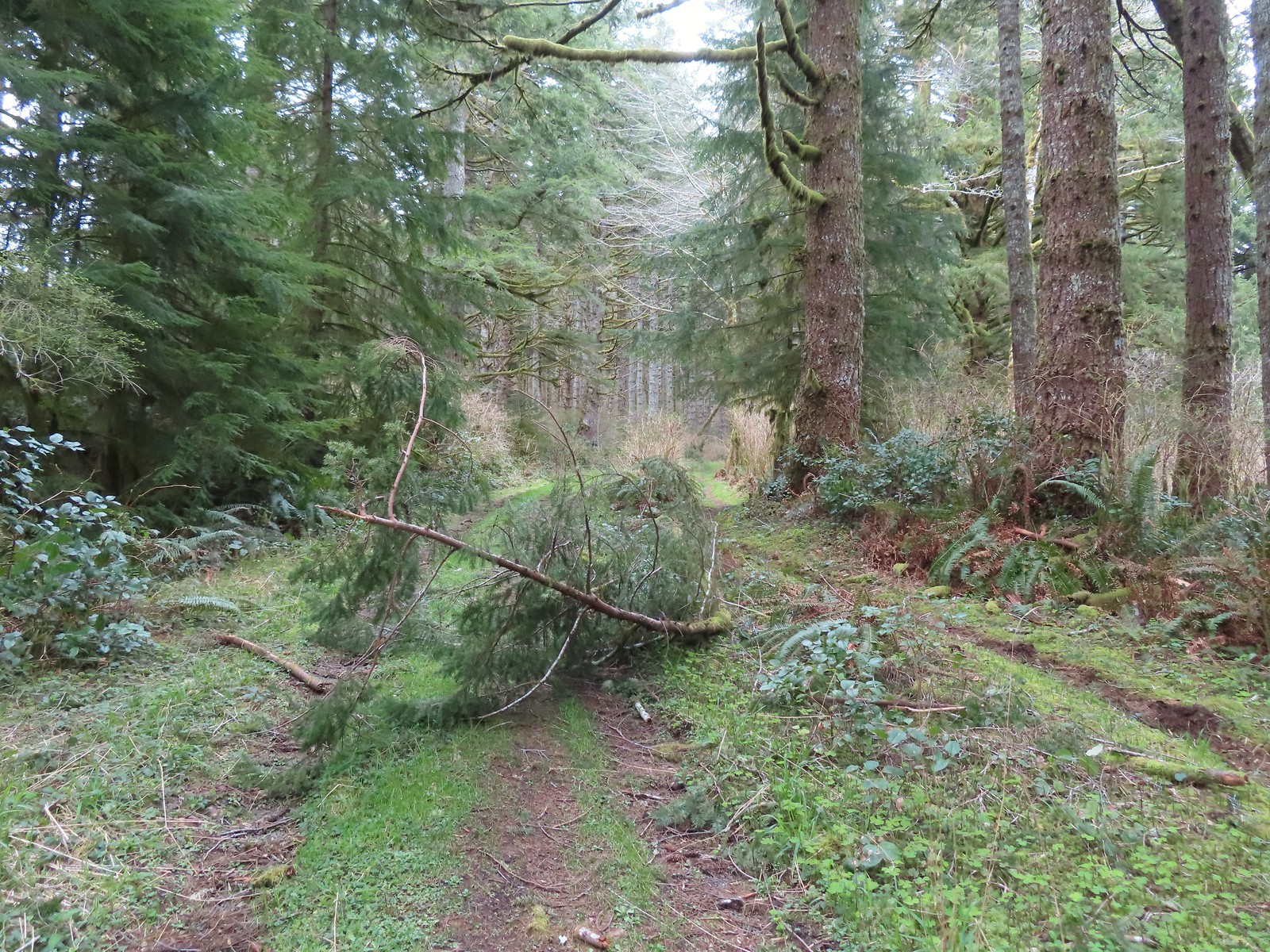
 Some easy to walk around blow down.
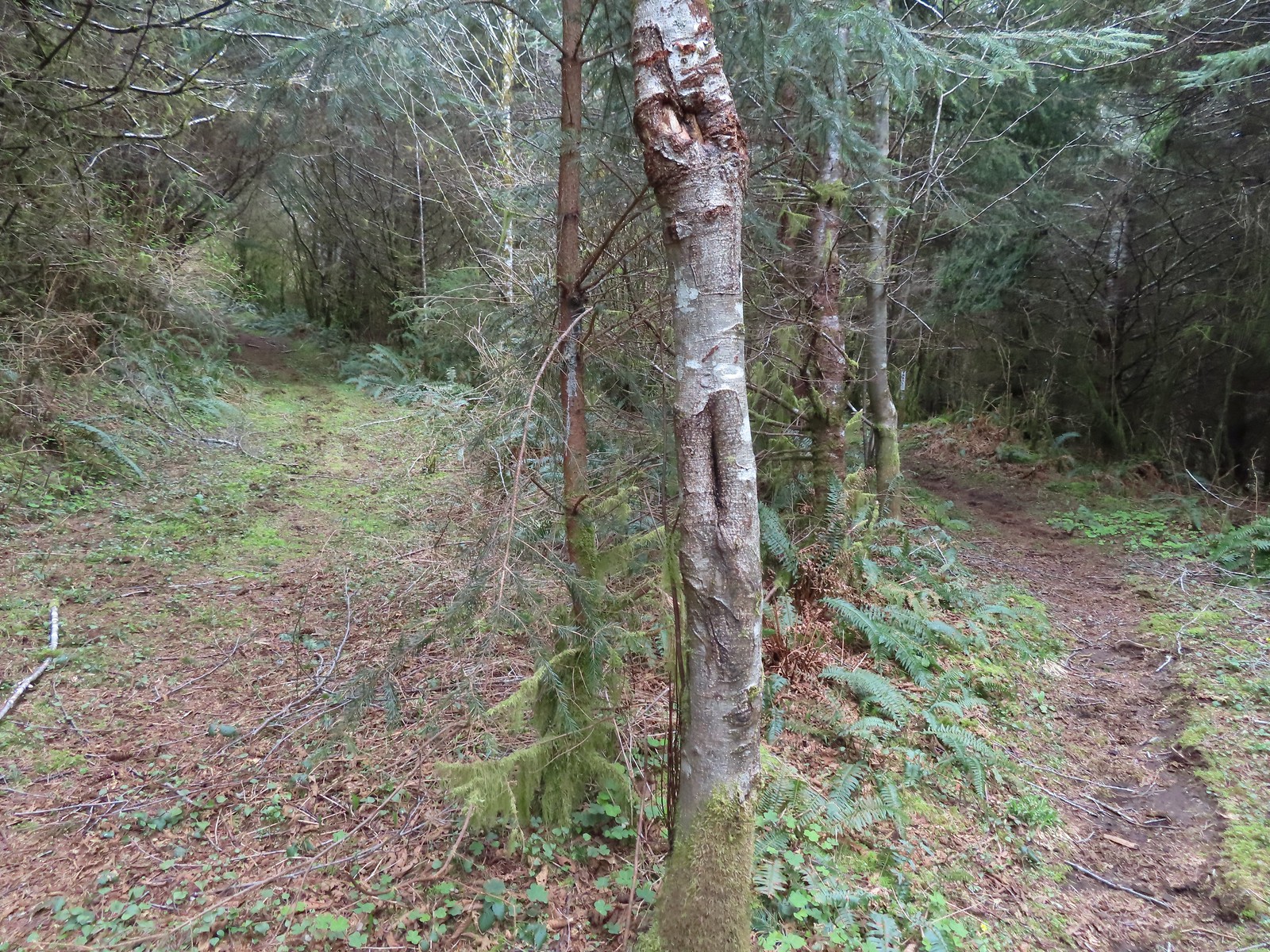 We couldn’t tell what this road/trail to the left was on the map so we stayed right to be safe at this junction.
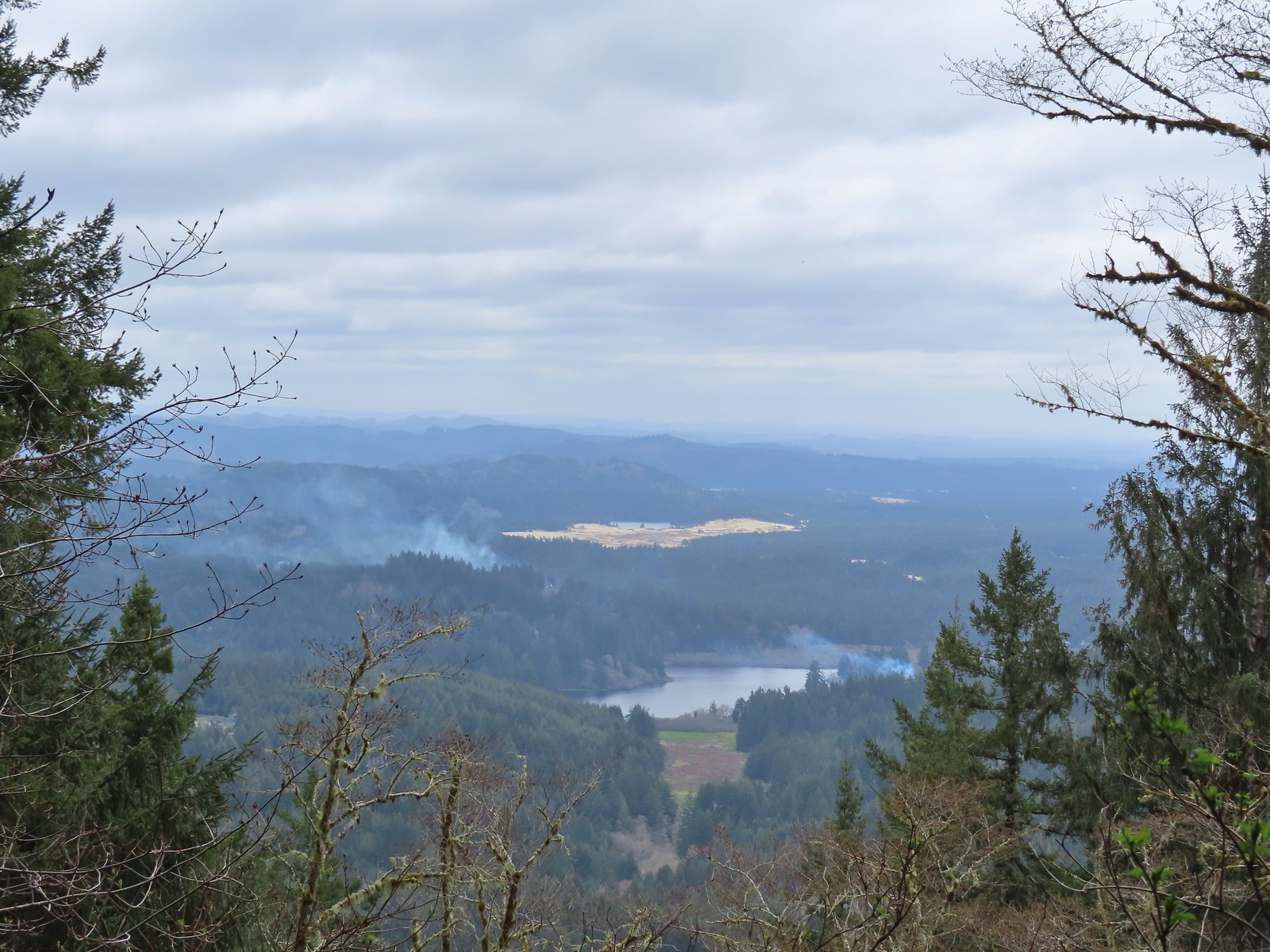 I think that is Sutton Lake and beyond the sand is Clear Lake.
 The end of another short roadbed section.
 I walked on this roadbed for a bit just to do something a little different than on the first visit when I stuck to the trail (on the right).
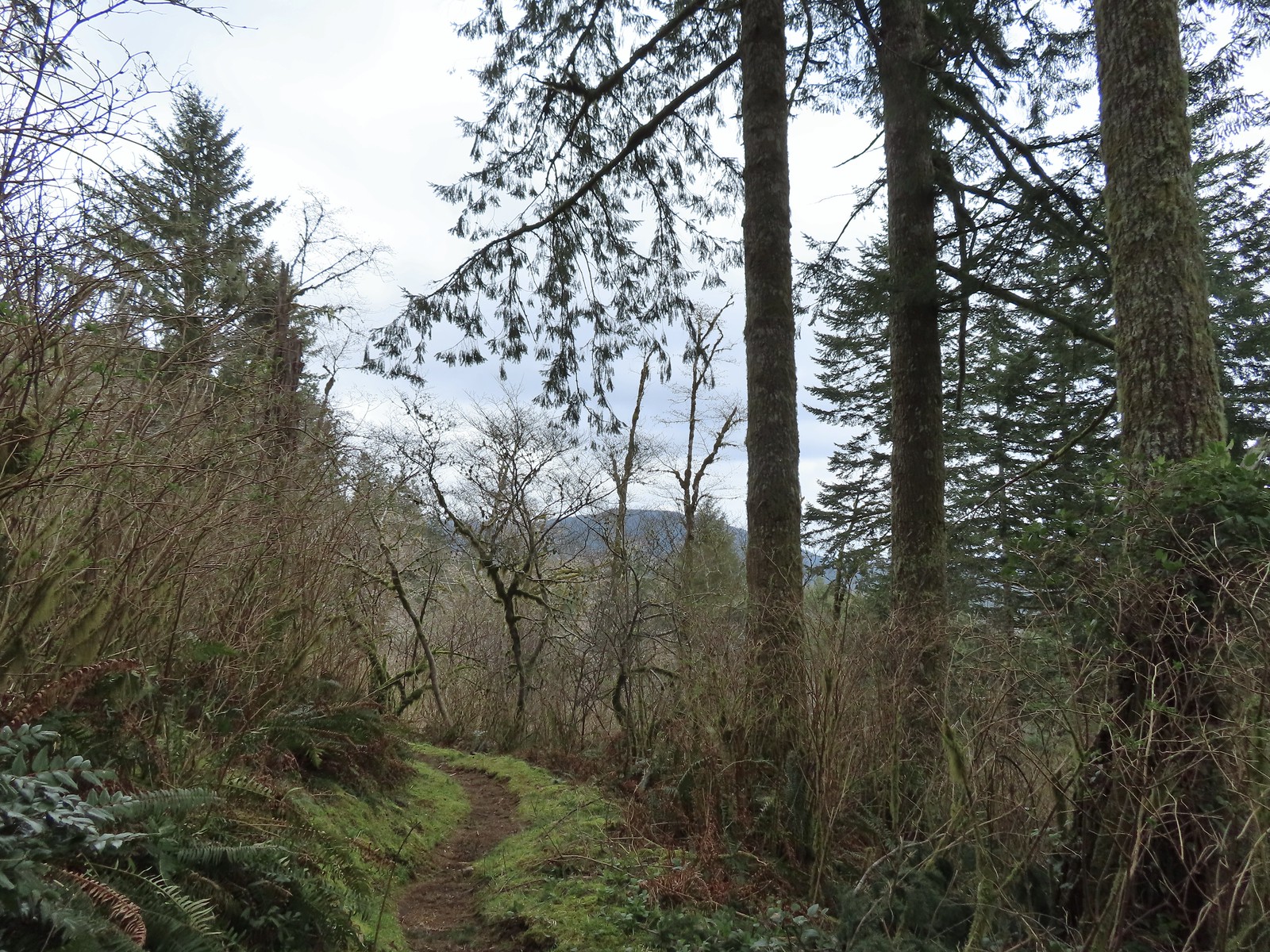 Starting to descend toward Dry Lake.
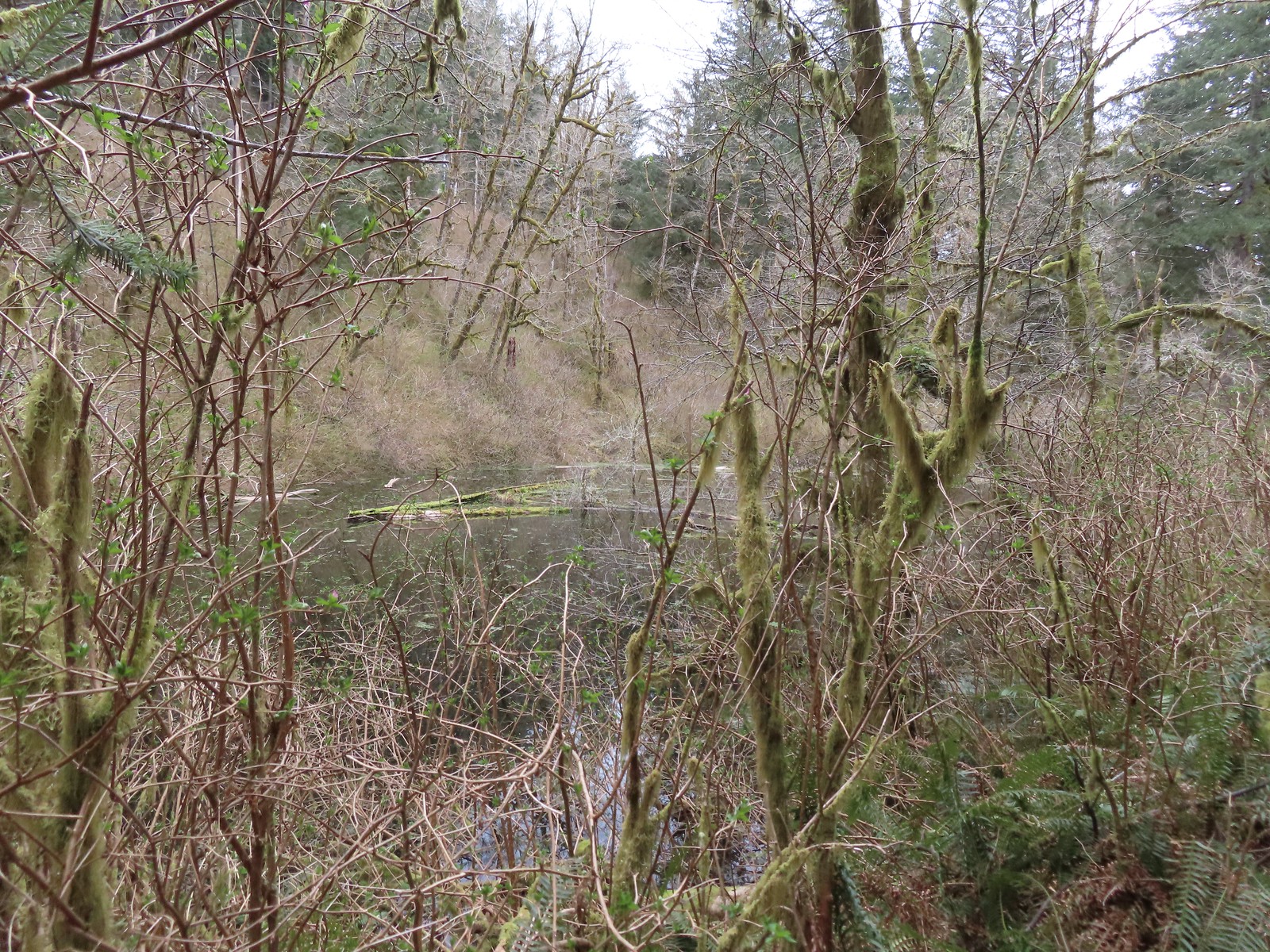 Dry Lake
 Back at the trailhead.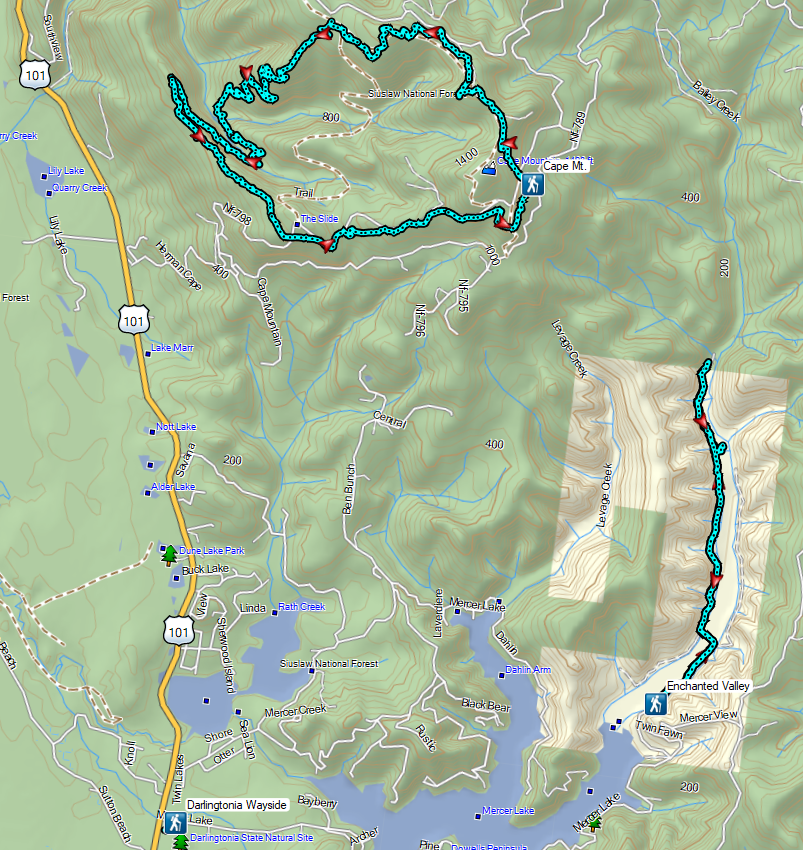
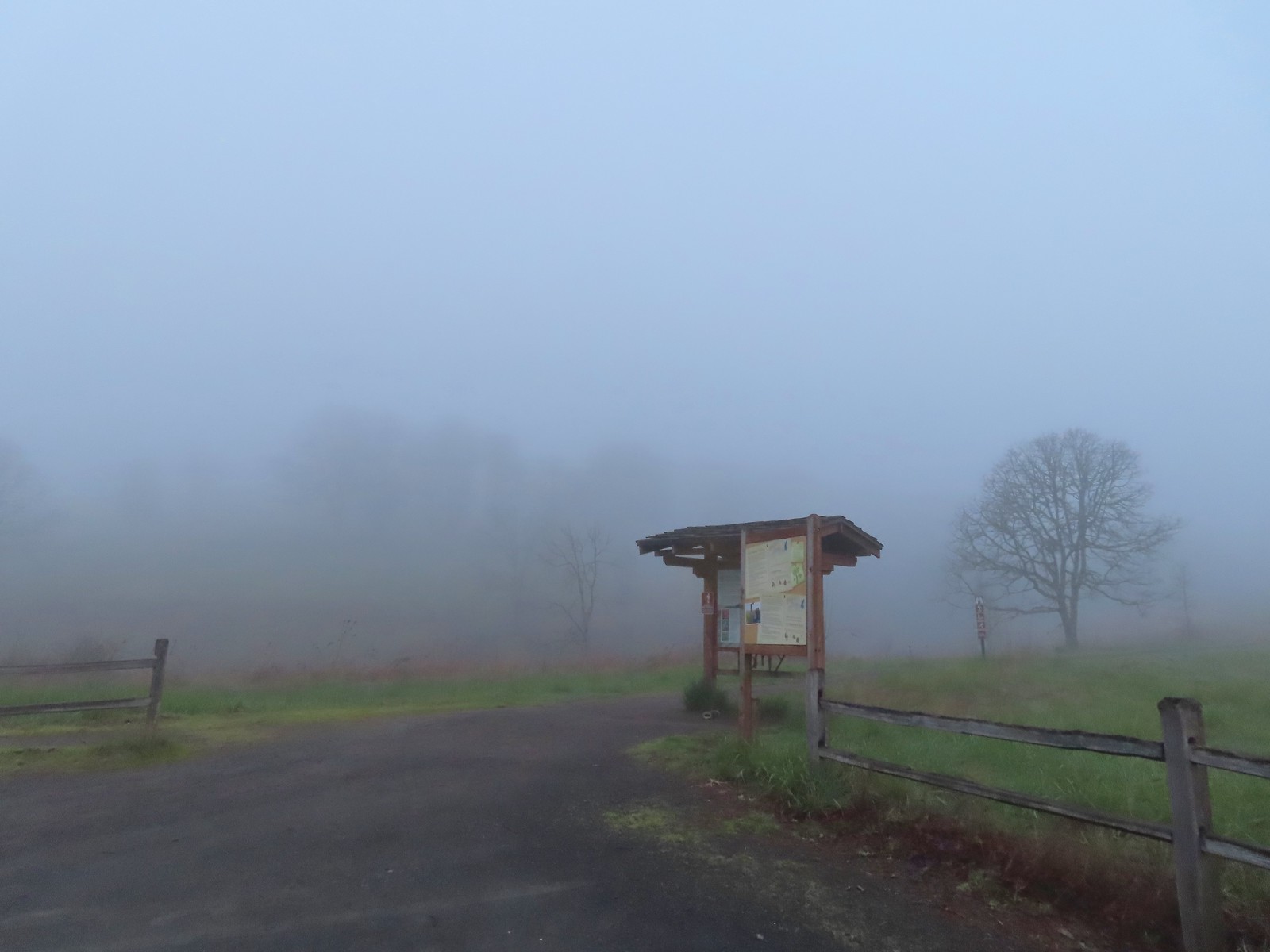

 There were a few buttercups blooming in the grass and not much else along this side of the Memorial Trail.
 A lone strawberry blossom.
 The Inter-Tie Trail was a wet and muddy affair. I could hear a lot of birds in the surrounding trees but couldn’t make any of them out unless they flew right in front of me.
 I went left here which got me out of the slick mud but onto even wetter grass.
 Coming up on the marsh which is just on the other side of the dip in the road.
 Two rabbits trying to decide if they were going to keep eating grass or race off into the blackberry bushes.

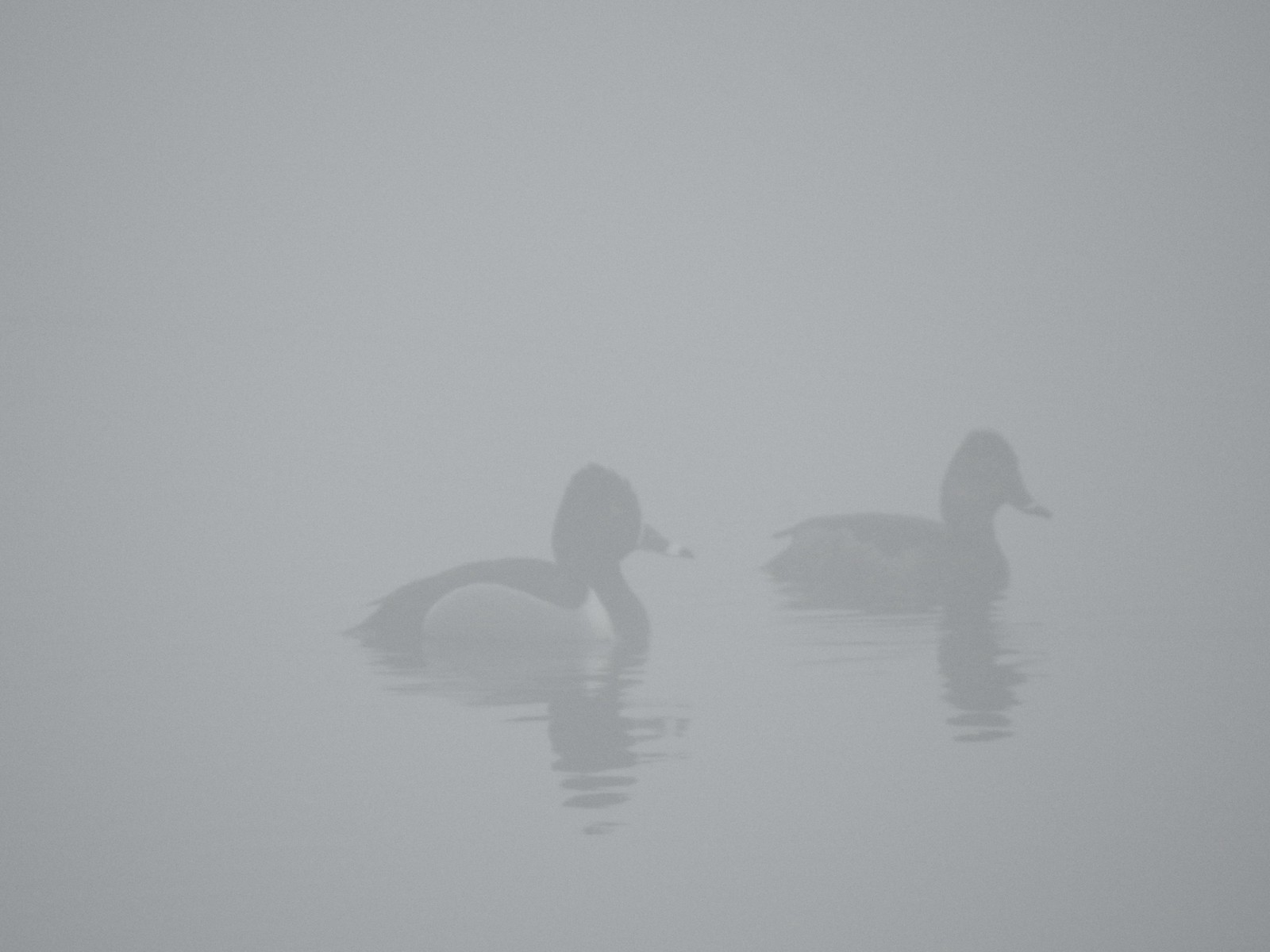 Ring-necked ducks
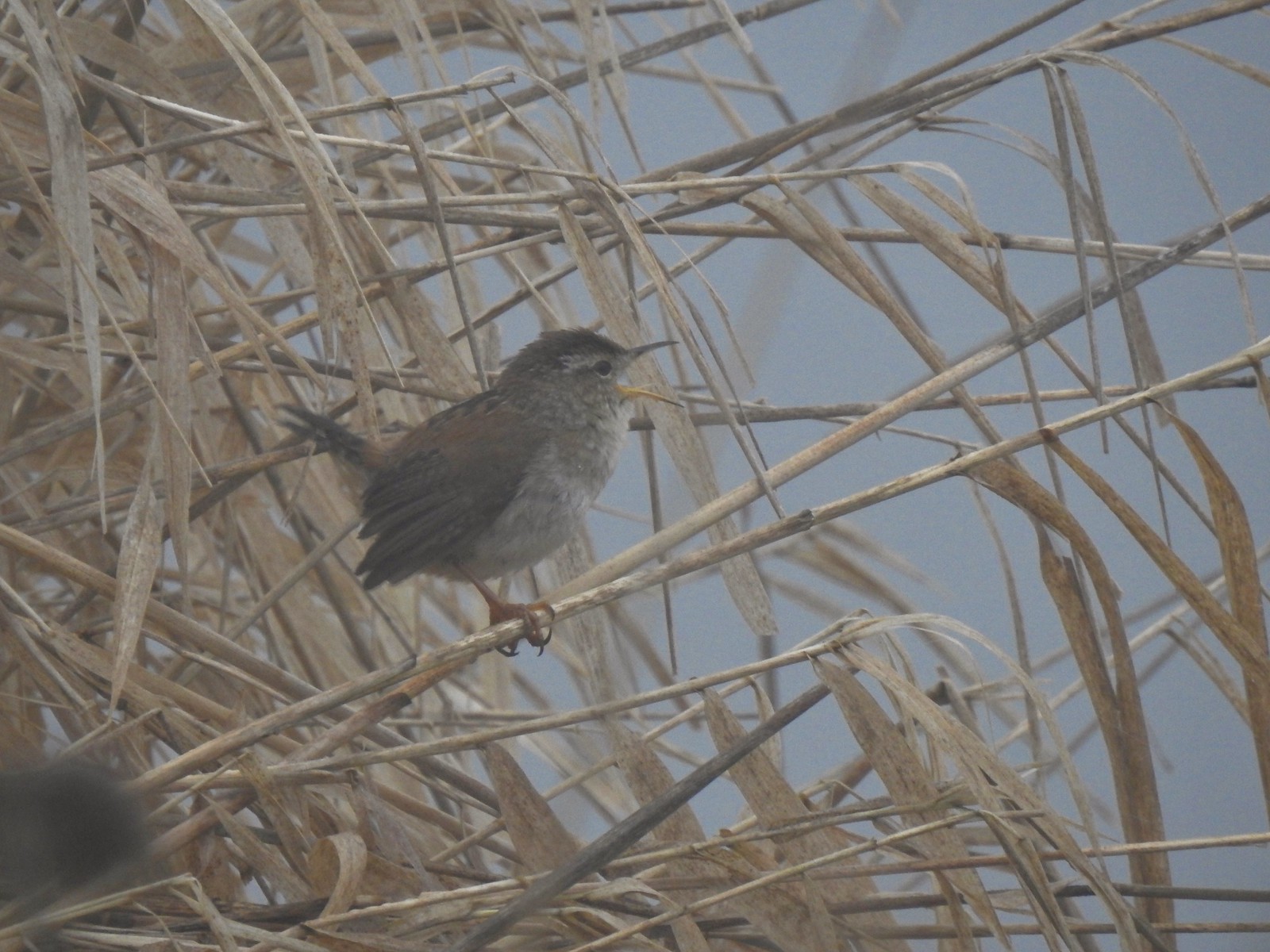 I think this is a marsh wren.

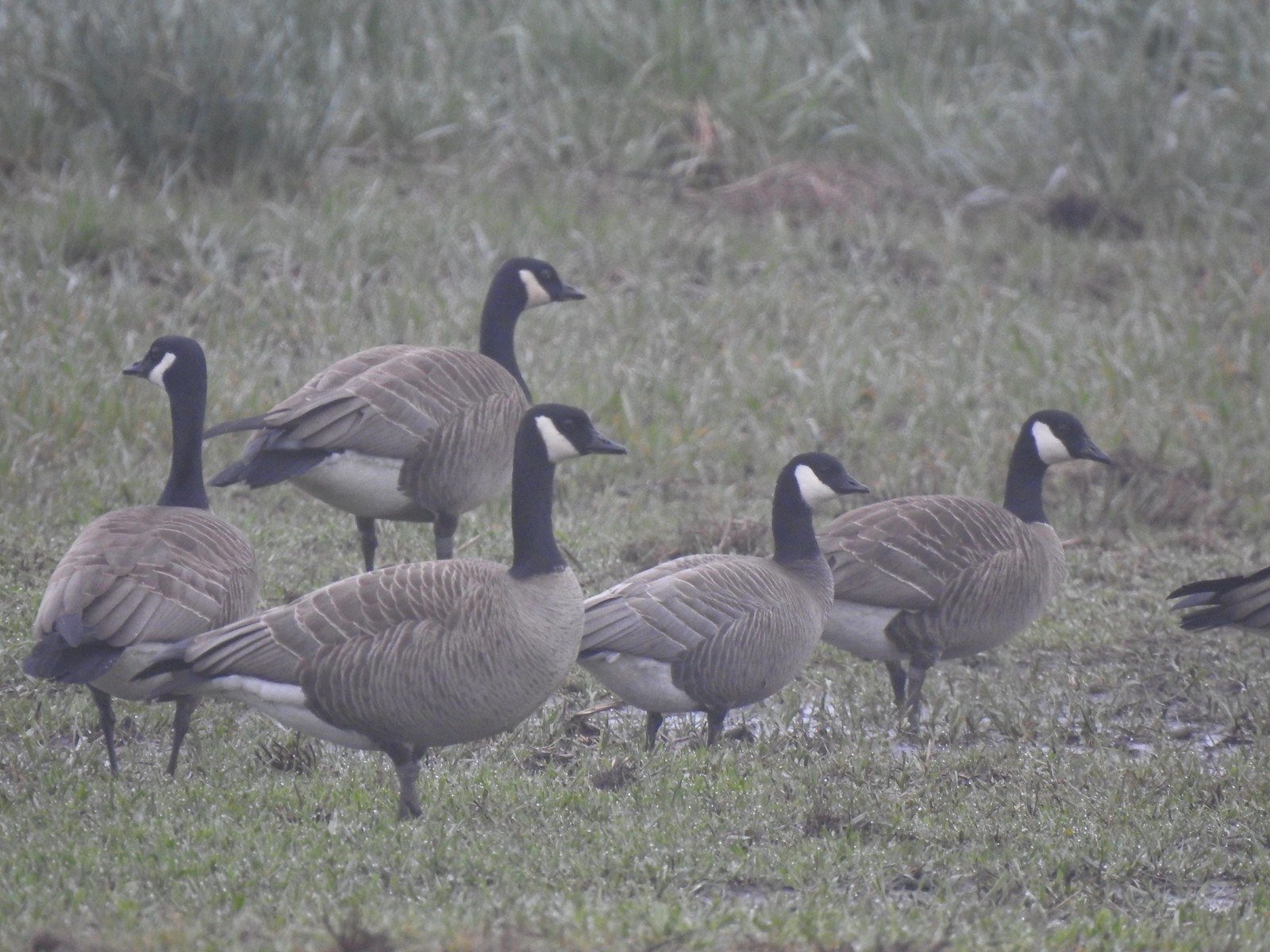 I think the 2nd goose in from the right is a cackling goose while the others are Canada geese. It’s a bit smaller and the white patch is shaped differently.
 Swallows
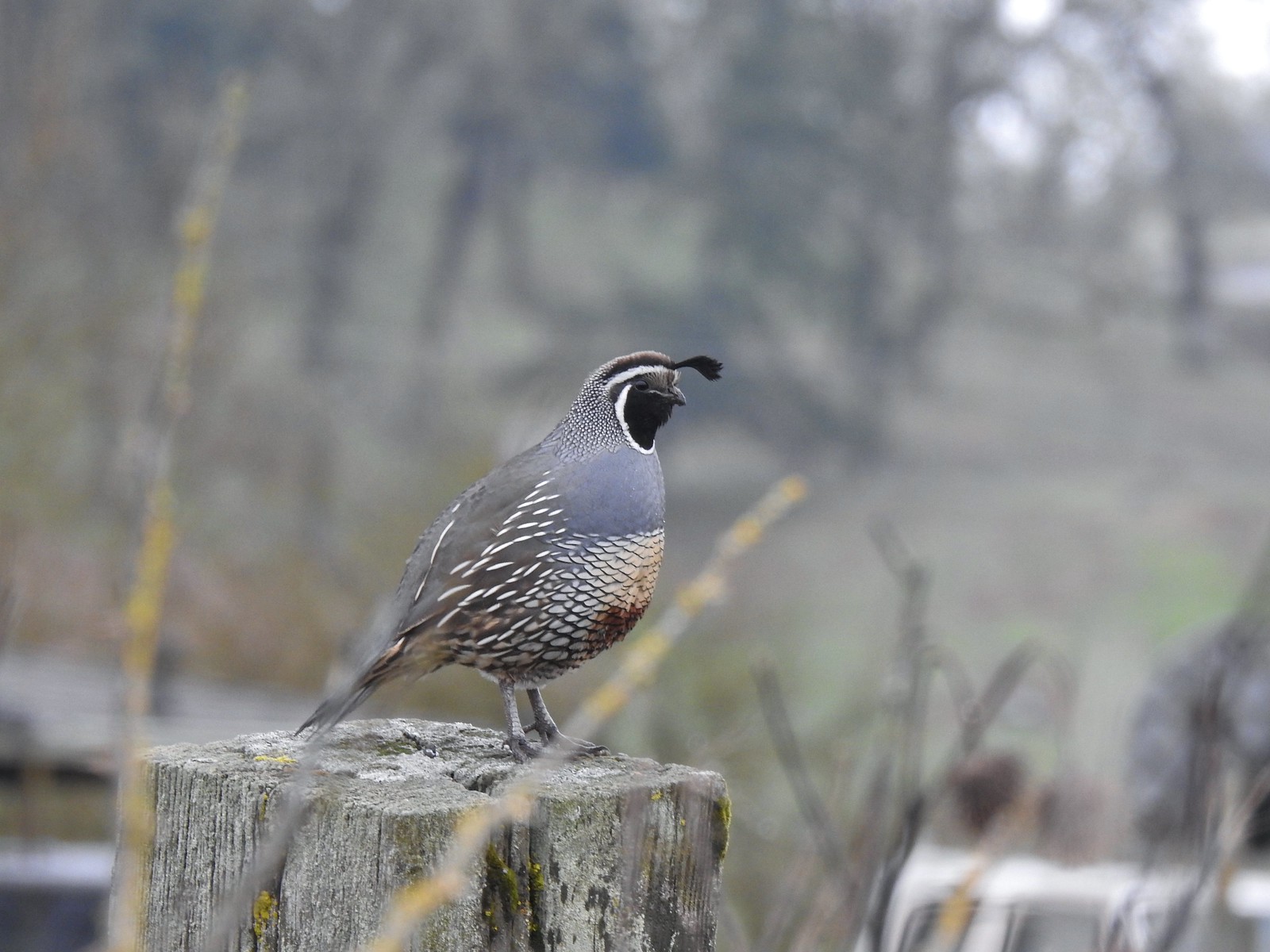 California quail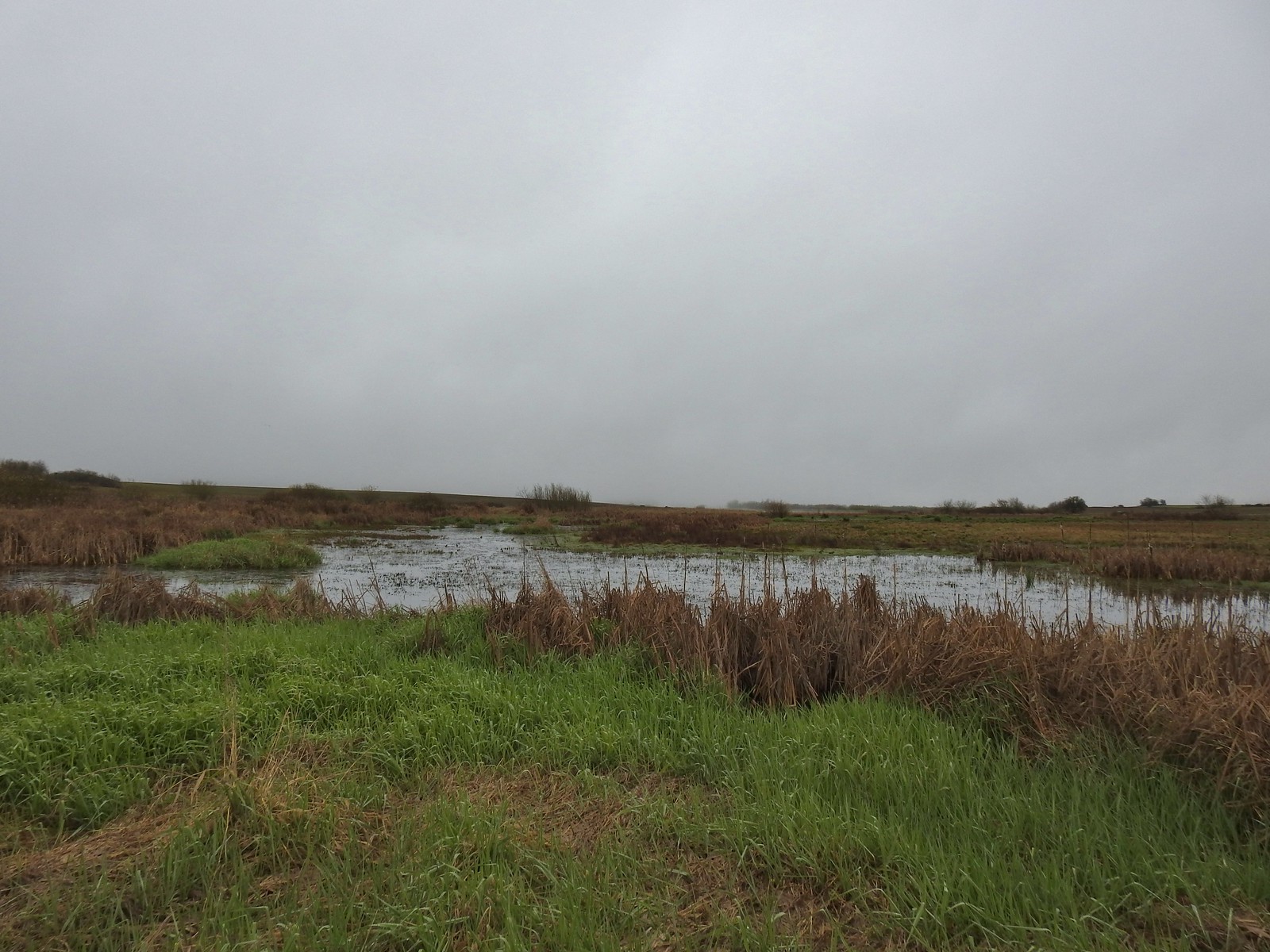
 Cinnamon teals
 Northern shoveler drake
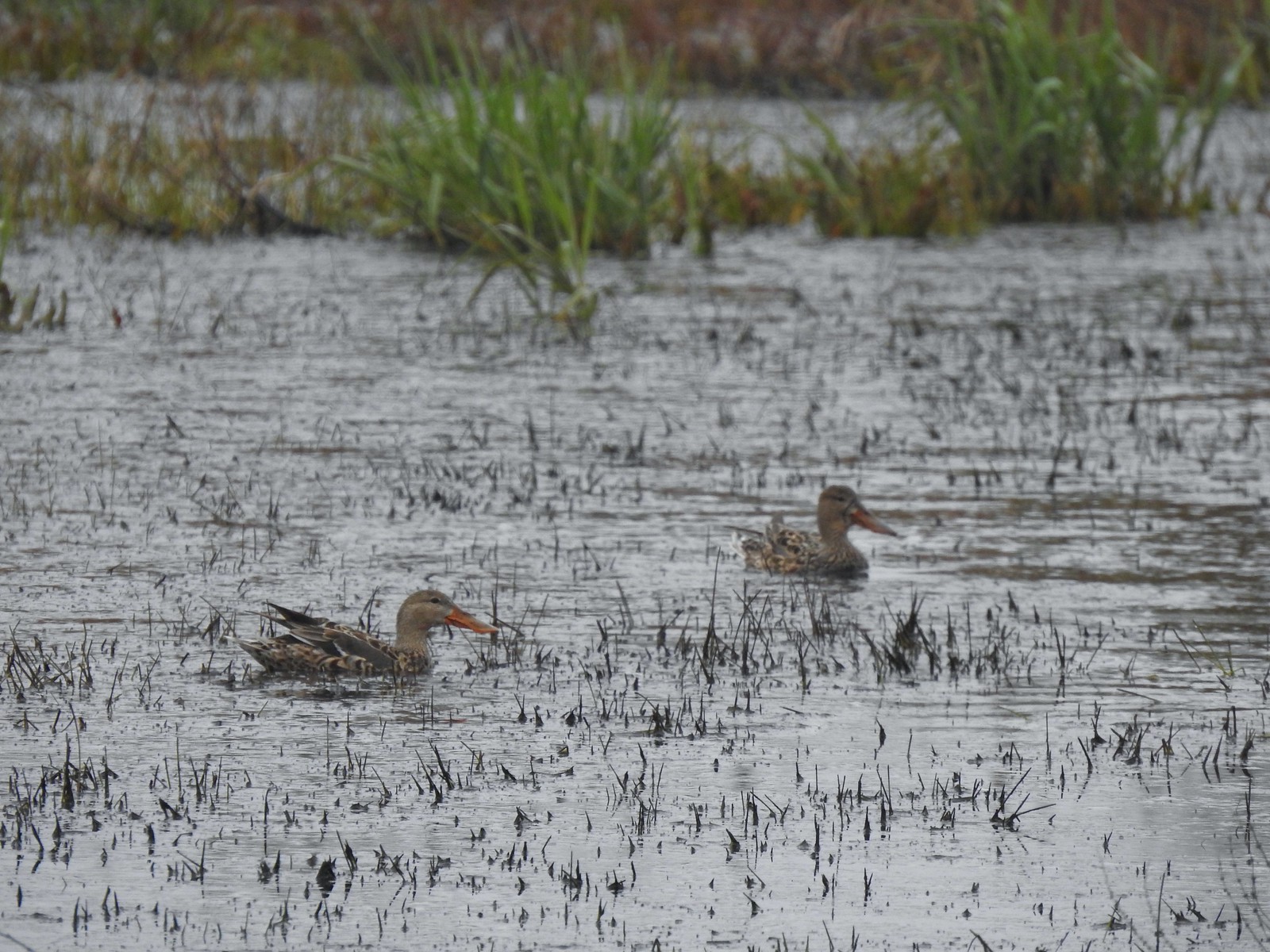 Northern shoveler females
 Signs at the Smithfield Road Trailhead.
 Buffleheads
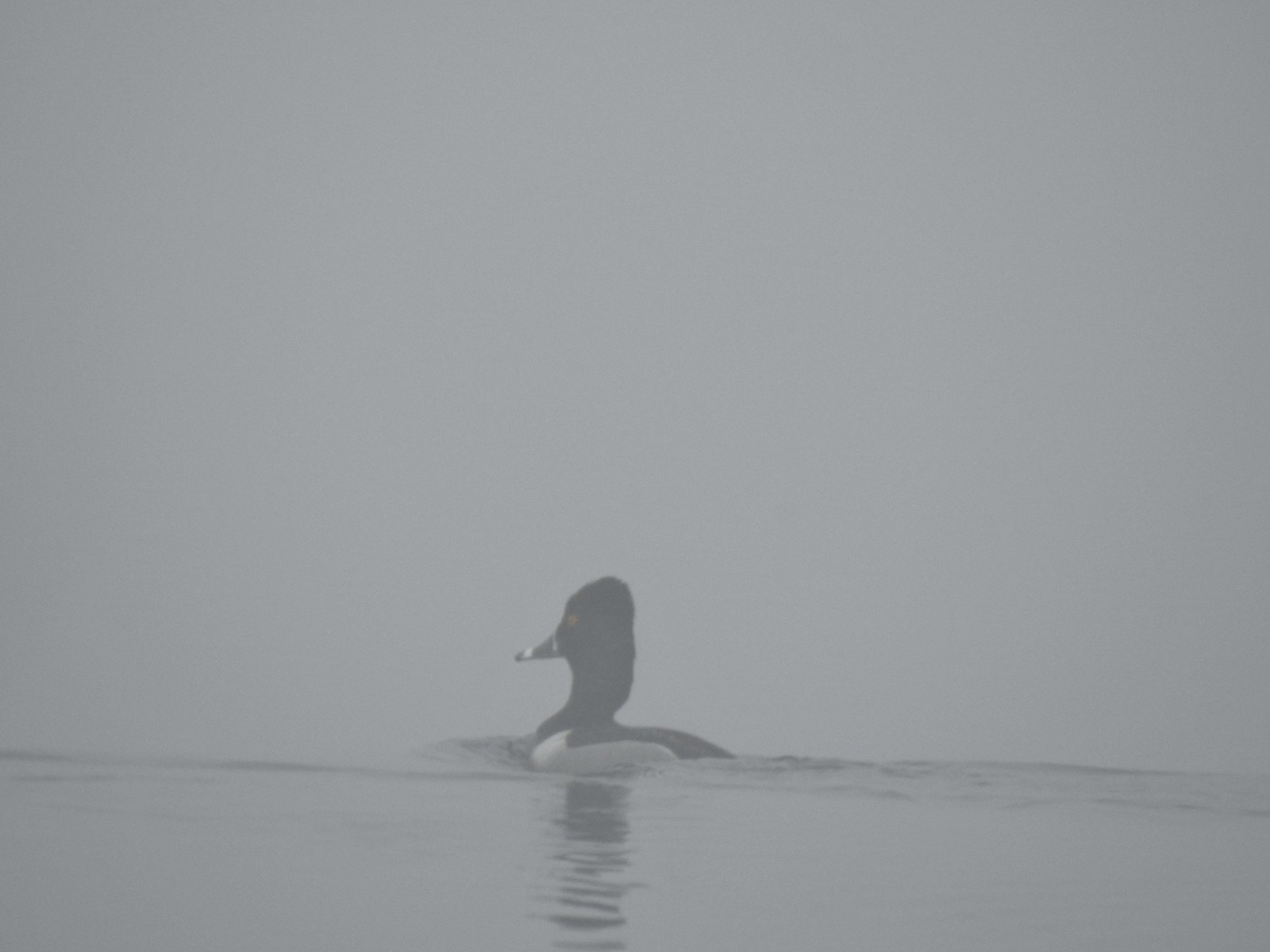 Ring-necked duck
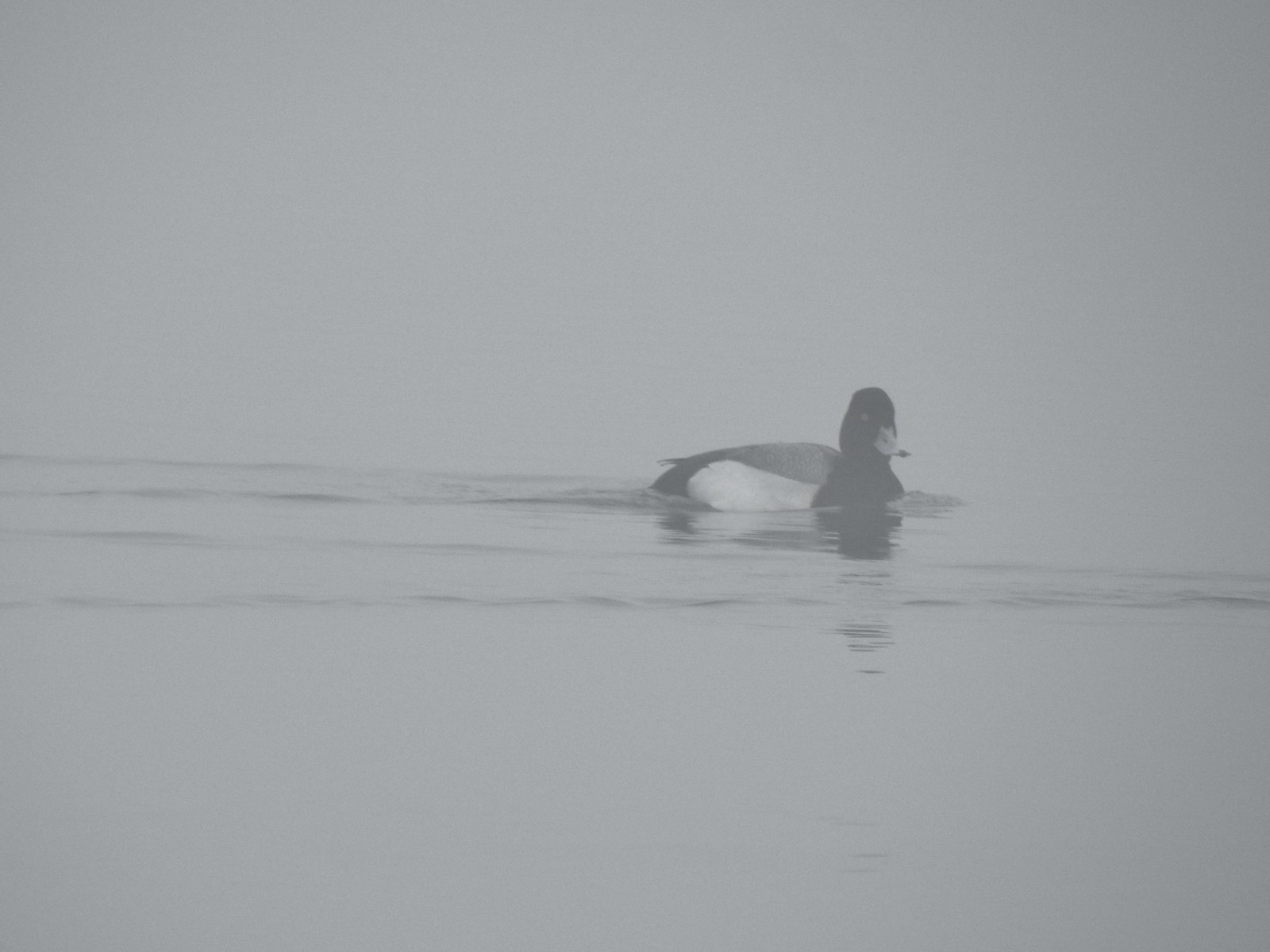 Possibly a lesser scaup.
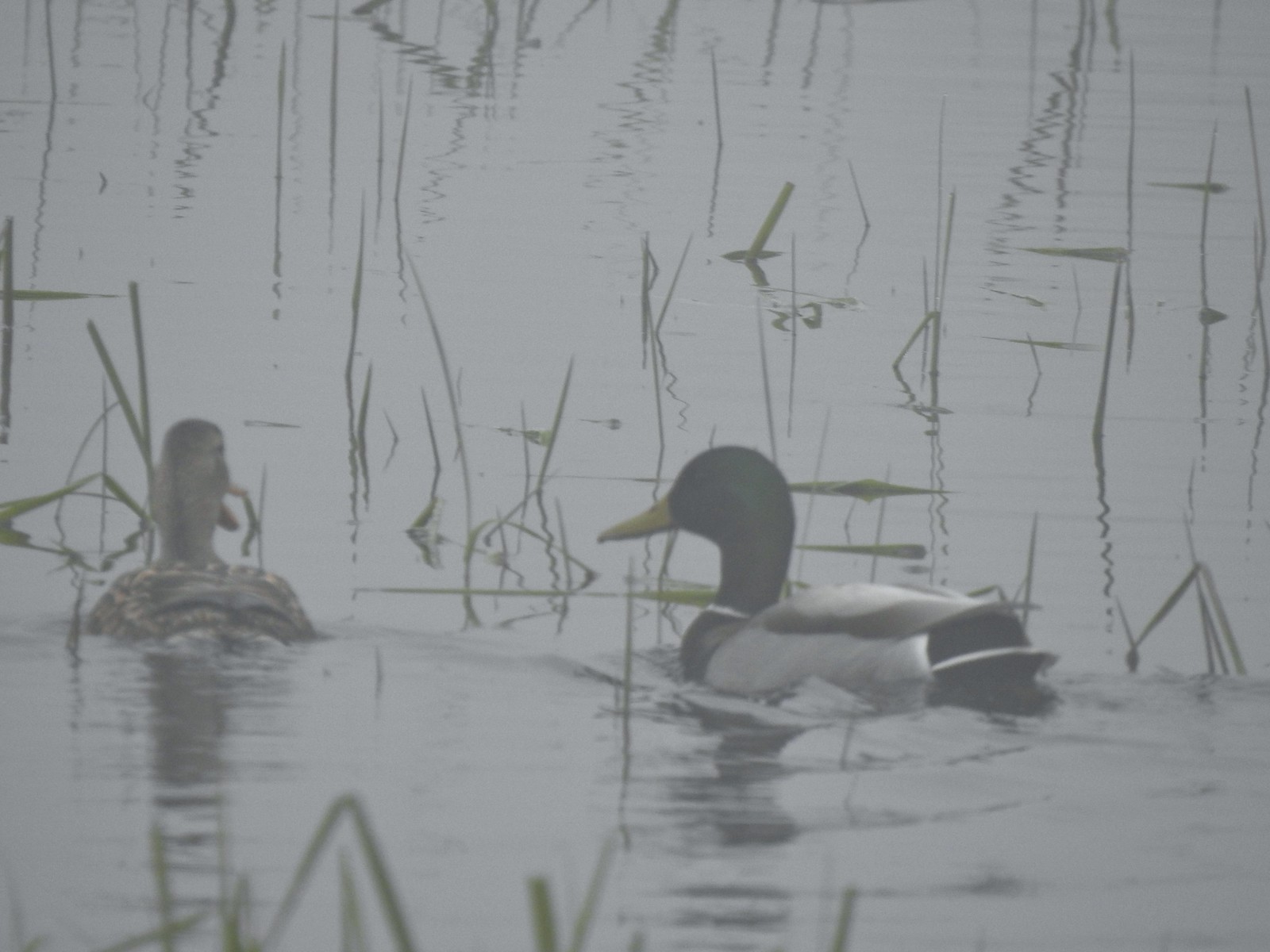 Mallards


 The only bull I could pick out.

 Robin
Robin Bench overlooking Morgan Lake
 Morgan Lake from the bench.
 Spotted towhees
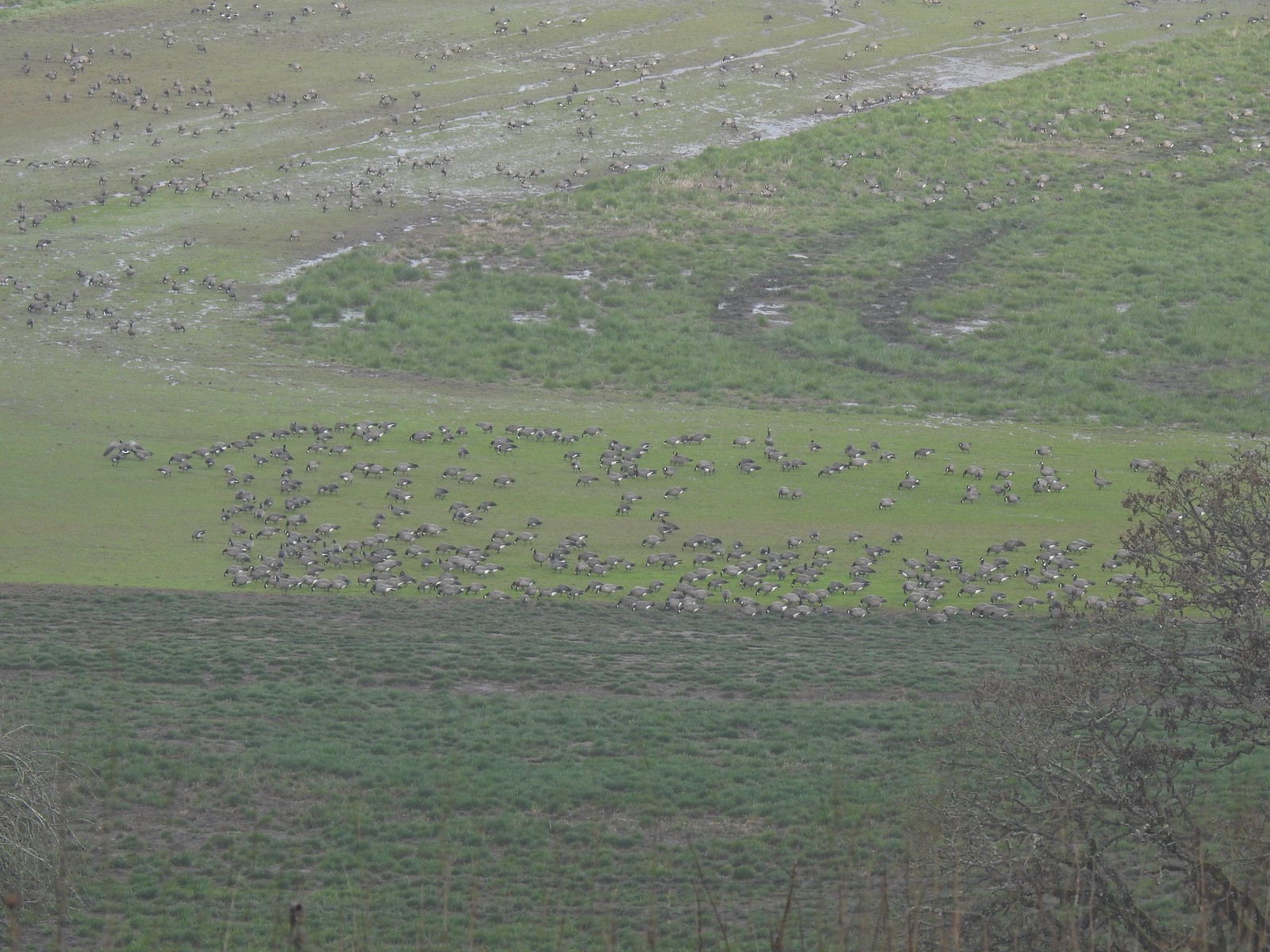 A lot of geese way below the trail.
 I started seeing a lot of toothwort on this side of the loop.
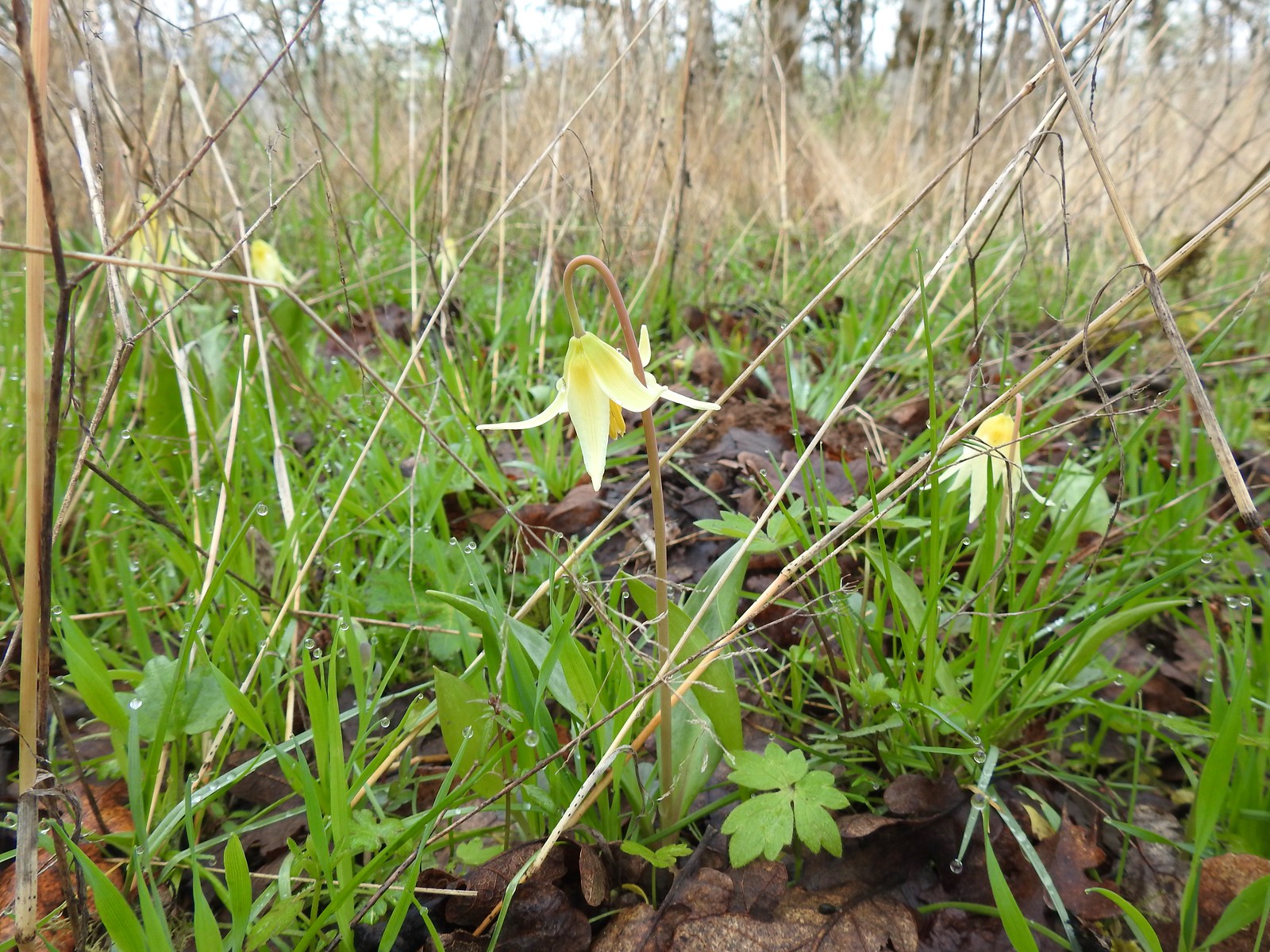 More fawn lilies too.
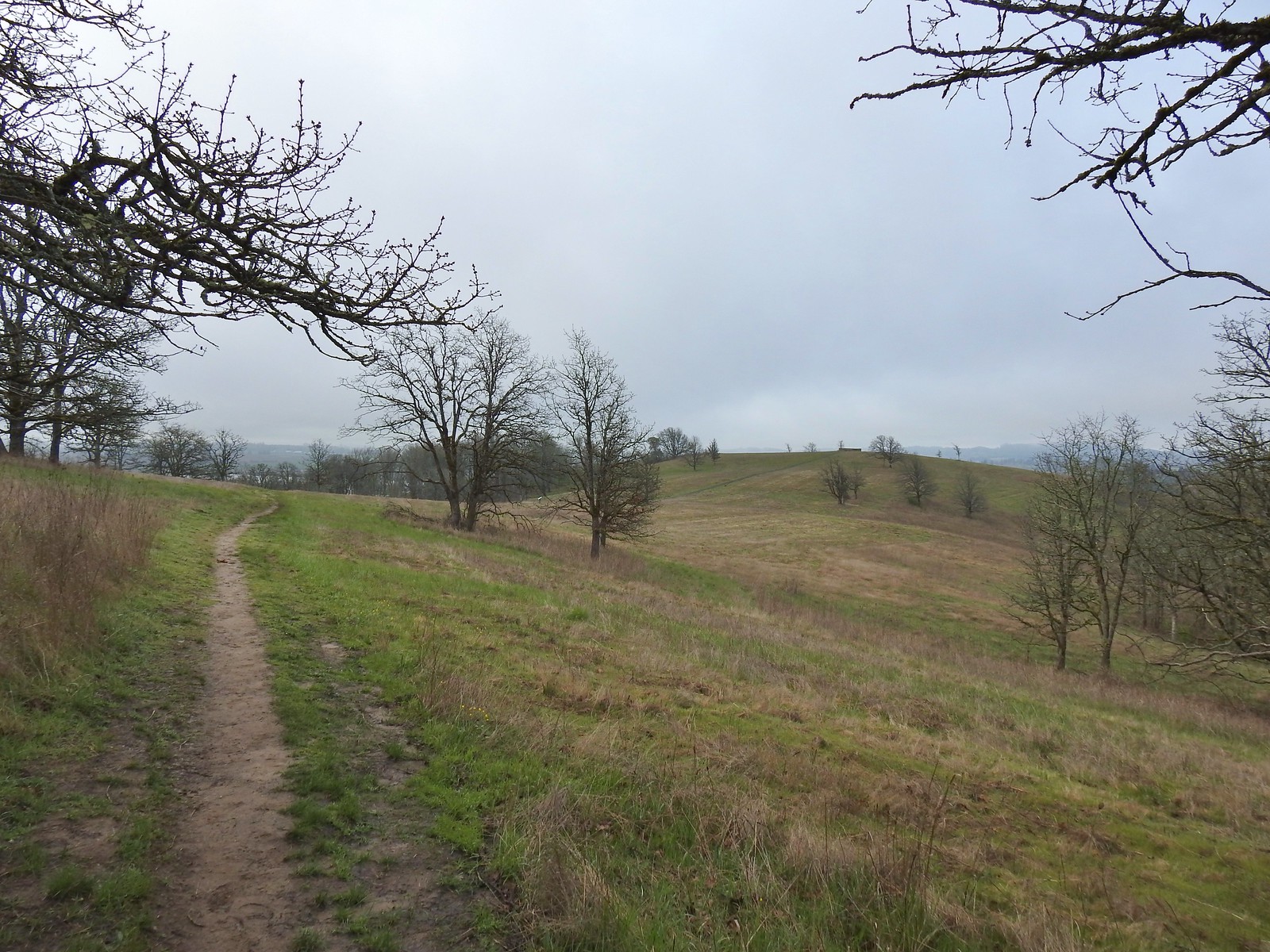 The viewing platform on Baskett Butte to the right.
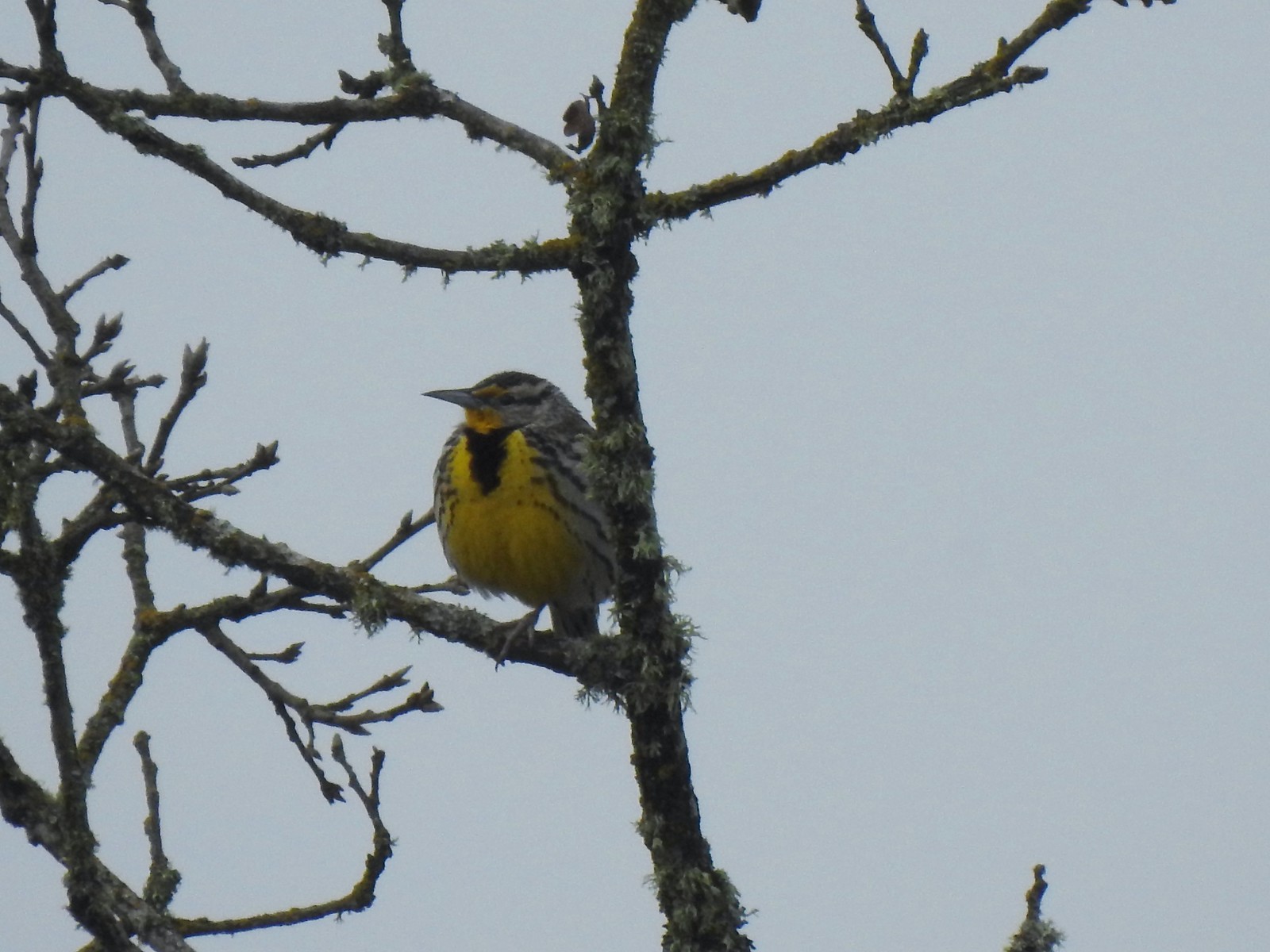 One of several western meadowlarks (Oregon’s state bird) on the butte.
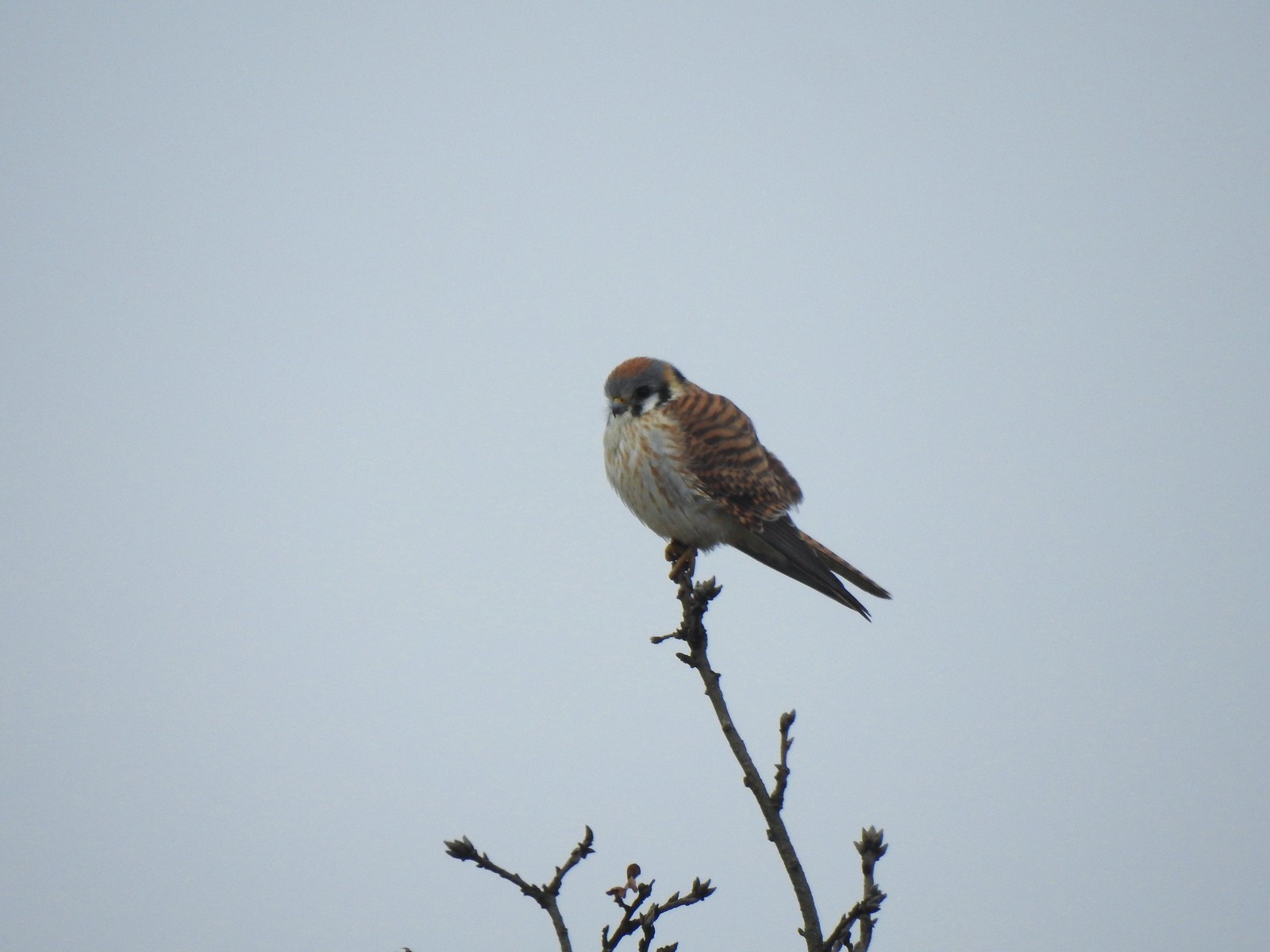 American kestral
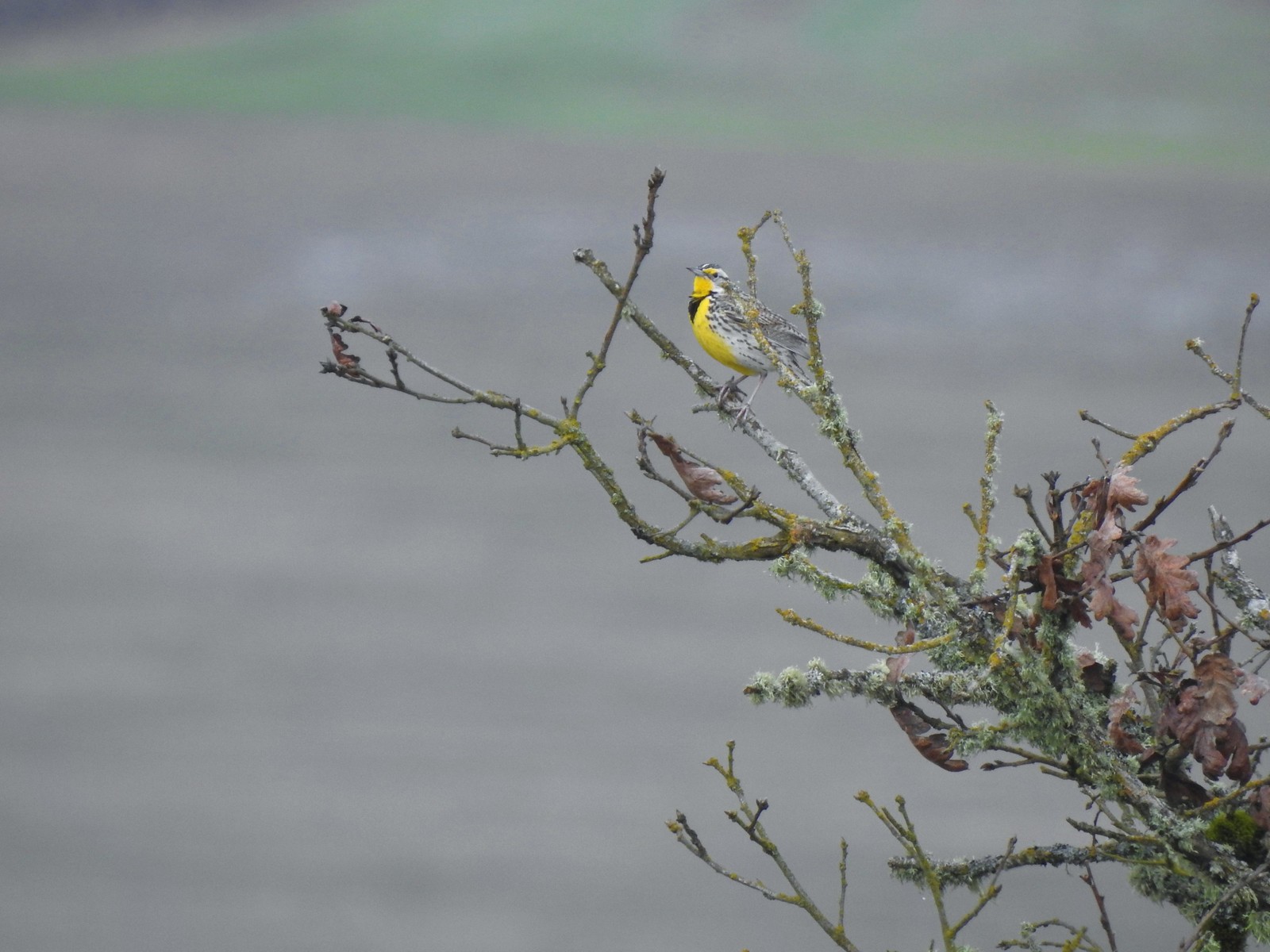 A better look at the yellow on the meadowlarks.
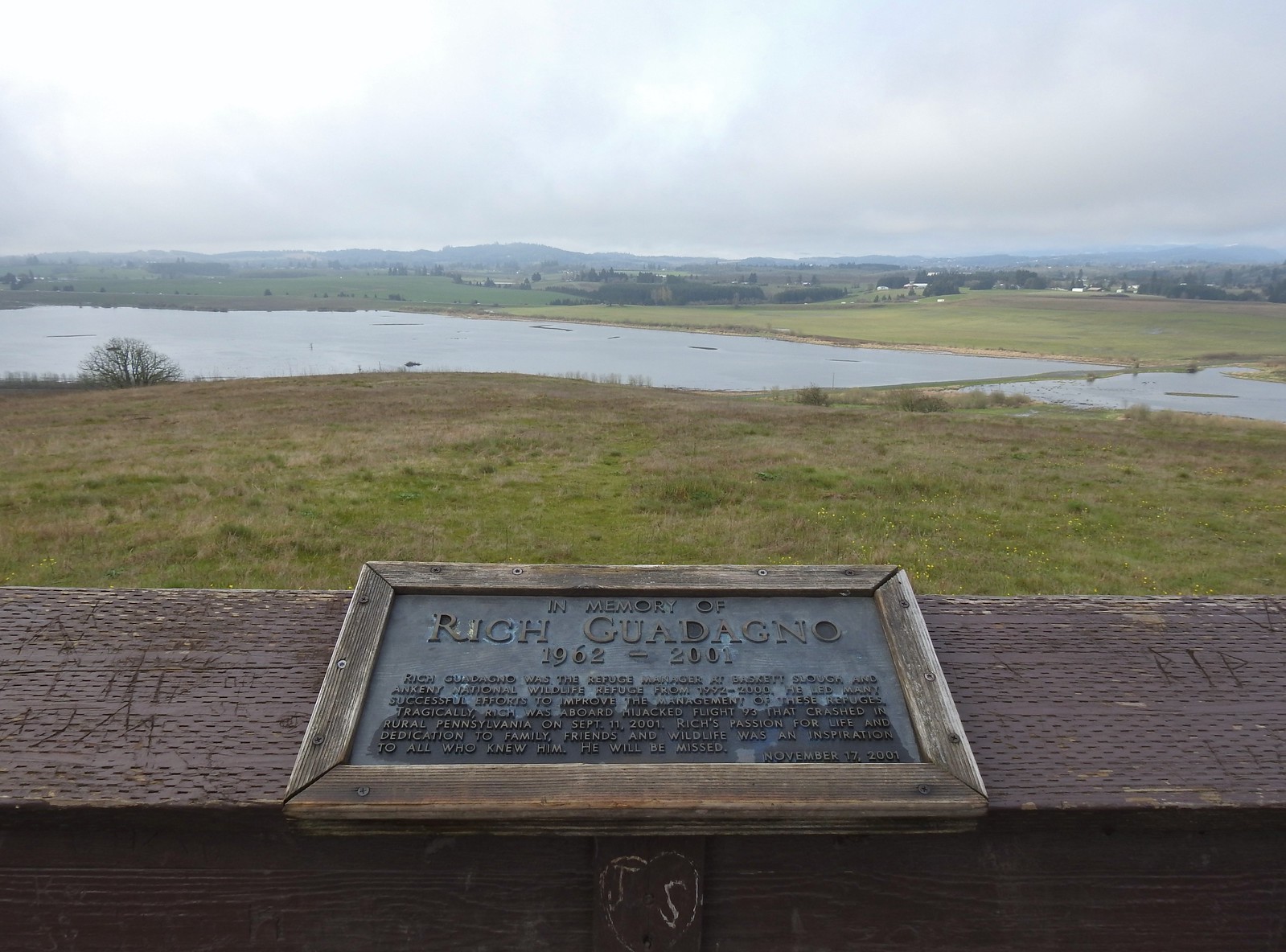 View from the platform.
 Sign along the path.
 More fawn lilies.
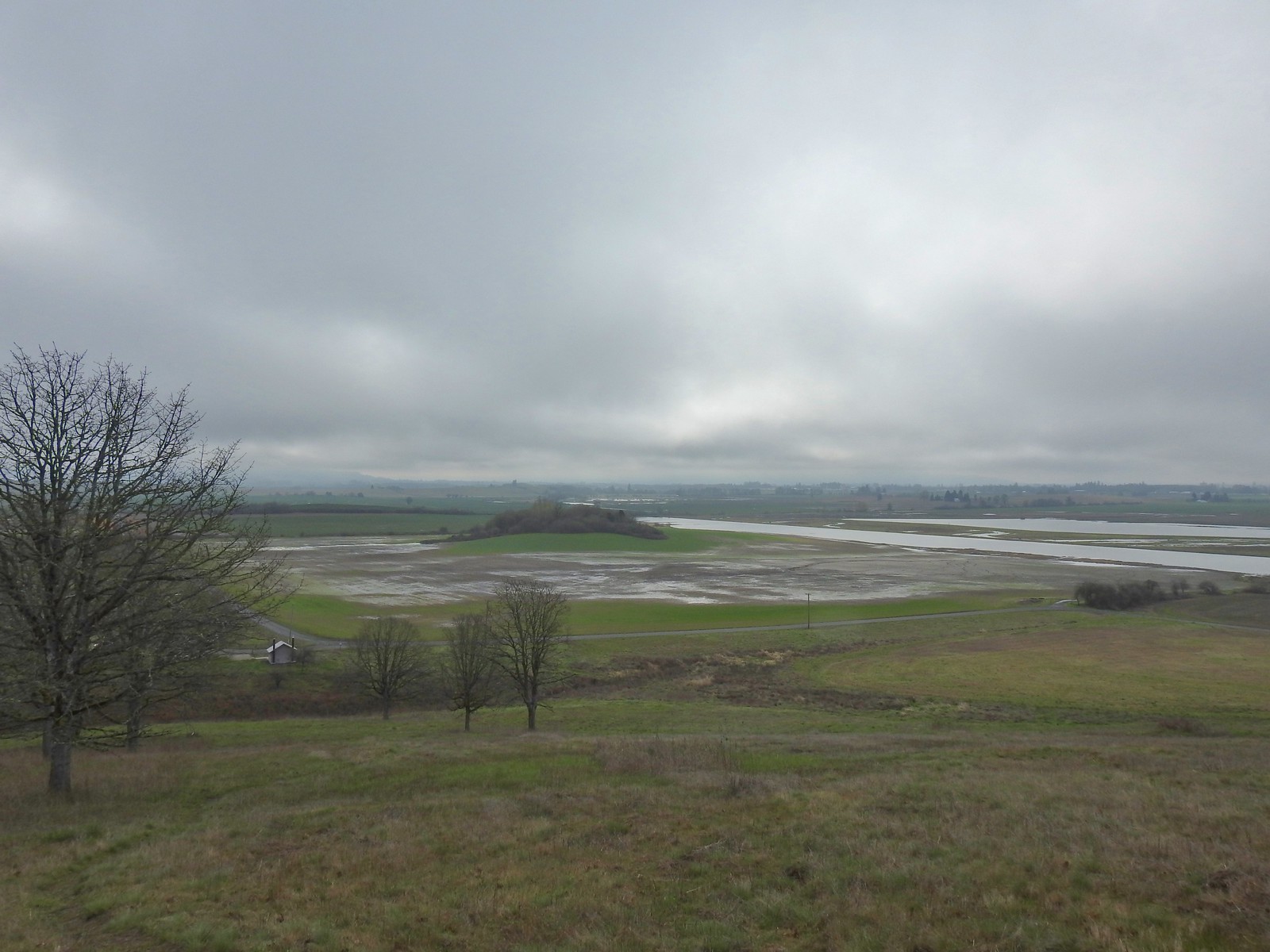 The path leading down toward Coville Road. The outhouse at the Baskett Butte Trailhead is on the left below.
 Baskett Butte from below.
 The trail is simply a dike road that leads to the refuge HQs.
 The headquarters is to the left of the road on the far side of South Slough.
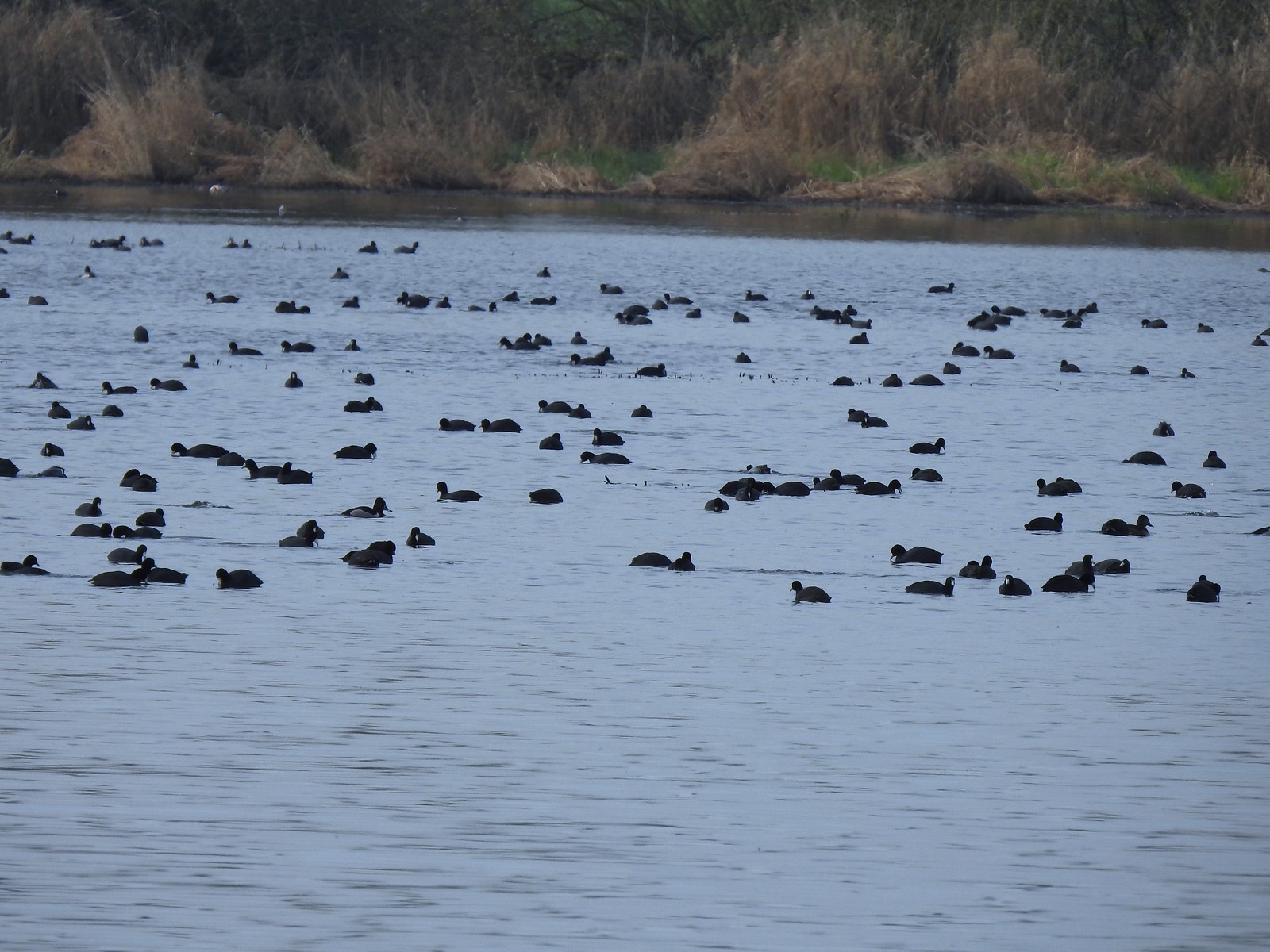 Also a bunch of American coots.
 Northern shovelers
 Buffleheads
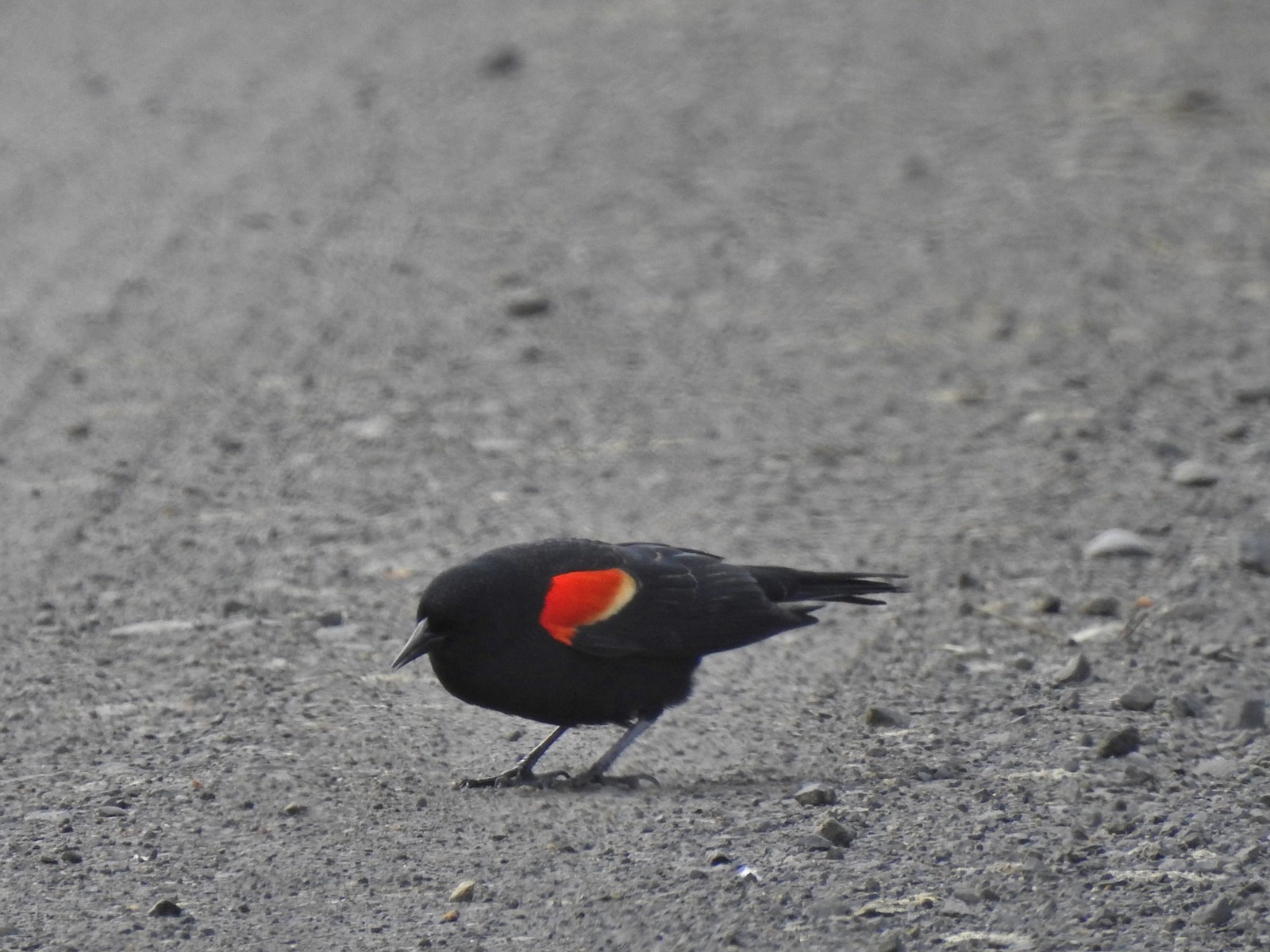 Red-winged blackbird
 Yellowlegs (probably lesser)
 Baskett Butte (left) from my turn around point.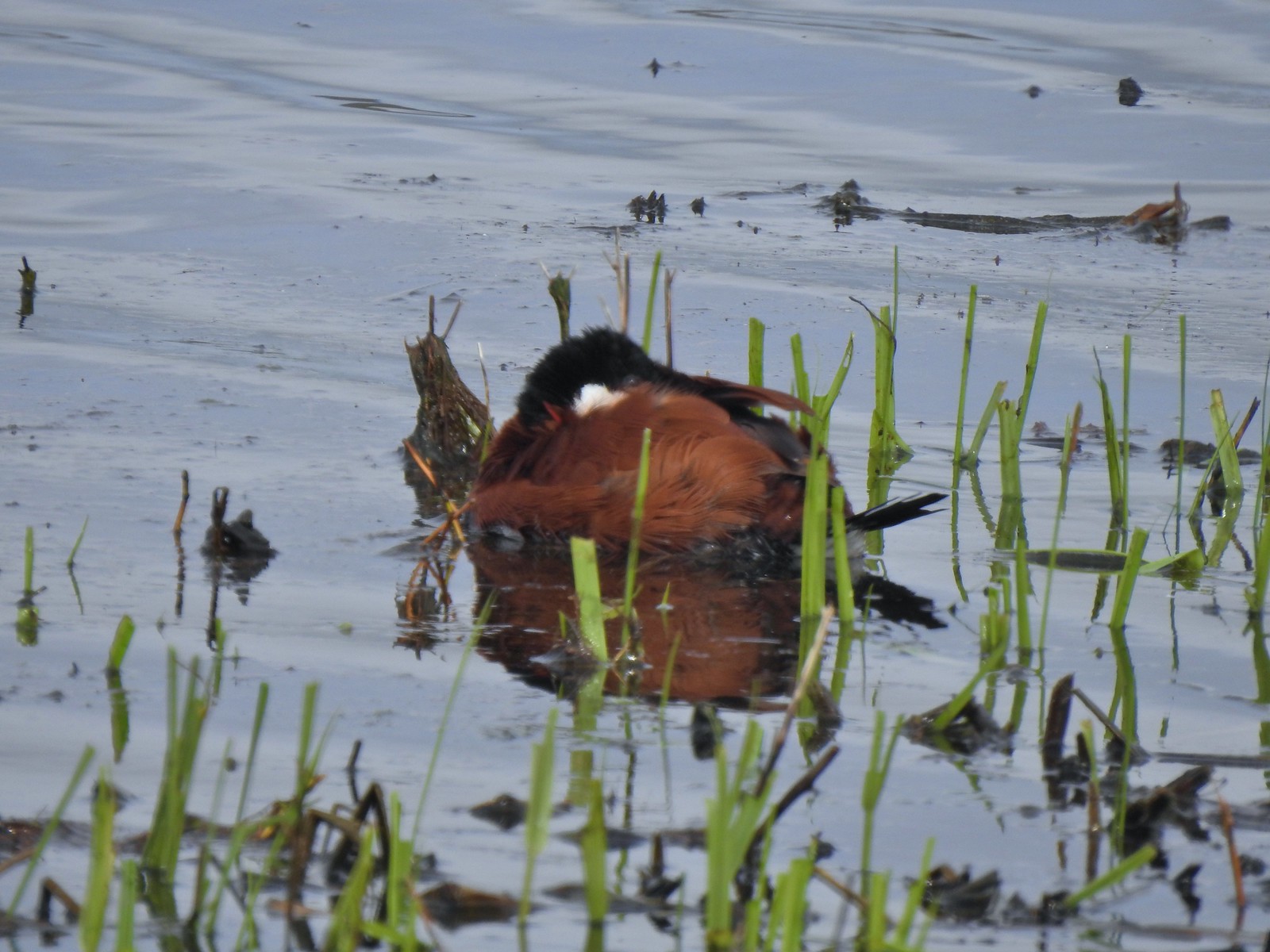
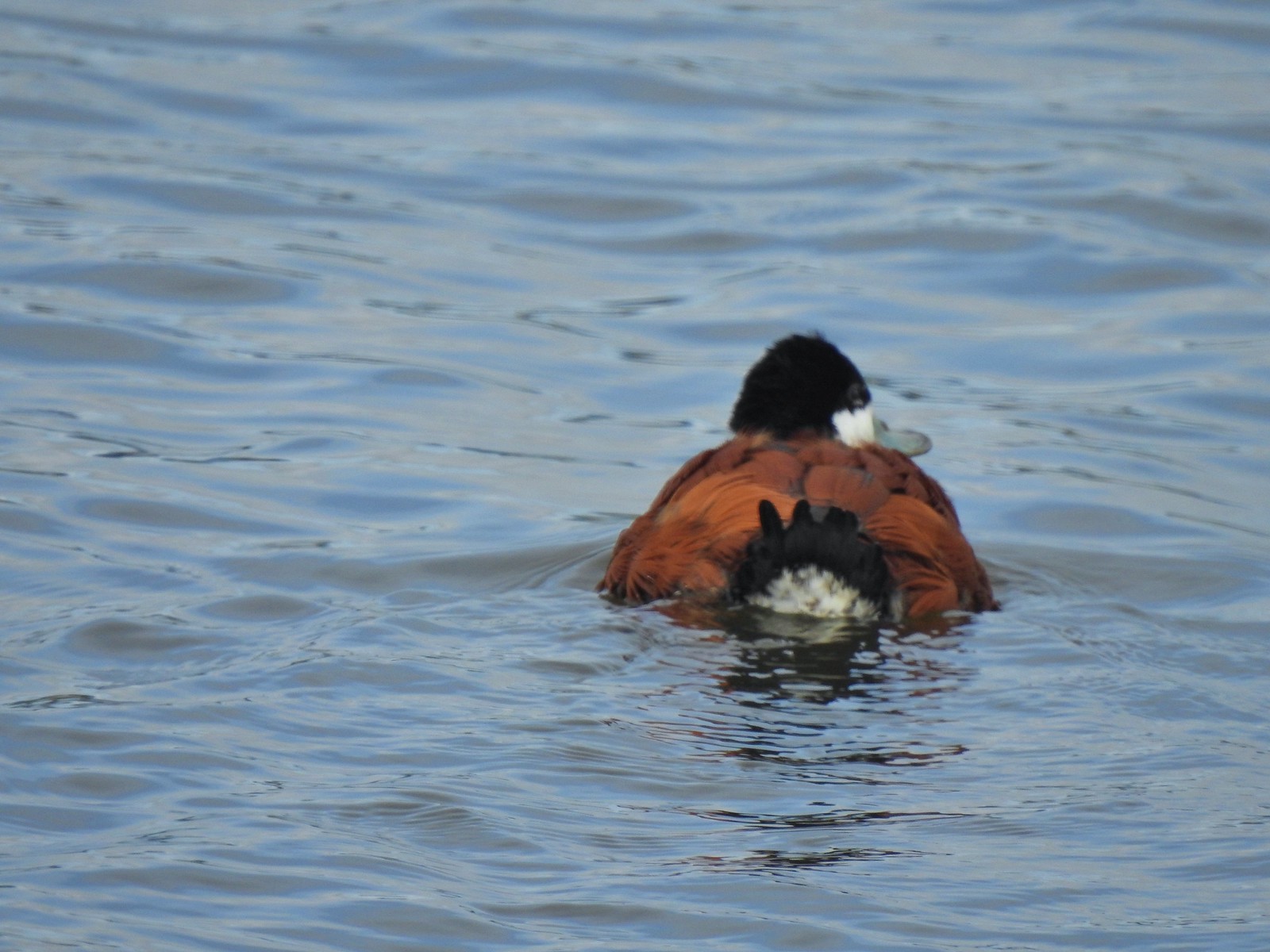 The ruddy duck woke up after all the American coots headed off.
 Savannah sparrow
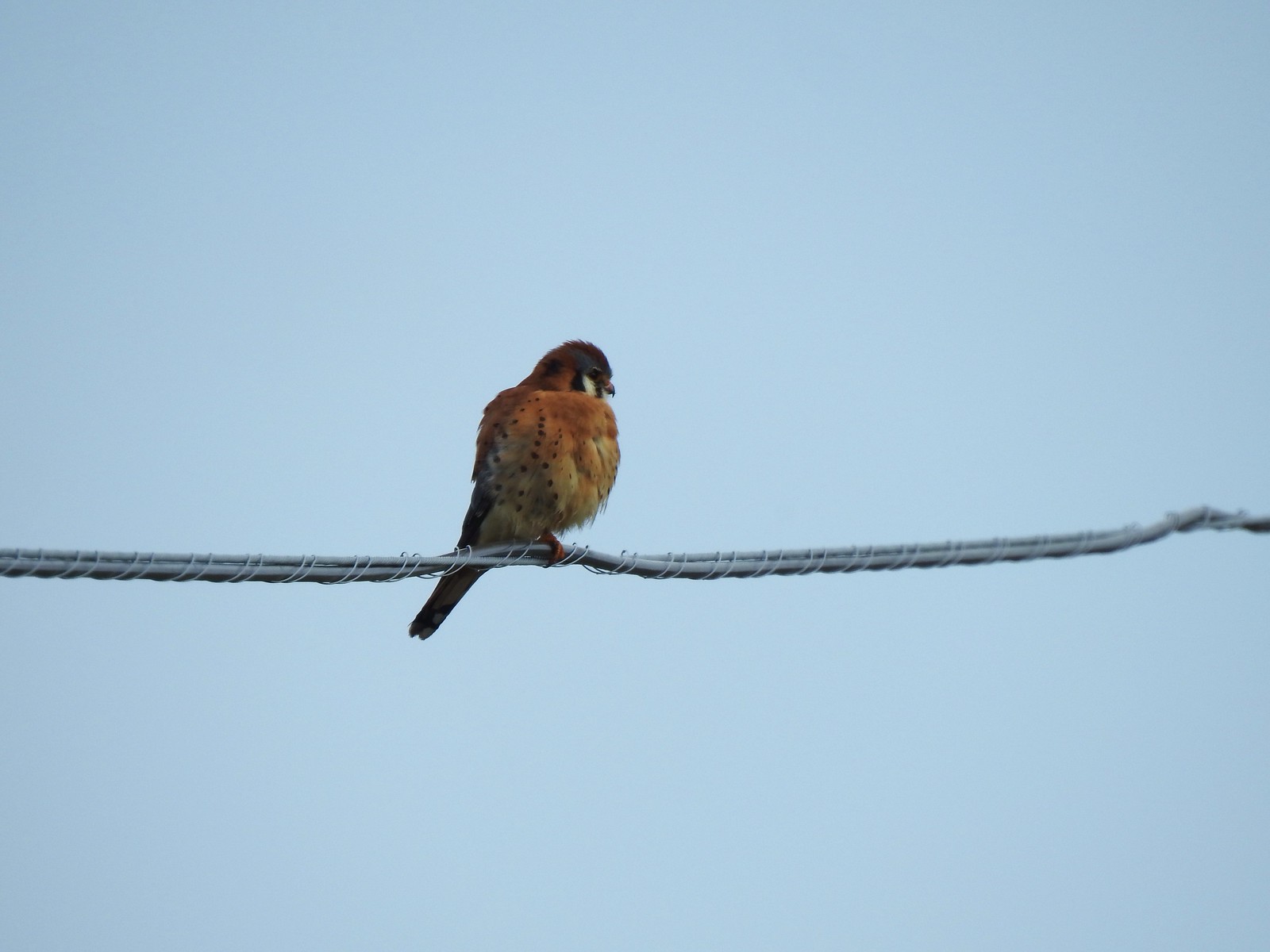 One more American kestral


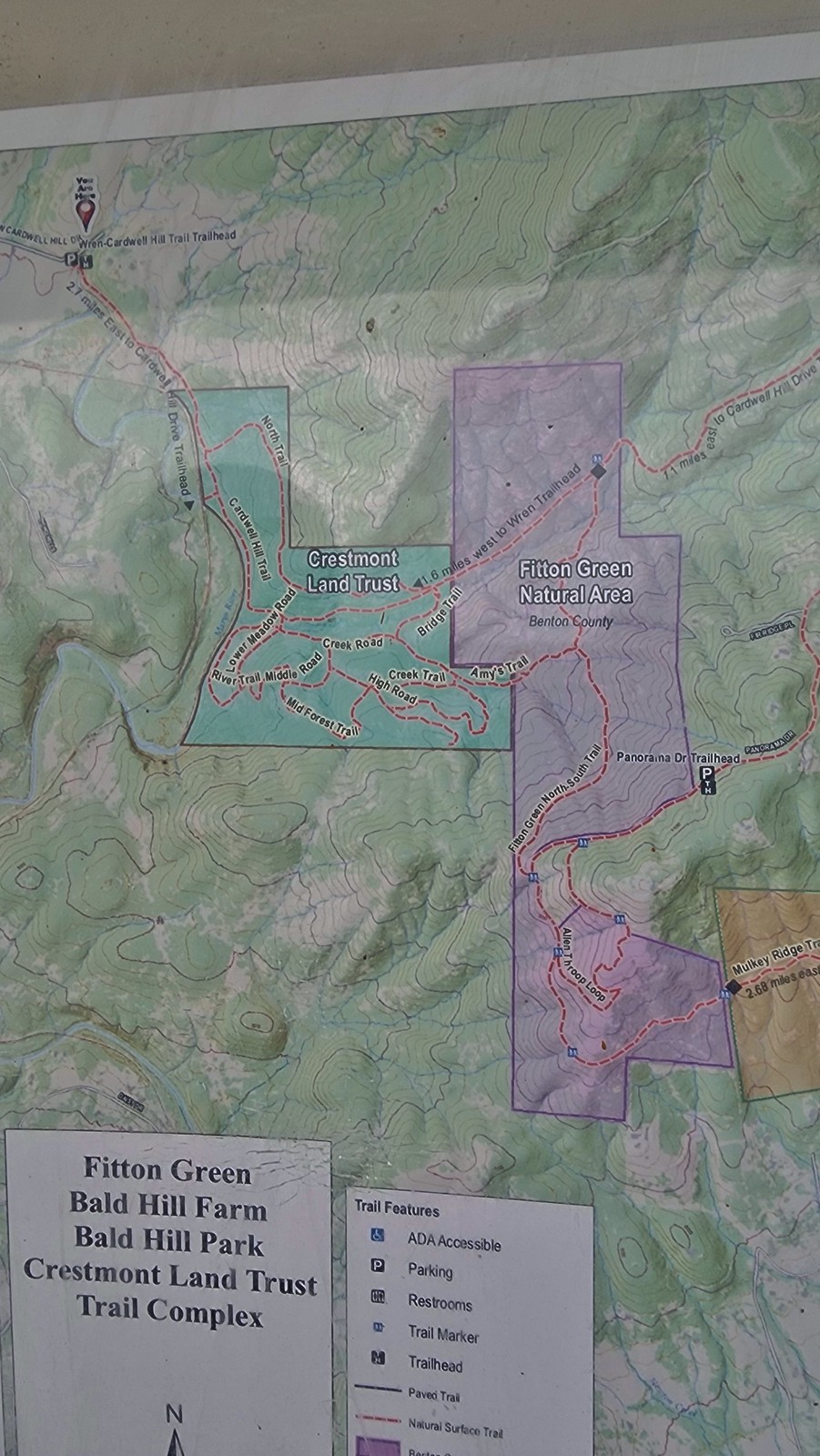
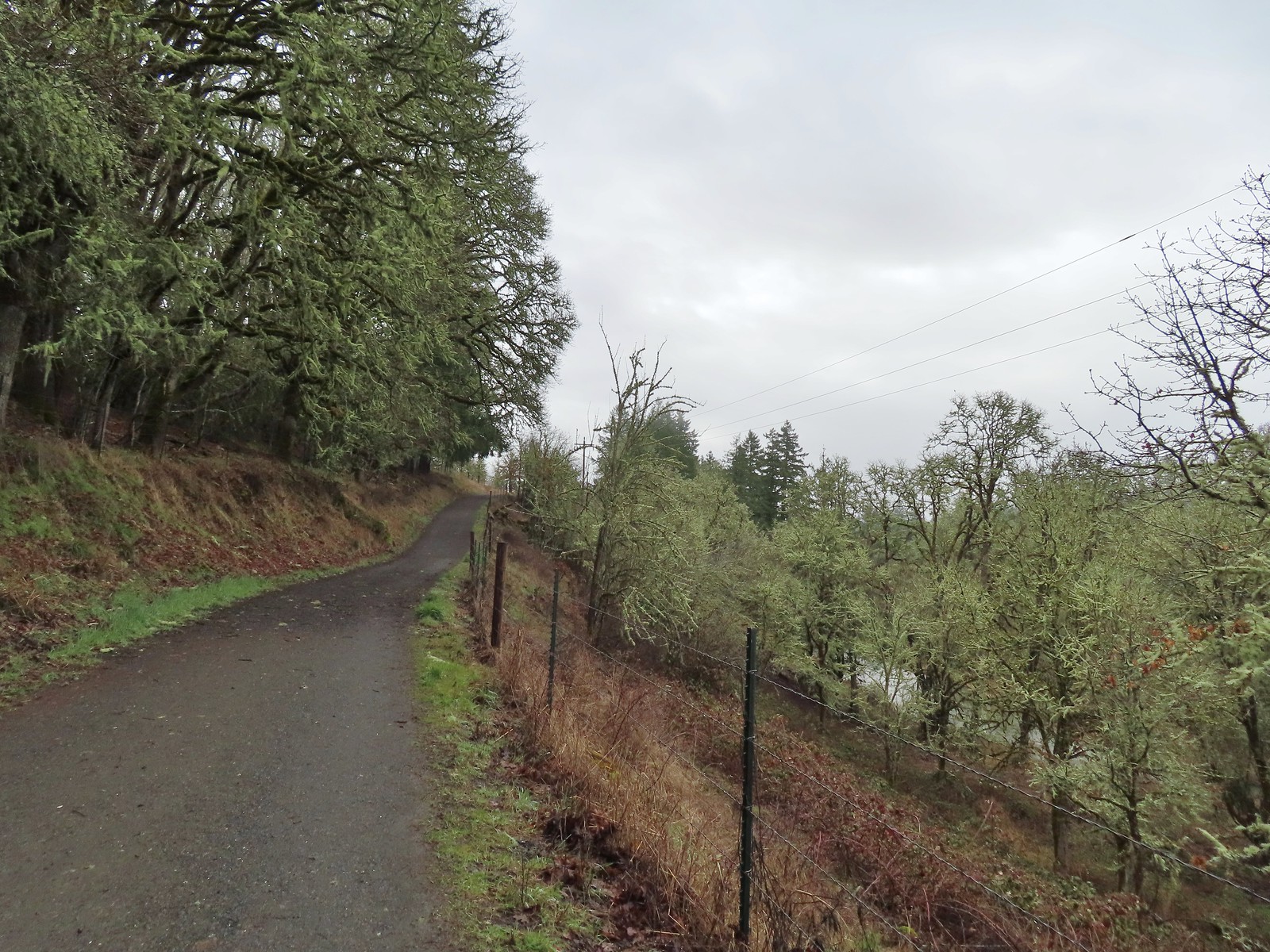
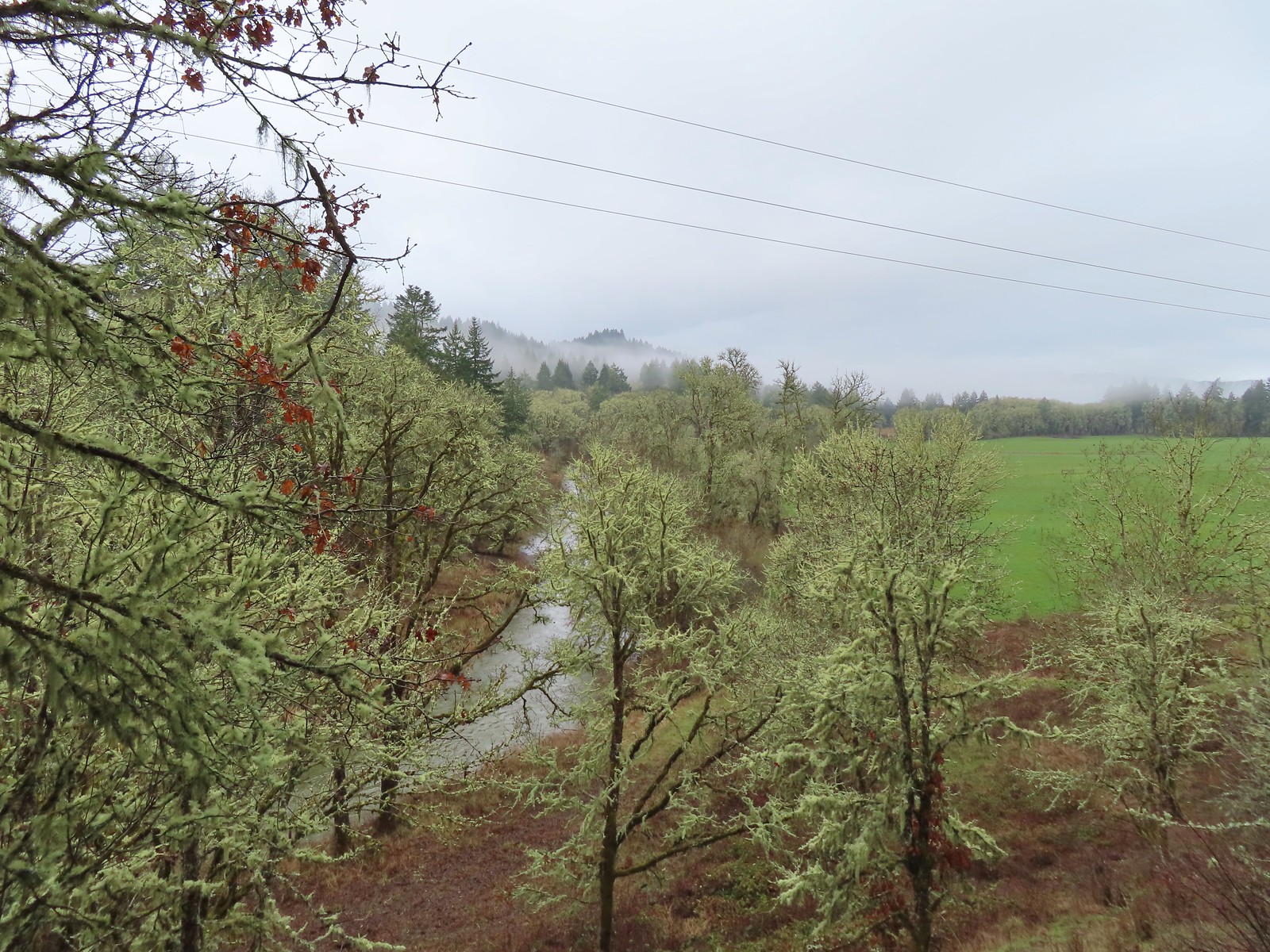
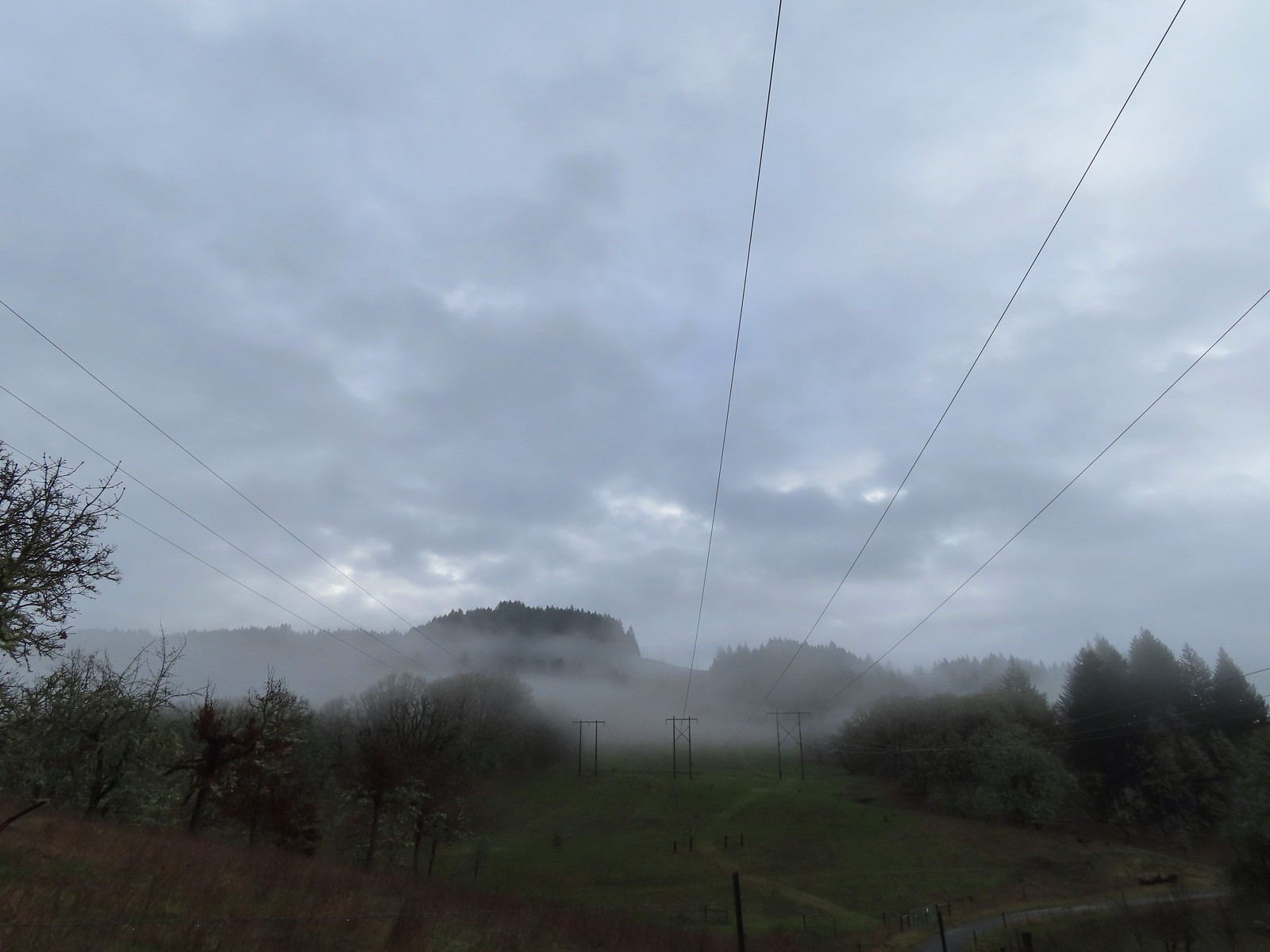 The forecast was for patchy morning fog with a chance of light showers between Noon and 3pm and partly sunny skies. They got the patchy morning fog part right.
 The first of three abandoned cars we’d pass on the day. This one was in a field on a hillside before entering the Crestmont Land Trust.
 Interpretive signs greeted us as we entered the Crestmont Land Trust.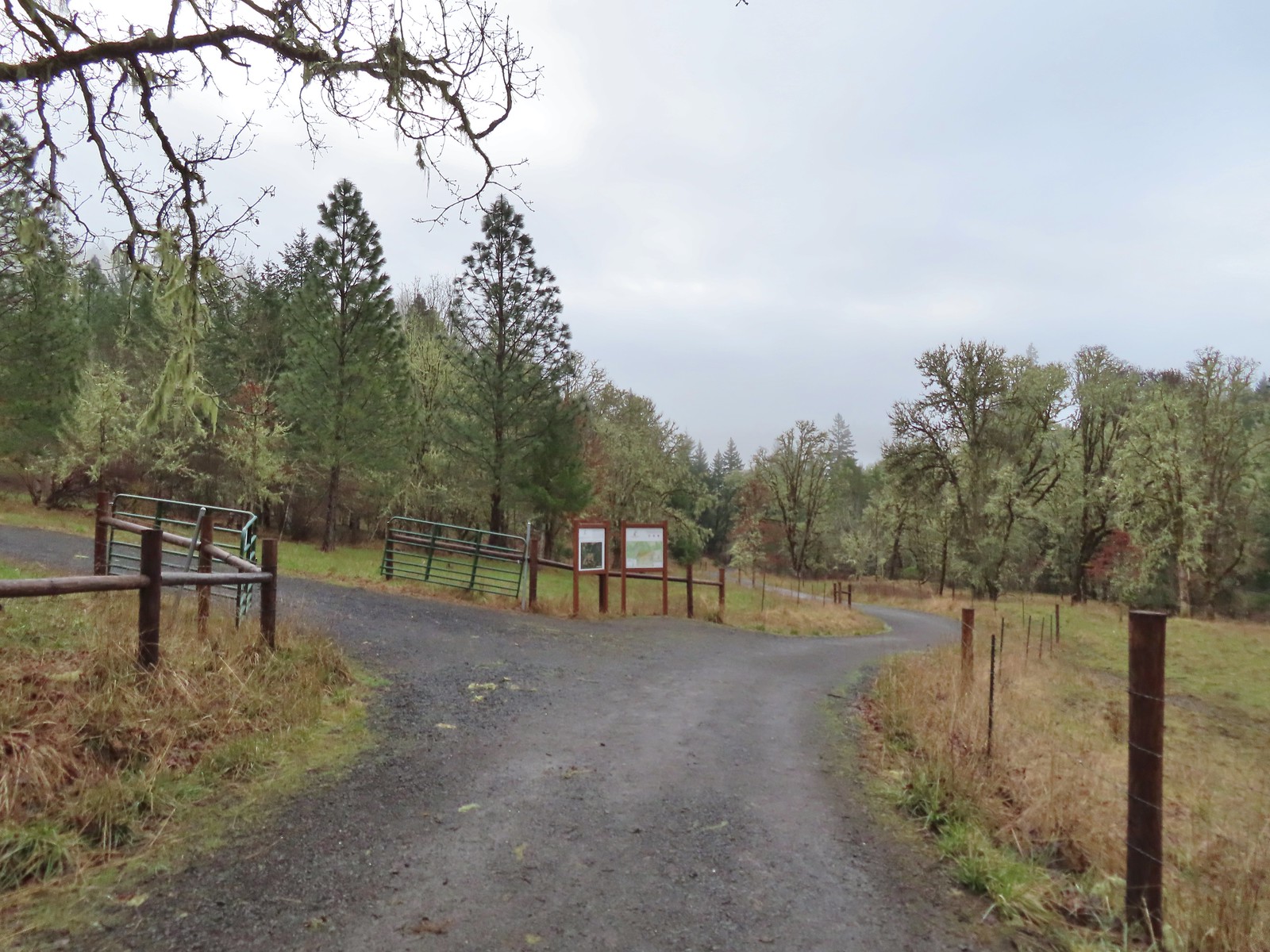
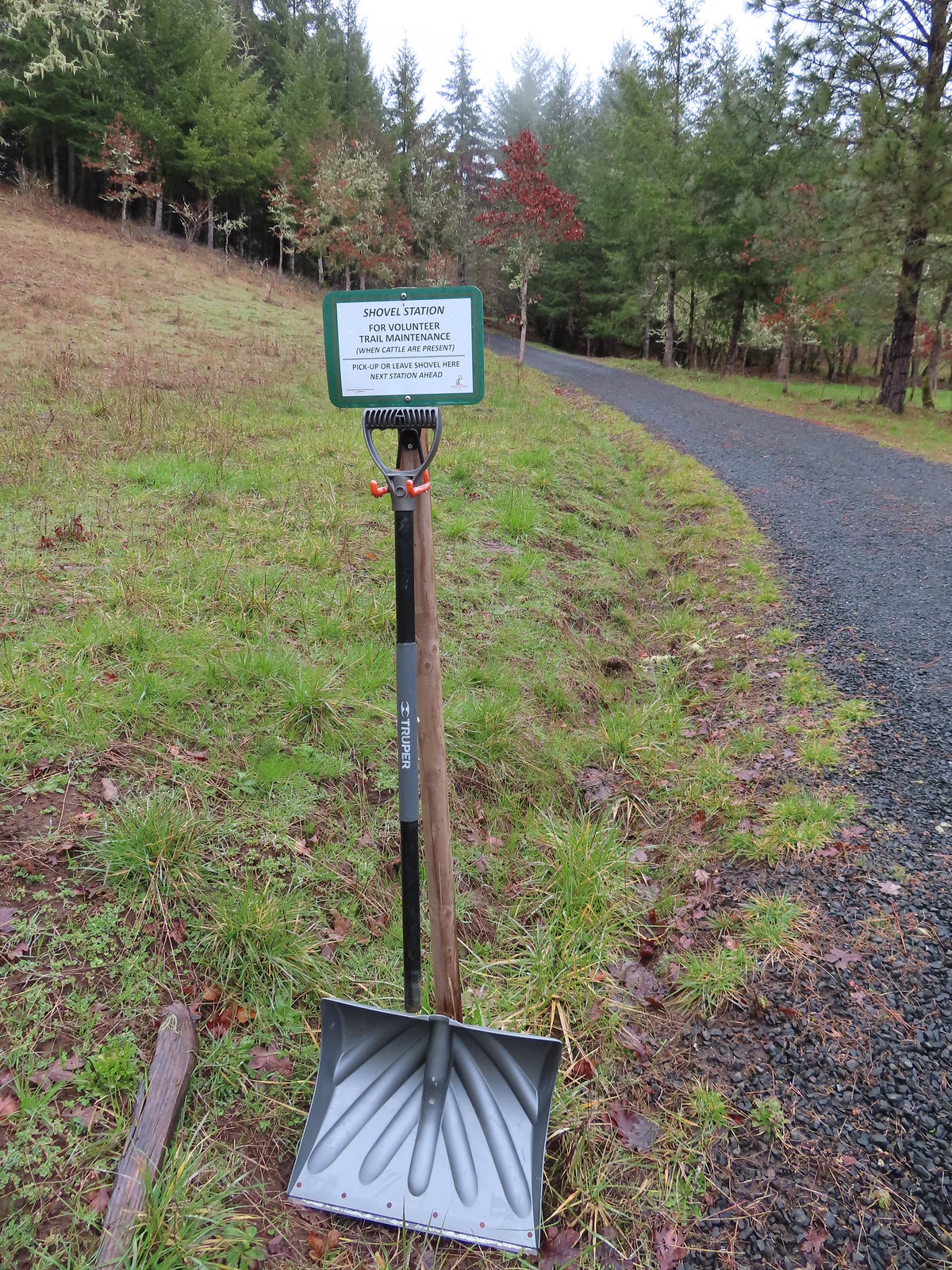
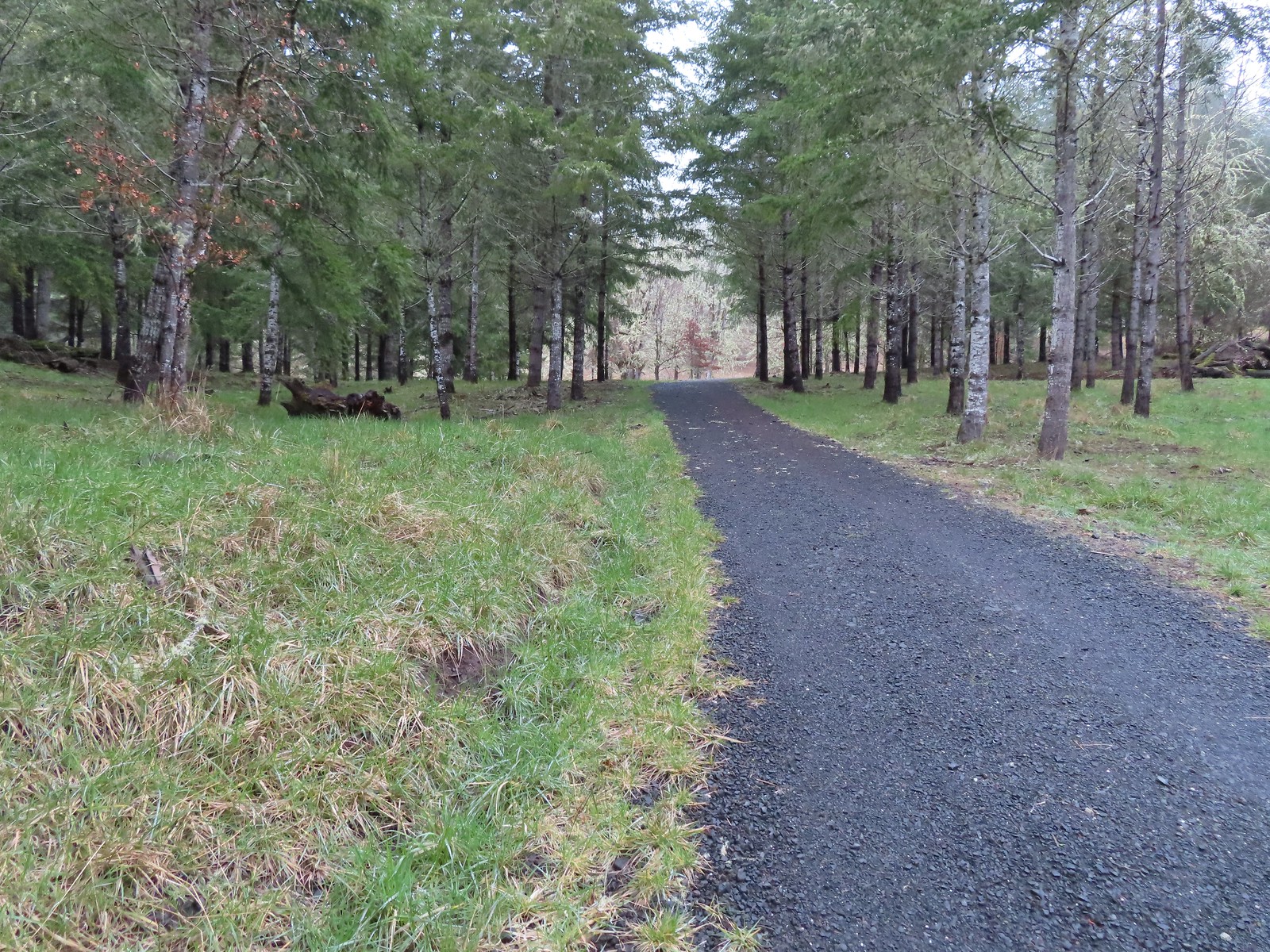
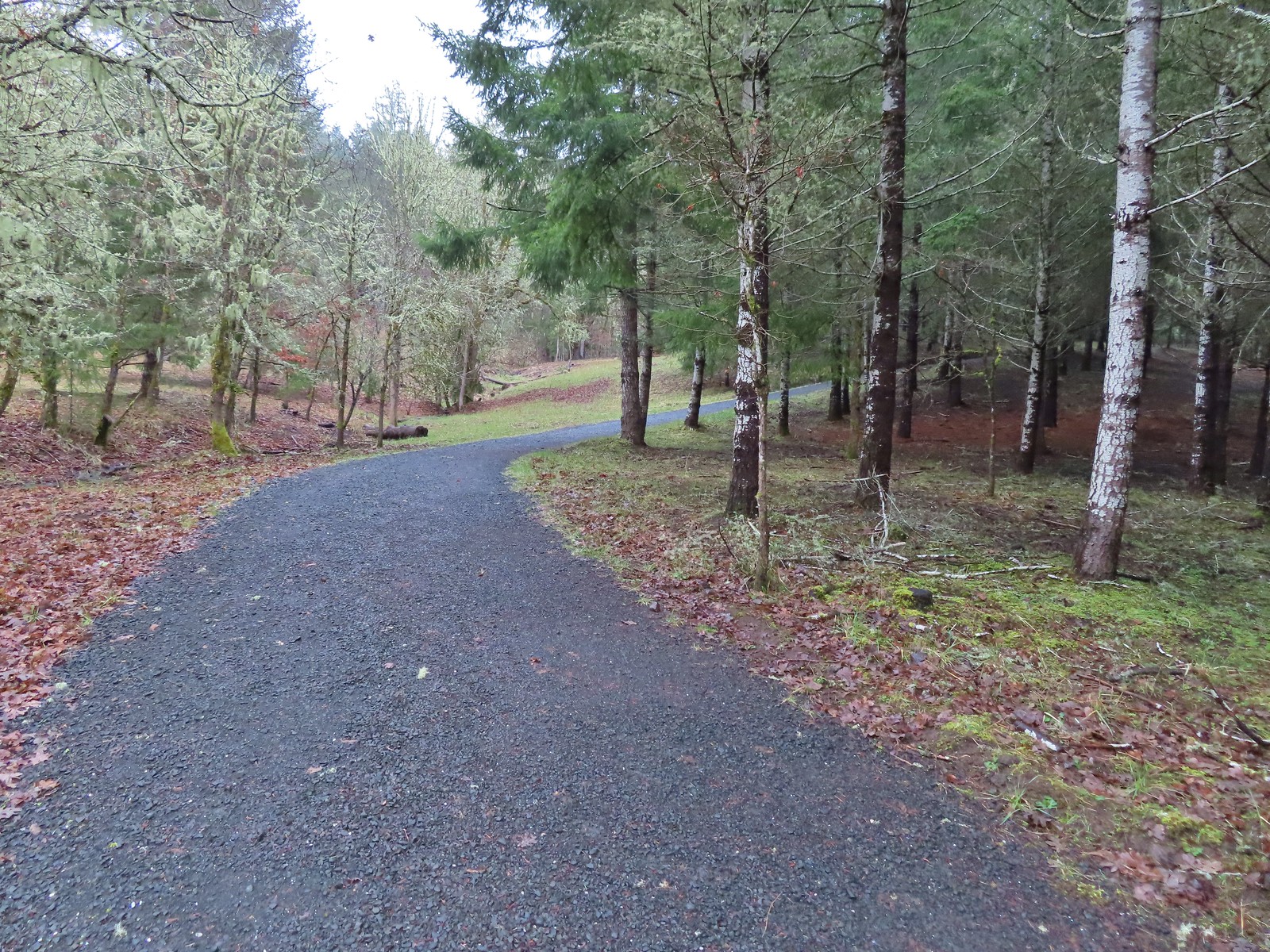
 The gazebo housed a small table with benches. A particularly nice touch was the lack of back on the bench that wasn’t facing the view which allows you to sit facing the view.
 The view from the gazebo.
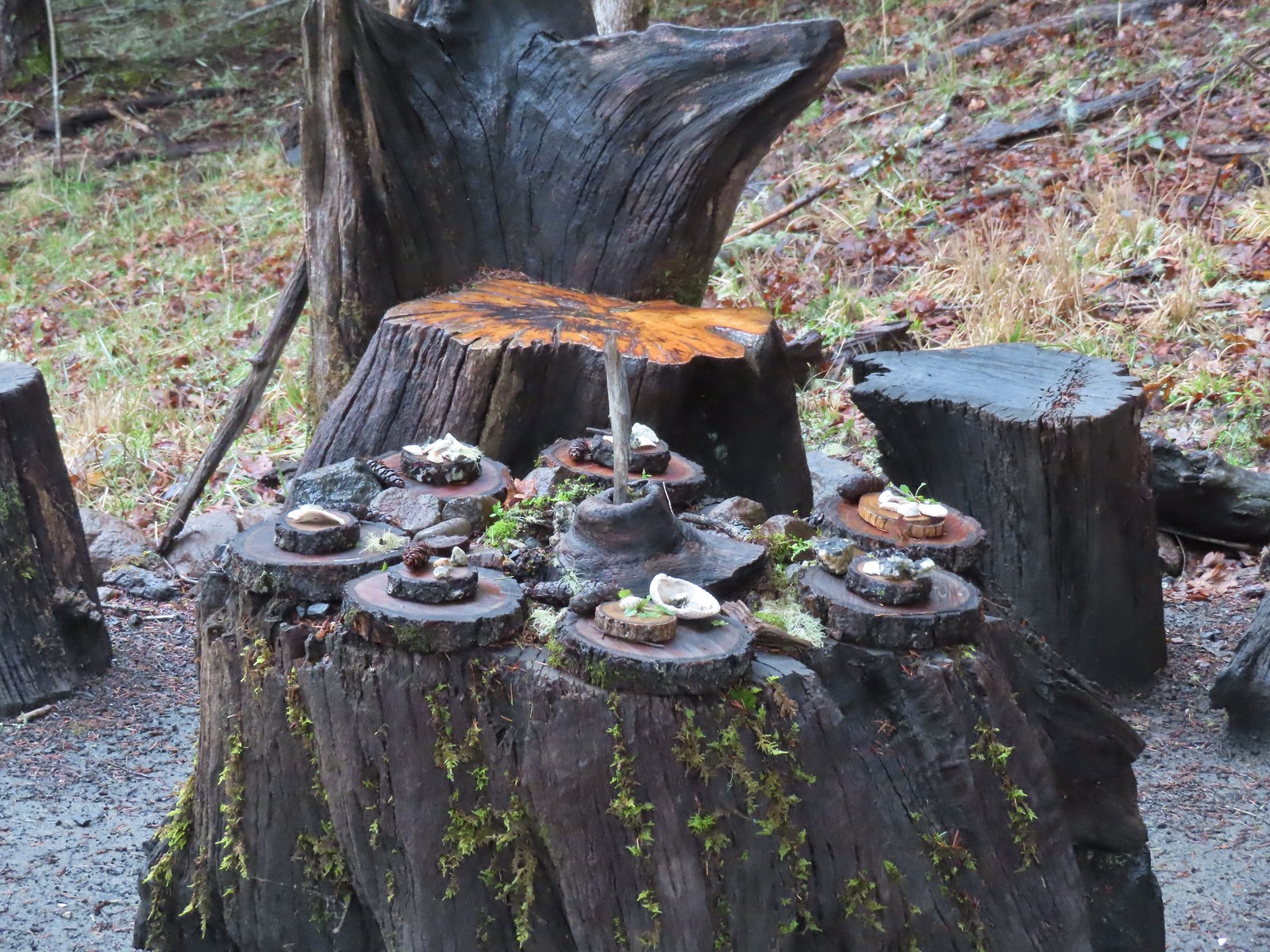 Not sure what the most recent gathering was but there was an interesting variety of items around the table.
 Another bench along the trail.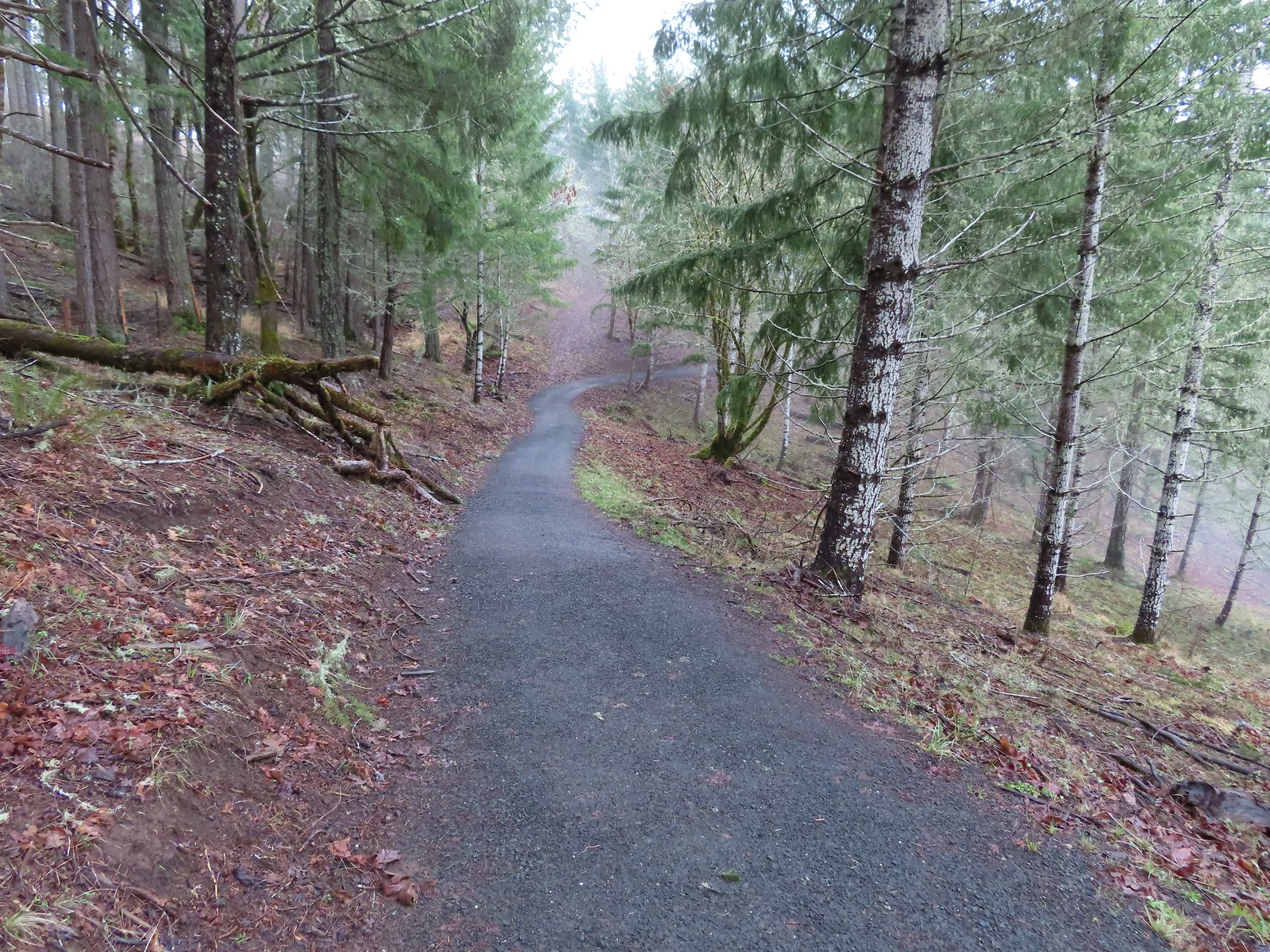
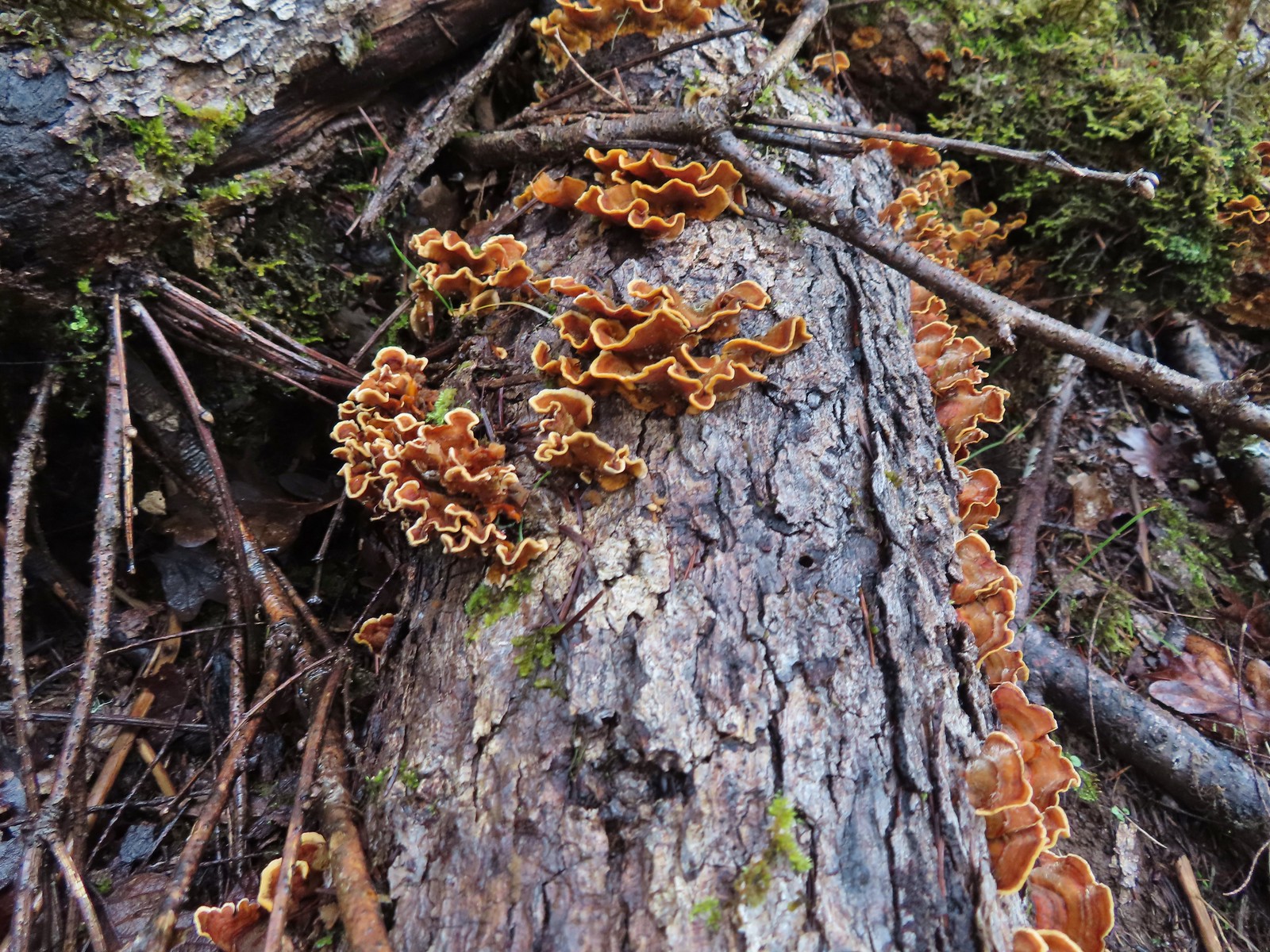 Turkey tails
 The Cardwell Hill Trail in the valley below the North Trail.
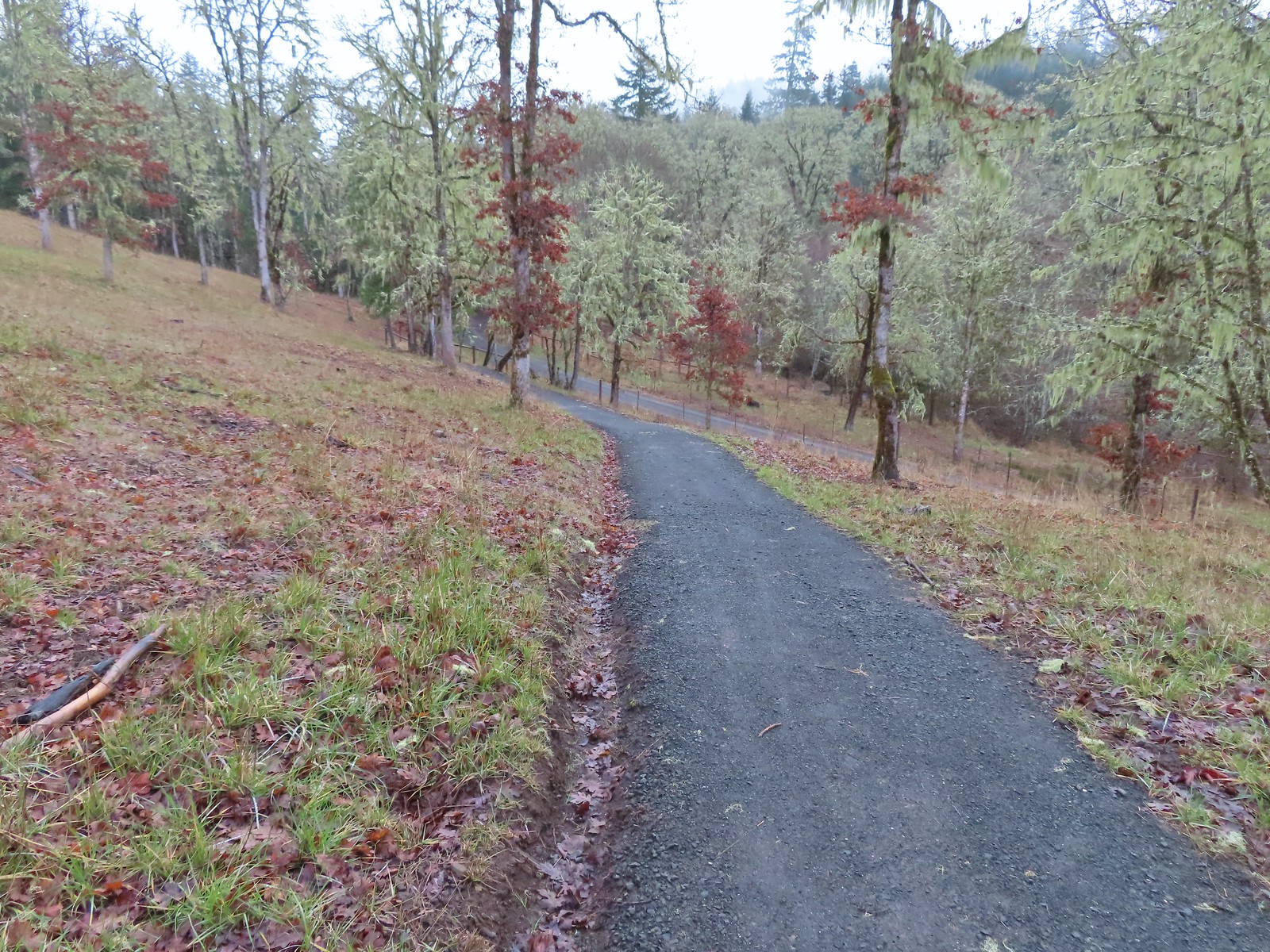 Dropping down to the Cardwell Hill Trail.
 The first spur didn’t have any signage
 The second spur had a marker naming it the Fitton Green North-South Trail.
 Trail marker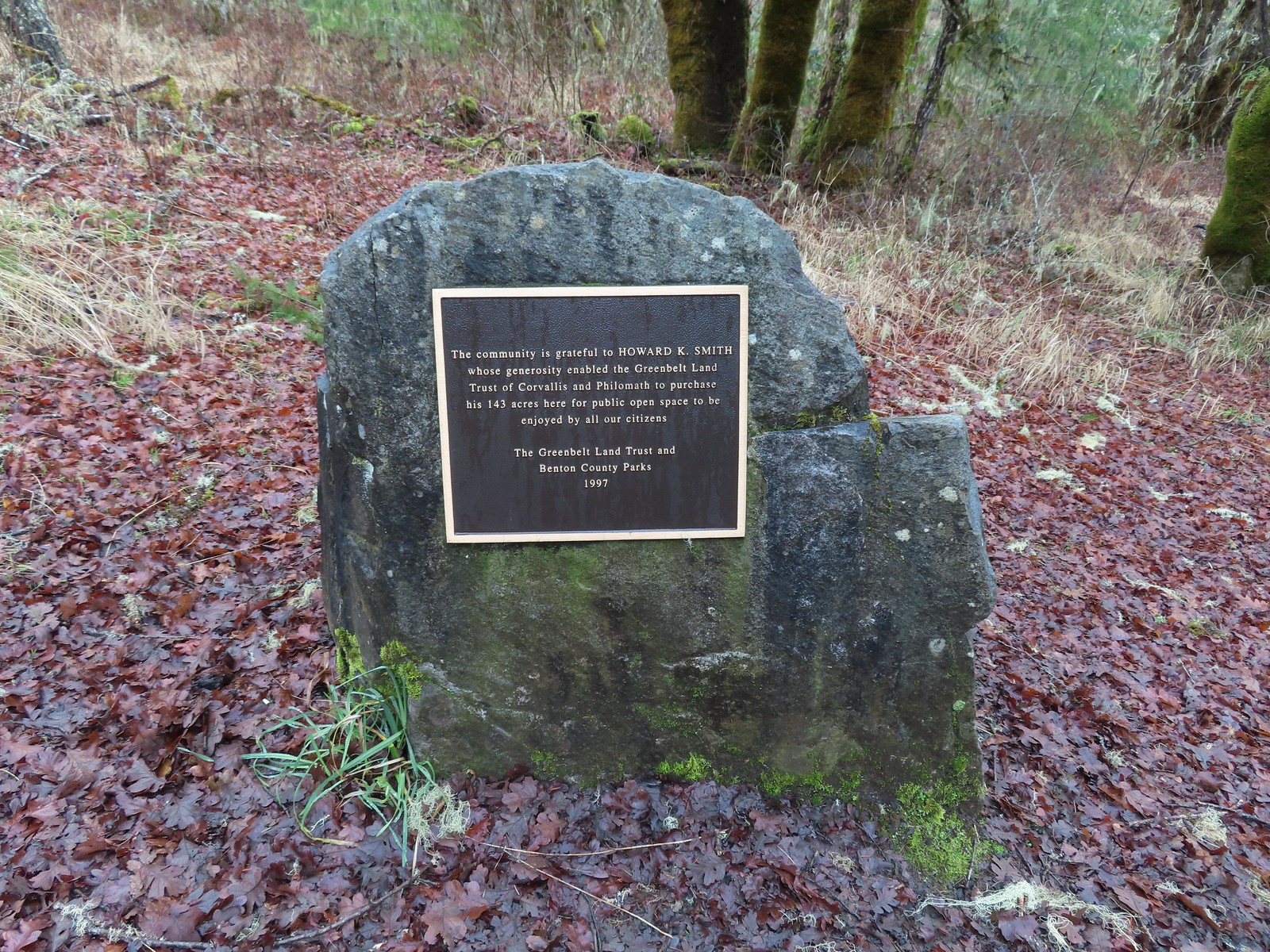

 Dimple Hill in the McDonald Forest (
 The other two abandoned cars, these were outside of the natural area.
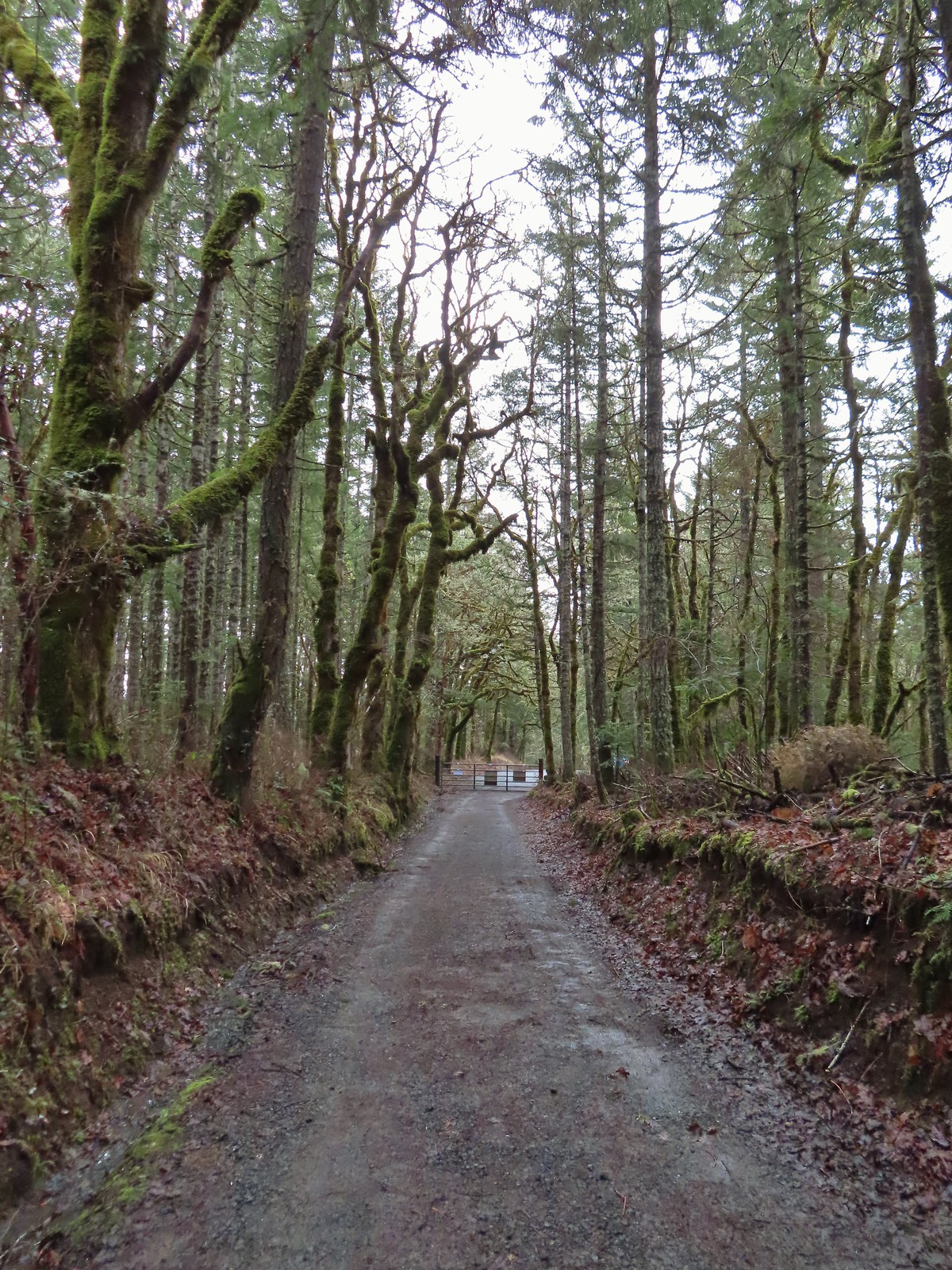 Arriving at the east trailhead.
 One of the more impressive trees along this section of the Cardwell Hill Trail
 The Fitton Green North-South Trail.
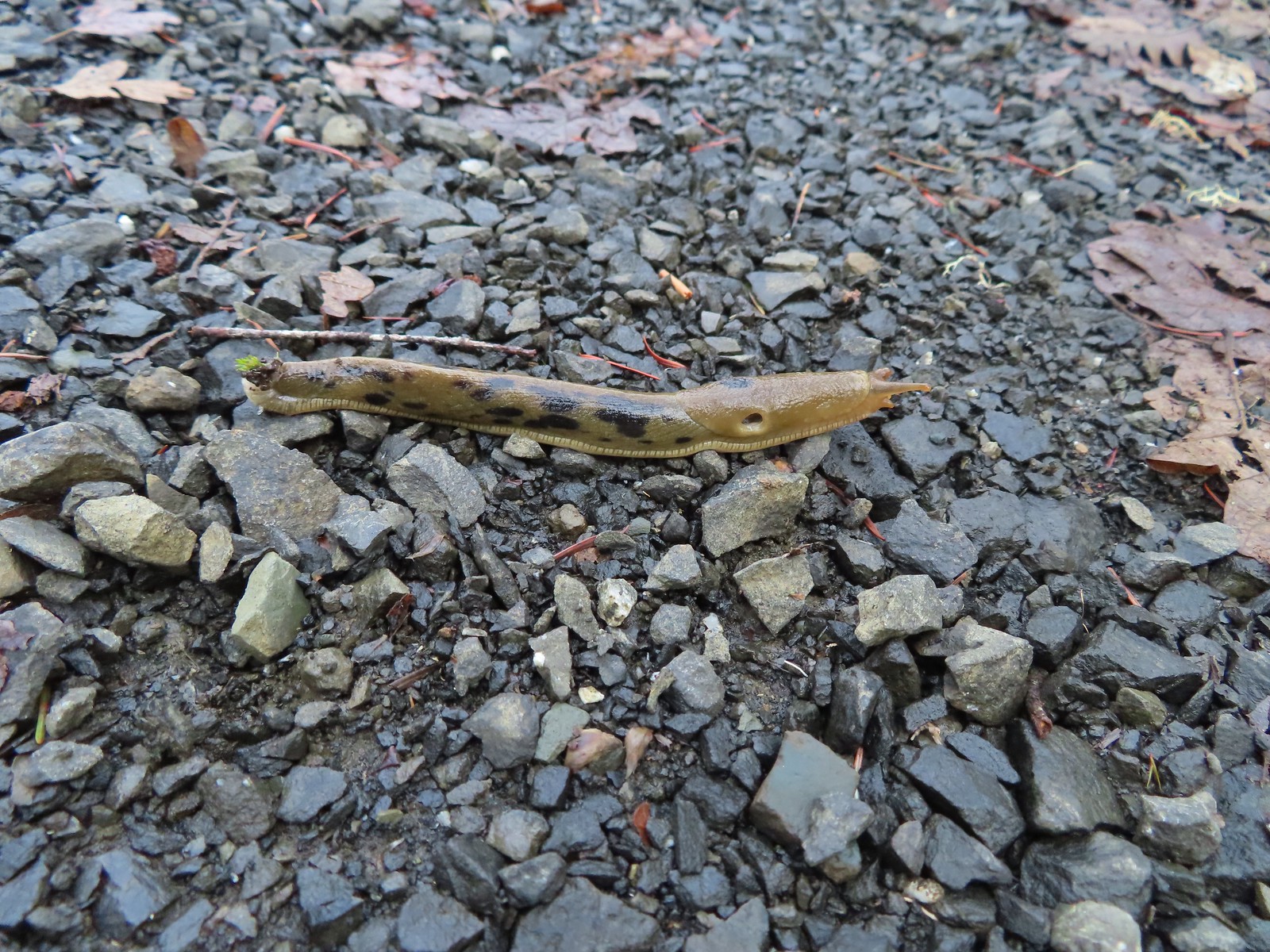 Watch your step.
 Amy’s Trail
 The clouds were beginning to break up as we climbed up this trail.
 The western end of the Throop Loop.
 The eastern end of the Allen Throop Loop. Continuing on the Fitton Green North-South Trail would have brought us to the
  There seems to have been a spelling error (Alan vs Allen) on the trail marker.
 Plaque at a viewpoint along the Allen Throop Loop. Note that it is Allen not Alan on the plaque.
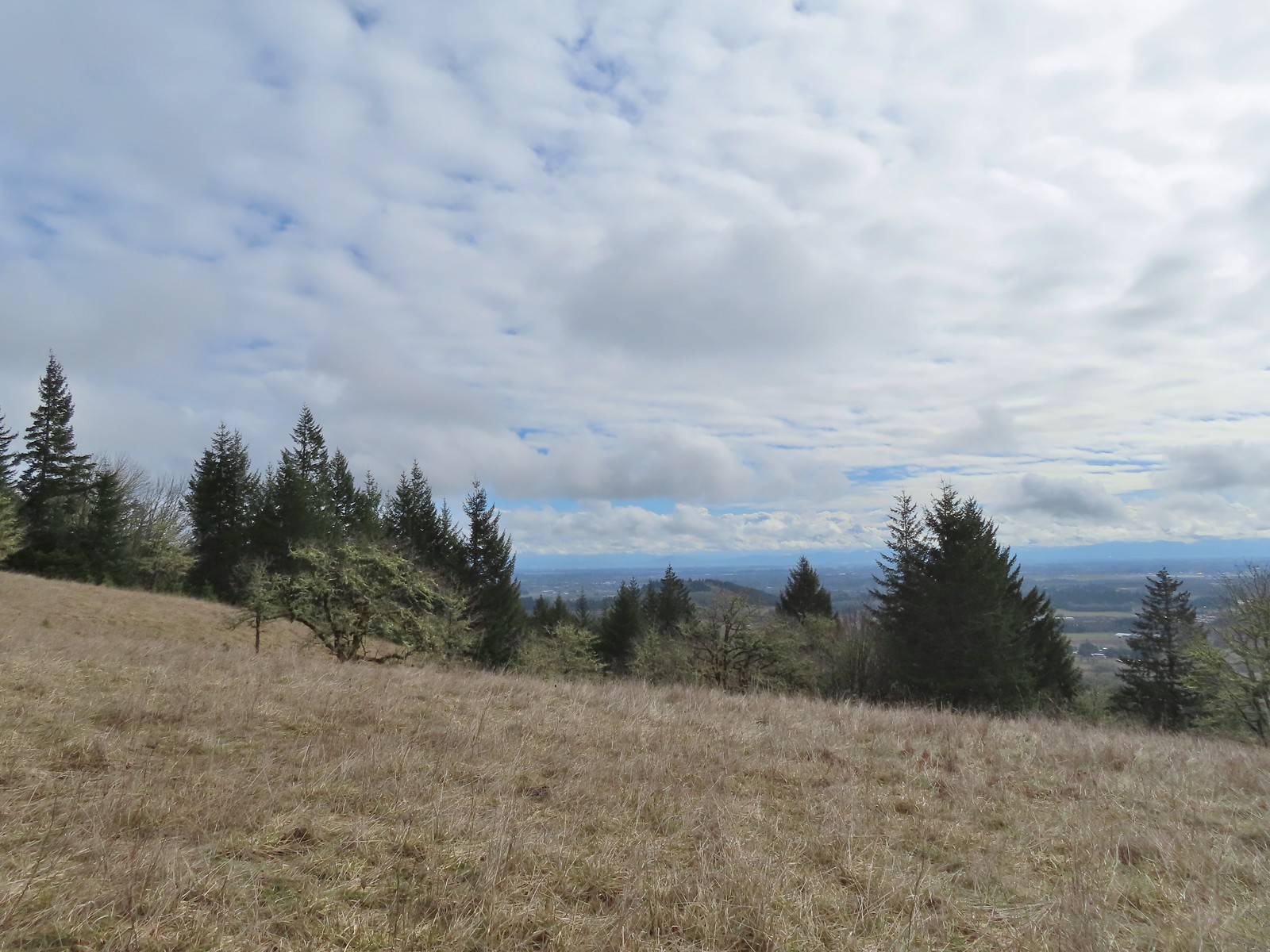
 Despite the clouds breaking up we didn’t have a view of Marys Peak, the highest peak in the Oregon Coast Range (
 The trail overlooks the cities of Corvallis (to the left/east) and Philomath (straight/south).
 Bald Hill with Corvallis beyond from the Throop Loop.
 East toward the Coast Range.
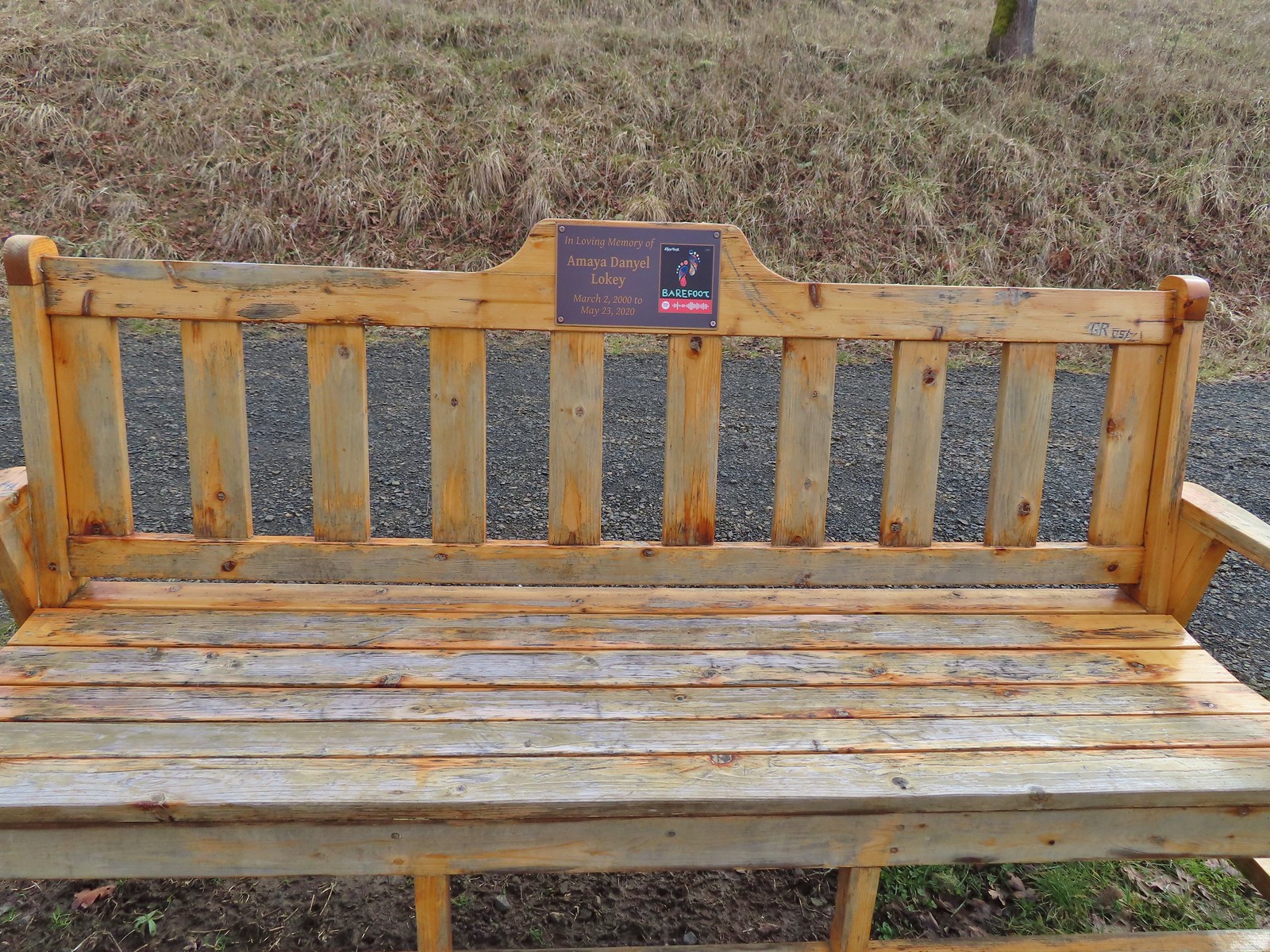
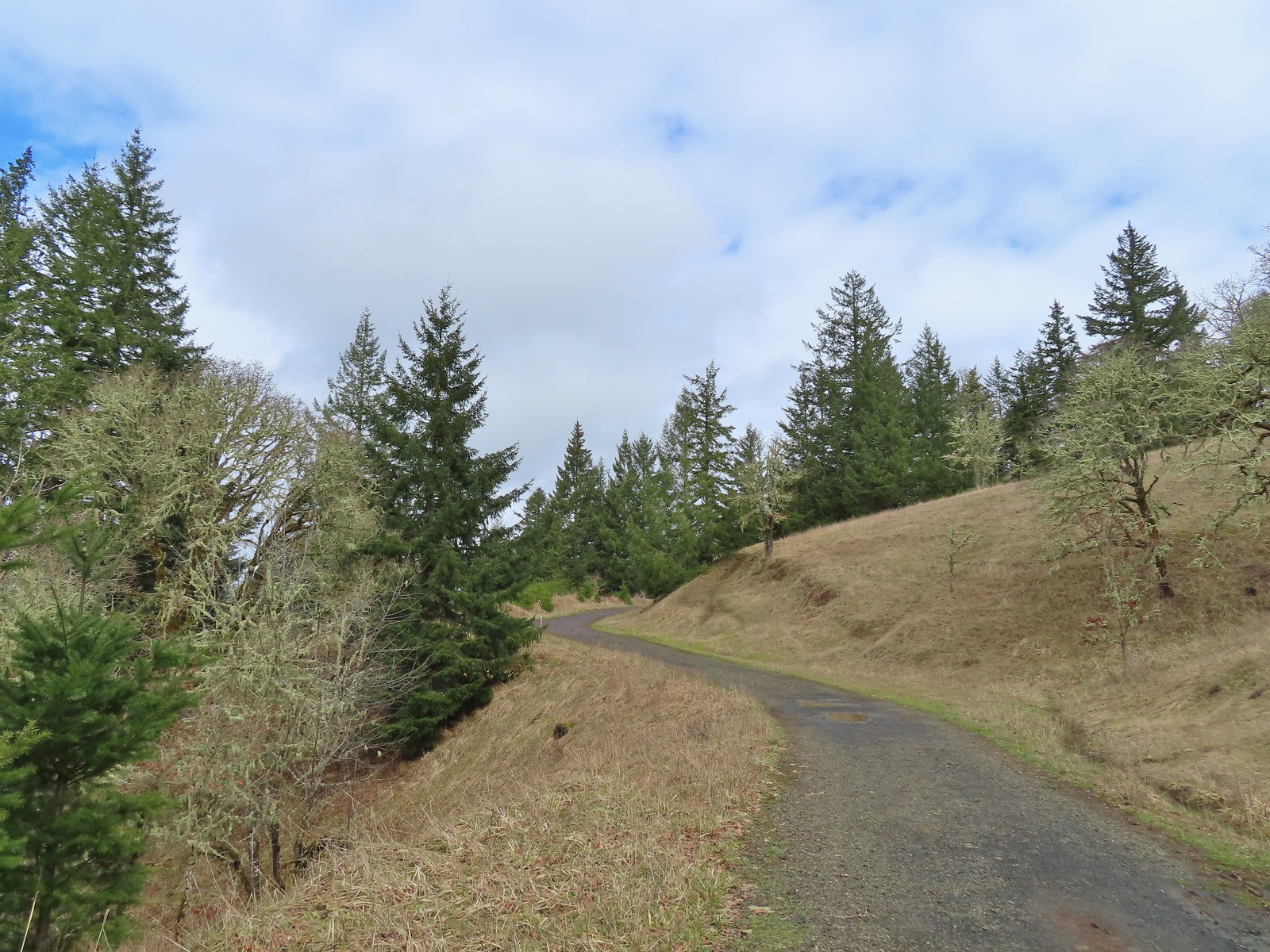
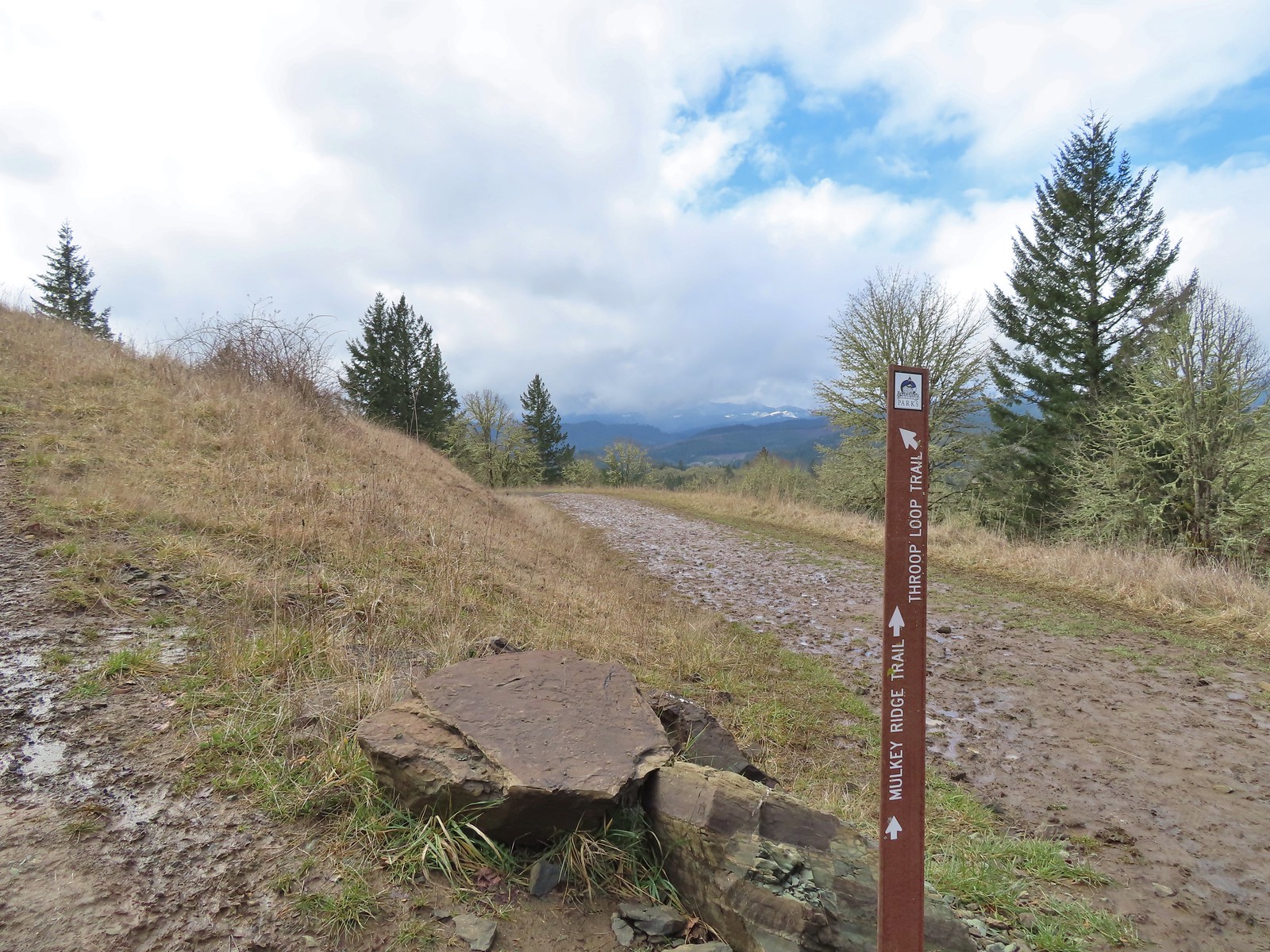 This is the trail that connects Bald Hill with Fitton Green.
 The junction from the Throop Loop Trail.
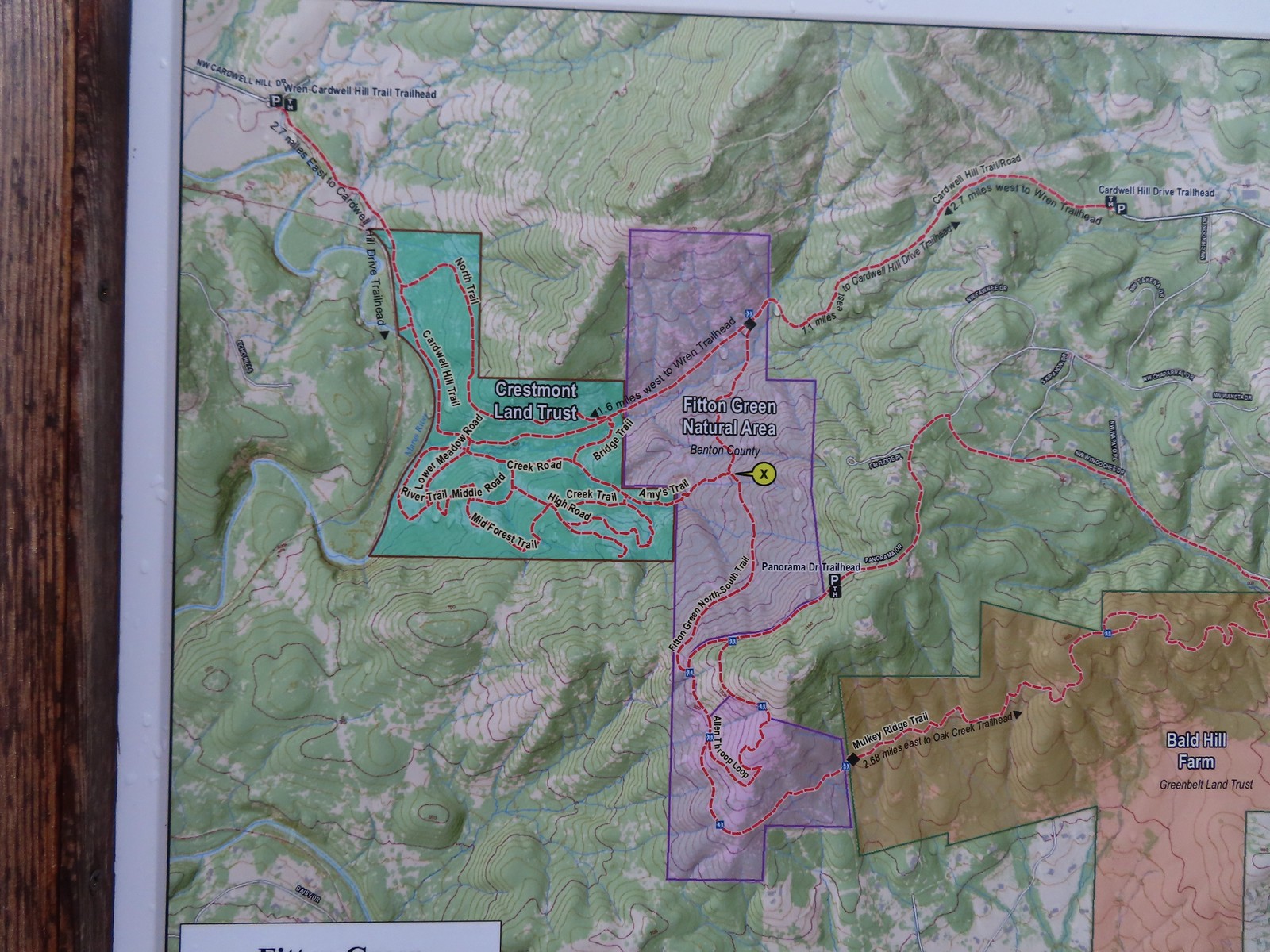 Map at the start of Amy’s Trail.
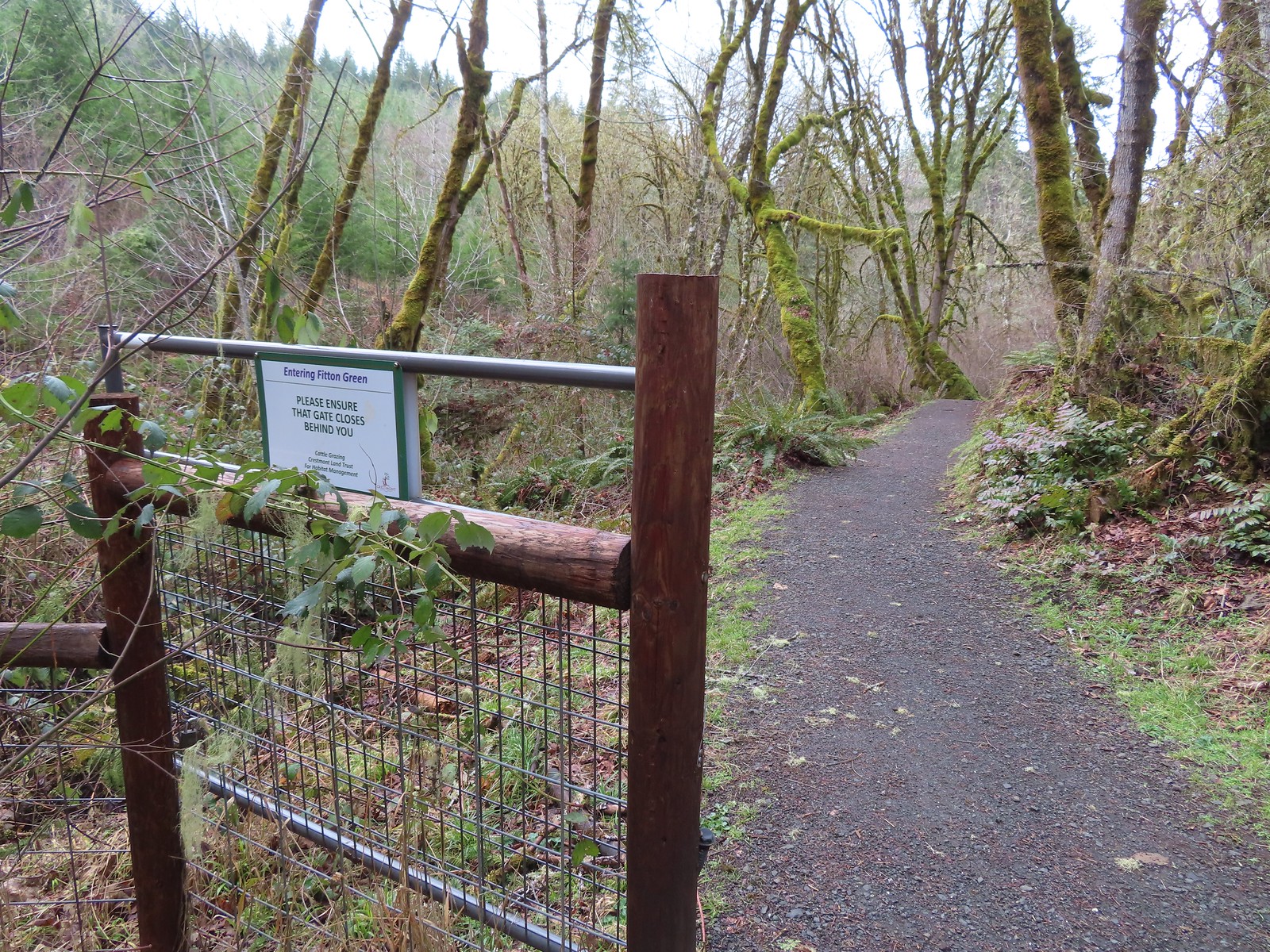 Gate at the Fitton Green-Crestmont Land Trust border.
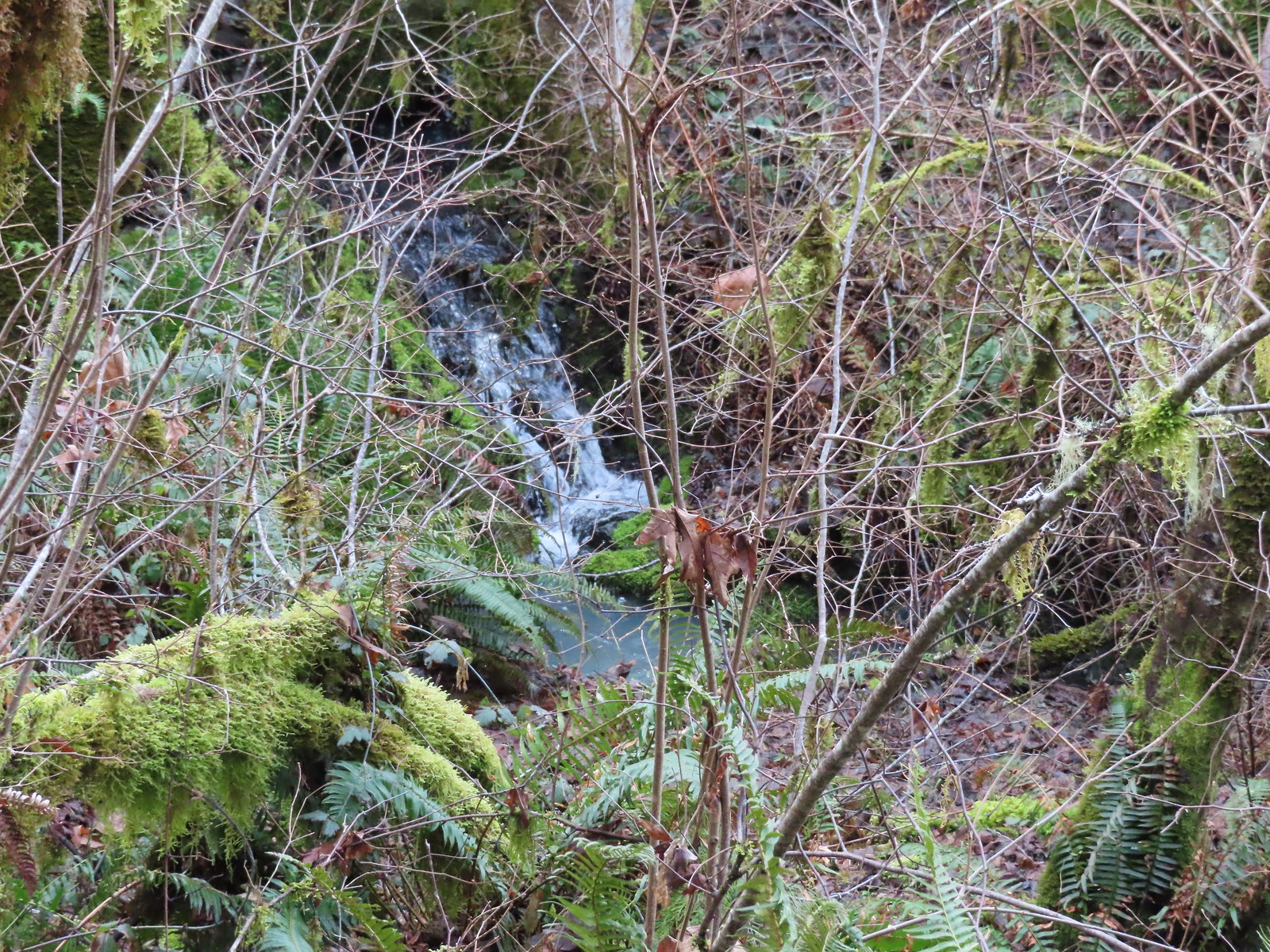 Creek along Amy’s Trail. With all the wet weather there was a fair amount of water in all the streams/creeks in the area.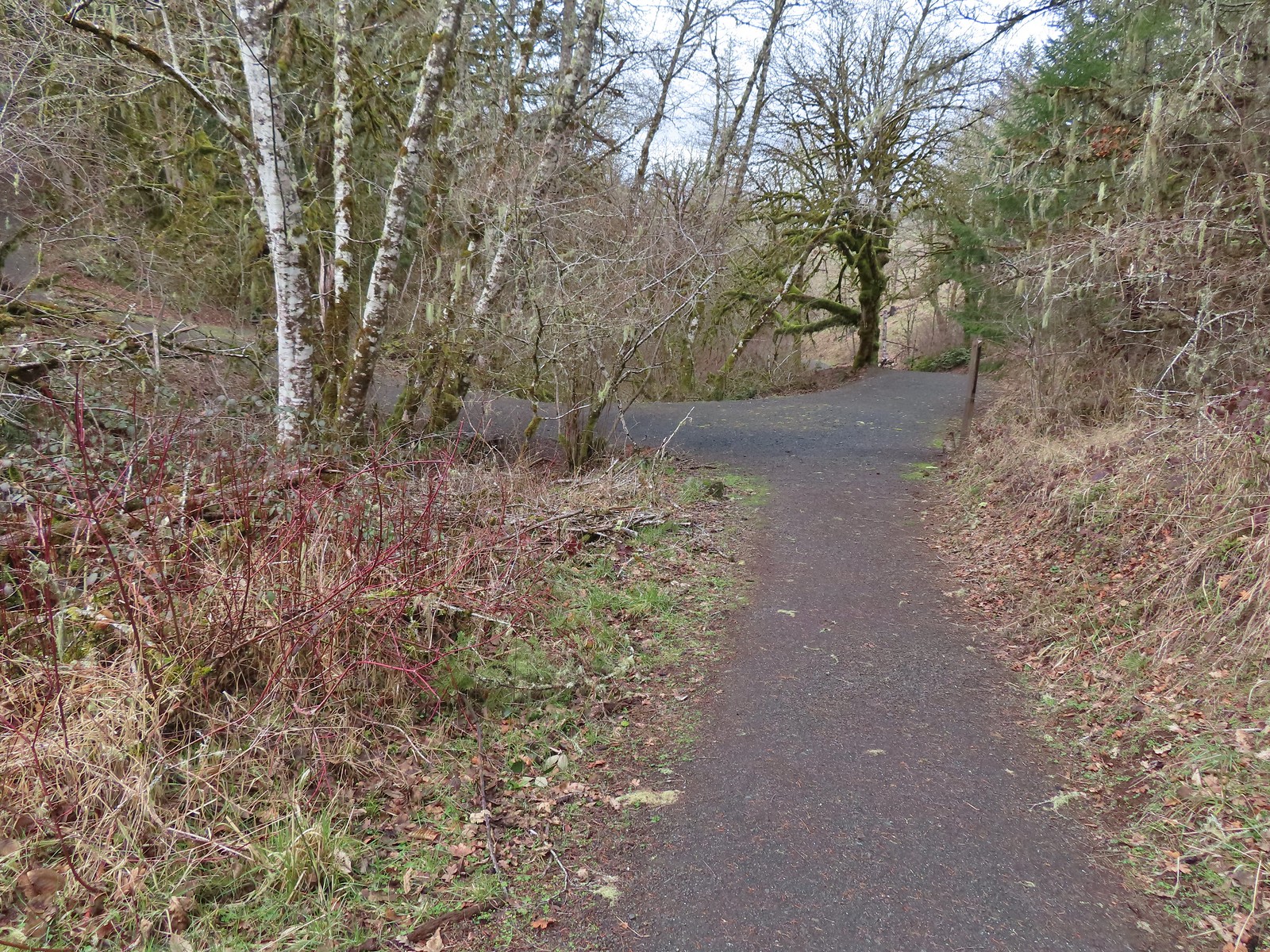

 On the hillside above the picnic table is the Creek Trail.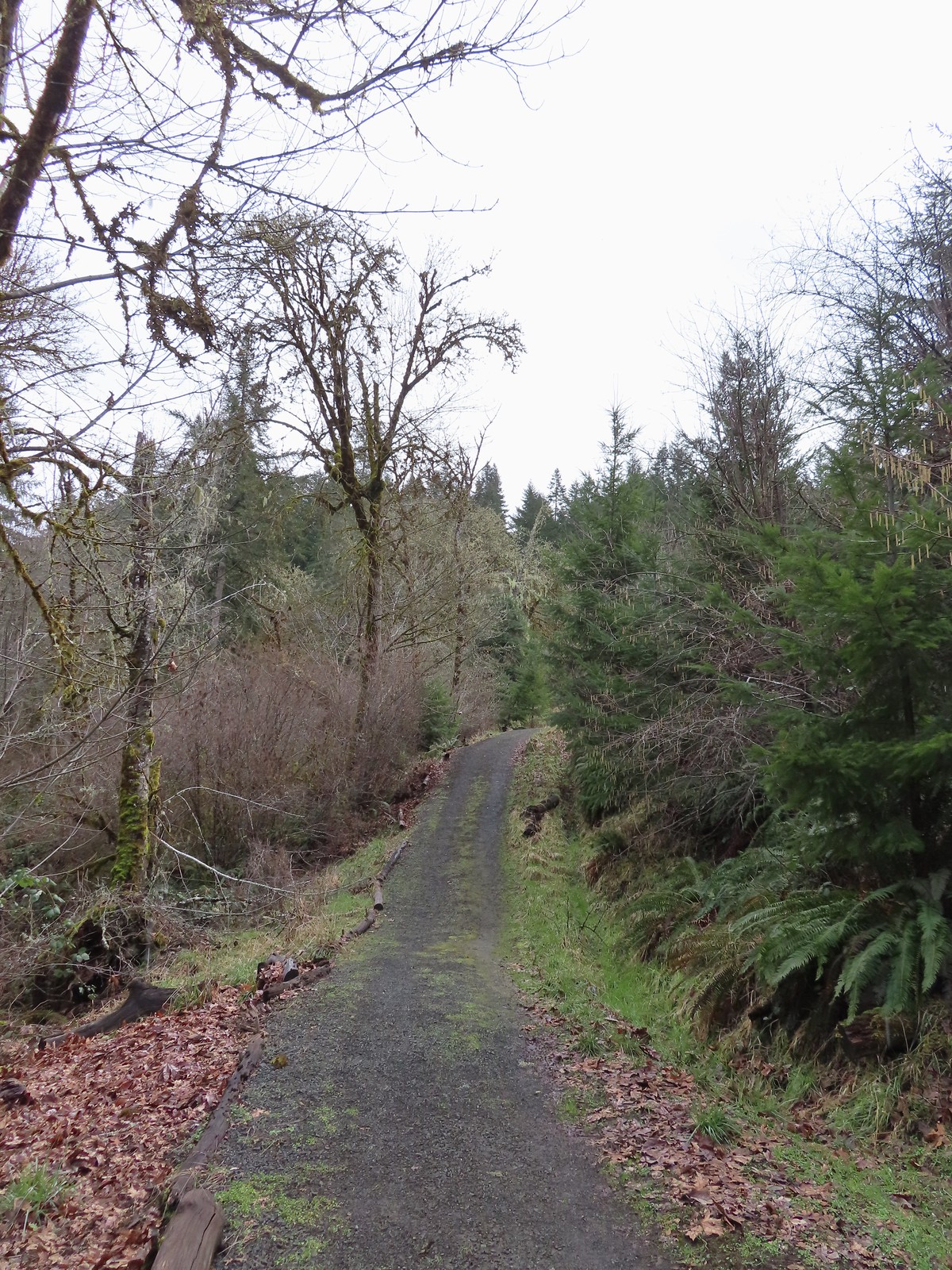
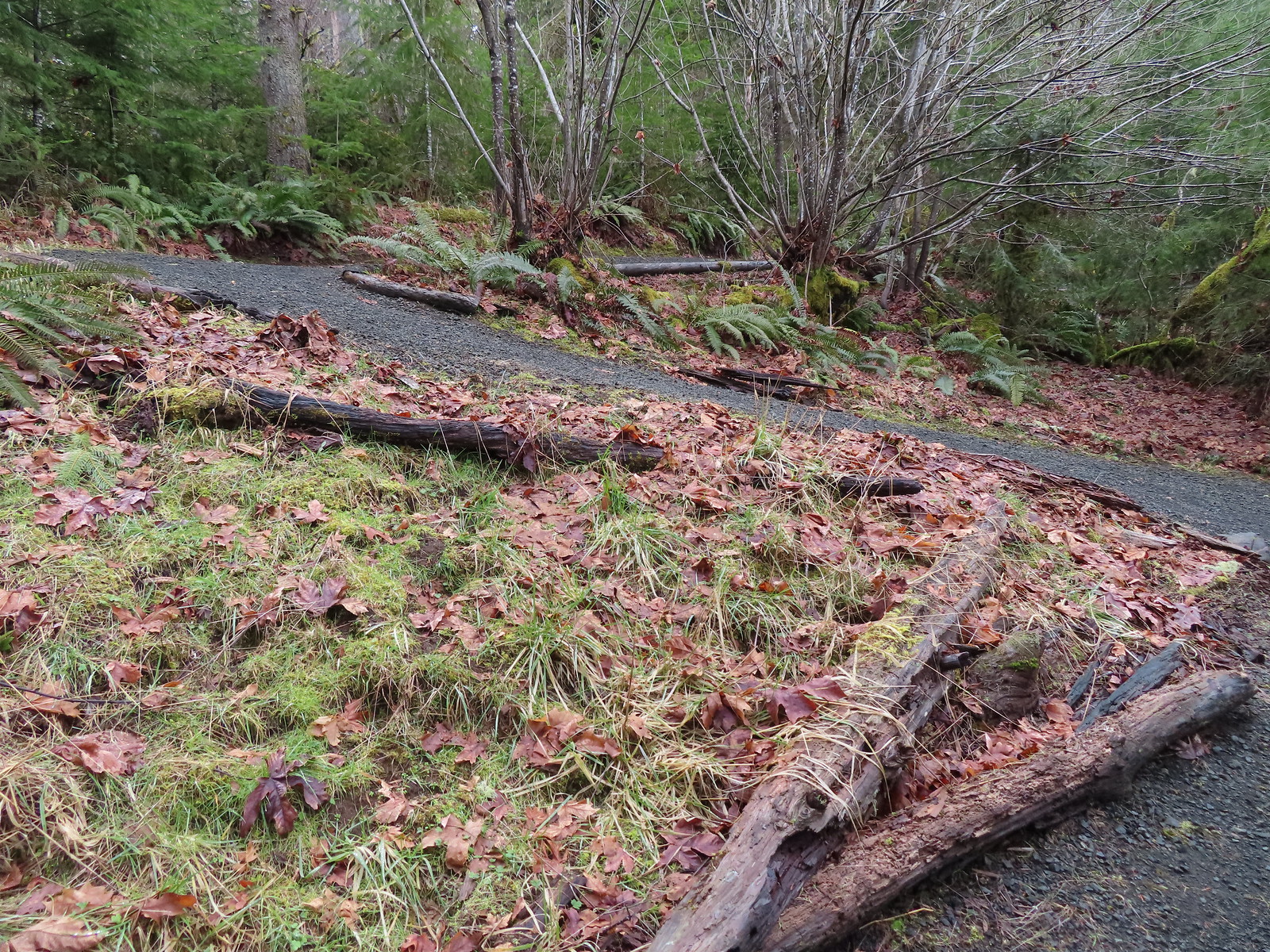 Switchbacks along the Upper Forest Trail.
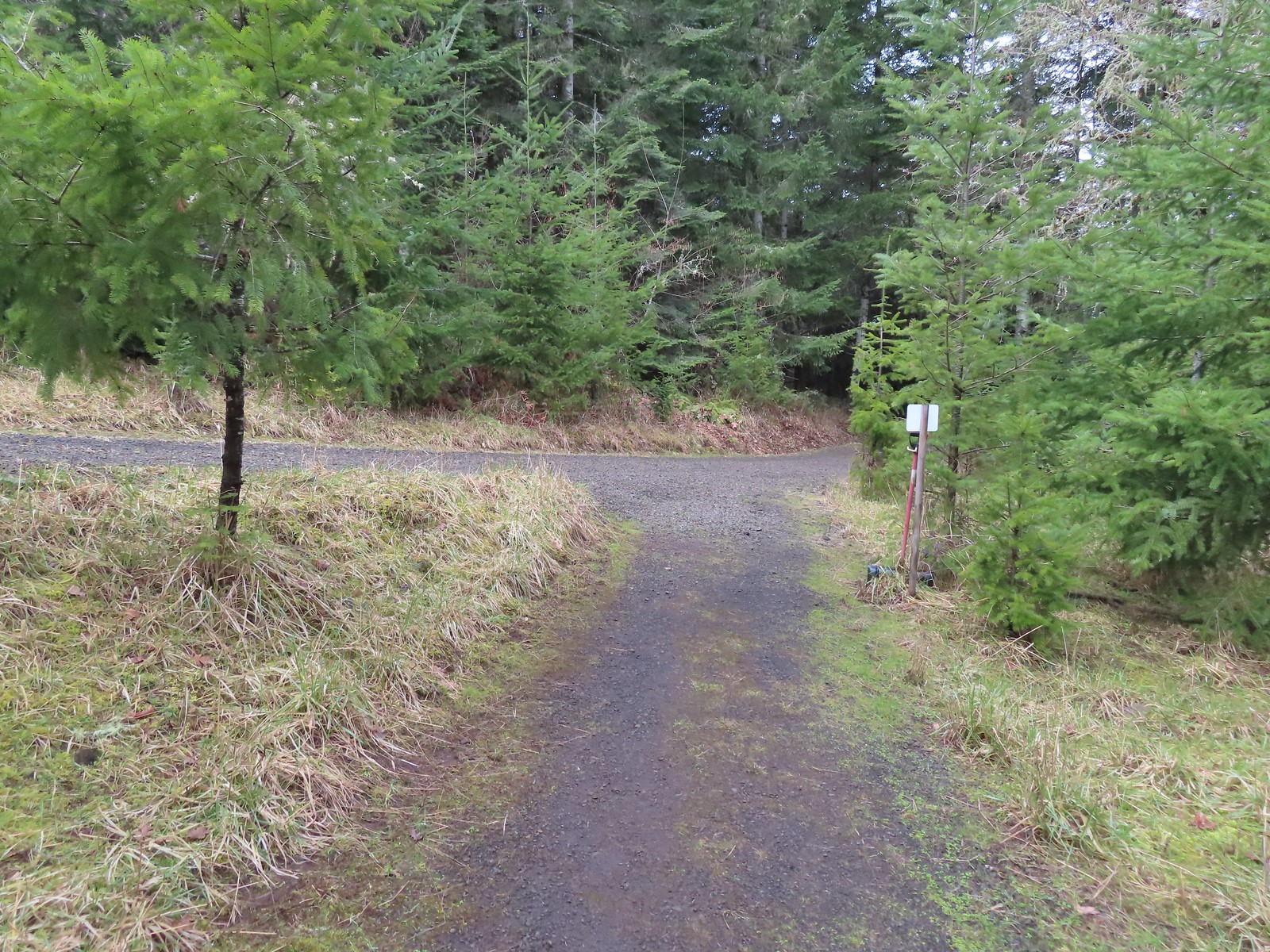 Arriving at High Road.
 The Mid Forest Trail is hidden behind the tree on the left. To the right is the Creek Trail while High Road continues straight ahead.
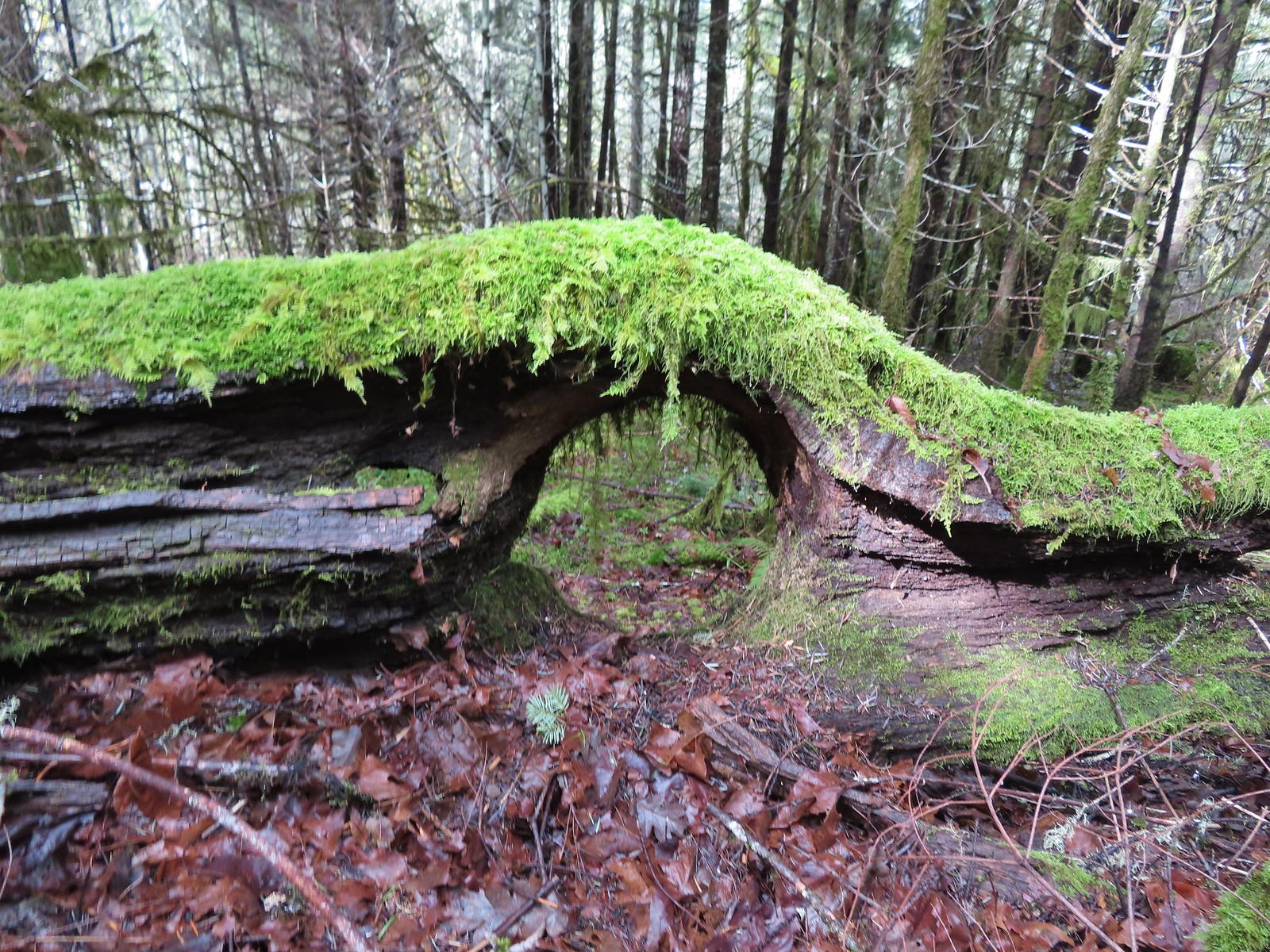 Lots of green moss along this trail.
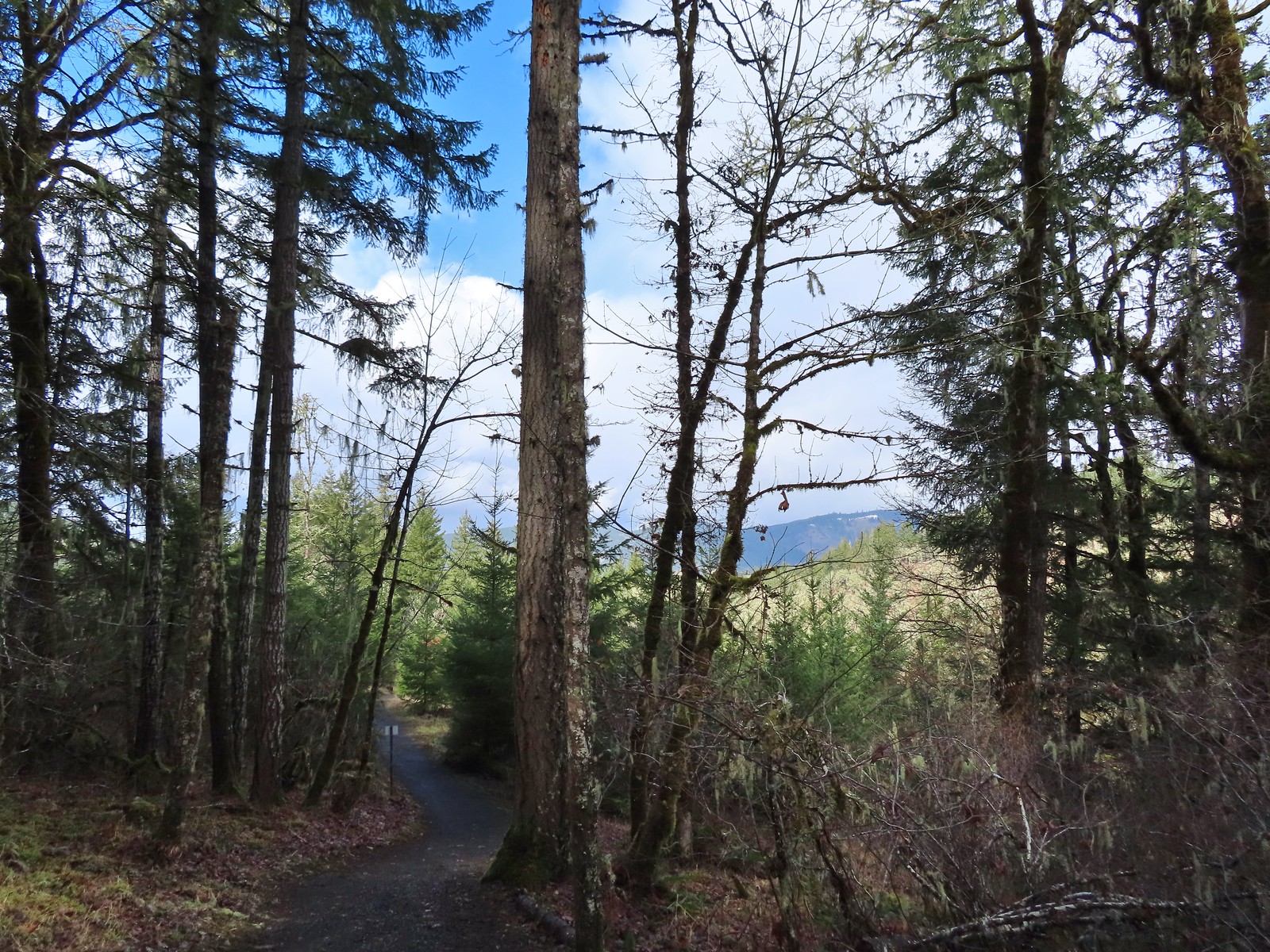 A little snow on the ridge in the distance.
 Rabbit that Heather spotted.
 The junction was at the far end of this open space.
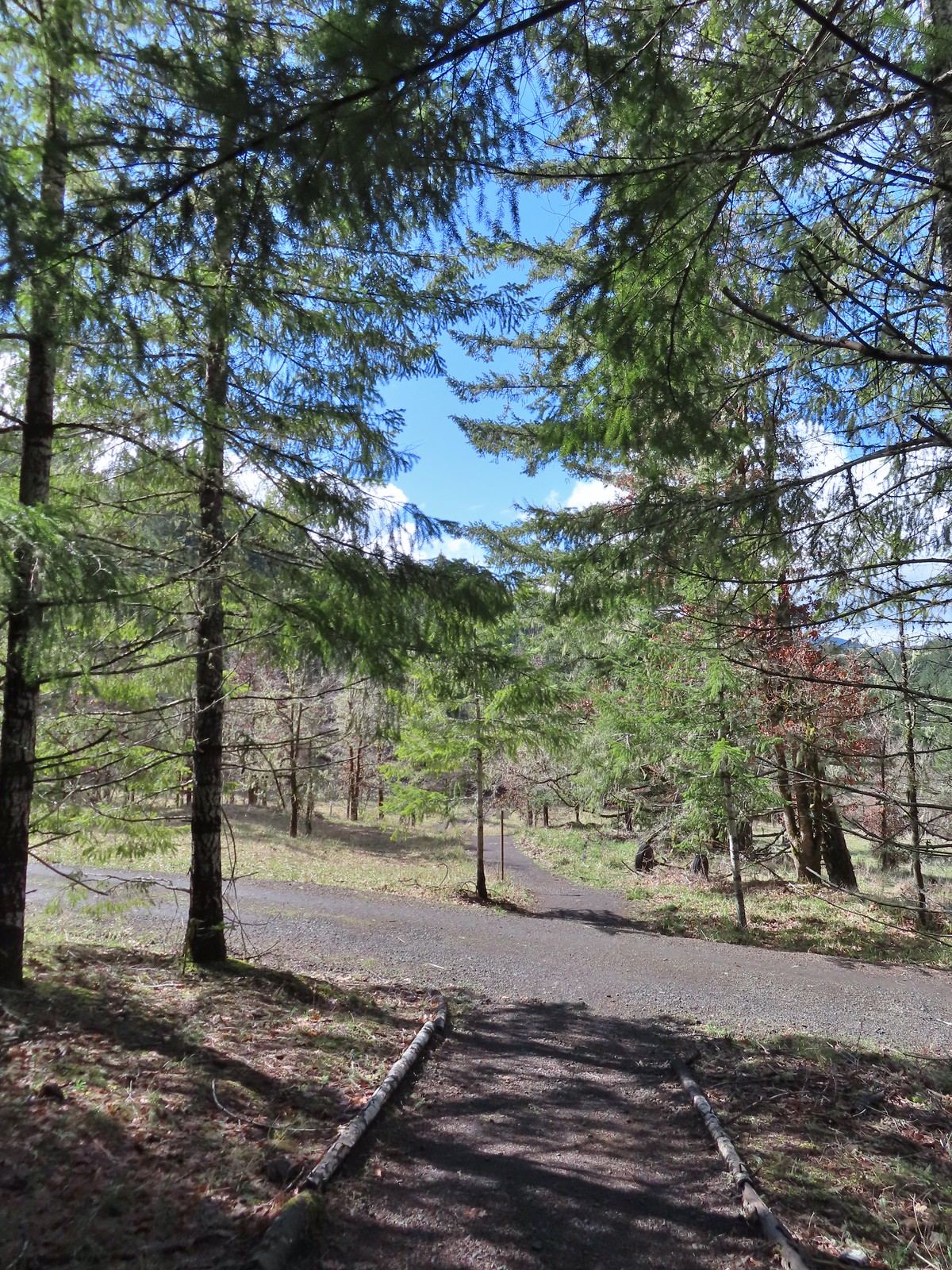 This was by far the most confusing junction we’d encountered all day. It was one of only a couple that was unsigned and none of the maps that we’d seen or had brought with us showed the road continuing to the left. Since we’d planned on staying left at all junctions except for at High Road we initially turned left here thinking it was the River Trail, but it just didn’t feel right so we turned to the Garmin which did show the road continuation. It didn’t look anything like the River Trail route so we promptly turned around and returned to the 4-way junction and took a left downhill through the meadow.
 Lower Meadow
 Gate along the River Trail just before Marys River.
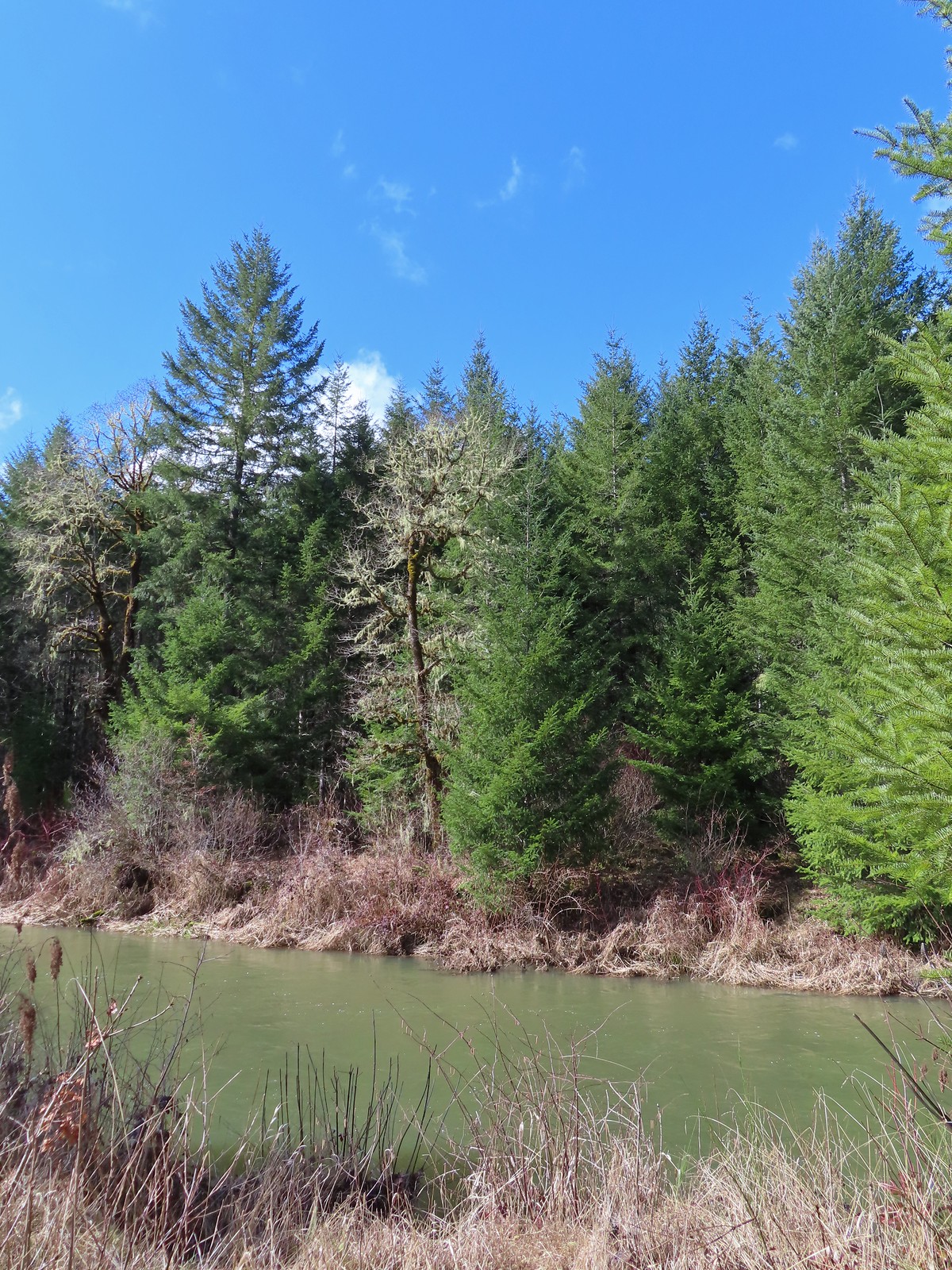 Marys River
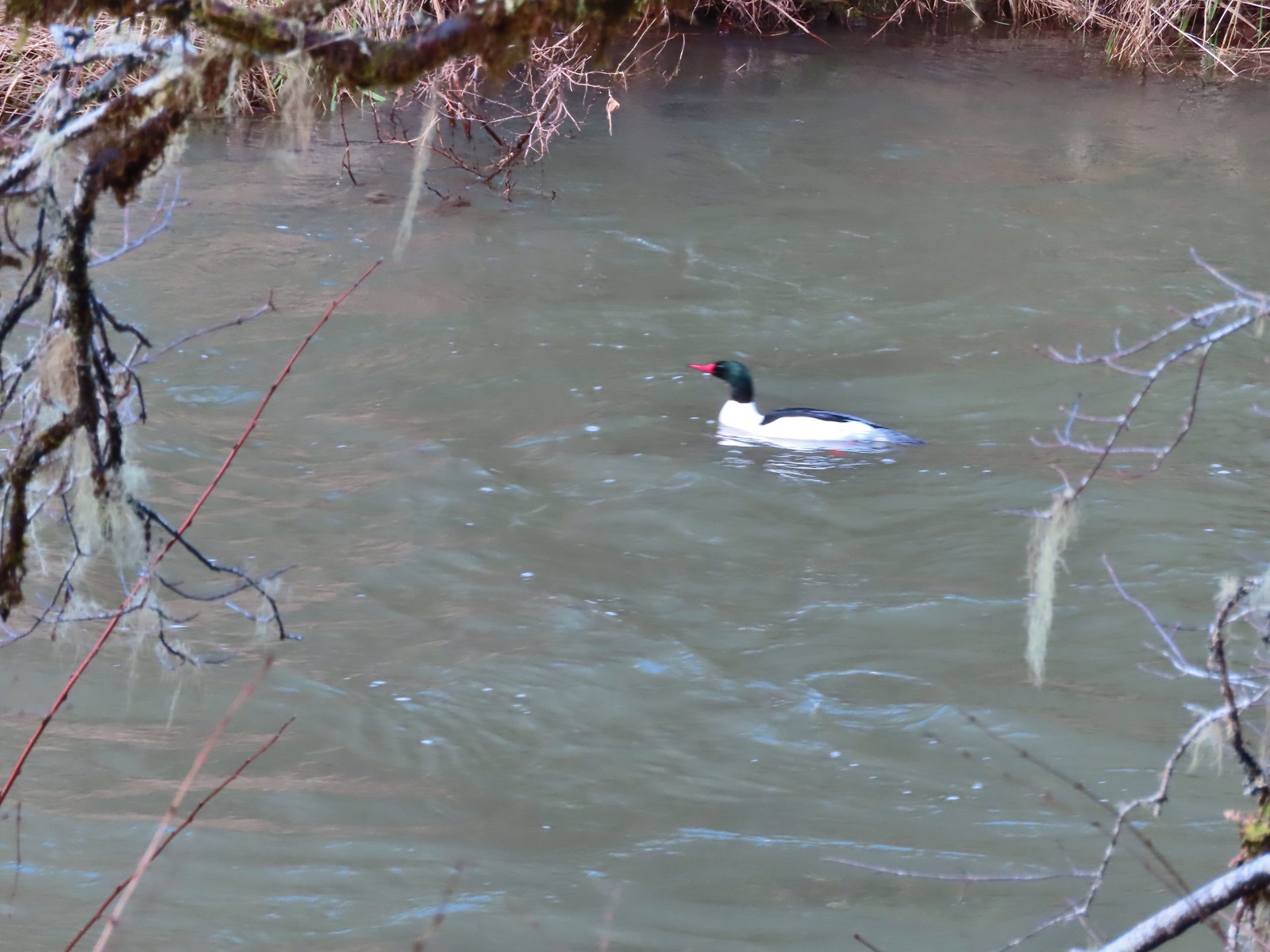 Male common merganser floating Marys River. I only had a brief second to try and get a picture as he floated by thus the poor focus.
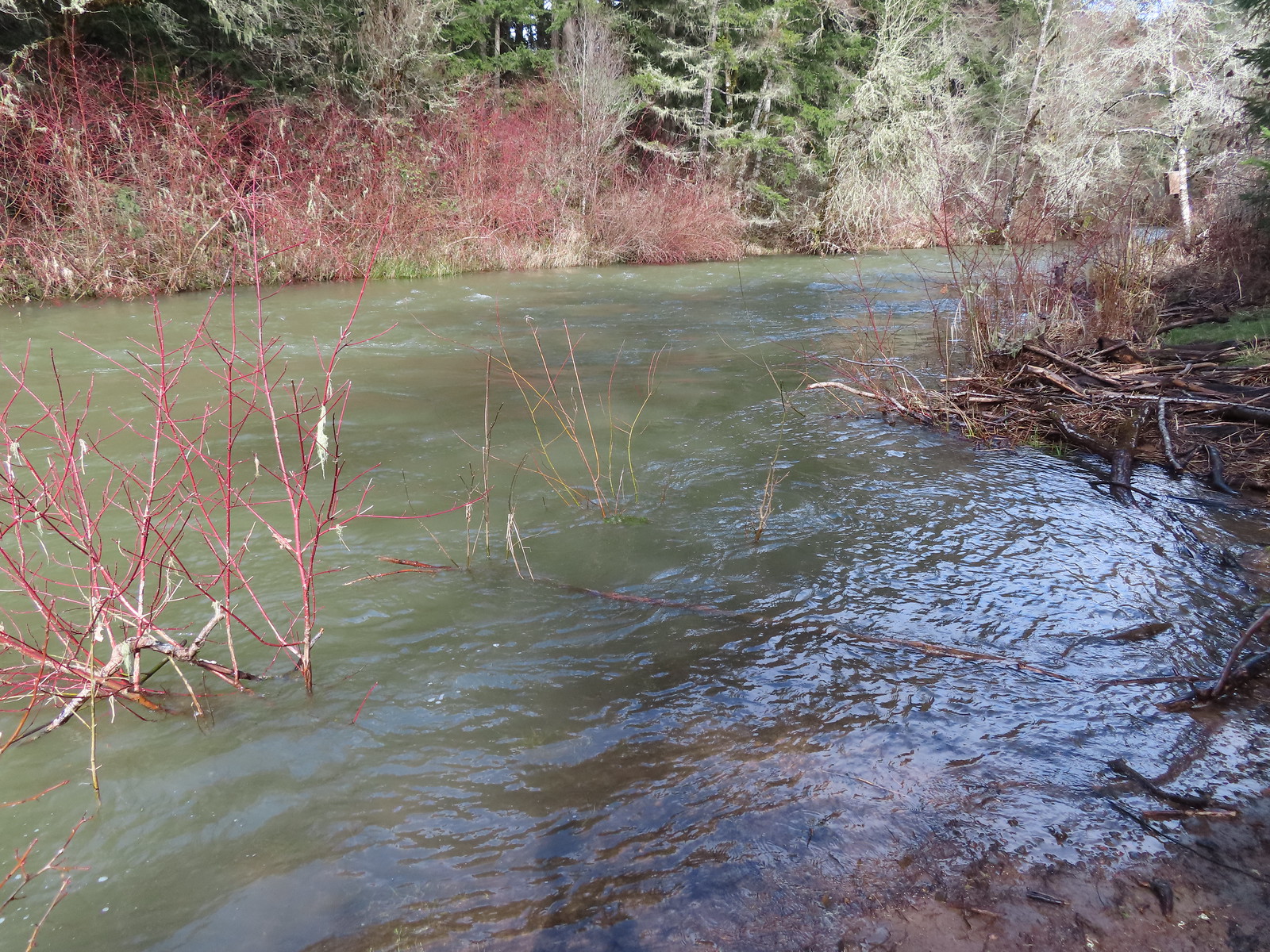 A short spur trail led down to the river bank.


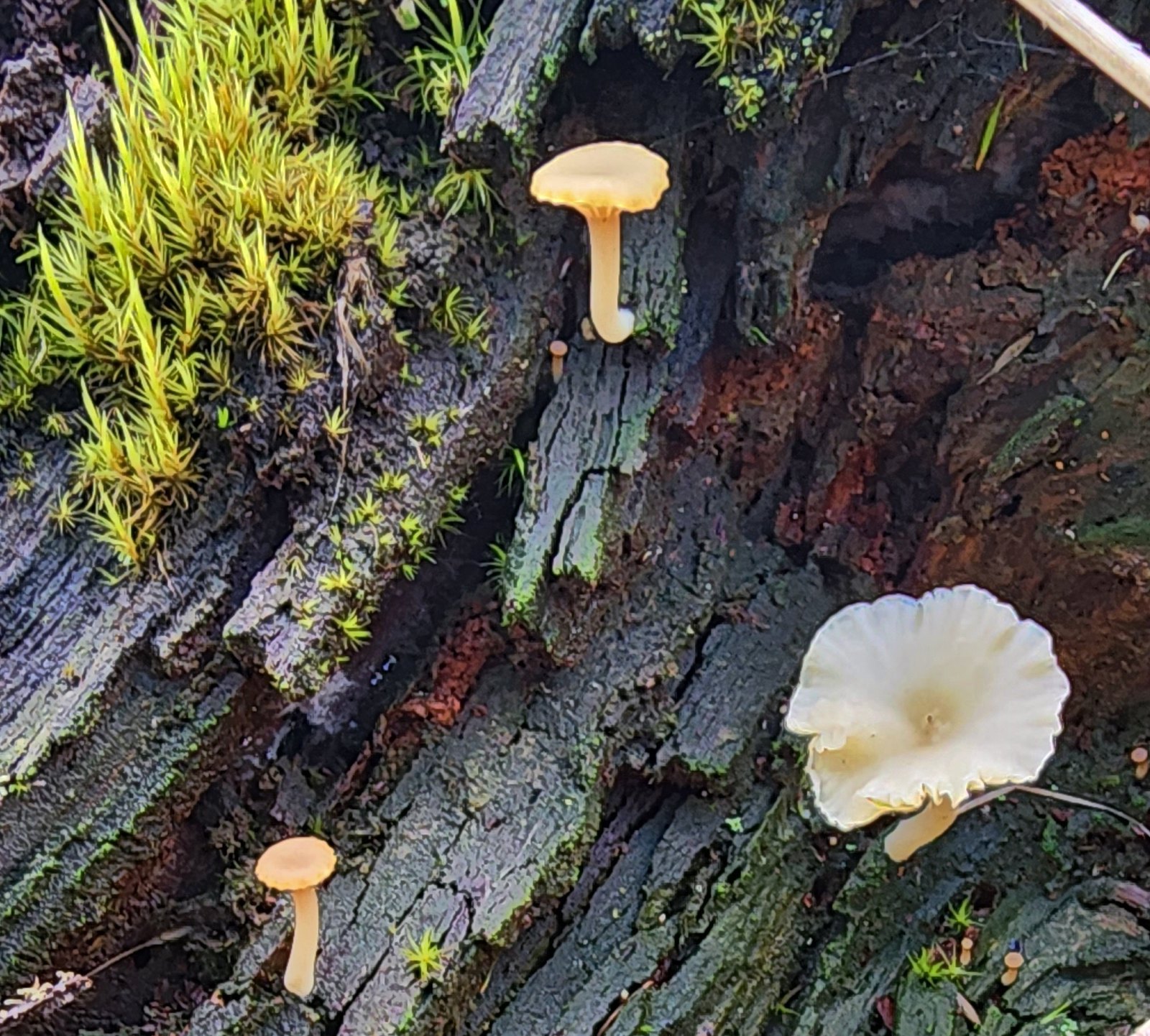 Not flowers but mushrooms are always fun to spot.
 Lower Meadow Road crossing the creek and ending at the Cardwell Hill Trail.
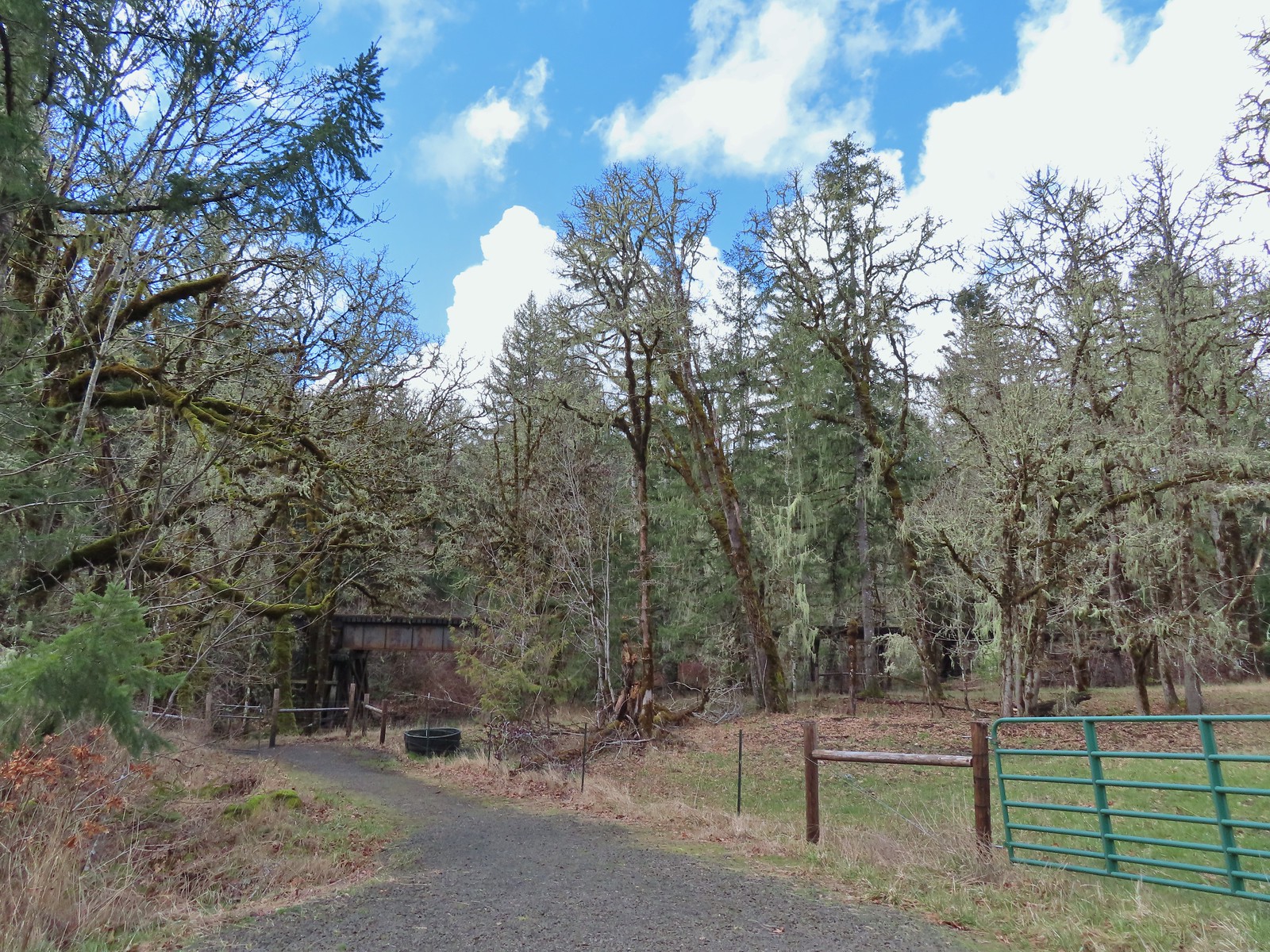 The short Trestle Extension led to a view of a railroad trestle over Marys River.
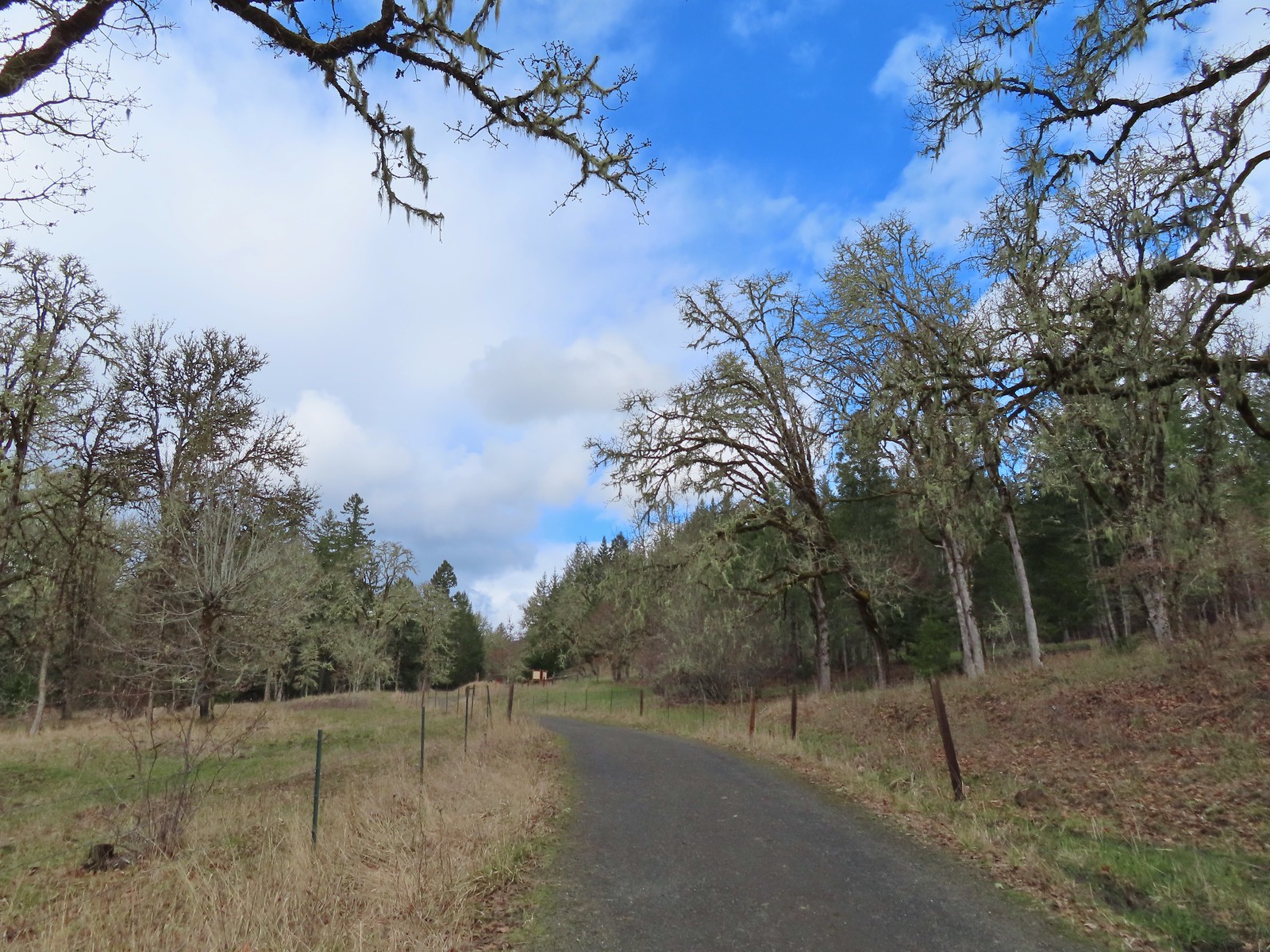 The signboards at the North Trail junction from the Cardwell Hill Trail.
 Robin near the North Trail junction.
 No more fog.


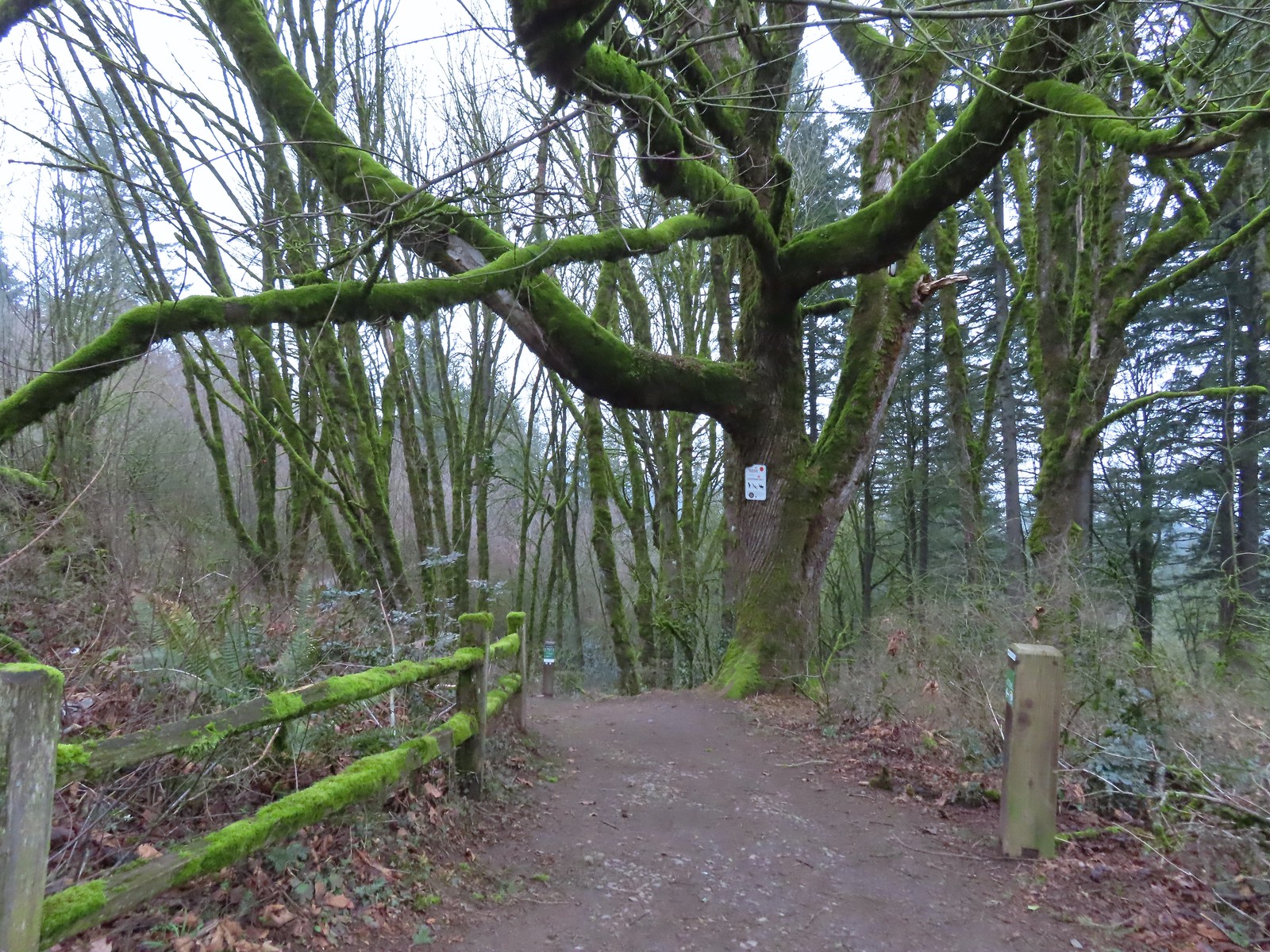
 Coming up to the SW Greenway Ave crossing at the 0.3-mile mark.
 Mossy bench
 Small trailhead at SW Fairmount Blvd at the 0.5 mile mark.
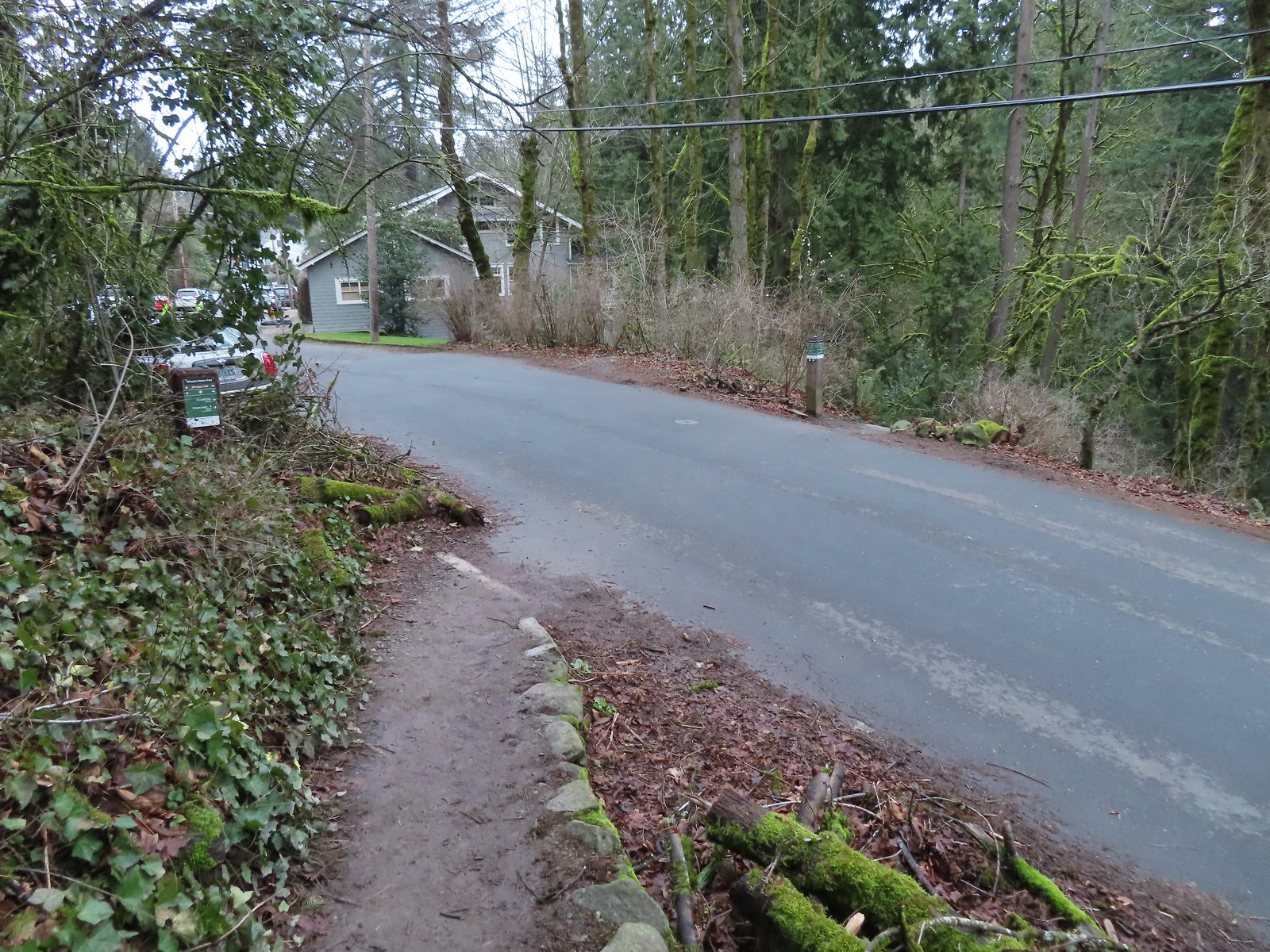 At the 1-mile mark the trail crosses NW Sherwood Dr.
 Maybe the steepest section of the hike was the tenth of a mile between NW Sherwood and the Sunnyside Trail.
 The Sunnyside Trail junction.
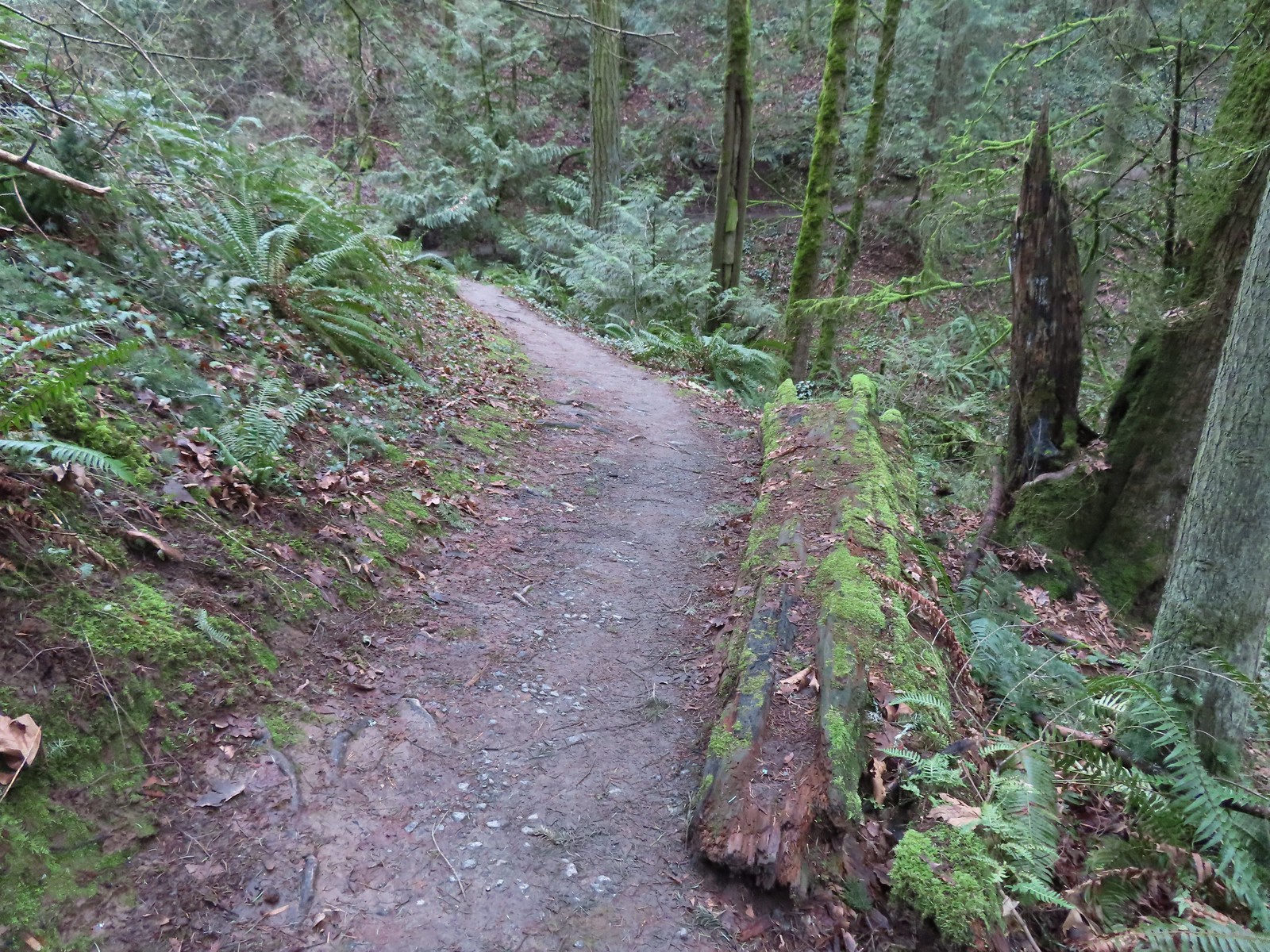
 Every (official) trail junction was well marked by pointers which helped us stay on course.
 The Shadyside Trail on the far hillside.
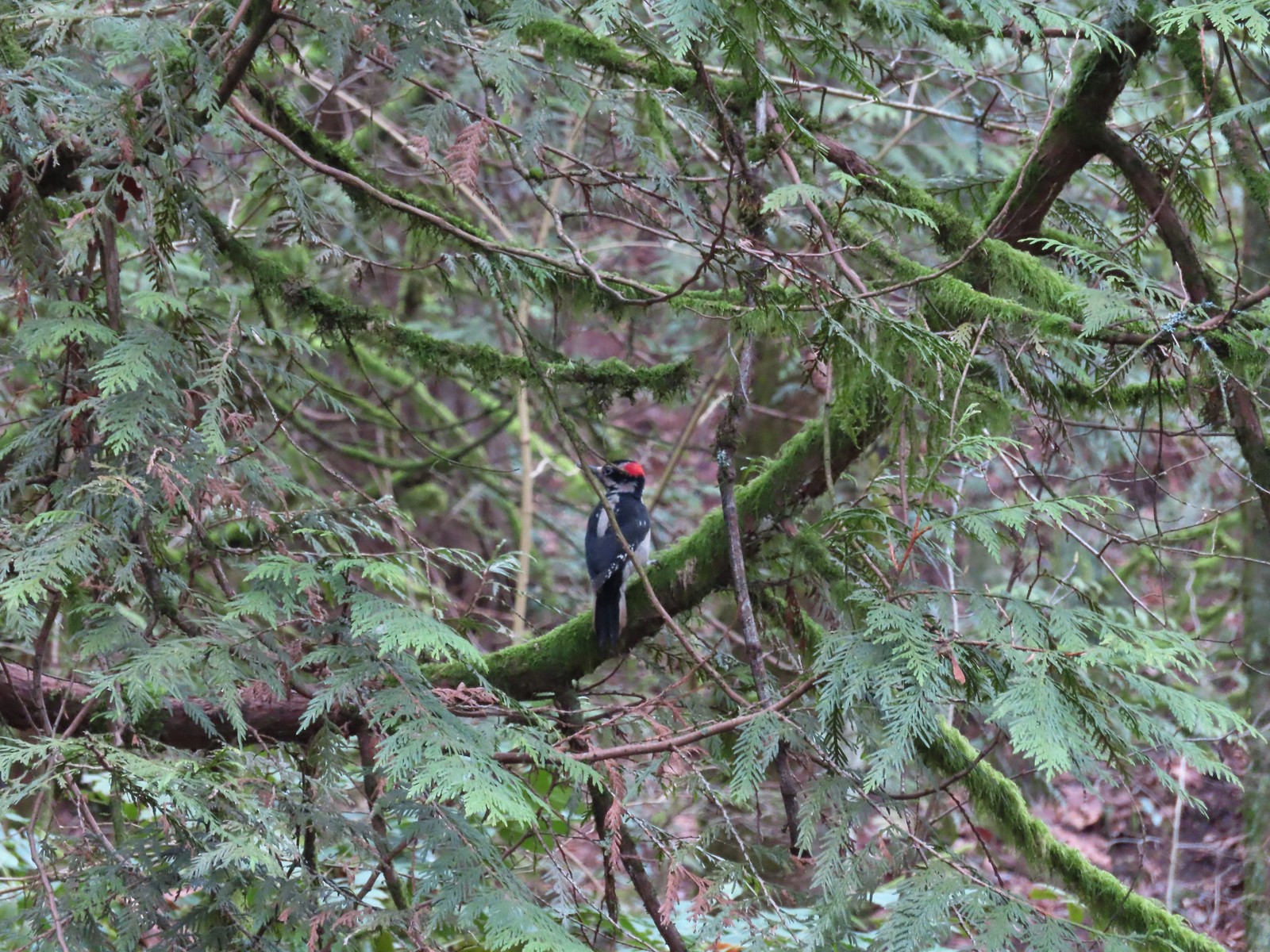 One of two hairy woodpeckers that were busy foraging for breakfast.
 Coming up on the Marquam Shelter.
 We saw little fungi, but these turkey tails added some color to the forest.
 The Marquam Shelter.
 A tenth of a mile from the shelter we passed the Connor Trail on the left. This trail would have taken us to OHSU and the

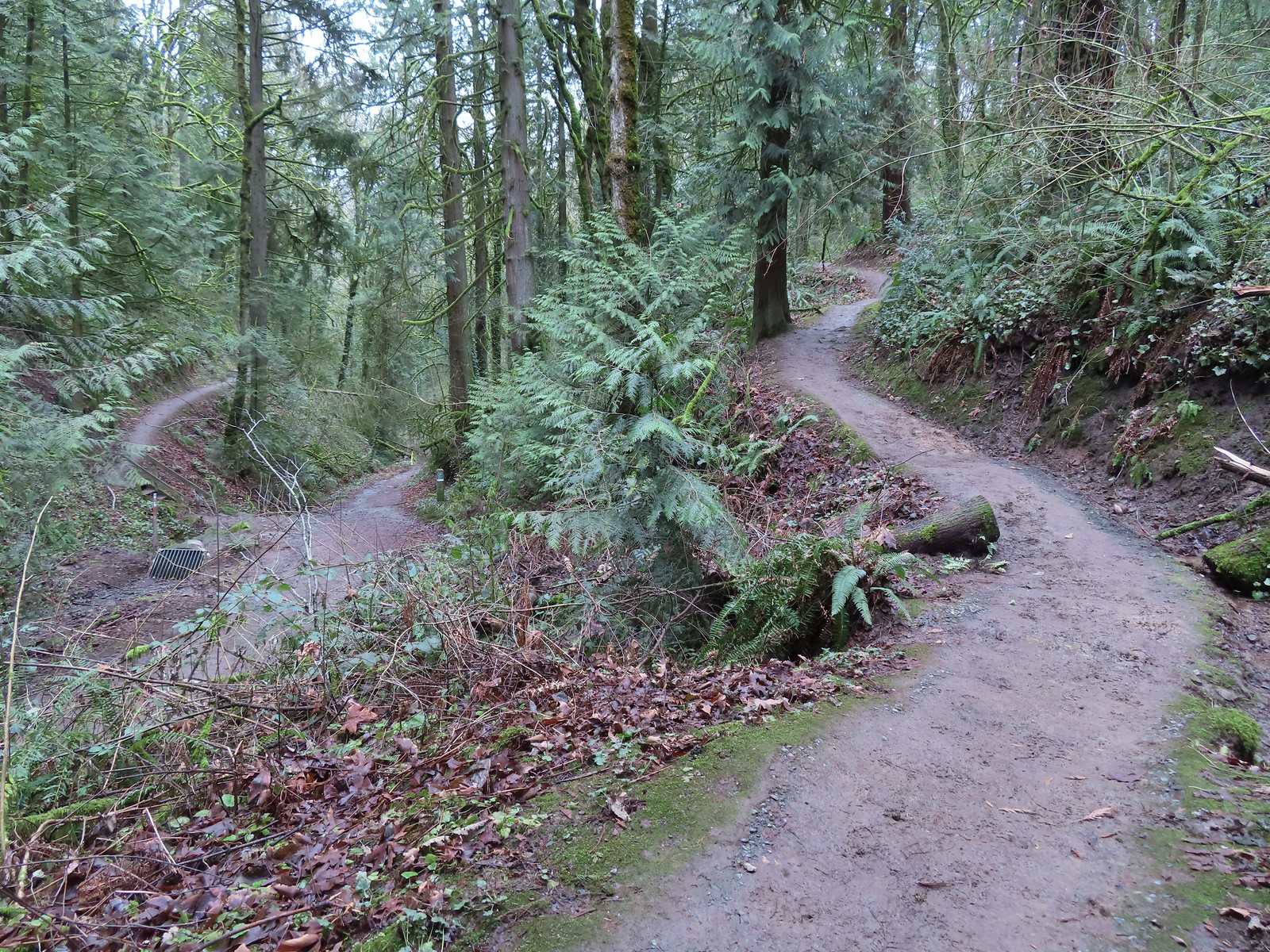 The Marquam Trail to the left and right with the Basalt Trail in the center from the first switchback.
 Trail marker near SW Gibbs.
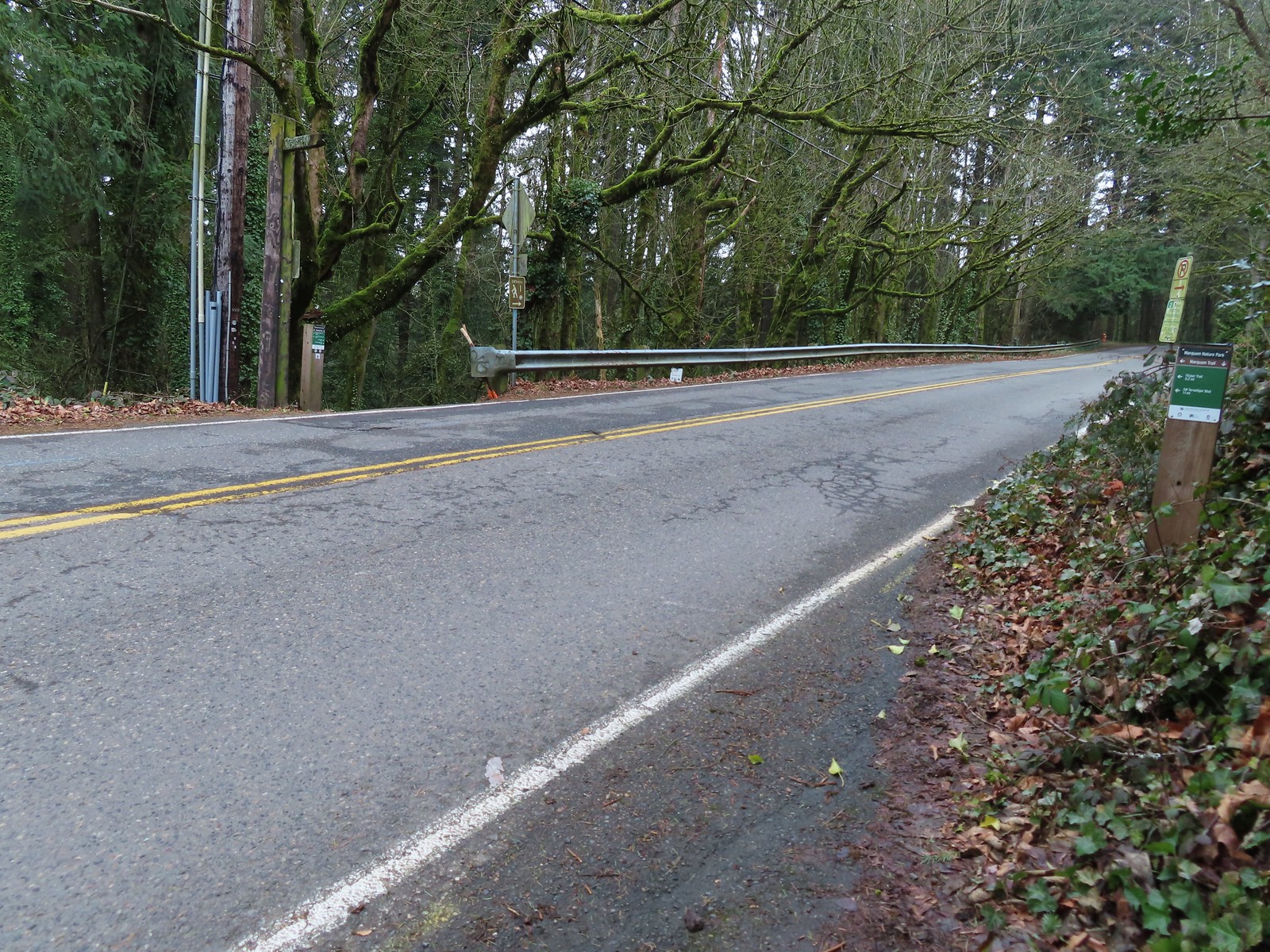
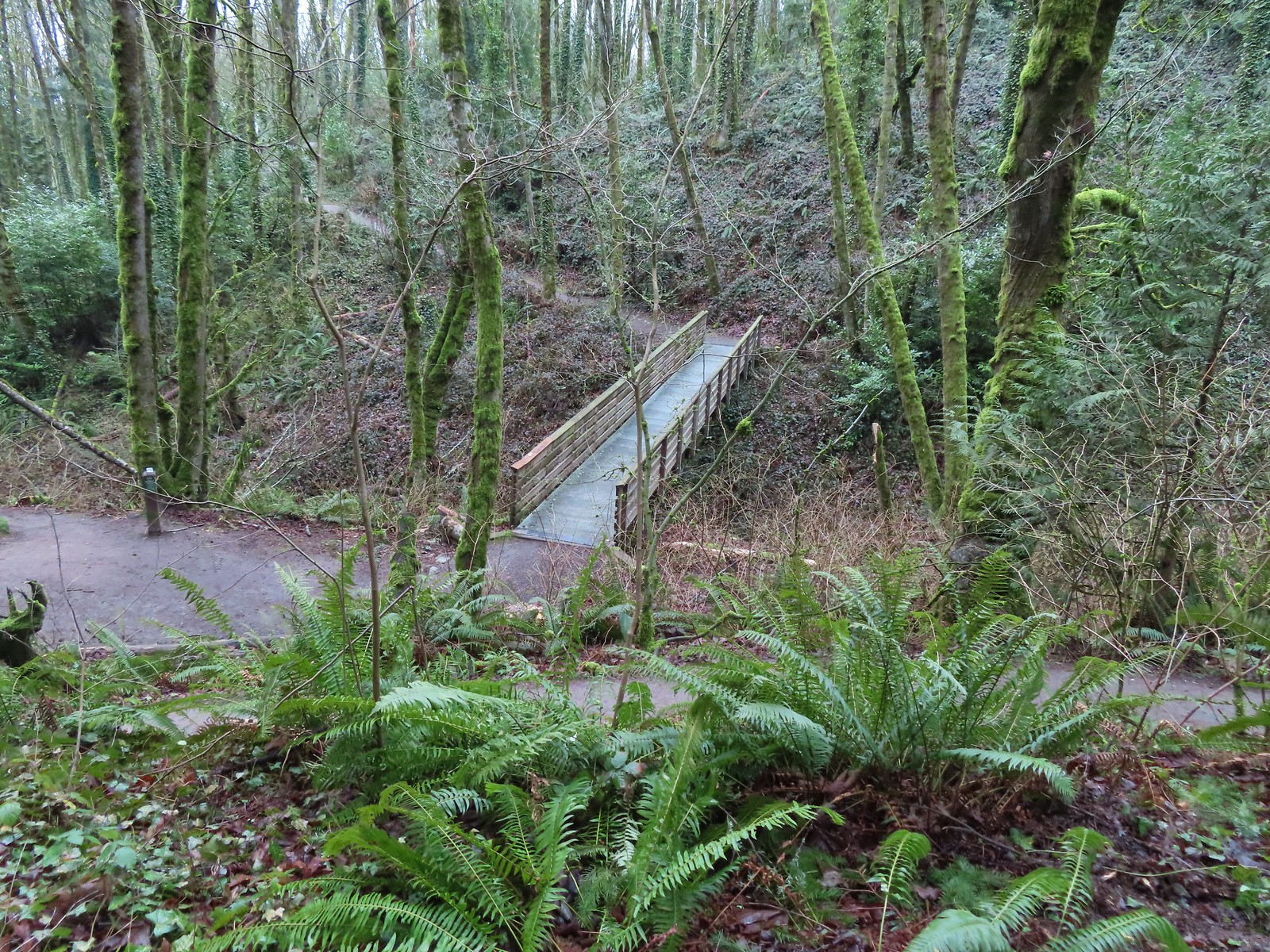 The Flicker Trail from the Marquam Trail.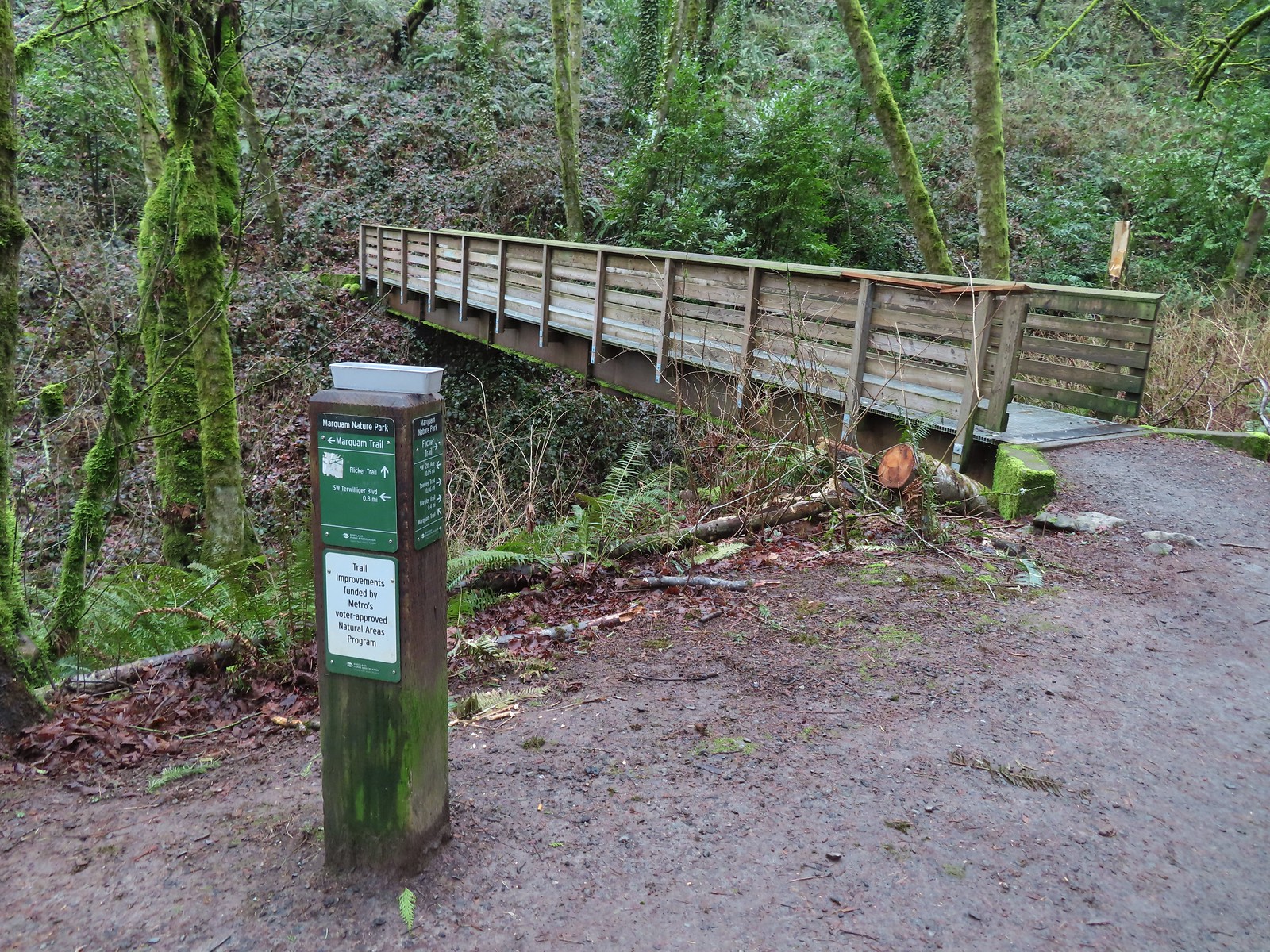

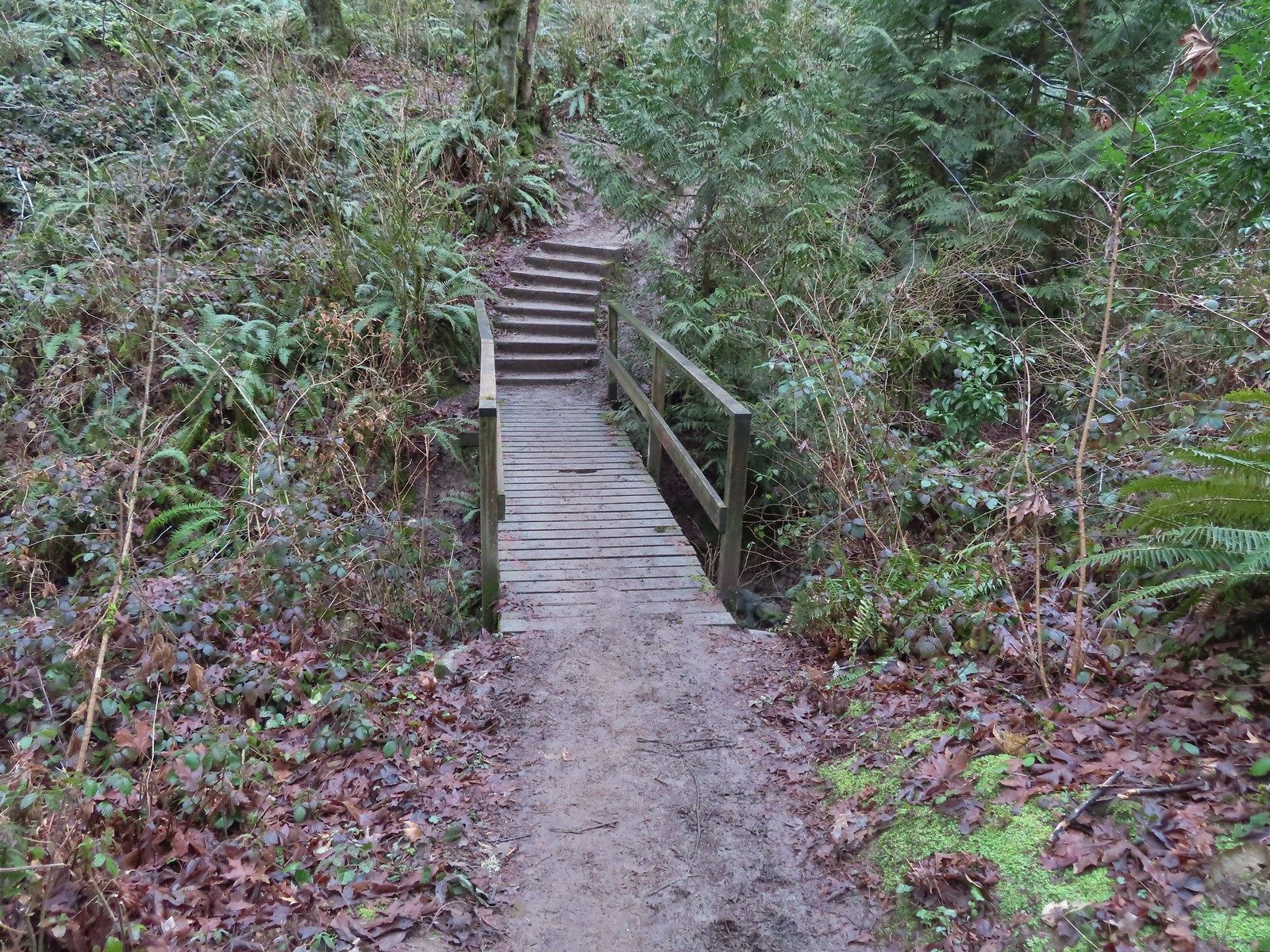


 Note it is still not “mostly sunny” even though it was now almost 10am.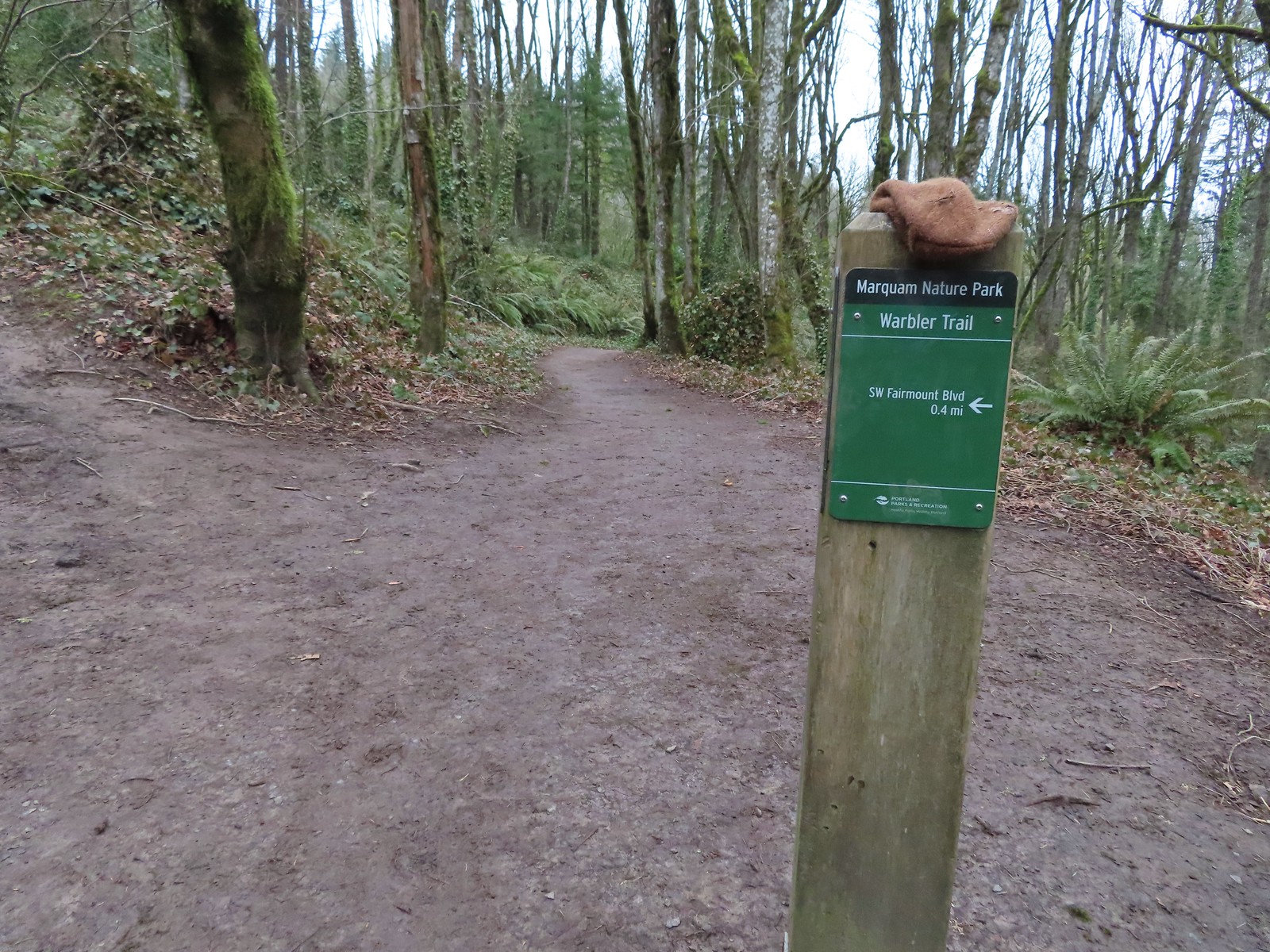
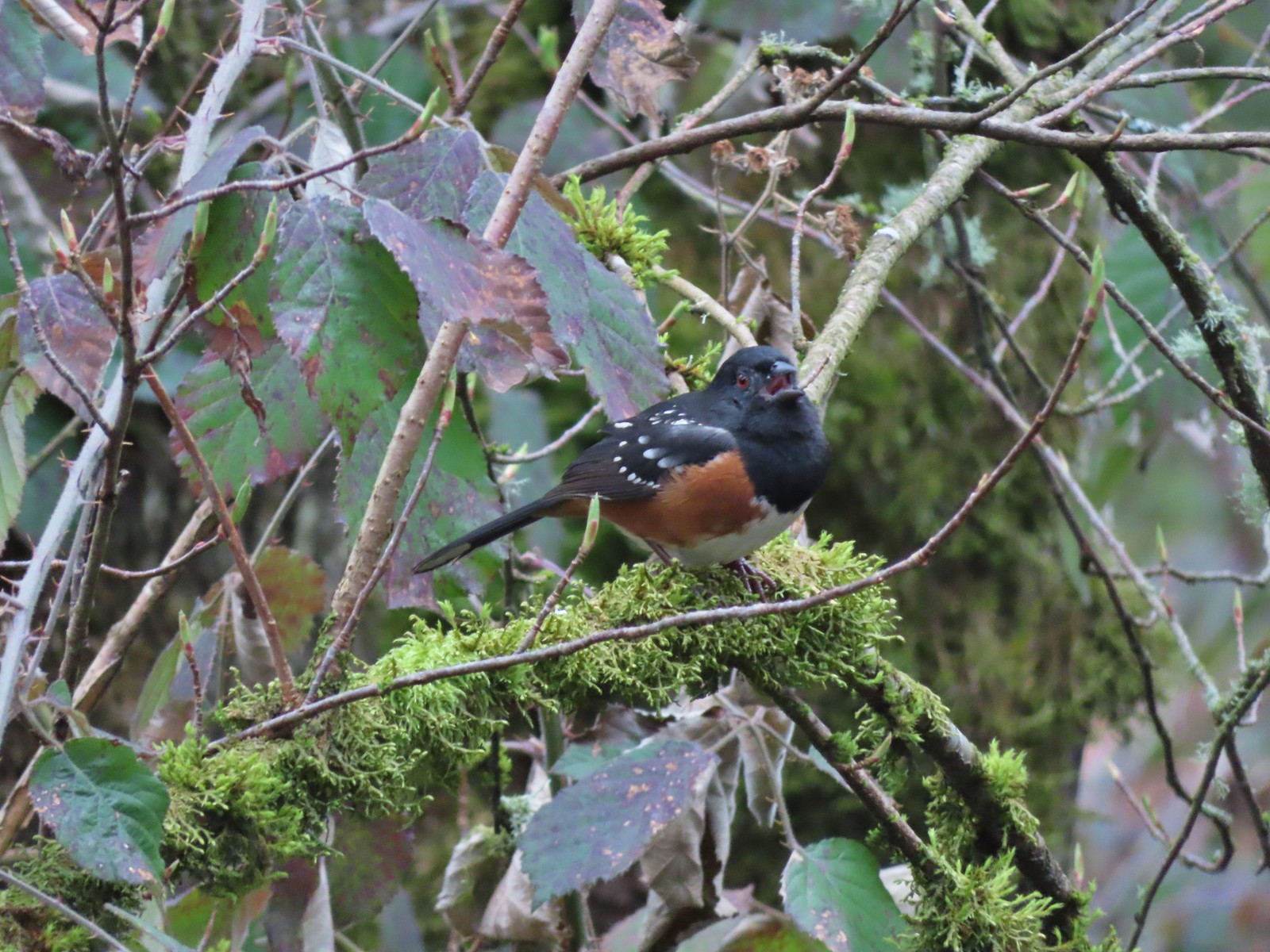 While not a warbler this spotted towhee graced us with a song.
 Checking out a budding leaf.
 The end of the Warbler Trail.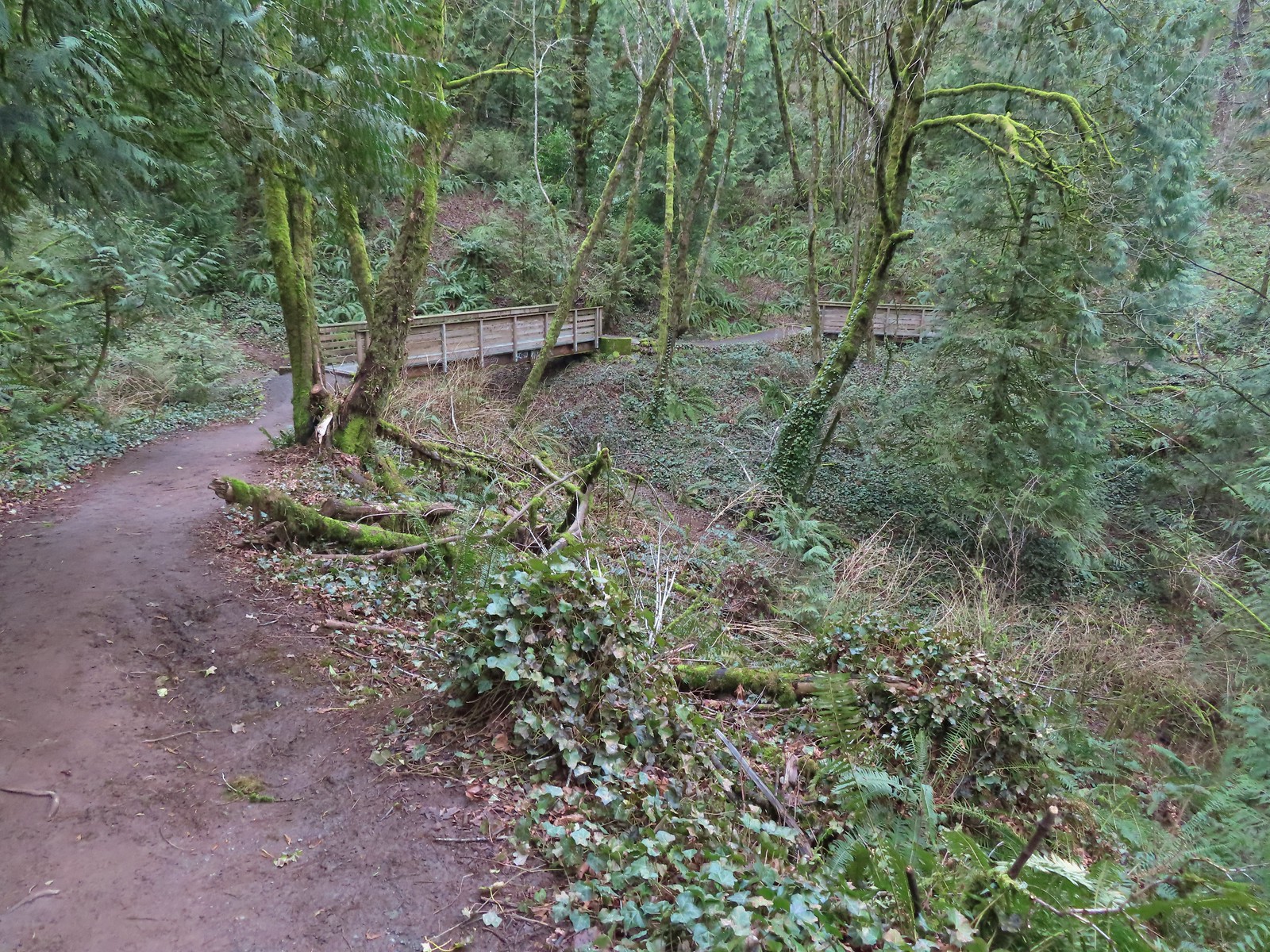


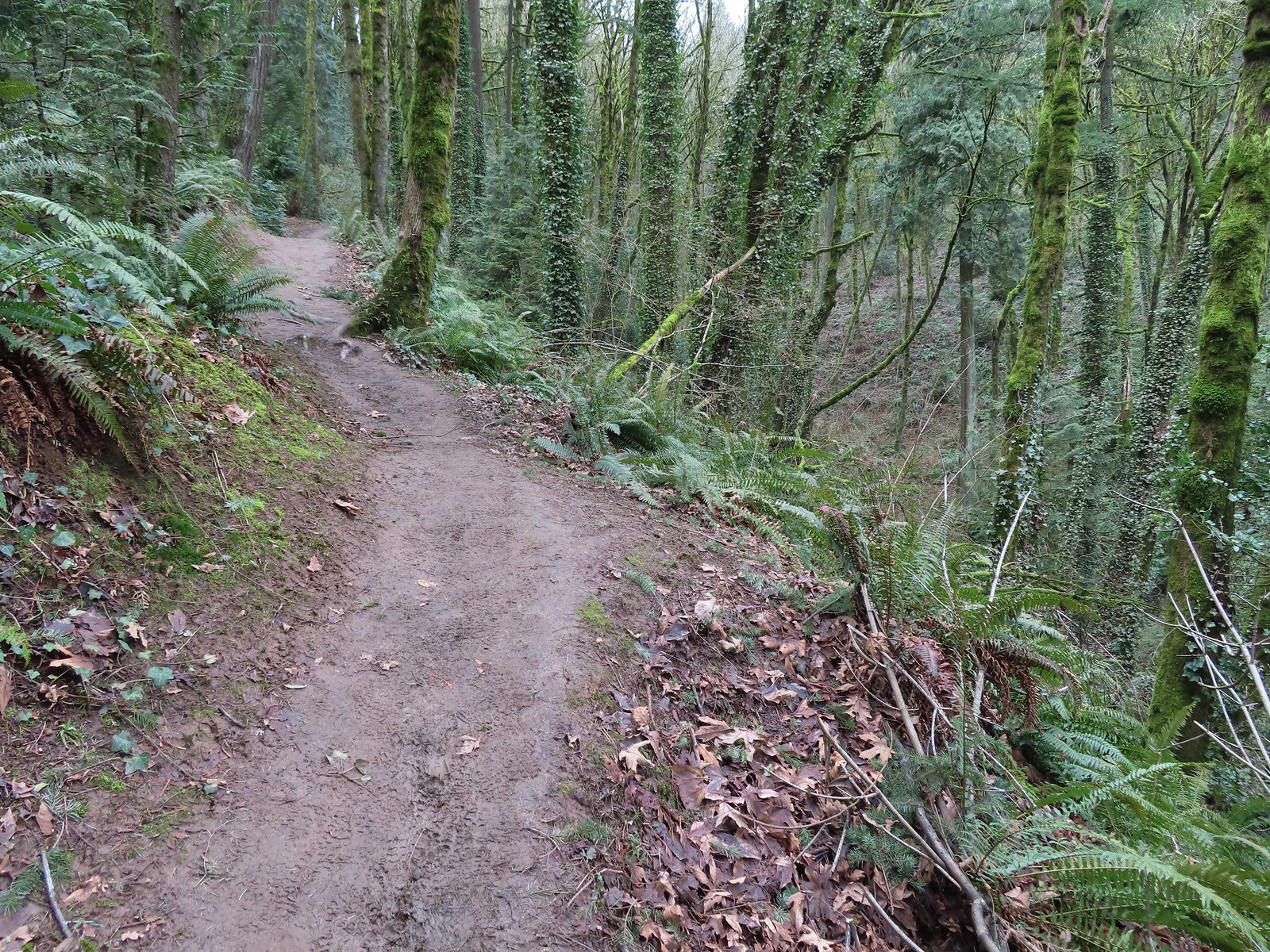
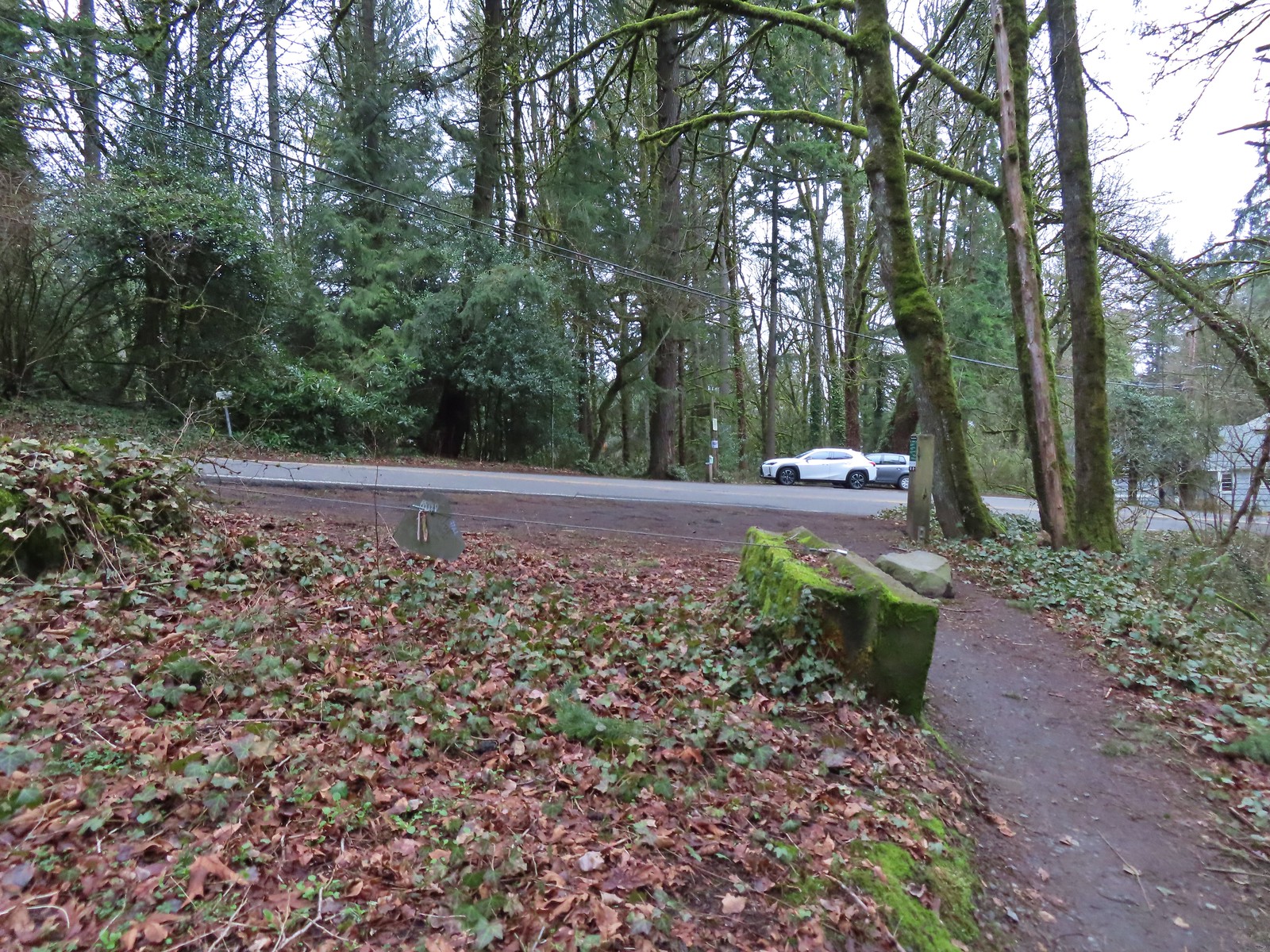
 Pointer for the Marquam Shelter at the trailhead.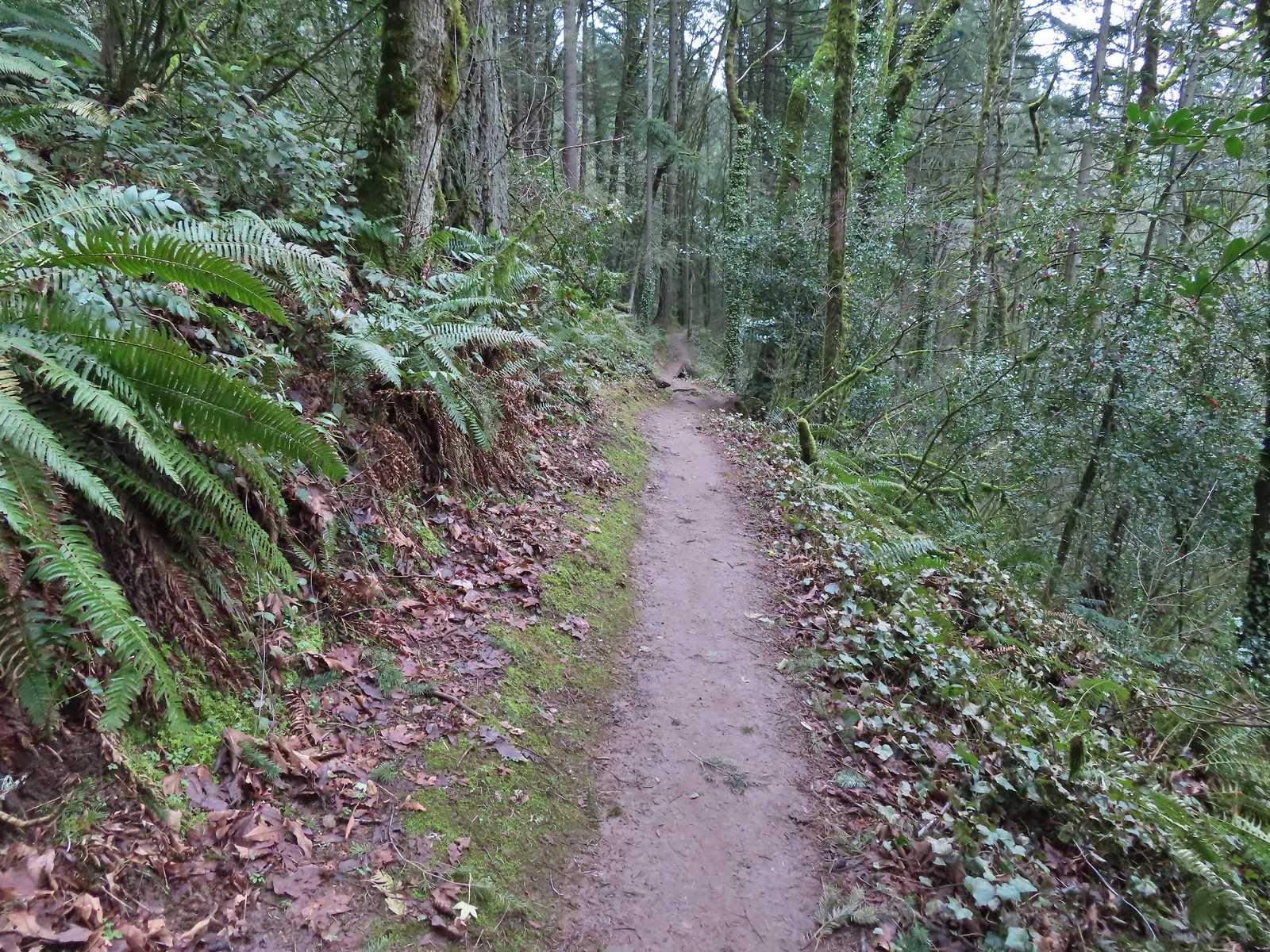
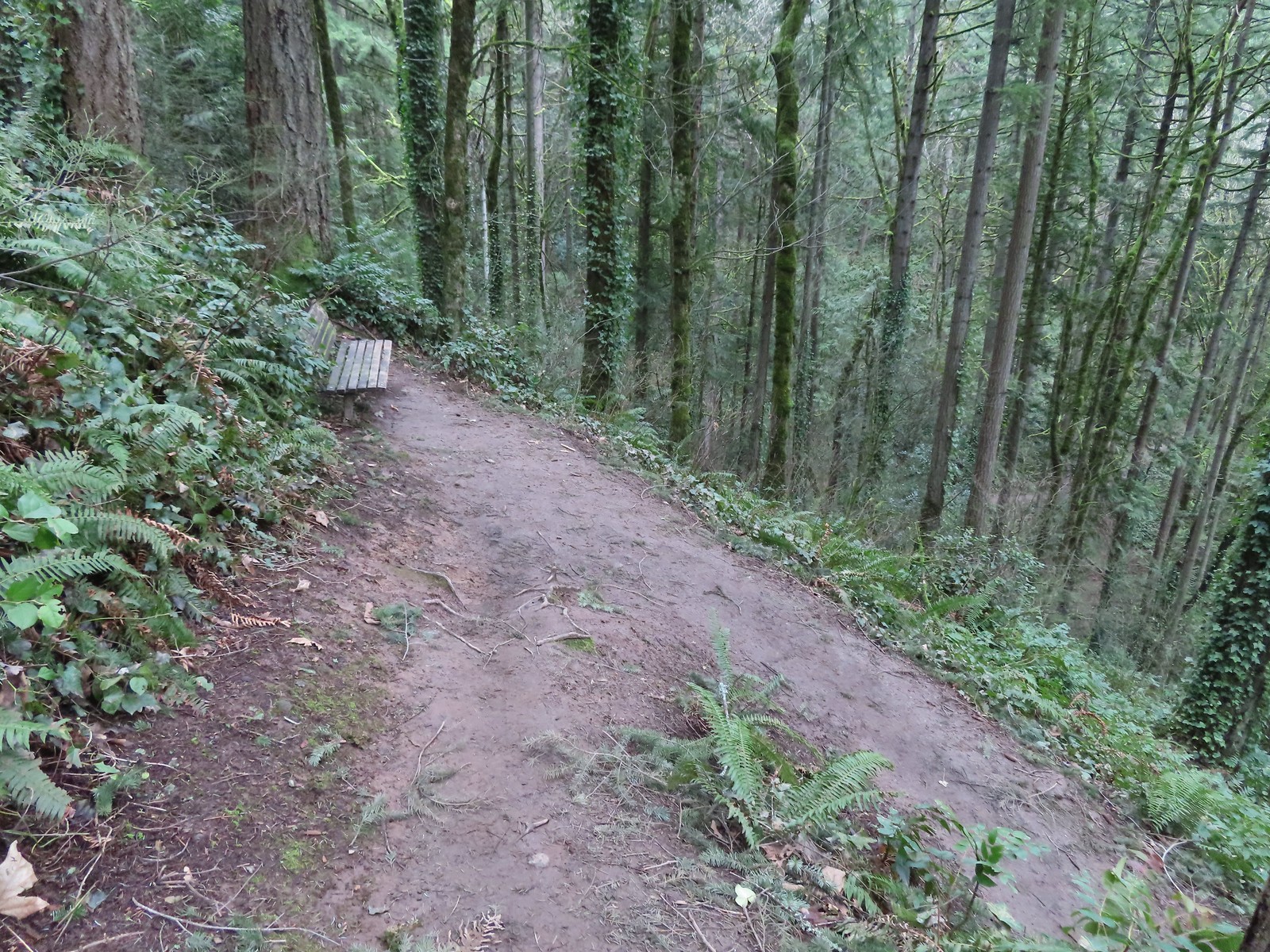 Bench along the switchbacks down to the Marquam Trail.
 The Towhee Trail junction with Marquam Trail was nearly all the way back down to the Basalt Trail (the lower trail in the photo).
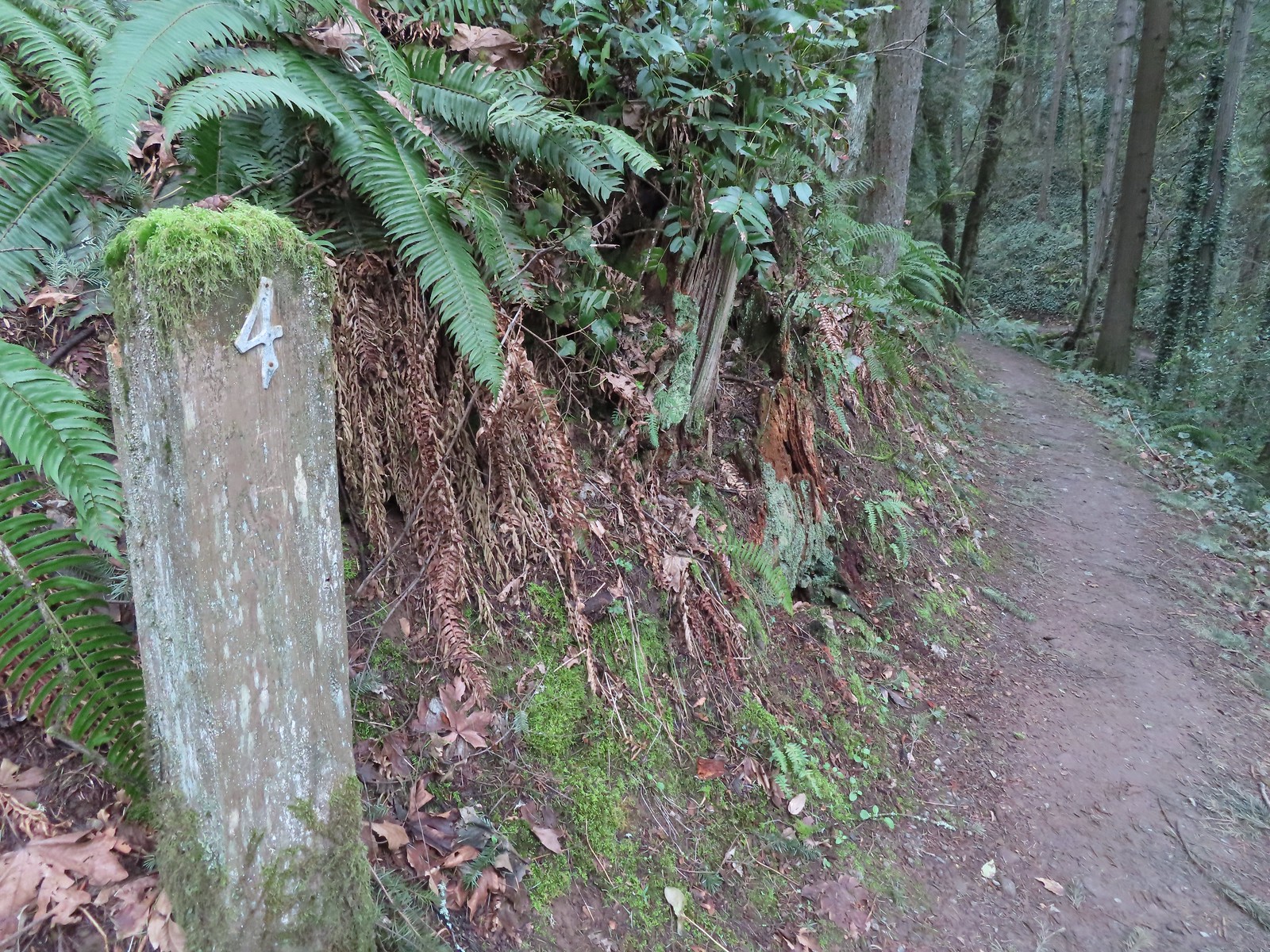 Not sure what the story is behind this post but it was the only one we spotted with this type of number.
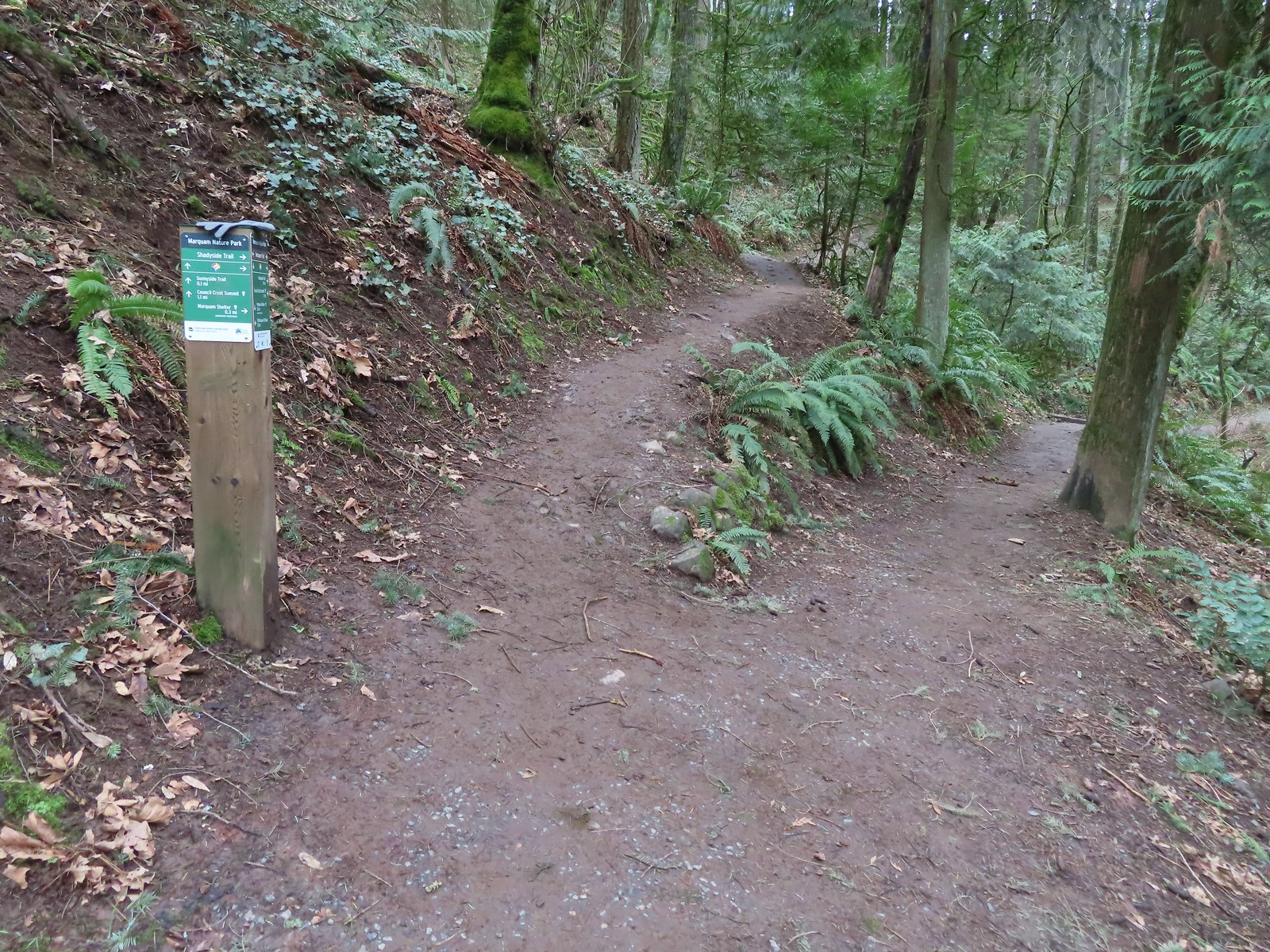 We passed the Shdayside Trail after half a mile.
 There was a short section with some railing before dropping down to the Sunnyside Trail.

 Mt. St. Helens, Mt. Rainier, and Mt. Adams are out there beyond the clouds.
 Freemont Bridge spanning the Willamette River with the Columbia River in the distance.
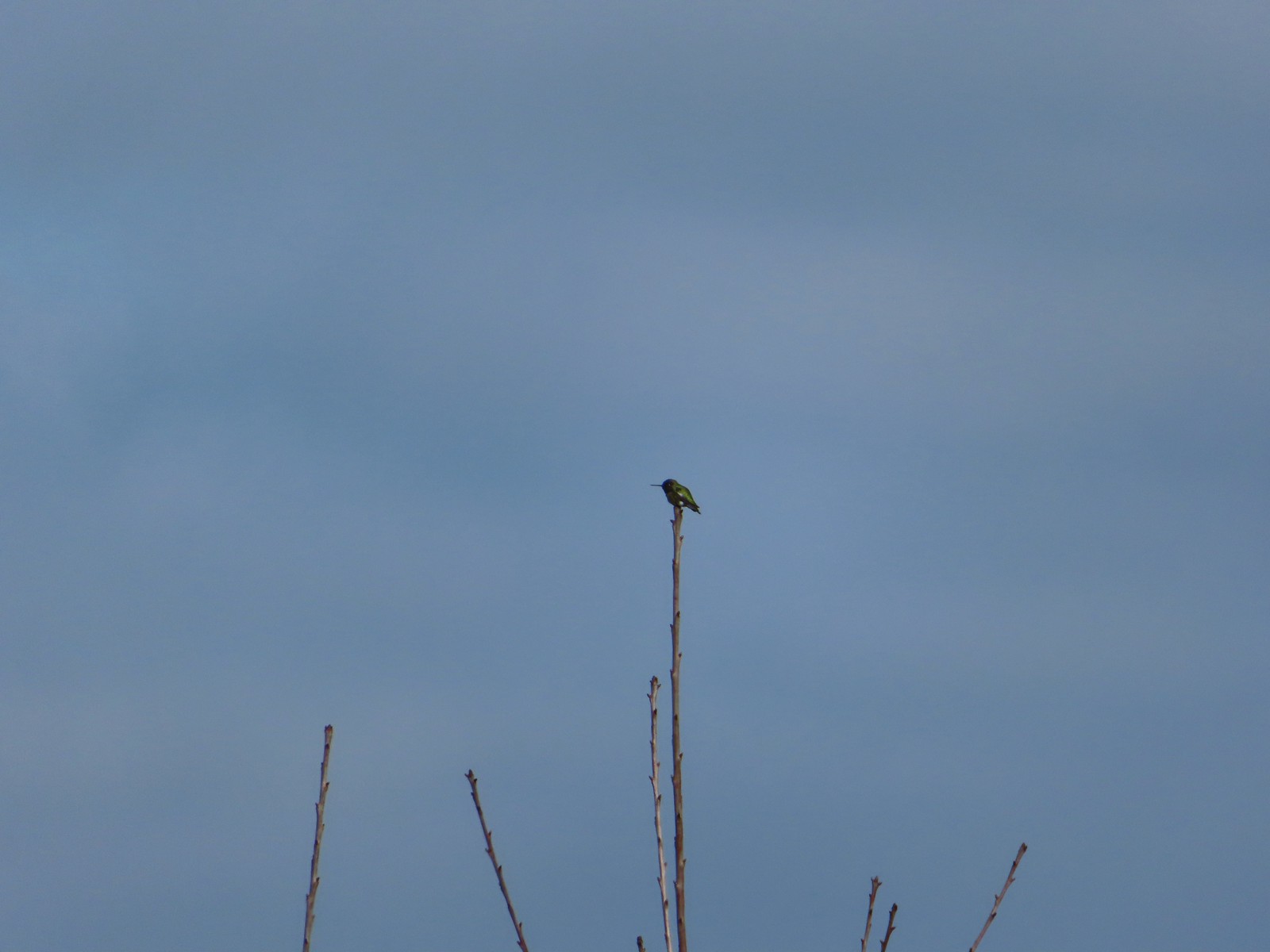 Hummingbird
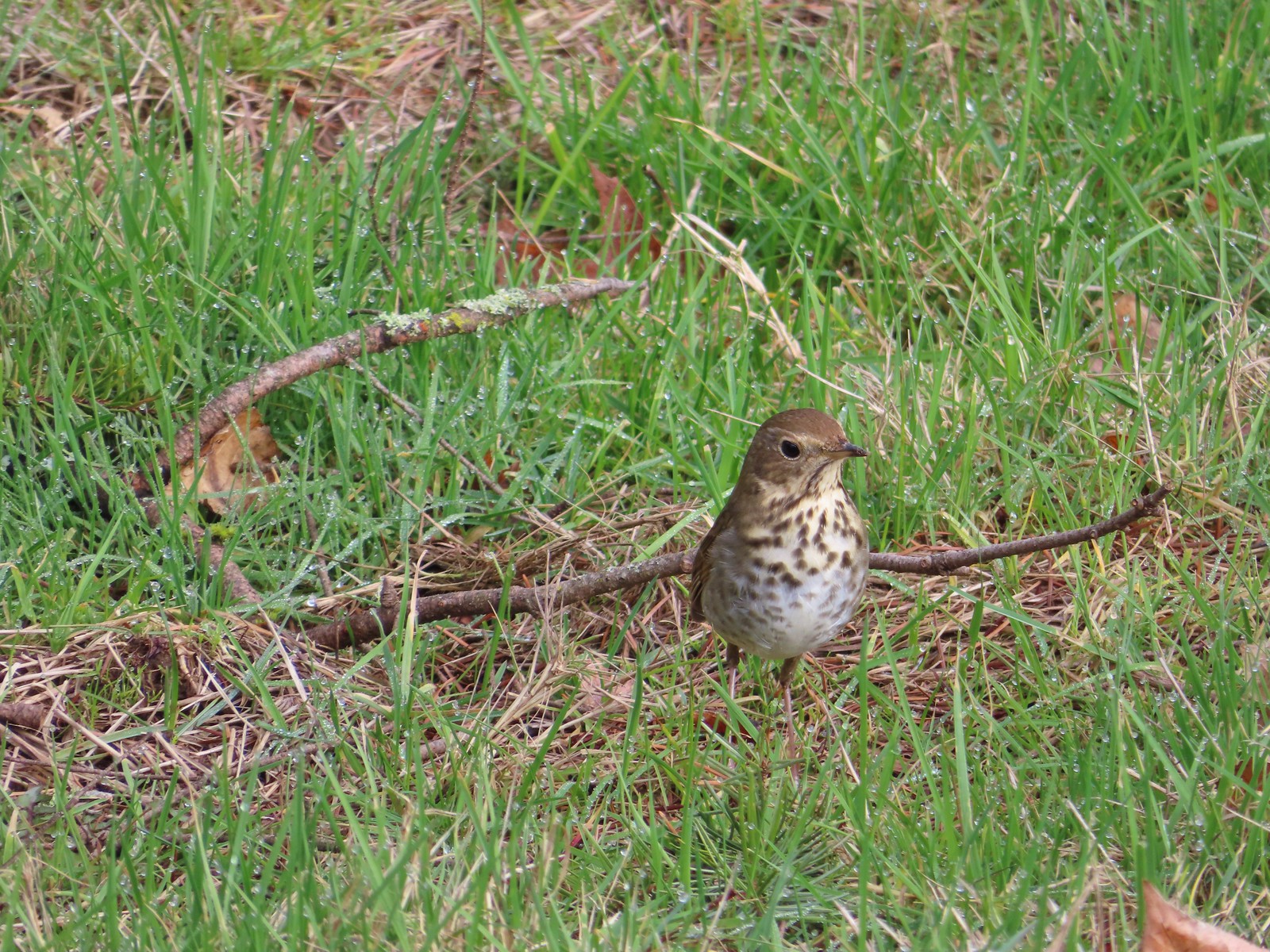 Hermit thrush looking for snacks at Council Crest Park.
 wanderingyuncks