After spending the night in Astoria following a full day of hiking (post) we woke up on Mother’s Day ready to head home. We couldn’t resist the opportunity to get a little more hiking in on the way there though.
Our plan for the day was visit the Astoria Column by way of the Cathedral Tree, then take an alternate route from Astoria to visit a pair of waterfalls. We made the short drive from our motel to the Richard Fenscak Cathedral Tree Trailhead on Irving Street and set off past a gate.
A map at the trailhead provides a high-level overview of the mile long route to the Astoria Column. The AllTrails map was particularly helpful as it showed most if not all of the spur trails. The trail begins as a wide gravel path that climbs, briskly at times, approximately 250′ in a third of a mile to a junction on a boardwalk.
Thimbleberry
Coming up on the start of the boardwalk.
Scouler’s corydalis at the base of the boardwalk.
The boardwalk junction.
We turned left at the junction and arrived at Cathedral Tree in just 150′.
The base of Cathedral Tree.
One of two benches near the 300+ year old stika spruce.
Cathedral Tree
After visiting the tree, we returned to the junction and continued uphill towards the column.
Beyond the boardwalk the trail was a bit rougher.
Trail markers were present at times to help identify the correct route.
Pacific waterleaf
The Astoria Columnn.
We wandered around the column taking in the views and the art on the column itself.
Megler Bridge
Young’s River on the left and the Lewis & Clark River on the right
The early bird.
We decided to go up the column since it had been years since I had visited, and Heather had never been.
The spiral staircase.
It was stuffy inside and with a rail only on one side of the staircase Heather quickly realized that this was going to be outside her comfort level so she headed back down. I continued to the top, a little dizzy, but otherwise feeling good.
The view was great despite the clouds. They were high enough to allow for decent visibility and they were already breaking up.
Young’s River
Traffic on the Columbia River.
Looking out toward the Pacific beyond Astoria.
Deer in the grass below the Astoria Column.
Heather below the column.
After taking in the view, I wound my way back down the stairs (and got dizzy again).
We returned to the Cathedral Tree trail and hiked back down to Irving Street.
This was a spur trail 0.2-miles from the column (0.6-mile from the trailhead) that also leads down to Irving Street and could be used for a loop if you don’t mind some street walking. We opted to pass and did the hike as an out-and-back.
False lily-of-the valley
The last trillium?
Fringecup
From the Cathedral Tree Trailhead we followed Google map directions through Astoria to Young’s River Road and eventually to Young’s River Falls Park. The start of the short trail to the falls.
It was clear from the parking area that it is unfortunately popular with the party crowd who can’t be bothered to pack out their mess. Regardless the falls were impressive, and the 0.3-mile round trip was well worth the stop. Interpretive signs near the start of the trail.
The falls were noted during Lewis and Clark’s stay at nearby Fort Clatsop (post).
This was a tough one to photograph due to the amount of spray being blown straight at us by the force of the water.
After admiring the falls we returned to the car and made our way to Highway 202 following directions from Google. Once we’d made it to the highway we headed SE to Lee Wooden Fishhawk Falls County Park.
A quarter-mile trail here leads to Fishhawk Falls which we honestly weren’t expecting much from. We pulled over onto the shoulder of Hwy 202 to snap a picture of these bulls.
Bleeding heart
Fairybells
Scouler’s corydalis
We spotted it too late to get a photo, but as we neared the falls a bald eagle took flight. The trail ends at Fishhawk Creek nearly a tenth of a mile from the 72′ falls.
The view is good from the end of the trail, but since this was our last stop of the day I decided to ford the creek and get a closer look. The water was knee deep, but not too cold.
I was joined by a pair of ouzels at the falls.
Looking back at Heather on the other side of Fishhawk Creek.
Me through the trees below the falls.
Maybe it was the timing of our visit, but this was one of the nicest waterfalls we’ve seen in a while. We finally pulled ourselves away and returned to our car. We made one more stop on the way home at the Jewell Meadows Wildlife Area to use the public restrooms before driving home.
Please note that you need a permit to park at the refuge.
The three short hikes came to a total of 3 miles and 500′ of elevation gain, mostly from the Cathedral Tree hike. They were quite enjoyable, and we were able to get home before Noon giving us time to unpack, clean up, and then visit my Mom on Mother’s Day. Happy Trails!
We spent Mother’s Day weekend hiking several trails in Clatsop County. We began on Saturday by driving to Ecola State Park and parking in the Ecola Point parking lot. We last visited the park in December 2013 when we hiked north along the Oregon Coast Trail (OCT) to Tillamook Head’s high point. (post)
For this visit our plan was to hike south on the OCT then take the Crescent Beach Trail down to that beach. The trail begins near the restrooms.
The trail began by climbing via a couple sets of wooden stairs to Ecola Park Rd which it briefly followed along the shoulder.
Ecola Park Road.
Where the trail left the shoulder, we came to a pair of cyclists who we thought were looking out at the Ocean. It took a second for us to realize that they were actually watching a small herd of elk in the forest below.
After watching the elk for a moment we started down the trail which wound up switching back down toward the elk. Luckily they were following proper Leave No Trace Principals and remained an acceptable distance from the wild hikers.
We continued on past the elk following the OCT approximately a mile from parking lot to the junction with the Crescent Beach Trail.
Skunk cabbage
Scouler’s corydalis
Window to the Pacific.
We turned right at the junction and descended a quarter mile to Crescent Beach.
Ecola Point
Chapman Point and Bird Rocks
We decided to head north toward Ecola Point to check out the tide pools. We had inadvertently timed our visit nearly perfectly as it was about an hour and a half from low tide.
Prior to reaching the tide pools we passed Waterfall Creek. The upper falls.
Waterfall Creek
The lower falls.
The tide pools from Waterfall Creek.
The tide pools wound up being some of the most impressive we’d seen. We spent a good amount of time walking around to the different pools. We were careful not to climb on any of the rocks or to disturb any of the wildlife. In fact some of the rocks that were exposed are likely part of the Oregon Islands Wilderness.
We found Patrick from Spongebob!
After admiring the tide pools we headed south along the beach toward Chapman Point and the Bird Rocks.
We were curious as to what forces carved out the backside of this rock.
Chapman Point is only passable at certain low tides. On the far side is Cannon Beach (post).
This cave through Chapman Point was flooded at the far end.
Pigeon guillemot
Goose
We turned around at Chapman Point and headed back to the Crescent Beach Trail.
Whibrel
We retraced our steps back to Ecola Point where the lot was beginning to fill up.
Seaside bittercress
Youth-on-age
Our hike here came to 4.4-miles with approximately 600′ of elevation gain.
We hopped in our car and headed north to Fort Stevens State Park for our next hike. There are several parking lots at Fort Stevens and we opted to park at Battery Russell lot. Battery Russell from the lot.
As with Ecola Point we had started a hike here before. In September 2017 we visited Battery Russell, Coffenbury Lake, and a shipwreck at the park (post). Again today we were going in the opposite direction, this time north to visit the park’s Historic Area. We followed a paved path east from the parking lot then over Jetty Road on an overpass.
The overpass
We followed the paved path to a junction near a pill box where we went right.
The path led past Swash Lake which helped explain the host of mosquitos that were flying around us.
We stayed right at the next junction and Jetty Lagoon on the Swash Lake Bridge.
Looking out toward Swash Lake from the bridge.
A little under 2 miles form the parking lot we arrived at the visitor’s center. The gate to the Historic Area is locked in the evening.
Visitor’s center
A number of trails and paths wind around the Historic Area as well as open spaces that one can simply walk across. We made up our own route based on a suggested hike from the Oregonhikers Field Guide.
We began by walking past a jeep on display and looping behind the visitor’s center.
From the visitor’s center we headed into a large open space where the barracks had once been.
We made our way to the far end of the open space and turned south to see the old guardhouse and Battery Clark. The guardhouse on the left.
Battery Clark
We then turned back north cutting across the barracks area toward a pair of smooth bore cannons and Battery Freeman.
We passed the cannons and hiked through a guarded underpass.
Fort Stevens Earth Works.
We crossed a grassy field to the cannons atop the Earth Works then descended a staircase.
White-crowned sparrow
We cut across the grass below to the footbridge in the distance.
Columbia River
Looking west toward the Pacific.
At the Columbia we turned right on the Jetty Trail and followed it past some disc golf holes and Battery Smur to a former roadbed.
Battery Smur
The roadbed coming in from the former barracks site.
We turned left on this road and followed it to a gate and the former Torpedo Loading Room. Mine Loading Building
Searchlight Generator
Torpedo Loading Room
We turned around here and walked back to the Jetty Trail and followed it west through the Disc Golf Course to the Clatsop Longhouse site.
From the longhouse site we continued on the Jetty Trail toward Battery 245.
Battery 245
We hiked around Battery 245 and onto Battery Mishler.
We passed this battery and Battery Pratt then veered right on a paved path which led back to the path we’d followed from Battery Russell.
Sign for the Lil’ Oozlefinch Putting Course.
We headed back toward the parking lot and at the Pill Box we veered right which was a more direct route to the parking lot. The drawback was that there was no overpass here so we had to watch for traffic before crossing Jetty Road.
Bald eagle
Gate near Jetty Road.
After crossing Jetty Road, we followed the paved path left a tenth of a mile to the Battery Russell parking lot. This hike came to 6.3-miles with just 75′ or so of elevation gain.
Our final stop of the day was just 5 miles from the Battery Russell parking lot at Lighthouse Park in Warrenton.
The parking lot at the park.
Our plan here was to hike the 2-mile Skipanon River Loop. Three things drew us to this trail. First it was a trail we hadn’t yet hiked. Secondly, we hadn’t hiked along the Skipanon River yet, and while it isn’t an official goal we are trying to visit as many of Oregon’s rivers as possible. Finally, one of our favorite post hike restaurants, Nisa’s Thai Kitchen is located along the route.
From the parking lot we crossed NE Skipanon Drive and followed the sidewalk past a storage facility to a path next to E Harbor Drive that promptly passed beneath the road.
Emerging from the underpass.
We turned right onto a paved path along the Skipanon River for a third of a mile to Skipanon River Park.
Mallard family
Sign at the park.
At the park the trail ended and we turned right onto SE 3rd St and followed it a block to S Main Avenue where we turned left. After two blocks on Main we turned left onto SE 5th St and then took a right on a grassy track behind some buildings. Eighth Street Dam from the grassy track.
We crossed the river on the 8th Street Dam where we finally saw an official trail map.
Until we saw this sign we’d been thinking that maybe the trail didn’t exist any longer. We were also questioning how the loop was supposed to get back across the river at the other end since the only bridge across the river there was Harbor Drive. Until seeing this we were thinking of turning around at the dam, but instead we decided that we’d do the loop with Heather getting a table at Nisa’s while I recrossed the river to retrieve the car.
With lunch calling, and our feet feeling a bit worn, we opted not to do the optional out-and-back B1 spur trail and continued on the loop past a gate.
On this side the trail was a nice grassy track following a dike which was far more pleasant than Main Avenue.
Not the clearest picture but I think this is a greater scaup based on the head shape. We’ve seen a number of lesser scaups, but this would be our first greater.
Great blue heron
Cormorant
A brief paved section.
Nisa’s Thai Kitchen across Harbor Drive.
There was a nice wide bike/pedestrian lane on the bridge making the crossing not too bad even with traffic. As I was made my way across I noticed a path leading down to the underpass on the south side of Harbor Drive which meant I wouldn’t need to cross the main street on foot. Looking back up the path from Harbor Drive.
The loop came in just over 2-miles with minimal elevation gain.
This would probably be a nicer hike early in the morning when less traffic was about. It was a little awkward walking along the city streets as well, but the grassy dike was a comfortable walk. What really made this worth the stop though was the Drunken Noodles and Pad Thai. After a satisfying meal we drove to Astoria arriving at our motel right after check in time (3pm). We originally thought we might head out to the Astoria Riverwalk after cleaning up, but after showering a resting for a bit it was clear that 12.9 miles were enough for one day. Happy Trails!
Flickr: Crecent Beach, Fort Stevens Historic Area, and the Skipanon River Loop
Back on January 1st we kicked off our 2023 hiking year by visiting several trails in Lincoln City, OR (post). During that outing we kept seeing signs referring to the Lincoln City Trail Challenge. A little post hike research revealed that the challenge involved trails in eight of the city’s open spaces, the five we’d visited that day plus The Knoll which we’d visited in 2021 (post) and two hadn’t visited, Nesika Park and Cutler City Wetlands. The actual challenge is to find the trail challenge signs at each open space and snap a selfie, but we rarely ever take a selfie, and we didn’t have a picture of the sign from The Knoll. That didn’t stop us from wanting to at least visit the final two challenge locations, so when a brief window of dry weather presented itself on one of our days off we headed to Lincoln City to do just that.
Given that the two remaining locations provide less than a mile and a half of hiking we consulted the Oregon Hikers Field Guide for additional ideas and landed on their Nelscott Beach Hike. This approximately eight-mile hike would visit a lake, the D River (Once recognized by the Guiness Book of World Records as the worlds shortest river.), and Siletz Bay.
Before heading onto the beach we walked inland, crossing Highway 101 at a stop light, then passed over the D River and turned right into Hostetler Park. The highway from the parking lot.
The D River from the highway bridge. The river flows between Devil’s Lake and the Pacific Ocean and at high tide has a length of approximately 40 yards.
Hostetler Park.
At the far end of the small park was a sign for the D River Open Space and a short trail leading to a long boardwalk.
We followed the boardwalk to a campground at Devil’s Lake State Recreation Area. Several interpretive signs were located along the boardwalk.
One of the interpretive signs.
Nearing the campground.
We turned right at the campground entrance and followed the campground road to a paved (and flooded) path to a moorage.
Orange cones, and a cat, at the far end of the path.
We were able to follow the path far enough to see the moorage and a small portion of the lake.
We returned to the campground road and looped back around to the entrance booth and the boardwalk then hiked back to the parking lot and headed down to the beach. Program area in the campground.
View North from the beach.
Cascade Head (post) in the sunlight behind God’s Thumb.
Seagulls at the mouth of the D River.
We headed South along the beach for nearly three miles to Siletz Bay where we turned inland across from Salishan Spit (post). It was a beautiful morning. The temperature was perfect and there was little to no breeze. We spent the majority of time watching pelicans glide just above the ocean while the occasional seal would pop it’s head up in the surf. There were also a number of ocean birds floating offshore, mostly surf scooters but there were some others mixed in.
There were of course plenty of seagulls present.
There weren’t very many ocean rocks along this stretch of beach.
Surf scooters
Loon, probably a common loon.
Baldy Creek
The largest group of offshore rocks were near the Inn at the Spanish Head. The inn on the left with the rocks extending into the Pacific.
Cormorants and seagulls
This was a big tree that we were able to walk under.
A short distance beyond the Inn at the Spanish Head are some stairs leading down from 44th St. Here the beach widens as it nears the bay. We turned inland toward the stairs and followed paths through the brush and driftwood.
Salishan Spit across the Siletz.
Asters on the beach.
Pelicans on the left and seals on the right at the end of Salishan Spit.
Pelicans and seagull
Seals and a seagull
We walked along the bay to the Taft Dock for a short break before heading back.
We stopped briefly on our way back to watch the wildlife on the spit.
Drying off
On our way back we noticed that some pelicans had joined the cormorants and gulls on the rocks near the Inn at Spanish Head.
Pelican mouths are a sight to behold (righthand side).
Cascade Head and God’s Thumb both in the sunlight now.
After reaching our car we made the 0.8-mile drive to Nesika Park. The park is part of the trail challenge and home to sign #8. There is only room for a couple of cars at the end of the gravel road which was fine given we were the only car there at 11am.
While there is a trail through a small, forested area, the entire outing was just 0.3 miles out-and-back. We did however get a photo of the Trail Challenge sign near the Nesika Park Story Circle.
The Story Circle
Trail Challenge sign #8.
The trail ends at SE 3rd St (no parking available).
After accomplishing our goal here we hopped back into the car and continued South on Hwy 101 to find the Cutler City Wetlands Trailhead.
Here there were three other cars and a few more trail options.
While there are more trails to choose from here the total milage is just about 1.25 miles. We opted to loop around the outside with detours to the Salt Marsh Overlook and Pond’s Edge.
To the left is the very short spur to the Salt Marsh Overlook which was too overgrown to really see anything.
Interpretive sign at the overlook.
A noisy little hummer near the overlook.
There was pretty good signage at the main trail junctions.
Boardwalks helped cross the wet areas.
Pond’s Edge spur trail.
At the edge of the pond.
We hadn’t expected to see any blooming rhododendrons.
Arriving at the signboards at the start of the loop.
This was a nice area and a pleasant hike, but by sticking to the outside trails we missed seeing the Trail Challenge sign. I briefly thought about wandering through the center searching for it, but since we didn’t get a picture of the sign at The Knoll even if I found it, we wouldn’t have a full set. Maybe someday we’ll get actual pictures of those last two but for now we’re satisfied with having visited all these unique little parks/open spaces.
In all the days mileage came in at 9.3 with no more than 50′ of total elevation gain.
Today’s hikes are highlighted. The others are from our January outing.
Late Fall and Winter are great times to visit the Oregon Coast and today was no exception. Happy Trails!
A cold snap arrived in conjunction with the final hike of our official 2023 season leaving us with a decision to make about where to go. One of the great things about living in Western Oregon are the hiking options. We were debating between heading to Government Camp near Mt. Hood to see some of the new snow that the system had brought with it, or to the beach where things would be a little bit warmer. In the end we decided that we weren’t quite ready for a Winter wonderland yet, and highs in the low to mid 50s sounded a little more appealing than highs in the low to mid 30s. The beach it was where we had some unfinished business at Oceanside.
We had attempted to hike the beach at Oceanside earlier in the year on a different multi-stop day (post), but had saved it for the final stop only to find the area so crowded that there was no place to park. We wouldn’t be making that mistake again so this time it was stop number one on the itinerary. We had no issue finding a parking spot this time arriving just as the Moon was disappearing behind Three Arch Rocks. From left to right: Storm, Finely, and Shag Rocks.
Three Arch Rocks is one of two designated wilderness areas along the Oregon Coast Managed by the Department of Fish and Wildlife as a wildlife refuge the 15-acre wilderness area was the first designated refuge West of the Mississippi and is one of only a few wilderness areas entirely closed to entry by the general public.
From the parking lot we took the stairs down to the beach and headed north toward the Tunnel which leads through Maxwell Point to Tunnel Beach. Cape Lookout (post) to the south.
Maxwell Point
View from beside Maxwell Point.
The Tunnel was built in 1926.
The Tunnel from Tunnel Beach.
Three Arch Rocks from Tunnel Beach.
We hiked North along the beach passing a rocky point to Agate Beach before turning around where that beach ended at a cliff a little more than a third of a mile from the Tunnel. The end of Tunnel Beach. At higher tide it’s not possible to get around the point here.
Getting closer to the end of Tunnel Beach. This set of ocean rocks are part of the Oregon Islands Wilderness, A string of of over 5,600 rocks, reefs, islets, and islands lying within three miles offshore mirroring almost the entire length of the Oregon coast from Tillamook Head to the California border. Like Three Arch Rocks this wilderness is also closed to the public.
Bald eagle on top of one of the rocks.
Seal
Agate Beach
Cape Lookout from Agate Beach.
After reaching the cliff we headed back to the Tunnel and then continued South along the beach 2.3-miles to Hodgdon Creek across from Netarts Spit (post).
An assortment of sea birds.
Maxwell Point and Cape Lookout
Sun starting to hit the Three Arch Rocks.
Sand dollar
Cormorants. There was a steady stream of flocks of birds heading south along the coastline.
Footbridge over Fall Creek.
Fall Creek
Frosty leaves near Fall Creek.
Great blue heron in a tree above Fall Creek.
Happy Camp
Hodgdon Creek
Seagulls and common mergansers near Hodgdon Creek.
Buffleheads
Netarts Spit
Happy Camp from our turn around point.
We returned the way we’d come and then drove North on Cape Meares Loop Road just under a mile and a half to a pullout across from a sign for Short Beach. Three Arch Rocks and Maxwell Point now in full Sun.
A local built the staircase leading down to Short Beach and it is about as “Oregon Coast” as a staircase could be.
The beach only extends a short distance to the South.
The sea stack and Short Creek Spillway to the North.
We headed North along the cobblestone beach which isn’t the easiest surface to hike on, especially when they are wet and slightly frosty. On the positive side the cobblestones added some great sounds to the ocean as the waves tossed them about then rolled them over one another as the waves receded.
I didn’t notice the little waterfall along the cliffs below Cape Mears until I looked at the pictures.
Red-throated loon
A third of a mile from the stairs we reached Larsen Creek Falls.
Apparently at low tide it’s possible to reach the cliffs below Cape Meares, but the tide was coming in and it also appeared that some sliding had occurred at some point, so we turned around a tenth of a mile beyond Larsen Creek Falls. The area ahead in the shade is where things started looking a little sketchy.
These two beach hikes came to a total of 6.6-miles, 5.5 at Oceanside and 1.1 at Short Beach. From Short Beach we drove to Tillamook to try the Tillamook Bay Wetlands hike which I’d found as I was looking through the Oregon Hikers Field Guide. We parked at the Goodspeed Road Trailhead. The field guide entry showed this as a 3.6-mile loop following dikes through wetlands between the Wilson, Trask, and Tillamook Rivers. We were immediately confused due to the field guide mentioning a map and metal gate at the Goodspeed Trailhead but there was neither at the signed parking area. Apparently there used to be a metal gate here instead of a the rope/chain.
We were pretty sure we’d followed the driving directions though so we stepped over the chain onto the grassy dike and began following it through the wetlands.
Bald eagles in the tree tops.
Bald eagles
The map in the field guide showed an elongated loop following what Google Maps and the GPS showed as the continuation of Goodspeed Road to the Wilson River then along that river to the Tillamook River where the route looped back along it then the Trask to Sissek Road. The dike we were on though reached a slough where it turned sharply South. This is where the dike/path turned South. Our best guess is that there has been additional wetland restoration since the entry in the field guide and some of the dikes that the guide route followed have been removed.
We didn’t come up with our theory about what was going on until after we got home. While we were hiking we kept checking the GPS map/track and comparing it to the map in the field guide. We still weren’t sure if we really had started in the right spot given the lack of a metal gate and map at the trailhead or if we’d missed a turn somewhere. We continued to follow the dike system which looped around and after just over a half mile the GPS showed that we were on Sissek Road (now a grassy dike). We weren’t getting across that.
Somewhere out that way, beyond the slough, was the Wilson River.
Now heading East toward Sissek Road.
At this point we had left Sissek Road which used to extend straight from Goodspeed Road where the signs and rope/chain is in this photo (ahead to the right at the 90-degree turn).
The dike system brought us to another signed parking area we’d pass on the way to the Goodspeed Road Trailhead. This one is just past a one-lane bridge over Hall Slough.
At this point we were sure we’d started at the correct trailhead and were now convinced we’d missed a turn somewhere near the start of the hike. First we tried walking a grassy track South from this parking area which brought us to another muddy slough, but not before spotting an egret and a great blue heron.
We backtracked to the parking area and then hiked Goodspeed Road back to the trailhead where I began searching for a different route. Hawk above Goodspeed Road.
One path led down to Hall Slough ending in mud at it’s bank.
A second path led north on what the GPS showed as a former road but it was too overgrown and flooded to make it far.
We wound up doing just 1.9-miles here including the out-and-back explorations.
It was a fine little hike and we saw a nice little variety of birds, but it was a little disappointing not to be able to see any of the rivers. We had one last stop planned, another short hike I found in the Oregon Hikers Field Guide, the Anderson Hill Loop . The trail begins at Anderson Hill County Park to the right of a metal picnic table.
The 1.2-mile reverse lollipop loop gains just 130′ as it climbs to a power line corridor on Anderson Hill. The view from the power lines is of course limited due to the power lines, but the trail was in good shape and the forest was nice making for a decent little outing.
Junction with the spur trail to the power line corridor.
Footbridge and stairs leading back up to the picnic table.
The four hikes came to just 9.7-miles and 270′ of cumulative elevation gain and included ocean views, waterfalls, forests, wetlands, and ample wildlife.
It was a beautiful day weather wise and great way to end our season. We’ll scale back our hiking for the next 5-6 months, but we plan on getting out at least once a month until our 2024 season kicks off. Happy Trails!
Our hike this week took second fiddle to our son’s birthday which we planned to celebrate by taking him out to lunch/dinner in Eugene. We still wanted to get a hike in that morning, so we looked for something in the general direction of Eugene. Our original plan had been to visit Vivian Lake near Diamond Peak, but a forecast of rain, followed by snow, then more rain had us look elsewhere. Looking at my list of future hikes a couple of hikes between Corvallis and Newport caught my eye. They were more or less on the way to Eugene and the weather forecast looked good. The two hikes had been Strom Boulder Ridge and Olalla Reservoir. Double checking the status of the hikes revealed that Georgia Pacific, who manages Olalla Reservoir, had closed access due to low water at the beginning of September so that hike was out. I then turned to the Oregon Hikers Field Guide to look for another short hike in the area and found the Big Creek-Forest Park Hike in Newport.
A trail begins near the restrooms at a footbridge over Big Creek.
Big Creek in the morning.
The trail follows Big Creek toward Highway 101 then recrosses it leading to a tunnel under the highway. A short section of the trail was paved.
At the eastern end of the parking area we came to this new kiosk that is being installed marking the start of the Agate Beach TRACK Trail. There was also a path directly to the parking lot from the kiosk which we used upon our return.
The tunnel under Highway 101. The stairs at the far end lead up to a city street while the trail makes a hard right to briefly follow the highway back across Big Creek.
A series of boardwalks crosses the marshy bottomlands of Big Creek.
While the kiosk was a new work in process there were a number of older looking interpretive signposts. This was one of only a handful that still contained an interpretive sign.
The bottomlands.
There were no signs at junctions but for the TRACK Trail stick to the level fork and ignore anything going uphill.
Further along the trail Big Creek could actually be seen flowing.
A non-boardwalk section along Big Creek.
Approximately three quarters of a mile from the kiosk the trail arrived at Big Creek Road at another new signboard.
The signboard at Big Creek Road didn’t have any information on it yet.
We turned right on Big Creek Road passing a large overflow parking lot for Big Creek Park and Reservoir, crossed Big Creek, and then turned left into Big Creek Park.
Stellar’s Jay
Northern flickers on the picnic shelter.
A signboard near the picnic shelter marked the start of the Forest Park Trail. Map on the signboard.
Don’t be fooled by the footbridge over Anderson Creek to the right of the signboard, the Forest Park Trail follows an old gravel roadbed steeply uphill to the left of the sign. Anderson Creek, the footbridge, and signboard from the roadbed.
The Forest Park Trail
While the Track Trail had gained almost no elevation the Forest Park Trail climbed over 200′ in its first half mile to a pair of water towers. A nice sitka spruce forest lined the old roadbed.
Mushrooms
Sunlight hitting the trees.
The Pacific Ocean through the trees near the water towers.
Passing the water towers.
Beyond the towers the trail dropped 160′ to wetlands along Jeffries Creek then climbed nearly another 90′ to a gate at the Fogarty Street Trailhead.
The drop to Jeffries Creek.
Jeffries Creek
Wood ducks in the wetlands.
The gate near Fogarty Street.
The Forest Park Trail from the other side of the gate.
We returned to the kiosk at the start of the TRACK Trail the way we’d come then cut to parking lot and returned to our car. The hike came to 4.0 miles with just over 550′ of elevation gain, nearly all of which was on the Forest Park Trail. The TRACK Trail seems like a good option for kids with the Forest Park Trail adding some short, steep climbs for those looking for more of a workout. The ability to visit Agate Beach from the parking lot is a huge bonus. We didn’t have time today to visit the beach but had in 2018 during our Yaquina Bay hike (post).
For our next stop at Strom Boulder Ridge we drove East on Highway 20 from Newport to Burnt Woods and turned right onto Harlan-Burnt Woods Road. We followed this road for 2 miles then turned right onto the unsigned gravel Burnt Woods Forest Road. I found this hike on Alltrails which I have somewhat reluctantly been looking at more frequently, mostly to check for recent trip reports but there are also some obscure “hikes” that don’t appear in any of our guidebooks or in the Oregon Hikers Field Guide. Strom Boulder Ridge is one such “hike” which is really just a 7.5-mile loop on drivable gravel logging roads on Oregon Department of Forestry managed lands. As such there is no official trailhead (although Google Maps seems think there is). The loop begins 0.7-miles up the forest road but we decided to park at a pullout next to a gravel pile halfway to the start of the loop.
Morning fog was still burning off at 9:30am.
One thing to note is that there isn’t any signage and because the area is actively logged roads may be added or closed depending on operations. I had downloaded the Alltrails track and we had our GPS units with us. Almost immediately we passed a logging road coming downhill on the left that was not shown on either the Alltrails or Garmin maps. A car by the gravel pile to the left with the road coming down the hillside to the right. Interestingly Google Maps labels this as “Burnt Woods Ridge Road” which both Alltrails & Garmin showed as the left-hand fork where our loop would begin. (Google doesn’t show a road there at all but you can see the road in the trees by looking at the aerial view.) Numerous times throughout the hike we relied on comparing the Alltrails Track to the GPS map and our track to that point to determine where we were and which road(s) to take.
The trip reports on Alltrails had all mentioned how quite this hike was and it was (we saw no other hikers and only passed one pickup truck on the loop) other than the gunfire that we heard almost immediately and then off and on throughout the majority of the hike. We followed the road uphill to a saddle then dropped slightly to a fork marking the start of the loop.
There was some room to park here at the start of the loop (this is not where Google marks the TH) as well as many pullouts along the loop where one could choose to start.
We forked right following the suggested direction shown on the Alltrails track sticking to the Burnt Woods Forest Road. Over the next three and a half miles the road swung out and around several ridges in a series of ups and downs resulting losing a cumulative 580′ but regaining over 400′ along the way. As we descended we found ourselves back in the fog for a while before it finally burned off.
Heading down into the fog.
One positive to the fog is that it can create some dramatic Sun rays.
Vine maple
Blue sky in the upper left hand corner.
The road to the right is an example of a road that wasn’t labeled on any map we had.
Emerging from the fog.
Looking back through the fog to blue sky and the Sun.
The only other “hiker” we saw on the loop.
We couldn’t see it but just over three miles from the start of the loop the road crossed Cline Creek which was the first time we heard what sounded like a decent amount of flowing water.
A little over a tenth of a mile beyond Cline Creek we left Burnt Woods Forest Road and forked uphill to the left onto Cline Creek Road.
Cline Creek Road climbed gradually for approximately a half mile at which point it steepened and climbed for another mile to a junction with Burnt Ridge Road. Arriving at a clearcut. Much of Cline Creek Road was along different clearcuts.
Mylitta crescent
Red-tailed hawk soaring over the clearcut.
Trying to get the red-tailed hawk in flight.
Lots of Fall colors starting to pop.
The first signs we’d seen (noticed anyway) were at the Cline Creek/Burnt Woods Ridge Road junction.
We turned onto Burnt Ridge Road and climbed some more gaining just over 150′ in the next 0.3-miles to the loop’s highpoint along the ridge (1558′). From there the road followed the ridge in a series of ups and downs for another mile and a half before making a sharp left and beginning a steeper descent back to the Burnt Woods Forest Road.
Arriving at the high point which was actually the first good viewpoint being above one of the clearcuts.
Looking North at more of the Coast Range.
Theoretically we should have been able to see both Mt. Hood and Mt. Jefferson from here but between haze from the fog and clouds we couldn’t make either out.
Mt. Jefferson is out there somewhere. The fact that the Cascades have some snow again doesn’t help them stand out in the haze and clouds.
Yet another unsigned road junction. Sticking to the ridge is the key.
After crossing a saddle we gained views SE to Mary’s Peak (post)
The tower and summit meadow of Mary’s Peak.
The hard left prior to the steep descent. The road on the far hillside in the clearcut is part of the road Google Maps has labeled as Burnt Ridge Road but doesn’t show on Alltrails or the Garmin maps.
We followed the ridge downhill for a little over a mile to complete the loop then followed the Burnt Woods Forest Road back to our car.
The end of the loop at the bottom of the hill.
Due to where we parked our hike came in at 8.5-miles with a little over 1200′ of cumulative elevation gain.
While it wasn’t the most exciting hike there was enough variety for it to be pleasant and aside from the gunfire it was quiet. It’s a decent option for a moderate workout, especially after rains when the road walk would be less wet/muddy than many trails. I would probably avoid weekdays if there is active logging occurring though. One other thing of note – Alltrails entry for the hike mentions the Siuslaw National Forest requiring a recreation pass but this is not National Forest land (and there is no developed trailhead) so no passes are currently needed.
After the hike we drove to Eugene and met Dominique at Ubon Thai for a late lunch/early dinner for his birthday. Good food and as someone who enjoys spicy foods, they didn’t disappoint with their heat scale. We followed the meal up with a slice of cake we’d brought down from Gerry Frank’s Konditorei. A great way to end a nice day. Happy Trails!
A combination of wildfire smoke, hot temperatures, and possible thunderstorms convinced us to abandon our plans to backpack over the weekend. To make matters worse thunderstorms late in the week had started at least 50 new fires across several forests. We are now at the point of the year when we just want it to start raining, and if it keeps raining that’d be fine (preferably without any flooding).
Looking at the various forecasts the only decent option for us appeared to be the central coast so I looked through our future plans for something that fit the bill. I landed on a multi-stop day which included, as originally planned, five stops for short hikes surrounding Tillamook. We wound up skipping the final planned stop at Oceanside Beach after seeing how packed the beach was and finding that there was absolutely nowhere left to park in the area.
A short loop passes through the site of the fort which operated between 1856-1866. The interpretive signs along the way provide insight into the lives of that time and provide a stark reminder of how poorly the Native American population was treated. Most of the buildings are gone but this relocated Officers Quarters is being restored.
It was hard to tell at times if it was cloudy or smokey which would be a theme for most of the day.
Flagpole behind an interpretive sign.
Most of the trail is ADA accessible but not the entire loop.
The forest was quite a contrast from the open hillside.
The loop was just a little over half a mile. The numerous interpretive signs to read made it an interesting and informative first hike.
From the heritage area we made our way to the Nestucca Bay National Wildlife Refuge.
We followed signs for the trailhead and parked in a good sized, and empty, gravel lot.
Two trails begin at the lot, the Pacific View Trail and the Two Rivers Nature Trail. We opted to start with the nature trail which started by following a gravel roadbed for a quarter mile to a trail sign.
Lots of fading flowers: yarrow, goldenrod and aster mostly.
Some of the caterpillar tents on the hillside.
We decided to follow the trail down to the viewpoint at the end of the peninsula and then take the road back up to the trailhead so at the sign we turned left onto what began as another old roadbed but quickly turned to a dirt track.
The nature trail crossed the service road after half a mile.
The continuation of the nature trail on the right.
We were pleasantly surprised at how forested this entire trail was.
There were lots of frogs hopping off the trail. Can you see this one?
Norther red-legged frog?
A little less than half a mile after crossing the road we passed a junction with a trail leading to the picnic area. We would visit the picnic area on our way back and pick up the service road there.
The trail passed a small viewpoint looking across Nestucca Bay before ending at a bench at a railed viewpoint overlooking the confluence of the Nestucca and Little Nestucca Rivers.
The Little Nestucca is to the right with the Nestucca River straight ahead.
Cormorants
After enjoying the view we headed back uphill to the junction where we turned right and made our way to the picnic area.
We disturbed a doe near the picnic area.
The doe leaving the picnic area.
A path here leads down to the bay to provide fishing access (we didn’t follow it).
From the picnic area we followed the roadbed a mile back to the trailhead.
Ground squirrel
Thistle
Wilson’s warbler
The overlook on the far hillside.
The trailhead from the service road.
Once we’d returned to the trailhead we walked to the opposite end and picked up the Pacific View Trail near the outhouse.
A paved path led uphill through the meadow to the wooden overlook.
Haystack Rock and Cape Kiwanda (post) from the trail.
Haystack Rock
Pearly everlasting, spirea, and aster.
View from the overlook.
Bench at the overlook.
Little Nestucca River from the overlook.
White-crowned sparrow
Ladybug
This was an enjoyable stop and left us wanting to return in the future to hopefully have a clearer view and see the refuge at different times of the year. With both trails this stop came in at 3.5 miles and approximately 350′ of elevation gain.
From the refuge we headed north on Highway 101 toward Tillamook but turned just before crossing the Trask River and making our way to the Peninsula Park Trailhead.
Part of the Tillamook State Forest the Peninsula Day Use Area offers a nearly 1-mile loop with views of the Trask River and picnic tables at the far end of the peninsula.
Trask River from the trailhead.
Garter snake near the trailhead.
It’s recommended to hike the loop counter-clockwise but we failed to pay attention to that hint and after staying right at the first trail pointer we forked left when the trail split again after 500′. We followed the pointer here and went right.
Here we again followed the pointer and went left. We failed to notice the pointer on the lower sign not facing us. It was also hard to tell if the rocks were actually part of a trail or just a scramble route. Turns out they are “stone steps”.
Having gone left we quickly passed a short spur down to the riverbank.
The inland clouds were breaking up giving us some nice blue sky.
Ouzel
After exploring the riverbank we returned to the trail and continued on the loop.
Big tree along the trail.
Arriving at the picnic area.
The picnic area provides access to a small sandy beach at the Trask River Bend.
After a short break at the bend we started back. From the picnic area the trail climbed up the ridge, steeply at times following it to the high point then down to fork where we’d forked left. The trail to the left.
Huge nursery log.
It’s hard to see here but this section was very steep.
Steps along the ridge.
The stone steps looked more like steps from this direction.
Arriving back at the trailhead.
Given the steepness of the trail along the ridge we could see why going counterclockwise would have been preferable, but it was a nice hike nonetheless.
Up to this point the only other people we had seen was another couple that arrived at Fort Yamhill as we were getting back into our car. That was about to change with our fourth stop of the day at the Rockaway Cedar Preserve.
The trailhead is located along Highway 101 north of Tillamook.
We wound up parking on the shoulder of the highway a short distance from the full trailhead (along with many other vehicles). We walked back along the shoulder to the trailhead and set off on the raised boardwalk.
Skunk cabbage
Bindweed
While there were quite a few people visiting the preserve there were still moments when we had the boardwalk to ourselves.
The half mile boardwalk ends at a 154′ tall western red cedar whose trunk has a circumference of 50′.
Tree root along the cedar from another tree that is growing from it.
Another big cedar, but not anywhere near as big as the other.
After admiring the huge tree we returned the way we’d come taking a short detour to the “viewing platform”.
We passed a “hiker trail” pointer which is a reportedly rough, muddy track that links up to the boardwalk near the big cedar. We had seen the other end near the smaller big cedar but there was a “trail closed” sign at that end so we hadn’t even considered taking it.
Interpretive sign at the viewing platform. There were some benches here which were mostly occupied and not much of a view.
Salal
We returned to the trailhead and drove back south to Oceanside where we had planned for a final short hike, but as I mentioned earlier the Oceanside Beach State Wayside parking lot was full with multiple cars circling for spots and the road into and through Oceanside was also lined with cars. That was enough to convince us that our day was over. We will try Oceanside again during a less busy time of the year and likely as our first hike of the morning.
This was a shorter day with the four hikes totaling 6.8-miles with 700′ of total elevation gain. It had been a fun day with a very diverse set of hikes, all of which we would revisit. The trailhead locations around Tillamook.
We still have a few trips planned this year to complete featured hikes (post) so we are hoping for some rain over the next couple of months to help control the fires and knock down the smoke. In the meantime we will have to adjust to conditions as we go. Happy Trails!
It had been a little over a month since we’d hiked someplace more than 20 miles from Salem and almost six months since we’d been more than 100 miles from home. It was time reset those counters and set our sights on a three stop trip to the area north of Florence, OR. Two of the stops would be brand new to us and the third, Cape Mountain, was a hike we’d done nearly 12 years ago. We were interested in revisiting the trails in that area since it had been so long and it had been a different time of year (September).
We started our morning with the 2-mile Enchanted Valley Trail. The Forest Service warns of seasonal flooding in Winter months and the Oregonhikers.org Field Guide mentioned muddy conditions, so we had brought a backup pair of shoes. The first section of trail lived up to its muddy reputation but the recent rains hadn’t created any impassable flooding.
One of the muddiest sections was just beyond a small footbridge near the trailhead.
The trail spent the first half mile passing through the damp grassy meadow with what the map showed as Bailey Creek on our right. Skunk cabbage blooming along Bailey Creek.
Skunk cabbage
A second little footbridge.
Coltsfoot
Closer look at the coltsfoot.
At the half mile mark, near a fence, the trail turned left for a tenth of a mile and crossed an unnamed creek. Approaching the footbridge over the unnamed creek.
This creek was really deep here although it’s hard to tell from the photo.
The creeks flow into nearby Mercer Lake which at one time actually extended into this valley. Elk are regular visitors but we didn’t see any on this day. Apparently in warmer months snakes are also prevalent along the trail.
On the far side of the second creek the trail entered the edge of the forest and turned right following the valley northward.
There were a lot of small birds including a number of hummingbirds visiting the salmonberry blossoms but none wanted to sit still long enough for a photo. The wildflowers on the other hand were captive subjects. Wood sorrel
Trillium with a resident spider.
More skunk cabbage, also with a resident spider.
Violet
Bleeding heart
Salmonberry
Toothwort
Unfurling fern
Me passing under a mossy tree.
Snail on the trail.
The trail crossed several small streams, one of which was flowing down the trail. This makeshift damn was not stopping the water from flowing down the trail.
Another of the small stream crossings.
For the most part the trail was in good shape, but we did encounter a few downed trees in the final half mile.
We knew the trail ended at a creek but we weren’t sure which one and we also knew that it was theoretically possible to continue on bushwacking to the site of a former dairy. We had not planned to attempt that, but we did want to make sure we reached the end of the official trail. When we arrived at a larger creek with a sign announcing “Marshall Creek” we assumed this must be it and declared victory. The creek was actually pretty deep here with the recent wet weather we’d had.
We declared victory and headed back to the trailhead. We made a short detour to visit Bailey Creek on a faint use trail along the way.
We were a little disappointed to not have seen any elk but I did spot a coyote near the turn around spot so that was something. Heather’s boots held up well in the wet, muddy conditions so I was the only one who needed to change shoes and socks back at the car. After putting on dry footwear we drove back toward Highway 101 stopping at the Darlingtonia State Natural Site
A 0.2-mile boardwalk here loops through a fen that is home to darlingtonia californica or cobra lily which is the only member of the pitcher plant family in Oregon. The plants bloom in late May or early June so we were a little early for that but the hooded leaves are interesting on their own.
The wayside is just 100 yards from Highway 101 so after our quick stop we made a quick right onto the highway and headed for our final destination of the day at Cape Mountain’s Dry Lake Trailhead
There are a network of trails and old roadbeds here that make it possible to do various loops, but we wound up taking the same route as we had done in 2011 (post) because it was the only route that hit the two main attractions, a replica hitsi and the meadow on Nelson Ridge. We started on the Princess Tasha Trail which set off North from beyond the restrooms.
A trillium unfurling.
Violets
Several trails have similar markers with most of them being at or near junctions. This one was just alone along the trail.
The trail climbed a little under half a mile to a junction on a ridge.
We stayed on the right most path which remained the Princess Tasha Trail.
As we neared the one-mile mark we came to a picnic table and bench that neither of us recalled from our first visit.
There wasn’t much of a view from the bench which we’ve found is a fairly common occurrence on coastal trails.
We continued on from the bench on what was now the Scurvy Ridge Trail.
Rough skinned newt
We arrived at the hitsi just over a mile from the bench.
Time has not been kind to the hitsi.
A little over a tenth of a mile beyond the hitsi we came to another junction. We planned on turning left onto the Berry Creek Trail but it turned out that we had options. The left most fork led past a water station for horses while the next fork led a bit more directly downhill. Neither of us remembered going toward the water so we chose that fork.
The two forks rejoined and descended to Berry Creek via a series of switchbacks.
The trail briefly followed an old roadbed.
Mushrooms along the roadbed.
Another bench with a questionable view at the end of the roadbed segment.
Flowers are a few weeks behind this year but there were quite a few trillium along the trails.
Violets were the other abundant flower.
Red flowering currant beginning to bloom.
Wood sorrel
This looked to be a fairly recent uprooting.
A cute fungus
Berry Creek required an easy fording which meant another pair of wet shoes and socks for me. Looking back after fording.
The trail made a short climb beyond the first crossing of Berry Creek and came to a 4-way junction.
We made a sharp right here onto the Nelson Ridge Trail.
We then dropped to a second crossing of Berry Creek (different fork).
Skunk cabbage at Berry Creek.
Beyond the second crossing the Nelson Ridge Trail gradually climbed for three quarters of a mile before gaining the ridge and making a u-turn and entering the meadow.
A few bleeding-heart blooms.
Although it was a different time of year the meadow looked pretty similar, maybe a touch greener. There were some lupine that didn’t look to be even considering blooming anytime soon though.
At least this bench had a view of the Pacific Ocean.
We followed the trail through the meadow and stayed to the right at junctions to stay on the Nelson Ridge Trail which eventually brought us back to the trailhead. Passing through a stand of trees along the ridge.
Another bench.
Some easy to walk around blow down.
We couldn’t tell what this road/trail to the left was on the map so we stayed right to be safe at this junction.
I think that is Sutton Lake and beyond the sand is Clear Lake.
The end of another short roadbed section.
I walked on this roadbed for a bit just to do something a little different than on the first visit when I stuck to the trail (on the right).
Starting to descend toward Dry Lake.
The Nelson Ridge Trail passes Dry Lake just before arriving at the trailhead. On our previous visit the lake had lived up to the name Dry. This time however it really was a lake. Dry Lake
Back at the trailhead.
Our three hikes came in at 4.3, 0.2, and 8.1 miles respectively with a little under 1200′ of cumulative elevation gain (1100′ was at Cape Mountain).
It was nice to see some of the Spring flowers blooming and it’s always fun to see darlingtonia. We have several wildflower hikes on our schedule over the next couple of months and it will be interesting to see how the late bloom affects what we wind up seeing. Regardless we know that we’ll enjoy our time on the trails and there will always be something to see. Happy Trails!
It has been a couple of years since we kicked off a new year with a hike but January 1st, 2023 was forecast to be a lone dry day in the foreseeable future. Not only was the day supposed to be rain free, it was also going to be at least partly sunny. While Heather works back from her injury we are targeting shorter hikes that don’t involve too much elevation gain. Specifically looking for hikes that fit these criteria has led us to some hikes that we might have otherwise overlooked. We discovered several such trails in Lincoln City.
I put together a plan to visit five of the city’s open space areas over the course of four stops. The four stops would be just under six and a half miles with approximately 800′ of cumulative elevation gain. Following the hikes our plan was to have lunch at the newly opened Pelican Brewing Siletz Bay Brewpub.
Since the brewpub is located just south of Lincoln City we planned to start at the northern most trailhead and worked our way south. This meant that the Friends of Wildwoods Trailhead. The hike here was supposed to be a 1 mile out-and-back with a short side spur to a platform overlooking a swamp.
We somehow managed to turn it into a 1.5-mile hike including a loop that isn’t shown on any maps. It’s worth noting that in all of these open space areas we visited on this day there were multiple use trails leading off in different directions. We used our GPS a surprising number of times throughout the day. One nice feature was that there were QR codes available at the trailheads which accessed maps for our phones. Even so we somehow managed to not find the viewing platform but instead wound up overlooking the wetlands from a different spot.
Junction with the spur Wetlands Trail. The larger sign on the left is a Trail Challenge sign. We would see several more over the course of the day. The challenge, we learned later, is to visit all eight of the Open Spaces.
End of the trail at East Tide Ave.
The wetlands.
We may have overlooked the trail down to the platform due to debris left over from a big storm the week before which packed wind gusts over 70 mph. We had been prepared for the possibility that some of the trail might be inaccessible due to damage but overall they were in good shape.
After finishing our hike we hopped in the car and drove less than a mile south to our second stop at Regatta Park. Devil’s Lake from Regatta Park.
From this trailhead we would visit two open spaces, Regatta and Spring Lake. Before hitting the trails though we walked down to the shore of Devil’s Lake to get a closer look.
From the lake we walked back uphill across the parking lot to a large Nature Trail sign.
Once again the plethora of trails got the best of us and our route through the Regatta Open Space was not how we’d meant to do it, but we managed to see what we had wanted to. Pointer for a heritage tree.
Sitka Spruce. This approximately 400-year-old Oregon Heritage Tree is 212′ tall with a 32 1/2′ diameter.
Another Trail Challenge sign.
After looping through the Regatta Open Space we walked uphill out of the park to West Devil’s Lake Road where we turned left for 400′ to a trail on the far side of the road. Heading out of Regatta Park
Neat dragon sculpture.
West Devil’s Lake Road. The trail is ahead on the right just beyond the driveway on that side.
There was no sign along the road but there was a trail marker just uphill.
This was the Spring Lake Trail which made a short steep climb to a ridge top.
The trail briefly leveled out atop the ridge before diving down the other side.
The area around Spring Lake was by far the most confusing of the day with numerous trails crisscrossing and intersecting seemingly every few feet. We used the GPS quite a bit here as we made our way counterclockwise around the lake. This junction is where our loop began and ended.
Another fork just beyond the one in the previous photo.
Footbridge over the northern arm of the lake.
Spring Lake from the footbridge.
Found another one.
Small trailhead at 14th Street.
Spring Lake from the 14th Street Trailhead.
We had to walk a few feet along 14th Street to find the trail on the east side of the lake.
Approaching the junction at the end of our loop.
After completing the loop around the lake we returned to our car and drove another 2.7 miles south to the Agness Creek Open Space.
There are two trailheads here, a north and a south, separated by 200′. We parked at the South Agness Creek Trailhead and started with the 0.3-mile loop there.
This forested loop was full of bright green mossed covered ground.
After completing the loop we took a connector trail between the two trailheads to reach the North Agness Creek Trailhead. The connector trail at the south trailhead.
Two short out-and-back trails begin at the north trailhead. We started with the left hand trail.
The left hand spur abruptly ends on a ridge above what we assume was Agness Creek although we couldn’t really make out an actual creek.
Agness Creek?
We returned to the trailhead and took the right hand fork which led a third of a mile to SW 19th Street.
Approaching SW 19th Street.
After reaching the neighborhood at the end of this trail we returned to the south trailhead and drove 1.8 miles to our final stop at the Spyglass Open Space.
Sticking with the theme for the day we got turned around a bit here as well and instead of doing a 1.4-mile loop around the perimeter we followed an old roadbed directly up the middle of the open space. We had planned on doing a counterclockwise loop but didn’t see the trail we actually wanted which was right next to a chain link fence. This should have been the end of our loop, not the beginning. Had we realized we weren’t on the perimeter trail we would have taken the first left hand trail which would have allowed us to do our planned loop in reverse (clockwise). Instead we headed straight up the ridge.
The Trail Challenge sign here was located at a second junction, near the ridge top. A short distance beyond was another junction with an unsigned trail veering off to the right. We still hadn’t figured out our mistake and thought that the right hand trail was a spur trail shown on the map leading to a neighborhood so we went left.
The trail never quite reached the ridge top as it veered left in the forest below.
I scrambled up one of several use trails to see what kind of a view the ridge offered. A lot of clearcuts is what I could see.
When the trail made a sharp turn left and suddenly headed downhill we began to realize that we hadn’t been where we thought we were. We pulled up the map and GPS track and began comparing and figured out what we’d done. We weren’t sure where we had missed the right turn at the beginning of the hike though. When we reached another split in the trail we went left, leaving the perimeter to cut back uphill to the junction at the Trail Challenge sign.
We turned left at the junction and then took the right hand spur that we’d mistook for the spur to the neighborhood. We followed this trail uphill, encountering our first and only downed tree for the day, to a junction with the actual spur. This section was fainter and a little harder to follow but we stayed left along the ridge as much as possible.
We were really surprised that this was the only real obstacle we encountered all day given the recent storm.
An example of the fainter tread along this section.
The spur to the left led to a neighborhood so we turned right.
The trail arriving at the trailhead entrance road. The chain link fence at Taft High is on the left.
Our hike here was just over 1.5-miles long with a little over 300′ of elevation gain which was the most of the fours stops. We changed at the car and drove on to the Pelican Brewery arriving just before they opened at Noon. We watched the birds in Siletz Bay while we waited for the restaurant to open then enjoyed a great lunch before heading home. Siletz Bay from the brewpub.
A gull and an egret.
Once we were home we did a little research on the Trail Challenge which is when we learned that the challenge involves eight open spaces. The five we visited on this day plus The Knoll which we had visited back in 2020 (post), Cutler Wetlands, and Nesika Park. It looks like we have a couple of reasons to head back to Lincoln City (and the Pelican Brewpub) sometime soon. Happy Trails!
With Heather sidelined for at least a few weeks due to an injury I made some changes to this years remaining hikes so that she might not miss out on places we hadn’t hike yet. I looked through the hikes I had in the works for future years and pulled some of the more challenging seeming outings forward for this October. First up on that list was a hike combining Cascade Head (post) and Hart’s Cove (post). It seemed like a good time to try this hike since the seasonal closure (Jan 1 – July 15) which had kept us from attempting it in 2019 wasn’t in effect and Forest Road 1861 which provides access to both the Hart’s Cove Trailhead and the Nature Conservancy Trailhead is closed. The road closure meant no cars on the road walk between the two trailheads as well as the likelihood of few other hikers on the Hart’s Cove Trail. The downside was the landslide that closed FR 1861 in November 2021 meant that the Hart’s Cove Trail had likely not seen much, if any, maintenance this year and there was limited emergency response capabilities should anything go wrong.
I started from Knights County Park (The same place we’d started on our previous two hikes to Cascade Head) just before 7am. It seems this time of year I (we) are always a little ahead of the sunlight which does nothing for photos.
Heather had told me that this was probably the time when I would finally see some of the elk that inhabit Cascade Head since she wasn’t going to be there. She hit the nail on the head. Just after crossing Three Rocks Road (less than a quarter mile into the hike) I spotted several elk grazing in a field. Coming up on the road crossing.
After crossing Three Rocks Road the trail climbs through the trees along Savage Road before crossing it at the half mile mark. Just before crossing Savage Road I spotted another elk, this time a lone young bull. Cascade Head from the trail with the elk at the end of the grass to the right.
Fuzzy (low light) photo of the elk.
Crossing Savage Road with the first view of the Pacific.
I recrossed the road a tenth of a mile later at a big trailhead sign where there is no parking.
From the no parking trailhead the trail climbs (steeply at first) through the forest before leaving the trees behind after three quarters of a mile.
View from one of five metal footbridges along this section.
The trail traverses the open hillside for approximately 0.4 miles before turning more steeply uphill along a ridge.
Snacks
Salmon River Estuary
A snail and lupine leaves.
A small viewpoint just before the trail turns uphill.
Going up
The trail gains views as it gains elevation.
The trail through the meadow below.
This knoll looks like the high point as you climb, but it’s a trick.
The high point is actually marked by a post. (Near the right end of the photo).
The high point is approximately 2.5 miles from the trailhead at Knights County Park. From there the trail drops slightly and enters the forest after a tenth of a mile.
The transition from open meadow to lush green forest here is probably the most abrupt and starkest contrast that we’ve encountered on trail. This was my third time crossing this boundary and it was just as impressive and impactful as the first.
The trail was now nearly level as it followed an old road bed another 0.9 miles to the Nature Conservancy Trailhead.
Wooden arch over the old roadbed.
Nearing the upper trailhead.
I turned left onto FR 1861 and followed it downhill for 0.8 miles to the Hart’s Cove Trailhead. When they do reopen the road there will be a few trees to deal with.
The Hart’s Cove Trail begins with a steep descent via several switchbacks before easing at the 0.6-mile mark.
There were around 18 trees such as this one across the trail from the trailhead to Cliff Creek.
I arrived at Cliff Creek at the 0.8-mile mark without any issues, all of the trees that were down were easily stepped over or around. This large chunk of tree trunk has done some damage to the bridge, but it was still passable.
Cliff Creek
Shortly beyond the crossing I came to the first tricky obstacle.
It was obvious that others had made their way through it and with some careful climbing and ducking I soon found myself on the other side.
A second tricky downed tree was just a bit further along the trail.
I wondered if this was a sign of things to come over the remaining two miles but after making my way through this second obstacle the trail conditions improved and the remaining obstacles were easily avoided.
Just beyond the signs the trail rounds a ridge to a bench above Hart’s Cove (still a mile away) with a limited view due to trees.
Sign near the bench.
Beyond the bench the trail turns inland to cross Chitwood Creek then heads back towards the Pacific Ocean. Big sitka spruce trunk.
Approaching the Chitwood Creek crossing.
Chitwood Creek
Heading back toward the ocean.
Someone stuck some feathers in this mushroom.
The trail eventually left the forest entering another meadow and descending to a viewpoint.
There was a large number of noisy sea lions on the shaded rocks below Cascade Head. Even though they were quite far away they were loud.
Seagull hanging out on a sea rock.
Sea lion heading for its buddies.
To the north Cape Lookout (post) along with Haystack Rock and Cape Kiwanda (post) were visible.
While the ocean views were great, my timing had resulted in the view into Hart’s Cove leaving something to be desired. A combination of the position of the Sun and the presence of haze made it very difficult to make out the waterfall on Chitwood Creek. I don’t know if the haze was smoke or just the usual coastal haze. (There was a fairly good east wind blowing steadily all morning.)
I tried several different viewpoints with no luck for the waterfall although I did find a nice one looking out of the mouth of the cove.
After exhausting the potential viewpoints I headed back the way I’d come. I passed two other hikers on their way to Hart’s Cove, one at Chitwood Creek and the second just before the bench viewpoint. I stopped at the bench and changed into some dry socks as my feet had gotten a little wet in the damp, muddy area around Chitwood Creek before continuing on. Sparrow in the meadow at Hart’s Cove.
Pearly everlasting
Varied thrush
A reminder of Spring, a trillium that bloomed months ago.
I retraced my steps to Cascade Head and was a bit surprised when I reached the post at the high point without having seen anyone but the two hikers on the Hart’s Cove Trail. A monkeyflower along FR 1861.
There were quite a few of these (an aster?) blooming along the trail.
Not sure what type of bird this is.
Sulphur butterfly
Wooly bear caterpillar, there were many of these on the trail.
When I had a better view of the trail below I could see that I would soon be passing a number of other hikers working their way up Cascade Head.
Looking back up at one of the first hikers I’d passed.
The remainder of the hike included a lot of pauses as I stepped aside to let the uphill traffic pass. One woman asked if I’d happened to have made it to Hart’s Cove as she was also hoping to make it there. I also spoke briefly with a volunteer from The Nature Conservancy.
Pretty moth on a bush.
View to the east of the Coastal Range.
Heading for the tree line.
Back where I’d seen the bull elk in the morning.
Cars parked along Three Rocks Road, the parking area at Knights County Park was full when I got back to the car a little before 1pm.
My Garmin showed this to be a 14.5-mile hike with over 2700′ of elevation gain.
It had been quite a bit warmer than I’d hoped for an October hike with the temperature being well over 70 degrees back at the trailhead. Despite that it had been a good hike with good views save for the waterfall at Hart’s Cove. It was pretty strange not having Heather there but given how warm it was this was a good one for her to miss. Happy Trails!
We started our day parking at the closed (stupid COVID) interpretative center at South Slough Reserve.
It looked like it would be full of good info and we’ll have to come back someday post pandemic when we can experience it. For now we settled for the trails walking behind the center and picking up the Ten Minute Loop Trail where we turned right.
After just a tenth of a mile we came to a junction with the Middle Creek Trail where we turned right detouring briefly to check out an opening where in better times talks are given by staff members.
We followed the Middle Creek Trail downhill through a coastal forest to a road crossing where the Hidden Creek Trail continued on the far side.
All the bridges had labels consisting of the first initial of the trail and then the bridge number making this the 4th bridge along the Middle Creek Trail.
Interesting seat.
That’s a fancy hat for a stump.
The Hidden Creek Trail continued downhill following the creek to Hidden Creek Marsh where a series of boardwalks passed through giant skunk cabbage patches. We stayed to the right each time the boardwalks split (they eventually rejoined along the way).
>
>
We saw a lot of rough skinned newts on the trails, but what we were really hopping for was a Pacific Giant Salamander. No luck there this time.
A few trillium still had petals.
Woodpecker
We heard a few frogs and we were looking in the skunk cabbage to see if we could spot any. We didn’t see any of the frogs but we did spot several others on the plants.
A hedgenettle
At the end of Boardwalk 2 the trail became the Tunnel Trail and headed back into the forest.
After a short climb we came to a nice big observation deck. The view was good but there wasn’t much to observe on this morning.
We ignored the Big Cedar Trail to the left when we passed it and continued on the Tunnel Trail passing a couple of more viewpoints out to the South Slough. While we had struck out at the observation deck we now could see movement which turned out to be over a half dozen raccoons crossing the mud flats in search of breakfast.
Tunnel Trail indeed.
This marked the first time we’d seen raccoons on a hike and we had a lot of fun watching them search for snacks. Shortly after passing some restrooms the trail came to a junction where we headed downhill to a shed and another junction.
We turned right by the shed passing under an awning to the Sloughside Trail
We turned right first passing several wooden decks before the trail ended along the slough.
Castilleja ambigua – Estuarine Paintbrush
After watching more raccoons from the end of this spur we returned to the shed and took the left hand fork. This spur was a bit longer (still only .1 miles) and passed along a narrow strip between flats.
>End of the line.
South Slough
It was interesting to see how this uprooted tree peeled back a layer of the ground.
We again returned to the shed staying to the right and crossing a nice bridge on the North Creek Trail.
Rhoades Marsh
Sloughside Marsh
Rhododendron
A third of a mile along the North Creek Trail we came to the signed .15 mile North Creek Spur.
We decided to check it out and followed the short trail downhill to a different view of the Sloughside Marsh.
We returned to the North Creek Trail and followed it uphill back to the Ten Minute Loop Trail where we turned right for a tenth of a mile to the Interpretive Center. Bleeding heart, fairy bells, and youth-on-age.
This was an excellent 4 mile hike with 300′ of elevation gain.
South Slough Track
From the Interpretive Center we returned to Seven Devils Road and followed it north to Charleston were we turned left onto the Cape Arago Highway to Sunset Bay State Park, a total of 6.7 miles from the center. We parked at Sunset Bay Middle (there is a North, Middle, and South but we didn’t realize that before we parked) which added a tenth of a mile each way to our hike but we had a nice view of Sunset Beach and Bay.
We walked over to Sunset Bay South and picked up the Oregon Coast Trail at a bridge over Big Creek.
The trail climbed to the top of the cliffs overlooking the Pacific as it looped around a large grass clearing that in non-pandemic times acts as a group camp.
>
Cape Arago Lighthouse (not on Cape Arago) on Chiefs Island.
Salal
The group campsite.
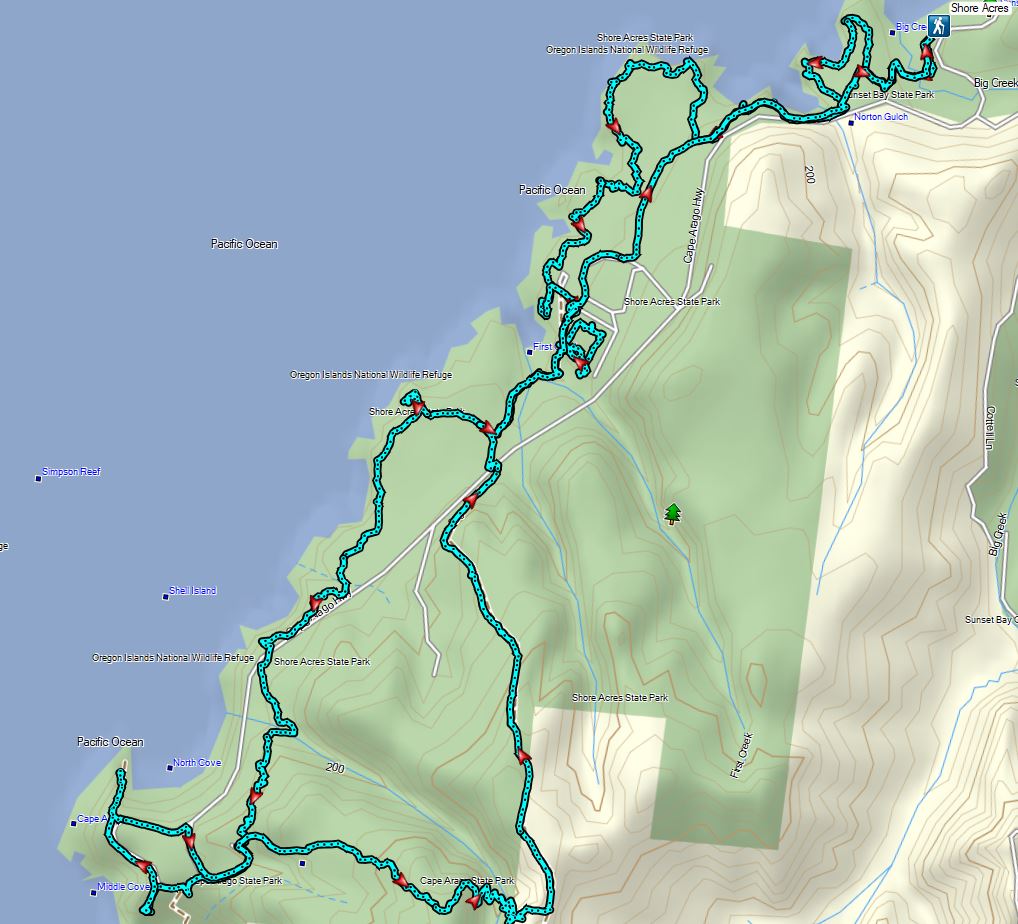
We followed pointers for the Oregon Coast Trail which briefly followed the shoulder of Cape Arago Highway as it passed Norton Gulch.
On the far side of the gulch the trail veered away from the highway and by staying right at junctions soon got back to the cliffs above the ocean providing some excellent views.
A long pause in our hike came when we stopped to watch some harbor seals on the rocks below us. Harbor seals in the lower right hand corner on the rocks.
Drama was unfolding in front of us as one pup repeatedly attempted to follow its mother up onto the rocks only to slide back into the water. It finally found success and then back into the water they went. Apparently it was just a practice run.
Success!
After tearing ourselves away from the seal show we continued south along the cliffs. Paintbrush
Sea thrift
Mariposa lilies
Iris
Just over two miles into the hike we came to the first noticeable remnants of the 1906 estate of timber baron Louis Simpson. Former tennis courts.
It was windy on the plateau and I couldn’t help but wonder how anyone could play tennis in the windy conditions that are often present on the coast.
View near the tennis courts.
These roots explain how some of the trees that look like they should be plunging into the ocean don’t.
Observation Building ahead on the cliff.
The rocks along the coastline here had been pounded and carved by the ocean into some interesting shapes and designs.
We walked past the Observation Building (closed due to COVID) to a viewpoint overlooking Simpson Cove.
The Oregon Coast Trail dropped down to the cove before climbing again and continuing onto Cape Arago State Park but before we headed down we wanted to check out the Shore Acres Gardens which were open (limit of 75 persons at a time).
It was a little early yet for many of the flowers, especially the rose garden, but there was still a lot to see. The most impressive specimens to us were a plant and tree from South America.
>
Prickly Rhubarb from Chile
Monkey Puzzle Tree from South America
The yet to bloom rose garden.
After winding our way through the gardens we returned to the Oregon Coast Trail and followed it down to Simpson Beach.
After climbing up from the beach we came to an unsigned junction where we turned right continuing to follow the cliff south for .9 miles to an overlook along the Cape Arago Highway of Simpson Reef.
Looking back across Simpson Cove to the Observation Building.
Simpson Reef extending into the Pacific.
There was a lot of action going on out on the reef, in particular on Shell Island where sea lions barked and eagles engaged in aerial combat. Shell Island in the middle of Simpson Reef.
Sea lions and juvenile bald eagles on Shell Island.
Harbor seals on the reef.
After watching the action for awhile we continued on our trek by crossing the Highway onto a hiking trail marked by a post.
Coltsfoot
After a half mile on this trail we arrived at the Cape Arago Pack Trail.
Left would loop us back to Shore Acres State Park while heading right would drop us into the main part of Cape Arago State Park. We turned right to check out more of the park and popped out near the South Cove of Cape Arago. Woolly bear caterpillar
Looking back up the Pack Trail.
A short trail led down to the beach in the South Cove (and possible tidepools) but we were starting to feel the effects of 3 straight days of hiking and having to climb back up from the cove just didn’t sound appealing so we opted to take a break at bench overlooking the cove in a picnic area.
Plaque near the bench commermorating Sir Frances Drake’s visit to the area in 1579.
Our stalker while we sat at the bench hoping we would leave some food behind (we didn’t).
After the break we continued to follow the parking area around Cape Arago passing Middle Cove and then arriving at the North Cove Trail.
We thought we might be hearing things, but no it was a rooster crowing.
Stellar’s jay
We decided to take this trail as it only lost a little elevation on its way to a ridgeend viewpoint with a view of a different side of Shell Island. North Cove (A trail down to that beach was closed for the season.)
From the North Cove Trail it was shorter to continue around the parking loop to reach the Pack Trail instead of backtracking so that’s what we did. The Cape Arago Pack Trail gained approximately 300′ in just under a mile to reach its high point at 530′. There had been caution signs regarding storm damage which we found near the high point where a clearcut had left trees overly exposed to winds causing several large ones to be uprooted. Luckily crews had cleared the trail beacuse the size and amount of trees down here would have been very problematic to get past.
The trail then descended to a small stream crossing before climbing again to a ridgetop. Heading down.
Going up.
On the ridge we turned left at a junction on an old roadbed which followed the ridge down to the highway passing an old WWII radar installation bunker near the highway.
The Cape Arago Pack Trail at the highway.
We recrossed the highway here into Shore Acres State Park.
Just five hundred feet after crossing the road we came to the unsigned junction where we had turned right earlier after climbing up from Simpson Beach only we both missed it. Luckily we realized our mistake less than fifty yards later and got onto the right path. At this point we had hiked 12.5 miles on the day and it was closing in on 3pm due to all our extended breaks and we were getting tired. We decided to take the straightest path back to our car instead of following the Oregon Coast Trail as we had done earlier. We followed the entrance road in Shore Acres to the fee booth where we turned left on an old roadbed that now acts as a trail.
Going this way shortened our return trip by nearly 3/4 of a mile but it meant missing the views along the cliffs where we had watched the seals earlier. When we reached the Oregon Coast Trail we turned right and followed it back to the group camp at Sunset Bay State Park. We shortened our hike even further here by cutting through the empty camp, a move that shaved another 1/2 mile off the hike. It was a good thing too because our feet were not happy with us when we finally made it back to our car.
Our route through the parks
It had been a great day though with the two hikes combining for a 14.3 mile day. Happy Trails!


 Thimbleberry
 Coming up on the start of the boardwalk.
 Scouler’s corydalis at the base of the boardwalk.
 The boardwalk junction.

 The base of Cathedral Tree.
 One of two benches near the 300+ year old stika spruce.
 Cathedral Tree

 Beyond the boardwalk the trail was a bit rougher.
 Trail markers were present at times to help identify the correct route.
 Pacific waterleaf
 The Astoria Columnn.
 Megler Bridge


 Young’s River on the left and the Lewis & Clark River on the right
 The early bird.


 The spiral staircase.

 Young’s River
 Traffic on the Columbia River.
 Looking out toward the Pacific beyond Astoria.
 Deer in the grass below the Astoria Column.
 Heather below the column.


 This was a spur trail 0.2-miles from the column (0.6-mile from the trailhead) that also leads down to Irving Street and could be used for a loop if you don’t mind some street walking. We opted to pass and did the hike as an out-and-back.
 False lily-of-the valley
 The last trillium?
 Fringecup
 The start of the short trail to the falls.
 Interpretive signs near the start of the trail.
 The falls were noted during Lewis and Clark’s stay at nearby Fort Clatsop (post).
 This was a tough one to photograph due to the amount of spray being blown straight at us by the force of the water.
 We pulled over onto the shoulder of Hwy 202 to snap a picture of these bulls.

 Bleeding heart
 Fairybells
 Scouler’s corydalis


 I was joined by a pair of ouzels at the falls.
 Looking back at Heather on the other side of Fishhawk Creek.
 Me through the trees below the falls.
 Please note that you need a permit to park at the refuge.
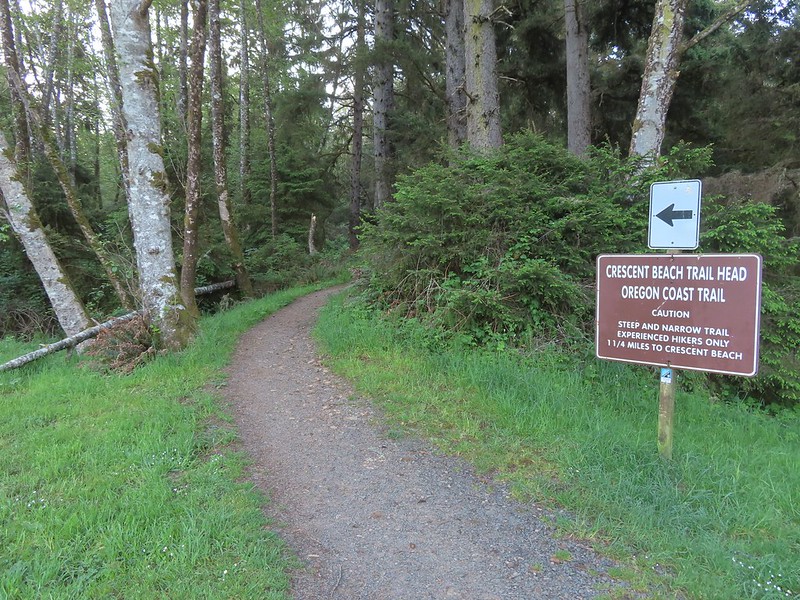 The trail begins near the restrooms.
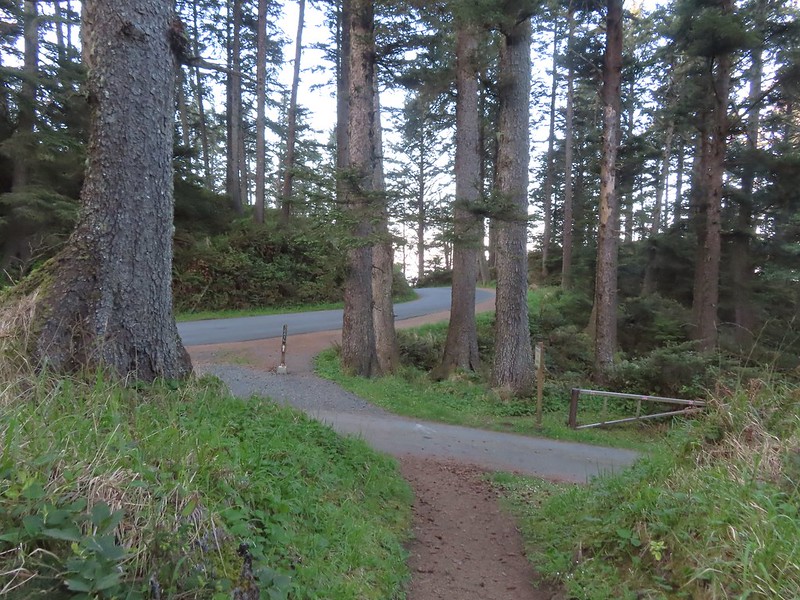 Ecola Park Road.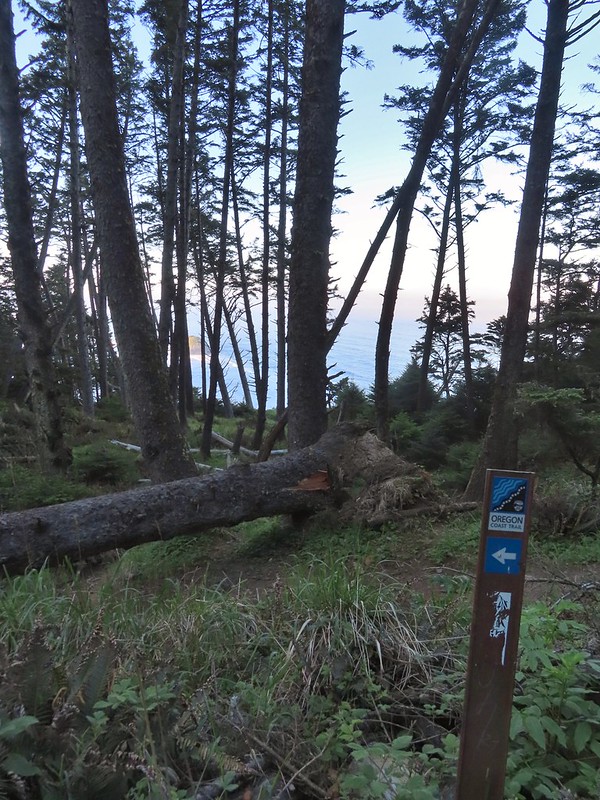
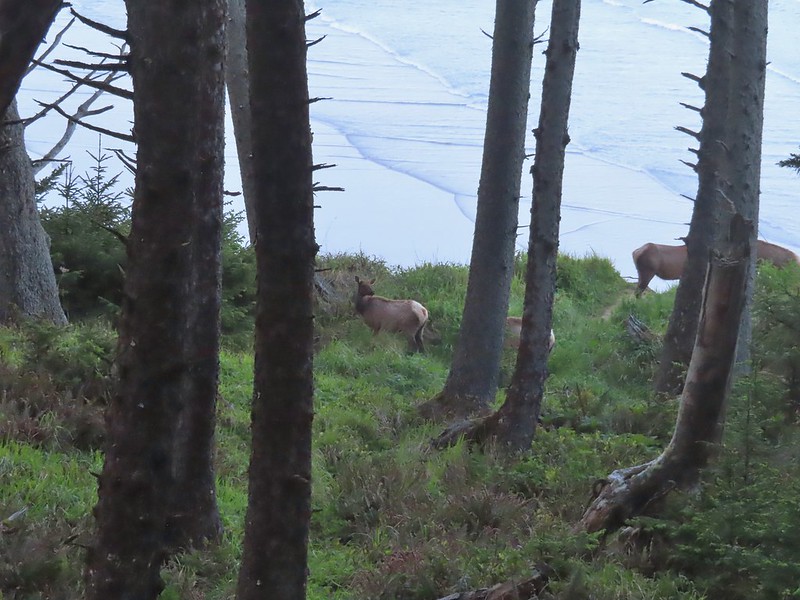
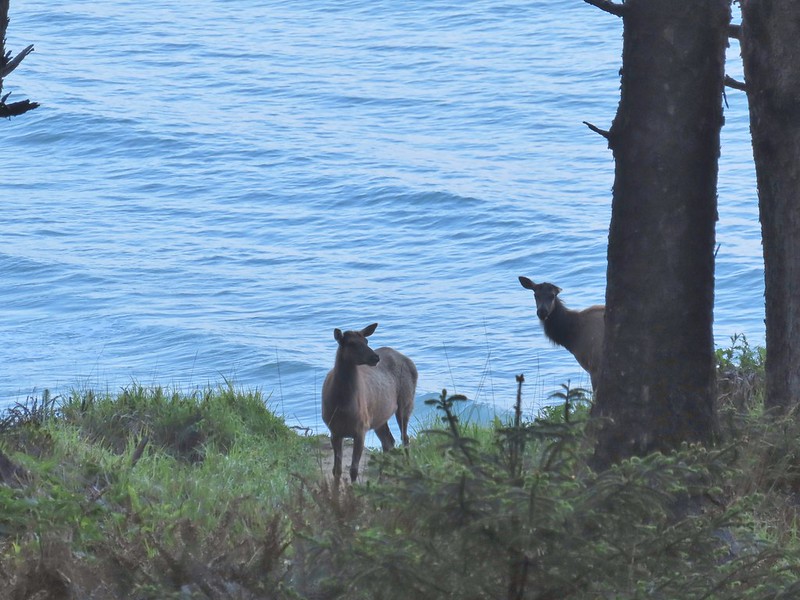
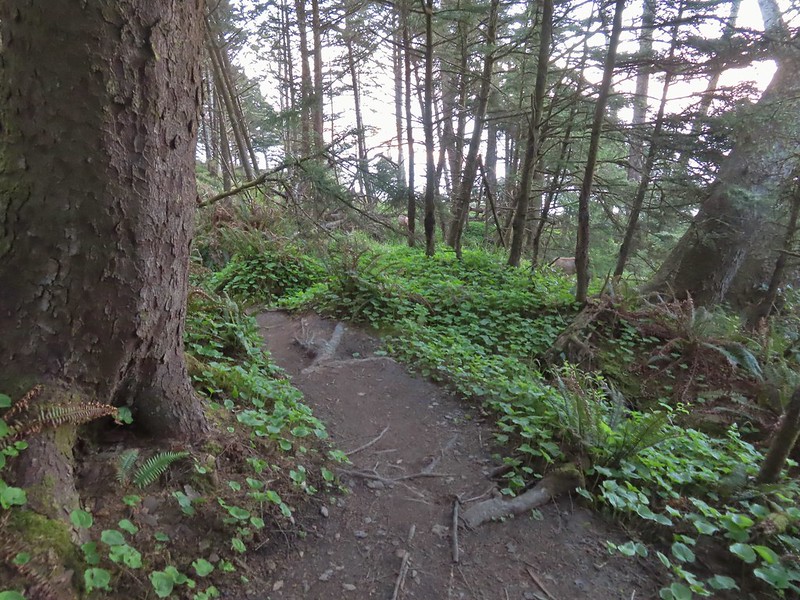
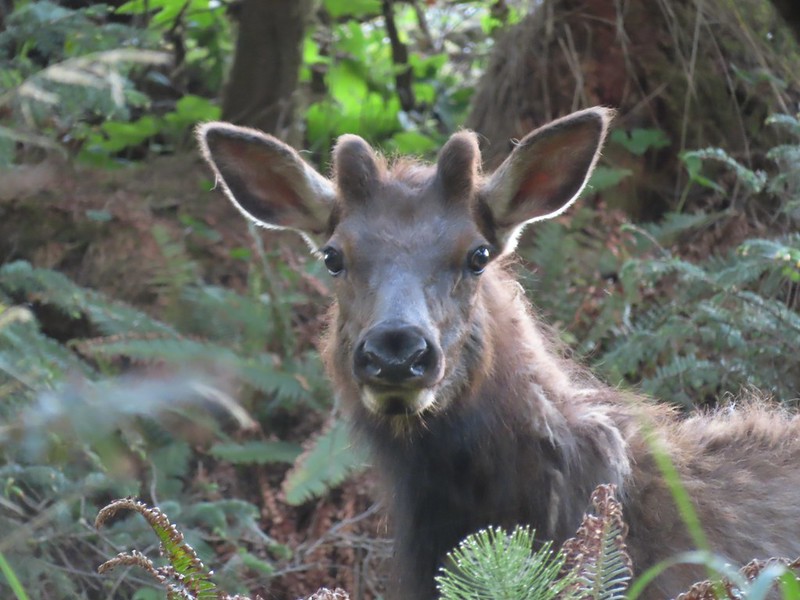
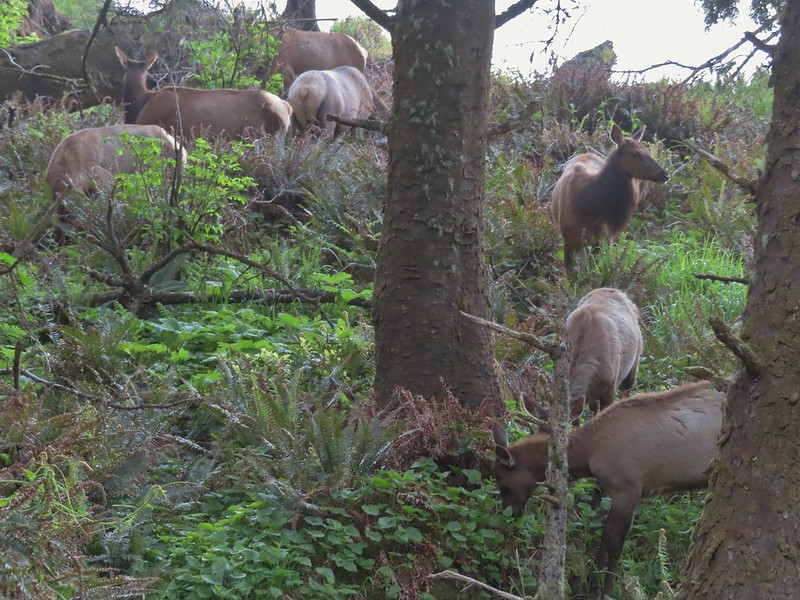
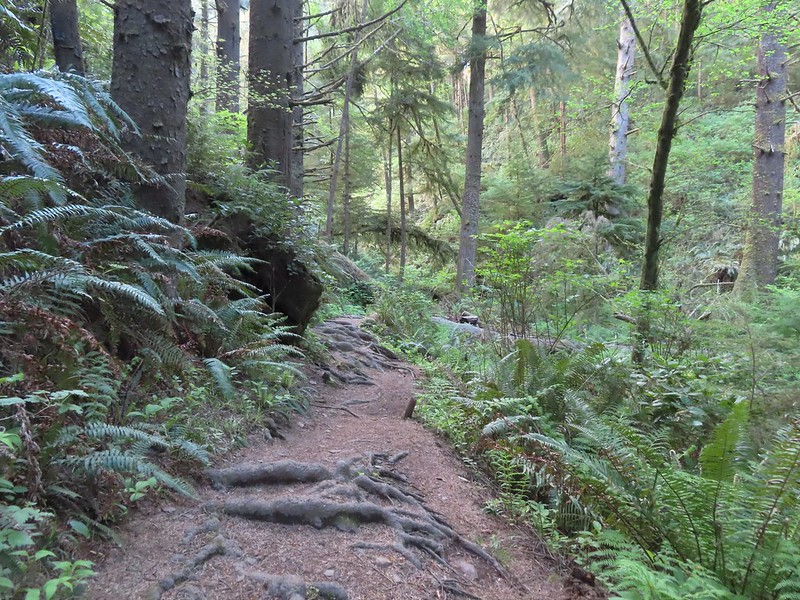
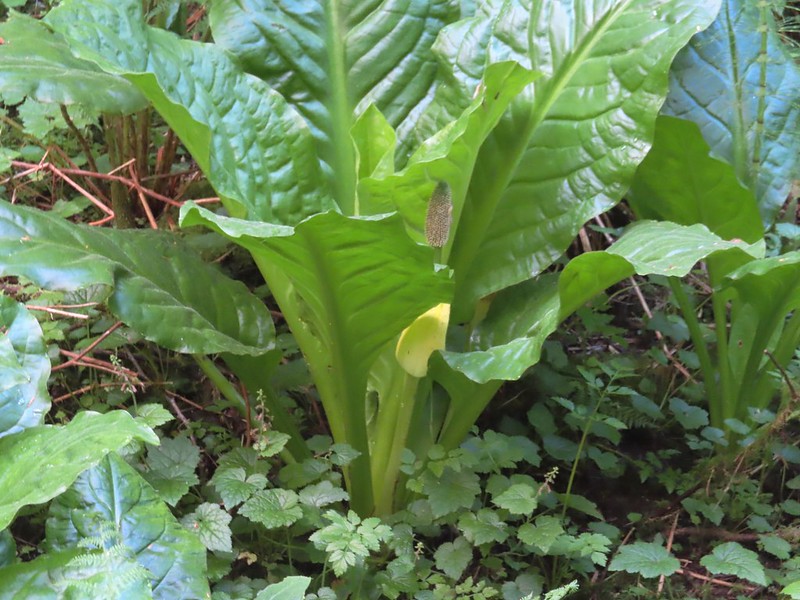 Skunk cabbage
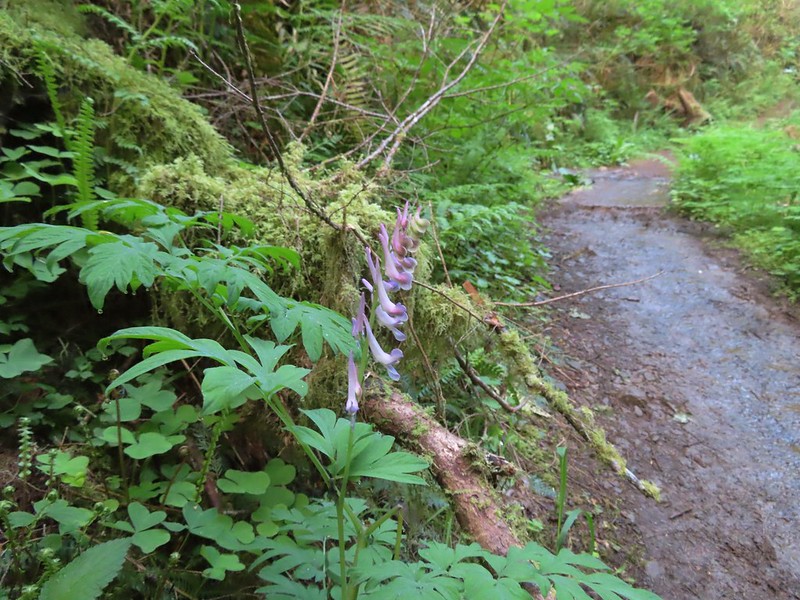 Scouler’s corydalis
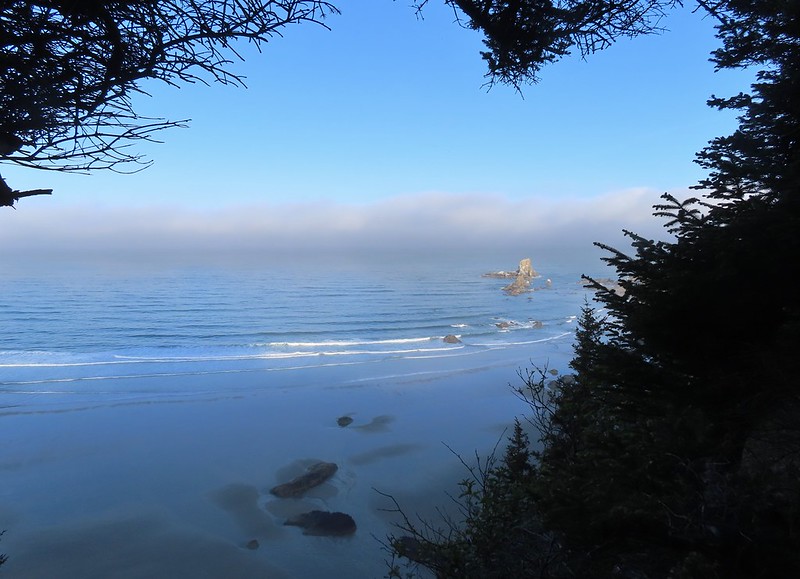 Window to the Pacific.

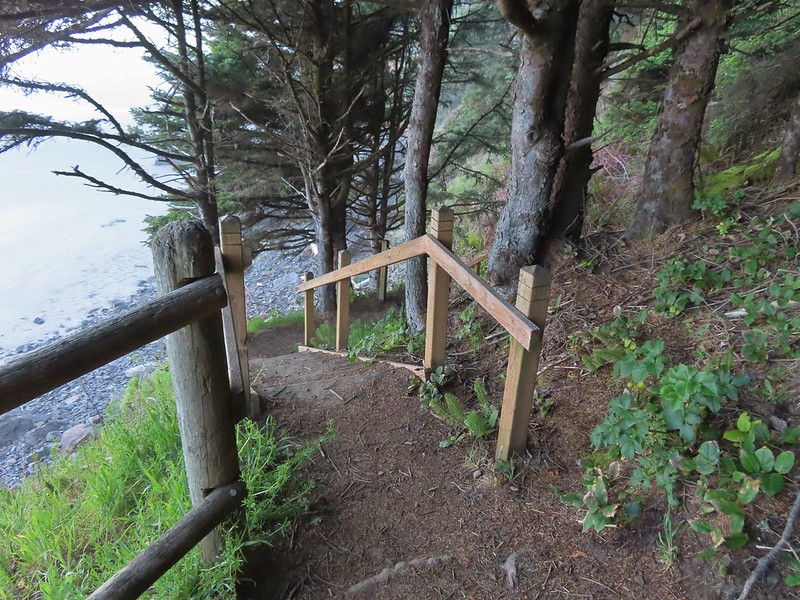
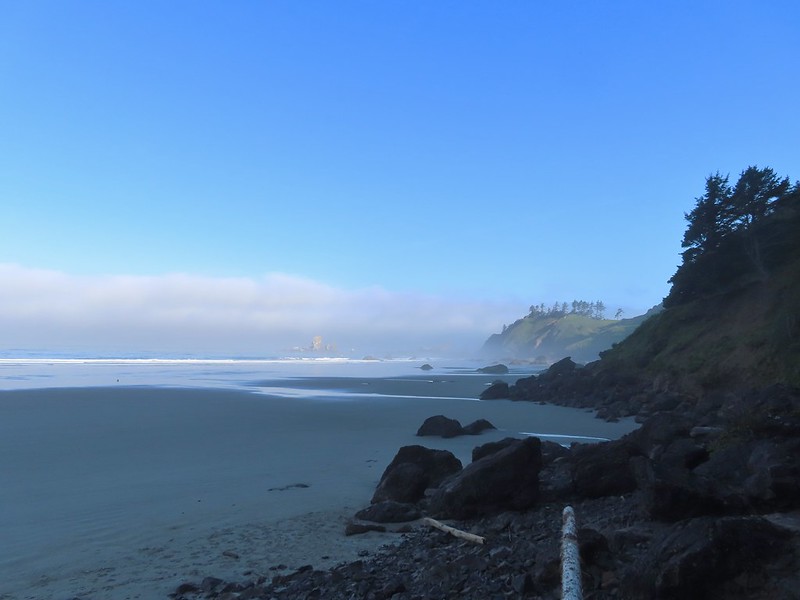 Ecola Point
 Chapman Point and Bird Rocks
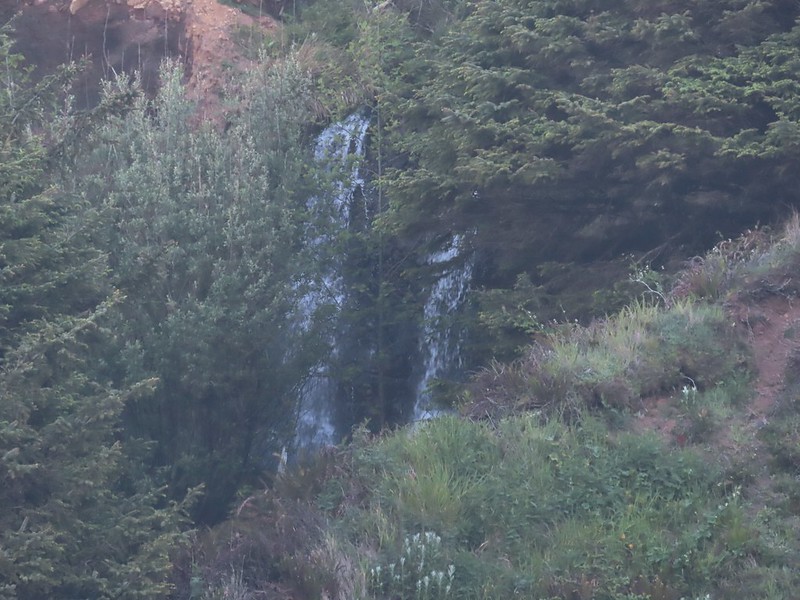 The upper falls.
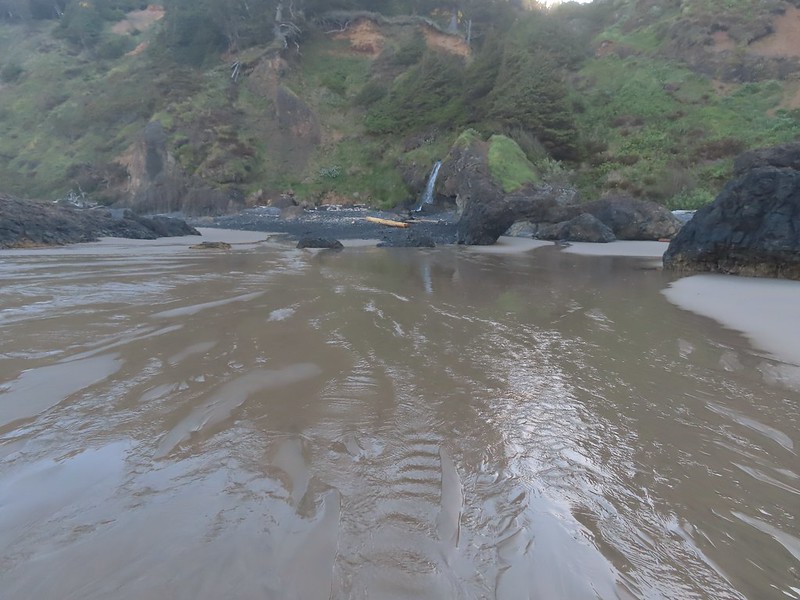 Waterfall Creek
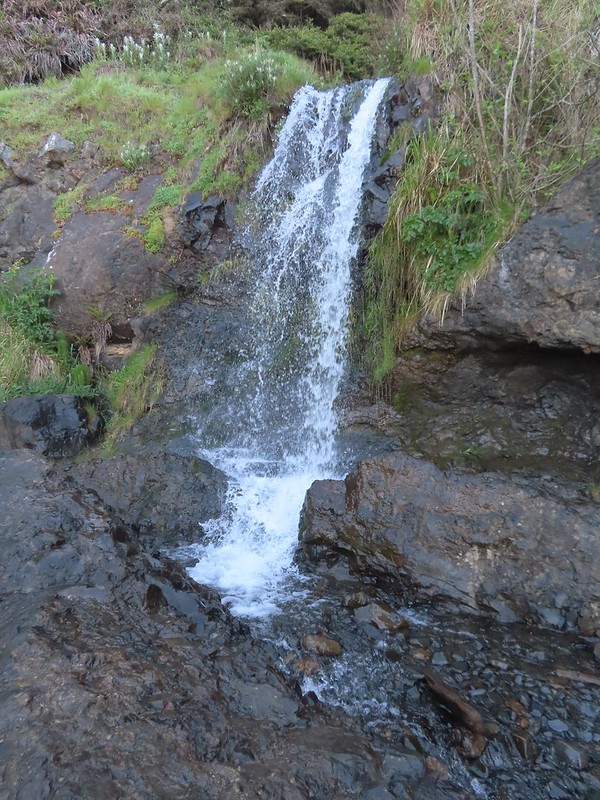 The lower falls.
 The tide pools from Waterfall Creek.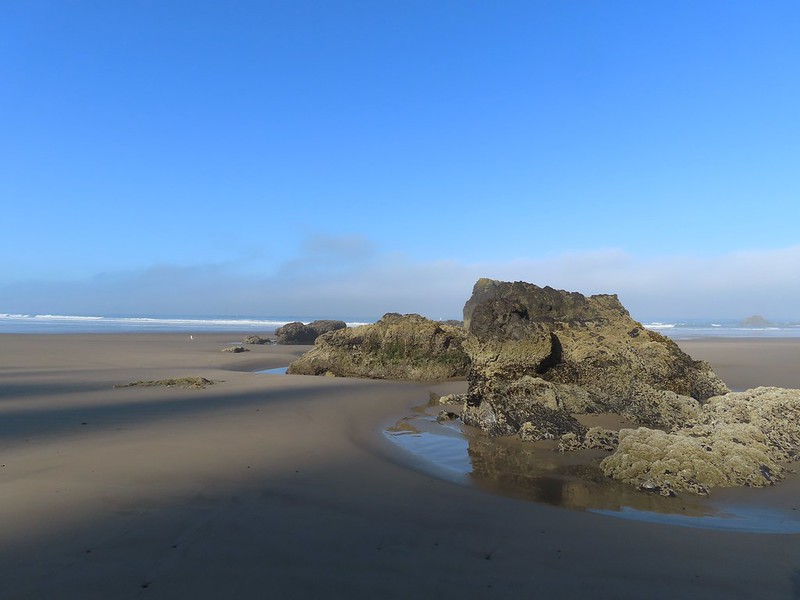
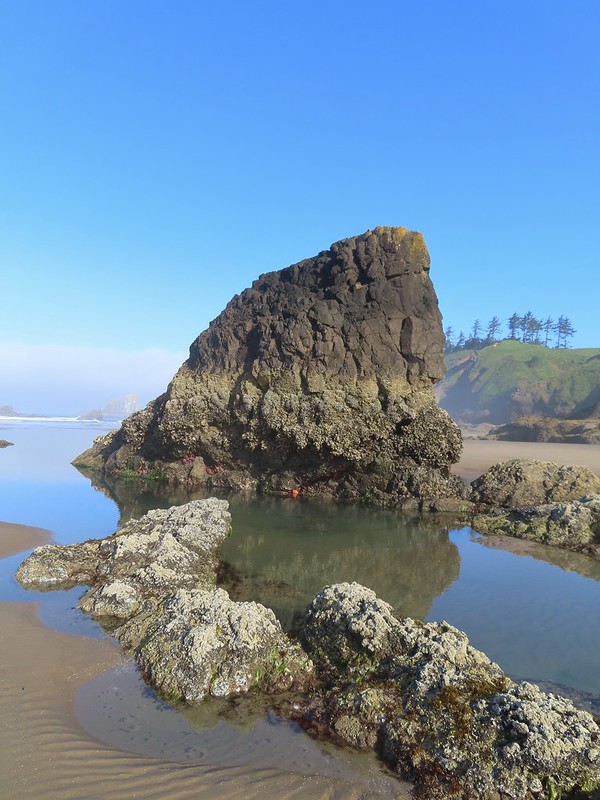
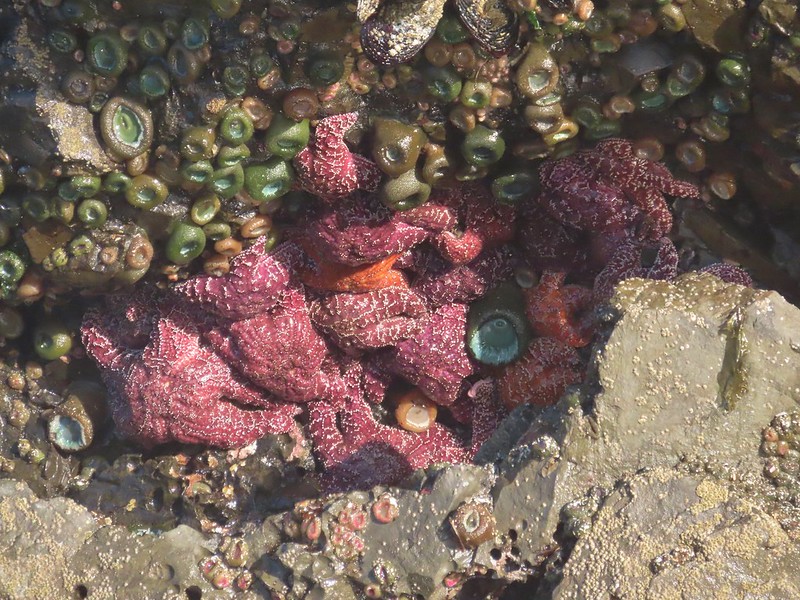

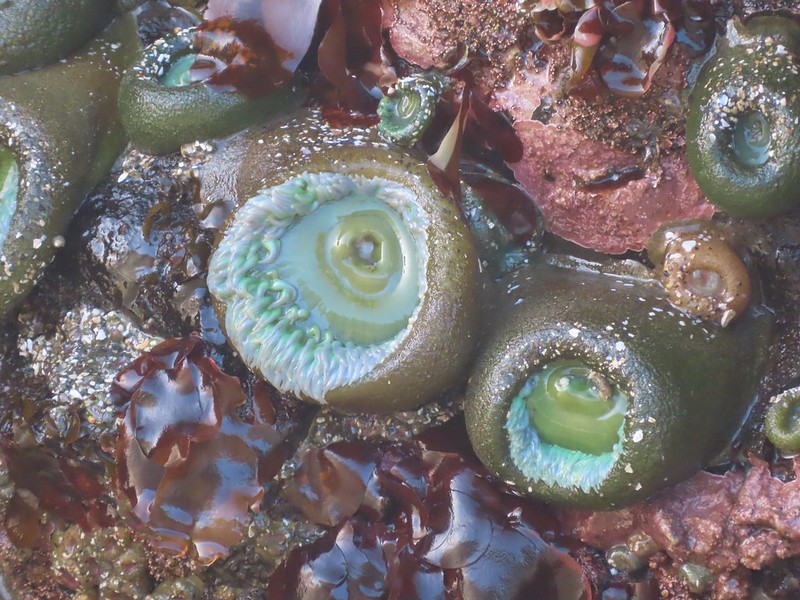
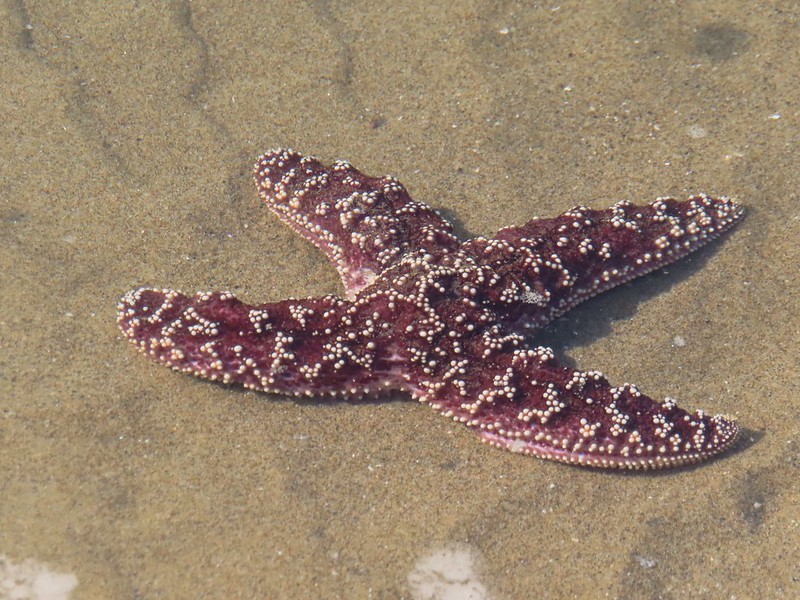
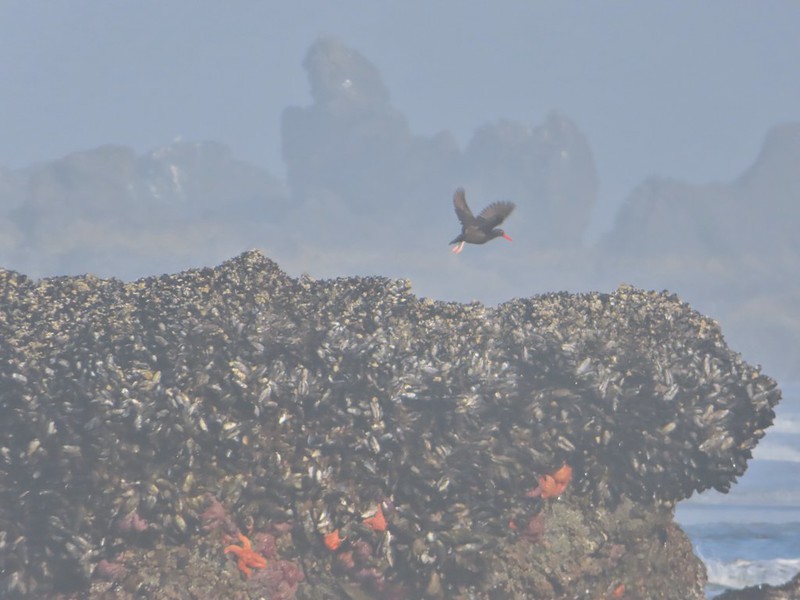
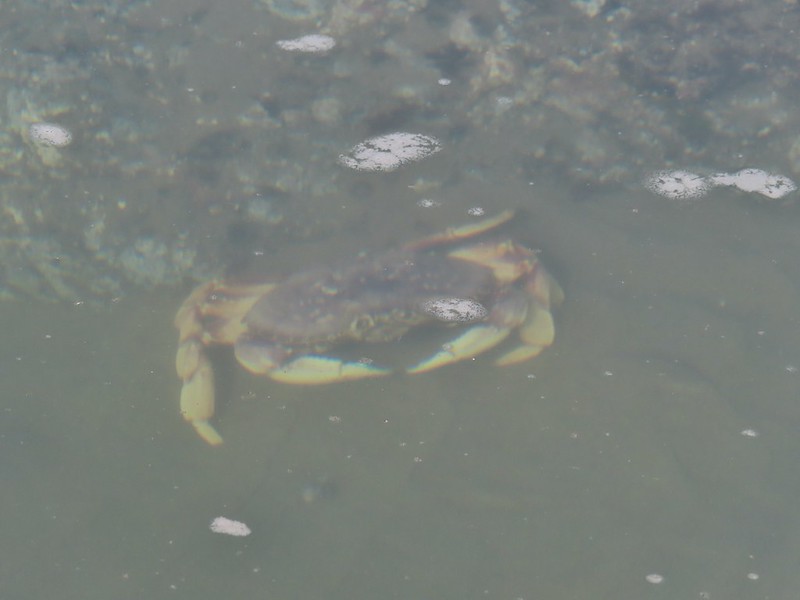
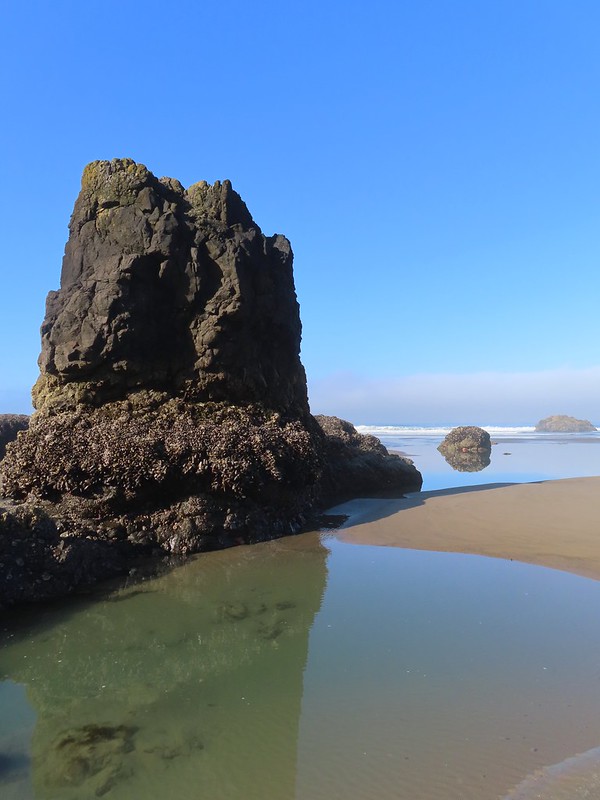
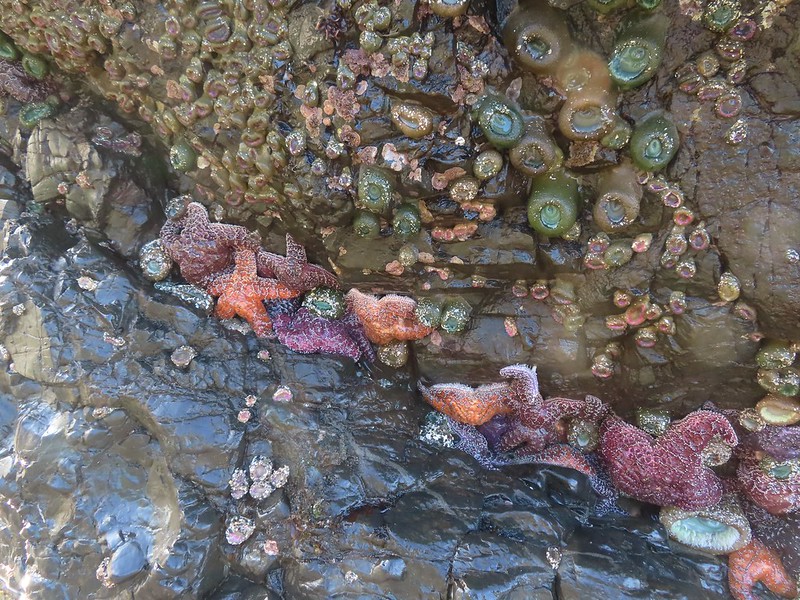

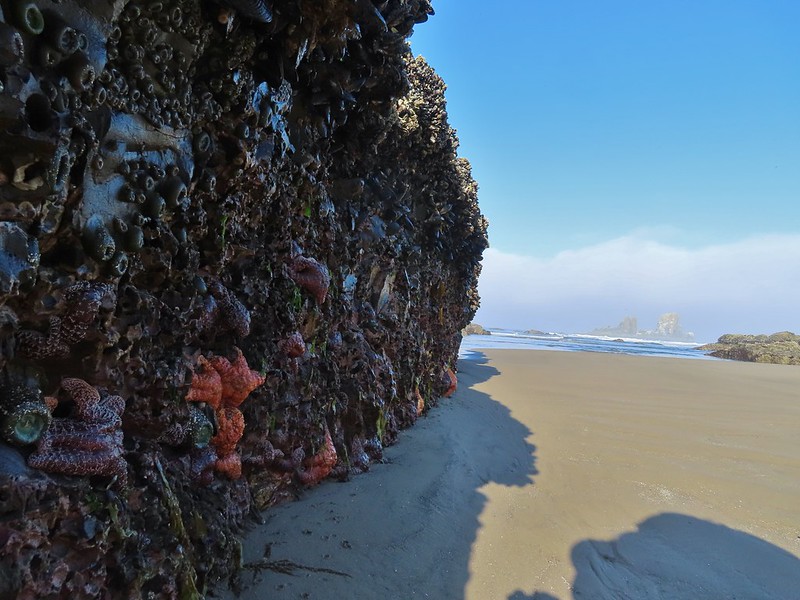

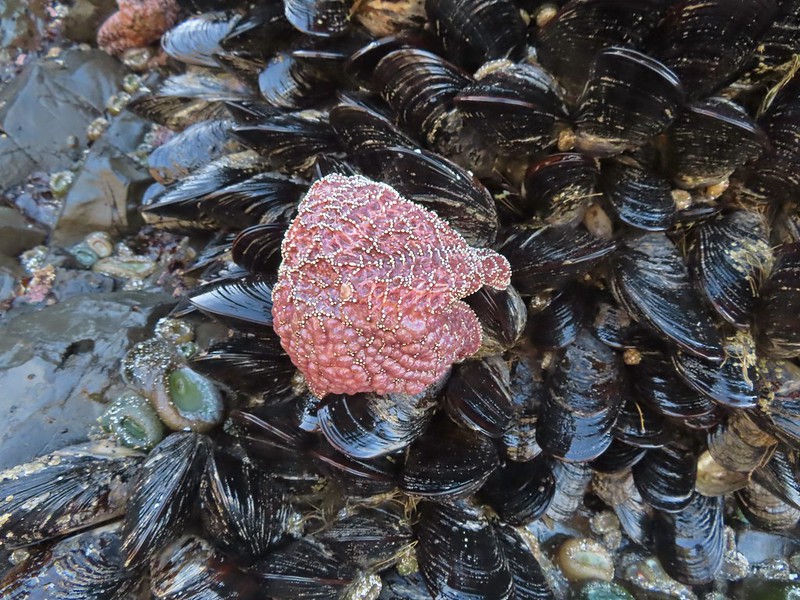
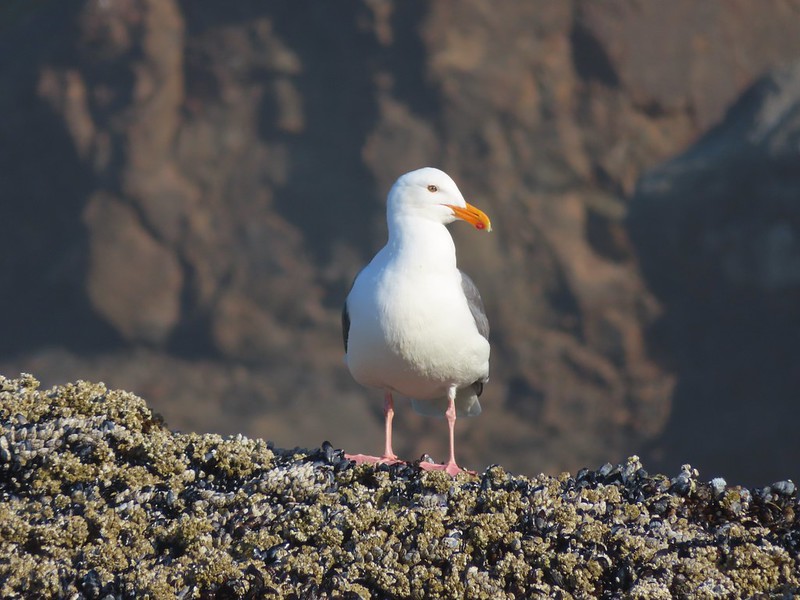
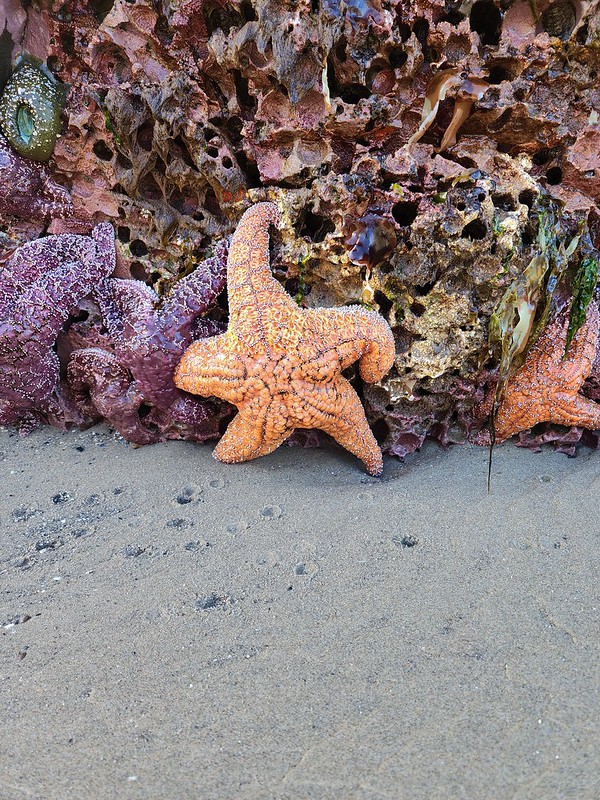 We found Patrick from Spongebob!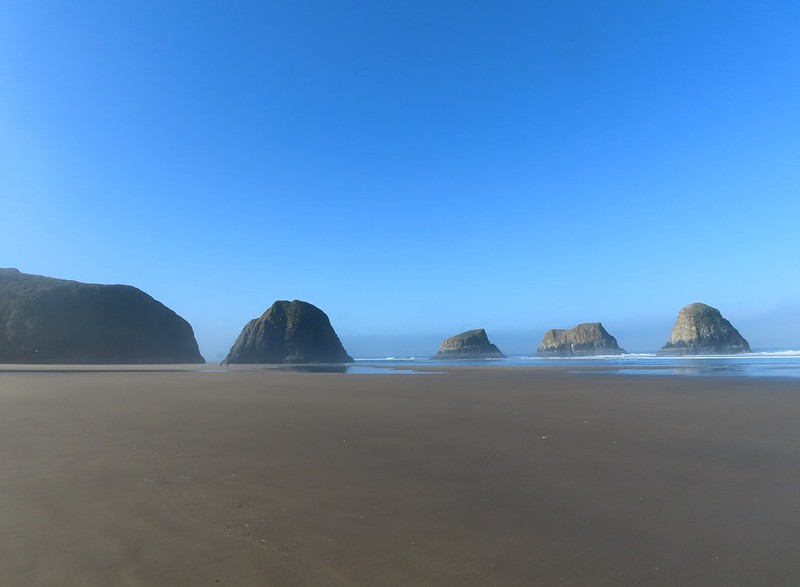
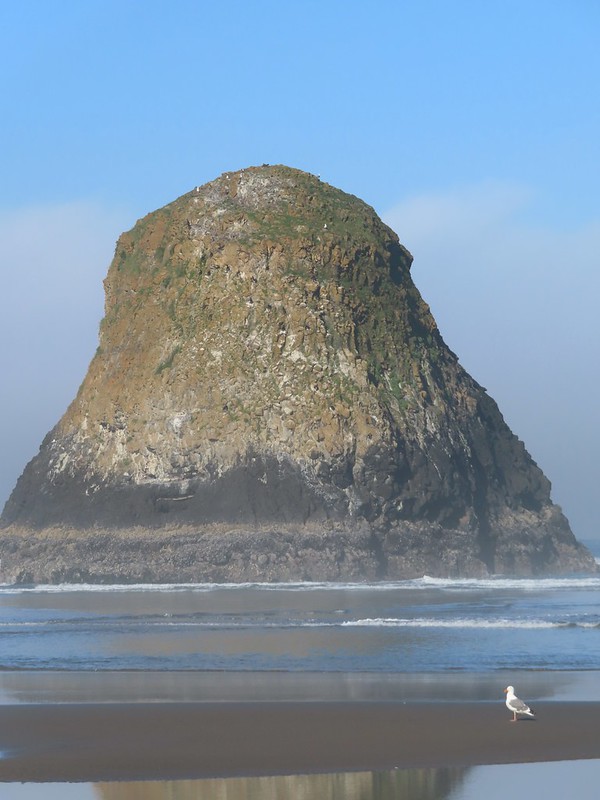
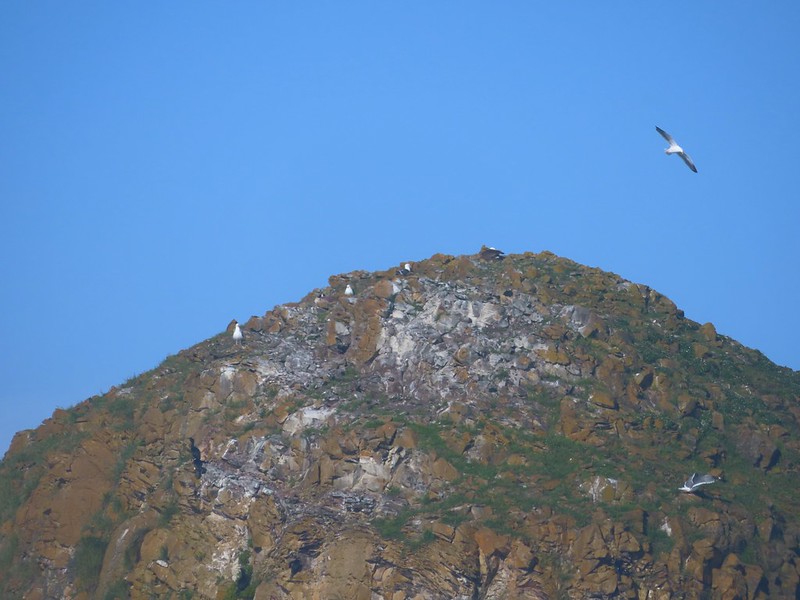
 We were curious as to what forces carved out the backside of this rock.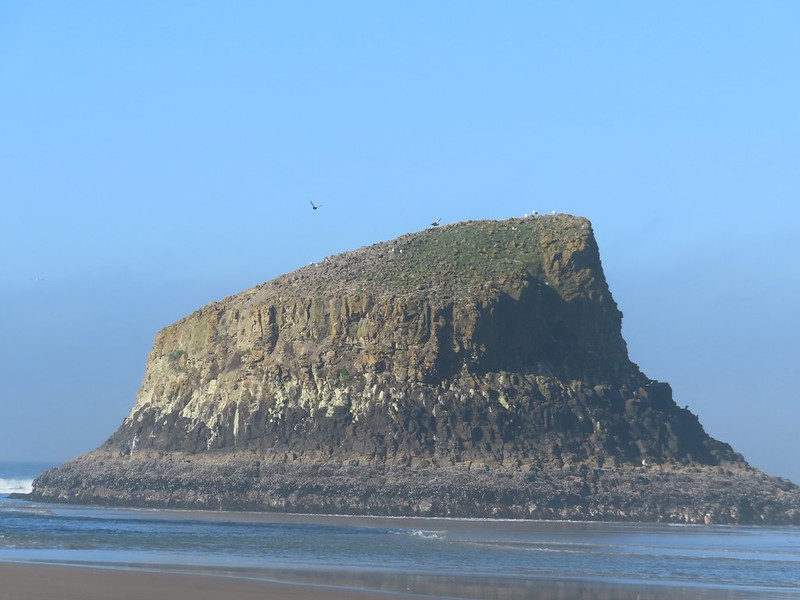
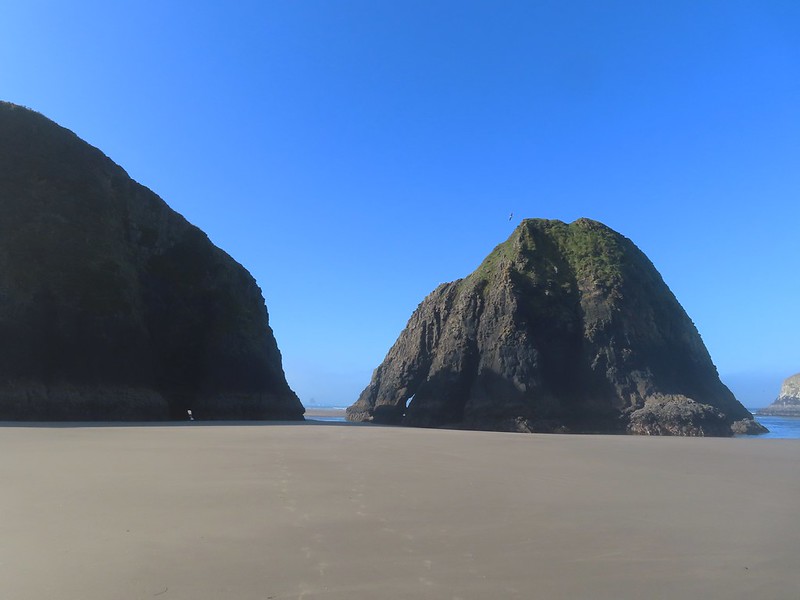 Chapman Point is only passable at certain low tides. On the far side is Cannon Beach (
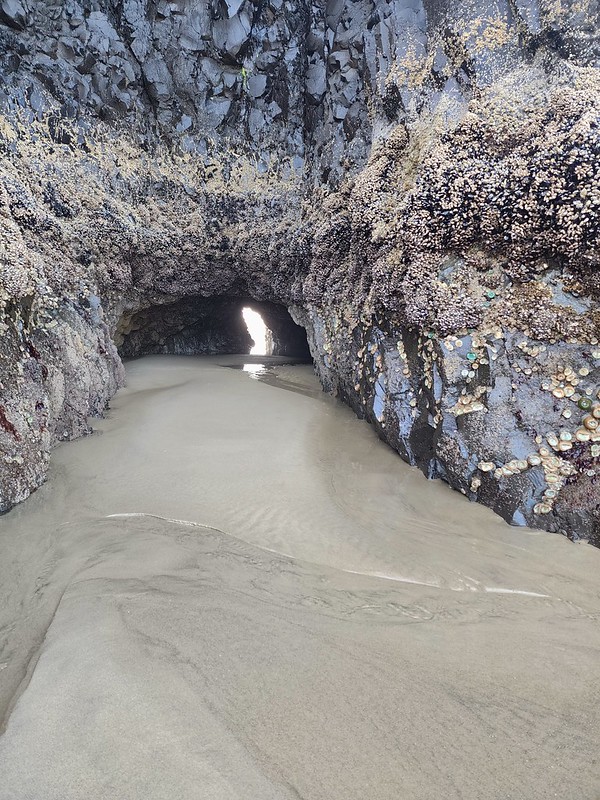 This cave through Chapman Point was flooded at the far end.
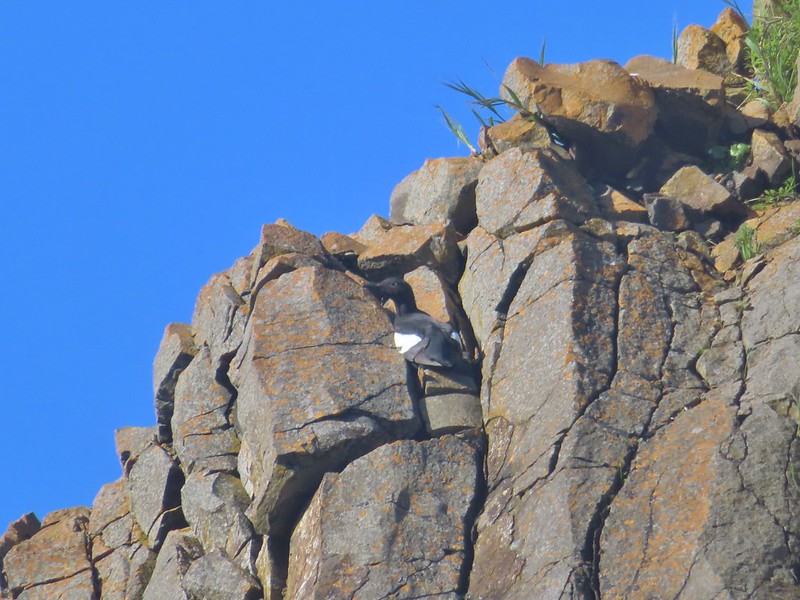 Pigeon guillemot
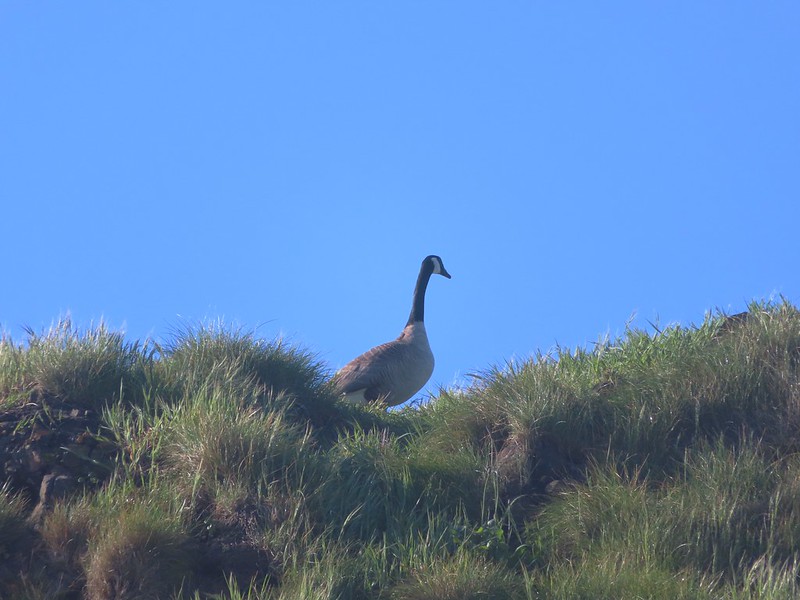 Goose
Goose
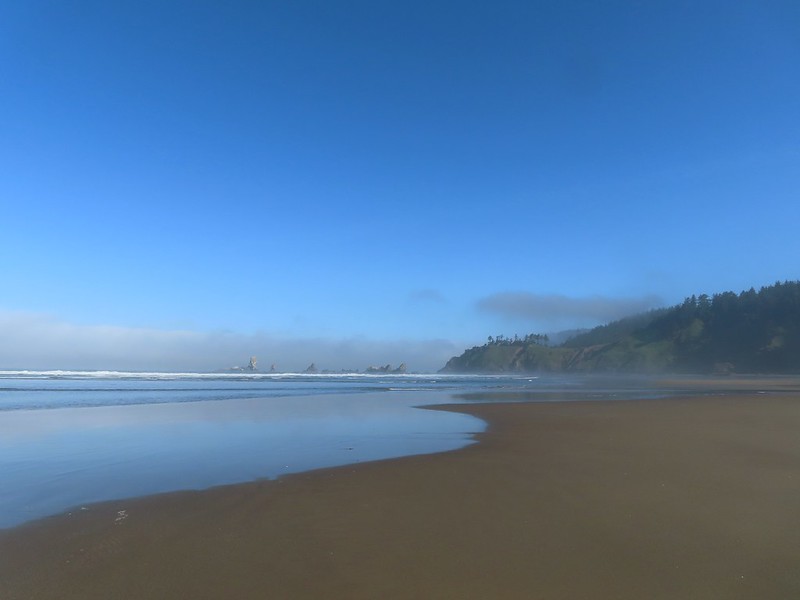

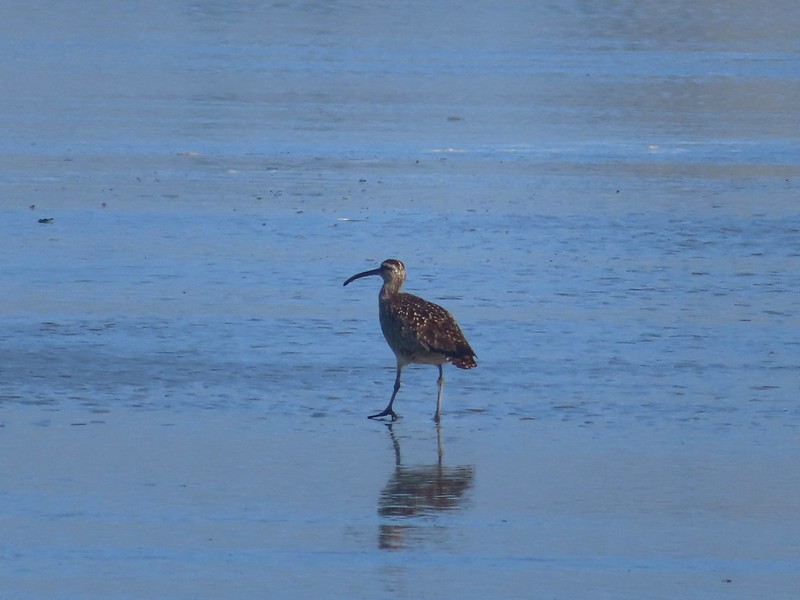 Whibrel
 Seaside bittercress
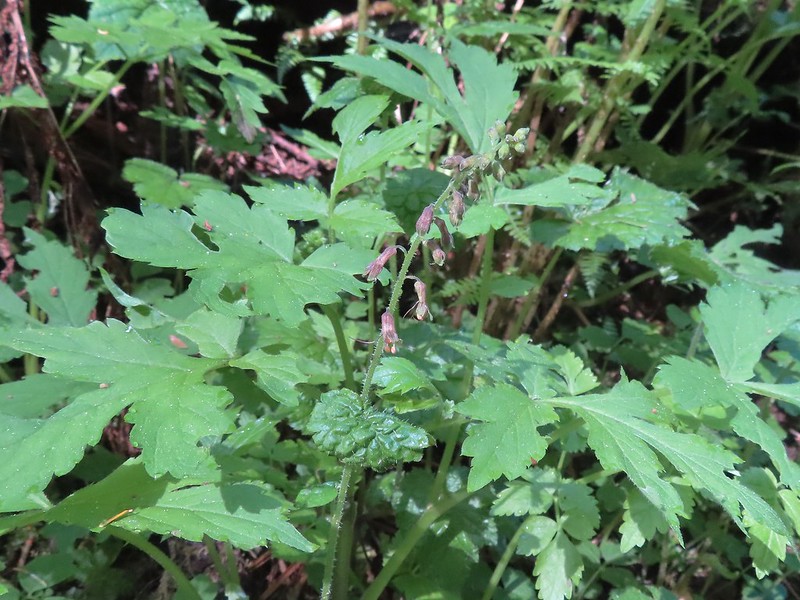 Youth-on-age
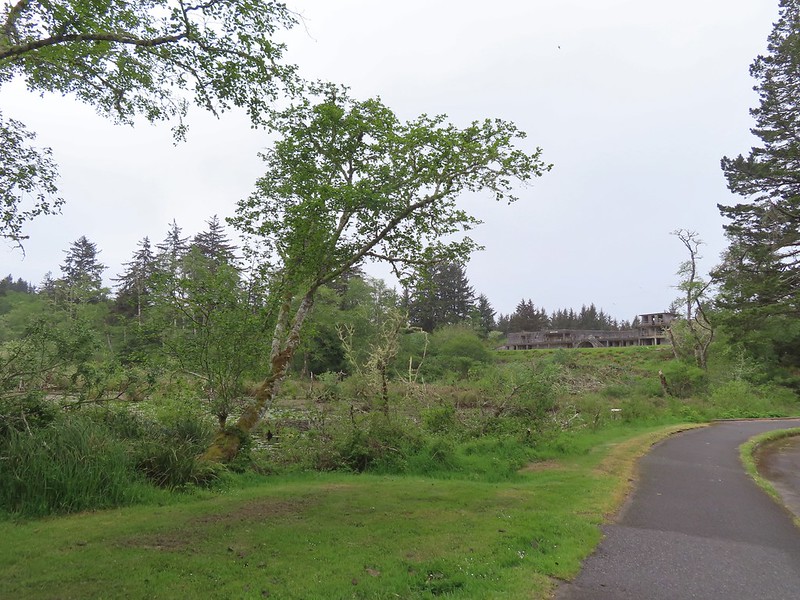 Battery Russell from the lot.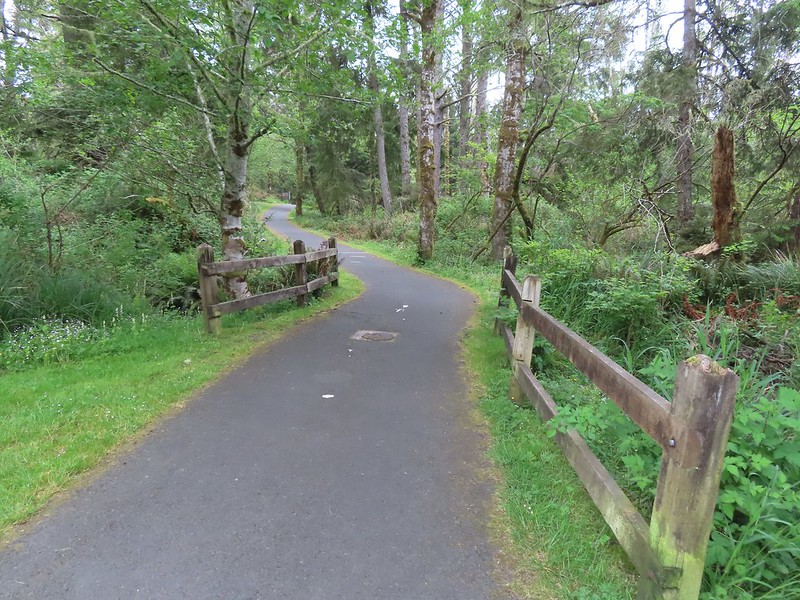

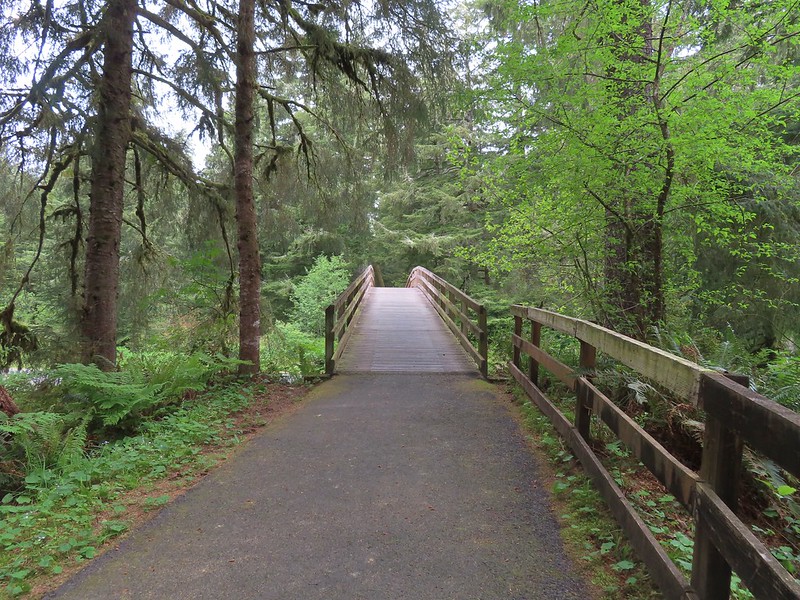 The overpass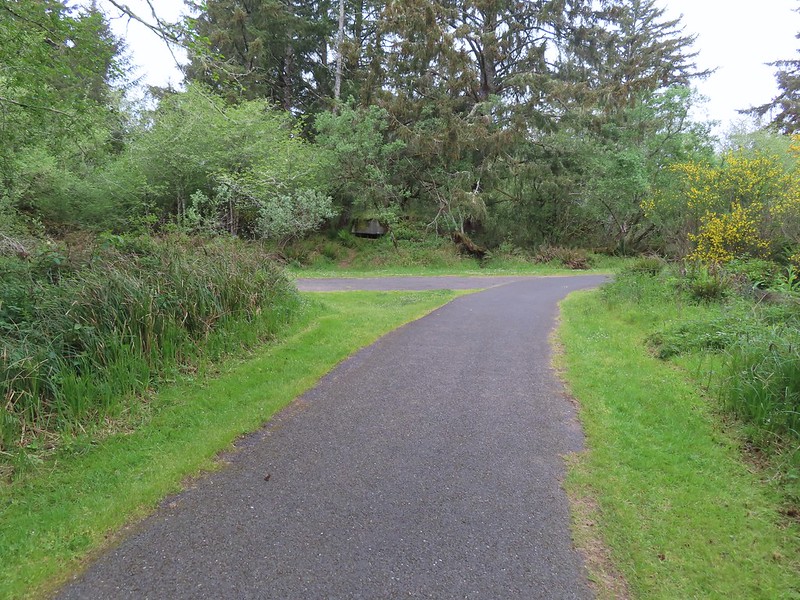

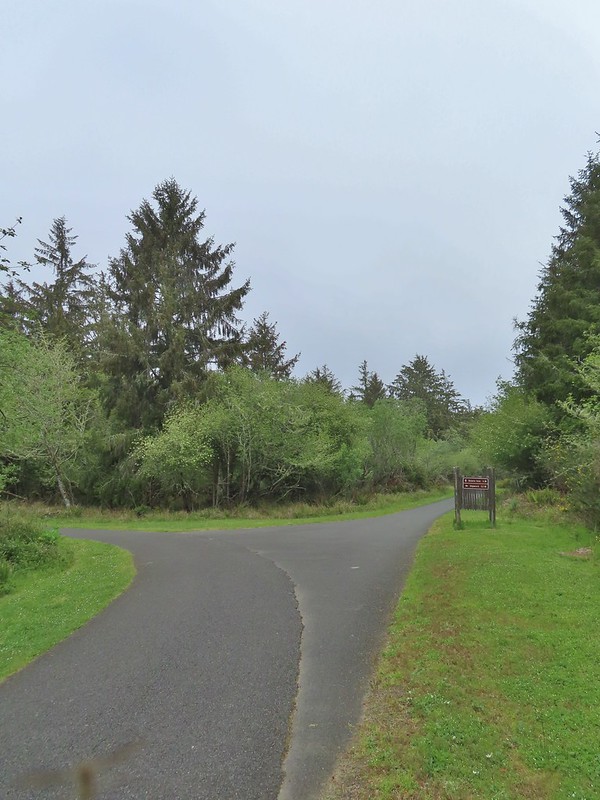

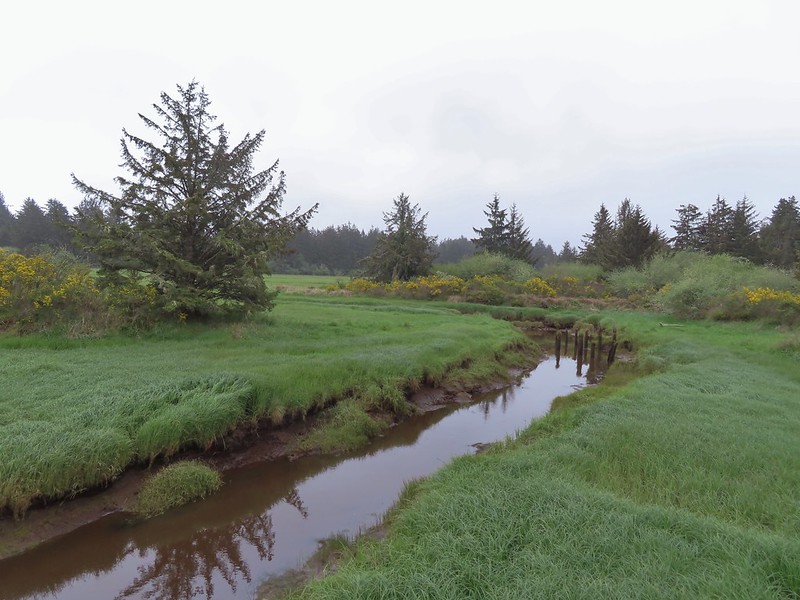 Looking out toward Swash Lake from the bridge.
 The gate to the Historic Area is locked in the evening.
 Visitor’s center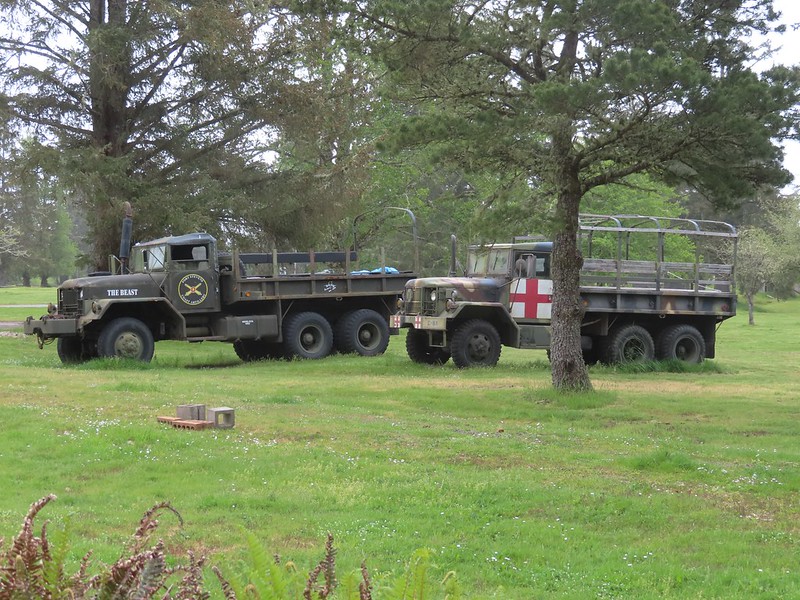
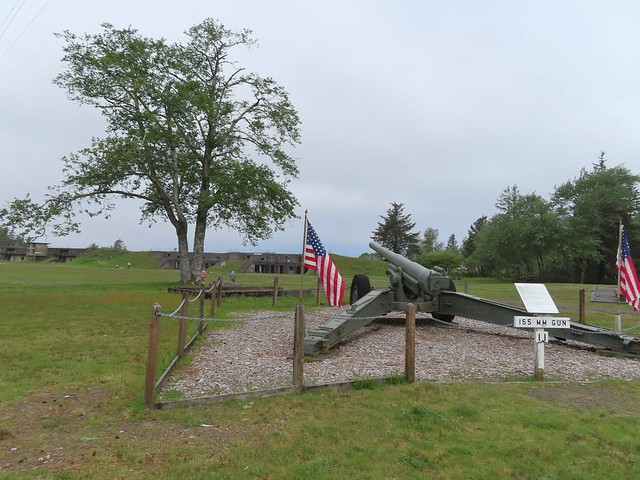


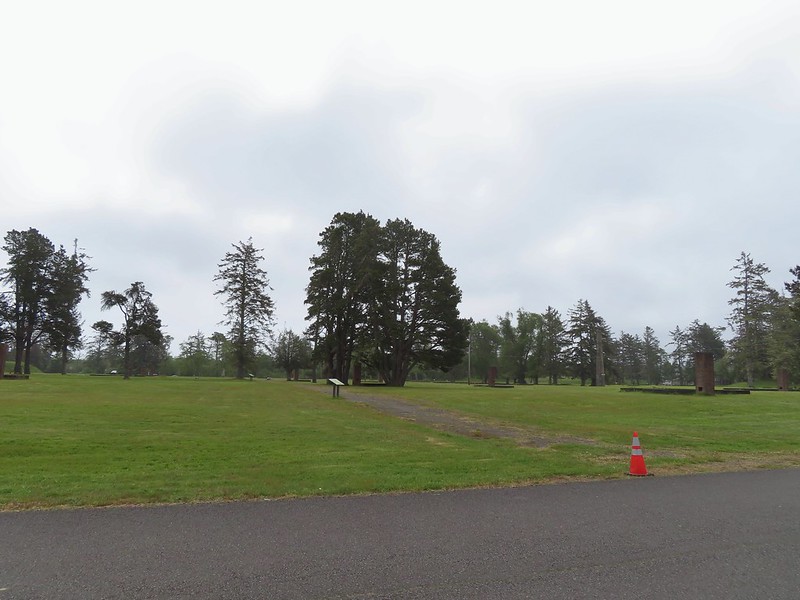
 The guardhouse on the left.
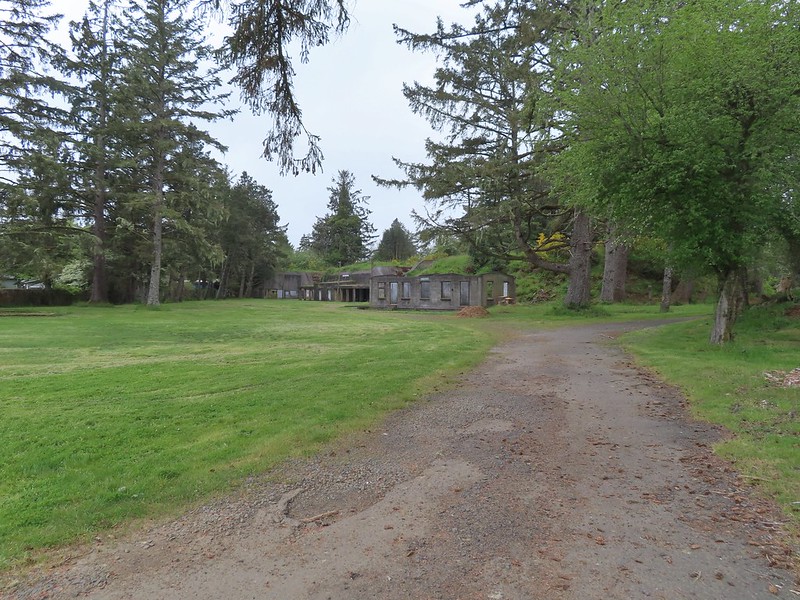 Battery Clark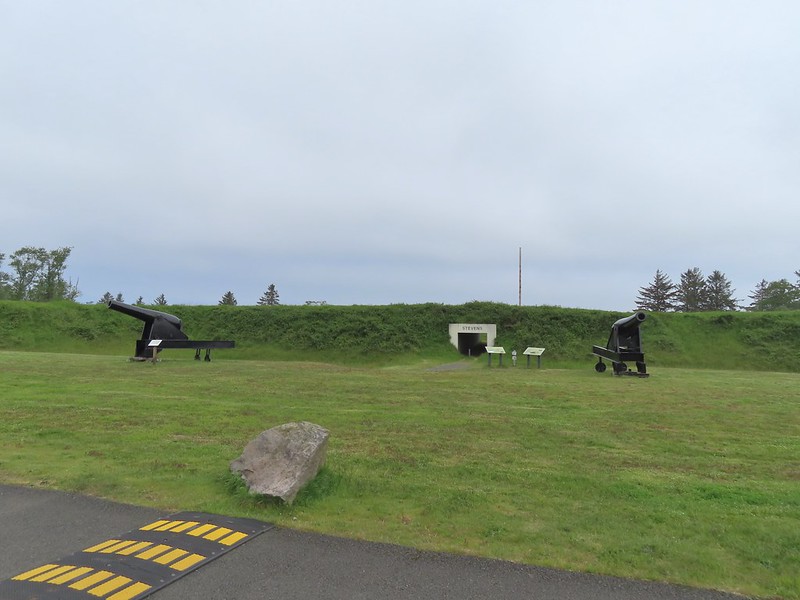
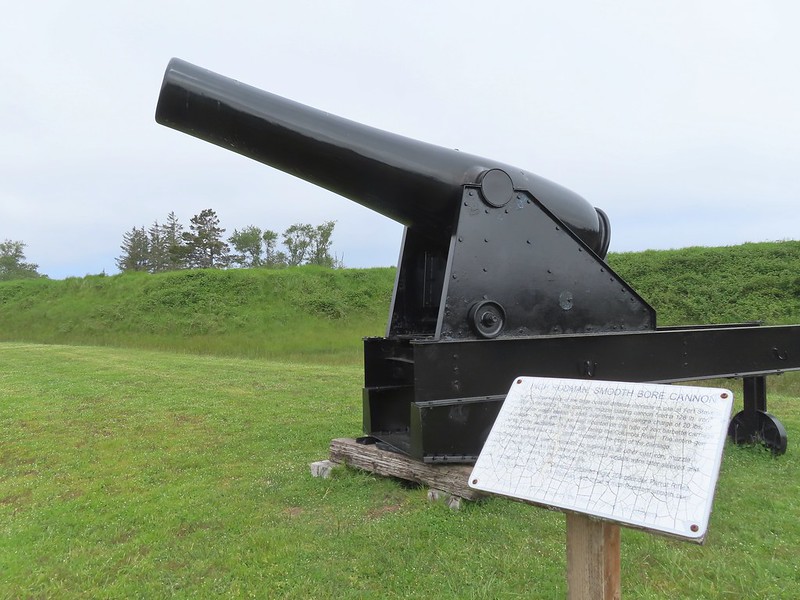


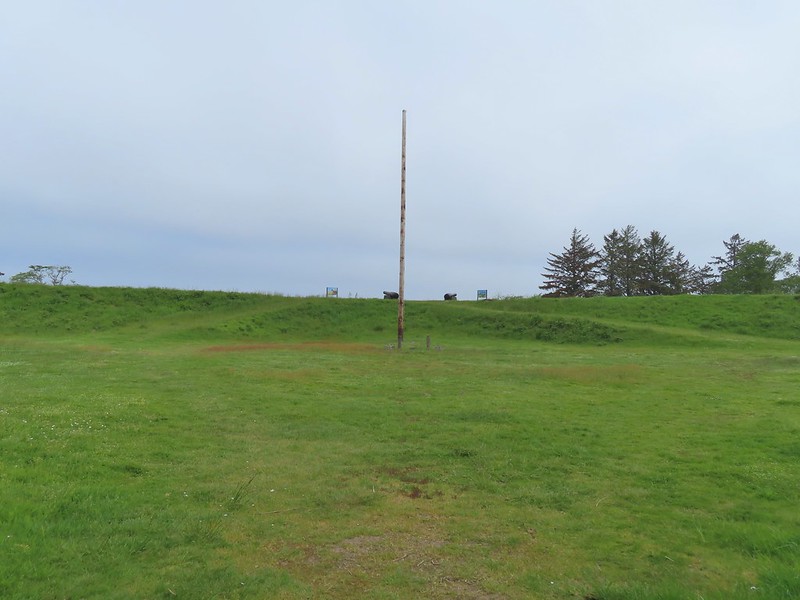 Fort Stevens Earth Works.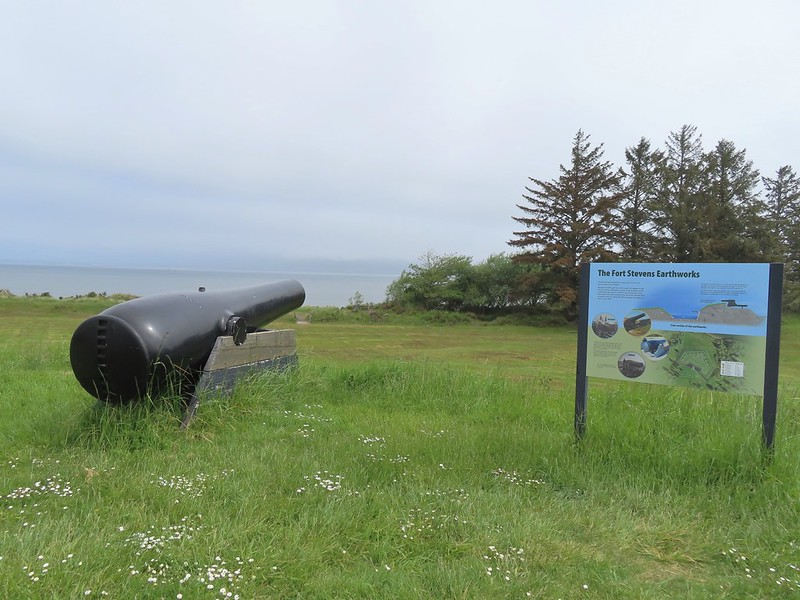
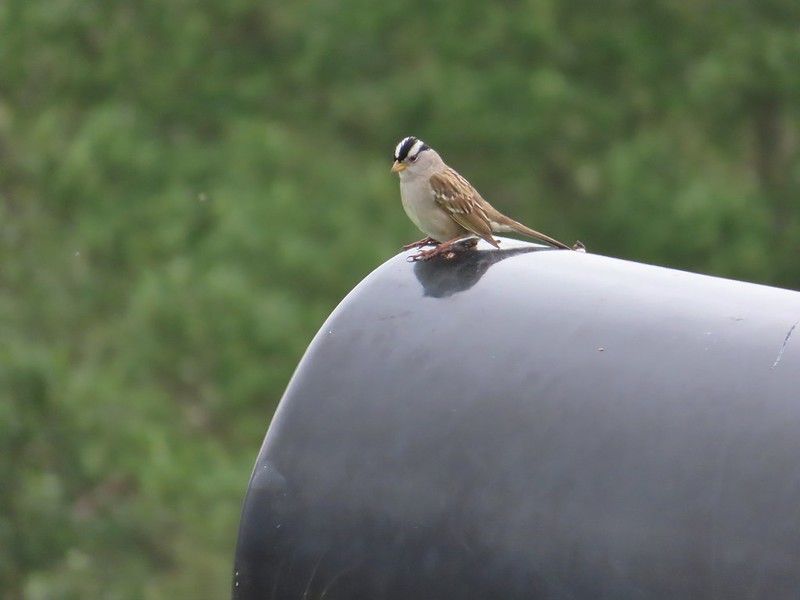 White-crowned sparrow
 We cut across the grass below to the footbridge in the distance.
 Columbia River
 Looking west toward the Pacific.
 Battery Smur
 The roadbed coming in from the former barracks site.
 Mine Loading Building
 Searchlight Generator
 Torpedo Loading Room
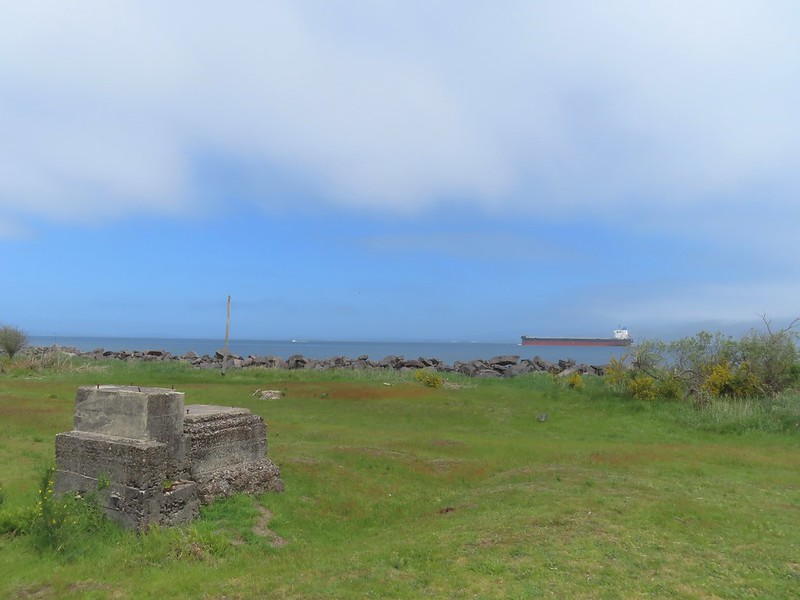


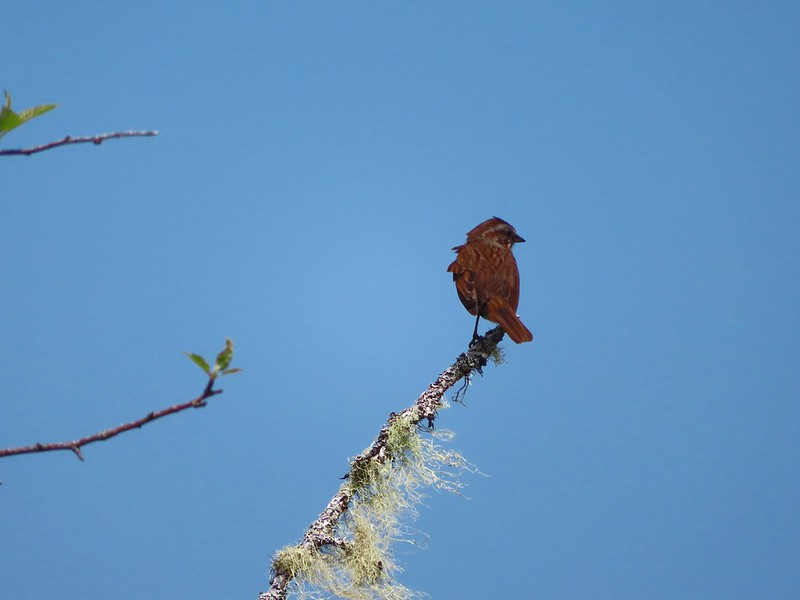
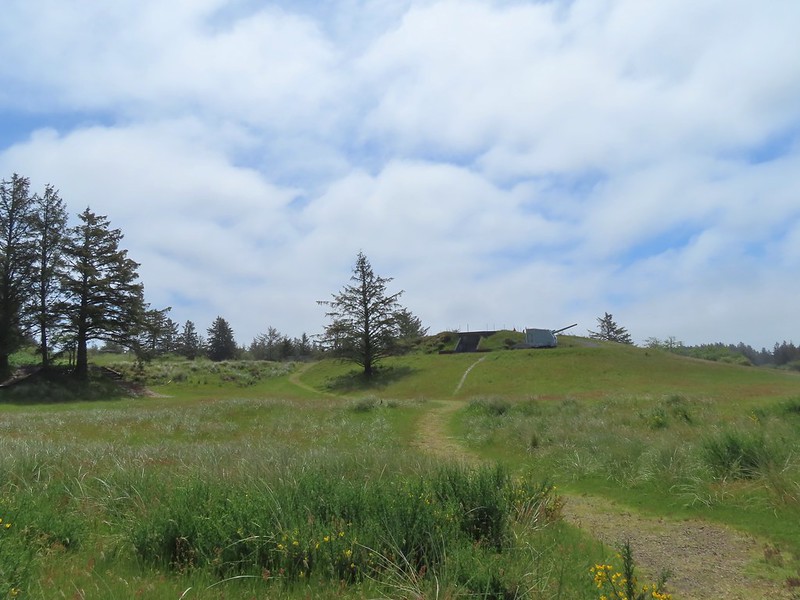 Battery 245

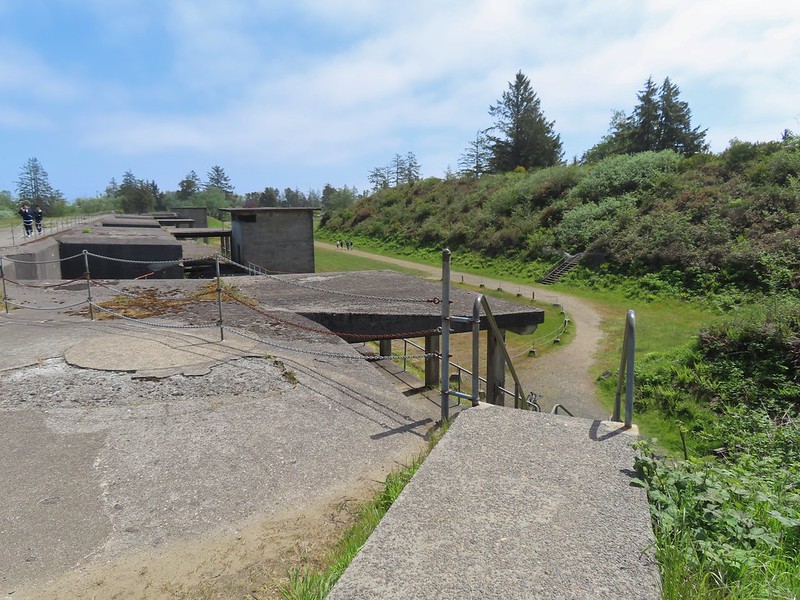


 Sign for the Lil’ Oozlefinch Putting Course.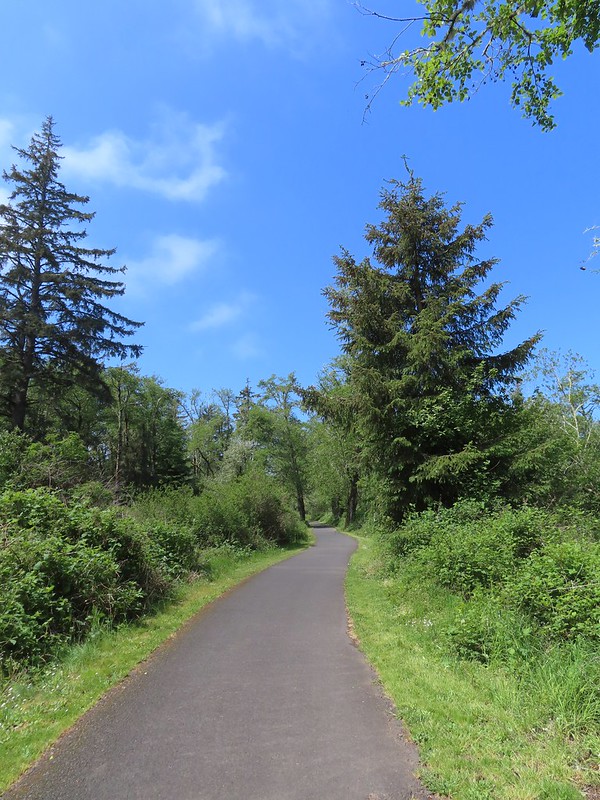
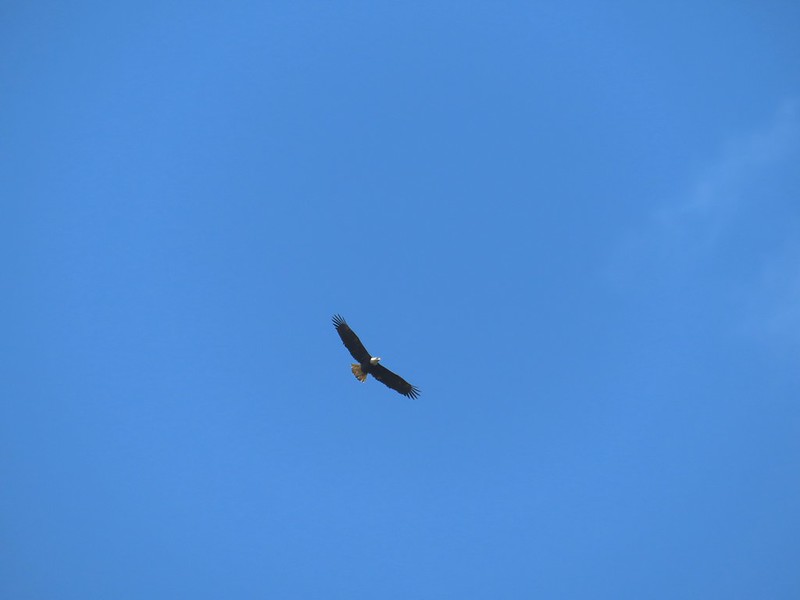 Bald eagle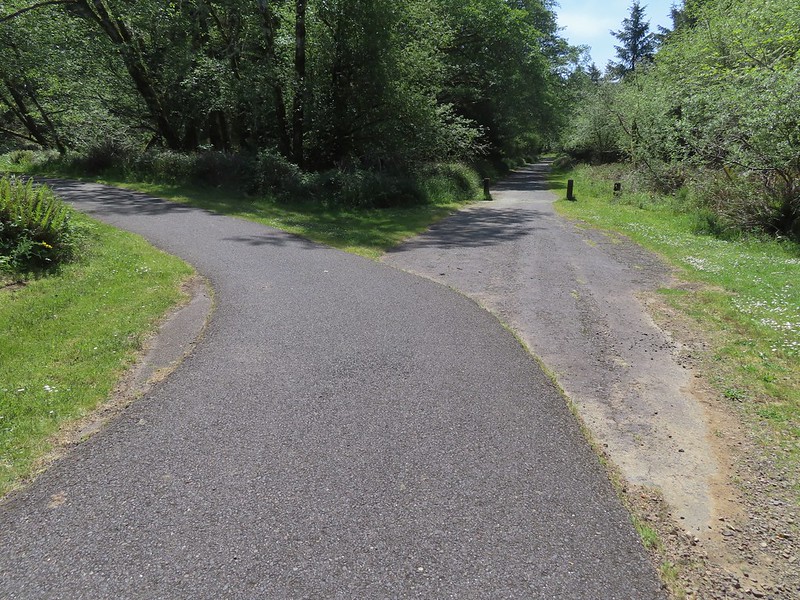
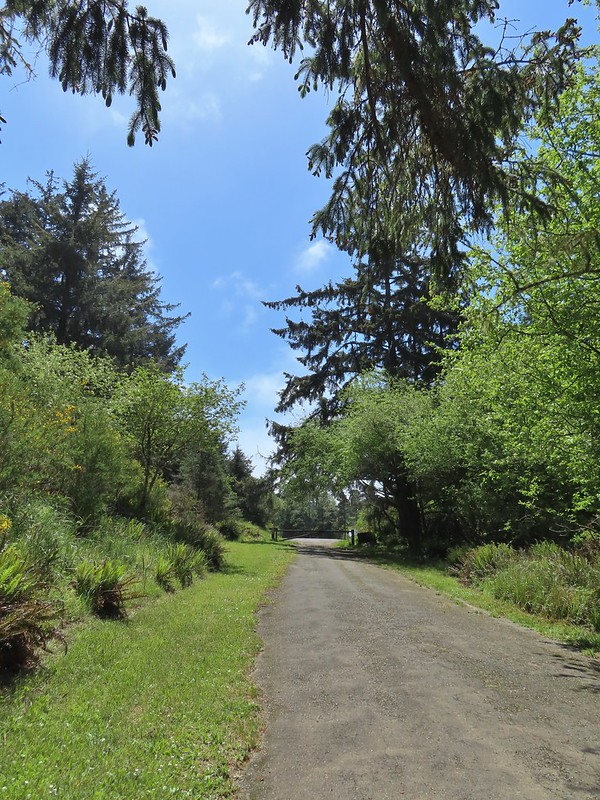 Gate near Jetty Road.
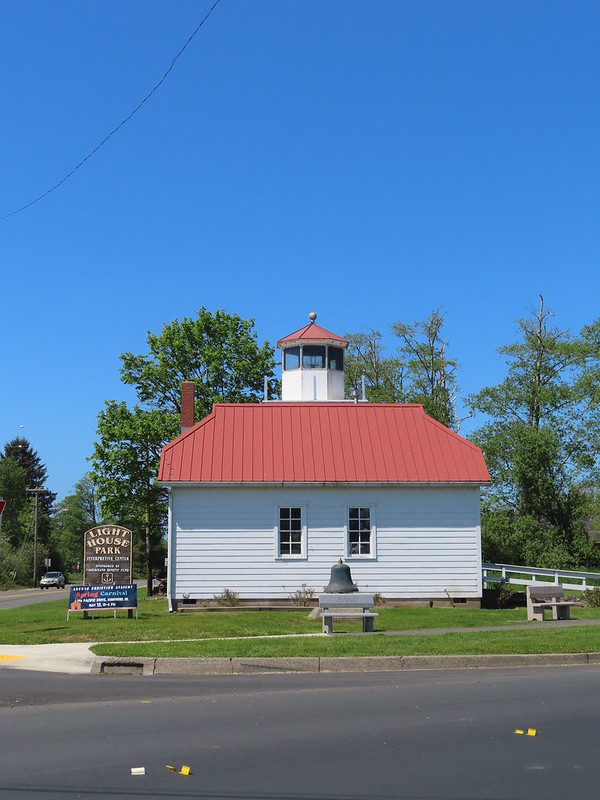
 The parking lot at the park.
 Emerging from the underpass.
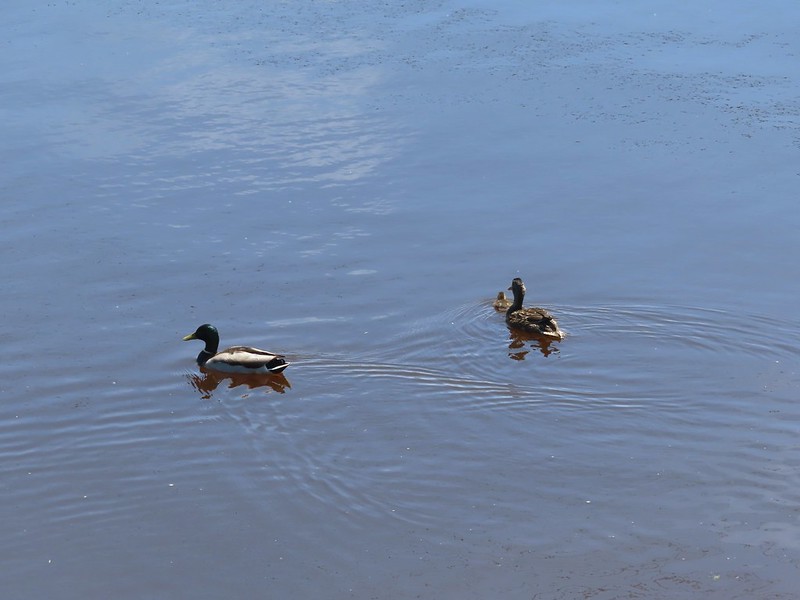 Mallard family
 Sign at the park.
 Eighth Street Dam from the grassy track.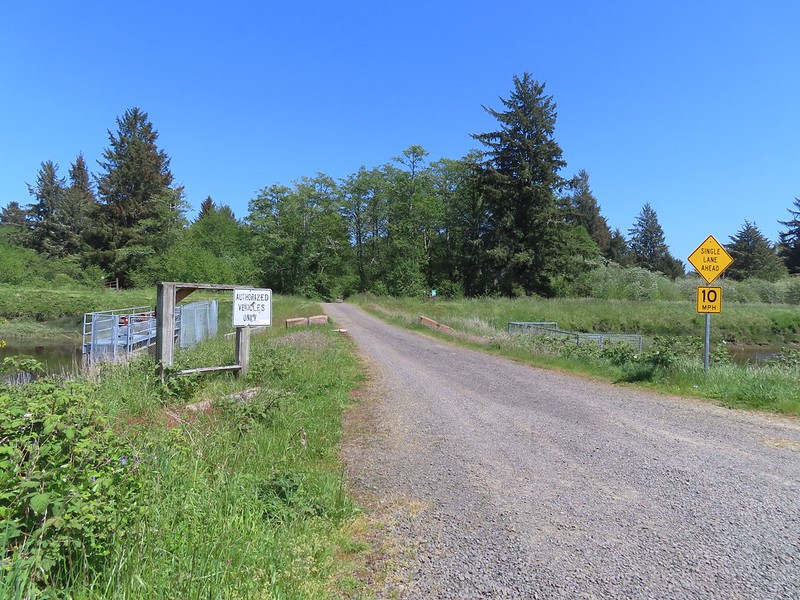
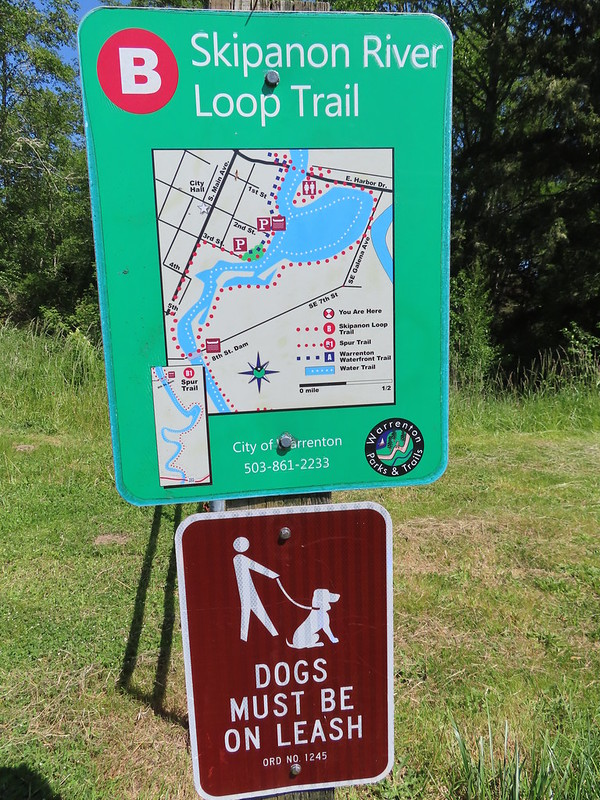 Until we saw this sign we’d been thinking that maybe the trail didn’t exist any longer. We were also questioning how the loop was supposed to get back across the river at the other end since the only bridge across the river there was Harbor Drive. Until seeing this we were thinking of turning around at the dam, but instead we decided that we’d do the loop with Heather getting a table at Nisa’s while I recrossed the river to retrieve the car.

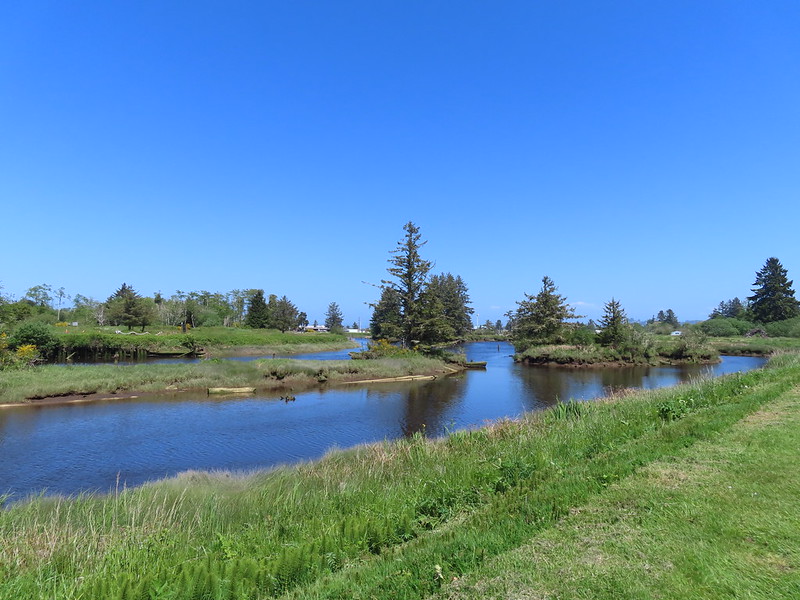
 Not the clearest picture but I think this is a greater scaup based on the head shape. We’ve seen a number of lesser scaups, but this would be our first greater.
 Great blue heron
 Cormorant
 A brief paved section.
 Nisa’s Thai Kitchen across Harbor Drive.
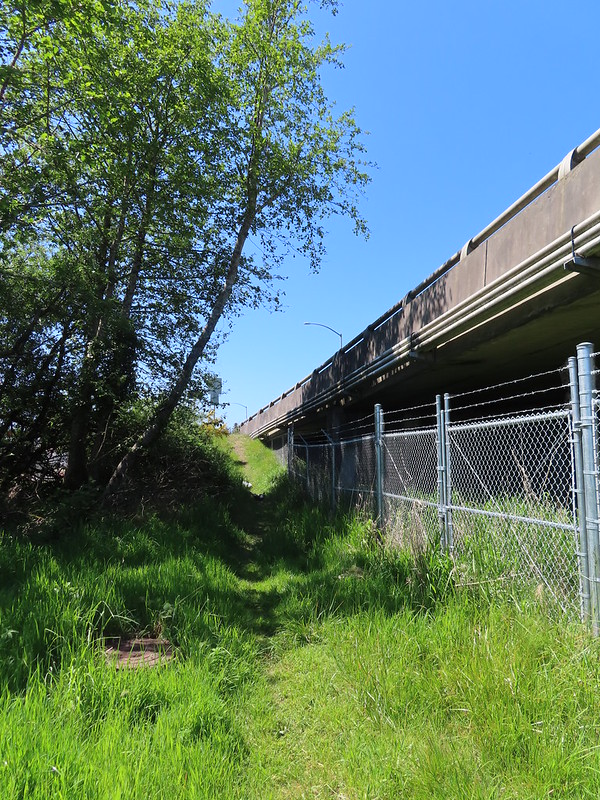 Looking back up the path from Harbor Drive.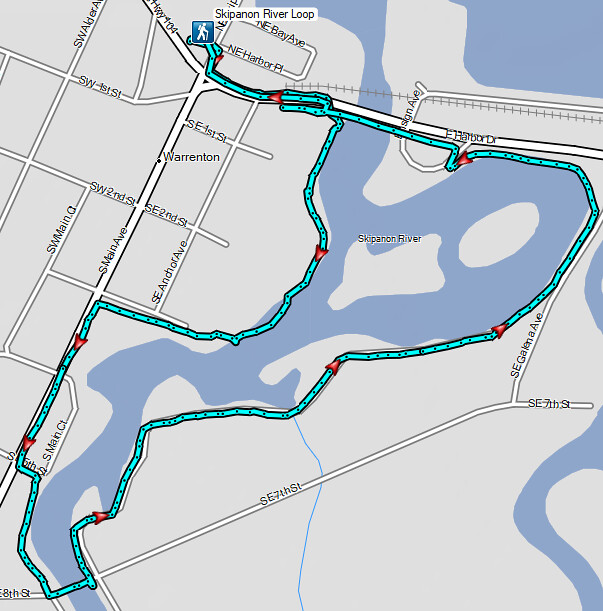

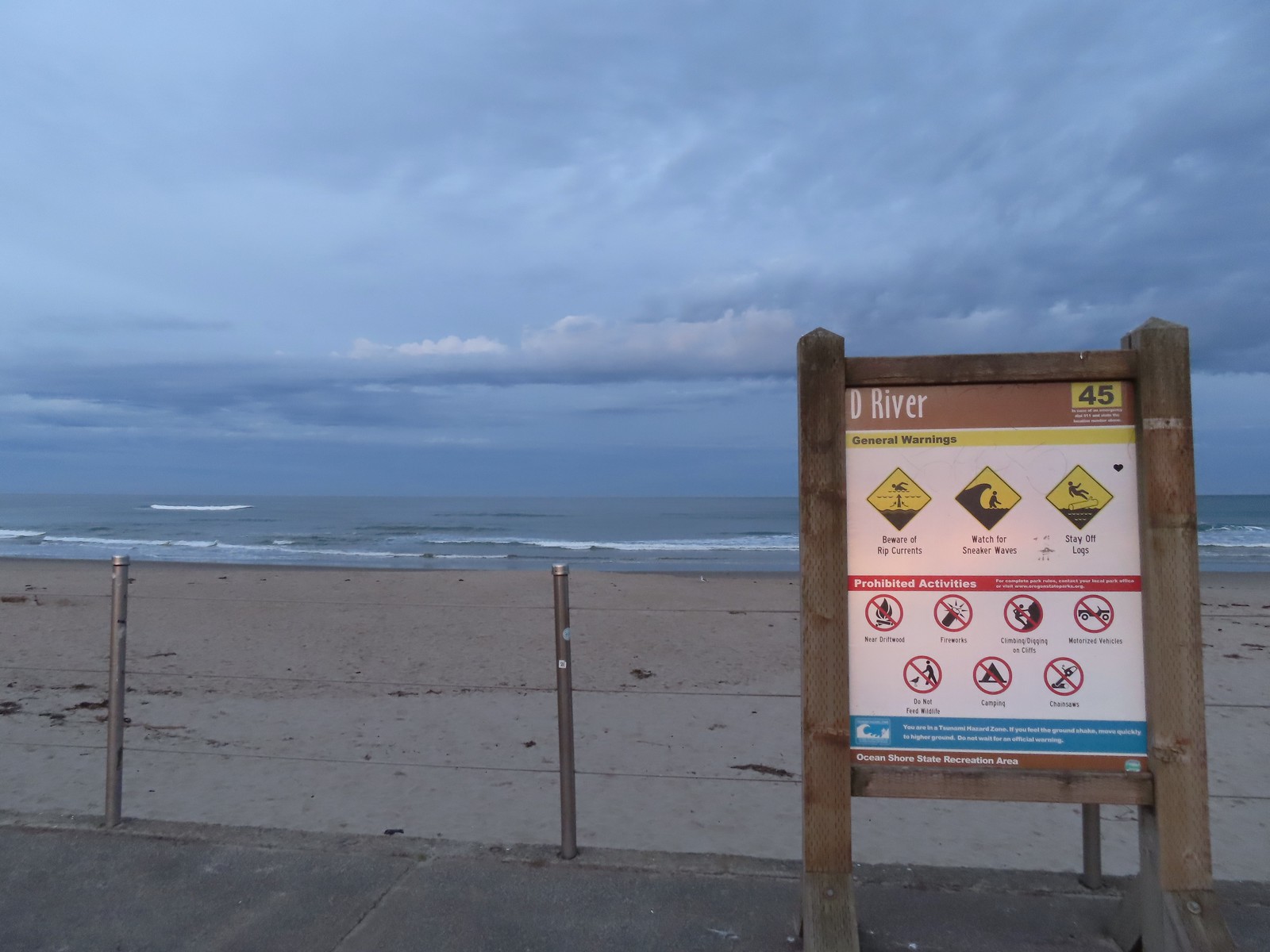
 The highway from the parking lot.
 The D River from the highway bridge. The river flows between Devil’s Lake and the Pacific Ocean and at high tide has a length of approximately 40 yards.
 Hostetler Park.


 Several interpretive signs were located along the boardwalk.
 One of the interpretive signs.
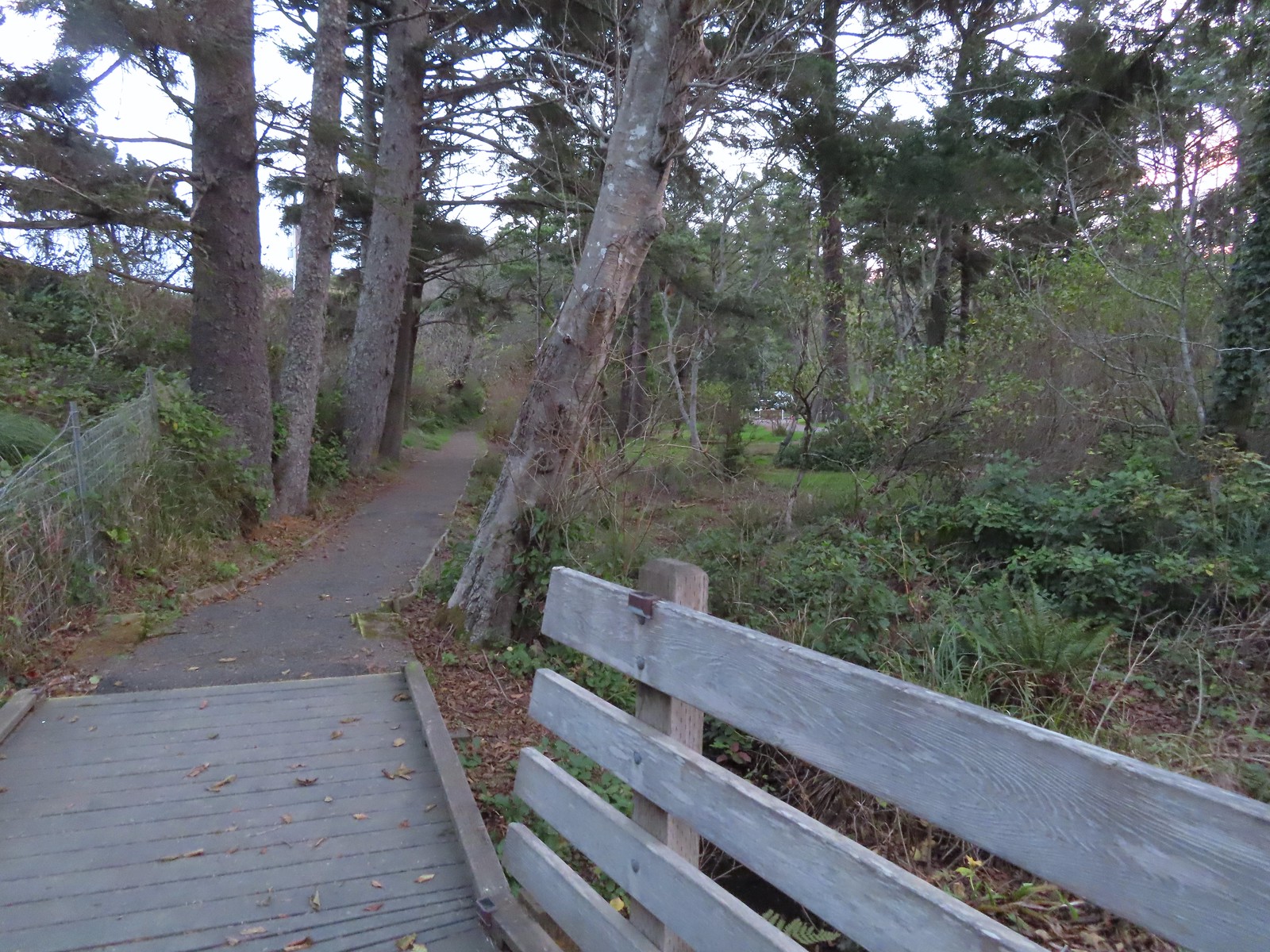 Nearing the campground.
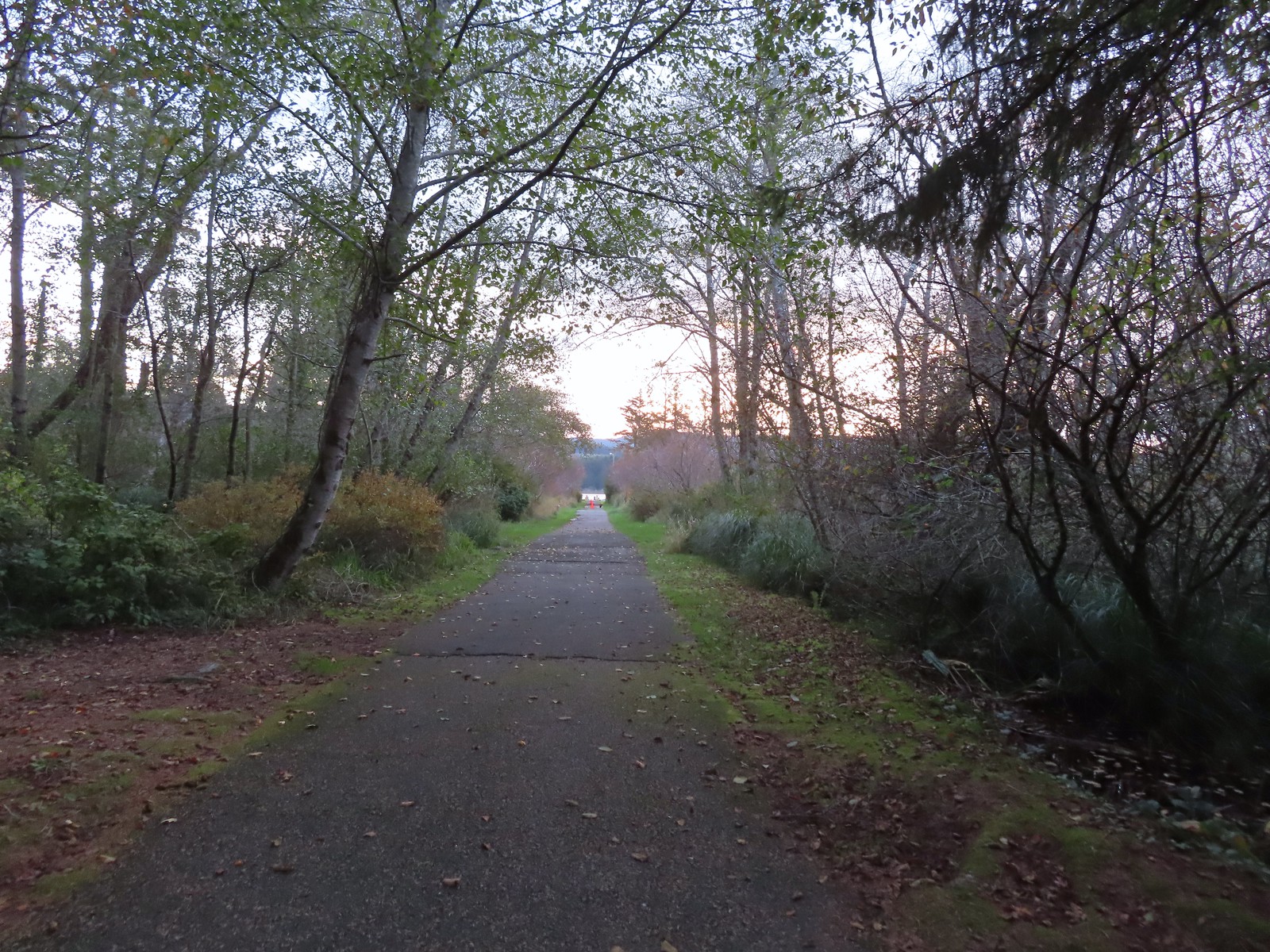 Orange cones, and a cat, at the far end of the path.
 Program area in the campground.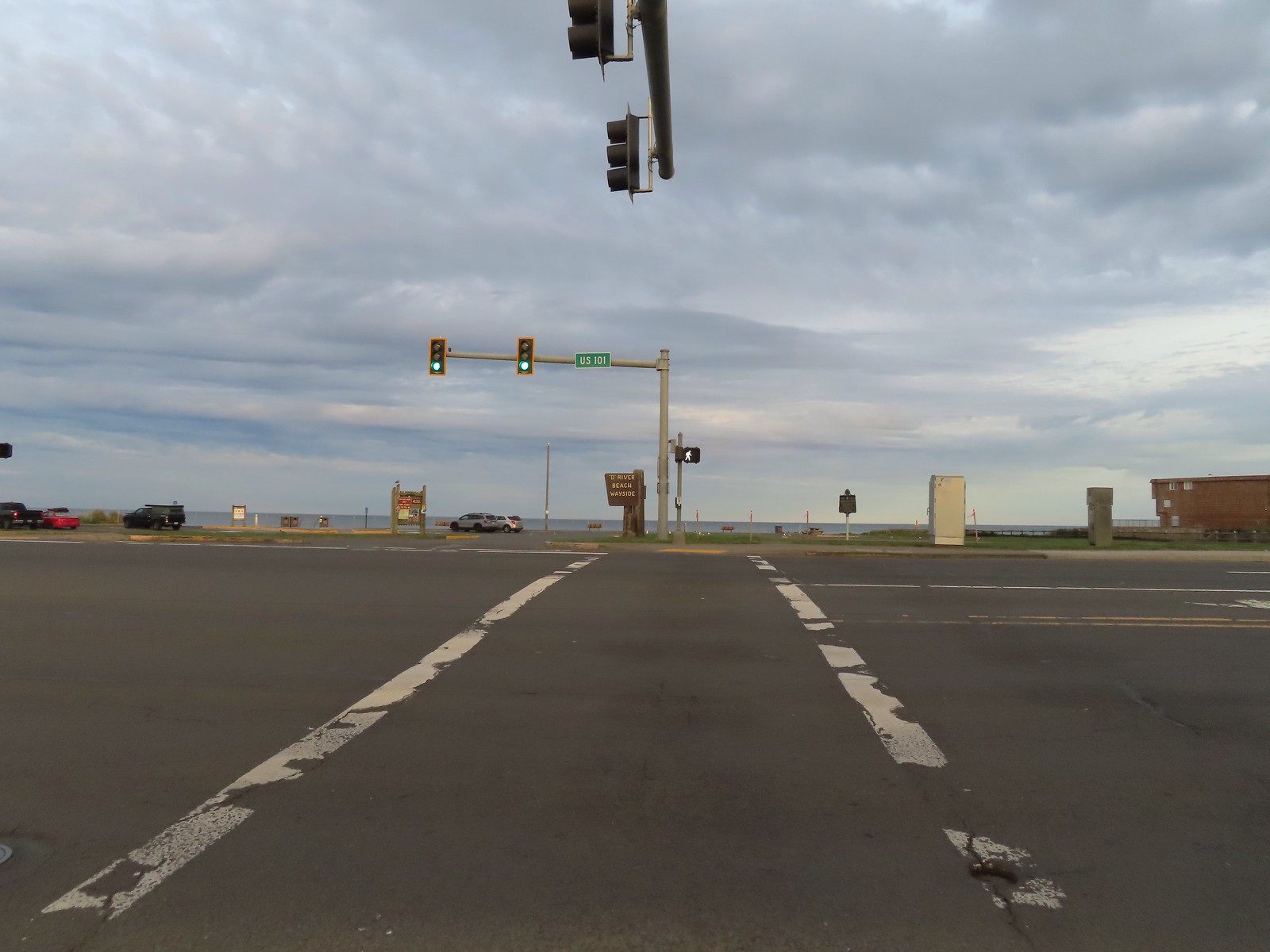
 View North from the beach.
 Cascade Head (
 Seagulls at the mouth of the D River.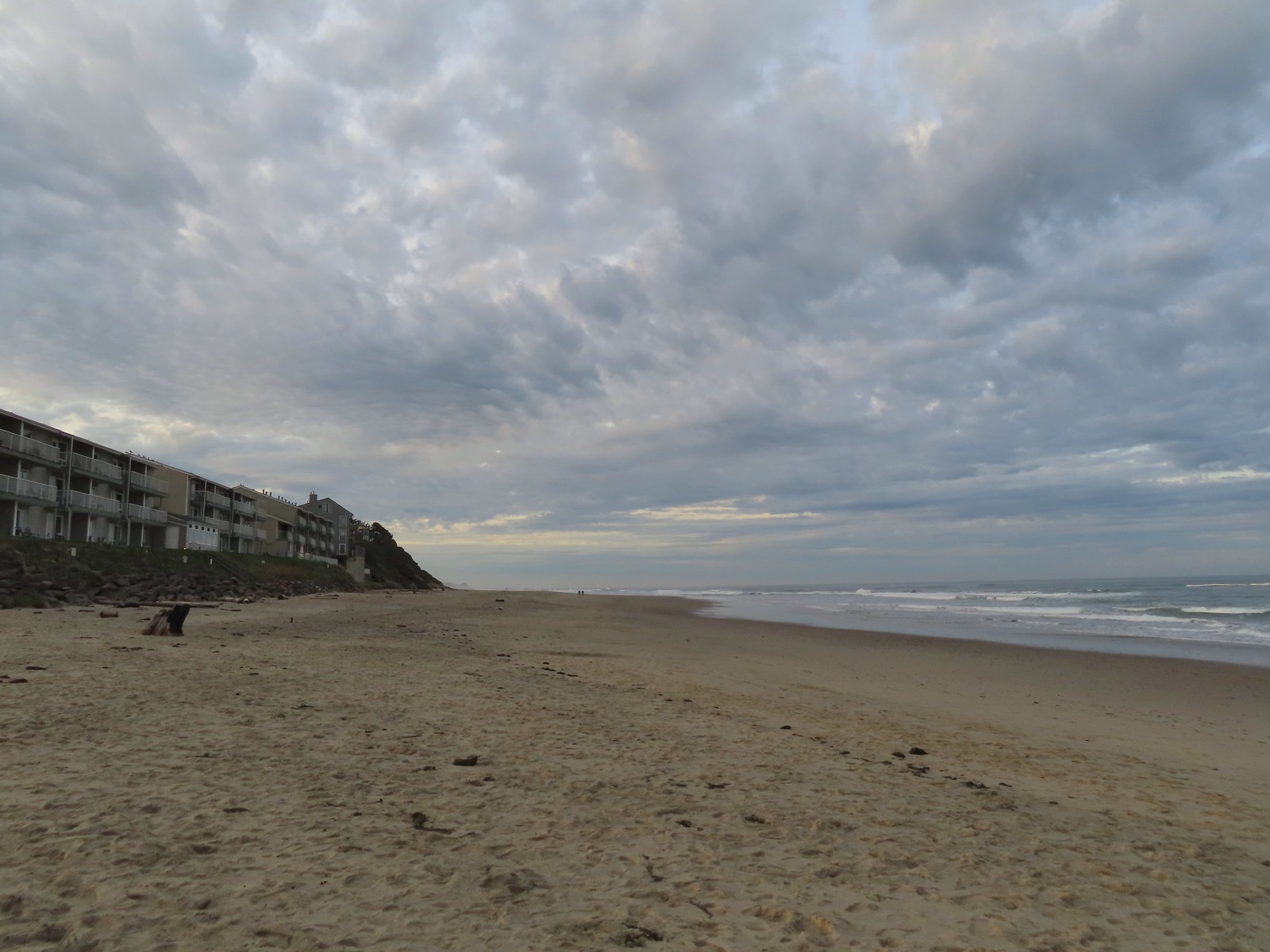
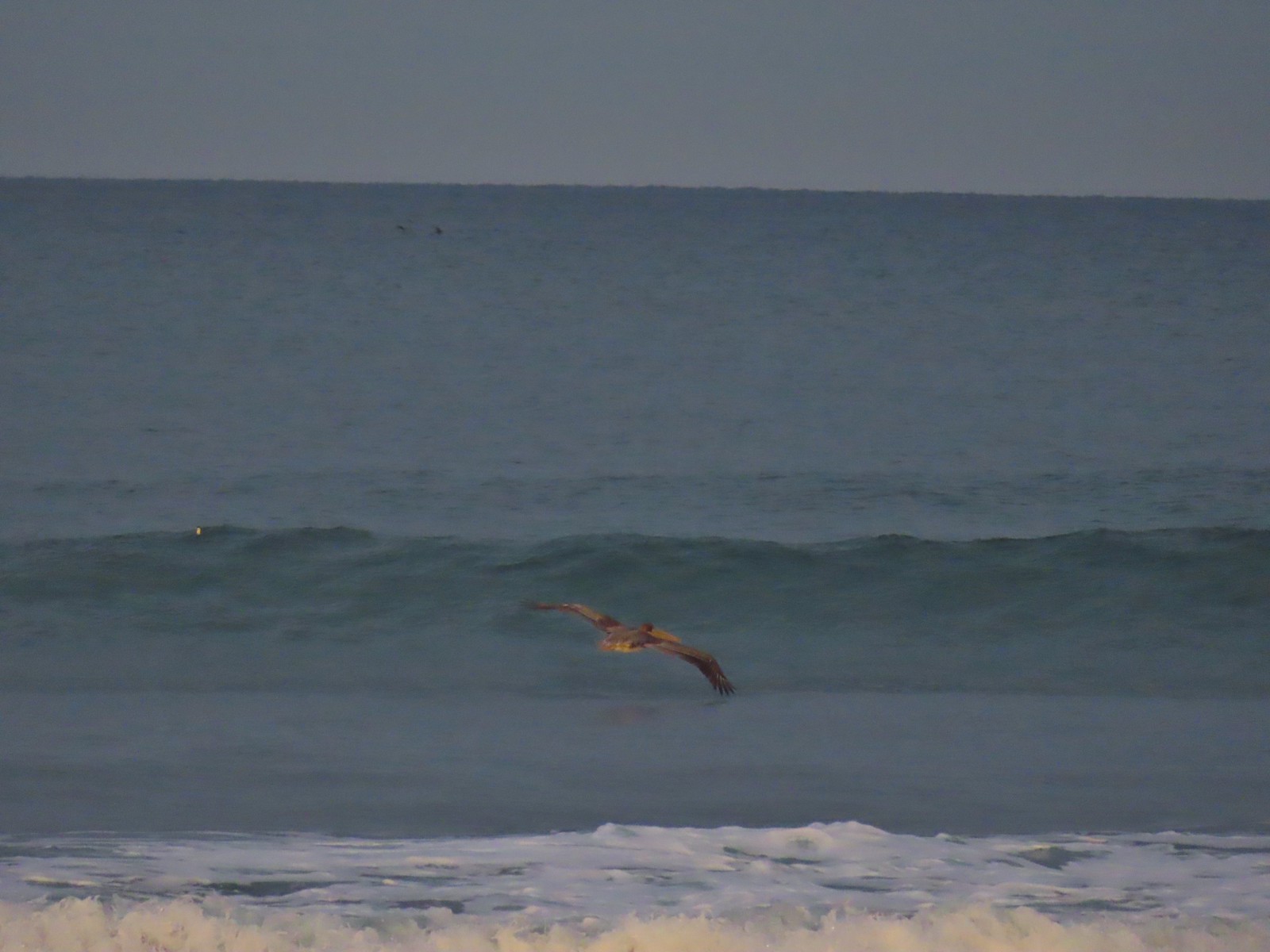
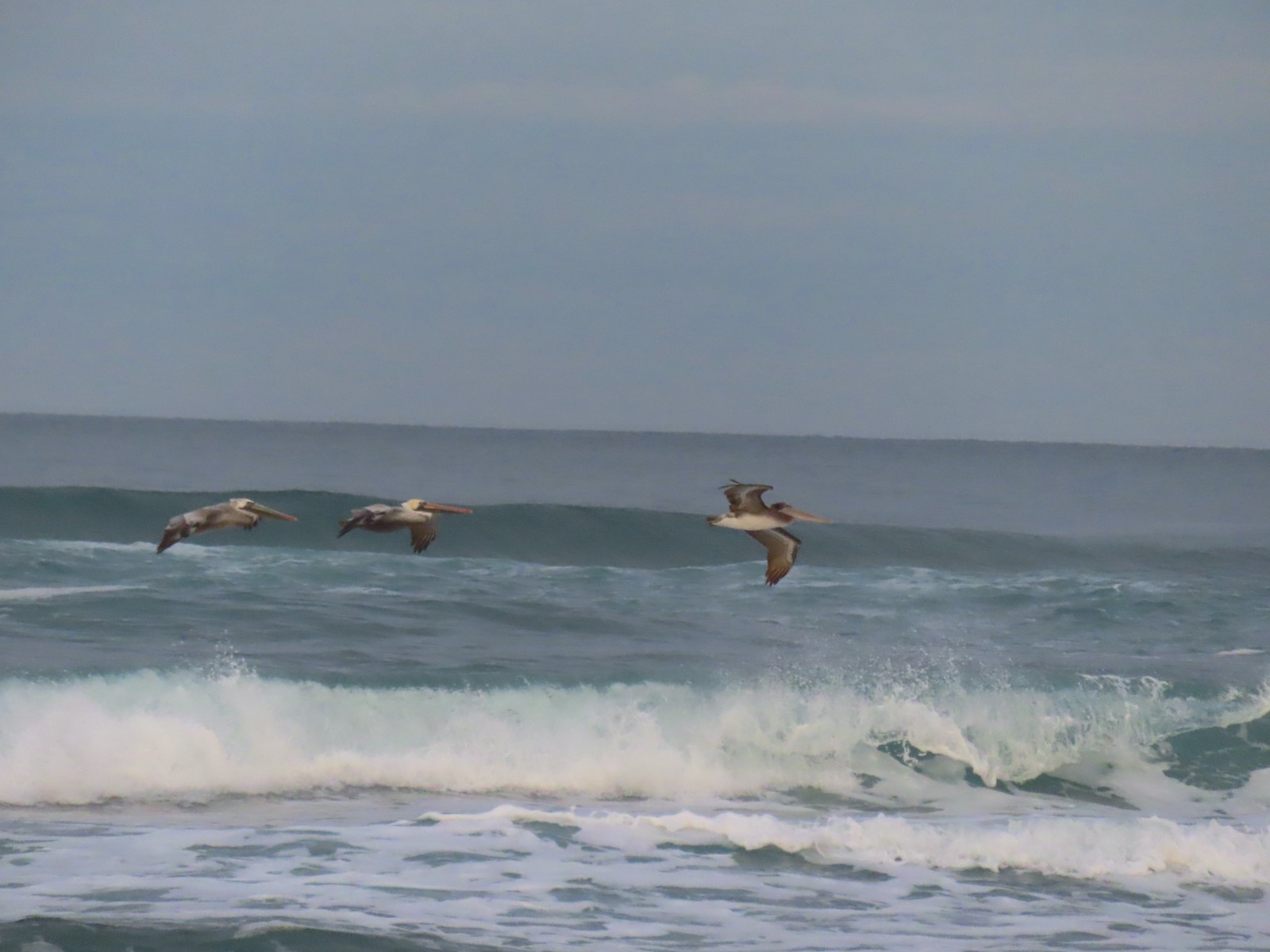


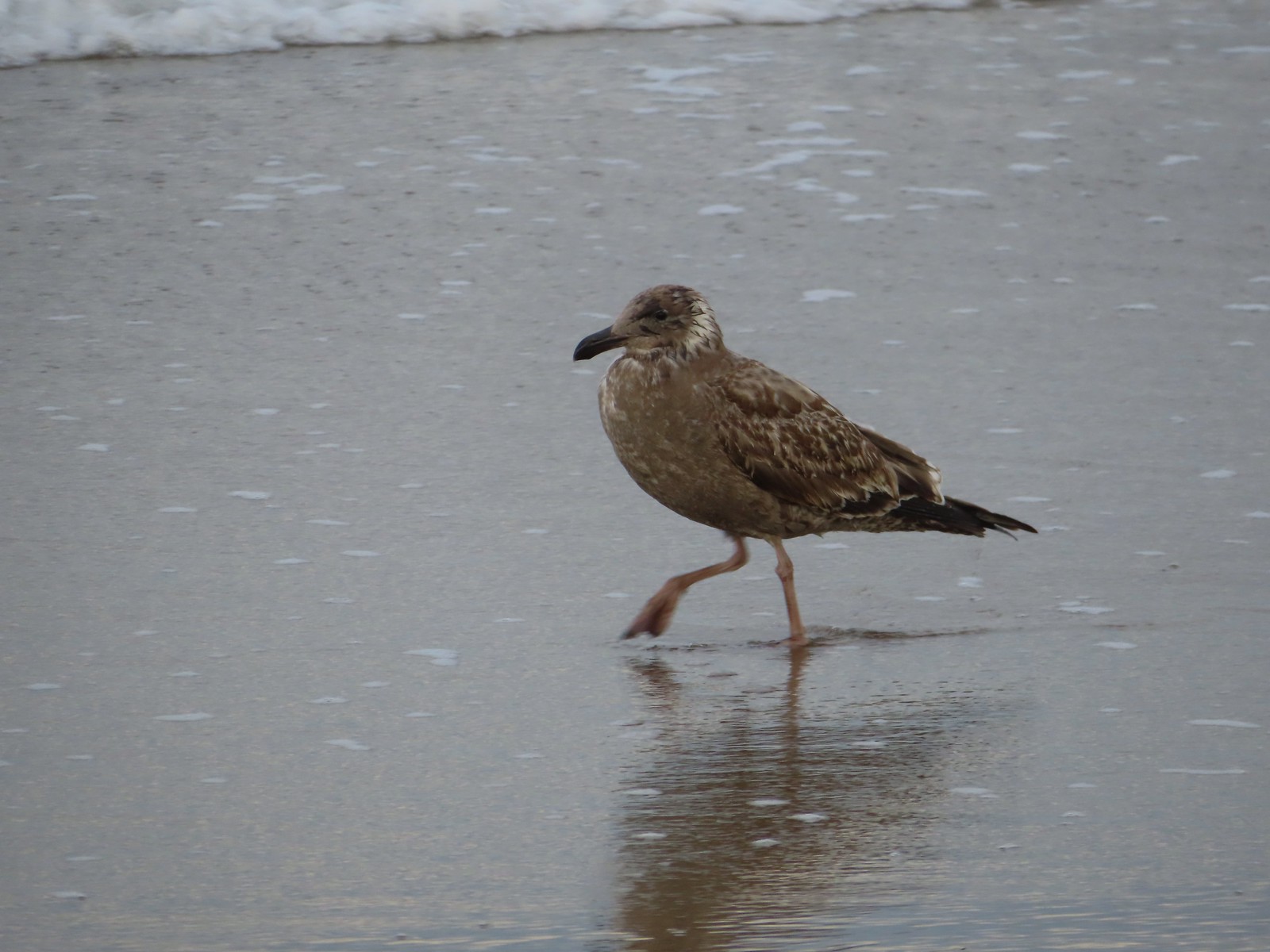 There were of course plenty of seagulls present.
 There weren’t very many ocean rocks along this stretch of beach.
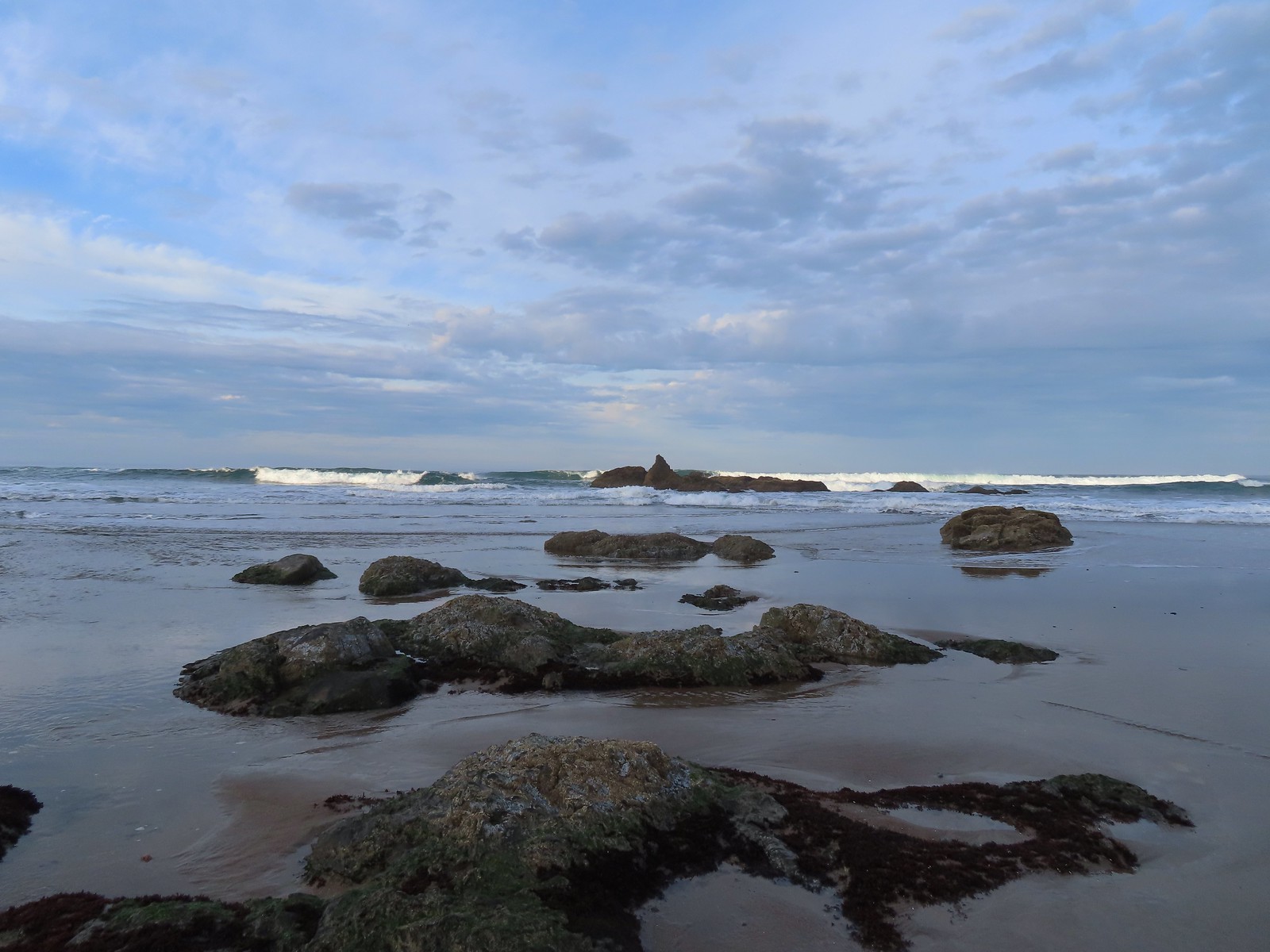
 Surf scooters
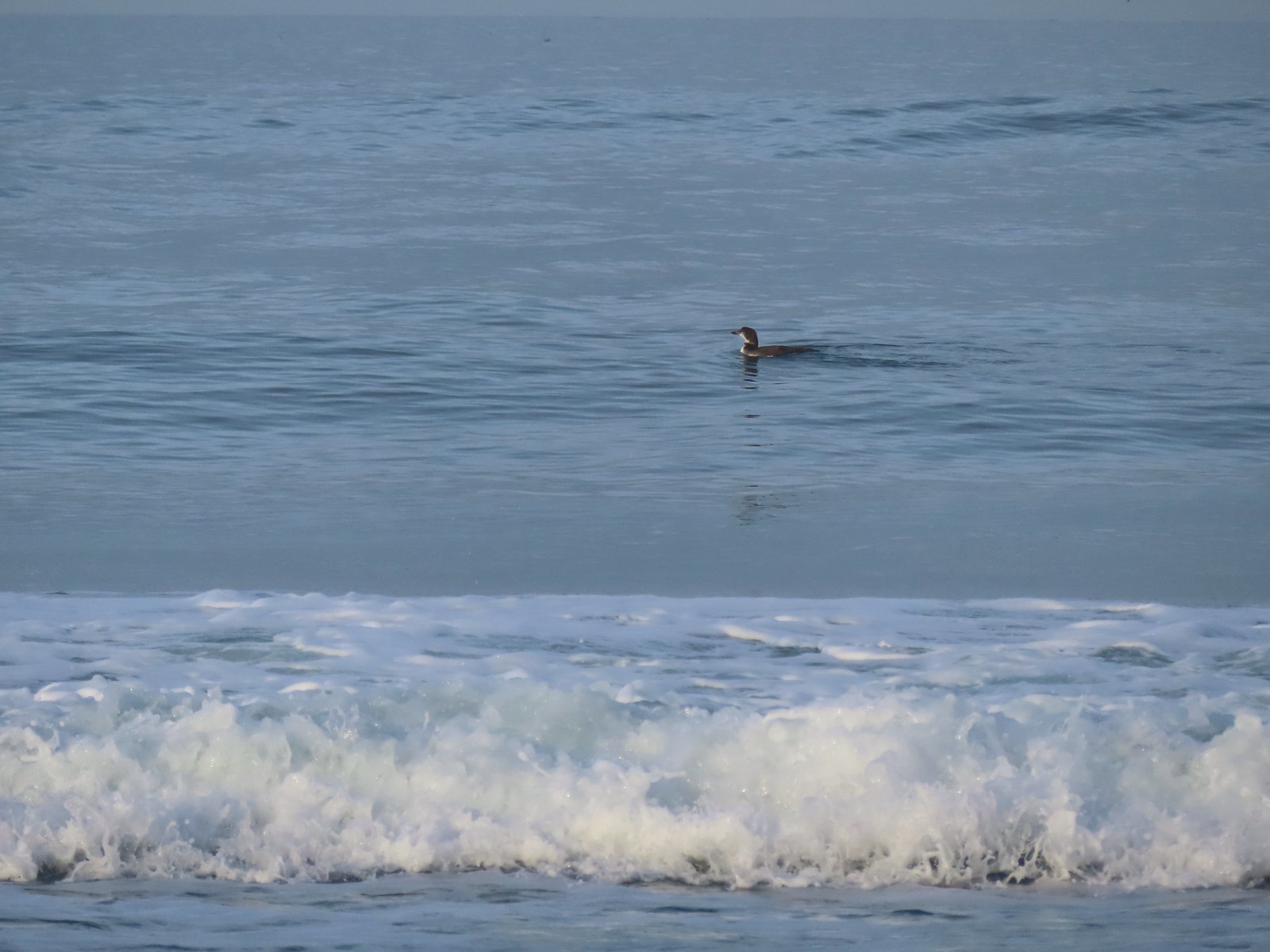 Loon, probably a common loon.
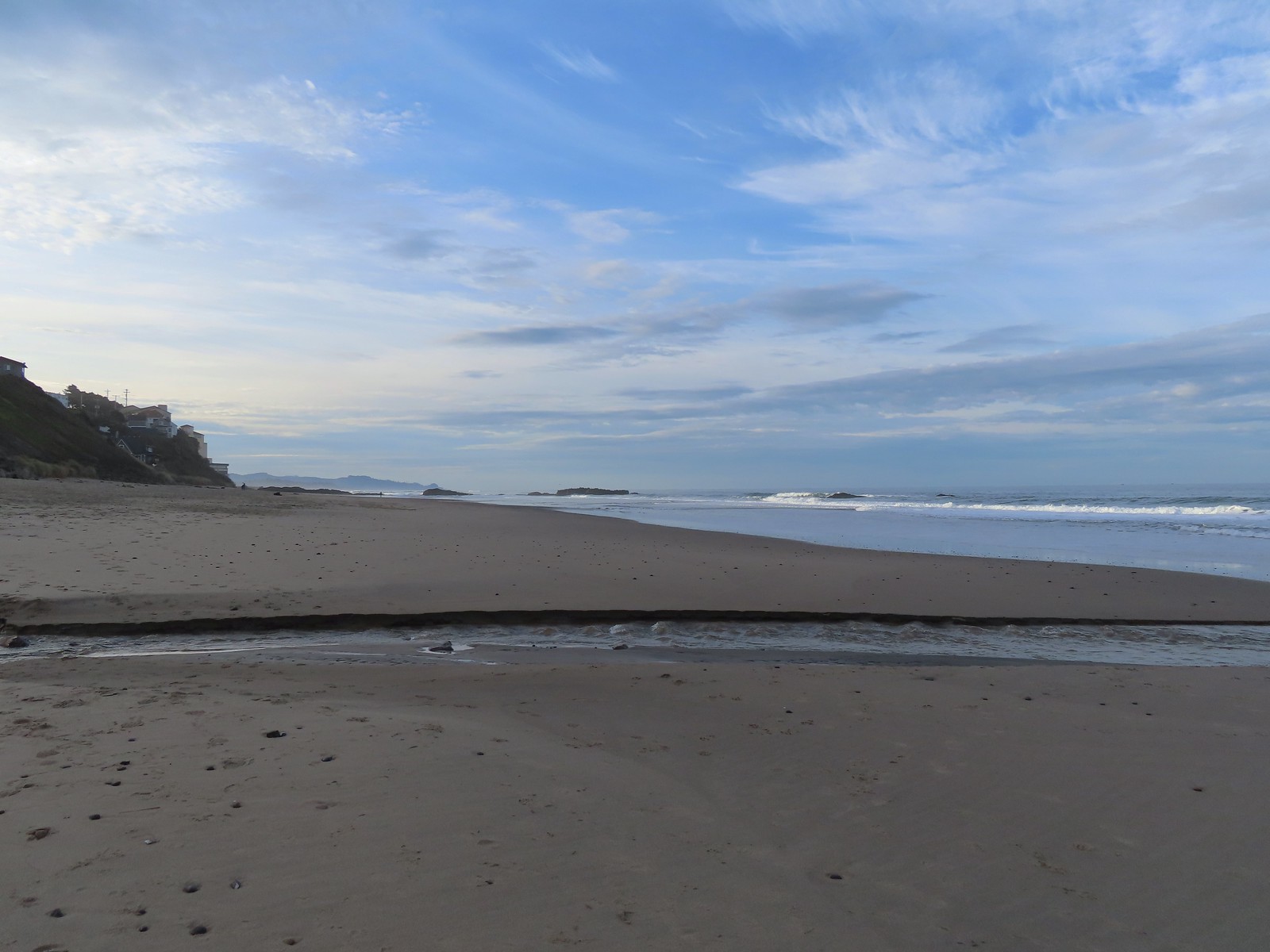 Baldy Creek
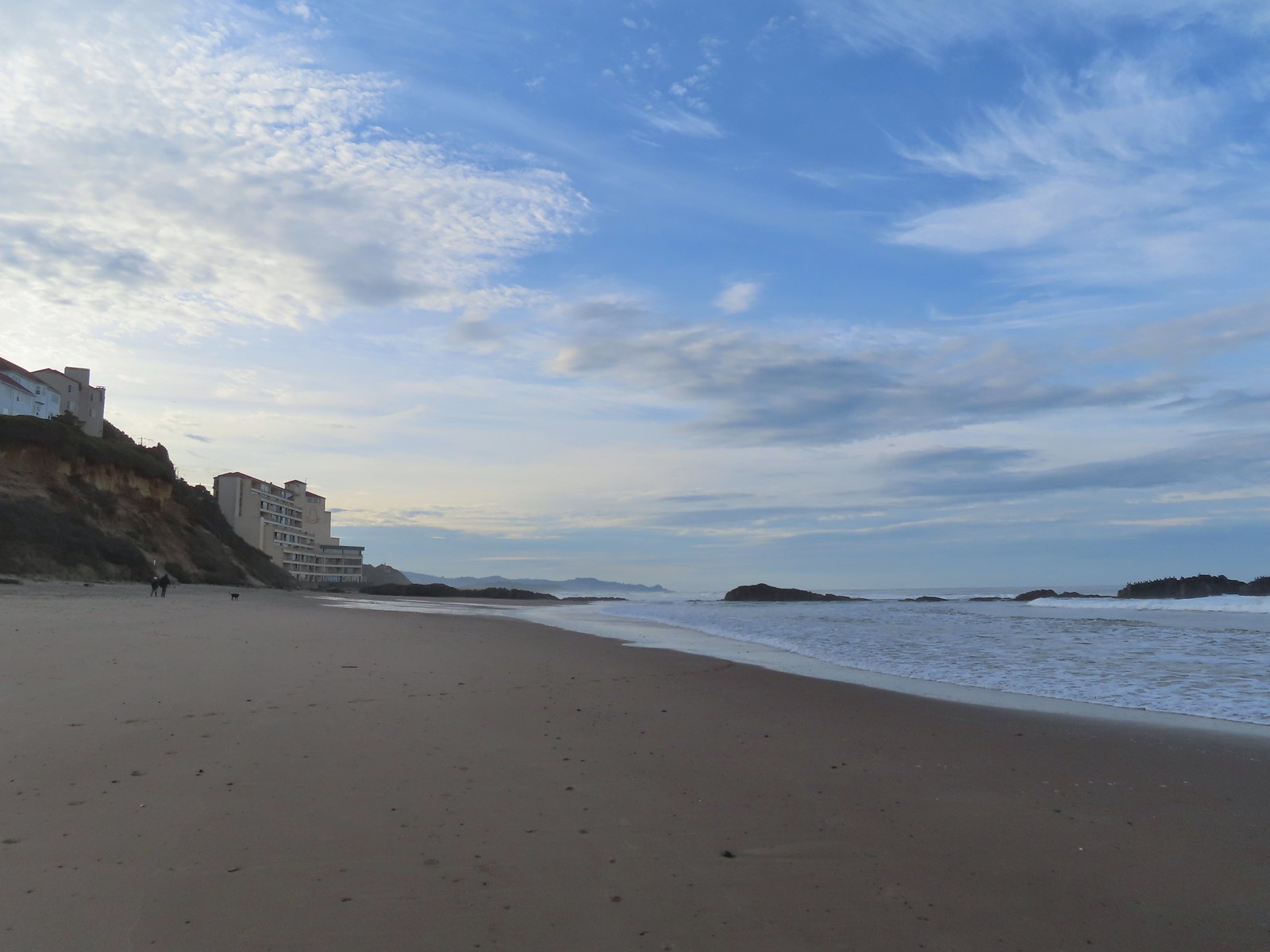 The inn on the left with the rocks extending into the Pacific.
 Cormorants and seagulls
 This was a big tree that we were able to walk under.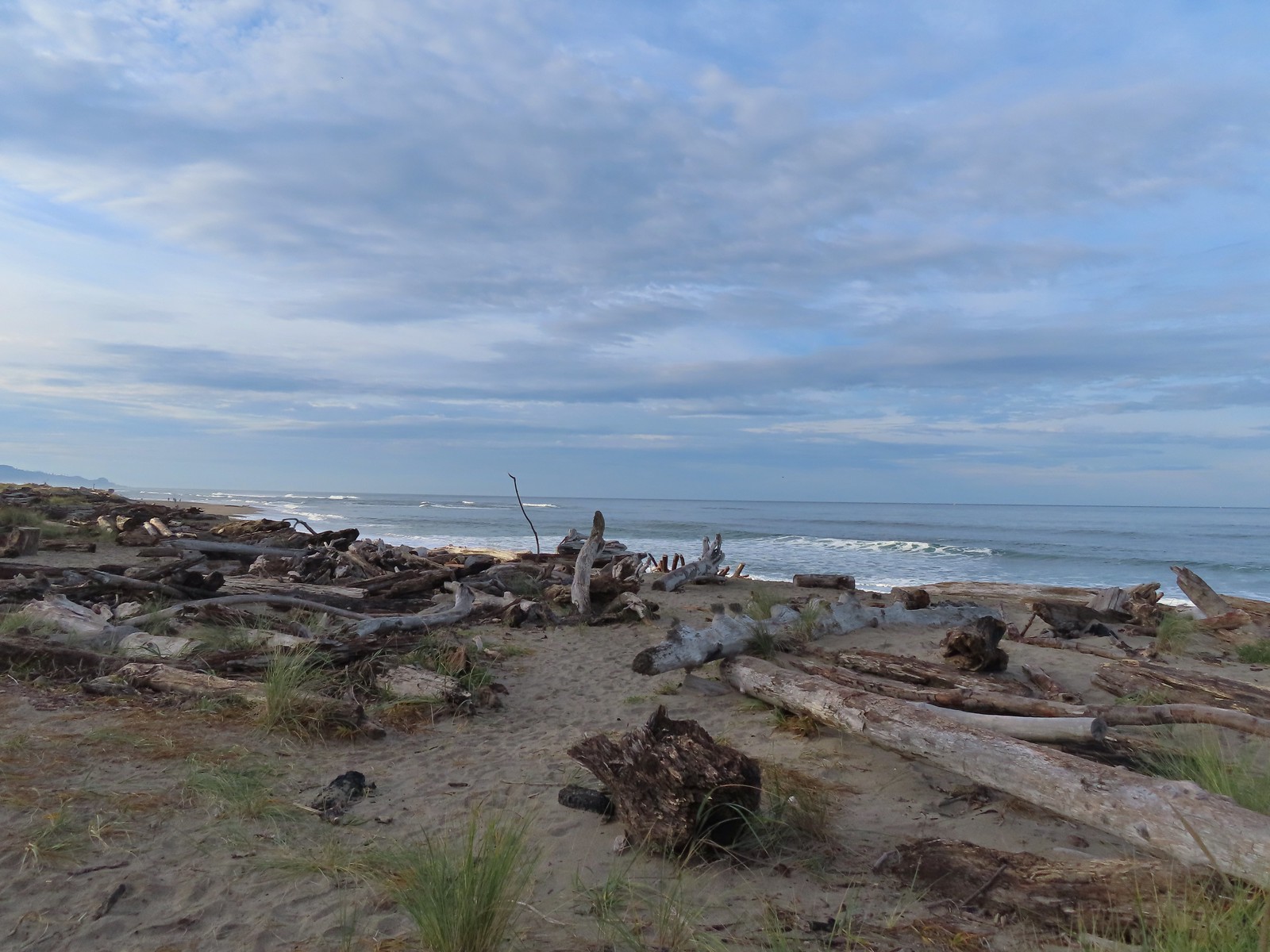
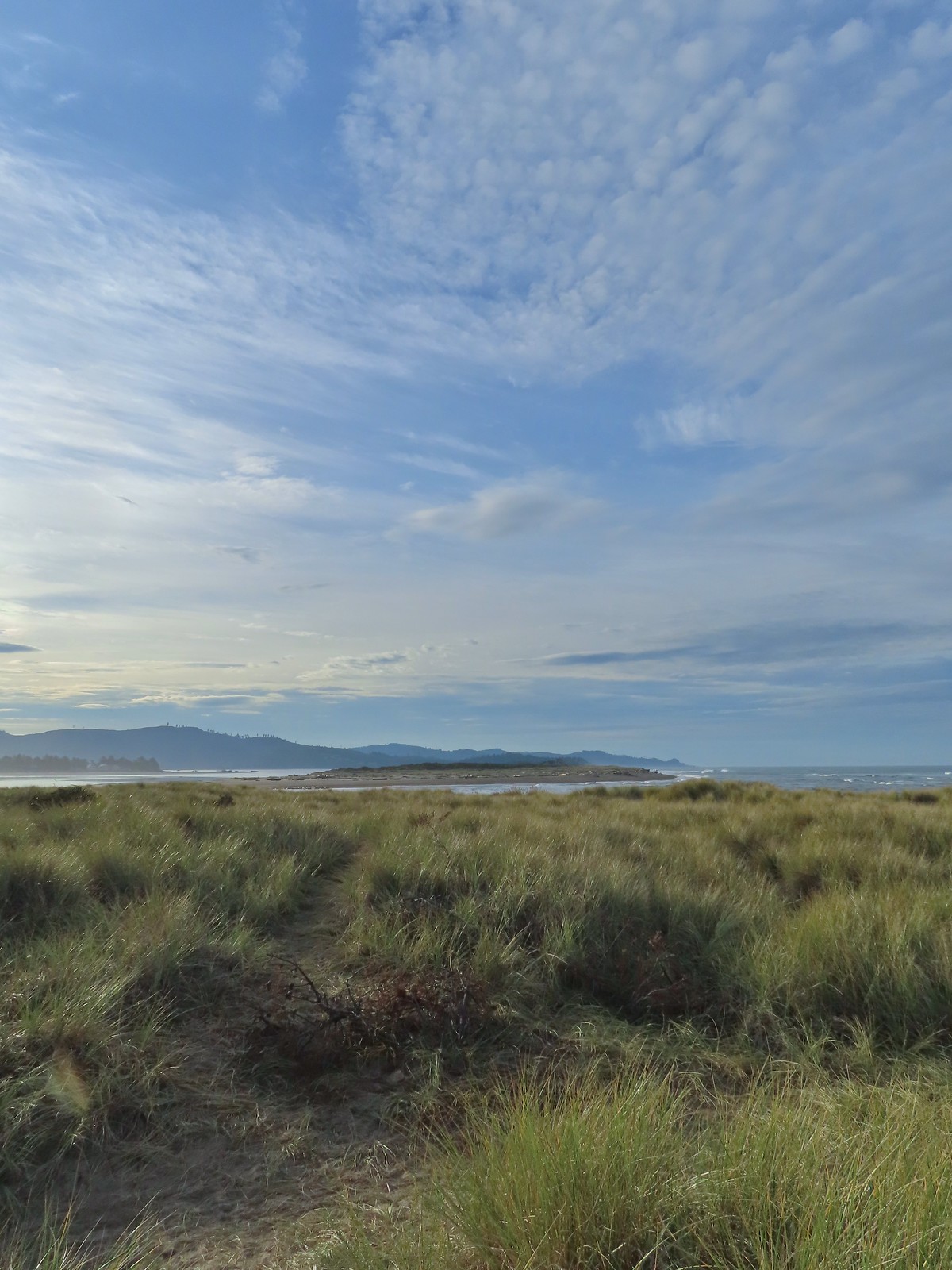 Salishan Spit across the Siletz.
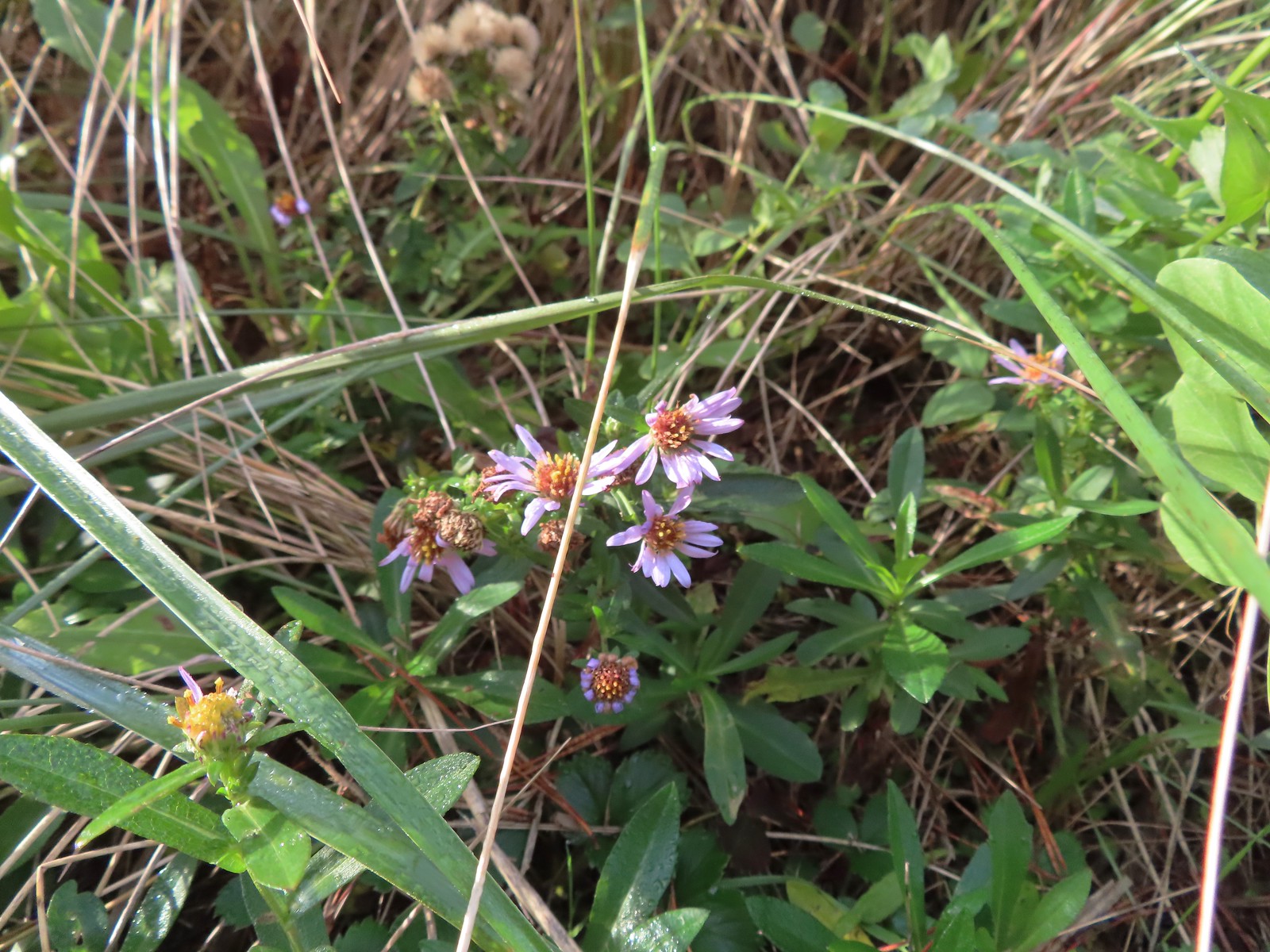 Asters on the beach.
 Pelicans on the left and seals on the right at the end of Salishan Spit.
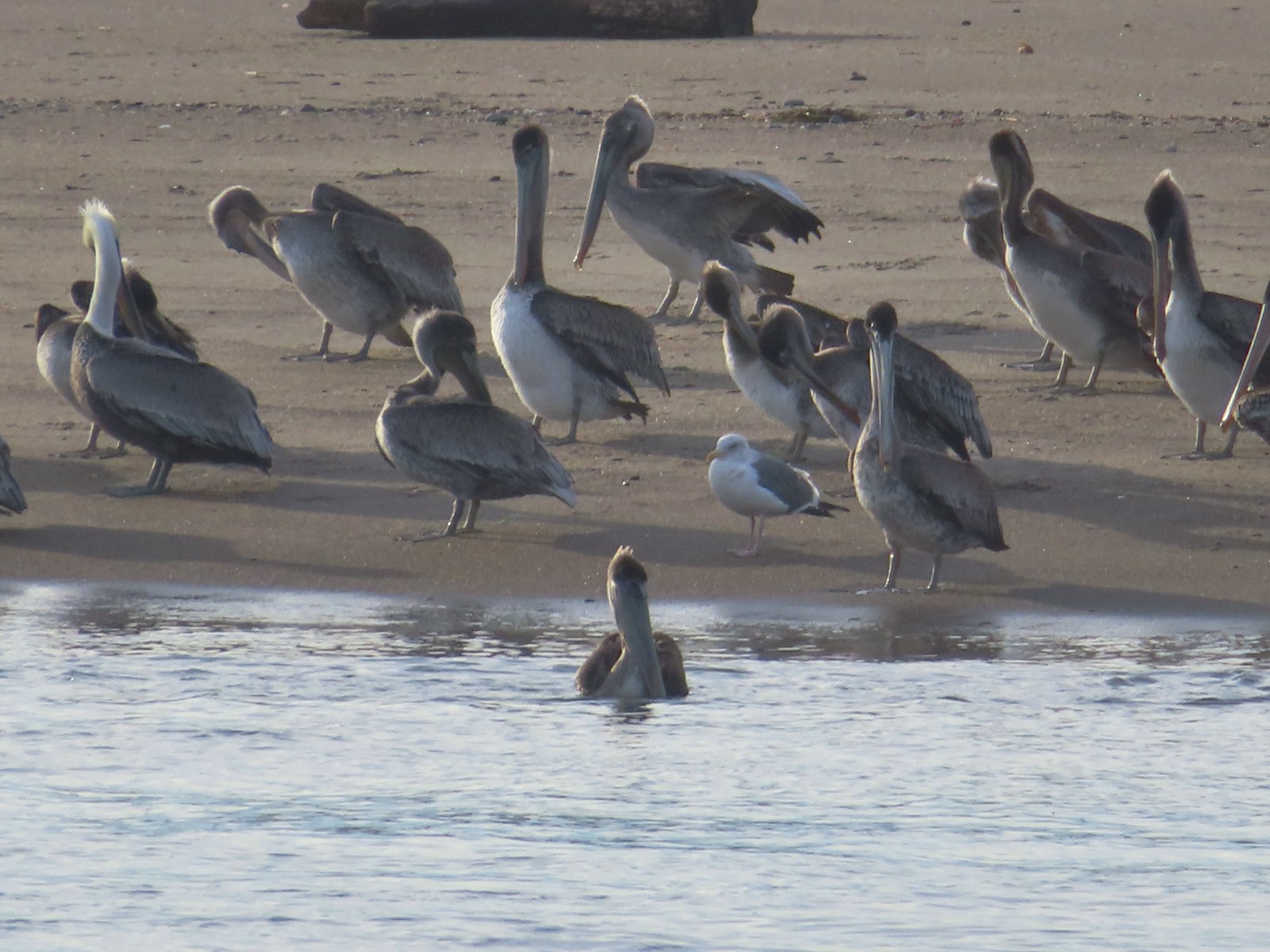 Pelicans and seagull
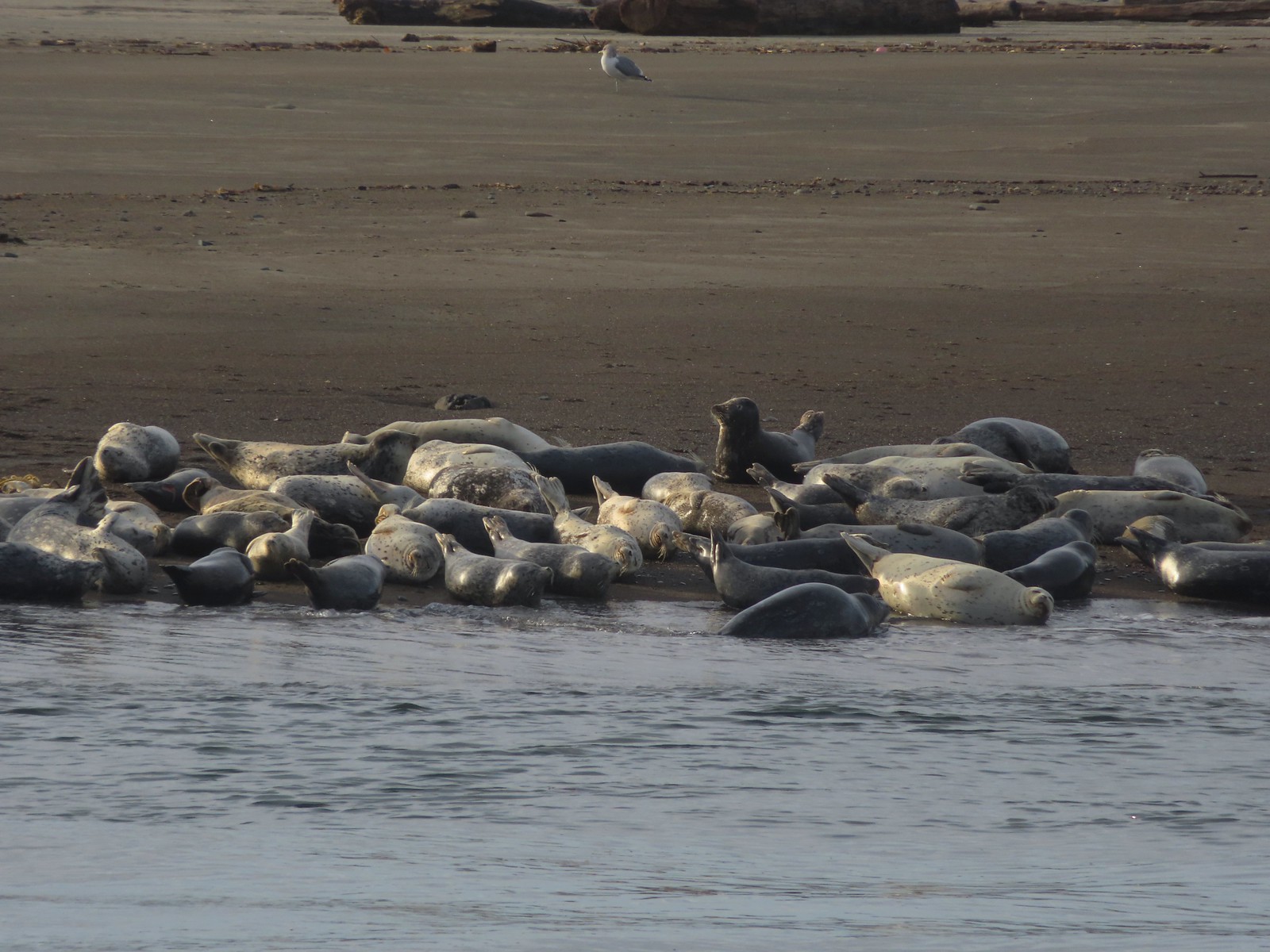 Seals and a seagull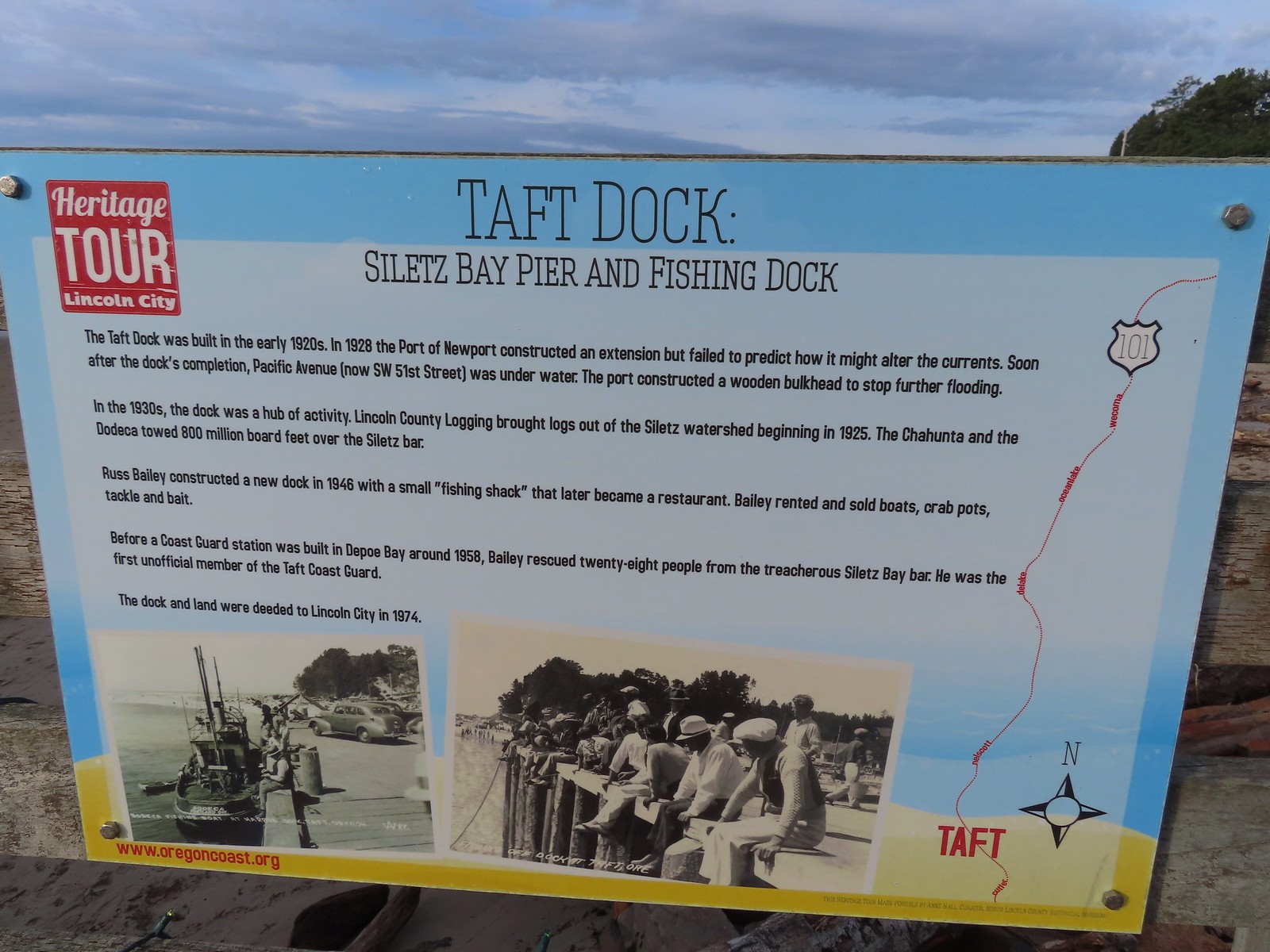


 Drying off

 Pelican mouths are a sight to behold (righthand side).
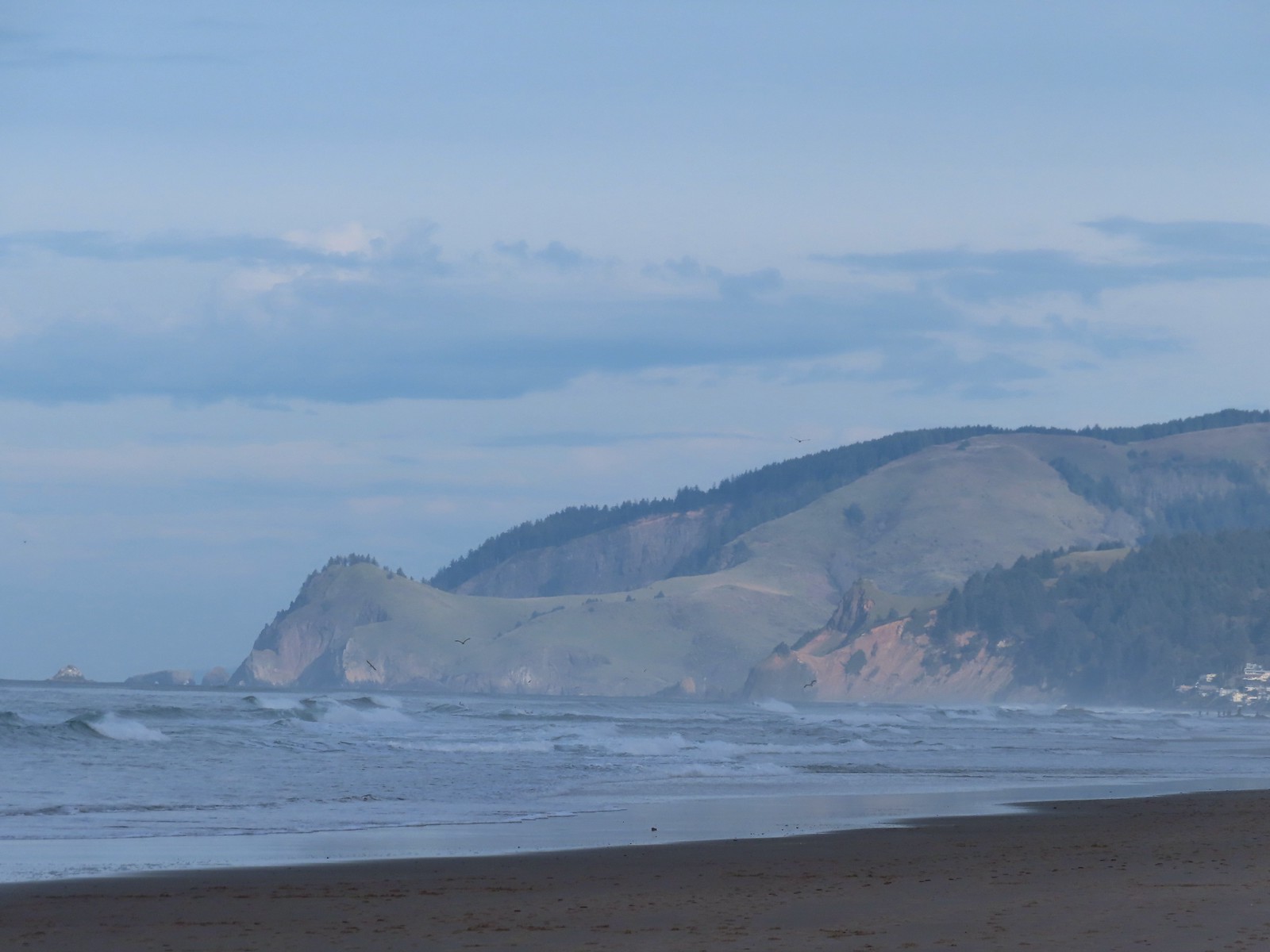 Cascade Head and God’s Thumb both in the sunlight now.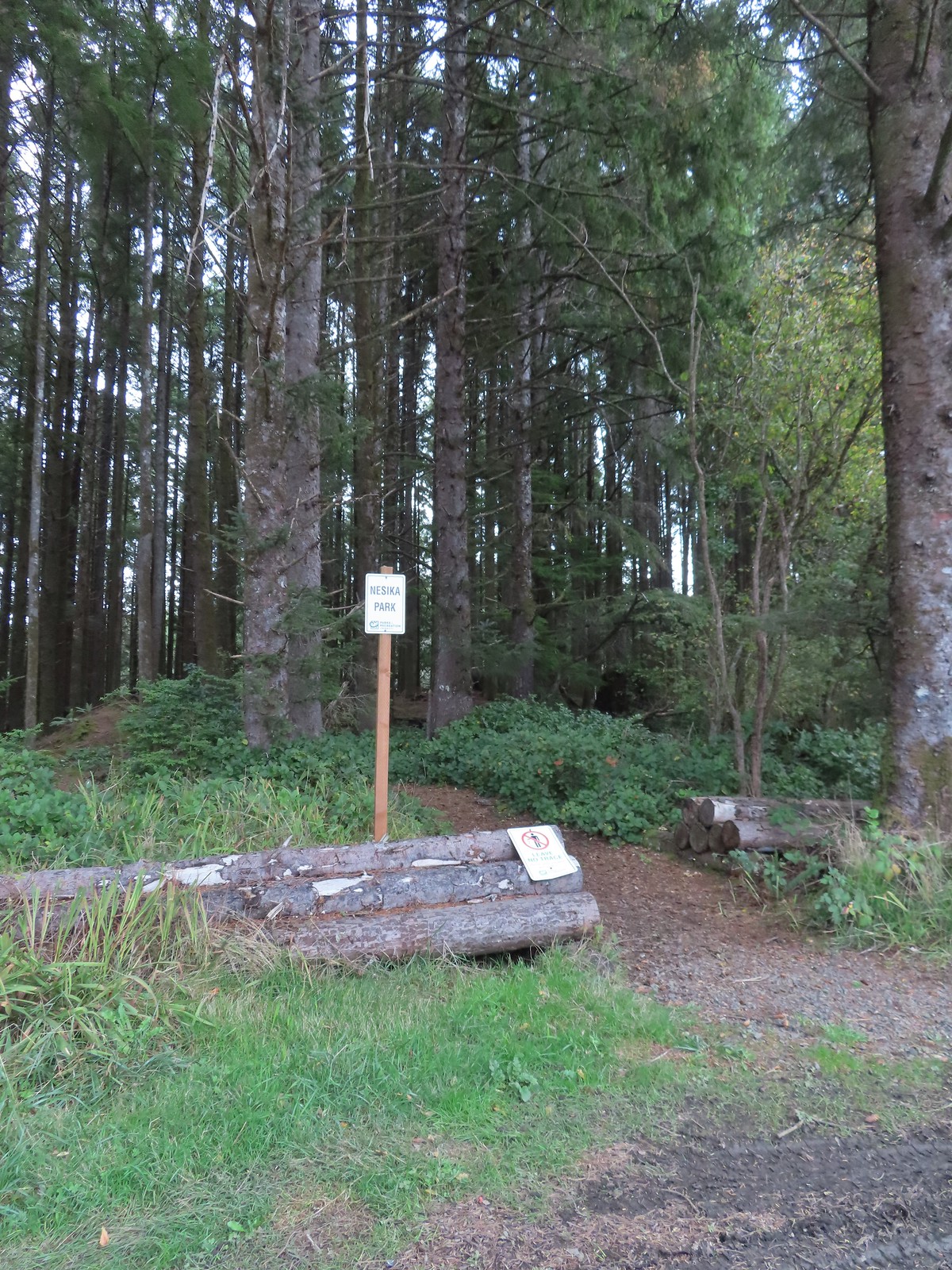

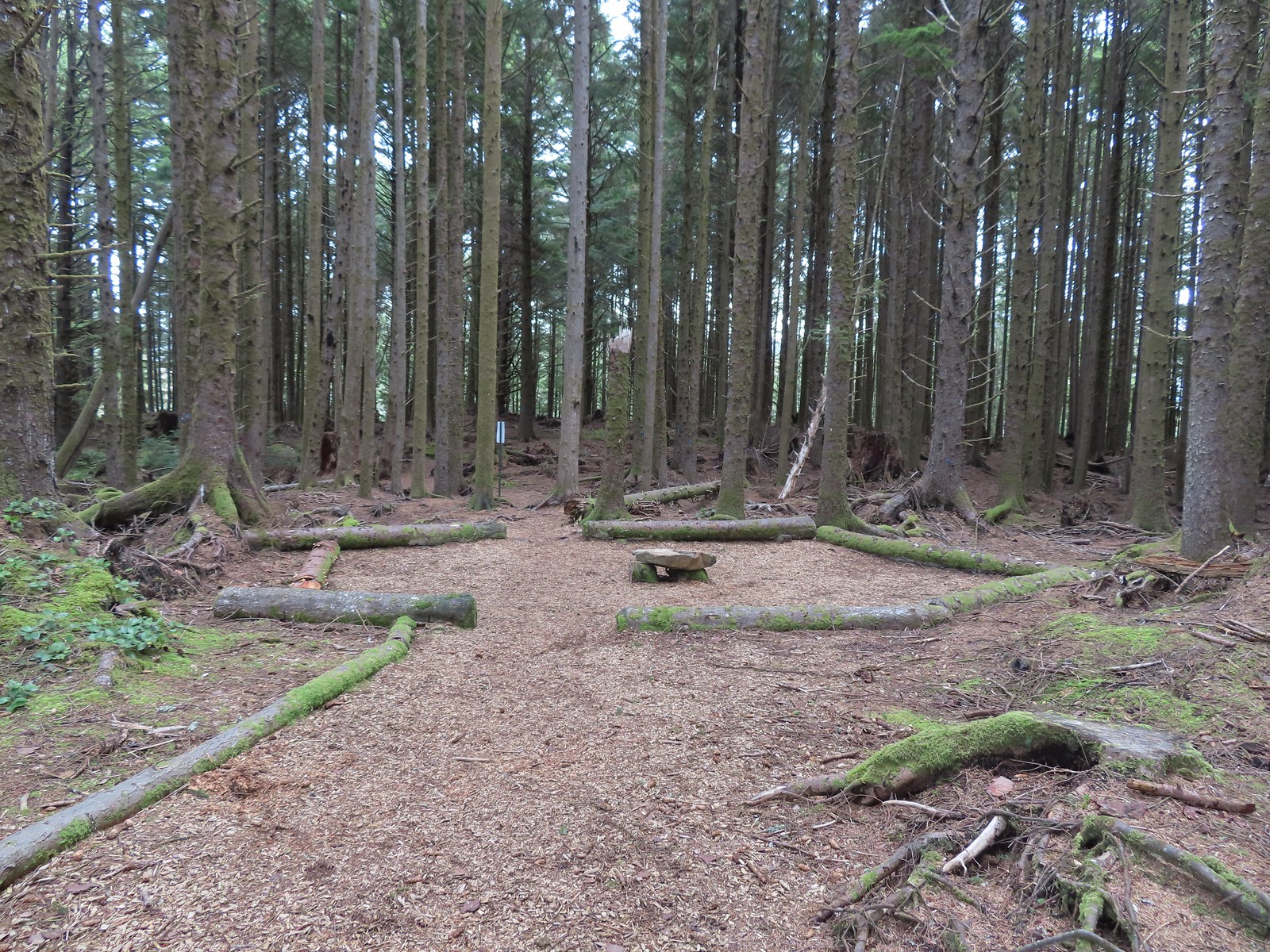 The Story Circle
 Trail Challenge sign #8.
 The trail ends at SE 3rd St (no parking available).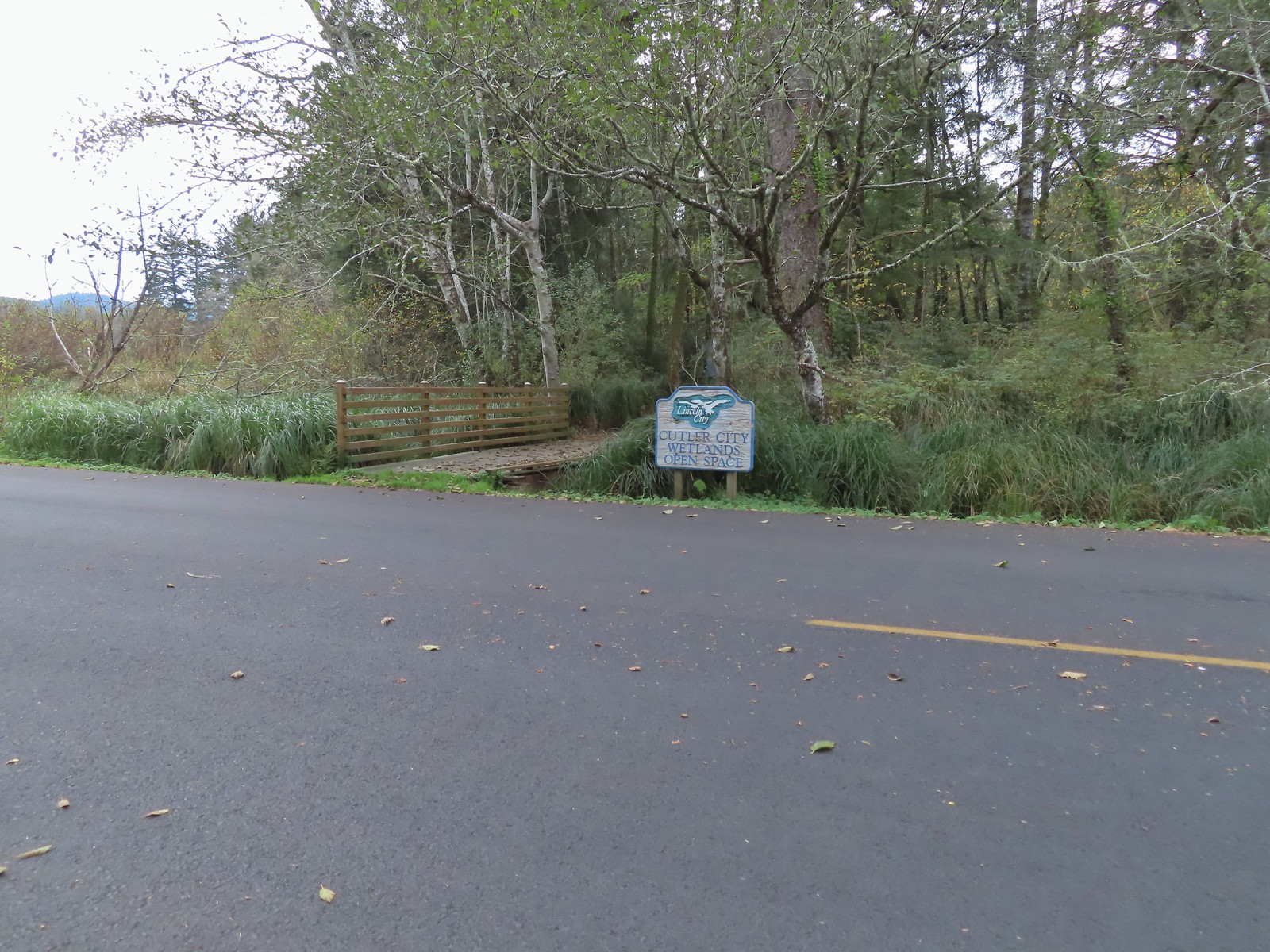

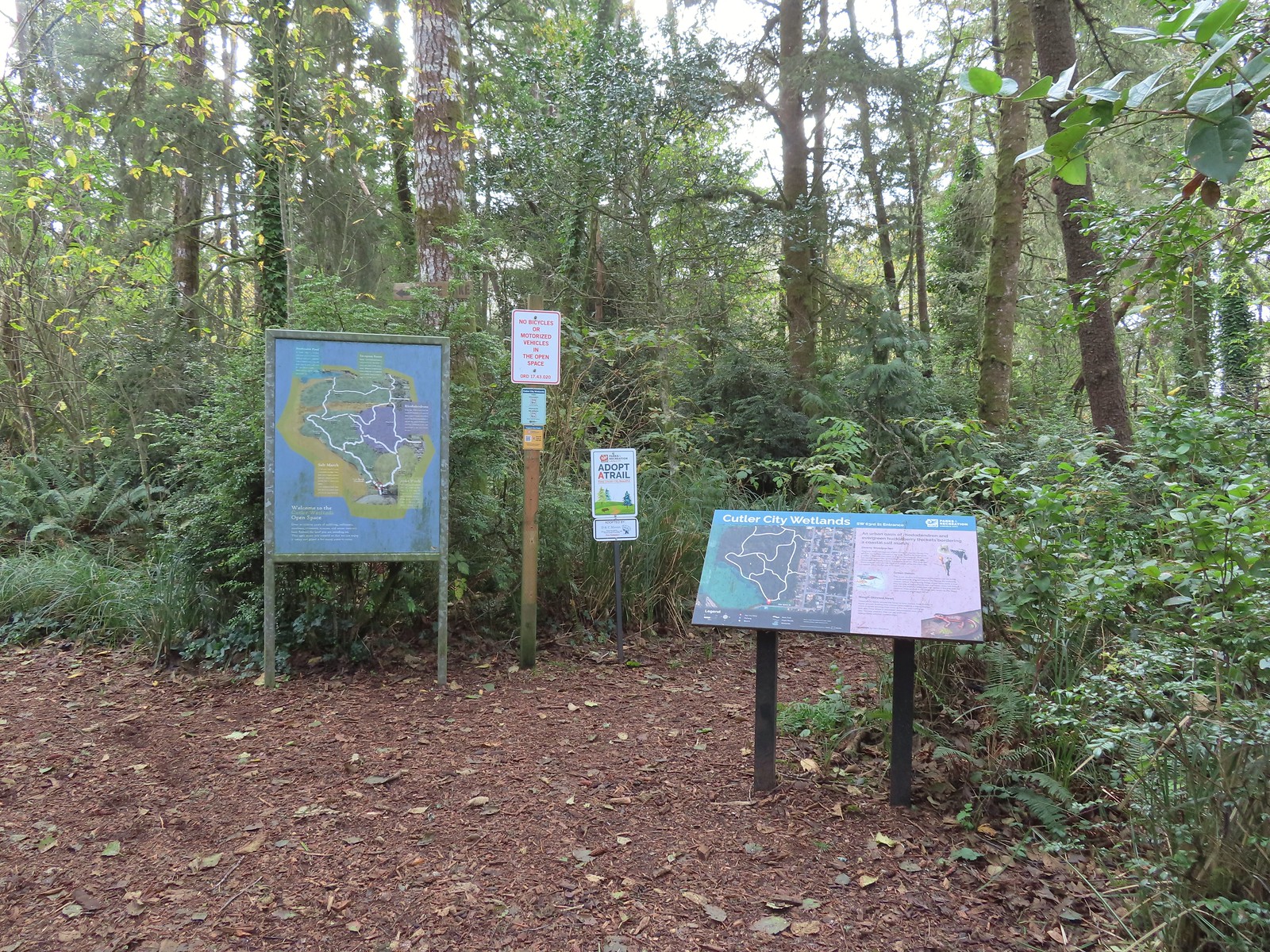
 While there are more trails to choose from here the total milage is just about 1.25 miles. We opted to loop around the outside with detours to the Salt Marsh Overlook and Pond’s Edge.
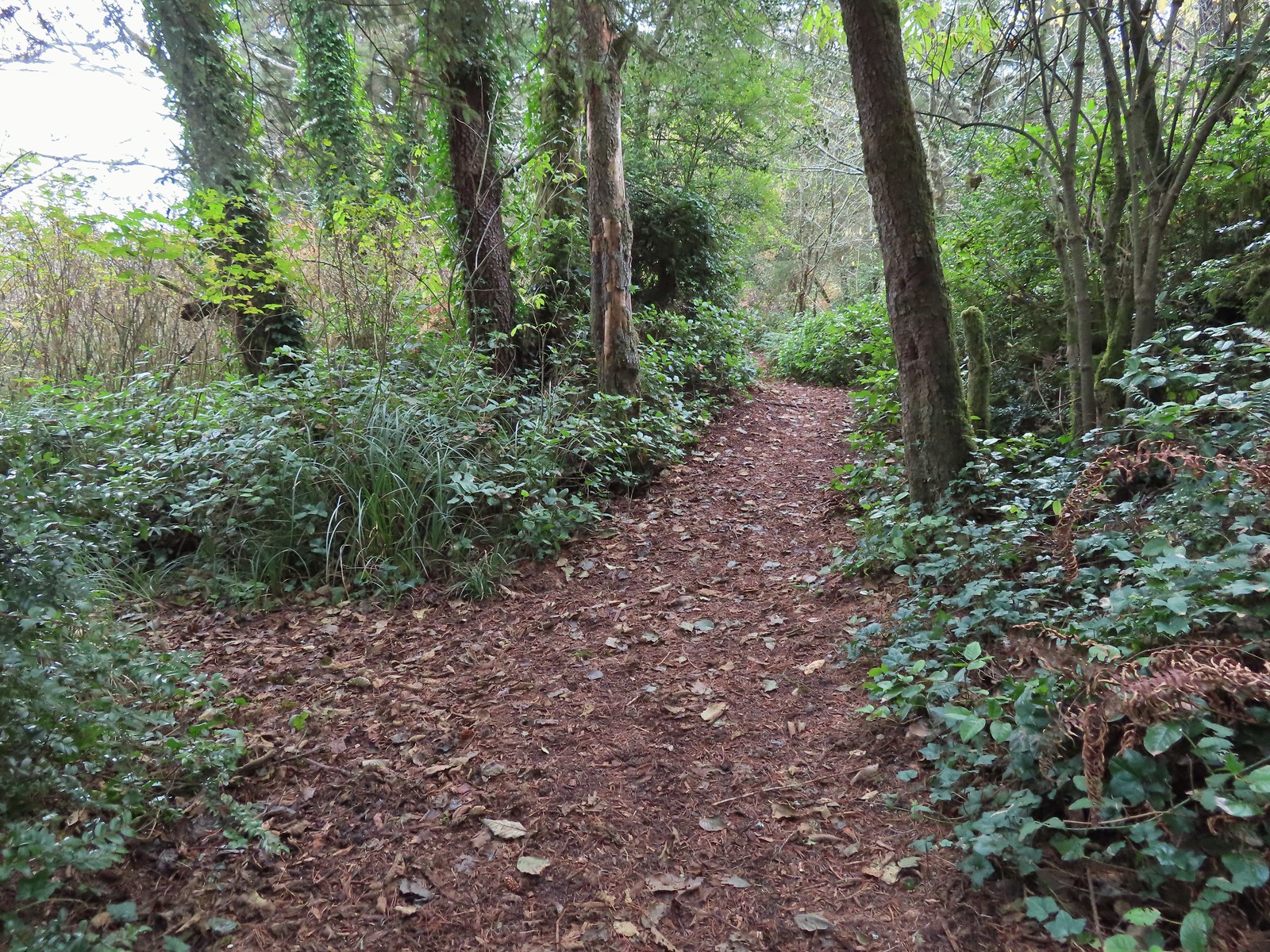 To the left is the very short spur to the Salt Marsh Overlook which was too overgrown to really see anything.
 Interpretive sign at the overlook.
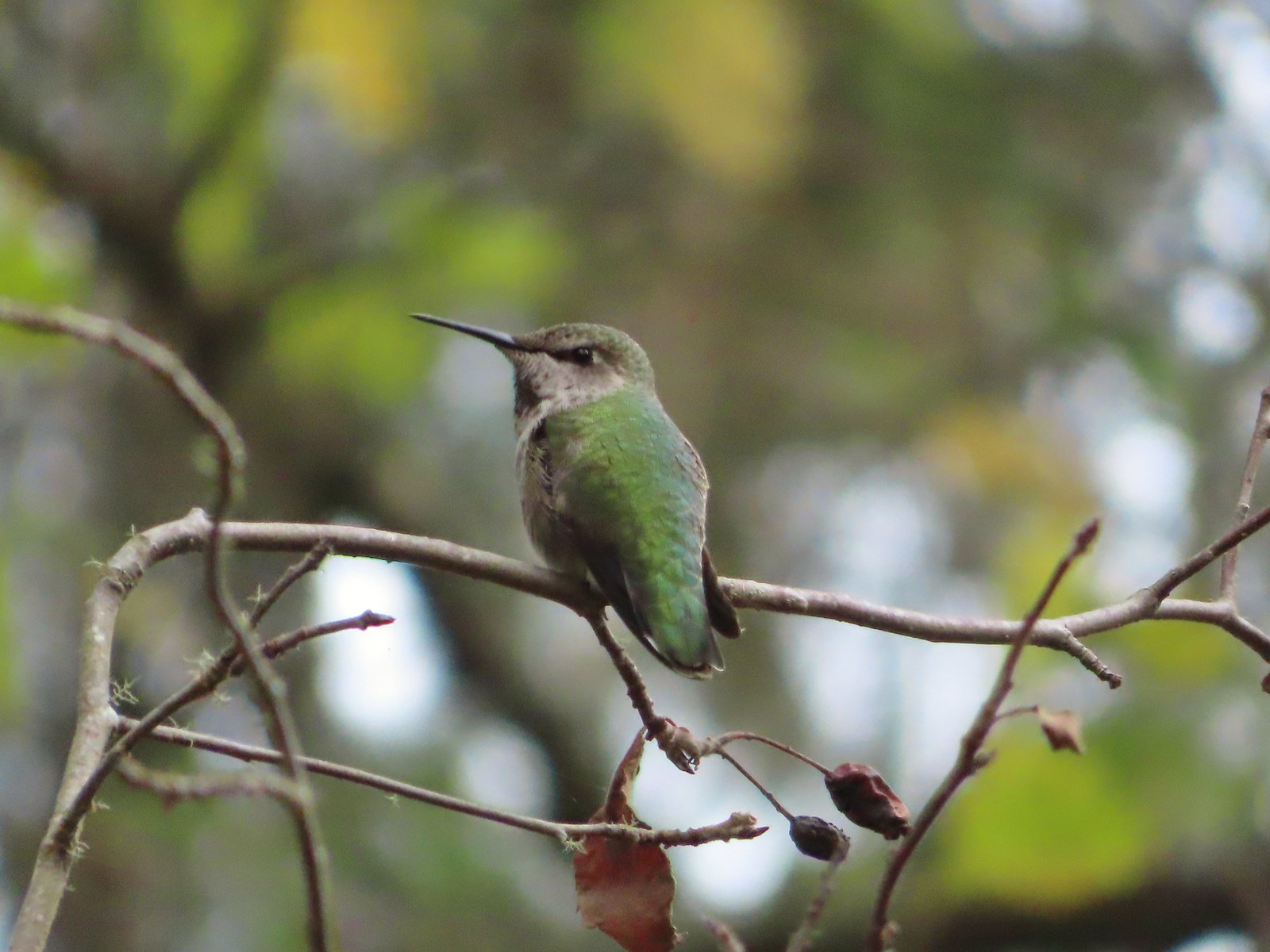 A noisy little hummer near the overlook.
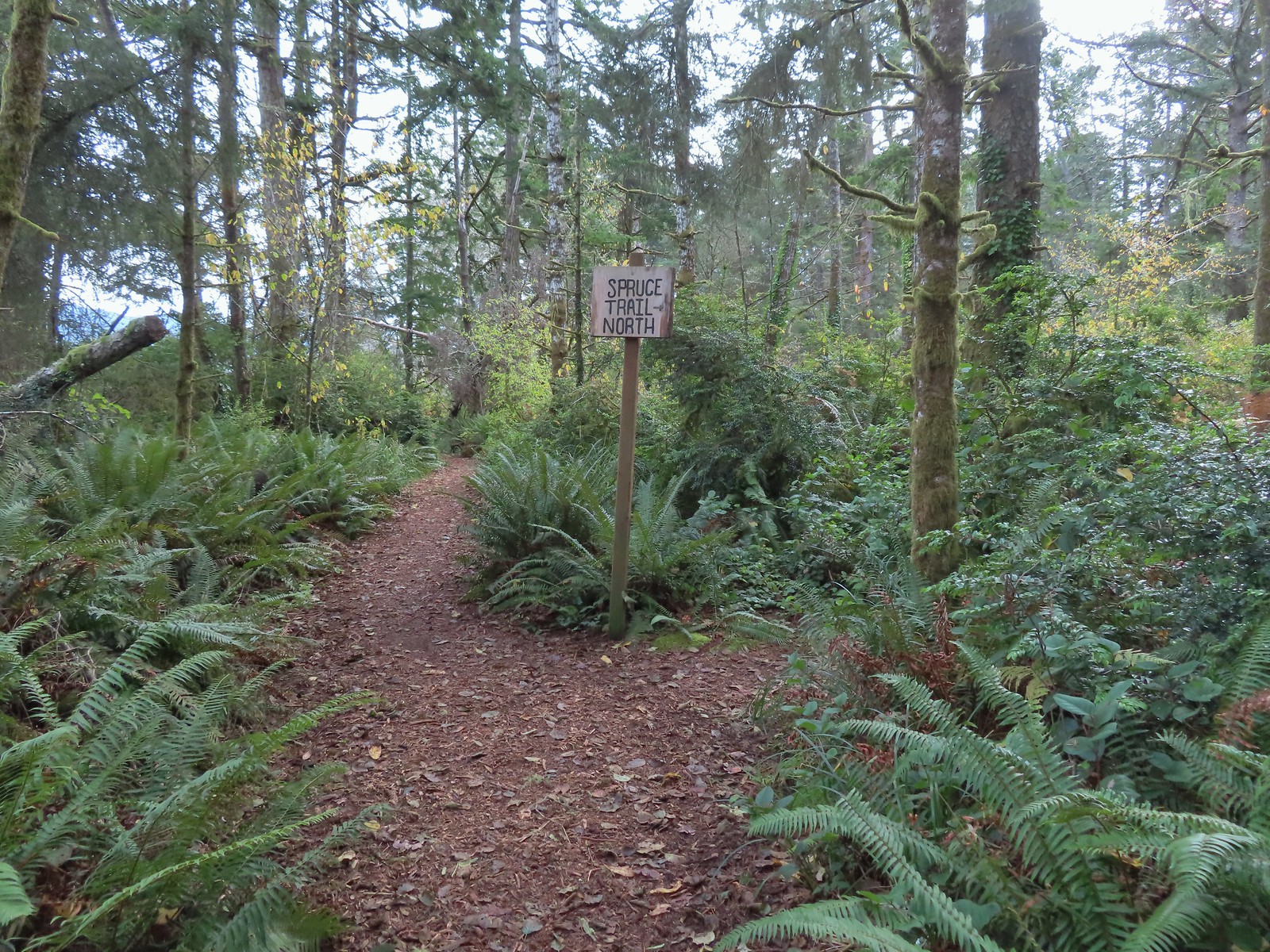 There was pretty good signage at the main trail junctions.

 Boardwalks helped cross the wet areas.
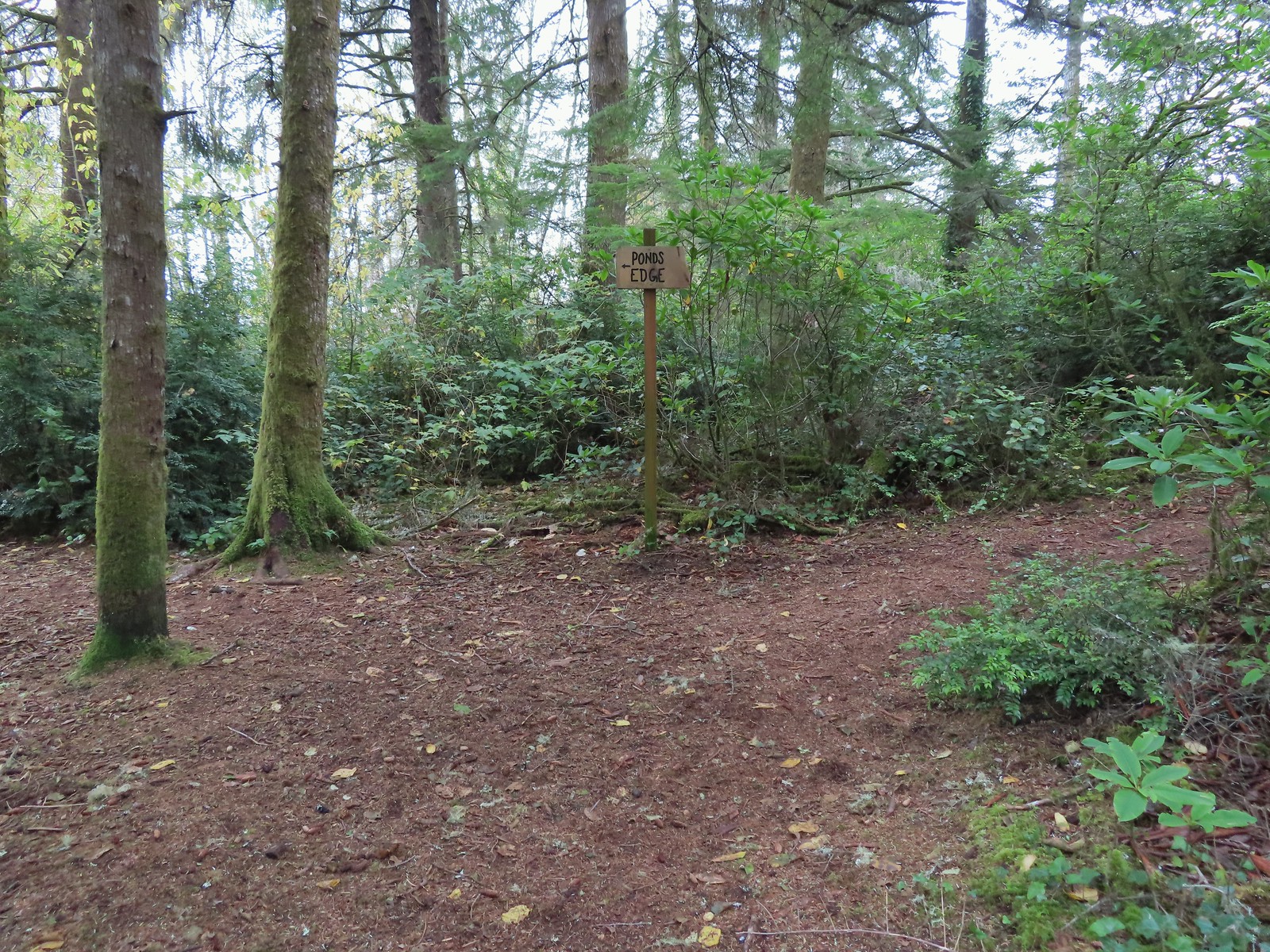 Pond’s Edge spur trail.
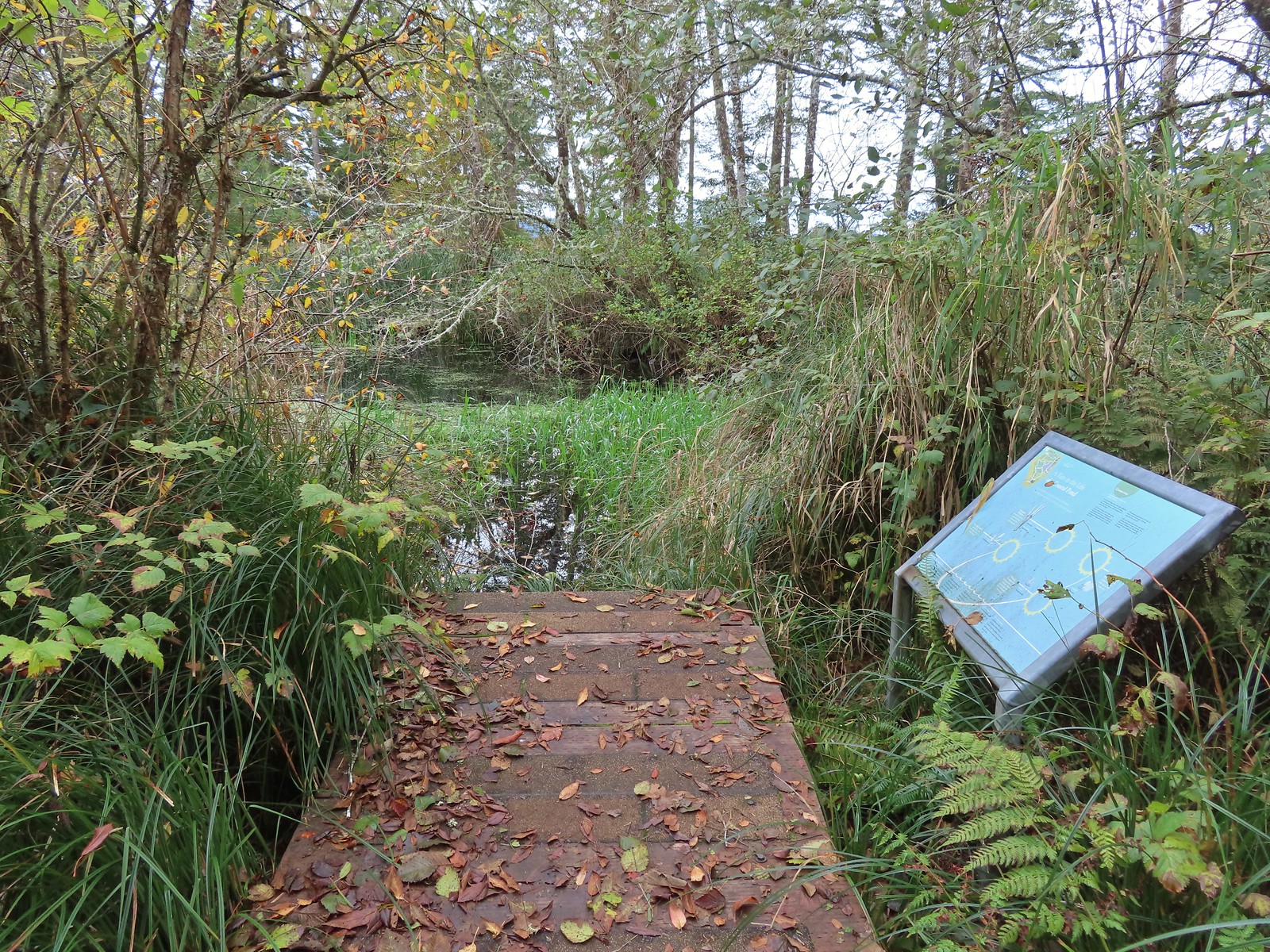 At the edge of the pond.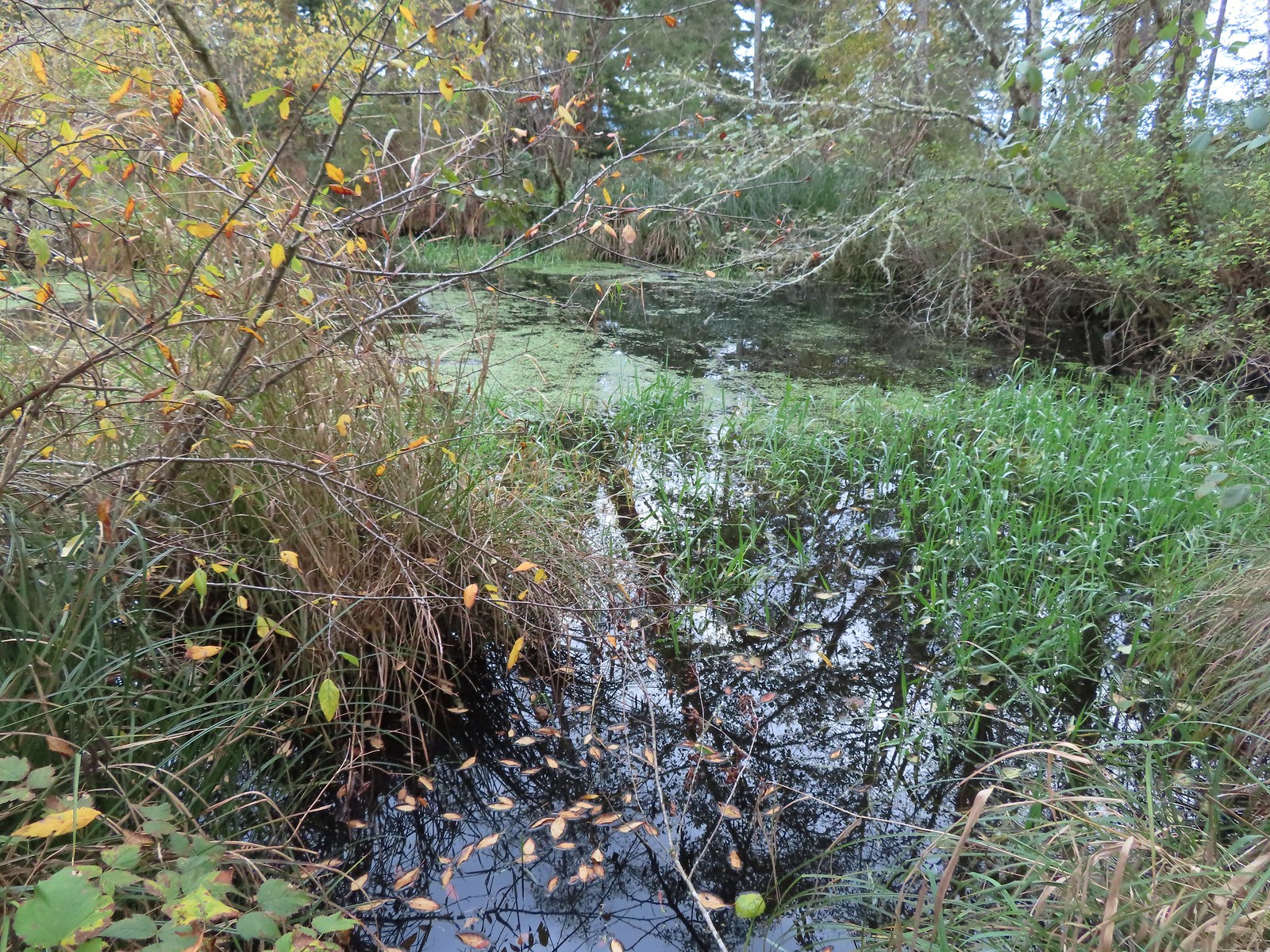
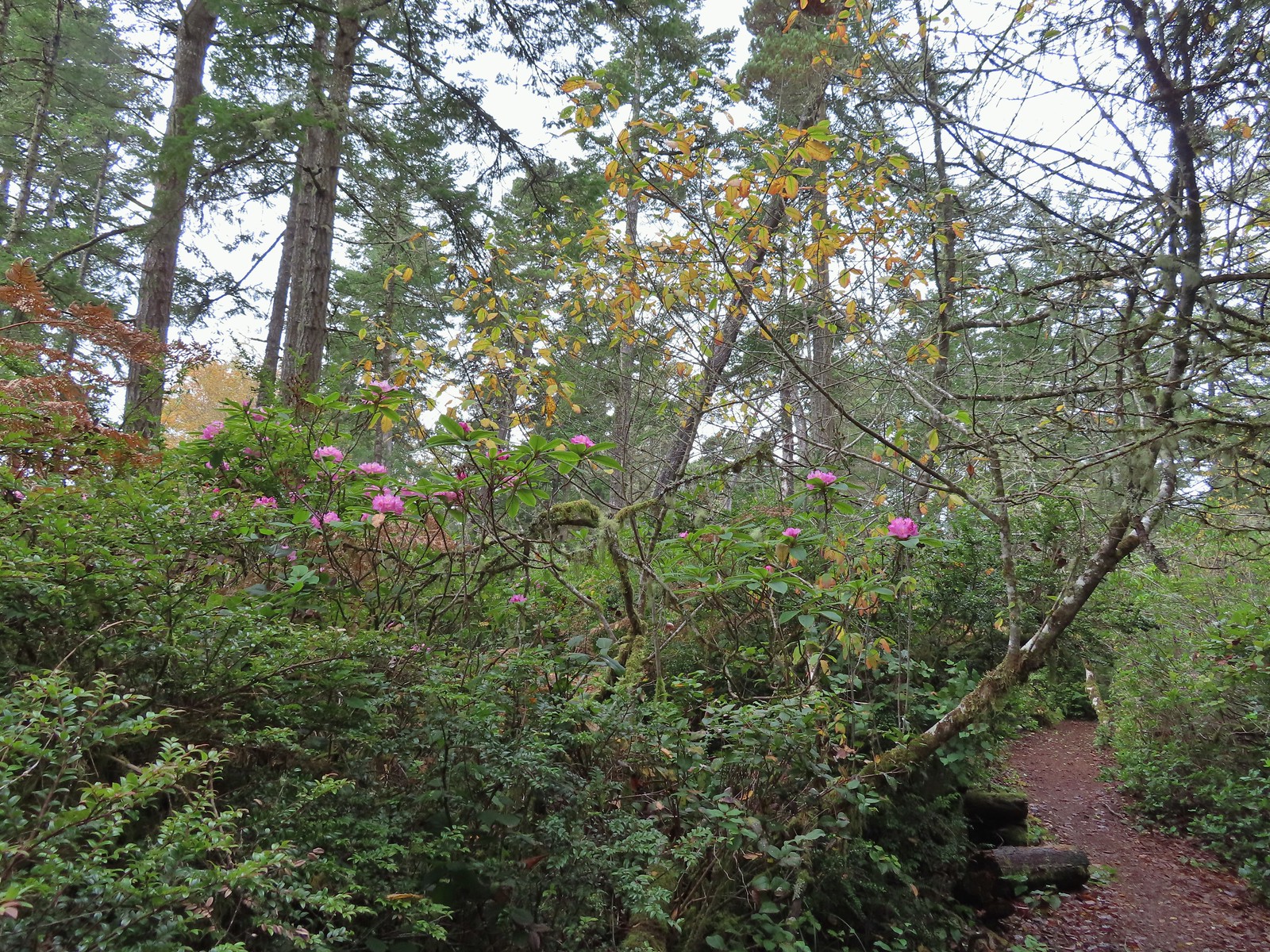 We hadn’t expected to see any blooming rhododendrons.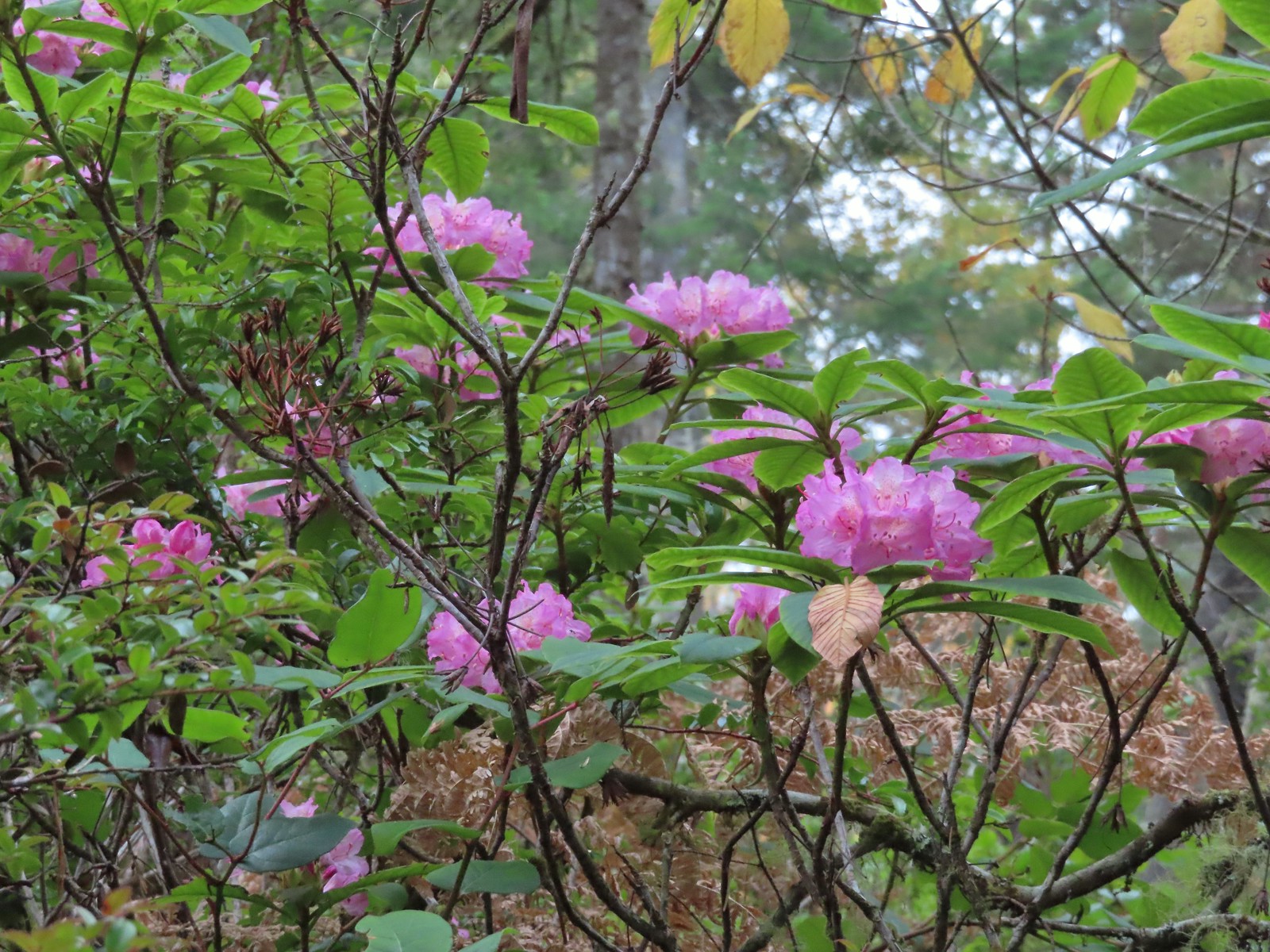
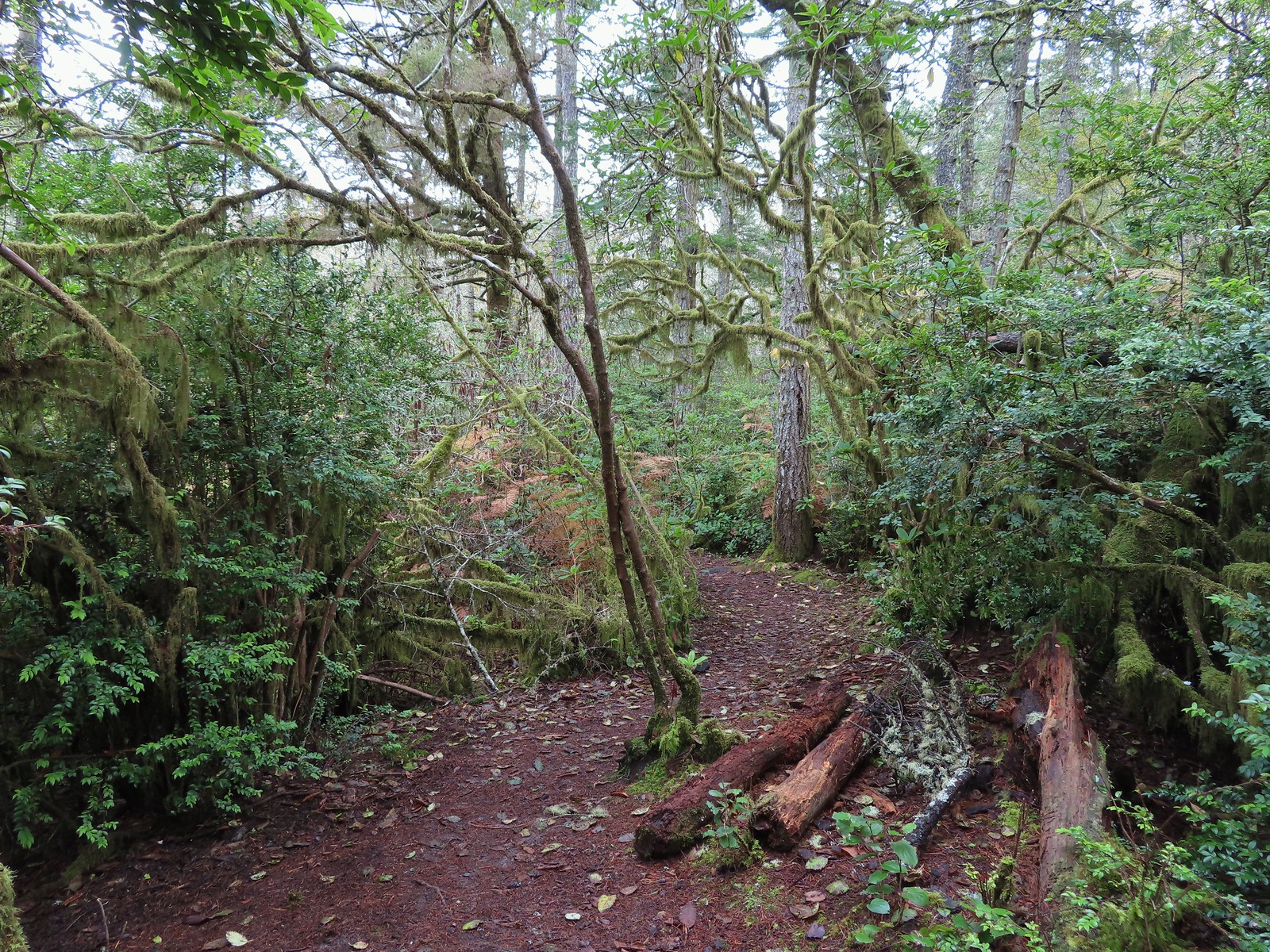
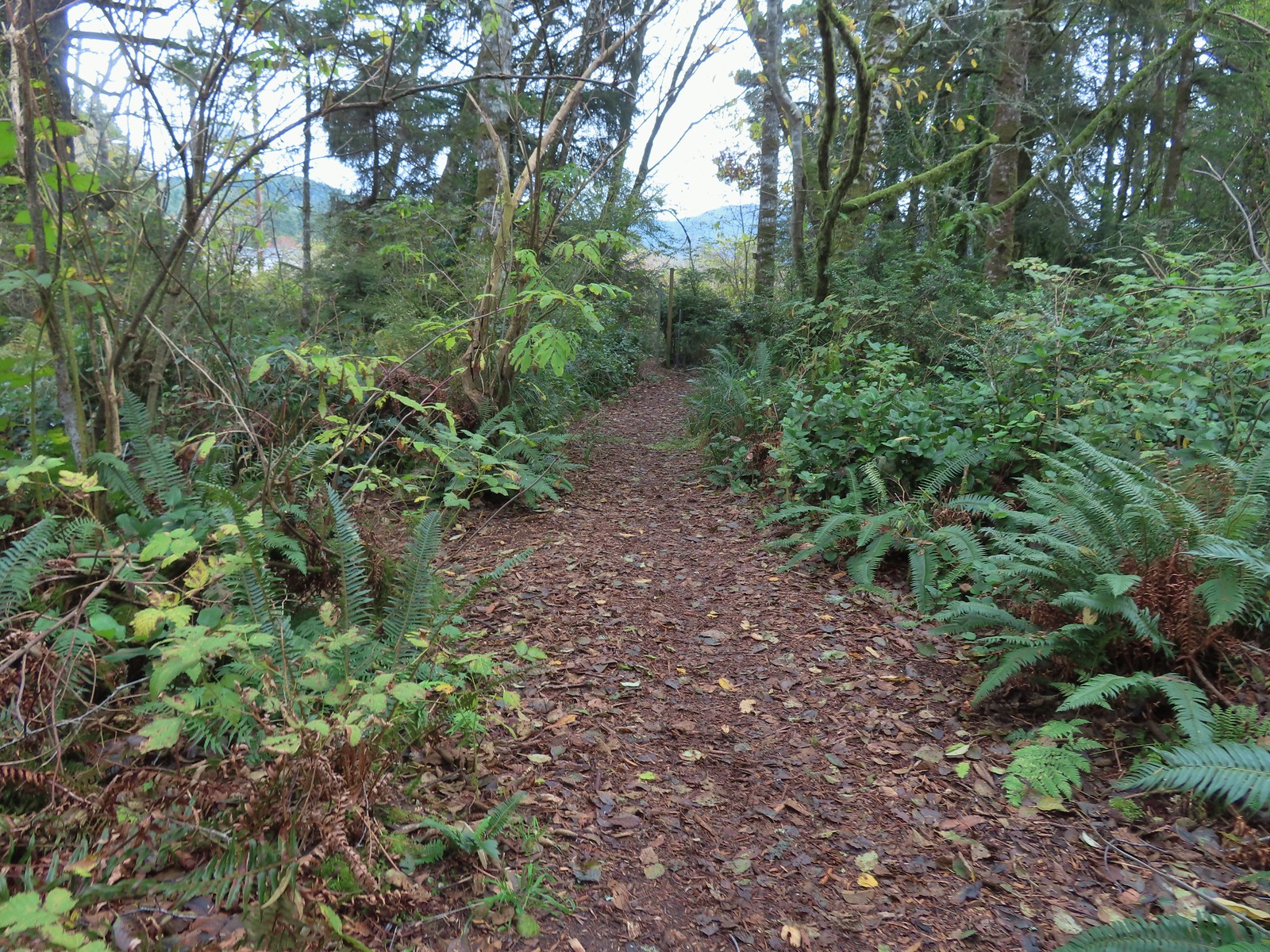 Arriving at the signboards at the start of the loop.

 From left to right: Storm, Finely, and Shag Rocks.
 Cape Lookout (
 Maxwell Point
 View from beside Maxwell Point.
 The Tunnel was built in 1926.

 The Tunnel from Tunnel Beach.
 Three Arch Rocks from Tunnel Beach.
 The end of Tunnel Beach. At higher tide it’s not possible to get around the point here.
 Getting closer to the end of Tunnel Beach. This set of ocean rocks are part of the
  Bald eagle on top of one of the rocks.
 Seal
Seal Agate Beach
 Cape Lookout from Agate Beach.
 An assortment of sea birds.
 Maxwell Point and Cape Lookout
 Sun starting to hit the Three Arch Rocks.
 Sand dollar
 Cormorants. There was a steady stream of flocks of birds heading south along the coastline.
 Footbridge over Fall Creek.
 Fall Creek
 Frosty leaves near Fall Creek.
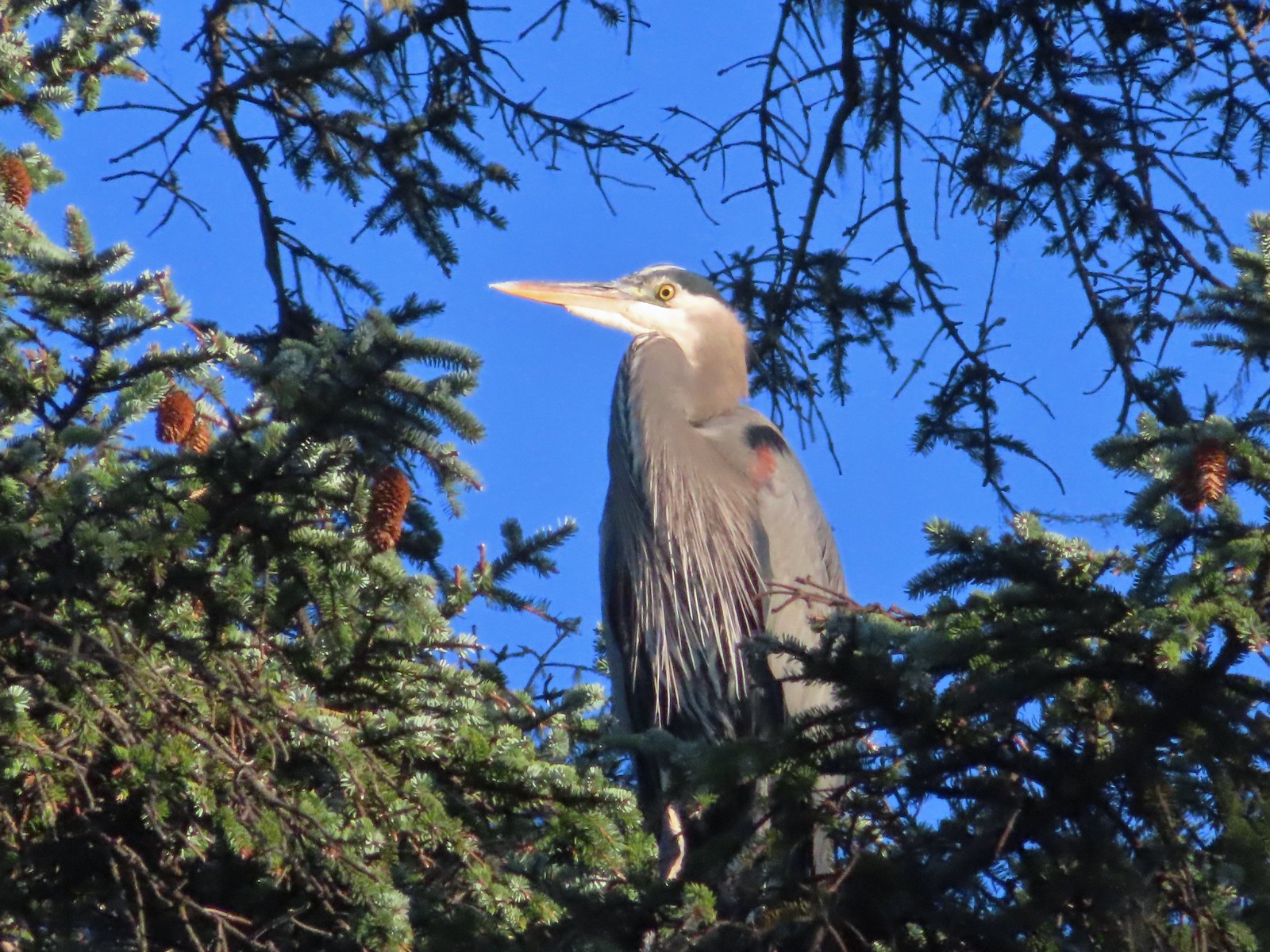 Great blue heron in a tree above Fall Creek.
 Happy Camp
 Hodgdon Creek
 Seagulls and common mergansers near Hodgdon Creek.
 Buffleheads
 Netarts Spit
 Happy Camp from our turn around point.
 Three Arch Rocks and Maxwell Point now in full Sun.


 The beach only extends a short distance to the South.
 The sea stack and Short Creek Spillway to the North.
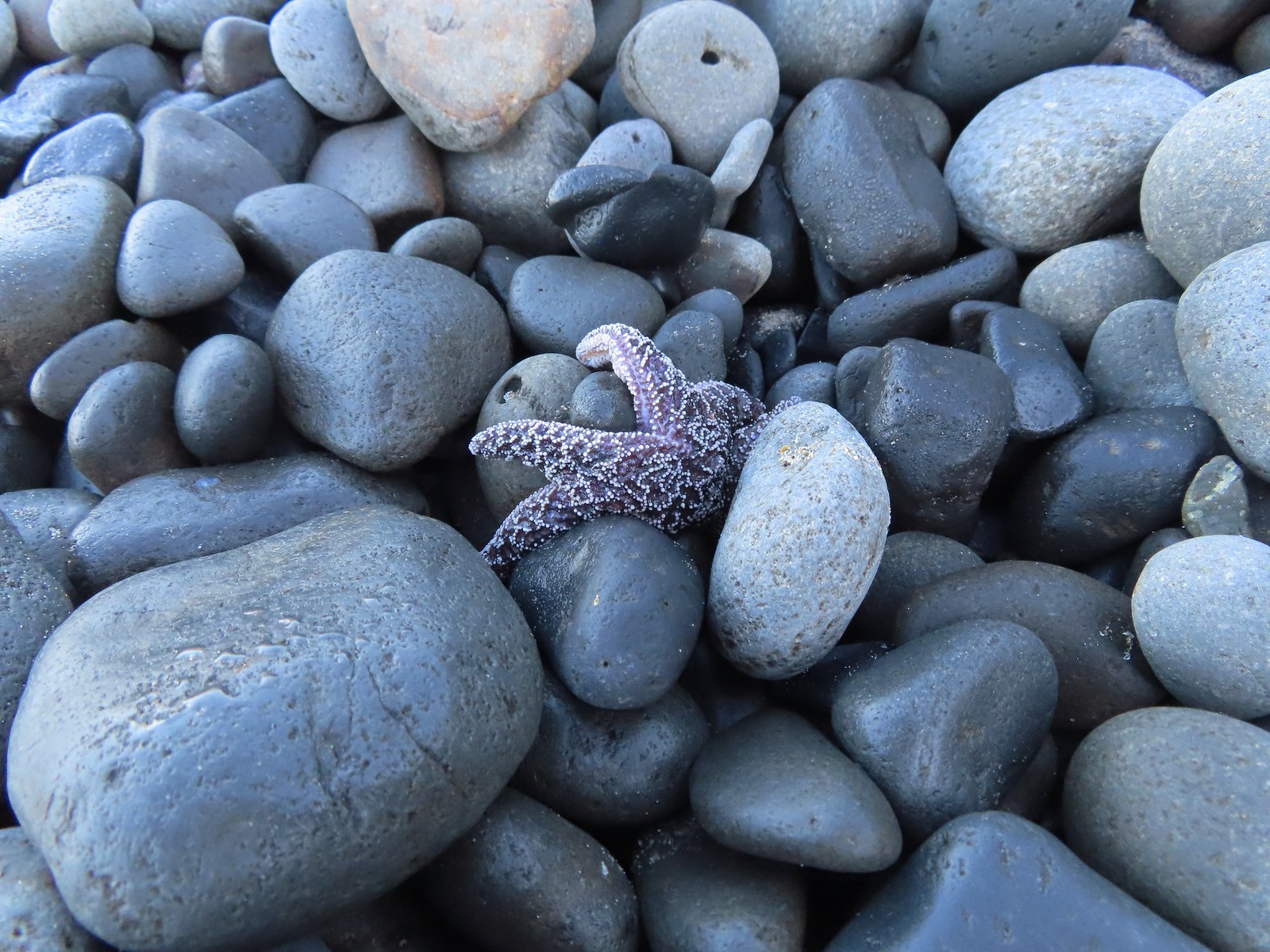 Starfish
 The sea stack
 Cape Meares (
 I didn’t notice the little waterfall along the cliffs below Cape Mears until I looked at the pictures.
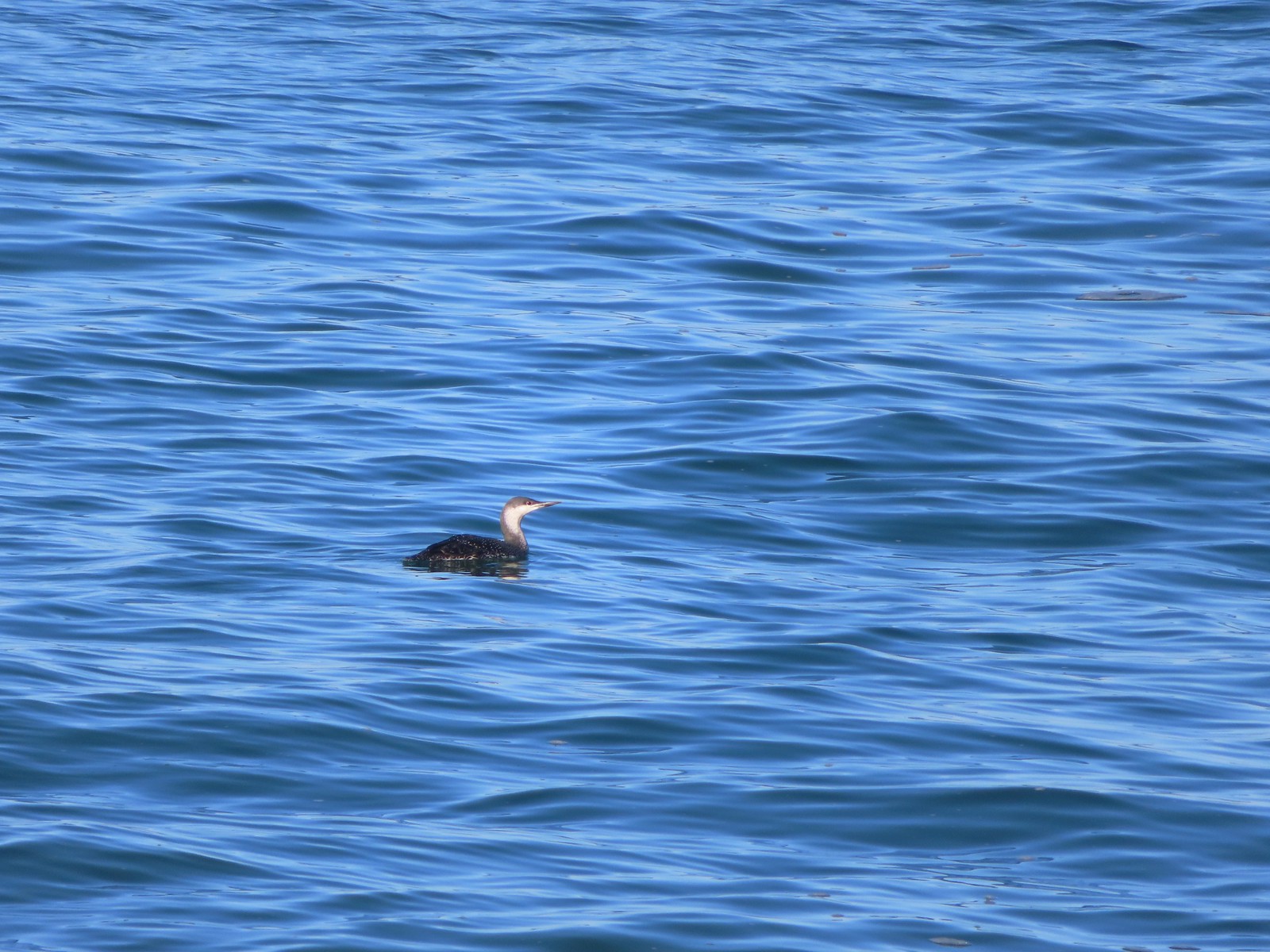 Red-throated loon

 The area ahead in the shade is where things started looking a little sketchy.


 Apparently there used to be a metal gate here instead of a the rope/chain.

 Bald eagles in the tree tops.
 Bald eagles
 This is where the dike/path turned South. Our best guess is that there has been additional wetland restoration since the entry in the field guide and some of the dikes that the guide route followed have been removed.
 We weren’t getting across that.
 Somewhere out that way, beyond the slough, was the Wilson River.
 Now heading East toward Sissek Road.
 At this point we had left Sissek Road which used to extend straight from Goodspeed Road where the signs and rope/chain is in this photo (ahead to the right at the 90-degree turn).


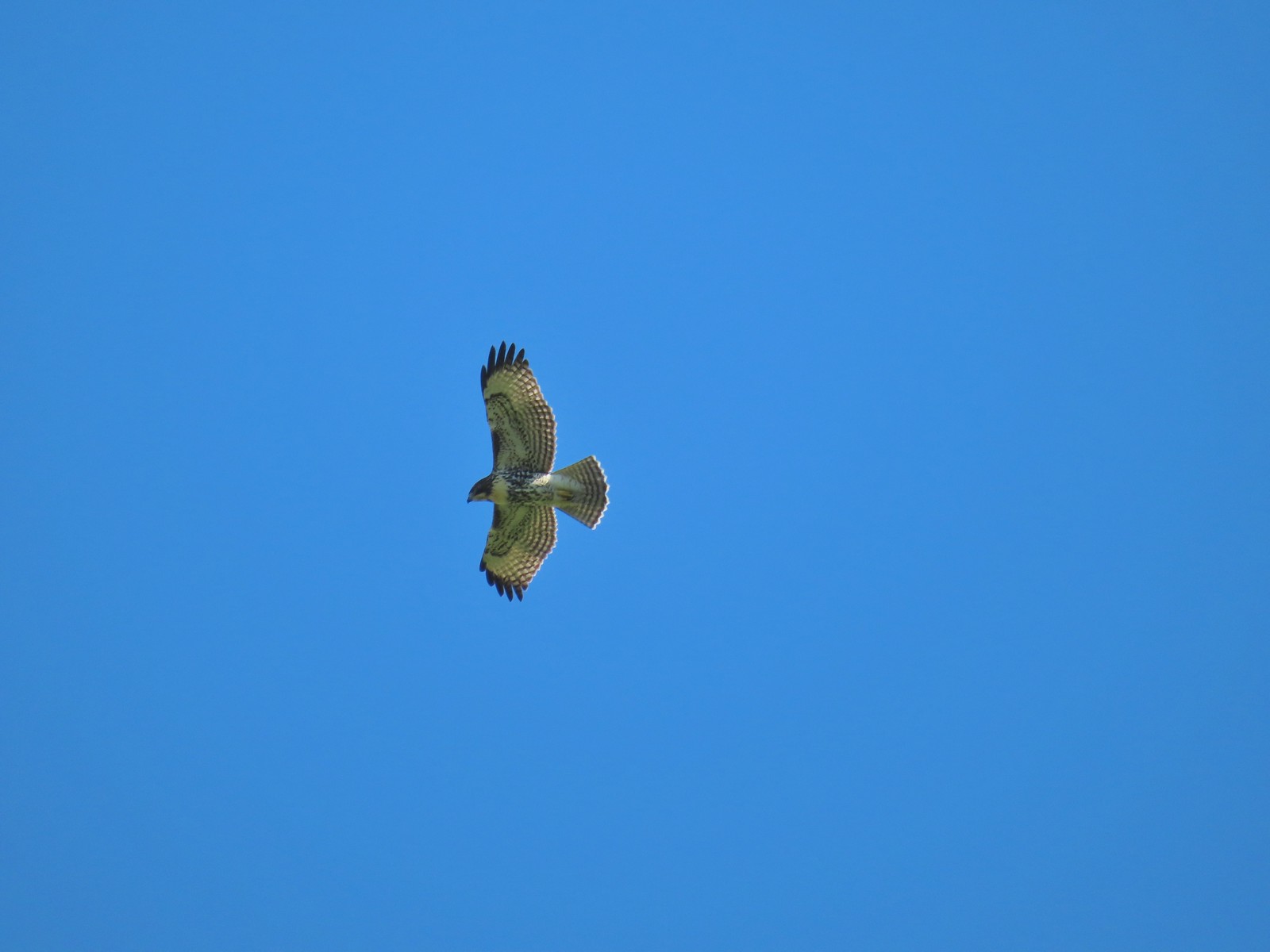 Hawk above Goodspeed Road.
 One path led down to Hall Slough ending in mud at it’s bank.
 A second path led north on what the GPS showed as a former road but it was too overgrown and flooded to make it far.


 Junction with the spur trail to the power line corridor.


 Footbridge and stairs leading back up to the picnic table.


 Big Creek in the morning.
 A short section of the trail was paved.
 At the eastern end of the parking area we came to this new kiosk that is being installed marking the start of the Agate Beach TRACK Trail. There was also a path directly to the parking lot from the kiosk which we used upon our return.
 The tunnel under Highway 101. The stairs at the far end lead up to a city street while the trail makes a hard right to briefly follow the highway back across Big Creek.
 A series of boardwalks crosses the marshy bottomlands of Big Creek.
 While the kiosk was a new work in process there were a number of older looking interpretive signposts. This was one of only a handful that still contained an interpretive sign.
 The bottomlands.

 There were no signs at junctions but for the TRACK Trail stick to the level fork and ignore anything going uphill.
 Further along the trail Big Creek could actually be seen flowing.
 A non-boardwalk section along Big Creek.
 Approximately three quarters of a mile from the kiosk the trail arrived at Big Creek Road at another new signboard.
 The signboard at Big Creek Road didn’t have any information on it yet.
 Stellar’s Jay
 Northern flickers on the picnic shelter.
 Map on the signboard.
 Anderson Creek, the footbridge, and signboard from the roadbed.
 The Forest Park Trail
 A nice sitka spruce forest lined the old roadbed.
 Mushrooms
 Sunlight hitting the trees.
 The Pacific Ocean through the trees near the water towers.
 Passing the water towers.
 The drop to Jeffries Creek.
 Jeffries Creek
 Wood ducks in the wetlands.
 The gate near Fogarty Street.
 The Forest Park Trail from the other side of the gate.

 Morning fog was still burning off at 9:30am.
 A car by the gravel pile to the left with the road coming down the hillside to the right. Interestingly Google Maps labels this as “Burnt Woods Ridge Road” which both Alltrails & Garmin showed as the left-hand fork where our loop would begin. (Google doesn’t show a road there at all but you can see the road in the trees by looking at the aerial view.) Numerous times throughout the hike we relied on comparing the Alltrails Track to the GPS map and our track to that point to determine where we were and which road(s) to take.
 There was some room to park here at the start of the loop (this is not where Google marks the TH) as well as many pullouts along the loop where one could choose to start.

 Heading down into the fog.
 One positive to the fog is that it can create some dramatic Sun rays.
 Vine maple
 Blue sky in the upper left hand corner.
 The road to the right is an example of a road that wasn’t labeled on any map we had.
 Emerging from the fog.
 Looking back through the fog to blue sky and the Sun.
 The only other “hiker” we saw on the loop.
 We couldn’t see it but just over three miles from the start of the loop the road crossed Cline Creek which was the first time we heard what sounded like a decent amount of flowing water.
 A little over a tenth of a mile beyond Cline Creek we left Burnt Woods Forest Road and forked uphill to the left onto Cline Creek Road.
 Arriving at a clearcut. Much of Cline Creek Road was along different clearcuts.
 Mylitta crescent
 Red-tailed hawk soaring over the clearcut.
 Trying to get the red-tailed hawk in flight.
 Lots of Fall colors starting to pop.
 The first signs we’d seen (noticed anyway) were at the Cline Creek/Burnt Woods Ridge Road junction.

 Arriving at the high point which was actually the first good viewpoint being above one of the clearcuts.
 Looking North at more of the Coast Range.
 Theoretically we should have been able to see both Mt. Hood and Mt. Jefferson from here but between haze from the fog and clouds we couldn’t make either out.
 Mt. Jefferson is out there somewhere. The fact that the Cascades have some snow again doesn’t help them stand out in the haze and clouds.
 Yet another unsigned road junction. Sticking to the ridge is the key.
 After crossing a saddle we gained views SE to Mary’s Peak (
 The tower and summit meadow of Mary’s Peak.
 The hard left prior to the steep descent. The road on the far hillside in the clearcut is part of the road Google Maps has labeled as Burnt Ridge Road but doesn’t show on Alltrails or the Garmin maps.
 The end of the loop at the bottom of the hill.
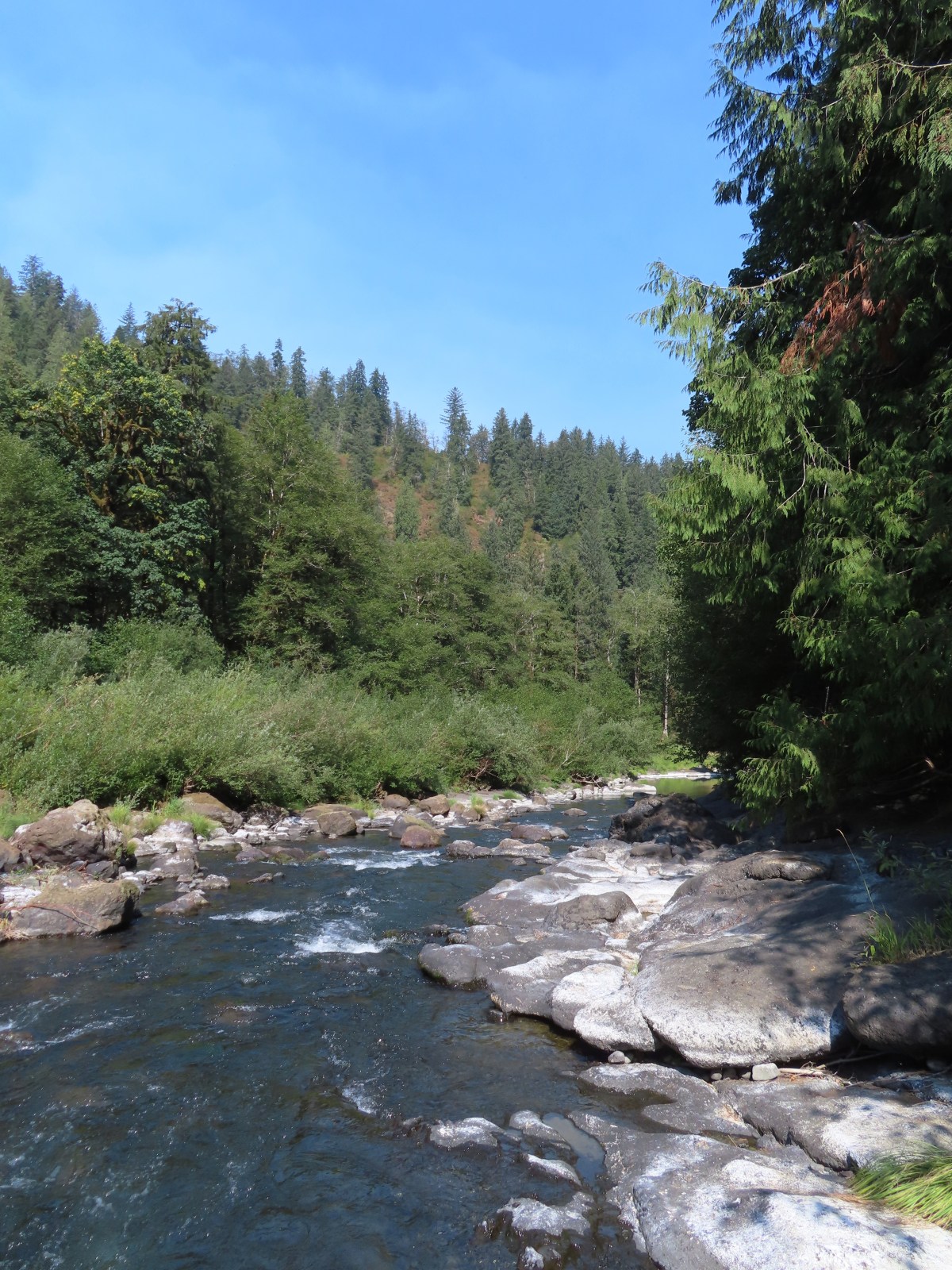

 Most of the buildings are gone but this relocated Officers Quarters is being restored.
 It was hard to tell at times if it was cloudy or smokey which would be a theme for most of the day.
 Flagpole behind an interpretive sign.
 Most of the trail is ADA accessible but not the entire loop.
 The forest was quite a contrast from the open hillside.


 Lots of fading flowers: yarrow, goldenrod and aster mostly.
 Some of the caterpillar tents on the hillside.


 The nature trail crossed the service road after half a mile.
 The continuation of the nature trail on the right.
 We were pleasantly surprised at how forested this entire trail was.
 There were lots of frogs hopping off the trail. Can you see this one?
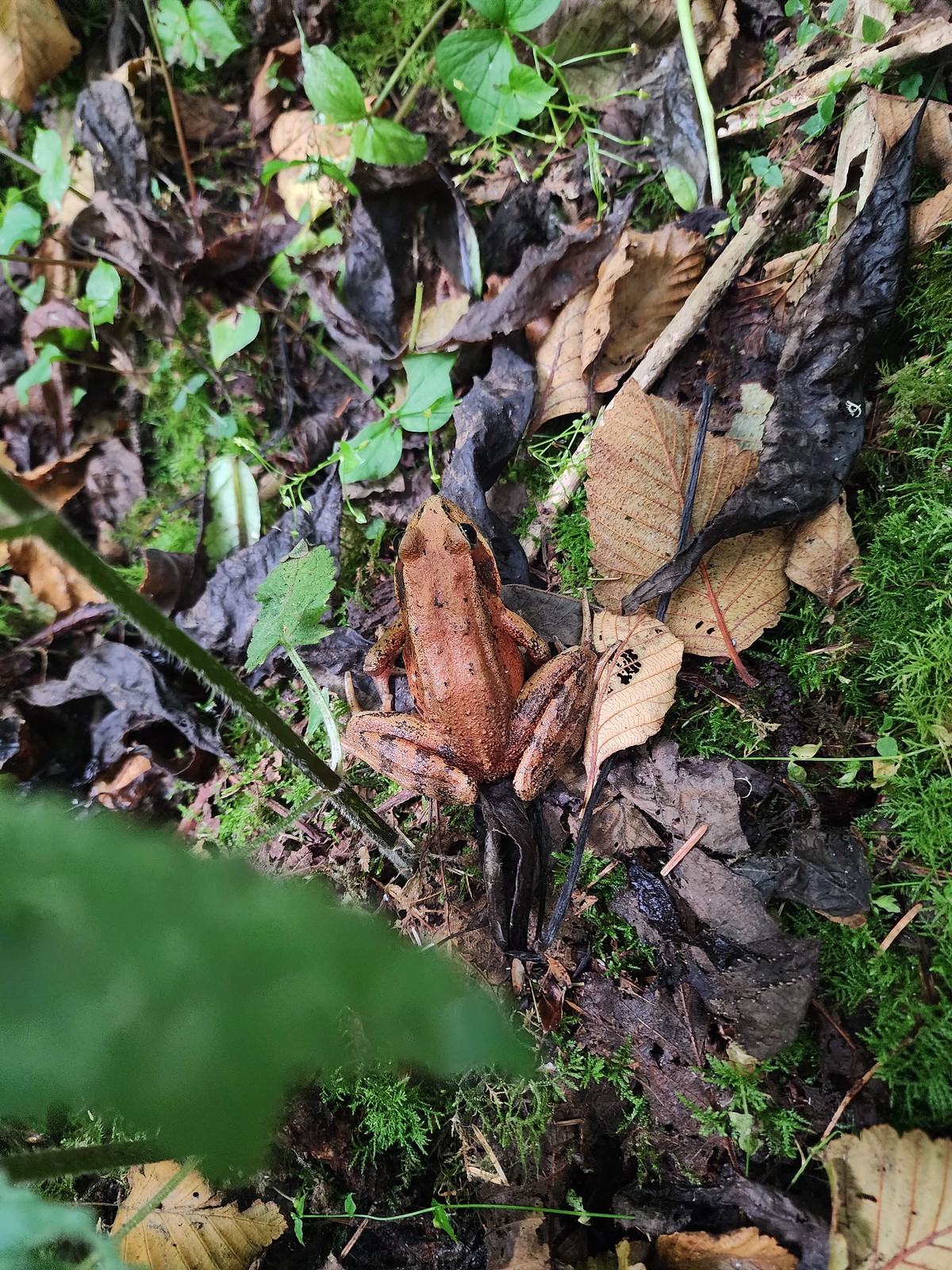 Norther red-legged frog?
 A little less than half a mile after crossing the road we passed a junction with a trail leading to the picnic area. We would visit the picnic area on our way back and pick up the service road there.

 The Little Nestucca is to the right with the Nestucca River straight ahead.
 Cormorants

 We disturbed a doe near the picnic area.
 The doe leaving the picnic area.
 A path here leads down to the bay to provide fishing access (we didn’t follow it).
 Ground squirrel
 Thistle
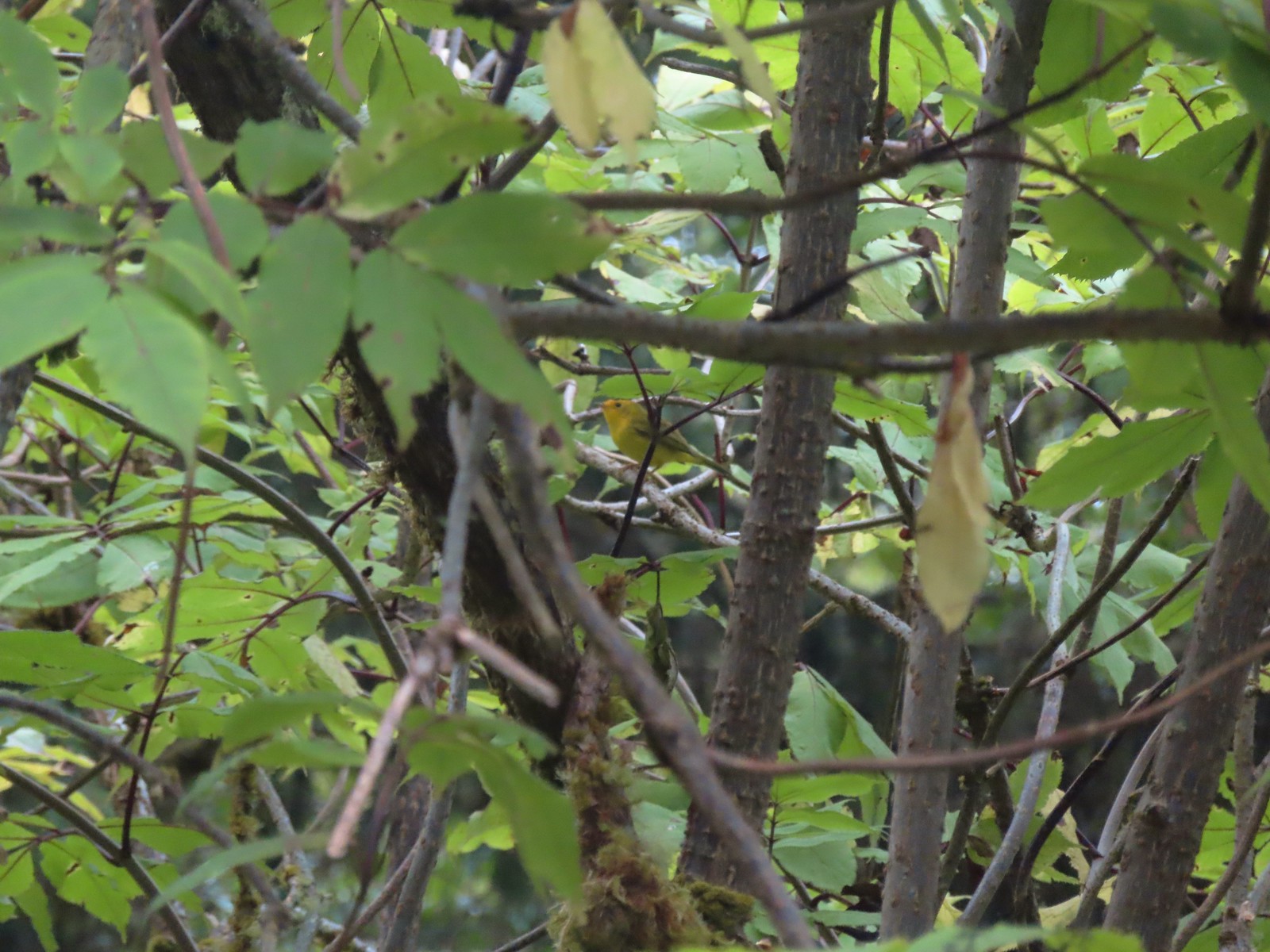 Wilson’s warbler
 The overlook on the far hillside.
 The trailhead from the service road.

 Haystack Rock and Cape Kiwanda (
 Haystack Rock
 Pearly everlasting, spirea, and aster.
 View from the overlook.
 Bench at the overlook.
 Little Nestucca River from the overlook.
 White-crowned sparrow
 Ladybug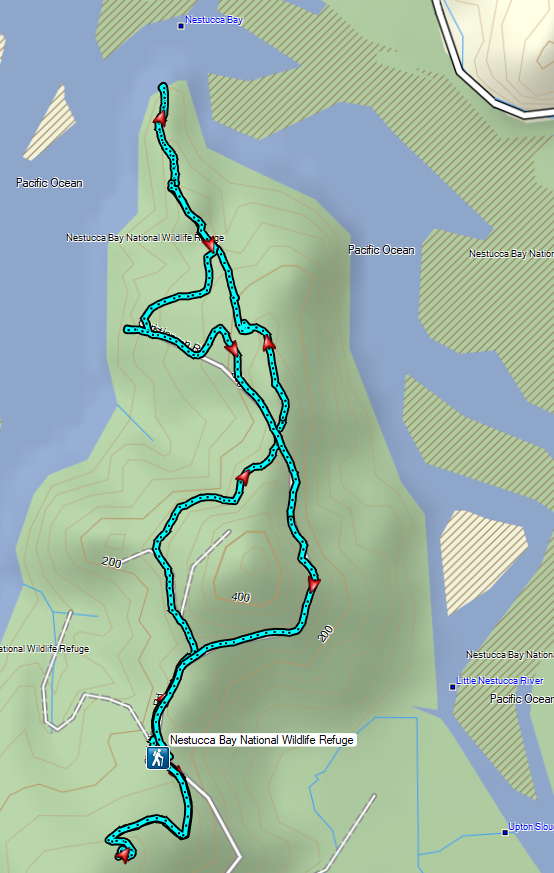


 Trask River from the trailhead.
 Garter snake near the trailhead.
 We followed the pointer here and went right.
 Here we again followed the pointer and went left. We failed to notice the pointer on the lower sign not facing us. It was also hard to tell if the rocks were actually part of a trail or just a scramble route. Turns out they are “stone steps”.
 The inland clouds were breaking up giving us some nice blue sky.
 Ouzel
Ouzel

 Big tree along the trail.
 Arriving at the picnic area.


 The trail to the left.
 Huge nursery log.
 It’s hard to see here but this section was very steep.
 Steps along the ridge.
 The stone steps looked more like steps from this direction.
 Arriving back at the trailhead.


 Skunk cabbage
 Bindweed
 While there were quite a few people visiting the preserve there were still moments when we had the boardwalk to ourselves.

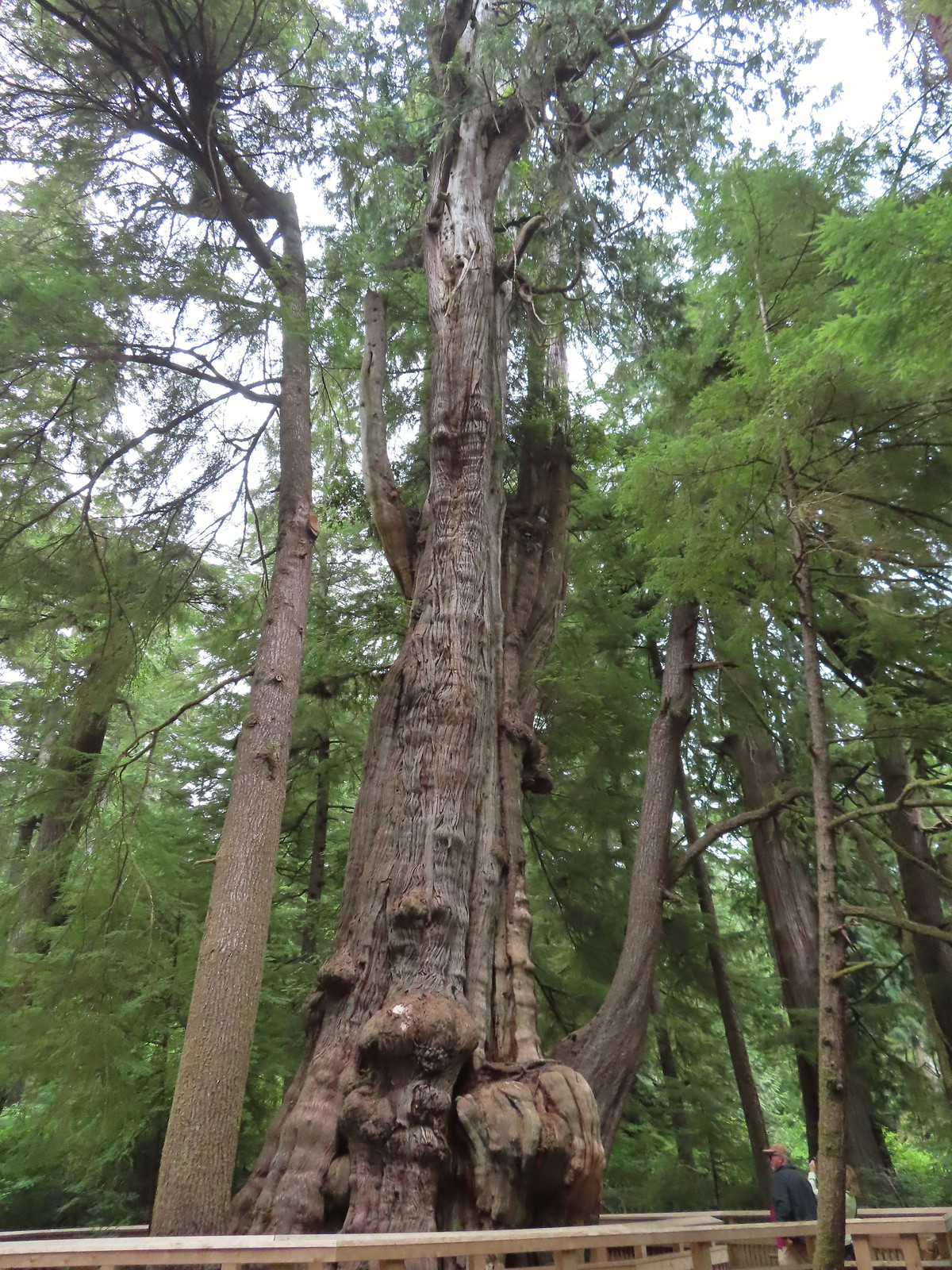


 Tree root along the cedar from another tree that is growing from it.
 Another big cedar, but not anywhere near as big as the other.
 We passed a “hiker trail” pointer which is a reportedly rough, muddy track that links up to the boardwalk near the big cedar. We had seen the other end near the smaller big cedar but there was a “trail closed” sign at that end so we hadn’t even considered taking it.
 Interpretive sign at the viewing platform. There were some benches here which were mostly occupied and not much of a view.
 Salal
Salal


 One of the muddiest sections was just beyond a small footbridge near the trailhead.
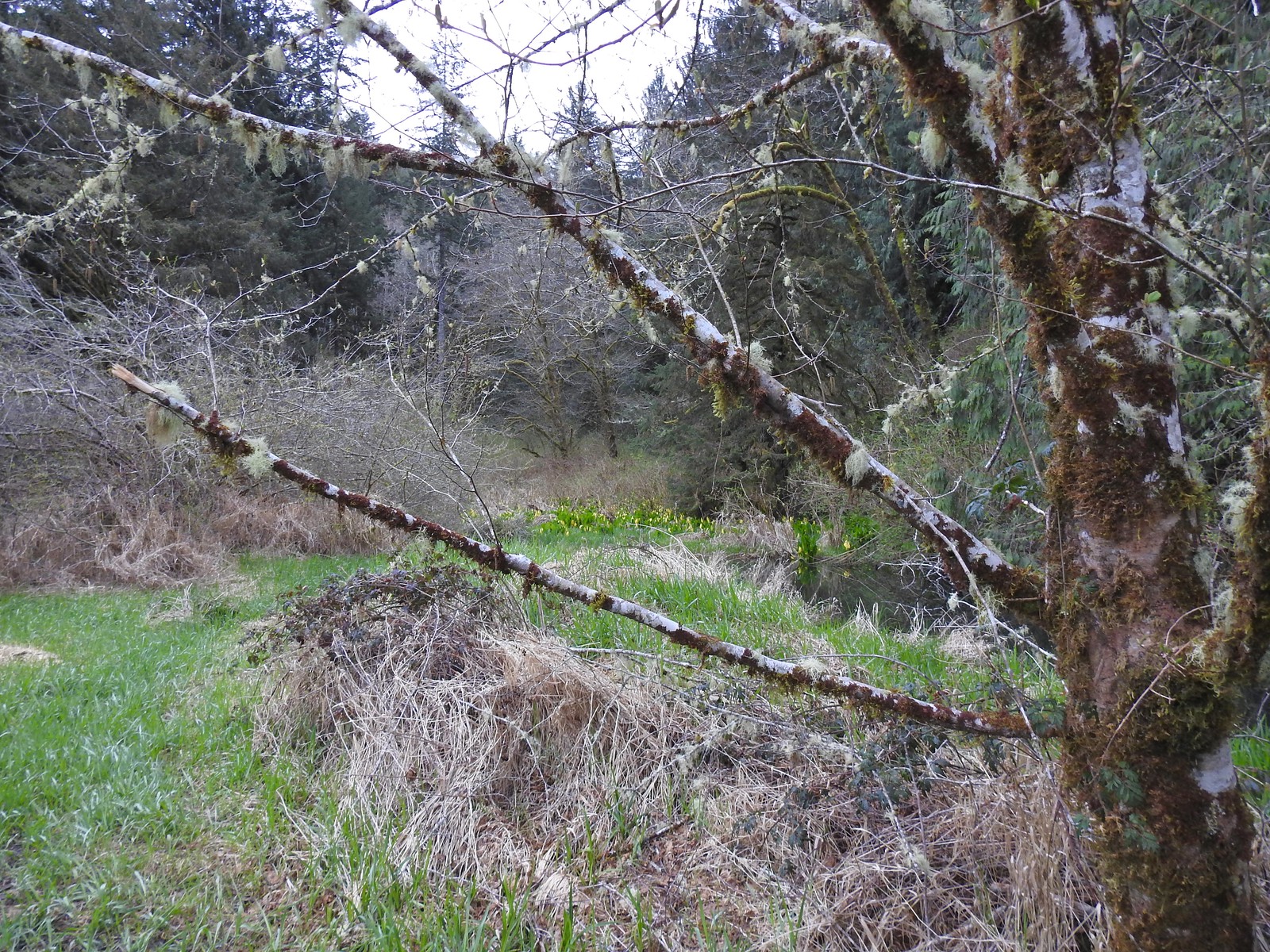 Skunk cabbage blooming along Bailey Creek.
 Skunk cabbage
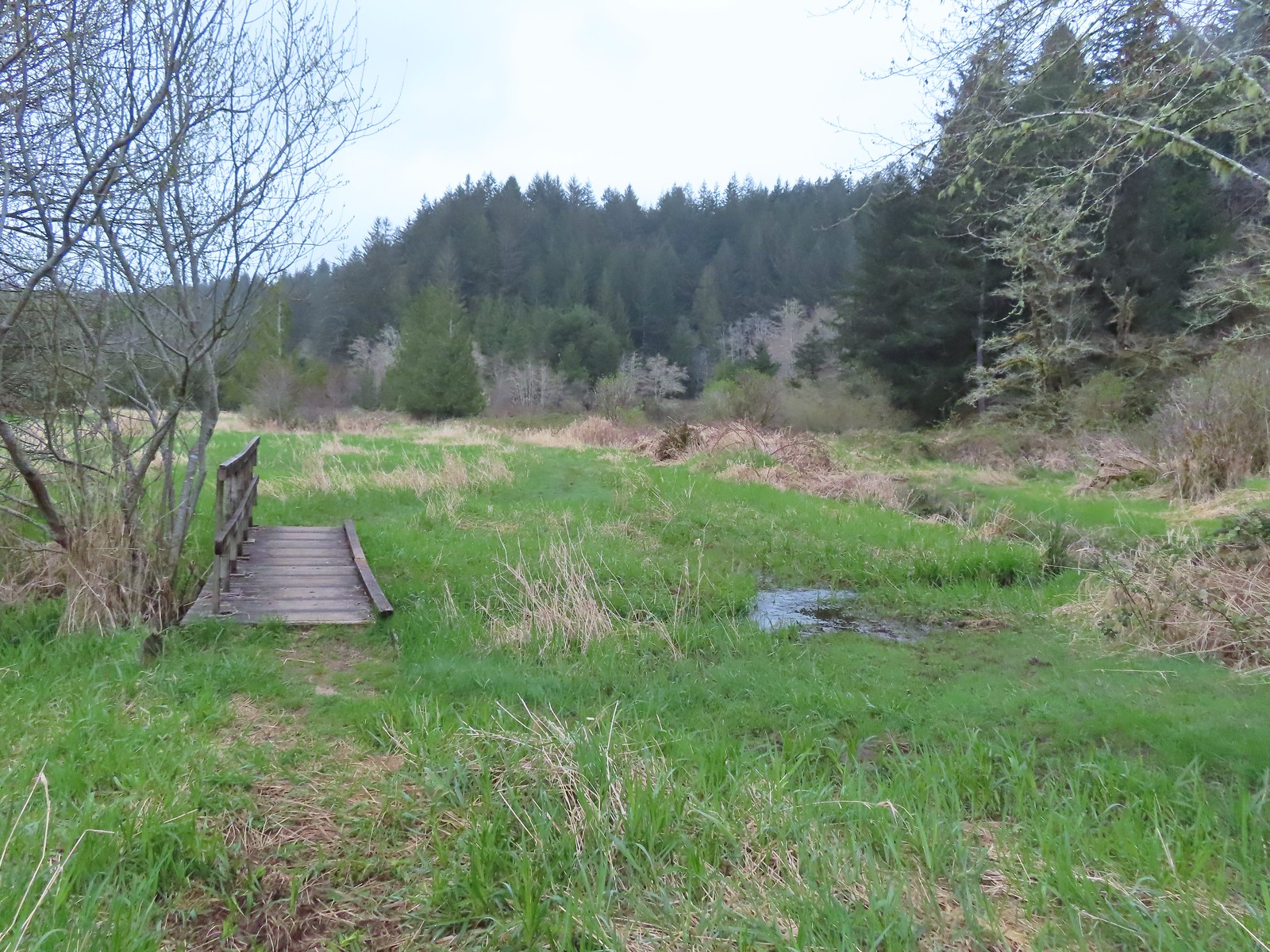 A second little footbridge.
 Coltsfoot
 Closer look at the coltsfoot.
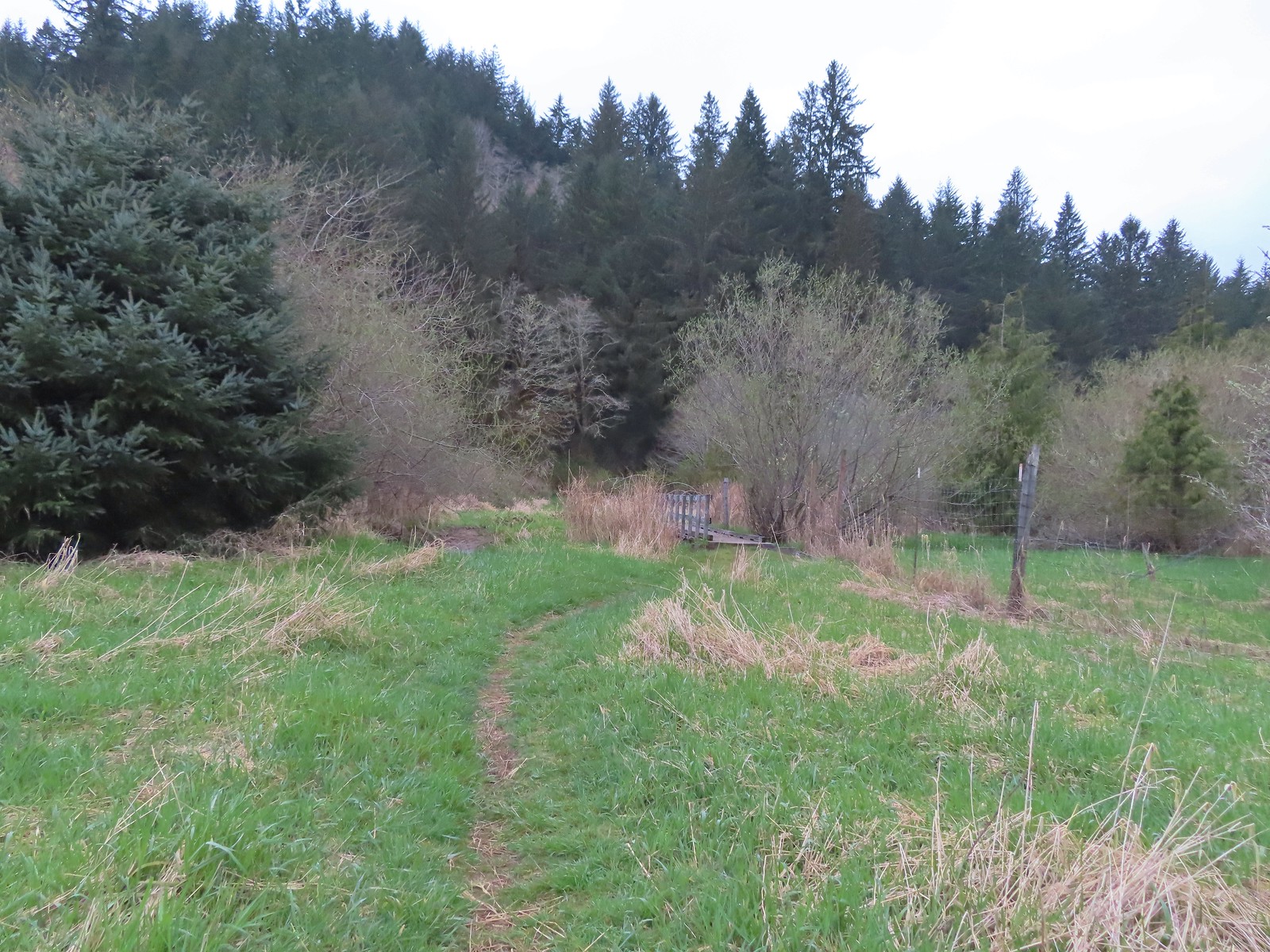 Approaching the footbridge over the unnamed creek.
 This creek was really deep here although it’s hard to tell from the photo.
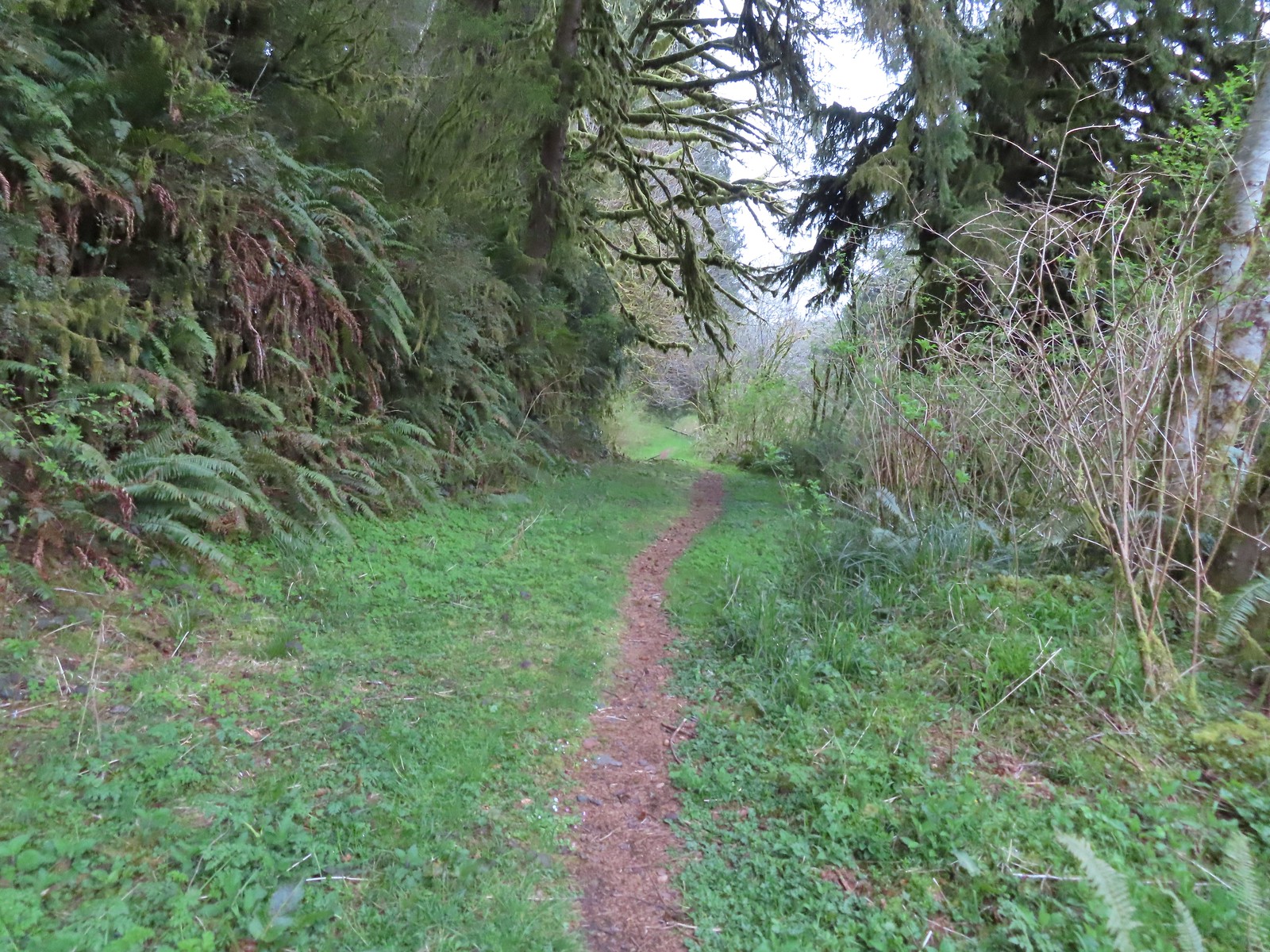
 Wood sorrel
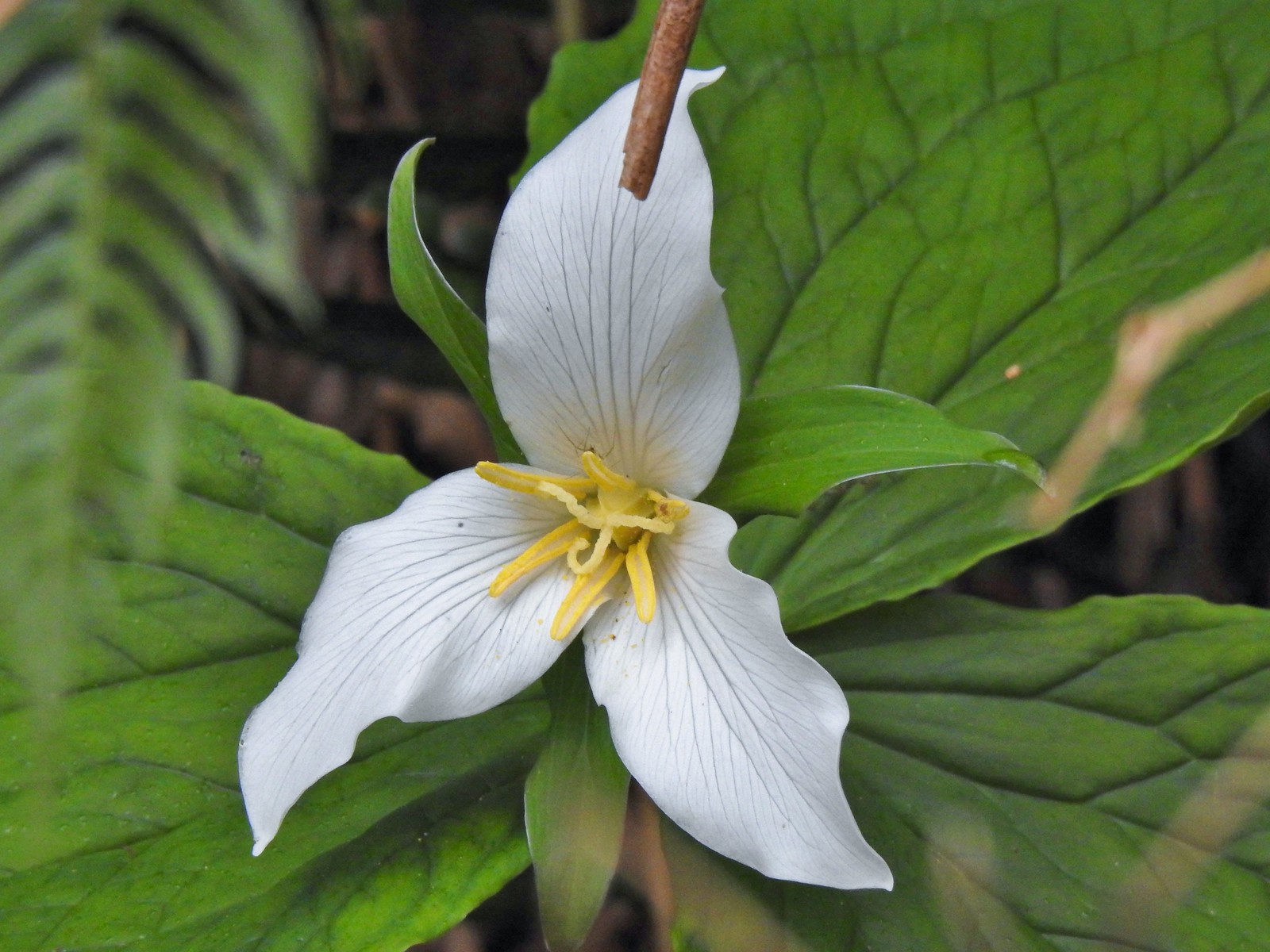 Trillium with a resident spider.
 More skunk cabbage, also with a resident spider.
 Violet
 Bleeding heart
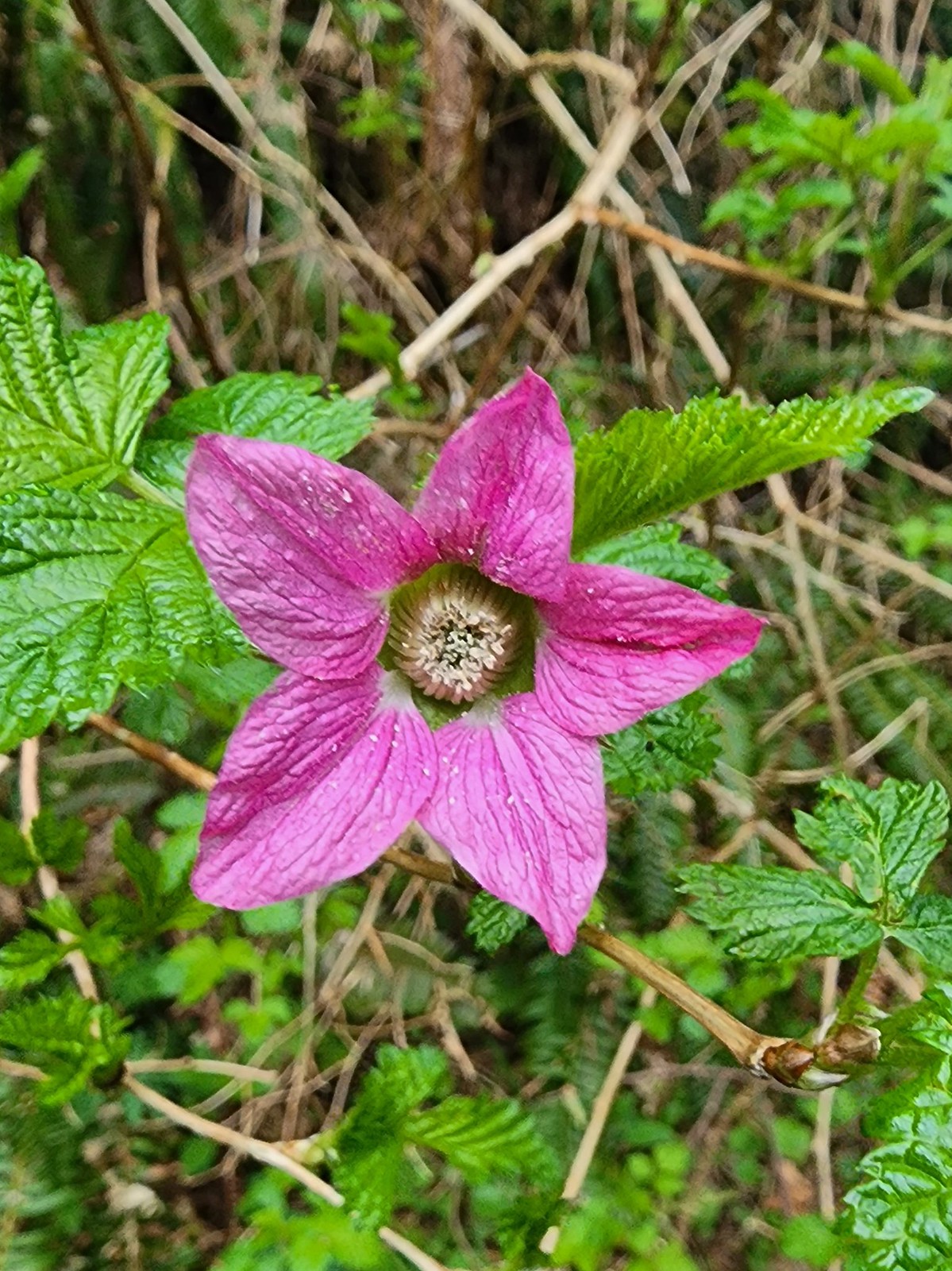 Salmonberry
 Toothwort
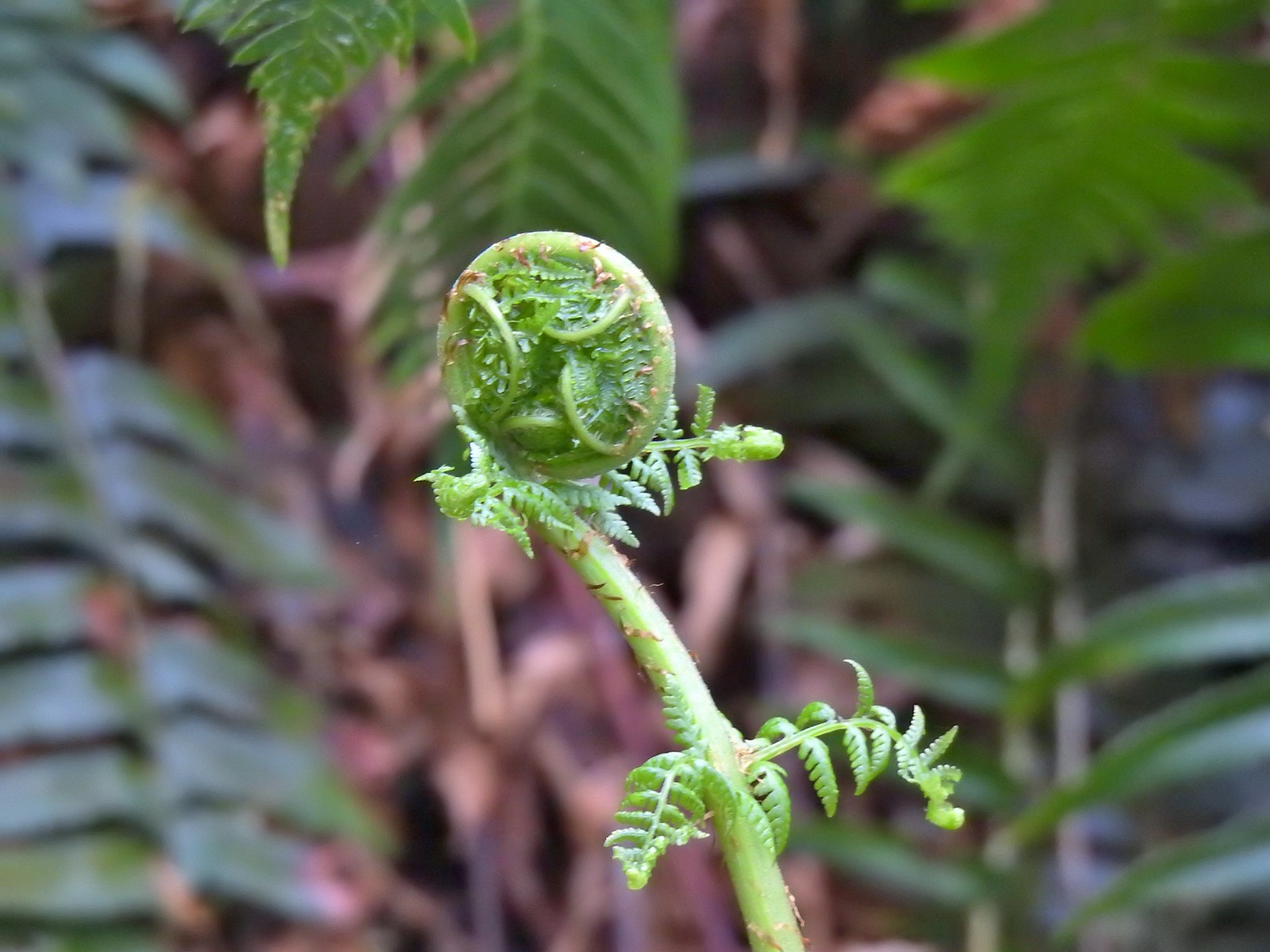 Unfurling fern
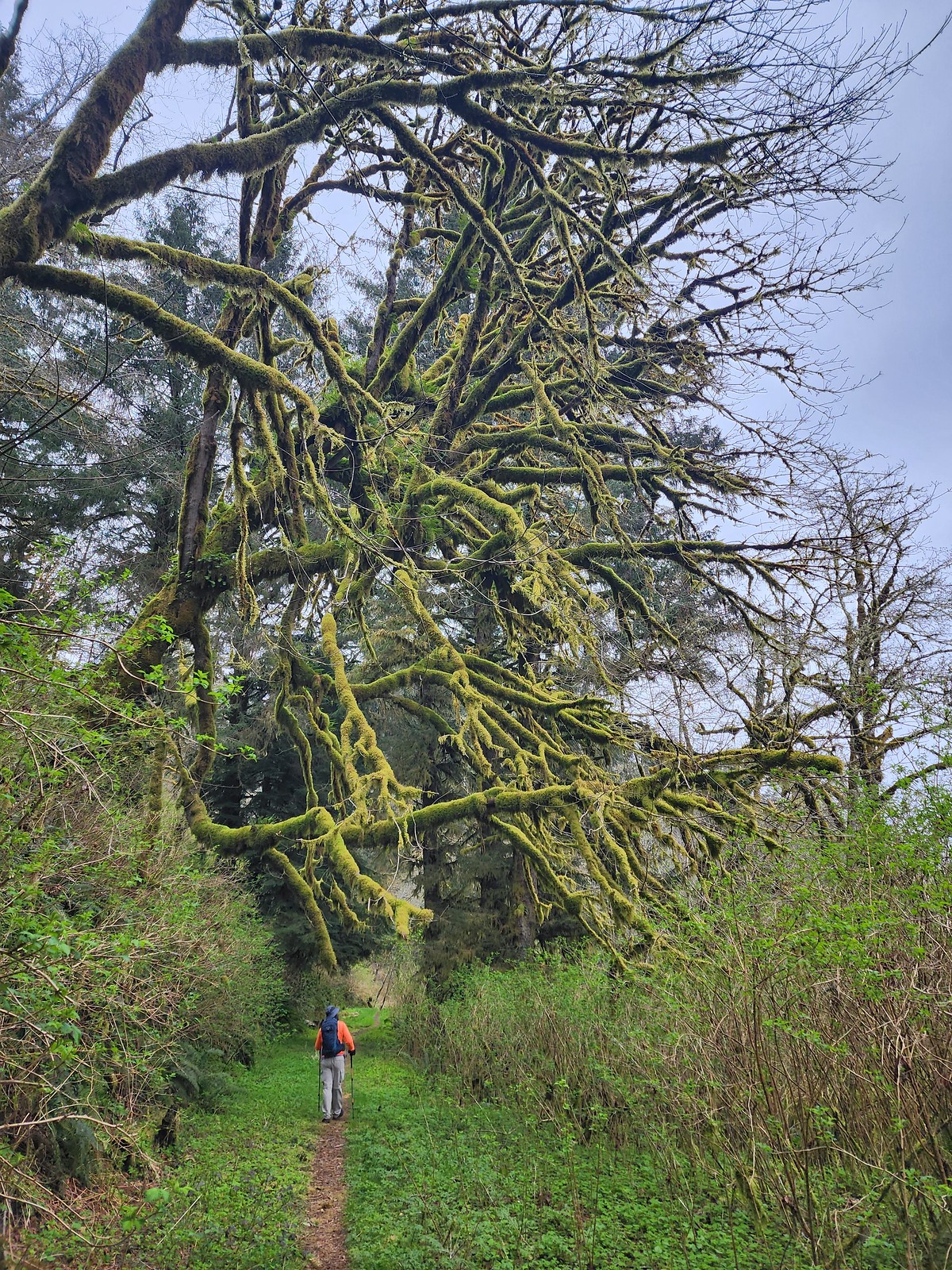 Me passing under a mossy tree.
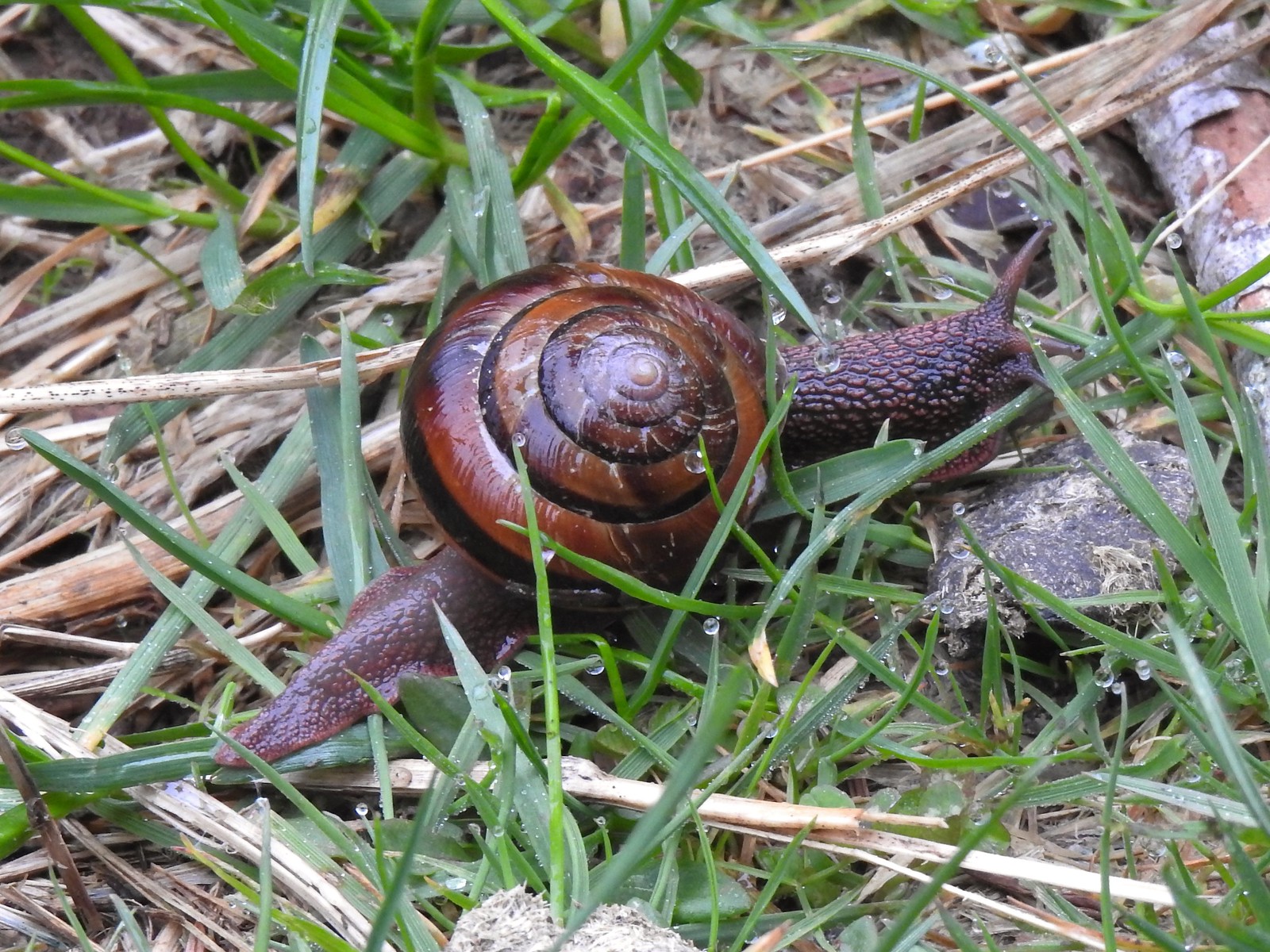 Snail on the trail.
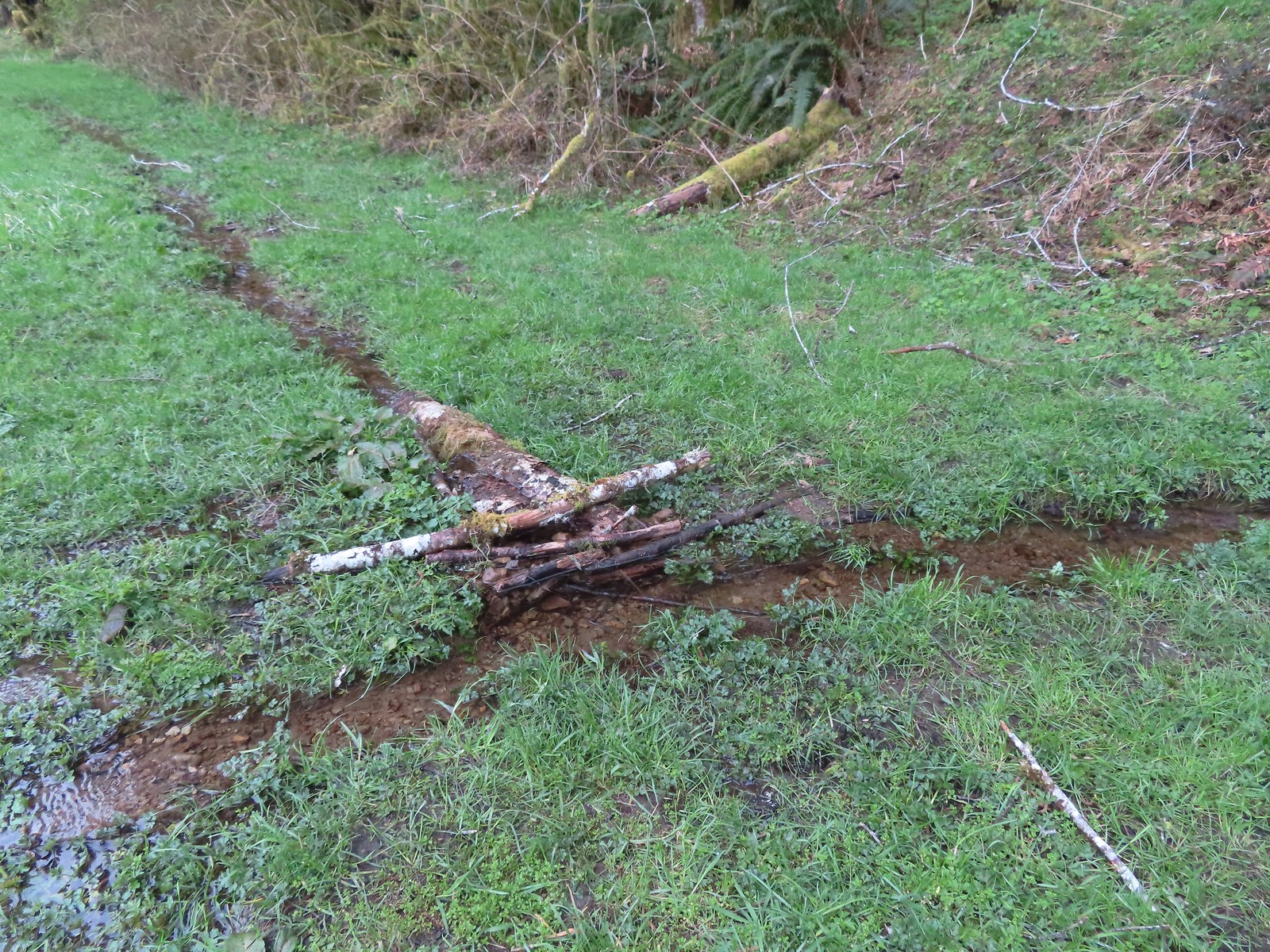 This makeshift damn was not stopping the water from flowing down the trail.
 Another of the small stream crossings.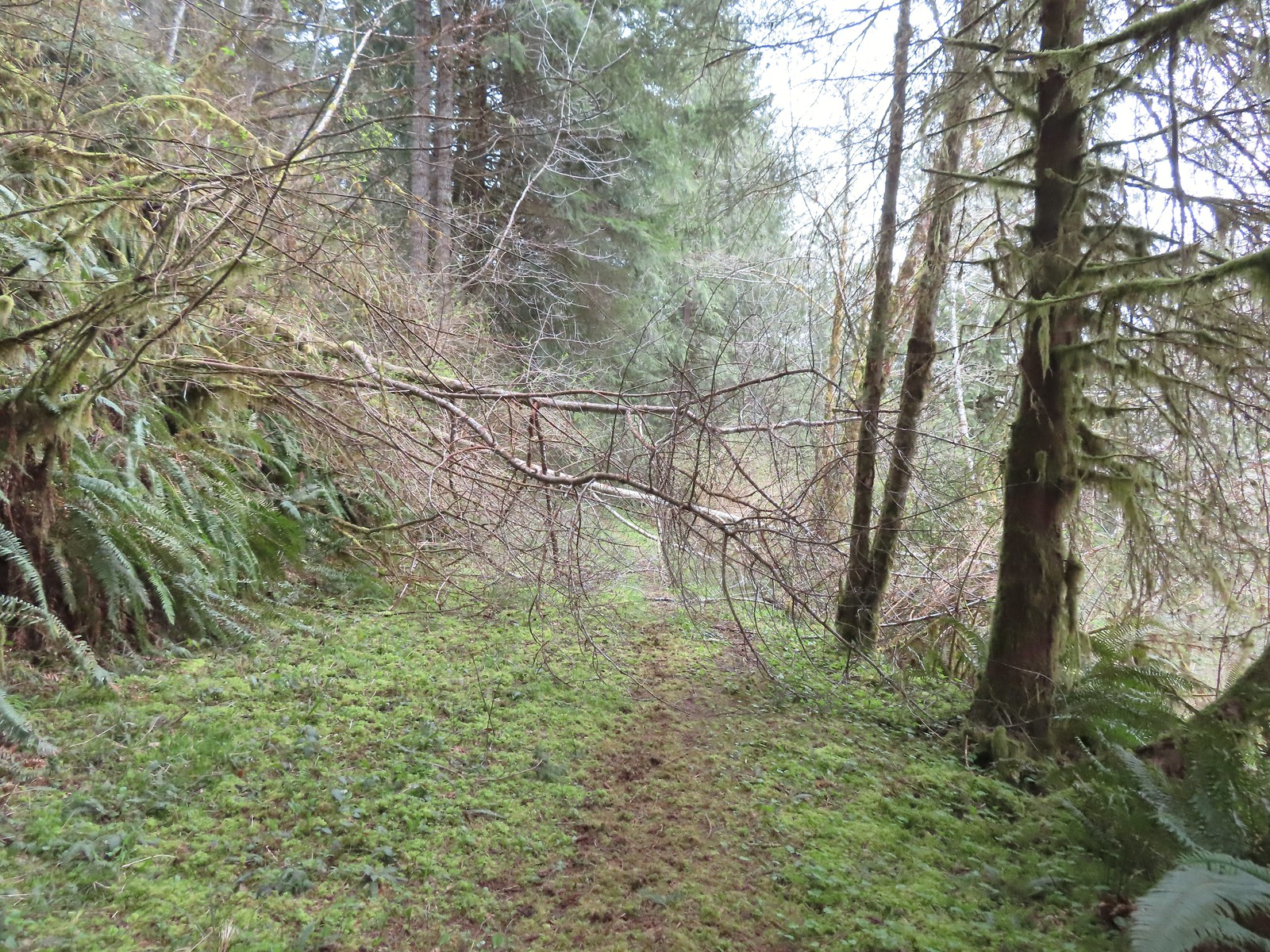
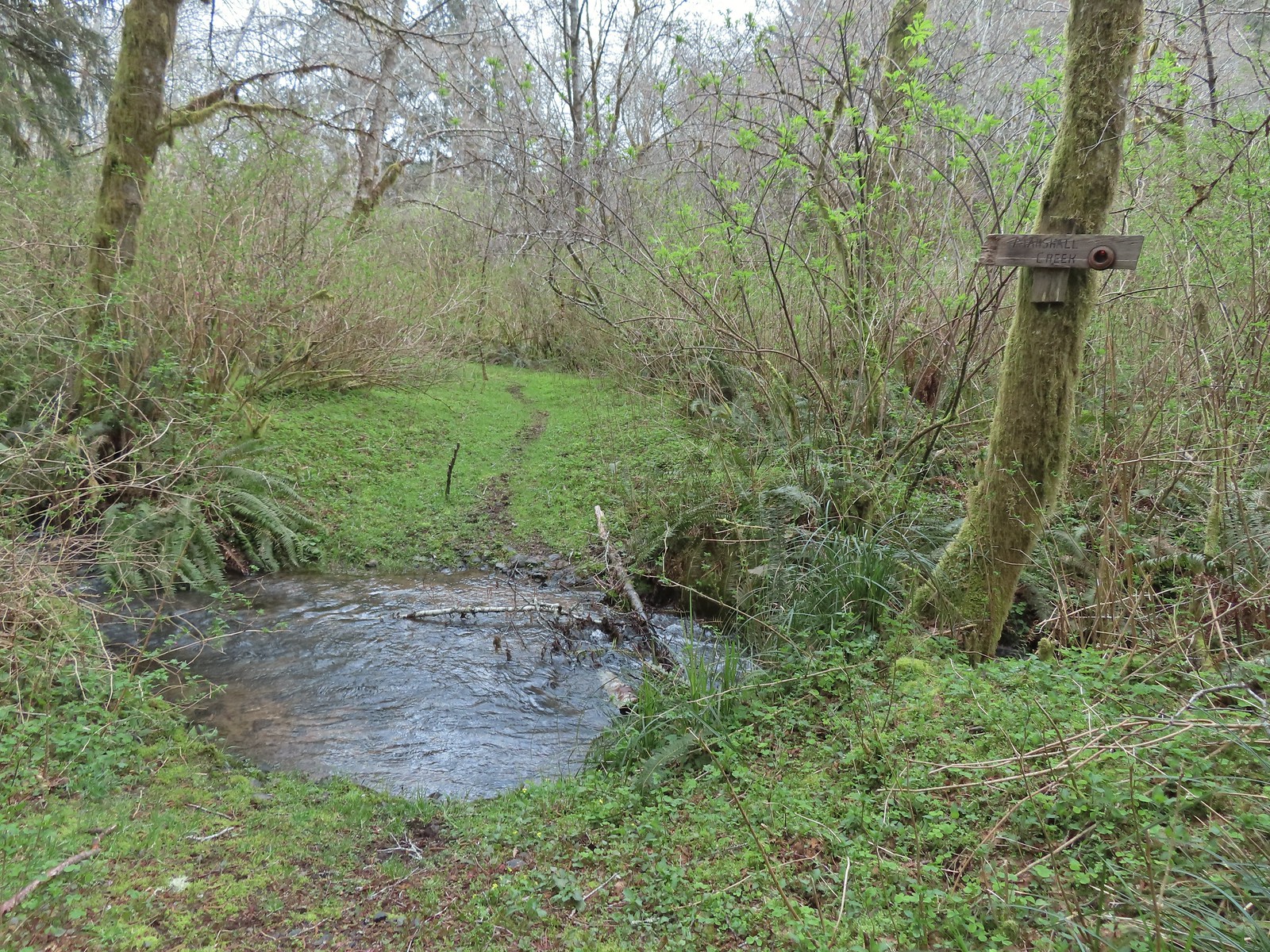 The creek was actually pretty deep here with the recent wet weather we’d had.


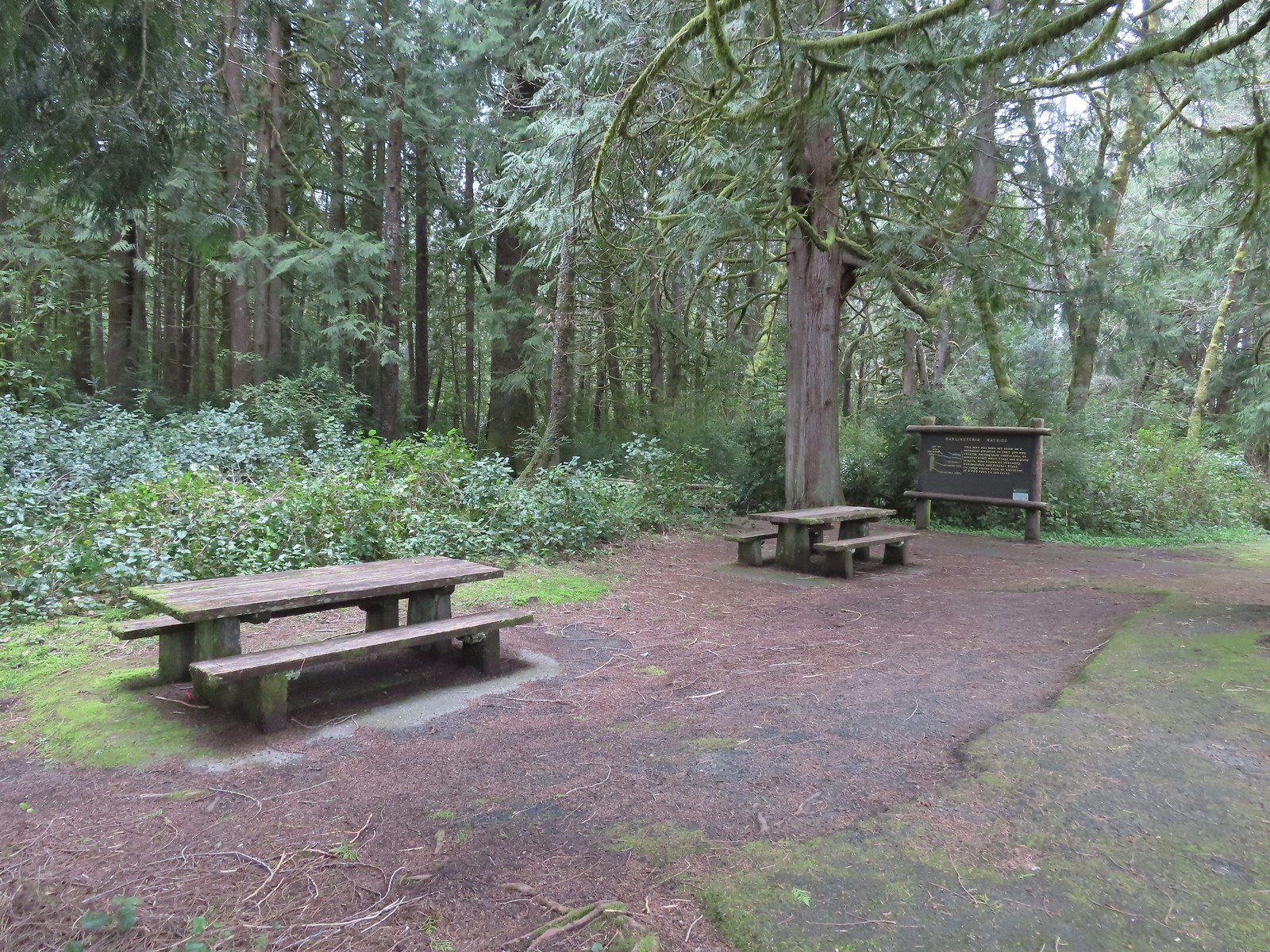
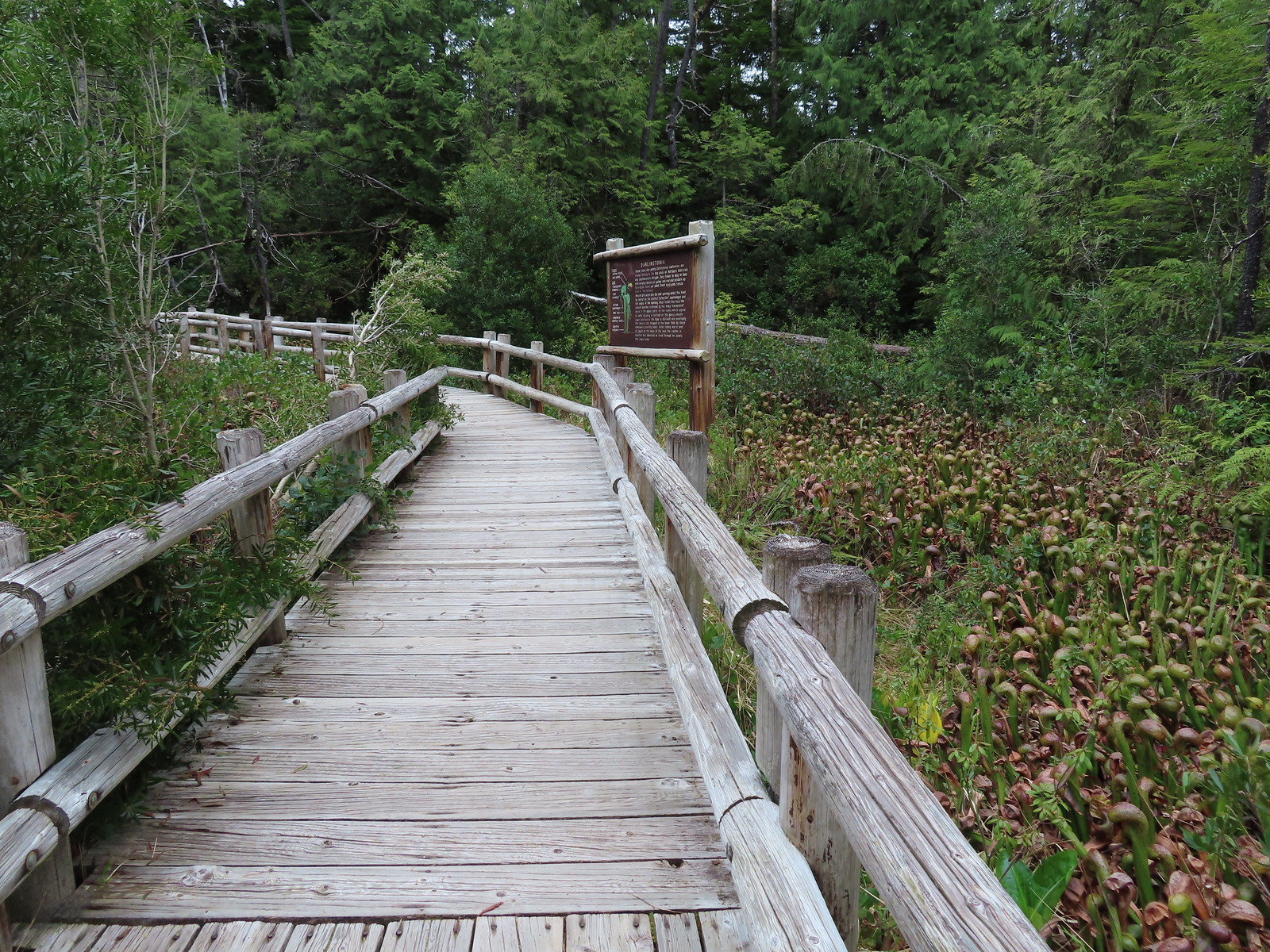
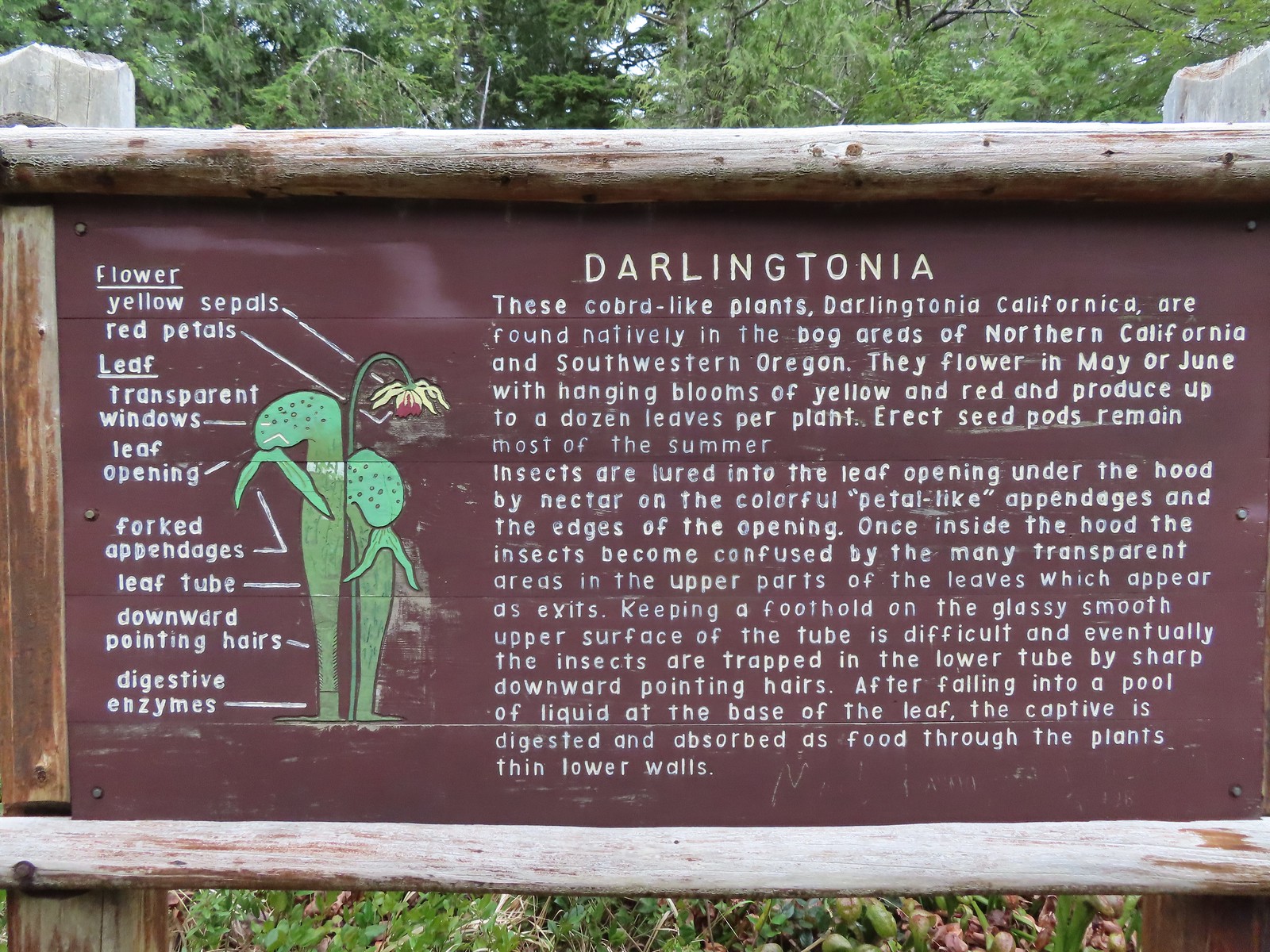
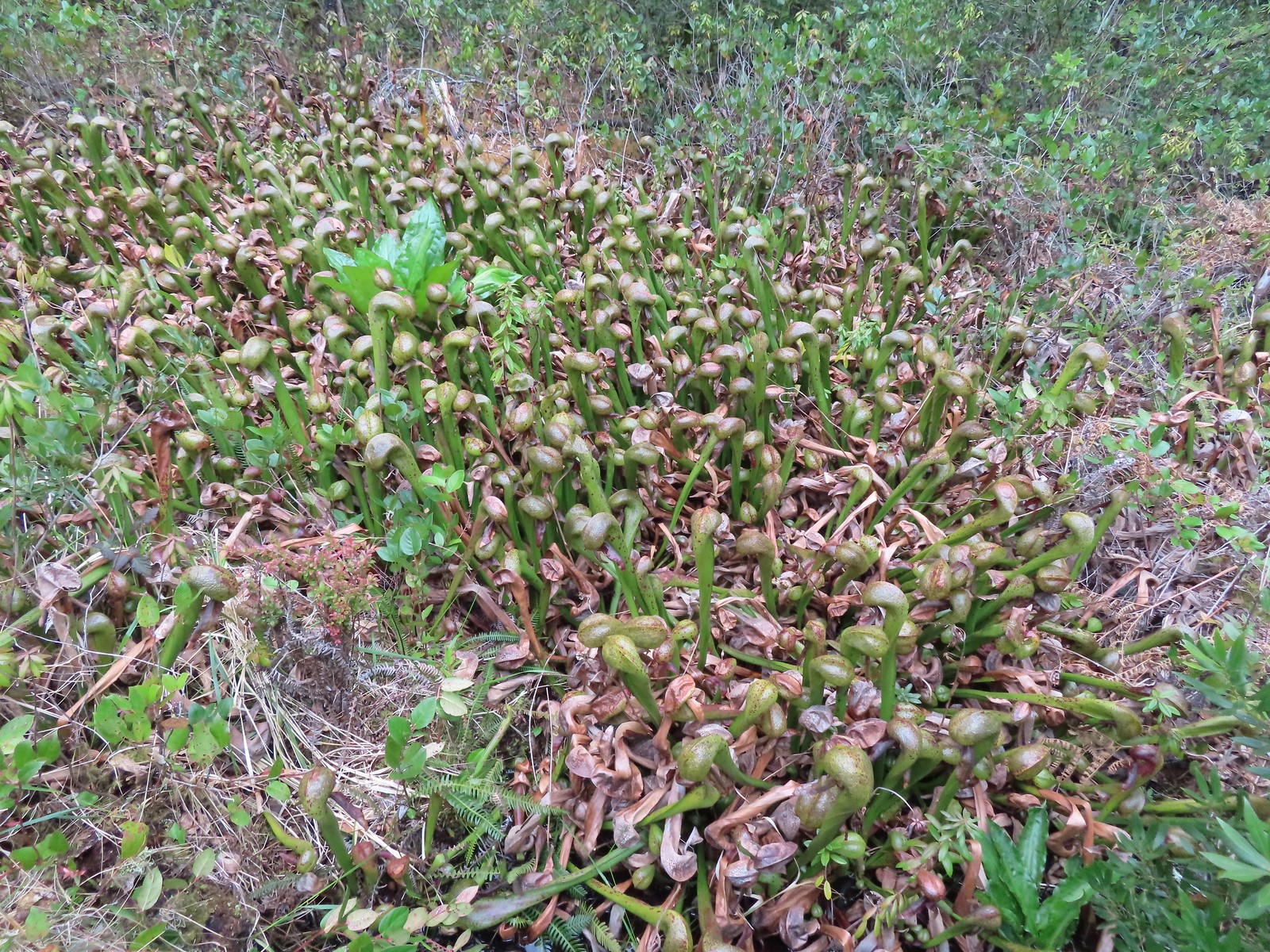
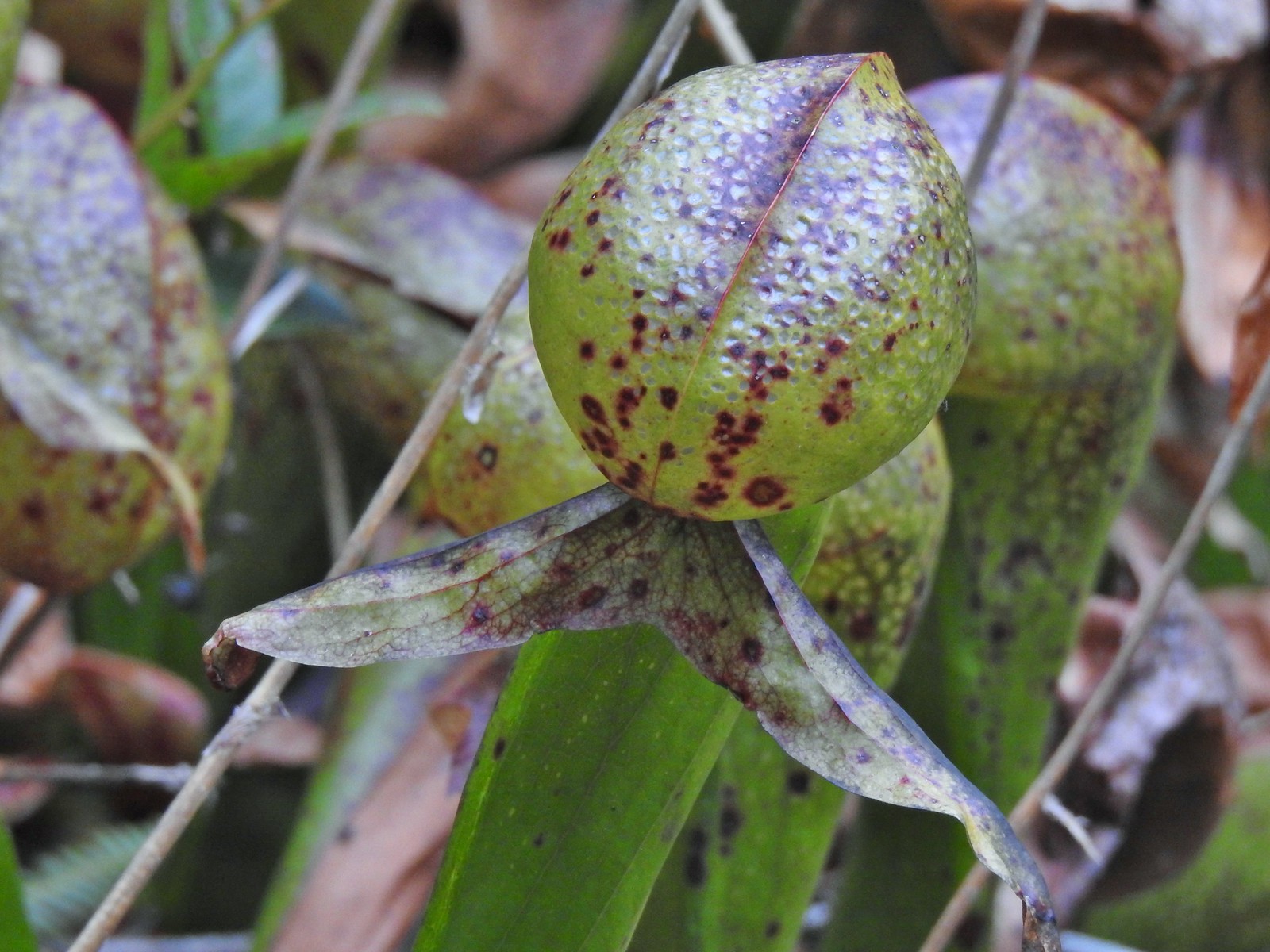


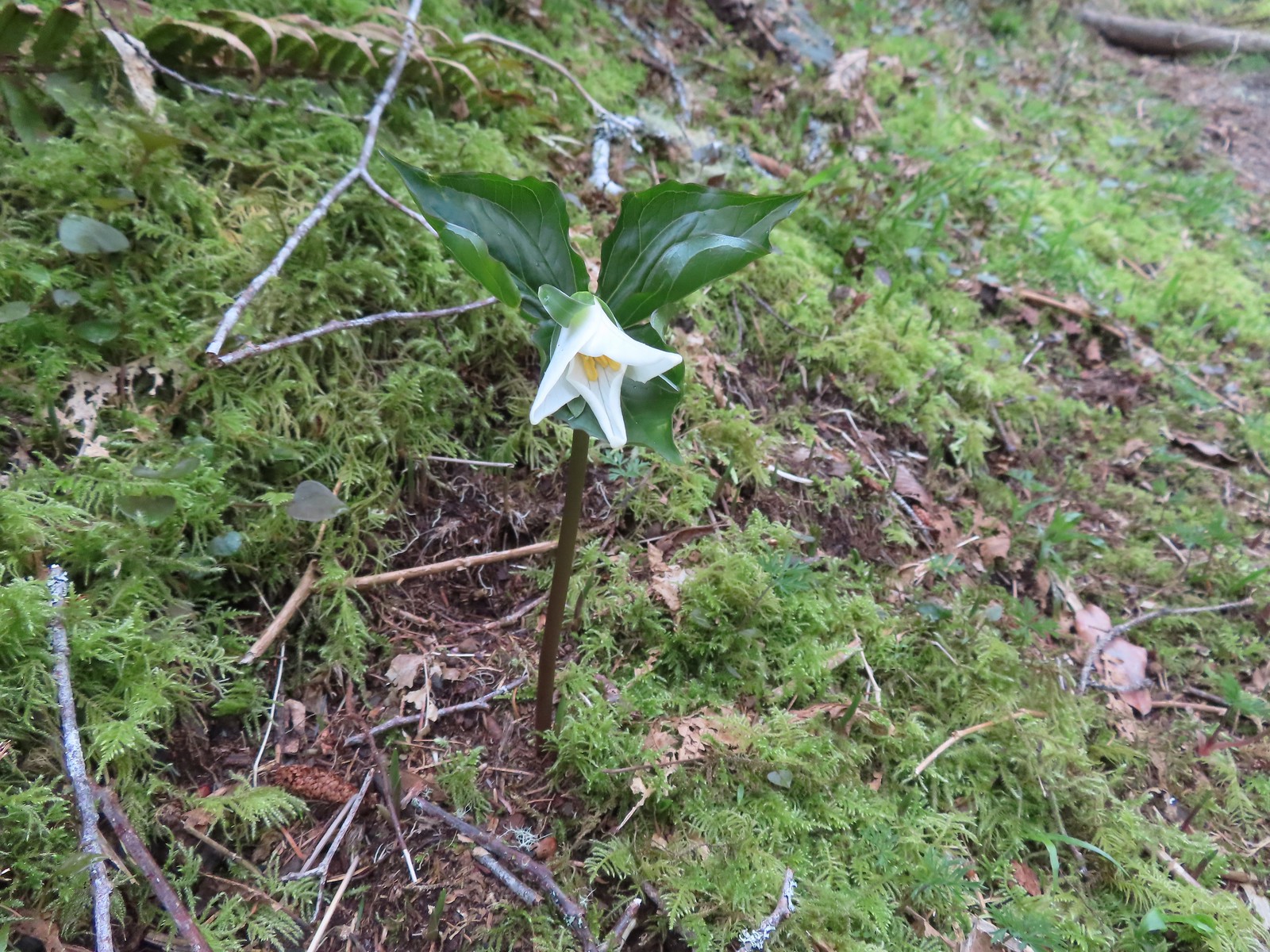 A trillium unfurling.
 Violets
 Several trails have similar markers with most of them being at or near junctions. This one was just alone along the trail.
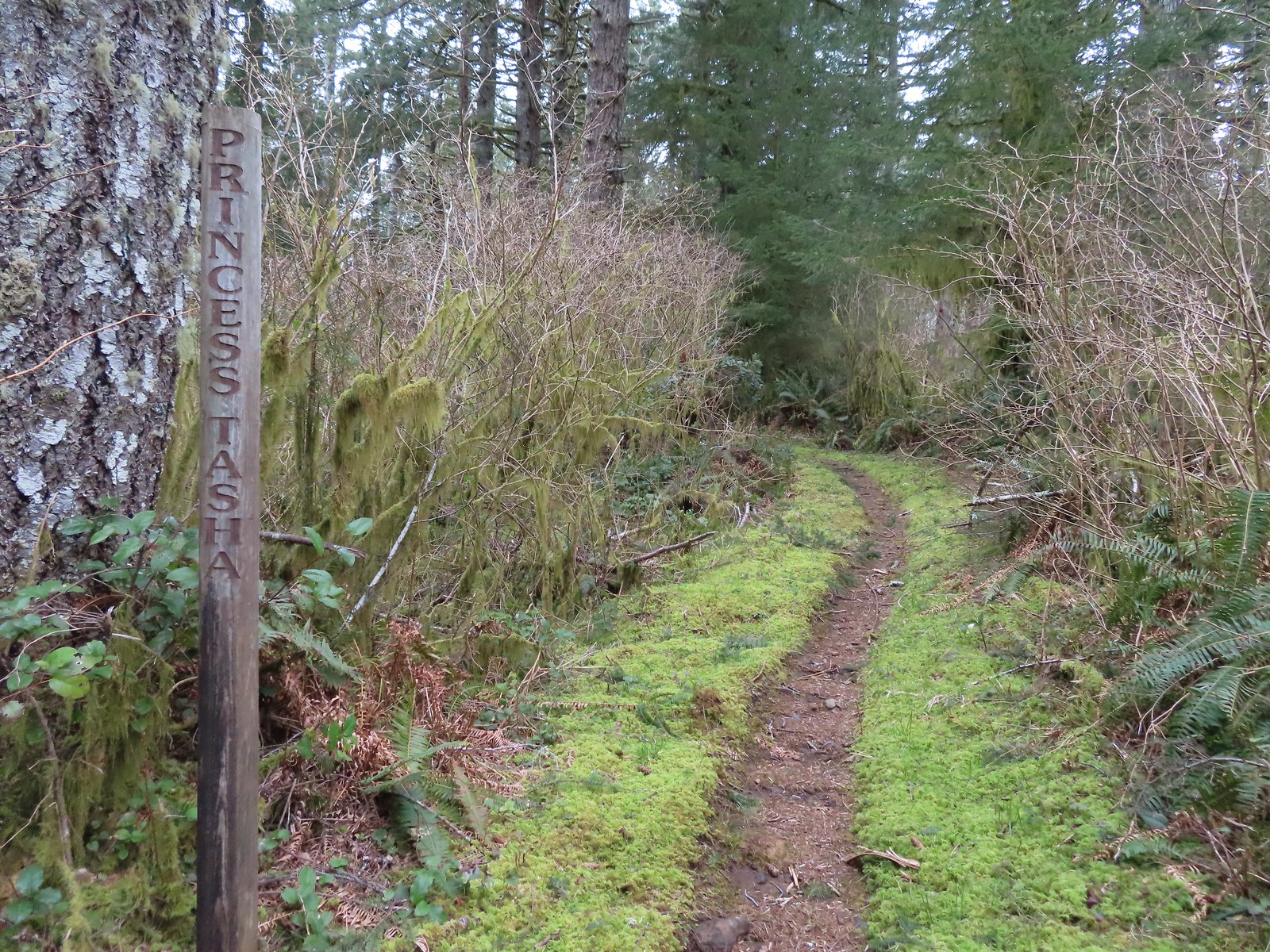


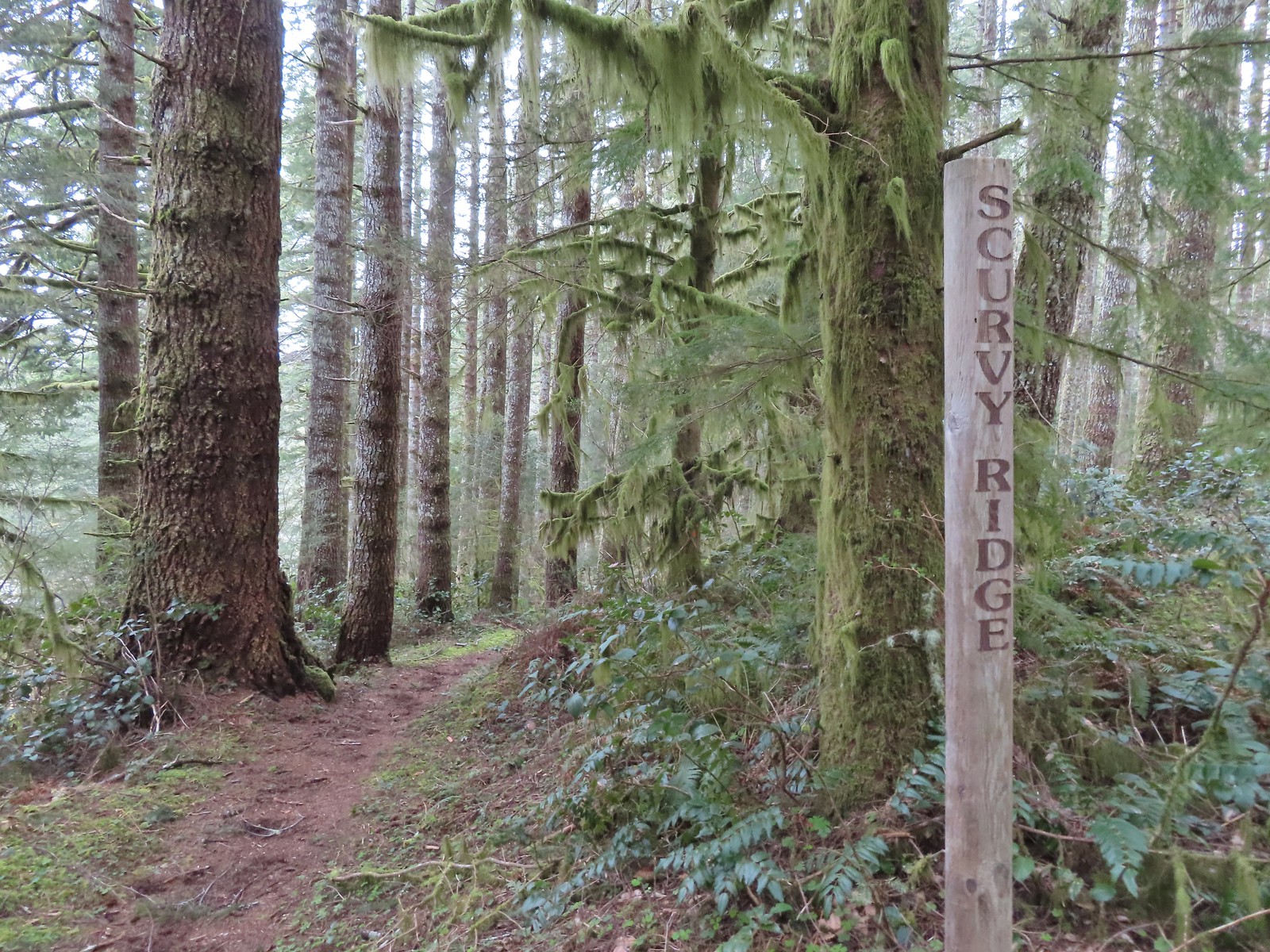
 Rough skinned newt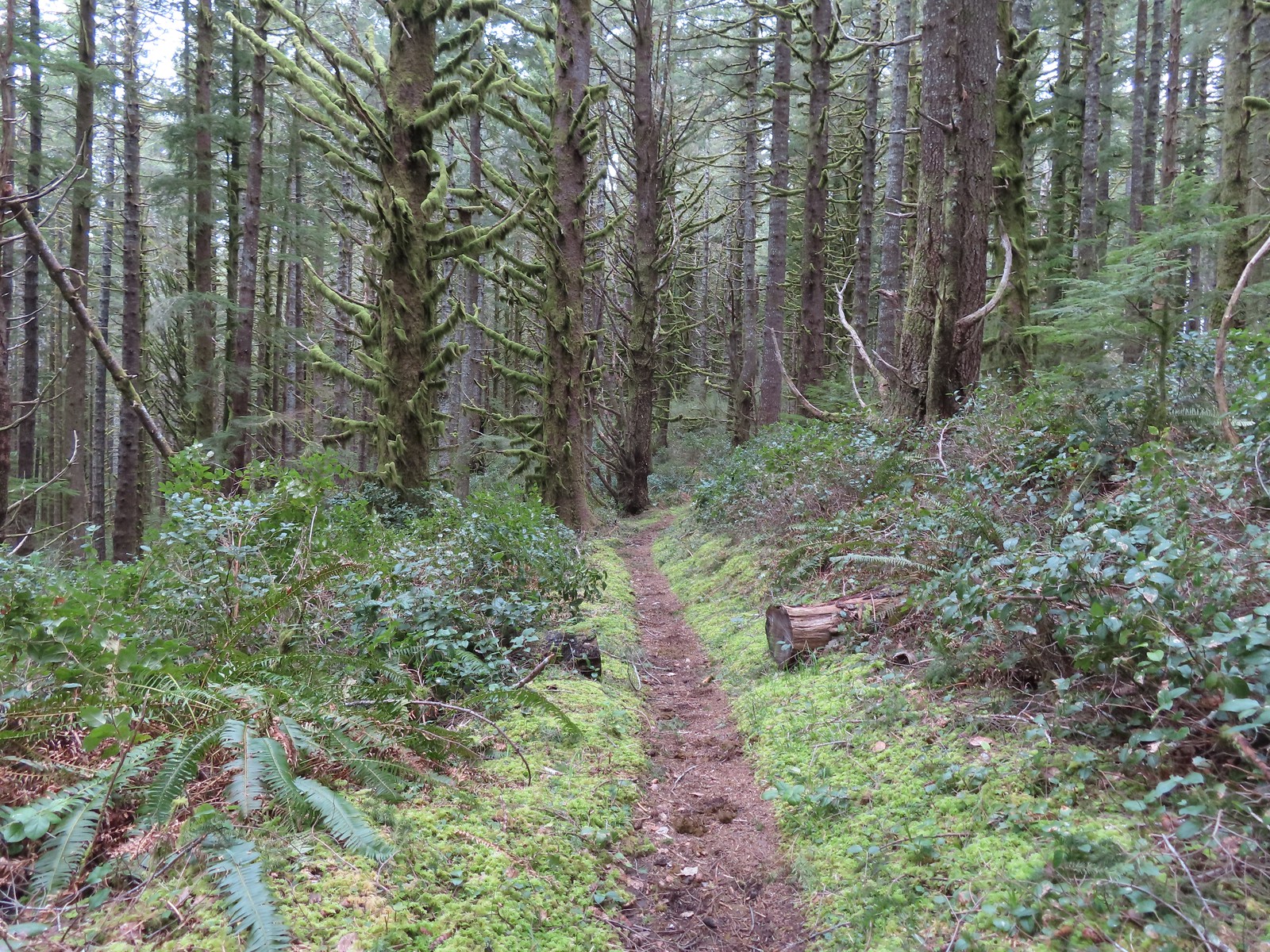
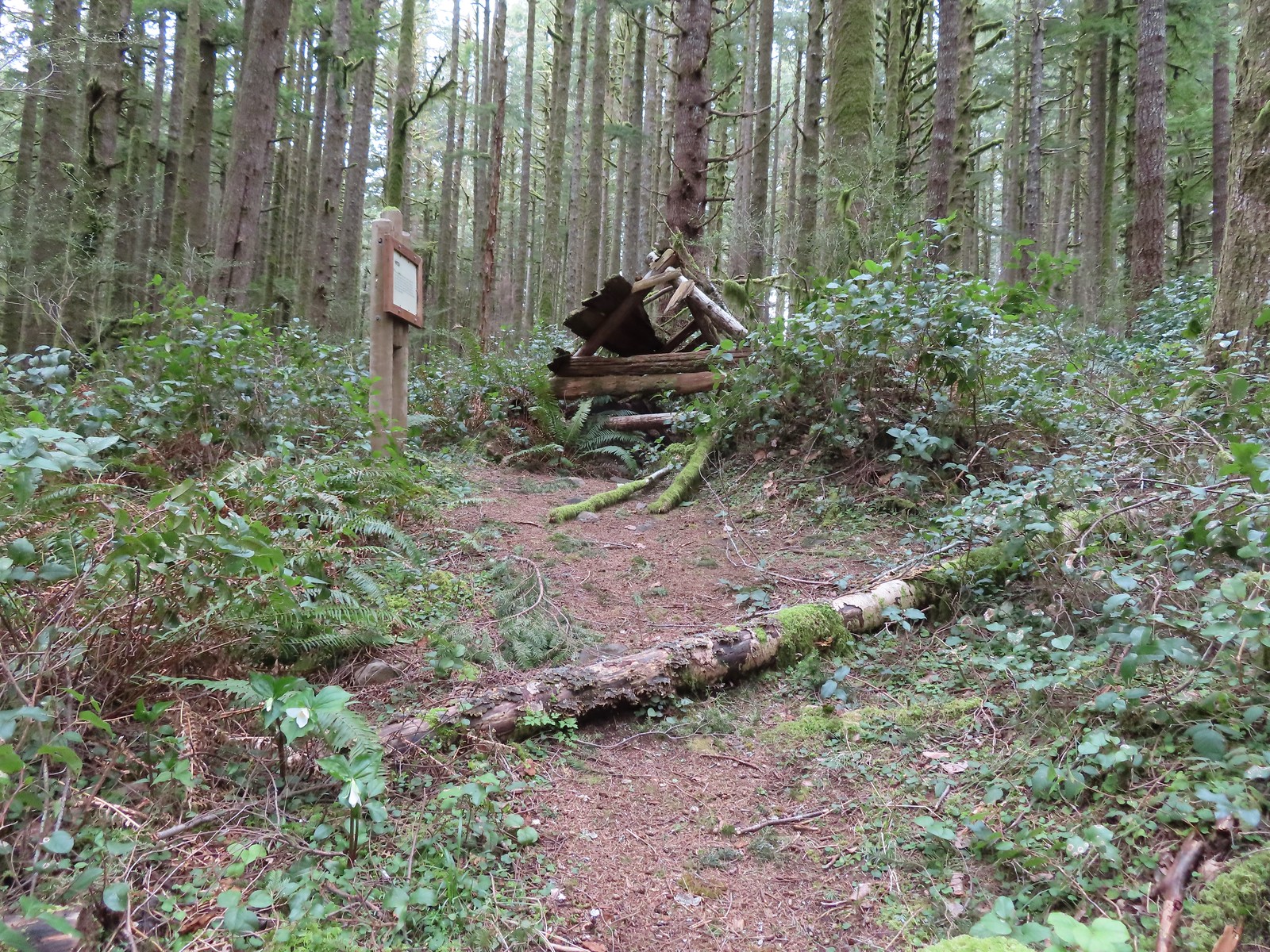
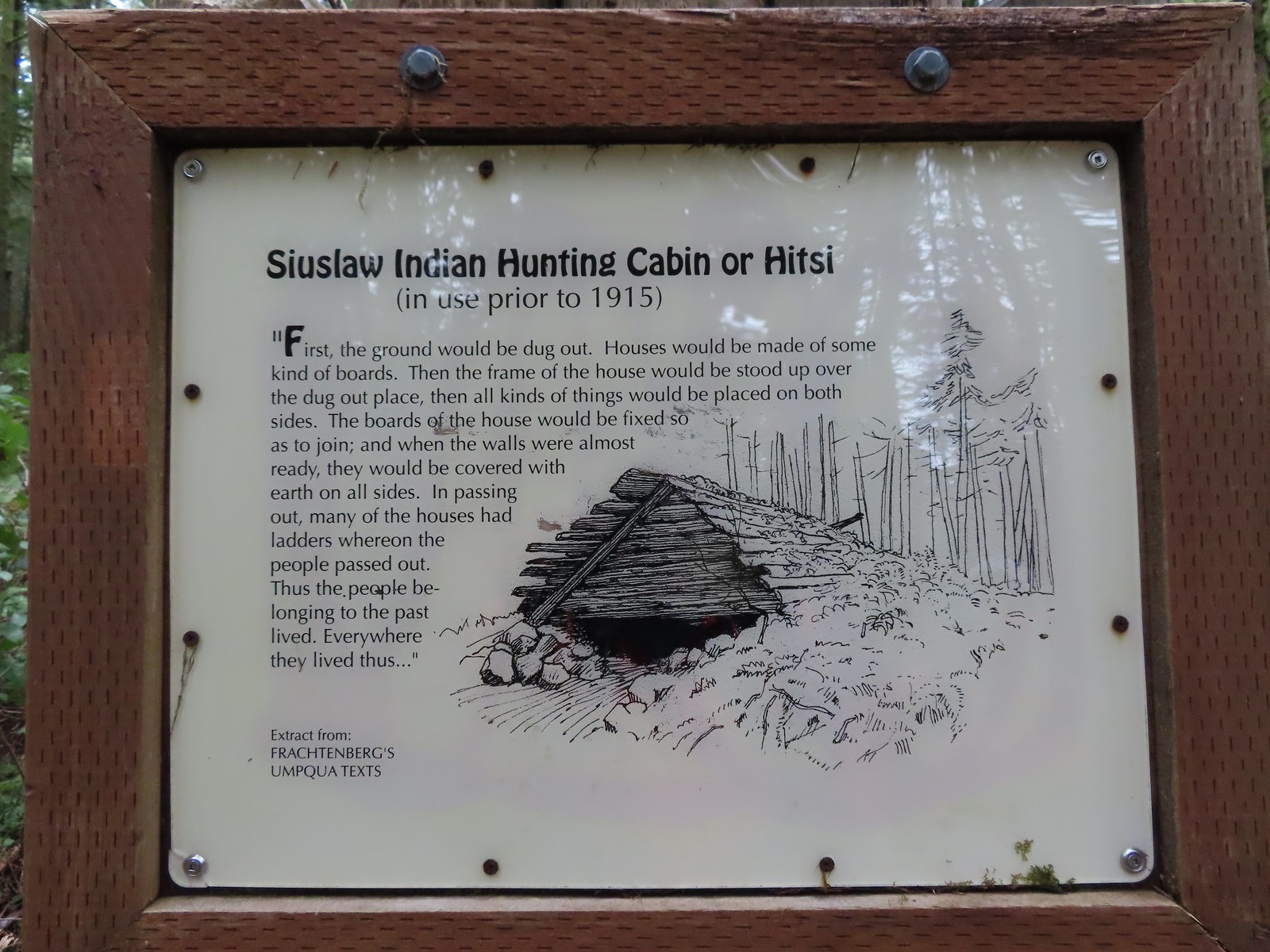

 Time has not been kind to the hitsi.


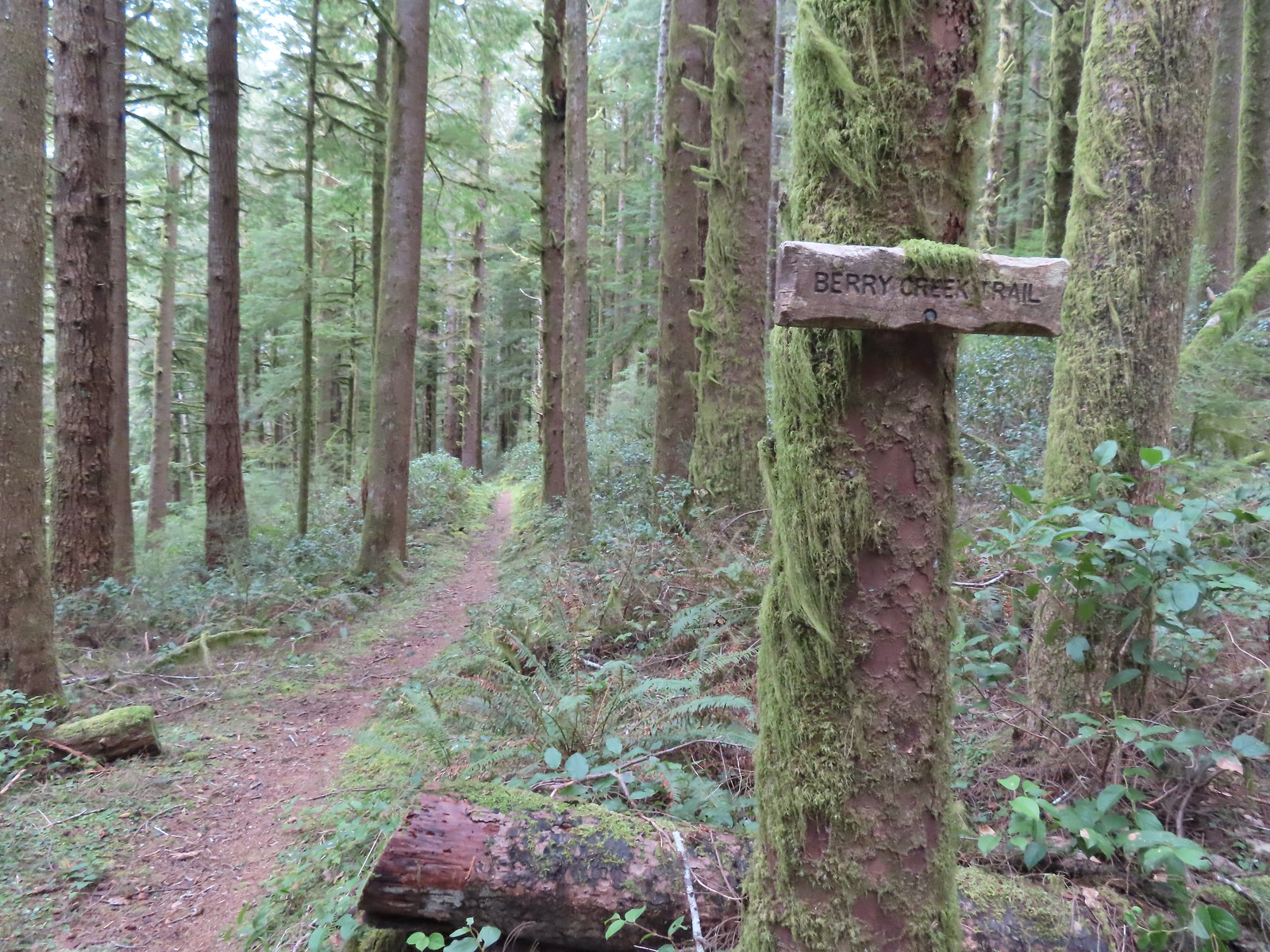
 The trail briefly followed an old roadbed.
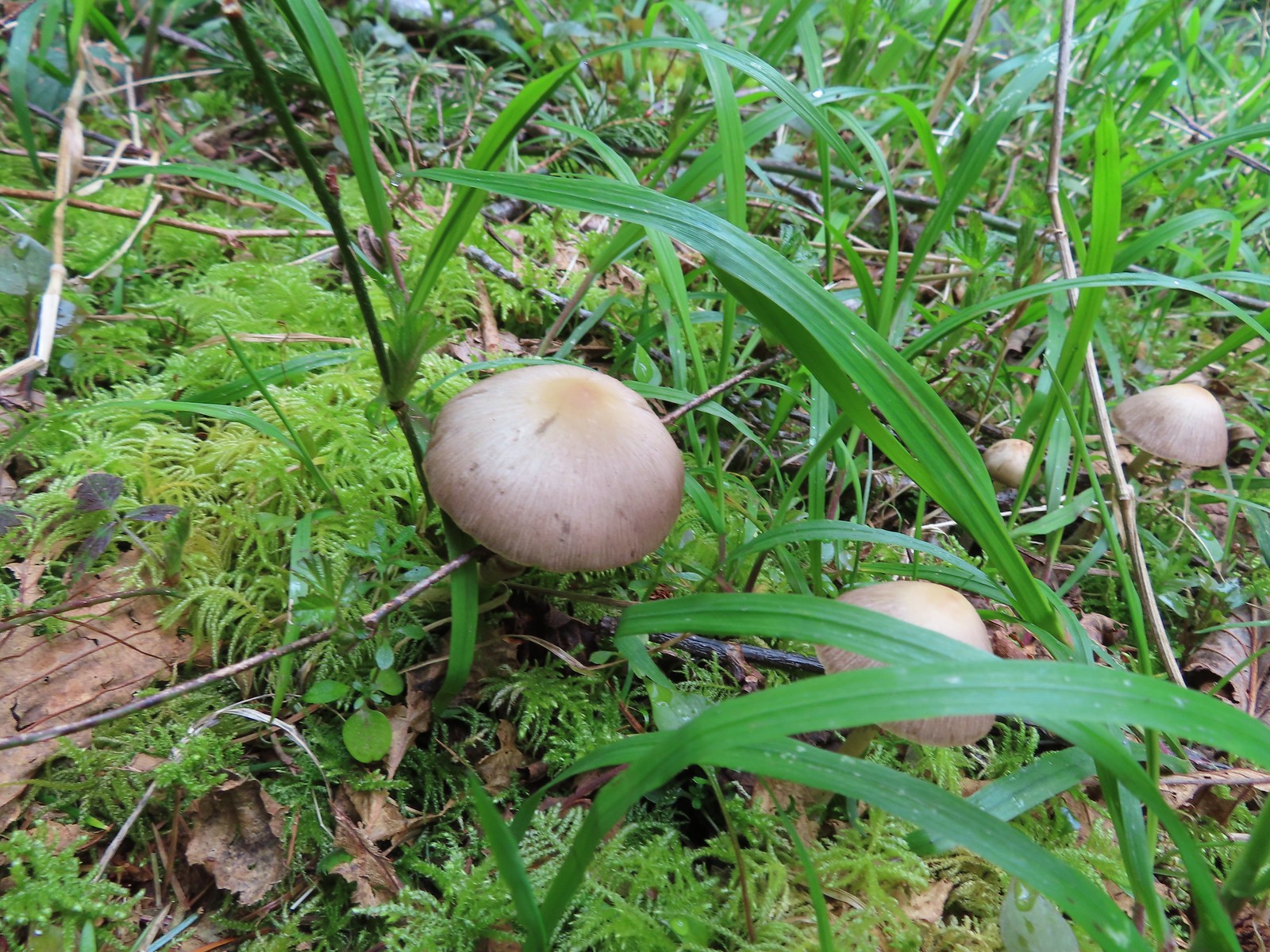 Mushrooms along the roadbed.
 Another bench with a questionable view at the end of the roadbed segment.
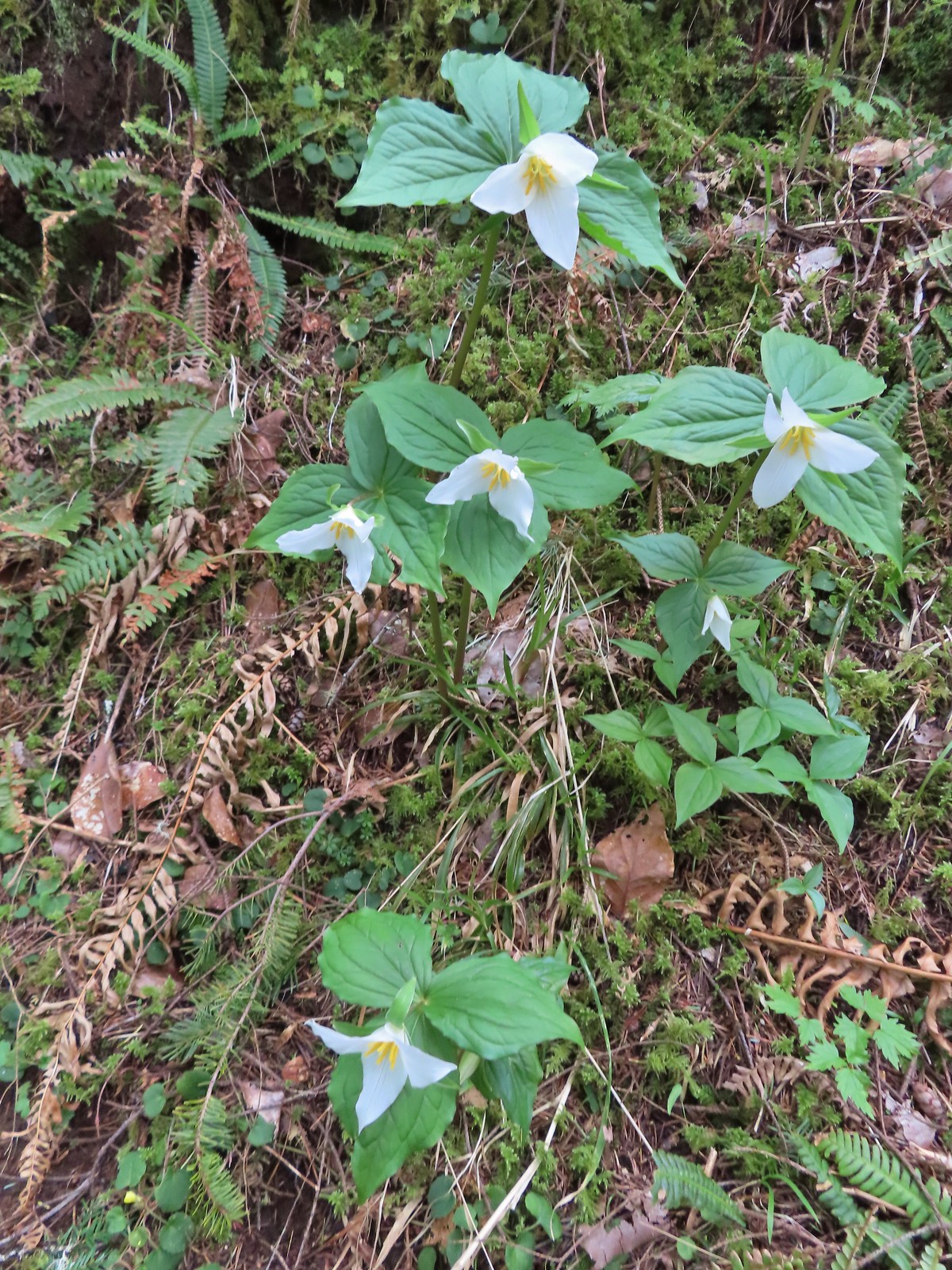 Flowers are a few weeks behind this year but there were quite a few trillium along the trails.
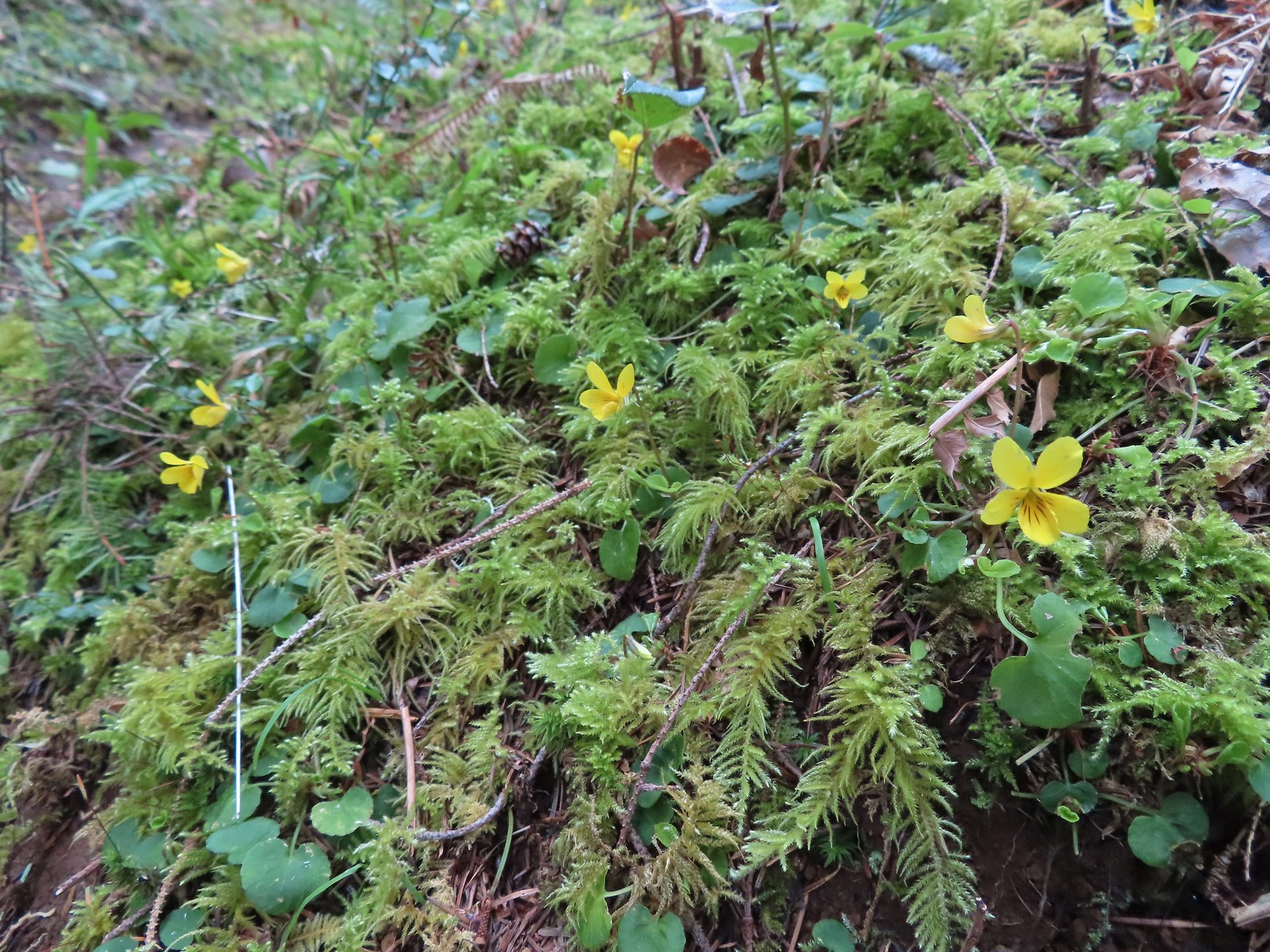 Violets were the other abundant flower.
 Red flowering currant beginning to bloom.
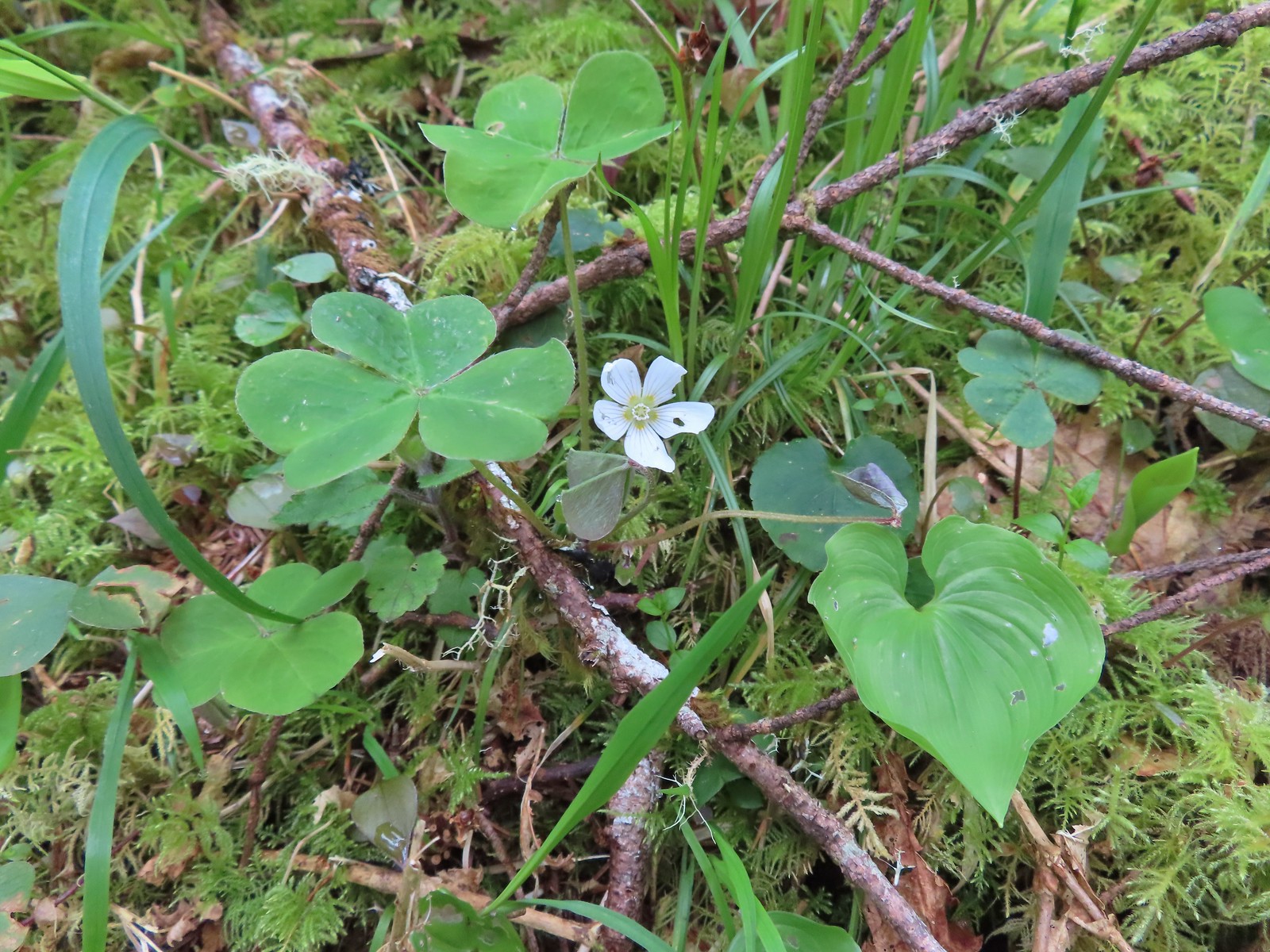 Wood sorrel
 This looked to be a fairly recent uprooting.
 A cute fungus
 Looking back after fording.

 We made a sharp right here onto the Nelson Ridge Trail.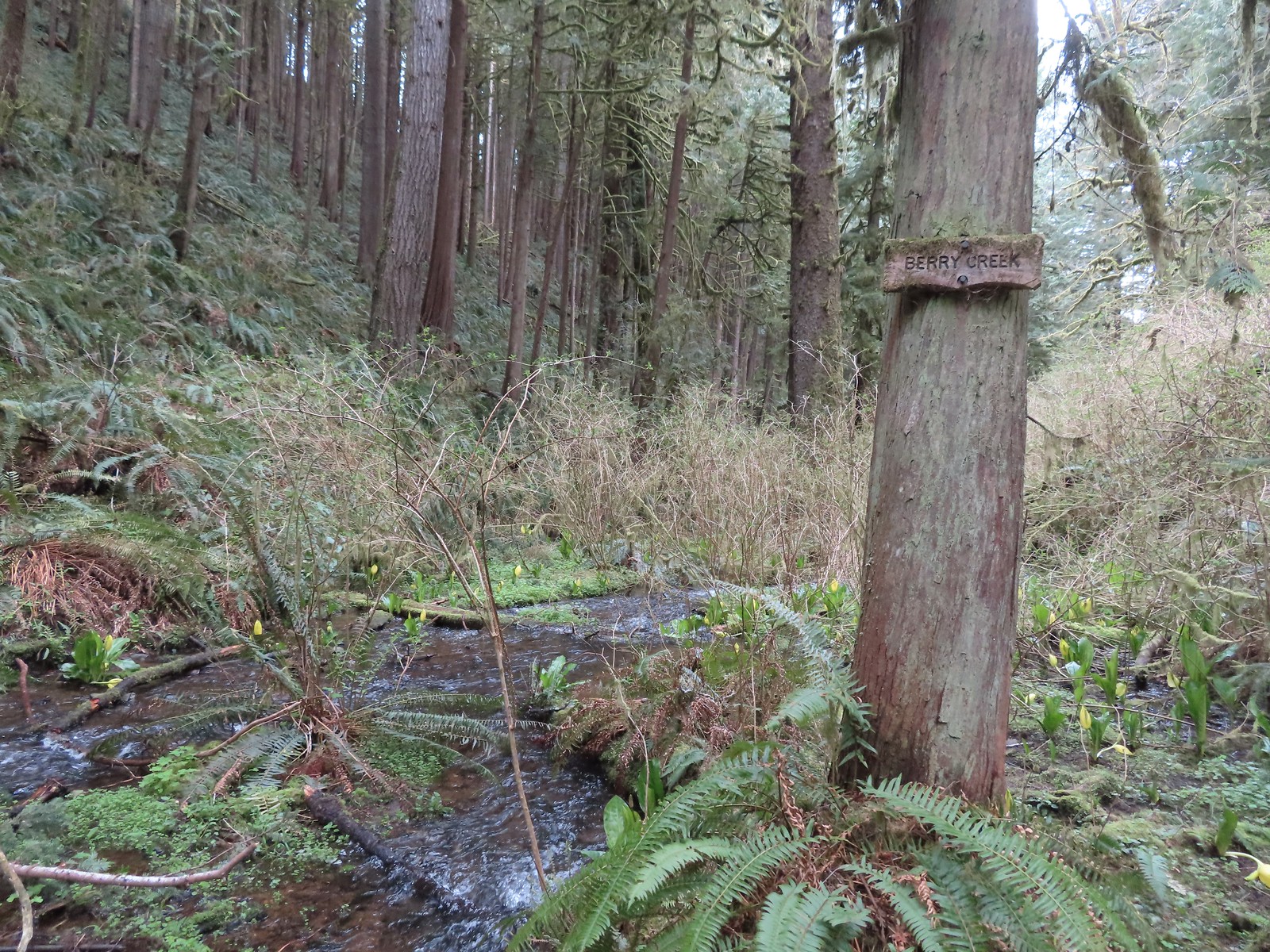
 Skunk cabbage at Berry Creek.
 A few bleeding-heart blooms.
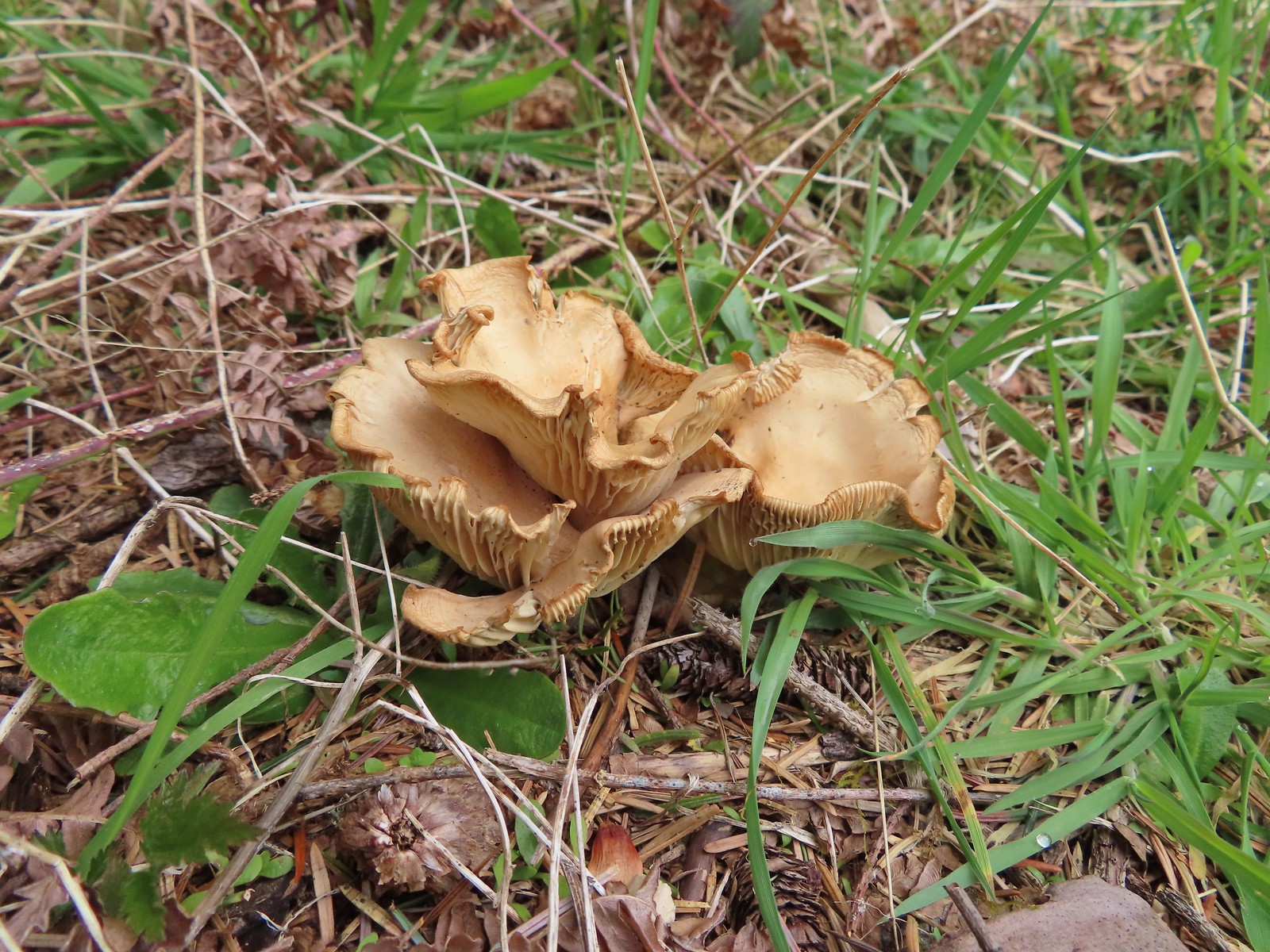
 At least this bench had a view of the Pacific Ocean.
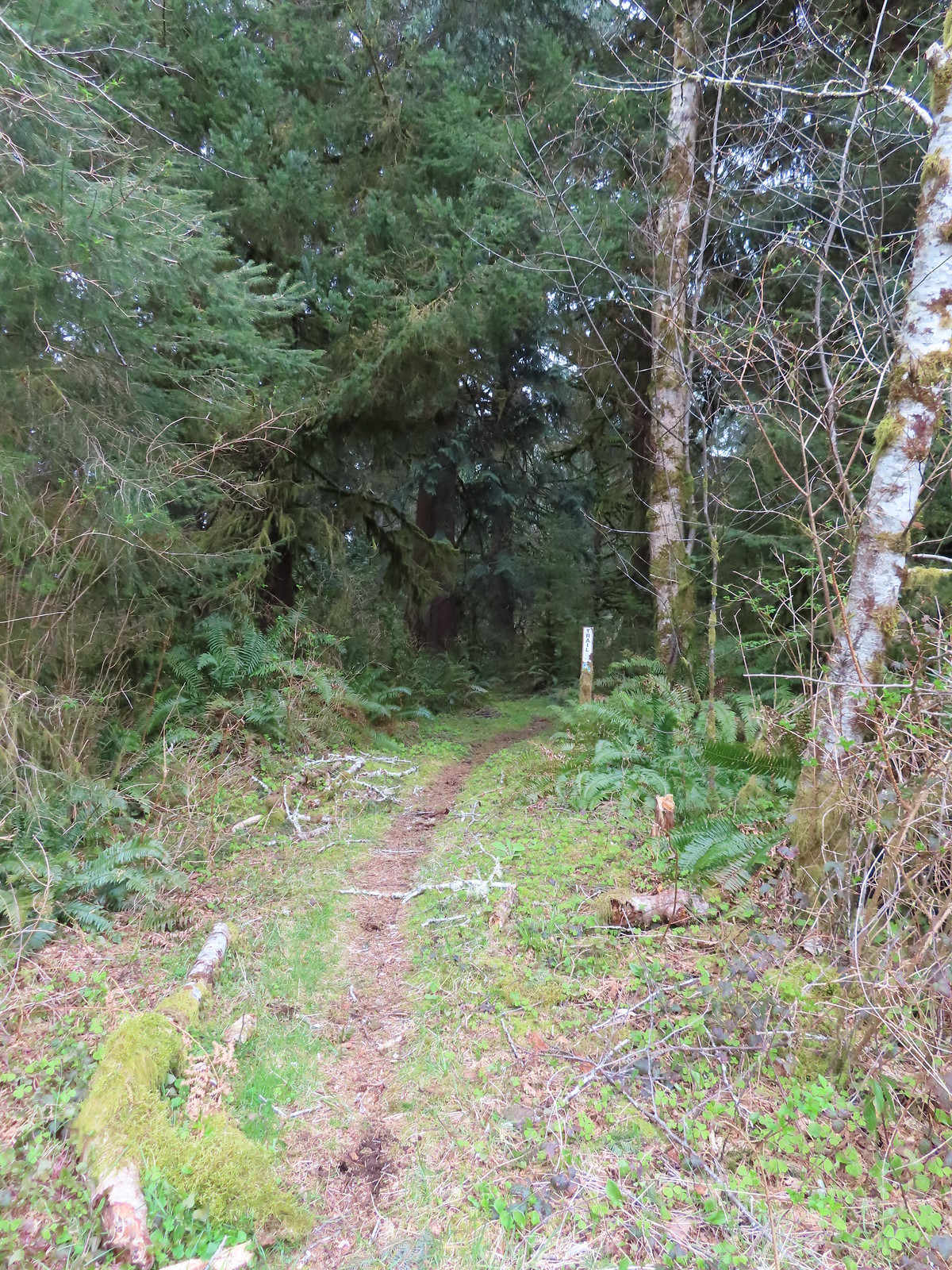 Passing through a stand of trees along the ridge.
 Another bench.
 Some easy to walk around blow down.
 We couldn’t tell what this road/trail to the left was on the map so we stayed right to be safe at this junction.
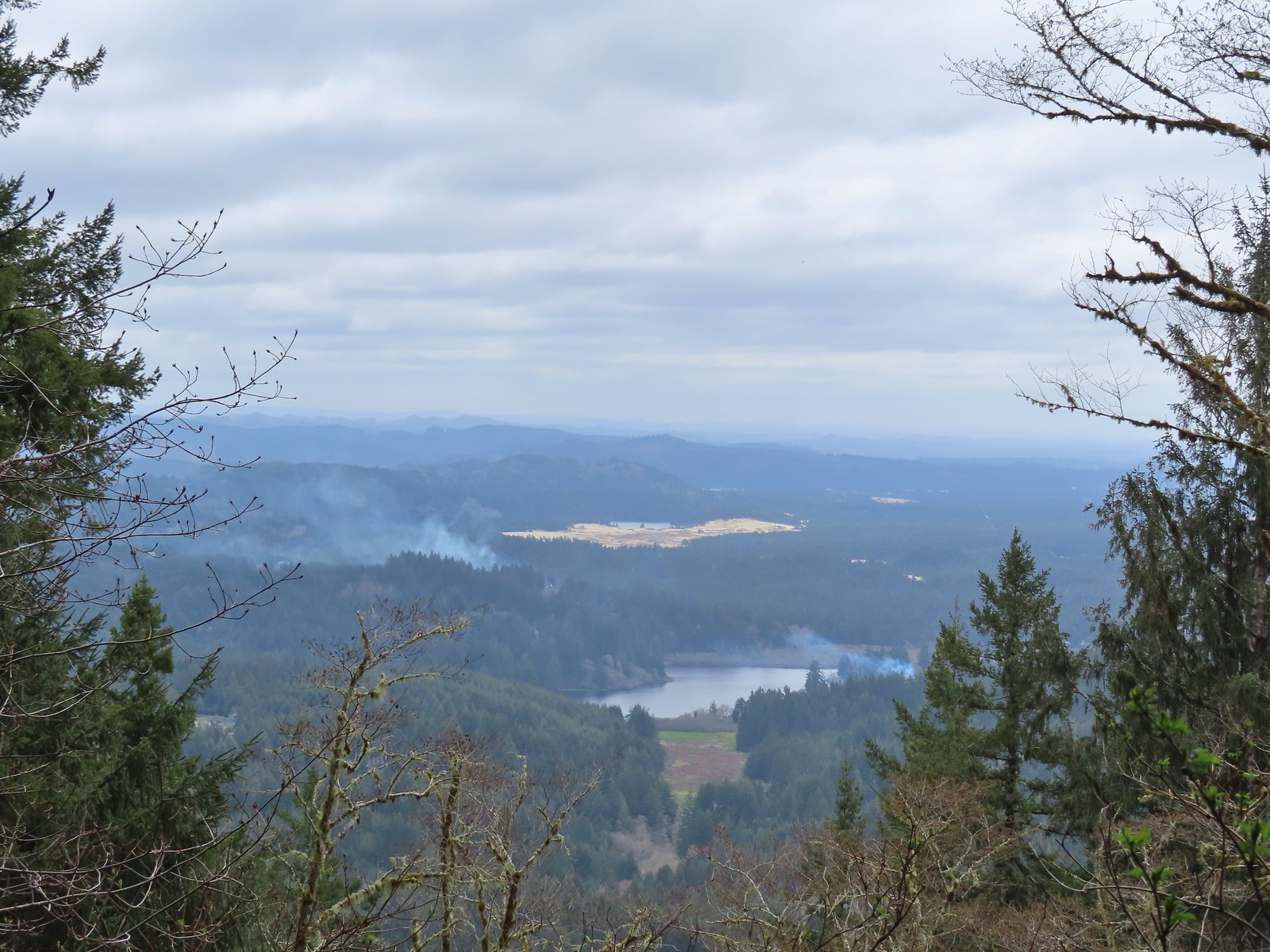 I think that is Sutton Lake and beyond the sand is Clear Lake.
 The end of another short roadbed section.
 I walked on this roadbed for a bit just to do something a little different than on the first visit when I stuck to the trail (on the right).
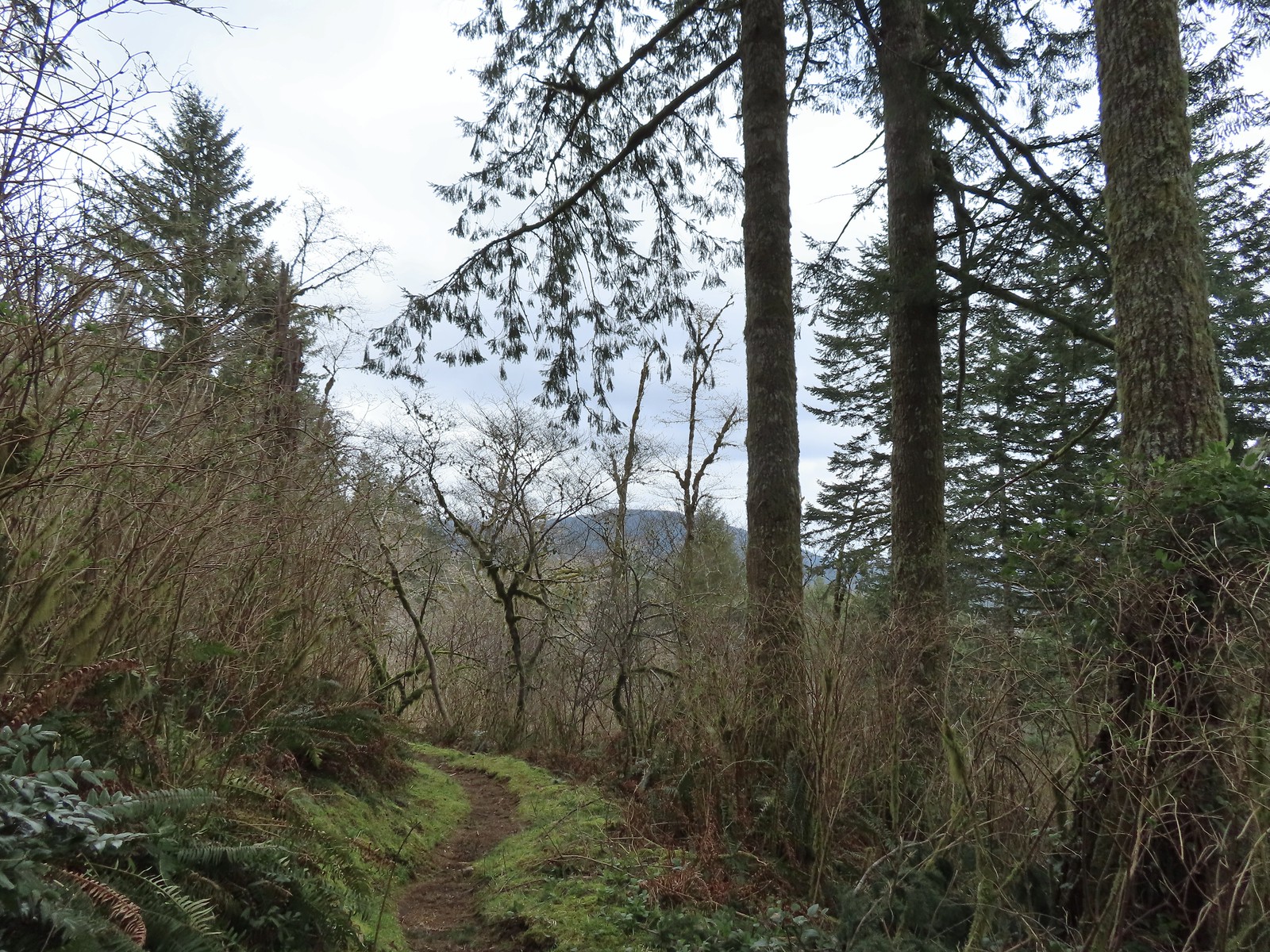 Starting to descend toward Dry Lake.
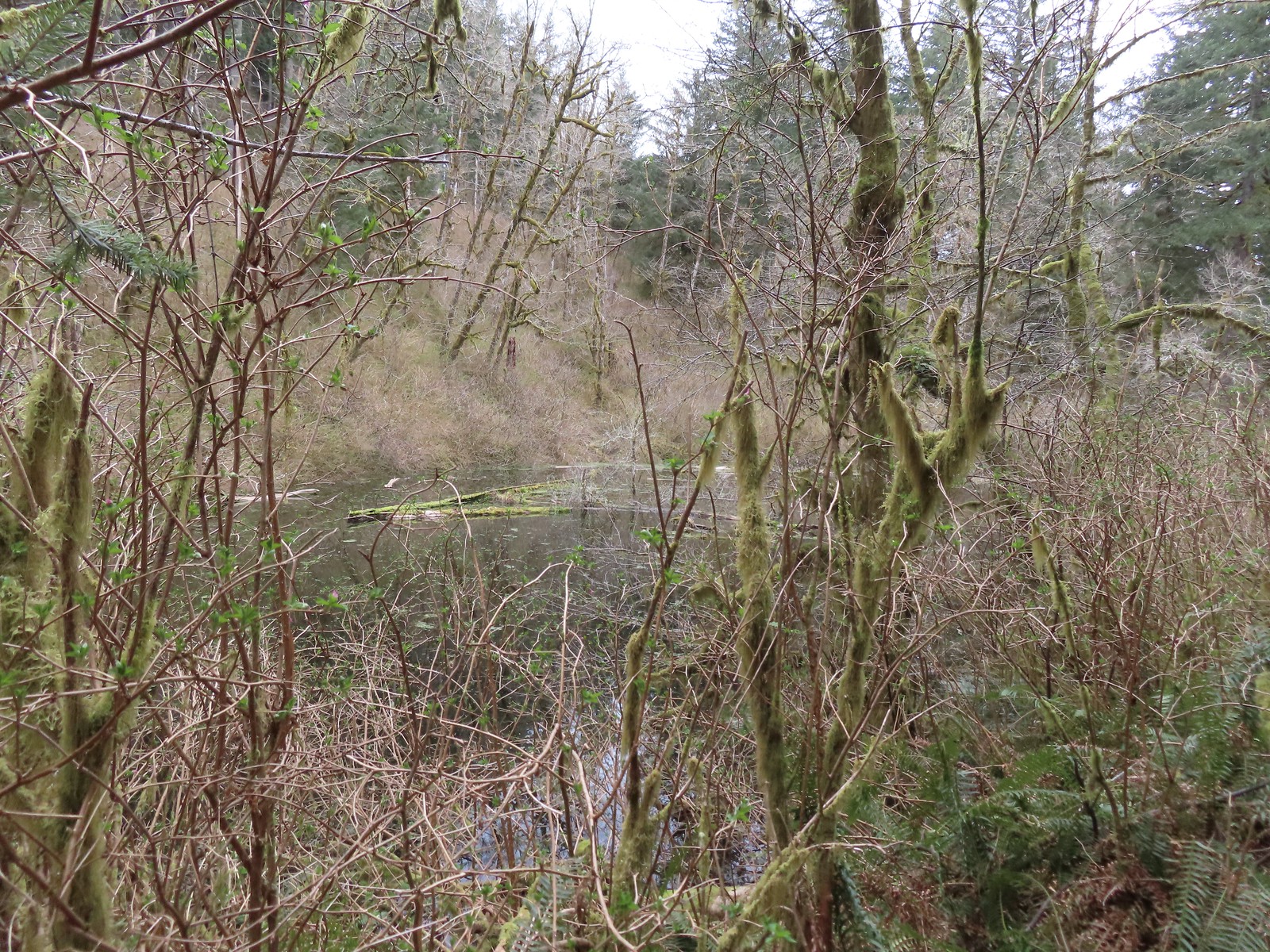 Dry Lake
 Back at the trailhead.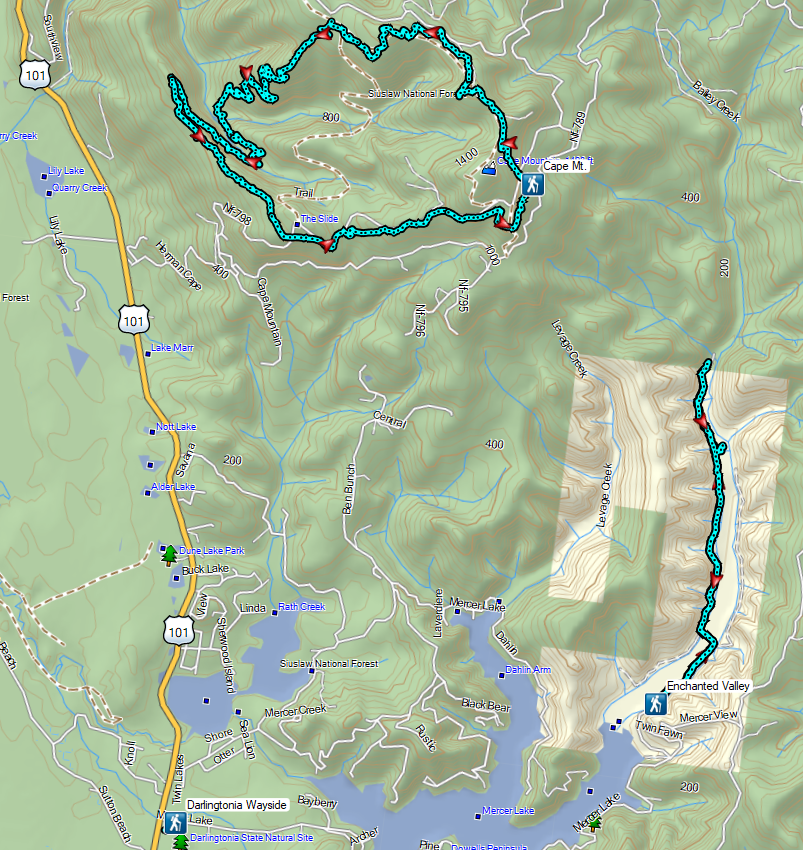

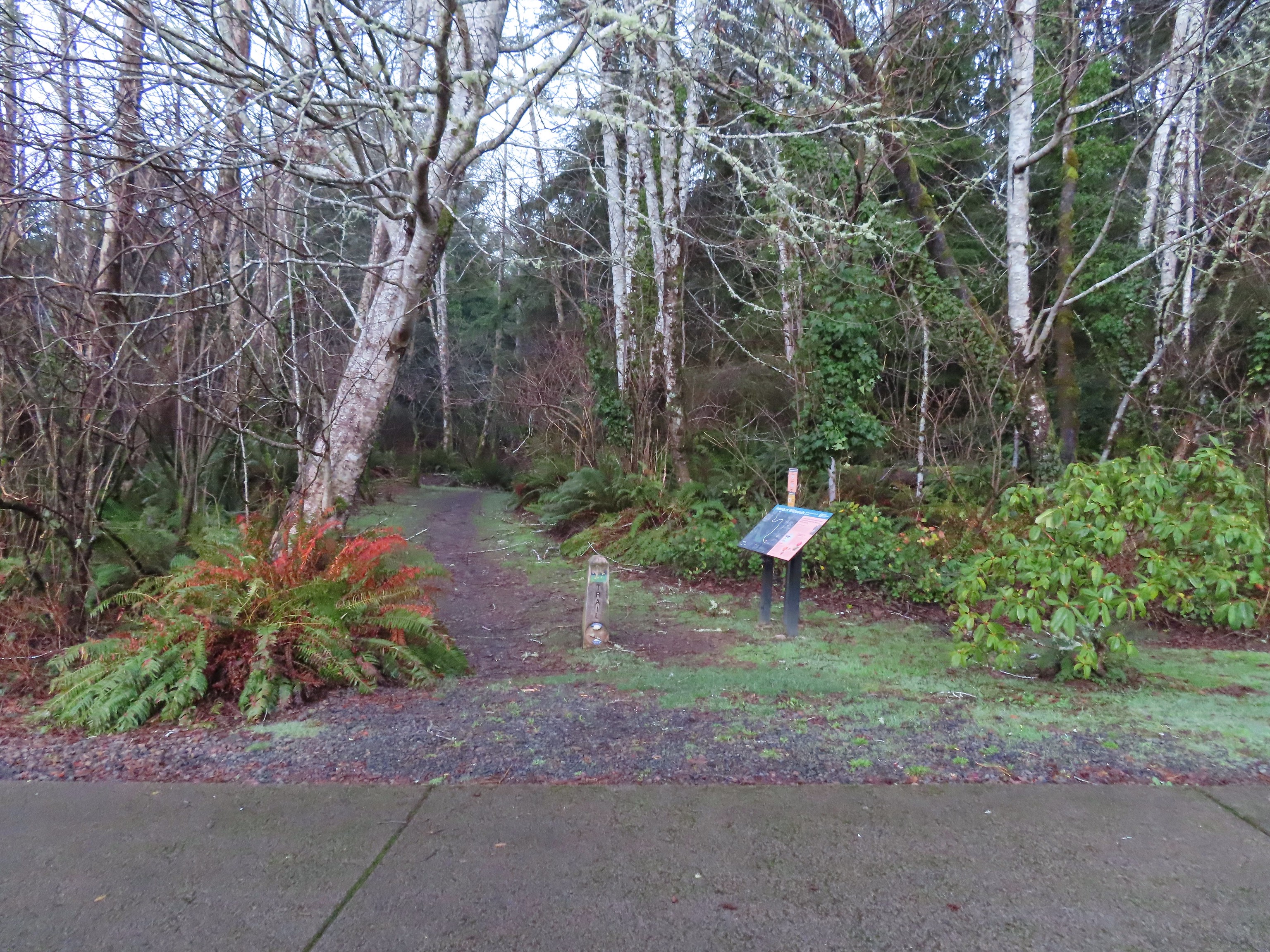

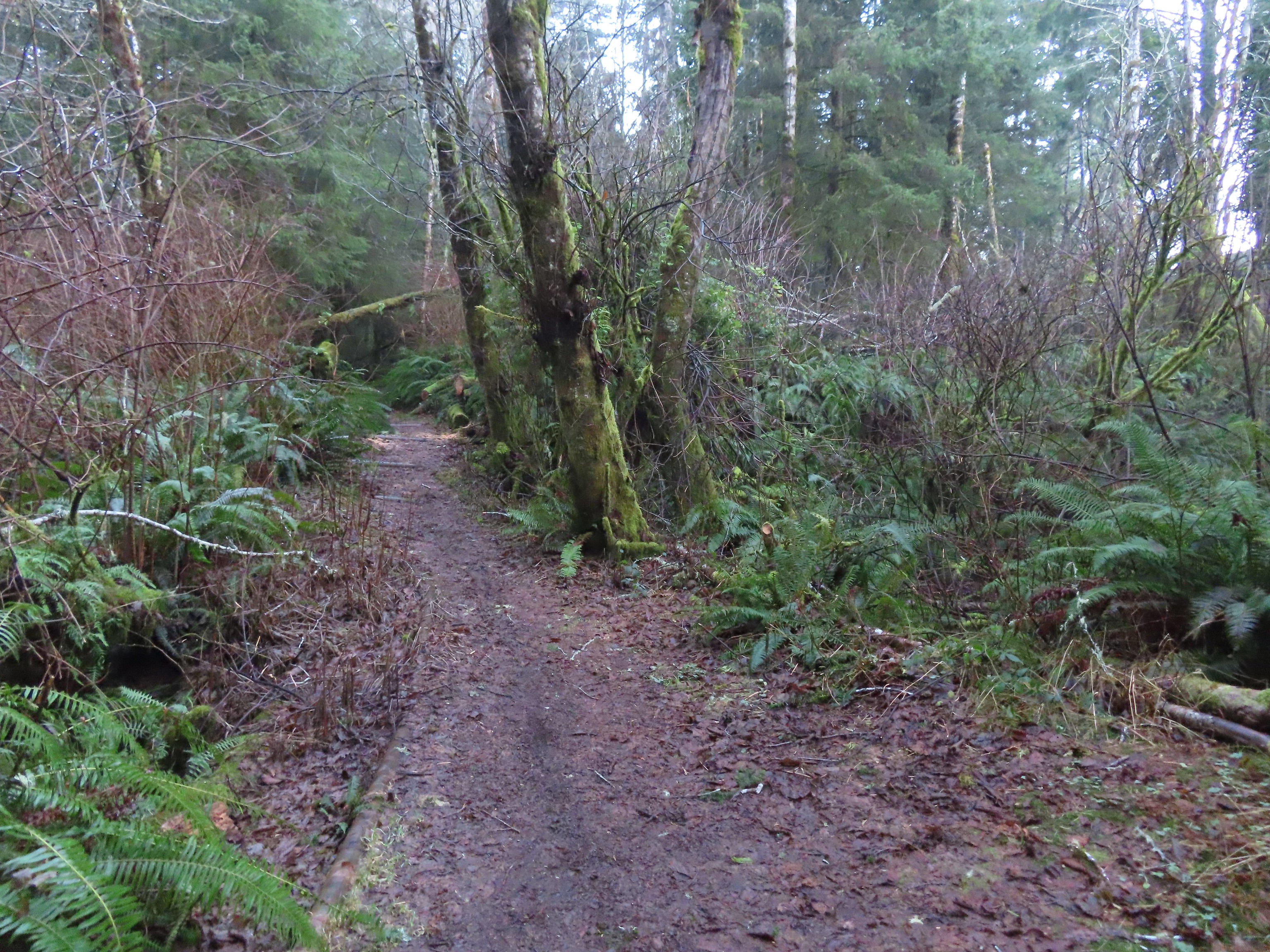
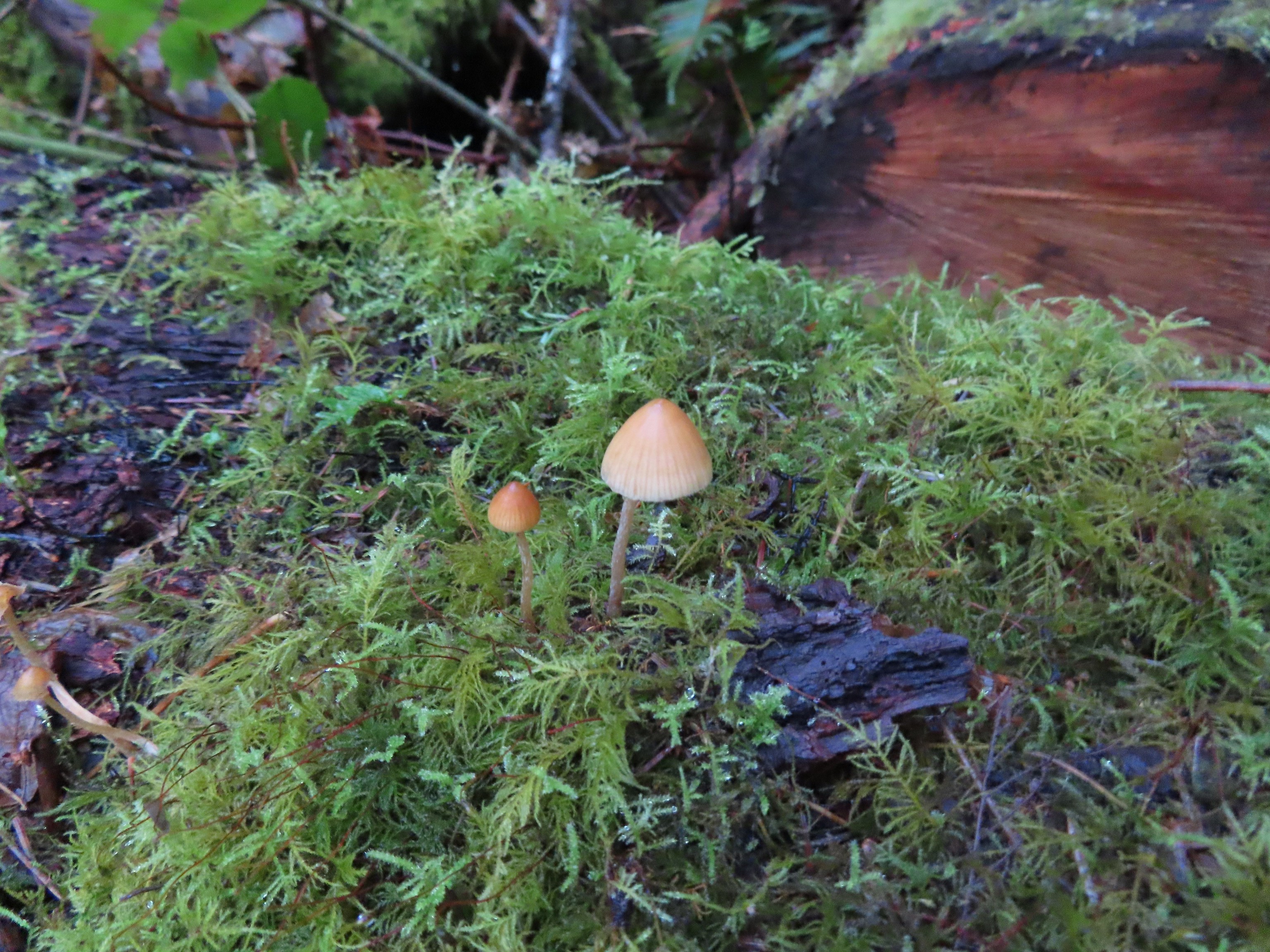
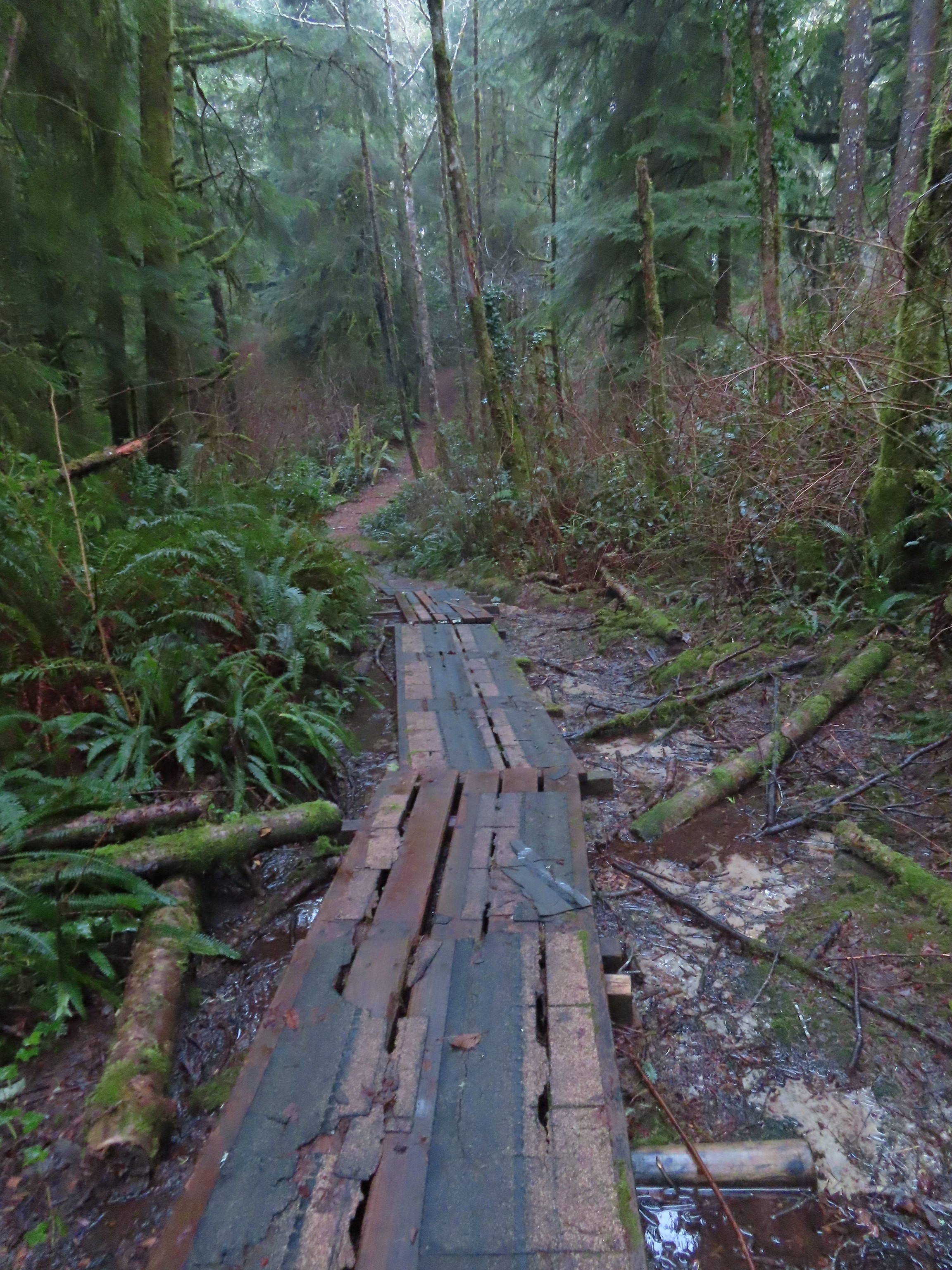
 Junction with the spur Wetlands Trail. The larger sign on the left is a
  End of the trail at East Tide Ave.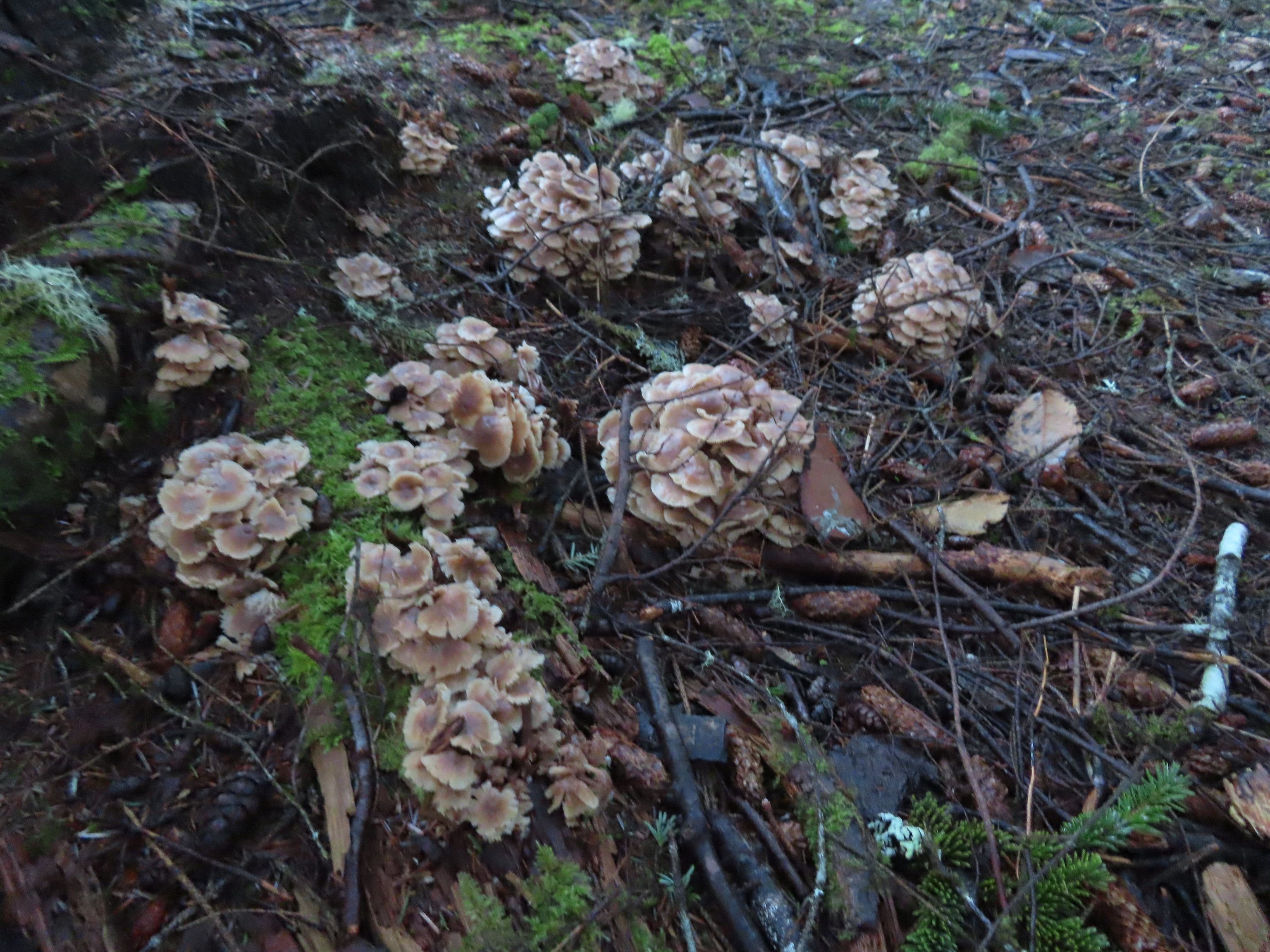
 The wetlands.
 Devil’s Lake from Regatta Park.


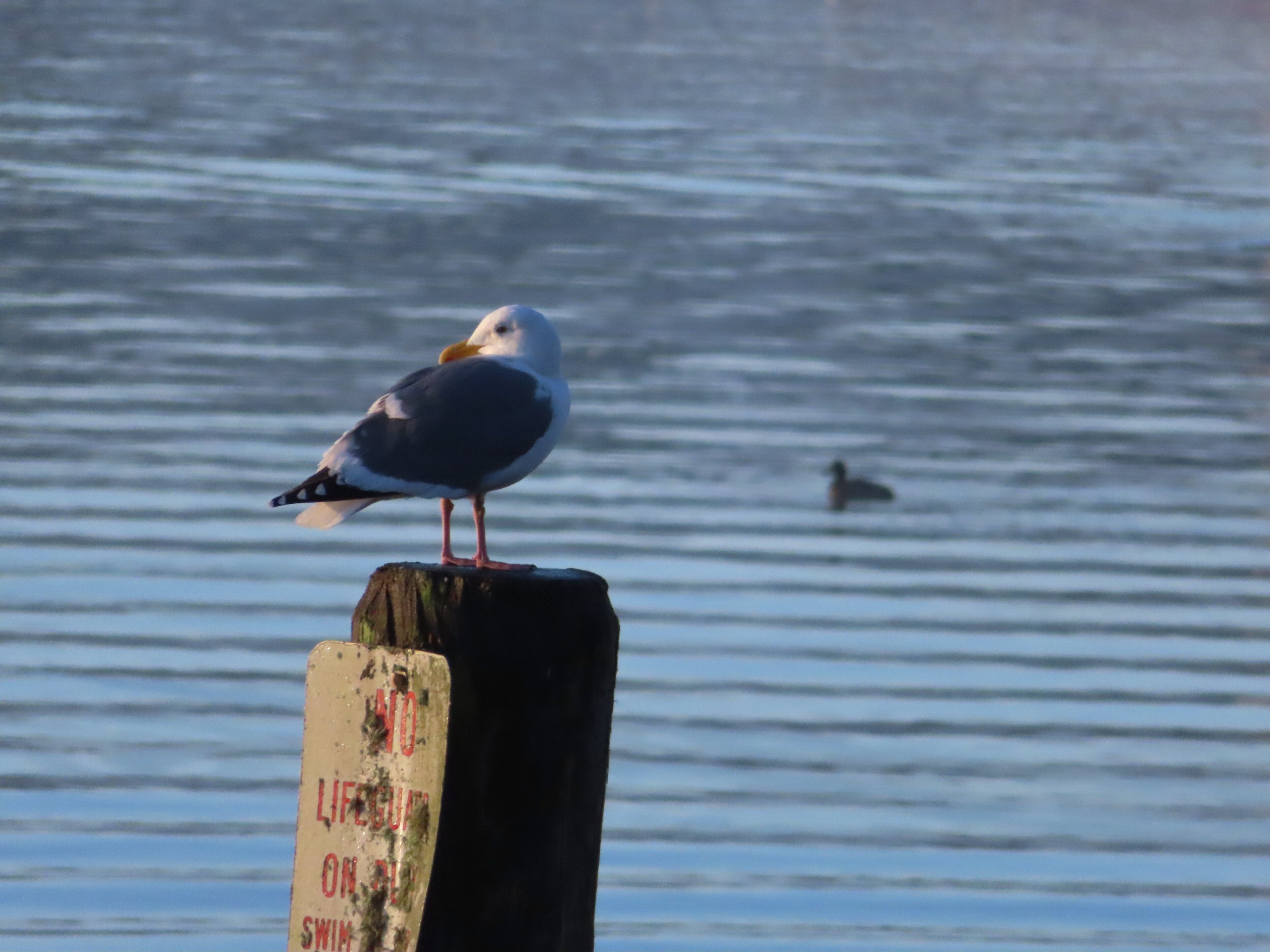


 Pointer for a heritage tree.

 Another Trail Challenge sign.
 Heading out of Regatta Park
 Neat dragon sculpture.
 West Devil’s Lake Road. The trail is ahead on the right just beyond the driveway on that side.
 There was no sign along the road but there was a trail marker just uphill.
 The trail briefly leveled out atop the ridge before diving down the other side.
 This junction is where our loop began and ended.
 Another fork just beyond the one in the previous photo.
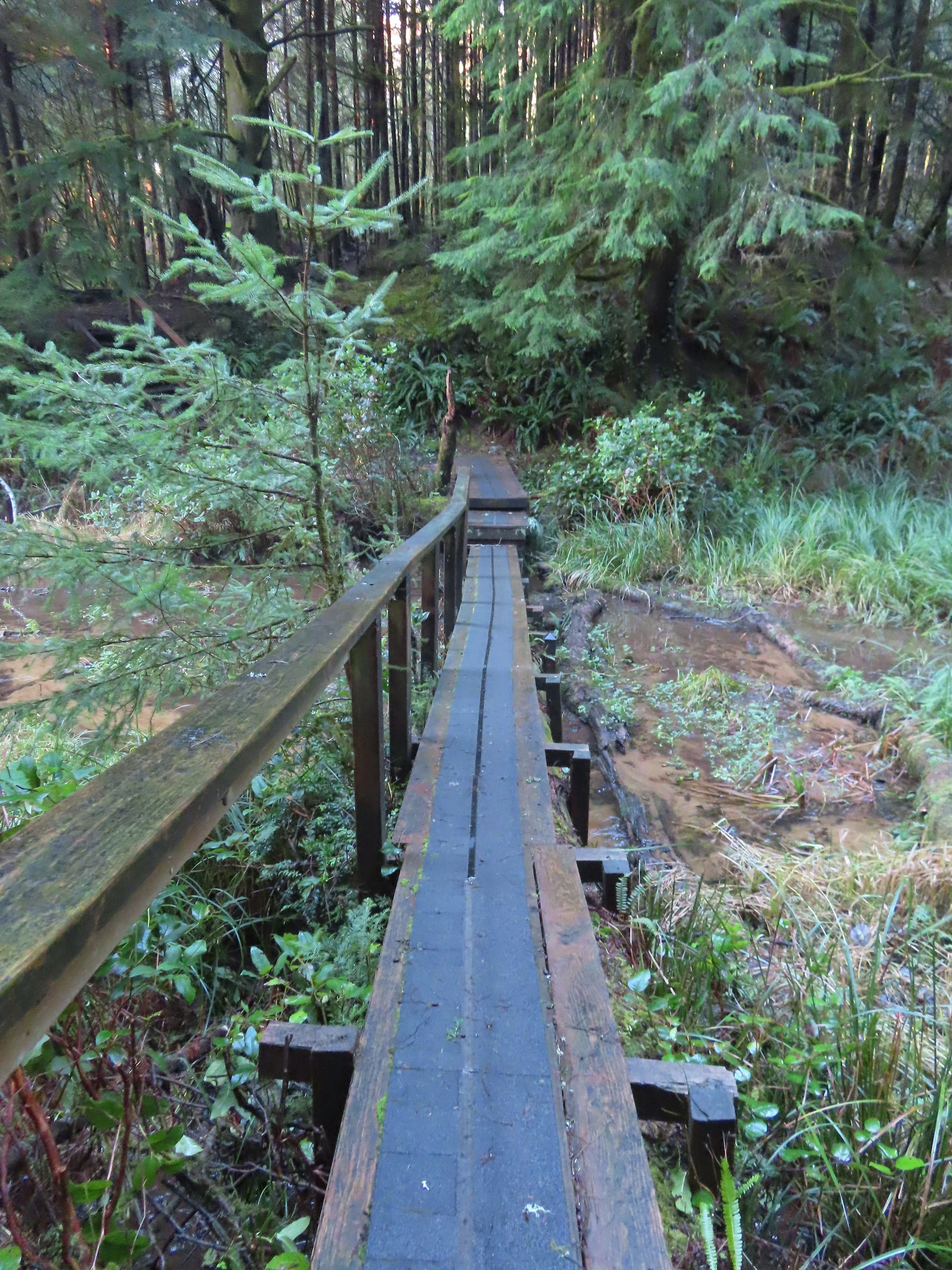 Footbridge over the northern arm of the lake.
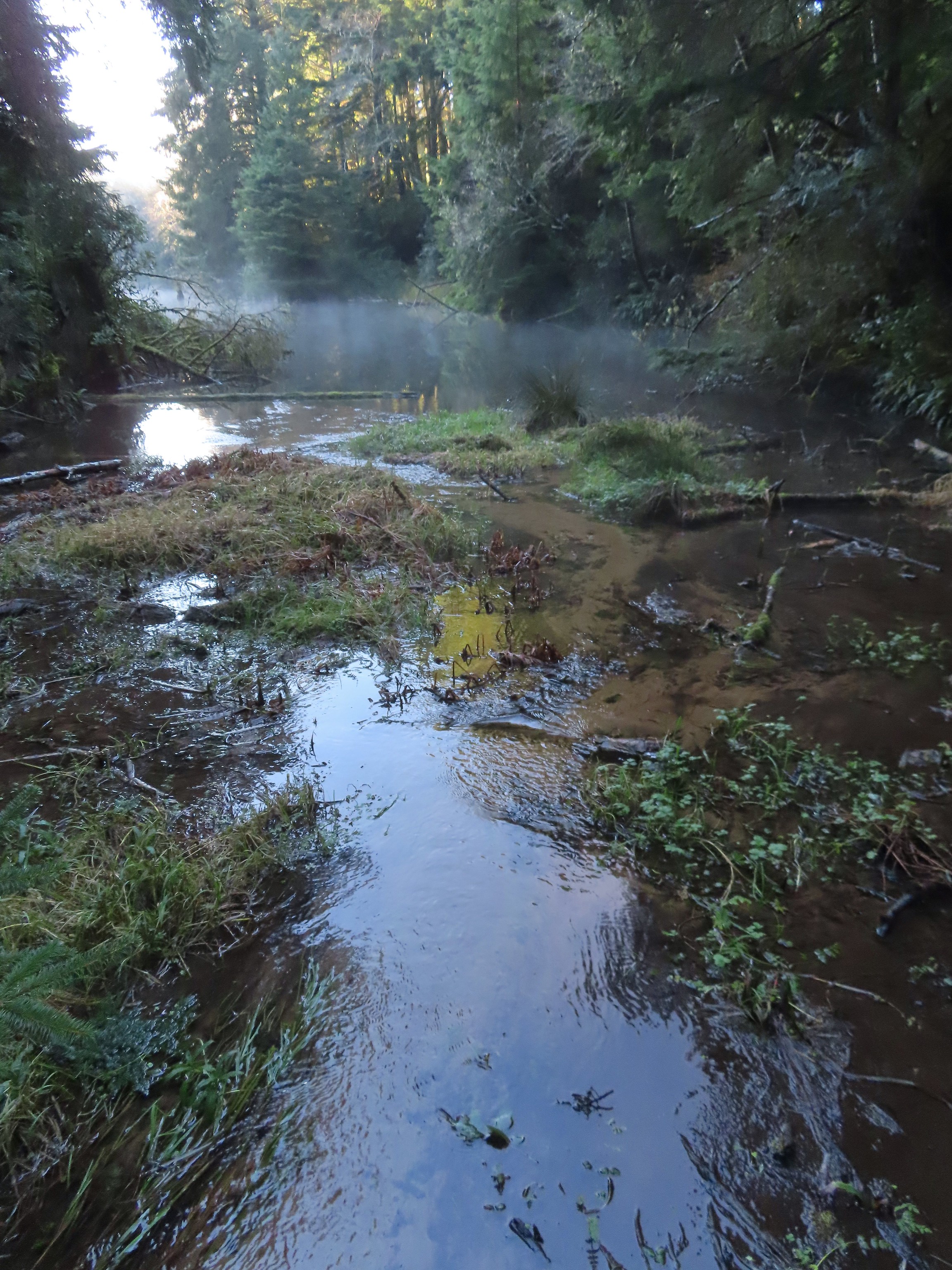 Spring Lake from the footbridge.
 Found another one.
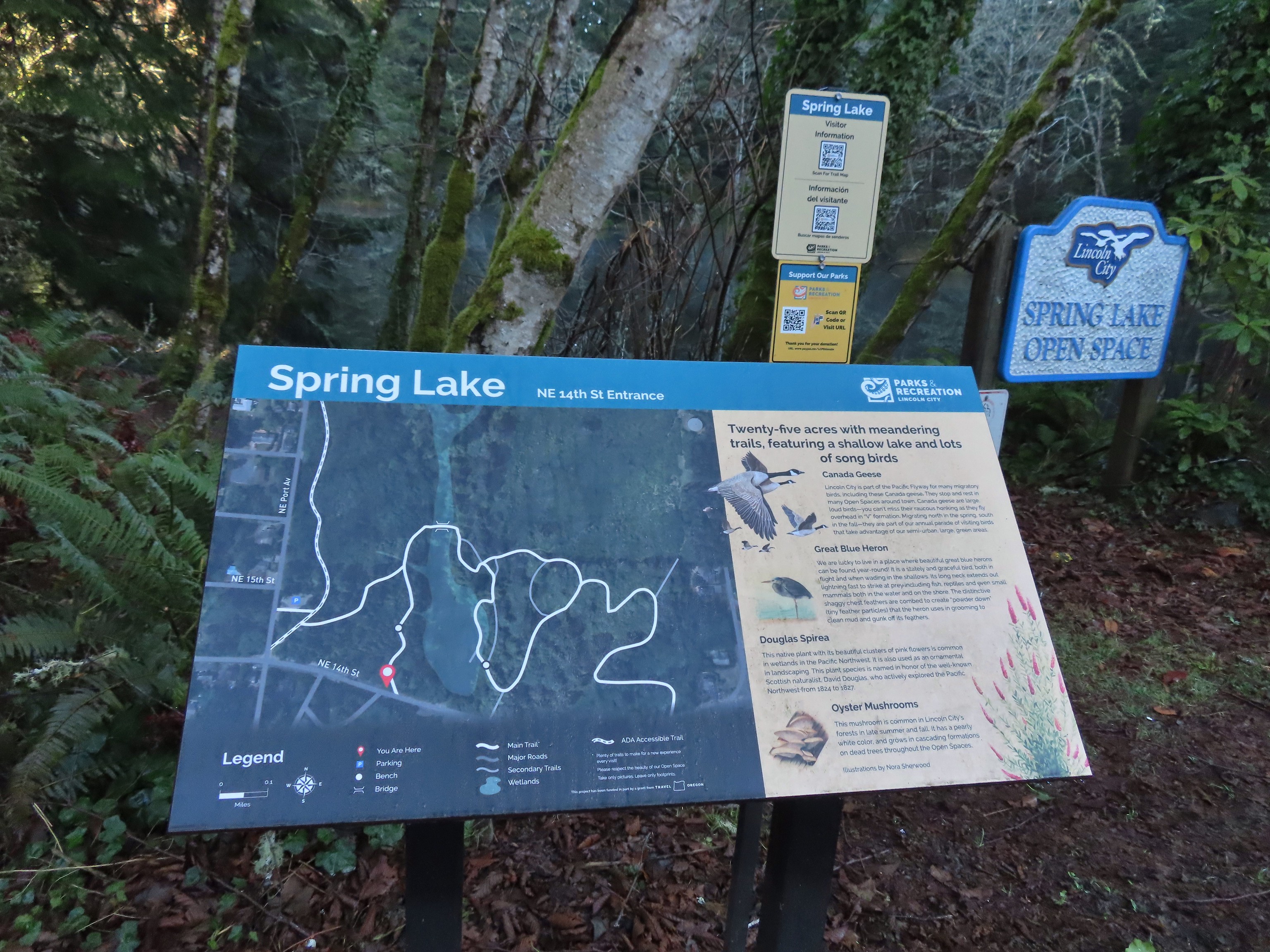 Small trailhead at 14th Street.
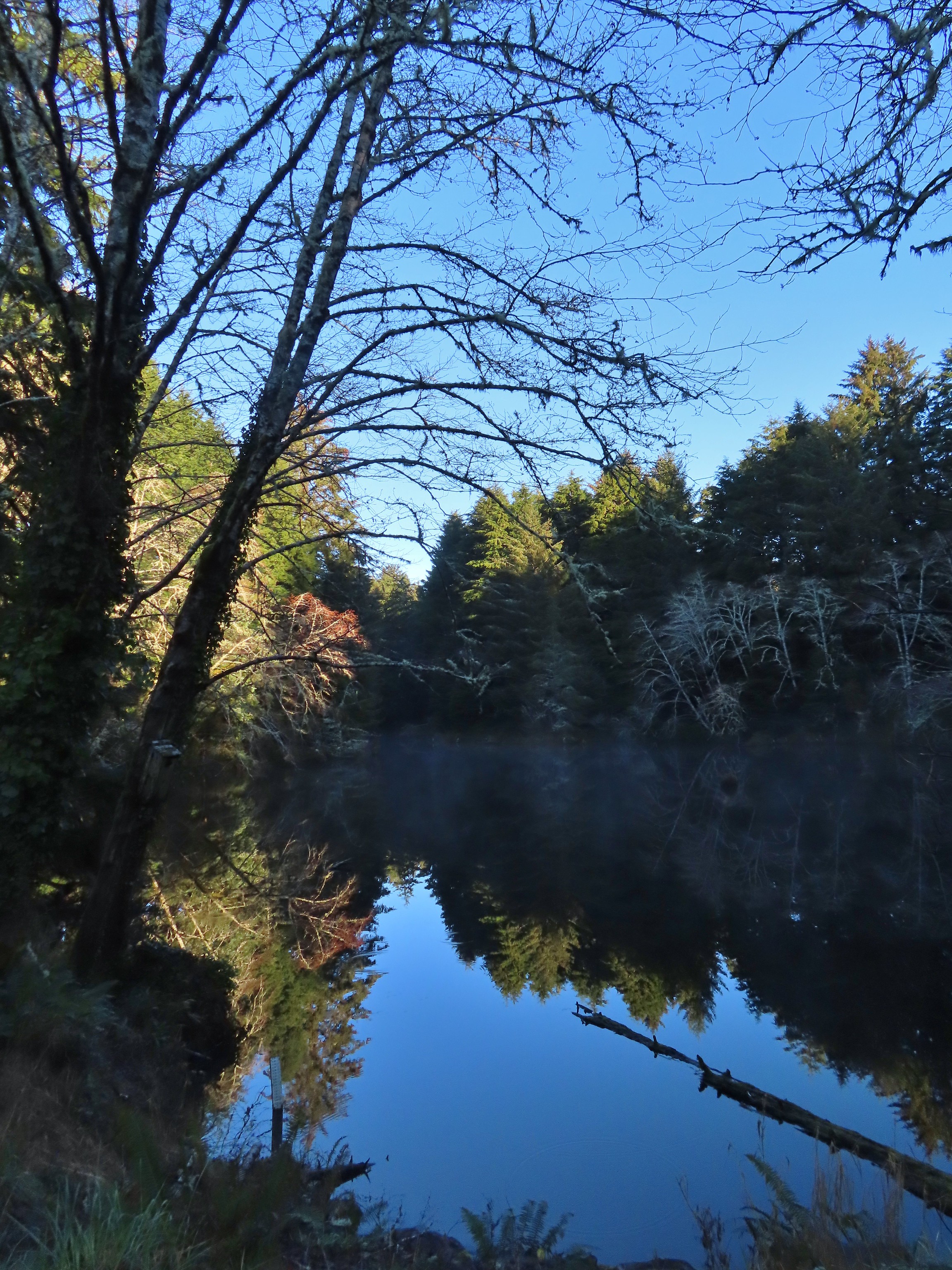 Spring Lake from the 14th Street Trailhead.
 We had to walk a few feet along 14th Street to find the trail on the east side of the lake.
 Approaching the junction at the end of our loop.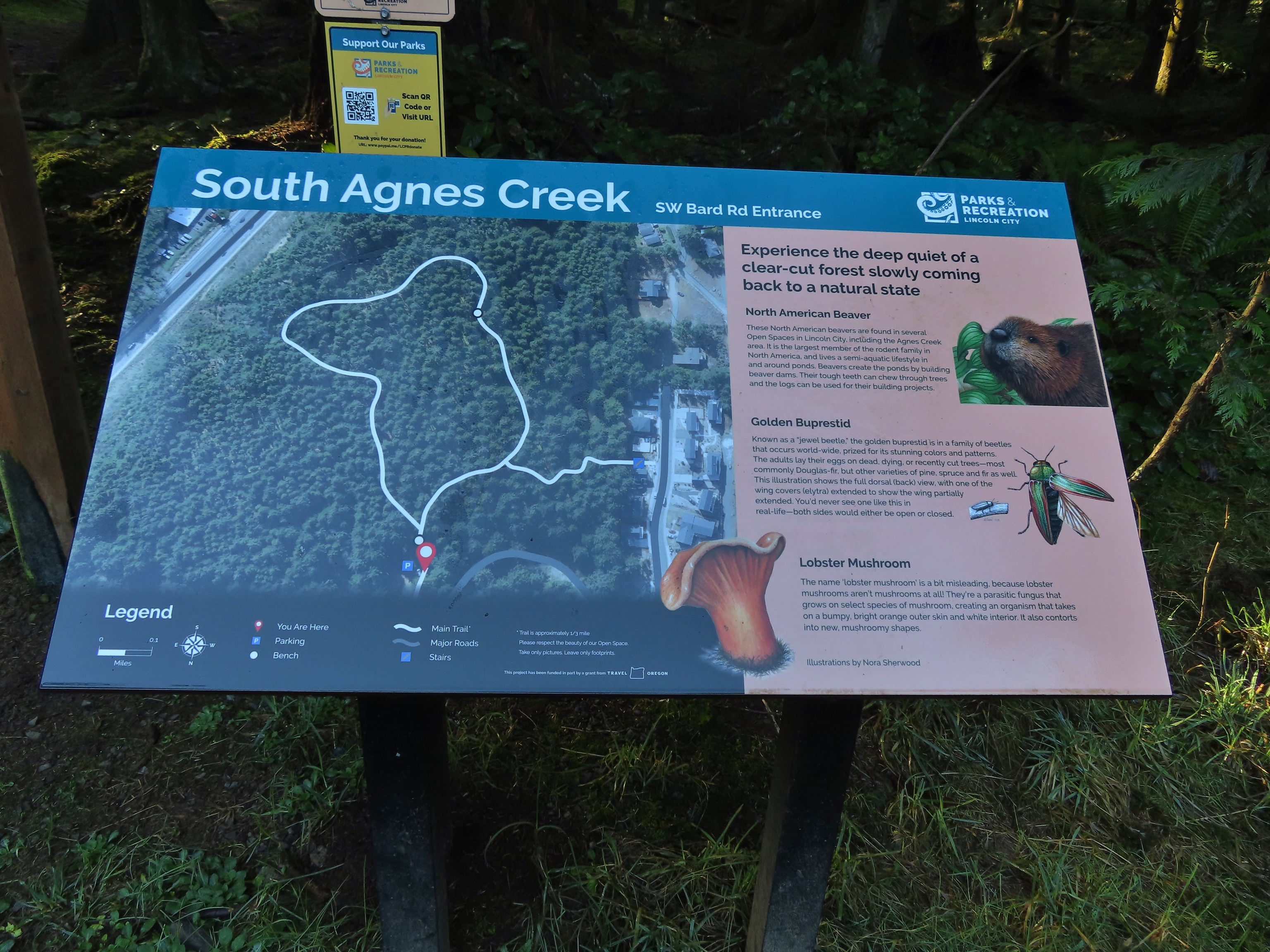

 This forested loop was full of bright green mossed covered ground.

 The connector trail at the south trailhead.
 Two short out-and-back trails begin at the north trailhead. We started with the left hand trail.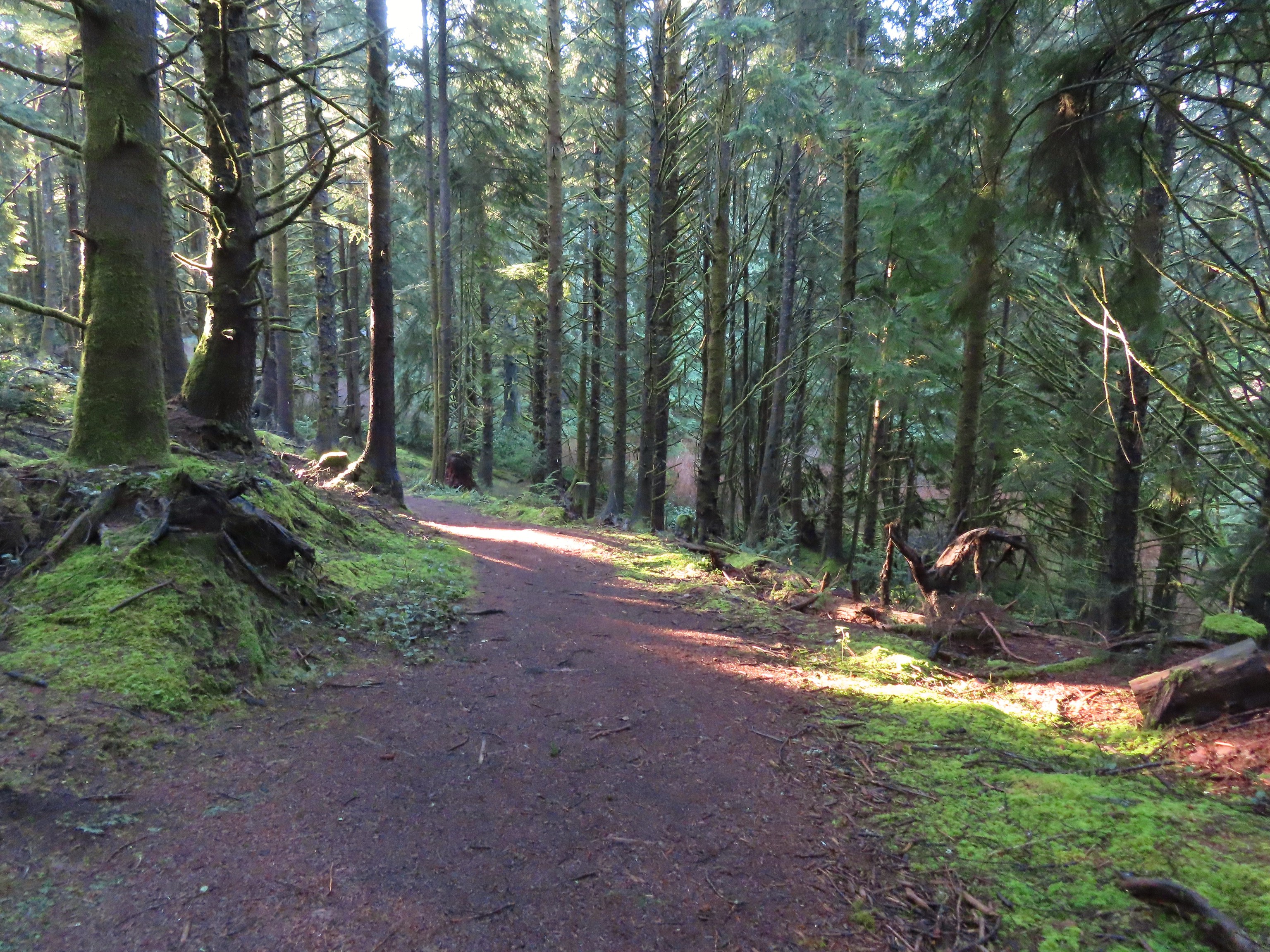

 The left hand spur abruptly ends on a ridge above what we assume was Agness Creek although we couldn’t really make out an actual creek.
 Agness Creek?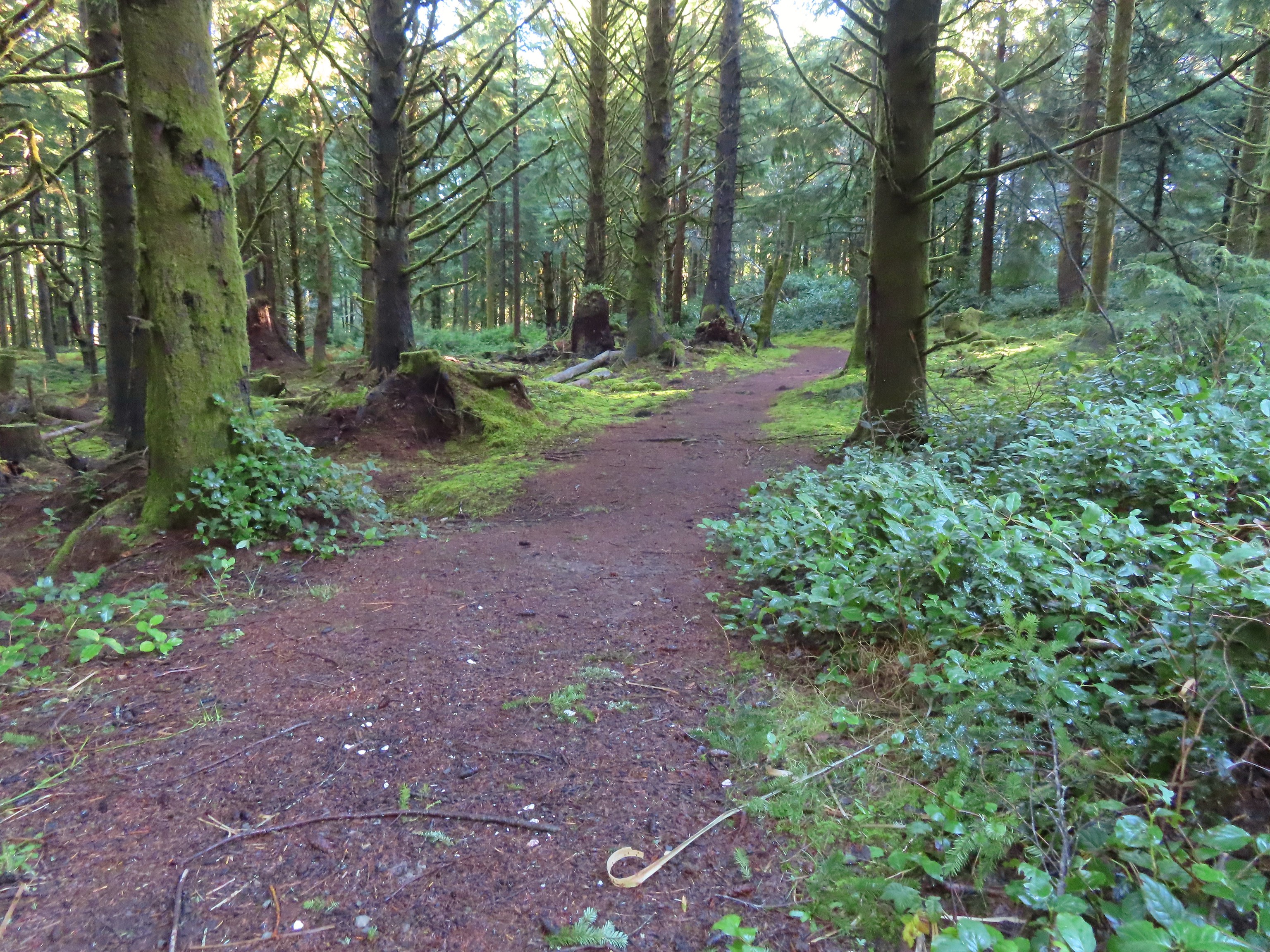


 Approaching SW 19th Street.

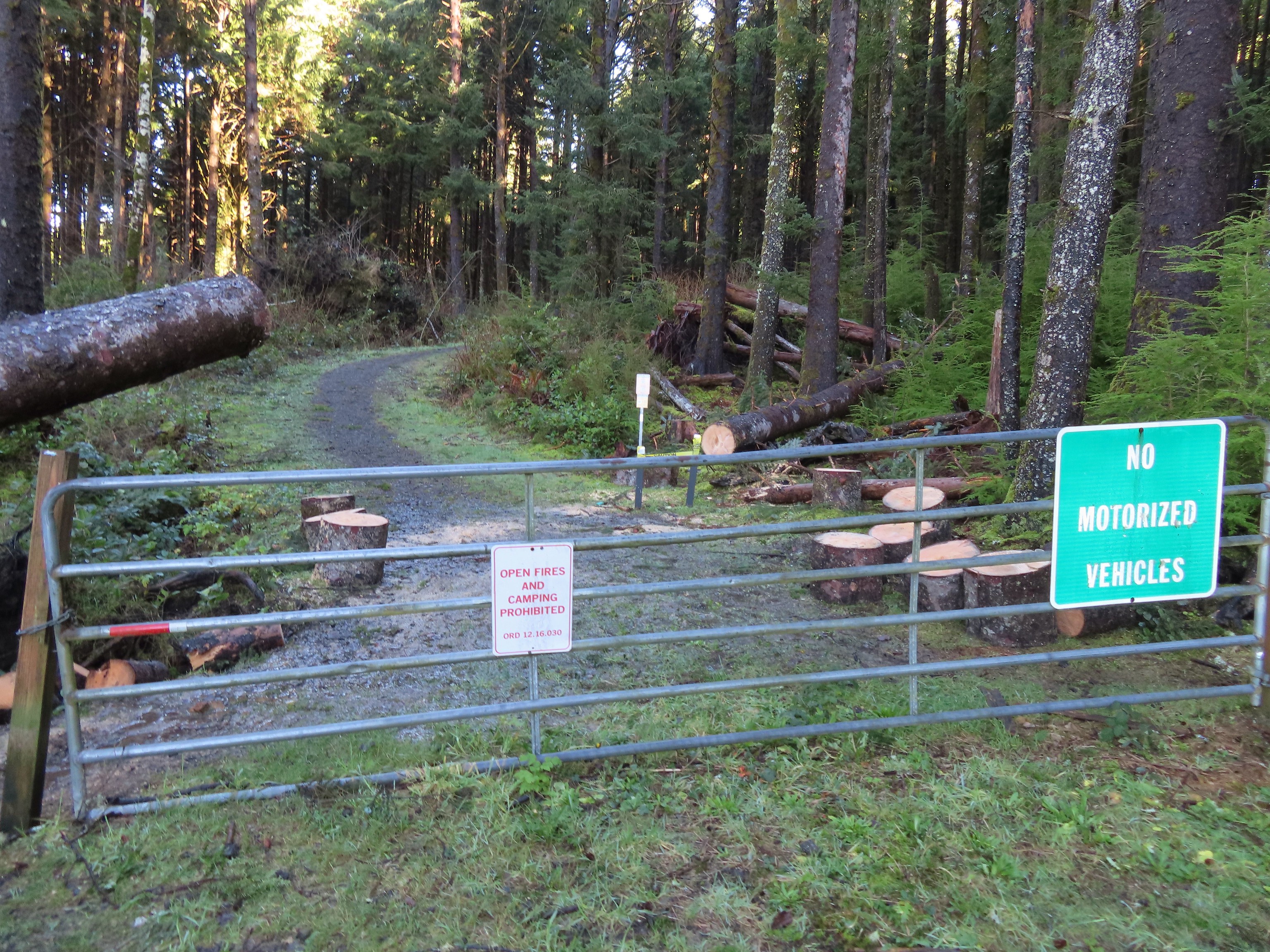 This should have been the end of our loop, not the beginning. Had we realized we weren’t on the perimeter trail we would have taken the first left hand trail which would have allowed us to do our planned loop in reverse (clockwise). Instead we headed straight up the ridge.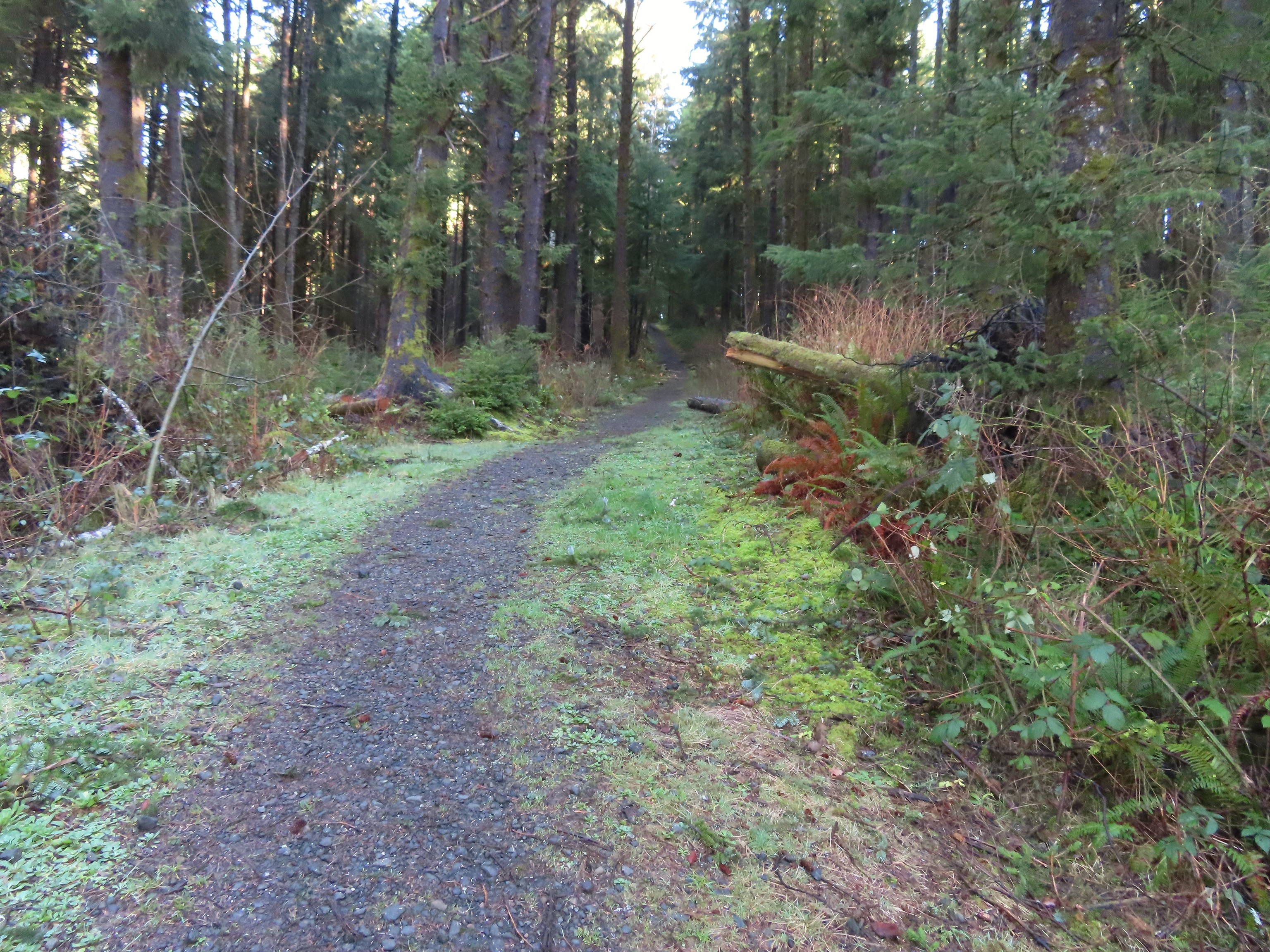
 The Trail Challenge sign here was located at a second junction, near the ridge top. A short distance beyond was another junction with an unsigned trail veering off to the right. We still hadn’t figured out our mistake and thought that the right hand trail was a spur trail shown on the map leading to a neighborhood so we went left.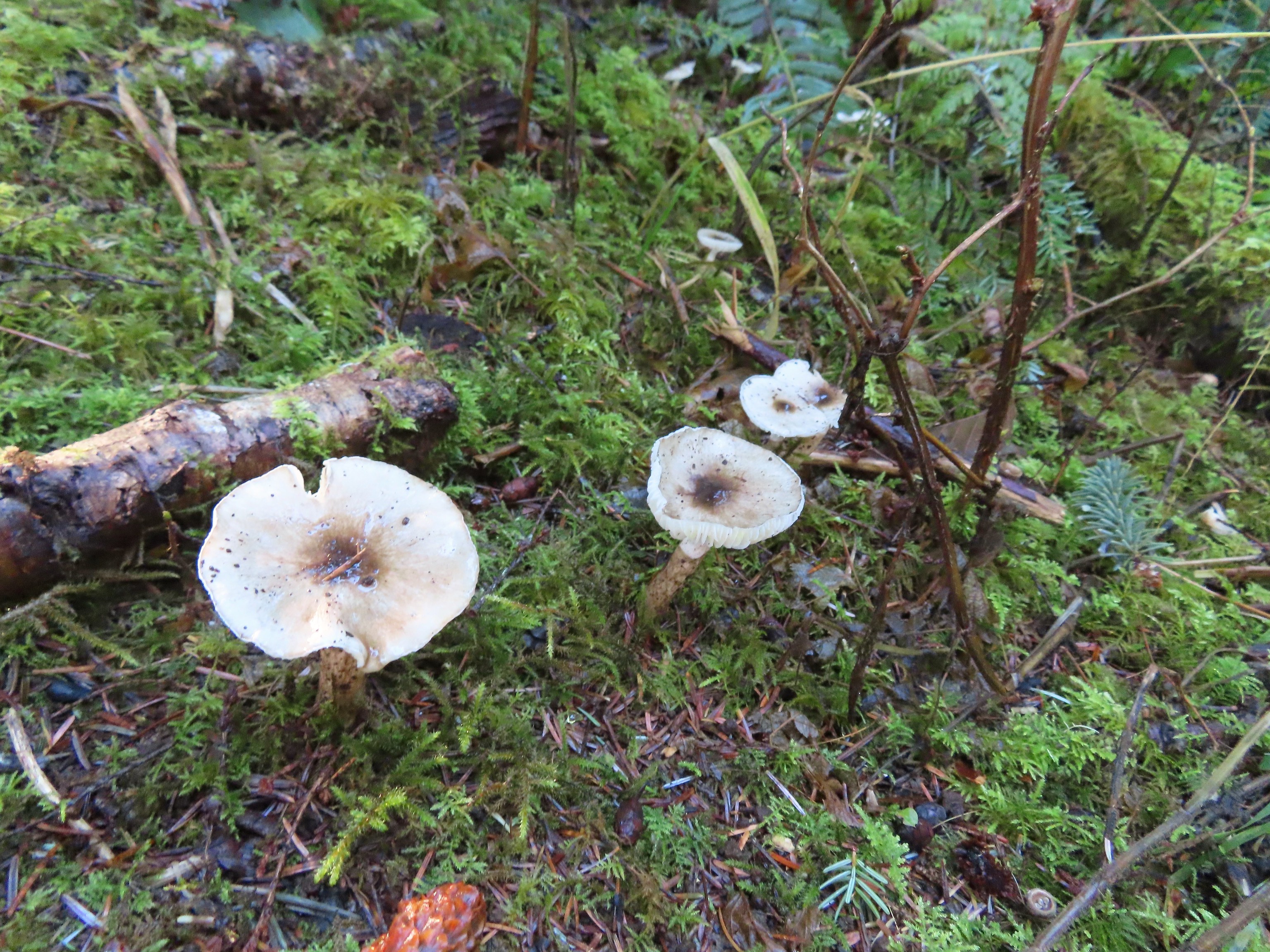
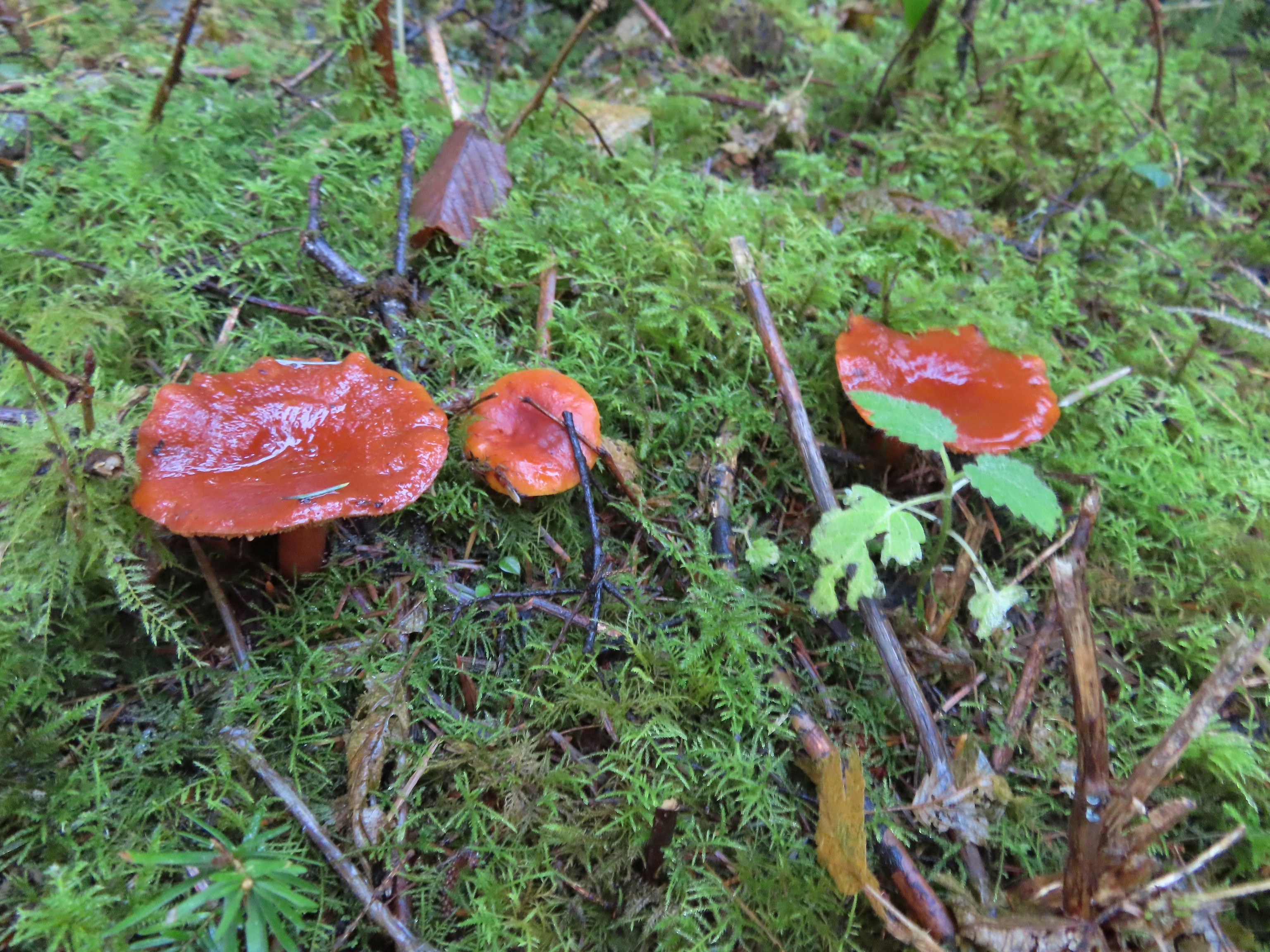

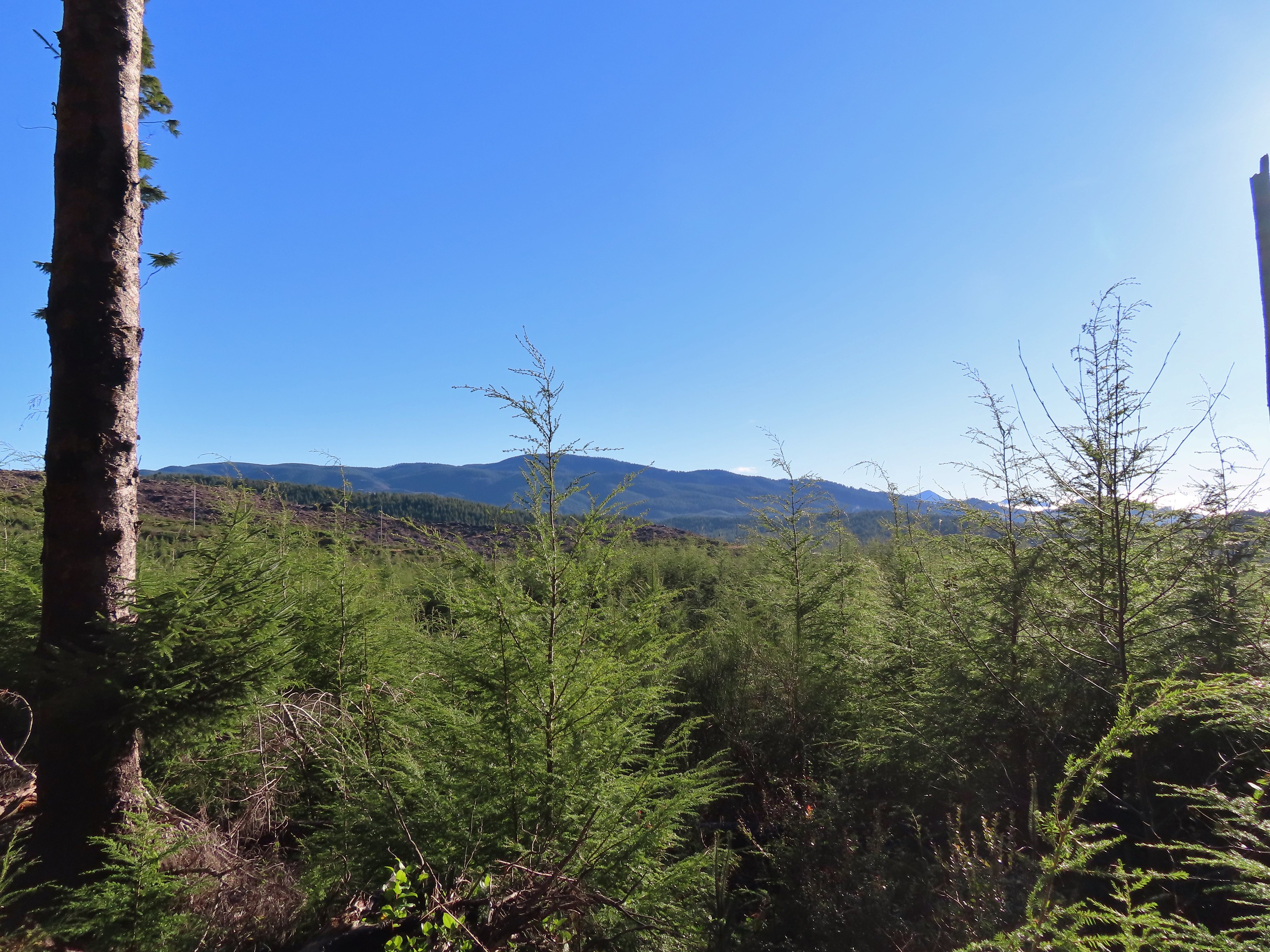 A lot of clearcuts is what I could see.
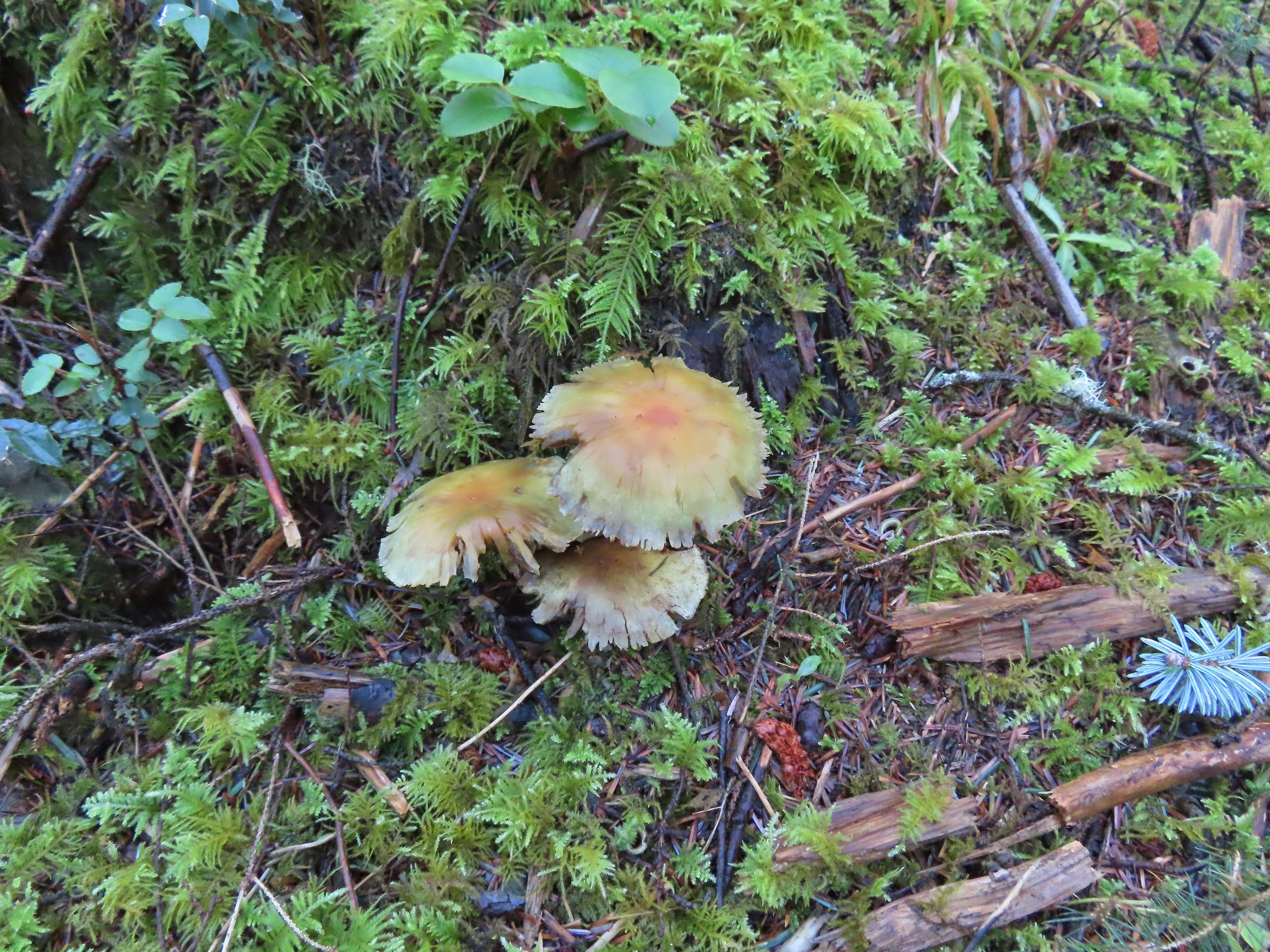

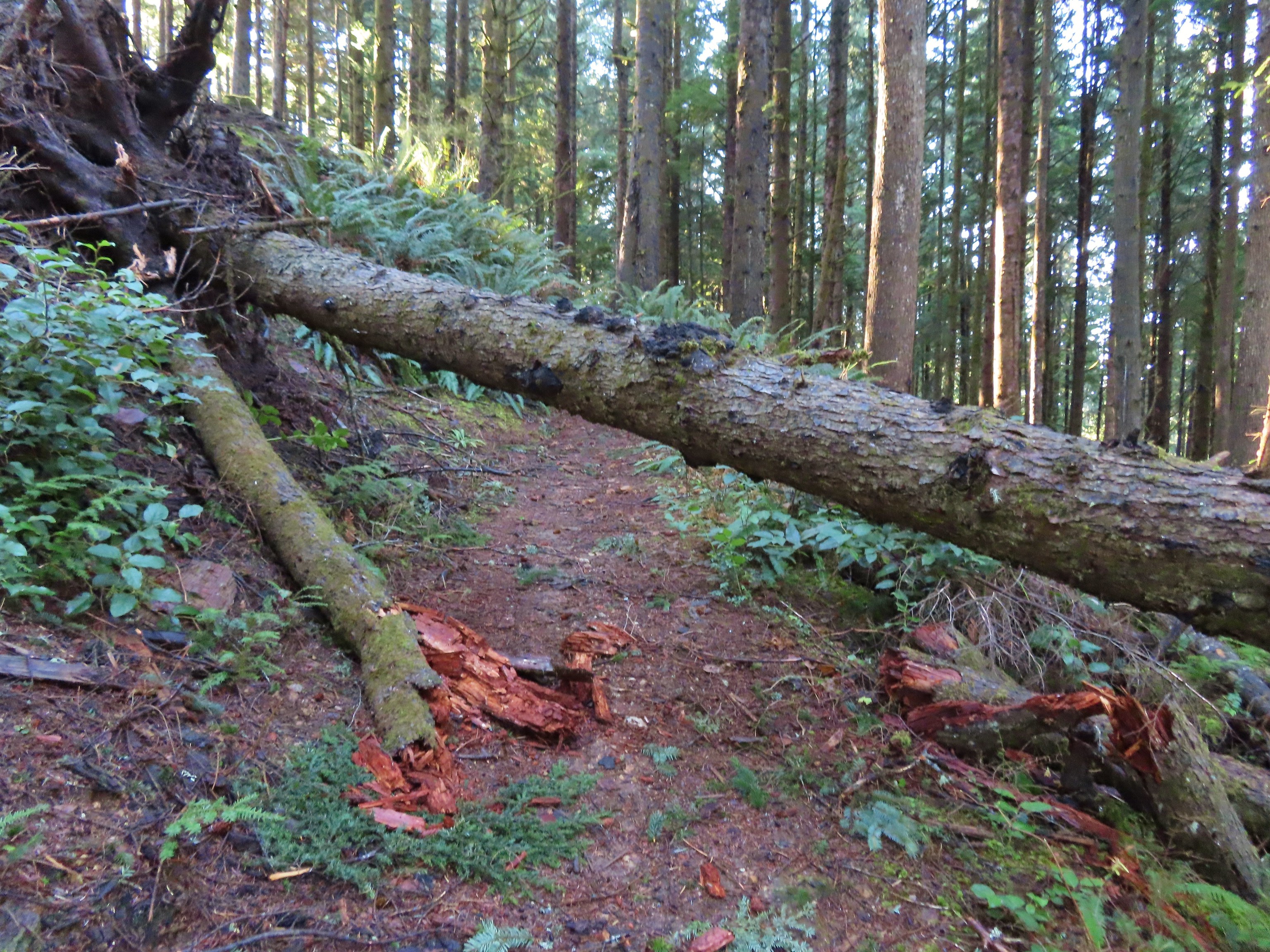 We were really surprised that this was the only real obstacle we encountered all day given the recent storm.
 An example of the fainter tread along this section.
 The spur to the left led to a neighborhood so we turned right.

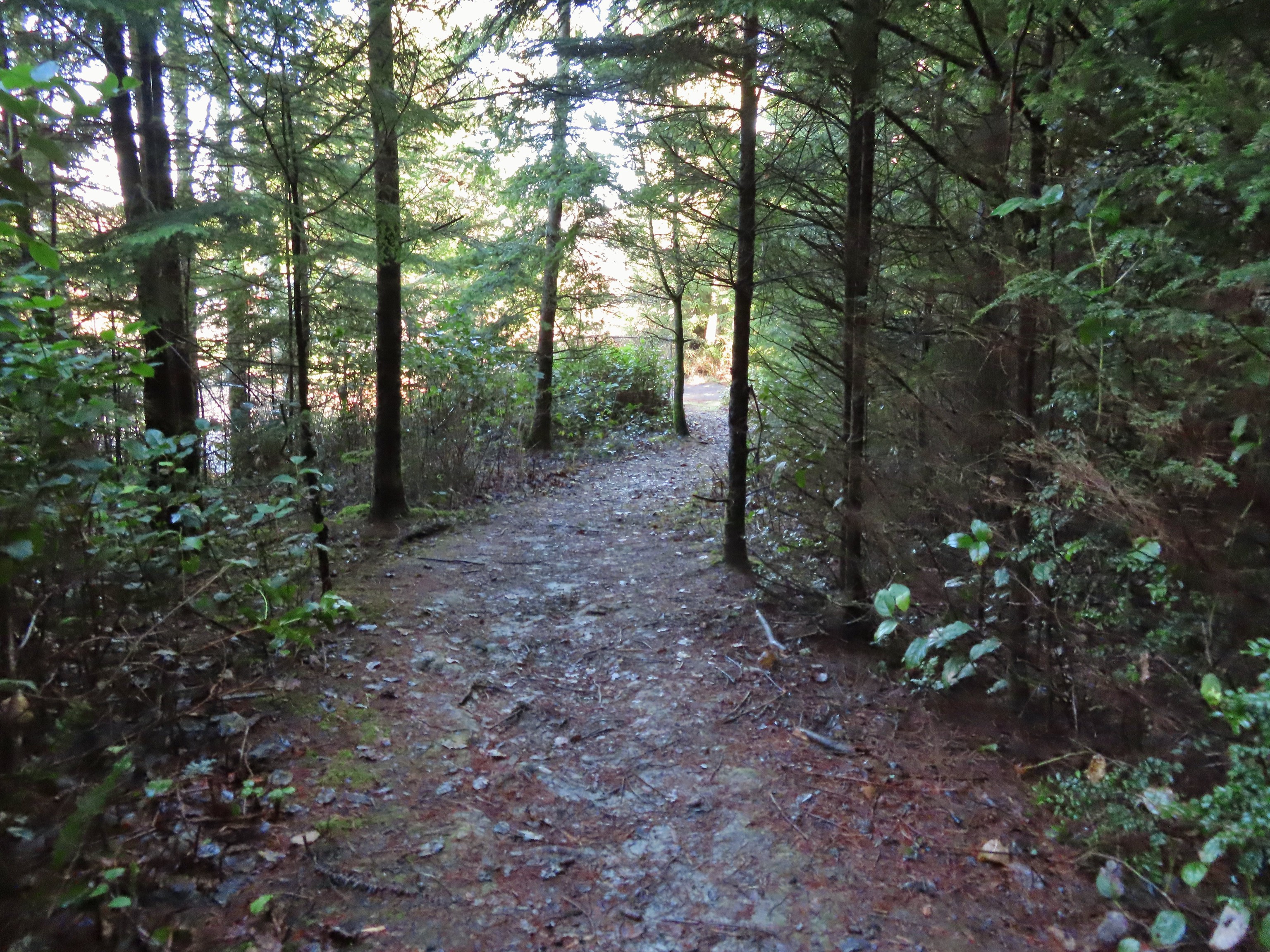 The trail arriving at the trailhead entrance road. The chain link fence at Taft High is on the left.
 Siletz Bay from the brewpub.
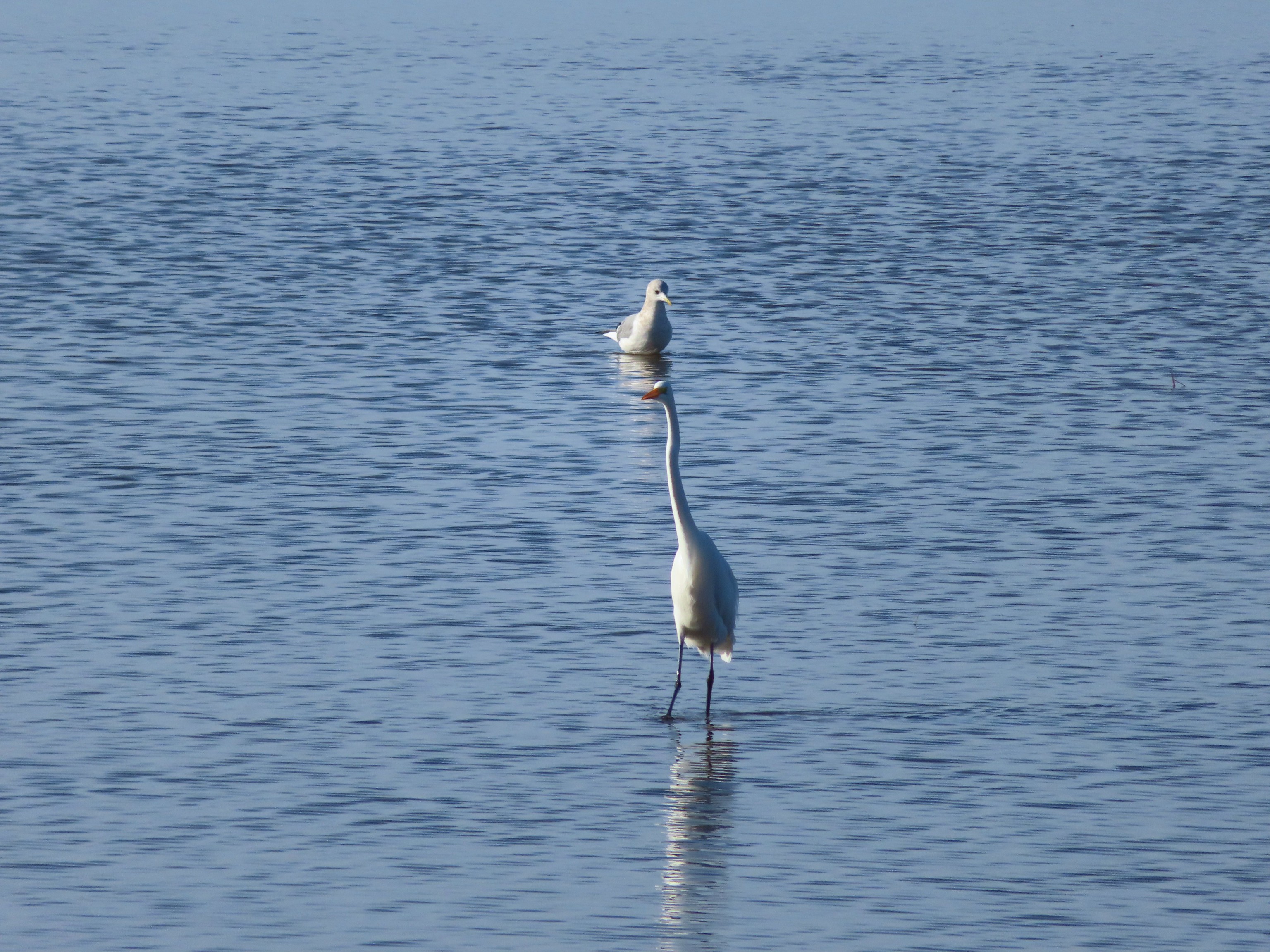 A gull and an egret.
 It seems this time of year I (we) are always a little ahead of the sunlight which does nothing for photos.
 Coming up on the road crossing.
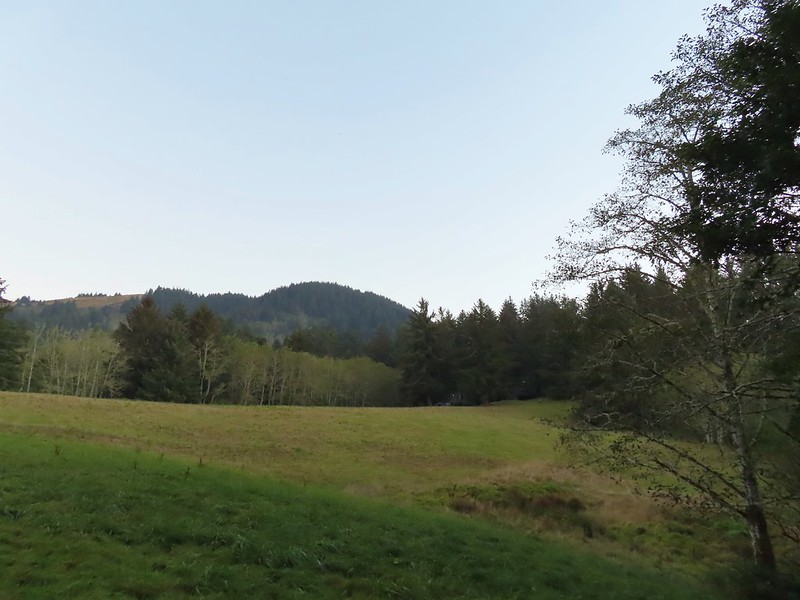 Cascade Head from the trail with the elk at the end of the grass to the right.
 Fuzzy (low light) photo of the elk.
 Crossing Savage Road with the first view of the Pacific.


 View from one of five metal footbridges along this section.
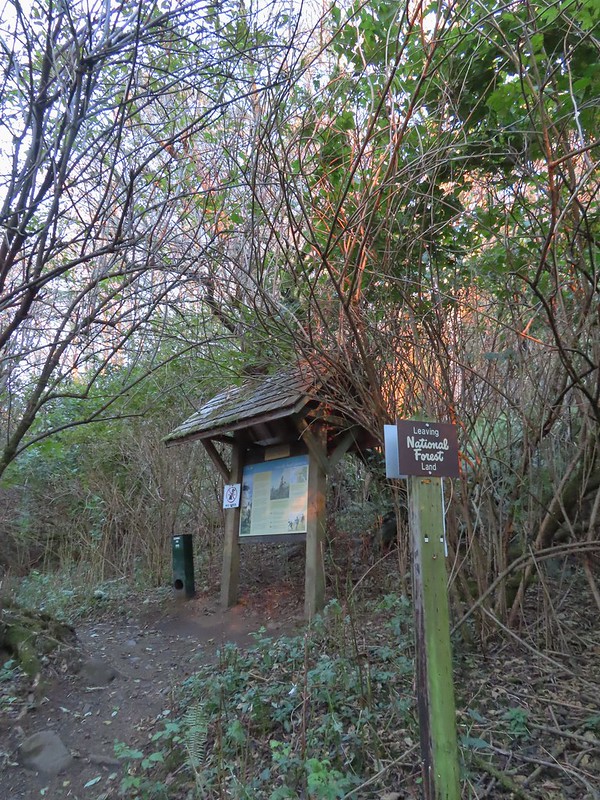 Signboard and donation box at the start of
 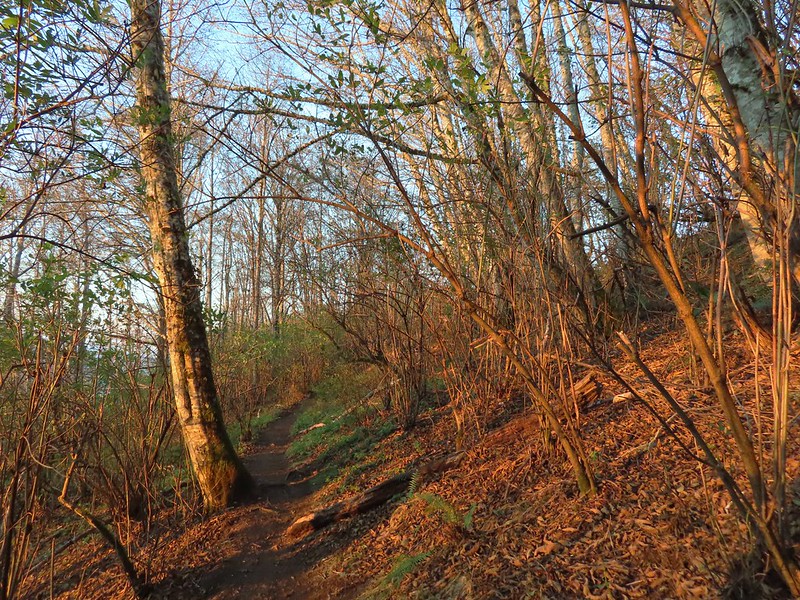 First direct sunlight of the morning.
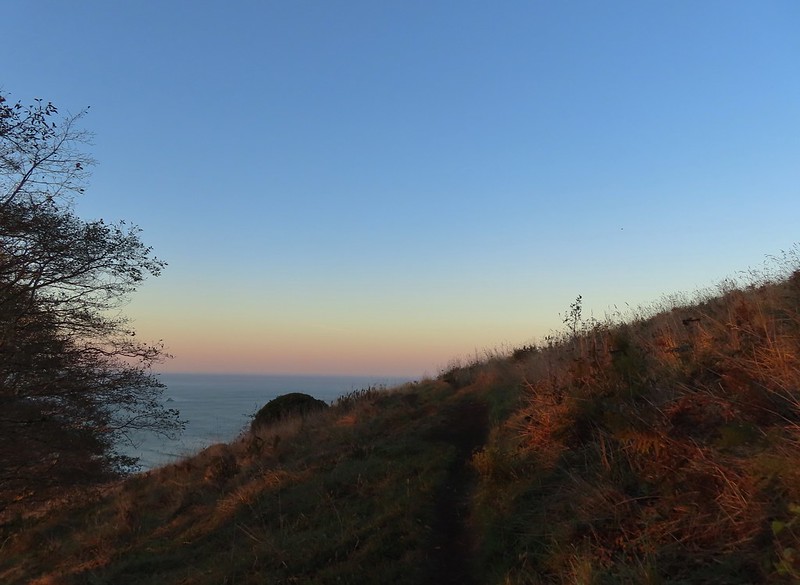 Out of the trees and into the meadows.
 Looking uphill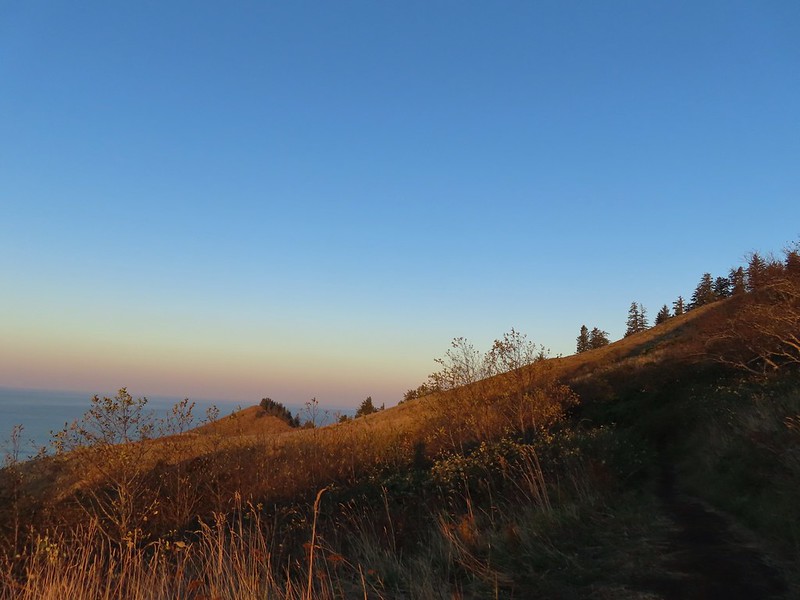
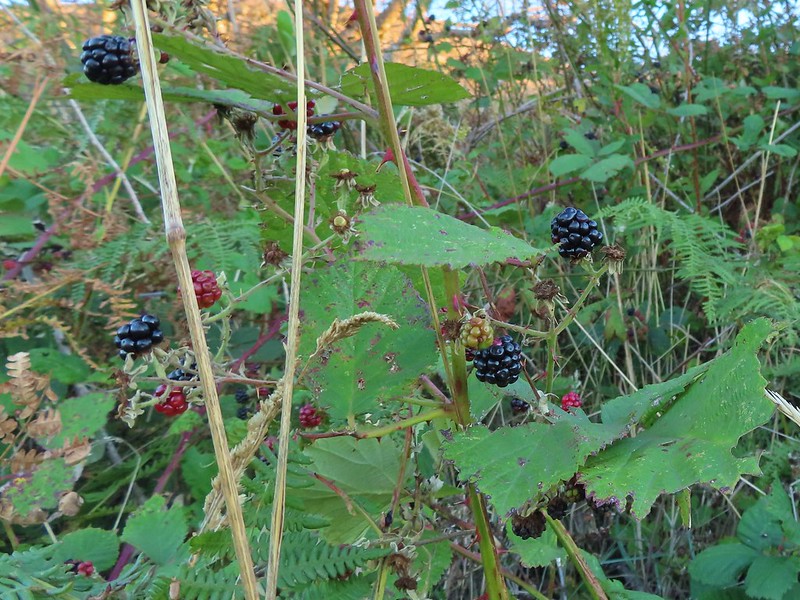 Snacks
 Salmon River Estuary
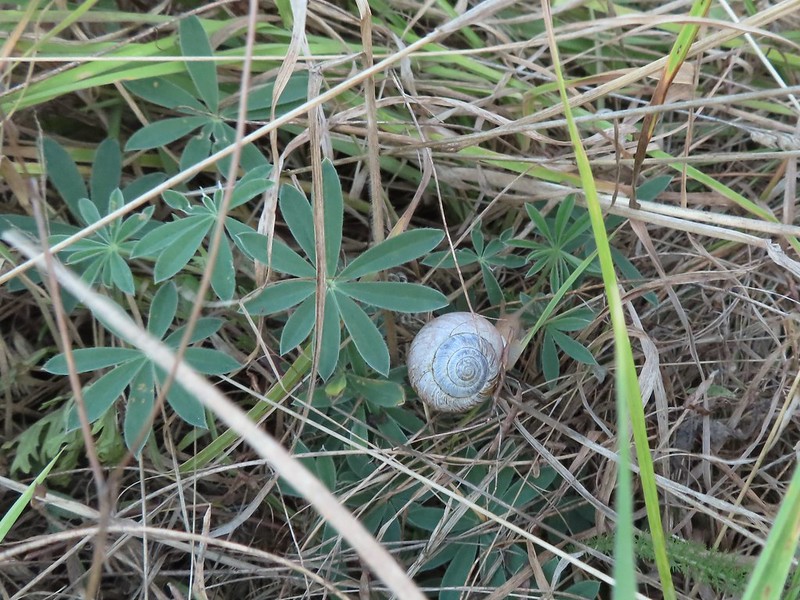 A snail and lupine leaves.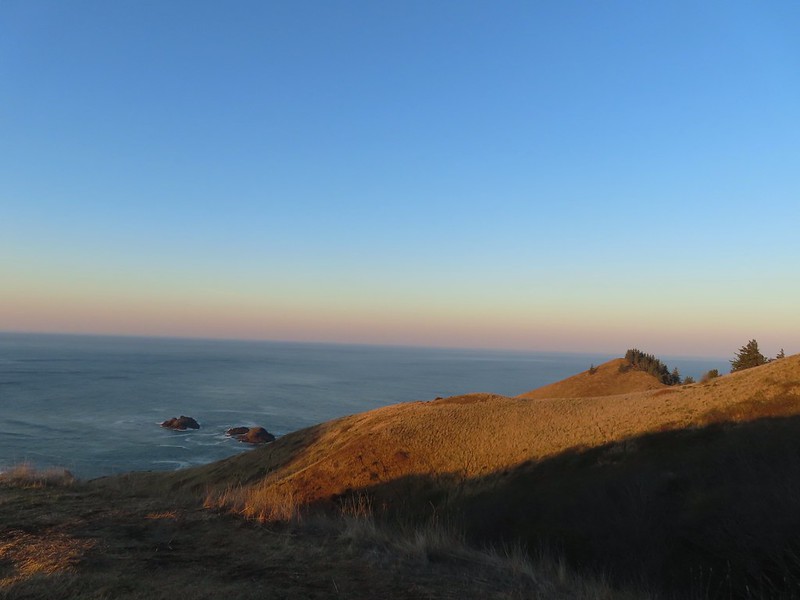
 A small viewpoint just before the trail turns uphill.
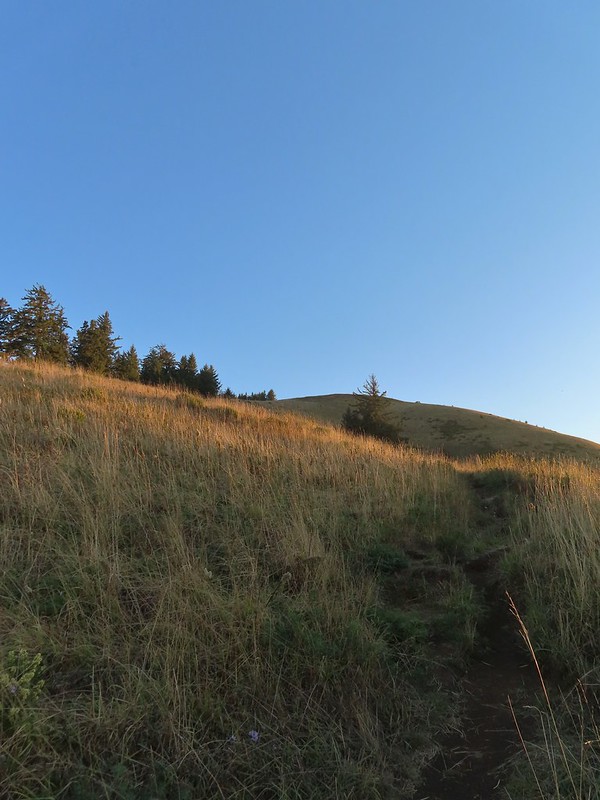 Going up
 The trail gains views as it gains elevation.
 The trail through the meadow below.
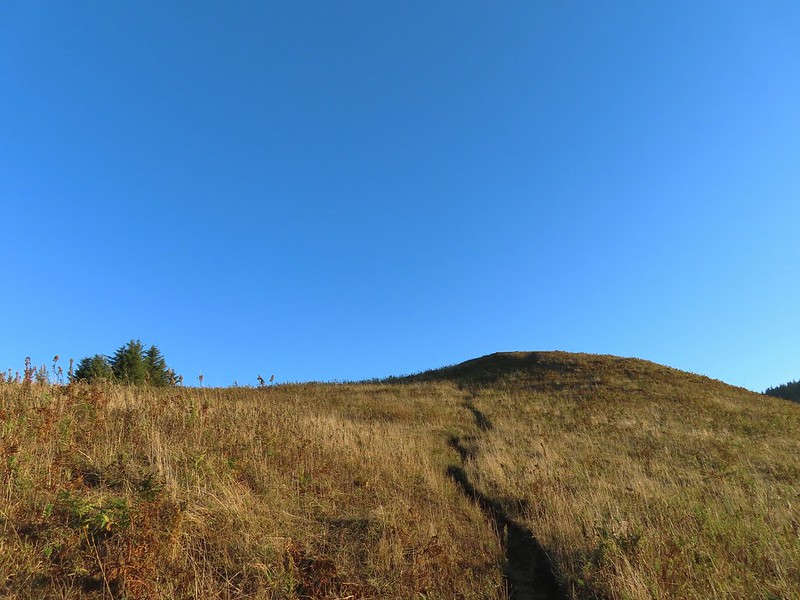 This knoll looks like the high point as you climb, but it’s a trick.
 The high point is actually marked by a post. (Near the right end of the photo).


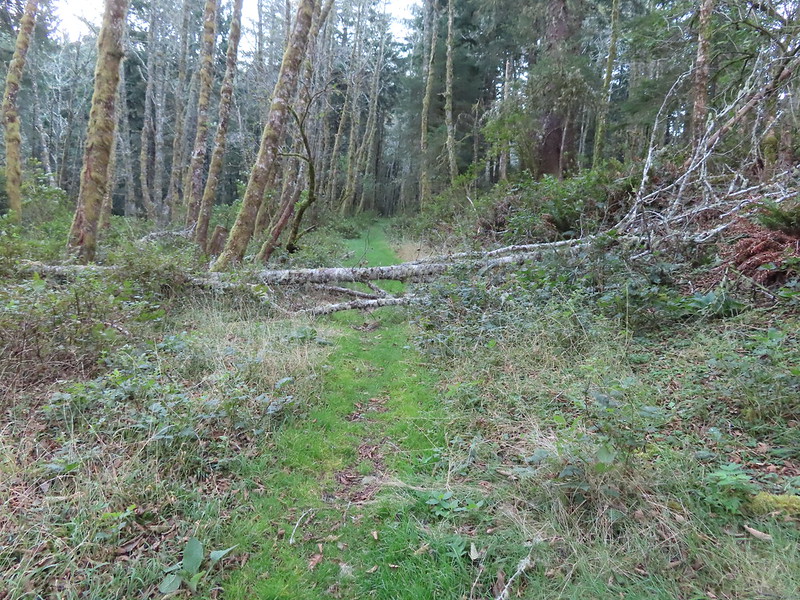
 Wooden arch over the old roadbed.
 Nearing the upper trailhead.
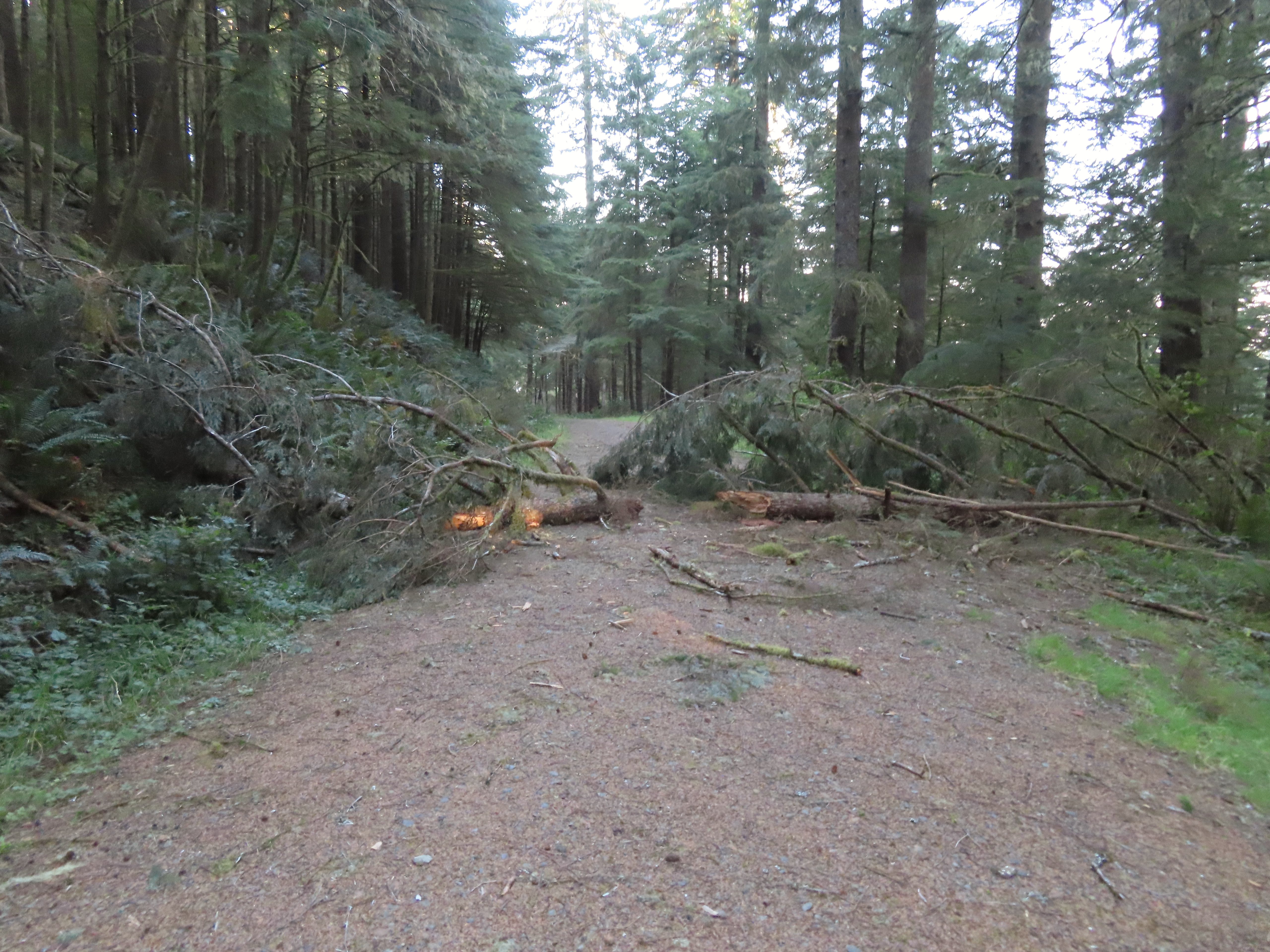 When they do reopen the road there will be a few trees to deal with.
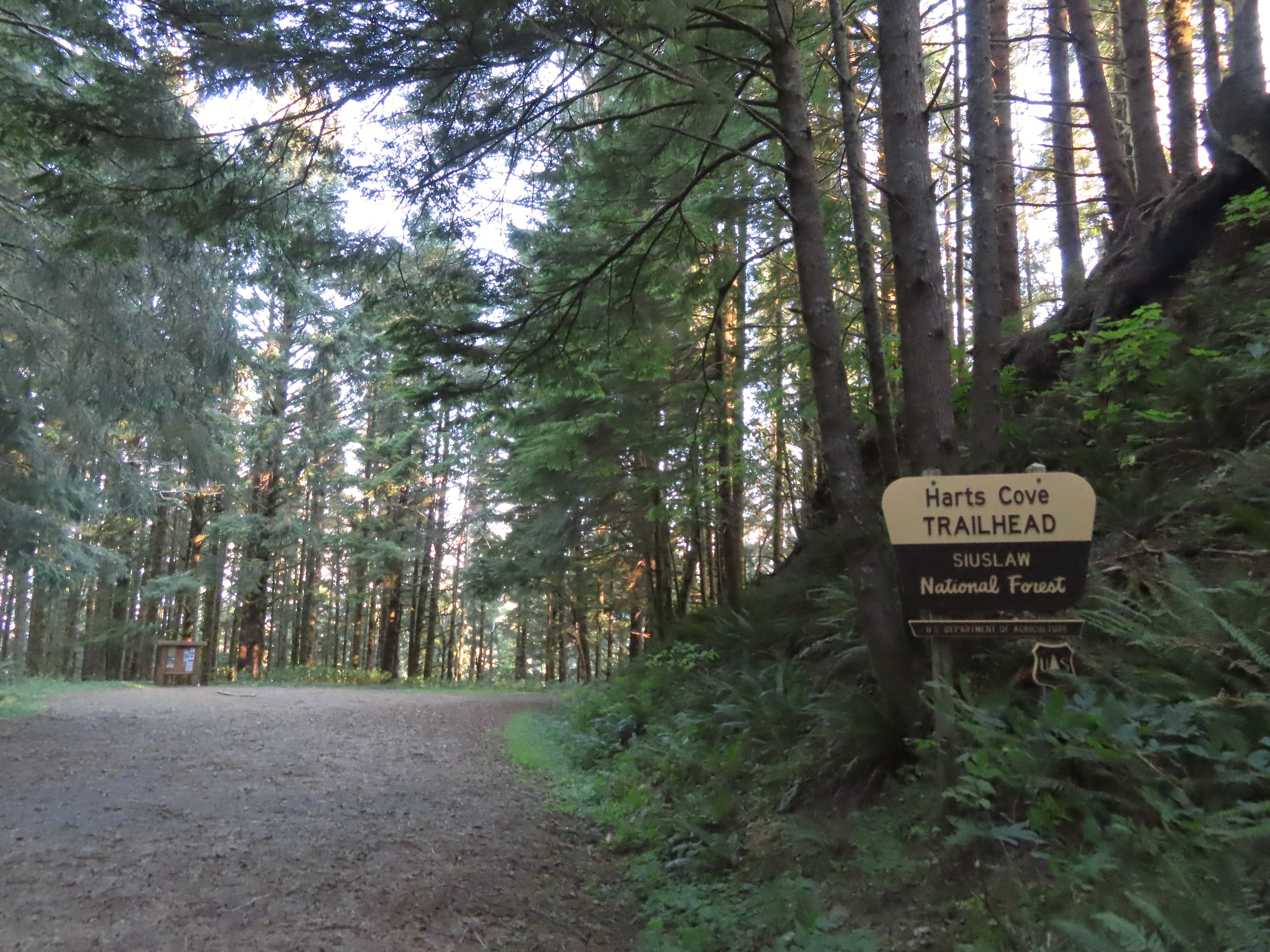

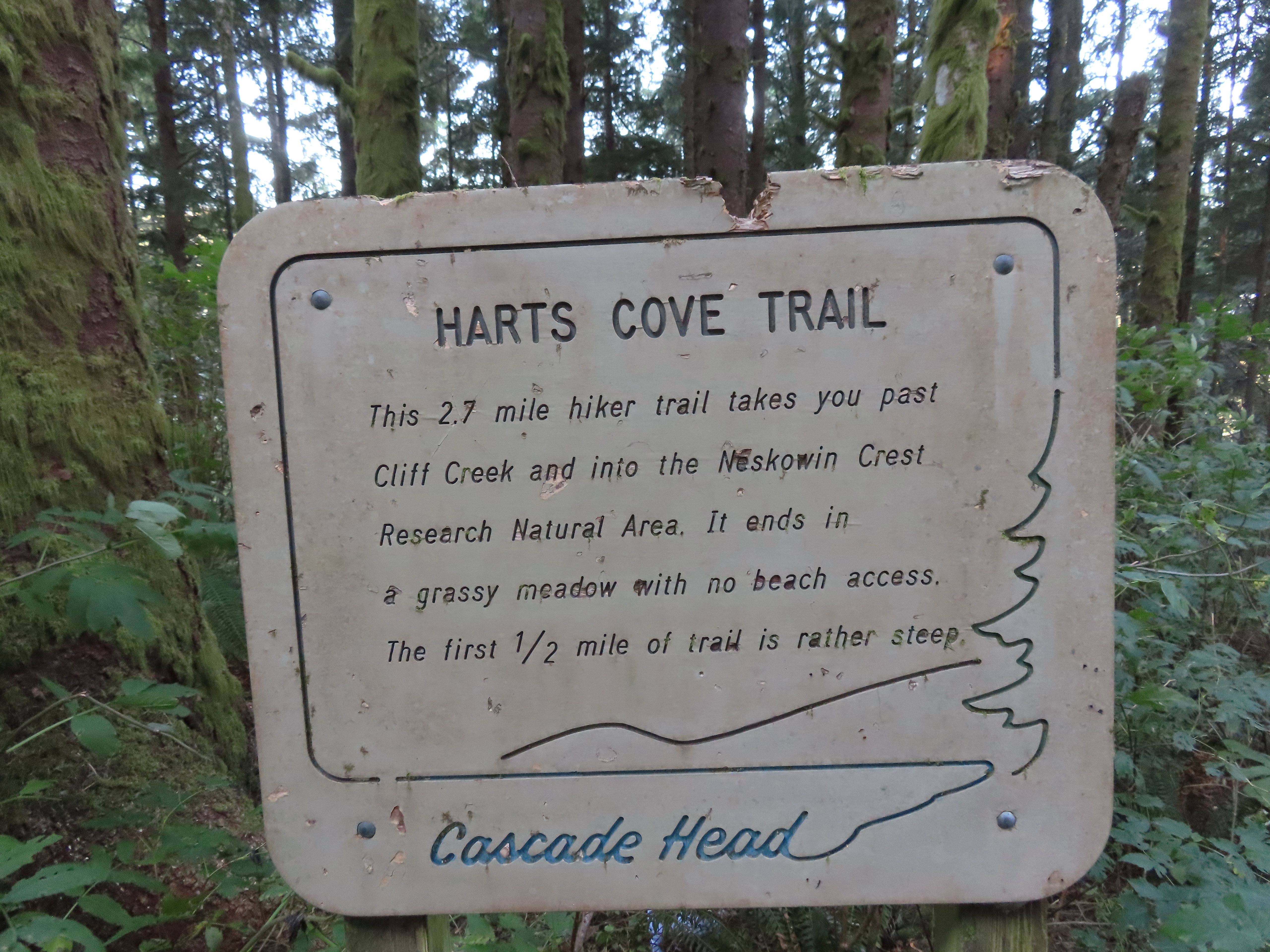

 There were around 18 trees such as this one across the trail from the trailhead to Cliff Creek.
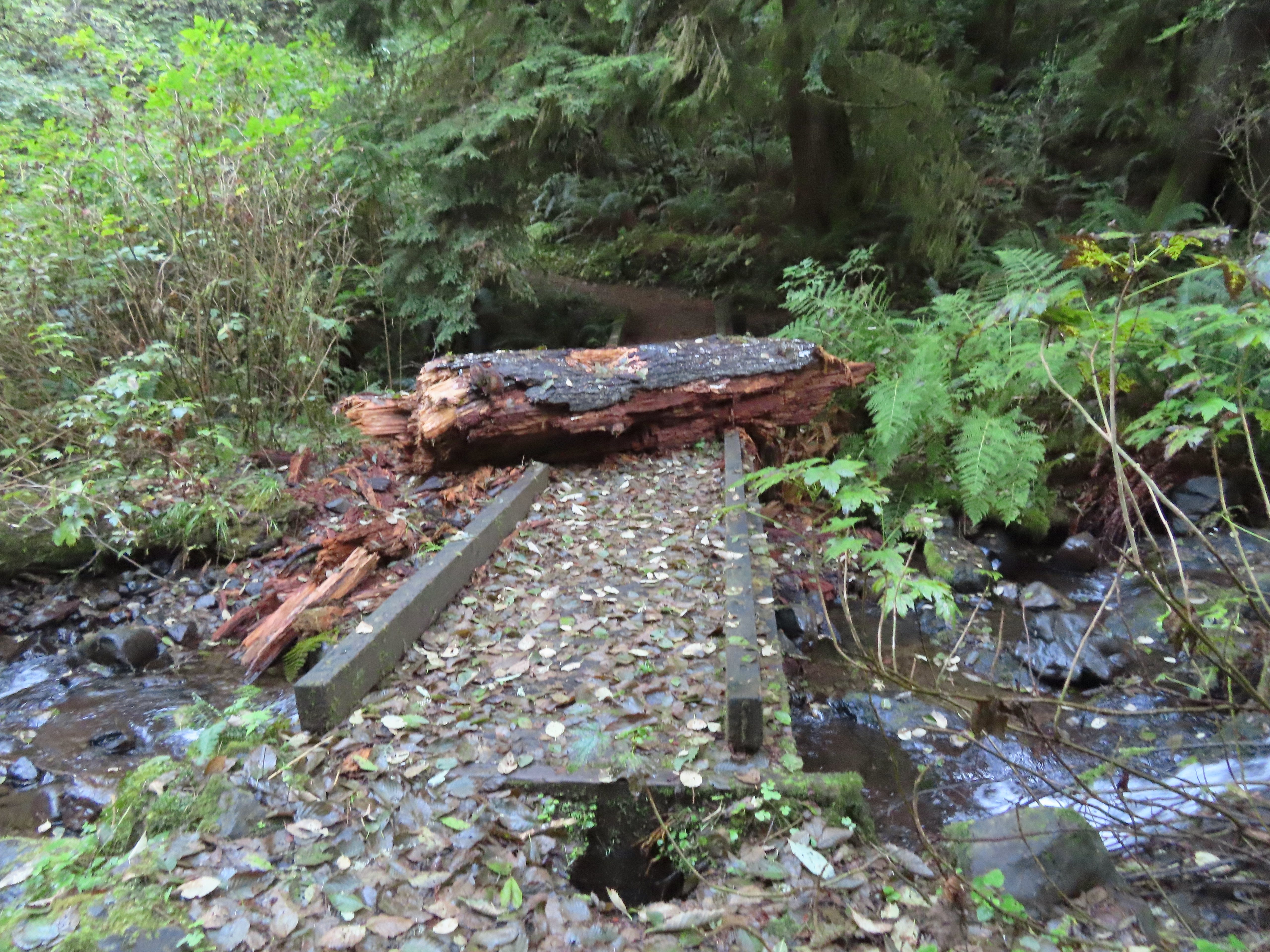 This large chunk of tree trunk has done some damage to the bridge, but it was still passable.
 Cliff Creek
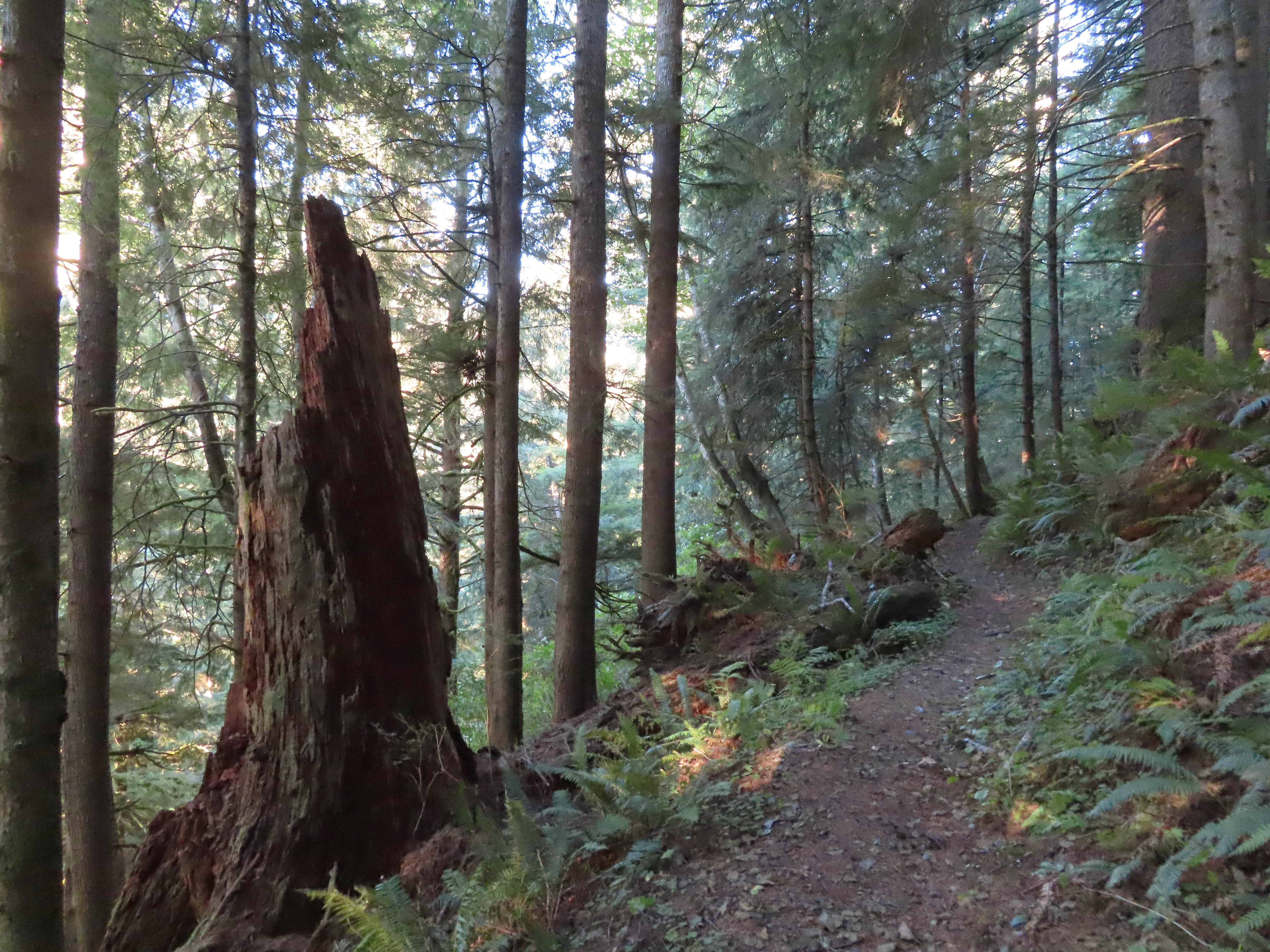
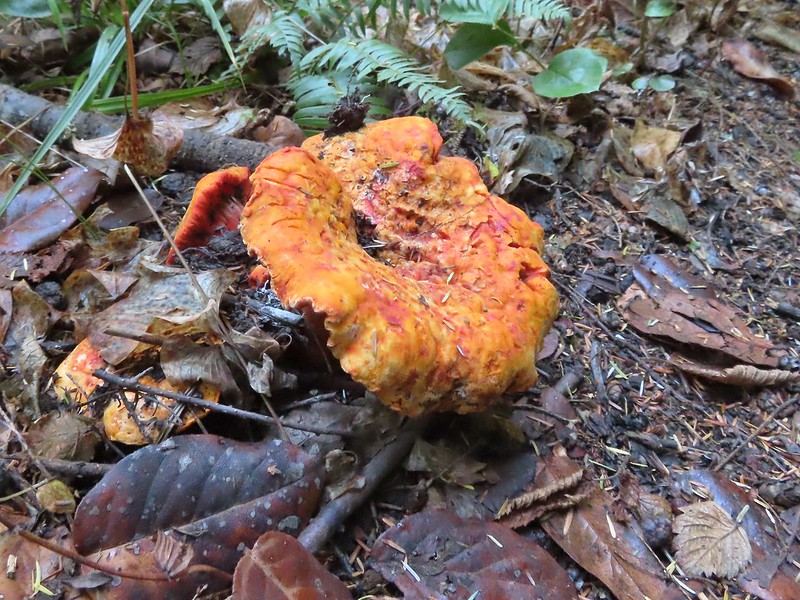
 At the 1.6-mile mark I entered the
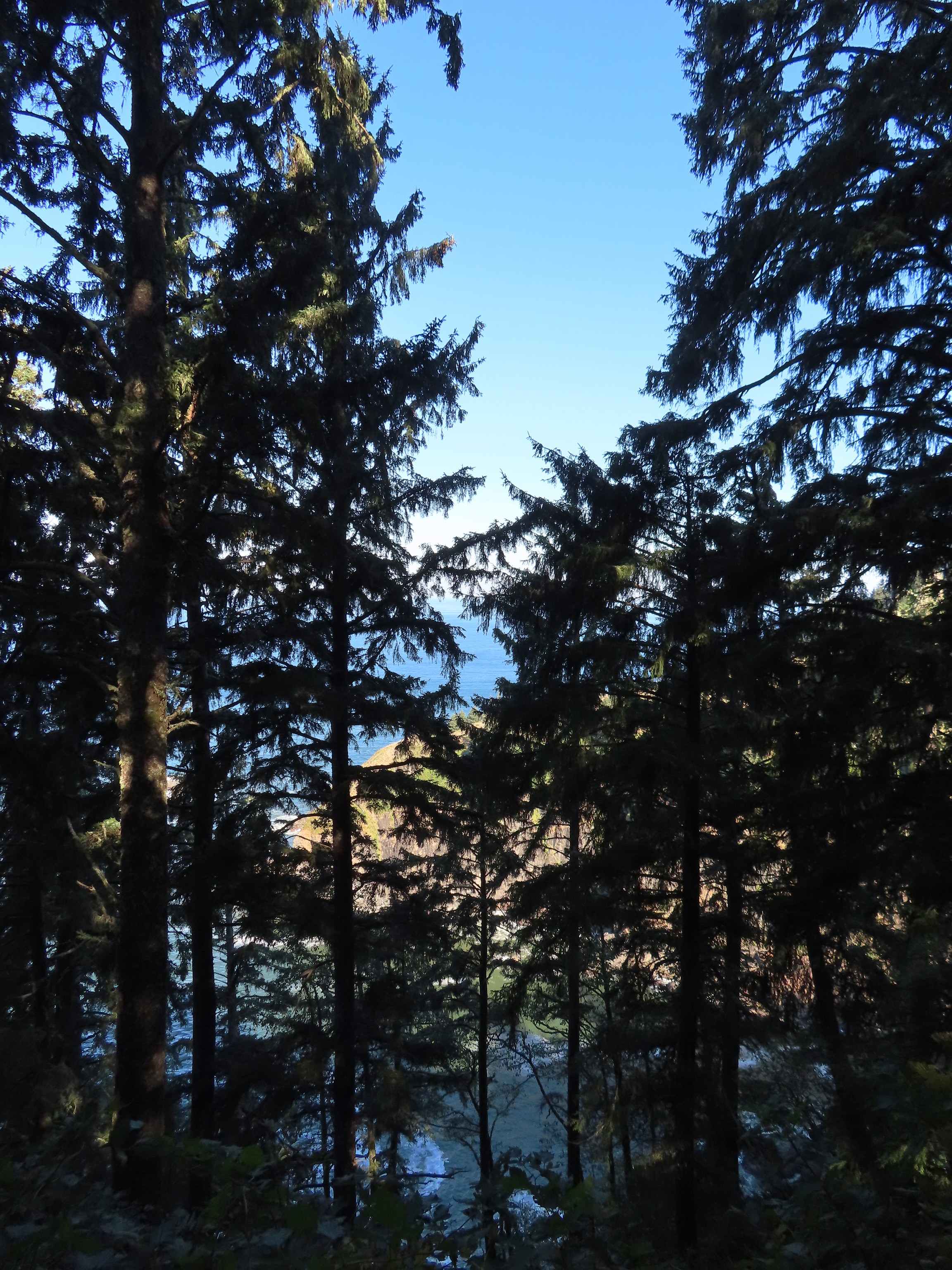
 Sign near the bench.
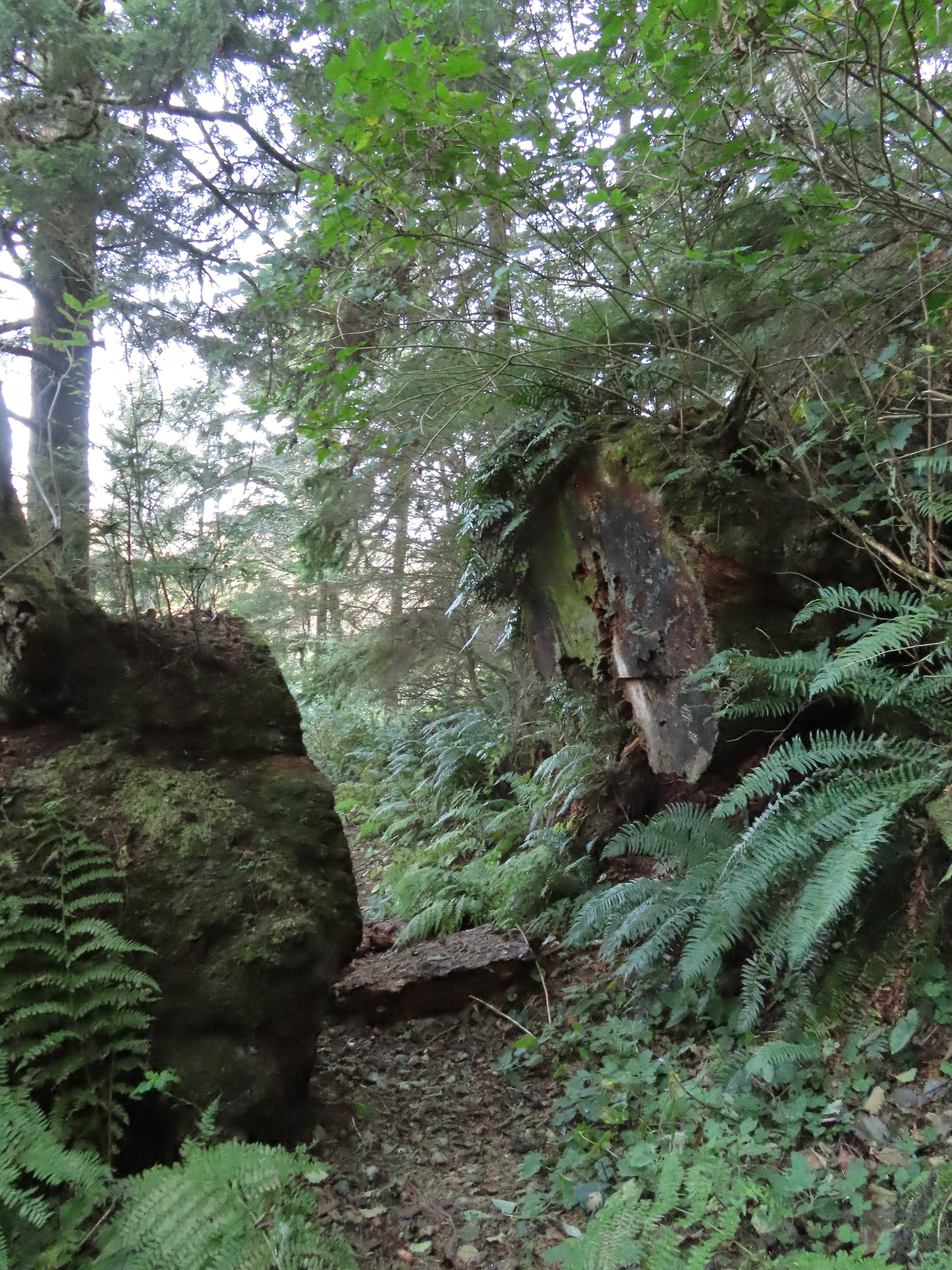 Big sitka spruce trunk.
 Approaching the Chitwood Creek crossing.
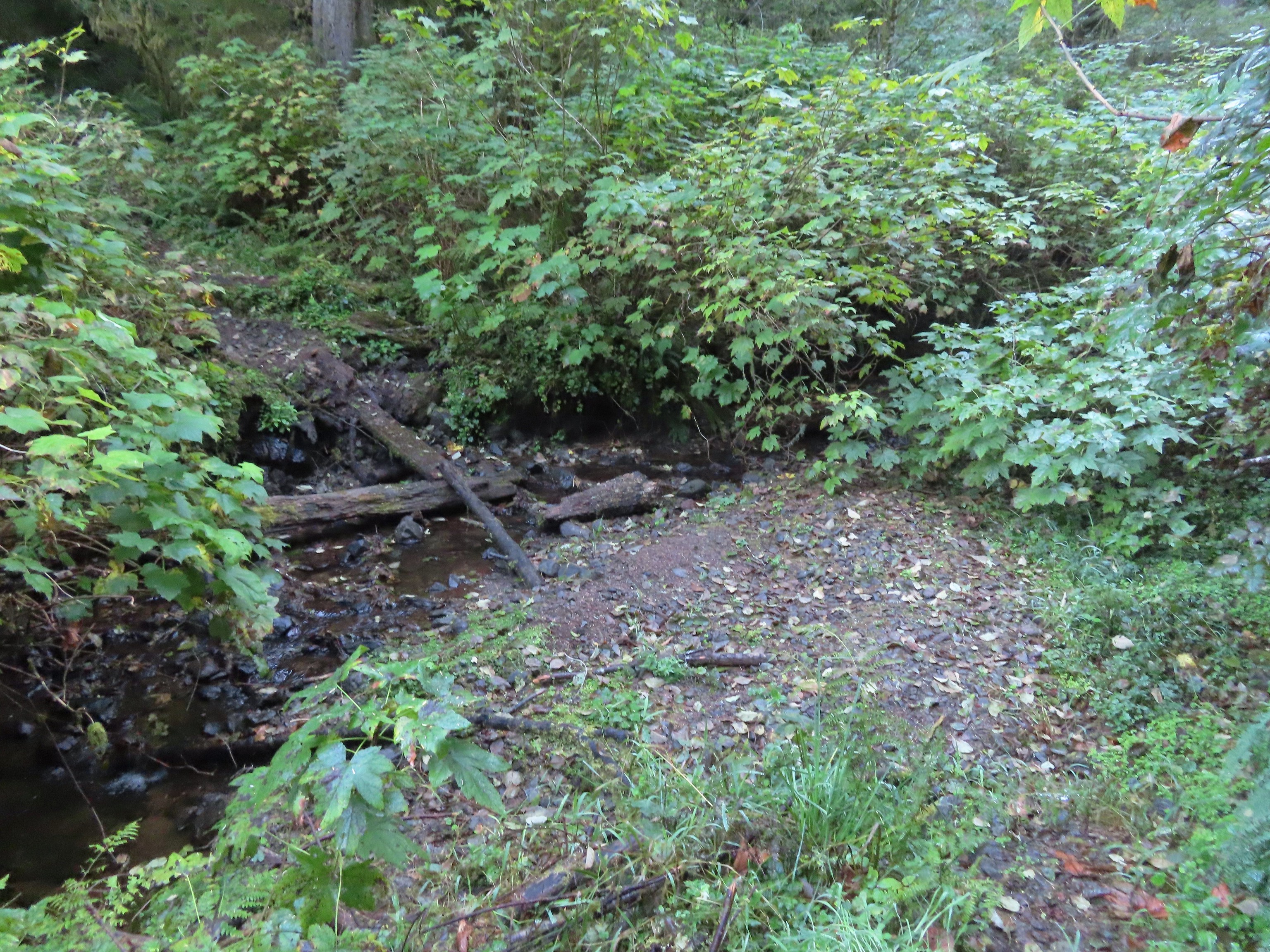 Chitwood Creek
 Heading back toward the ocean.
 Someone stuck some feathers in this mushroom.
 There was a large number of noisy sea lions on the shaded rocks below Cascade Head. Even though they were quite far away they were loud.
 Seagull hanging out on a sea rock.
 Sea lion heading for its buddies.
 A combination of the position of the Sun and the presence of haze made it very difficult to make out the waterfall on Chitwood Creek. I don’t know if the haze was smoke or just the usual coastal haze. (There was a fairly good east wind blowing steadily all morning.)


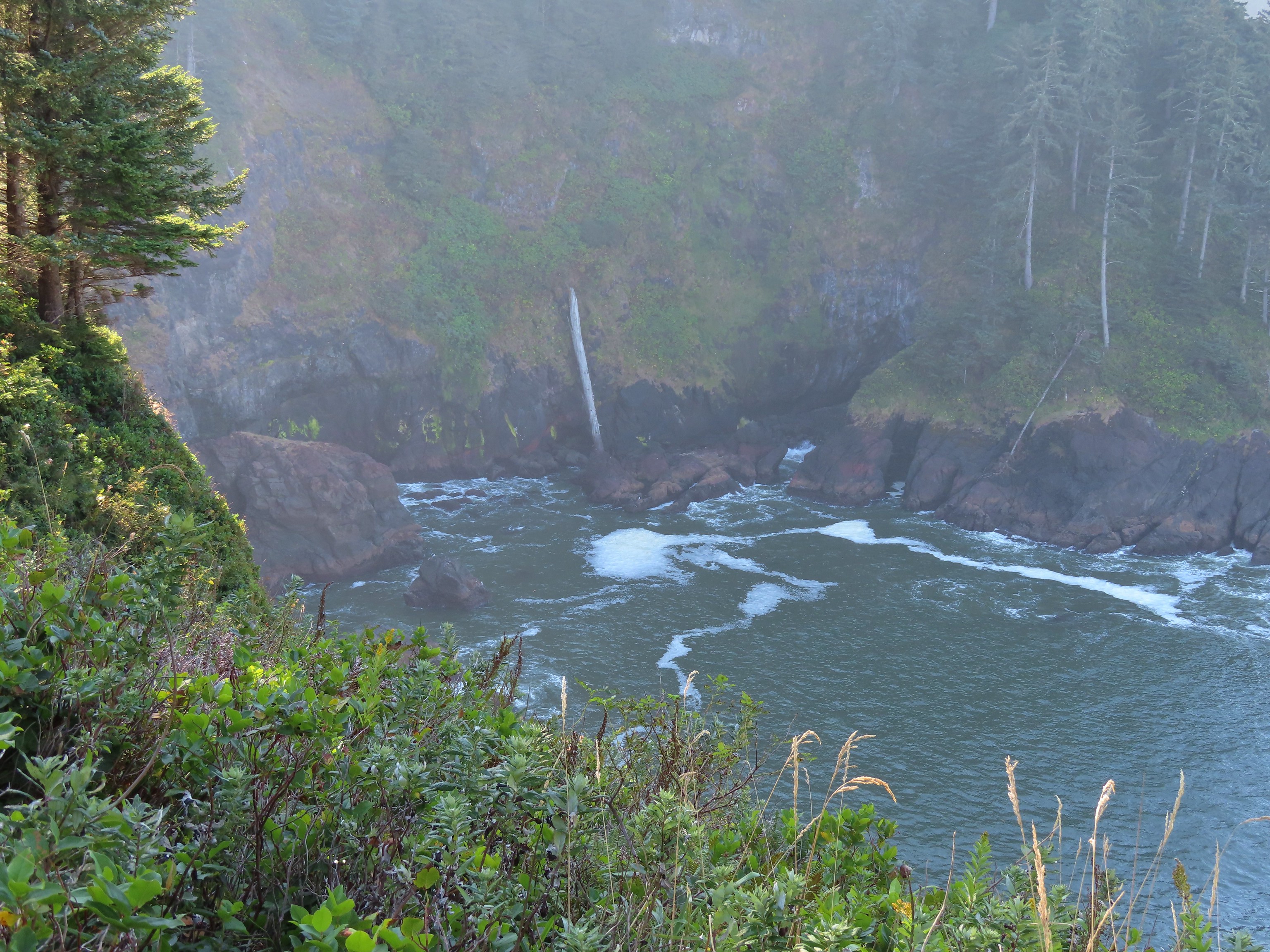
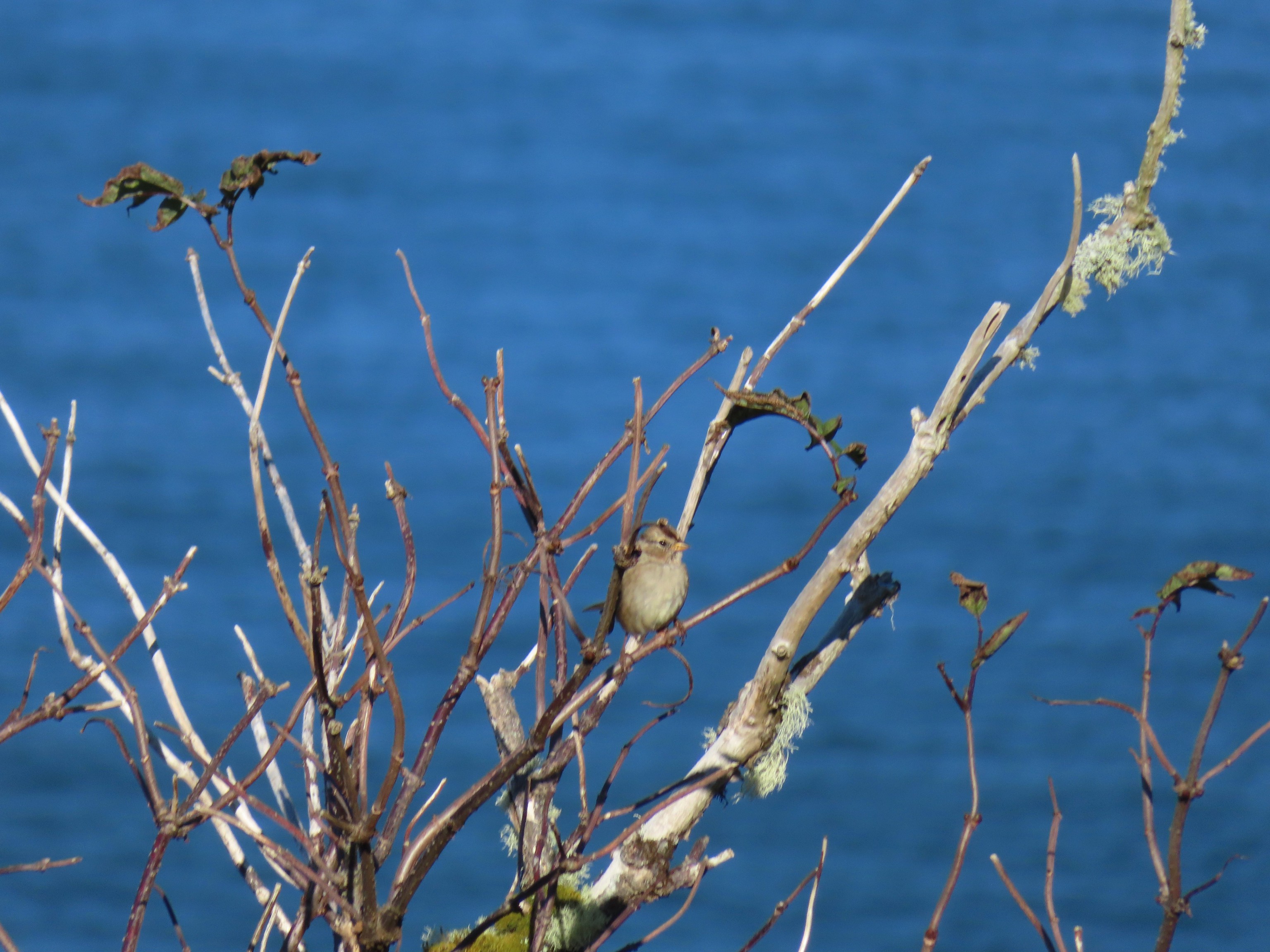 Sparrow in the meadow at Hart’s Cove.
 Pearly everlasting
 Varied thrush
 A reminder of Spring, a trillium that bloomed months ago.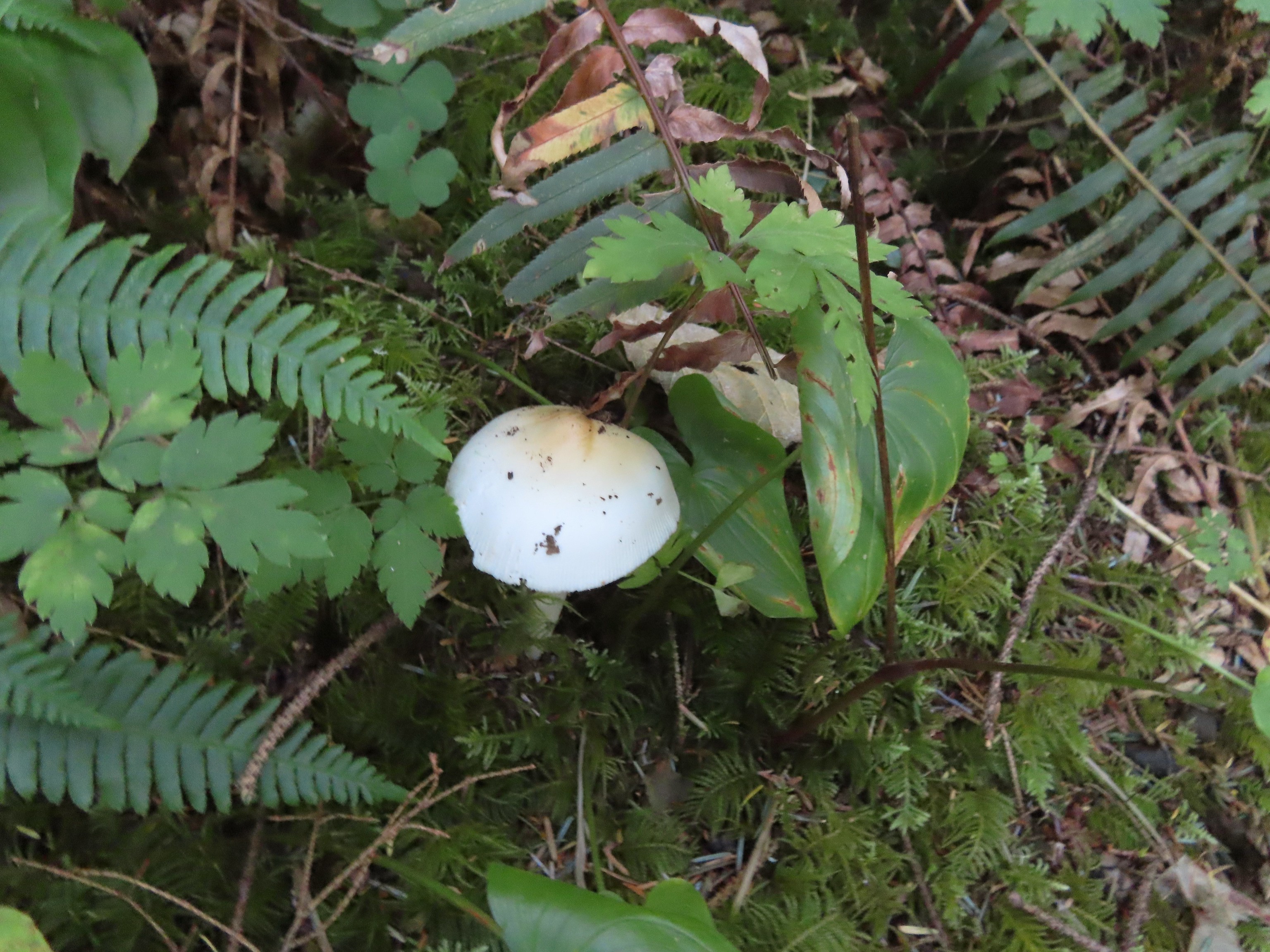
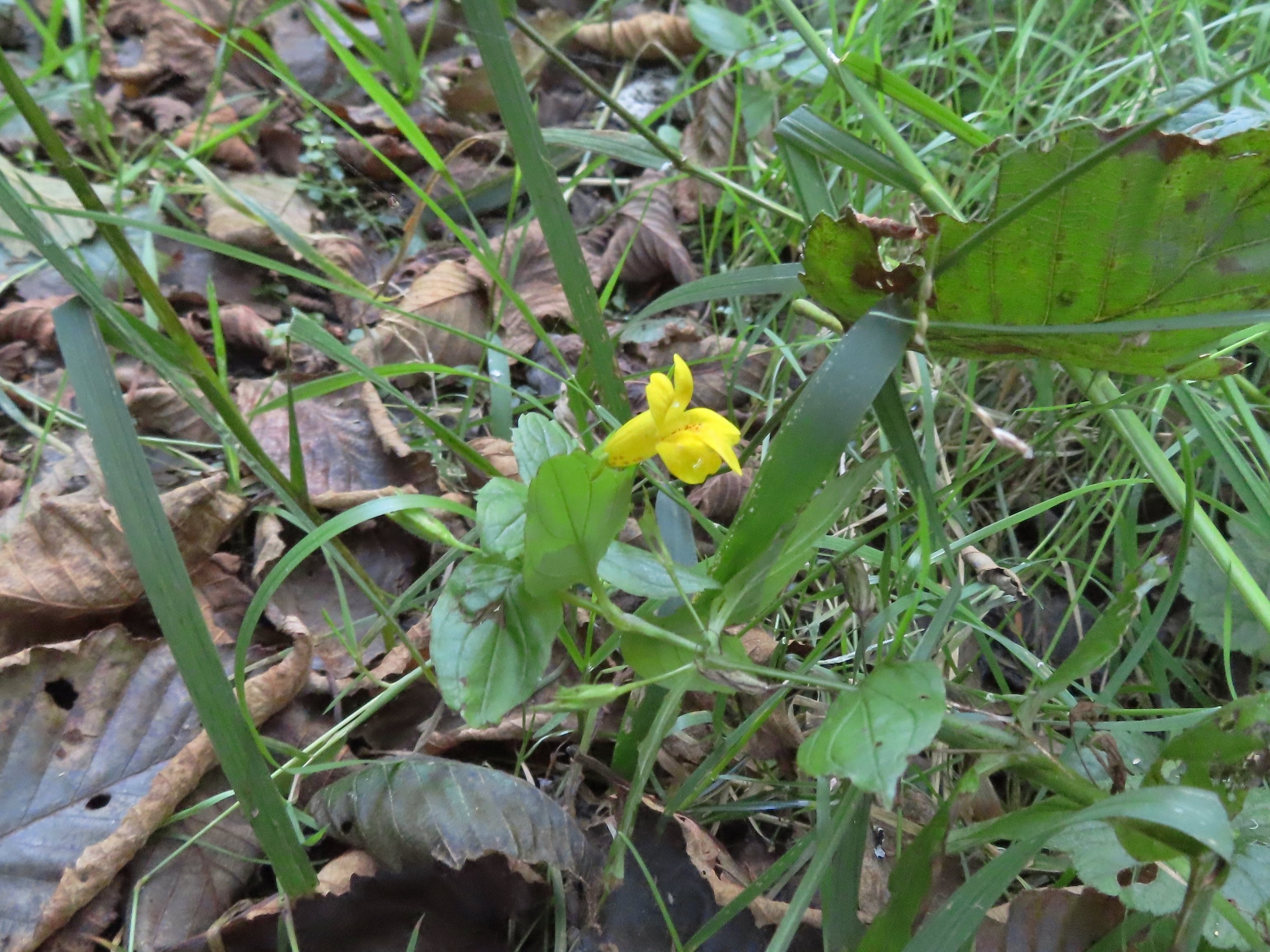 A monkeyflower along FR 1861.
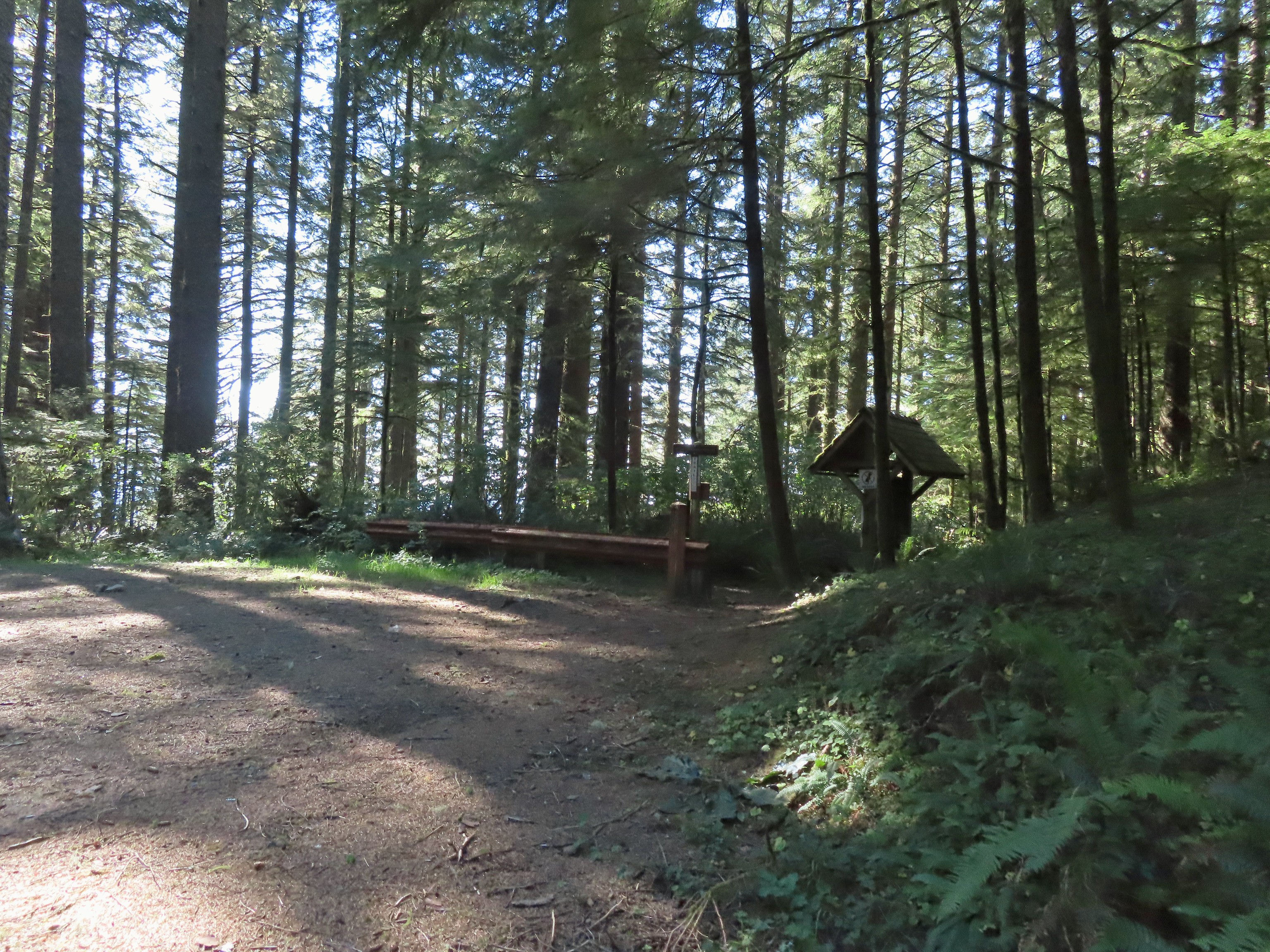 Back at the upper trailhead.
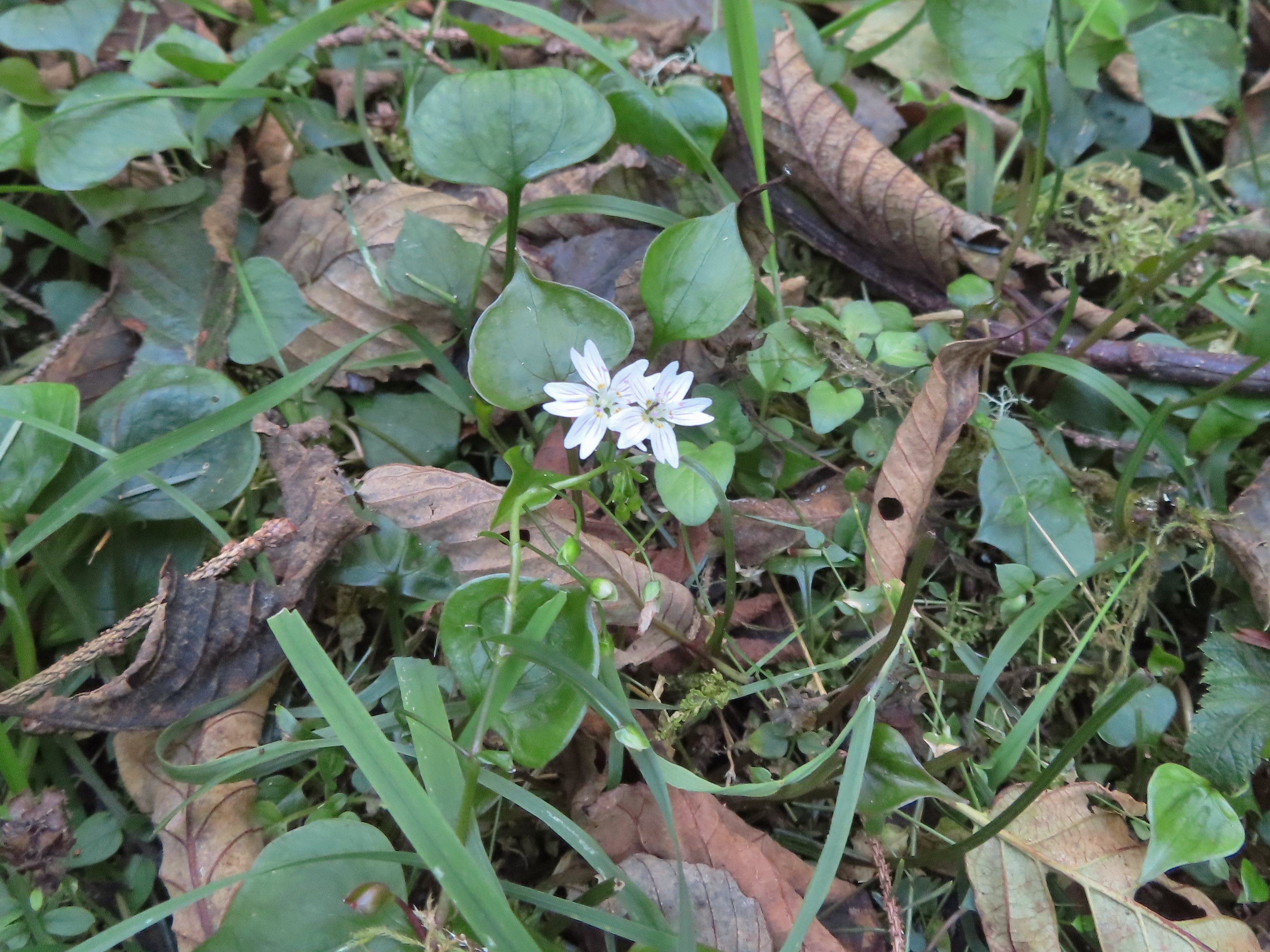 Candyflower
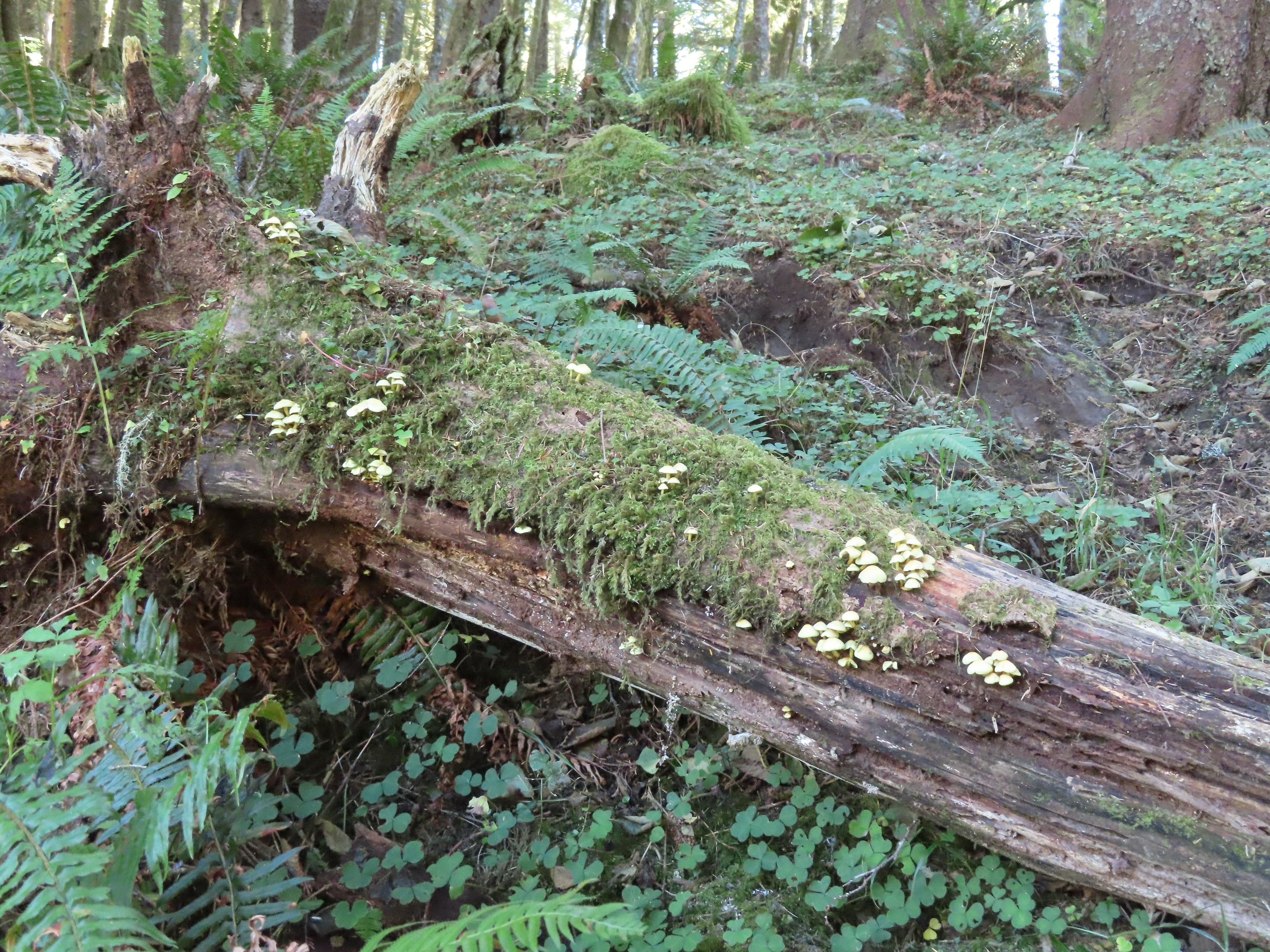 Mushrooms on a log.

 The Thumb, aka God’s Thumb (
 Heading for the high point.
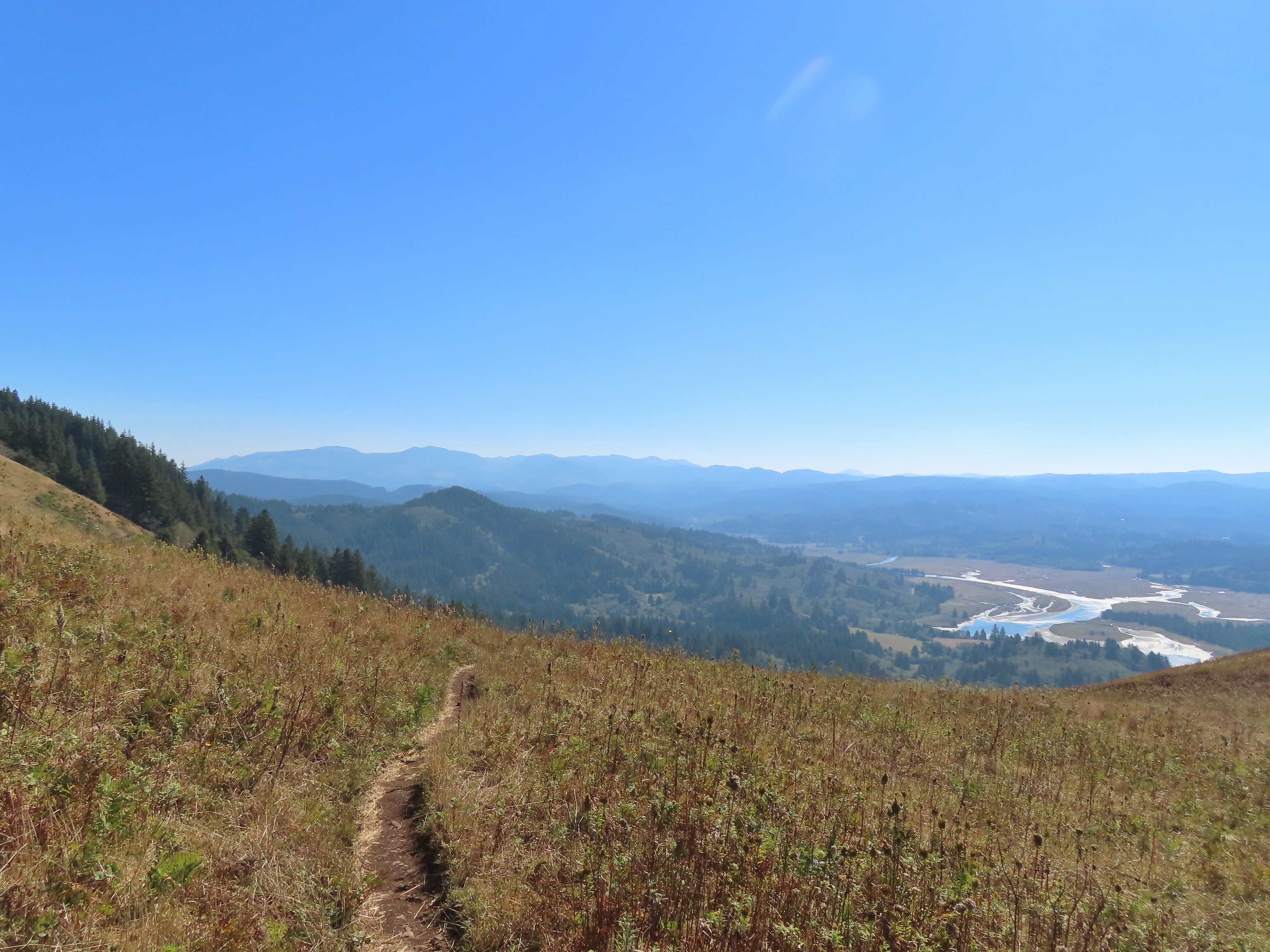 Descending Cascade Head
 There were quite a few of these (an aster?) blooming along the trail.
 Not sure what type of bird this is.
 Sulphur butterfly
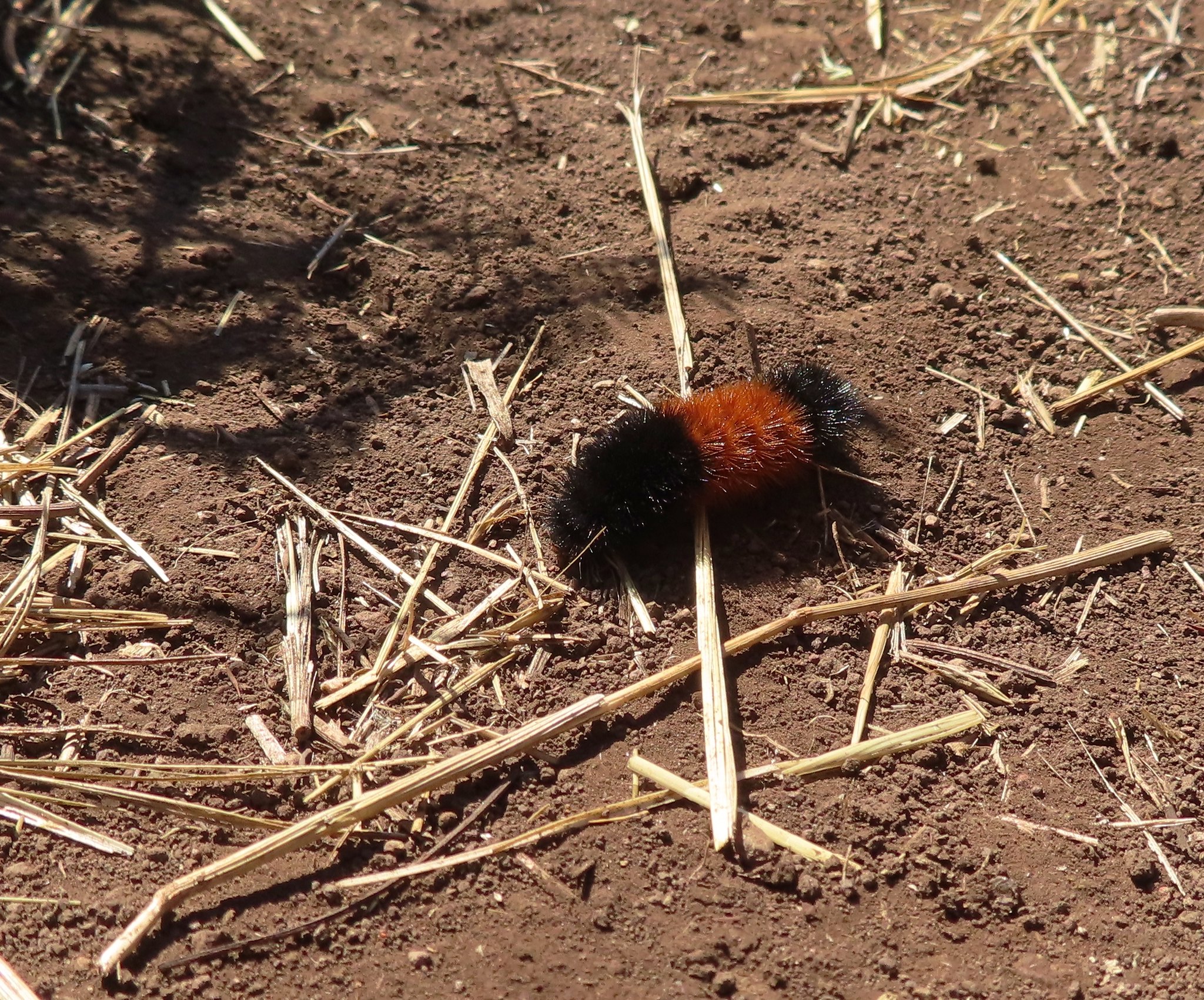 Wooly bear caterpillar, there were many of these on the trail.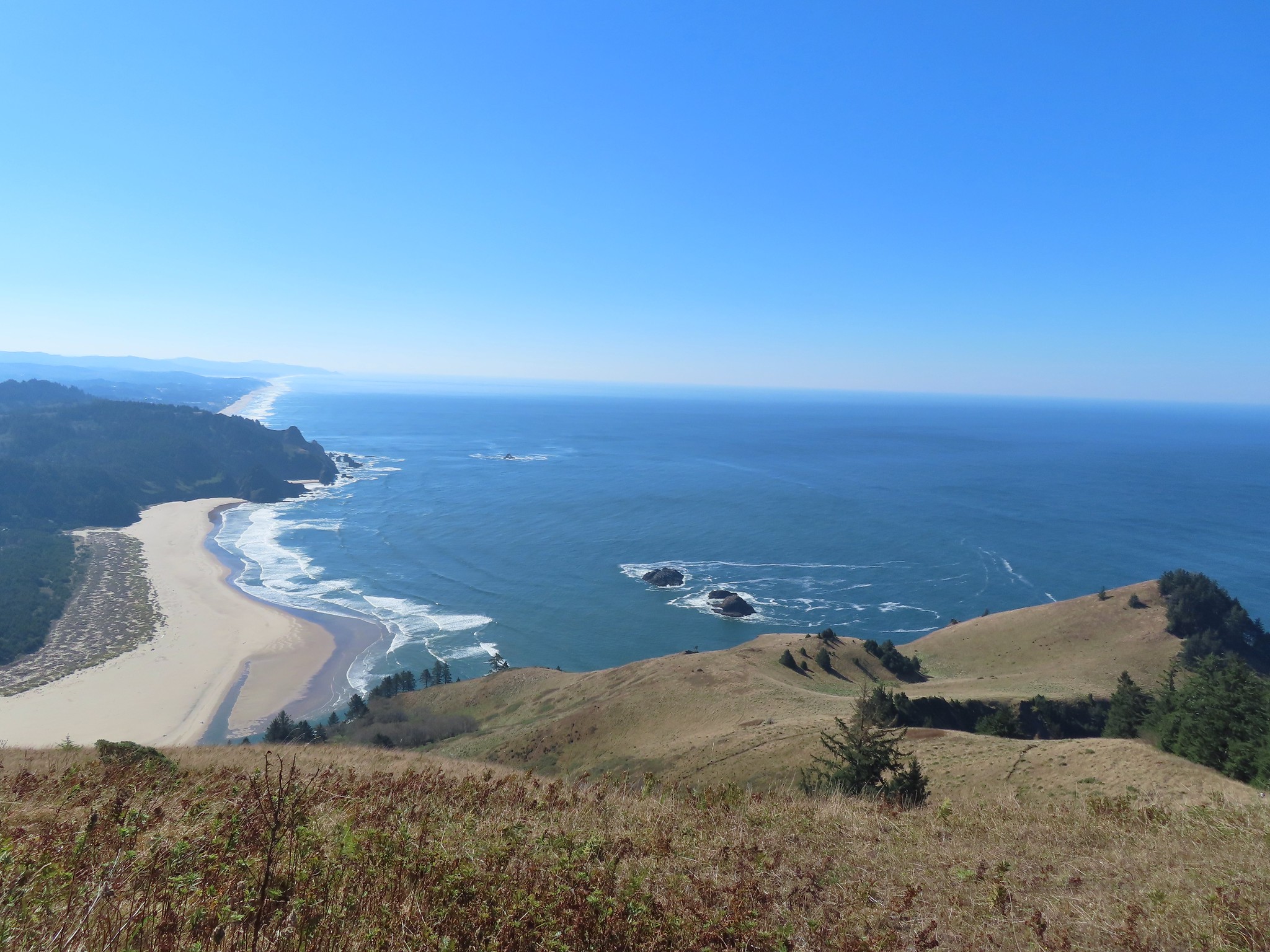
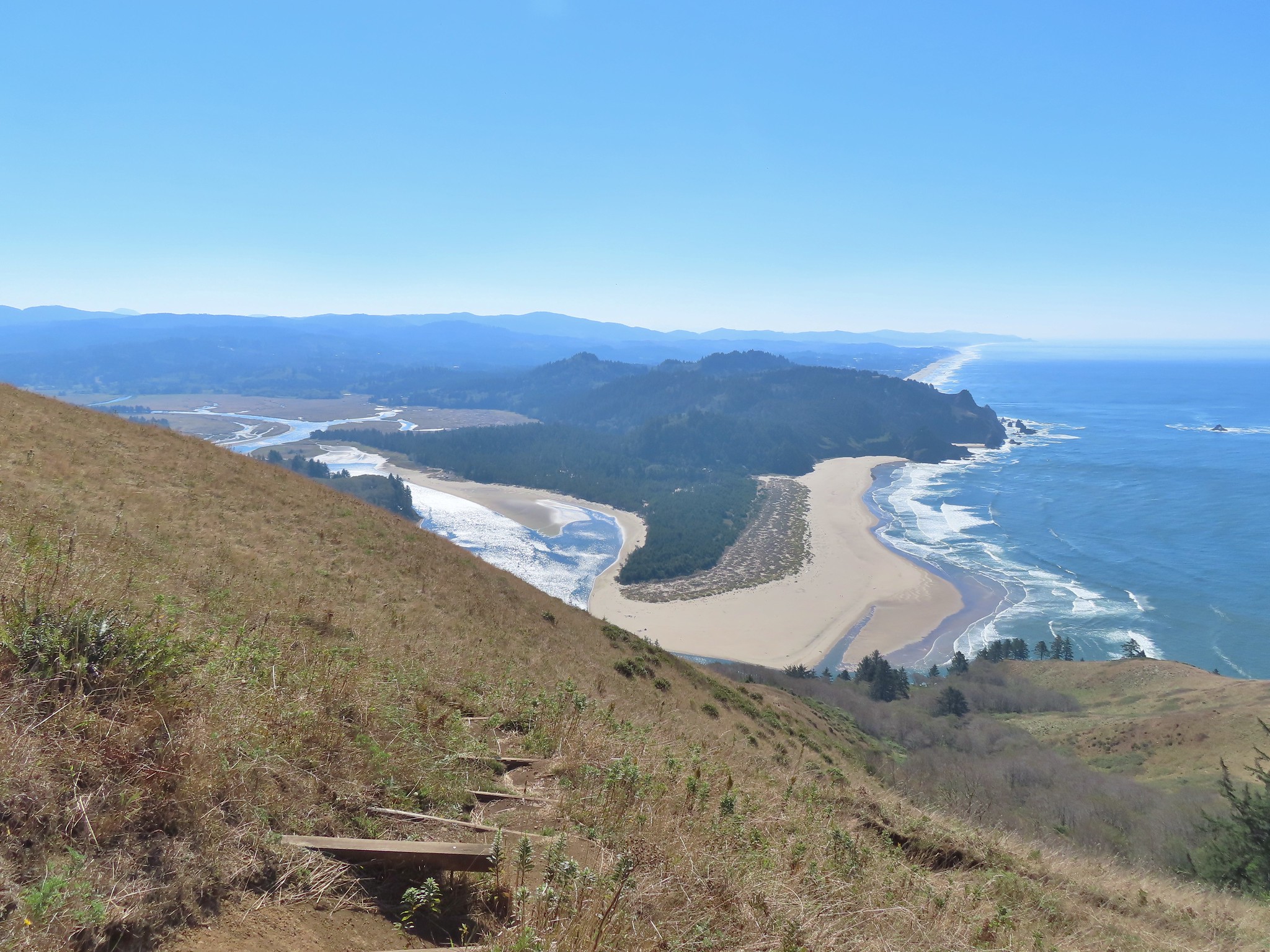
 Looking back up at one of the first hikers I’d passed.
 Pretty moth on a bush.
 View to the east of the Coastal Range.
 Heading for the tree line.
 Back where I’d seen the bull elk in the morning.
 Cars parked along Three Rocks Road, the parking area at Knights County Park was full when I got back to the car a little before 1pm.


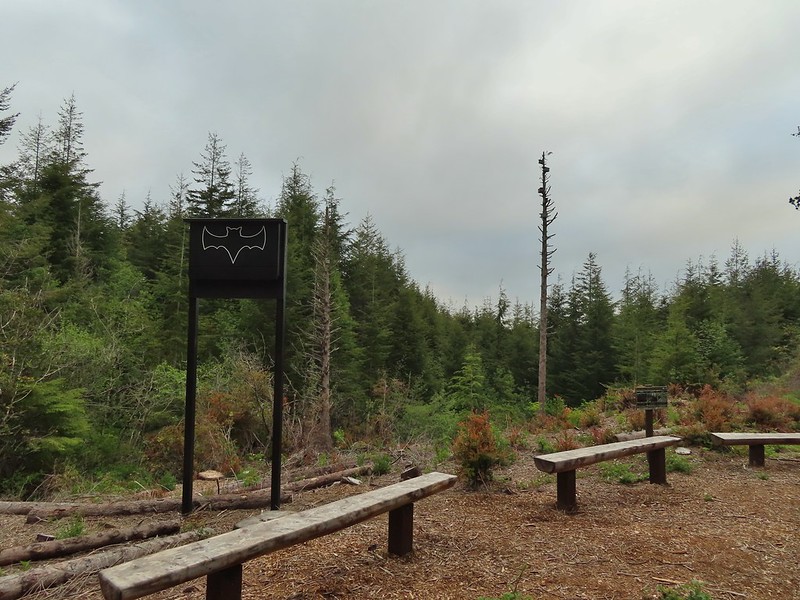

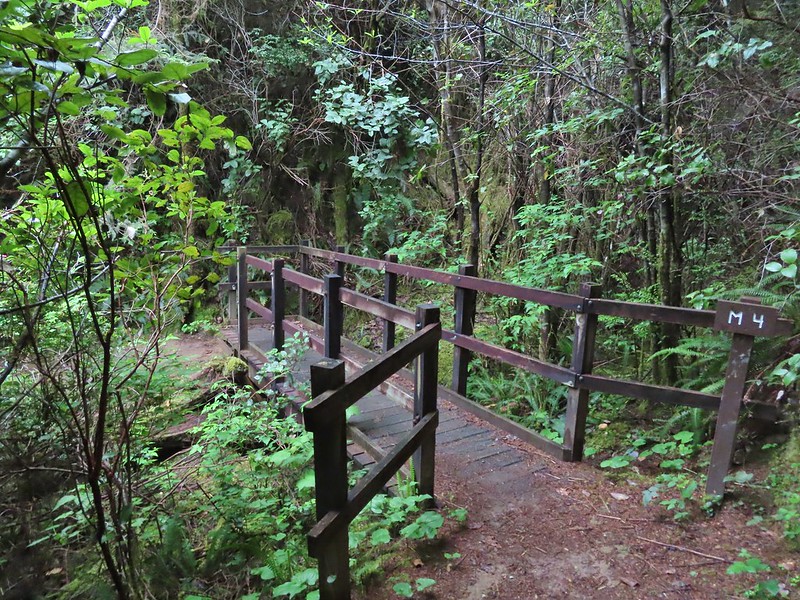 All the bridges had labels consisting of the first initial of the trail and then the bridge number making this the 4th bridge along the Middle Creek Trail.
 Interesting seat.
 That’s a fancy hat for a stump.




 We saw a lot of rough skinned newts on the trails, but what we were really hopping for was a Pacific Giant Salamander. No luck there this time.
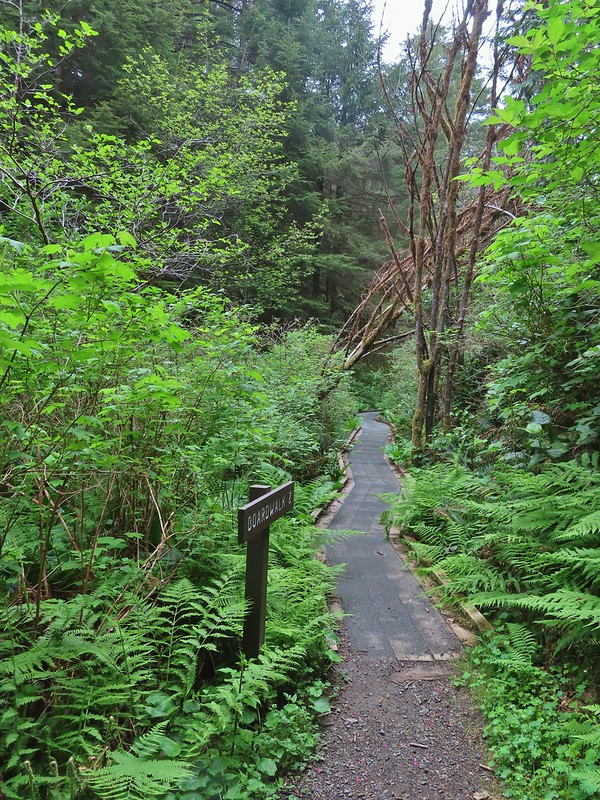
 A few trillium still had petals.
 Woodpecker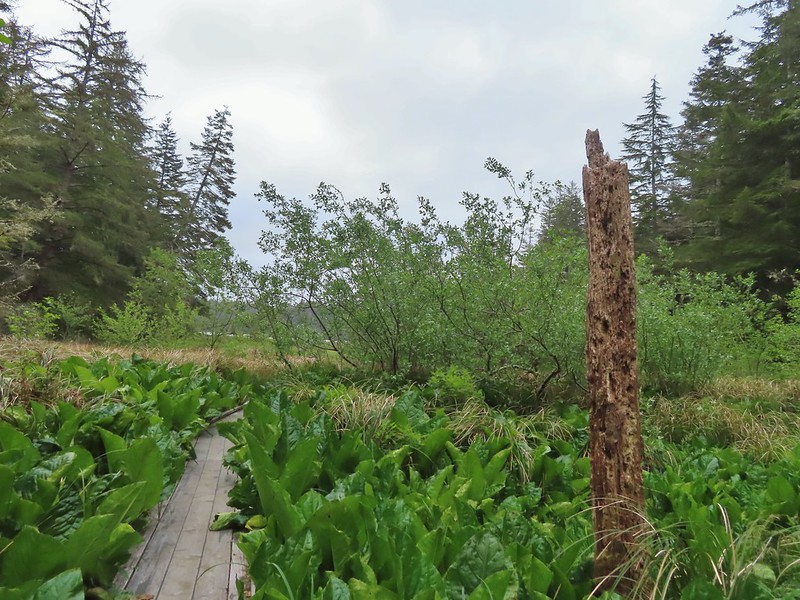
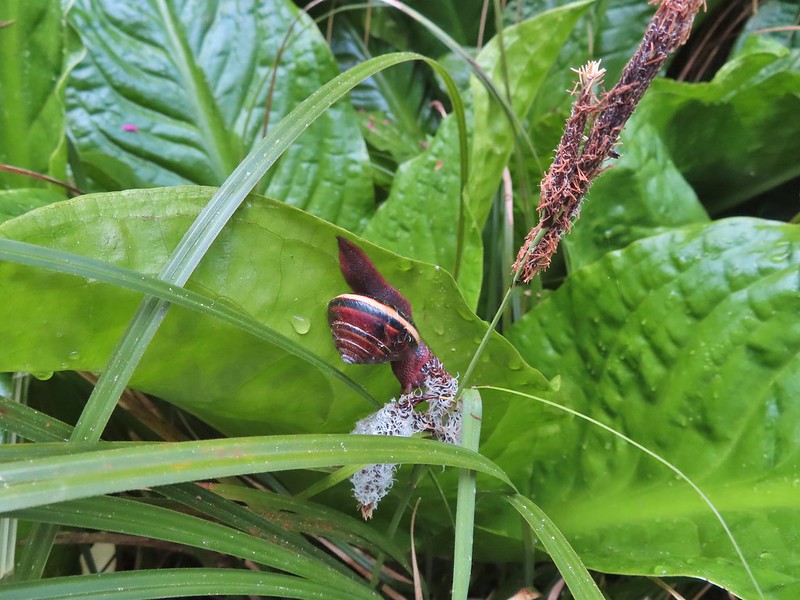

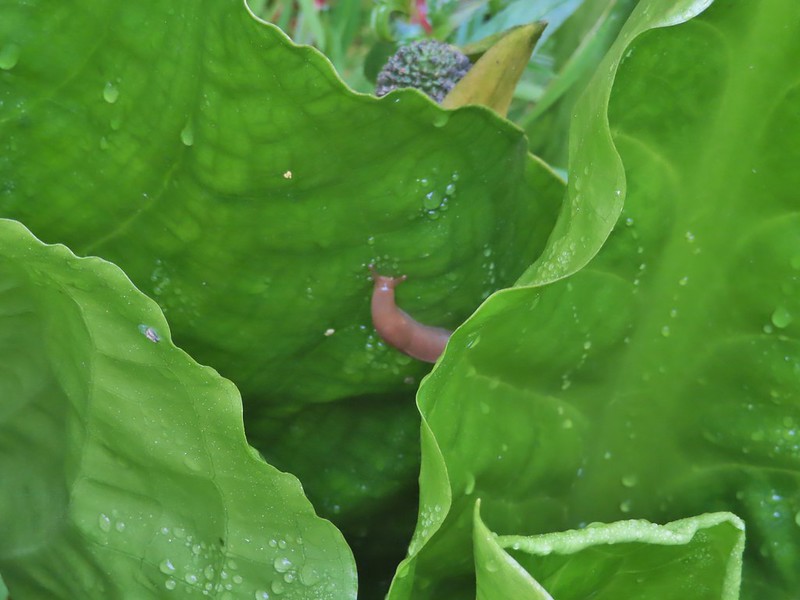

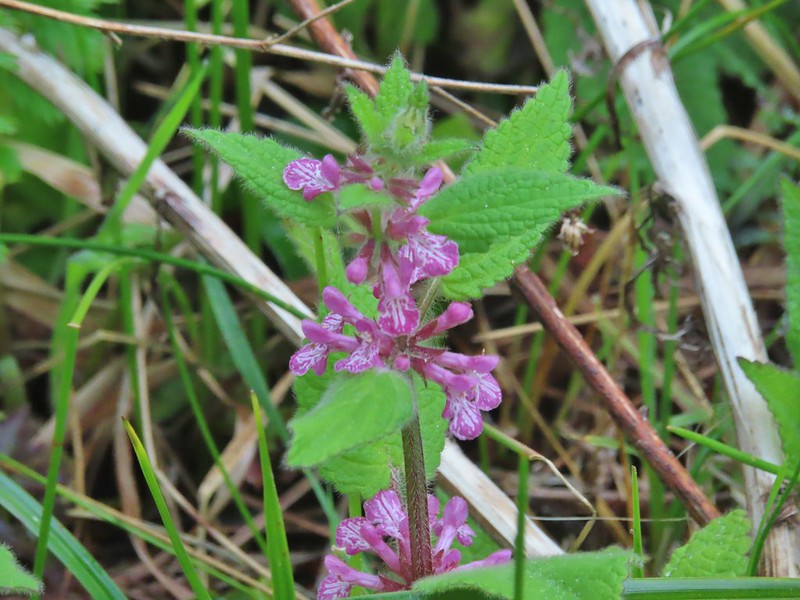 A hedgenettle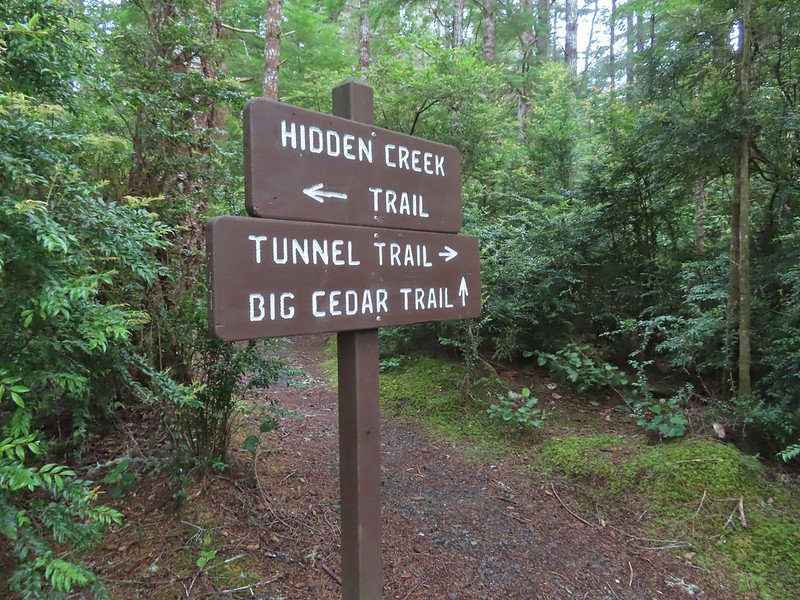

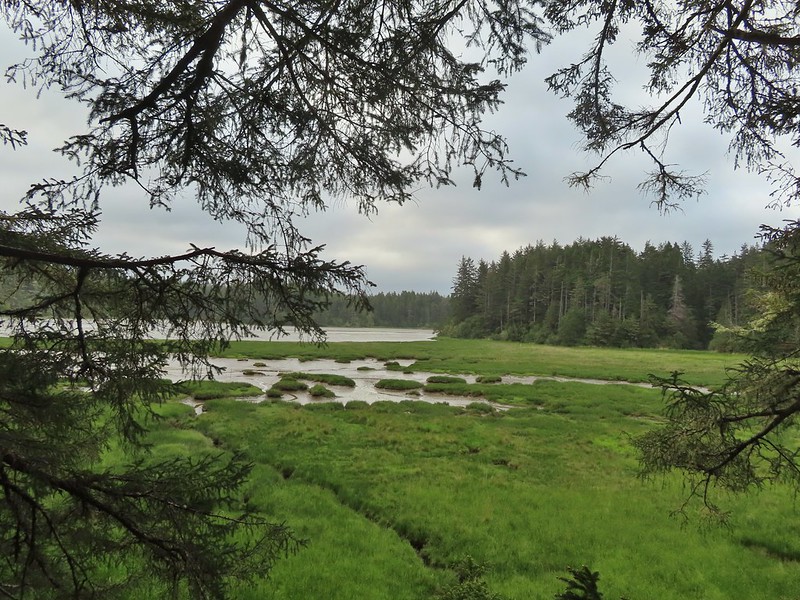

 Tunnel Trail indeed.

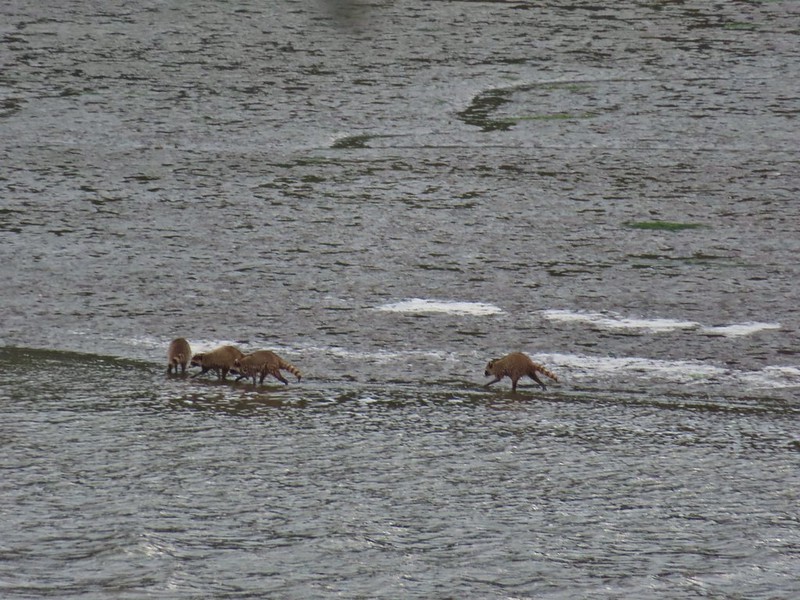

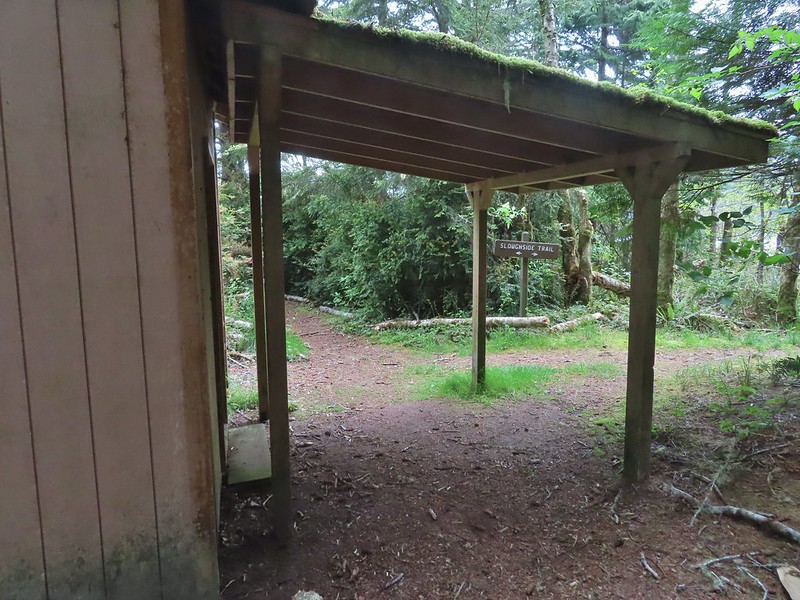


 Castilleja ambigua – Estuarine Paintbrush
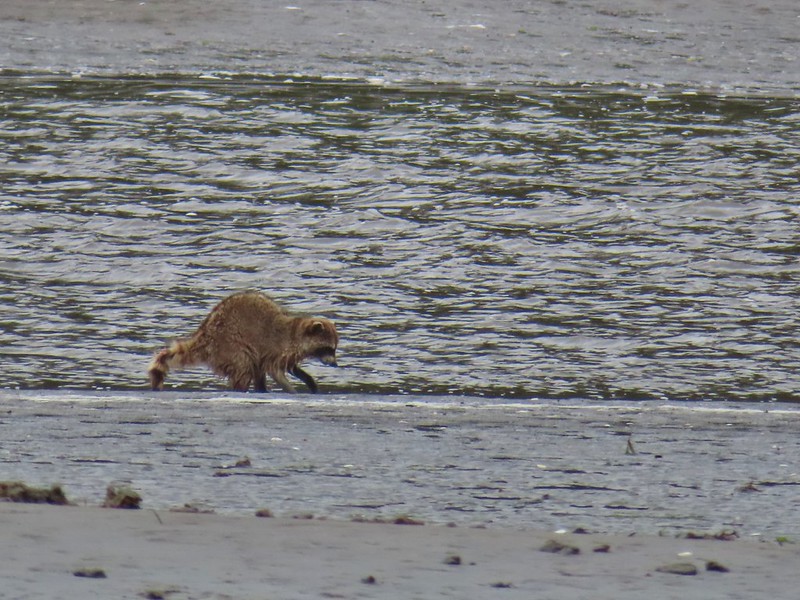


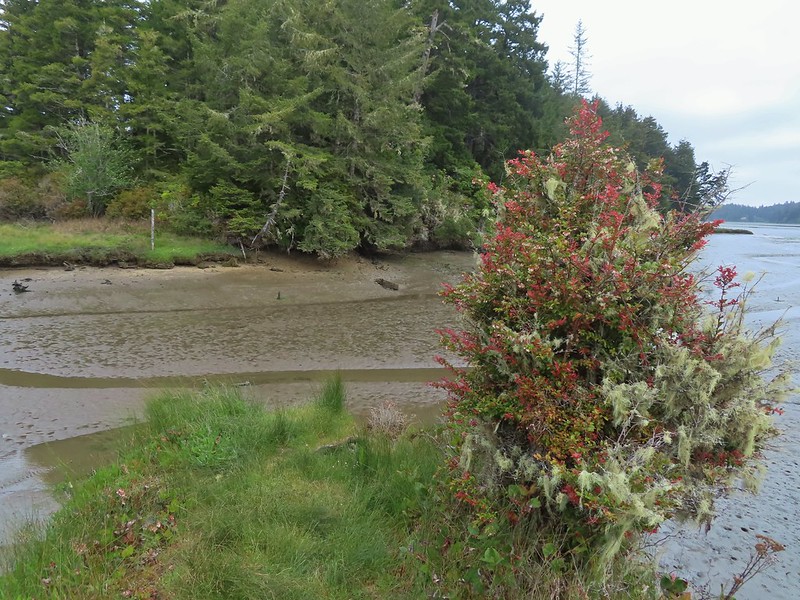 End of the line.
 South Slough
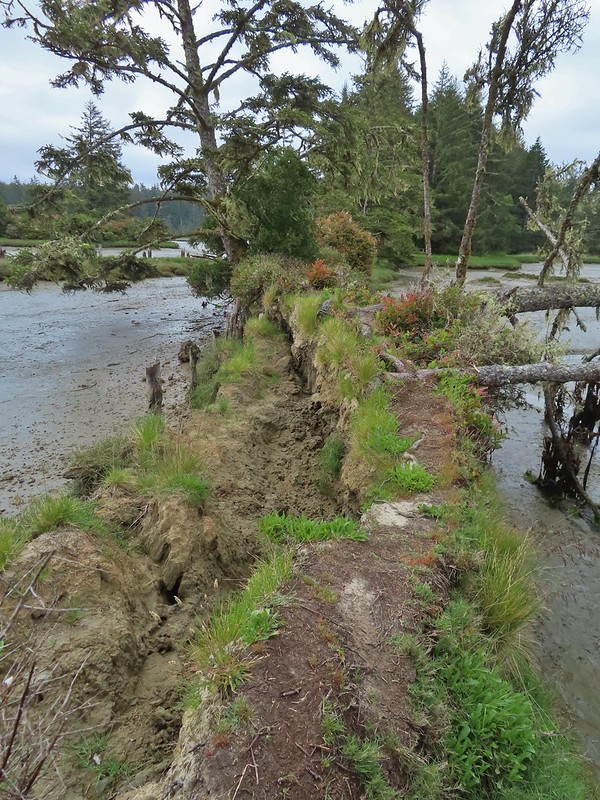 It was interesting to see how this uprooted tree peeled back a layer of the ground.
 Rhoades Marsh
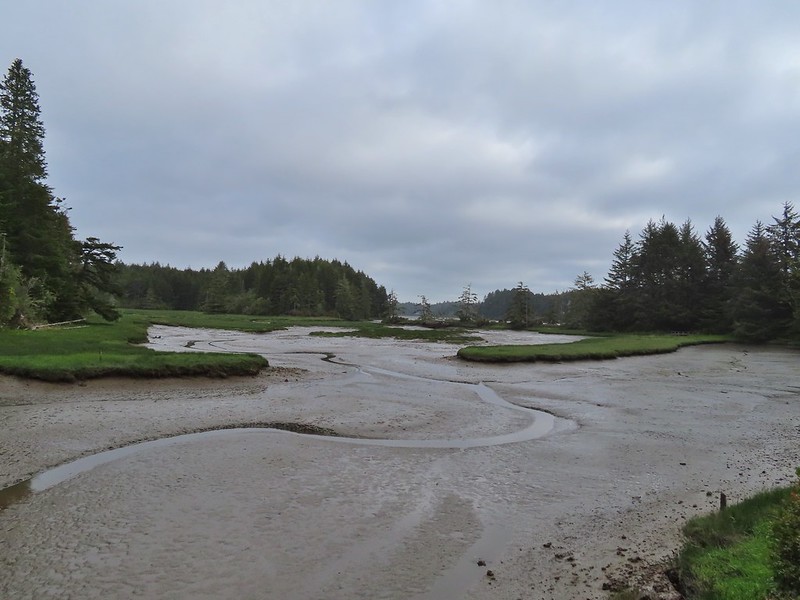 Sloughside Marsh
 Rhododendron


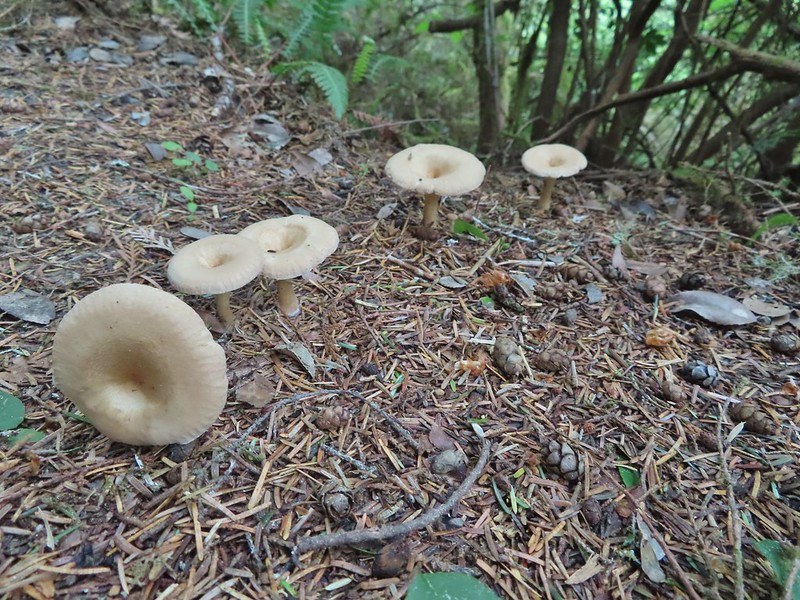
 Bleeding heart, fairy bells, and youth-on-age.
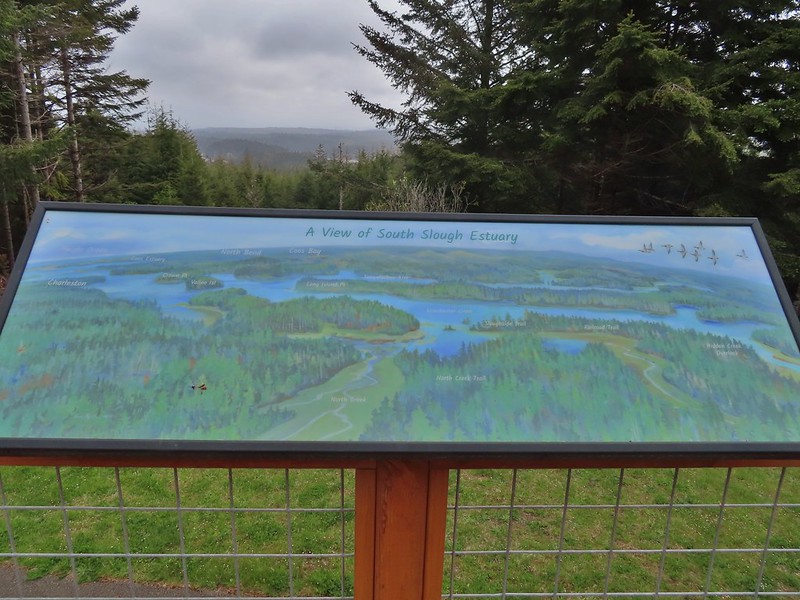
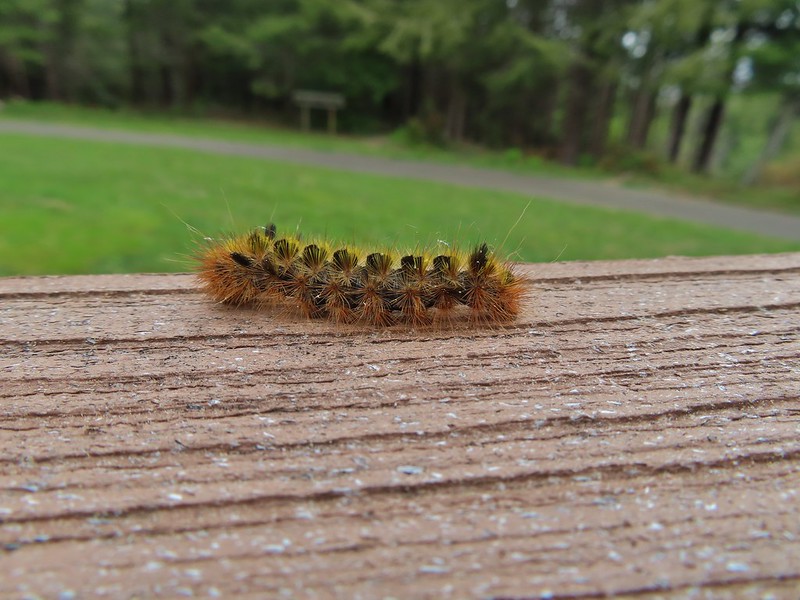


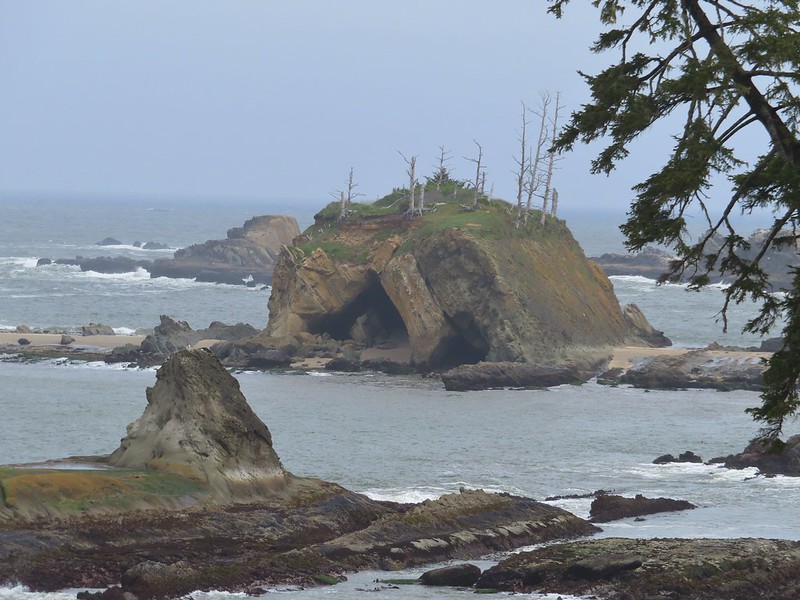
 Cape Arago Lighthouse (not on Cape Arago) on Chiefs Island.
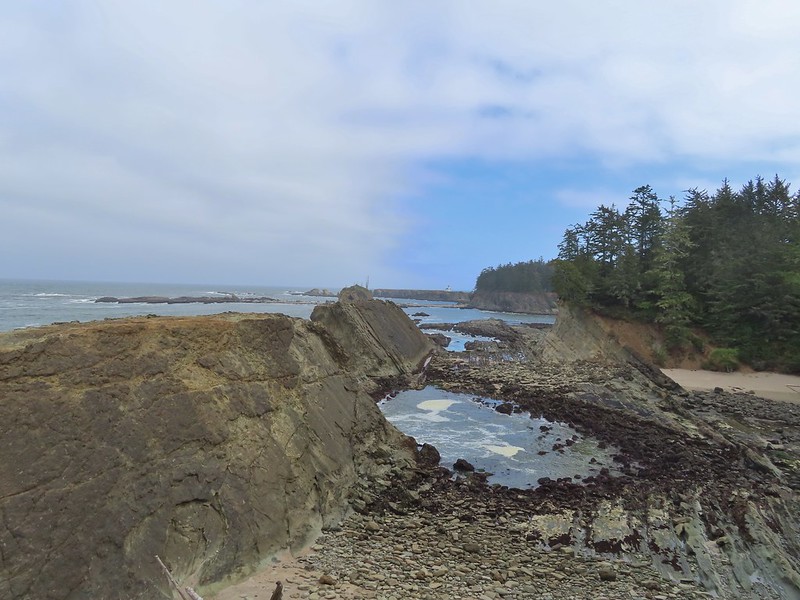
 Salal
Salal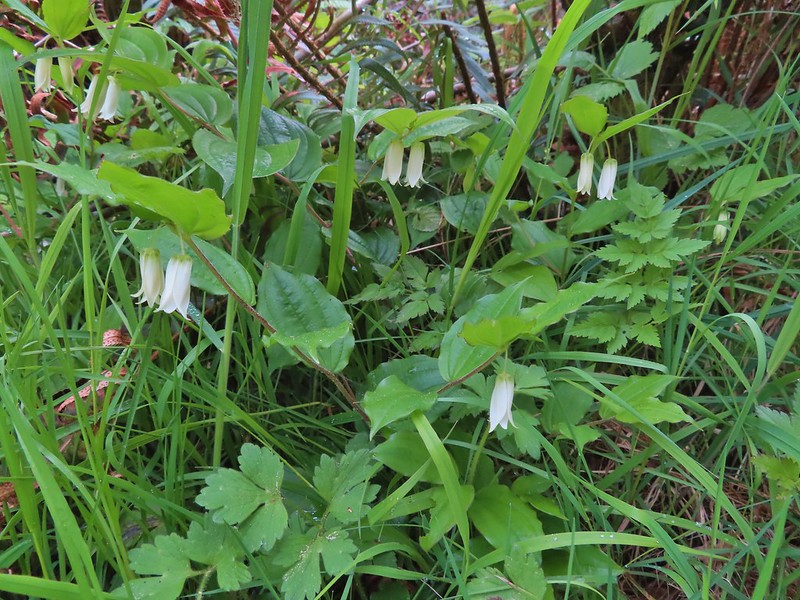
 The group campsite.
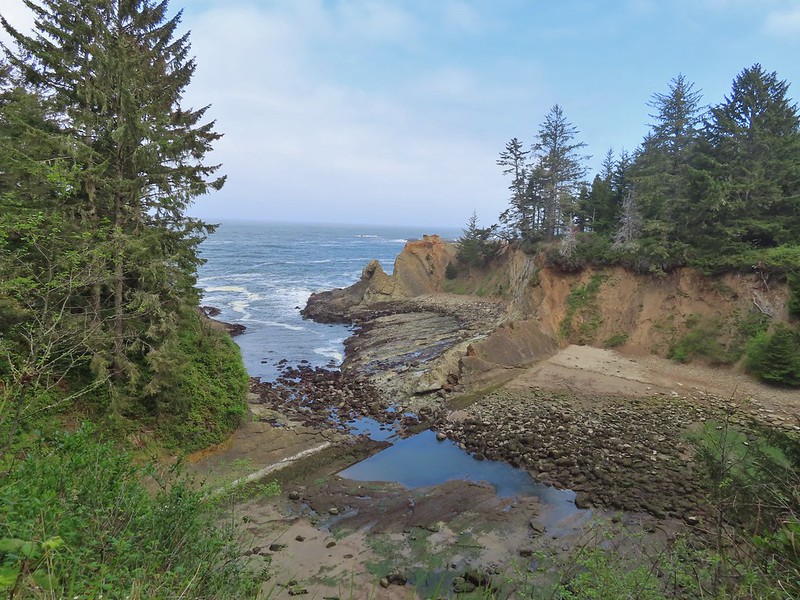

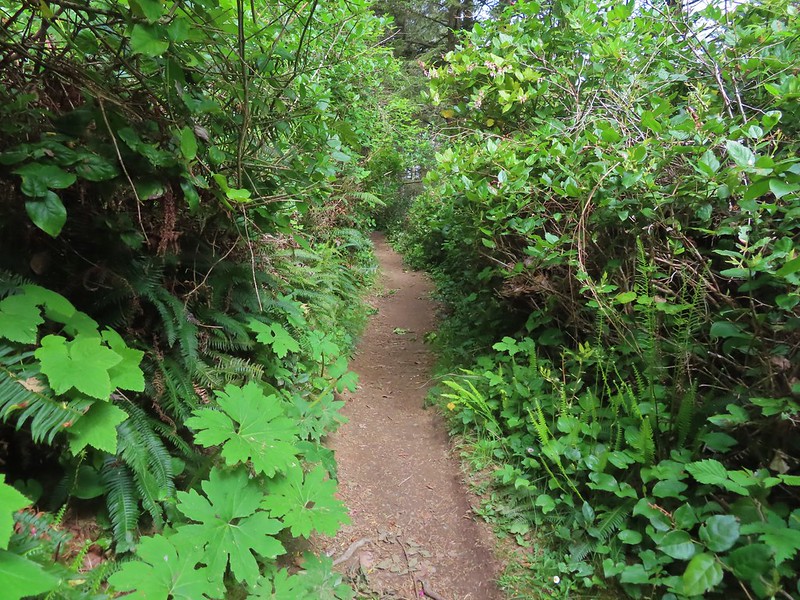


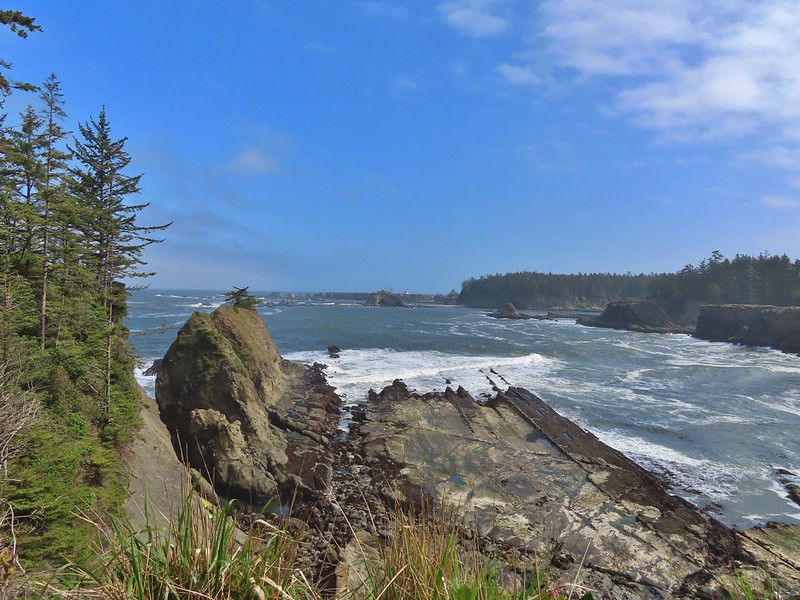


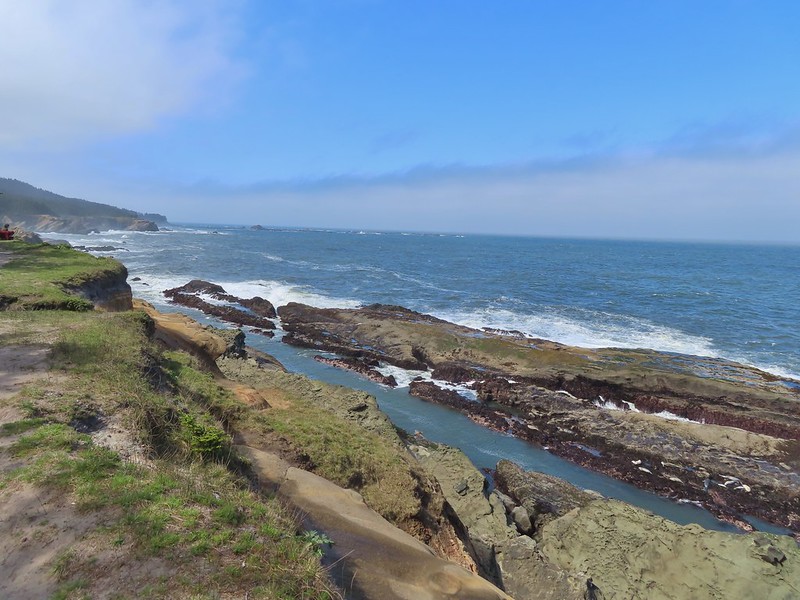 Harbor seals in the lower right hand corner on the rocks.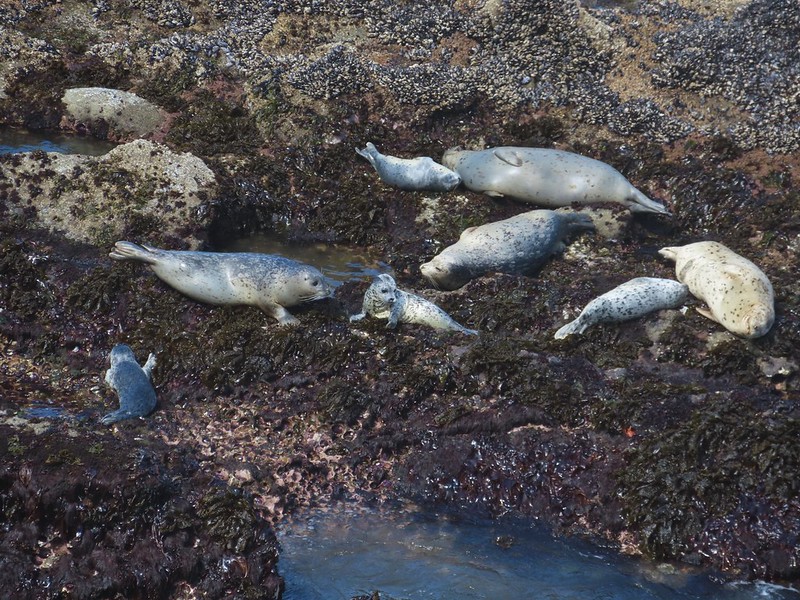

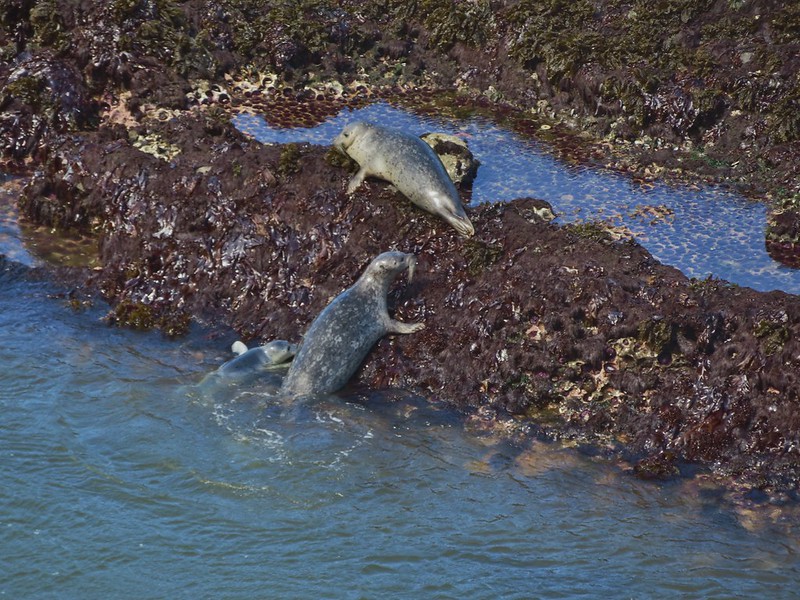
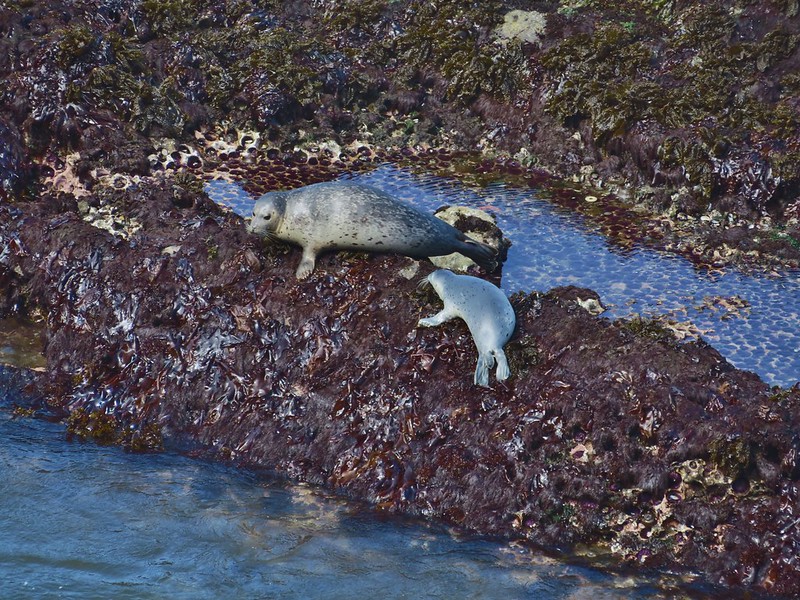 Success!
 Paintbrush
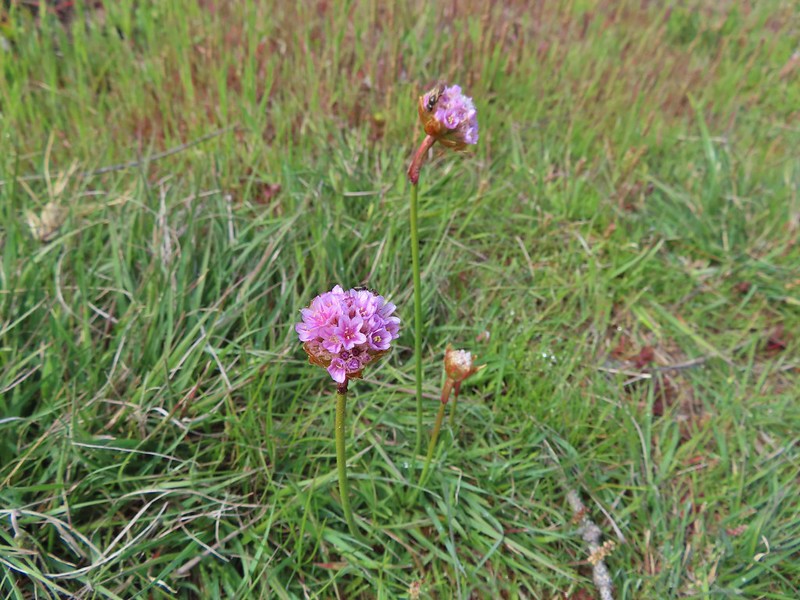 Sea thrift
 Mariposa lilies
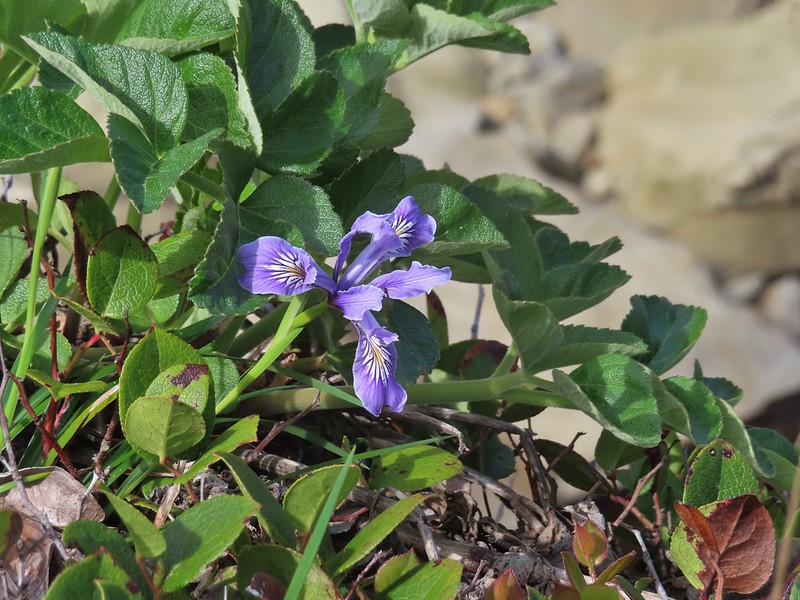 Iris
Iris Former tennis courts.
 View near the tennis courts.
 These roots explain how some of the trees that look like they should be plunging into the ocean don’t.
 Observation Building ahead on the cliff.

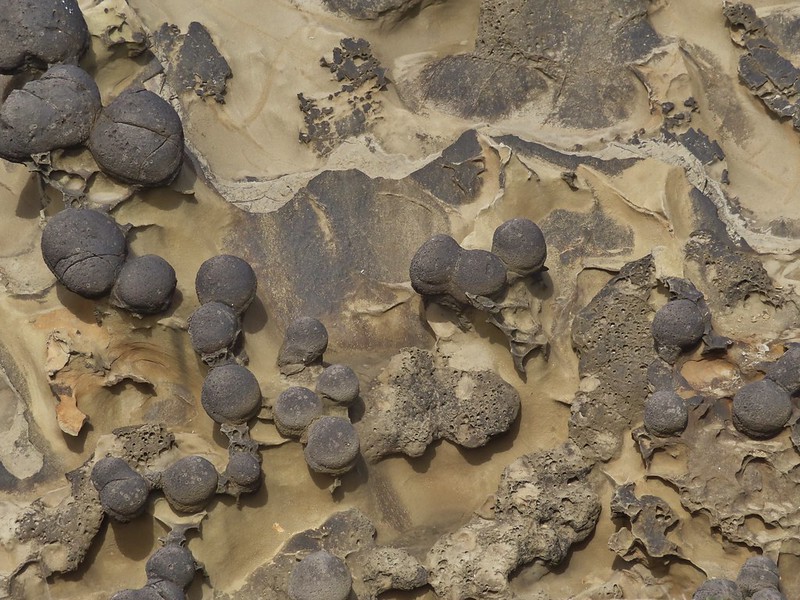


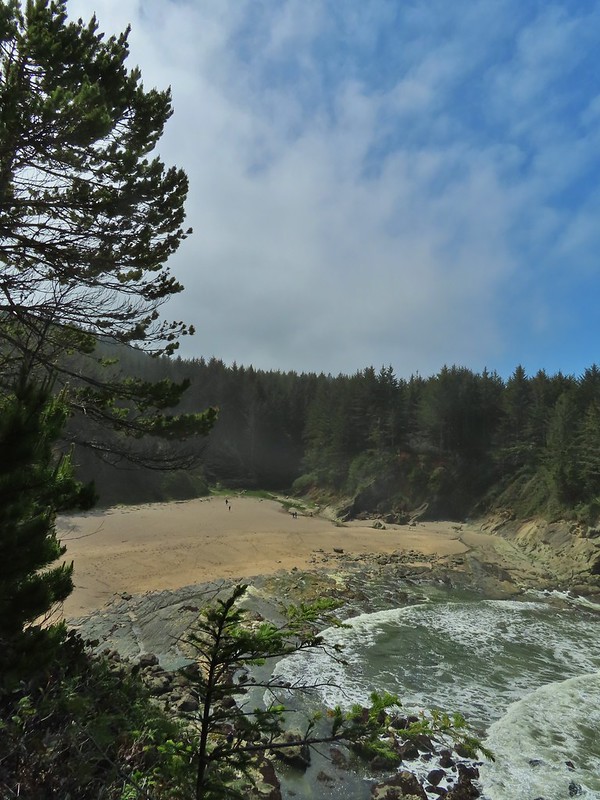
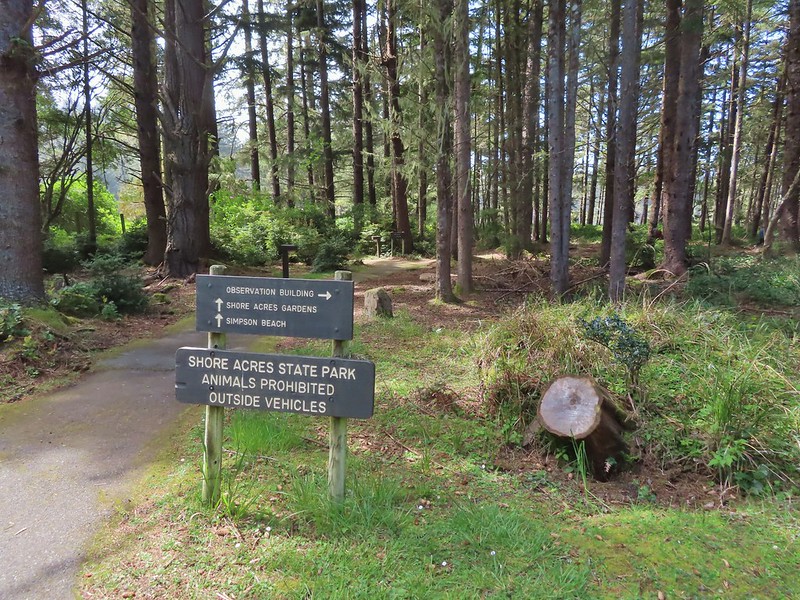


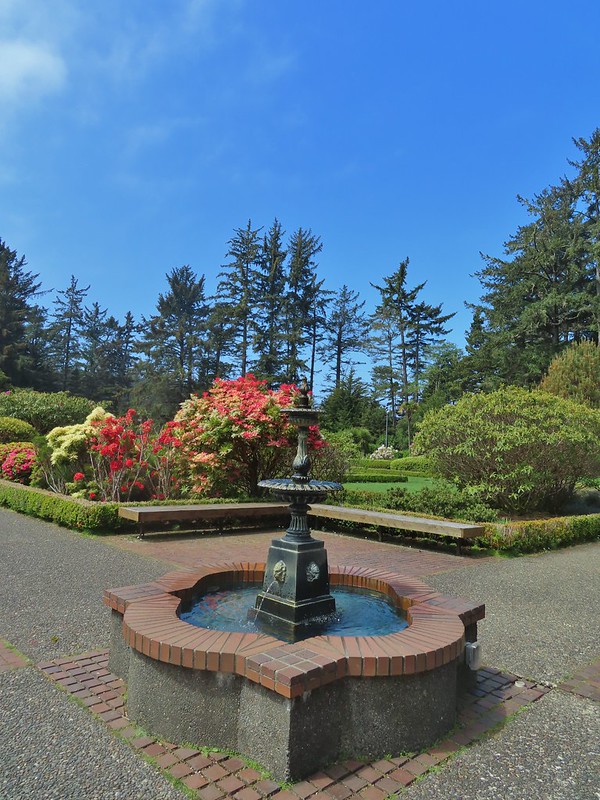


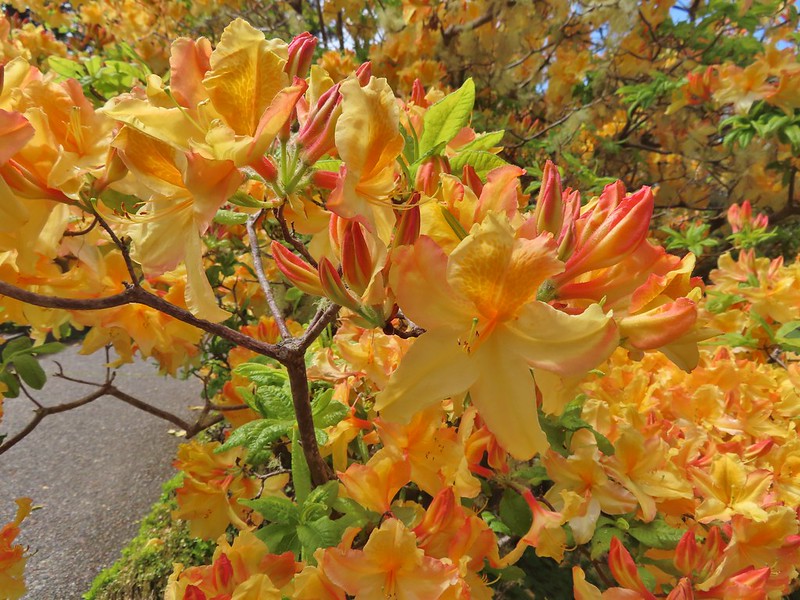

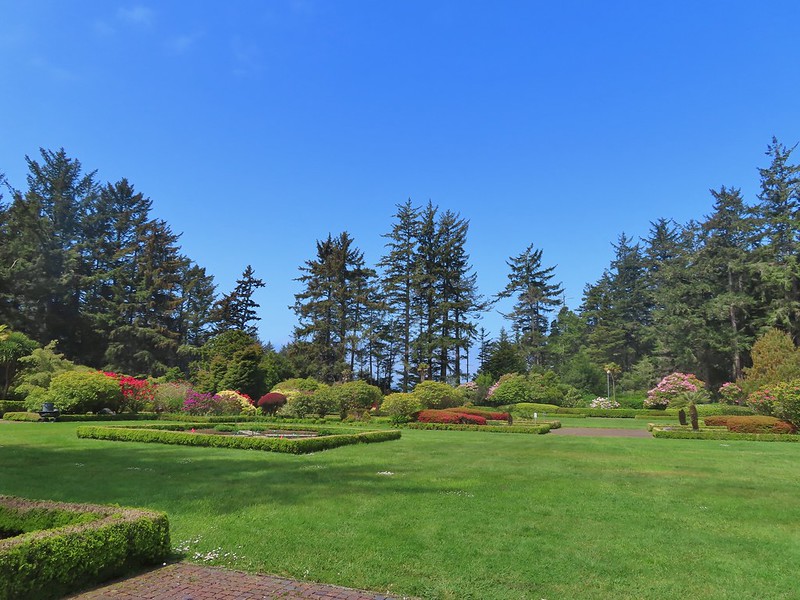

 Prickly Rhubarb from Chile

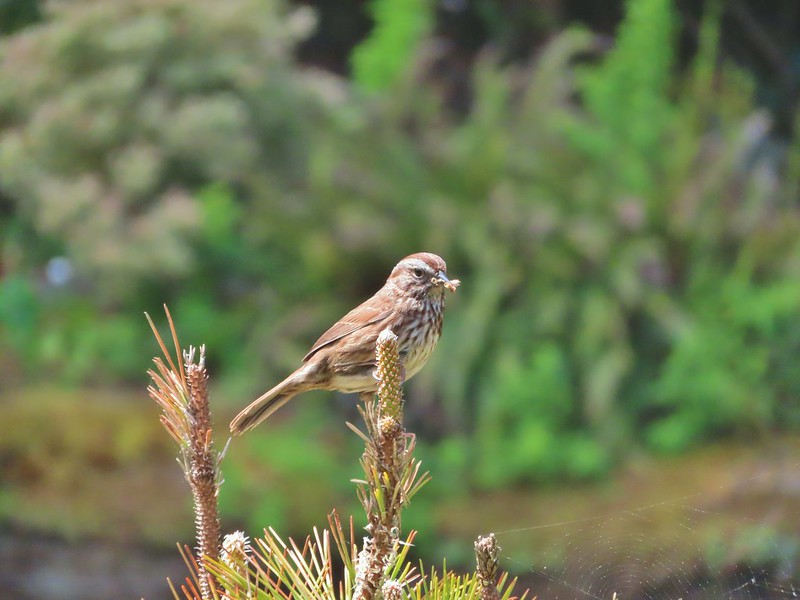
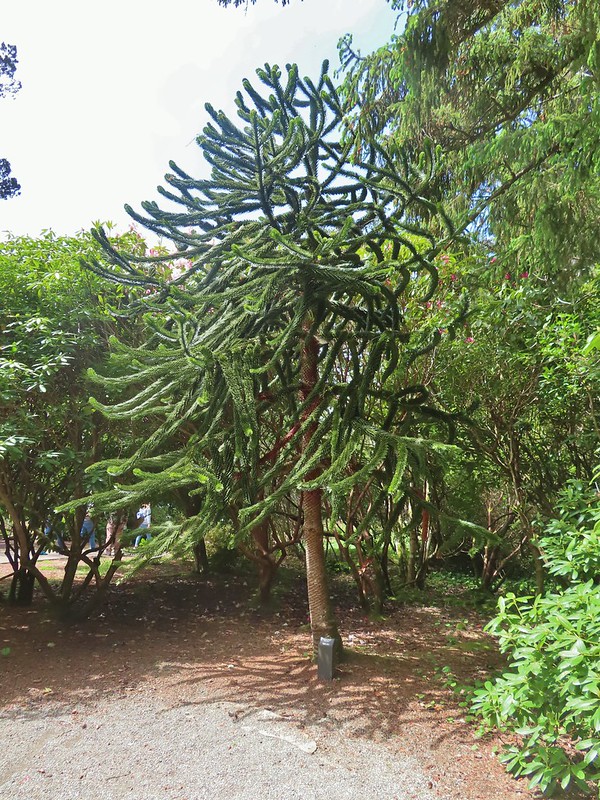 Monkey Puzzle Tree from South America
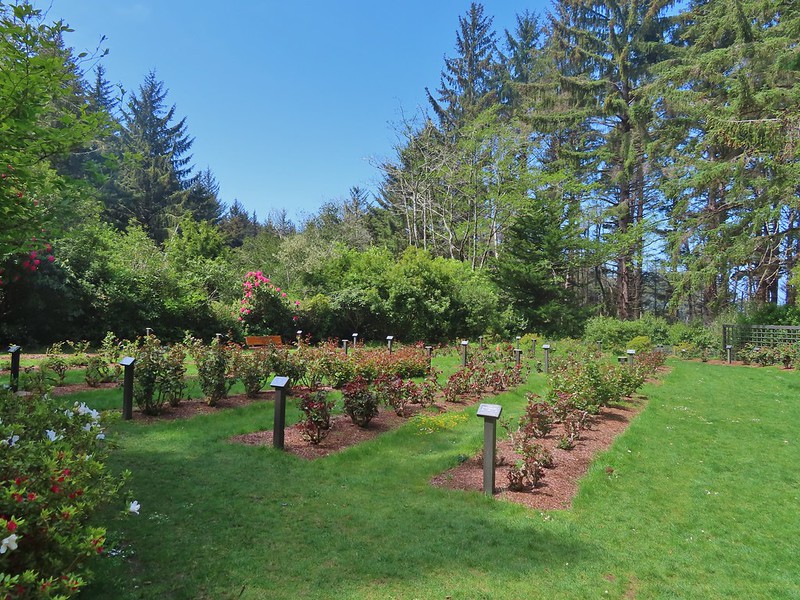 The yet to bloom rose garden.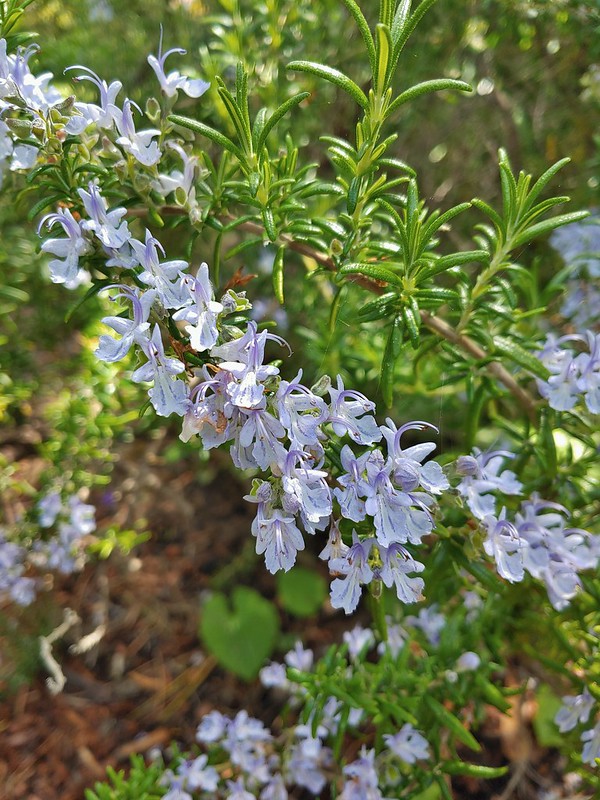
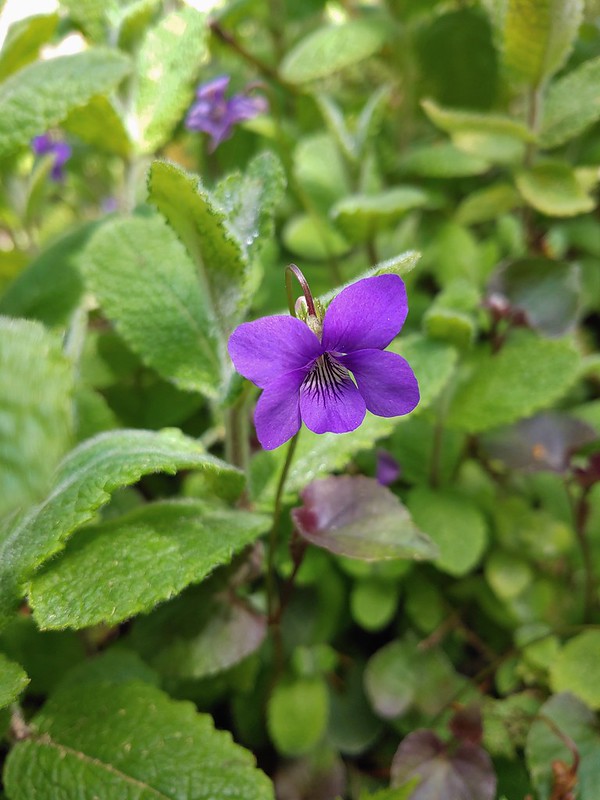

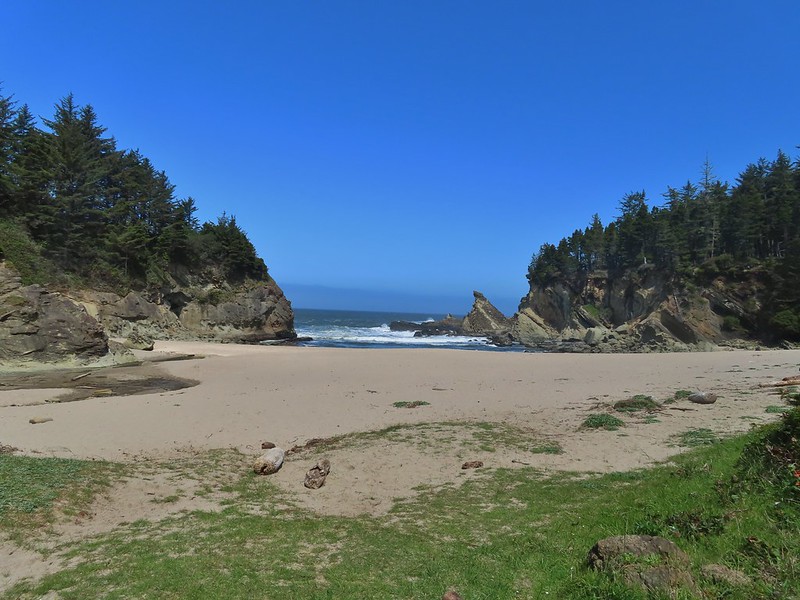

 Looking back across Simpson Cove to the Observation Building.
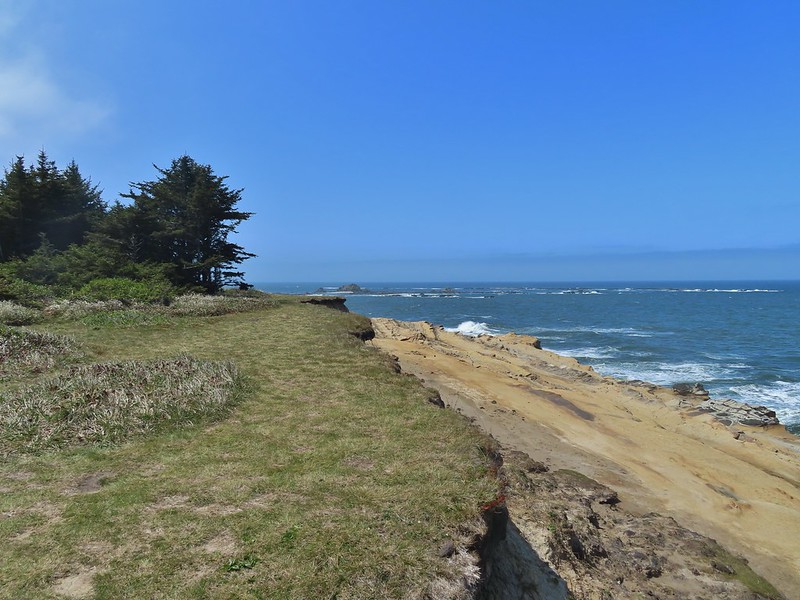 Simpson Reef extending into the Pacific.
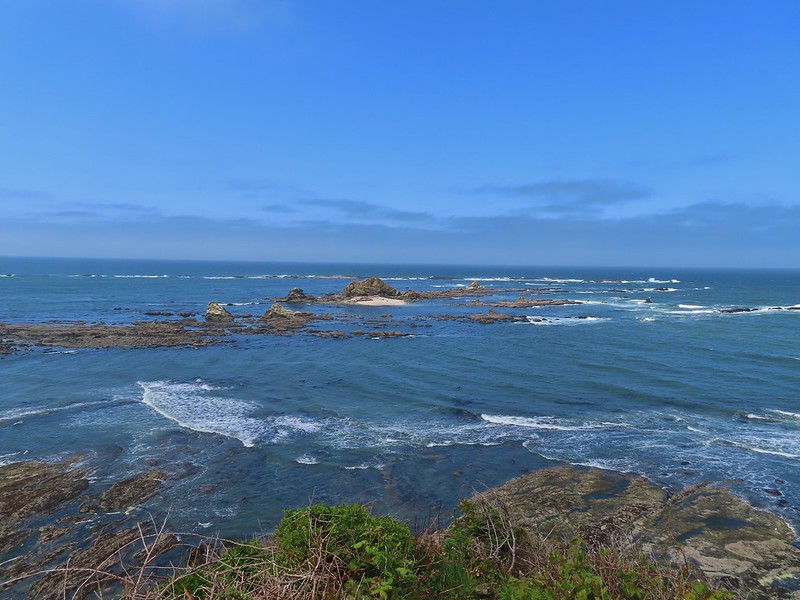 Shell Island in the middle of Simpson Reef.
 Sea lions and juvenile bald eagles on Shell Island.
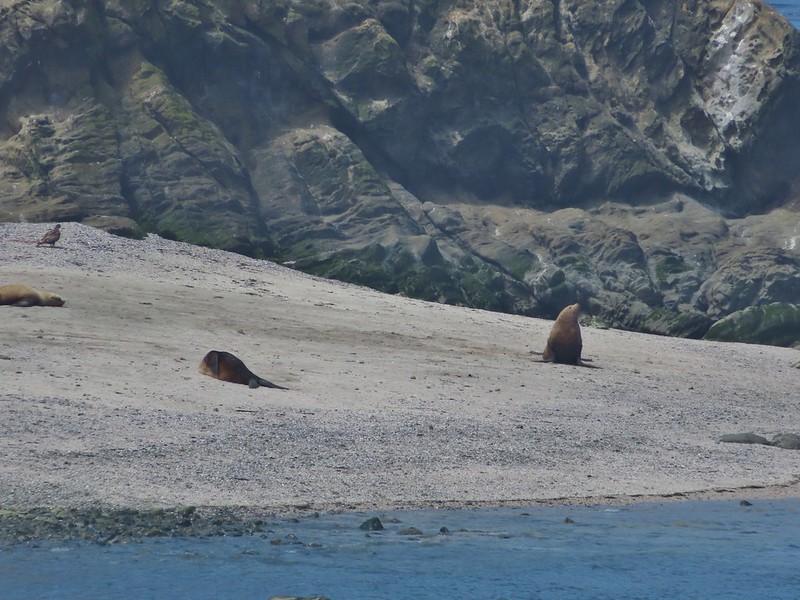


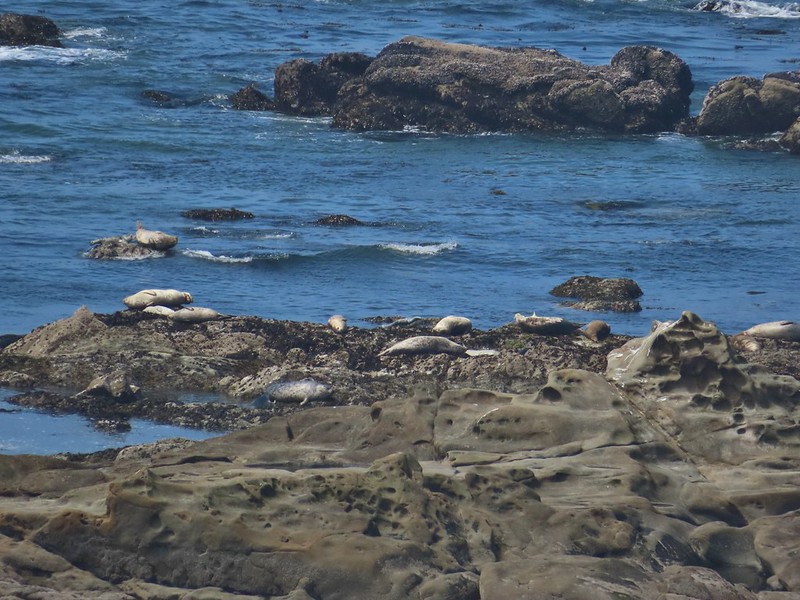 Harbor seals on the reef.

 Coltsfoot
 Woolly bear caterpillar
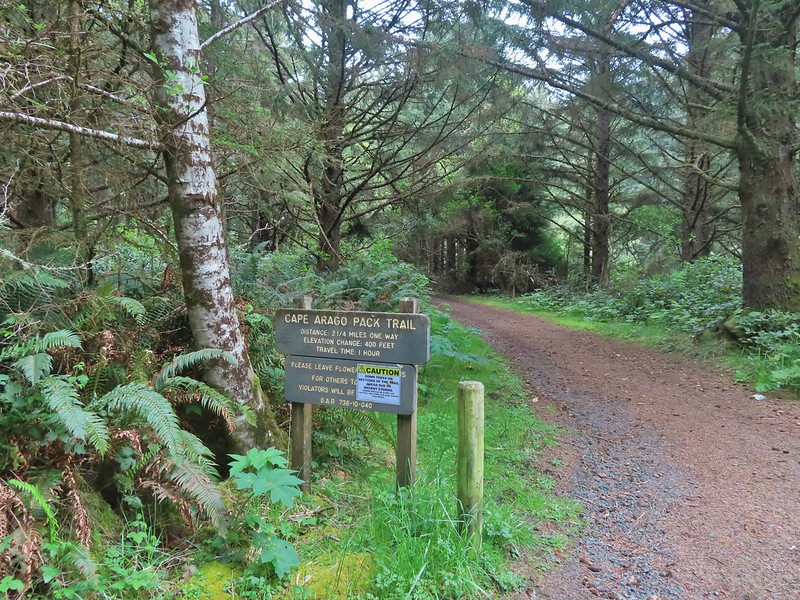 Looking back up the Pack Trail.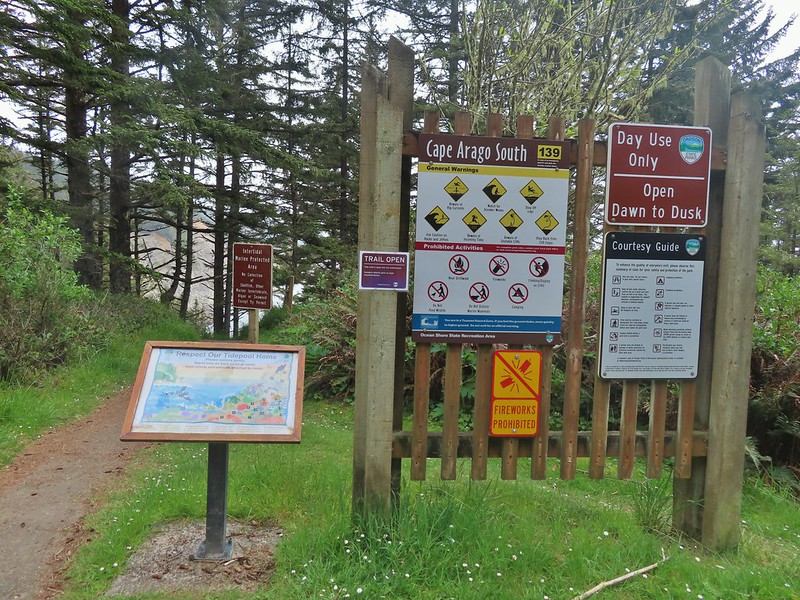

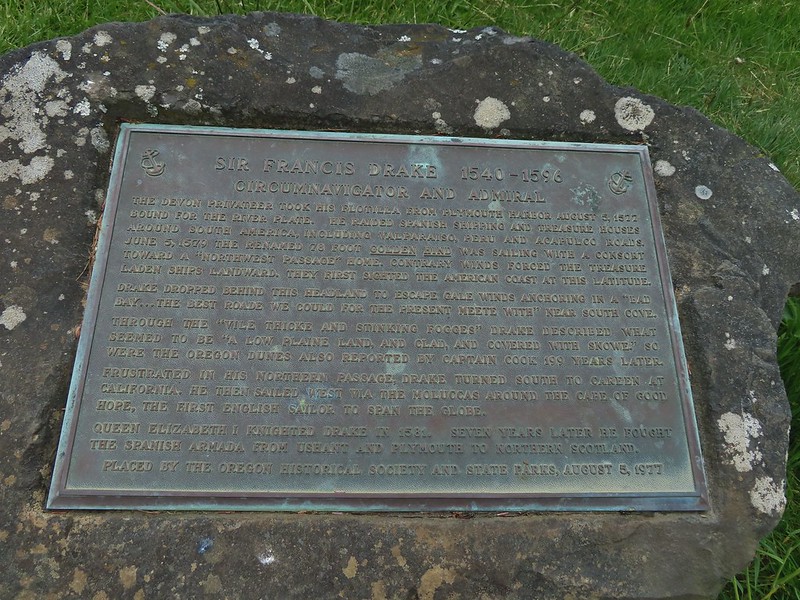 Plaque near the bench commermorating Sir Frances Drake’s visit to the area in 1579.
 Our stalker while we sat at the bench hoping we would leave some food behind (we didn’t).
 We thought we might be hearing things, but no it was a rooster crowing.
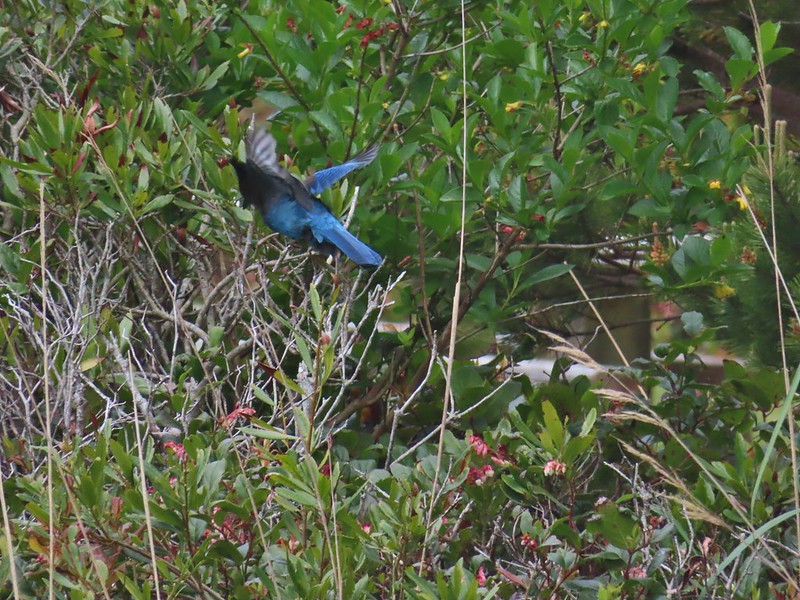 Stellar’s jay
 North Cove (A trail down to that beach was closed for the season.)


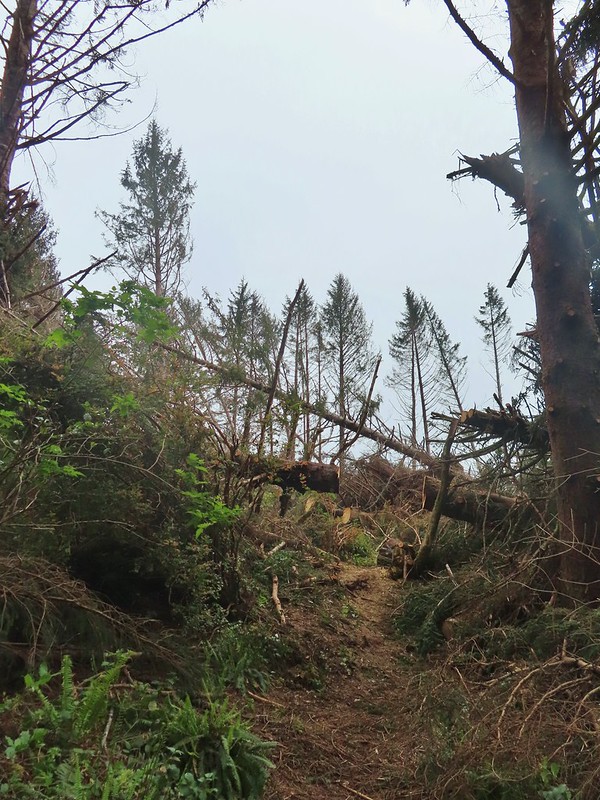

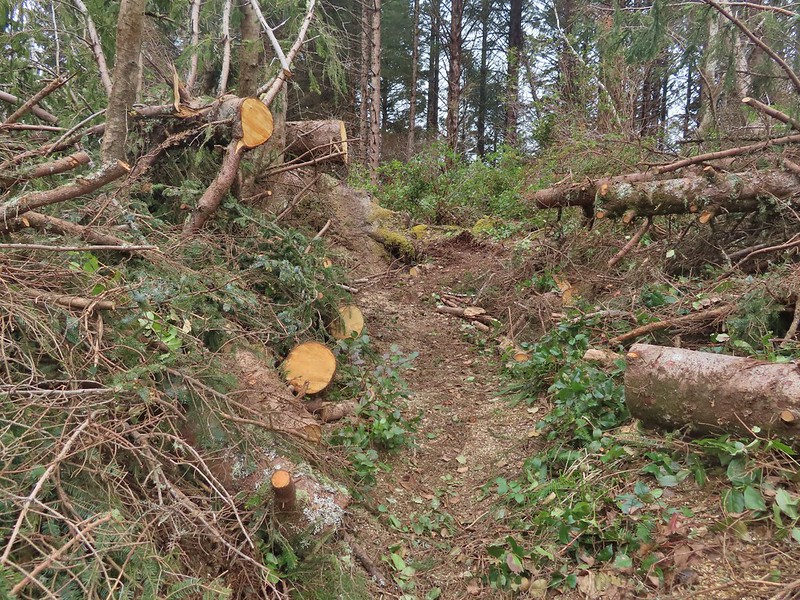
 Heading down.
 Going up.

 The Cape Arago Pack Trail at the highway.