Categories
Hiking Oregon Salem/Albany Trip report Willamette Valley

Silver Falls State Park

It’s been a while since we’ve had a recent trip report to post but we finally took our March hike on Heather’s birthday. We are in the midst of training for the Corvallis Half-Marathon so we were looking for something on the shorter end and without too much elevation gain. After our first plan was scrapped due to our most recent snowfall we turned to – Silver Falls State Park.  We had done this hike a couple of times in the past before starting the blog. In fact our first visit to the park happened on a hot day in August, before we had started hiking, and resulted in us thinking we might die of heat stroke causing us to be unable to visit all the waterfalls. We returned slightly more prepared in July of 2006 and completed the hike which we consider our first true hike.  We went back once again on 7/30/2010 when Dominique chose this hike as his pick during our vacation that year.

It turns out we were there a little early. The posted hours for the day use areas were 8am to 8pm which hadn’t been clear on the park website and the entrance to the South Falls day use area was still gated so we began our hike at the North Falls Trailhead.
North Falls Trailhead

There is a $5 day use fee which we attempted to pay but the envelope box had been removed, presumably for the night, so after filling out an envelope we left the stub on our dash along with a note that the box was not in place so we would drop our payment off on the way out. With that taken care of we took a footbridge over North Fork Silver Creek and followed a pointer for Upper North Falls.
North Fork Silver Creek

Sign for Upper North Falls

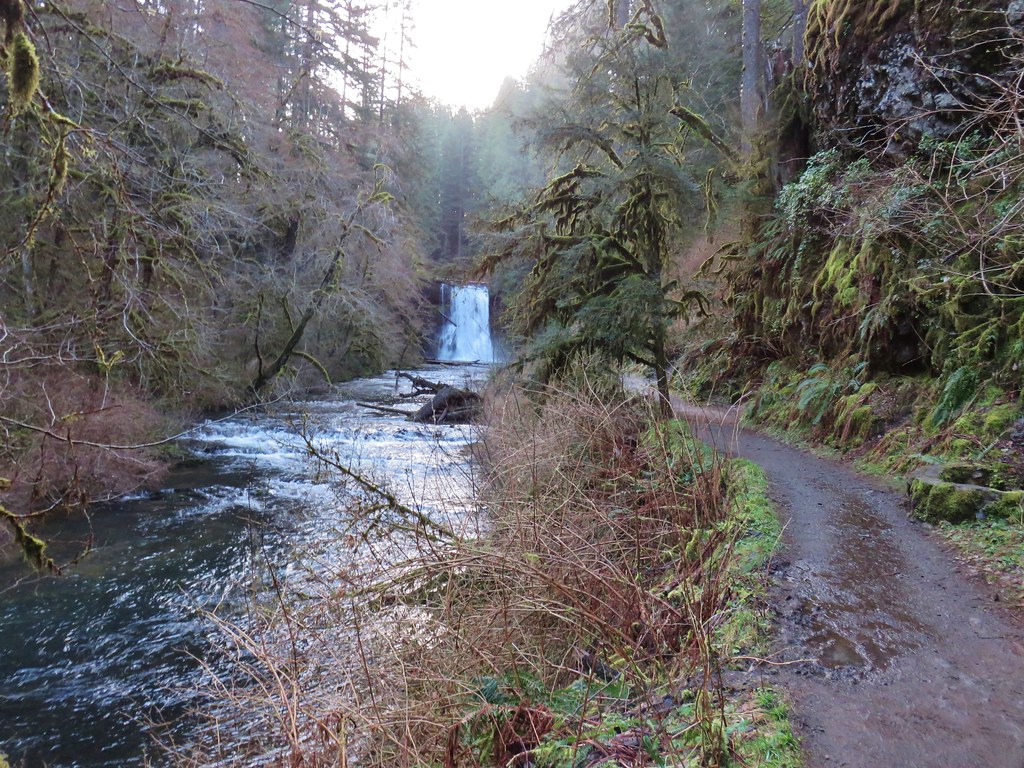
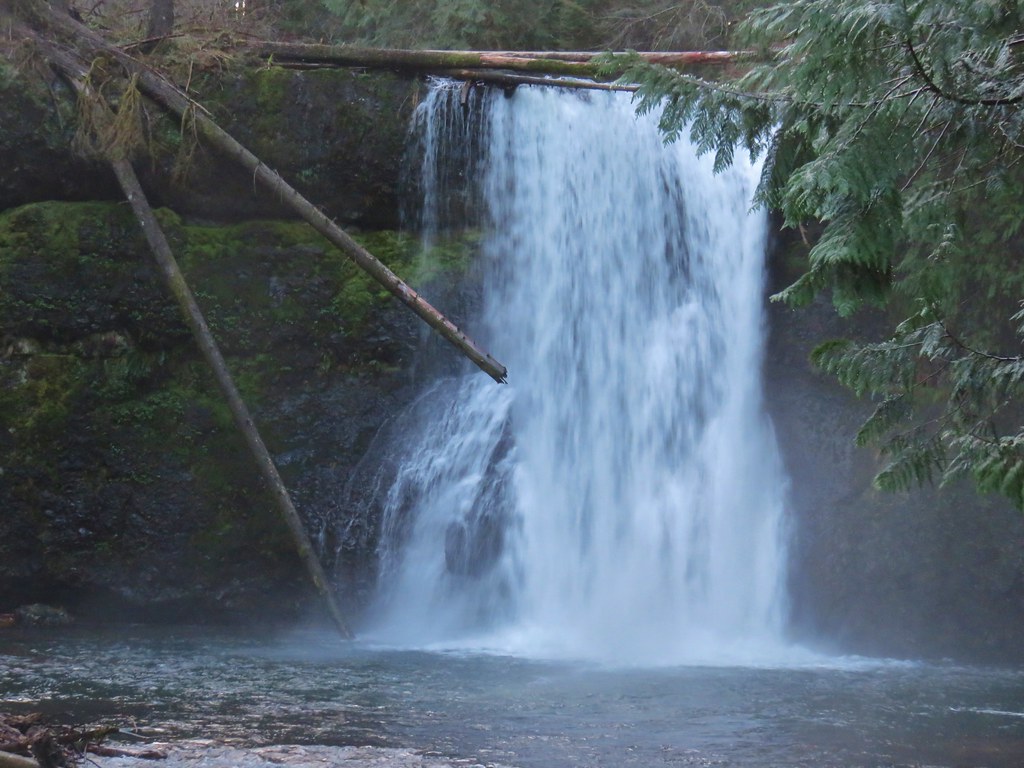
The trail immediately passed under Highway 214 then in a quarter mile brought us to the 65′ Upper North Falls.
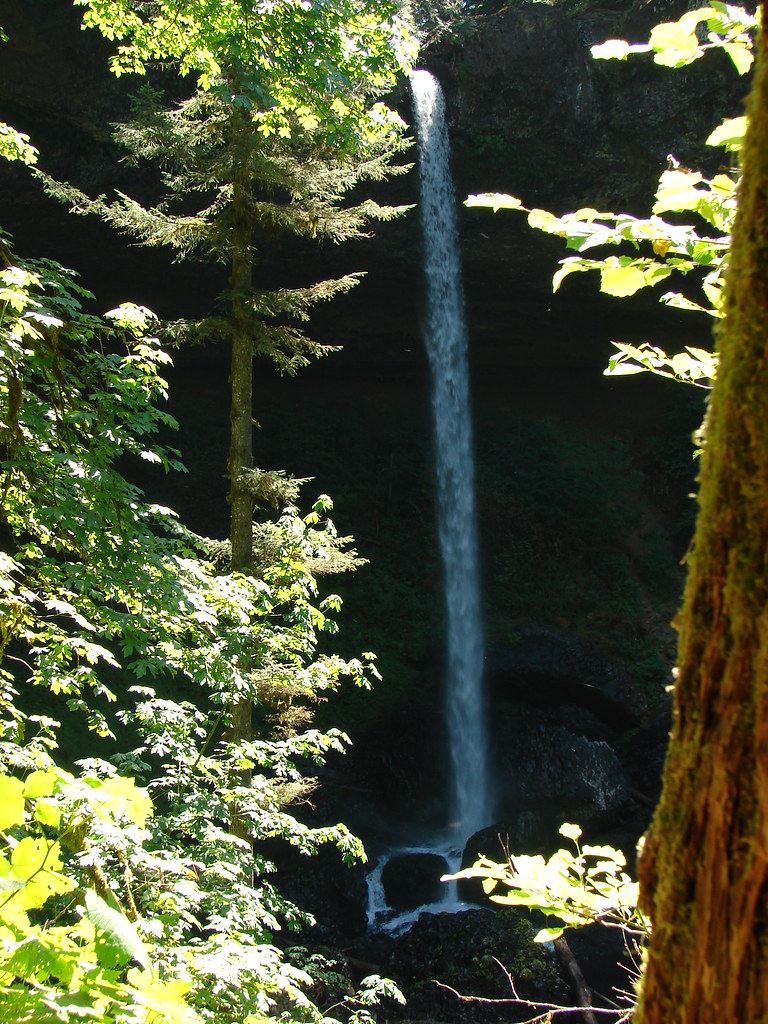
Upper North Falls

Upper North Falls

Upper North Falls

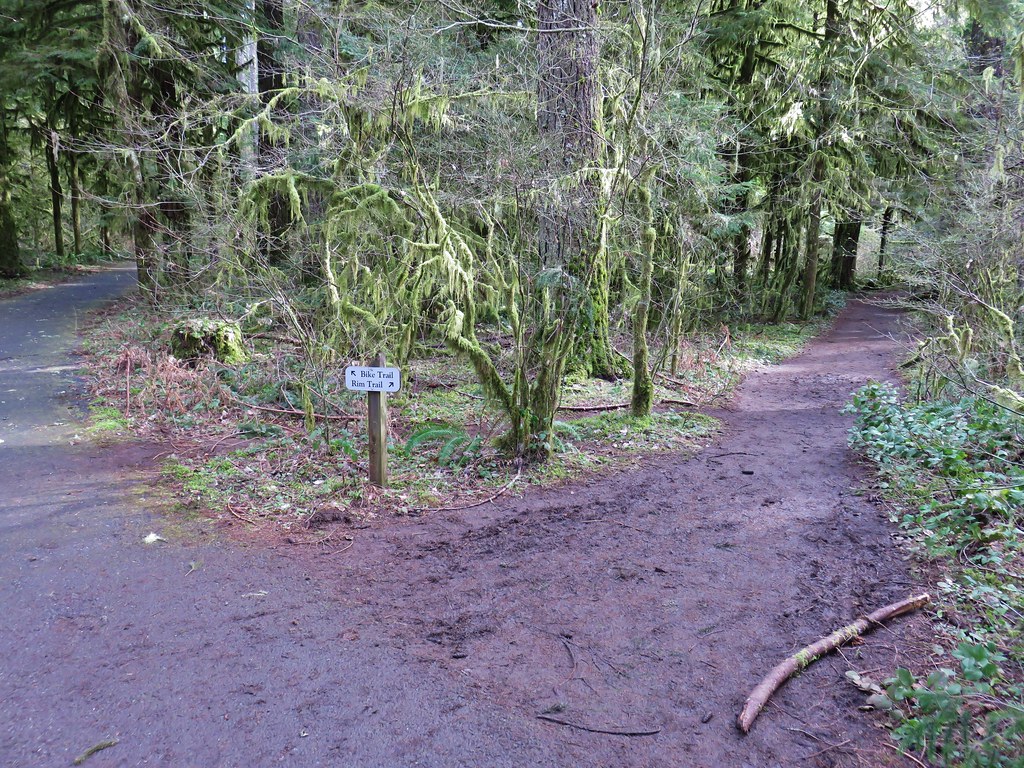
After admiring the fall we returned the way we’d come and after passing back under the highway faced a choice at a junction. To the left the Rim Trail headed uphill and would follow the highway along the canyon rim to the South Falls Day Use area while the right hand fork would lead us on a longer trek through the canyon and the other waterfalls.
Trail junction in Silver Falls State Park

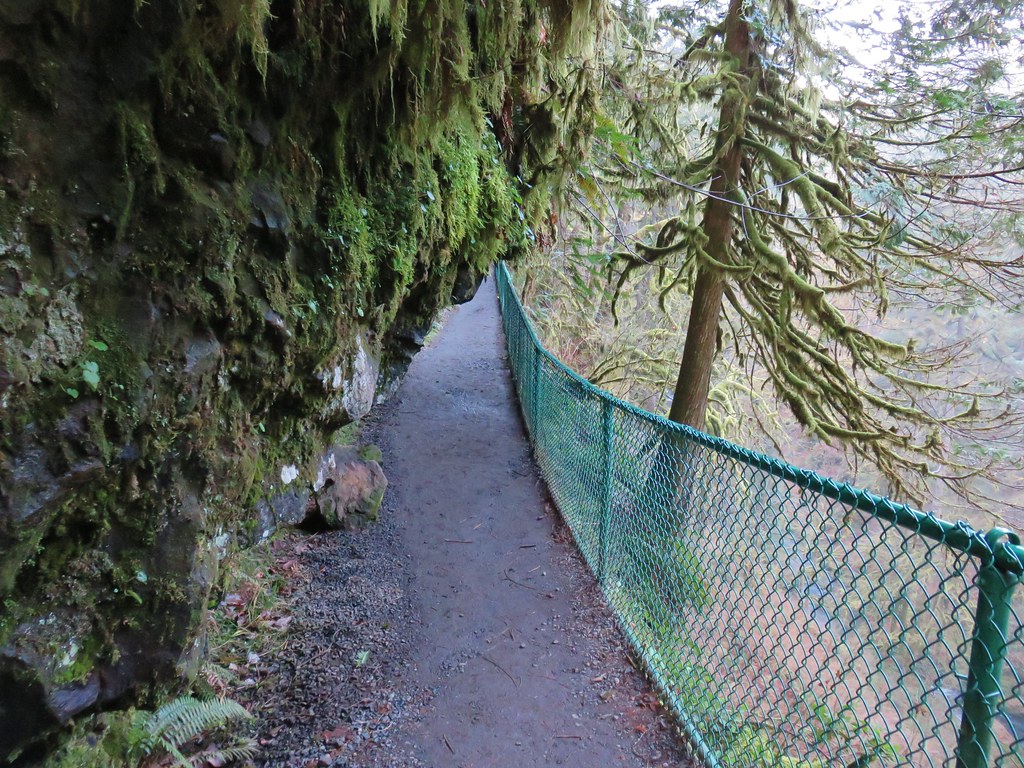
The question was did we want to end with the more scenic trail through the canyon or start with the canyon figuring that there would be fewer people on the trails earlier in the morning. The prospect of fewer people won out and we took the Canyon Trail along the creek (please note dogs are banned on the Canyon Trail). Not far from the junction the trail descends past a sign for North Falls and passes under basalt overhangs.
Sign for North Falls

Trail to North Falls

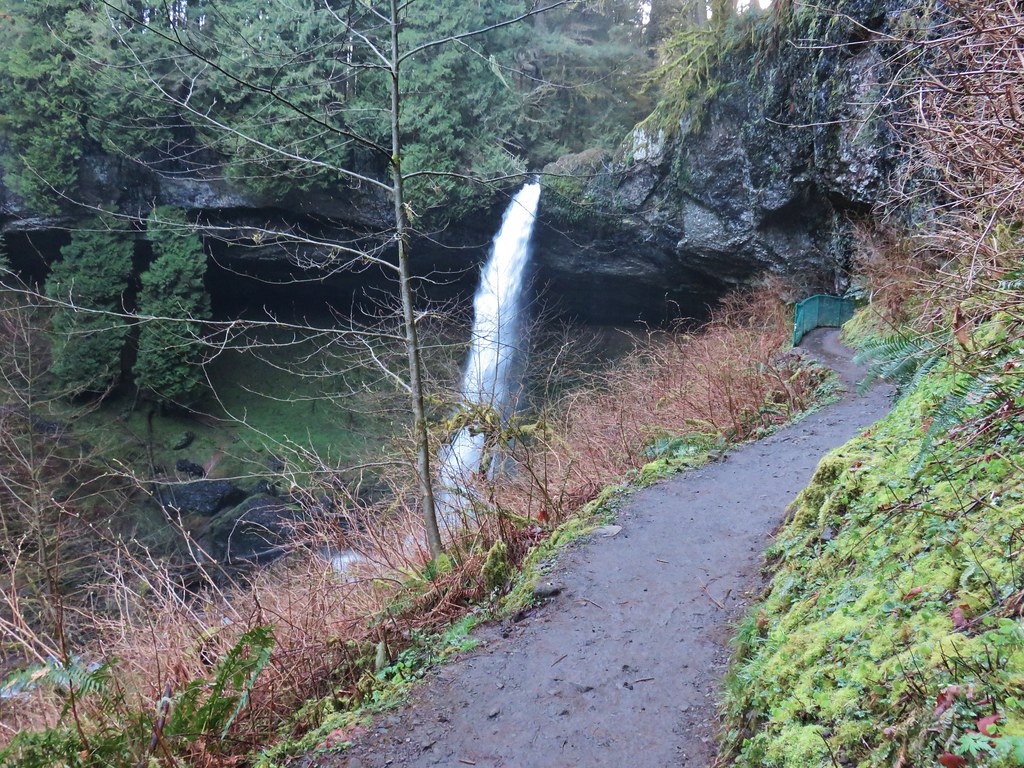
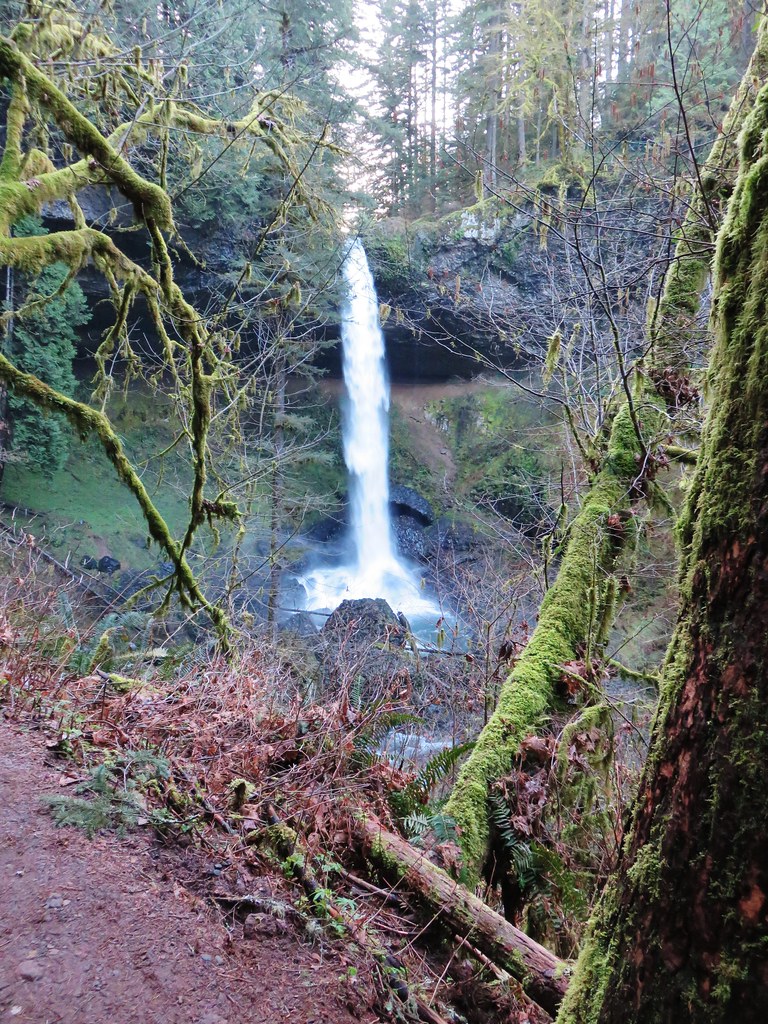
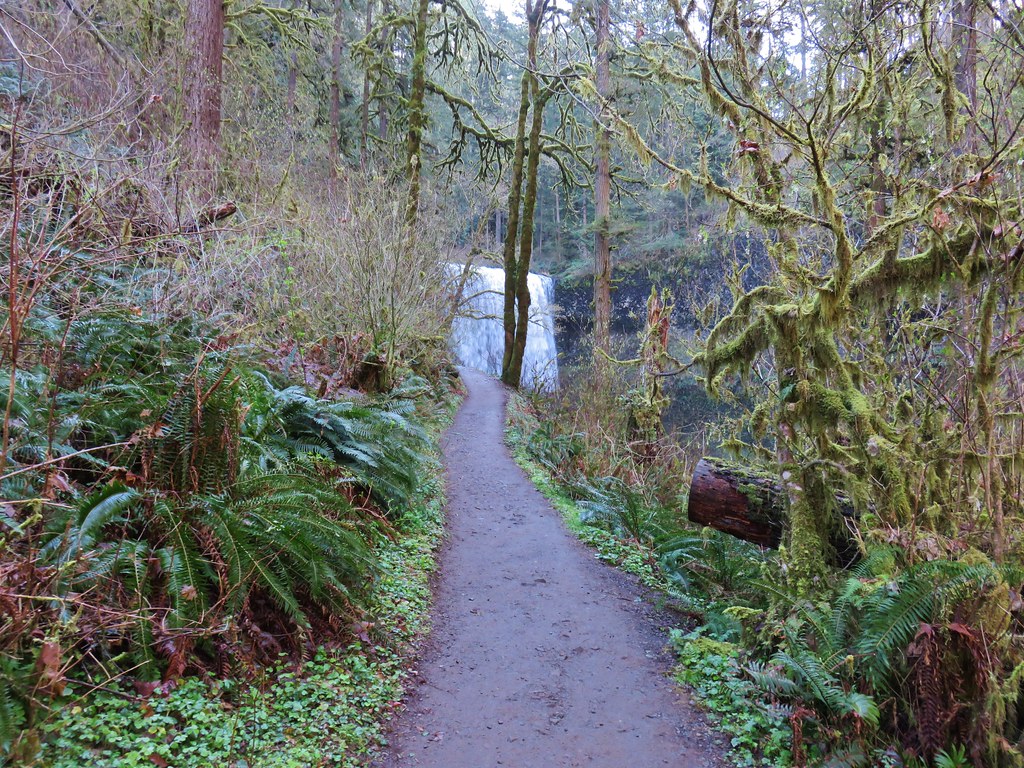
North Falls came into view as we descended some stairs before turning back towards the falls and ultimately passing them.
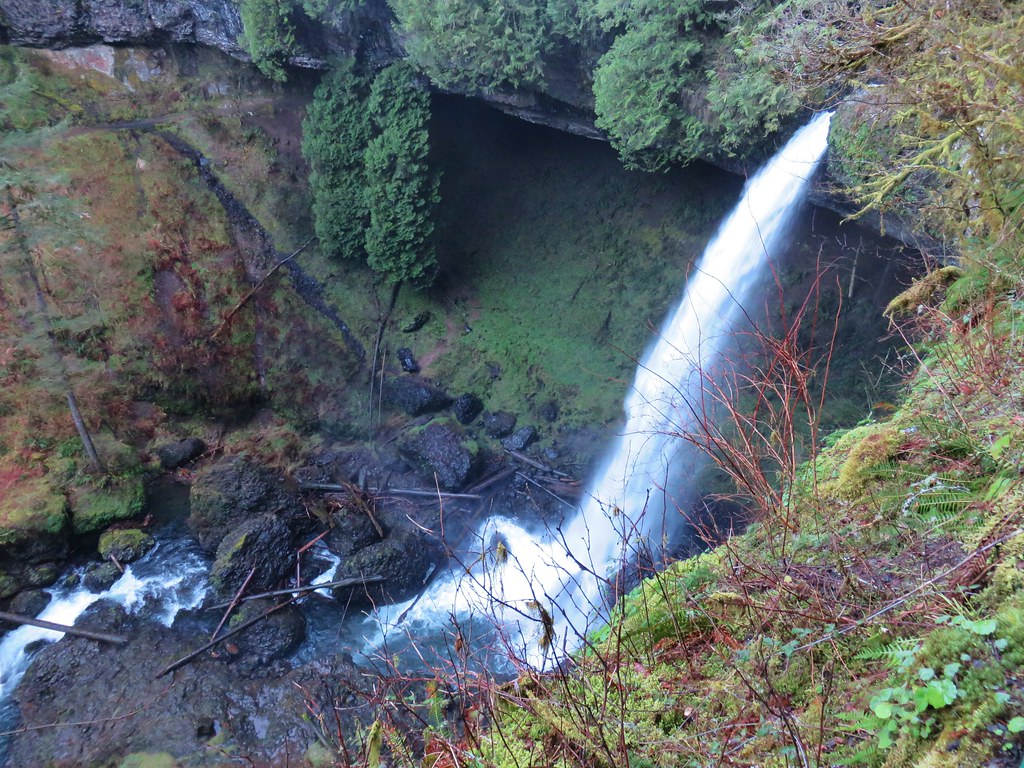
North Falls

North Falls

North Falls

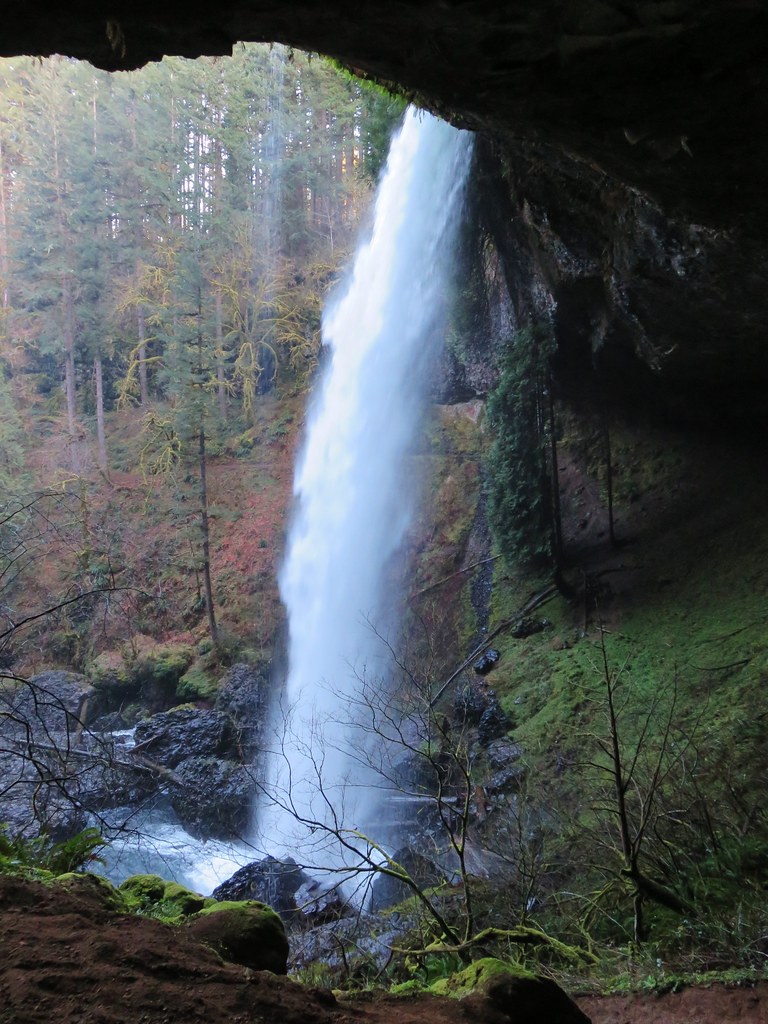
View from behind North Falls

The water was roaring as it crashed down into the splash pool. It was a stark difference from our July 2010 visit.
North Falls
July 30, 2010

North FallsMarch 29, 2018

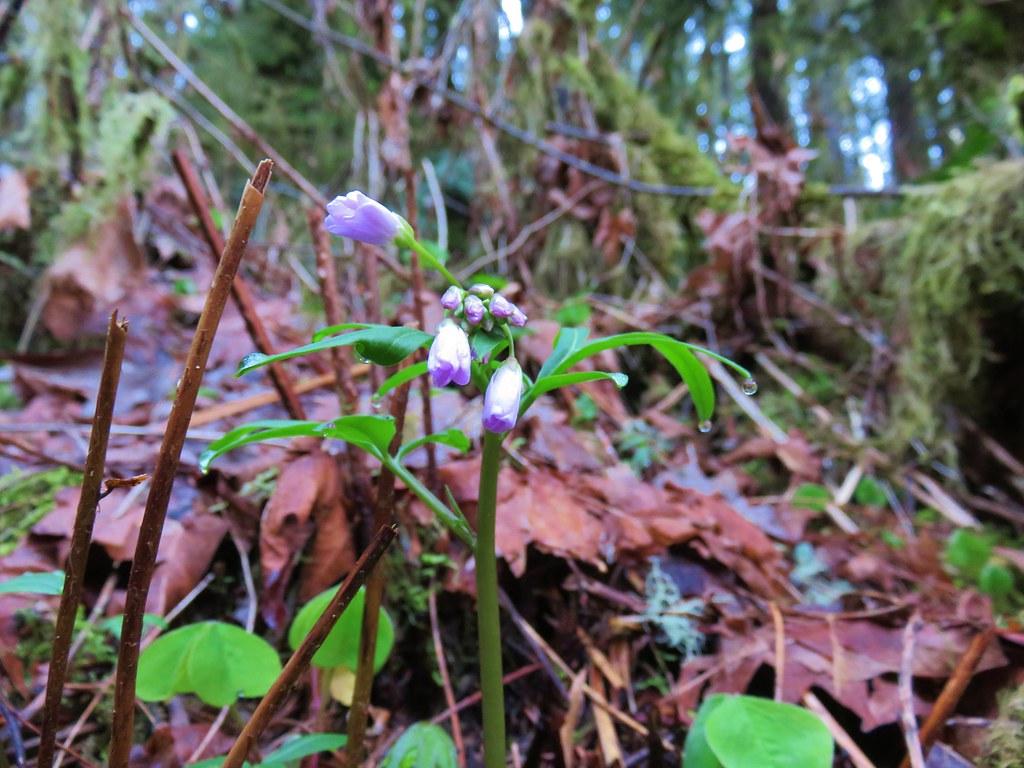
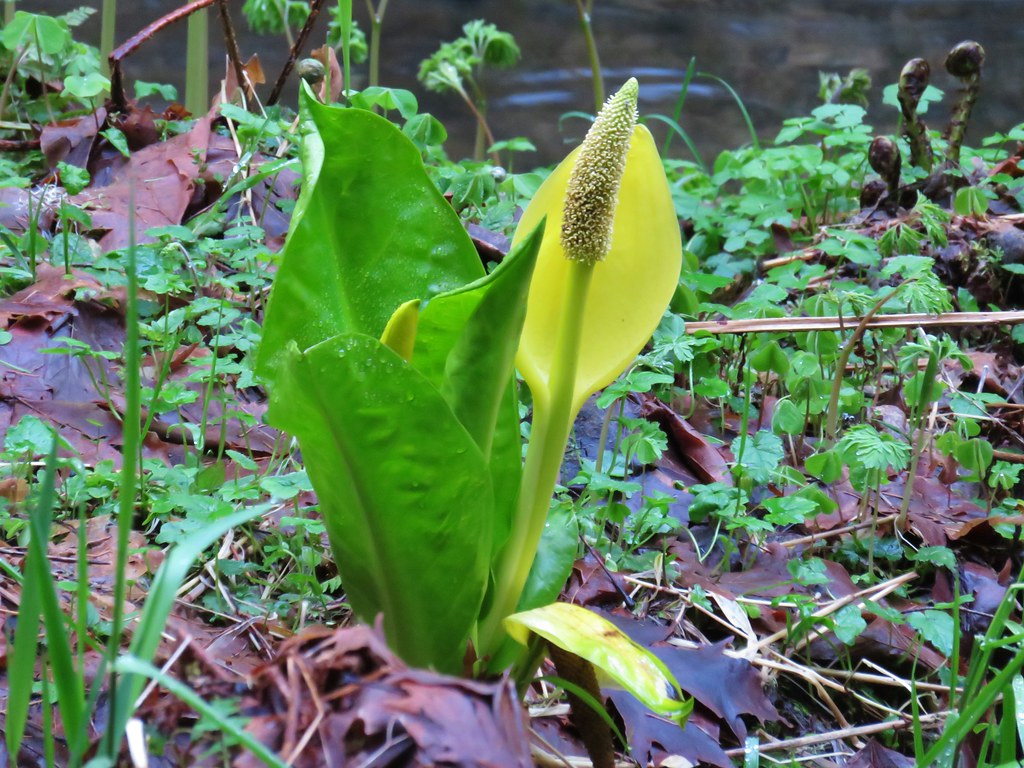
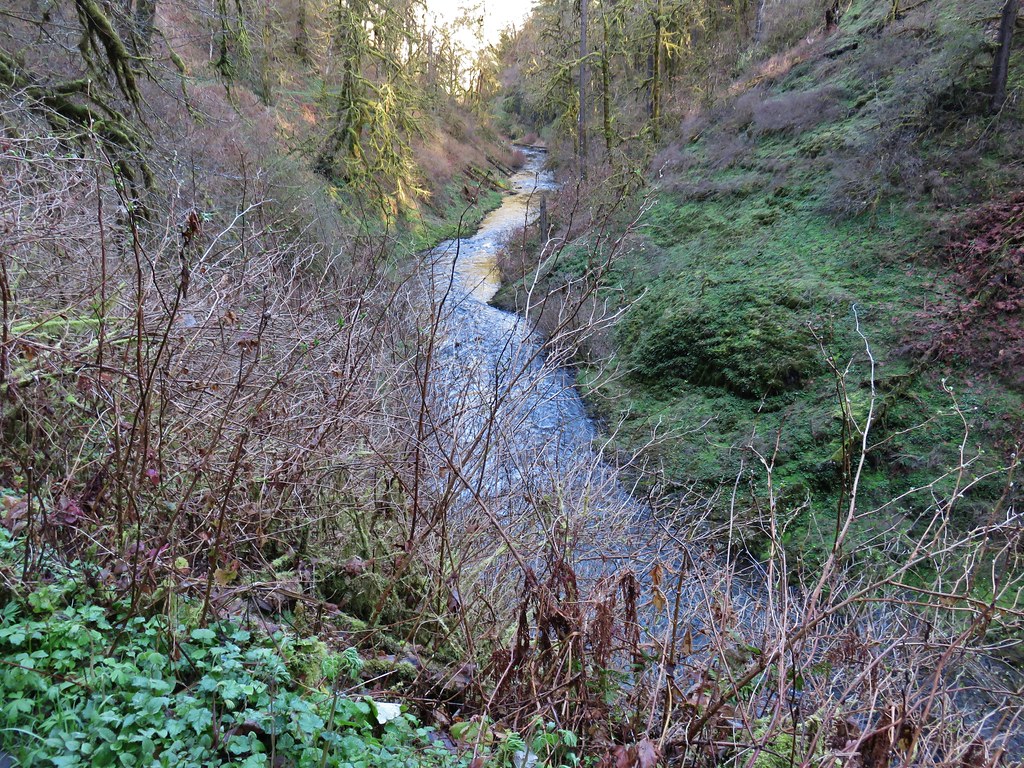
The trail was now on the north side of the creek and remained fairly level for over a mile as it passed through the canyon. We spotted quite a few flowers starting to bloom along this stretch.
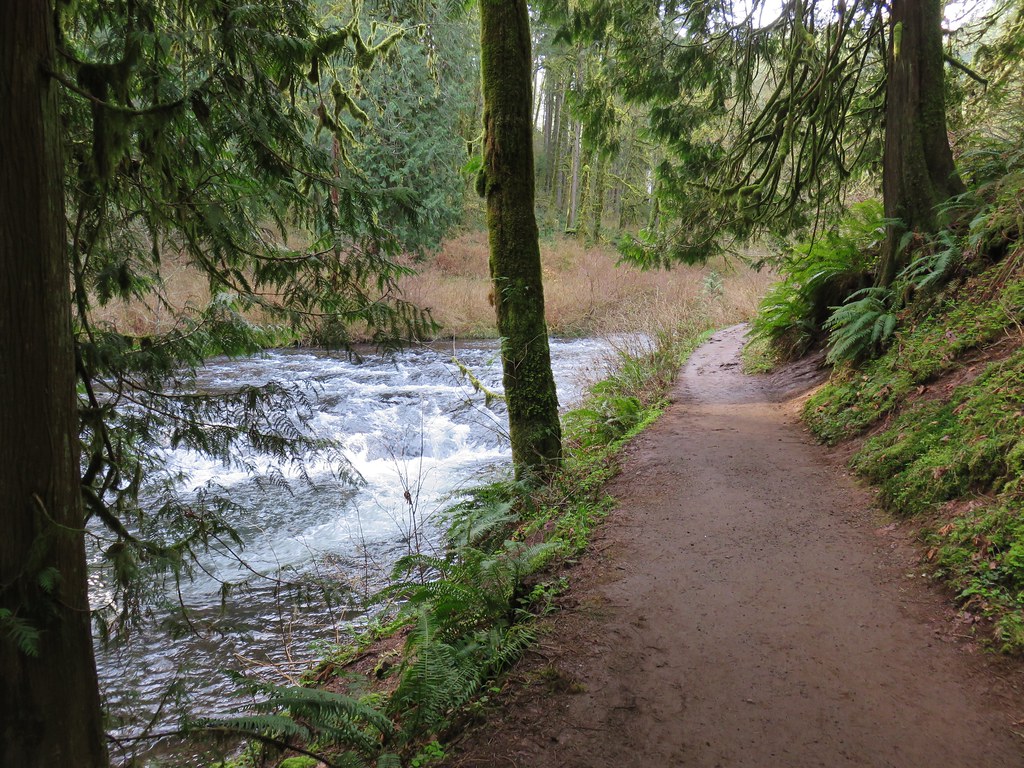
North Fork Silver Creek

ToothwortToothwort

Skunk CabbageSkunk cabbage

Salmonberry blossomsSalmonberry

Blossoms along North Fork Silver CreekIndian plum

The next waterfall up on the Trail of Ten Falls was 31′ Twin Falls.
Sign for Twin Falls

Twin Falls

A short distance from Twin Falls (and about 1.5 miles from the North Falls Trailhead) we came to a junction with the Winter Falls Trail.
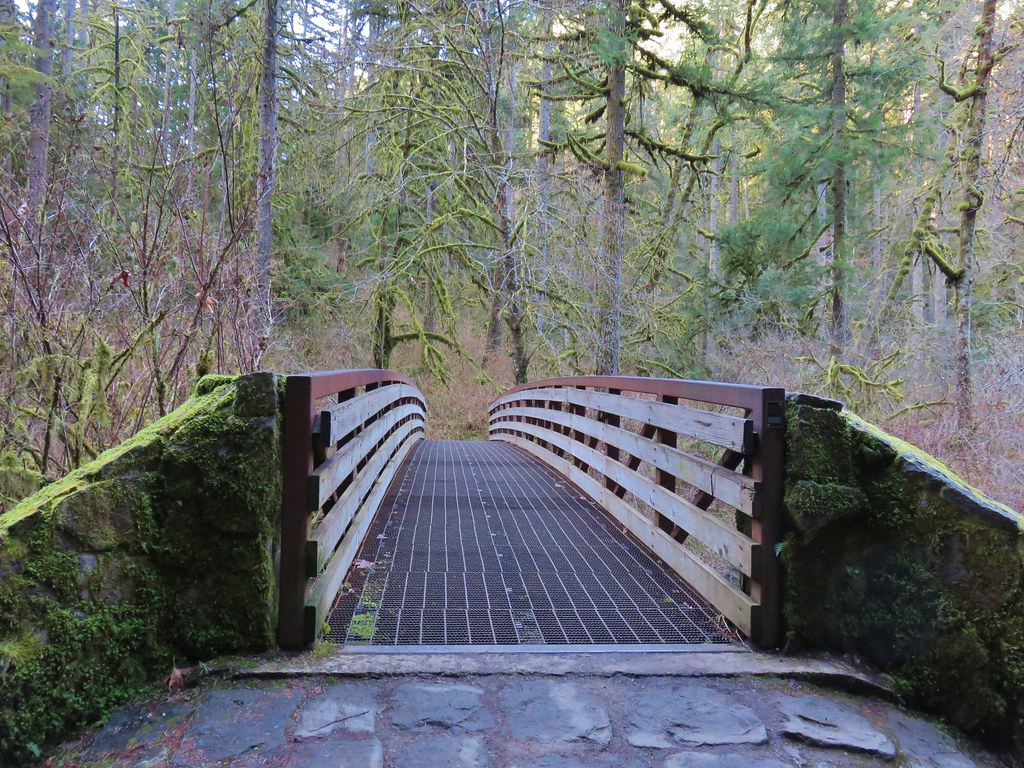
Footbridge over North Fork Silver Creek

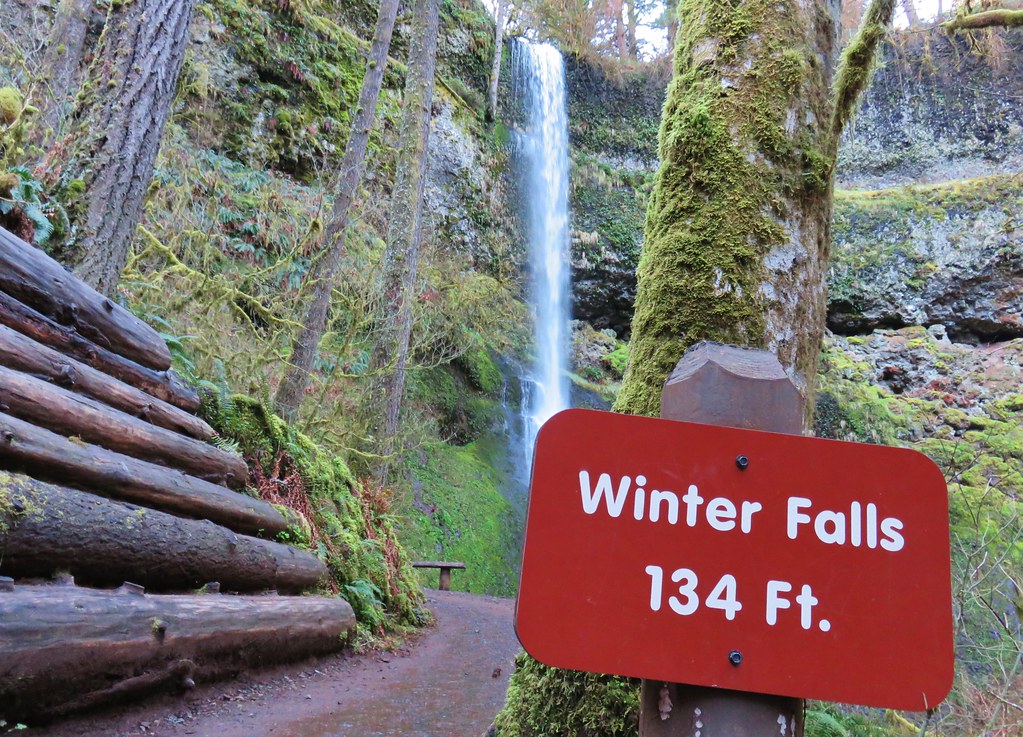
The half mile Winter Falls Trail starts at the Winter Falls Trailhead along Highway 214 passing Winter Falls and ending at the Canyon Trail. We turned left onto a footbridge crossing North Fork Silver Creek and headed for Winter Falls.
Footbridge over North Fork Silver Creek

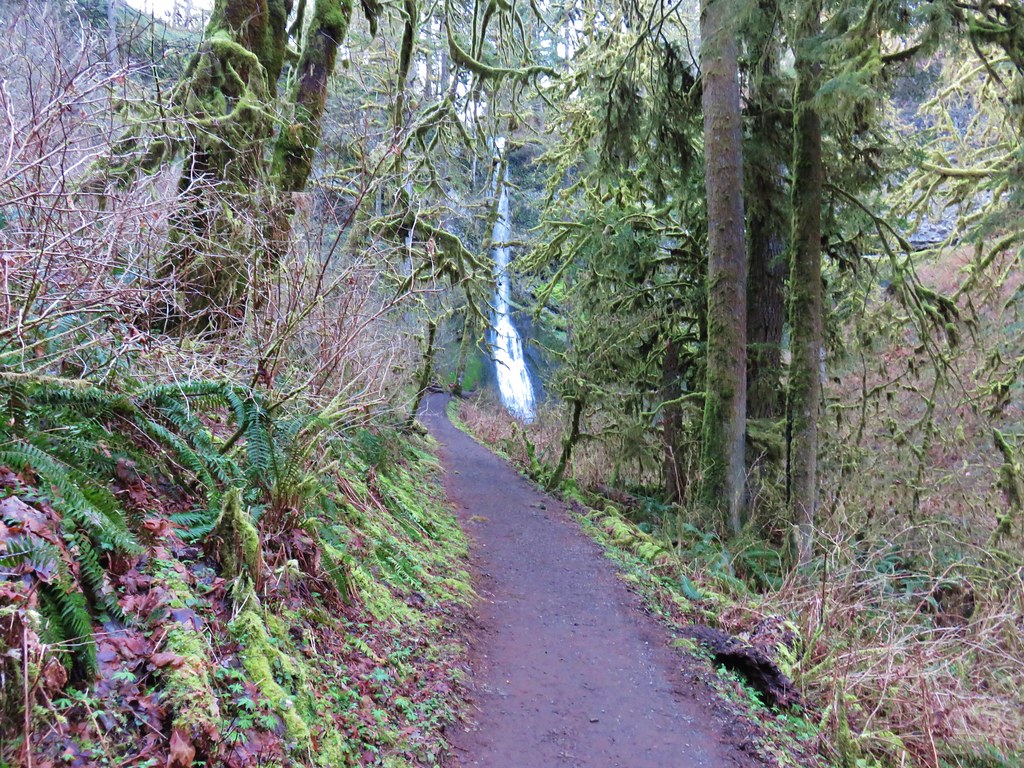
The trail was fairly level as it led to the 134′ waterfall.
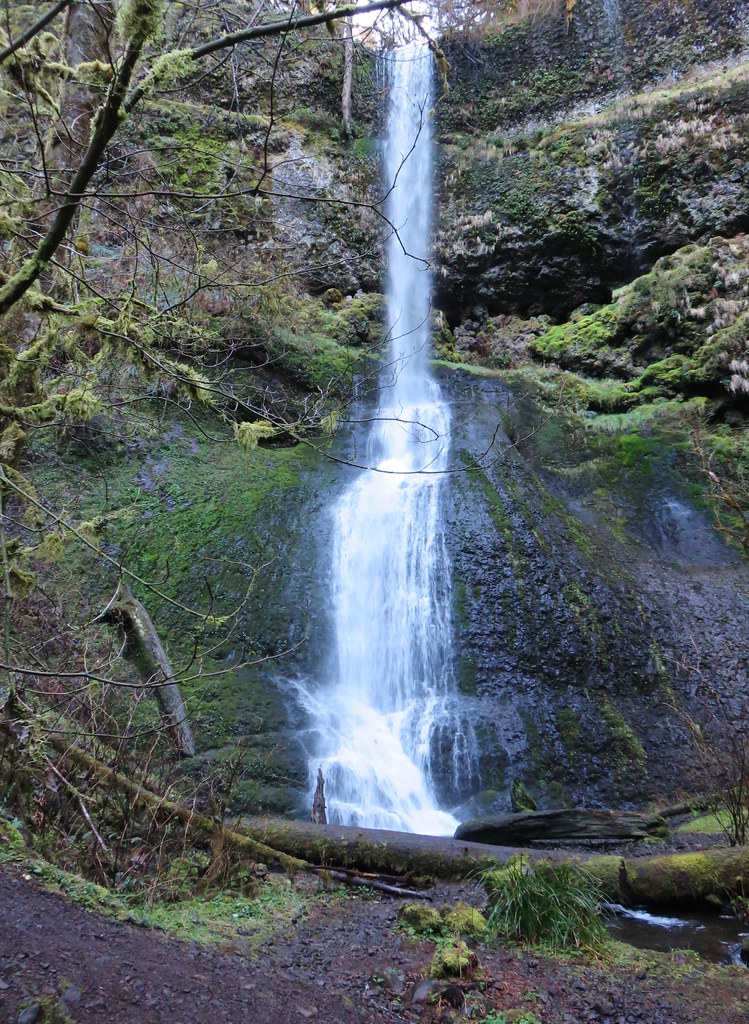
Winter Falls

Winter Falls

Later in the year Winter Falls all but dries up so this was the first time we’d gotten to see this waterfall.
Winter Falls

After checking this fall off our list we returned to the Canyon Trail and continued downstream toward Middle North Falls.
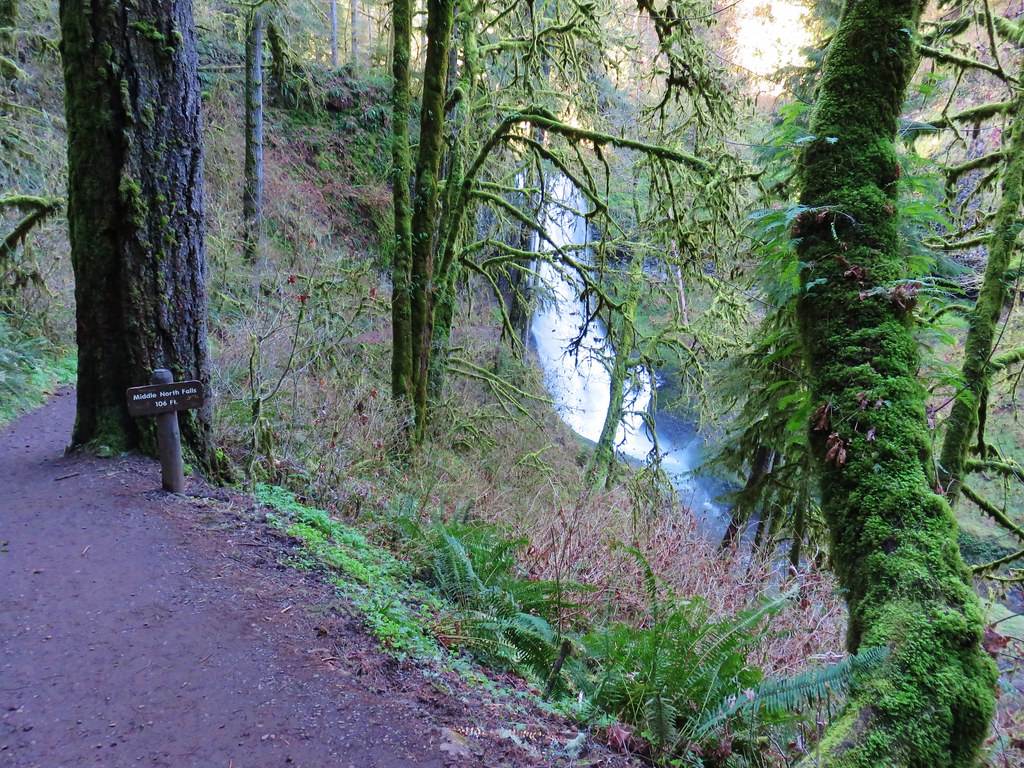
Sign for Middle North Falls

In just .2 miles we came to the side trail down to Middle North Falls.
Middle North Falls

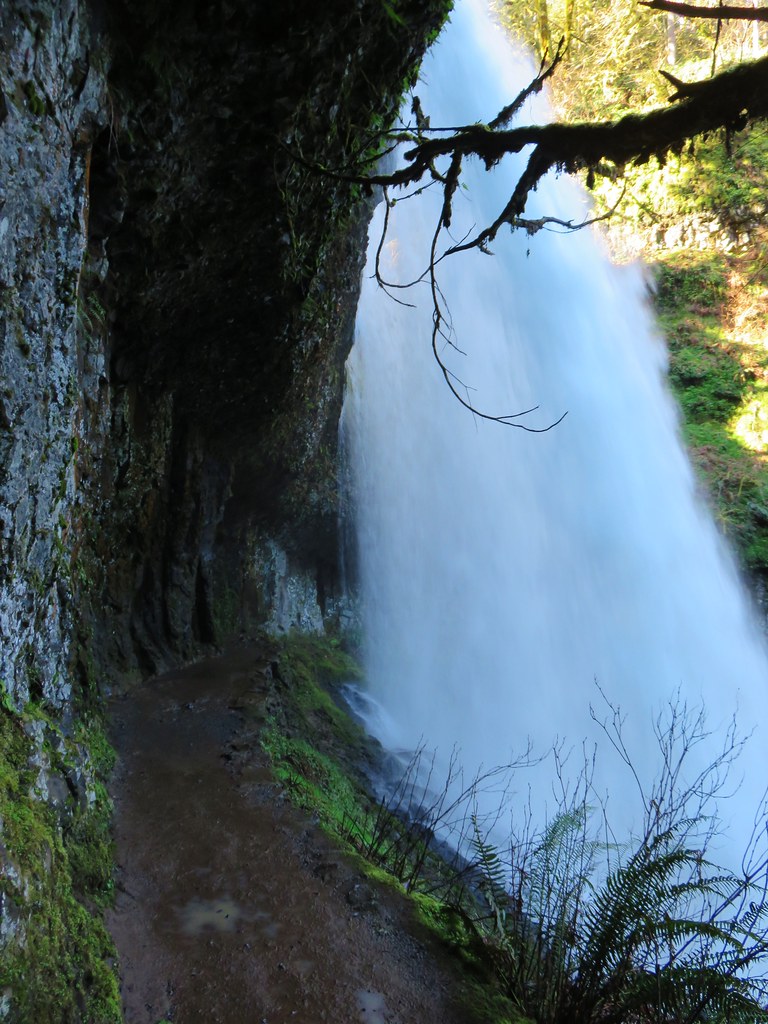
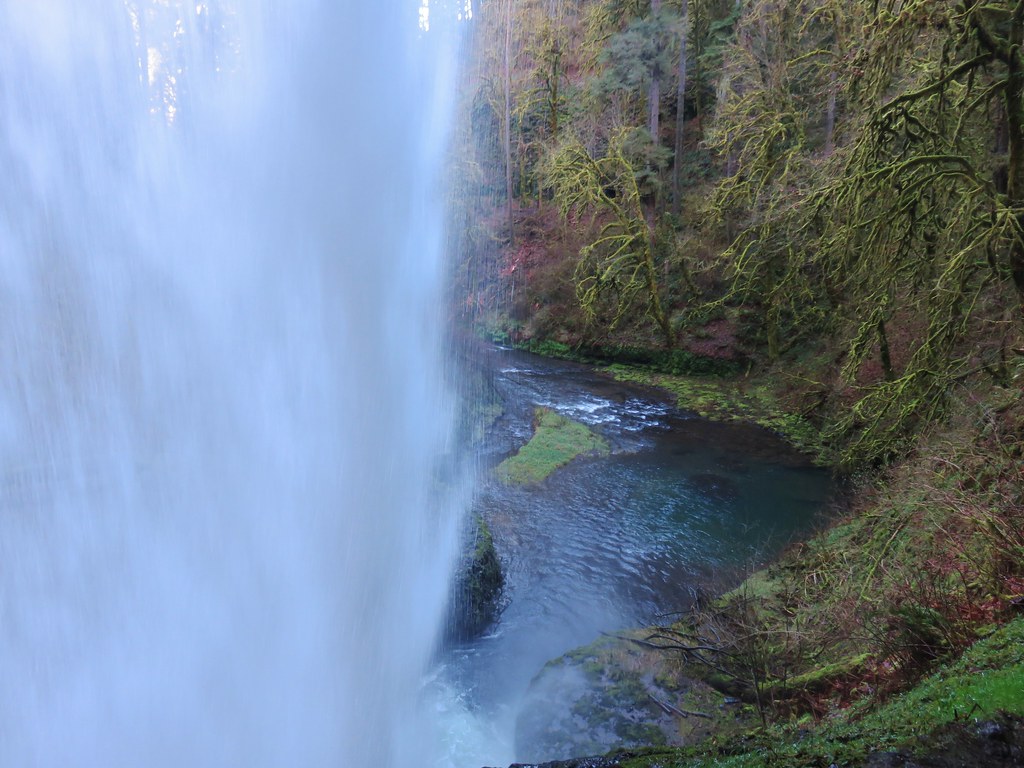
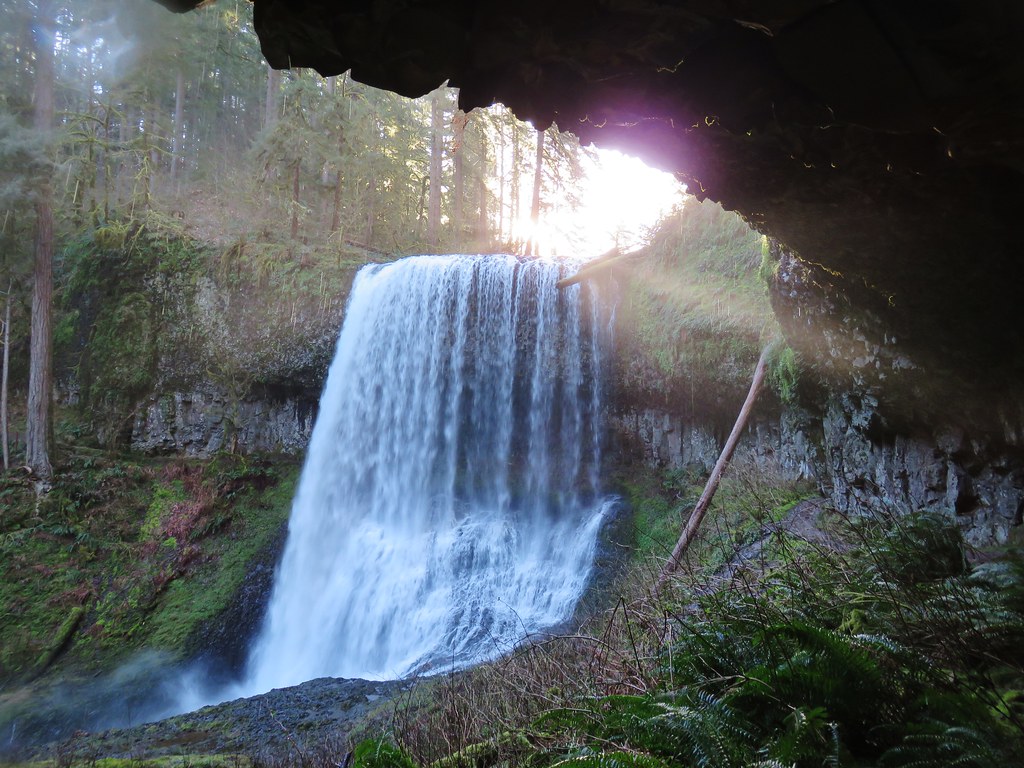
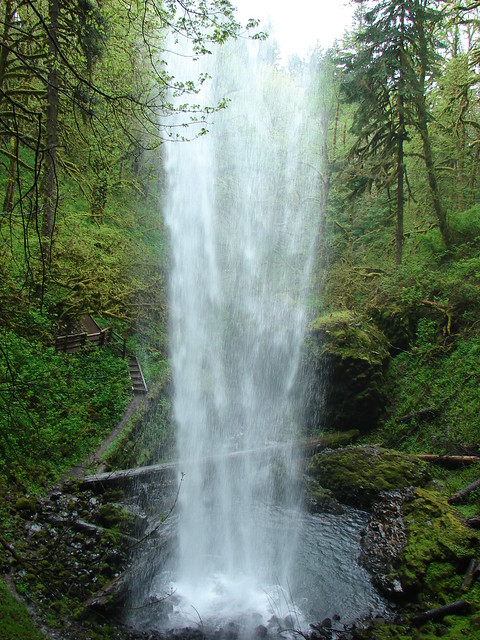
Here there was another opportunity to go behind the waterfall.
Middle North Falls

Trail behind Middle North Falls

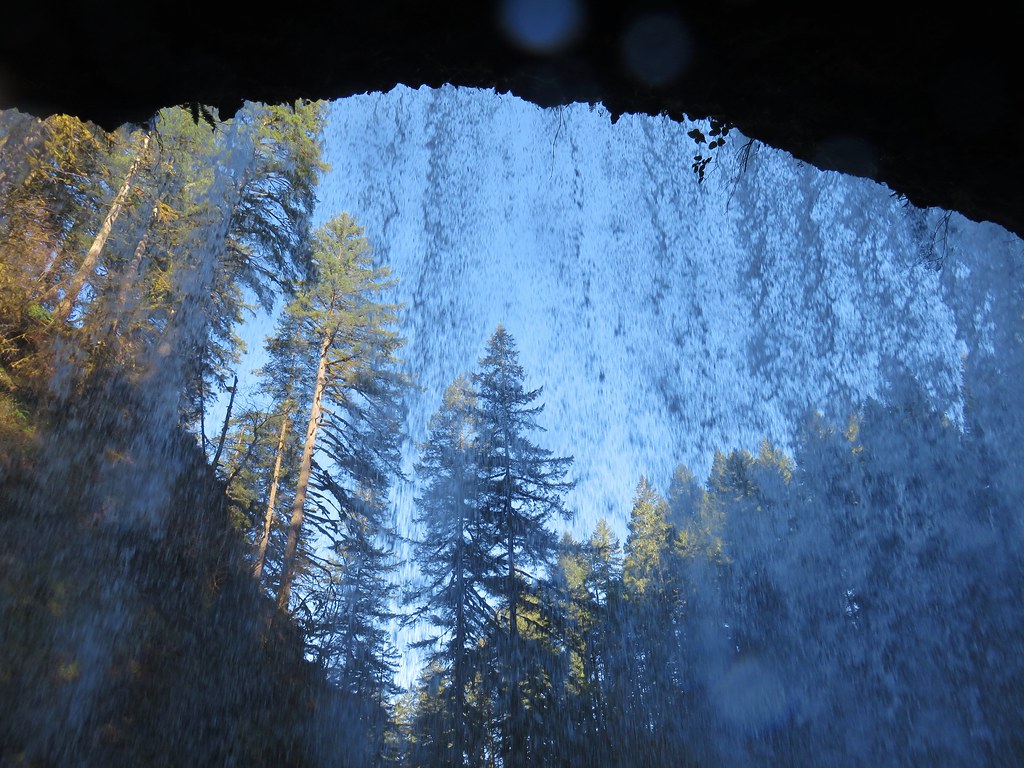
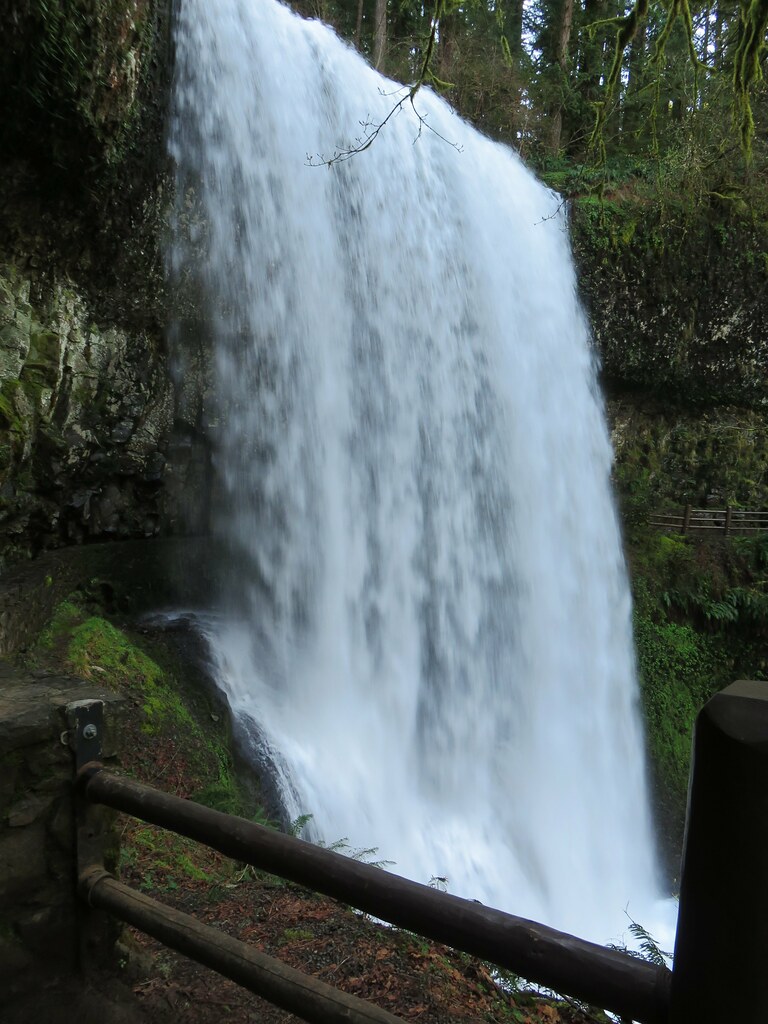
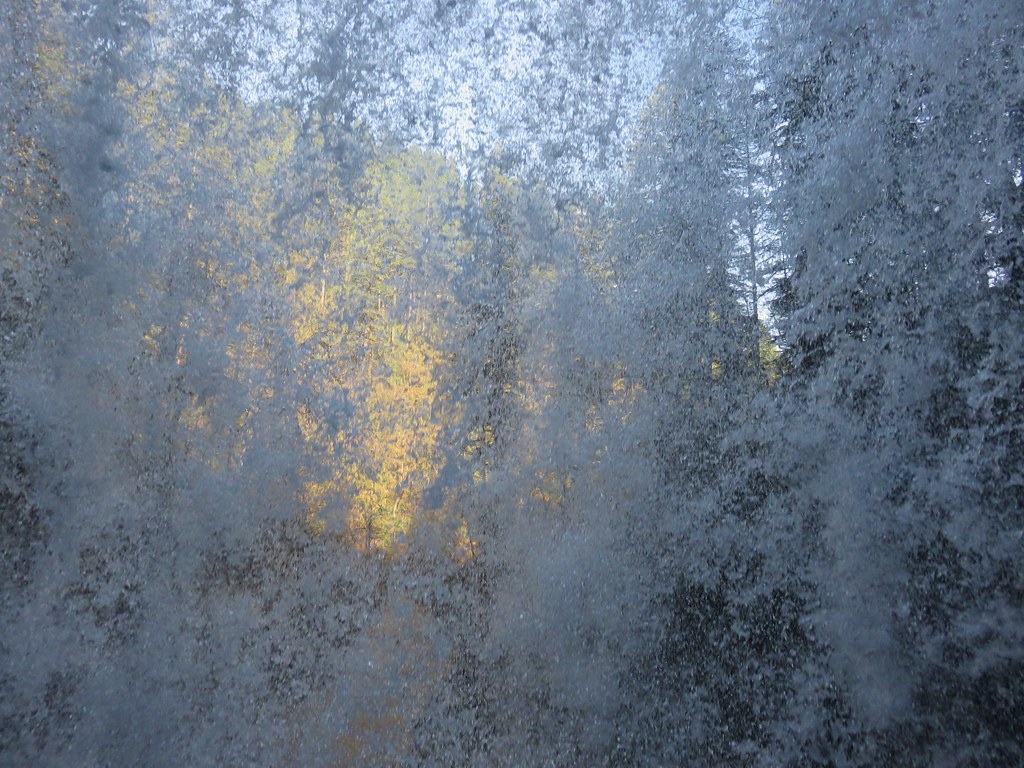
View from behind Middle North Falls

View from behind Middle North Falls

The side trail continued on the far side of the fall wrapping around the canyon to a great view of the cascade.
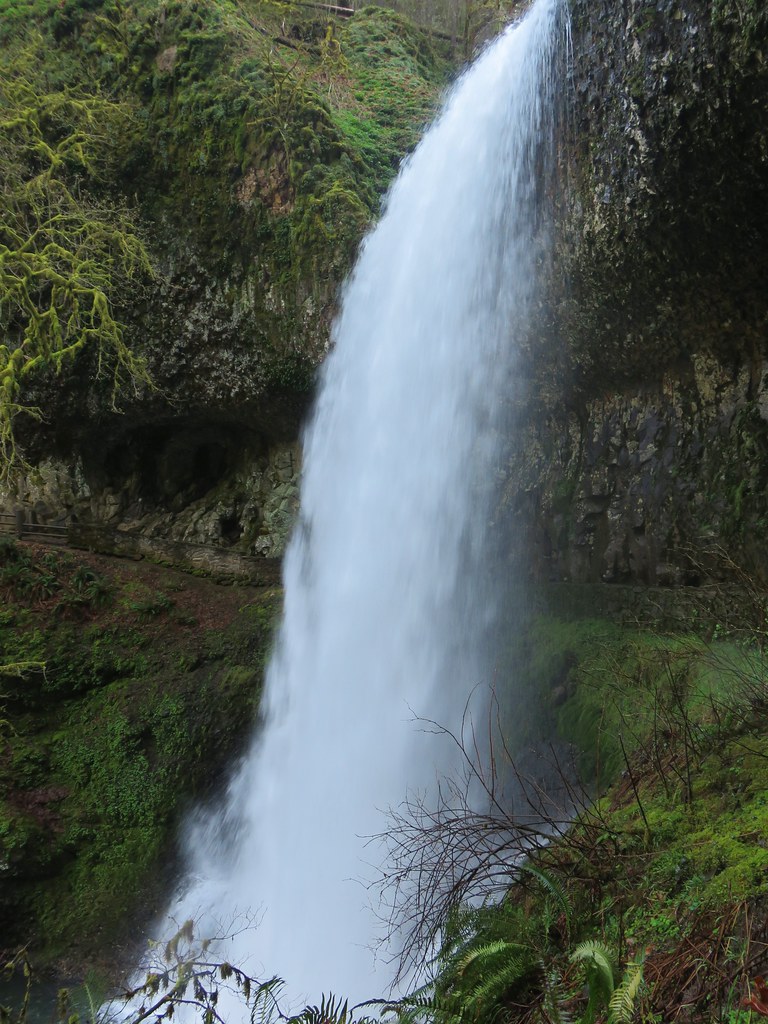
Middle North Falls

Middle North Falls

After oohing and ahhing at this waterfall we returned to the Canyon Trail which also had several nice views of this fall. Of all the waterfalls on this hike this one was probably the most visibly different from our previous visits.
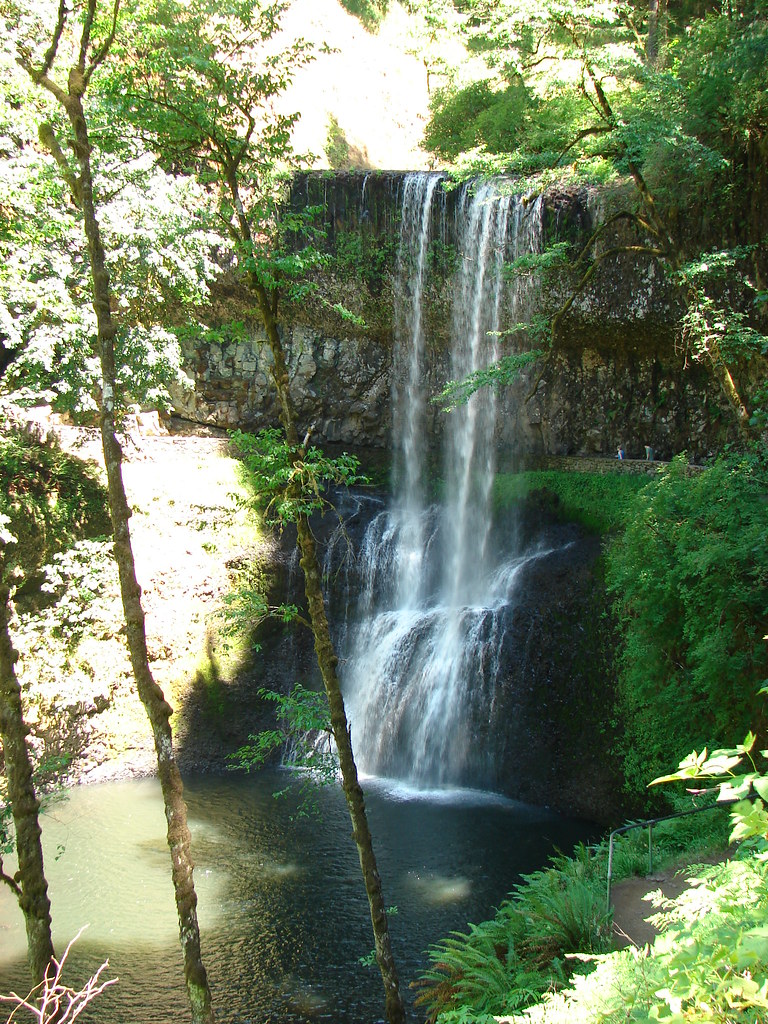
Middle North FallsJuly 7, 2006

Middle North FallsJuly 30, 2010

Middle North FallsMarch 29, 2018

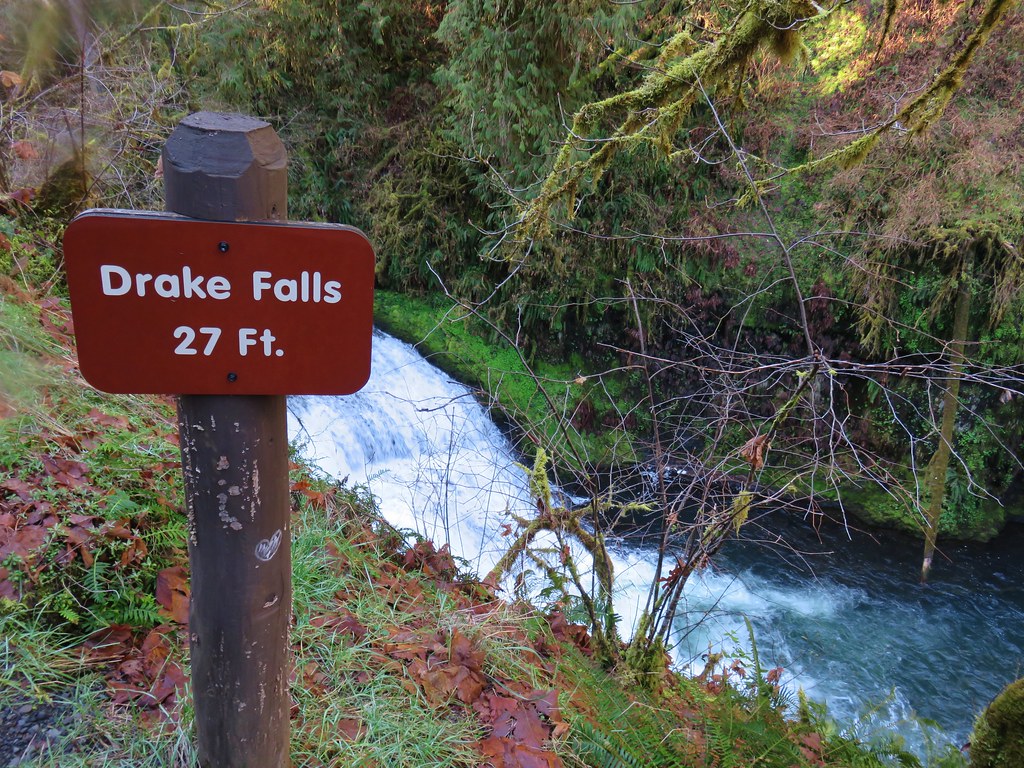
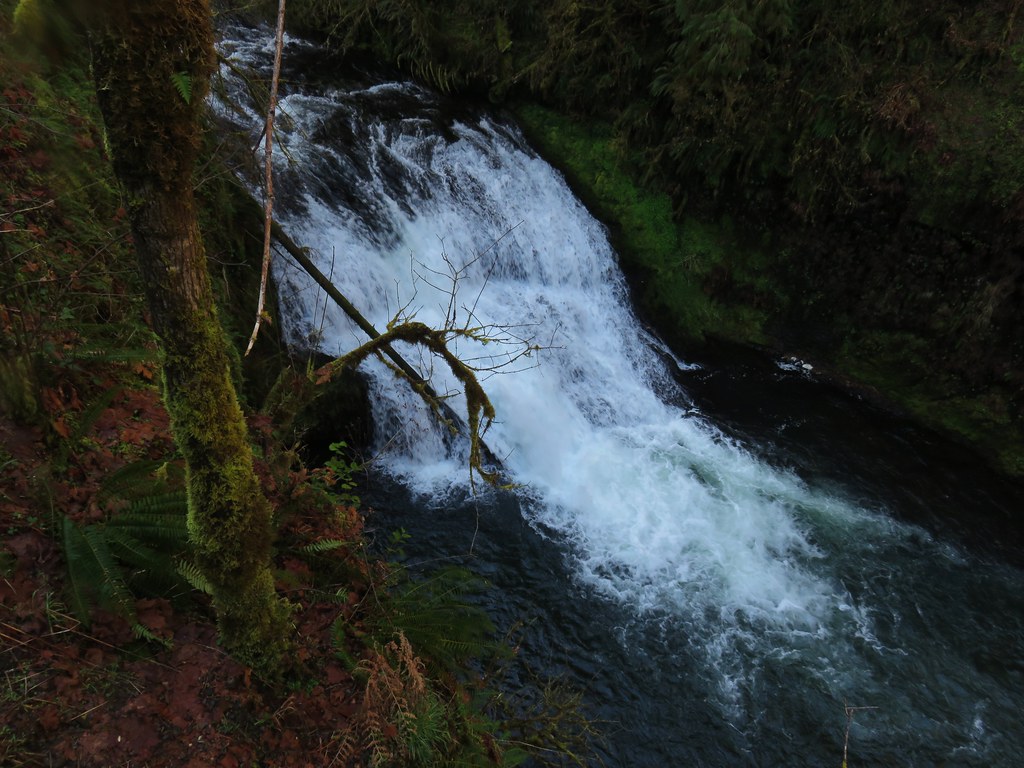
A little downstream from Middle North Falls we came to a viewing platform above little Drake Falls.
Drake Falls

Drake Falls

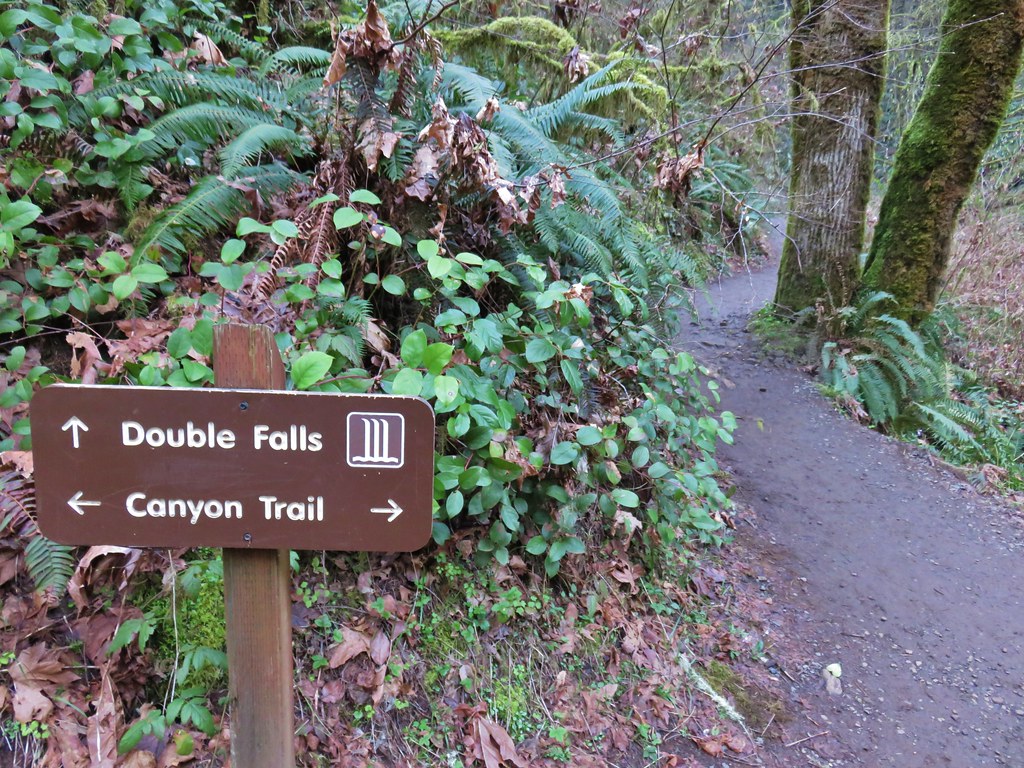
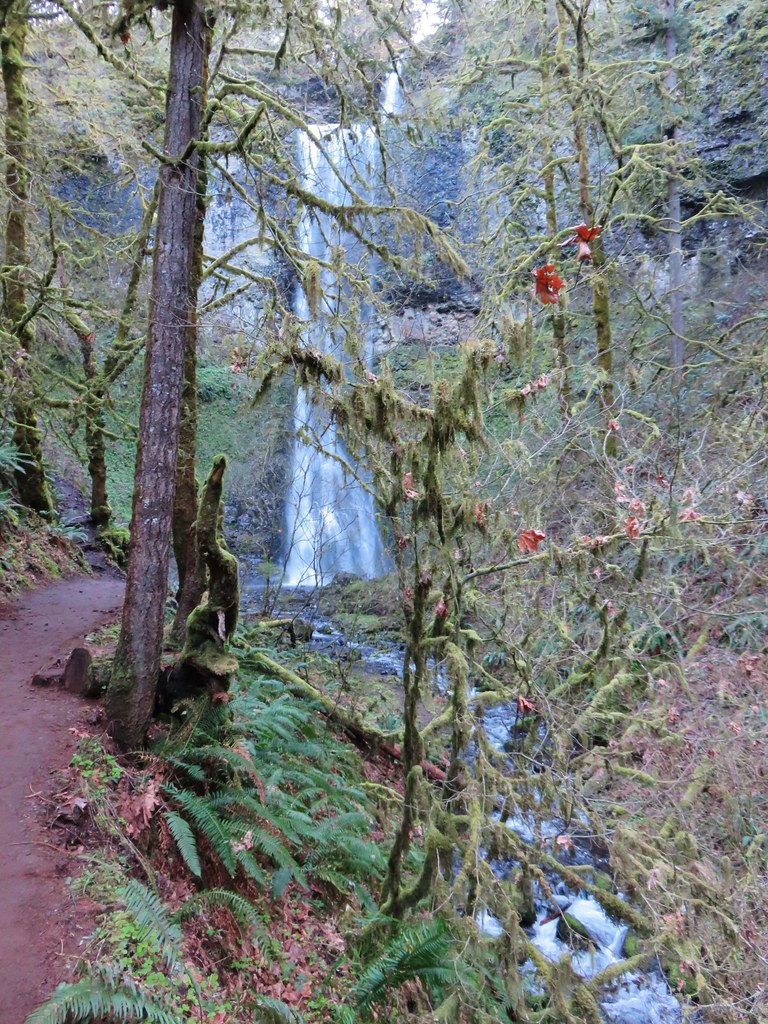
Less than a half mile from the Winter Falls Trail junction we arrived at another junction. This time with a very short spur trail to Double Falls.
Sign for Double Falls

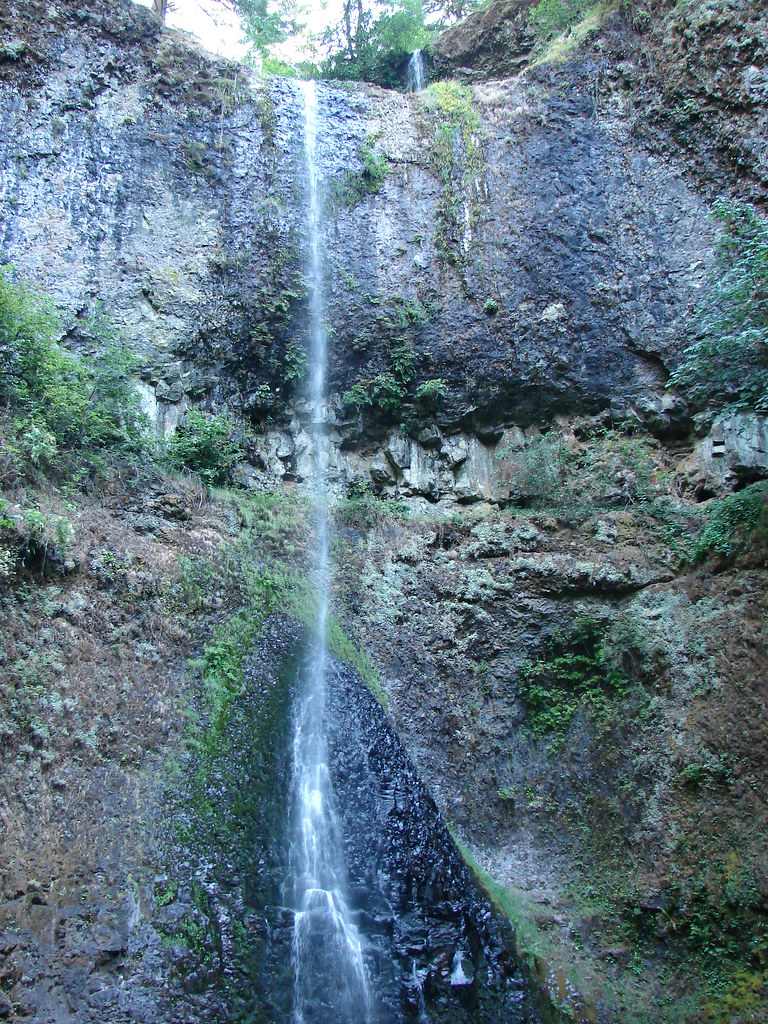
Here again the difference in water volume was very apparent.
Double Falls

Double FallsJuly 7, 2006

Double FallsJuly 30, 2010

Double FallsMarch 29, 2018

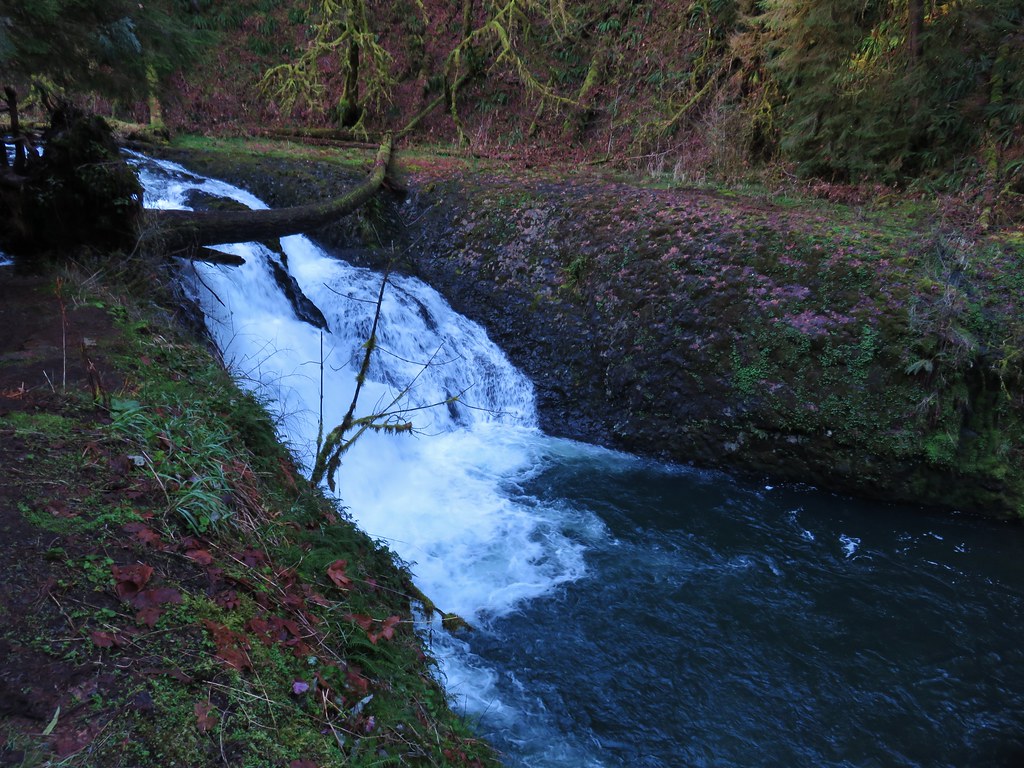
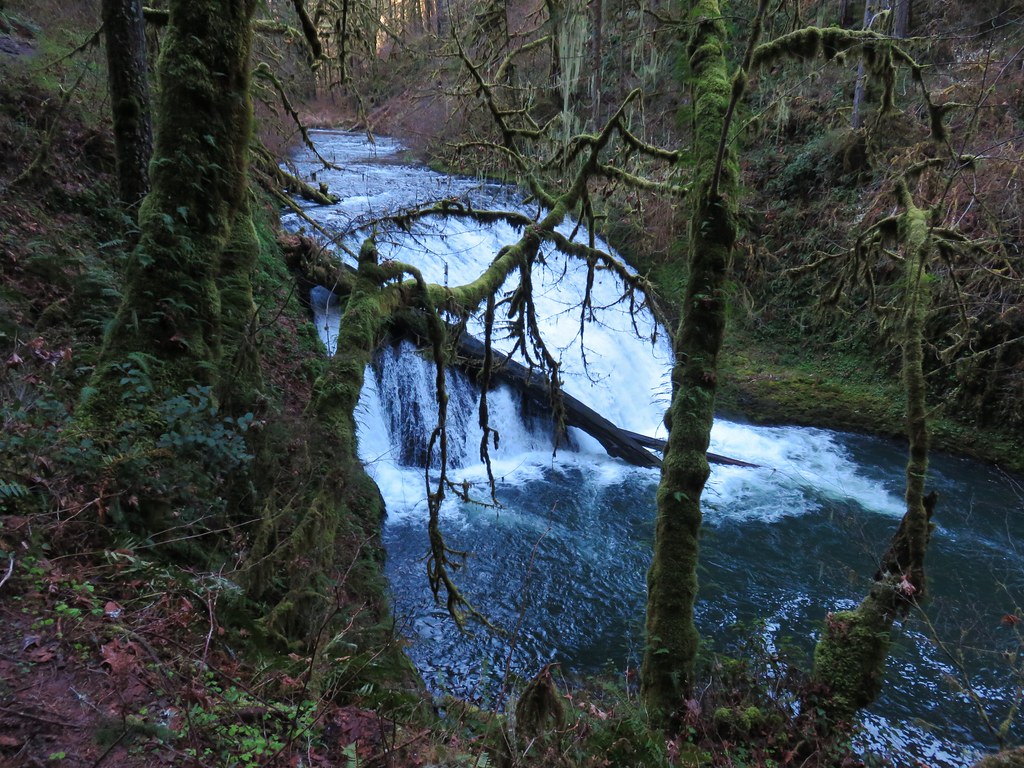
Just beyond the spur trail to Double Falls the Canyon Trail passed 30′ Lower North Falls.
Lower North Falls

Lower North Falls

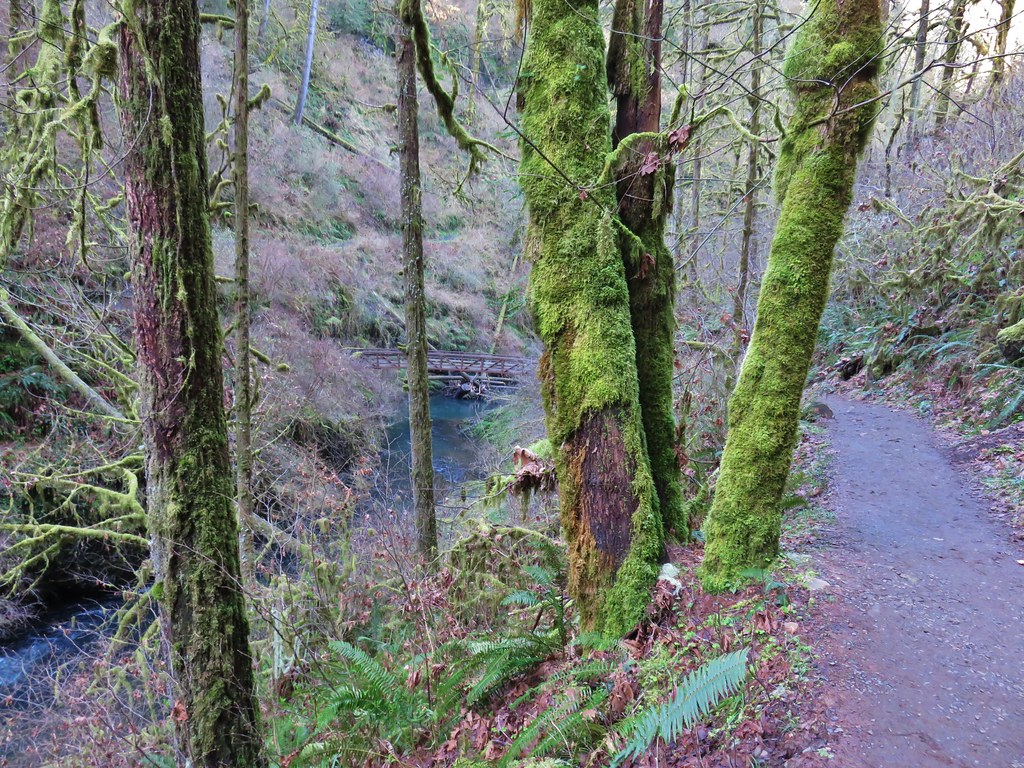
After the flurry of waterfalls in the three quarters of a mile between Twin Falls and Lower North Falls things settled down. The trail continued on the north side of the creek for about a quarter of a mile before crossing over on a footbridge.
Footbridge over North Fork Silver Creek

The trail then stayed on the south side of the creek passing an unnamed seasonal waterfall.
North Fork Silver Creek

Unnamed waterfall in Silver Falls State Park

The trail soon veered away from North Fork Silver Creek and a mile from the spur trail to Double Falls we arrived at a junction with the Maple Ridge Trail.
Maple Ridge Trail junction
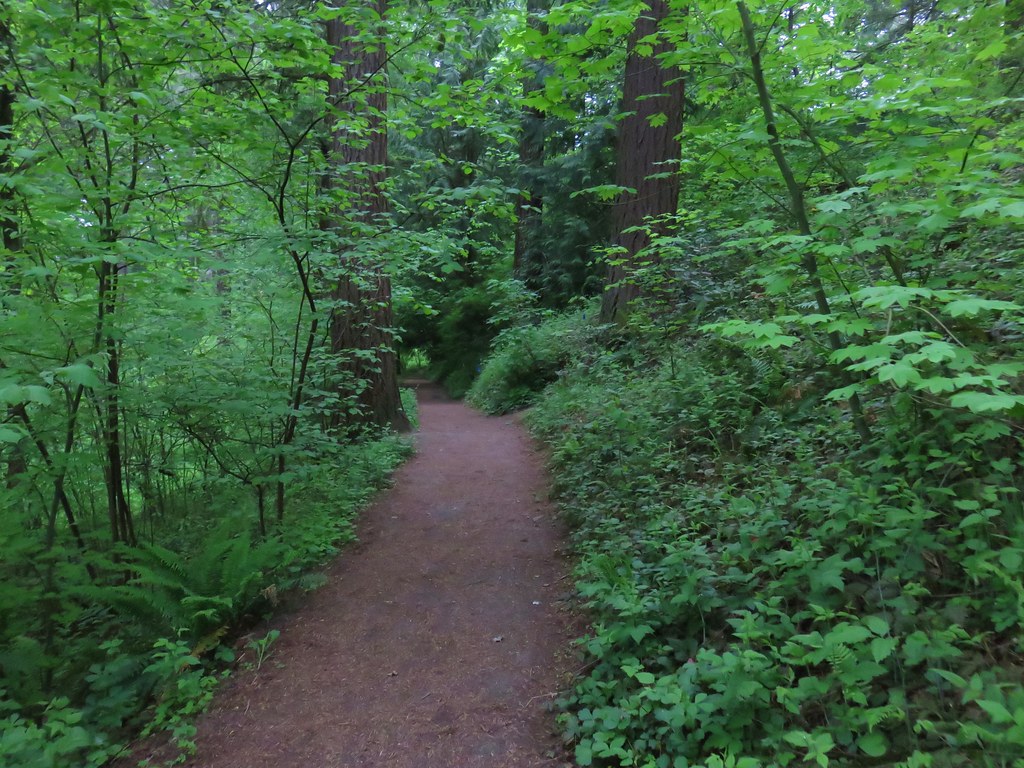
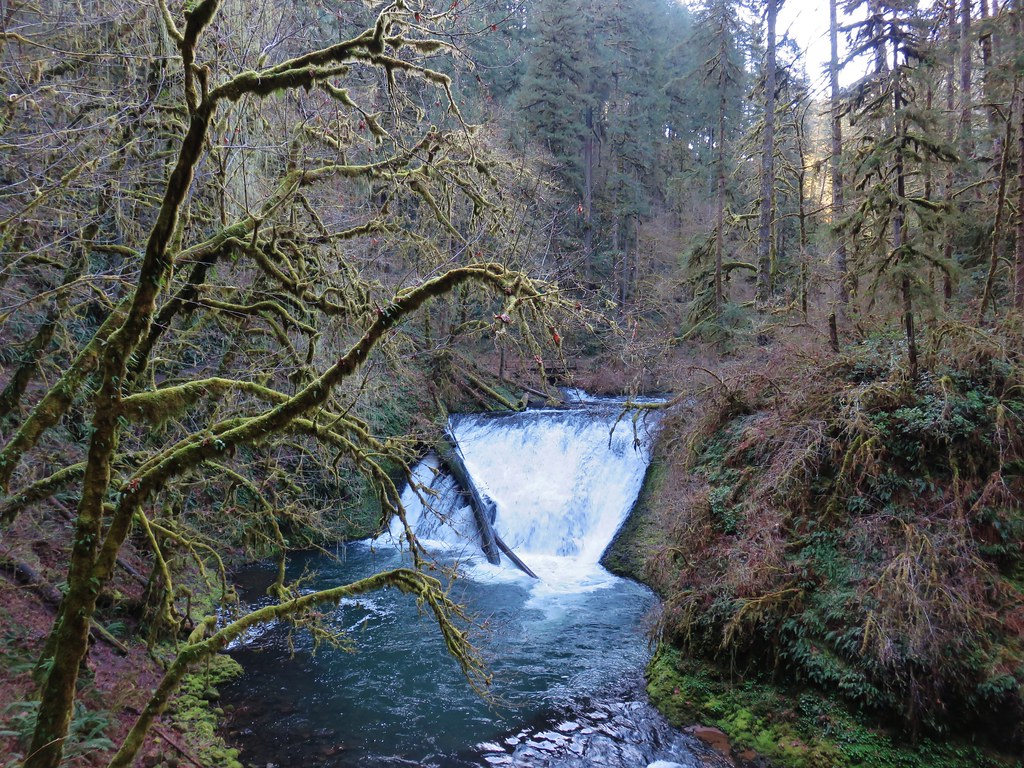
The Maple Ridge Trail allows for a shorter loop option if you start at the South Falls Day Use Area but that loop only passes three waterfalls. It was however our escape route on our first visit when the heat of August and our lack of carrying water forced us to abandon our attempt at the full loop. The Canyon Trail here rejoined a creek but not the North Fork Silver Creek. This was now the South Fork Silver Creek. A short distance upstream we came to Lower South Falls.
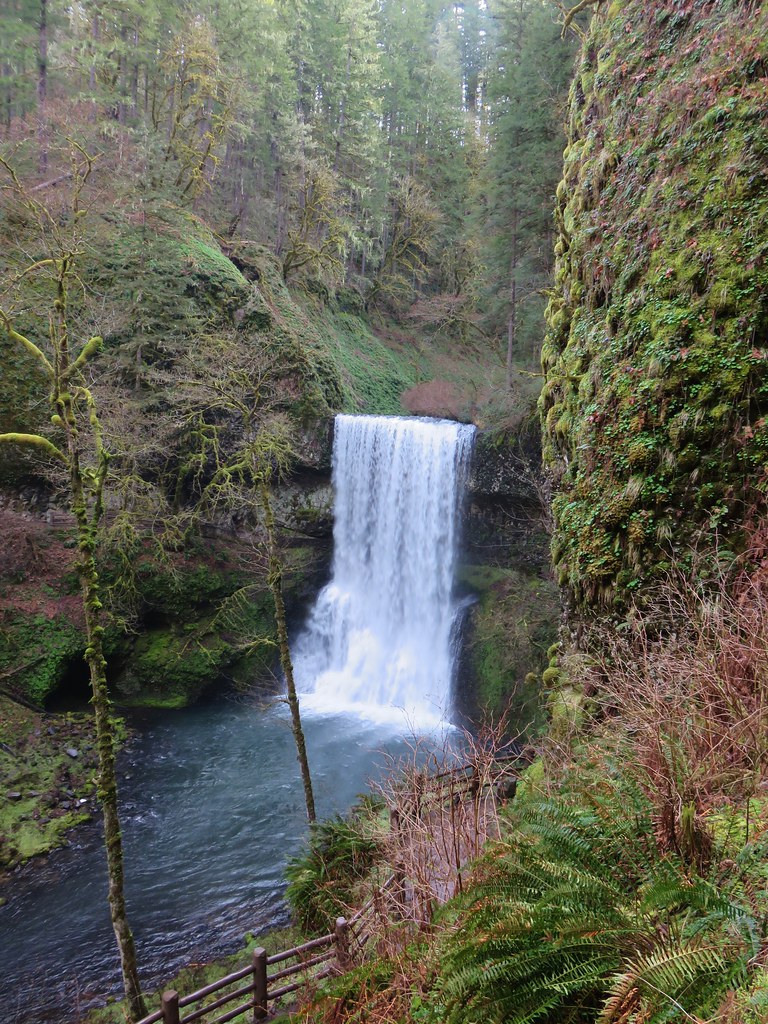
Lower South Falls

Lower South Falls

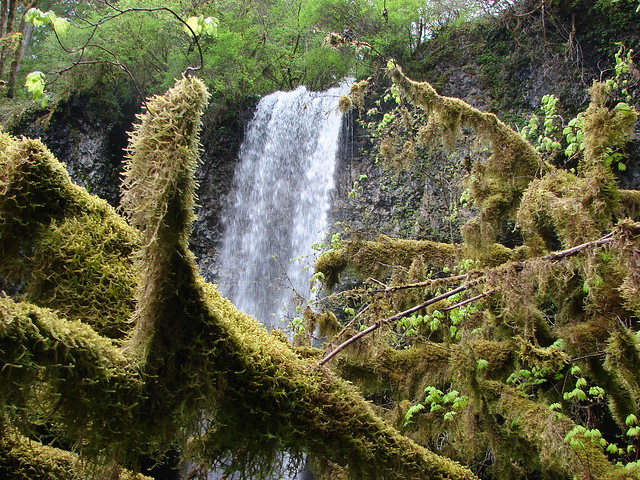
Lower South Falls is another that the trail passes behind but before we headed behind the water a varied thrush landed on a branch just a few feet from us. I’ve mentioned before that these birds are my nemesis as I can rarely get a decent photo of one. This guy was no exception, despite his sitting on the branch for a good 15 seconds or more I could not get the camera to focus on him.
Varied Thrush at Lower South Falls

Having failed to get a clear picture of the bird we headed behind the waterfall and out the other side.
Lower South Falls

View from behind Lower South Falls

Lower South Falls

Again the difference in the appearance from our previous visits to this waterfall was obvious.
Lower South FallsJuly 7, 2006

Lower South FallsJuly 30, 2010

Lower South FallsMarch 29, 2018

Another series of stairs climbed up above Lower South Falls which was probably the most strenuous part of the hike. The trail then leveled out again for about a mile before arriving at South Falls.
South Fork Silver Creek

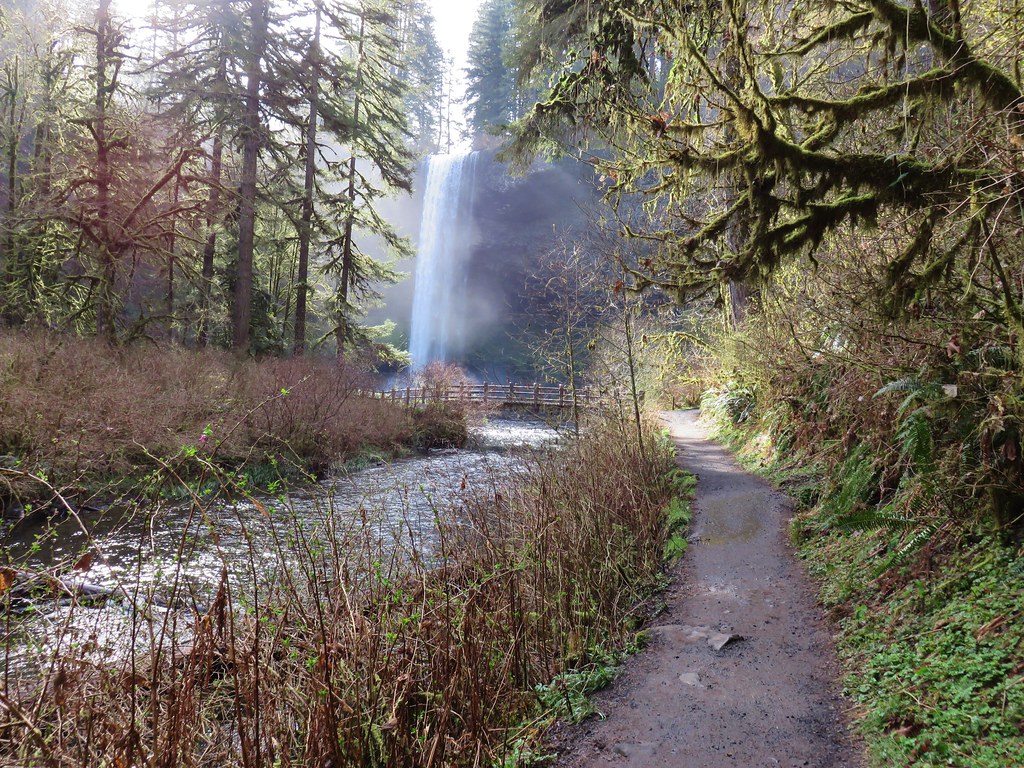
South Falls

A footbridge over the creek below the falls allows for a short loop from the day use area. We passed by the footbridge opting to pass behind this waterfall as well.
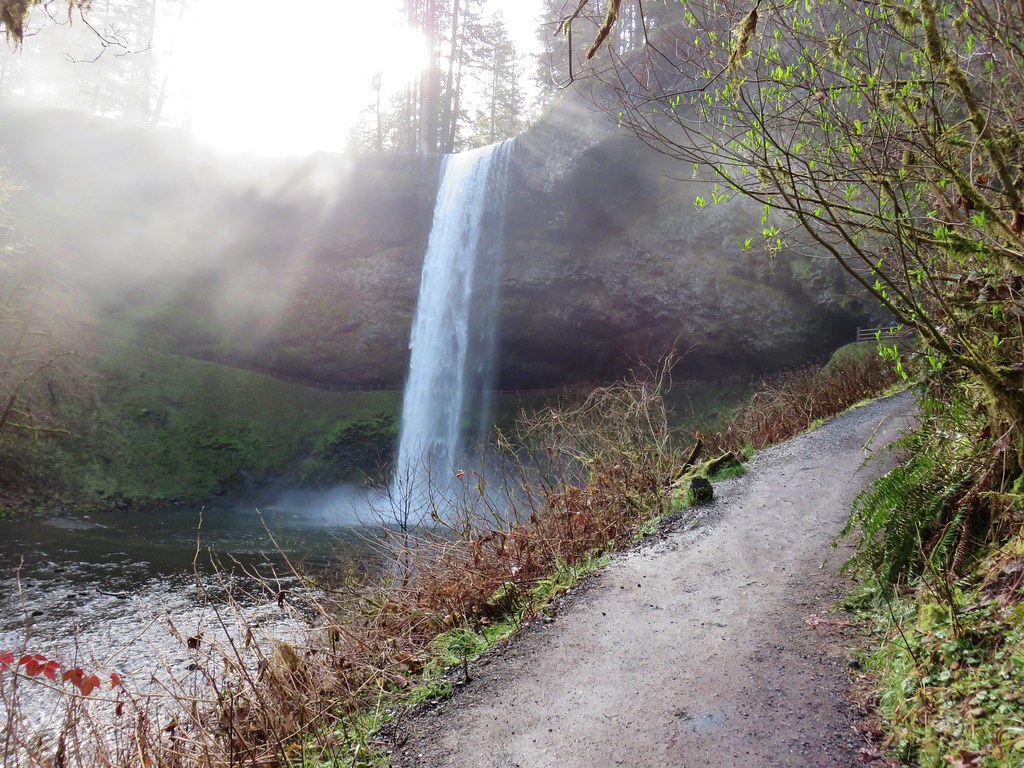
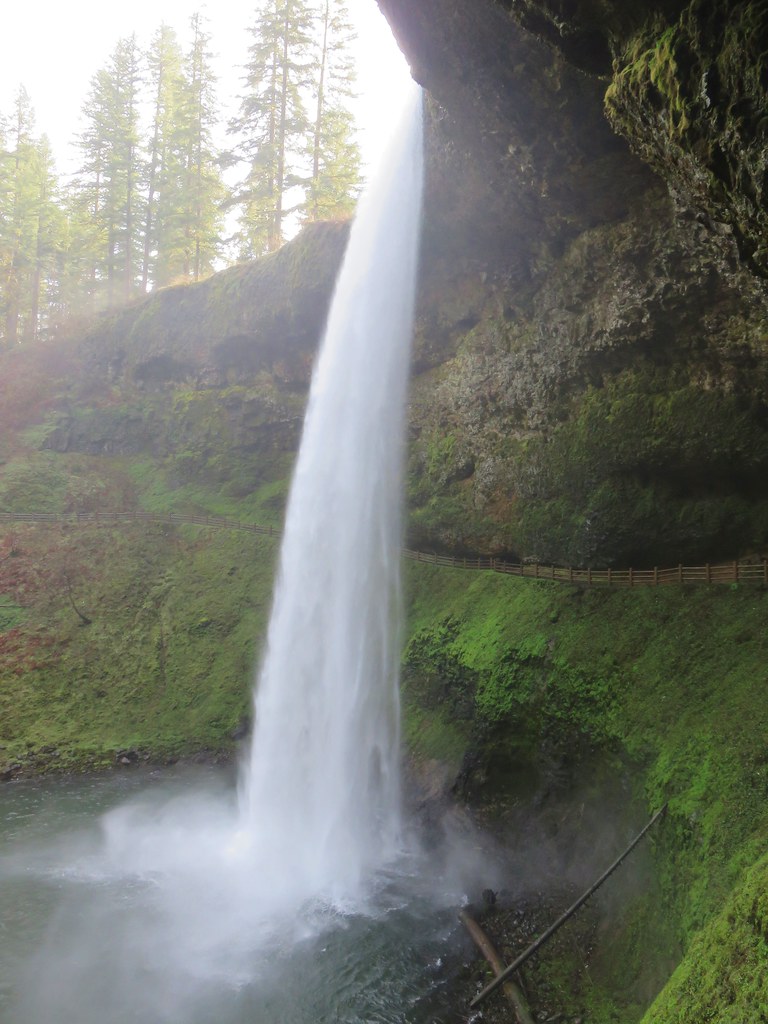
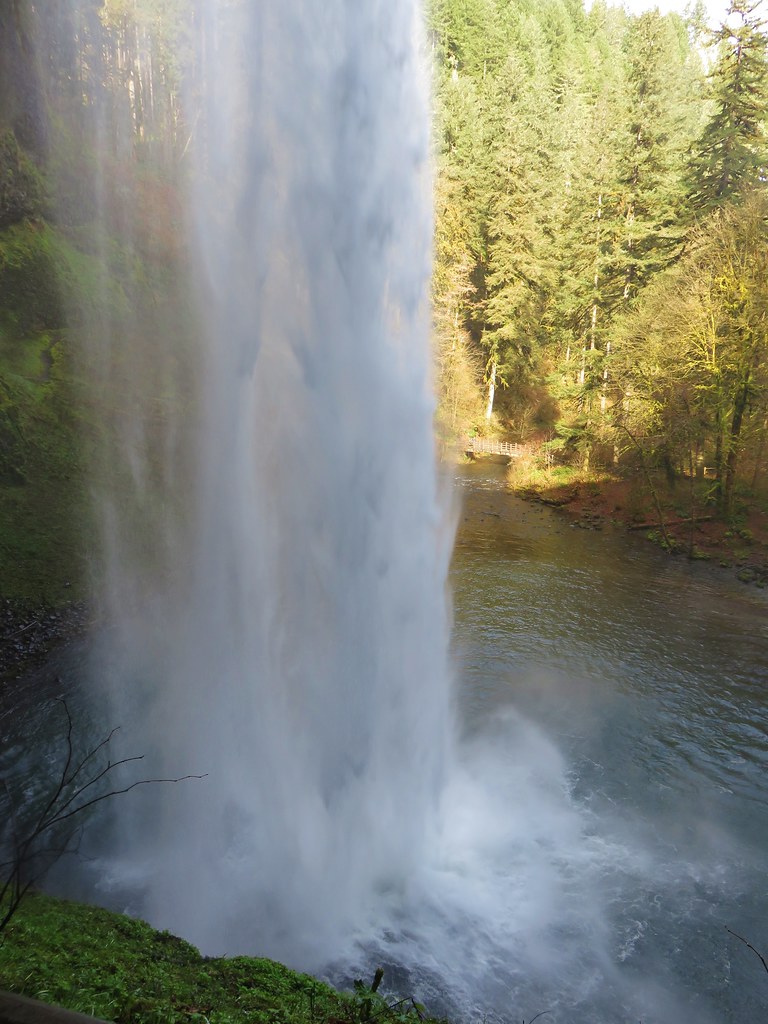
South Falls

South Falls

View from behind South Falls

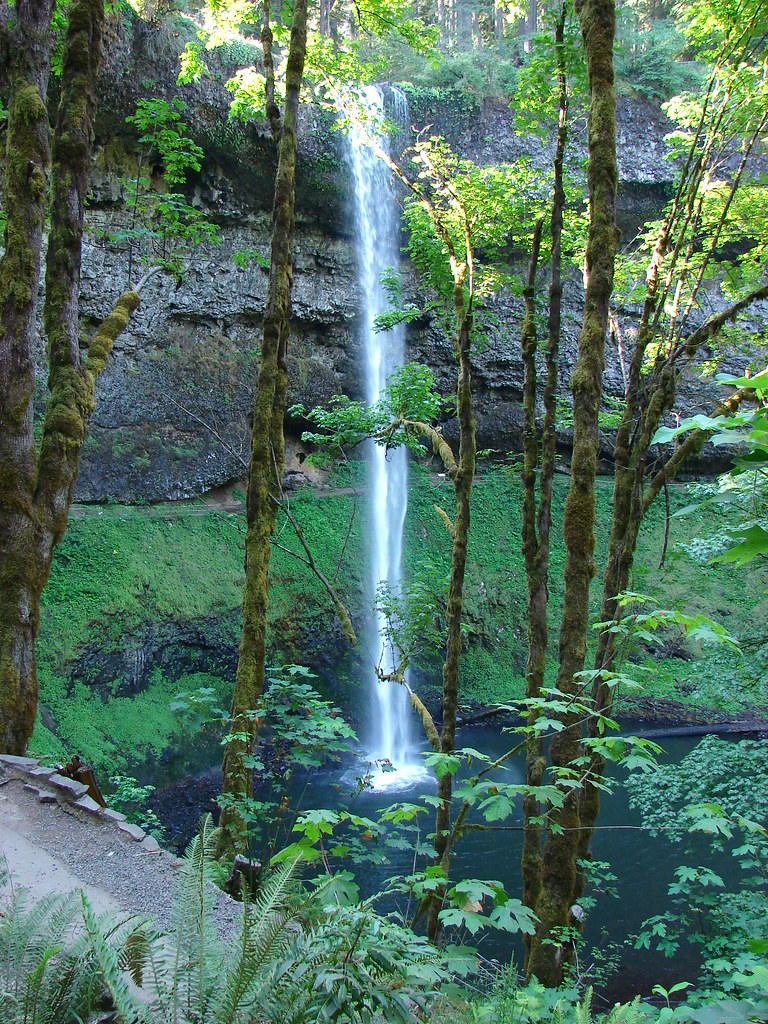
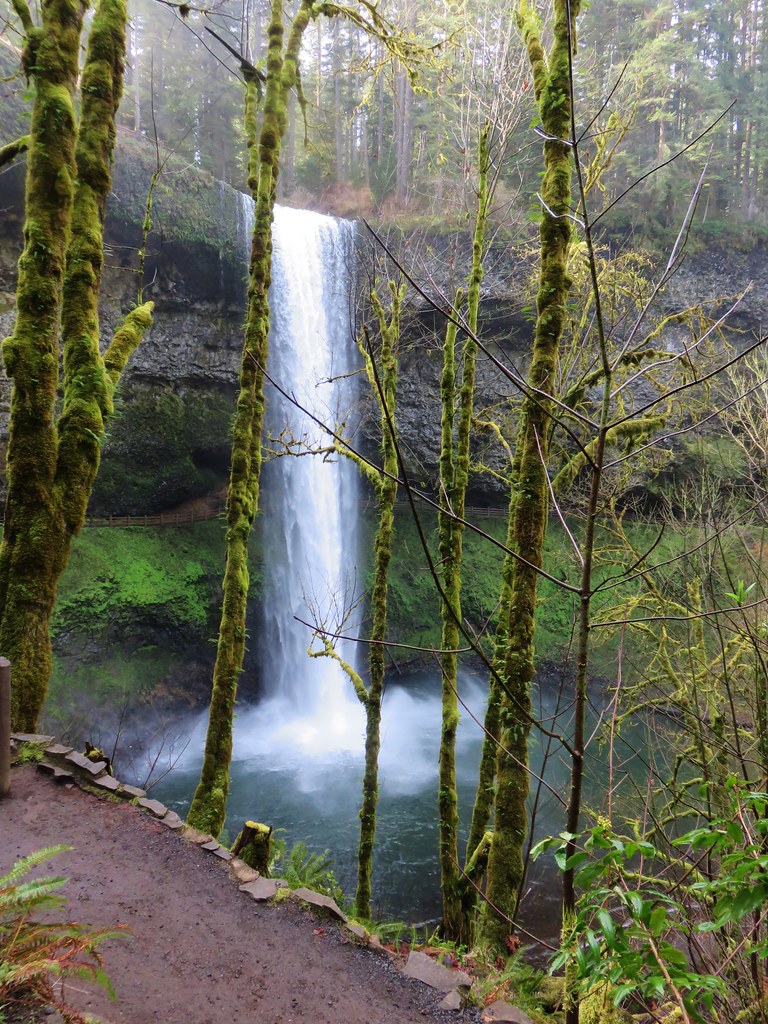
A comparison of our visits shows the difference that the timing of a visit makes.
South FallsJuly 30, 2010

South FallsMarch 29, 2018

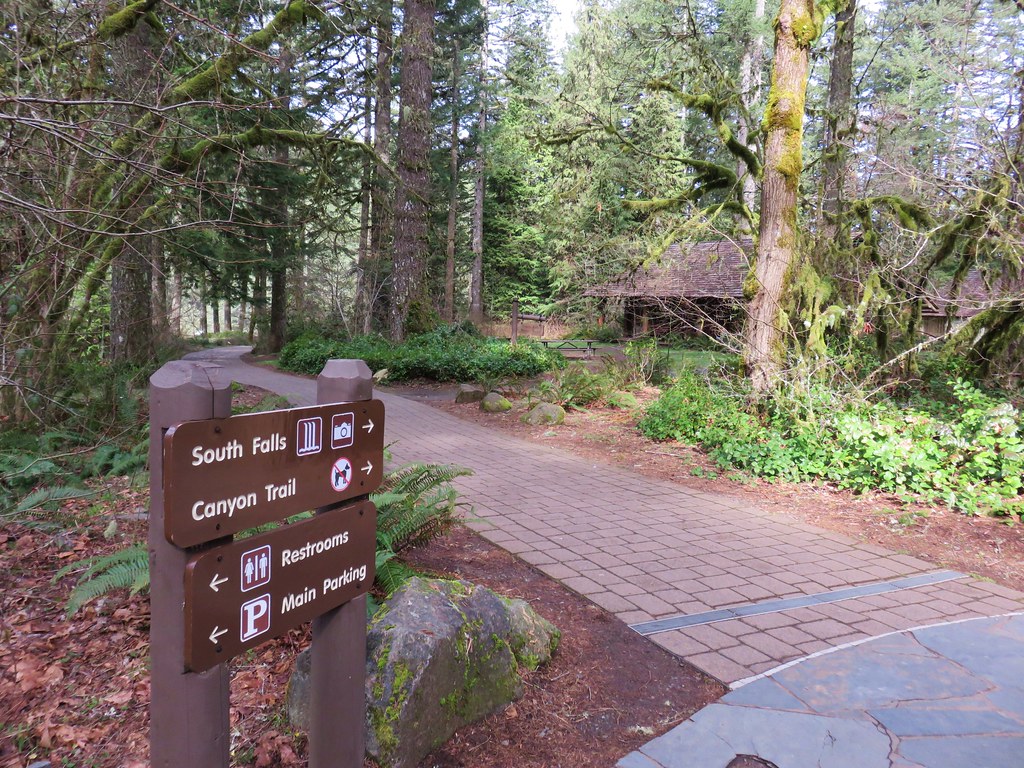
Doing the loop in the direction we’d chosen made South Falls the 10th of the 10 waterfalls along the Trail of Ten Falls but that didn’t mean it was the last waterfall we’d visit on the hike. That honor went to Frenchie Falls. A sign part way up the trail from South Falls pointed toward this little fall.
Sign for Frenchie Falls

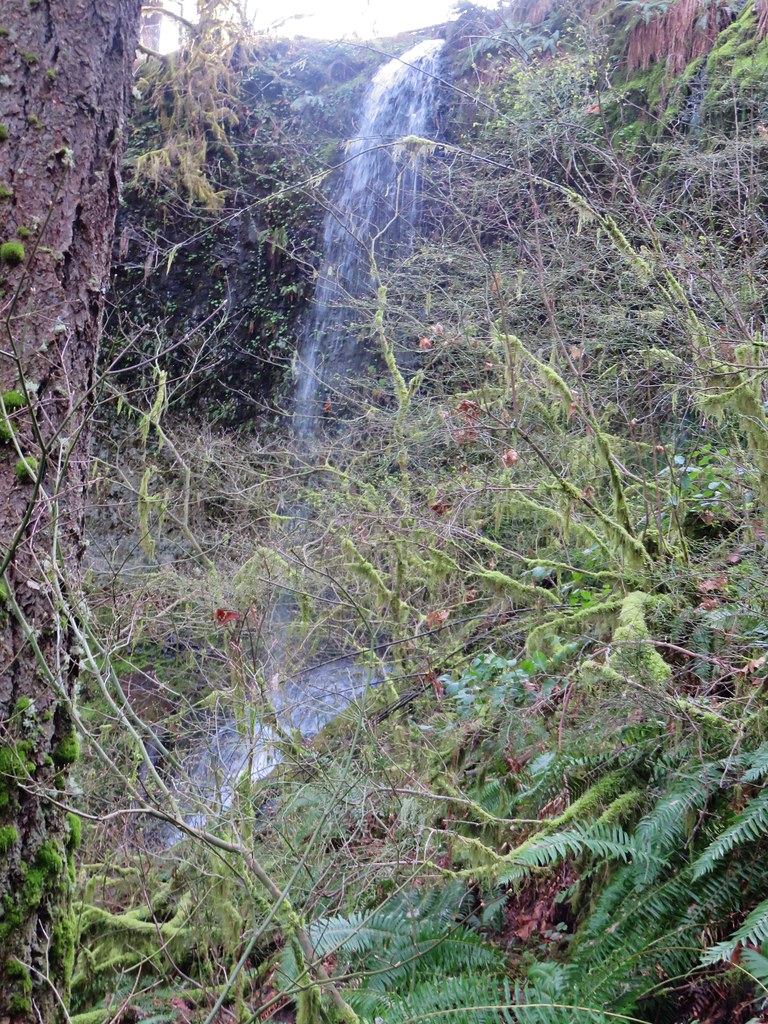
Even at this time of the year it wasn’t much more than a wisp of water and it lacks a good vantage point but it’s a named fall none the less.
Frenchie Falls

After checking out Frenchie Falls we completed the climb out of the canyon to a viewpoint above South Falls.
Plaque above South Falls

Looking down from the top of South Falls

We then looped around a picnic area and into the South Falls Historic District.
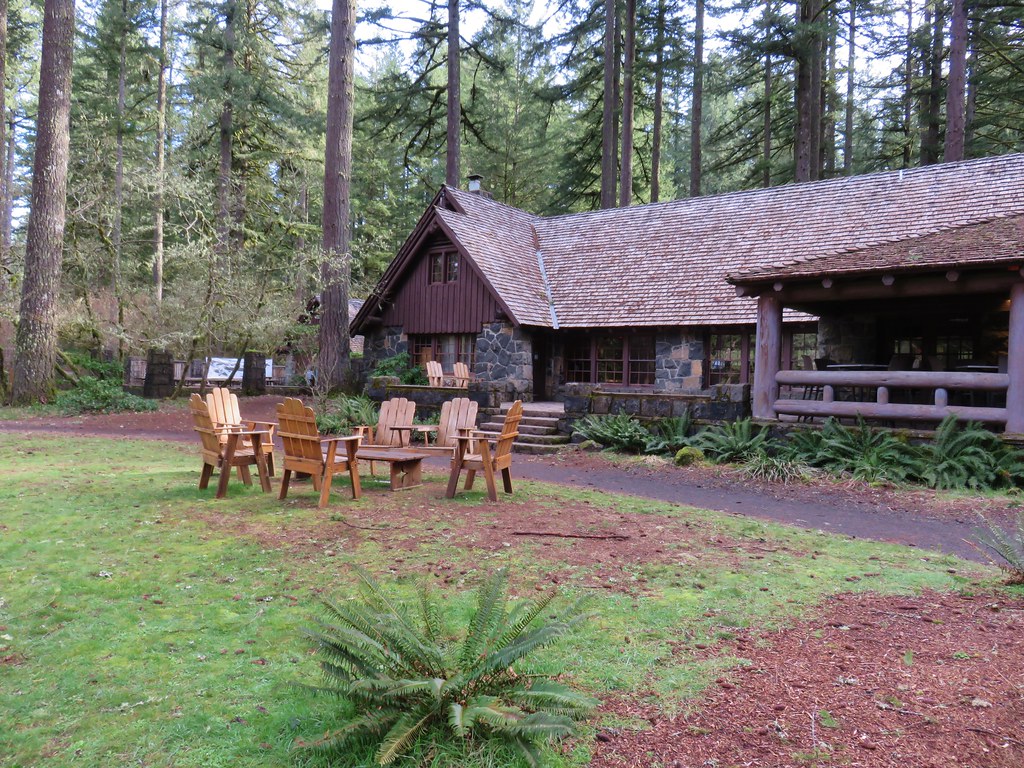
South Falls Historic District at Silver Falls State Park

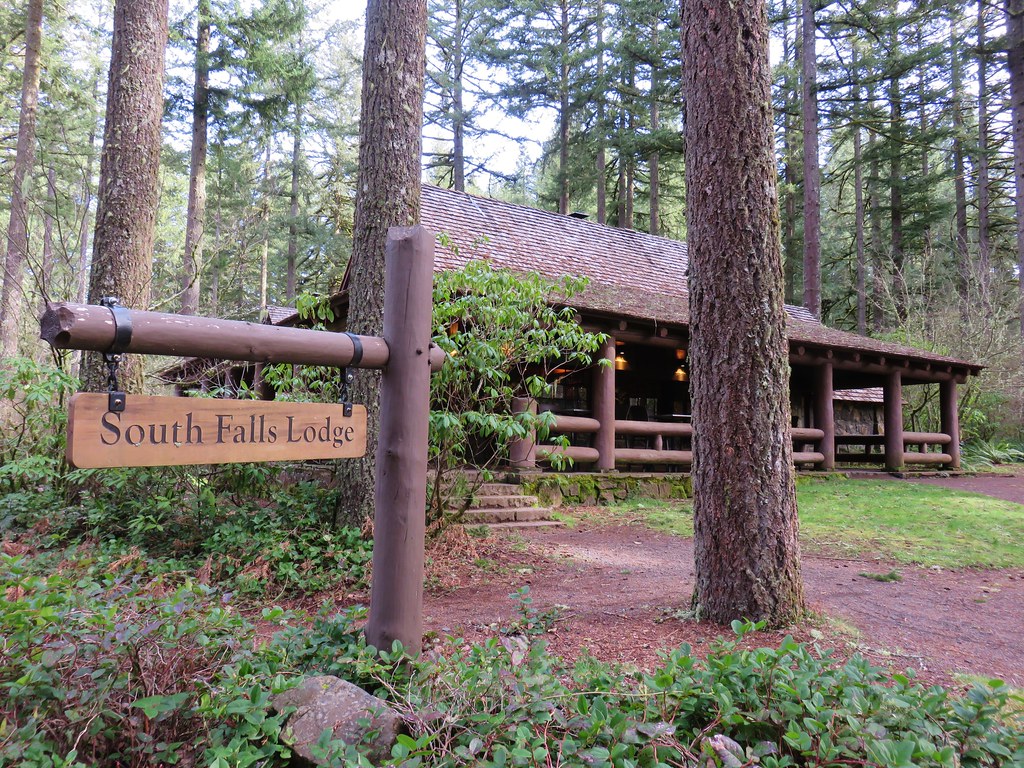
South Falls Lodge

South Falls Lodge

Nature Store

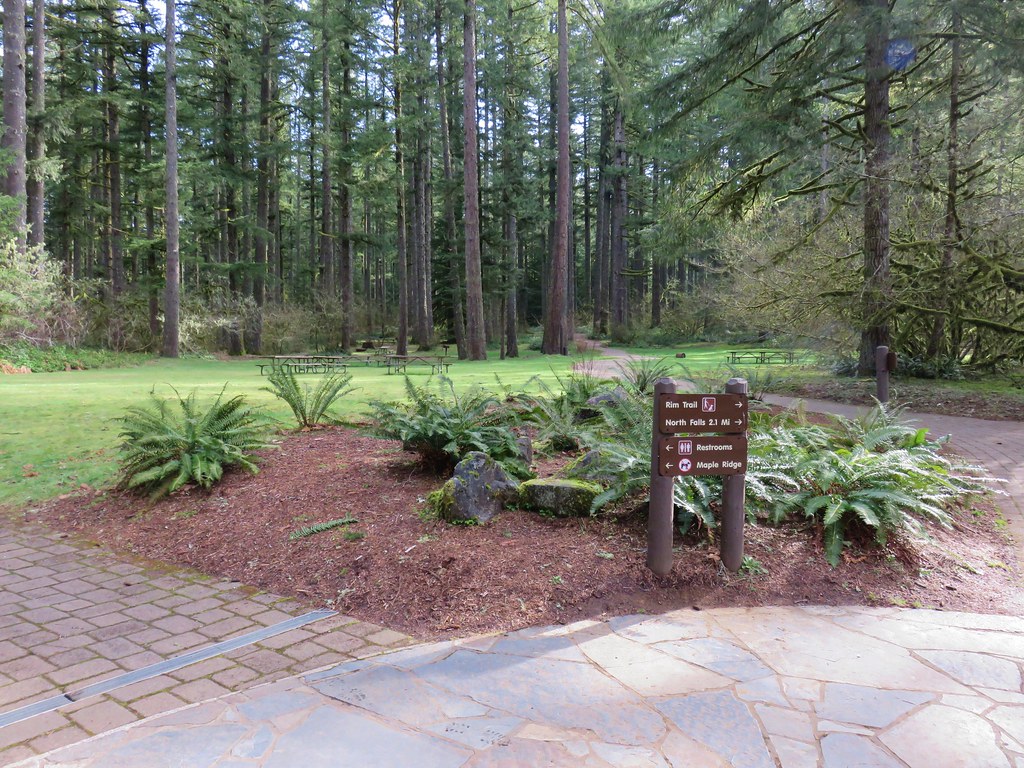
Here we passed the cafe, store and theater before arriving at a junction with the start of the Maple Ridge and Rim Trails.
Rim and Maple Ridge Trails

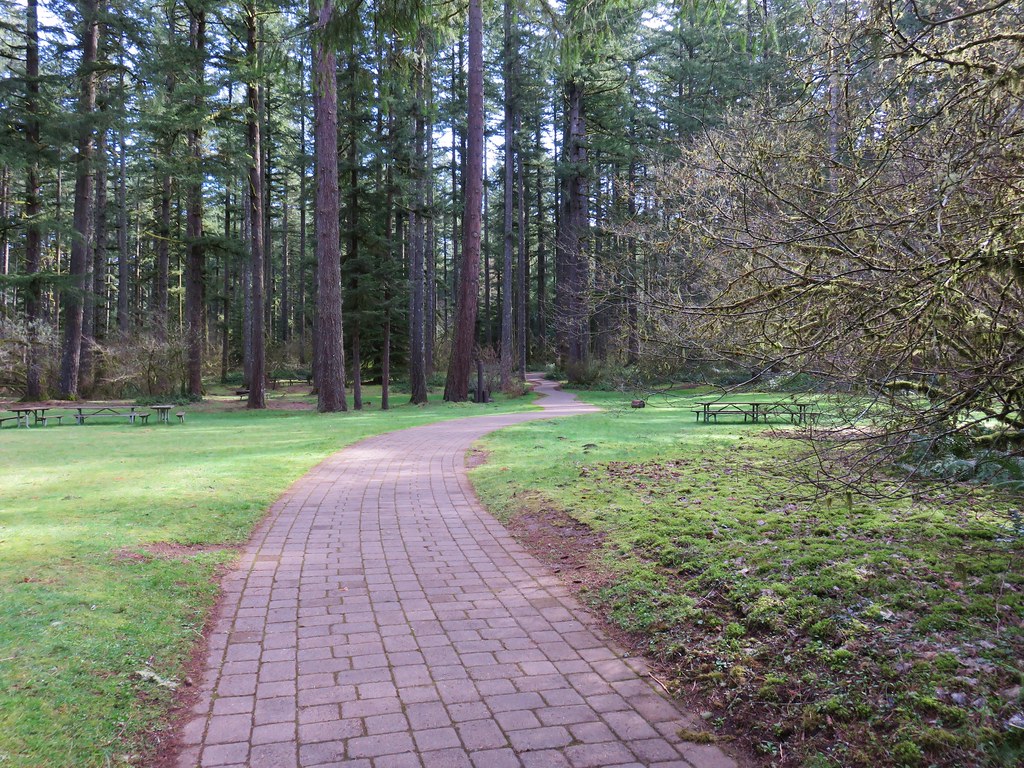
We followed the Rim Trail through a picnic area and into the forest.
Rim Trail

Rim Trail

Rim Trail

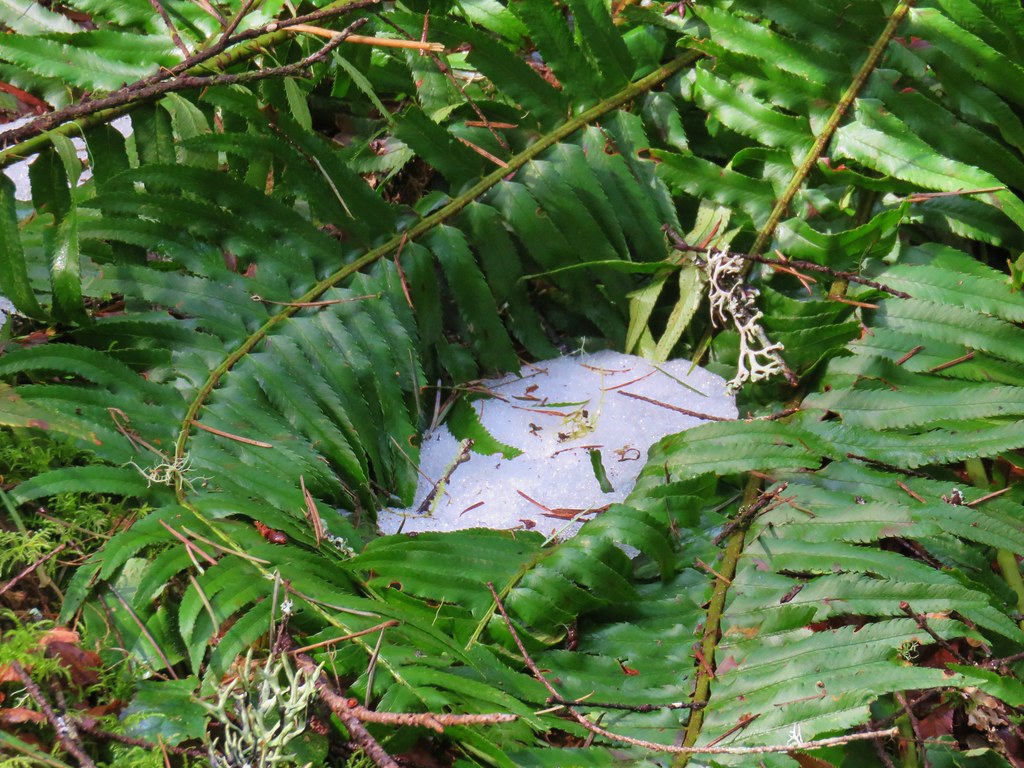
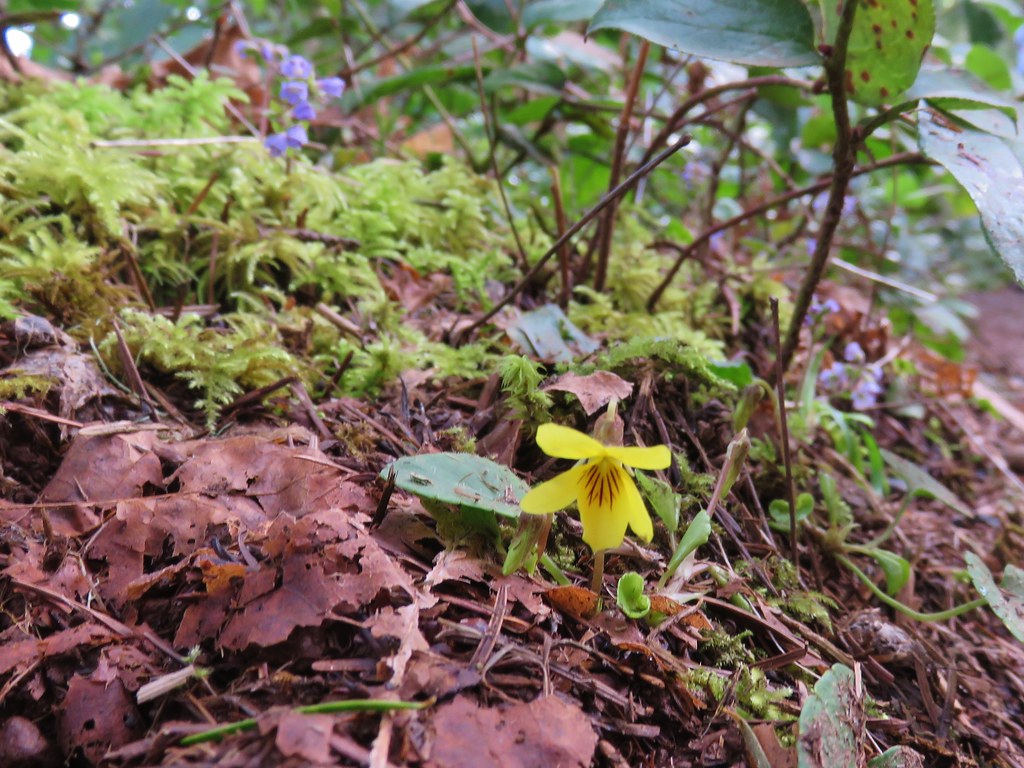
The last of the winter snow was melting as the first of the spring flowers were coming to life.
Snow along the Rim Trail

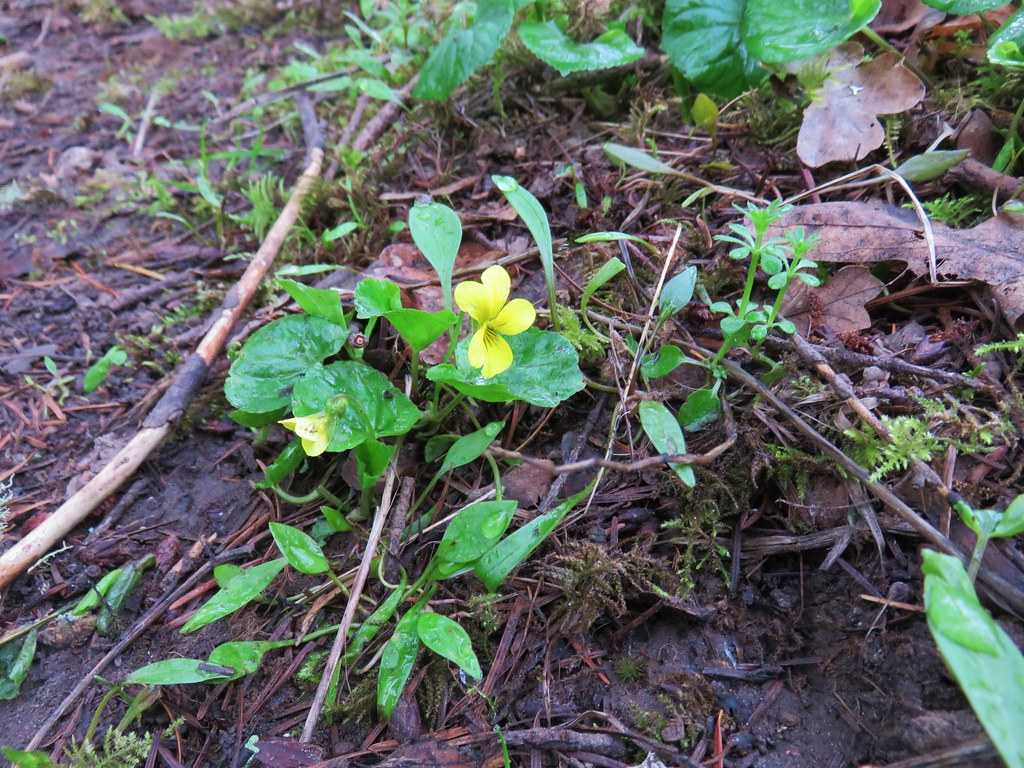
Violet

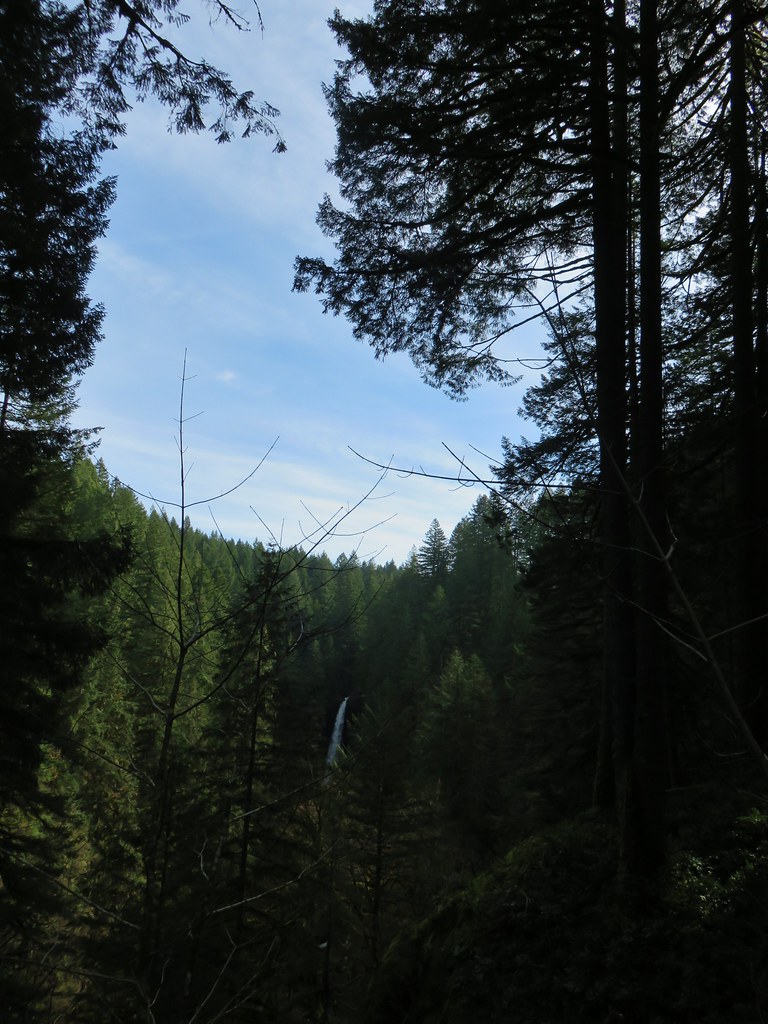
The Rim Trail passed through the Winter Falls Trailhead parking but offered no views of the waterfall. The only real view of any of the falls came near the end of the 2.1 mile trail when North Falls was visible down in the canyon below.
North Falls from the Rim Trail

The pay box was in place at the trailhead (which was now full of cars) so we dropped off our $5 before driving back home.  With all of our previous visits having come during the summer months it was great to visit when the water levels were higher. A few more weeks will bring out the flowers adding to the beauty of this hike. Happy Trails!

Flickr: 2018
2010
2006

Categories
Corvallis Hiking Oregon Trip report Willamette Valley

Peavy Arboretum – McDonald Forest

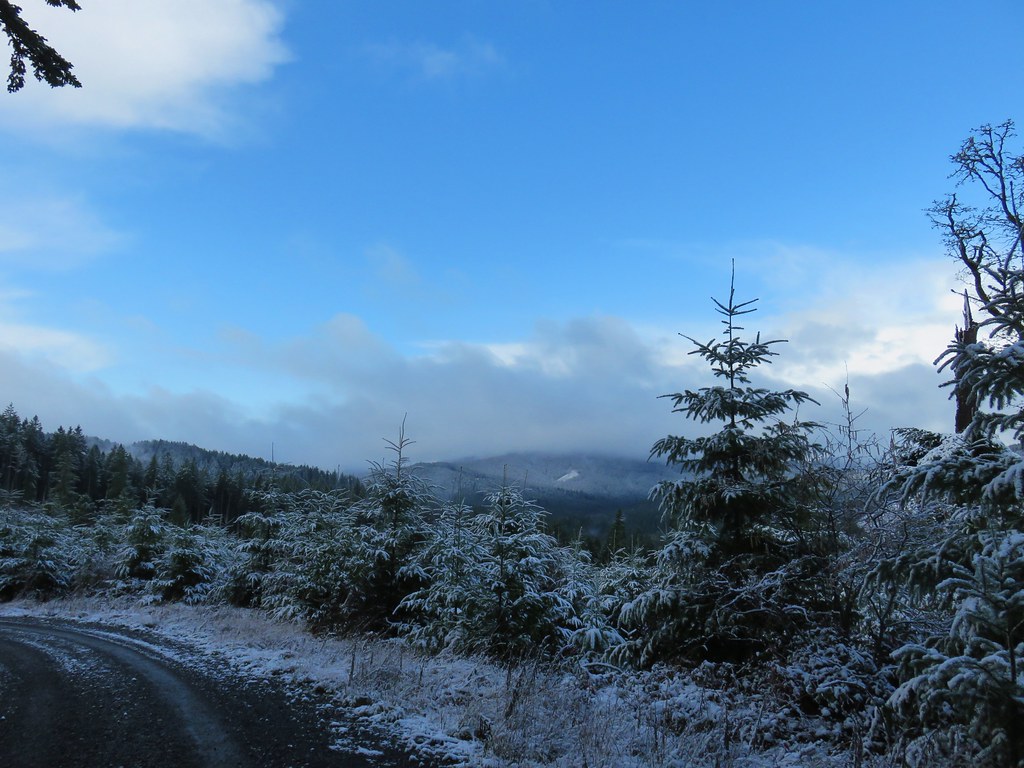
We are in the middle of an extremely mild winter. Aside from some freezing rain on Christmas Weekend we’ve experienced no other snow or icy conditions. That of course changed when we decided that we would take our February hike on Presidents Day. After making that decision the weather forecast immediately called for a snow event that same weekend with Sunday night expected to be the worst of it. After double checking the forecast Saturday afternoon we moved our hike up by one day and changed destinations to something closer to Salem, the McDonald Forest. The forest has become our go to destination in inclement weather having visited McCulloch (post) Peak in October 2016 and Dimple Hill (post) in December of that same year.

For this visit we chose the trails around the Peavy Arboretum. The arboretum is located at the northwestern end of the forest and can be reached by driving Highway 99W north of Corvallis 5 miles and turning left on Arboretum Road for .8 miles to the Peavy Arboretum entrance sign on the right. There are several potential parking areas to choose from and we stayed to the left at forks for .3 miles to a trailhead sign where the road ahead was gated.
Peavy Arboretum Trailhead

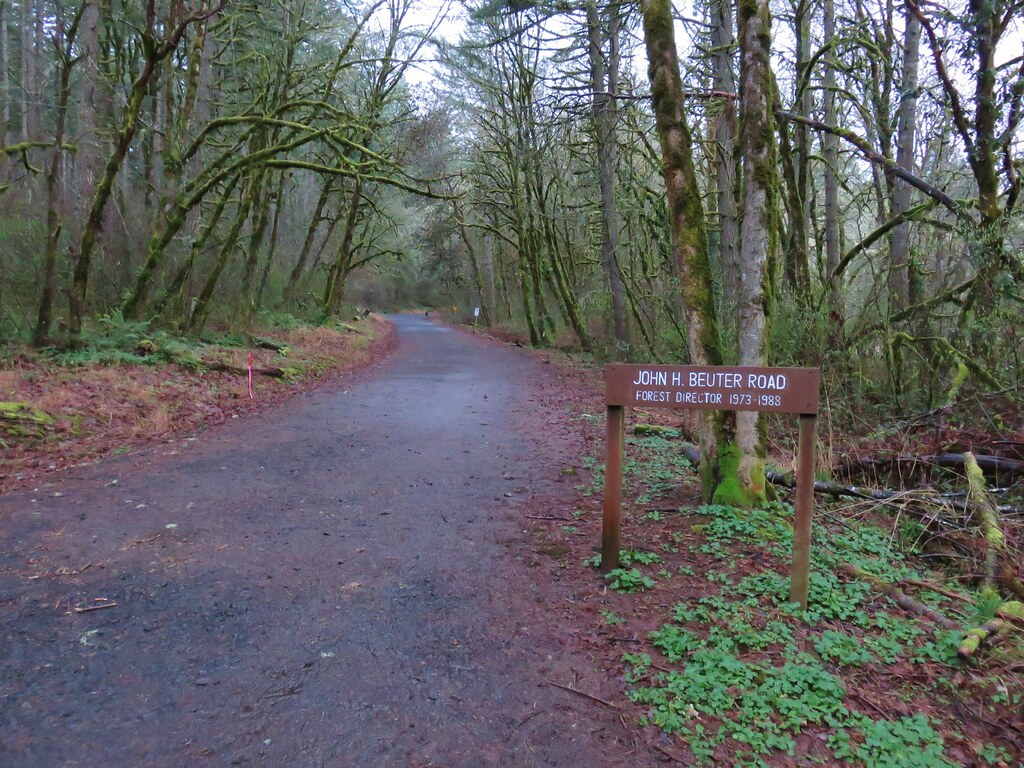
John H. Beuter Road

After picking up a trail map we headed up John H. Beuter Road for .3 miles to the OSU Forestry Club Cabin.
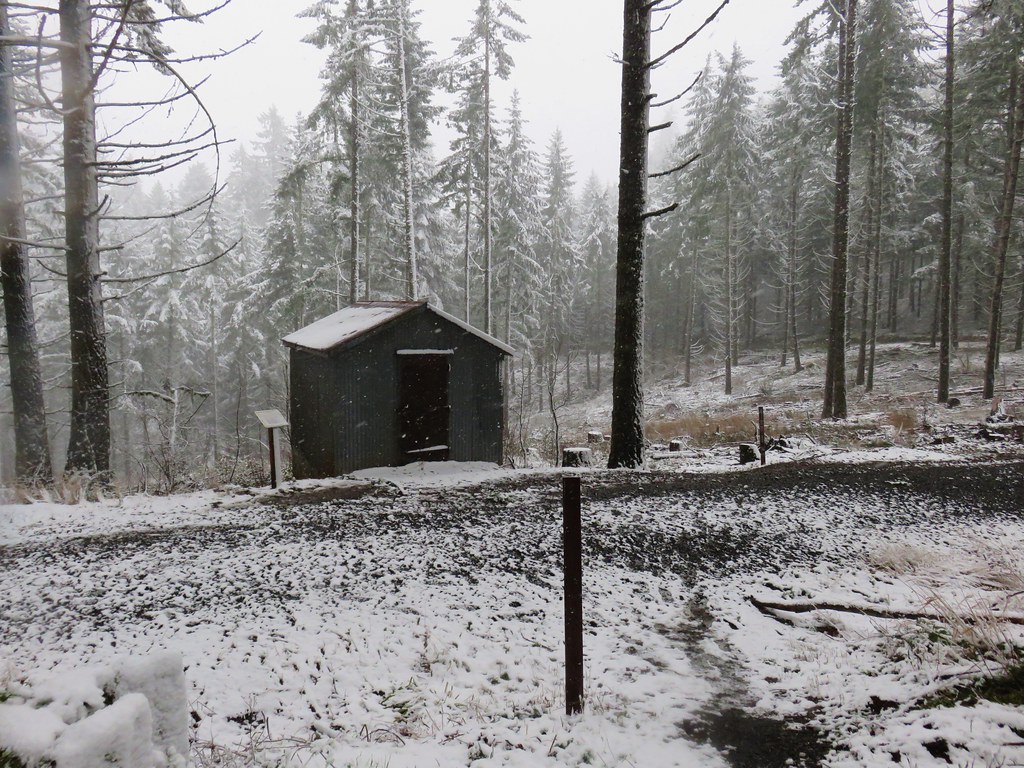
OSU Forestry Club Cabin

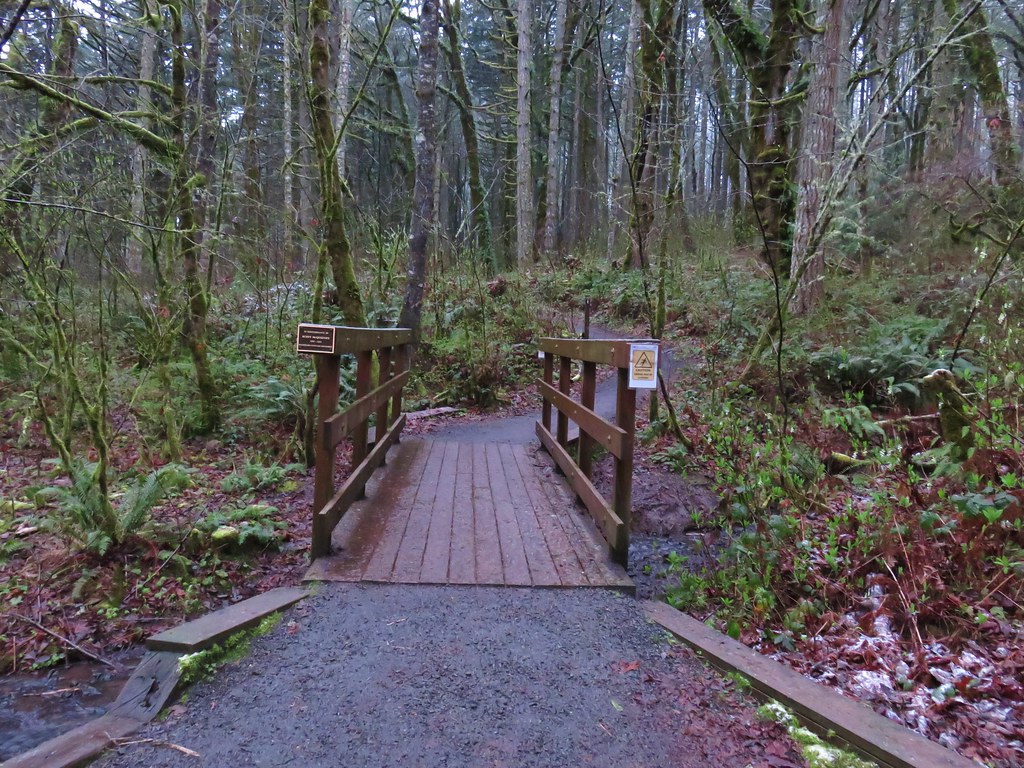
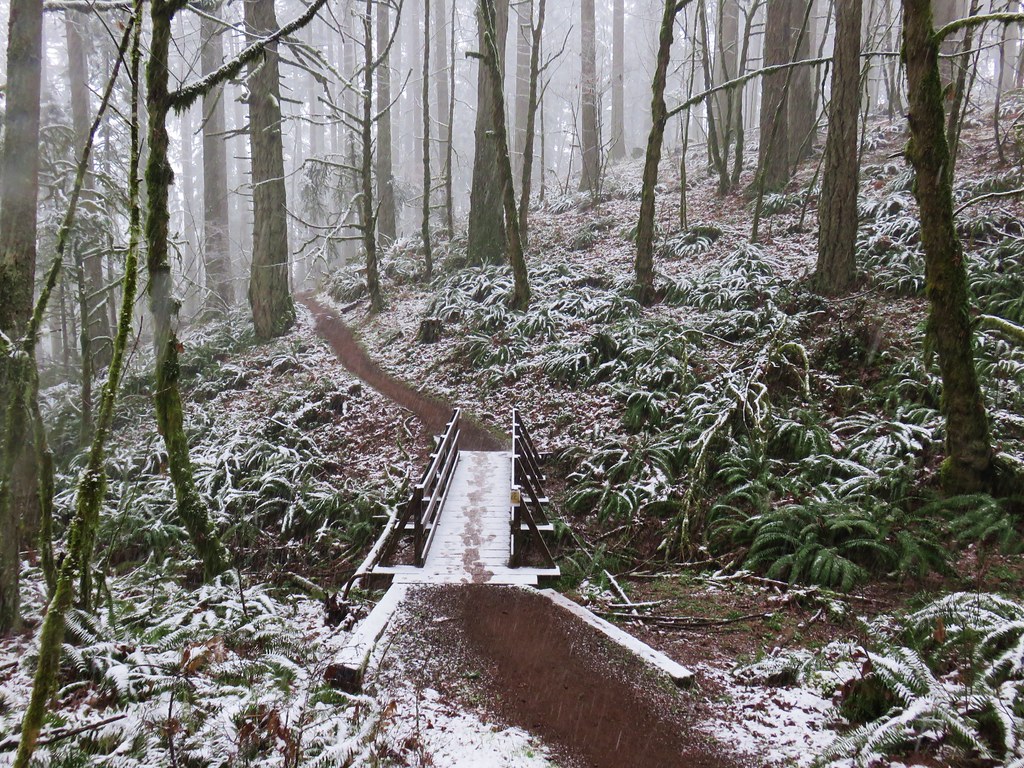
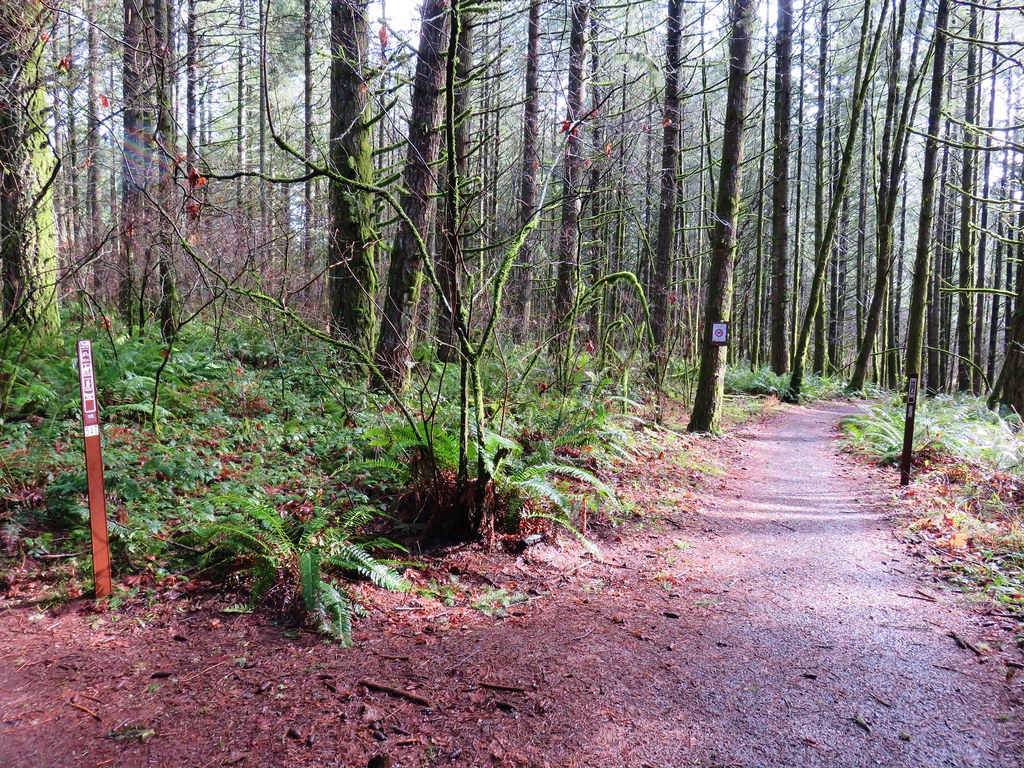
We turned left onto the Section 36 Loop Trail at the start of the lawn and crossed a small stream on a footbridge.
Section 36 Loop Trail

Section 36 Loop Trail

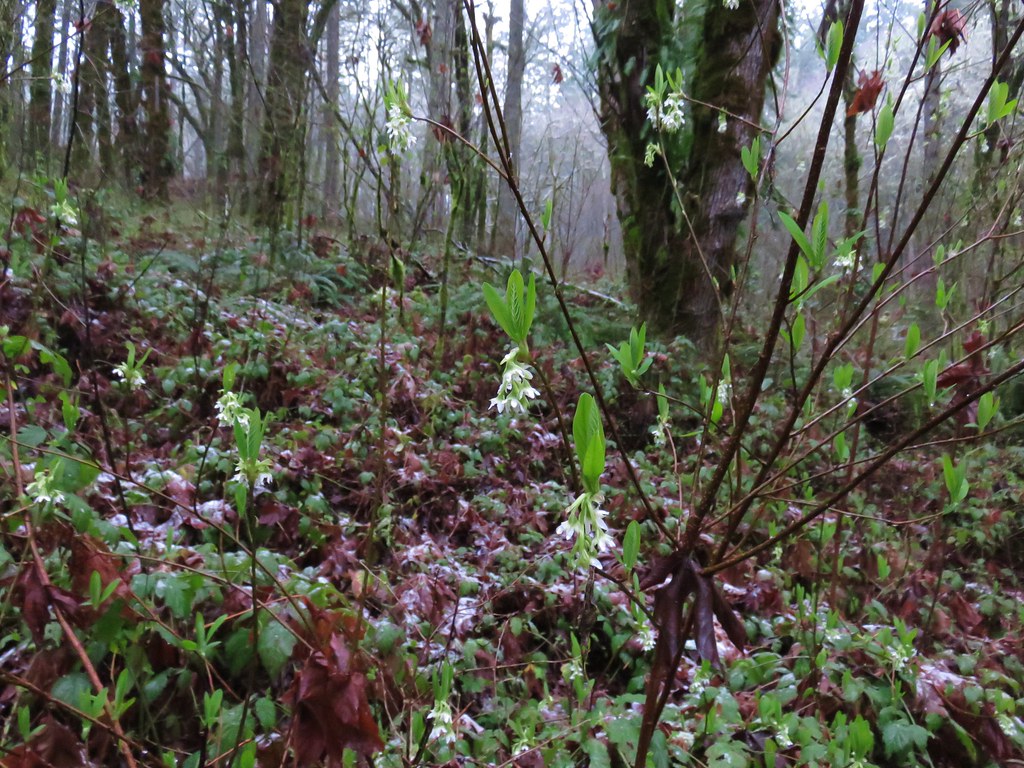
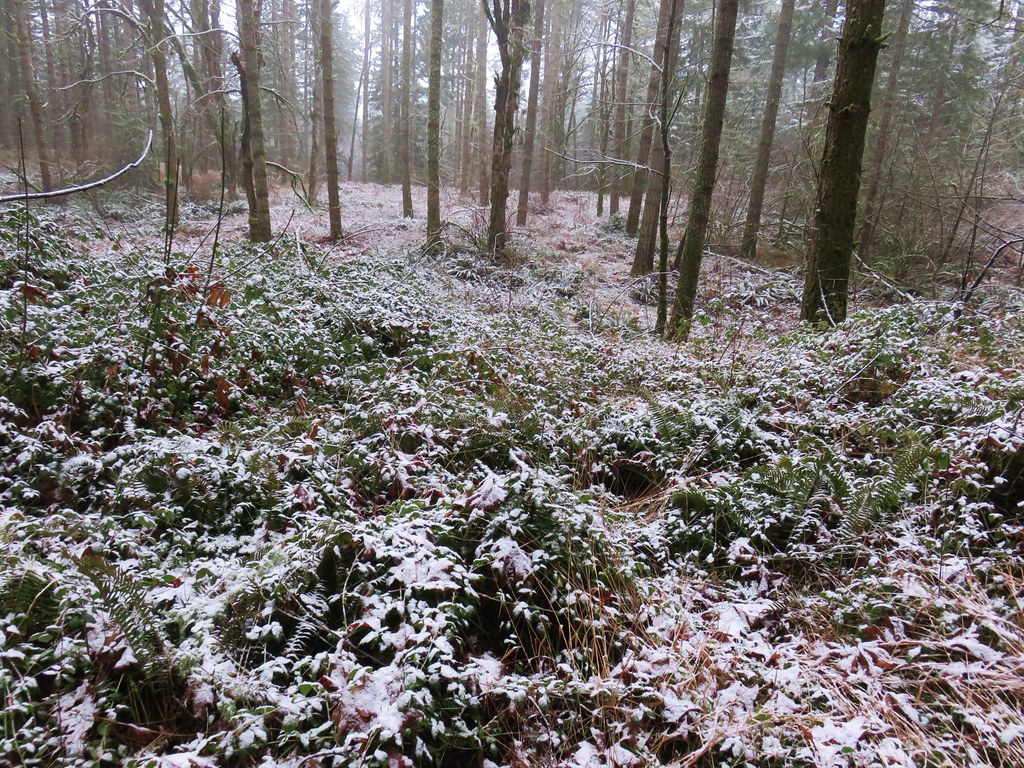
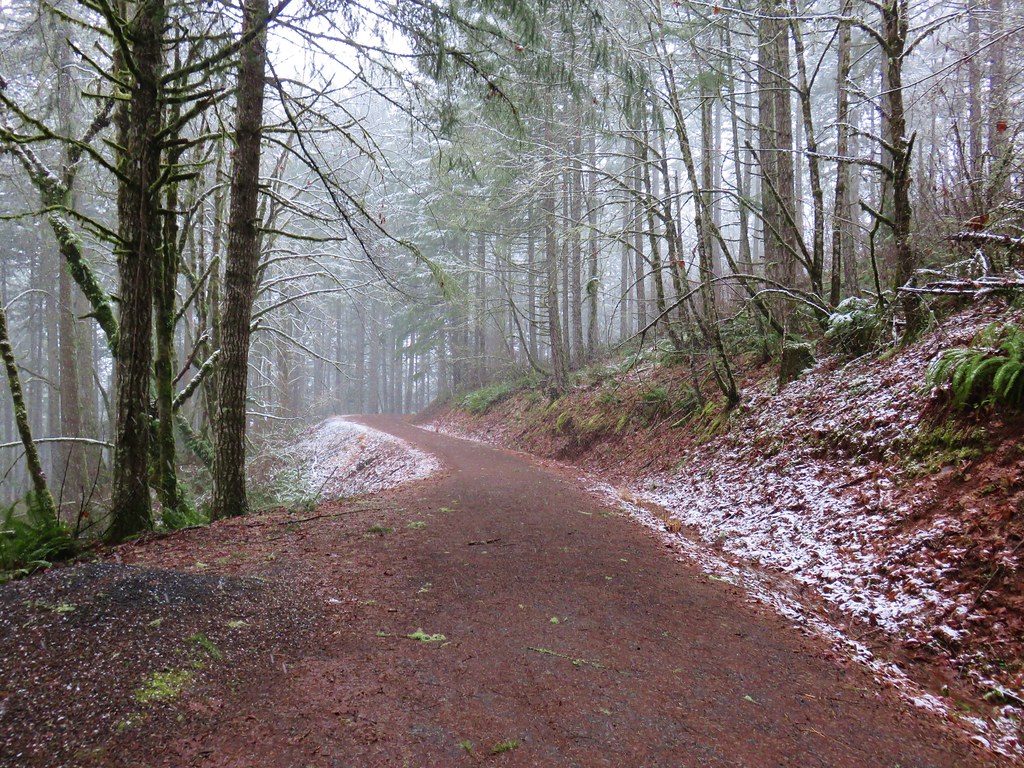
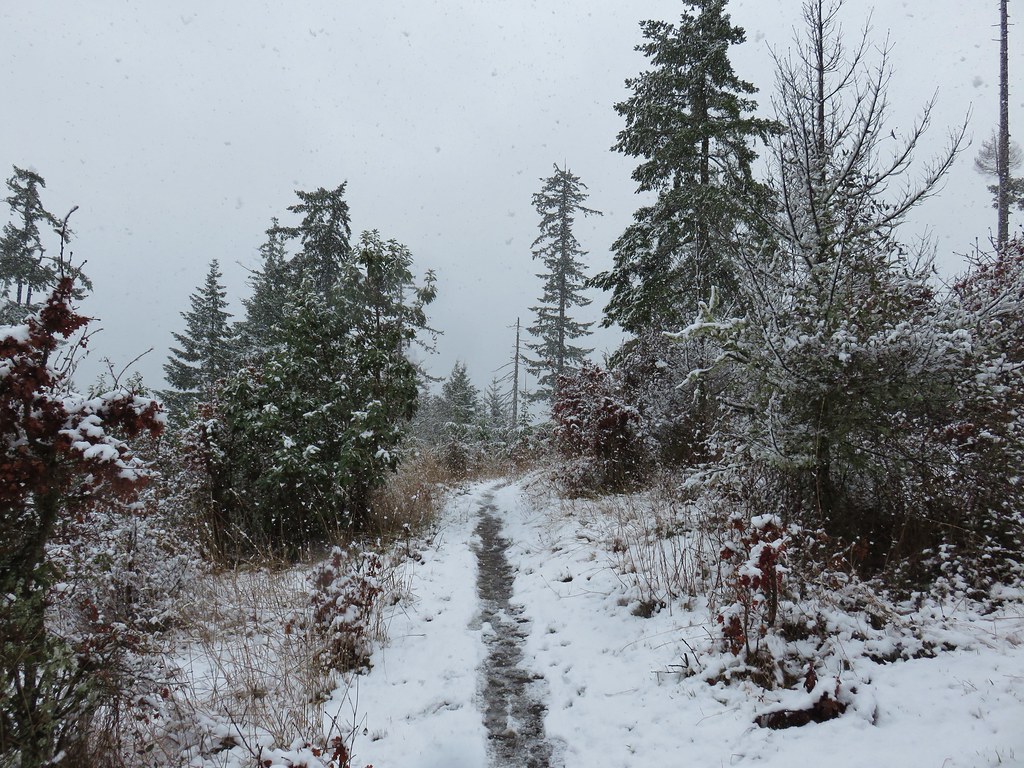
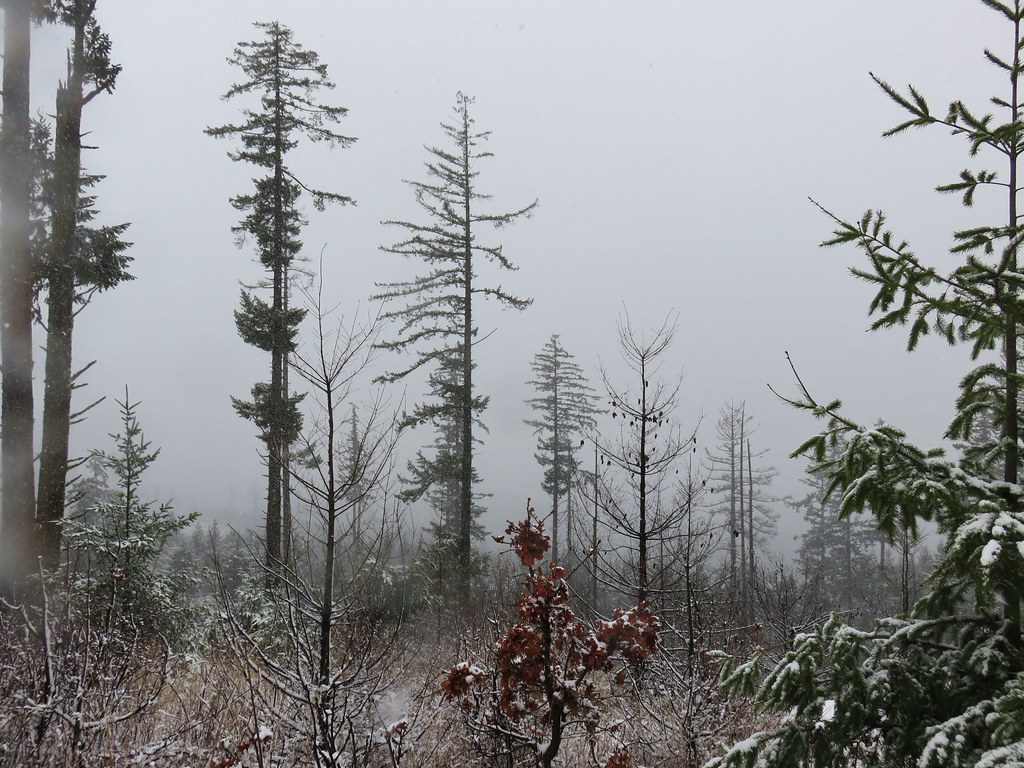
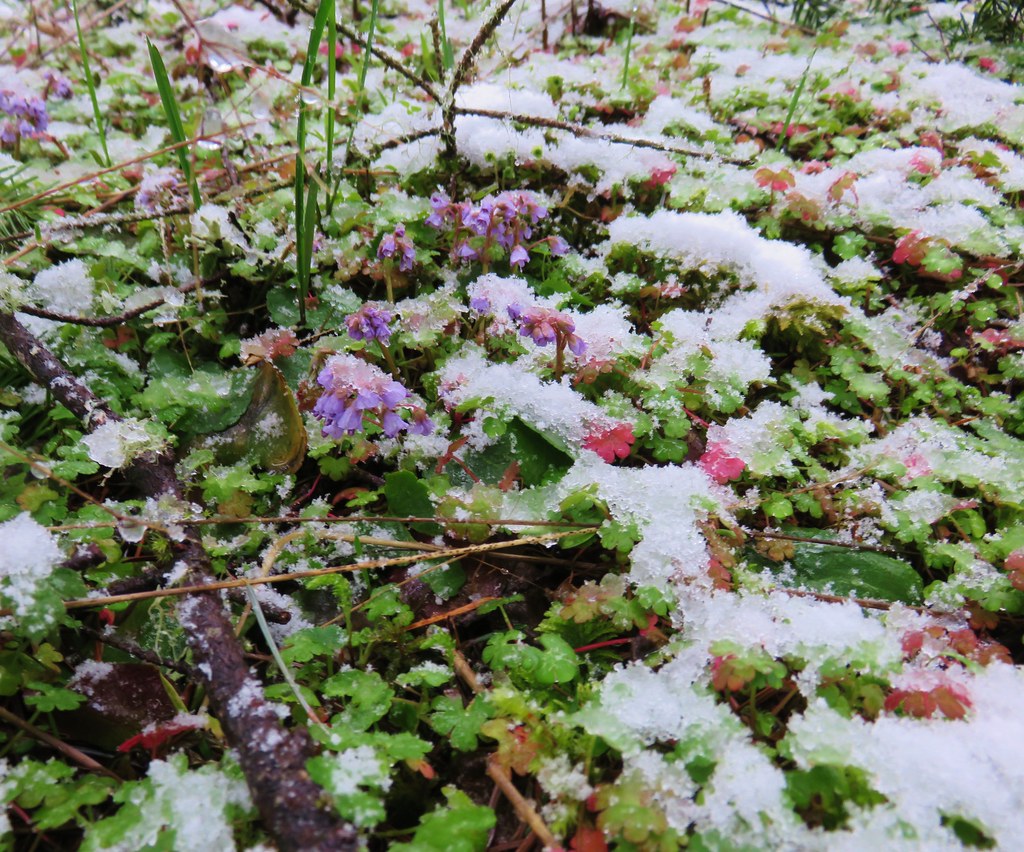
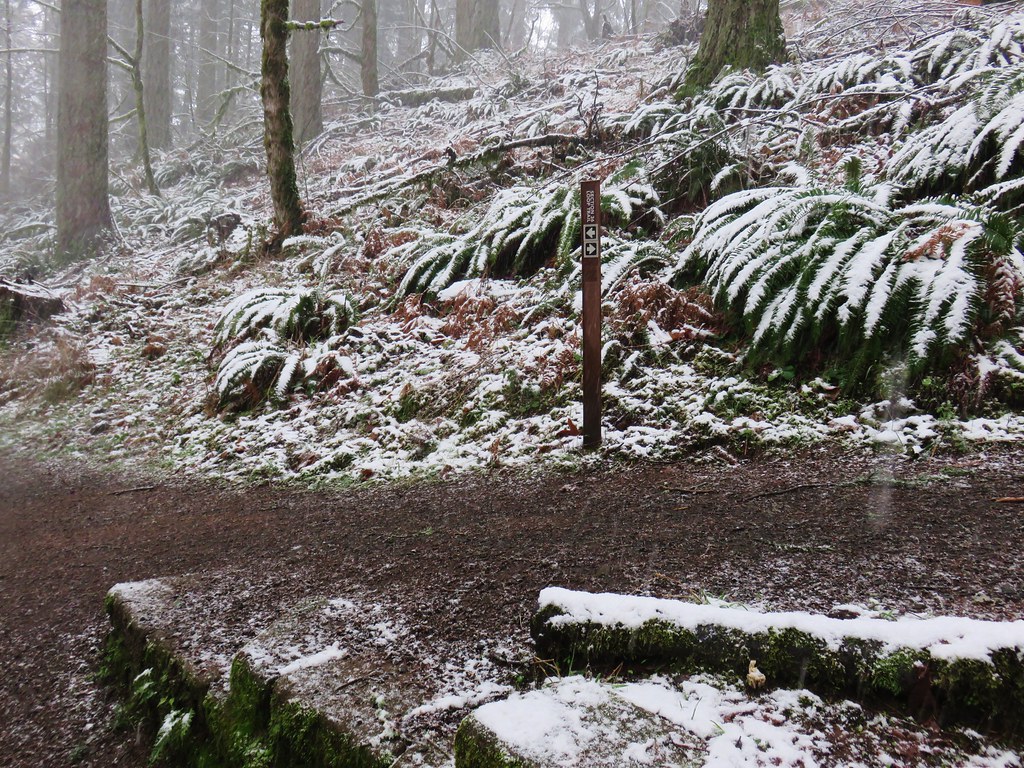
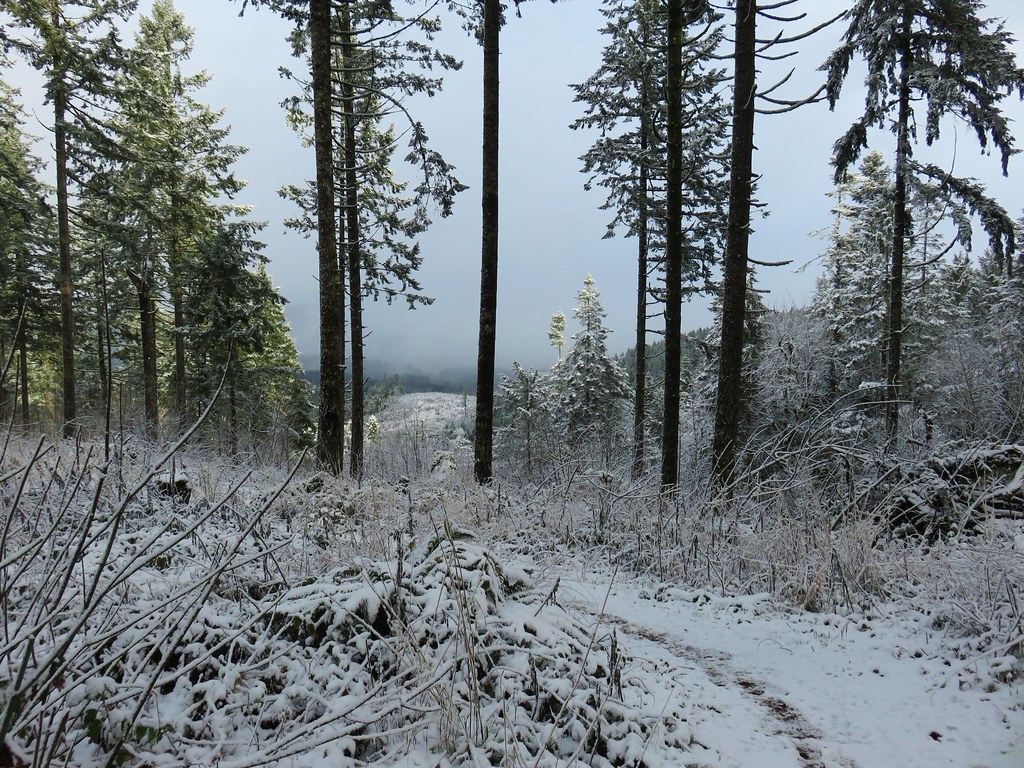
We had woken up to a small amount of snow and as we gained a little elevation on the trail, we began to encounter some on the vegetation. It was a strange mix of Winter and Spring as some of plants were starting to blossom.
Spring blossoms with a dusting of snow on the leaves behind

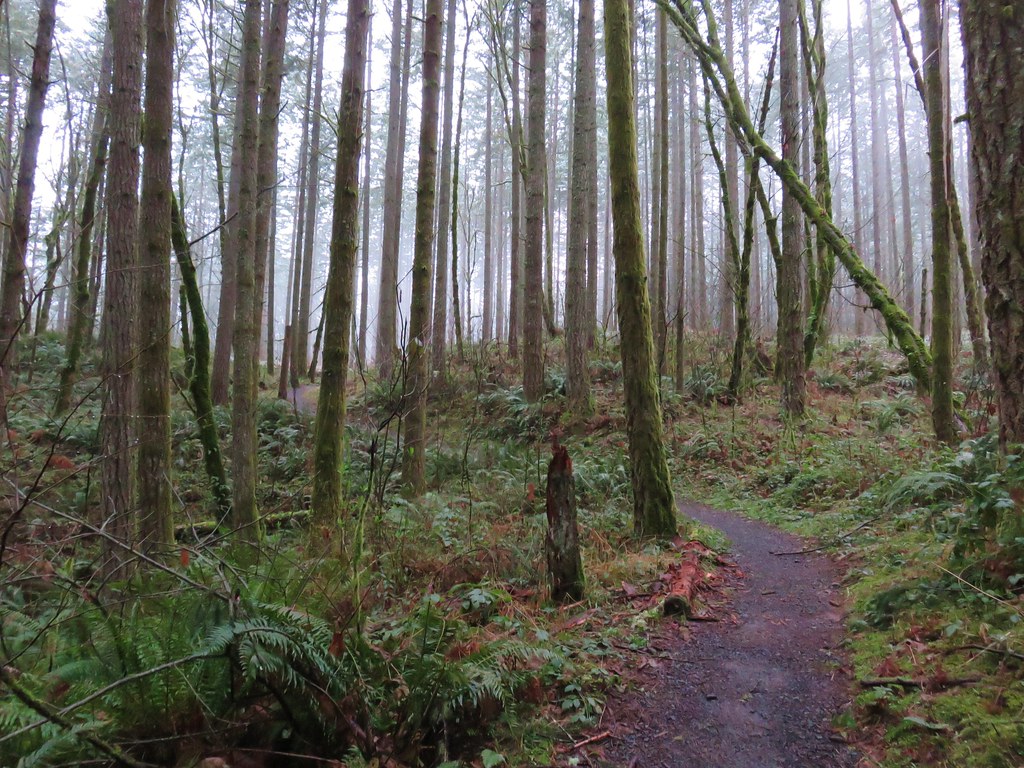
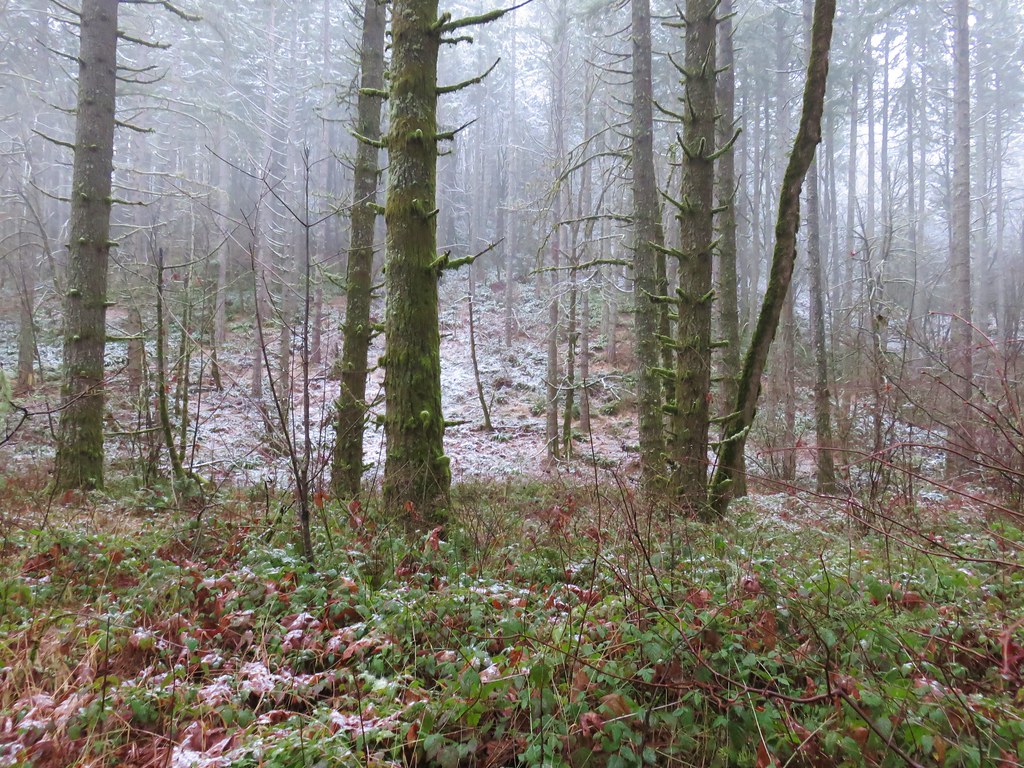
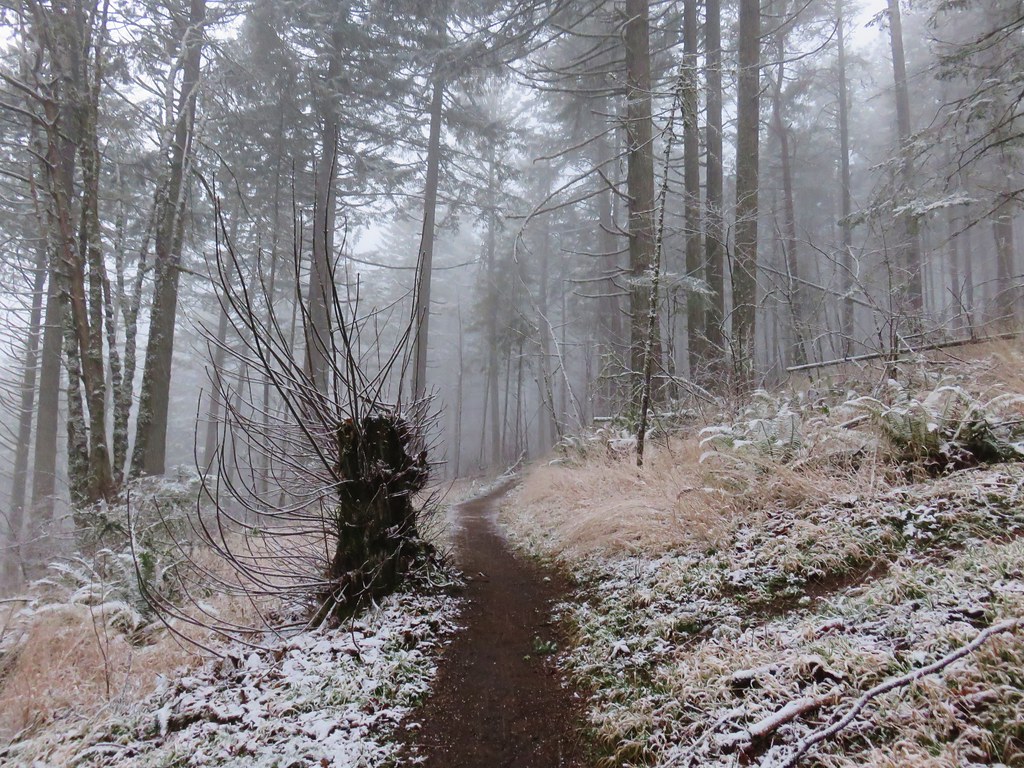
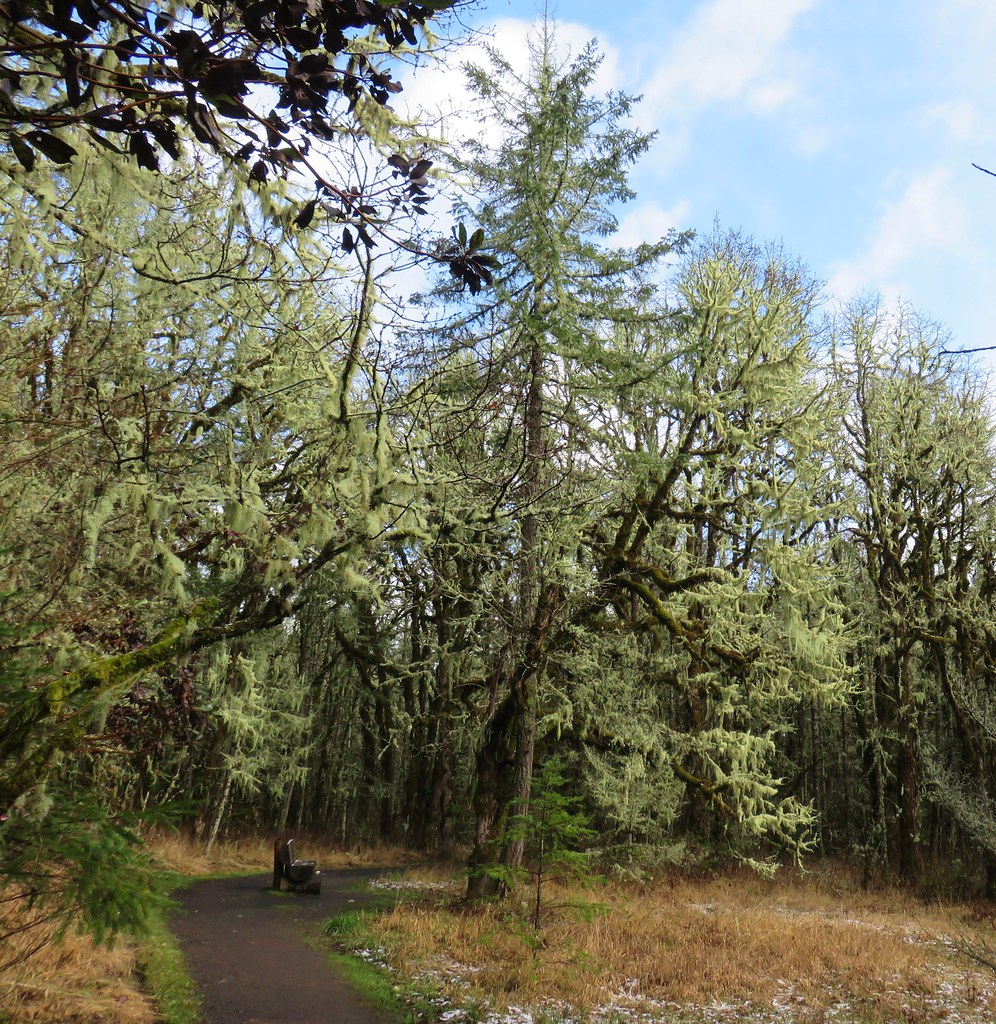
The trail continued to climb through a foggy forest and past benches to more and more snow covered ground.
Section 36 Loop Trail

Section 36 Loop Trail

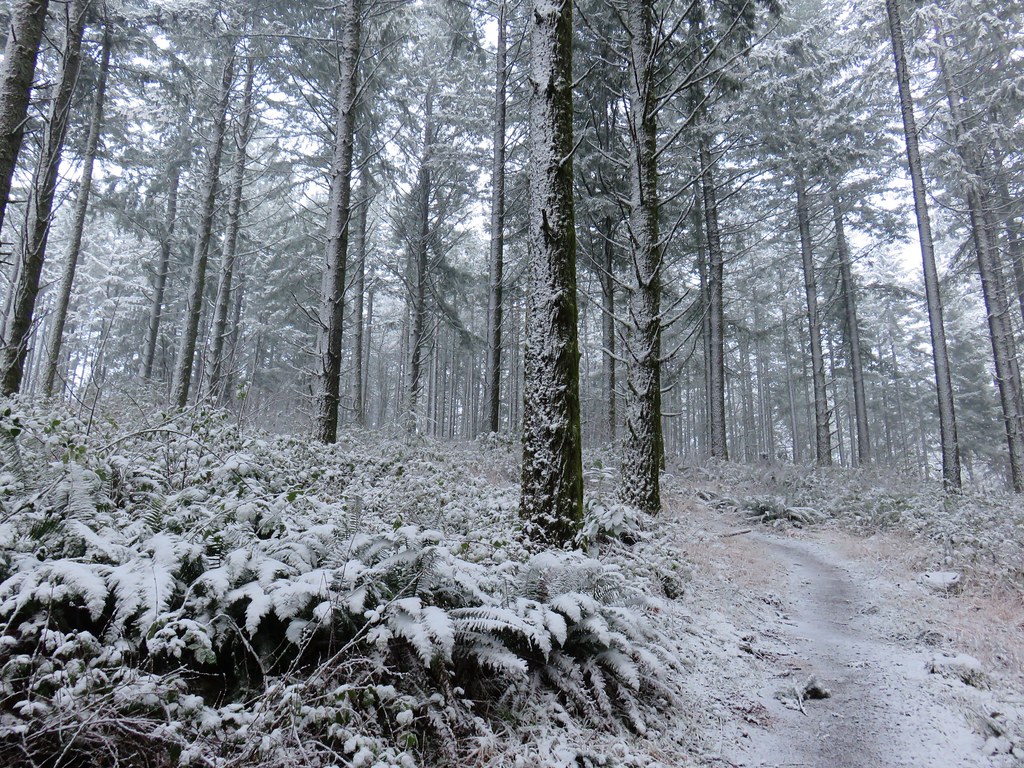
Snowy hillside

Snow along the Section 36 Loop Trail

Section 36 Loop Trail

Section 36 Loop Trail

Section 36 Loop Trail

Section 36 Loop Trail

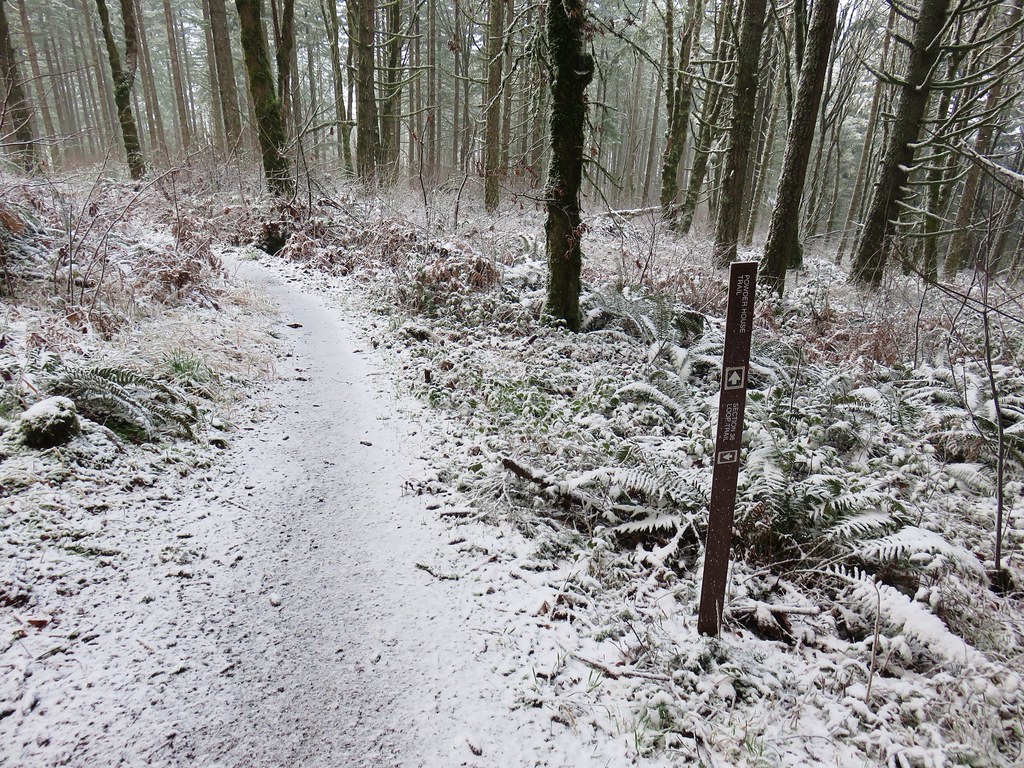
We stuck to the Section 36 Loop ignoring side trails for 1.4 miles. Then we came to a T-shaped junction with the Powder House Trail where we turned left.
Powder House Trail

About a quarter mile from the junction the Powder House Trail crossed a series of three gravel roads. We had been planning to turn left on the first road (Road 500) and follow it to the Vineyard Mountain Trail and down to a trailhead at Lewisburg Saddle where we would then take a different series of trails and one of the other roads (Road 580) back up to the Powder House Trail. On the far side of Road 500 was a cougar sighting warning.
Cougar warning along the Powder House Trail

We were so distracted by the sign and our conversation that we forgot to turn onto the road. It wasn’t until we were about to cross the third road and we were looking at the map that it dawned on us that we should have turned left back on the first road.
Powder House Trail

Fortunately we had only passed Road 500 by a tenth of a mile so we backtracked and turned right onto the road.
Road 500

We didn’t see any cougars but we did see a whole bunch of juncos.
Junco invasion

We followed Road 500 for just over a mile and a half to a junction at a saddle.
Road 500

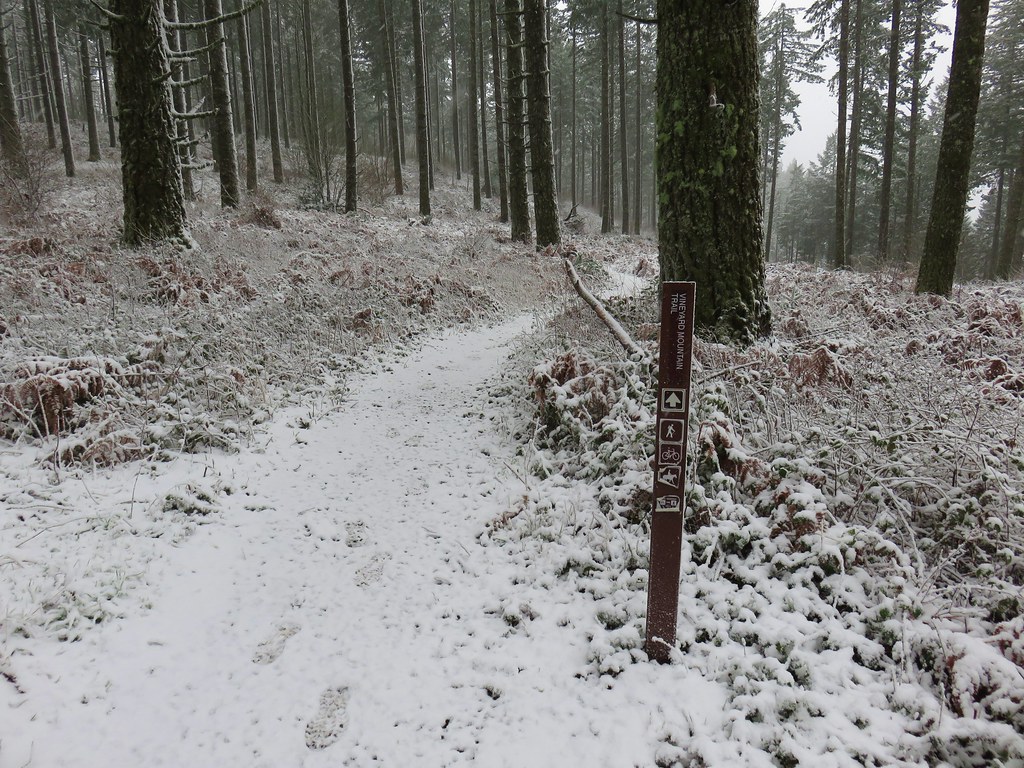
Here the Vineyard Mountain Trail began at a signpost.
Vineyard Mountain Trail

This trail climbed for .4 miles to a point near the some towers at the summit of Vineyard Mountain.
Radio tower on Vineyard Mountain

Vineyard Mountain

The trail then began descending along the southern ridge of Vineyard Mountain.
Vineyard Mountain Trail

Vineyard Mountain Trail

Just under a mile and a half from the summit we arrived at the Lewisburg Saddle Trailhead.

Here we briefly followed William A. Davies Road aka Road 580 before turning left onto the unsigned New Growth Trail.
New Growth Trail

An interpretive sign a little ways down the trail let us know that we were on the right path.
New Growth Trail Sign

The New Growth Trail lost enough elevation that we were soon on a snow free trail. Although snow melting from the tops of the trees made the stretch somewhat wet.
New Growth Trail

New Growth Trail

After a half mile we arrived at a junction. Here the half mile Old Growth Trail lay straight ahead or for a short loop back to the Lewisburg Saddle TH the right fork led back uphill to Road 580.
Old Growth Trail junction with the New Growth Trail

We took the Old Growth Trail which led us back into the snow.
Footbridge along the Old Growth Trail

The Old Growth Trail ended further up along Road 580 where we turned left and continued uphill.
Road 580

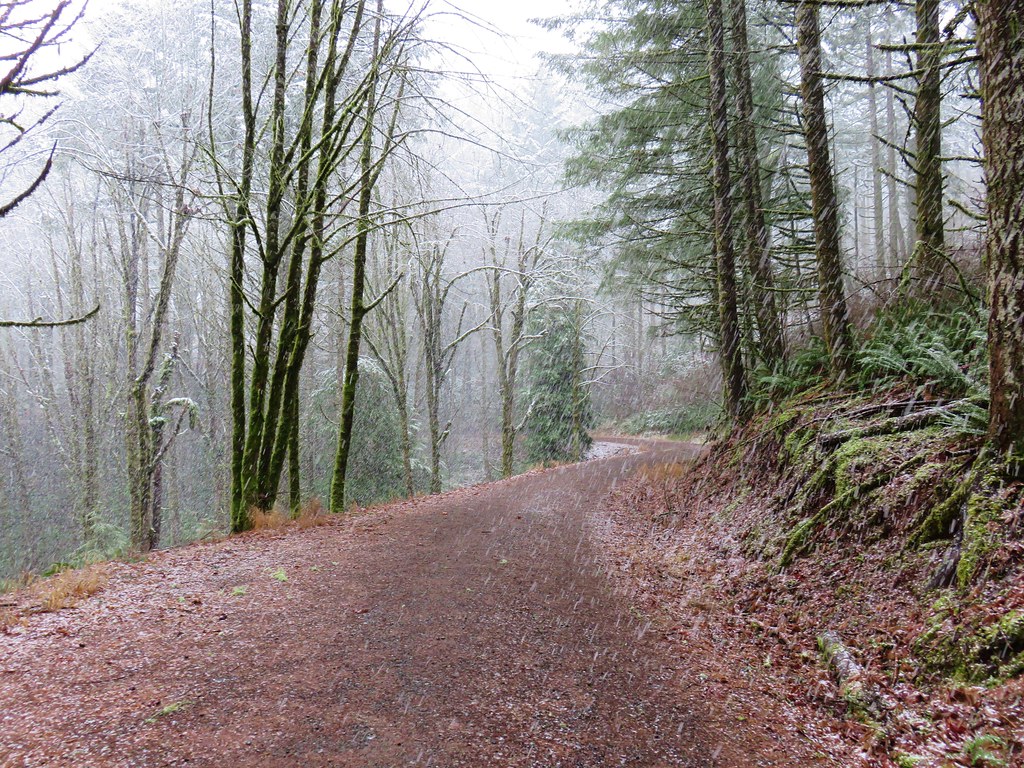
And into a decent snow flurry.
Snowing on Road 580

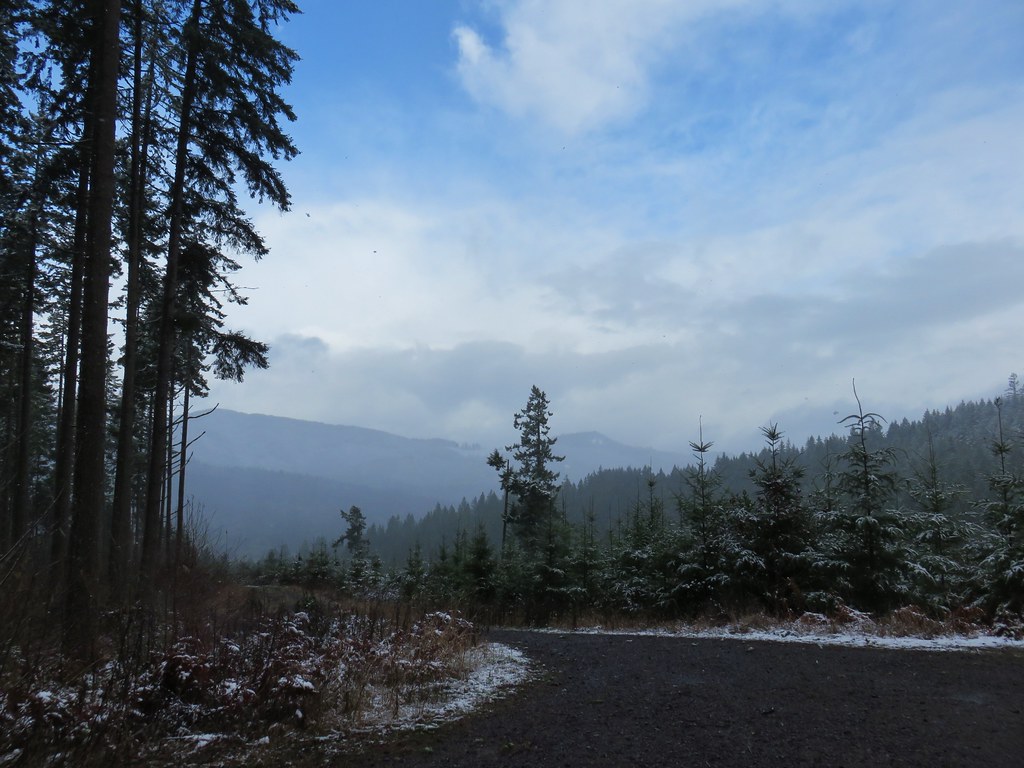
There had been a couple of quick breaks in the clouds earlier in the day but after this snow flurry passed the largest patch of blue sky yet appeared.
View from Road 580

View from Road 580

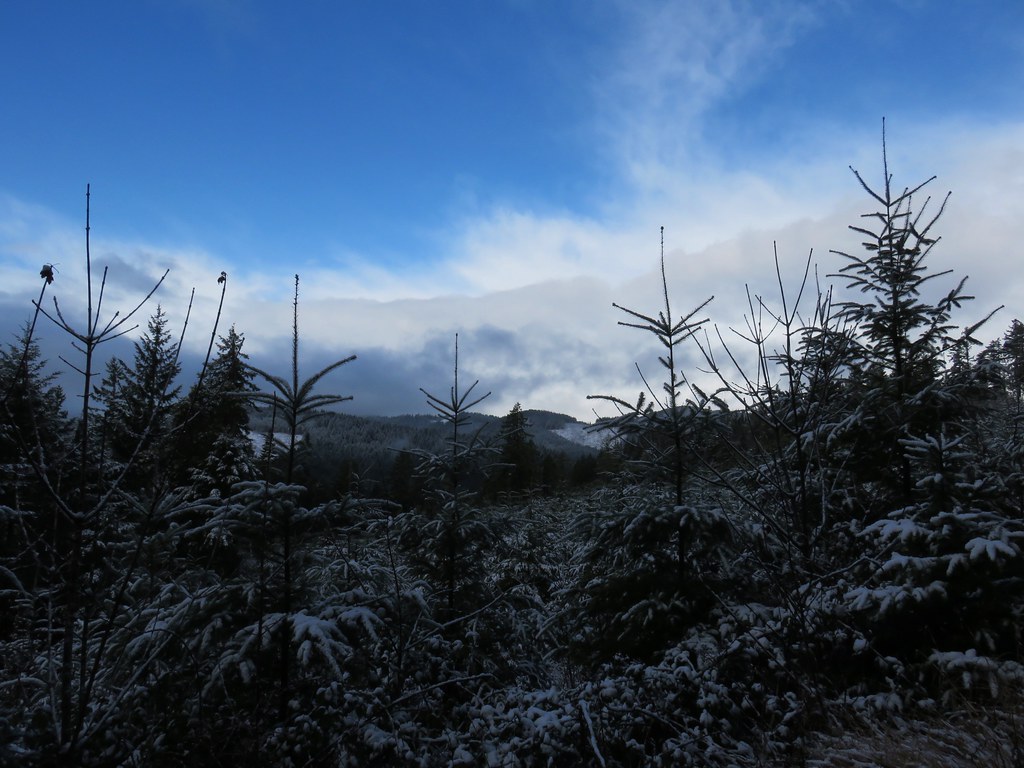
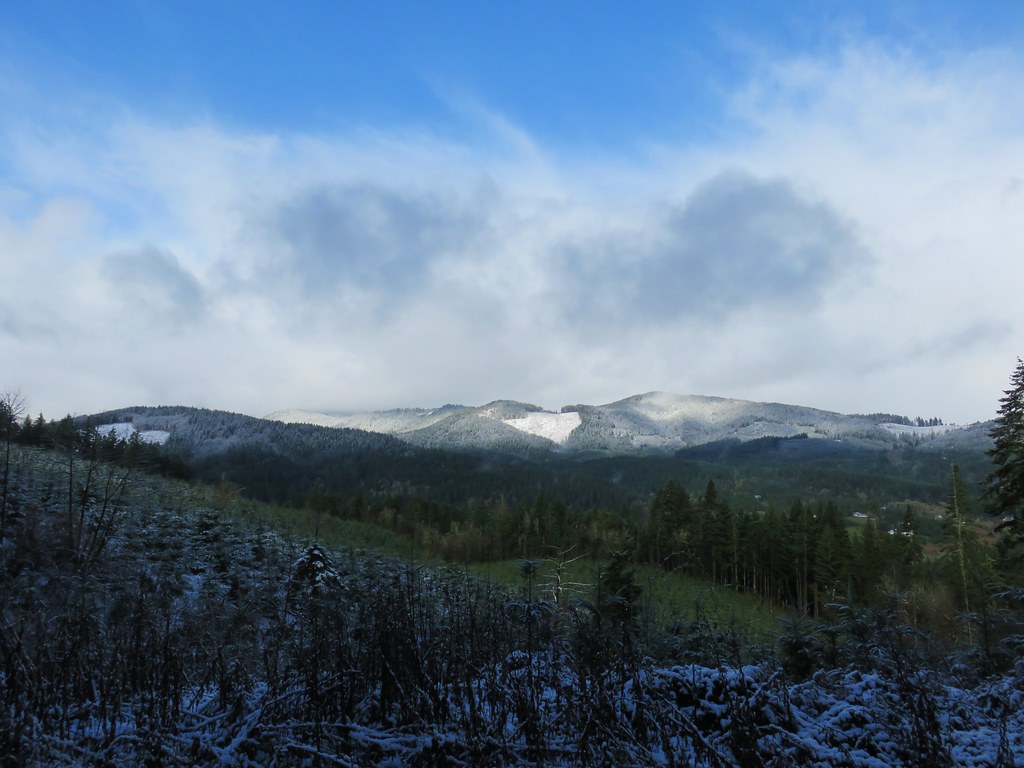
It just so happened that the section of Road 580 that we were on at the time passed by a clearcut which allowed us a nice view across the valley to peaks on the other side of the McDonald Forest.
View from Road 580

View from Road 580

The road then passed through a brief stand of remaining trees before entering another clearcut where the views had mostly disappeared.
View from Road 580

Approximately 2.5 miles from the end of the Old Growth Trail we arrived back at the Powder House Trail where we turned left.
Powder House Trail

This time we crossed the third road and headed uphill through a clearcut to a bench where we imagined the views would be pretty good on a clearer day.
Powder House Trail

Snow covered bench along the Powder House Trail

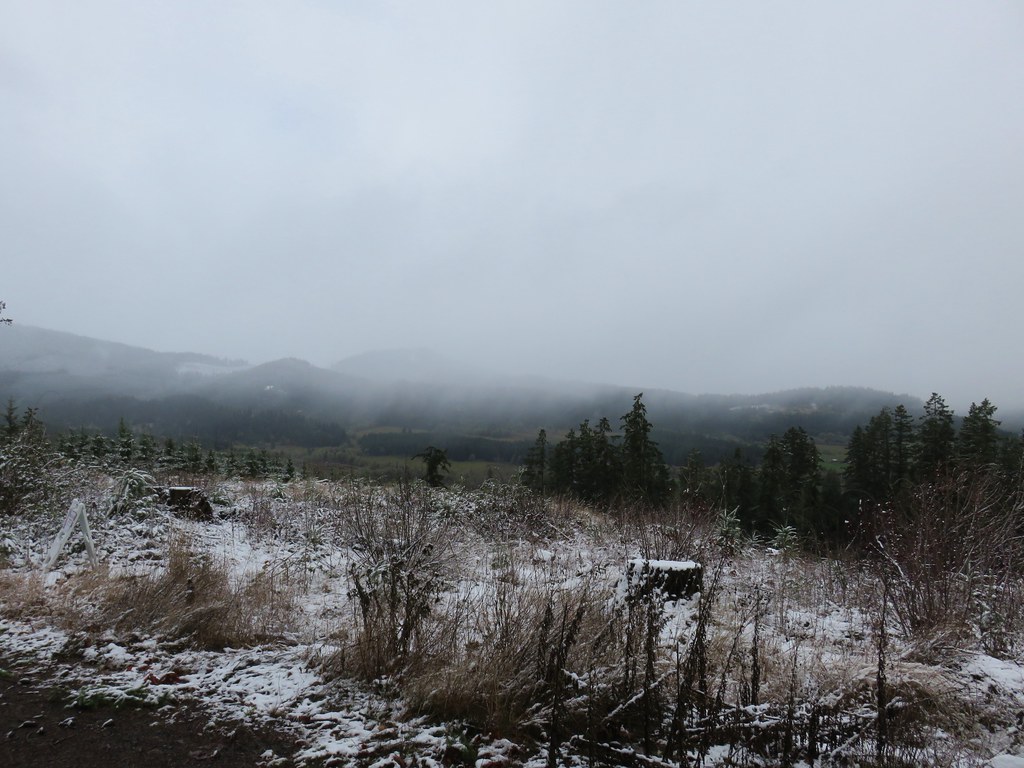
View from the snowy bench

The trail then curved back downhill to the Cap House where the Civilian Conservation Corps had once stored blasting caps.
Cap House

Interpretive sign at the Cap House

The trail continued to the right of the Cap House and descended a short distance to rejoin the Section 36 Loop Trail. Along the way we encountered several snow queen plants in bloom.
Snowy snow queen

Powder House Trail

We turned left onto the Section 36 Loop.
Powder House Trail junction with the Section 36 Loop Trail
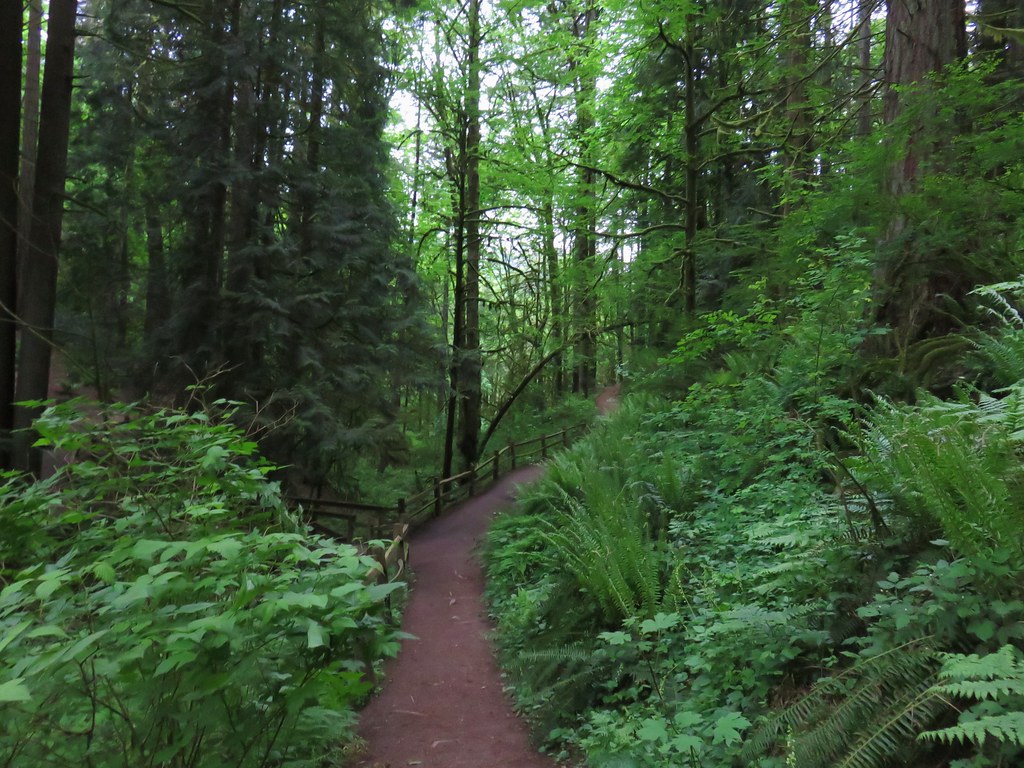
The trail gradually descended as it passed through the forest for almost a mile to Cronemiller Lake.
Section 36 Loop Trail

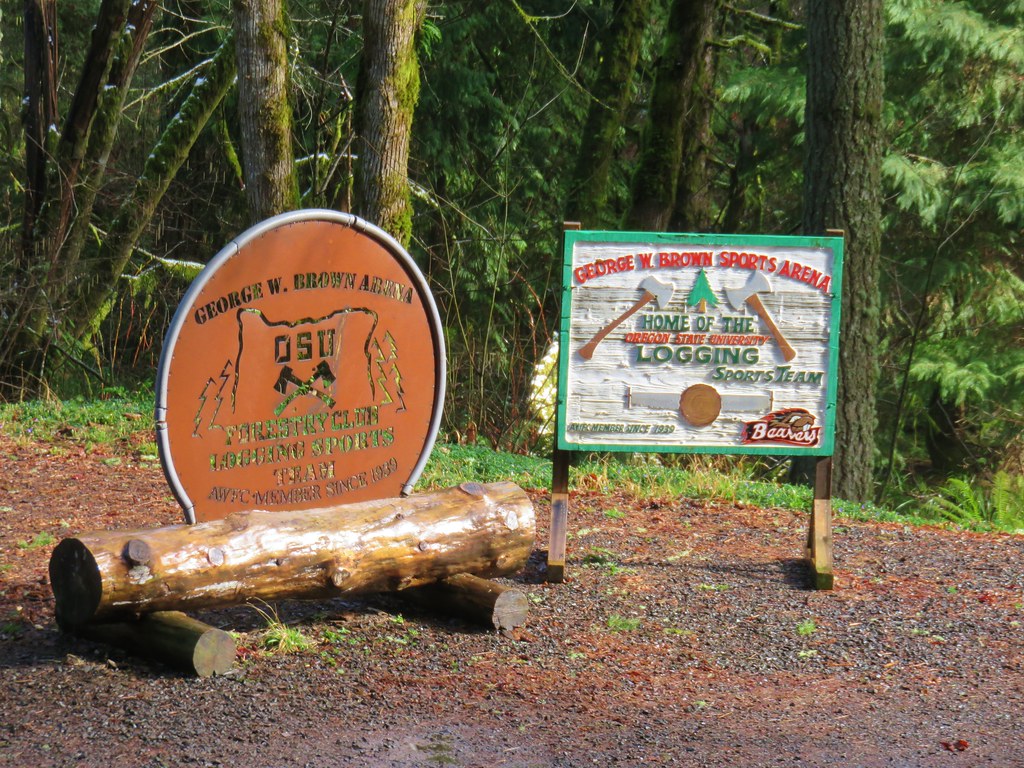
Signs for the George W. Brown Sports Arena

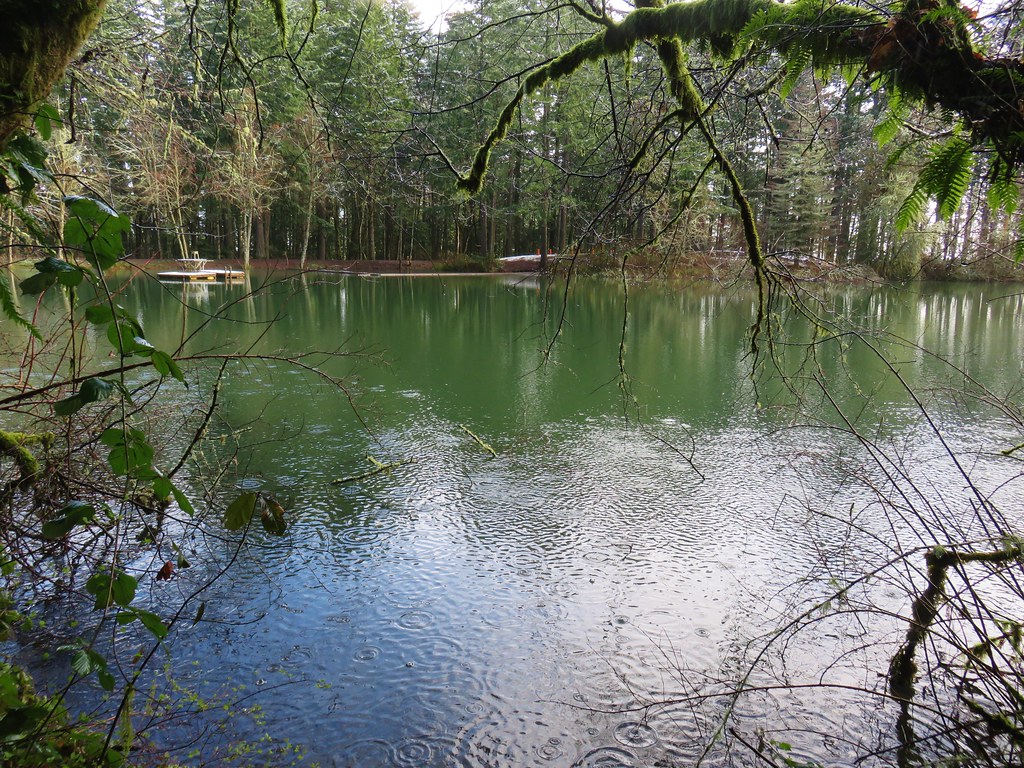
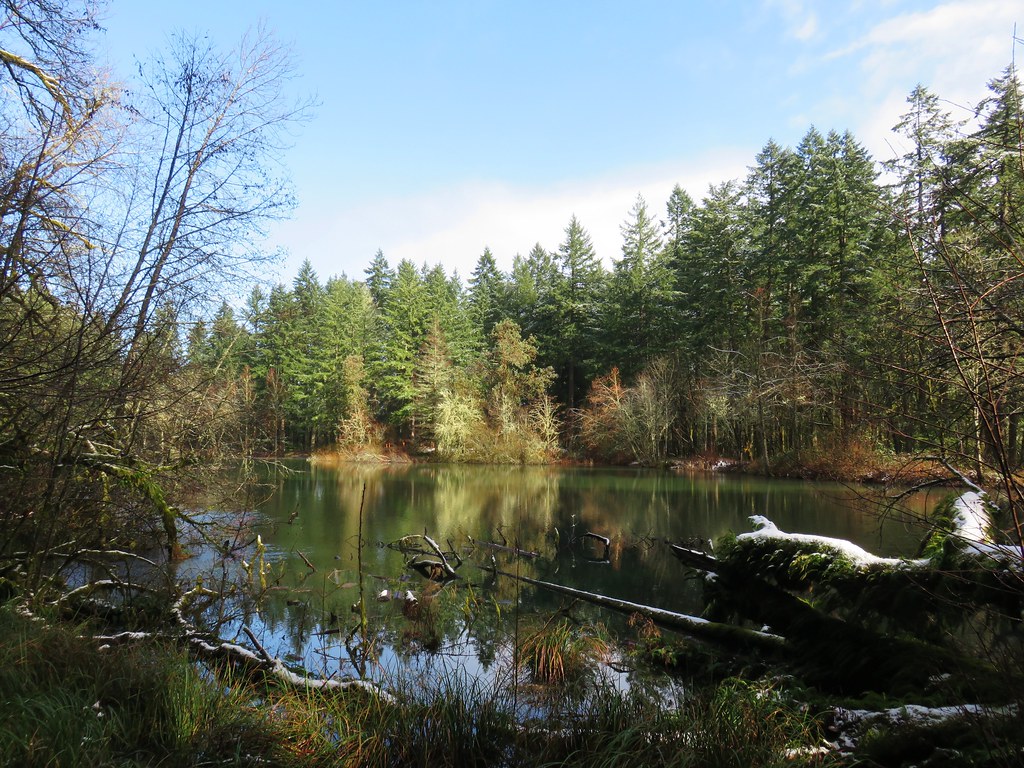
Cronemiller Lake

Cronemiller Lake

We followed the lake shore all the way around to the right until we reached the signed Calloway Creek Trail.
Calloway Creek Trail

Closed from April to November to bike traffic we followed the Calloway Creek Trail a total of 2.5 miles staying left at most junctions except for the signed trail to Road 547 where we stayed right.
Calloway Creek Trail

Calloway Creek Trail

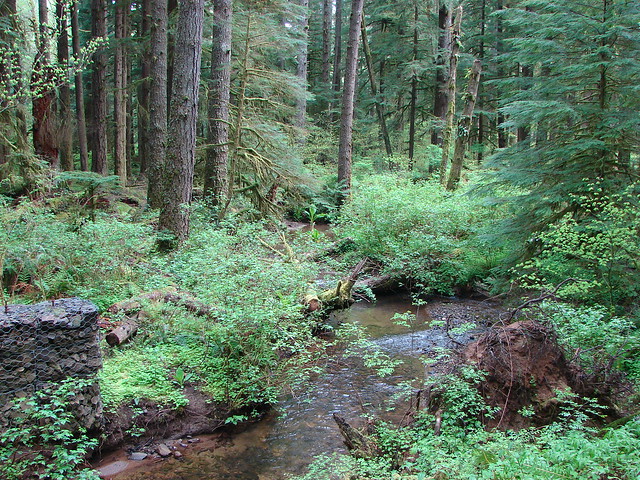
The trail crossed Calloway Creek twice and passed a small meadow with a bench.
Calloway Creek

Calloway Creek Trail

After the 2.5 miles we turned left onto the Intensive Management Trail.
Calloway Creek Trail junction with the Intesive Management Trail
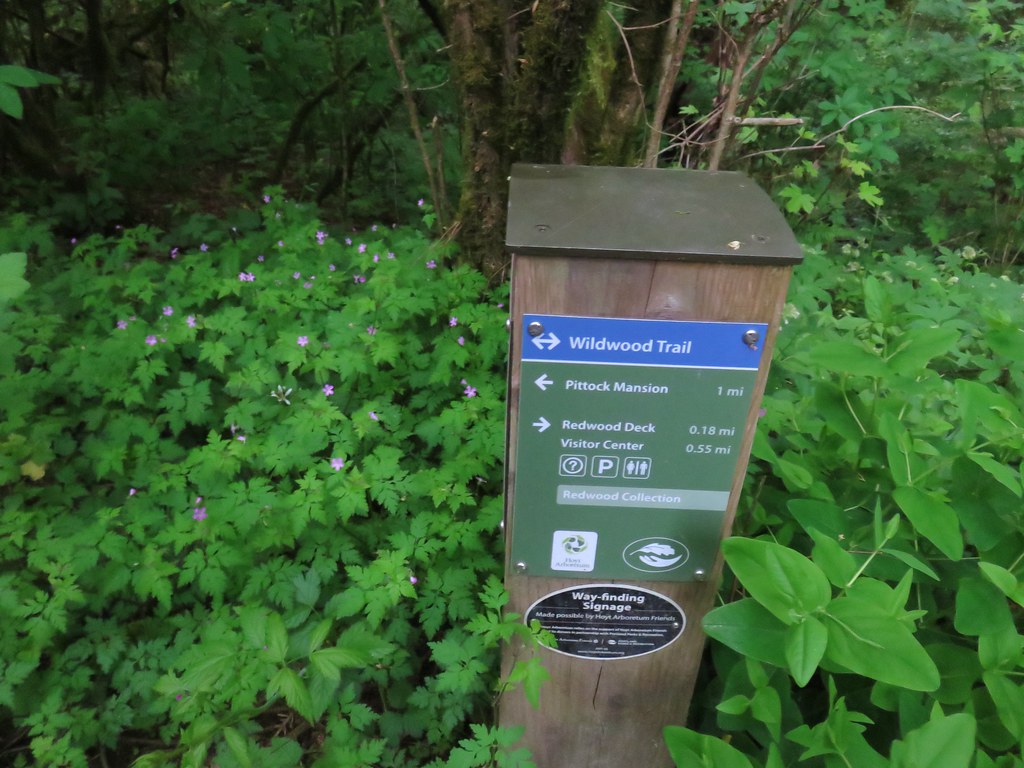
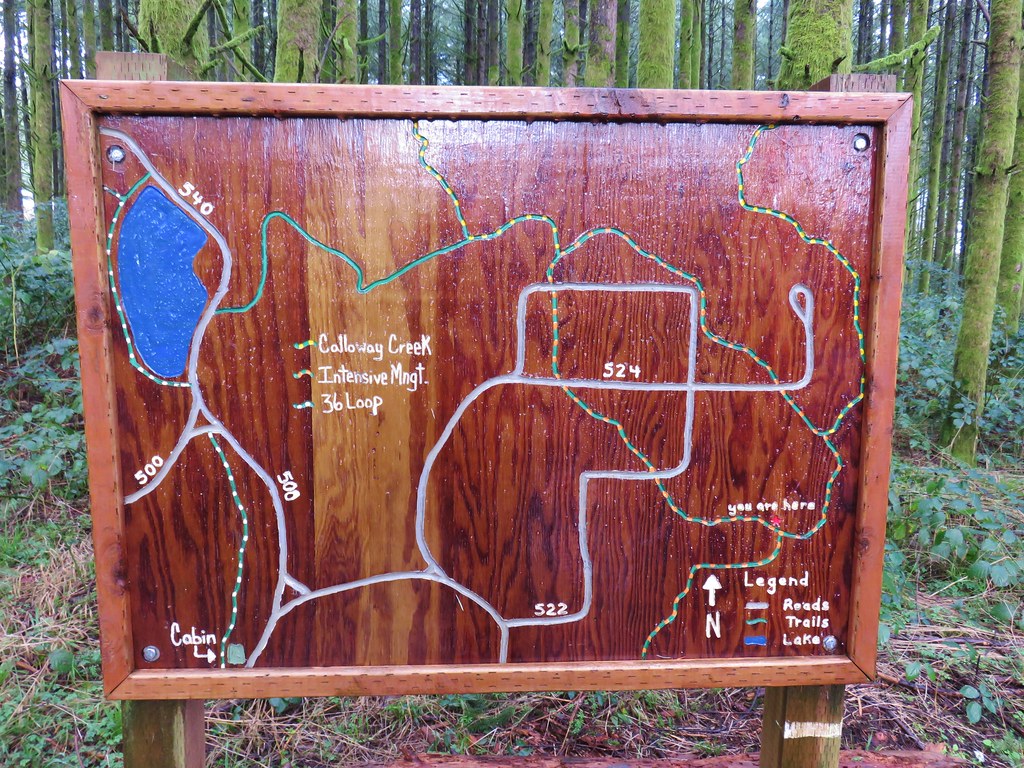
At the next junction was a signboard map which could have been a little more descriptive.
Trail sign along the Intesive Management Trail

We stuck to this trail following pointers for the Arboretum Parking to a different parking lot a tenth of a mile from where we had started.
Intesive Management Trail

From here we took the .1 mile Firefighters Memorial Trail past a nice shelter and back to our car.
Firefighter Memorial Trail

Shelter along the Firefighter Memorial Trail

The hike turned out to be an approximately 14 mile loop with around 2000′ of elevation gain. A little more than we had planned for the day but a nice hike none the less. Alternating between being above and below the snow line added to the variety of the hike. It had turned out to be a good choice and another fun hike in the McDonald Forest. Happy Trails!

Flickr: Peavy Arboretum

Categories
Hiking Oregon Salem/Albany Throwback Thursday Trip report Willamette Valley

Throwback Thursday -Shellburg Falls

**Note the 2020 Beachie Creek Fire burned the area covered in this hike.**

This weeks Throwback Thursday hike features the some lesser known and visited waterfalls near Salem, OR not far from the more famous falls of Silver Falls State Park.

On 5/22/2011 we headed out for a short hike to a pair of waterfalls on Shellburg Creek.  Two trailheads offer access to the falls. The Shellburg Falls Trailhead is open year around while an upper trailhead located at the Shellburg Falls Campground is only open from May 20th through October.  We started at the upper trailhead. To reach the campground from Highway 22 turn north on Wagner Road, which is just east of Mehama, OR, and follow signs for 8 miles to the campground.
Shellburg Falls Trailhead

From there a .8 mile trail crossed Shellburg Creek twice on it’s way to Shellburg Falls and then Lower Shellburg Falls. From the looks of the creek we didn’t expect much from the falls but as is often the case looks can be deceiving.
Shellburg Creek

Shellburg Falls

The trail dropped down and passed behind the falls before continuing downhill to a short side trail to the bottom of the falls.
Shellburg Falls

Shellburg Falls

Shellburg Falls

Less than a quarter mile later we arrived at a closed road (the route up from the lower trailhead)which crossed Shellburg Creek via a concrete bridge. Lower Shellburg Falls lay just on the other side of this bridge.
Lower Shellberg Falls

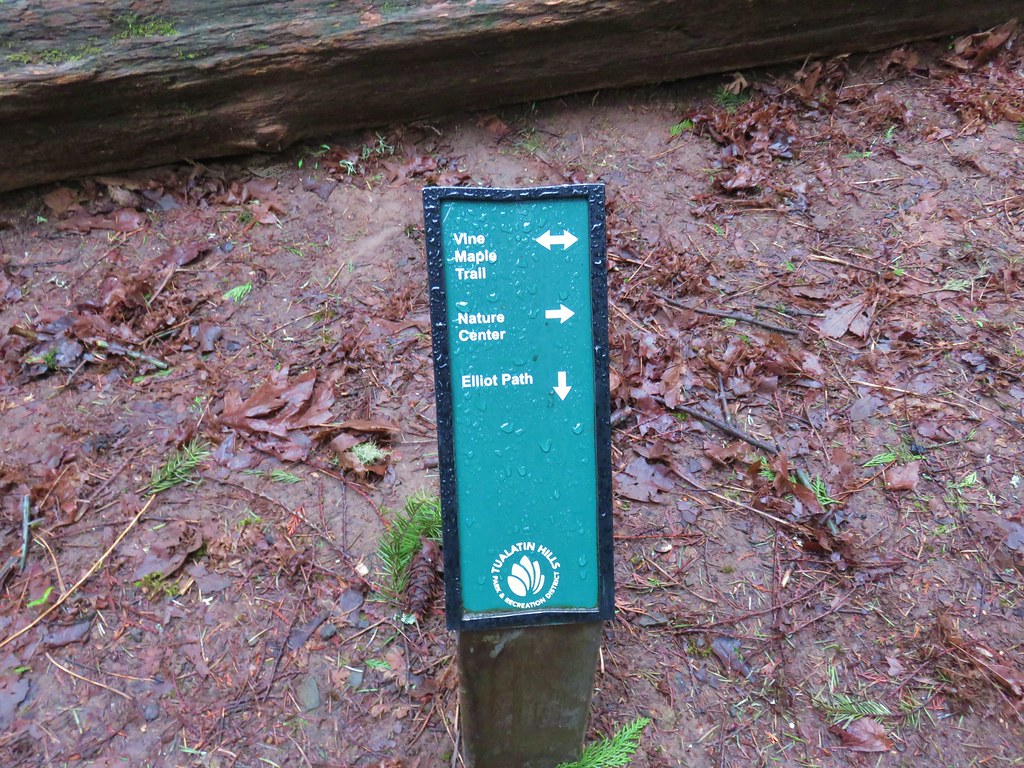
We turned left (east) on the road and followed it for .3 miles to the August Mountain Trail. The August Mountain Tail climbed just over a mile to junction with the half mile Vine Maple Trail which led us back to the upper trailhead.
Shellburg Creek Trail sign

Much of these trails crossed logging roads and passed through thinned forests.
View from the Shellburg Creek Trail

From the upper trailhead the loop was right around 3 miles while starting from the lower trailhead would have added about 2.6 miles to the days total. While Silver Falls State Park sees plenty of crowds Shellburg Falls sees far fewer. If you’re in the area and love waterfalls it’s definitely worth the visit. Happy Trails!

Flickr: Shellburg Falls

Categories
Hiking Oregon Portland Trip report Willamette Valley

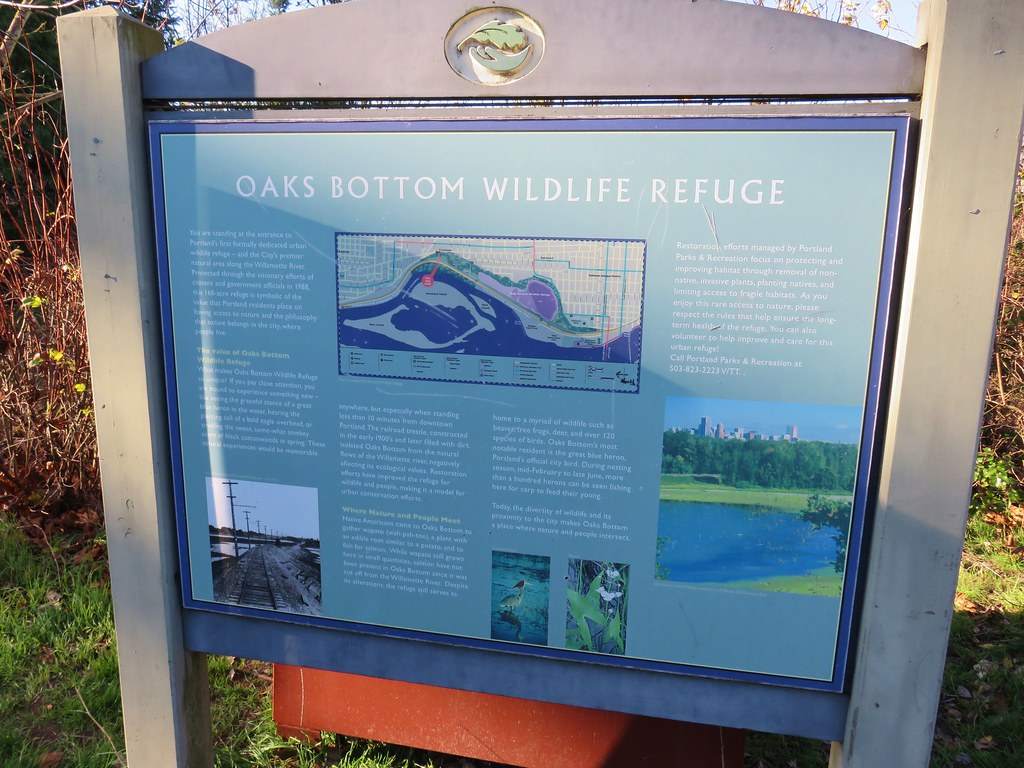
Oaks Bottom Wildlife Refuge

We made a late addition to our scheduled hikes when it became clear that the weather on the day of the Give and Get Social for Trailkeepers of Oregon (TKO) was going to be too nice to pass up.  We had short two featured hikes in Portland from William L. Sullivan’s 100 Hikes in NW Oregon & SW Washington that we had not been able to work into our future plans.   The TKO event was taking place at Dig a Pony which was conveniently close to one of these two hikes, Oaks Bottom Wildlife Refuge.

We began our hike uncharacteristically late, just after 1:15pm, from the north parking area on SE Milwaukee Ave.

IMG_1291

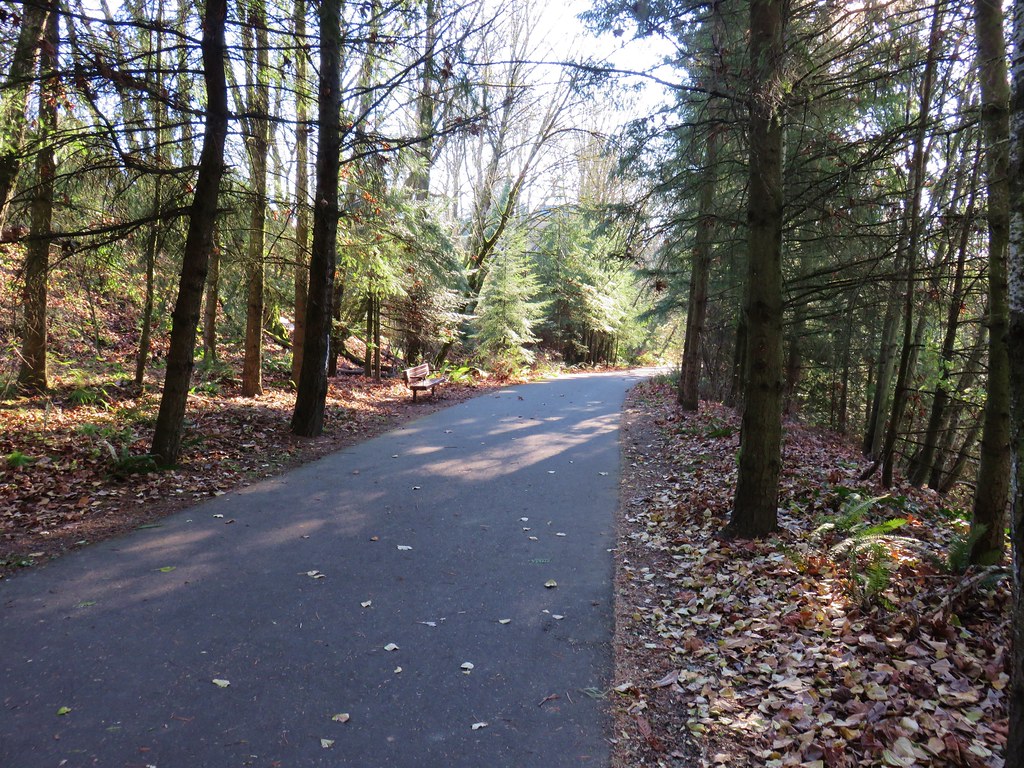
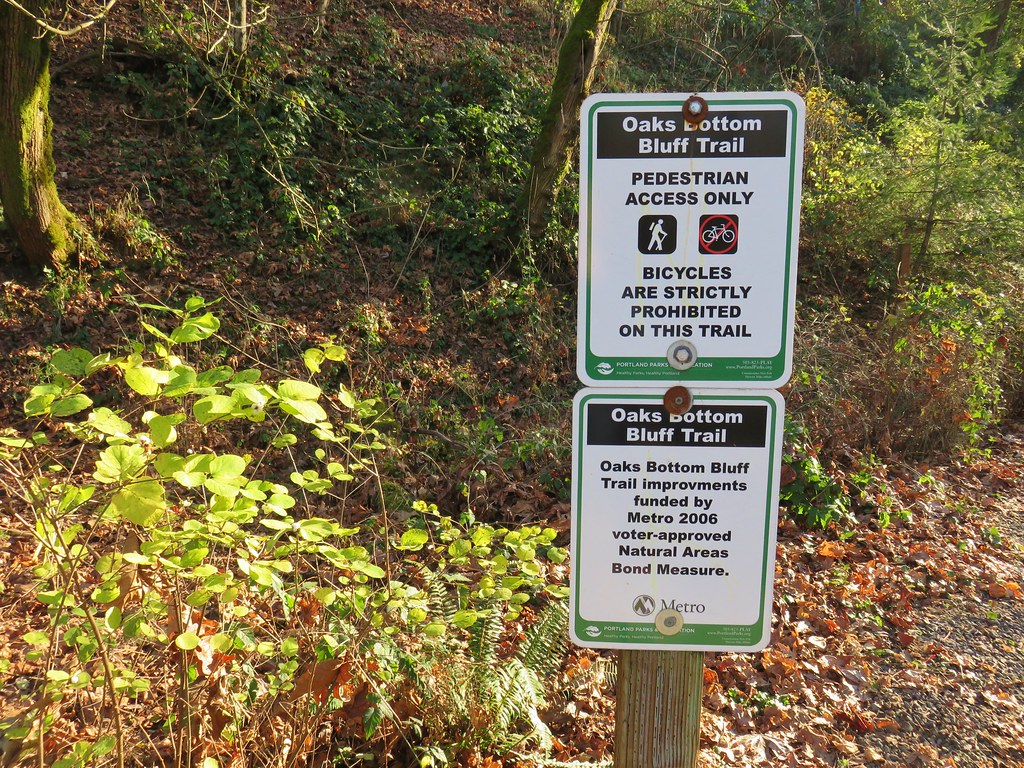
We followed a paved path downhill to a sign for the Oaks Bottom Bluff Trail.

IMG_1294

IMG_1299

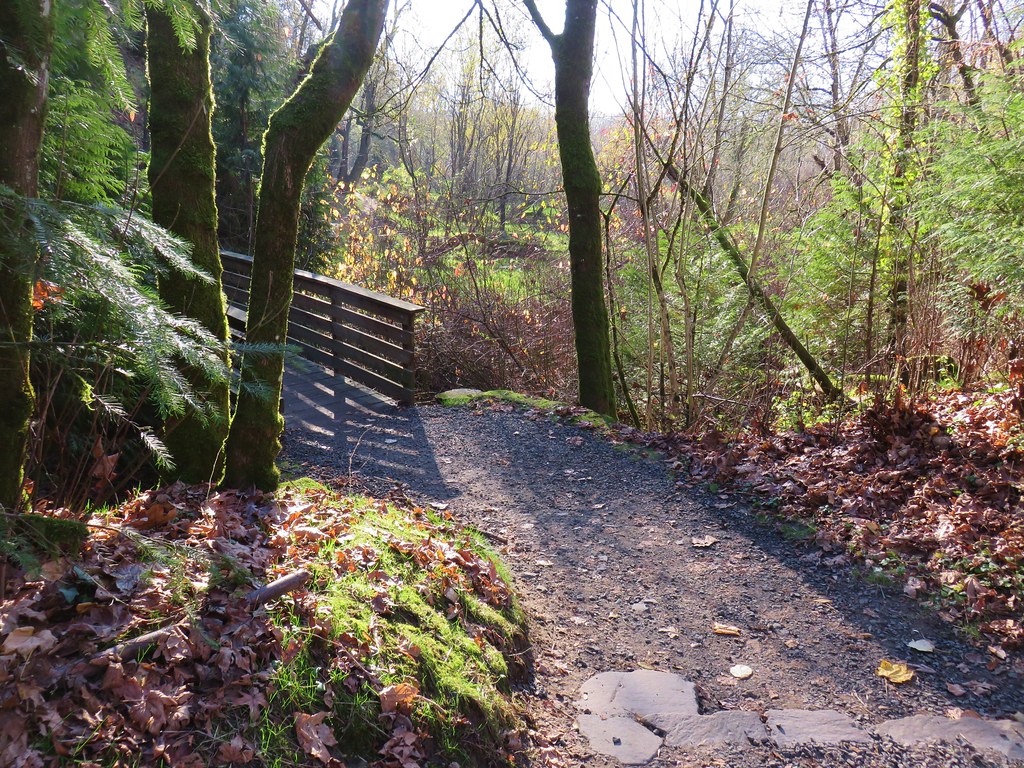
Here the trail split and we stayed left crossing a small footbridge. We would return via the right fork after completing a loop around Wapato Marsh.

IMG_1300

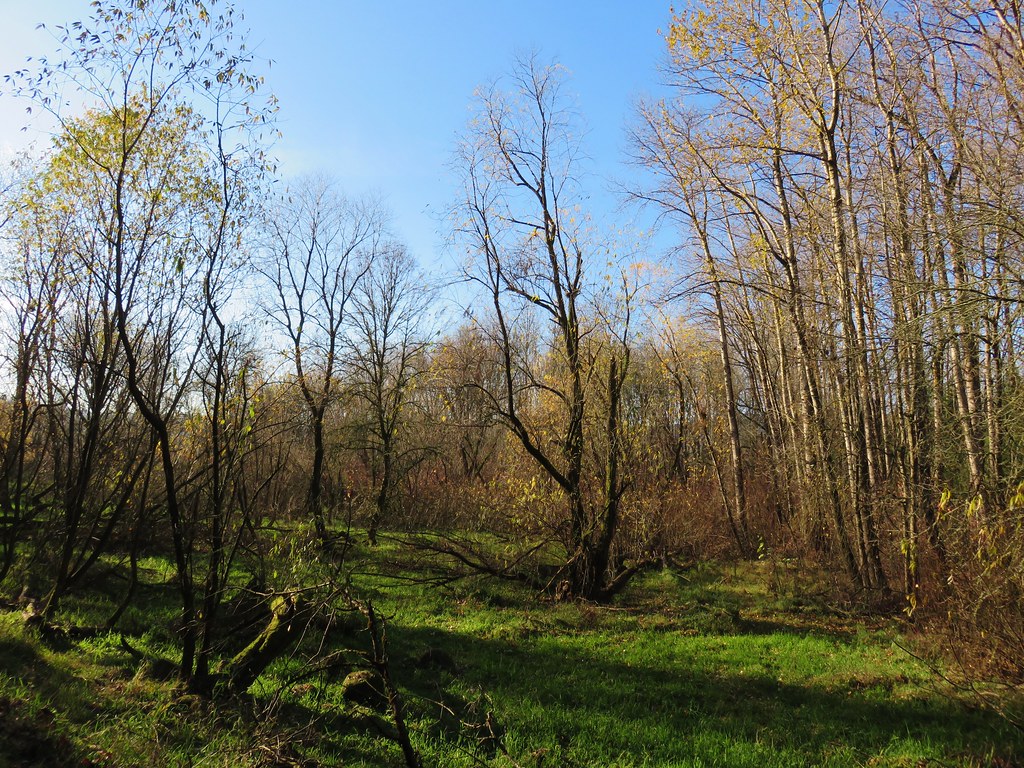
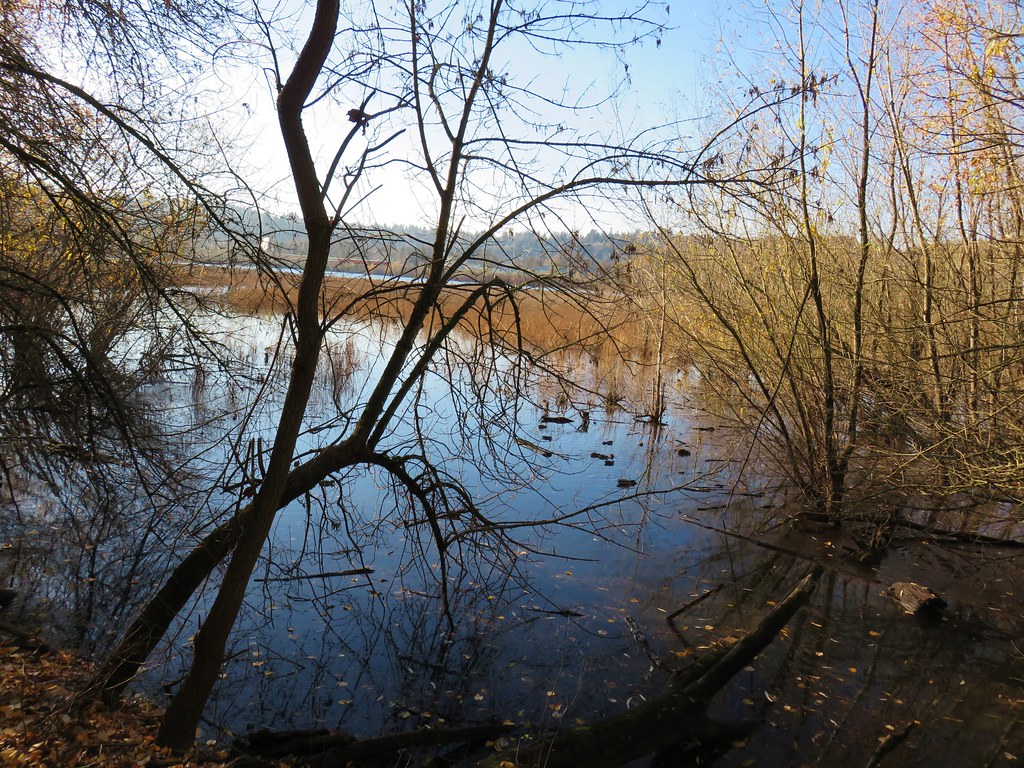
The amount of water in the marsh increased as we went. The first wildlife we spotted were small birds, squirrels and a hawk.

IMG_1313

IMG_1314

IMG_1327

IMG_1326

IMG_1320

IMG_1305

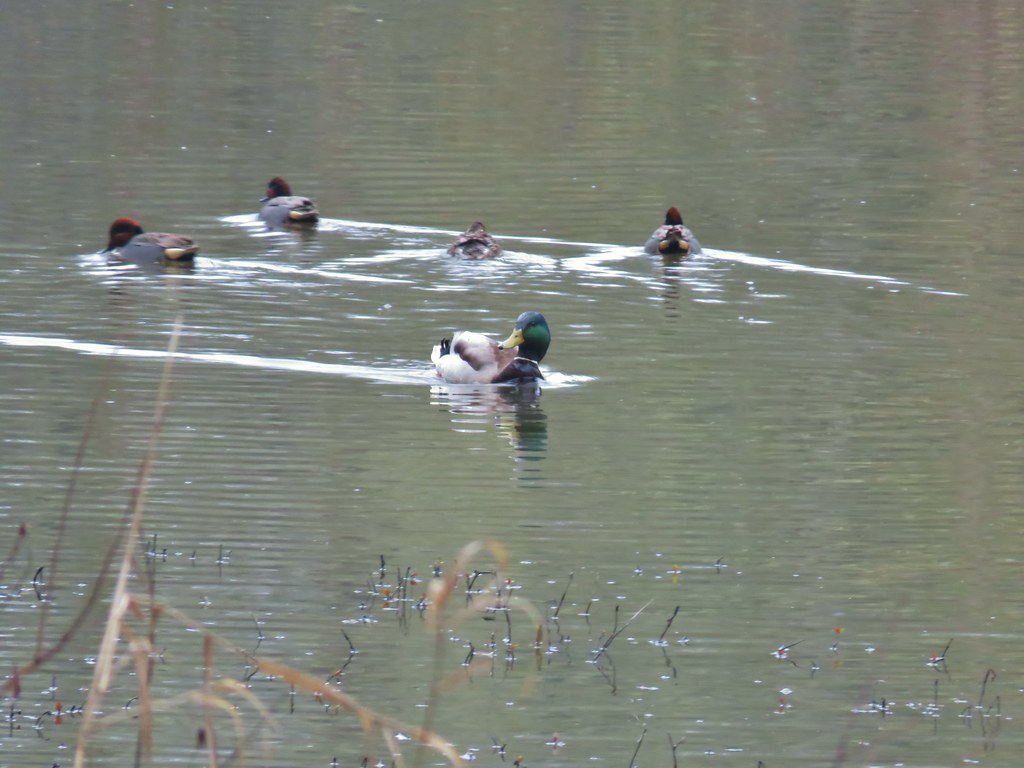
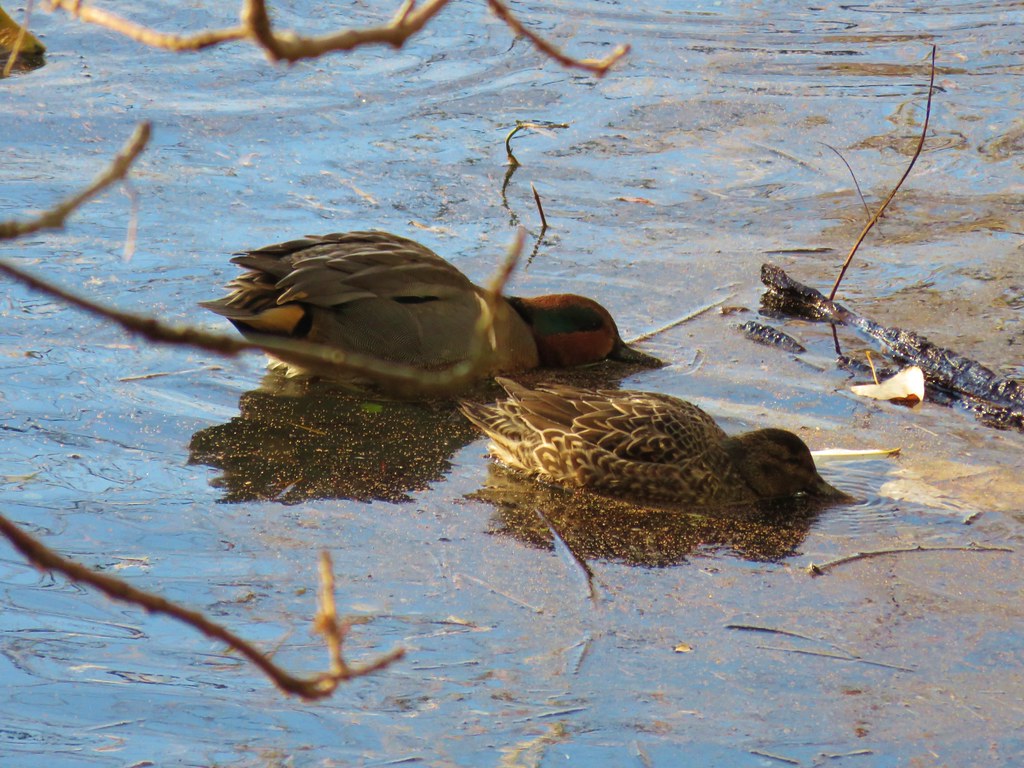
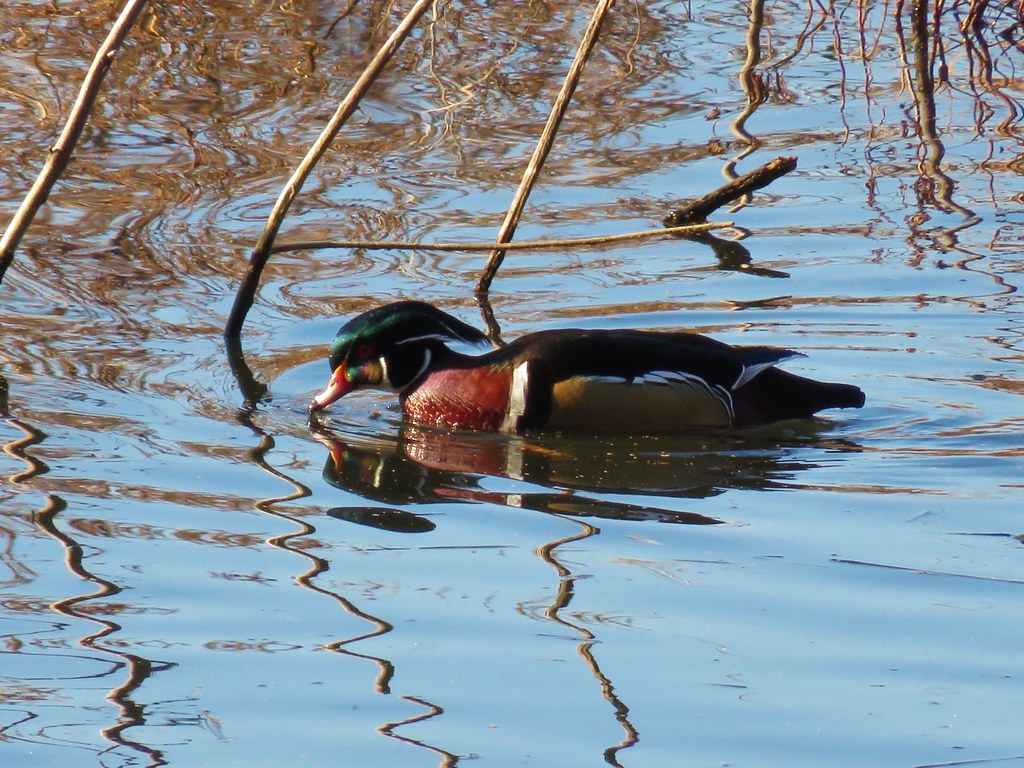
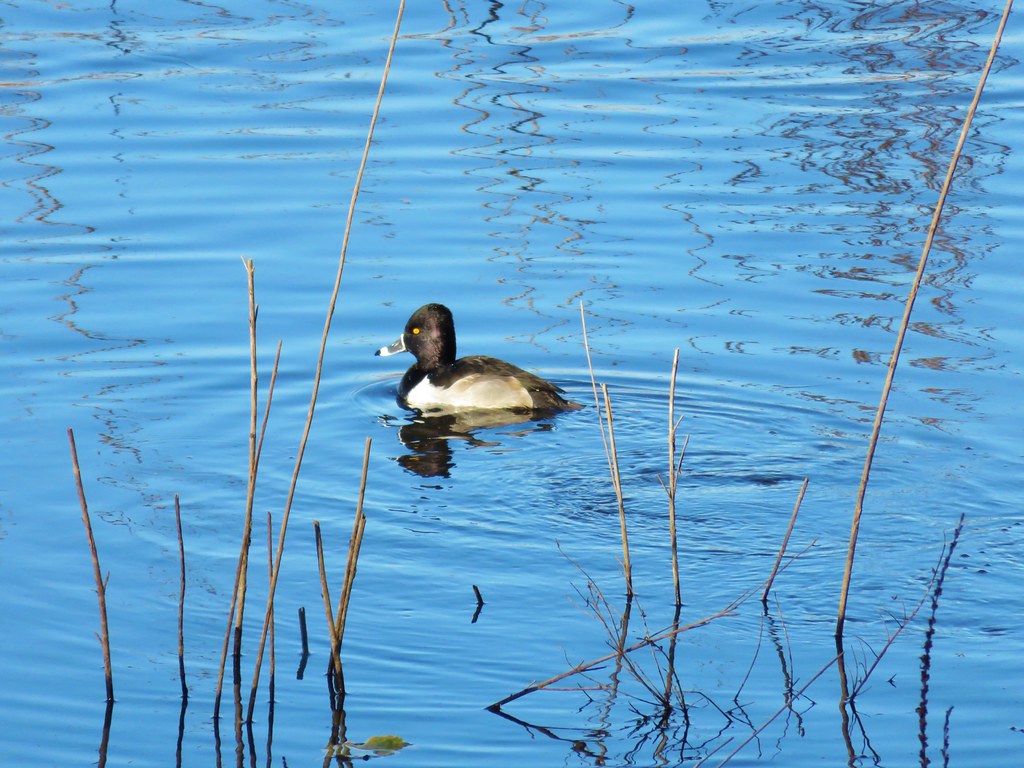
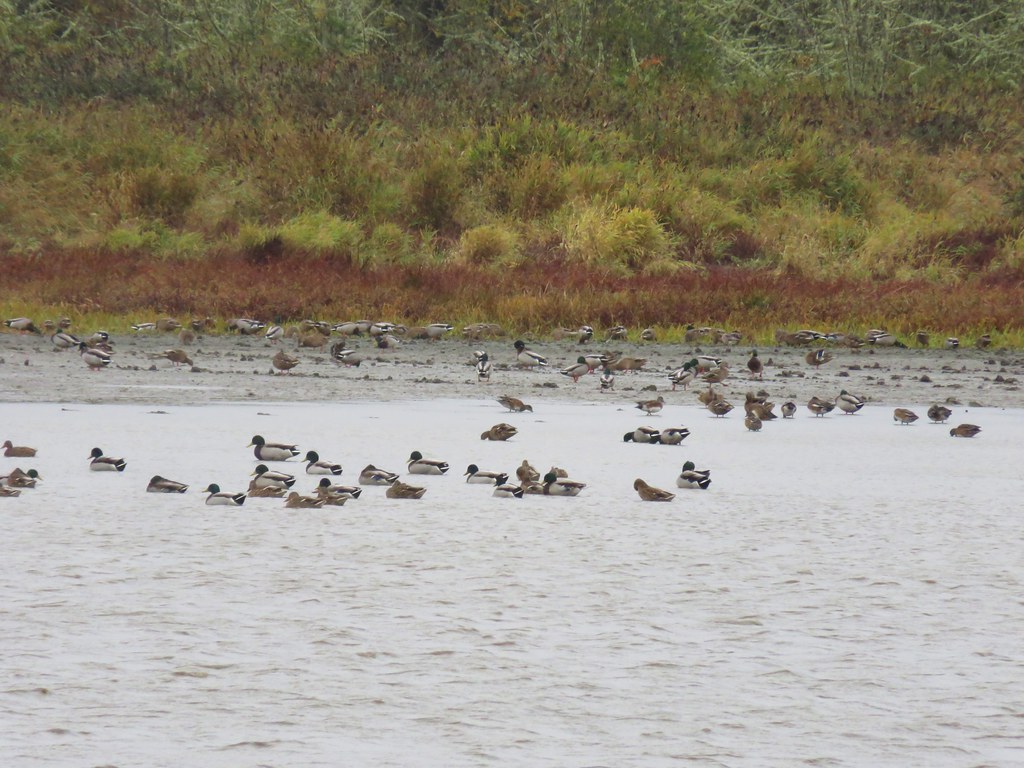
As the amount of water increased we began to see a number of ducks. Several species were present, some of which we were unfamiliar with.

IMG_1332

IMG_1339Green-winged teal

IMG_1349Wood duck

IMG_1377Ring necked duck?

IMG_1354Mallard

IMG_1360Not sure what kind of duck is in the upper left hand corner.

At the far end of the marsh trails from Sellwood Park joined at a meadow. Across the meadow to the west the Holiday Express train was preparing to depart.

IMG_1380

We continued around the marsh passing under the train tracks and turned right on the paved Springwater Corridor. The Holiday Express passed us as we went.

IMG_1385

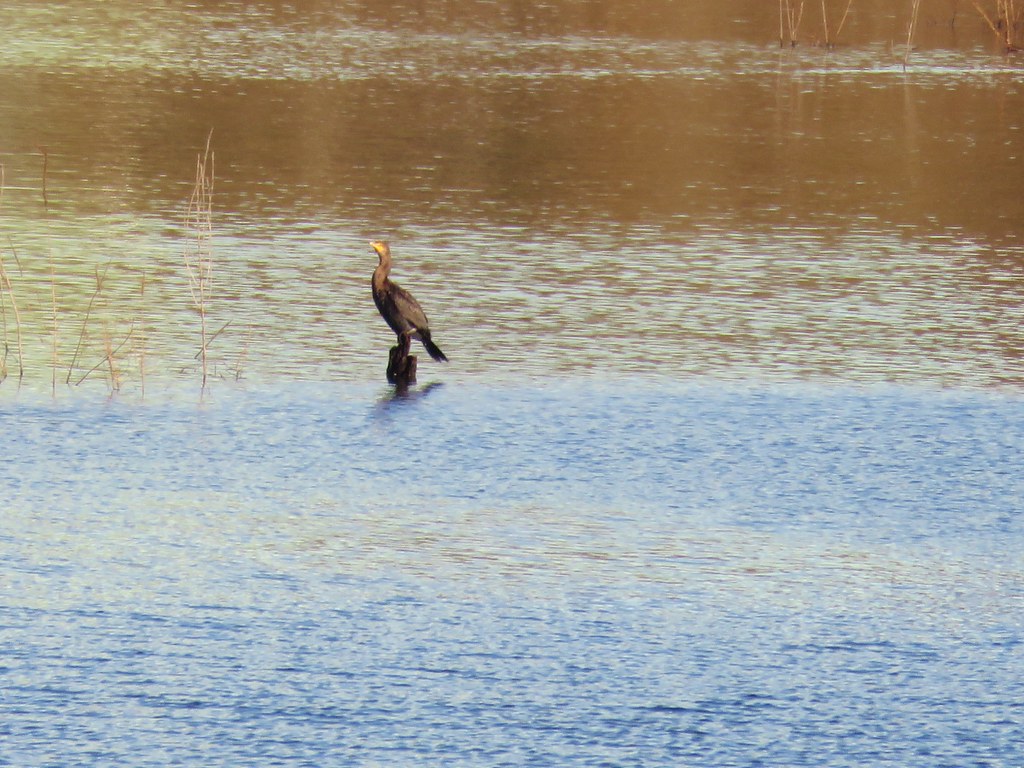
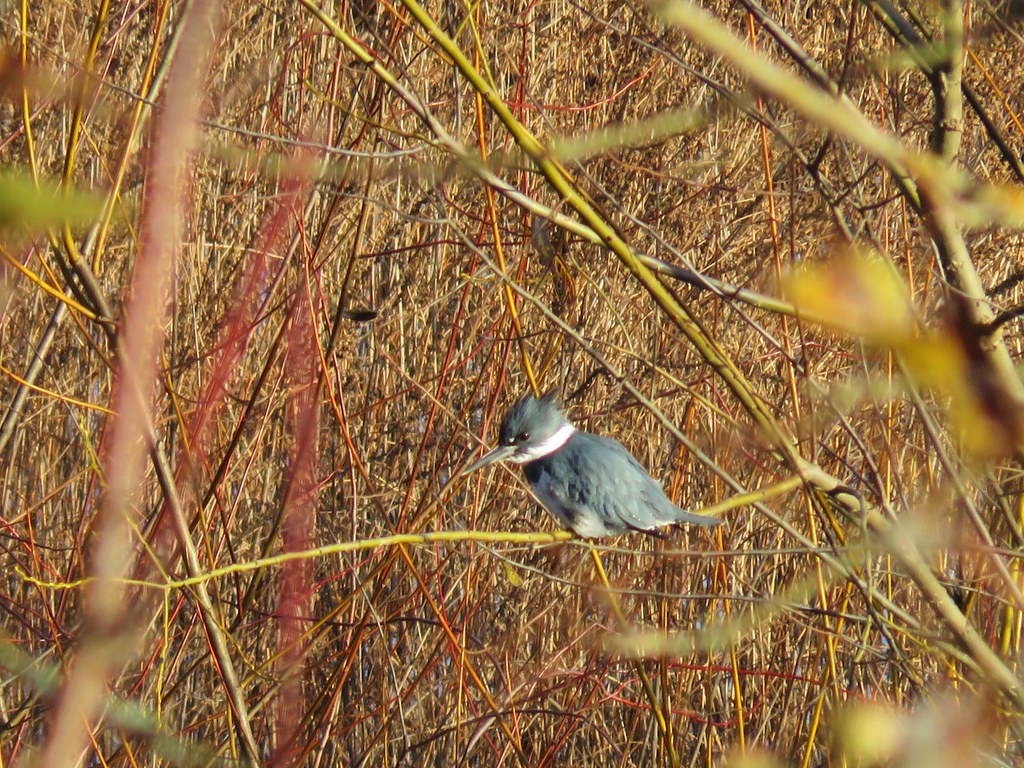
From this path we spotted some other birds including several herons, a cormorant, and a kingfisher.

IMG_1395

IMG_1392

IMG_1403

We passed a viewpoint of the Willamette River to the west before passing back under the railroad tracks.

IMG_1405

Before passing back under the the tracks we took a short path to the west toward the river where a few pieces of art could be seen amid the trees.

IMG_1408

IMG_1407

We turned off the paved path at a hiker only sign and passed through a wooden fence.

IMG_1410

We were quickly back at the start of the loop and returned uphill to our car. A nice three mile or so stroll with lots of wildlife to watch. We ended our day at Give and Get where we had a good time despite not winning any of the raffles. Happy Trails!

Flickr: Oaks Bottom Wildlife Refuge

Categories
Corvallis Hiking Oregon Trip report Willamette Valley

Finley Wildlife Refuge

Another weekend of snow in the mountains and rain in the valley combined with plans to get together with a friend in town from Mississippi made it a perfect time to finally visit the William L. Finley Wildlife Refuge. Located about an hour from Salem the refuge is located just off Highway 99 ten miles south of Corvallis.

There are a number of trails in the refuge, some open year round others from April 1st thru October 31st. We had planned two stops in the refuge with the first being at the Cabell Lodge located near the Cabell Marsh Overlook 1.5 miles after entering the refuge.
Cabell Lodge

From the gravel parking area we followed a pointer for the Cabell Marsh Trail to the overlook.
Cabell Marsh Trail

Cabell Marsh Trail

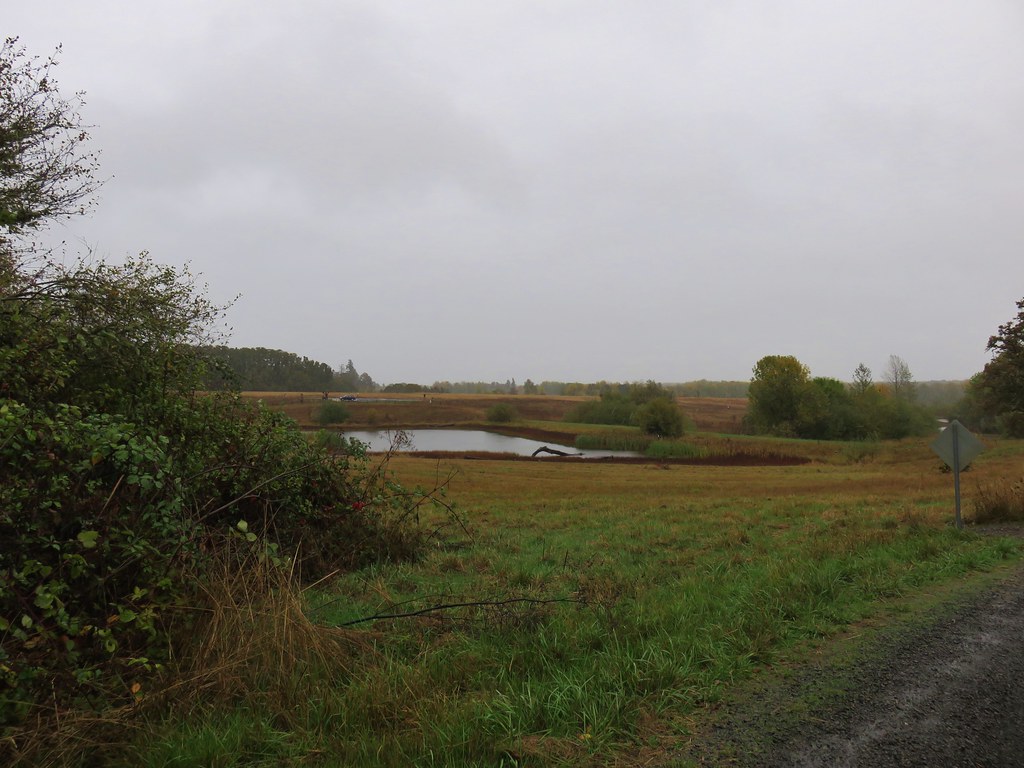
The covered overlook provided shelter from the steady rain and an opportunity to watch the plethora of ducks on the water and a white egret on the far shore.
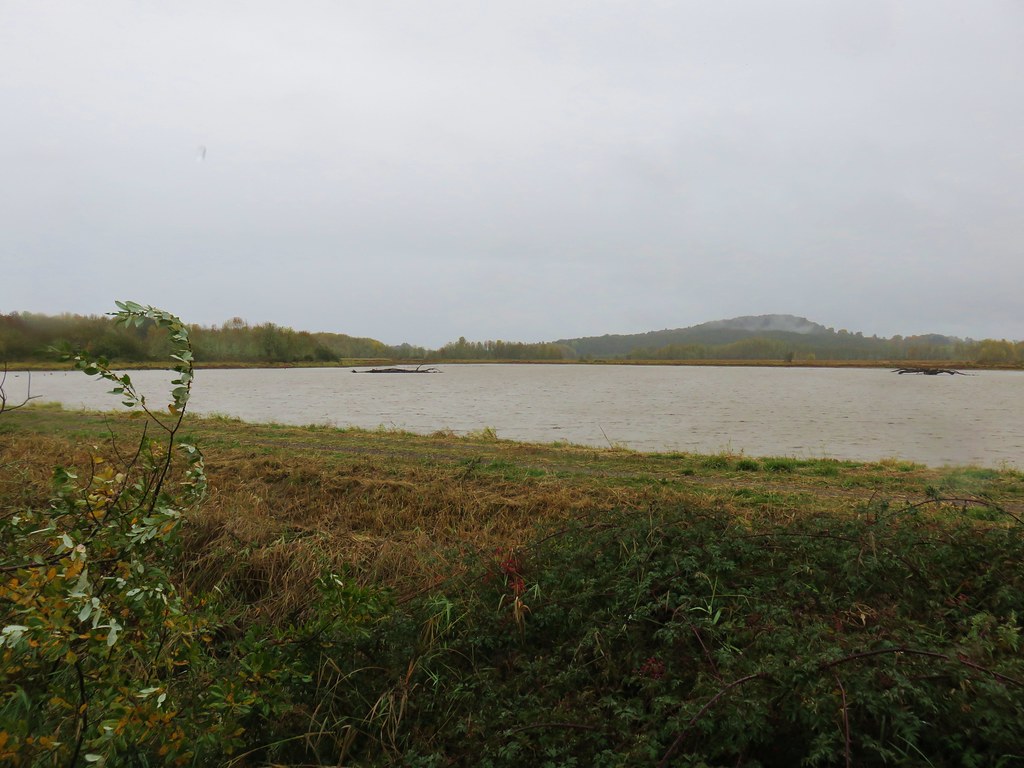
Cabell Marsh

Cabell Marsh

Ducks at Cabell Marsh

A seasonal trail continued beyond the overlook which we followed a short distance to a service road where we turned right.
Cabell Marsh Trail

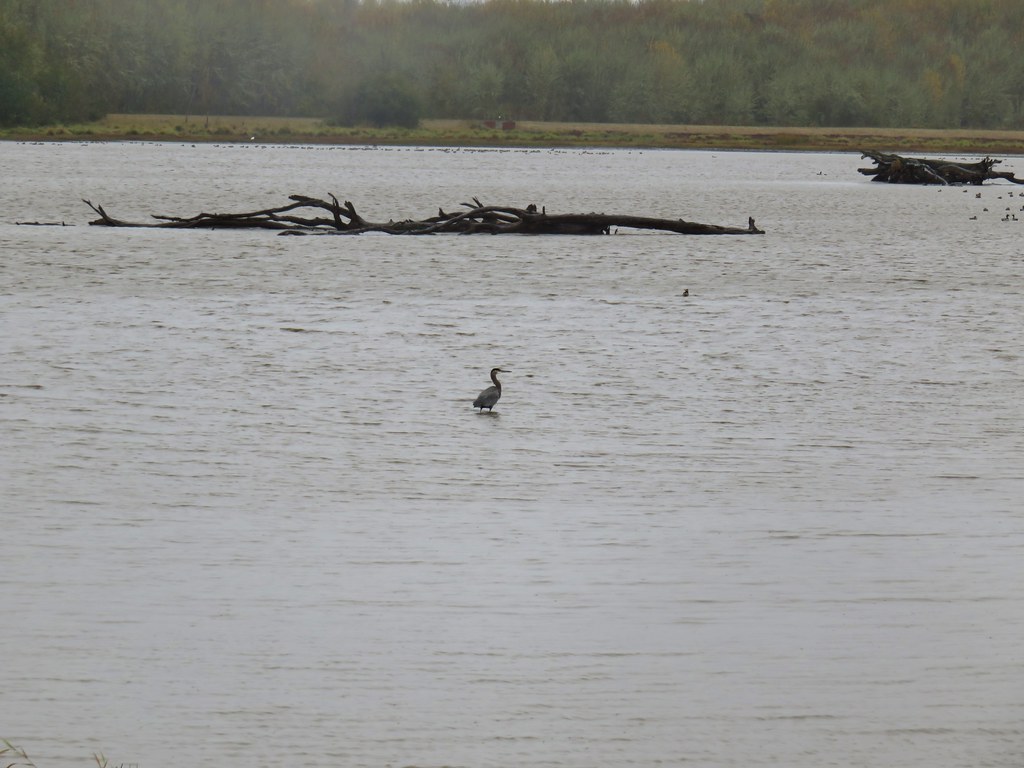
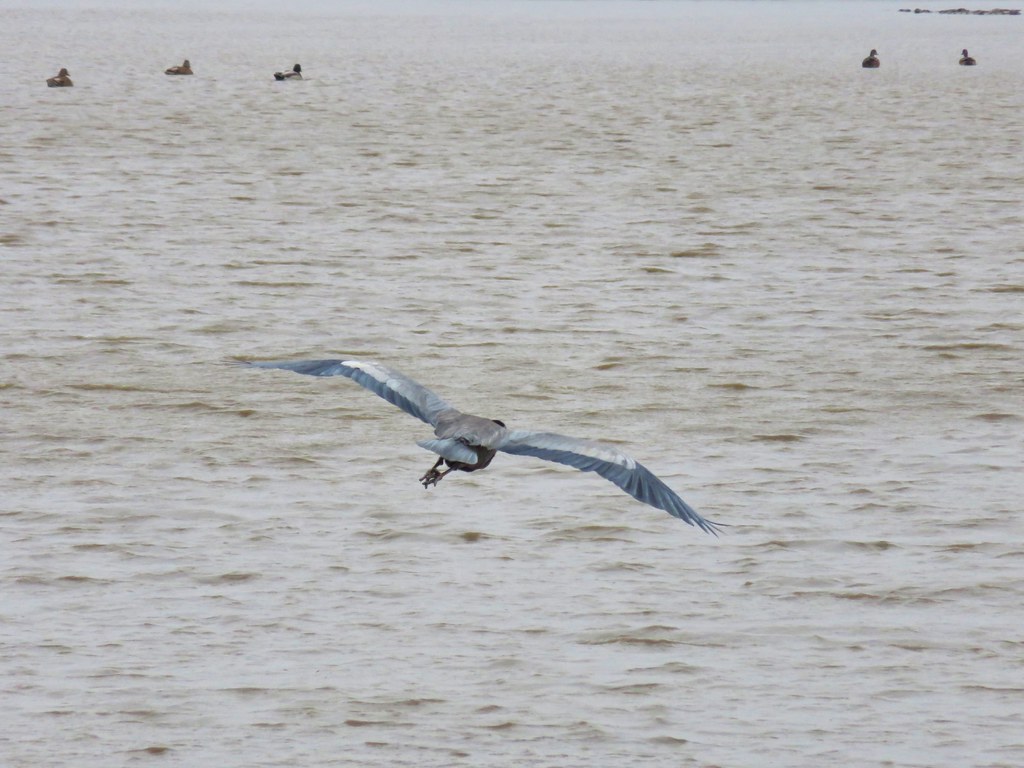
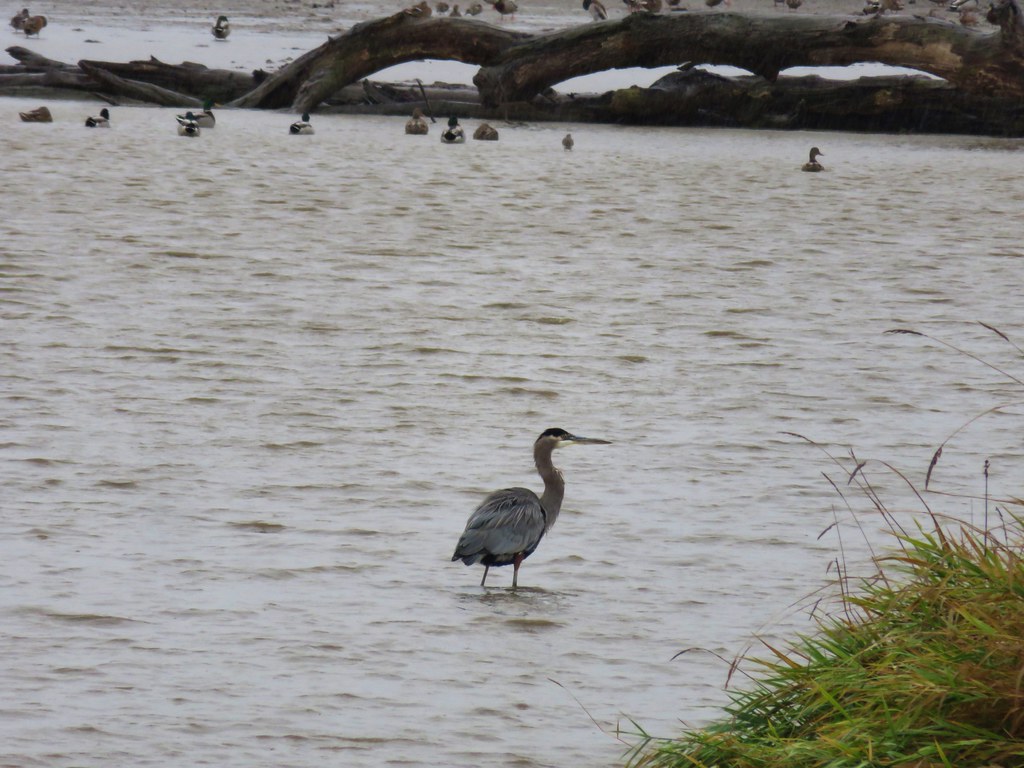
The roadbed/trail soon arrived at the water giving us a closer look at the ducks and a great blue heron.
Great Blue Heron

Great Blue Heron

Great Blue Heron

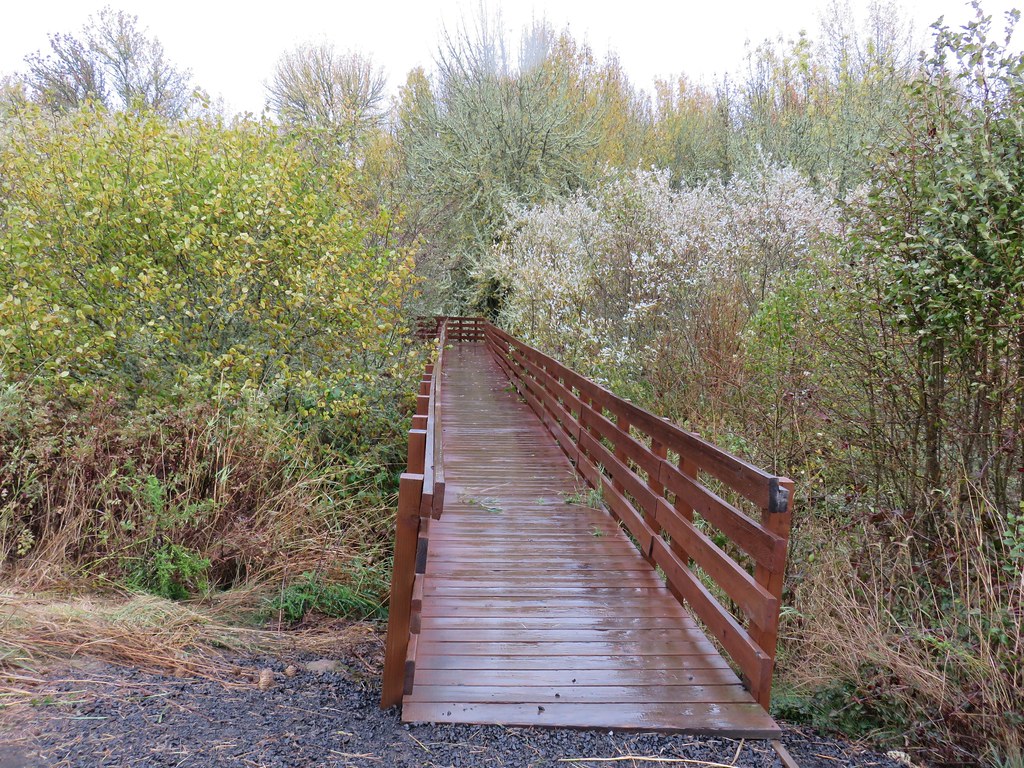
After a quarter mile on the road we turned left onto the Homer Campbell Boardwalk.
Homer Campbell Boardwalk

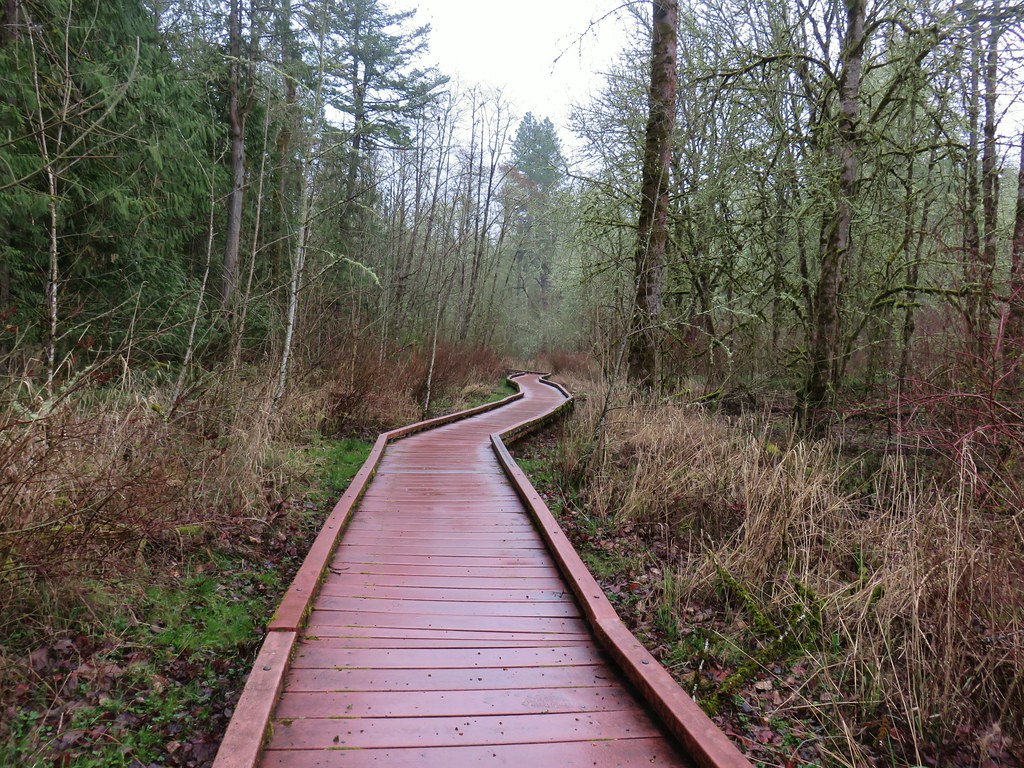
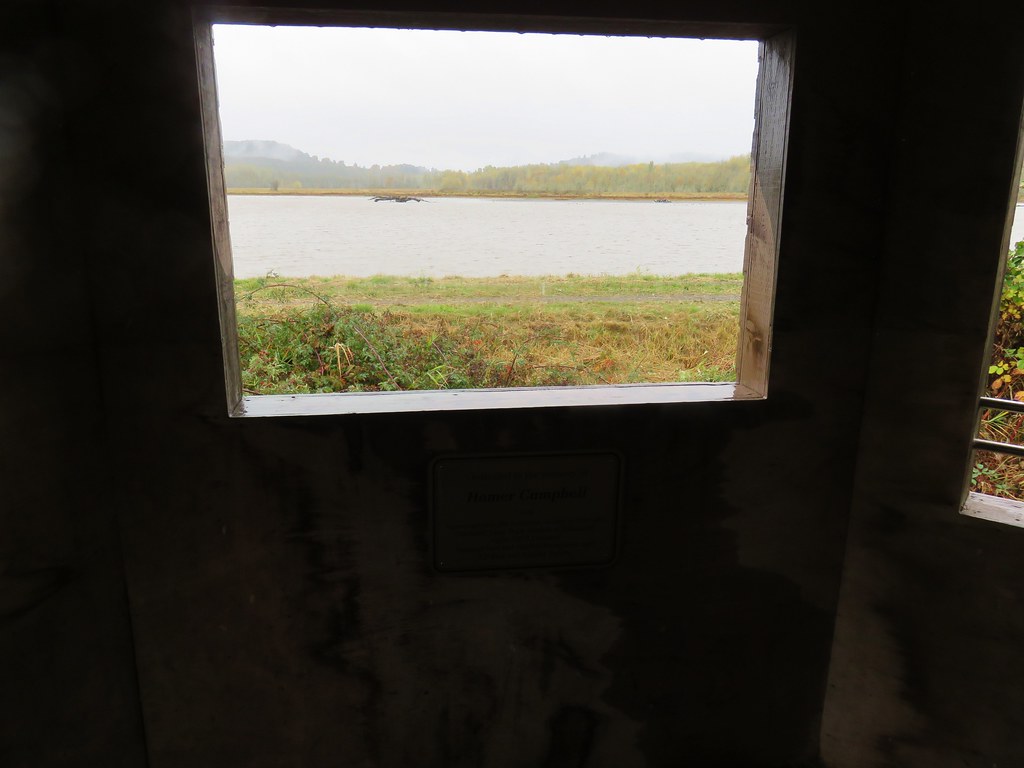
The .4 mile boardwalk is open year round with a handy viewing blind located along it’s route.
Viewing blind along the Homer Campbell Boardwalk

Cabell Marsh

Ducks at Cabell Marsh

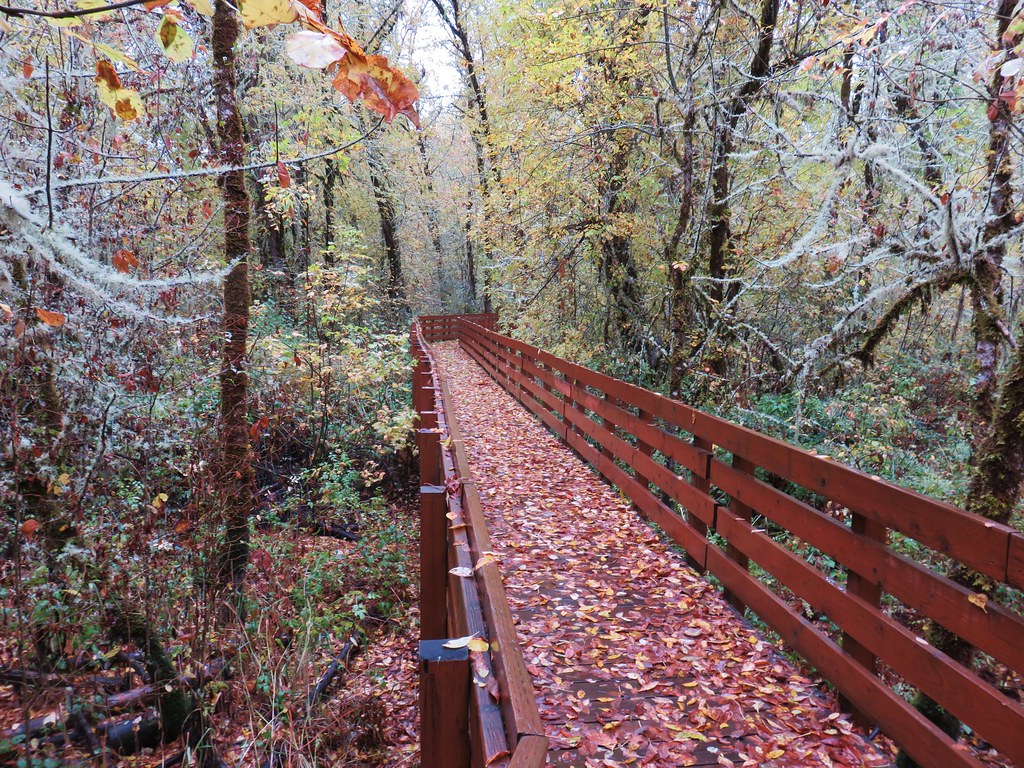
Beyond the blind the boardwalk passed through a scenic ash forest where lichen hung from the tree limbs.
Homer Campbell Boardwalk

Homer Campbell Boardwalk

At the end of the boardwalk we found ourselves at a small parking area. A short walk up the gravel road here brought us to the park’s main road (the one we’d driven in on) where we turned left. A short uphill walk toward the Cabell Barn brought us to the Fletcher House on our left.
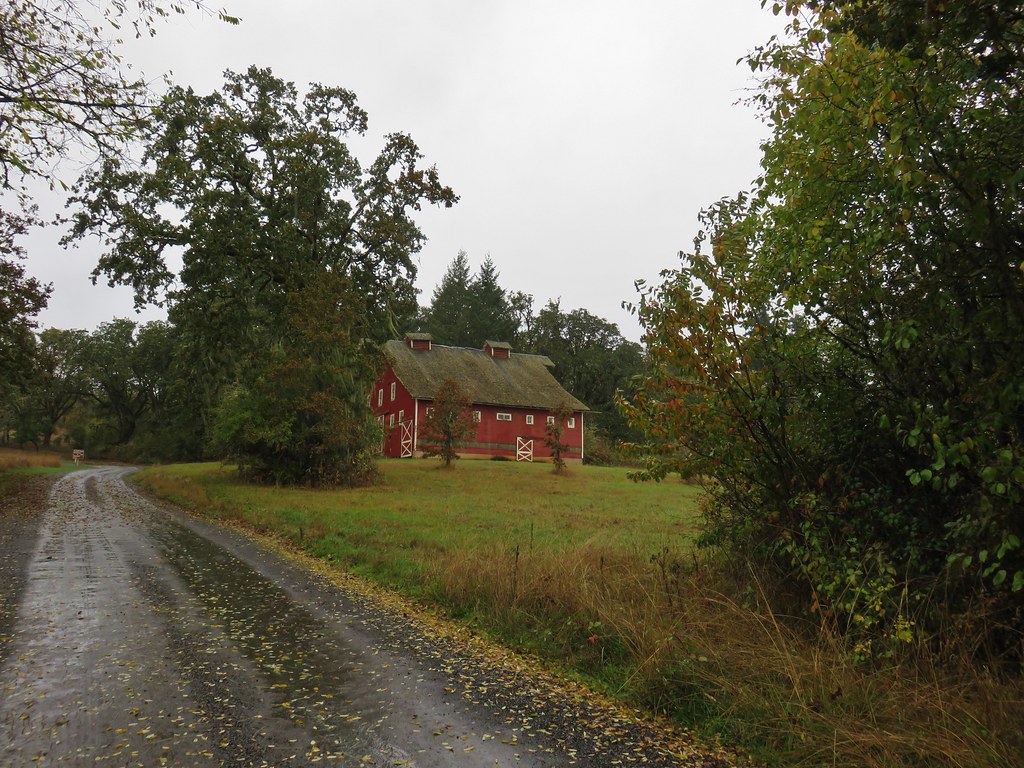
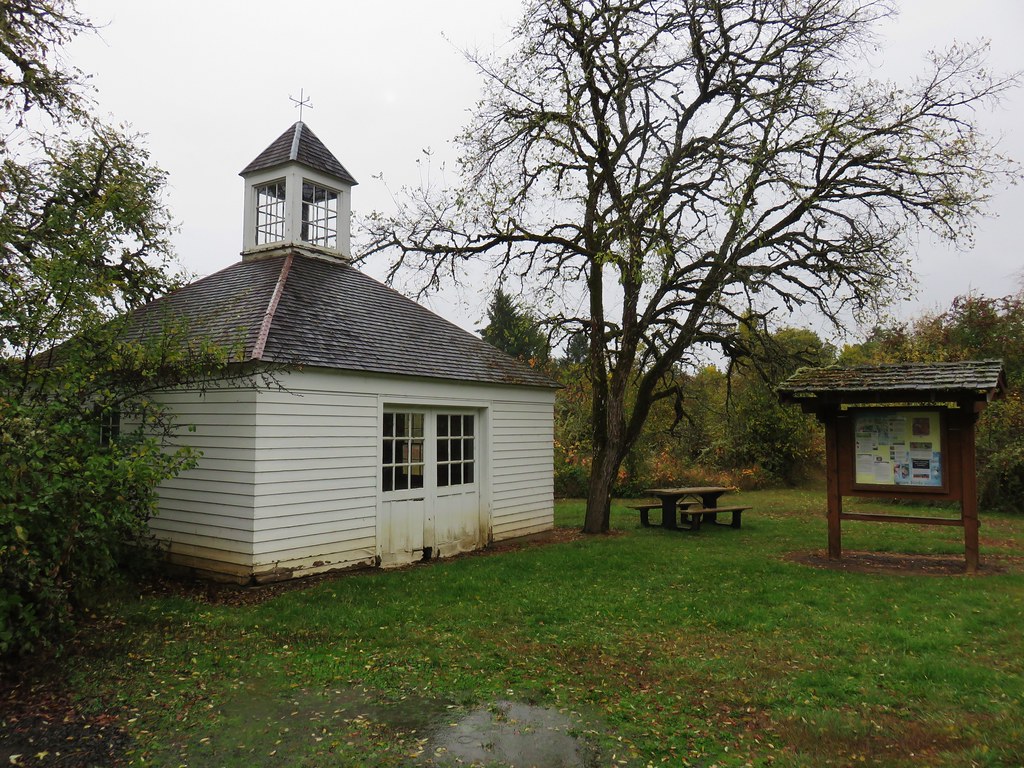
Old barn at Finley Wildlife Refuge

Fletcher House

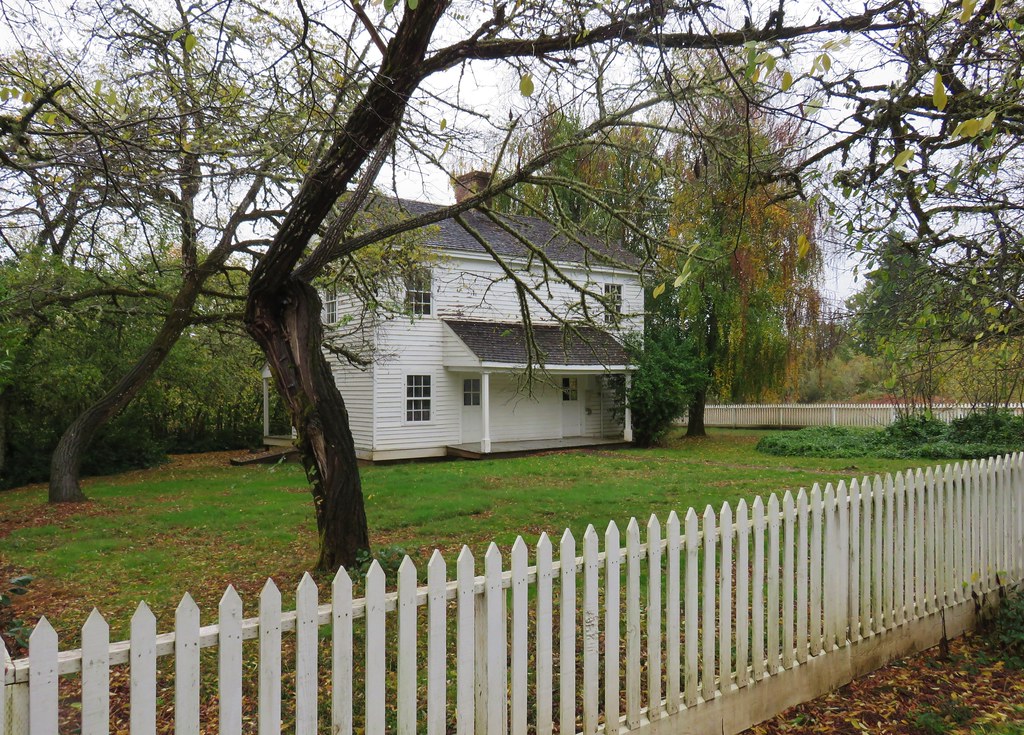
One of the oldest buildings in Benton County, the Fletcher house is believed to have been constructed in 1855. In 1933 the Carriage House was added when the then owner William F. Cabell remodeled the Fletcher House.
Fletcher House

Interpretive sign at the Fletcher House

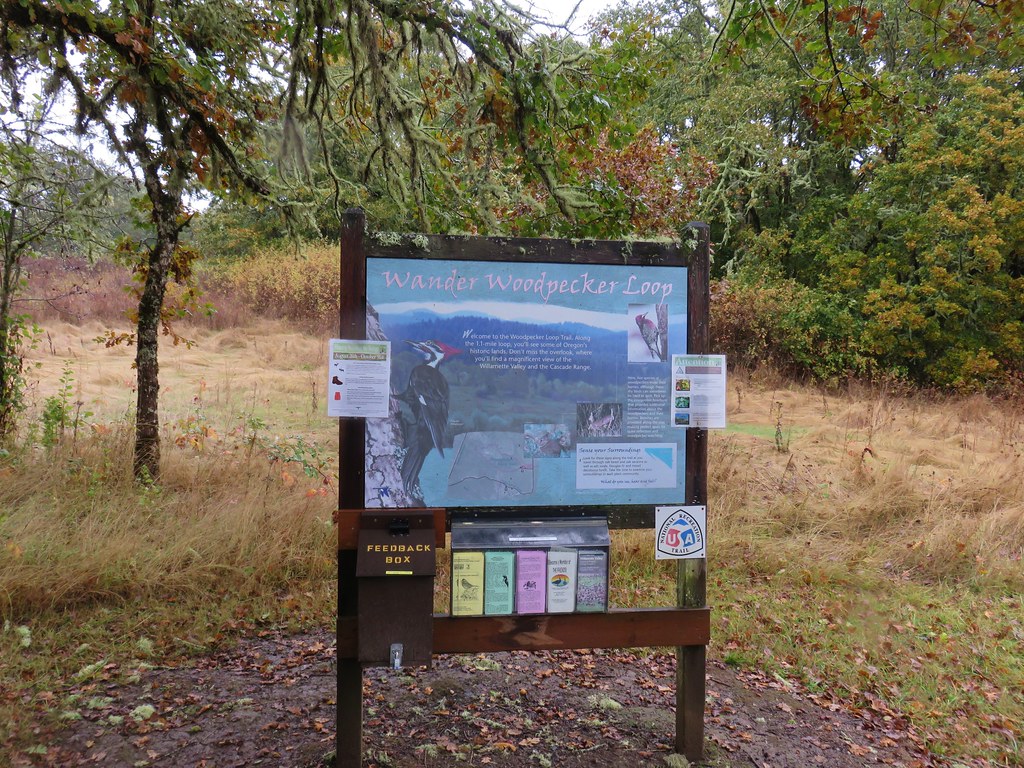
From the Fletcher House we followed a very short grassy path back to the Cabell Marsh Overlook parking area. After putting a couple of towels down on our car seats we drove .7 miles further into the refuge turning right at a sign for the Woodpecker Loop Trail. The trail began at a signboard and headed into oak woodlands.
Woodpecker Loop Trailhead

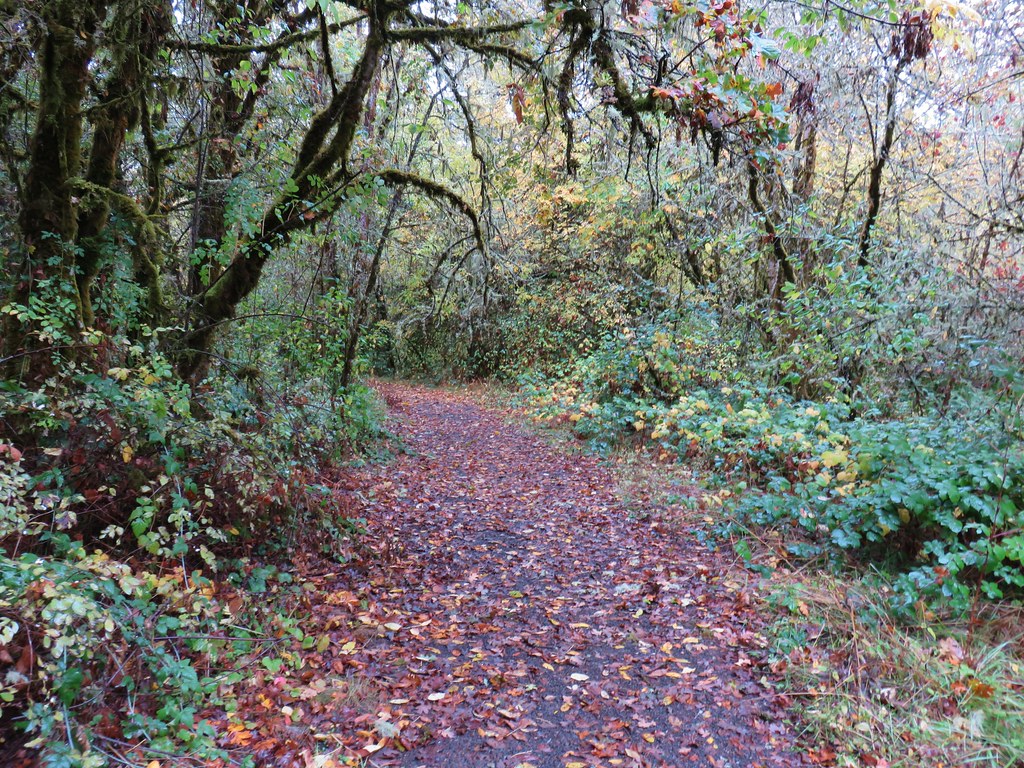
Woodpecker Loop Trail

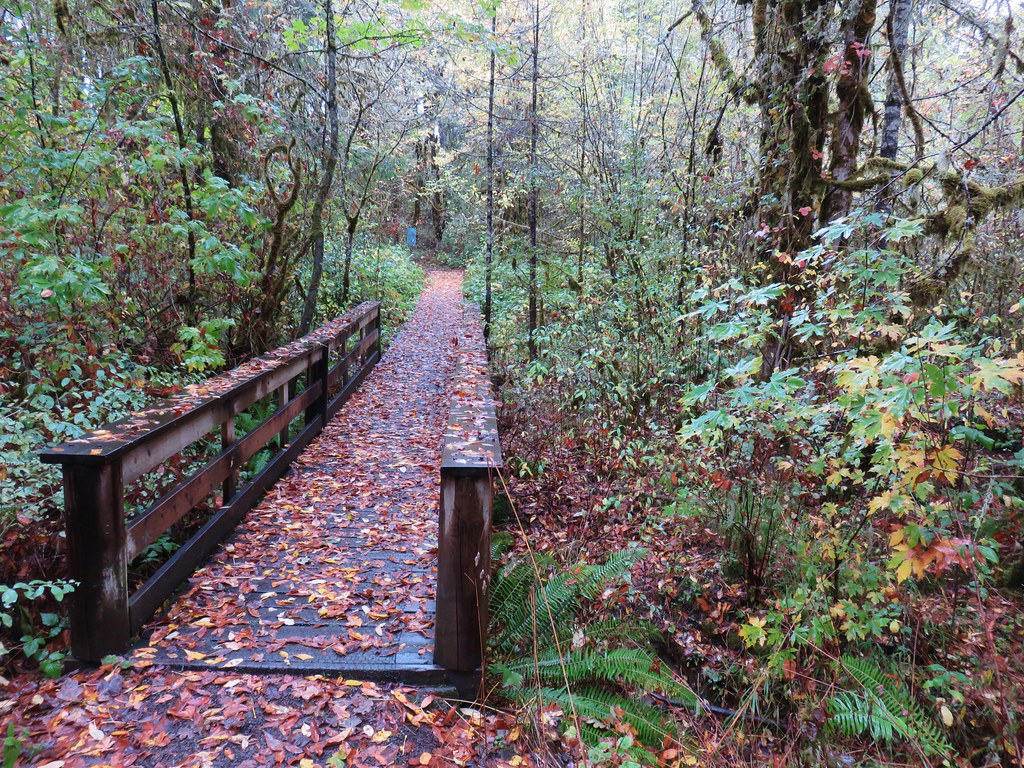
Our plan was to link the Woodpecker Loop with the Mill Hill Loop via the Inter-Tie Trail so when we arrived at the beginning of the loop we forked right across a footbridge.
Woodpecker Loop Trail

The Woodpecker Loop is named in honor of the 5 different species of woodpeckers that can be found in the area. We were able to check one off the list when we spotted a northern flicker in a tree.
Nothern Flicker

The trail climbed gradually through the oak forest eventually leaving the tress in favor of more open grasslands.
Woodpecker Loop Trail

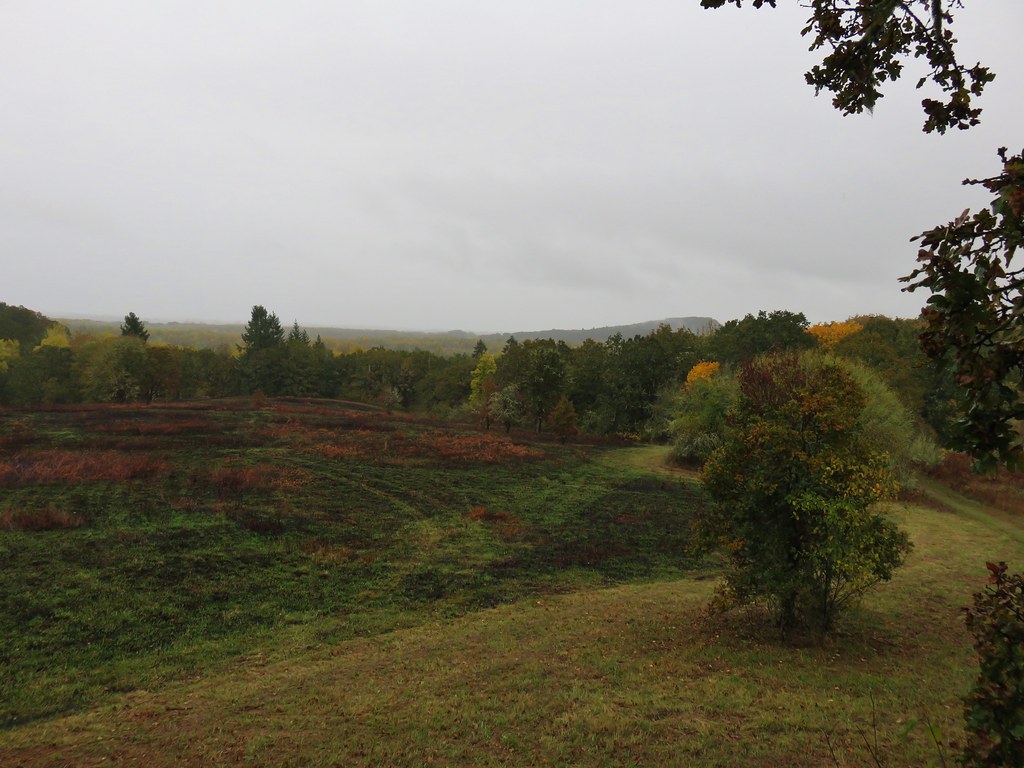
View from the Woodpecker Loop TrailBald Hill

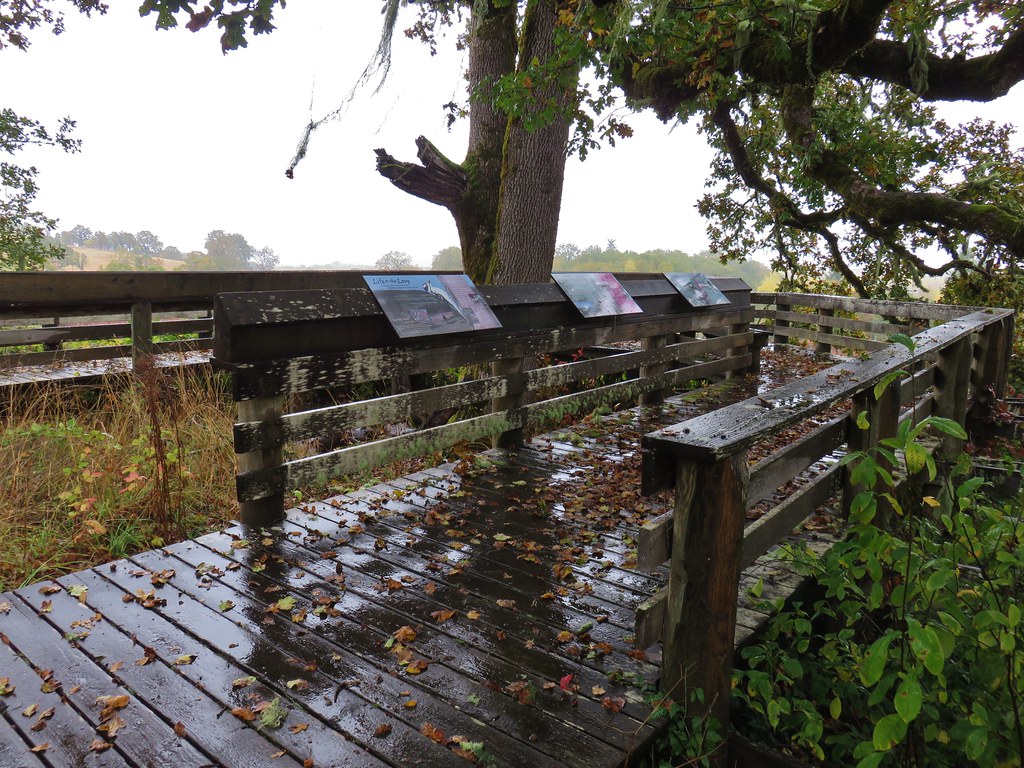
We stopped at a viewing platform around a large oak tree. On a clear day the tops of the Three Sisters and Mt. Jefferson are said to be visible but we were unable to verify that.
Viewing platform along the Woodpecker Loop Trail

View from the Woopecker Loop

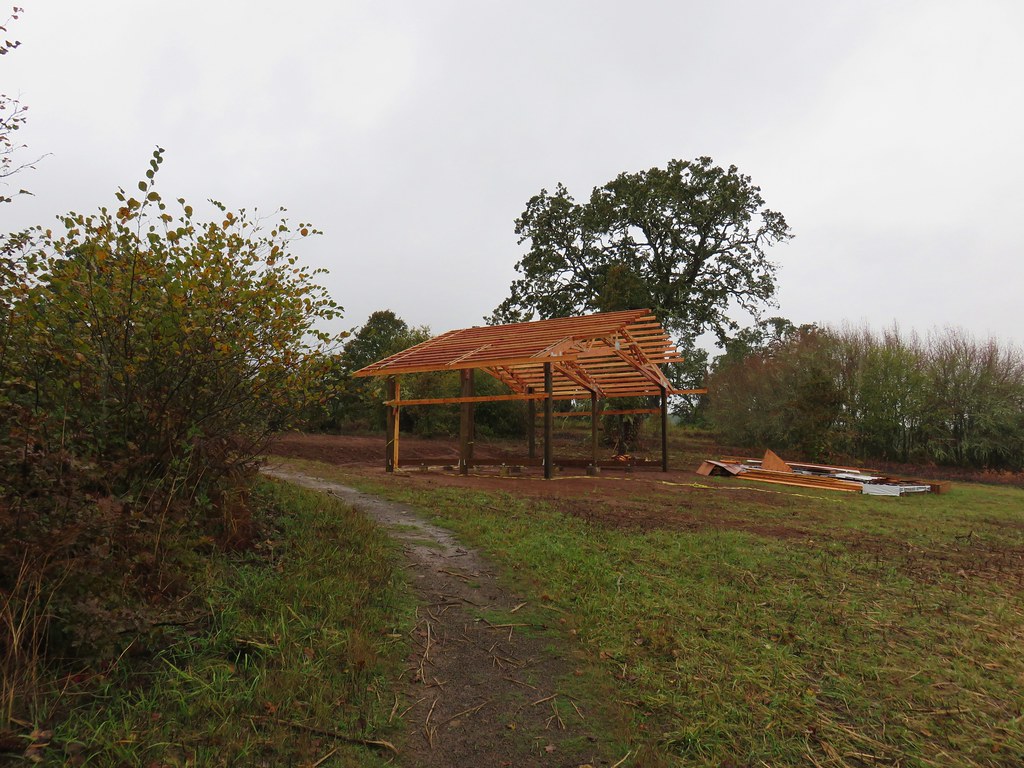
Just a short distance beyond the platform a new building was being built.
New building along the Woodpecker Loop

The trail then began descending where it reentered the trees and passed over a swale on a long boardwalk.
Woodpecker Loop Trail

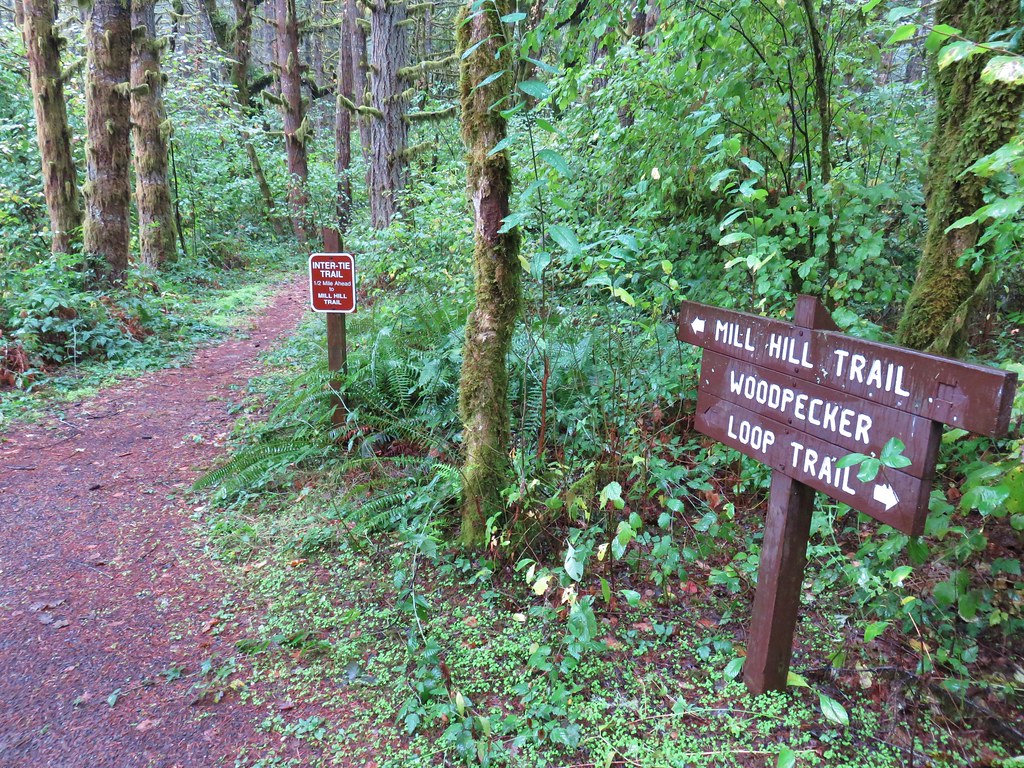
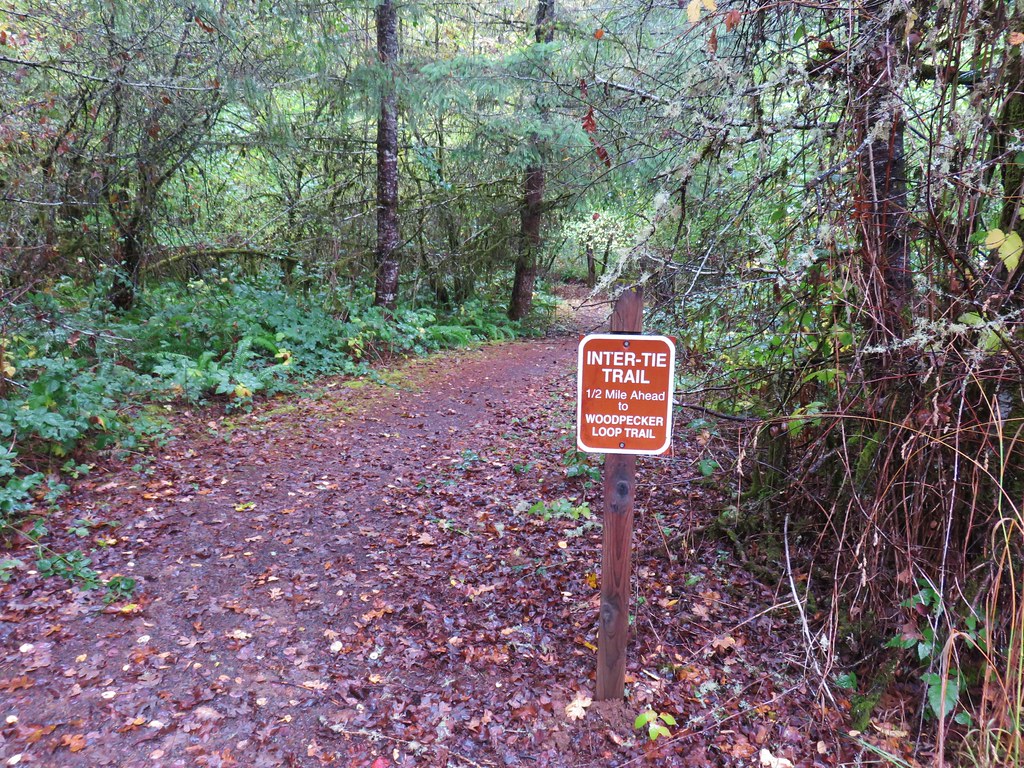
When we arrived at the junction with the Inter-Tie Trail we turned right following the pointer for the Mill Hill Trail.
Inter-Tie Trail

This half mile trail led us through the forest and across a gravel road.
Inter-Tie Trail

It wasn’t entirely clear where the Inter-Tie Trail ended and the Mill Hill Trail began but based on it’s half mile length the Inter-Tie Trail either ended at the road crossing or at a trail junction just a bit further along.
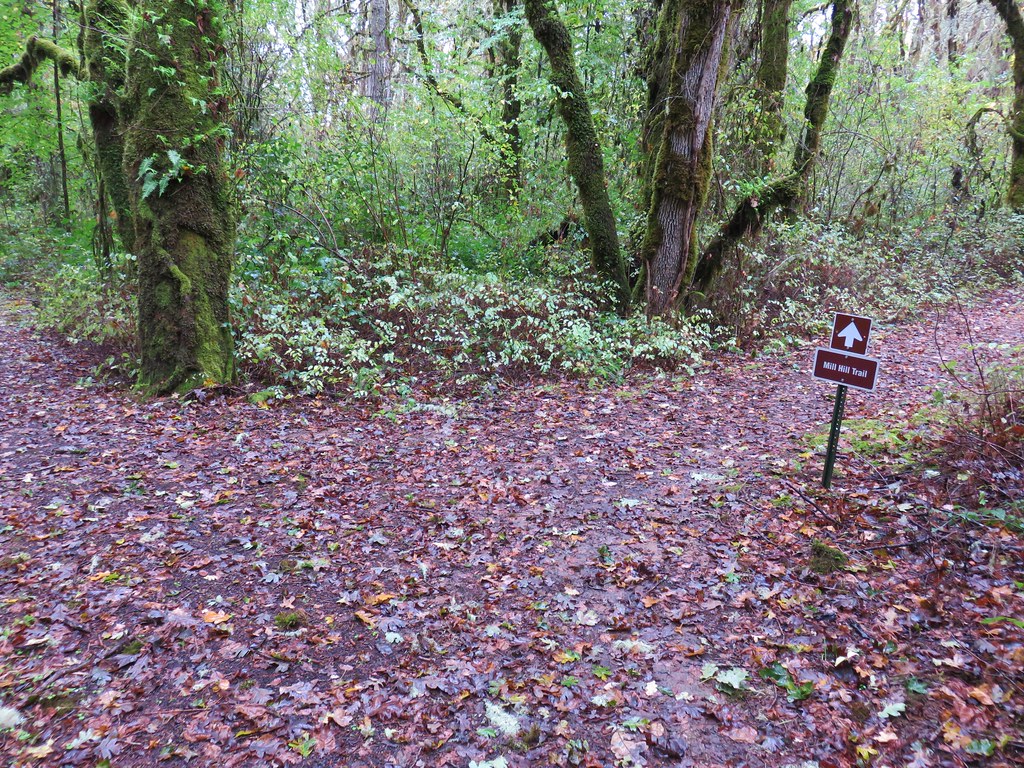
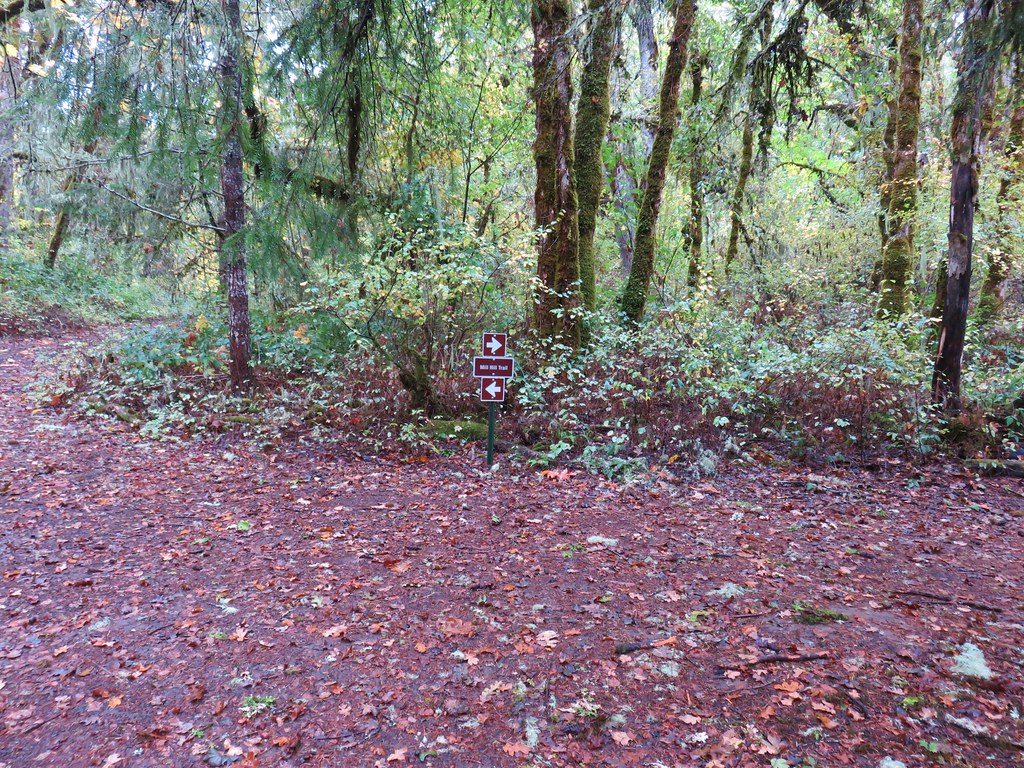
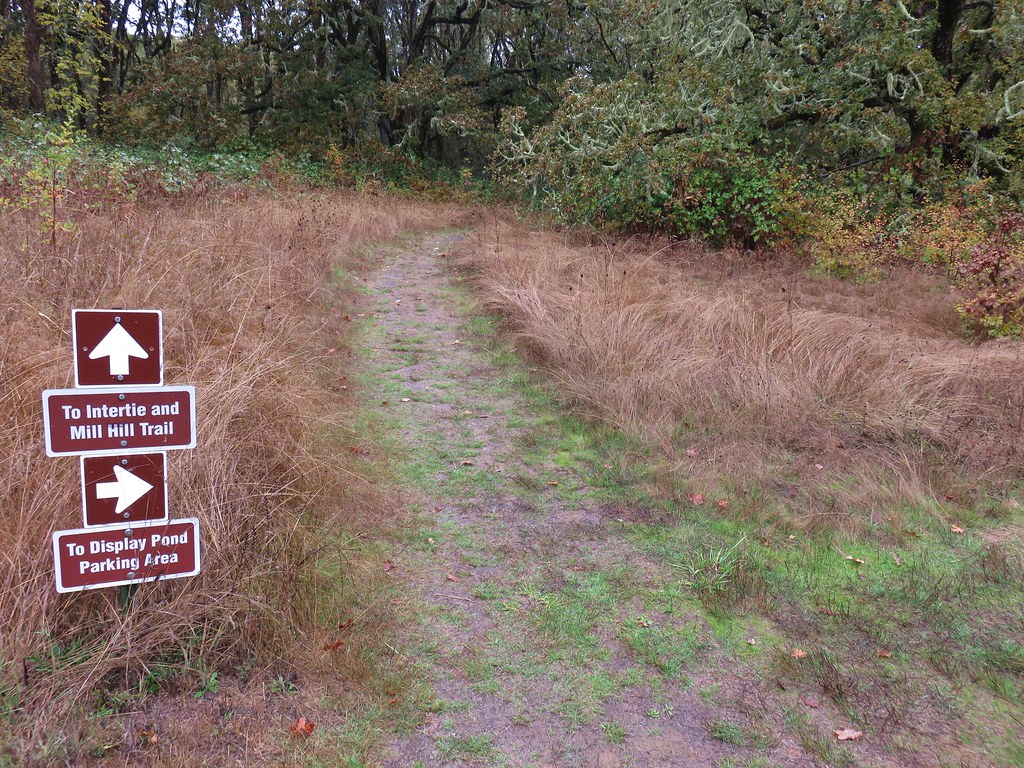
Inter-Tie Trail to Mill Hill Trail

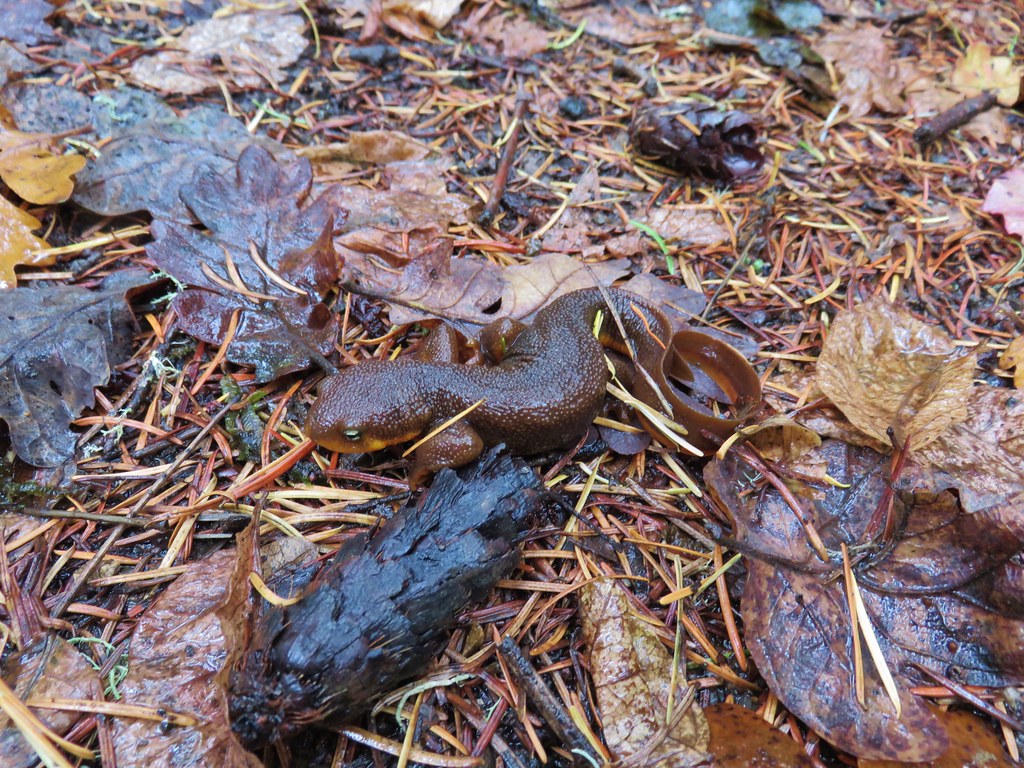
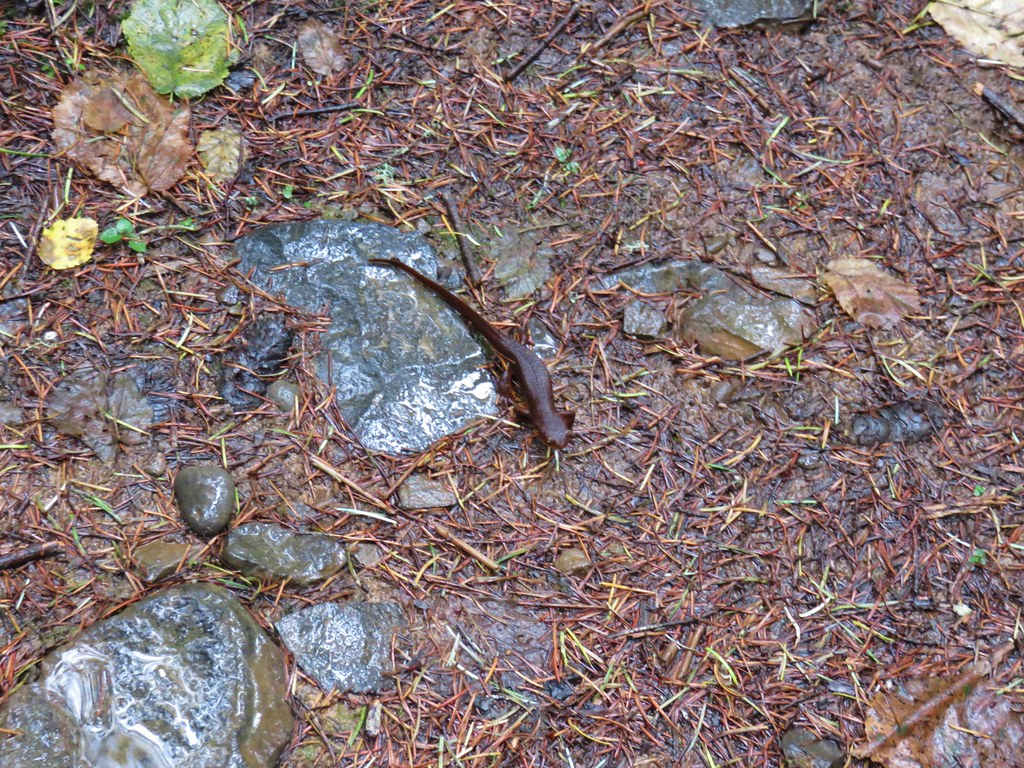
The left hand fork led to the Display Pond parking area so we veered to the right. We had just been discussing the fact that it seemed like an area where we might see one of our trail favorites, rough skinned newts, when sure enough we spotted one curled up on the trail.
Roush skinned newt

We stayed right again at a second trail junction, this one coming from the park headquarters and nature store.
Inter-Tie Trail to Mill Hill Trail

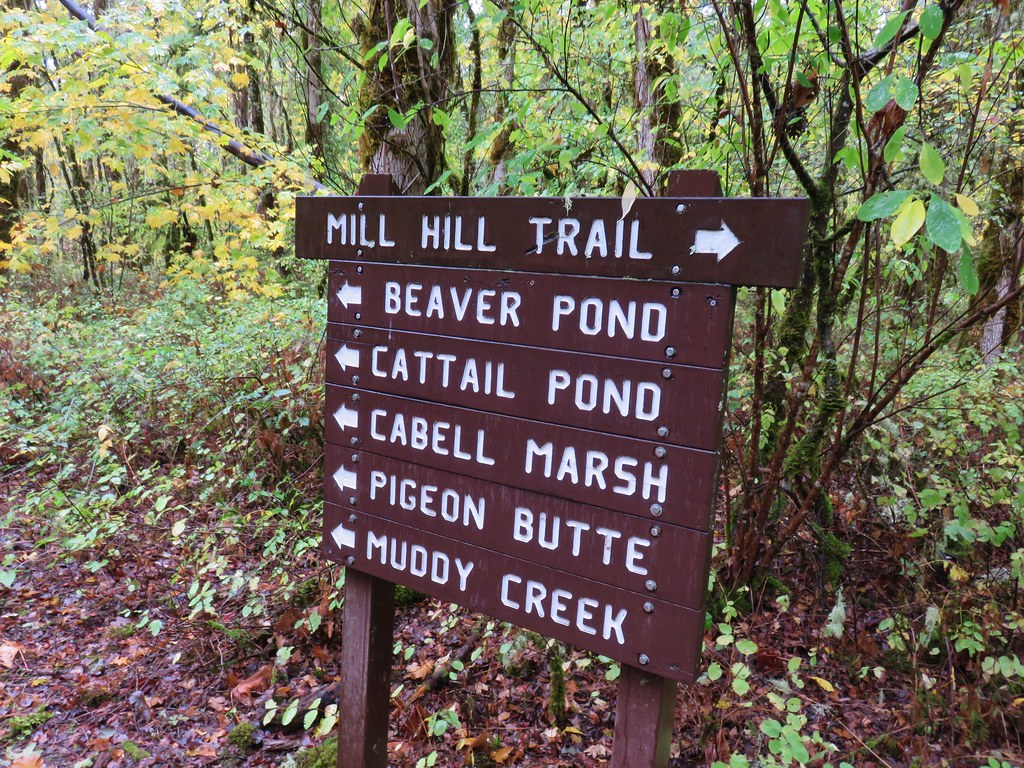
Approximately .6 miles from the road crossing we arrived at a four way junction. From the junction the Mill Hill Trail loops around Mill Hill while another path led to several other destinations.
Mill Hill Trail

Trail sign along the Mill Hill Trail

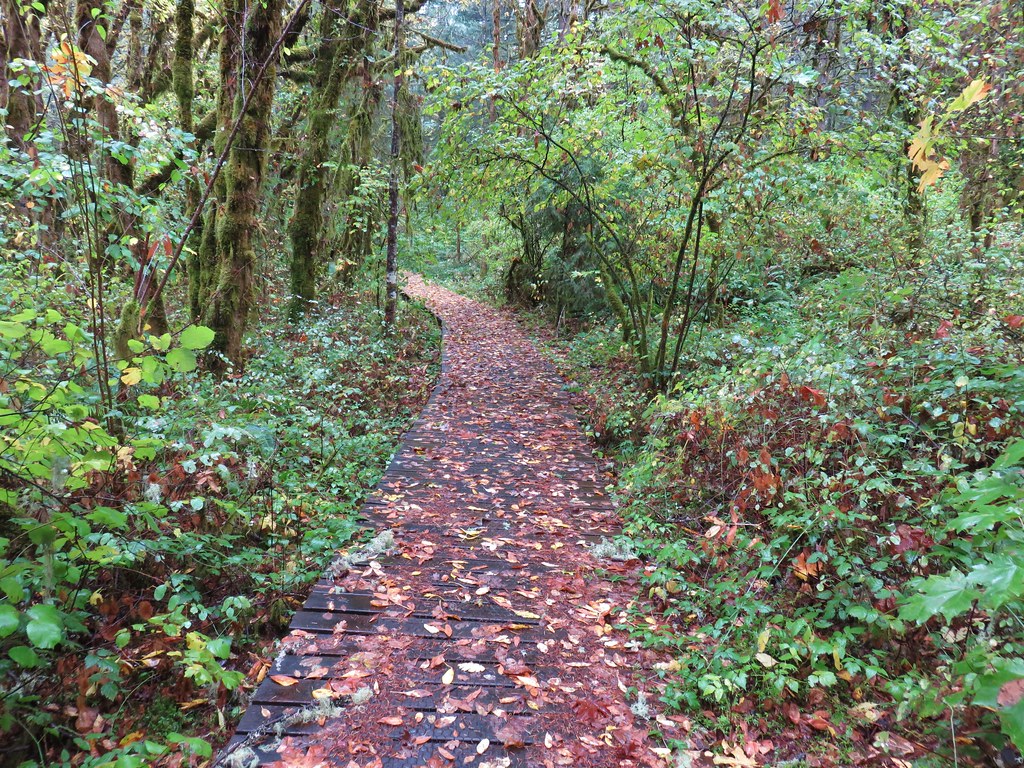
We forked right choosing to do the loop in a counter-clockwise direction. The forest along the trail changed a number of times on this 1.7 mile loop.
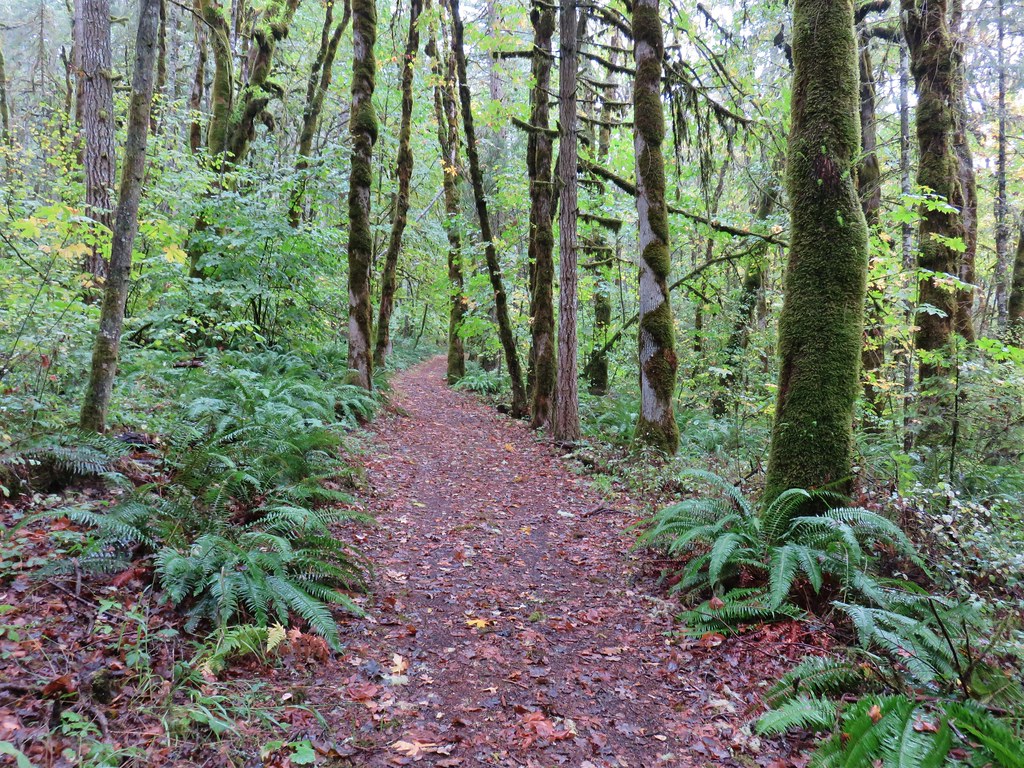
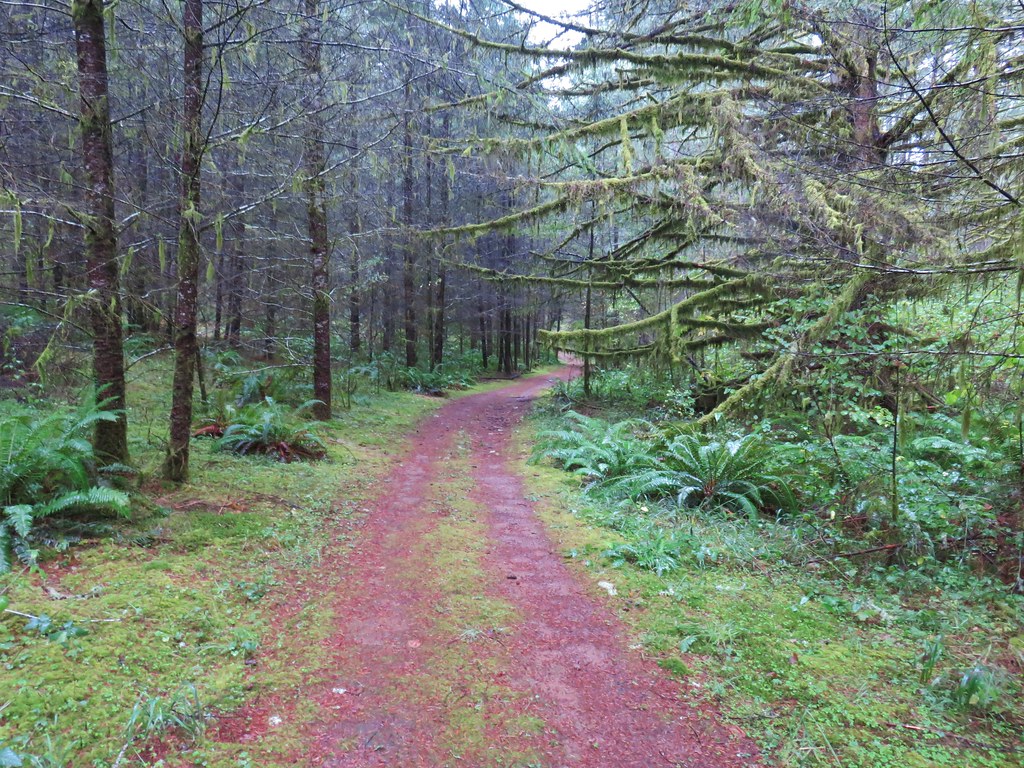
Mill Hill Trail

Mill Hill Trail

Mill Hill Trail

The rain had been steady all day and was only picking up as we made our way around Mill Hill. We stopped briefly at a viewpoint of Gray Creek which looked more like a pond, but for the most part just kept hiking at a quick pace.
Gray Creek from the Mill Hill Trail

We were however on the lookout for newts.
Rough skinned newt

When we arrived at the four way junction we decided to try and go back a slightly different way so we followed the pointer for Cabell Marsh then quickly turned left onto a service road. This road passed behind some refuge buildings before coming to a gate along the parking lot of the headquarters and nature store.
Finely Wildlife Refuge offices and store

A sign on the gate said the area was closed to the public so we probably shouldn’t have come down that particular road but now that we were at the headquarters we walked across the lot toward the Display Pond then turned left at a signboard for the Mill Hill Loop.
Display Pond

Mill Hill Trail

We passed a junction with a trail coming from the Display Pond and continued uphill.
Mill Hill Trail

We wound up meeting up with the Mill Hill/Inter-Tie Trail at the first junction we’d come to after crossing the service road earlier in the day.
Inter-Tie Trail

We turned right, recrossed the service road, and returned to the Woodpecker Loop Trial where we again turned right to complete that loop.
Inter-Tie Trail junction with the Woodpecker Loop Trail
It was about a half mile back to the trailhead from this junction. We were now officially soaked. Our “waterproof” layers were beginning to fail and water was now reaching our base layers. Apparently 2 hours is the limit to the effectiveness of our waterproof garments. It had been a nice morning of hiking and we are now eager to go back on a nicer day when we can really take our time and enjoy the surroundings. The two hikes came in as 1.1 miles and 5.1 miles respectively which we completed in a little over 2 hours due to our quicker than normal pace.

It has certainly been a different year as far as hiking goes for us. It will be interesting to see what the final few hikes we have planned wind up looking like. Happy Trails!

Flickr: Finley Wildlife Refuge

Categories
Hiking Oregon Portland Trip report Willamette Valley

Oxbow Regional Park and Powell Butte Nature Park

A trip to Portland to celebrate my Grandmother’s 93rd birthday provided us an opportunity to do some hiking in the morning before the festivities began. In the previous couple of years we had taken a hike in the Columbia River Gorge before seeing Grandma for her birthday but the Eagle Creek Fire had changed those plans this year so we turned to a couple of Portland area parks instead.

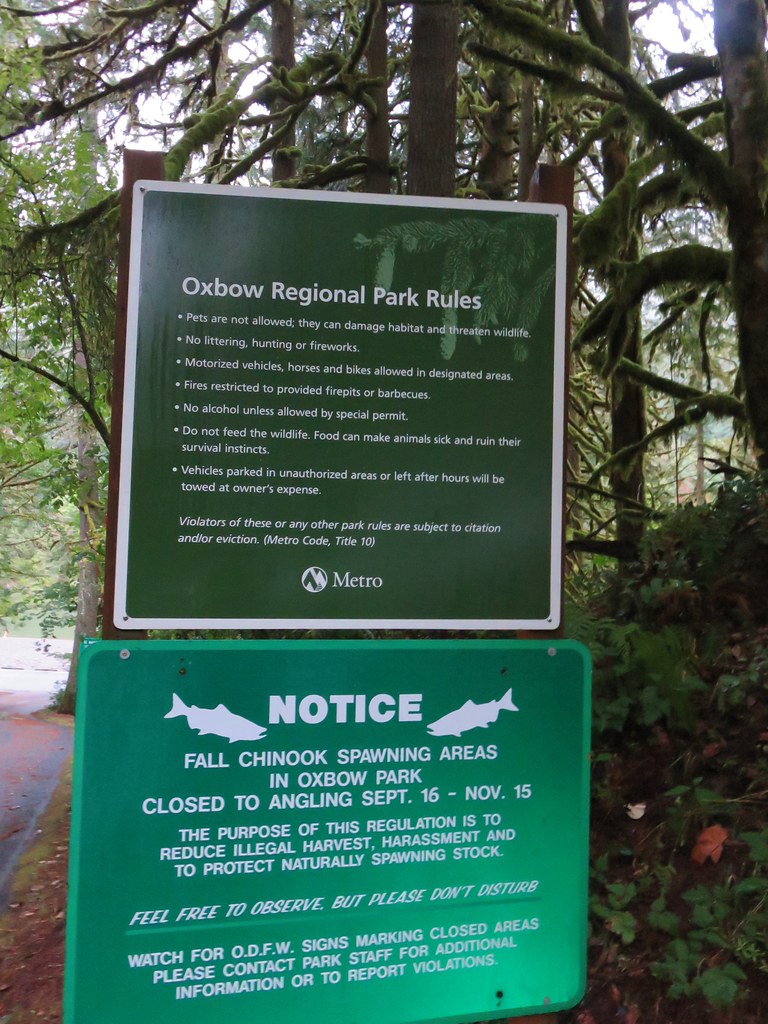
We started our morning at Oxbow Region Park. We paid the $5/car day use fee and drove through the park to the boat launch near the campground.

Sign at the Oxbow Park boat ramp

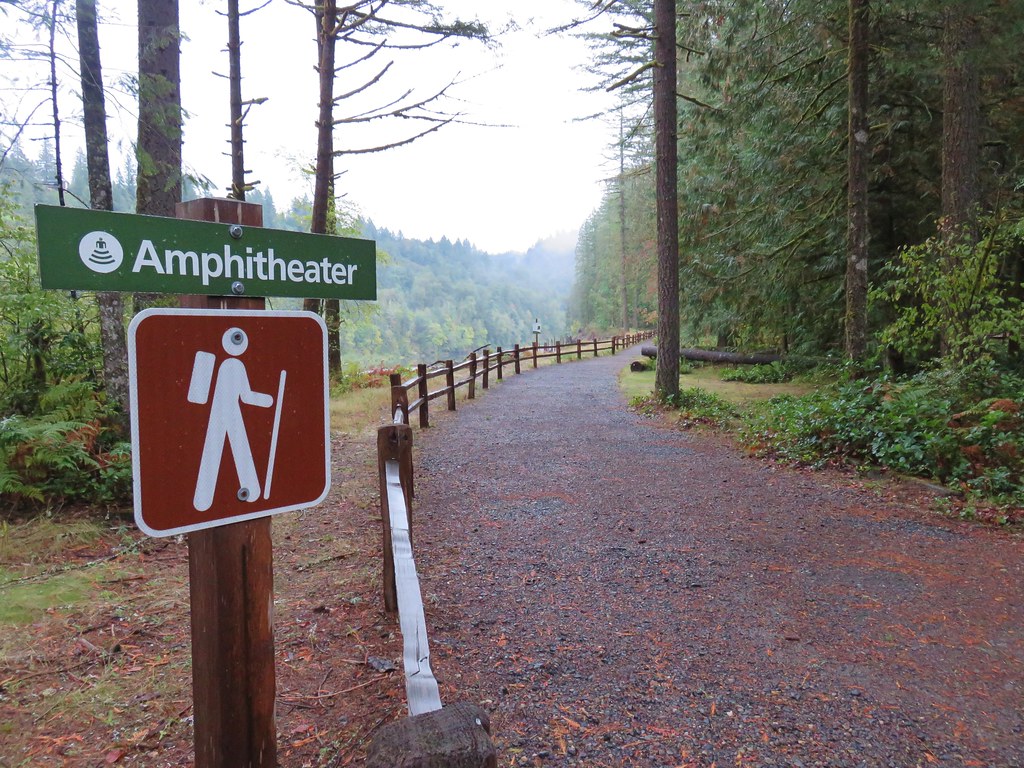
After a quick trip down to look at the Sandy River we headed east on a trail marked by a hiker symbol and a sign for the amphitheater.

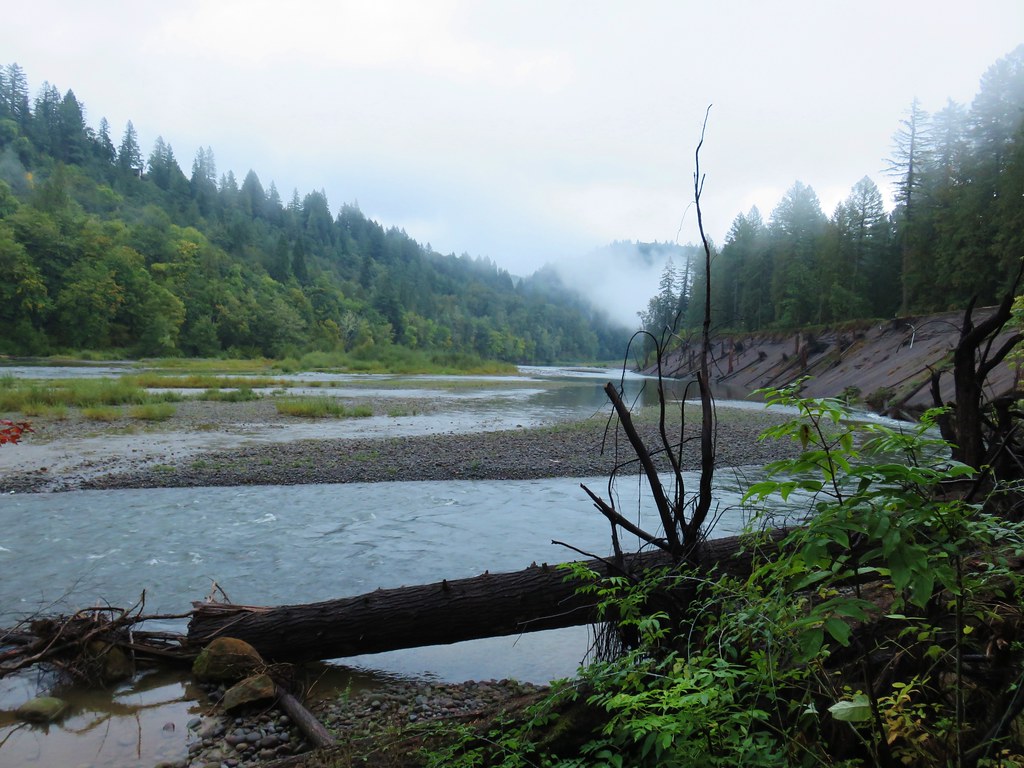
Sandy River

Amphitheater trail in Oxbow Park

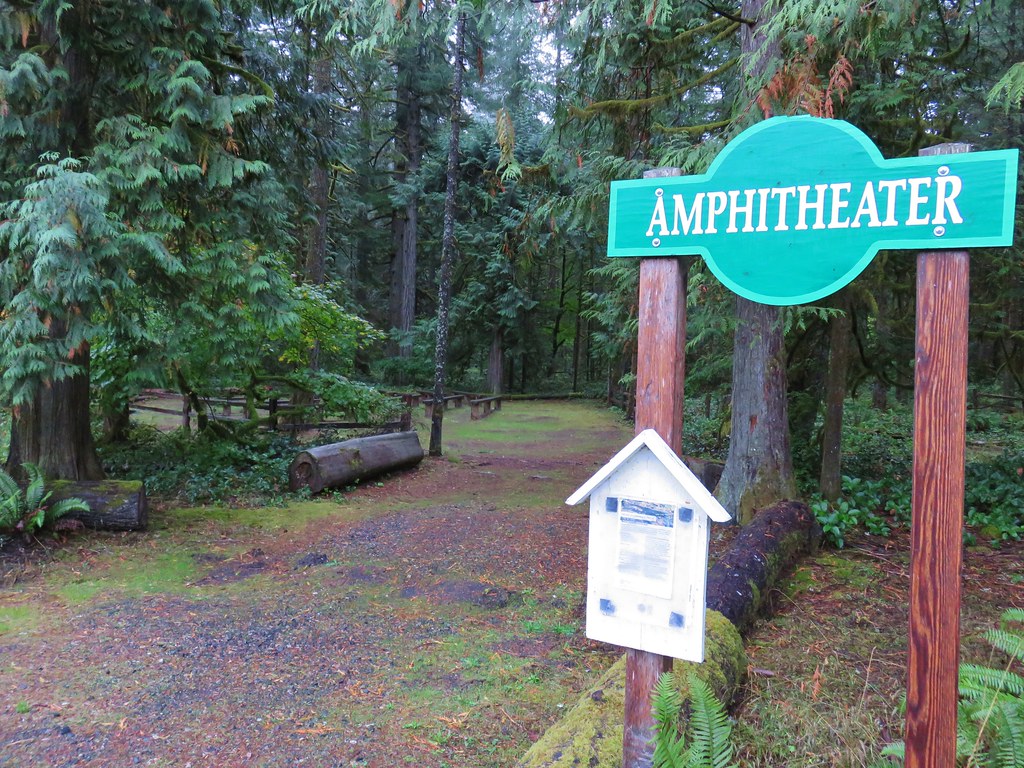
We soon passed the amphitheater on our right.

Oxbow Park Amphitheater

On the left the banks of the Sandy River showed much erosion where an ancient forest is being exposed years after being buried by volcanic eruptions from Mt. Hood.

Eroding bank along the Sandy River

Eroded bank of the Sandy River

One of many signs along the river bank

We were on Trail M which passed by the campground before dropping down into a green forest.

Trail in Oxbow Park

Trail in Oxbow Park

The trail was near the river offering occasional views.

Sandy River

We had planned on sticking to Trail M which followed the river around past Buck Bend but encountered a closed trail sign along the way.

Closed trail in Oxbow Park

There was a trail leading to the right at the closure so we turned onto that trail instead. A lack of signage and the presence of more trails than what the map in our guidebook showed caused a bit of confusion for the next little while. It didn’t help that none of the trails in the park were showing on the GPS so we decided to wing it and just work our way in the general directions that our book showed.

Trail in Oxbow Park

Ferns in Oxbow Park

Trail in Oxbow Park

After about .4 miles of making our way to the south and west we arrived at what is labeled on the park map as Group Camping area 2.

Group camping area 2

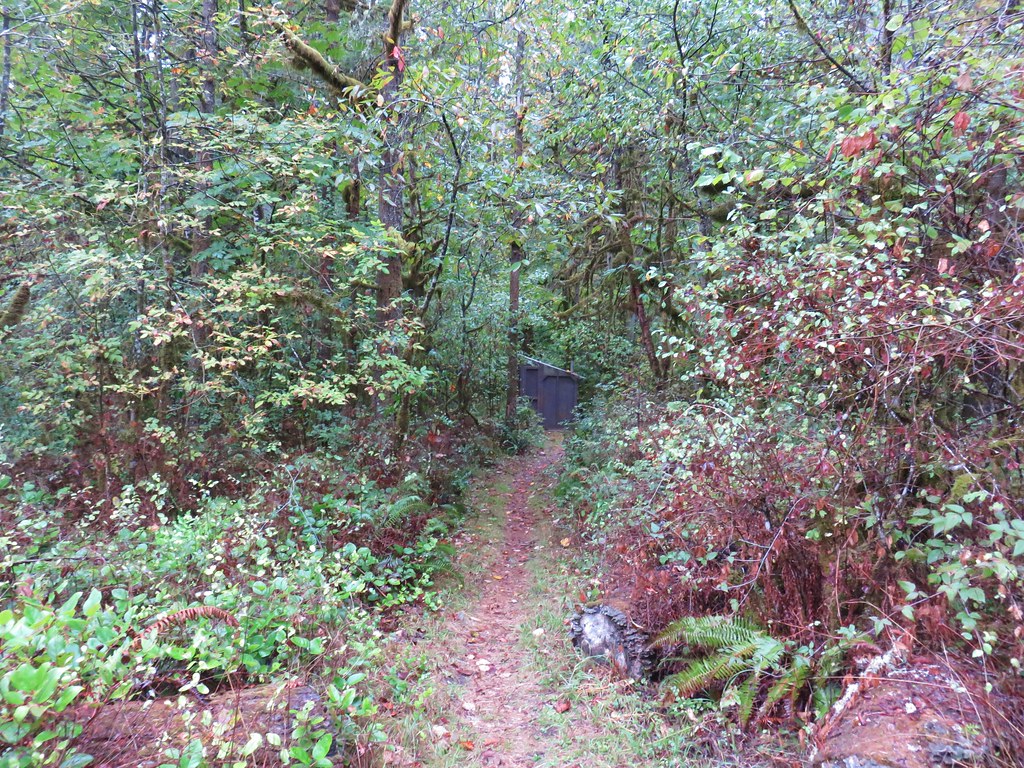
Old outhouse

From the camping area we turned right (south) and began following the river again. We were looking for a trail (I believe it would have been Trail N) on our right that would lead us back toward the center of the park on a bit of a loop. We passed an unmarked trail to the right at a small section of wooden fence but it seemed too close to the camp so we continued on a bit further. We hadn’t gone much further when we began to second guess ourselves and turned back around. When we got back to the little fence we decided we were so close to the camping area we should explore in the other direction for just a bit.

We passed the covered picnic area and headed north along the river past a new looking bench.

Newer looking bench

Not too much further we spotted the back of the closed trail sign and realized we had inadvertently wound up on that trail after all. We turned around again and headed back past the camp and turned right at the fence. This path angled back past the camping area but was clearly not Trail N which we had not gone far enough to reach. It turned out okay though as we spotted a couple of deer along this trail near the camping area.

Trail in Oxbow Park

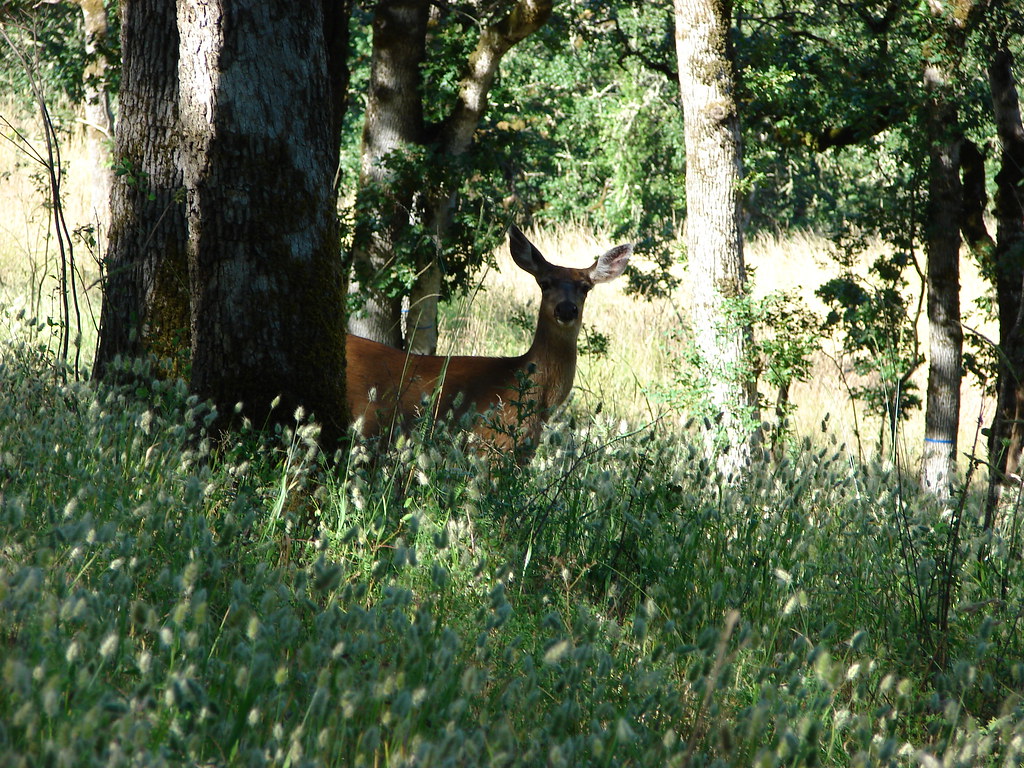
Black tailed deer

We continued to follow paths in the general direction shown in our guidebook (NW) and were passing along a hillside when Trail N joined from the left. This was when we knew for sure that turning at the small fence had not been the trail we had been looking for. We were now on a wide path which soon split.

Trail in Oxbow Park

Trails in Oxbow Park

We initially went right but that trail quickly arrived at the parks campground so we turned around and took the left fork. In a little under three quarters of a mile we came to an old roadbed (Trail G) at a gate post. The road was coming downhill from Alder Ridge and is the route taken by equestrians that start at the Homan Road Equestrian Trailhead. We had actually planned on starting there to avoid the $5 fee but there were “No Parking” signs all around the actual trailhead and we weren’t sure at the time about parking further away along Homan Road. It turns out that would have been okay but without knowing for sure we played it safe.

We turned up the old roadbed heading for Trail H which completes a 1.6 mile loop around Elk Meadow on Alder Ridge.

The loop was pleasant but low clouds ended any chance of views from the ridge.

Alder Loop

Foggy forest in Oxbow Park

After completing the loop we took Trail G, the old roadbed, back downhill to the junction by the gate post and turned left sticking to the old road bed until we reached a junction with the narrow Trail F forking slightly uphill to the left.
Trail in Oxbow Park

We hadn’t been on Trail F for long when we spotted a doe and fawn in the trees below.

Black tailed deer

Black tailed deer

We followed Trail F until we reached Trail D where we turned right.

This path crossed the park entrance road and brought us to Trail C along the Sandy River where we turned right back toward the boat ramp.

Sandy River

We followed this path back to our car completing a 6.3 mile hike that consisted of a lot of backtracking. It was a fun hike though as we spotted 5 deer in the lush green forests of the park.

Oxbow

We weren’t due at my Grandma’s house until 1pm and it was not quite 10am when we finished this first hike so we had plenty of time to check out another nearby park. Our second stop was at Portland’s Powell Butte Nature Park. We used google to drive to Powell Butte from Oxbow Park which took a little less than half an hour. We parked in a large parking area near the Visitors Center.

Powell Butte Nature Park

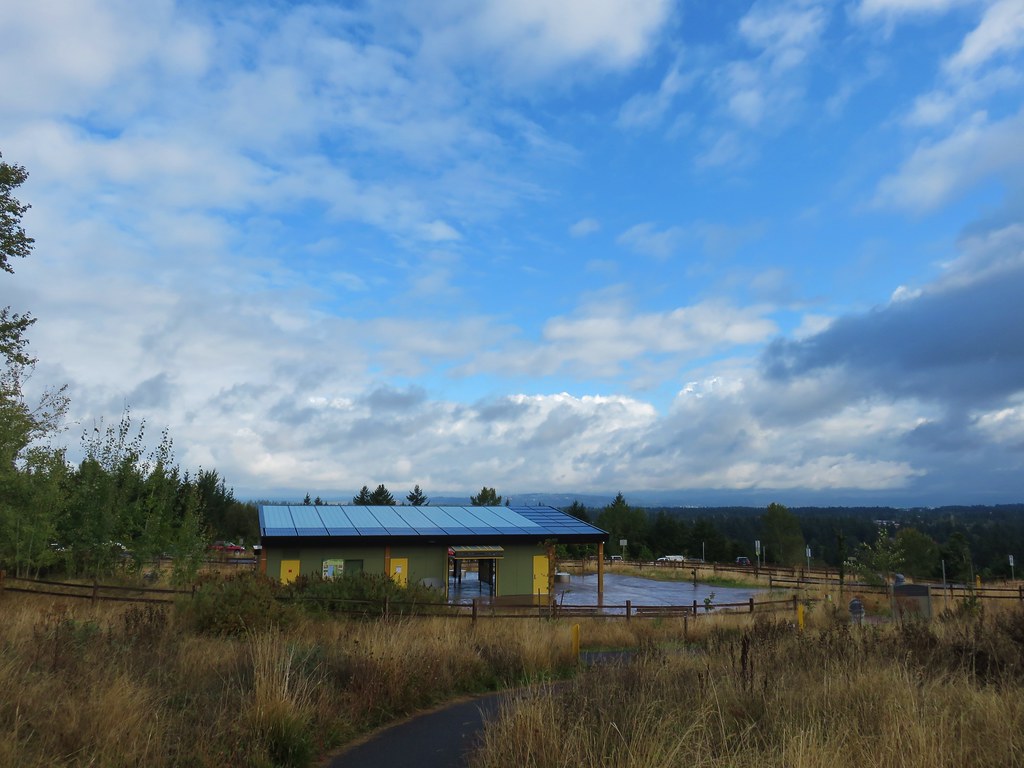
Visitors center at Powell Butte Nature Park

We set off at a signboard with a trail map just beyond the Visitors Center.

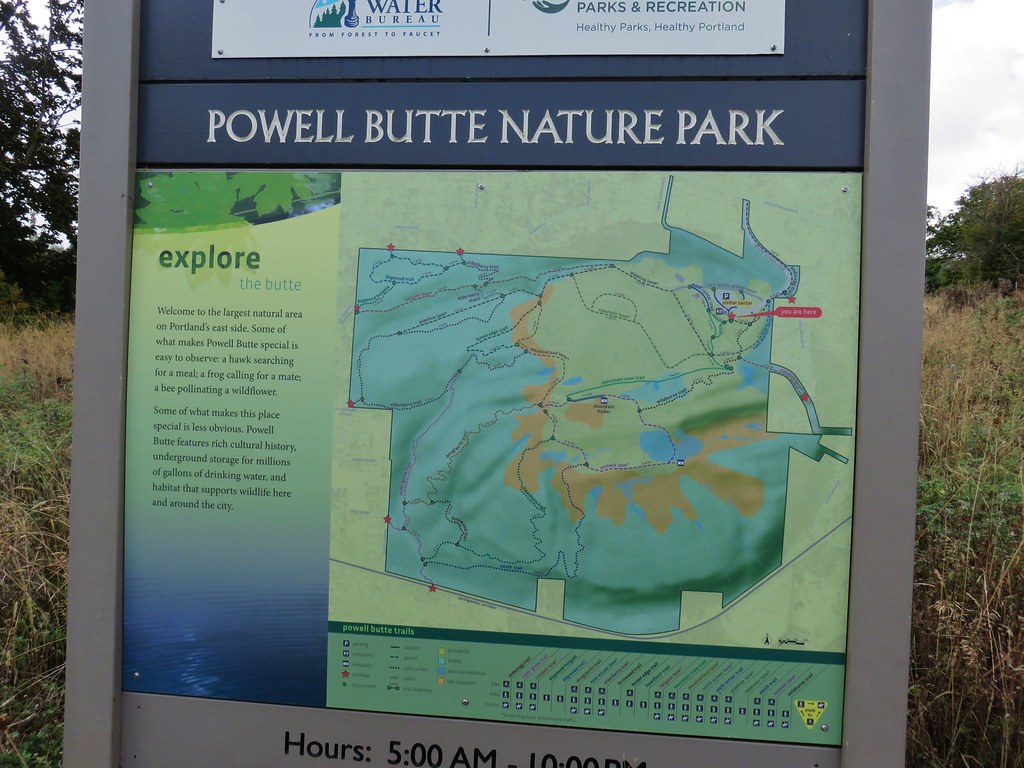
Powell Butte Nature Park map

The map was a welcome sight after the issues we’d had in Oxbow Park. Heather took a photo which was really helpful considering some of the trails had been renamed and new trails added since our guidebook had been printed.

We followed the paved Mountain View Trail uphill away from the center.

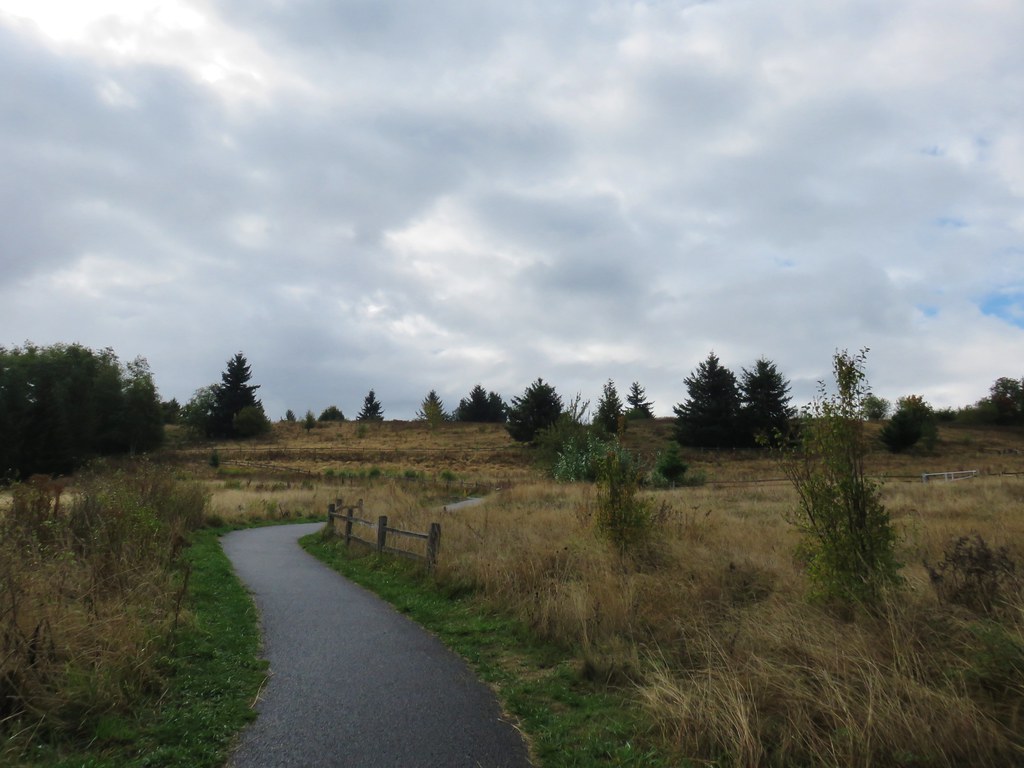
Powell Butte Nature Park

Mountain View Trail

We followed this path for .44 miles to a three-way junction where we stayed left following a pointer for .1 miles to a Mountain Finder.
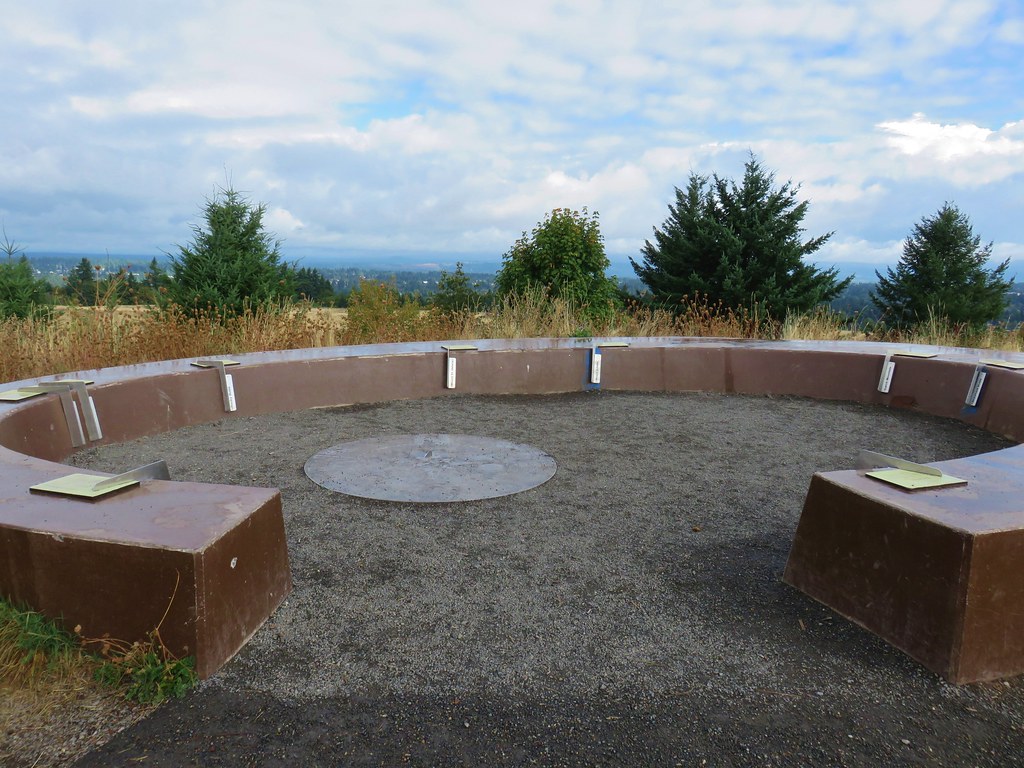
Mountain finder

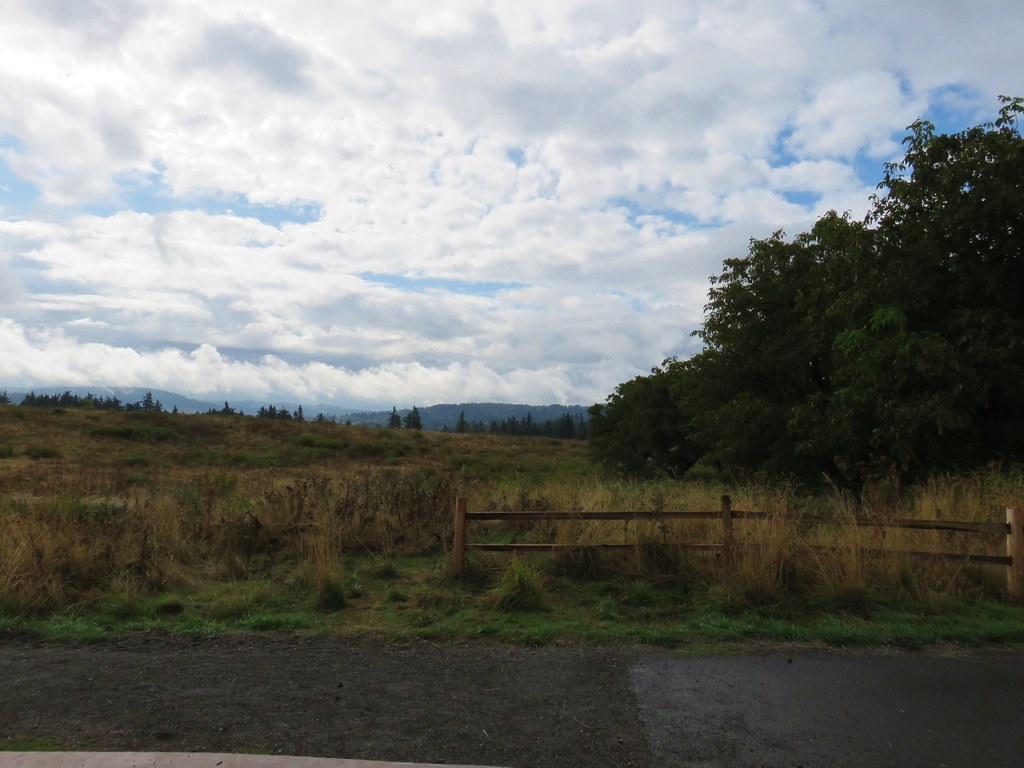
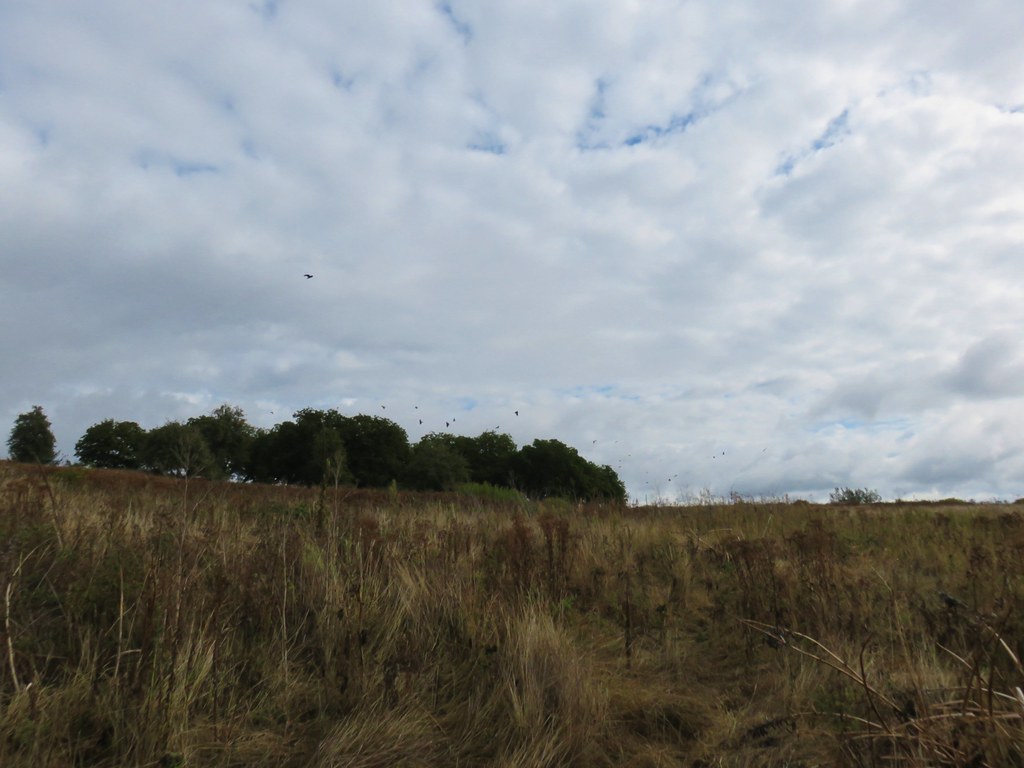
It was too cloudy to see most of the peaks identified by the finder but the brief descriptions of each were interesting none the less. After checking out the finder we continued on what was now the Summit Lane Trail. We stayed right at junctions on this trail for just under three quarters of a mile as it looped around open grasslands and a small group of trees left over from an old orchard where a murder of crows had gathered.

Powell Butte Nature Park

Crows in Powell Butte Nature Park

Crows in an apple tree

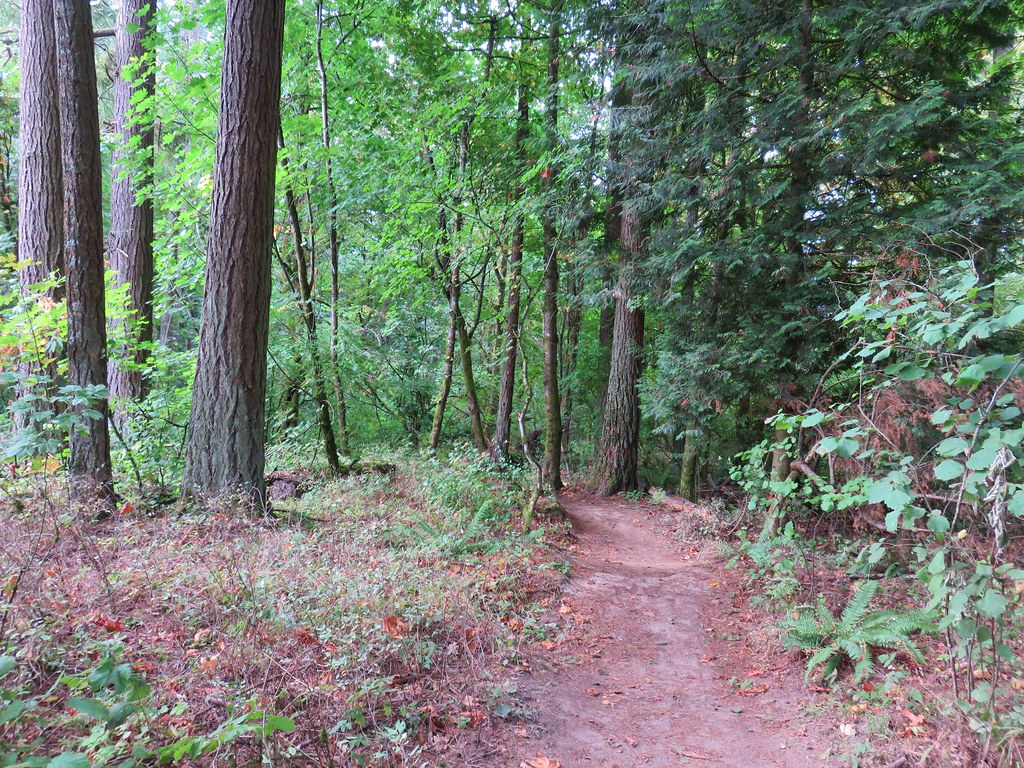
At a four way junction we turned left onto the Douglas Fir Trail which left the grassland and entered a forest.
Douglas Fir Trail

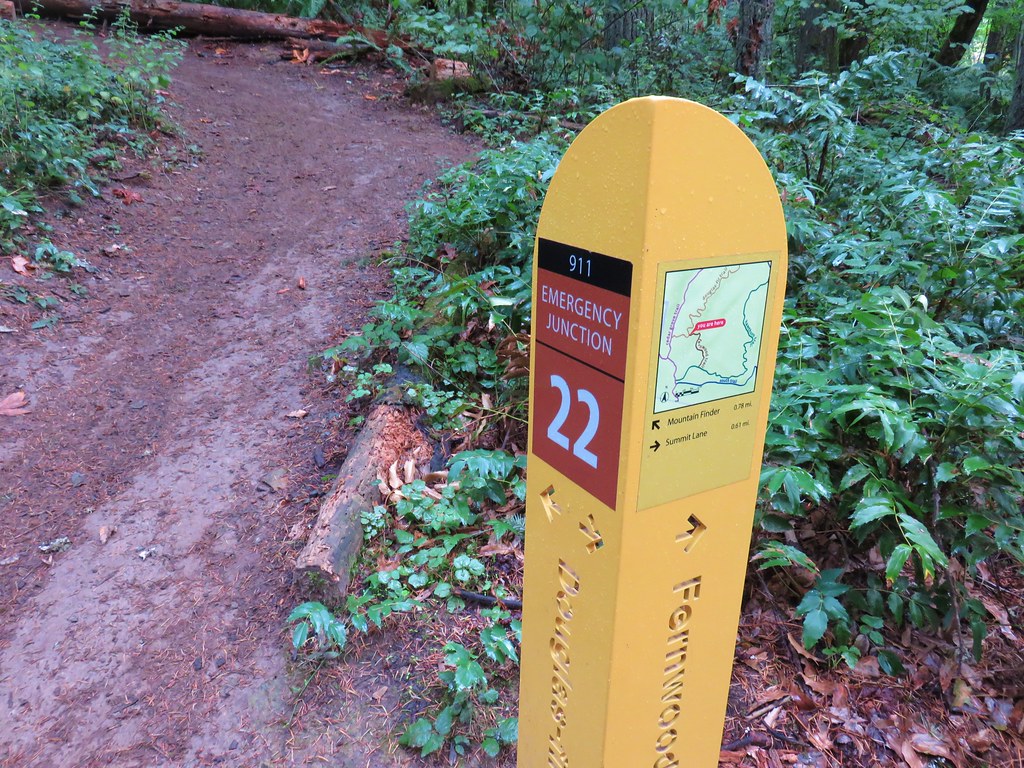
After .6 miles we stayed right at a junction with the Fernwood Trail.

Trail sing in Powell Butte Nature Park

In less than a tenth of a mile from that junction the Douglas Fir Trail ended at the Cedar Grove Trail.
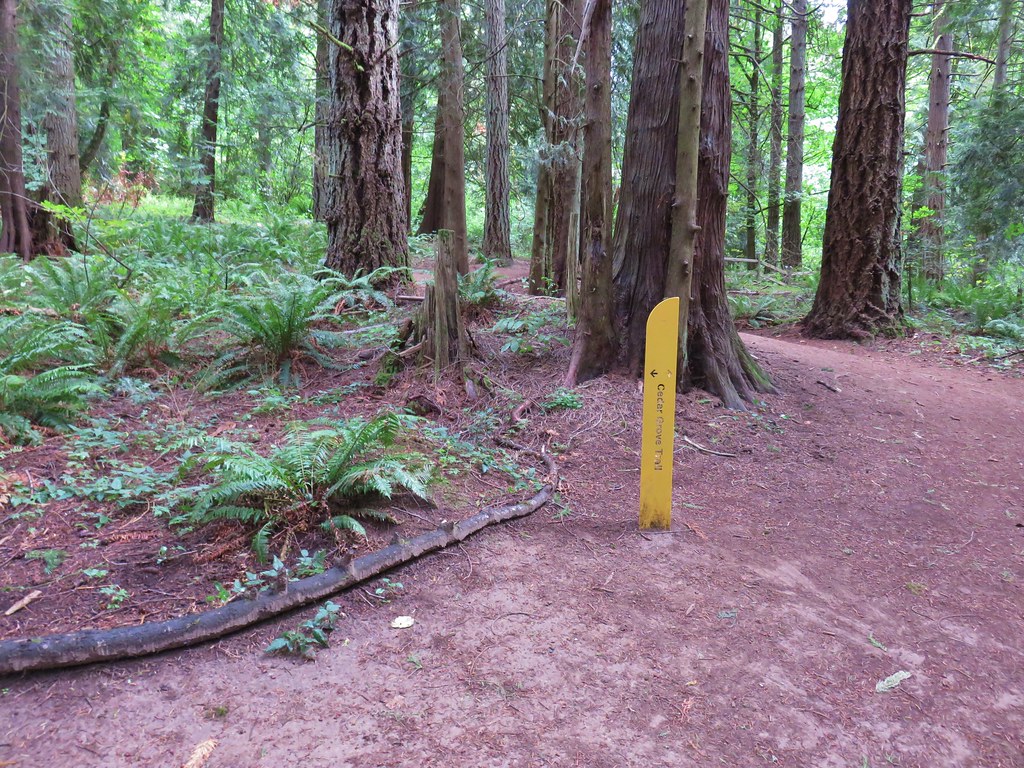
Cedar Grove Trail sign

Cedar Grove Trail

We climbed uphill on the Cedar Grove Trail for .4 miles where we then stayed right on the Elderberry Trail. This trail ended after just over a quarter mile at the wide gravel Meadowland Lane. We turned right on this path for a quarter mile which brought us back to the four way junction where we had taken the Douglas Fir Trail earlier.
Powell Butte Nature Park

Here we turned left back onto Summit Lane for less than a tenth of a mile to the Mountain View Trail which we followed back down to the Visitors Center for a 4 mile hike. We’ll have to go back sometime earlier in the year when more of the areas flowers are blooming and on a less cloudy day to see the mountains but even without those attractions this was a really enjoyable hike.
We arrived at Grandma’s right on time and had a good time celebrating her birthday with cake and ice cream before heading back home. Happy Trails!

Flickr: Oxbow Regional Park and Powell Butte Nature Park

Categories
Hiking Oregon Salem/Albany Trip report Willamette Valley

Salem Parks – Wallace Marine to Minto-Brown Island

With an influx of visitors expected in Oregon for the eclipse we decided to do something a little different for our most recent hike.  Heeding warnings of possible traffic issues (which never seemed to have materialized) we stayed close to home opting for a urban hike through three city parks in Salem.

We had gotten the idea for this urban hike when the opening of the Peter Courtney Minto Island Bicycle and Pedestrian Brdige on June 5th, 2017 made it possible to walk or bike through Wallace Marine, Riverfront, and Minto-Brown Island Parks without having to use any streets. Given the unknowns associated with the eclipse this seemed like the perfect time to try it out.

We began our hike at West Salem’s Wallace Marine Park.
IMG_7099

After entering the 114 acre park we turned left (north) and headed for the softball complex which consists of 5 fields that host several tournaments each year.
IMG_7100

IMG_7101

We looped around the fields which were empty this early it morning. No games meant no crowds but that didn’t mean there was a lack of noise. Osprey use the light poles for nests and they were making their presence known from their high perches.
IMG_7102

IMG_7111

After looping around the fields we headed south past the parks entrance road and several soccer fields.
IMG_7116

IMG_7117

Shortly before reaching the Union Street Railroad Pedestrian Bridge we turned left down a paved path to the Willamette River.
IMG_7118
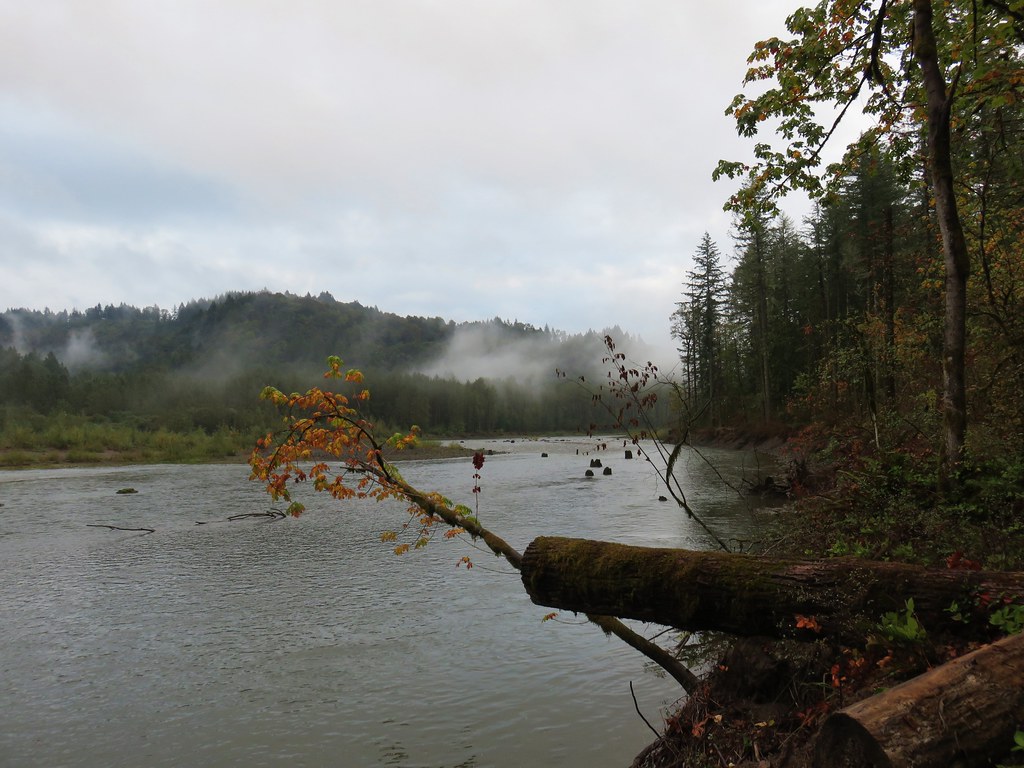
IMG_7119

IMG_7124

IMG_7125

After visiting the river we headed for the pedestrian bridge.
IMG_7130

Originally constructed in 1912-13 for the Pacific Union Railroad the half mile bridge was purchased for $1 by the city in 2004. In April, 2009 the bridge was reopened to pedestrians and bicyclists connecting Wallace Marine Park to Salem’s Riverfront Park.
IMG_7136

IMG_7137

After crossing the river we turned right and headed into Riverfront Park. The section of sidewalk just after the bridge was one of the least scenic portions of the route as it followed the parks entrance road past an electrical station and under the Center and Marion Street Bridges.
IMG_7143

IMG_7144

Between the Marion Street and Center Street Bridges is the Gilbert House Children’s Museum.

This science and art museum is a great place for kids and fun for their parents.
IMG_7145

IMG_7147

We chose to go around the museum on the left which took us between the museum and some still operational railroad tracks. If you’re looking for scenery skip this section and stay to the west of the museum which keeps the river in view.

After passing a parking lot we came to the open green grass of Riverfront Park.
IMG_7152

A music event was being set up in the center of the 23 acre park.
IMG_7153

The park is also home to the Willamette Queen Sternwheeler
IMG_7151

IMG_7155

IMG_7156

Riverfront Park was the location of the field sessions when Heather and I took the Route-Finding Class offered by the Chemeketans.

We passed the small open air amphitheater, which is slated for an upgrade in 2020, and continued south toward the Peter Courtney Minto Island Bicycle and Pedestrian Bridge.
IMG_7159

IMG_7162

IMG_7164

Another park feature, the Eco-Earth Globe, sits near the bridge and is an interesting bit of art.
IMG_7165

We headed across the bridge and into Minto-Brown Island Park.
IMG_7166

IMG_7168

IMG_7169

Interpretive signs line the new section of trail linking the bridge to the older trail system in the park after approximately 3/4 of a mile.
IMG_7176

IMG_7175

IMG_7186

At the junction with the older trail is a large signboard and map.
IMG_7193

By far the largest of the three parks, at 1,200 acres, numerous trails and loop options were available to us. We had done a short loop hike here in April of 2016 but this time planned on covering a bit more ground.

We turned right at the map and followed paved paths to the bank of the Willamette River.
IMG_7195

IMG_7198

IMG_7201

IMG_7203

IMG_7204

Signage along the trails is excellent and makes it fairly easy to get around even if you aren’t familiar with the park. We were headed for the Shelter Parking Lot, where we had started our 2016 visit.
IMG_7212

IMG_7211

We had been passed by several familiar faces running with groups from Gallagher Fitness Resources but when we arrived at their watering hold near the gazebo at the Shelter Parking lot there were none to be seen in the area.
IMG_7215

IMG_7214

We continued on from the gazebo following our route from our previous visit by forking right across at footbridge after a tenth of a mile.
IMG_7218

IMG_7217

After another .4 miles we detoured to the left to visit a collapsing fishing dock.
IMG_7220

We continued on passing an open field before turning off the paved path on a wide dirt path to the left which led us to Faragate Ave.
IMG_7221

IMG_7223

IMG_7226

At Faragate Ave we turned left on a paved path which paralleled the road for a short distance before bending back into the park.
IMG_7227

IMG_7229

After crossing another footbridge we turned right on a narrow dirt path.
IMG_7230

IMG_7231

IMG_7232

This path led about a quarter mile to another paved path where we initially turned right hoping to make a wide loop on another dirt path. We took a left on a little path after a tenth of a mile but it was rather brushy with blackberry vines and some poison oak so we quickly scrapped that idea and returned to the paved path which runs between the east end of Homestead Road and the Shelter Parking Lot #3. This section of trail is a bit drier and more open which allows for a few more flowers as well as little more poison oak.
IMG_7243

IMG_7234

IMG_7241

IMG_7245

IMG_7247

IMG_7248

There is also an old car along the way.
IMG_7249

We were on our way back, but before reaching the gazebo we turned right on the Duck Loop which would swing us out and around some duck ponds.
IMG_7252

IMG_7256

IMG_7257

IMG_7259

IMG_7260

We crossed the park’s entrance road after .9 miles and turned right along it to the Entrance Parking Lot which we found to be super busy. We followed a paved path from the far end of the lot across the Willamette Slough and turned right on another paved path.
IMG_7261

We completed our loop through Minto and headed back toward Riverfront Park.
IMG_7264

IMG_7265

We took a different route back through Riverfront Park in order to go by Salem’s Riverfront Carousel, another great attraction for kids.
IMG_7266

According to our GPS we managed to get 12.4 miles in for the day and there were still trails in Minto that we didn’t get to. Even though urban hikes are a lot different than our normal outings this was a nice hike and gives us a nearby go-to option when we just can’t get away. Happy Trails!

Flickr: Wallace to Minto Parks

Categories
Corvallis Hiking Oregon Trip report Willamette Valley

Chip Ross Park and Dimple Hill

A week of snow and icy conditions had kept us indoors much of the week so when the forecast for Sunday looked promising we decided to cash in our December hike and make the short drive down to Chip Ross Park in Corvallis.  The park offers a 1.5 mile loop trail as well as access to the more extensive trail network in Oregon State University’s McDonald-Dunn Research Forest.

It was a foggy morning when we arrived at the parking area at the end of Lester Rd.
Chip Ross Park Trailhead

Chip Ross Park had been closed part of the year as the City of Corvallis attempts to restore the area to it’s natural oak habitat. Many trees have been removed and some of the trails closed or rerouted. A small section of the loop remains closed but should be reopened in early 2017.
Chip Ross Park

We headed left along a wide tract passing many piles of debris left over from the tree removal.
Chip Ross Park<

After a quick half mile climb we arrived at a signboard and trail map for the McDonald-Dunn Research Forest.
Infromational signboard for McDonald-Dunn Research Forest

McDonald-Dunn Research Forest Trail Map

We had visited the forest in October when we hiked to the summit of McCulloch Peak and really enjoyed that hike so we were looking forward to checking out some of the other trails.

We set off on Lower Dan’s Trail following it through the forest just under a mile to a road crossing.
Lower Dan's Trail

Lower Dan's Trail

Road crossing of Lower Dan's Trail

We then took Upper Dan’s Trail which began on the far side of the road.
Upper Dan's Trail

This trail crossed Jackson Creek on a footbridge before climbing up toward the summit of Dimple Hill.
Upper Dan's Trail

Upper Dan's Trail

Junctions along the way were well signed making it fairly easy to stay on track.
Upper Dan's Trail

Trail map in the McDonald-Dunn Research Forest

As we followed Upper Dan’s Trail to the 1493′ summit of Dimple Hill we began to catch some glimpses of blue sky above the fog.
Blue sky above the trees

McDonald-Dunn Research Forest

Approximately 2.5 miles from the road crossing we arrived at the summit of Dimple Hill.
Dimple Hill summit

The summit was above the clouds and we had a great view of Mary’s Peak to the south.
Clouds below Dimple Hill

Mary's Peak from Dimple Hill

Mary's Peak from Dimple Hill

Mary's Peak from Dimple Hill

We took a short rest on the summit bench soaking in the sunshine before continuing on.
Bench on Dimple Hill

Trees on Dimple Hill

Frozen grass on Dimple Hill

We took Road 650 down and around the NE side of Dimple Hill where we found quite a bit more snow than there had been at the summit.
Looking west from Dimple Hill

Snowy trees on Dimple Hill

The combination of snow, fog, and sunlight created some beautiful scenery.
Sunlight in the McDonald-Dunn Research Forest

McDonald-Dunn Research Forest

At a fork in the road we headed right on Road 600 a.k.a. Patterson Road.
Road junction in McDonald-Dunn Research Forest

After about three quarters of a mile on Patterson Road we turned downhill on the Upper Horse Trail
Upper Horse Trail

This trail switchbacked downhill eventually reentering the fog.
Upper Horse Trail

At another junction we followed a pointer for the Lower Horse Trail.
Lower Horse Trail

We continued to follow pointers for the Lower Horse Trail passing a private residence in a meadow before turning right briefly on the road to that house.
Lower Horse Trail

Meadow along the Lower Horse Trail

Short road walk along the Lower Horse Trail

We forked left on this road which crossed Jackson Creek before leading us back to Lower Dan’s Trail at the road crossing. We then headed back to Chip Ross Park where we checked out it’s summit benches which were still in heavy fog.
Bench in Chip Ross Park

Bench in Chip Ross Park

The total hike was 9.1 miles with approximately 1650′ elevation gain. The view on Dimple Hill was wonderful and just what the doctor had ordered after the spell of bad weather we’d had. For what was possibly our final hike of 2016 it was a great way to end the year. Happy Trails!

Flickr: https://www.flickr.com/photos/9319235@N02/albums/72157678011347405

Categories
Corvallis Hiking Oregon Trip report Willamette Valley

Bald Hill & McCulloch Peak

Our latest outing took us to the Bald Hill Natural area and the McDonald Dunn Forest. (Hike #48 in William L. Sullivan’s “100 Hikes/Travel Guide Oregon Coast & Coast Range” 4th edition.) This pair of hikes near Corvallis, OR was a recent substitution in our hiking schedule. We were looking for a hike closer to home for the day after attending the homecoming game at my alma mater – Western Oregon University (It was Western Oregon State College back in my day) with my college roommate and his family. My roommate Tim and his wife Erin had already been dating when Heather and I began seeing each other so the four of us had spent quite a bit of time together in those days. We spent all day Saturday reminiscing starting with an alumni breakfast and ending with dinner at Mendi’s Pizza.
We were able to sleep in a little on the day of the hike since the drive was just under an hour and it hadn’t been getting light out until almost 7:30am. We took Highway 99W to Corvallis then turned right (west) onto NW Walnut Blvd for 4.3 miles to NW Oak Creek Drive where we once again turned right. Both of the days trailheads were located along this road and we hadn’t yet decided which we were going to start with. We had been waiting to see what the weather was like. It had been extremely foggy the prior morning and we didn’t want to head up Bald Hill (the shorter of the two hikes) if there was no visibility because the guidebook indicated that it had the better views. The forecast for the day called for patchy morning fog and a 20% chance of showers before 11am, but as we neared the Bald Hill Natural Area .8 miles along NW Oak Creek Dr. there was no fog just some higher clouds so we pulled into the already busy parking lot.
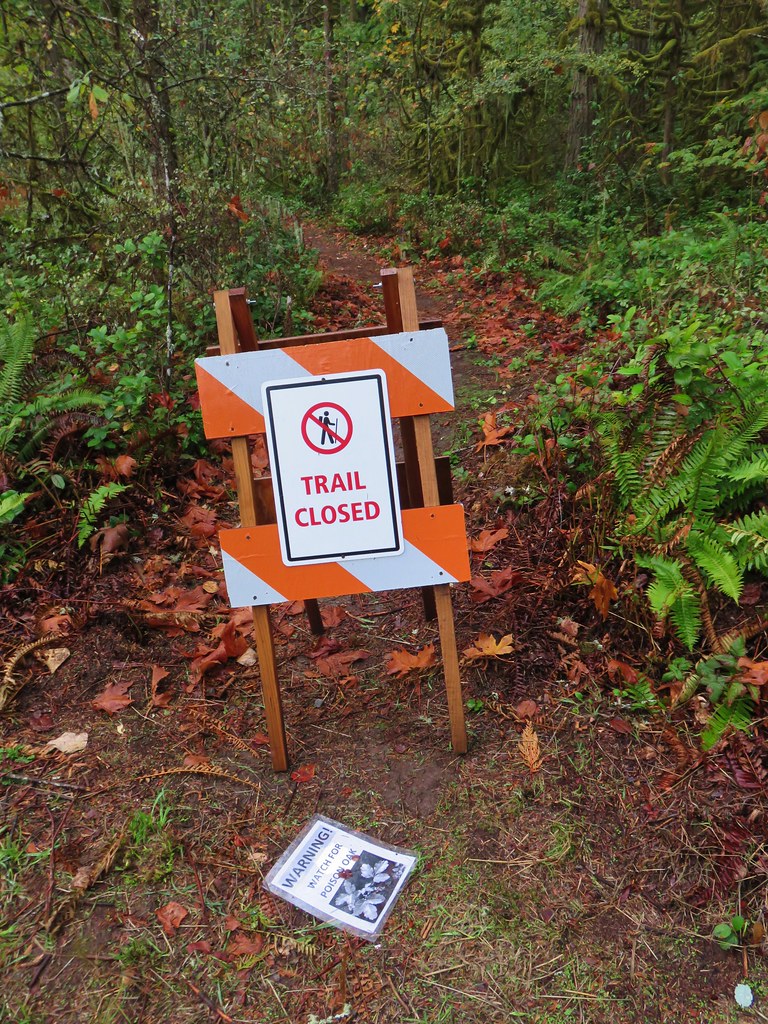
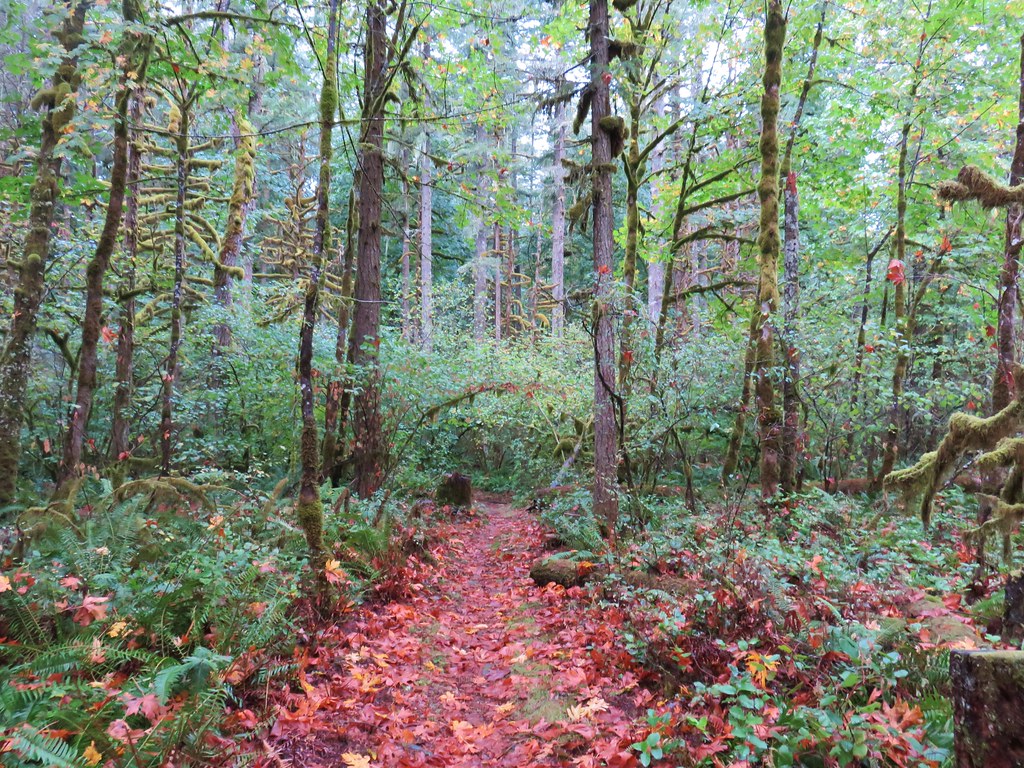
The majority of cars seemed to belong to runners and the rest dog owners. The area offers numerous trails, some paved and some not, as well as an off leash dog area. It reminded us a bit of Minto-Brown Island Park in Salem except there were hills instead of a river.

We set off from the parking area crossing Oak Creek on a footbridge and heading straight out a wide paved path.
IMG_7537

IMG_7539

As the path began to curve through the wetlands Bald Hill came into view.
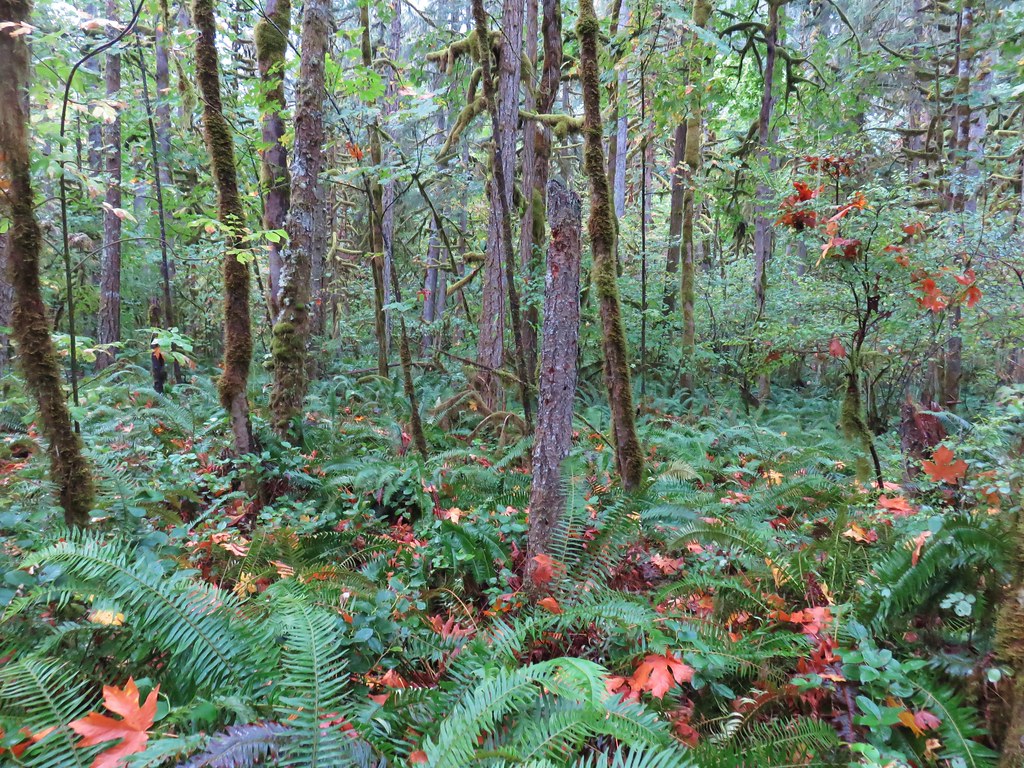
IMG_7541

The route suggested by Sullivan turns right off the paved path after a half mile passing an old barn on the right. We wound up turning right one path too soon though and found ourselves passing through a field with the barn up on a hill to our left.
IMG_7542

IMG_7546

We followed a faint path up through the field to the barn where we picked up the correct trail.
IMG_7547

IMG_7548

IMG_7549

With the aid of trail maps at junctions we were able to stay on Sullivan’s route climbing .8 miles to the summit of Bald Hill.
IMG_7551

IMG_7552

IMG_7557

For a cloudy day the view was very nice. The first of two benches on the hill overlooked the southern end of Corvallis where trees blazed with fall colors amid the houses.
IMG_7561

IMG_7558

Various fruit trees lined the trail at the summit drawing birds to the area.
IMG_7553

IMG_7564

IMG_7567

The second bench looked to the SW towards Mary’s Peak which was mostly hidden by clouds.
IMG_7566

IMG_7568

After passing the second bench we continued on our loop 1.9 miles passing farmland and more birds on the way back to the parking lot.
IMG_7582

Northern Flicker
IMG_7575

IMG_7579

IMG_7585

IMG_7583

IMG_7586

The loop was 3.3 miles which was a nice warm up for our next stop which was to be a 9.5 mile loop in the McDonald Dunn Forest with a stop atop 2154′ McCulloch Peak. From the Bald Hill parking lot we continued west on NW Oak Creek Drive following it to the right at a fork after 1.1 miles and continuing to a parking area at the roads
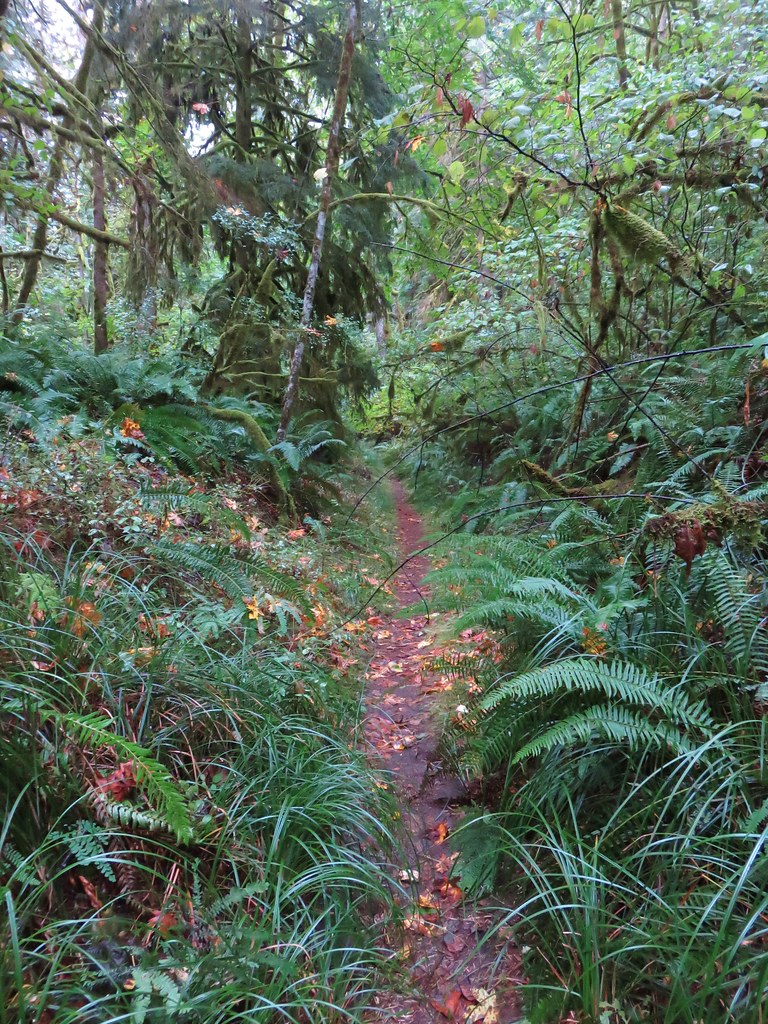


gated end. The McDonald-Dunn Research Forest consists of approximately 11,250 acres largely used by Oregon State University for instruction and research. Various trails and roads are open to hikers, bikers, and equestrians although occasional closures do occur due to forestry activities. Despite having checked the forest website the night before we noticed a sign at the trailhead stating that our planned return route (Road 770) was currently closed due to a timber harvest. The route up to McCulloch Peak was open though and there appeared to be a couple of other ways to return using different roads and/or trails so we sallied forth.
IMG_7587

IMG_7590

We followed Patterson Road from the gate just over half a mile to a junction with road 6020.
IMG_7593

Near the junction was the beginning of the Extendo Trail.
IMG_7595

The Extendo Trail is open to Bikes, horses, and hikers from April through October and then to hikers only from November through March. We followed this trail across Oak Creek and then uphill for almost 1.5 miles. Fall was on full display in the forest along the trial with colorful leaves and plenty of mushrooms to be seen.
IMG_7597

IMG_7600

IMG_7601

IMG_7602

IMG_7603

IMG_7606

IMG_7610

Some of that fall color was attributable to poison oak which we were keeping a close eye out for.
IMG_7615

IMG_7616

The Extendo Trail ended at a 4-way junction. To the left was the Uproute Trail which headed back downhill to Road 6020. An unofficial (illegal) path continued straight uphill and to the right was gravel Road 680 and a pointer for McCulloch Peak.
IMG_7619

We followed road 680 uphill to a clearcut saddle with an interpretive sign and a bit of a view to the NW.
IMG_7620

IMG_7621

IMG_7623

IMG_7626

Beyond the saddle Road 680 came to an end at Road 700 where we followed another pointer for McCulloch Peak.
IMG_7629

Just before reaching the junction with Road 770 we got a clear look at our destination, McCulloch Peak.
IMG_7630

We passed closed road 770 1.1 miles from the Extendo Trail.
IMG_7631

IMG_7632

We passed several roads sticking to Road 700 until we reached Road 790 which was also signed Marvin L. Rowley Road (named after the former Forest Manager).
IMG_7639

We reached the summit a little over a mile from Road 770 where a small bench awaited.
IMG_7645

Although it wasn’t wide, the view was nice enough.
IMG_7646

IMG_7648

IMG_7649

After a brief break we headed back downhill. Since our planned return route was closed we decided to look at the map and see what other options we had. First we turned left when we got back to Road 700 following it for a quarter mile to Road 740 which looped around a small knoll before rejoining Road 700 after another quarter mile. Near the end of Road 740 we passed a stump covered with Chicken of the Woods mushrooms.
IMG_7658

IMG_7660

IMG_7664

We then retraced our path down Road 700 to Road 680. At the clearcut viewpoint on Road 680 we spotted a faint Mt. Jefferson against the clouds.
IMG_7665

IMG_7668

We had a choice when we reached the junction with the Extendo and Uproute Trails. We could return on either of those trails or stay on Road 680 and follow it down to Patterson Road. We decided on following the road which swung out to the west for .6 miles to Patterson Road just over a mile from where we had turned off it earlier to take to Extendo Trail uphill. It was a pleasant walk through the woods back to the trailhead.
IMG_7675

The hike wound up being a little over 9 miles giving us a total of 12.4 miles for the day. The trails (and roads) in both of the areas were in excellent shape and the number of options and year round accessibility makes them nice options anytime of the year. They will be on our list of nearby alternatives when we want to get outside but don’t want (or can’t get) too far from home.

Happy Trails!

Flickr: https://www.flickr.com/photos/9319235@N02/albums/72157674433573180

Categories
Coastal Range Hiking Oregon Salem/Albany Trip report Willamette Valley

Minto-Brown Island Park and the Banks-Vernonia State Trail

We didn’t have any hikes planned for awhile after our visit to Tamanawas Falls due to Heather having a half-marathon to run on April 10th. Her half-marathon wound up being an opportunity for a pair of short hikes on race weekend though.

On the day before the race we made the short trip to Salem’s Minto-Brown Island Park for a short walk to help make sure Heather stayed loose. We’ve spent quite a bit of time in the park, sometimes walking and other times passing through on runs. This was the first time I’d brought the camera along to get some photos though.

The area used to be islands in the Willamette River but flooding changed the course of the river so that the former islands are connected to the rest of Salem. At more than 1200 acres, the park contains 19 miles of trails, a playground, a 30 acre off-leash dog area, and fishing opportunities.

The paths are a mix of paved and soft surface trails making the park a popular place to run, walk, or bike. High water does close some of the trails at times but there is almost always a few that remain passable. Later this year a footbridge connecting this park to Salem’s Riverfront Park will make it possible to visit both of these parks as well as Wallace Marine Park without setting foot on a road.

We parked at the Shelter Parking Lot at the end of Minto Island Road SW and set off toward the shelter following signs for the Blue Heron Loop. The park has plenty of signboard maps as well as trail pointers throughout.
Signboards at the parking lot near the gazeebo.

Rabbits are plentiful and often spotted in the strips of grass along the paths.
Lots of little rabbits in the park

The Blue Heron Loop leads across a footbridge between a pair of sloughs where we spotted a Great Blue Heron searching for snacks.
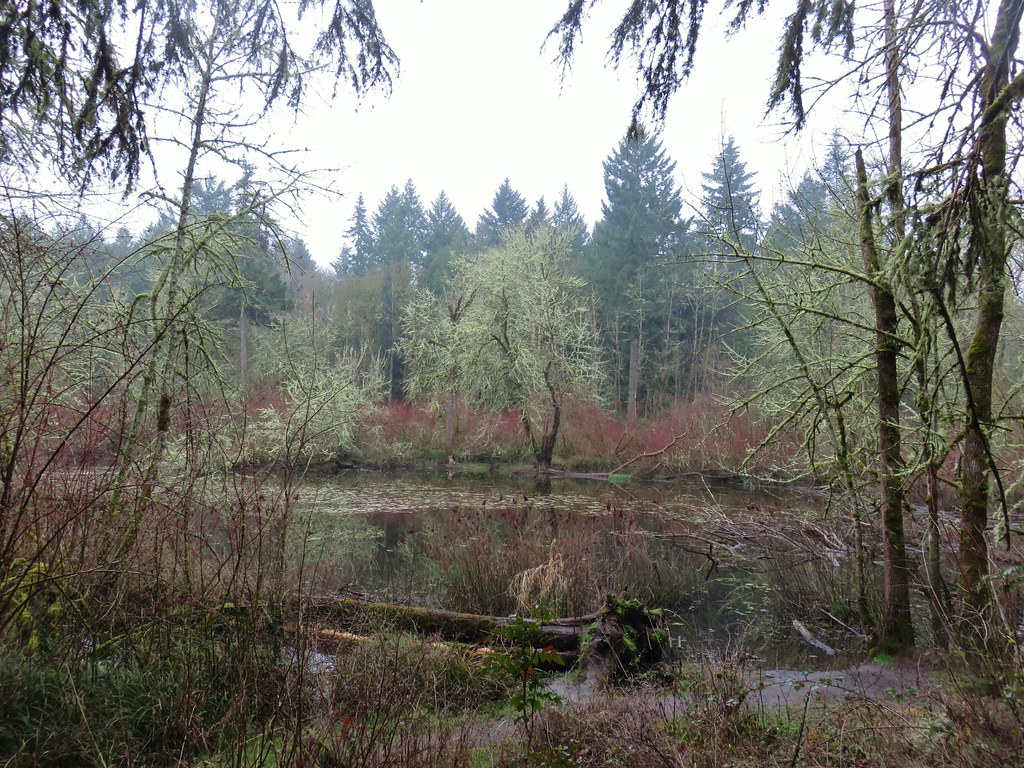
Slough in Minto-Brown Island Park

Great Blue Heron

Great Blue Heron going after a treat

Shortly after crossing the bridge a sign for the Blue Heron Loop led us off the paved path and onto one of the parks soft surface trails.
Trail in Minto-Brown Island Park

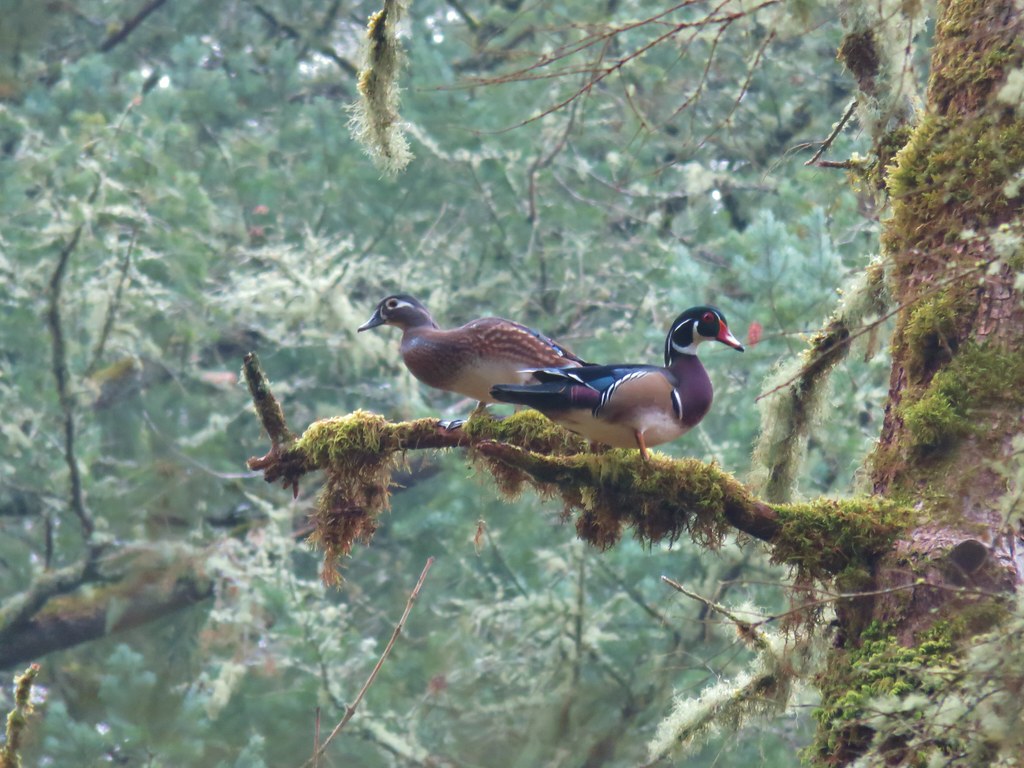
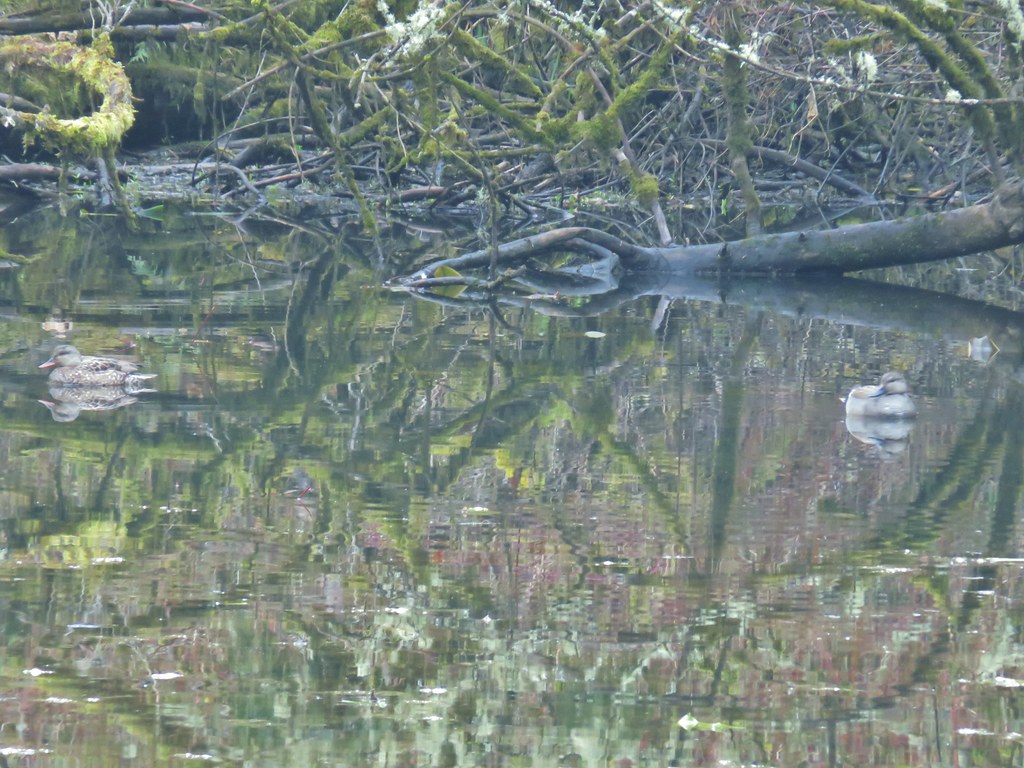
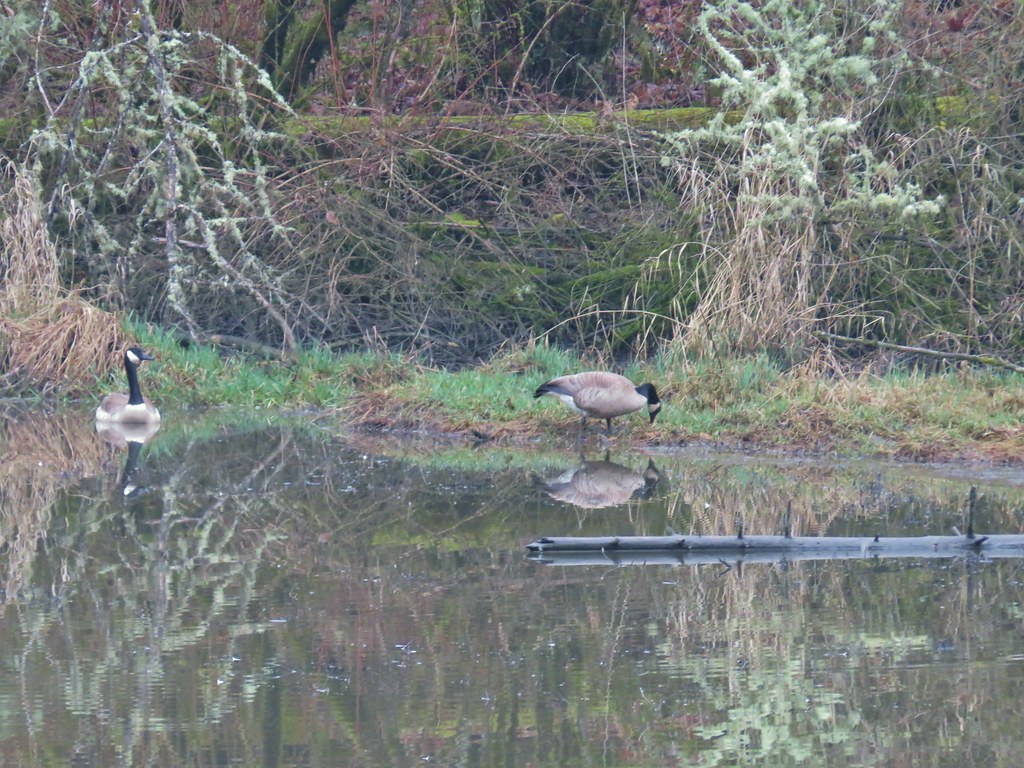
This portion of trail passed another slough on the right where we spotted Canadian Geese, a pair of wood ducks (not pictured due to fast swimming), and an Osprey sitting in its nest.
Canada Geese

Osprey in its nest

We left the wooded path and came to a trail sign at a junction near one of the many fields in the park.
Trail signs in Minto-Brown Island Park

We left the Blue Heron Loop here and headed for the Brown Island Landfill (the park has a little of everything it would seem). We skirted around it to pick up the Turtle Loop running along the north side of the landfill.
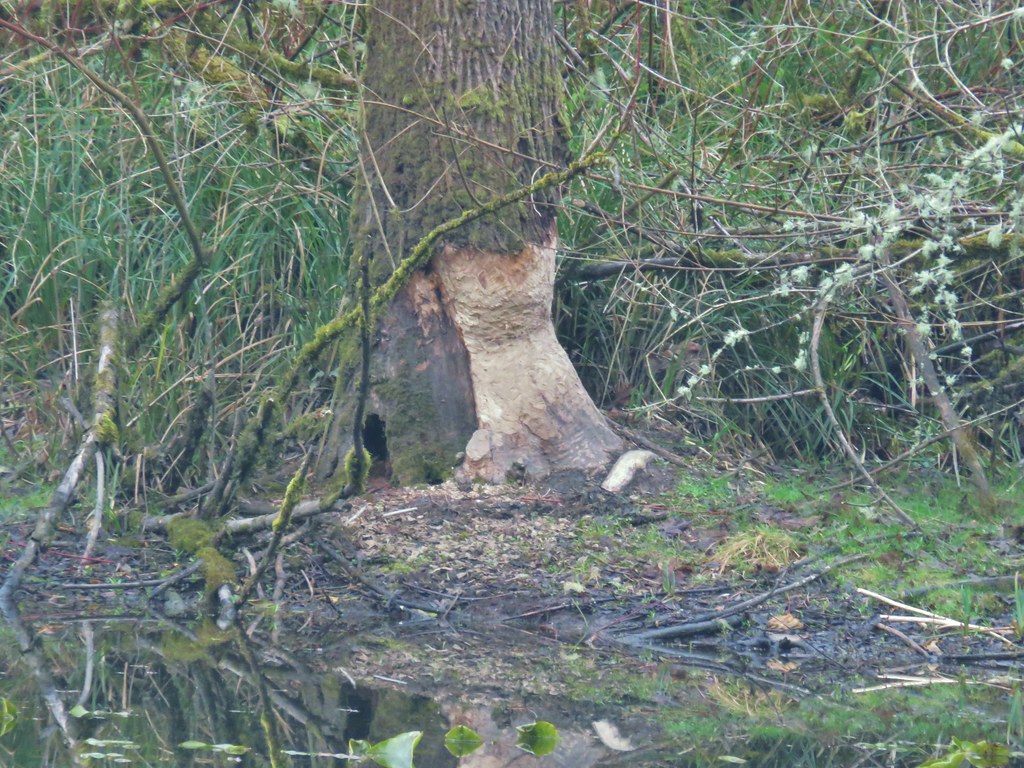
There are several connector trails running between the Turtle Loop trails making several different distances possible. We took one of these through the field to rejoin the Turtle Loop along the Willamette River. Here we found some recent beaver work.
Minto Brown Island Park

Recent beaver work

We followed the Turtle Loop back along the river to the shelter parking lot and our car. Even though the park is in Salem its size and the variety of trails makes it a nice spot to “get away” and you are almost certain to see some wildlife along the way.

On race day we headed to the Banks Middle School in Banks, OR where Heather’s race would finish and she would catch a bus up to the starting line at L.L. Stub Stewart State Park. The race would follow the Banks-Vernonia State Trail which is a converted rail bed, Oregon’s first rail-to-trail. Heather hopped on a bus at 7am and I had a couple of hours to kill before the race would start at 9am. So I took the opportunity to hike a section of the trail. I had decided to be at the Buxton Trailhead, one of several possible traileheads to access the trail, which was near the 6 mile mark of the half-marathon.

The trailhead had a large parking area with picnic tables, and a shelter.
Buxton Trailhead

Buxton Tressel from the trailhead

Building and sign at the Buxton Trailhead

I had calculated that Heather would be passing by that spot a little before 10am so I had about 2 1/2 hours available to hike. I took a path to the left of the parking lot down to a creek crossing below the Buxton Trestle.
Footbridge over Mendenhall Creek

Mendenhall Creek

Buxton Trestle

The path then led uphill joining the Banks-Vernonia State Trail just beyond the trestle.
Trail heading up to the Buxton Trestle

My plan was to head east toward the Banks end of the trail for an hour and then head back to the trestle to wait for Heather, but before I headed down the trail I wandered out onto the trestle.
Buxton Trestle
Buxton Trestle

View from the Buxton Trestle

The entire 21 miles of the trail are paved which makes it popular with bicyclists, runners, walkers, and it also sees some equestrian traffic. It was still pretty early though so for the first 45 minutes I saw more wildlife than people.
Starling

Stellars Jay

Wren

The highlight happened as I passed a draw to my left and noticed something moving up the hillside through the brush. It was a decent size but it had its head down making it hard to tell what I was seeing. When it finally raised its head I could see it was a coyote. It blended really well with the brush and wouldn’t stop moving making it extremely difficult to get a decent picture. I finally made a little noise to get its attention hoping it would pause long enough for a photo, but it was quicker than I was and darted off as soon as we made eye contact.
Coyote

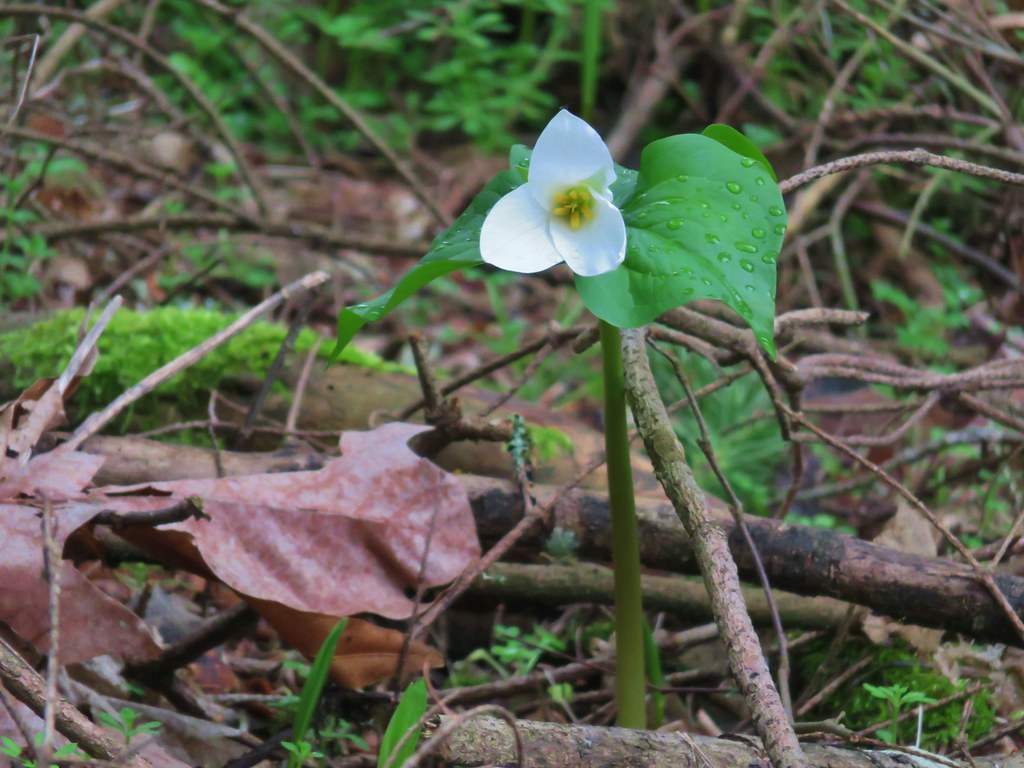
In addition to the wildlife there were plenty of Spring wildflowers along the trail. The forested hillside was dotted with trillium, bleeding heart, pioneer violets, and a few fairy bells.
Trilliuims

Bleeding heart

Violet

Fairybells

From the trestle the trail had gradually descended to a gravel road crossing where it left the trees and leveled out as it began to pass between pastures.
Banks-Vernonia State Trail

Birds were abundant, mostly sparrows, swallows, and robins but across one of the fields I spotted a bald eagle flying between trees.
Sparrow

Sparrow

Bald Eagle

I also spotted a single tough leafed iris and a couple of camas blossoms.
Wild iris

Camas

By 8:30am the trail had become quite a bit busier, especially as I neared the Manning Trailhead which I reached just as it was time to turn around and head back.
Manning Trailhead

I had just crossed the Buxton Trestle when the first runners passed by on their way to Banks. These were the sub 6 minute milers so I figured I had about 15 to 20 minutes before Heather would be passing by. I grabbed a snack and waited along the trail for her to pass by which she did right on schedule.
IMG_4015

After cheering her on I hopped back in the car and headed for the finish line to meet her. Her goal for this racing season was to break 2hrs in a half-marathon which she managed to do finishing in 1:52:42. With the race completed and her goal accomplished our attention now turns to our hiking season which will last for the next 6+ months. Happy Trails!

Flickr: Minto-Brown- https://www.flickr.com/photos/9319235@N02/sets/72157666808908512

Banks-Vernonia – https://www.flickr.com/photos/9319235@N02/albums/72157666857451492