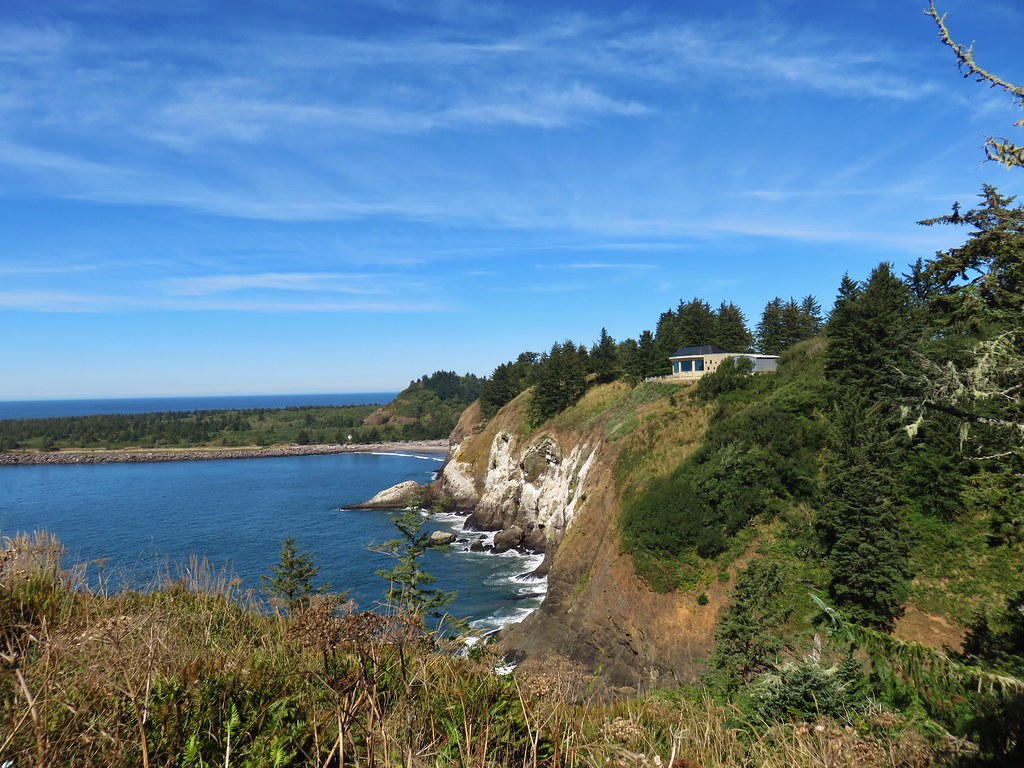
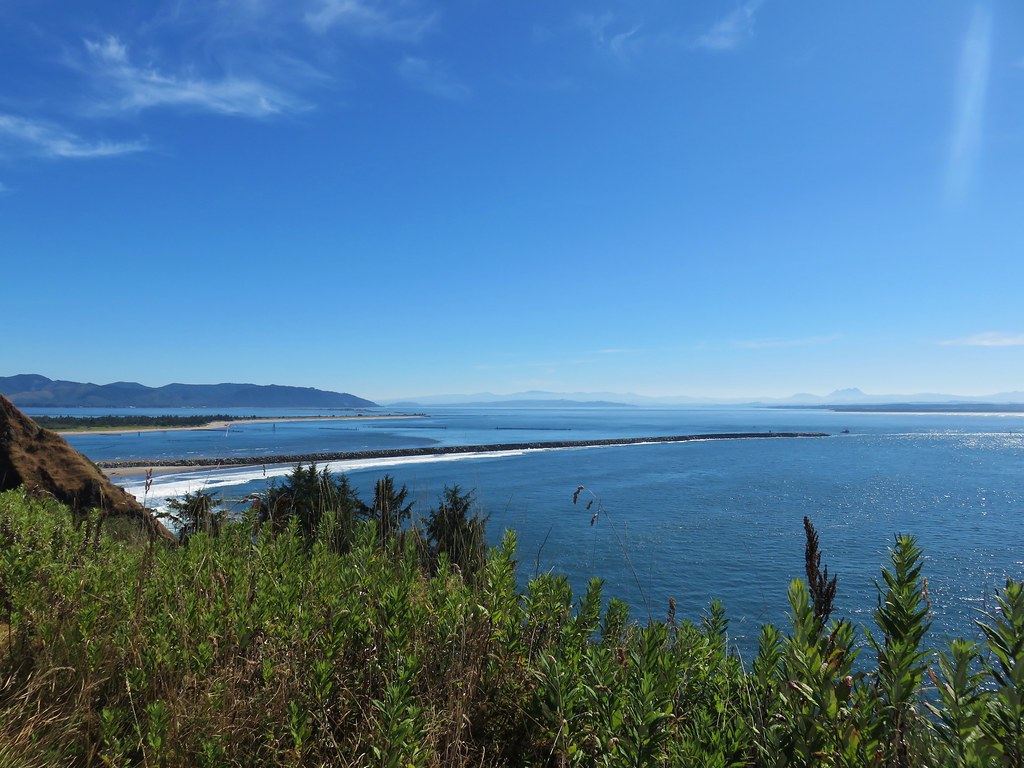
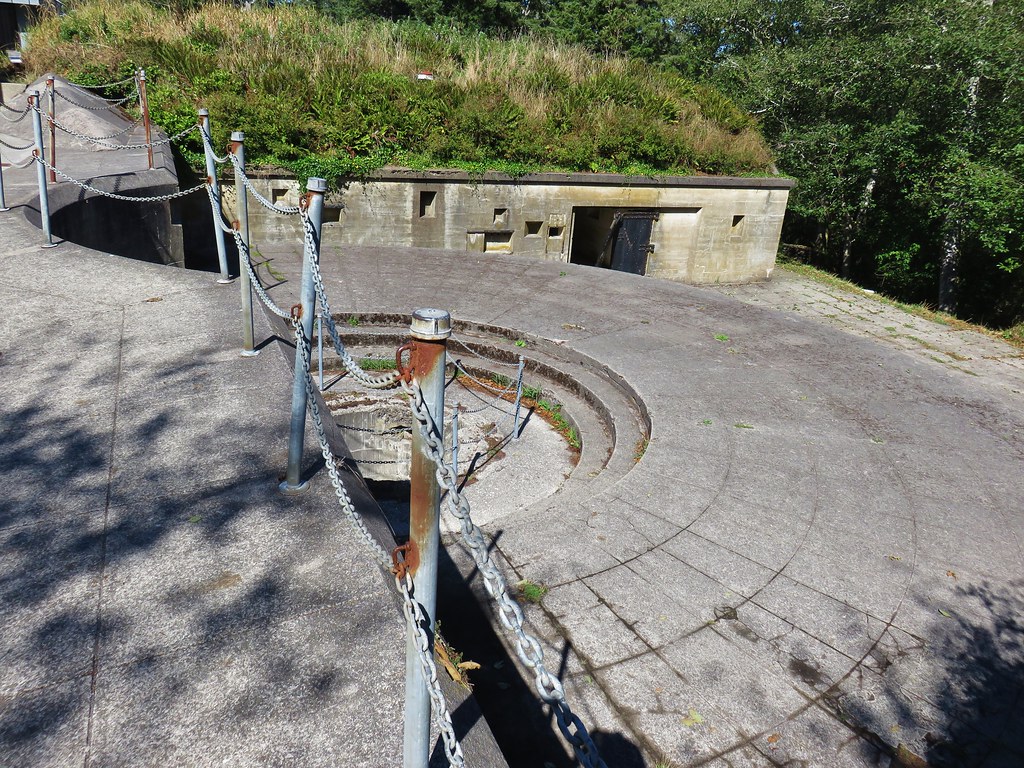
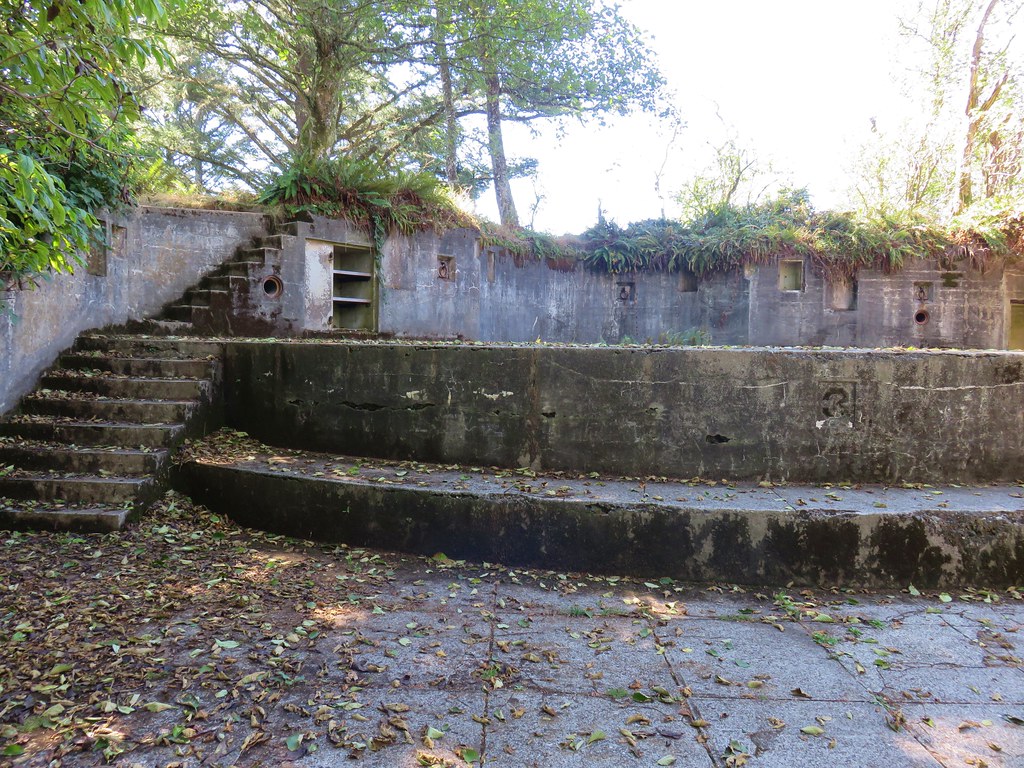
Categories
Hiking SW Washington Coast Trip report Washington

Long Beach, Cape Disappointment State Park, and Fort Columbia

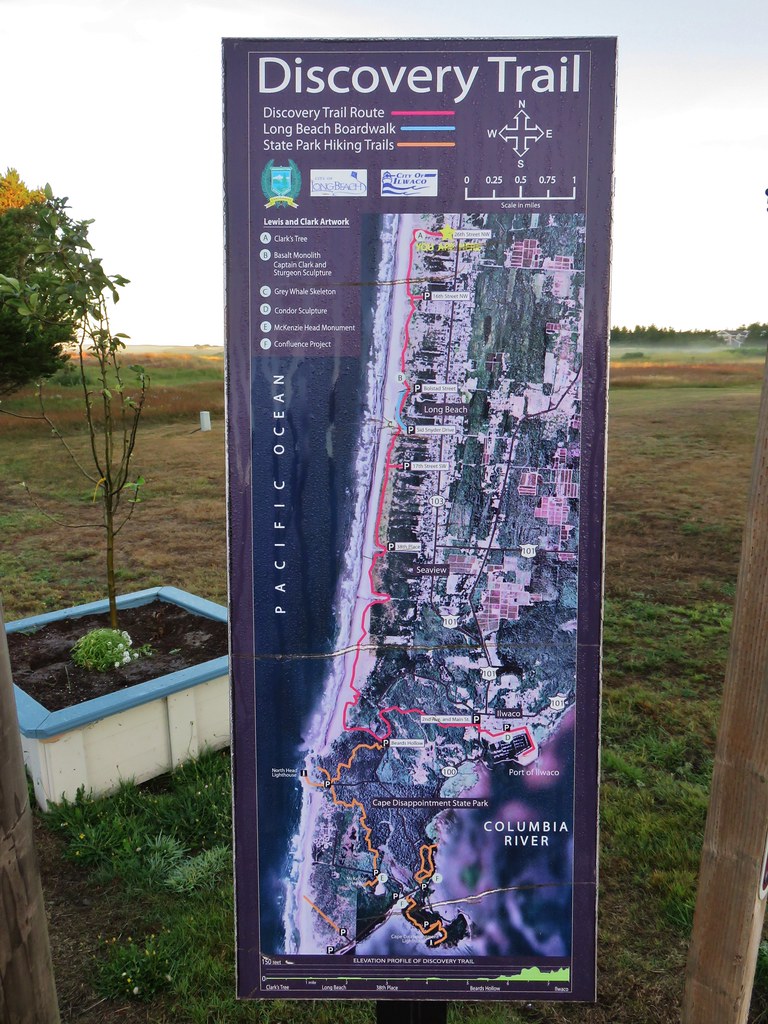
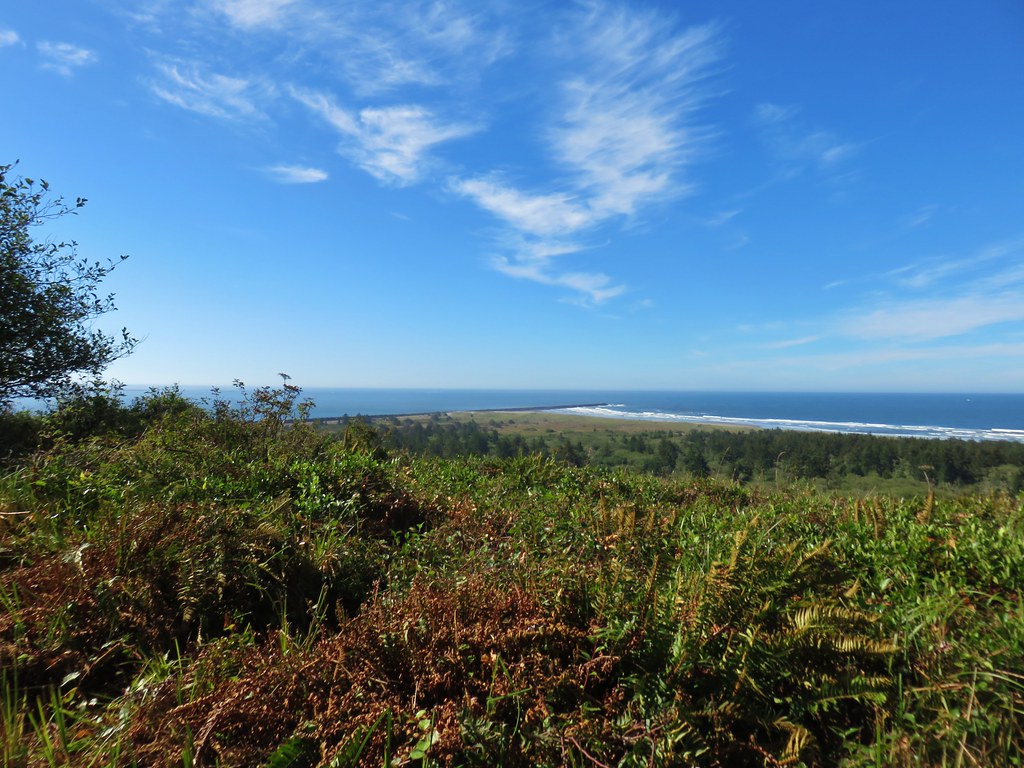
For the third day of our 4 day mini-vacation we headed north into Washington for a series of hikes along the coast from Long Beach to the Columbia River. We decided to start with the northernmost hike and work our way south. Our first stop was at the north end of the 7.2 mile Discovery Trail located on North 26th St. in Long Beach.

IMG_8372

IMG_8373

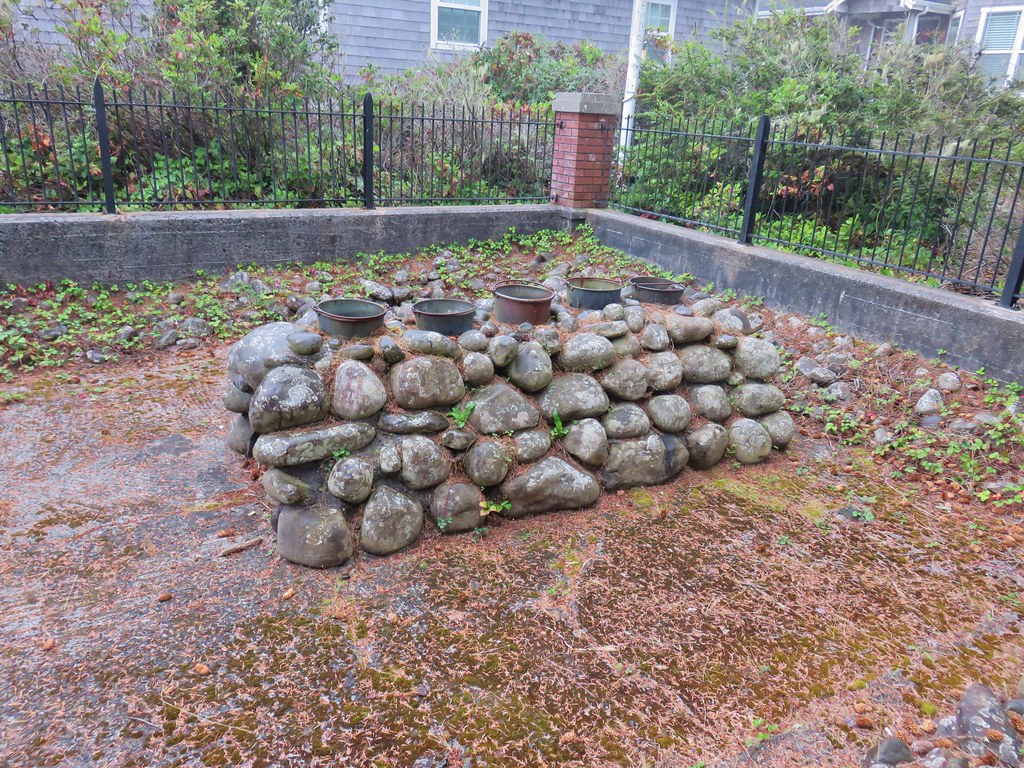
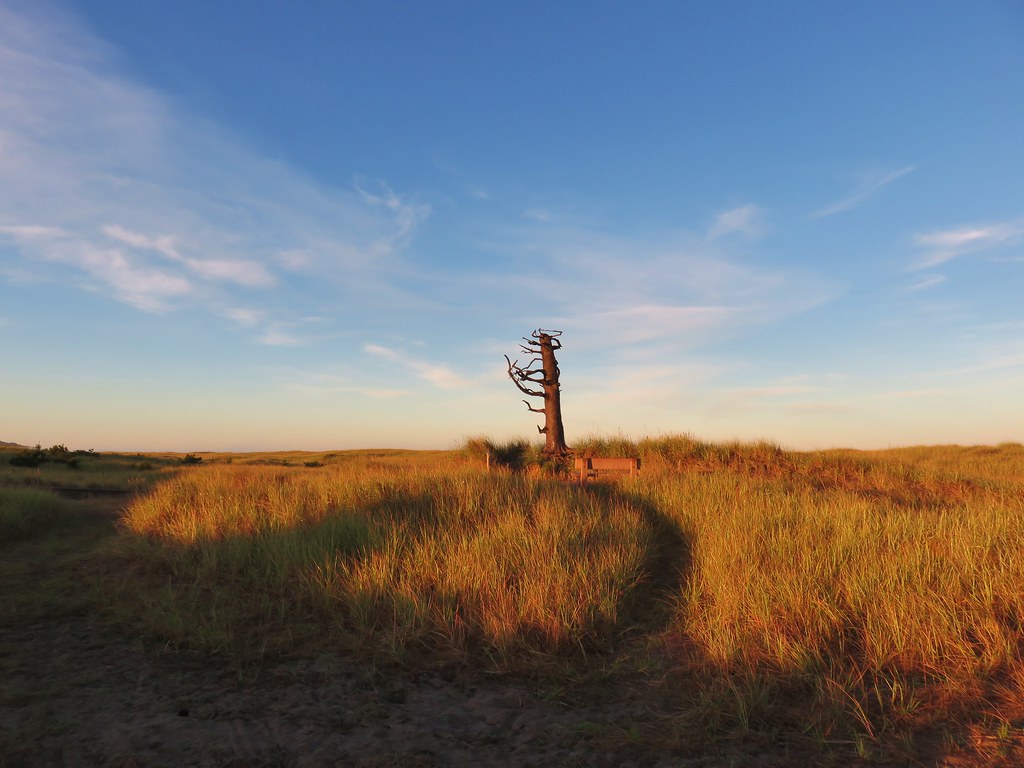
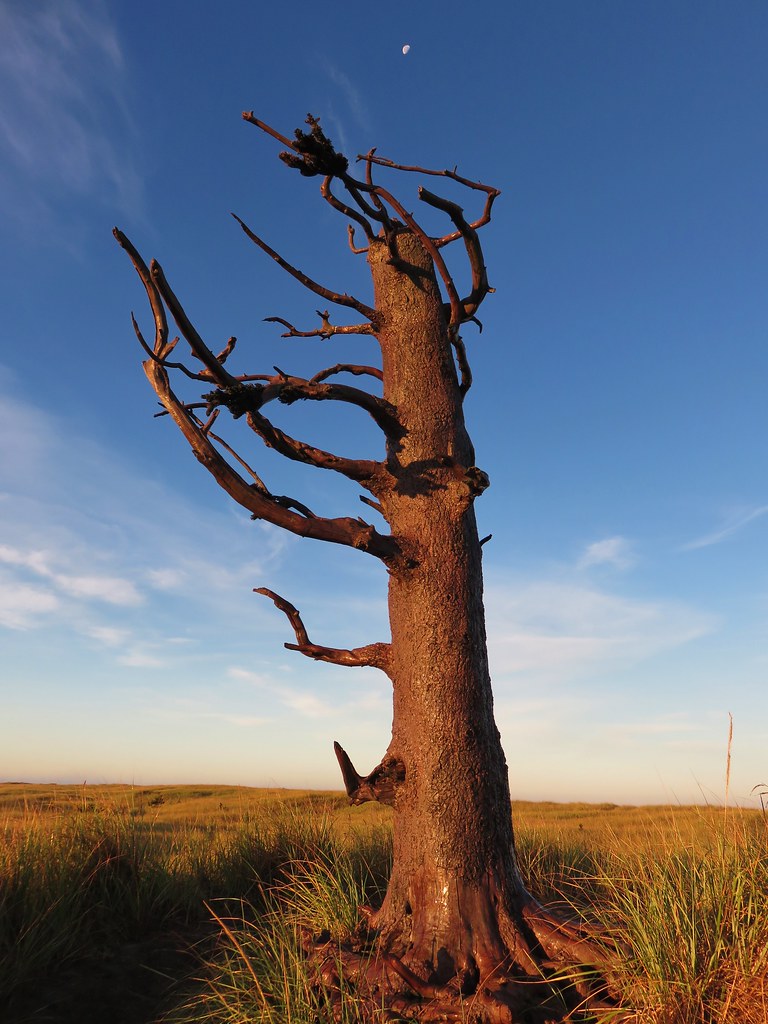
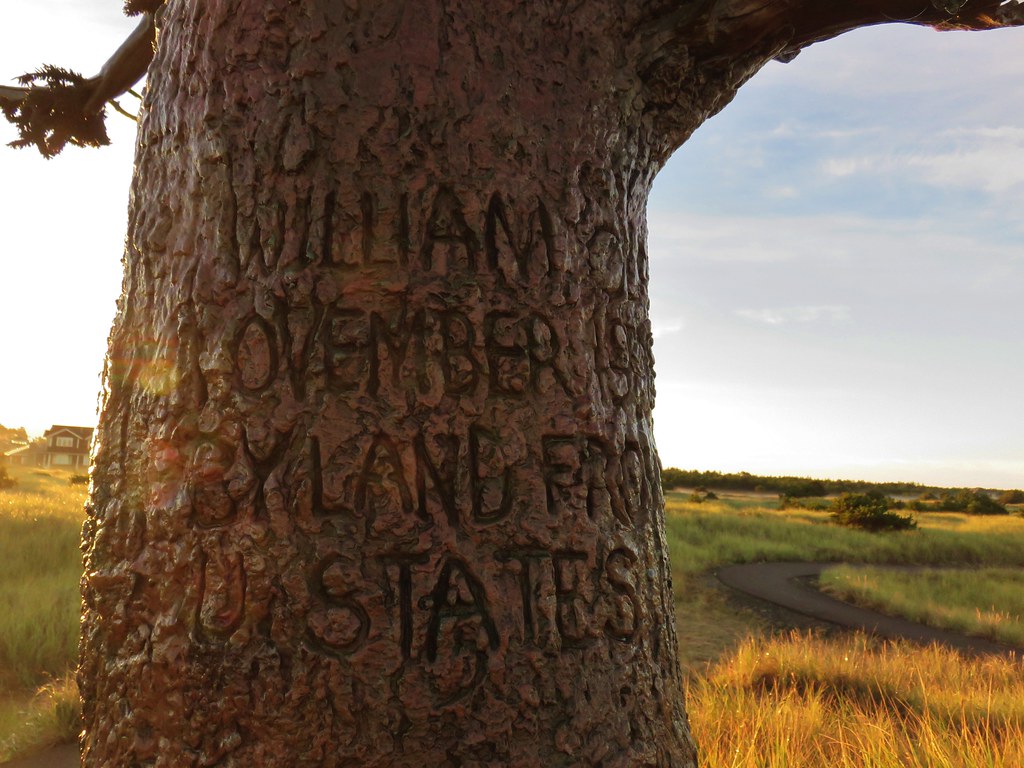
Normally when we have a 7.2 mile trail we would just hike the entire thing out and back and call it a day, but on this rare occasion we were going to follow Sullivan’s easy 3 hike description. From this trailhead we were simply following the trail for .3 miles to a replica of Clark’s Tree. The replica represents a tree where William Clark carved his name on a tree in November of 1805 to claim the territory for the U.S.

IMG_8376

IMG_8378

IMG_8381

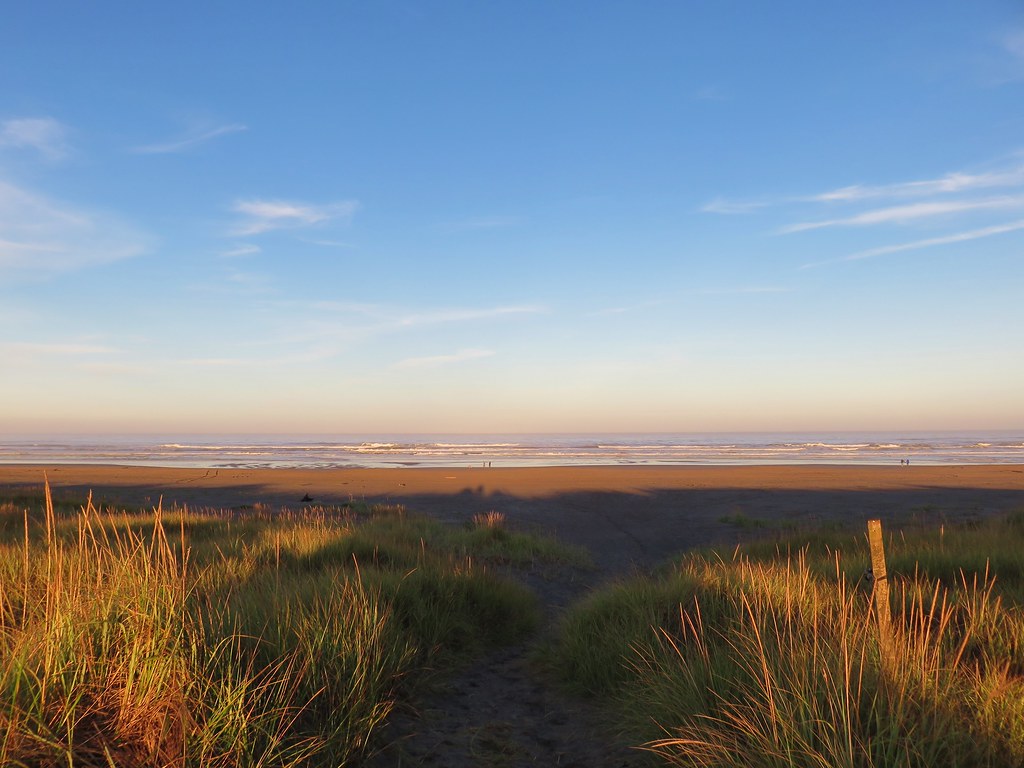
We took a short sandy path from the tree to the foredune to take a look at the ocean before heading back.

IMG_8385

IMG_8386

IMG_8387

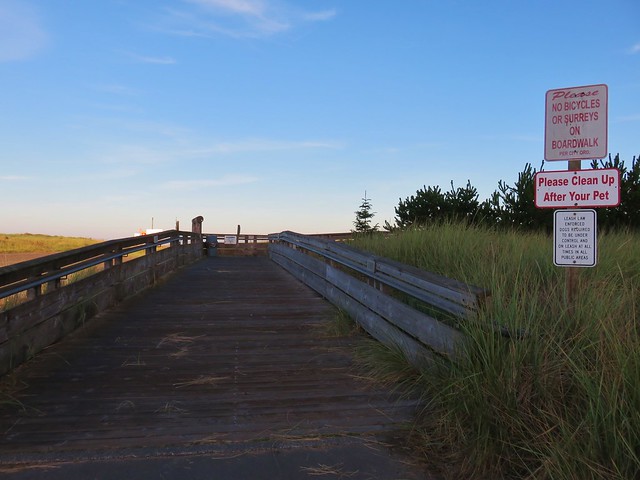
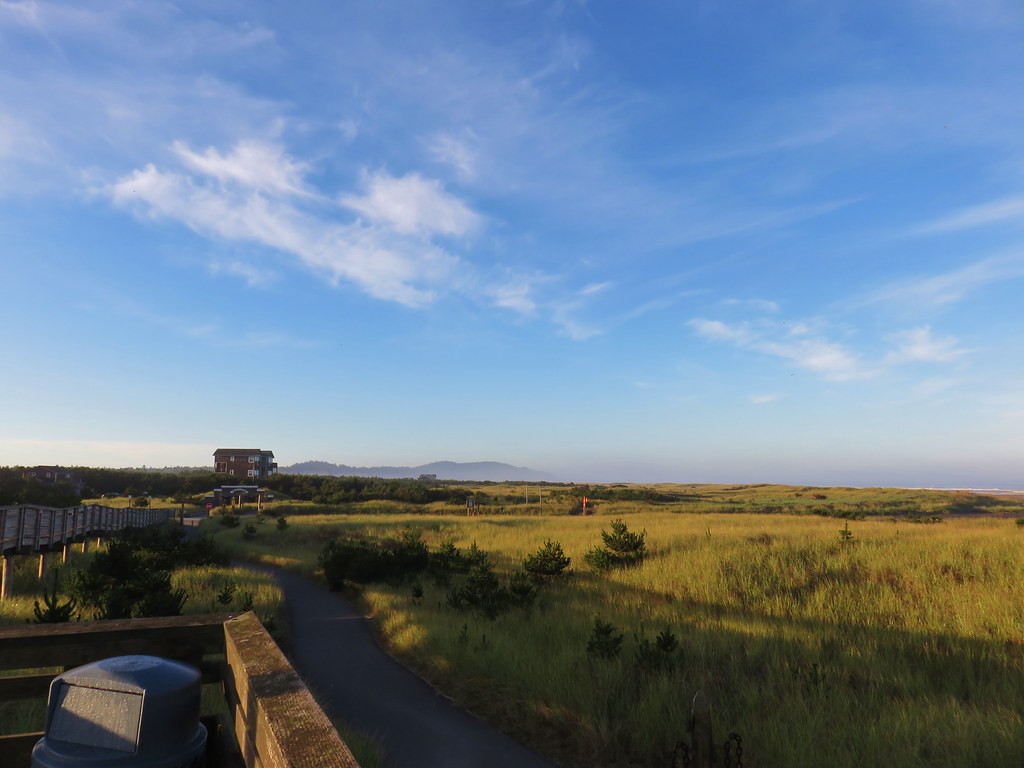
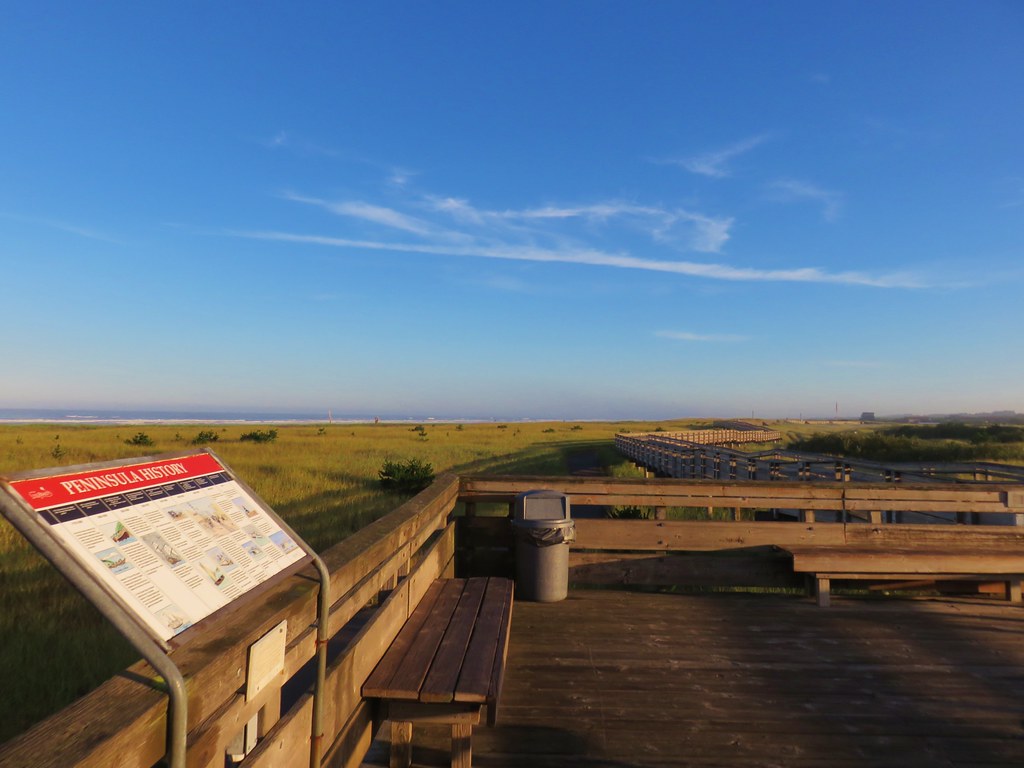
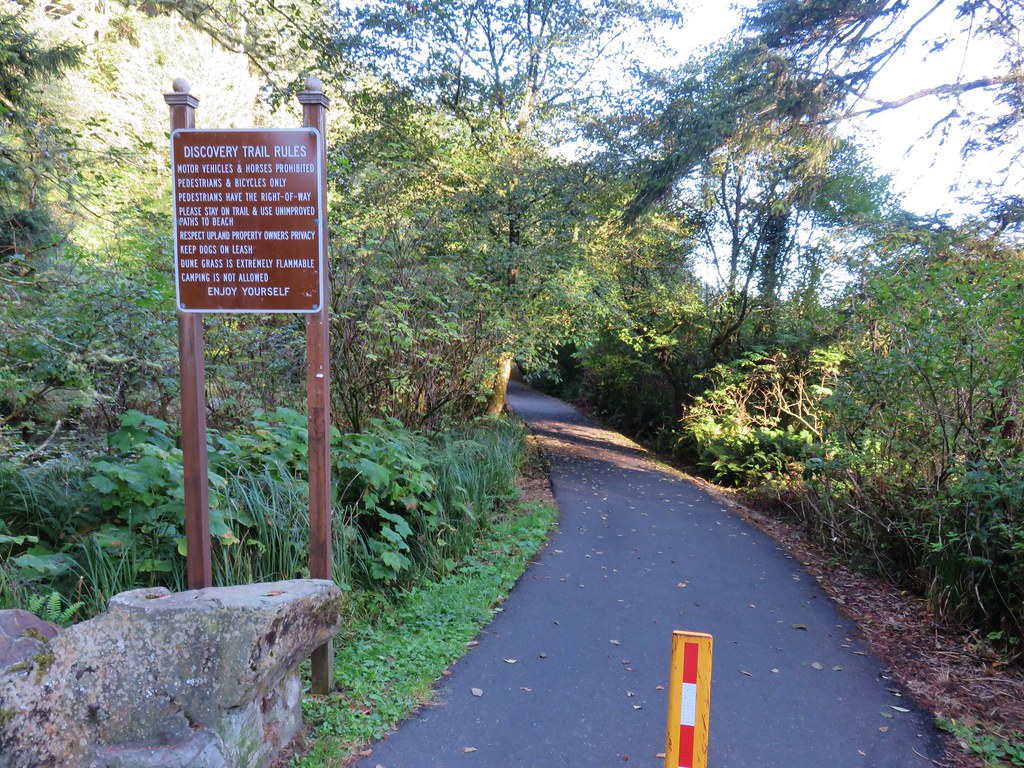
For our next hike we drove south to Sid Snyder St. where a .4 mile stretch of boardwalk parallels the paved Discovery Trail.

IMG_8394

IMG_8398

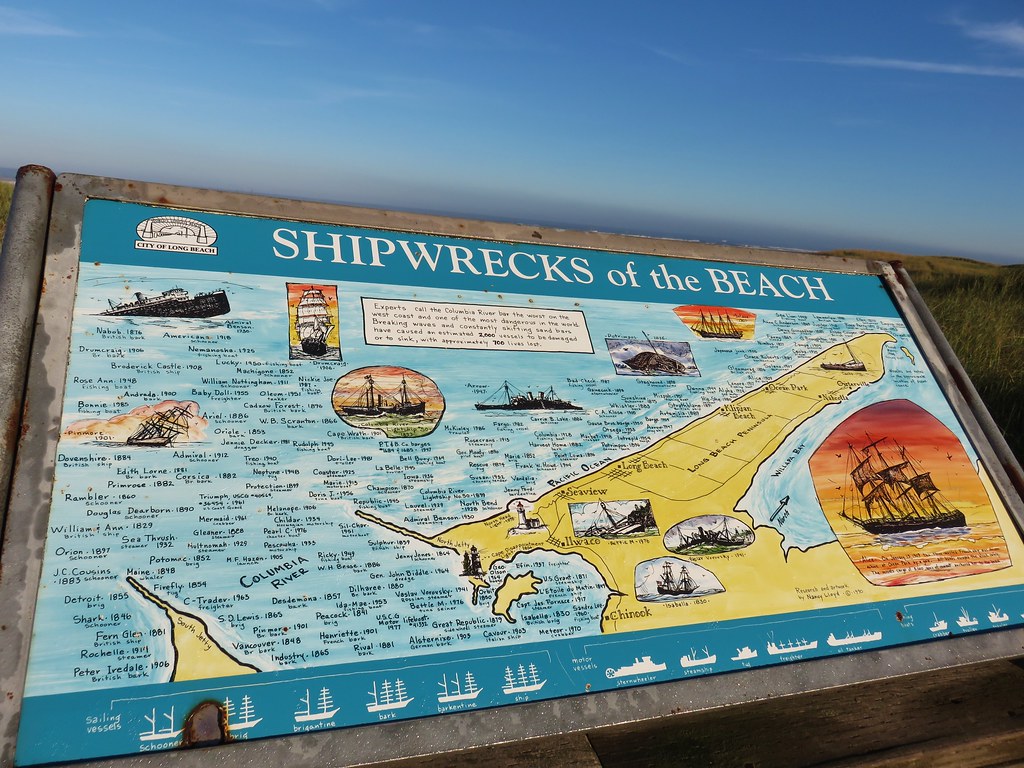
Interpretive signs lined the boardwalk including one showing all of the shipwrecks that have occurred in the area.

IMG_8401

IMG_8407

We returned via the paved Discovery Trail and once again hopped into the car and headed south. We left Long Beach and continued south on Highway 101 for 3 miles to the stoplight in Ilwaco where we turned right on Highway 100 and entered Cape Disappointment State Park.

We were originally headed for a signed parking lot for Beards Hollow 1.9 miles away. We needed a $10 Discovery Pass to park there but, when we turned right into the parking area we discovered that there was no self-pay station. We had passed a Beards Hollow Viewpoint about a mile before turning into the parking lot which didn’t require a pass so we drove back uphill to the viewpoint parking lot and started our hike from there.

IMG_8416

A trail led downhill from the viewpoint to the lower parking lot.

IMG_8418

IMG_8421

At the lower parking lot we once again picked up the Discovery Trail.

IMG_8427

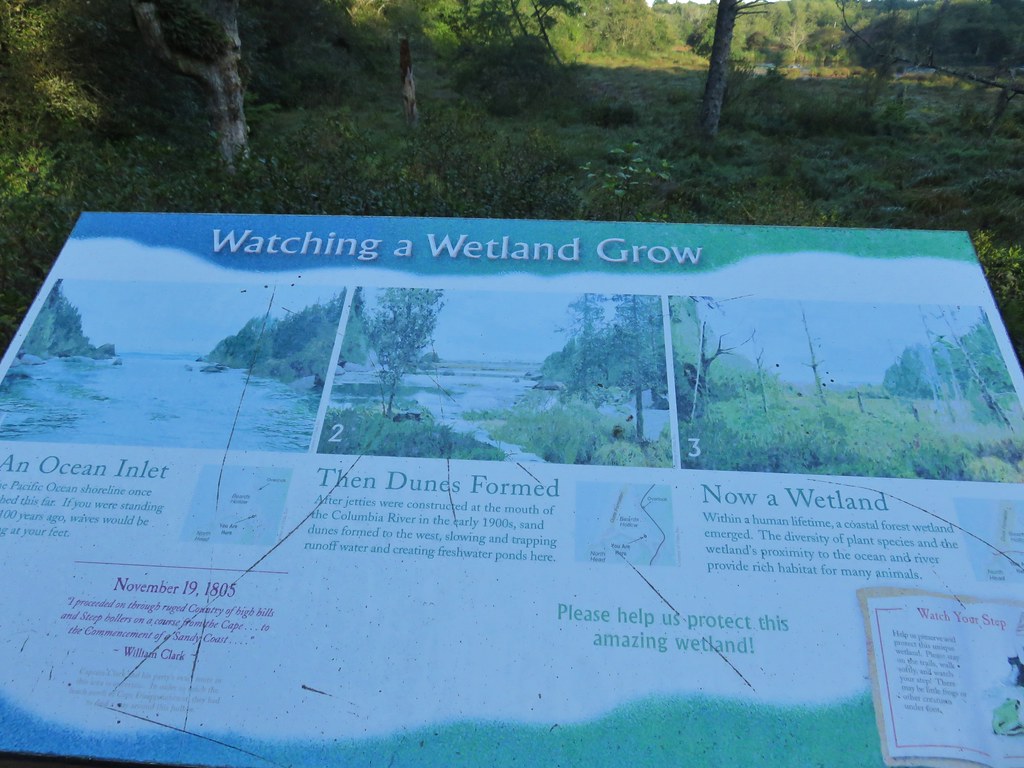
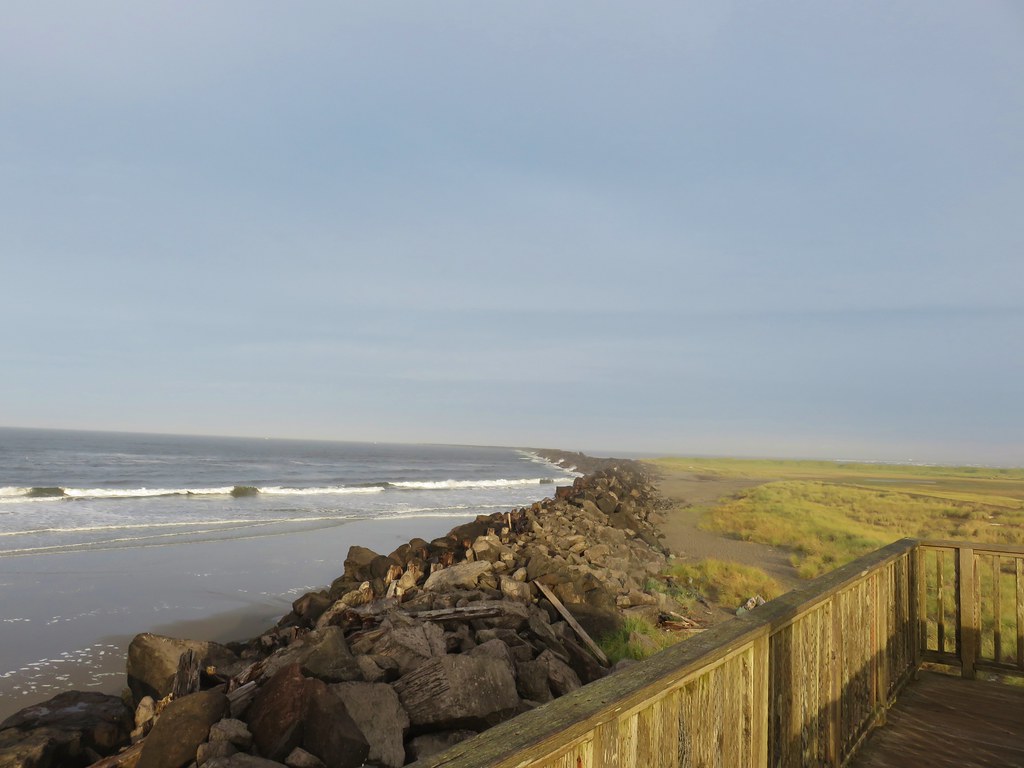
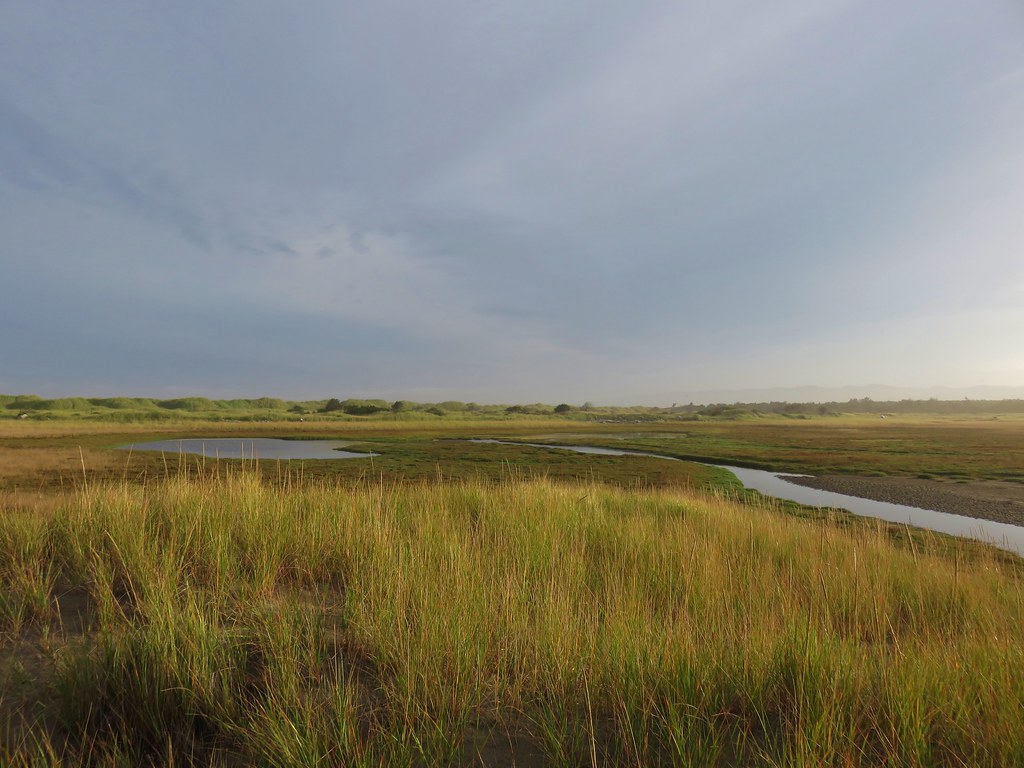
We followed the paved trail through a wetlands which is a result of the building of the Columbia River jetties.

IMG_8426

IMG_8424

IMG_8428

IMG_8435

When the Discovery Trail made a sharp right near the ocean we took one of several sandy paths to the beach where we turned south and headed for North Head.

IMG_8440

IMG_8442

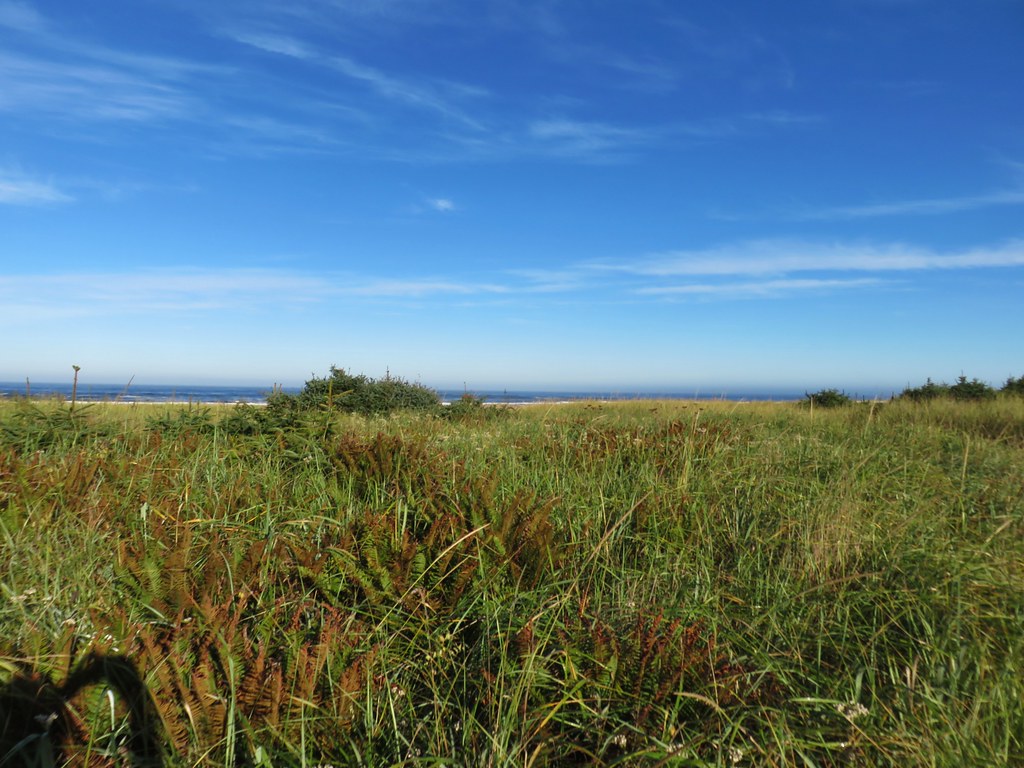
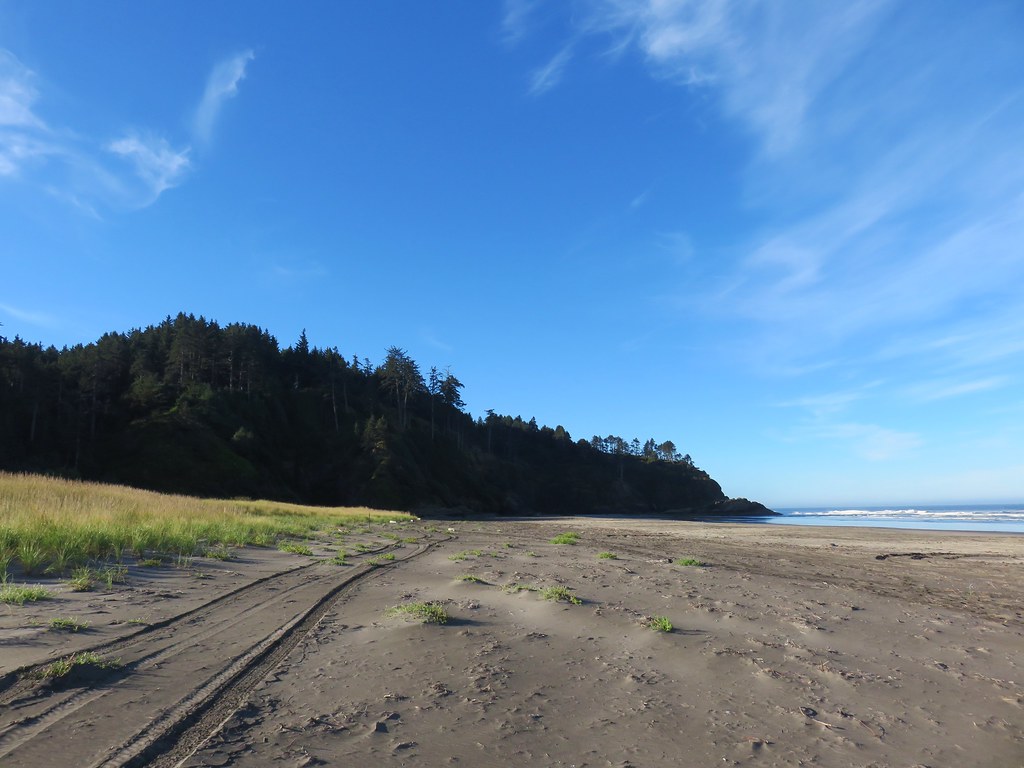
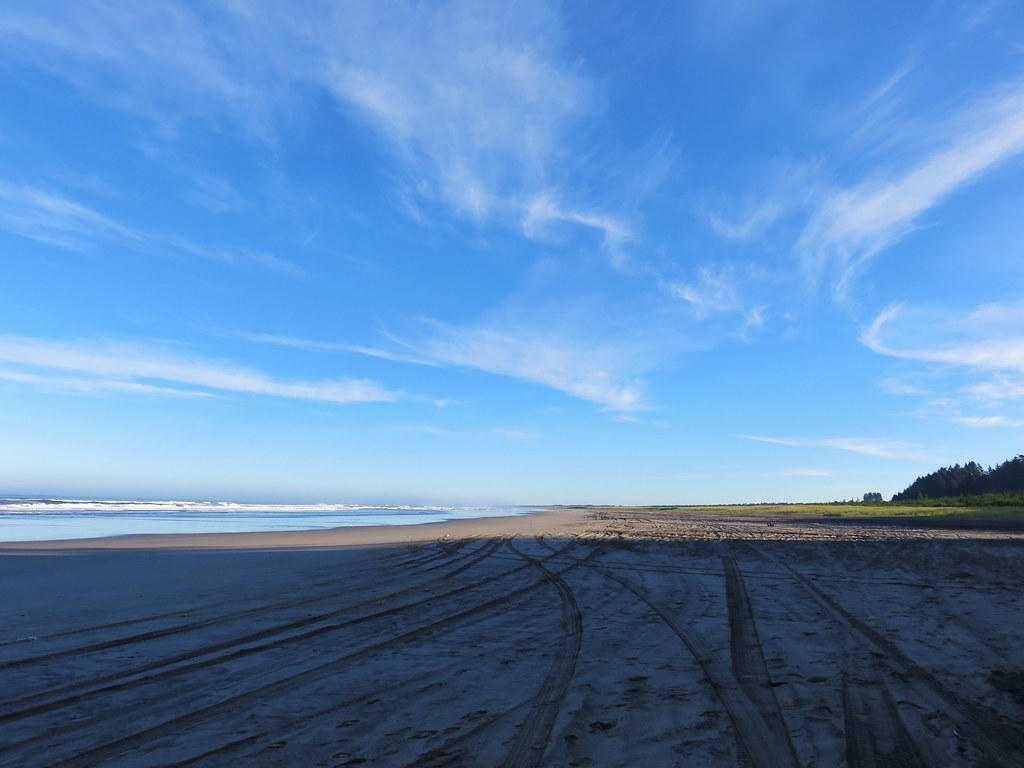
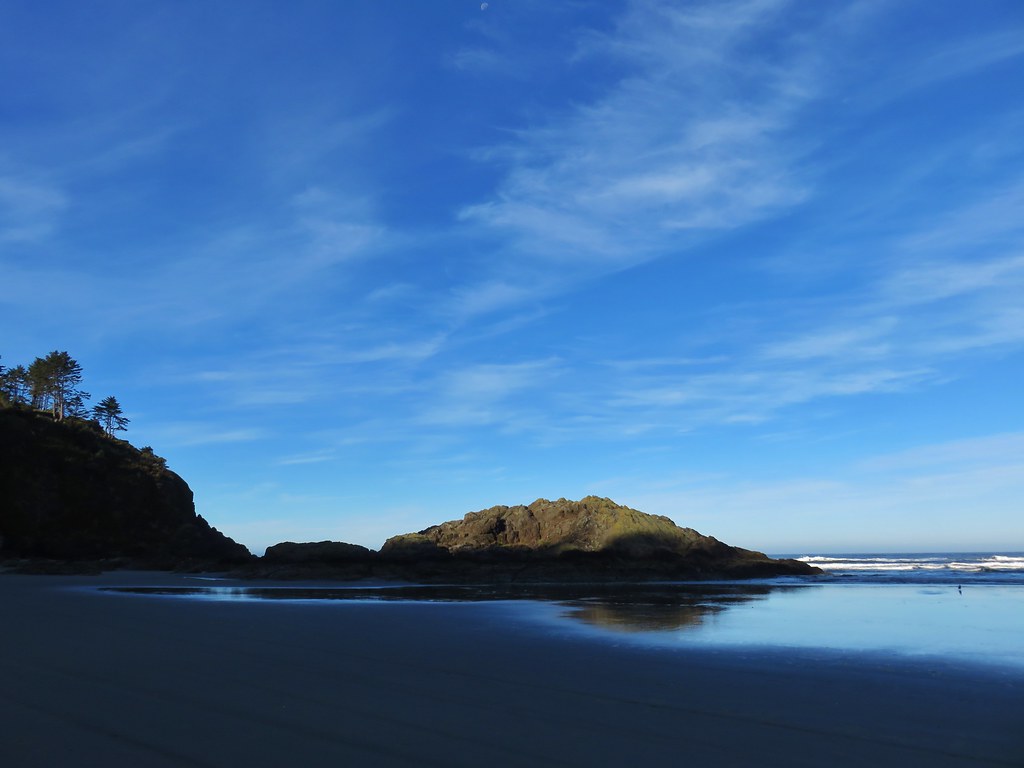
The beach was quite but judging from the number of tire tracks and amount of garbage lying around it gets a lot busier in the evenings. Near the end of the beach we came upon some nice tide pools which we explored briefly before heading back.

IMG_8447

IMG_8449

IMG_8456

IMG_8459

IMG_8461

IMG_8482

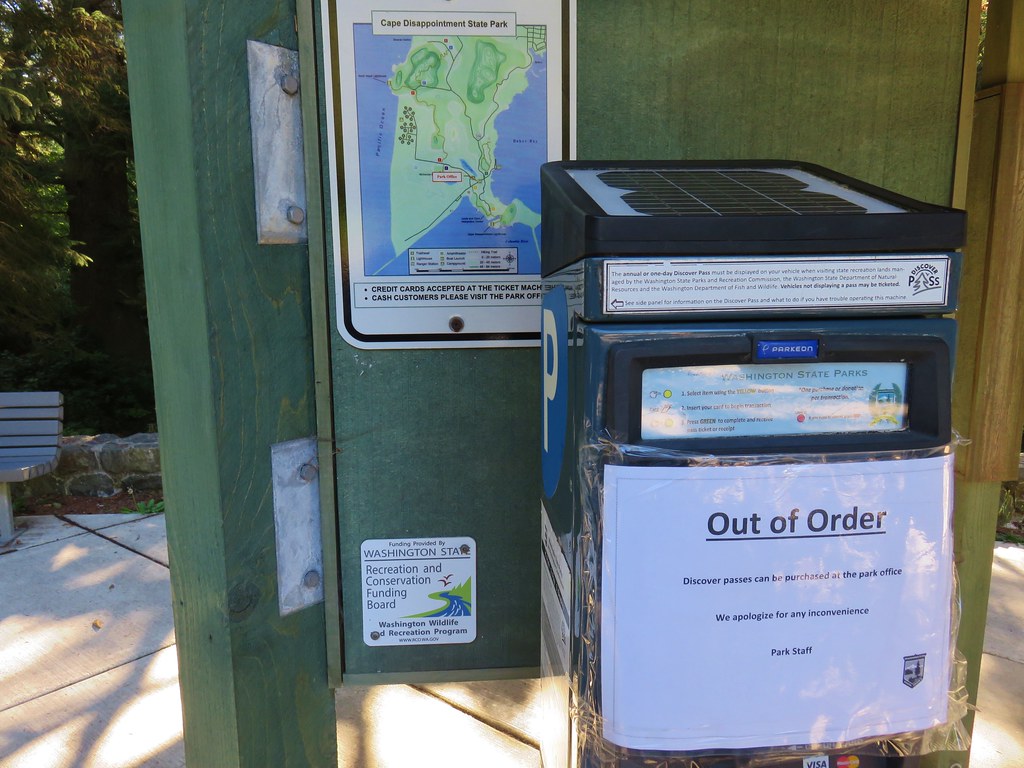
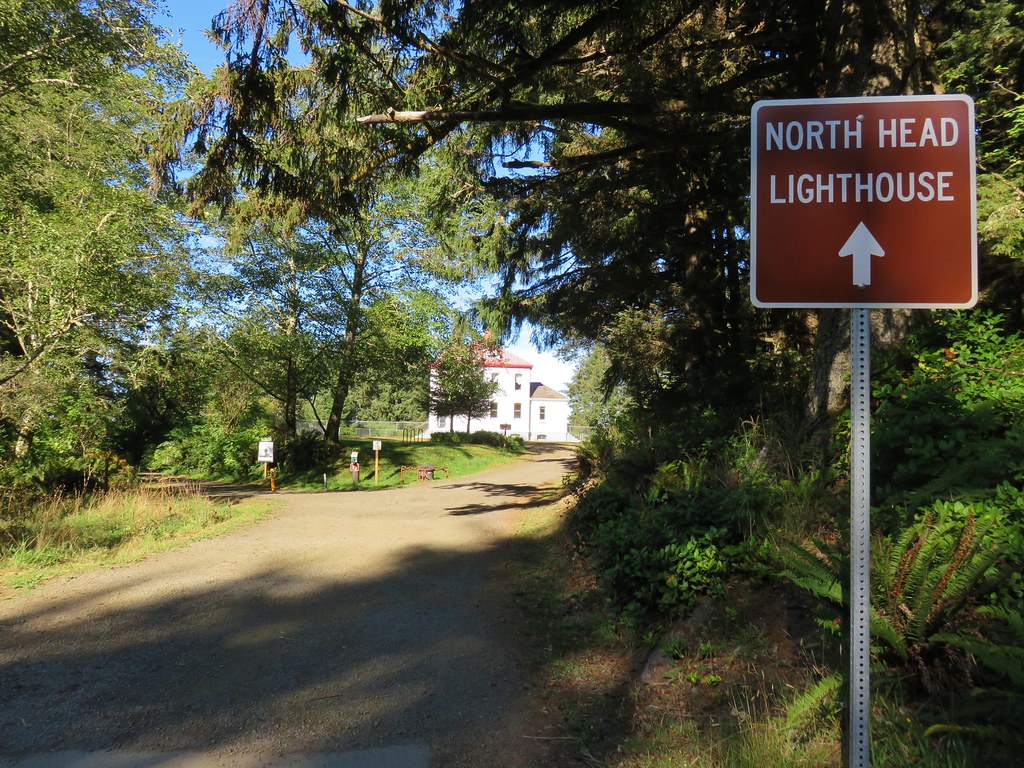
After hiking back up to the viewpoint we continued south on Highway 100 and turned right onto North Head Lighthouse Road. A Discovery Pass is required to park here as well but we spotted a self-pay station near some signboards so we parked and I went to pay.
IMG_8495

I don’t mind having to pay for the passes, but I do get annoyed by how hard it is to buy them sometimes. We had to drive a couple of miles further along Hwy 100 to the park entrance booth where we were finally able to purchase the required pass.
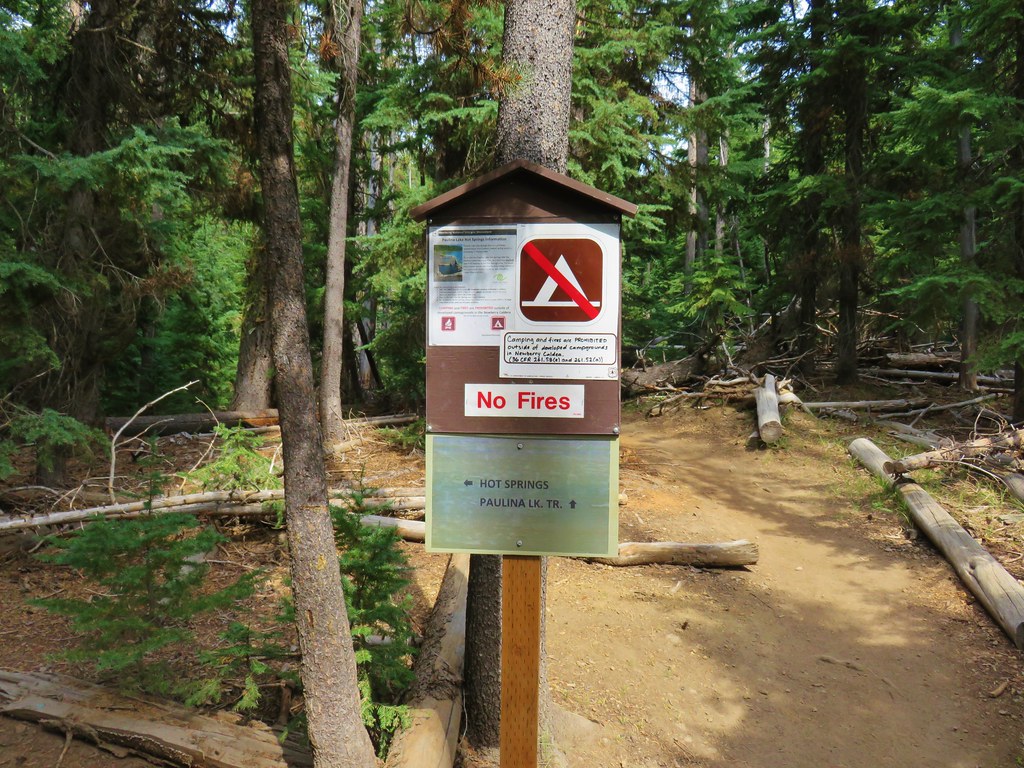
After returning to the North Head parking lot we headed for the North Head Lighthouse.
IMG_8501

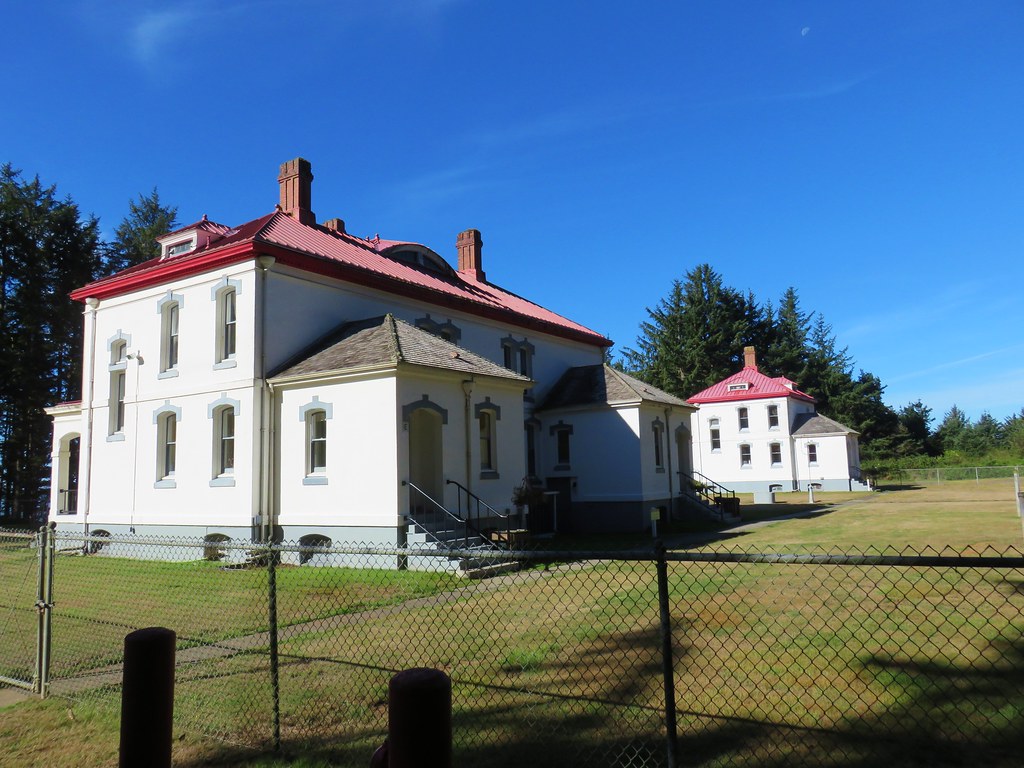
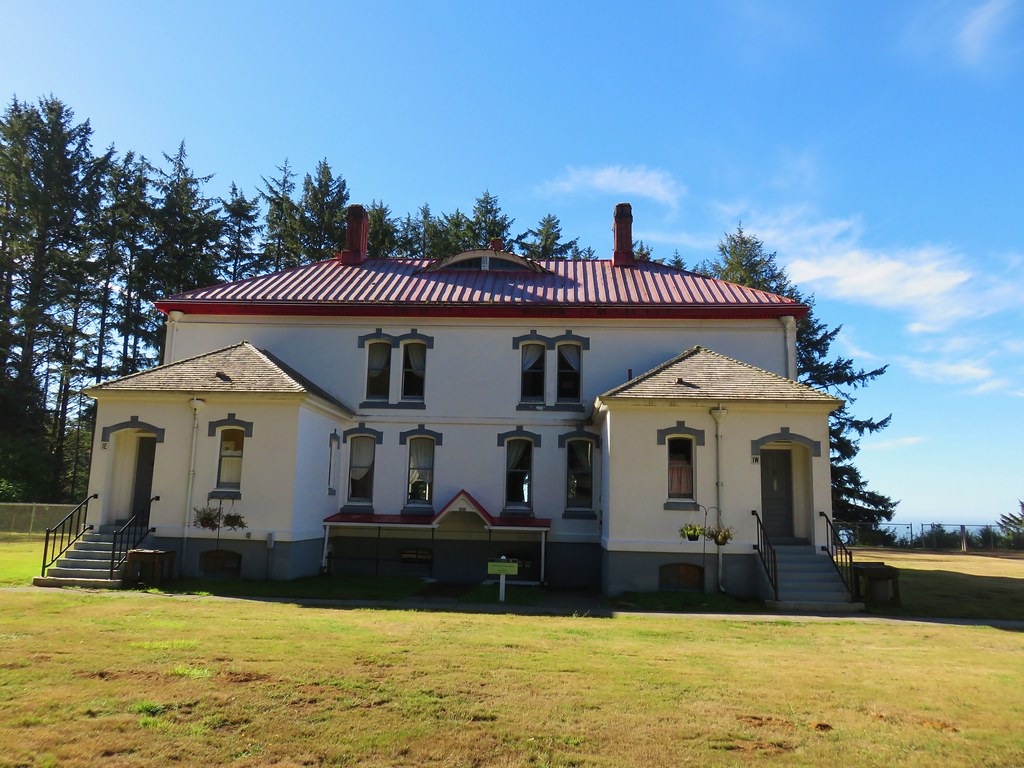
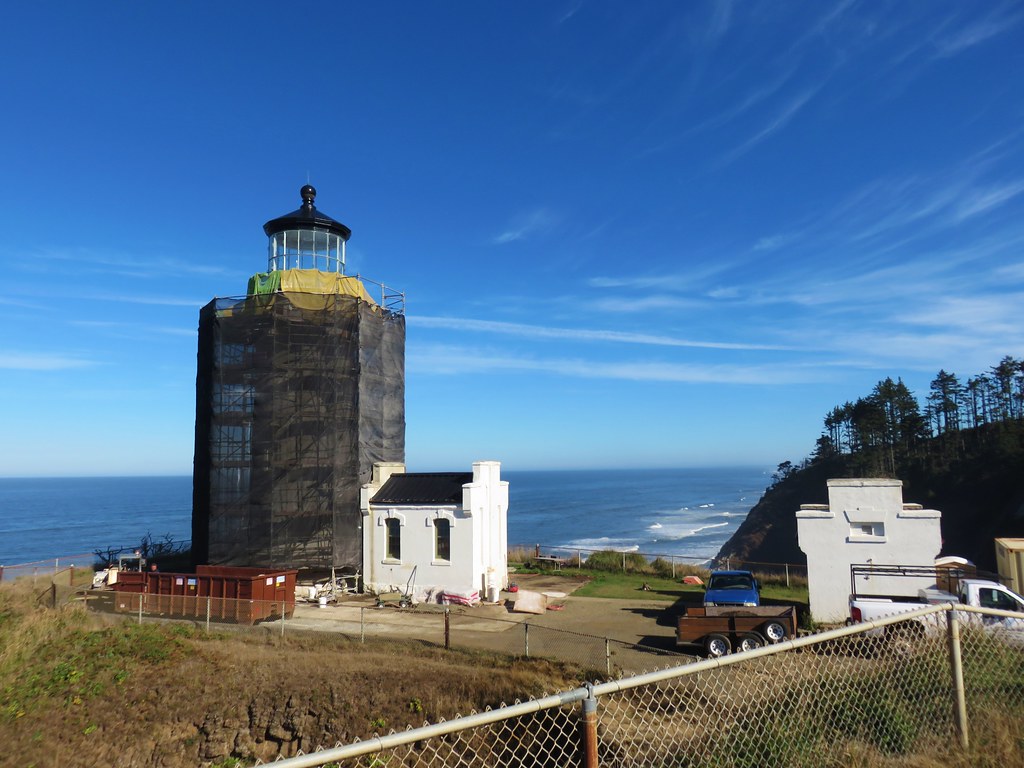
A short .3 mile loop passes several buildings that used to house the lighthouse keepers, but are now vacation rentals, before continuing out the headland to the lighthouse which is currently undergoing rennovations.

IMG_8509

IMG_8510

IMG_8517

IMG_8519

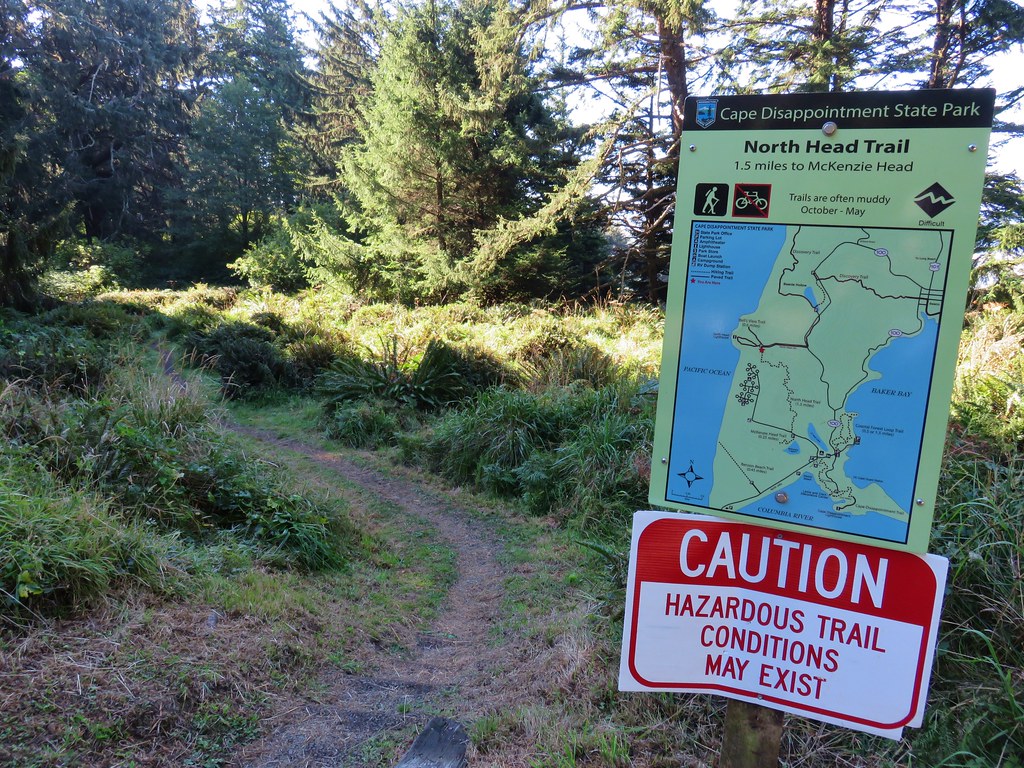
After completing the loop we turned right at a sign for the 1.5 mile North Head Trail.
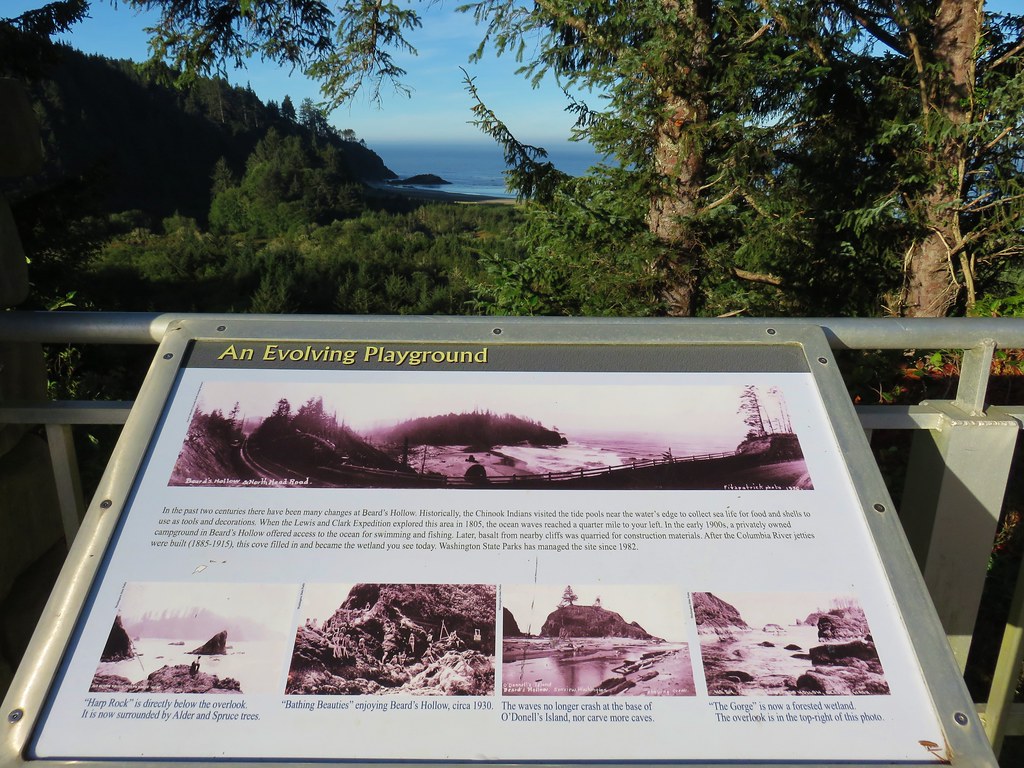
IMG_8525

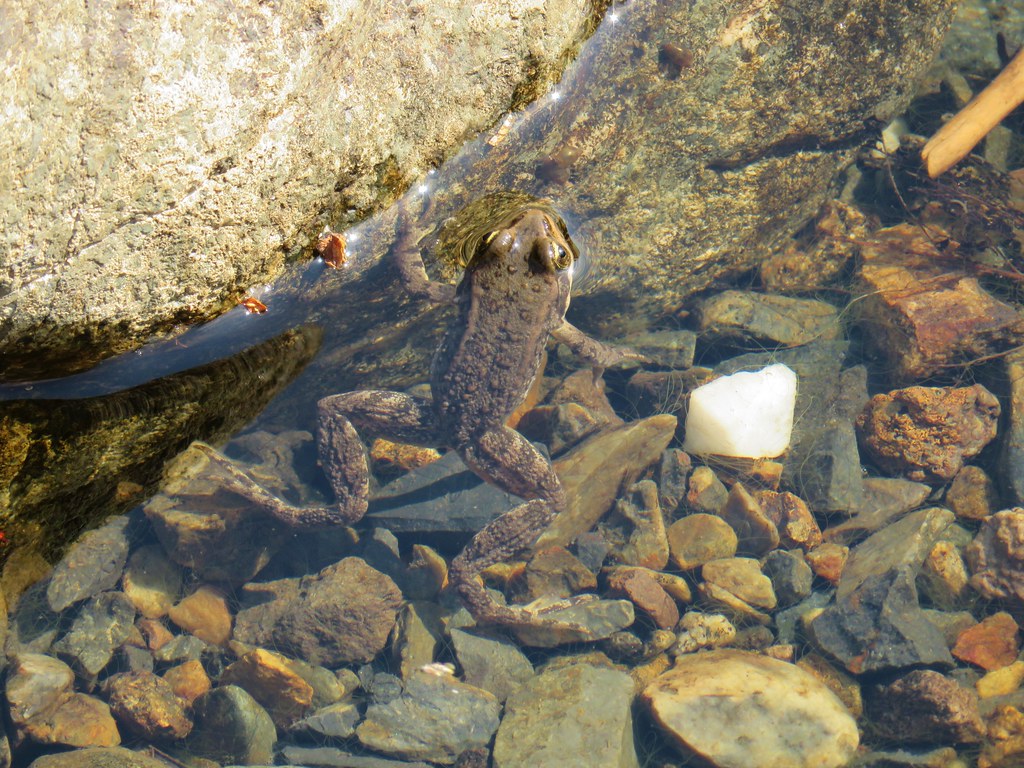
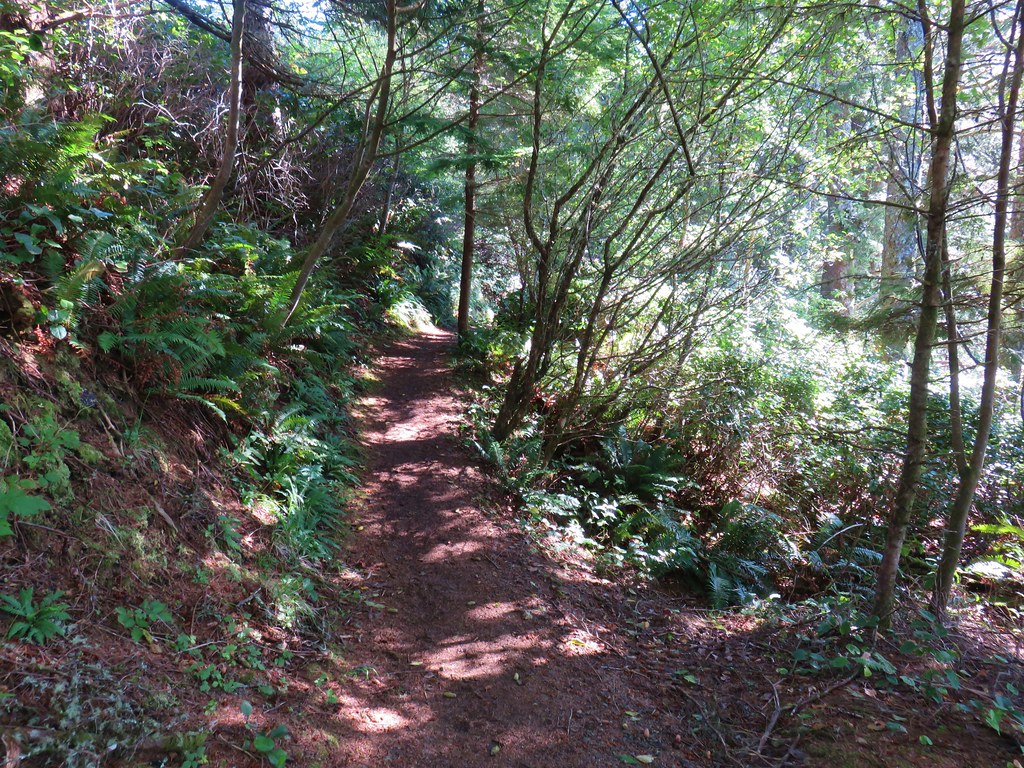
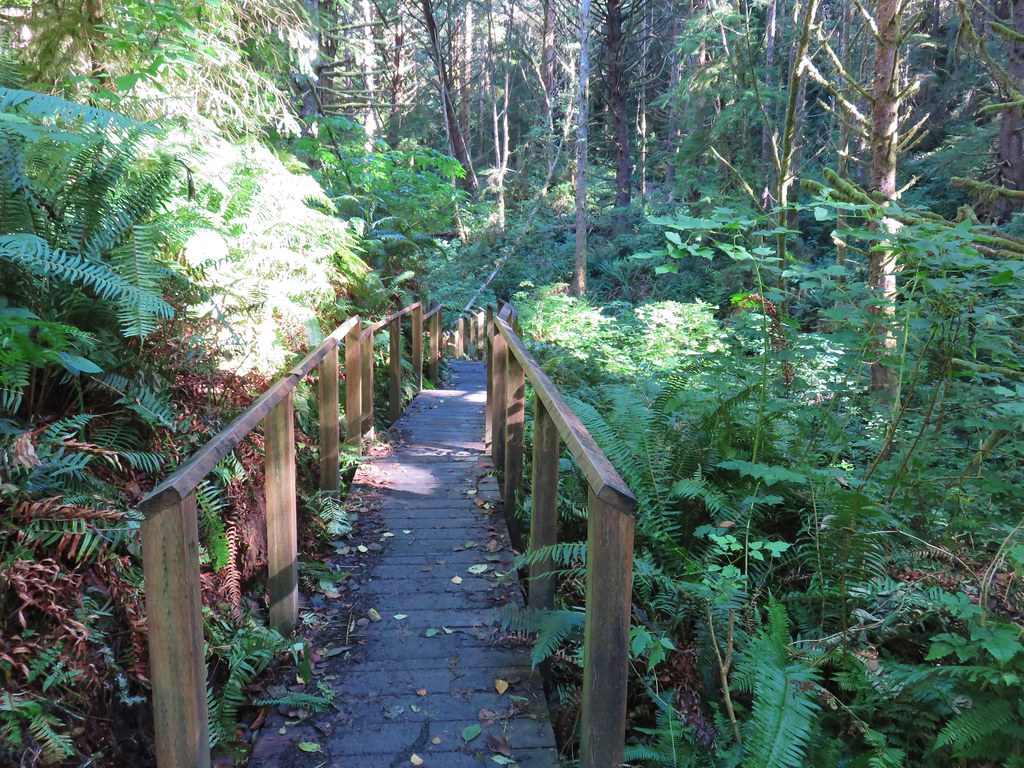
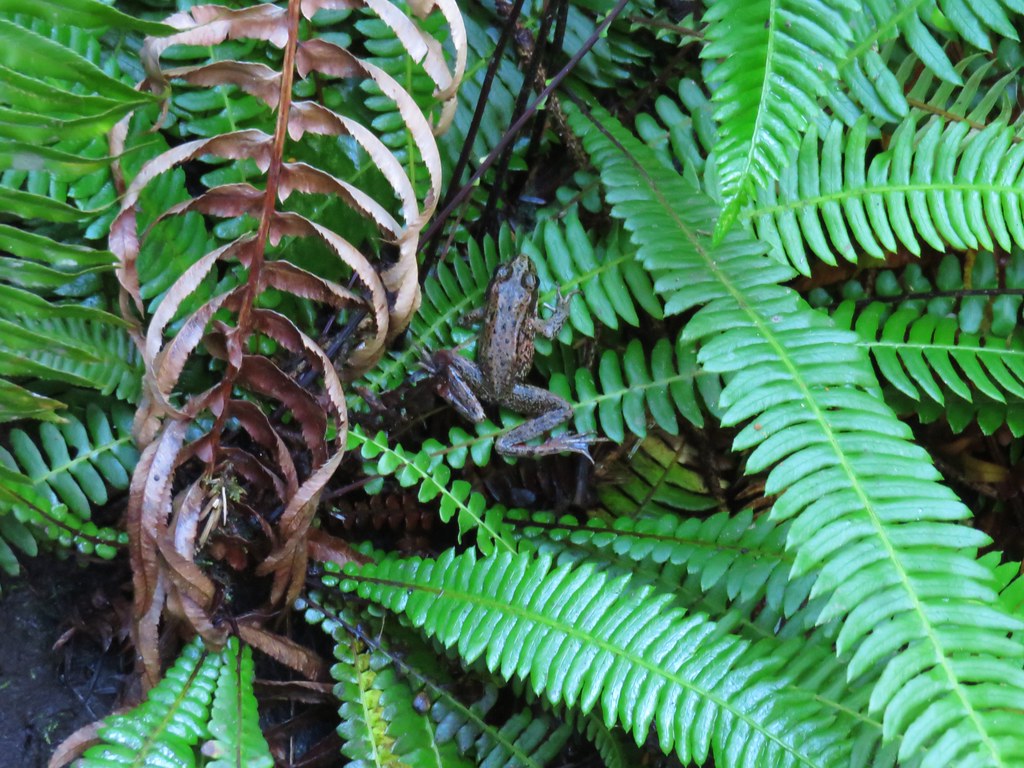
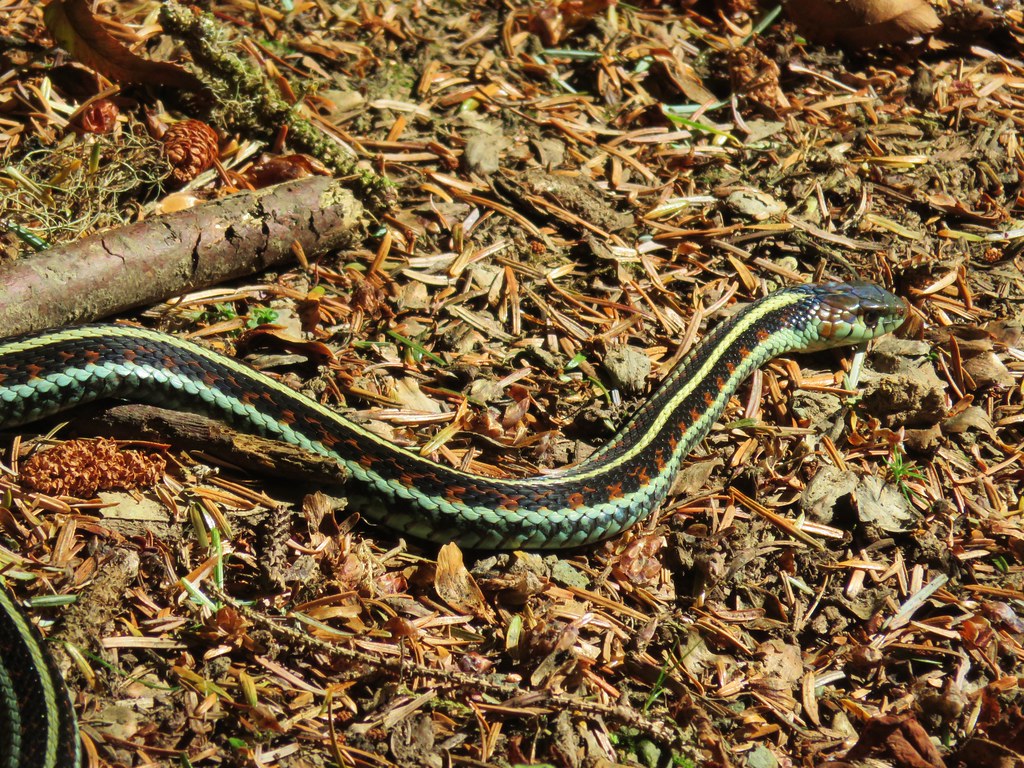
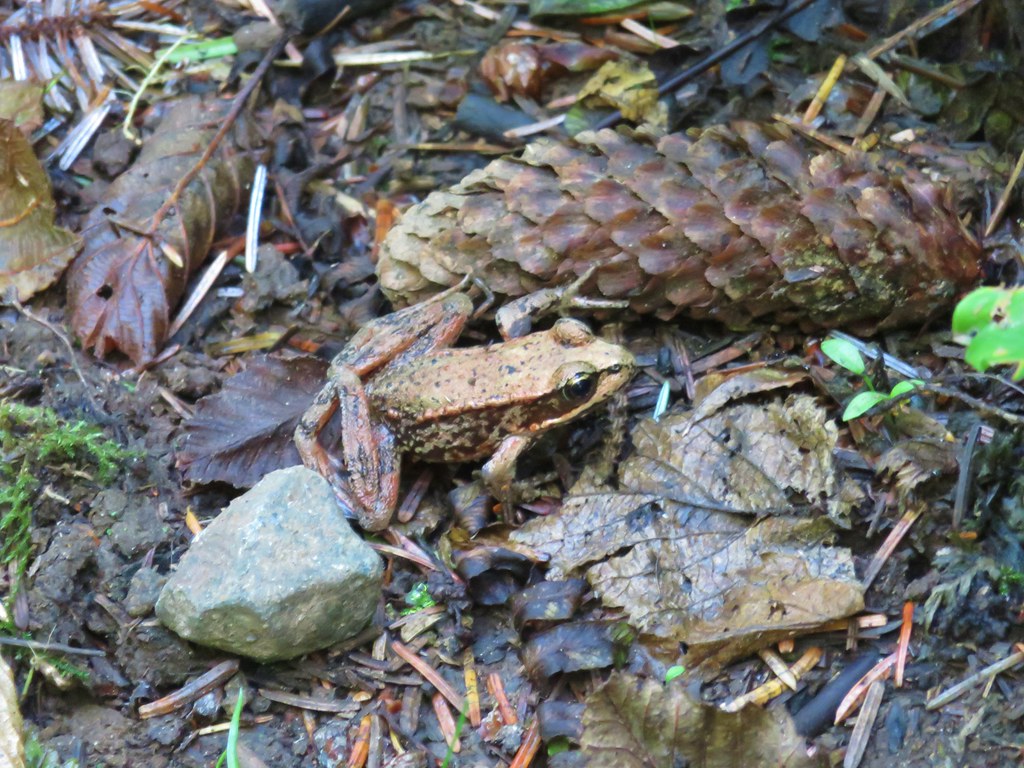
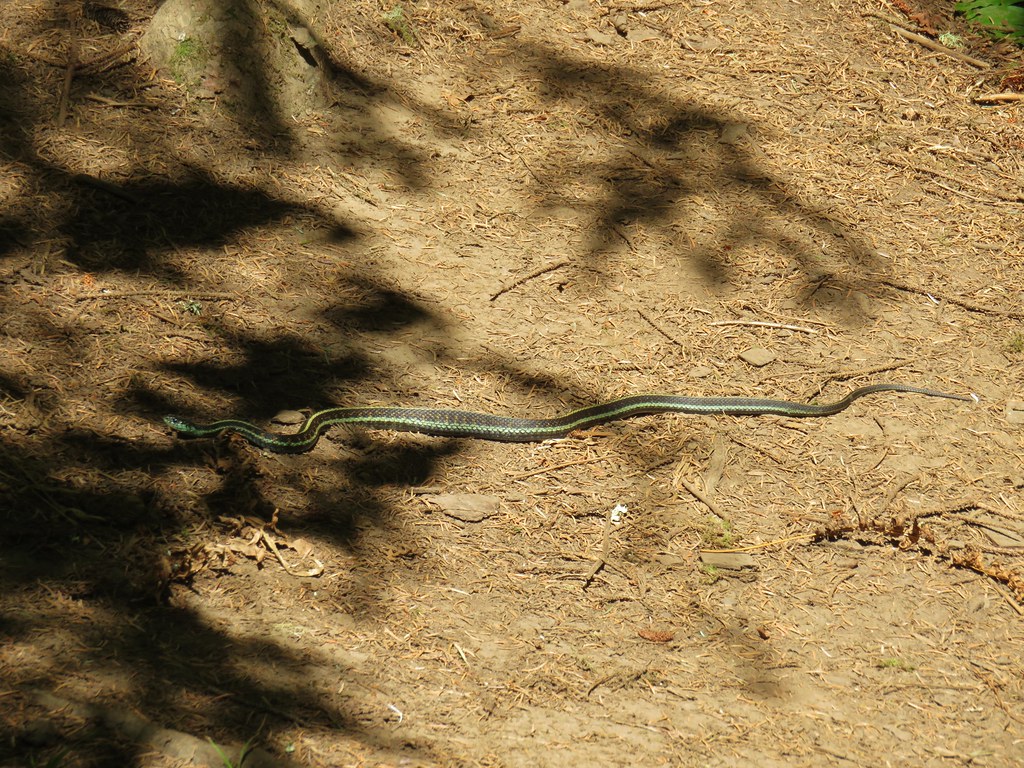
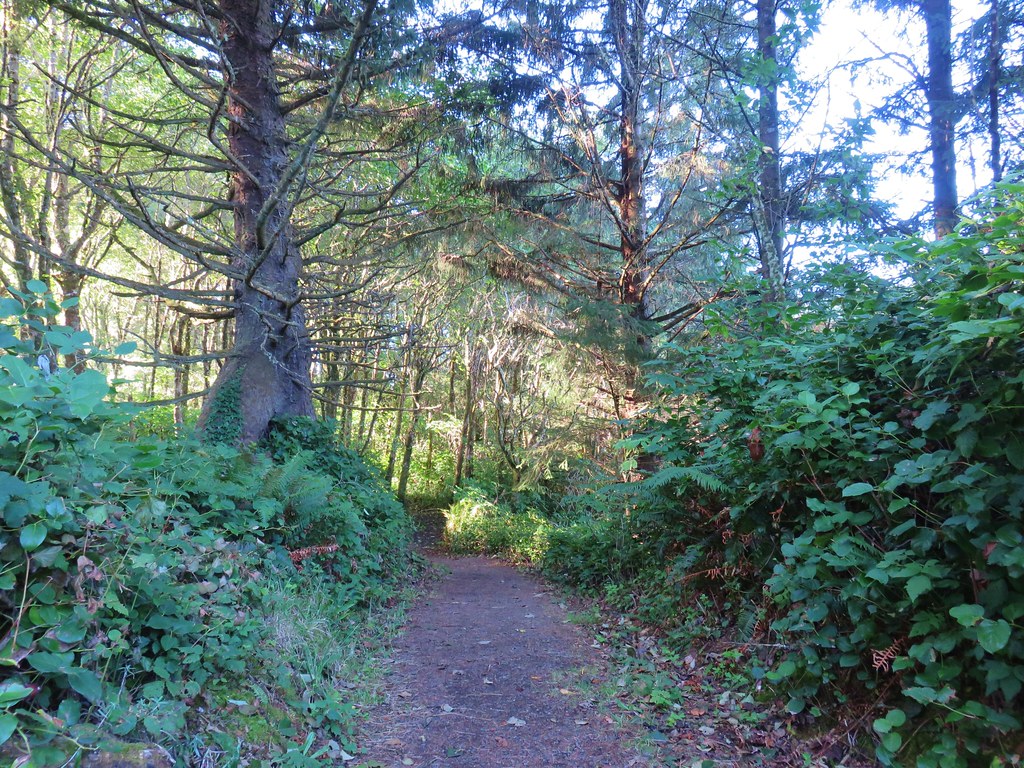
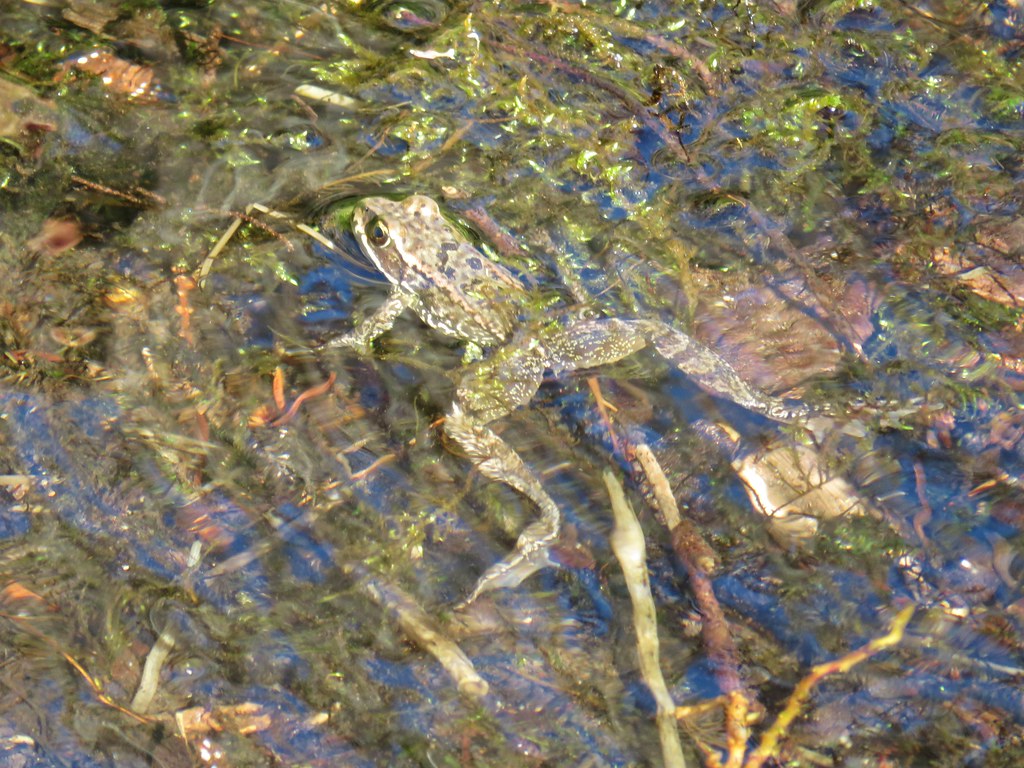
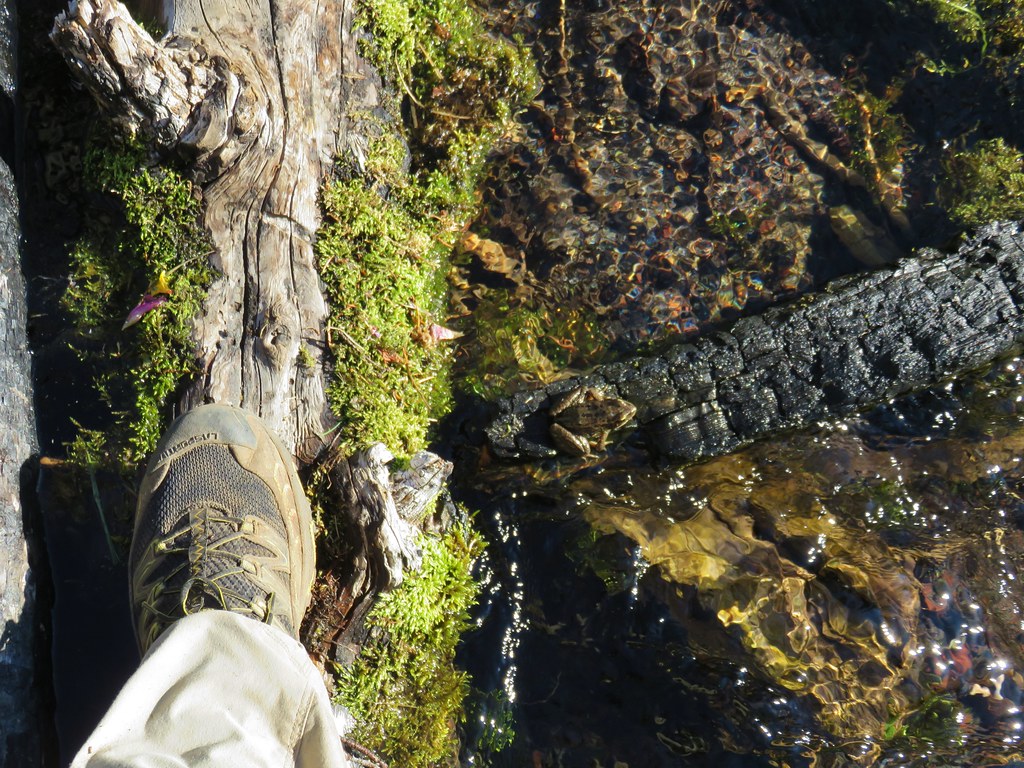
Our plan was to follow this trail out to McKenzie Head then take a short road walk past Oneil Lake and explore a few more trails in the park from the area near the entrance booth. The North Head Trail passed through a pretty coastal forest going up and down, over and around ridges. We spotted lots of wildlife along this section of trail, mostly in the form of frogs and snakes.
IMG_8526

IMG_8527

IMG_8533

IMG_8538

IMG_8540

IMG_8546

IMG_8550

IMG_8558

We crossed Fort Canby Road at a small parking lot for McKenzie Head.
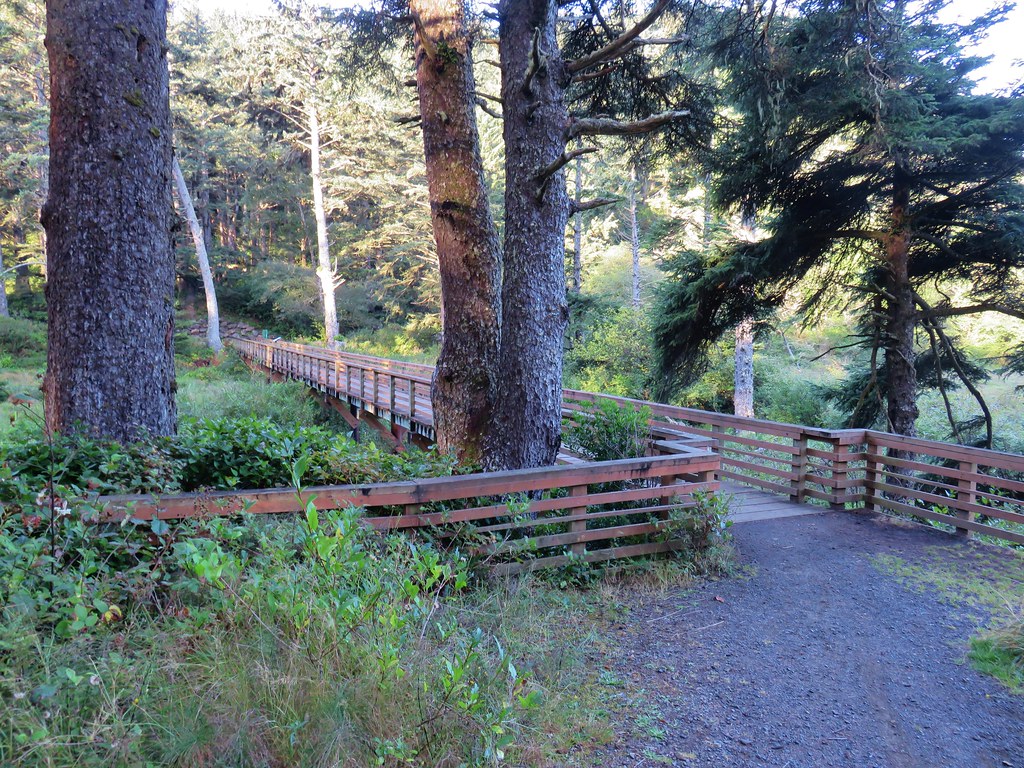
IMG_8562

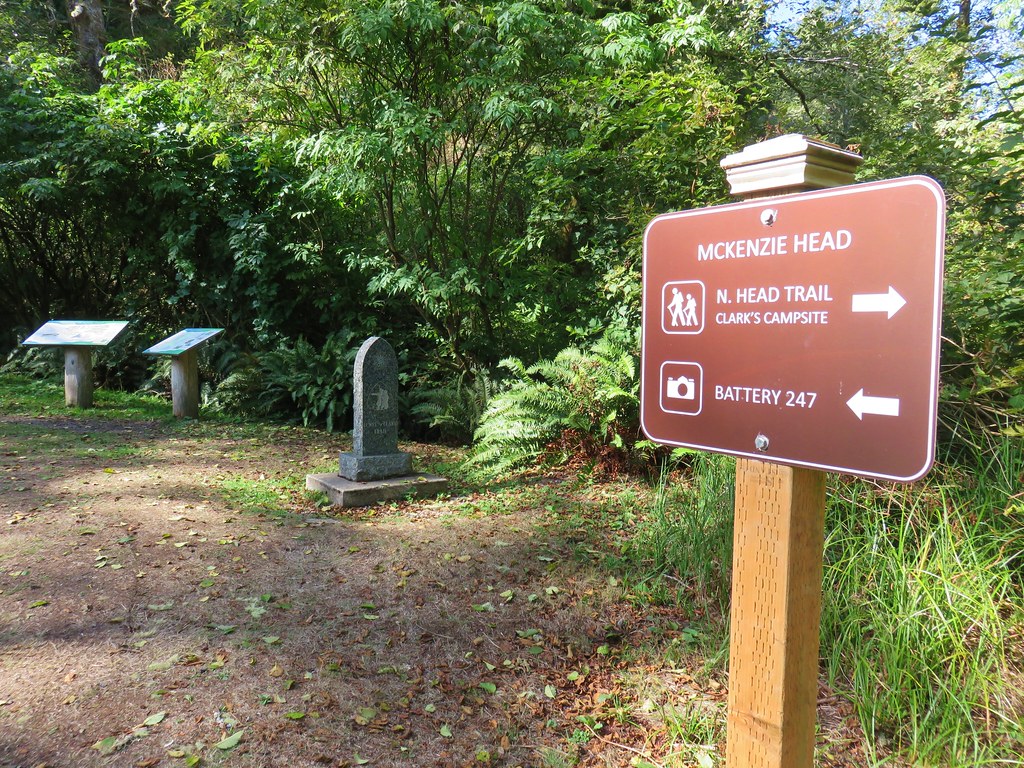
After stopping to read the interpretive signs we started up the .3 mile path to Battery 247.

IMG_8575

IMG_8576

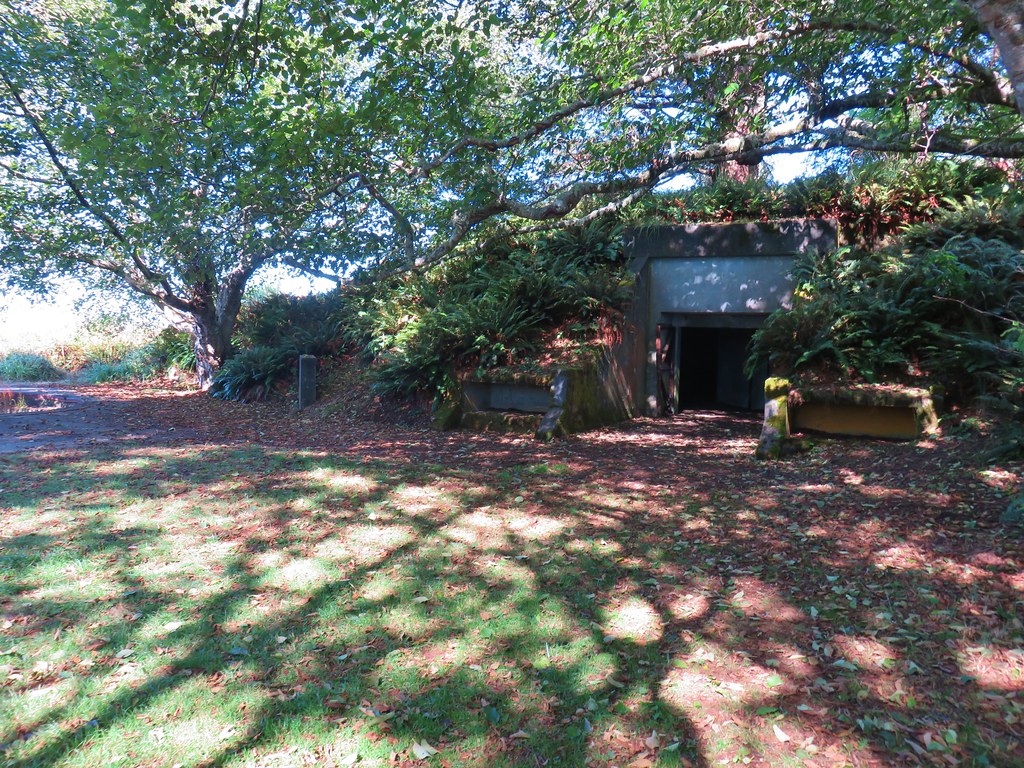
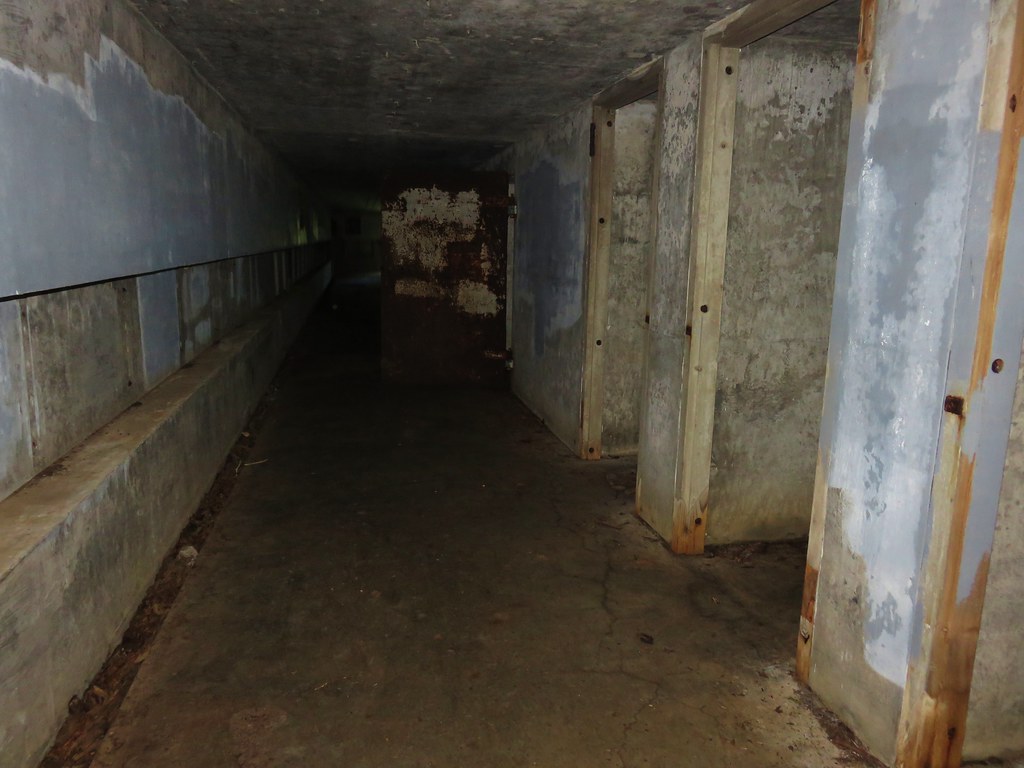
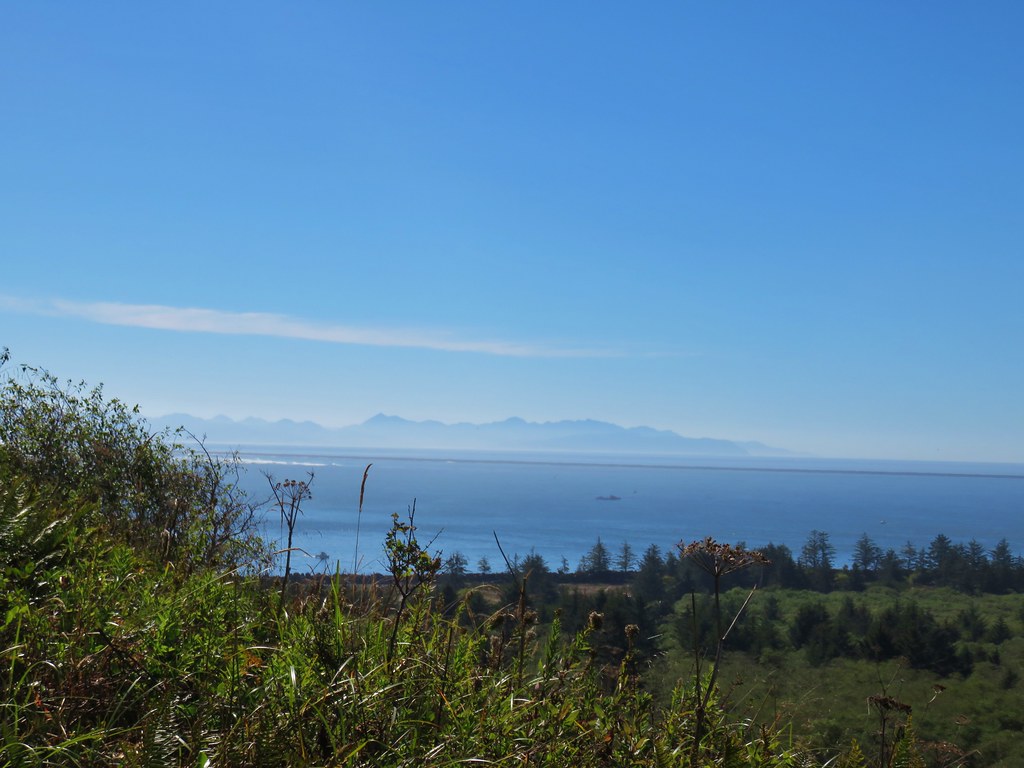
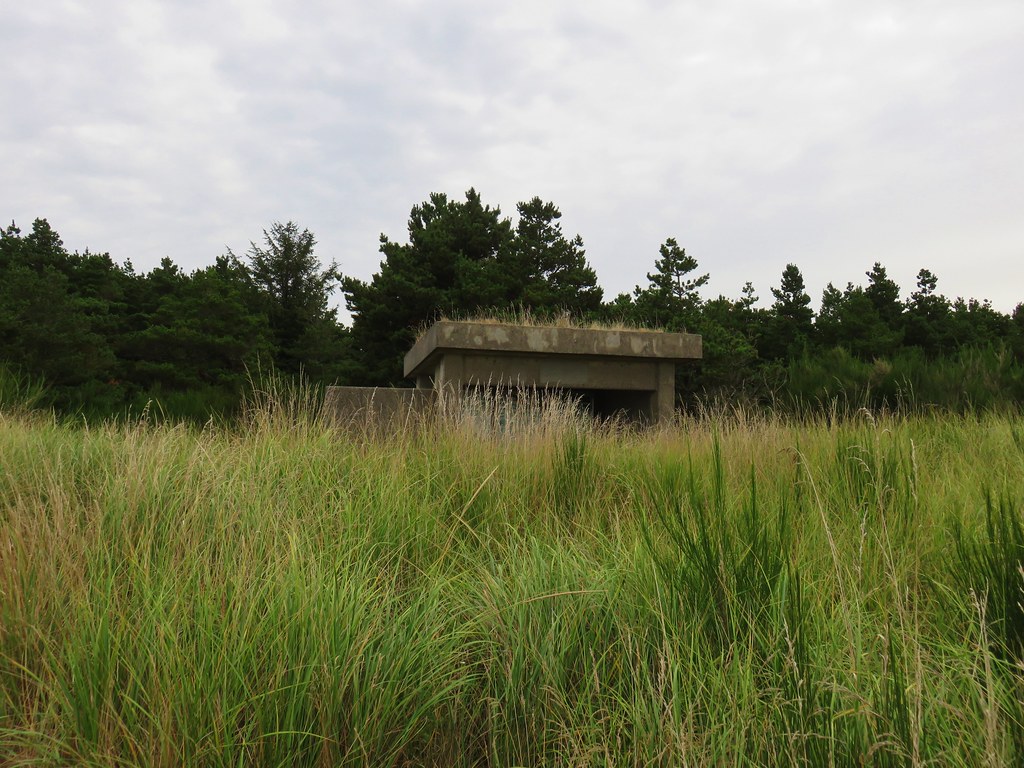
We explored the old bunker and took in the view from North Head before heading back down.

IMG_8585

IMG_8590

IMG_8596

When we arrived back at the McKenzie Head parking lot we turned right and walked along Fort Canby Road until we were able to cut over to a gravel campground road along Oneil Lake.

IMG_8602

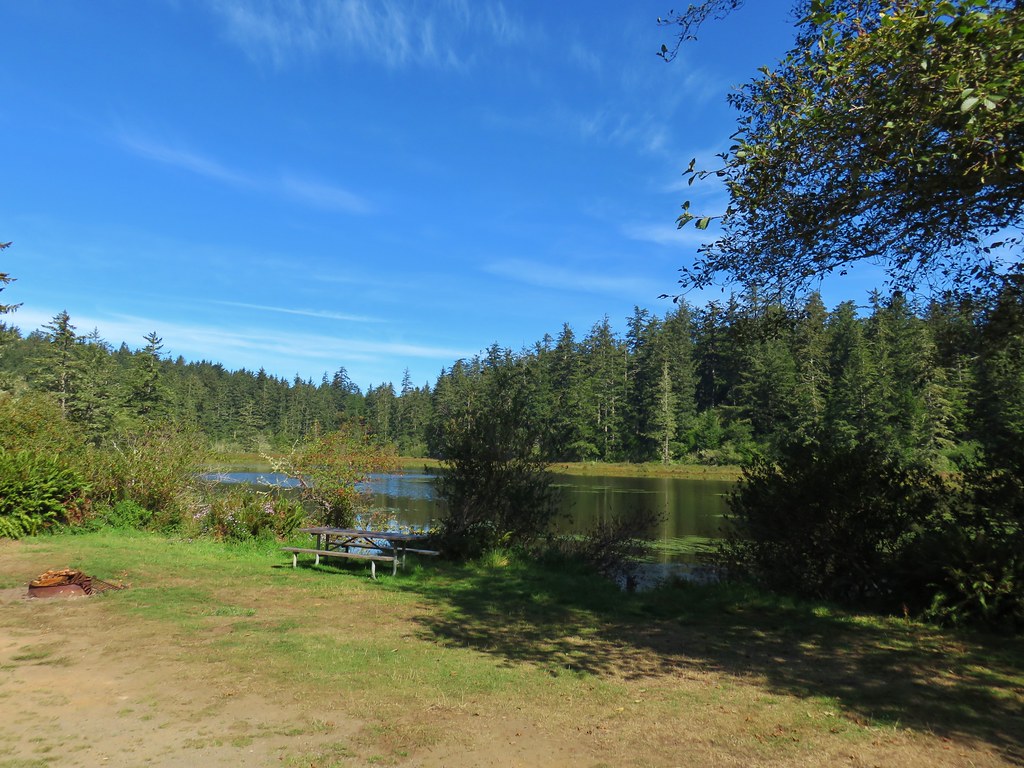
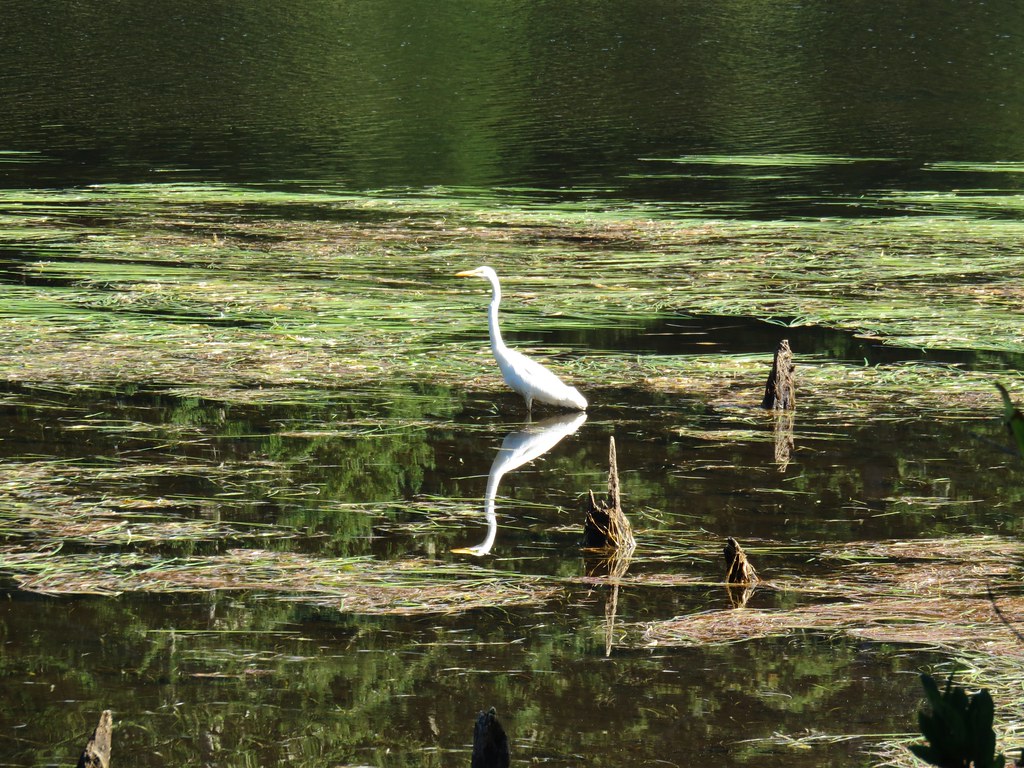
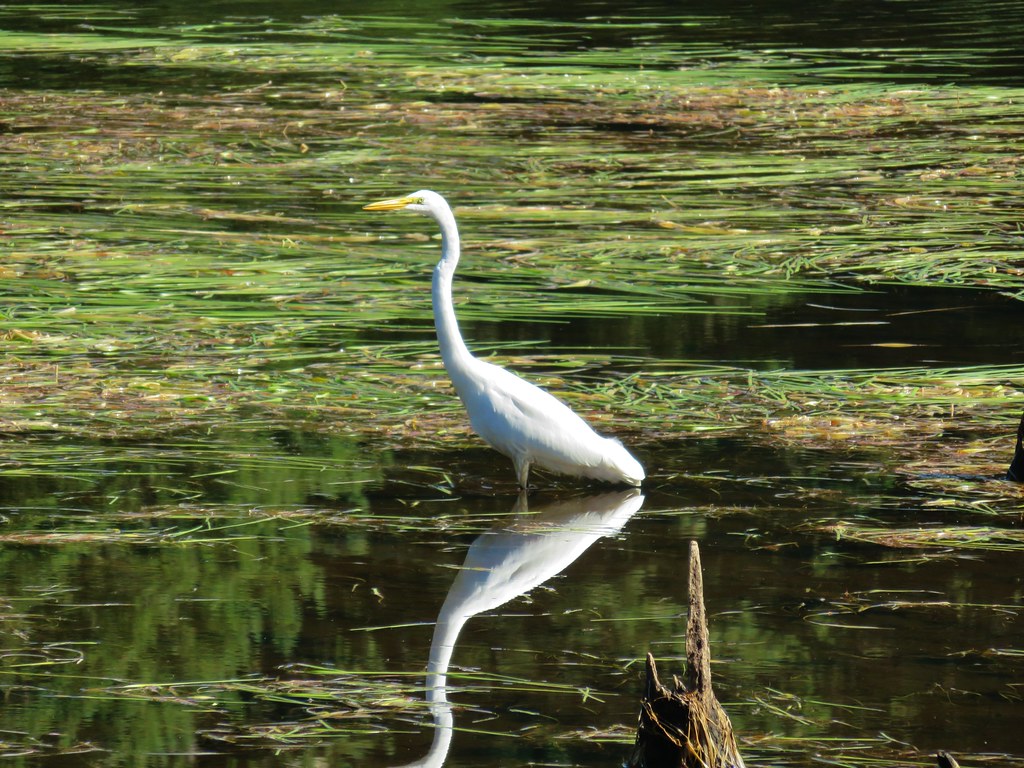
We spotted an egret and an osprey at the lake.

IMG_8603

IMG_8604

IMG_8608

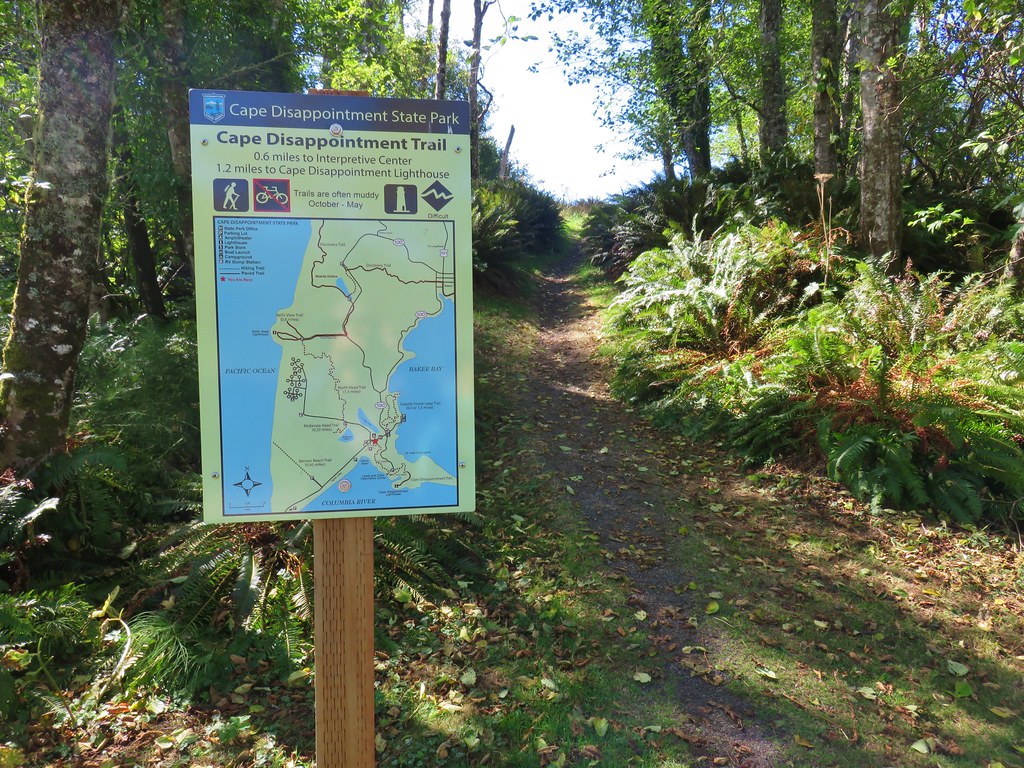
At the far end of the lake we crossed Jetty Road just west of the park entrance booth and located the Cape Disappointment Trail.

IMG_8613

We followed the trail uphill past a viewpoint of the jetty.

IMG_8614

IMG_8617

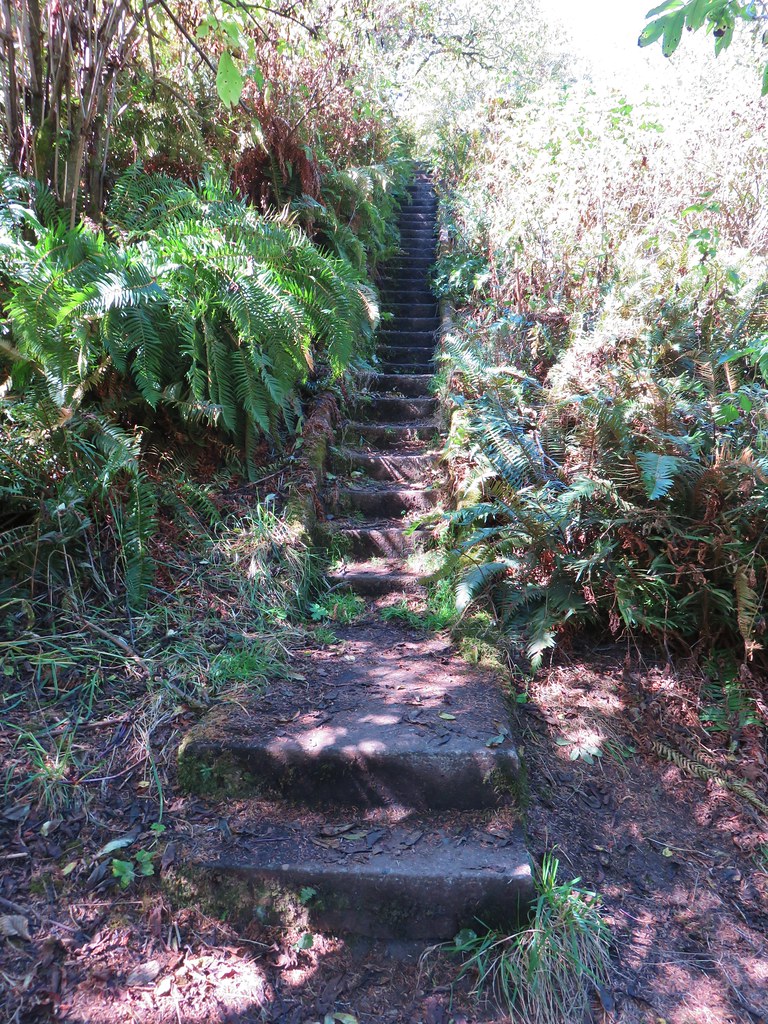
The trail continued to climb from the viewpoint passing a set of stairs that led to a hilltop with a view of the Cape Disappointment Lighthouse.

IMG_8684

IMG_8621

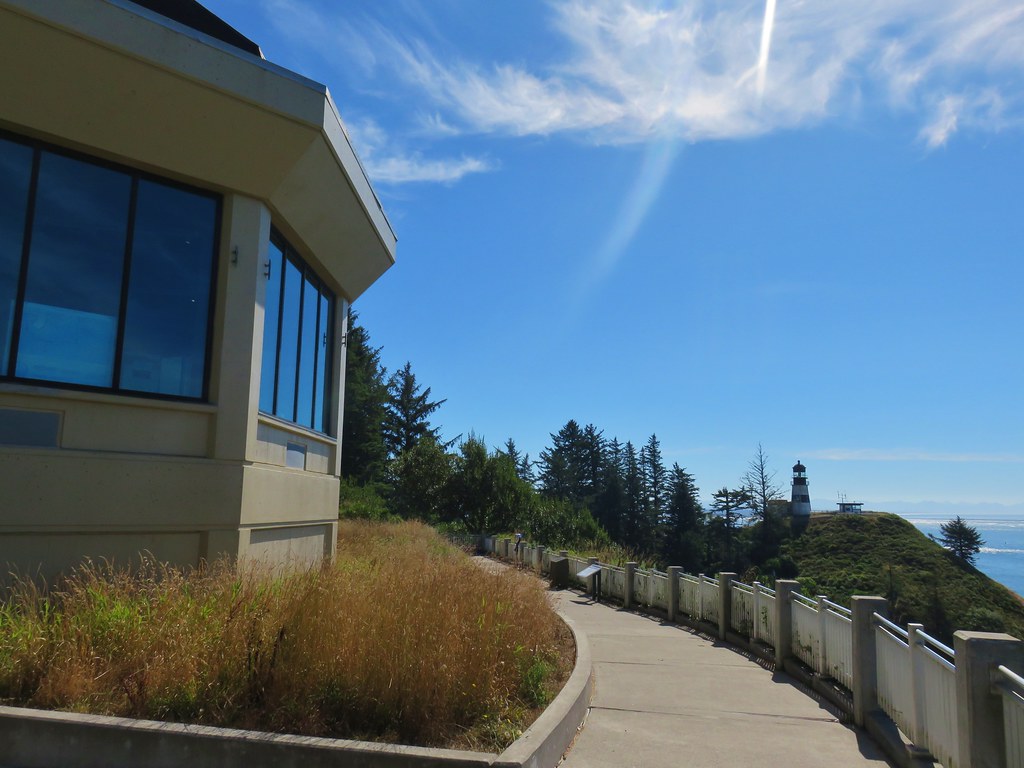
The little hilltop was a dead end so we backtracked down the stairs and continued following the trail to the Lewis and Clark Interpretive Center.

IMG_8625

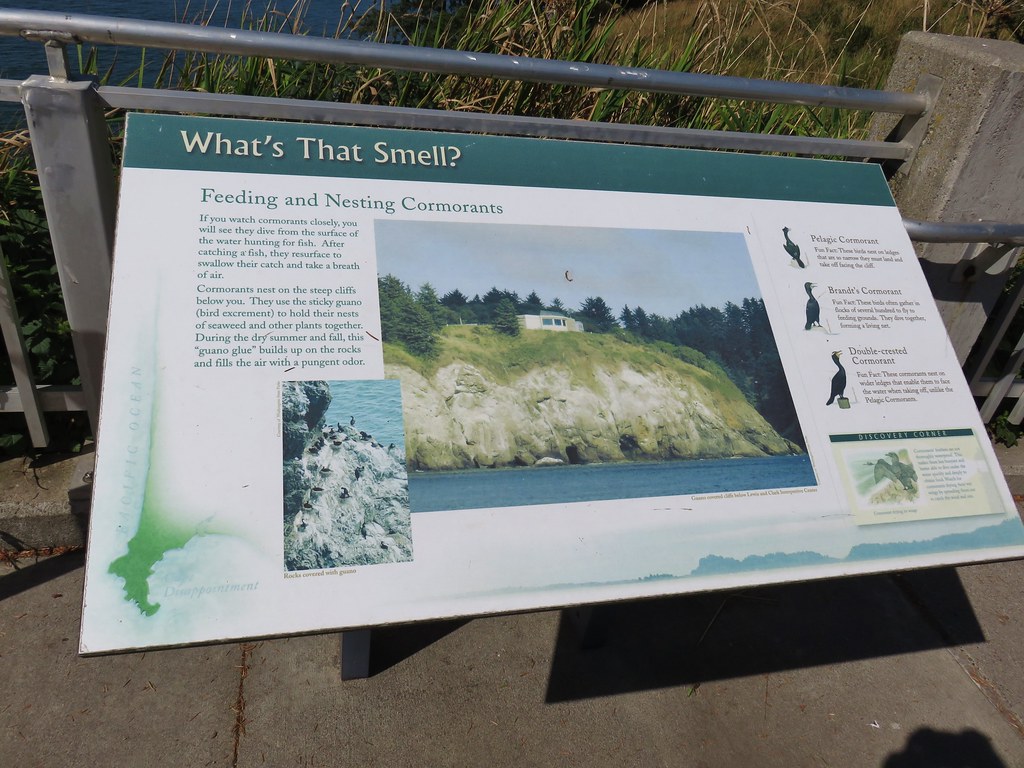
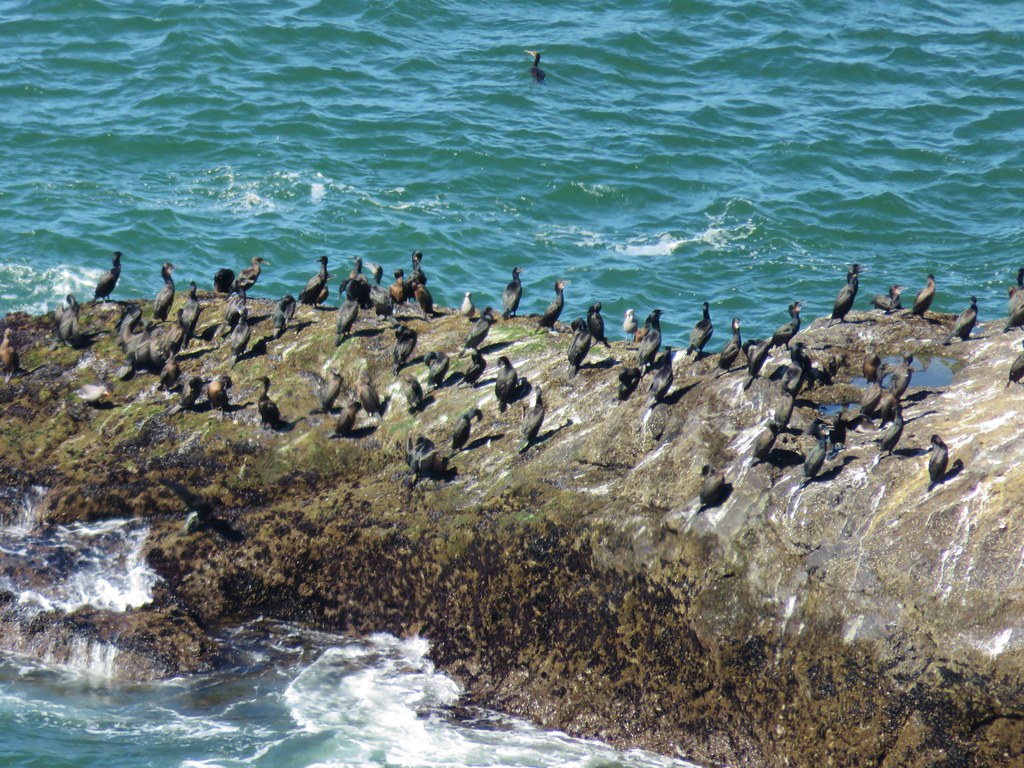
The aroma near the center was less than appealing due to the presence of sea birds on the rocks below.

IMG_8628

IMG_8631

IMG_8632

At the far end of the center we managed to find a spot in the shade where we couldn’t smell the birds and took a short break.

IMG_8633

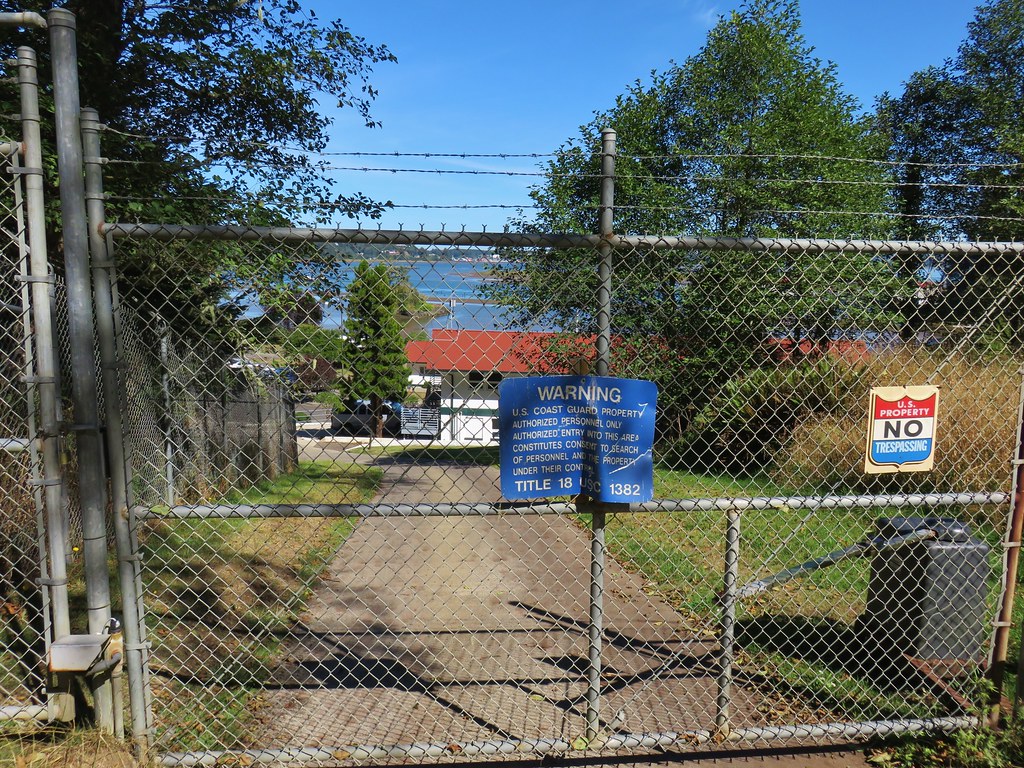
It was another .6 miles to the lighthouse from the interpretive center so we sallied forth. The trail dipped down between a Coast Guard station and Dead Mans Cove.

IMG_8645

IMG_8642

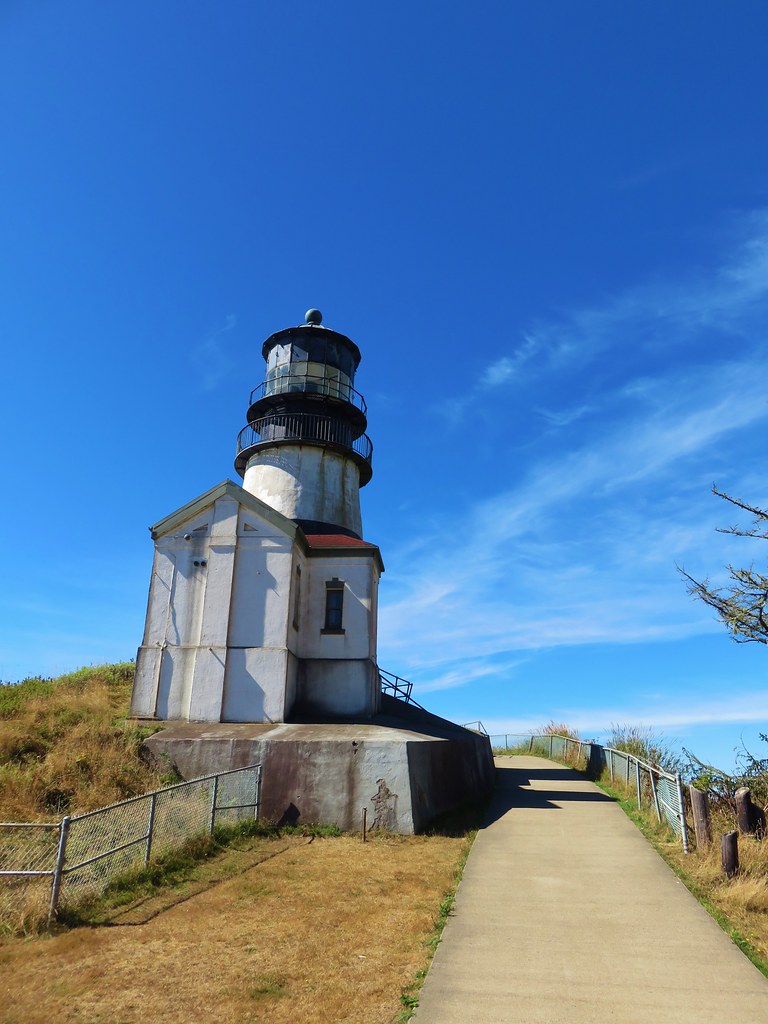
A narrow paved road led from the Coast Guard station uphill to the lighthouse and an impressive view.

IMG_8646

IMG_8659

IMG_8665

IMG_8661

IMG_8667

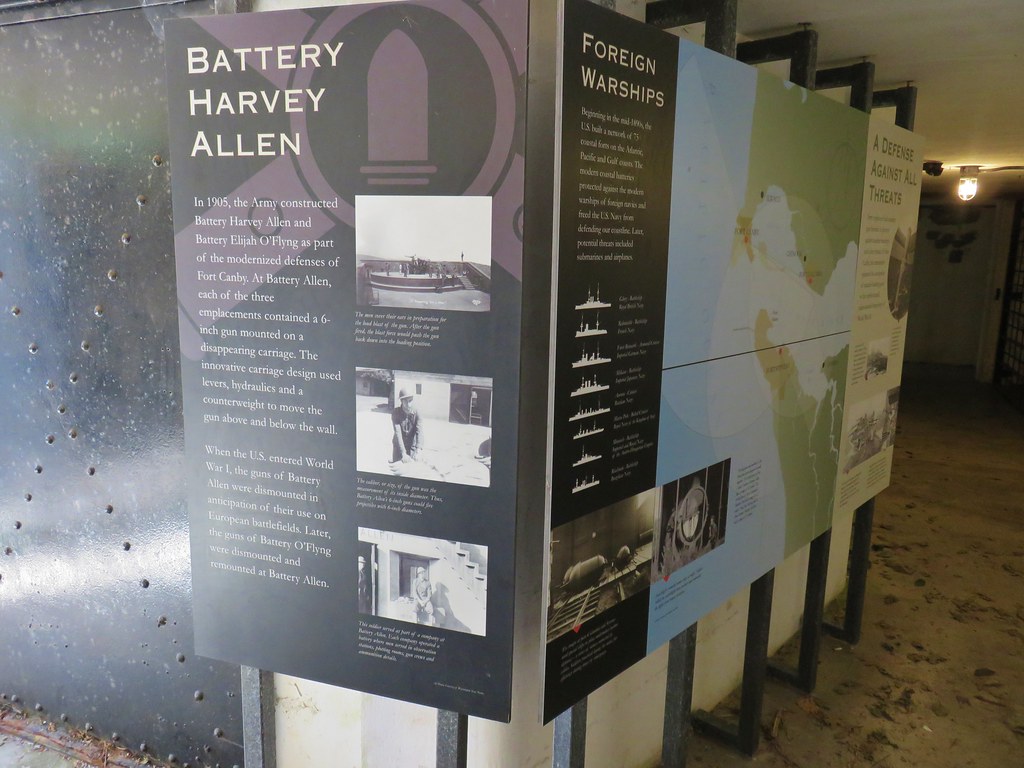
After another short break we returned to the interpretive center and walked around the east side and explored Battery Harvey Allen.

IMG_8641

IMG_8669

IMG_8673

IMG_8676

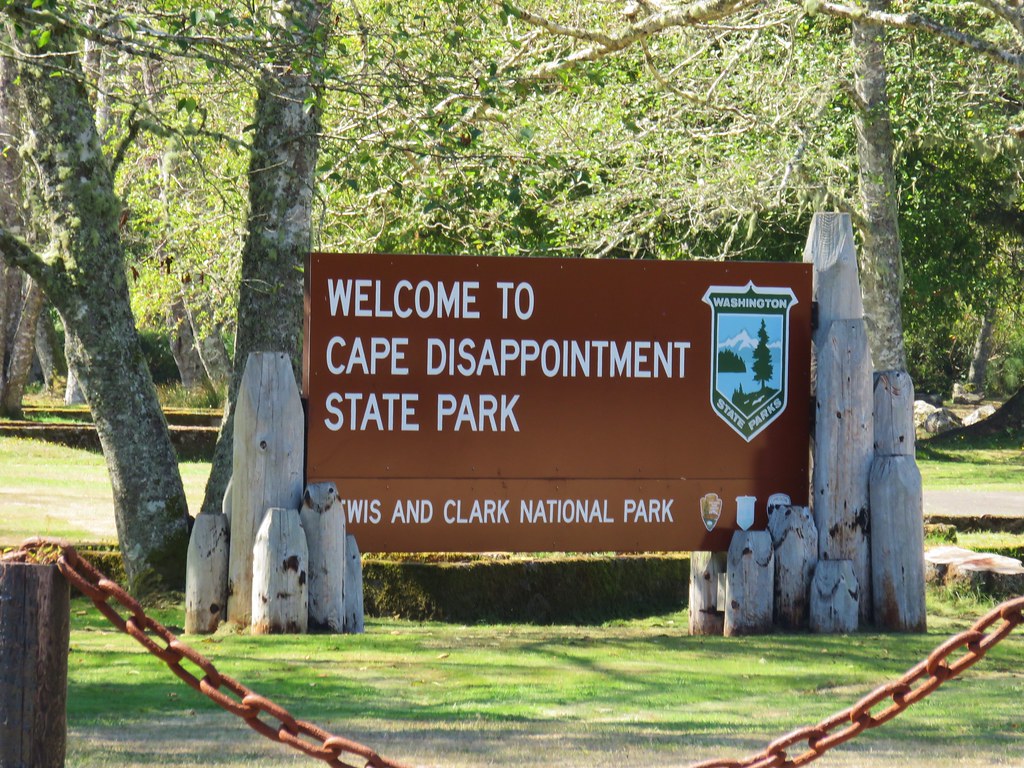
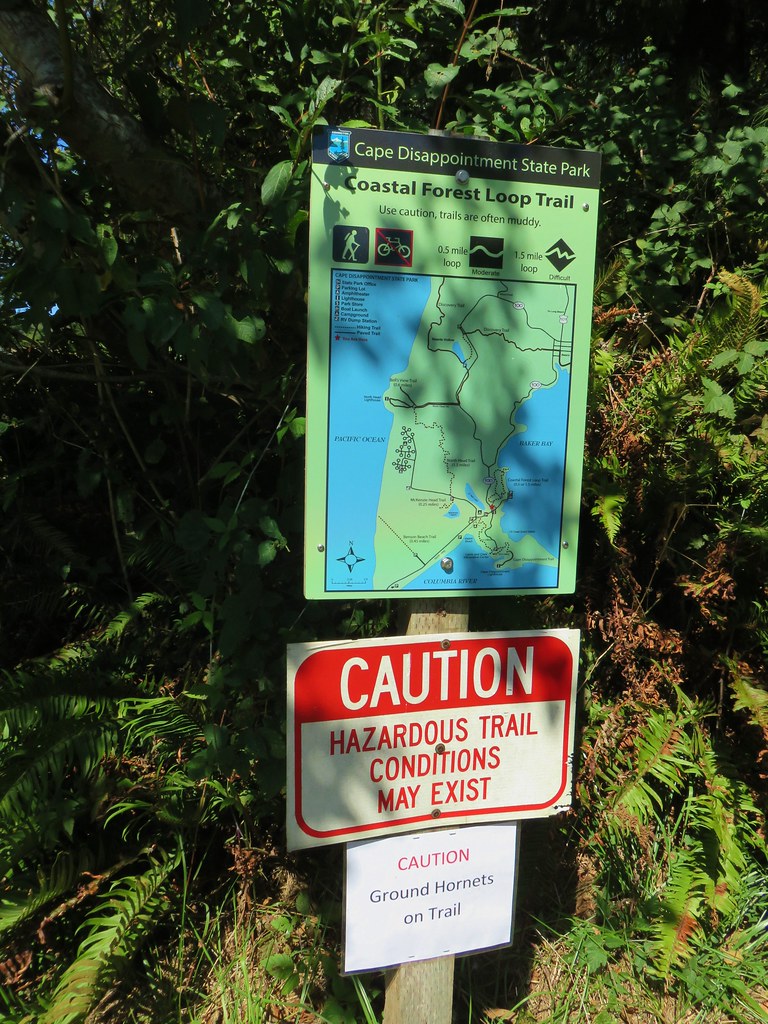
After exploring the battery we returned to the park entrance booth. We headed out Jetty Road past the booth and park entrance sign toward the boat launch across Coast Guard Road. On the far side of that road we located a trail sign for the Coastal Forest Trail.

IMG_8693

IMG_8695

There was a moment of hesitation when we read the caution sign warning of ground hornets on the trail. Growing up I had a huge fear of bees and any related species but as we’ve been hiking I’ve come to an understanding with most of the yellow and black insects. Hornets, wasps, and yellow jackets are not on that list. We decided to proceed but with extreme caution.

IMG_8696

Our plan was to do the 1.5 mile loop. At the far end of the loop near a bench a spur trail led out to a viewpoint.

IMG_8703

IMG_8711

IMG_8704

A heron was hunting in the grasses nearby.

IMG_8707

We completed the loop without running into any hornets and I was relieved when we got back to Coast Guard Road. After passing Oneil Lake on Fort Canby Road again we took the North Head Trail back to our car at the lighthouse parking lot. There were more snakes on the trail on the return trip than we’d seen earlier in the day which was fine with me since they weren’t hornets.

IMG_8732

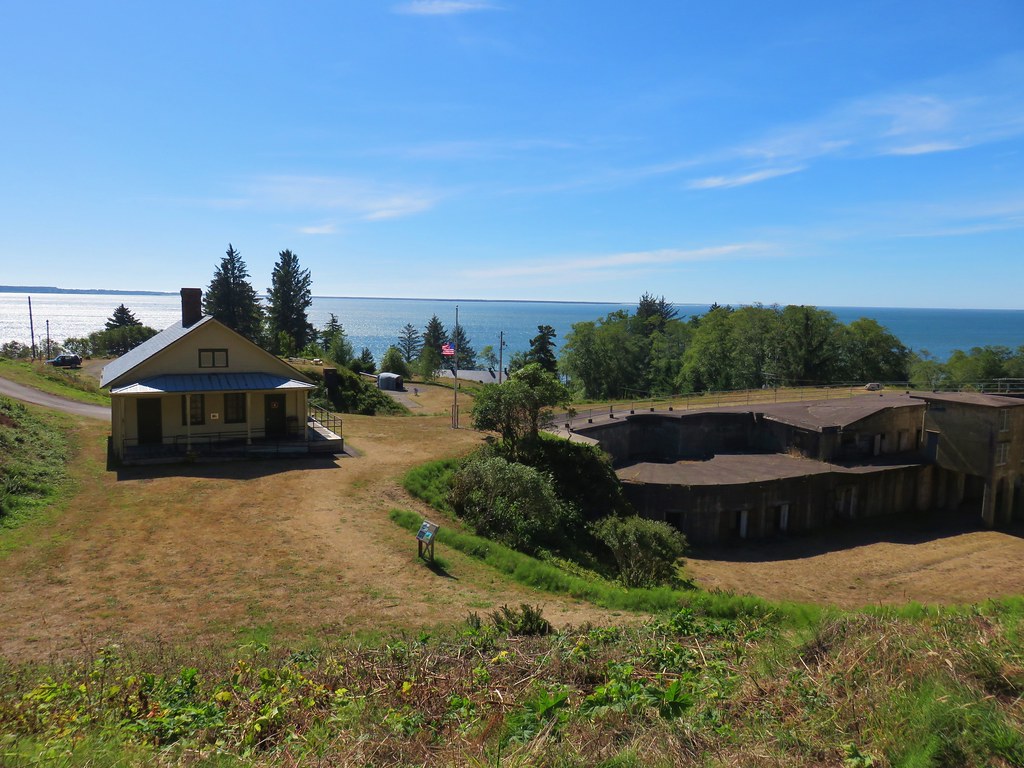
We had one final stop left. Following signs for Ilwaco we left the park and returned to Highway 101 where we headed back toward Oregon. Eight miles from Ilwaco we turned right at a sign for Fort Columbia State Park.
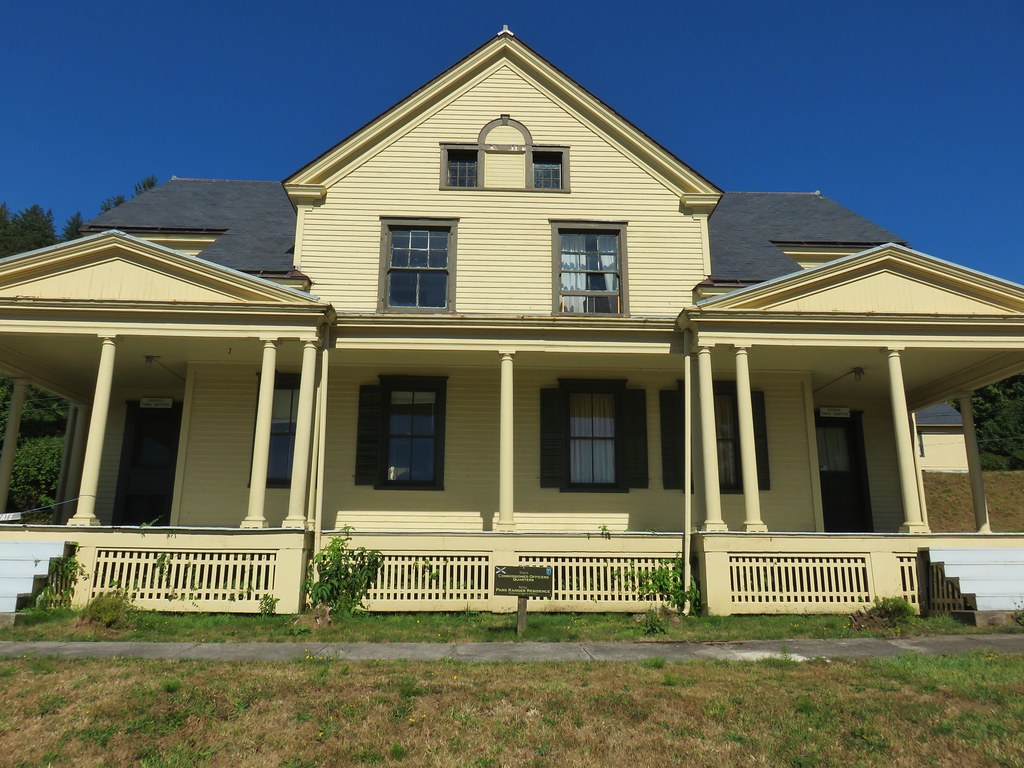
IMG_8743

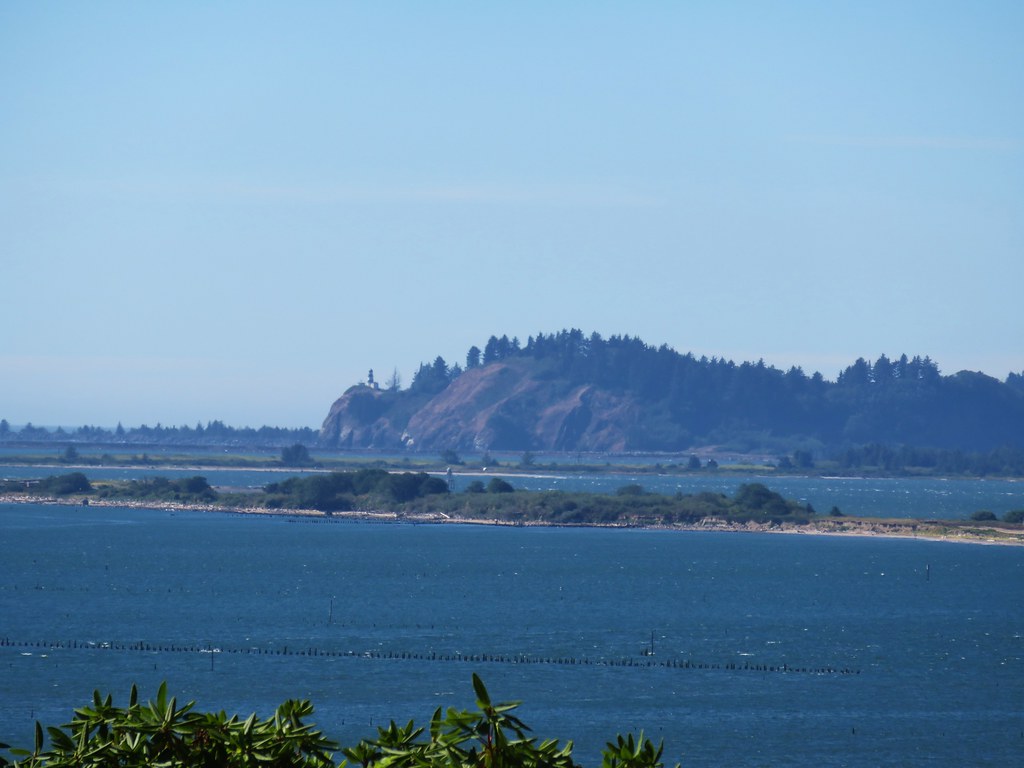
We walked through the old buildings and turned uphill on Military Road. The Cape Disappointment Lighthouse was visible in the distance.
IMG_8748

IMG_8752

IMG_8754

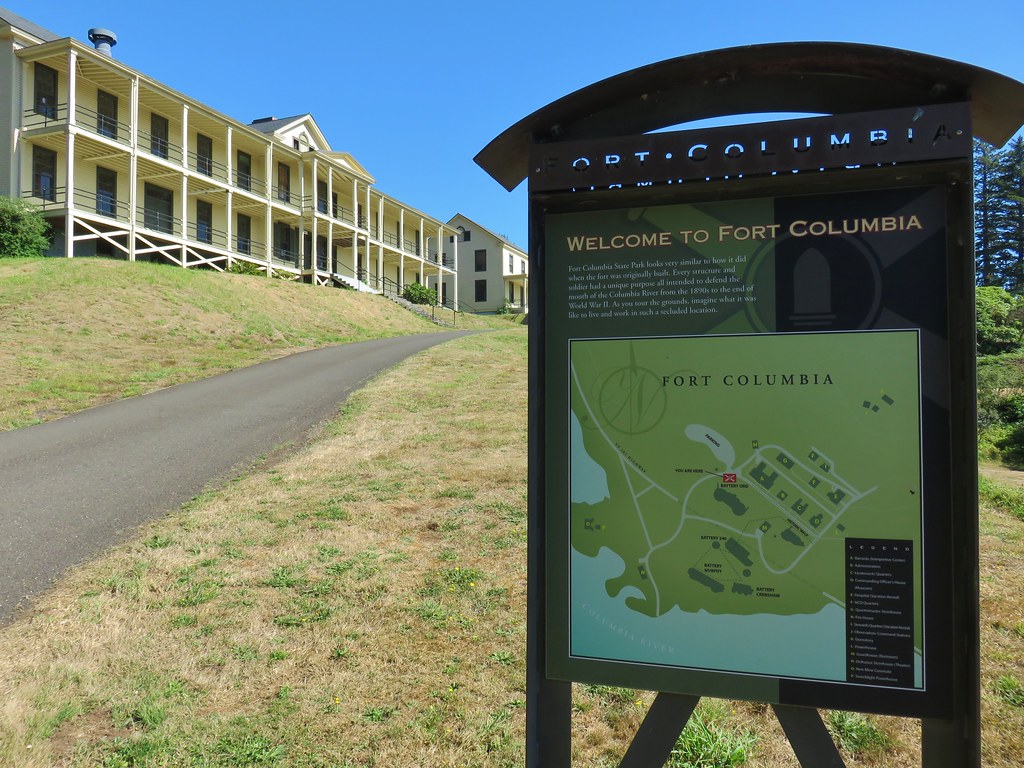
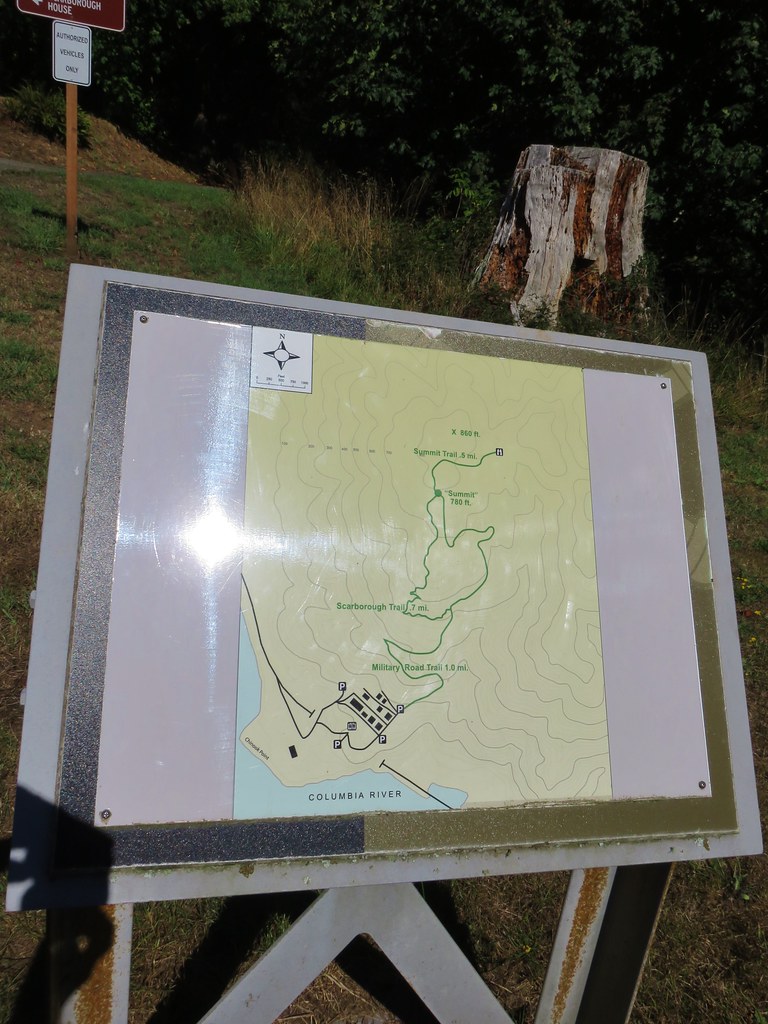
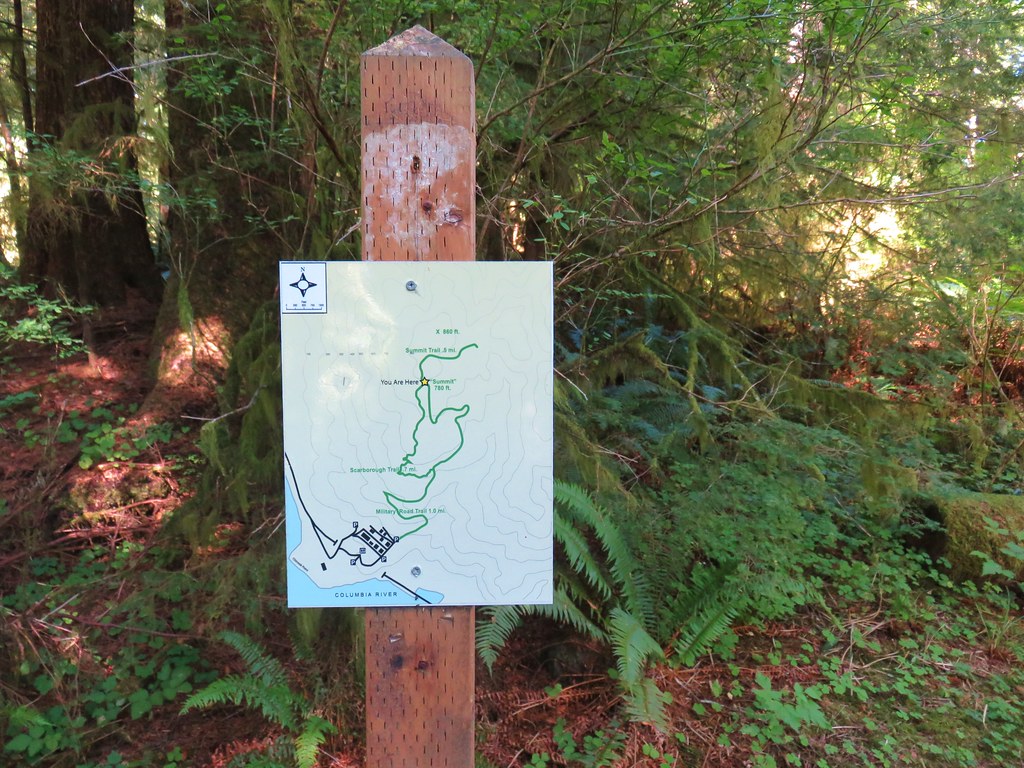
We found a map on a signpost which showed fewer trails than what our guidebook and Google showed.
IMG_8757

We decided to trust the park map and headed up the grassy Military Road Trail.
IMG_8762

IMG_8763

The trail passed some overgrown structures.
IMG_8765

IMG_8764

When we arrived at 780′ summit we decided to head back down on the Scarborough Trail, forgoing the .5 mile Summit Trail.
IMG_8772

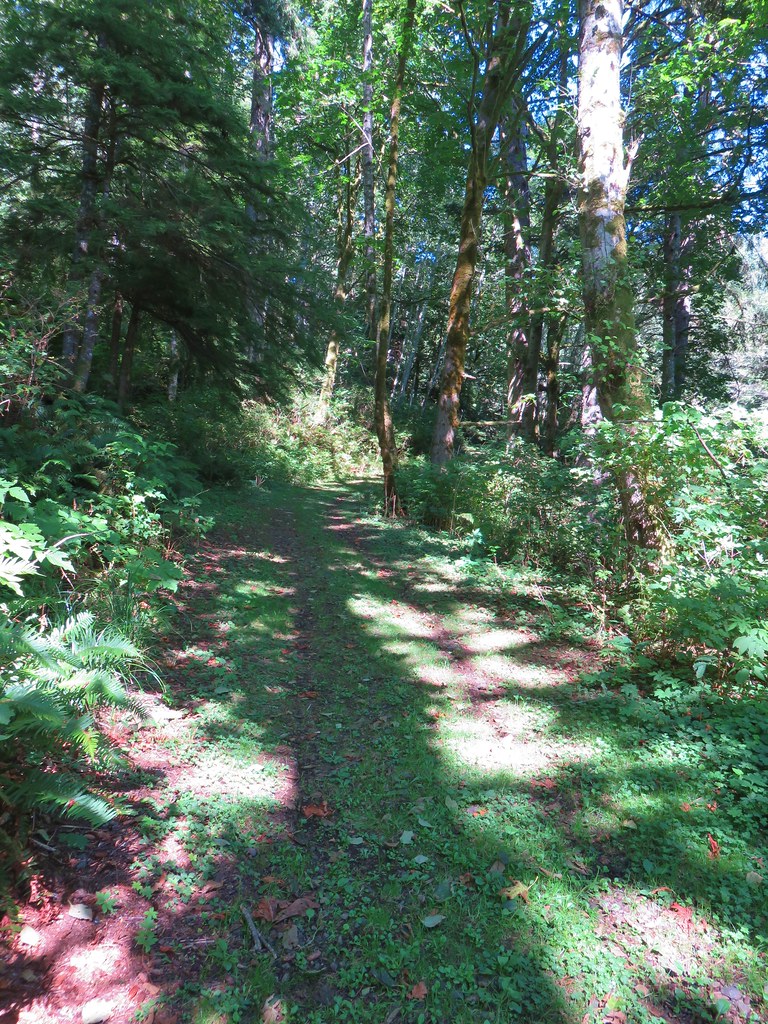
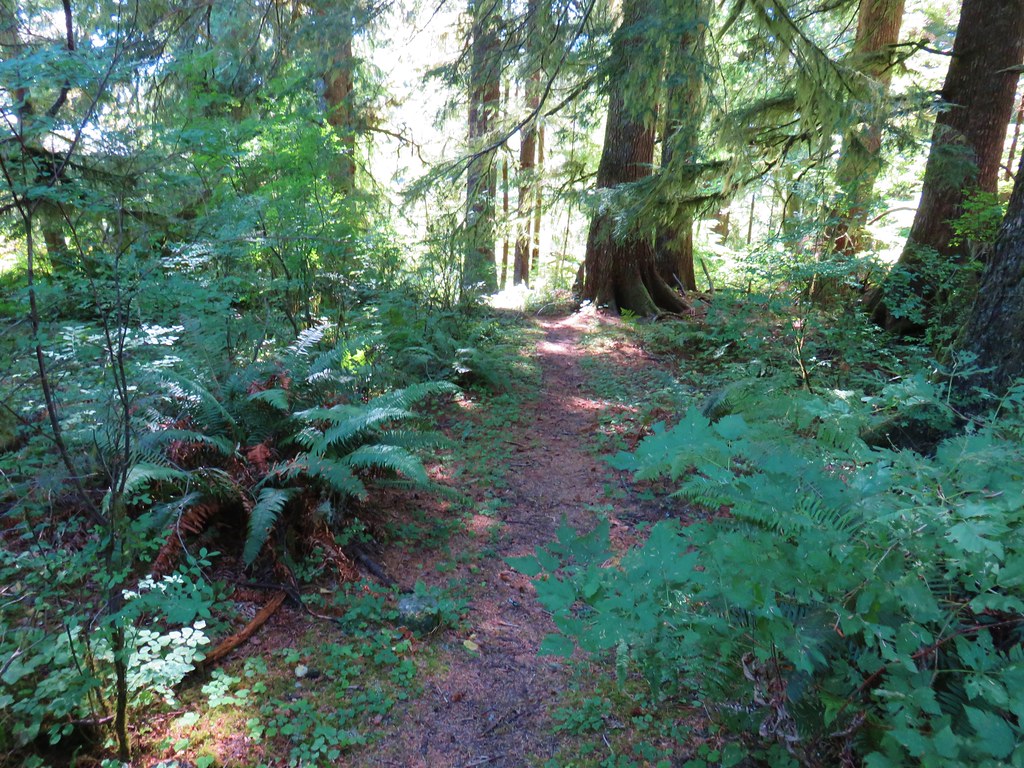
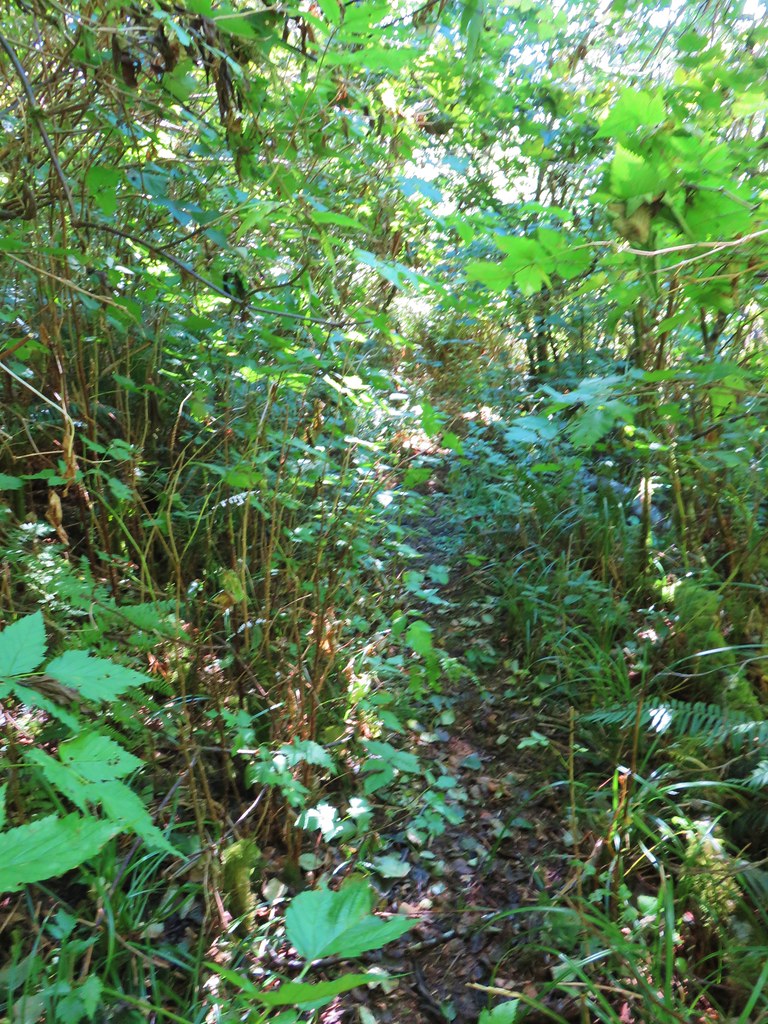
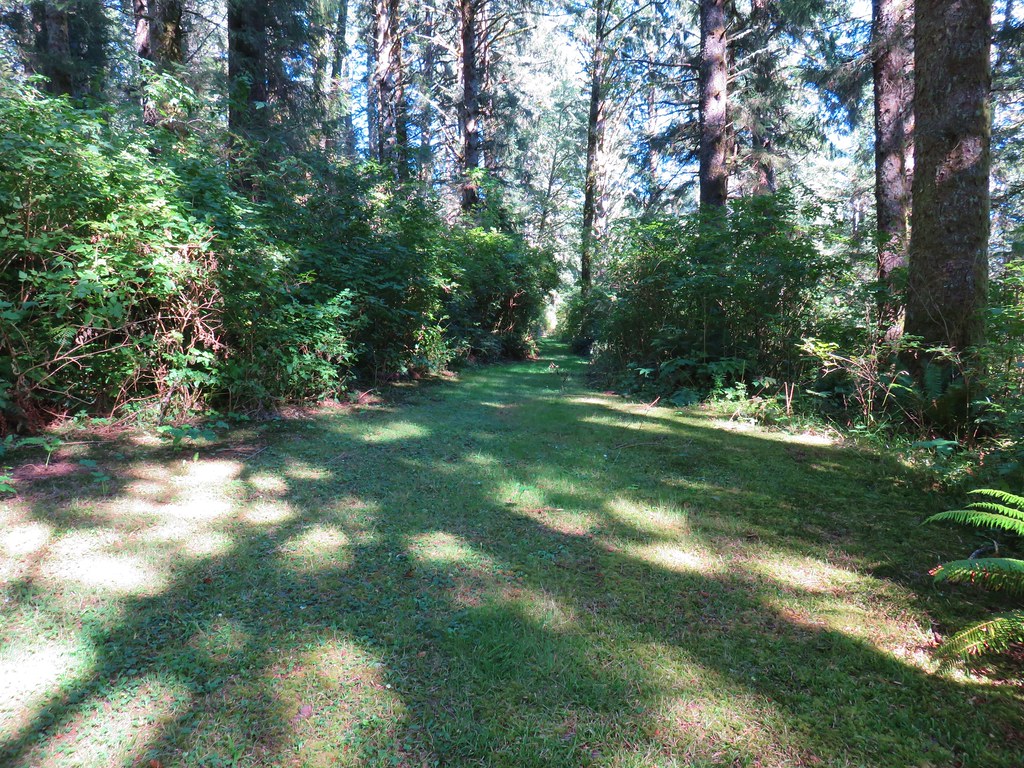
The Scarborough Trail began as a decent dirt trail but soon became overgrown with a few downed trees to climb over.
IMG_8773

IMG_8776

IMG_8777

After .4 miles we came to another grassy roadbed.
IMG_8779

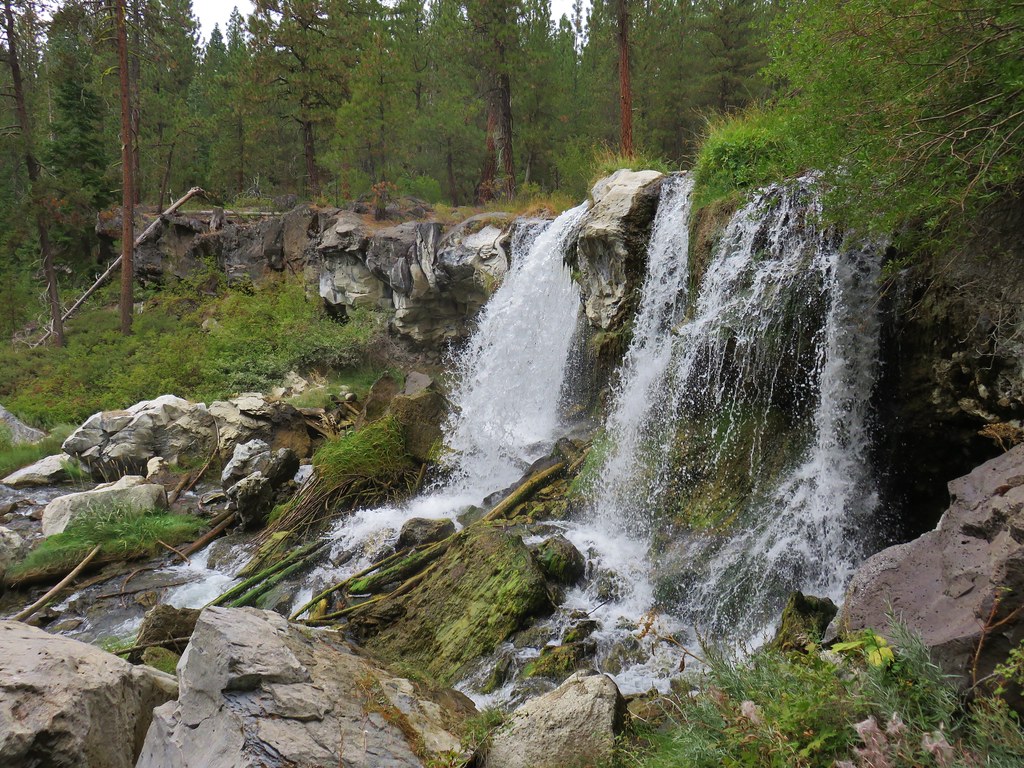
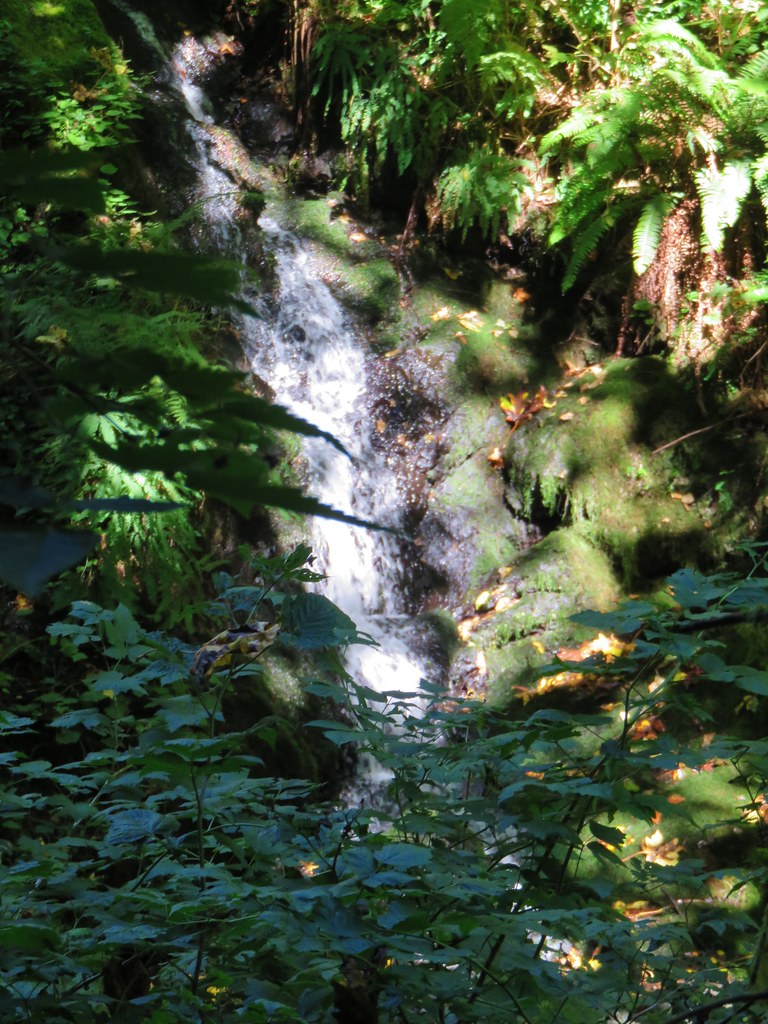
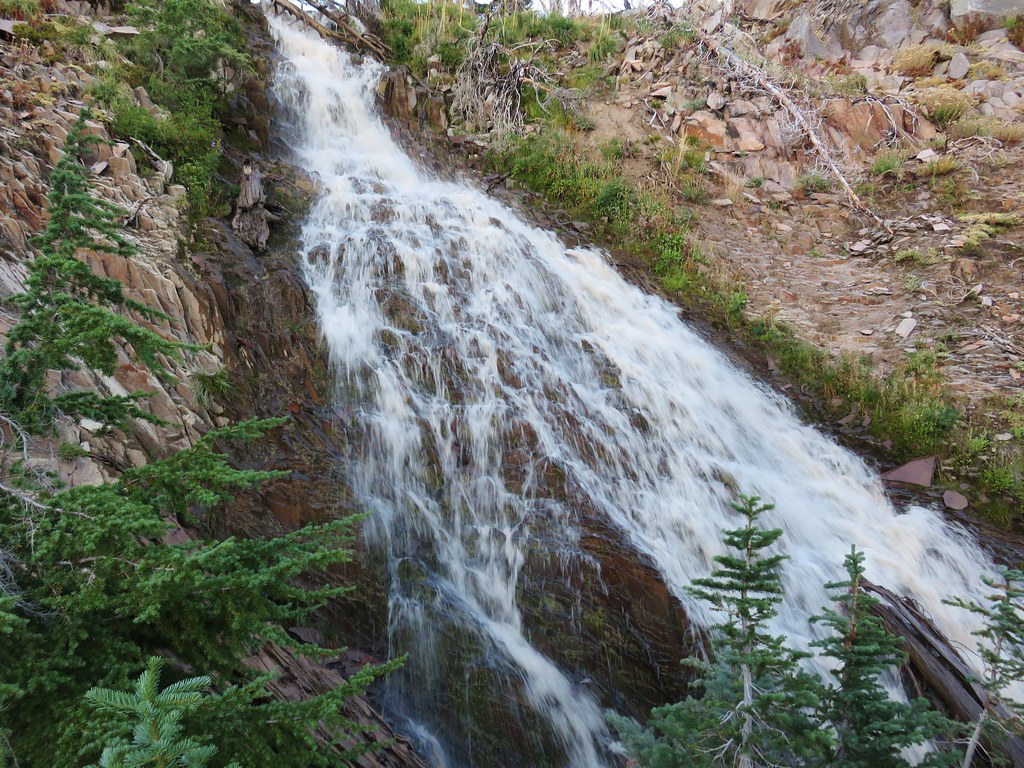
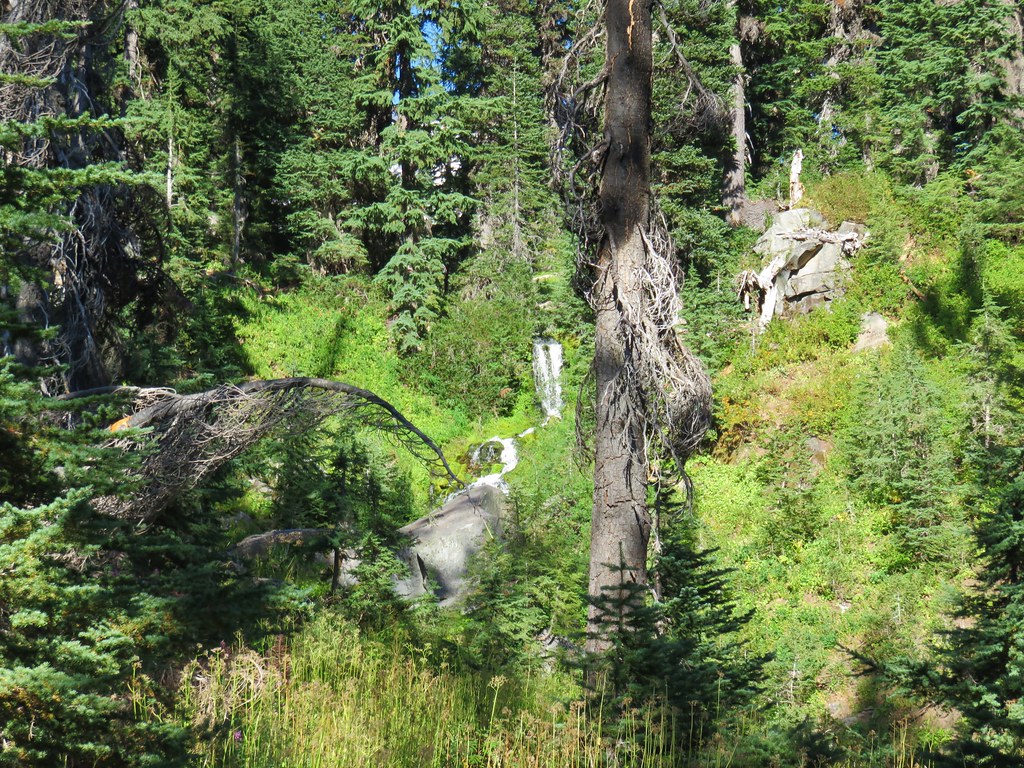
This was the route shown on the park map. The trail did seem to continue downhill which corresponded to the map in the guidebook but without knowing the condition of that trail we played it safe and followed the roadbed back to the Military Road Trail. On the way down we took a short detour following a use path toward the sound of falling water. The path led to a small waterfall behind a fence with a “Do Not Enter” sign. We took a photo from the fence and then returned to our car.
IMG_8783

When it was all said and done we’d hiked a total of 17.3 miles from 5 different trailheads. It had been a really enjoyable group of hikes full of wildlife and history. Happy Trails!

Flickr: SW Washington Coast

Categories
Hiking Northern Coast Oregon Oregon Coast Trip report

Cannon Beach

For our second day while staying in Gearhart we picked Cannon Beach as our hike. Located just 10 miles south of Gearhart on the other side of Tillamook Head we planned on starting at the city information center on 2nd St. and hiking south along the beach to a waterfall at Hug Point. The round trip would be just under 10.5 miles and allow us to be back to our hotel before the Seahawks played their first regular season game. (We might have been better off hiking based on the way their offense wound up playing.)

The clouds from the previous day were still breaking up as we left our room creating a nice sunrise over Saddle Mountain.

IMG_8216

We drove south on Highway 101 to Cannon Beach, parked, and walked three blocks to the beach.

IMG_8218

The morning coastal fog was rolling in somewhat obscuring the view of Tillamook Head to the north.

IMG_8225

IMG_8226

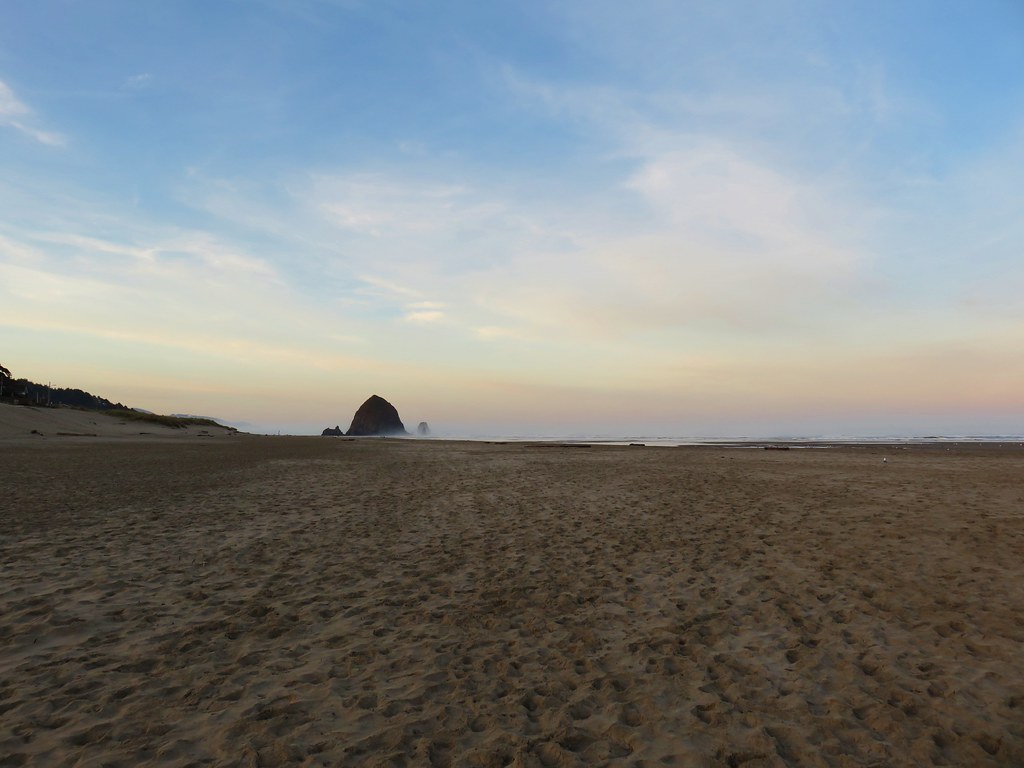
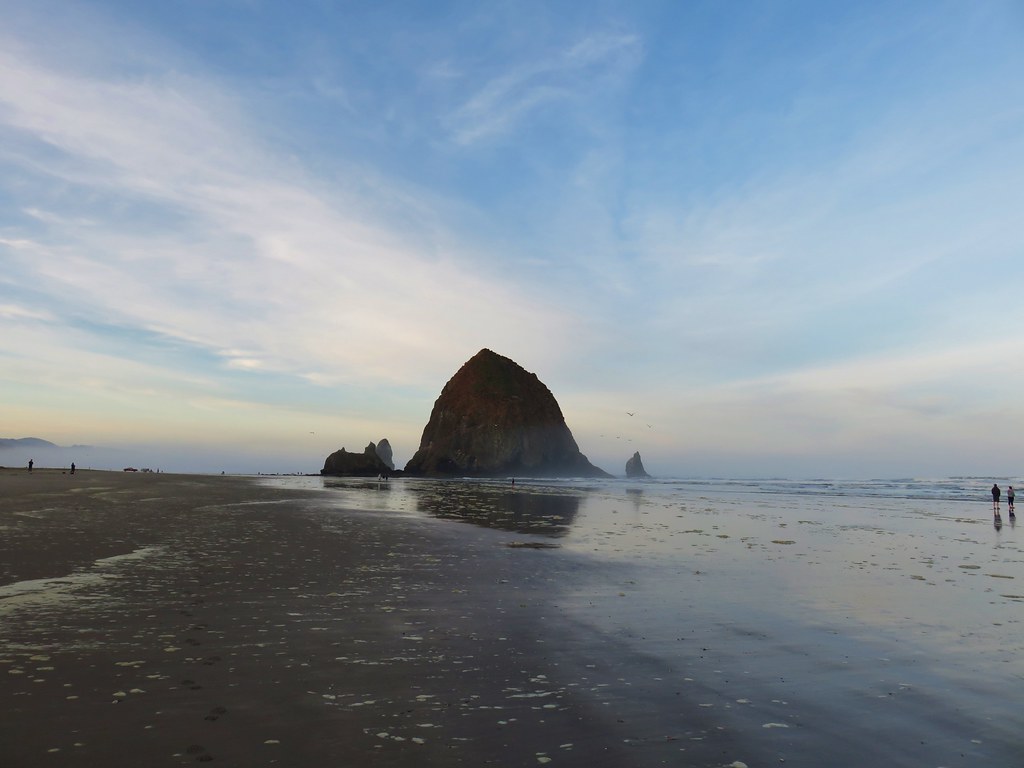
To the south Haystack Rock fared a little better although some of the smaller rocks around it were in the fog.

IMG_8222

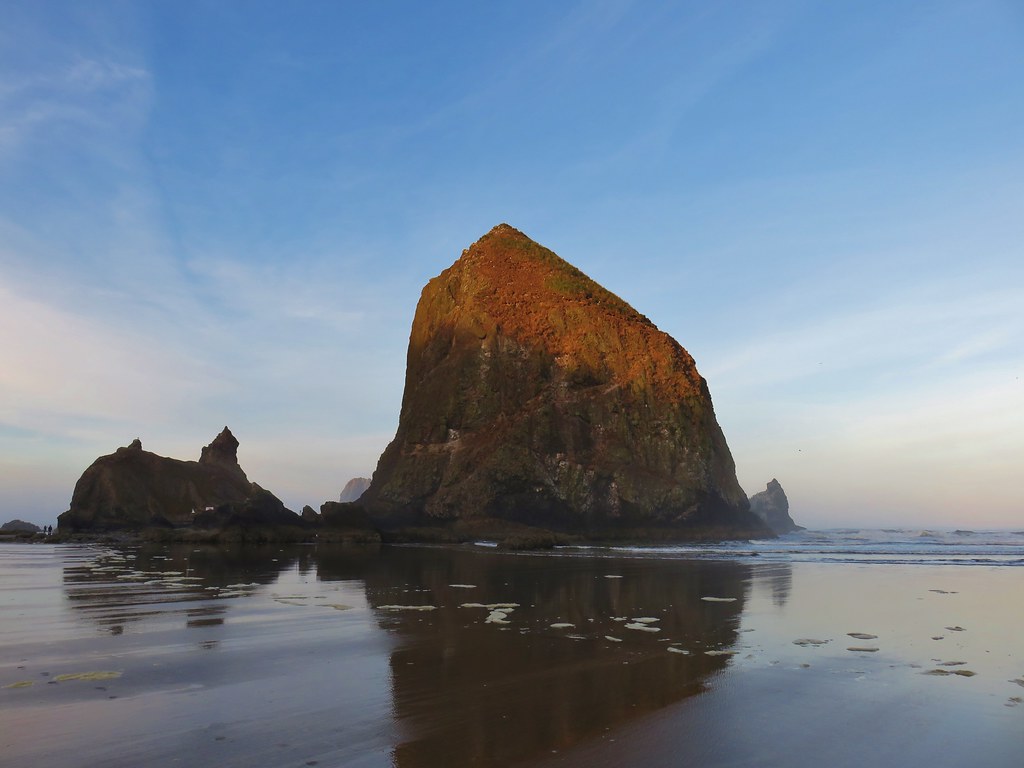
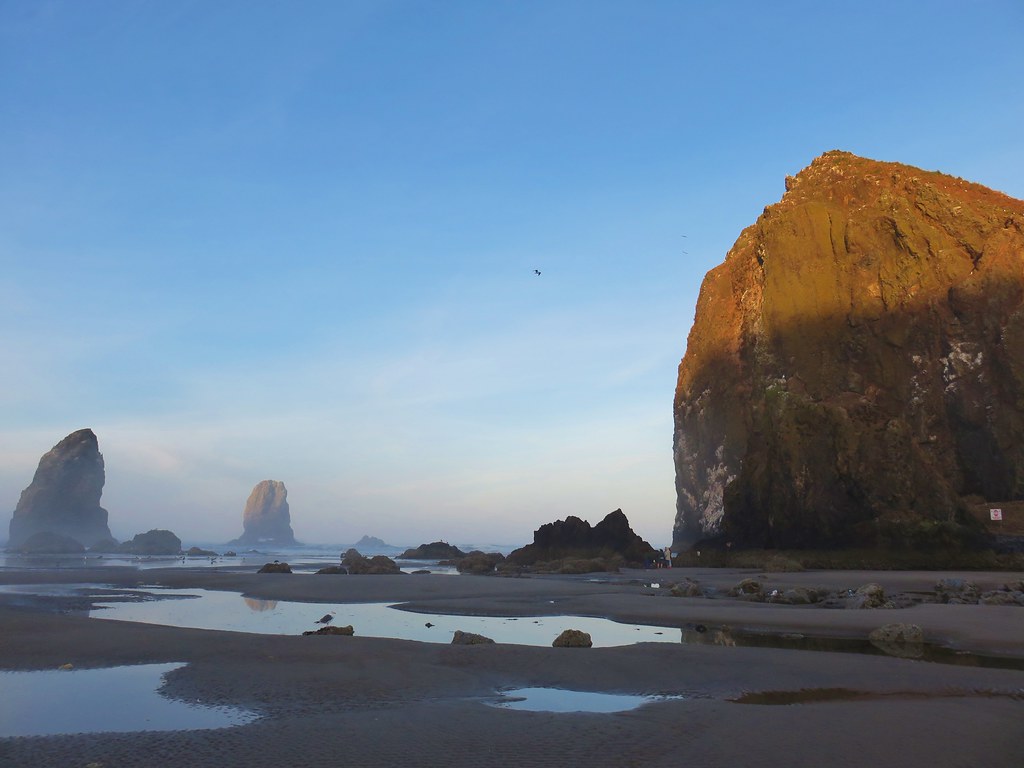
We turned south on the beach heading for Haystack Rock which was about a mile away. The rock began catching some early morning sunlight as we passed.

IMG_8228

IMG_8233

IMG_8239

IMG_8247

We continued on passing the Tolovana Beach Wayside on the way to Silver Point two miles beyond Haystack Rock.

IMG_8262

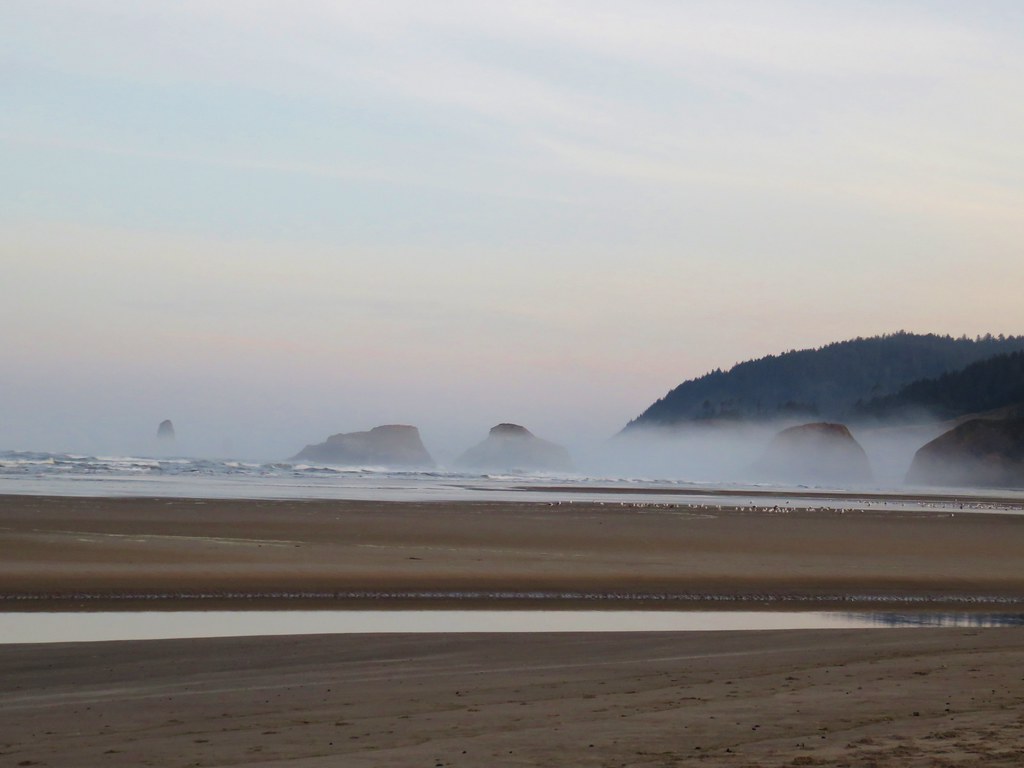
It was fairly foggy at Silver Point where we found several large rocks just offshore, including the aptly named Jockey Cap.

IMG_8272

IMG_8274

IMG_8282Jockey Cap
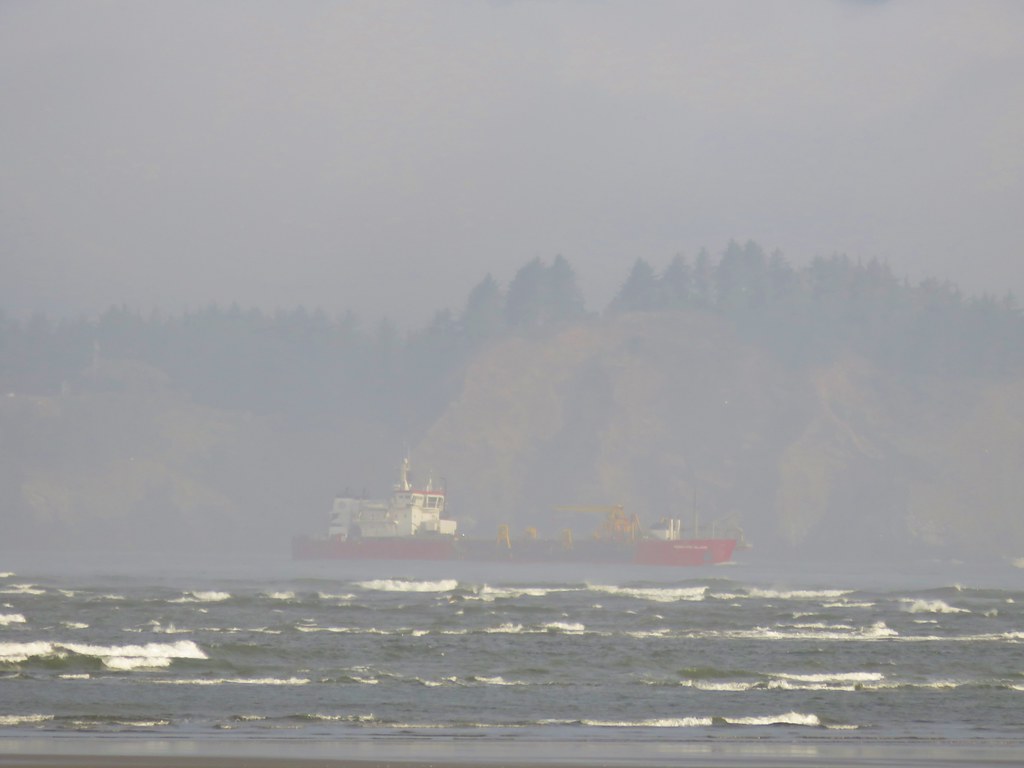
A little over a half mile after passing Silver Point we arrived at Humbug Point where we passed another well named rock, Lion Rock.

IMG_8286

IMG_8289

IMG_8296

It was another mile to Hug Point which was also dealing with the morning fog.

IMG_8299

Hug Point was part of a wagon route where settlers had to wait for low tide to be able to pass by. A roadbed was blasted in the headland around 1920 which was still obvious as we approached.

IMG_8300

The other reason we had chosen this hike for the day is that low tide was around 9:20am which we figured was a little later than when we would be arriving. It was a little after 8:30 when we did reach the point and we could have easily stayed dry by crossing over on the roadbed but when we approached it we noticed a lot of marine life on the rocks.

IMG_8301

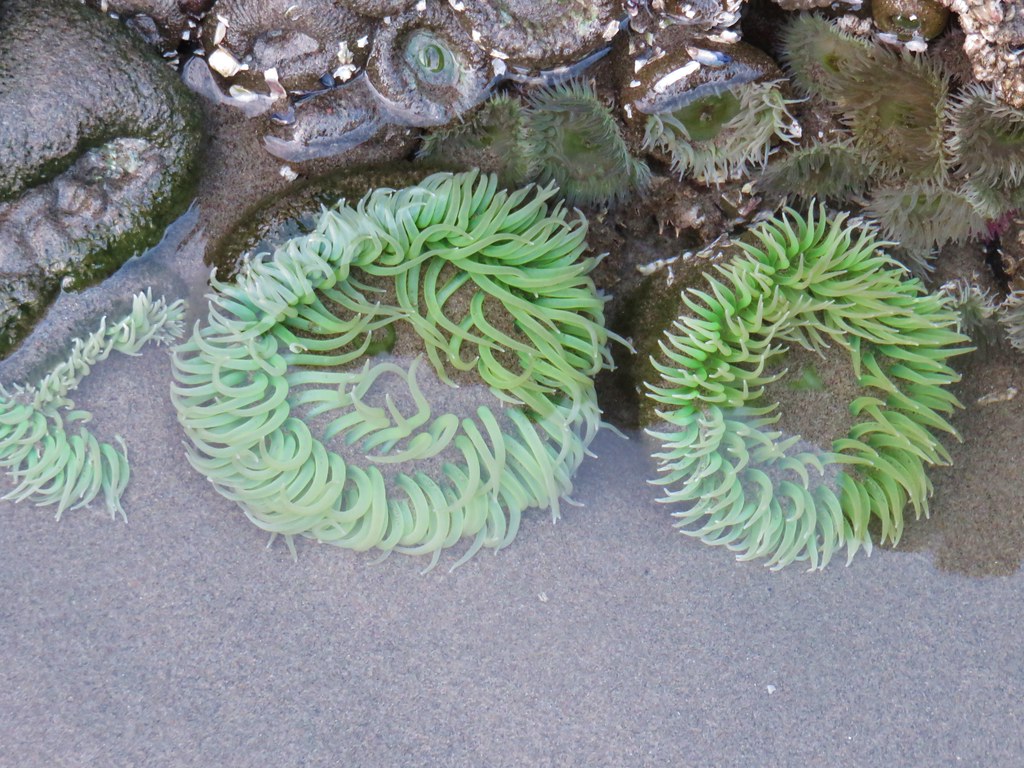
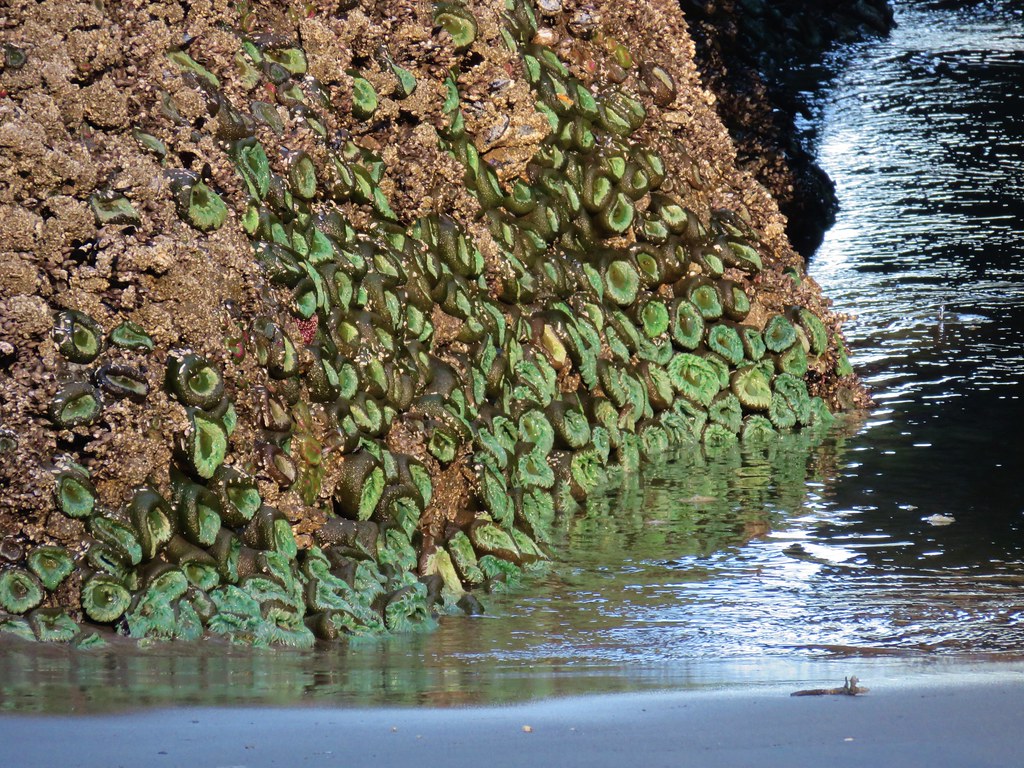
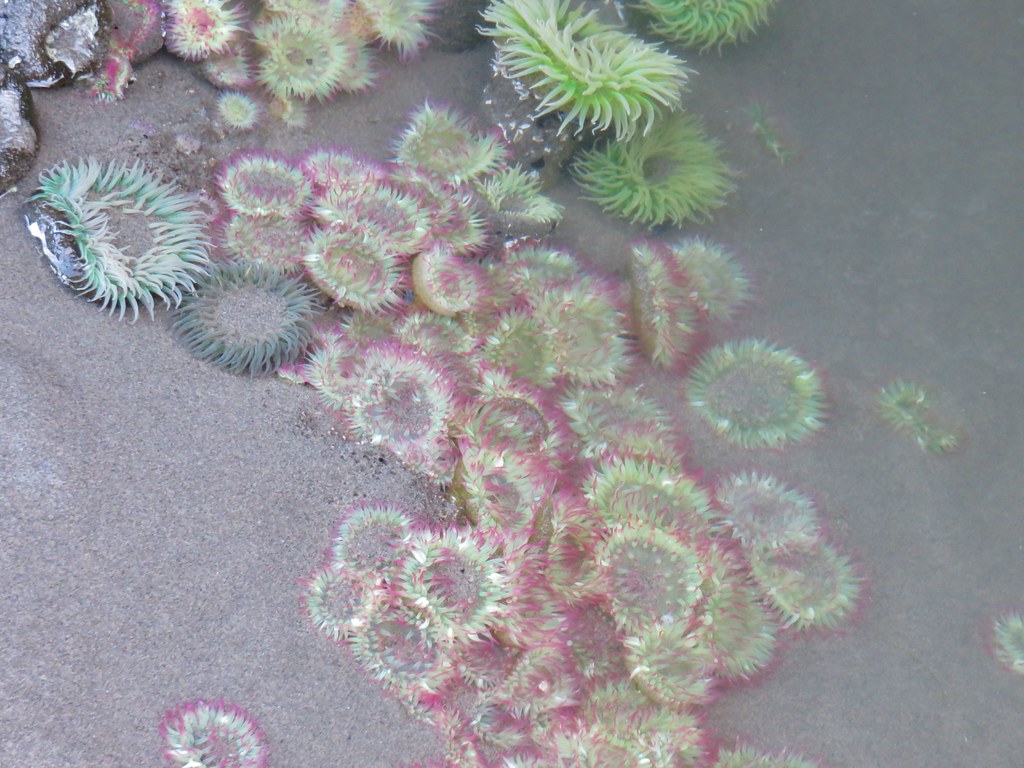
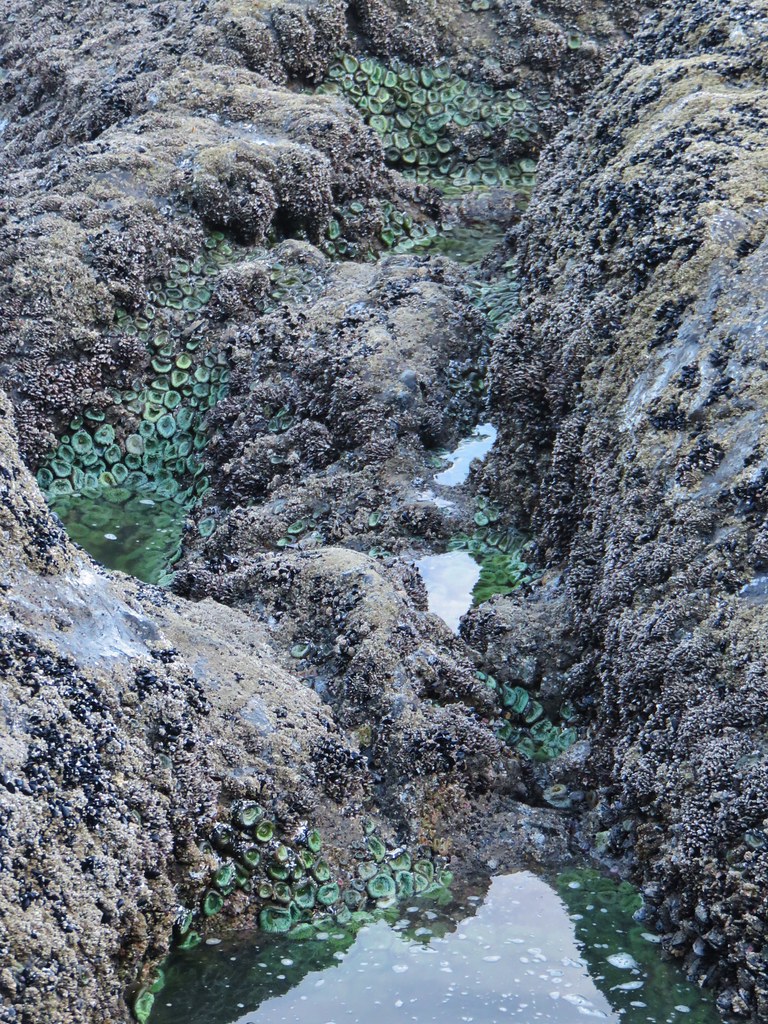
Instead of trying to avoid them we decided to take off our shoes and socks and wade around Hug Point. The water was about calf deep at its deepest so getting through was easy enough. One the other side we found more anemones and other marine creatures clinging to the rocks.

IMG_8304

IMG_8305

IMG_8308

Seagulls seemed to be treating it as a buffet.

IMG_8310

After passing a small cove we spotted the small waterfall on Fall Creek. It wasn’t exactly the best time of year to be visiting the falls but the water was still flowing.

IMG_8311

IMG_8315

IMG_8320

IMG_8322

The falls can be accessed from the Hug Point Wayside which avoids the need to navigate around Hug Point. We’ll likely stop there some other time when the flow over the falls is greater.

We turned around here and headed back. After another wade around Hug Point we pulled out our Therm-A-Rest Z Seats and took a seat while our feet dried.

IMG_8342

The clouds continued to break up as the morning progressed.

IMG_8345

IMG_8356

IMG_8359

IMG_8362

We finished our 10.4 mile hike just before 11am and headed back to the hotel for a relaxing afternoon of football. By the time the sun was setting most of the clouds had disappeared teasing a little more blue sky for our Monday Hikes.

IMG_8365

Happy Trails!

Flickr: Cannon Beach

Categories
Hiking Northern Coast Oregon Oregon Coast Trip report

Astoria and Fort Stevens State Park

We continued our year of shuffling hikes on our latest mini-vacation.  The string of wildfires starting in  Northern California in the Klamath Mountains and continuing along the Cascade Range north to the Canadian Border had us looking for a last minute location for 4 days of hiking. We turned to the coast hoping to escape any possibly smokey conditions and wound up deciding on checking out the northern most part of the Oregon Coast as well as our first foray along the Washington Coast line.

We booked a room in Gearhart, OR and I began putting an itinerary together. We are still plodding along in our attempt to hike all of the featured hikes in Sullivan’s 100 Hikes guidebooks and there were several in the area we’d yet to tackle. I managed to fit eight of his featured hikes into the four days and even threw in an additional stop at Fort Columbia on our third day.

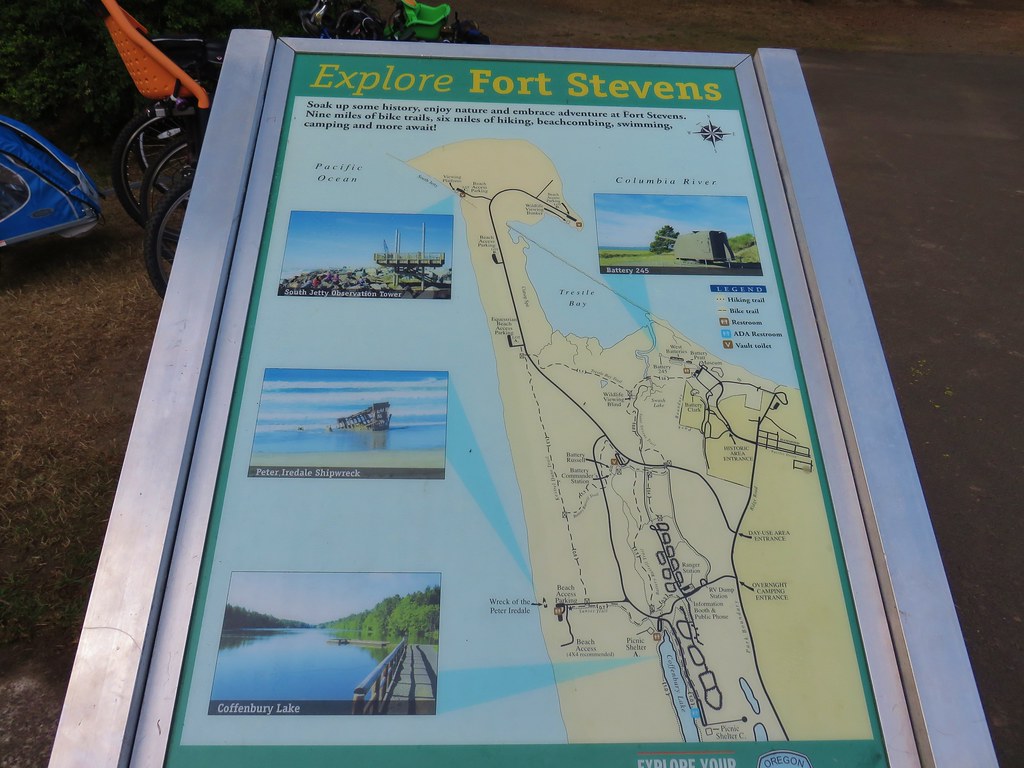
We set our sights on three of the hikes for our first day starting with a relatively short loop around Clatsop Spit. The spit is located inside Fort Stevens State Park at the mouth of the Columbia River and is the northern terminus for the Oregon Coast Trail.

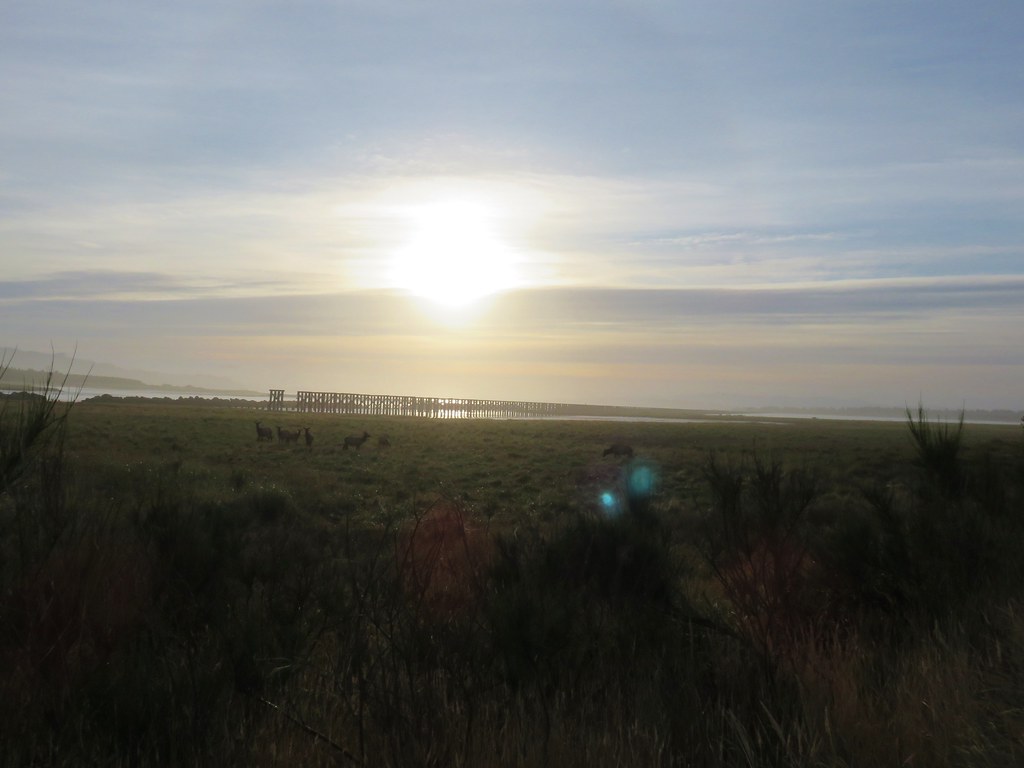
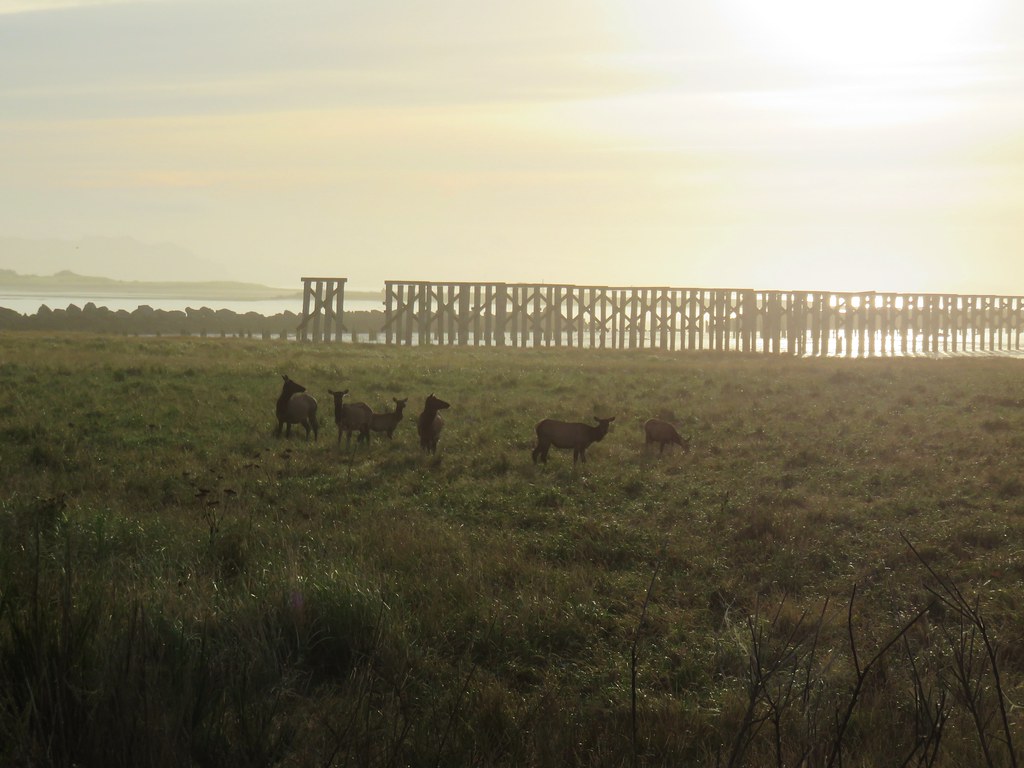
As we were driving to the spit along Jetty Road we spotted some elk and had to stop for a couple of photos.
IMG_8042

IMG_8043

IMG_8041

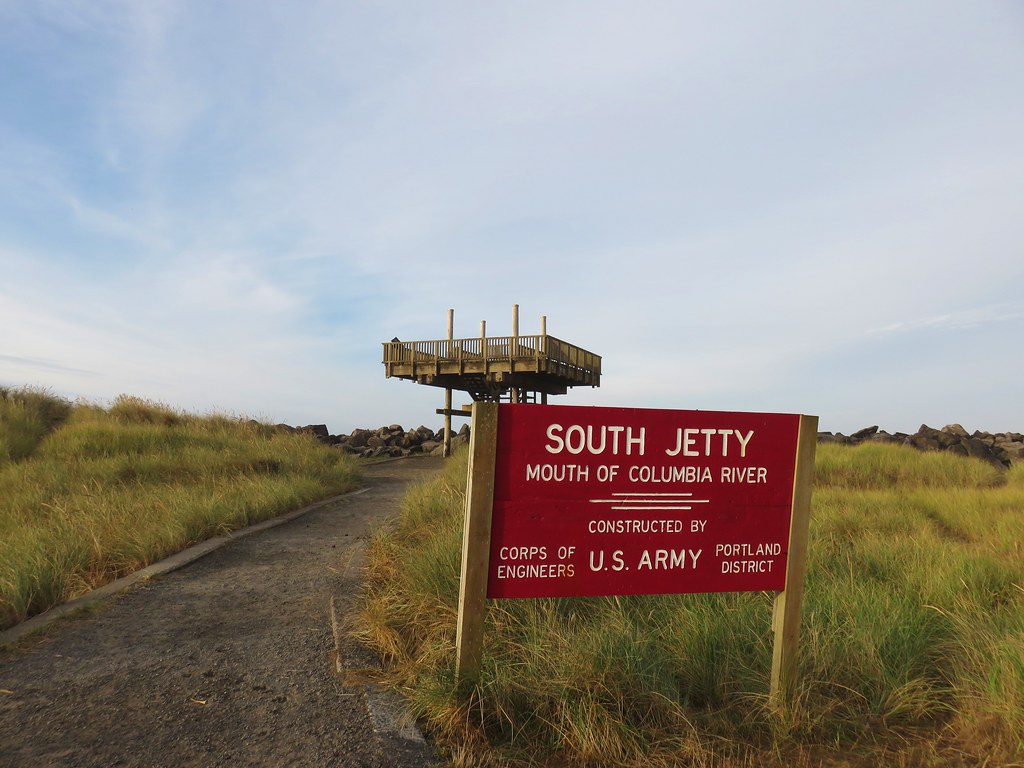
Once we had parked at the large parking area at the spit we checked out the view from the South Jetty observation platform.
IMG_8046

IMG_8048

IMG_8049

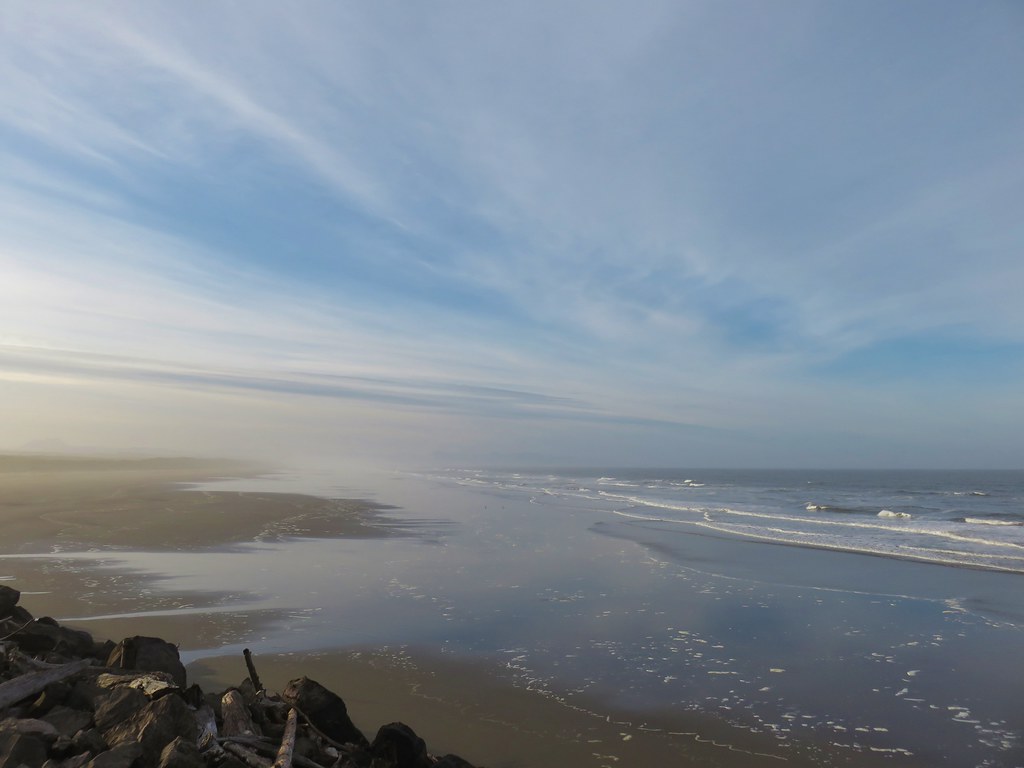
We then headed west beside the jetty toward the Pacific.
IMG_8051

IMG_8054

We then turned north along the beach heading towards the Columbia River where we could see plenty of traffic on the water.
IMG_8061

IMG_8063

IMG_8056

We turned inland at the river we had a view of the distant Megler Bridge.
IMG_8067

We passed a host of people fishing along the shore but didn’t see anyone having any luck.
IMG_8078

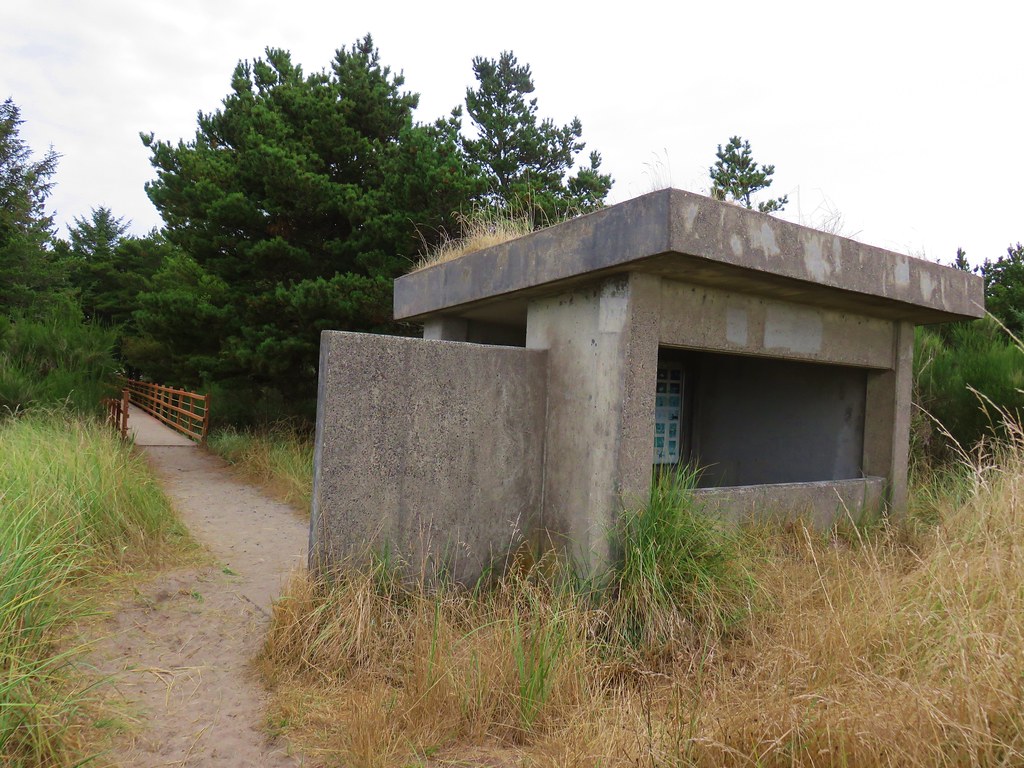
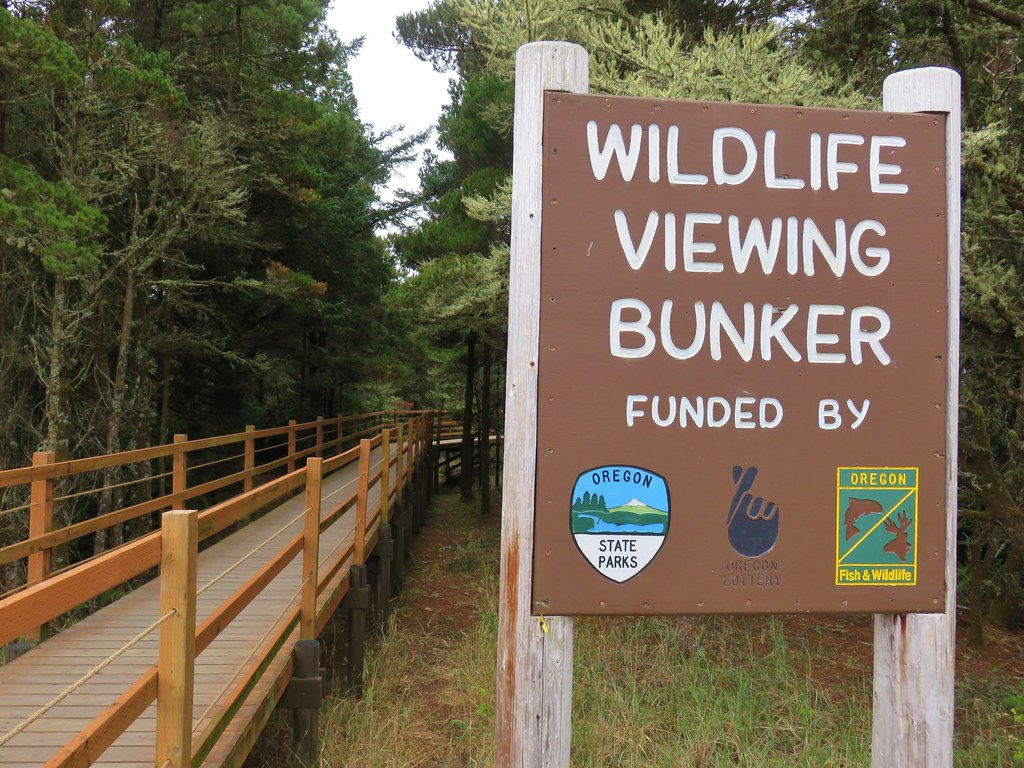
We looped around a peninsula near Jetty Lagoon and located the wildlife viewing bunker near the park’s Parking Lot D.
IMG_8082

IMG_8083

IMG_8084view from the bunker.
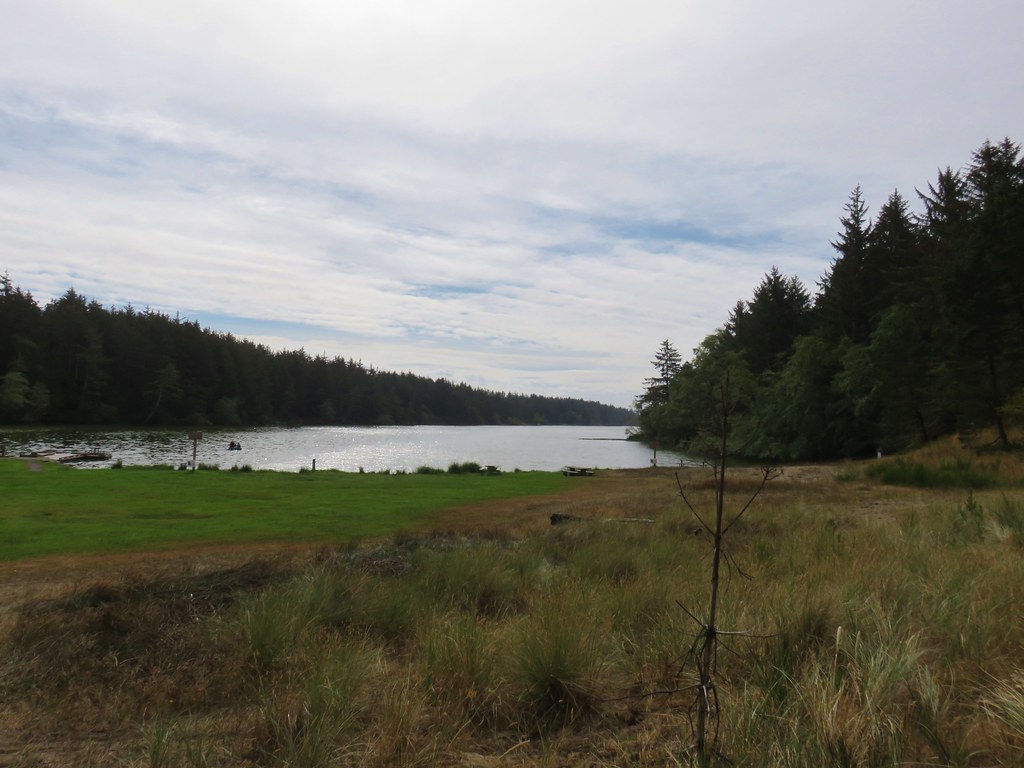
We crossed a footbridge to the parking lot and then had a 1.1 mile road walk back to the spit parking lot.
IMG_8086

We drove back along Jetty Road and parked in a signed lot for Battery Russell.
IMG_8094

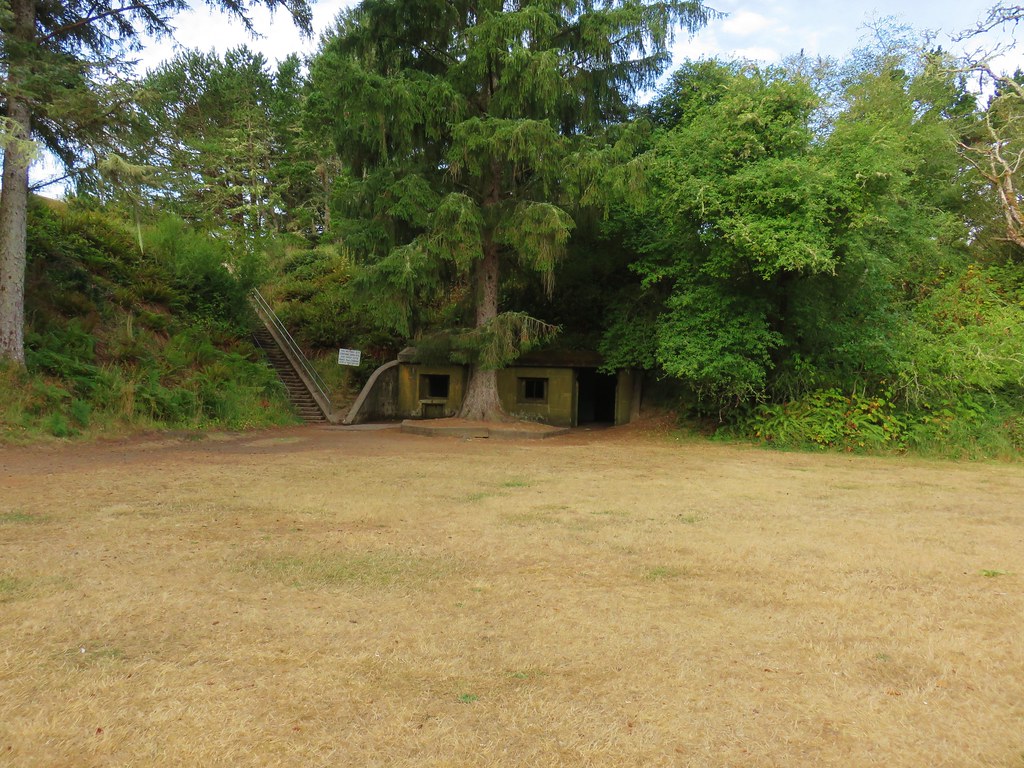
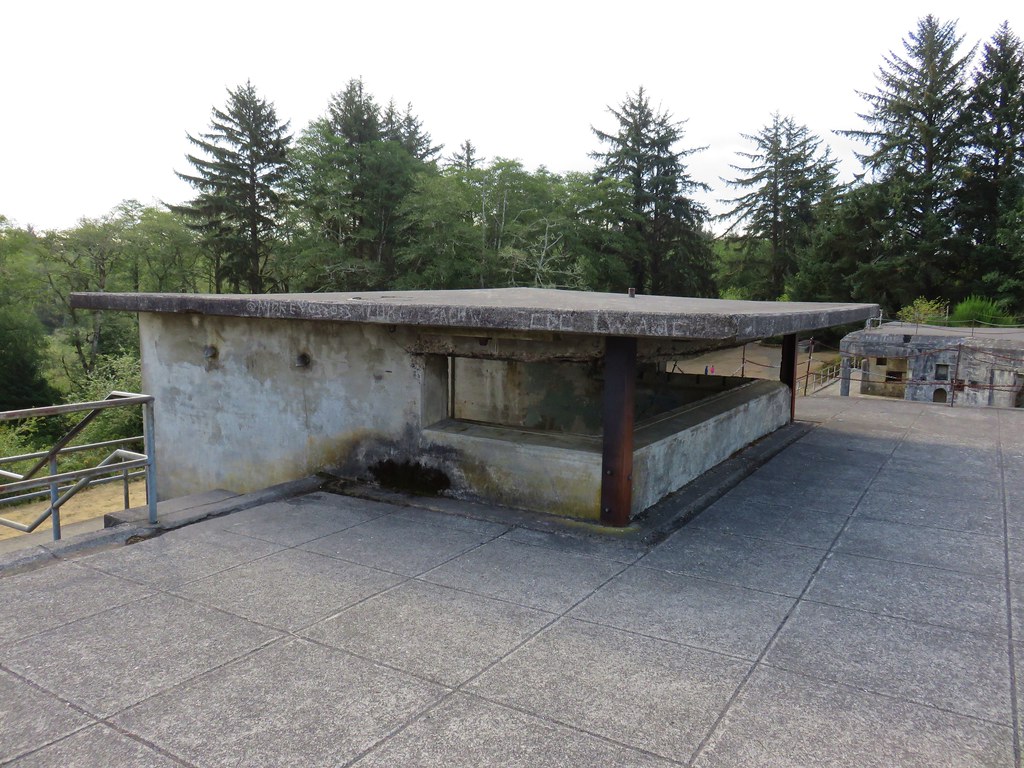
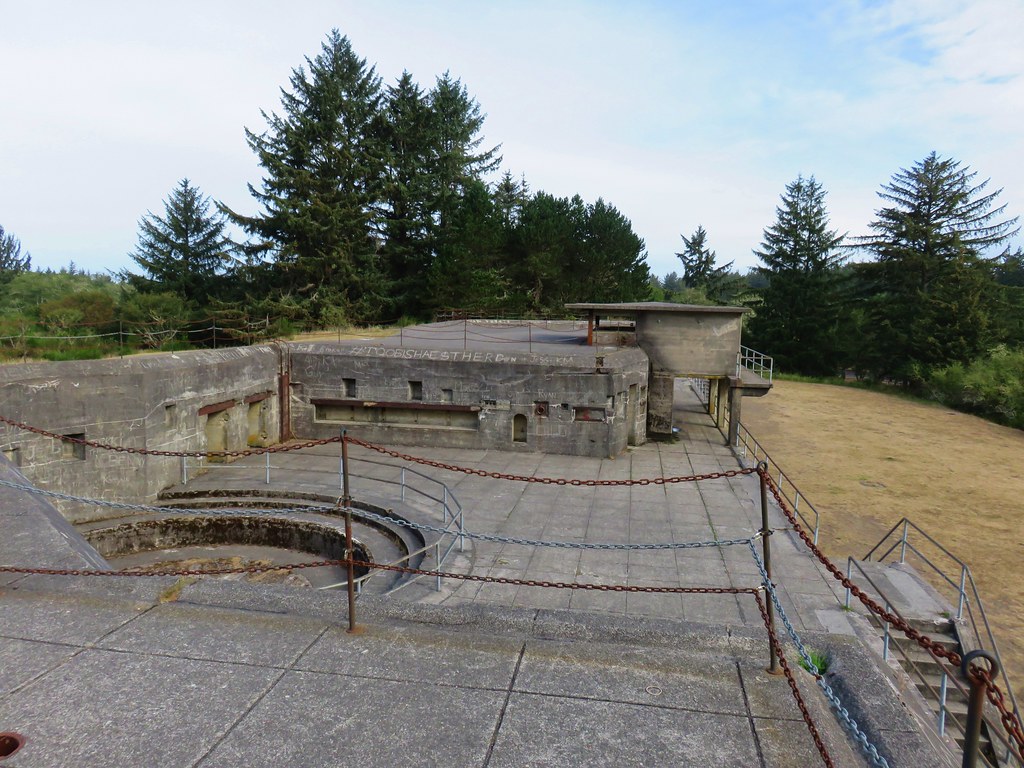
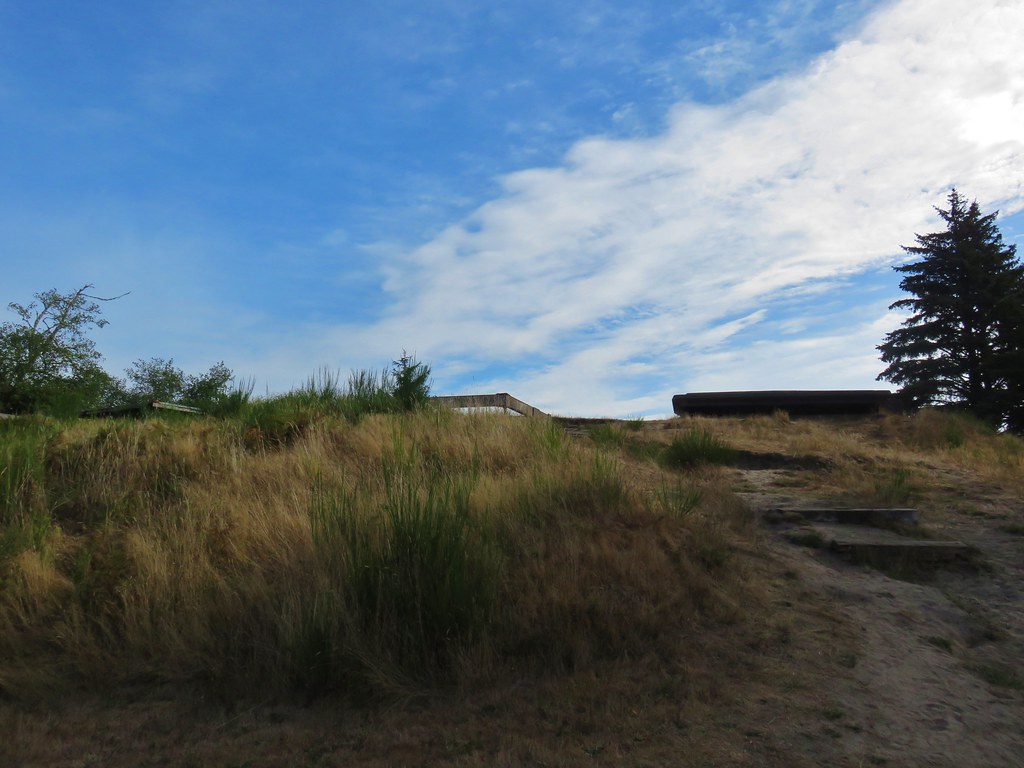
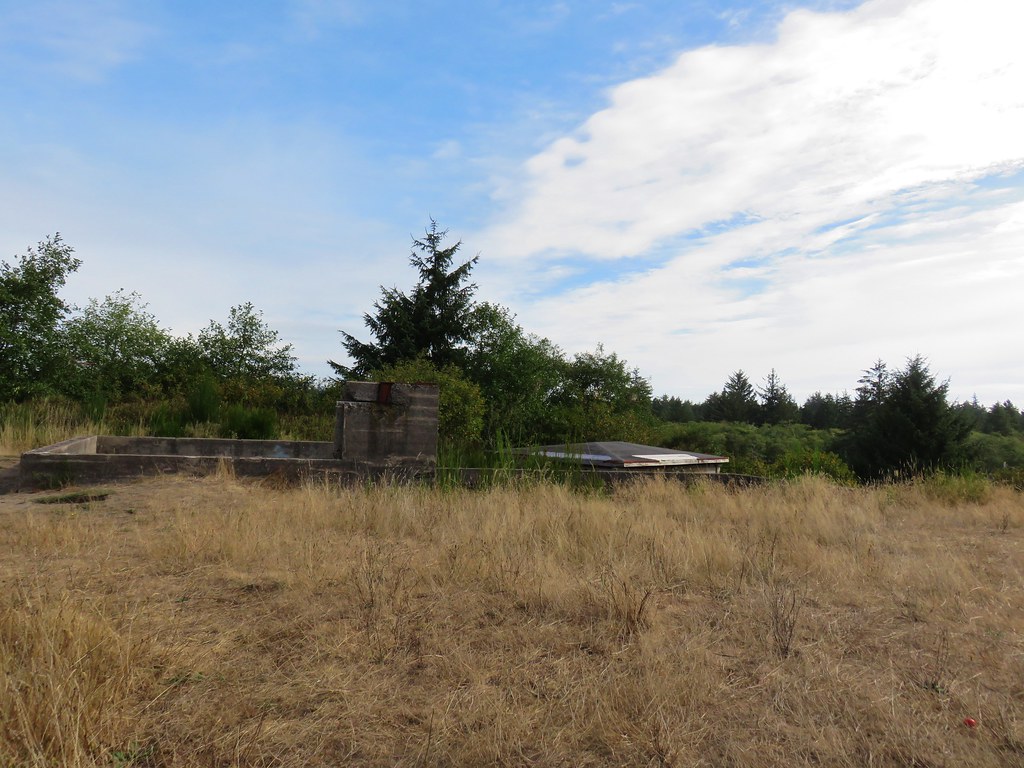
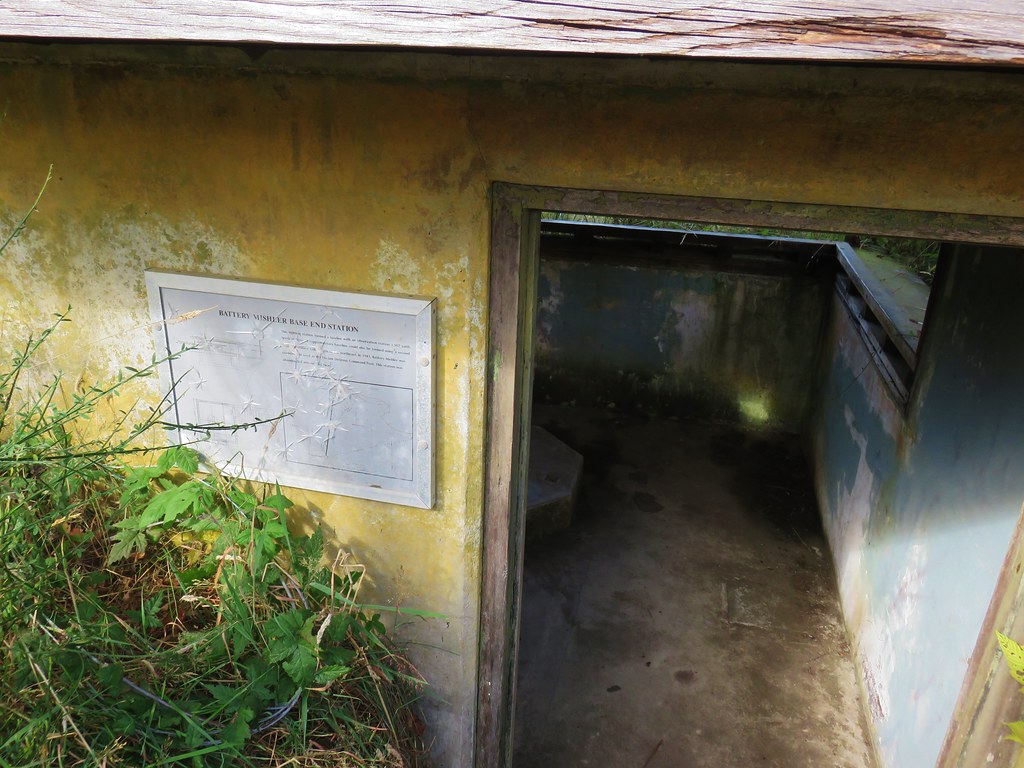
We took a set of stairs up to the concrete bunker.
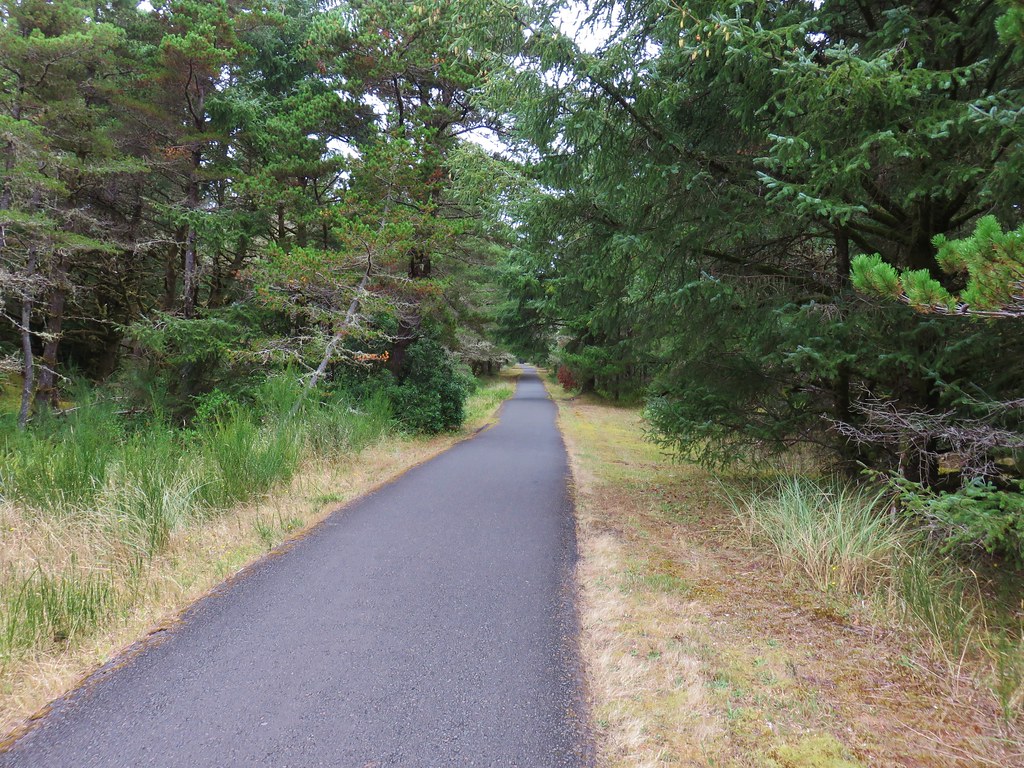
IMG_8095

IMG_8100

IMG_8102

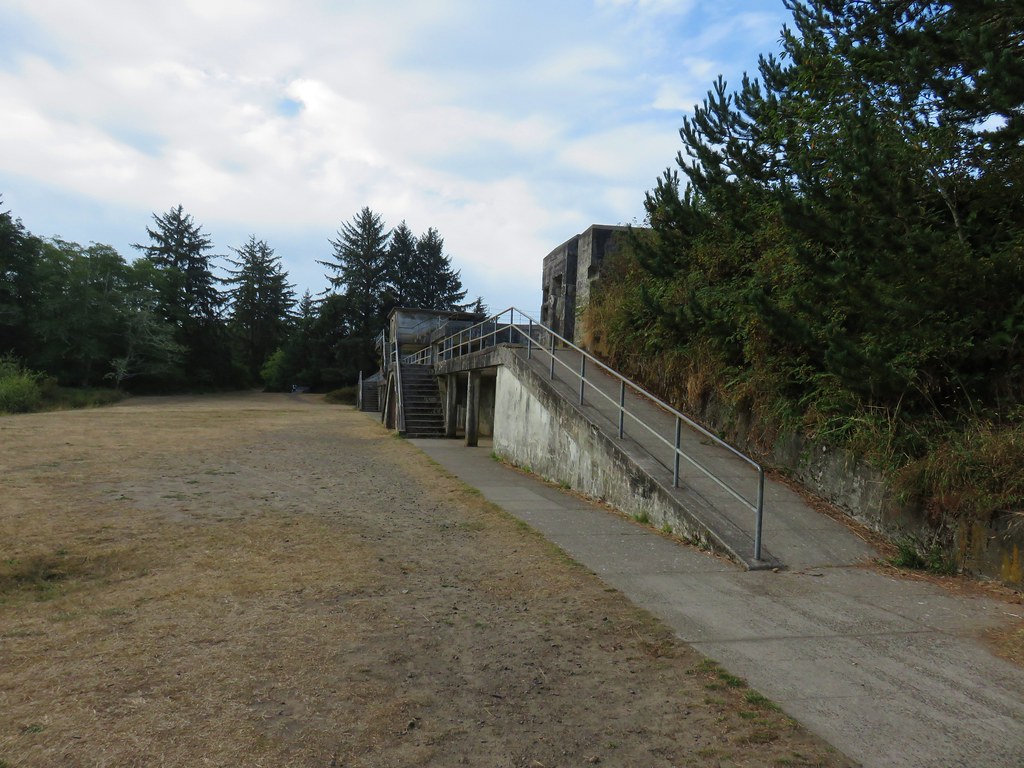
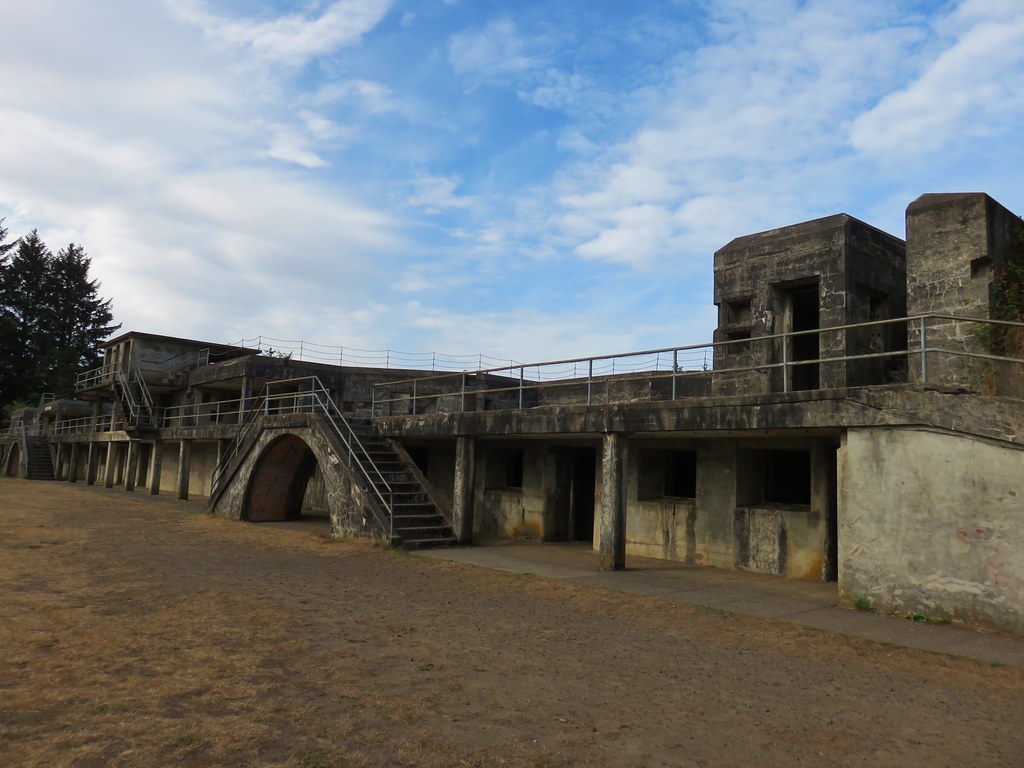
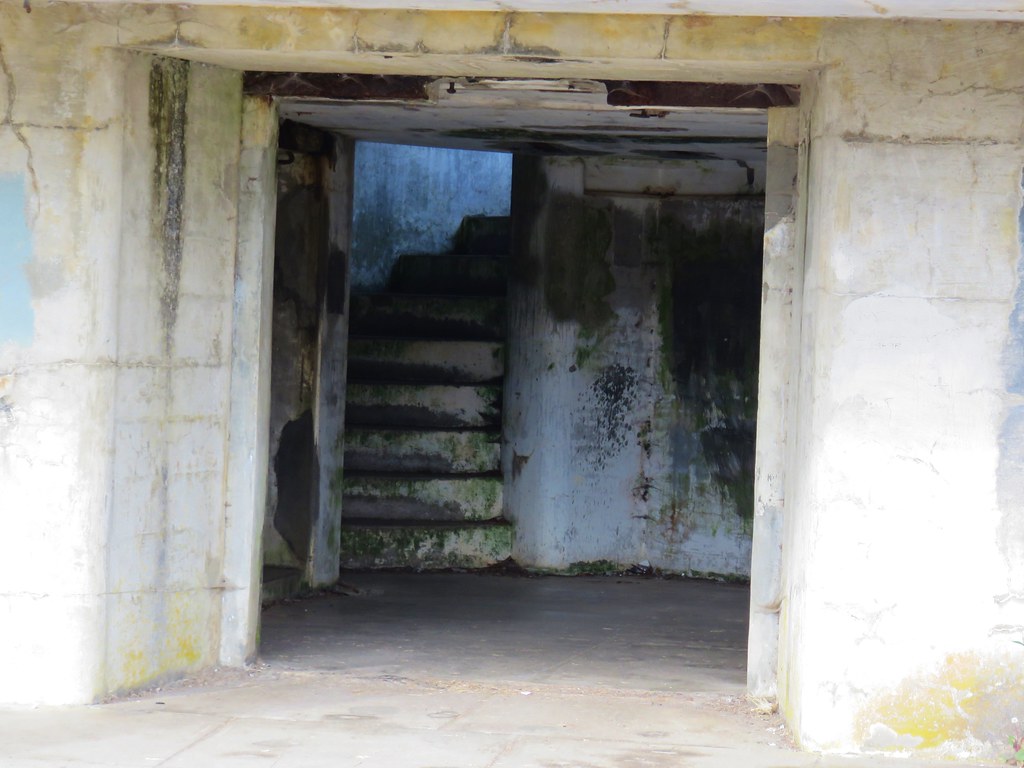
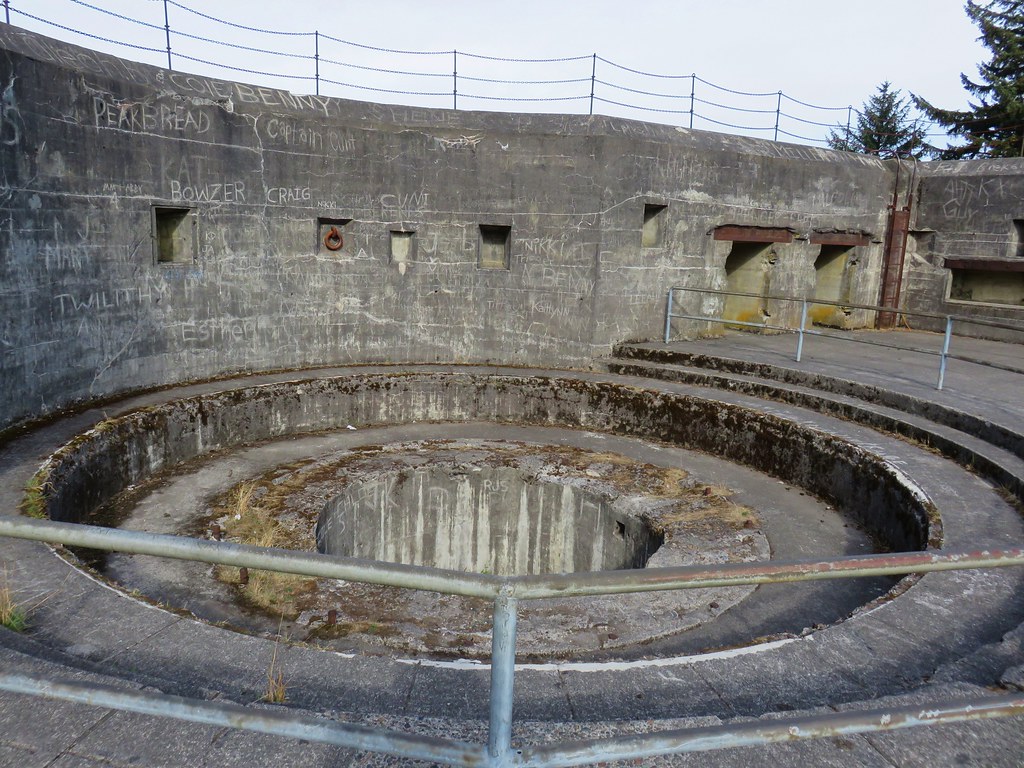
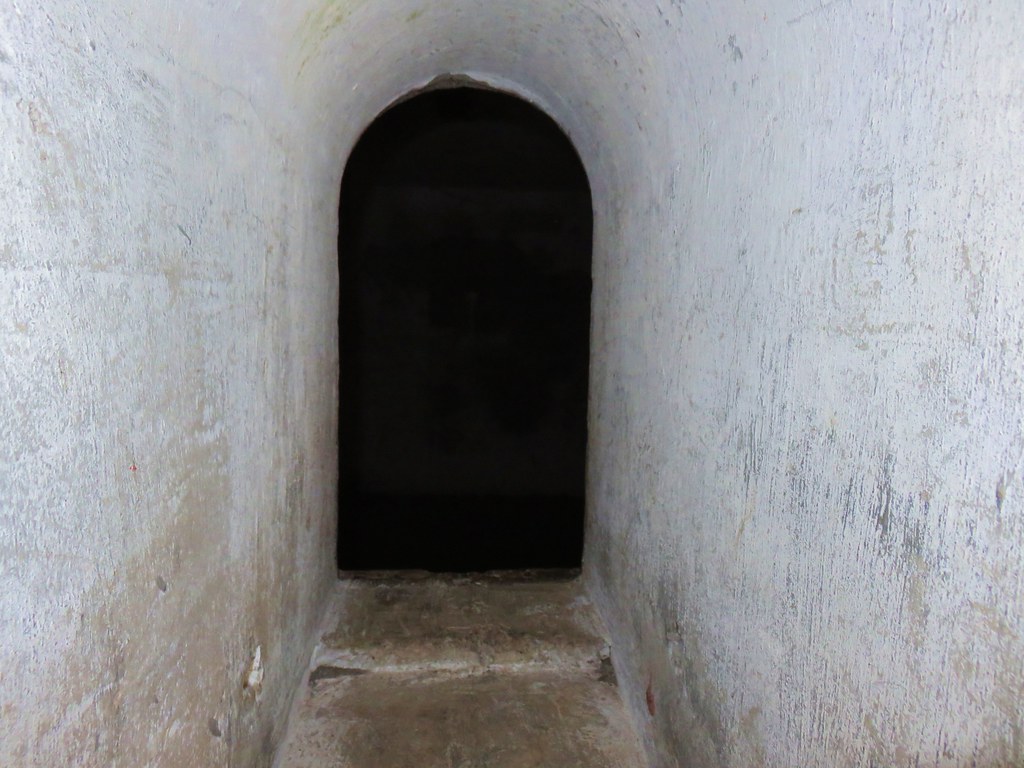
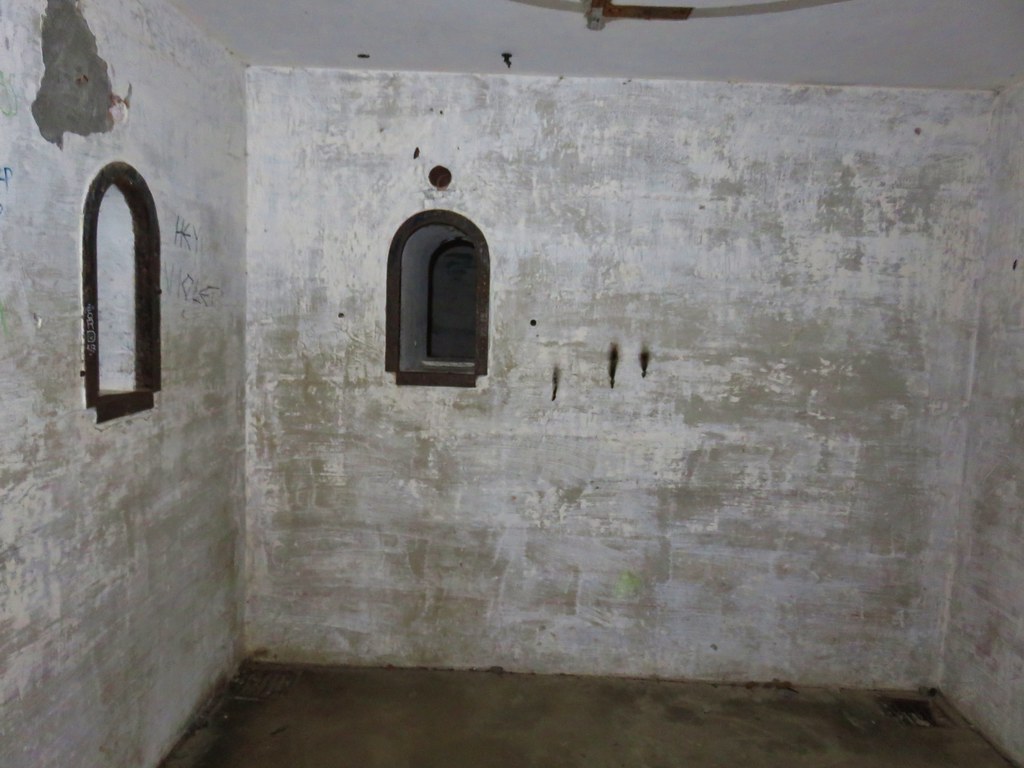
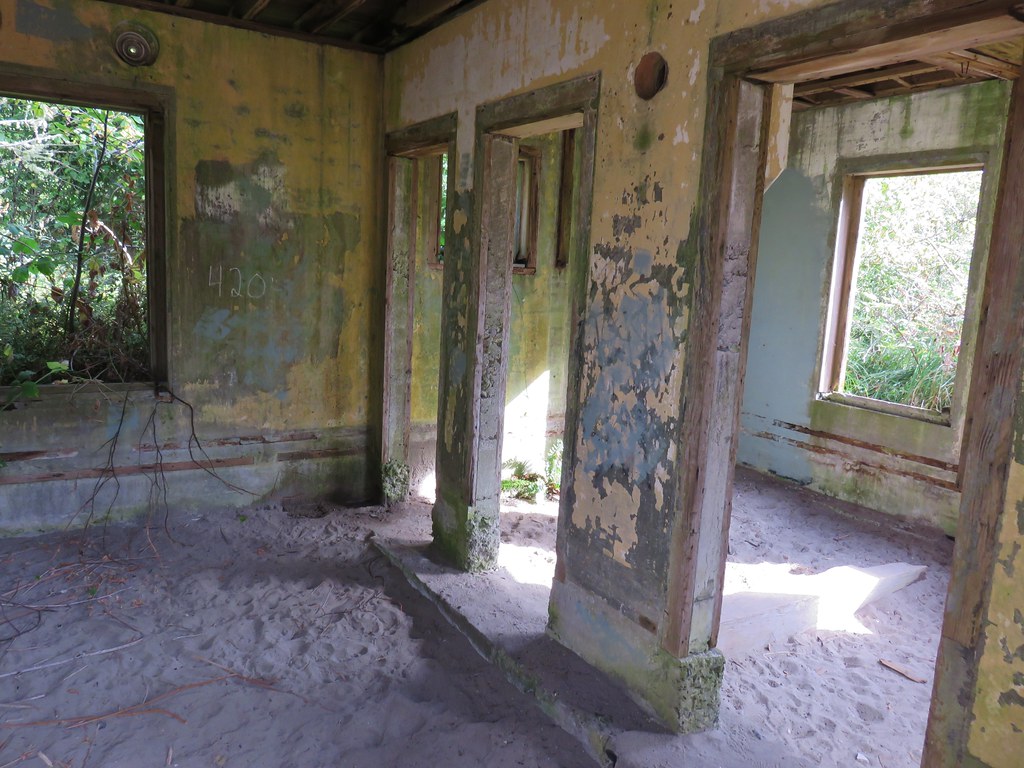
For forty years (1904-44) the battery guarded the Columbia River from enemy attacks. We spent quite a while exploring the old bunker. The history made it neat but too many video games and horror movies kept us imagining what might be hiding in the dark corners of the rooms.
IMG_8104

IMG_8108

IMG_8111

IMG_8114

IMG_8116

IMG_8119

IMG_8117

We followed a path at the far end of the bunker toward Coffenbury Lake.
IMG_8122

The path passed another set of old buildings.
IMG_8123

IMG_8124

IMG_8125

IMG_8126

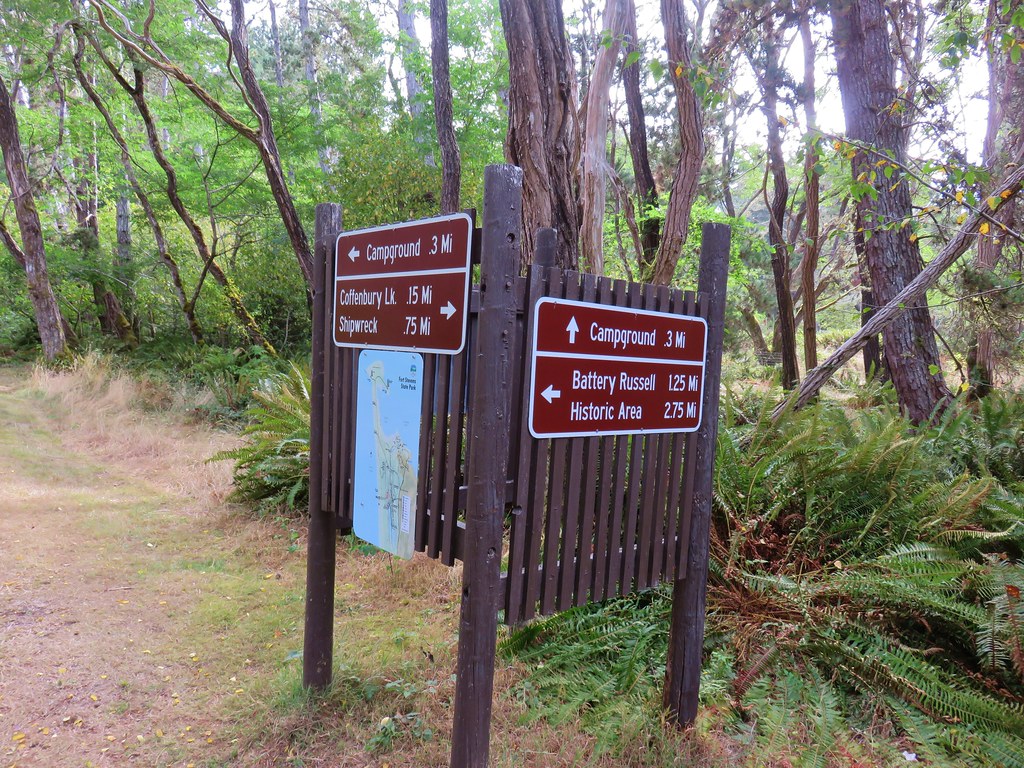
We continued on this path a total of 1.25 miles to a signed junction where we followed a pointer to the lake.
IMG_8127

IMG_8129

IMG_8132

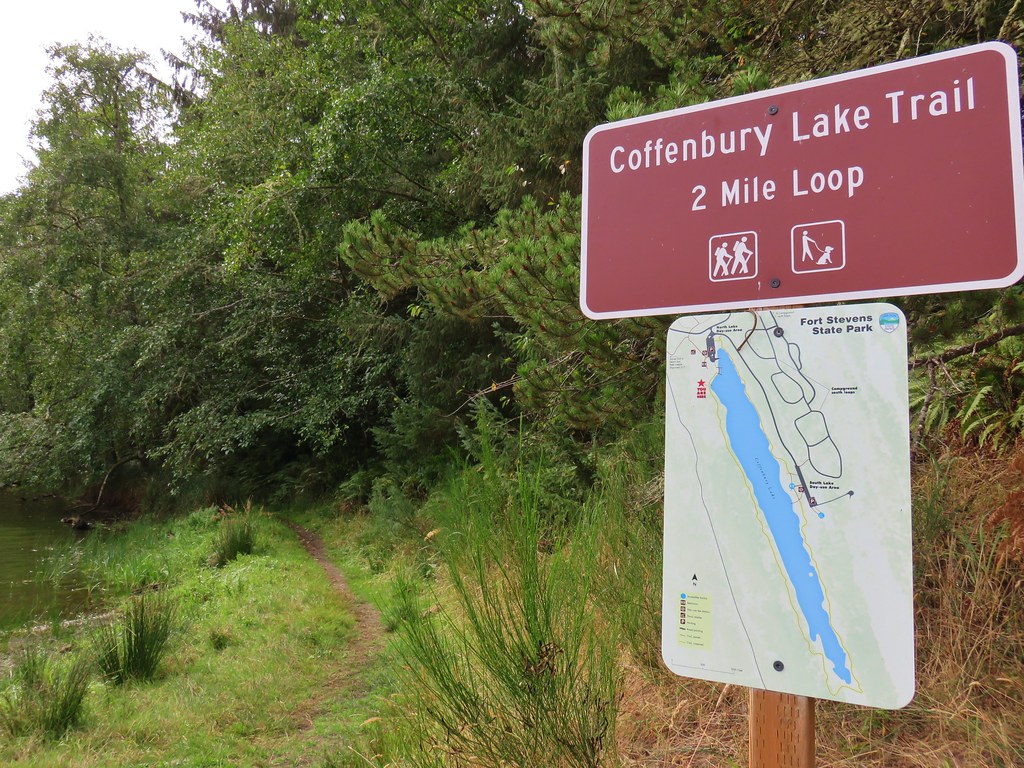
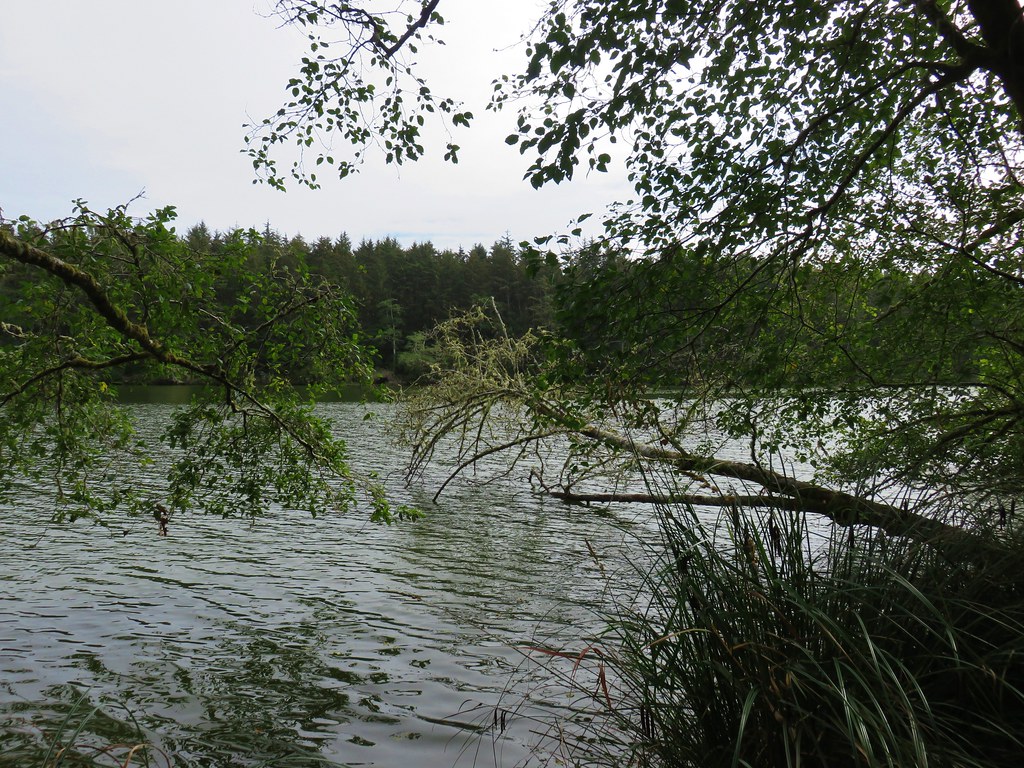
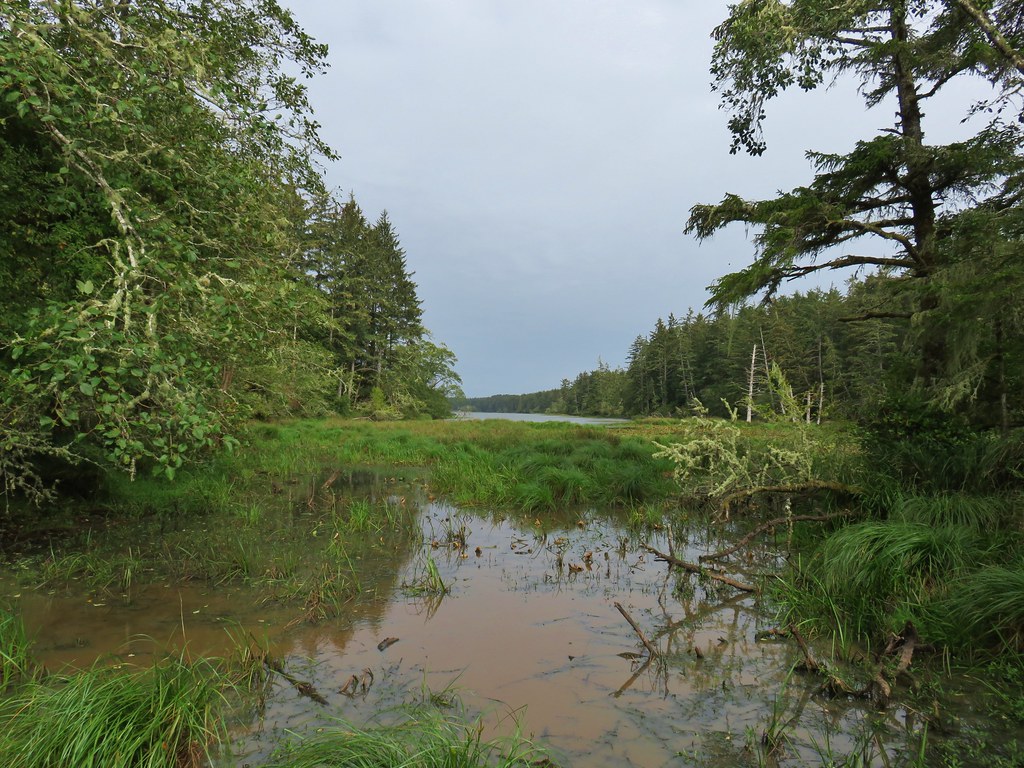
We headed around the lake counter-clockwise on a nice trail.
IMG_8134

IMG_8135

IMG_8137

IMG_8139

IMG_8140

IMG_8144

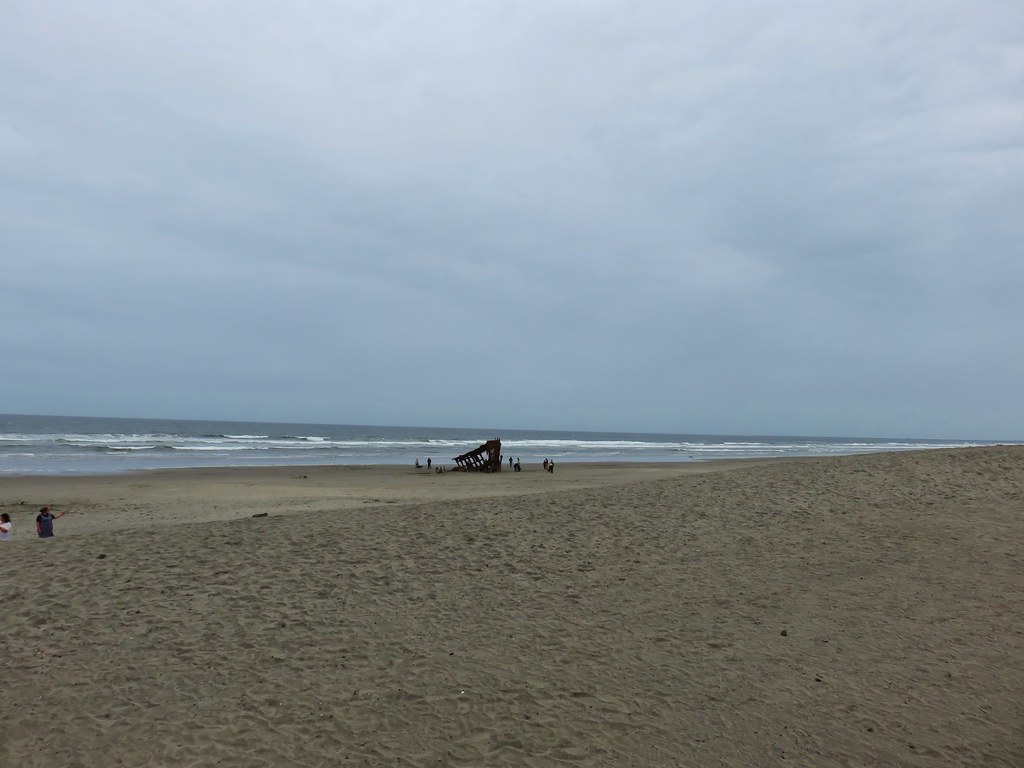
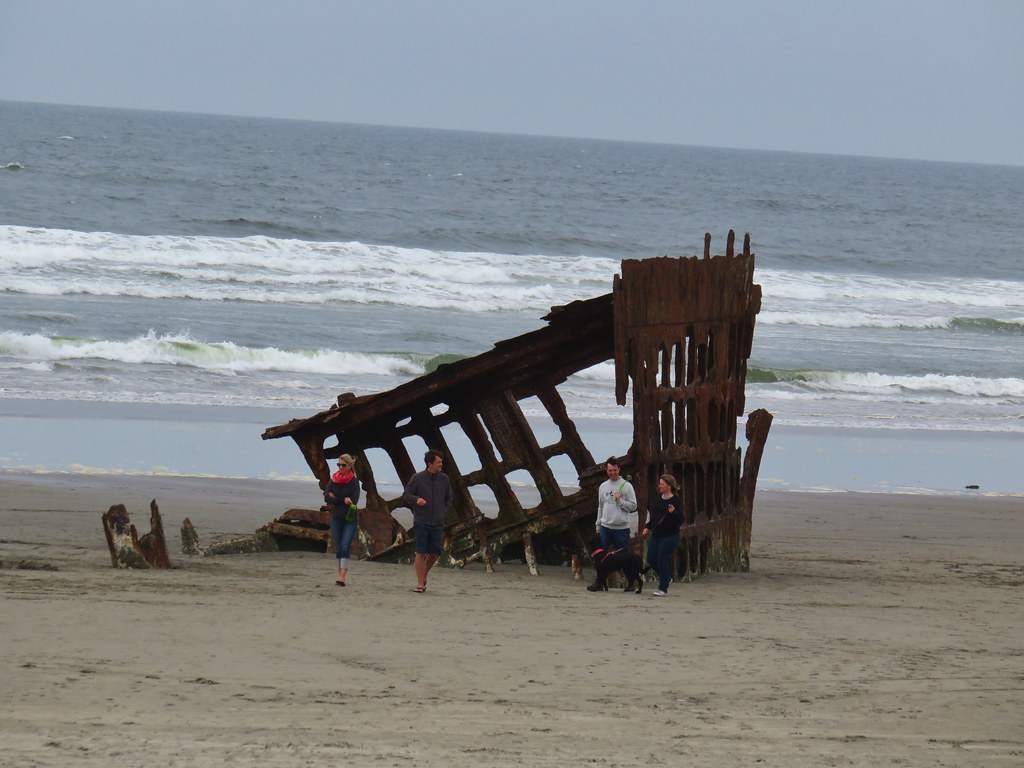
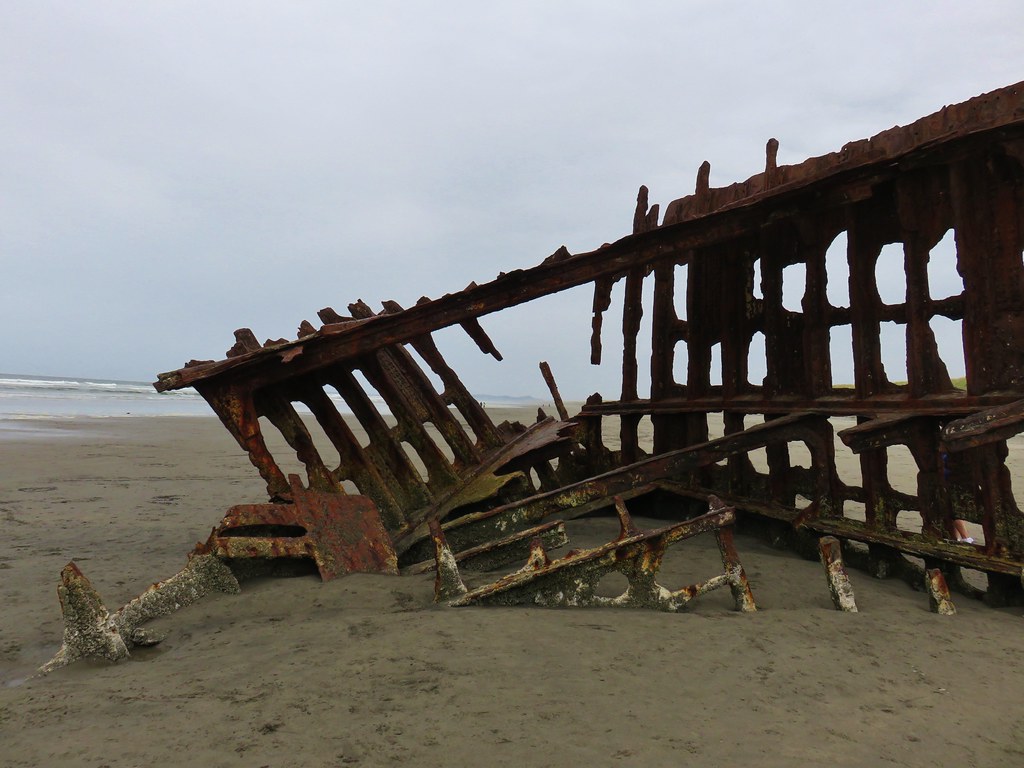
After completing the 2 mile loop around the lake we followed “Shipwreck” pointers for 3/4 of a mile to the beach and the remains of the Peter Iredale which ran aground in 1906.
IMG_8148

IMG_8149

IMG_8152

IMG_8156

We backtracked from the beach a short distance and turned left on a paved path at a pointer for Battery Russell (among other possible destinations).
IMG_8158

We followed this path for a little over half a mile before turning right at another pointer for Battery Russell.
IMG_8159

IMG_8160

We followed this 1.1 mile paved path back to the parking lot.
IMG_8162

The total distance of the Clatsop Spit hike had been 5 miles and this hike came in just under 7.5 miles. Twelve and a half miles is pretty good for a day, but due to our typical early start we were done with these two hikes before 1pm. Our check-in time wasn’t until four so we still had a few hours to kill.

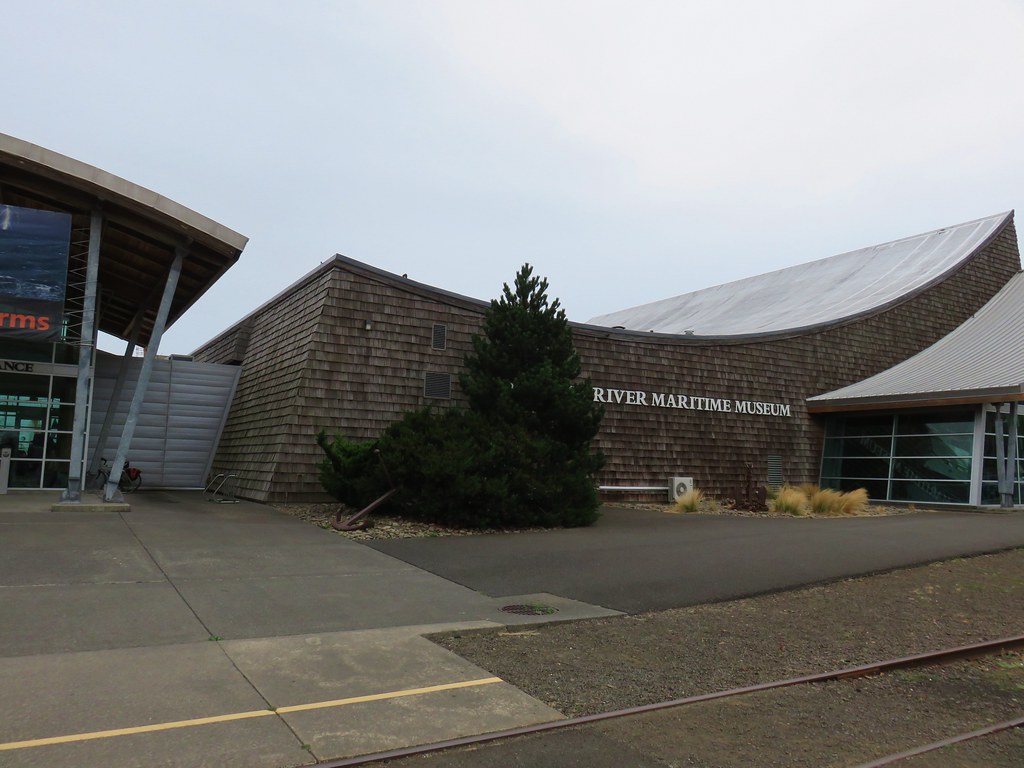
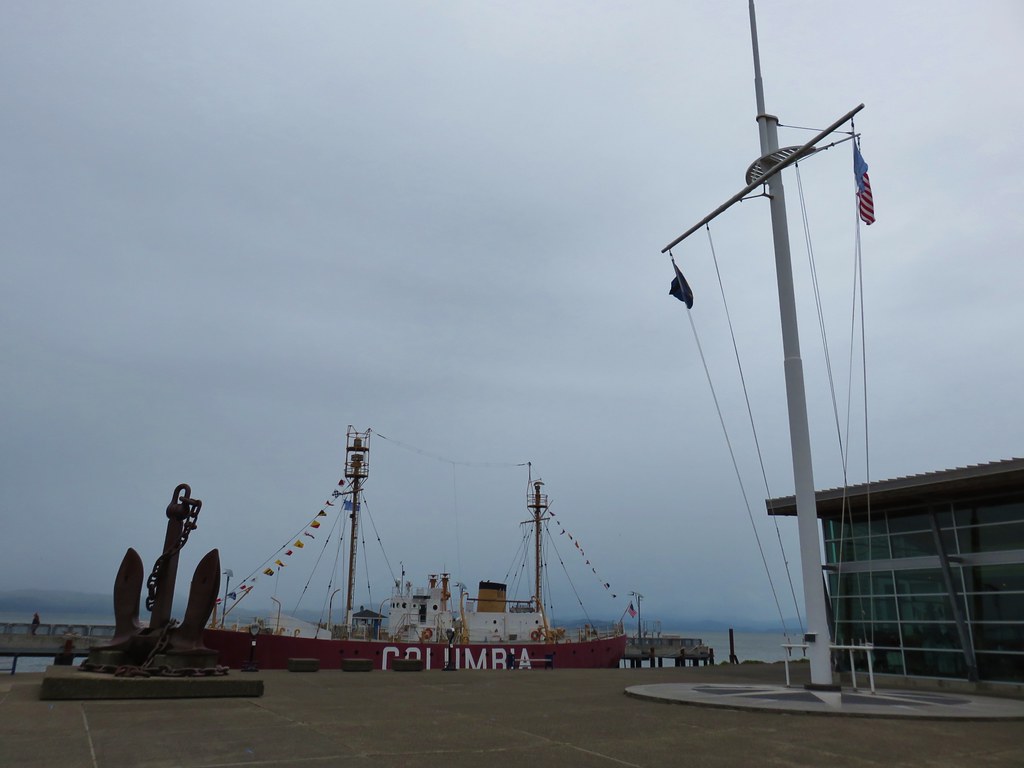
We had been prepared for that and headed north from Fort Stevens to Astoria where we parked at the Columbia River Maritime Museum
IMG_8163

IMG_8164

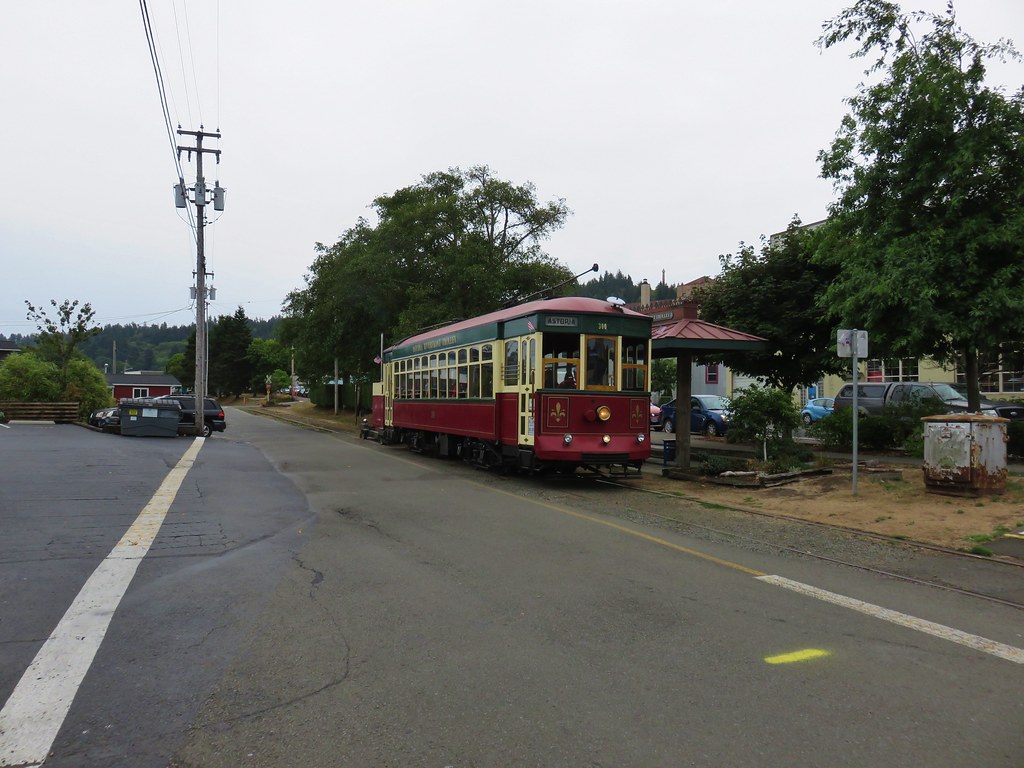
From the museum parking lot we headed west following the Riverfront Trolley line.
IMG_8169

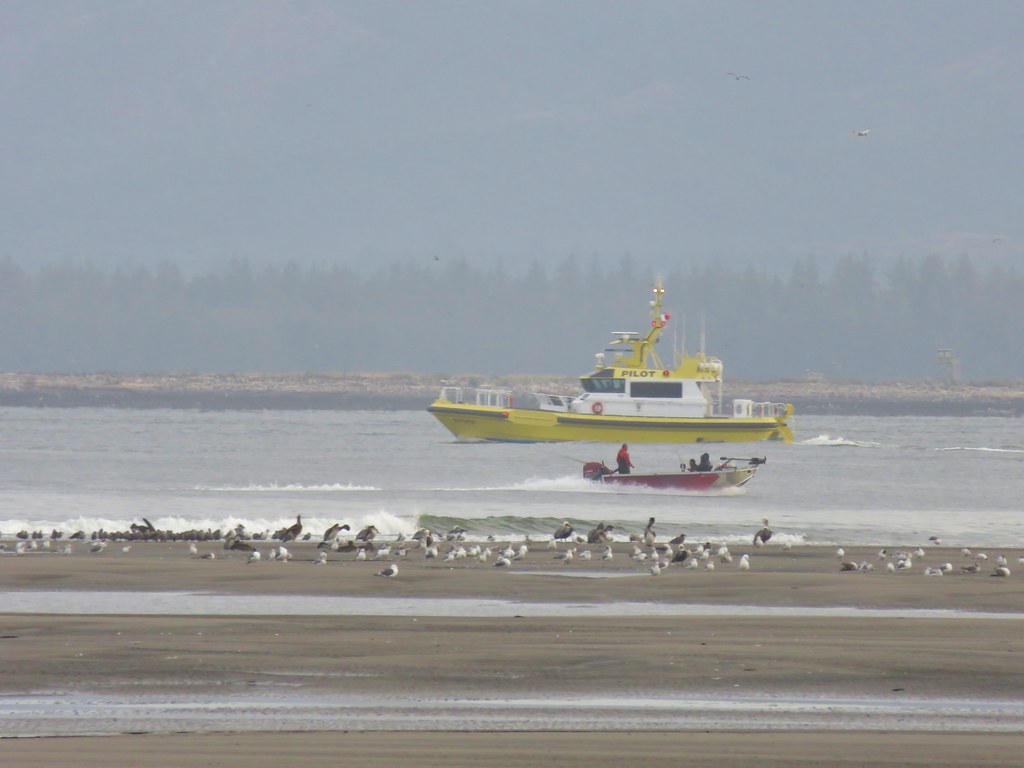
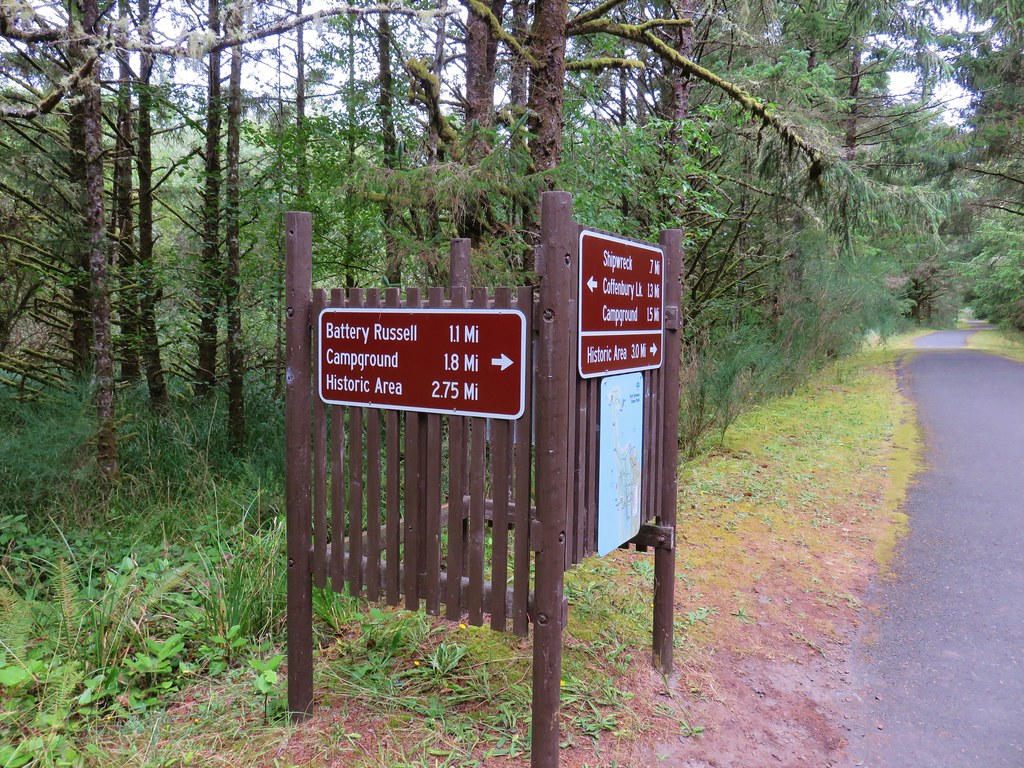
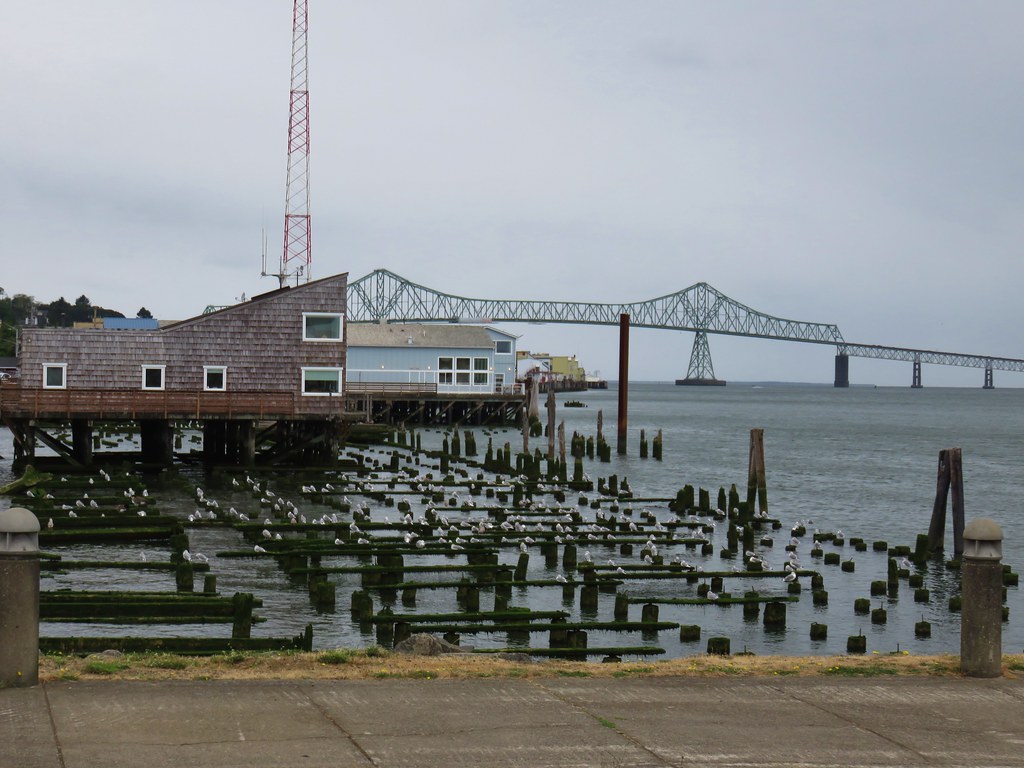
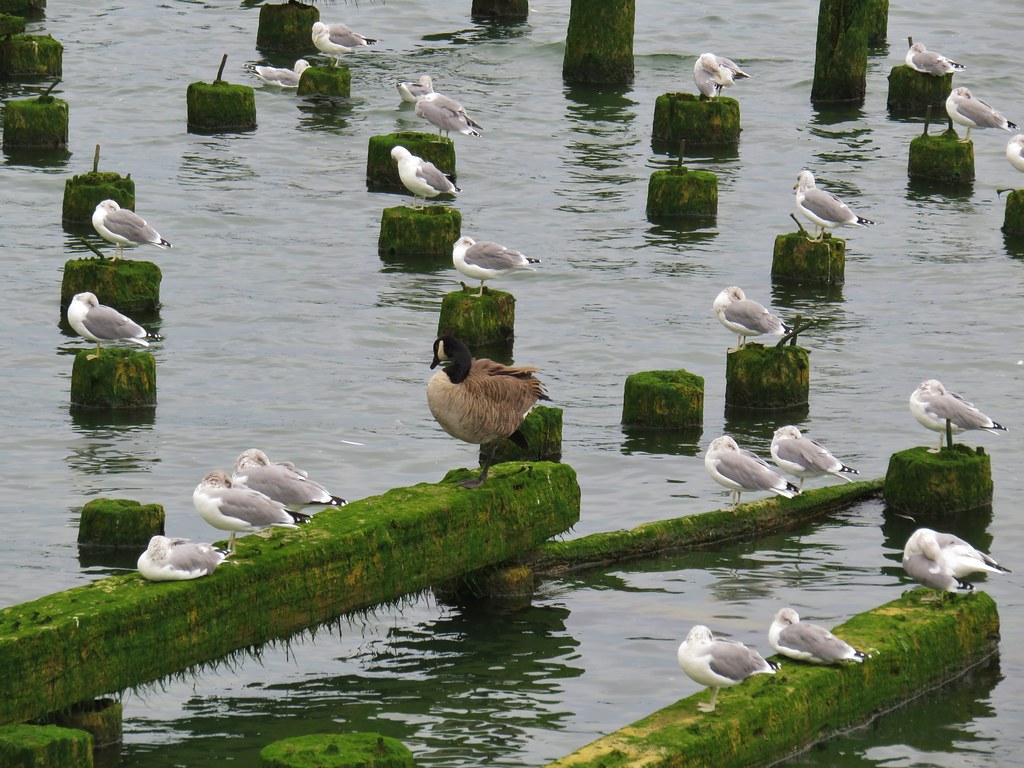
Seabirds lined the waterfront and we also heard some sea lions but never saw any.
IMG_8166

IMG_8167

IMG_8173

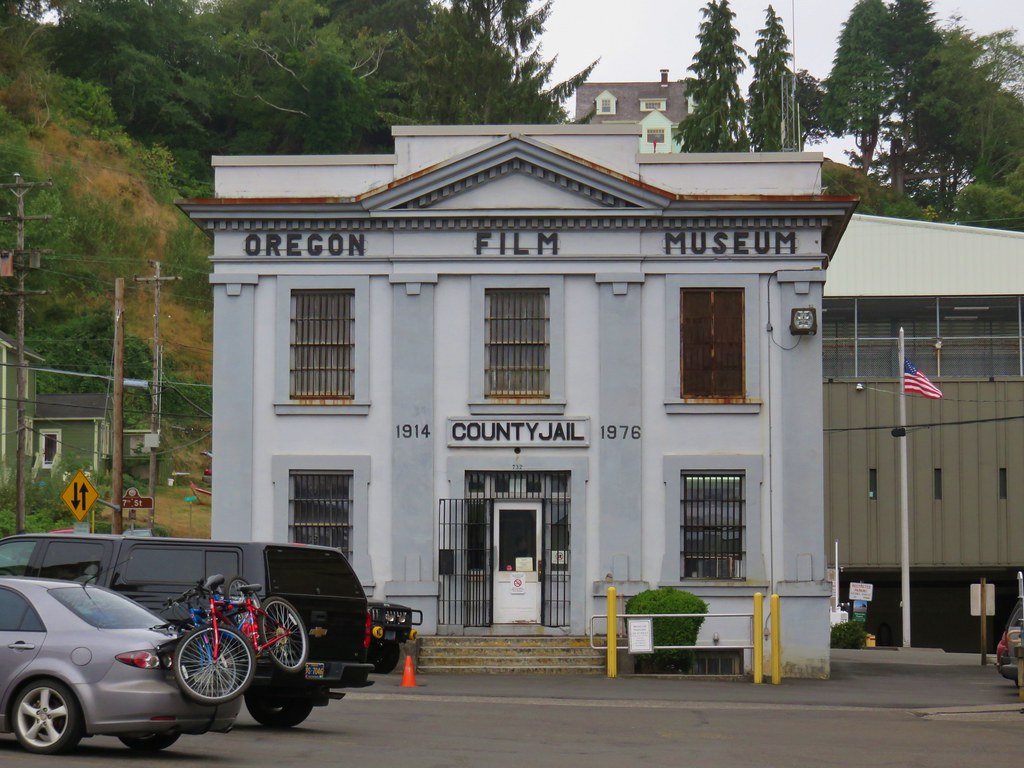
We more or less stuck to Sullivan’s described route (Hike #4 in the 4th edition of “100 Hikes/Travel Guide Oregon Coast & Coast Range) following the the trolley line to 6th St. then turning inland for three blocks before taking a left on Commercial St. After a block on Commercial St. we turned right on 7th for two blocks passing the Oregon Film Museum and the Flavel House.
IMG_8192

IMG_8190

IMG_8187

IMG_8182

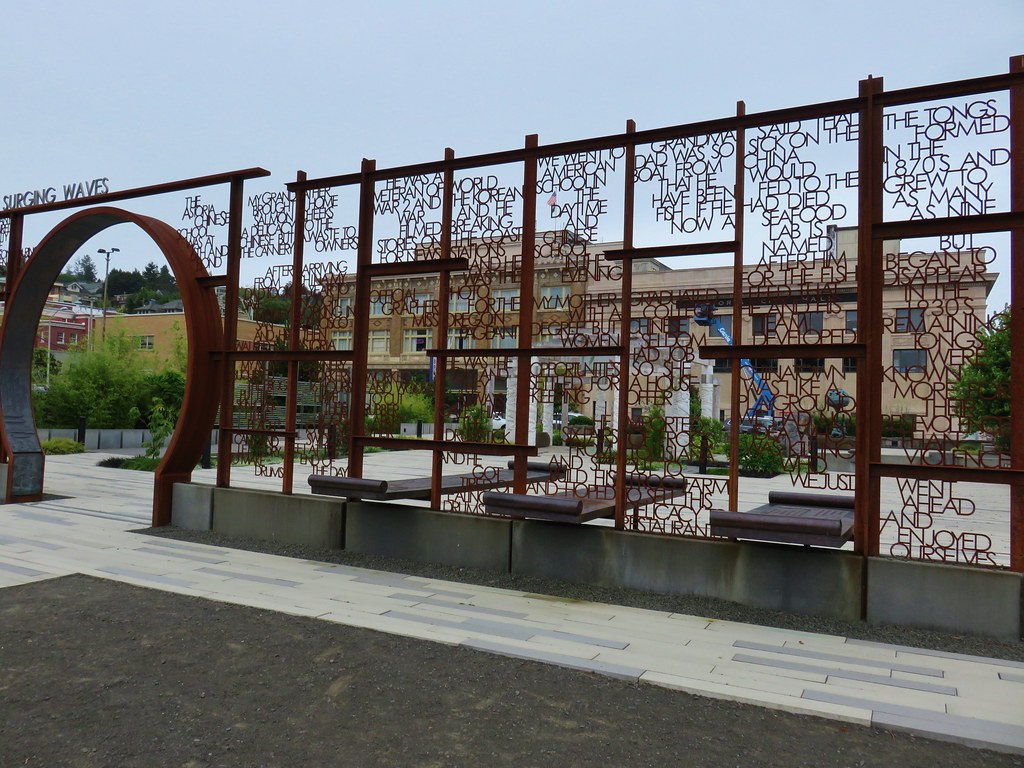
We walked around the Flavel House and headed downhill on 8th St. turning right when we arrived back at Commercial St. We turned right several blocks later on 12th Street and right again a block later on Duane St. passing a Chinese Garden.
IMG_8194

IMG_8195

IMG_8197

IMG_8199

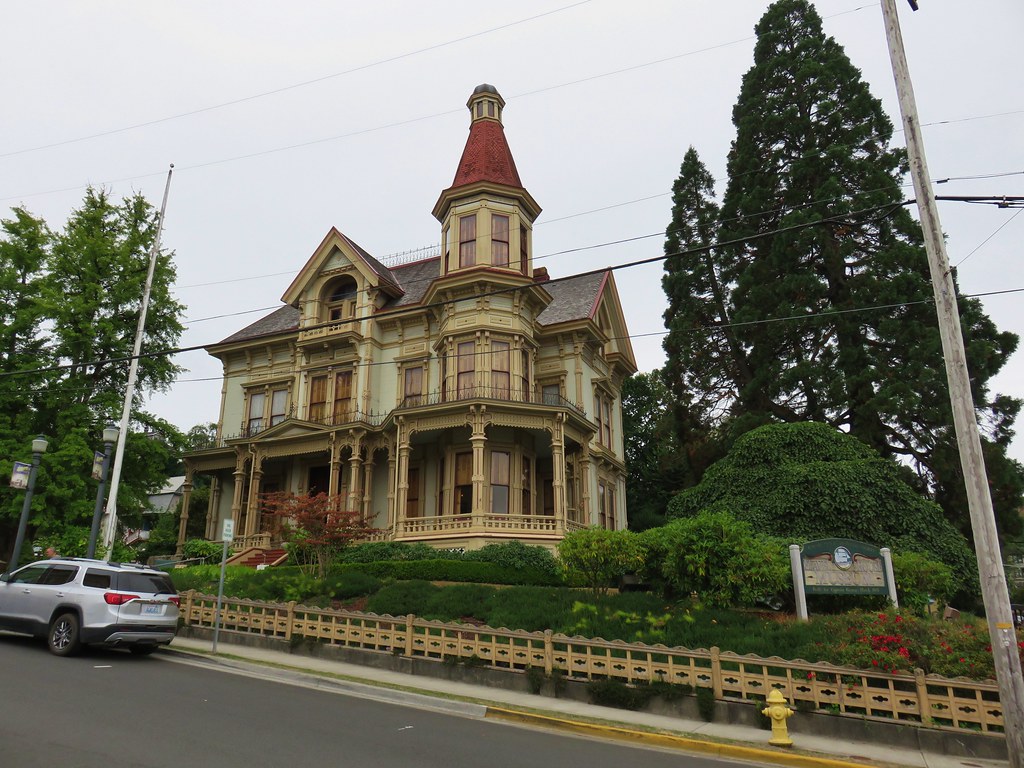
We continued zig-zagging through town passing numerous historic homes, churches, and other buildings. One home that stood out was an old run down home that had the quintessential haunted house look.
IMG_8201

We also passed Fort Astoria on the corner of 15th and Exchange.
IMG_8205

By the time we were done we wandered around town for a total of 3 miles.
Astoria

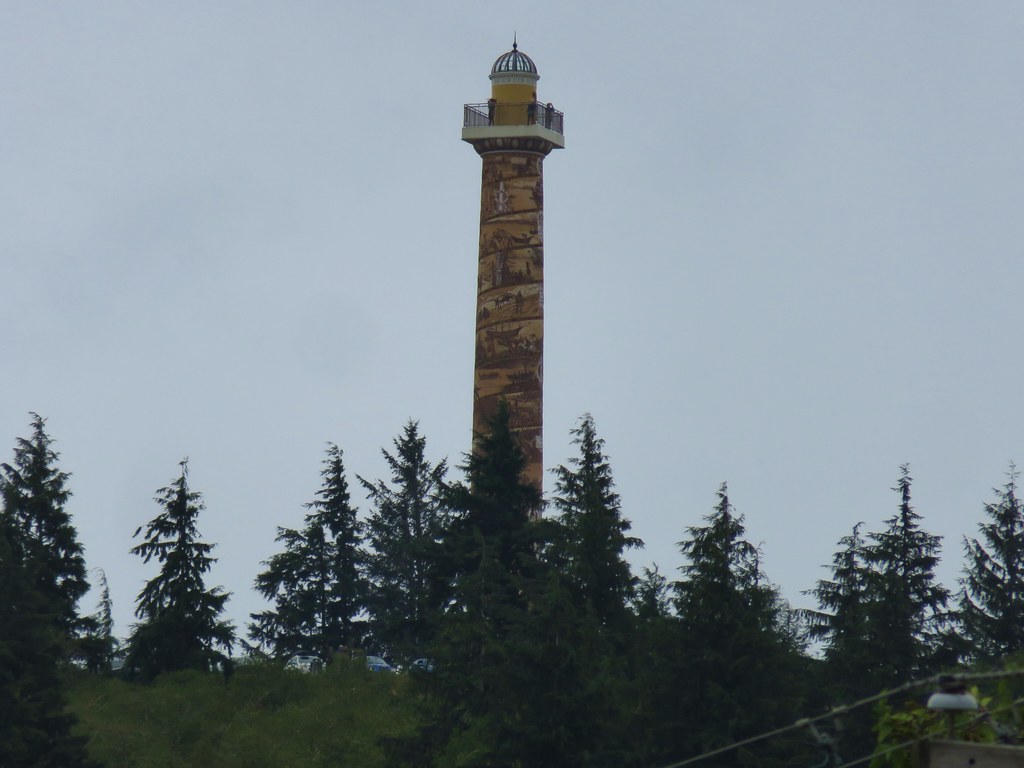
One of the landmarks not on the route was the Astoria Column. It was visible from the waterfront rising above the city. It was one of the times the 30x zoom on the camera came in handy.
IMG_8178

We still arrived a little early at our hotel but luckily our room was ready. We had a nice view south to Tillamook Head.
IMG_8208

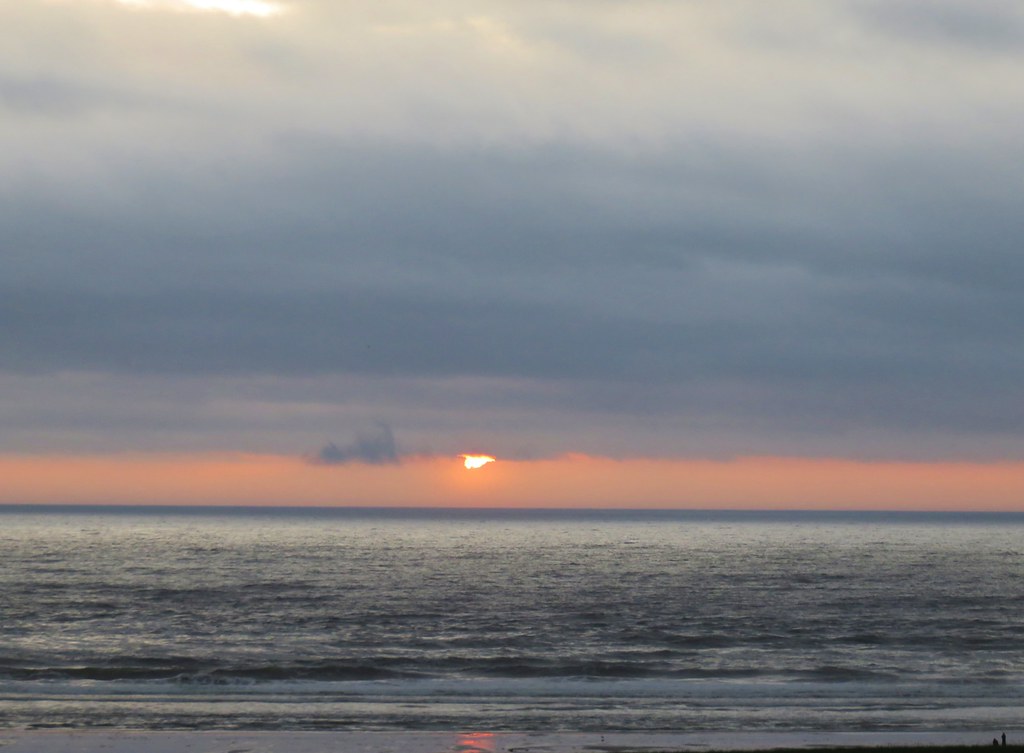
It had actually rained lightly on us in Astoria which was a wonderful change of pace. The sun went down behind the clouds that evening ending the first day of what was shaping up to be an interesting vacation.
IMG_8209

Happy Trails!

Flickr: Astoria & Fort Stevens

Categories
Hiking Mt. Adams Trip report Washington Washington Cascades

Labor Day Weekend – Mt. Adams Wilderness Days 2 & 3

We woke up after 6am on Sunday morning which counts as sleeping in for us. The forecast had called for smokey conditions all weekend which hadn’t materialized at all on Saturday but the sky was a little hazy now.
It certainly wasn’t bad and there was no fire smell in the air which was nice.

IMG_7749

Our mission was to find a water source as we had run low the day before and didn’t want to try and filter out of the nearby Cascade Creek which was too silty. We grabbed our packs and headed across Horseshoe Meadow to the Pacific Crest Trail. Our plan was to follow it north to the Killen Creek Trail and possibly into Killen Creek Meadows.

IMG_7753

The PCT climbed along a ridge at the edge of the meadow and we were able to spot our tent in the trees below.

IMG_7755

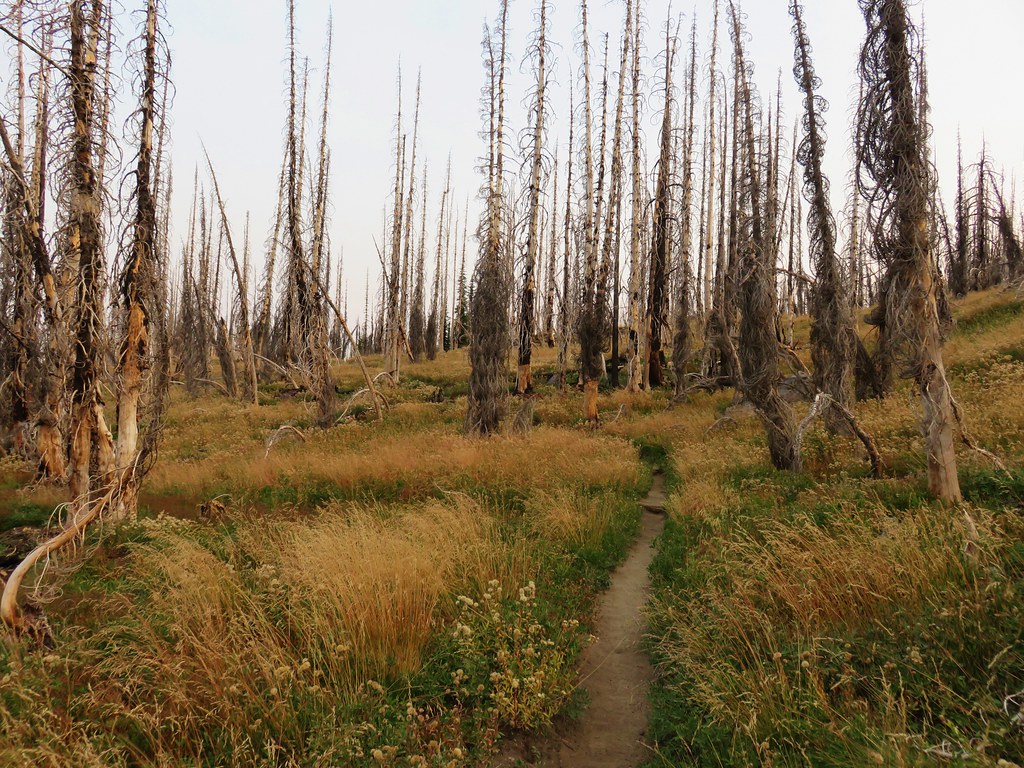
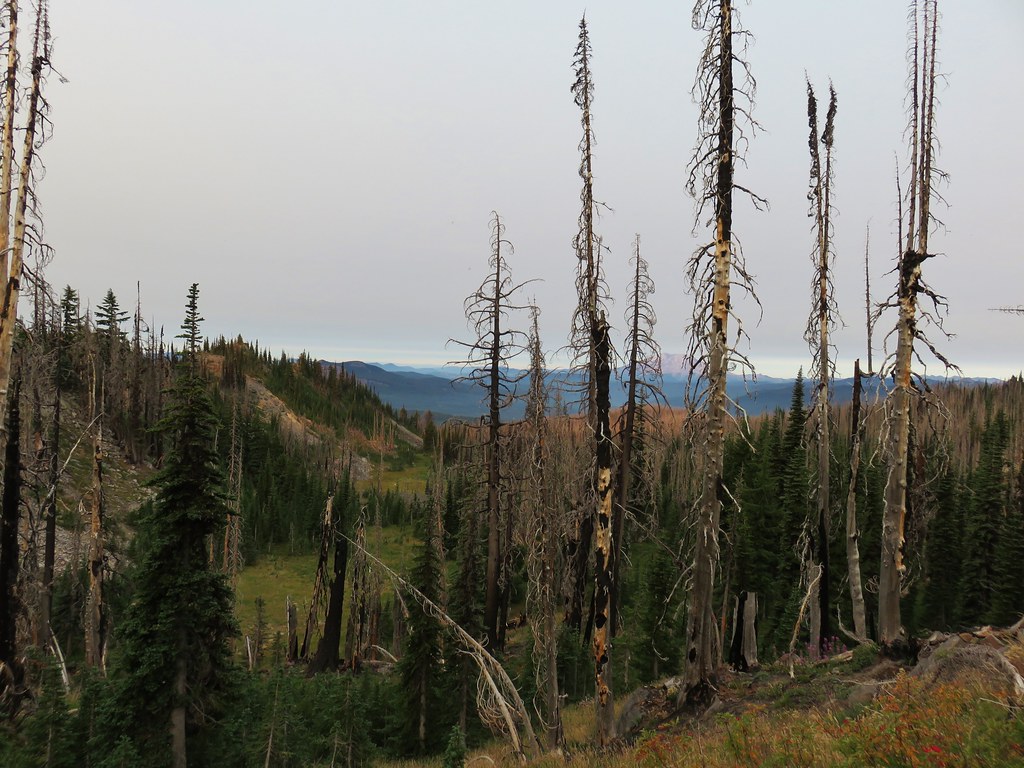
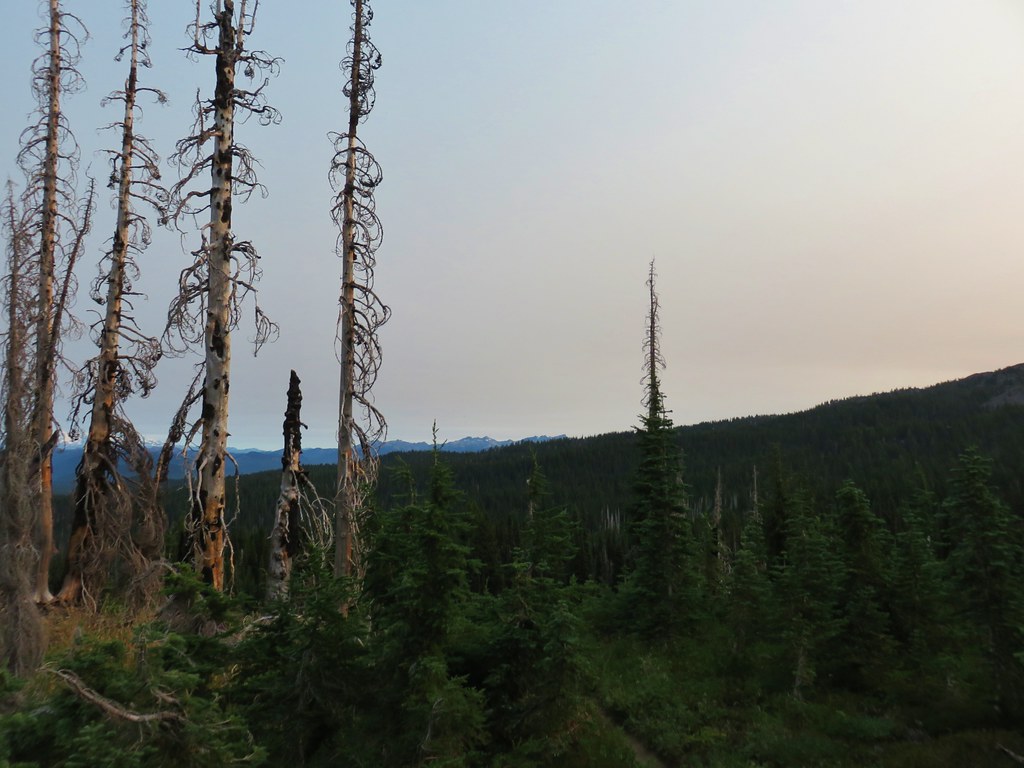
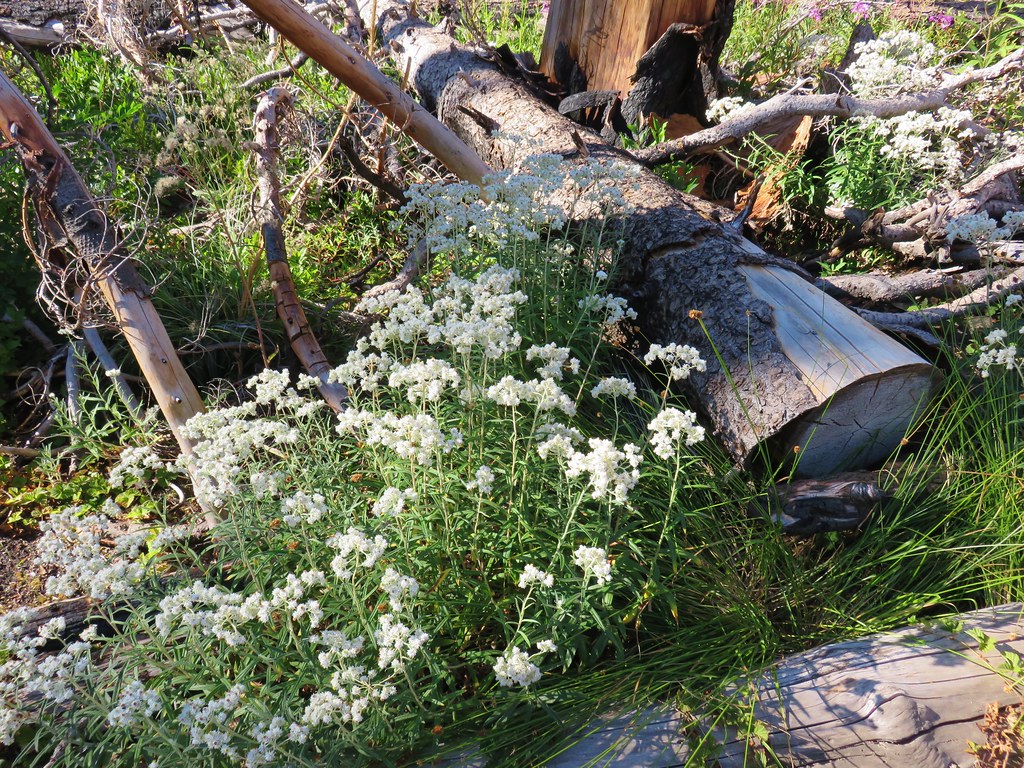
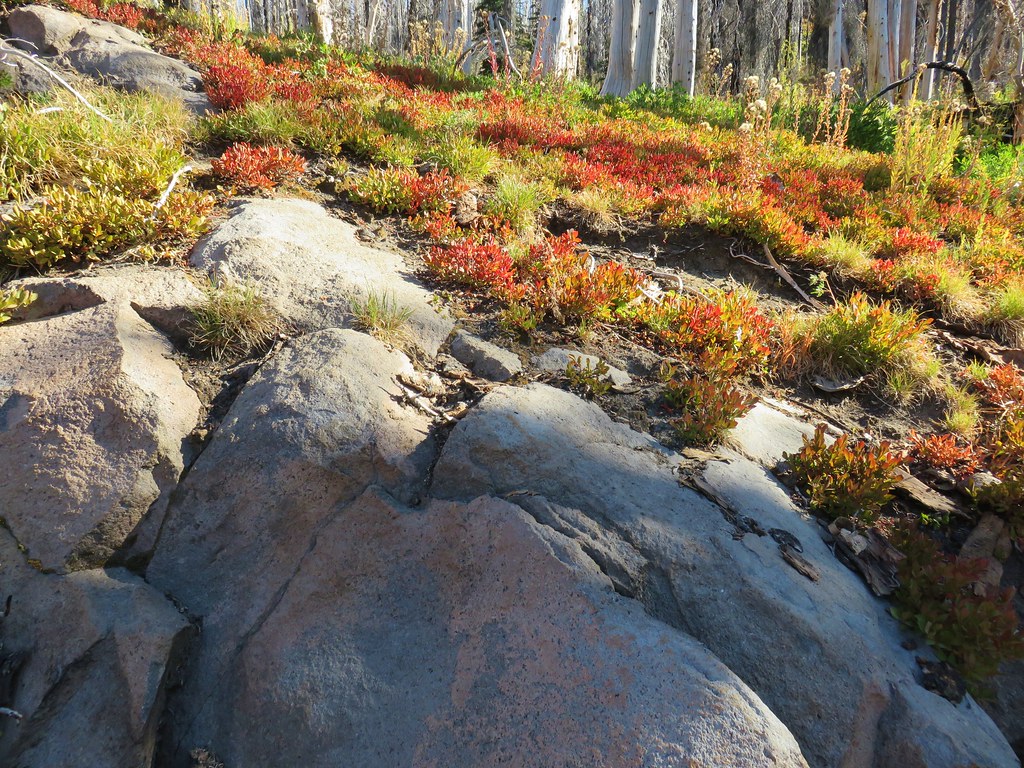
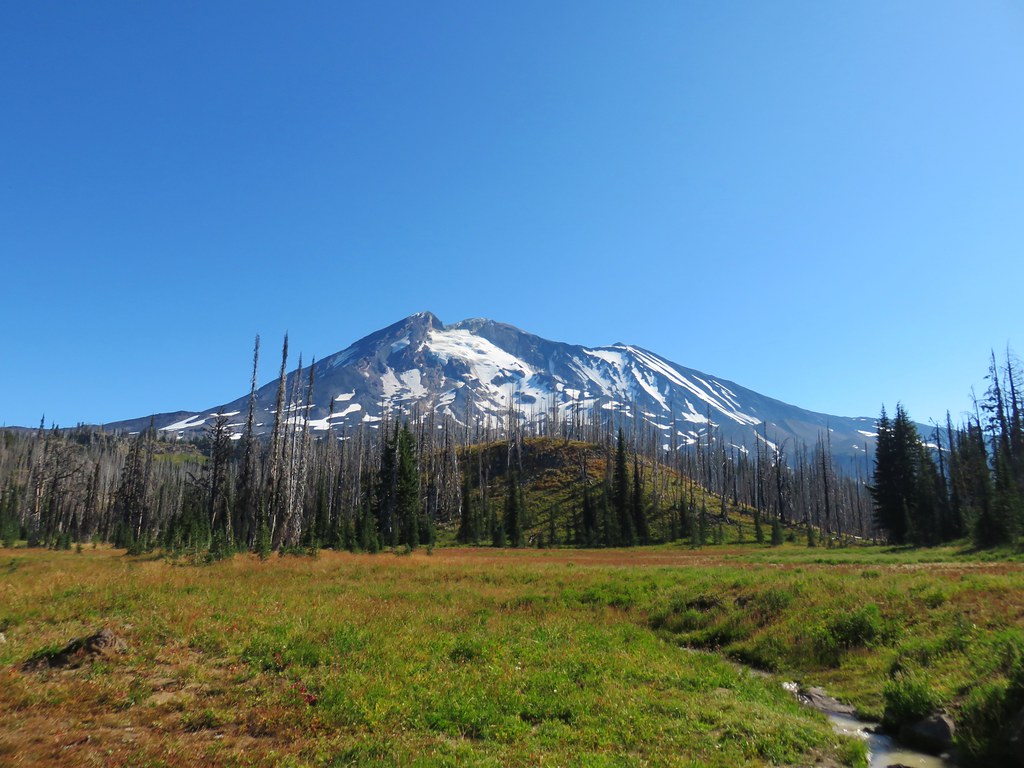
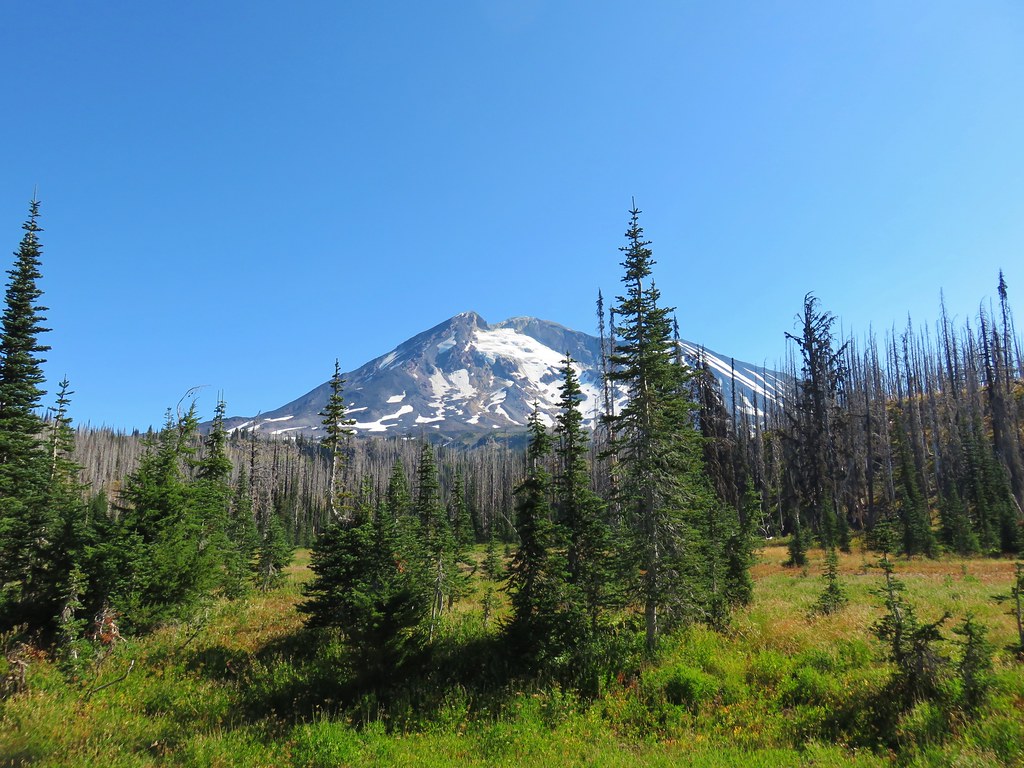
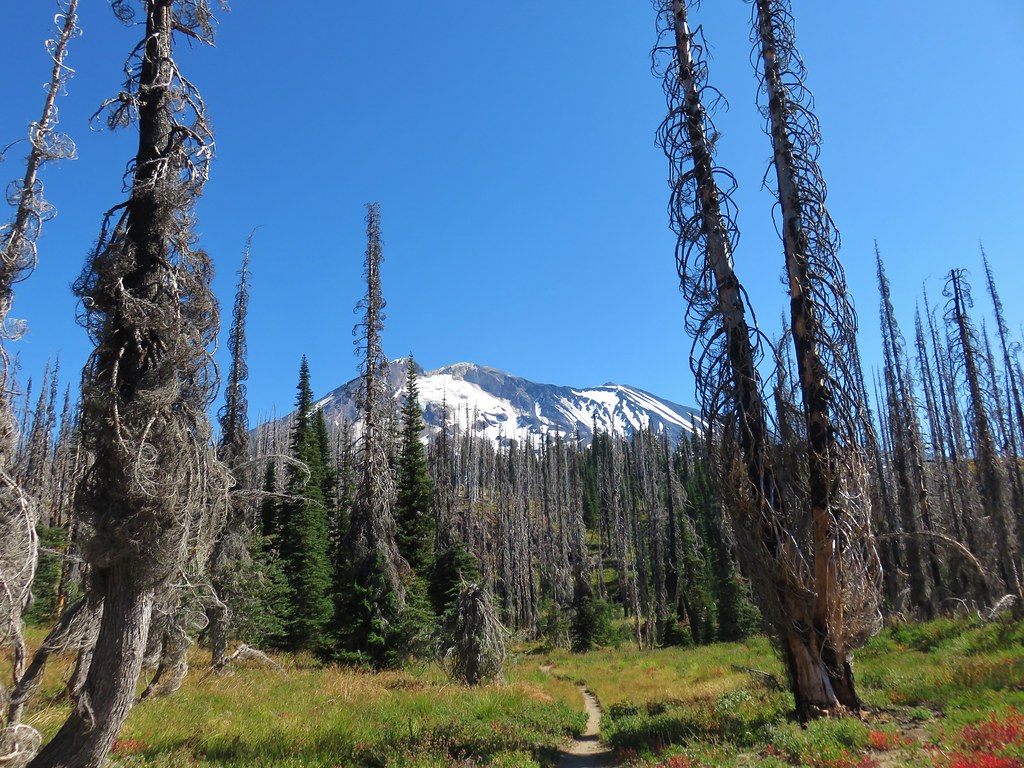
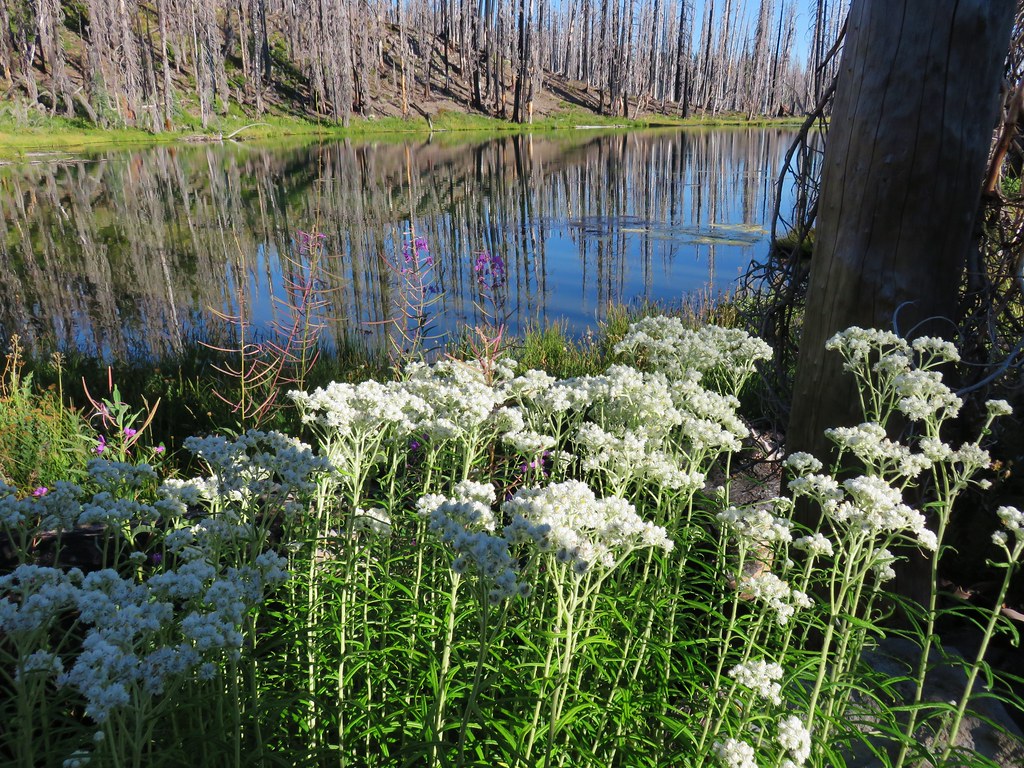
The trail climbed around the ridge end through the scars of the Cascade Creek Fire. The ground was covered with flowers that were well past bloom but they still provided a colorful display.

IMG_7757

IMG_7758

IMG_7759

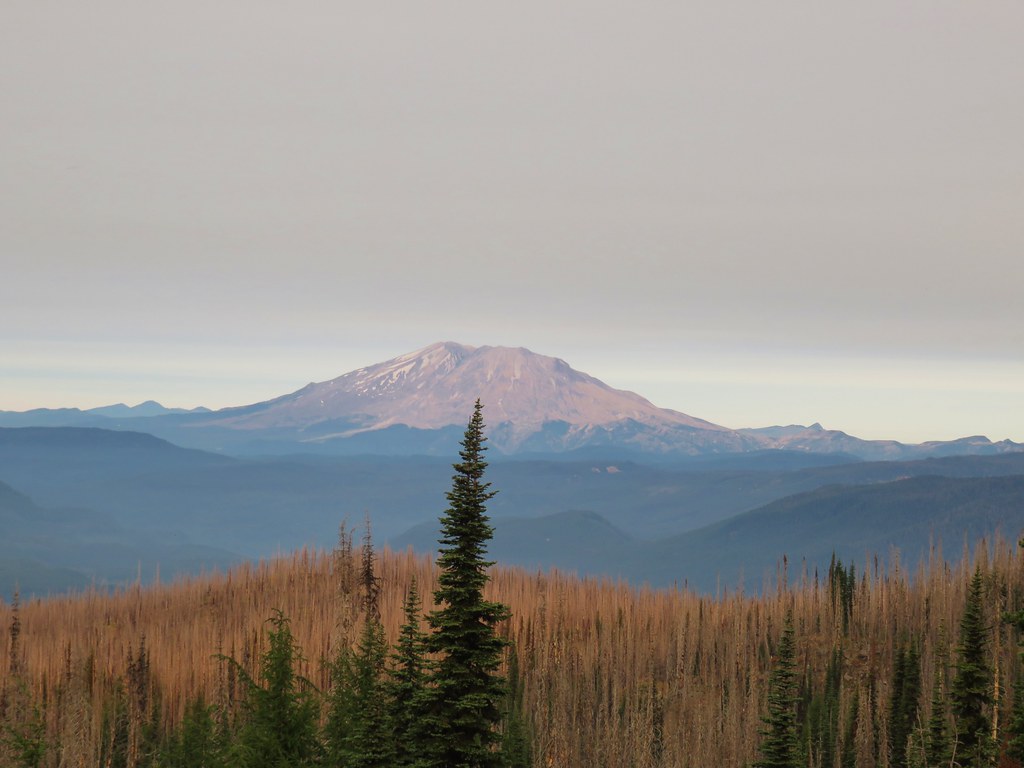
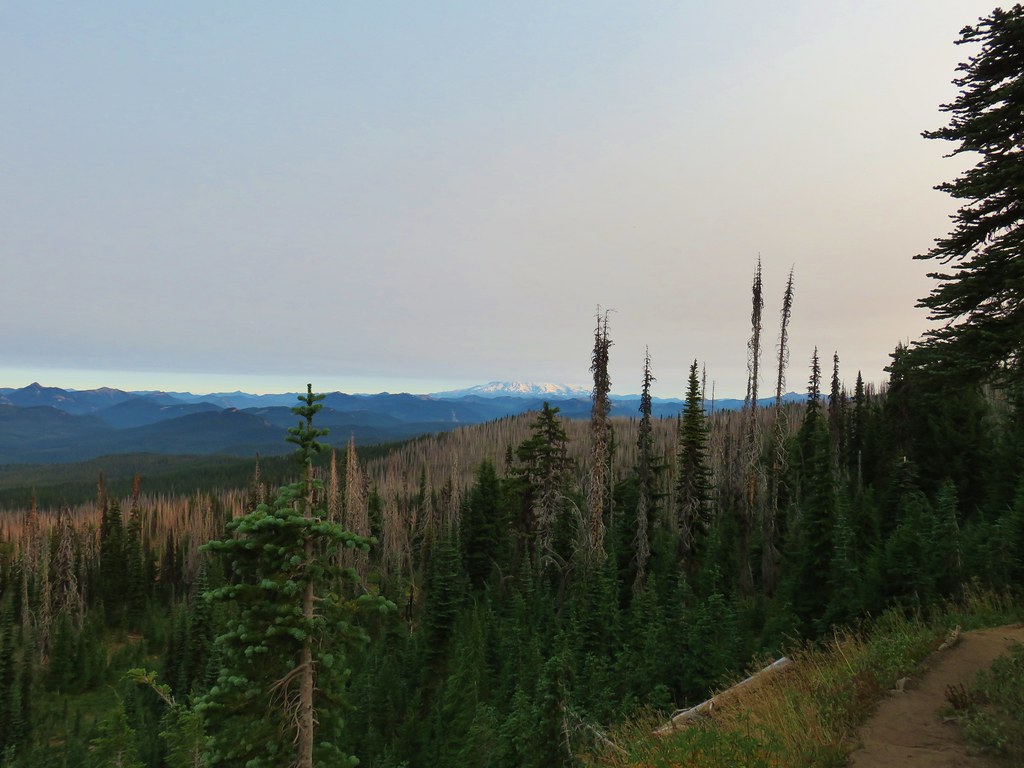
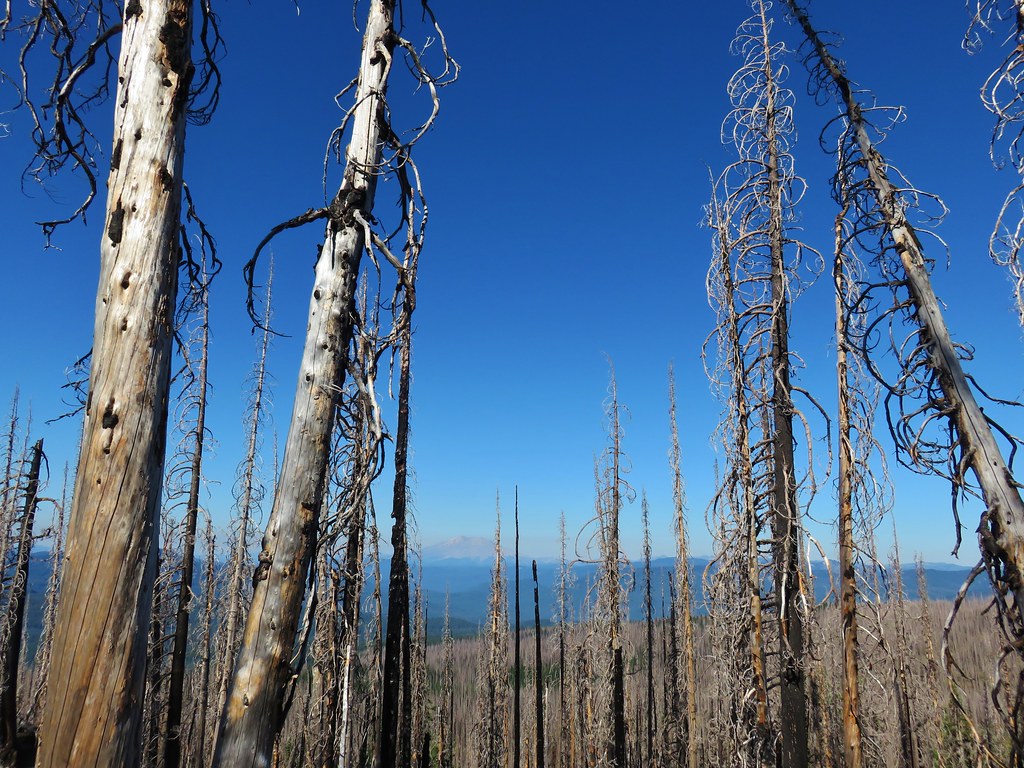
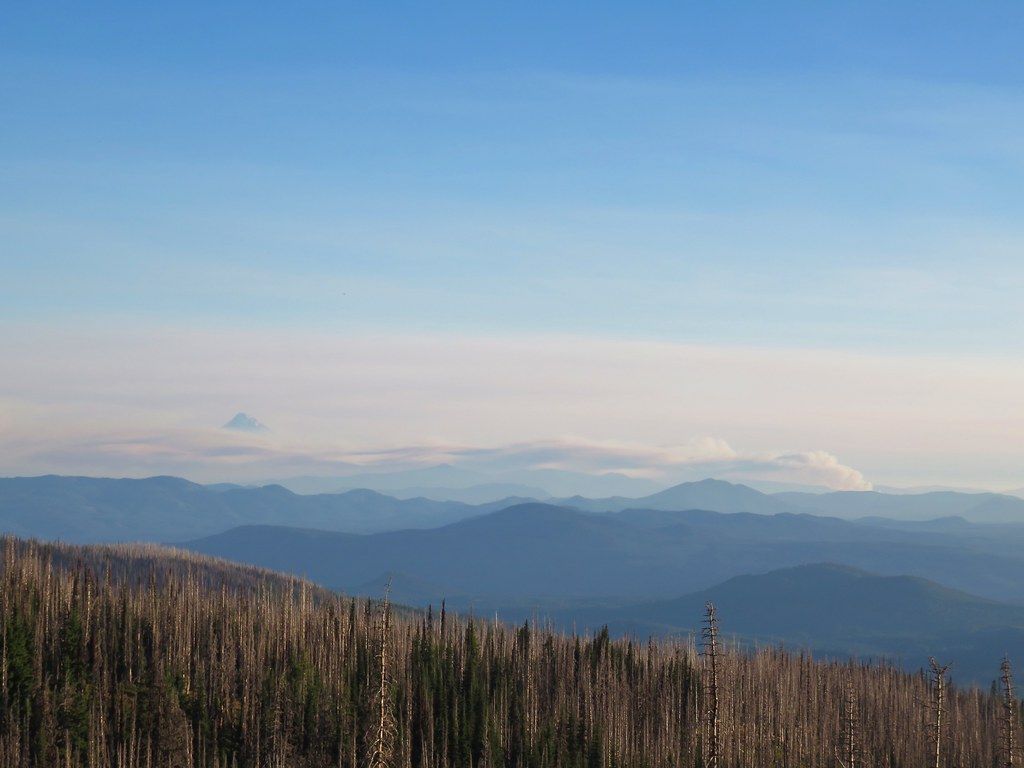
Looking out to the SW we could see smoke in the valleys below a higher layer of clouds. Mt. St. Helens somehow seemed to be in a clear zone though.

IMG_7761

IMG_7762

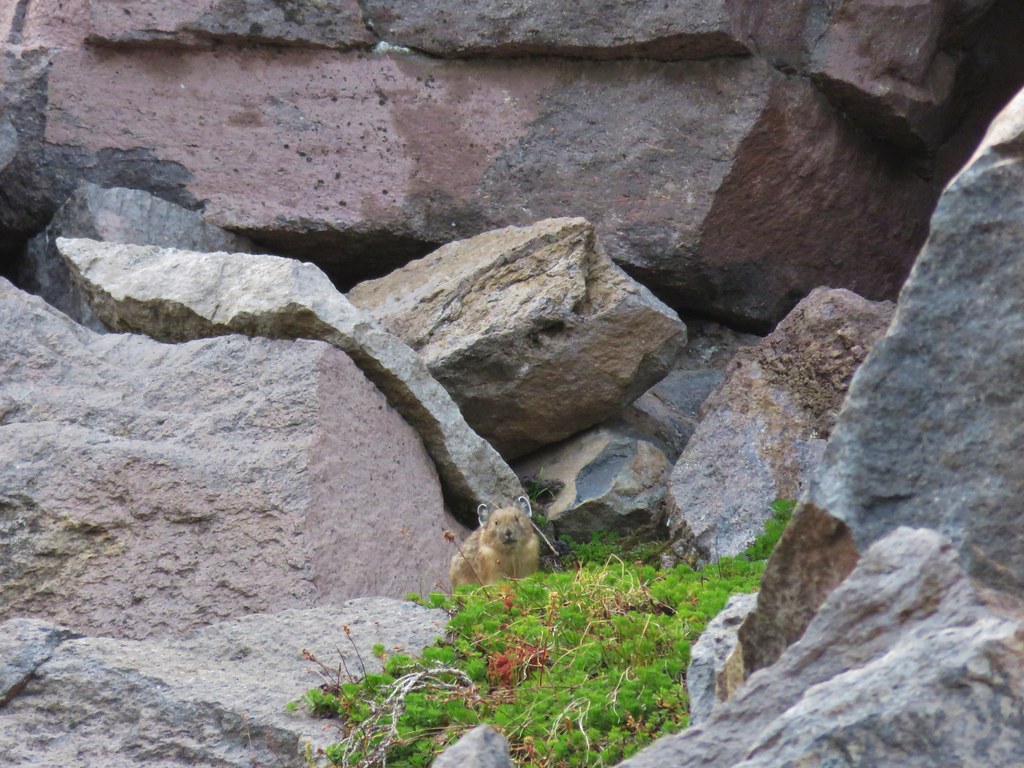
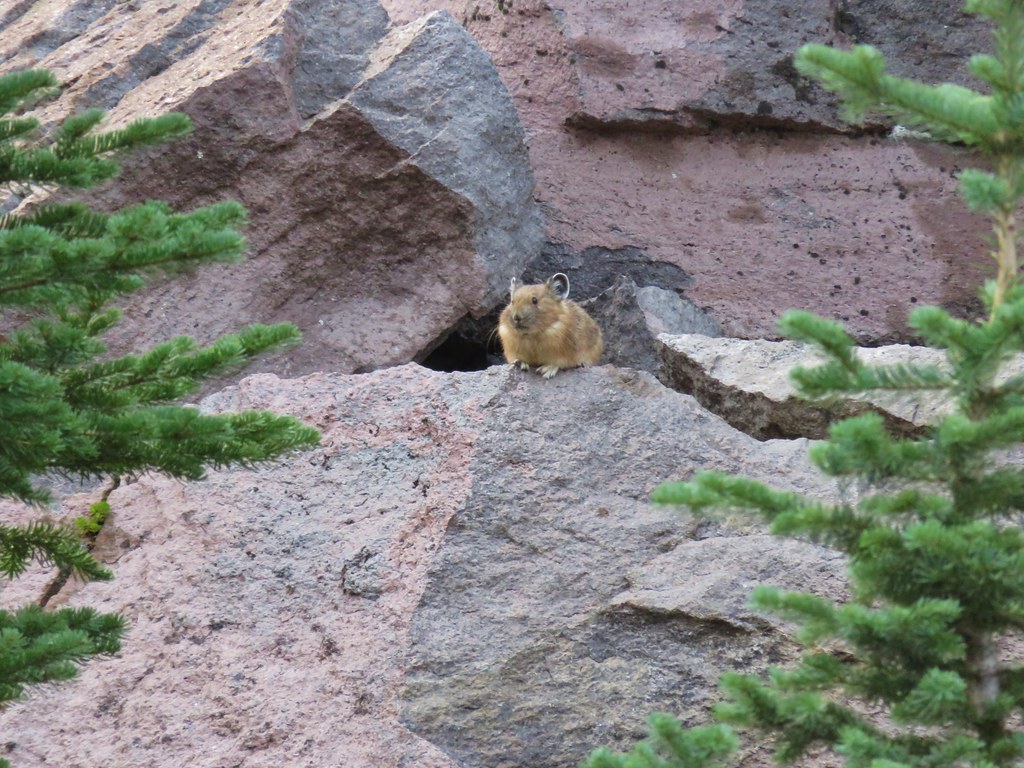
As we passed a large rocky area we heard the “meep” of a pika followed by several more. We stopped to see if we could spot one of our favorite alpine animals and sure enough one scurried out onto a nearby rock.

IMG_7768

IMG_7774

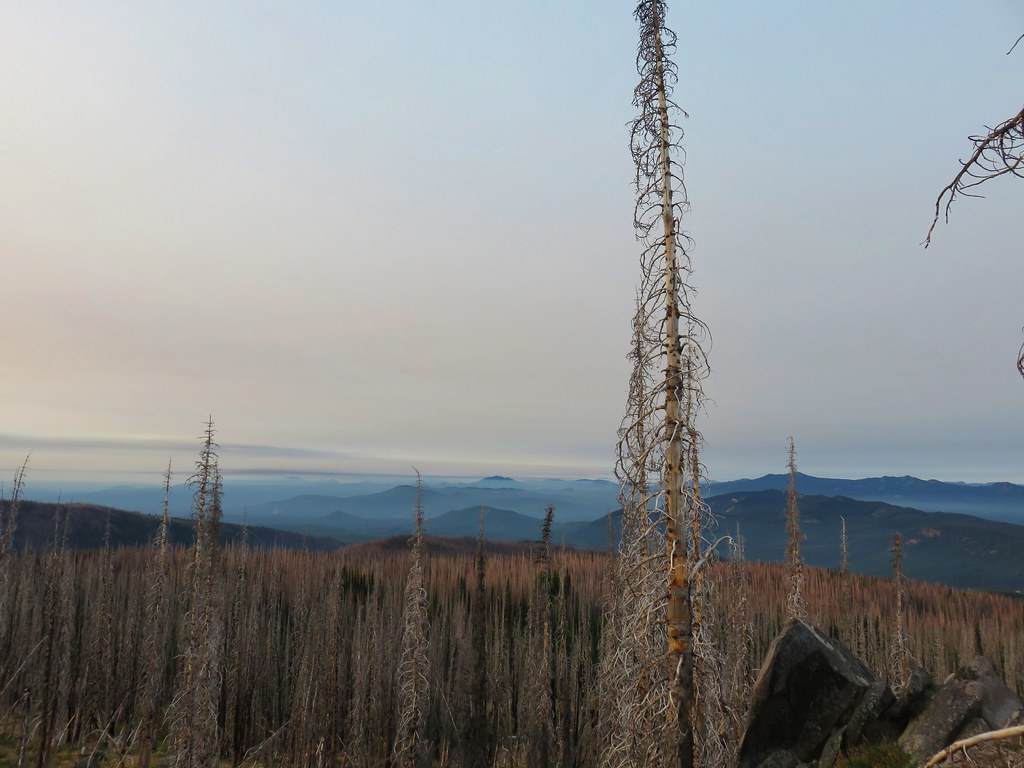
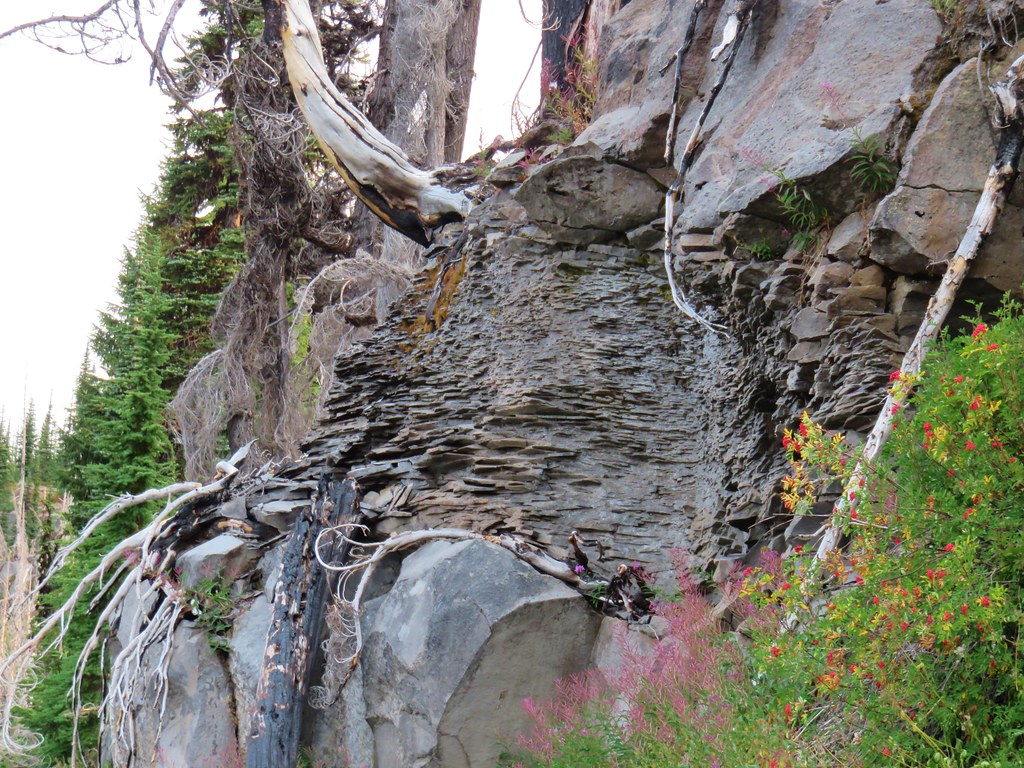
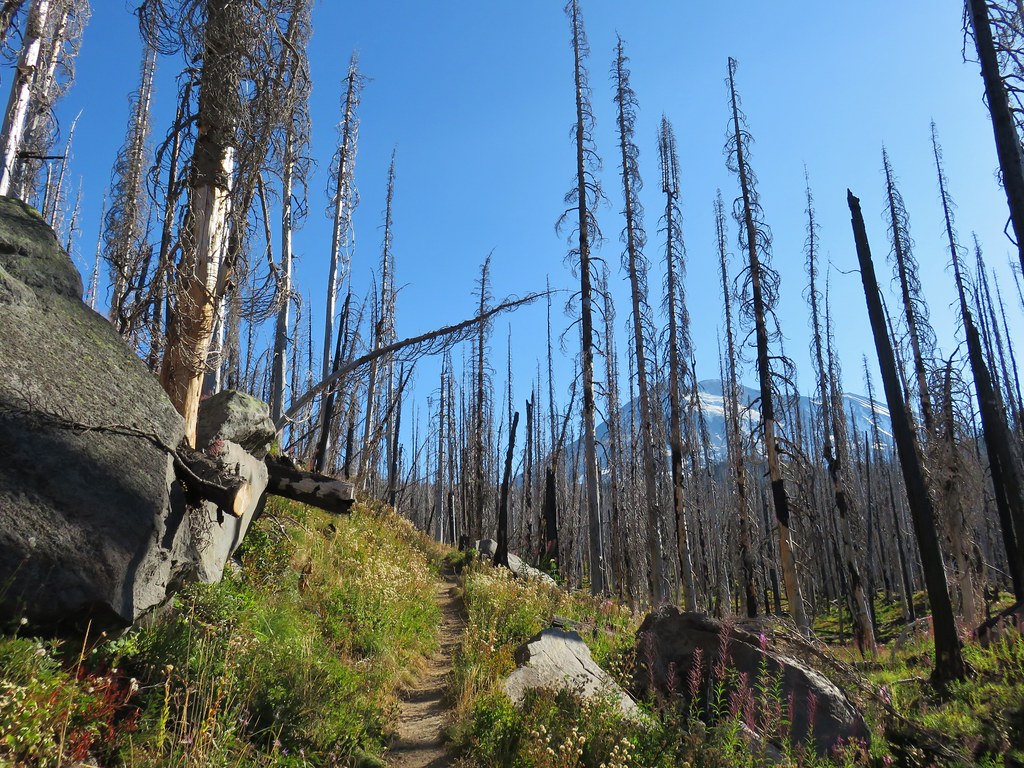
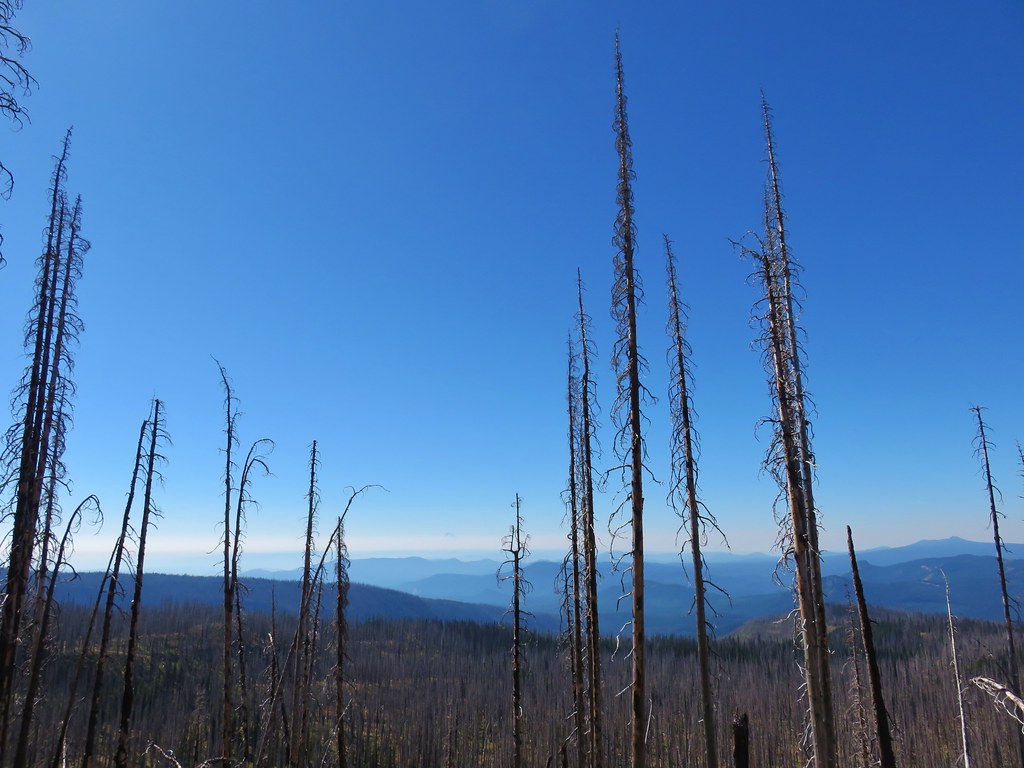
After watching the little guy for a while we remembered our quest for water and continued on. The trail remained in the Cascade Creek Fire zone for nearly the entire 3.5 miles to Sheep Lake which was the first potential source of water we came too. The fire zone offered some nice views and interesting rock formations reminding us that as sad as it is too see the forest burn it is part of the natural cycle and can offer some different scenic qualities.

IMG_7775

IMG_7778

IMG_7781Mt. St. Helens

IMG_7783

IMG_7784The bottom of Mt. Rainier

IMG_7789

IMG_7798Goat Rocks

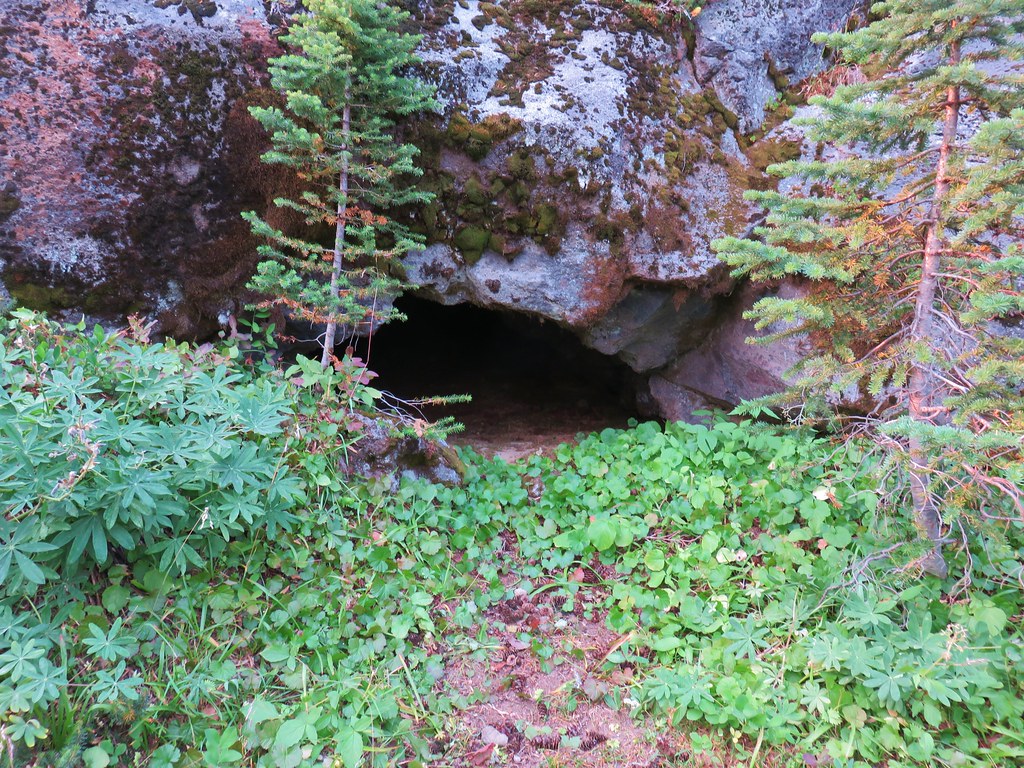
IMG_7806Small cave along the PCT

IMG_7807

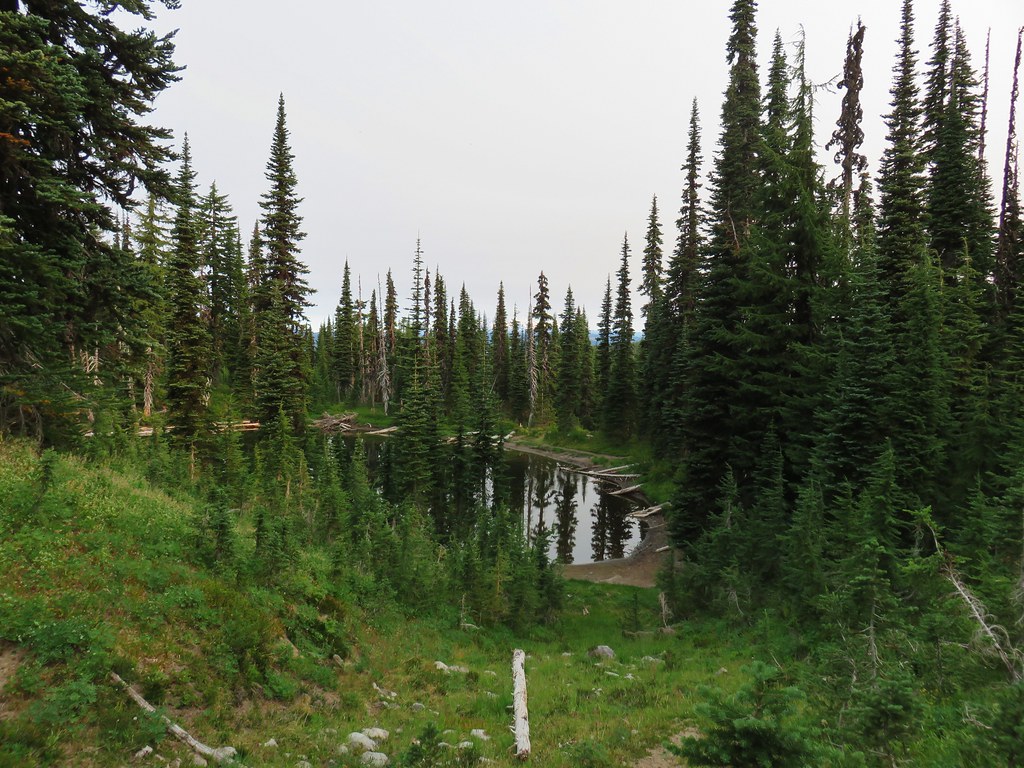
Sheep Lake was nice and was lined with berries which we happily ate as part of our breakfast but it was a little shallow along the edges for our pump filter.
IMG_7810

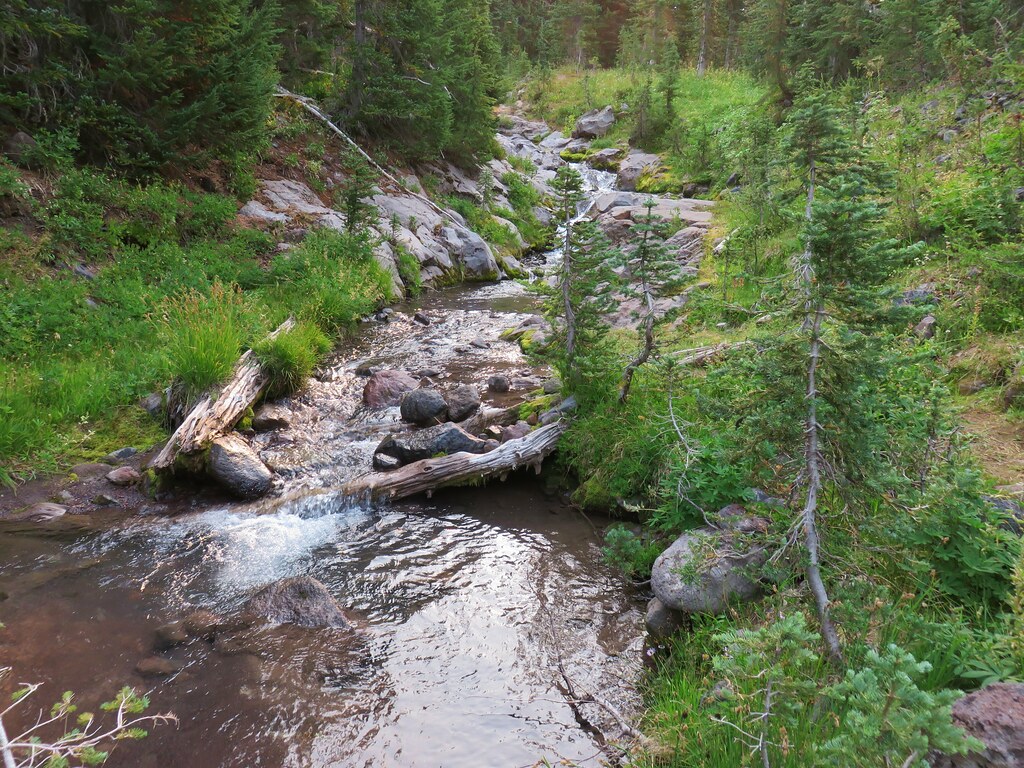
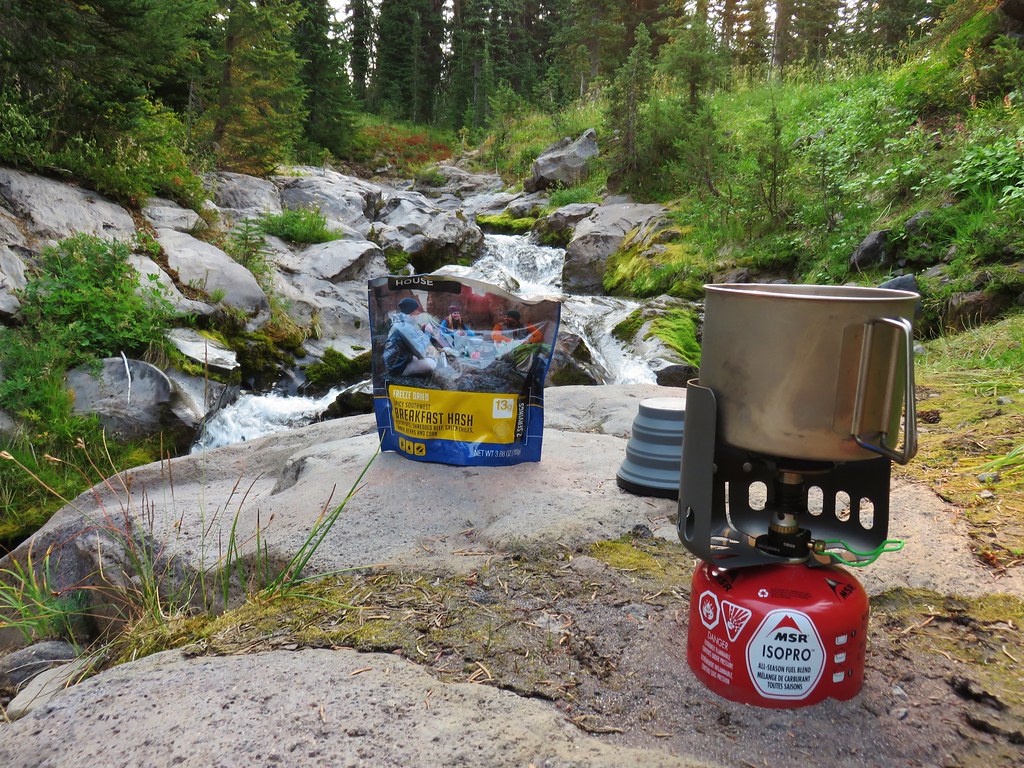
Riley Creek was near enough that we could hear it flowing so we decided to check it out to see if the water was clear enough to filter. Not only was the water clear but the creek was lovely and we found a large flat area atop some rocks where we could cook our breakfast.
IMG_7812

IMG_7814

Heather filtered water while I prepared our Mountain House Spicy Southwest Breakfast Hash which is quickly becoming one of our favorite backpacking meals.

IMG_7815

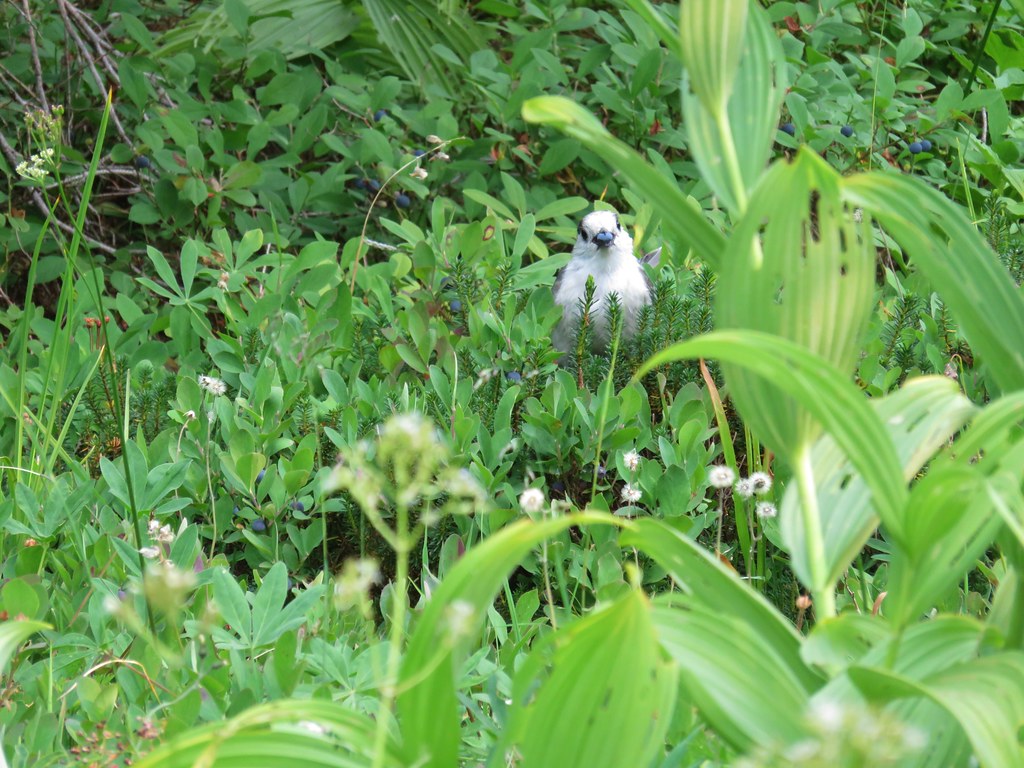
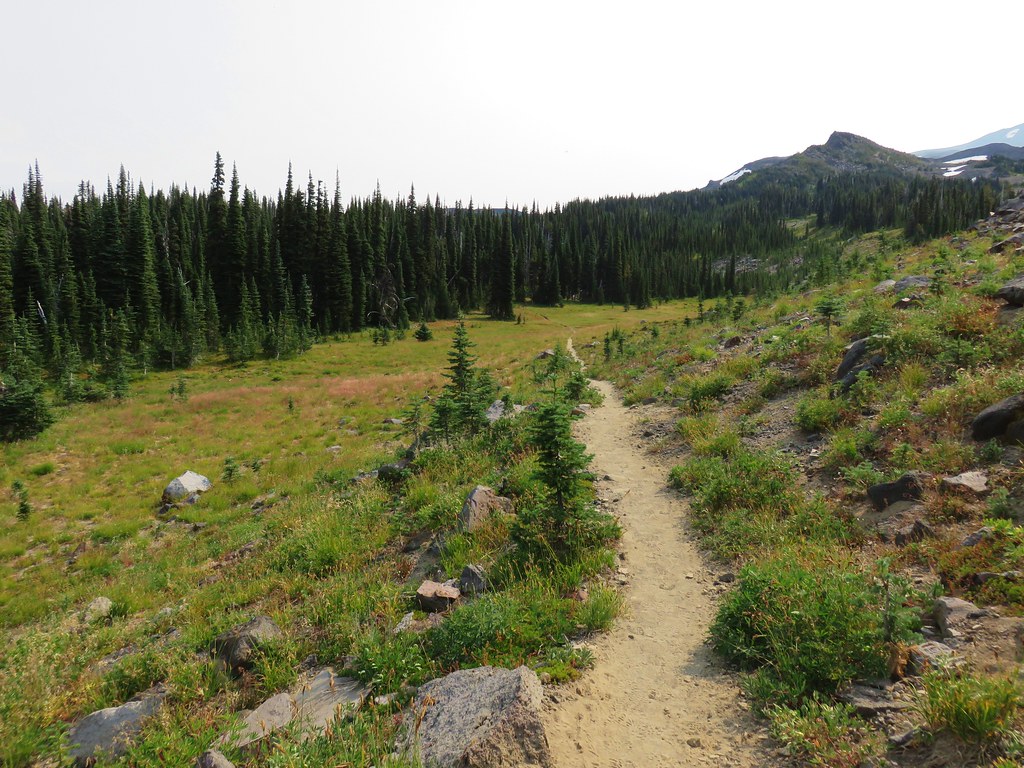
After breakfast we continued north on the PCT into a green forest. More blueberries and huckleberries lined the trail and we joined the area wildlife in snacking on the juicy treats.
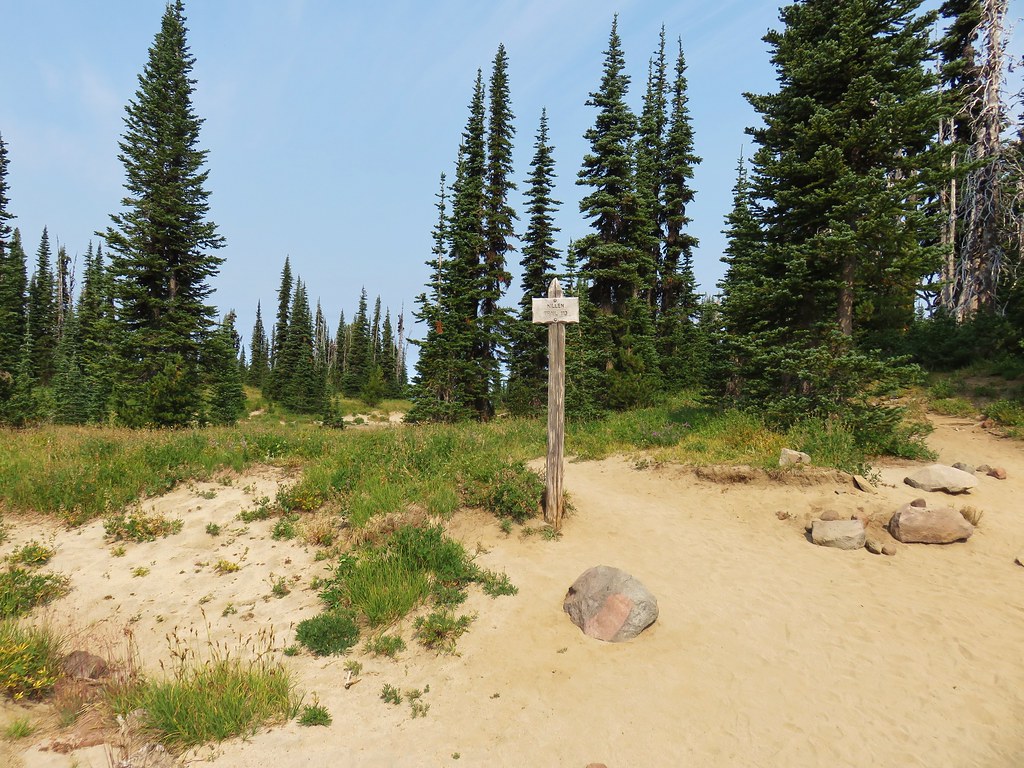
IMG_7818

IMG_7830

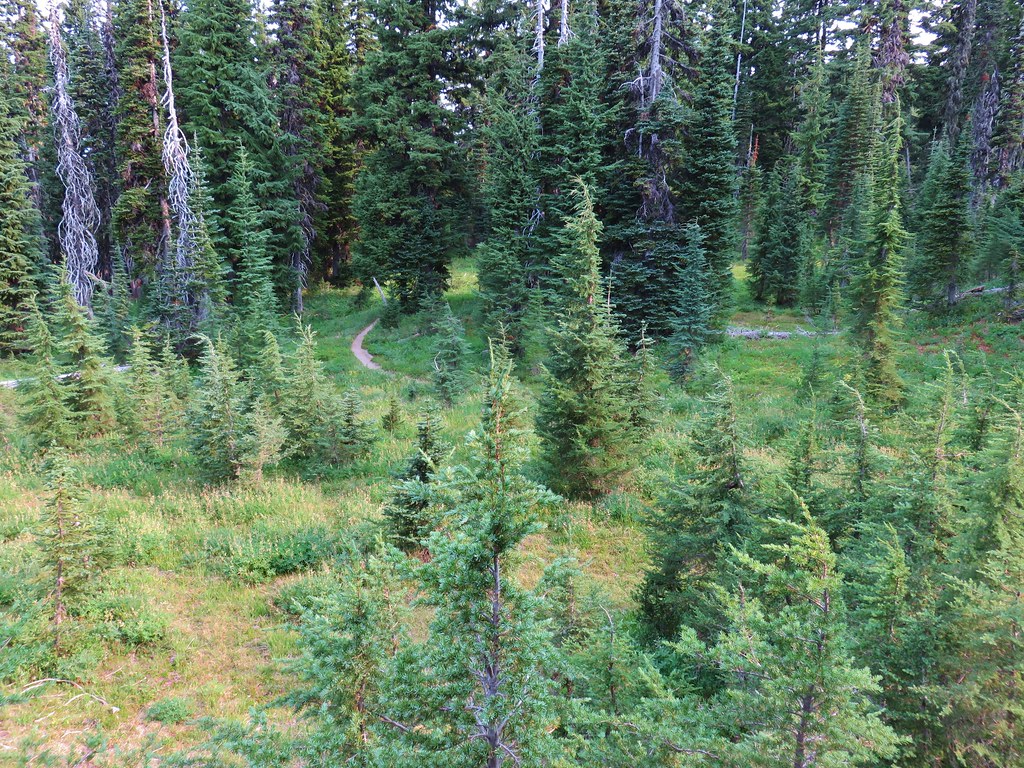
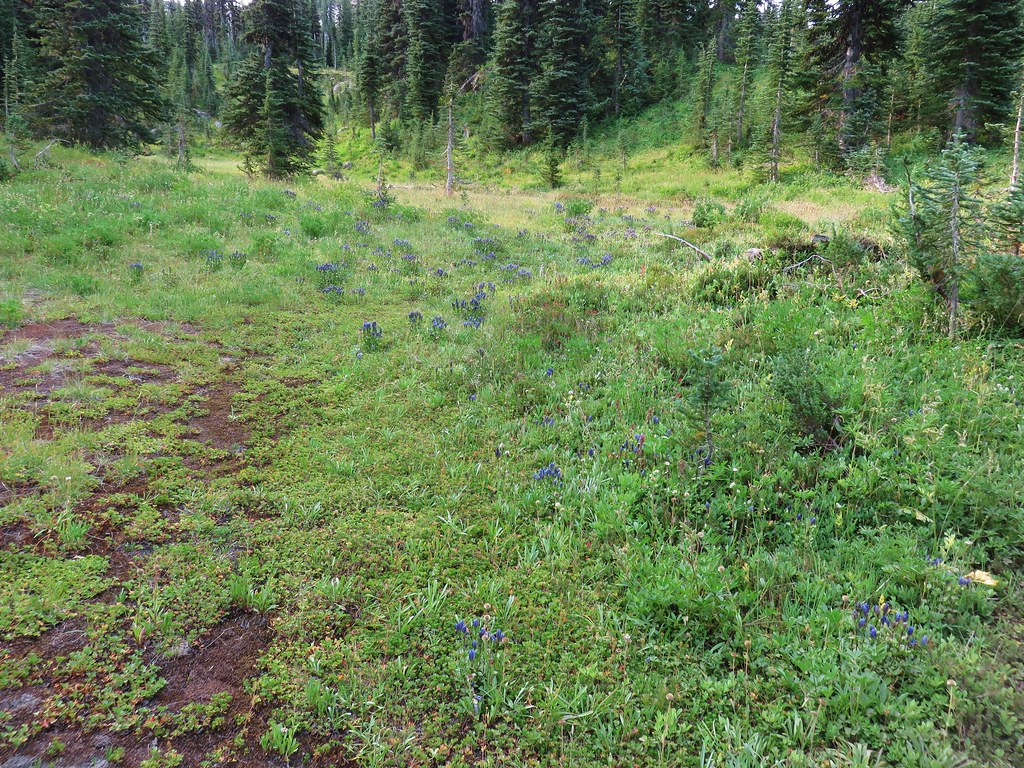
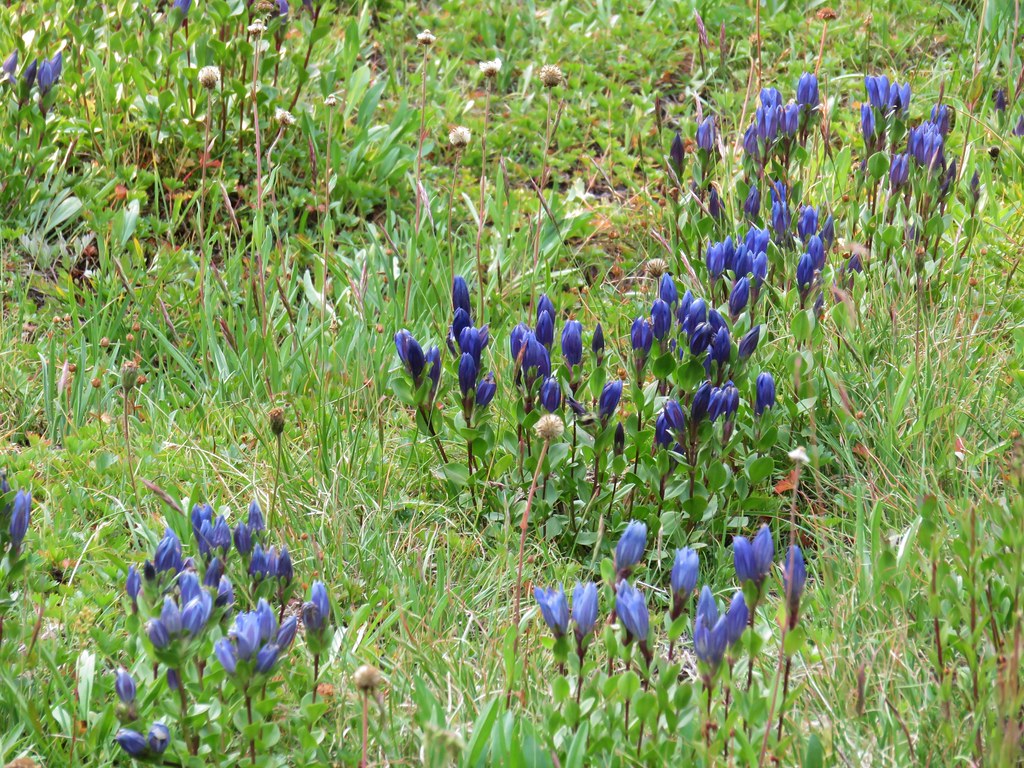
Large clumps of gentians dotted the open ground in this area as well.

IMG_7825

IMG_7829

IMG_7831

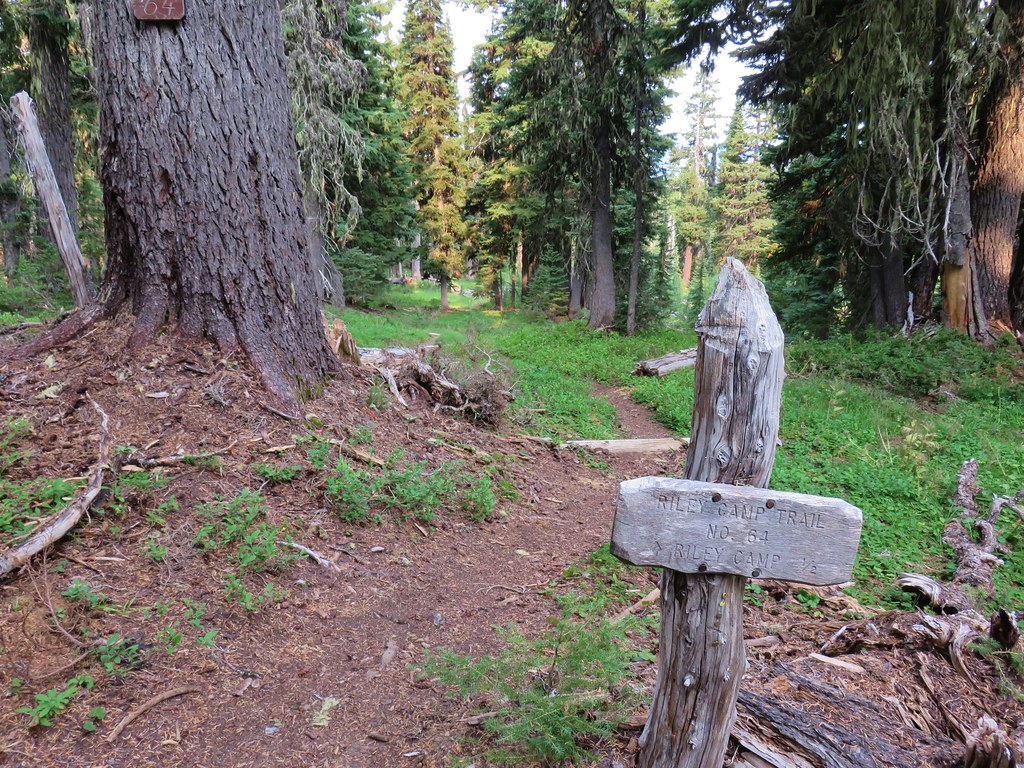
Just under a quarter mile from Riley Creek we passed the Riley Camp Trail.

IMG_7832

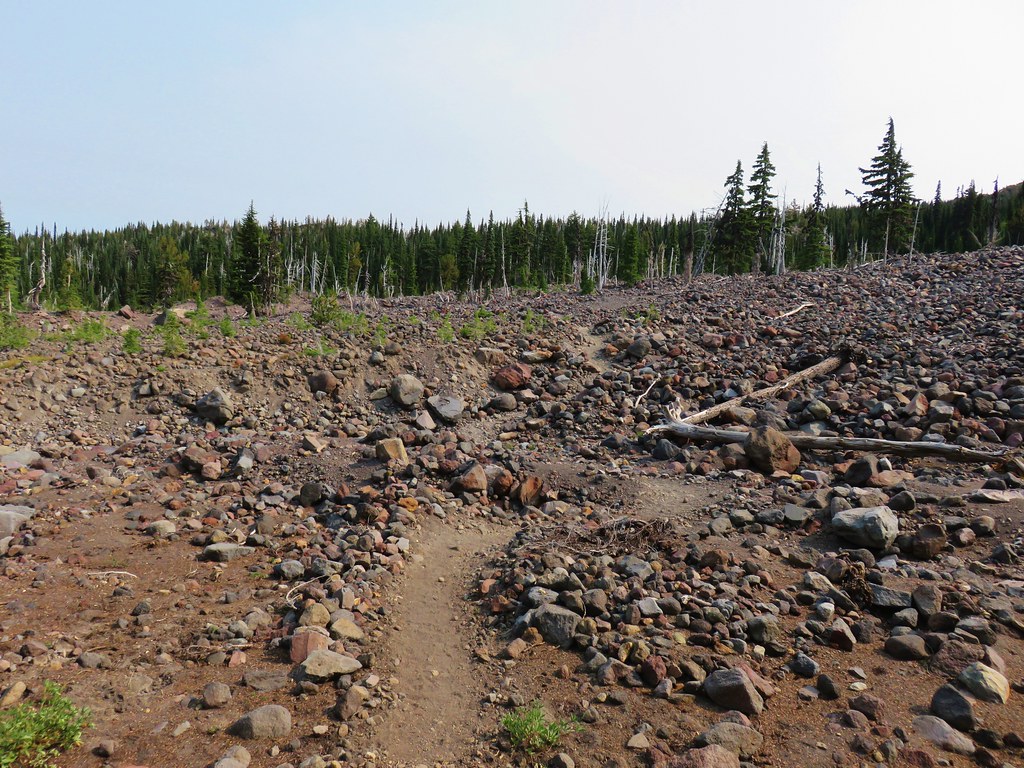
The stretch of green forest lasted for about a mile before the PCT came to a lava flow near Mutton Creek.
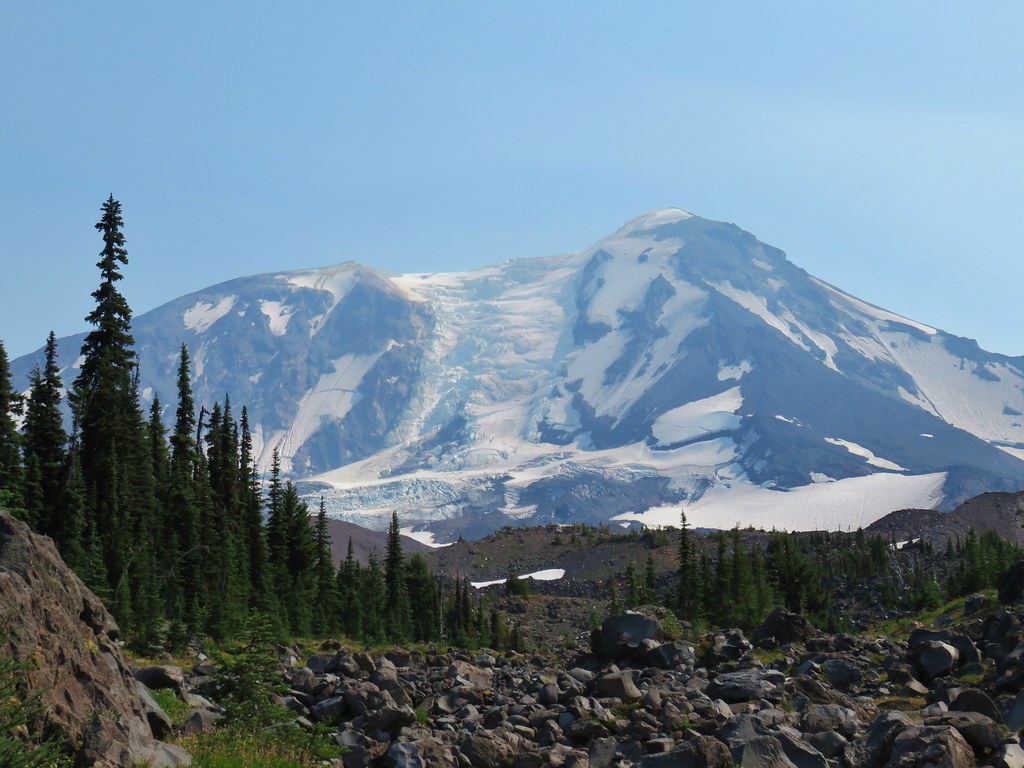
IMG_7838

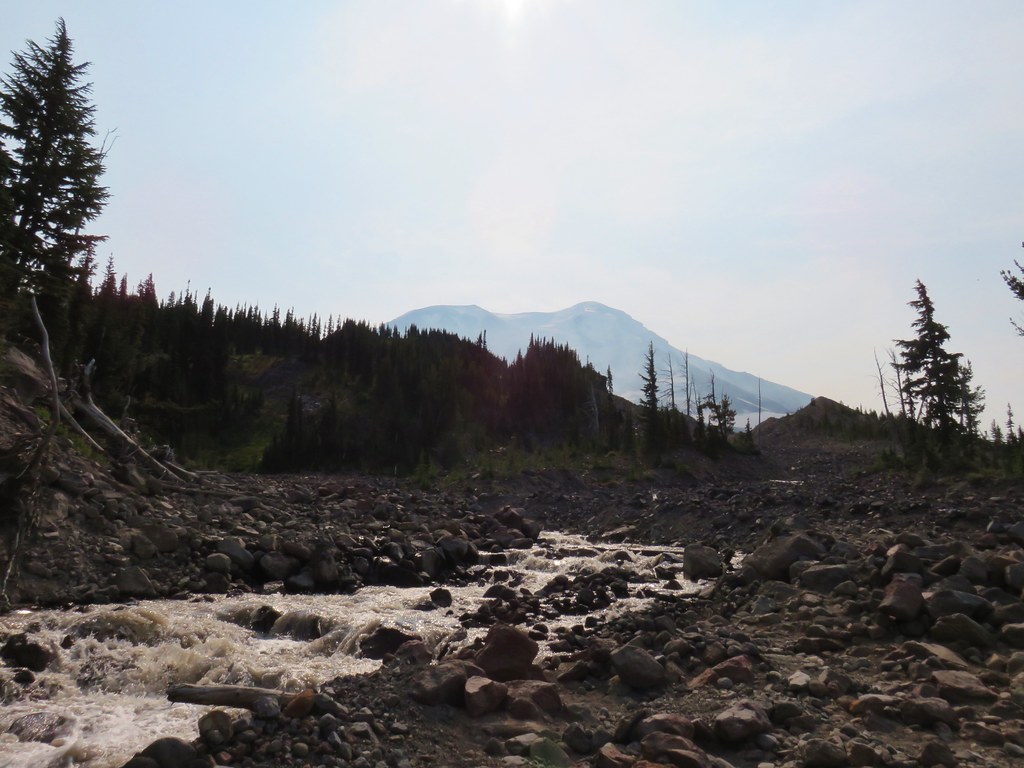
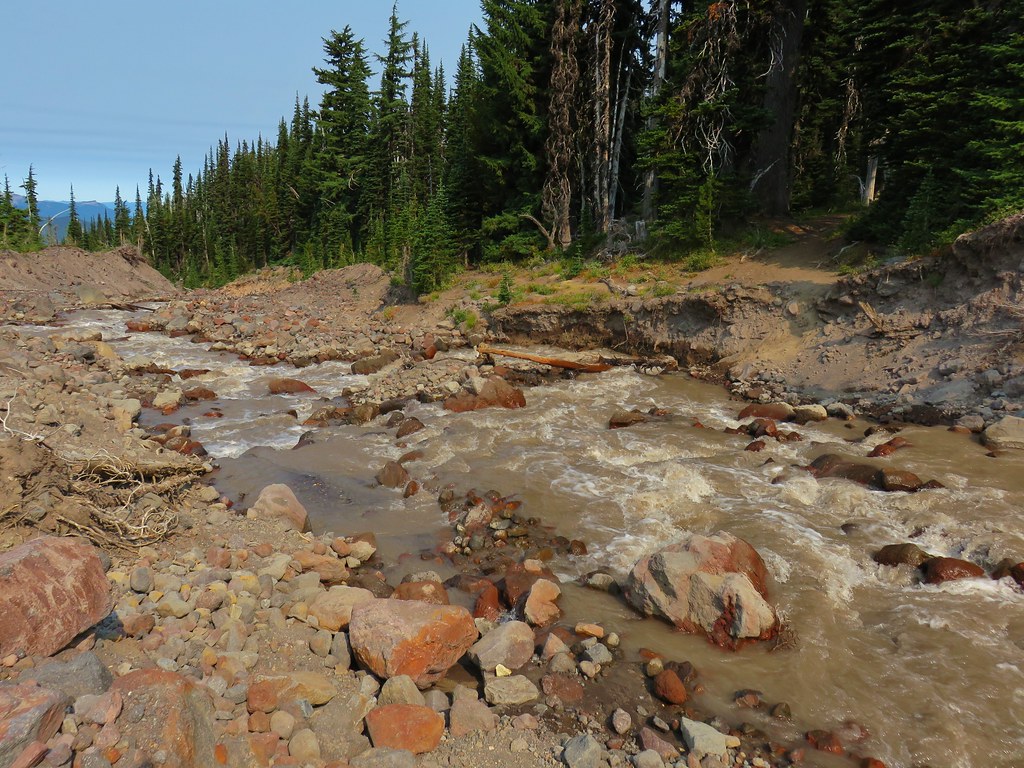
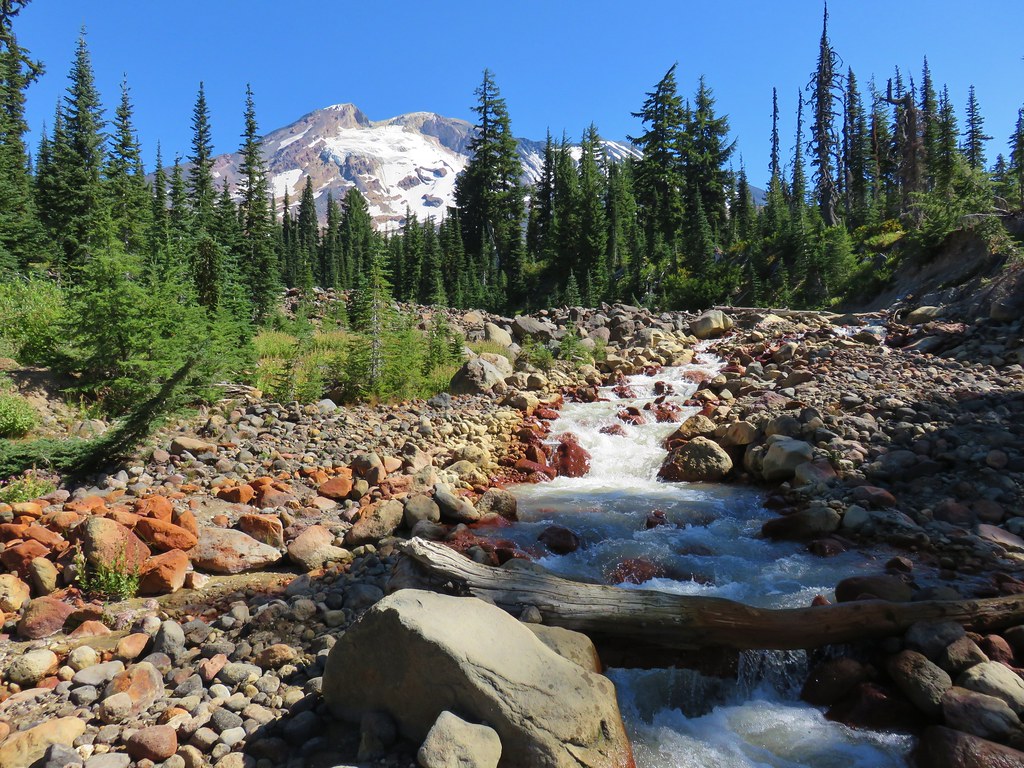
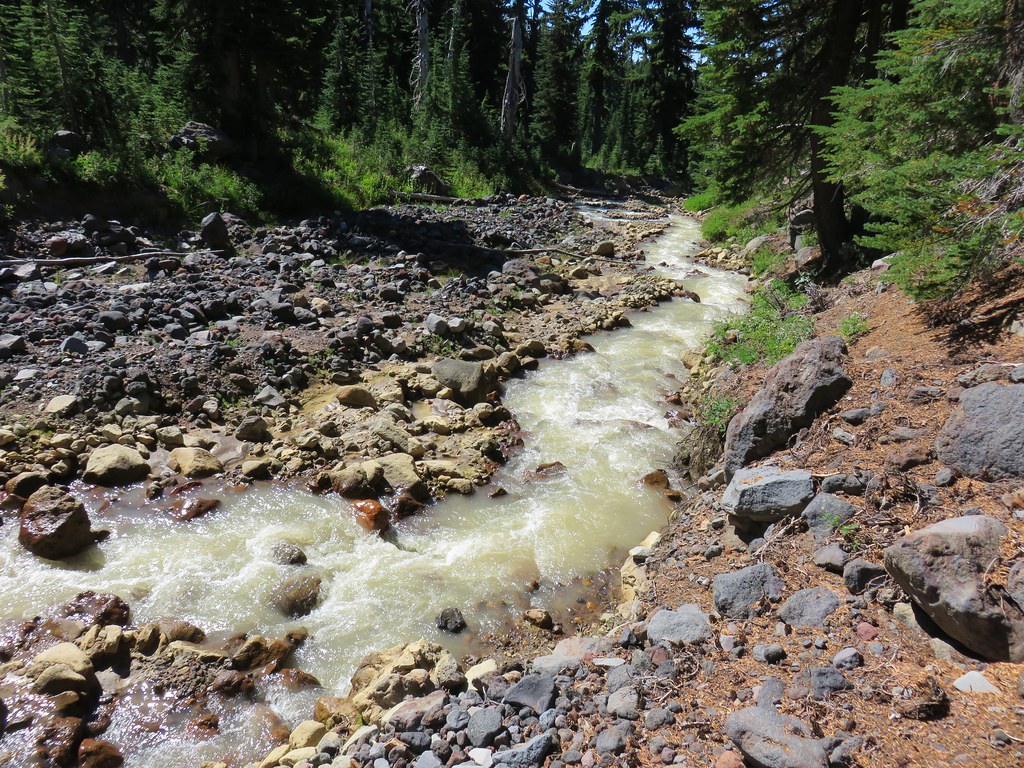
Mutton Creek was cloudy with silt but not the chocolate color of Cascade Creek. It looked more like someone had poured some milk into the creek. The trail followed the cascading creek for a bit before crossing it.

IMG_7844

IMG_7848

IMG_7850

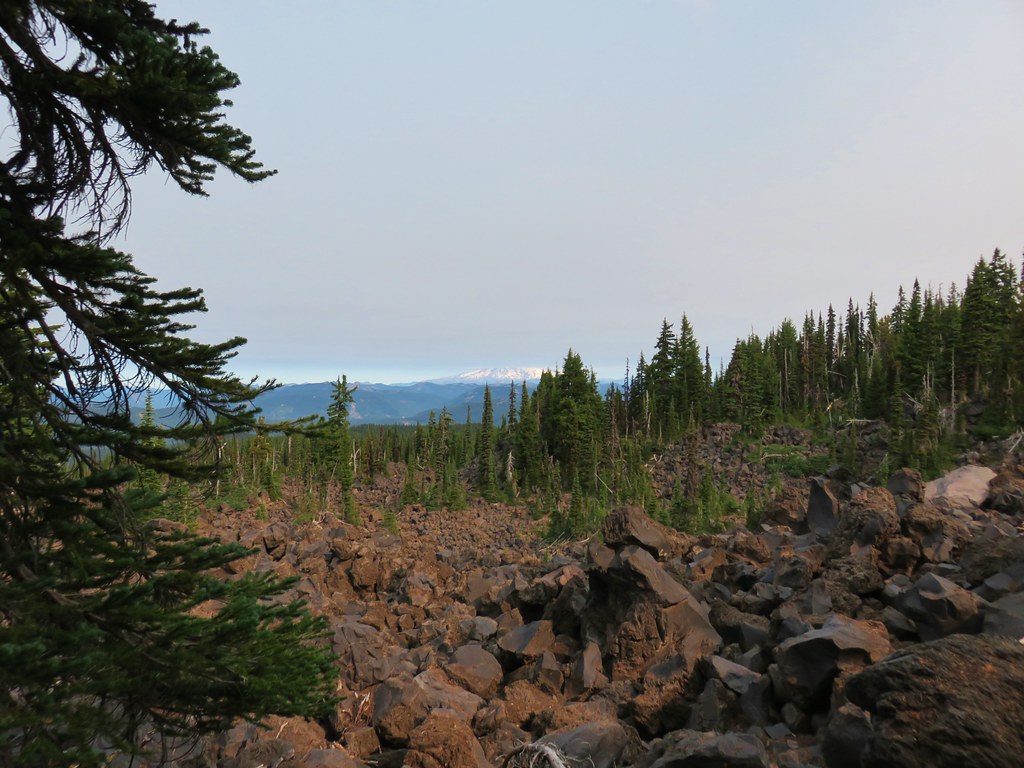
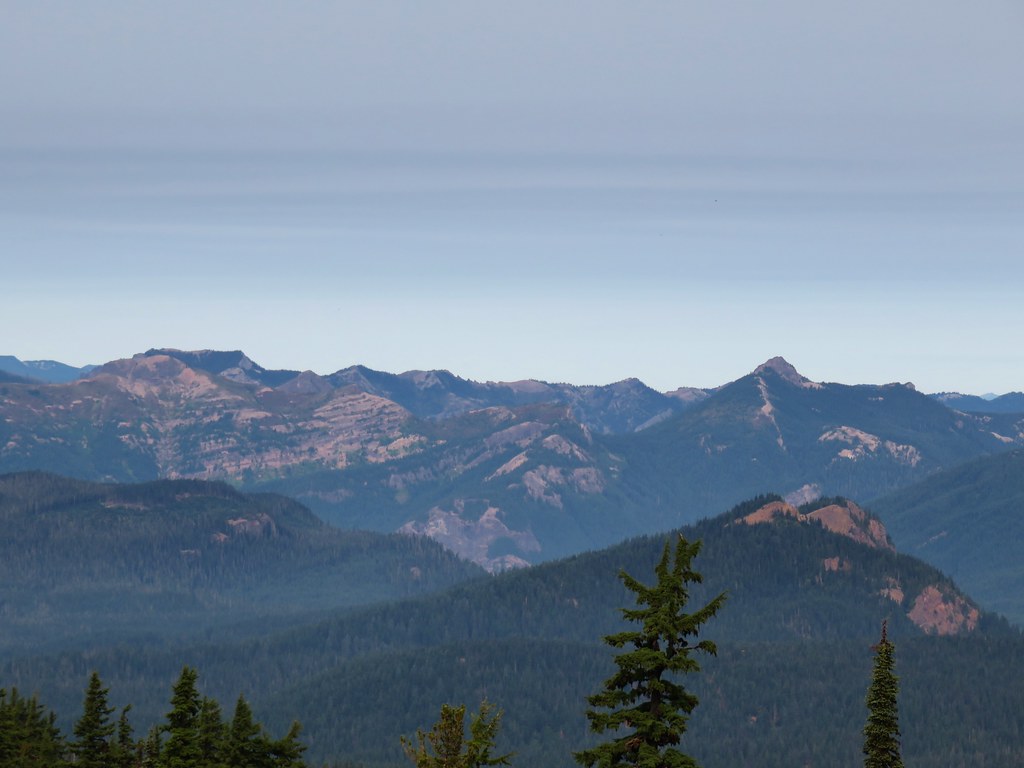
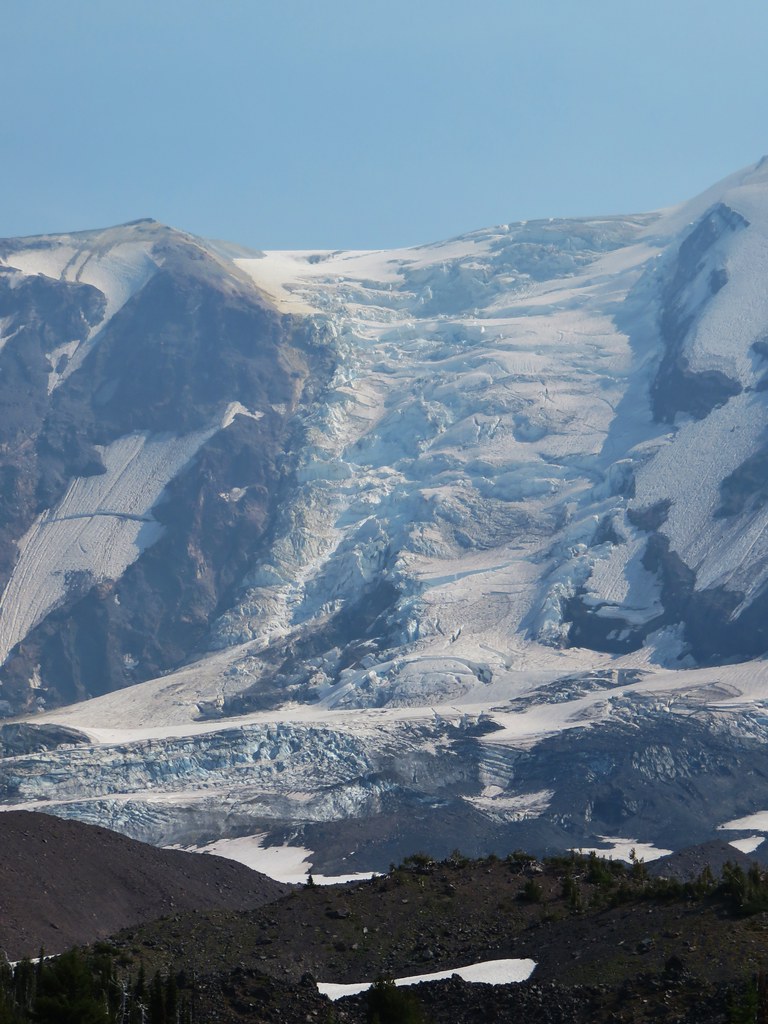
The PCT then passed across another section of lava where we stopped to admire the craggy peaks lining the horizon.
IMG_7851

IMG_7856

IMG_7860

IMG_7859

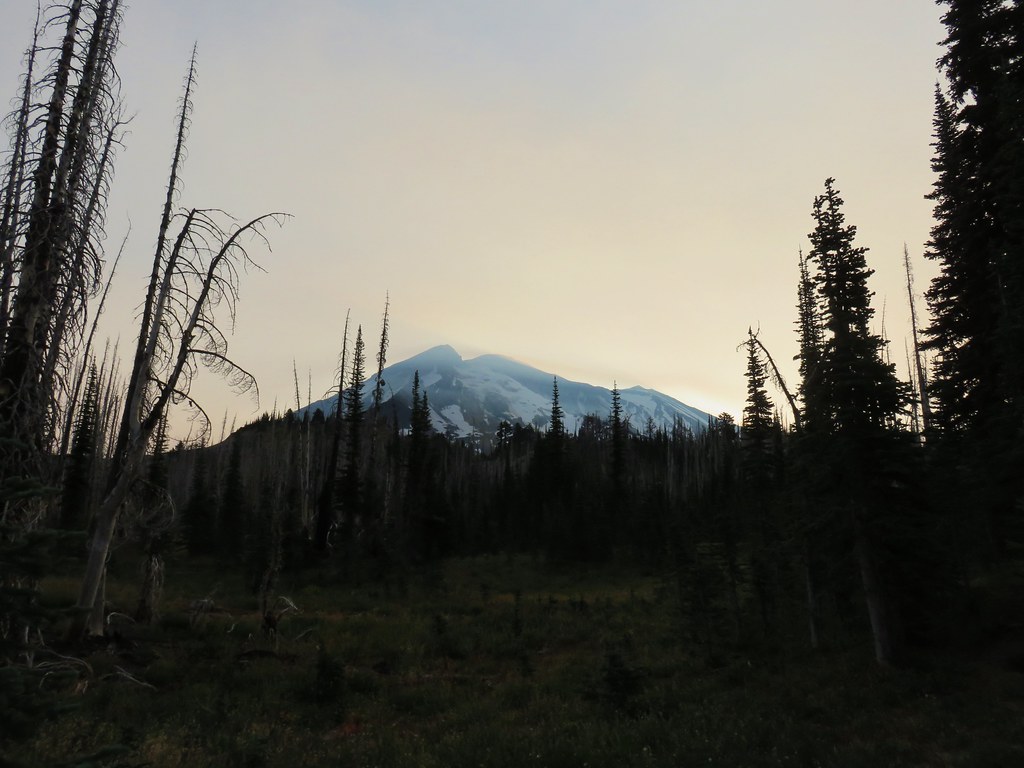
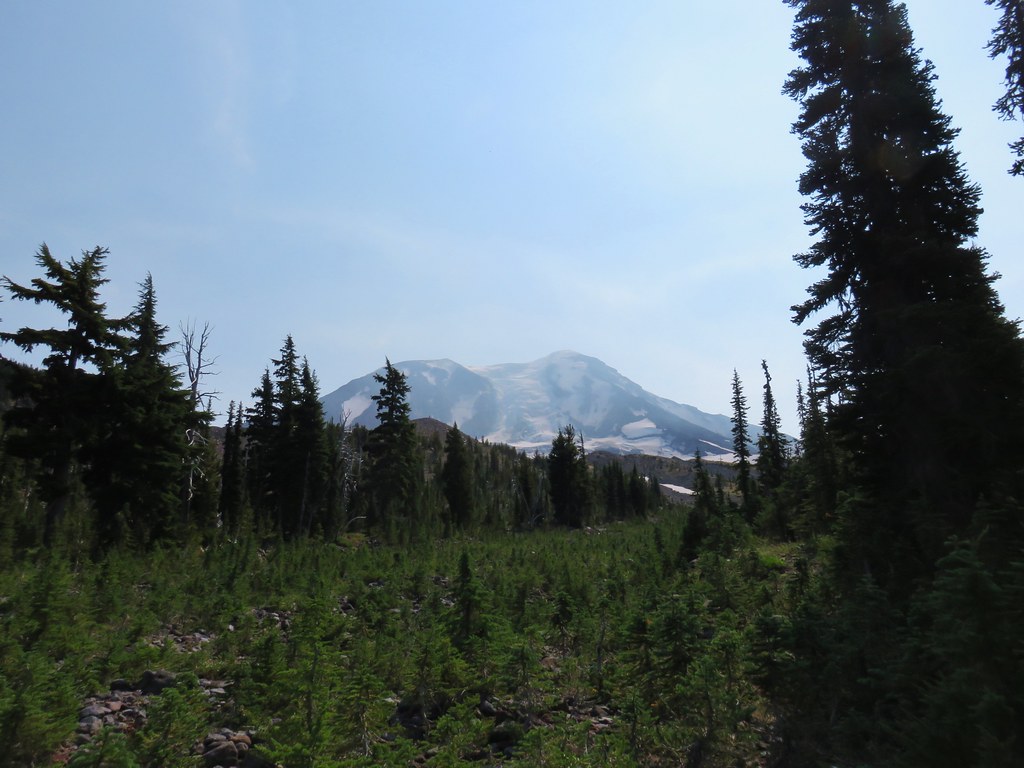
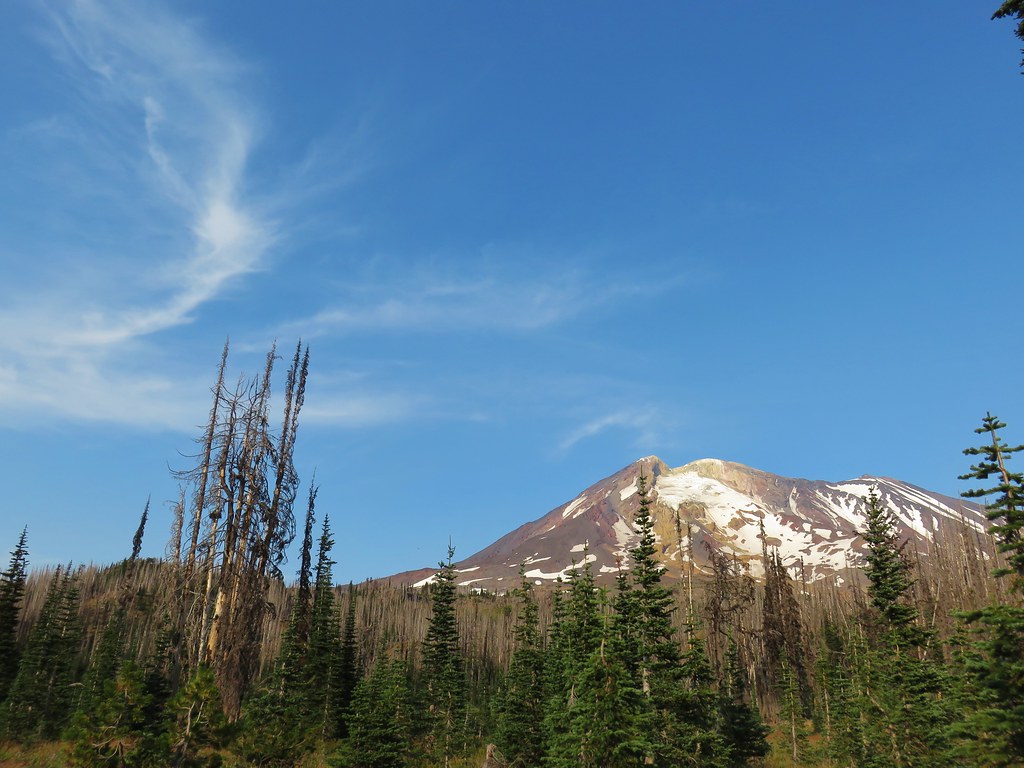
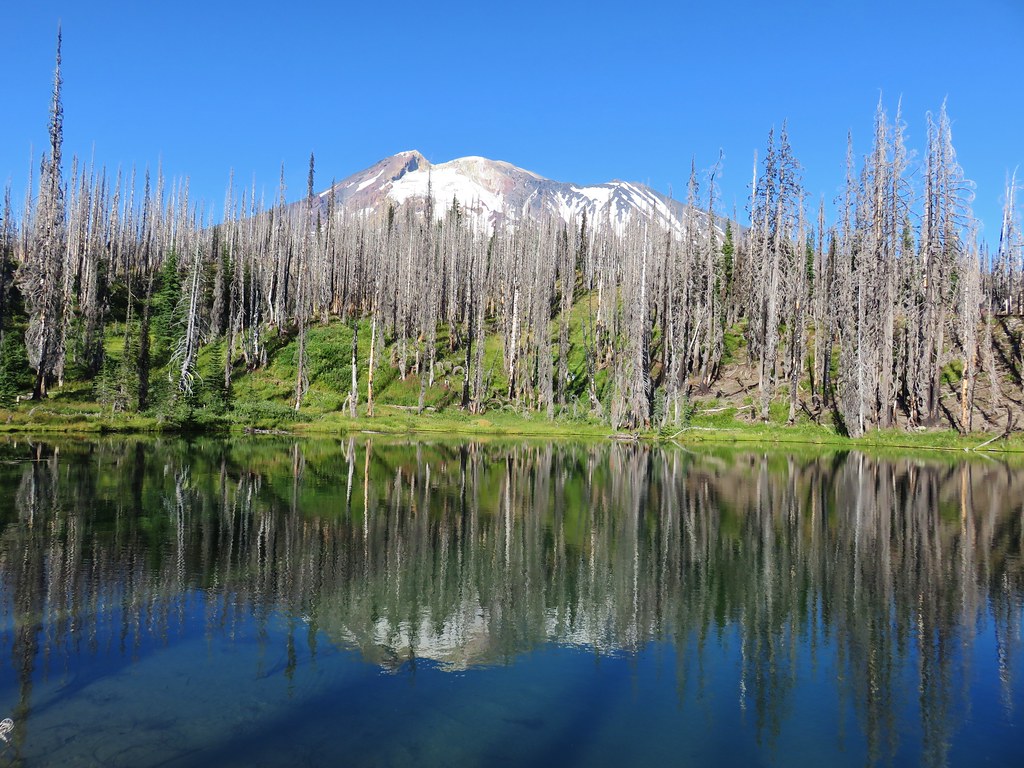
There was also a good view of Mt. Adams although the combination of the haze and angle of the Sun affected it.

IMG_7865

We passed through another meadow before reaching the Lewis River.

IMG_7872

IMG_7876

IMG_7944

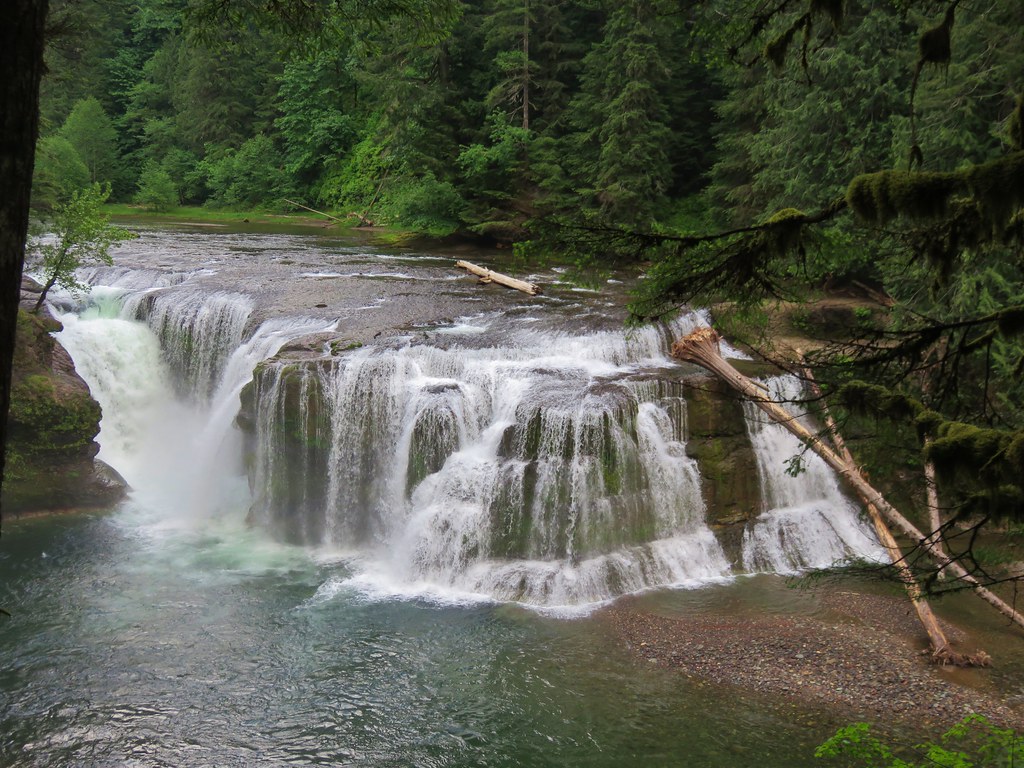
It was hard to believe this was the same river that we’d hiked along when we visited Lower Lewis River Falls in May of 2016.

Lower Lewis River Falls

About a quarter mile from the Lewis River we passed the Divide Camp Trail.

IMG_7878

Just beyond the trail junction we passed over a section of the mountain where a washout or avalanche had wiped out a swath of forest at some point where small trees were now regrowing.

IMG_7939

Just beyond that was an even larger barren rocky area where we came to Adams Creek.

IMG_7882

IMG_7890

This proved to be the trickiest crossing of the entire weekend. We chose a spot where it looked like we could rock hop to a small island where a log might get us to the other side relatively dry.

IMG_7891

It worked reasonably well and we sallied forth towards the Killen Creek Trail. IMG_7898

About a mile from Adams Creek we passed a shrinking pond.

IMG_7912

Another quarter mile brought us to the High Camp Trail which headed toward the mountain.

IMG_7913

Shortly beyond that junction we arrived at the Killen Creek Trail.

IMG_7915

Although we had toyed with the idea of continuing all the way to Killen Creek it was another .4 miles away and downhill. We had done 22.6 miles the day before and this day was already going to be over 17 miles so we decided to call it good. We figure we can go back someday and start on the Killen Creek Trail and go north on the PCT from the junction.
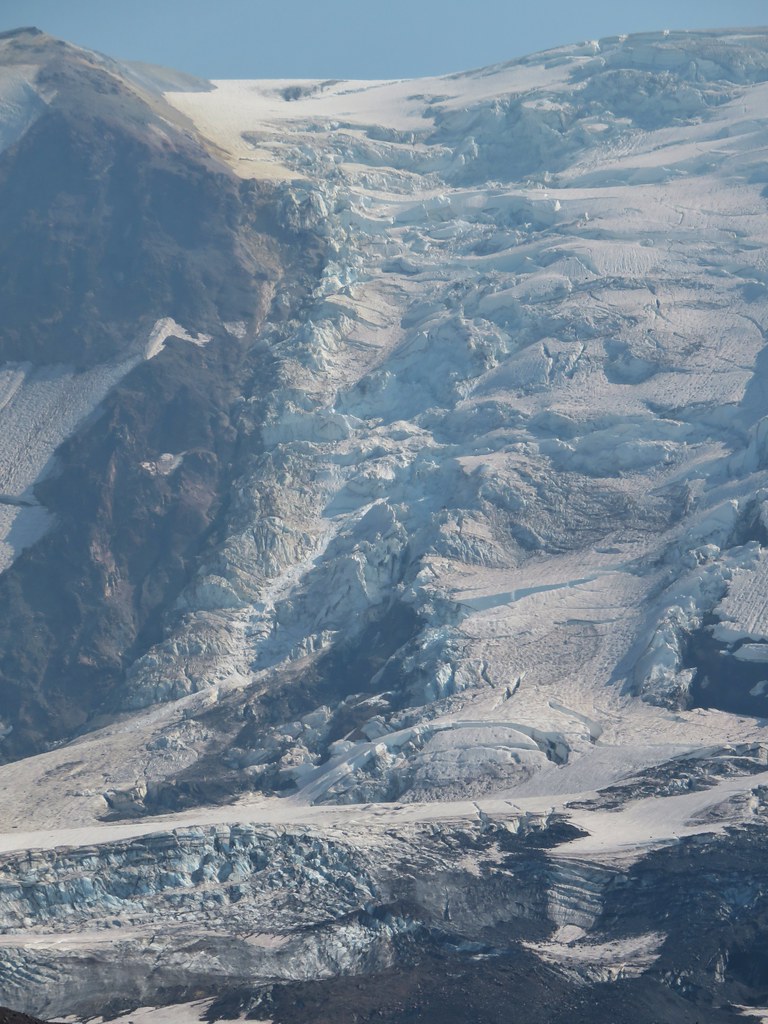
On the way back the haze began to clear and the passed far enough overhead to greatly improve the views of Mt. Adams.

IMG_7954

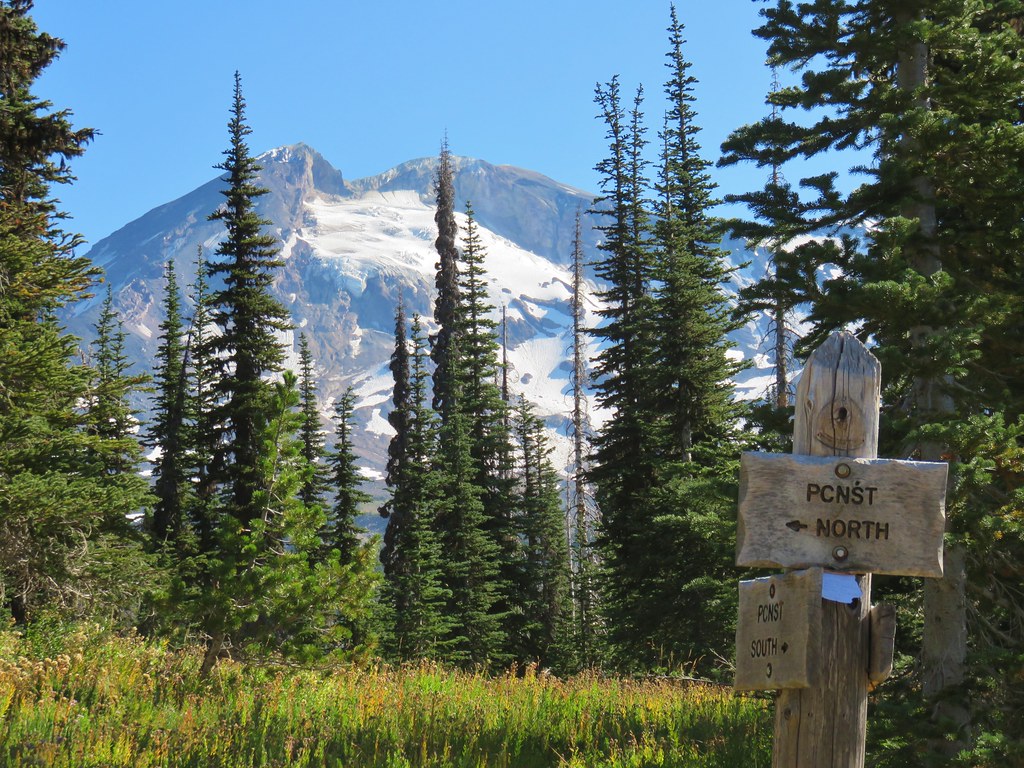
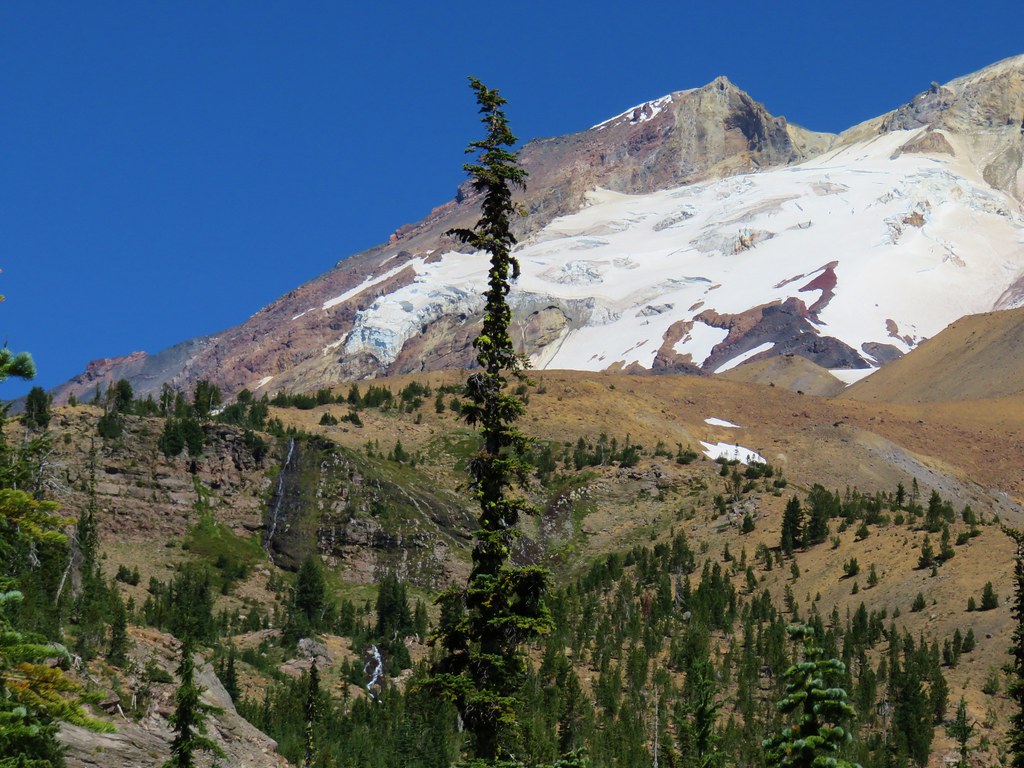
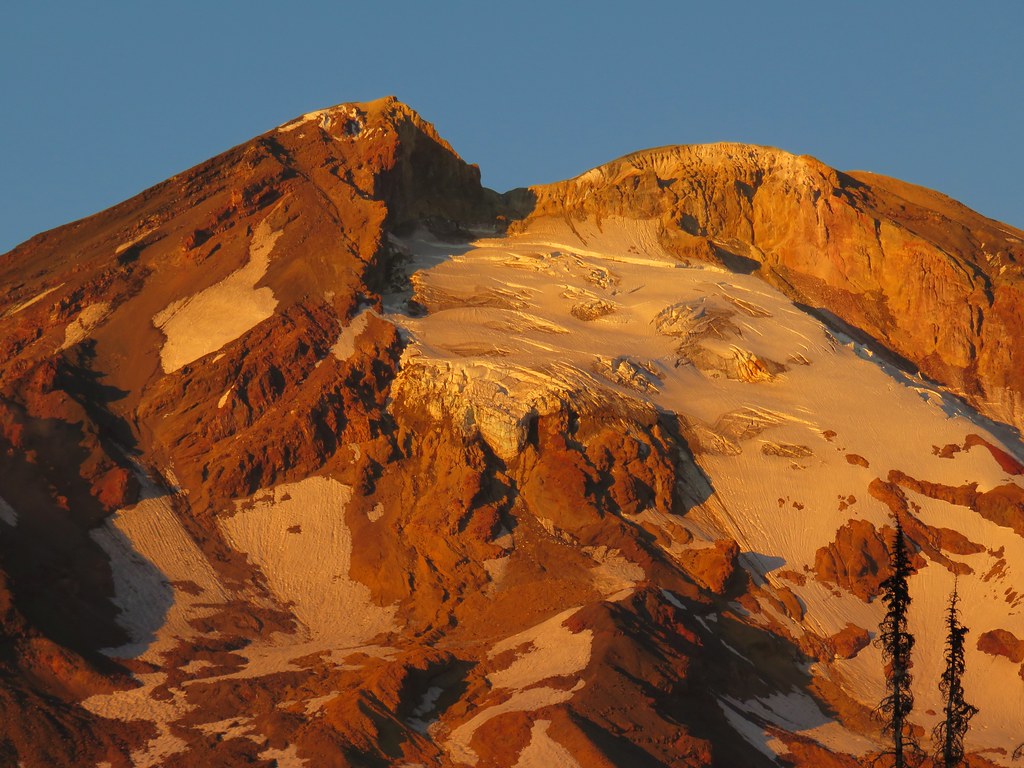
The massive Adams Glacier really caught our attention.

IMG_7955

IMG_7956

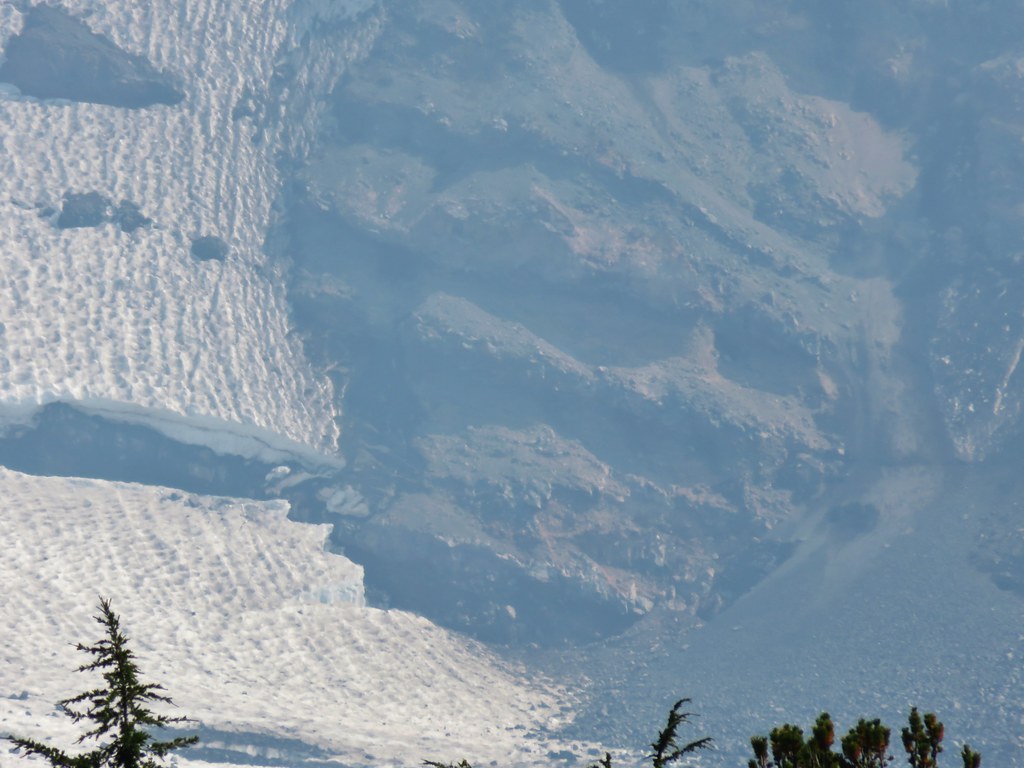
While we were admiring the mountain, Heather spotted a face in the rocks.

IMG_7957

IMG_7959

The view of Mt. Adams kept getting clearer and even the view of Mt. Rainier improved somewhat.

IMG_7976

IMG_7985

One view that didn’t improve was to the SW where yet another smoke plume had arisen. This one we would learn the next day was the East Crater Fire in the Indian Heaven Wilderness.

IMG_7981

We stopped again at Riley Creek where we joined a number of PCT thru-hikers cooling off and collecting water. We refilled our packs as well as our 96oz canteen (which was not the most fun thing to haul the 4 miles back to camp).
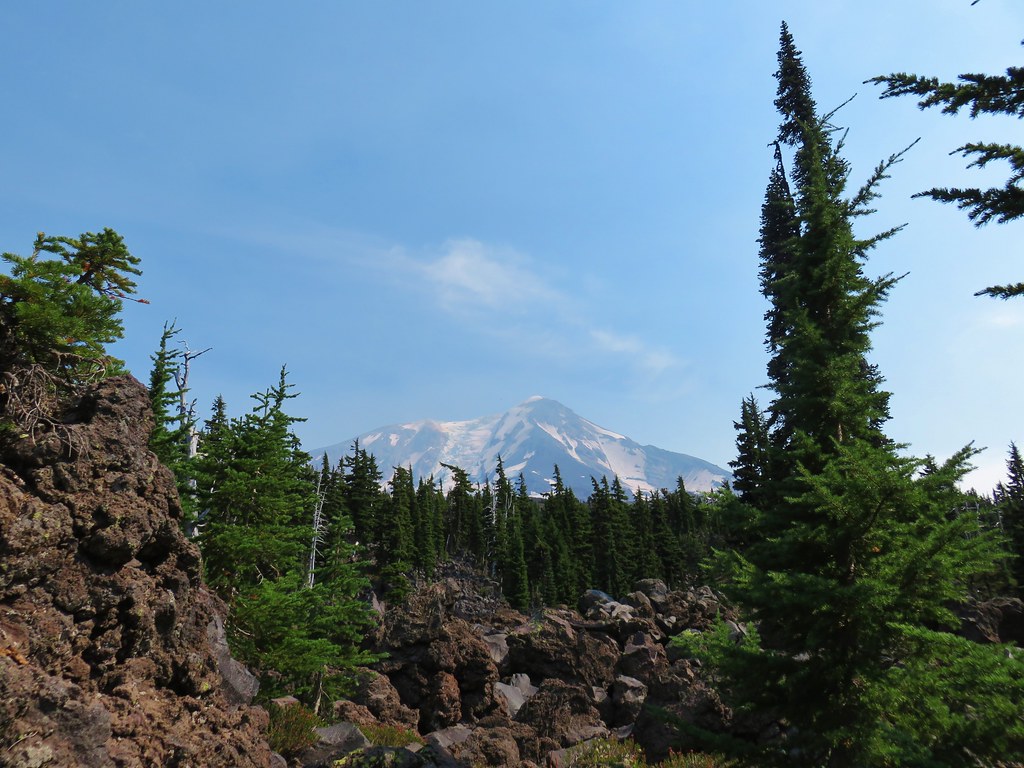
It was just after 4:30 when we arrived back at Horseshoe Meadow. Mt. Adams appeared to be free of any smoke but just over it’s shoulder to the east the sky looked really smokey.

IMG_7991

We ate dinner then sat by our tent and watched as a few wispy clouds passed overhead.

IMG_8002

IMG_8005

With all the fires around we couldn’t have asked for a better couple of days on the mountain. Those wonderful conditions didn’t make it into Labor Day though.

We woke up at 5:30am and despite it still being dark, we knew that some smoke had moved in based on the smell. When I got out of the tent and turned on my headlamp it illuminated the ash that was falling like a light snow. As the morning light made seeing a little easier we found that we couldn’t even see Mt. Adams.

IMG_8007

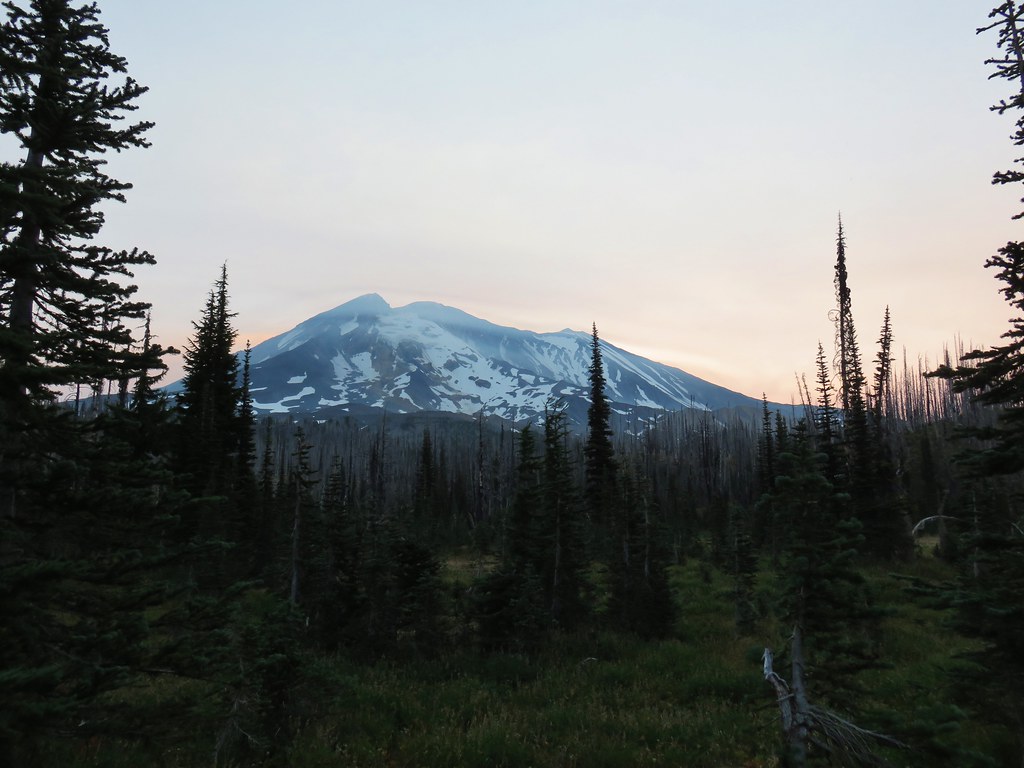
As the Sun rose higher we could at least make out the mountains outline through the smoke.

IMG_8015

We ate breakfast and packed up then headed south on the PCT.

IMG_8021

Overall it was a cool morning but occasional blasts of warmer air hit us. We had started hiking a little before 7am so that helped. We passed a number of thru-hikers on their way north, one of whom told us that the Indian Heaven Wilderness was closed due to a new fire (East Crater).

A red sun came up over Mt. Adams as we made our way back.

IMG_8030

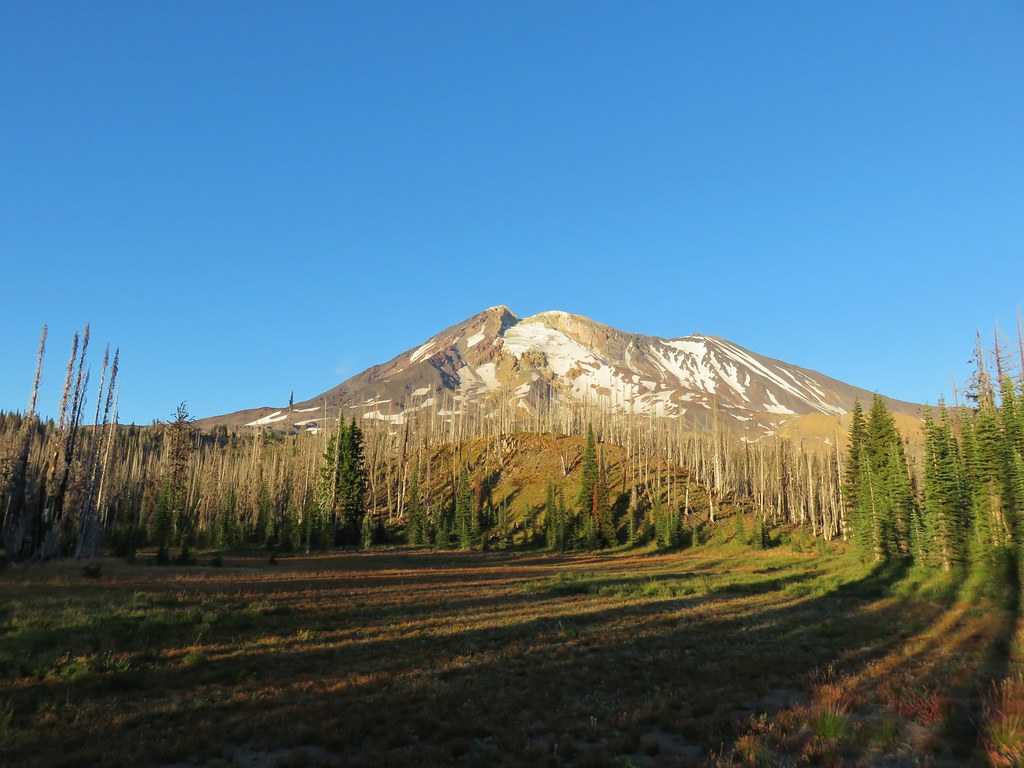
IMG_8033

The smoke finally lessened a bit when we had gotten back down into unburnt forest.

IMG_8037

Near the trailhead we spoke to another thru-hiker who had been evacuated from Cascade Locks due to the Eagle Creek Fire. It was from her that we learned a teenager illegally using fireworks had started the inferno and that at least 140 hikers had been stranded overnight, trapped between the Eagle Creek and Indian Creek Fires.

Given the information we decided to drive back to Salem around Mt. Hood via Highways 35 and 26 thinking that I84 might be closed by the time we were trying to get through. It’s been a tough year out west regarding wildfires. Even though they are a natural part of the forest cycle (unless some moron does something stupid) it’s hard when so many of our favorite places seem to be burning at the same time. We know they will not look like they once did anytime in our lifetimes, but they will recover and in the meantime we will watch as God’s creation heals. Happy Trails!

Flickr: Mt. Adams Wilderness Days 2 & 3

Categories
Hiking Mt. Adams Trip report Washington Washington Cascades

Labor Day Weekend – Mt. Adams Wilderness Day 1

We are in the midst of a horrible wildfire season which only seems to be getting worse. Our original Labor Day plans literately went up in smoke due to the Separation and Nash Fires burning in the Three Sisters Wilderness among others. Our next plan was to spend the weekend in the Olallie Lake Scenic Area but the air quality in that area due to the aforementioned fires as well as the Whitewater, Scorpion, and Devil’s Fires (and so many more) made attempting to camp in that area unappealing so we kept looking.

After consulting several fire maps we determined that either the Indian Heaven Wilderness or the Mt. Adams Wilderness were our best chances for relatively smoke free hiking. The closest fires to those areas were the Indian Creek Fire burning along Eagle Creek in the Mark O. Hatfield Wilderness to the south and the Norse Peak Fire in the Norse Peak Wilderness to the north.

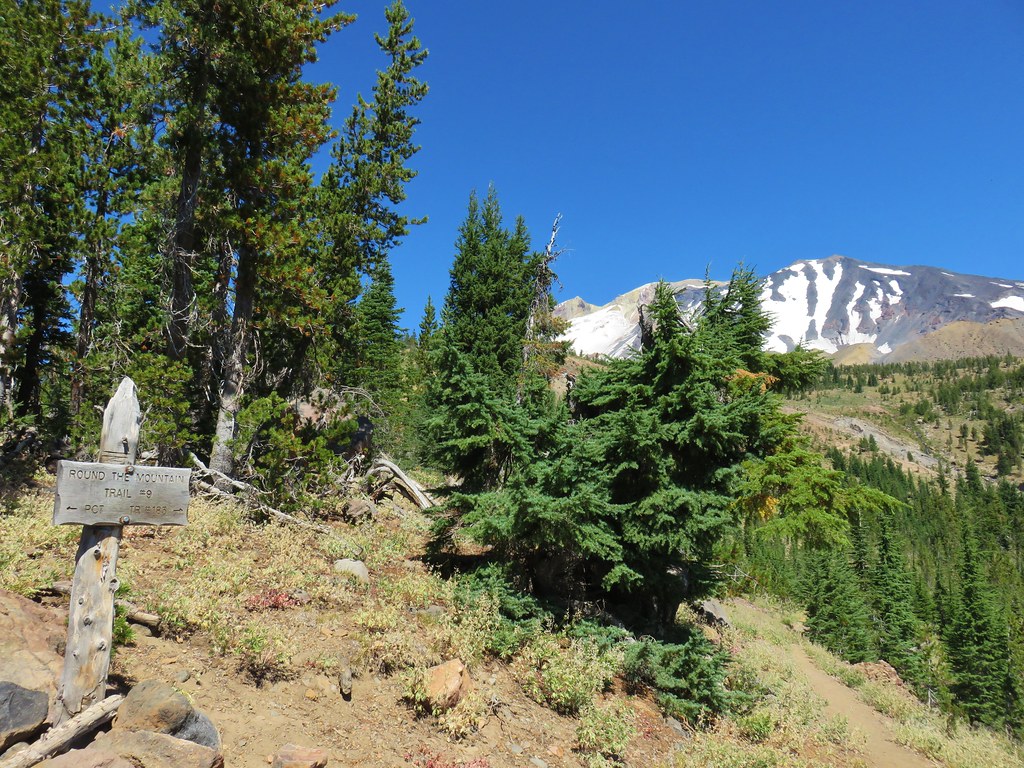
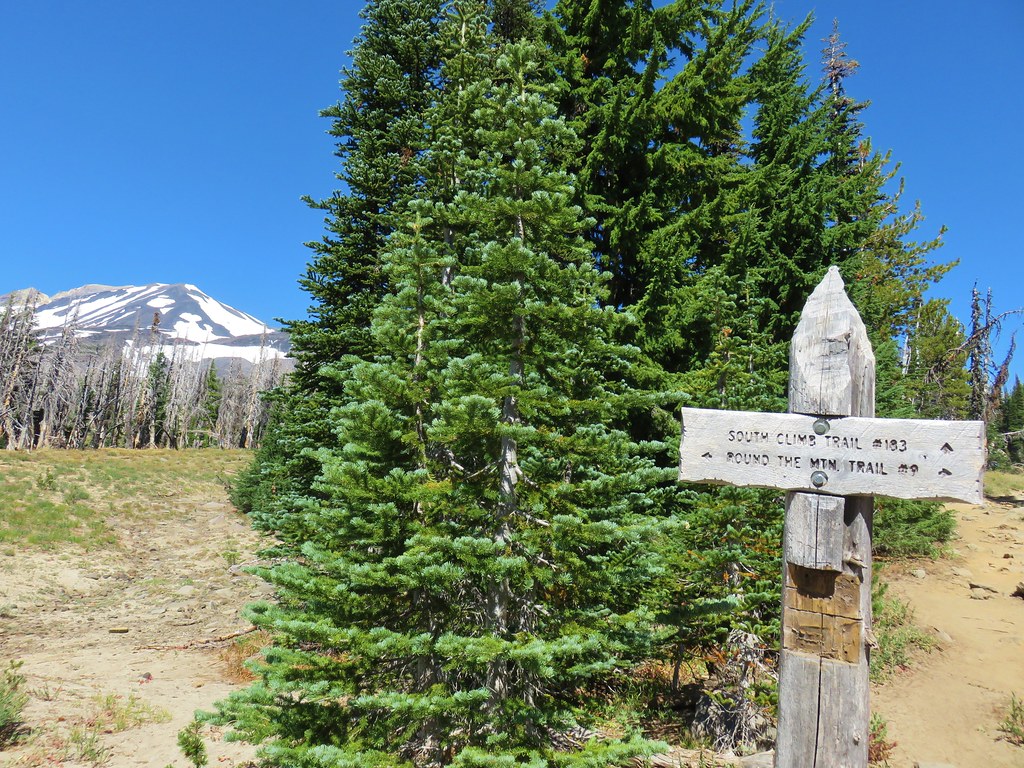
We settled on the Mt. Adams Wilderness. Our plan was to hike north on the Pacific Crest Trail from the Williams Mine Trailhead to Horseshoe Meadow where we hoped to set up camp. From there we would take the Round-the-Mountain Trail SE to the South Climb Trail and also visit Lookingglass Lake at some point along the way.

We set off on the PCT a little before 8 o’clock on Saturday morning.
IMG_7458

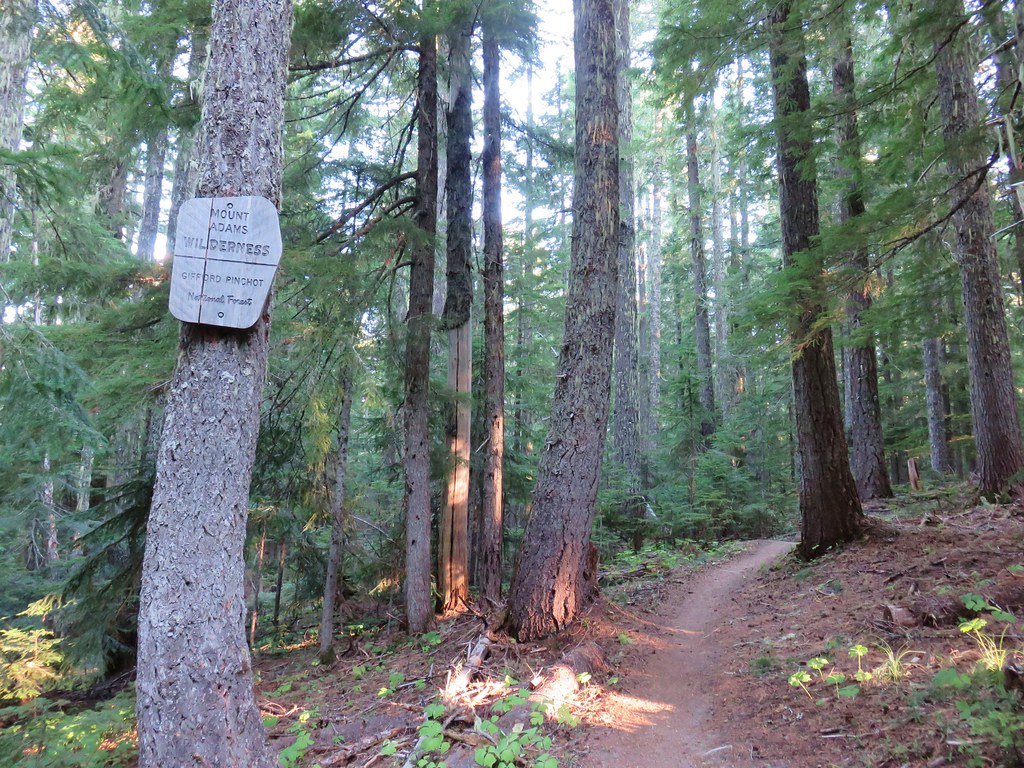
After crossing Swampy Creek on a footbridge the PCT entered the Mt. Adams Wilderness.
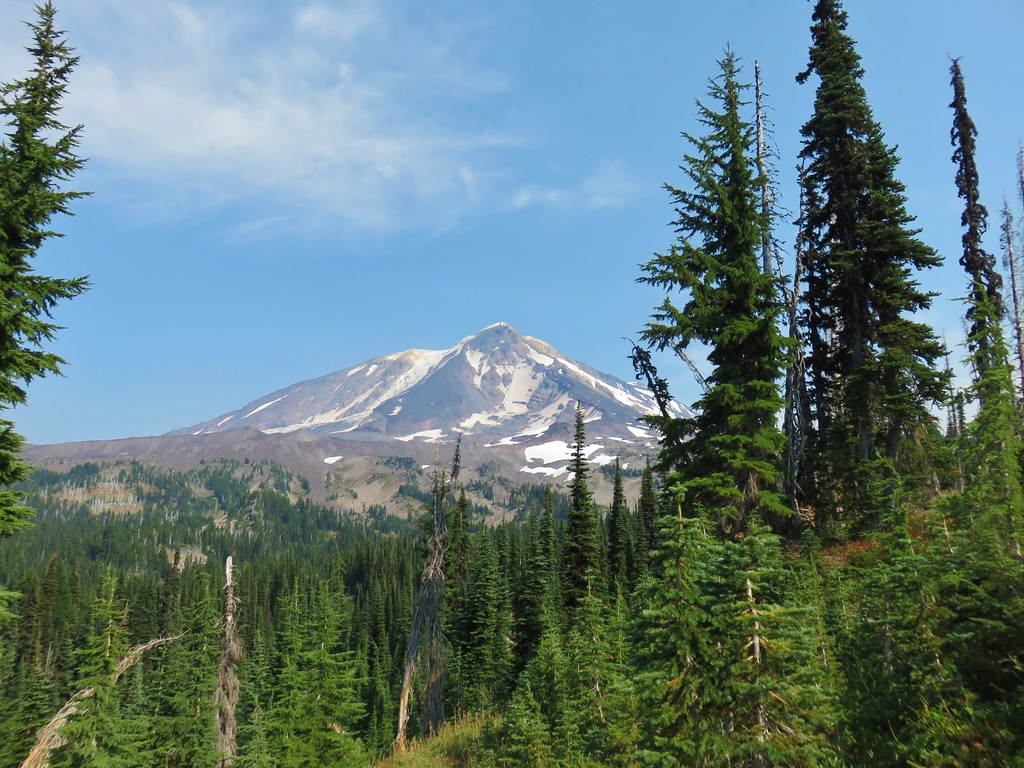
IMG_7459

IMG_7461

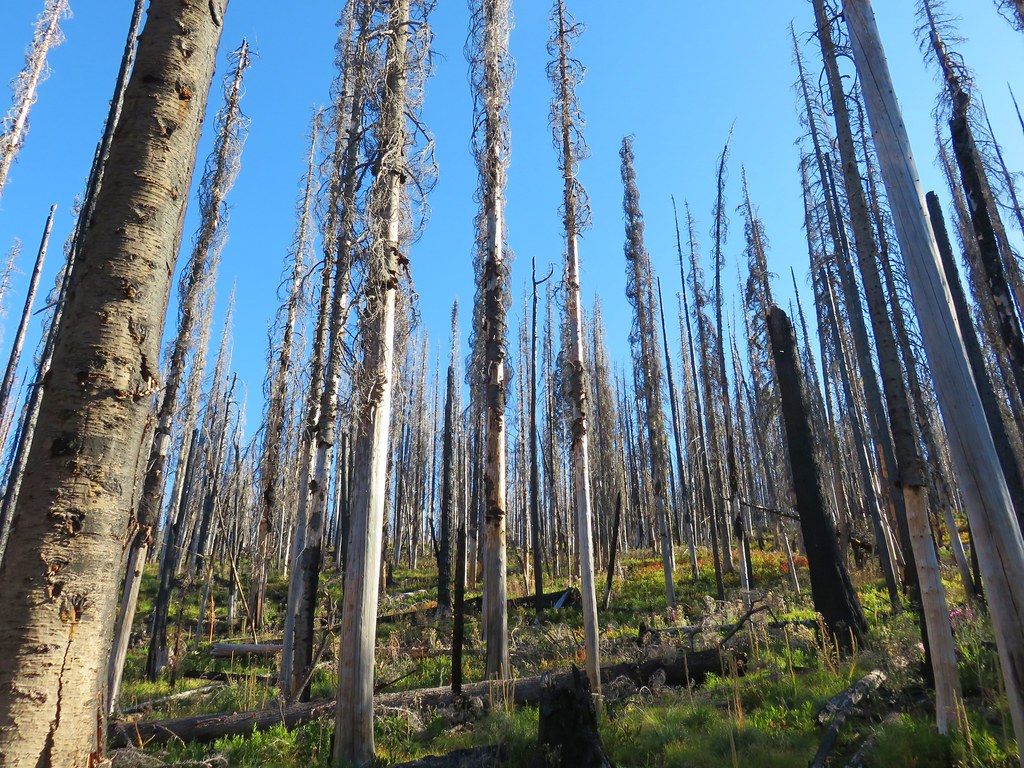
It was a warm morning but more importantly it was smoke free. We were greeted by blue sky as the trail entered the fire scar from the 2012 Cascade Creek Fire.

IMG_7473

A few wildflowers remained and lots of ripe huckleberries were available for picking as we went.

IMG_7472

IMG_7479

IMG_7481

IMG_7483

IMG_7488

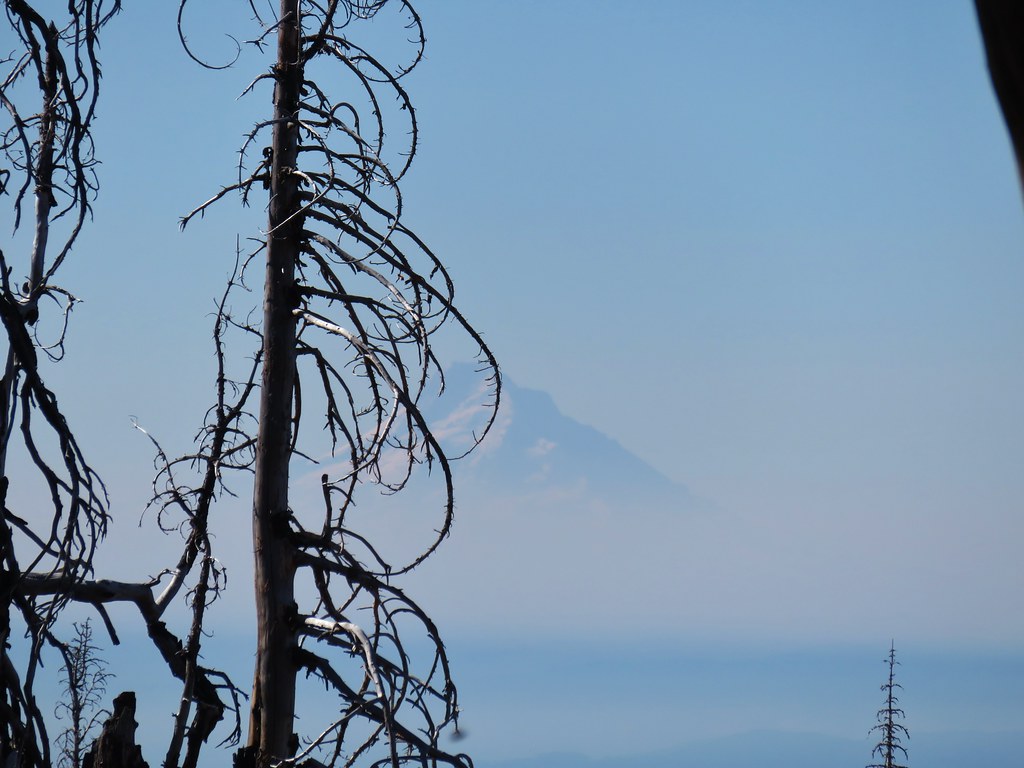
It was just about six miles from the trailhead to Horseshoe Meadow most of which was in the burnt area. Along the way we passed a some nice meadows, a few green trees and had views of Mt. Adams, Mt. St. Helens, and a smokey Mt. Hood.

IMG_7494

IMG_7487

IMG_7495

IMG_7506

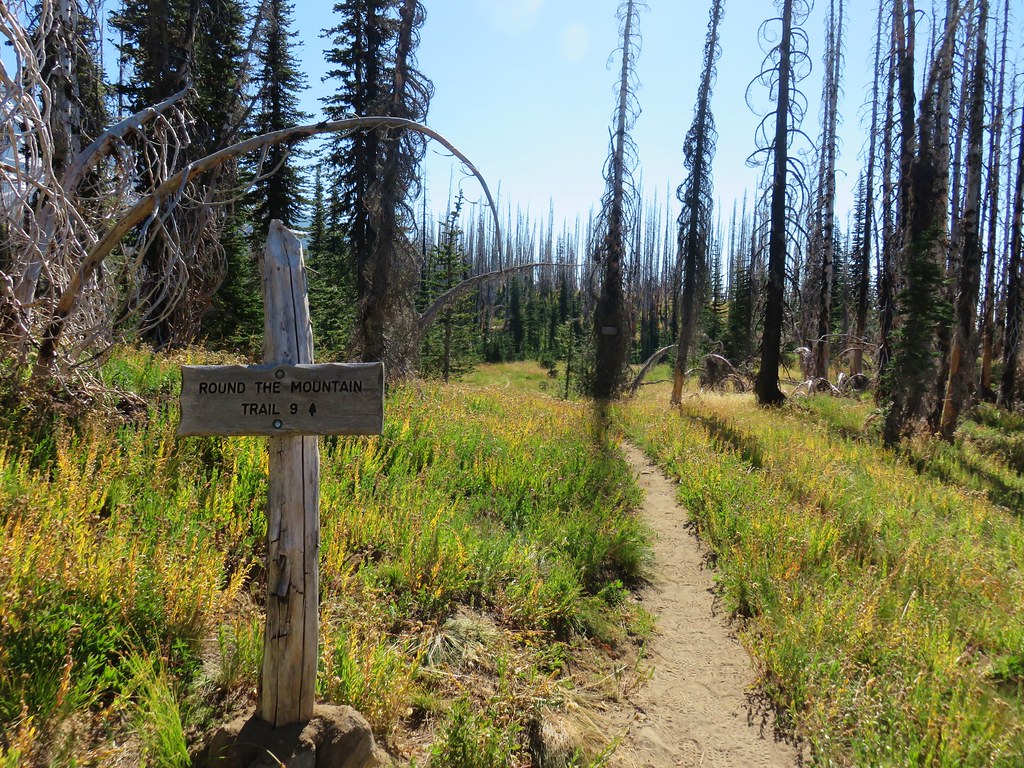
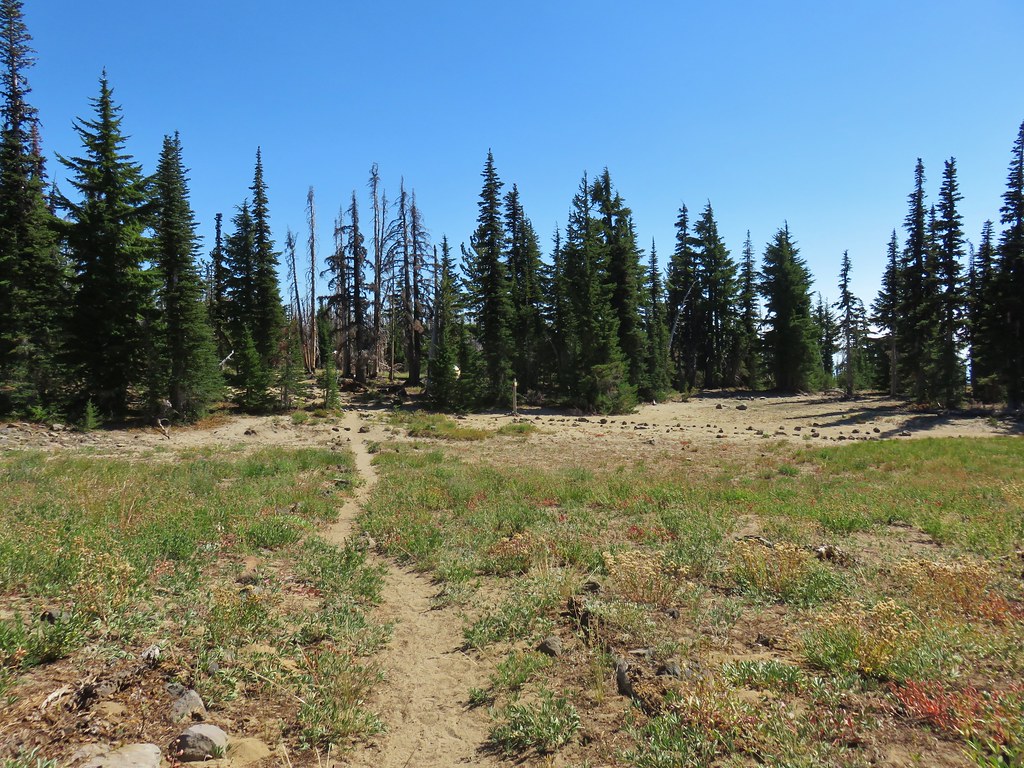
At the junction with the Round-the-Mountain Trail we turned and promptly arrived at Horseshoe Meadow.

IMG_7511

IMG_7512

IMG_7516

Cascade Creek flows through the meadow but was a little too silty filter so we debated on weather to set up camp there or continue on, possibly as far as Lookingglass Lake. After a little more consideration though we decided the location and view from Horseshoe Meadow was too good to pass up so we selected a tent site in some trees.

IMG_7518

IMG_7527

We had each started the day with 3 liters of water in our Osprey reservoirs and had brought full 18oz. Hydro Flasks. We also had an extra 96oz. Naglene Canteen and another small collapsible container that we decided to take with us on our afternoon excursion and fill them up on the way back to camp.

After getting camp situated we headed toward the South Climb Trail on the Round-the-Mountain Trail.

IMG_7530

We’d made the South Climb Trail our turnaround point because our first and only other visit to the Mt. Adams Wilderness was a 2014 hike to Iceberg Lake via the South Climb and Round-the-Mountain Trails.

The trail continued through the Cascade Creek burn with views south to Mt. Hood which remained mostly hidden by smoke.

IMG_7532

IMG_7535

Before long we began to find some forest that had been spared from the fire.

IMG_7537

About a mile from Horseshoe Meadow we came to a small stream with some little pools just big enough to filter water from.

IMG_7540

Just beyond the stream we passed the Lookingglass Lake Trail.

IMG_7543

We decided to make that side trip on the way back and then we could fill our extra canteens on the way back to camp from the little stream.

There were a number of creeks and streams with flowing water beyond the Lookingglass Lake Trail junction. The first set all eventually flowed into Cascade Creek further down the mountain.

IMG_7544

IMG_7550

IMG_7570

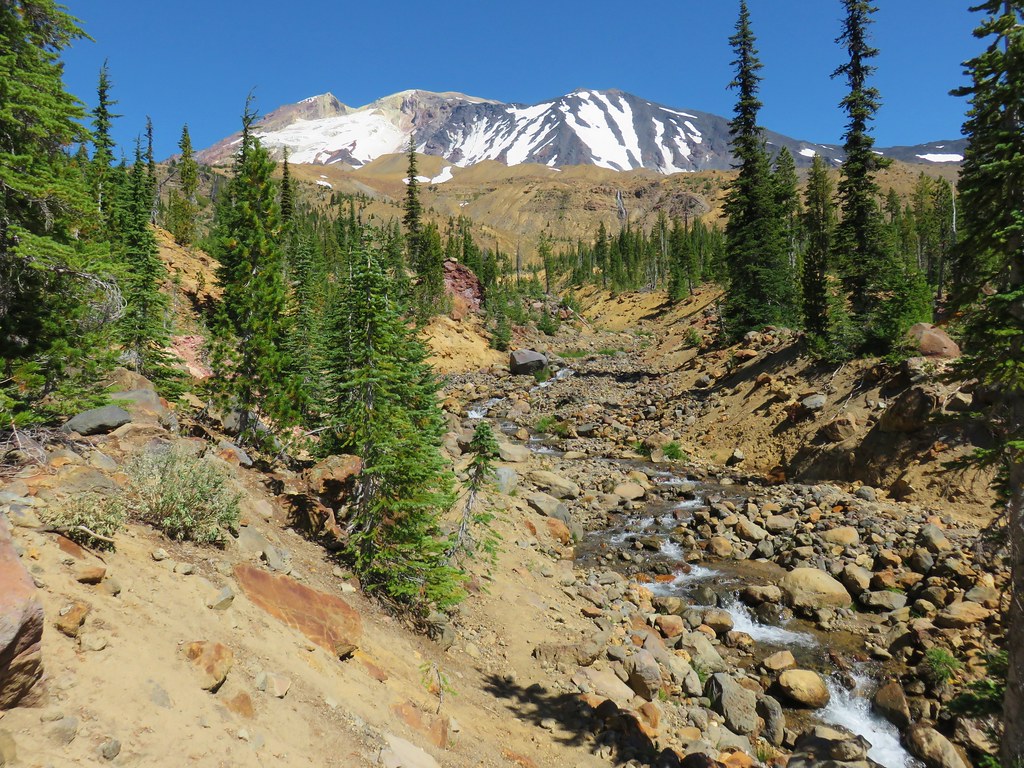
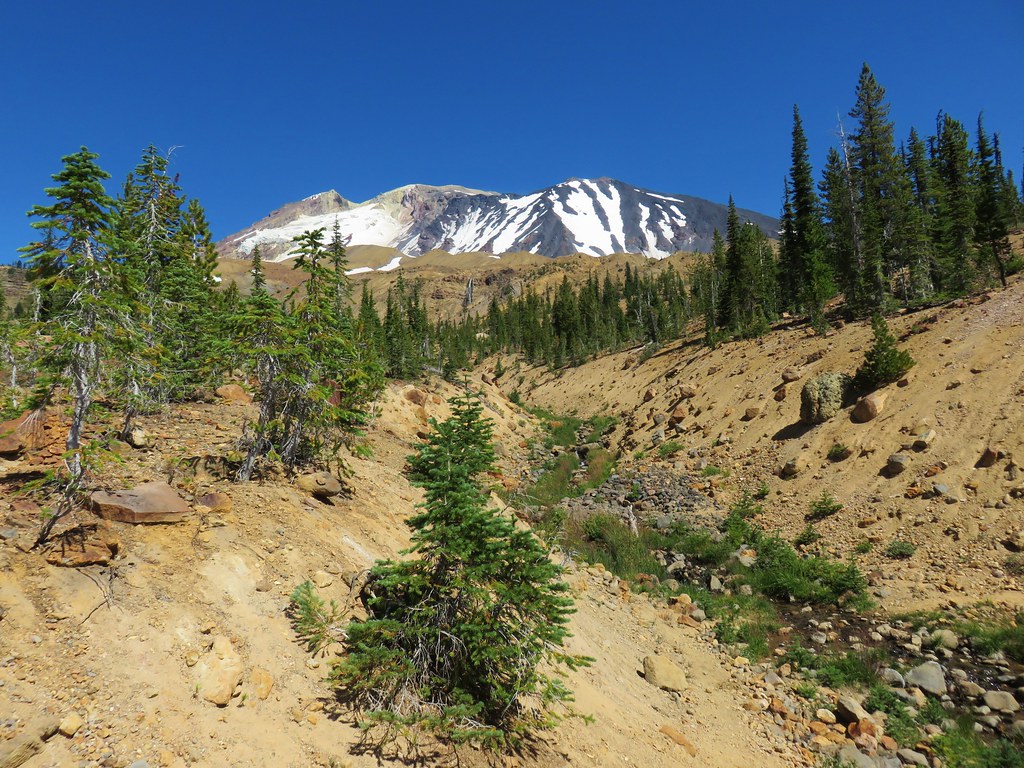
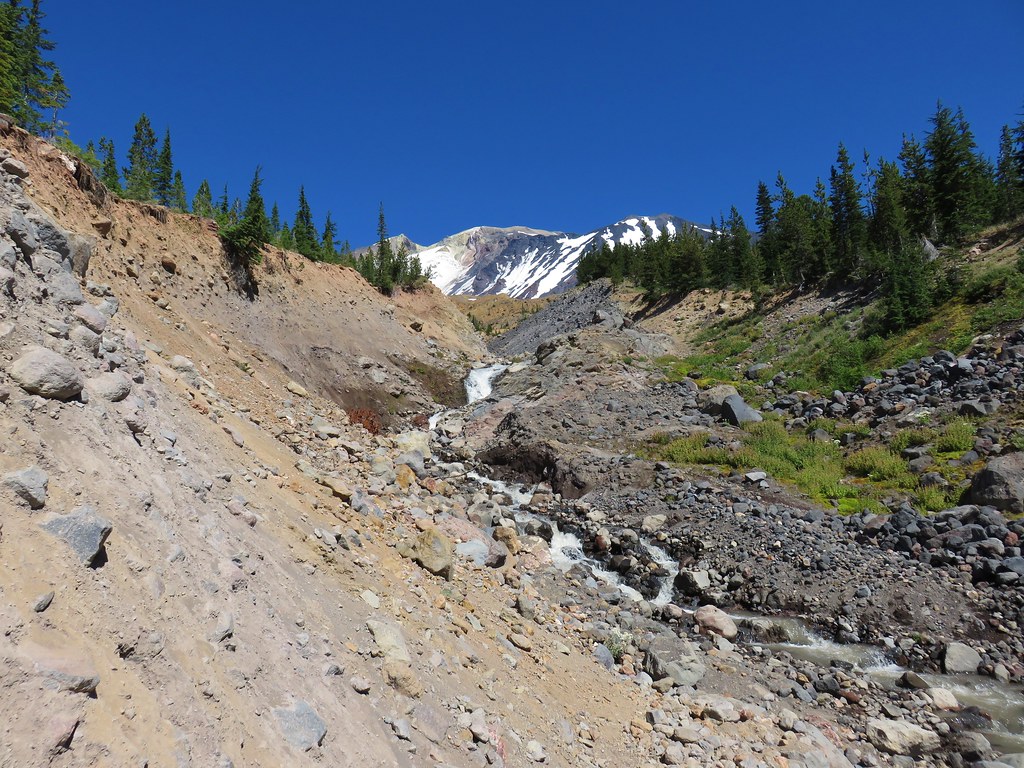
Much of the area we were now passing through contained debris flows from massive avalanches from the Avalanche Glacier. In fact there had been a warning at the trailhead that a crack in the glacier could trigger an avalanche at any time. The Round-the-Mountain Trail was shown as just outside the danger area but it was obvious from our surroundings that the location of the trail had been in the danger zone in the past.

IMG_7582

The next set of creeks were all tributaries of Salt Creek, most of which flowed from large glacial moraines.

IMG_7583

IMG_7587

IMG_7592

IMG_7595

Others came from springs, one of them just below the trail.

IMG_7600

IMG_7602

IMG_7609

Two and a half miles from the Lookingglass Trail we came to a junction with the Shorthorn Trail.

IMG_7618

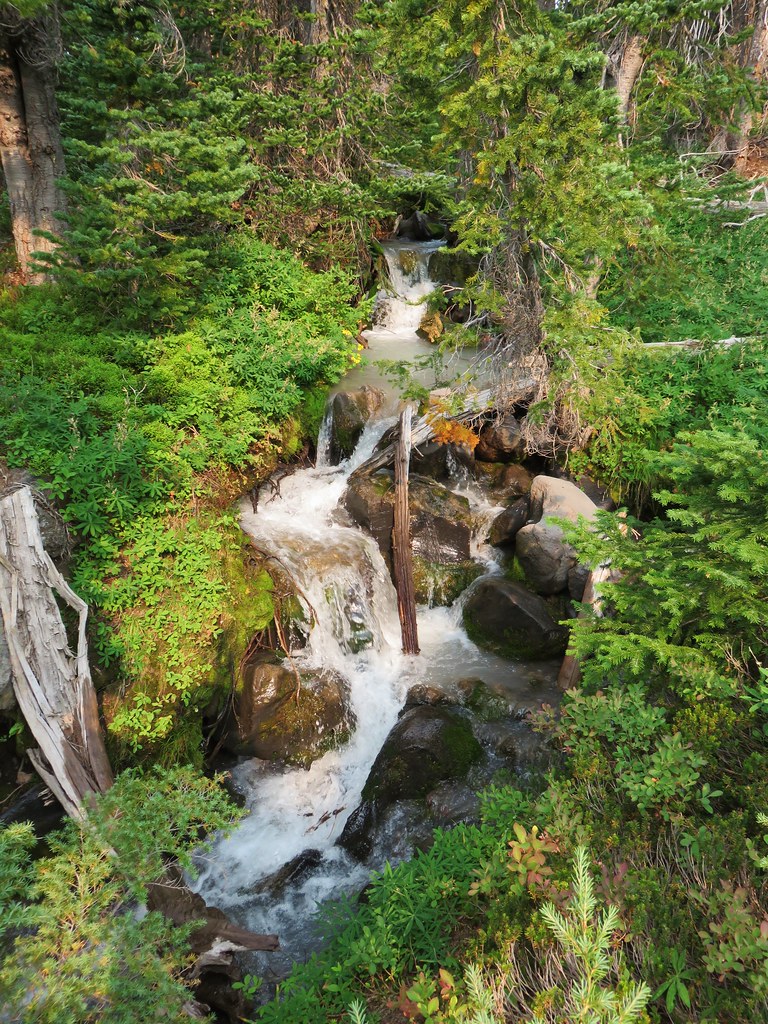
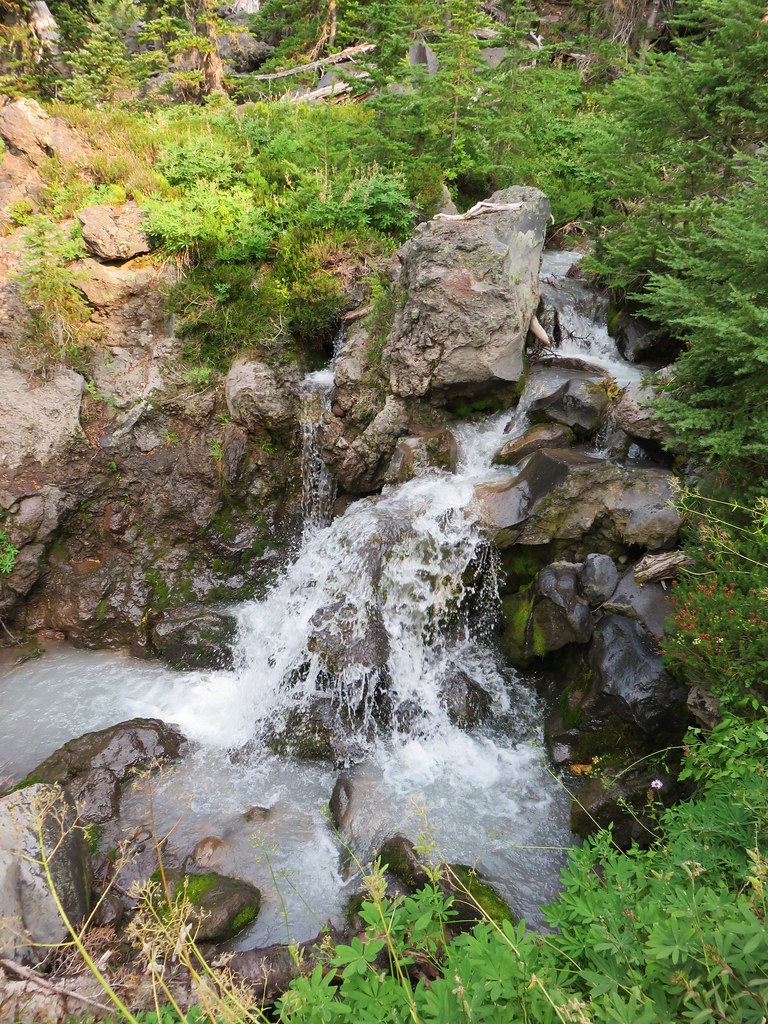
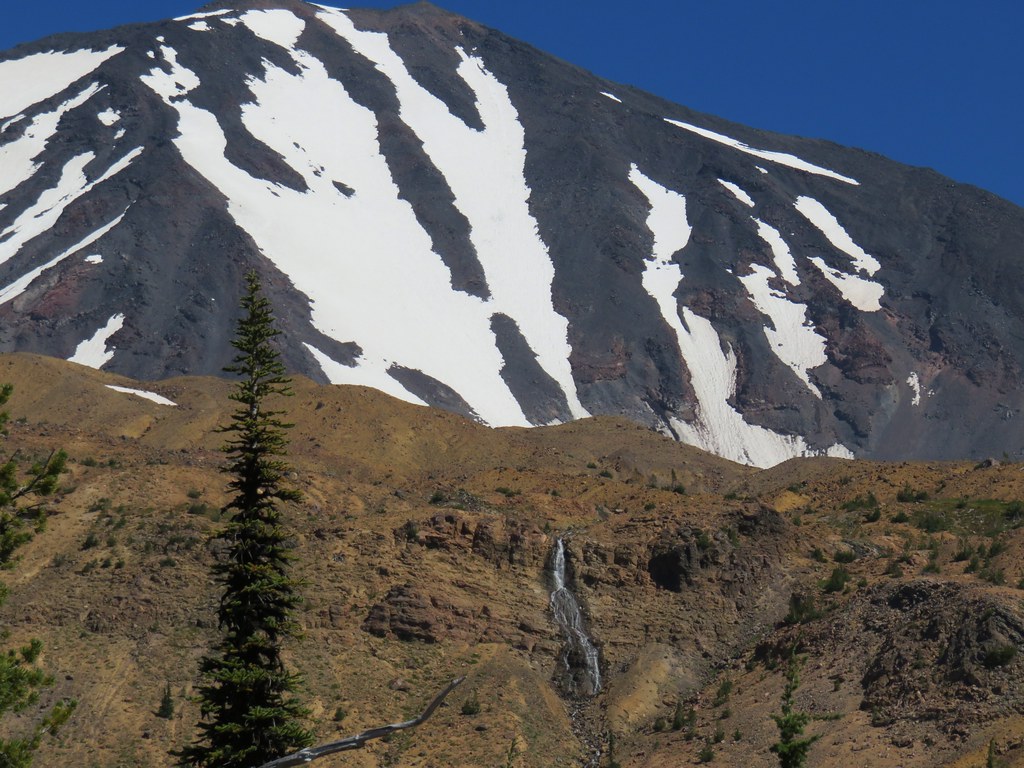
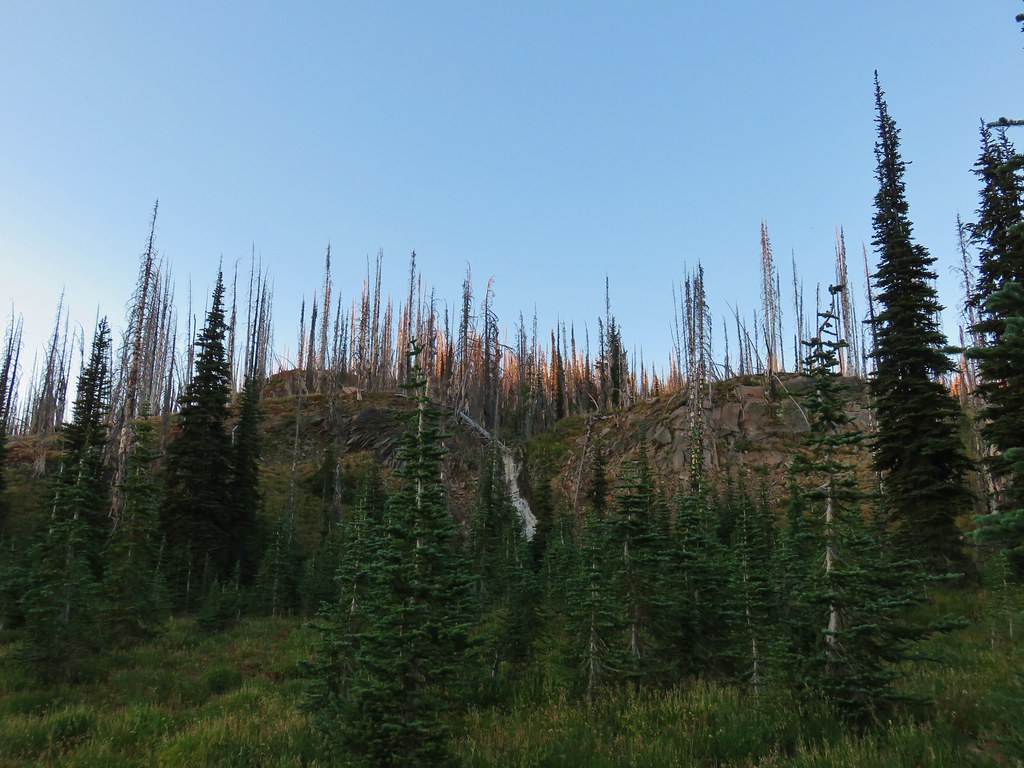
We passed more creeks including one with a nice little waterfall surrounded by lush green vegetation.

IMG_7626

IMG_7637

It was just over another 2.5 miles to the South Climb Trail from the Shorthorn Trail which made it about 6 miles from Horseshoe Meadow, a little longer than my initial calculation had been.

IMG_7647

IMG_7648

After a break at the junction we headed back and turned down the Lookingglass Lake Trail.

IMG_7668

It was about a mile downhill to the lake. The trail passed through more forest affected by fire and crossed several creeks including one with a number of frogs.

IMG_7669

IMG_7673

IMG_7677

IMG_7681

IMG_7687

We made our way around the lake and sat on a little hill facing Mt. Adams where we ate dinner.

IMG_7691

IMG_7693

IMG_7695

IMG_7697

It was a little after 6pm when we finally left the lake and headed back up to the Round-the-Mountain Trail. As we climbed we were looking back at the lake when we noticed a smoke plume that we had not seen on the way down to the lake.

IMG_7699

IMG_7700

Based on its location in relation to Mt. Hood we wondered if the Indian Creek Fire had exploded or if this was some new fire in the Columbia River Gorge.

IMG_7706

On Monday we learned from a northbound PCT hiker who had been evacuated from Cascade Locks that what we had seen was the new Eagle Creek Fire apparently started by teenager playing with illegal fireworks. What an idiot. As I write this trip report much of the gorge west of the Ruckle Creek Trail including Multnomah Falls has been affected.

We were still planning on getting water on the way back to Horseshoe Meadow at the little stream but we had forgotten how close it was to the Lookingglass Lake Trail and walked right past it. We didn’t realize our mistake until we’d reached the edge of Horseshoe Meadow. We decided that we would make due for the night with what we had left over in our packs (which wasn’t much) and our Hydro Flasks which we’d left at camp. In the morning we’d get water at either Sheep Lake or Riley Creek if no other sources could be found before then along the PCT.

The shadows were growing long back at Horseshoe Meadow.

IMG_7712

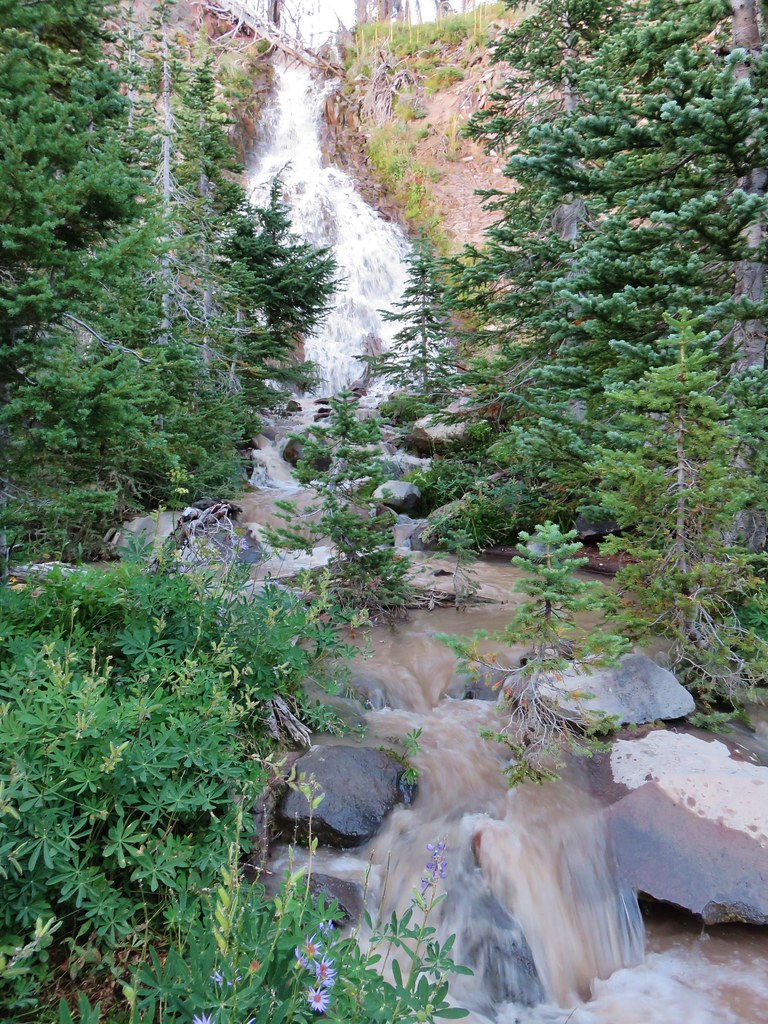
We were pretty tired and ready to crash but then we spotted a waterfall across the meadow and just had to check it out. We also thought there might be another water source that wasn’t so silty around. There wasn’t. The waterfall was nice though but it was the color of chocolate milk.

IMG_7726

IMG_7719

IMG_7714

We wound up moving our camp further from the trail due to a large group that had arrived and were a little louder than we preferred. After reestablishing camp we watched the last light hit Mt. Adams and turned in for the night.

IMG_7737

IMG_7742

Happy Trails!

Flickr: Mt. Adams Day 1

Categories
Central Coast Hiking Oregon Oregon Coast Trip report

Yaquina Bay and Yaquina Head

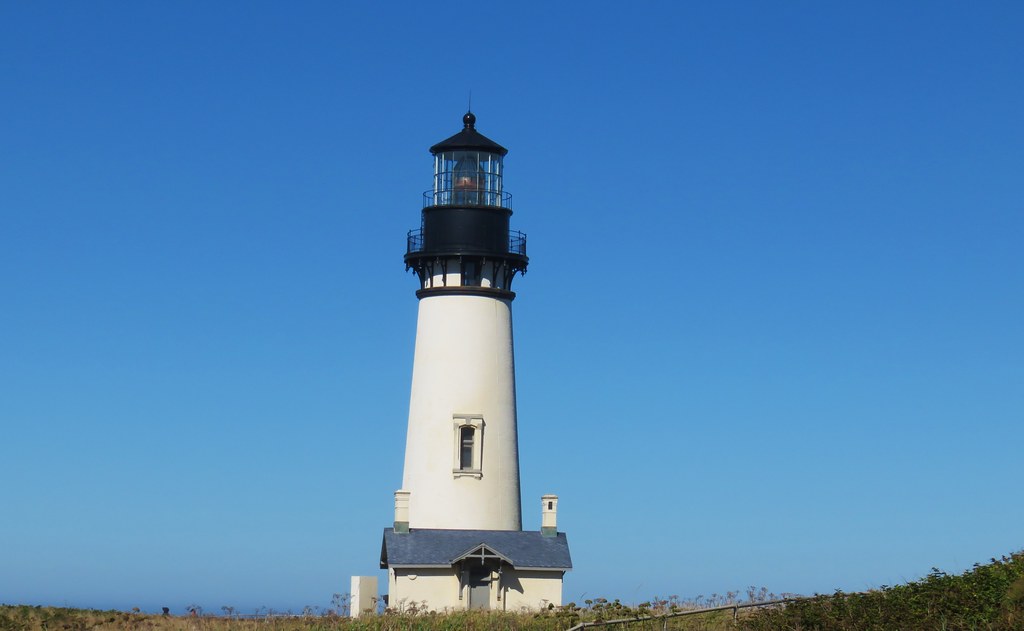
It’s become tradition to take a shortish hike on the Oregon Coast the morning of our annual family reunion in Gleneden Beach, OR. This year we decided to visit a pair of lighthouses near Newport.

A 5am start got us to our first stop at Yaquina Bay State Recreation Site a little before 7.

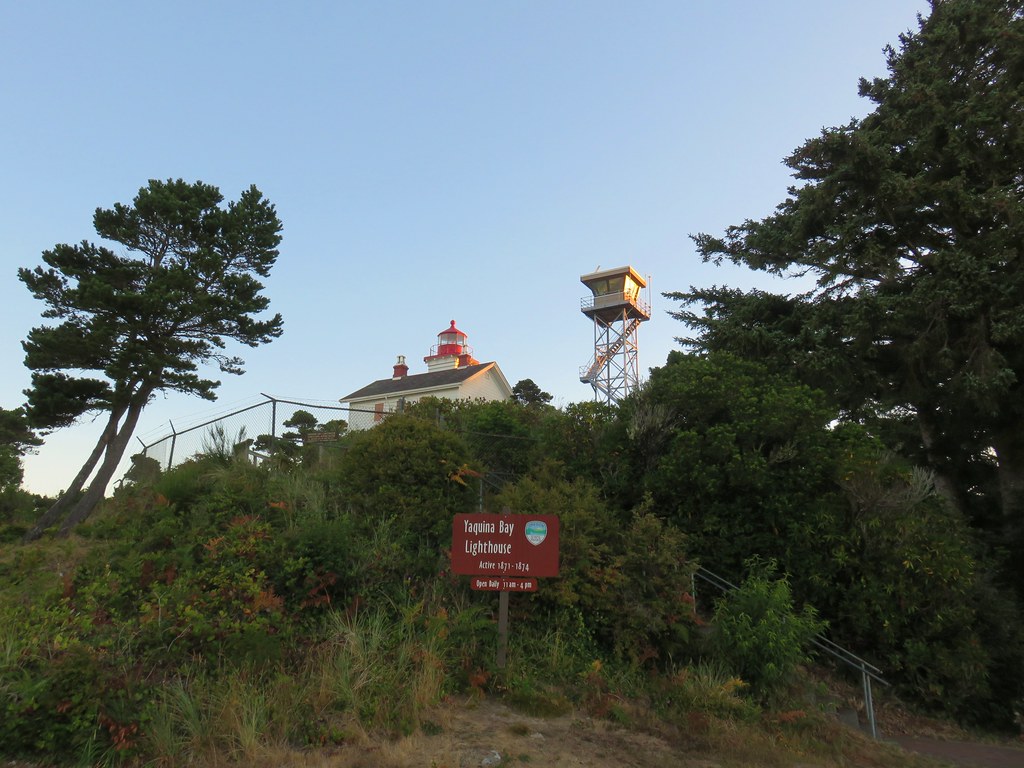
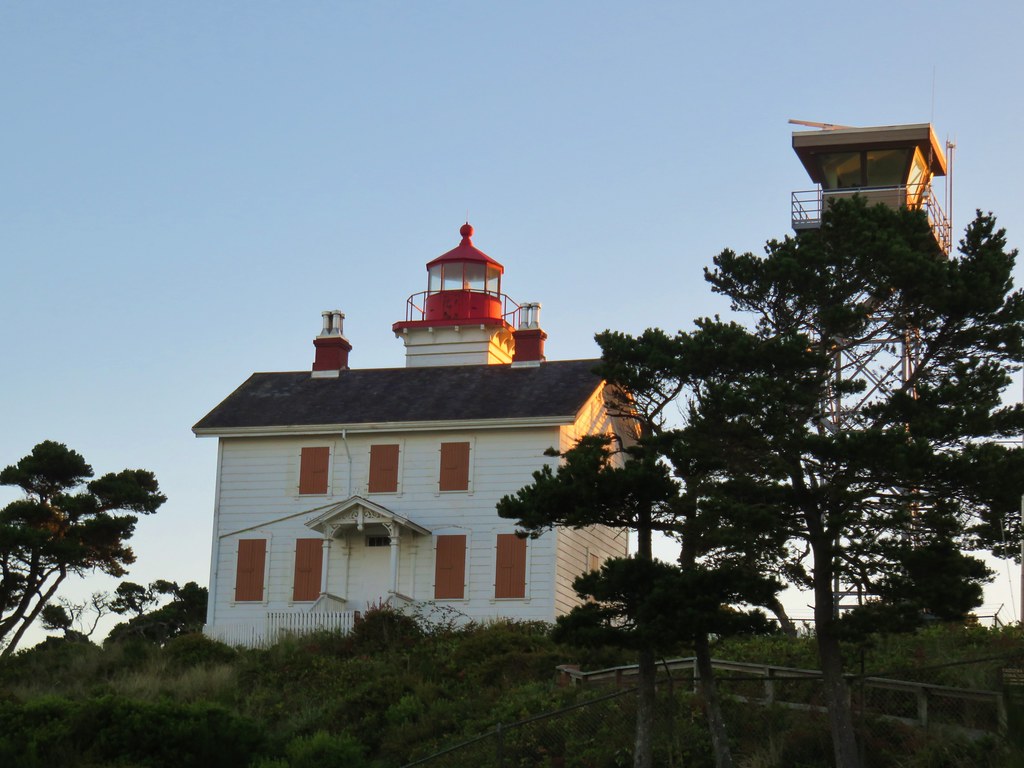
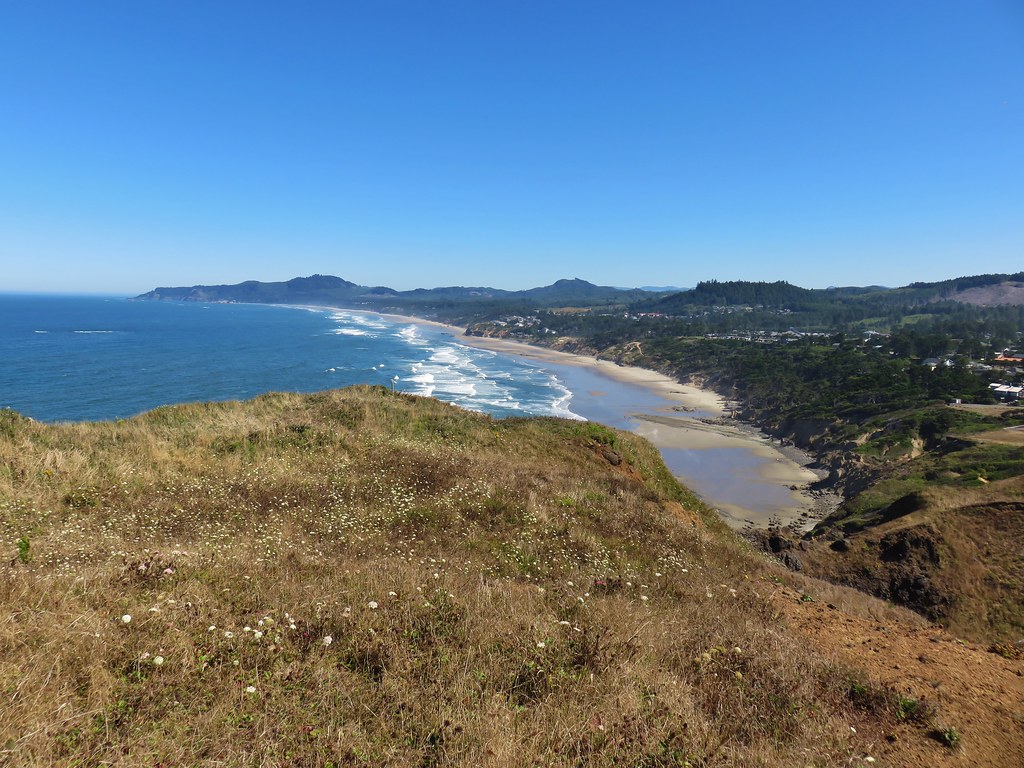
Home to the 1871 Yaquina Bay Lighthouse the 32 acre park also offers access to an approximately 4 mile stretch of beach between the Yaquina River and Yaquina Head.

We parked below the lighthouse, which operated only three years before being replaced by the Yaquina Head Lighthouse.
Yaquina Bay Lighthouse

Yaquina Bay Lighthouse

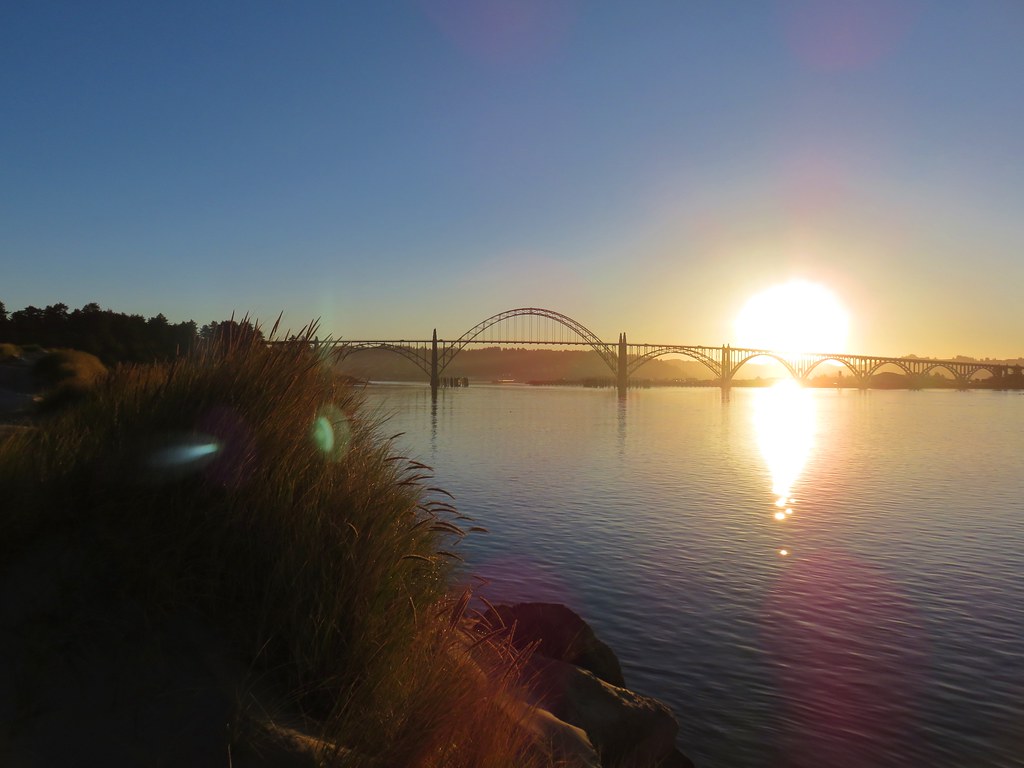
From a viewpoint in the parking lot we could see the Yaquina Bay Bridge and watch boats heading out to sea.
Yaquina Bay Bridge

Yaquina Bay Jetty

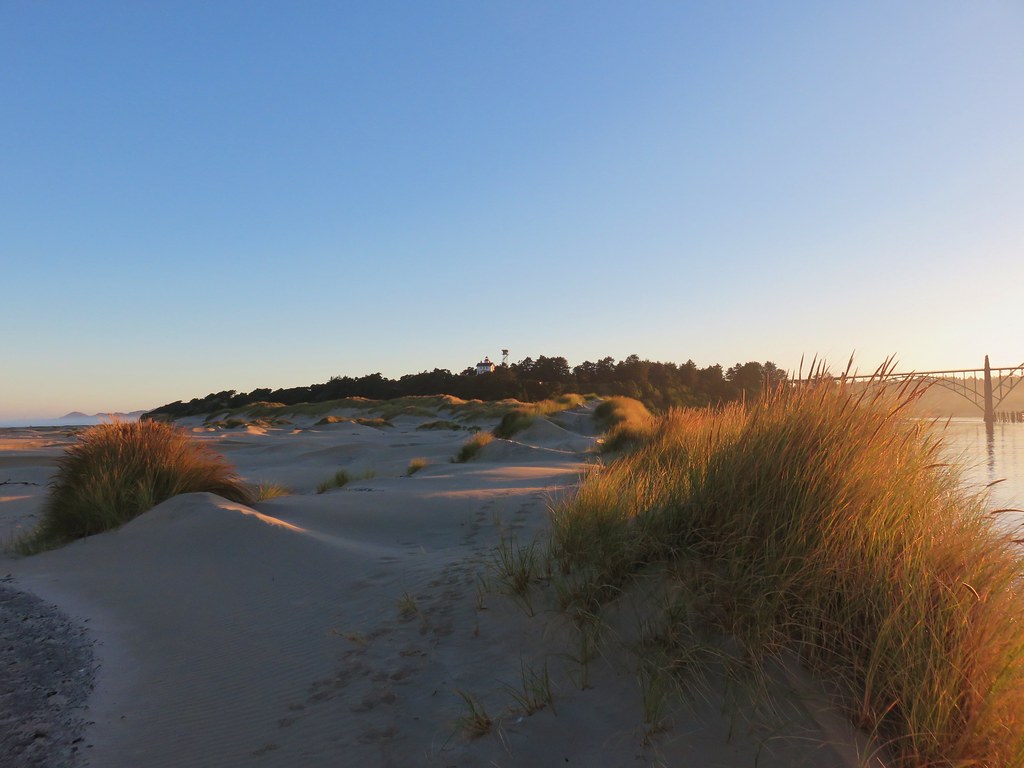
A paved path led down the bluff to a sandy path in the deflation zone behind a small foredune.
Trail from Yaquina Bay Lightouse to the ocean

Heading to the Pacific Ocean

We passed over the foredune and turned left toward the Yaquina River.
Yaquina Bay Jetty

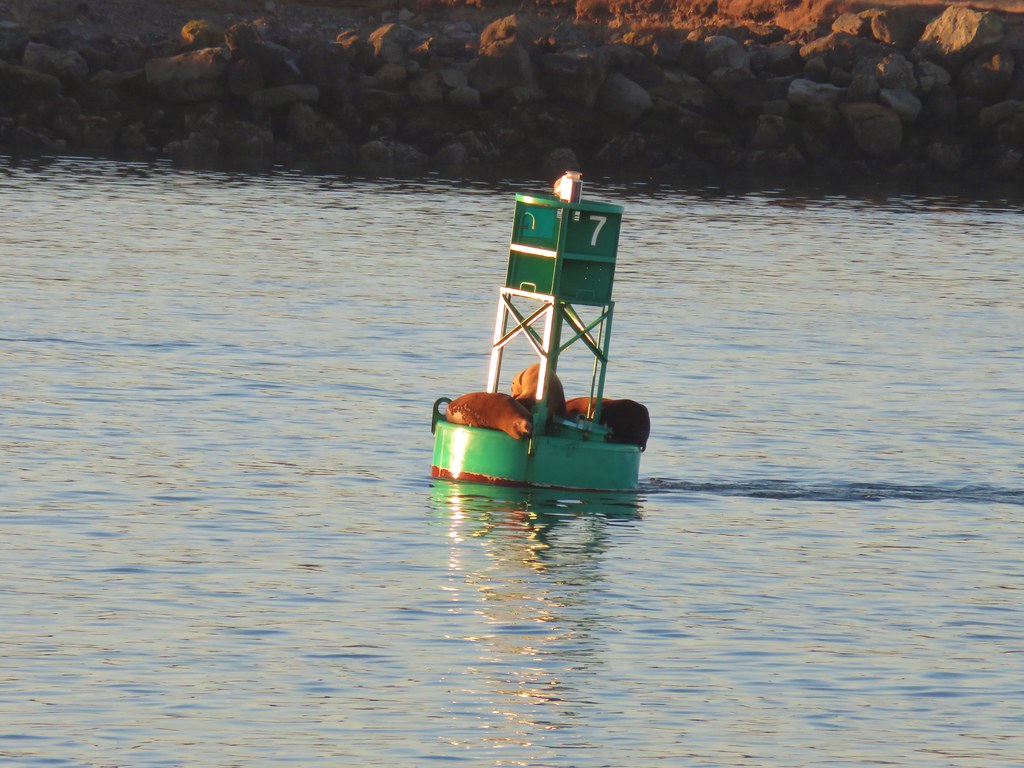
The sound of sealions in the bay greeted us as we approached the jetty where we spotted some squatters on a buoy.
Yaquina Bay Lighthouse

Yaquina Bay Bridge

Seals on a bouy

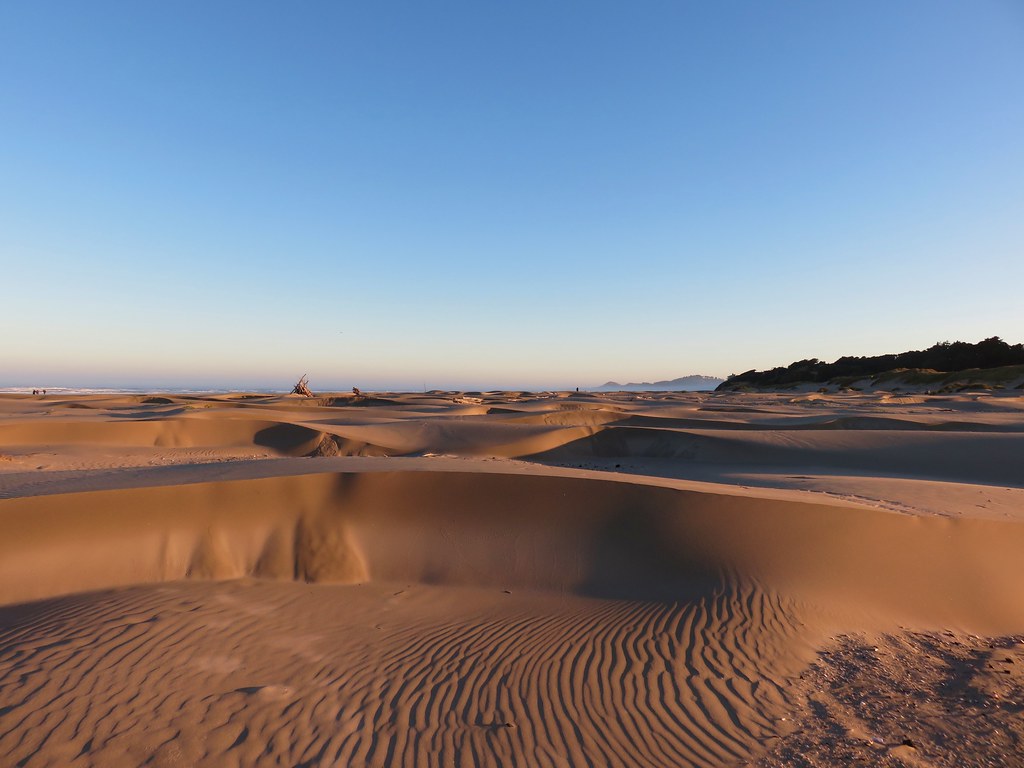
We turned around and headed north along the beach. It was an interesting beach with many small dune like formations.
Yaquina Bay Recreation Site

It was a typical summer morning on the coast with patches of marine layer clouds along the way.
Seagulls at Yaquina Bay Recreation Site

Yaquina Head in the fog

Yaquina Head

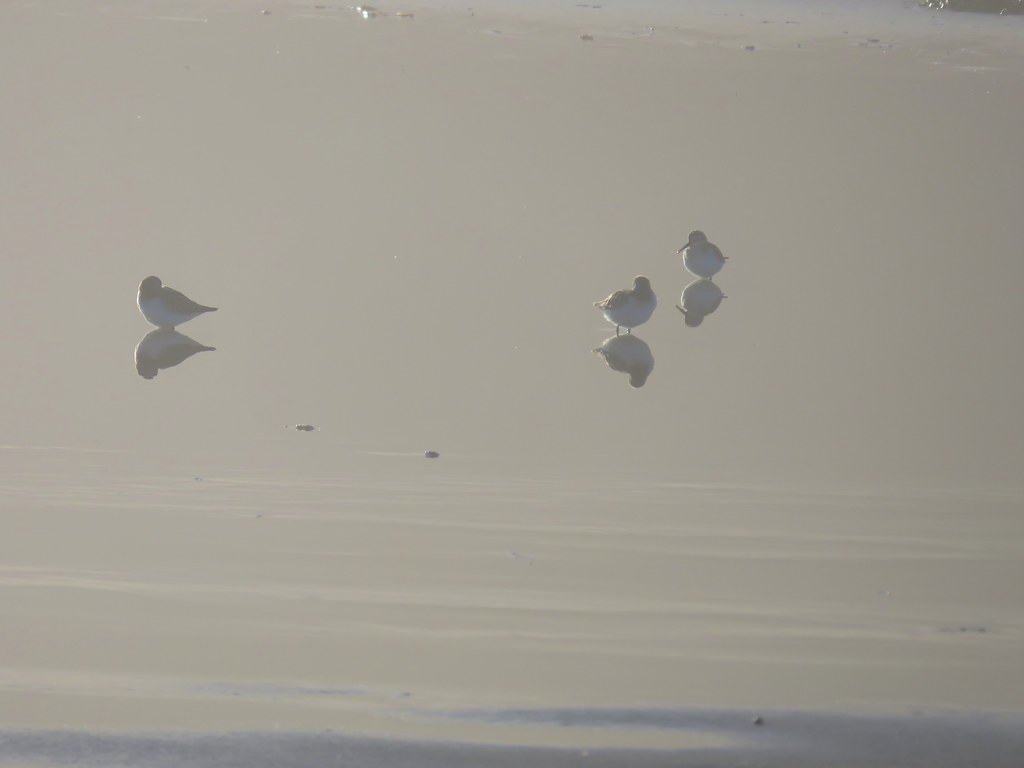
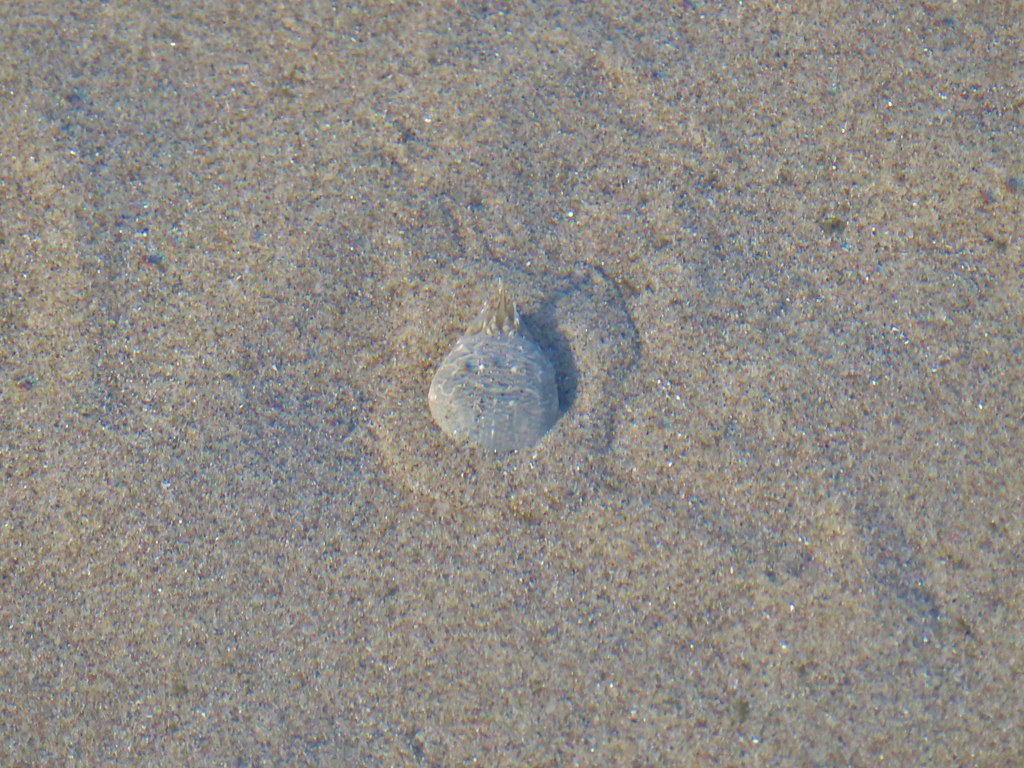
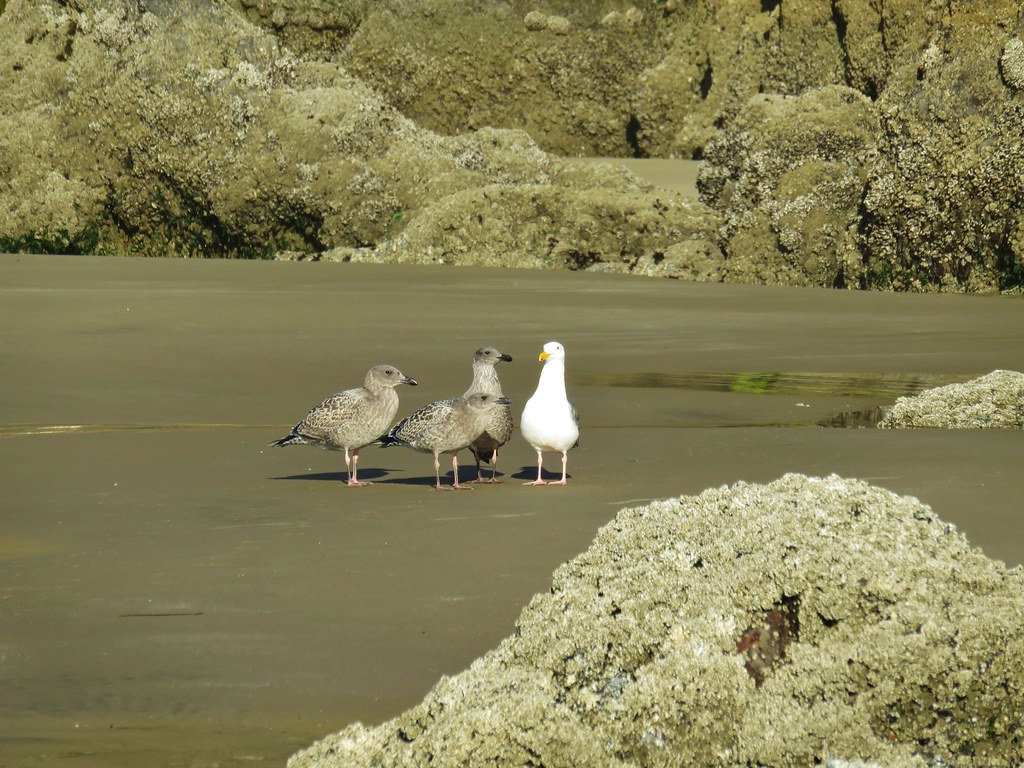
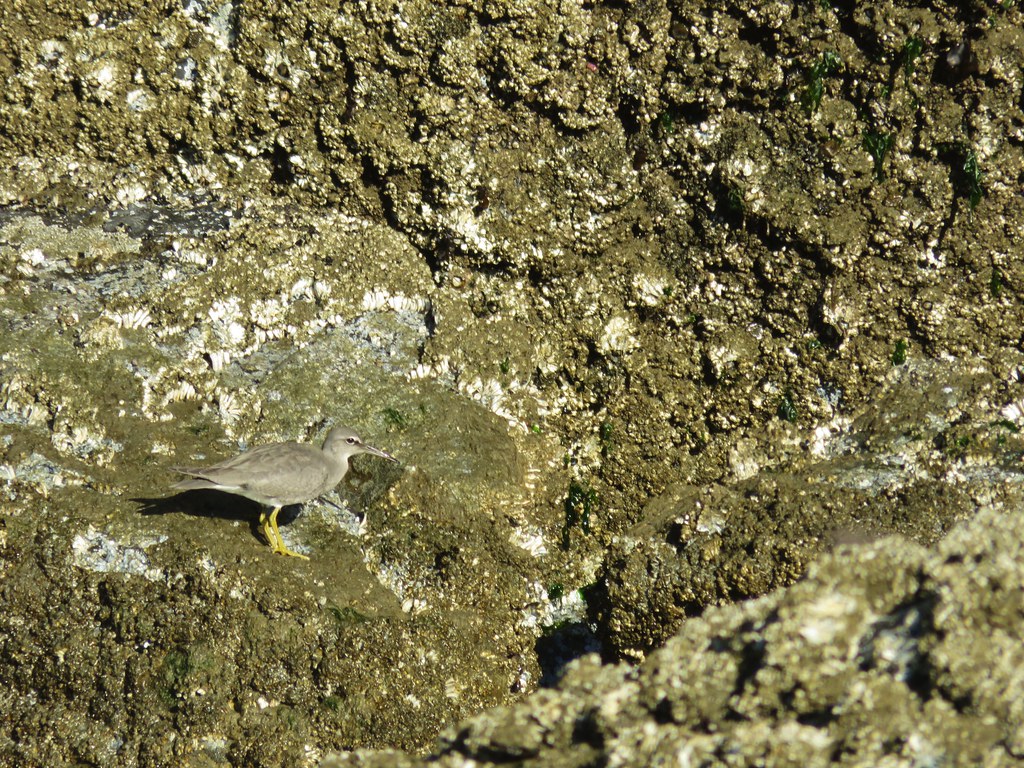
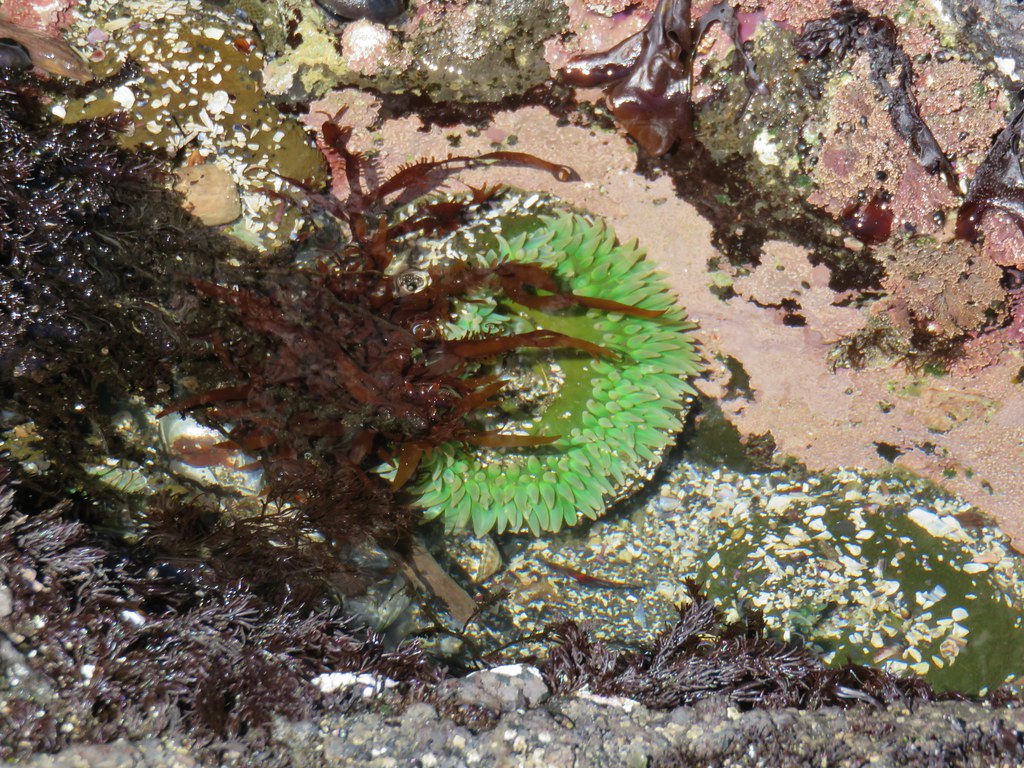
Wildlife along the way consisted of seagulls and shore birds as well as a couple of small tide pools where we spotted anemones and some sand crabs.
Seagull

Shore birds

Anemones

Anemones

Sand crab

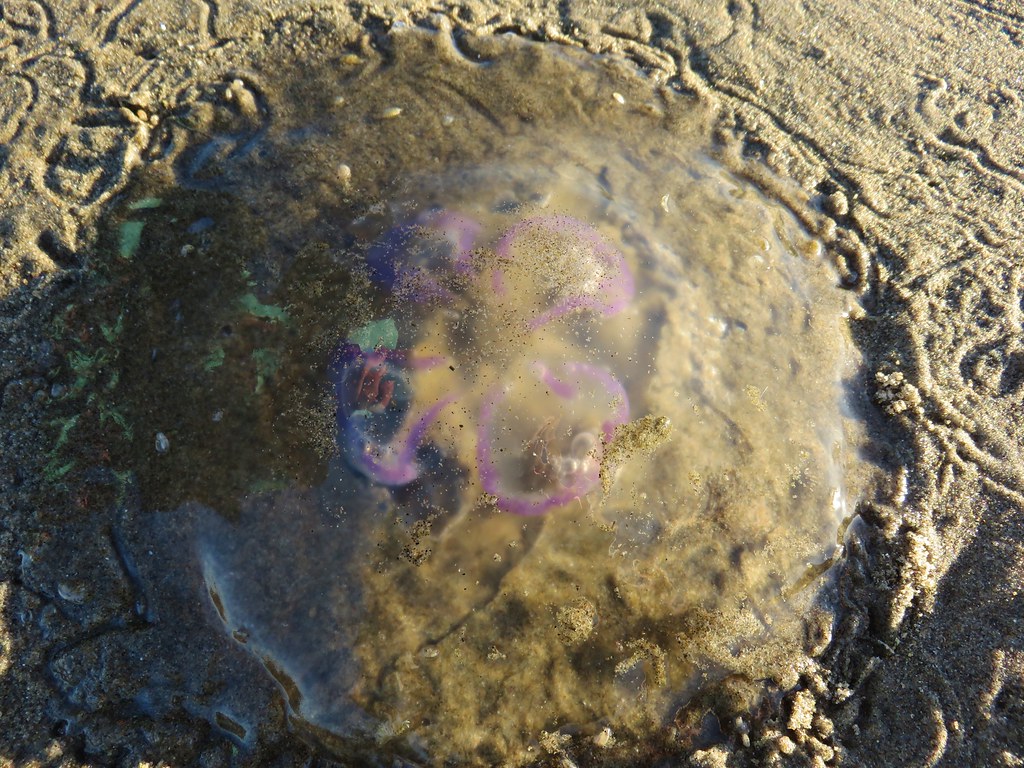
Of particular interest were a couple of jellyfish with some sort of colorful lines.
Jellyfish

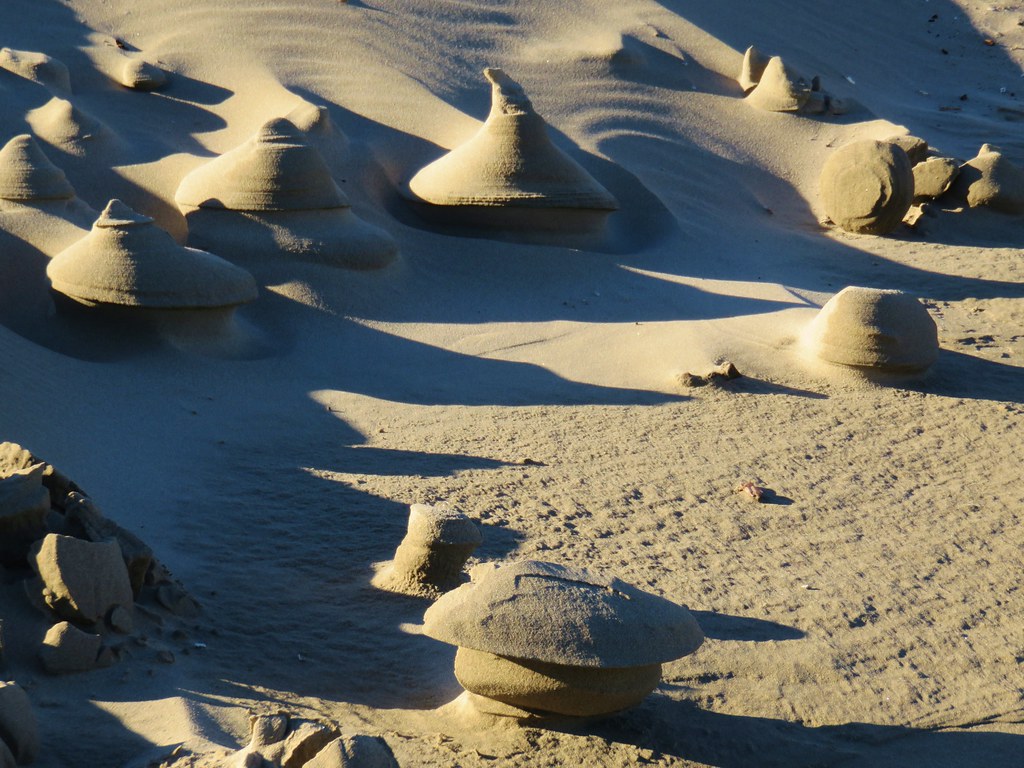
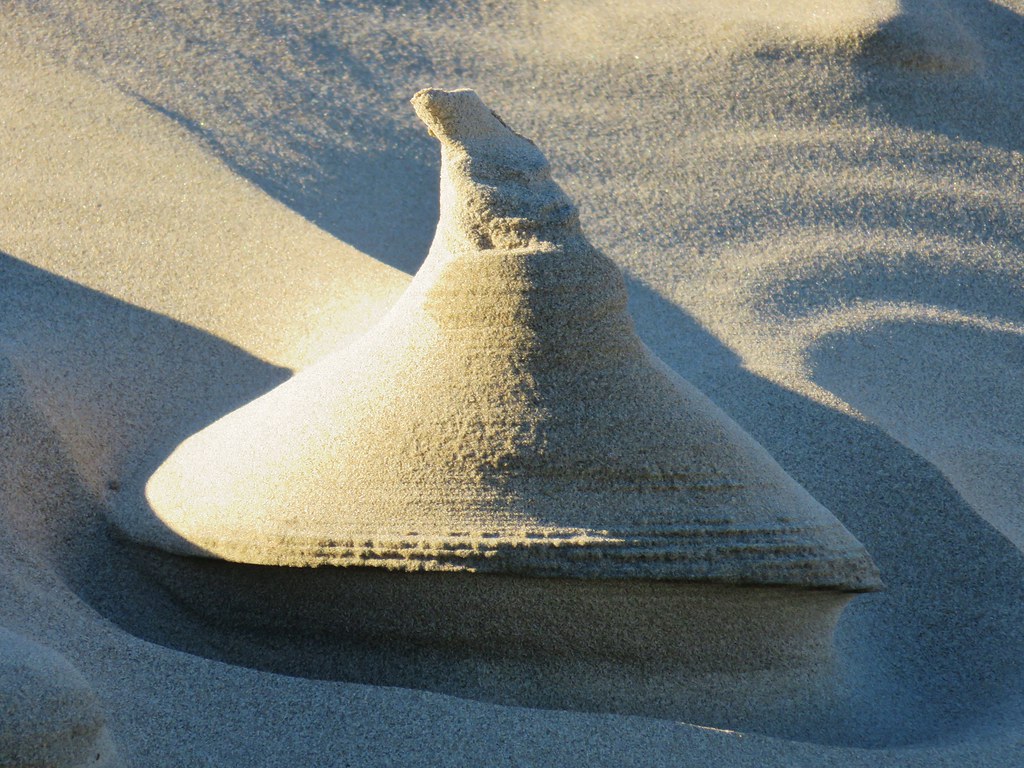
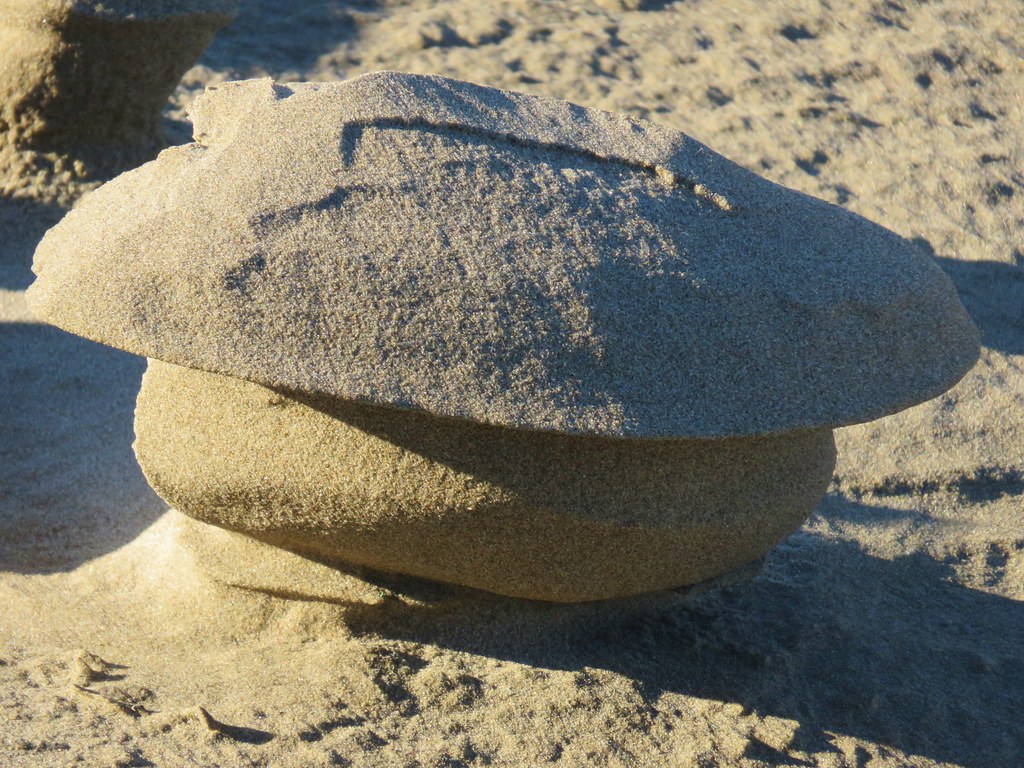
Another peculiar sight along the way were some sand formations that reminded us of clay sculptures.
Interesting sand formations

Interesting sand formations

Interesting sand formation

Interesting sand formation

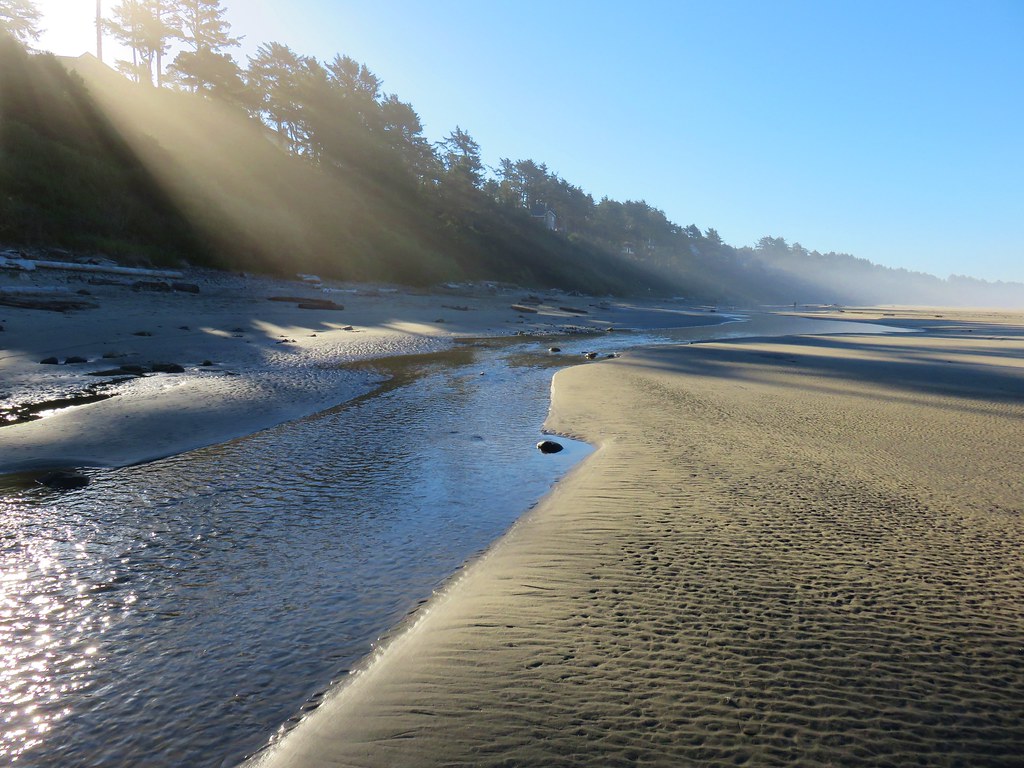
The beach began to narrow as we neared Yaquina Head and we soon came to Little Creek which was running parallel to the ocean.
Yaquina Head

Little Creek at Agate Beach

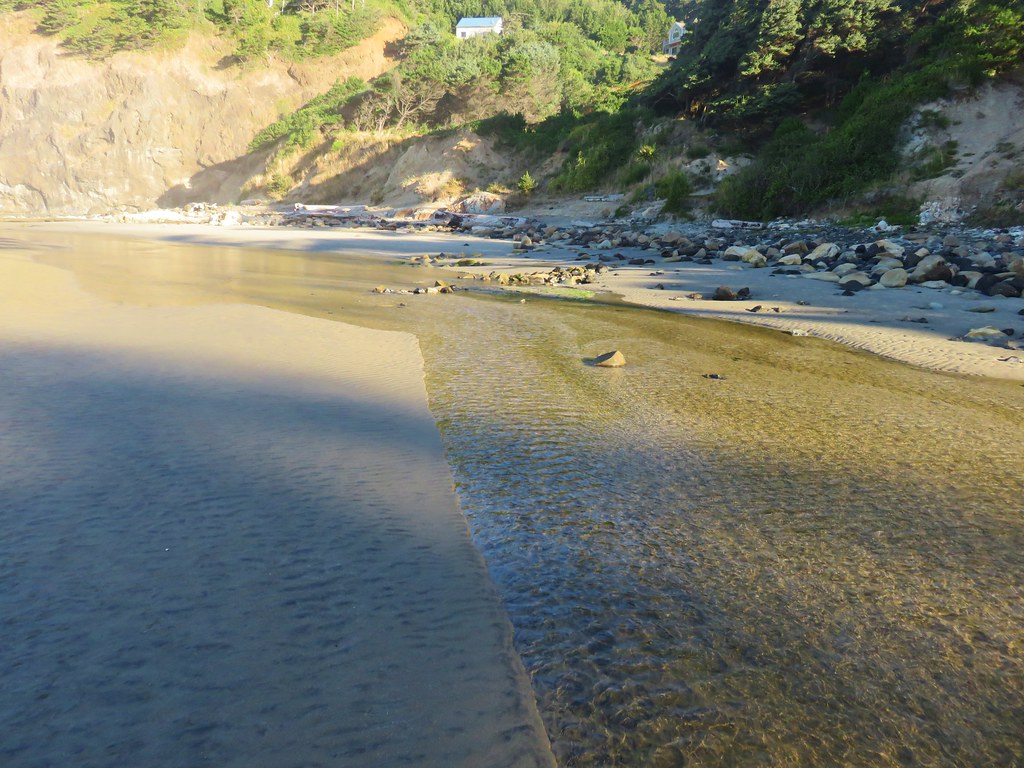
Yaquina Head forced the creek to finally turn toward the ocean and we followed it along the cliffs as it emptied into the Pacific.
Little Creek at Agate Beach

Little Creek at Agate Beach

Little Creek emptying into the Pacific

Pacific Ocean

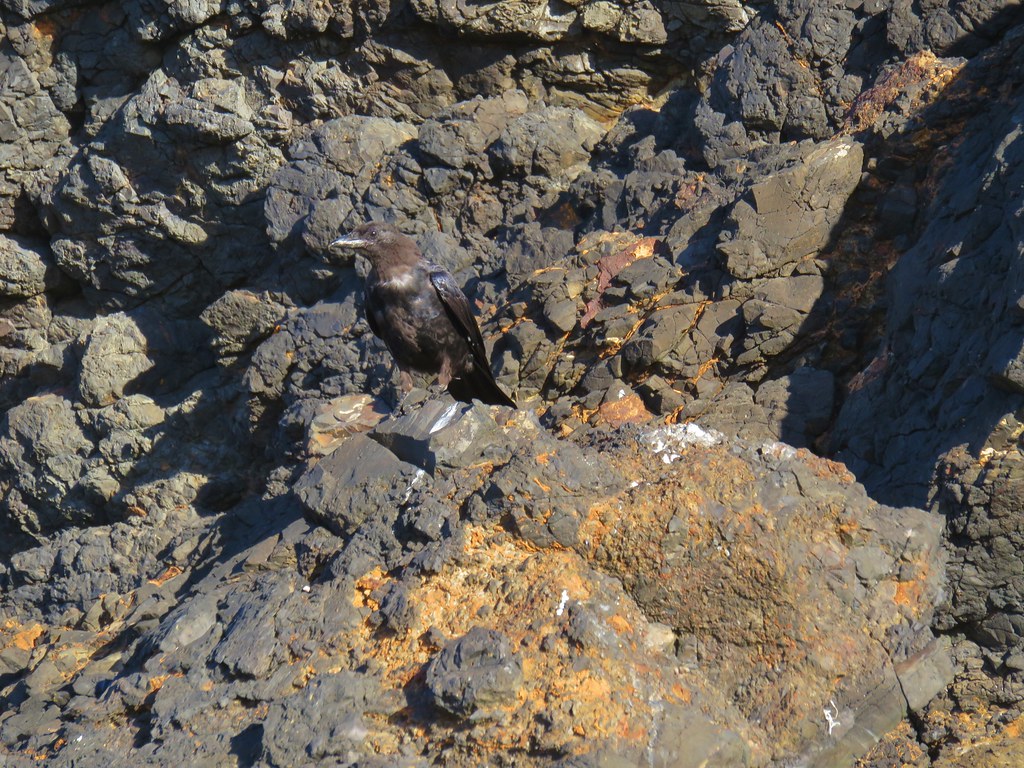
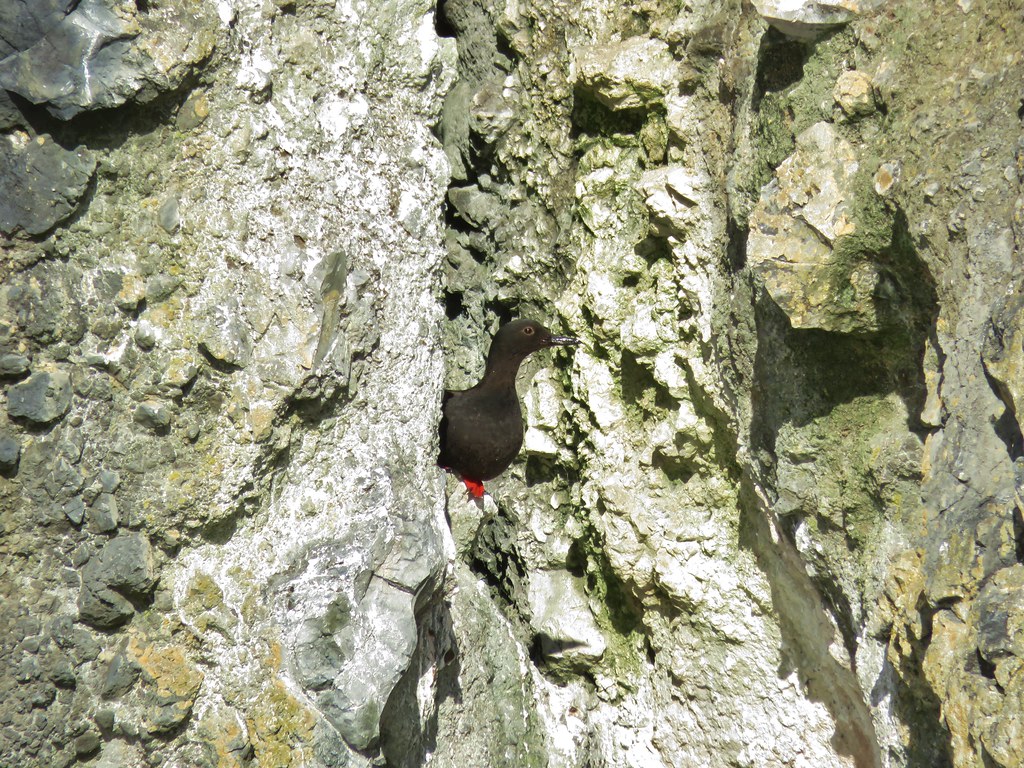
We passed various birds along the creek including a pigeon guillemot which was a bird we were unfamiliar with.
Seagulls

Crow

Bird near Little Creek

Pigeon guillemot
Pigeon guillemot

We headed back south along the beach staying closer to the ocean which brought us to a crossing of some tide water. In our infinite wisdom we waded through the water soaking our shoes and socks before realizing that this was not one of our typical stream crossings. The rocks in mountain creeks and rivers make crossing barefoot a bad idea but on the beach we could have easily taken them off before wading through.
Looking south from Agate Beach

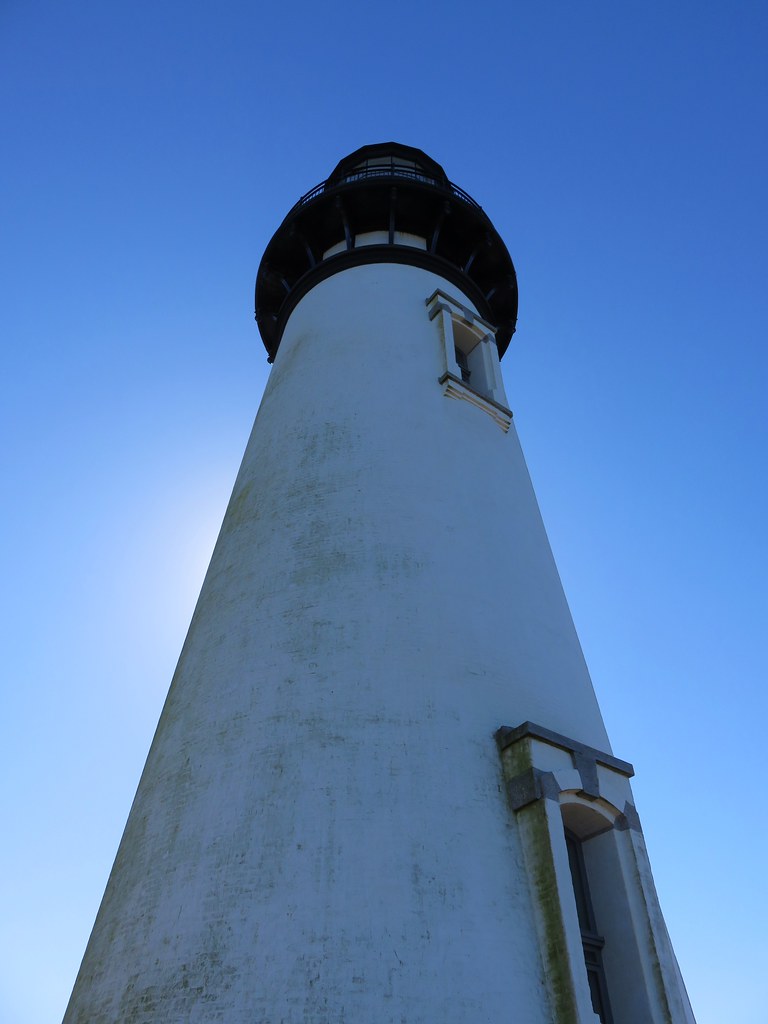
We were back at our car by 9:45 so we had plenty of time to make a second stop at the Yaquina Head Lighthouse (even after stopping at the Newport Safeway to pick up some cilantro). Located on Yaquina Head 4.5 miles north of Newport the Yaquina Head Outstanding Natural Area has a lot to offer. Oregon’s tallest lighthouse, tide pools, several trails, and an interpretive center (which wasn’t there the last time we visited) make the $7/car pass seem reasonable, especially given the pass is valid for three days.

We didn’t have a lot of time so we drove past the interpretive center and parked at the end of the road near the lighthouse.
Yaquina Head Lighthouse

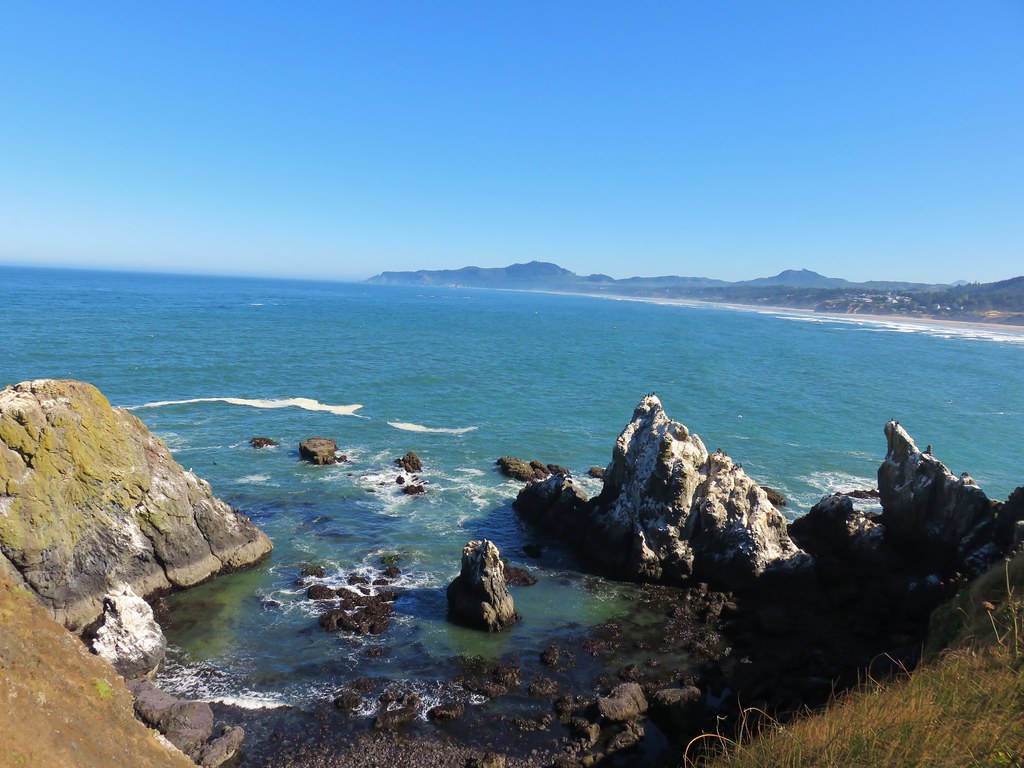
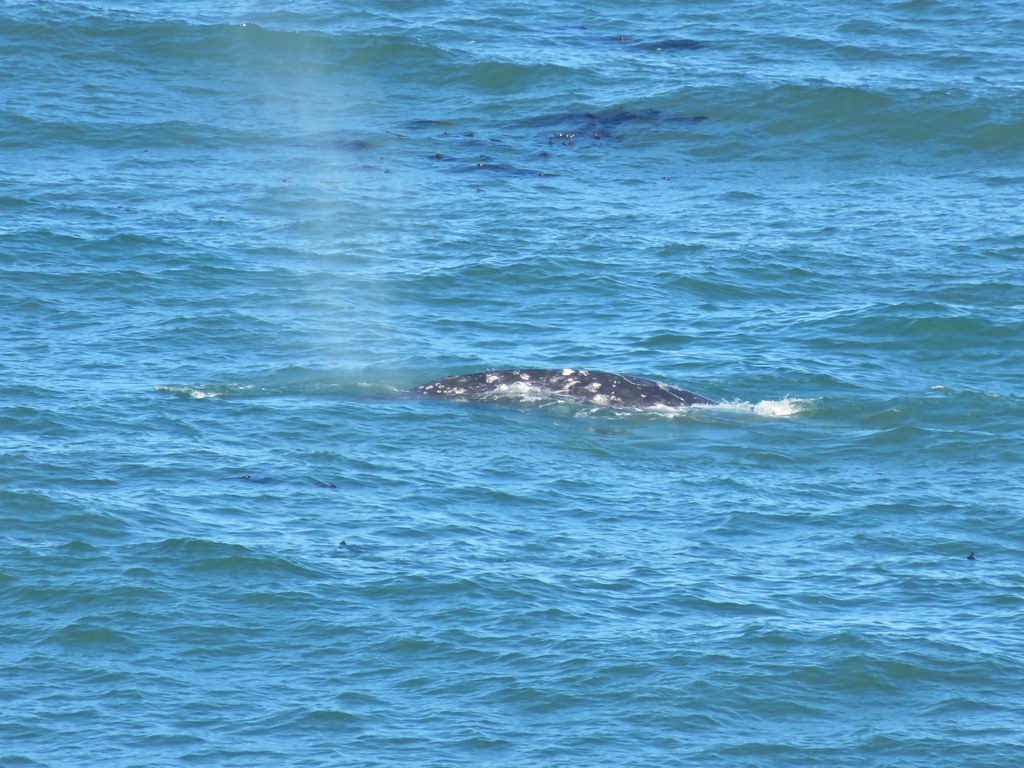
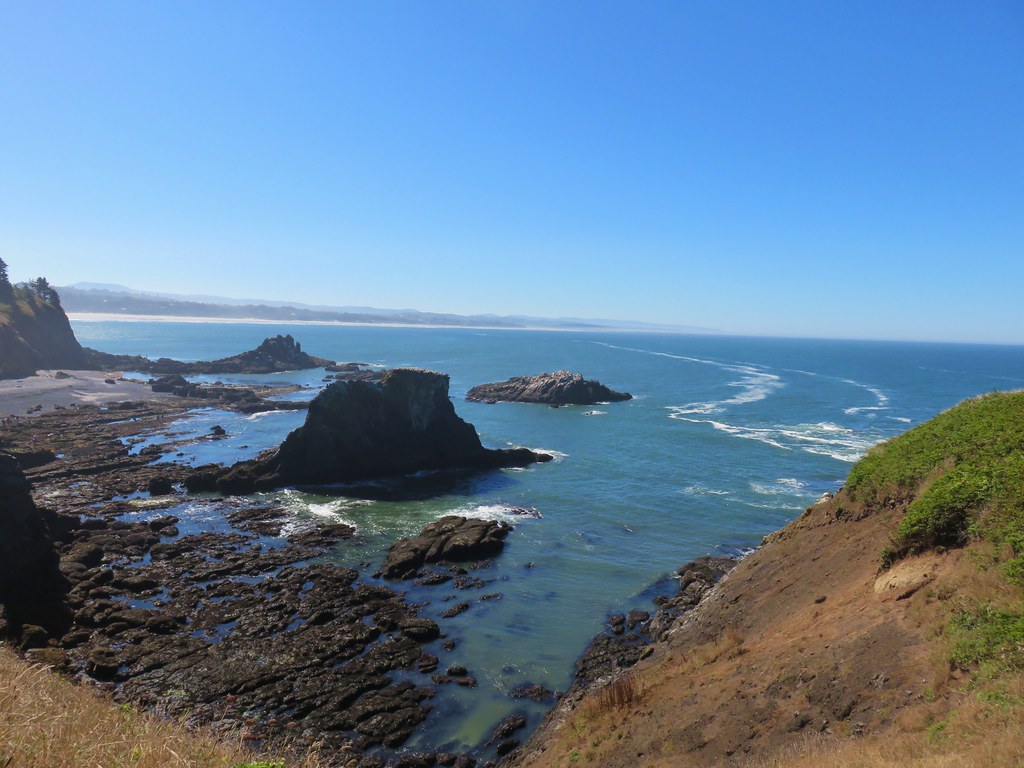
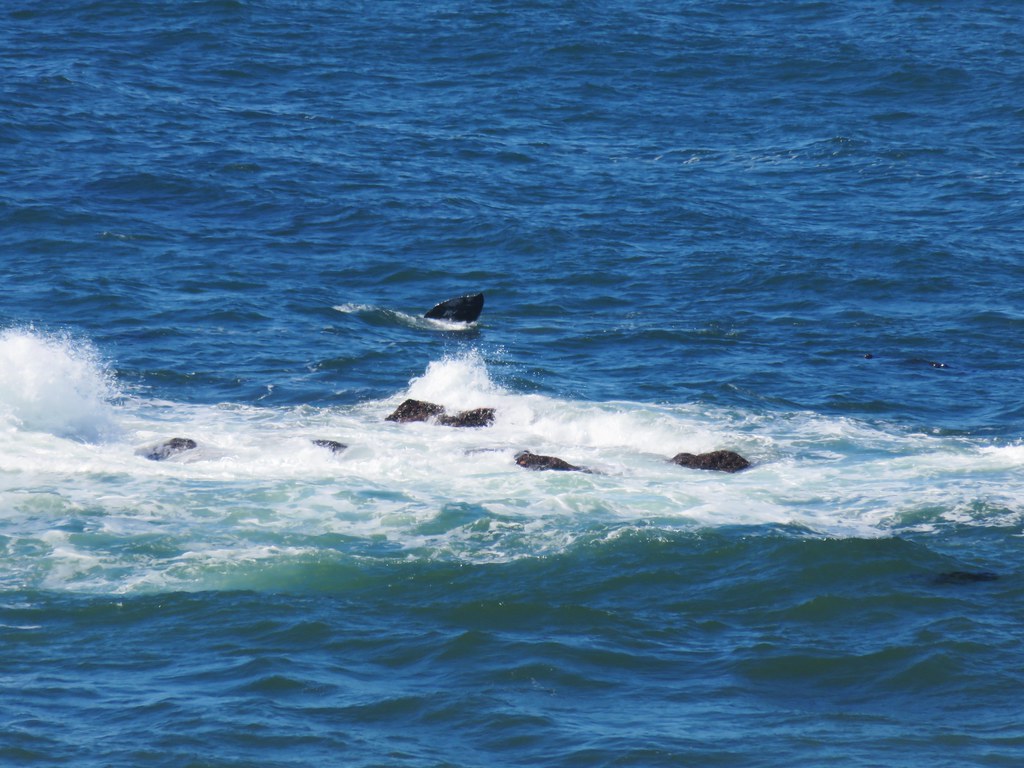
We walked to the lighthouse first stopping at viewpoints along the way. Several grey whales could be seen surfacing and blowing water into the air.
Yaquina Head Lighthouse

Looking north to Cape Foulweather

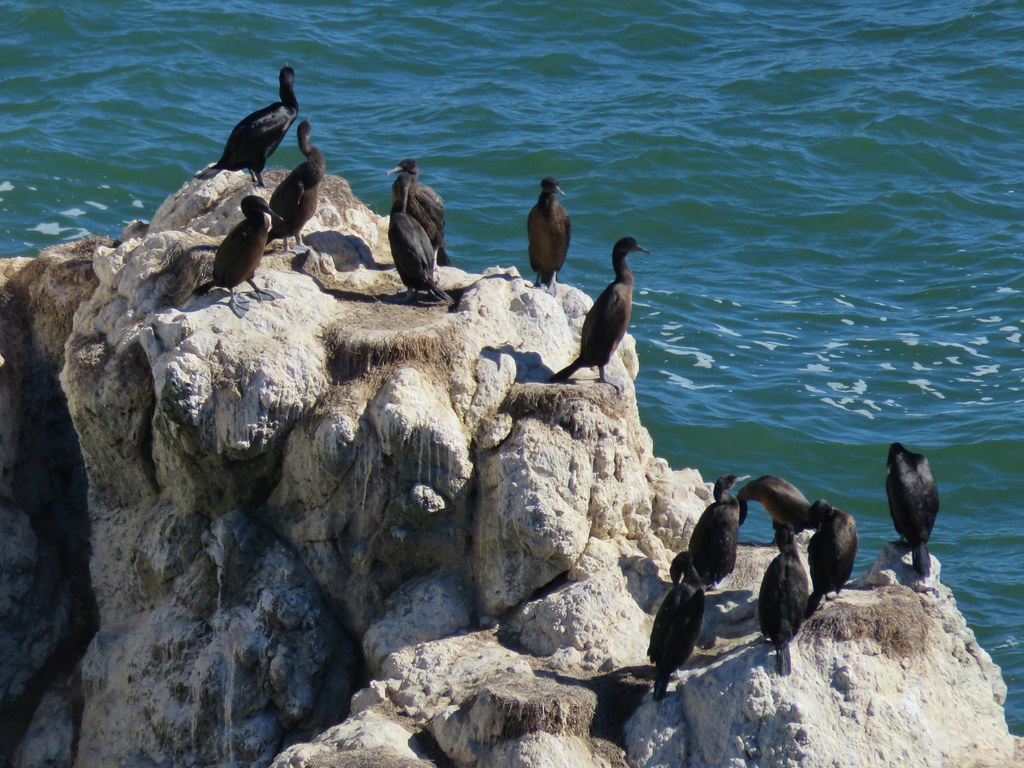
Cormorants

Whale spout

Grey back whale seen from Yaquina Head

Grey back whale seen from Yaquina Head

After watching the whales for a bit we continued around the lighthouse and then headed for nearby Cobble Beach.
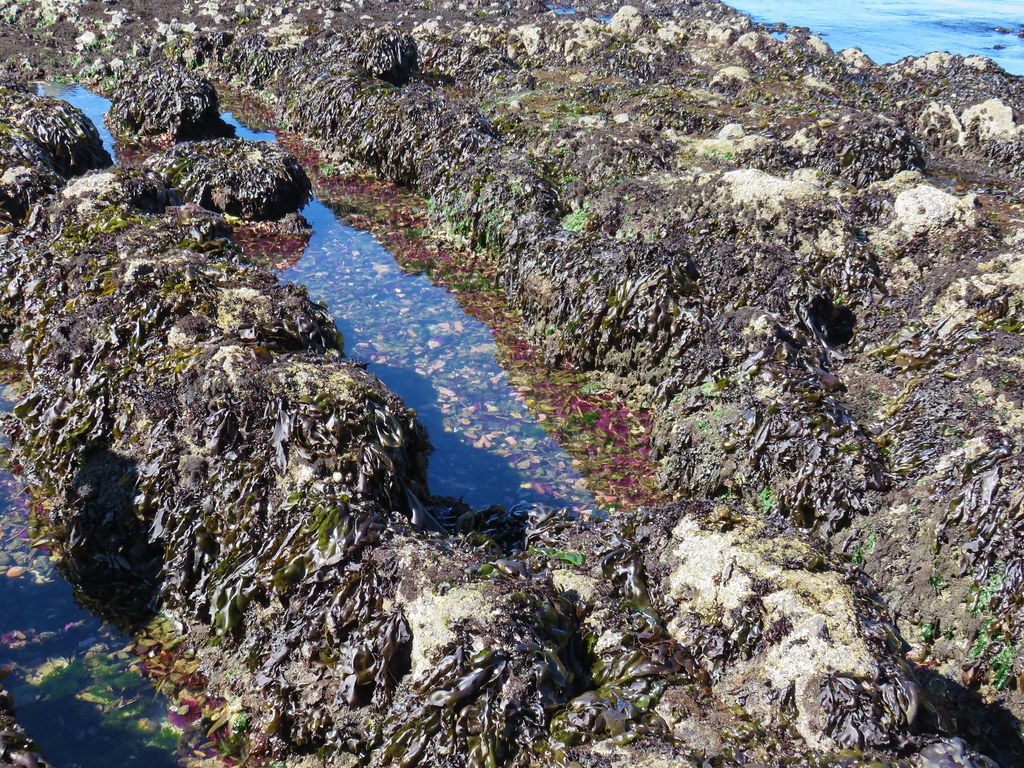
Tide pools at Yaquina Head

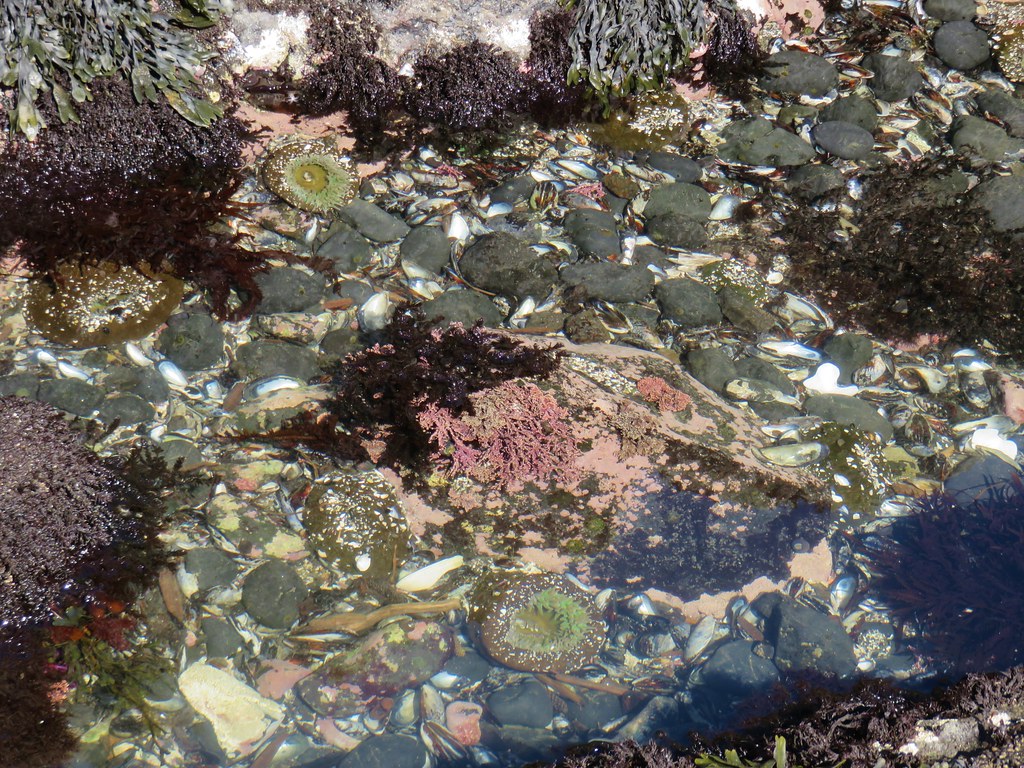
The beach is home to some very good tide pools and the tide was out far enough for some of them to be revealed.
Tide pools at Yaquina Head

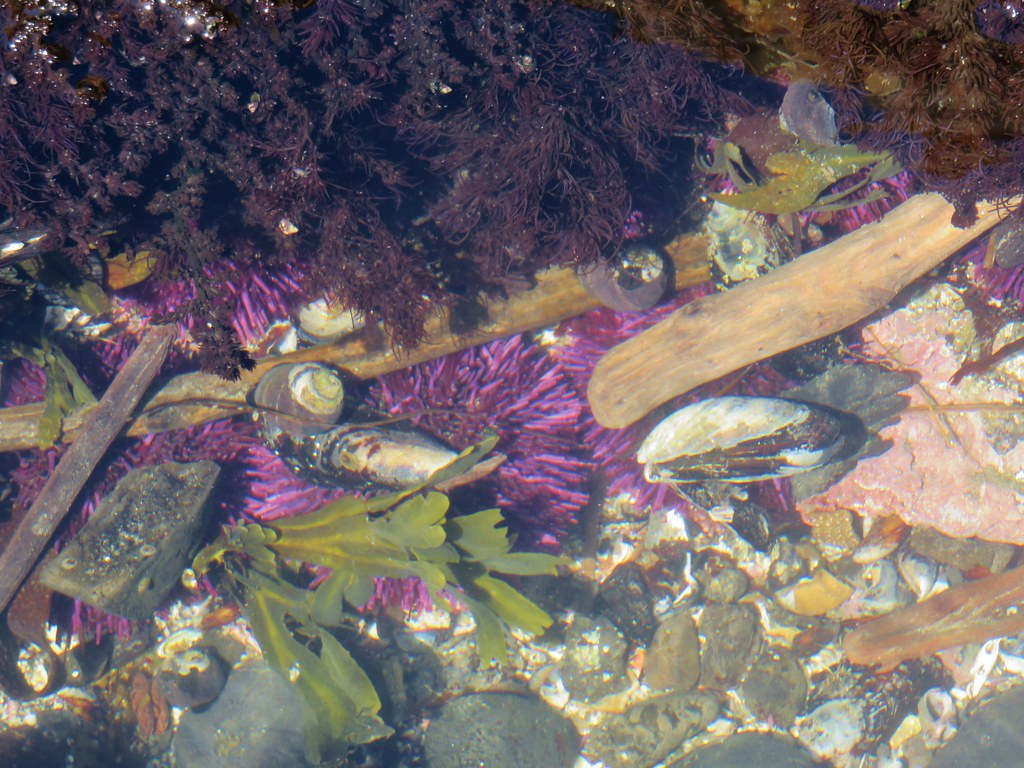
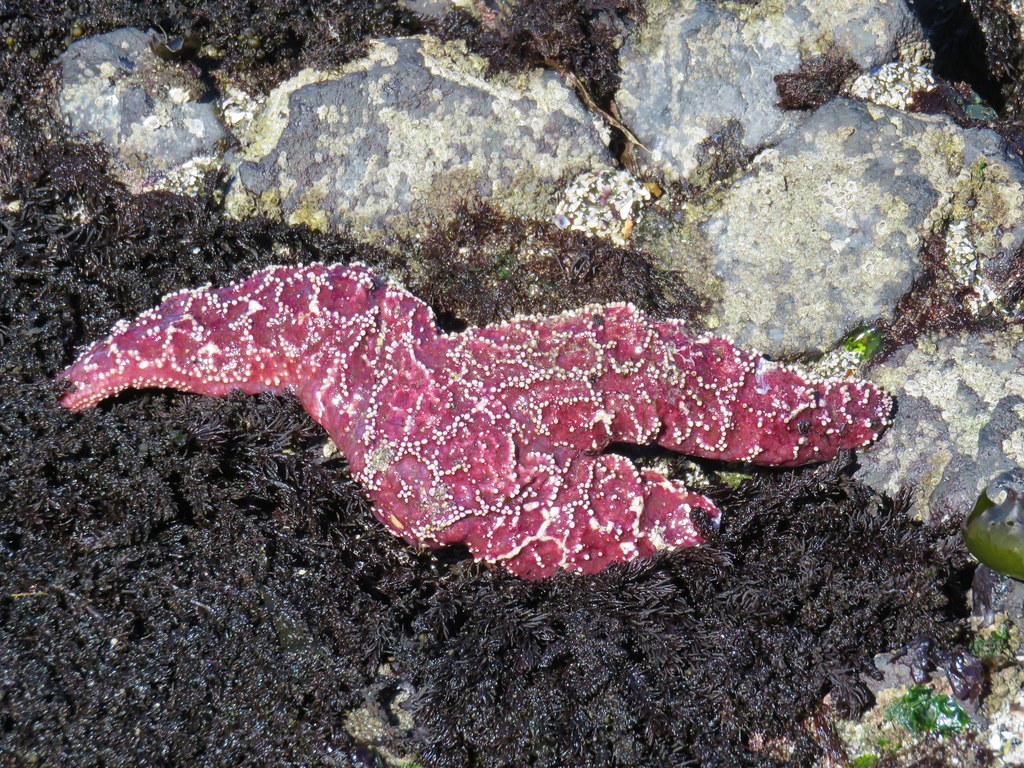
We took the wooden staircase down toward the beach and after some last minute rules and instructions from rangers at the bottom of the stairs we began exploring the pools. Touching anything but the starfish (the rangers informed us that they were dealing with some sort of illness) was allowed but no picking up.
Tide pool at Cobble Beach - Yaquina Head Outstanding Natural Area

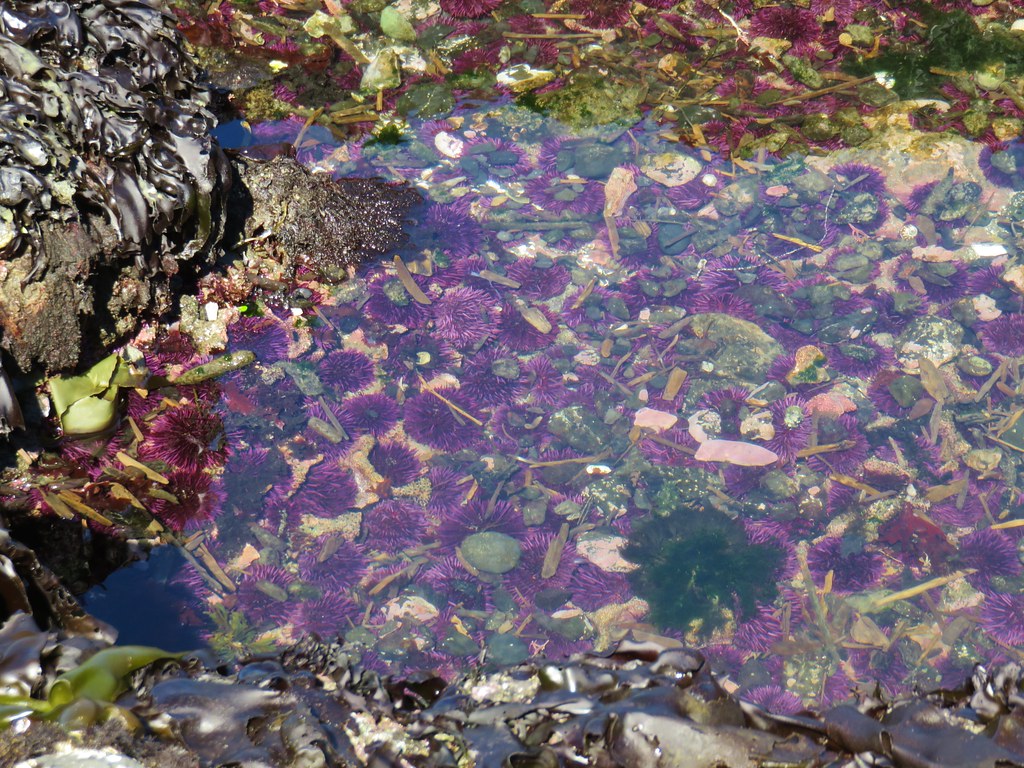
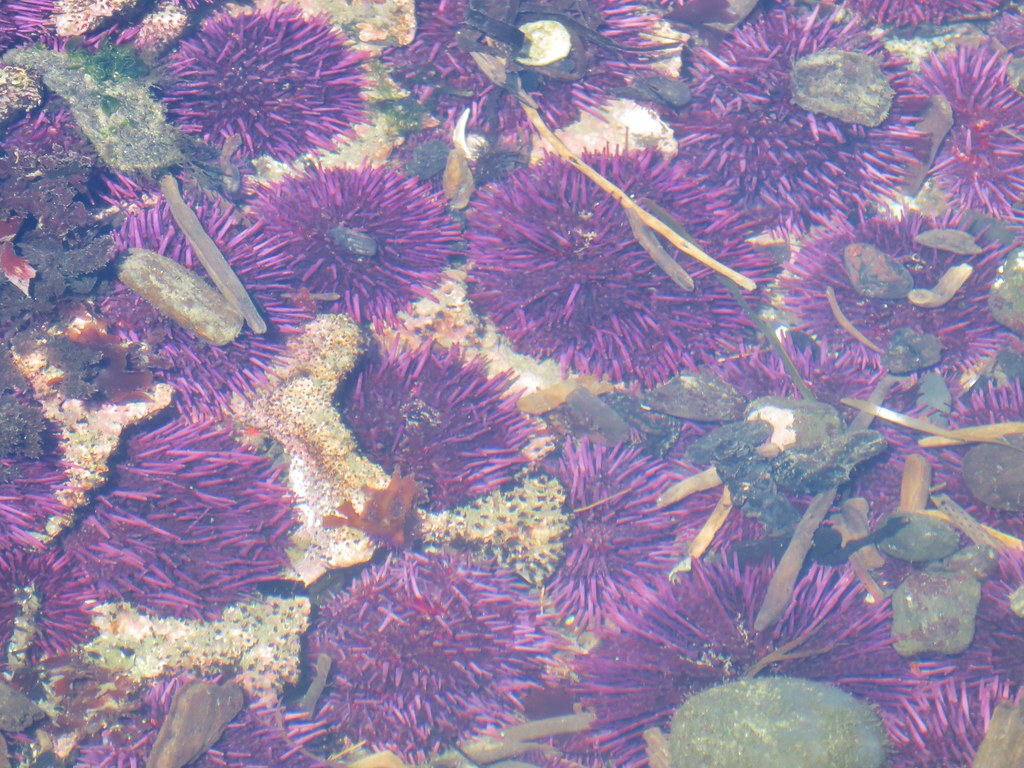
Sea urchins, snails and mussles

Anemone

Tide pool at Cobble Beach - Yaquina Head Outstanding Natural Area

Tide pool at Cobble Beach - Yaquina Head Outstanding Natural Area

Sea urchins

Sea urchins

Star fish

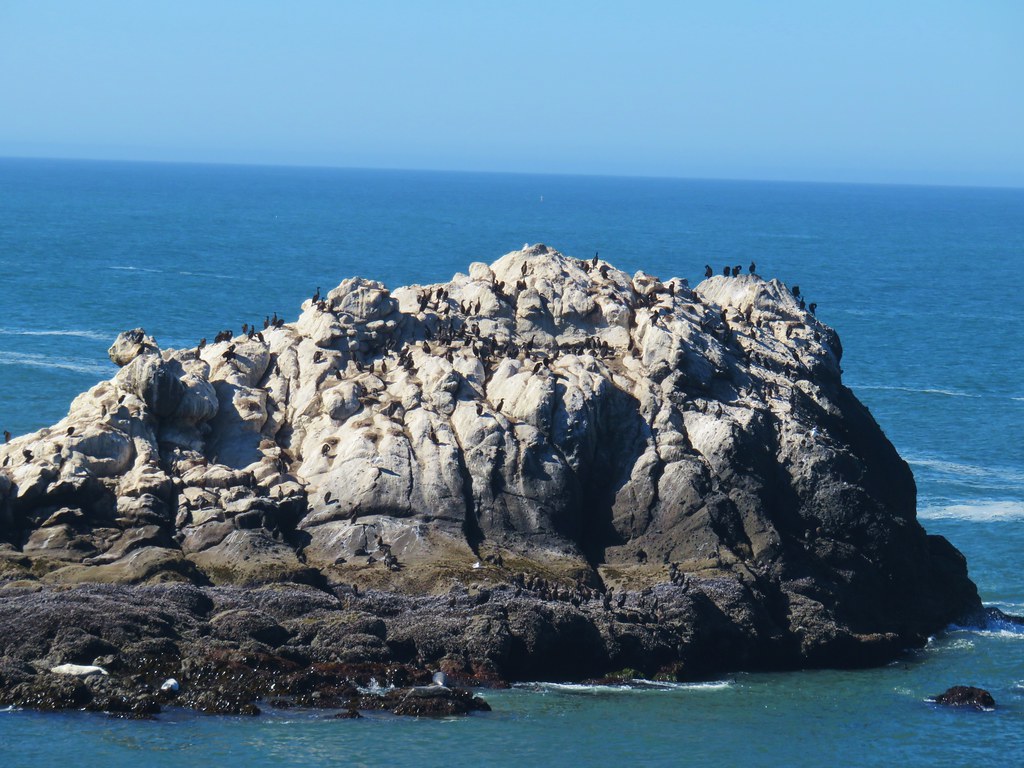
Large sea rocks just beyond the tide pools are part of the Oregon Islands National Wildlife Refuge, one of only tow wilderness areas in Oregon closed to humans.
Signboard for the Oregon Islands National Wildlife Refuge

Oregon Islands National Wildlife Refuge

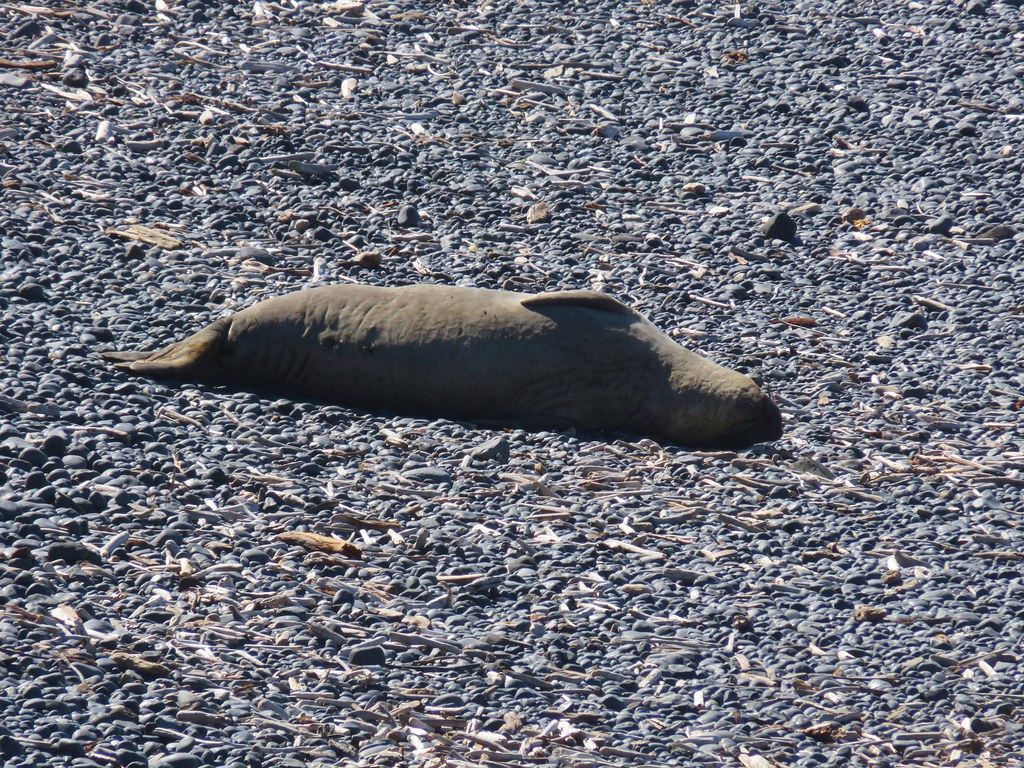
Not all the wildlife stuck to the islands though as a section of Cobble Beach was closed off due to a resting seal.
Seal on Cobble Beach

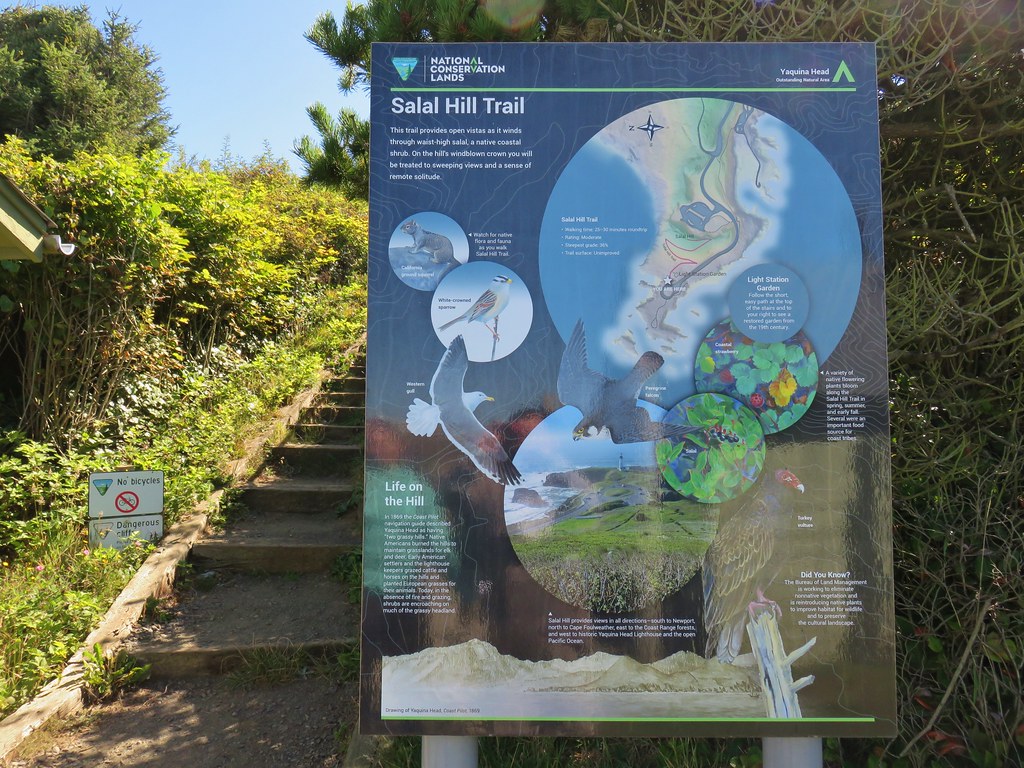
After making our way around the pools we headed back up the stairs. It was still a bit early to head for the reunion so we decided to check out the short trail up Salal Hill which began at the lot where we had parked.
Salal Hill Trailhead

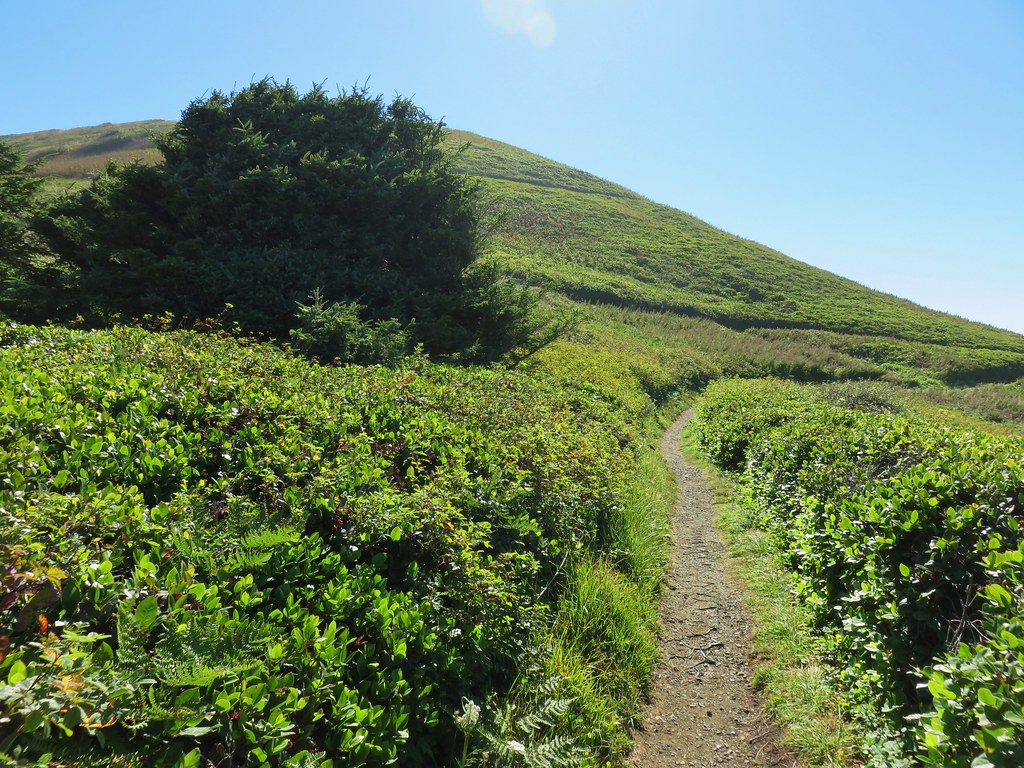
The .4 mile path switchbacked up the small hill at a nice gradual grade.
Salal Hill

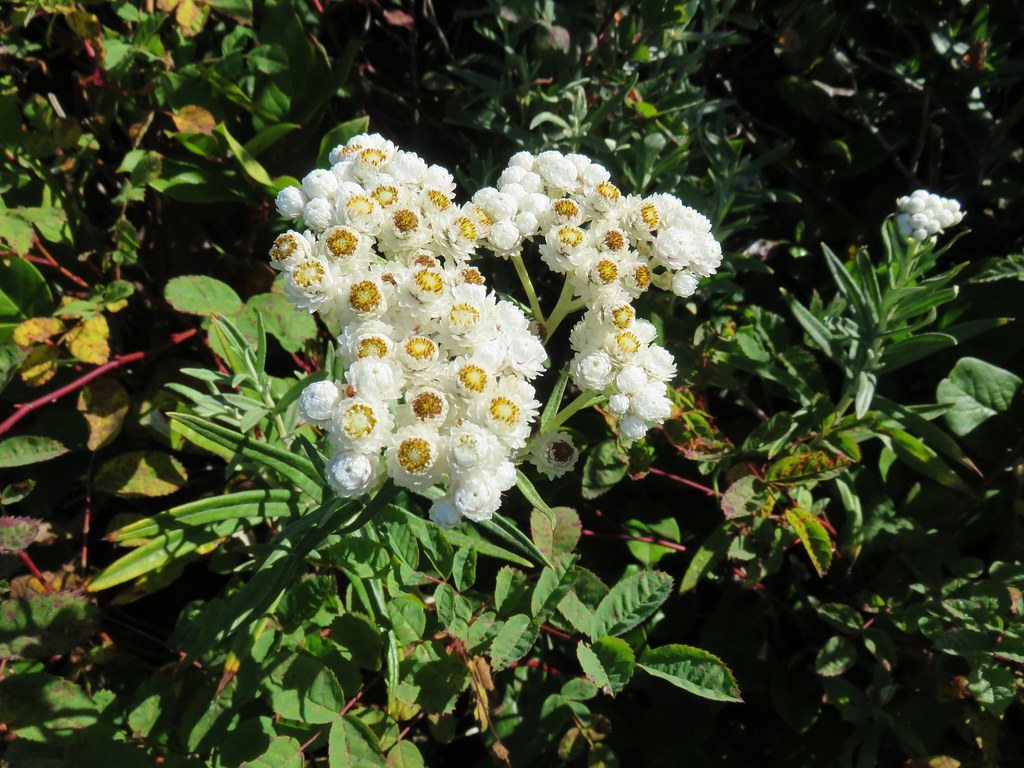
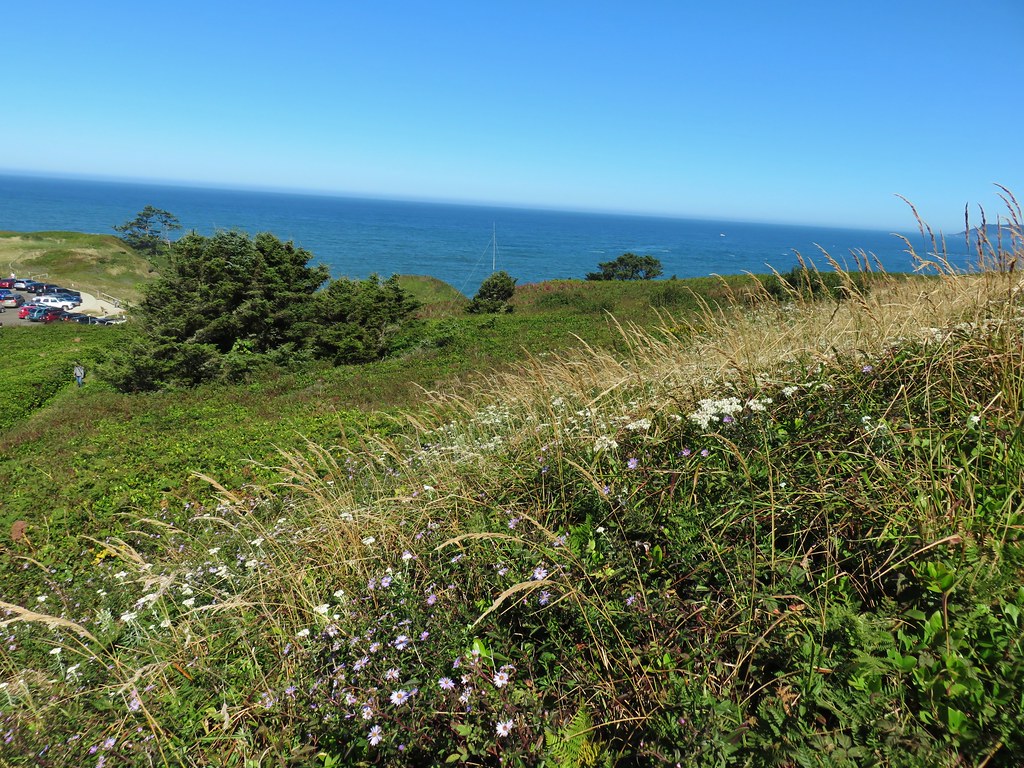
Some lingering flowers showed that there was more to the hill than just salal bushes.
Pearly everlasting

Aster

Salal Hill Trail

Wildflowers along the Salal Hill Trail

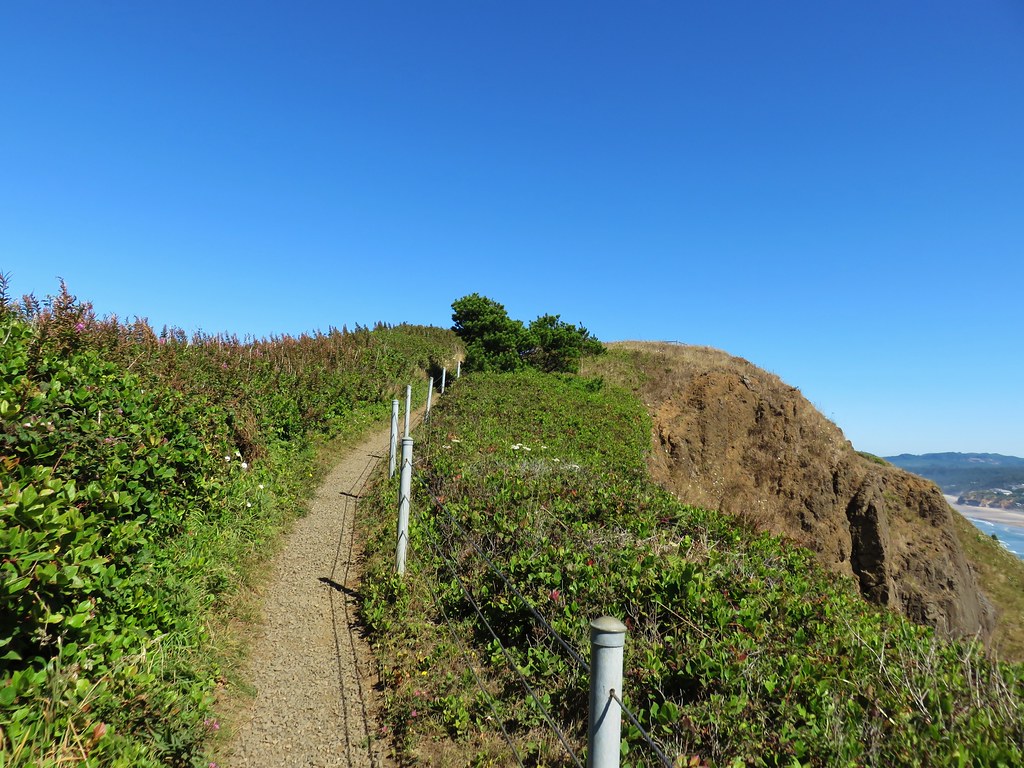
The trail passed above the interpretive center before arriving at the small, flat summit.
The interpretive center below the Salal Hill Trail

Salal Hill Trail

From the summit we had a nice view north to Cape Foulweather.
Looking north from the Salal Hill Trail

To the west was the Yaquina Head Lighthouse and the Pacific Ocean.
Yaquina Head Lighthouse from the Salal Hill Trail

We headed down after a short stay since it was now time to make our way to the reunion. We could have spent a lot more time exploring the area so we’ll have to go back again sometime. As we were coming down the hill we spotted another whale which we watched for a moment. It seemed to be giving us a goodbye wave, what a polite way to end our hike. Happy Trails!
Grey back whale

Flickr: Yaquina Bay and Yaquina Head

Categories
Hiking Oregon Salem/Albany Trip report Willamette Valley

Salem Parks – Wallace Marine to Minto-Brown Island

With an influx of visitors expected in Oregon for the eclipse we decided to do something a little different for our most recent hike.  Heeding warnings of possible traffic issues (which never seemed to have materialized) we stayed close to home opting for a urban hike through three city parks in Salem.

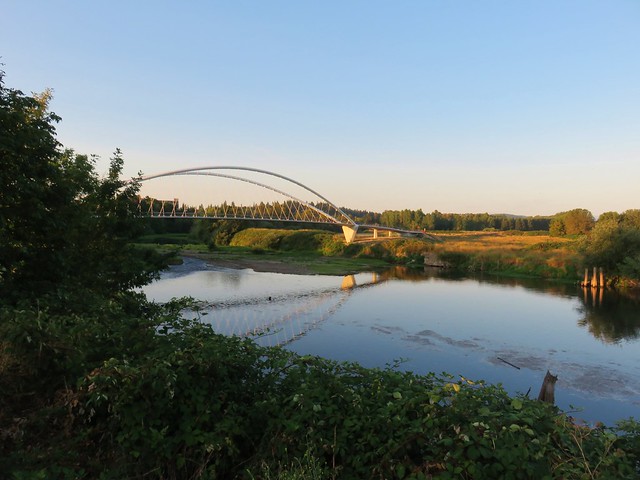
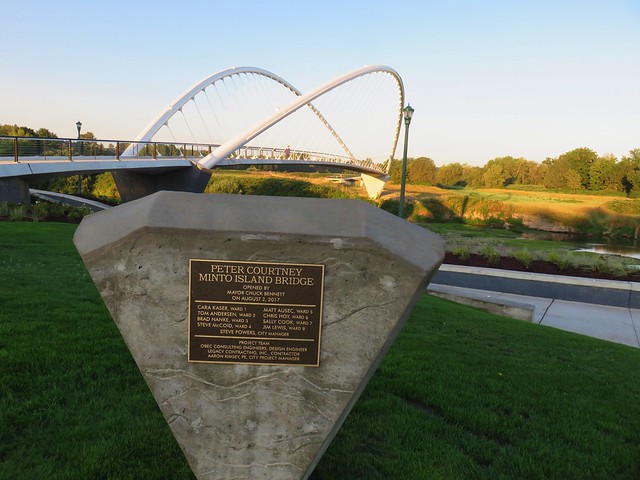
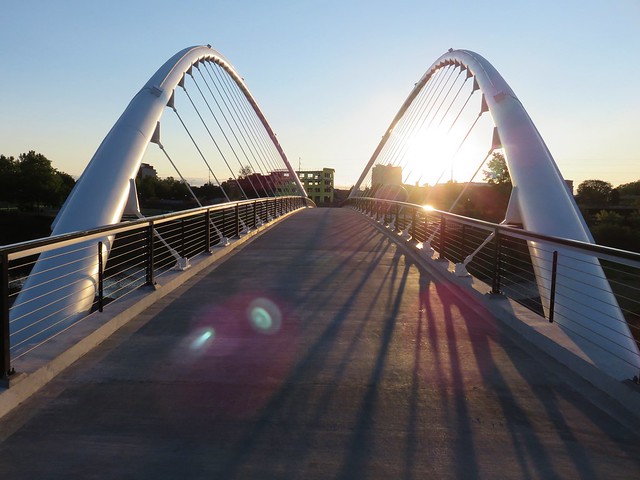
We had gotten the idea for this urban hike when the opening of the Peter Courtney Minto Island Bicycle and Pedestrian Brdige on June 5th, 2017 made it possible to walk or bike through Wallace Marine, Riverfront, and Minto-Brown Island Parks without having to use any streets. Given the unknowns associated with the eclipse this seemed like the perfect time to try it out.

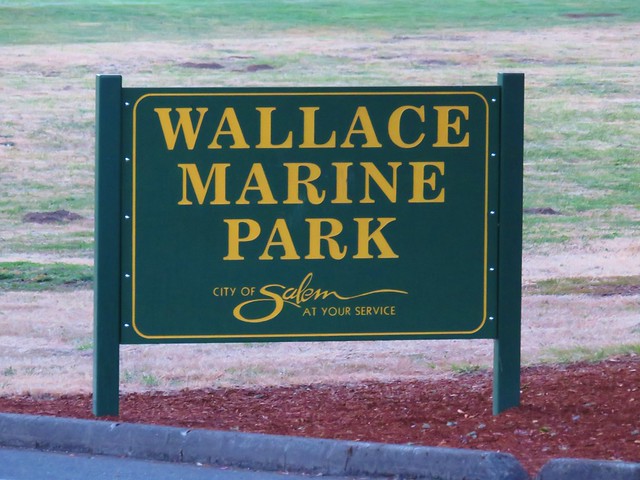
We began our hike at West Salem’s Wallace Marine Park.
IMG_7099

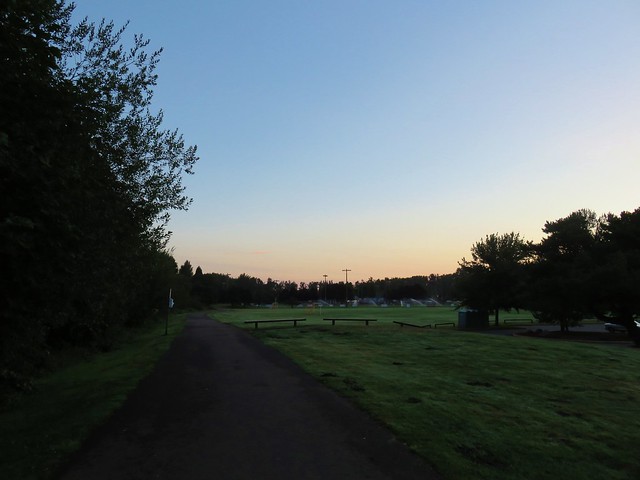
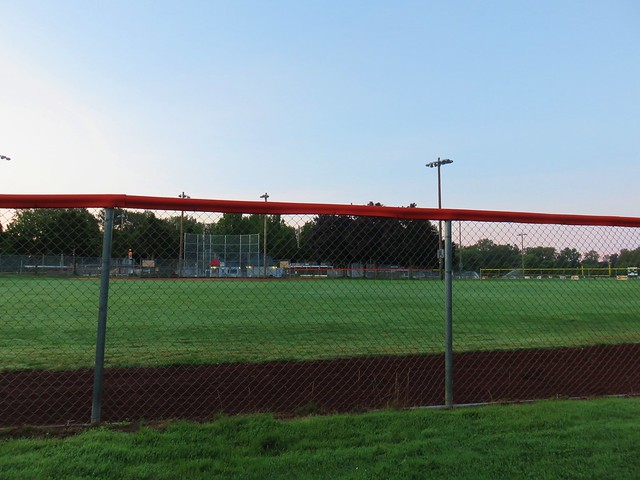
After entering the 114 acre park we turned left (north) and headed for the softball complex which consists of 5 fields that host several tournaments each year.
IMG_7100

IMG_7101

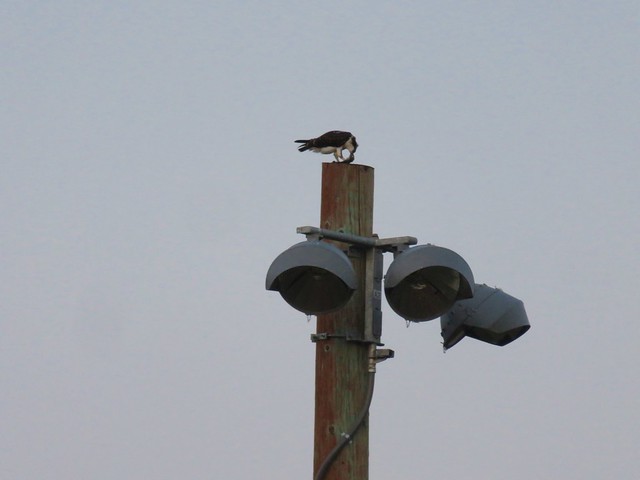
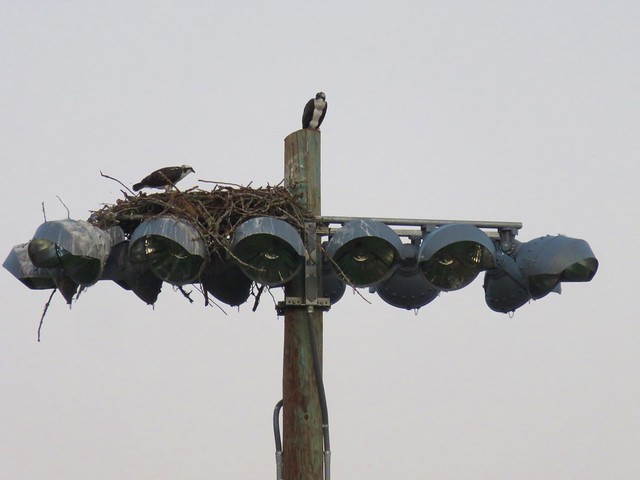
We looped around the fields which were empty this early it morning. No games meant no crowds but that didn’t mean there was a lack of noise. Osprey use the light poles for nests and they were making their presence known from their high perches.
IMG_7102

IMG_7111

After looping around the fields we headed south past the parks entrance road and several soccer fields.
IMG_7116

IMG_7117

Shortly before reaching the Union Street Railroad Pedestrian Bridge we turned left down a paved path to the Willamette River.
IMG_7118

IMG_7119

IMG_7124

IMG_7125

After visiting the river we headed for the pedestrian bridge.
IMG_7130

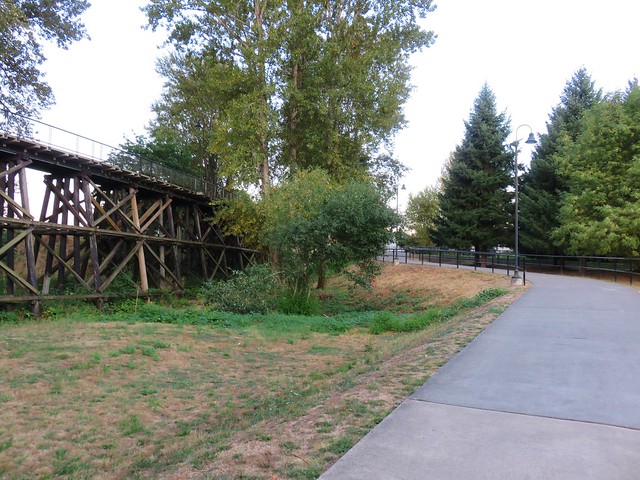
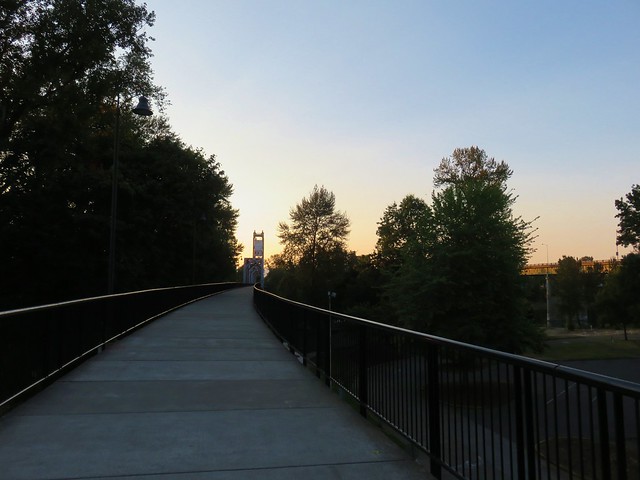
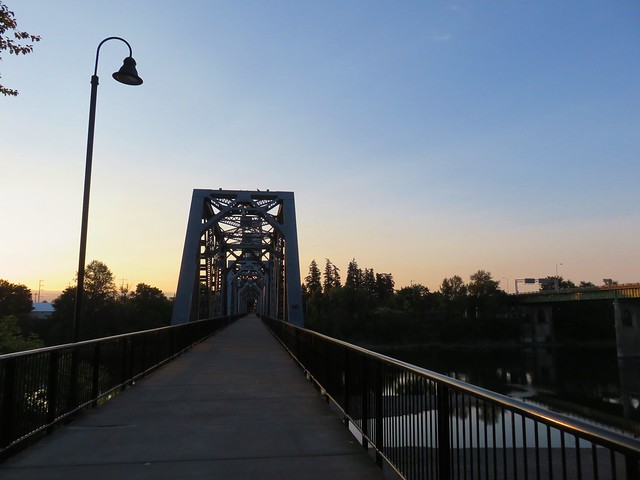
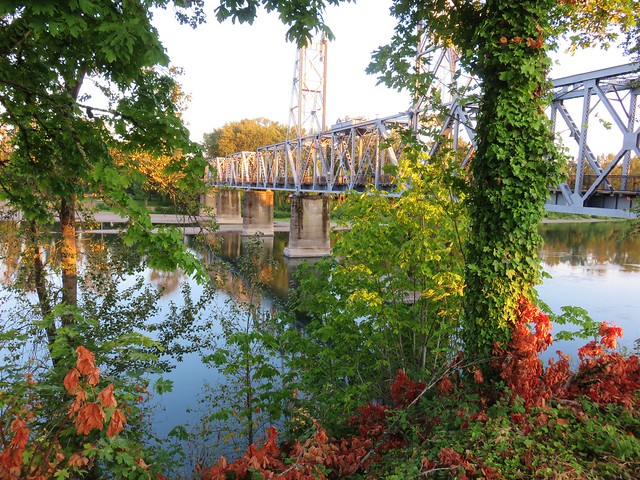
Originally constructed in 1912-13 for the Pacific Union Railroad the half mile bridge was purchased for $1 by the city in 2004. In April, 2009 the bridge was reopened to pedestrians and bicyclists connecting Wallace Marine Park to Salem’s Riverfront Park.
IMG_7136

IMG_7137

After crossing the river we turned right and headed into Riverfront Park. The section of sidewalk just after the bridge was one of the least scenic portions of the route as it followed the parks entrance road past an electrical station and under the Center and Marion Street Bridges.
IMG_7143

IMG_7144

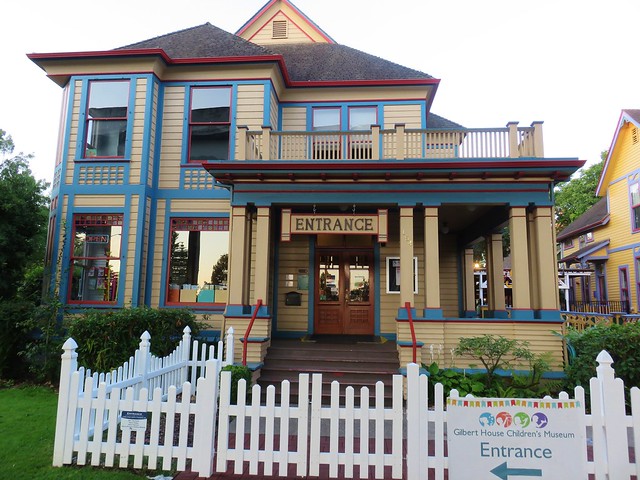
Between the Marion Street and Center Street Bridges is the Gilbert House Children’s Museum.

This science and art museum is a great place for kids and fun for their parents.
IMG_7145

IMG_7147

We chose to go around the museum on the left which took us between the museum and some still operational railroad tracks. If you’re looking for scenery skip this section and stay to the west of the museum which keeps the river in view.

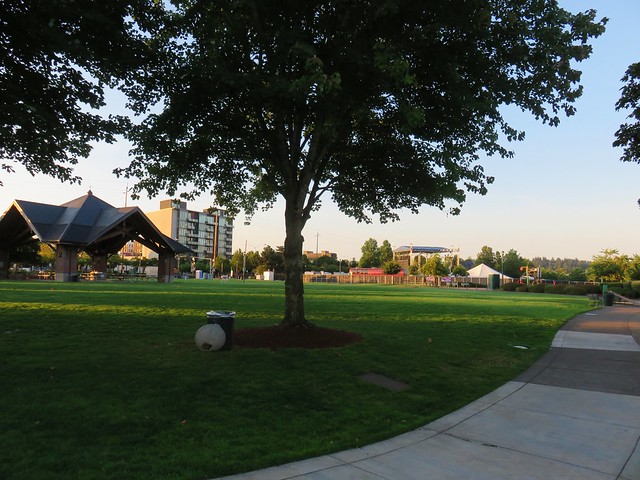
After passing a parking lot we came to the open green grass of Riverfront Park.
IMG_7152

A music event was being set up in the center of the 23 acre park.
IMG_7153

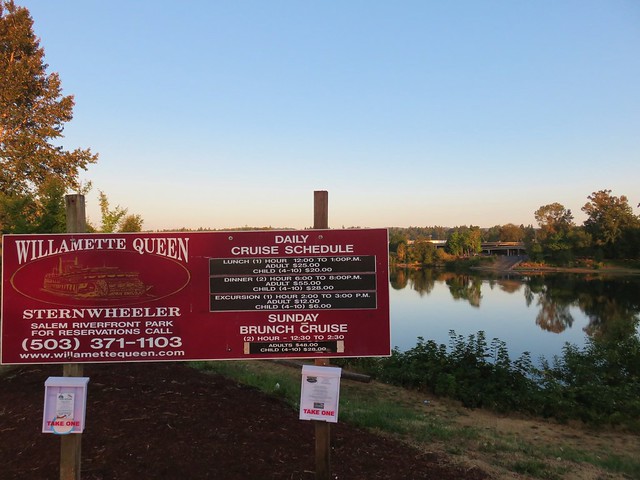
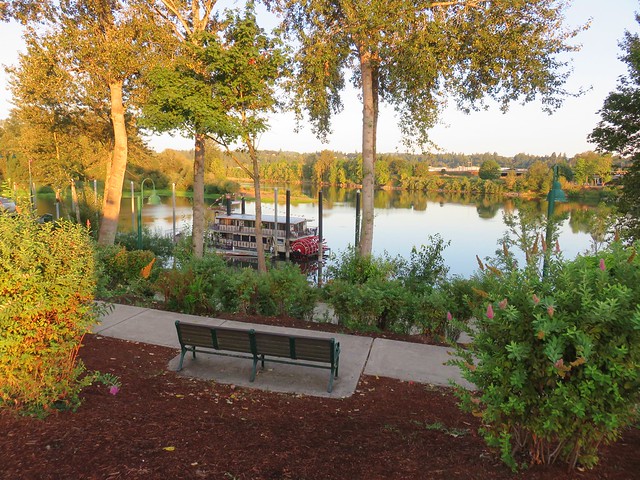
The park is also home to the Willamette Queen Sternwheeler
IMG_7151

IMG_7155

IMG_7156

Riverfront Park was the location of the field sessions when Heather and I took the Route-Finding Class offered by the Chemeketans.

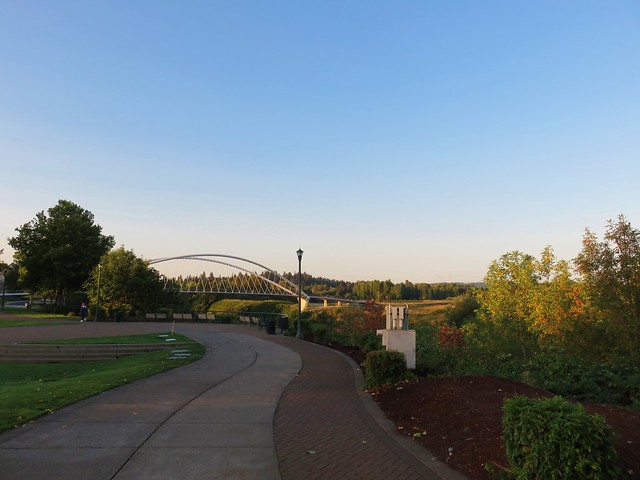
We passed the small open air amphitheater, which is slated for an upgrade in 2020, and continued south toward the Peter Courtney Minto Island Bicycle and Pedestrian Bridge.
IMG_7159

IMG_7162

IMG_7164

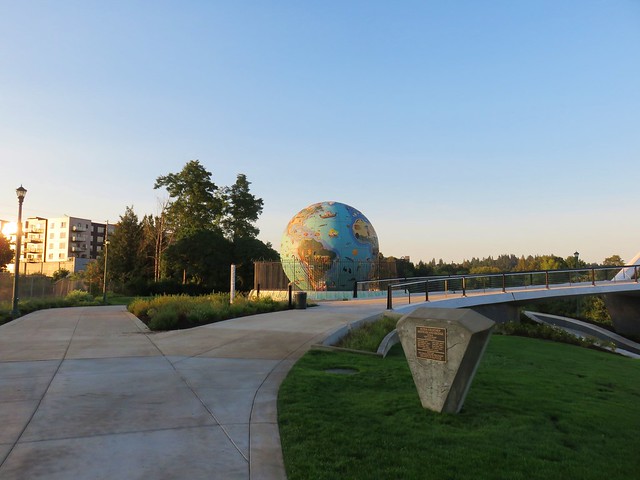
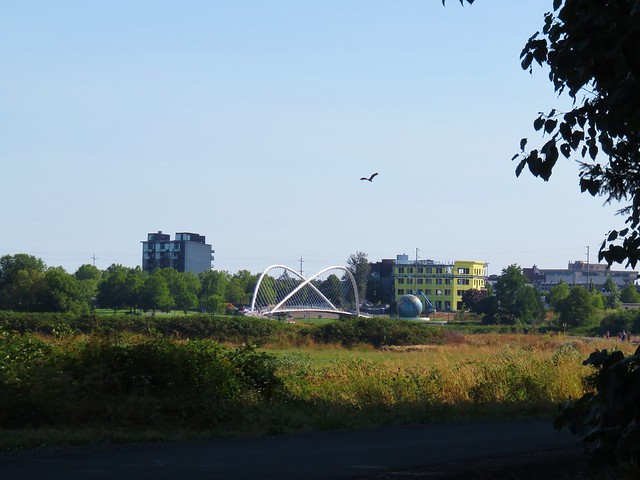
Another park feature, the Eco-Earth Globe, sits near the bridge and is an interesting bit of art.
IMG_7165

We headed across the bridge and into Minto-Brown Island Park.
IMG_7166

IMG_7168

IMG_7169

Interpretive signs line the new section of trail linking the bridge to the older trail system in the park after approximately 3/4 of a mile.
IMG_7176

IMG_7175

IMG_7186

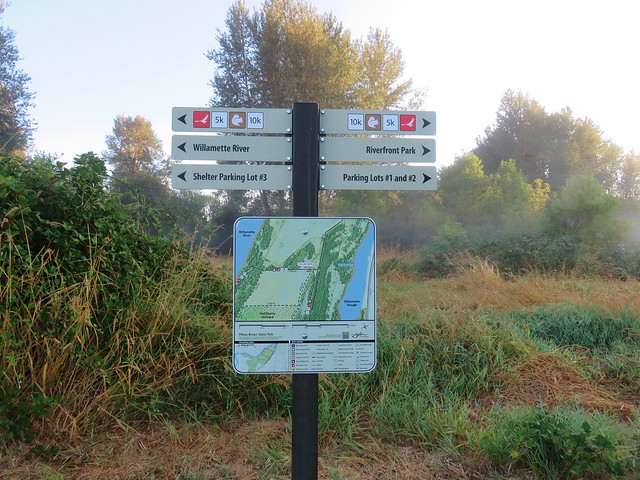
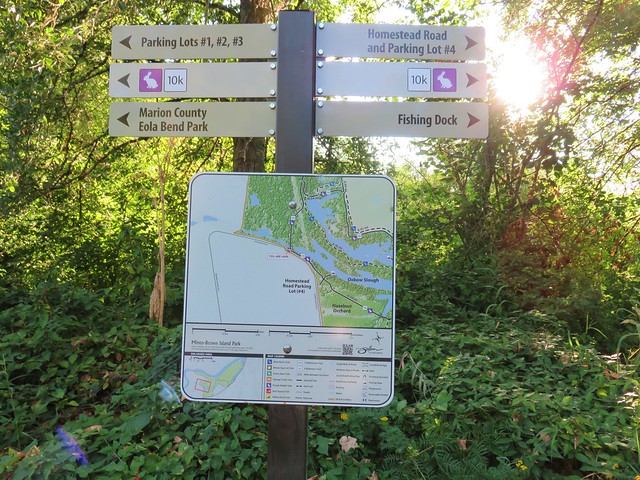
At the junction with the older trail is a large signboard and map.
IMG_7193

By far the largest of the three parks, at 1,200 acres, numerous trails and loop options were available to us. We had done a short loop hike here in April of 2016 but this time planned on covering a bit more ground.

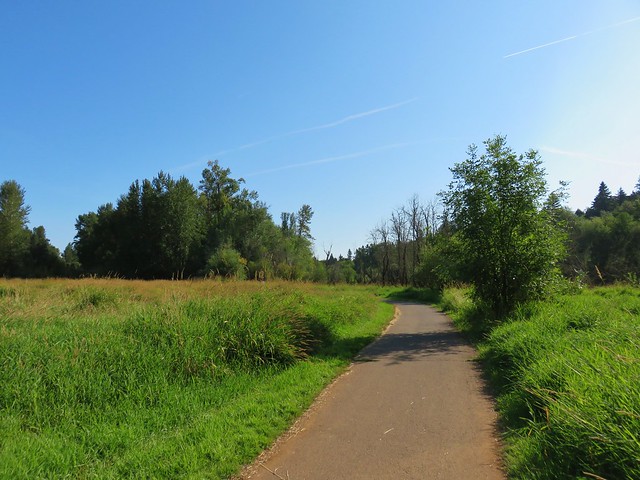
We turned right at the map and followed paved paths to the bank of the Willamette River.
IMG_7195

IMG_7198

IMG_7201

IMG_7203

IMG_7204

Signage along the trails is excellent and makes it fairly easy to get around even if you aren’t familiar with the park. We were headed for the Shelter Parking Lot, where we had started our 2016 visit.
IMG_7212

IMG_7211

We had been passed by several familiar faces running with groups from Gallagher Fitness Resources but when we arrived at their watering hold near the gazebo at the Shelter Parking lot there were none to be seen in the area.
IMG_7215

IMG_7214

We continued on from the gazebo following our route from our previous visit by forking right across at footbridge after a tenth of a mile.
IMG_7218

IMG_7217

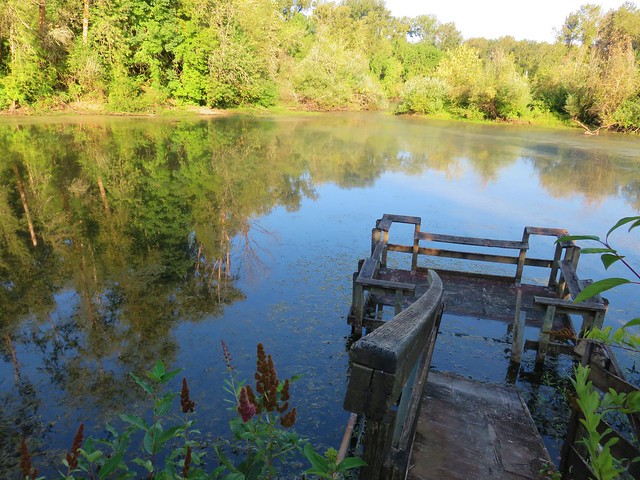
After another .4 miles we detoured to the left to visit a collapsing fishing dock.
IMG_7220

We continued on passing an open field before turning off the paved path on a wide dirt path to the left which led us to Faragate Ave.
IMG_7221

IMG_7223

IMG_7226

At Faragate Ave we turned left on a paved path which paralleled the road for a short distance before bending back into the park.
IMG_7227

IMG_7229

After crossing another footbridge we turned right on a narrow dirt path.
IMG_7230

IMG_7231

IMG_7232

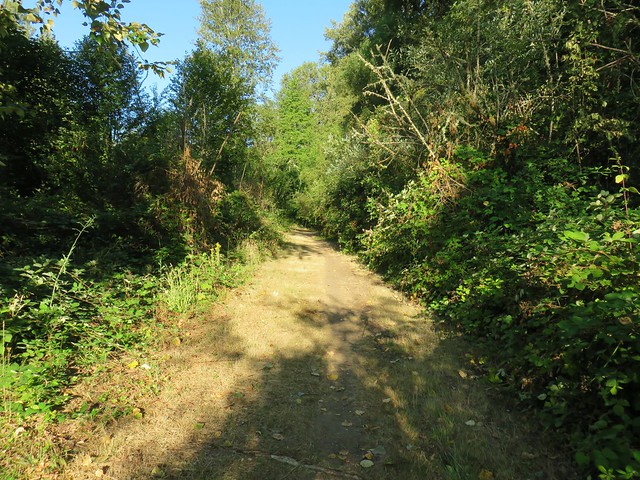
This path led about a quarter mile to another paved path where we initially turned right hoping to make a wide loop on another dirt path. We took a left on a little path after a tenth of a mile but it was rather brushy with blackberry vines and some poison oak so we quickly scrapped that idea and returned to the paved path which runs between the east end of Homestead Road and the Shelter Parking Lot #3. This section of trail is a bit drier and more open which allows for a few more flowers as well as little more poison oak.
IMG_7243

IMG_7234

IMG_7241

IMG_7245

IMG_7247

IMG_7248

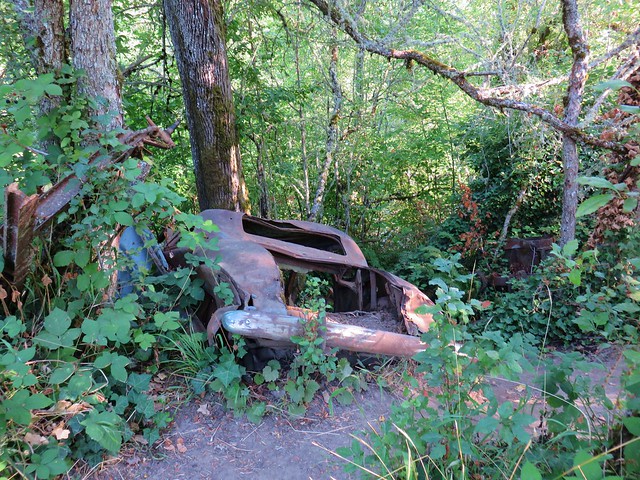
There is also an old car along the way.
IMG_7249

We were on our way back, but before reaching the gazebo we turned right on the Duck Loop which would swing us out and around some duck ponds.
IMG_7252

IMG_7256

IMG_7257

IMG_7259

IMG_7260

We crossed the park’s entrance road after .9 miles and turned right along it to the Entrance Parking Lot which we found to be super busy. We followed a paved path from the far end of the lot across the Willamette Slough and turned right on another paved path.
IMG_7261

We completed our loop through Minto and headed back toward Riverfront Park.
IMG_7264

IMG_7265

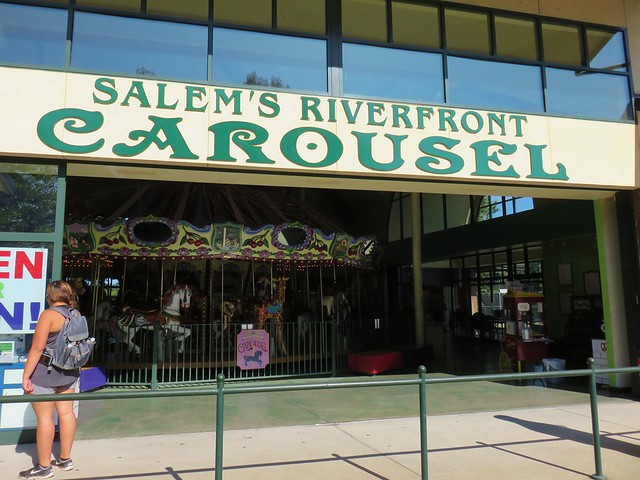
We took a different route back through Riverfront Park in order to go by Salem’s Riverfront Carousel, another great attraction for kids.
IMG_7266

According to our GPS we managed to get 12.4 miles in for the day and there were still trails in Minto that we didn’t get to. Even though urban hikes are a lot different than our normal outings this was a nice hike and gives us a nearby go-to option when we just can’t get away. Happy Trails!

Flickr: Wallace to Minto Parks

Categories
High Cascades Hiking Mt. Hood Area Oregon Trip report

Vista Ridge Trail to Elk Cove – Mt. Hood

August is typically one of our busier hiking months but this year things are working out differently. We’ve both had things come up at work leading us to change our vacation plans, the date of our annual family reunion changed, there are forest fires closing large areas of both the Mt. Jefferson and Three Sisters Wildernesses, and the upcoming solar eclipse essentially eliminated any realistic plans for hiking around the 21st.

We actually almost skipped our weekly hike this time around but knowing we’d later regret that decision we turned to Mt. Hood, which has thus far escaped the fire issues this year. Our plan was to take the Vista Ridge Trail up to the Timberline Trail and visit a few familiar areas – Eden Park, Cairn Basin, and Elk Cove.

We began at the Vista Ridge Trailhead.

IMG_6805

We set off through the forest which was damp from a light mist that fell for most of the day.

IMG_6811

It was actually really nice to hike in the cool temperatures and to see some moisture falling.


The trail enters an area burned by the 2011 Dollar Lake Fire near a registration box for the Mt. Hood Wilderness after a half mile.

IMG_6812

The Vista Ridge Trail is probably best known for its displays of avalanche lilies in the burn area during July but we discovered that August provided an amazing display of its own.

IMG_6818

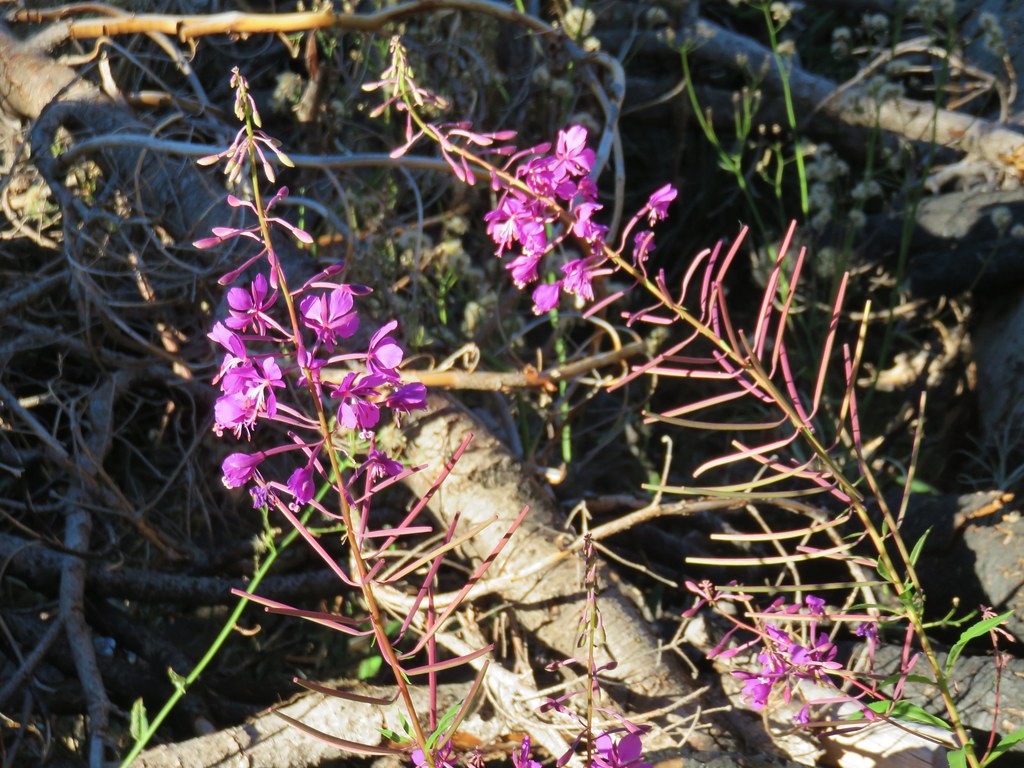
The amount of fireweed was simply amazing.

IMG_6822

IMG_6828

IMG_6842

With all the fires currently burning it was nice to be reminded that the forests will recover eventually.

With the misty conditions views were limited but Pinnacle Ridge was visible across the Clear Branch Valley and we spied a bit of Laurence Lake as well as Bald Butte further in the distance.

IMG_6829Pinnacle Ridge

IMG_6831

After two and a half miles we arrived at the junction with the Eden Park Loop Trail.

IMG_6855

A few avalanche lilies were still blooming in this area.

IMG_6845

We turned down the Eden Park Trail which descended through more burned forest filled with more fireweed and some small meadows with other wildflowers.

IMG_6857

IMG_6865

IMG_6869

IMG_6877

IMG_6875

We also crossed several small wildflower lined streams flowing down toward Ladd Creek.

IMG_6884

IMG_6883

IMG_6885

IMG_6886

Eight tenths of a mile from the Vista Ridge Trail junction we arrived at Ladd Creek itself.

IMG_6892

Just beyond Ladd Creek we arrived at Eden Park.

IMG_6897

IMG_6899

IMG_6901

IMG_6902

Beyond Eden Park the trail began to climb on its way up to the Timberline Trail at Cairn Basin.

IMG_6917

IMG_6921

IMG_6923

IMG_6925

IMG_6927

IMG_6930

We turned left on the Timberline Trail and took a short snack break in Carin Basin and visited the stone shelter.

IMG_6934

IMG_6938

After leaving Cairn Basin we recrossed Ladd Creek.

IMG_6940

IMG_6942

It was about a mile from this upper crossing to the junction with the Vista Ridge Trail. There were lots of wildflowers along this stretch as well as some lingering snow.

IMG_6946

IMG_6952

IMG_6953

IMG_6958

IMG_6962

IMG_6966

IMG_6971

IMG_6970

IMG_6973

Wy’East Basin lay just beyond the junction with more flower lined streams.

IMG_6974

IMG_6980

IMG_6982

IMG_6988

We continued on from Wy’East Basin heading toward Elk Cove. Despite not being able to see the mountain, just being on the Timberline Trail gave us that alpine feeling that only the mountains can.

IMG_6992

IMG_6995

IMG_6998

We had passed several rock fields where we had listened and looked for one of our favorite animals, the pika, but had not had any luck. As we began the descent to Elk Cove though we heard the distinctive “meep” of a pika. It’s a sound that always brings a smile to our faces. We had stopped along the trail for a moment to look around and just as we started to resume hiking we spotted one sitting on the rocks ahead.

IMG_7007

IMG_7005

IMG_7009

The descent to Elk Cove when hiking clockwise on the Timberline Trail is an extremely scenic section of trail when visibility is good. The clouds and mist took a bit away from the epic views but it was still an impressive sight.

IMG_7015

IMG_7020

IMG_7022

IMG_7025

IMG_7026

The further down into the cove we went the better the flower display became.

IMG_7036

IMG_7035

IMG_7040

IMG_7044

IMG_7045

IMG_7047

We stopped at an empty campsite near a creek and took a seat while we took in the beauty of the surrounding area.

IMG_7050

We could occasionally see some blue sky to the east which gave us a just a bit of hope that maybe we’d get a view of the mountain after all.

IMG_7053

The blue sky looked to be just on the side of the mountain though and the clouds were continuing to blow in from the west.

IMG_7054

After a while the combination of our damp clothes and the cool breeze became a little chilly so we decided to head back. It appeared that we were out of luck on a mountain view this time but as we were climbing out of the cove the clouds began to break even more.

IMG_7064

IMG_7065

IMG_7066

We waited and watched as the sky cleared up just enough to reveal the mountain before swallowing it up once more.

IMG_7075

IMG_7074

IMG_7077

IMG_7084

It had lasted less than a minute and then we were back in the cloudy mist but it was the icing on the cake for what had already been a great hike. We returned to the junction with the Vista Ridge Trail where we turned downhill, passing the Eden Park Trail junction in .3 miles and arriving back at our car in another two and a half miles. The total distance for the day was just over 11 miles with a little under 2000′ of elevation gain.

We were very glad we hadn’t skipped our weekly hike. Getting out on the trail was really just what we had needed. Happy Trails!

Flickr: Vista Ridge Trail

Categories
High Cascades Hiking Mt. Washington Area Oregon Trip report

Mount Washington Meadows

One week after returning from our Northern California trip we found ourselves headed to Bend to drop off some furniture to our Son who had recently moved.  It wasn’t going to be a long visit due to his having to work so after a quick tour of his new apartment we were back on our way home.

Our plan was to stop for a hike on the way home along the Pacific Crest Trail near Santiam Pass south to Mount Washington Meadows. We had left Salem at 5am so it would still be fairly early when we hiked. Just after 8:30 we pulled into the PCT trailhead near Big Lake.
IMG_6597

We headed south on the PCT which quickly entered the Mt. Washington Wilderness amid trees burned in the 2011 Shadow Lake Fire.
IMG_6601

IMG_6603

The first two or so miles passed through the burn where despite most of the trees being dead, there was plenty of green and other colors present.

2017-08-05 13.36.29

IMG_6801

2017-08-05 13.37.22

2017-08-05 08.56.33

IMG_6599

IMG_6605

IMG_6610

IMG_6611

2017-08-05 08.55.45

IMG_6628

The lack of living trees did allow for some views of both Mt. Washington ahead and Three Fingered Jack to the north beyond Big Lake, the Hoodoo Ski Area and the flat topped Hayrick Butte.

IMG_6644

IMG_6638

IMG_6639

We could also see two small buttes just to the SW of Big Lake which we had hiked around in 2012 when we visited the Patjens Lakes.

That hike was also done during the first week of August, but less than a year removed from the Shadow Lake Fire. It was interesting to see how the forest was recovering with the passing of several more years.

Patjens Lake TrailPatjens Lake Trail – August 2012

IMG_6791Pacific Crest Trail – August 2017

A wider variety of plants including various berries were present now.

We left the burn area where we were able to see what the forest will look like again eventually.

IMG_6650

IMG_6675

We passed several small meadows and lots of wildflowers as we went.

IMG_6661

IMG_6664

IMG_6653

IMG_6657

IMG_6666

IMG_6670

IMG_6683

IMG_6687

We had been gradually climbing and when a break in the trees allowed us a view to the north where we spotted Mt. Jefferson over the shoulder of Three Fingered Jack.

IMG_6672

IMG_6674

It was a bittersweet view as it reminded us that the Whitewater Fire was burning on the west side of Mt. Jefferson and had already burned over portions of several trails leading to Jefferson Park.

There was no real visible smoke but we knew that it was there and those trails would look a lot like what we’d passed through earlier in the Shadow Fire area.

When the PCT began to curve around a ridge to the left the Spire of Mt. Washington came into view.
IMG_6689

An open hillside then opened up views to the south were several other familiar peaks were visible.

2017-08-05 10.47.55_stitch

These included the North and Middle Sister, Belknap Crater, the Husband, Diamond Peak, and Scott Mountain.

IMG_6783North & Middle Sister with Belknap Crater

IMG_6697Scott Mountain

As we continued we passed through some increasingly impressive meadows until reaching a large lupine filled meadow below Mt. Washington.

IMG_6703

IMG_6710

IMG_6718

IMG_6719

IMG_6720

Mt. Washington rose above the meadow where we were able to get a great look at the eroded volcano.

IMG_6733

IMG_6724

IMG_6735

IMG_6744

Lupine wasn’t the only thing in abundance in the meadow. There was also a large number of tortoiseshell butterflies who seemed to be overly attracted to me.

IMG_6730

2017-08-05 11.01.51

2017-08-05 11.03.23

2017-08-05 11.03.30

We continued through the meadow where we found a nice display of cat’s ear lilies still in bloom amid the lupine.

IMG_6745

IMG_6751

At this point we’d gone a little over 5.5 miles, but the level grade of the PCT and the great scenery so far enticed us to continue a little further to see what else the area had to offer. We decided to follow the PCT until it began to lose elevation as it crossed a valley between Mt. Washington and Belknap Crater. We soon found ourselves in another area affected by fire.
IMG_6755

IMG_6779

We ended our hike as the PCT bent around a ridge end where it would begin the 400′ elevation loss before climbing up to the shoulder of Belknap Crater which was visible across the valley.

IMG_6762

From this vantage point we could also make out Little Belknap Crater.

IMG_6774

After a short break we headed back through the meadows and returned to our car.

IMG_6781

The 12.4 mile round trip had proved to be a lot more entertaining than we’d expected. We hadn’t really known what to expect having selected the hike from the back of our guidebook in the additional hikes section, but it had been a thoroughly enjoyable outing. Happy Trails!

Flickr: Mount Washington Meadows

Categories
Cascade-Siskiyou National Monument Hiking Oregon Trip report

Pilot Rock

On our way home from Mount Shasta City we stopped for a quick hike to Pilot Rock in Oregon’s Soda Mountain Wilderness. We took exit 1 from Interstate 5 and drove north on Old Highway 99 for 6.9 miles to Pilot Rock Road (Road 40-2E-33) where we turned east. Instead of starting at the Pilot Rock Trailhead which is located 2 miles up the road we parked after a mile at the Pacific Crest Trail crossing. (If you do start here be sure not to block the private driveway.)
IMG_6520

From the road Mt. Ashland to the west and Mt. McLoughlin to the north were visible in the morning light.
IMG_6525

IMG_6526

IMG_6528

IMG_6531

We headed south on the PCT (which ironically meant we were going northbound due to the route the trail takes after crossing I-5).
IMG_6527

Most of the flowers were finished but by the looks of things there had been quite a few. A number of late bloomers remained and along with those were some juicy thimbleberries.
IMG_6535

IMG_6538

IMG_6542

IMG_6544

Aside from a couple of very short uphills the trail seemed fairly level and after about 3/4 of a mile Pilot Rock came into view.
IMG_6553

IMG_6555

IMG_6556

After another .9 miles we arrived at a junction with the closed road that serves as the trail from the official Pilot Rock Trailhead.
IMG_6561

The two trails joined for .2 miles passing through a nice forest before splitting once again.
IMG_6563

IMG_6566

We forked to the right following the Pilot Rock pointer. This trail was much steeper and we climbed about 600′ in .7 miles to the base of Pilot Rock.
IMG_6569

IMG_6572

In a perfect world we would have scrambled up to the top of the rock which wasn’t that much higher, but after hiking 80 plus miles and climbing at least 20,000′ over the previous 7 days we weren’t sure that we had the strength and muscle control left to safely climb to and descend from the top.

Rather than risk it we stopped just below the first section where we definitely would have need to use our hands to go any higher.
IMG_6574

We returned the way we’d come. Starting at the PCT put the hike at a little under 5 miles a little less than double what it would have been from the Pilot Rock Trailhead with some nice scenery which would have been even better earlier in the year when the numerous flowers were still in bloom. Happy Trails!
Flickr: Pilot Rock