Categories
Hiking Northern Coast Oregon Oregon Coast Trip report

Seaside

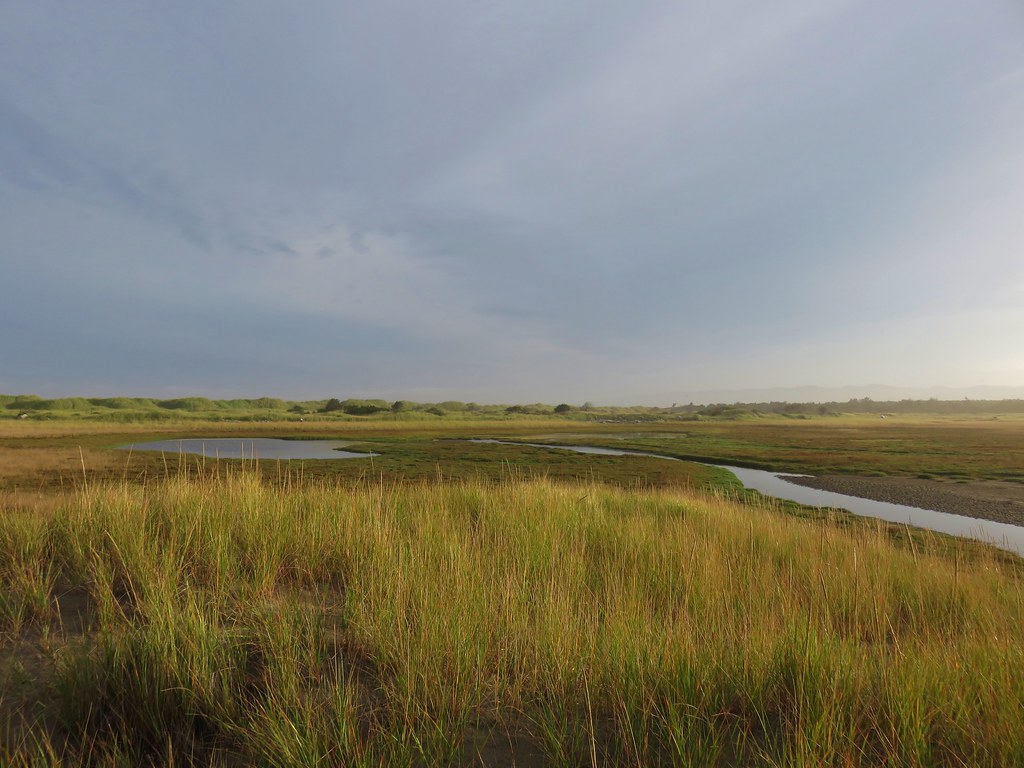
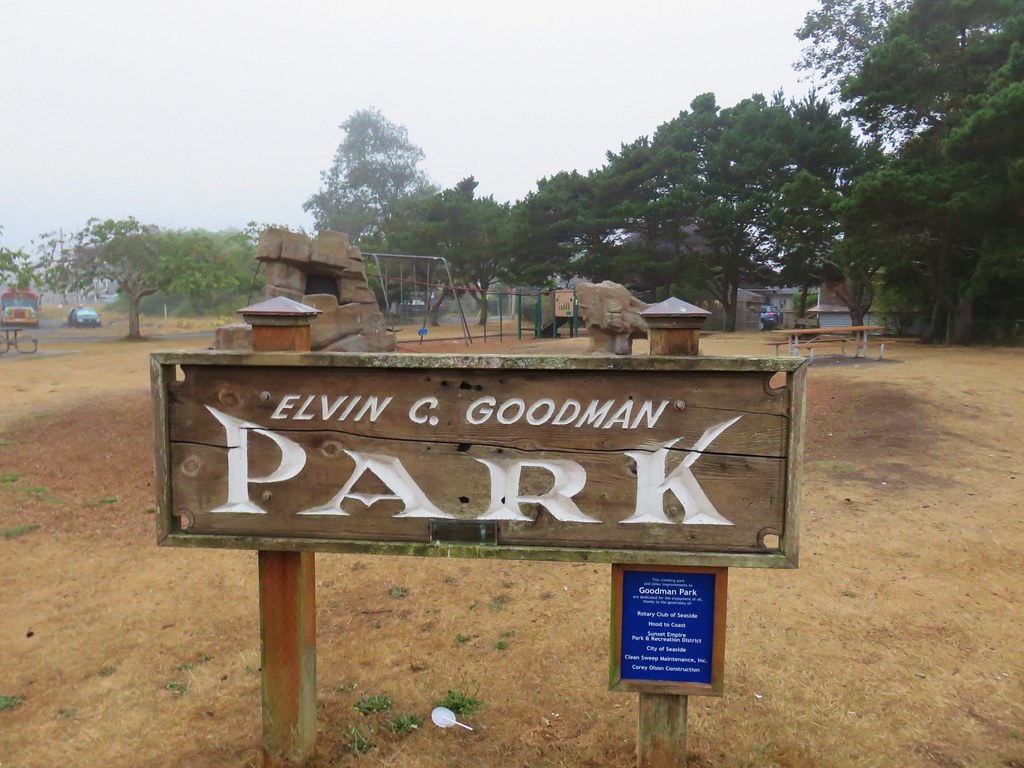
Before leaving the coast we took one final hike on Tuesday morning. We stopped in Seaside parking at Elvin C. Goodman Park which is located on 12th just west of the Necanicum River.

IMG_8786

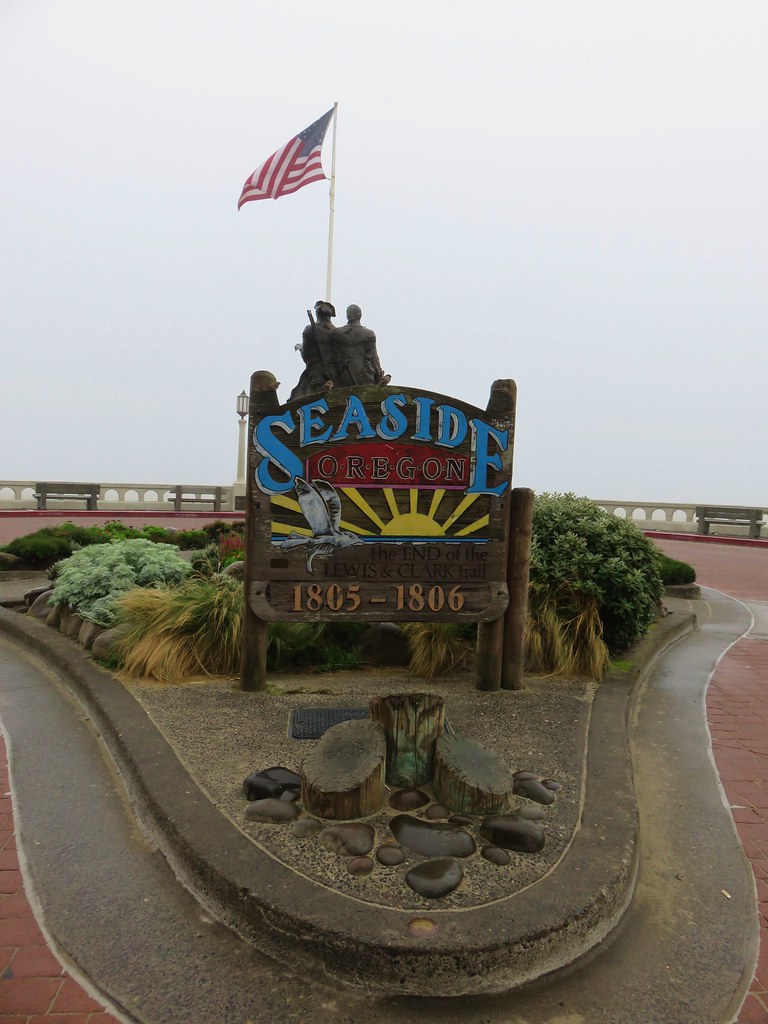
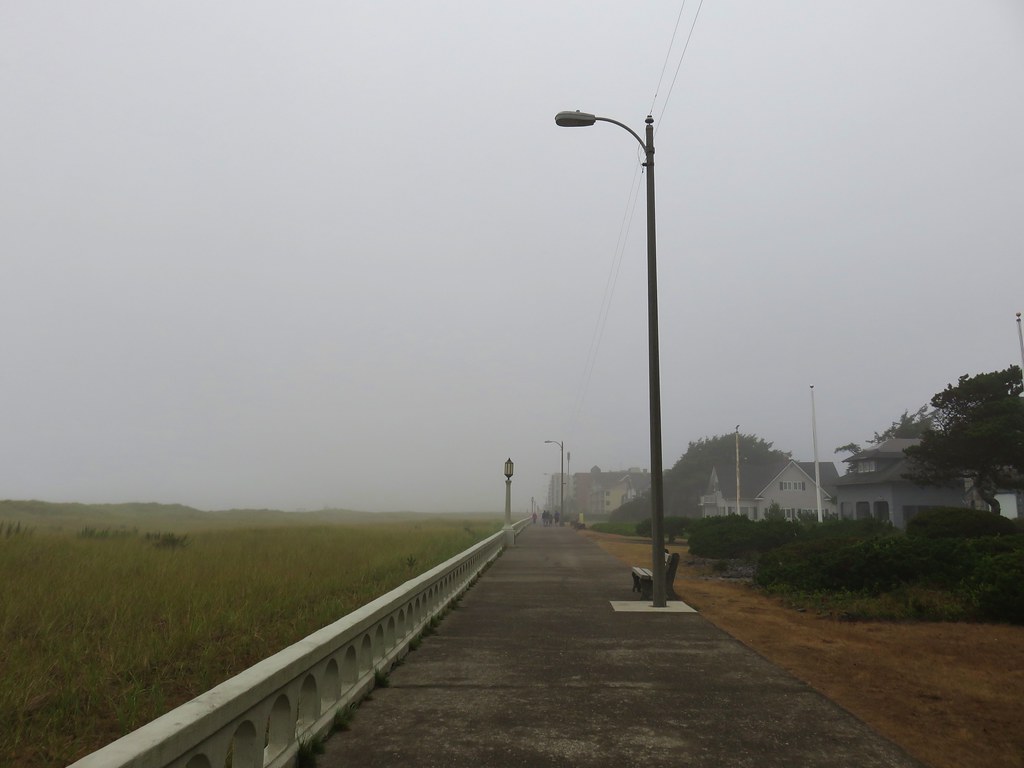
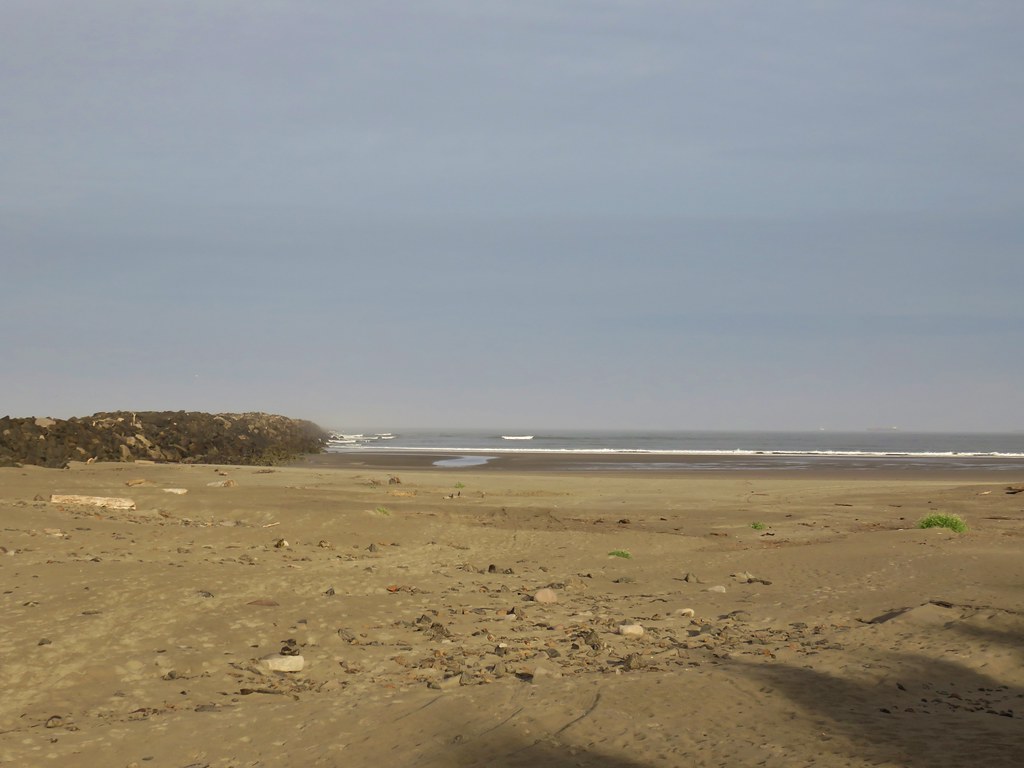
We walked west on 12th St. passing the Seaside Promenade and headed out onto the beach.

IMG_8788

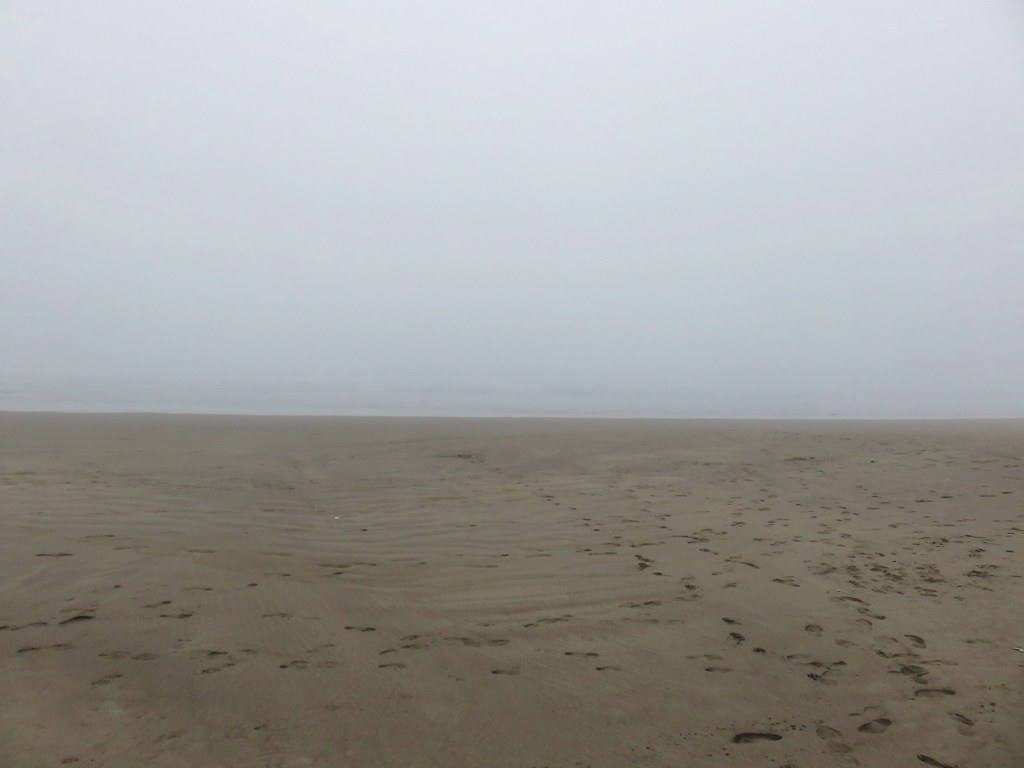
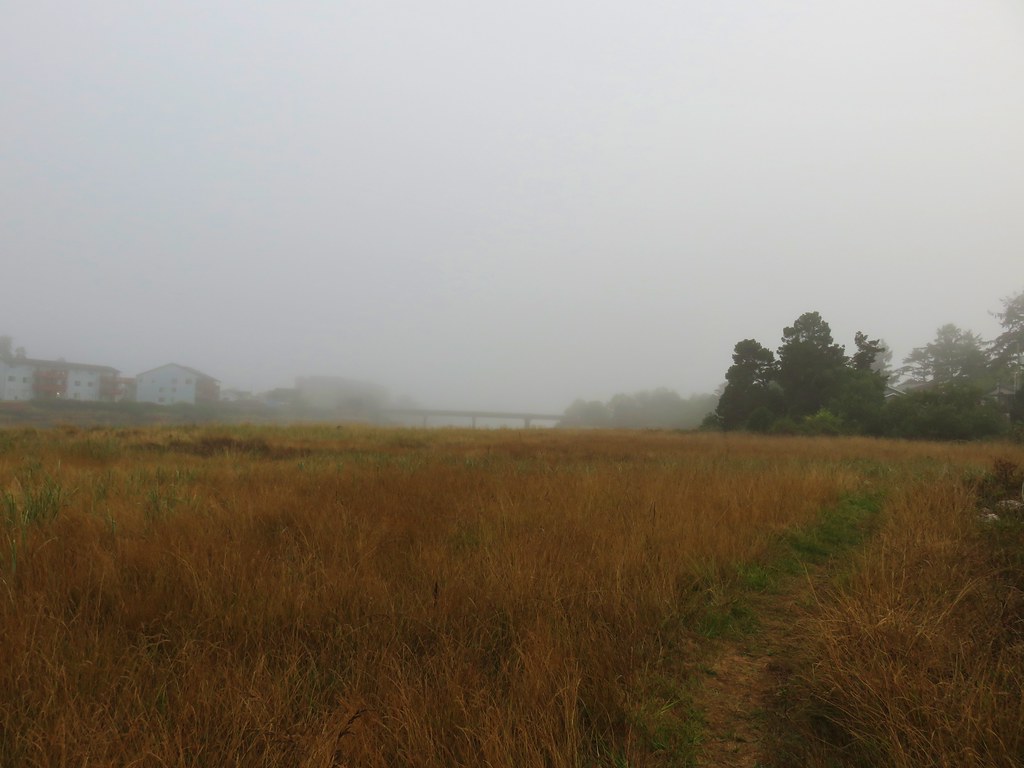
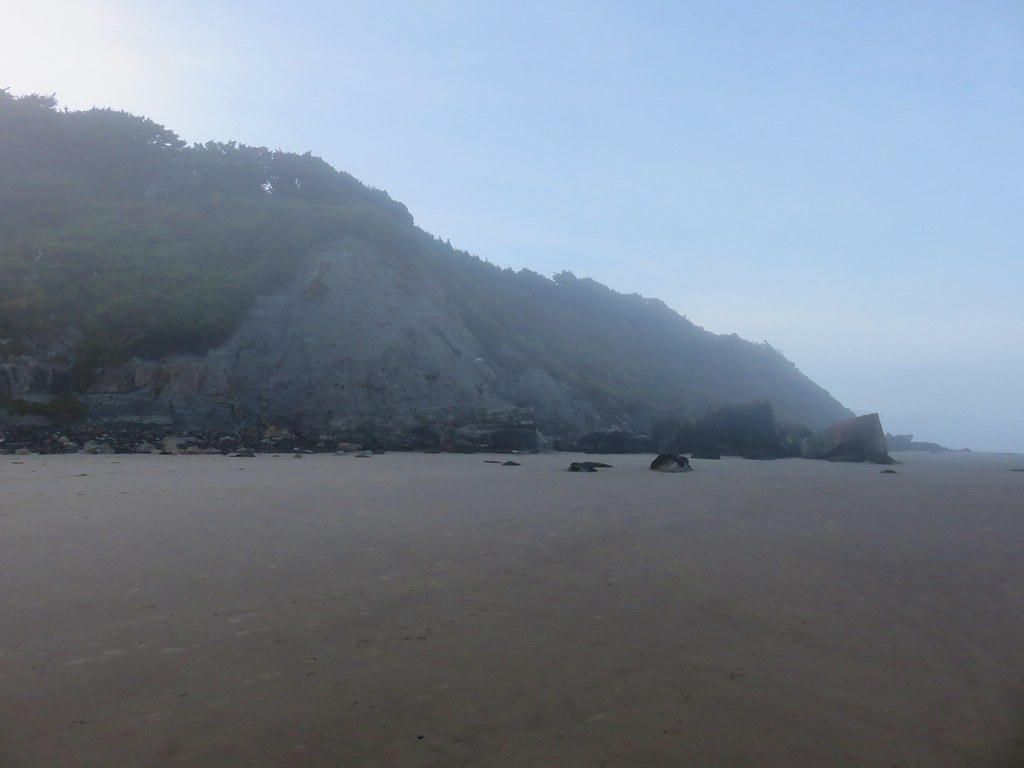
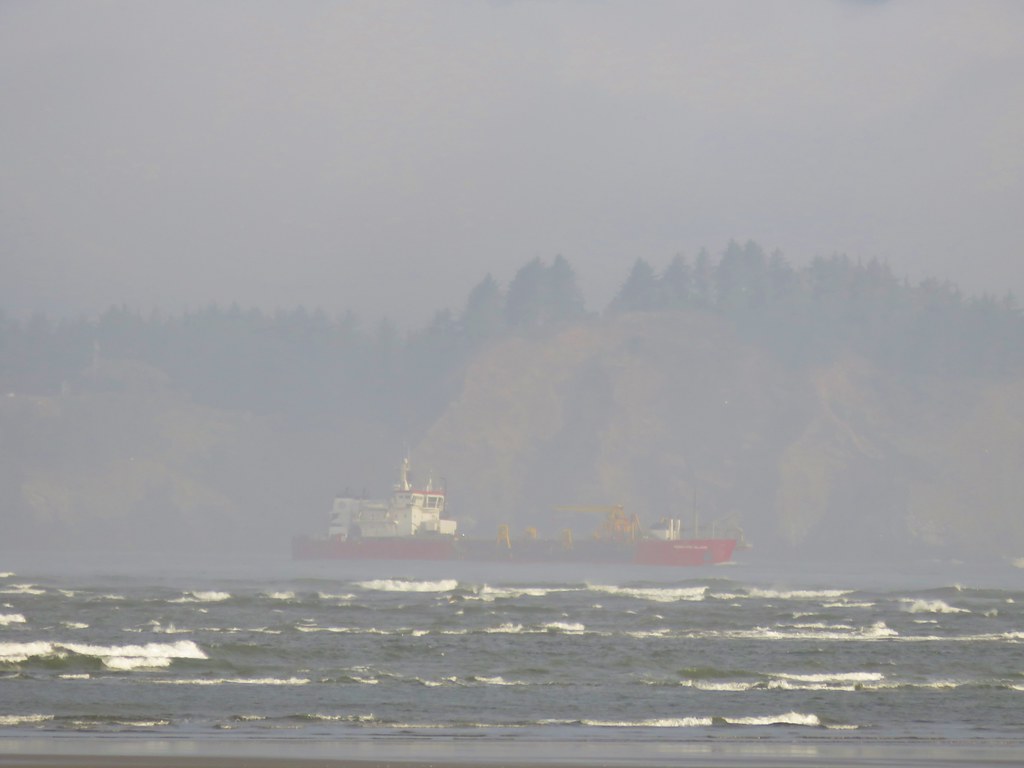
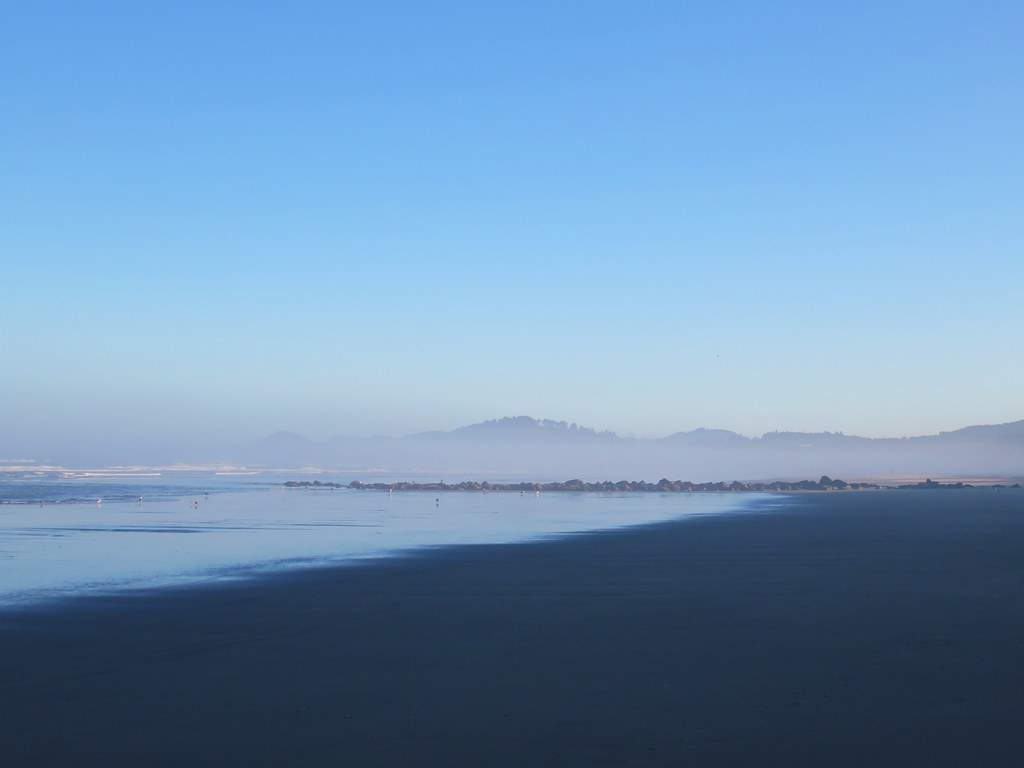
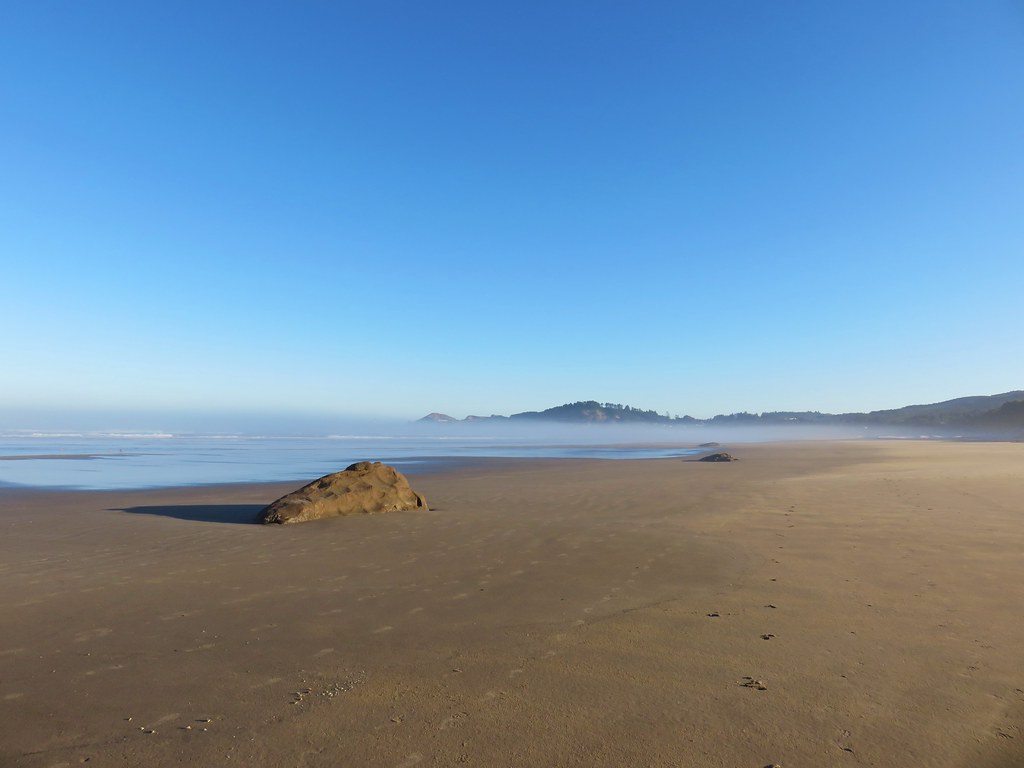
It was a foggy morning and visibility was low so it took us a while to even spot the ocean as we angled to the right toward the mouth of the Necanicum River.

IMG_8792

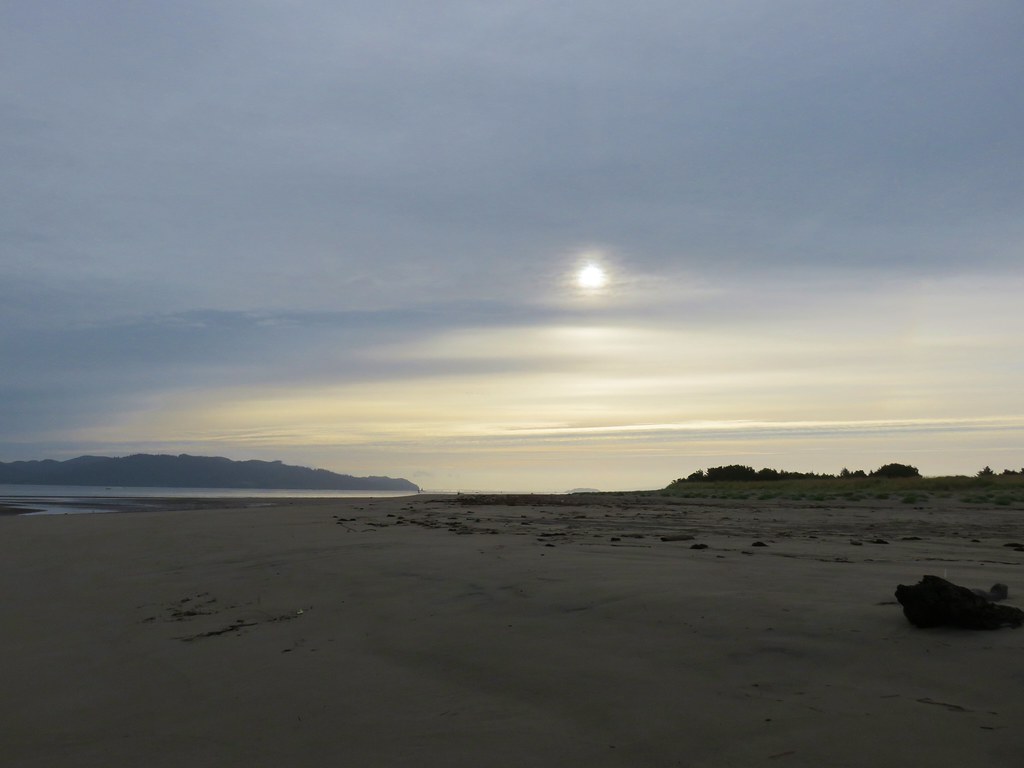
After about a half mile on the beach we arrived at the river where we turned right and followed the bank inland.

IMG_8801

IMG_8802

We climbed a low bluff near a sewage plant and followed a clear path to the left around the facility.

IMG_8805

IMG_8811

IMG_8814

We turned inland at 15th St. then took a left on N. Franklin St. When we came to 12th we detoured back to the park to change our shoes which were damp from the grasses along the river. With dry shoes on we went back to Franklin, turning left, and continued south to Broadway St. jogging right at 9th and 5th streets. The final block or so of Franklin is closed to cars.

IMG_8818

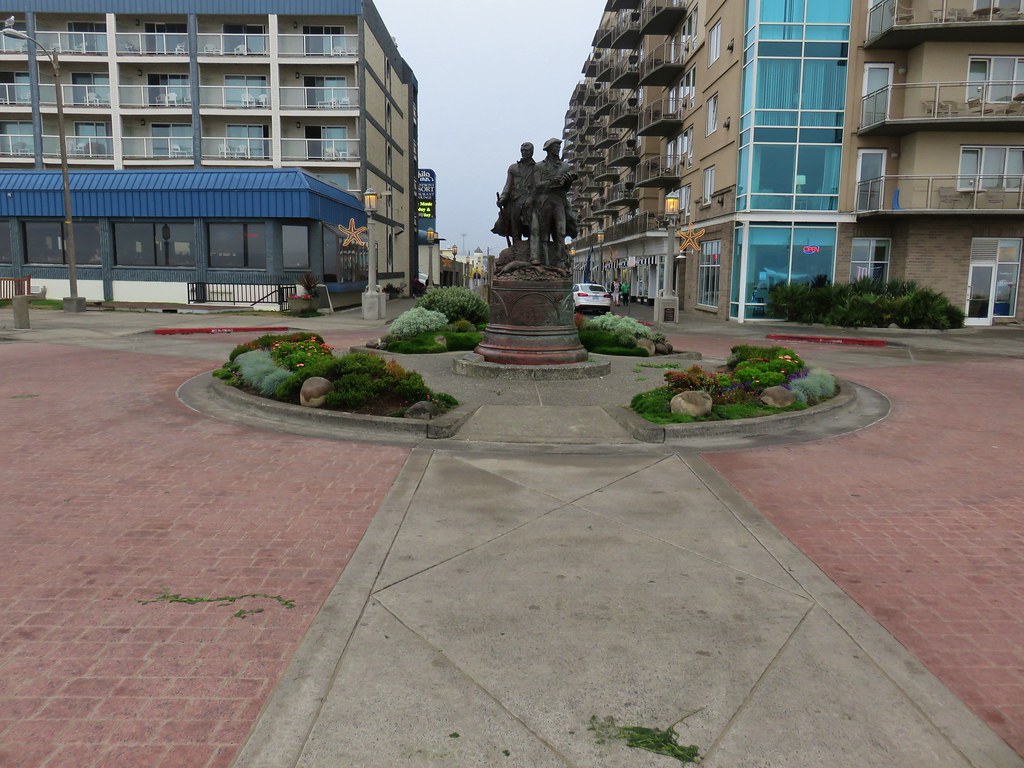
We turned west onto Broadway and followed it to its end at a turnaround with a statue of Lewis and Clark.

IMG_8821

IMG_8839

We had actually walked this stretch on Broadway early on Saturday when we’d come into Seaside for dinner. There was a car show going on at the time and muscle cars and old hot rods had been cruising the street around the statue then.

From the turnaround we headed south on the Seaside Promenade.

IMG_8823

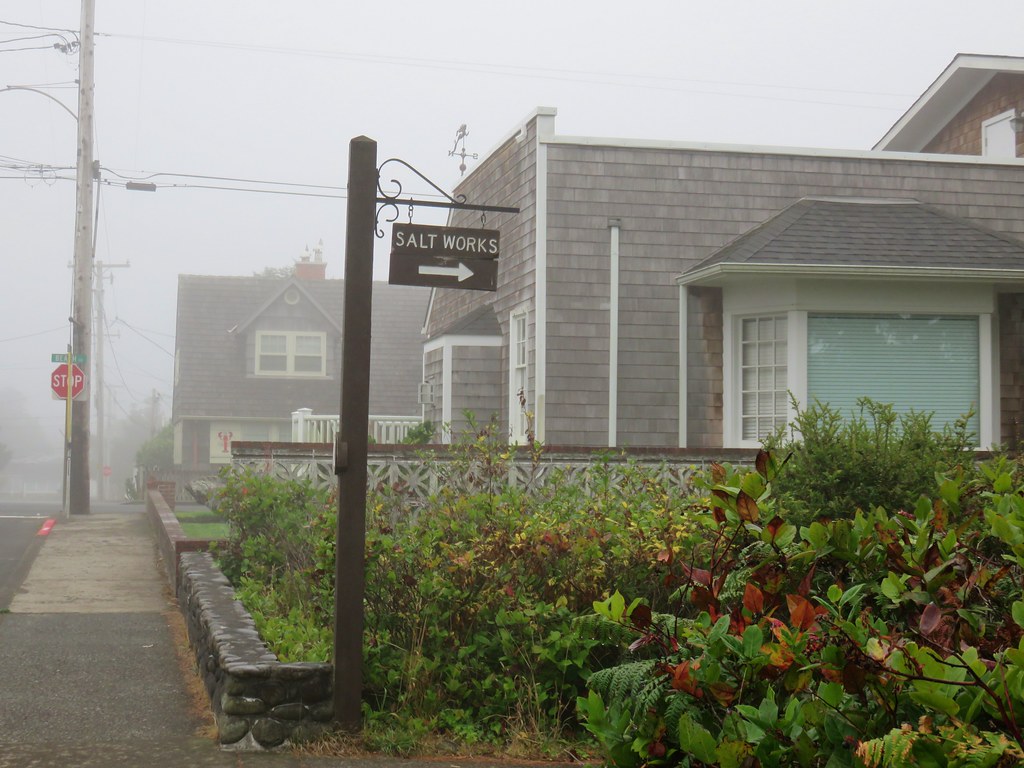
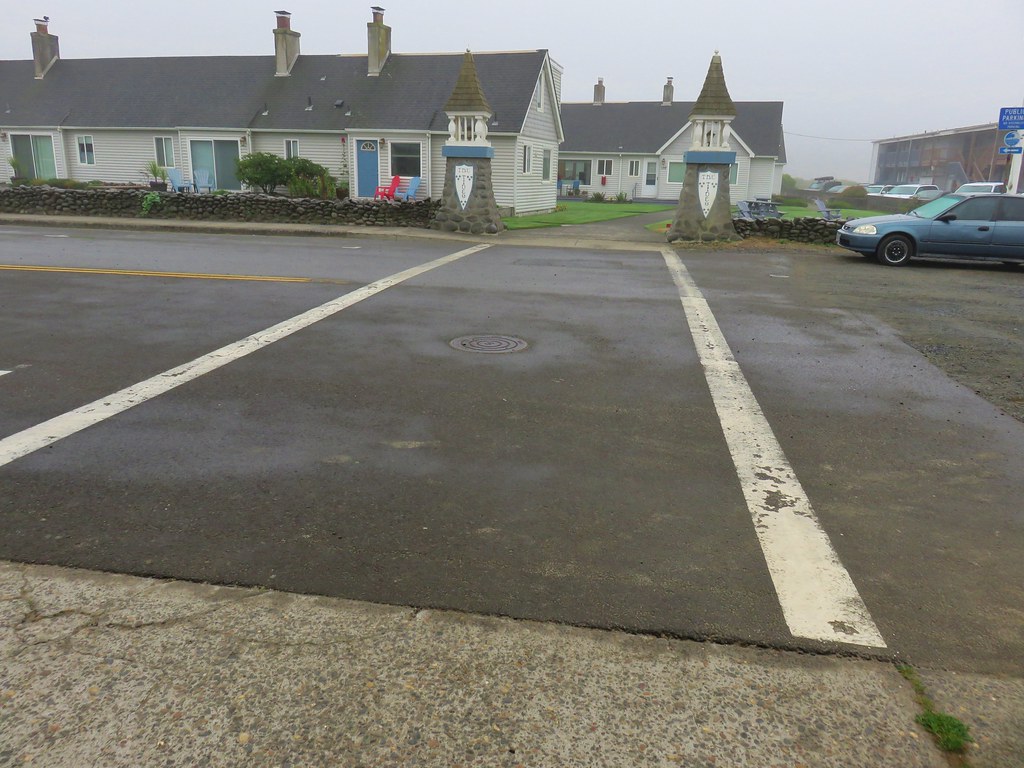
The paved promenade extends 1.5 miles from 12th Street to Avenue U. We passed hotels, vacation rentals and at the .6 mile mark a sign for the “Salt Works”.
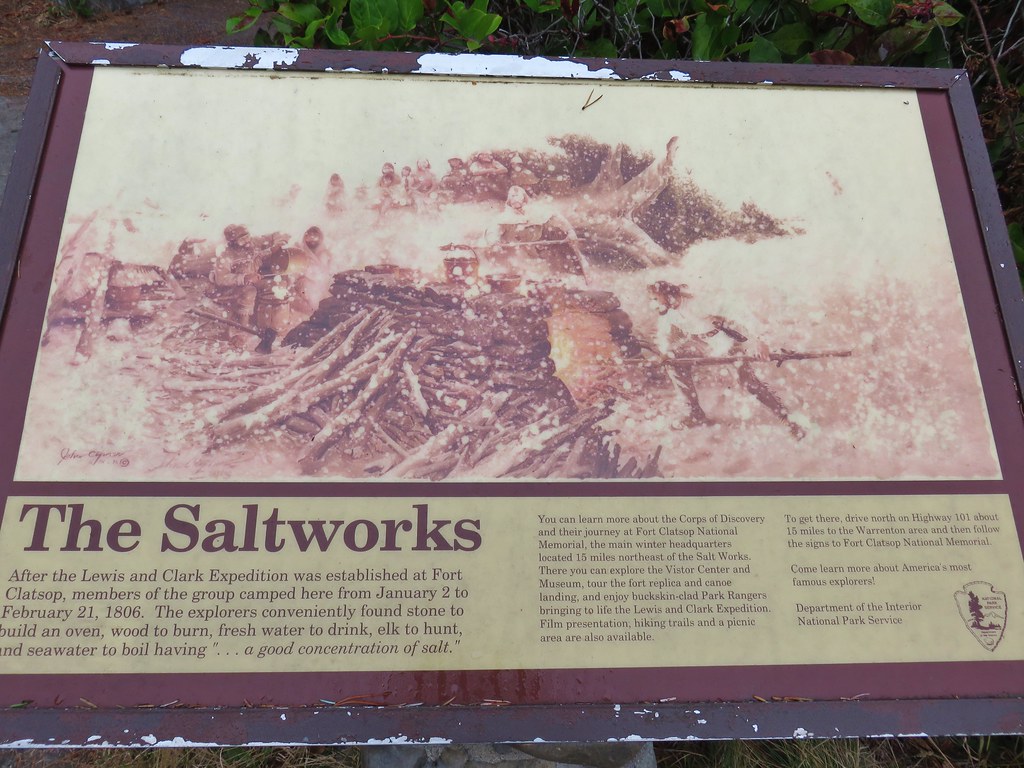
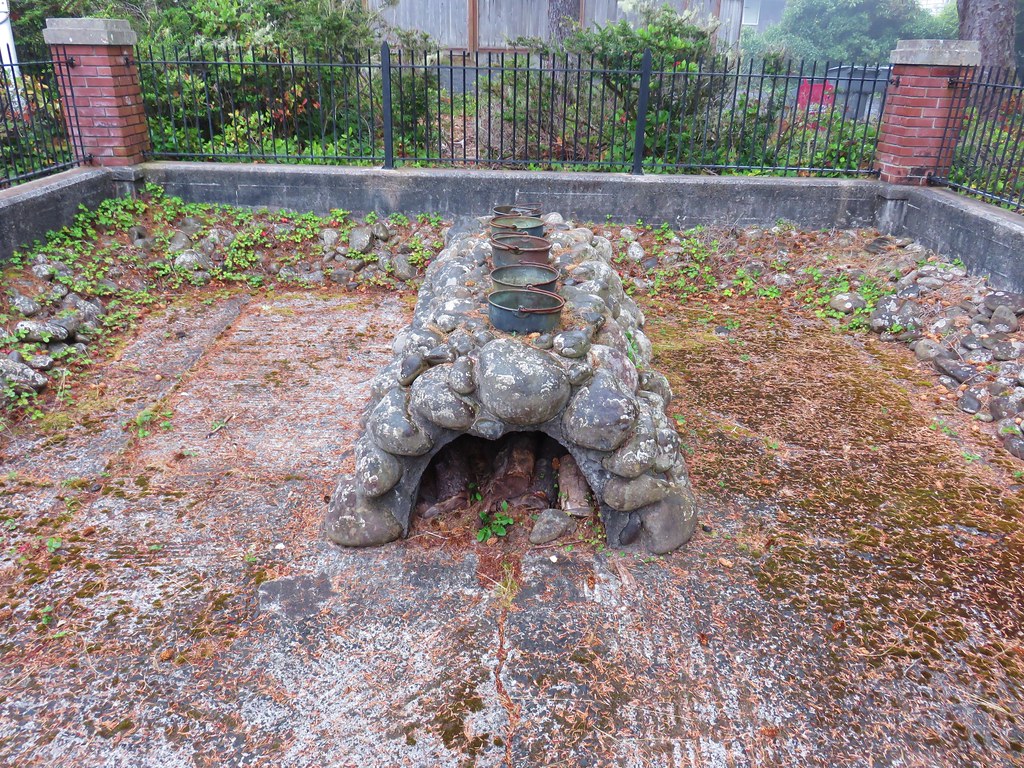
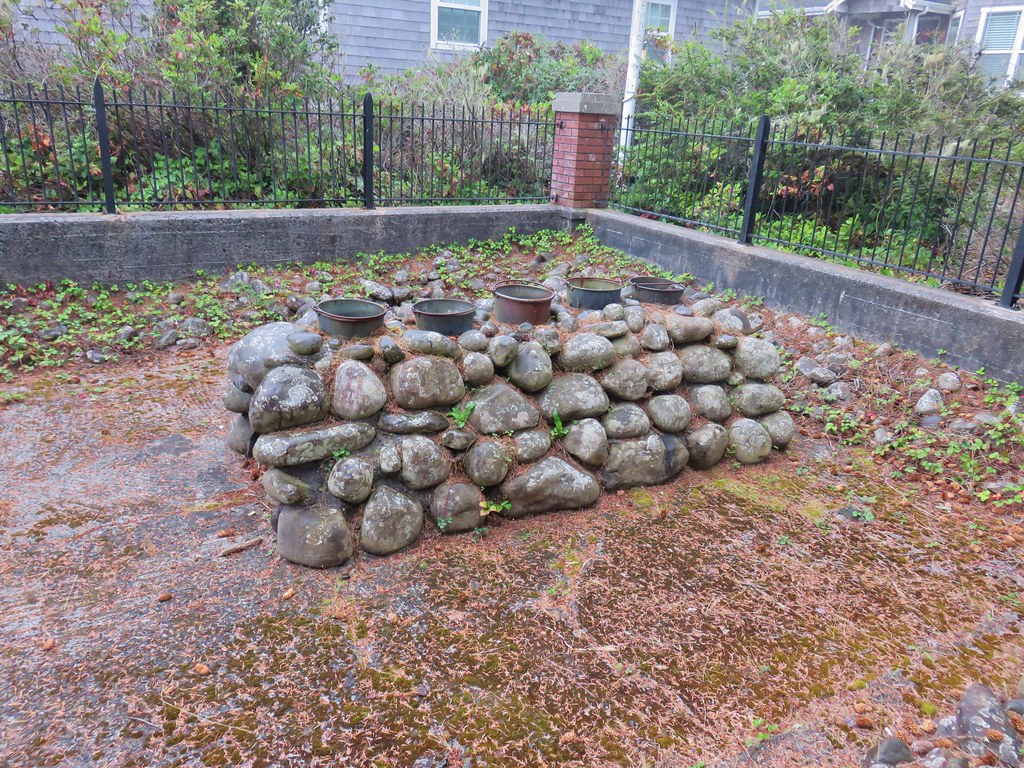
We turned inland on Lewis and Clark Way following the Salt Works signs to a replica of the stone oven used to boil salt water for the Lewis and Clark expedition.

IMG_8824

IMG_8825

IMG_8826

IMG_8828

After reading all the interpretive signs we returned to the promenade and continued south to its end at Avenue U.

IMG_8833

We turned around and headed north. The promenade was fairly busy with dog walkers, joggers, and a few bicyclists all making use of the paved path.

IMG_8835

The fog was stubborn this morning and really limited any views toward the ocean.

IMG_8831

IMG_8836

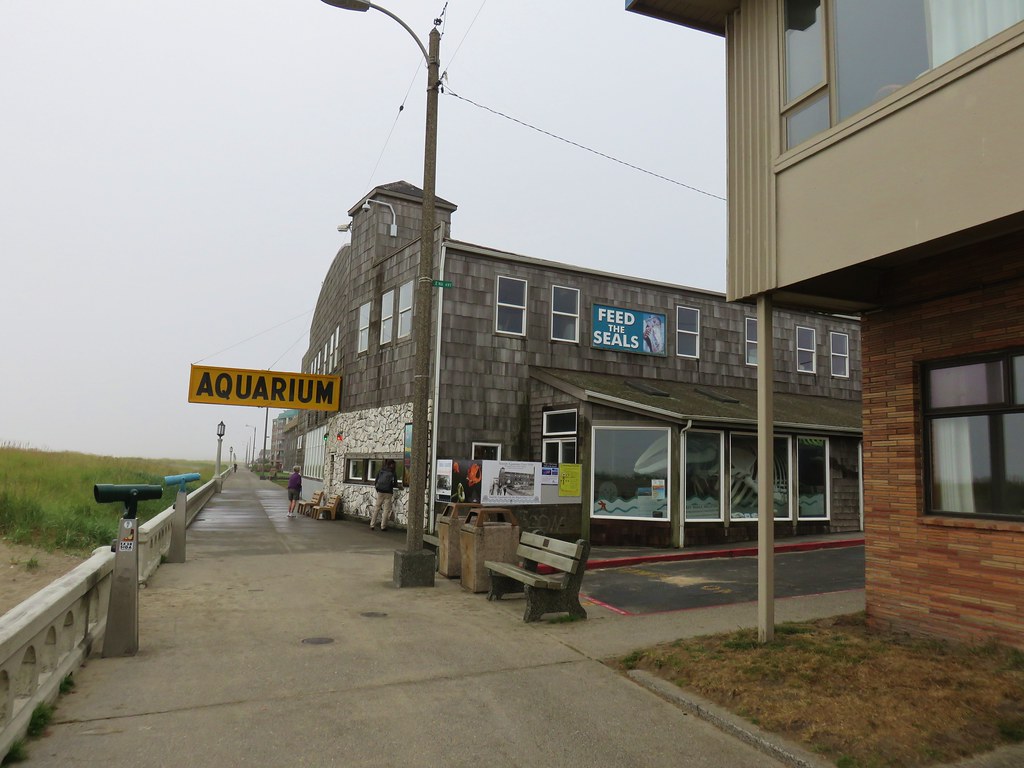
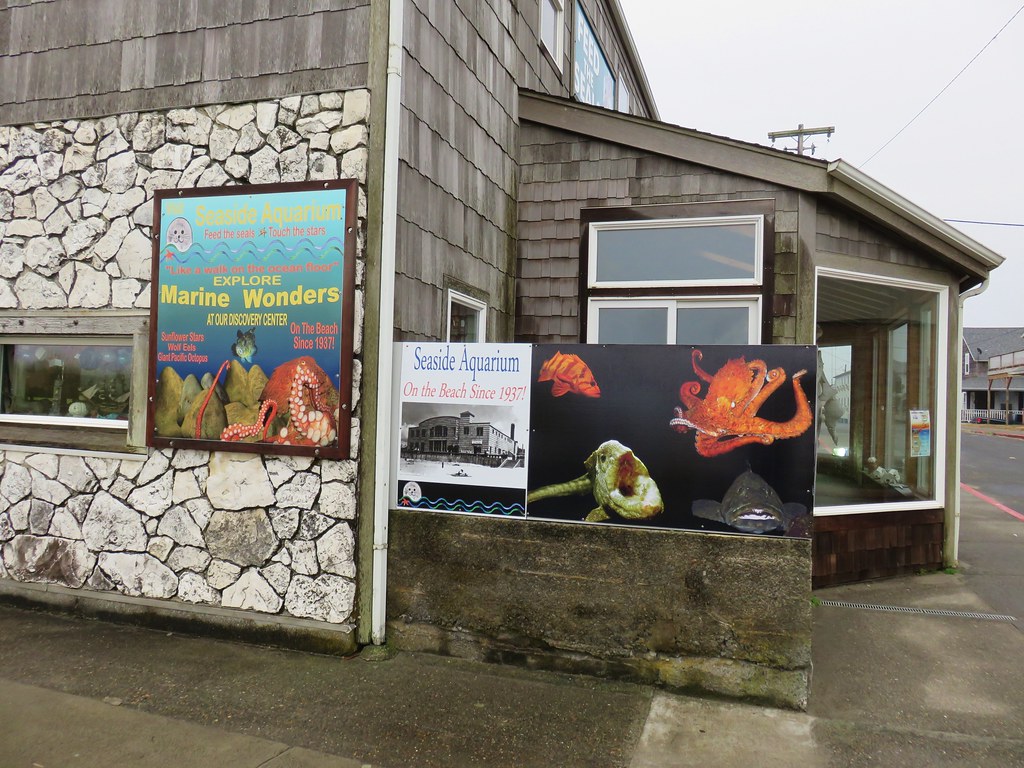
We passed Broadway Street and continued north toward 12th St. passing the Seaside Aquarium along the way.

IMG_8841

IMG_8843

We turned up 12th St. and returned to our car. Our distance for the morning was 5.7 miles which was perfect for a short hike before driving home. As we crossed the coast range we popped out of the clouds into bluer skies. Smoke on the horizon from the many wildfires reminded us of why we’d chosen the coast as our alternate vacation spot. It had been a good choice, nice hikes with plenty of wildlife and a lot of history thrown in. Happy Trails!

Flickr: Seaside

Categories
Hiking Northern Coast Oregon Oregon Coast Trip report

Cannon Beach

For our second day while staying in Gearhart we picked Cannon Beach as our hike. Located just 10 miles south of Gearhart on the other side of Tillamook Head we planned on starting at the city information center on 2nd St. and hiking south along the beach to a waterfall at Hug Point. The round trip would be just under 10.5 miles and allow us to be back to our hotel before the Seahawks played their first regular season game. (We might have been better off hiking based on the way their offense wound up playing.)

The clouds from the previous day were still breaking up as we left our room creating a nice sunrise over Saddle Mountain.

IMG_8216

We drove south on Highway 101 to Cannon Beach, parked, and walked three blocks to the beach.

IMG_8218

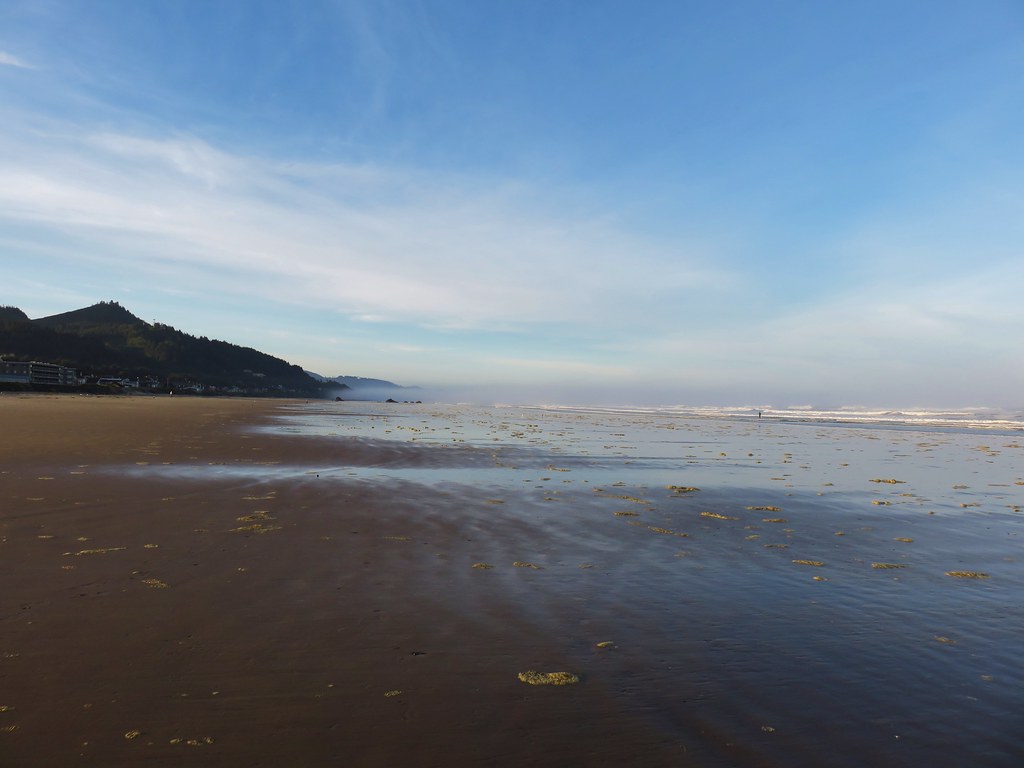
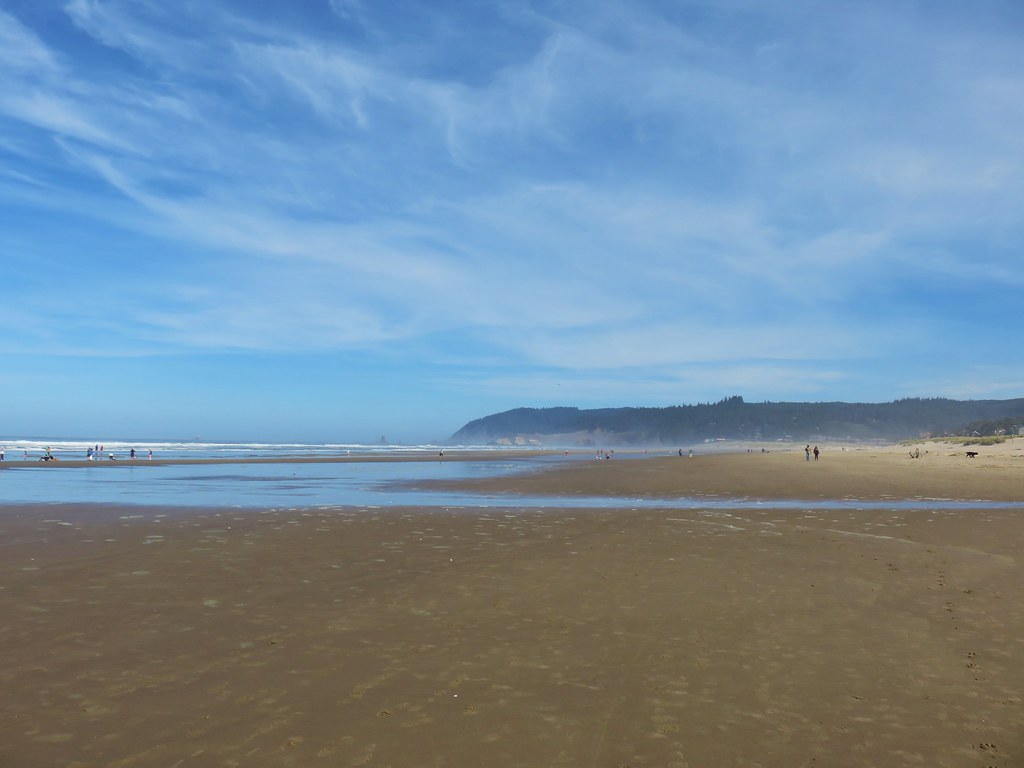
The morning coastal fog was rolling in somewhat obscuring the view of Tillamook Head to the north.

IMG_8225

IMG_8226

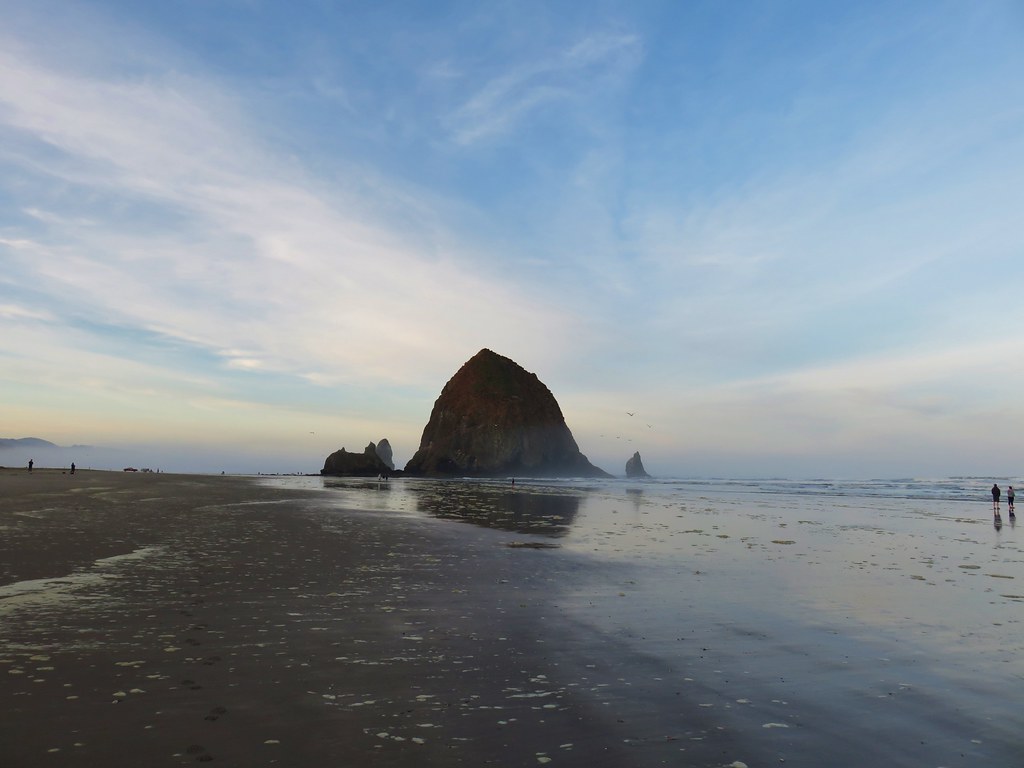
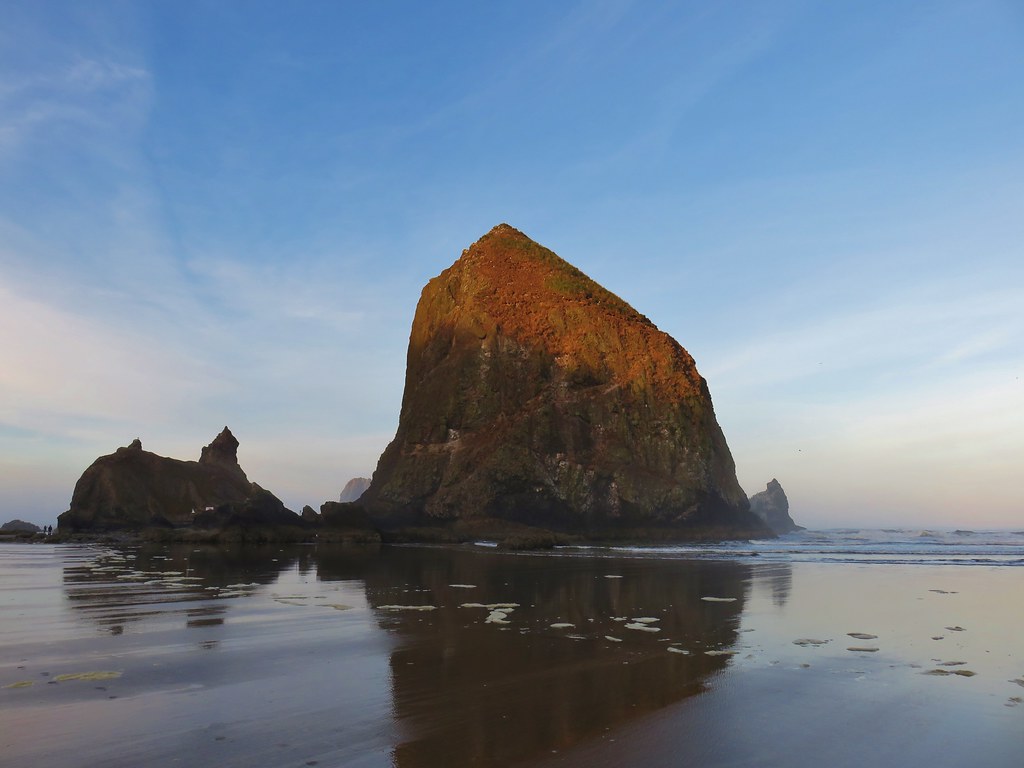
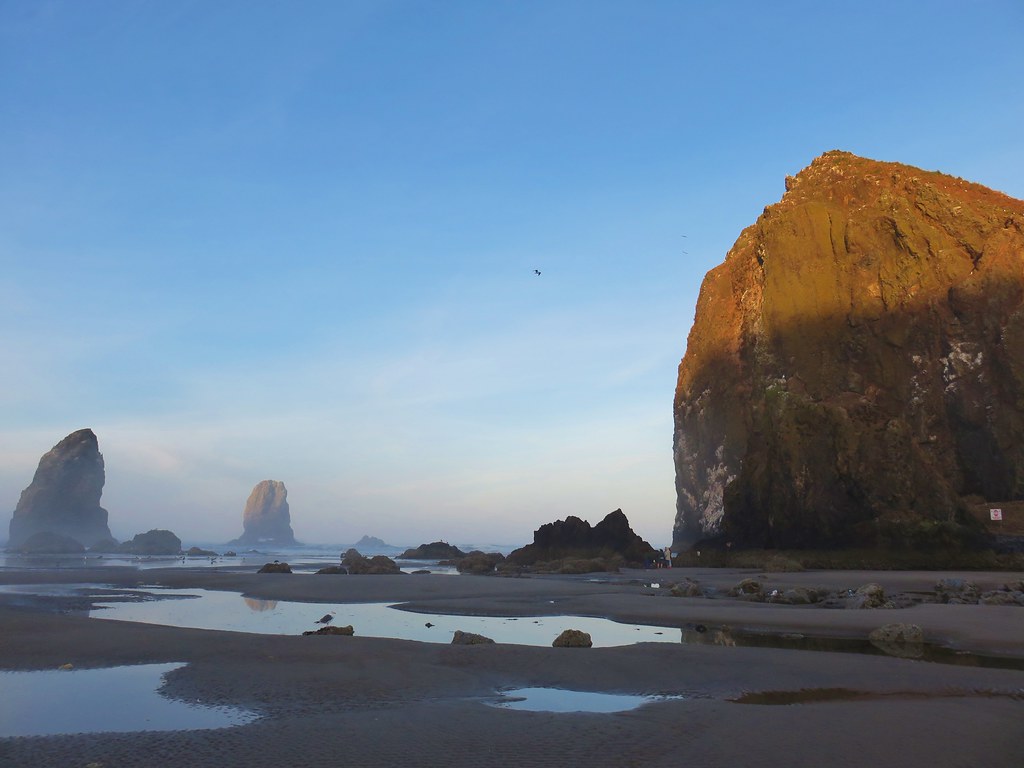
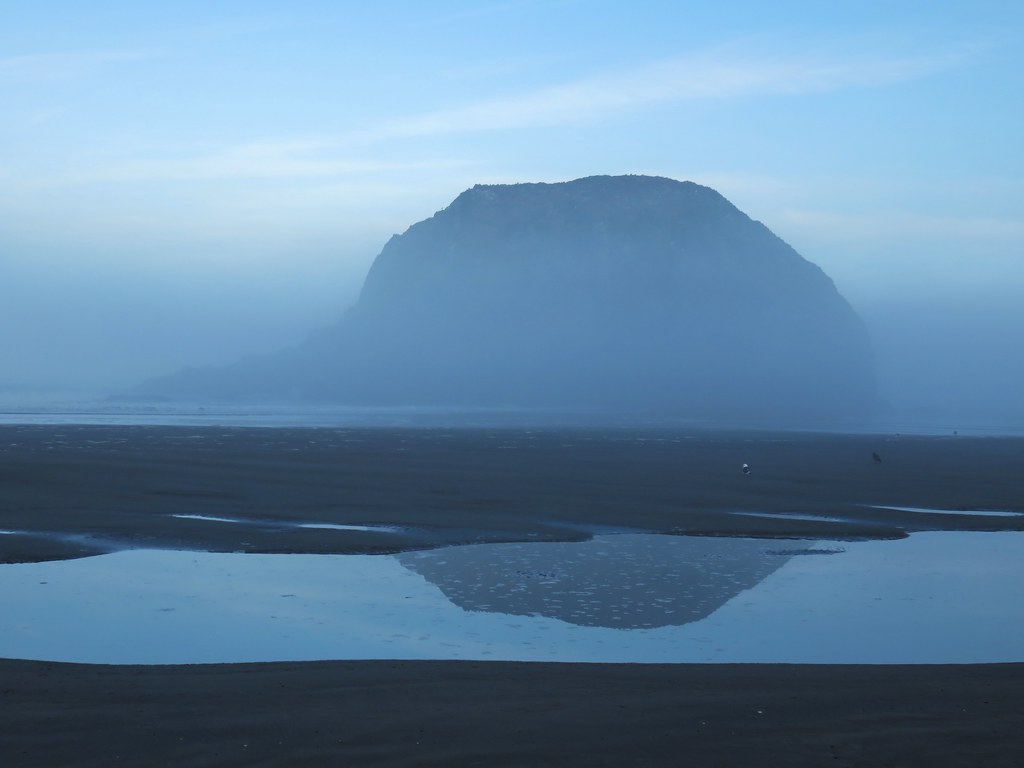
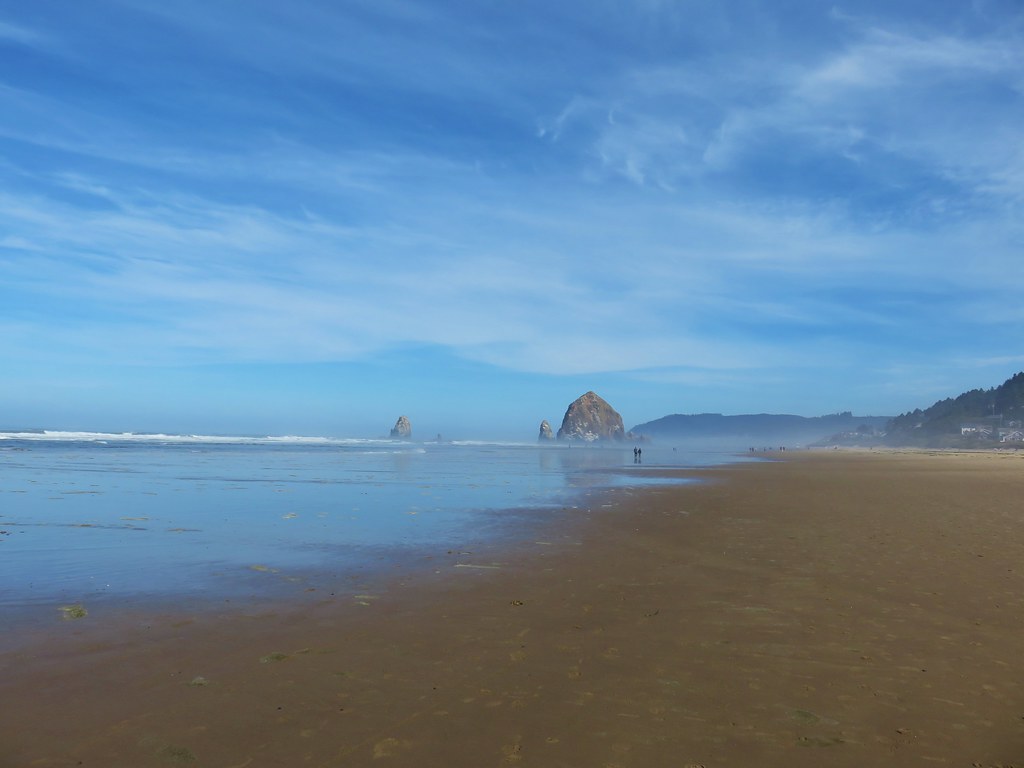
To the south Haystack Rock fared a little better although some of the smaller rocks around it were in the fog.

IMG_8222

We turned south on the beach heading for Haystack Rock which was about a mile away. The rock began catching some early morning sunlight as we passed.

IMG_8228

IMG_8233

IMG_8239

IMG_8247

We continued on passing the Tolovana Beach Wayside on the way to Silver Point two miles beyond Haystack Rock.

IMG_8262

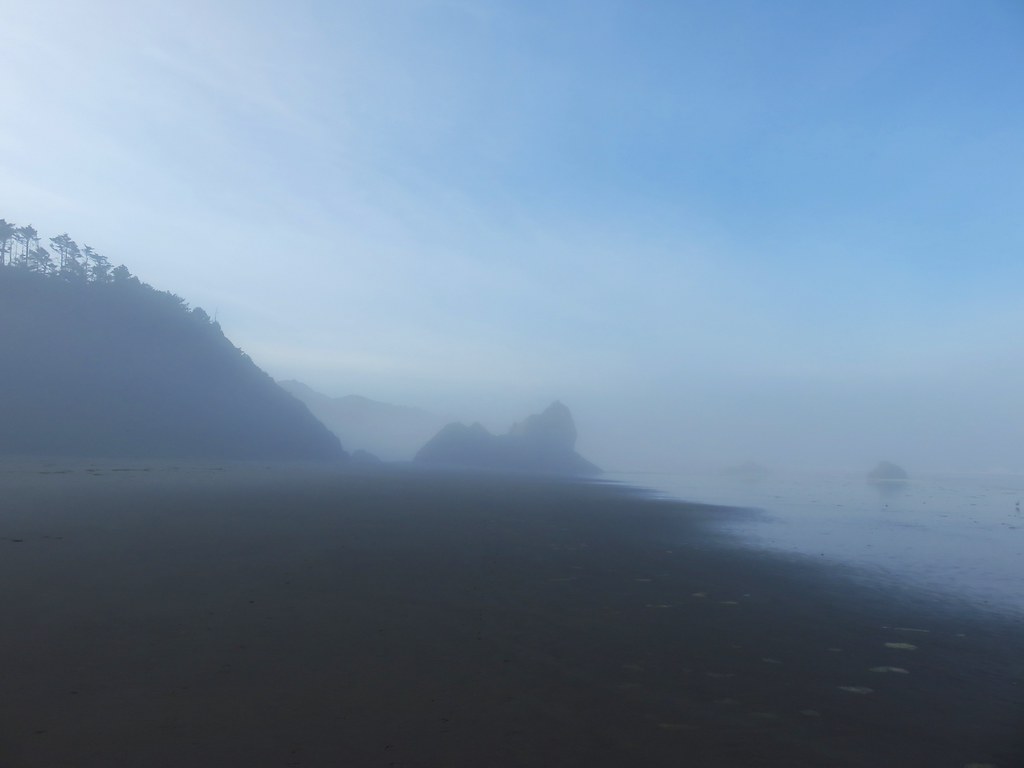
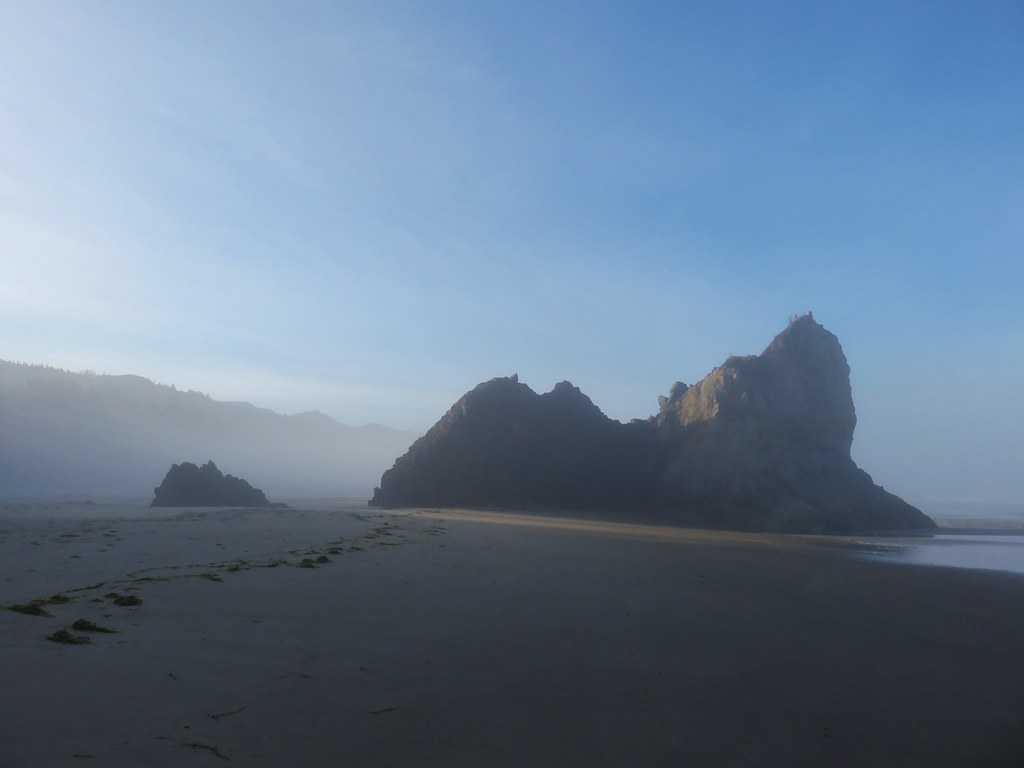
It was fairly foggy at Silver Point where we found several large rocks just offshore, including the aptly named Jockey Cap.

IMG_8272

IMG_8274

IMG_8282Jockey Cap

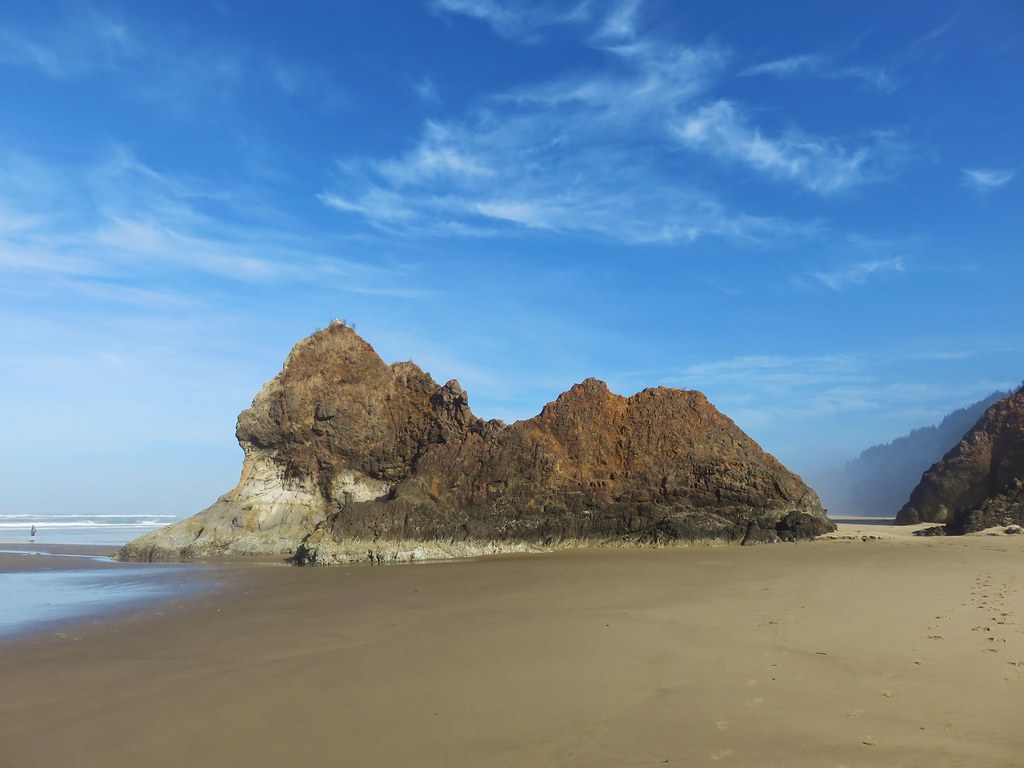
A little over a half mile after passing Silver Point we arrived at Humbug Point where we passed another well named rock, Lion Rock.

IMG_8286

IMG_8289

IMG_8296

It was another mile to Hug Point which was also dealing with the morning fog.

IMG_8299

Hug Point was part of a wagon route where settlers had to wait for low tide to be able to pass by. A roadbed was blasted in the headland around 1920 which was still obvious as we approached.

IMG_8300

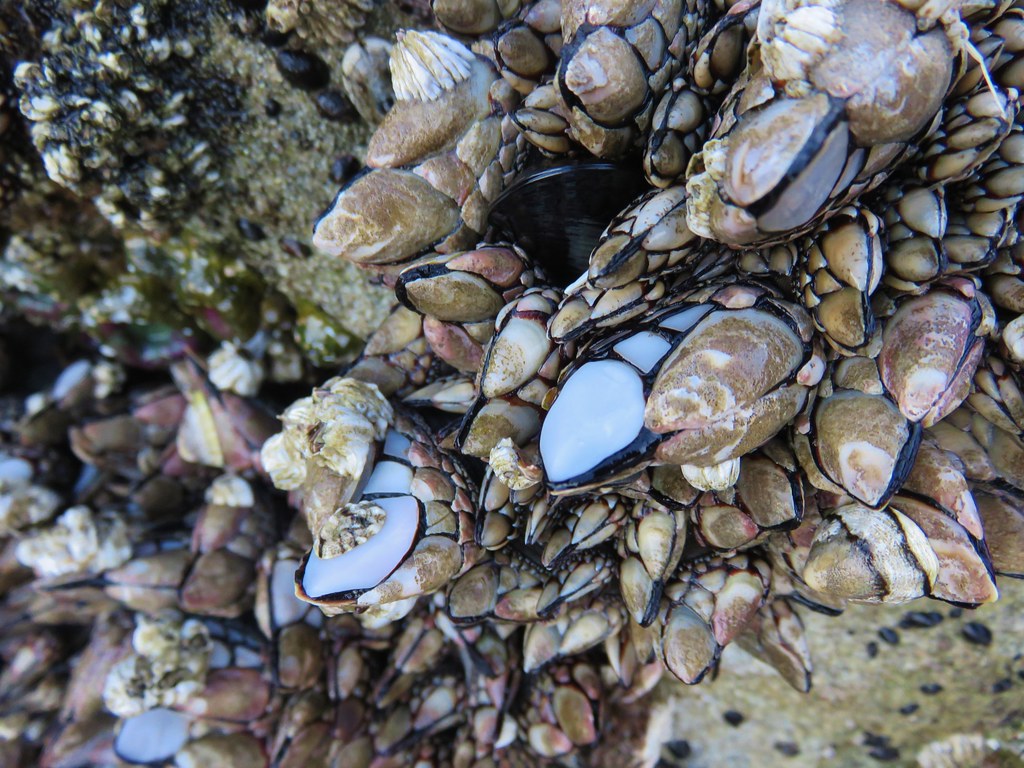
The other reason we had chosen this hike for the day is that low tide was around 9:20am which we figured was a little later than when we would be arriving. It was a little after 8:30 when we did reach the point and we could have easily stayed dry by crossing over on the roadbed but when we approached it we noticed a lot of marine life on the rocks.

IMG_8301

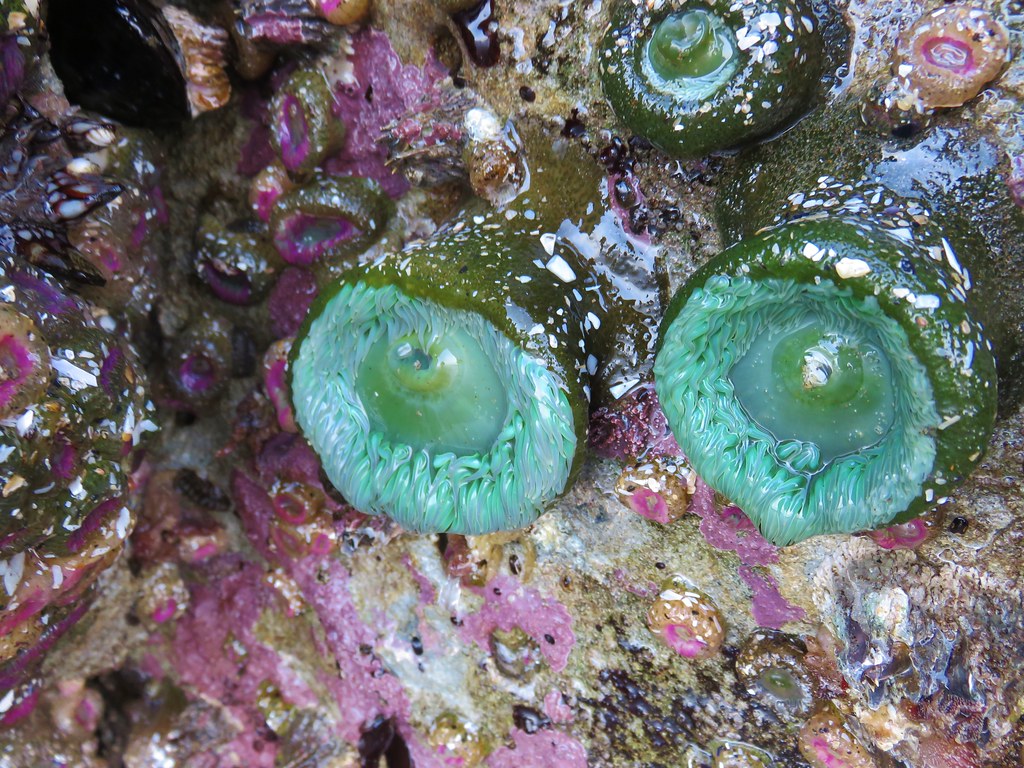
Instead of trying to avoid them we decided to take off our shoes and socks and wade around Hug Point. The water was about calf deep at its deepest so getting through was easy enough. One the other side we found more anemones and other marine creatures clinging to the rocks.

IMG_8304

IMG_8305

IMG_8308

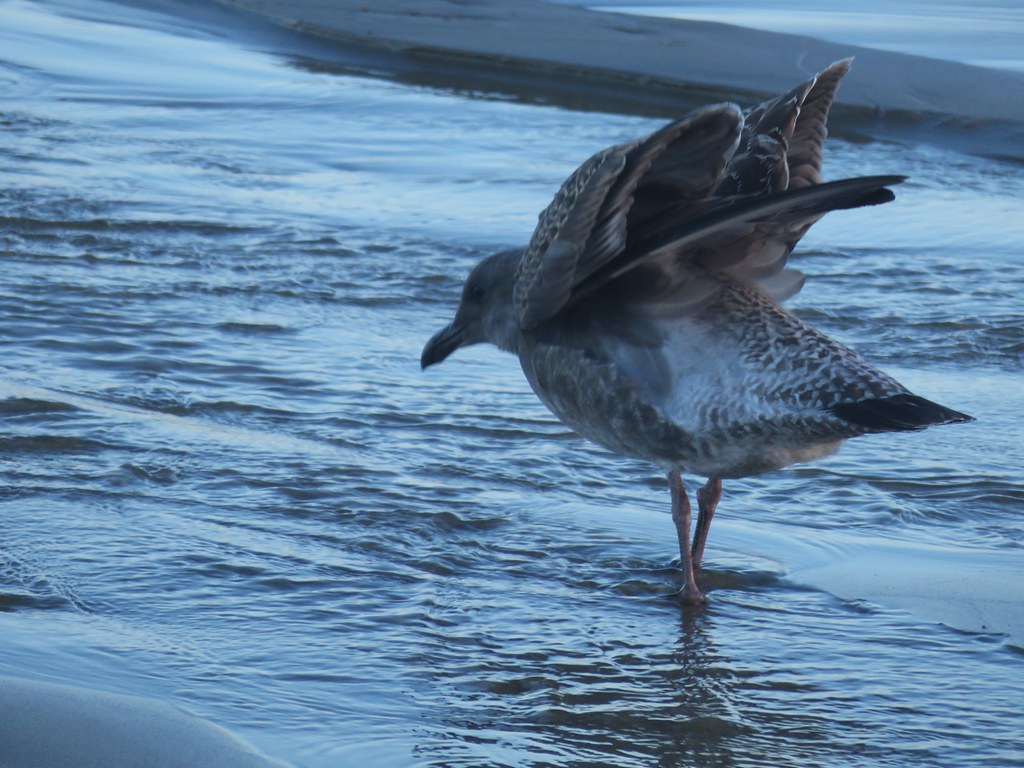
Seagulls seemed to be treating it as a buffet.

IMG_8310

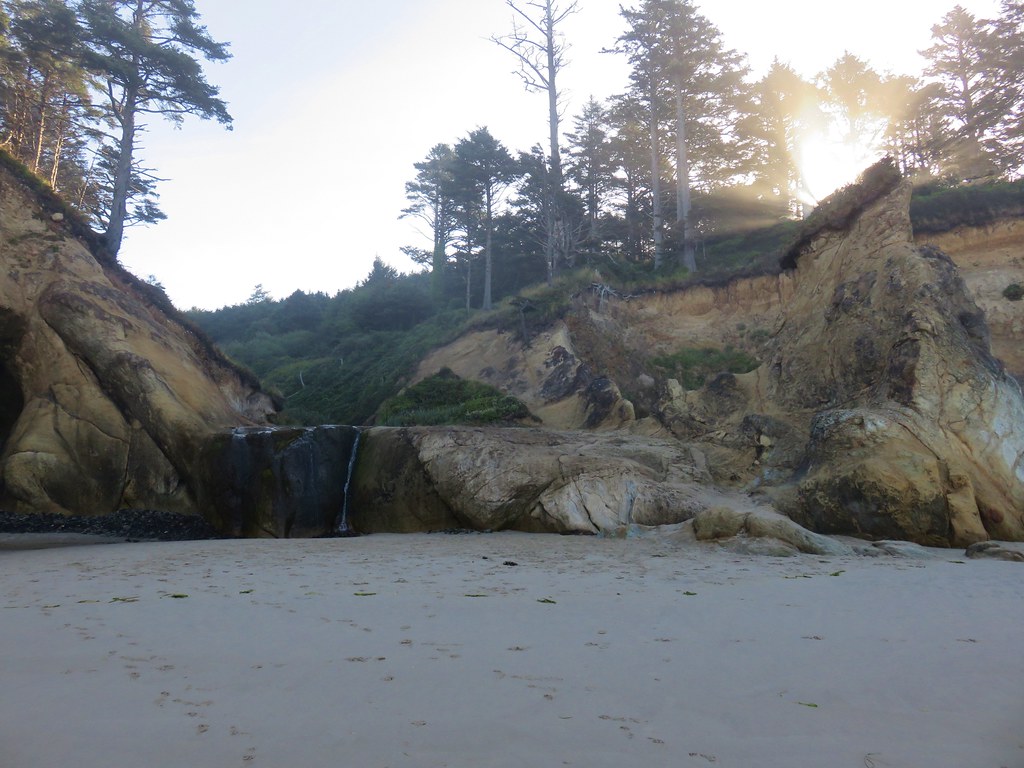
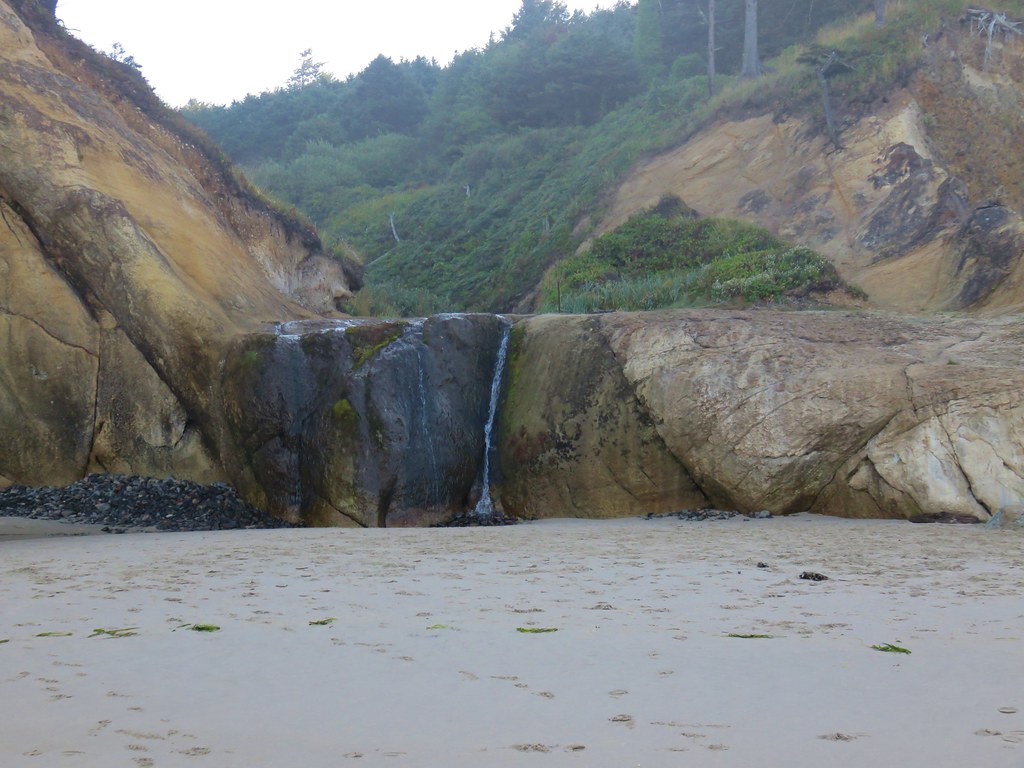
After passing a small cove we spotted the small waterfall on Fall Creek. It wasn’t exactly the best time of year to be visiting the falls but the water was still flowing.

IMG_8311

IMG_8315

IMG_8320

IMG_8322

The falls can be accessed from the Hug Point Wayside which avoids the need to navigate around Hug Point. We’ll likely stop there some other time when the flow over the falls is greater.

We turned around here and headed back. After another wade around Hug Point we pulled out our Therm-A-Rest Z Seats and took a seat while our feet dried.

IMG_8342

The clouds continued to break up as the morning progressed.

IMG_8345

IMG_8356

IMG_8359

IMG_8362

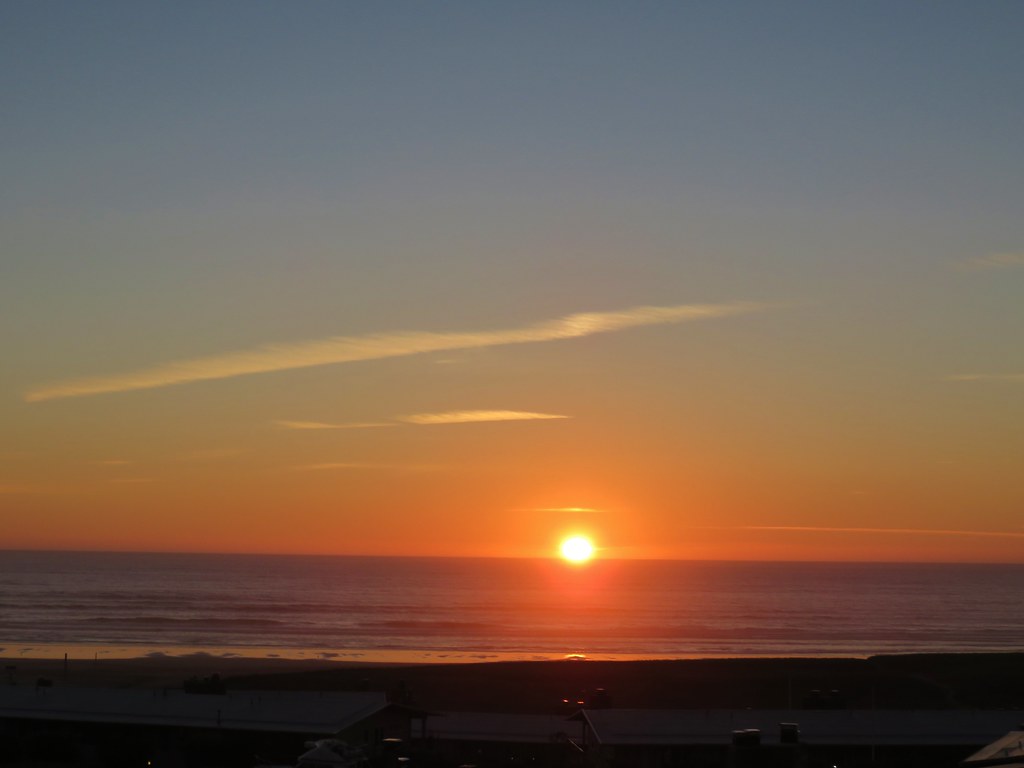
We finished our 10.4 mile hike just before 11am and headed back to the hotel for a relaxing afternoon of football. By the time the sun was setting most of the clouds had disappeared teasing a little more blue sky for our Monday Hikes.

IMG_8365

Happy Trails!

Flickr: Cannon Beach

Categories
Hiking Northern Coast Oregon Oregon Coast Trip report

Astoria and Fort Stevens State Park

We continued our year of shuffling hikes on our latest mini-vacation.  The string of wildfires starting in  Northern California in the Klamath Mountains and continuing along the Cascade Range north to the Canadian Border had us looking for a last minute location for 4 days of hiking. We turned to the coast hoping to escape any possibly smokey conditions and wound up deciding on checking out the northern most part of the Oregon Coast as well as our first foray along the Washington Coast line.

We booked a room in Gearhart, OR and I began putting an itinerary together. We are still plodding along in our attempt to hike all of the featured hikes in Sullivan’s 100 Hikes guidebooks and there were several in the area we’d yet to tackle. I managed to fit eight of his featured hikes into the four days and even threw in an additional stop at Fort Columbia on our third day.

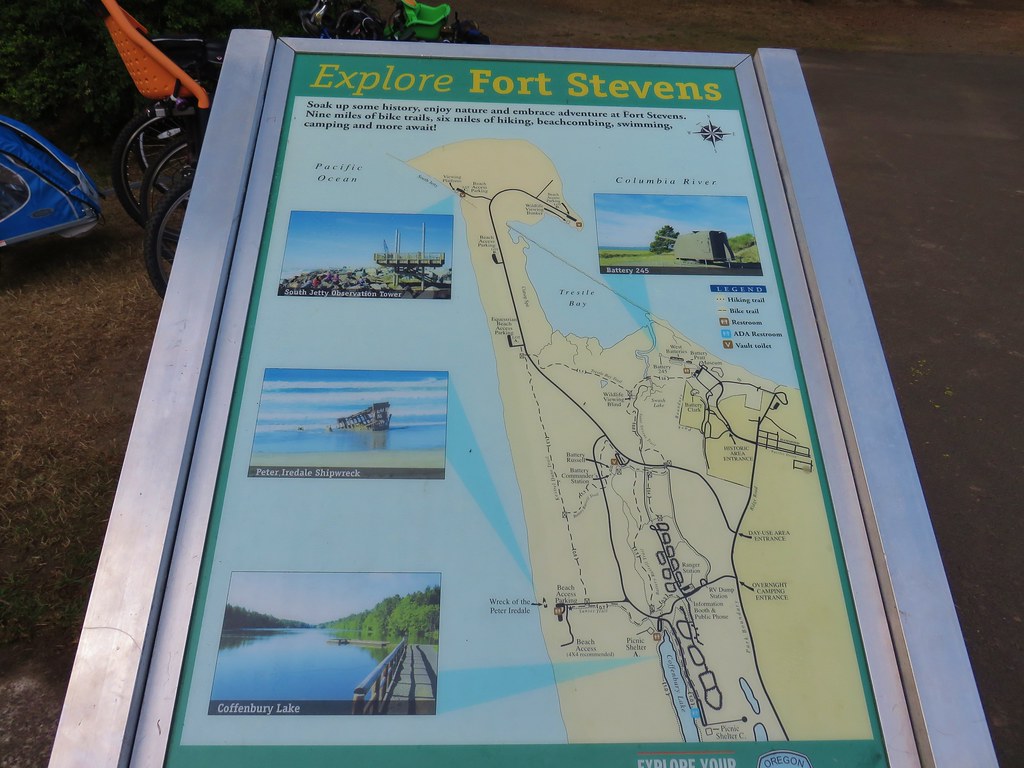
We set our sights on three of the hikes for our first day starting with a relatively short loop around Clatsop Spit. The spit is located inside Fort Stevens State Park at the mouth of the Columbia River and is the northern terminus for the Oregon Coast Trail.

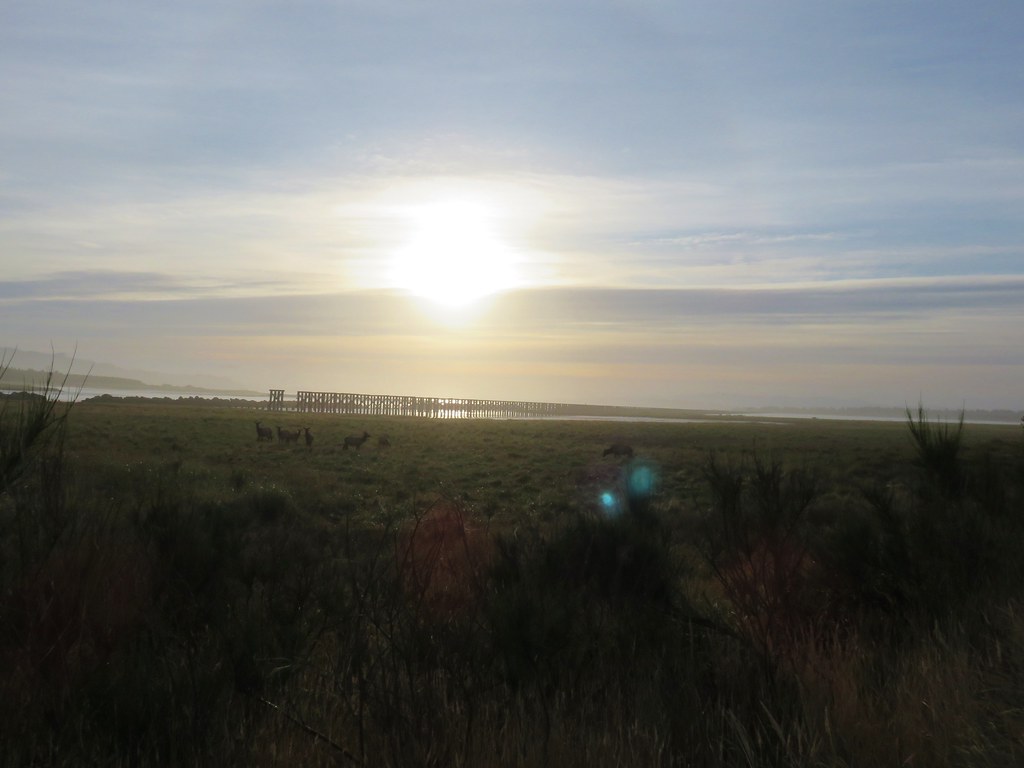
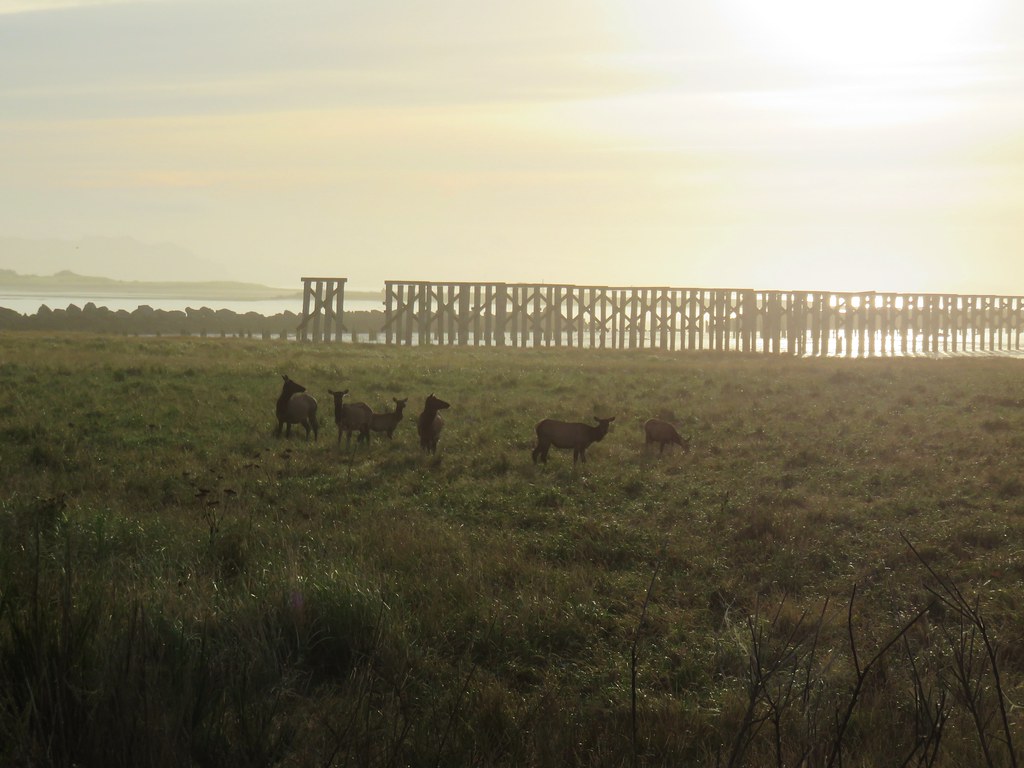
As we were driving to the spit along Jetty Road we spotted some elk and had to stop for a couple of photos.
IMG_8042

IMG_8043

IMG_8041

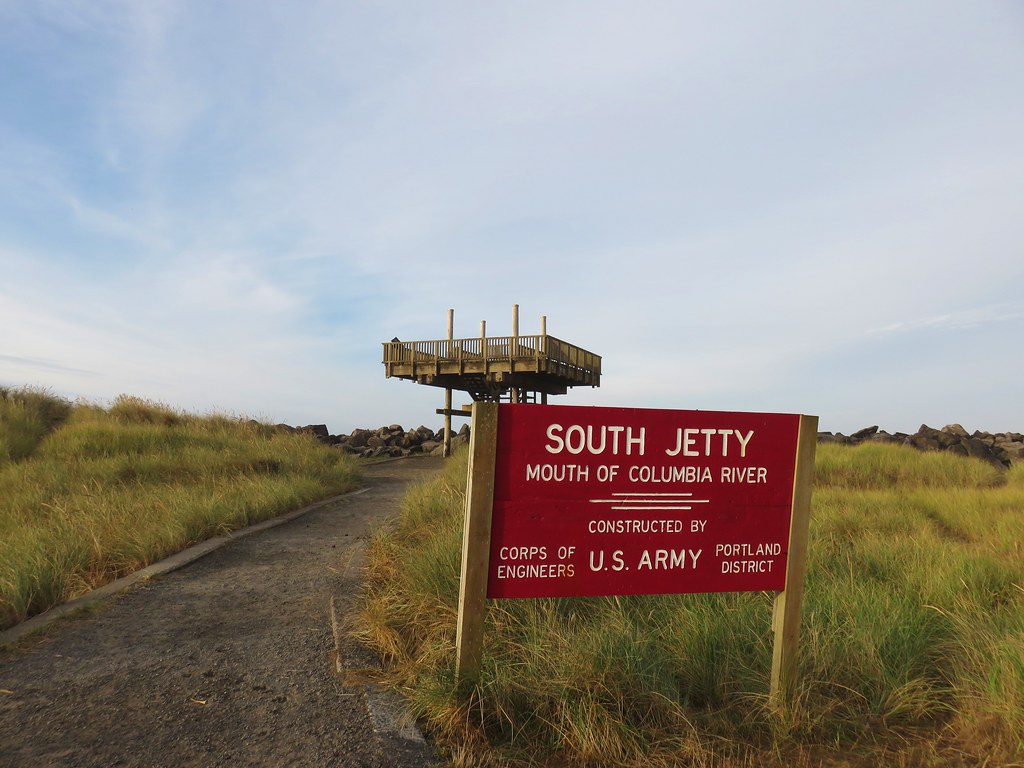
Once we had parked at the large parking area at the spit we checked out the view from the South Jetty observation platform.
IMG_8046

IMG_8048

IMG_8049

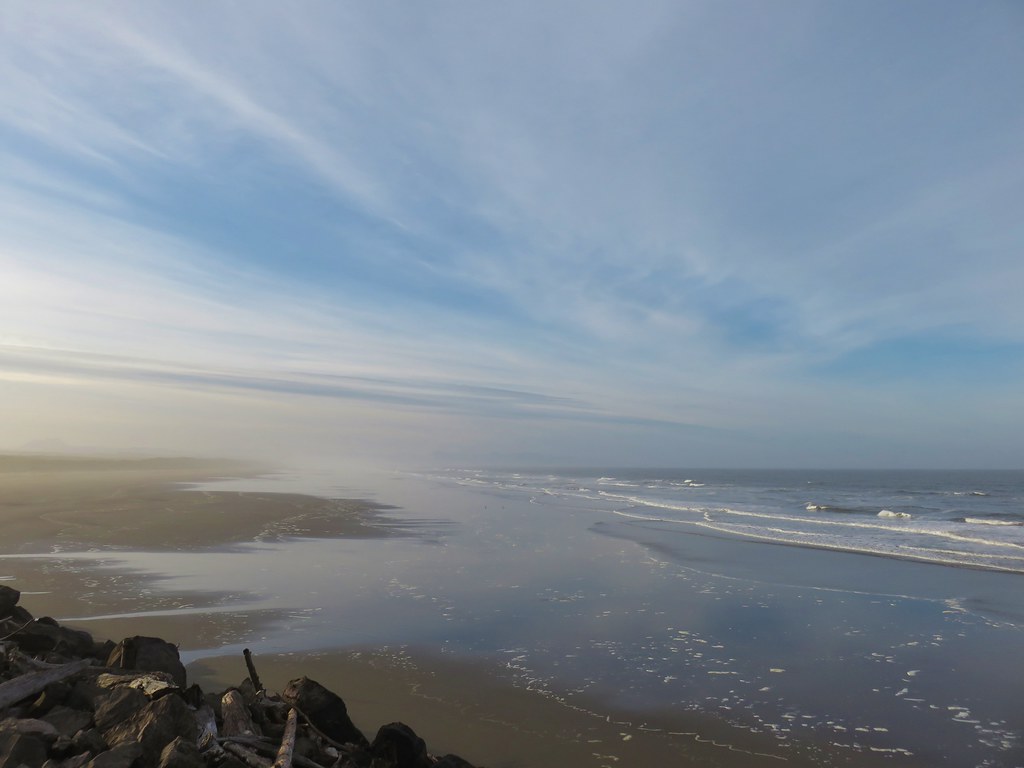
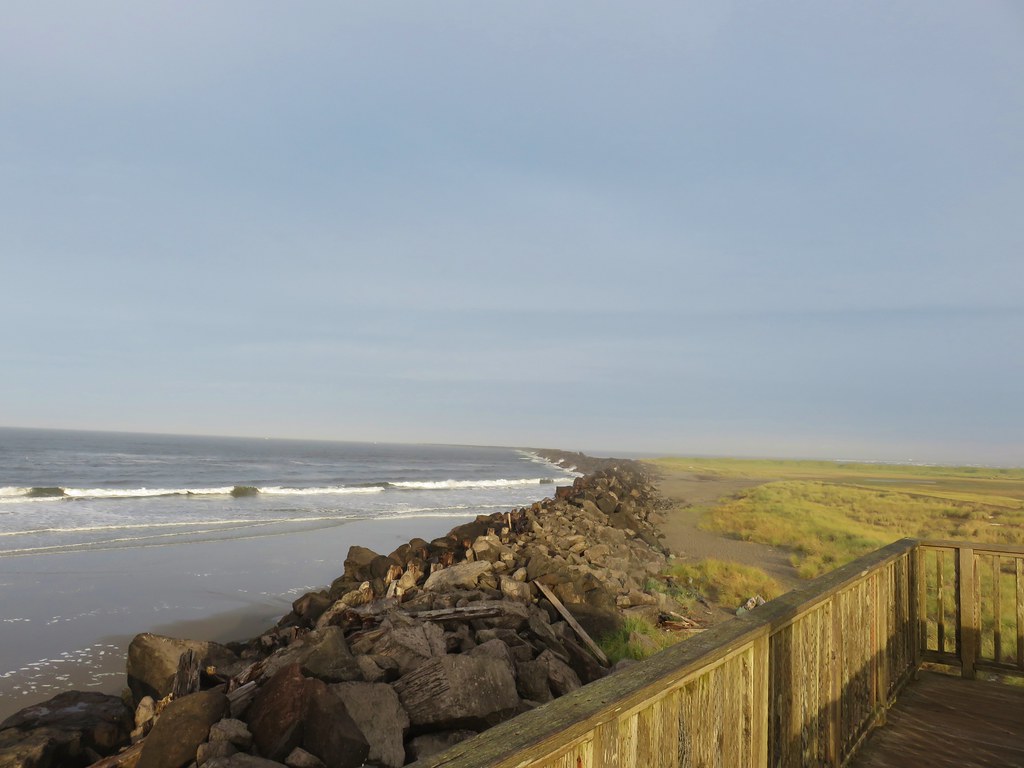
We then headed west beside the jetty toward the Pacific.
IMG_8051

IMG_8054

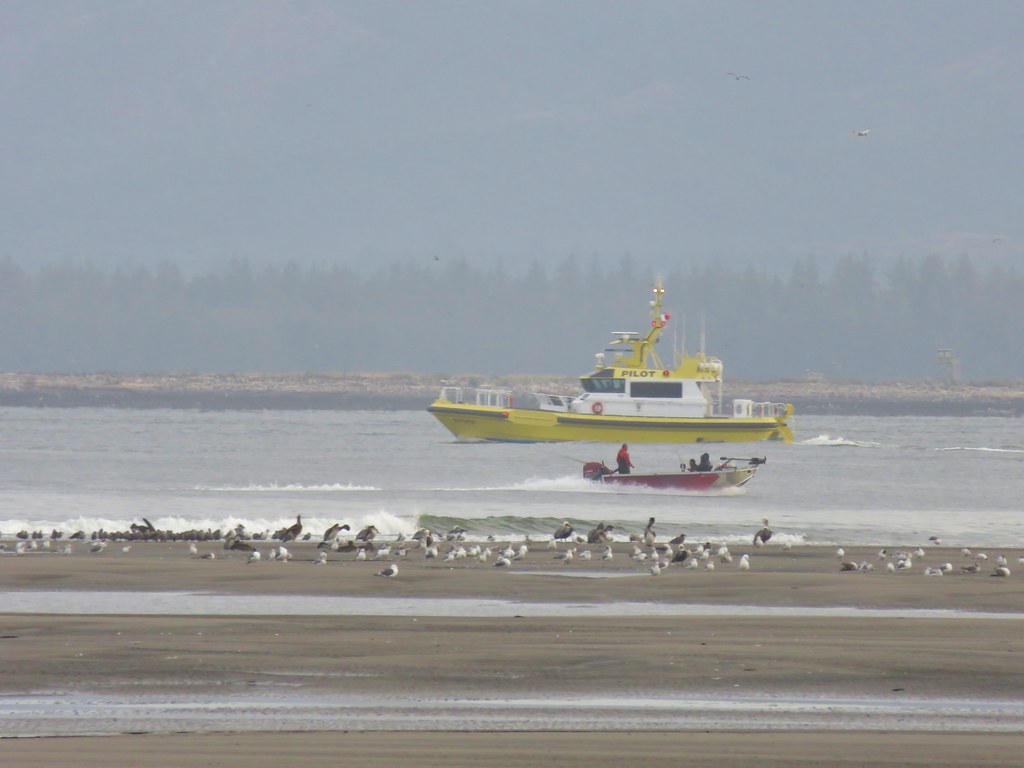
We then turned north along the beach heading towards the Columbia River where we could see plenty of traffic on the water.
IMG_8061

IMG_8063

IMG_8056

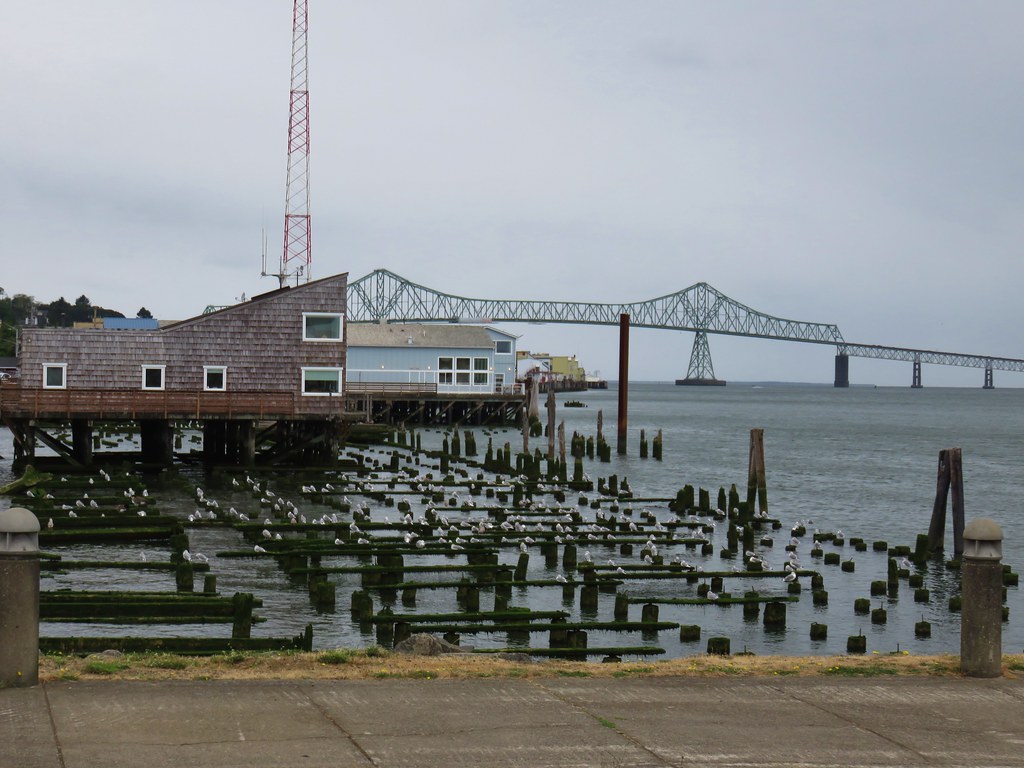
We turned inland at the river we had a view of the distant Megler Bridge.
IMG_8067

We passed a host of people fishing along the shore but didn’t see anyone having any luck.
IMG_8078

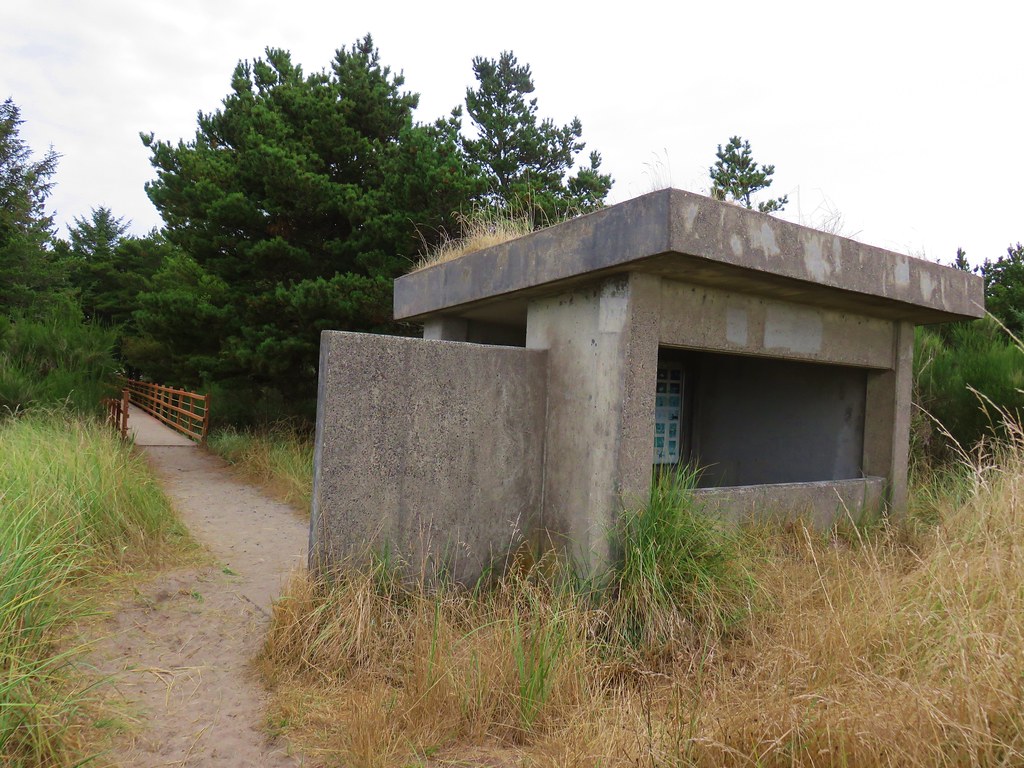
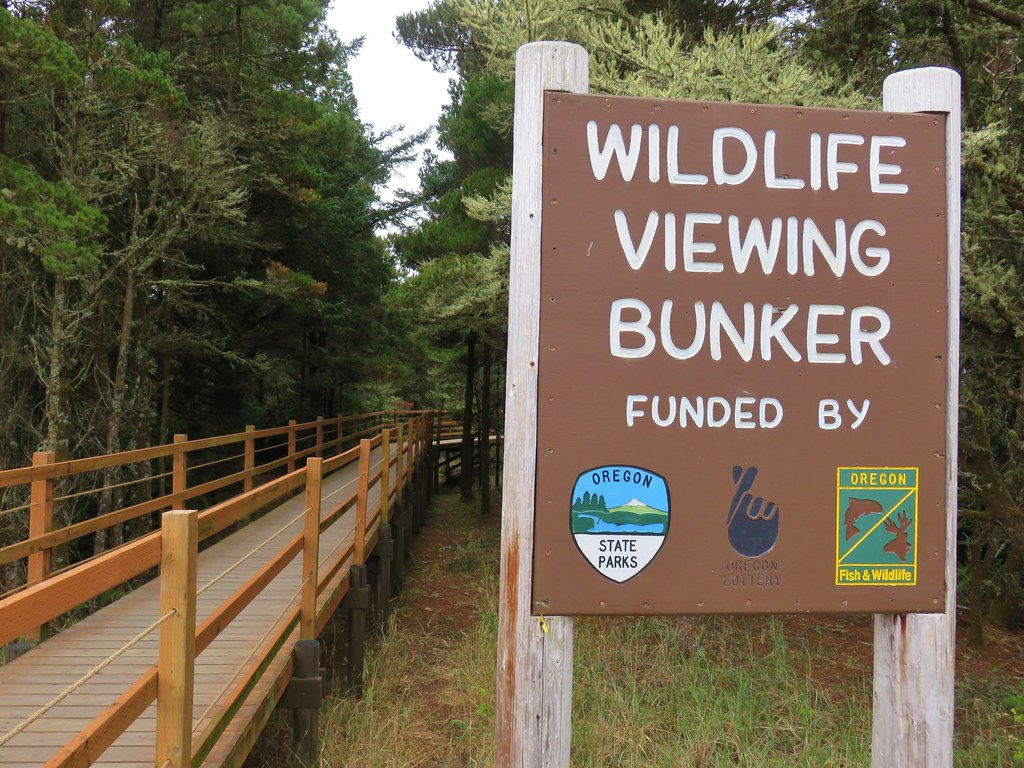
We looped around a peninsula near Jetty Lagoon and located the wildlife viewing bunker near the park’s Parking Lot D.
IMG_8082

IMG_8083

IMG_8084view from the bunker.

We crossed a footbridge to the parking lot and then had a 1.1 mile road walk back to the spit parking lot.
IMG_8086

We drove back along Jetty Road and parked in a signed lot for Battery Russell.
IMG_8094

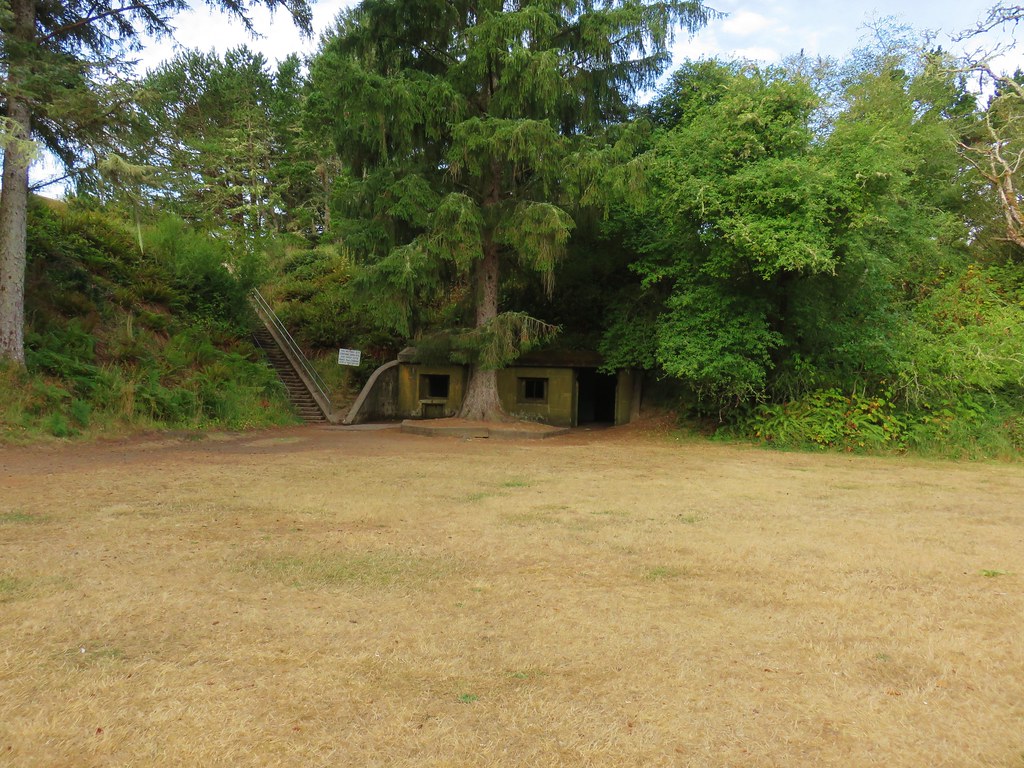
We took a set of stairs up to the concrete bunker.
IMG_8095

IMG_8100

IMG_8102

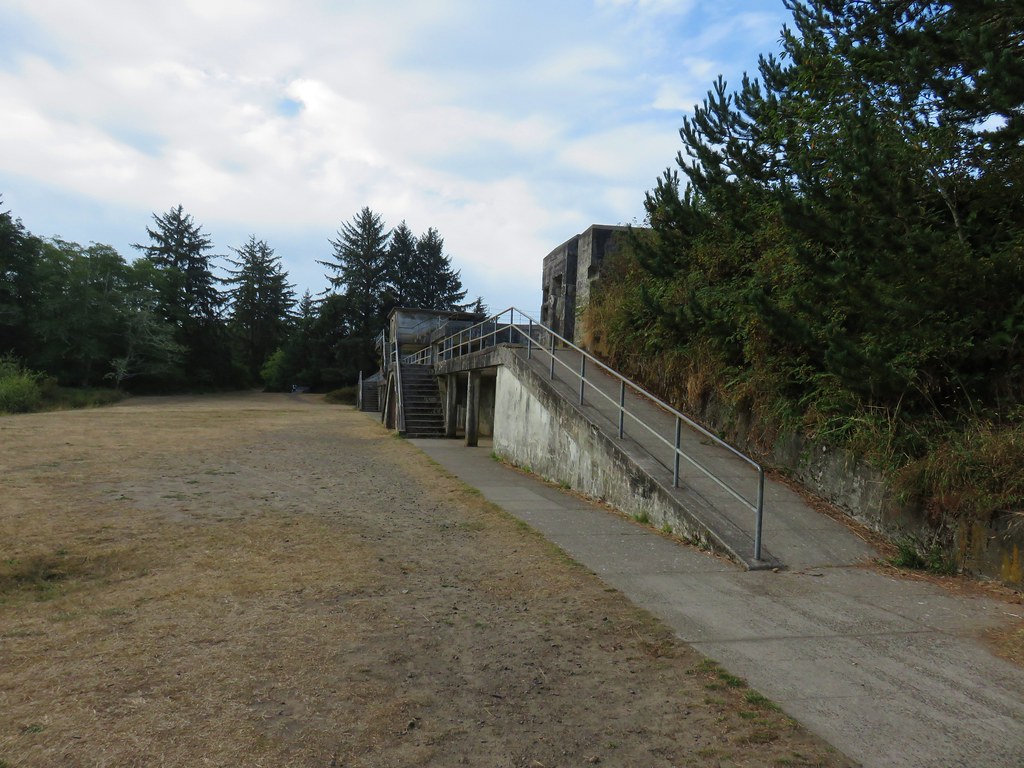
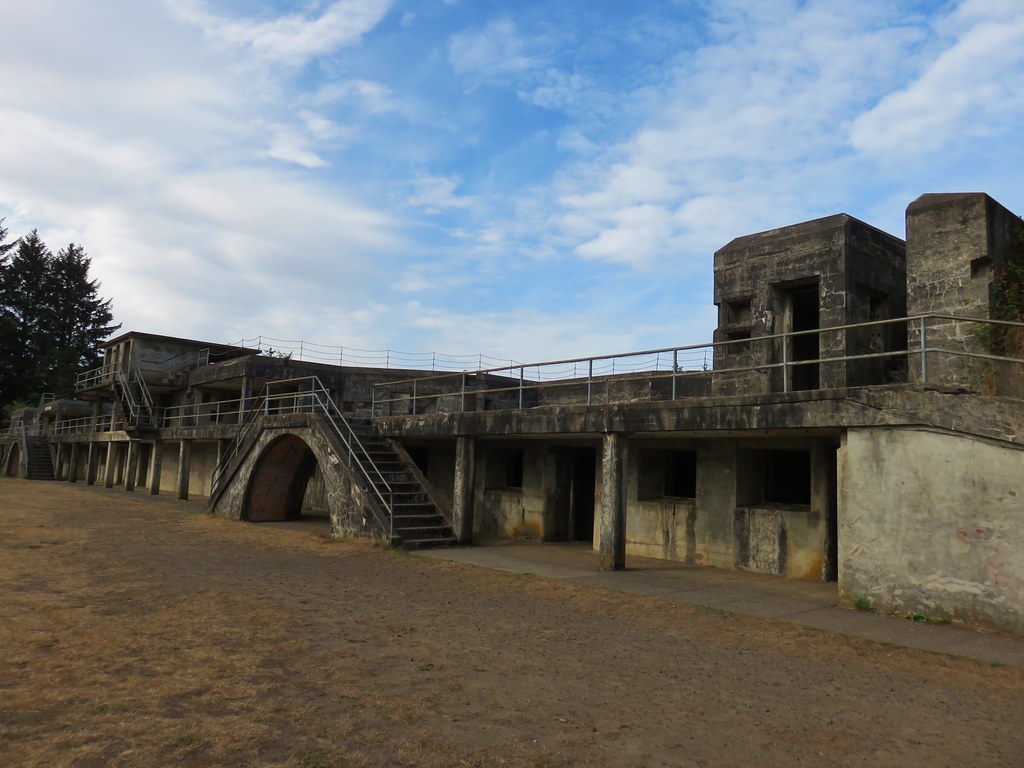
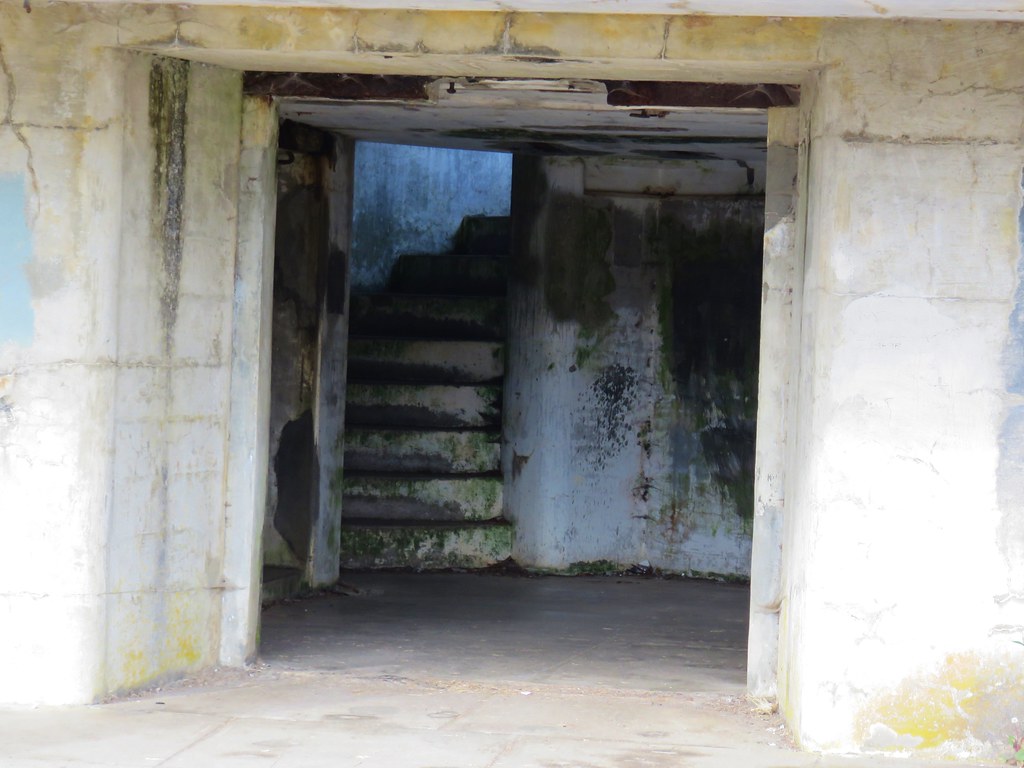
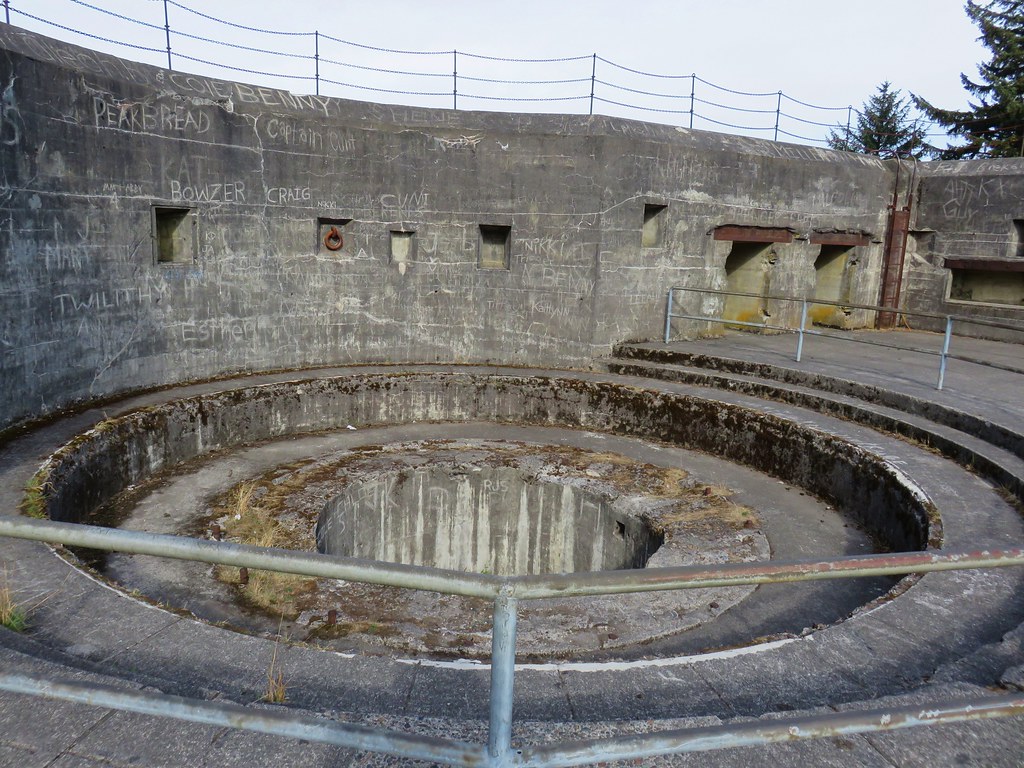
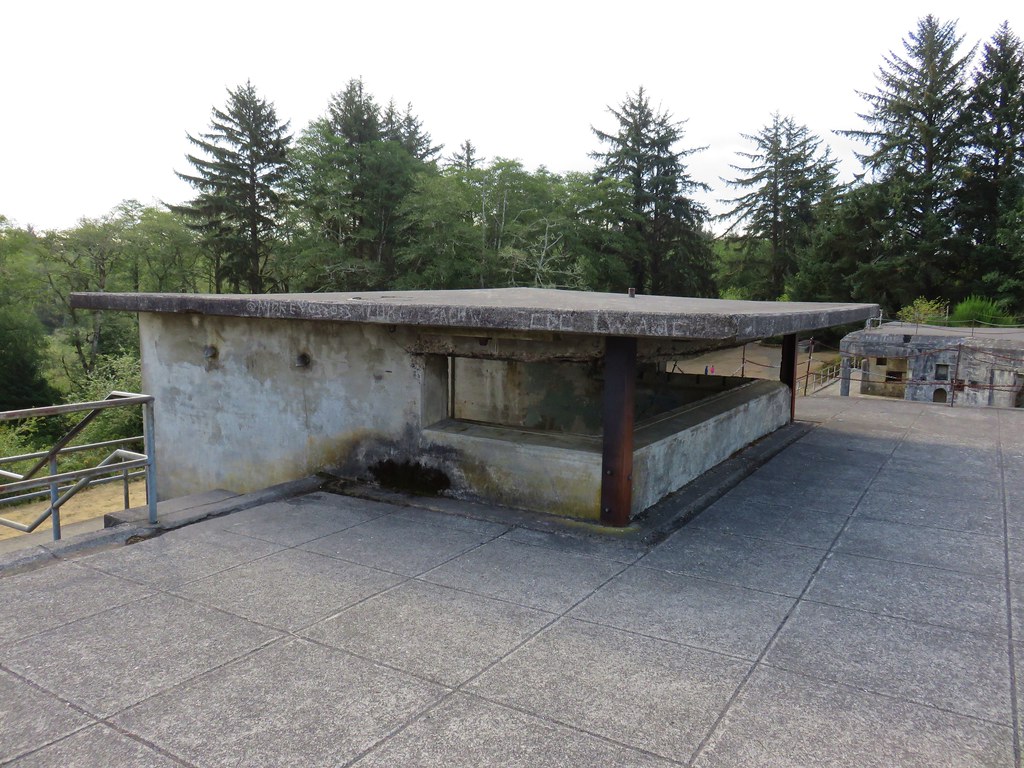
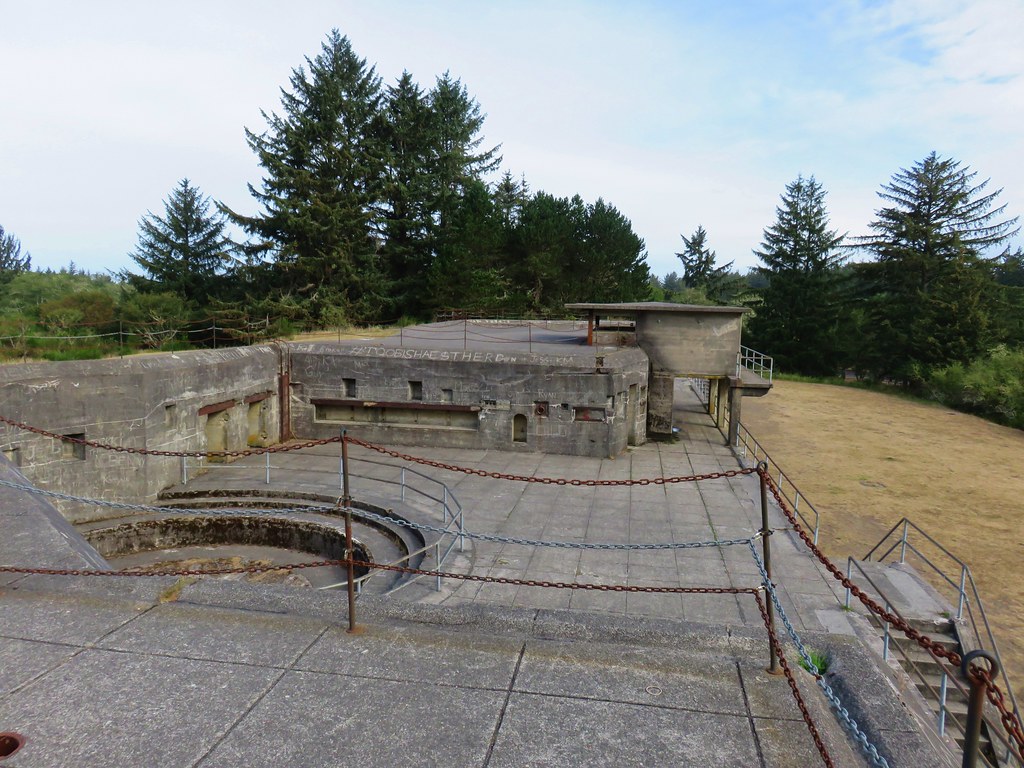
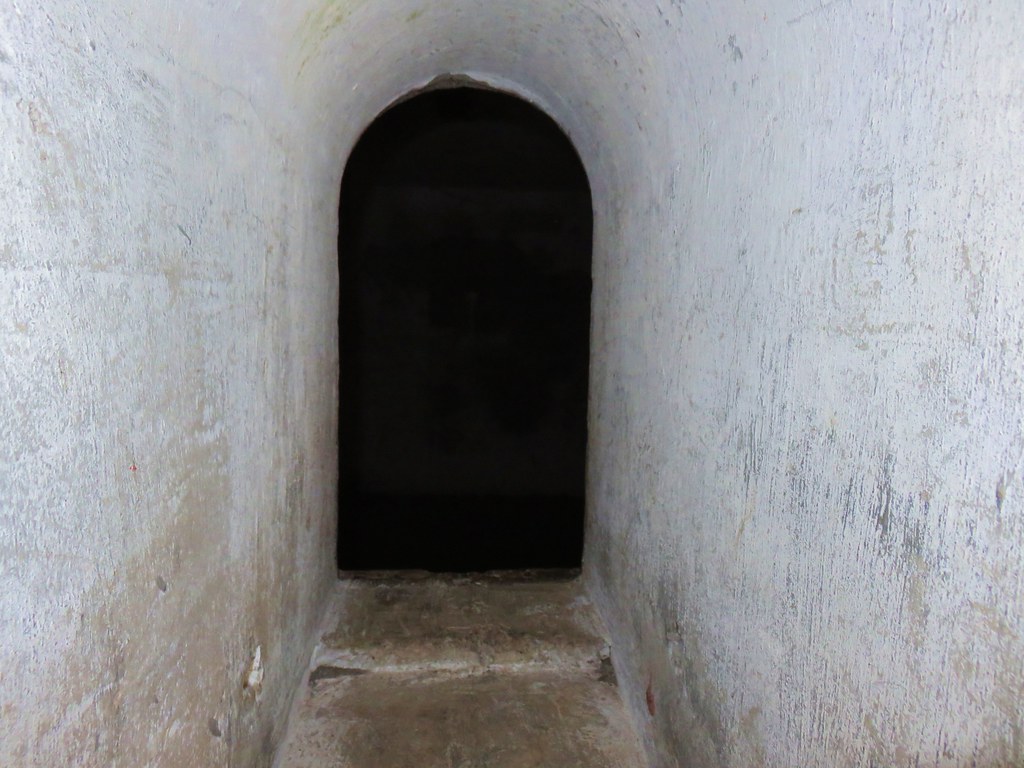
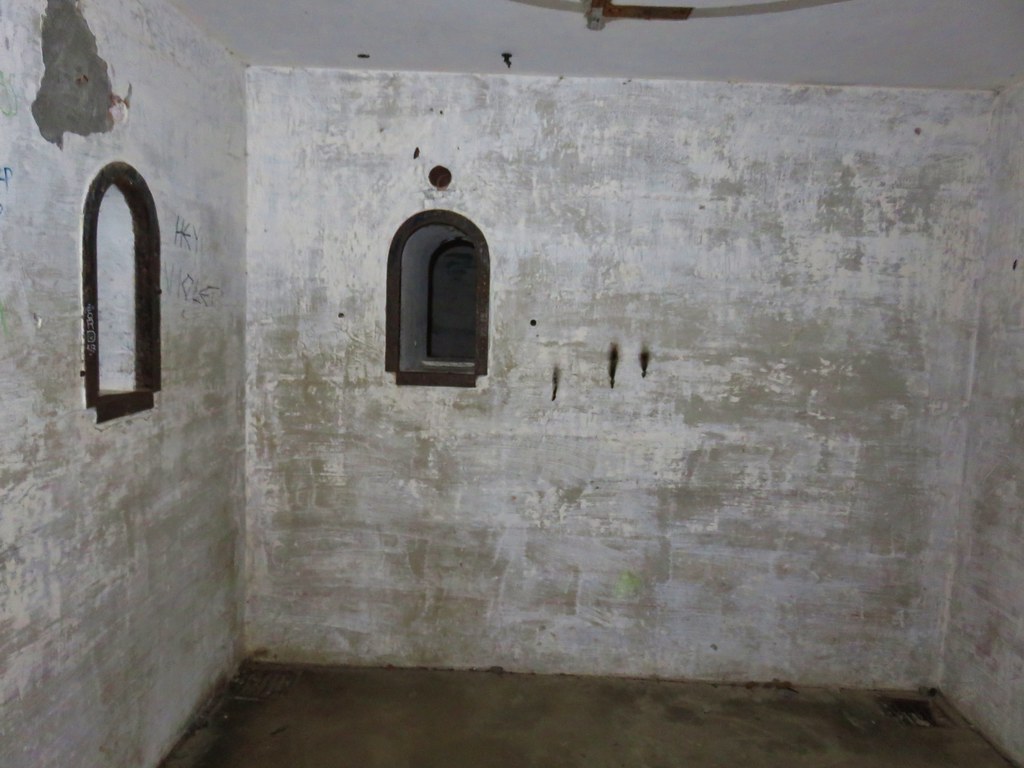
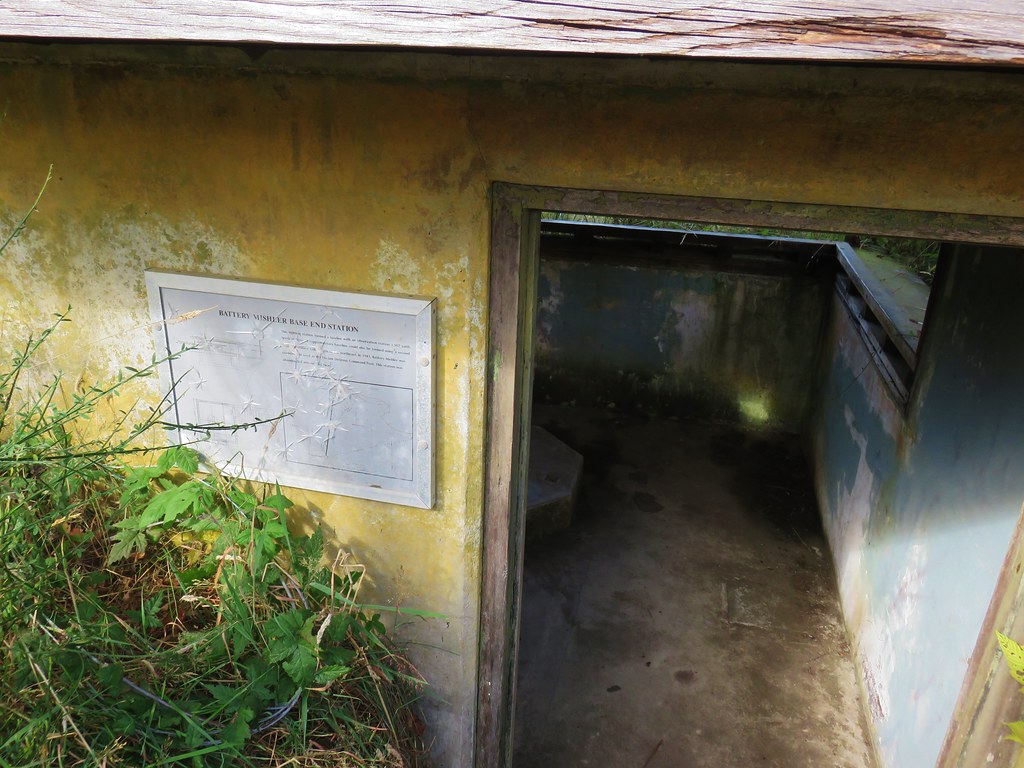
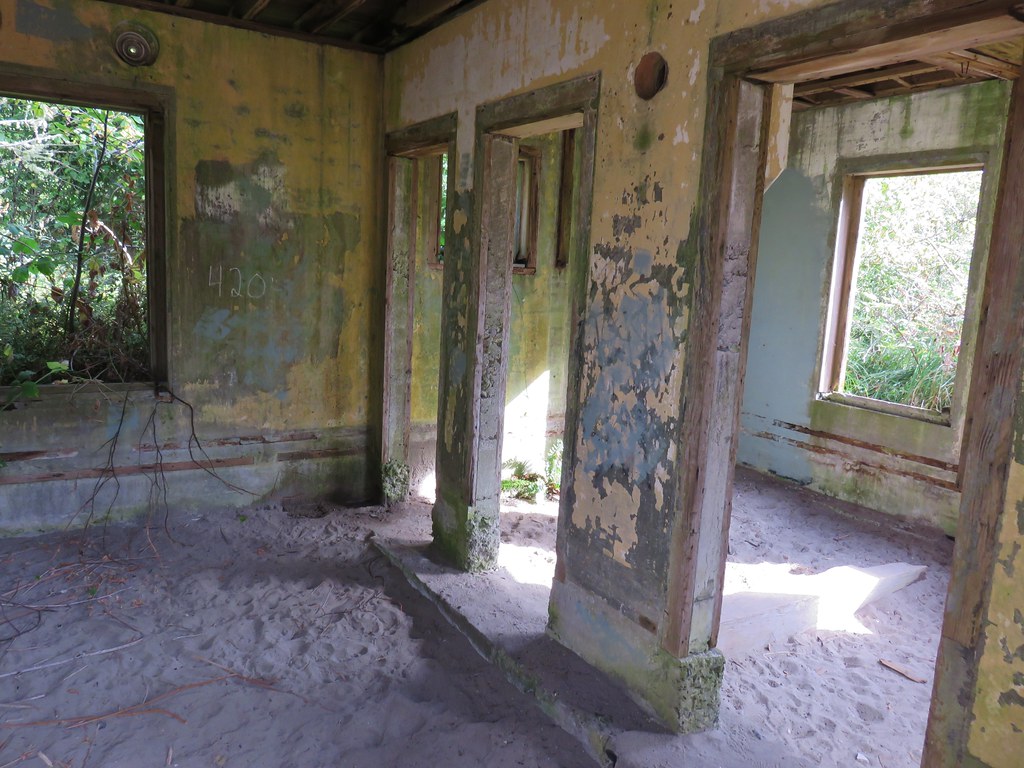
For forty years (1904-44) the battery guarded the Columbia River from enemy attacks. We spent quite a while exploring the old bunker. The history made it neat but too many video games and horror movies kept us imagining what might be hiding in the dark corners of the rooms.
IMG_8104

IMG_8108

IMG_8111

IMG_8114

IMG_8116

IMG_8119

IMG_8117

We followed a path at the far end of the bunker toward Coffenbury Lake.
IMG_8122

The path passed another set of old buildings.
IMG_8123

IMG_8124

IMG_8125

IMG_8126

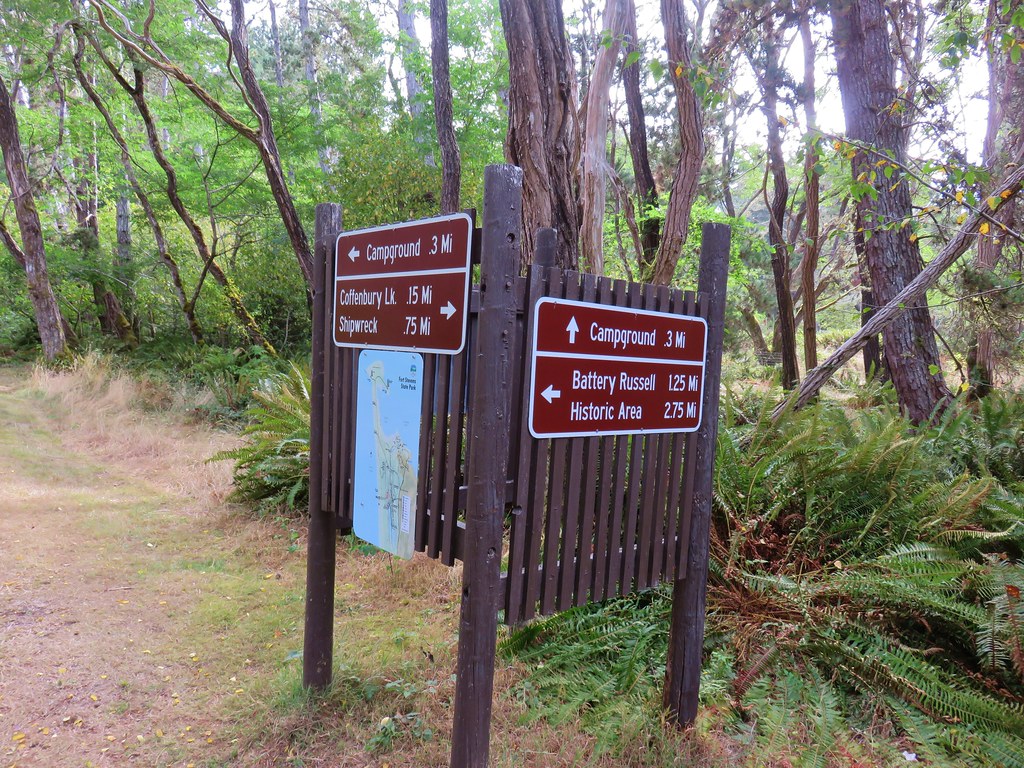
We continued on this path a total of 1.25 miles to a signed junction where we followed a pointer to the lake.
IMG_8127

IMG_8129

IMG_8132

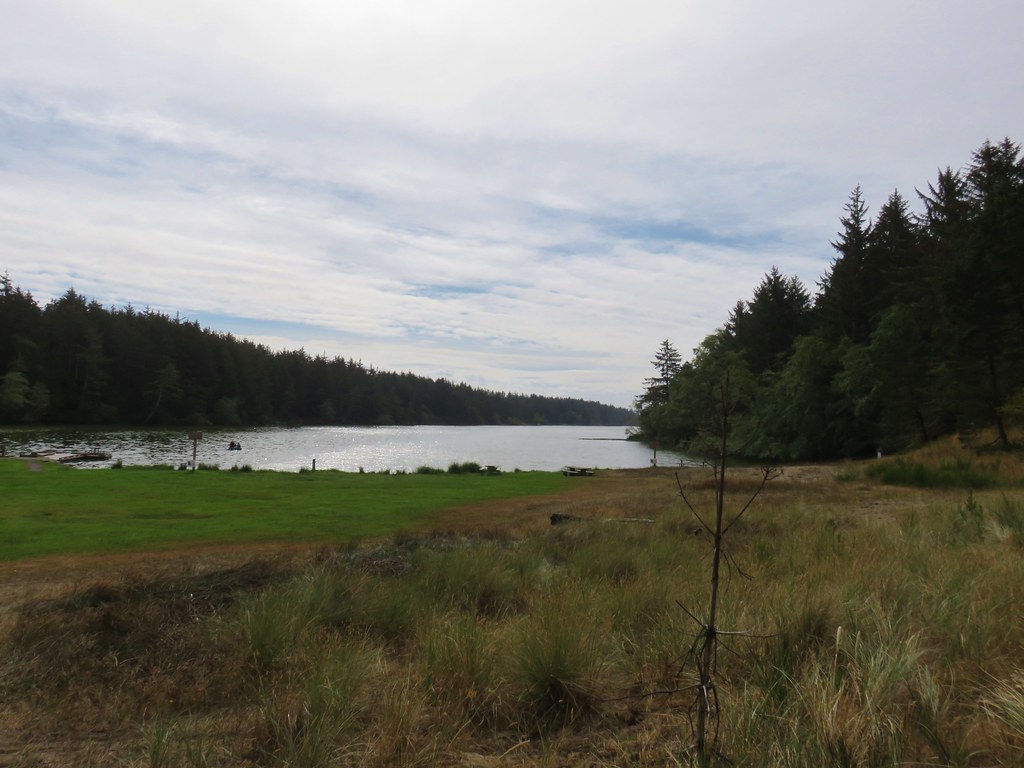
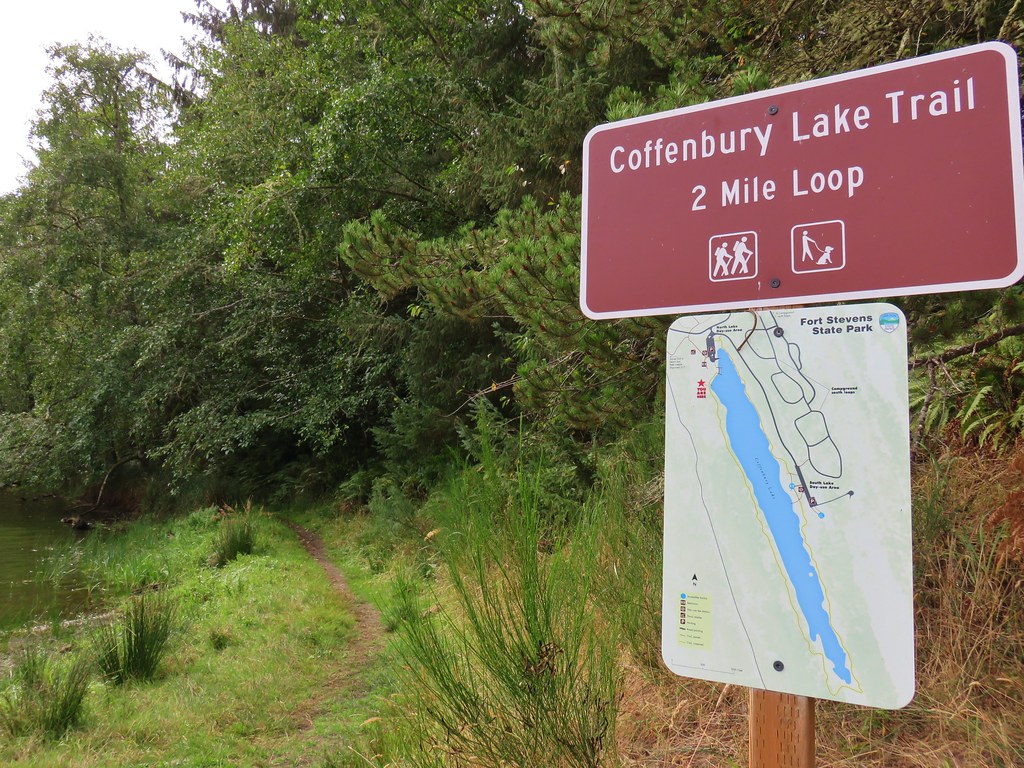
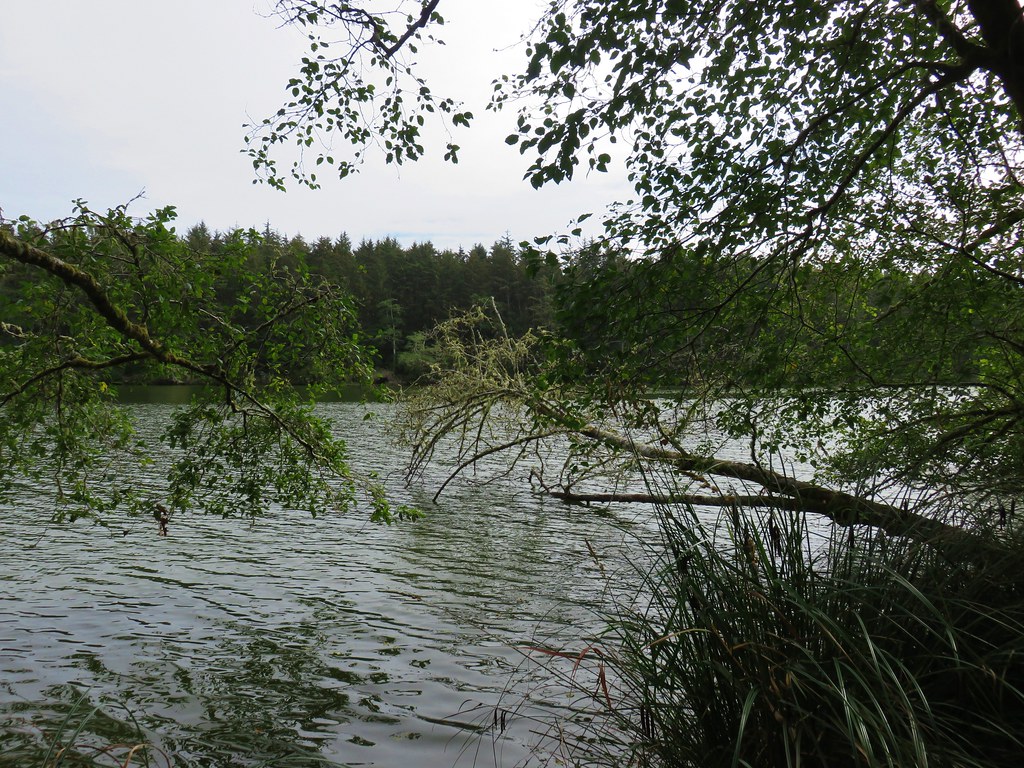
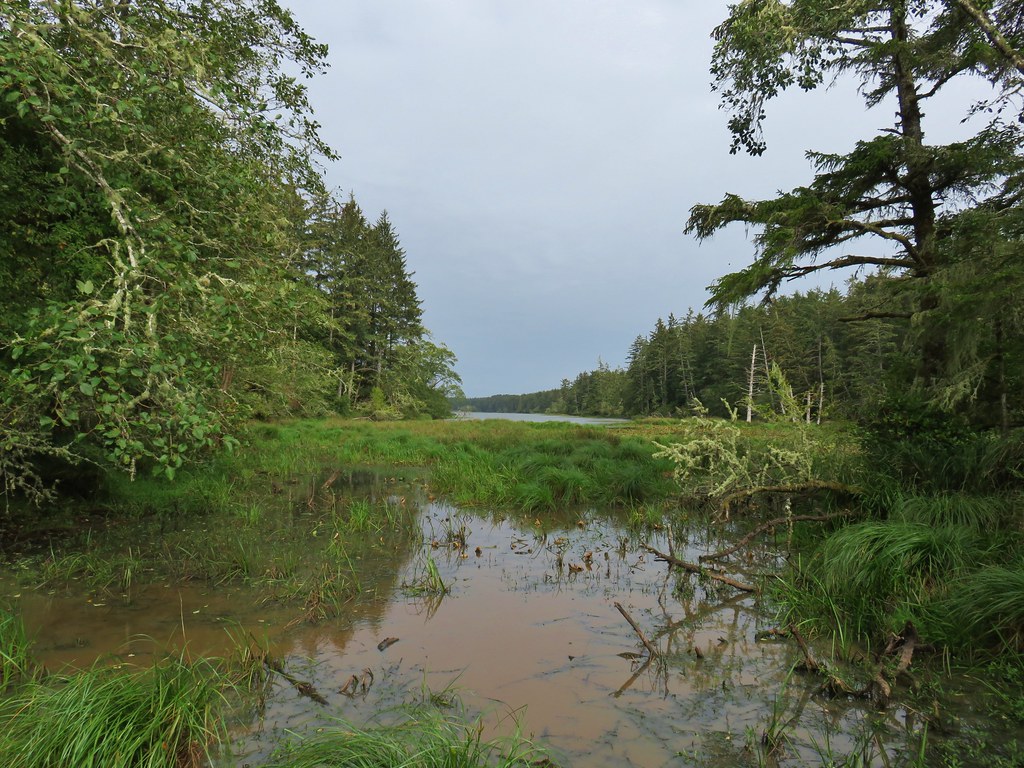
We headed around the lake counter-clockwise on a nice trail.
IMG_8134

IMG_8135

IMG_8137

IMG_8139

IMG_8140

IMG_8144

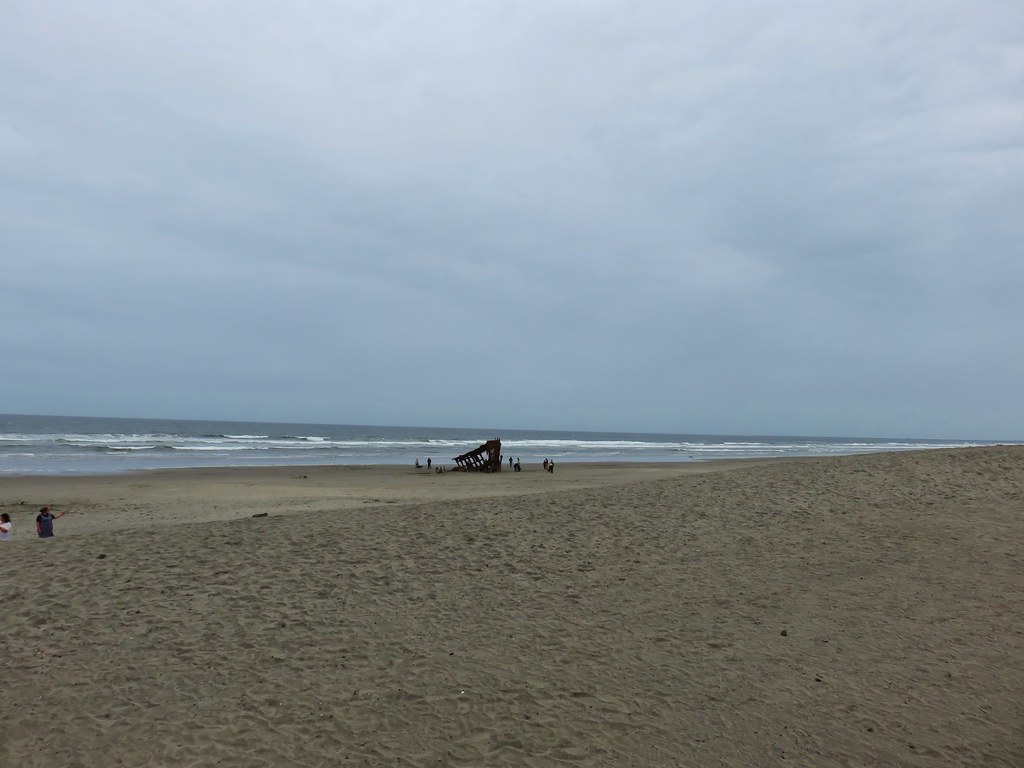
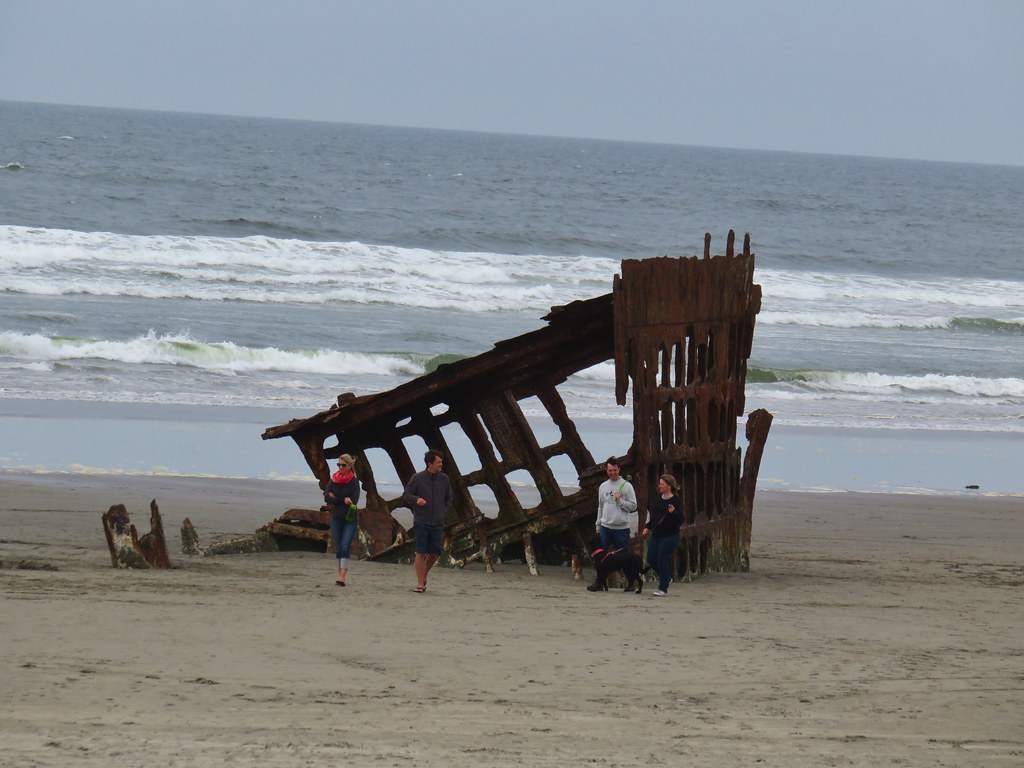
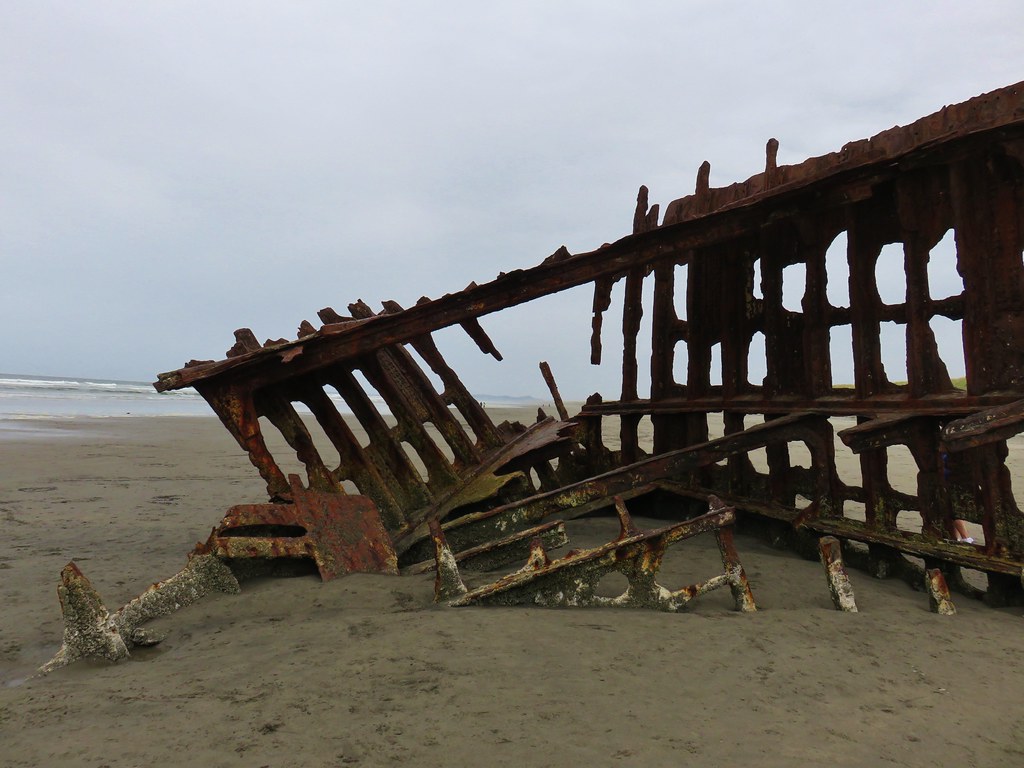
After completing the 2 mile loop around the lake we followed “Shipwreck” pointers for 3/4 of a mile to the beach and the remains of the Peter Iredale which ran aground in 1906.
IMG_8148

IMG_8149

IMG_8152

IMG_8156

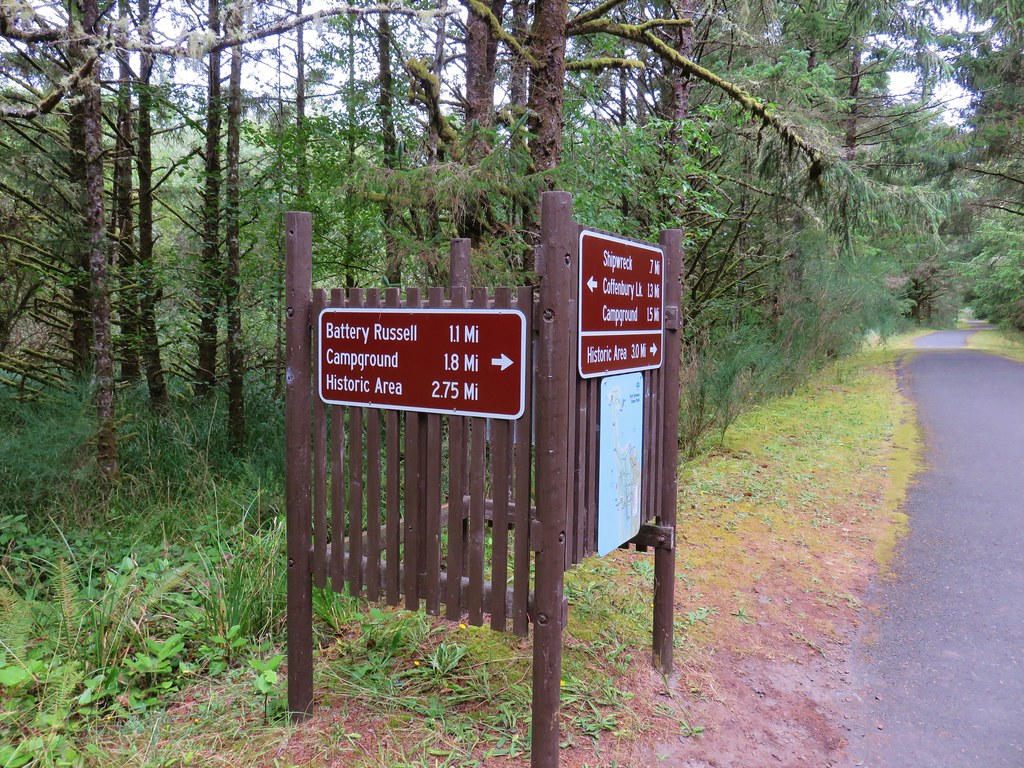
We backtracked from the beach a short distance and turned left on a paved path at a pointer for Battery Russell (among other possible destinations).
IMG_8158

We followed this path for a little over half a mile before turning right at another pointer for Battery Russell.
IMG_8159

IMG_8160

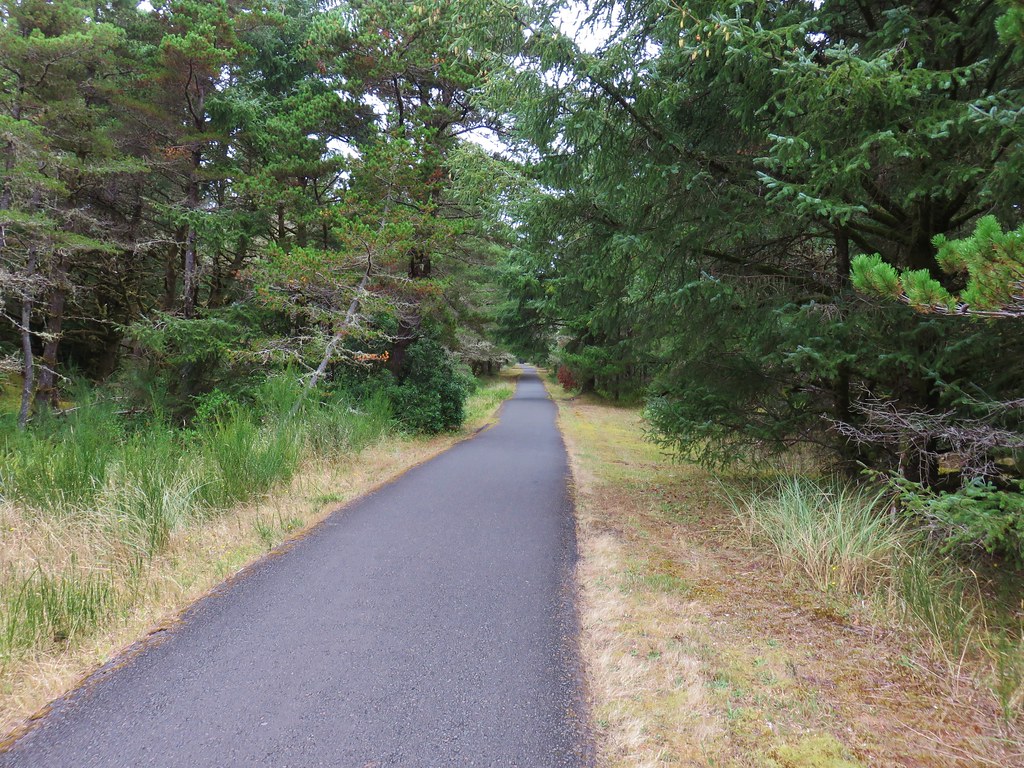
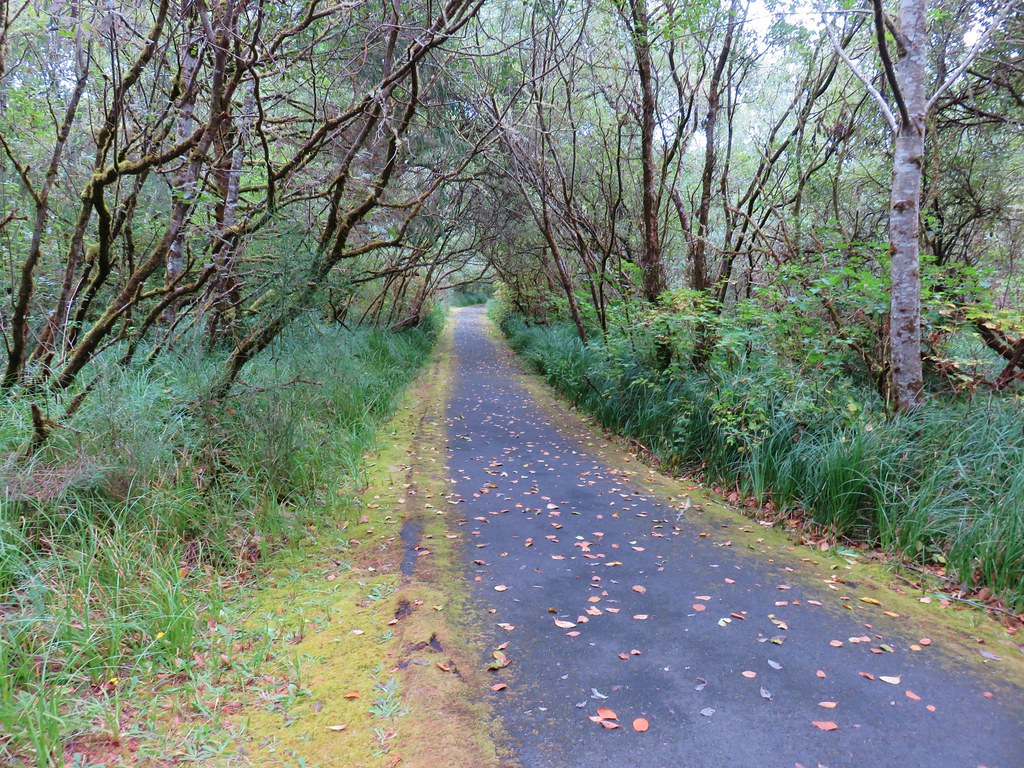
We followed this 1.1 mile paved path back to the parking lot.
IMG_8162

The total distance of the Clatsop Spit hike had been 5 miles and this hike came in just under 7.5 miles. Twelve and a half miles is pretty good for a day, but due to our typical early start we were done with these two hikes before 1pm. Our check-in time wasn’t until four so we still had a few hours to kill.

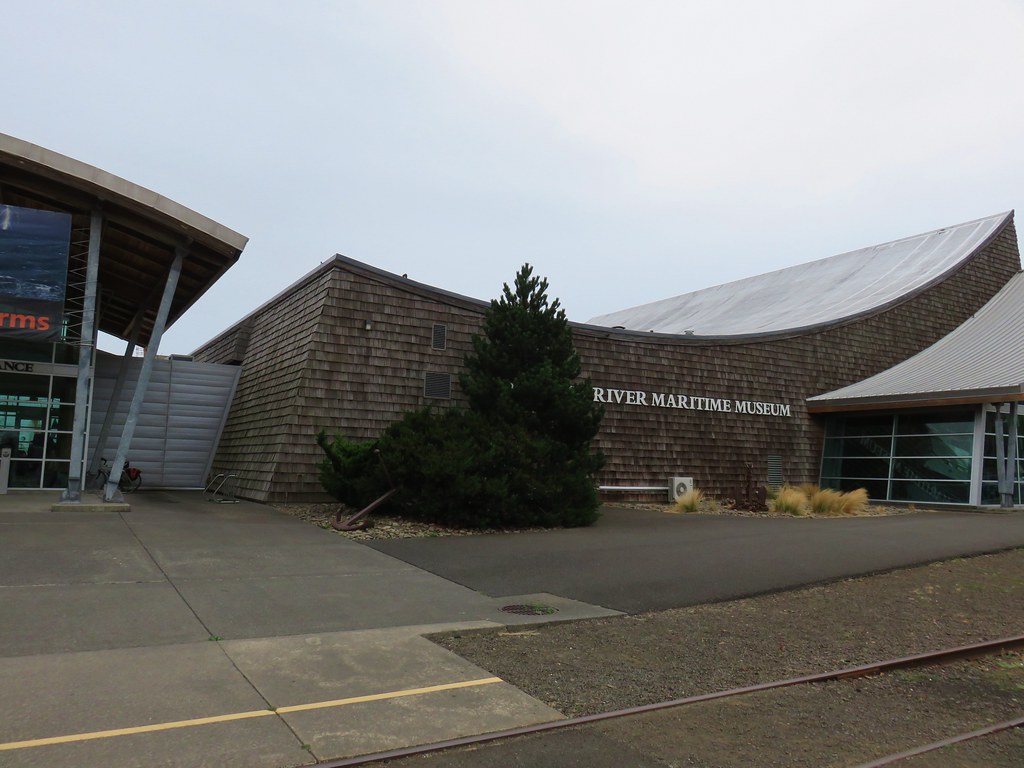
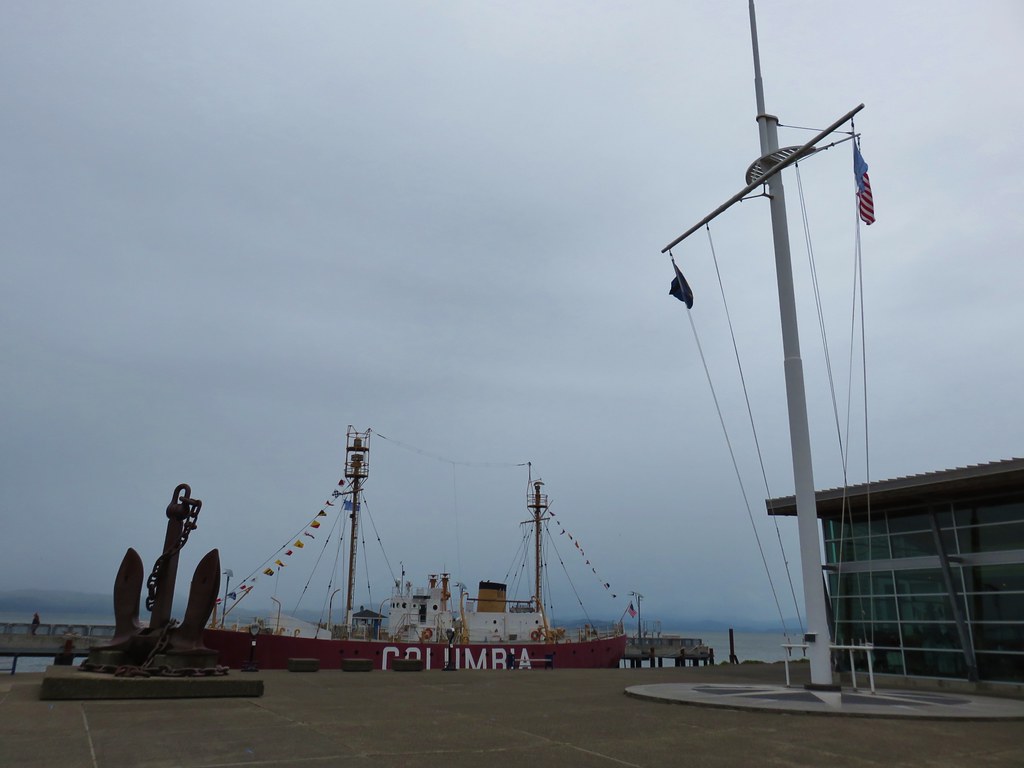
We had been prepared for that and headed north from Fort Stevens to Astoria where we parked at the Columbia River Maritime Museum
IMG_8163

IMG_8164

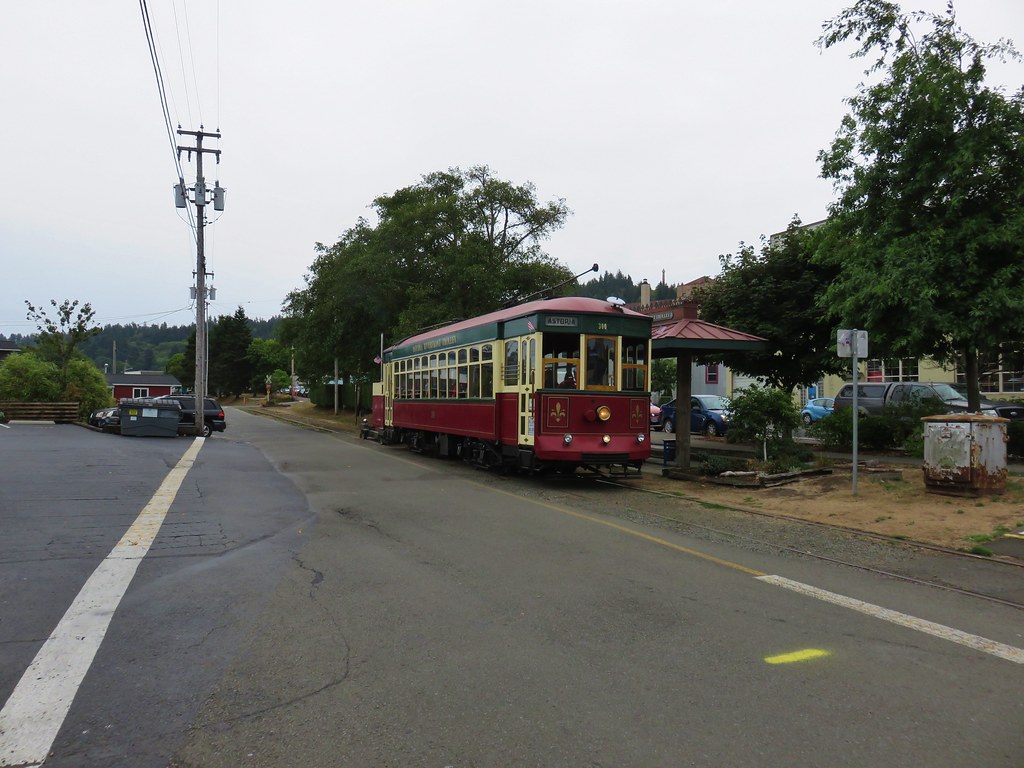
From the museum parking lot we headed west following the Riverfront Trolley line.
IMG_8169

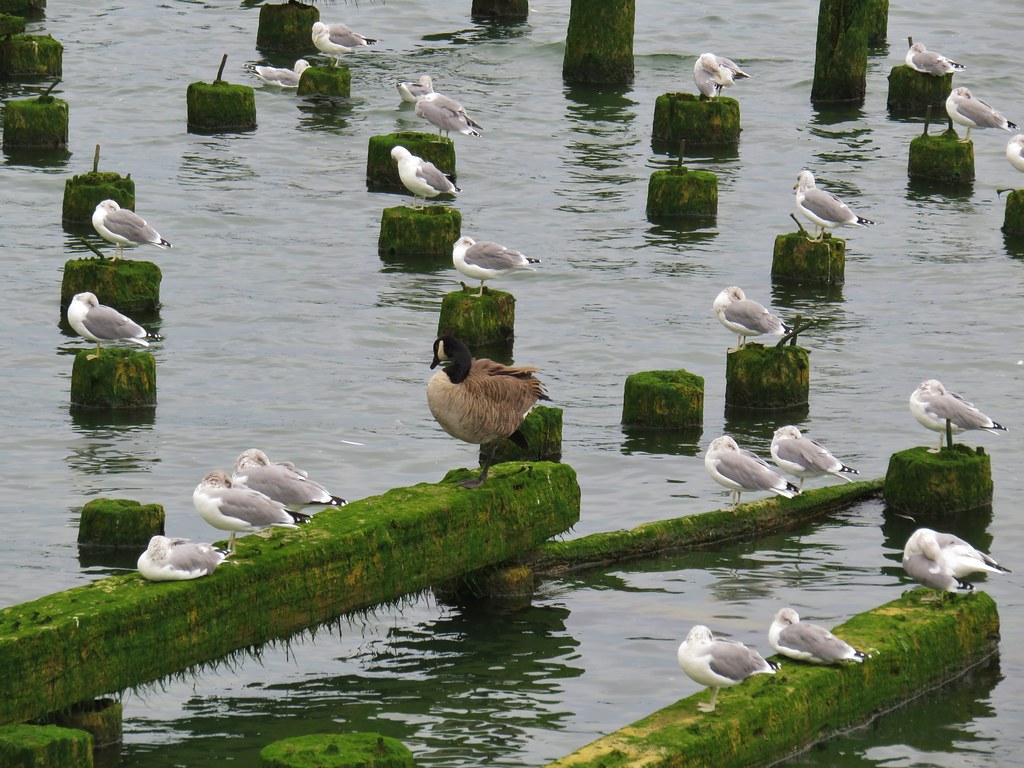
Seabirds lined the waterfront and we also heard some sea lions but never saw any.
IMG_8166

IMG_8167

IMG_8173

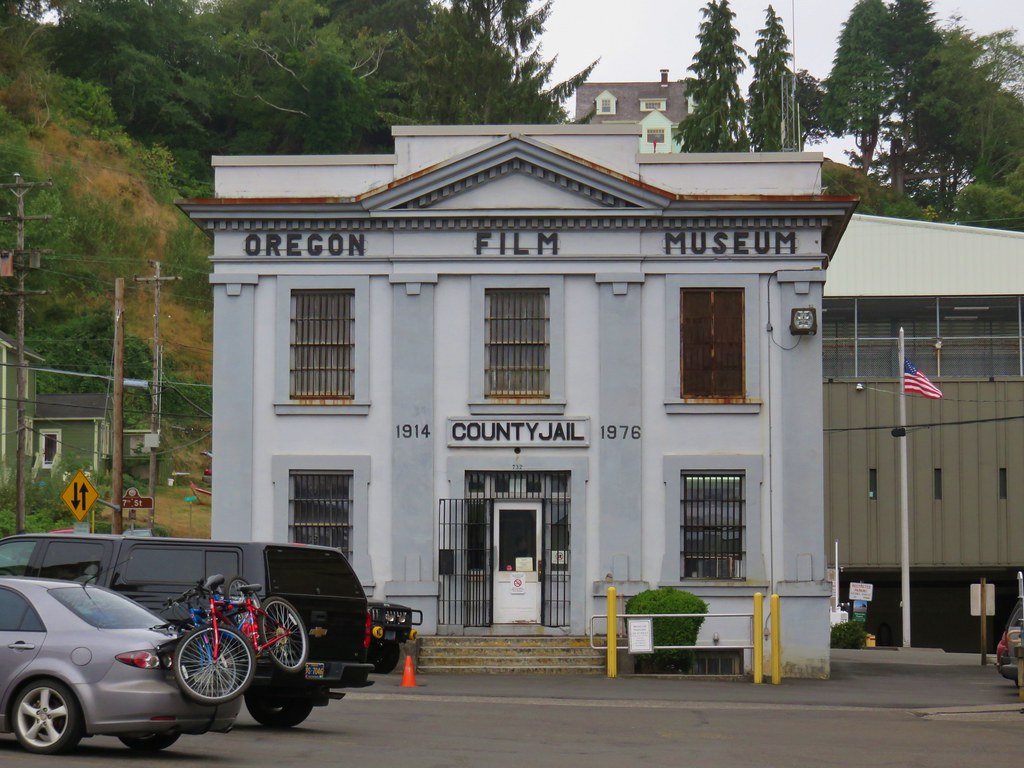
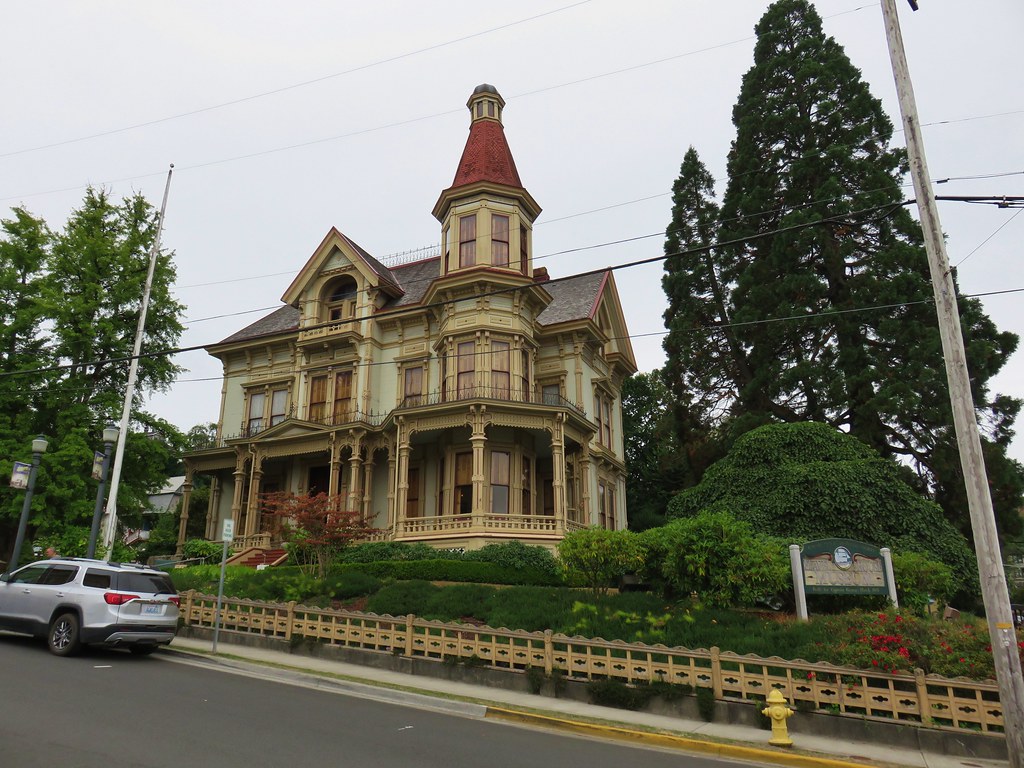
We more or less stuck to Sullivan’s described route (Hike #4 in the 4th edition of “100 Hikes/Travel Guide Oregon Coast & Coast Range) following the the trolley line to 6th St. then turning inland for three blocks before taking a left on Commercial St. After a block on Commercial St. we turned right on 7th for two blocks passing the Oregon Film Museum and the Flavel House.
IMG_8192

IMG_8190

IMG_8187

IMG_8182

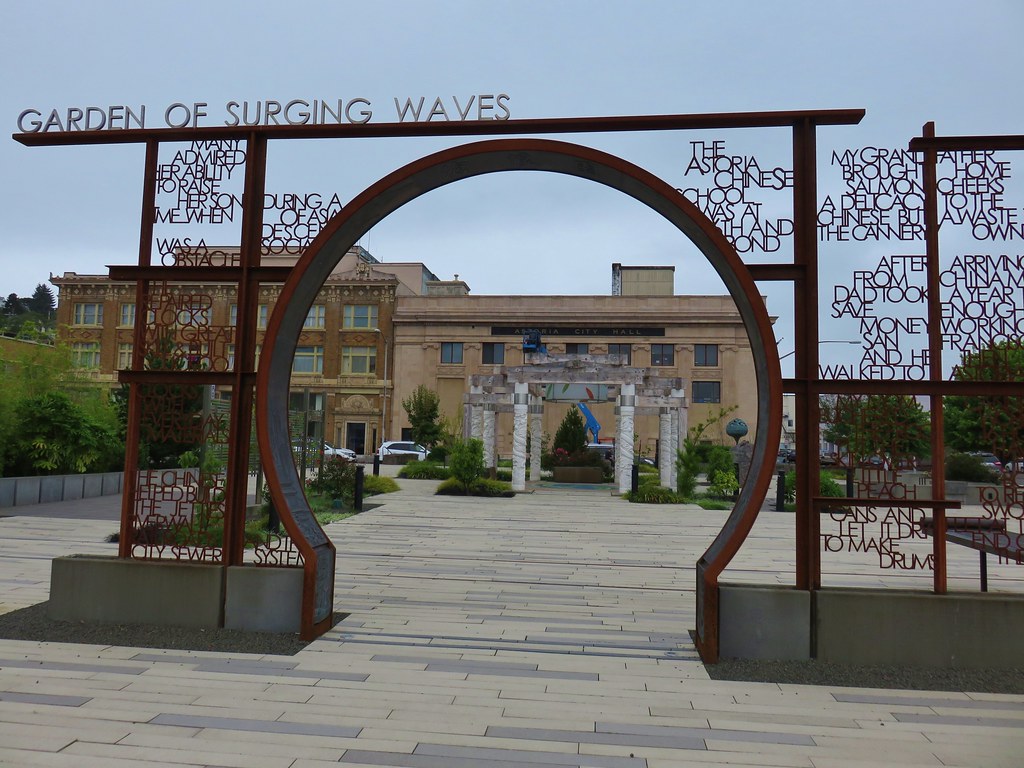
We walked around the Flavel House and headed downhill on 8th St. turning right when we arrived back at Commercial St. We turned right several blocks later on 12th Street and right again a block later on Duane St. passing a Chinese Garden.
IMG_8194

IMG_8195

IMG_8197

IMG_8199

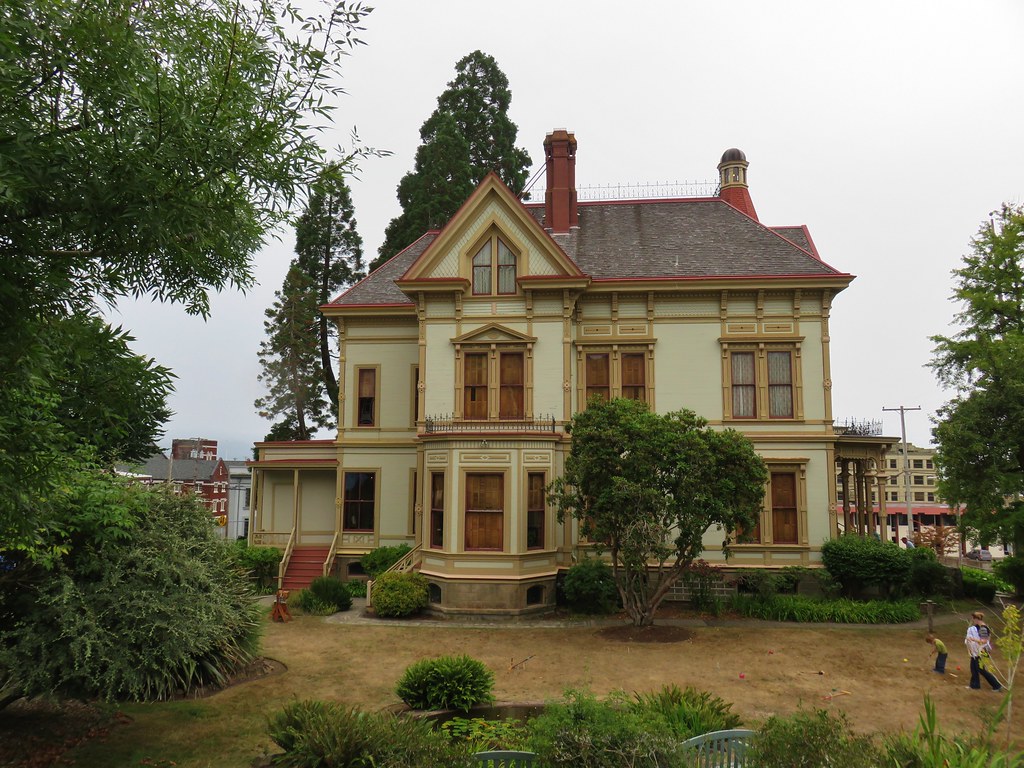
We continued zig-zagging through town passing numerous historic homes, churches, and other buildings. One home that stood out was an old run down home that had the quintessential haunted house look.
IMG_8201

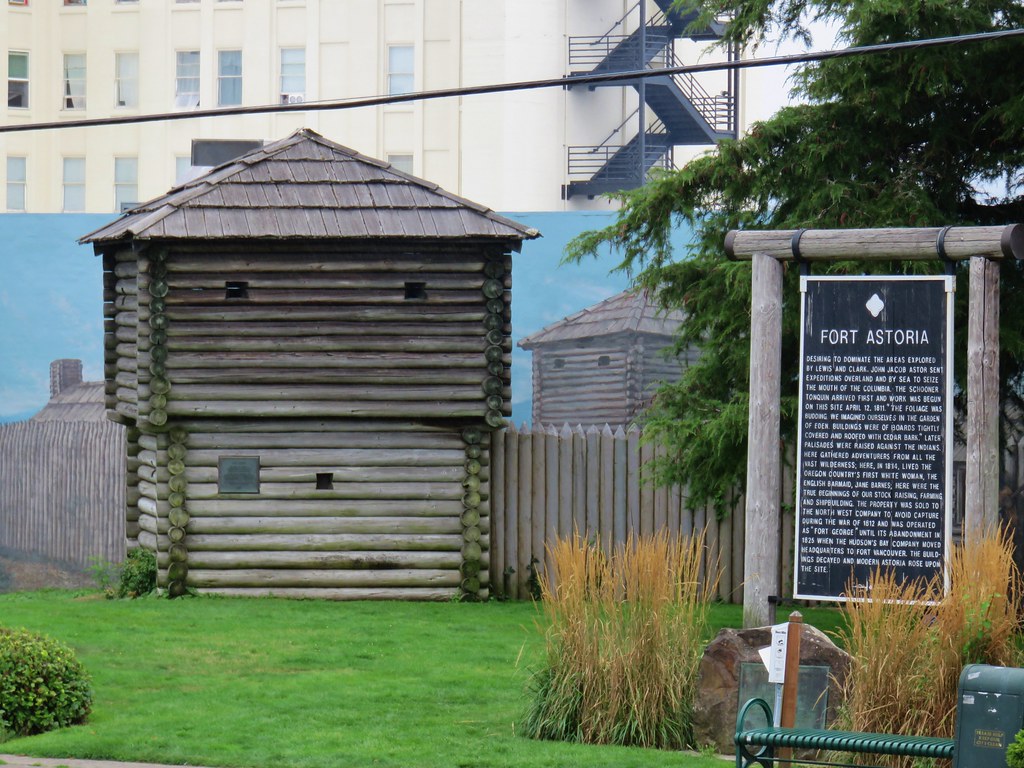
We also passed Fort Astoria on the corner of 15th and Exchange.
IMG_8205

By the time we were done we wandered around town for a total of 3 miles.
Astoria

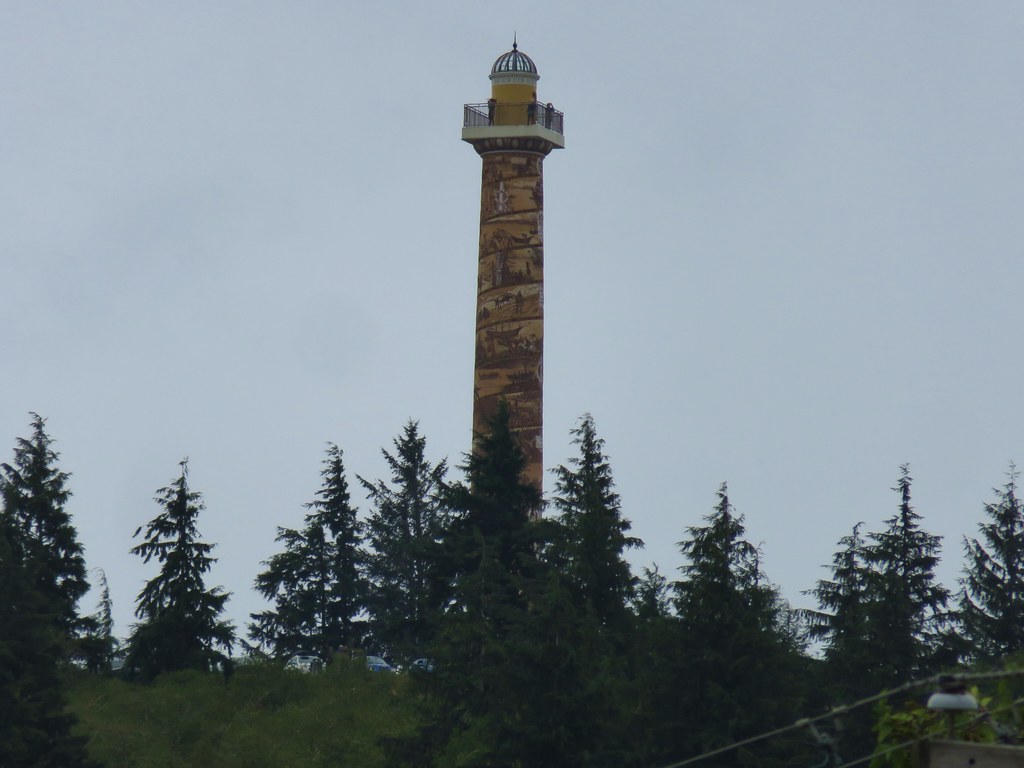
One of the landmarks not on the route was the Astoria Column. It was visible from the waterfront rising above the city. It was one of the times the 30x zoom on the camera came in handy.
IMG_8178

We still arrived a little early at our hotel but luckily our room was ready. We had a nice view south to Tillamook Head.
IMG_8208

It had actually rained lightly on us in Astoria which was a wonderful change of pace. The sun went down behind the clouds that evening ending the first day of what was shaping up to be an interesting vacation.
IMG_8209

Happy Trails!

Flickr: Astoria & Fort Stevens

Categories
Central Coast Hiking Oregon Oregon Coast Trip report

Yaquina Bay and Yaquina Head

It’s become tradition to take a shortish hike on the Oregon Coast the morning of our annual family reunion in Gleneden Beach, OR. This year we decided to visit a pair of lighthouses near Newport.

A 5am start got us to our first stop at Yaquina Bay State Recreation Site a little before 7.

Home to the 1871 Yaquina Bay Lighthouse the 32 acre park also offers access to an approximately 4 mile stretch of beach between the Yaquina River and Yaquina Head.

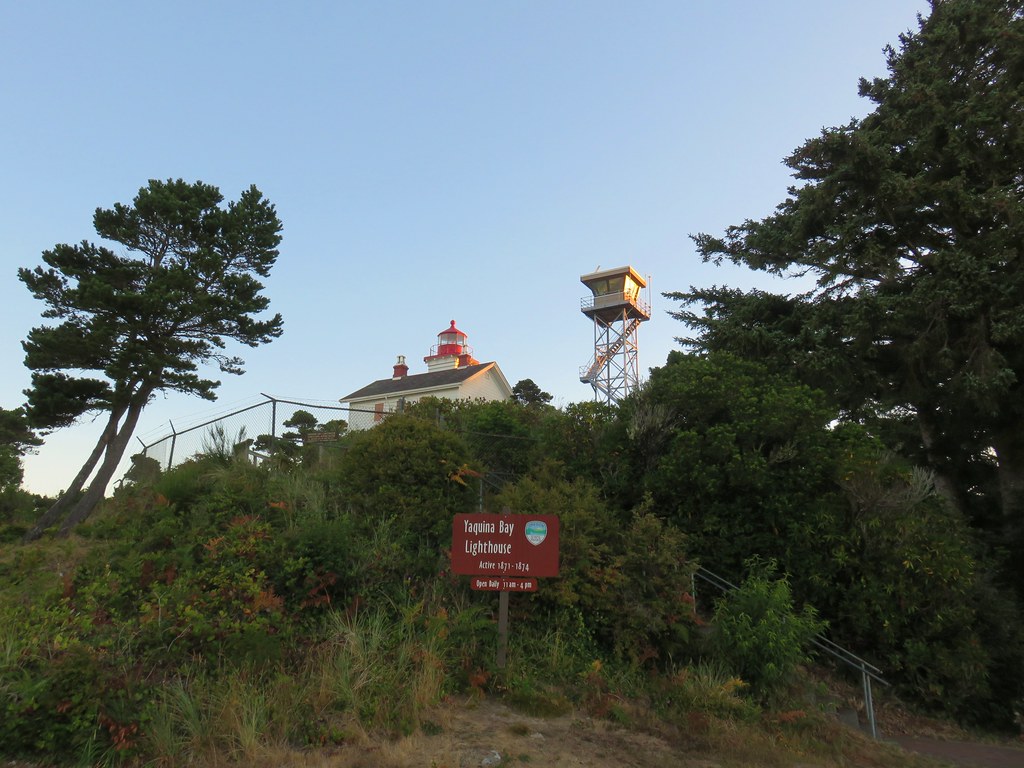
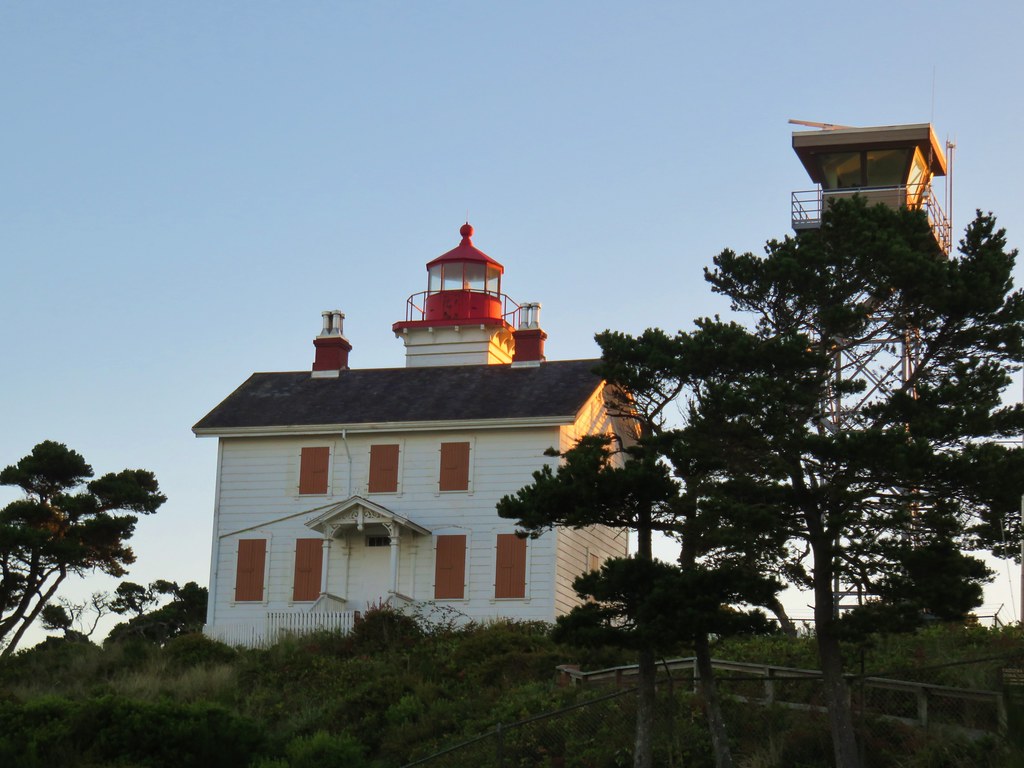
We parked below the lighthouse, which operated only three years before being replaced by the Yaquina Head Lighthouse.
Yaquina Bay Lighthouse

Yaquina Bay Lighthouse

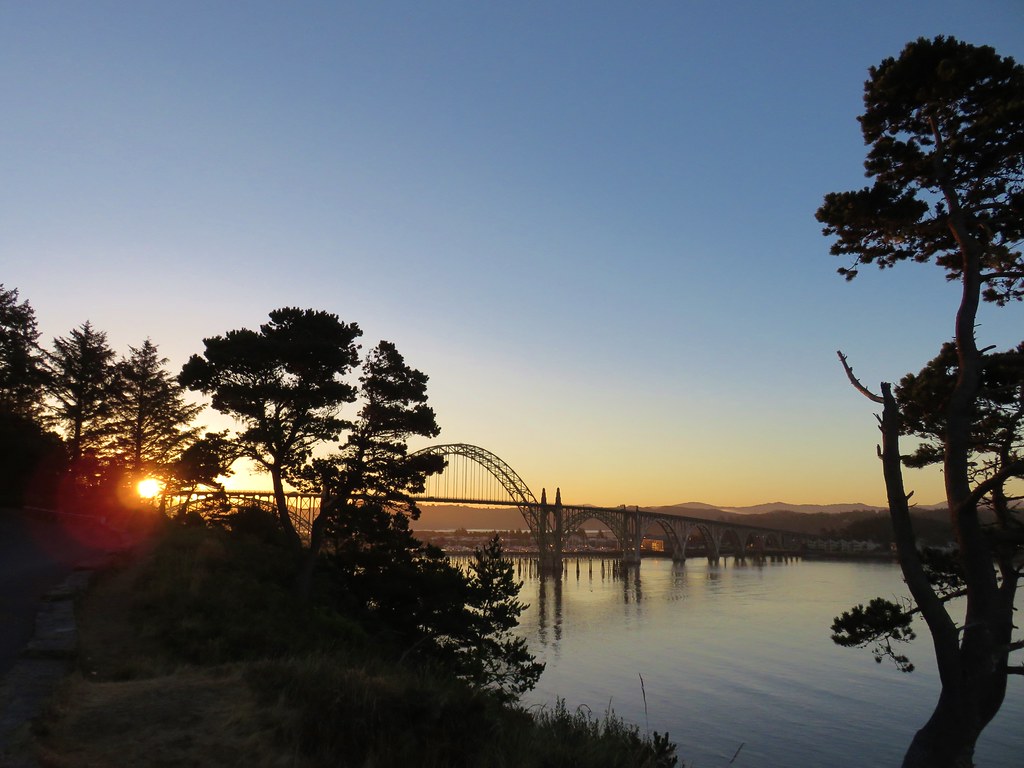
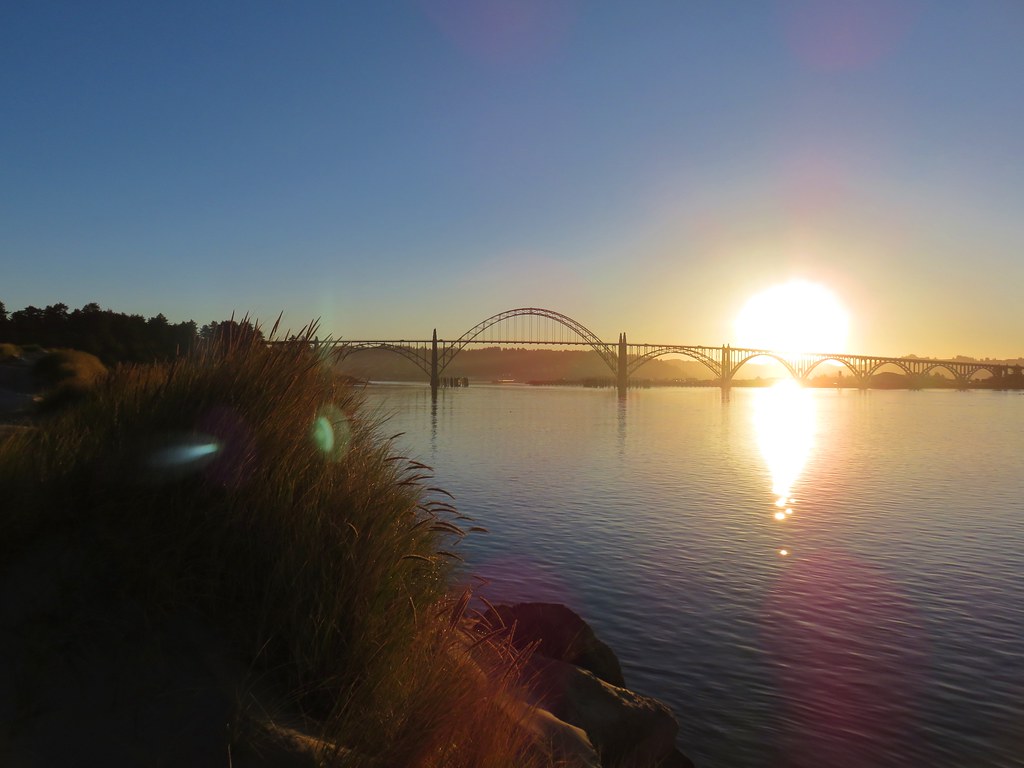
From a viewpoint in the parking lot we could see the Yaquina Bay Bridge and watch boats heading out to sea.
Yaquina Bay Bridge

Yaquina Bay Jetty

A paved path led down the bluff to a sandy path in the deflation zone behind a small foredune.
Trail from Yaquina Bay Lightouse to the ocean

Heading to the Pacific Ocean

We passed over the foredune and turned left toward the Yaquina River.
Yaquina Bay Jetty

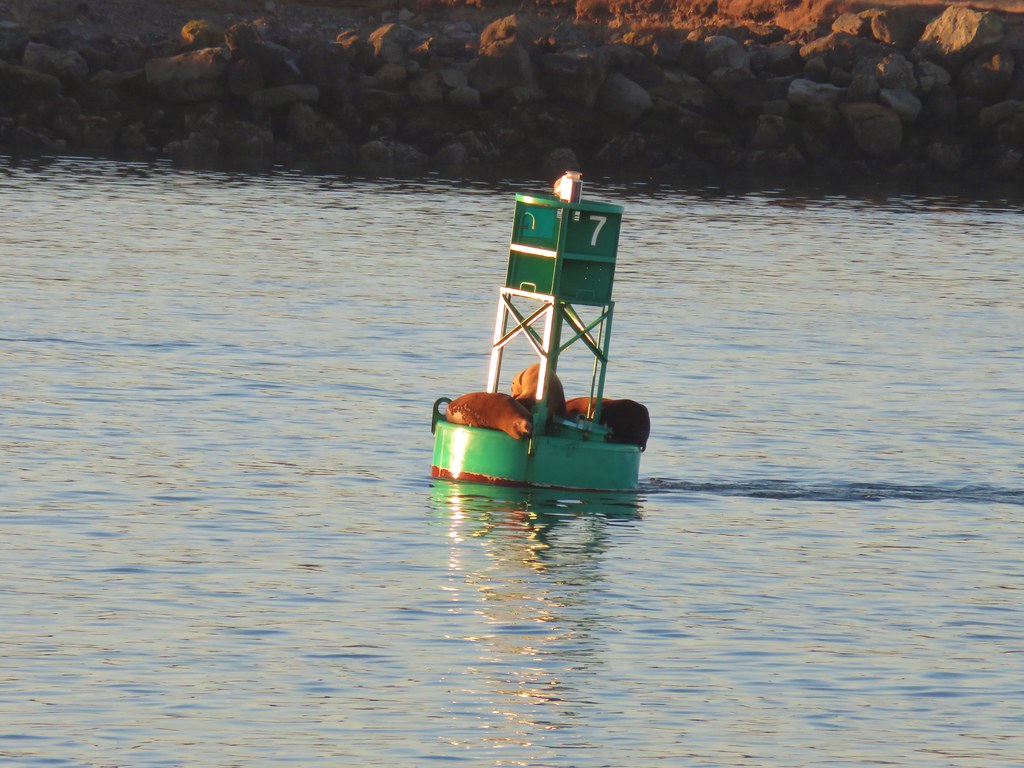
The sound of sealions in the bay greeted us as we approached the jetty where we spotted some squatters on a buoy.
Yaquina Bay Lighthouse

Yaquina Bay Bridge

Seals on a bouy

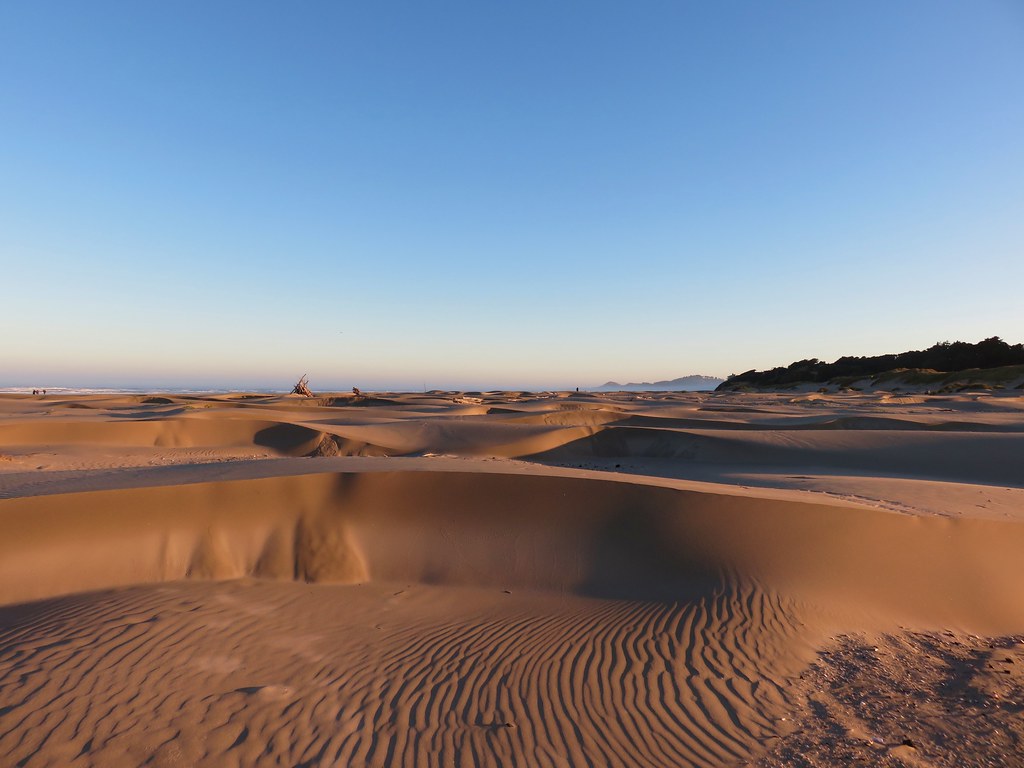
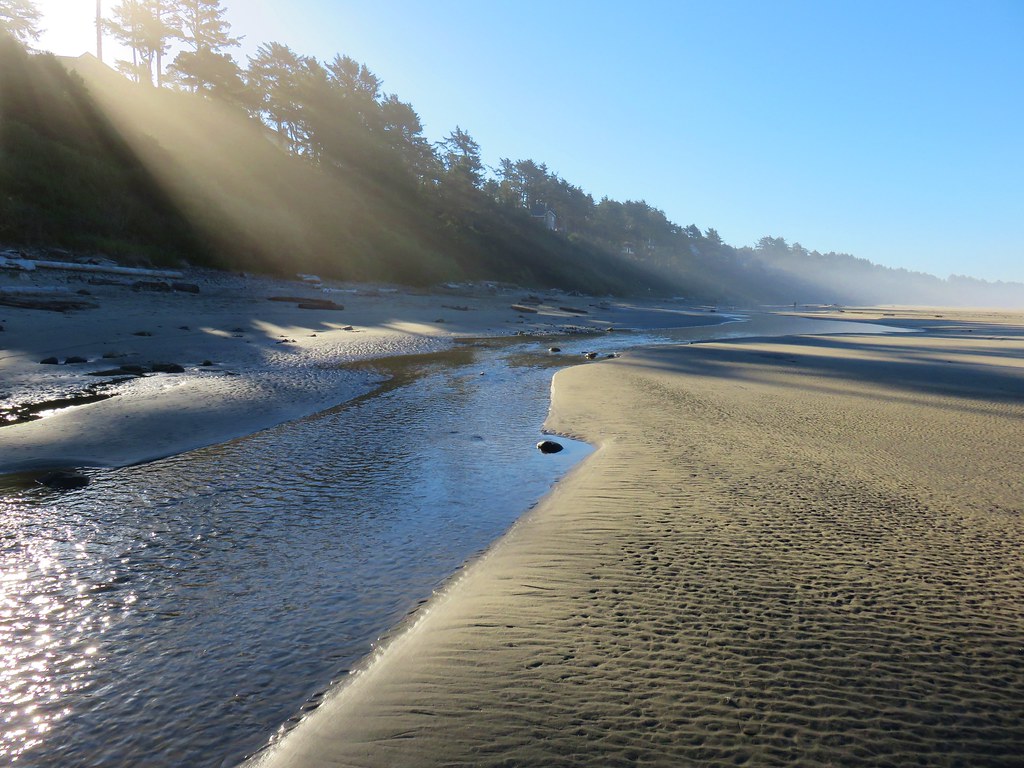
We turned around and headed north along the beach. It was an interesting beach with many small dune like formations.
Yaquina Bay Recreation Site

It was a typical summer morning on the coast with patches of marine layer clouds along the way.
Seagulls at Yaquina Bay Recreation Site

Yaquina Head in the fog

Yaquina Head

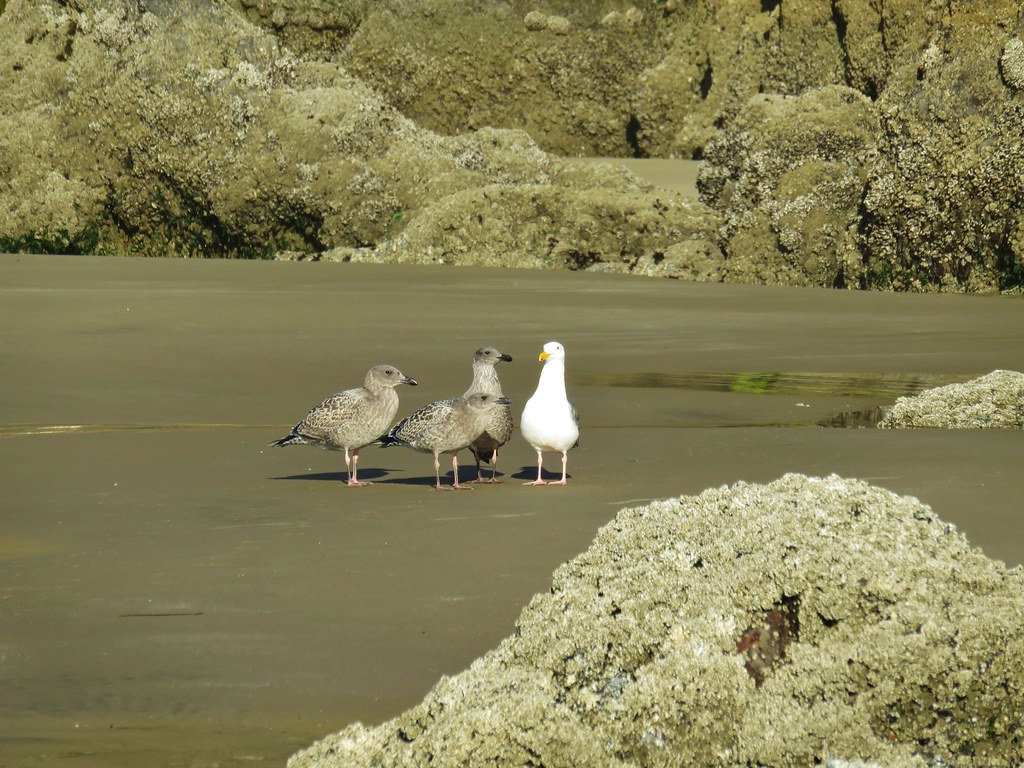
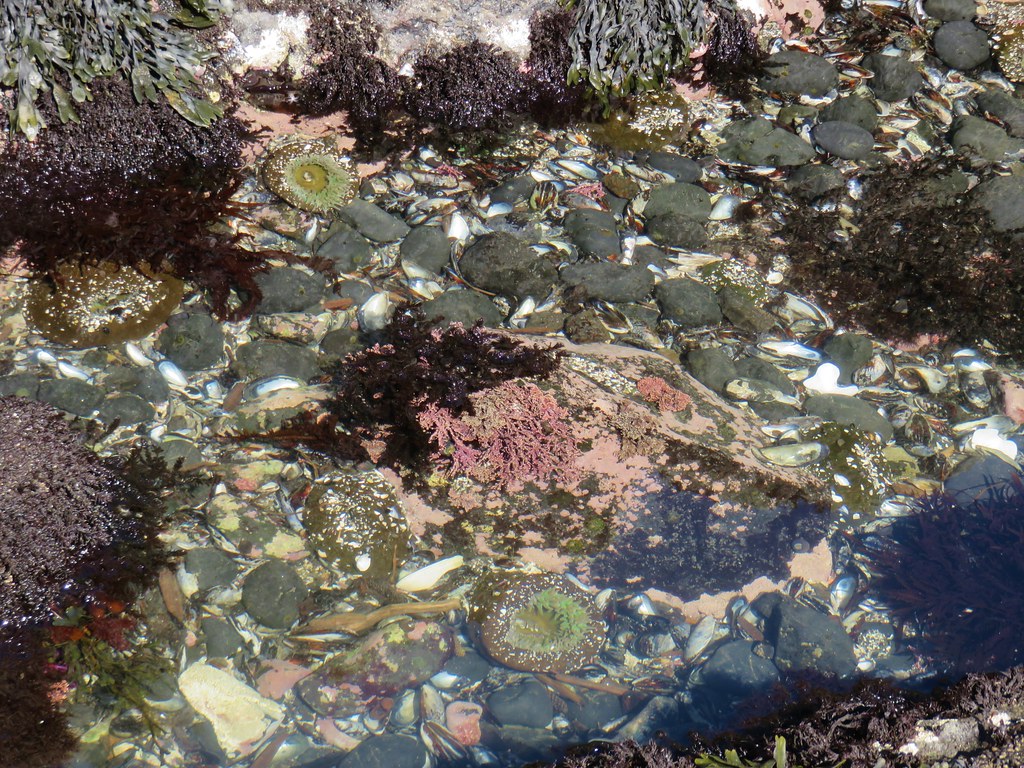
Wildlife along the way consisted of seagulls and shore birds as well as a couple of small tide pools where we spotted anemones and some sand crabs.
Seagull

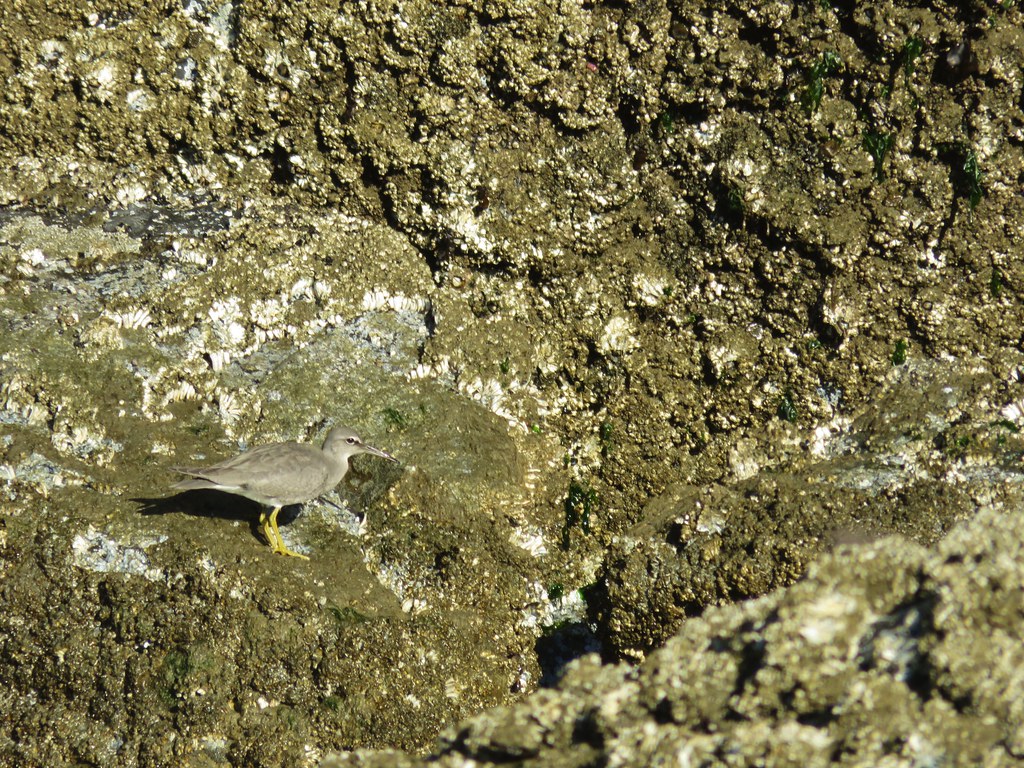
Shore birds

Anemones

Anemones

Sand crab

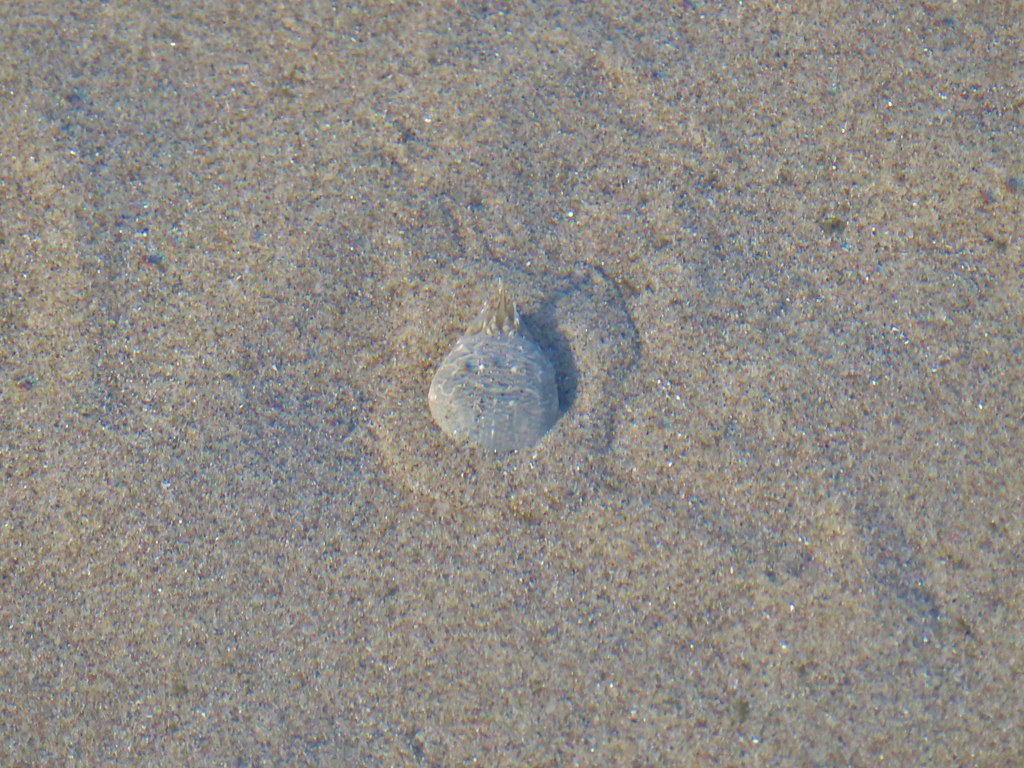
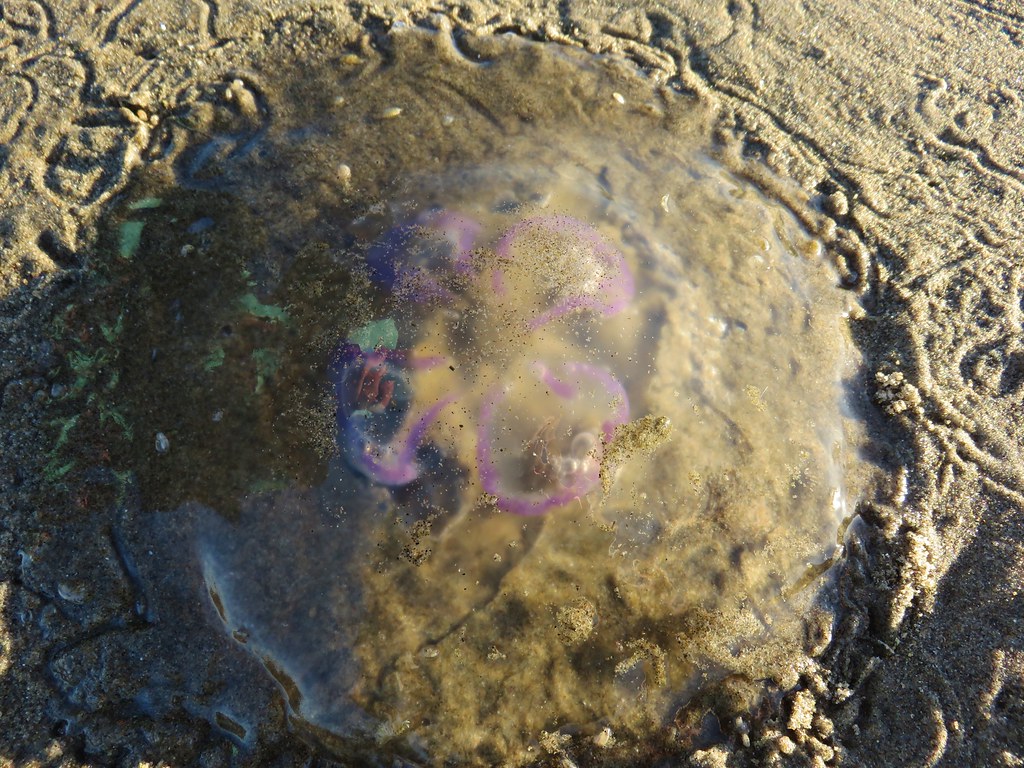
Of particular interest were a couple of jellyfish with some sort of colorful lines.
Jellyfish

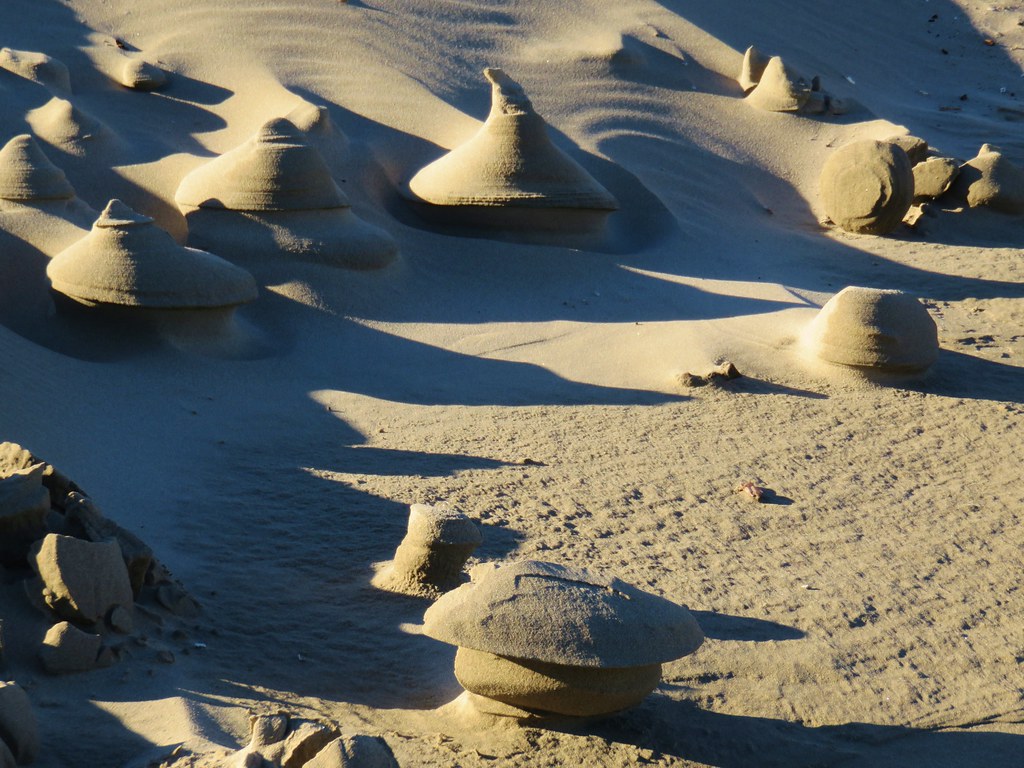
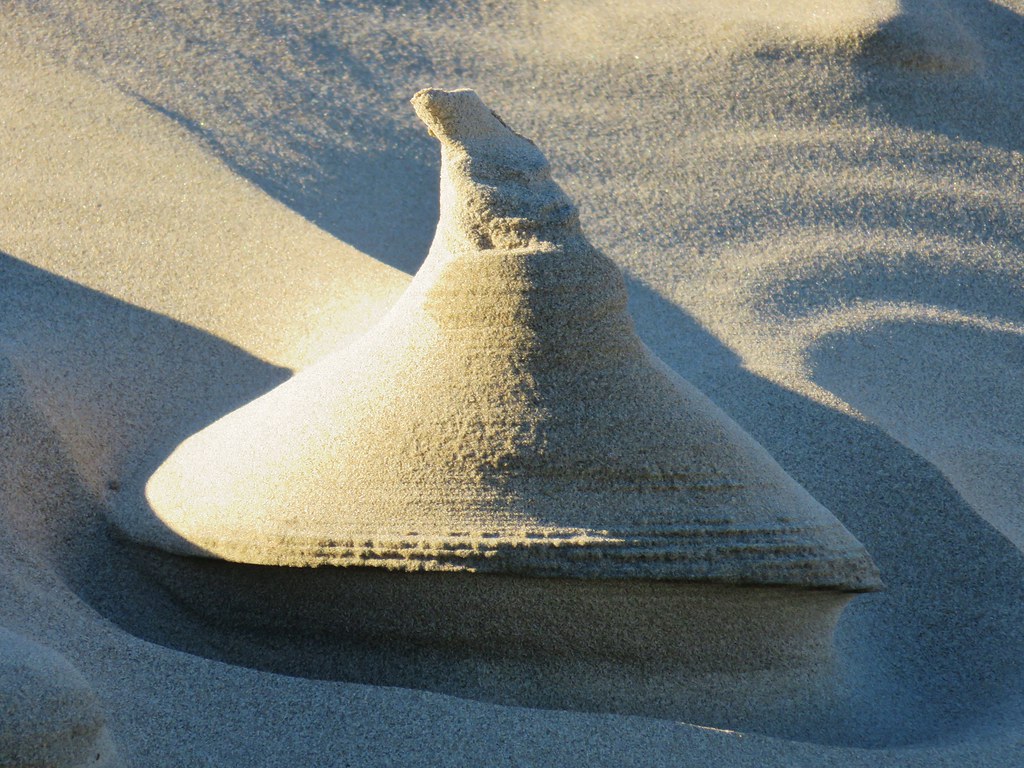
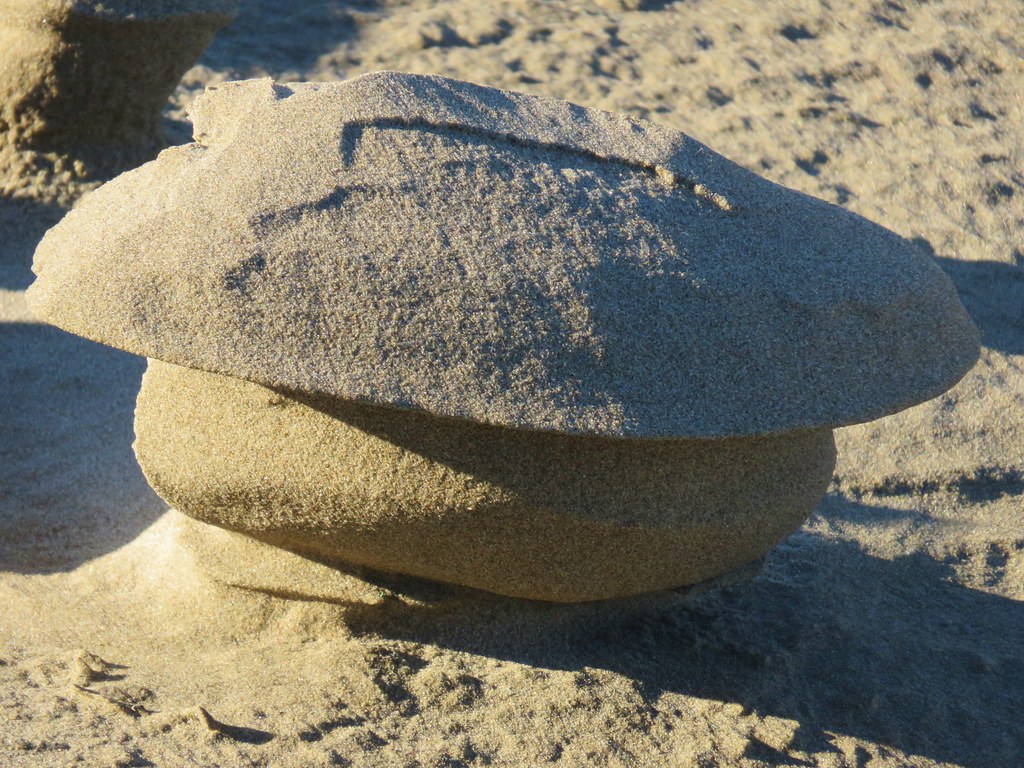
Another peculiar sight along the way were some sand formations that reminded us of clay sculptures.
Interesting sand formations

Interesting sand formations

Interesting sand formation

Interesting sand formation

The beach began to narrow as we neared Yaquina Head and we soon came to Little Creek which was running parallel to the ocean.
Yaquina Head

Little Creek at Agate Beach

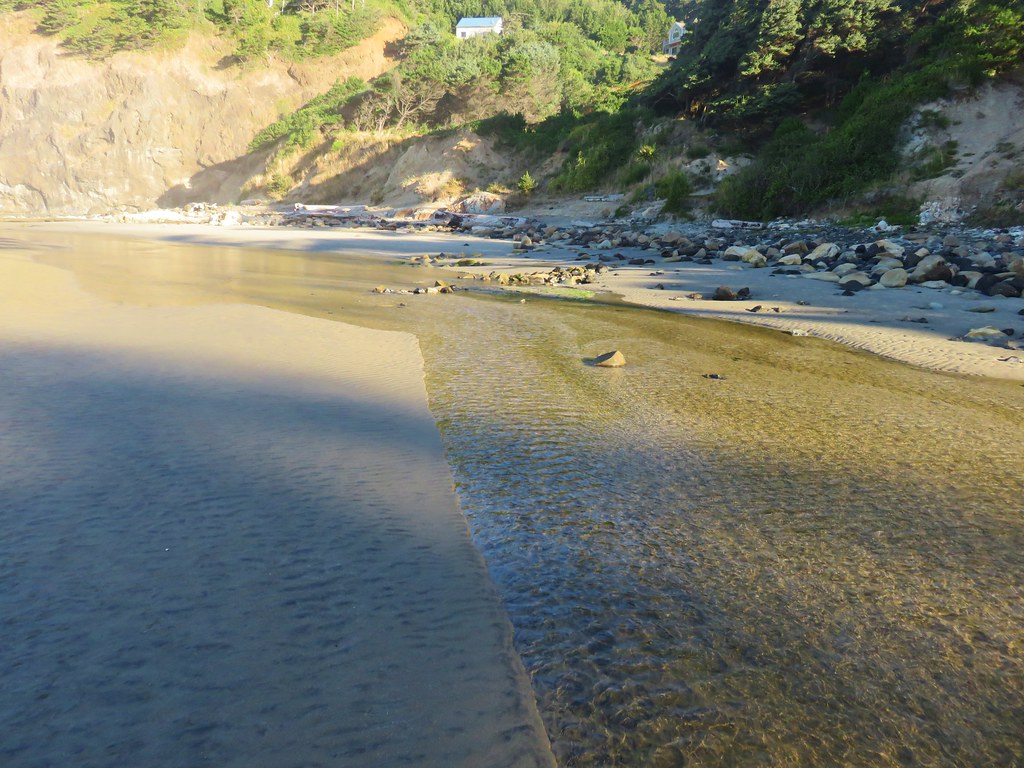
Yaquina Head forced the creek to finally turn toward the ocean and we followed it along the cliffs as it emptied into the Pacific.
Little Creek at Agate Beach

Little Creek at Agate Beach

Little Creek emptying into the Pacific

Pacific Ocean

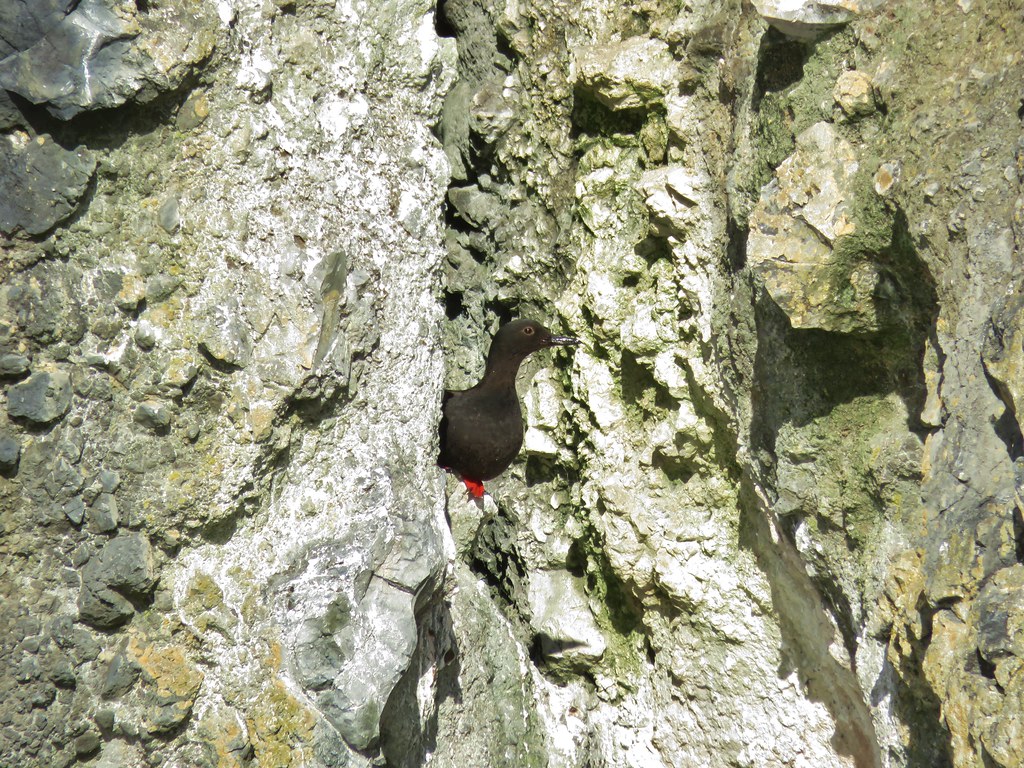
We passed various birds along the creek including a pigeon guillemot which was a bird we were unfamiliar with.
Seagulls

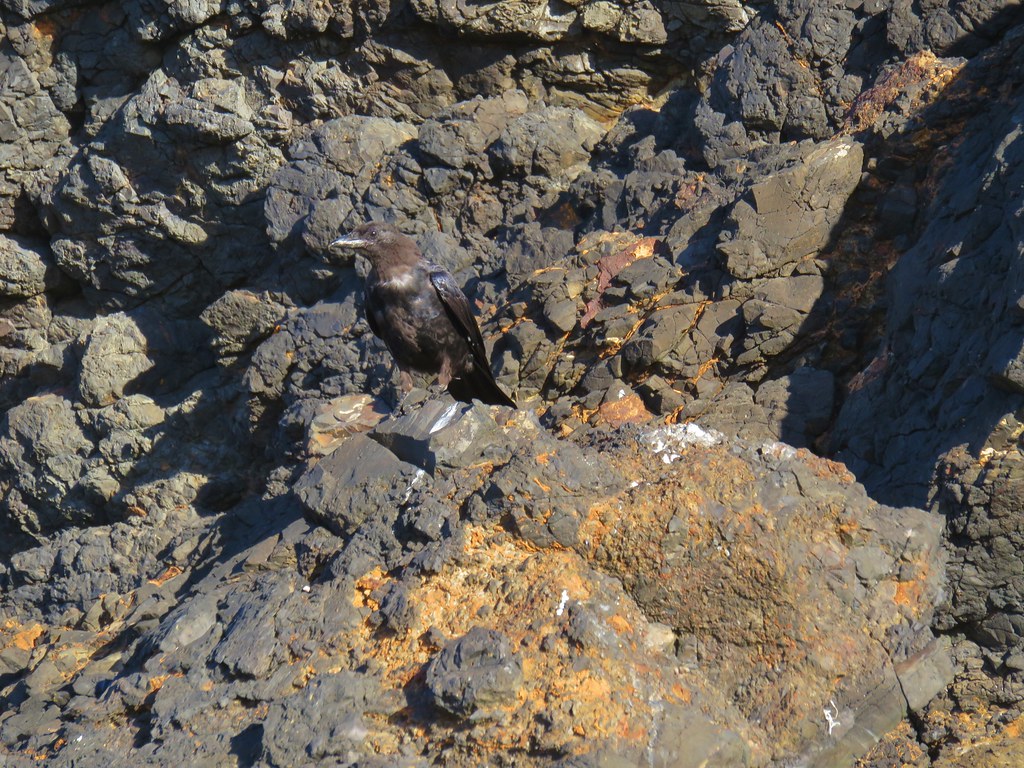
Crow

Bird near Little Creek

Pigeon guillemot
Pigeon guillemot

We headed back south along the beach staying closer to the ocean which brought us to a crossing of some tide water. In our infinite wisdom we waded through the water soaking our shoes and socks before realizing that this was not one of our typical stream crossings. The rocks in mountain creeks and rivers make crossing barefoot a bad idea but on the beach we could have easily taken them off before wading through.
Looking south from Agate Beach

We were back at our car by 9:45 so we had plenty of time to make a second stop at the Yaquina Head Lighthouse (even after stopping at the Newport Safeway to pick up some cilantro). Located on Yaquina Head 4.5 miles north of Newport the Yaquina Head Outstanding Natural Area has a lot to offer. Oregon’s tallest lighthouse, tide pools, several trails, and an interpretive center (which wasn’t there the last time we visited) make the $7/car pass seem reasonable, especially given the pass is valid for three days.

We didn’t have a lot of time so we drove past the interpretive center and parked at the end of the road near the lighthouse.
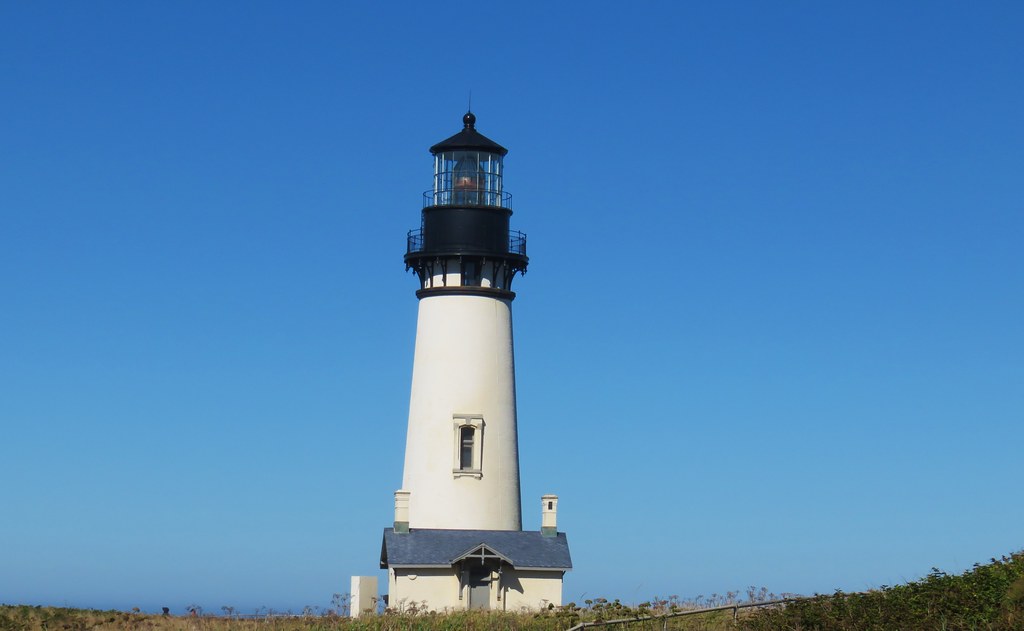
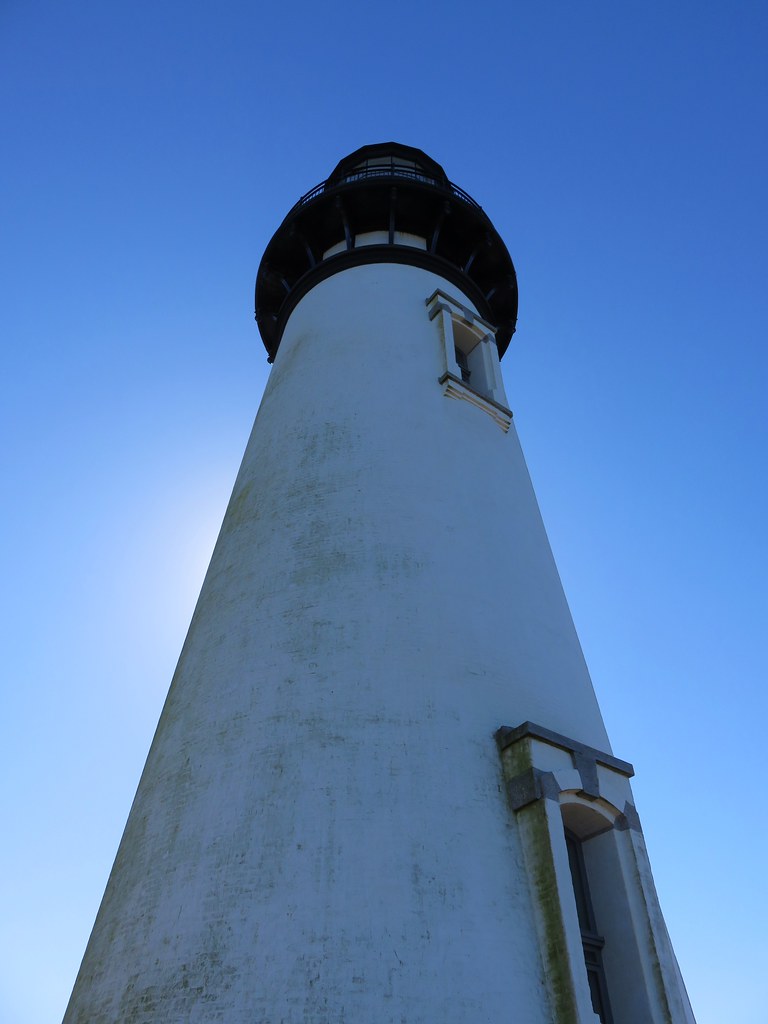
Yaquina Head Lighthouse

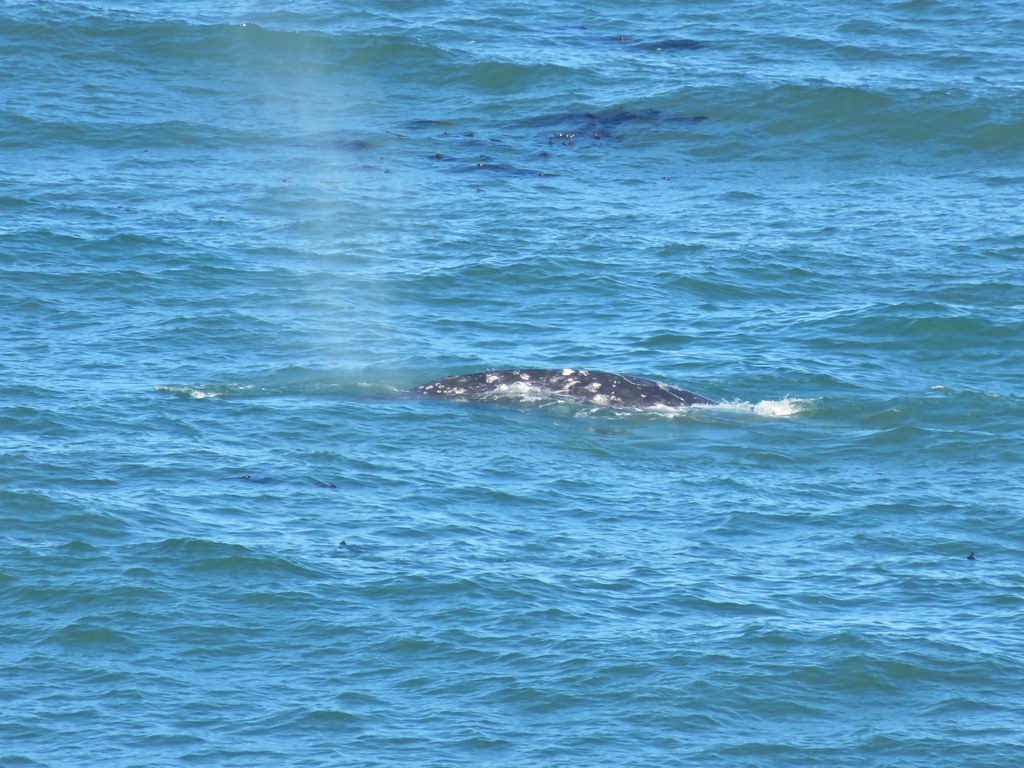
We walked to the lighthouse first stopping at viewpoints along the way. Several grey whales could be seen surfacing and blowing water into the air.
Yaquina Head Lighthouse

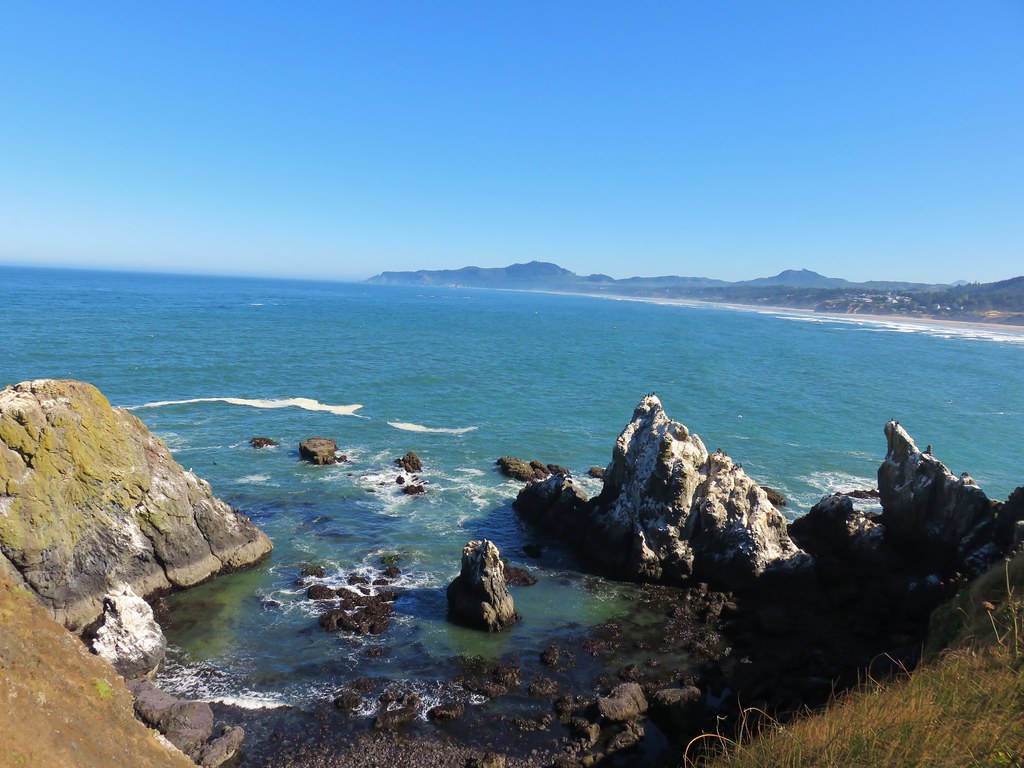
Looking north to Cape Foulweather

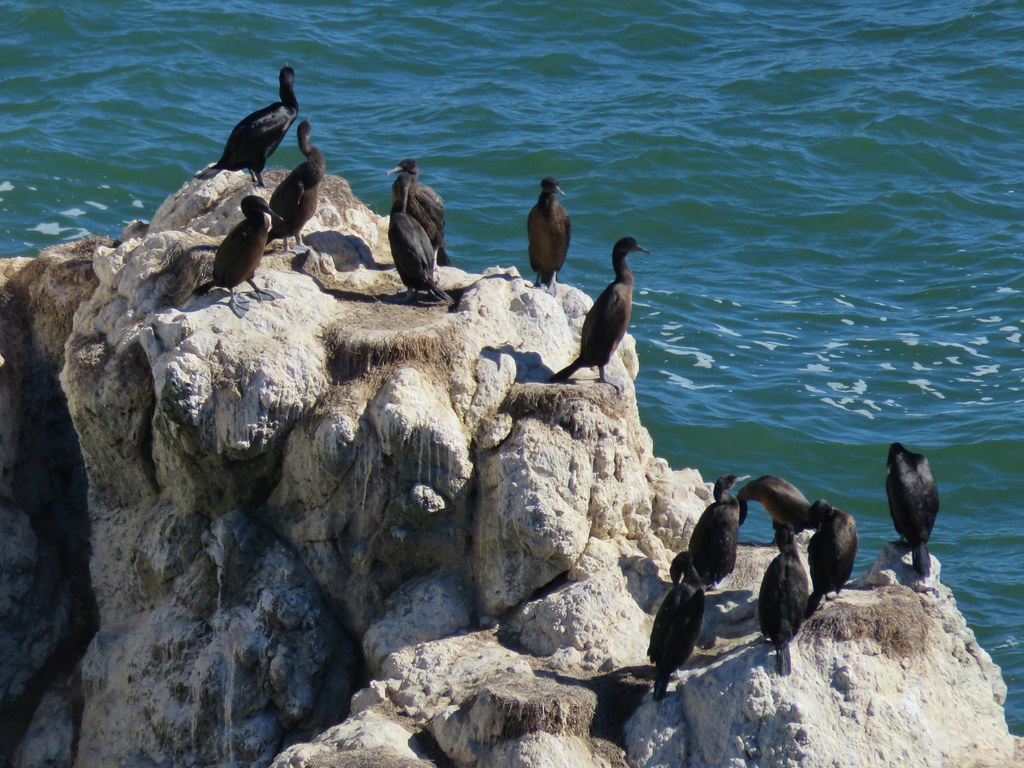
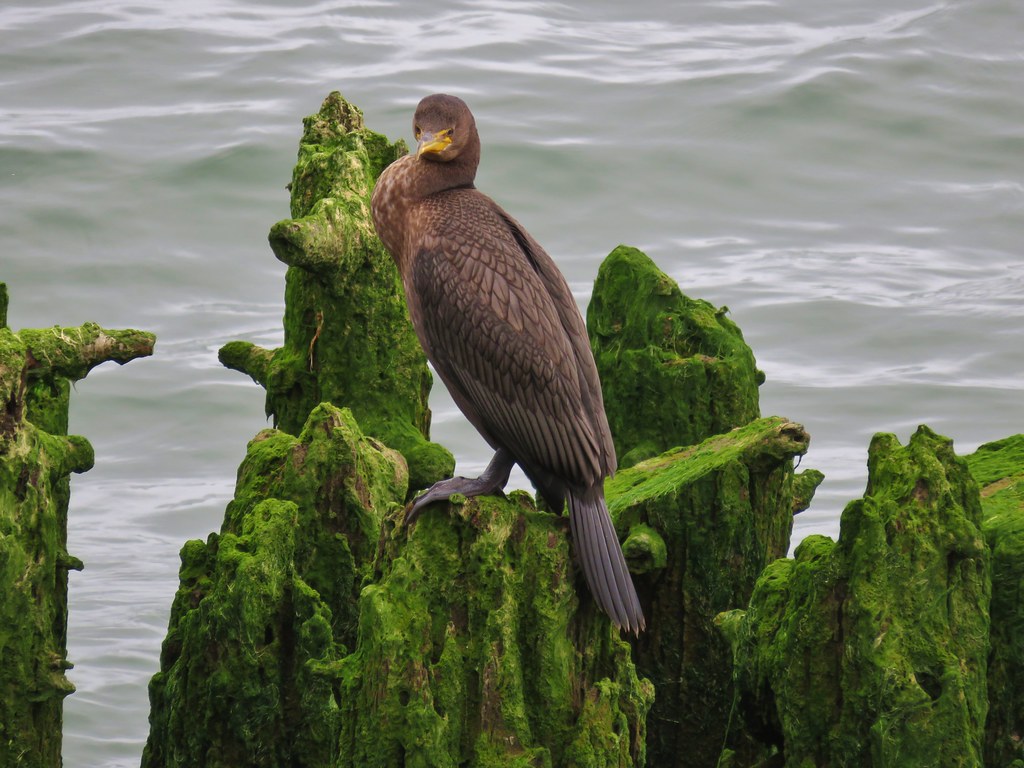
Cormorants

Whale spout

Grey back whale seen from Yaquina Head

Grey back whale seen from Yaquina Head

After watching the whales for a bit we continued around the lighthouse and then headed for nearby Cobble Beach.
Tide pools at Yaquina Head

The beach is home to some very good tide pools and the tide was out far enough for some of them to be revealed.
Tide pools at Yaquina Head

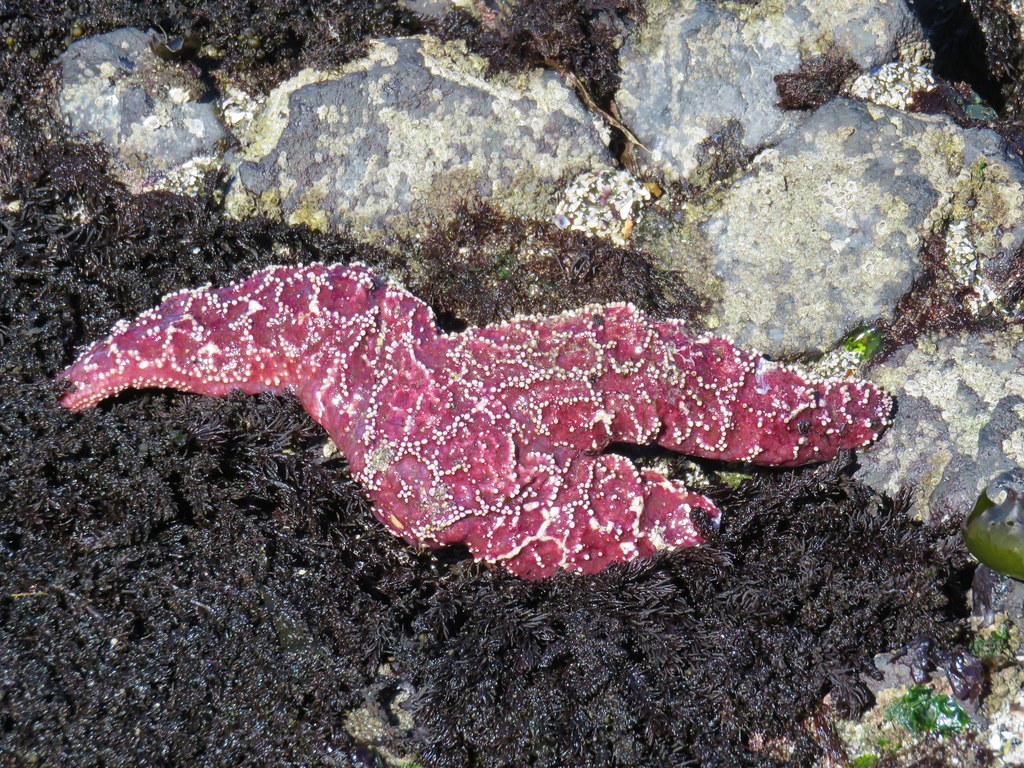
We took the wooden staircase down toward the beach and after some last minute rules and instructions from rangers at the bottom of the stairs we began exploring the pools. Touching anything but the starfish (the rangers informed us that they were dealing with some sort of illness) was allowed but no picking up.
Tide pool at Cobble Beach - Yaquina Head Outstanding Natural Area

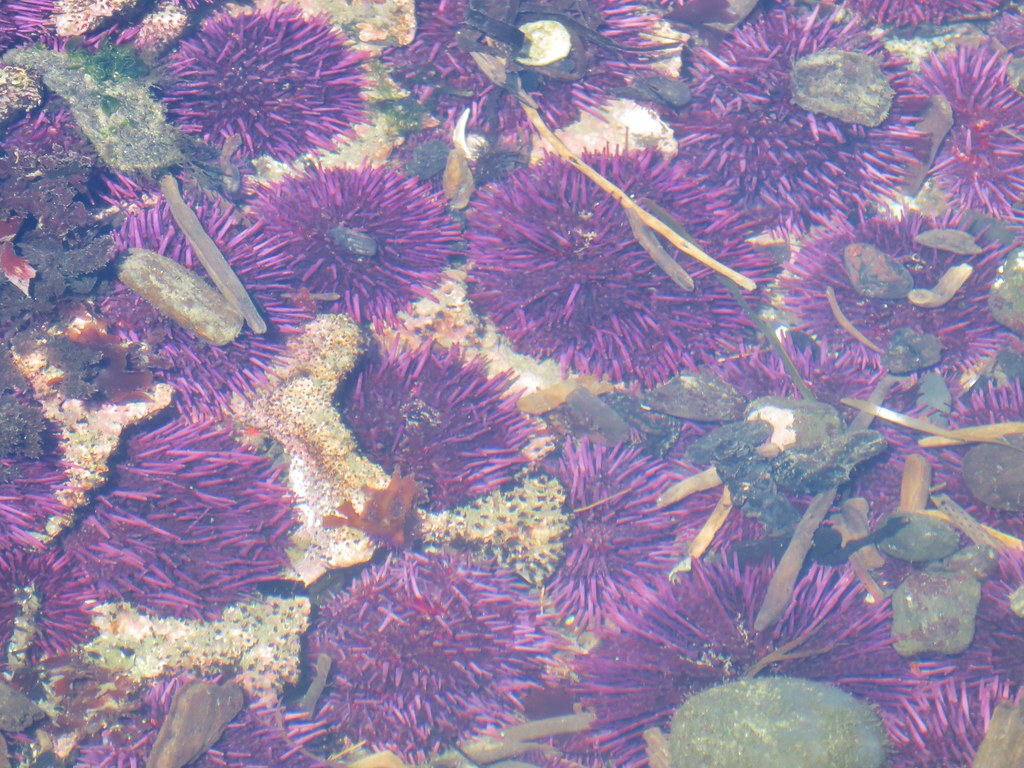
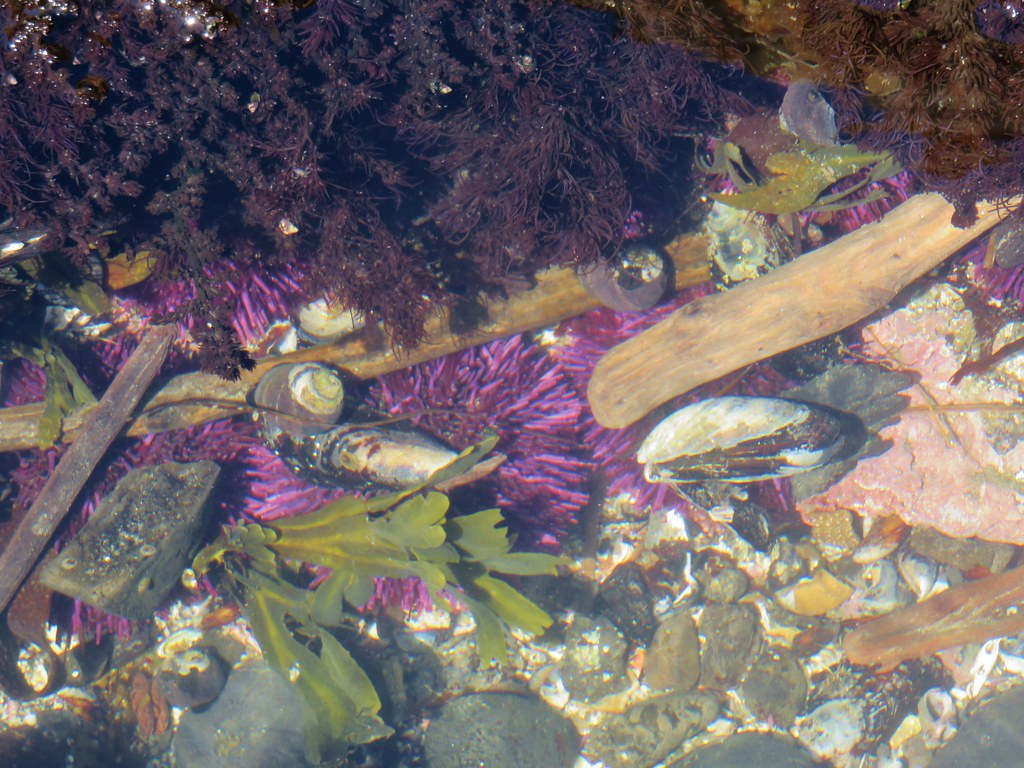
Sea urchins, snails and mussles

Anemone

Tide pool at Cobble Beach - Yaquina Head Outstanding Natural Area

Tide pool at Cobble Beach - Yaquina Head Outstanding Natural Area

Sea urchins

Sea urchins

Star fish

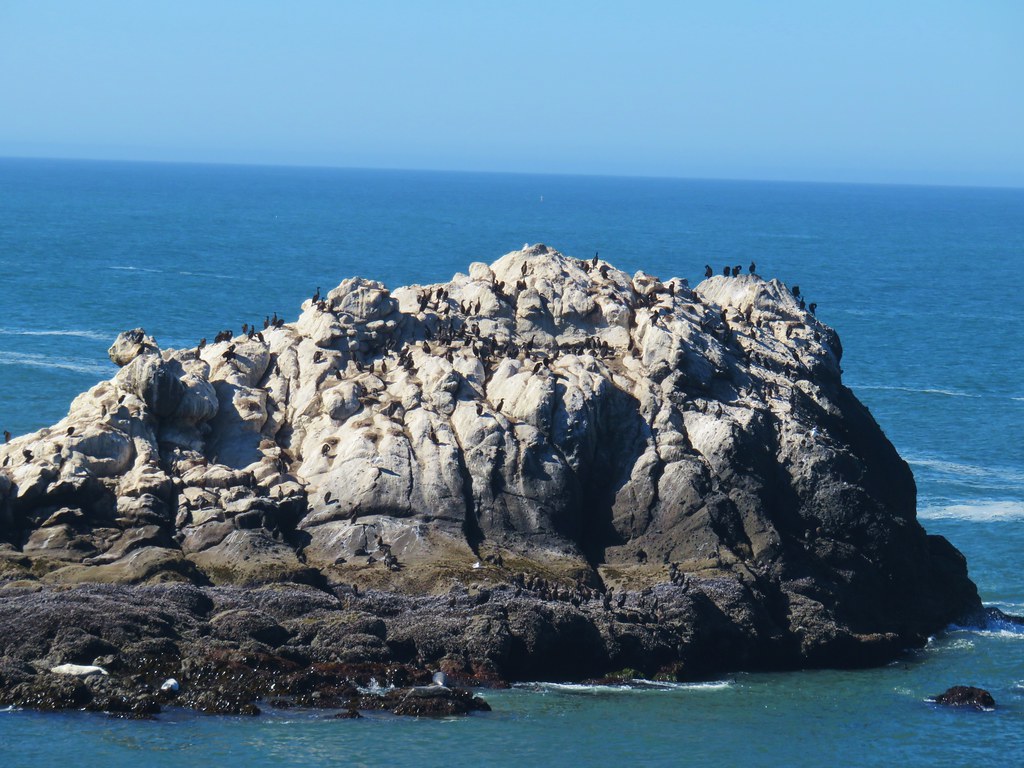
Large sea rocks just beyond the tide pools are part of the Oregon Islands National Wildlife Refuge, one of only tow wilderness areas in Oregon closed to humans.
Signboard for the Oregon Islands National Wildlife Refuge

Oregon Islands National Wildlife Refuge

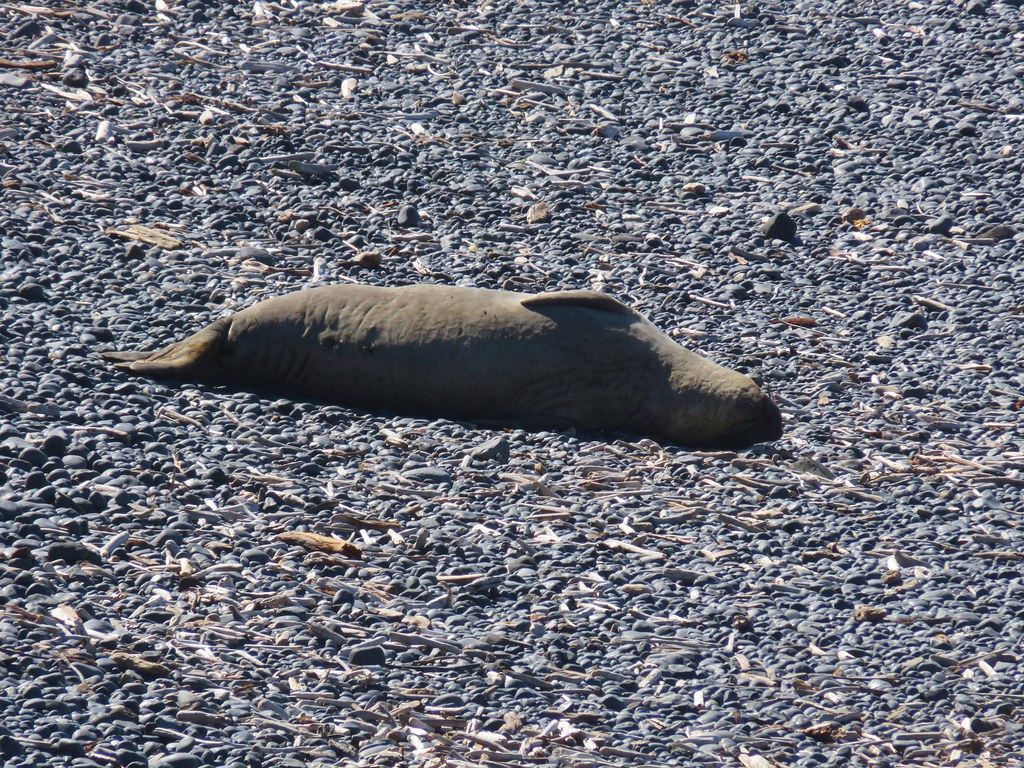
Not all the wildlife stuck to the islands though as a section of Cobble Beach was closed off due to a resting seal.
Seal on Cobble Beach

After making our way around the pools we headed back up the stairs. It was still a bit early to head for the reunion so we decided to check out the short trail up Salal Hill which began at the lot where we had parked.
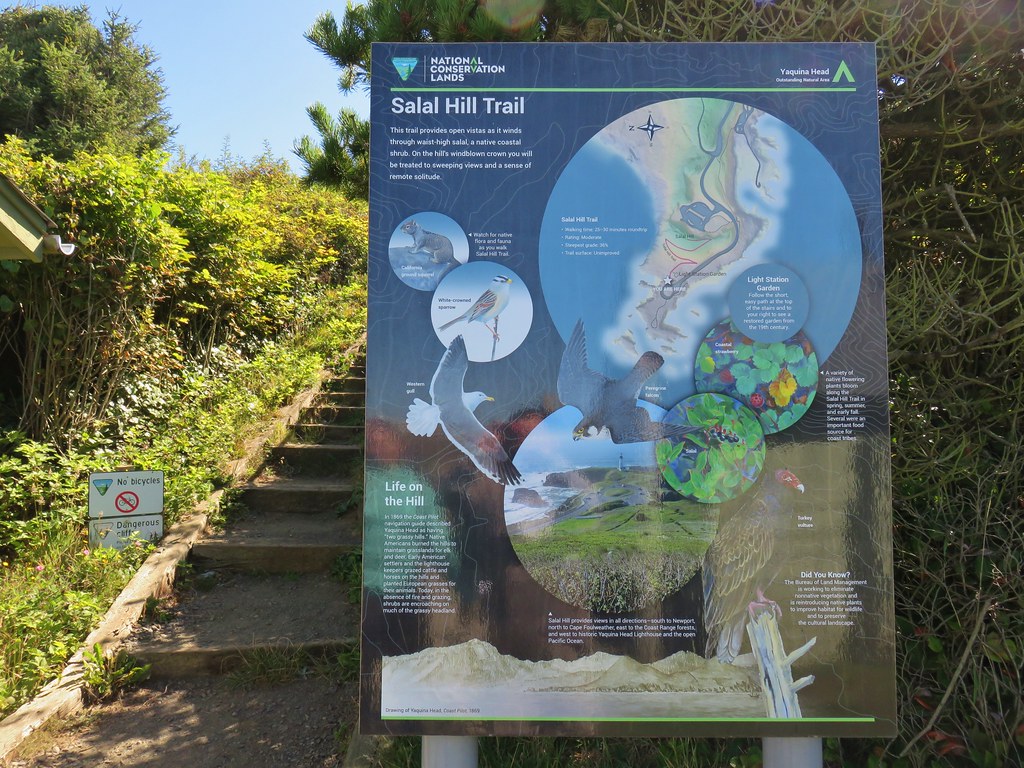
Salal Hill Trailhead

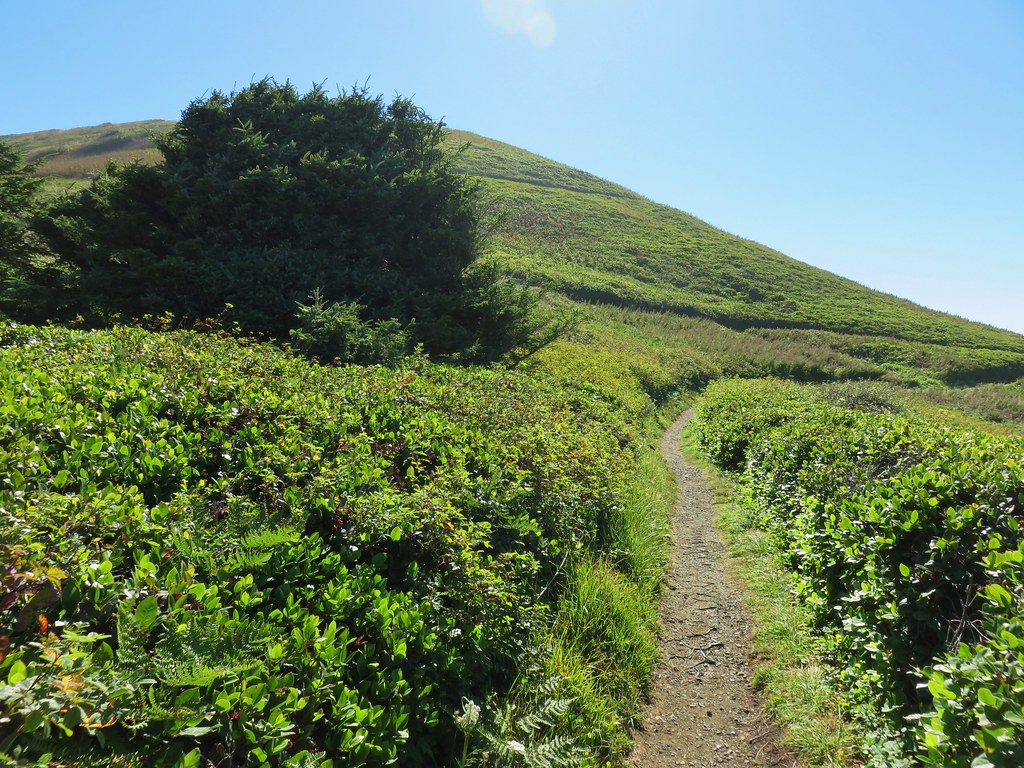
The .4 mile path switchbacked up the small hill at a nice gradual grade.
Salal Hill

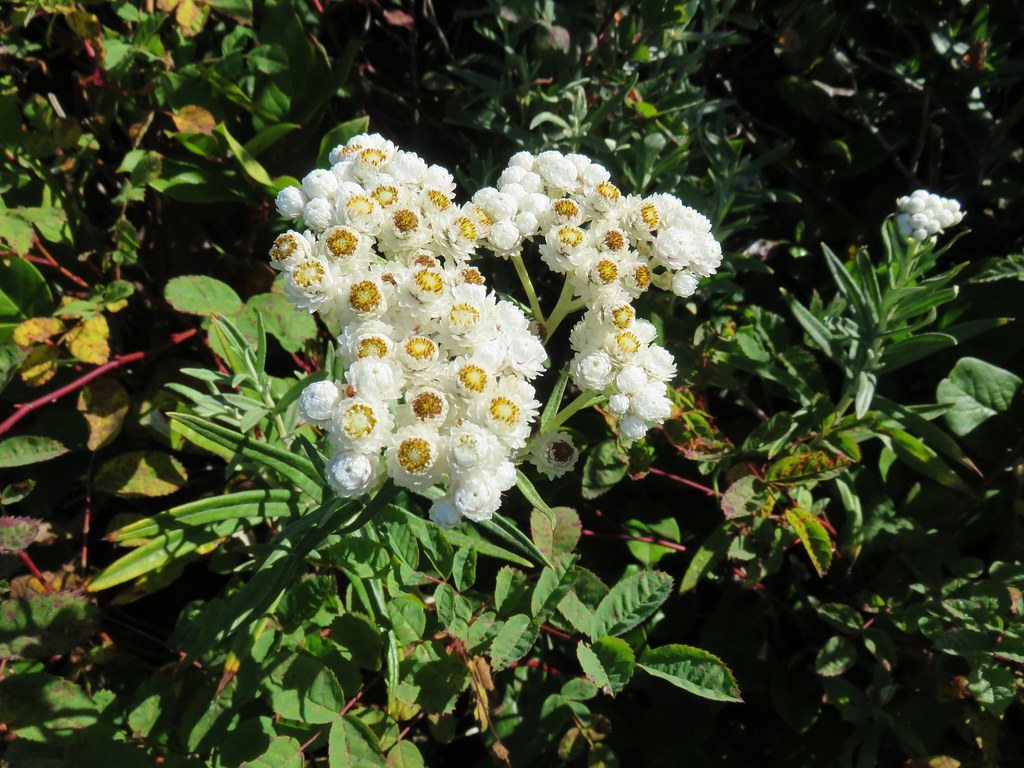
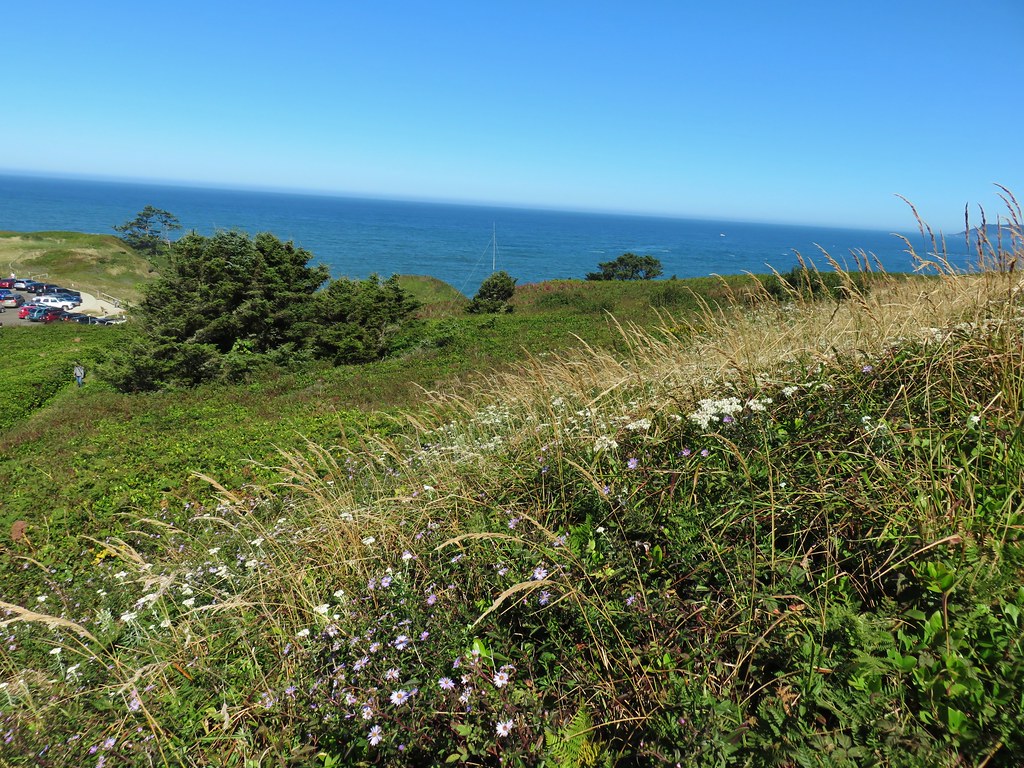
Some lingering flowers showed that there was more to the hill than just salal bushes.
Pearly everlasting

Aster

Salal Hill Trail

Wildflowers along the Salal Hill Trail

The trail passed above the interpretive center before arriving at the small, flat summit.
The interpretive center below the Salal Hill Trail

Salal Hill Trail

From the summit we had a nice view north to Cape Foulweather.
Looking north from the Salal Hill Trail

To the west was the Yaquina Head Lighthouse and the Pacific Ocean.
Yaquina Head Lighthouse from the Salal Hill Trail

We headed down after a short stay since it was now time to make our way to the reunion. We could have spent a lot more time exploring the area so we’ll have to go back again sometime. As we were coming down the hill we spotted another whale which we watched for a moment. It seemed to be giving us a goodbye wave, what a polite way to end our hike. Happy Trails!
Grey back whale

Flickr: Yaquina Bay and Yaquina Head

Categories
Hiking Oregon Oregon Coast Southern Coast Trip report

Floras Lake, Cape Blanco, Grassy Knob, and Port Orford Heads

**Note a portion of the Grassy Knob hike burned in the 2023 Anvil Fire.**

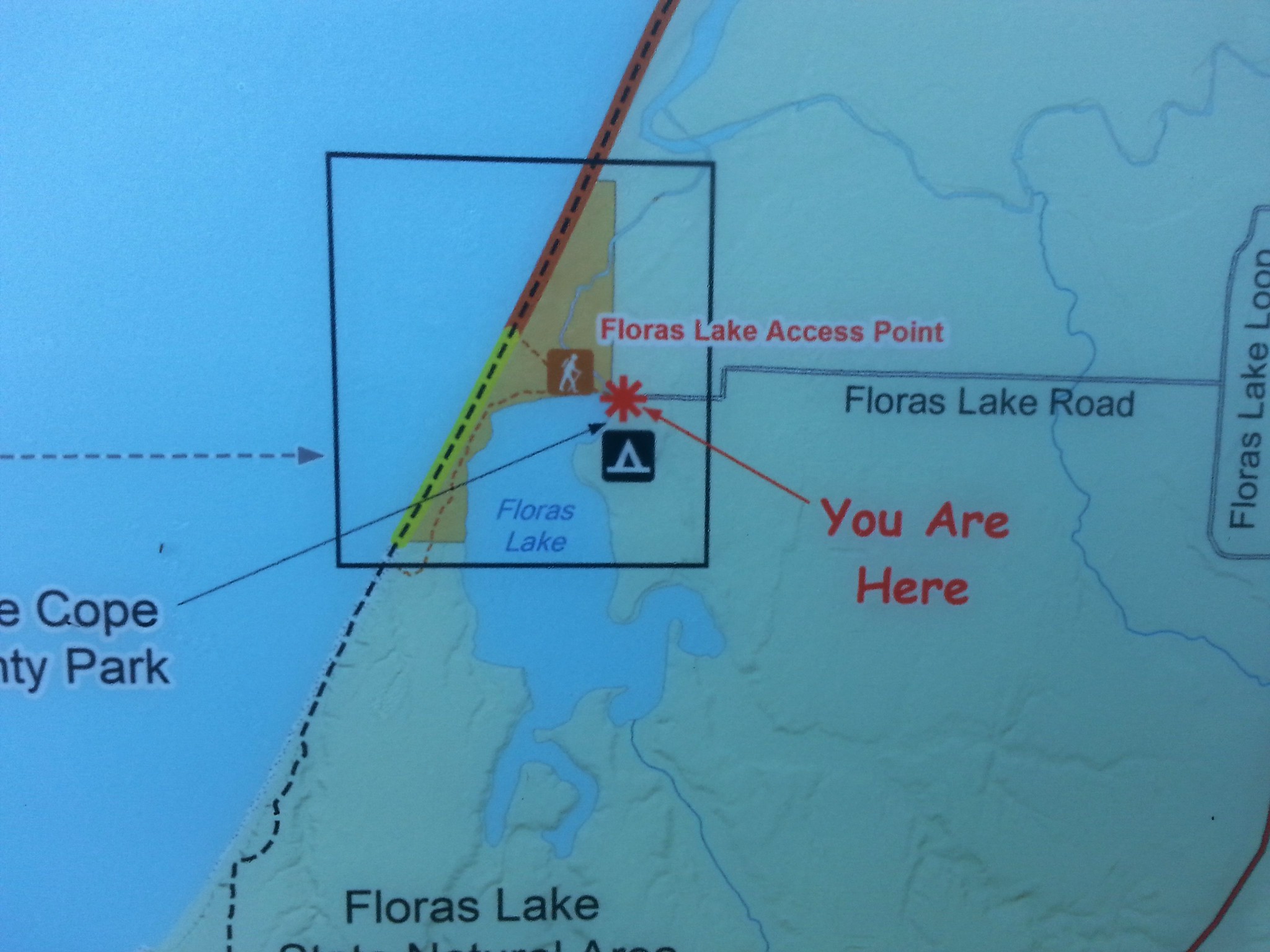
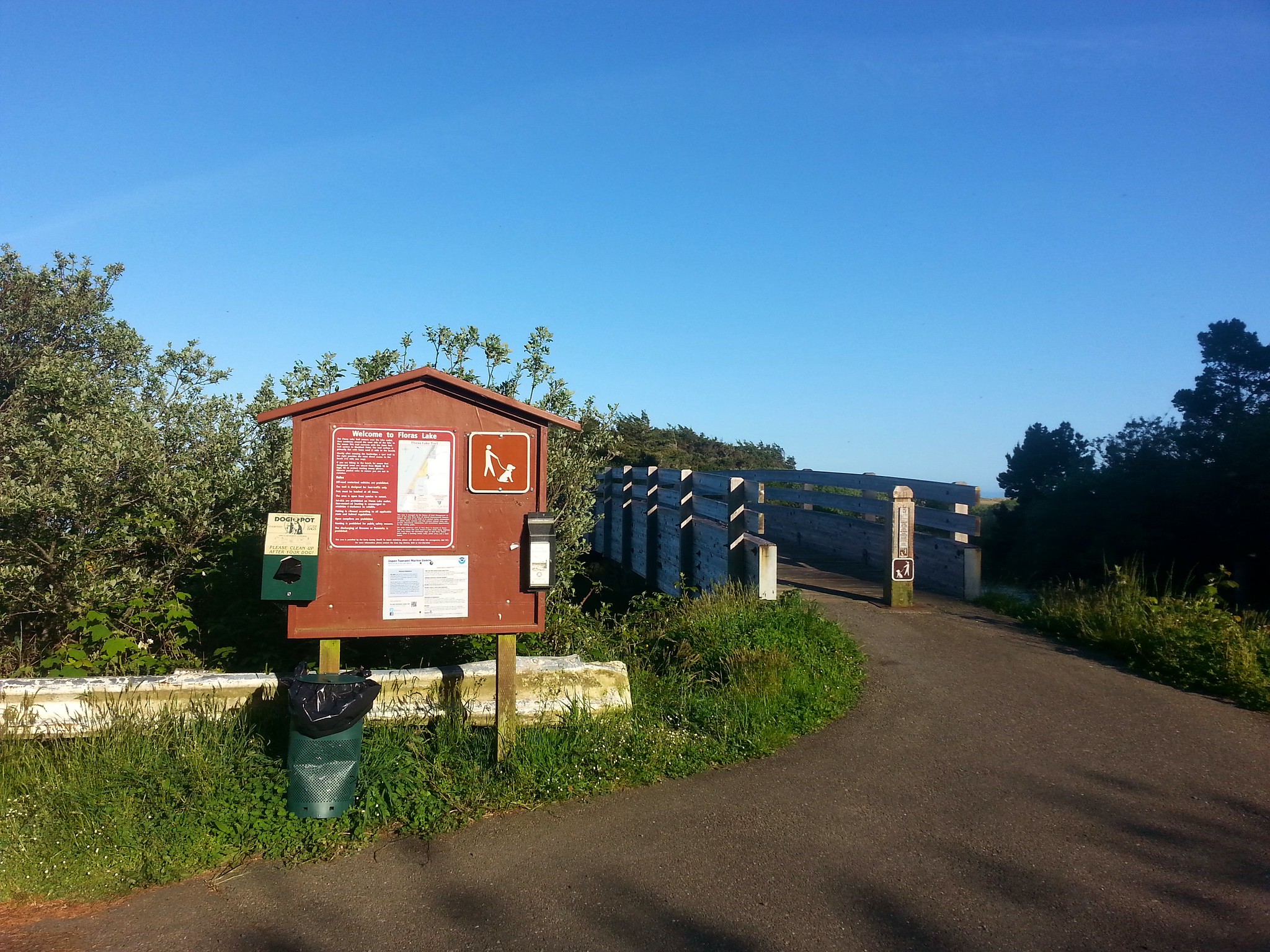
We spent the third day of our vacation hiking in the Port Orford area. We started the morning at Floras Lake.
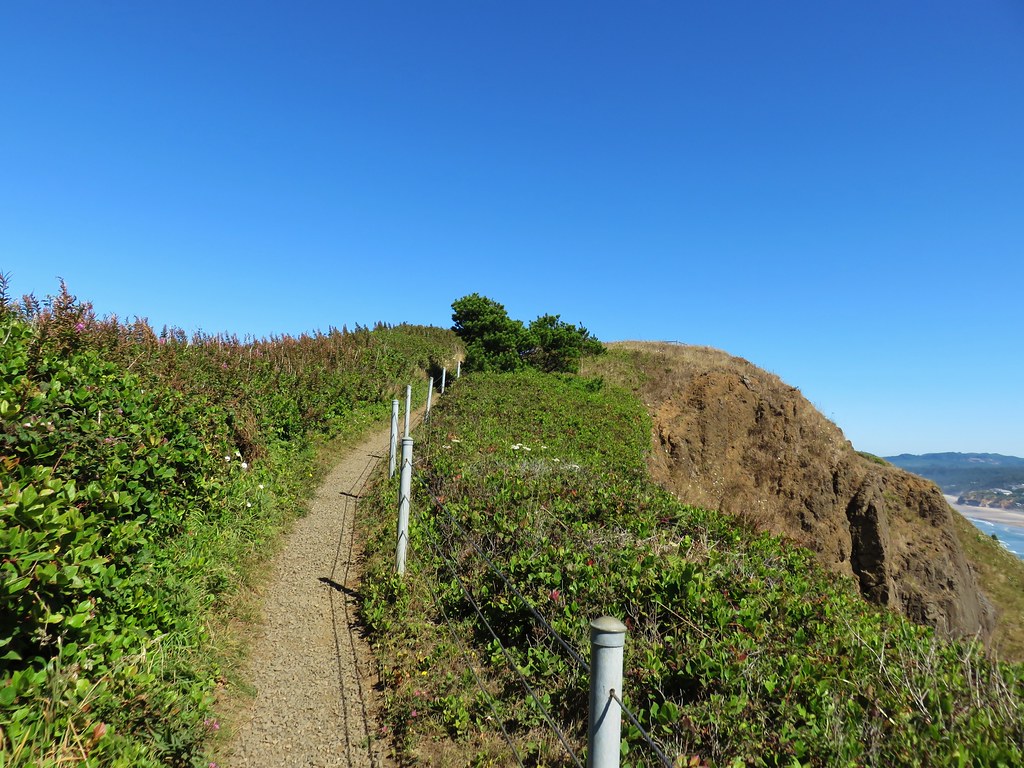
20170508_074817

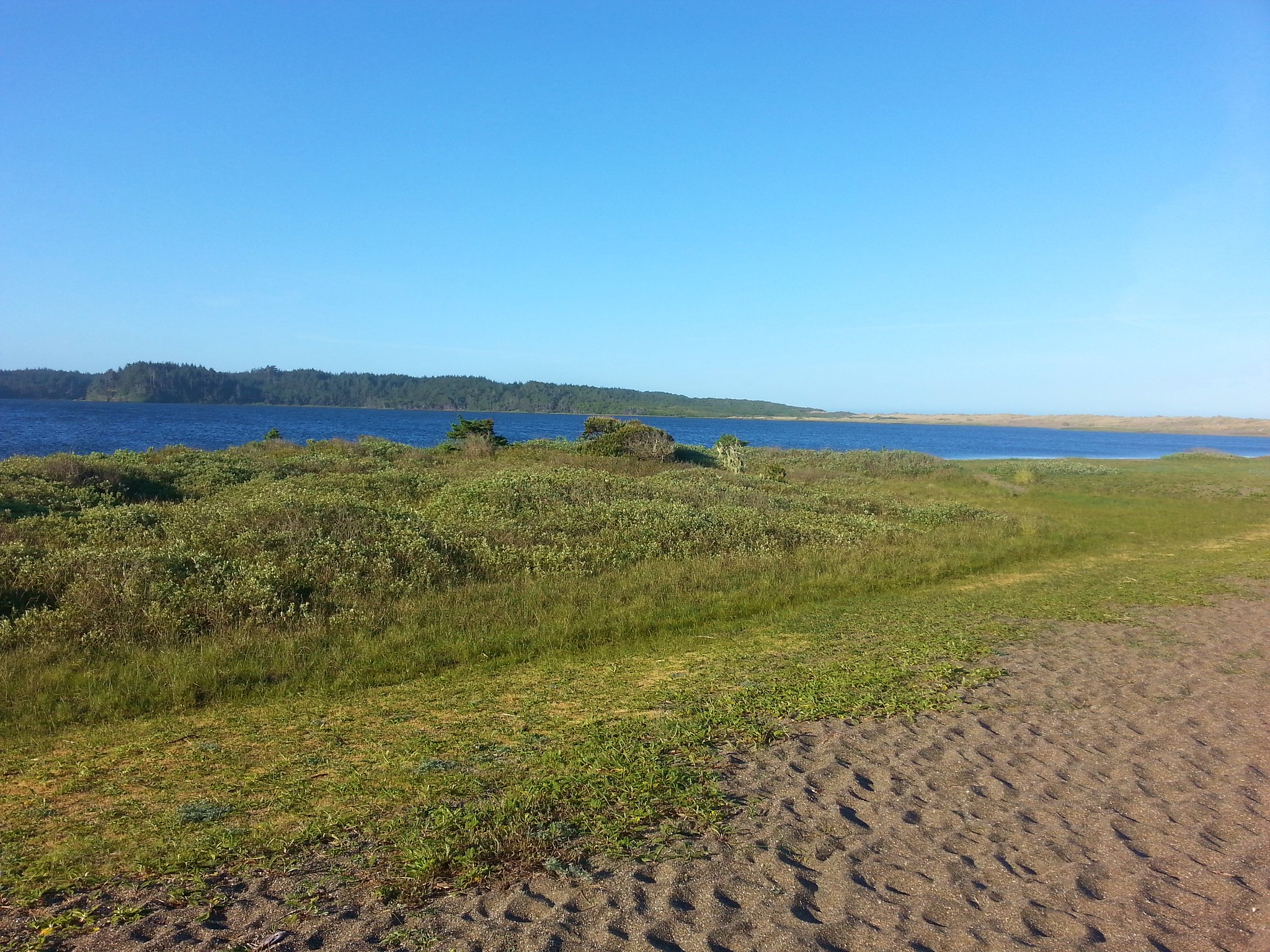
Our plan here was to complete a 9 mile loop while visiting Blacklock Point. We crossed the New River on a footbridge and followed a sandy (and difficult to walk on) path along the north shore of Floras Lake.
20170508_074839

20170508_080039

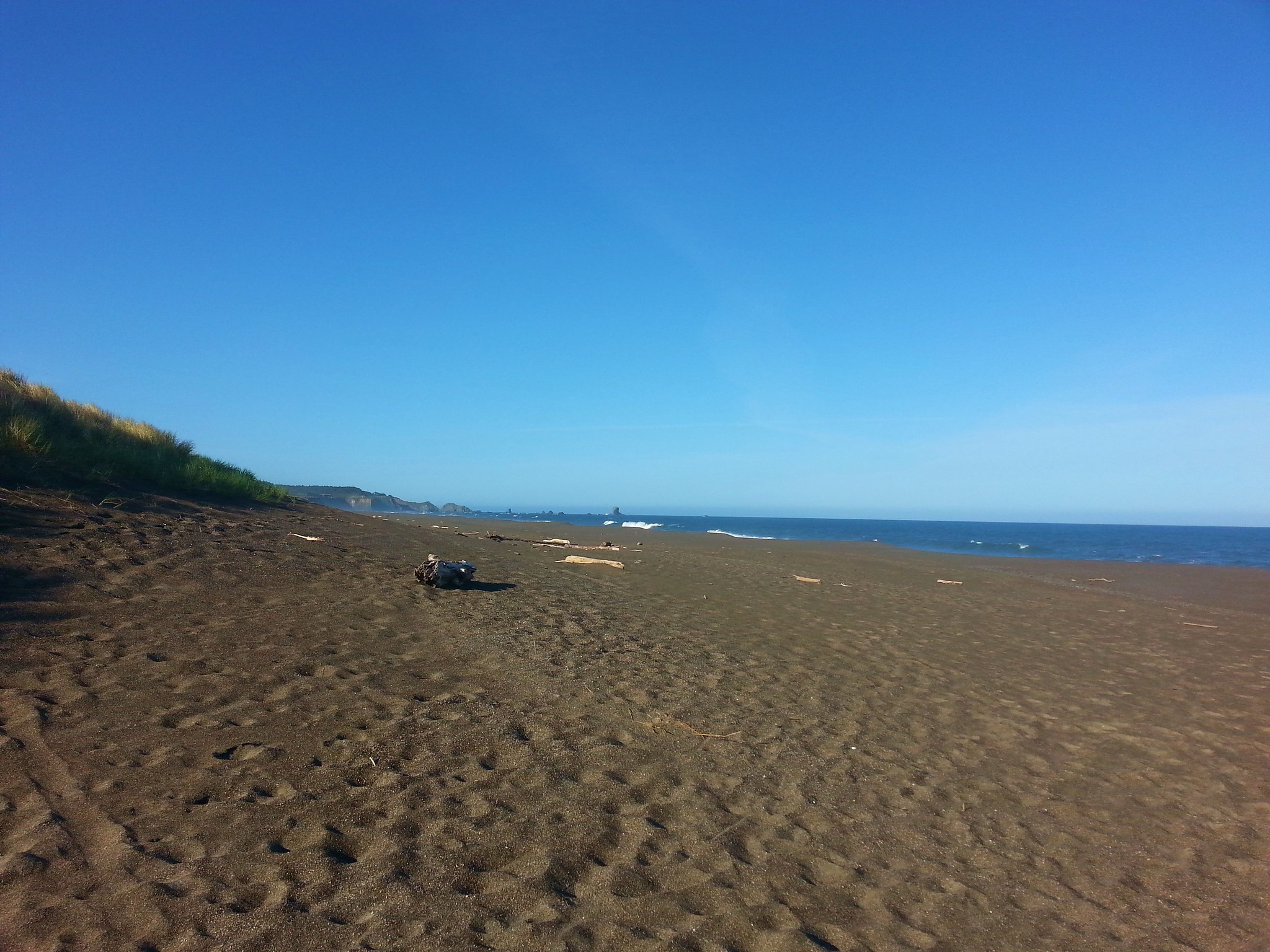
We made our way around the lake to a gap in the foredune, which we passed through, and onto the beach.
20170508_080622

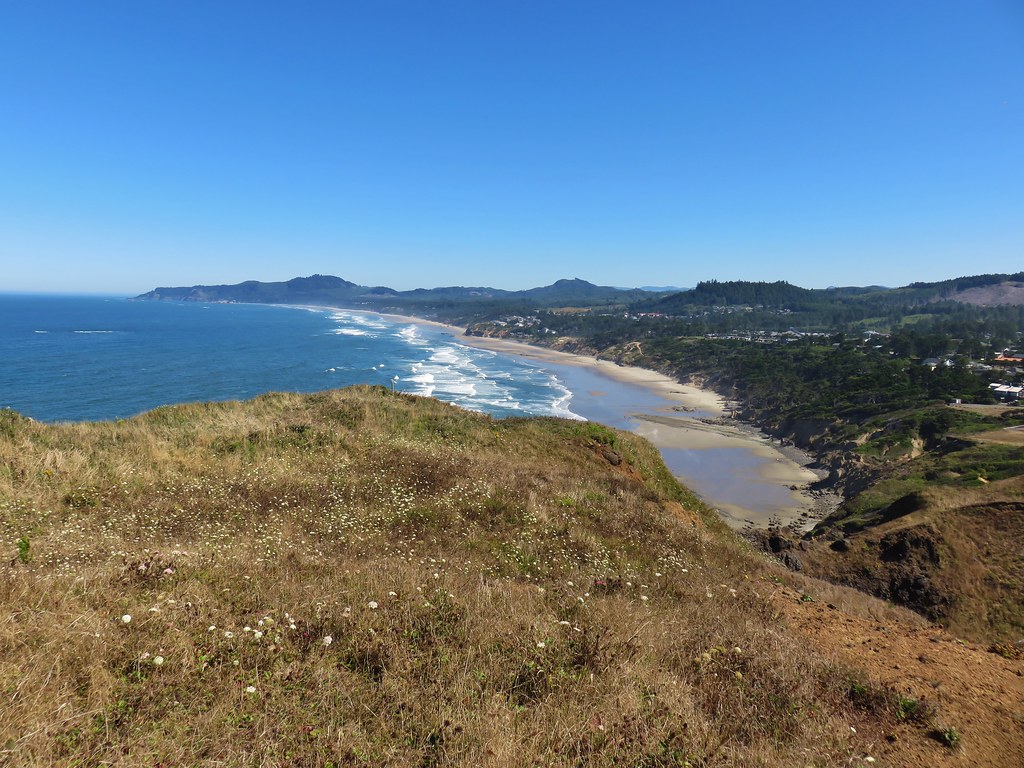
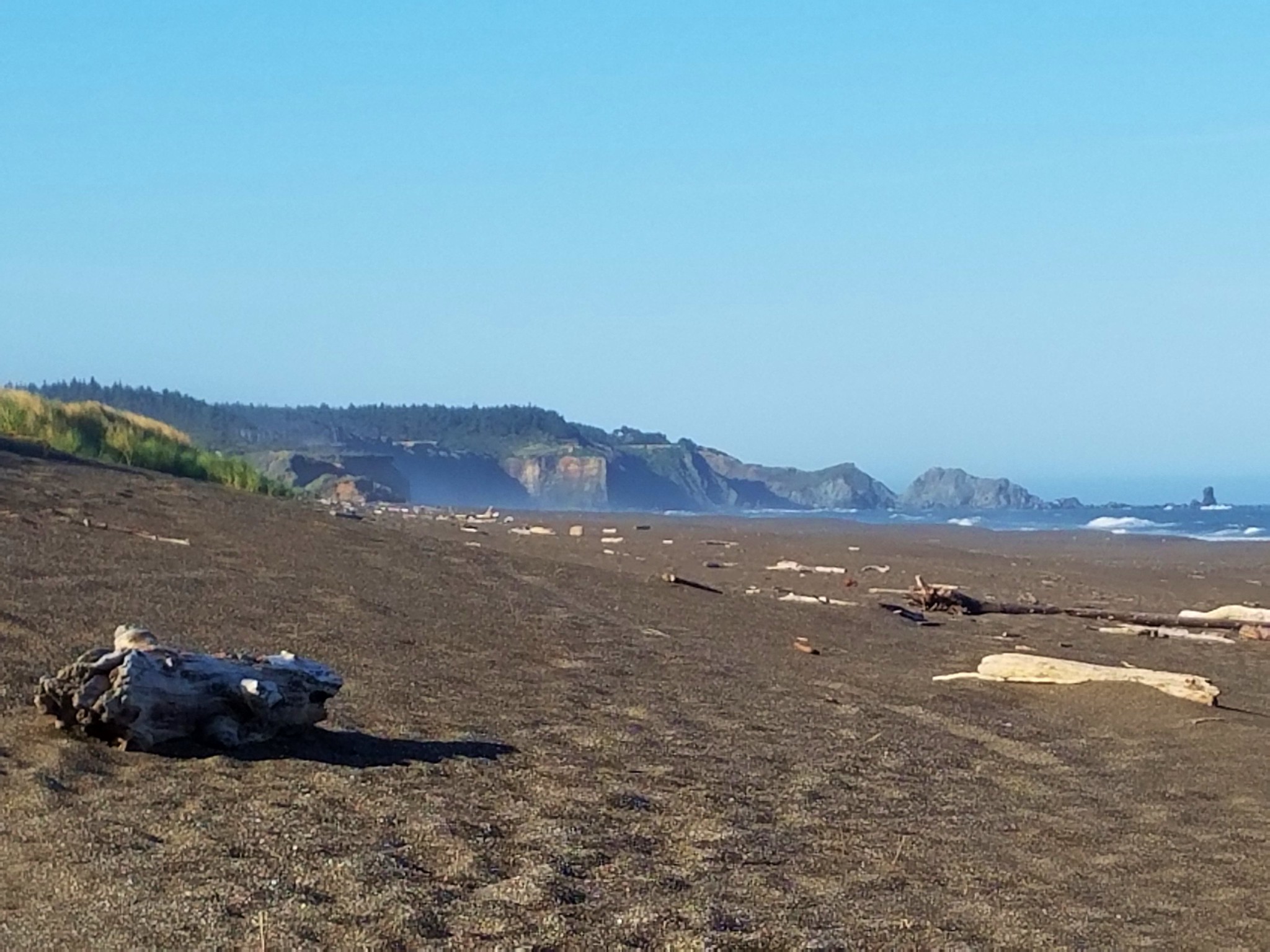
Our goal, Blaclock Point, jutted out into the Pacific to the south.
2017-05-08 08.06.55

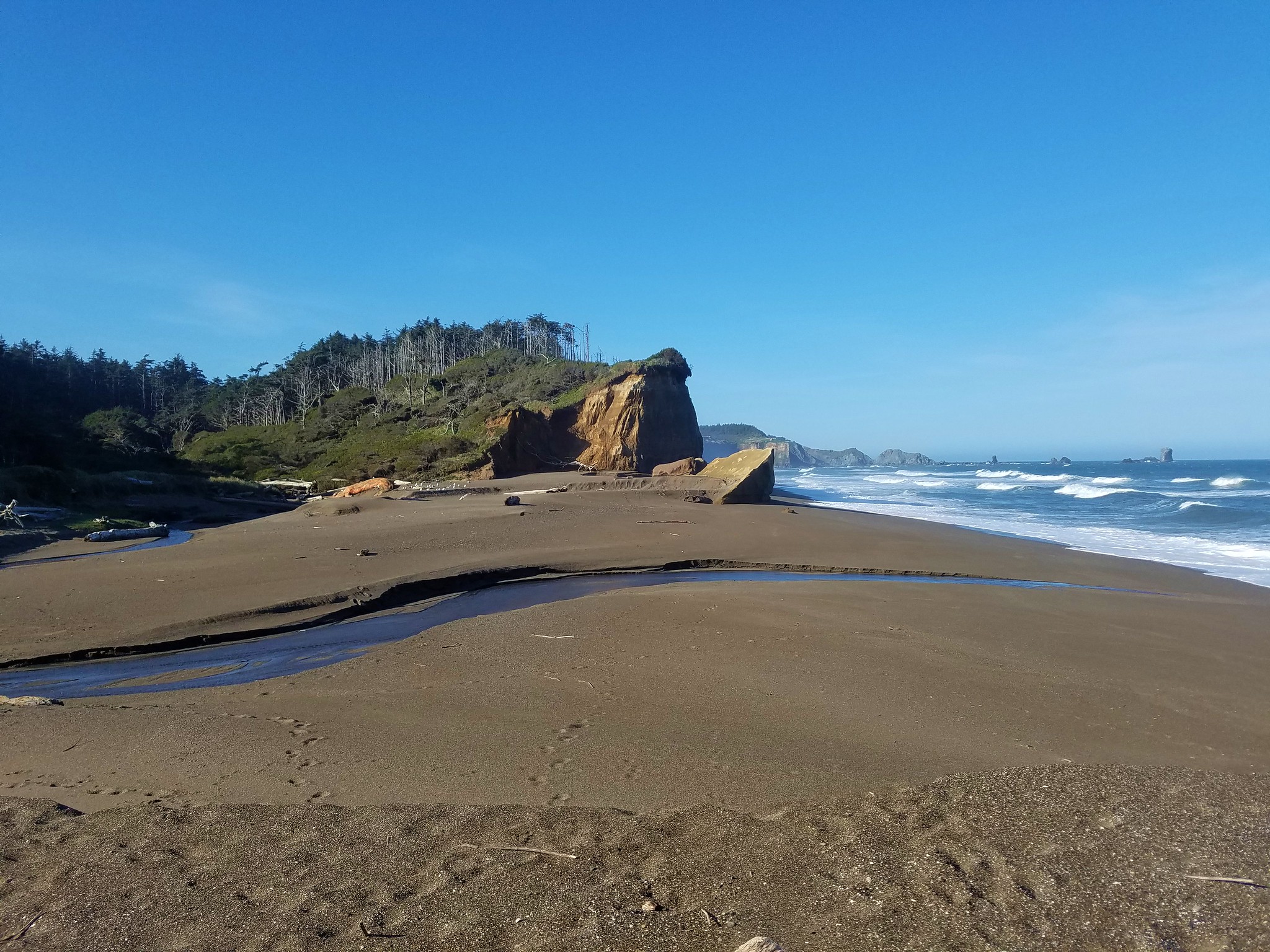
After about a quarter of a mile walking south along the beach we reached a series of interesting orange bluffs. High tide could make passage impossible but we were several hours from that and had no problem passing between them and the ocean for a mile. The bluffs were extremely interesting with various designs, alcoves, caves, and layers.
2017-05-08 08.19.54

2017-05-08 08.24.24

2017-05-08 08.24.15

20170508_082759

20170508_082915

2017-05-08 08.30.24

Beyond the bluffs we came to a creek which we needed to follow inland to pick up the Oregon Coast Trail (OCT).
2017-05-08 08.33.39

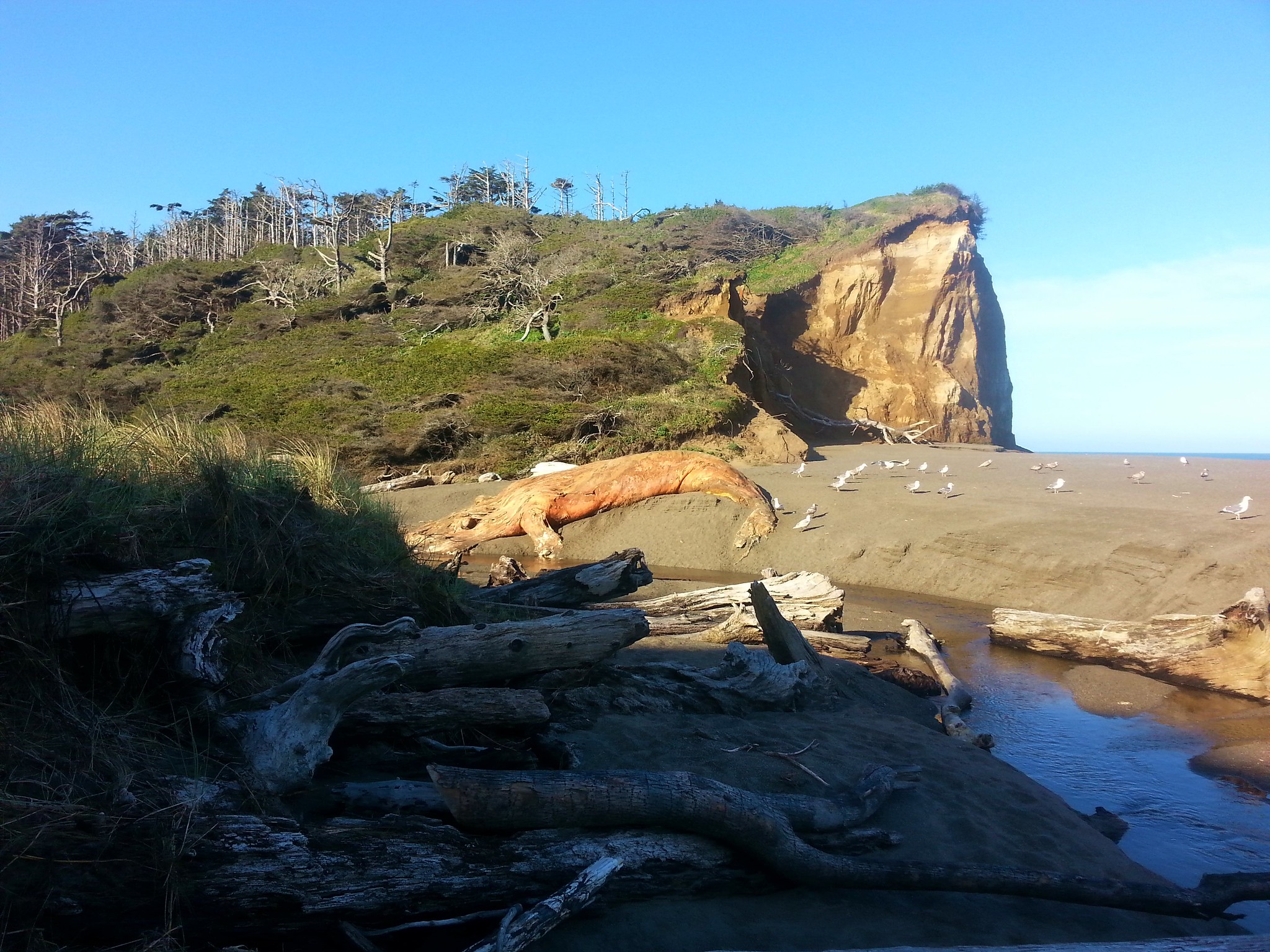
We noticed that there was a decomposing whale carcass on the far bank of the creek which was a bit disgusting but also very interesting.
20170508_083600

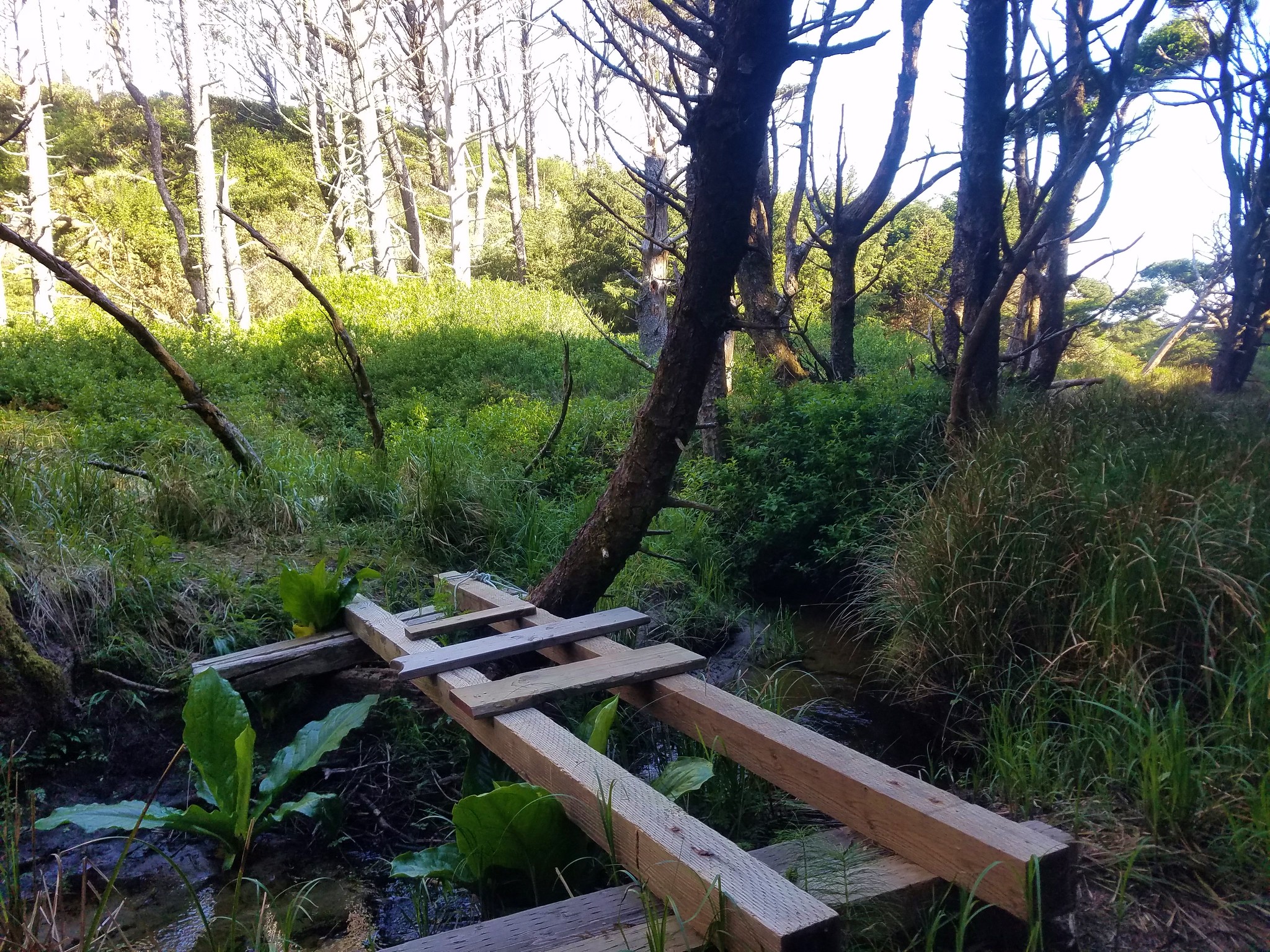
It was interesting that is, until we got downwind from it while attempting to bushwack along the creek to the OCT. The stench was putrid and we wanted to get away from it as quickly as possible but it took us a bit to figure out out to navigate the driftwood and swampy areas. It was only two tenths of a mile to the trail but it seemed a lot longer before we picked it up at a bridge? across the creek.
2017-05-08 08.50.48

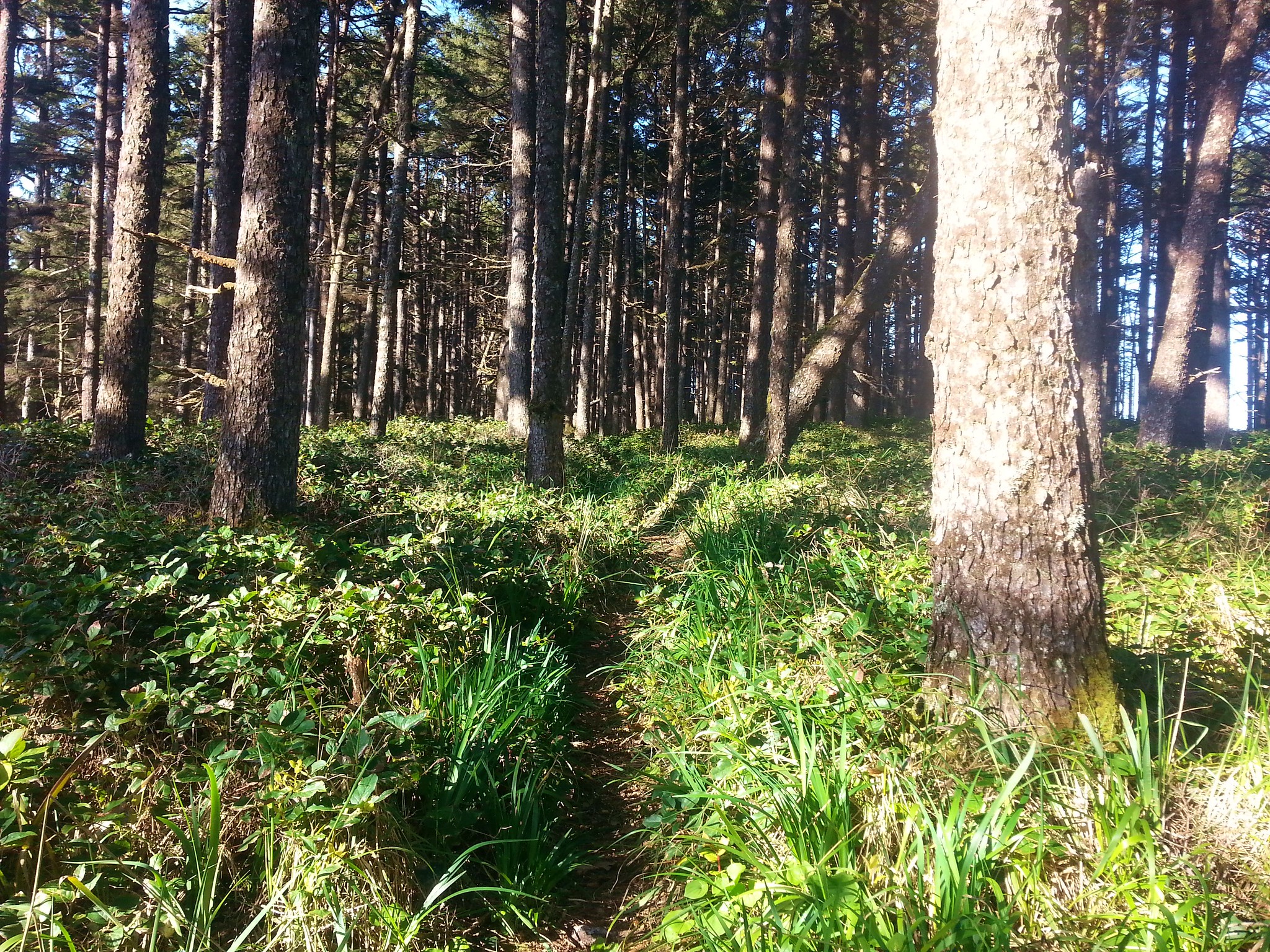
After a bit more mud on the far side of the creek the trail climbed a small hill where things dried out.
20170508_085524

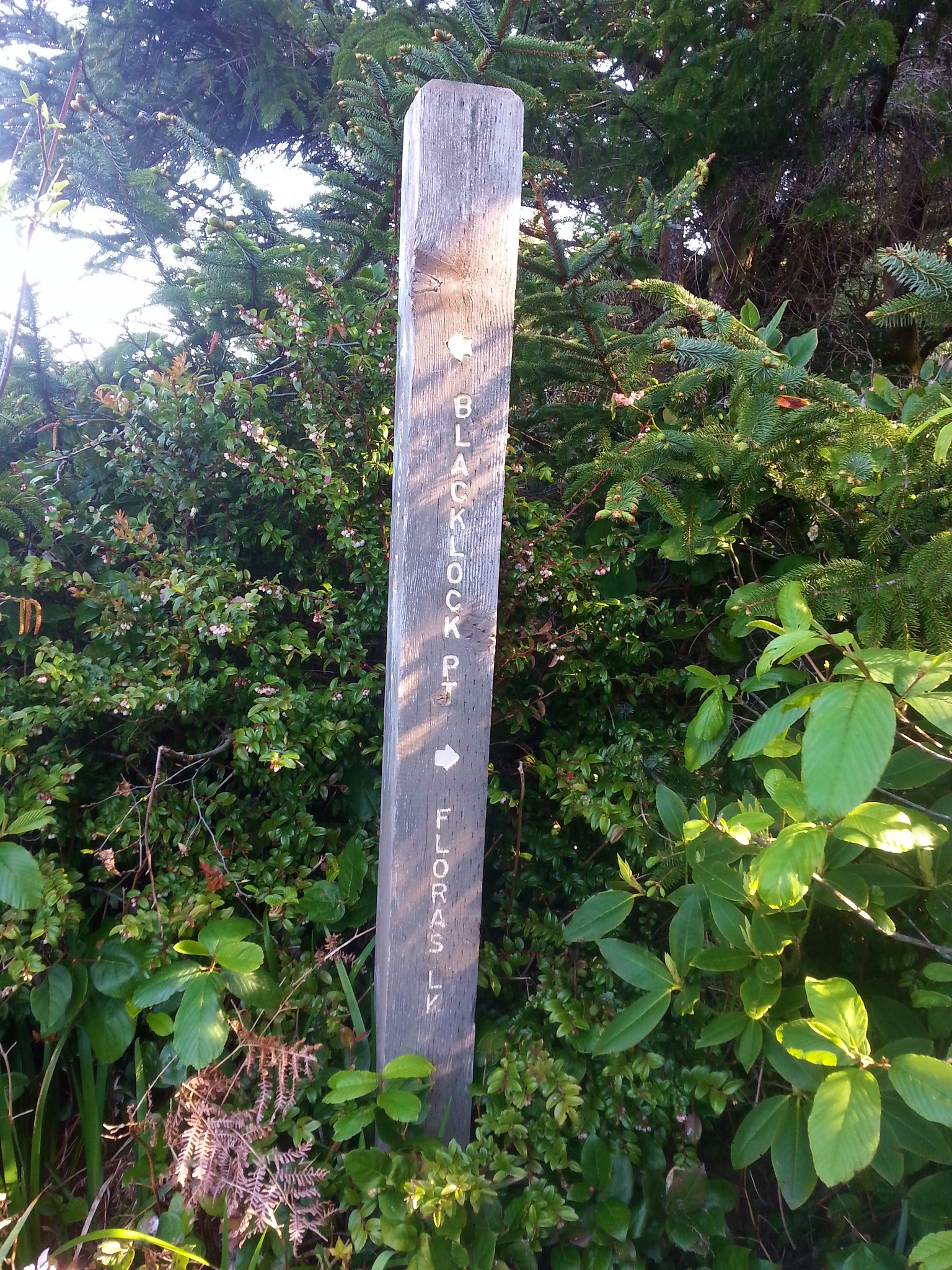
A little over three quarter miles from the creek crossing we came to a trail junction where we followed a pointer for Blacklock Point.
20170508_090846

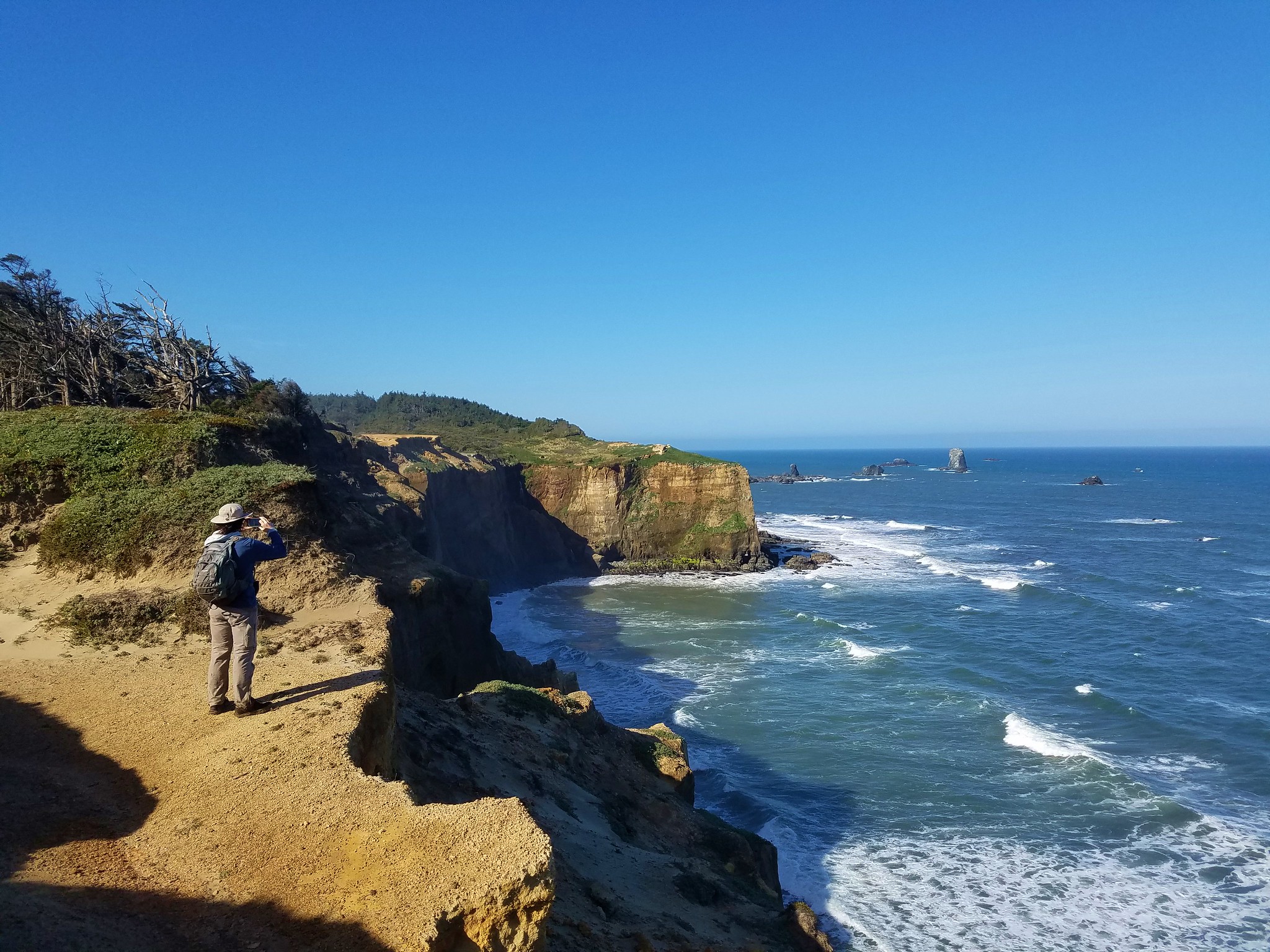
This path passed a couple of nice viewpoints in the next mile before arriving at another junction.
2017-05-08 09.15.25

2017-05-08 09.40.54

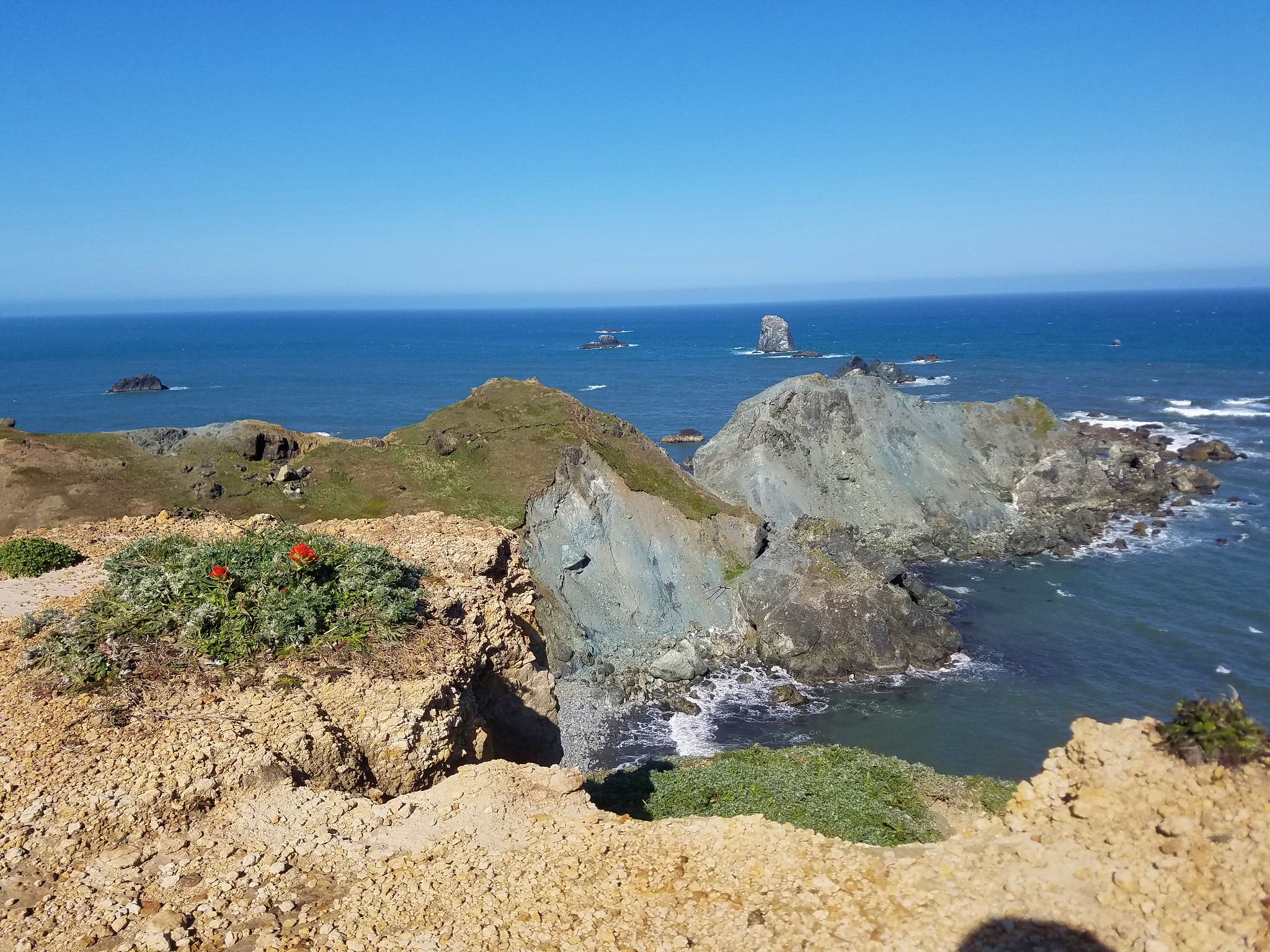
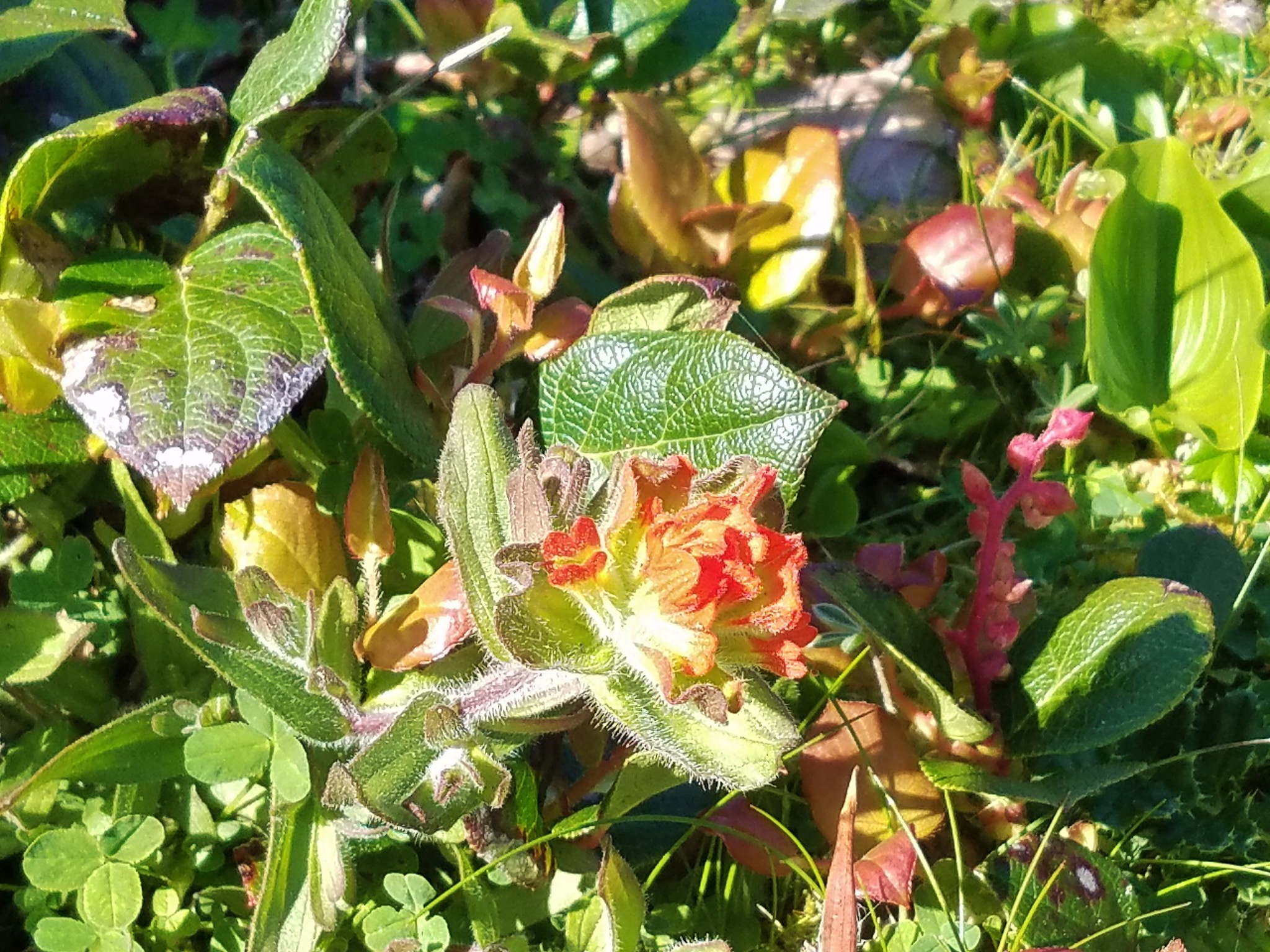
Despite the steady winds several wildflowers had managed to make the viewpoints home.
2017-05-08 09.39.41

2017-05-08 09.35.06

20170508_093527

2017-05-08 09.39.12

At the junction we turned right heading out toward Blacklock Point itself.
20170508_100352

20170508_100424

20170508_100730

We followed the path across a windy catwalk to its end.
20170508_101120

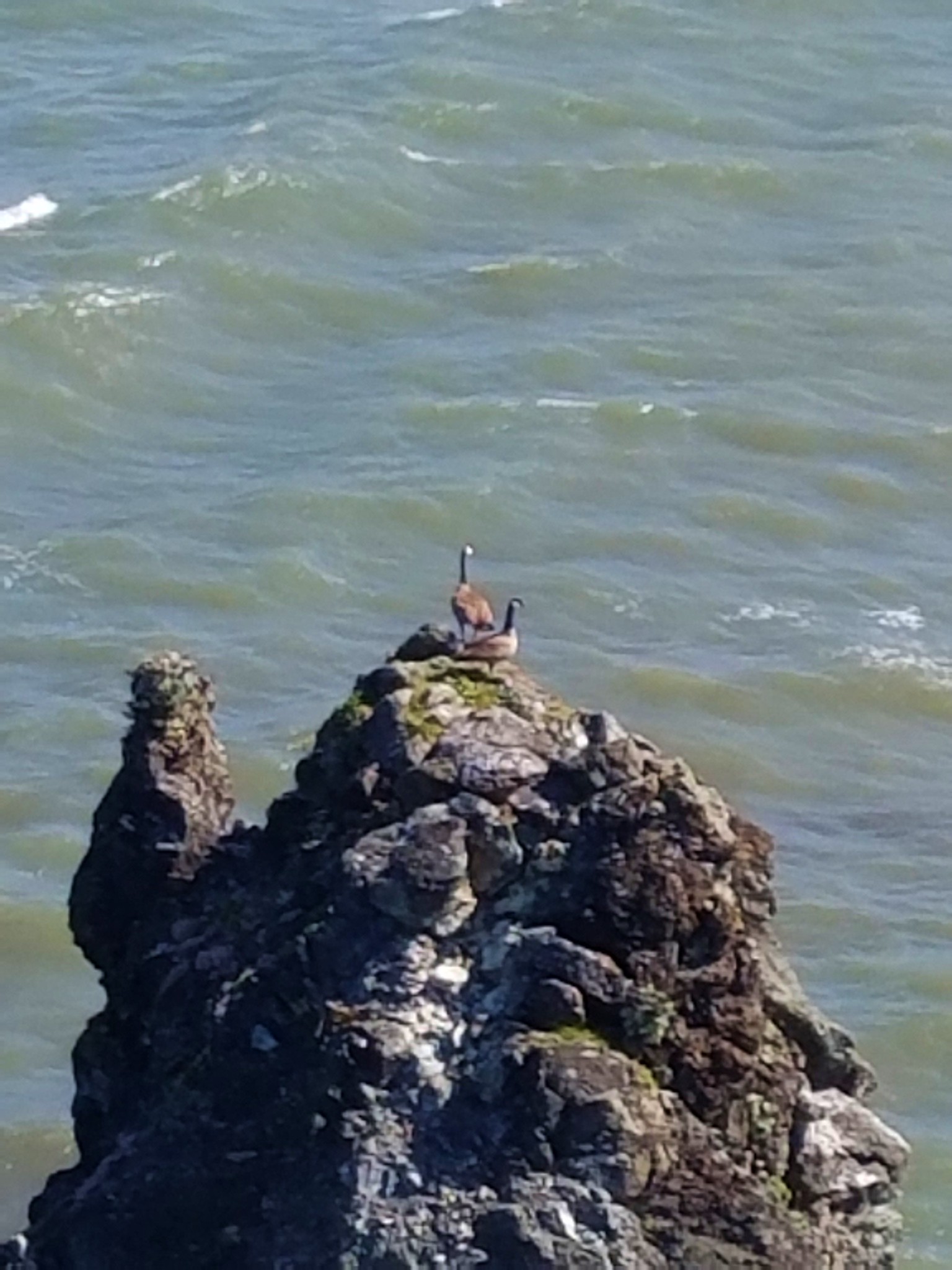
A pair of geese on a nearby rock were less than thrilled with our presence.
2017-05-08 10.14.41

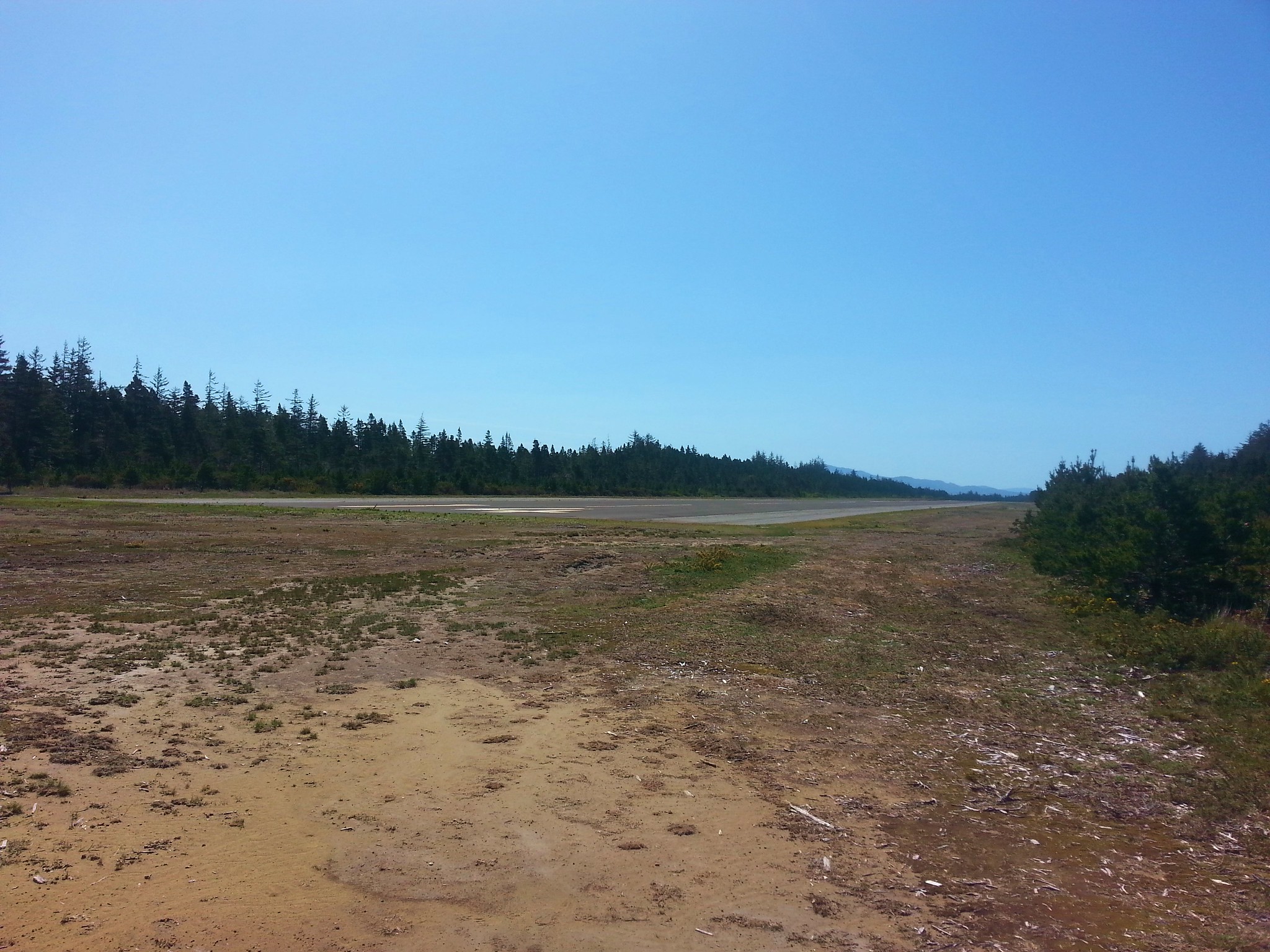
We’d come about a half mile from the junction and after returning we continued on our loop by following an old road another half mile to yet another junction. Turning left would have led 1.2 miles back to the junction we’d come to after climbing up from the creek crossing. This would mean passing back through the whale stench, so we turned right for a short distance staying left at a fork to the edge of the Cape Blanco Airport.
20170508_104835

We followed the old road bed which brought us back to the SW end of Floras Lake in 3 miles.
20170508_105314

2017-05-08 11.48.01

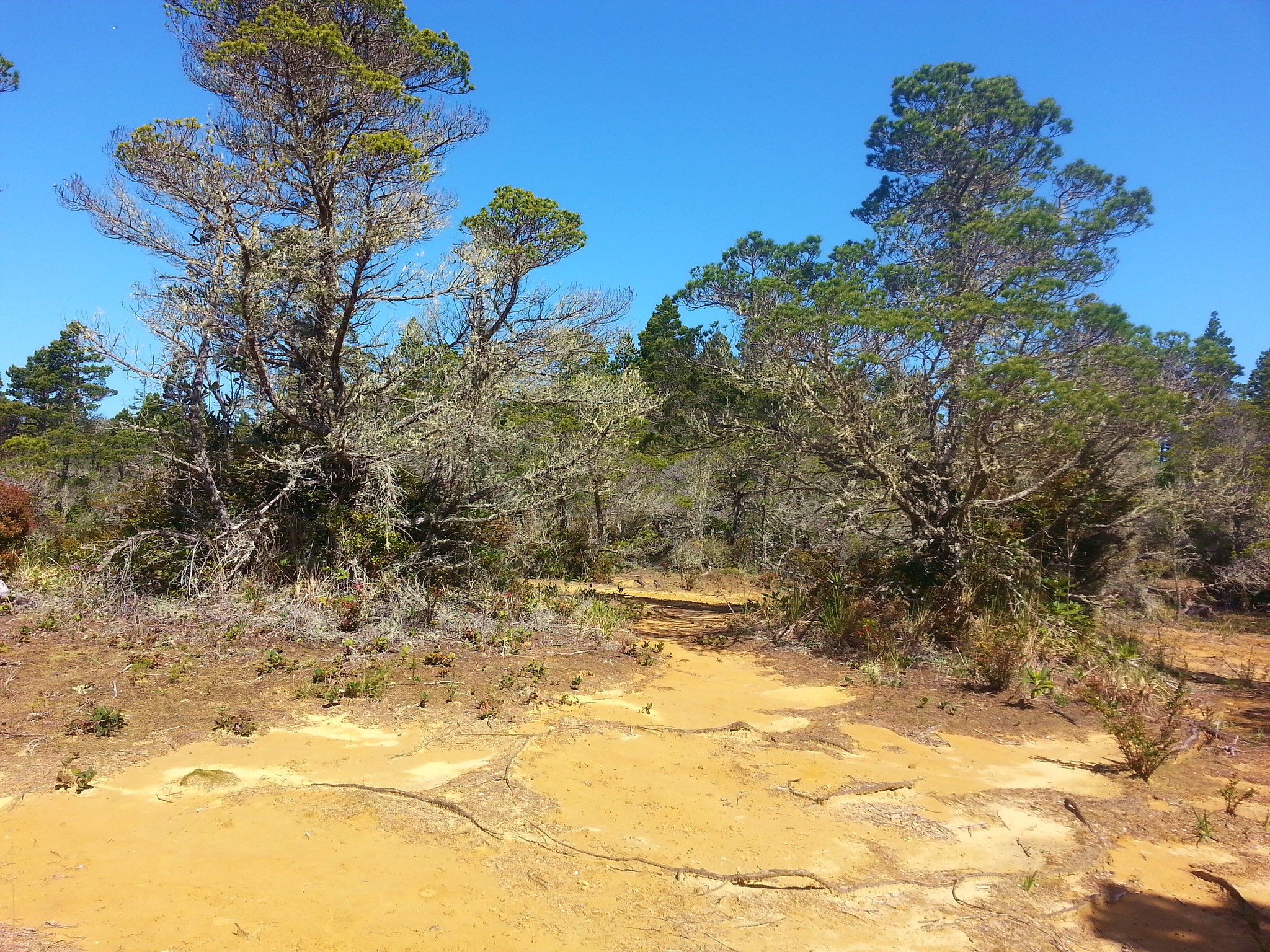
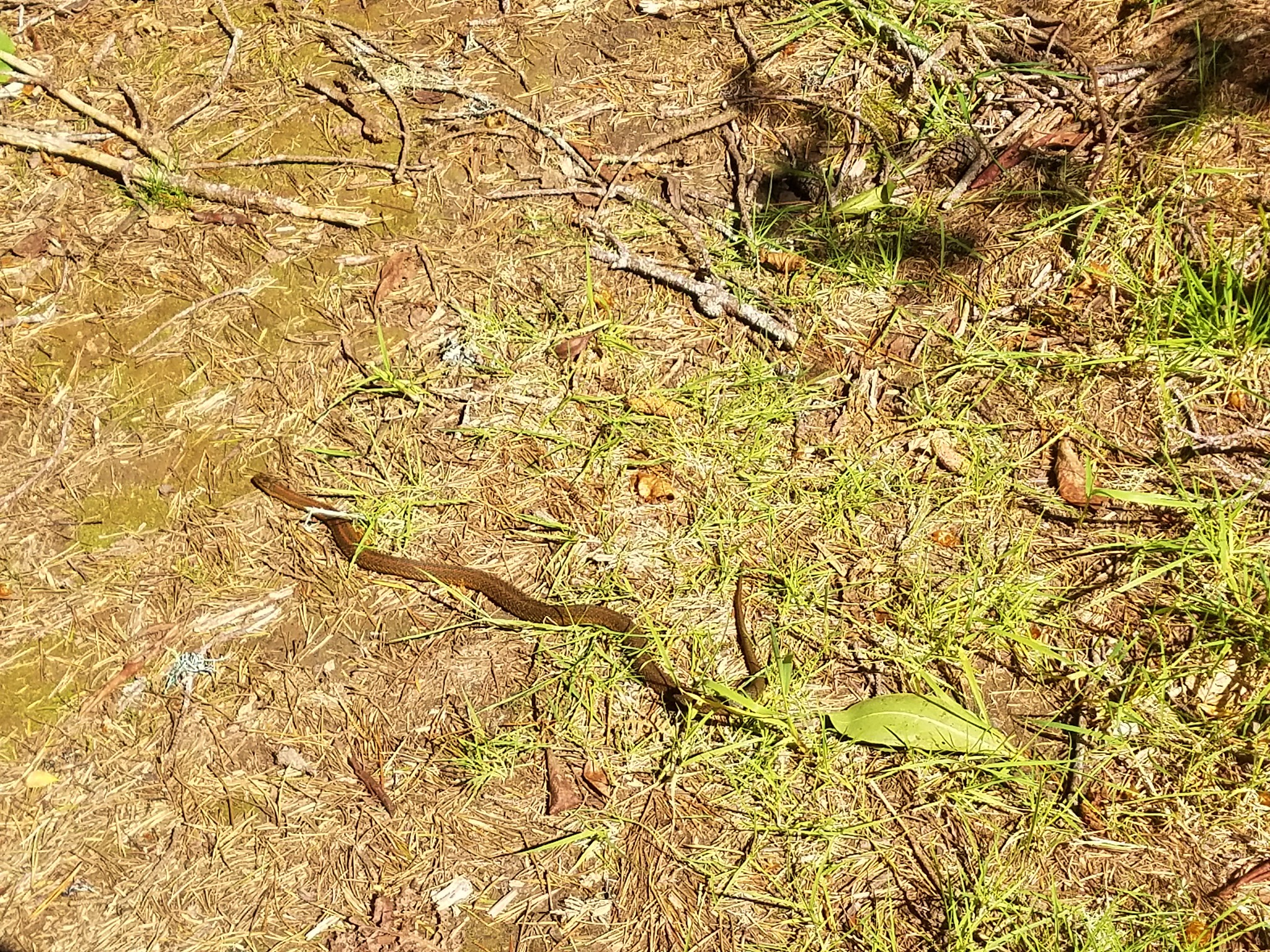
We spotted several frogs and a snake along this section.
20170508_111445

2017-05-08 11.02.43

We simply followed the lake shore back to the bridge over New River to our car. We then drove south on Highway 101 to Cape Blanco State Park. For our hike here we began at the Sixes River boat ramp.
20170508_123141

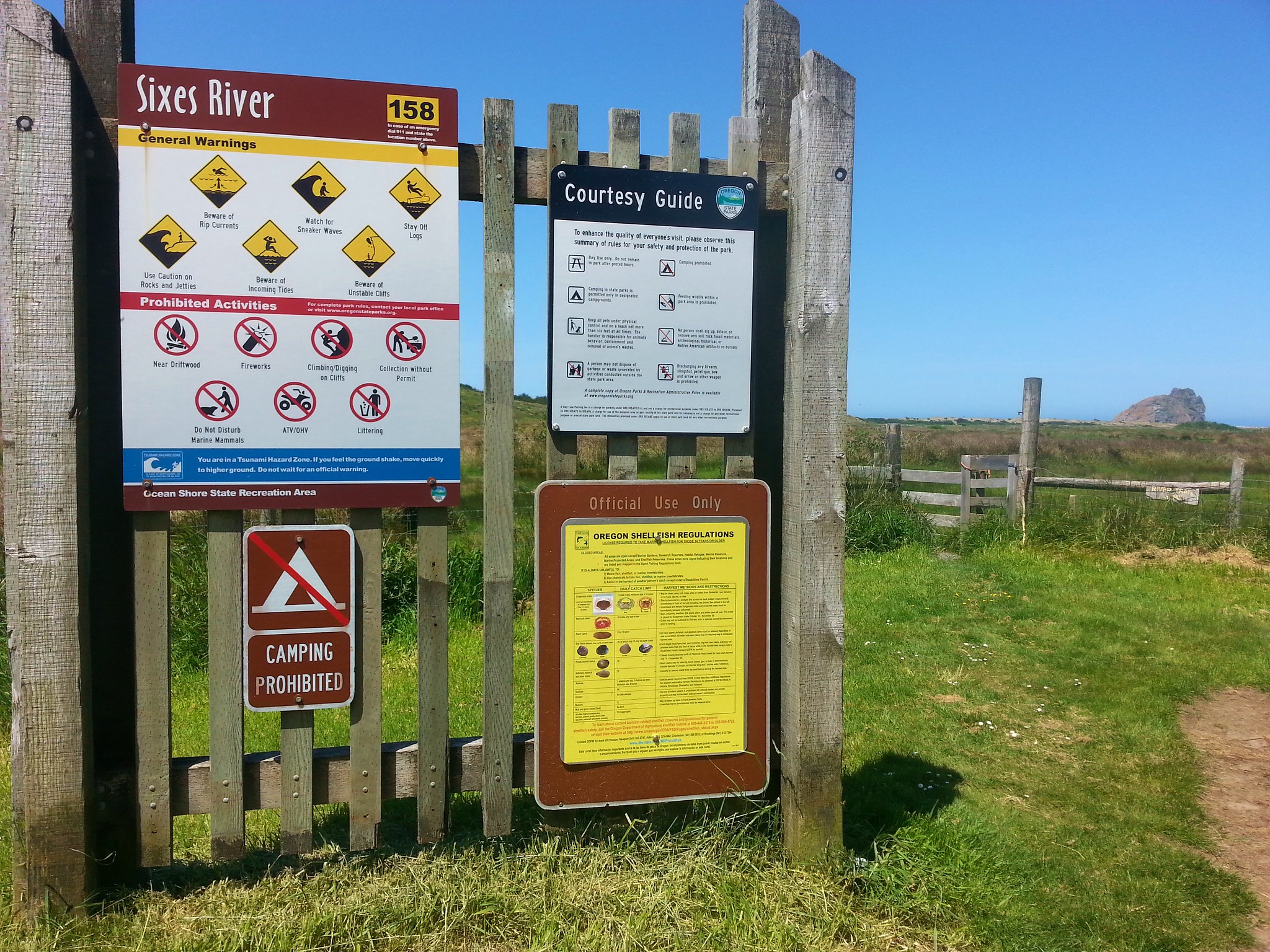
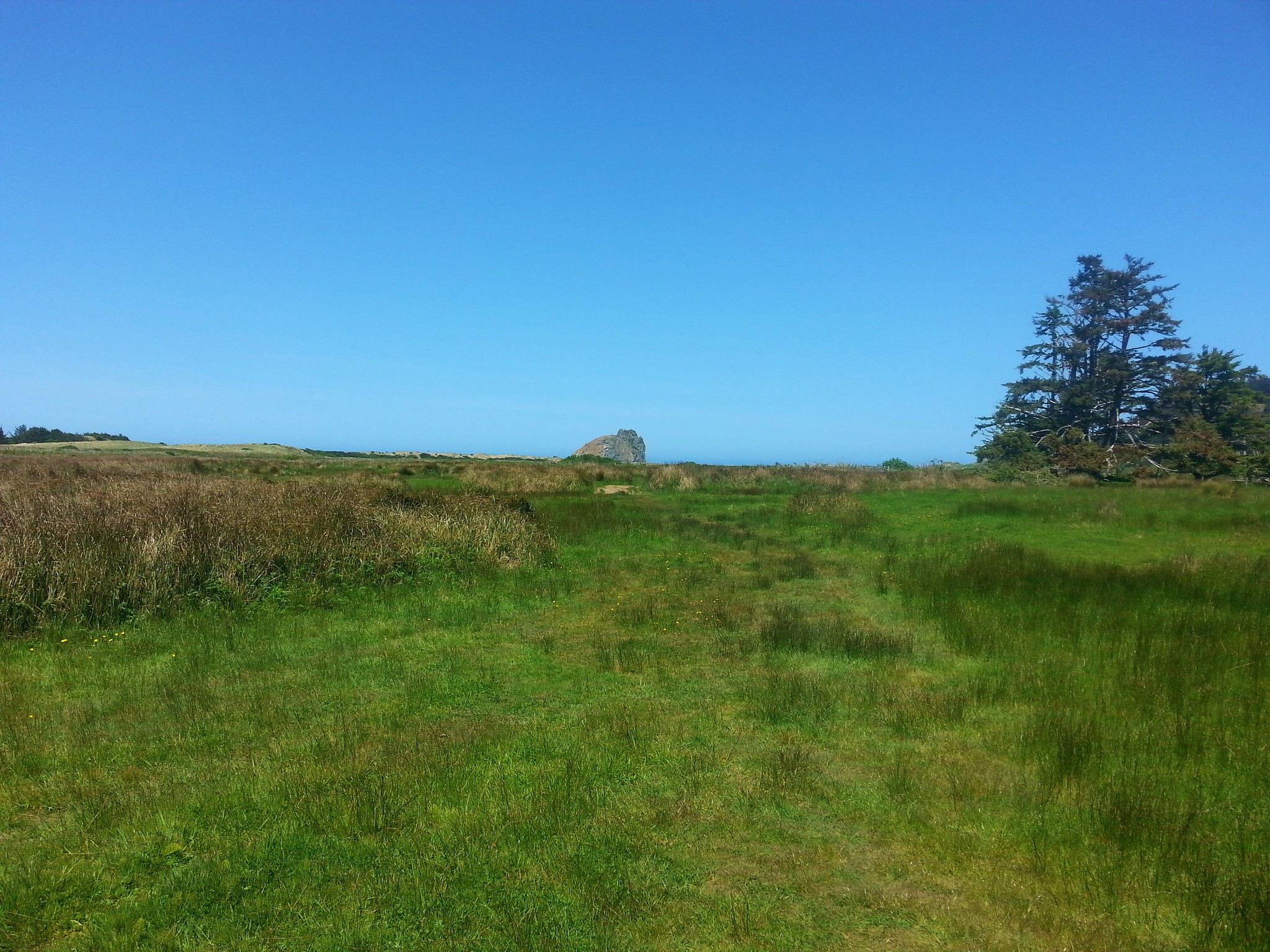
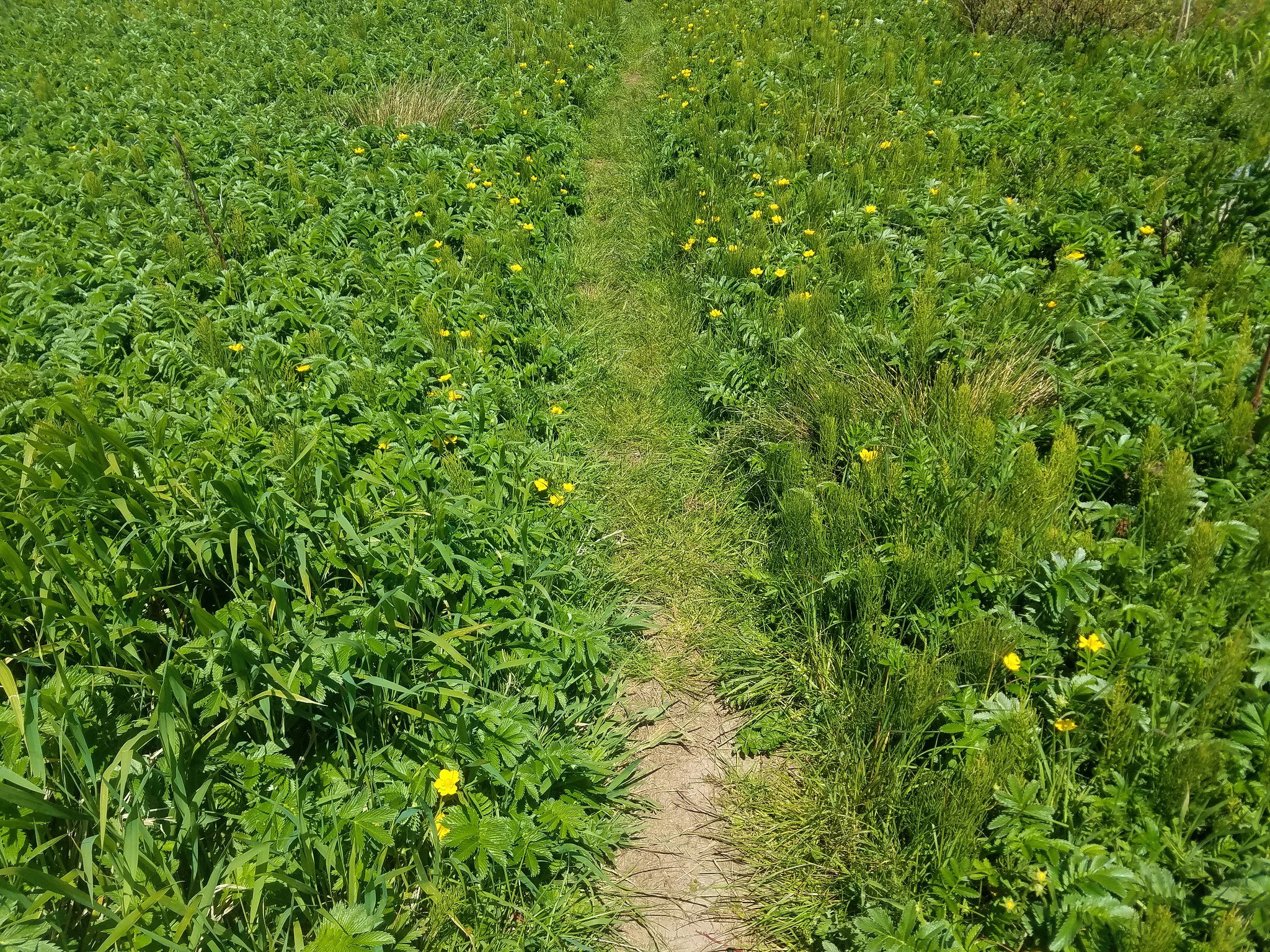
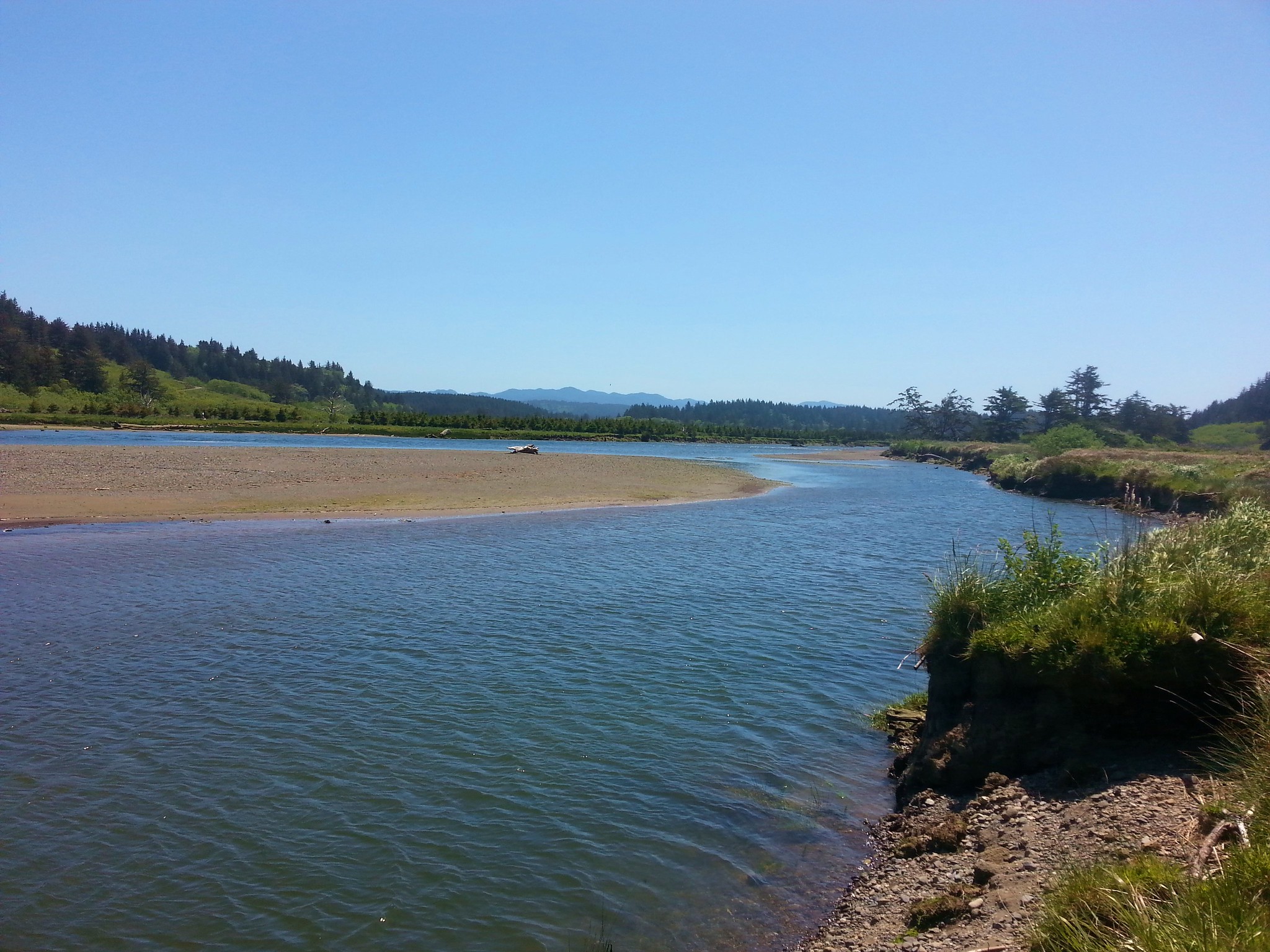
We passed through a gate and followed a faint path through pasture along the Sixes River.
20170508_123434

2017-05-08 12.42.35

20170508_123954

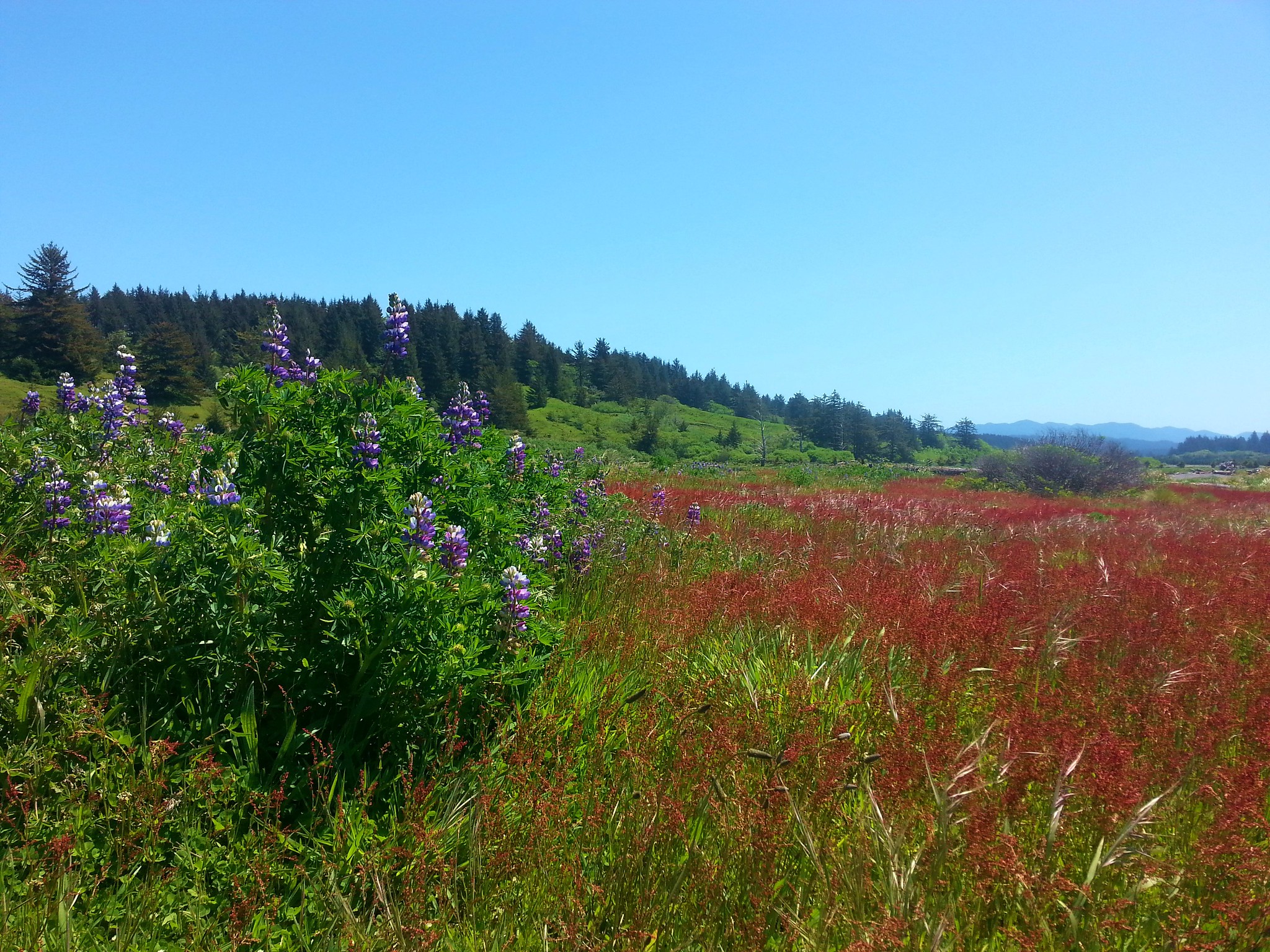
Purple lupine and red sorrel added color to the green pasture.
20170508_124414

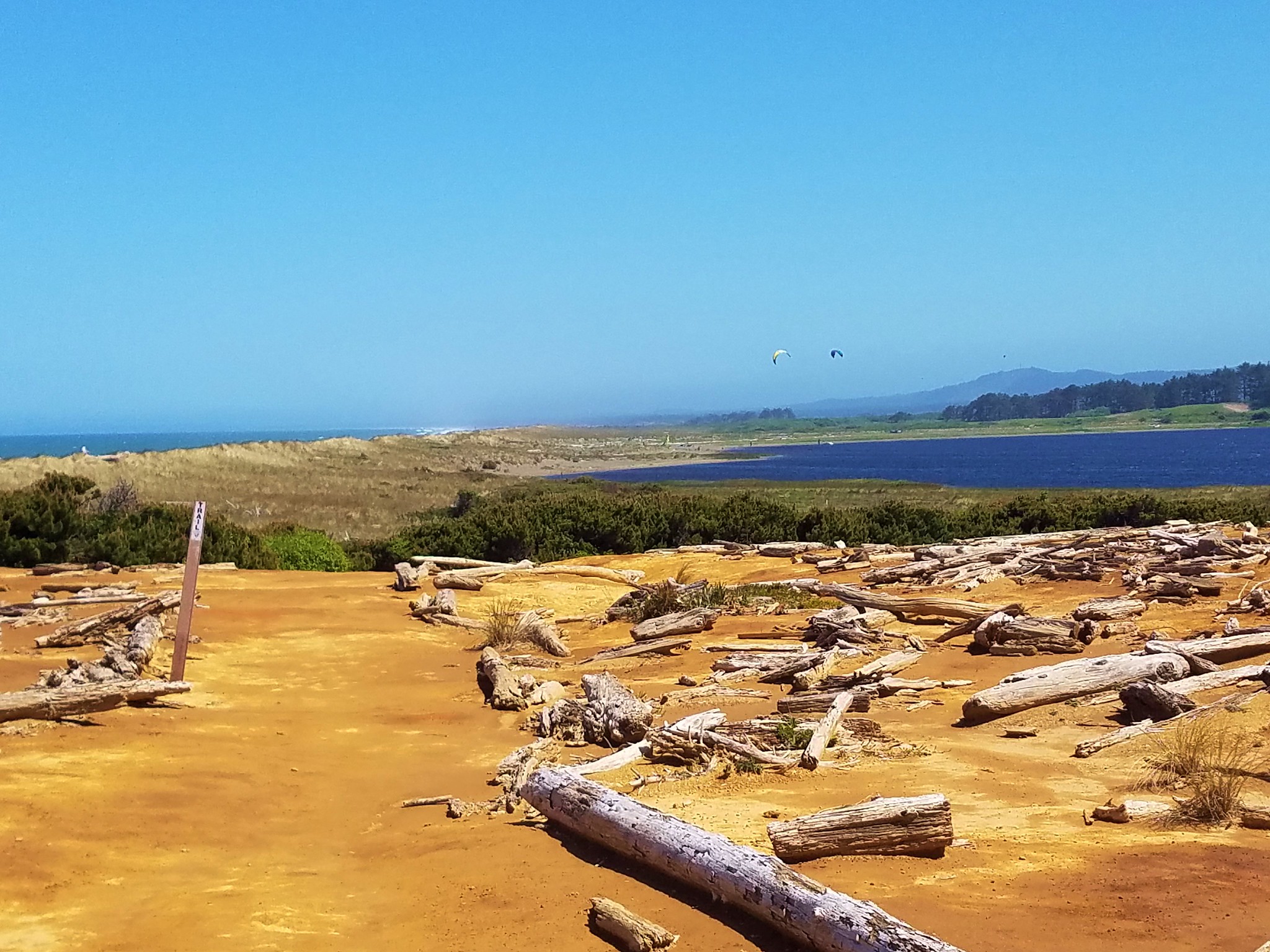
A little after 3/4 of a mile we crossed over a short foredune onto the beach and turned south.
20170508_125534

We followed the beach nearly a mile and a half to an unmarked trail below the Cape Blanco Lighthouse.
20170508_132029

Near the end of the beach Heather noticed a seal pup near a rock.
2017-05-08 13.25.04

20170508_132518

Her first instinct was to try and “help” it because it seemed distressed but I was able to convince her that it was normal for the pups to be left on the beach at times while the mothers look for food and that getting to close could cause the mother not to return. We were downwind and kept as far away as possible. We spotted a second pup from the junction where we began climbing up toward the lighthouse road.
20170508_132845

2017-05-08 13.28.28

The .3 mile path up to the lighthouse road was lined with yellow flowers.
20170508_133221

Four tenths of a mile of road walking brought us to the lighthouse.
2017-05-08 13.46.32

20170508_134800

After visiting the lighthouse we followed the road back past where we’d come up from the beach another .2 miles to an Oregon Coast Trail sign on the left.
20170508_140423

We followed the Oregon Coast Trail 1.3 miles, staying left at junctions, back to the pasture by the Sixes River boat ramp.
2017-05-08 14.05.45

20170508_141323

20170508_142333

20170508_143458

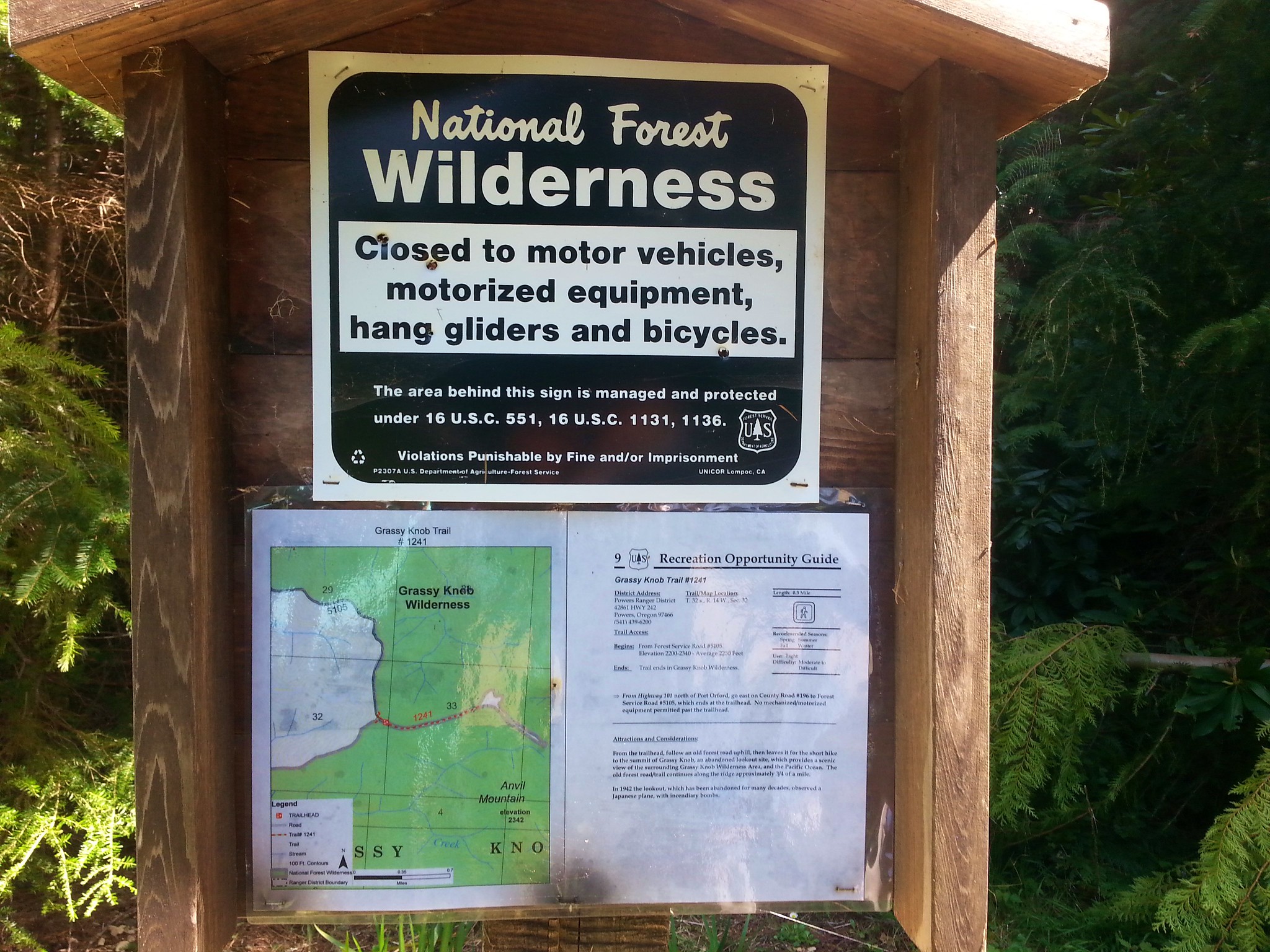
We crossed the pasture back to our car then headed for our next hike – Grassy Knob. To reach this trailhead we headed south toward Port Orford on Highway 101 turning left on Grassy knob Road 4 miles north of town. This 7.7 mile road began as a paved two lane road but about halfway along turned to a gravel logging road which was in pretty bad shape. It was bad enough that we actually parked a little under a half mile from the trialhead instead of attempting to go any further (as it turned out the final stretch wouldn’t have been that bad).

We hiked to the roads end and the start of the Grassy Knob Trail.
20170508_152956

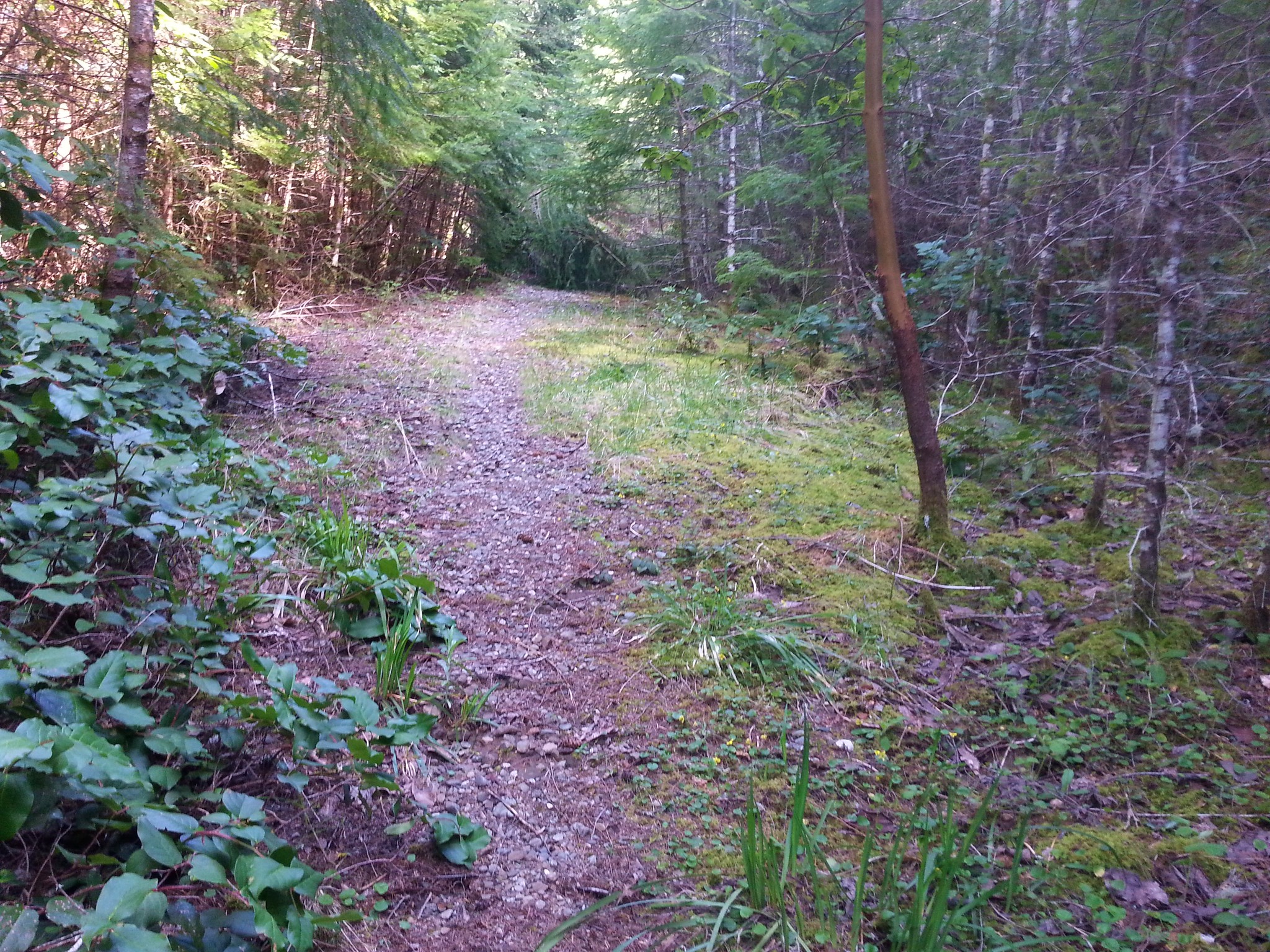
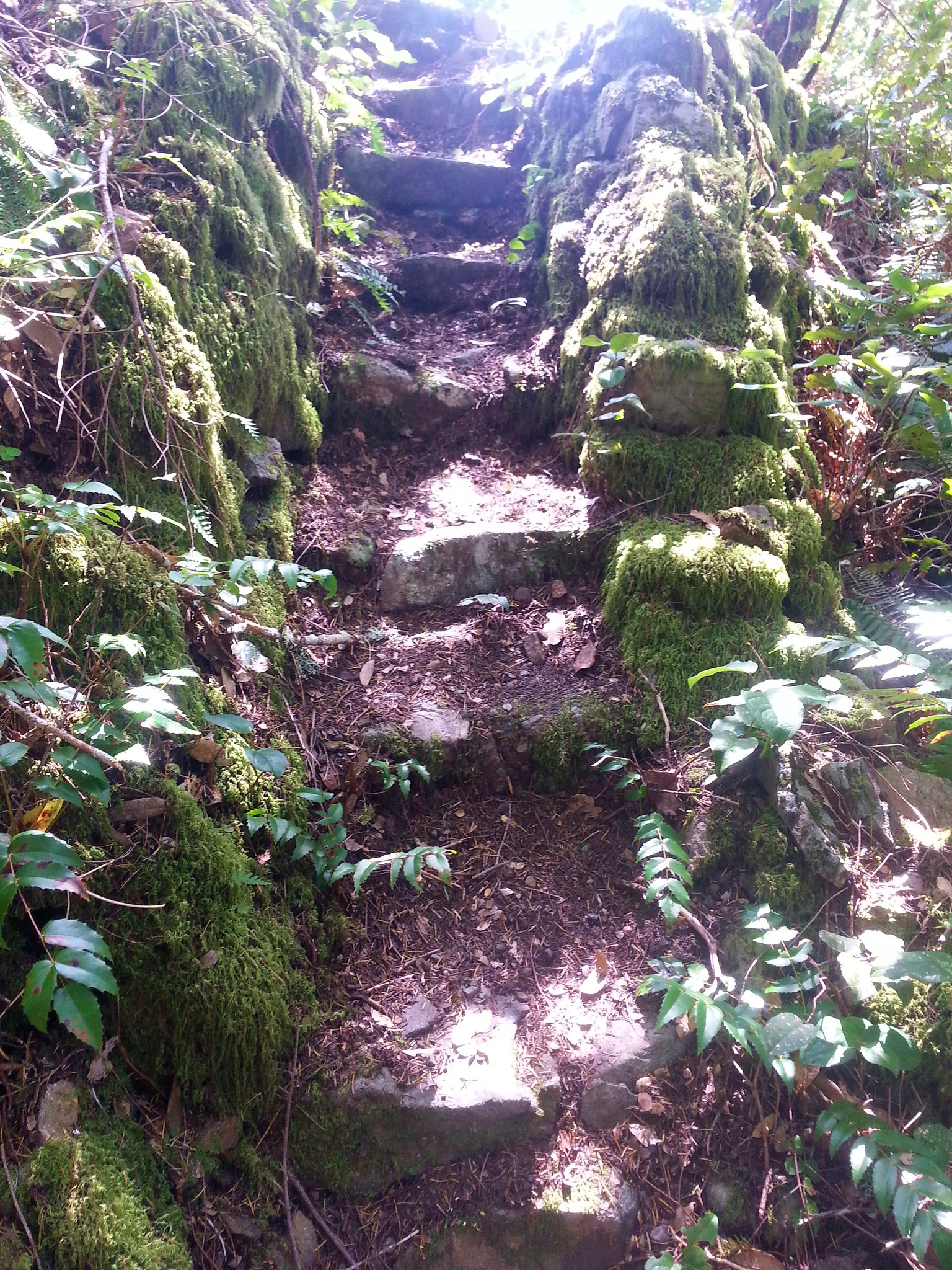
The trail followed the old road bed for nearly a half mile then forked uphill to the site of a former lookout tower.
20170508_153051

20170508_154048

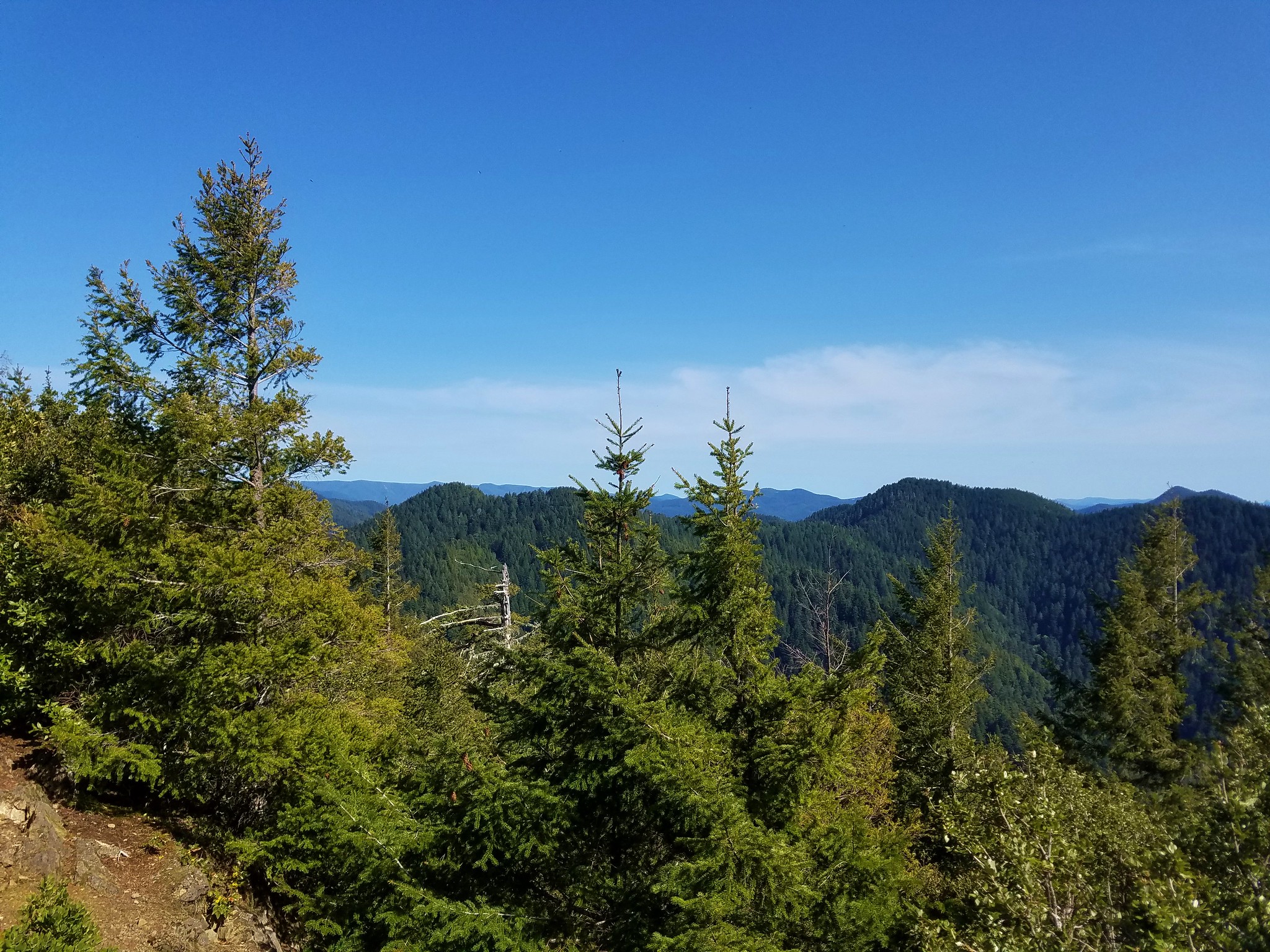
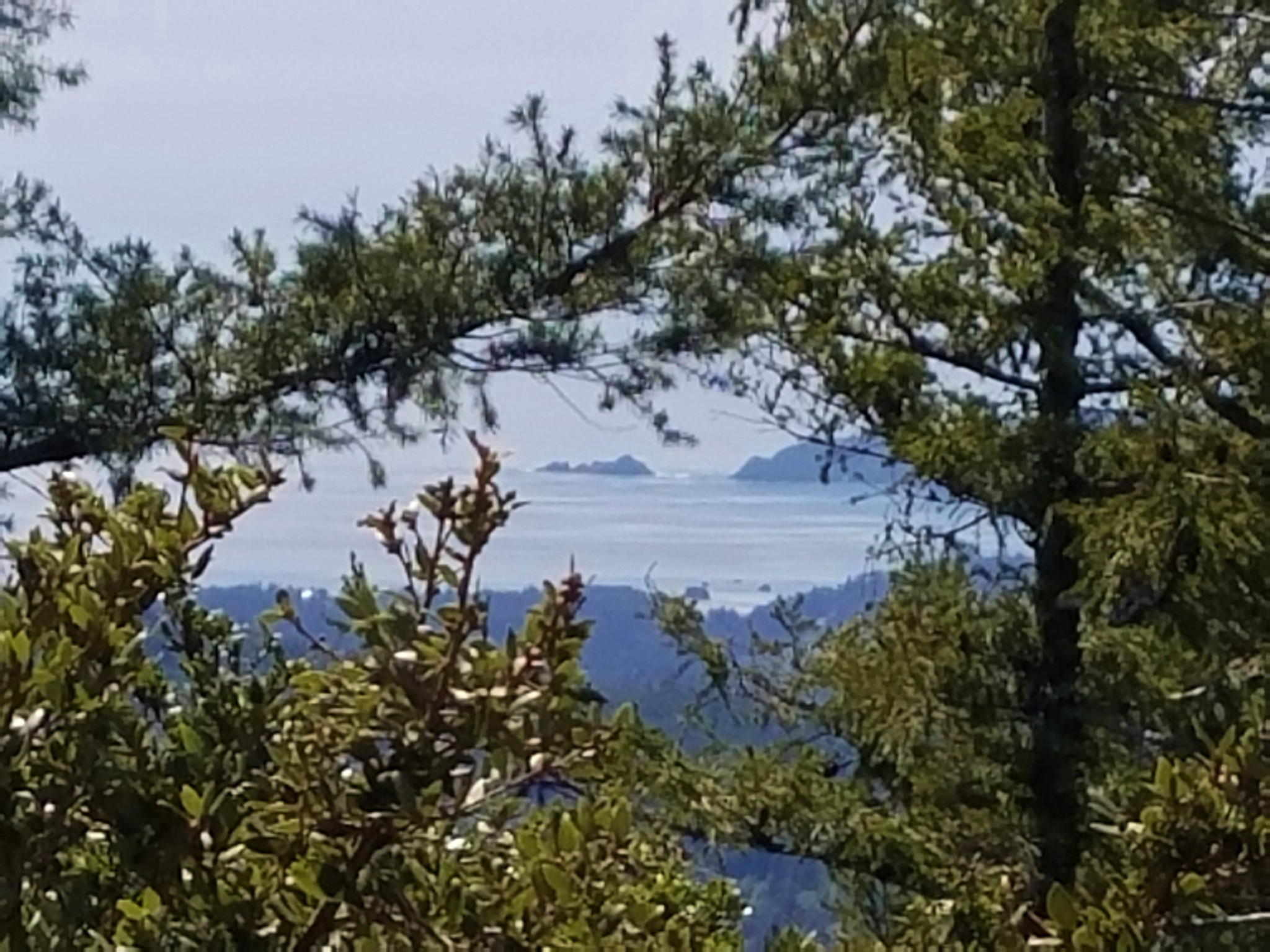
The view was fine but not spectacular with the Pacific Ocean visible through the trees. The main thing was we could check another wilderness area off our list.
2017-05-08 15.41.50

2017-05-08 15.42.37

We drove back to Highway 101 and continued south into Port Orford turning at a sign for Port Orford Heads.
20170508_164227

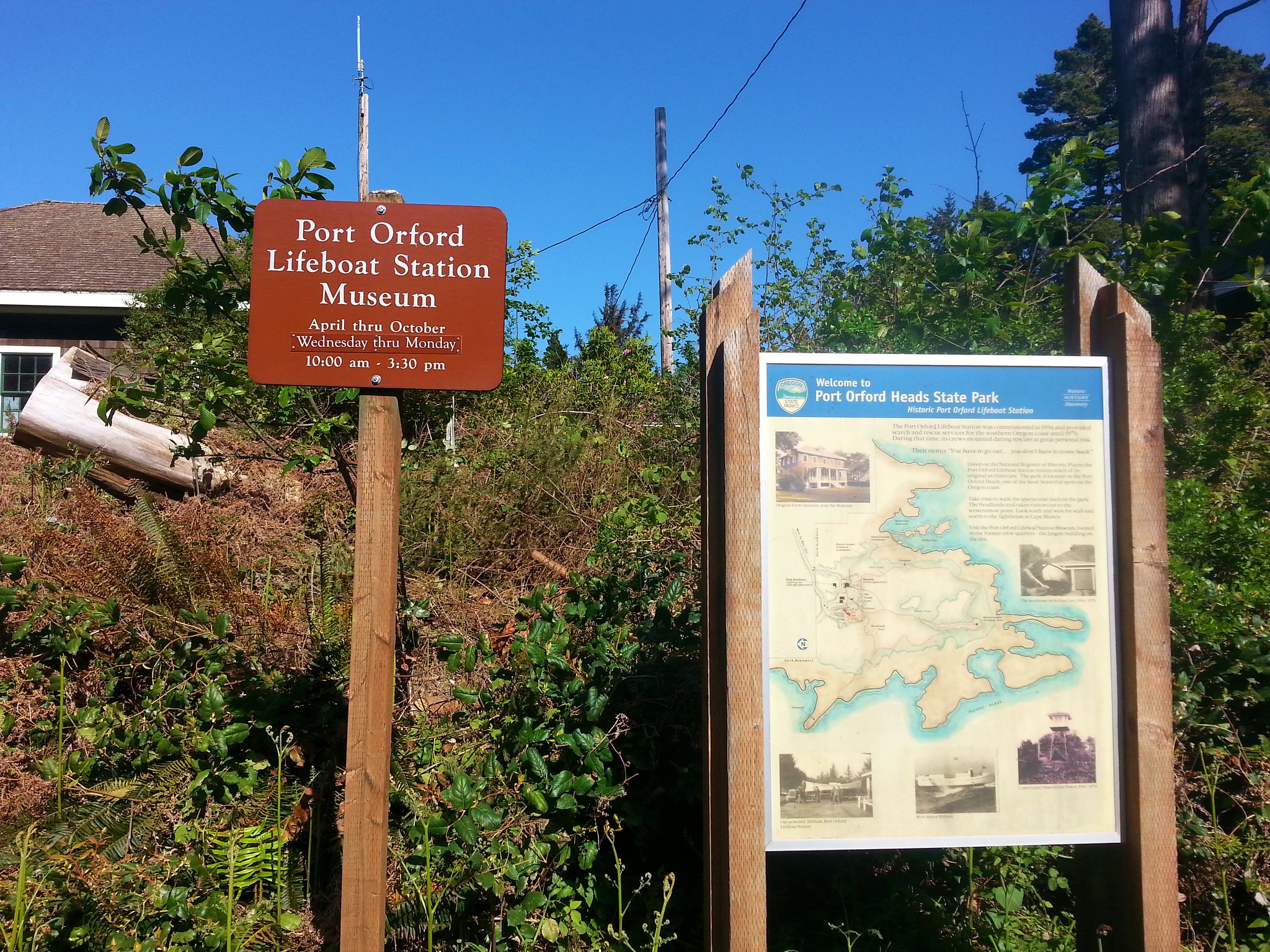
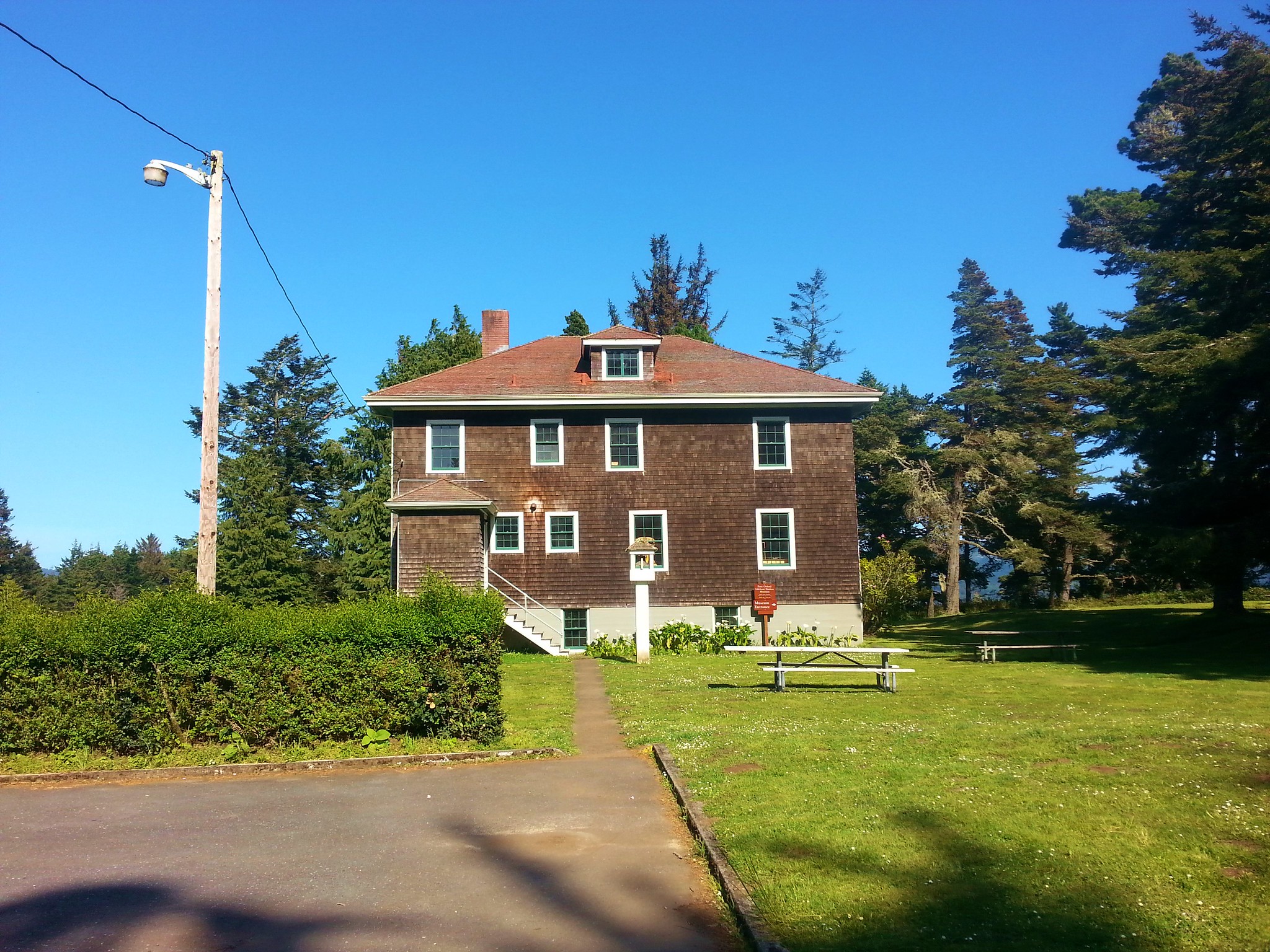
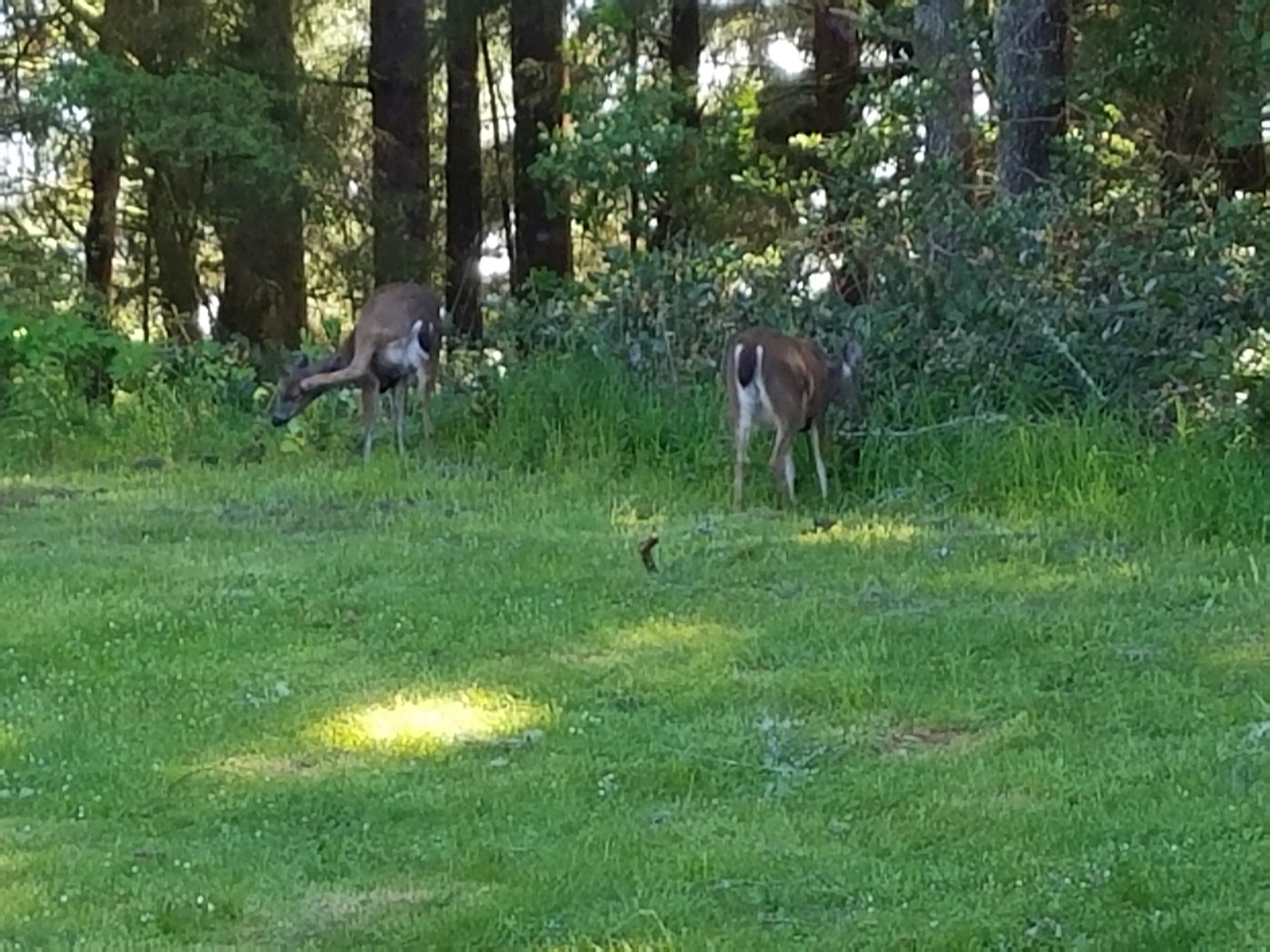
The Coast Guard Barracks museum was closed for the day but we were able to look at the lifeboat along with a pair of deer.
20170508_164411

20170508_164414

20170508_164351

2017-05-08 16.45.06

We took the Cove Trail behind the Museum to an overlook of the site of a former Coast Guard boathouse.
20170508_164724

20170508_165046

The view to the south included Humbug Mountain.
20170508_165445

We continued on the Cove Trail to its end at a junction with the Tower Trail at the site of a former WWII lookout tower.
2017-05-08 16.59.11

From the lookout site we followed the tower trail a short distance before forking left for .2 miles to the Headland Trail where we turned left for another .2 miles to the end of this trail.
20170508_171348

There were quite a few flowers on the protected north side of the headland.
2017-05-08 17.11.41

20170508_171157

2017-05-08 17.12.03

We completed our 1.3 mile loop by following the Headland Trail back to the museum parking lot. It had been an interesting day of hiking with a lot of variation between our four destinations. The whale smell had been bad and the road to Grassy Knob a little harrowing but all in all it had been a really good day. Happy Trails!

Flickr: Port Orford Area hikes

Categories
Hiking Northern Coast Oregon Oregon Coast Trip report

Angora Peak and Cape Falcon

We are blessed to live in a State where one weekend we can hike amid sagebrush and wildflowers in the High Desert and the next weekend hike along the Pacific Ocean.

For our latest outing we headed to the Oregon Coast to check out one new destination and one familiar one. Our original plan was to break the day up into two hikes, first up Angora Peak from a gated logging road, then to Cape Falcon after driving back south on Highway 101 for 2 miles to the Short Sands Trail South Trailhead.  We had hiked to Cape Falcon from that same trailhead in 2012 which would mean we’d be duplicating that hike (which we try and avoid).

An alternative presented itself while researching the Angora Peak hike. The Oregon Coast Trail passes Cape Falcon and then crosses Cape Falcon Road to the north on it’s way to Arch Cape. Cape Falcon Road is just a tenth of a mile north of the gated logging road for the Angora Peak hike so by parking on the shoulder of Cape Falcon Road at the OCT we could hike up to Angora Peak and back then take the Oregon Coast Trail out to Cape Falcon and back. This would allow us to not have to drive to a second trailhead and we wouldn’t be duplicating our 2012 hike to Cape Falcon.

With the plan settled we dove north of Nehalem on Highway 101 for 8 miles and turned left onto Cape Falcon Road where we parked at a small pullout by a trail sign.
Oregon Coast Trail at Cape Falcon Road

We walked back to the highway which was less than 100 yards away, crossed to the east shoulder, and followed it south for .1 miles to the gated road. The lumber company has a sign posted regarding rules for the area which should always be followed in order to ensure they are not forced to close access.
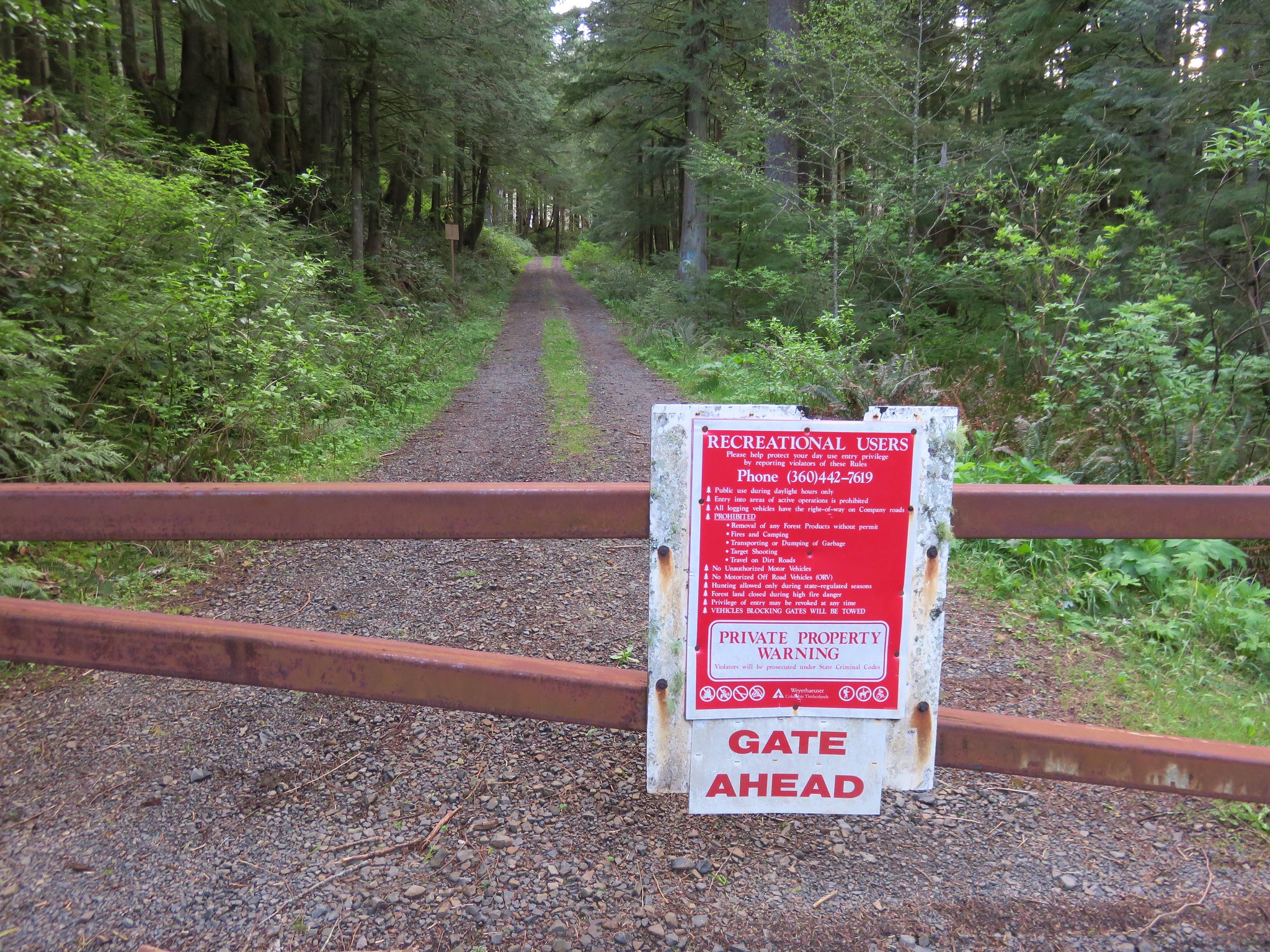
Logging road to Angora Peak

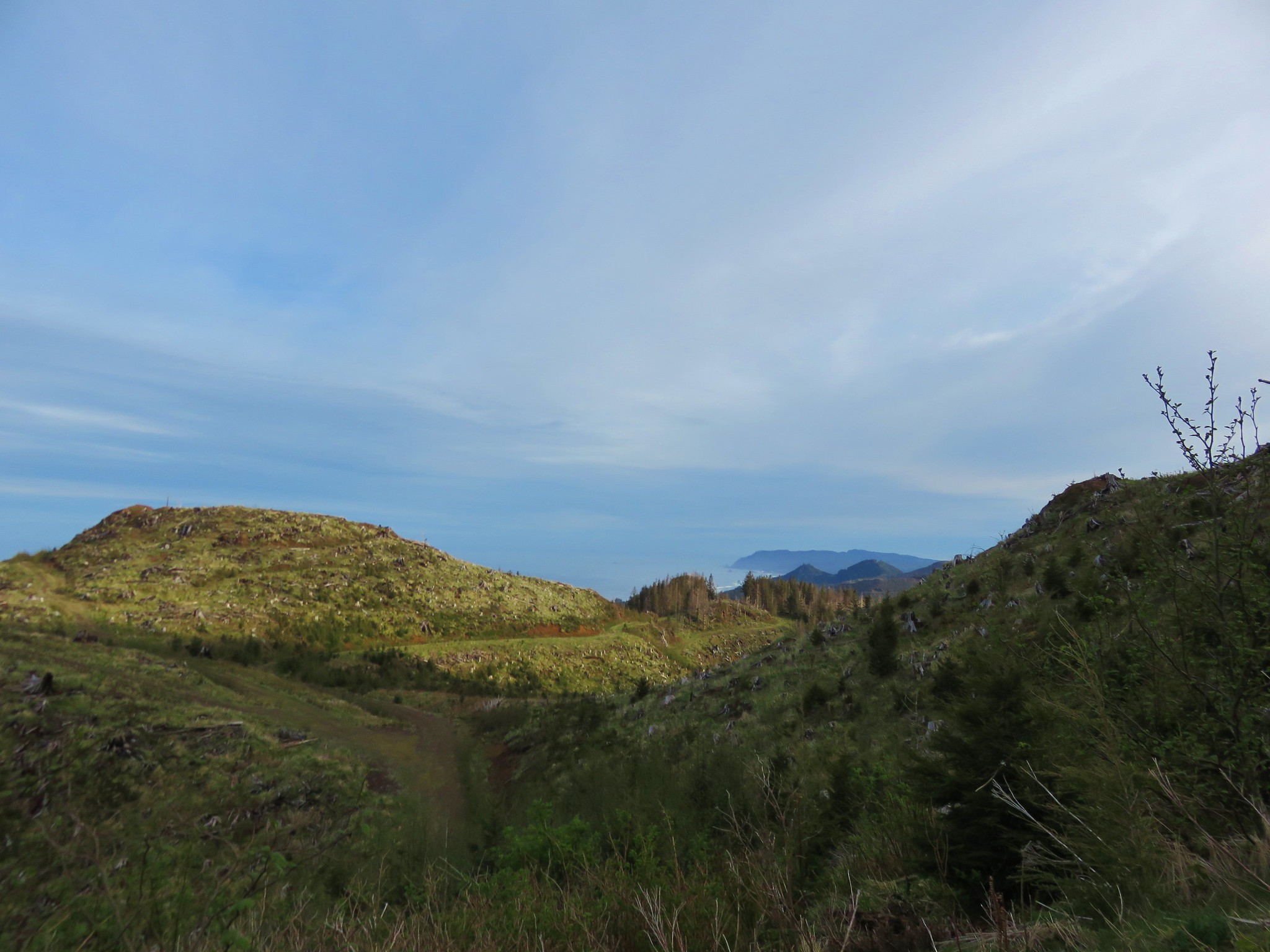
The road passes through a landscape of clear cuts with Angora Peak in the distance.
Logging road to Angora Peak

We stuck to what was obviously the main road and in about a mile passes a quarry.
Quarry on the way to Angora Peak

Beyond the quarry we forked left after passing a 1 mile marker (blue spray painted 1 on a concrete slab). This road ended in tenth of a mile at a T-shaped junction with Arch Cape Mill Road.
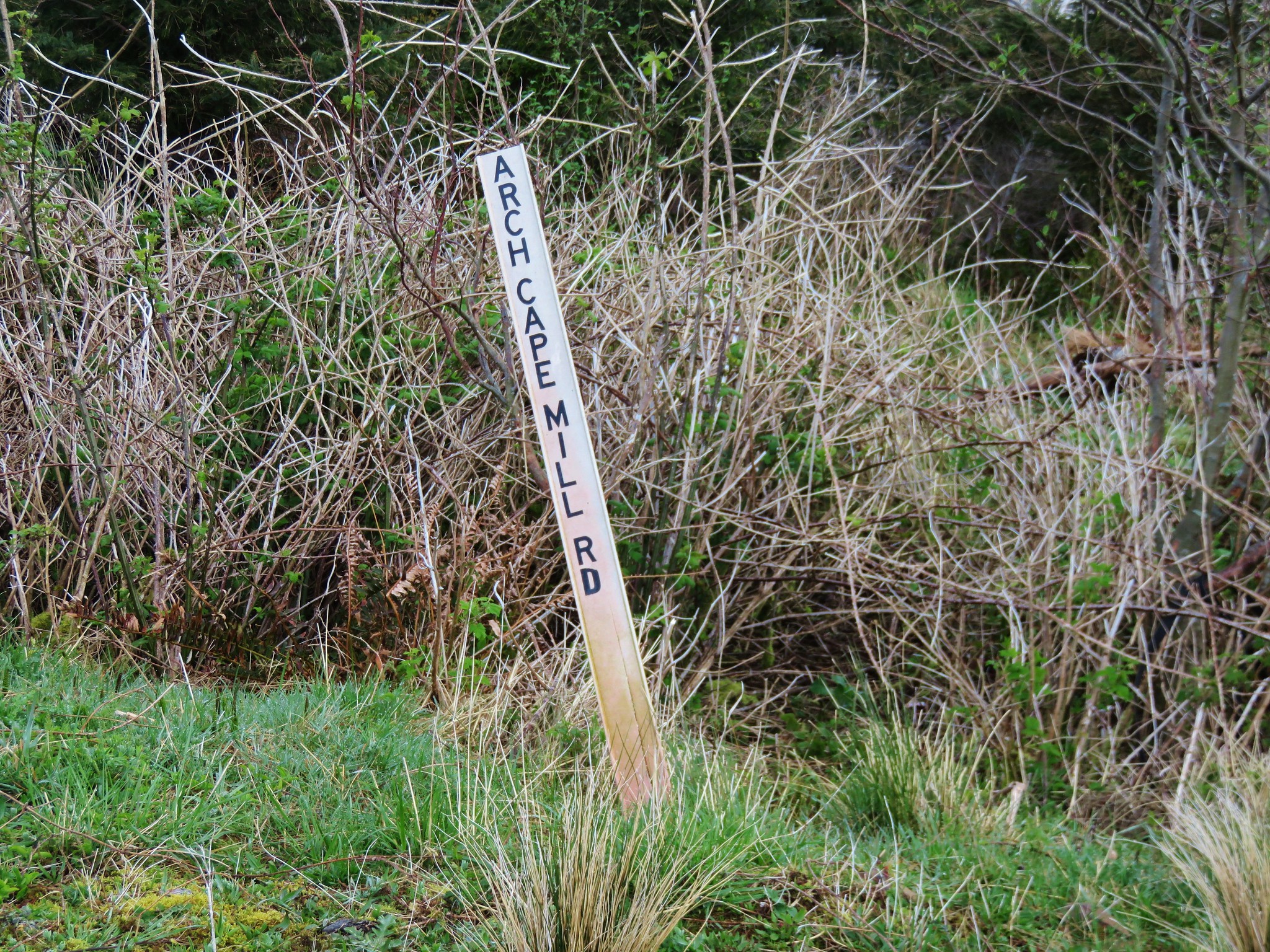
Sign at the junction with Arch Cape Mill Road

We turned right on Arch Cape Mill Road passing another gate.
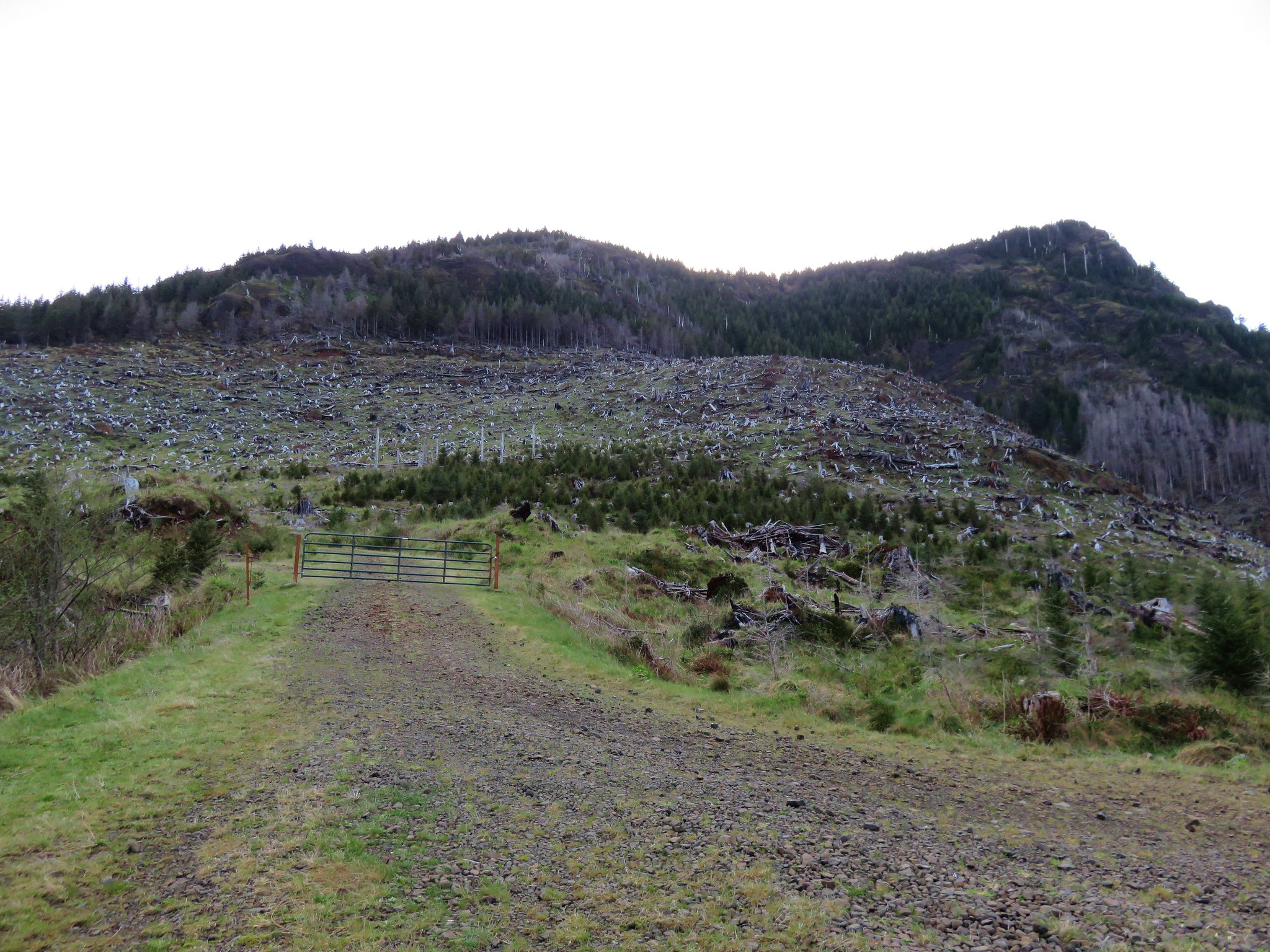
Gate on Arch Cape Mill Road

As we climbed higher up the road views back to the Pacific Ocean improved.
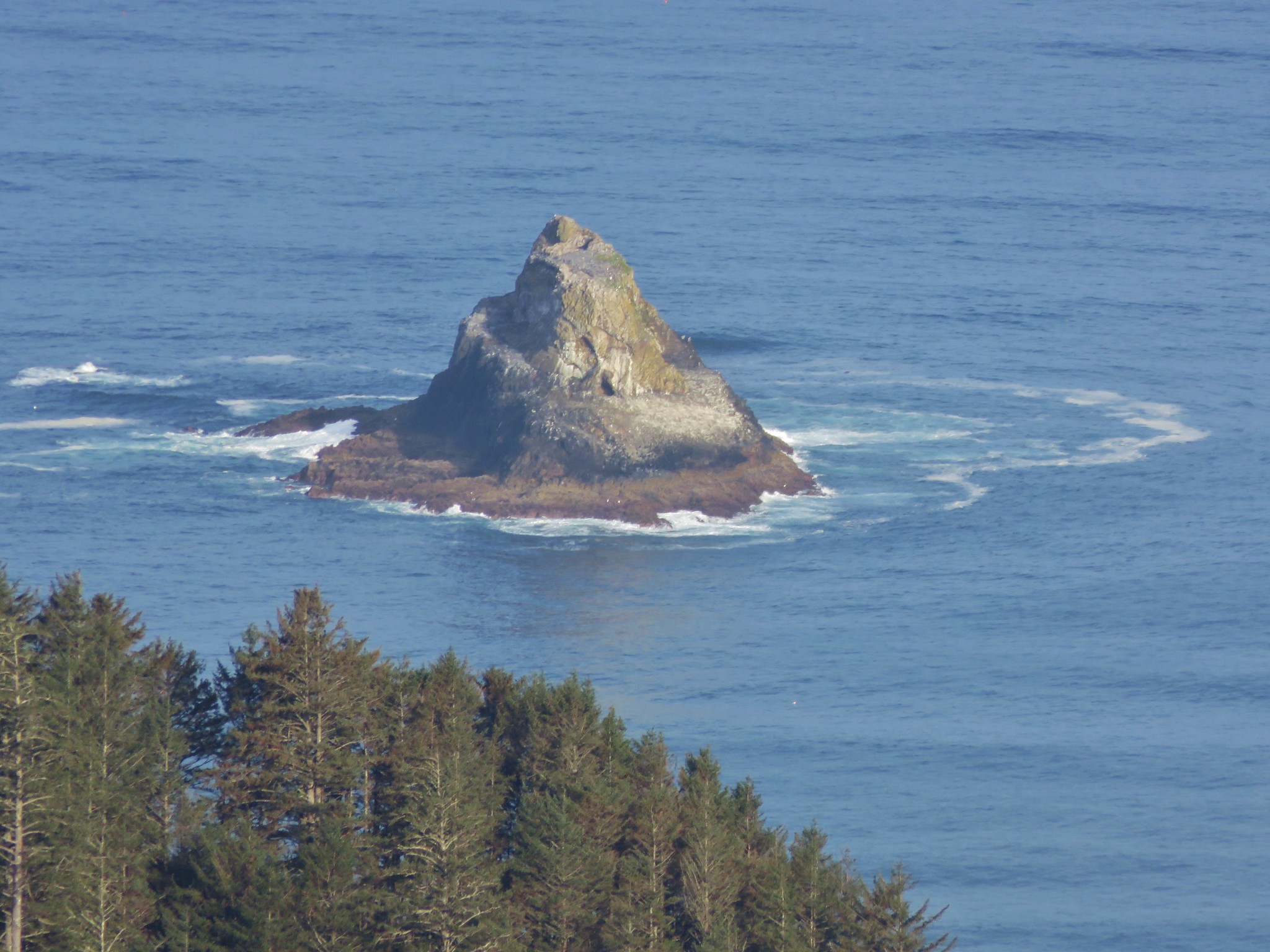
Pacific Ocean from Arch Cape Mill Road

Looking north past the clearcuts to Tillamook Head Tillamook Head

Tillamook Rock and Tillamook HeadTillamook Rock and Tillamook Head

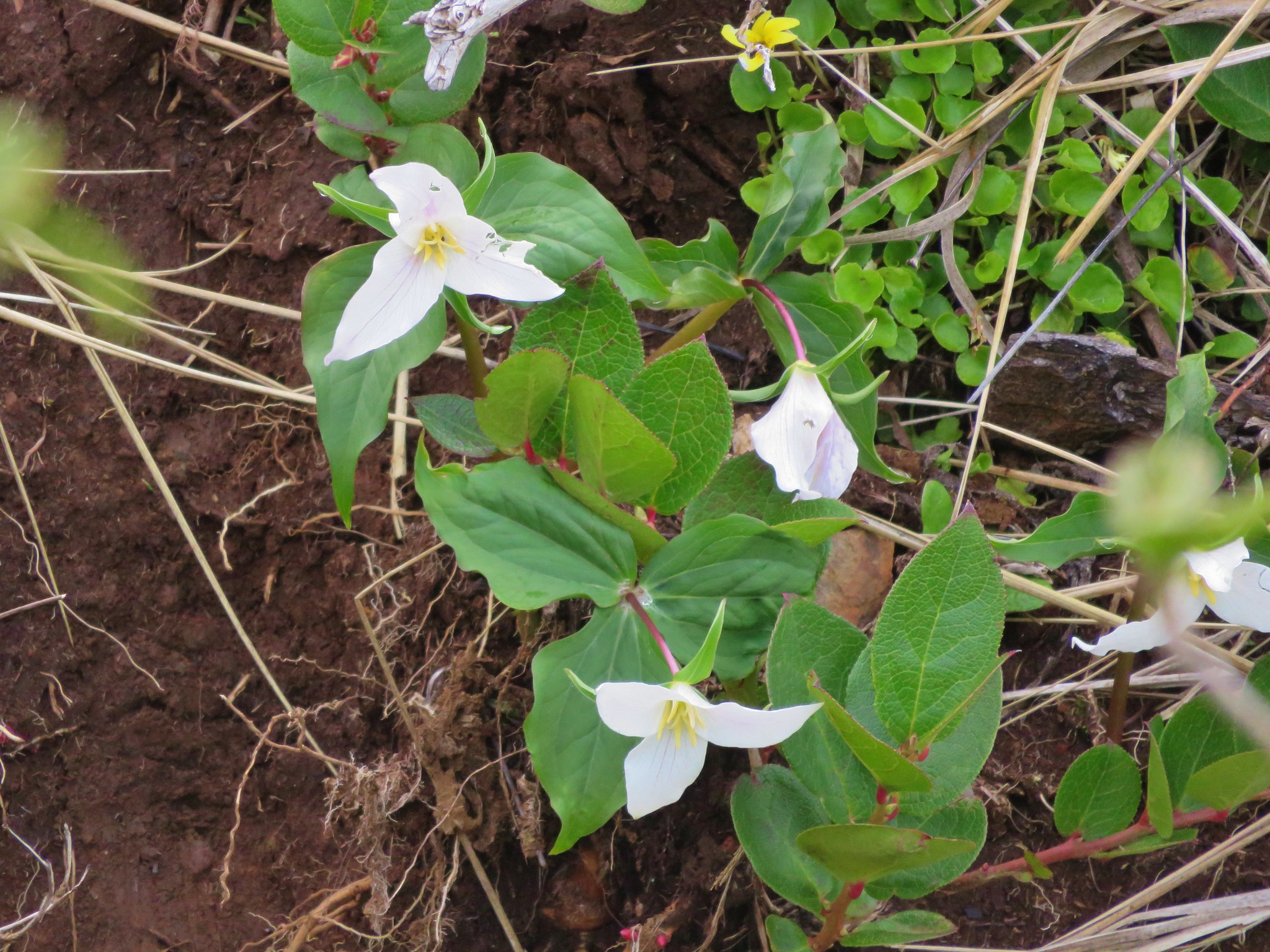
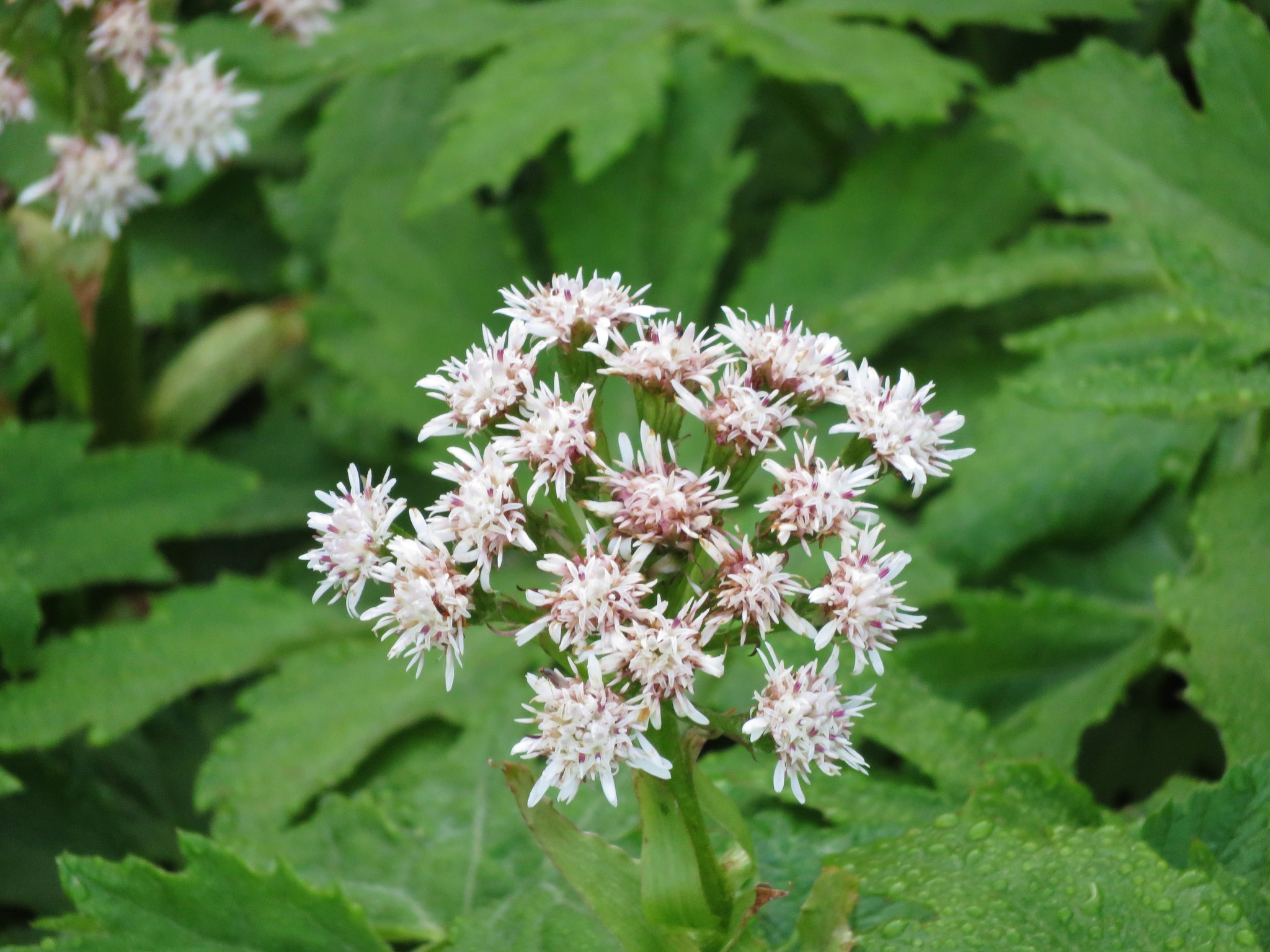
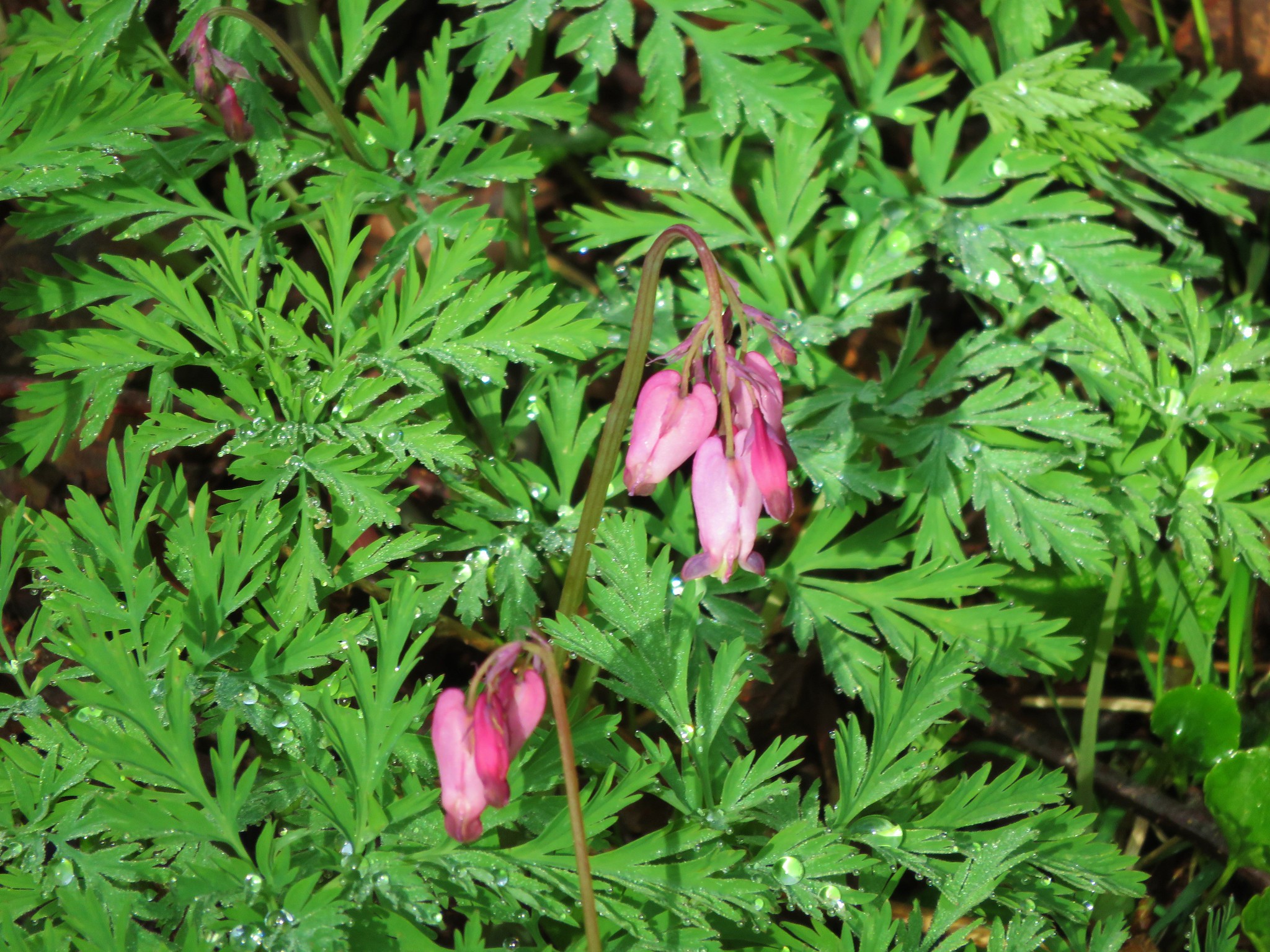
There weren’t a lot of flowers blooming yet but here a few were in bloom.
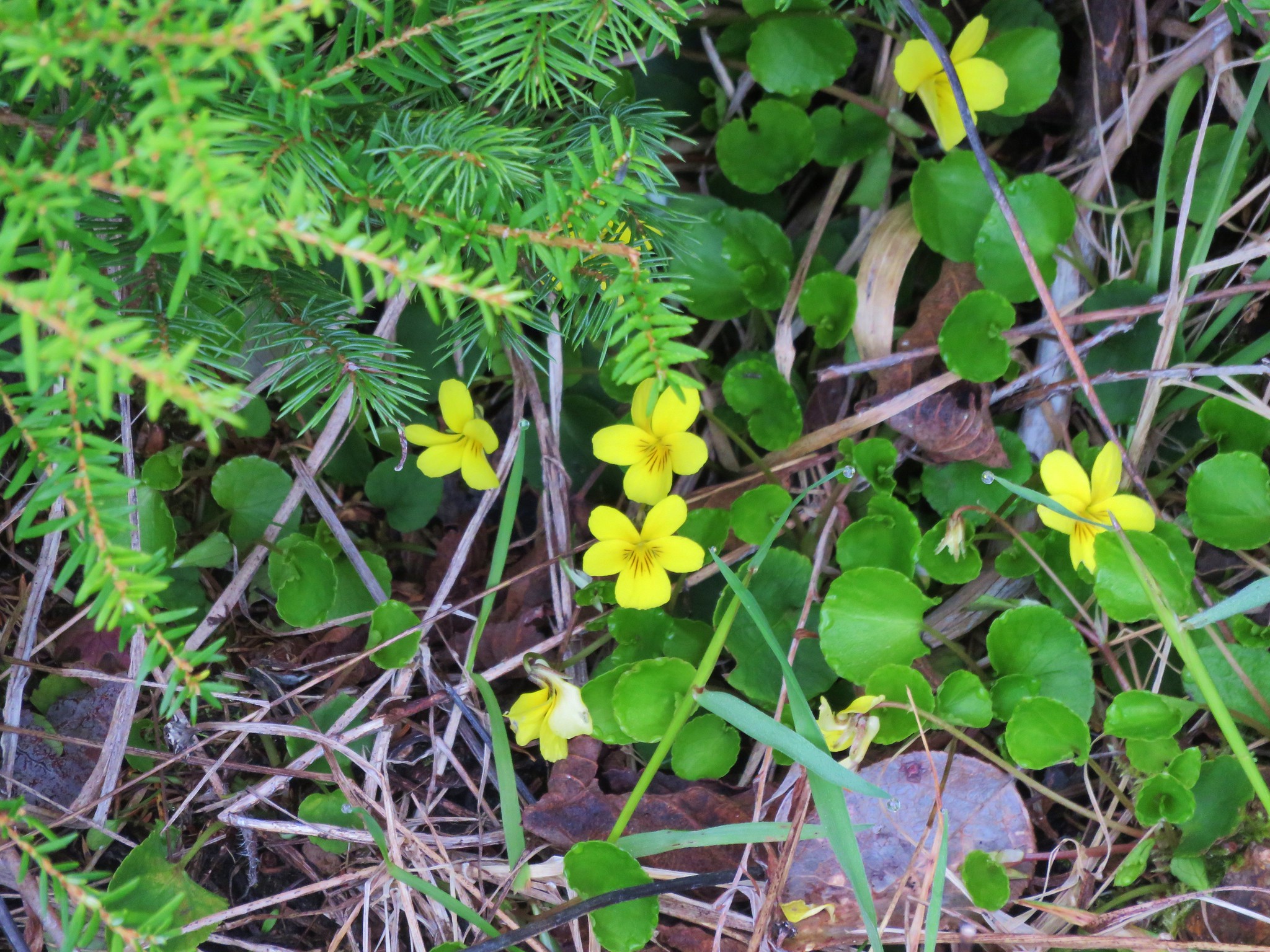
Wood violets Violets

TrilliumTrillium

PaintbrushPaintbrush

SalmonberrySalmonberry

ColtsfootColtsfoot

Bleeding heartBleeding heart

Arch Cape Mill Road wound up along a cliff face to a viewpoint in about 3/4 of a mile.
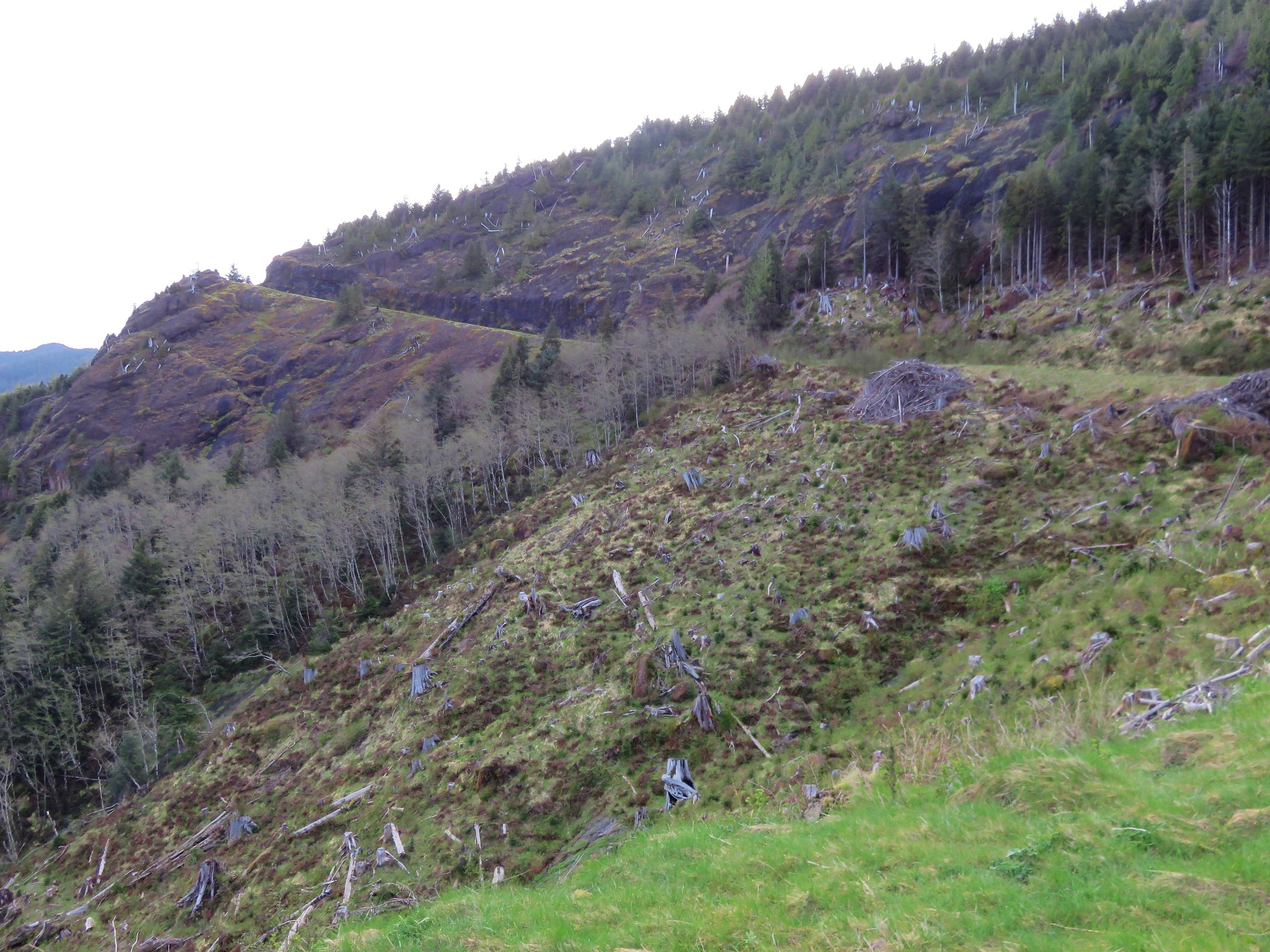
Arch Cape Mill Road

Arch Cape Mill Road

Viewpoint along Arch Cape Mill Road

We followed the road another half a mile before veering right onto a brushy trail at a small rock cairn.
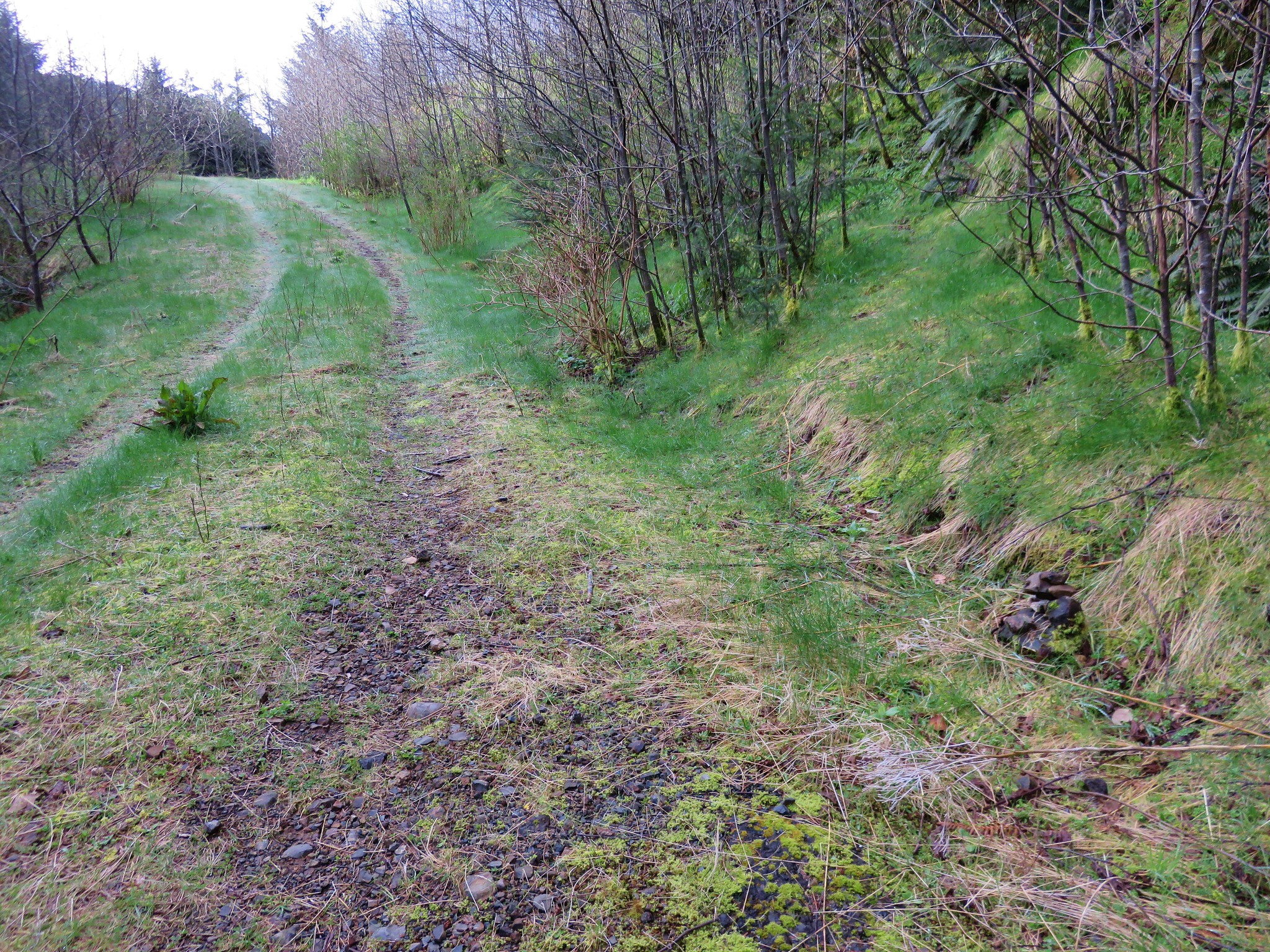
User trail off of Arch Cape Mill Road

User Trail

After a couple of hundred yards we came to a grassy opening a where we headed uphill on another old road bed.
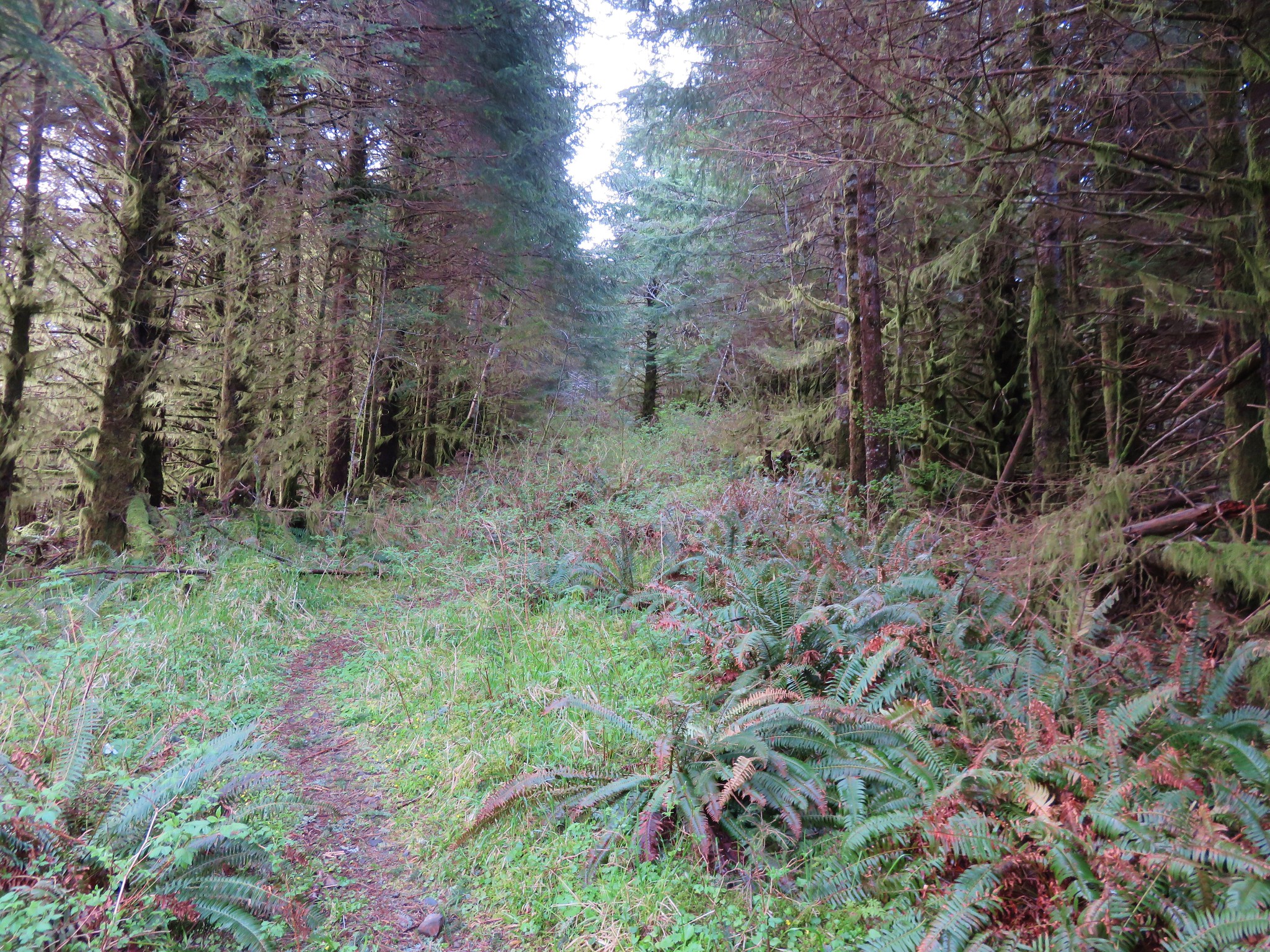
Heading to the stone shelter

A short distance up the old road bed we came to an old stone shelter which showed signs of recent use including a fire pit. Just the kind of activity that could prompt the lumber company to close access.
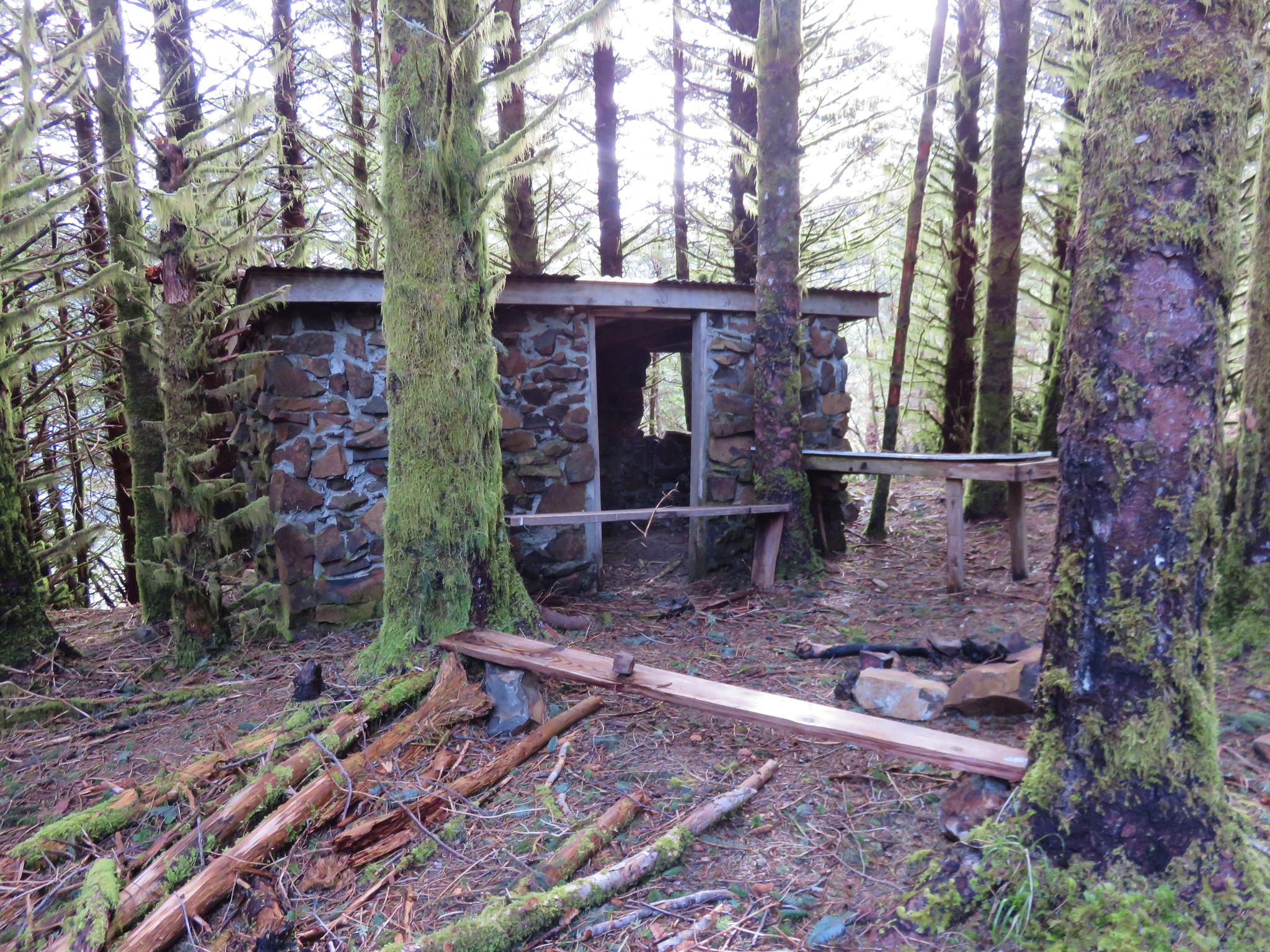
Stone shelter

A short trail to the right from the shelter led to a viewpoint where we could see Neahkahnie Mountain and Cape Falcon in Oswald West State Park.
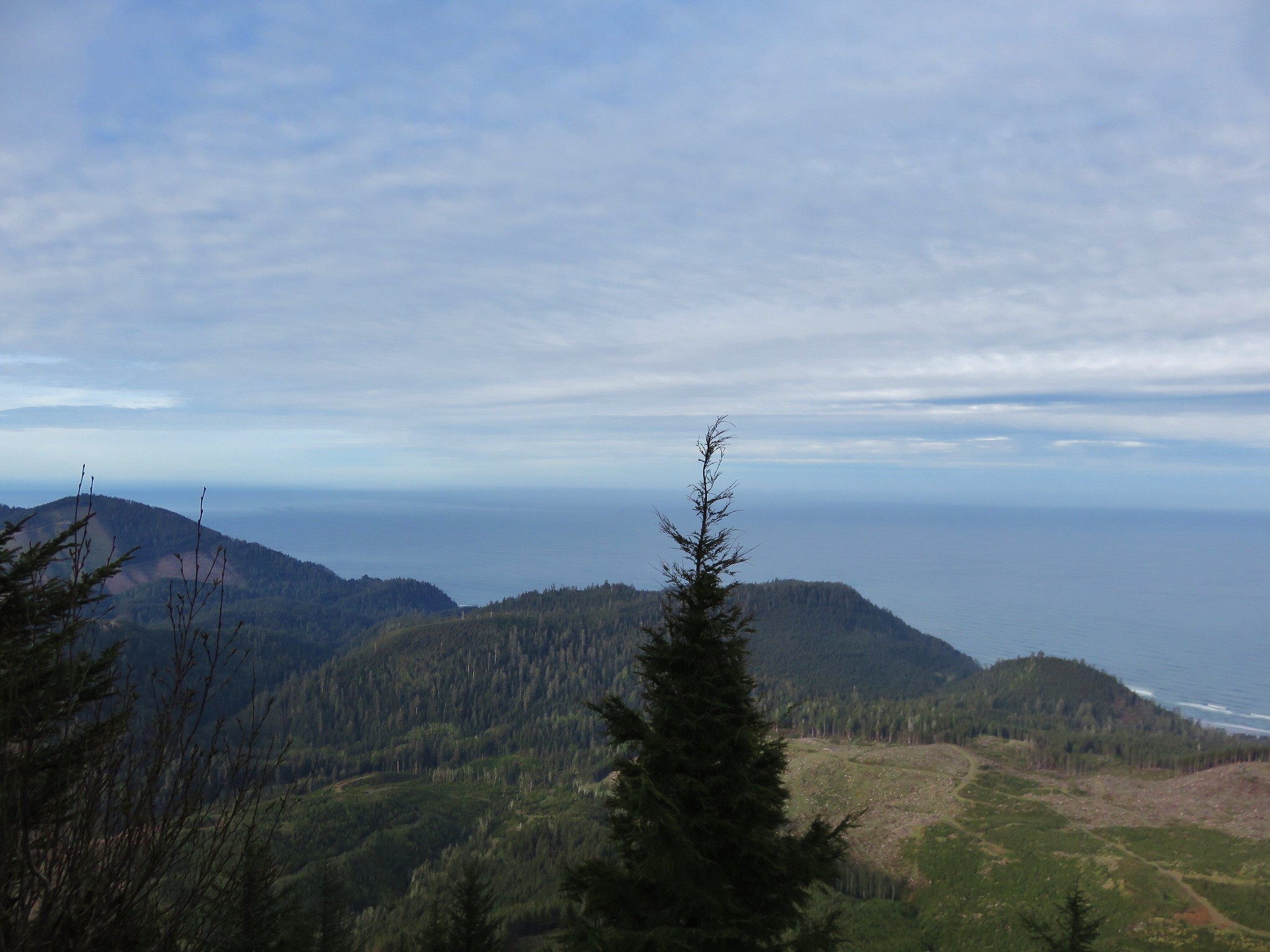
Neahkahnie Mountain and Cape Falcon

Up to this point we had been following Sullivan’s “100 Hikes/Travel Guide Oregon Coast & Coast Range” 4th edition which ended the hike at the viewpoint near the shelter. We decided to press on for Angora Peak following descriptions on Summitpost.org and in trip reports on Oregonhikers.org. We returned to Arch Cape Road and continued on. The road became very overgrown about 150 yards from the rock cairn so we followed another user trail for three tenths of a mile to a saddle where the conditions improved and views opened up.
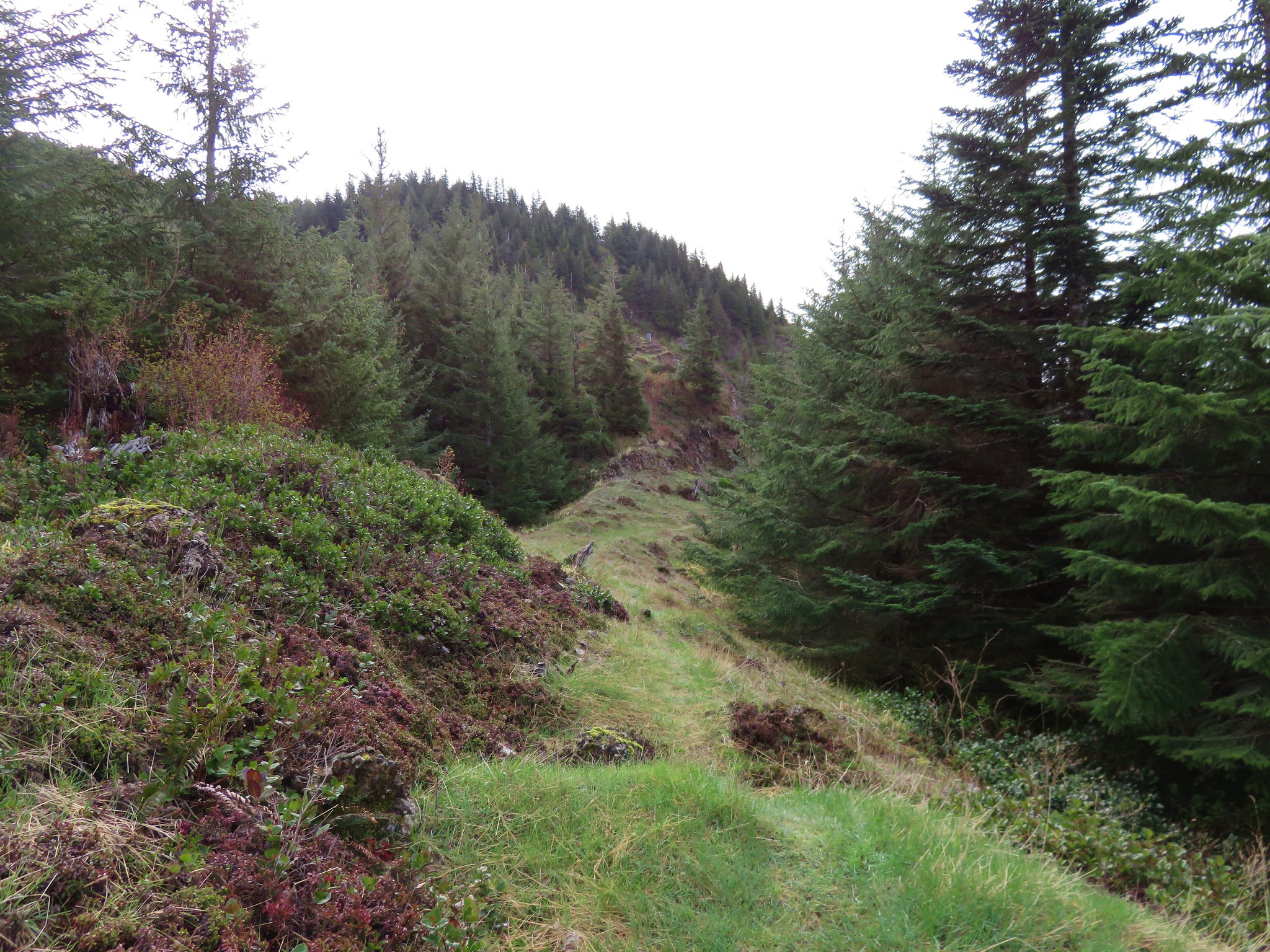
Arch Cape Mill Road

To the south the green farmland along the Nehalem River stood out in stark contrast to the surrounding hills.
Nehalem to the south

Following the Nehalem River west it emptied into the Pacific beyond Neahkahnie Mountain.
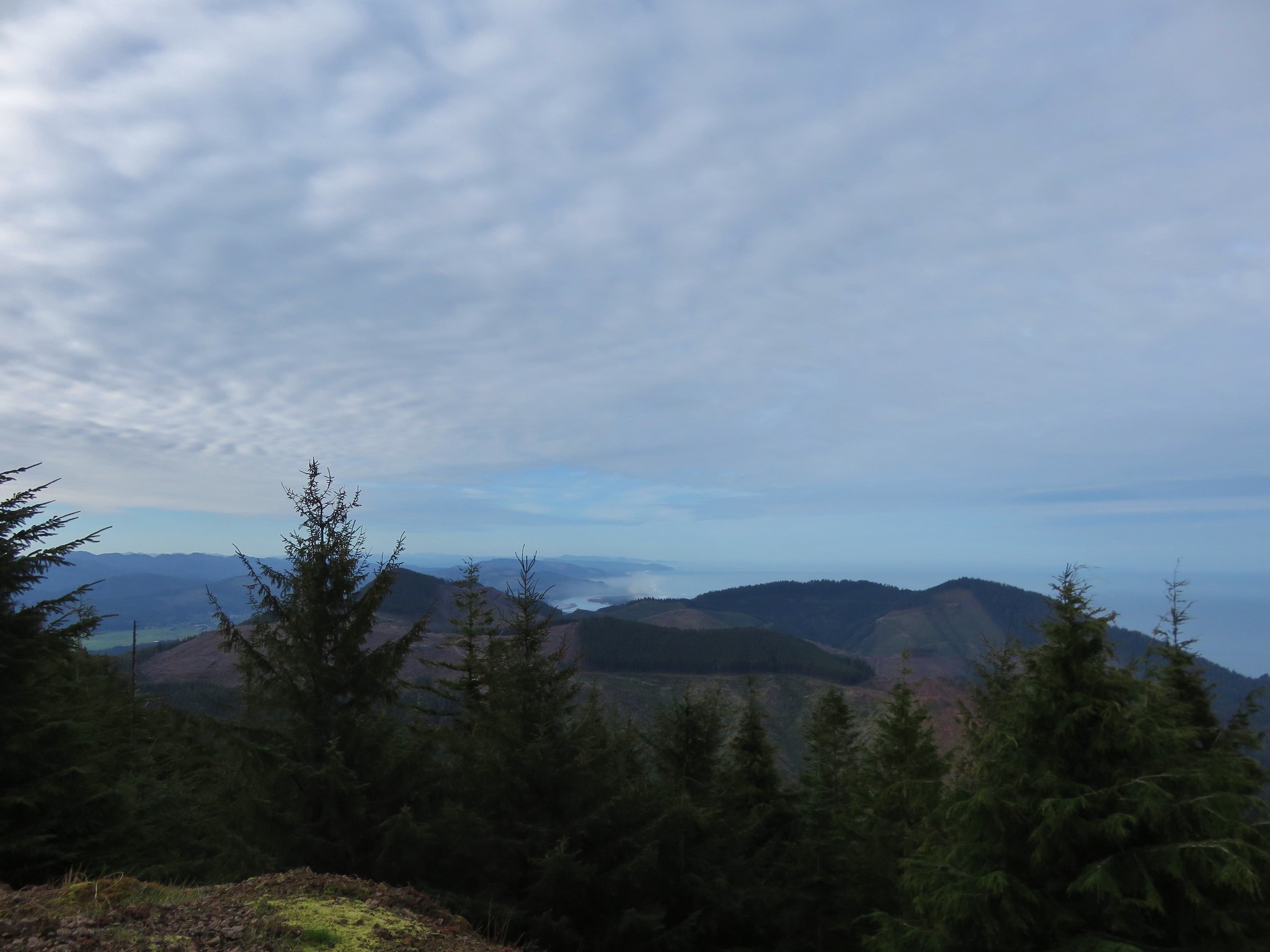
Looking south

To the west was more ocean beyond the western end of Angora Peaks ridge.
West end of Angora Peak

To the east Arch Cape Mill Road could be seen passing between the rock pinnacles of Revenge of Angora and Angora Pinnacle.
Revenge of Angora and Little Angora rock pinnacles

We followed the road to a saddle between the two rock pinnacle where we turned sharply north onto another abandoned logging road. The road here was so overgrown it looked more like a trail now.
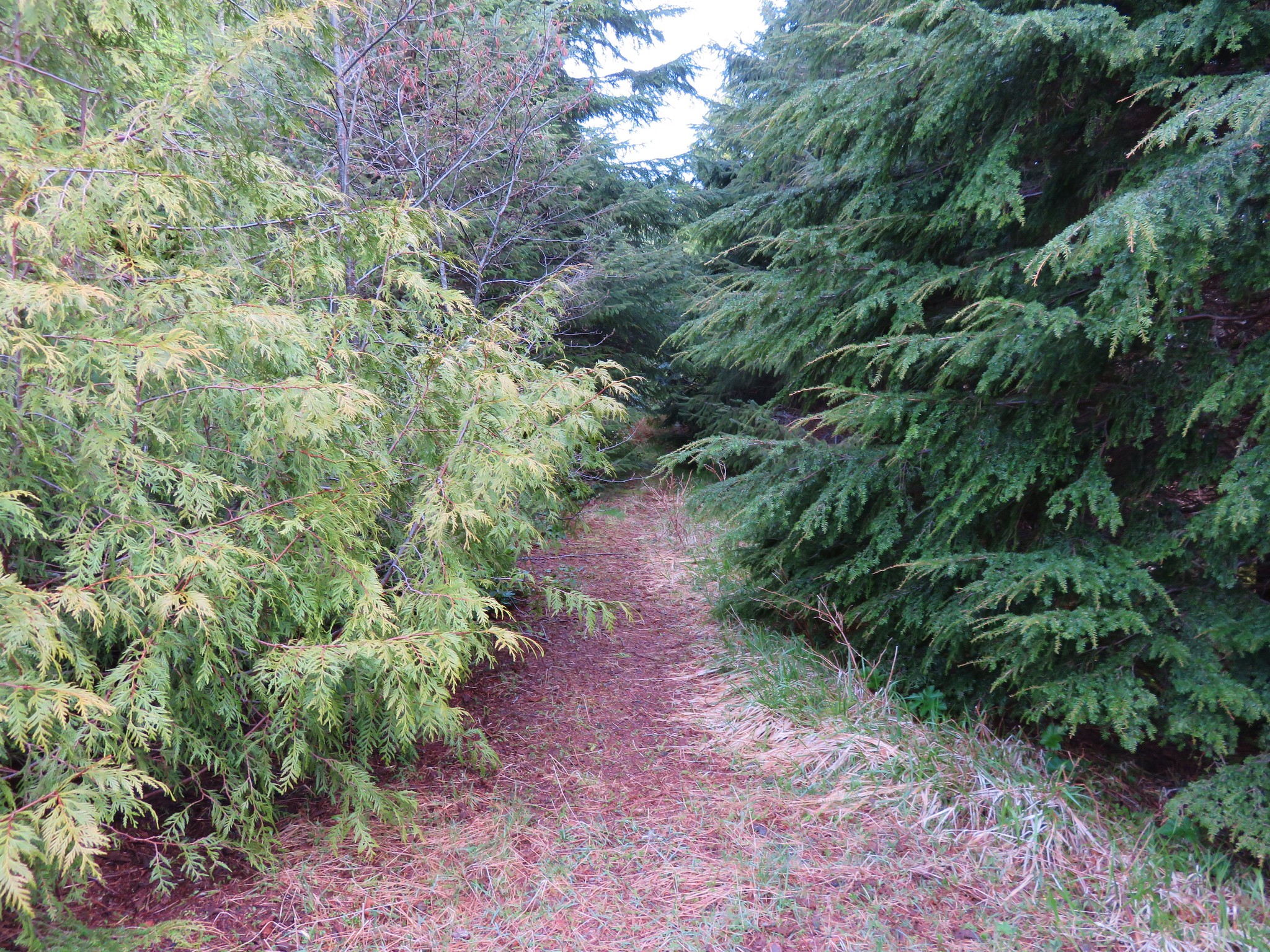
Arch Cape Mill Road

Gaps in the trees offered views north to Onion Peak (and Saddle Mountain beyond).
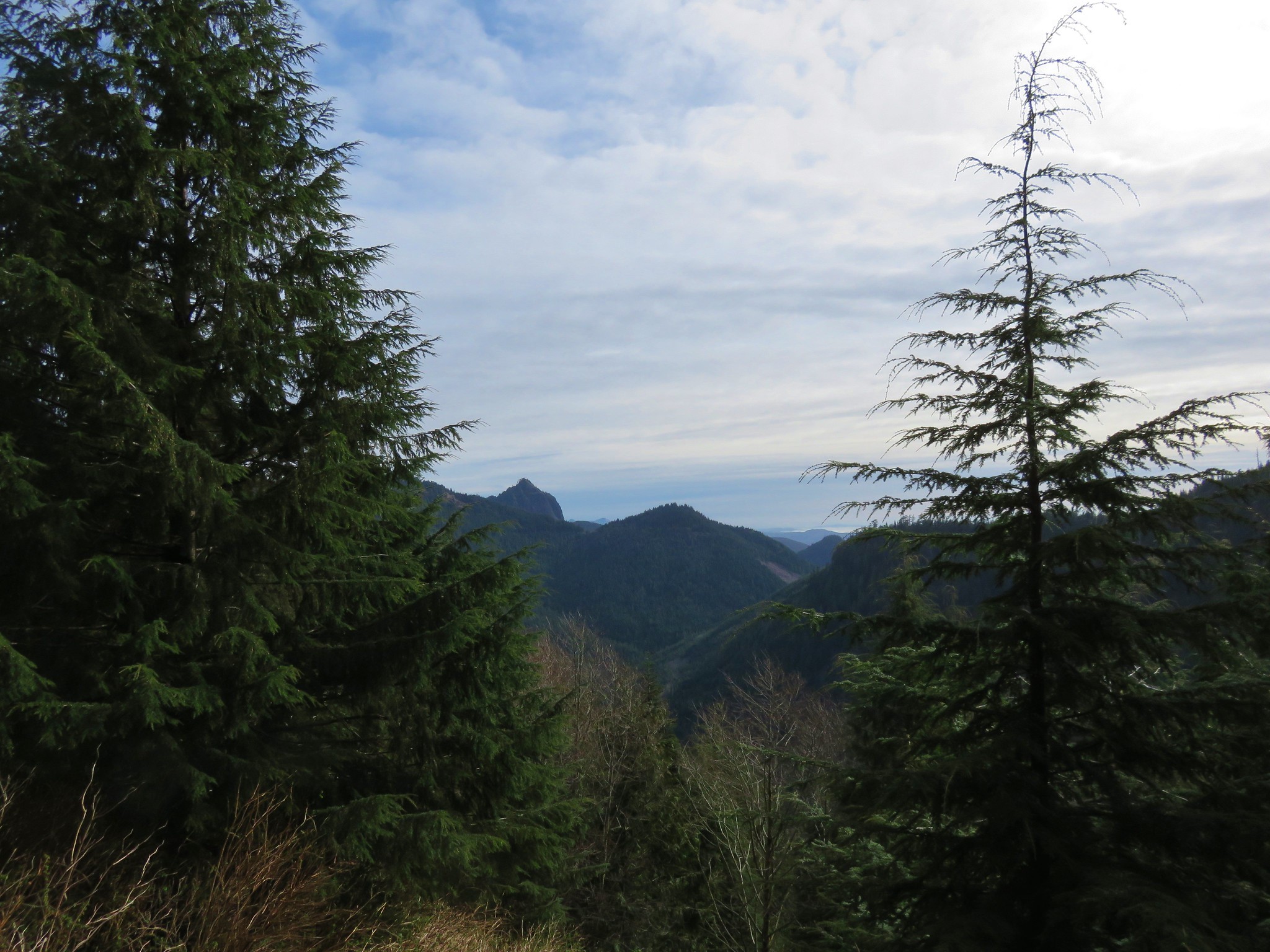
Onion Peak and Saddle Mountain

Onion Peak and Saddle Mountain

To the NE we could just make out Mt. St. Helens and Mt. Rainier. The lighting and the clouds did their best to camouflage them but with a little effort they were visible.
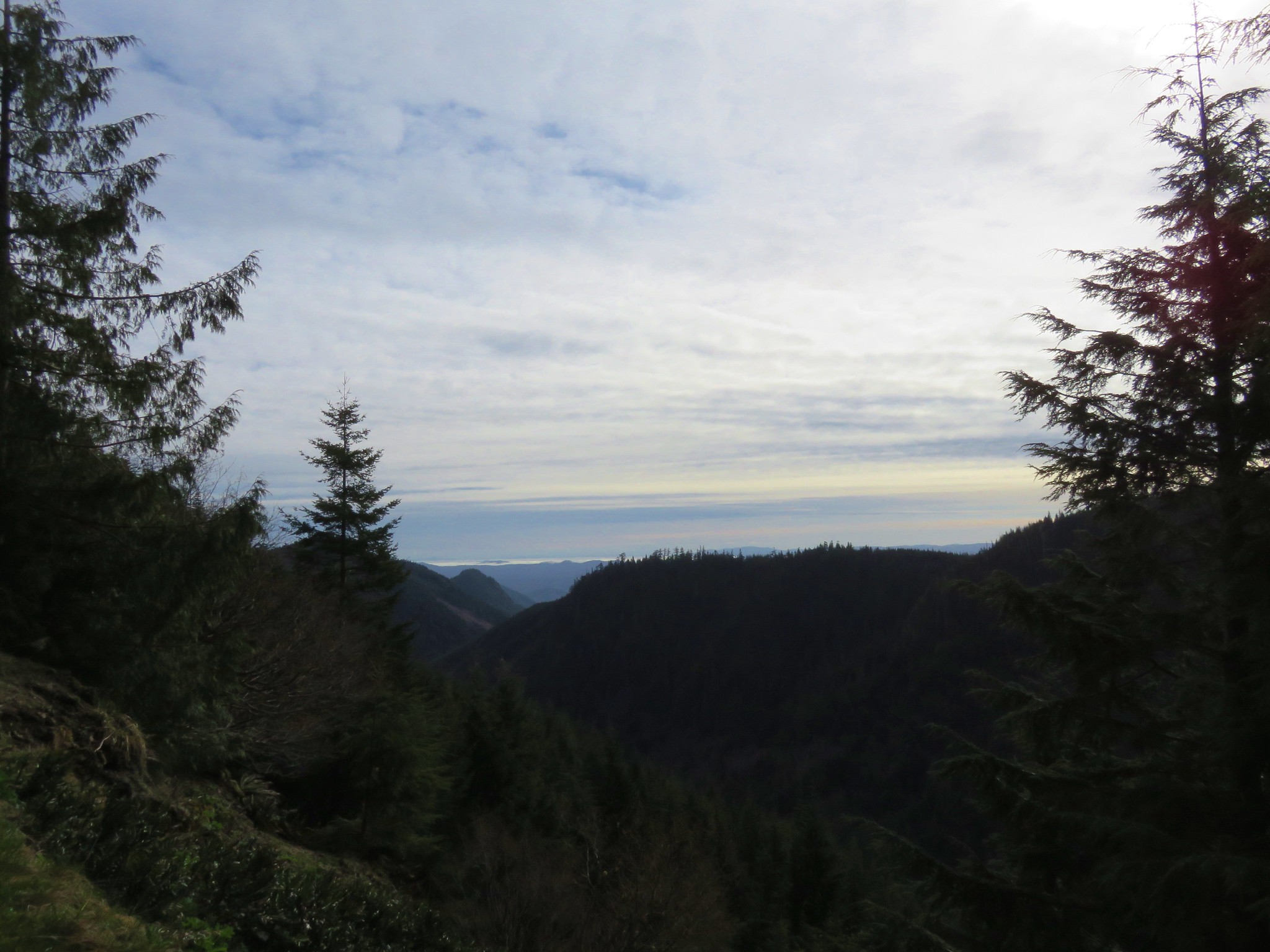
Mt. St. Helens and Mt. Rainier in the distance

Mt. St. HelensMt. St. Helens

Slides are common in the coast range which we were reminded of along this stretch. A section of road was all but gone leaving a faint use trail as the only option. It is still passable for now but caution is warranted and a fear of heights would likely end the hike at this point.
Arch Cape Mill Road (what's left of it)

From the northern end of the slide we could see evidence of slide below Angora Pinnacle which may have happened this last winter.
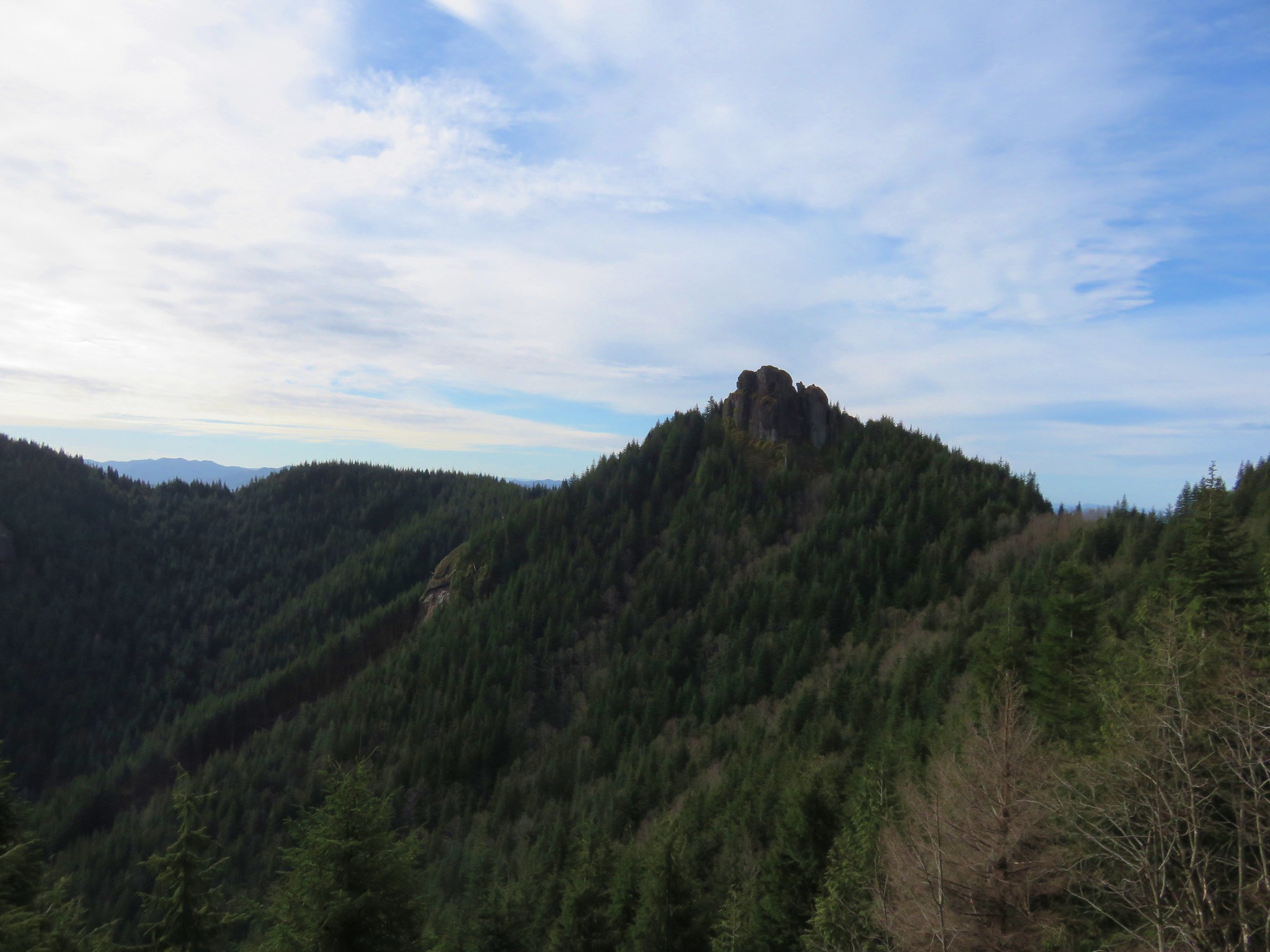
Little Angora and a slide below it

Slide below Little Angora

Beyond the washout, the road made another brief appearance before becoming overgrown with trees.
Arch Cape Mill Road

Arch Cape Mill Road

When the GPS showed we were NW of the summit near the end of the road we turned off the road and headed uphill cross-country through the forest.
Forest on Angora Peak

We gained a ridge line and began to work our way toward the summit. The summit itself is reportedly view less due to trees but just to the west of actual summit is a rock out crop which did have a view and made for a perfect spot to sit and have a snack.
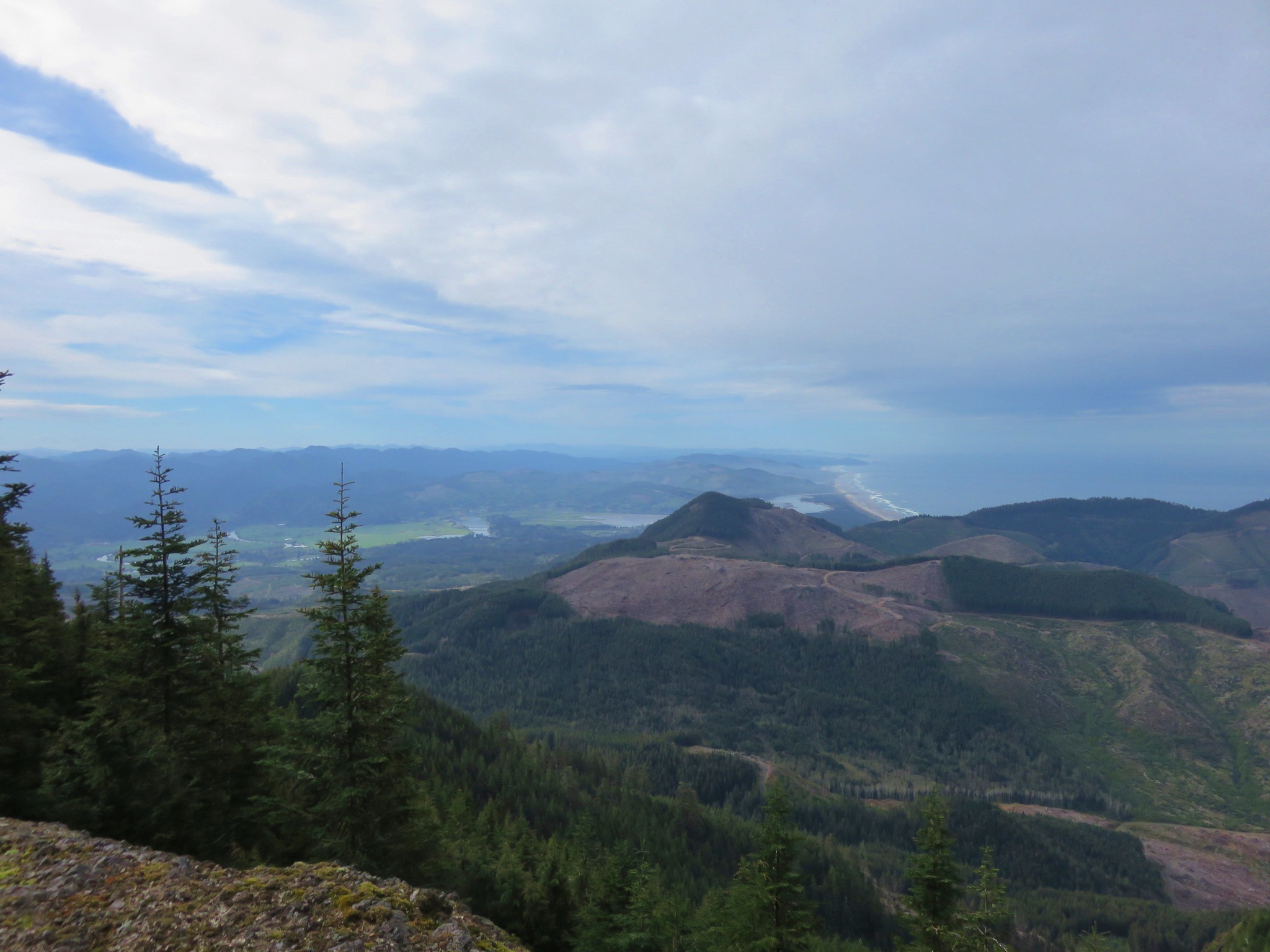
Nehalem River from a viewpoint just below the Angora Peak summit

We could even make out our next destination, Cape Falcon, from the rocks.
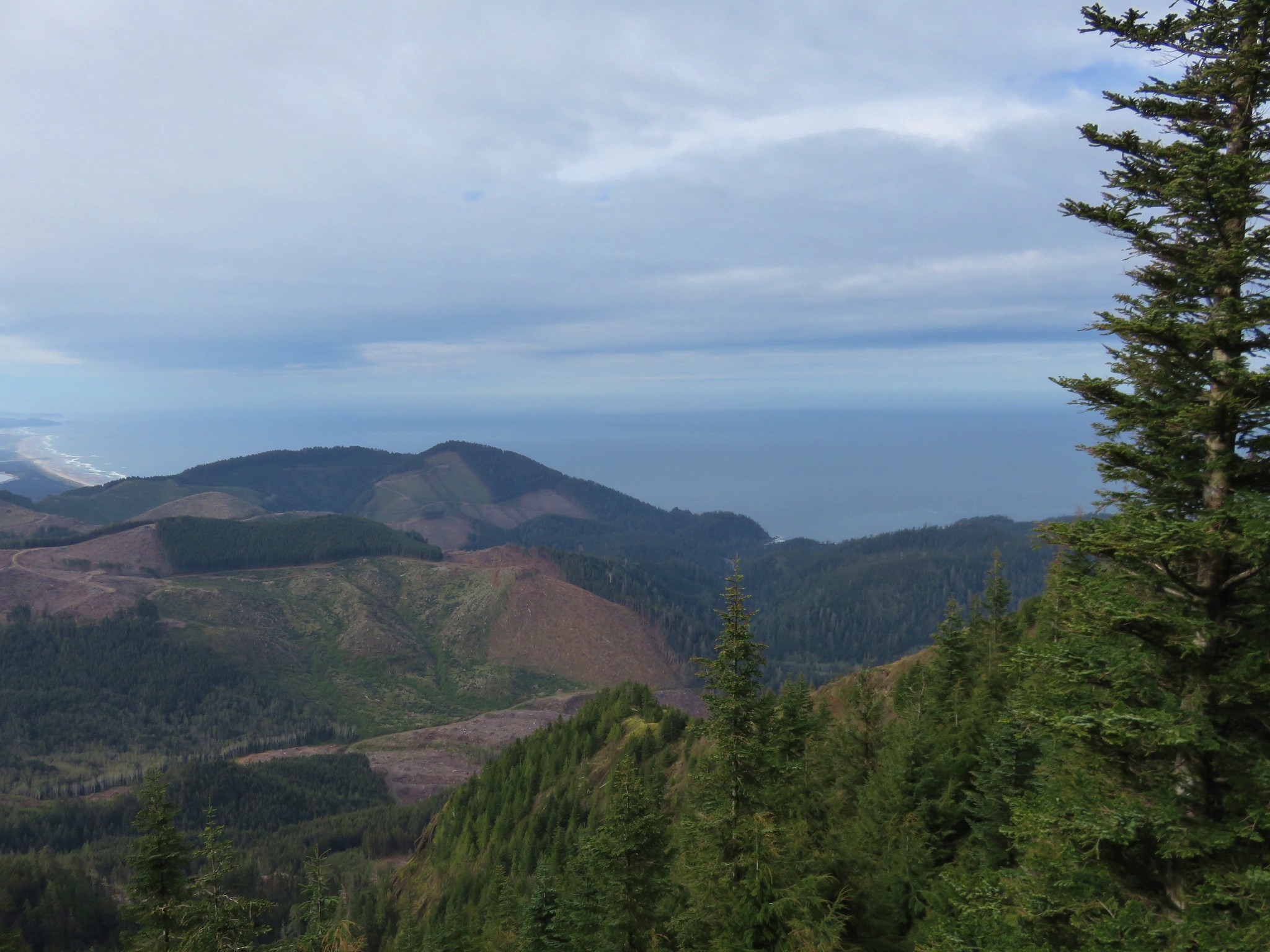
Neahkahnie Mountain

Cape Falcon

We returned as we’d come, arriving back at the Oregon Coast Trail and heading toward Cape Falcon.
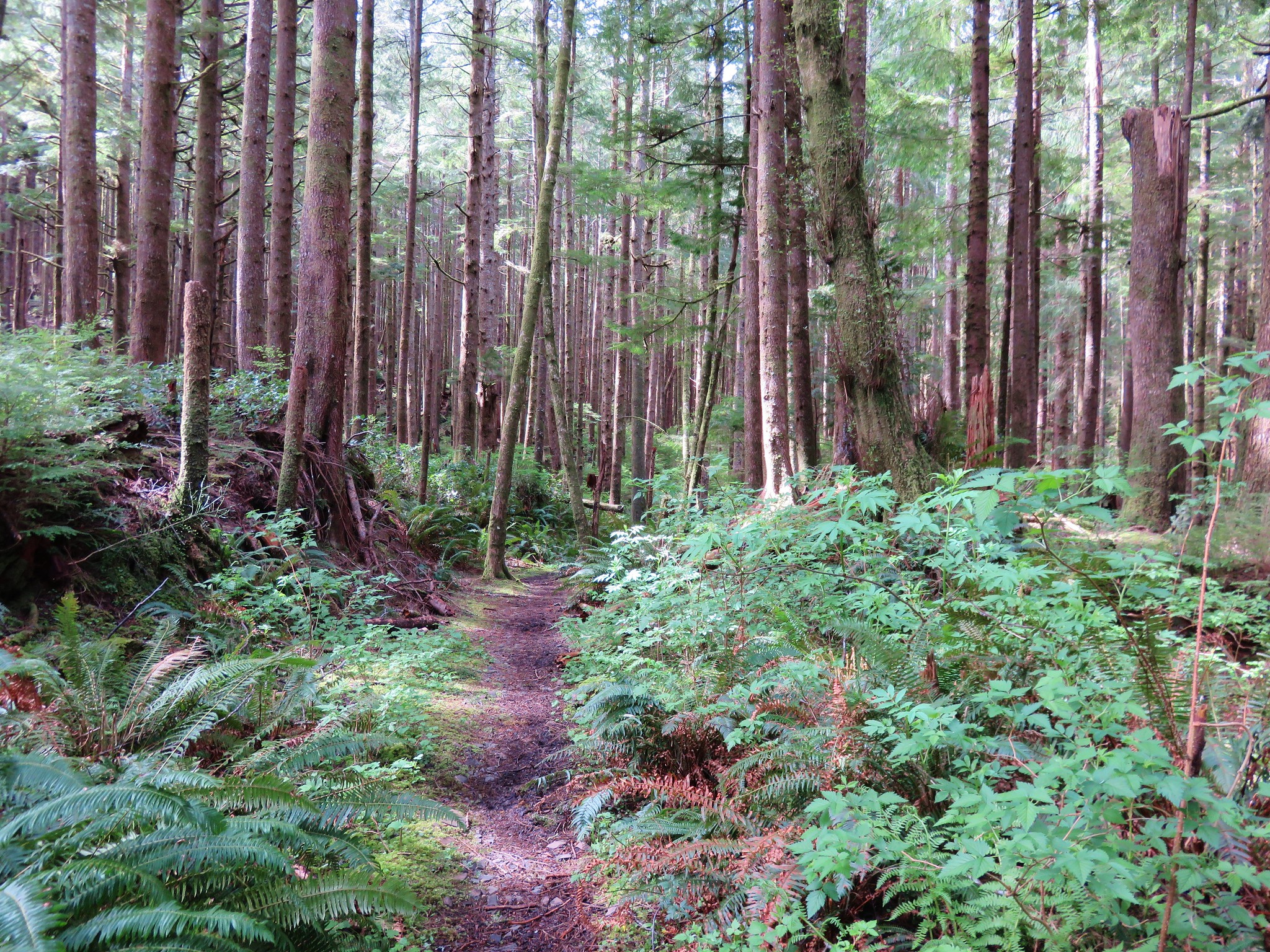
Oregon Coast Trail

The trail crossed several streams on 5 footbridges before beginning to climb up and over a ridge. Much of the trail was muddy and there were several trees down which required some interesting maneuvers to get past.
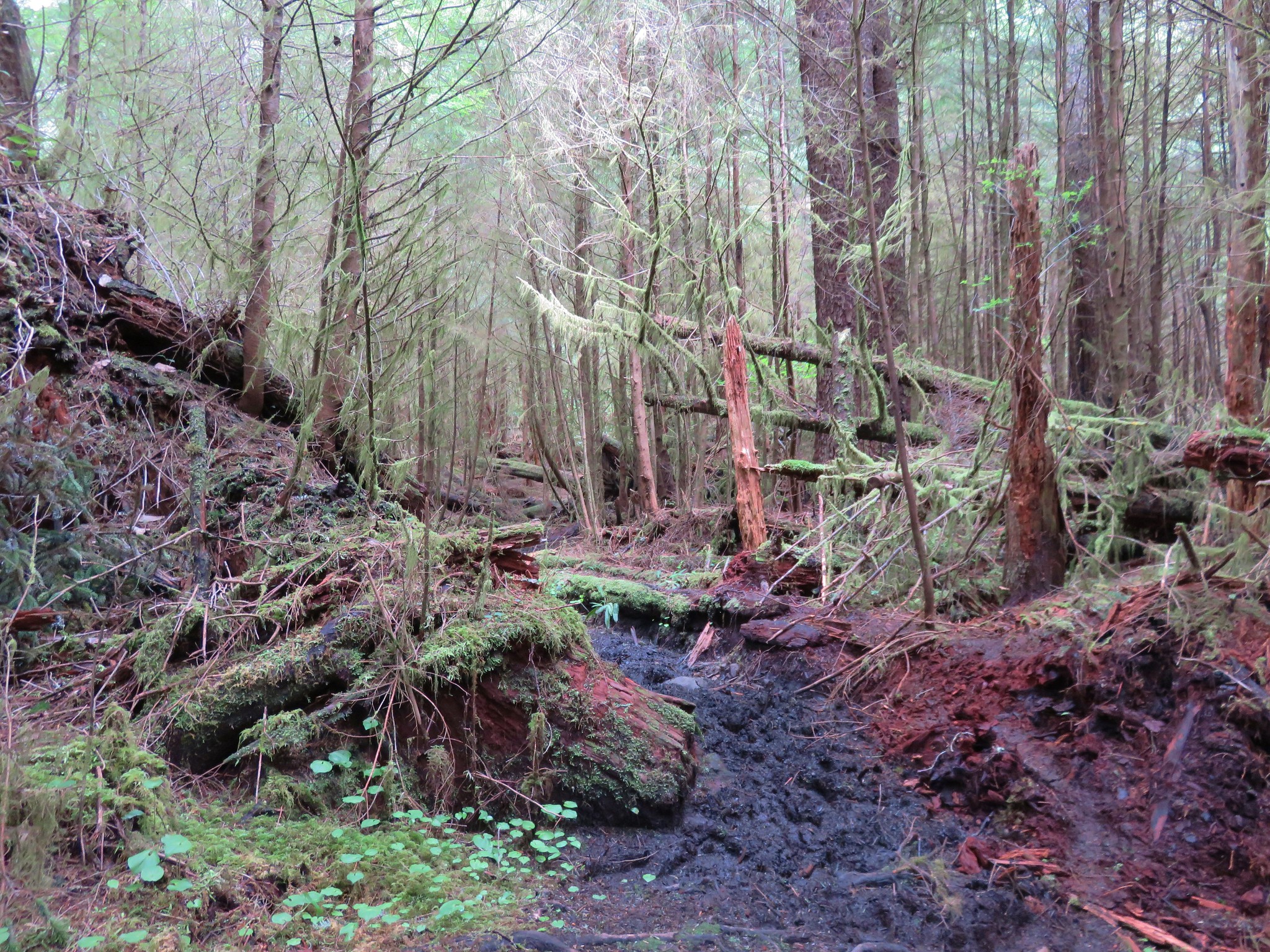
Oregon Coast Trail

Oregon Coast Trail

Tree that shattered over the Oregon Coast Trail

Other sections were dry and lined with green sourgrass.
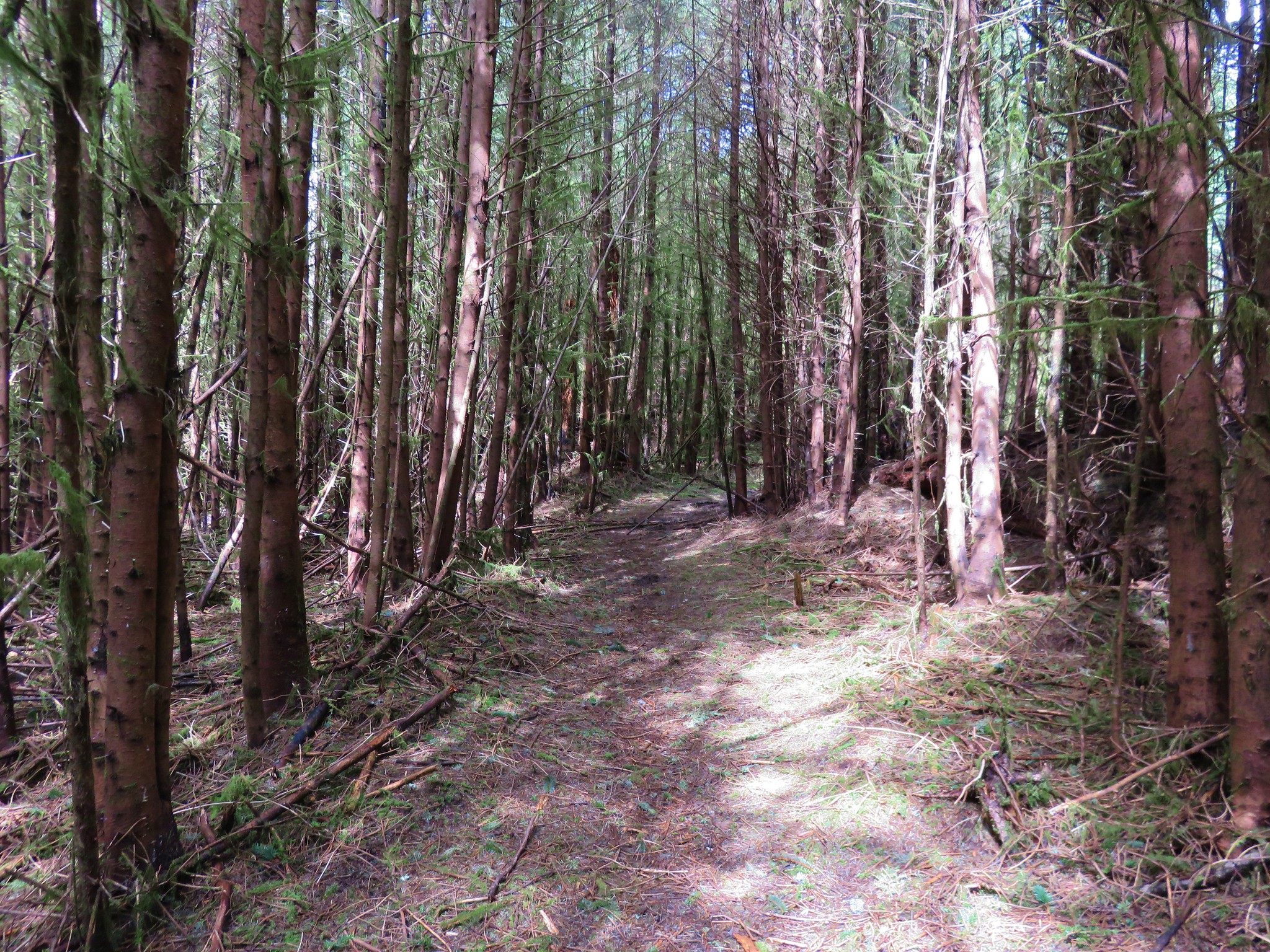
Oregon Coast Trail

Oregon Coast Trail

Sour grass

After approximately 2.5 miles we came to a familiar viewpoint looking north to Tillamook Head.
Tillamook Head from the Oregon Coast Trail

This is where we had turned around in 2012 having followed the OCT north after visiting Cape Falcon. In another 3/4 of a mile we reached a better viewpoint where we could see Cape Falcon and a number of colorful sea caves in the rocks below.
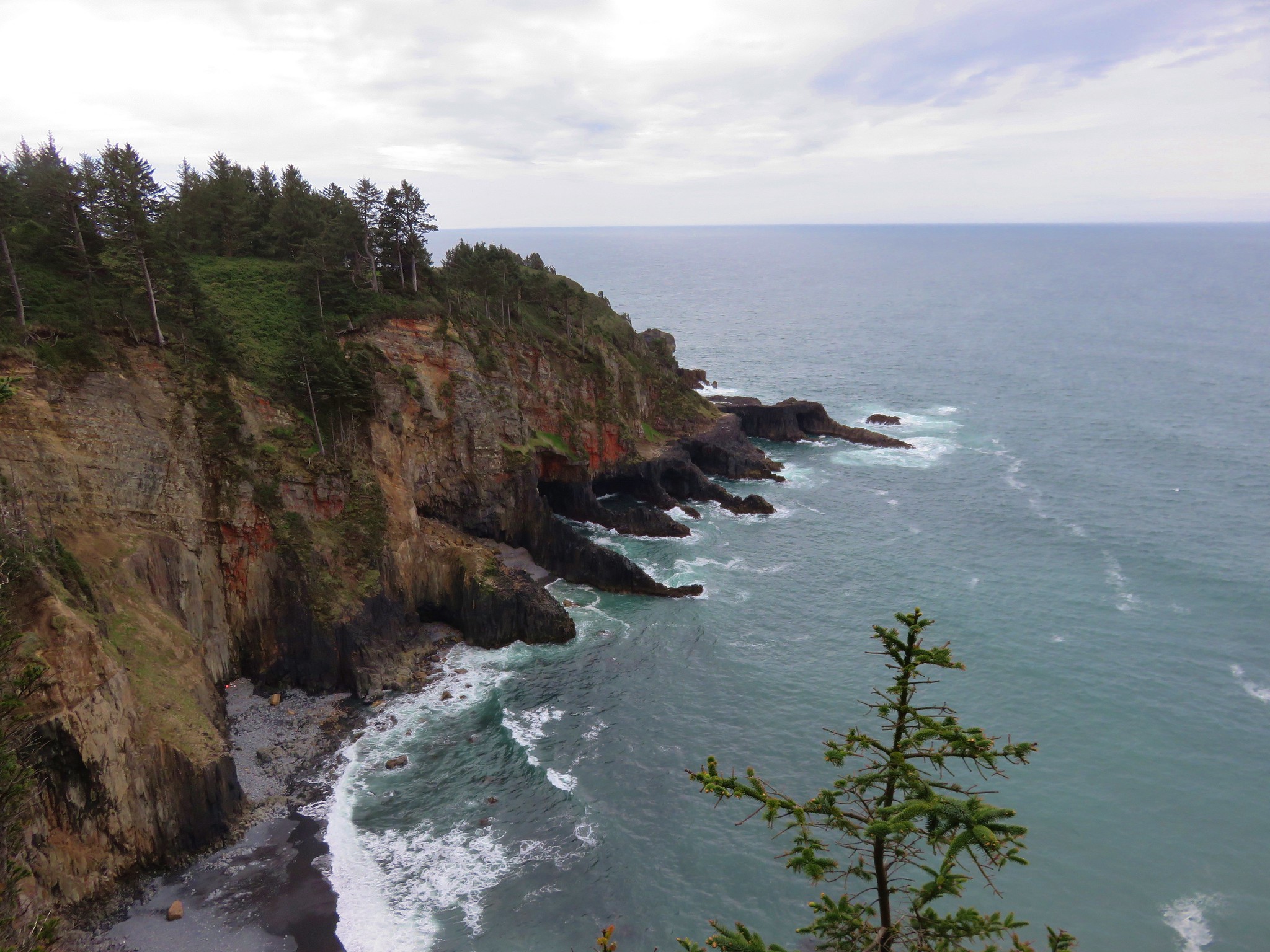
Cape Falcon

Cape Falcon

Seagulls near the sea caves

We continued on to a washed out creek crossing. Heather smartly used a nearby log instead of following my slippy effort to use the trail.
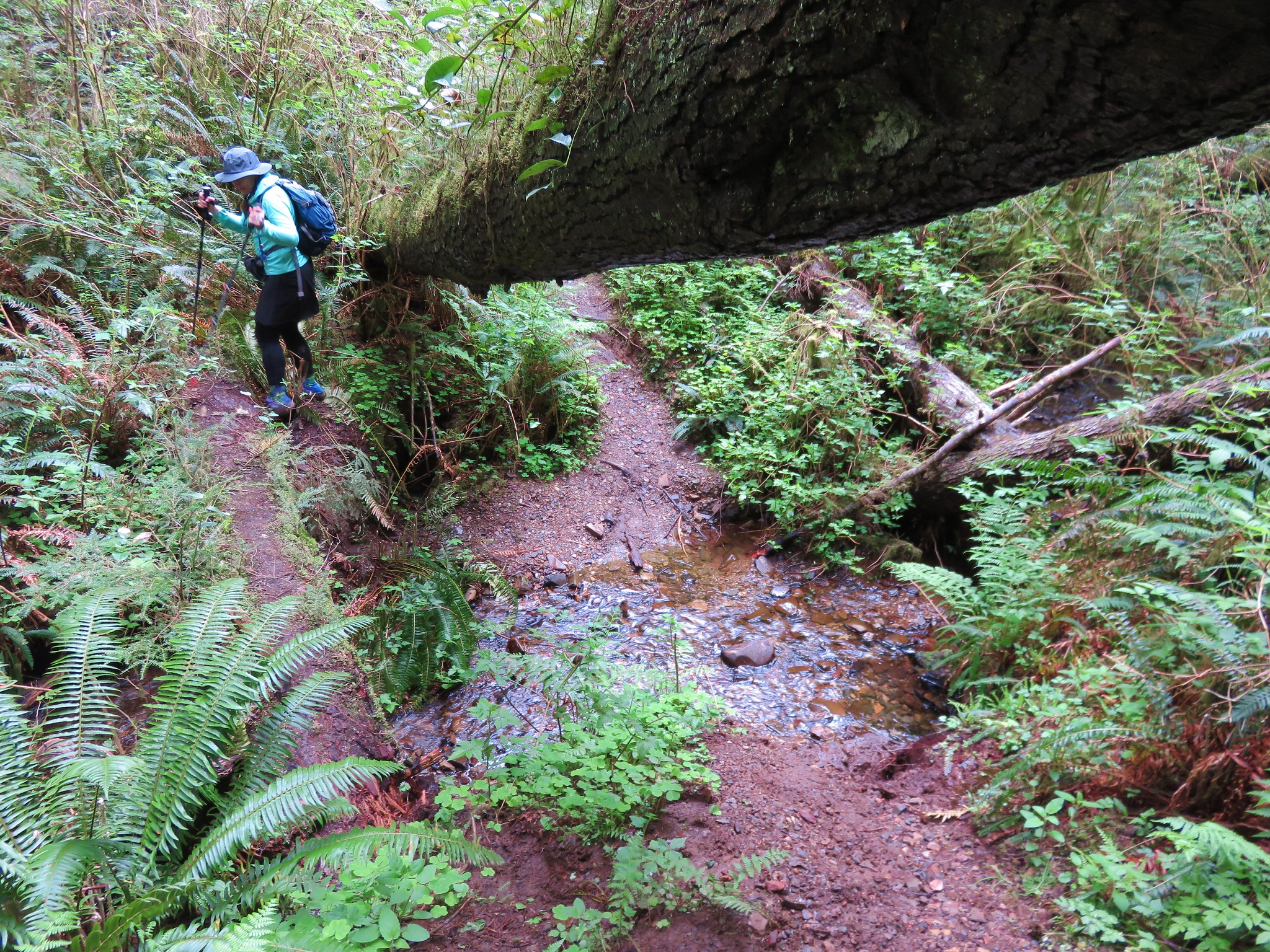
Oregon Coast Trail

Another quarter mile brought us to the spur trail out to Cape Falcon. Up to that point we’d seen one gentleman on the way to Angora Peak with his dogs on the lower portion of the logging road and two girls on the Oregon Coast Trail as we went over the ridge. Cape Falcon was a different story. There were a number of hikers that had come from the south, a large group of which were attempting to navigate an extremely muddy section of the trail.

Beyond the mud pit the trail dried out nicely as it passed through a tall hedge of salal and fern.
Trail out Cape Falcon

As we made our way out this .2 mile trail the brush got lower eventually opening up views to the south of Neahkahnie Mountain.
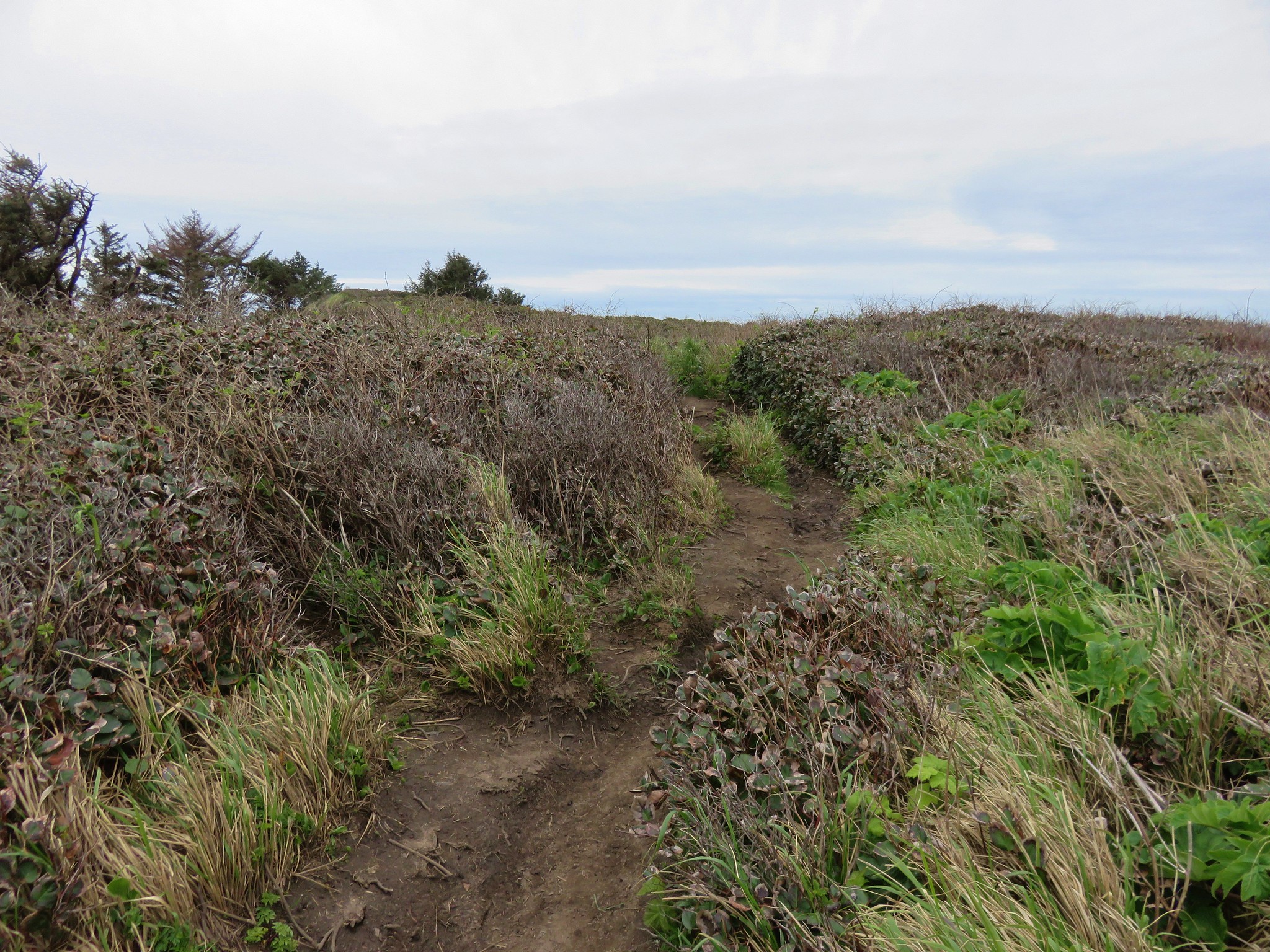
Cape Falcon

Neahkahnie Mountain

The trail extended out the cape to viewpoints along its rocky end.
Cape Falcon

Seabirds occupied the furthest reaches.
Birds on Cape Falcon

Birds on Cape Falcon

After a short break we headed back. On our way back up the ridge we may have spotted a northern flying squirrel. Something crossed my line of vision through the air from the left to the right appearing to land on a tree near a dark opening. At first I couldn’t see anything but then something moved on the tree so I quickly zoomed in and took a picture. It immediately darted into the opening without my being able to make our what it was but I thought it might have been a woodpecker. I was surprised when I uploaded the picture later to see a squirrel.
Possibly a norther flying squirrel

The picture quality makes an id nearly impossible and it may be that this squirrel came out of the opening in response to whatever I had seen but at this point there is still a possibility that it was a flying squirrel.

The rest of the hike back was uneventful as we passed back through the forest to Cape Falcon Road. We ended the day with 17 miles showing on the GPS, 8.9 during the Angora Peak portion and 8.1 to Cape Falcon and back. As we were changing out of our muddy clothes at the car a light rain started. We’d somehow timed it perfectly. Happy Trails!

Flickr:Angora Peak & Cape Falcon
Categories
Central Coast Coastal Range Hiking Oregon Oregon Coast Trip report

Niagara Falls and Neskowin

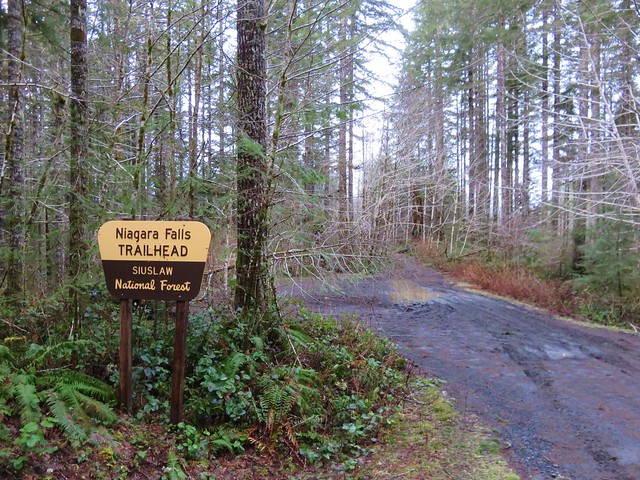
We took advantage of a favorable forecast and headed out for our February hike to visit a pair of coastal waterfalls and then the beach near Neskowin.  We’ve had a lot of snow and rain this winter making it a good time to catch the waterfalls assuming you can reach them.  The storms have left their mark on some of the trails and roads so we weren’t sure what to expect as we prepared to head out, but a quick check of the Forest Service website listed the Niagara Falls Trailhead as open so we were optimistic.

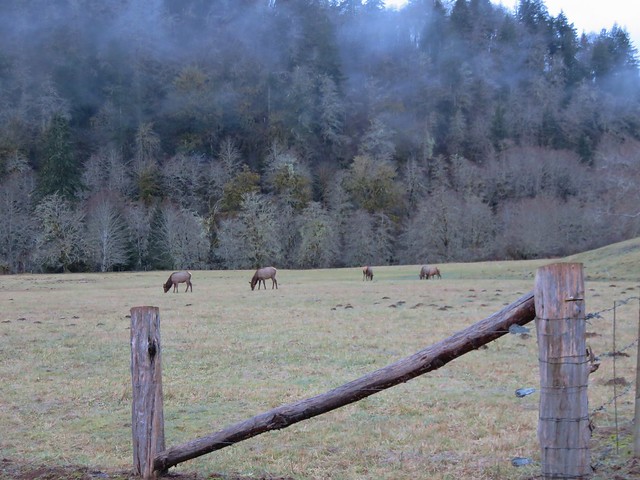
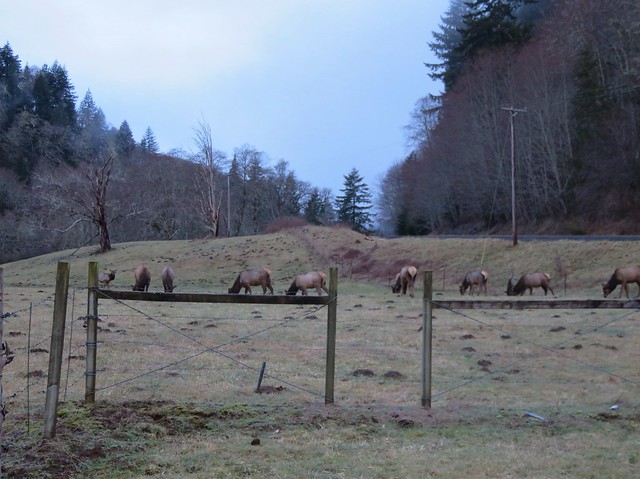
The Niagara Falls Trailhead is located east of Mt. Hebo in the Siuslaw National Forest. There was good signage along the route which took us  5 miles east of Blaine, OR on Upper Nestucca Road (Forest  Road 85) where we turned right onto Niagara Road (Forest Road 8533). A small herd of elk were grazing in the field at this turn.
IMG_8536

IMG_8538

We followed this gravel road for 4.3 miles. The road was in pretty good shape and had obviously been cleared recently. At the 4.3 mile mark we forked right following signs for the trail for another .7 miles to the trailhead.
IMG_8543

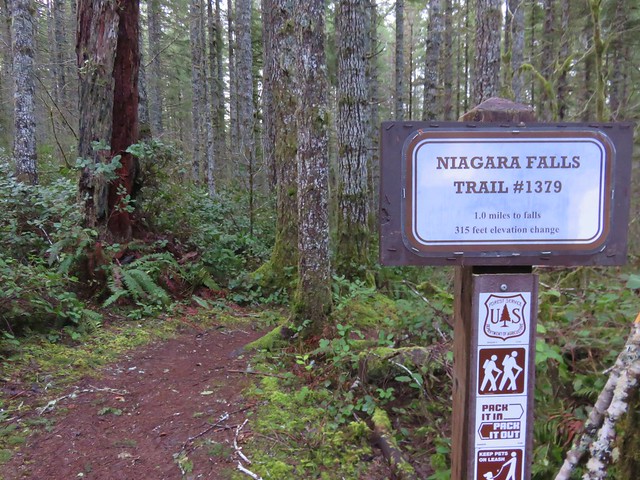
The mile long Niagara Falls Trail led downhill through a fern filled forest crossing a small creek three times on footbridges.
IMG_8545

IMG_8551

This small creek was flowing well enough to create its own decent, albeit hard to see little fall.
IMG_8553

As the trail leveled out along Pheasant Creek the first fall to come into view was Niagara Falls.
IMG_8556

IMG_8563

As the trail neared Niagara Falls an opening to the left revealed Pheasant Falls.
IMG_8576

A footbridge below Pheasant Falls brought us to a picnic table at the end of the Niagara Falls Trail.
IMG_8579

IMG_8582

IMG_8590

We returned the way we’d come. The 2 mile hike had been a nice warm up and now we were headed back to Highway 101 and then south to Neskowin.

We stared our second hike of the day at the Winema Road Beach Access which is located near the Wi-Ne-Ma Christian Camp. The beach access can be reached by driving .6 miles on Winema Road which is 4 miles north of Neskowin along Highway 101.
IMG_8604

From the beach the view south extended to Cascade Head and to the north to Cape Lookout beyond Haystack Rock.
IMG_8614

IMG_8615

Our timing wasn’t great as it was a little before 10am when we started and high tide would be just after 12:30 so it was already coming in. This meant we would not be getting to a couple of places that would have been accessible at lower tide. We headed north first for .4 miles to some rocks jutting out onto the beach. Along the way we passed a small waterfall that we had not been expecting.
IMG_8618

IMG_8619

At low tide it is possible to continue .6 miles to the mouth of the Nestucca River across from Bob Straub State Park but the waves were already reaching the rocks and we knew if we continued we’d be stuck until the tide went back out so after playing around on the rocks for a minute we turned around and headed south.
IMG_8621

We hadn’t gone too far to the south when we reached the outlet creek of Daley Lake which wasn’t mentioned in our guidebook. The only way across was to ford the creek, but luckily it was only ankle deep and not too cold.
IMG_8627

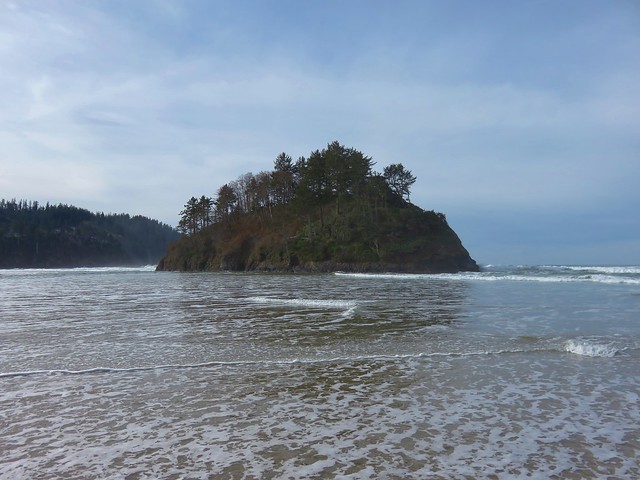
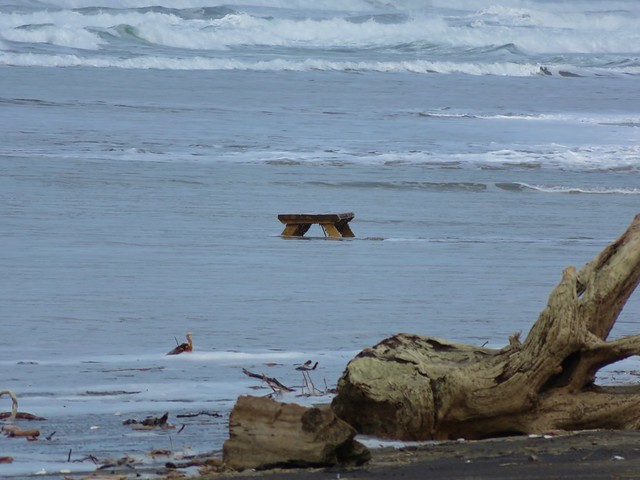
On the other side of creek was a picnic table that seemed really out of place. Heather noted that it appeared to be close enough that the ocean would reach it, although it wasn’t very close at that time. The rest of the sights were pretty typical of a beach walk. Driftwood, rocks, pieces of shells, seaweed, boats, sea birds, and lots of washed up garbage.
IMG_8628

IMG_8633

IMG_8624

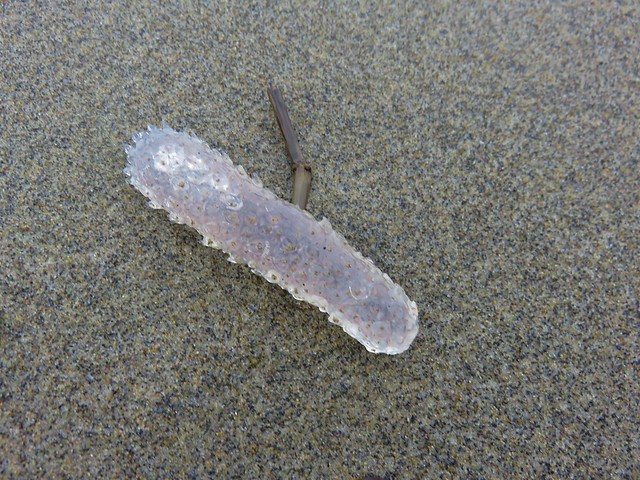
There was something we couldn’t recall seeing before though. Large numbers of pickle shaped jelly fish looking things of various sizes.
IMG_8622

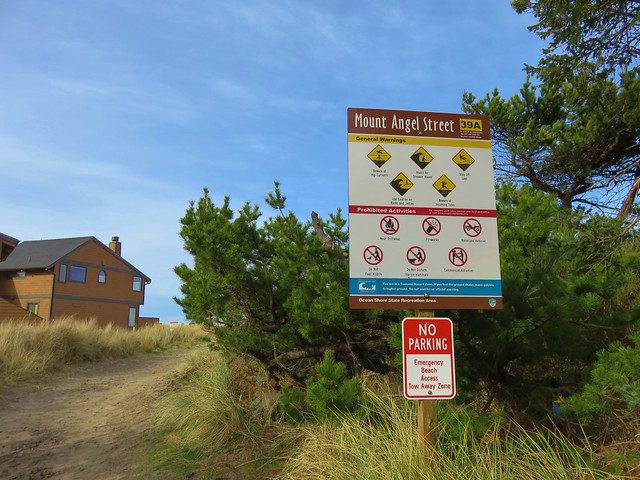
A little under 2.5 miles from the Winema Beach Access the beach became impassable due to the tide reaching the rock wall protecting the houses at Neskowin. Luckily the Mt. Angel St. access was located at the north end of the rock wall so we left the beach and walked inland to Breakers Blvd.
IMG_8634

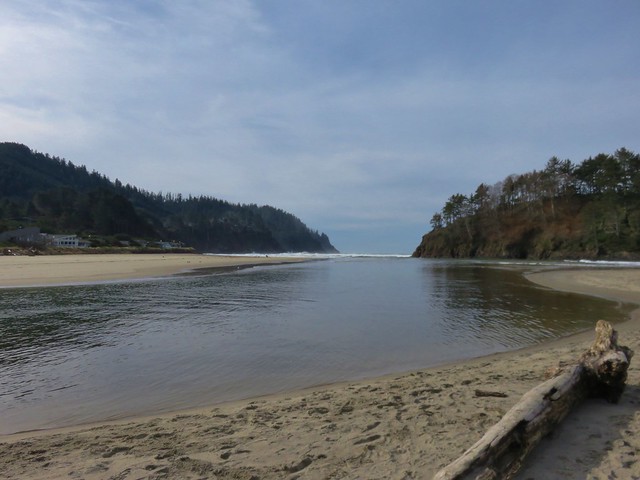
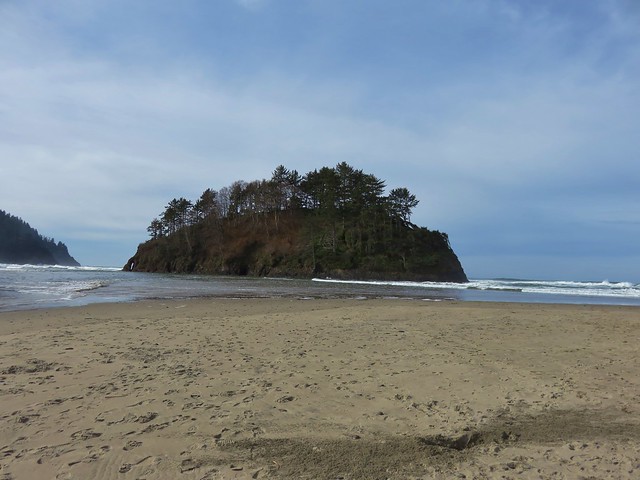
We turned right on the paved street and walked for .7 miles to Carlton Ave. where we turned left toward the Proposal Rock Inn which was on the far side of Neskowin Creek. At the creek we turned right and followed it to Proposal Rock.
IMG_8638

IMG_8639

Our guidebook indicated it was possible to continue another .6 miles south to Cascade Head but the creek was far too swollen for us to ford it. Likewise we were unable to reach Proposal Rock due to it’s being surrounded by water.
IMG_8644

With the tide in we couldn’t walk back along the beach from there so we took the paved streets of Neskowin once again back to the Mt. Angle St. access. We then hiked back along the beach where we discovered that Heather had been right about the ocean reaching that odd picnic table.
IMG_8653

IMG_8654

IMG_8651

You just never know what you’re going to see along the Oregon Coast. Happy Trails!

Flickr: Niagara Falls & Neskowin

Categories
Central Coast Hiking Oregon Oregon Coast Trip report

Baker Beach and Rock Creek Wilderness

Since 2013 our first hike of the year has been somewhere along the Oregon Coast.  Often the weather at the coast during January is nicer than other parts of the State making it a great time to visit.  This was certainly the case this year as the first part of January saw near record snows and freezing temperatures over much of the State.  The coast had not escaped the weather entirely but by the time we headed out for our first hike of the year, things were much nicer there than at home in the Willamette Valley.

Our destination was Baker Beach Camp just north of Florence, OR. This was a change (already) to our plans for 2017 but the forecast for the area was just too good to pass up. Mostly sunny skies and a high of 48 degrees was what was being called for so we left 23 degree Salem early in the morning and headed down to Eugene then west to Florence on Highway 126.

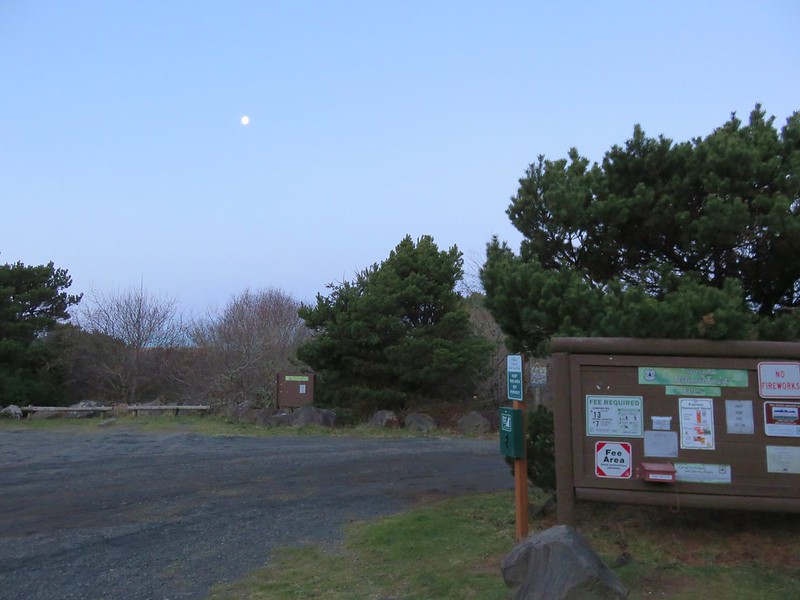
Baker Beach Camp is located at the end of Baker Beach Road, 7 miles north of Florence along Highway 101.  The only signage along the highway was a small green street sign which I noticed just as we passed by it. After quickly turning around we turned onto the gravel road and followed it .5 miles to the camps parking area.

Baker Beach Camp

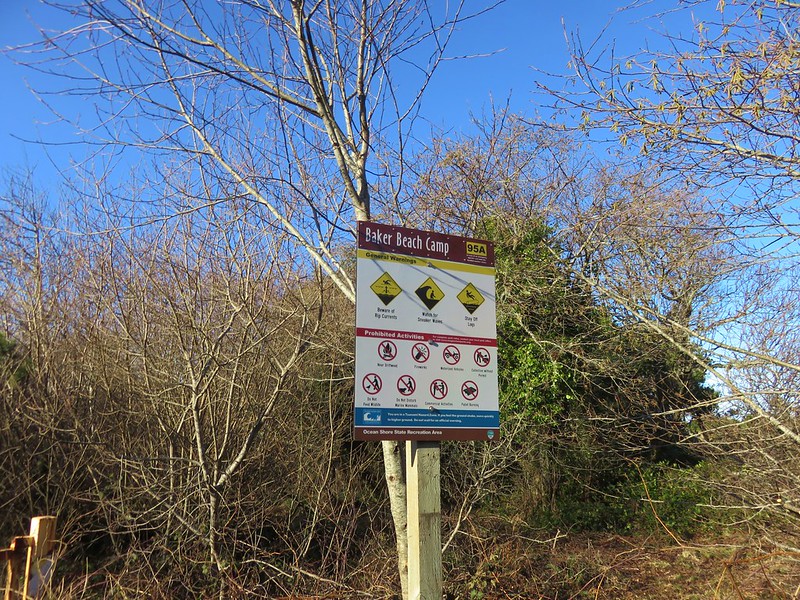
Baker Beach Camp sign

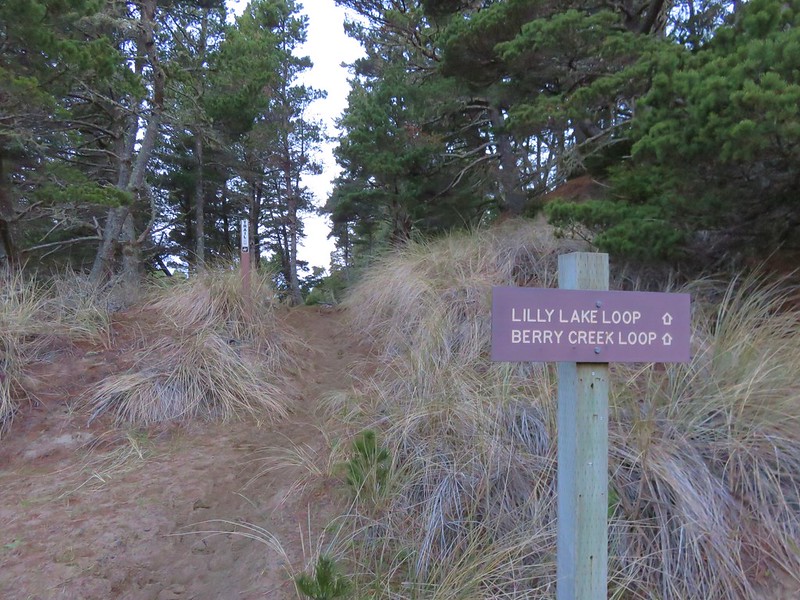
To start our hike we walked a short distance back along the road and turned left at a trail sign for the Lily Lake Loop.

Start of the Lily Lake Loop

A short sandy climb brought us to a trail junction at the top of a sandy ridge.

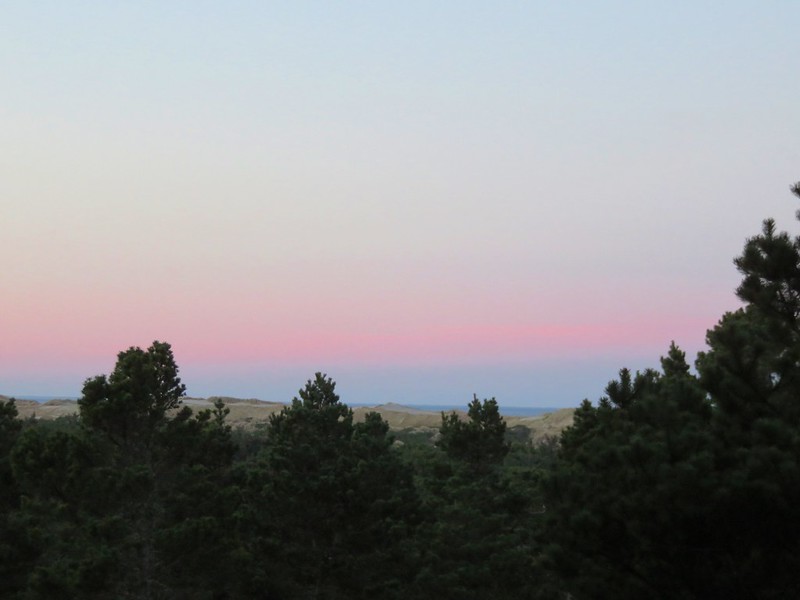
Pacific Ocean from the Lily Lake Loop Trail in the morning

The Pacific Ocean was visible beyond Baker Beach and the sand dunes.

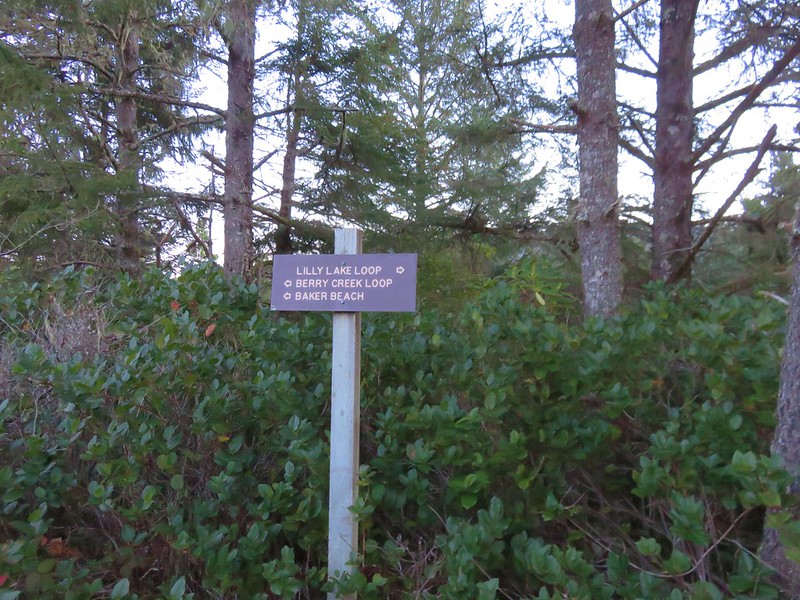
Trail signs along the Lily Lake Loop

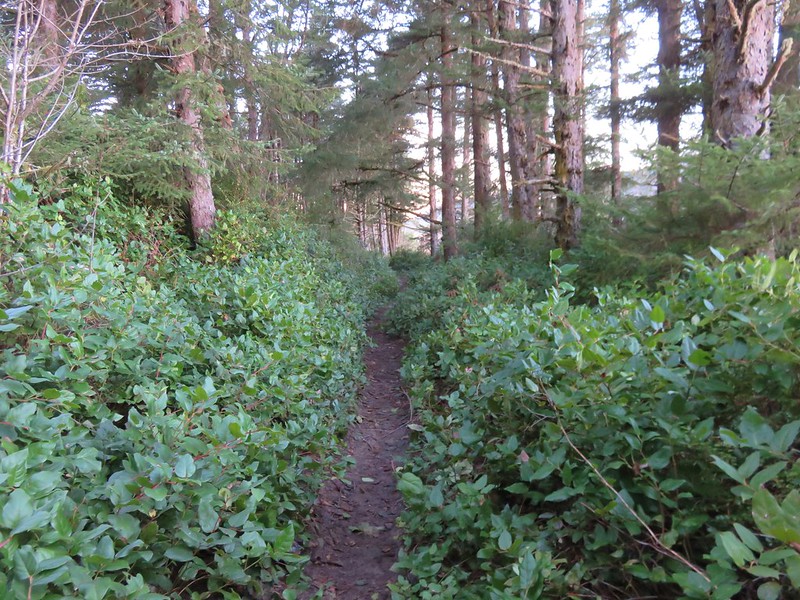
The Berry Creek Loop would have kept us up on the sandy ridge while the Lily Lake Loop dropped down and passed near Lily Lake before climbing back up to the ridge top and rejoining the Berry Creek Loop Trail. We wanted to see the lake so we followed the Lily Lake pointer passing through a salal filled forest before things opened up along the lake.

Lily Lake Loop Trail

Trail along Lily Lake

We stayed on the paths closest to the lake thinking that one would bring us right to it but instead the lake remained mostly hidden behind first a row of trees then by a reed filled marsh near it’s outlet.

Lily Lake

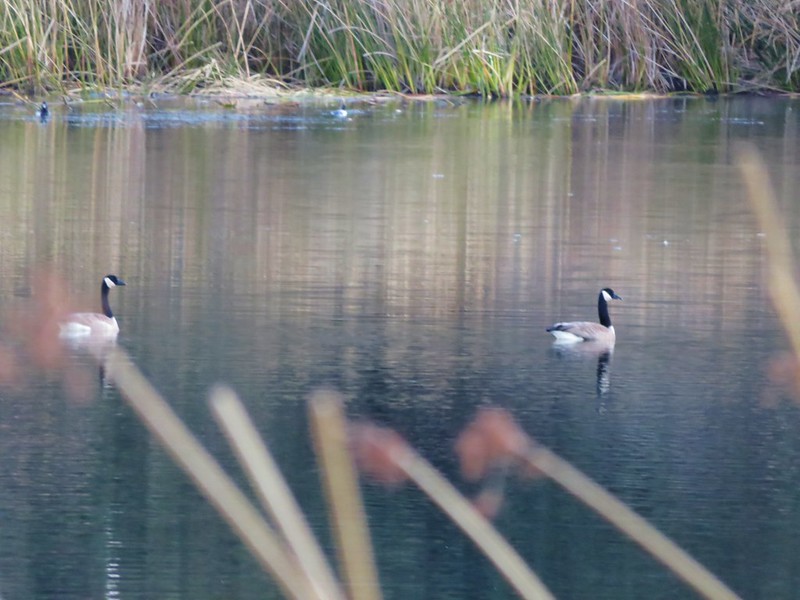
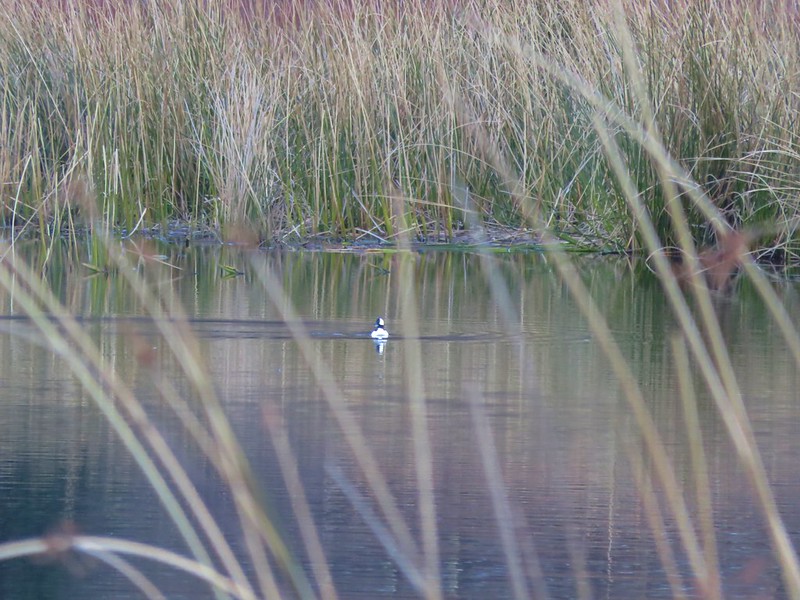
We could see that there was quite a bit of activity on the lake with several types of ducks and some Canada geese floating on the water, but it was hard to get any clear photos with the vegetation in the way.

Canada geese on Lily Lake

Bufflehead

Bufflehead on Lily Lake

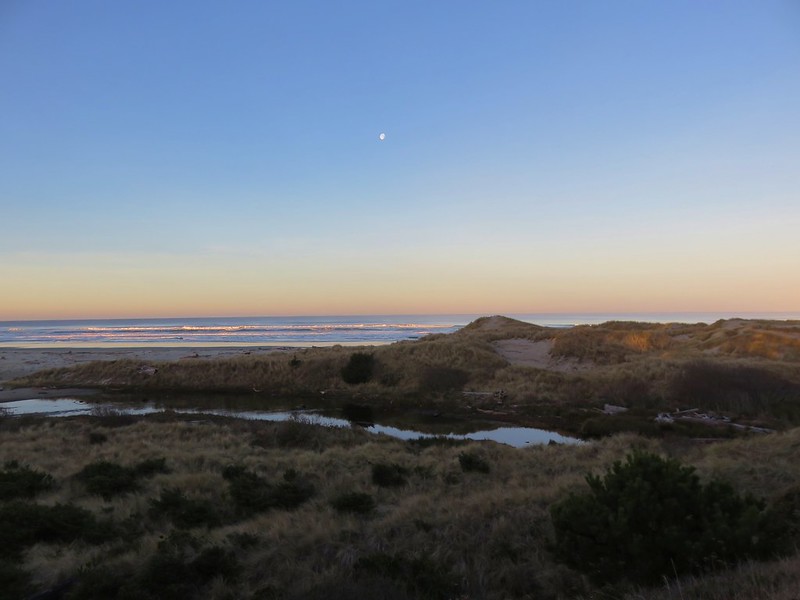
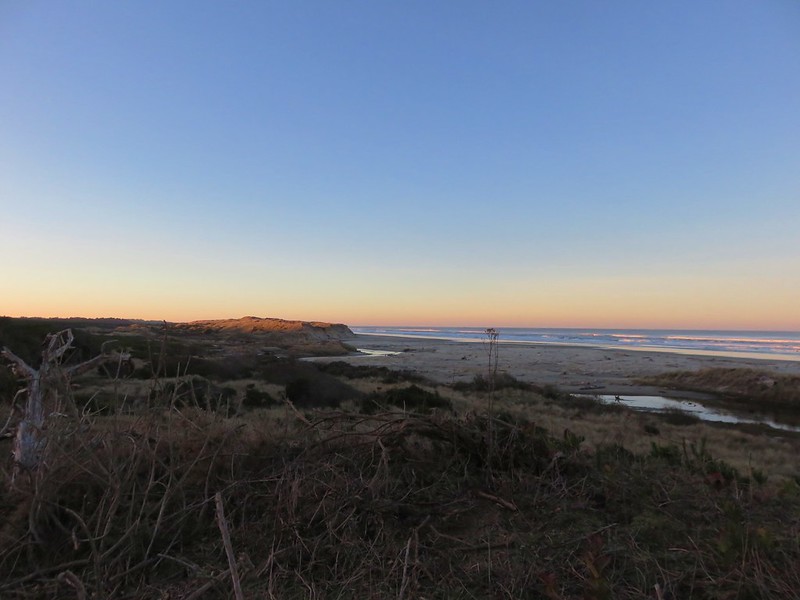
From the lake we climbed back up to the top of the Sandy Ridge which overlooked a small pond and Berry Creek flowing out toward the Pacific.

Moon over the Pacific Ocean

Berry Creek flowing toward the Pacific

There was no sign here and we could have followed the sandy ridge back to the junction we’d been at earlier, but instead we followed a path down to the base of the ridge which led us back to the start of the Baker Beach Trail at Baker Beach Camp. This little loop was just under 1.5 miles.

Baker Beach Trail

Here we turned right following the pointer for Baker Beach. (The Lily Lake/Berry Creek Loop continued from this junction creating an additional 1.7 mile loop to the north of the camp.)

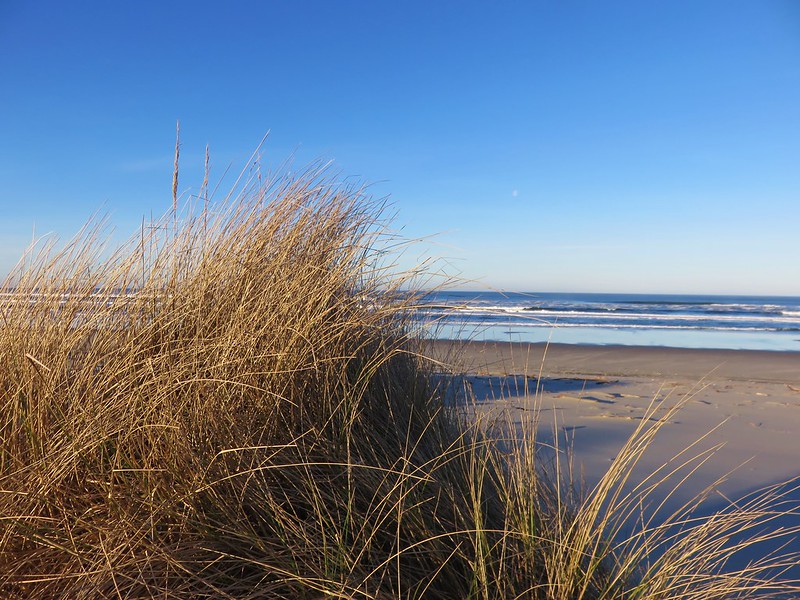
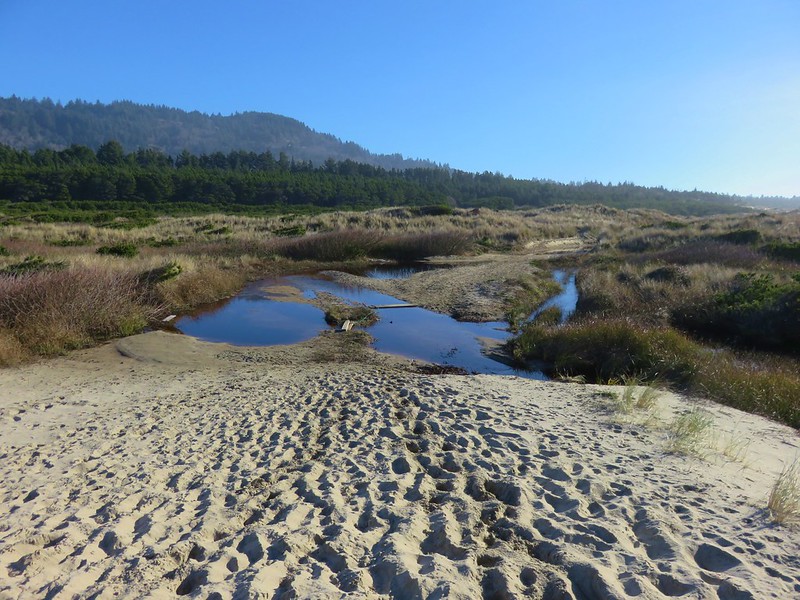
The trail passes through a deflation plain behind the beaches foredune for .4 miles.

Foredune at Baker Beach

Looking north along the Baker Beach Trail

The deflation plain is the result of the dunes no longer expanding due to the loss of additional sand being blown from the beach. European bunchgrass which was introduced in the early 1900’s to help stabilize jetties but spread along the beaches and began stopping the blowing sand from leaving the beach which created the foredunes denying the dunes further inland any additional sand.

Baker Beach

Pacific Ocean from the foredune at Baker Beach

Cape Mountain from the foredune at Baker Beach

When we reached the beach we turned south heading toward Sutton Creek which was 3 miles away. Aside from a few birds we had the beach to ourselves.

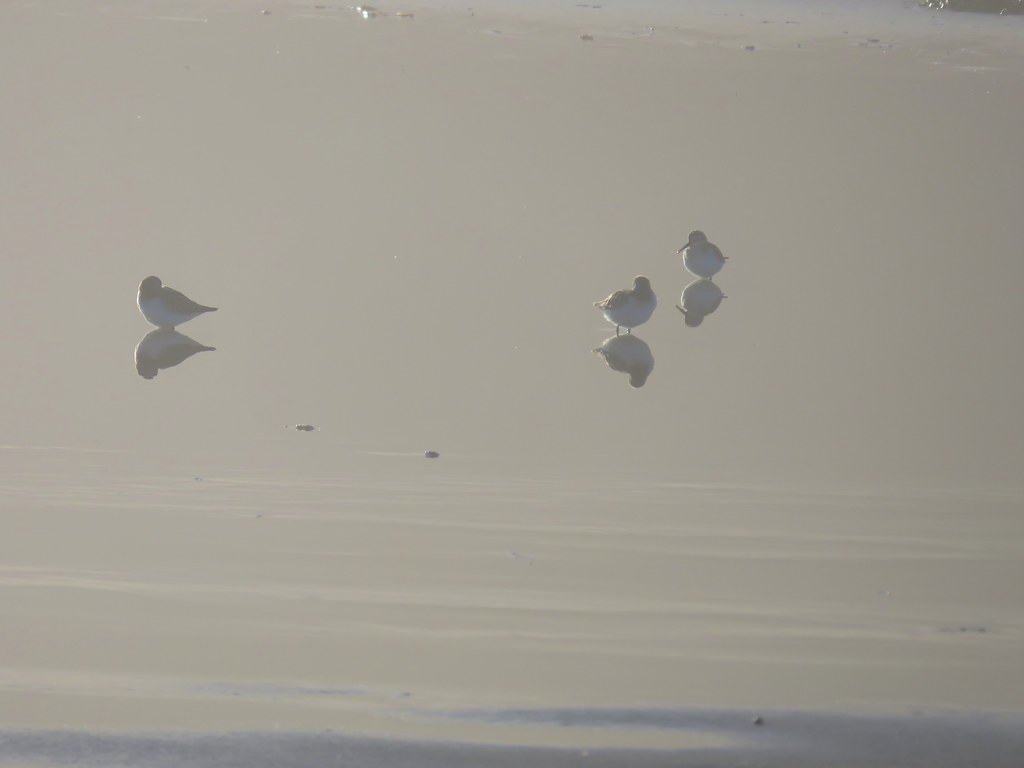
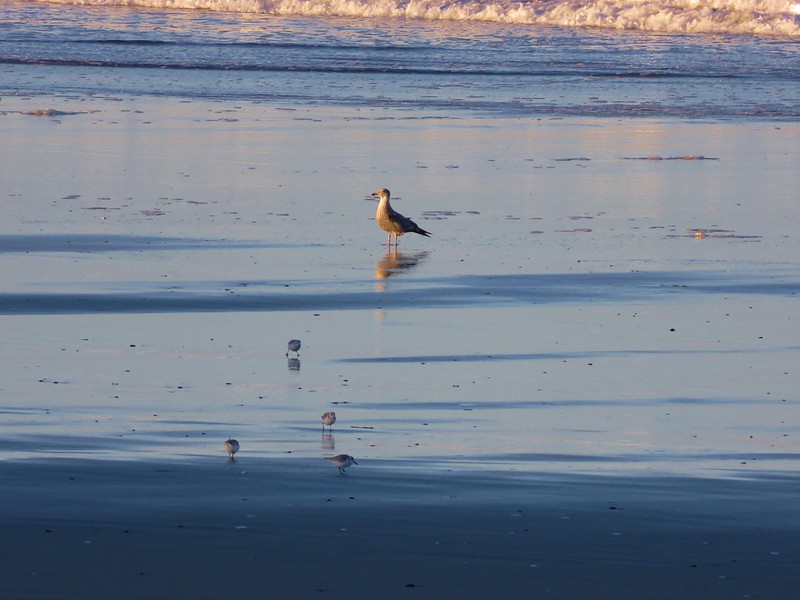
Sanderlings on Baker Beach

Seagull and sanderlings

After about 3/4 of a mile along the beach we climbed back up the foredune to get a look at Sutton Creek which we had visited the previous February.

Sutton Creek behind the foredune

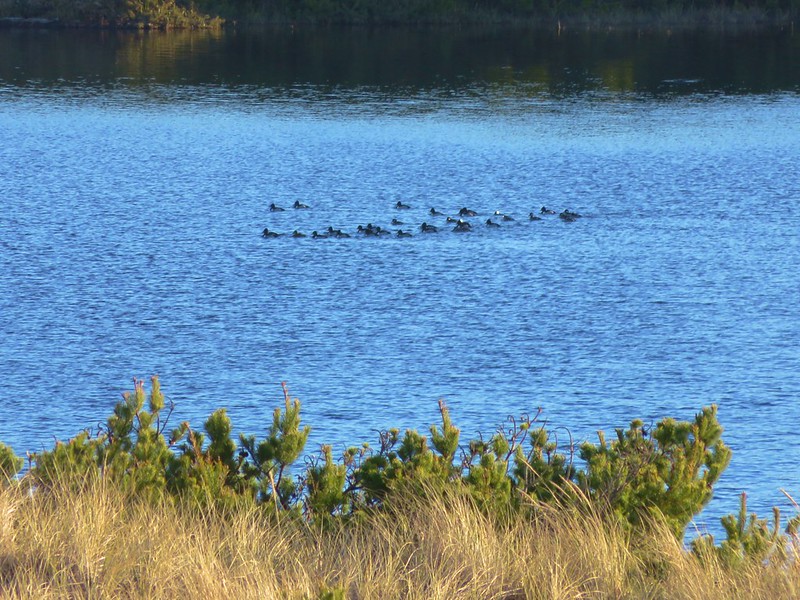
Ducks on Sutton Creek

We traveled along the foredune for a bit before dropping back down to the beach.

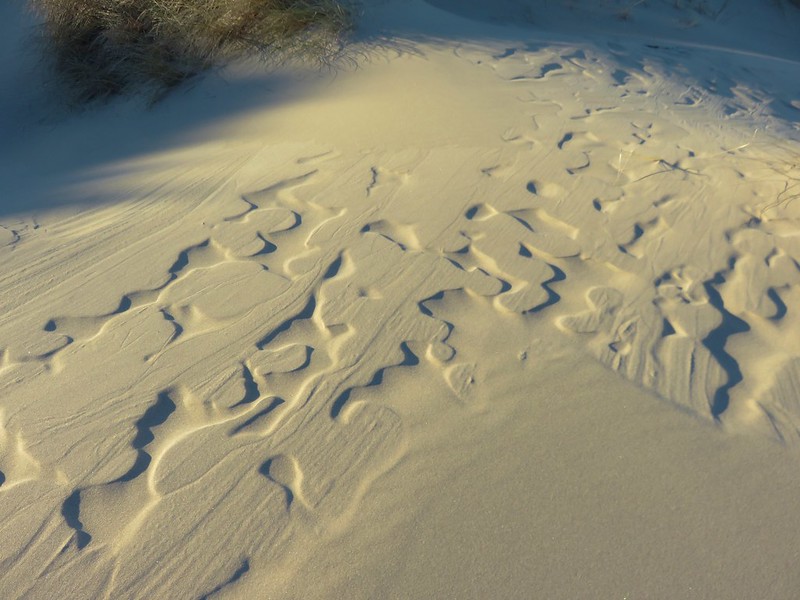
Patterns in the sand

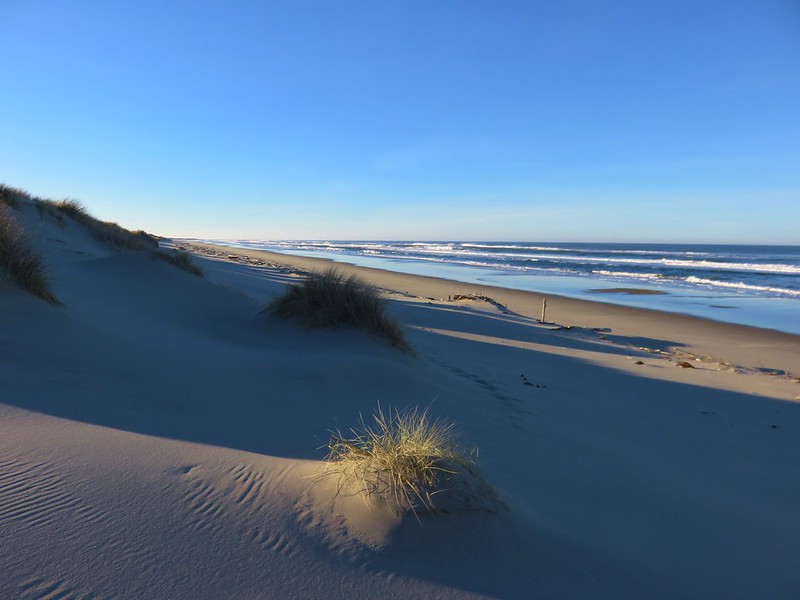
Baker Beach

We had been considering crossing Sutton Creek and continuing south along Heceta Beach another 2.5 miles to the Siuslaw River but the creek was wide and it wasn’t that warm out.

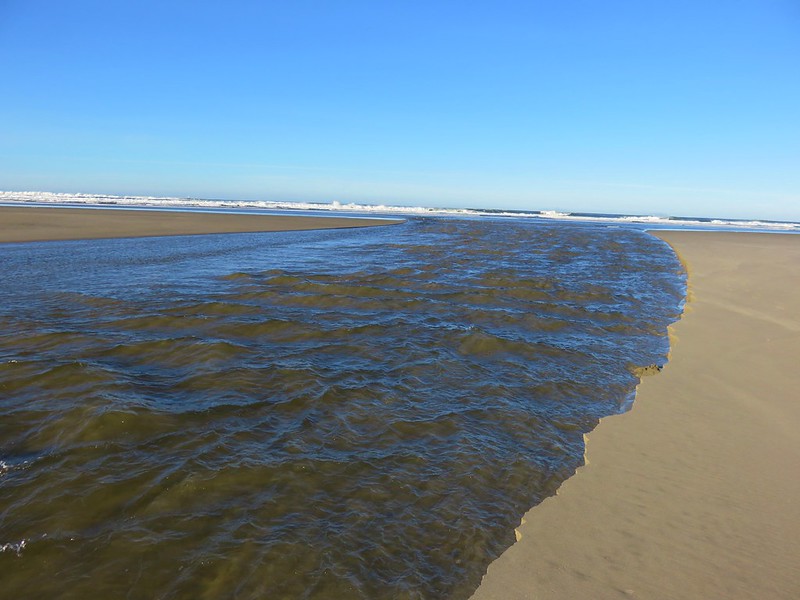
Sutton Creek

Sutton Creek

After watching several large chunks of sand fall into the creek we headed back with the Heceta Head Lighthouse blinking in the distance to the north.

Heceta Head Lighthouse from Baker Beach

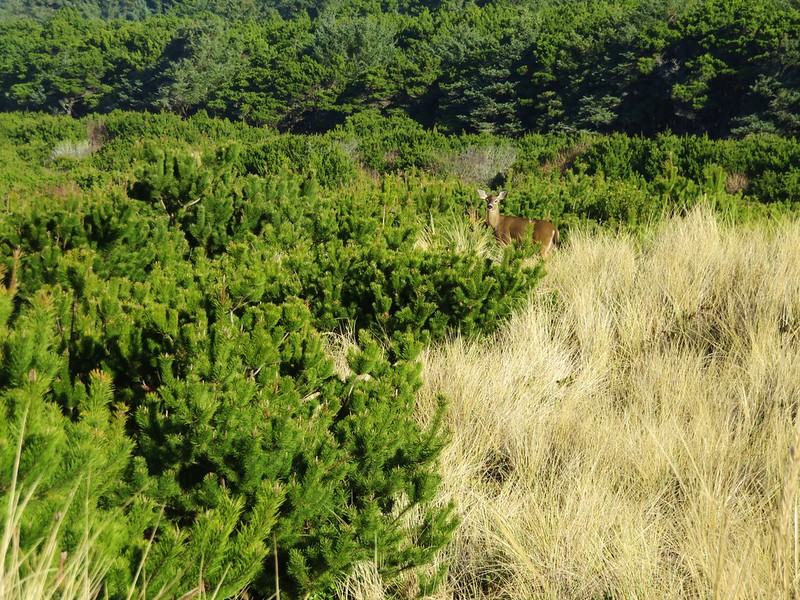
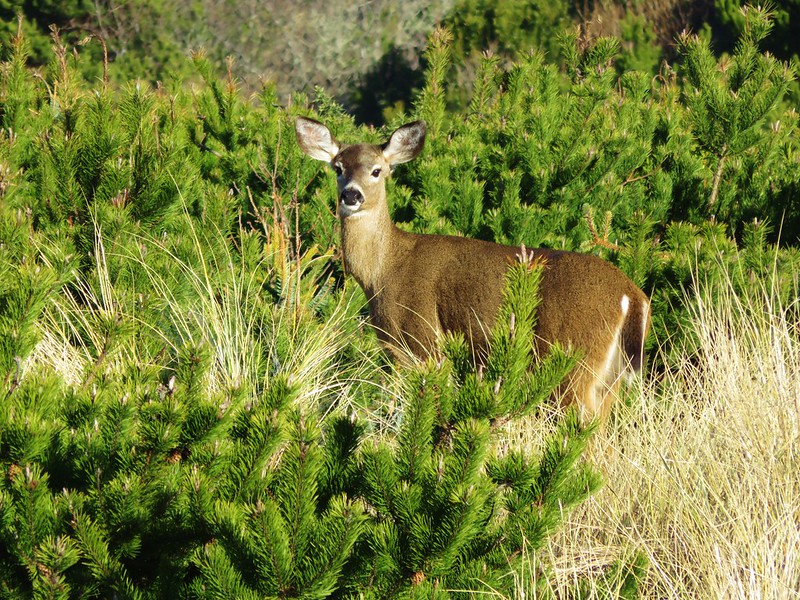
As we were recrossing the deflation plain we spotted a doe amid the grass and pines.

Heading back toward Baker Beach Camp

Doe

Doe

Since we’d cut our hike short (8.2 miles instead of the 13.2 planned) we had time to do another. We could have hiked Heceta Beach like we had planned by driving back to Florence and parking at the end of South Jetty Road, but we had noticed that that beach was already busy when we were at Sutton Creek earlier. We preferred something a little less crowded which led us to the Rock Creek Wilderness.
This was one of the wilderness areas that we had yet to visit and it was just another 8 miles north on Highway 101 from Baker Beach Road. We hopped in our car and drove to the gated entrance to the Rock Creek Campground.

Rock Creek Campground sign along Highway 101

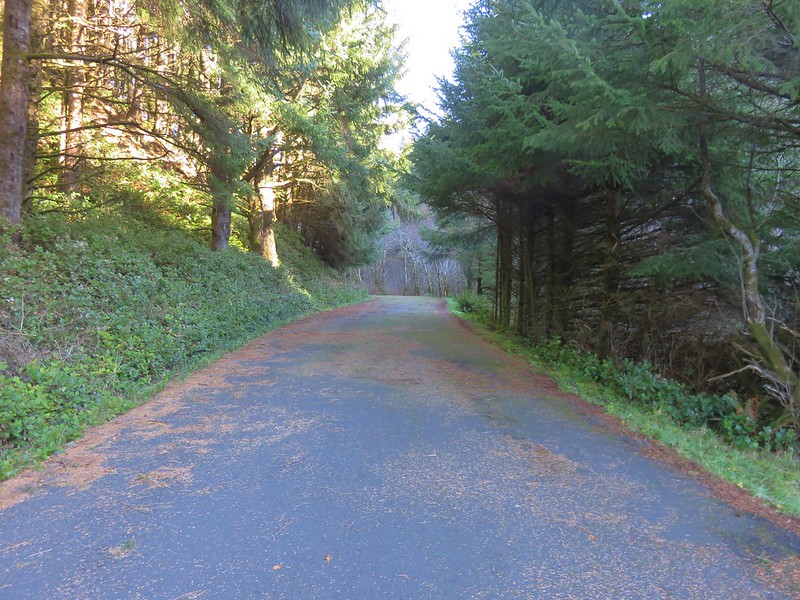
The campground was closed for the season so we had to walk along the paved entrance road for approximately .4 miles.

Road to Rock Creek Campground

There had been one other vehicle parked at the gate and we passed it’s owner on his way back up from the campground area. The little campground was located right along Rock Creek.

Rock Creek

Rock Creek

The 7,486 Rock Creek Wilderness was designated as such in 1984 and has no Forest Service developed or maintained trials. That being said there is a use trail leading from the end of the Rock Creek Campground that can be followed into the wilderness.

Use trail leading from the Campground into the Rock Creek Wilderness

The path was brushy and narrow but passable as it followed along the creek.

Use trail in the Rock Creek Wilderness

Rock Creek Wilderness

Rock Creek

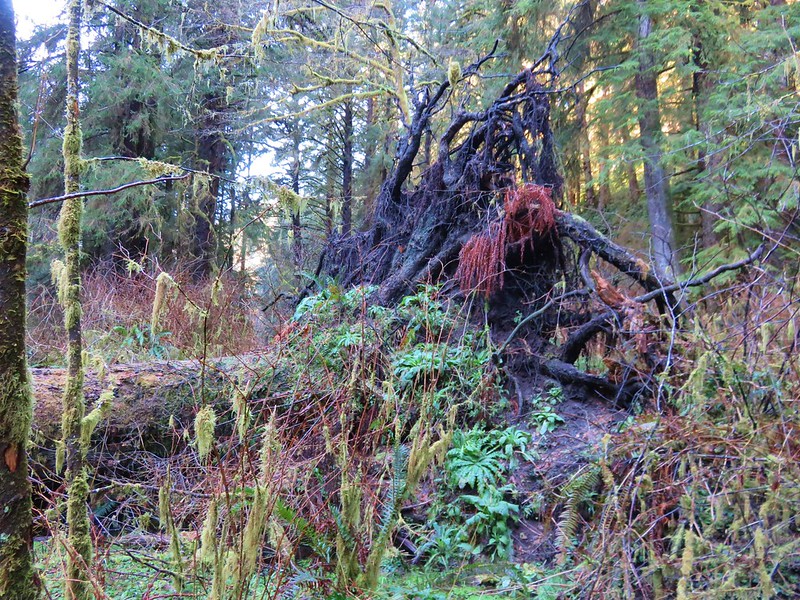
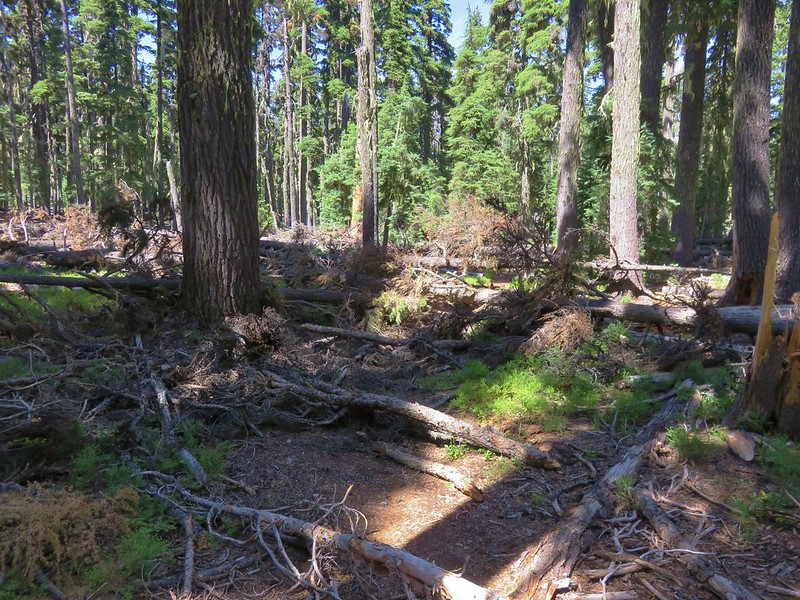
Occasional flagging was present but really unnecessary as the brush was so thick that we had to follow the path in order to keep moving forward. The only real obstacle to speak of was a large downed tree that had fallen over the best path, but game trails led around the root ball.

BIg tree down in the Rock Creek Wilderness

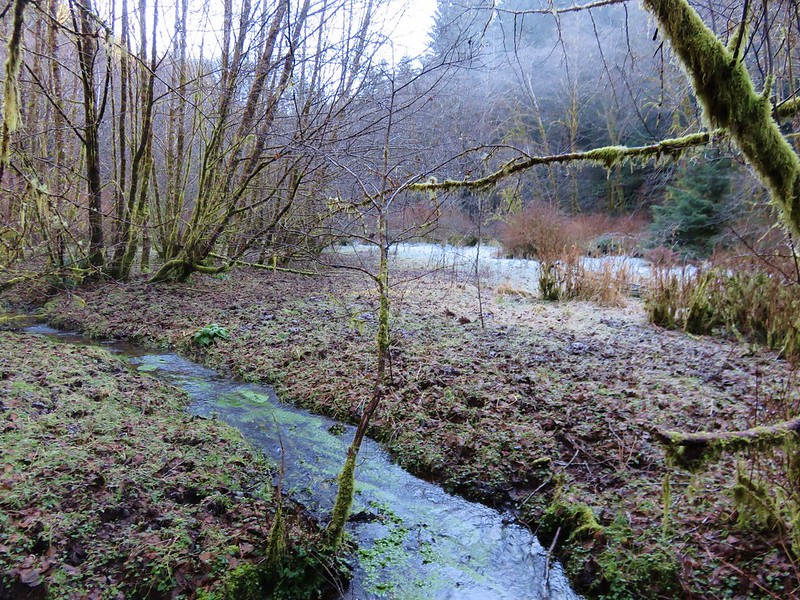
Without an official trail there were no signs to mark the beginning of the wilderness area so we just followed the path as long as we could. After awhile the path led into a frosty meadow where the canyon widened.

Frosty meadow in the Rock Creek Wilderness

It was a muddy in spots but enough of the ground was still frozen to make it passable. Elk and deer sign were everywhere. It was a beautiful spot with the white frost contrasted against the green of a coastal forest while rays of sunlight attempted to penetrate the canopy.

Frosty meadow in the Rock Creek Wilderness

Sunlight through the trees in the Rock Creek Wilderness

The sound of water flowing on every side only added to the ambiance. There was more flagging at the far end of the meadow and some on the far side of Rock Creek but again this wasn’t a day for fording creeks so we declared victory here and turned around.

Our turn around point (too cold to ford the creek today)

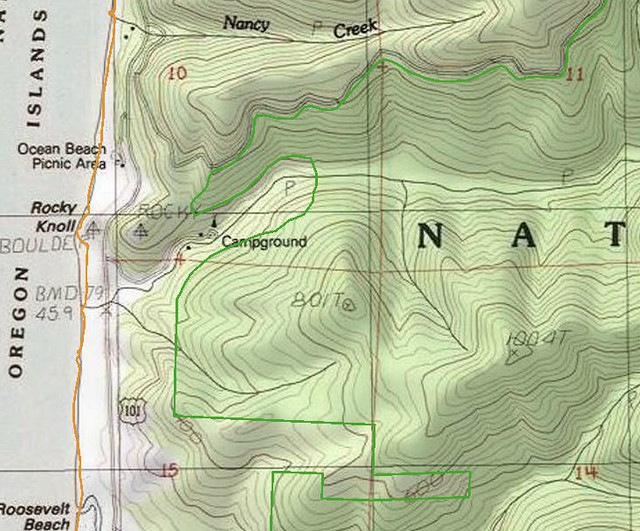
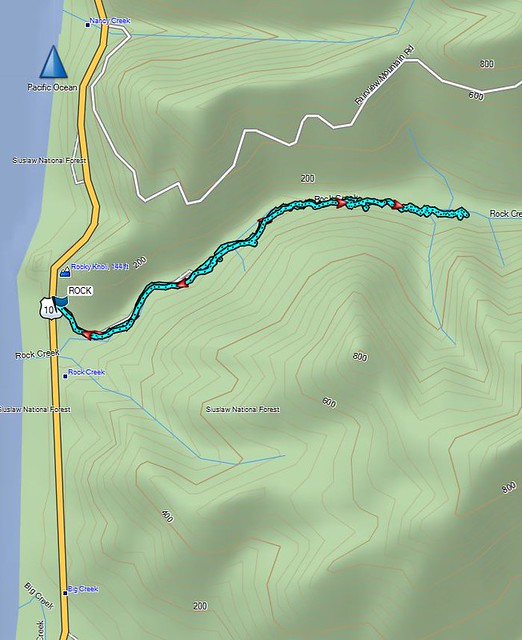
When we got home I wanted to make sure we’d actually made it into the wilderness so I pulled up the interactive map on Wilderness.net. The actual wilderness boundary bows away from the Rock Creek Campground making it further up along the creek than I had thought, but comparing our GPS track to that map showed we had managed to get about .4 miles into the Rock Creek Wilderness.

The Wilderness.net map

Rock Creek Wilderness

Our GPS track

Rock Creek Wilderness Track

On a warmer day when you don’t mind spending some time in the creek it’s possible to get further into the wilderness as this trip report indicates.a href=”http://www.cascadiahiking.com/2012/08/rock-creek-wilderness-no-trail-no.html” target=”_blank”>Cascadia Hiking

Our adventure was only 2.2 miles round trip including the road walk to and from the campground but the solitude and remote feeling of the Rock Creek Wilderness made it seem much more removed from civilization.

With that our 2017 hiking year is officially under way. We checked off our 27th Oregon Wilderness Area and still have 18 to go, 4 more of which are planned this year. Happy Trails!
Flickr: https://www.flickr.com/photos/9319235@N02/albums/72157679106715756

Categories
Year-end wrap up

The Hikes of 2016 – A Look Back

It’s hard to believe that it’s already time to recap our 2016 hiking year, and what a great year for hiking it turned out to be! I spent our off-season (Nov-Apr) putting together a 7 year plan (yes I have an issue) to help us achieve two of the goals we’ve set for ourselves. One is to hike each of the featured hikes in each of William L. Sullivan’s five “100 Hikes/Travel Guide” books and the second is to visit each of Oregon’s 45 designated wilderness areas. (There are 47 but the Oregon Islands and Three Arch Rocks Wilderness Areas are off-limits.) In previous years I had only put together a schedule for the upcoming year, but by looking further ahead I was able to make sure we weren’t going to miss any hikes and they were scheduled at what should be good times to visit. We also now had a handy list of options, laid out by the best times to visit, to pick from if we needed to change plans for any reason. The schedule remains a work in process but as it stands today we will finish visiting all the wilderness areas with Grassy Knob in 2022 and 460 of the 500 featured hikes in Sullivan’s books by the end of 2023. The remaining 40 hikes are too far away for day trips so they are incorporated into vacations that will need to happen further down the road.
The first draft of our 2016 hikes was completed on 12/18/15 and consisted of 57 days worth of hikes totaling 624.4 miles. History had shown that those numbers (and the hikes themselves) would change as the year played out, but it was a solid starting point. That again proved to be the case as 10 of the original hikes were swapped out for others and 4 additional hikes were added, and the total mileage rose by over 150 miles to end at 792.8. We visited 8 wilderness areas for the first time knocking 7 more off the Oregon list. They were the Oregon Badlands, Kalmiopsis, Menagerie, Eagle Cap, Mountain Lakes, Sky Lakes, and Lower White River Wildernesses in Oregon and the Marble Mountain Wilderness in California. In addition to the new areas we hiked in the Mt. Hood, Mt. Jefferson, Three Sisters, Mt. Washington, and Mark O. Hatfield Wildernesses as well as the the John Day Fossil Beds National Monument and the Mt. St. Helens Volcanic National Monument.

Our travels took us on hikes further to the west (Cape Sebastian State Park), east (West Fork Wallowa Trail – Eagle Cap Wilderness), and south (Cliff Lake – Marble Mountain Wilderness) than ever before. Our trips to the Marble Mountain and Eagle Cap Wilderness areas were our first 5 day/4 night backpacking trips which proved to be just about the limit on how long we can stay out given our current gear.

The weather was exceptional for nearly all of our hikes. Early winter storms left a more normal snow pack which helped make 2016 a pretty good wildflower year and we only ran into two weather related issues. The first was a slight chance of rain for our vacation week in May during which we’d planned on visiting the desert in SE Oregon. Any precipitation in that area would have made it impossible to reach our planned trailheads so we put that vacation off and headed to the Southern Oregon Coast instead which wound up being a great plan B. The second was a July hike on Scar Ridge in the Old Cascades which was swapped for Fifteenmile Creek on the east side of the Mt. Hood National Forest due to probable thunderstorms.

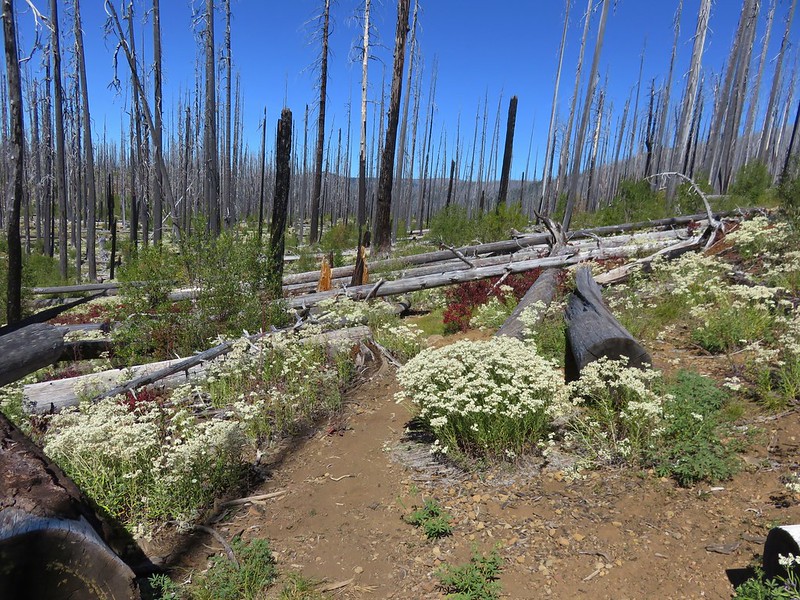
Although the weather conditions were almost always great the same couldn’t be said for the condition of a few of the trails. During our May vacation we encountered a host of ticks along the Illinois River Trail. Later in the year it was blowdown that proved to be the biggest obstacle. In the Sky Lakes Wilderness a section of the Badger Lake Trail to the Pacific Crest Trail was a mess.
Blowdown over the Badger Lake Trail

This was also the case along much of the Bowerman Lake Trail in the Mt. Jefferson Wilderness.
Bowerman Lake Trail

As well as the Hand Lake Trail in the Mt. Washington Wilderness.
More blowdown over the Hand Lake Trail

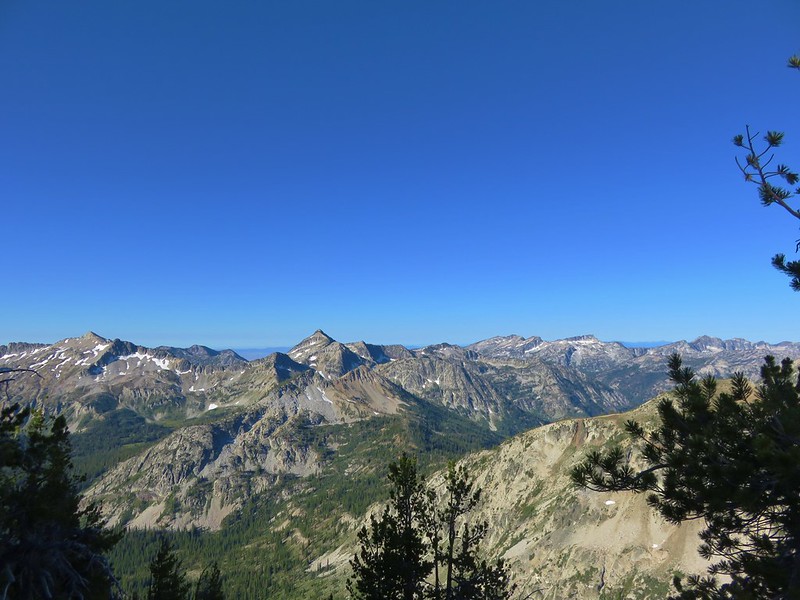
The one consistent regardless of the location, weather, or trail conditions was the beauty and diversity that makes the Pacific Northwest so special. From west to east starting with the Oregon Coast:
Tillamook Head to the South of the Fort-To-Sea Trail
Tillamook Head from the Fort-to-Sea Trail

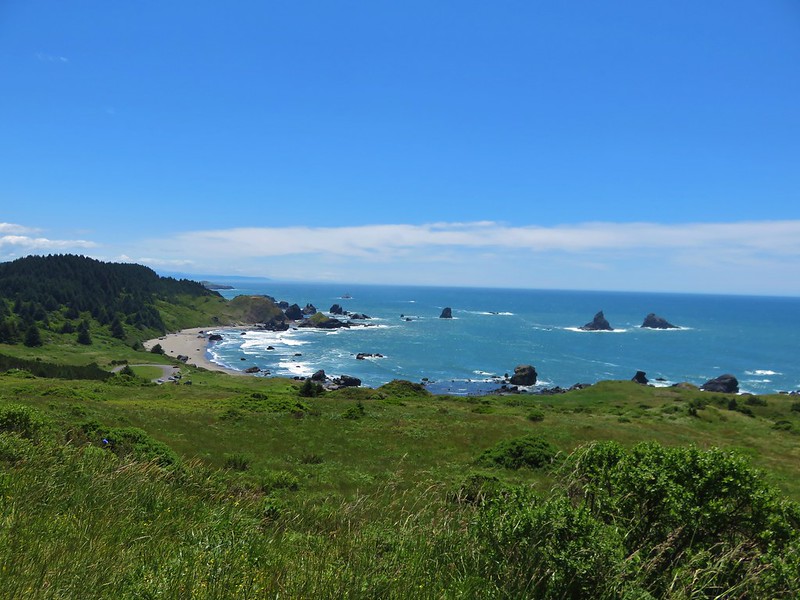
Lone Ranch Beach from Cape Ferrelo

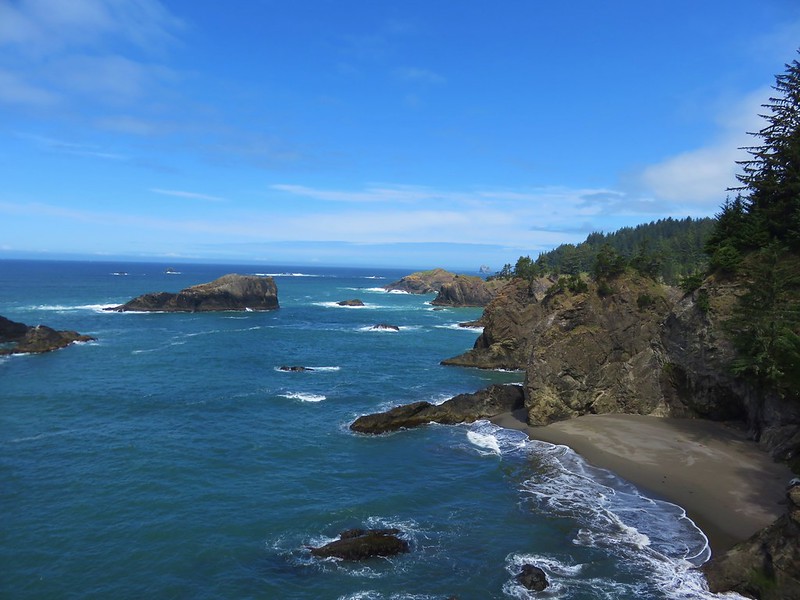
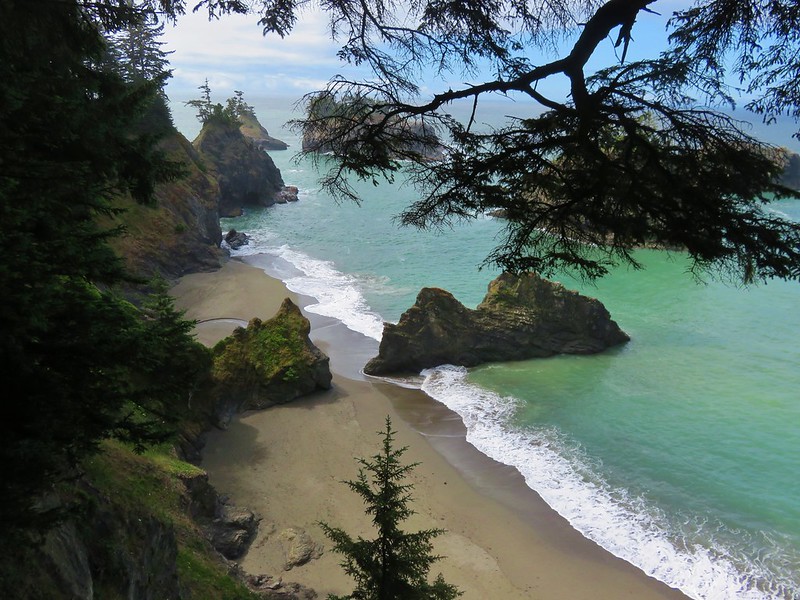
View from the Oregon Coast Trail near Secret Beach
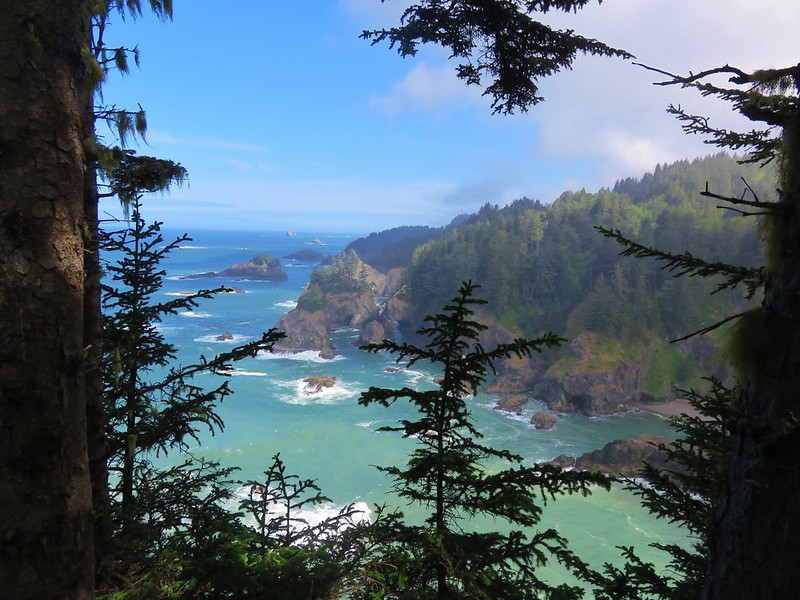
View from the Oregon Coast Trail in Samuel H. Boardman State Park

Past the Klamath Mountains in Southern Oregon and Northern California:
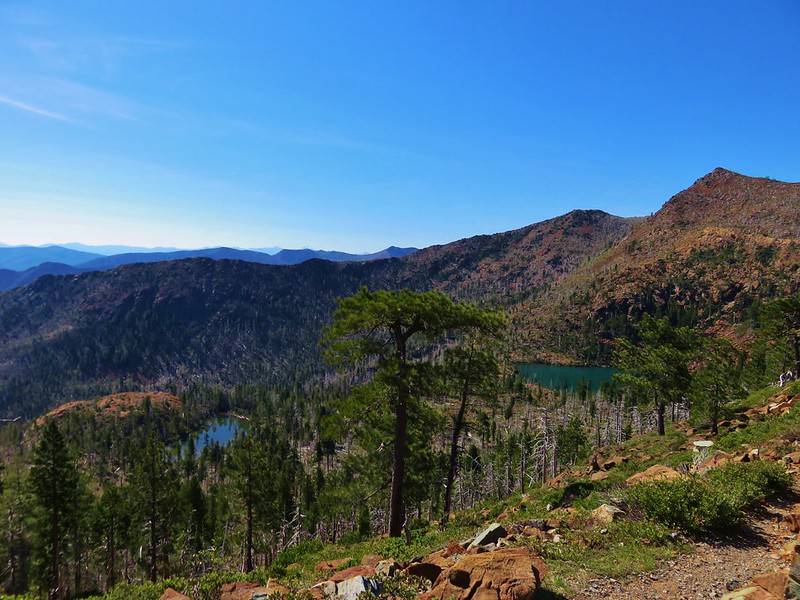
Little Vulcan and Vulcan Lake below Vulcan Peak

Kalmiopsis Wilderness

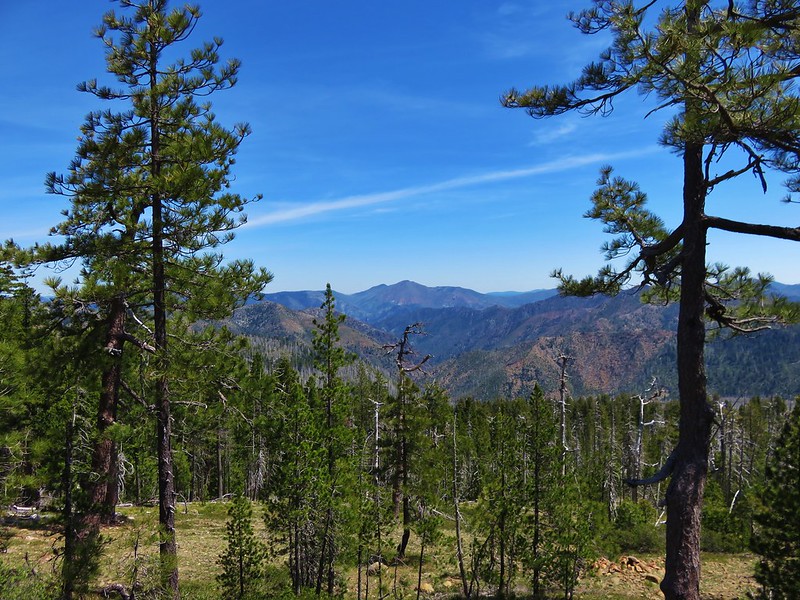
Black Marble Mountain
Marble Mountain Wilderness

and the Coast Range to the north:
Old Growth Ridge Trail
Old Growth Ridge Trail in the Siuslaw National Forest

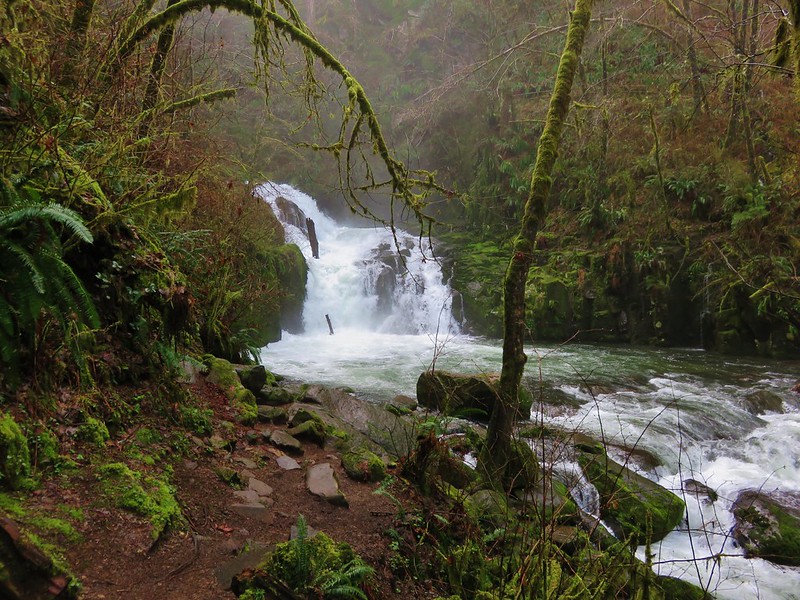
Sweet Creek Falls
Sweet Creek Falls

across the Willamette Valley:Trail in Minto-Brown Island Park
Minto-Brown Island Park

Bald Hill
Bald Hill

into the Old Cascade Mountains:
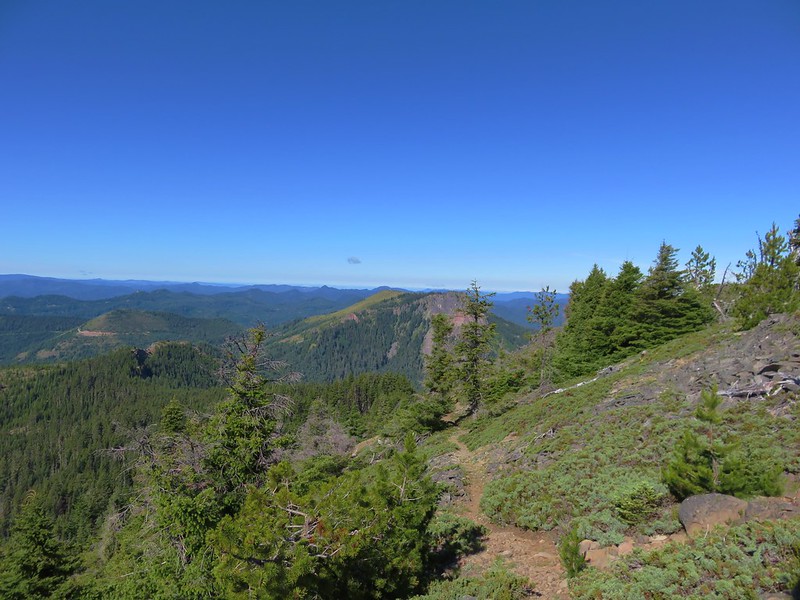
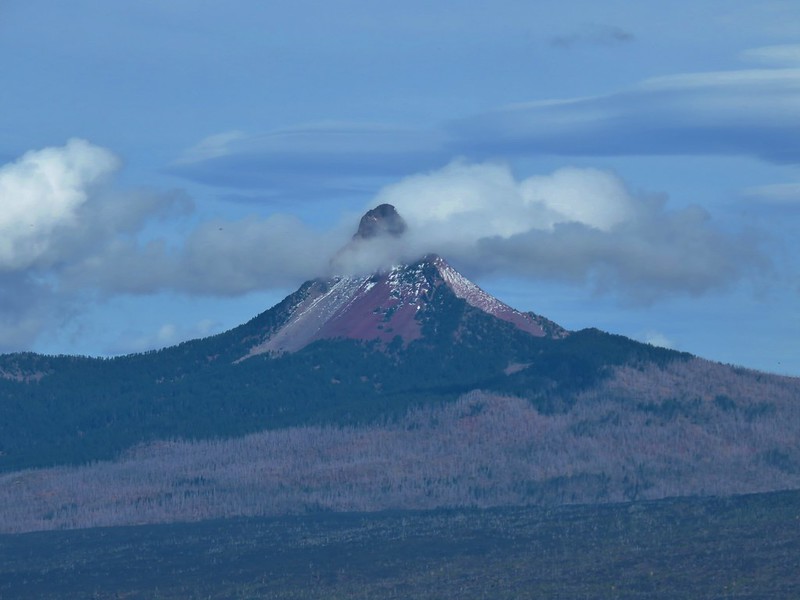
Coffin Mountain
Coffin Mountain from Bachelor Mountain

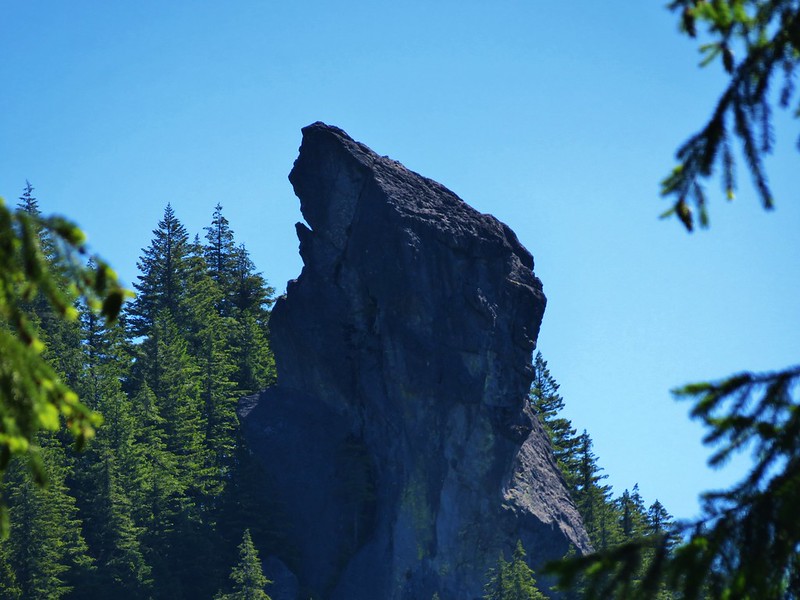
Rooster Rock
Rooster Rock in the Menagerie Wilderness

over the Cascade Mountains:
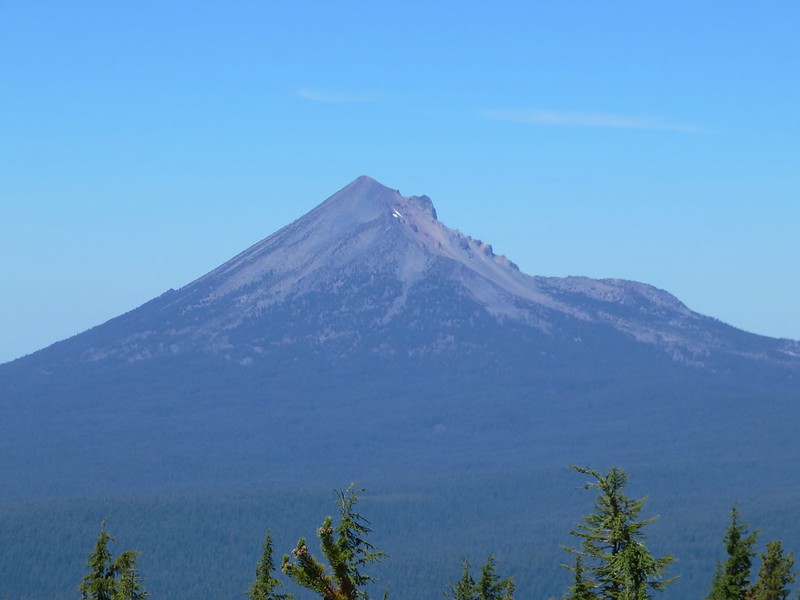
Mt. McLoughlin
Mt. McLoughlin

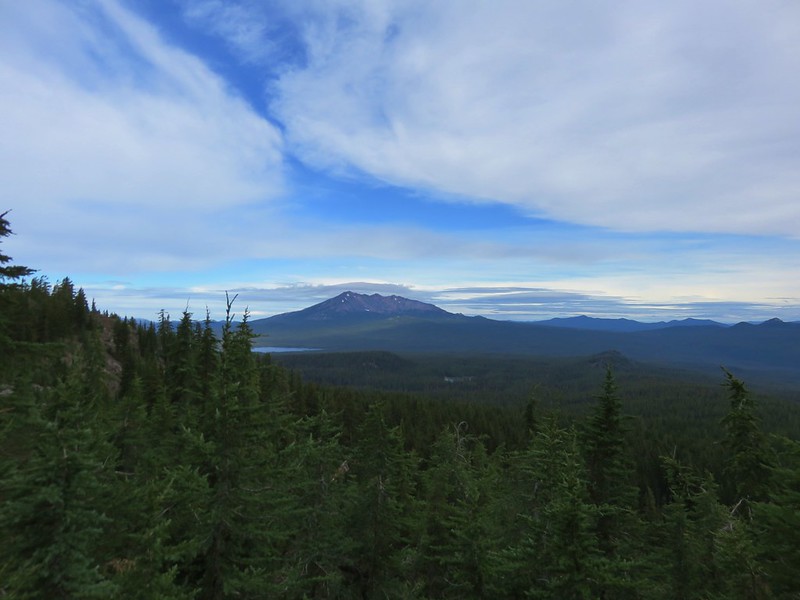
Diamond Peak from the Pacific Crest Trail
Diamond Peak

The Three Sisters from a meaow along the Rebel Rock Trail
The Three Sisters

Mt. Washington
Mt. Washington

Three Fingered Jack beyond the Eight Lakes Basin
Three Fingered Jack

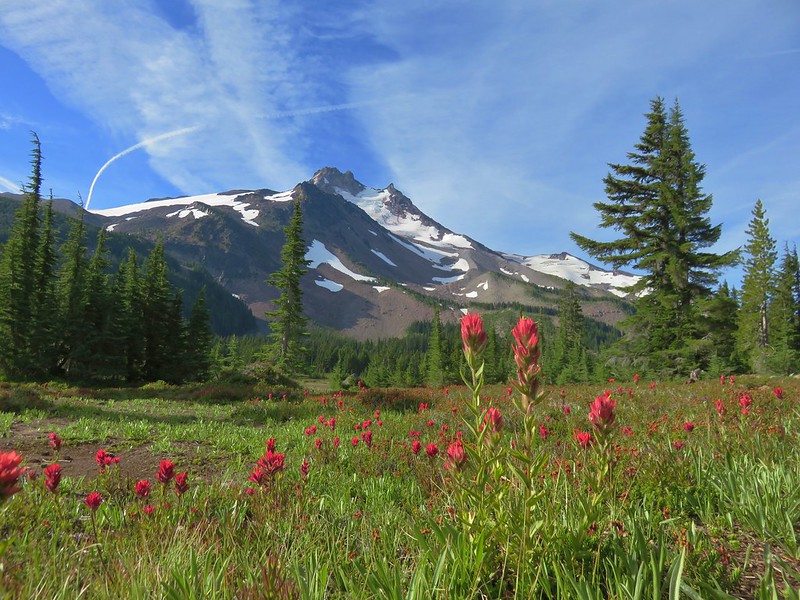
Mt. Jefferson from Jefferson Park
Mt. Jefferson

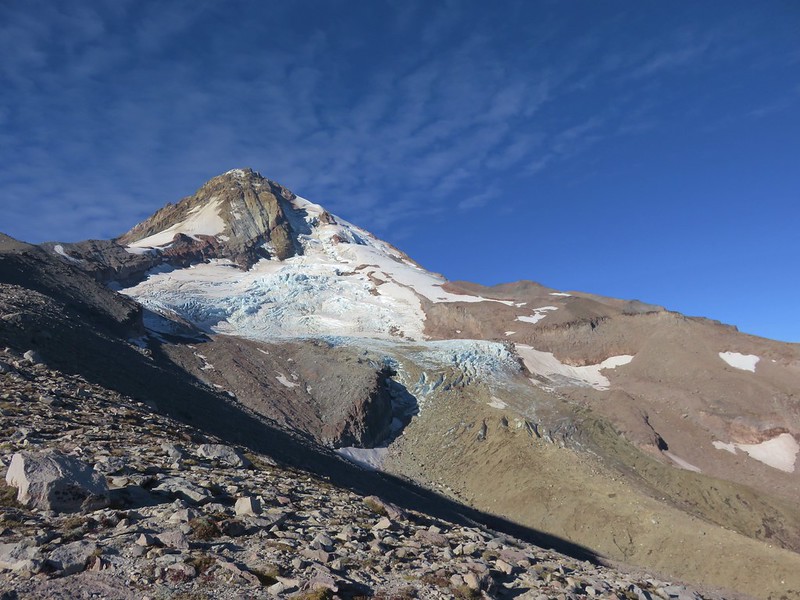
Mt. Hood and the Eliot Glacier
Mt. Hood

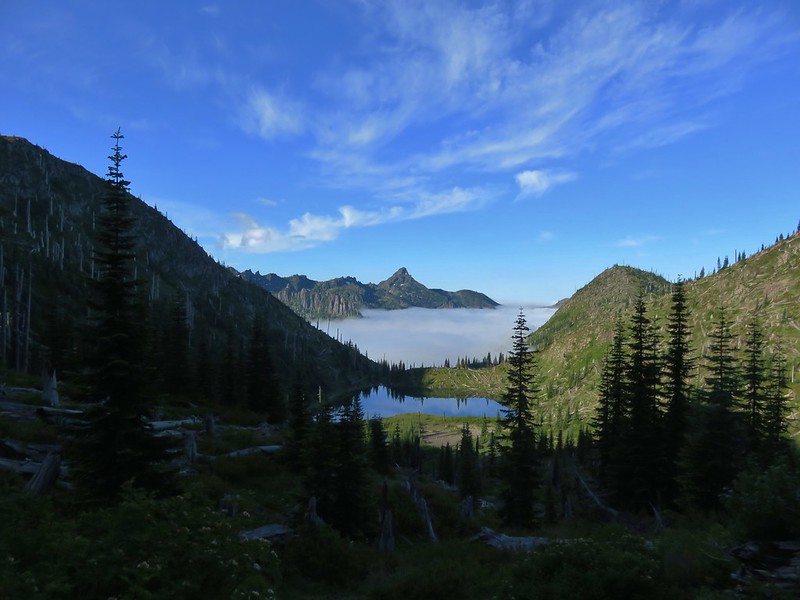
Coldwater Peak and Snow Lake
Coldwater Peak and Snow Lake – Mt. Margaret Backcountry, Mt. St. Helens Volcanic National Monument

into the High Desert of Central Oregon:
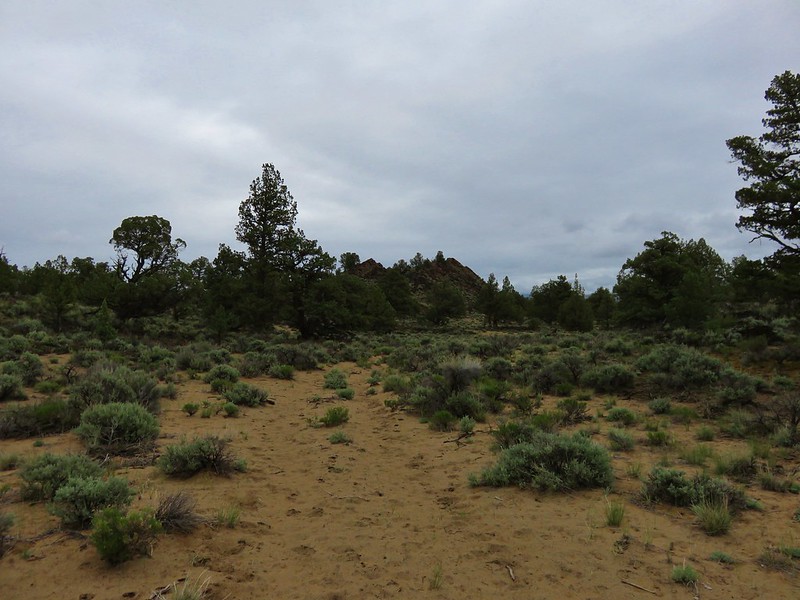
Badlands Rock
Badlands Rock – Oregon Badlands Wilderness

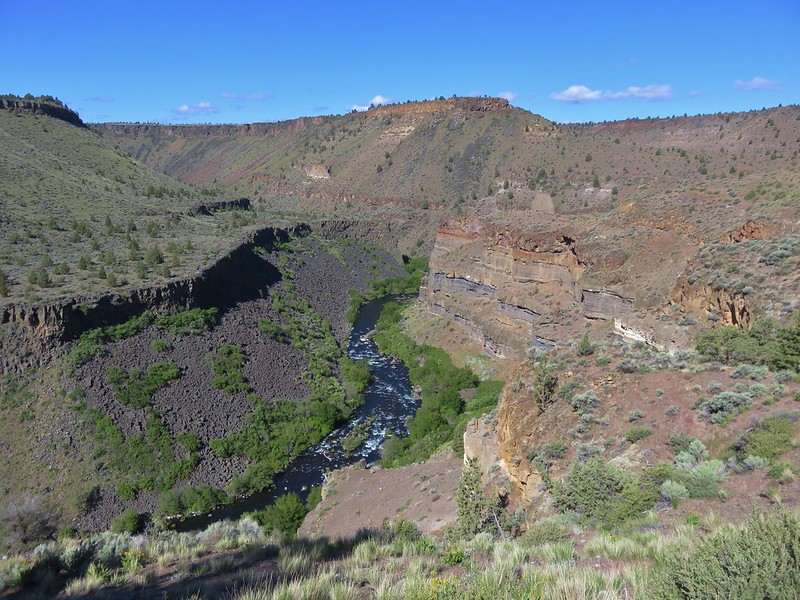
Deschutes River
Deschutes River

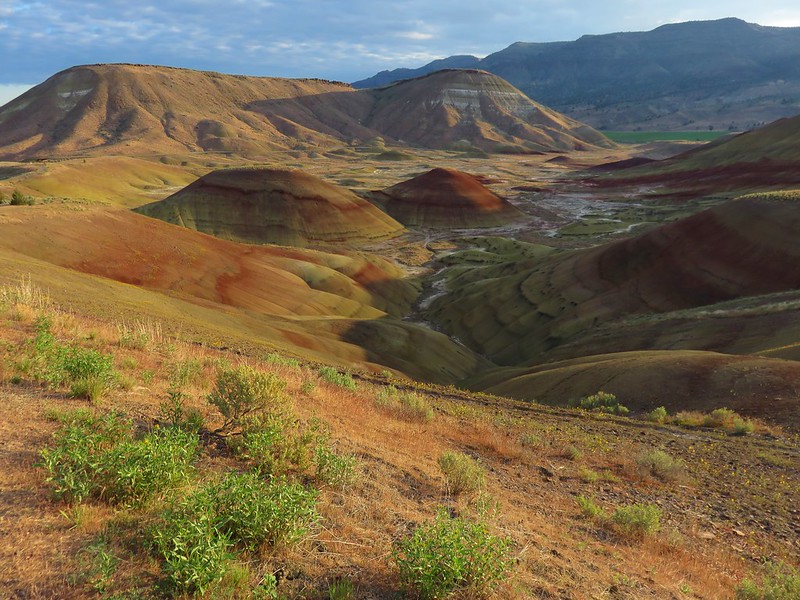
Painted HIlls
Painted Hills – John Day Fossil Beds National Monument

NE to the Wallowa Mountains:
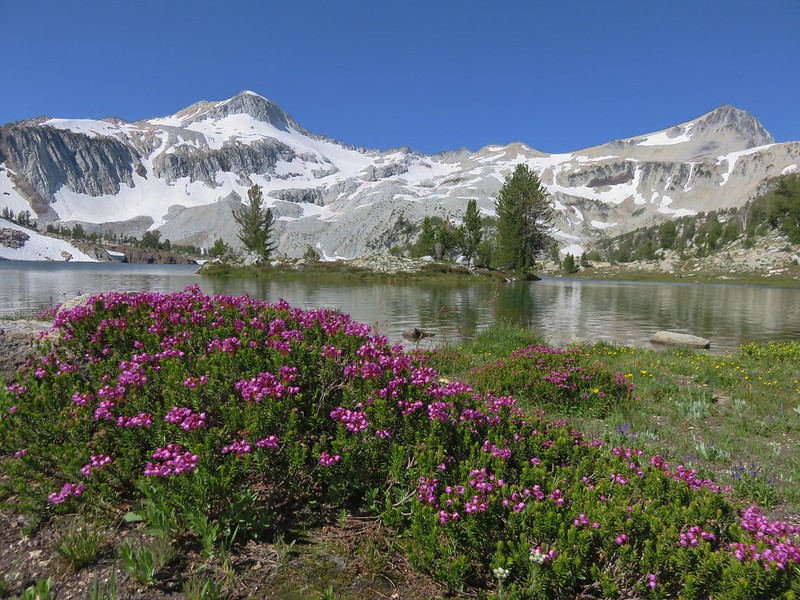
Ice Lake
Ice Lake and the Matterhorn

Glacier Lake
Glacier Peak and Eagle Cap from Glacier Lake

Eagle Cap Wilderness

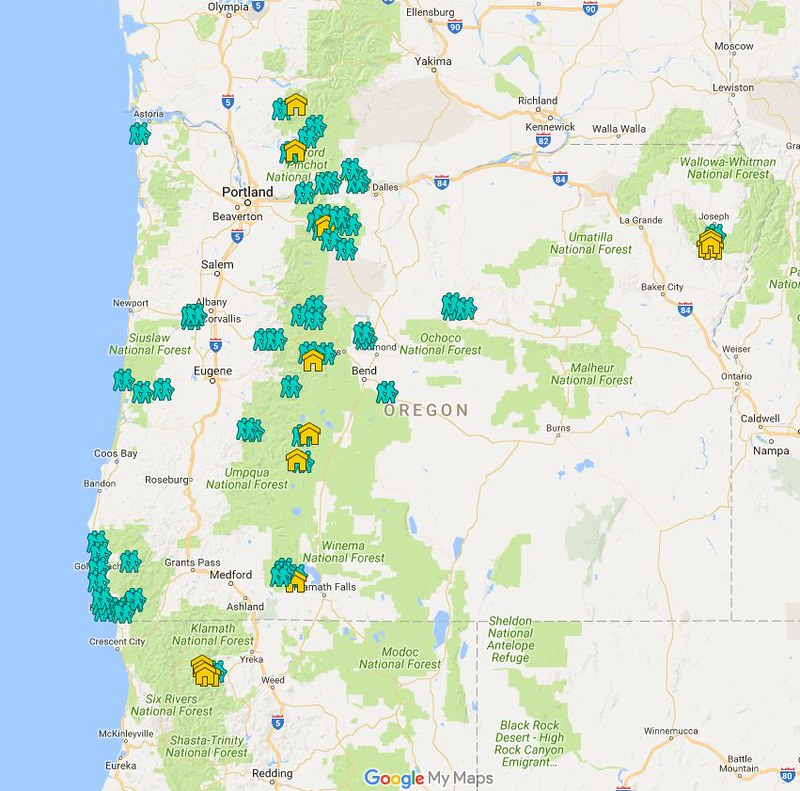
Here is a look at the locations of our hikes. The hiker symbols are the trailheads and the yellow house icon denotes the approximate location of our campsites.
2016 Hikes
An interactive version can been accessed here and includes all of our previous hikes.

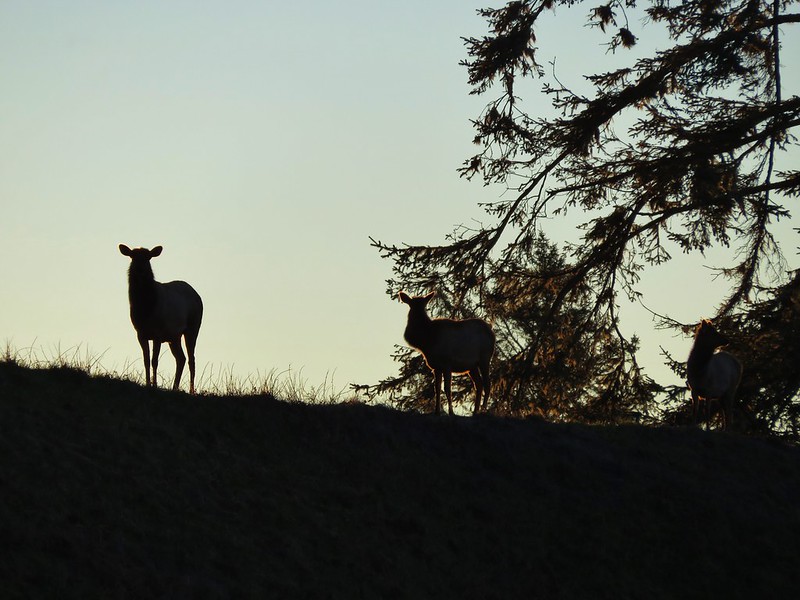
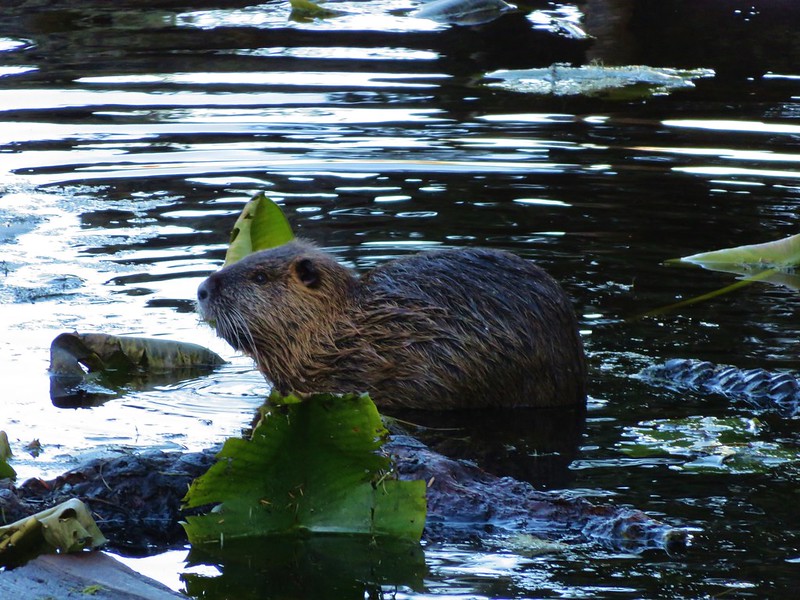
In addition to the spectacular views the areas provided a wonderful variety of wildlife and vegetation.

Elk
Elk

Nutria
Nutria

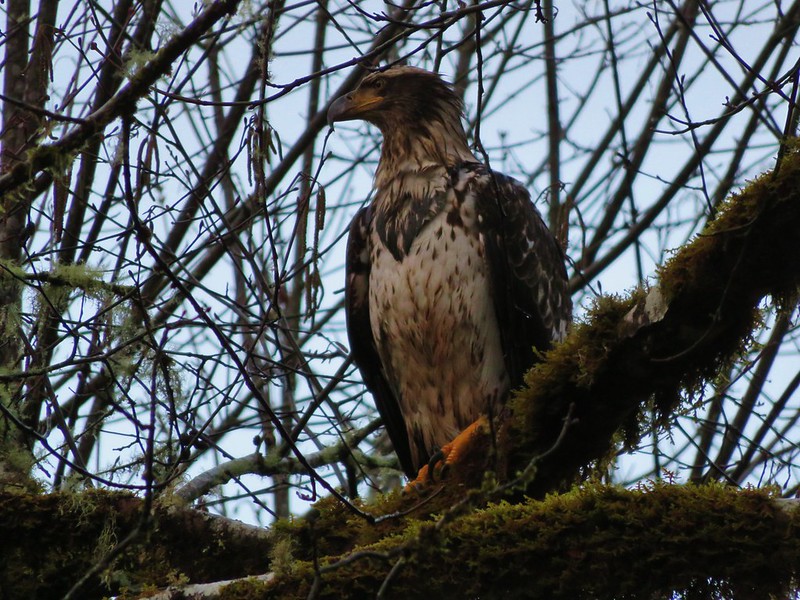
Bald eagle
Bald Eagle

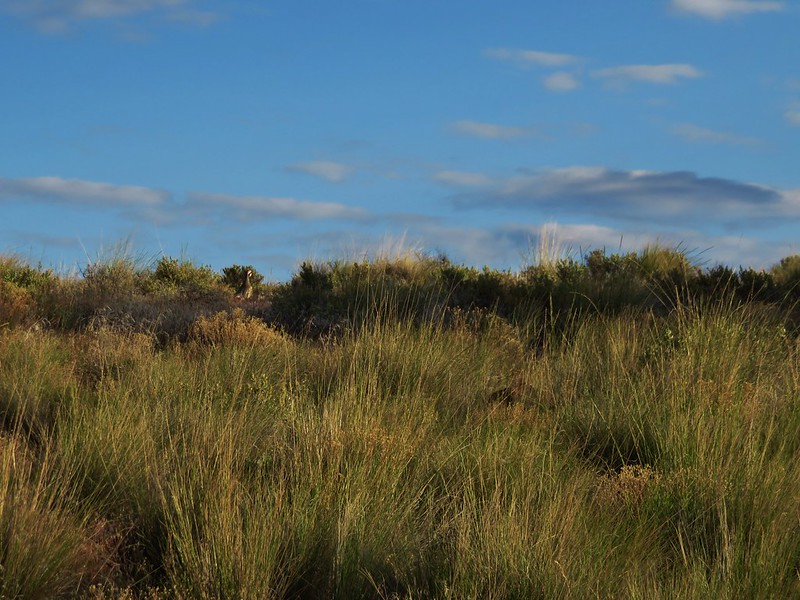
Chukars
Chukar

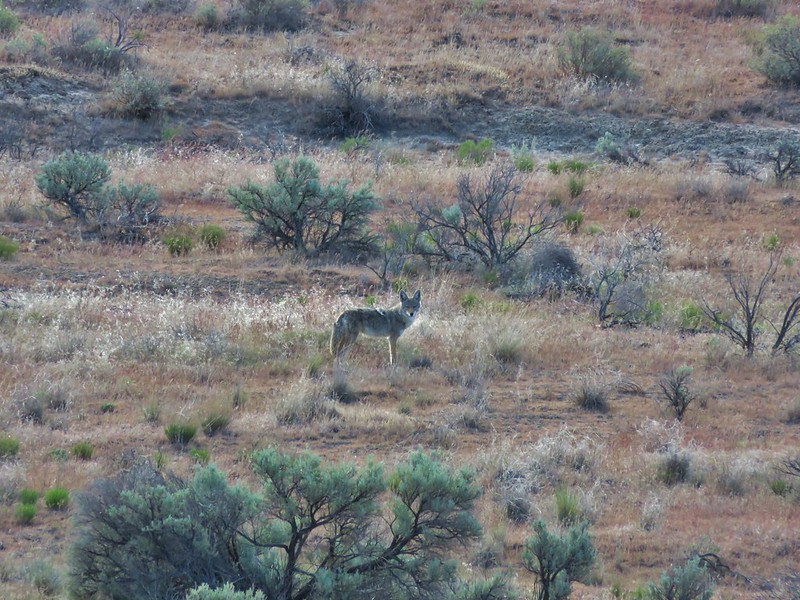
Coyote
Coyote

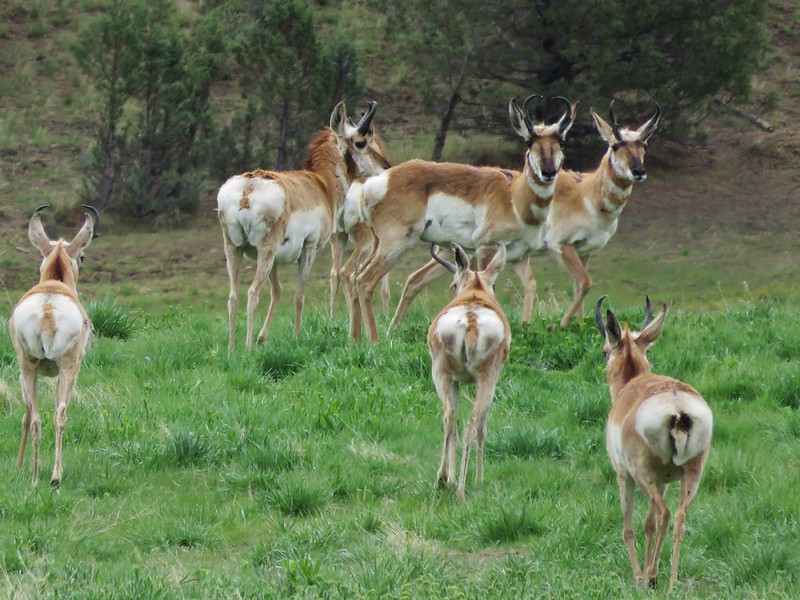
Pronghorn
Pronghorn

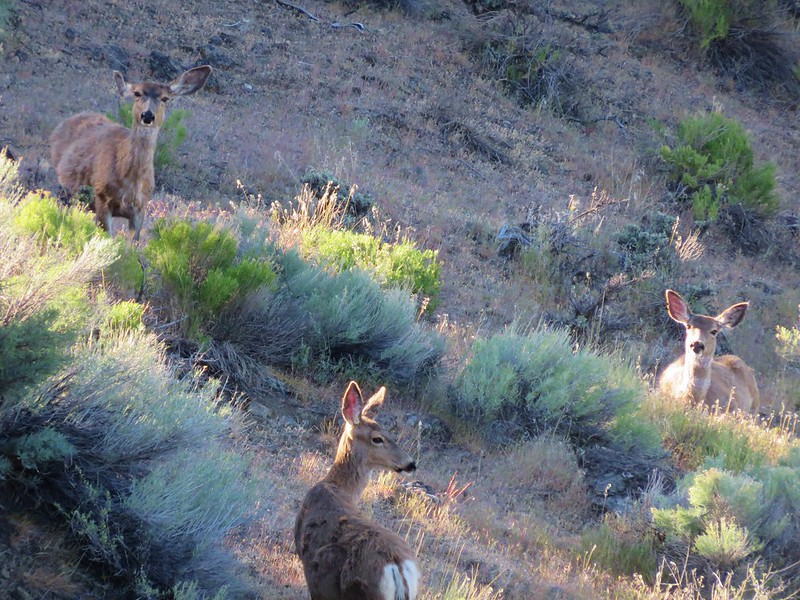
Deer
Deer

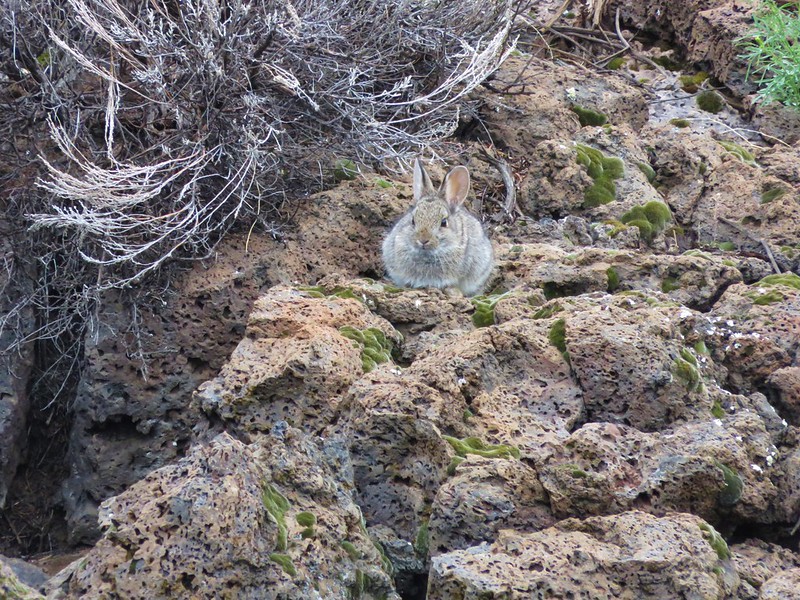
Rabbits
Rabbit

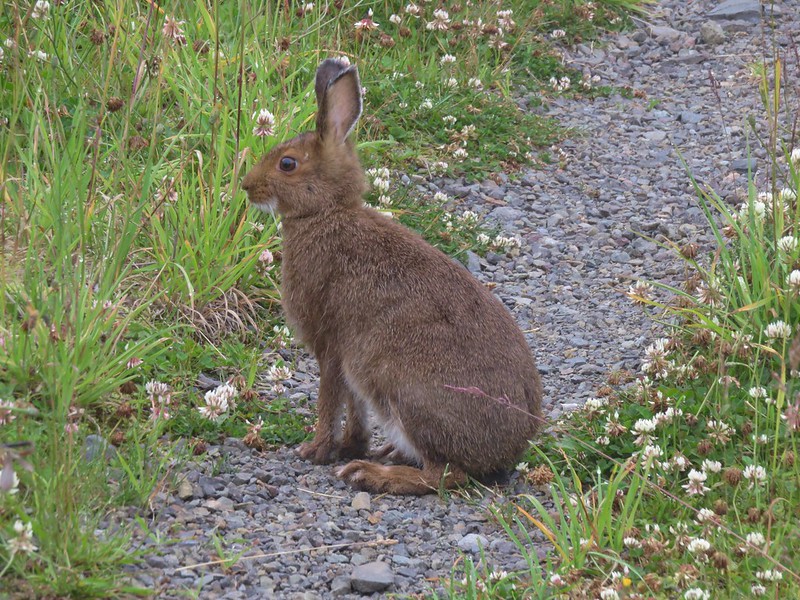
Snowshoe hare

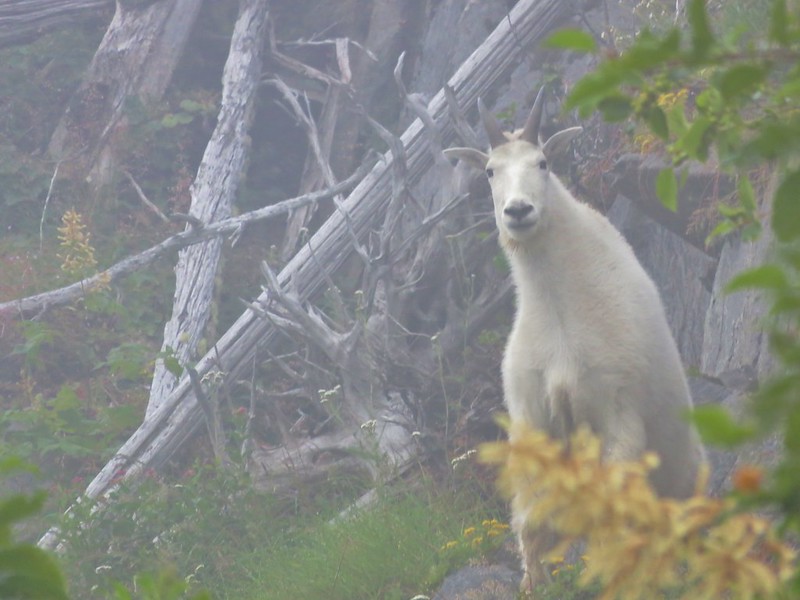
Mountain Goats
Mountain goat along the Lakes Trail

Mountain goat along the Boundary Trail

Bear
Black bear in a wildflower meadow

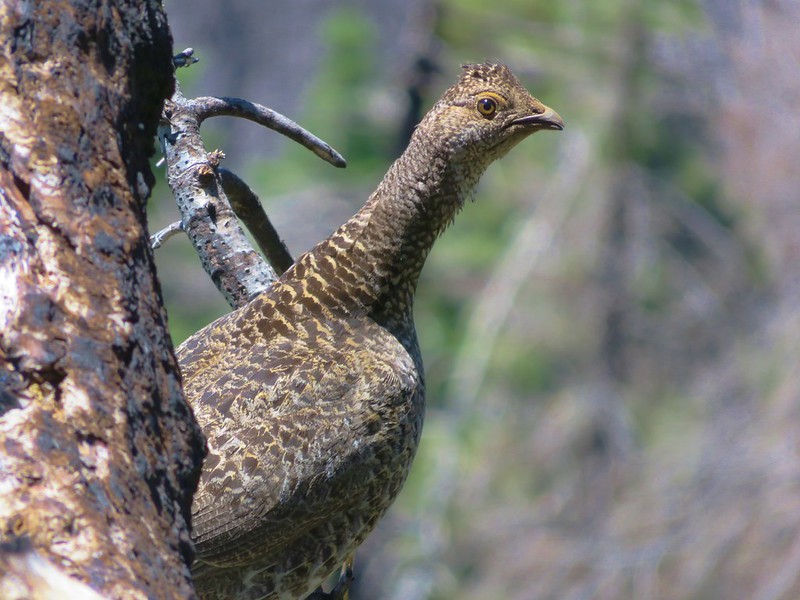
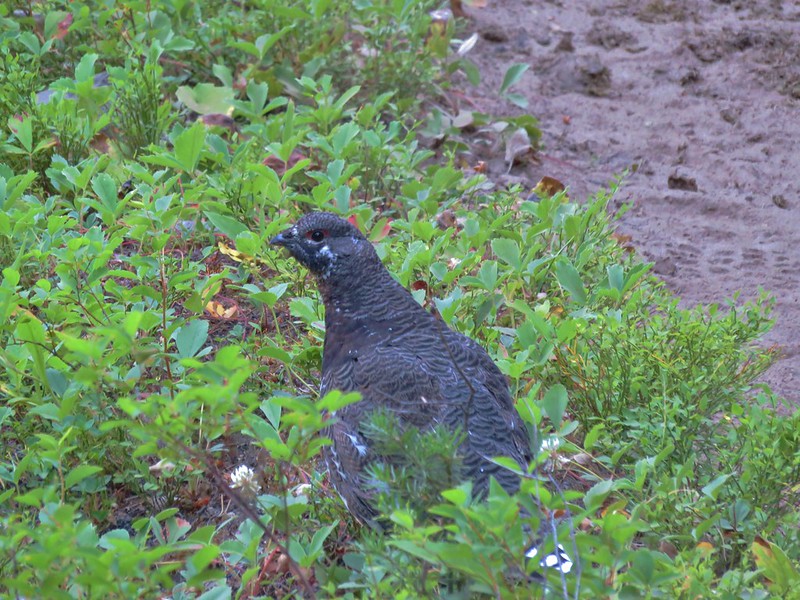
Grouse
Sooty grouse

Sooty Grouse

Grouse

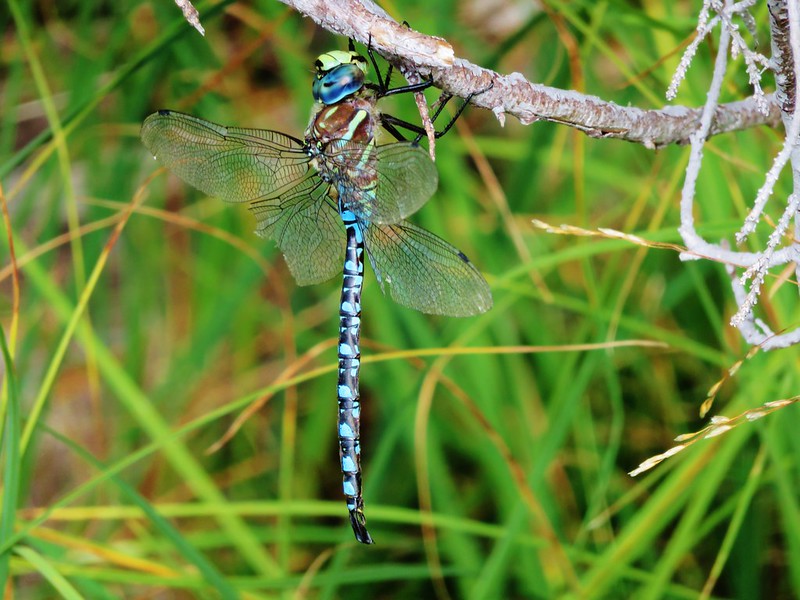
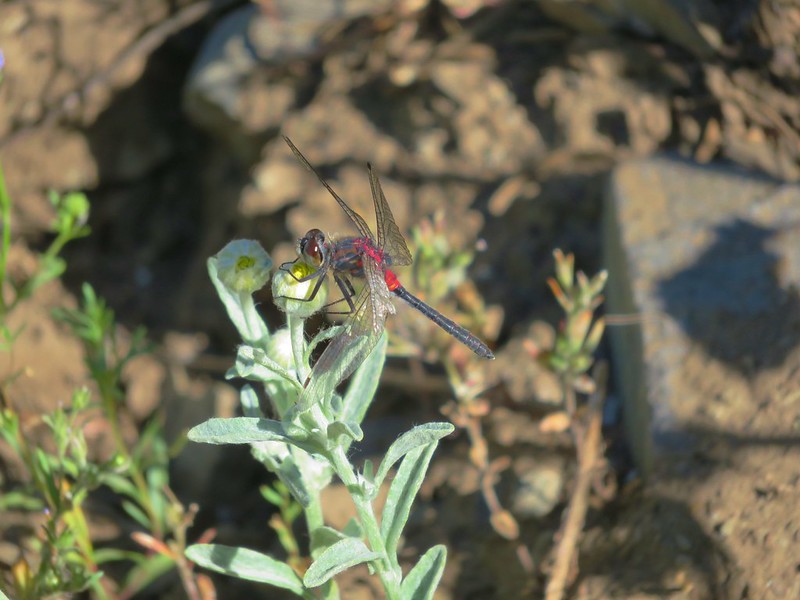
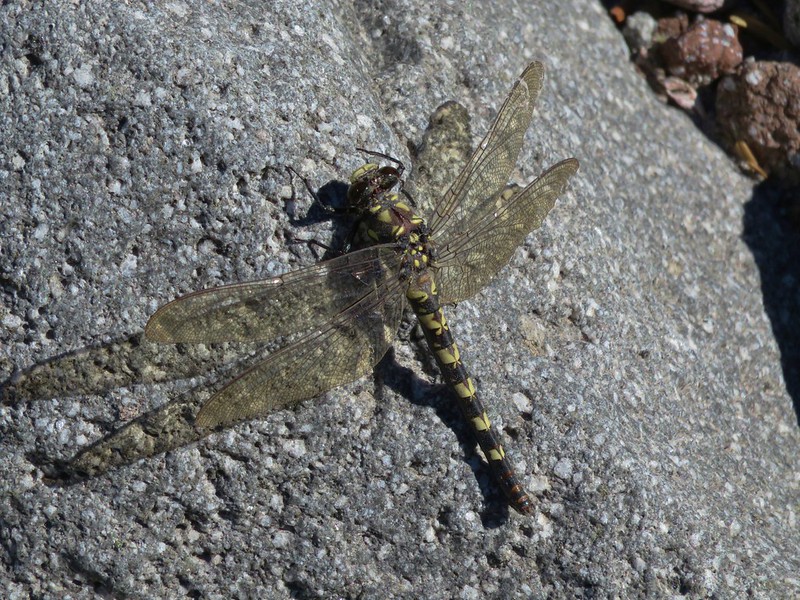
Dragonflies
Dragonfly

Dragon Fly

Dragon fly

We encountered a number of flowers for the first time this year.
Sea fig
Sea fig

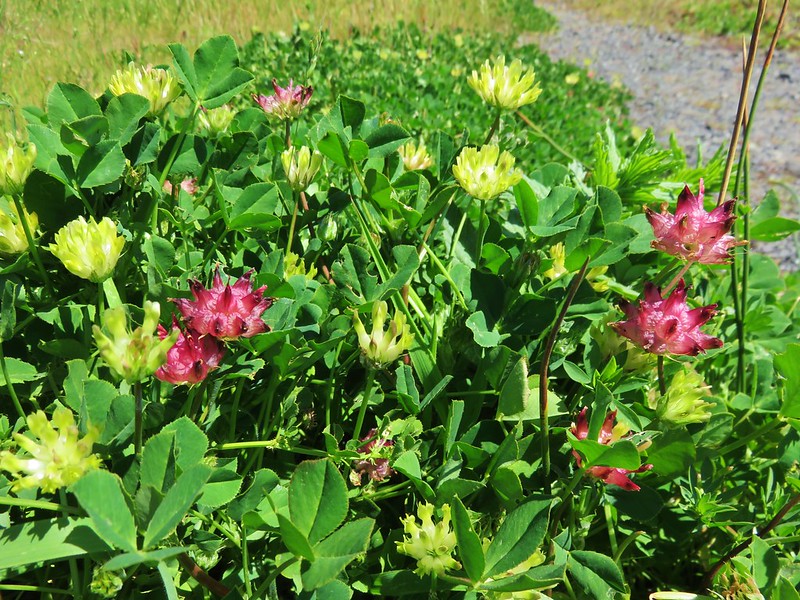
Cows clover
Cows clover

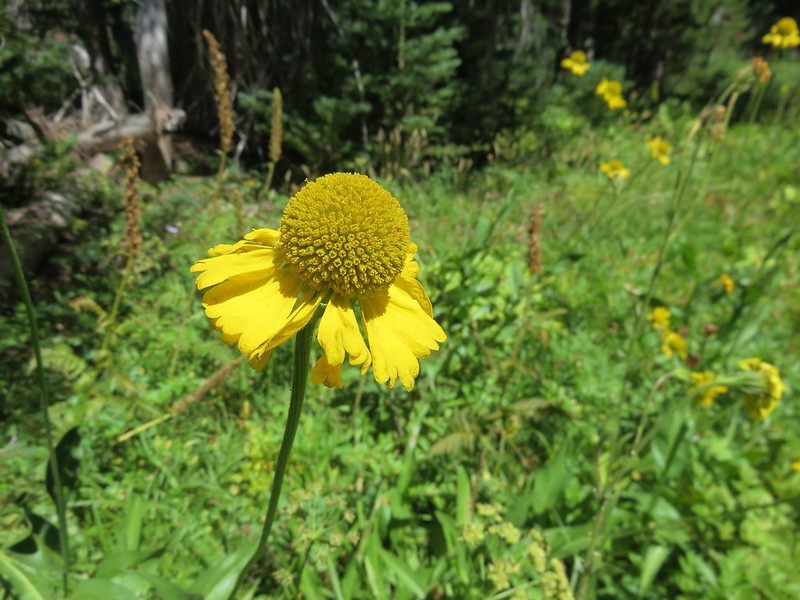
Bigelow's sneezeweed
Bigelow’s Sneezeweed

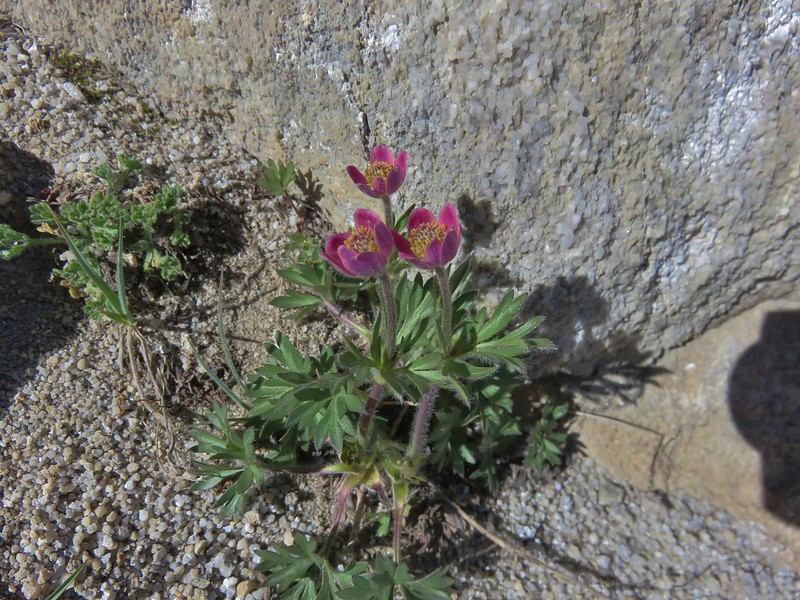
Cut-leaf anemone
Cut-leaf anemone

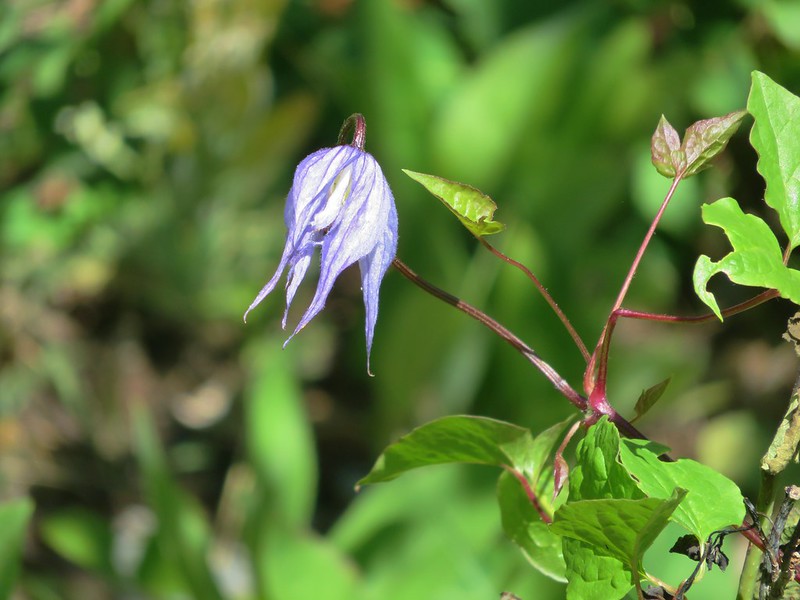
Western blue clematis

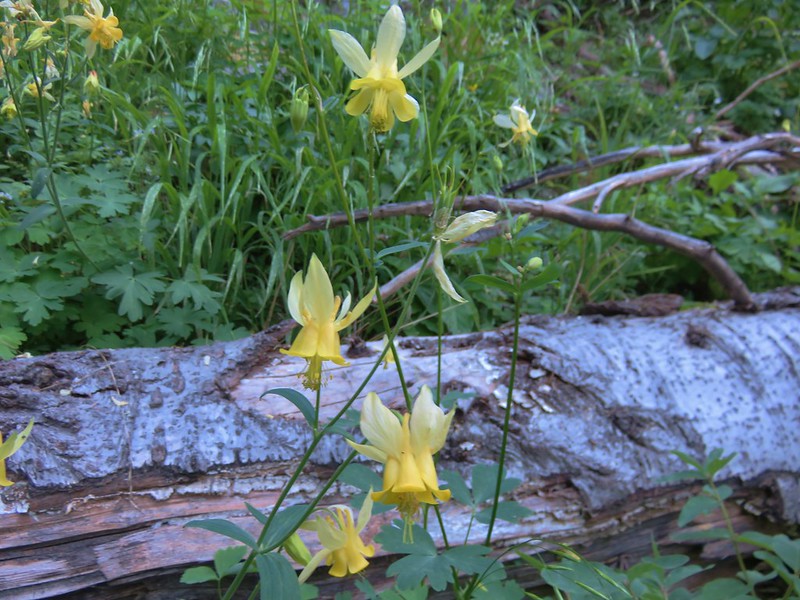
Yellow Columbine
Yellow Columbine

Pretty Face
Pretty Face

Farewell-to-Spring
Farewell-to-Spring

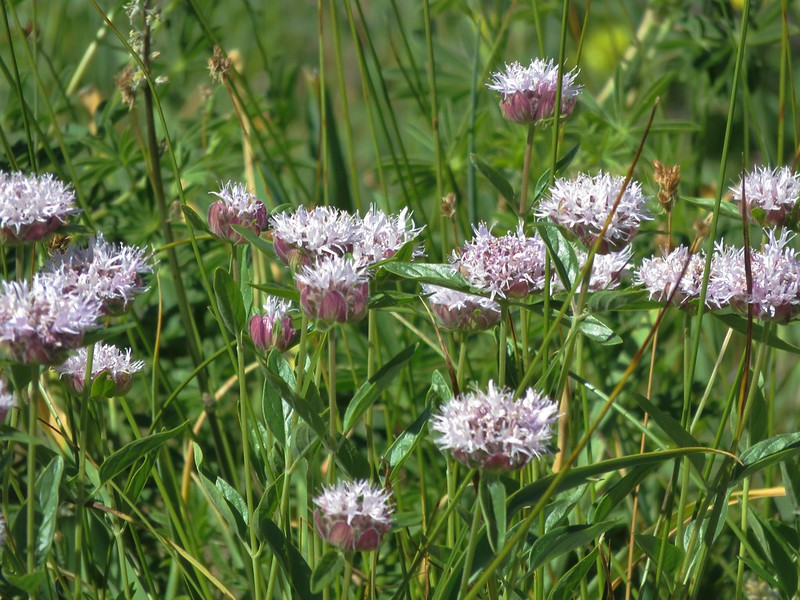
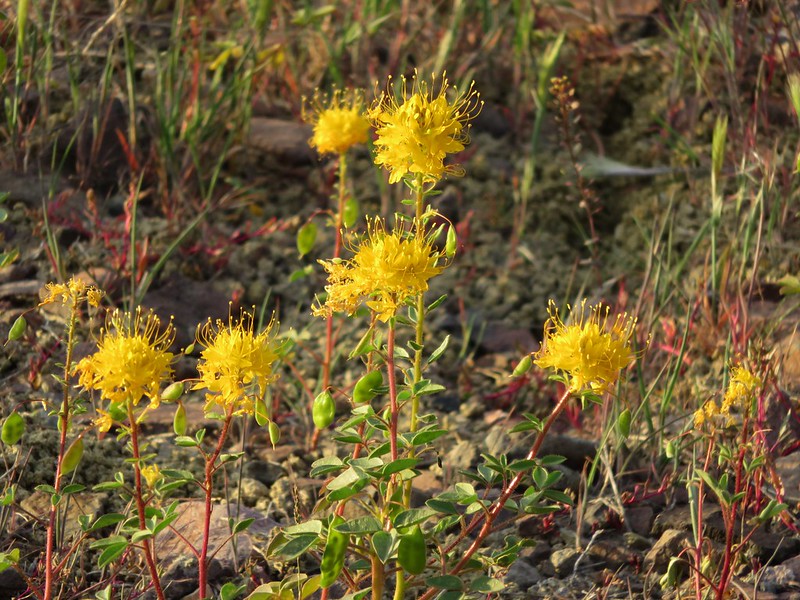
Mountain coyote mint

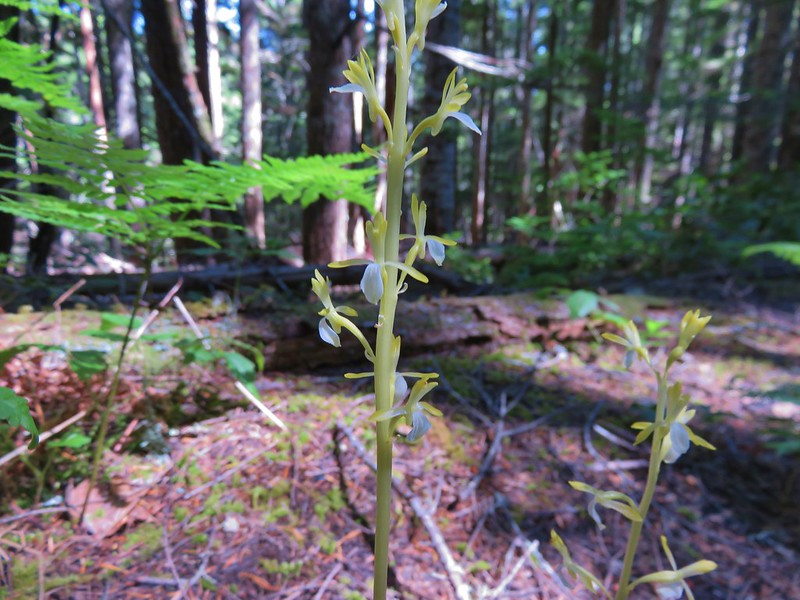
Yellow coralroot
Yellow coralroot

Sea fig
Sea fig

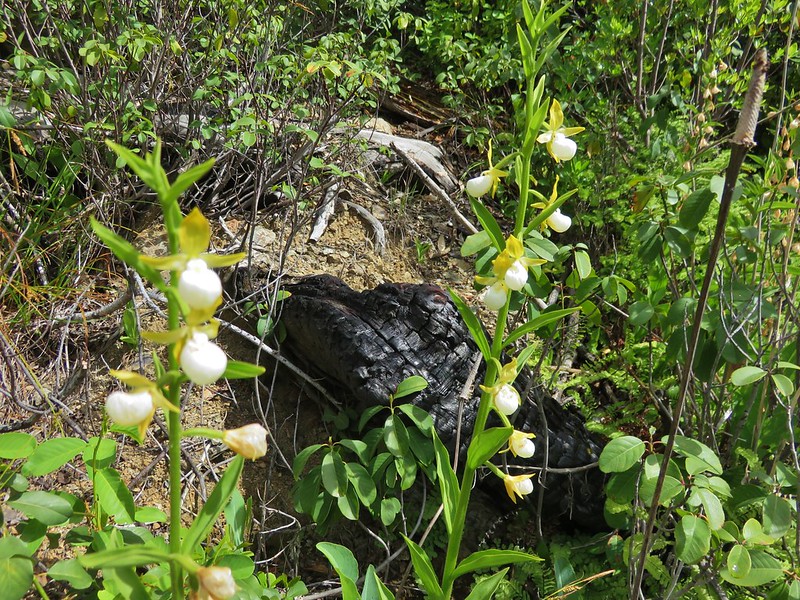
California Lady Slippers

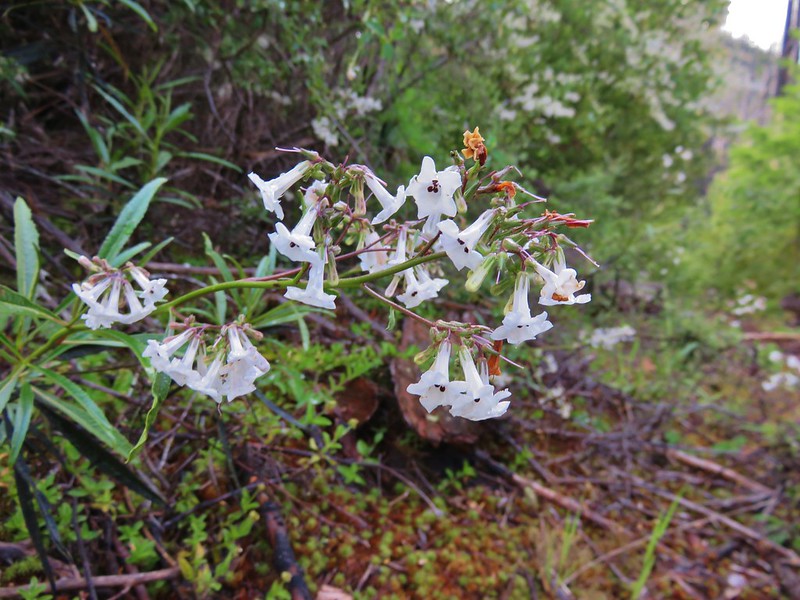
California Yerba Santa

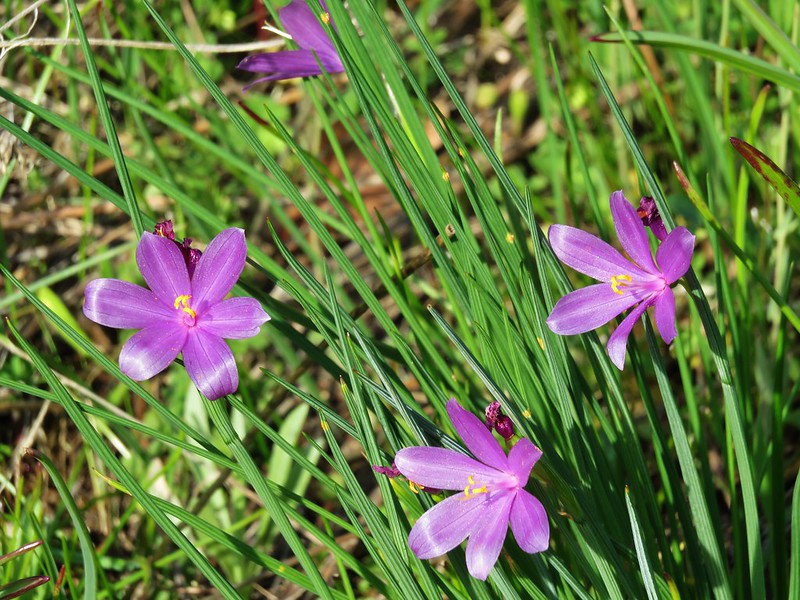
Grass widows
Grass widows

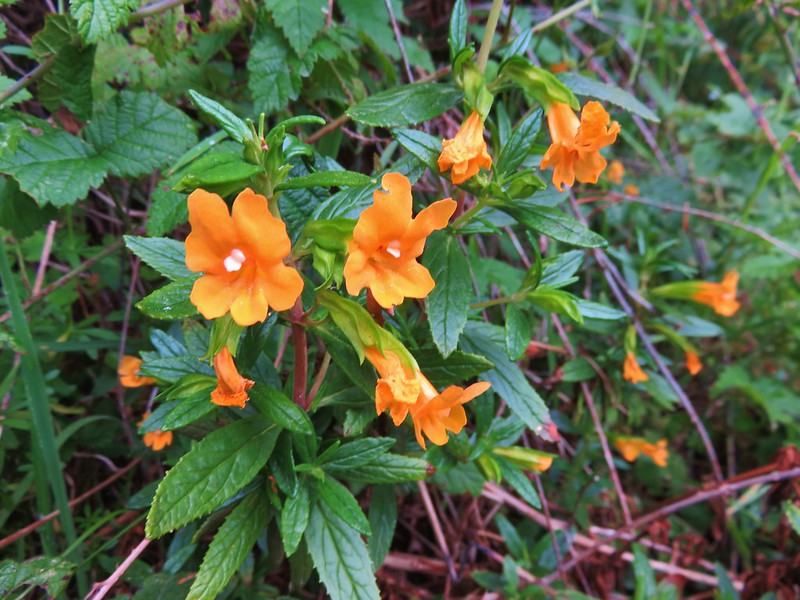
sticky monkey-flower

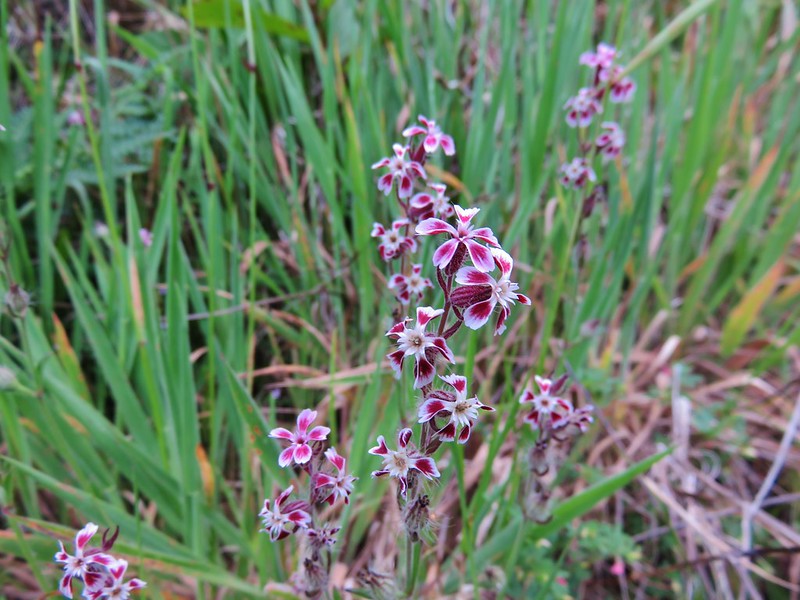
Catchfly
Some sort of catchfly

Sea thrift
Sea thrift

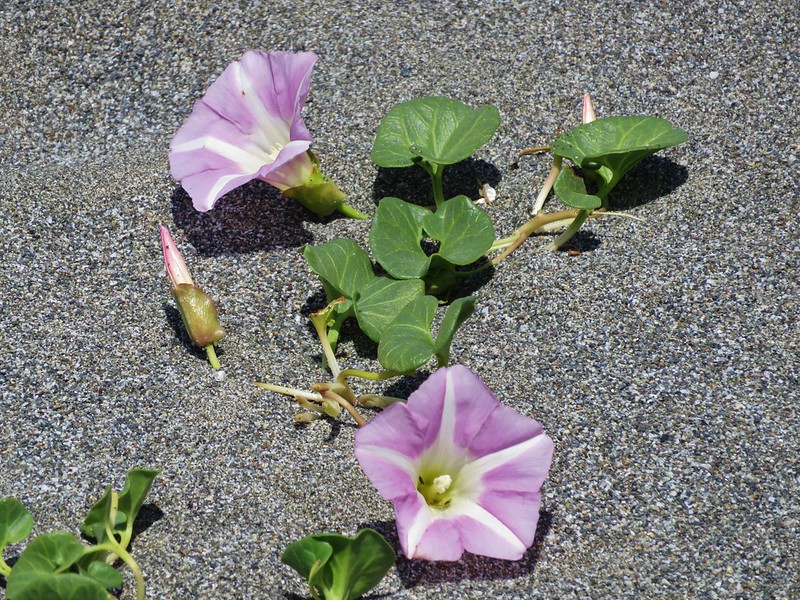
beach morning-glory
beach morning-glory

Yellow sand-verbena
Yellow sand-verbena

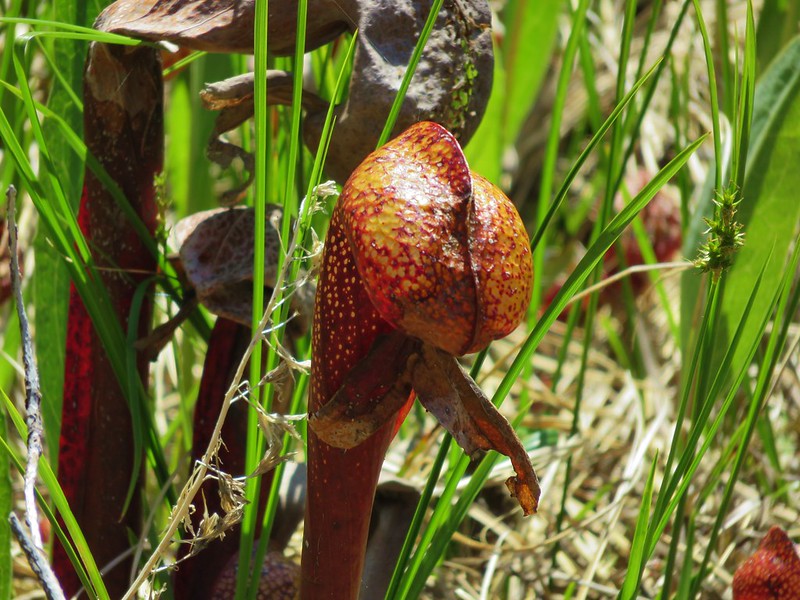
California pitcher plant (Darlingtonia californica)

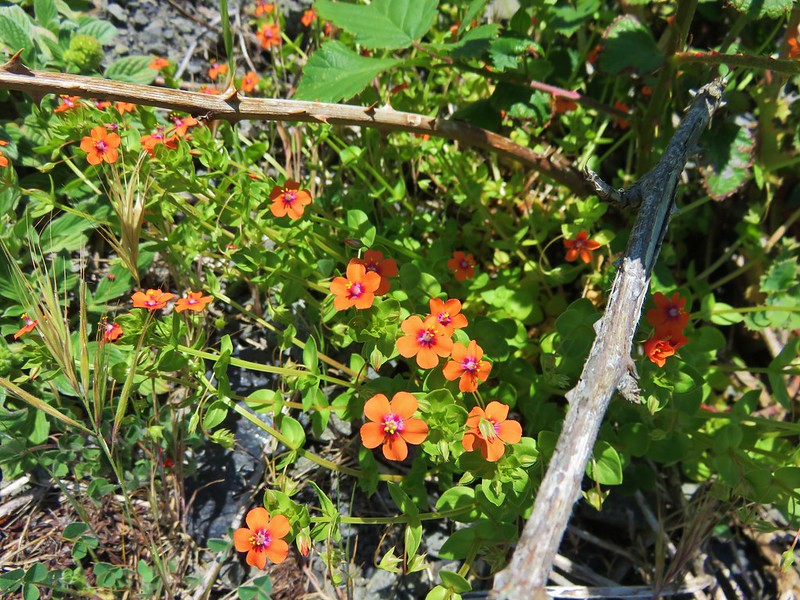
Scarlet pimpernel
Scarlet pimpernel

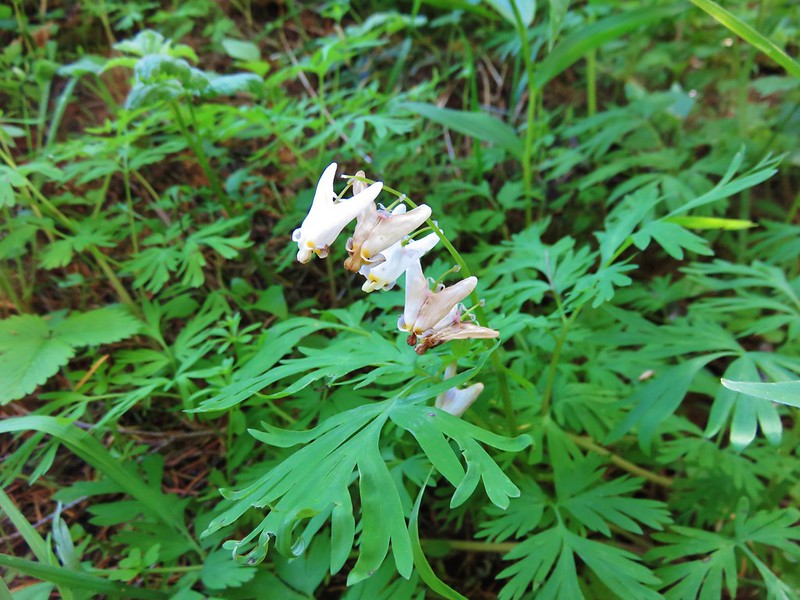
Dutchman's breech
Dutchman’s breech

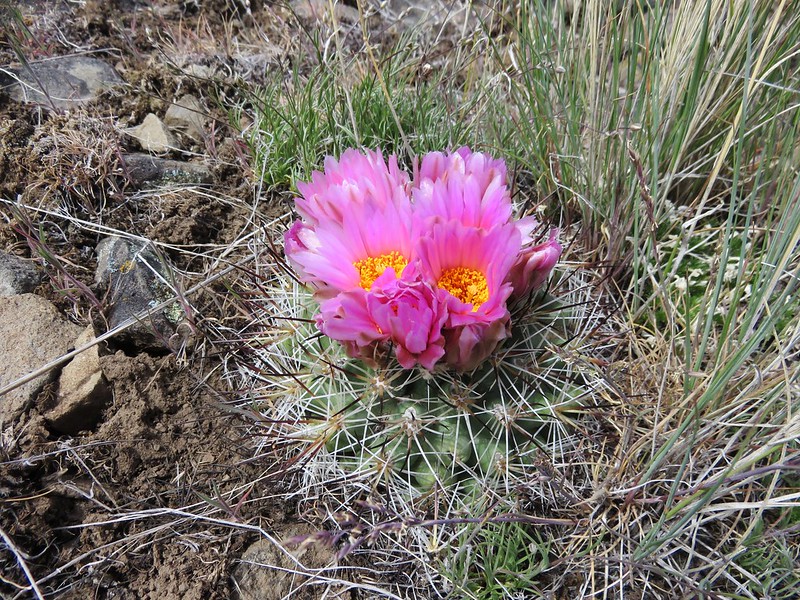
Hedgehog cactus
Hedgehog cactus

Golden Bee Plant
Golden Bee Plant

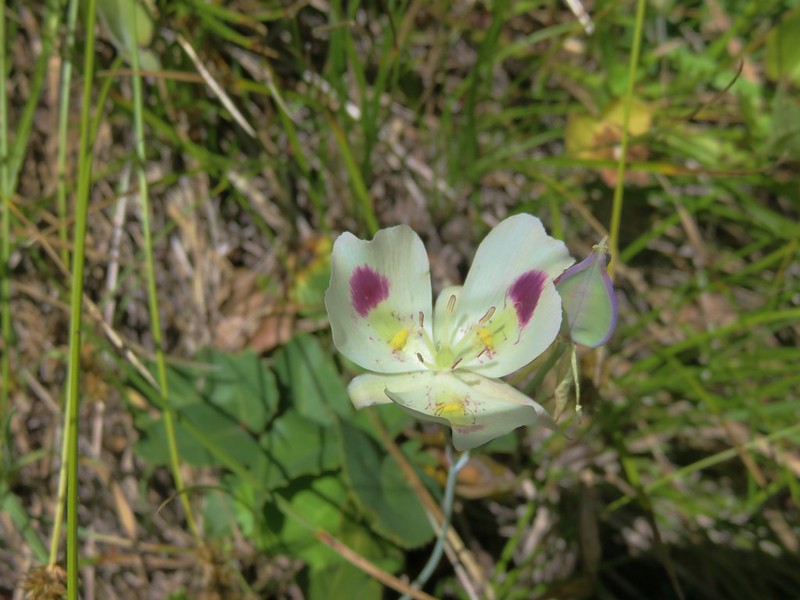
White mariposa lily
White mariposa lily

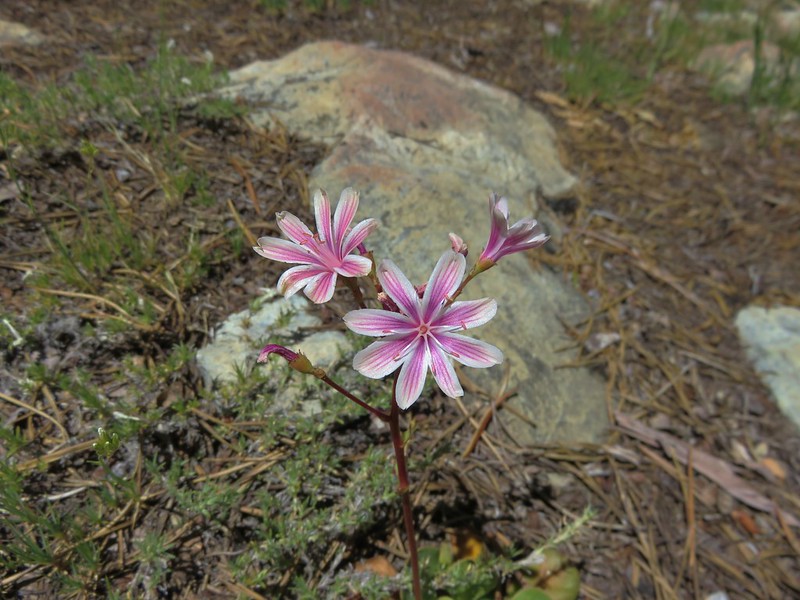
Siskiyou lewisia
Siskiyou lewisia

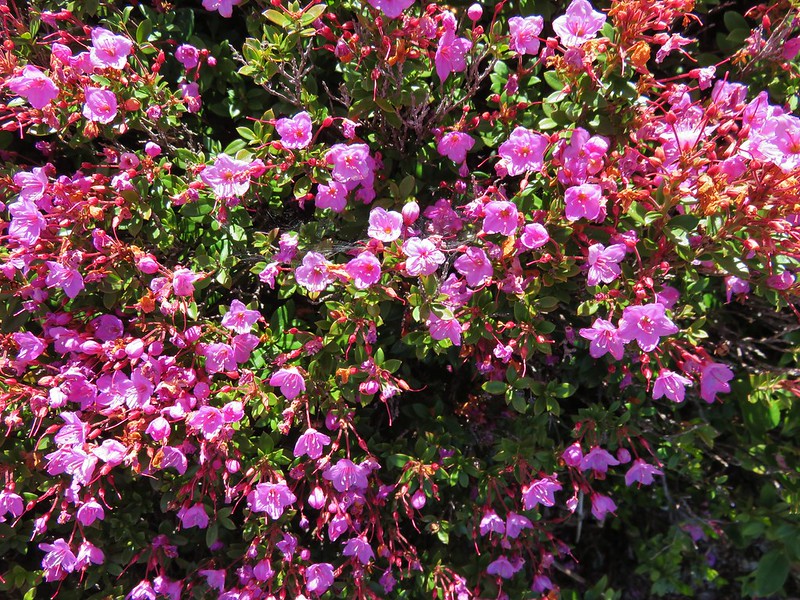
kalmiopsis leachiana

Muhlenberg's centaury
Muhlenberg’s centaury

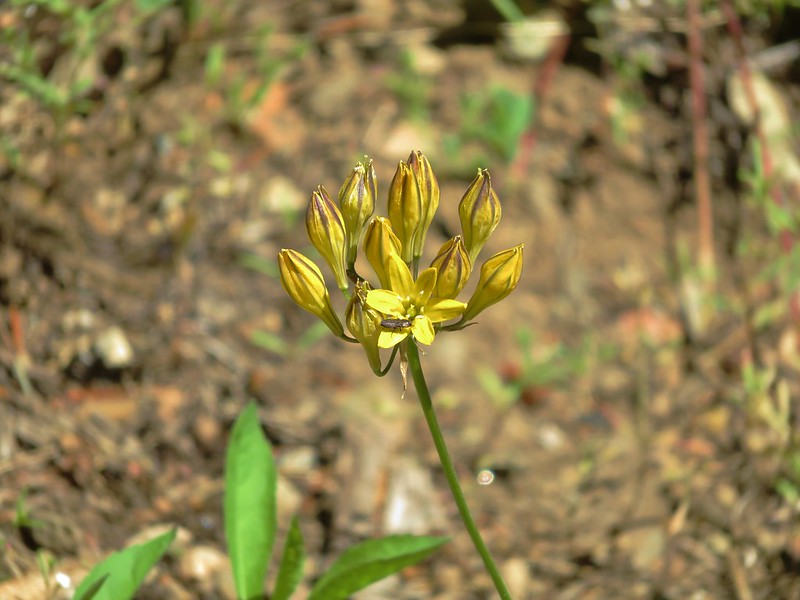
Bridges' brodiaea
Bridge’s brodiaea

There were just too many sights to fit into a year end wrap up so to see a sample from each of our hikes this album contains a few photos from each hike which attempt to show the beauty of each trail. There are a lot of photos (793 – One for each mile hiked) but then again there is a lot of beauty in God’s creation.

Happy Trails in 2017 and beyond!

Categories
Hiking Oregon Oregon Coast Southern Coast Trip report

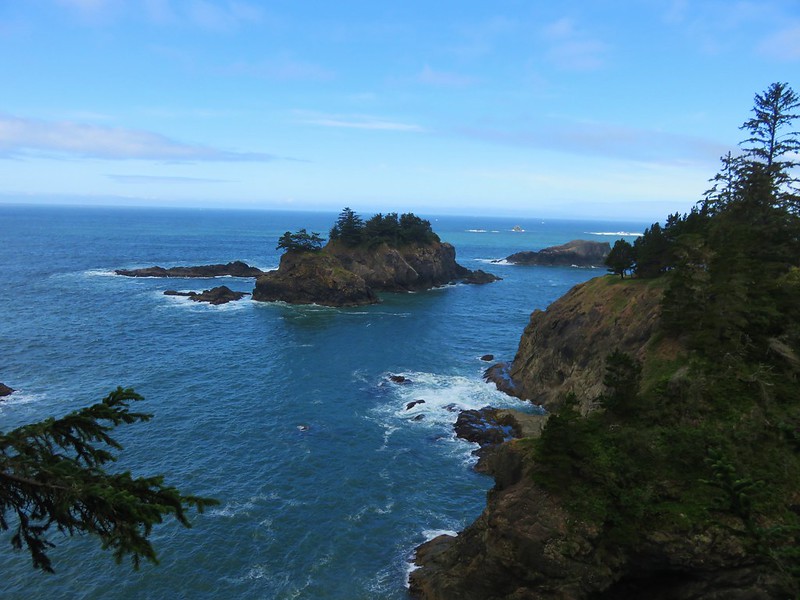
Samuel H. Boardman State Scenic Corridor North

Saturday we were heading home, but before we headed north we had one more hike to do. We had hiked much of the southern portion of the Samuel H. Boardman State Scenic Corridor on Thursday and now we were going to spend some time in the northern portion.

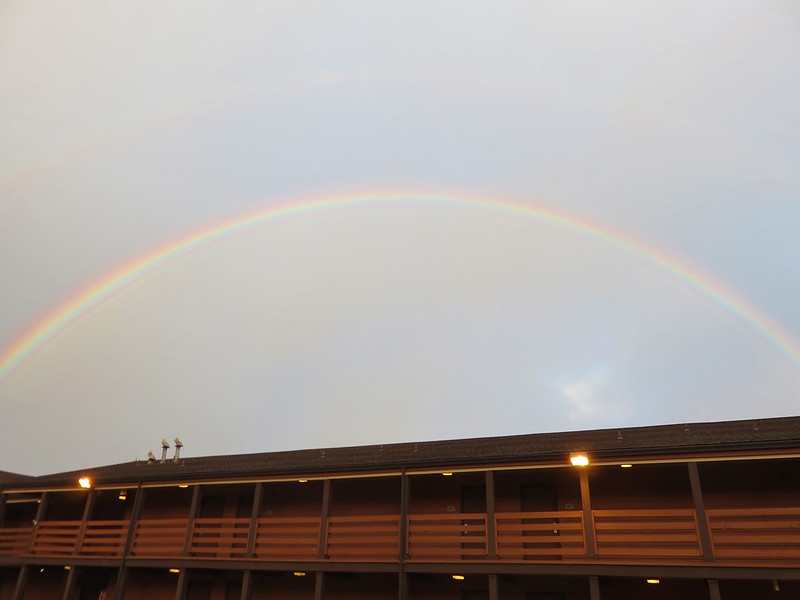
There had been chances of rain for the previous couple of days and this morning we were greeted by a rainbow as we left the hotel.
IMG_7551

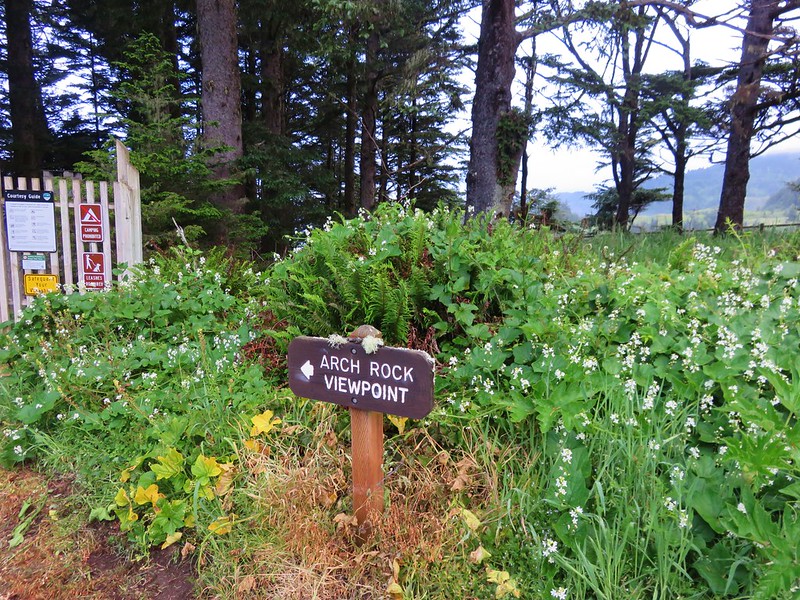
We hadn’t been rained on yet but driving down to the trailhead we were getting rained on pretty good so when we arrived at the Arch Rock Picnic Area we donned our rain gear.
IMG_7554

The rain pants helped keep the moisture that was on the plants at bay, but the jacket wound up being overkill since it never actually rained on us while we were hiking.

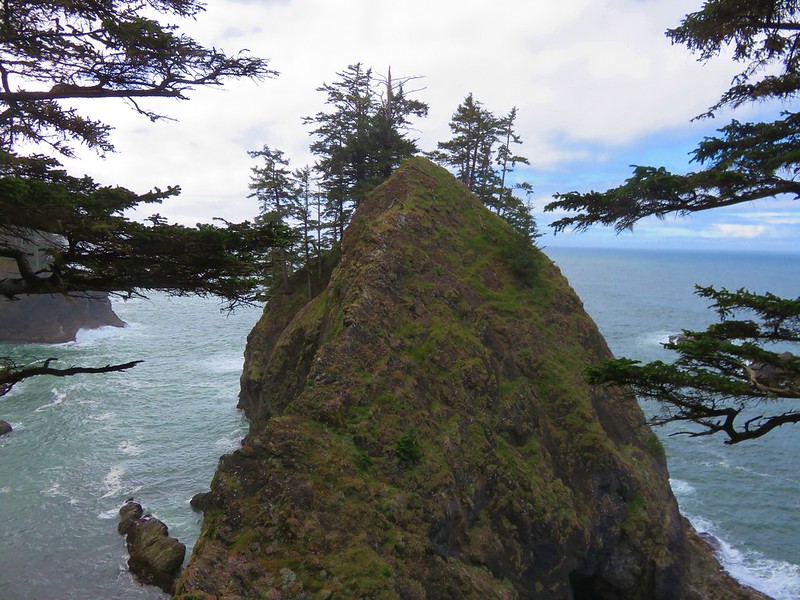
A short loop trail from the parking area led past picnic tables to a viewpoint of Arch Rock.
IMG_7555

IMG_7556

IMG_7562

IMG_7566

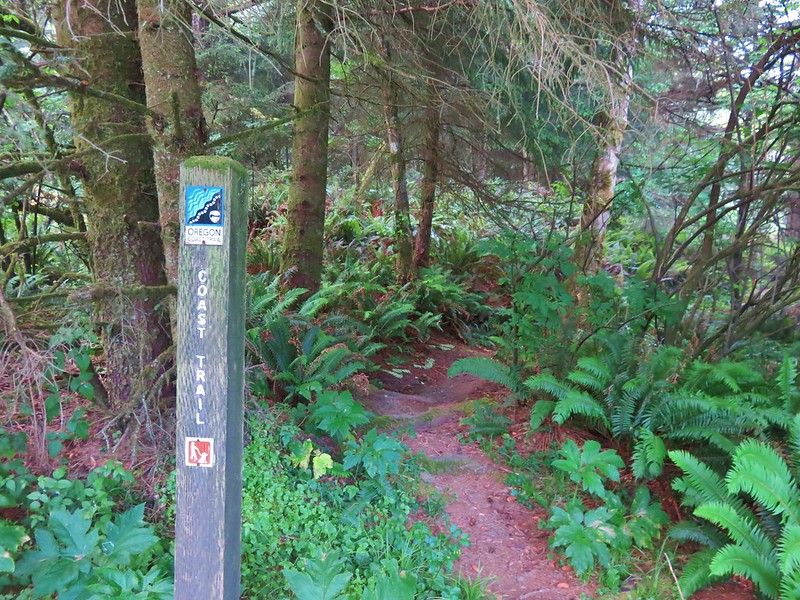
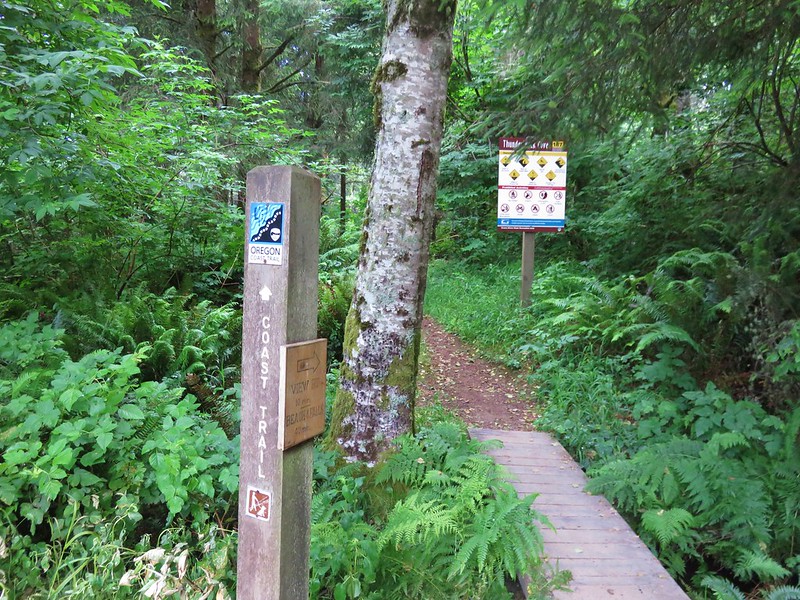
After completing the loop we headed south on the Oregon Coast Trail.
IMG_7567

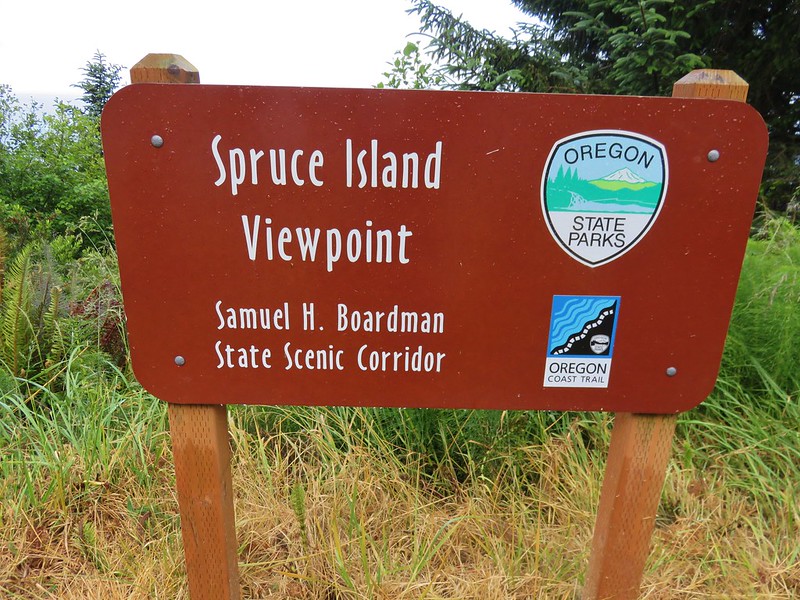
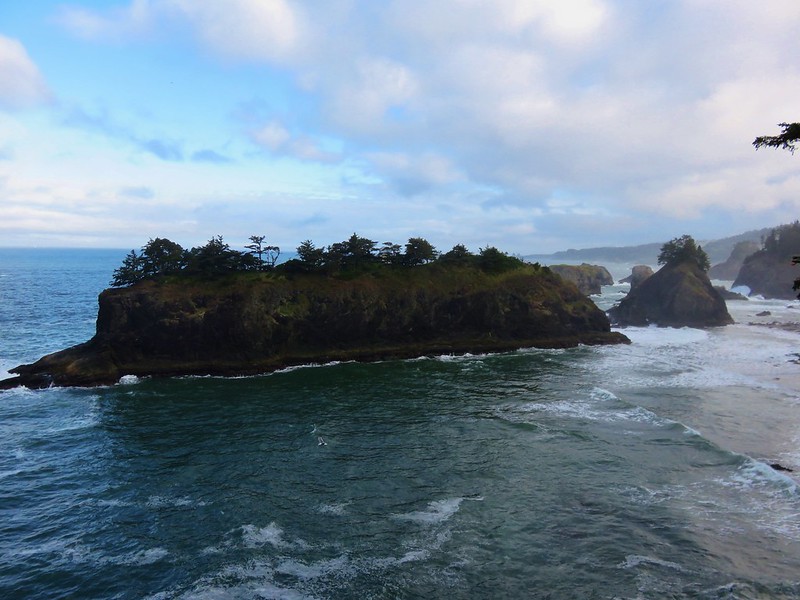
A short distance from the Arch Rock Picnic Area we came to the Spruce Island Viewpoint parking area.
IMG_7571

IMG_7575

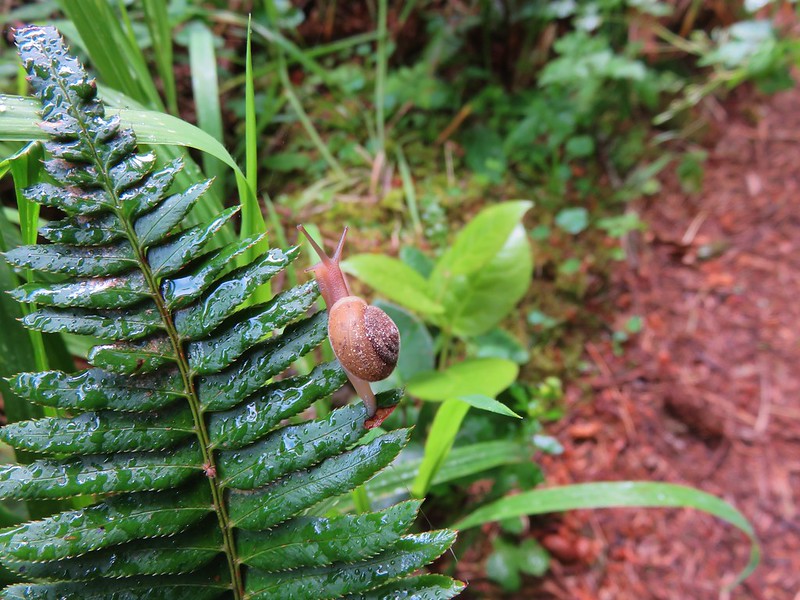
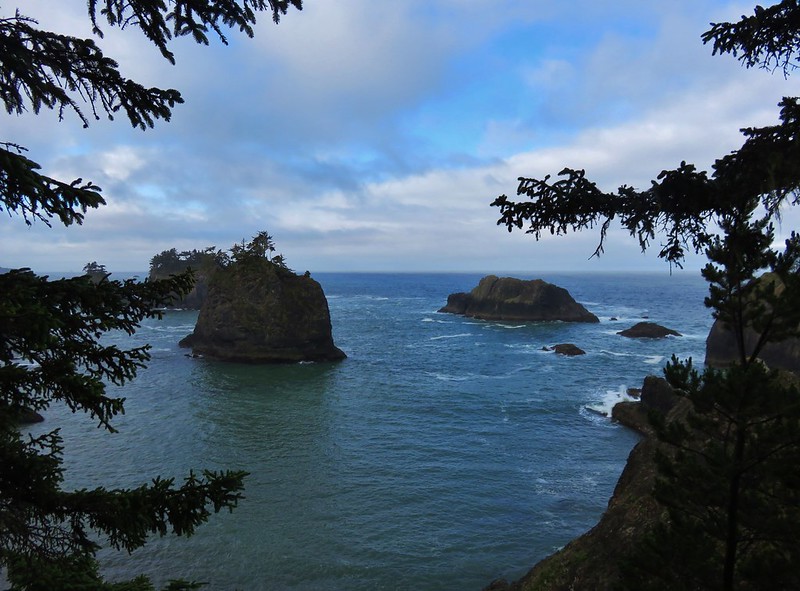
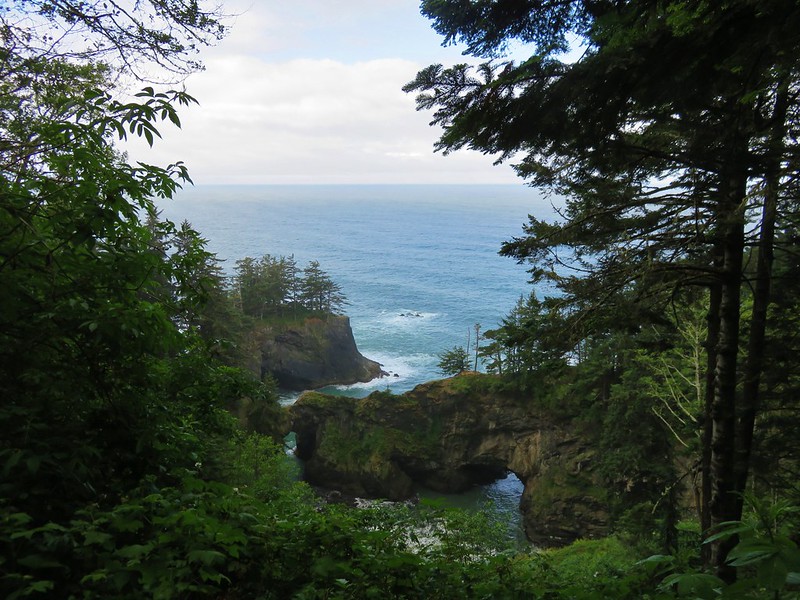
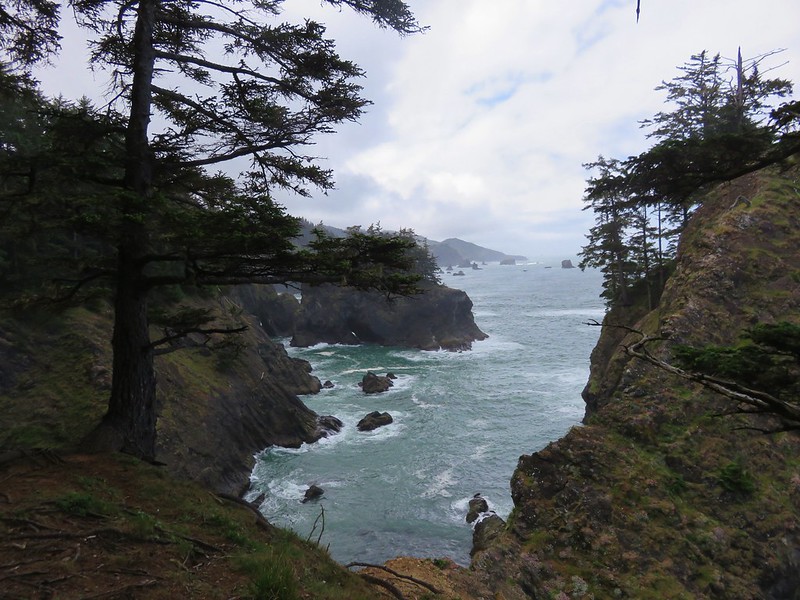
The next marker was supposed to be a pair of viewpoints before reaching Thunder Rock Cove. We arrived at a first viewpoint along with a small snail.
IMG_7589

IMG_7591

IMG_7594

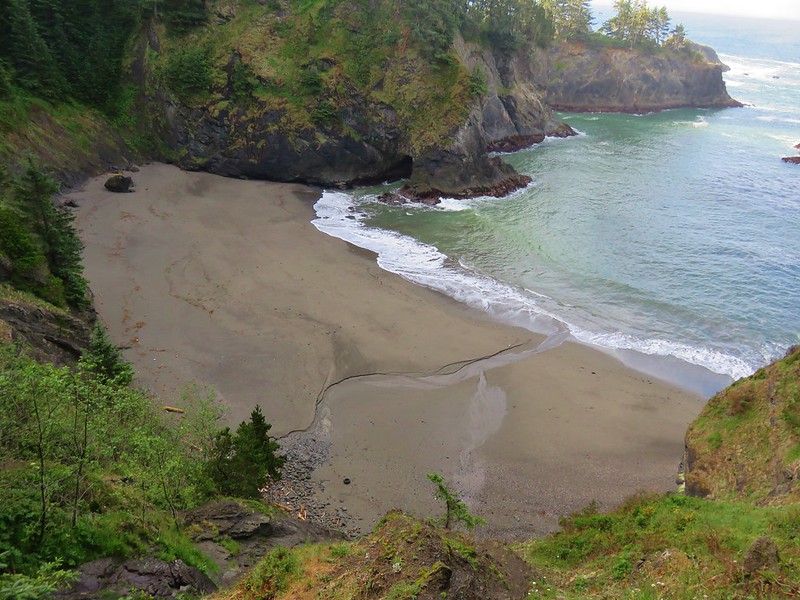
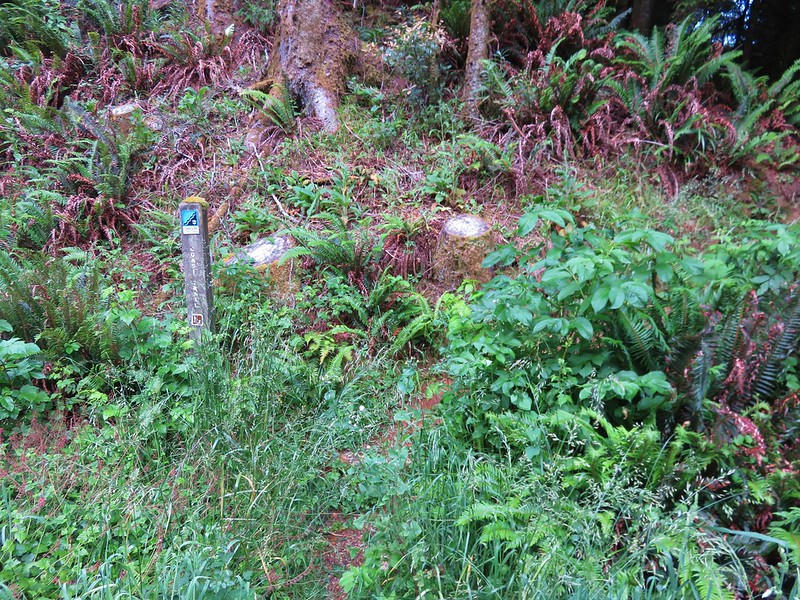
We got ourselves confused here when we came to a junction with a wide path coming downhill from our left. A gentleman was doing trail maintenance on that section. We had spoken to him on Thursday during our other visit to the park and just assumed that he was working on the trail we wanted to take. We ignored the trail that appeared to be leading down to the little beach we had seen from the viewpoint thinking it was just a way down to the ocean. We followed the wide path up to an unsigned parking area.

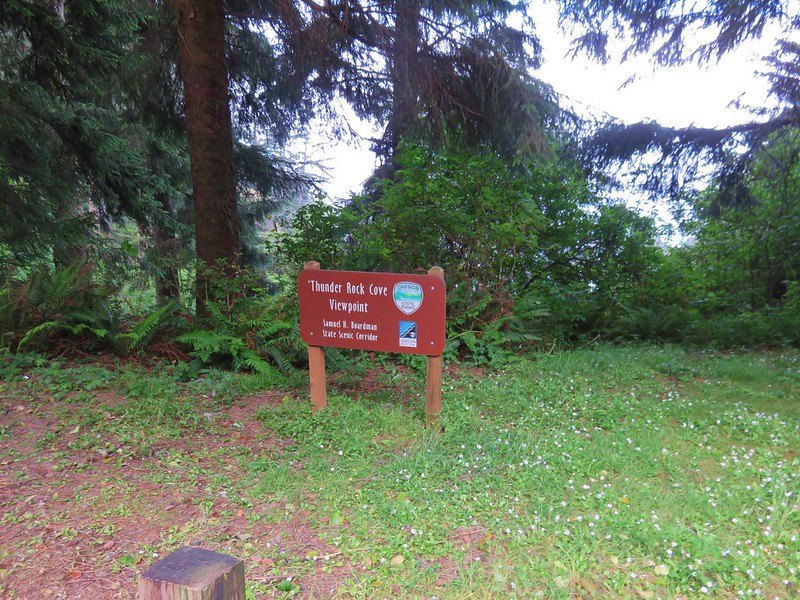
The problem was no visible trail continued south from there. We thought that the trail might follow the road for a bit as it would do a little further along so we began walking along Highway 101 looking for some sign of the Oregon Coast Trail. It wasn’t until we reached the Thunder Rock Cove Viewpoint Parking area that we picked up the trail again.
IMG_7599

IMG_7600

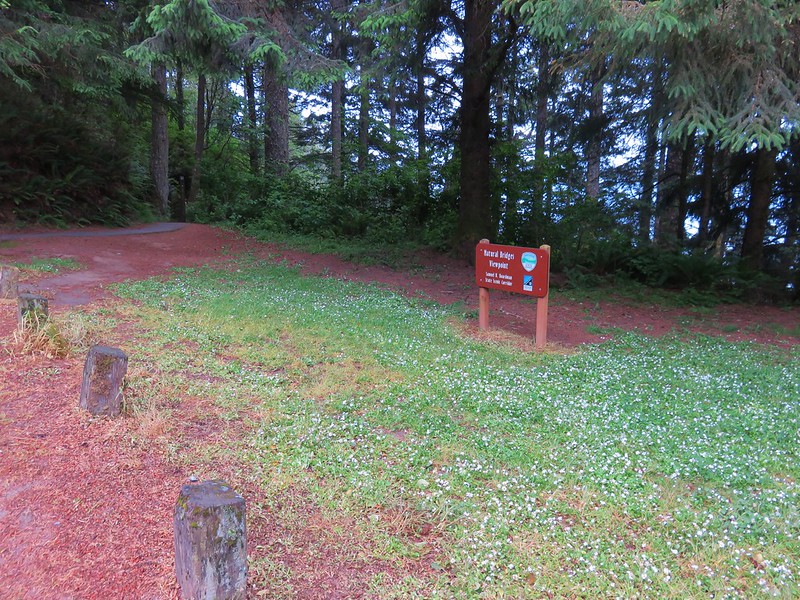
We should have gone right down to the beach instead of uphill at the previous junction but we were back on the trail now and after a short climb around a hill we arrived at another parking area. This one was for the Natural Bridges Viewpoint.
IMG_7606

IMG_7610

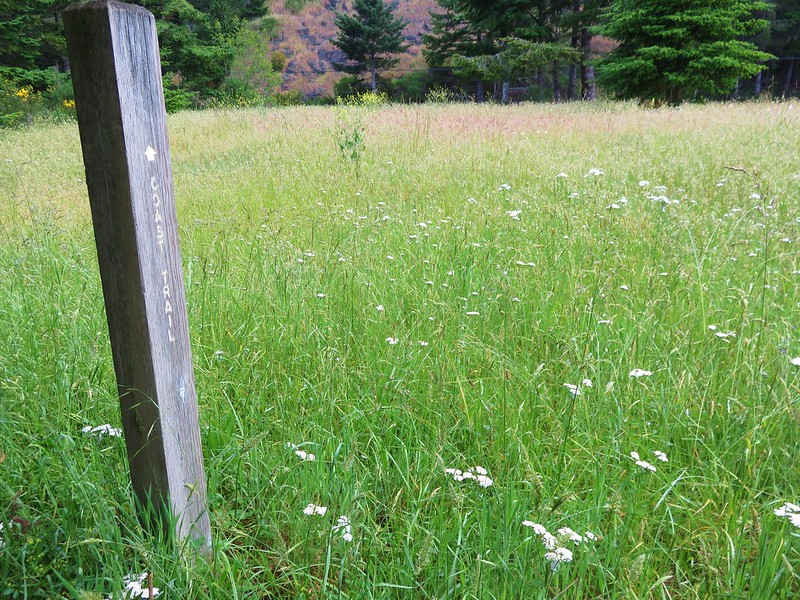
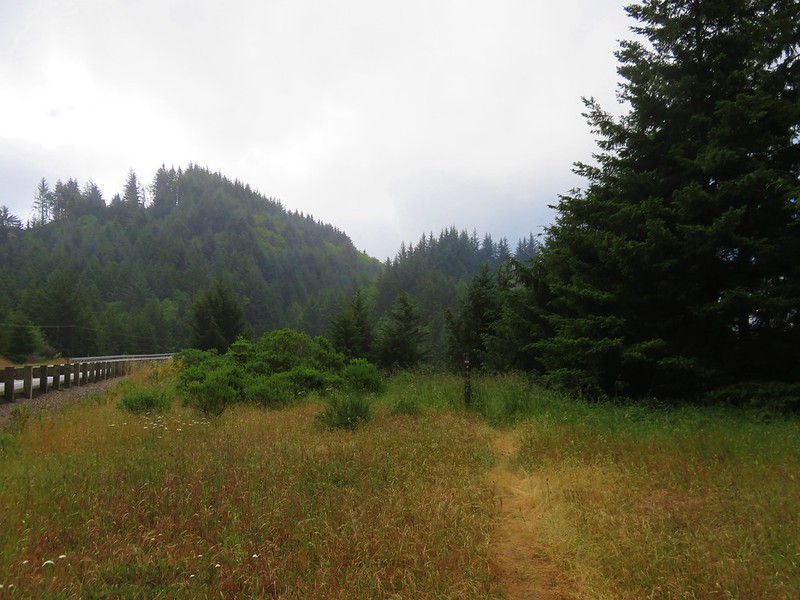
The next 1.1 mile section of trail alternated between grassy meadows along the highway and forest with an occasional viewpoint.
IMG_7613

IMG_7618

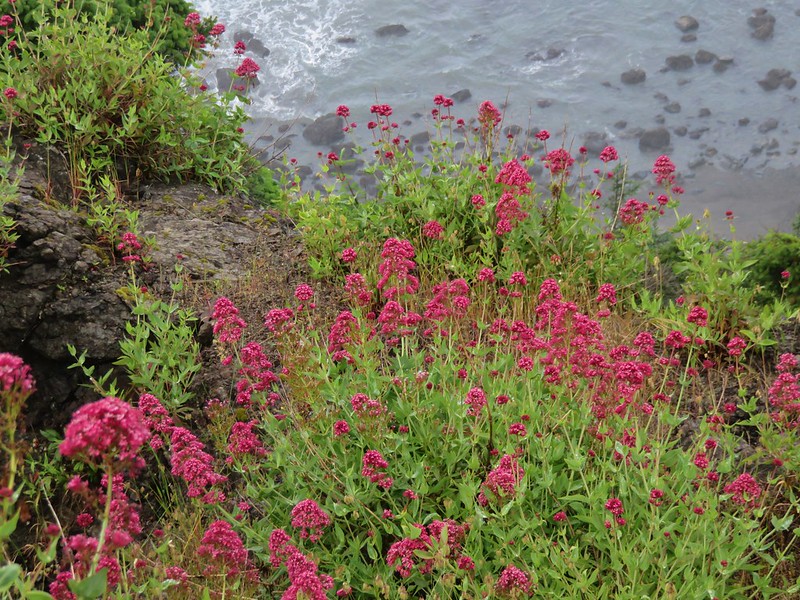
Red valerian
IMG_7623

IMG_7624

IMG_7625

After a short walk along the Highway the trail reappeared heading downhill toward China Beach.
IMG_7627

IMG_7628

We spent a little time down on this beach. There were plenty of rocks in the water including one tall pillar covered in birds. It was just far enough out that we couldn’t tell what kind of birds they were, just that there was a lot of them.
IMG_7638

IMG_7643

IMG_7649

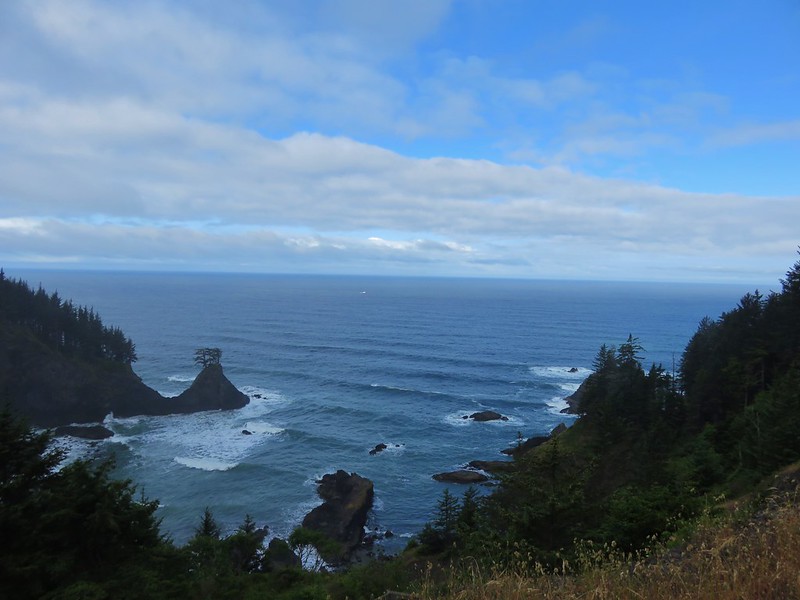
To continue on the trail we would have needed to follow the beach south around a small headland that was already pressed by the ocean. We didn’t want to get stuck on the far side where we would be forced to walk along the highway to get back, so we stopped here and got ready to head back. On our way back we stopped at a couple of viewpoints we had passed by initially.
IMG_7665

IMG_7670

IMG_7671

IMG_7676

We also managed to stick to the section of Oregon Coast Trail we’d missed when we took the wrong turn earlier near Thunder Rock Cove.
IMG_7683

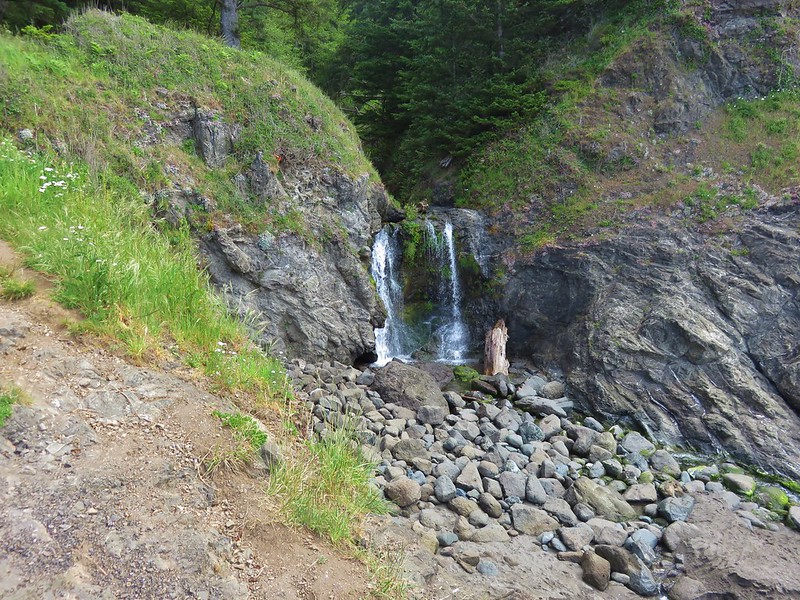
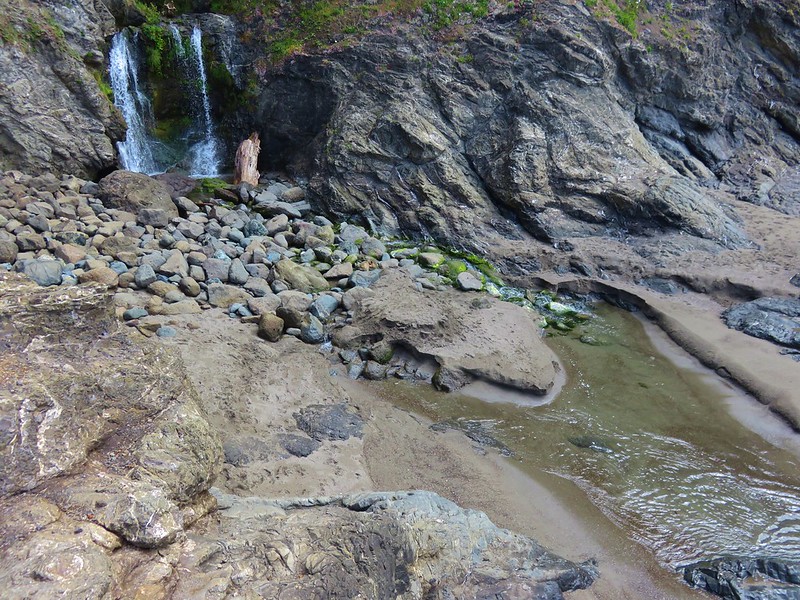
Along this section we discovered an option for a loop trail to the beach and waterfall.
IMG_7685

The loop trail passed more nice viewpoints before dropping down to a view of the waterfall.
IMG_7695

IMG_7708

IMG_7711

IMG_7714

IMG_7729

IMG_7736

IMG_7739

The trail then climbed up past another stunning viewpoint before returning to the Oregon Coast Trail.
IMG_7741

IMG_7749

We followed the trail back to the Arch Rock Picnic Area ending our vacation hikes. This hike ended up being 9.2 miles according to the GPS bringing our total for the 7 days to 95.2 miles. It had been a great vacation despite being our “Plan B” option. The weather wound up great and the views and wildflowers were spectacular. It was another good reminder of just how much our State has to offer in the way of great hiking. Happy Trails!

Flickr: https://www.flickr.com/photos/9319235@N02/albums/72157668656866396