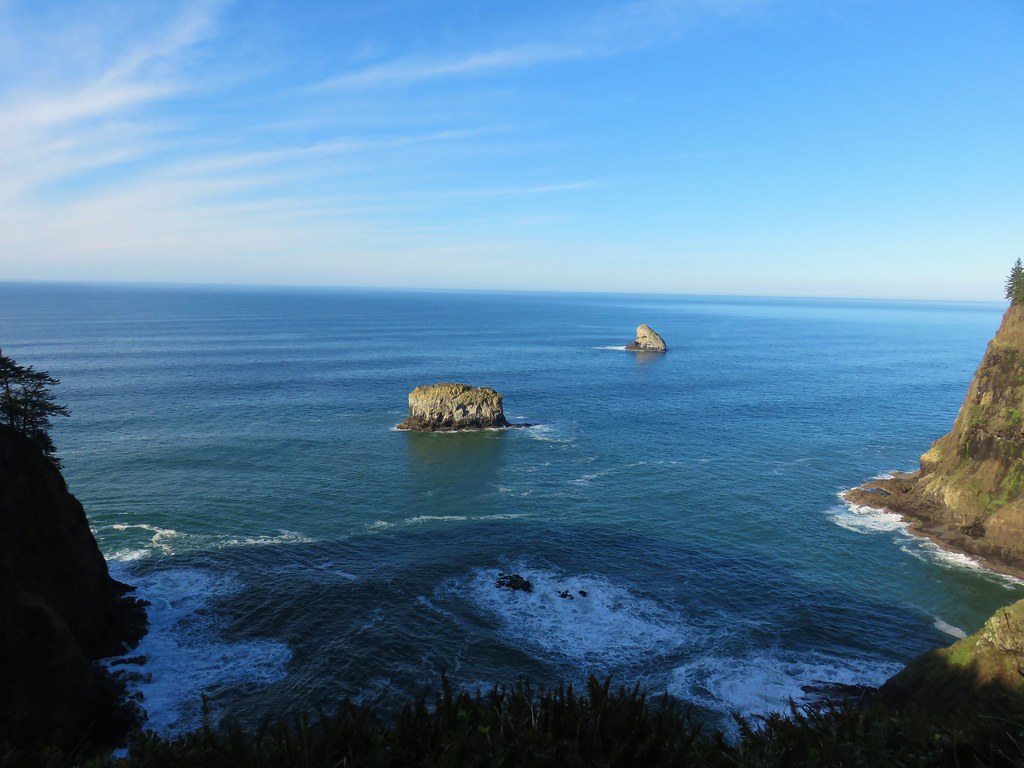
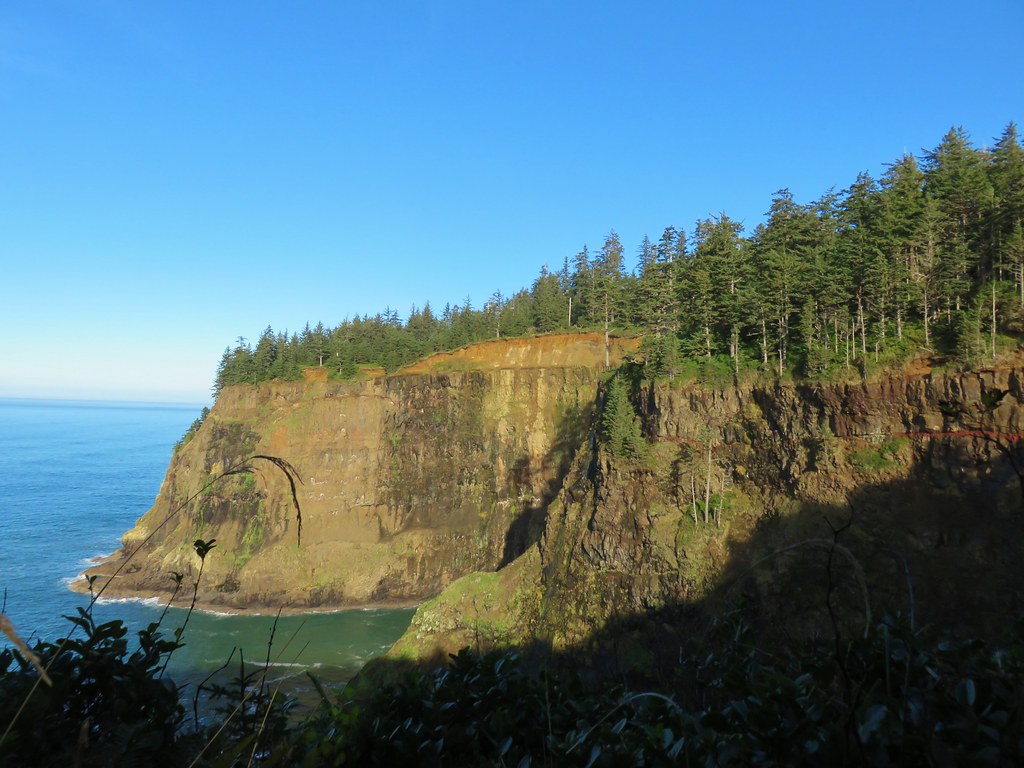
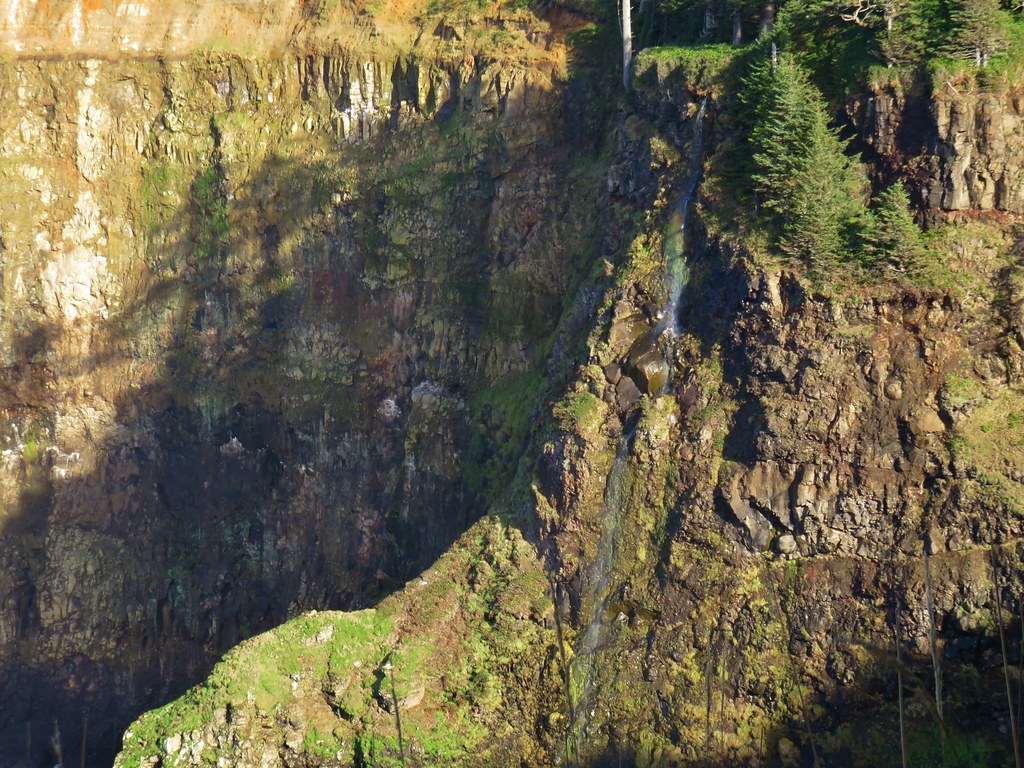
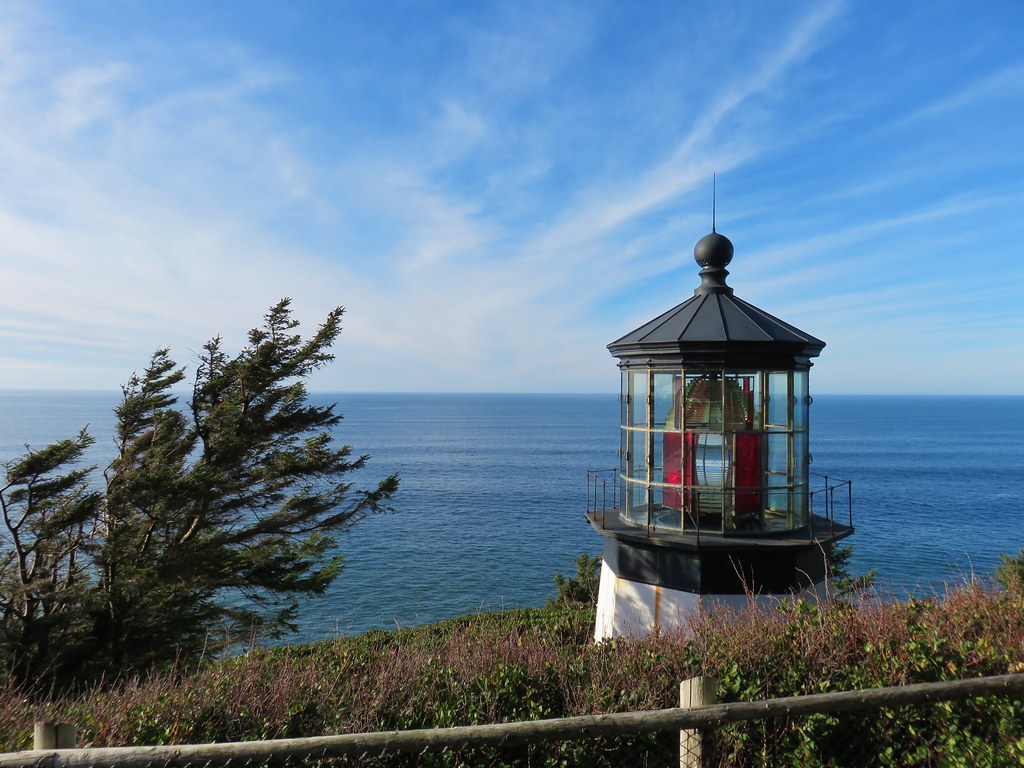
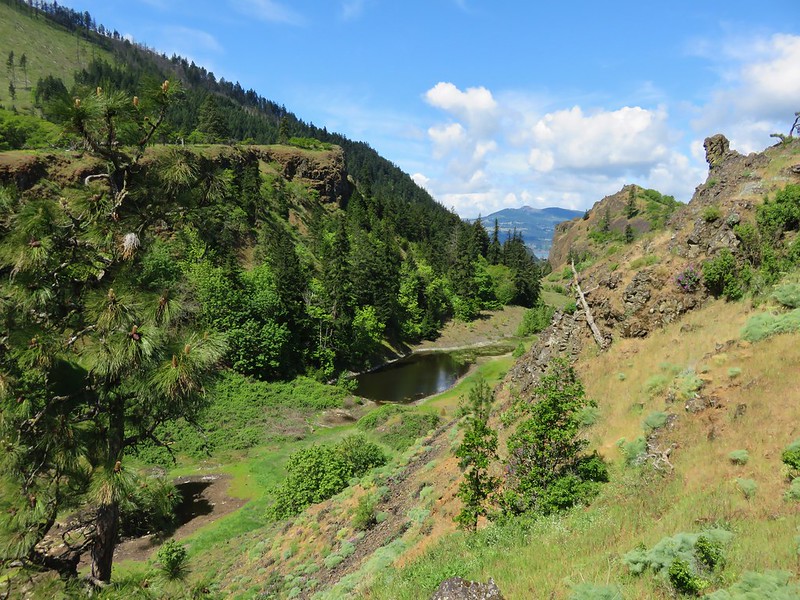
Categories
Central Coast Hiking Oregon Oregon Coast

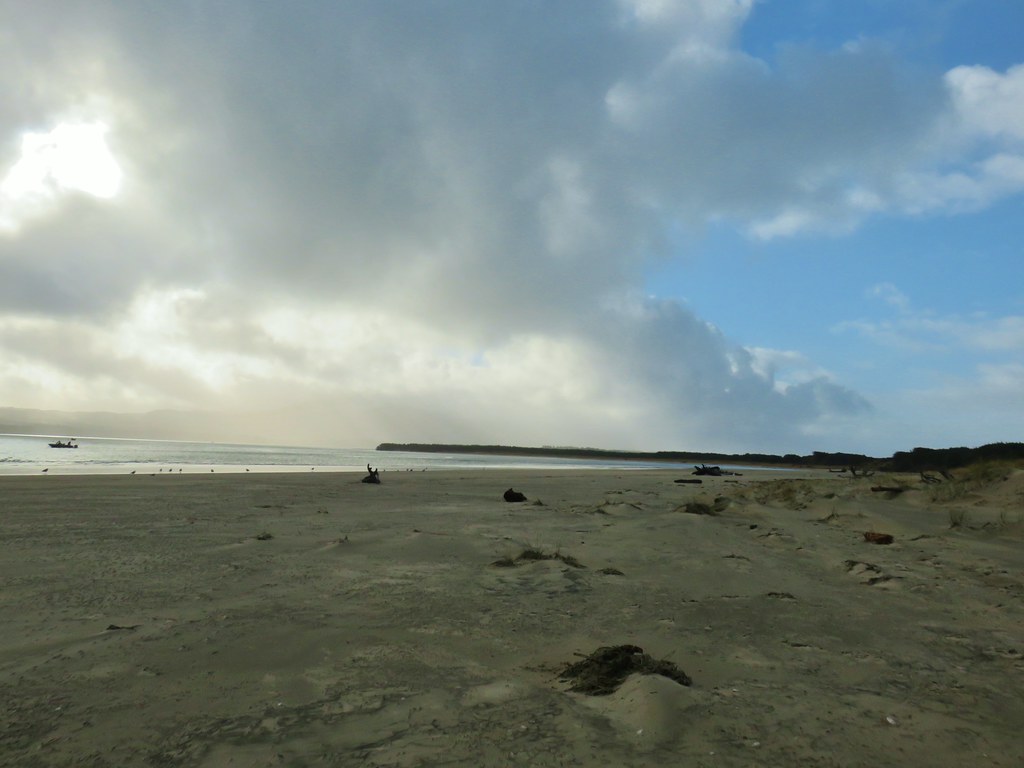
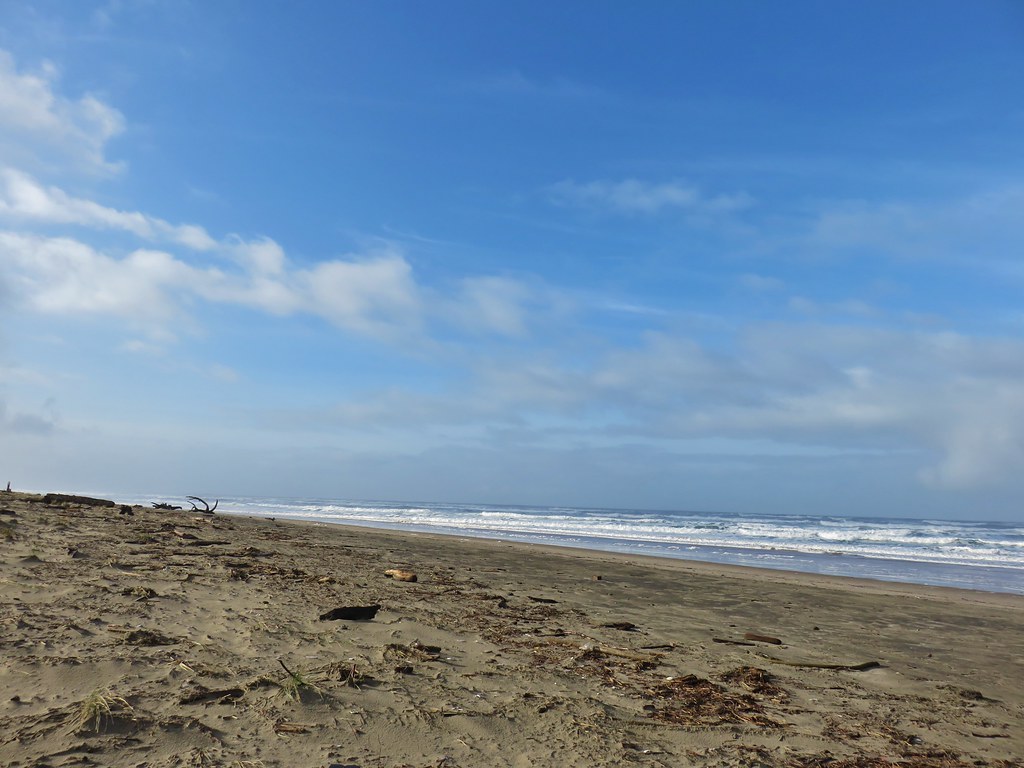
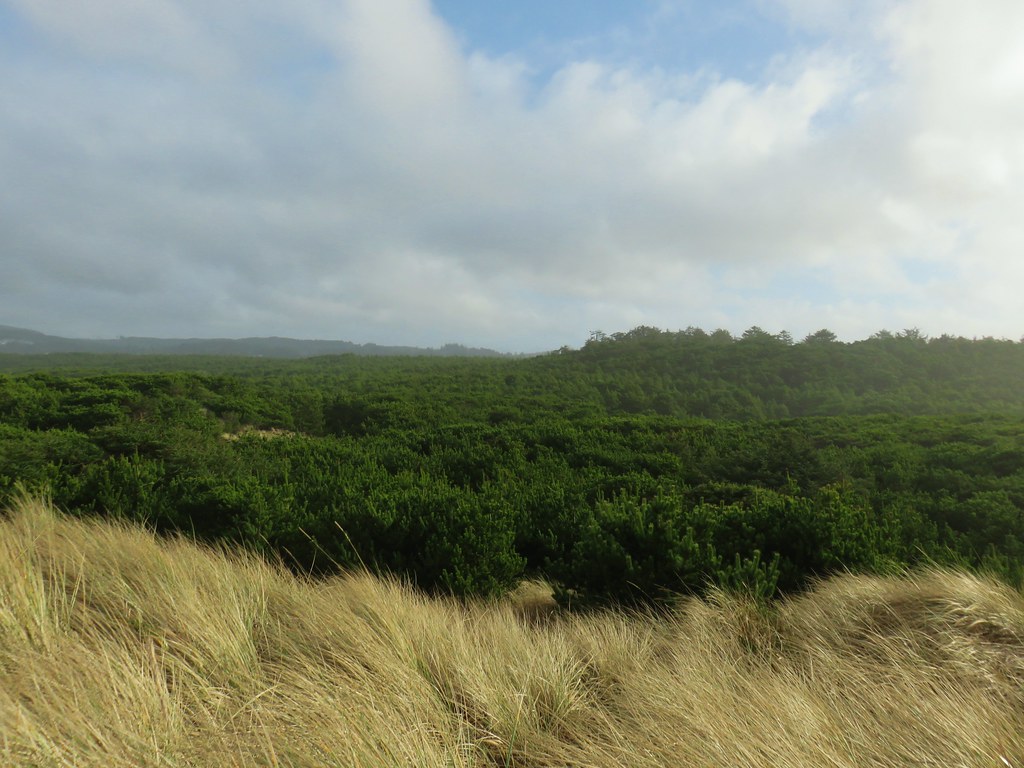
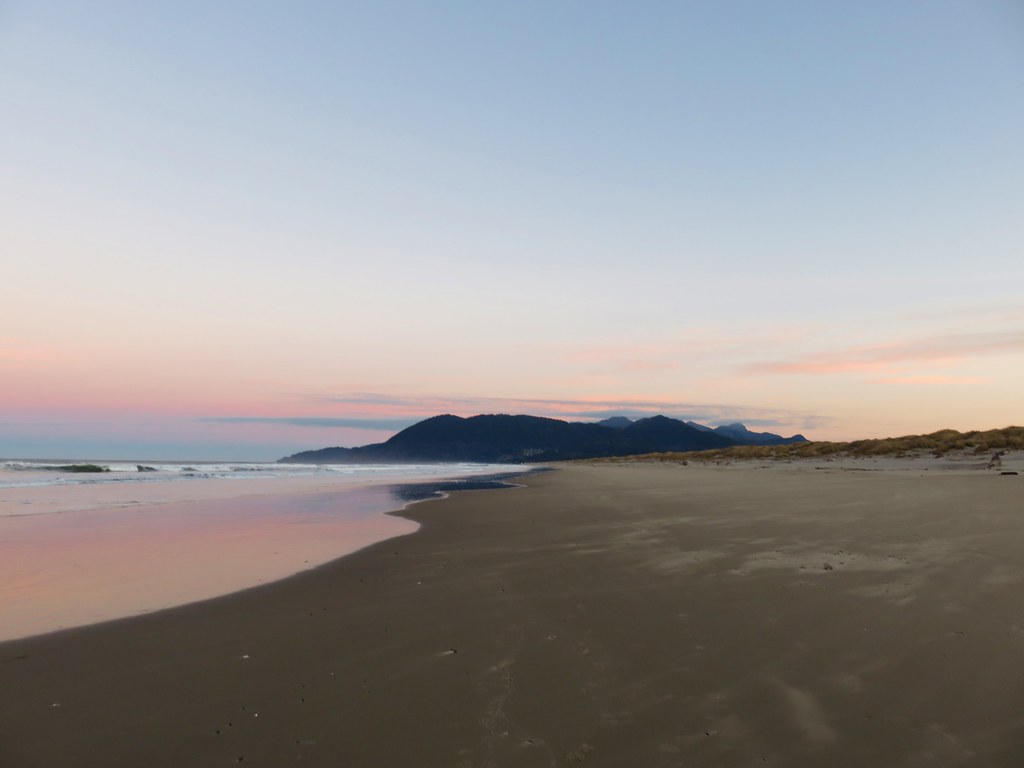
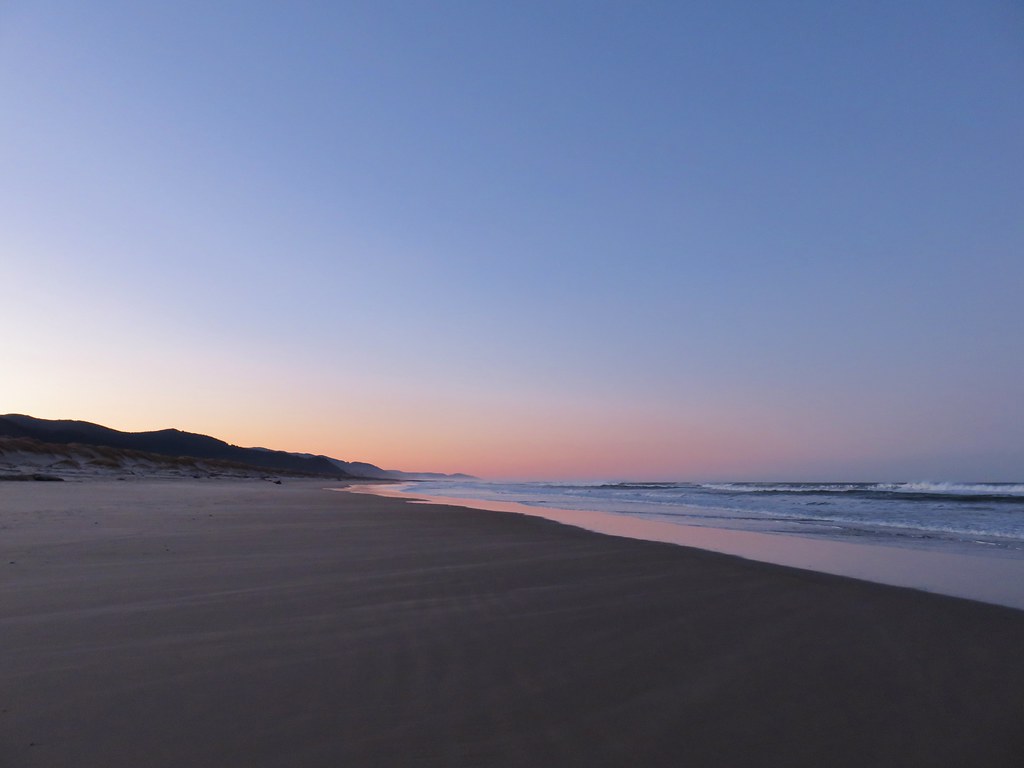
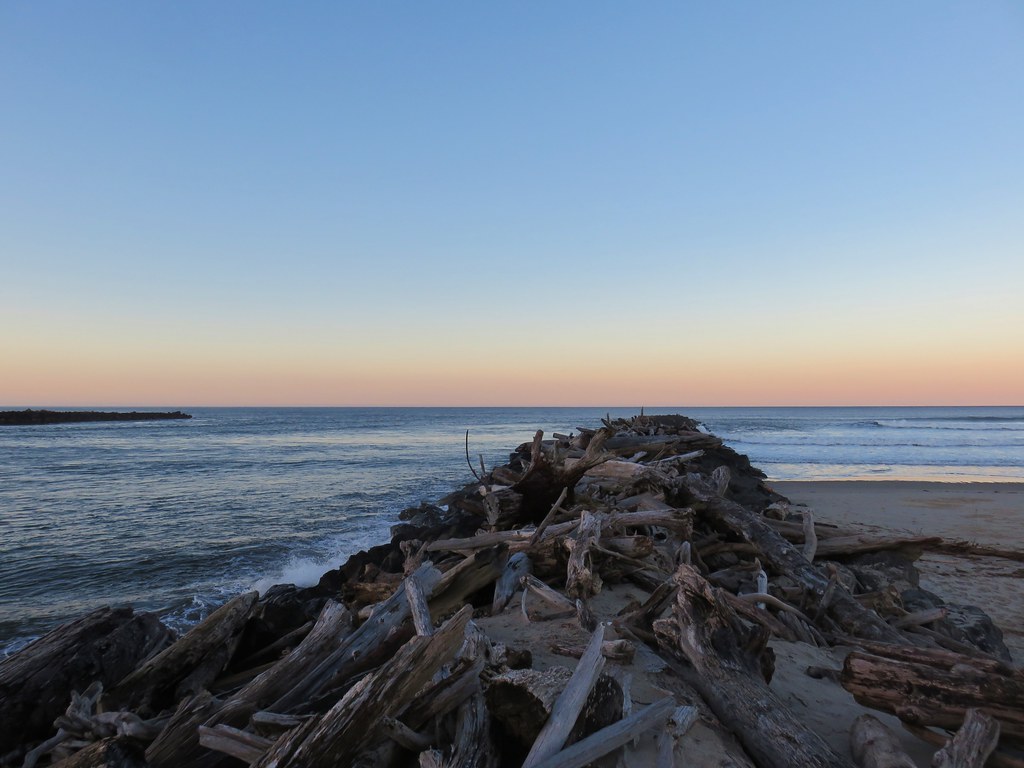
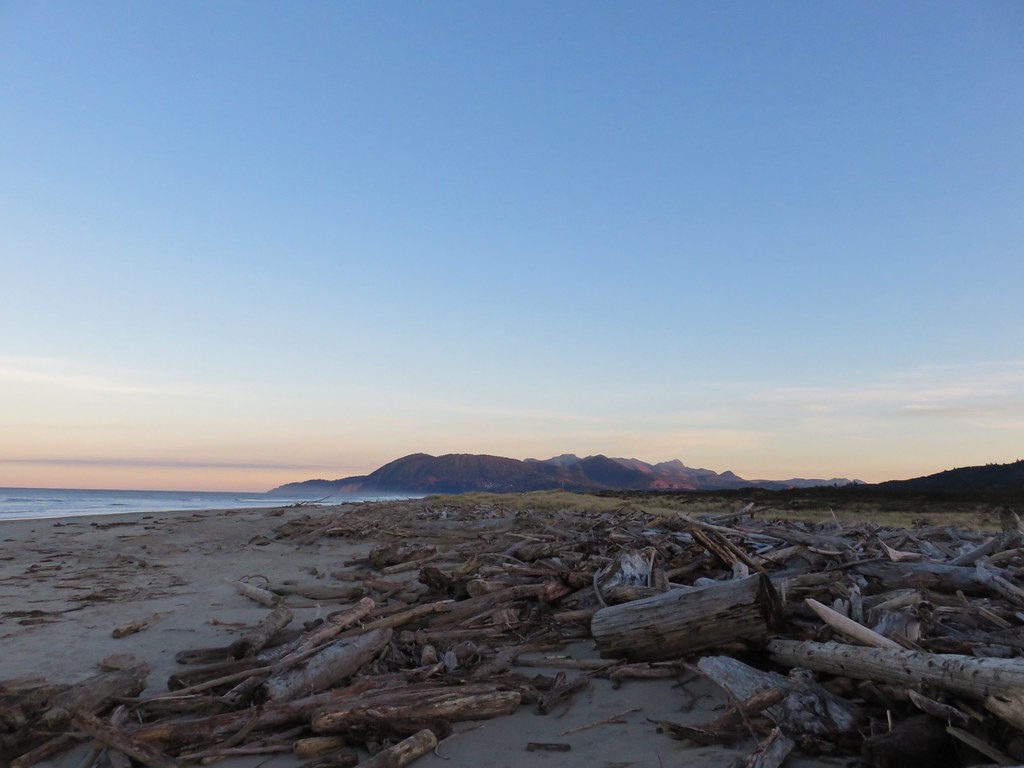
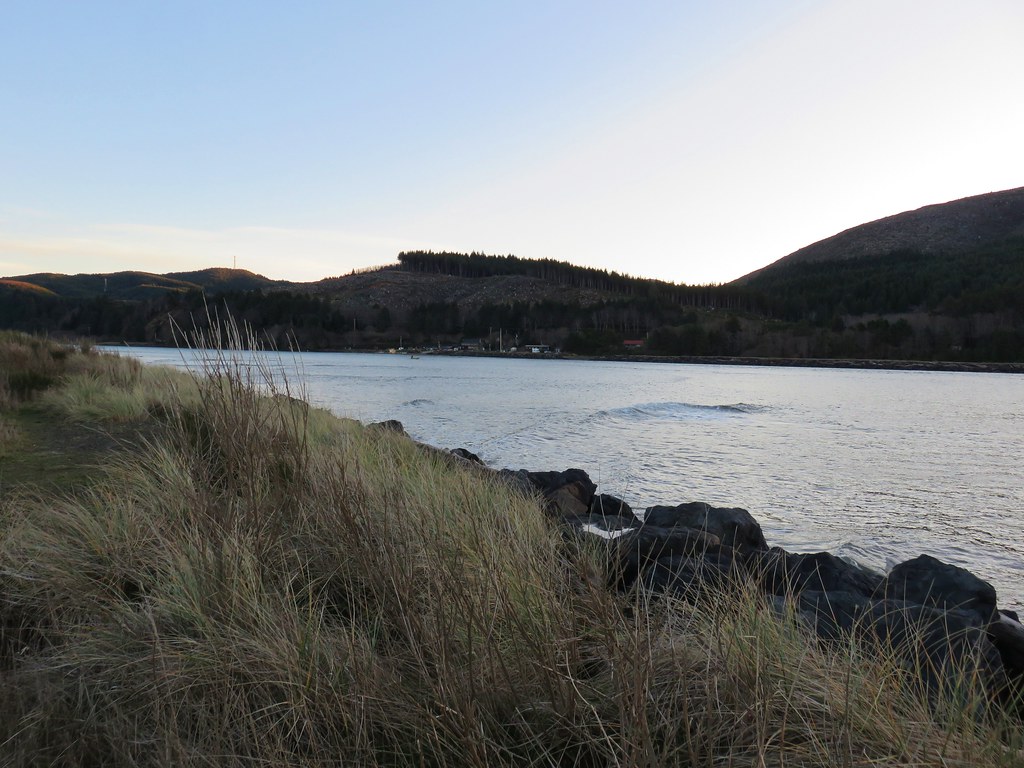
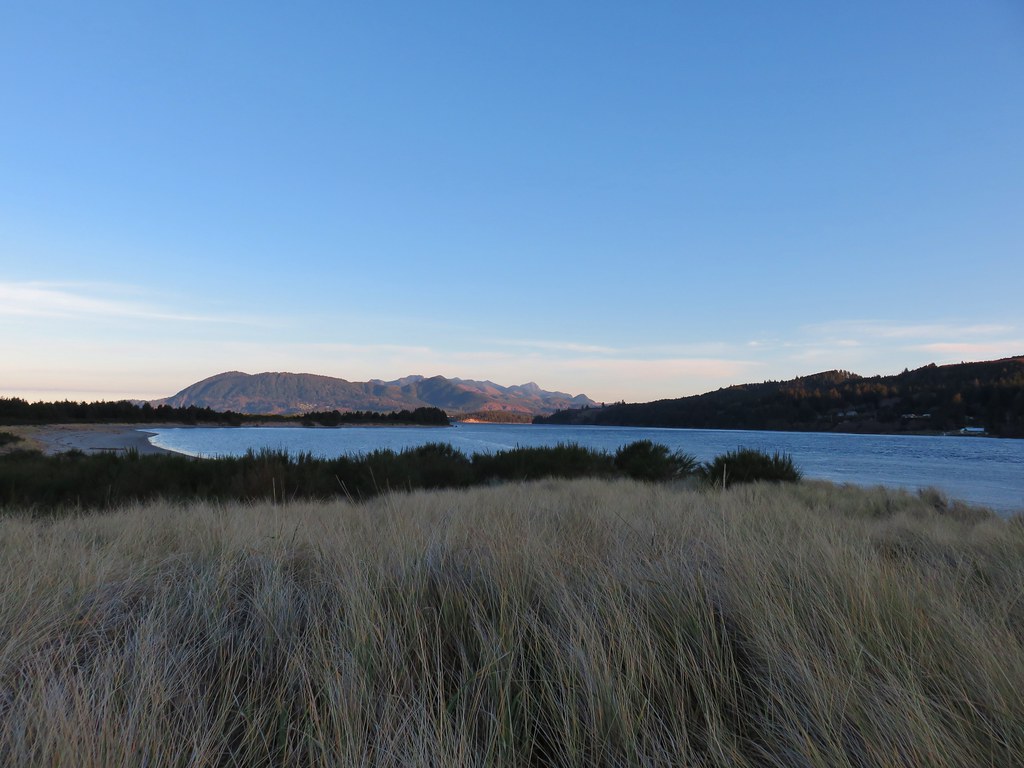
Netarts Spit – 1/25/2020

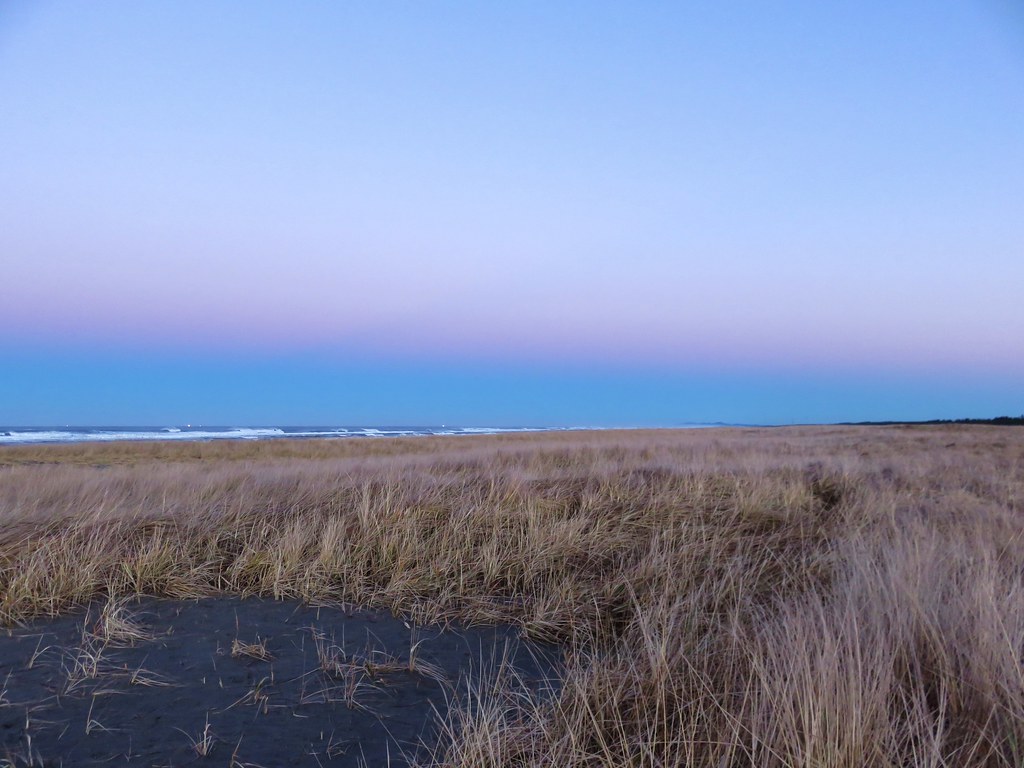
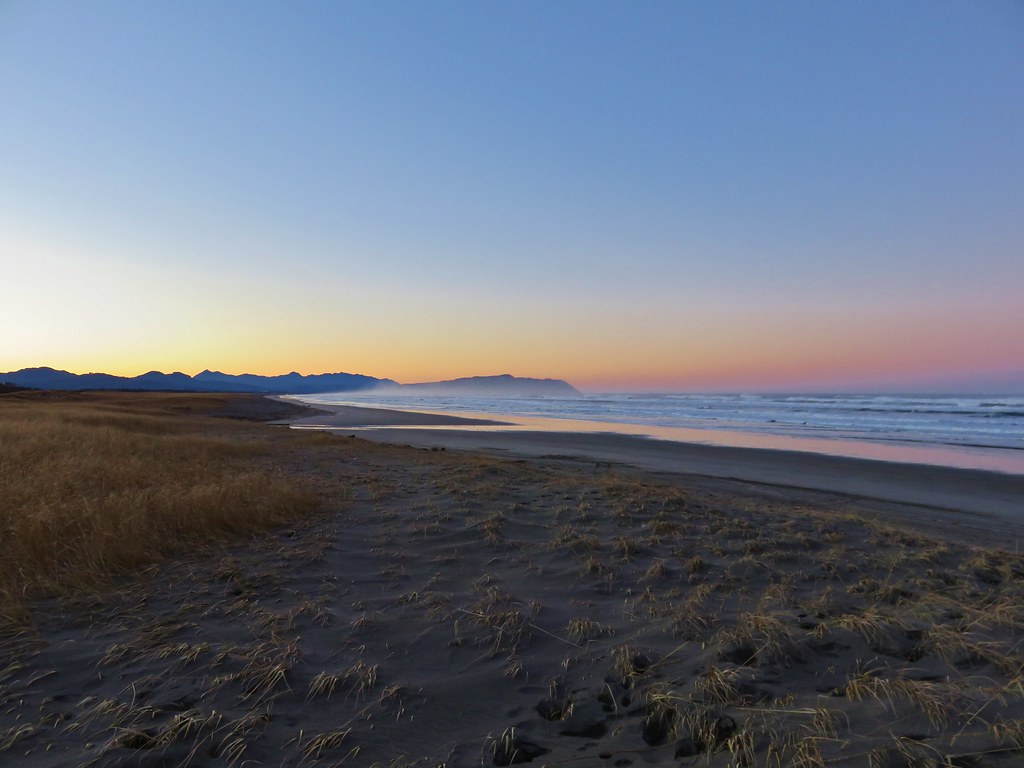
We were down to the last weekend of the month so in order to get our monthly hike in we were going to have to deal with whatever weather we were dealt. Heading into Saturday the forecast was for rain everywhere I checked so we decided to stick to our original plan which was to visit a series of lakes in the coastal range. That plan was scrapped on Friday night when I checked the trail conditions and discovered that one of the ones that we’d be on had been closed this month due to heavy storm damage. Plan B had been a nearly 3 hour drive to Reedsport, but a 100% chance of rain didn’t warrant that long of a drive. I looked to our 2021 hikes and decided on Netarts Spit at Cape Lookout State Park which was a more reasonable hour and a half drive away.

We set off just before 6am with all our rain gear and drove to the Cape Lookout Day Use Trailhead where we purchased a $5 parking pass and noted that it was in fact not raining here.
IMG_2116

We suspected it was just a matter of time and put our rain gear on before starting off. One of the issues with last minute hike swaps is that it limits the amount of time we have to read up on the hike. The Netarts Spit hike is featured in two of our books by Matt Reeder (“Off the Beaten Trail” and “PDX Hiking 365”) as well as in the Oregonhikers.org field guide. I had looked at both and noted that while Reeder’s description indicated to hike along the beach the field guide mentioned an inland route for the first portion. After walking down to the beach near a picnic shelter we walked back up to the shelter and followed a path north through some trees.
IMG_2119

IMG_2122

IMG_2123

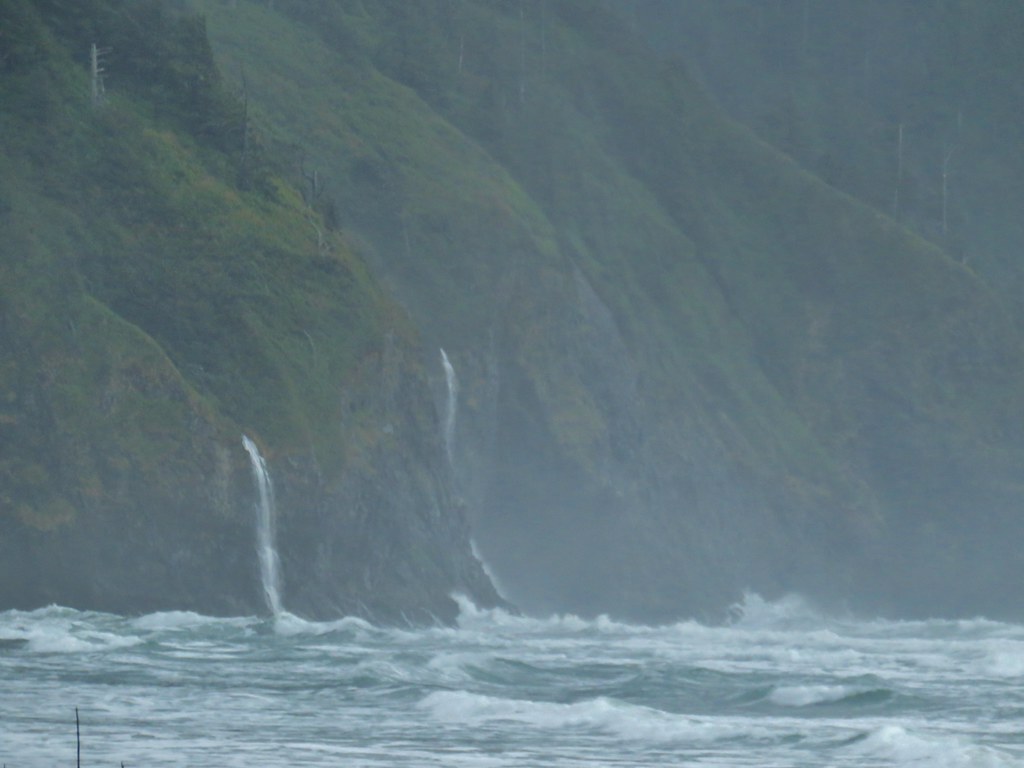
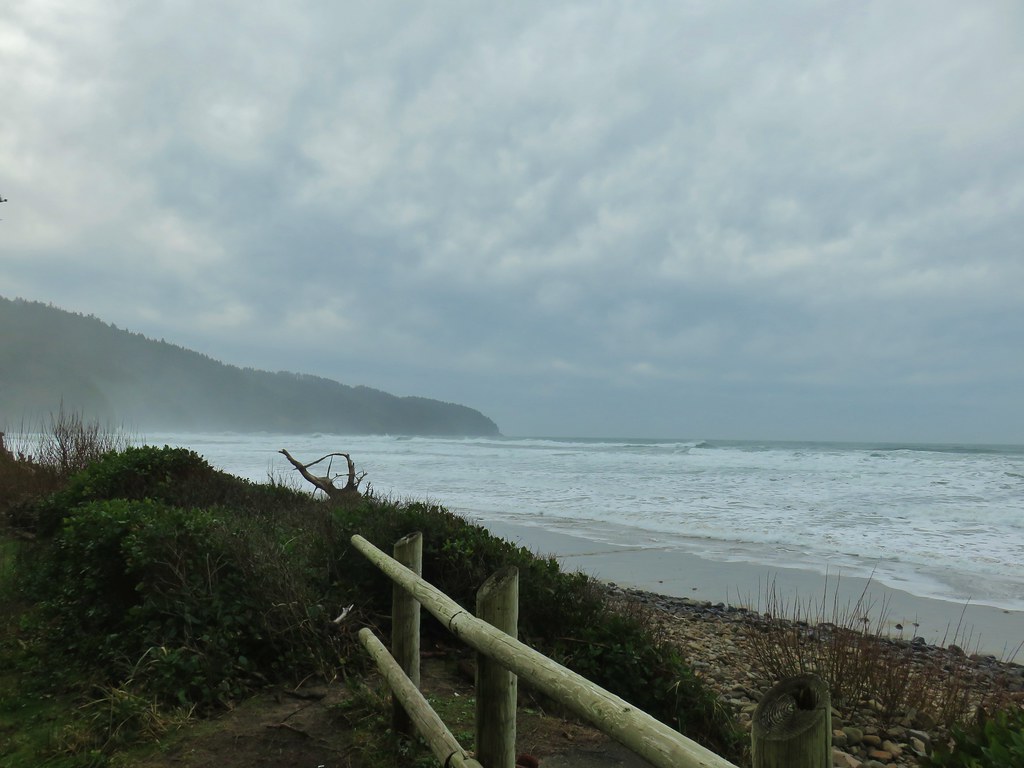
The view south from this path was dominated by Cape Lookout jutting out into the Pacific. Several waterfalls could be seen on it’s flanks.
IMG_2124

IMG_2125

When we came to another beach access point just before a gated section of the campground we decided to head down to the beach.
IMG_2128

Had I studied the entry in the field guide more thoroughly I would have known that it recommends following the road through the campground to avoid the cobblestones along the beach here.
IMG_2132

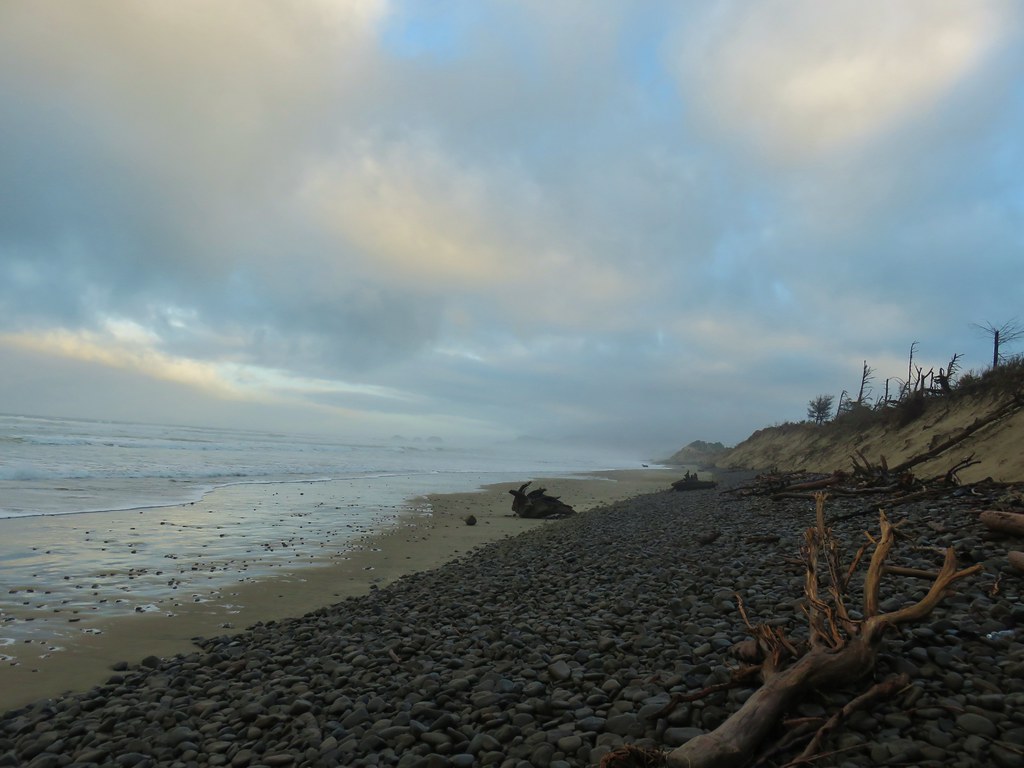
The tide was just high enough that in order to stay out of the Ocean we were forced to walk on these rocks and they are not fun. Ankles were rolling and twisting in all sorts of directions as we stumbled along.
IMG_2136Ocean coming right up to the rocks.

When we got our next chance we popped back up off the beach into the campground following a gravel track past some group tent sites.
IMG_2141

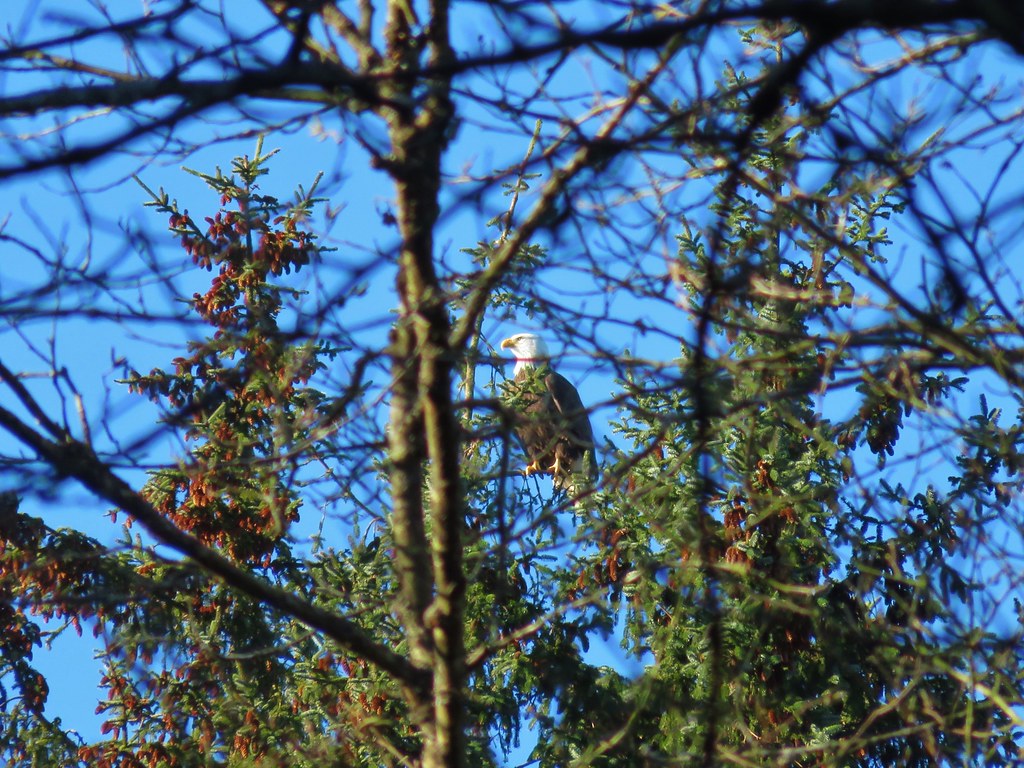
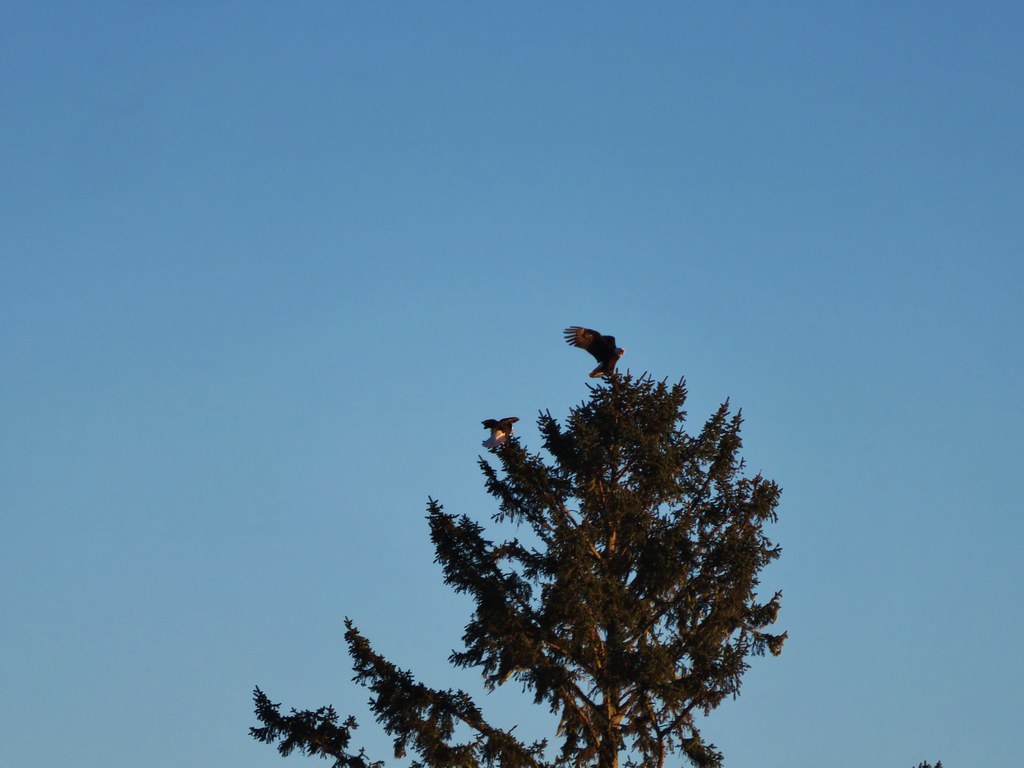
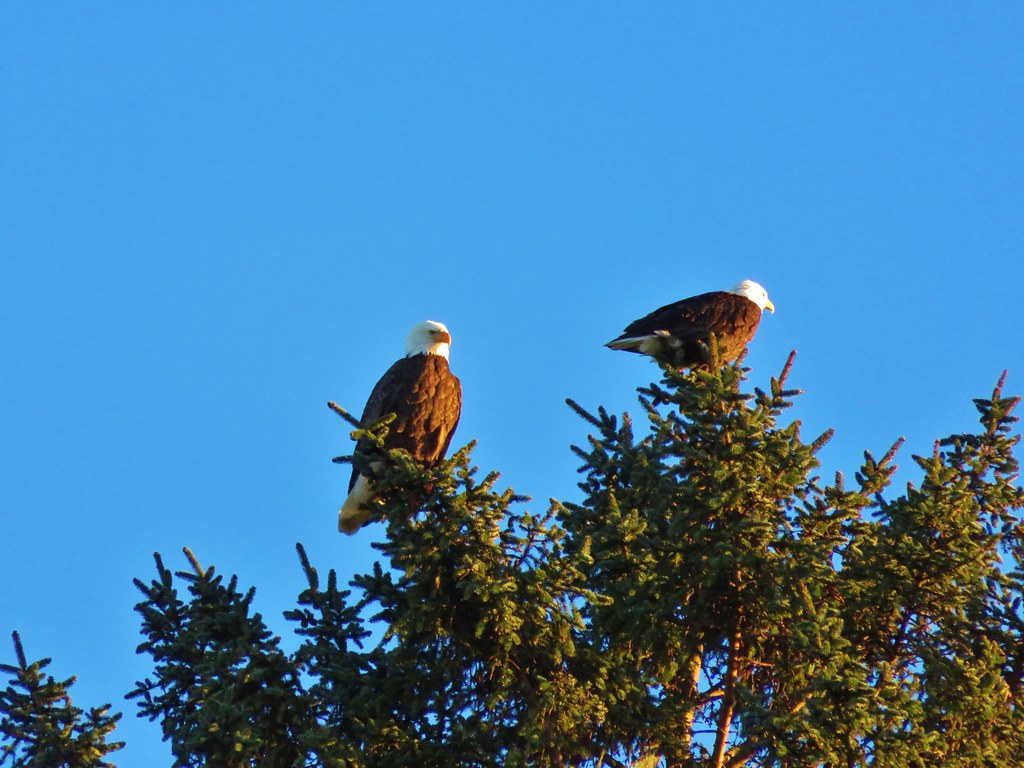
We’d already seen one bald eagle fly overhead and here we spotted another one sitting in a tree ahead.
IMG_2146

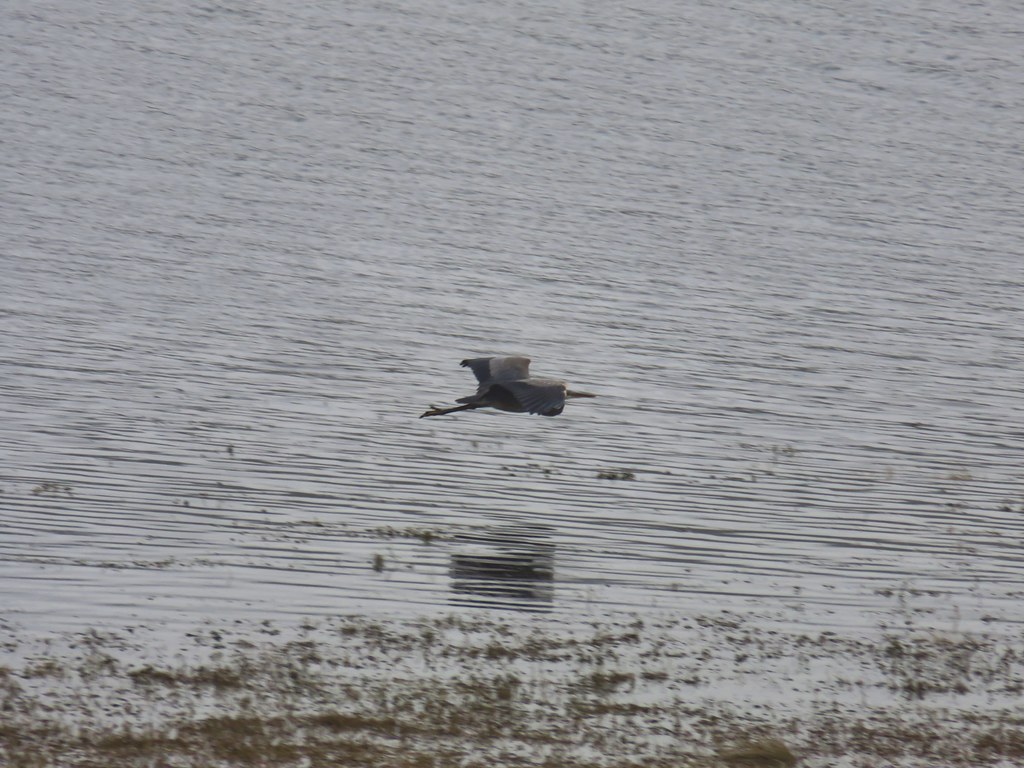
While watching the eagle a great blue heron flew over.
IMG_2144

Beyond the group tent sites the road was gated and turned into a grassy path with Netarts Bay to the right and dunes to the left.
IMG_2150

IMG_2151

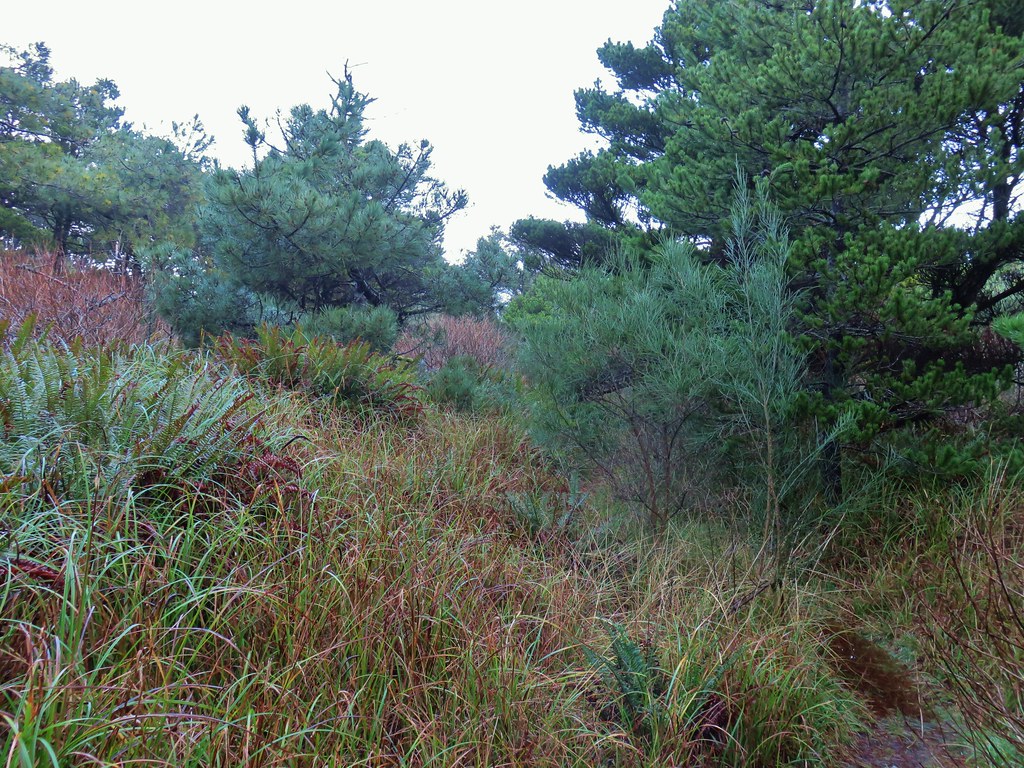
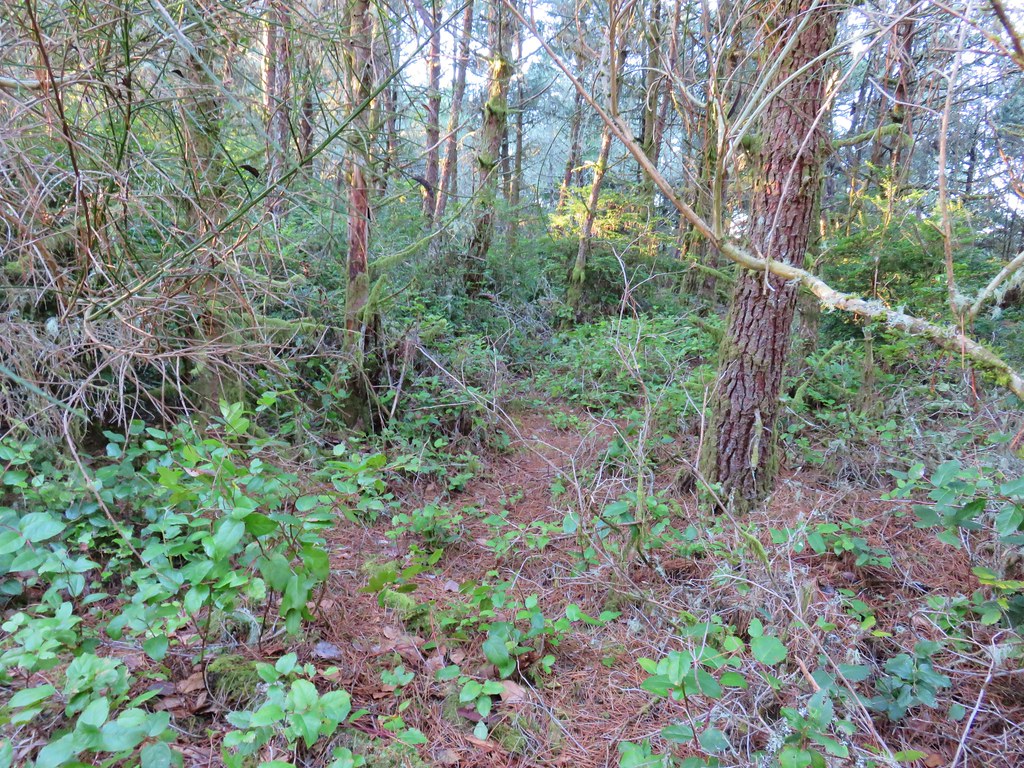
The grassy roadbed soon ended at a stand of trees where a clear trail continued.
IMG_2153

IMG_2154Trail at lower right with a little standing water.
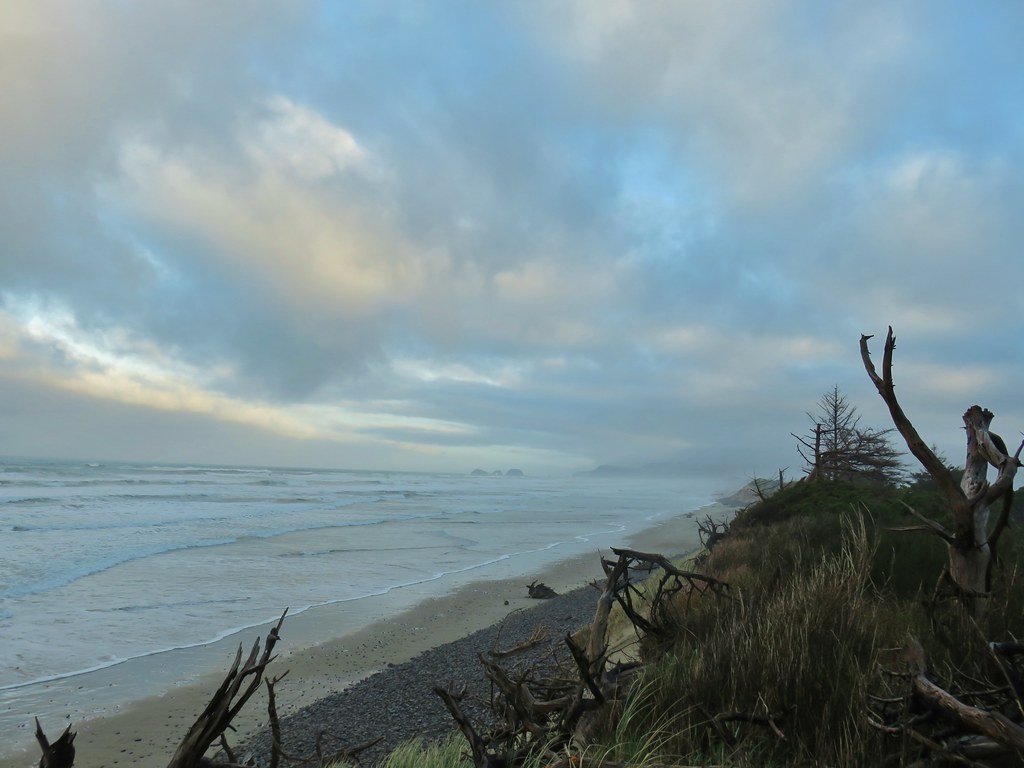
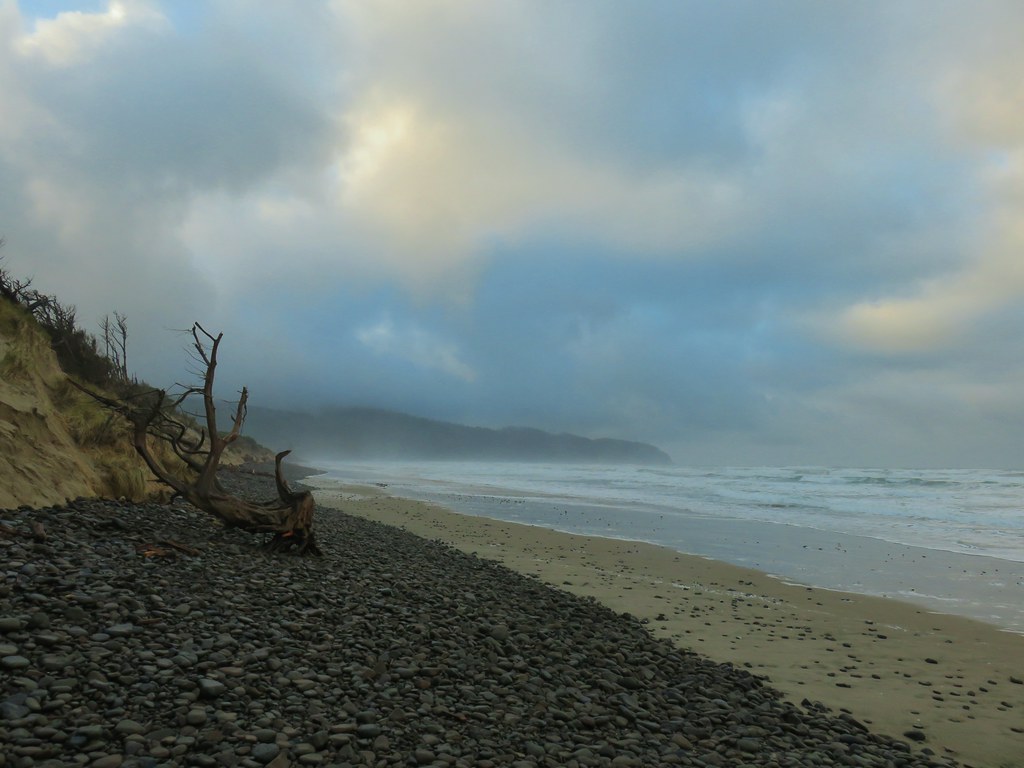
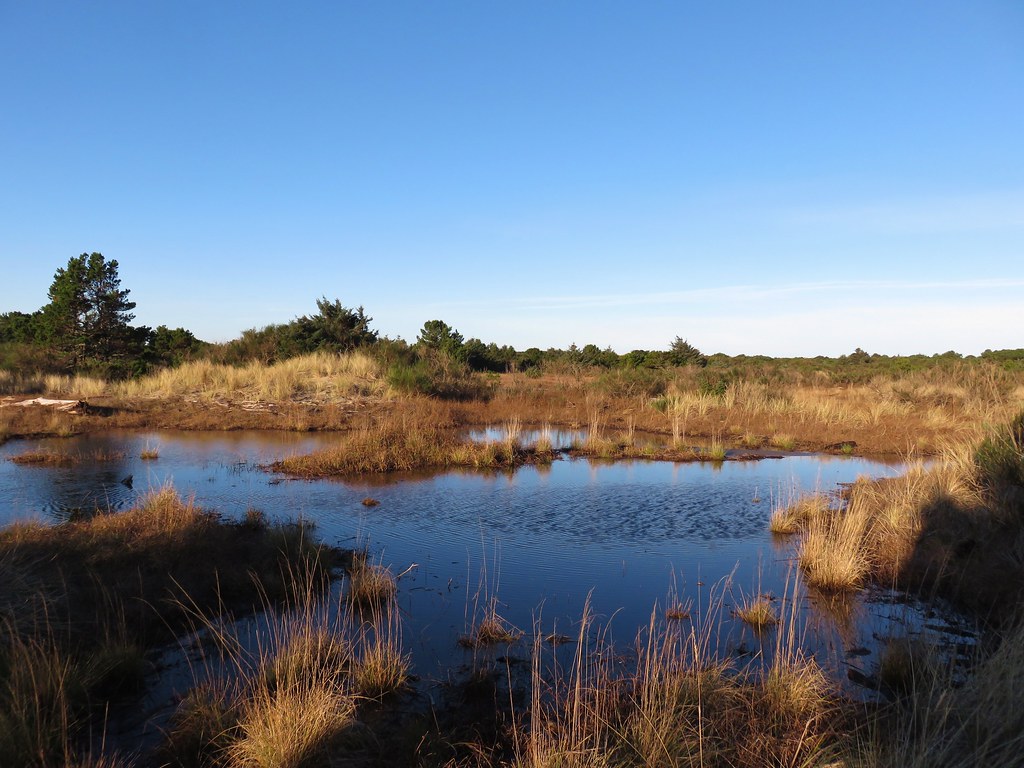
The field guide had mentioned that sections of this trail may have standing water but we weren’t quite prepared for long stretches of calf deep ponds. Heather was smart enough to find a deer path a little higher up on the left side (Which was something the field guide said you might have to do but in my quick reading I hadn’t picked up on that.) I tried sticking to the trail for a bit, but after a while in the water my feet starting getting cold so I joined her. We made the decision to try and follow one of these paths up and over to the beach which we managed to do.
IMG_2155

Then it was just a matter of finding the best spot to drop back down onto the beach, and more cobblestones, yay.
IMG_2156

IMG_2157

Luckily it wasn’t long before we were able to drop onto the sand.
IMG_2167

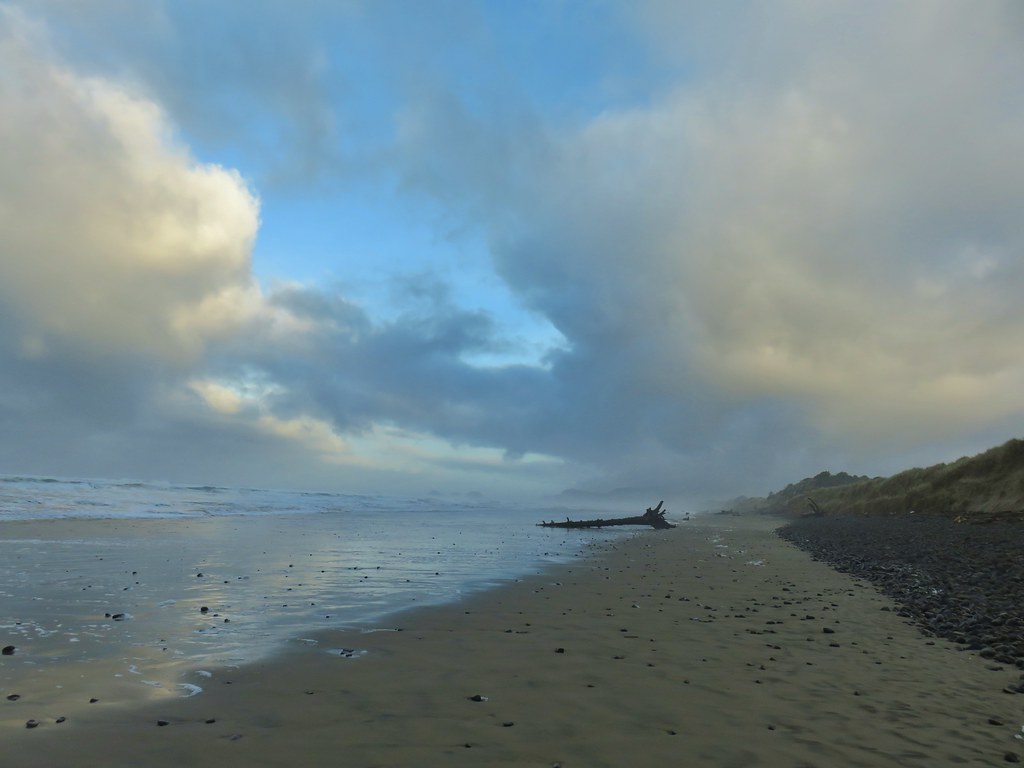
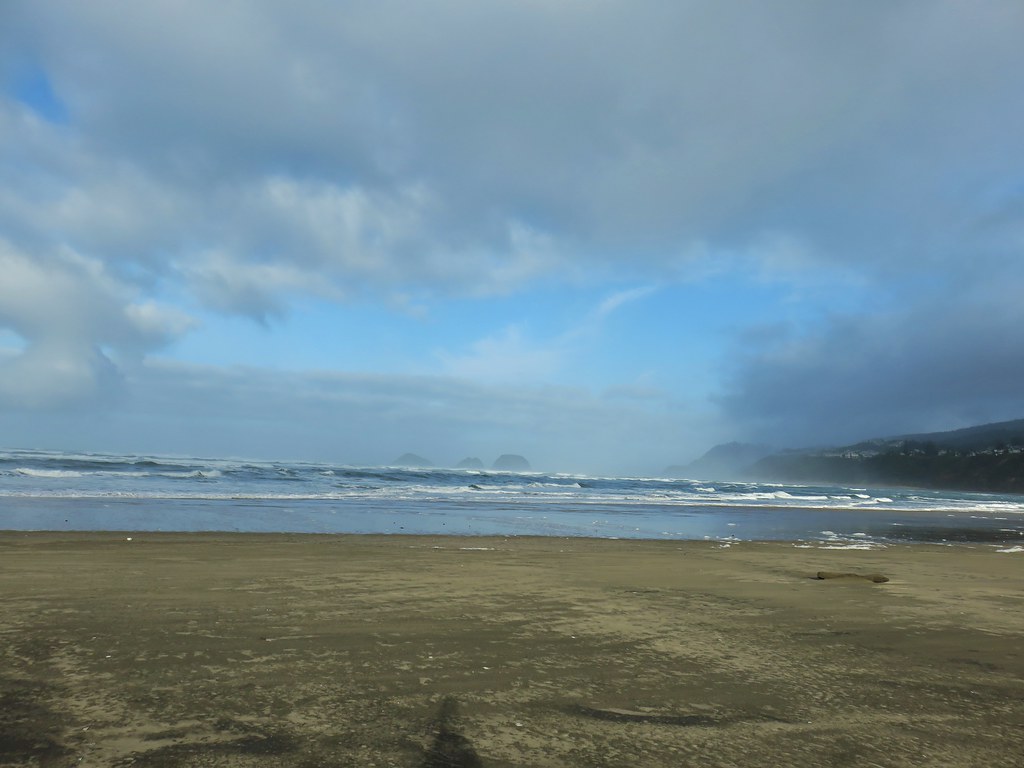
There was a lot more blue sky than we’d been expecting which was a pleasant surprise. To the north we could see the Three Arch Rocks although a perpetual fog seemed to be hanging over them.
IMG_2172Three Arch Rocks – one of two wilderness areas in Oregon off limits to visitors.

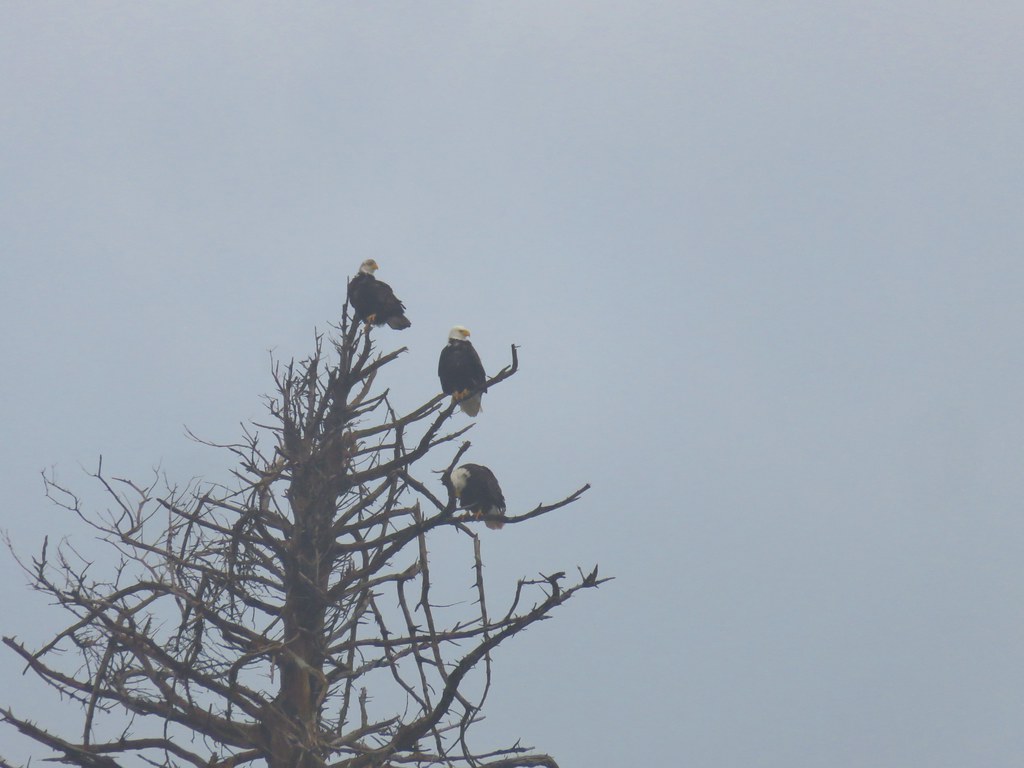
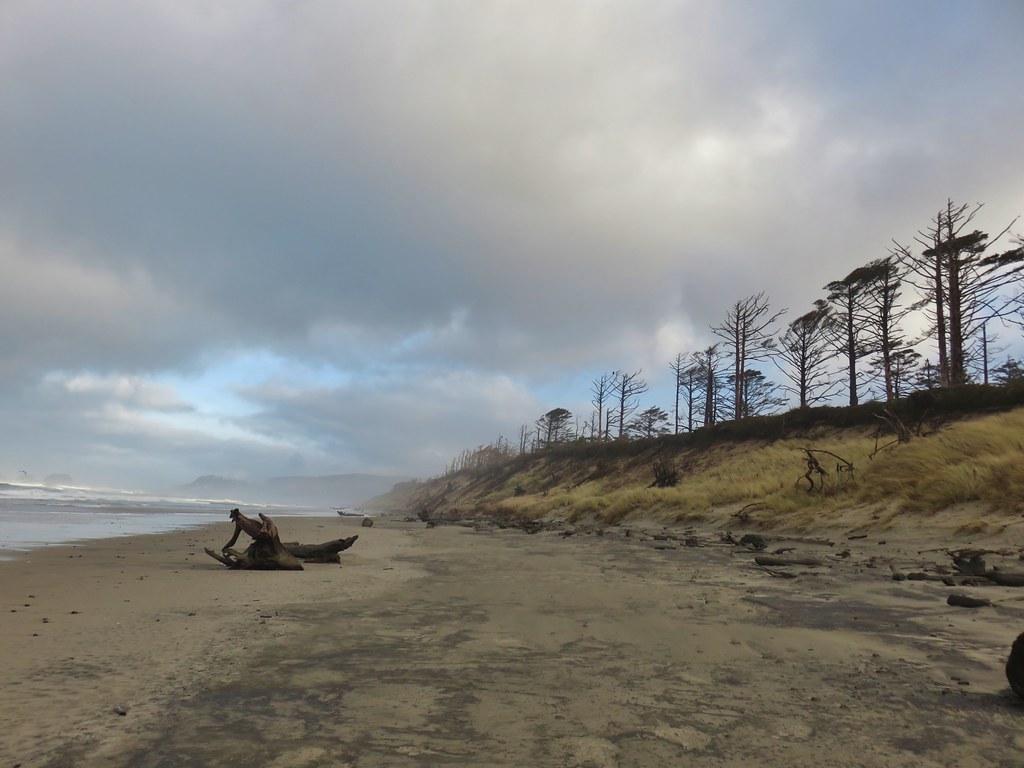
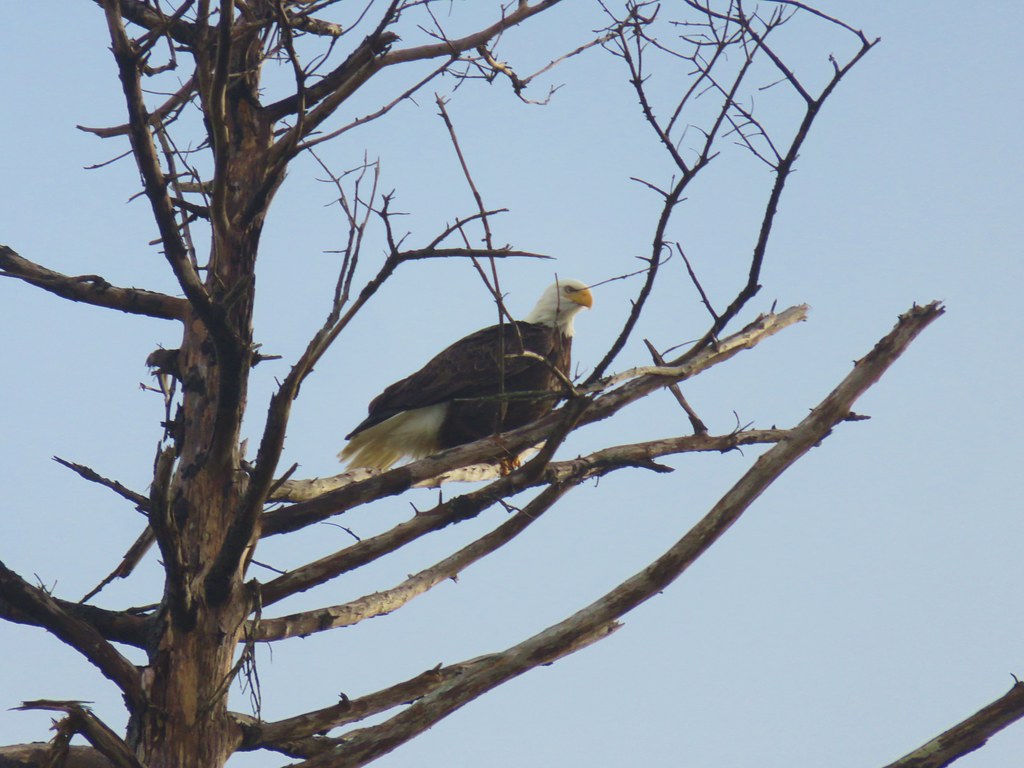
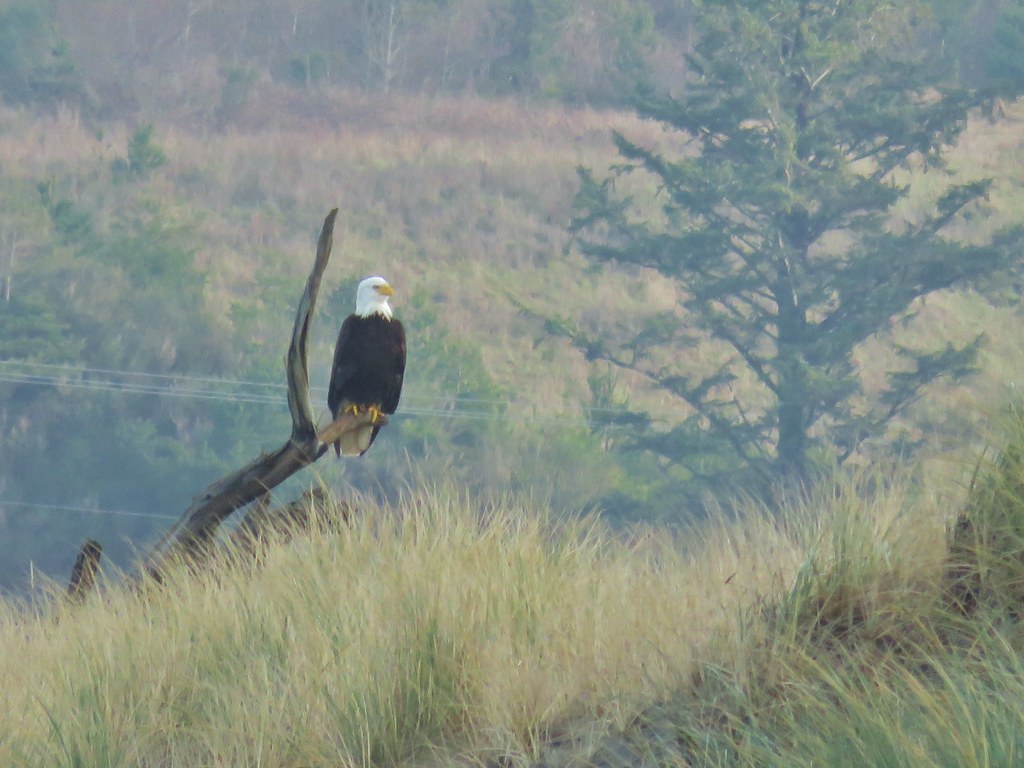
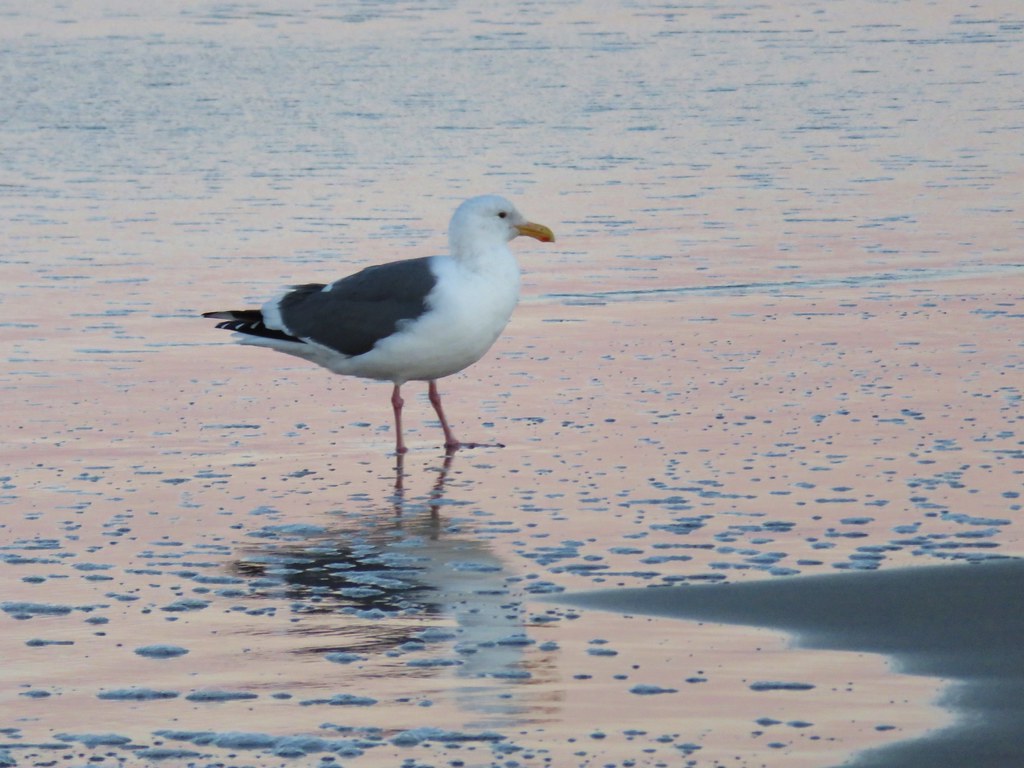
We were able to spend the next 4 miles to the end of the spit on the beach. There were no other people in sight (until the fishing boats in the bay). There were a few seagulls here and there and we saw at least 8 different Bald Eagles counting at least 6 congregated in a short stretch of trees.
IMG_2190

IMG_2174

IMG_2175

IMG_2192

IMG_2200

IMG_2201

IMG_2204

IMG_2207

A final eagle awaited near the end of the spit.
IMG_2212

IMG_2219

We were hoping that by the time we got to the turn around point we’d have a better look at Three Arch Rocks but the view wasn’t much clearer than it had been all morning.
IMG_2221

IMG_2214

IMG_2217

We had stubbornly kept our rain gear on waiting for the forecast to come to fruition, but we stopped here to remove it since we were way too warm. We then made a short loop around the tip of the spit to look at the bay before starting back.
IMG_2222

IMG_2223

One thing that both Reeder and the field guide agreed on was that it was impossible to travel along the bay due to marshy conditions so we started back down the beach.
IMG_2226

The tide was coming in and we noticed that waves were starting to cover the entire beach and forced us up into the dunes a bit where we followed some deer tracks for awhile.
IMG_2227

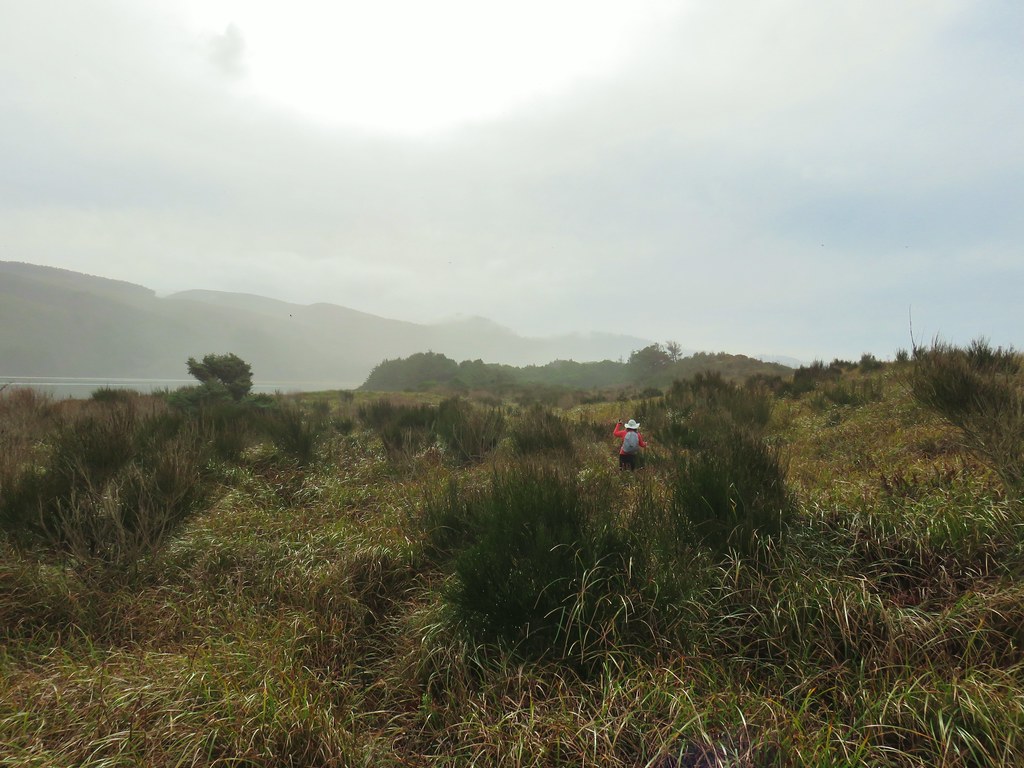
We spent the majority of the next three and a half miles staying up as high on the dunes as possible which made for some more difficult travel. The grass on the dunes is surprisingly sharp tipped and it was all pointing north so we were walking directly into the points. The thickness of the grass also meant that you couldn’t really tell what the terrain underneath was like so there were plenty of awkward steps, although no falls. I had done that on the beach when I tripped over a small piece of driftwood.
IMG_2233Looking back north from the dune crest.

IMG_2235Looking north at what was to come.

IMG_2230Thick forest between the bay and the dune.
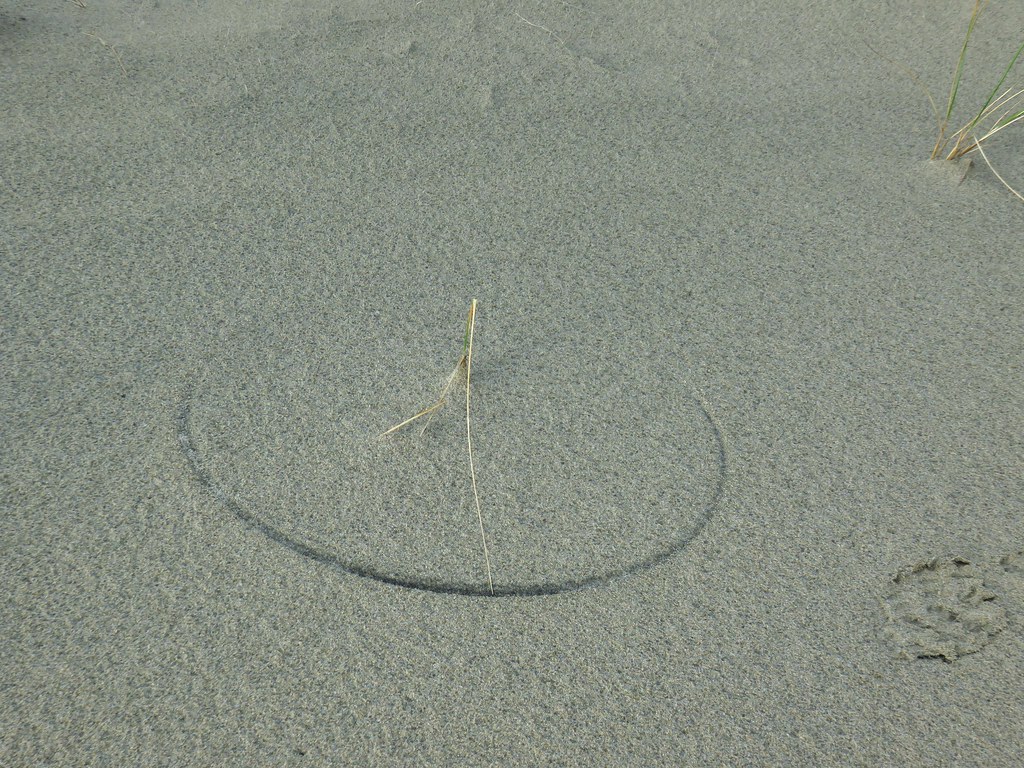
IMG_2236One of several semi-circles created by grass going back and forth.

Being up on the dune did allow for some views of the bay where we spotted birds including surf scooters and great blue herons.
IMG_2238

IMG_2240

IMG_2242

We were forced down onto the backside of the dune as we neared the point where we had crossed over the beach that morning. Here a maze of game trails led in all directions. The trick was attempting to avoid the thorny rose stalks and blackberry bushes as well as thickets of nearly impassable salal.
IMG_2245

We eventually made it back to the submerged trail and grassy track from earlier which we followed back to the campground and then stuck to the paved road as we returned to trail leading between the campground and picnic shelter.
IMG_2255Cape Lookout from the trail to the picnic shelter.

IMG_2257Seagull atop the shelter.

Our GPS put our hike at 11.1 miles which was in line with the field guides 11.2 and a little longer than Reeder’s 10 miles. We both agreed that it may have been the hardest hike we’d done along the coast due to the tricky terrain, although part of it might also be that it had been over a month since our previous hike and we’re a bit out of hiking shape. In any event it felt like an adventure which was nice and the fact that the rainy forecast turned into just a mostly cloudy day with a couple of sun breaks made for a great start to 2020’s hikes. Happy Trails!

Flickr: Netarts Spit

Categories
Hiking Oregon Trip report Wallowas

Umatilla National Wildlife Refuge & B.C. Creek Falls

We took an couple of days off for an extended Memorial Day Weekend in order to take a trip to NE Oregon in hopes of checking off a few more hikes of our to do list of Bill Sullivan’s 500 featured hikes (post). The plans included our fist visit to the Hells Canyon Wilderness which would leave us with just seven more wilderness areas to visit in Oregon (post).

We also recently added a third goal of hiking in each of Oregon’s 36 counties. I had recently been looking at a map and began wondering how many of the counties we had hiked in and realized that there were only 5 in which we hadn’t as of the start of May this year: Columbia, Umatilla, Union, Gilliam, and Morrow. We checked off Columbia with our visit to Sauvie Island (post) and we have hikes planned in Umatilla and Union later this year. That left Gilliam and Morrow which are adjacent to one another in the north central portion of the State with the Columbia River acting as their northern borders. Neither of these counties are home to any of the 500 featured hikes but the John Day River acts as the western border for Gilliam County. We had been in Sherman County on the west side of the John Day during our visit to Cottonwood Canyon State Park (post) and remembered that there was a trail on the other side of the river, the Lost Corral Trail, which I quickly added to our future plans. That left Morrow County.

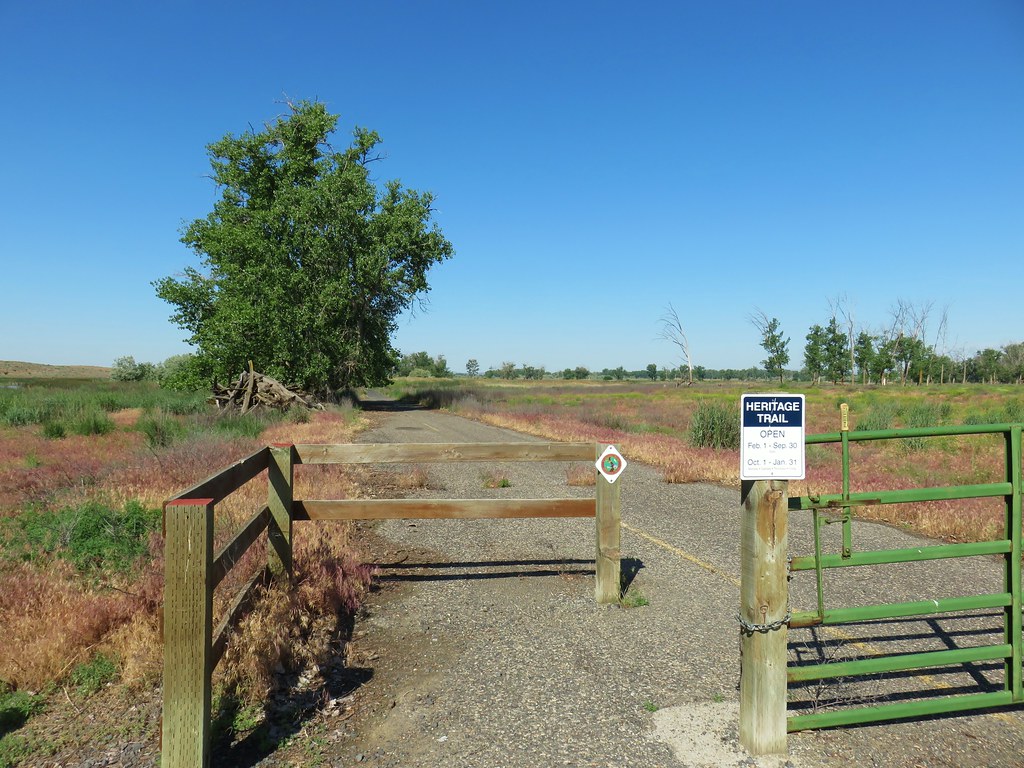
Sullivan does have a couple of additional hikes in the back of his Eastern Oregon book that are located in Morrow County but neither seemed to fit into our future plans. I turned to the map to see if anything would turn up and noticed that the Umatilla National Wildlife Refuge was located in the county just NE of Boardman just off Interstate 84. We would be driving that by on our way to Wallowa Lake so I did a little research on the refuge. The Heritage Trail is the only official trail there but other areas are open to foot traffic and we were just looking for something that would allow us to stretch our legs and would allow us to check Morrow County off our new list.

We took exit 168 from I-84 and followed Highway 730 for 3.7 miles then turned left onto Patterson Ferry Road at a sign for the refuge. We drove 2.7 miles along Patterson Ferry Road past a parking area with restrooms to left at a large sign marking the start of a short driving loop.
IMG_7032

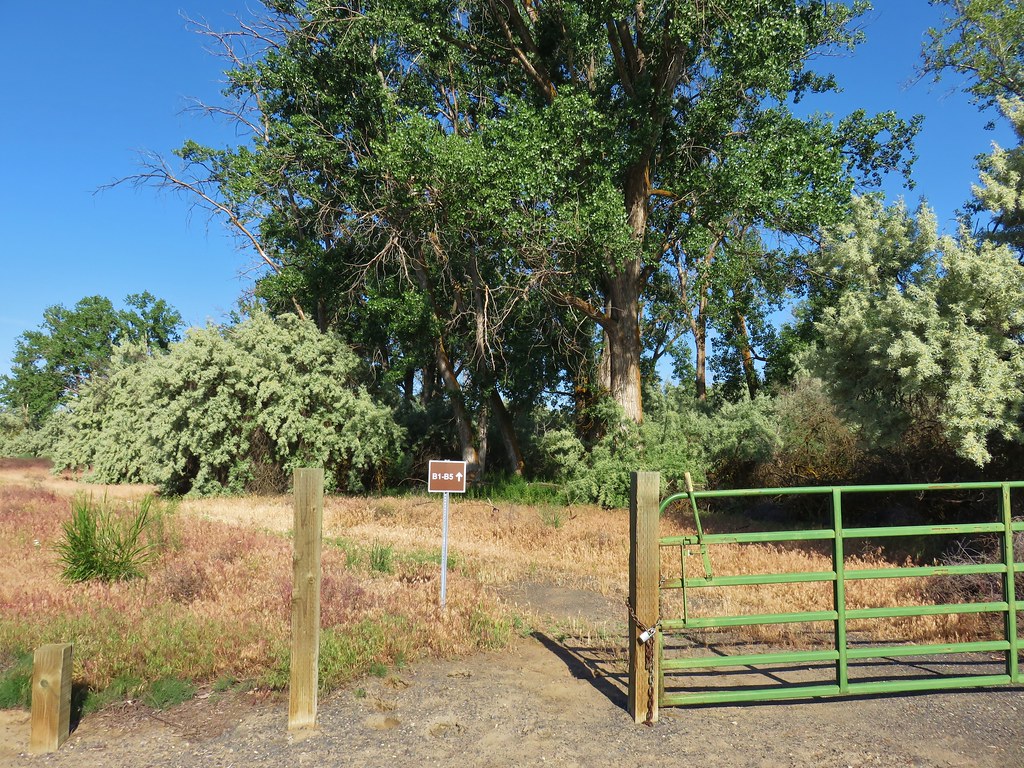
We had a map of the refuge with us, but the parking areas weren’t marked which was a little confusing. We followed the gravel road around a field parking at a lot on the right just under 1.5 miles from the start of the loop. A green fence blocked what looked like an old road bed.
IMG_7033

We decided to follow this track thinking that it might lead us to the Heritage Trail. There were a few wildflowers amid the grasses and a pleasant scent in the air coming from the trees.
IMG_7034Yarrow

IMG_7037

By the sound of them there were a whole lot of birds around but we weren’t having a lot of luck spotting them aside from a red-tailed hawk screeching in the sky above and a couple of western kingbirds.
IMG_7041

IMG_7044

IMG_7047

IMG_7052

Several signed tracks split off from what appeared to be the main track that we were following. We aren’t sure but think they were pointers for hunting blinds.
IMG_7047

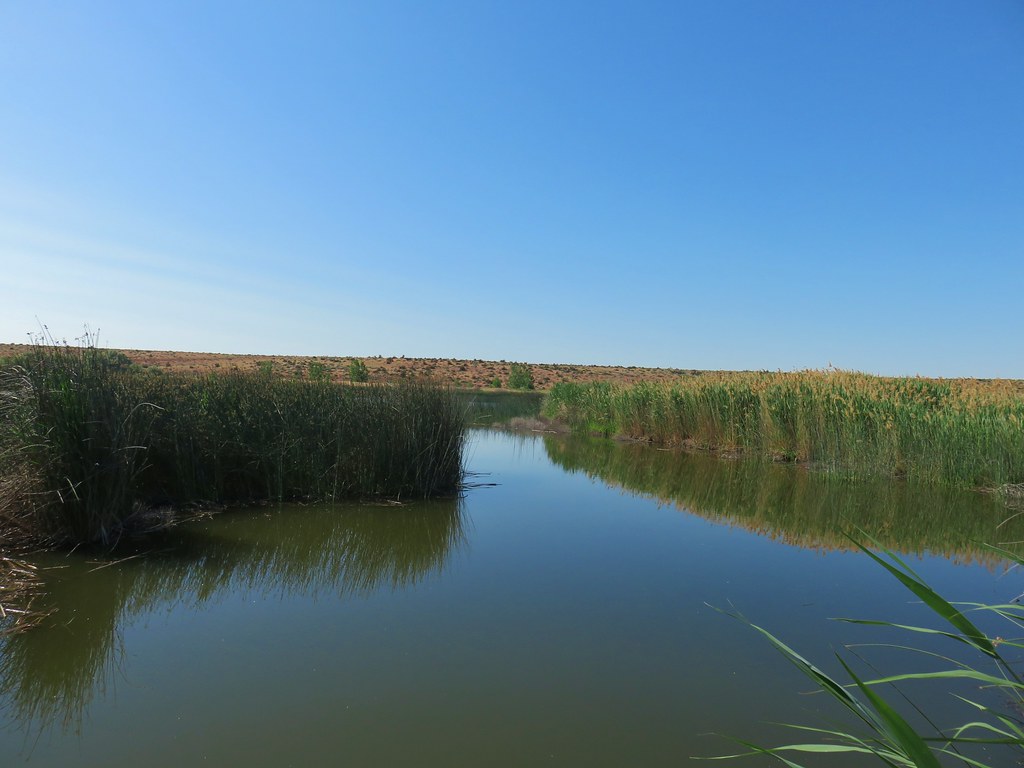
The track led us toward McCormack Slough where a bald eagle was keeping watch.
IMG_7054

IMG_7060

IMG_7061

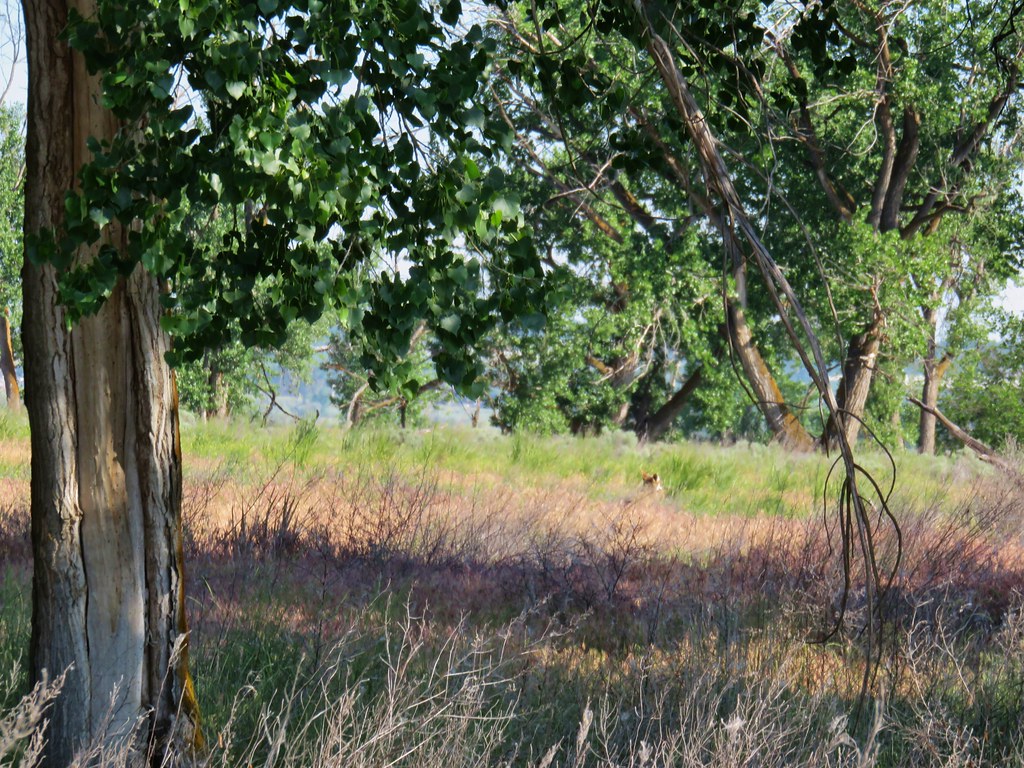
At the slough we tried following a fainter track to the left thinking it might hook up with the Heritage Trail but there was no discernible path around the slough so we made our way back to the main track and returned to the car. Along the way we spotted two coyotes, several deer, a great blue heron and a pair of white pelicans.
IMG_7065First coyote in the grass.

IMG_7066Second coyote racing off through the grass.

IMG_7070One of the deer running off.

IMG_7072Great blue heron flying off.

IMG_7073White pelicans circling overhead.

We continued on the driving loop and just about a half mile later spotted the parking area for the signed Heritage Trail on the right.
IMG_7074

The paved trail follows an old road between a portion of the slough.
IMG_7082

IMG_7084

We followed this trail for about a half mile where it joined an open road and then turned around and headed back. It was a short hike but we did see some more wildlife and a few flowers.
IMG_7076Bald Eagle

IMG_7080Wild Rose

IMG_7086Butterfly

IMG_7090Killdeer

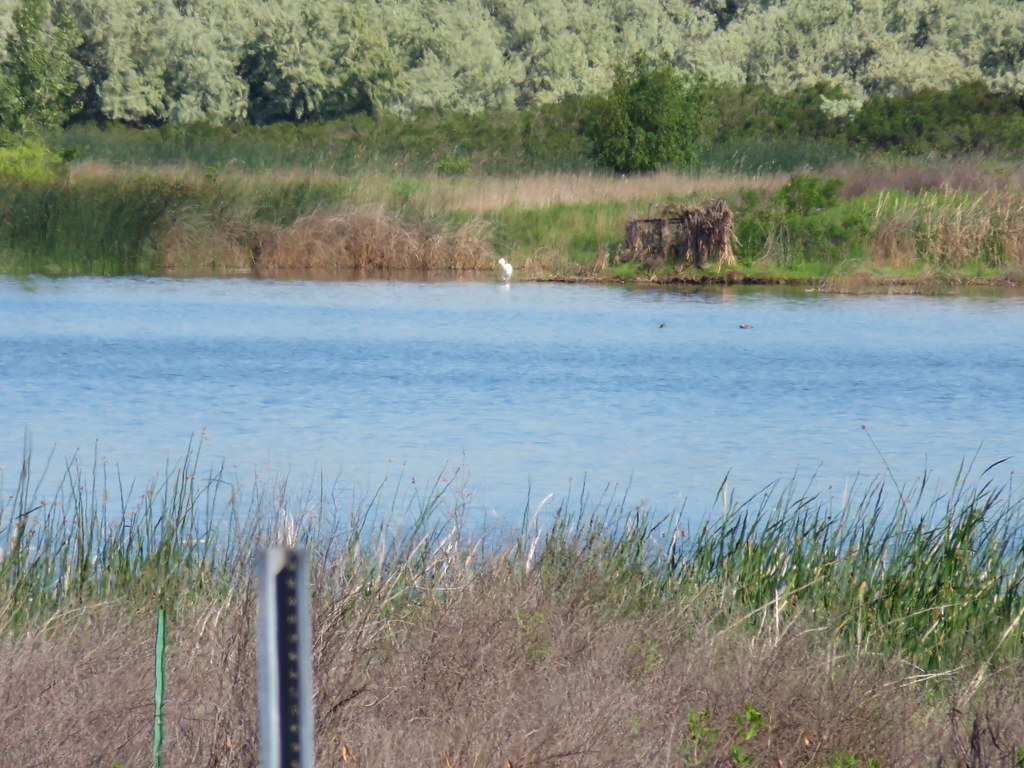
IMG_7093An egret on the other side of the slough.

IMG_7097Sagebrush lizard

IMG_7099Another butterfly

IMG_7100Deadly Nightshade

IMG_7102A goose in the reeds.

Each of our stops here consisted of 1.1 mile hikes with a nice amount of wildlife. We drove back to the Interstate and continued east onto Wallowa Lake and our second hike of the day.

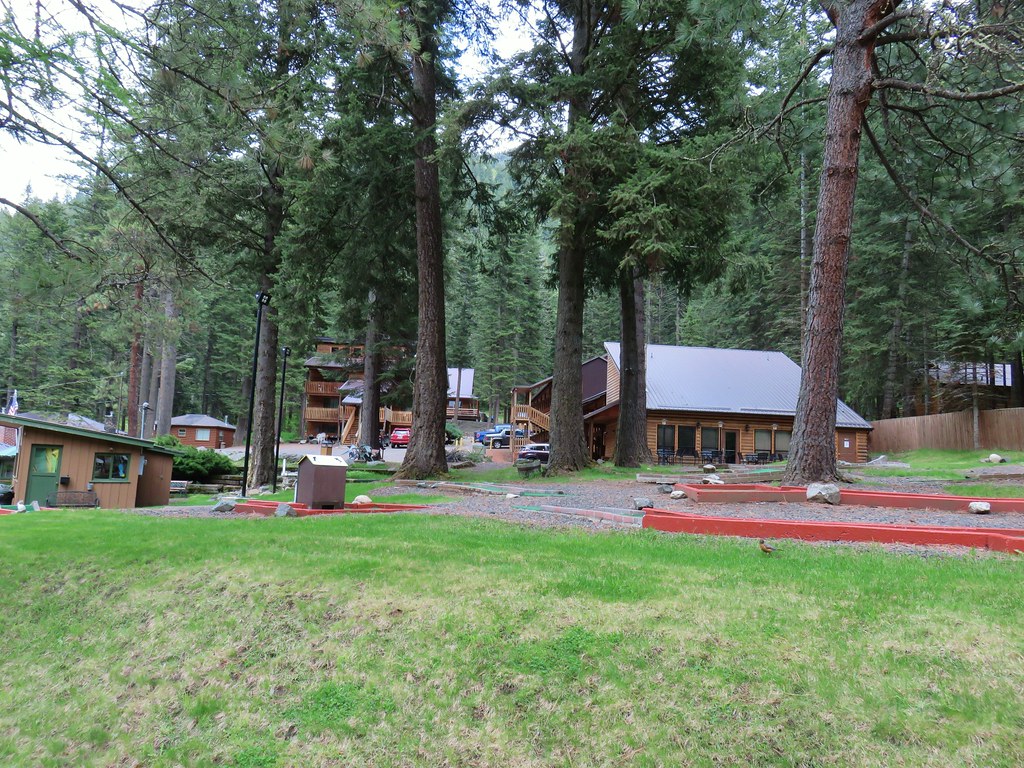
We had made reservations at the Eagle Cap Chalets near Wallowa Lake, just under 3/4 of a mile from the Wallowa Lake Trailhead and the start of our next hike. We decided to see if our room was ready and it was so we unpacked the car, threw on our packs and road walked to the trailhead.
IMG_7105

IMG_7106

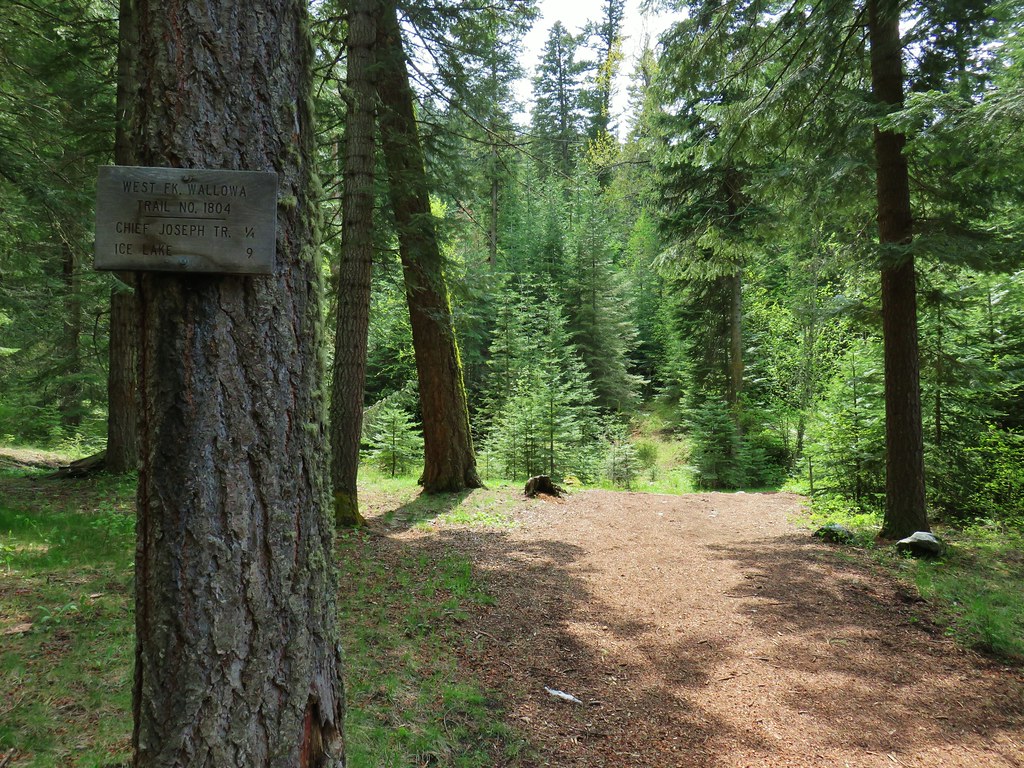
We started a 5 day backpacking trip here in 2016 (post) so the first quarter mile of trail was familiar before turning off of the West Fork Wallowa Trail onto the Chief Joseph Trail.
IMG_7109

The first section of trail may have been familiar but being two months earlier in the year the flowers were different.
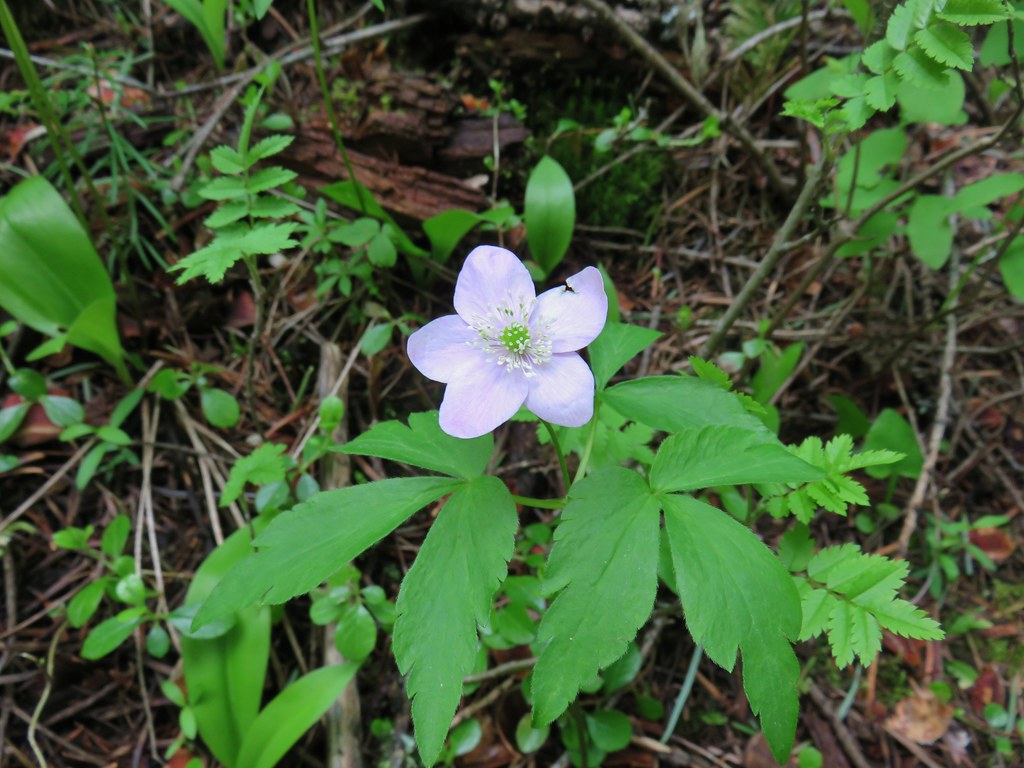
IMG_7111Anemone

IMG_7115Fairyslipper

IMG_7122Arnica

IMG_7124
Rock Clematis

We turned onto the Chief Joseph Trail at the signed junction following a hand written pointer for B.C. Creek Falls
IMG_7127

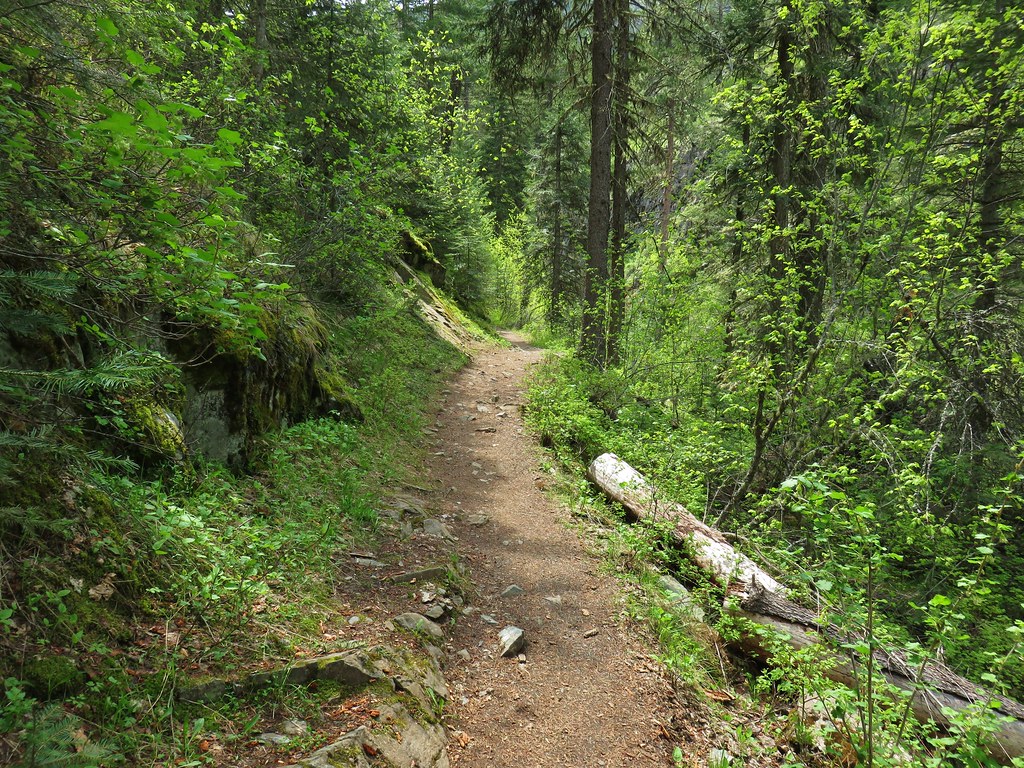
The trail descended through the forest to a footbridge over the West Fork Wallowa River.
IMG_7143

IMG_7151

IMG_7154

IMG_7156

On the far side of the river the trail climbed a series of switchbacks past more wildflowers and views down to the bridge below.
IMG_7165

IMG_7161Bluebells

IMG_7166

IMG_7172Prairie stars

IMG_7173More rock clematis

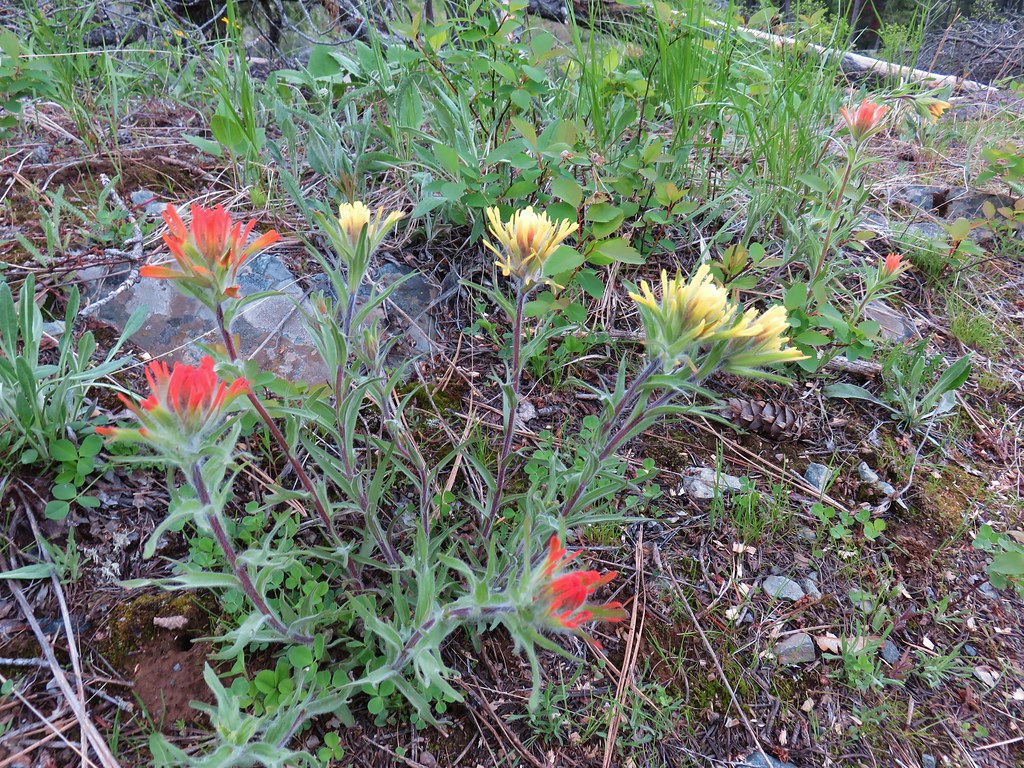
IMG_7178Paintbrush

IMG_7182

IMG_7191Larkspur

The trail then leveled out a bit as it traversed the hillside above the river passing a viewpoint of Wallowa Lake 3/4 of a mile beyond the bridge.
IMG_7206Area near the viewpoint.

IMG_7207Looking further into the Wallowas.

IMG_7242Wallowa Lake

We arrived at B.C. Creek a tenth of a mile from the viewpoint.
IMG_7218

After two bridges were washed out here the Forest Service stopped replacing them.
IMG_7233

After admiring the falls we turned back, not being tempted at all to attempt a ford to complete a possible loop back via the abandoned portion of the Chief Joseph Trail beyond the creek.
IMG_7223

Sullivan describes a second possible loop option by taking a spur trail through a private Boy Scout Camp. He noted that this trail could be closed to the public at any time but we decided to check it out turning left onto the unsigned but obvious trail .4 miles from the creek.
IMG_7252

After just a tenth of a mile a rocky viewpoint offered another look into the mountains and some purple penstemon.
IMG_7261

IMG_7253

We also spotted a sign stating that the trail beyond was closed to the public and warning of surveillance cameras. We returned to the Chief Joseph Trail and headed back down to the bridge and recrossed the river. We then noticed another well used trail and followed it left along the canyon rim above the West Fork Wallowa.
IMG_7278

IMG_7281

IMG_7282

IMG_7289

Flowers dotted the rocky terrain here.
20190523_152152Shooting star

IMG_7292Old man’s whiskers

IMG_7298Possibly a checkermallow

IMG_7274Paintbrush

We kept following the path along the rim to a viewpoint above a small unnamed waterfall.
IMG_7305

IMG_7308

The user trail kept going beyond the falls so we did too eventually hooking back up with the West Fork Wallowa Trail a little over 100 yards from the trailhead. We then road walked back past the ground squirrels patrolling Wallowa State Park to the Eagle Cap Chalets, but not before stopping at the Khao Neaow Food Cart to get some Thai food to take back to our room for dinner.
IMG_7314

IMG_7316

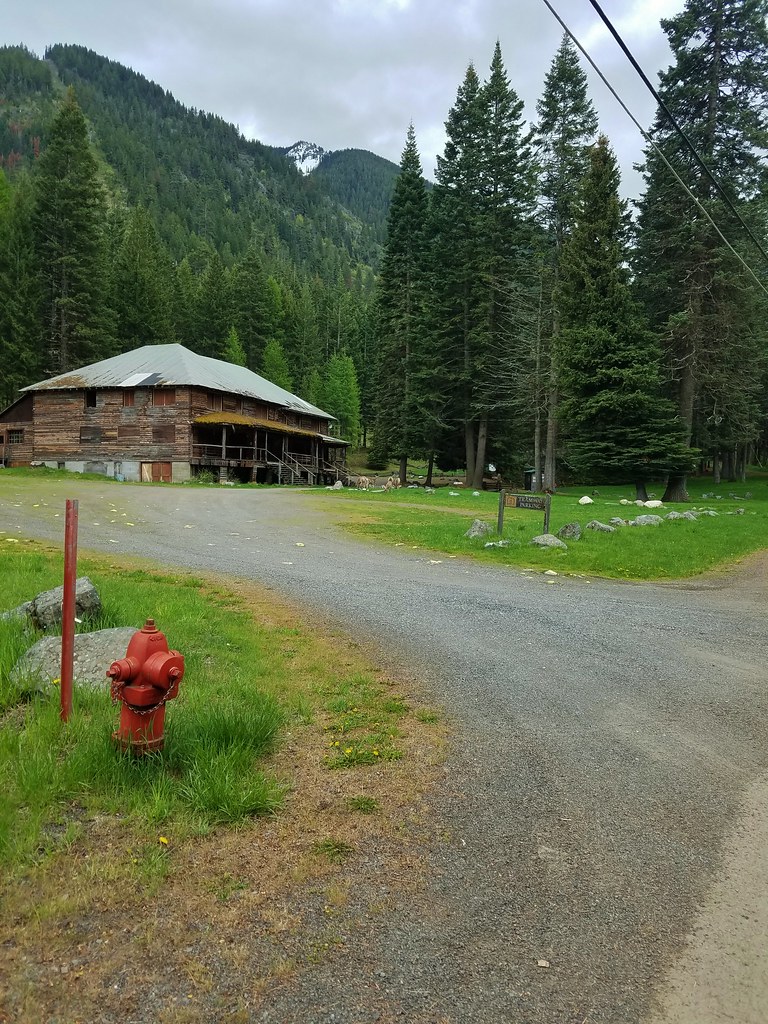
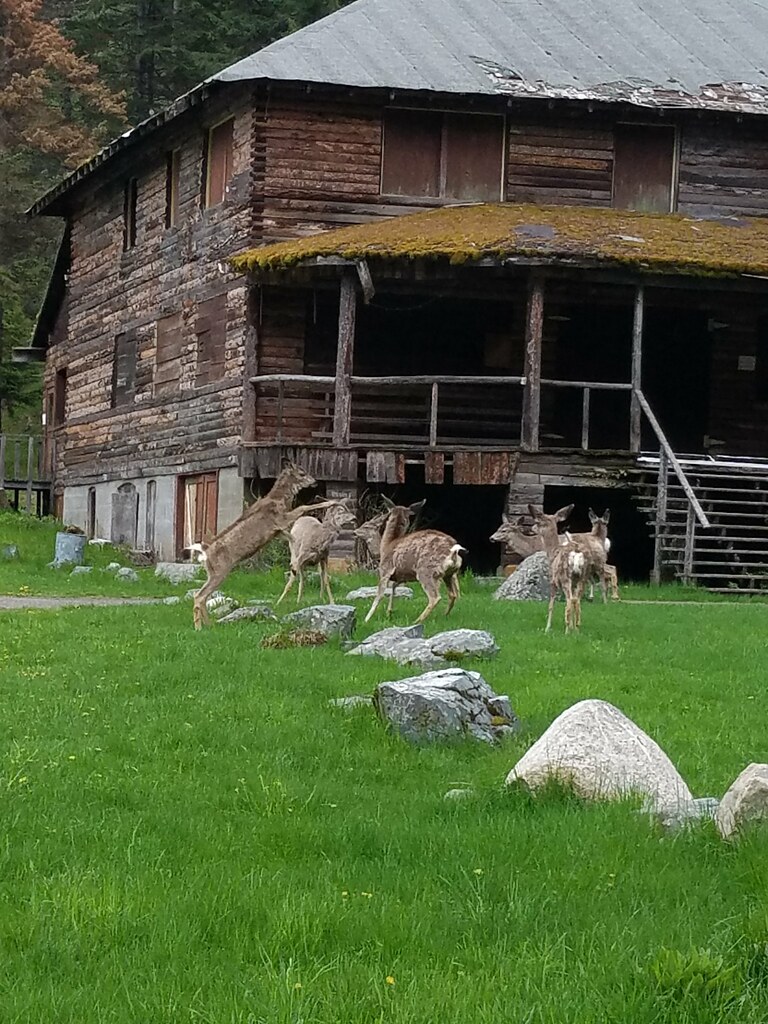
The food was great and after dinner we walked down to Glacier Grill and General Store to pick up some food and drinks for the room. On the way back we noticed a group of deer in front of the old Edelweiss Inn.
20190523_172745

They were a rowdy bunch.
20190523_172919

20190523_172922

Our outing to B.C. Creek Falls was a modest 5 miles and a nice reminder of how much we loved our 2016 trip to the Wallowas. Happy Trails!

Flickr: Umatilla WLFR & B.C. Creek Falls

Categories
Bend/Redmond Central Oregon Hiking Oregon Throwback Thursday Trip report

Throwback Thursday – Metolius River

Throwback Thursday is dedicated this week to one of the best wildlife hikes we’ve taken. On July 29th, 2012 on the way to Central Oregon we stopped at the Lower Canyon Creek Campground along the Metolius River. We parked at the West Metolius Trailhead at the far end of the campground.

West Metolius River Trailhead

An interesting thing here was the presence of a parking attendant.

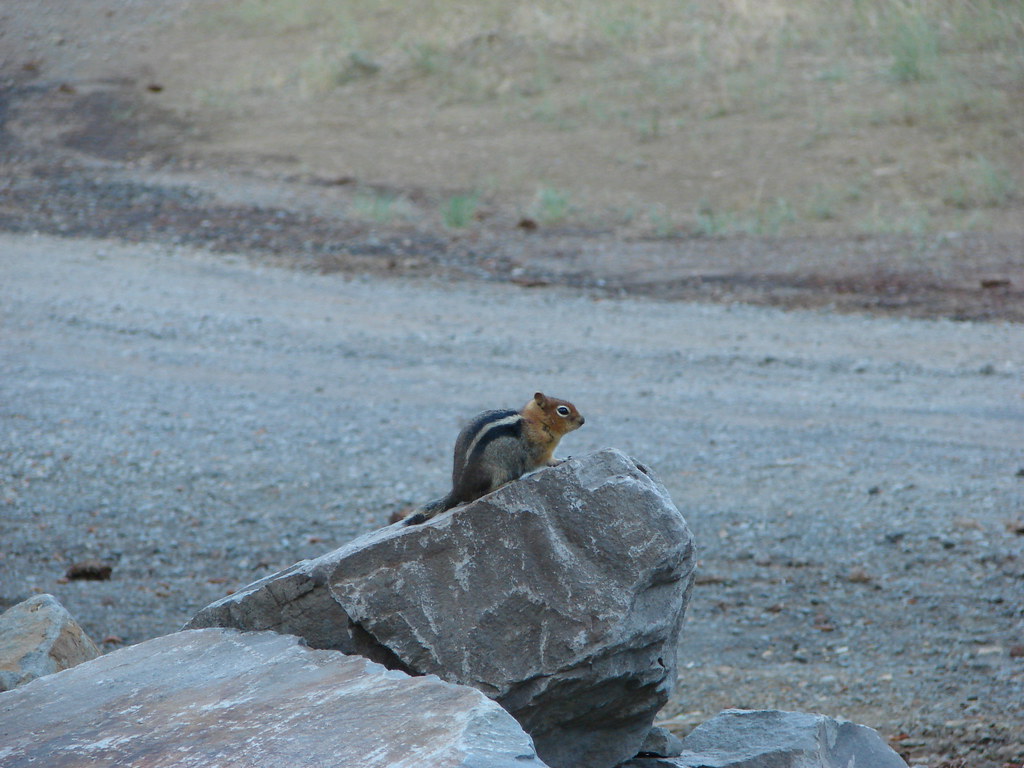
Golden mantled ground squirrel

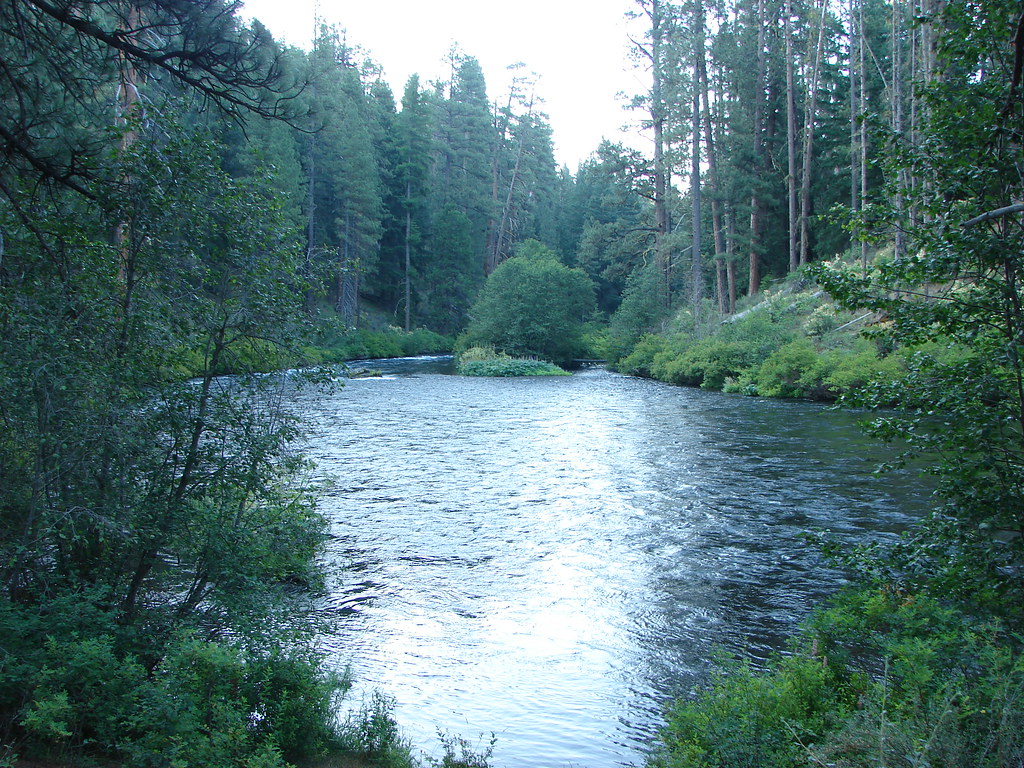
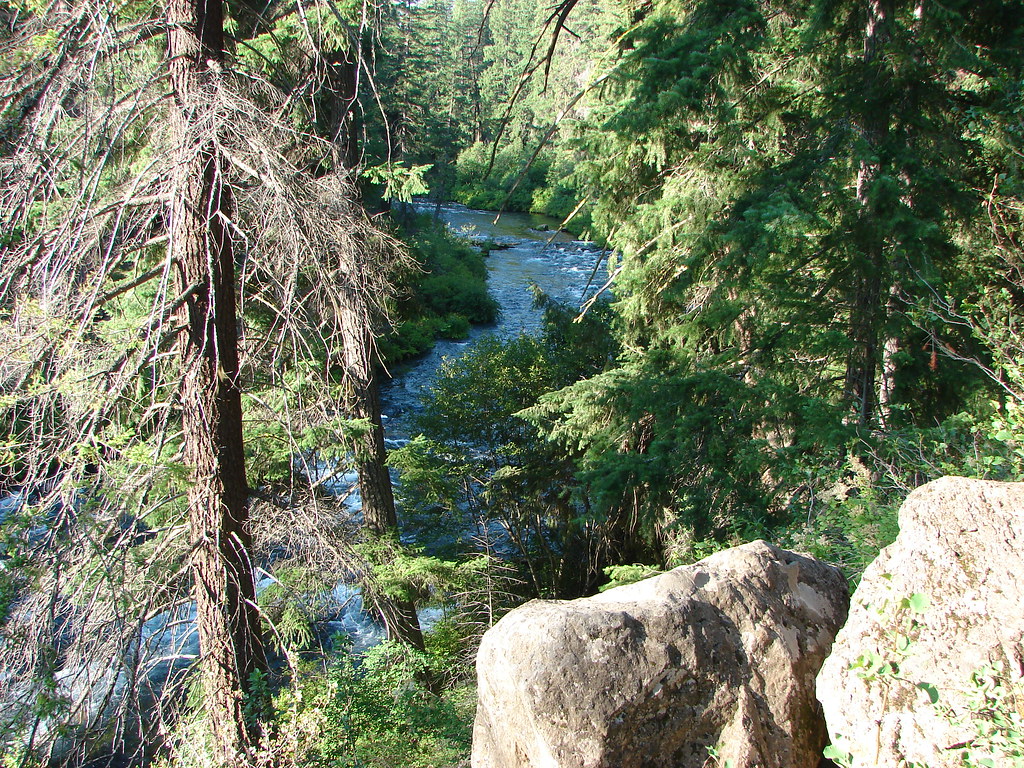
The trail begins along the banks of the Metolius River and stick close to it for the first 1.25 miles.

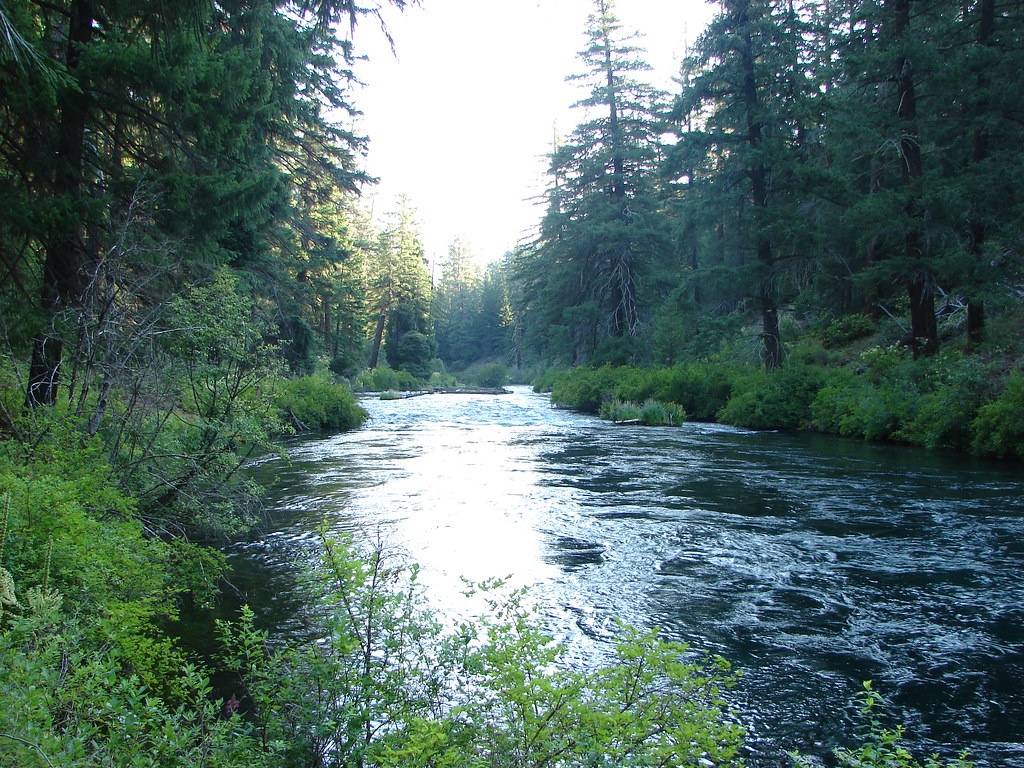
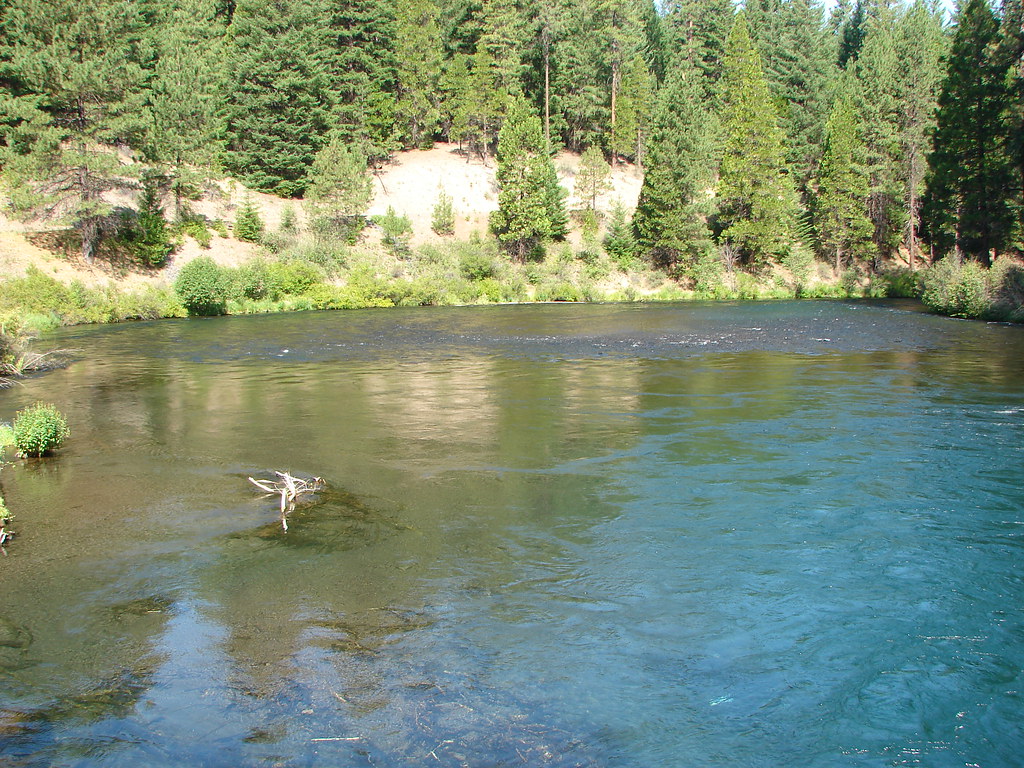
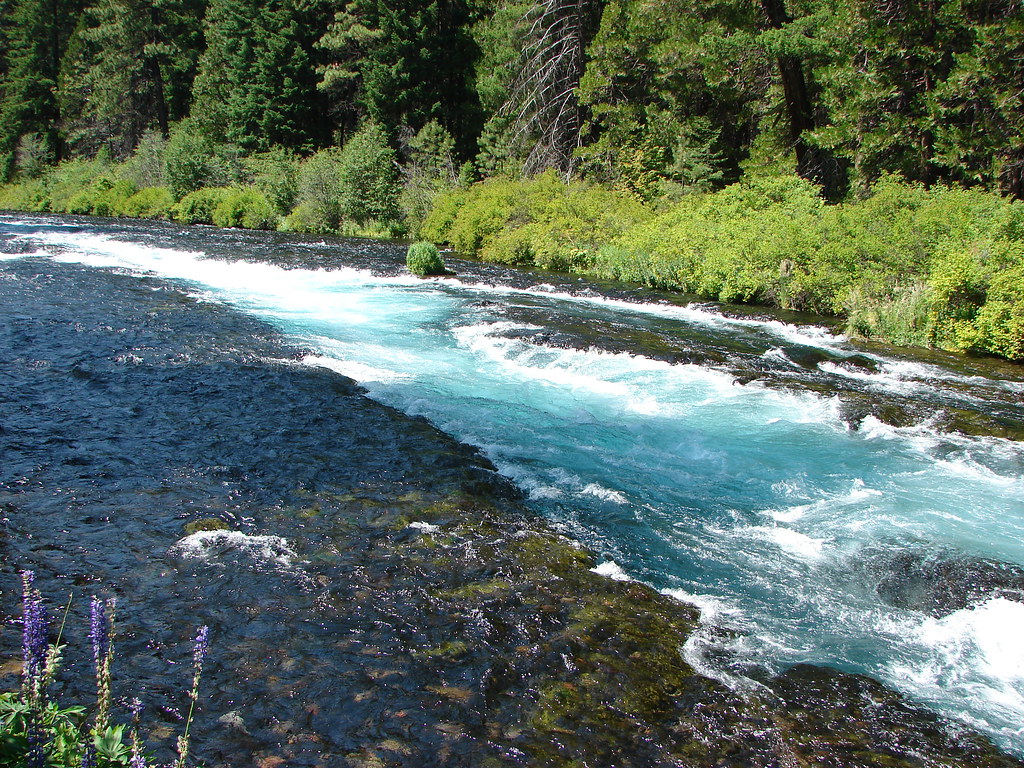
Metolius River

Just over a quarter mile from the trailhead a series of springs gushed from the far bank of the river.

Springs along the Metolius River

Springs along the Metolius River

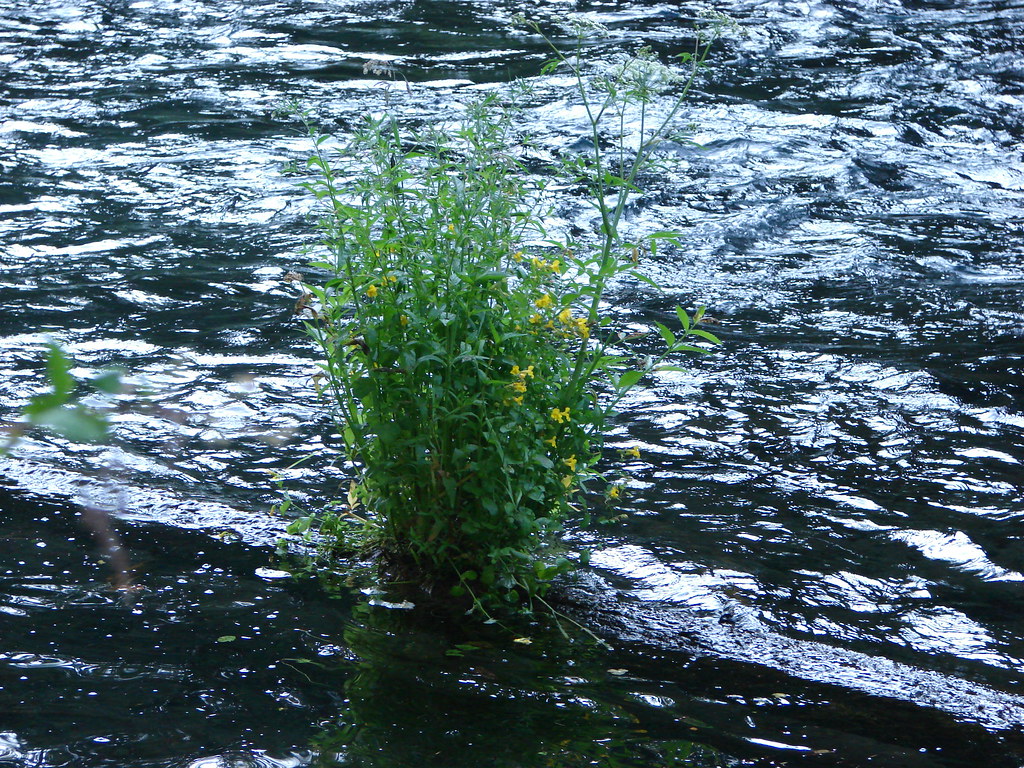
Wildflowers grew along the bank and sometimes out in the river.

Metolius River

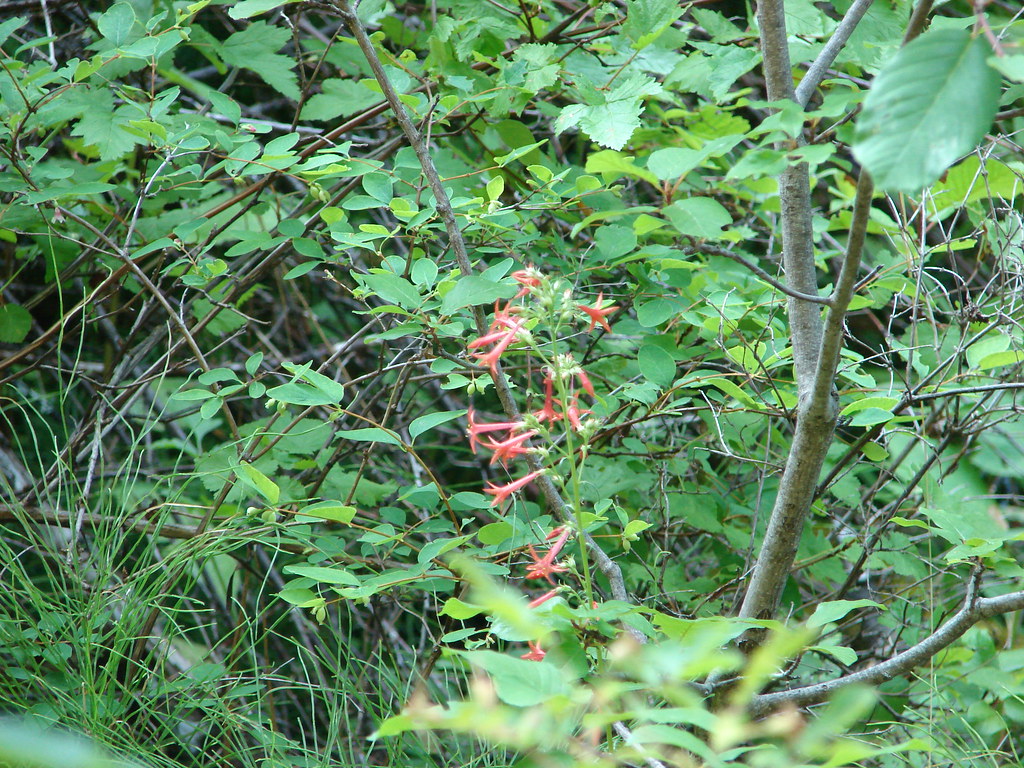
Scarlet gilia

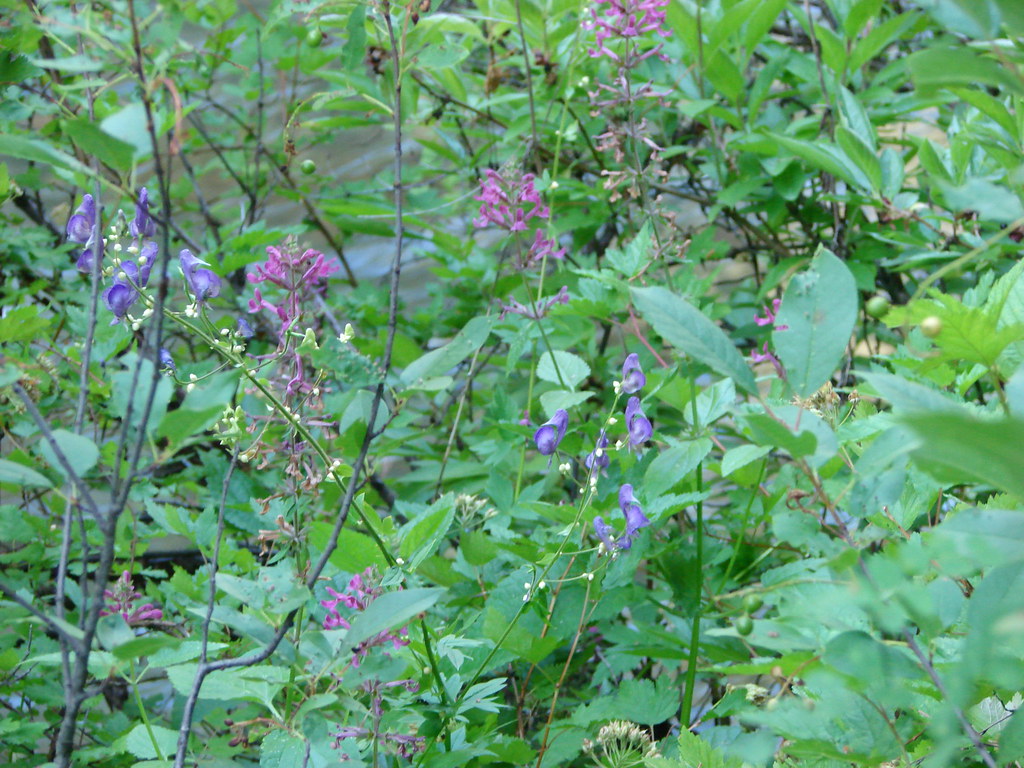
Monkshod and hedge-nettle

Wildflowers along the Metolius River

Monkeyflower

Near the 1.25 mile mark the trail climbed away from the river just a bit as it wound through a steep canyon.

Metolius River

Soon we were back down along the riverbank though.

Metolius River

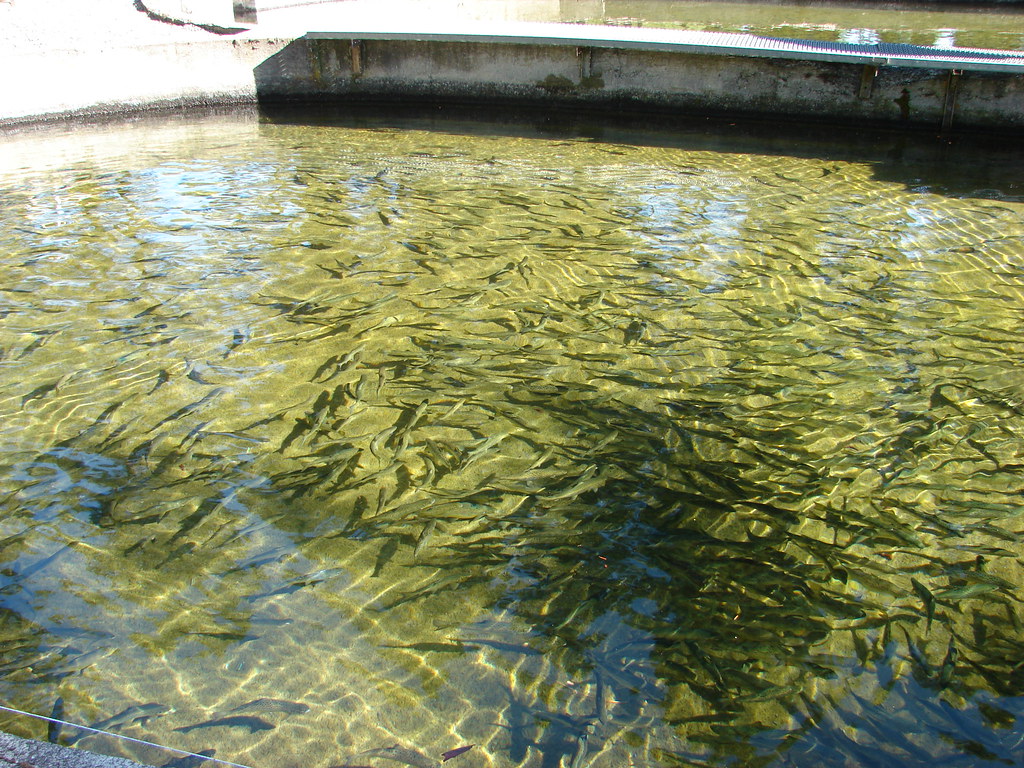
At the 2.7 mile mark we arrived at the Wizard Falls Fish Hatchery. Driving here is an option and can be a fun place for kids to watch and even feed the fish.

Wizard Falls Fish Hatchery

Wizard Falls Fish Hatchery

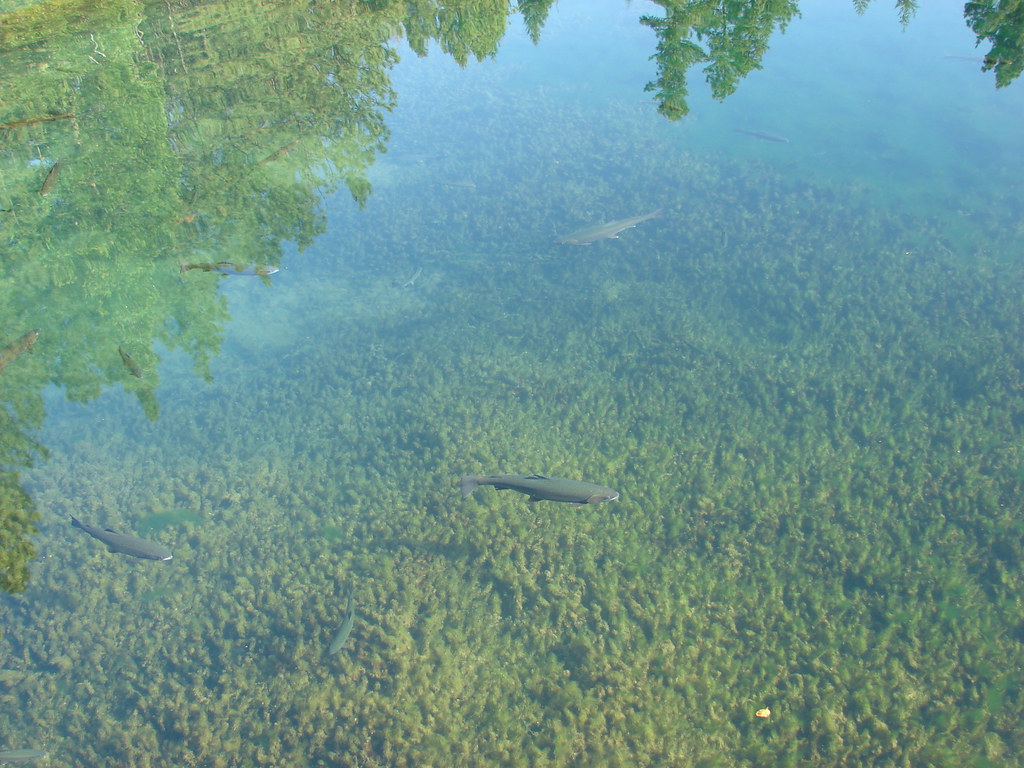
Fish at Wizard Falls Fish Hatchery

The hatchery apparently has other fans as well.

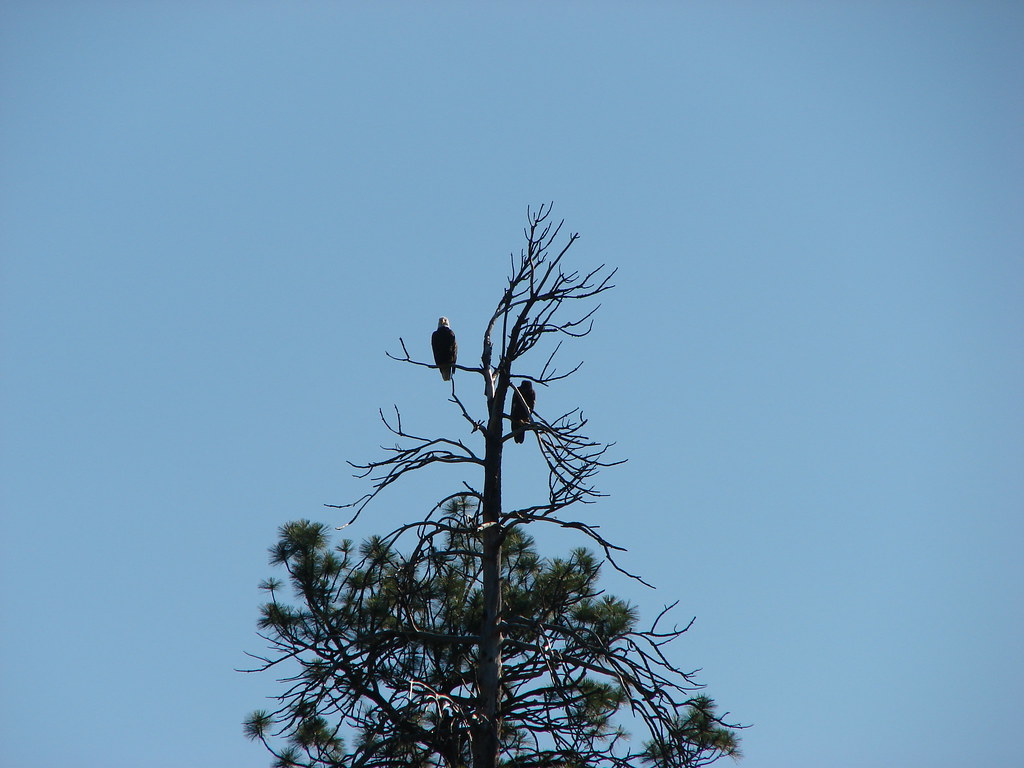
Bald Eagles

Bald Eagles

For a shorter 5.7 mile hike we could have turned around here and headed back but a 6.4 mile loop could be completed by continuing on from the fish hatchery to a bridge at the Lower Bridge Campground so after looking at all the fish we continued on. In the 3.2 miles to the bridge we spotted a variety of wildlife.

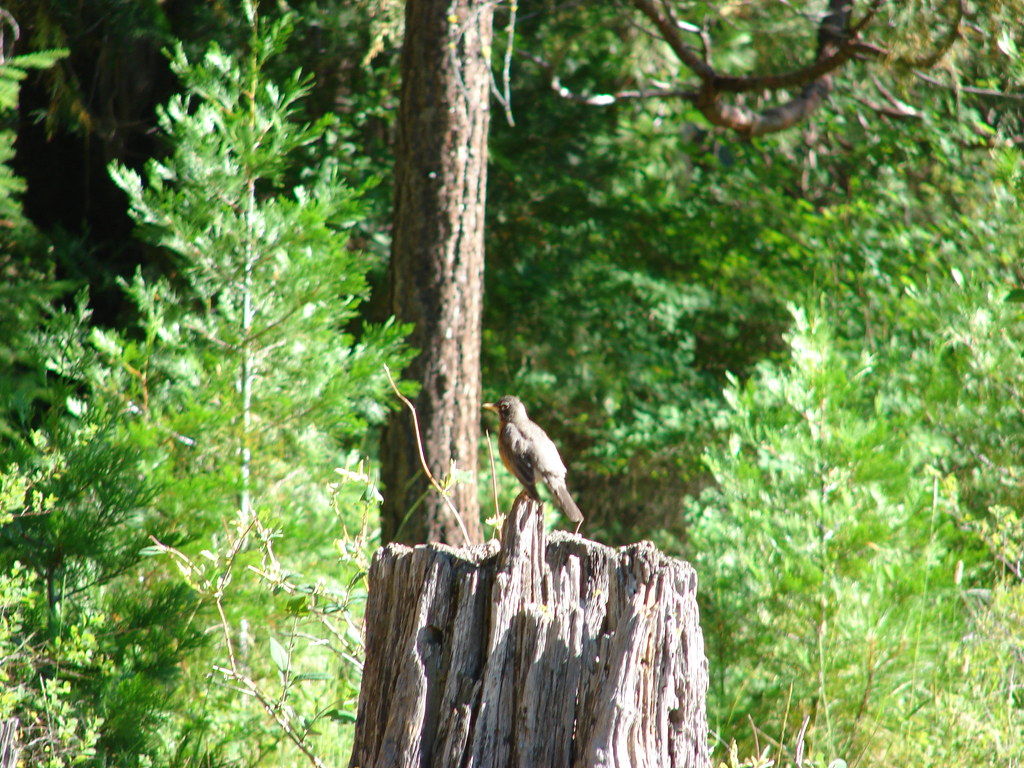
Robin

Robin

Yellow rumped warbler

Yellow rumped warbler

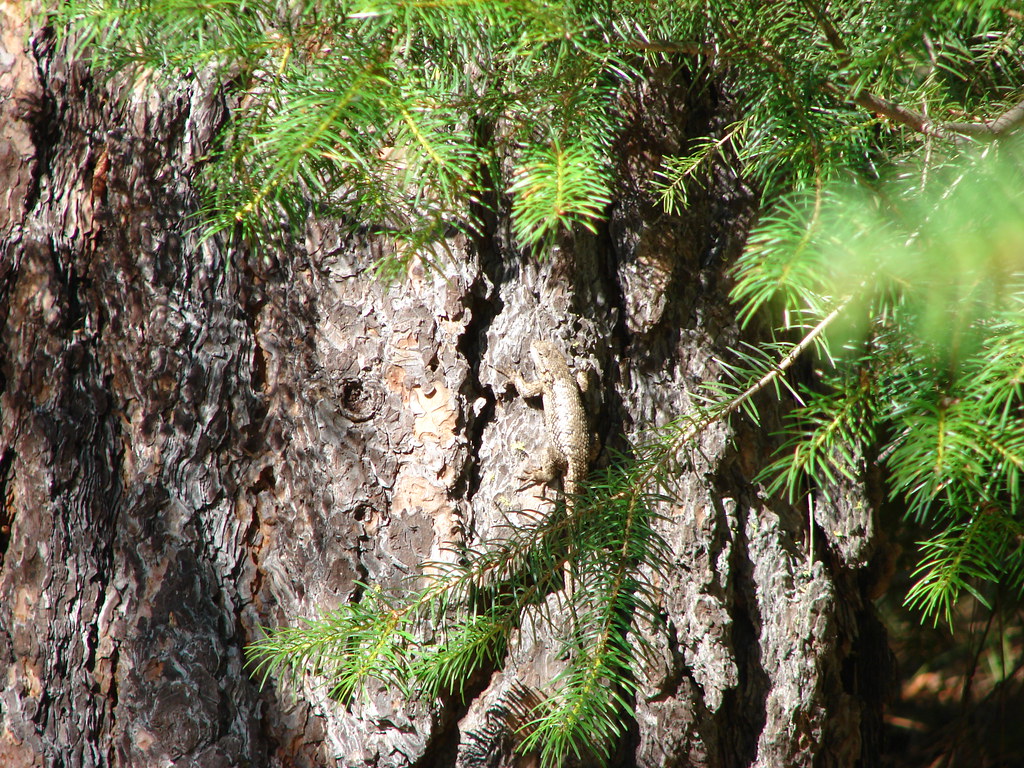
Western fence lizard

Western fence lizard

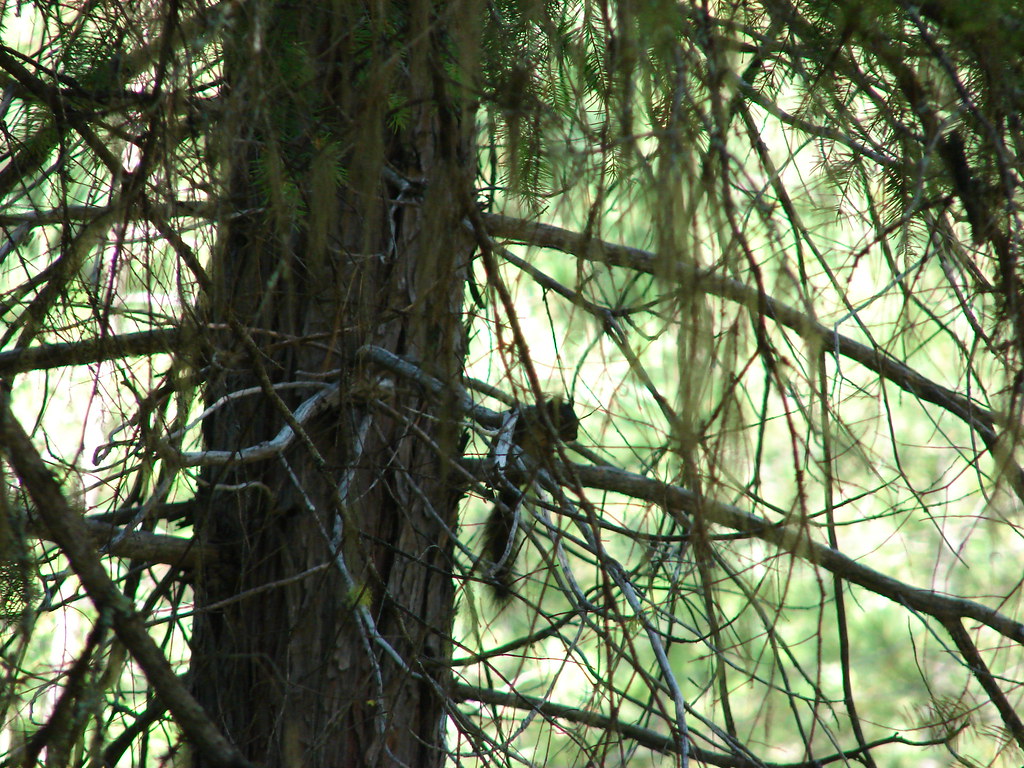
Douglas squirrel

Douglas squirrel

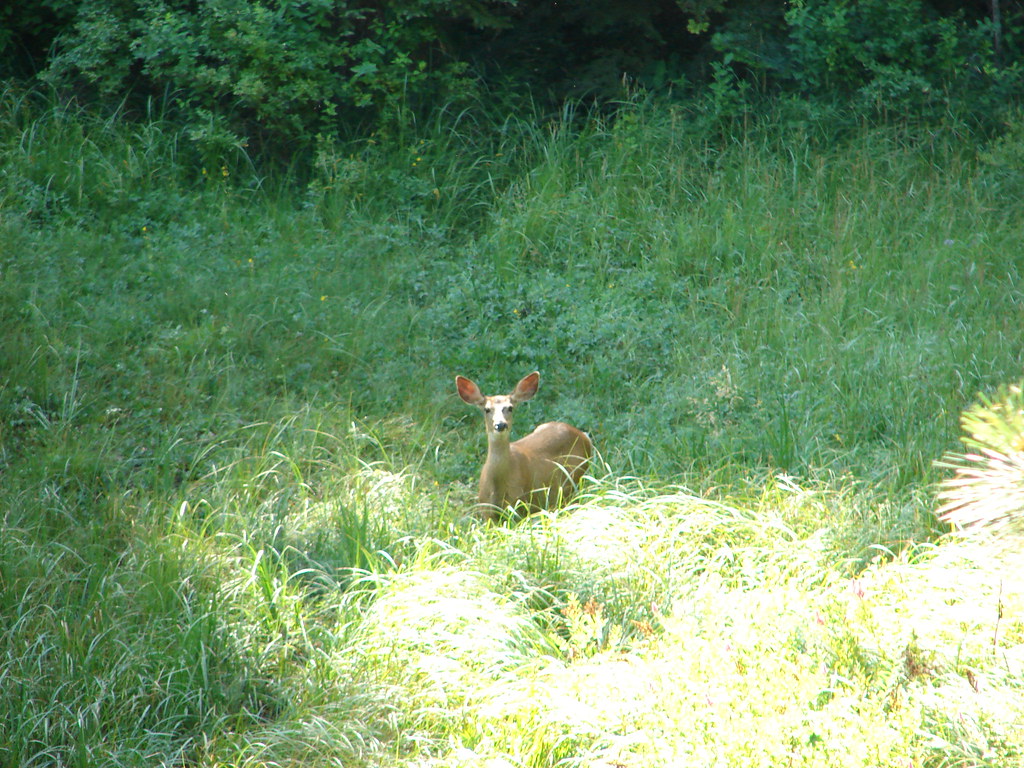
Deer in a meadow along the West Metolius Trail

Doe

Lorquin's admiral butterfly

Lorquin’s admiral

Mylitta crescent butterfly

Mylitta crescent? butterfly

western fence lizard

Another western fence lizard

Coronis fritillary

Fritillary butterfly

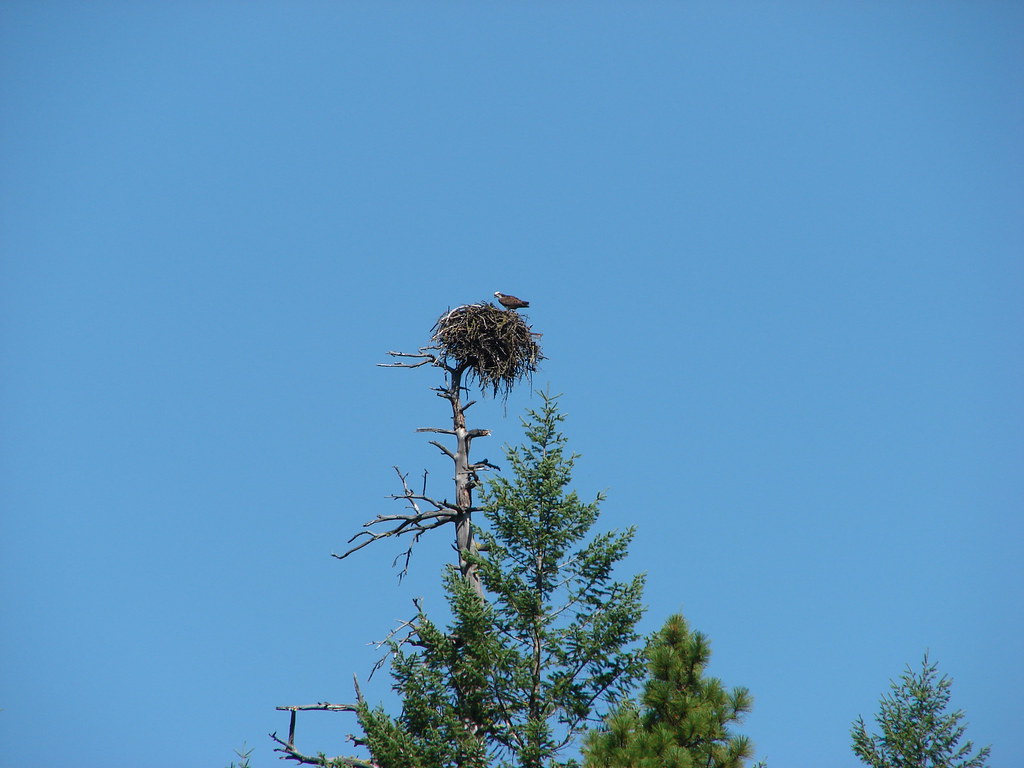
Osprey

Osprey

We crossed the Metolius on the bridge and headed back along the eastern bank.

Metolius River

East Metolius Trail

The 3.2 miles back to the bridge at the Wizard Falls Fish Hatchery also had its share of wildlife.

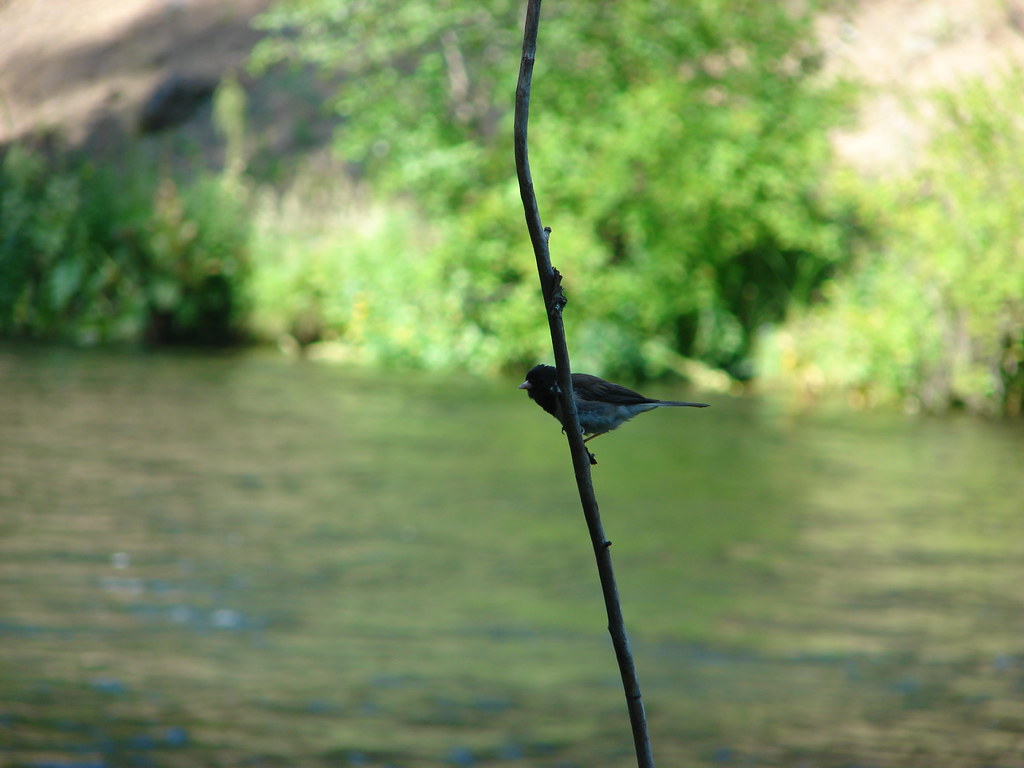
Junco

Junco

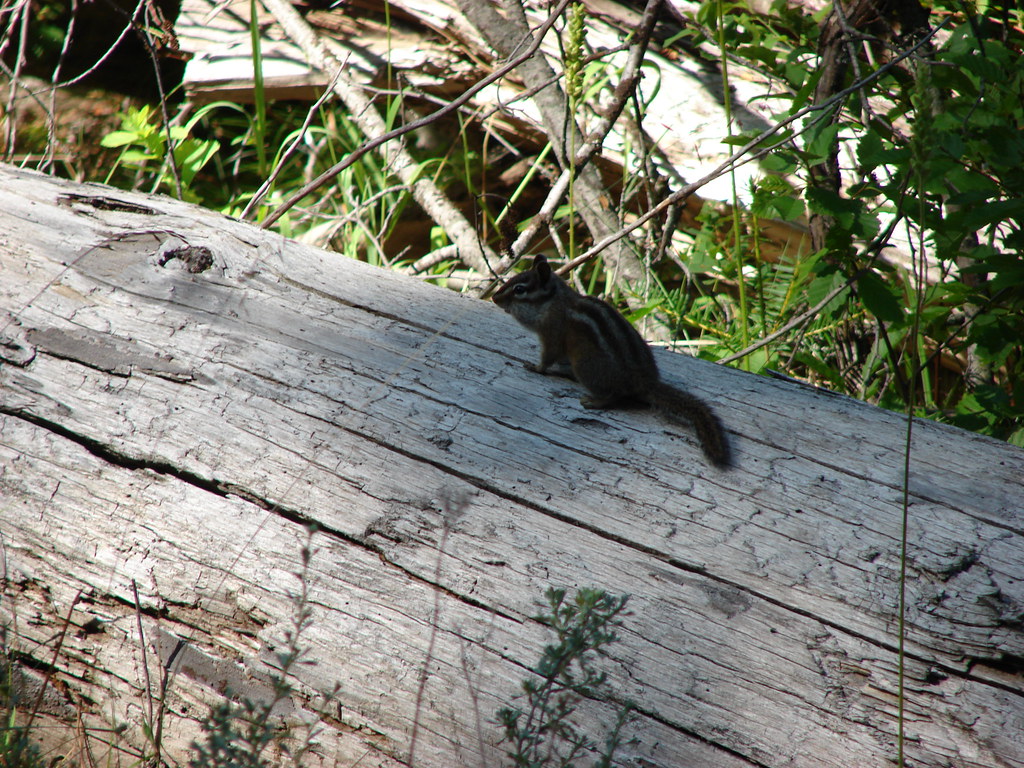
Chipmunk

Chipmunk

Silver-spotted skipper on lewis flax

Silver-spotted skipper

Golden mantled ground squirrel

Golden-mantled ground squirrel

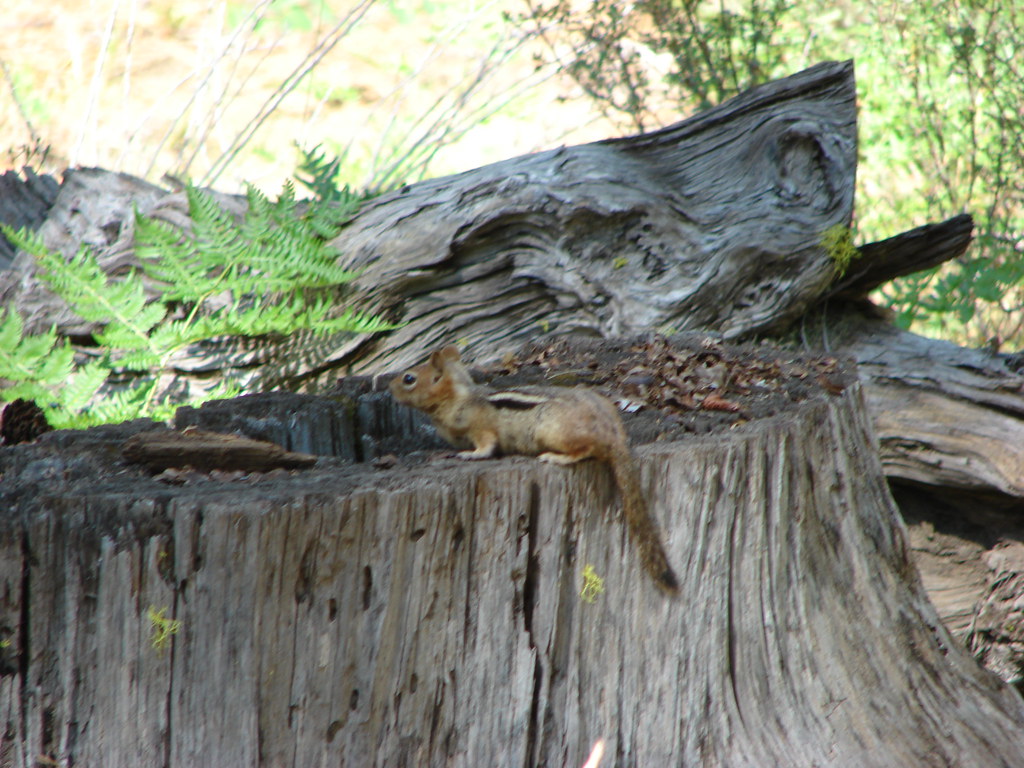
Chipmunk

Another chipmunk

Golden mantled ground squirrel

Another ground squirrel

Western tanager

Western tanager

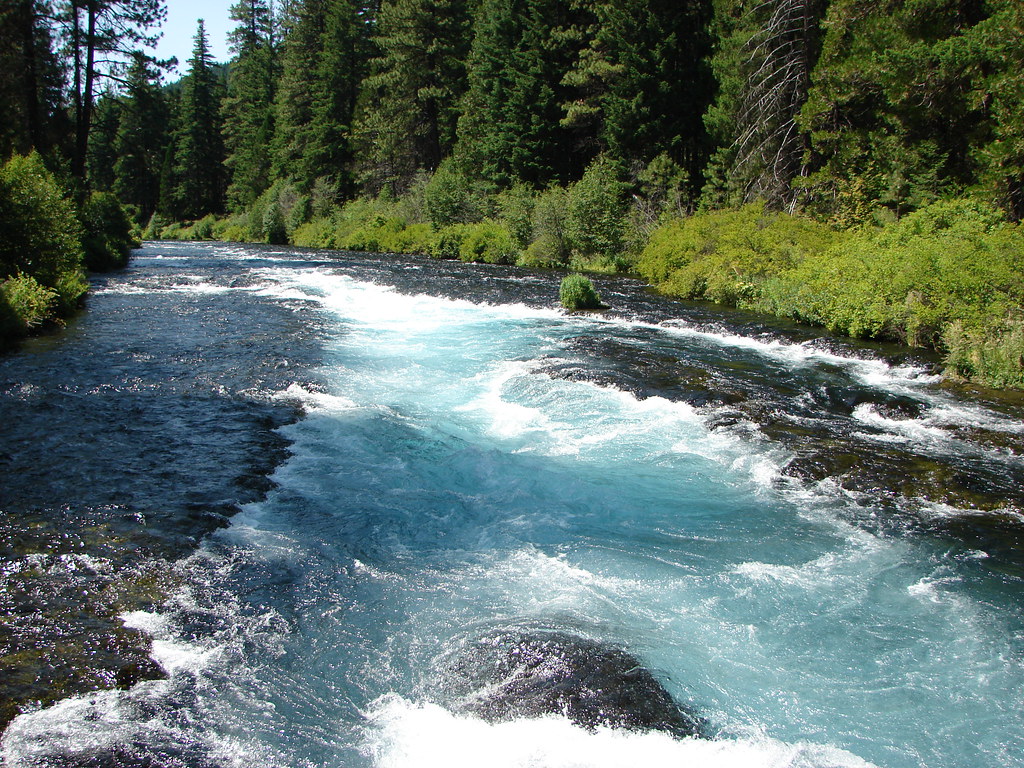
The bridge to the hatchery offers a great view of Wizard Falls. Not exactly a waterfall, Wizard Falls is created by ledges in the lava rock below the river creating a colorful water feature.

Wizard Falls

Wizard Falls

After crossing the bridge we returned to the trailhead and headed to Sisters. This was a great hike for not a lot of effort. There was very little elevation gain making the 11.8 miles very manageable. Another nice aspect to this trail is that it is open most of the year (other than during winter storms). Happy Trails!

Flickr: Metolius River

Categories
Hiking Northern Coast Oregon Oregon Coast Trip report

Nehalem Bay State Park, Kilchis Point Reserve, and Cape Meares State Scenic Viewpoint

We didn’t waste any time starting on our 2018 list of hikes as we took advantage of favorable weather on New Year’s Day and headed for the Oregon Coast. Our plan for the day was to make three stops near Tillamook. First at Cape Meares State Scenic Viewpoint, then at Kilchis Point Reserve, and finally at Nehalem Bay State Park. As we neared Tillamook though it became apparent that we were a bit ahead of the Sun so we decided to swap the first and final stops to avoid sitting at the Cape Meares Trailhead waiting for light.

We drove north through Tillamook on Highway 101 to mile post 44 (one mile south of Manzanita) where we turned west at a sign for Nehalem Bay State Park. After paying the $5 day use fee we parked at the large day use area. We waited briefly for enough light to take a short path to the ocean.
Nehalem Bay Trailhead

Pacific Ocean

The view from the beach was a good one with some of our previous destinations visible to the north.
Neahkahanie Mountain
Neahaknie Mountain, Angora Peak, and Cape Falcon

To the south our final destination of the day, Cape Meares, jutted out into the Pacific.
Looking south from the Nehalem Spit

We walked south along the quite beach for 2.25 miles to the jetty at the end of the spit. We were joined by a lone jogger, some seagulls, and a curious seal.
Morning glow on the Pacific

Seagull

Seal

Jetty on Nehalem Spit

A mass of driftwood near the jetty forced us to backtrack a bit along the beach to a hiker sign where we turned inland.
Morning light hitting Neahkahanie Mountain

Hiker post on Nehalem Spit

We crossed the spit to the bay and turned north along the water on a worn path.
Swell heading into the bay

We were eventually able to get down onto the sandy Nehalem Beach which we walked along as far as we could before the high water forced us back up into the vegetation.
Neahkahanie Mountain across Nehalem BayNehalem Beach ahead

While we walked along the beach we spotted a bald eagle, more seals, and a varied thrush.
Bald eagle

Seals in Nehalem Bay

Varied thrush

Ideally we would have been able to keep on the sand all the way back along the bay to the park’s boat ramp but since that wasn’t an option we turned inland on what appeared to be a well traveled trail. We were hoping it would lead us to the horse trail that our map showed running down the center of the spit but after a short distance the path we were following became flooded.
More water on Nehalem Spit

We were forced to attempt to follow a maze of game trails.
Off trail travel on Nehalem Spit

We could guess who was responsible for the confusion of trails by the elk sign we continually spotted. We lucked out at one point when we came to another flooded area at a narrow point where we were able to cross on driftwood. Had we tried sticking to the bay we would have run into a spot too wide to cross and wound up where we were anyway.
Inlet along Nehalem Bay

Shortly after crossing the water travel became easier as we were able to reach another sandy beach and then pick up a wider more traveled trail back to the horse trail not far from the day use parking lot.
Nehalem Bay

Horse Trail in Nehalem Bay State Park

Our guidebook and called this a 5.2 mile loop but the time we’d arrived back at the car we had squeezed 5.7 miles out of it due to backtracking because of the flooded trail.

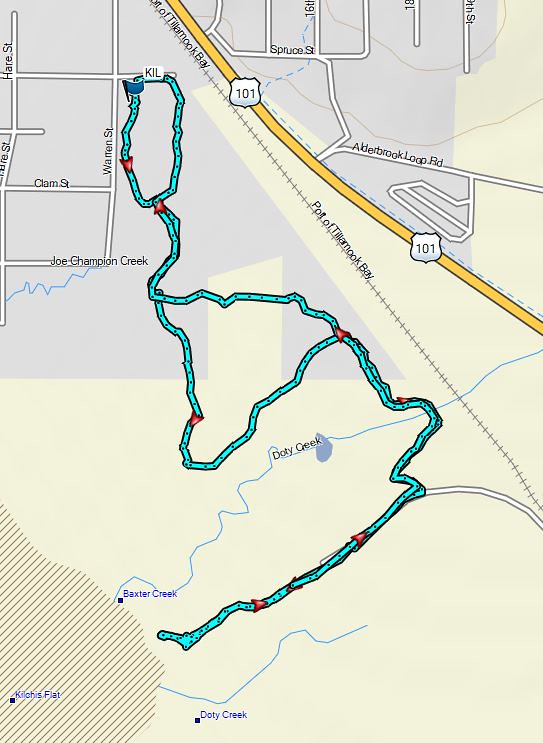
After returning to the highway we headed south to Bay City for our second stop of the morning – Kilchis Point Reserve. We turned towards Tillamook Bay on Warren Street near mile post 61 and followed pointers to the parking area on Spurce Street.
Kilshis Point Reserve Trailhead

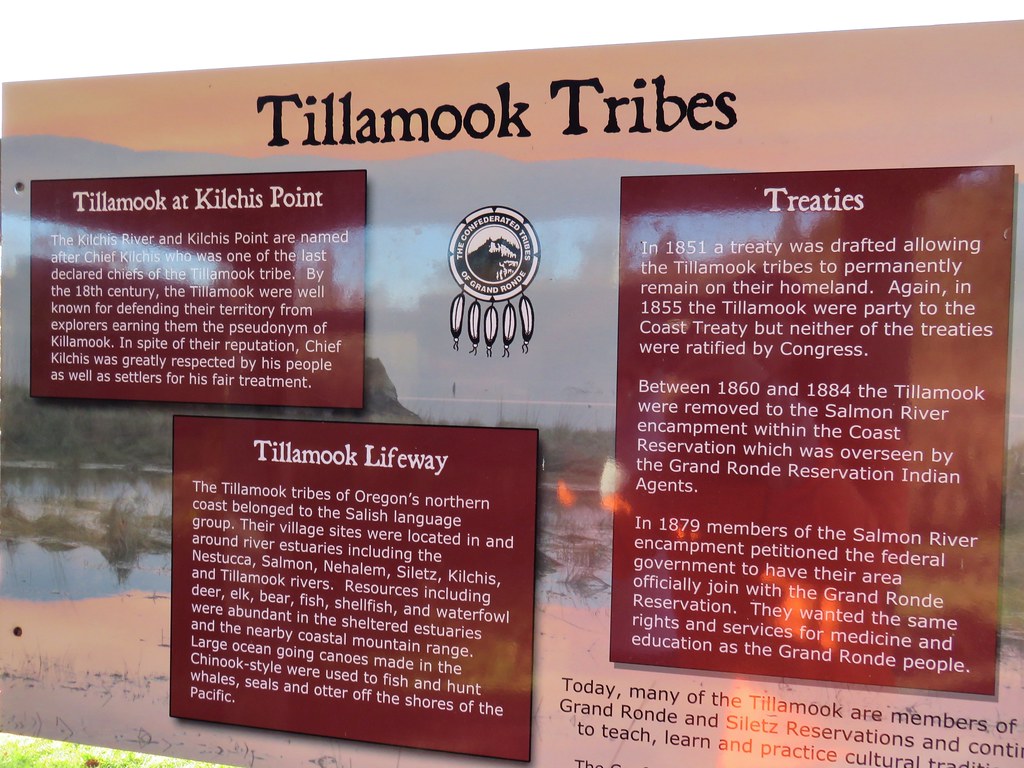
Kilchis Point is the site of one of the largest Native American villages along the Northern Oregon Coast. It is also the location where the Morning Star of Tillamook, first ship registered in the Oregon Territory, was built. The small park is very nice with plenty of amenities and a plethora of information posted throughout. It was a little chilly out so we didn’t stop to read all the signs this time but that just gives us a reason to stop again and check it out in the Spring or Summertime.
Path at Kilchis Point Reserve

Interpretive sign at Kilchis Point Reserve

Interpretive sign at Kilchis Point Reserve

Interpretive sign at Kilchis Point Reserve

We followed the brick path from the parking area keeping right at junctions a total of 1.2 miles to a bird watching gazebo at Tillamook Bay.
Brick path at Kilchis Point Reserve

Gazeebo for birdwatching at Kilchis Point Reserve

Tillamook Bay

We didn’t spot many animals (other than dogs) along the way but we did get to listen to a pair of bald eagles for a bit.
Bald eagle

After a short break by the bay we returned to the parking area by following signs and staying right at trail junctions to complete two short loops.
Trail sign at Kilchis Point Reserve

Kilchis Point

We then drove south to Tillamook and followed signs to Oceanside on Highway 131. From Oceanside we followed signs to Cape Meares State Scenic Viewpoint and parked at a trailhead parking area at the park entrance.
Cape Meares Trailhead

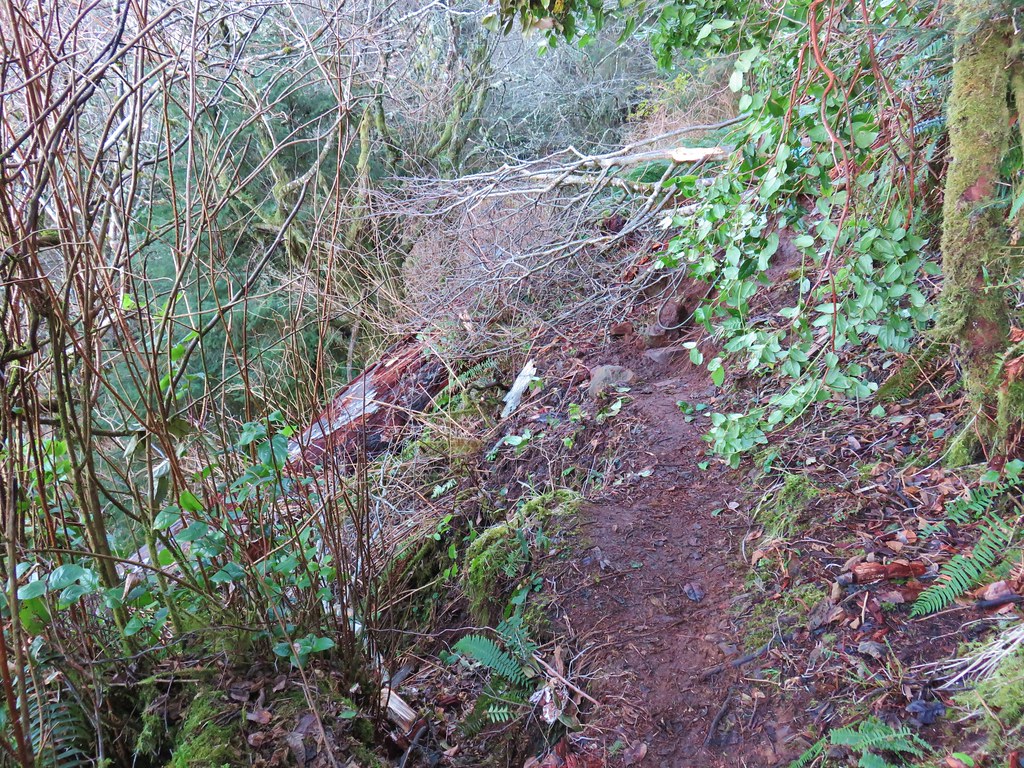
A mudslide in January of 2013 closed the Three Capes Scenic Loop beyond the park entrance. That slide continues to slowly shift the area and has affected a trail between the trailhead and the beach to the north of Cape Meares. We decided to head down this trail to see the conditions first hand.
Cape Meares Trail map

Trail at Cape Meares

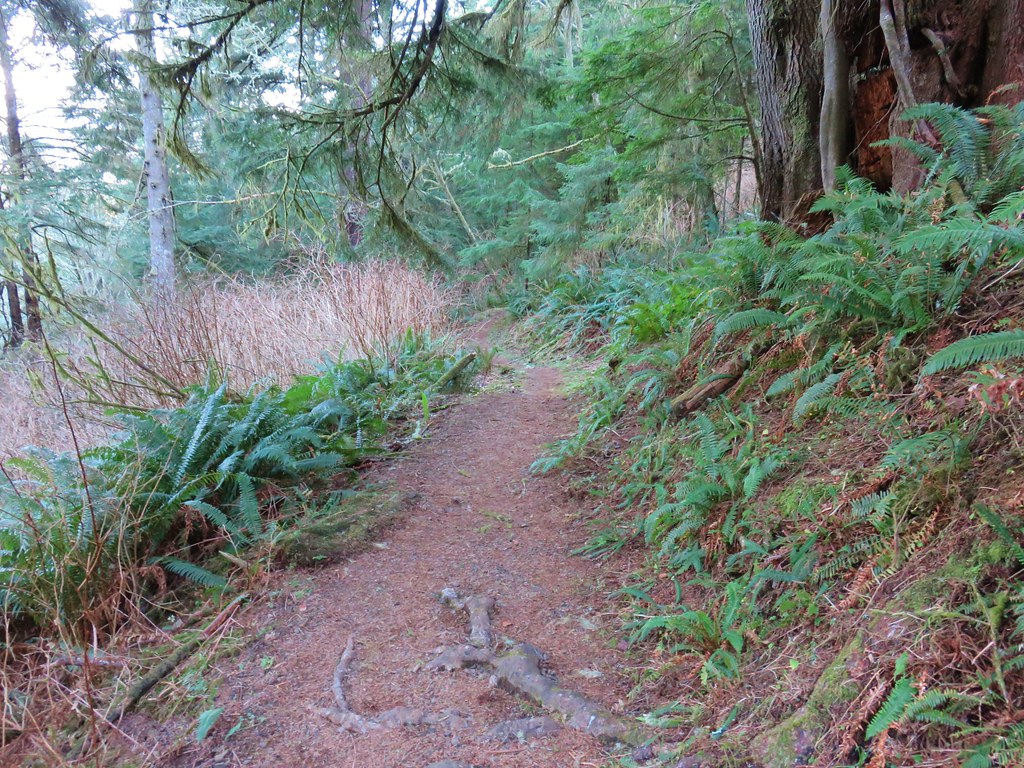
The upper portion of the trail was in reasonably good shape although there was a small tree that required ducking under.
Trail at Cape Meares

Shortly after passing a fairly nice view of another place we had previously hiked, Bayocean Spit, we came to a jumble of debris.
Bayocean Spit from Cape Meares

Washed out trail at Cape Meares

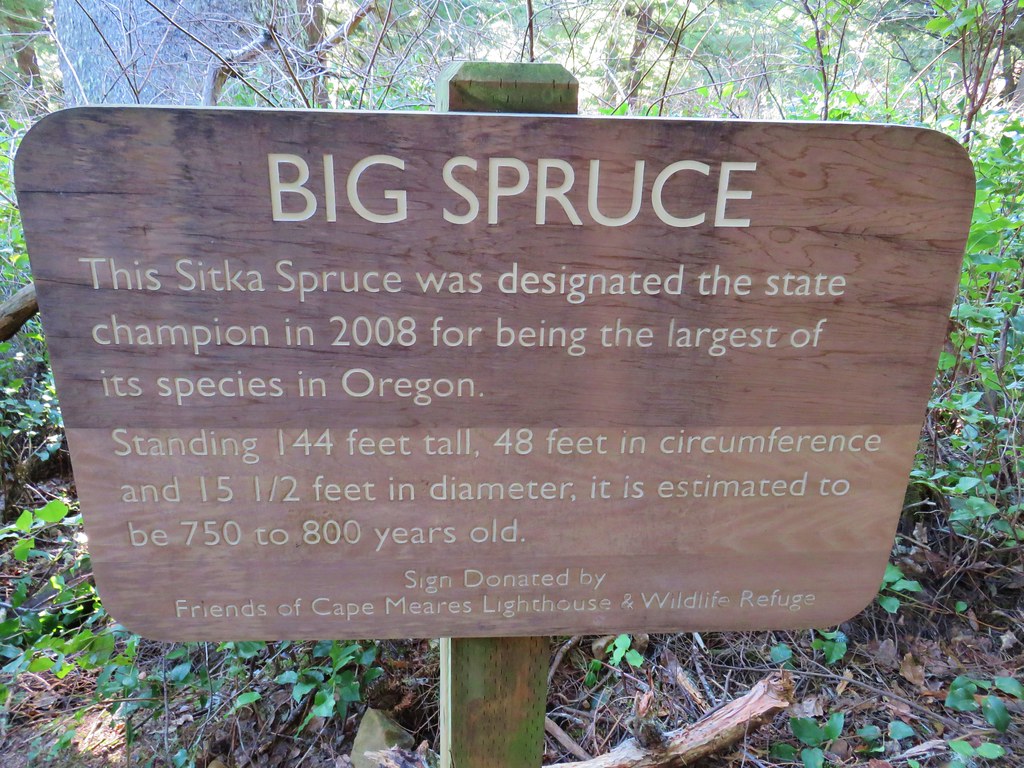
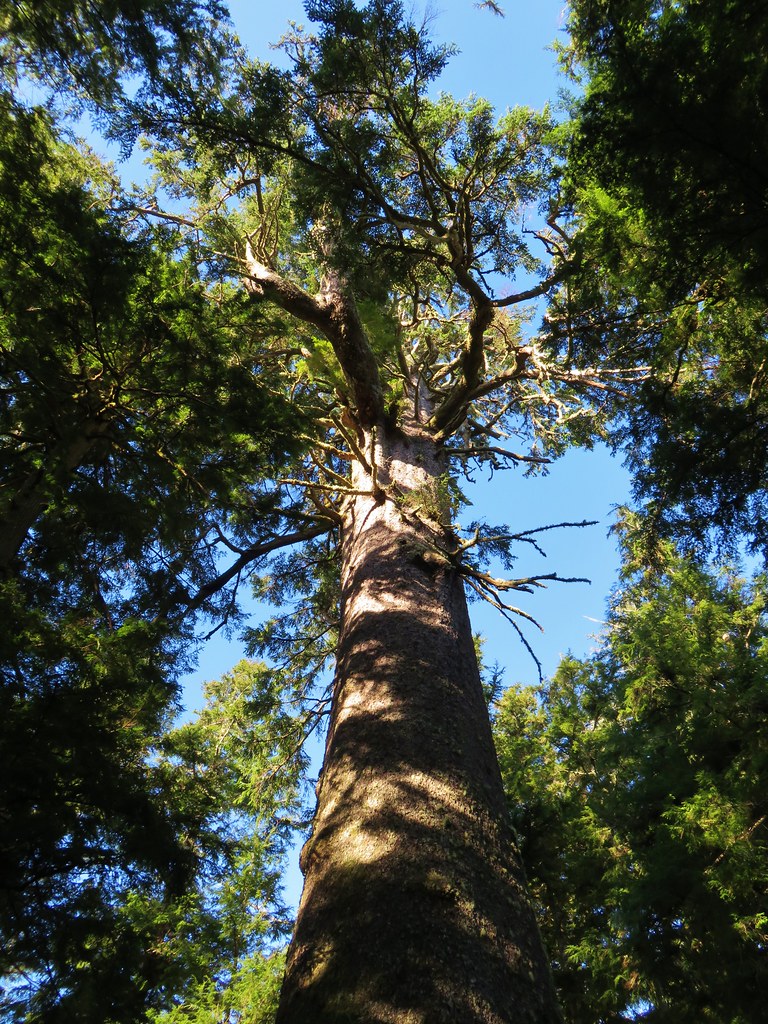
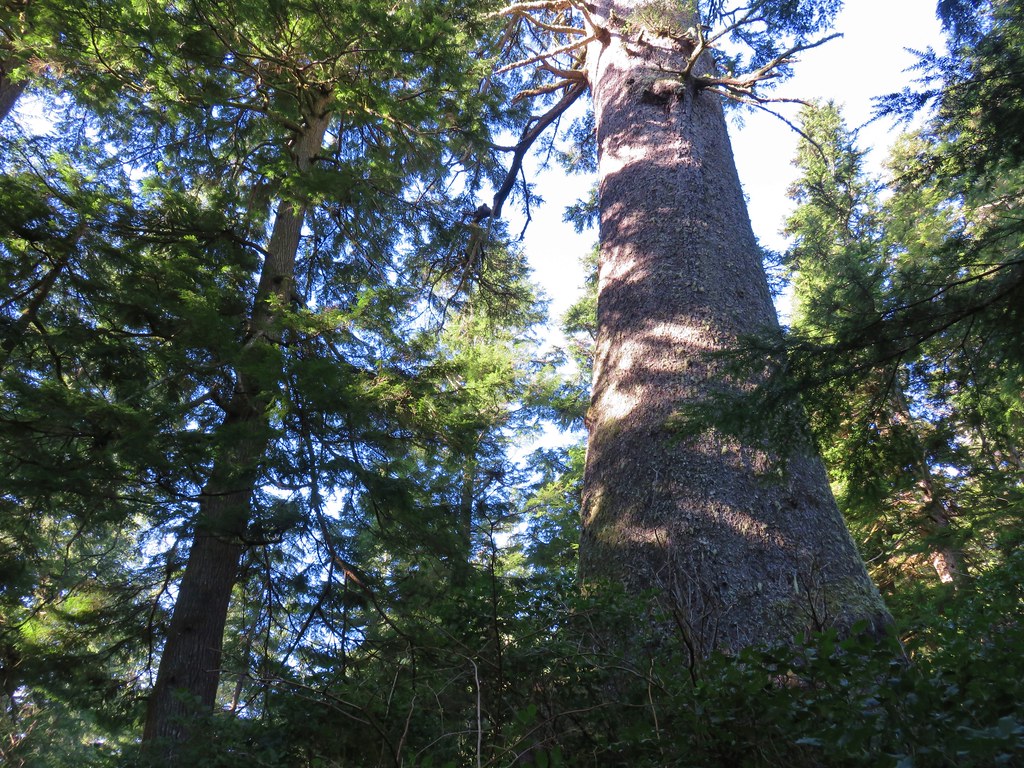
That was our turn around point,a little over half a mile from the trialhead. We headed back up to the trailhead and took the .2 mile Big Spruce Trail. The tree is estimated to be 750 to 800 years old and is the largest known Sitka spruce in Oregon.
Sign for the Big Spurce

Big Spruce

Big Spruce at Cape Meares

For a bit of perspective if the tree sprouted in 1217 it was there at the start of the fifth crusade.

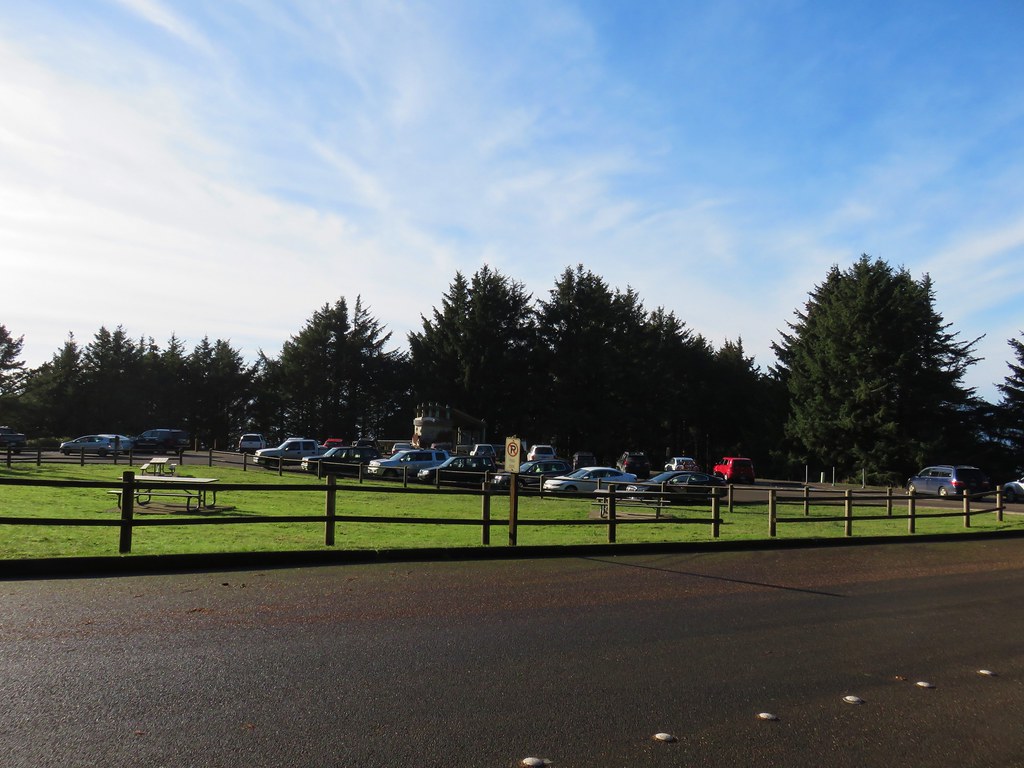
After visiting the old tree we road walked .6 miles along the entrance road to the crowded parking area for the Cape Meares Lighthouse.
Cape Meares lighthouse parking

We stopped at a viewpoint platform overlooking Tower and Pillar Rocks to the north.
Tower and Pillar Rocks

A .2 mile path led from the parking area past more viewpoints to the lighthouse.
Cape Meares

Waterfall at Cape Meares

Cape Meares Lighthouse

Cape Meares Lighthouse

A second .2 mile path led back to the parking lot allowing for a short loop and providing views south to Cape Lookout and the Three Arch Rocks Wilderness, one of the two off-limits wilderness areas in Oregon.
Looking south from Cape Meares

After returning to the parking area we headed for the Octopus Tree which was just a tenth of a mile away.
Sign for the Octopus Tree

Octopus Tree at Cape Meares

Octopus Tree at Cape Meares

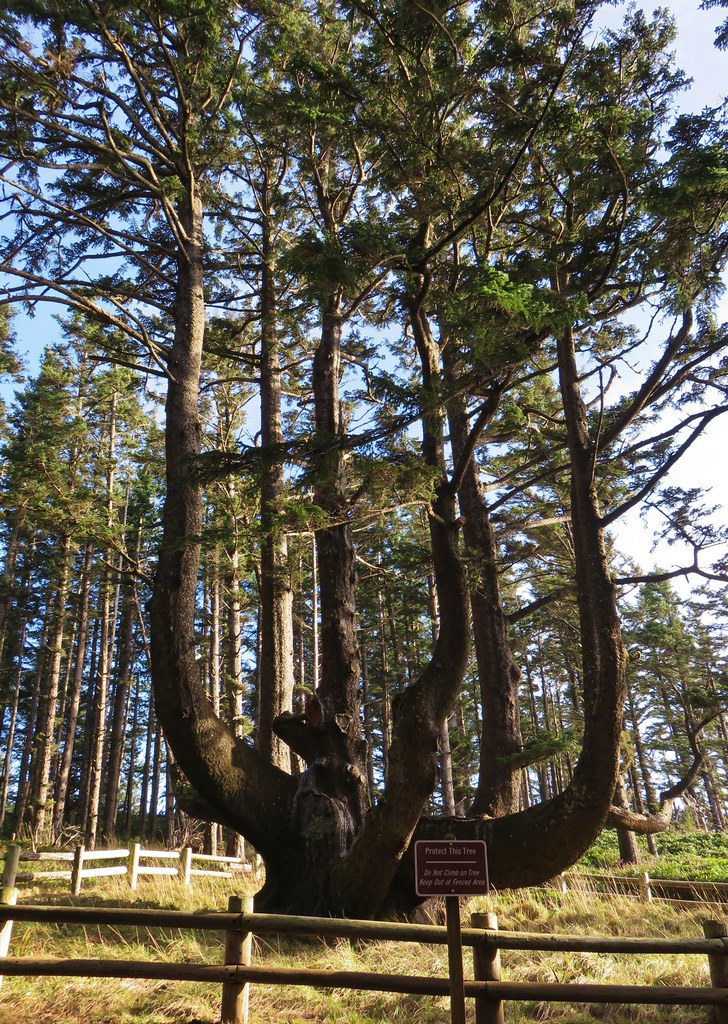
Another Sitka spruce, this unique tree has no central trunk. Instead several limbs have grown vertically. After visiting this tree we walked back up the entrance road to our car and headed home, capping off our first outing of 2018. Happy Trails!

Flickr: Nehalem Bay, Kilchis Point, and Cape Meares

Categories
Hiking Northern Coast Oregon Oregon Coast Trip report

Fort-To-Sea Trail – Fort Clatsop

We have officially started our 2016 hikes. As we have done for the past several years we headed to the Oregon Coast for our first hike of the year. Our goal this time was to hike the Fort-To-Sea Trail following a route initially blazed by Lewis and Clark in 1805 from Fort Clatsop to the ocean. Fort Clatsop was built near what is now the Lewis and Clark River and the Fort-To-Sea Trail was used by the expedition to gather salt by boiling saltwater. The area is now part of the Lewis and Clark National Historic Park complete with a replica of the original fort.

We decided to start our hike at the Sunset Beach Recreation Site near the ocean north of Gearhart, OR. From there we would take the trail to Fort Clatsop and back. Things got off to a rocky start at the trailhead when we found the restrooms devoid of toilet paper and discovered that I had not yet switched our toiletry supplies from my backpack to my daypack. After a quick trip back to Gearhart for supplies we were back at the trailhead and ready to begin.
IMG_2837

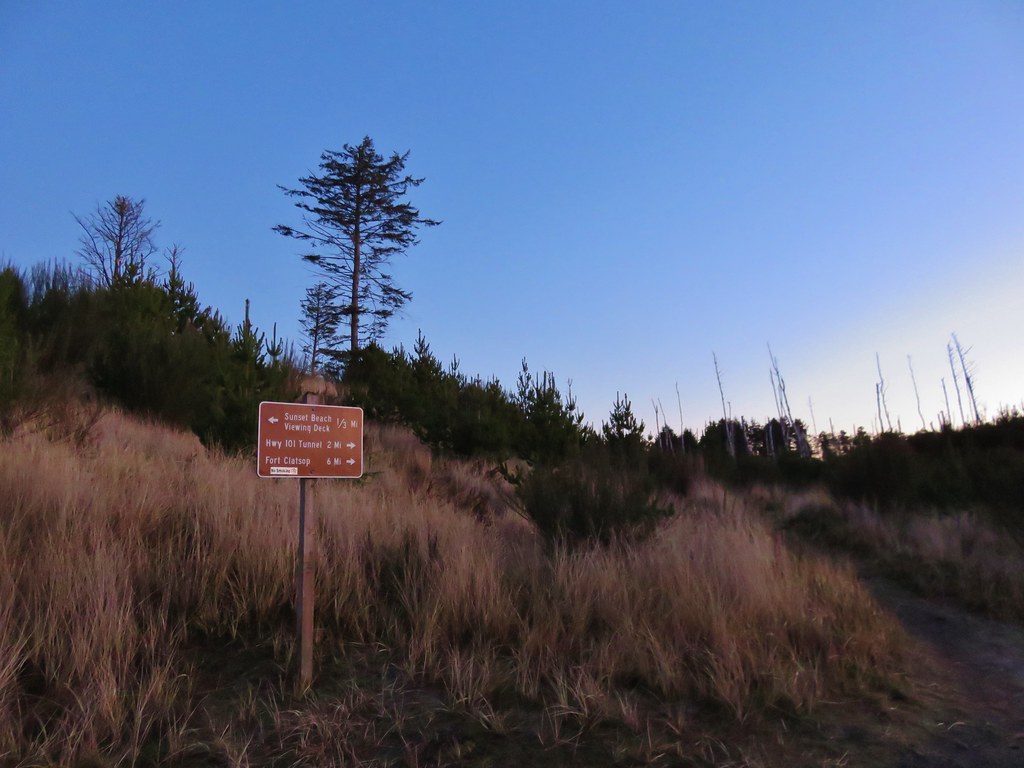
Before heading to Fort Clatsop we headed toward the ocean on the Fort-To-Sea Trail. There used to be a viewing deck overlooking the ocean 1/3 of a mile from the parking area but it has been removed leaving a sandy circle on the grassy dune.
IMG_2842

IMG_2846

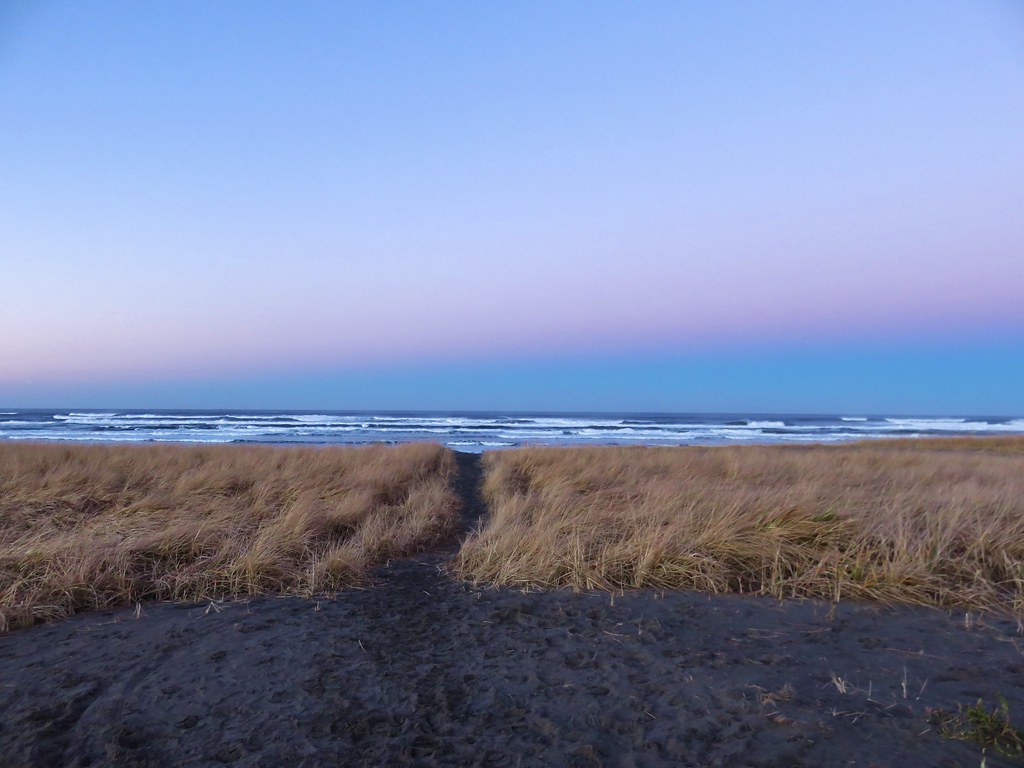
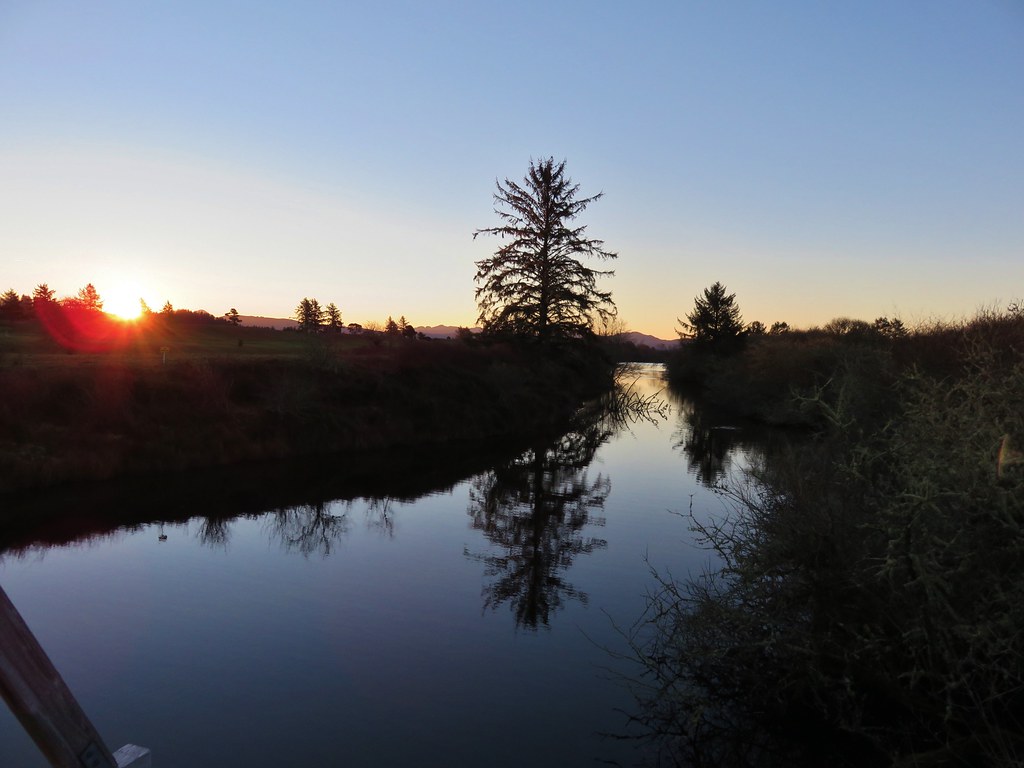
The Sun was still rising behind us creating some nice colors on the western horizon.
IMG_2847

IMG_2851

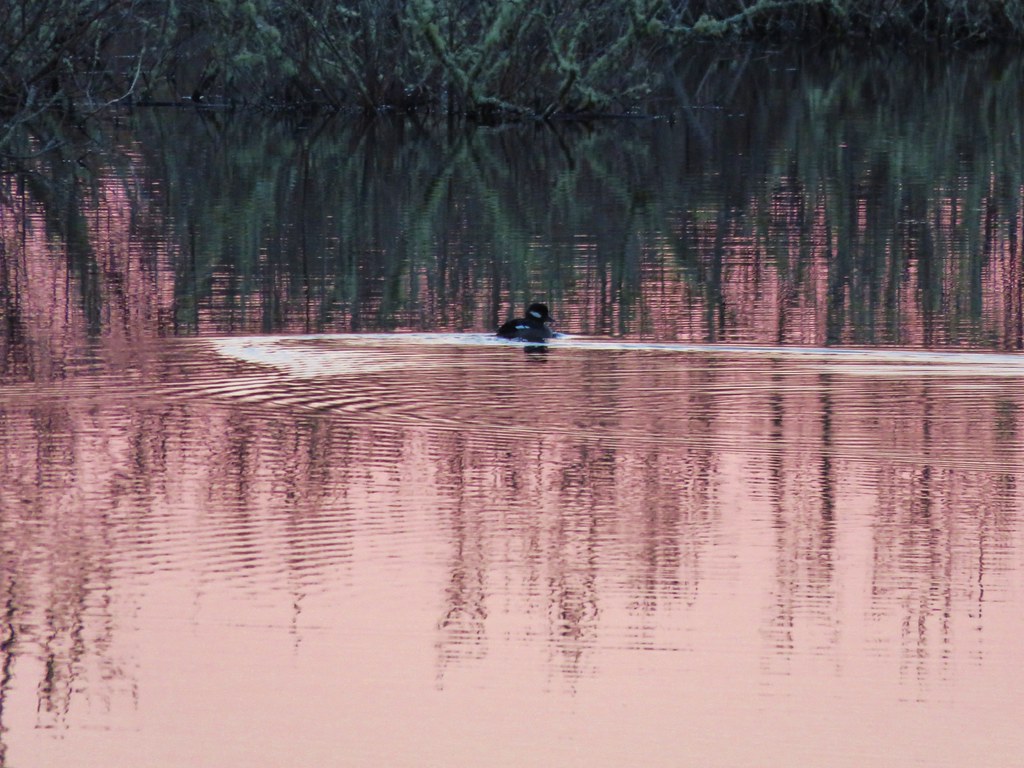
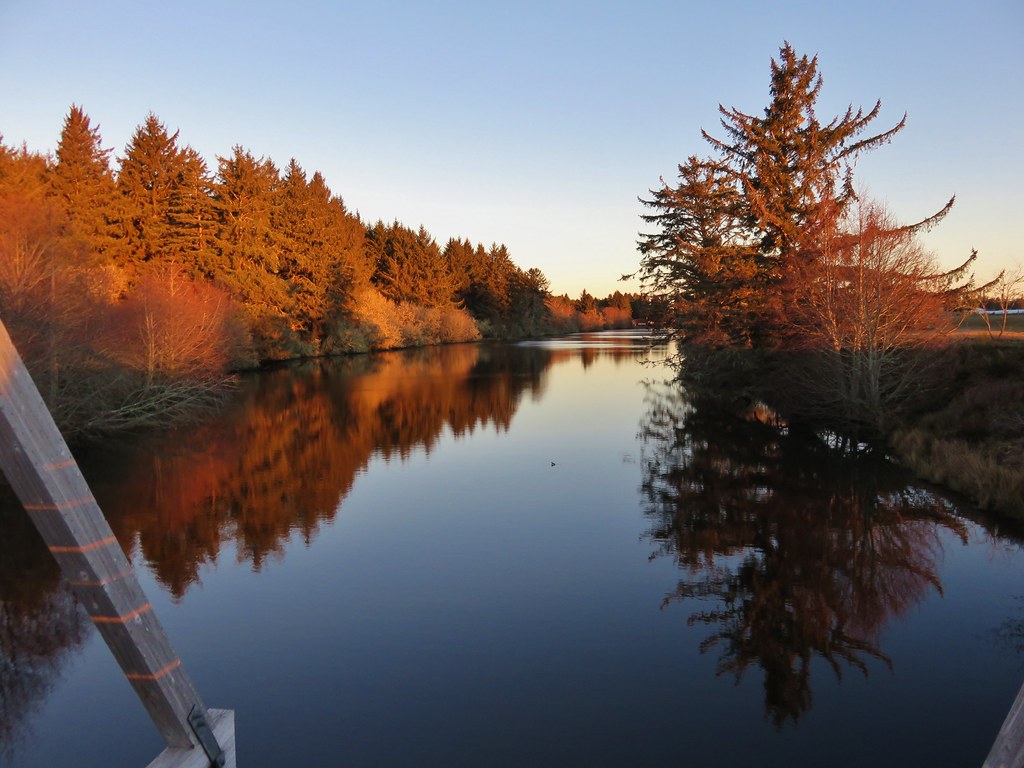
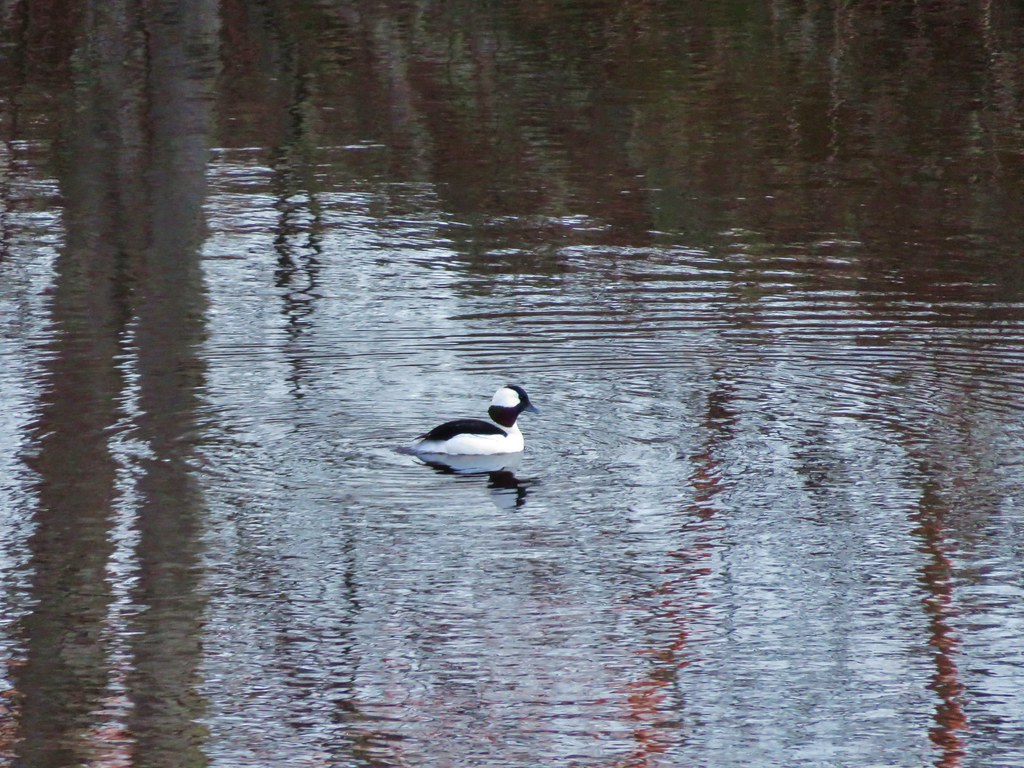
After returning to the trailhead we headed inland toward Fort Clatsop which was 6.2 miles away. The first portion of the trail passed through storm damaged trees skirting several bodies of water. Ducks paddled about on the water as it reflected the colors of the sunrise.
IMG_2861

IMG_2865

IMG_2864

The path then led up and over a small sandy hill and down to an arched bridge over Neacoxie Lake.
IMG_2870

IMG_2876

IMG_2877

IMG_2874

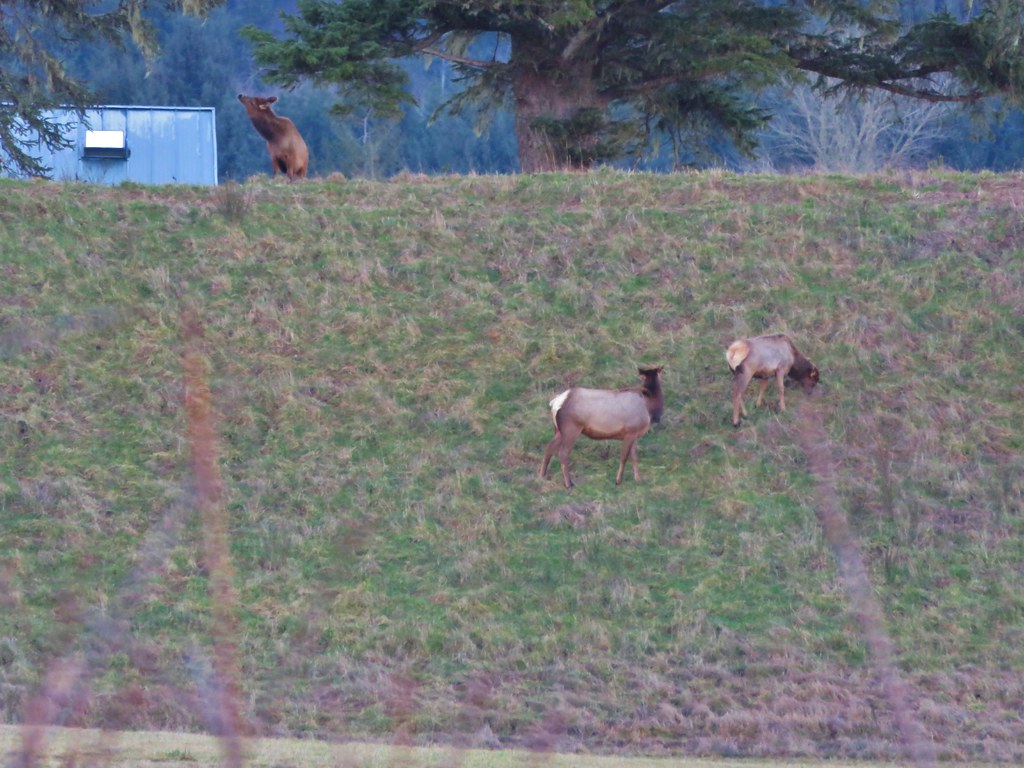
To the SE of the lake was the Astoria Country Club’s golf course, a popular morning stop for elk. We hadn’t seen any elk during our hikes in 2015, but on the far side of the course on a small hill were three.
IMG_2869

We watched them for a bit from the bridge as they made their way along the hillside.
IMG_2885

IMG_2887

Beyond the bridge the trail passed through a mile and a half of pastures. The fenced route was well marked as the trail led to East Neacoxie Lake.
IMG_2890

IMG_2897

Smaller than Neacoxie Lake, East Neacoxie Lake was full of wildlife. A pair of Bald Eagles watched over the many ducks and small birds enjoying the lake.
IMG_2898

IMG_2906

IMG_2918

The trail crossed this lake on a floating bridge.
IMG_2917

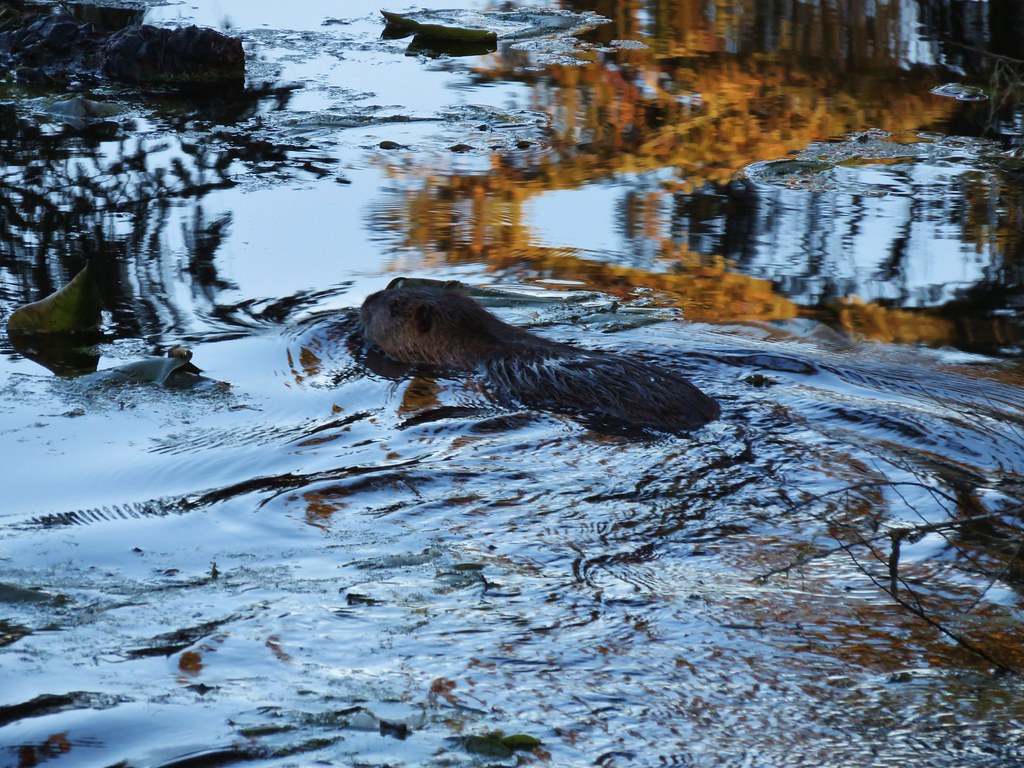
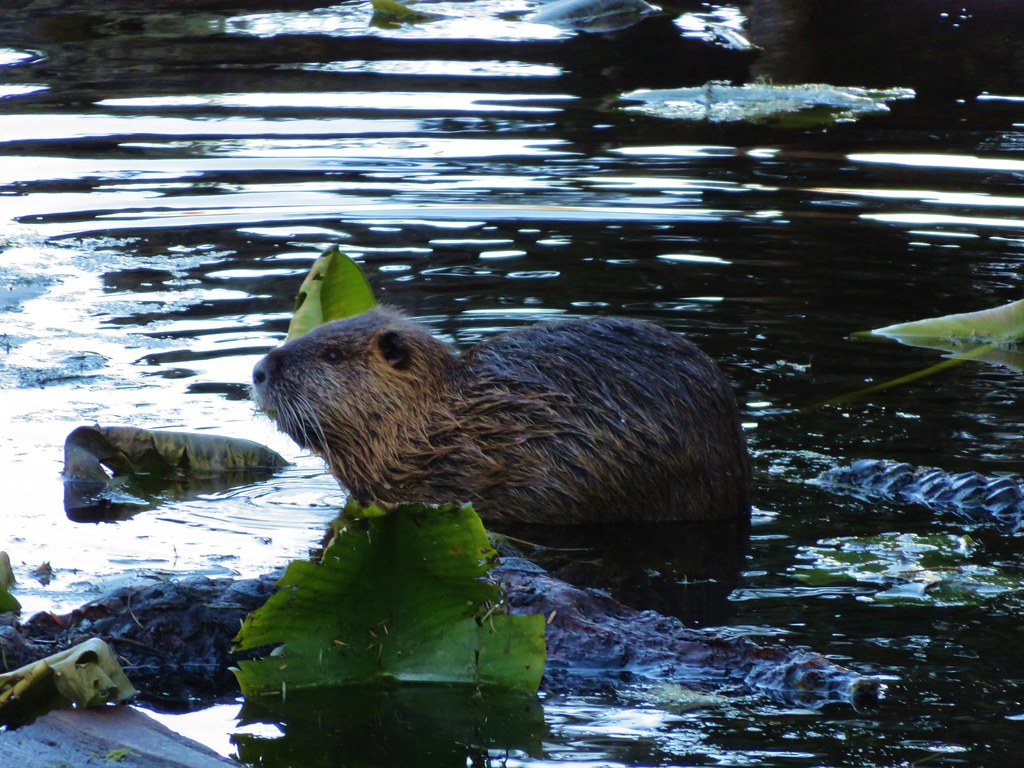
As we were making our way across something swam out from under the bank near the far end of the bridge. Our minds immediately went to otter or beaver, neither of which we have spotted yet during a hike. Instead it turned out to be a nutria, a large rat-like semiaquatic rodent considered an invasive species by the ODFW.
IMG_2921

IMG_2925

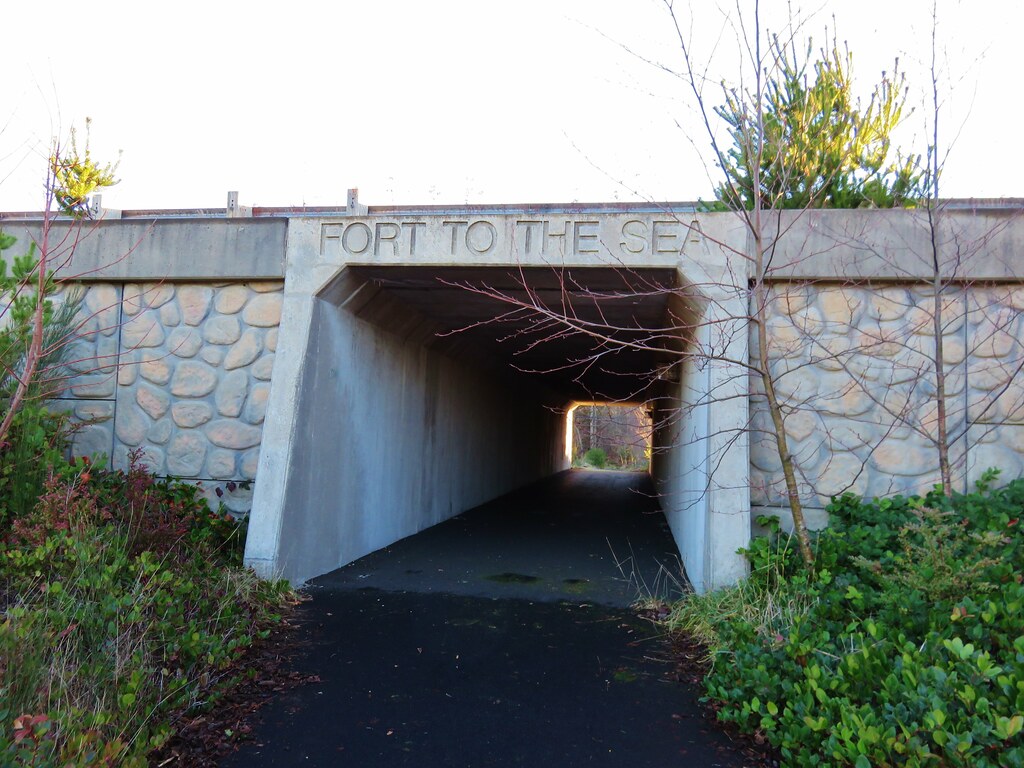
The trail then led past a pioneer church and cemetery to an underpass of Highway 101.
IMG_2928

IMG_2929

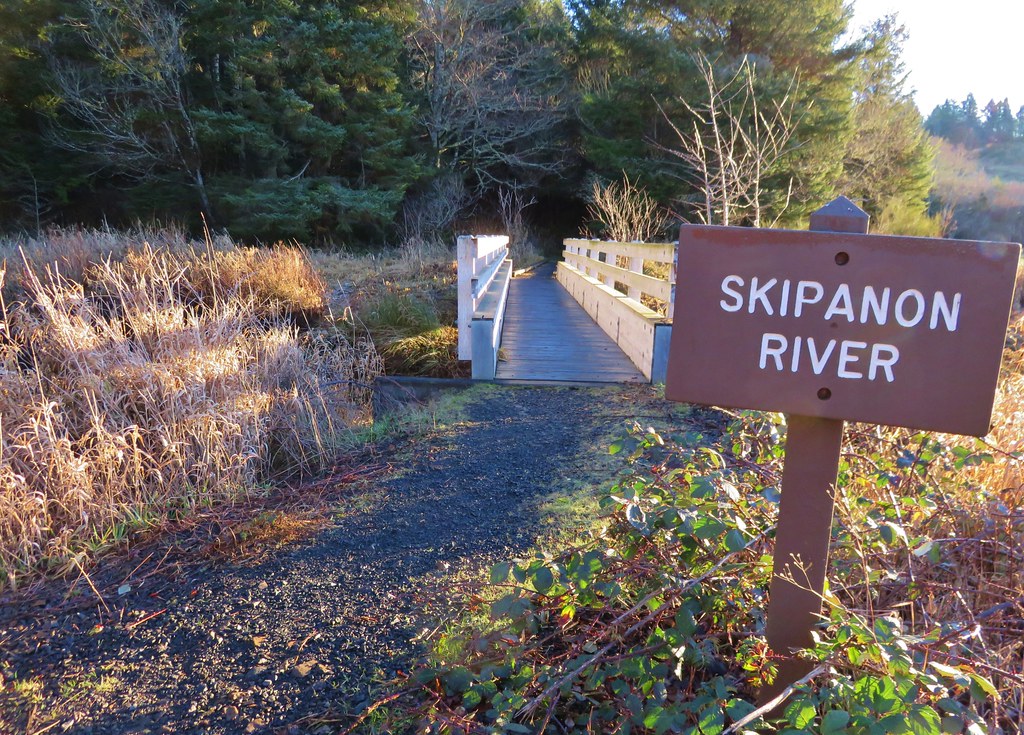
After passing under the highway and skirting another field we crossed the Skipanon River before heading into a forest.
IMG_2932

IMG_2933

IMG_2935

At the 4.7 mile mark we reached the Clatsop Ridge Overlook which was a nice ocean viewpoint with a picnic table and several benches.
IMG_2936

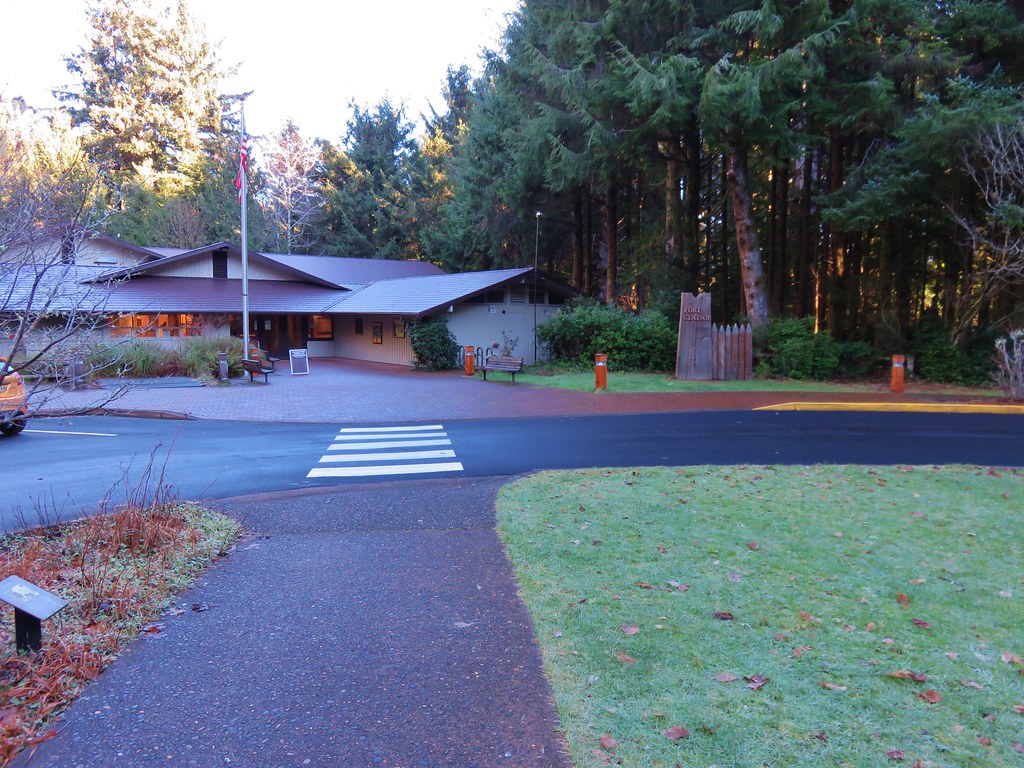
From the viewpoint the trail followed old roads down to the Fort Clatsop Visitor Center.
IMG_2938

IMG_2943

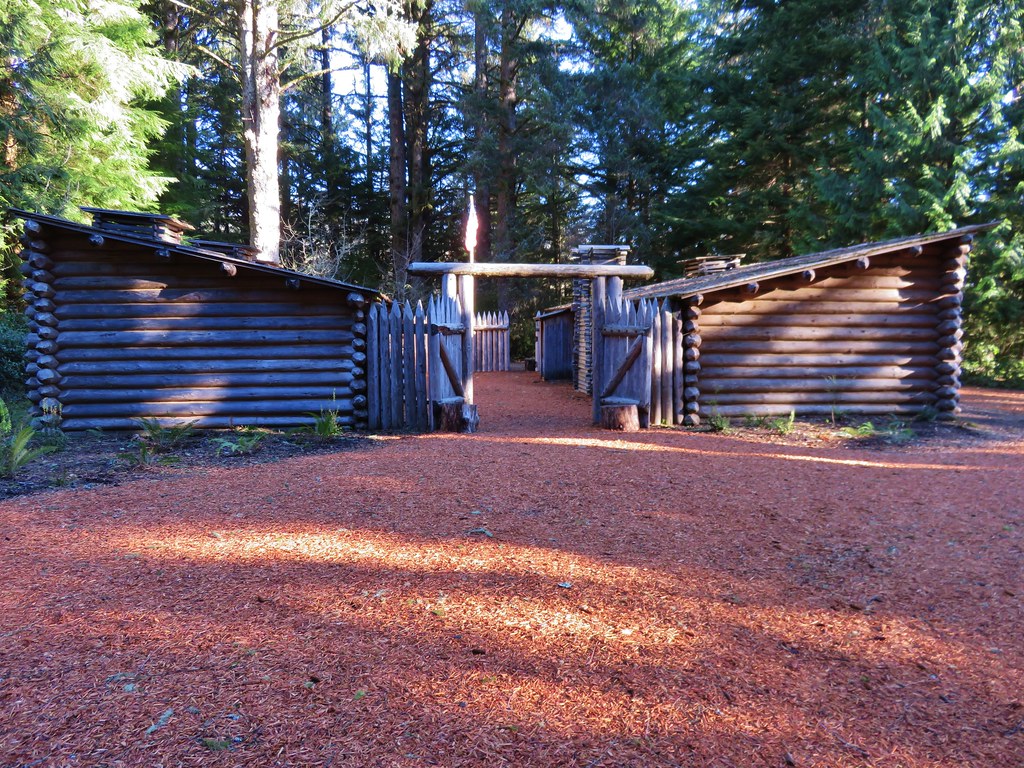
We passed through the center and continued 100 yards to the replica fort.
IMG_2945

IMG_2949

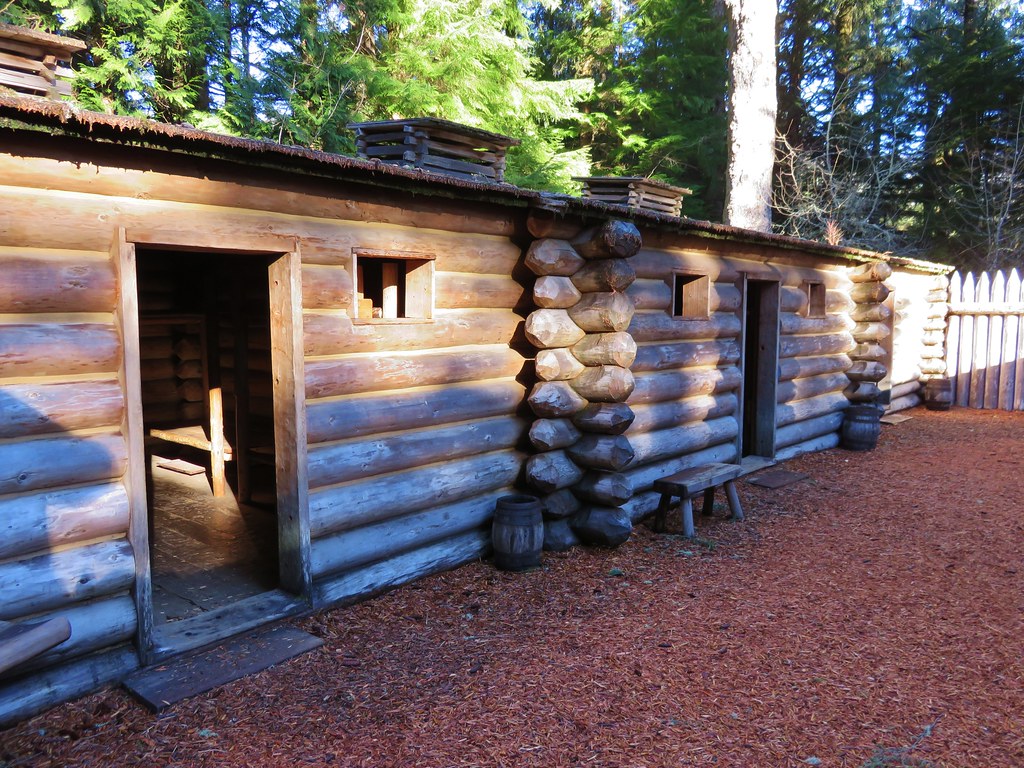
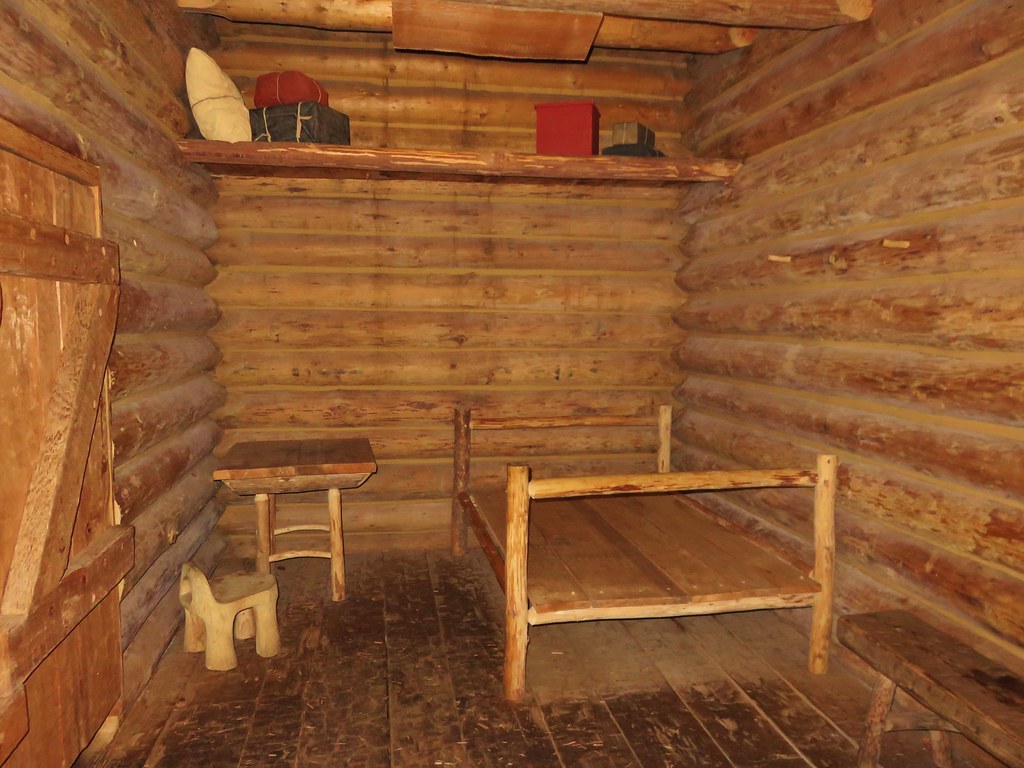
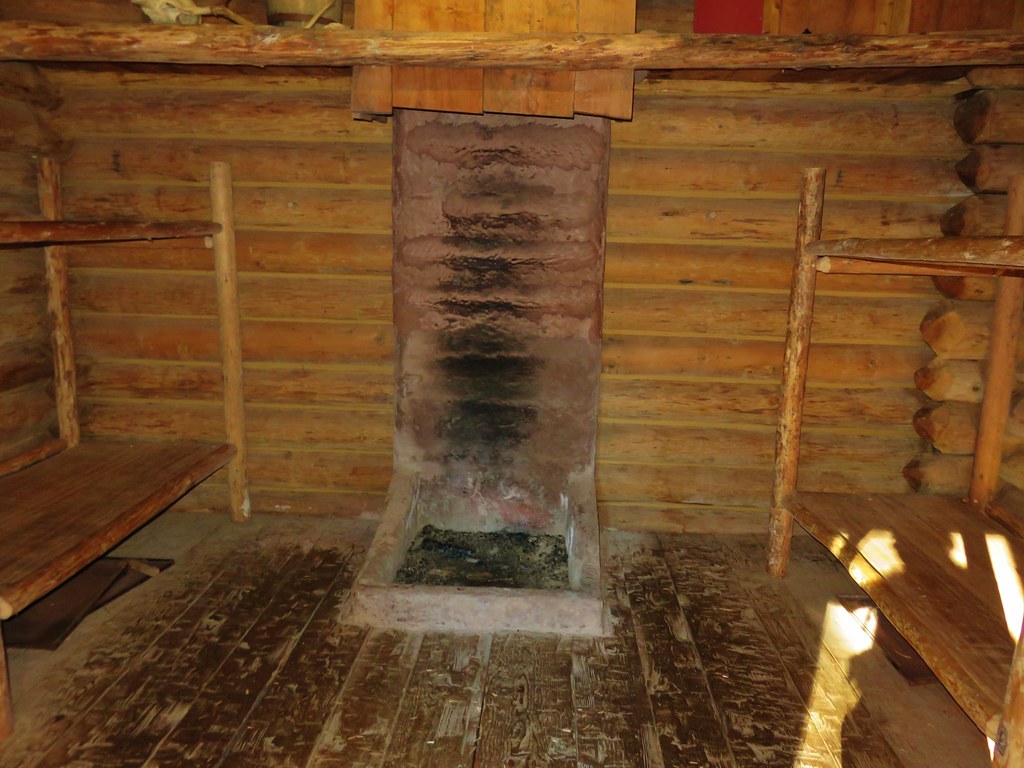
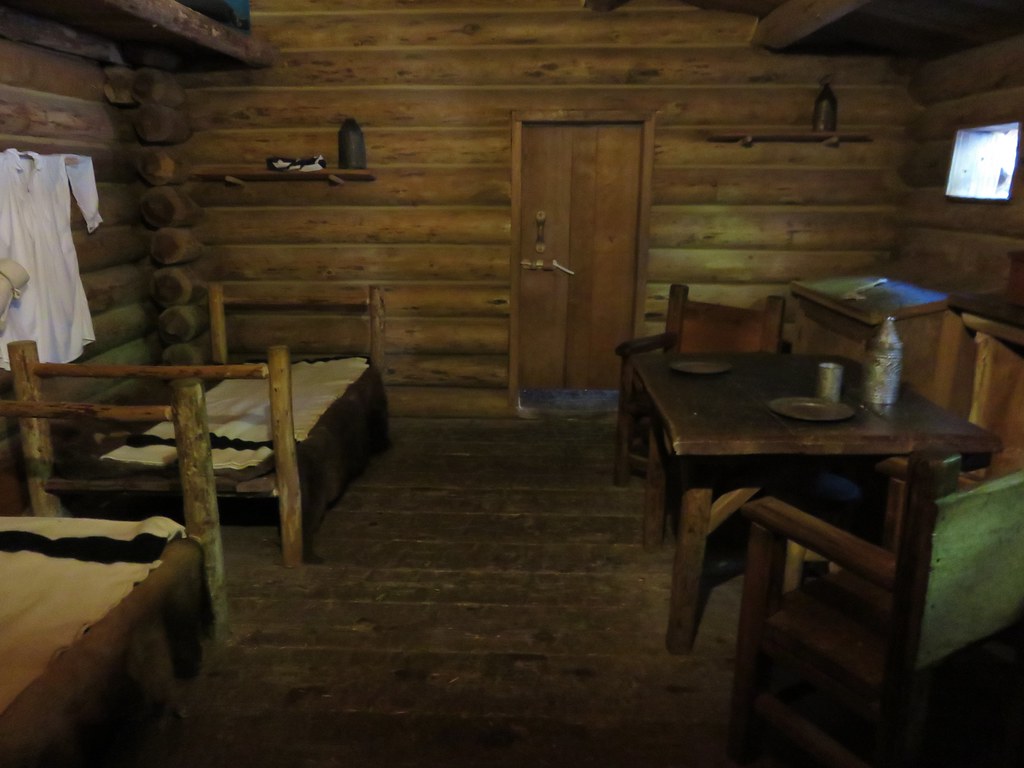
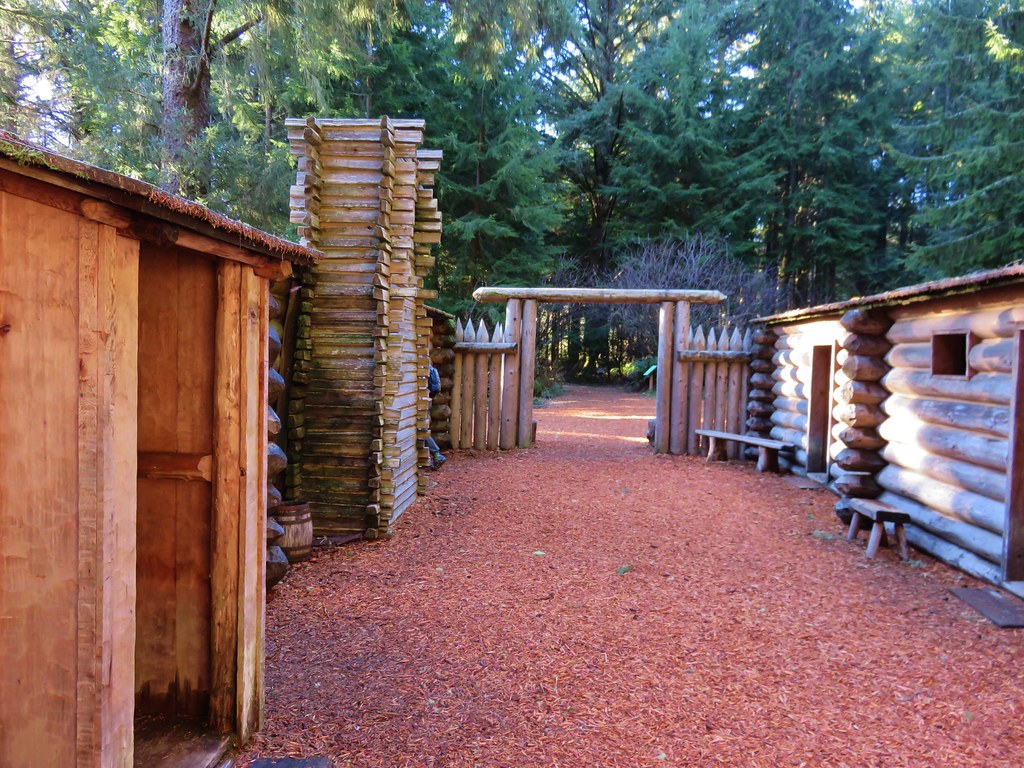
We were surprised at just how small a structure the fort was especially considering it was home to 33 people for 106 days. We spent some time poking around the fort and checking out the other nearby displays.
IMG_2950

IMG_2952

IMG_2953

IMG_2956

IMG_2957

IMG_2958

IMG_2959

IMG_2960

A 200 yard path led from the fort down to the site of the expedition’s canoe landing.
IMG_2962

IMG_2967

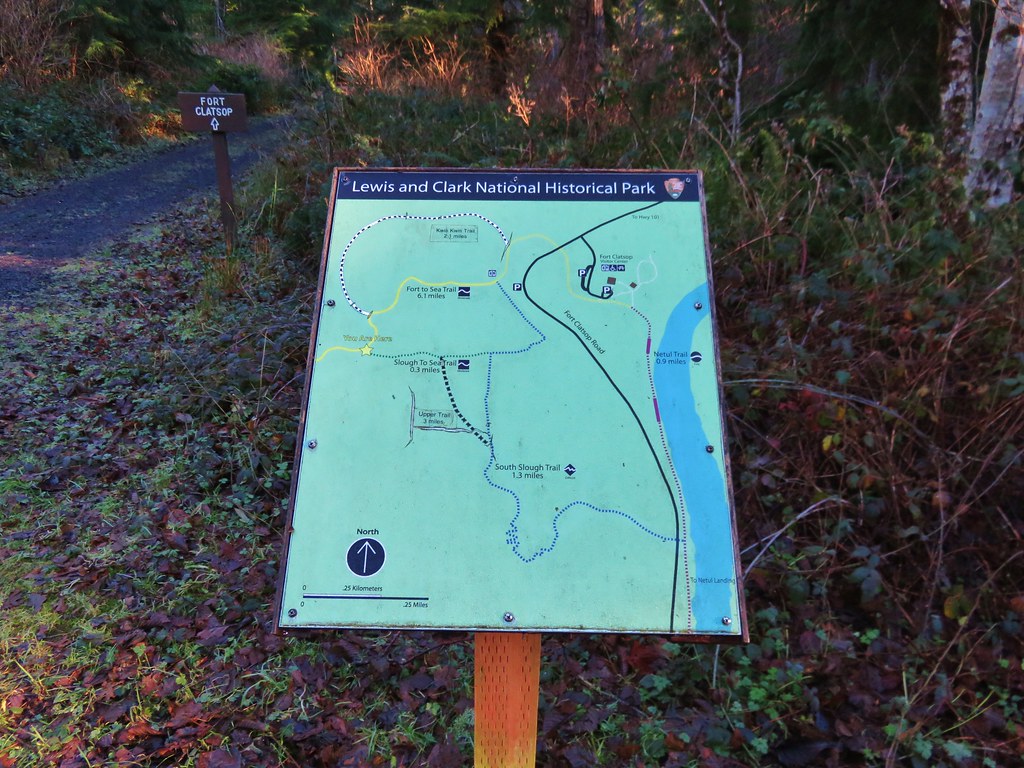
We could have turned back here and retraced our steps, but the park has several other trails which allow for various loop options. From the canoe landing we followed the Netul Trail south along the river. Part of the year a shuttle bus stop along this trail allows hikers to ride back to the fort or back to Sunset Beach. We were heading for the South Slough Trail though which we could take back to the Fort-To-Sea Trail. This trail loop around a slough filled with ducks and a couple of red-tailed hawks.
IMG_2970

IMG_2973

IMG_2978

The South Slough Trail was the only trail marked as difficult on the park maps. It headed steeply uphill from the Netul Trail but the climb didn’t last long. The trail wound around the slough to a signed junction with the only real viewpoint of the trail.
IMG_2985

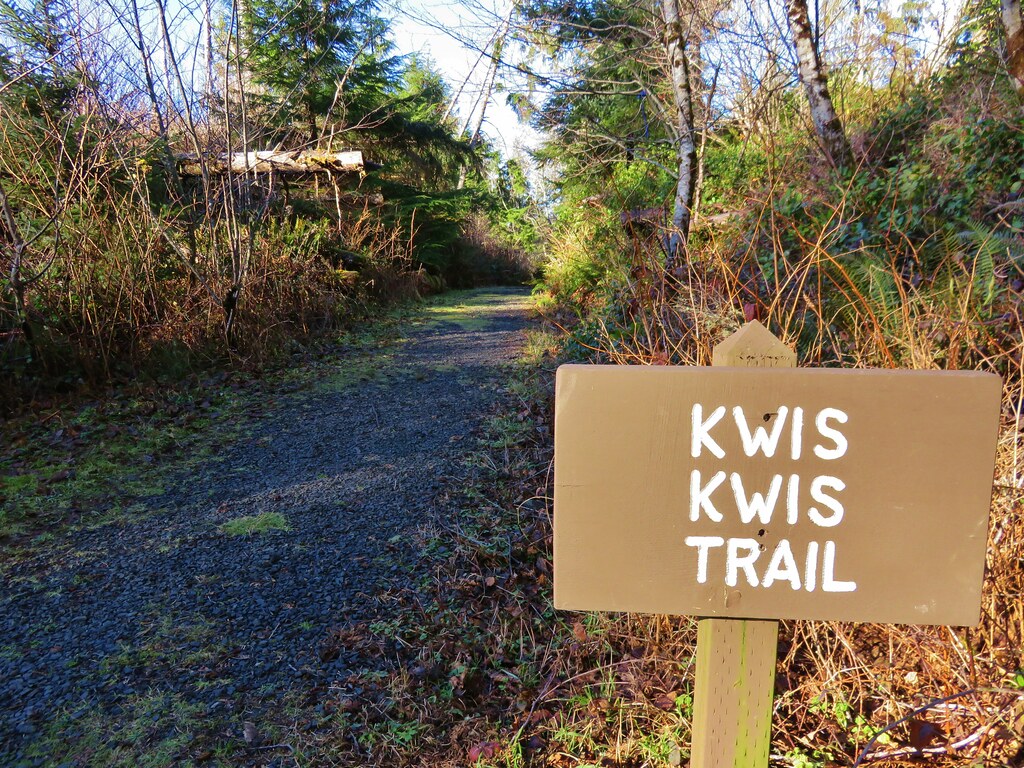
From this junction we could take the Lower South Slough Trail downhill to the Fort-To-Sea Trail about a half mile from the Visitor Center, or the Upper South Slough Trail which would meet the Fort-To-Sea Trail closer to a mile from the center. We took the upper option and made our way back to the Fort-To-Sea Trail and then took a second detour. Earlier that day just after entering the forest there was a signed trail forking left from the Fort-To-Sea Trail. It was named the Kwis Kwis Trail and it wasn’t shown in our guidebook or on any of the park maps we’d seen. The park maps did show a trail by that name but that trail showed as a wide arc leading from the Fort-To-Sea Trail near the junction with the Upper South Slough Trail and rejoining the Fort-To-Sea Trail about a third of a mile from the Visitor Center. Given the name and the fact that the signage for the mystery trail matched those of the park we theorized that it was a newer trail. We had also spotted sections of trail from the Fort-To-Sea Trail on the way up to the overlook which we suspected to be part of this trail.

From the Upper South Slough Trail junction we headed east on the Fort-To-Sea Trail to the signed Kwis Kwis Trail junction.
IMG_2987

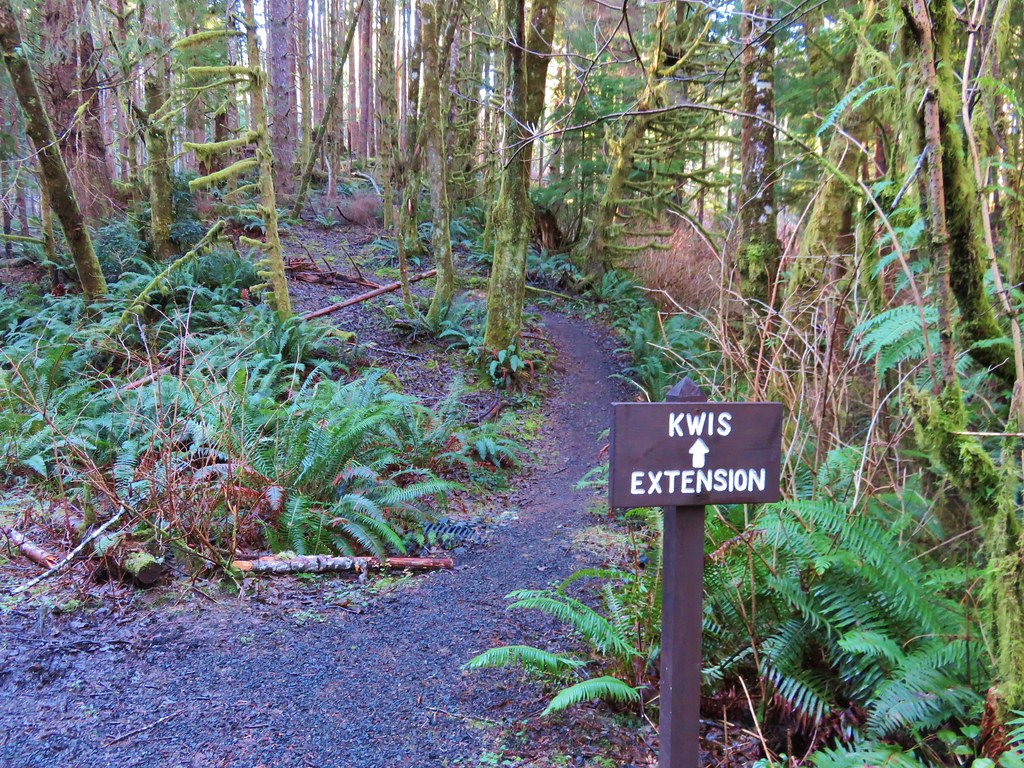
This trail also followed an old roadbed. After winding downhill for a little more than .3 miles we spotted a sign for the Kwis Extension.
IMG_2988

We turned up this path which ran roughly parallel to the Fort-To-Sea Trail at a lower elevation. This was indeed the path we had seen earlier. A nice long boardwalk traversed a large marshy area before rejoining the Fort-To-Sea Trail in the forest near the Skipanon River.
IMG_2991

From there we retraced our steps along the Fort-To-Sea Trail to the Sunset Beach Trailhead. Later we learned the Kwis Kwis Trail Extension was completed in 2014. The scenery and wildlife along the trails were both quite varied, and the history surrounding the area made it a very interesting hike. The various loops and trail distances make this a great option for hikers of any age. Happy Trails!

Flickr: https://www.flickr.com/photos/9319235@N02/albums/72157662826694040

Categories
Columbia Gorge North Hiking Trip report Washington

Beacon Rock State Park – The Return to Hamilton Mountain

Almost two years ago we traveled to Beacon Rock State Park to hike the Hamilton Mountain Trail. https://wanderingyuncks.wordpress.com/2013/05/ It was and still is the worst weather that we have ever encountered during a hike. Well enough time had passed and it was time for us to give this hike a second chance. We double checked the weather forecast before heading out which showed some morning clouds clearing up by mid-morning with little to no chance of rain and calm winds. That was good enough for us to give it a go so we got in the car and headed up to the Columbia Gorge once more. For most of the drive we were under a solid mass of clouds but as we headed east along Highway 14 toward Beacon Rock State Park rays of sunlight were shining down on the Columbia River in the distance. The edge of the clouds was just a bit further east than Hamilton Mountain so we decided to warm up on another trail in park, the .8mi Beacon Rock Trail, hoping to give the clouds more time to lift.

Parking for this trail is right along the highway and requires a Discovery Pass which can be purchased at the trailhead (currently $10/a day per vehicle). The trail begins almost directly below Beacon Rock itself.
Beacon Rock Trailhead

After a very short walk through woods the trail begins to switchback up Beacon Rock.
IMG_1584

IMG_1586

In fact the trail switchbacks 52 times on its way up to the top of the rock. (I lost count but that is the number that was on one of the signs at the trailhead.)
Beacon Rock Trail

IMG_1590

When we reached the summit the edge of the clouds was still to the east above Bonneville Dam.
IMG_1593

IMG_1599

We could also see that Hamilton Mountain still had a cloudy top making us wonder what the conditions would be by the time we got up there.
IMG_1600

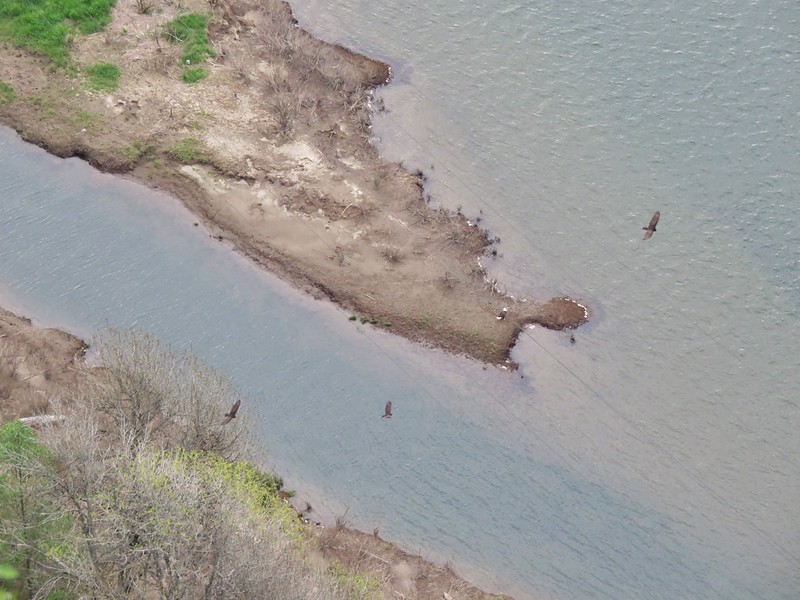
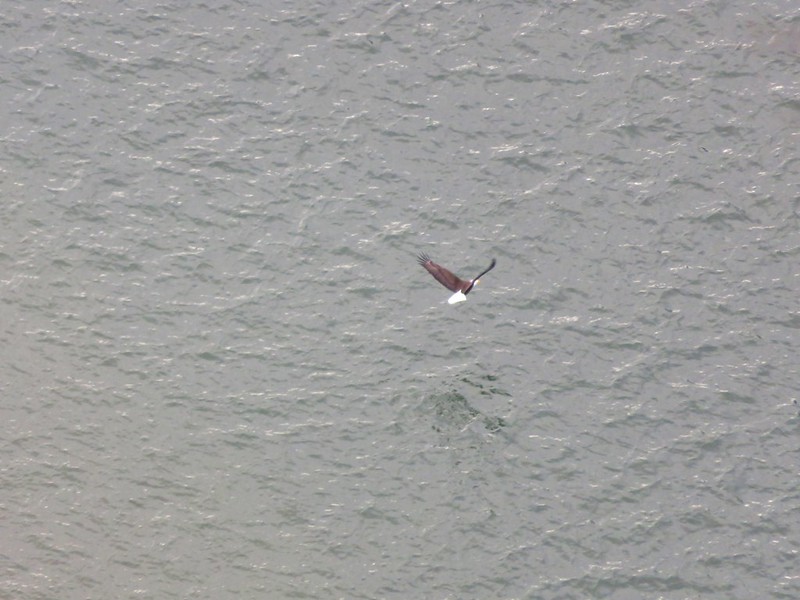
On the way back down we watched a number of Turkey Vultures circling above the river as well as a lone Bald Eagle.
IMG_1605

IMG_1609

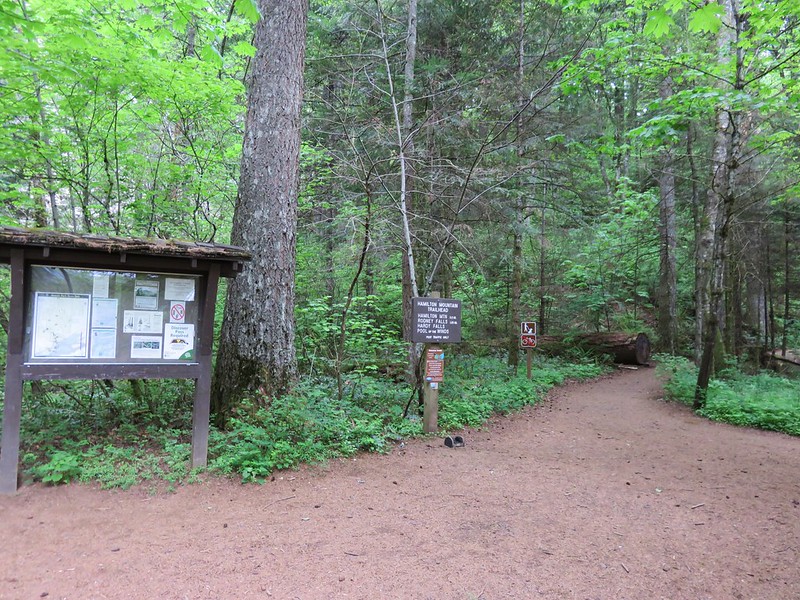
After completing our warm-up we hopped back in the car and crossed the Highway following a campground sign to the trailhead parking area. The trail sets off at a signboard behind the restrooms.
Hamilton Mountian Trailhead

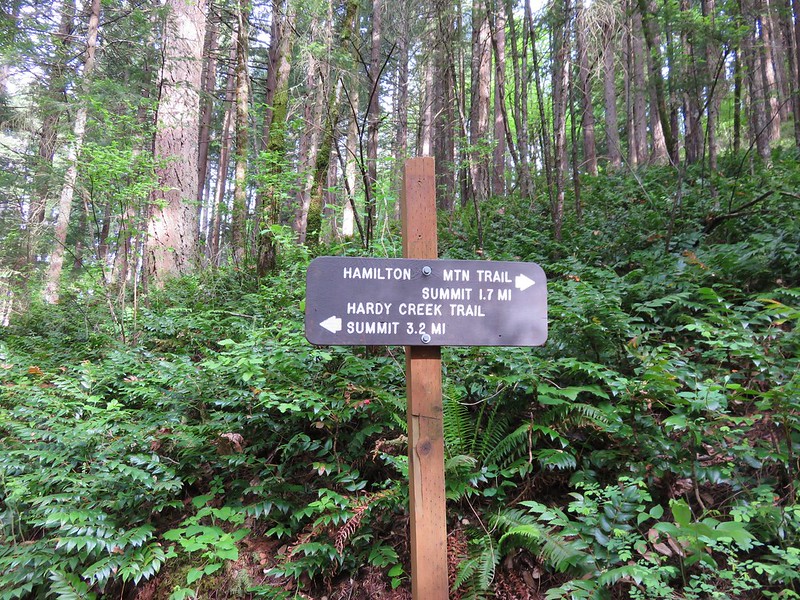
After a gradual .5 mile climb through forest the trail emerges to views of Hamilton Mountain from under some power lines.
IMG_1623

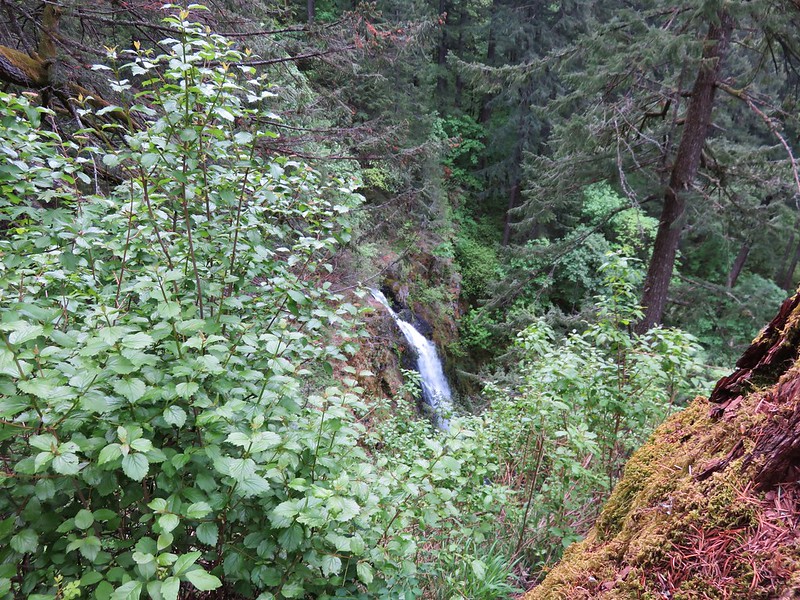
The summit was still in the clouds but they did seem to be breaking up and we still had over 2.5 more miles to climb before reaching the top. After another half-mile a sign announces a viewpoint for Hardy Falls. A narrow path leads down a ridge to a platform that has no view of Hardy Falls at all. The only views are along the ridge prior to reaching the platform, and they are not great.
IMG_1632

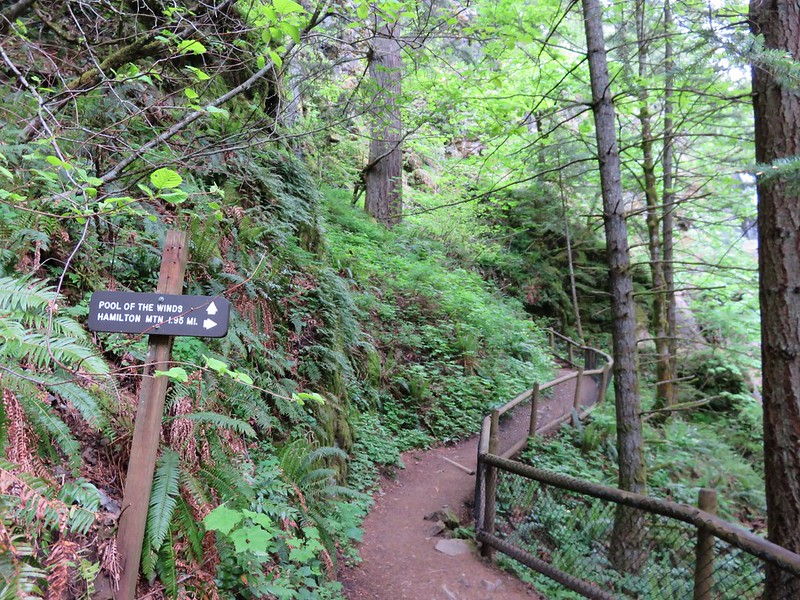
The disappointing viewpoint of Hardy Falls is quickly forgotten after just another tenth of a mile on the trail. Here another sign points up to Pool of the Winds.
IMG_1636

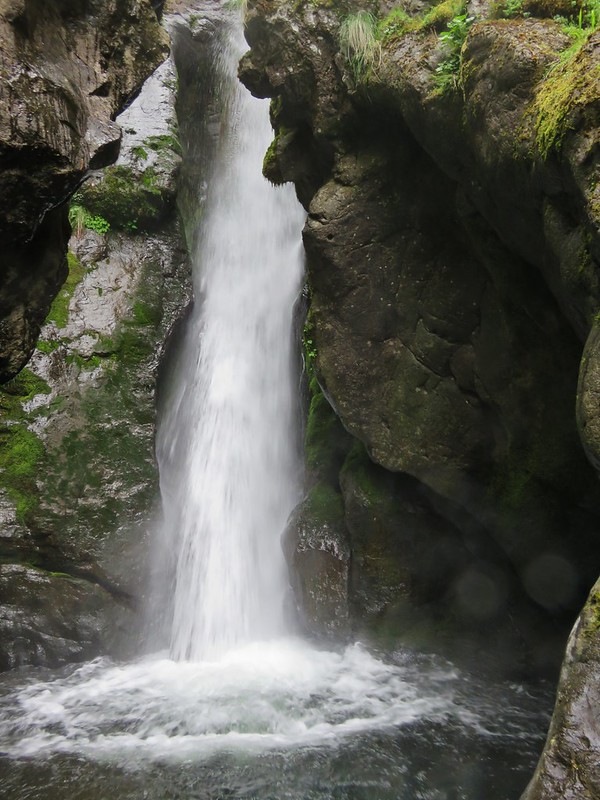
This short path leads to another railed viewpoint, but this time there is really something to see. The upper portion of Rodney Falls splashes into a rock enclosed splash pool. The force of the water falling into the pool combined with the narrow opening in the rocks causes wind to funnel out giving the pool its name.
Pool of the Winds

IMG_1655

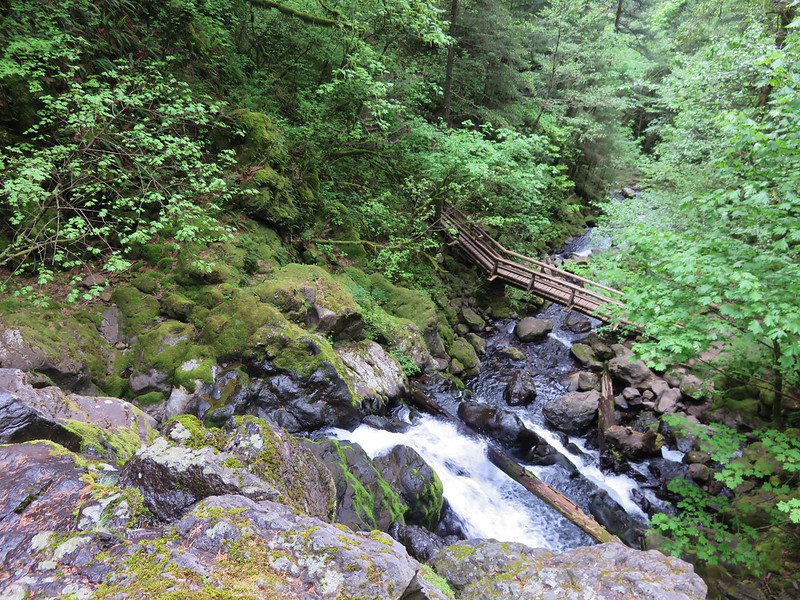
The view down is also nice as the trail crosses the creek on a footbridge below Rodney Falls.
IMG_1650

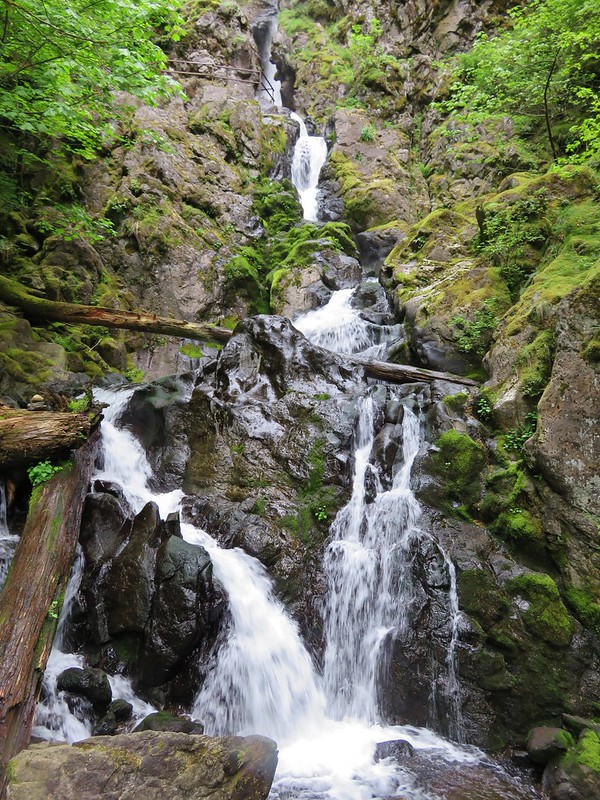
After spending some time enjoying the pool we continued on the trail passing below the falls. Rodney Falls is one of the more complicated falls we have seen. With the Pool of the Winds at the top followed by several smaller sections and then fanning out at the bottom it just has a lot going on. It also changes directions a couple of times which makes it difficult to capture it all well in a photo.
IMG_1665

Just over a quarter mile from Rodney Falls the trail splits allowing for a loop over Hamilton Mountain.
IMG_1680

We headed right which is the shorter but steeper way to the summit. We tend to prefer to go up rather than down steeper trails because it’s easier on our knees. Heading up the right fork the trail passes an increasing number of meadows where we were met with views and wildflowers. In 2013 the views consisted almost entirely of clouds so much of this we were seeing for the first time.

Beacon Rock from the trail.
IMG_1684

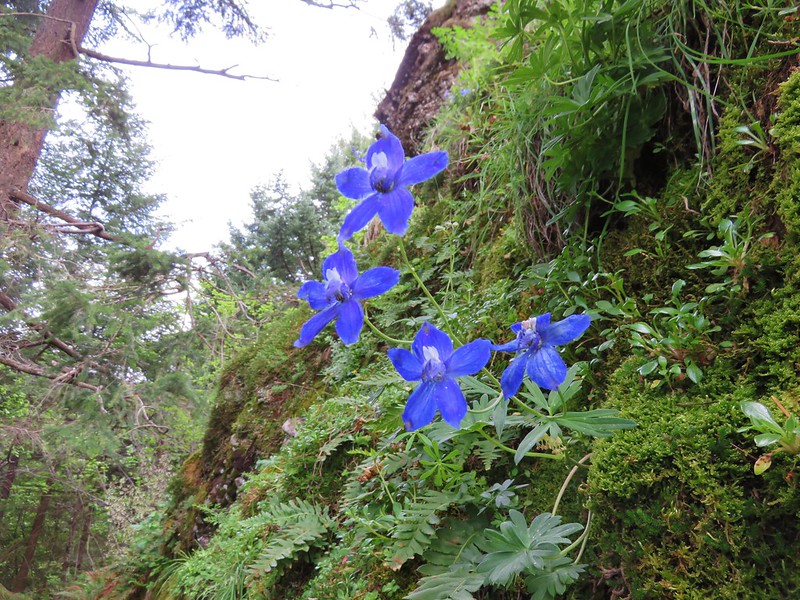
Larkspur
IMG_1683

Chocolate Lily
IMG_1686

Indian Paintbrush
IMG_1687

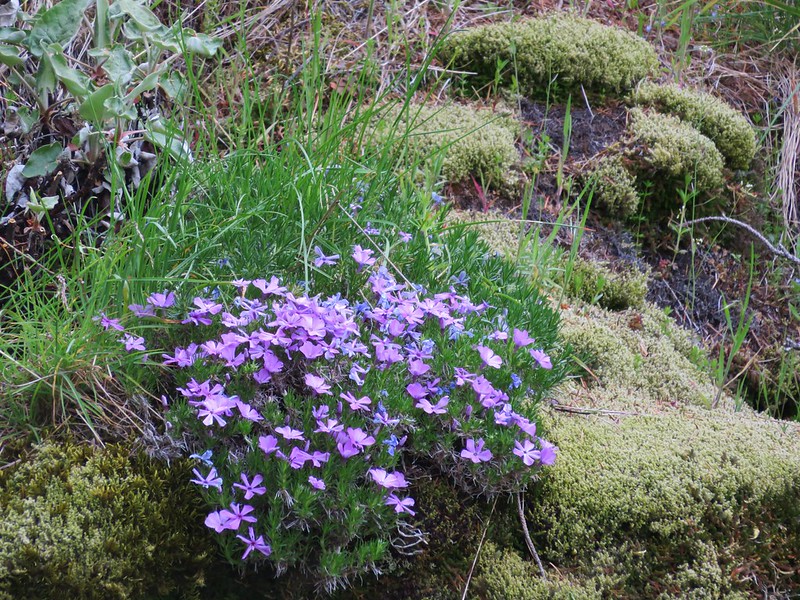
Phlox
IMG_1690

A side trail to the right leads to a rocky outcrop with even more views.
IMG_1702

Then the trail passes behind a knoll where more trees await.
IMG_1710

Larkspur along the Hamilton Mountain Trail

After making its way around the knoll the trail crosses a ridge between the knoll and Hamilton Mountains summit which looms ahead.
Hamilton Mountain

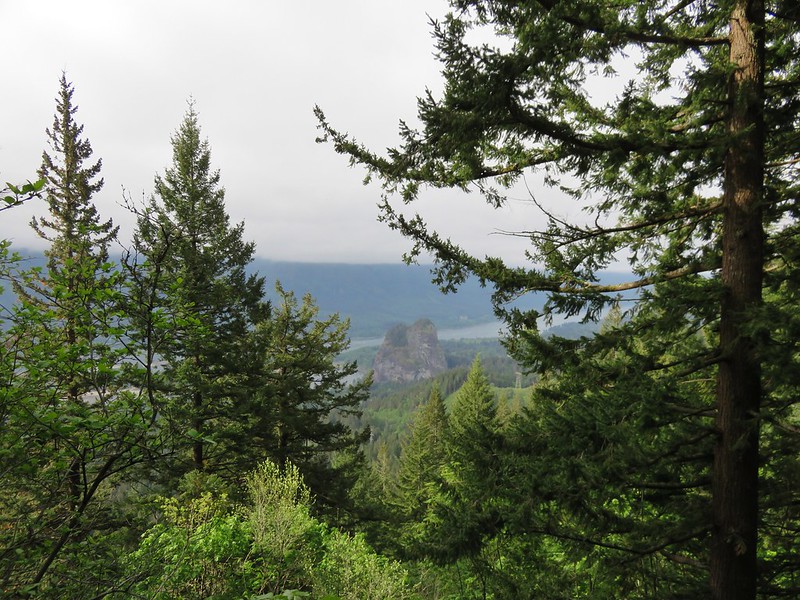
The view of the Columbia River along this ridge is very nice.
IMG_1718

The trail then begins its final ascent switchbacking up through open meadows of flowers. Larkspur and Chocolate Lilies were the predominate flowers blooming at this time of the year.
Chocolate Lilies

IMG_1723

IMG_1727

As we continued to climb the clouds continued to burn off and Mt. Hood suddenly appeared across the river.
IMG_1735

IMG_1738

To reach the actual summit take a side path to the right near the top of the mountain. Here the view was vastly different from our previous visit.

2013
151

2015
Mt. Hood from the summit of Hamilton Mountain

There were only a few bands of clouds left when we arrived at the summit and in addition to the view of Mt. Hood to the south Table Mountain and some of Mt. Adams were visible to the east.
Table Mountain and Mt. Adams from the summit of Hamilton Mountain

Mt. Adams

We took a short break and watched the clouds as they passed by. A few hikers and some other critters kept us company.
IMG_1785

We continued on the loop looking forward to reaching an exposed ridge that was the site of my infamous poncho battle in 2013. Wind and rain were whipping up and over the ridge on that visit but this time it was just sunshine and flowers.
IMG_1798

IMG_1799

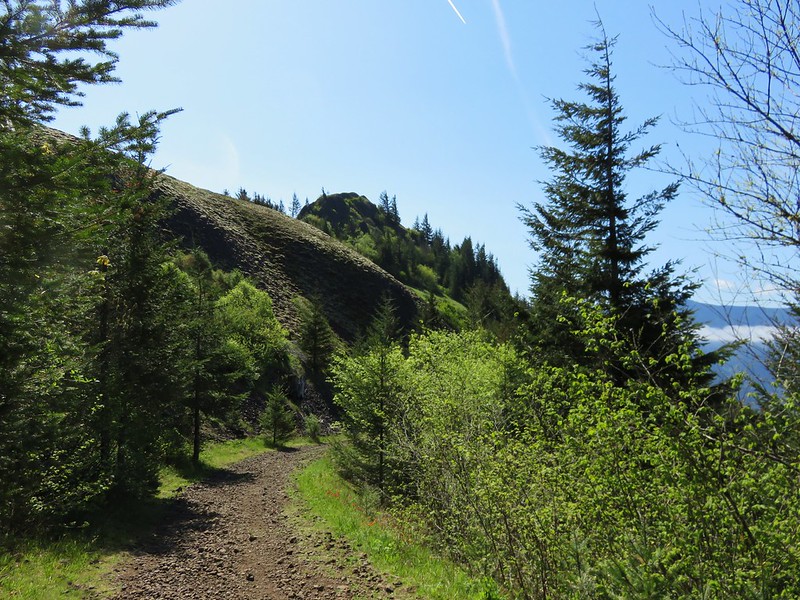
At the far end of the ridge we looked back to soak in the view that we missed the first time.

2013
158

2015
Hamilton Mountain trail

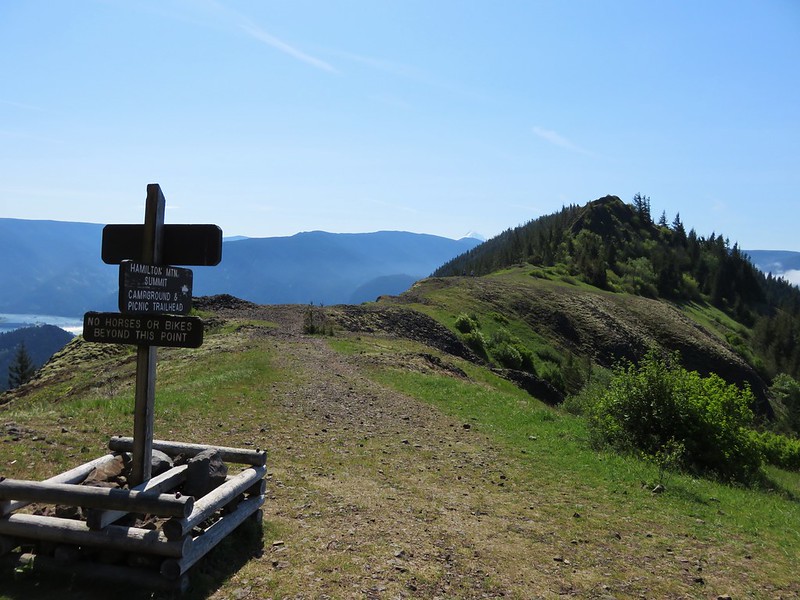
Several paths lead off from the far end of the ridge, but we simply took a sharp left and headed down an old road toward Hardy Creek.
IMG_1809

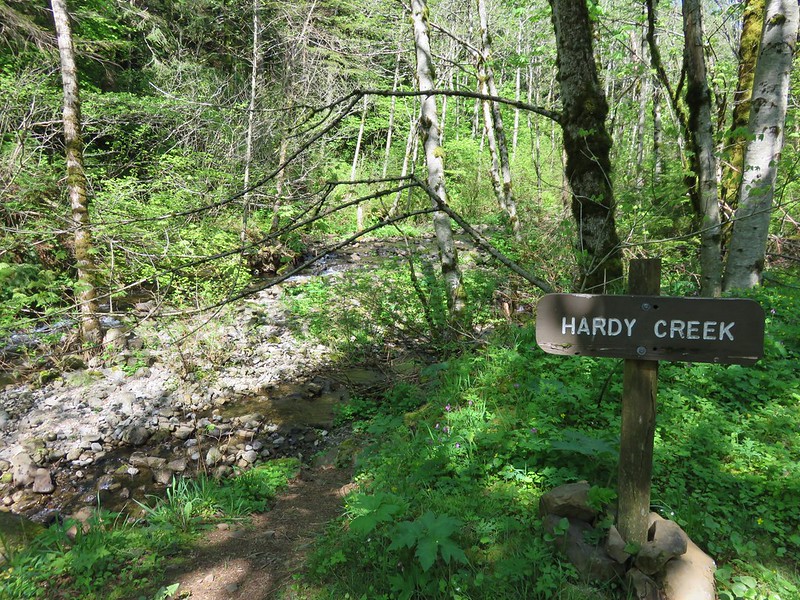
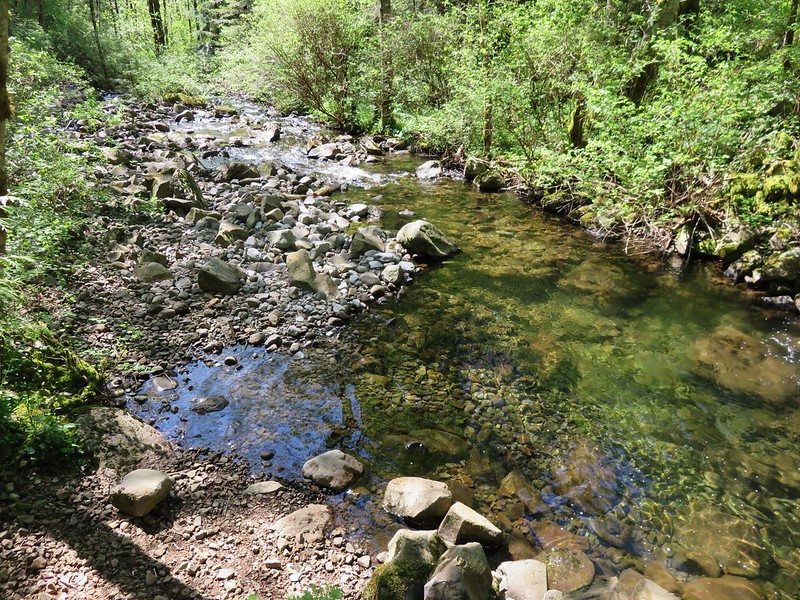
The road leads downhill for a mile to Hardy Creek.
IMG_1810

IMG_1811

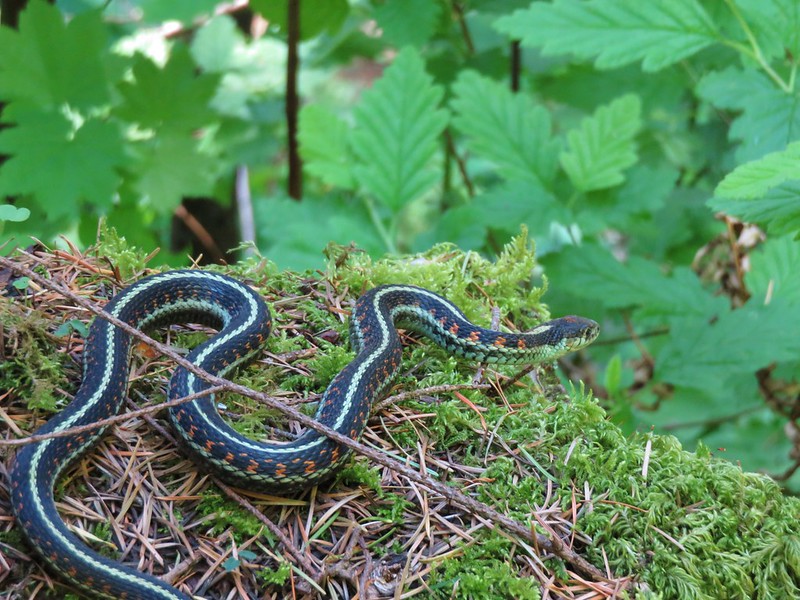
Signs at Hardy Creek point to the 1.1 mile hiker-only trail that completes the loop .3 miles from Rodney Falls. By the time we arrived back at the falls a steady stream of people were coming up from the trailhead. We were once again glad we’d gotten an early start and made our way past a traffic jam at the footbridge. With the number of hikers and dogs coming up the trail we were surprised when Heather spotted a garter snake on the path. It took cover in a stump but then came out to take a closer look at us.
IMG_1817

IMG_1821

We were really happy with the way this hike turned out. We had gotten the views we’d missed out on during our previous visit and the Beacon Rock warm-up was entirely new. Another great day in the Pacific Northwest. Happy Trails!

Flickr: https://www.flickr.com/photos/9319235@N02/sets/72157652309236702/

Categories
Columbia River Gorge South Hiking Oregon Trip report

Tom McCall Preserve and Mosier Twin Tunnels

**Note the 2020 Rowena Fire burned a portion of the Rowena Plateau and the 2024 Microwave Tower burned over the Mosier Twin Tunnels Trail.**

We do our best to plan and prepare for all of our hikes, but we were reminded that now matter how much pre-trip preparation we’ve done things can still happen. For our last hike that meant an extra 4 miles of hiking.

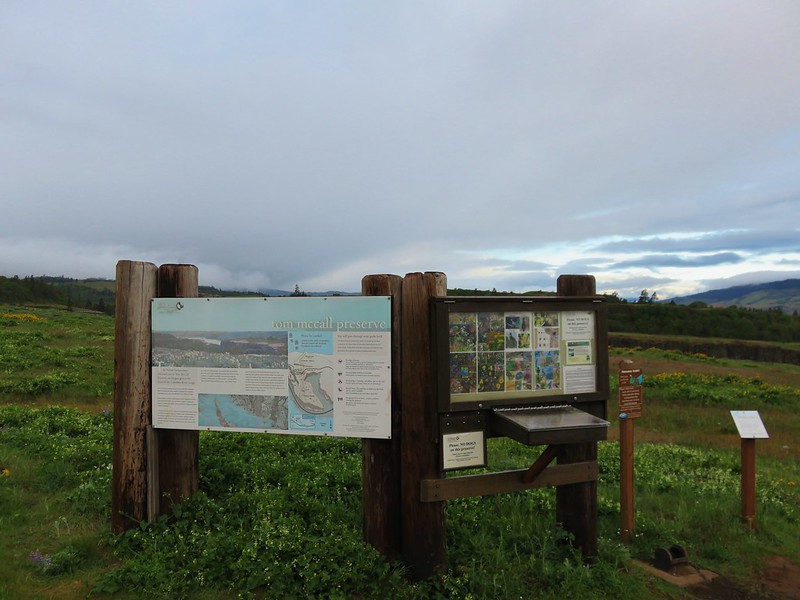
We had headed back to the eastern end of the Columbia Gorge for a combination of several hikes near Mosier, OR. First up was the plateau trail at the Tom McCall Preserve. The trail sets off from the Rowena Crest Viewpoint located along the Historic Columbia River Highway 6.6 miles east of Mosier.
Rowena Crest Trailhead

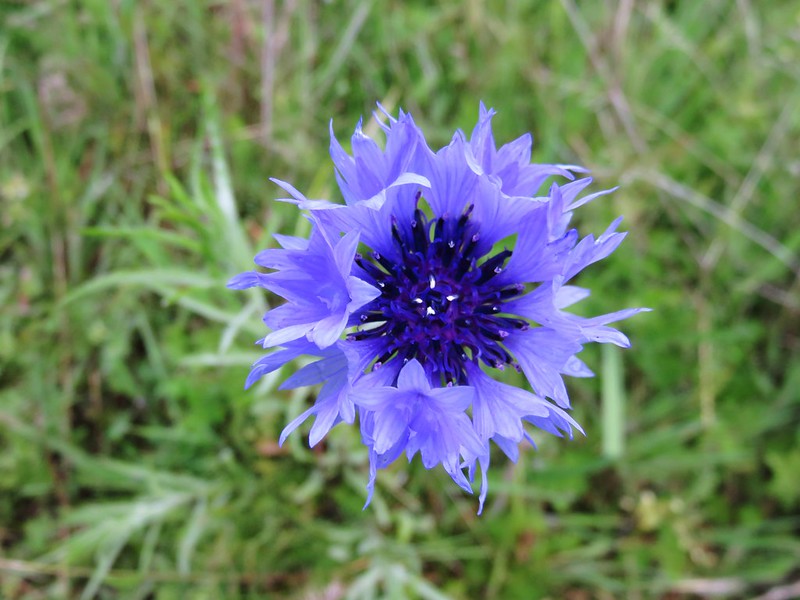
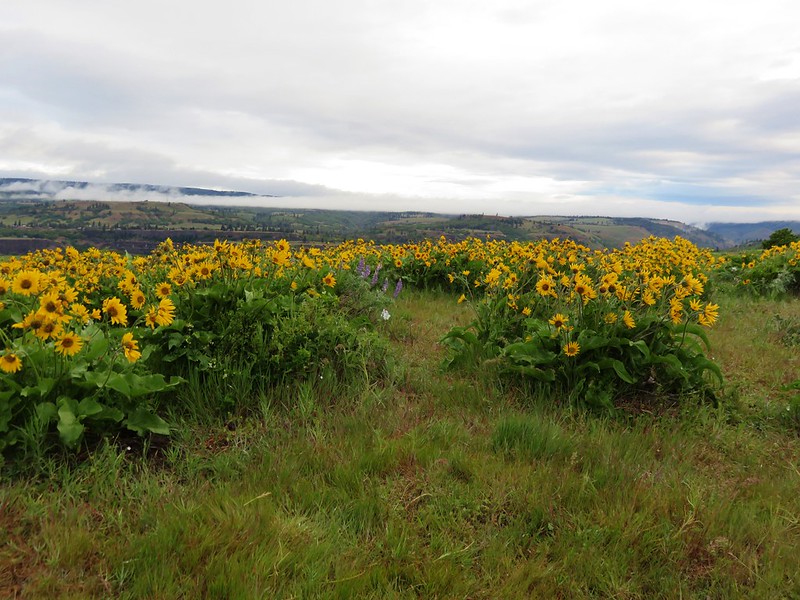
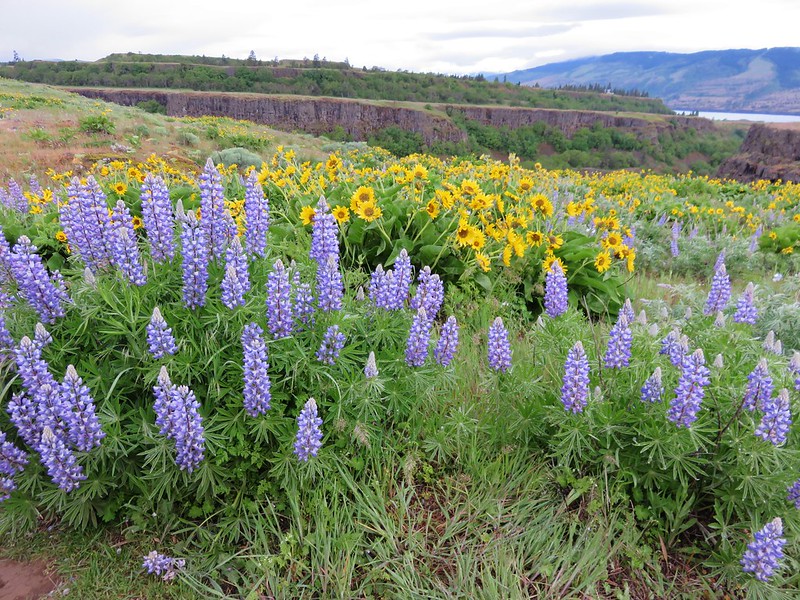
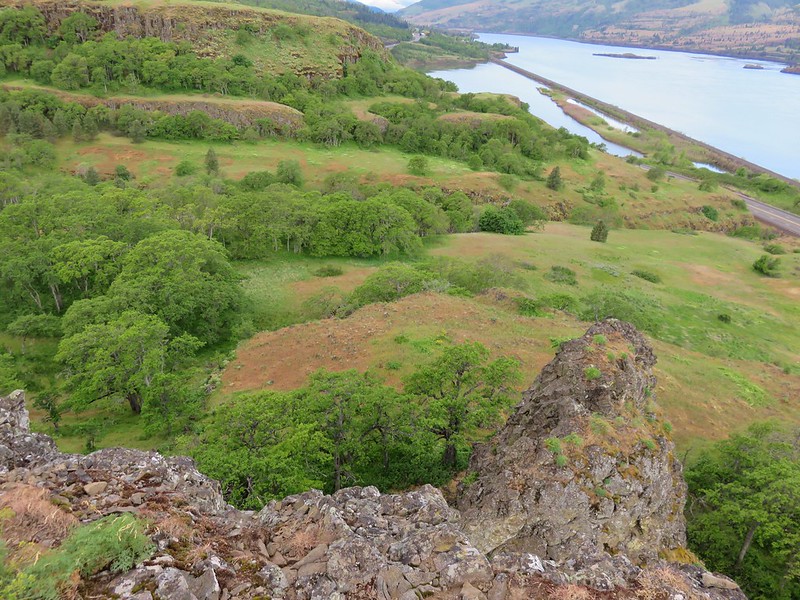
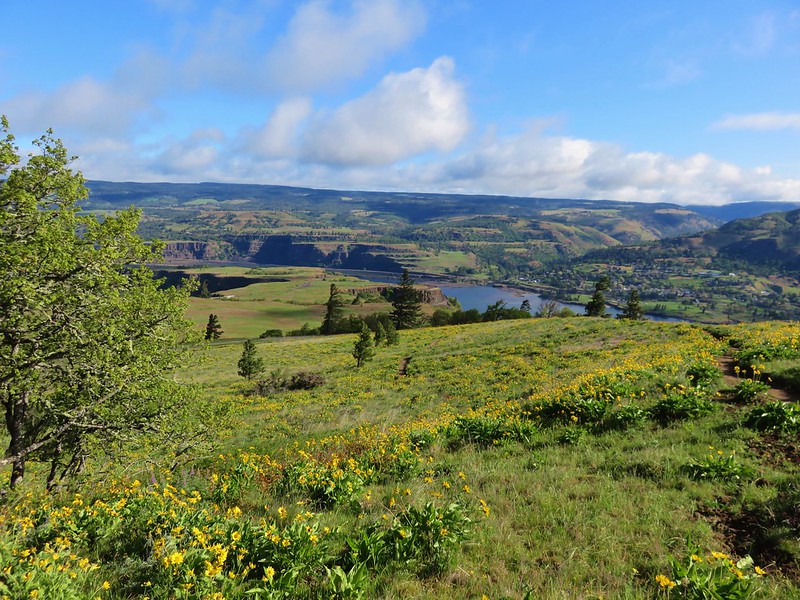
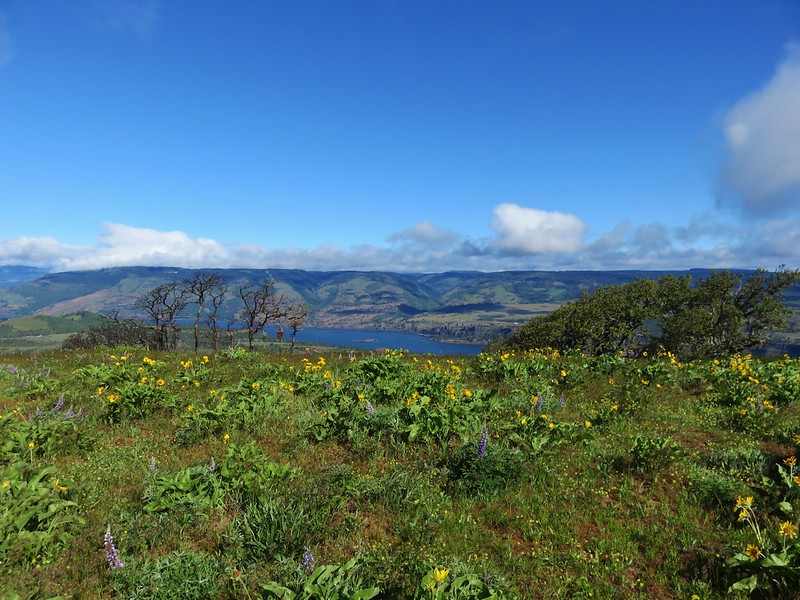
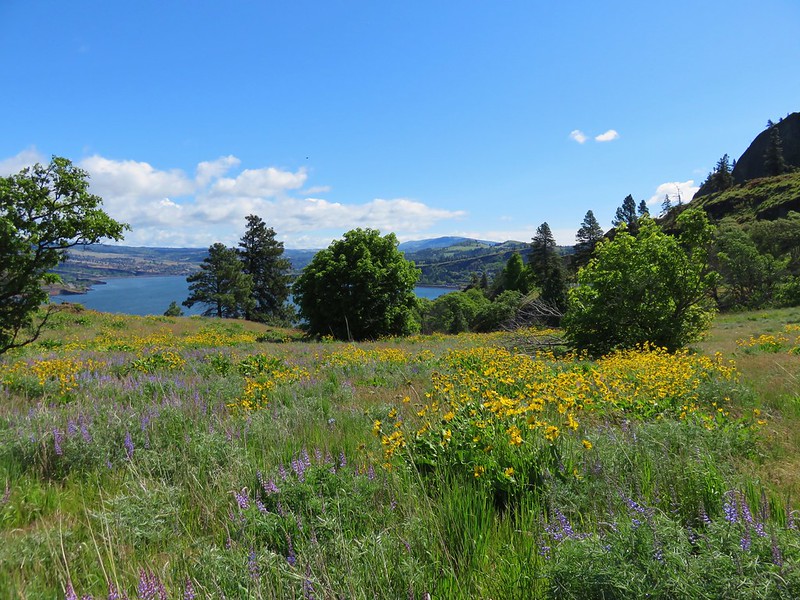
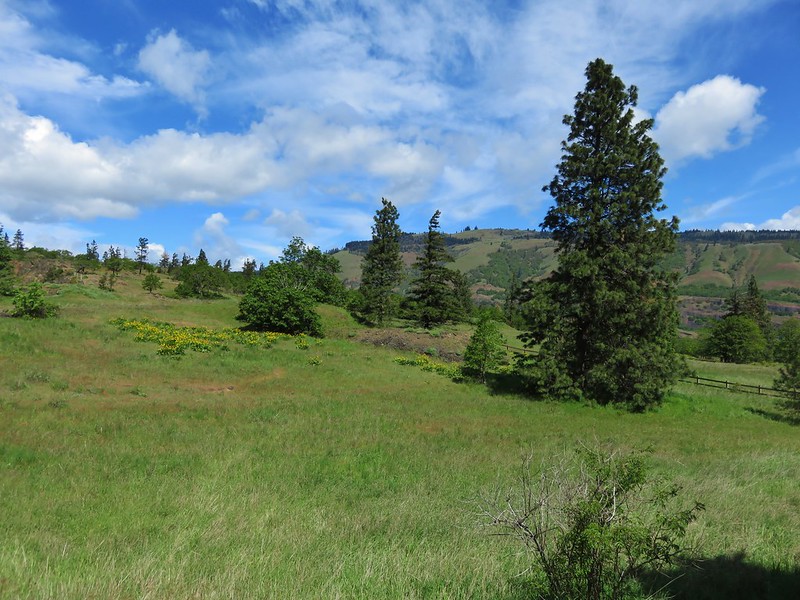
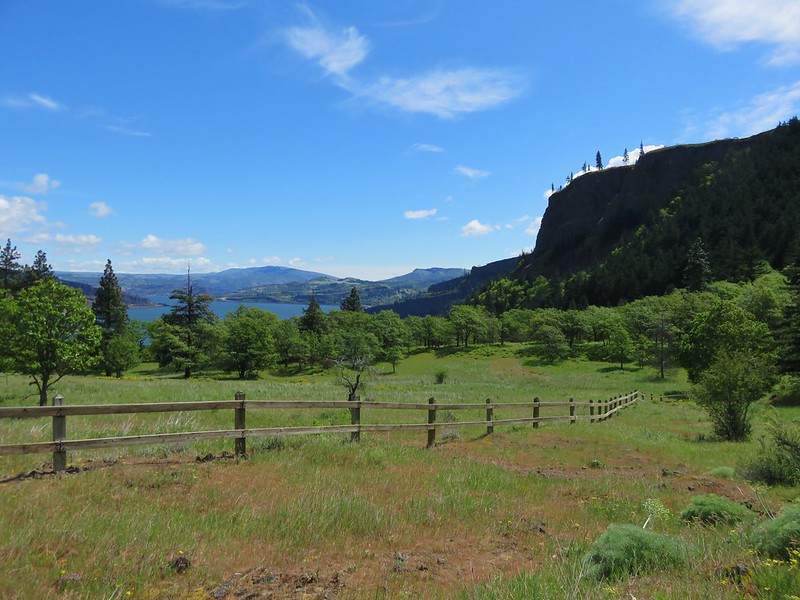
The trail heads out onto the plateau toward the Columbia River passing several viewpoints and lots of wildflowers including our first bachelor button sightings.

Bachelor Button

Balsamroot at Rowena Crest

IMG_1299

IMG_1306

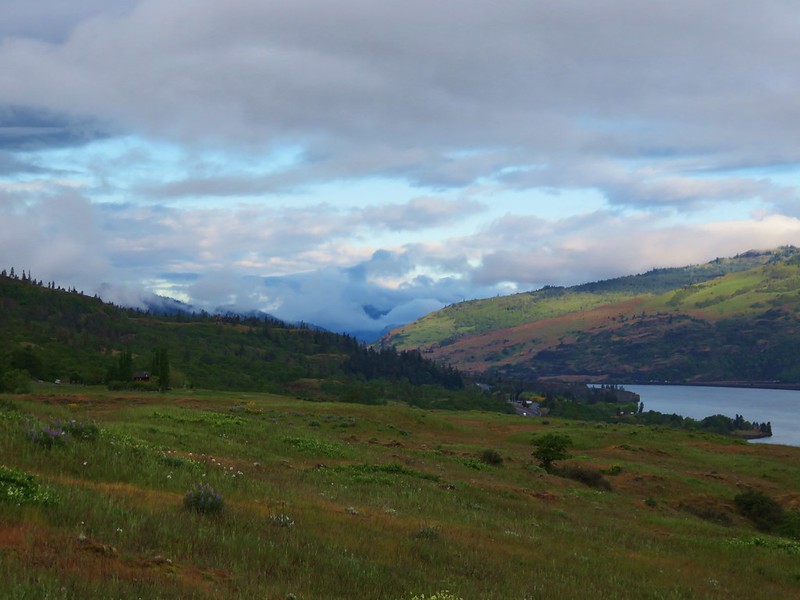
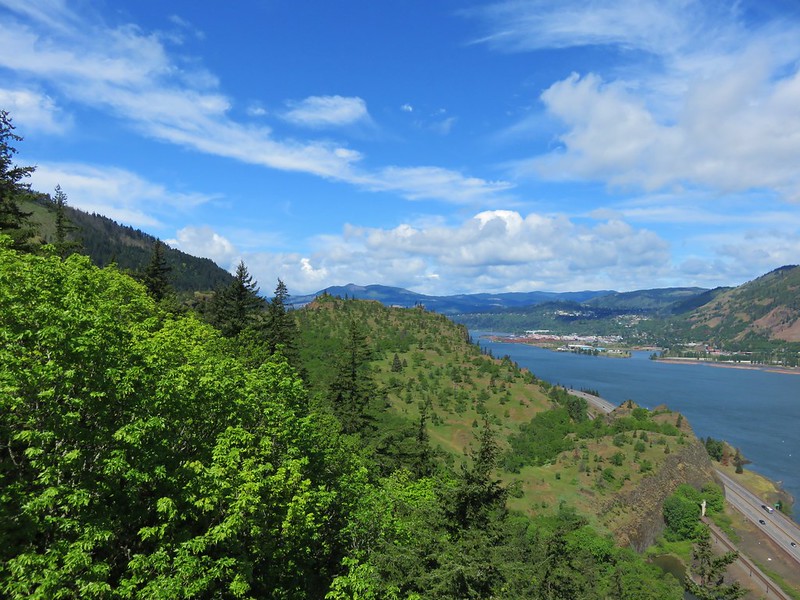
Columbia River from Rowena Crest plateau

IMG_1335

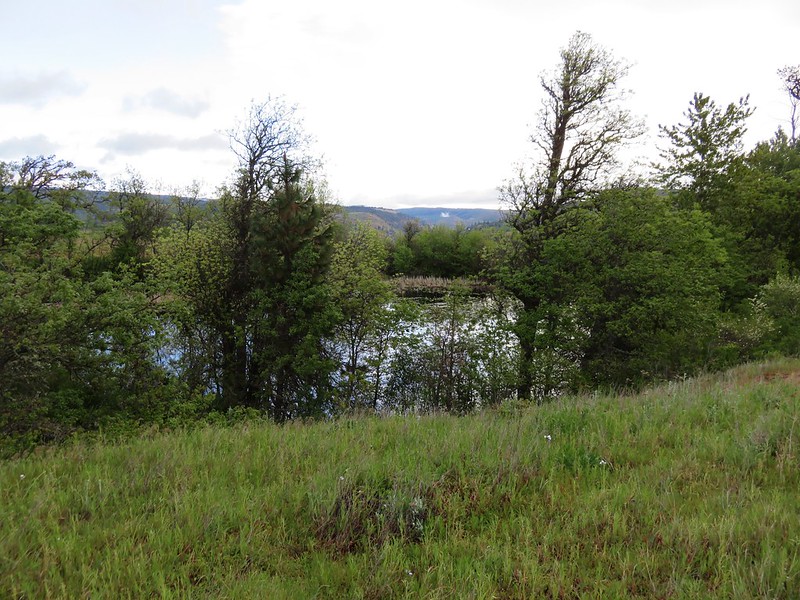
The trail also passes a pair of ponds where we had to be on the watch for poison oak.
IMG_1378

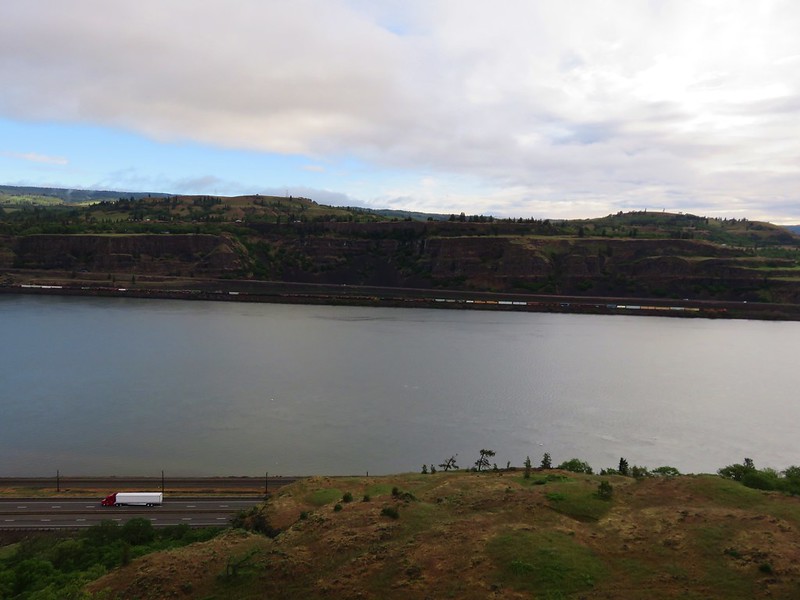
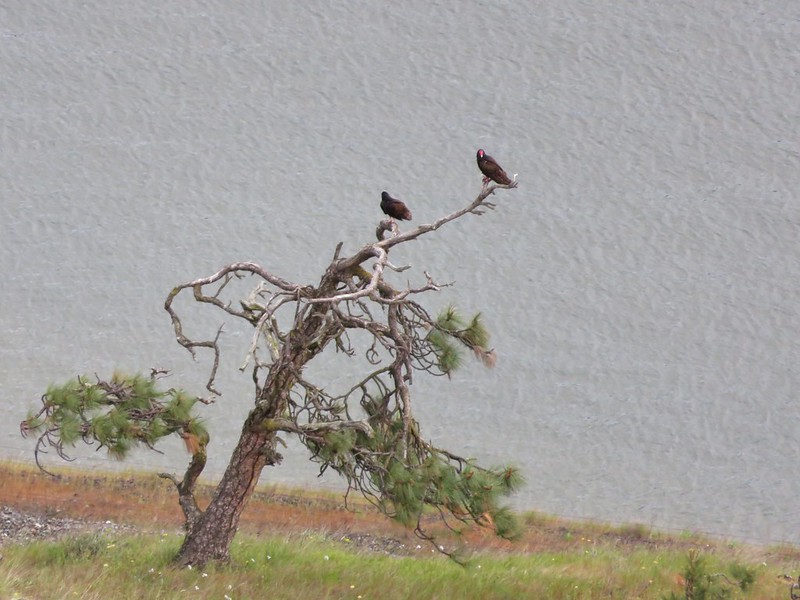
After approximately one and a quarter miles the trail ends at a viewpoint on the edge of the plateau. Across the river was a train while below on our right were a pair of turkey vultures and on our left a couple of deer down in Rowena Dell.
IMG_1348

IMG_1344

IMG_1347

Deer below Rowena Crest plateau

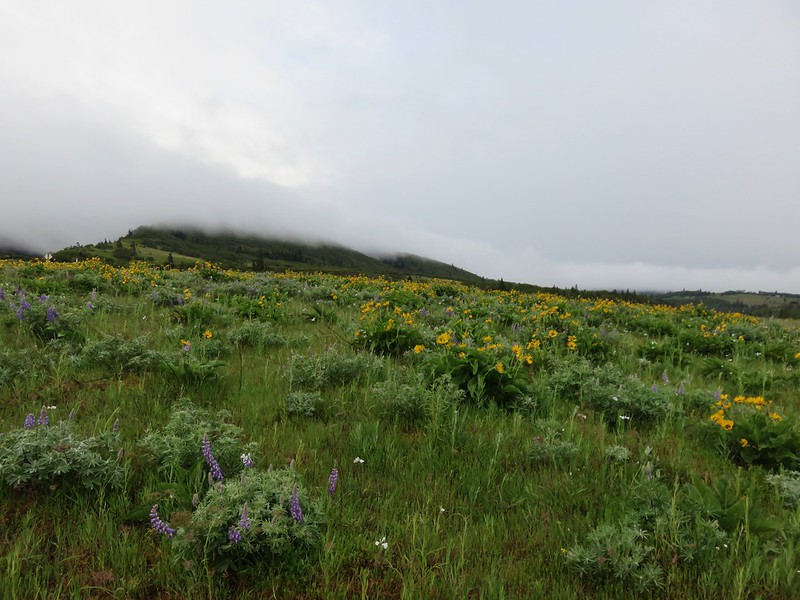
After returning to the parking area we headed up the second trail at Tom McCall Preserve to Tom McCall Point. The summit of the point had been shrouded in clouds while we were on the plateau trail.
IMG_1304

The clouds were breaking up as we began our climb though.
IMG_1407

IMG_1411

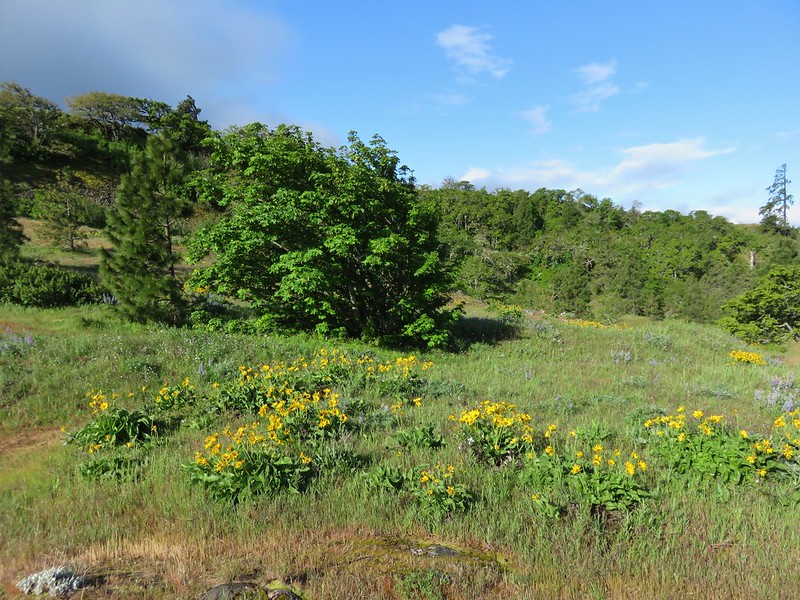
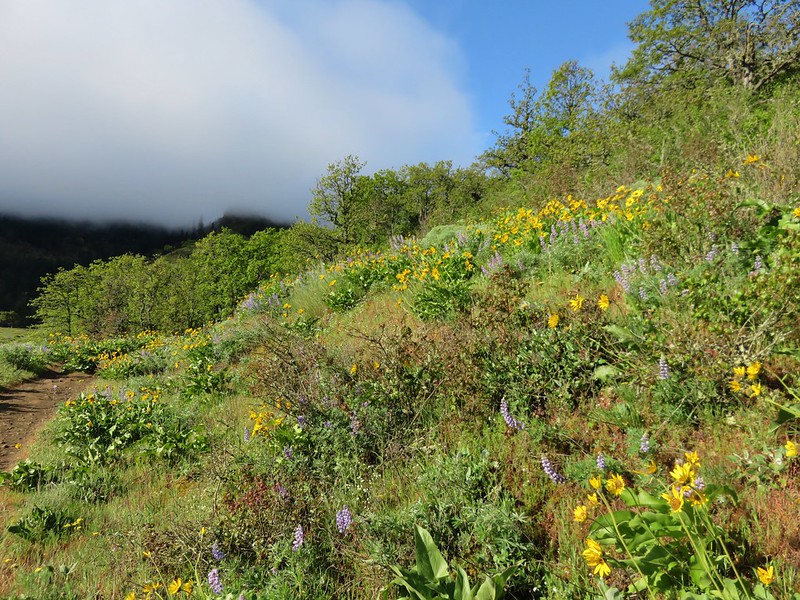
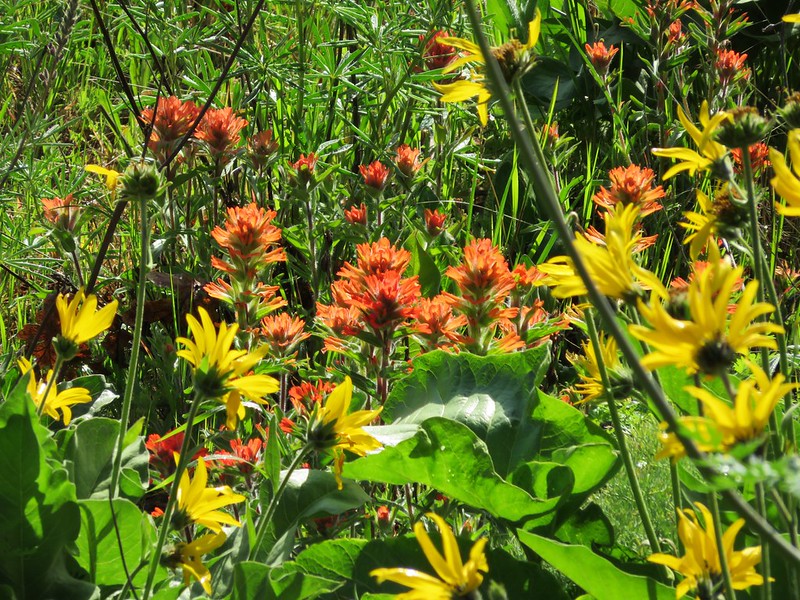
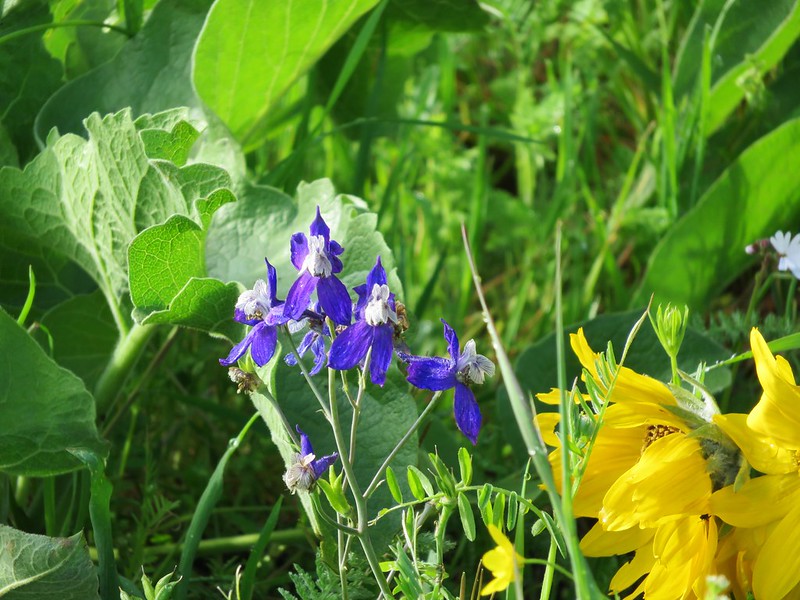
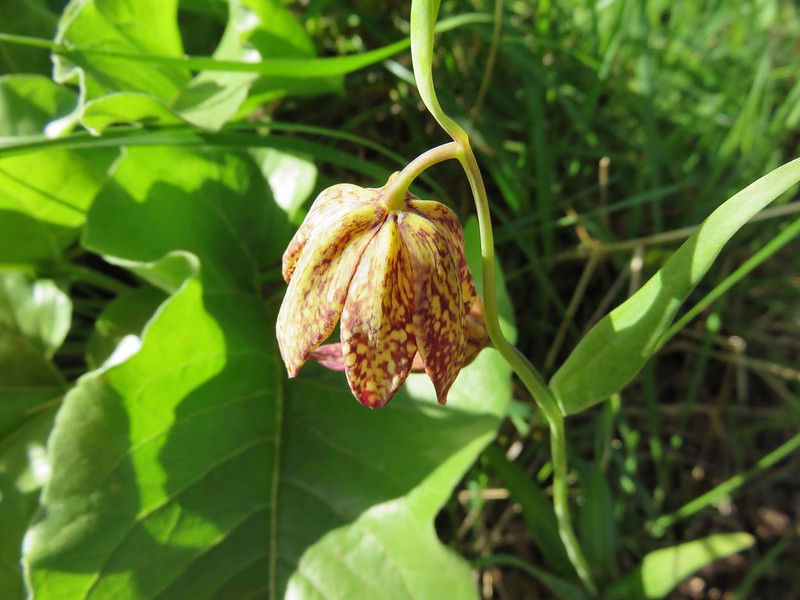
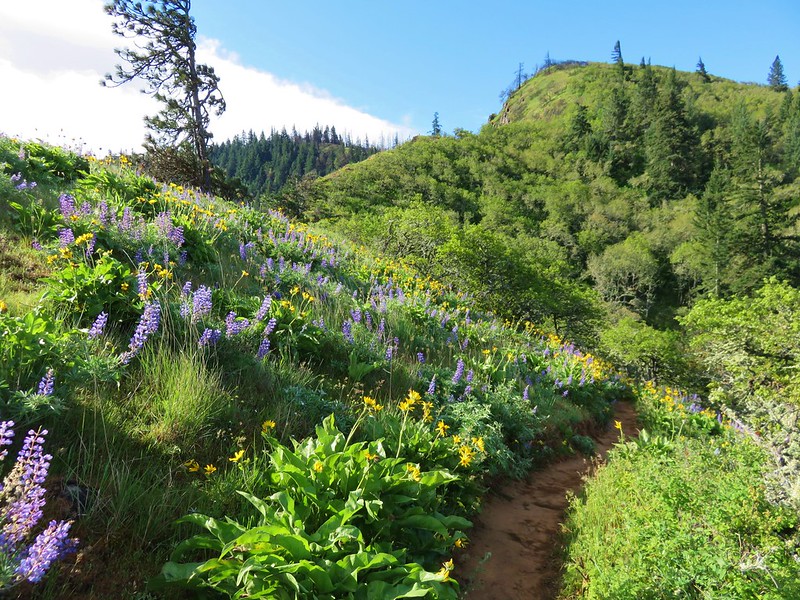
This path was wonderful. There were plenty of views as well as some wooded sections. We also saw several types of flowers that we had not seen along the plateau trail such as paintbrush, broomrape, larkspur, and chocolate lilies.
IMG_1412

IMG_1432

IMG_1416

IMG_1413

IMG_1421

IMG_1428

IMG_1434

IMG_1468

The clouds finally lifted from the summit by the time we were about halfway up the trail.
IMG_1470

We were also high enough to see the entire plateau behind us.
Rowena Crest from the Tom McCall Point trail.

The views from the summit were impressive, but alas the clouds had not broken up enough to reveal either Mt. Hood or Mt. Adams which on a clear day would have been visible.
IMG_1490

Summit of Tom McCall Point

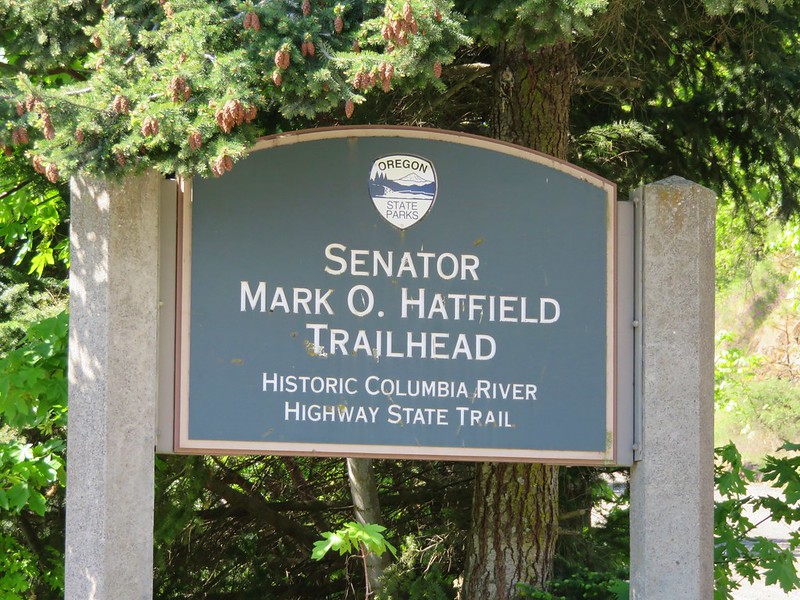
We had planned one more hike for the day since the two trails at Tom McCall Preserve only totaled 6 miles. The Mosier Twin Tunnel trail set off on the west side of Mosier at the Senator Mark O. Hatfield Trailhead.
Trailhead for Mosier Twin Tunnels

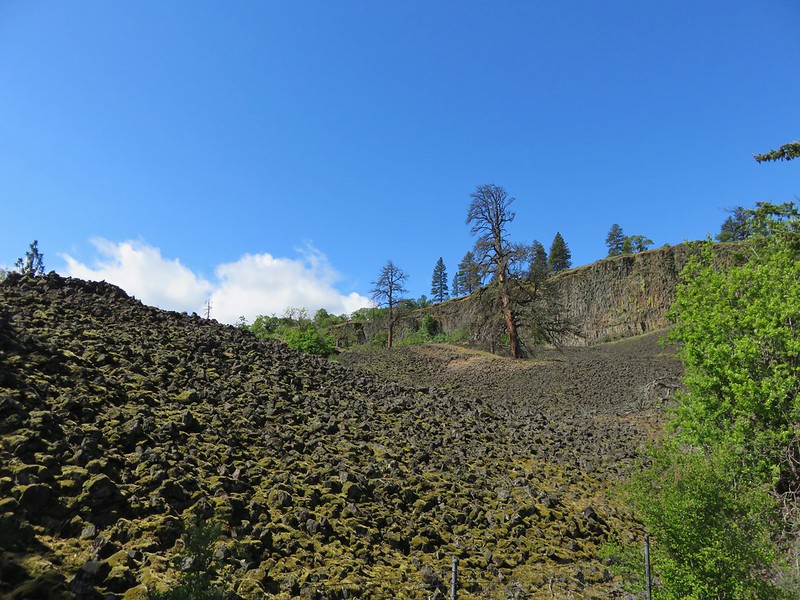
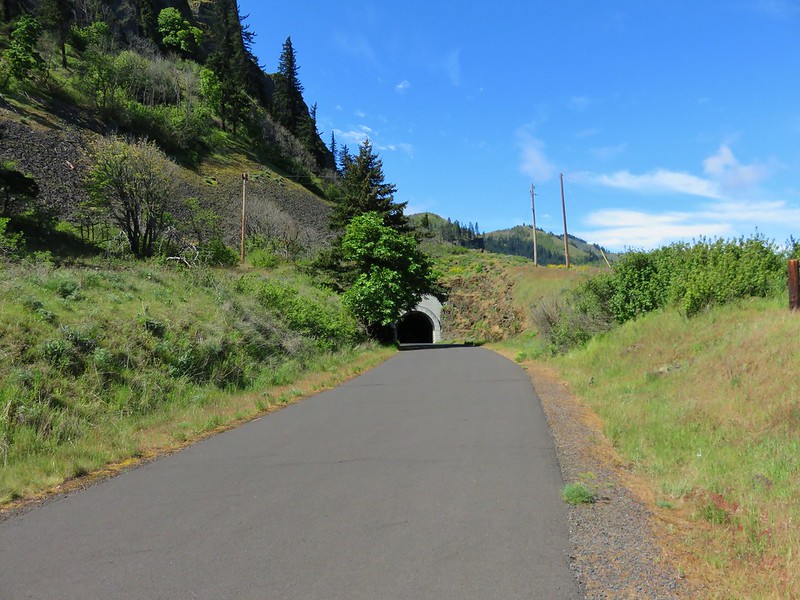
The trail is actually a portion of the Historic Columbia River Highway that has been converted to a hiking and biking path. Our plan was to hike out about 2.5 miles to an overlook of Koberg Beach State Wayside to add another 5 miles to the days totals. The path begins amid rock piles that reminded us of the lava flows in Central Oregon. Here the basalt cliffs that are typical of the gorge had broken up leaving the jumble of rocks. A fence separated the path from the rocks to protect pits made by Native Americans, possibly used as vision quest sites. One such pit is visible in the upper left hand side of the picture below.
IMG_1516

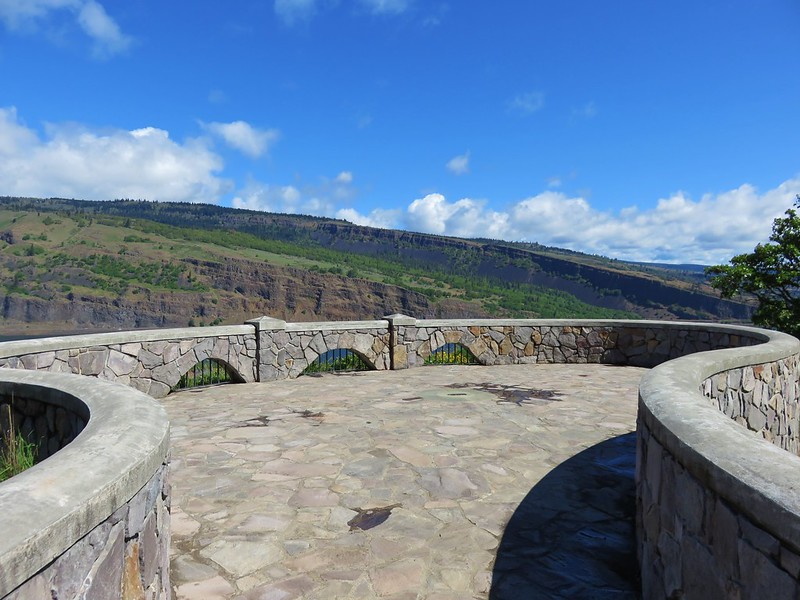
About a half mile from the start of the trail is the first viewpoint.
IMG_1522

IMG_1521

IMG_1523

IMG_1525

Not long after the first viewpoint the trail comes to the first of the twin tunnels.
First of the Mosier Twin Tunnels.

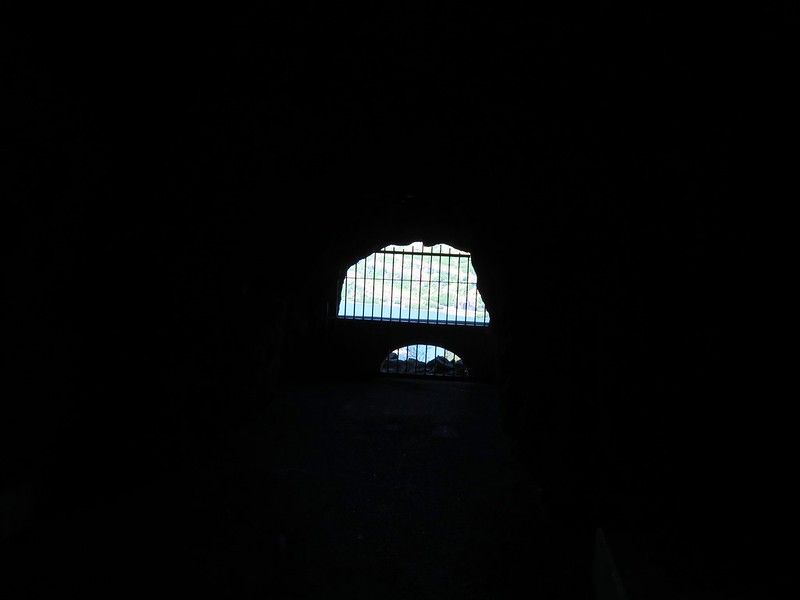
Inside Mosier Twin Tunnels.

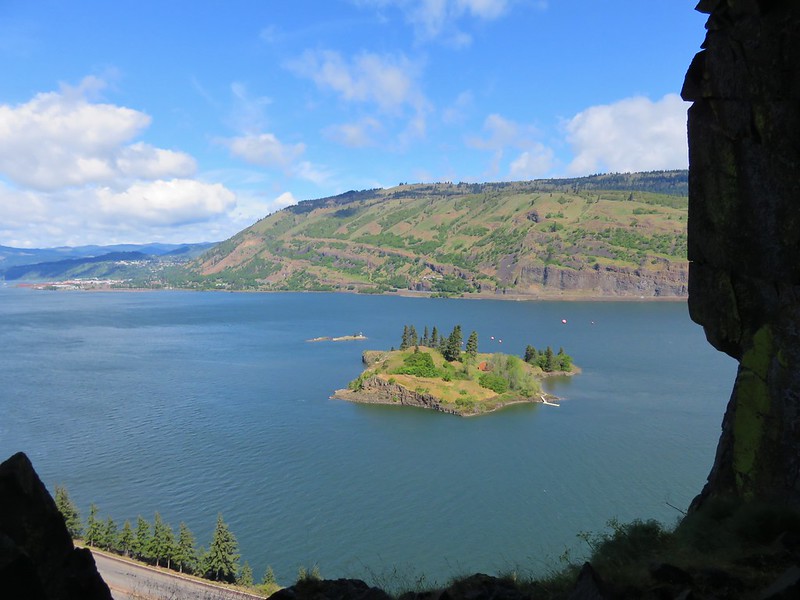
The first tunnel has a pair of windows carved into the rock wall offering views of the river.
IMG_1530

IMG_1531

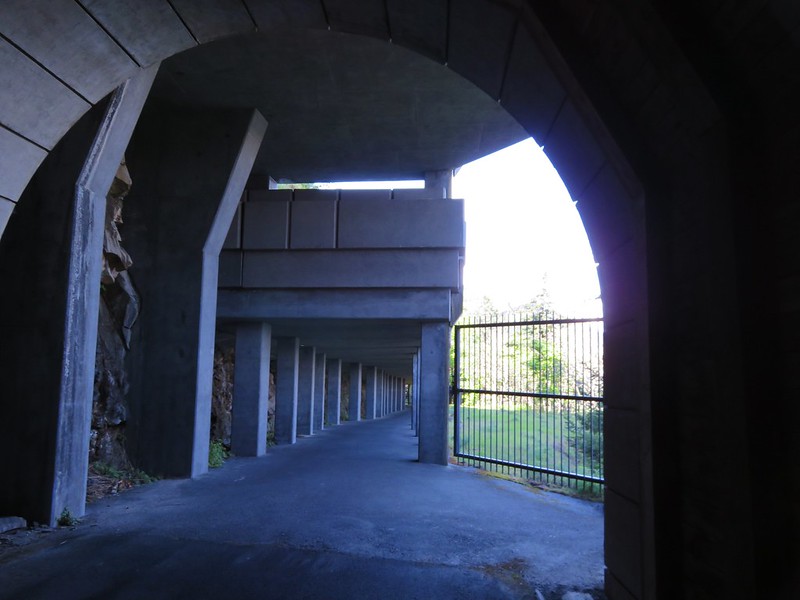
Upon exiting the second tunnel the path continues under an odd concrete structure. Dominique thought it reminded him of being in a parking garage. The purpose of the structure is to act as a rockfall shield able to withstand a 5000lb. boulder falling from 200ft above.
IMG_1533

Just under a mile from the tunnels is a second overlook at the county line between Wasco and Hood River counties.
IMG_1536

IMG_1537

Our planned turnaround point was to be .8 miles from this second overlook at a .2 mile side path. We continued on toward the turnaround but Dominique wasn’t feeling all that well so he eventually took one of the car keys and headed back. It turns out he was only about 100 yards from our planned turnaround point. I was waiting for Heather by a gravel path that led off through a fenced meadow.
IMG_1540

IMG_1543

Viewpoint along the Mosier Twin Tunnel trail.

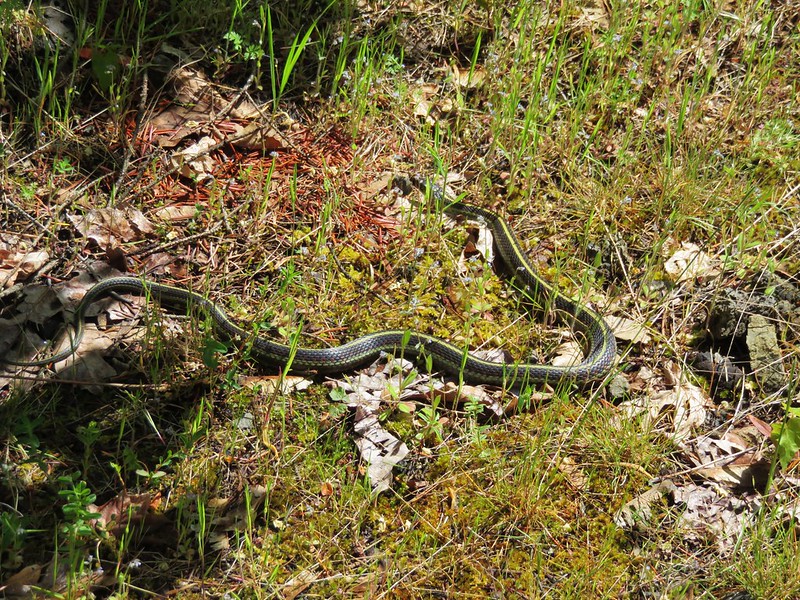
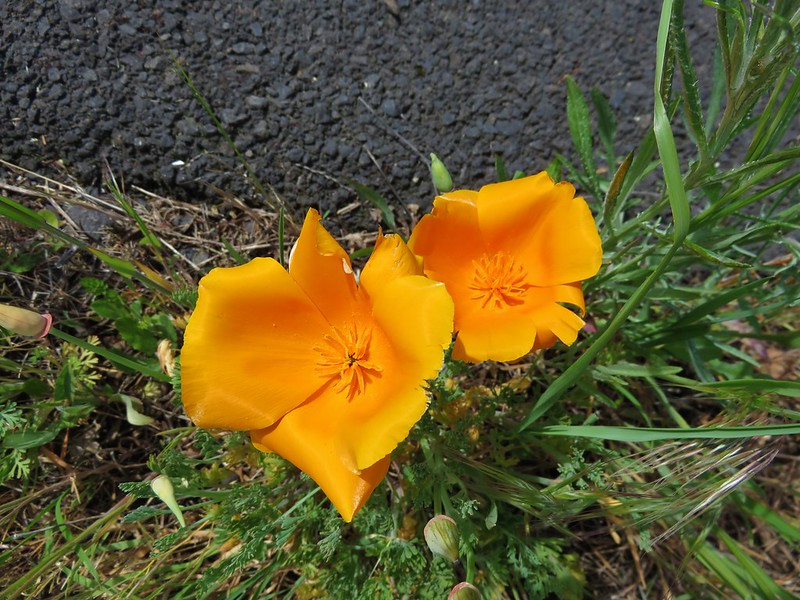
This was in fact the path we were looking for, but it ended at the fence where there was no view to speak of and certainly no sign of a beach wayside. On top of that I had viewed the hike on Google Maps and had expected the side path to drop down a bit and this path led up. We also felt like we hadn’t gone .8 miles since the second viewpoint so I checked the Garmin which showed that Koberg State Park was still ahead. We decided this wasn’t it and continued on. We kept walking and talking thinking the viewpoint was going to be just ahead. We began seeing more and more people but it was now after noon and that made sense, but when we passed a couple with a stroller we both began to wonder what was going on. They didn’t look like they had hiked over 2 miles already. Then Heather spotted some signs ahead. There were quite a few and they were big which didn’t make sense for a small side path, then we noticed an RV parked above the trail to the left. Now we knew something was wrong for sure because there were no roads open to vehicles anywhere near our planned turnaround point. Then we saw the parking area, restrooms, and information center at the western trailhead near Hood River. We’d gone nearly 2 extra miles! The good news was they were nice bathrooms and we had spotted a snake and our first California Poppies (while on a hike) in those extra miles.
IMG_1554

California Poppy

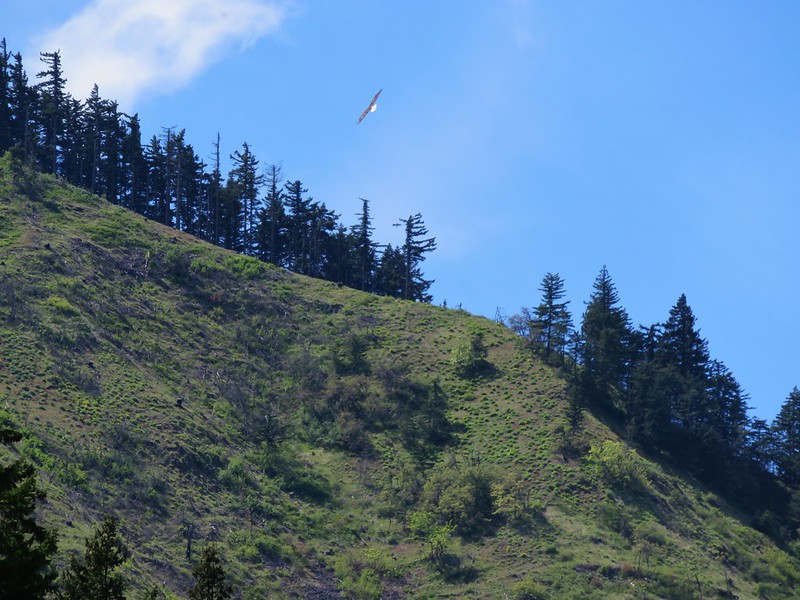
It turned out that the main portion of Koberg State Park is located across the Interstate from the western trailhead, but a portion of it is also located below the outcropping that the gravel path led onto. There just isn’t anything there to see. We hurried back as quickly as our sore feet would let us. On the way we spotted a bald eagle soaring above the trees and some wind surfers sailing above the Columbia.
IMG_1571

IMG_1577

At the car we found a napping kid who it turned out had stuck to our original plan better than we had. Happy Trails!

flickr: https://www.flickr.com/photos/9319235@N02/sets/72157652170987082/

Categories
Columbia Gorge North Hiking Trip report Washington

Klickitat Rail Trail – Swale Canyon from Harms Rd

Wildflowers, wildlife, and cows – oh my! Hiking season is officially underway for us. We kicked things off by making the 2 1/2hr drive to the Harms Rd. trail head for the Klickitat Rail Trial which is located about 20 miles NE of Lyle Washington. It was a long drive for a hike that was less than 8 miles, but the sights more than made up for the less than ideal ratio of driving to hiking hours. Wildflower, wildlife, and solitude were the themes for this hike.

Prior to reaching the trail head we had our first run in with wildlife. As we wound our way up the Centerville hwy on the way to our destination we were delayed by some turkeys who had decided to cross the road.
DSC03155

When we arrived at the trail head we found some conflicting signs. There were plenty of trail head signs and information as well as the seasonal port-a-potty that is there when the trail is open from October through June. As we headed down from the parking area to the gate which blocks car access as well as keeping cattle contained we noticed a “No Trespassing” sign. You can see it on the gate in the picture.
DSC03156

It stated that the sheriff would ticket and/or arrest trespassers. The smaller gate was held shut by some very strong barbed wire while padlocks kept the larger gate from being opened. We stood there for a moment trying to figure out what all this meant. I had been on the Klickitat Rail Trail Conservancy’s website that morning and there was nothing about a closure. We decided that since there wasn’t anything on the actual trail head board and the port-a-potty was there the no trespassing sign was either to remind people to stay on the trail and off of the private land that borders it, or it was an attempt by one of the locals to deter people from the trail all together. Either way we hadn’t driven for two and a half hours to turn back now so we climbed over the gate and set off.

A stiff breeze made it feel quite a bit colder than the 46 degrees that the thermometer said and we were glad we’d worn layers. The layers were intended to help keep ticks at bay since they are common in the area. We had a lot of company along the first portion of trail with many birds and several marmots busy with their morning activities.
DSC03158
DSC03170
DSC03172

There were plenty of flowers along this first portion as well. The most prevalent being desert parsley.
DSC03168
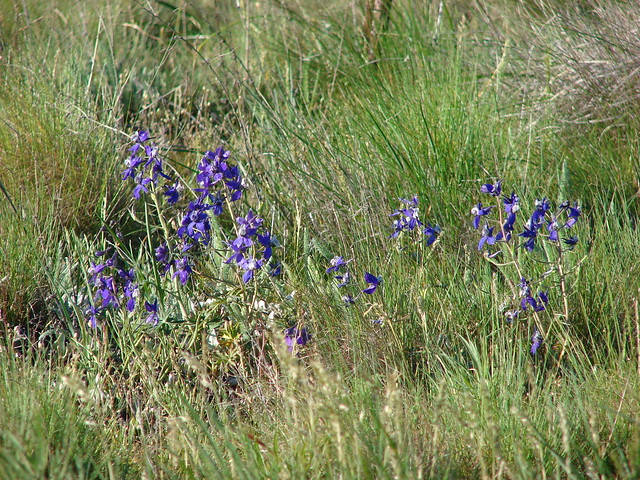
We also saw some larkspur:
DSC03183
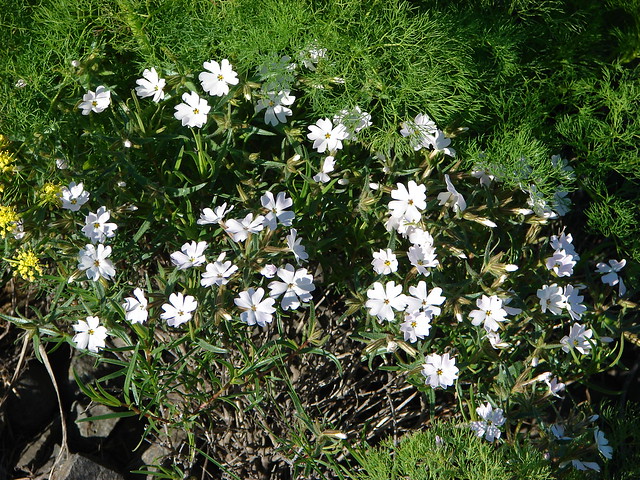
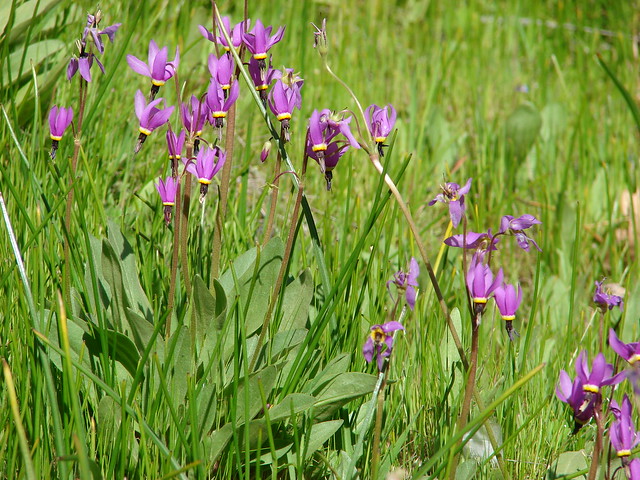
Phlox:
Phlox
Ballhead waterleaf:
Ballhead waterleaf
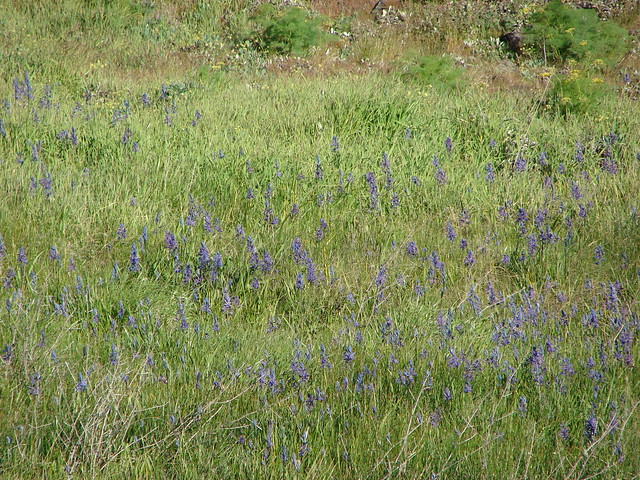
and camas:
DSC03196

We came to a second gate which was easily opened via a chain and quickly discovered cows. Having been raised in Central Oregon and done some work on farms growing up I knew what was coming. Not the brightest of creatures they stared at us for a long time before beginning to slowly move down the trail in front of us. They could have easily just turned right off the trail into the brush and let us pass but no. Not cows, they just kept walking, pooping, and staring at us as we continued behind them. When the reached a third gate they were hemmed, stymied. Again instead of heading right along the fence which would have taken them out of our path they gathered in the corner of the fence with no where to go. I finally convinced the brains of the operation that she should walk down the bank to the right at which time the rest of them followed suit allowing us to pass through the gate and leave them behind.
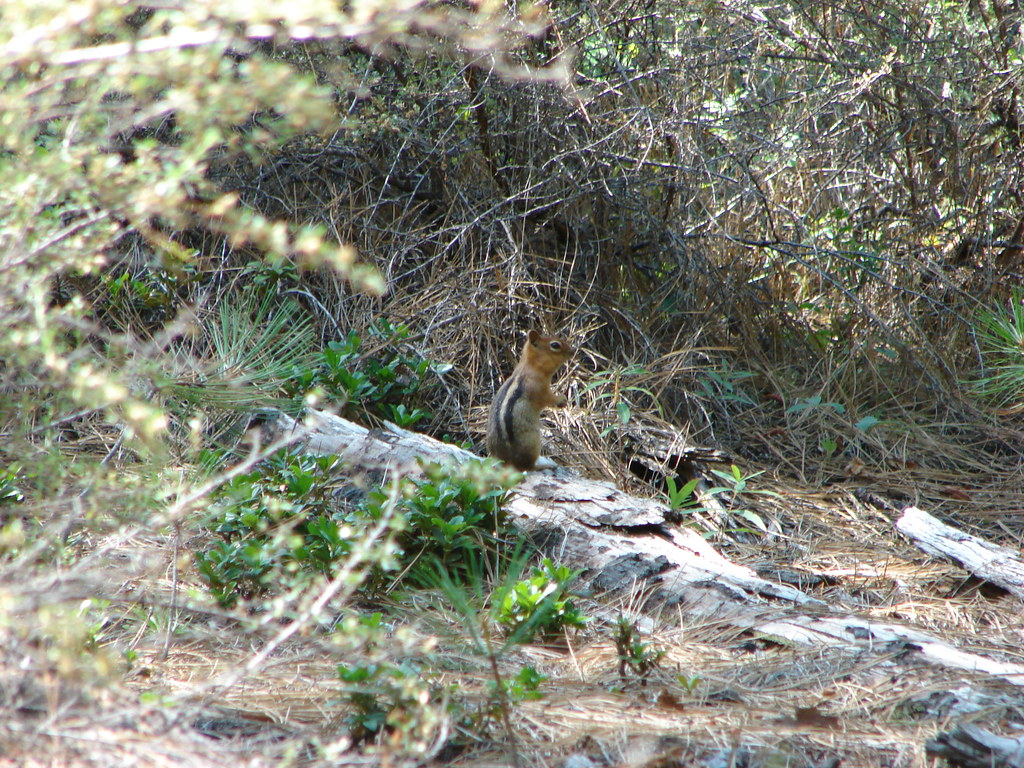
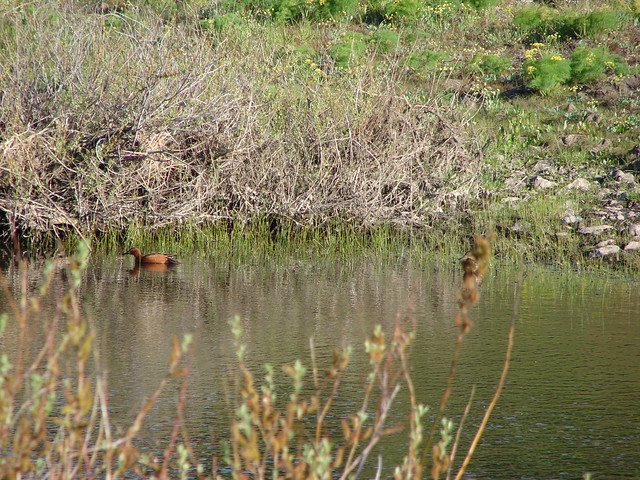
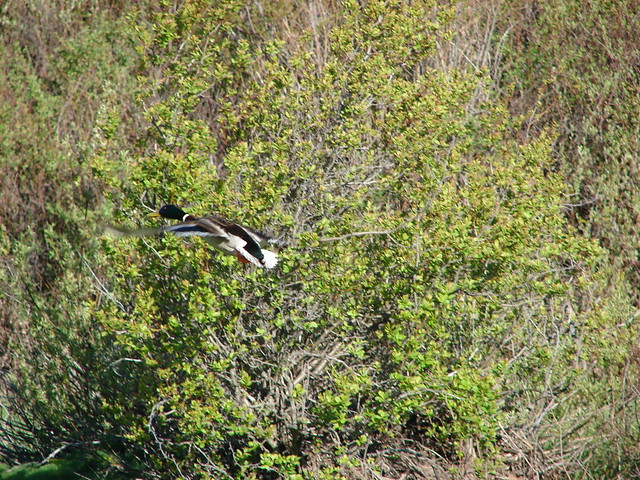
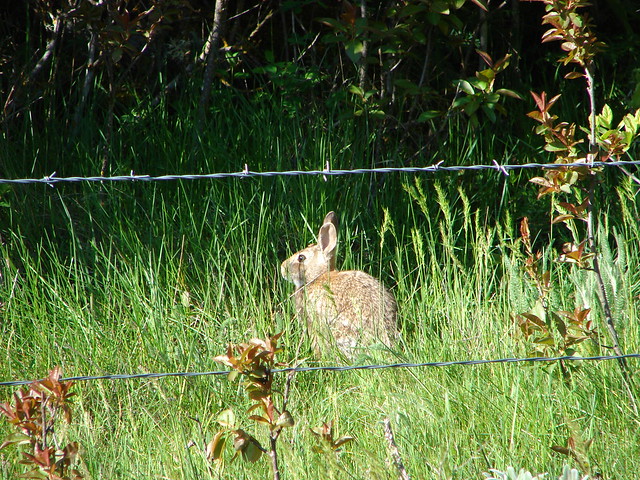
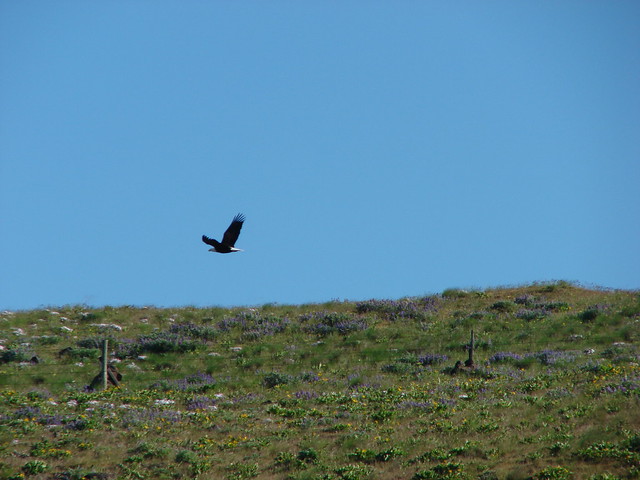
As we continued along the trail descending down into Swale Canyon the flowers and wildlife continued to change. We came across some mallard ducks, a rabbit, and a bald eagle.
DSC03201
DSC03208
Bald Eagle

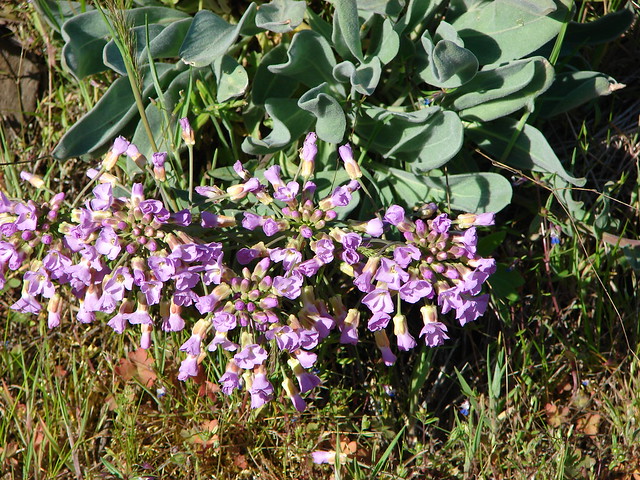
New flowers included daggerpod and yellow balsamroot.
Daggerpod
DSC03197

The marmots were keeping a close eye on us as we followed Swale Creek.
DSC03245

There has sprung up a tradition along this trail to make designs out of the old railroad scraps, and sometimes whatever else can be found. The most elaborate of the collections was placed on a rock shelf along the trail.
DSC03248

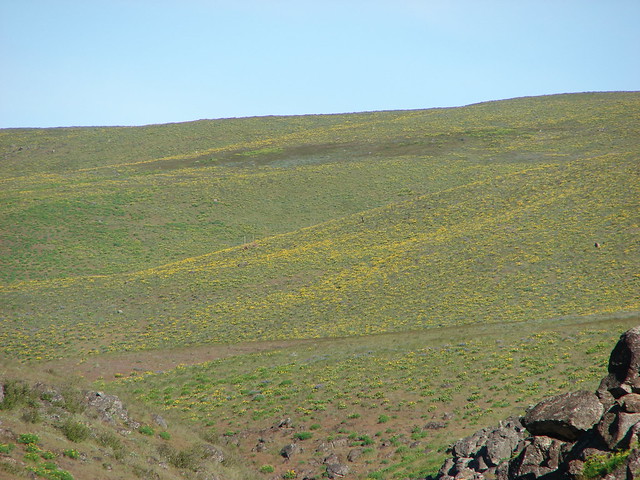
As we got further into the canyon, the hillsides began exploding with balsamroot in places.
DSC03250

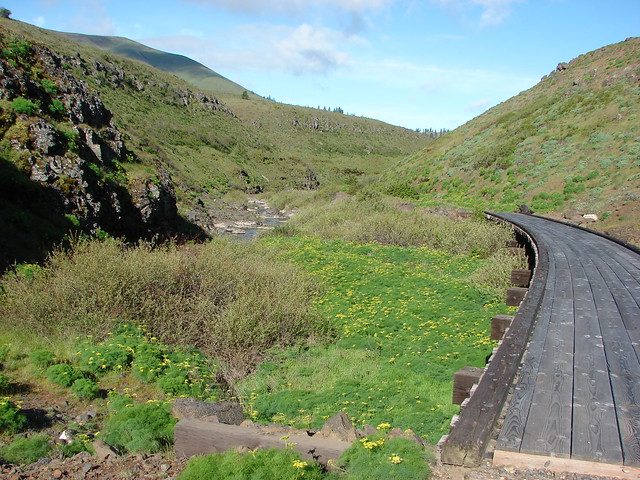
Being an old rail road line when the trial crosses the creek it is on old trestles made into bridges. The 3rd trestle was the most scenic as we approached. In the distance we could see the shadows of the clouds passing over Stacker Butte.
DSC03263

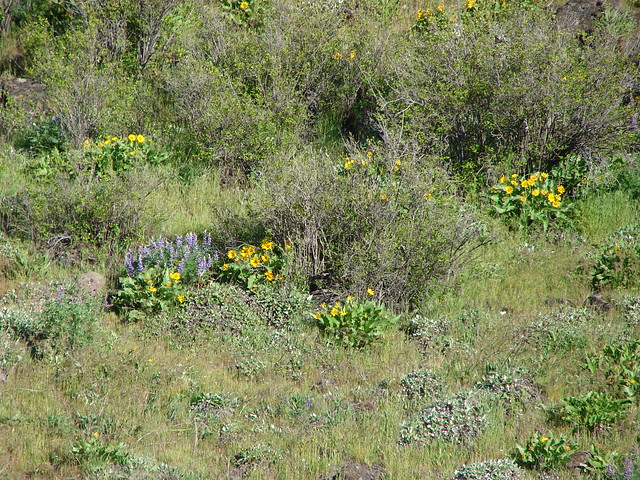
From the third trestle the balsamroot began to steal the flower show. Patches of lupine were in bloom but much of it had yet to come out.
Lupine just starting to bud out:
DSC03297
DSC03307
DSC03310

Winding through the canyon we began approaching a more forested area.
DSC03325
Here we added paint to the flowers and a Great Blue Heron to the wildlife:
DSC03326
DSC03331

The balsamroot still ruled the hillsides:
DSC03341
DSC03357

The creek was hidden from the trail at this point but a lovely meadow of desert parsley was home to many happy birds.
DSC03351

Just up from the parsley meadow a pair of deer came up from the creek and headed off down the trail. They were nice enough to pose for a couple of pictures before bounding away though.
DSC03365

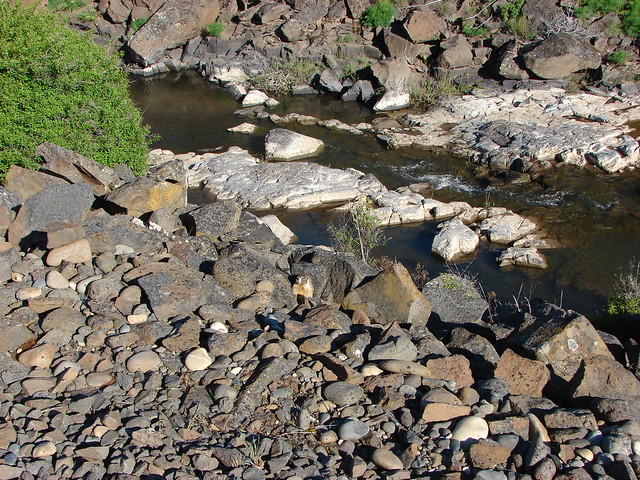
There was a small waterfall about 3.5 miles in that was mostly obscured by the trees then just a few tenths of a mile later we came to our planned turnaround point – a series of bedrock pools.
There was a small easy trail down to the creek where we paused for a snack since we were relatively safe from ticks on the rock.
DSC03391
DSC03406

I was searching along the bank for one of the many frogs we were hearing when I noticed a flower filled ledge across the creek. Upon closer inspection I realized it was shooting stars. I decided to try and hop the creek and get some closer pictures since I couldn’t seem to get the full effect from the far bank.
DSC03398
DSC03402

It had warmed up for our return trip. We kept all our layers though. We had brushed three ticks from our pants, two on mine and one off Dominique. The marmots had retired for the day and we hadn’t seen anything new for most of the return hike when we came back to third gate and the cows. Different direction but same story.
DSC03436

Just after taking that picture I looked up the hill to our left and saw a coyote standing up top looking down at us. Before I could get a picture of it standing there it took off back over the hillside leaving me with a very blurry, distant photo of it’s ears. After convincing the cows to move away from the second gate we left them behind and started the final leg of our hike. I turned back after a few minutes to take a look behind us and there went the cows up the hillside away from the creek. They apparently had hung out for a couple of hours just to accompany us on our return trip. 😀

We didn’t see any other people on the trail. When we returned to the trail head around 11:30 there were a pair of hikers and a pair of bikers just getting ready to set off. I took a couple of final pictures from the trail head.
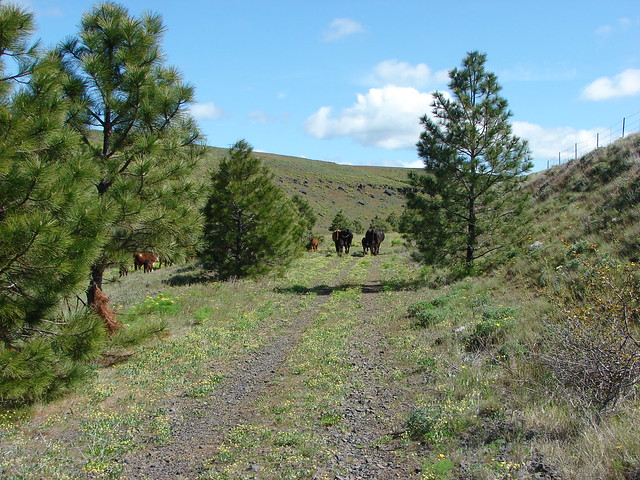
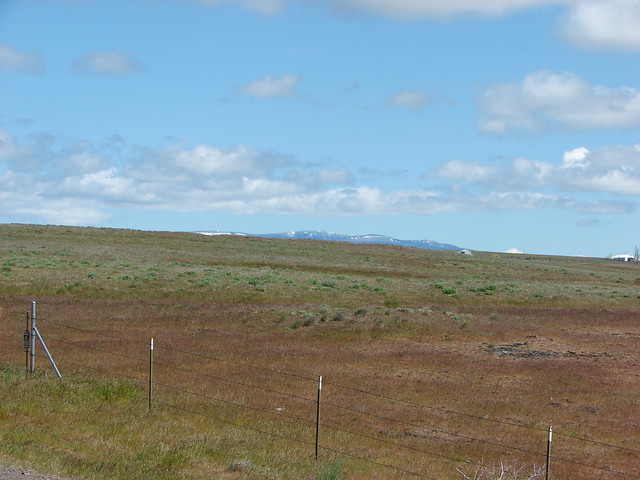
Indian Rock beyond the farmland:
DSC03455
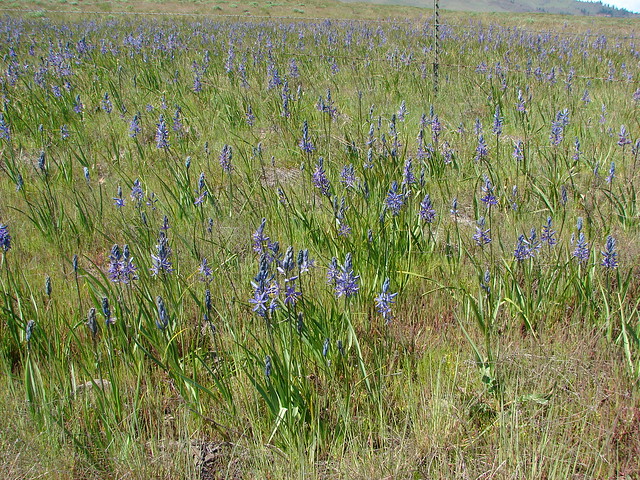
Camas field:
DSC03457

The total trip was 7.6 miles with just over 300′ of elevation gain. A nice easy start to get us into the swing of things. Until next time – Happy Trails

Photos on flickr: https://www.flickr.com/photos/9319235@N02/sets/72157644343719784/
facebook: https://www.facebook.com/deryl.yunck/media_set?set=a.10203854494069953.1073741871.1448521051&type=3

Categories
Hiking Northern Coast Oregon Oregon Coast Trip report

Bayocean Spit

Before I dive into a description of our most recent hike I wanted to mention that last night we had a chance to listen to a presentation by William L. Sullivan, the author of the hiking books we use to plan our hikes. He presented a number of new hikes that are included in his updated guide to the Central Oregon Cascades. He travels around Oregon giving presentations throughout the year and you can check his calendar of events at http://www.oregonhiking.com/ if you are interested in attending one.

Now on to our hike. We traveled to Tillamook on the Oregon Coast for a hike around Bayocean Spit which protects Tillamook Bay. I’d picked this hike due to the lack of elevation gain given both Heather and I have races in two weeks (a full marathon for her and a half for me).

This turned out to be another interesting hike with the Pacific Ocean on one side and the bay on the other. Between the two the spit is a mix of grassy dunes and a small forest. We decided on hiking in a figure 8 pattern in order to cover both sides of the spit as well as explore the forest via a .5mile connector trail. We left the parking area and headed West across some grassy dunes toward the beach sporting some less than attractive ponchos. It was a cloudy day with intermittent rain. We must have been a sight because it wasn’t long before we noticed a doe watching us from behind a dune.
022

We found the beach which was empty aside from a few seagulls and turned north. There were numerous shells and sand dollars in the sand. To the south was Cape Meares along with Pillar & Pyramid rocks, and to the north was Cape Falcon. As we approached the forested section of the spit we quickly spotted several Bald Eagles perched in the tree tops. We also noticed a large gathering of seagulls on the beach. Curious about the attraction Dominique and I set off for a closer look while Heather searched for the connector trail to the bay side. As we got closer to the birds we noticed that they were huddled around the end of a log that had washed up on the beach. That end of the log appeared to be covered with some type of clam. 081

After satisfying our curiosity we headed back to the now located connector trail. This sandy half mile trail led through a small but varied forest to an old dike road along Tillamook Bay. The water level was low due to it being a low tide and the number of birds was less than we had hoped, but we did spot a Great Blue Heron, several ducks, Canadian Geese, and another Bald Eagle. We continued north along the road to an abandoned campground across the bay from the city of Garibaldi. Shortly after the campground we spotted some flagging leading back across the spit toward the ocean.

The flags marked a path across another set of grassy dunes. We spotted three more deer before reaching the beach where we turned south and began our return trip. We stopped to take a closer look at what I was now calling the “seagull log”
167
and the took the connector trail back through the forest to the road. This time we turned right (south) and headed back toward the parking area. It wasn’t until this last leg that we saw any other people which made for a very peaceful day.

We’ll be taking a few weeks off from hiking now due to the upcoming races, but then our hiking season will kick into high gear. Hopefully the weather will continue to cooperate and most of the snow will have melted from the lower elevations by then. In the meantime thanks to the Salem Audobon Society and William Sullivan I have some new hikes to read about and trips to plan. Until next time – Happy Trails 🙂
Pictures from the hike on Facebook https://www.facebook.com/media/set/?set=a.10200995758203343.1073741827.1448521051&type=3
or Flickr http://www.flickr.com/photos/9319235@N02/sets/72157633242847785/