Categories
Columbia River Gorge South Hiking Oregon Trip report

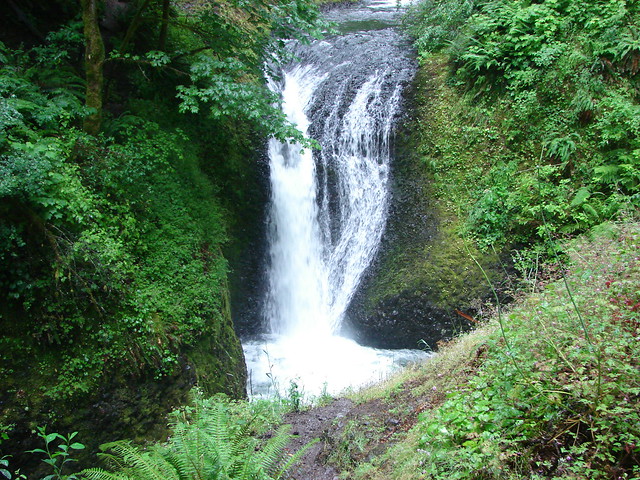
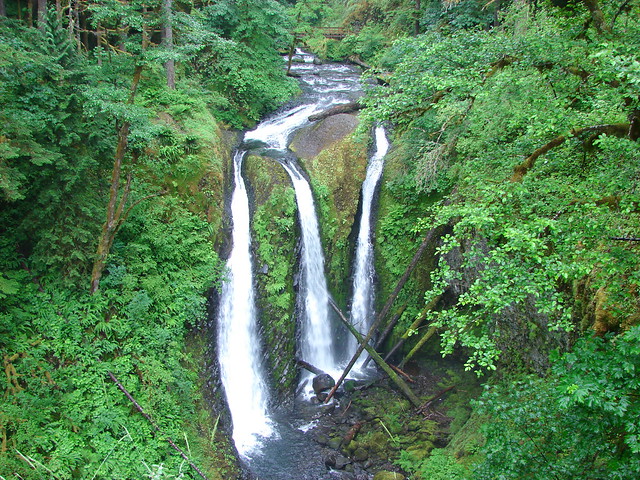
Dry Creek and Pacific Crest Falls

Despite what the weather thinks we are approaching our hiking season which means we will be hitting the trails much more often over the next 6 months. As we work our way into hiking shape we jumped on a chance at a rain free morning and headed to the Columbia River Gorge to check out a pair of waterfalls. Several trails in the gorge remain closed due to fire damage from the 2017 Eagle Creek Fire and others that had been reopened are again closed due to rock fall and slides caused by our recent weather combined with the fire damage. Please remember to check on the current status and conditions of trails before heading out.

Our sights were set on a section of the Pacific Crest Trail from Cascade Locks to Pacific Crest Falls. We had visited Pacific Crest Falls coming from the other side in October of 2015 (post) but at that time of year there wasn’t much water flowing so we thought a return visit was in order, especially after our recent rains.

We began our hike at the Bridge of the Gods Trailhead in Cascade Locks.
Bridge of the Gods Trailhead

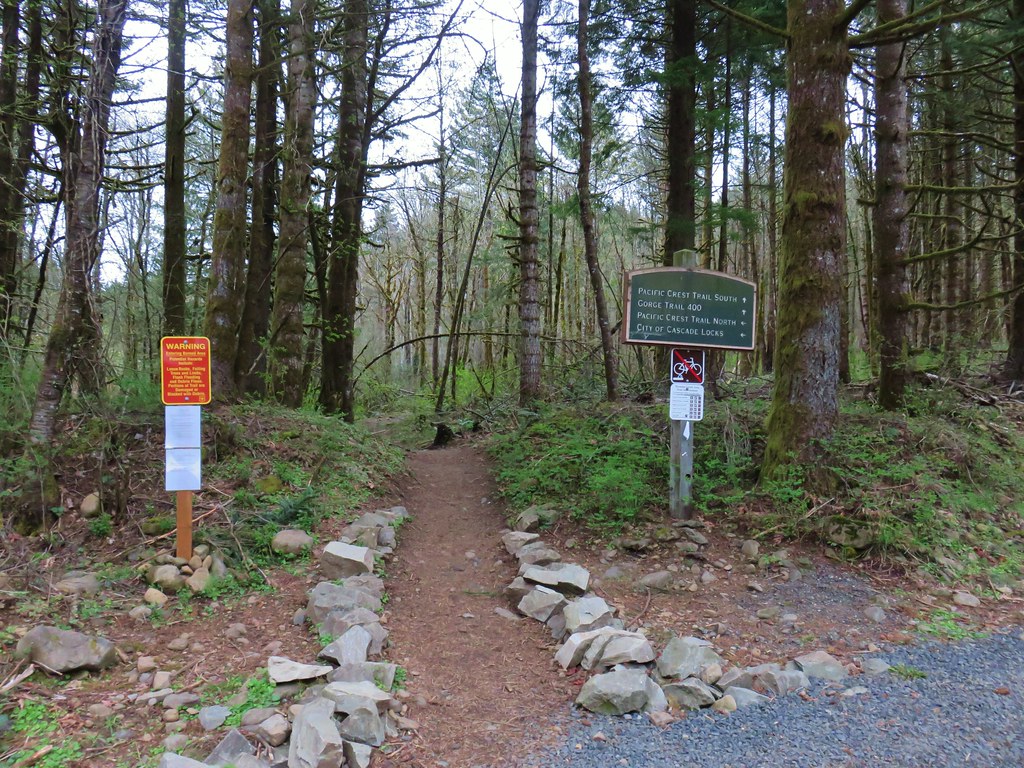
From the trailhead we took the Pacific Crest Trail south.
Pacific Crest Trail sign in Cascade Locks

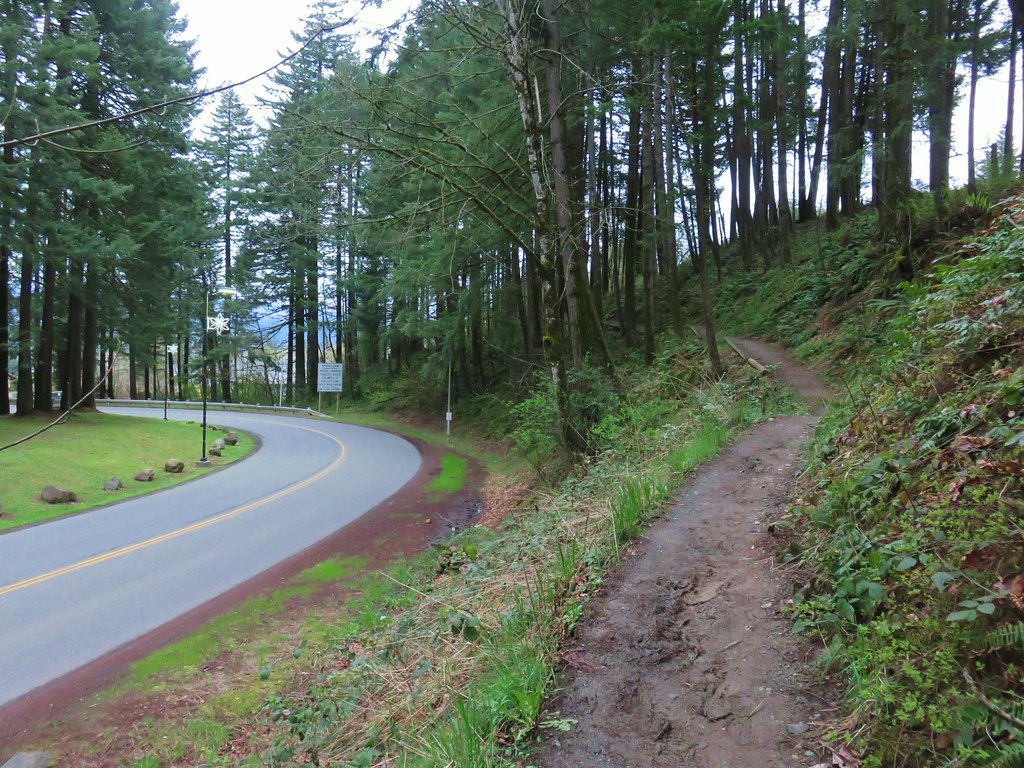
Pacific Crest Trail at Cascade Locks

The PCT briefly follows Harvey Road as it passes under I84 to a second possible trailhead.
Short road stretch on the PCT

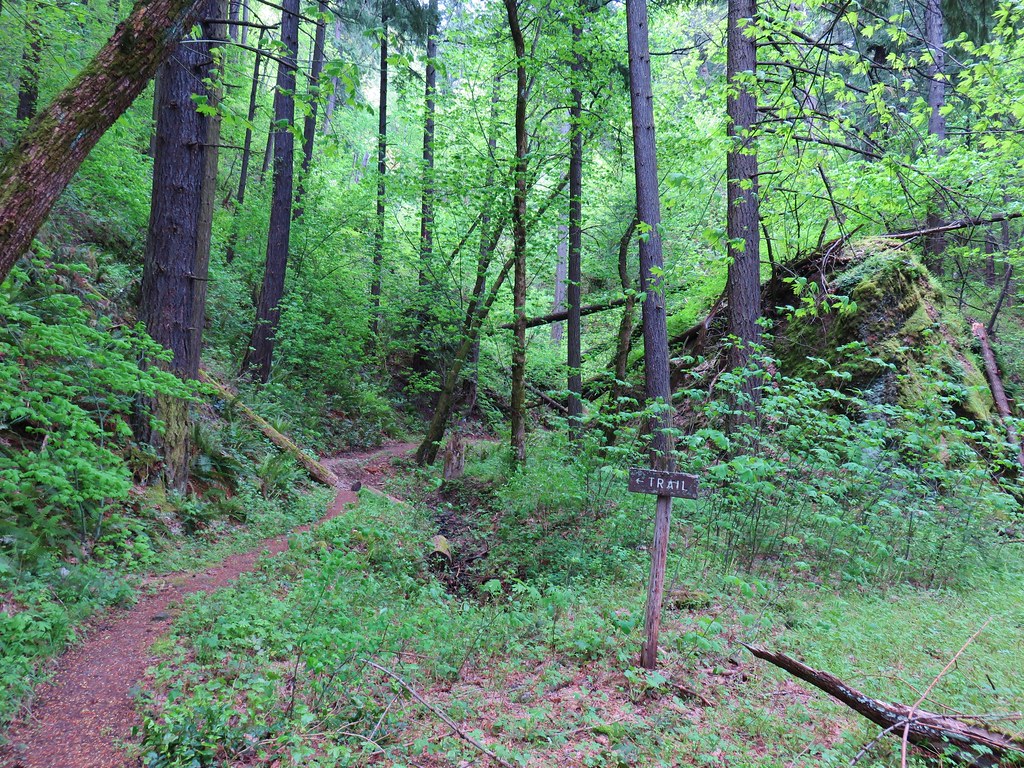
Pacific Crest/Gorge Trail

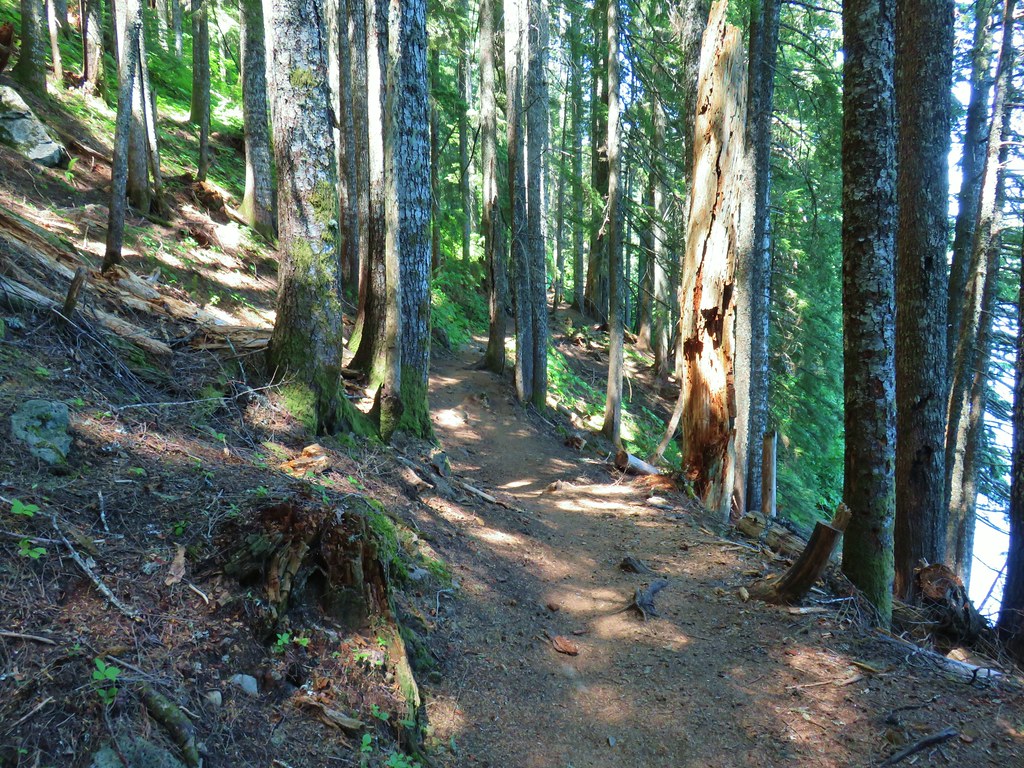
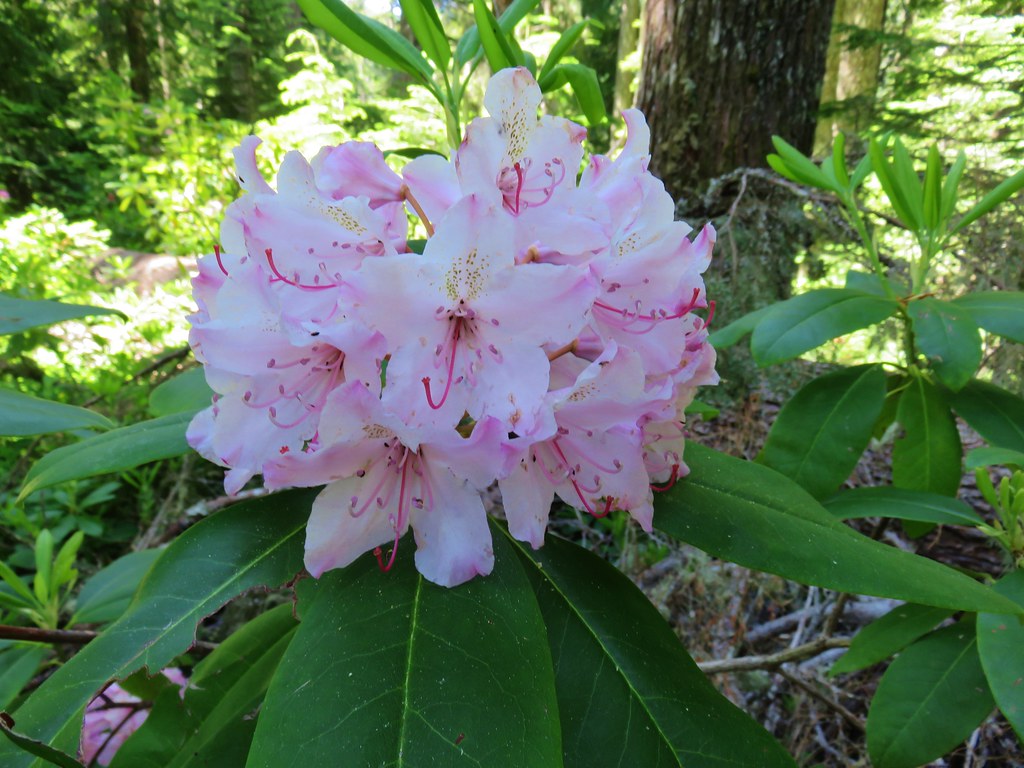
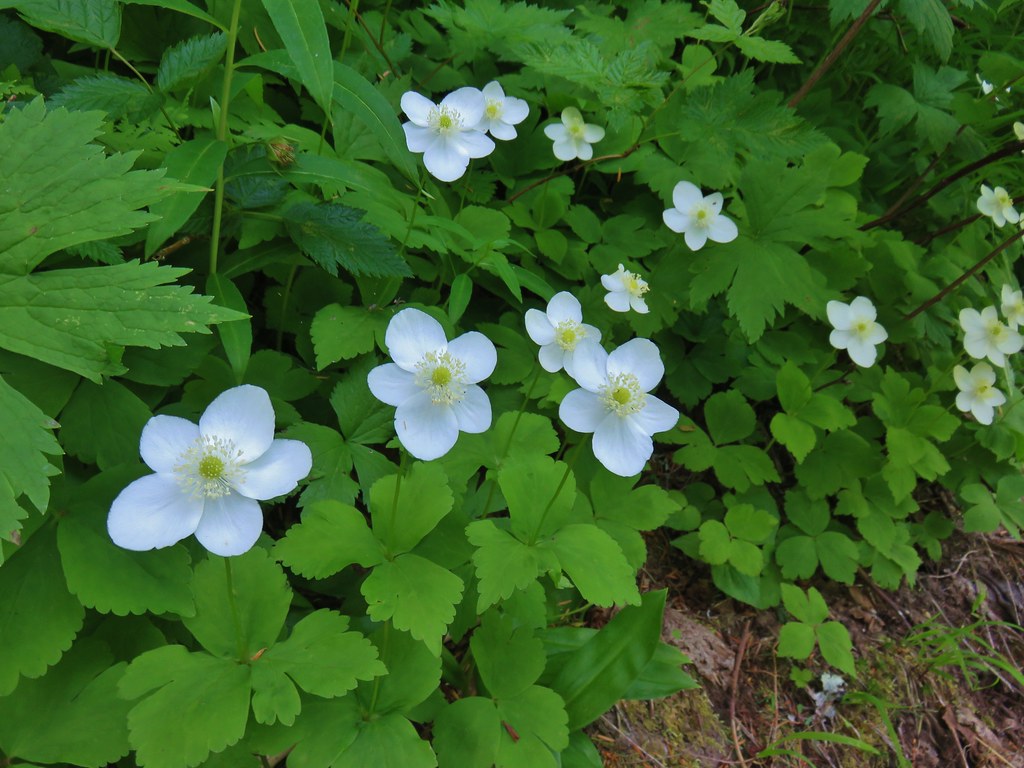
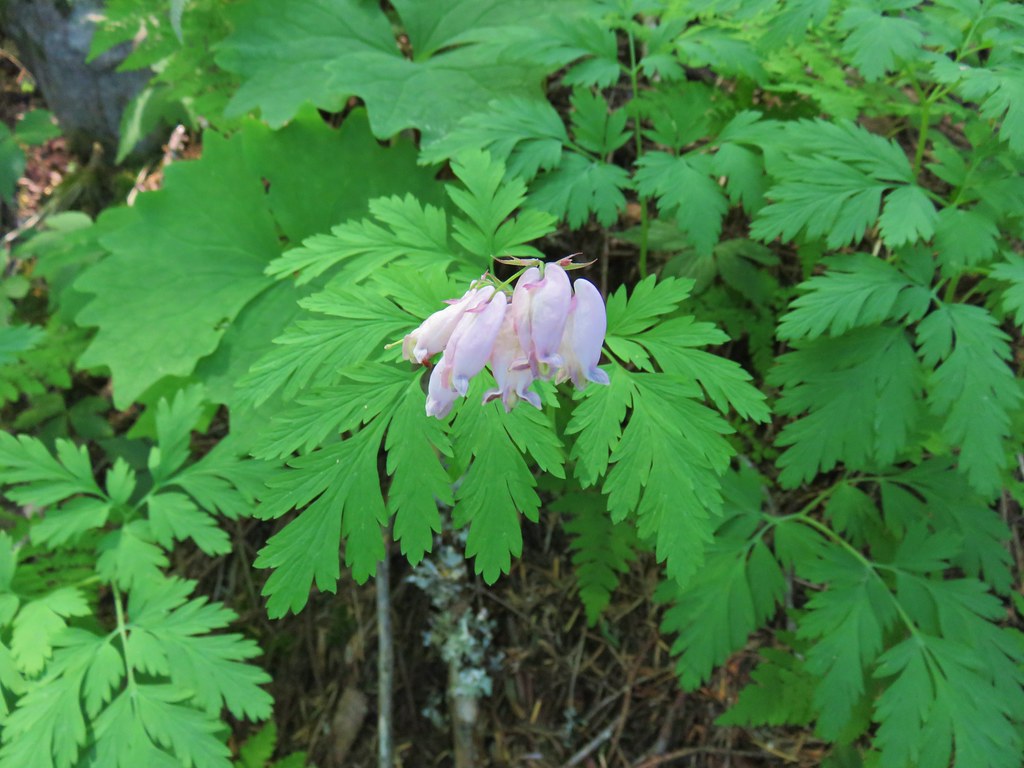
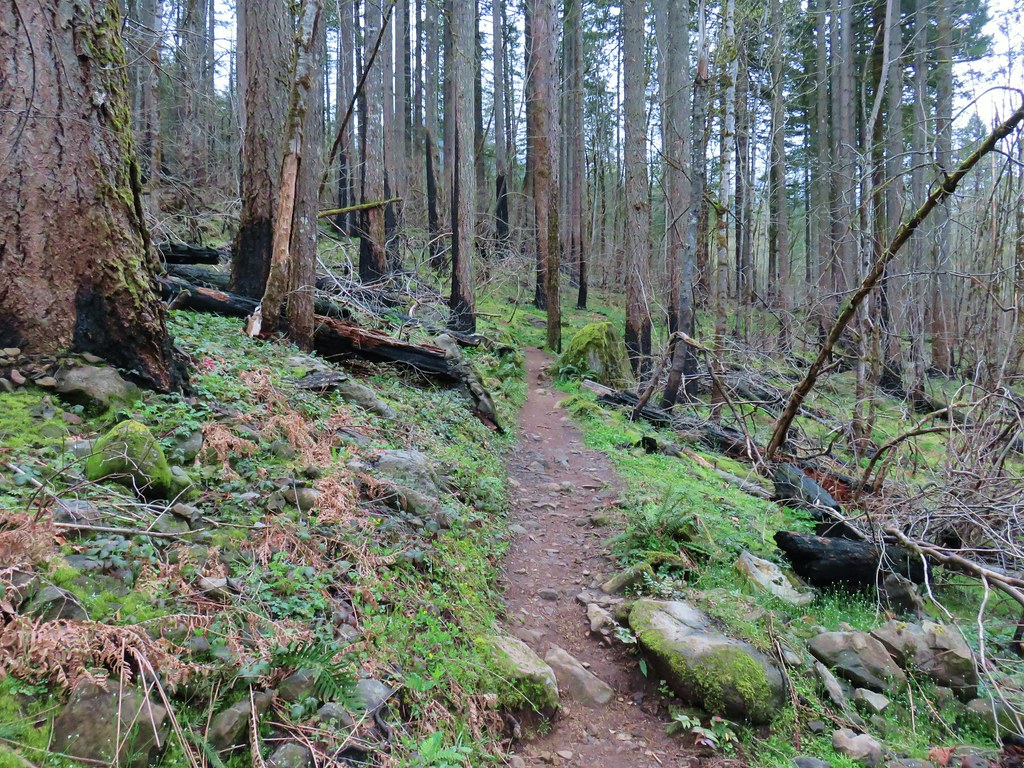
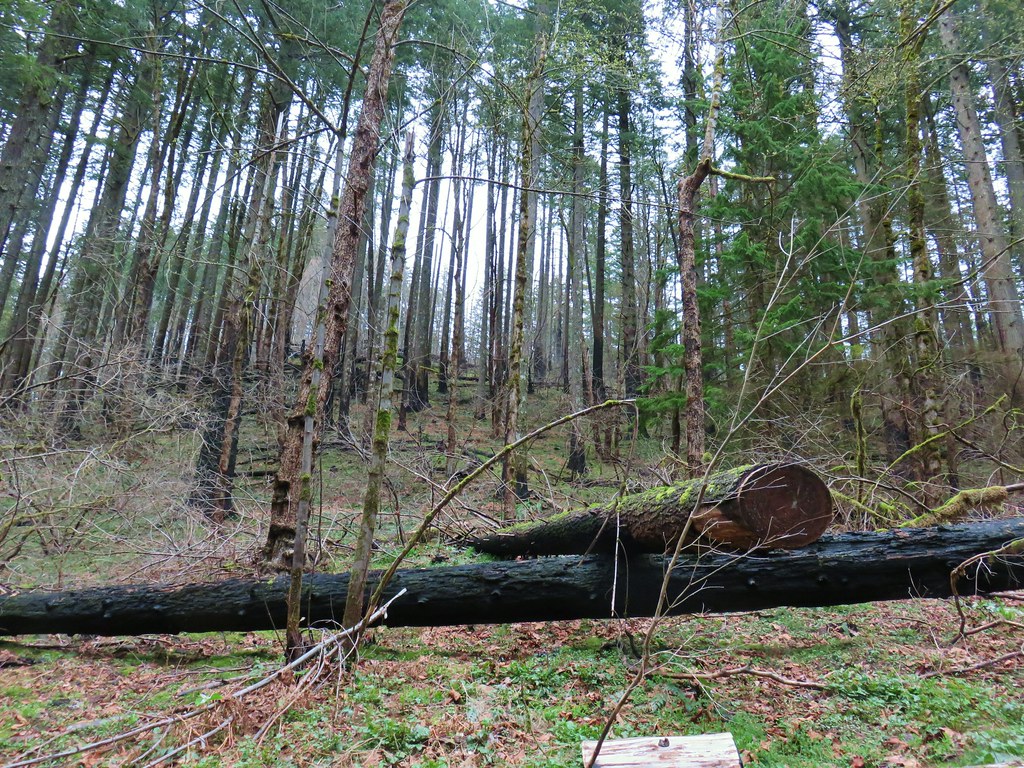
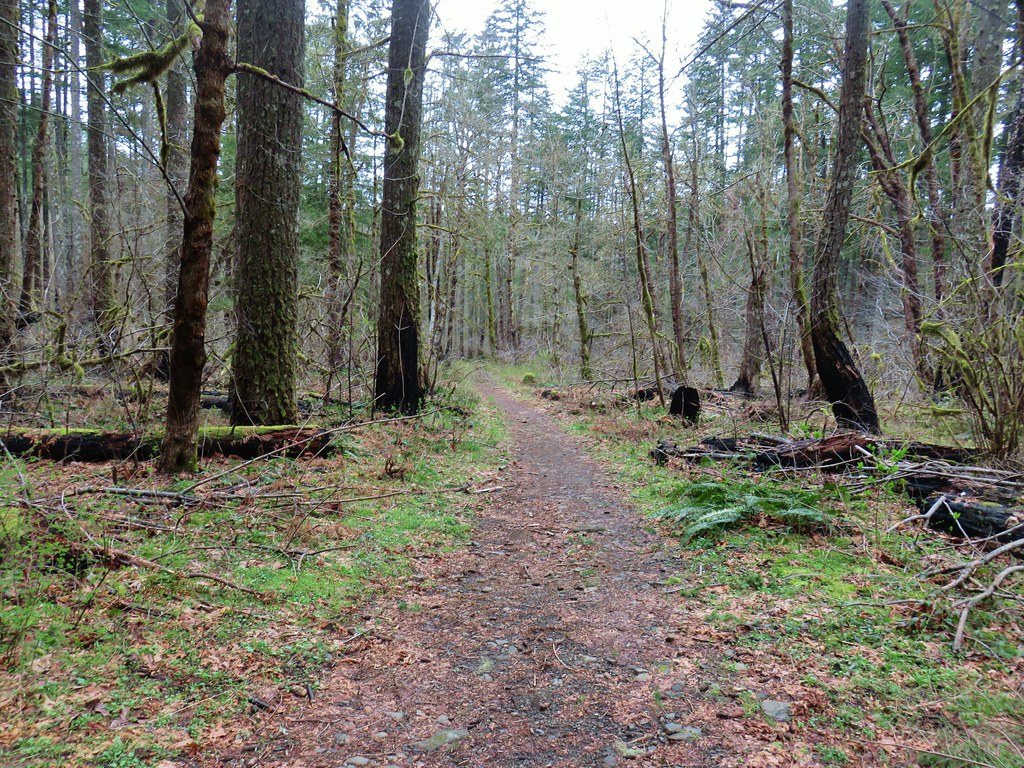
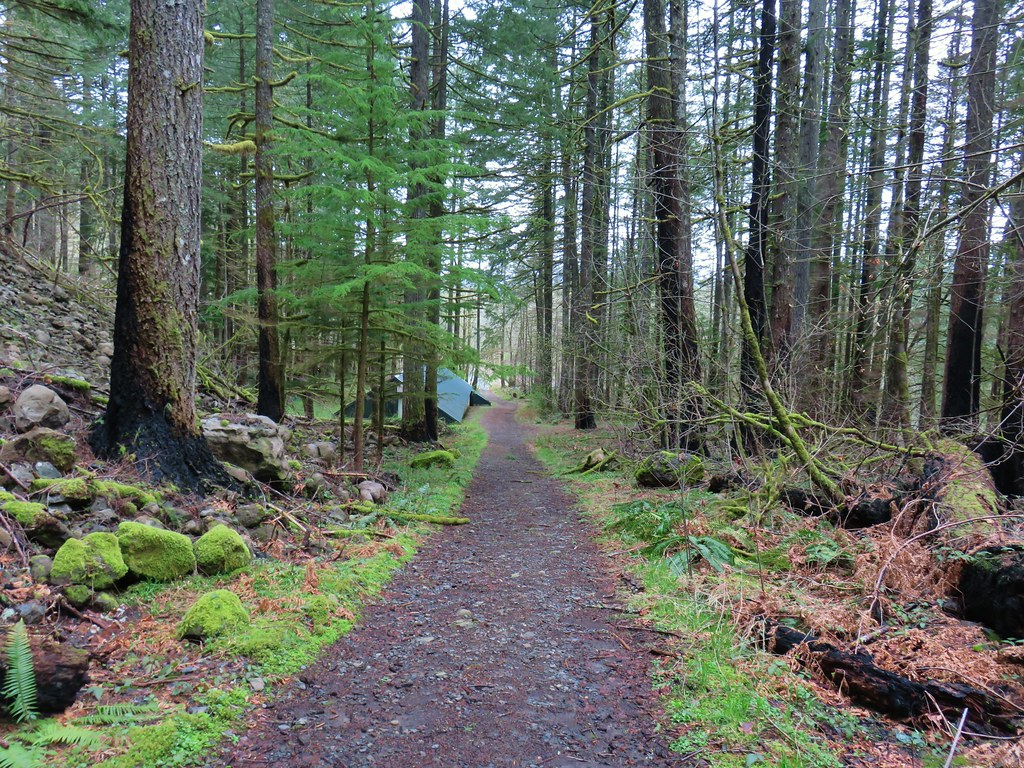
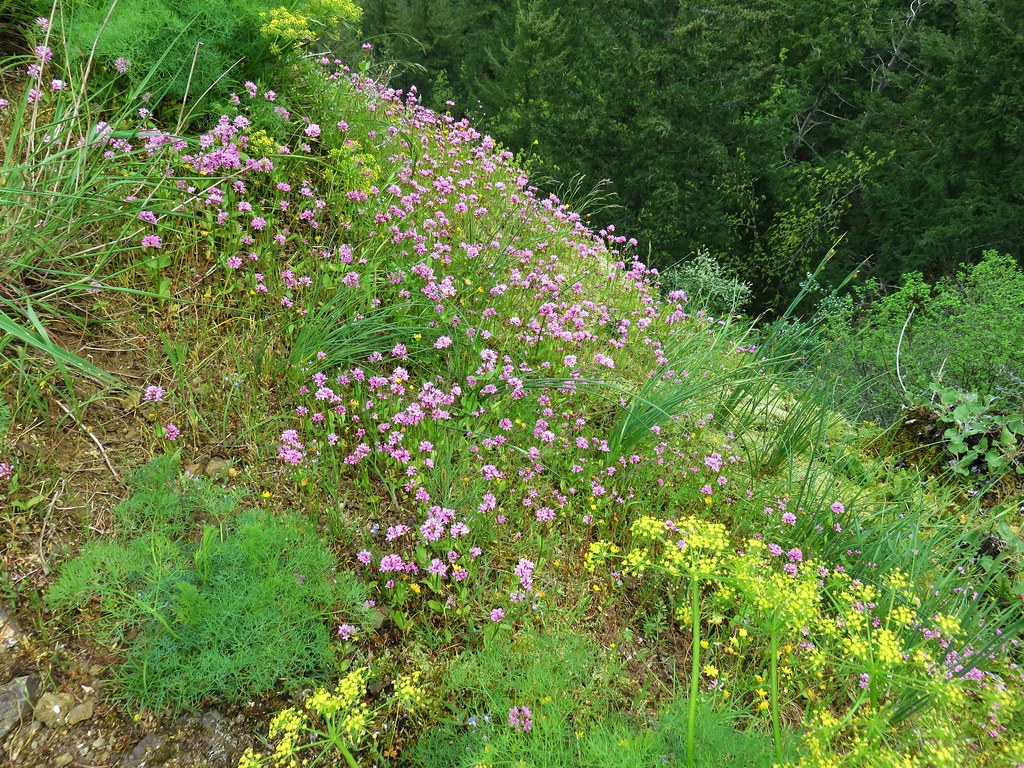
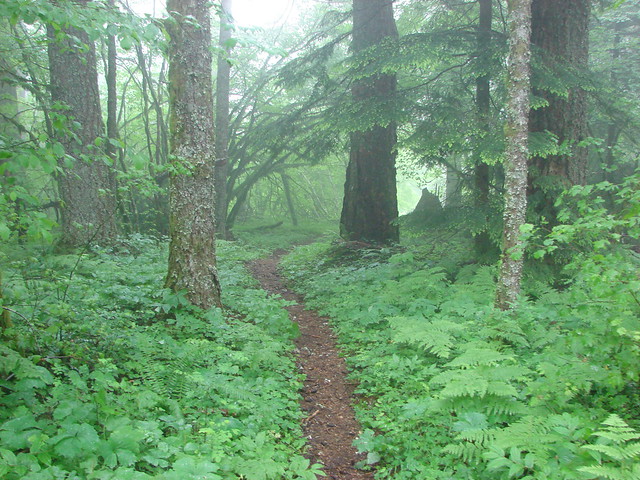
From the Harvey Road Trailhead the PCT climbed gradually through the fire scarred forest. It was encouraging to see that many if not most of the trees along this section had survived. There was also quite a few early Spring flowers blooming.
Pacific Crest Trail in the Eagle Creek Fire scar

Eagle Creek Fire scar along the Pacific Crest Trail

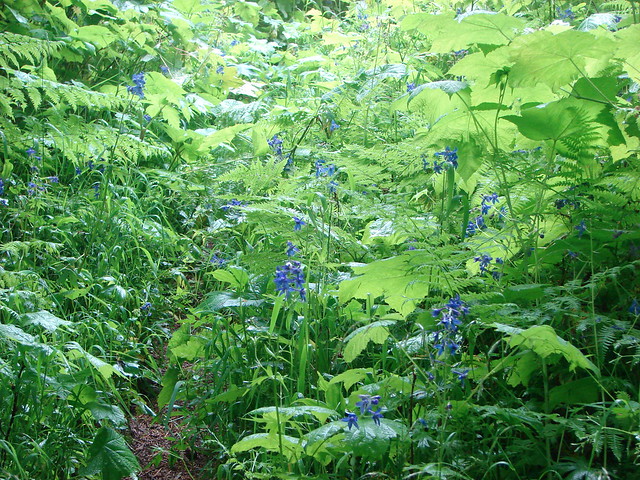
Violets and snow queenSnow queen and violets

TrilliumTrillium

Just under a mile from Harvey Road the PCT once again briefly shared a gravel roadbed as it passed under a set of power lines.
Another short stretch of road along the Pacific Crest Trail

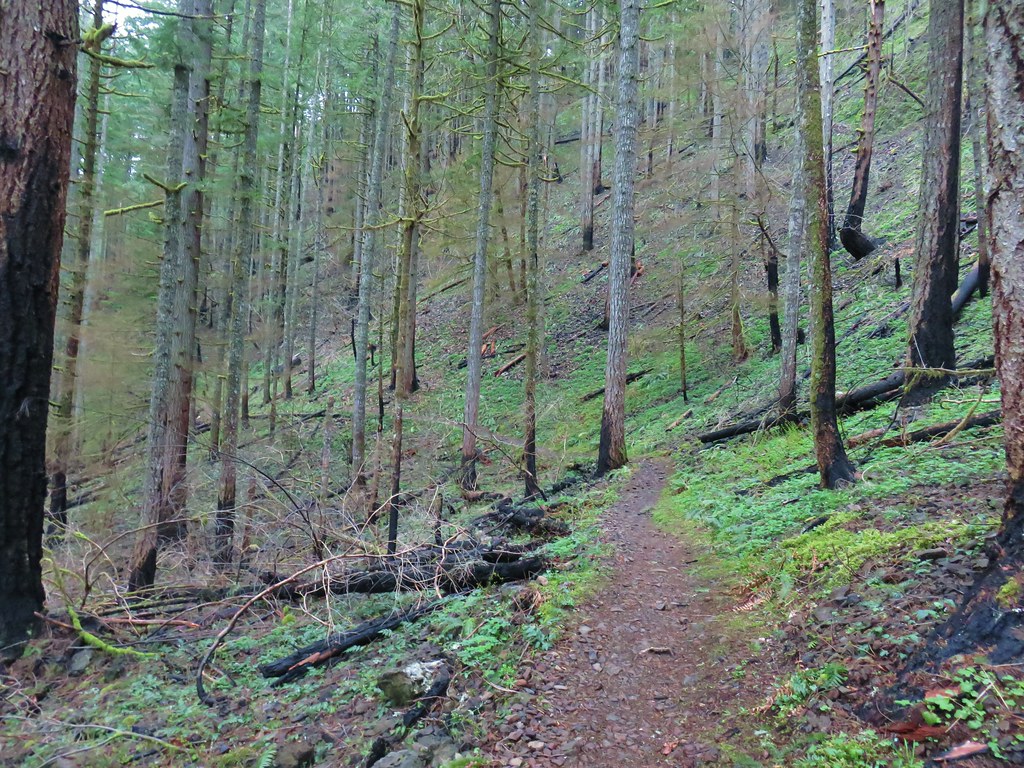
The trail leveled out shortly after passing the power lines and traversed along a sometimes steep hillside for three quarters of a mile to a signed junction near Dry Creek.
Pacific Crest Trail

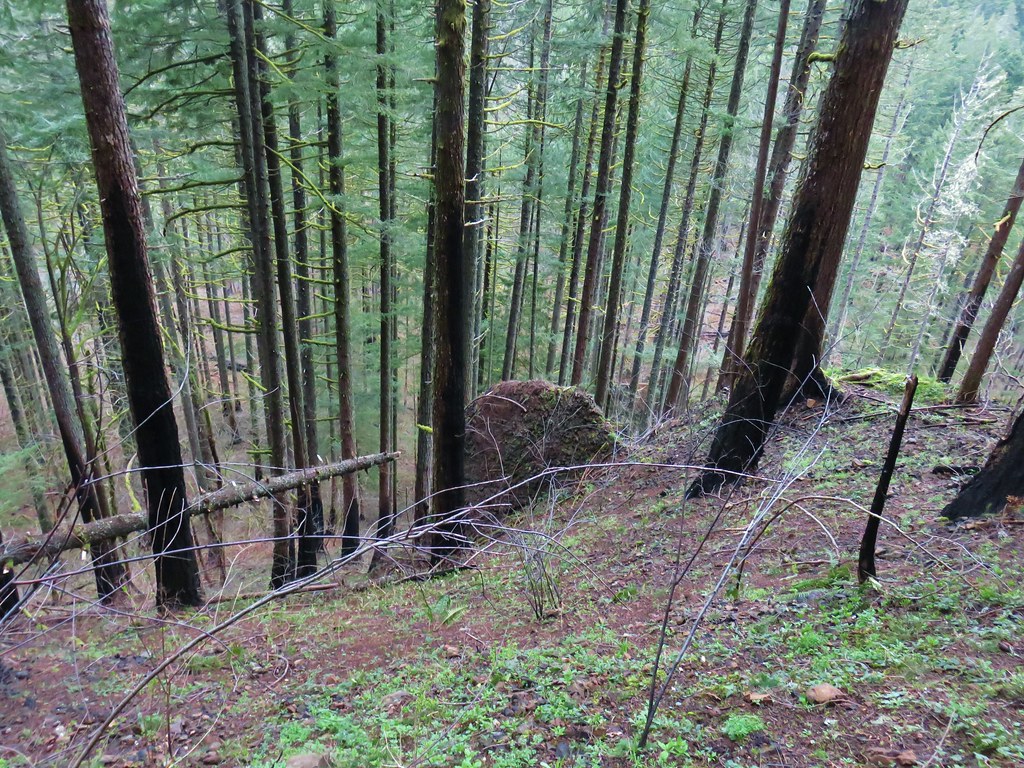
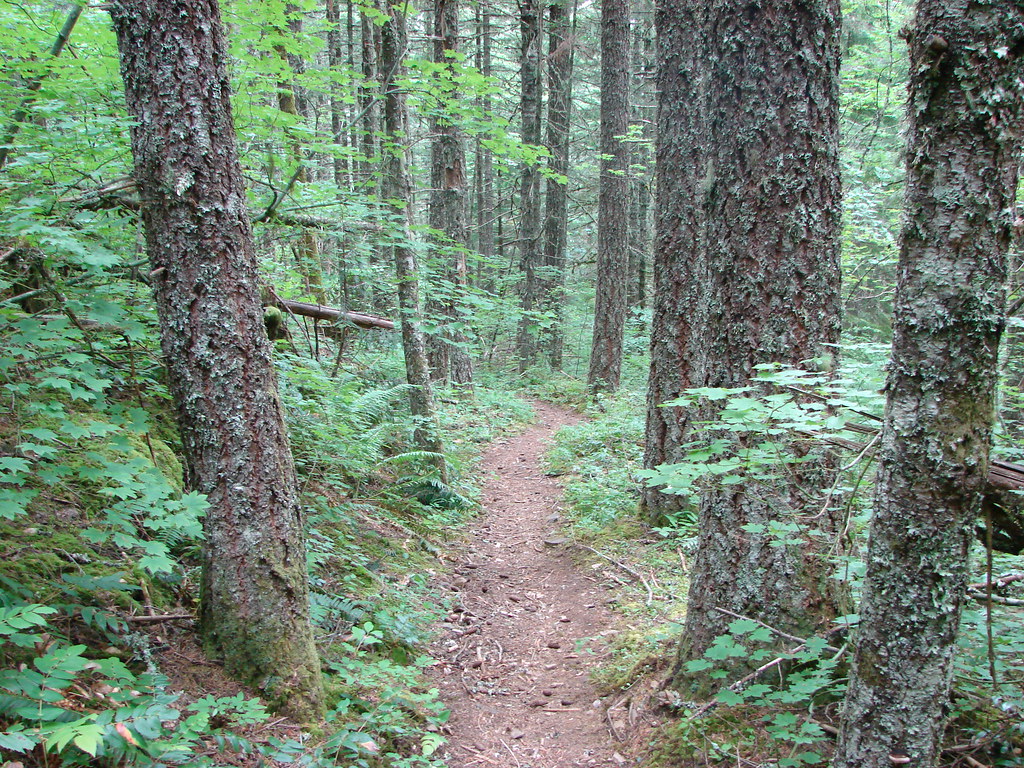
Forest along the Pacific Crest Trail

Pacific Crest Trail

Dry Creek Falls Trail

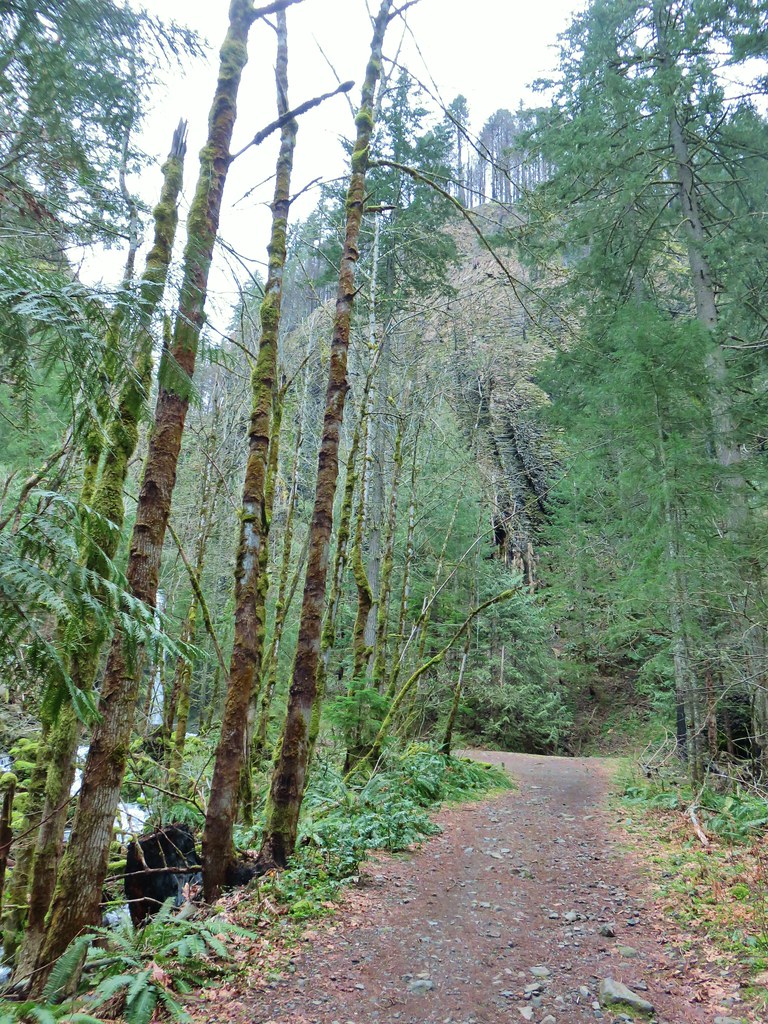
Here we detoured away from the PCT and followed the pointer for Dry Creek Falls. This trail followed an old roadbed along Dry Creek just over a quarter of mile to Dry Creek Falls.
Approaching Dry Creek Falls

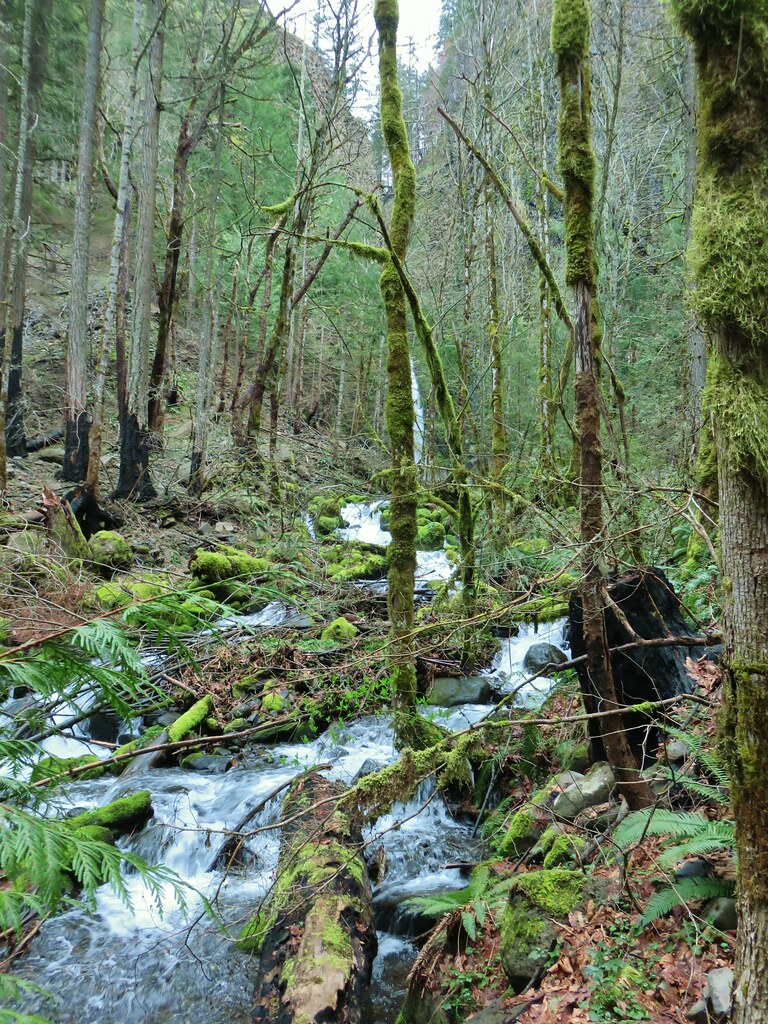
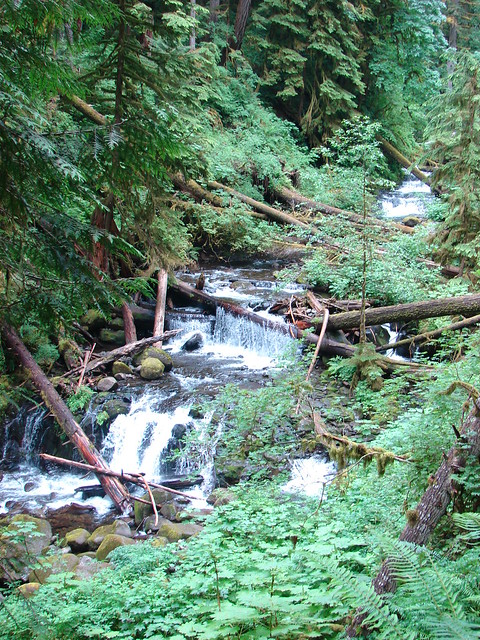
Dry Creek with Dry Creek Falls in the distance

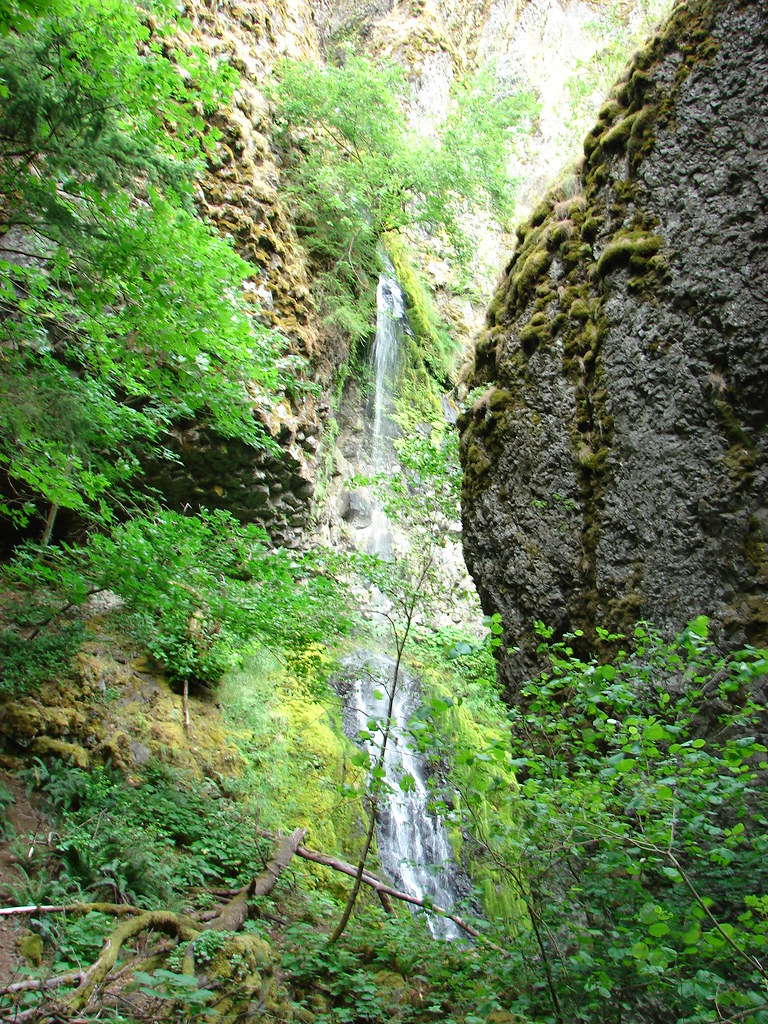
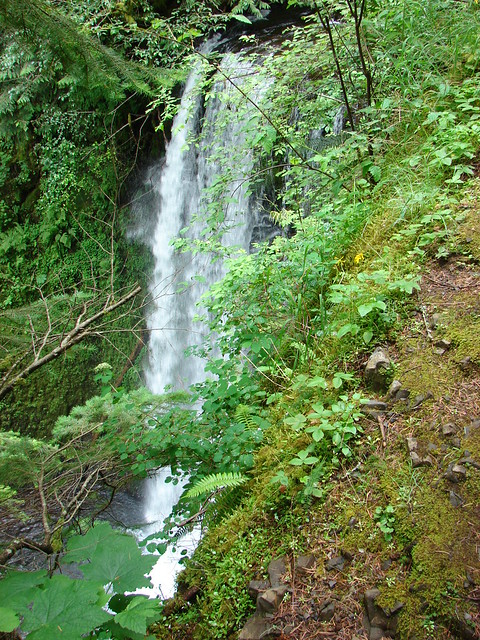
Dry Creek Falls

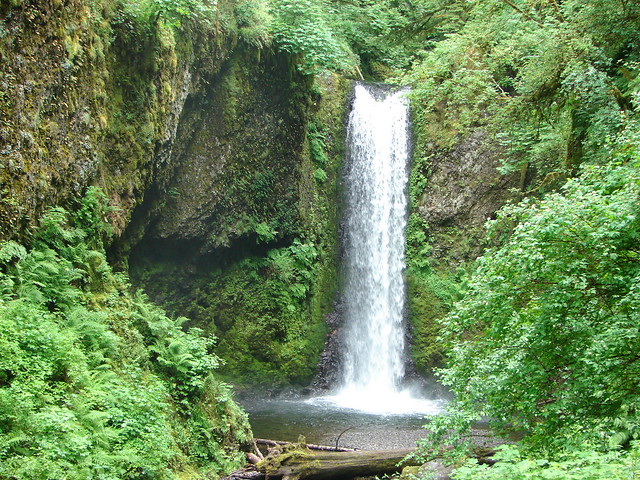
Dry Creek Falls

Dry Creek Falls

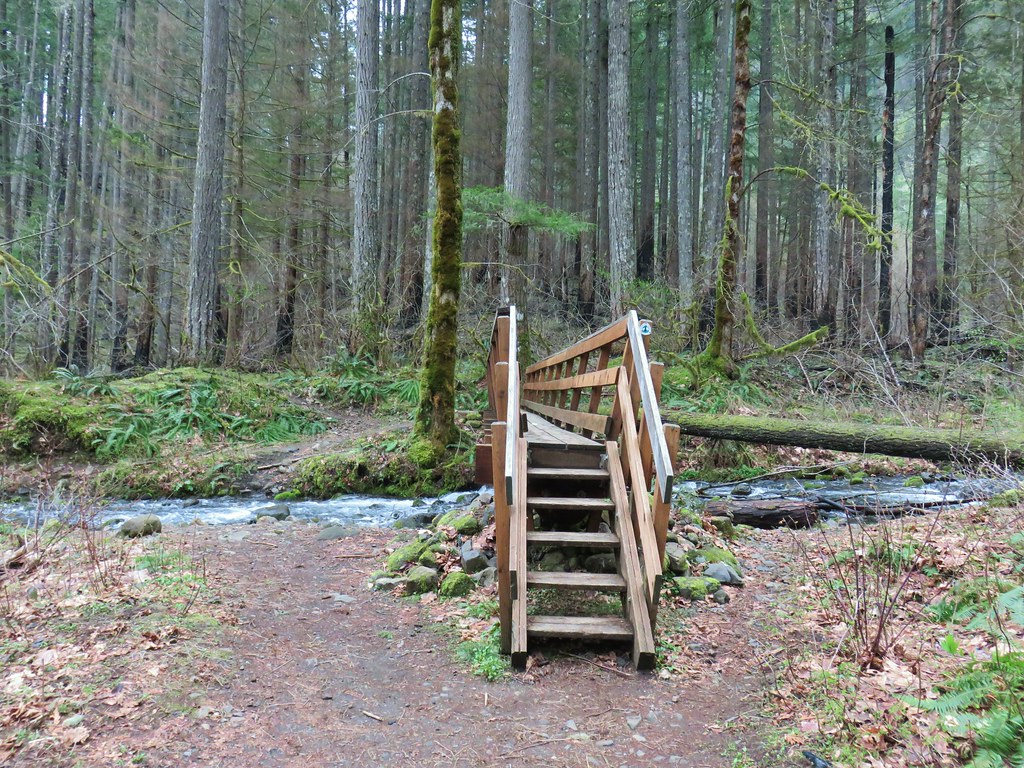
After a nice little break at the base of the falls we headed back to the PCT where we turned right and crossed Dry Creek on a footbridge.
Footbridge over Dry Creek

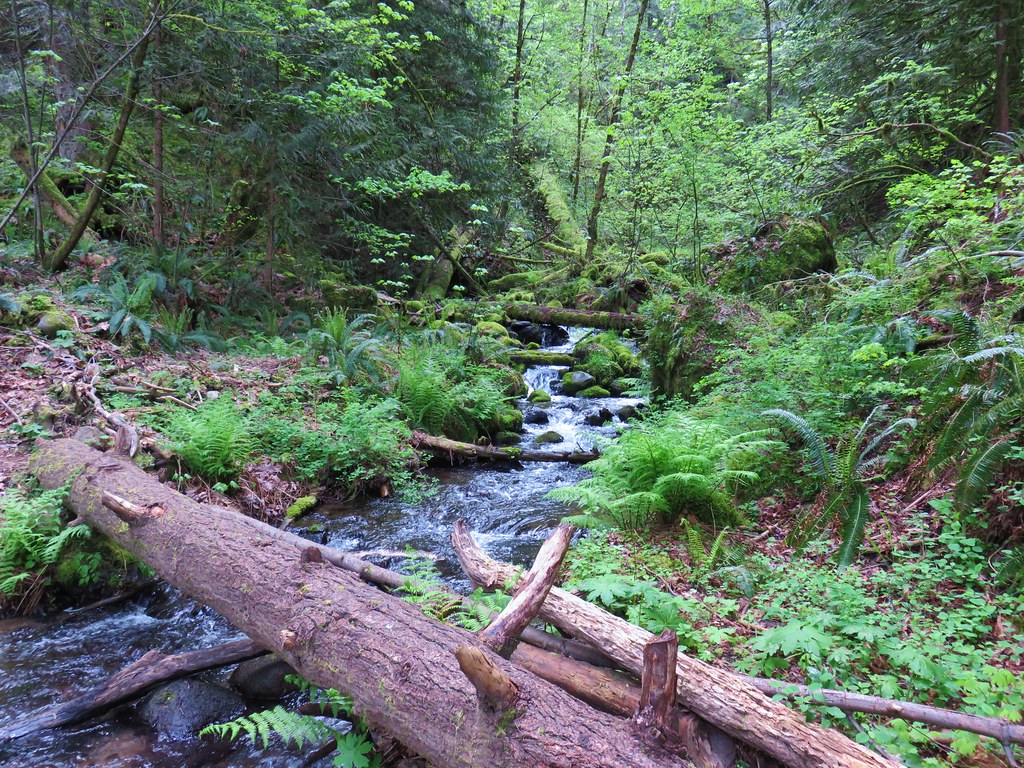
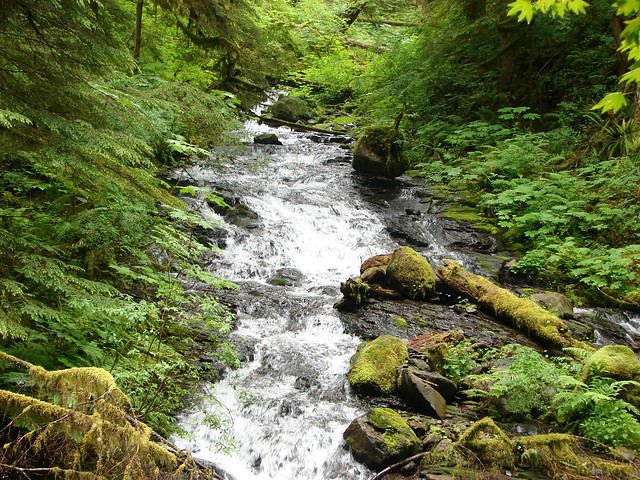
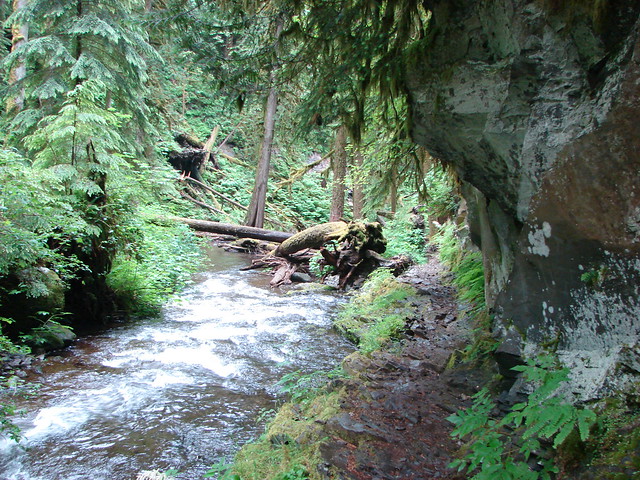
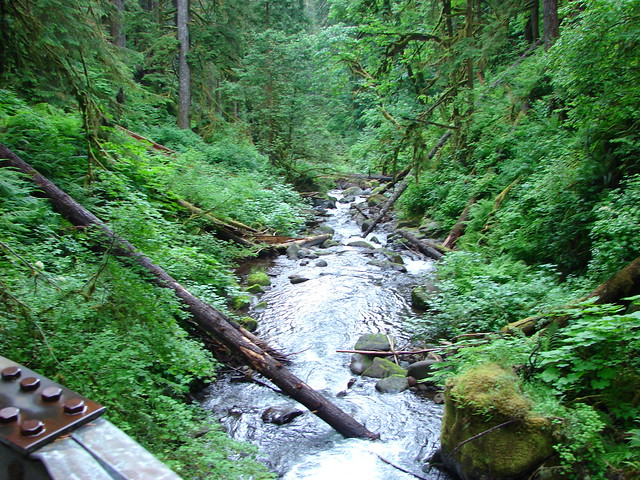
Dry Creek

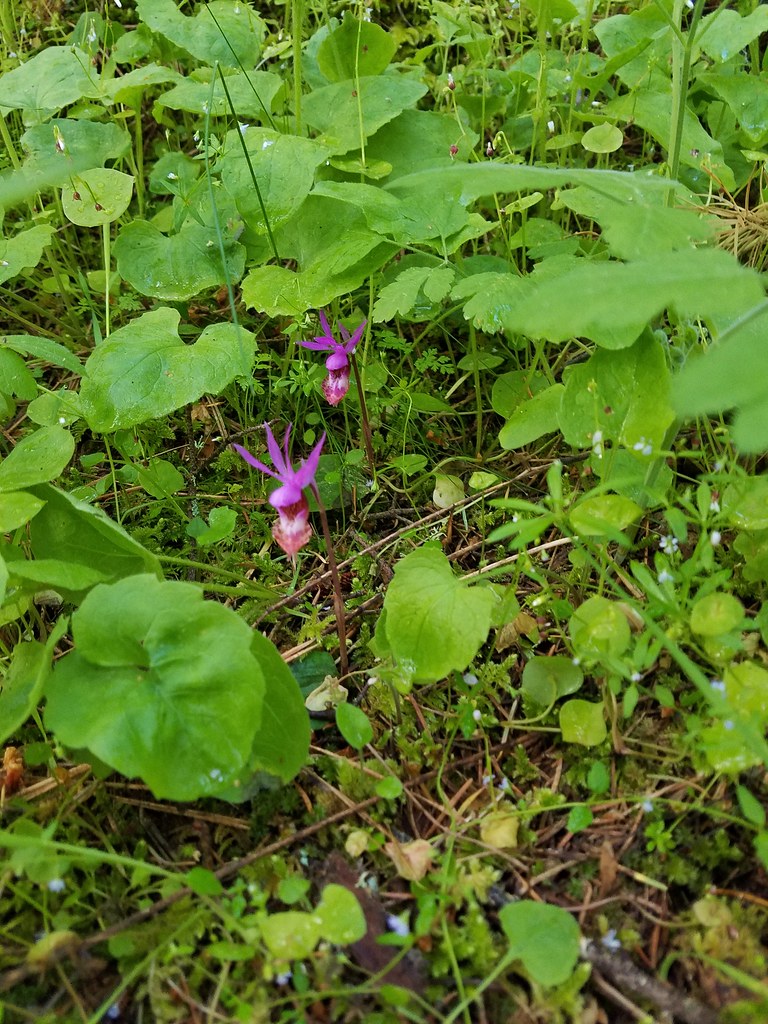
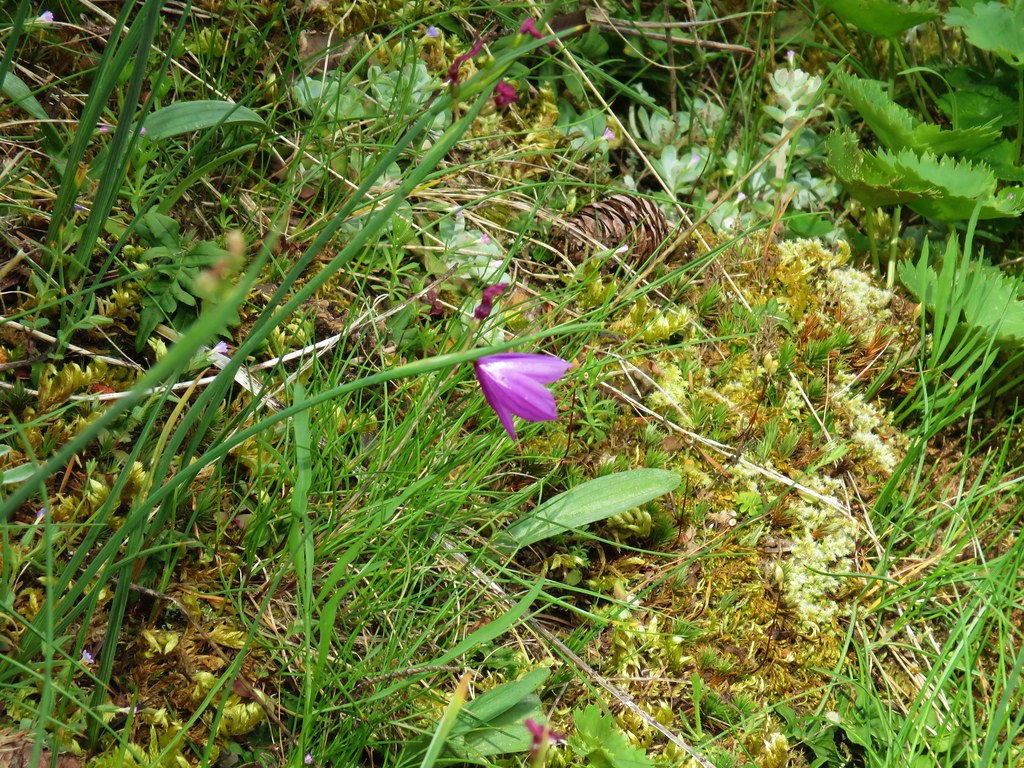
We had been discussing the fact that hikers were starting to post picture of fairy slippers (Calypso bulbosa) one of our favorites. We weren’t sure if any would be blooming yet in this area but we managed to spot a few as we continued south on the PCT.
Fairy slipper

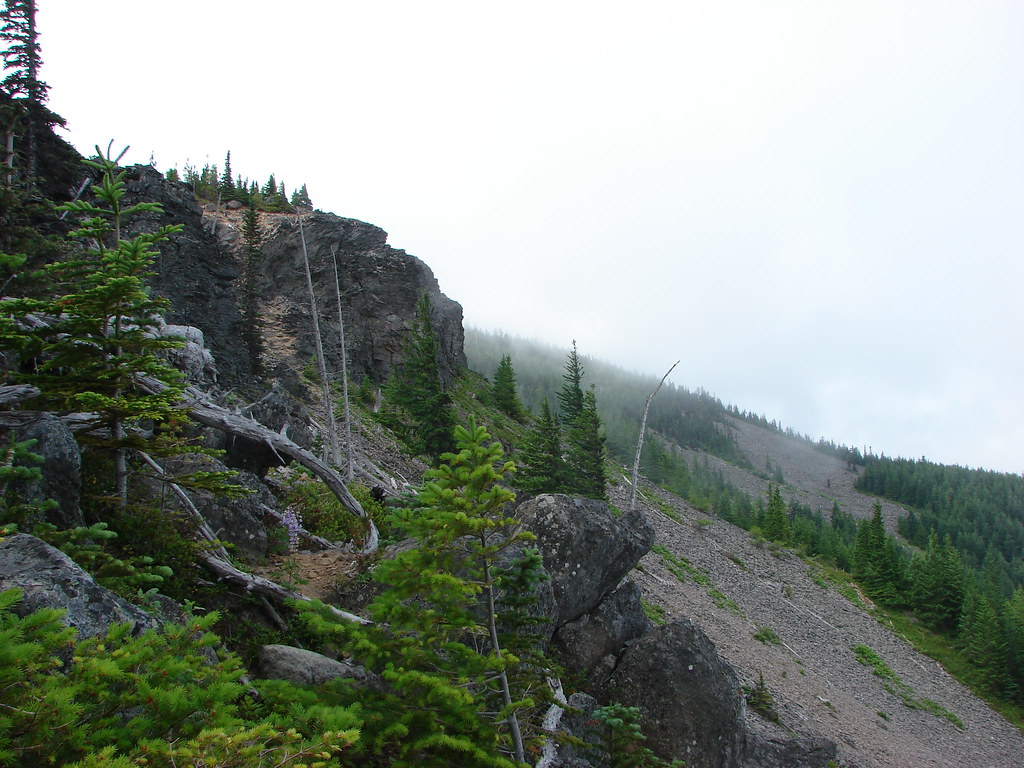
Approximately 1.25 miles from Dry Creek the PCT crossed a talus slope.
Pacific Crest Trail

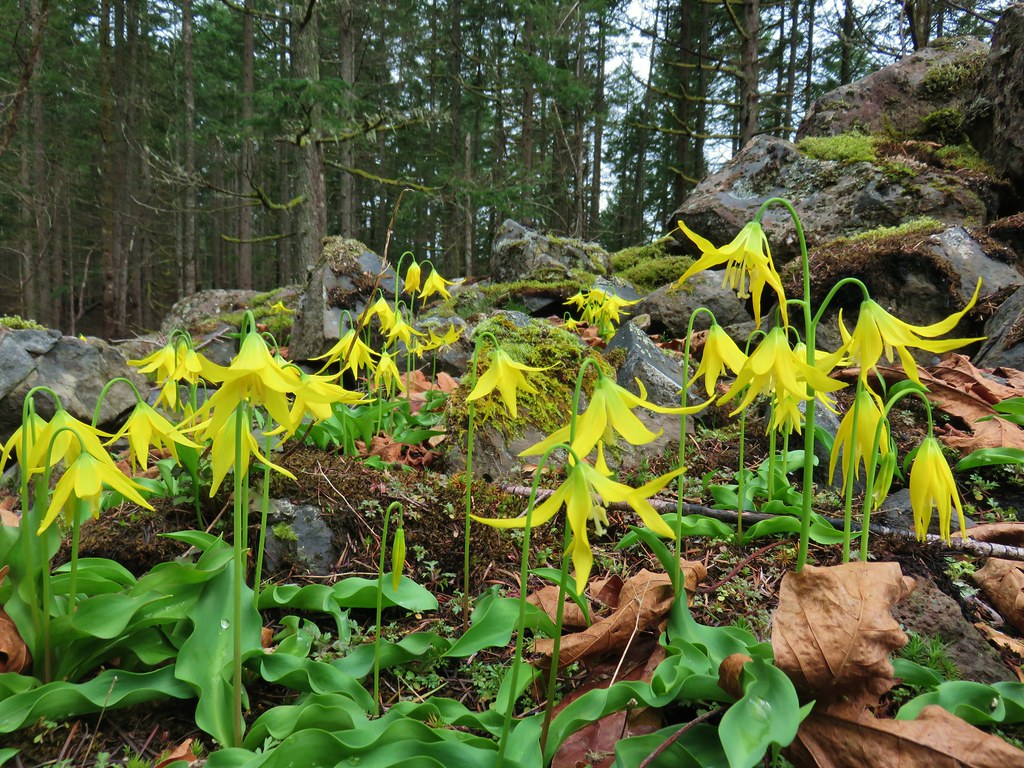
At the beginning of this section we spotted group of yellow flowers which turned out to be glacier lilies.
Glacier lilies

Glacier lilies

Glacier lilies

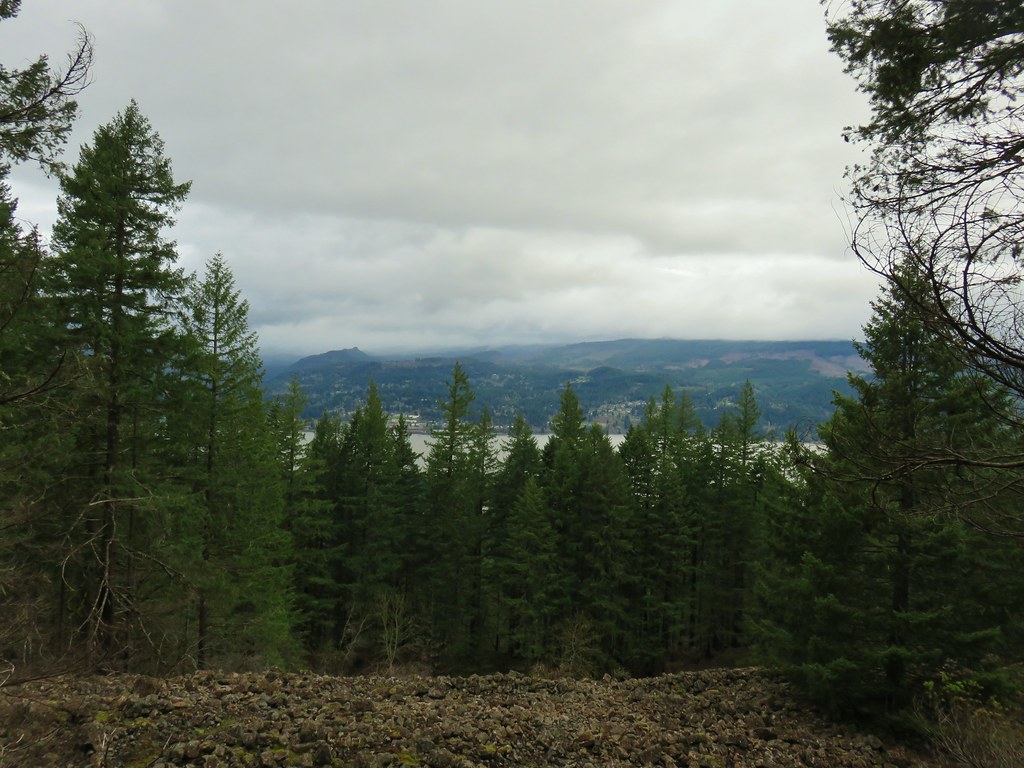
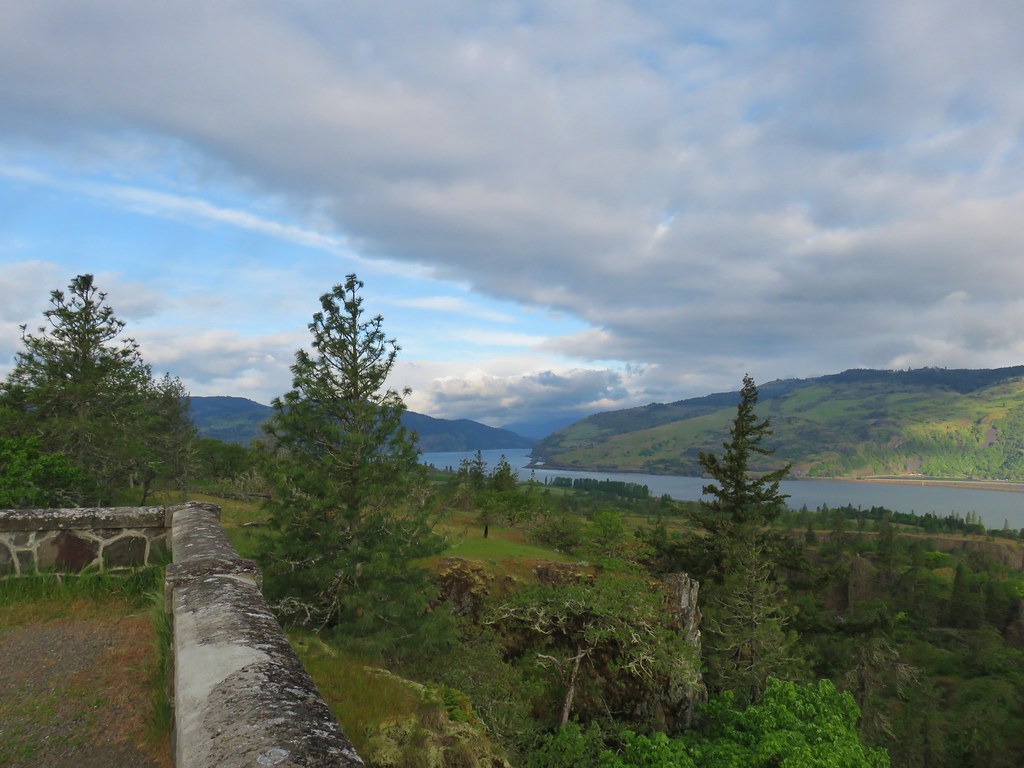
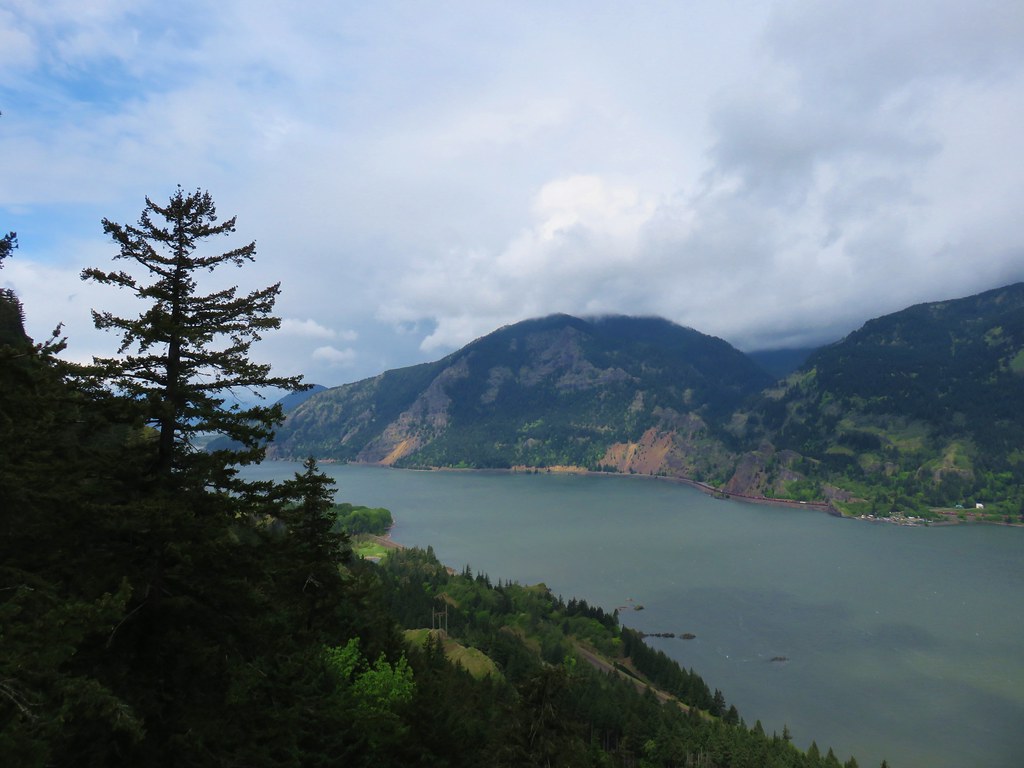
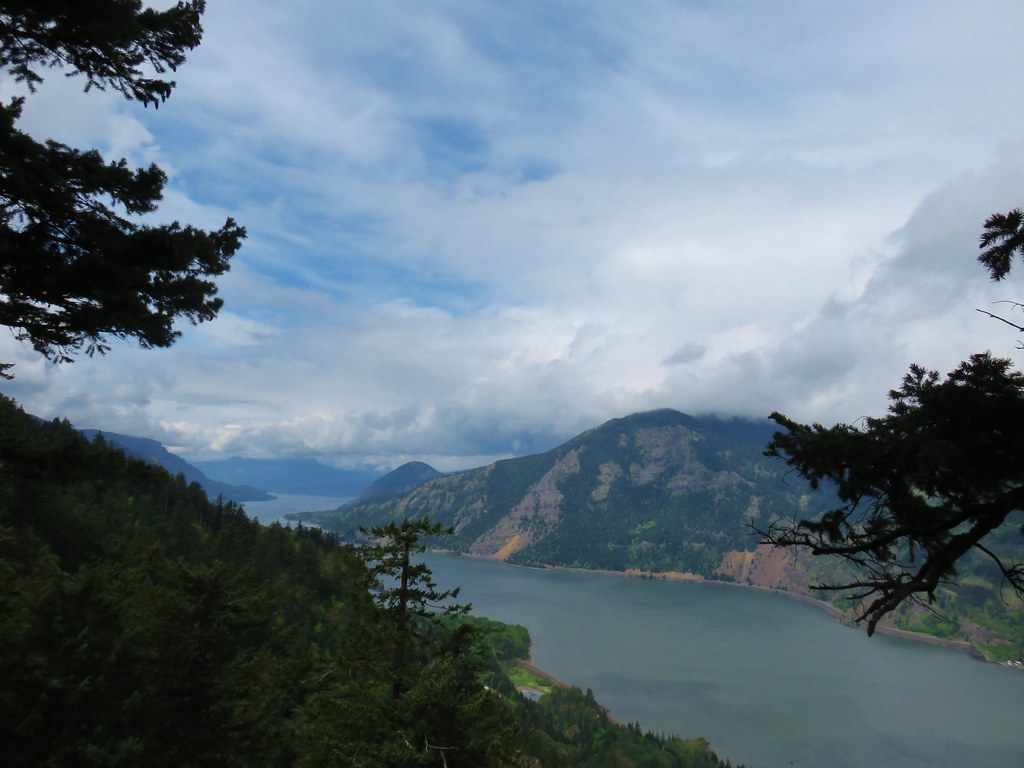
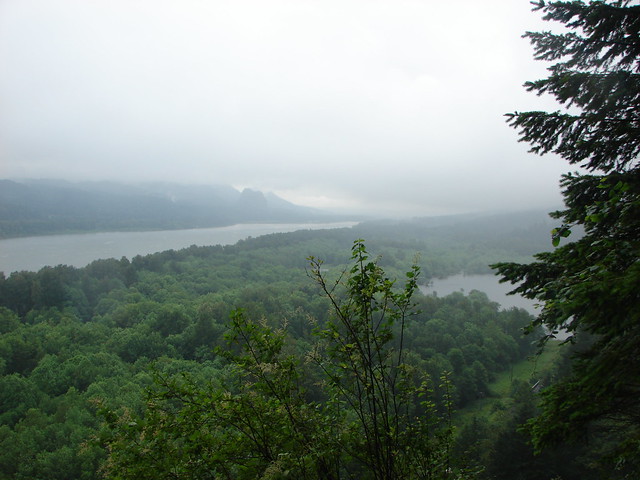
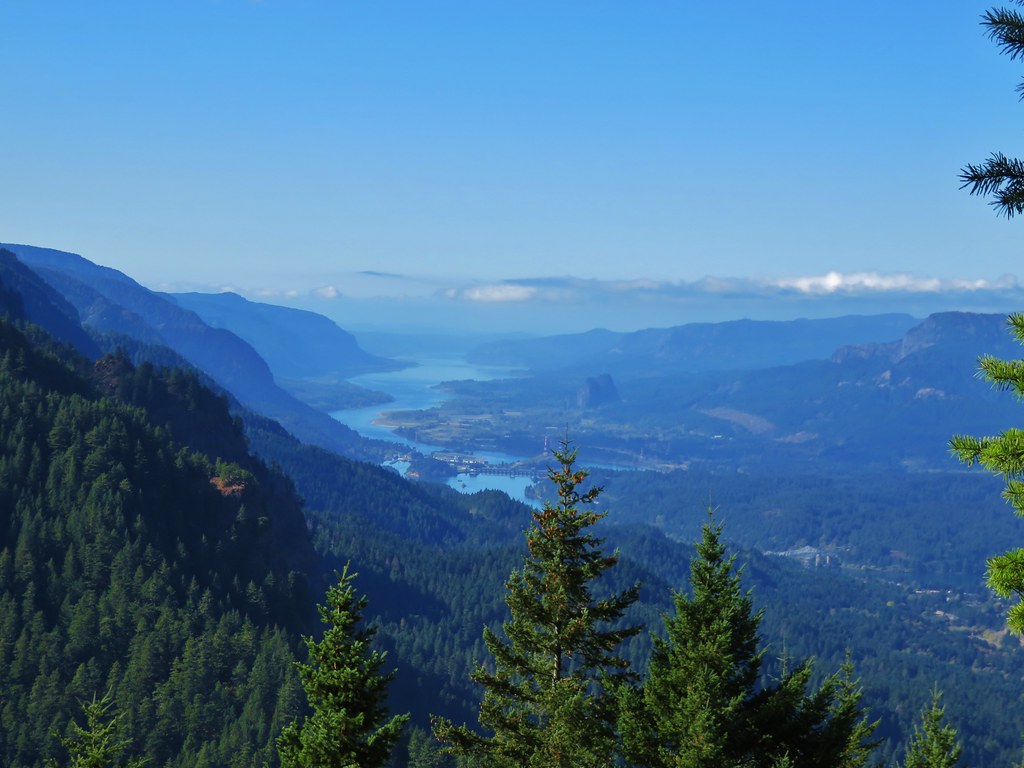
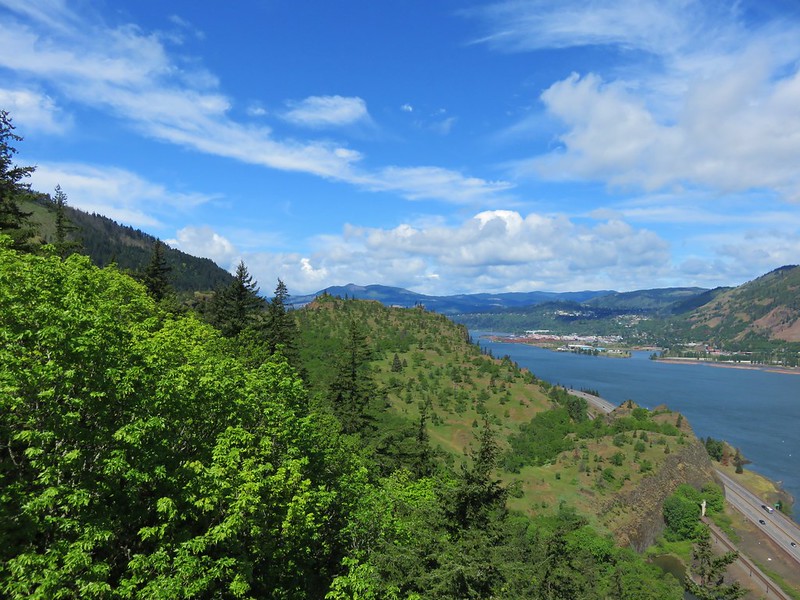
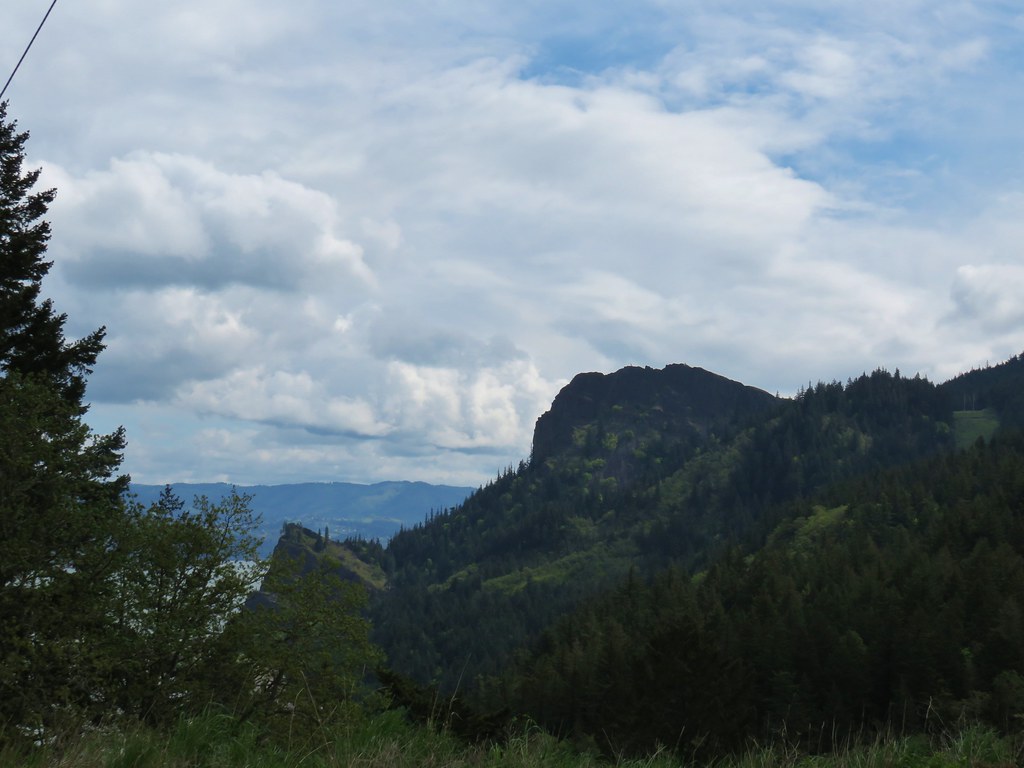
This section also provided the best, albeit limited, view across the Columbia River during this hike.
Columbia River

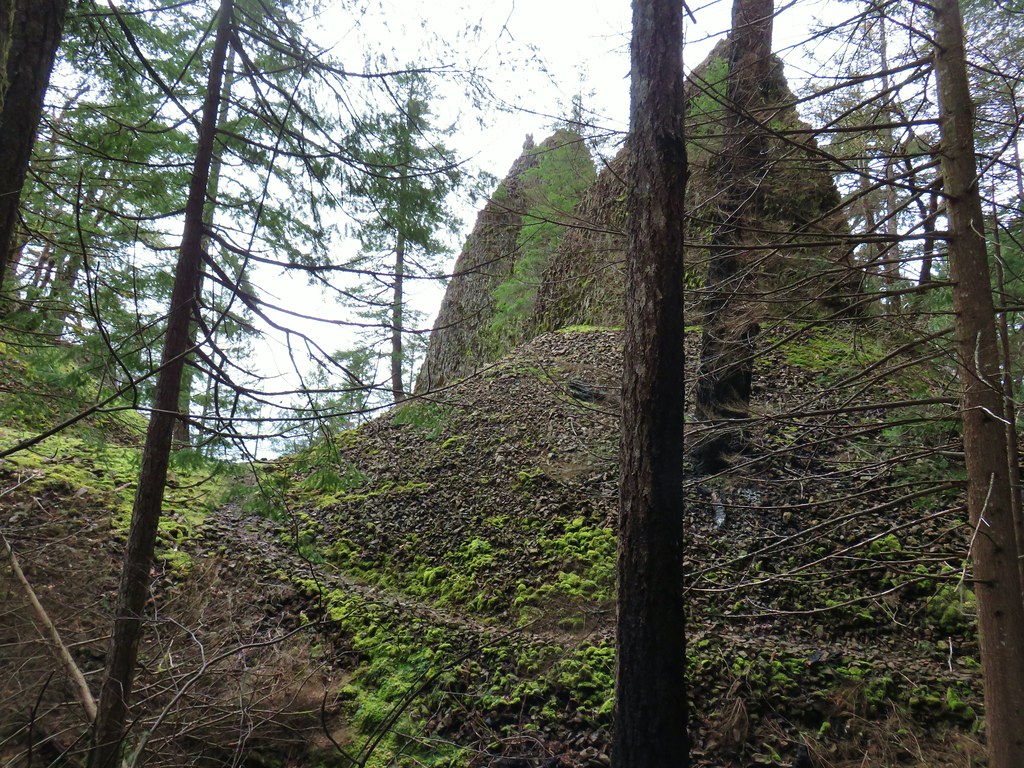
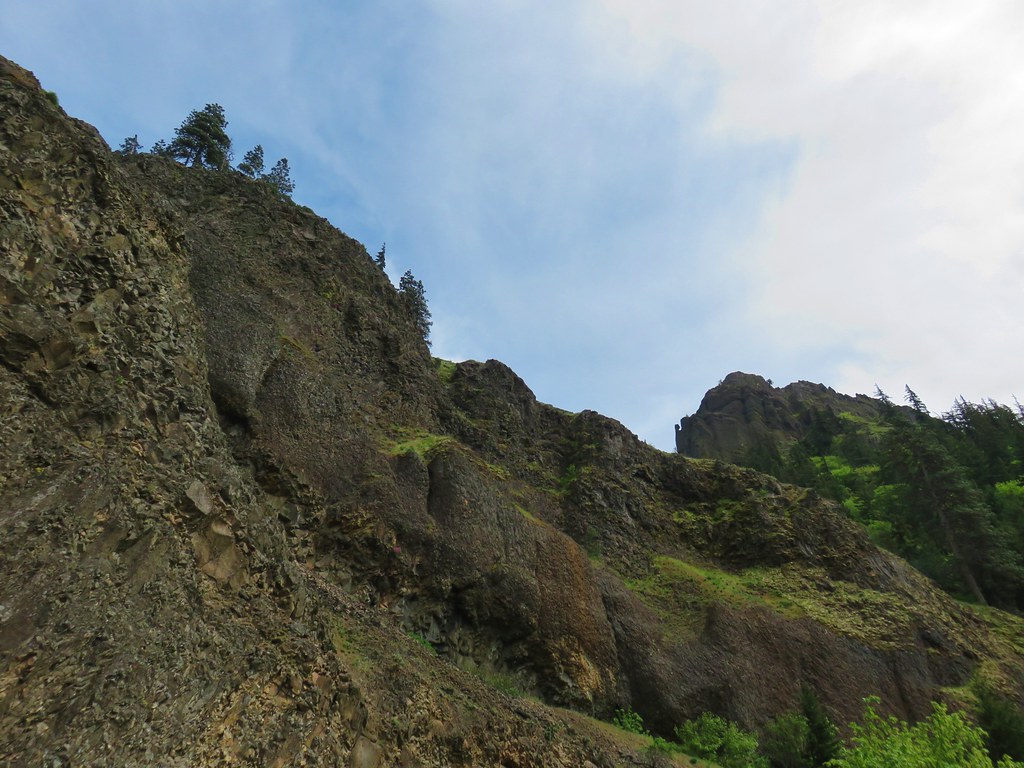
A half mile beyond the talus we passed the Herman Creek Pinnacles. We detoured briefly to get a closer look at the basalt formation and the cute little monkeyflowers blooming amid the rocks.
Herman Creek Pinnacles

Herman Creek Pinnacles

Chickeweed monkeyflower

Chickweed monkeyflower

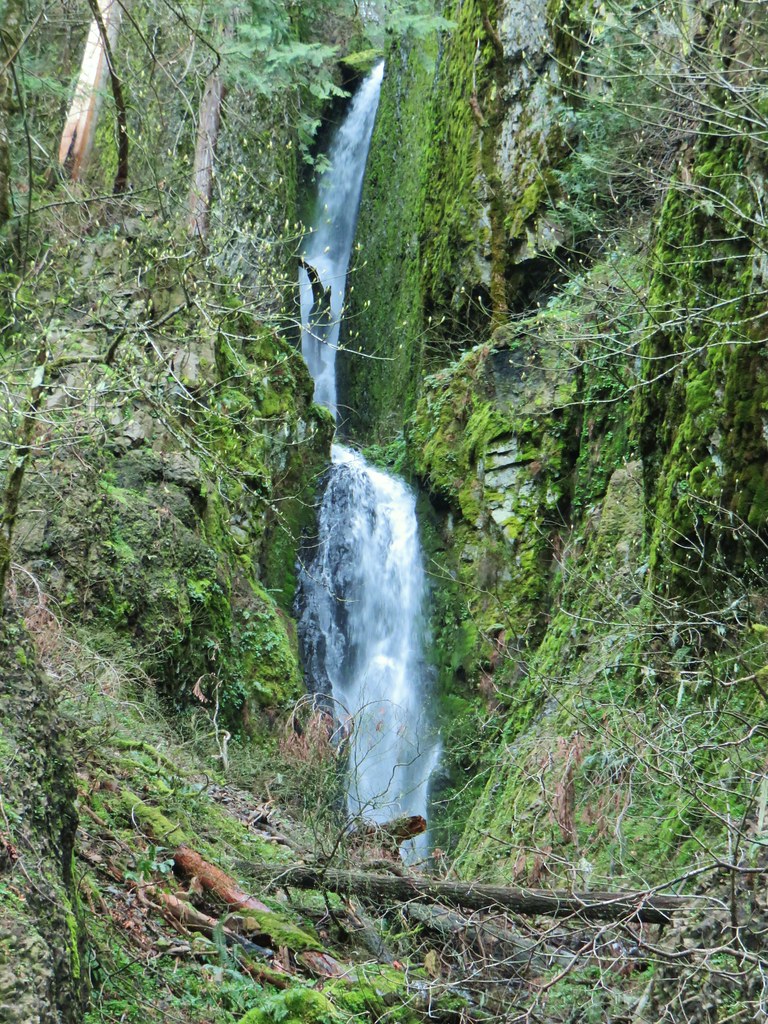
After exploring the pinnacles we continued on and in less than a quarter mile arrived at Pacific Crest Falls.
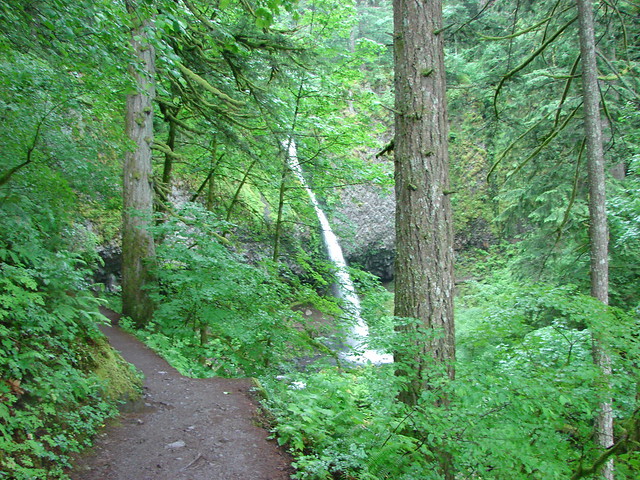
Approaching Pacific Crest Falls

Pacific Crest Falls

The amount of water flowing over the falls was noticeably more this time around.
Pacific Crest FallsOctober 2015

Pacific Crest FallsApril 2019

We turned around here and headed back along the PCT to the junction near Dry Creek. Instead of returning to Cascade Locks via the PCT we turned downhill on the old road and followed the creek downhill.
Old roadbed back to Cascade Locks

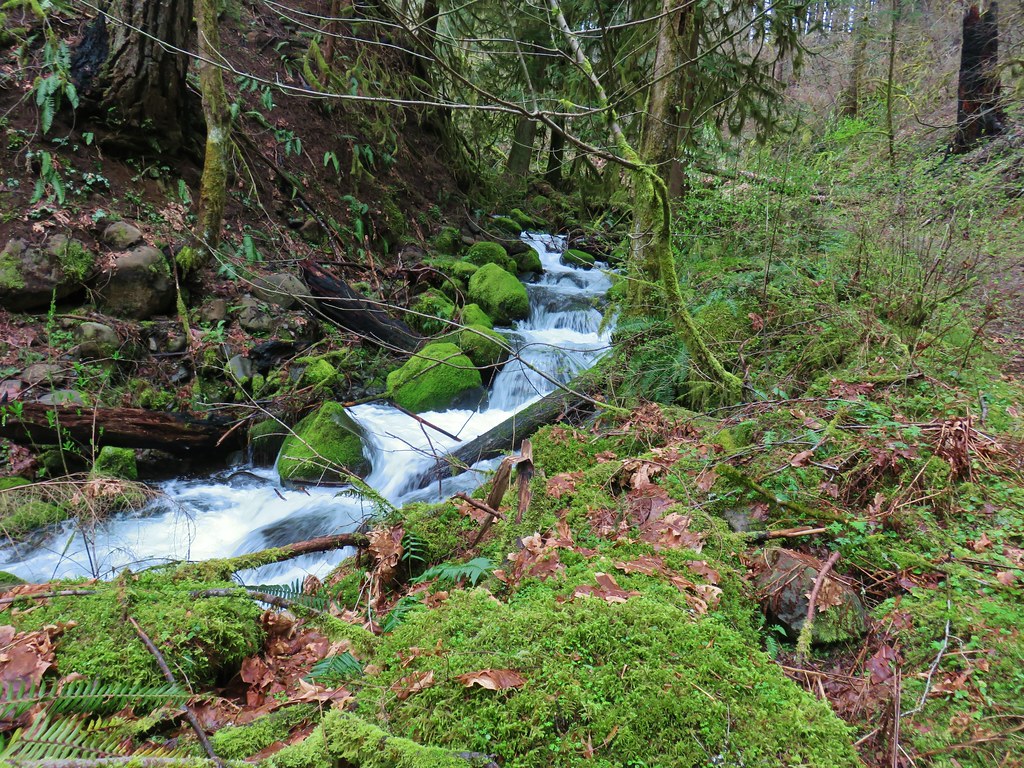
Dry Creek

Dry Creek

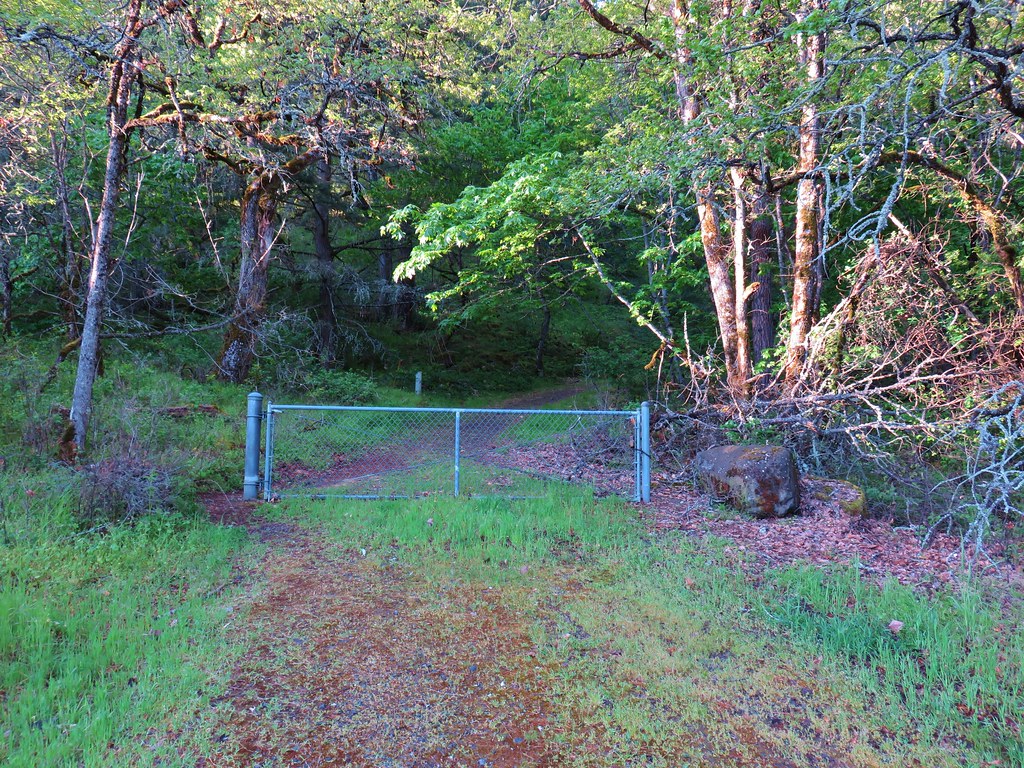
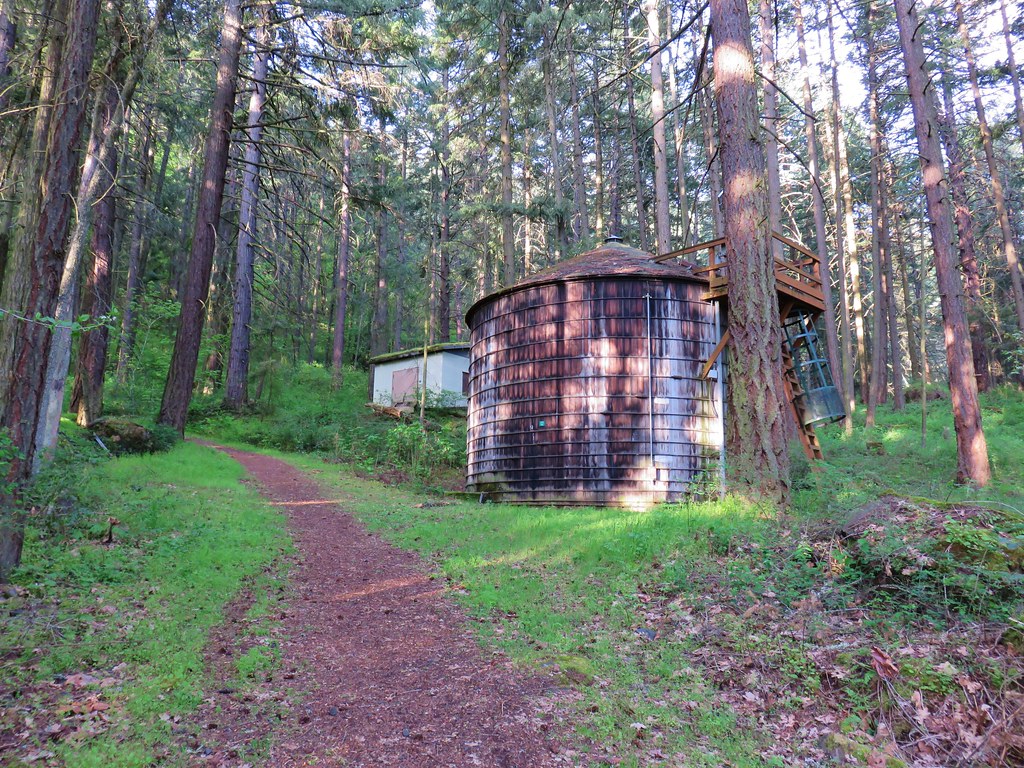
After approximately 1.25 miles we passed some sort of a structure followed by a gate.
Dry Creek Road

Beyond the gate Dry Creek Road was open and well graveled.
Dry Creek Road

After passing a few logging roads and swinging quite a ways east we passed under I84 by turning left on SW Ruckle St which we followed to its end at SW Adams Ave. We turned left on Adams which brought us to a school.
Cascade Locks

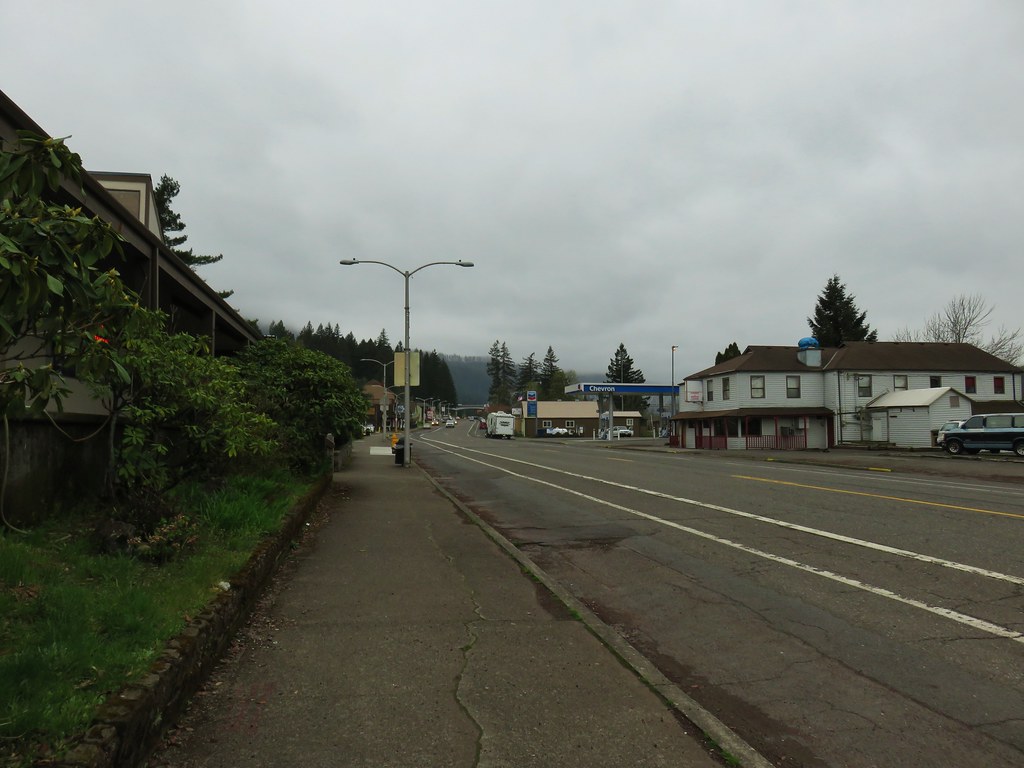
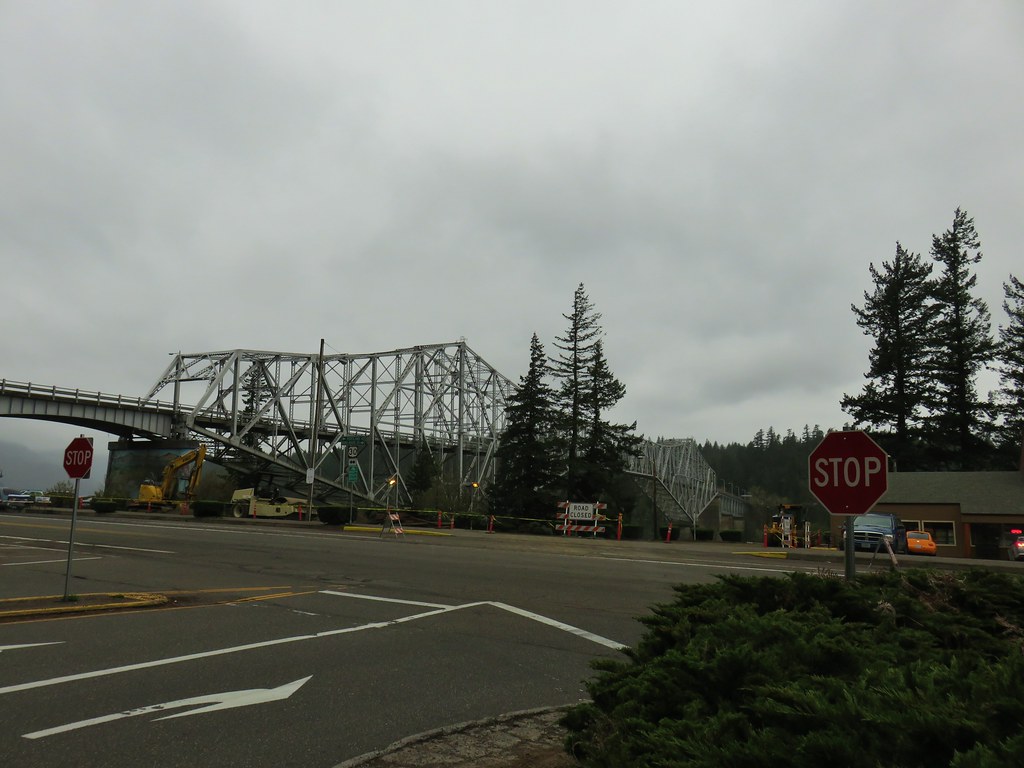
We passed behind the school (and library) and made our way to Highway 30 where we turned left again towards the Bridge of the Gods.
Heading through Cascade Locks

Cascade Locks

Bridge of the Gods

We arrived back at our car as the rain was arriving. The hike was approximately 9.5 miles (I had some battery issues with the GPS) with a little under 1000′ of elevation gain. Hiking through Cascade Locks at the end was definitely not the most exciting end to a hike and unless you’re like us and specifically seek out alternate return routes I’d recommend just returning as you came. That being said the upper portion of the road walk along Dry Creek was nice.

I want to take a moment to thank the volunteers that have worked so hard to restore the trails affected by the fire. In particular the PCTA and Trail Keepers of Oregon (TKO) have been hard at work and doing an excellent job. Happy Trails!

Flickr: Dry Creek and Pacific Crest Falls

Categories
Columbia River Gorge South Hiking Oregon Trip report

Lower Deschutes River – SE Oregon Vacation Day 1

It’s been awhile since our last post but we have a good excuse, we were busy hiking. Eight straight days of hiking in fact. 😊

For the last two years we’ve had plans to visit SE Oregon in May but each time our vacation week arrived so did rain in the forecast. Since May wasn’t working out we decided to give June a try. A dry Spring had things looking promising but a system moved in at the end of the week prior to our leaving that had us a little worried. There was rain in the Willamette Valley (and snow in Cascades) but our destinations looked like they would escape mostly dry. At least dry enough that we could rearrange a few of our planned hikes to let things dry a bit before attempting the drives that would be impassible if wet.

Before we could even attempt those hikes we had to get to SE Oregon. Conventional wisdom would have had us driving through Bend via Santiam Pass but we aren’t conventional. First the Sisters Rodeo was happening which meant even more traffic than usual in that little town. More importantly we wanted to squeeze a hike in on the way to Bend were we planned to stay with Heather’s parents again.

Following up on our recent hike along the Deschutes River at Macks Canyon (post) we decided to kick off our eight days of hiking at the Deschutes River Recreation Area near the mouth of the river. From Salem we drove north to Portland and took Interstate 84 ten miles east of The Dalles to the park. It seems a bit odd to kick off a SE Oregon vacation with a hike near the northern border of the State, but it’s a hike we hadn’t done yet and it was sort of on the way.

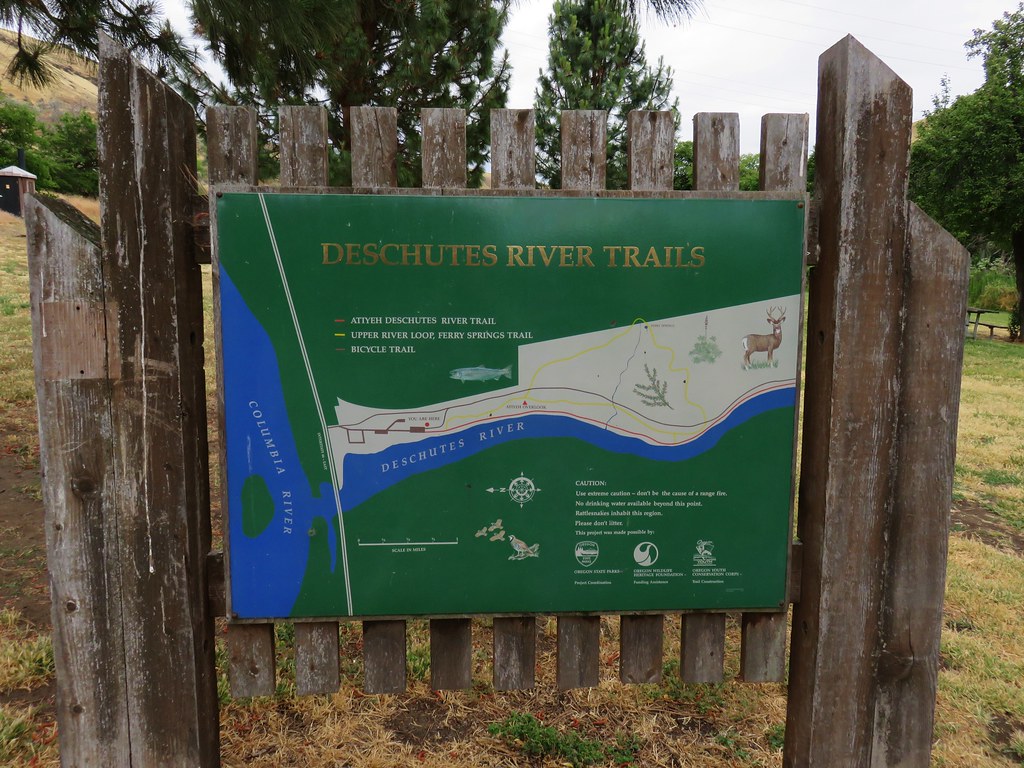
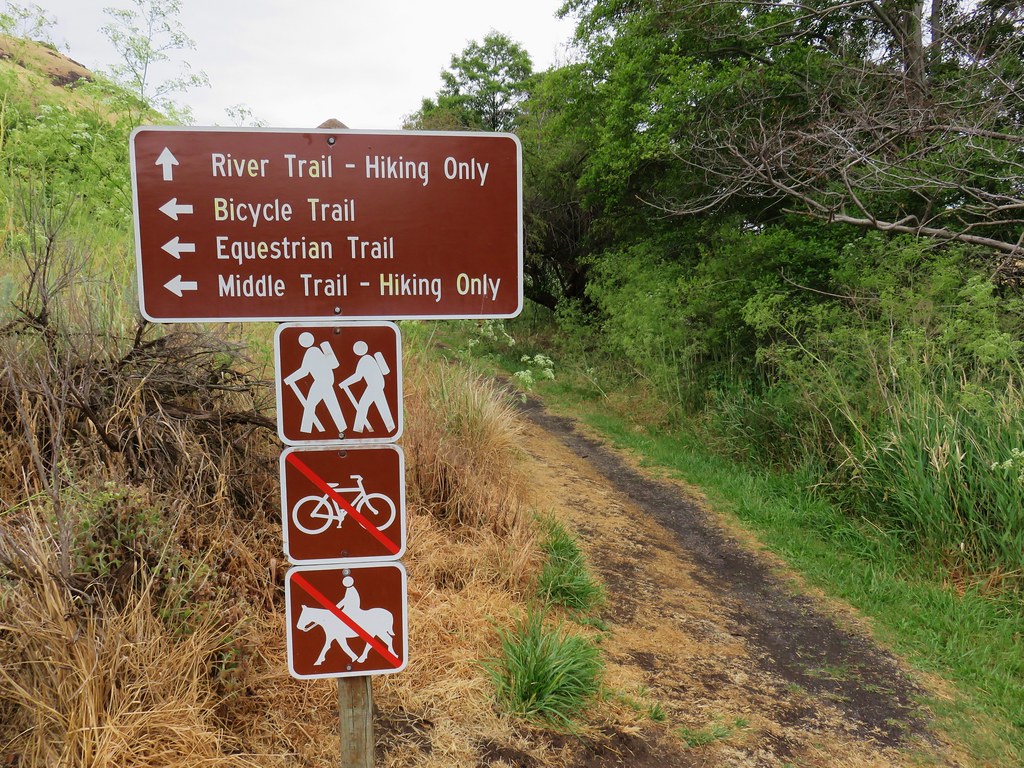
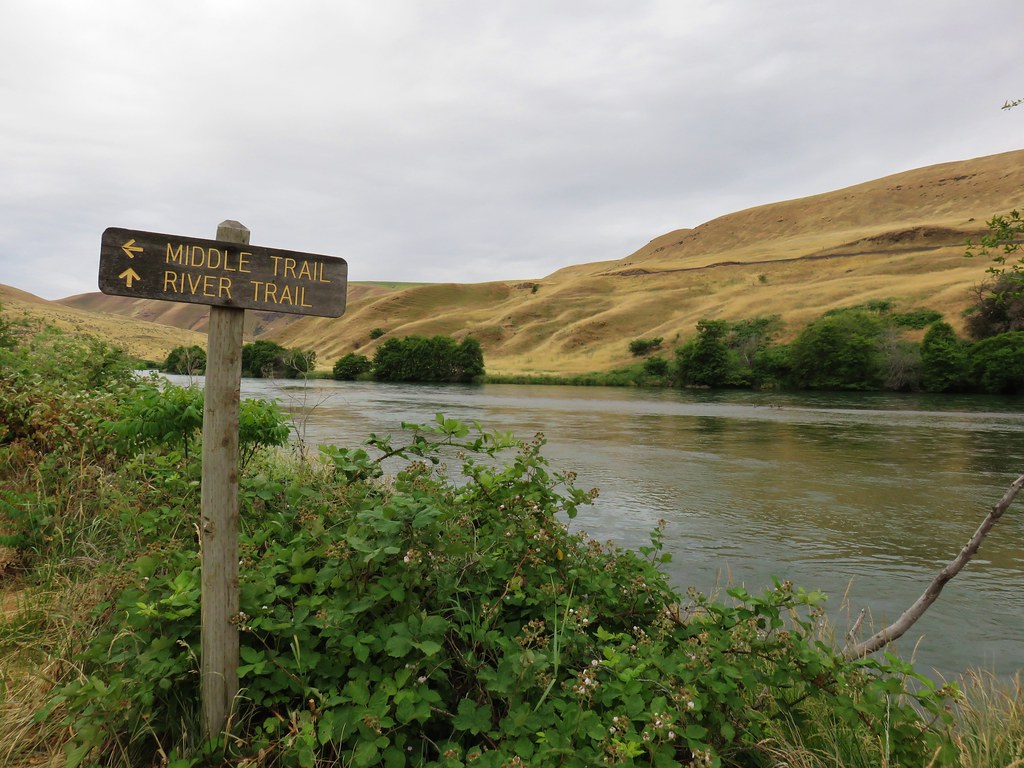
We parked at the end of the park and walked across a grassy area to a trail sign at the far end where we followed a pointer for the River Trail.
IMG_5089

IMG_5100

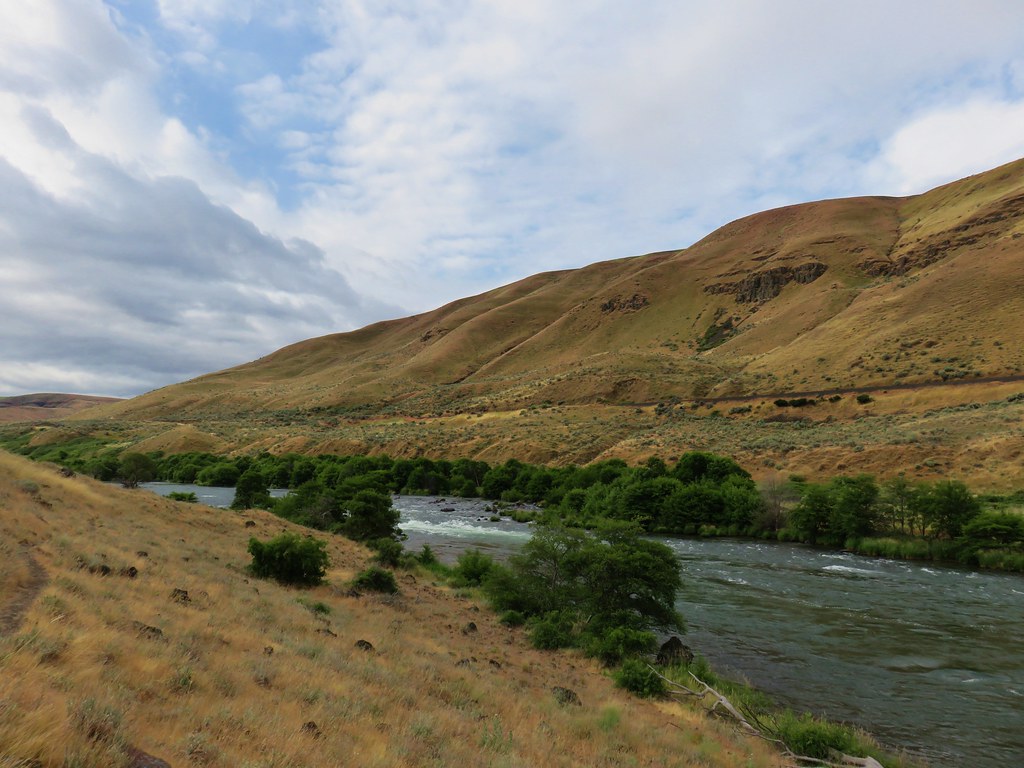
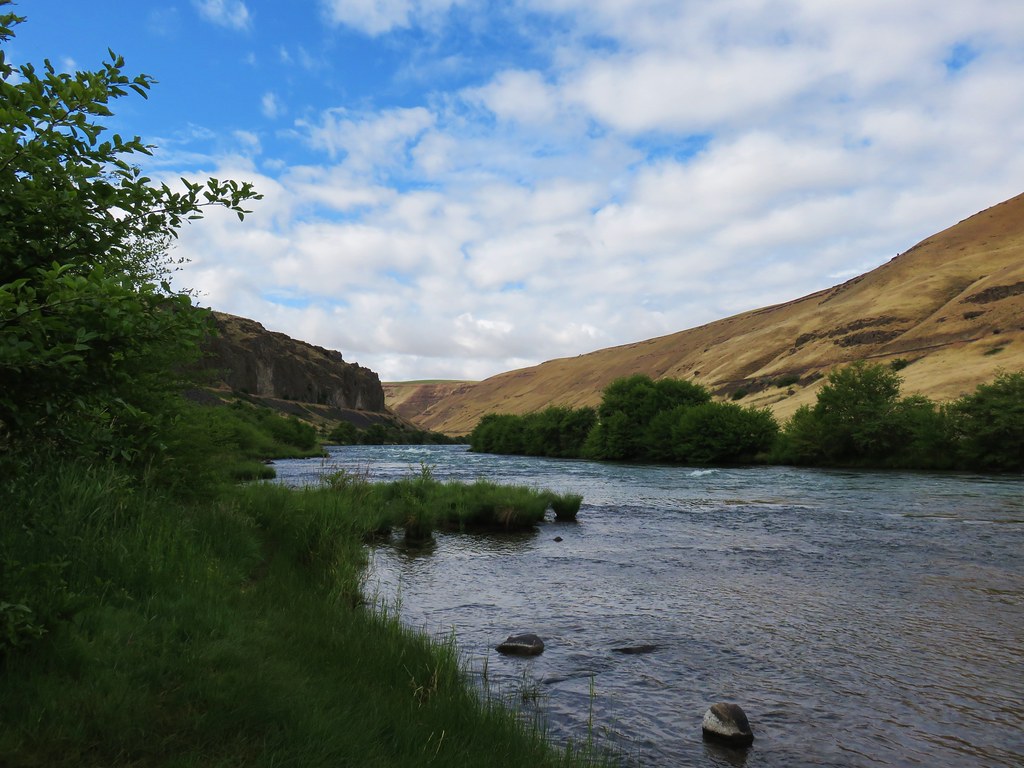
Unlike the trail at Macks Canyon, the River Trail stayed close to the water.
IMG_5108

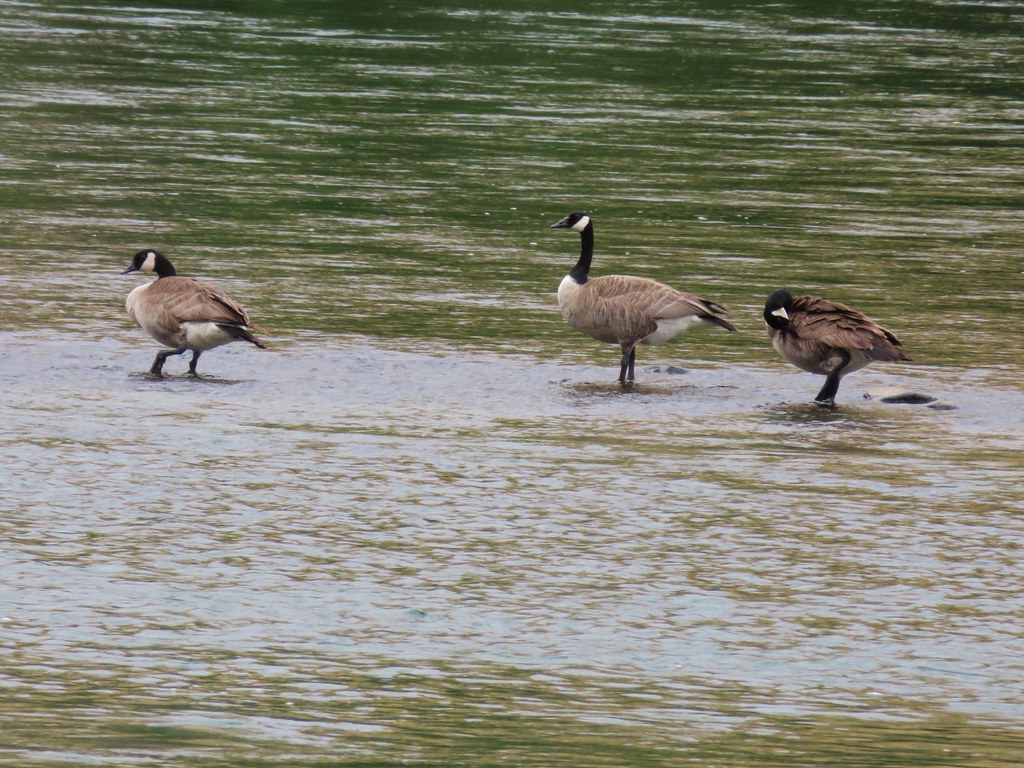
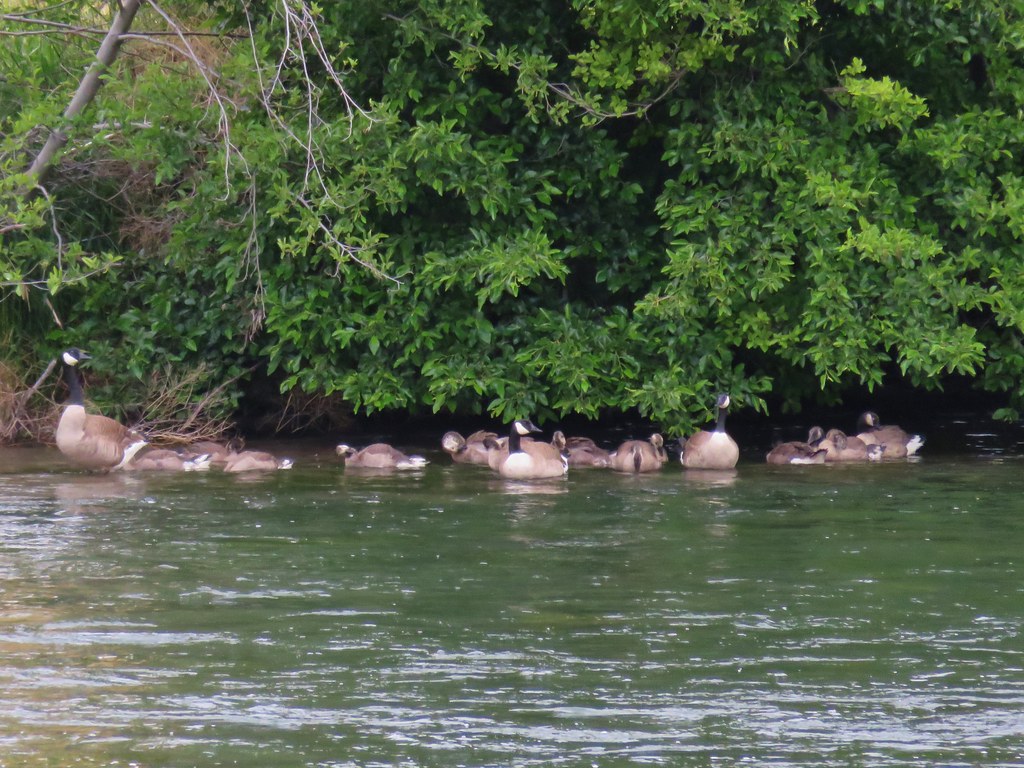
We stayed right at junctions sticking to the River Trail where we passed several groups of Canada geese.
IMG_5116

IMG_5118

IMG_5121

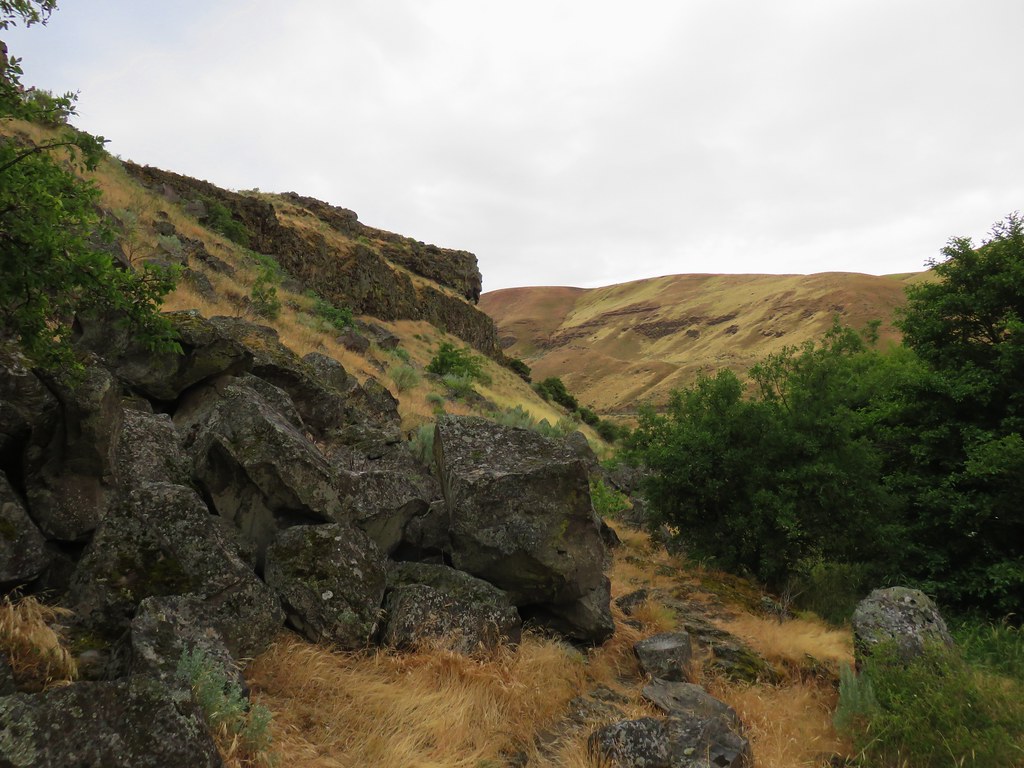
The trail did climb away from the river to cross over a rocky area at the 1.5 mile mark.
IMG_5133

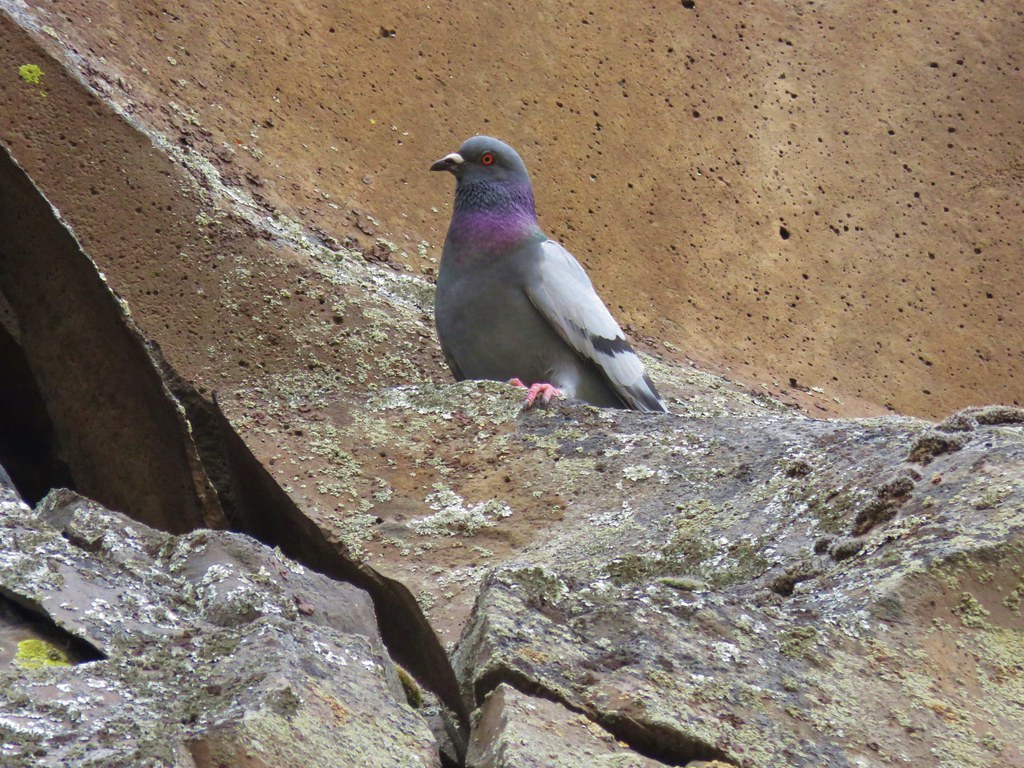
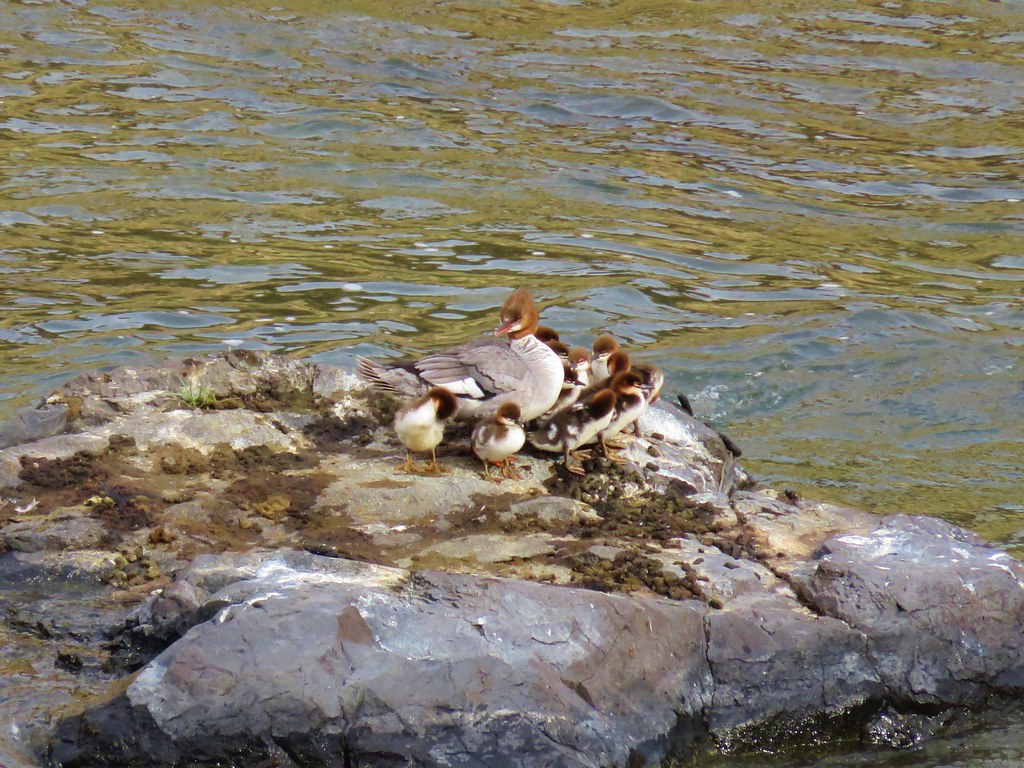
Pigeons kept an eye on us as we passed the rocky cliffs and a family of mergansers sat on a rock in the river below.
IMG_5136

IMG_5138

IMG_5142

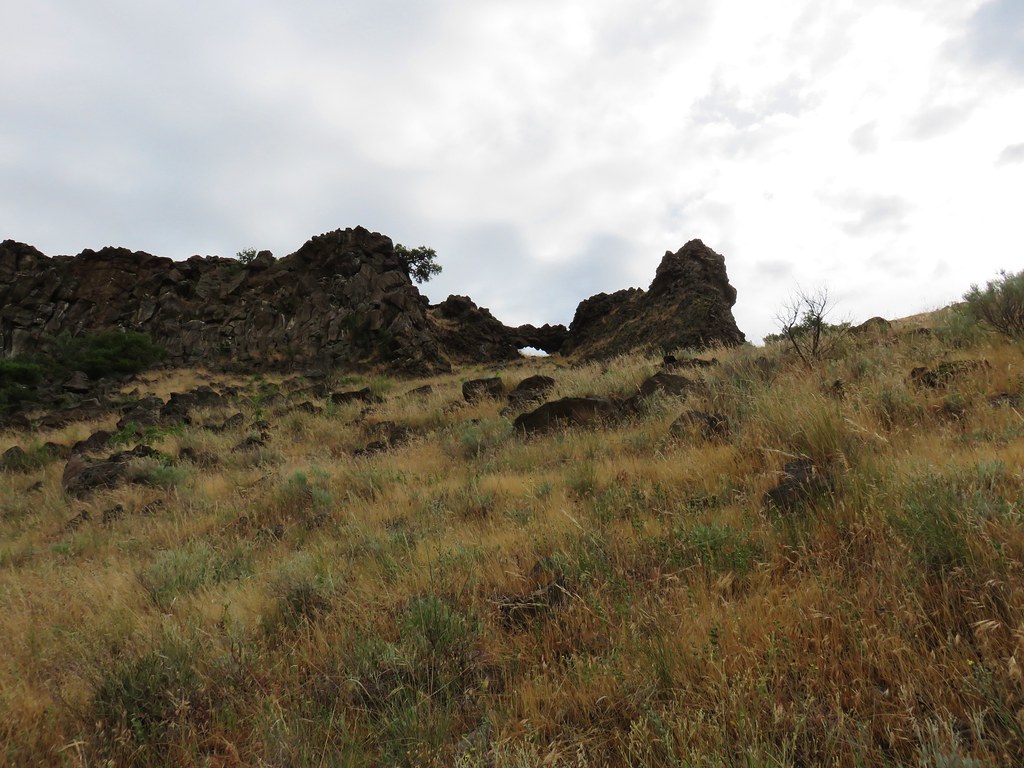
The trail improved again beyond the rocks and it passed below a rock arch.
IMG_5147

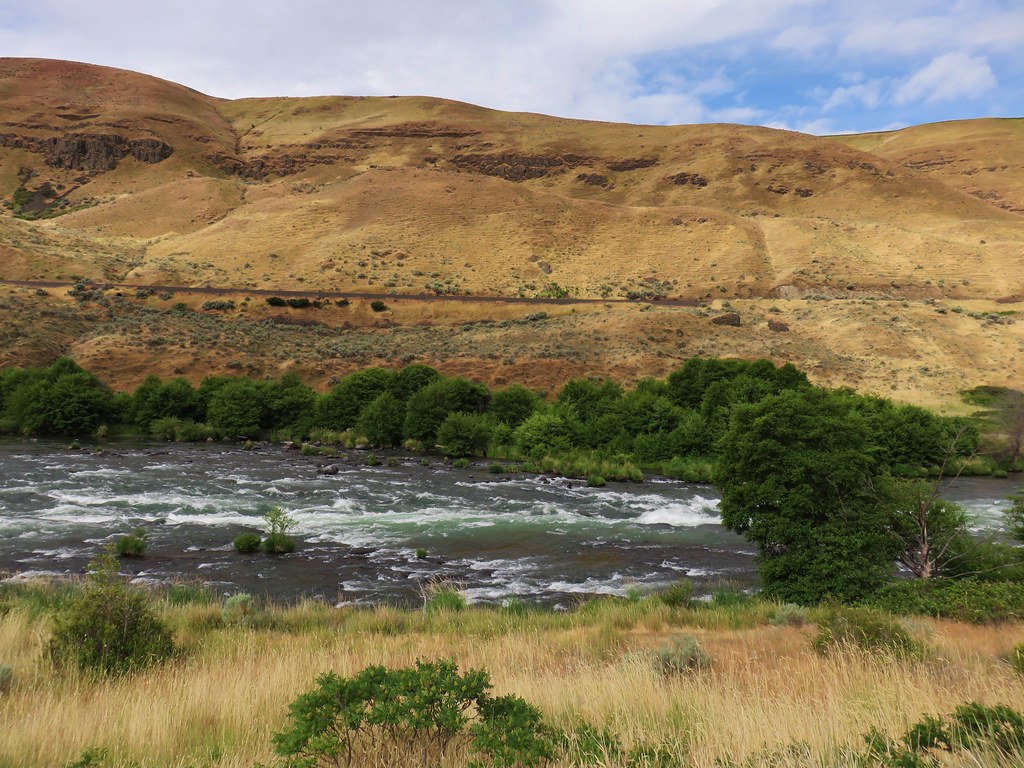
A short distance beyond the arch we passed Rattlesnake Rapids.
IMG_5149

IMG_5152

Up to this point we’d seen a few flowers and an interesting dragon fly.
IMG_5155

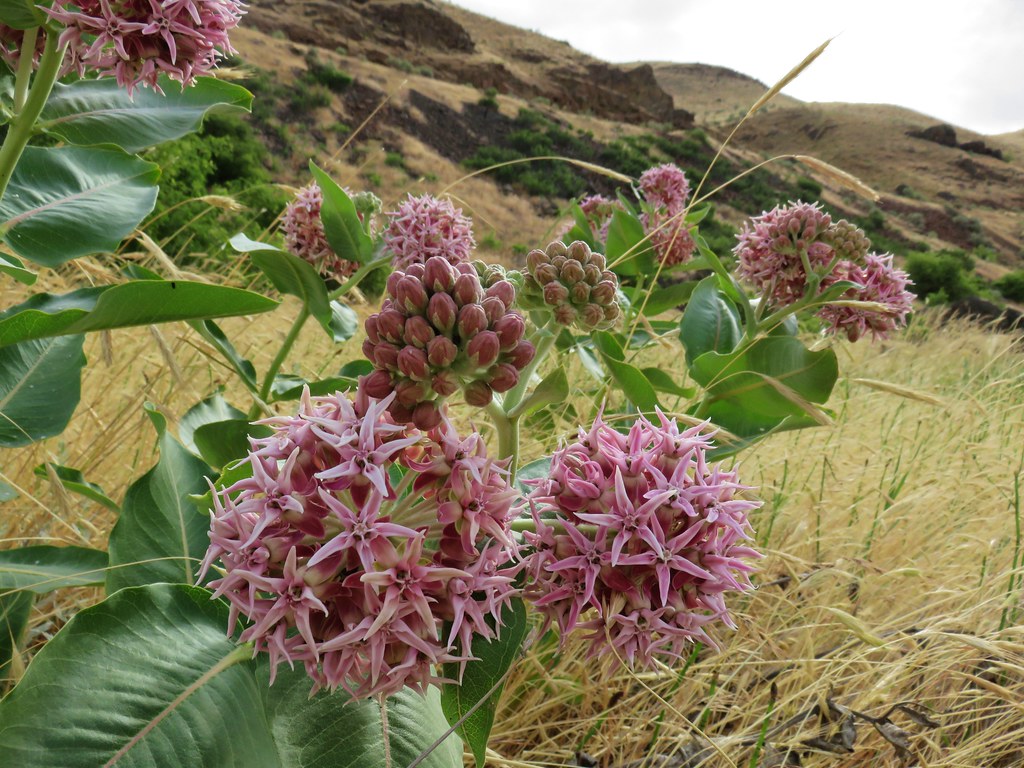
Showy MilkweedShowy milkweed

IMG_5168Chicory

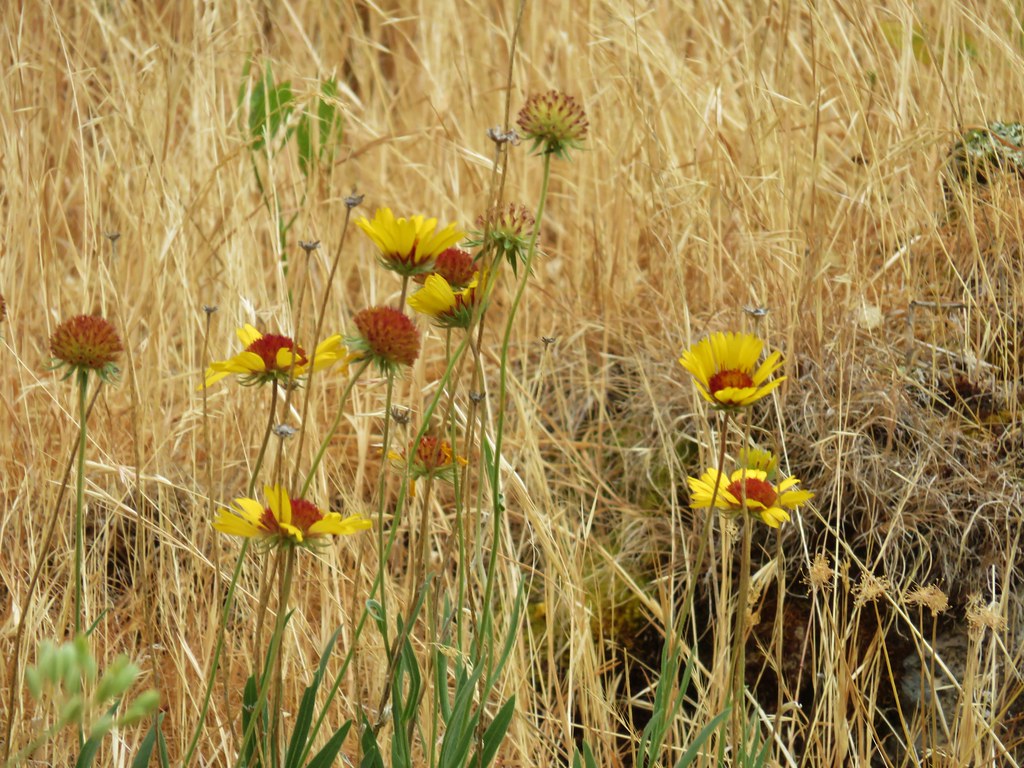
IMG_5134Blanket flower

IMG_5172

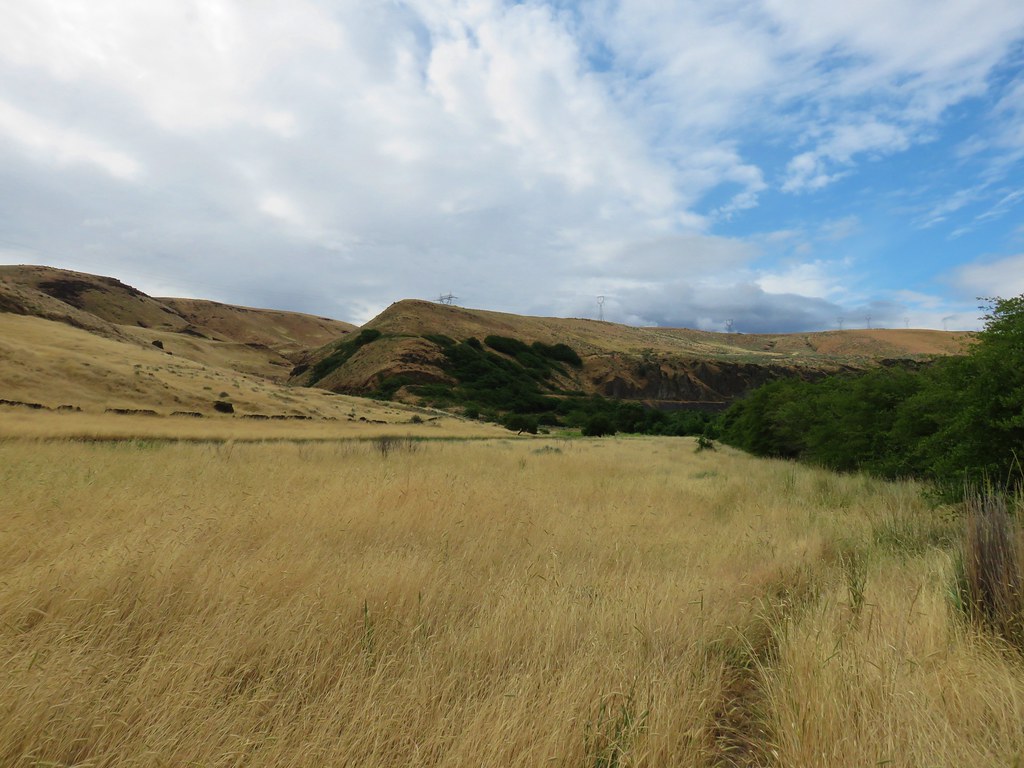
After 3 miles on the River Trail we passed by a 10 acre wheat field.
IMG_5174

At the far end of the wheat field we followed an old dirt roadbed uphill to a gravel road where we turned right, crossed small Gordon Creek and veered right again on another dirt roadbed down to a primitive camp site.
IMG_5176

IMG_5181

After checking out a small beach where one could wade in the river we headed back to the gravel road.
IMG_5183

IMG_5186

The road led up to the same old railroad grade that we had followed on our hike at Macks Canyon.
IMG_5189

Here the grade is in good shape and used by bicyclists as well as hikers.
IMG_5197

We followed the old railroad grade for a mile and a half from the primitive camp to a signboard.
IMG_5211

The unmarked Ferry Springs Trail led off to the right a little before the sign and use paths to the left of the sign led to a view of the rock arch from above.
IMG_5213

After checking out the arch we took the Ferry Springs Trail uphill.
IMG_5216

This trail gained nearly 500′ as it climbed up and then traversed the hillside above the Deschutes River.
IMG_5226

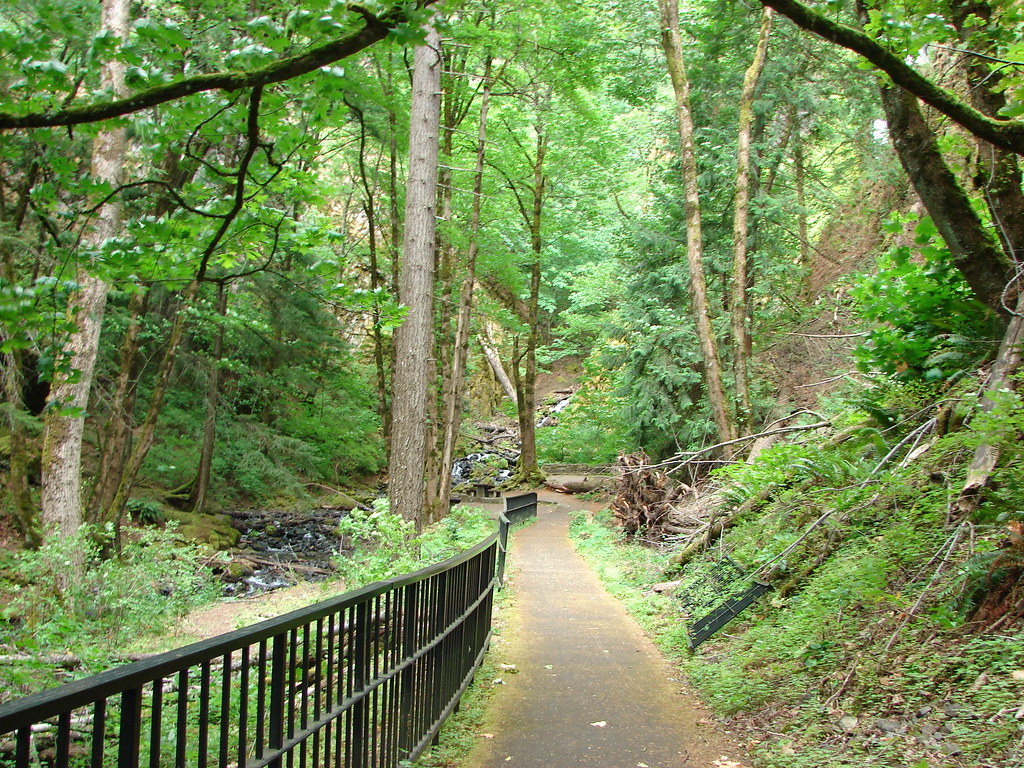
As we gained elevation we also gained more wildflowers, primarily yellow blanket flower and purple lupine.
IMG_5228

IMG_5231

IMG_5248

IMG_5249

Just over three quarters of a mile along this trail we came to Ferry Springs where we crossed a brushy creek.
IMG_5251

IMG_5256

A lizard greeted us on the far side of the creek.
IMG_5259

The trail then passed a less than informative sign and passed through an old fence.
IMG_5265

IMG_5266

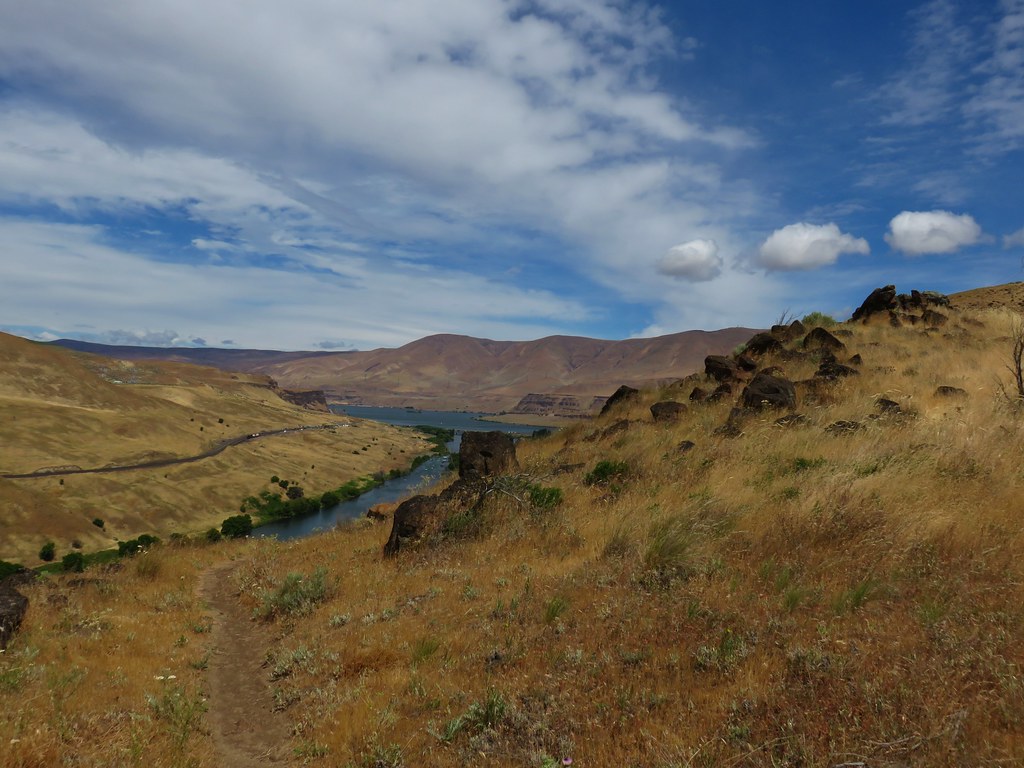
Beyond the fence the trail began to descend back down toward the river. From here we had a good view of the river’s confluence with the Columbia.
IMG_5277

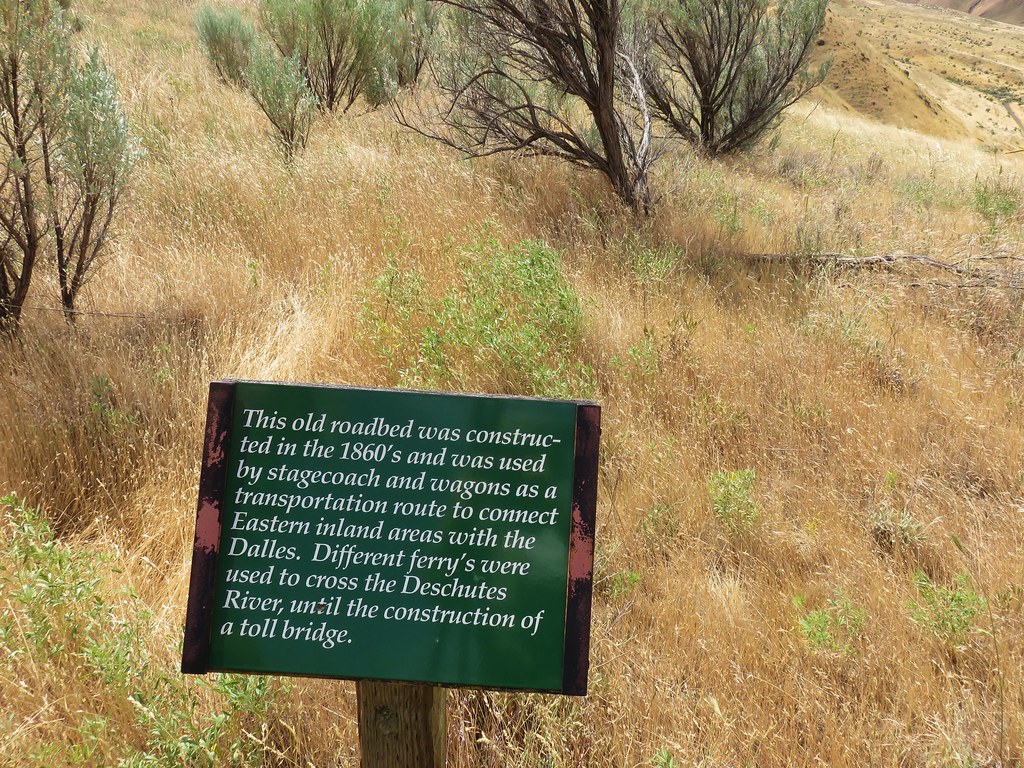
Near the end, the trail follows a section of the Oregon Trail.
IMG_5281

After almost 1.75 miles on the Ferry Springs Trail we arrived back at the railroad grade. Here we had the choice of following it back to the parking area or continuing on hiker only trails. We opted for the hiker trail and flowed a pointer on the far side of the bike path.
IMG_5286

This trail traversed the hillside between the River Trail and the bike path and brought us back to the start of the River Trail in just under three quarters of a mile.
IMG_5288

IMG_5290

The hike came in just over 8 miles which was a nice way to start a week of hiking. It had been pretty windy (not unusual for the area) but the rain had stayed to the west which we took as an encouraging sign for the rest of our trip. We left the Deschutes and headed east to Biggs Junction where we took Highway 97 south to Bend and had a nice visit with Heather’s parents before heading further east (and south) for more adventures. Happy Trails!

Flickr: Lower Deschutes River

Categories
Columbia River Gorge South Hiking Oregon

Throwback Thursday – Mt. Defiance

**Note the 2017 Eagle Creek Fire burned a portion of this hike.**

This week’s hike took place on 7/15/2012 when we tackled the challenging Mt. Defiance Trail in the Columbia Gorge. Unfortunately the area was affected by the 2017 Eagle Creek Fire making it’s current status uncertain.

Our hike that day began at the Starvation Creek Trailhead.
Starvation Creek State Park sign

Prior to setting off on the Mt. Defiance Trail we made the short walk to Starvation Creek Falls.
Trial to Starvation Creek Falls

Starvation Creek Falls

After visiting the falls we followed pointers for the Mt. Defiance Trail.
Trail sign at the parking area

At the time a path followed the shoulder of the freeway for a short distance before veering away into the woods. In 2016 changes were made to the first mile plus of this hike making it wider and putting up a nicer barrier along the freeway section.
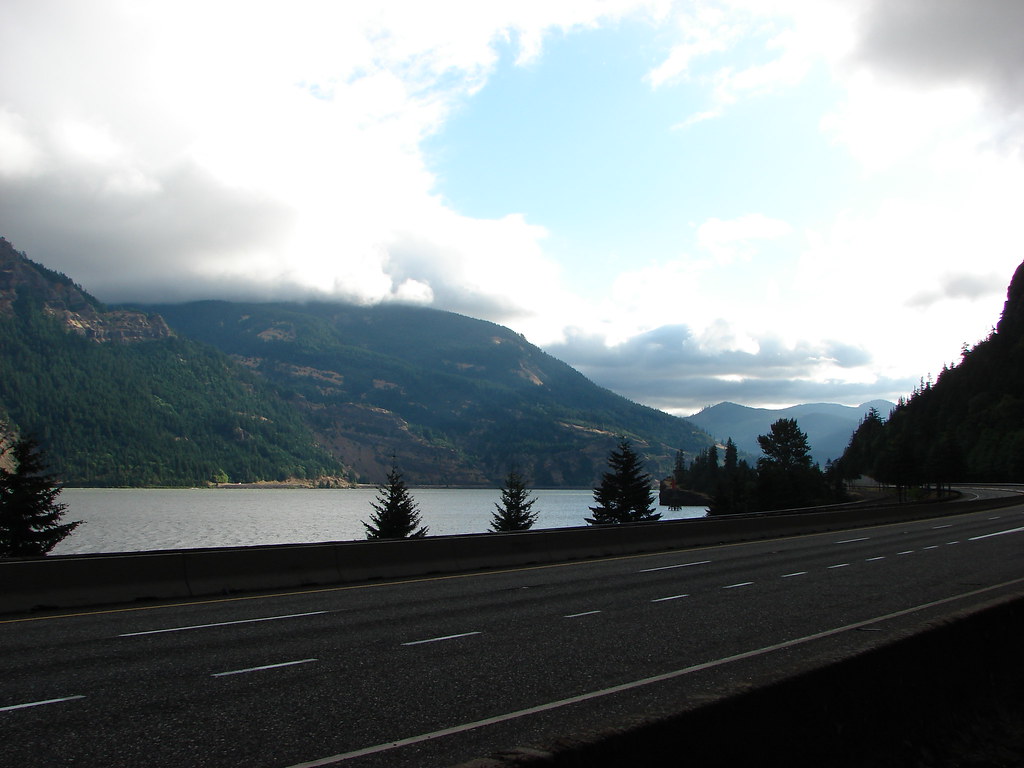
Columbia River

Just over a quarter mile from the trailhead we passed our return route, the Starvation Cutoff Trail, and just a bit beyond that we came to a small sign for Cabin Creek Falls.
Sign for Cabin Creek Falls

That small fall was mostly hidden.
Cabin Creek Falls

A little under a half mile further though was a less obscured waterfall – Hole in the Wall Falls.
Hole in the Wall Falls

This waterfall is not a natural occurrence, it was created in 1938 when the Oregon Highway Department rerouted Warren Creek due to Warren Creek Falls being too close to the old Columbia River Highway. The falls name comes from the waters emergence from the cliff via a man made hole.
Hole in the Wall Falls

A tenth of a mile beyond Hole in the Wall Falls we passed a junction with the Starvation Ridge Trail. A left turn here would have brought us to the upper end of the Starvation Cutoff Trail in a mile allowing for a short two and a half mile loop.
Junction with the Starvation Ridge Trail

Having loftier goals we continued straight passing below the lower portion of Lancaster Falls after .2 miles.
Lancaster Falls

It seemed like a nice “little” waterfall but interestingly this lower portion was only a small part of a much taller fall as we would discover in 2014 when we spotted the waterfall from across the Columbia River on the Dog Mountain Trail (post).
Lancaster Falls from Dog Mountain

Another half a mile of fairly level trail brought us to the start of the 4700′ climb to the summit of Mt. Defiance. The trail passed under some powerlines up a fairly open hillside where low clouds only provided a limited view of Wind Mountain across the river.
Wind Mountain and the Columbia River

The trail then entered the trees as it gained 4000′ over approximately three nearly unrelenting miles.
Columbia River

Mt. Defiance Trail

Mt. Defiance Trail

Along the way we passed a Mark O. Hatfield Wilderness sign.
Mt. Defiance Trail entering the Mark O. Hatfield Wilderness

A little further on was a viewpoint along a rocky hillside. Low clouds limited much of the view but a nice rainbow was visible in the valley below.
View along the Mt. Defiance Trail

Rainbow seen from the Mt. Defiance Trail

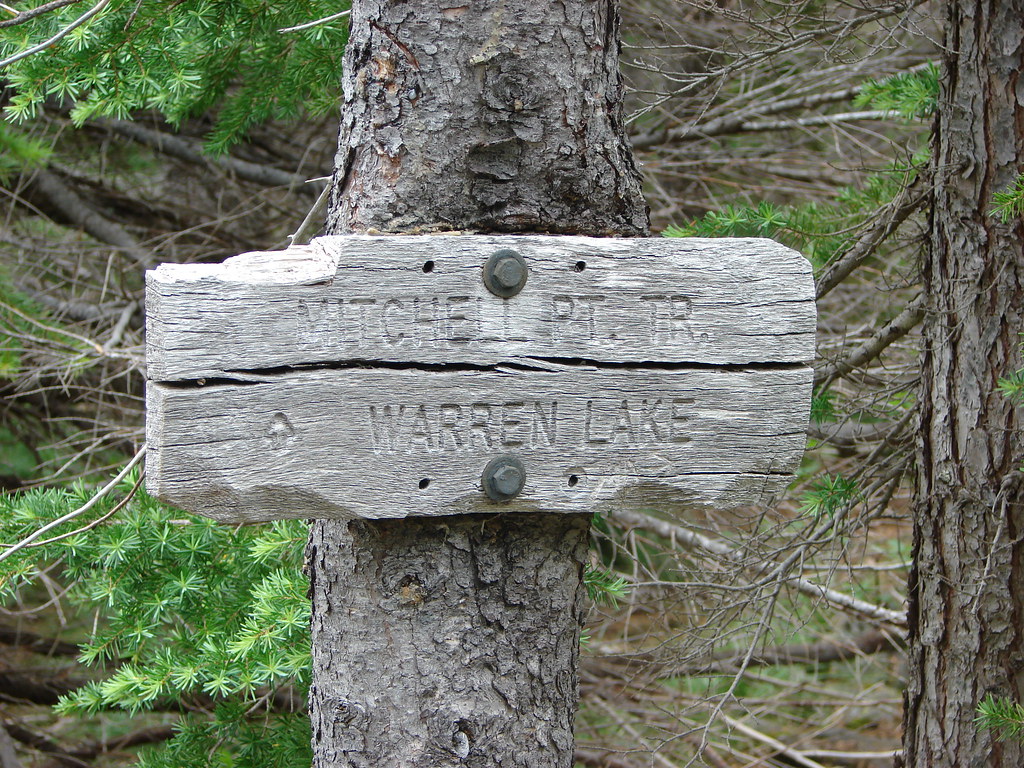
After gaining those 4000′ we arrived at a junction with the Mitchell Point Trail.
Trail sign for the Mitchell Point Trail

We would be taking that trail on our way back, but first more climbing.
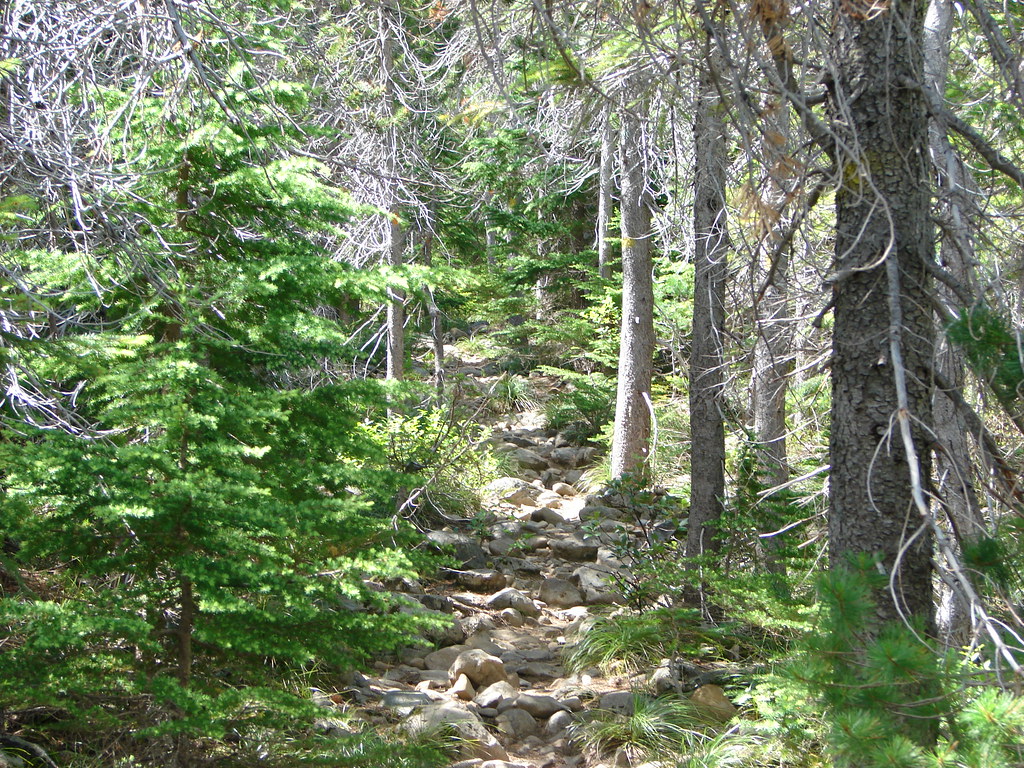
Mt. Defiance Trail

Two tenths of a mile from the Mitchell Point Trail junction a new (at that time) trail led off to the right. The trail was unmarked except for two small rock cairns.
Mt. Defiance Trail

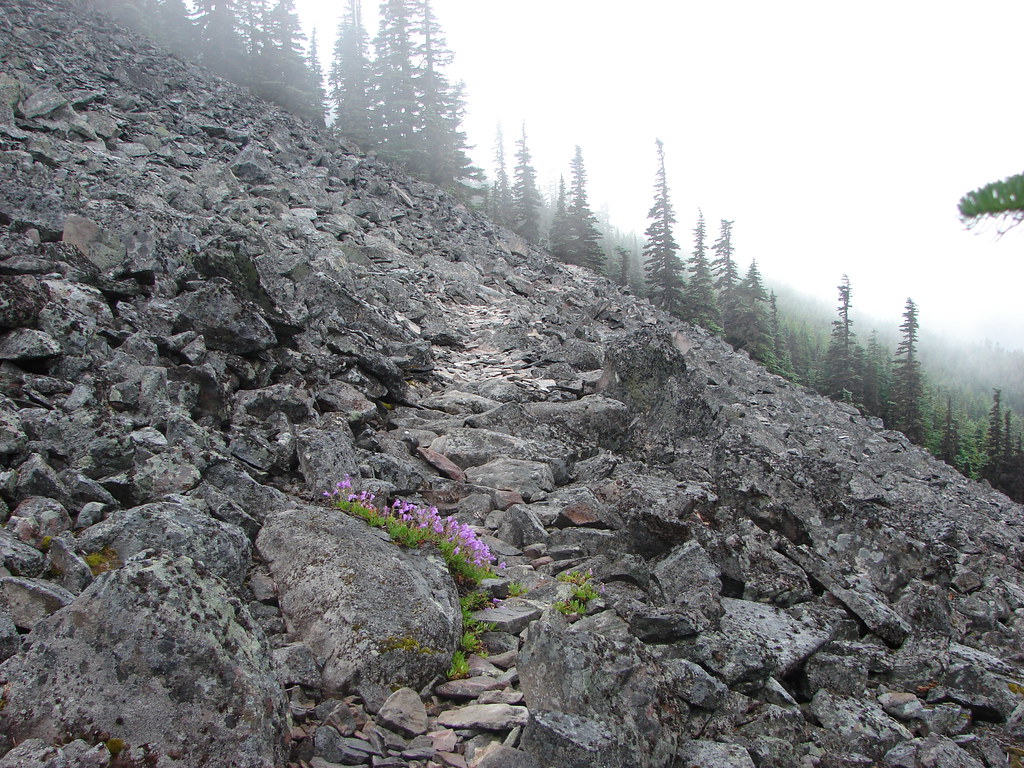
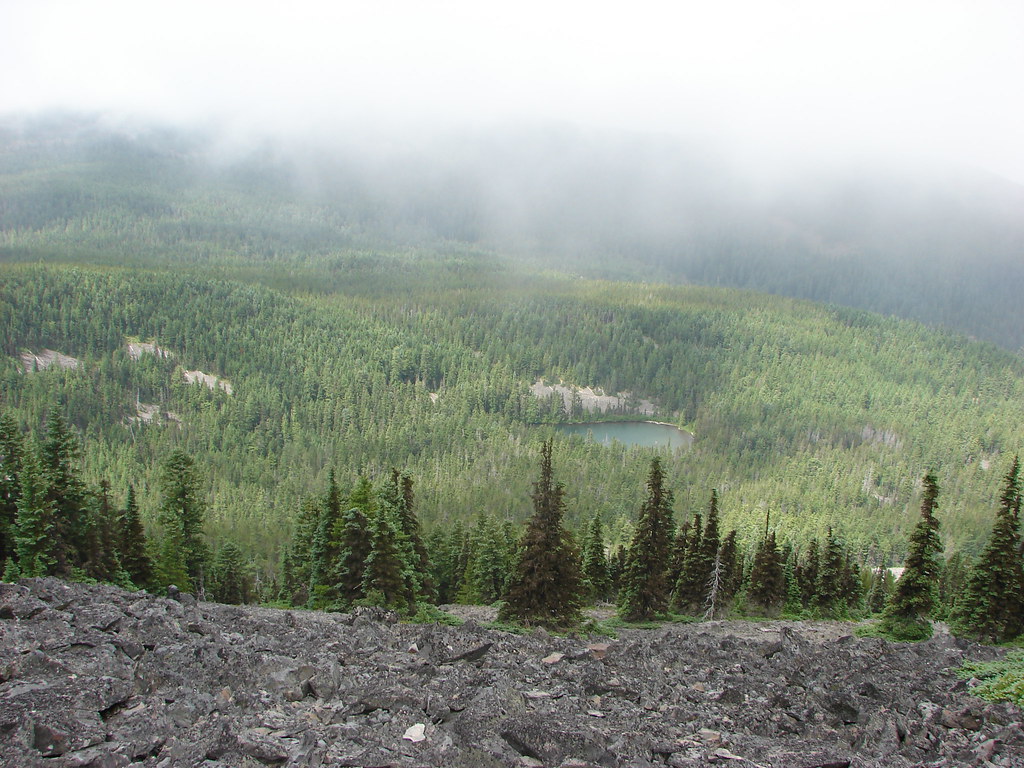
This mile long segment of trail traversed a talus covered hillside above Bear Lake up and around Mt. Defiance to a microwave building at its summit.
Mt. Defiance Trail

Bear Lake

Towers on Mt. Defiance

Unfortunately for us the clouds had not burned off and Mt. Hood was completely hidden.
View from Mt. Defiance

The only view we had from the summit was to the SE.
View from Mt. Defiance

After a nice rest at the summit we opted to head back down to the Mitchell Point Trail via the older summit route which shaved off .2 miles.
Sign for the Mt. Defiance Trail

When we reached the junction we turned onto the Mitchell Point Trail and headed east toward Warren Lake. The clouds to the east had been breaking up revealing some nice blue skies as we reached a viewpoint above Warren Lake.
View from Mt. Defiance

View from the Mt. Defiance Trail

We arrived at the lake .8 miles from the junction.
Warren Lake

Warren Lake

We followed the Mitchell Point Trail another half mile from Warren Lake before turning left onto the unsigned Starvation Ridge Trail.
Trail sign for the Mitchell Point Trail

Mitchell Point Trail

The Starvation Ridge Trail began heading downhill offering a view back to Mt. Defiance.
Starvation Ridge Trail

Mt. Defiance

It was still a bit cloudy for views in other directions though.
View from the Starvation Ridge Trail

View from the Starvation Ridge Trail

View from the Starvation Ridge Trail

The view of Wind Mountain had greatly improved.
Columbia River

As the ridge narrowed the decent steepened and we were soon barreling downhill. The trail ahead would occasionally vanish as is dropped leaving us wondering if it just dropped off a cliff.
Starvation Ridge Trail

For over three miles the trail dove and yet the Columbia River didn’t seem to be getting all that closer. Then the trail came to an opening at the end of the ridge across from Dog Mountain.
Dog Mountain

Wind Mountain on the Columbia River

The view was nice except for the one down to the Starvation Creek Trailhead where our car looked smaller than a Hot Wheels.
Trailhead from the Starvation Ridge Trail

From the ridge end the trail headed downhill away from the trailhead. We turned right onto the Starvation Cutoff Trail at a signed junction and switchbacked down .3 miles to the Mt. Defiance Trail and followed the freeway back to our car.
Trial sign along the Starvation Ridge Trail

Mt. Defiance had lived up to it’s reputation as a challenge and it would have been nice to have had a view at the top but it was rewarding to know that we could accomplish it. It was a boost to our confidence going forward. We look forward to heading back someday when the skies are clearer. Happy Trails!

Flickr: Mt. Defiance

Categories
Columbia River Gorge South Hiking Oregon Trip report

Memaloose Hills & Wygant Viewpoint

We officially kicked off our 2018 hiking season with a pair of hikes toward the eastern end of the Columbia River Gorge. We started our day off by driving east of Mosier on I84 and parking at the Memaloose Rest Area. At the western end of the rest area a gated service road serves as the trailhead.
IMG_2440

We followed the forested old road uphill past some old structures.
IMG_2444

IMG_2445

IMG_2448Arnica

20180428_070754Fairy slippers

As we climbed the forest began to give way to an oak grassland.
IMG_2455

IMG_2457

IMG_2460

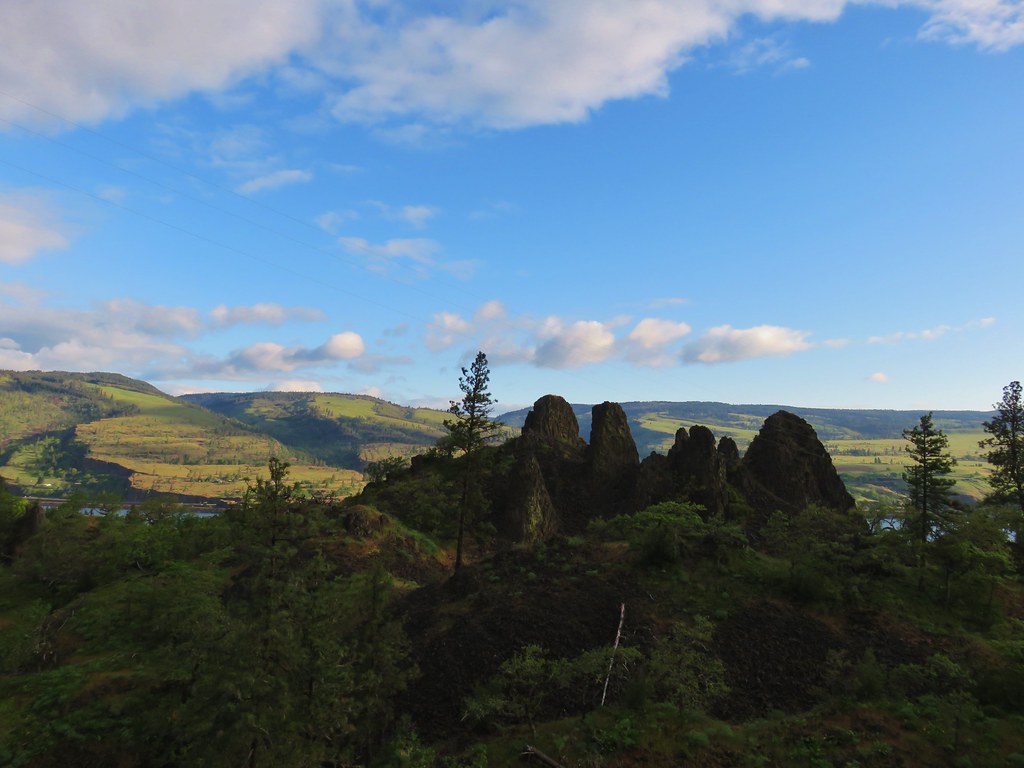
The old road passed by the Memaloose Pinnacles, a group of basalt towers.
IMG_2473

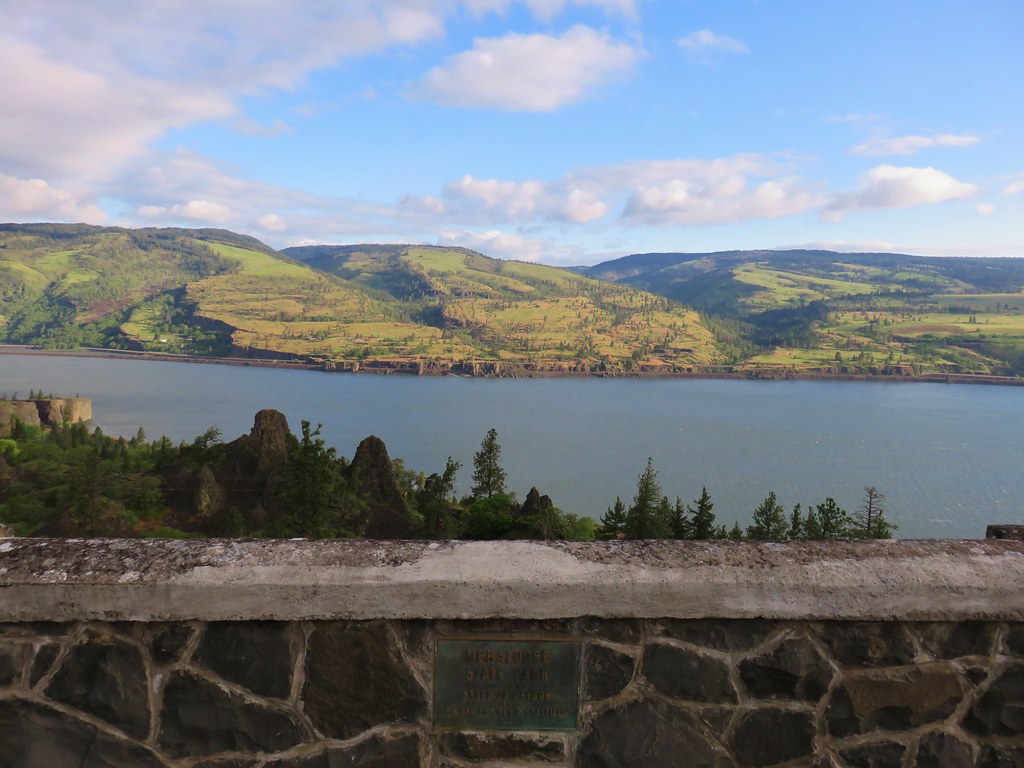
Just over a half mile from the rest area the trail left the old road. Here a small viewpoint looked across the Columbia River to the Coyote Wall/Catherine Creek (2016 trip report) areas of Washington.
IMG_2483

We turned uphill to the left climbing up toward the Memaloose Overlook.
IMG_2485

IMG_2496

Our pace was slowed as we searched the grassland for different wildflowers. It felt good to get reacquainted with our old friends some of which we hadn’t seen in quite some time.
20180428_072117Paintbrush

20180428_072134Desert parsley

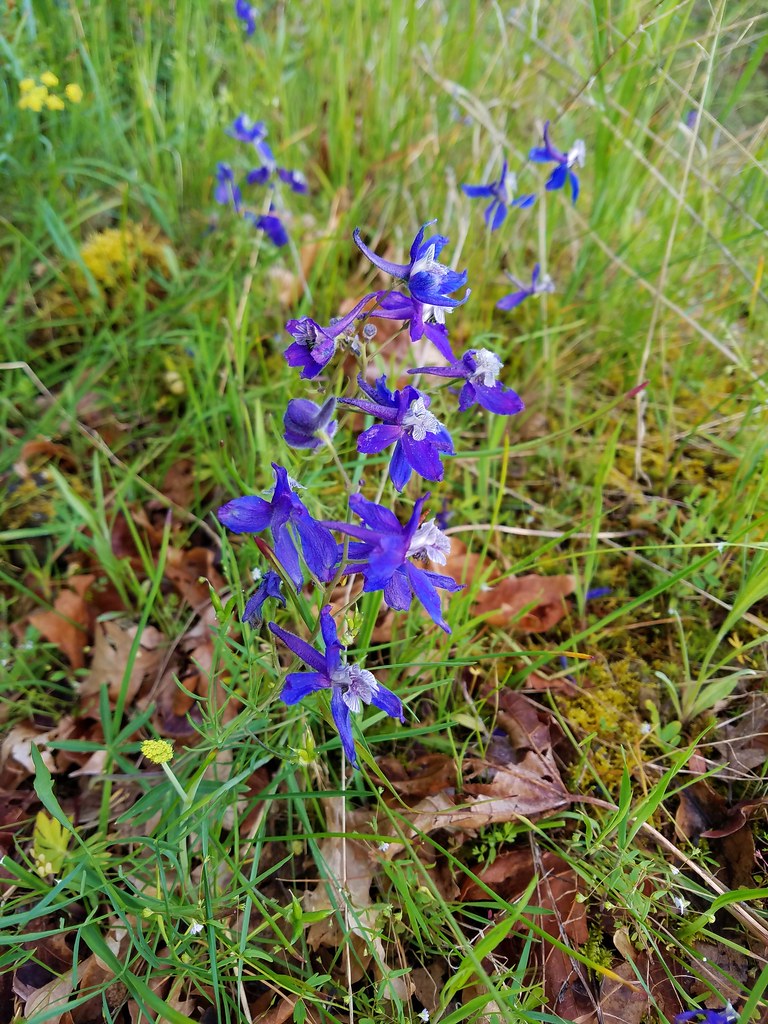
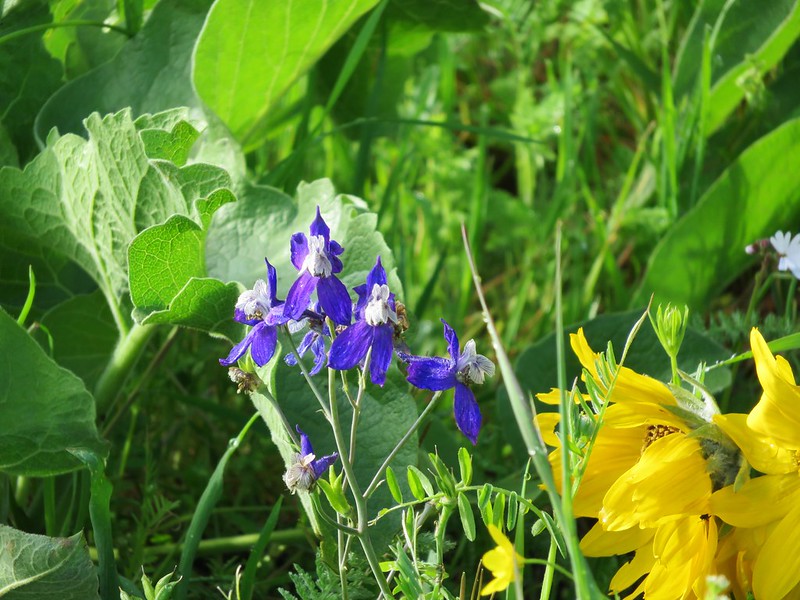
20180428_071825Larkspur

20180428_072234Vetch

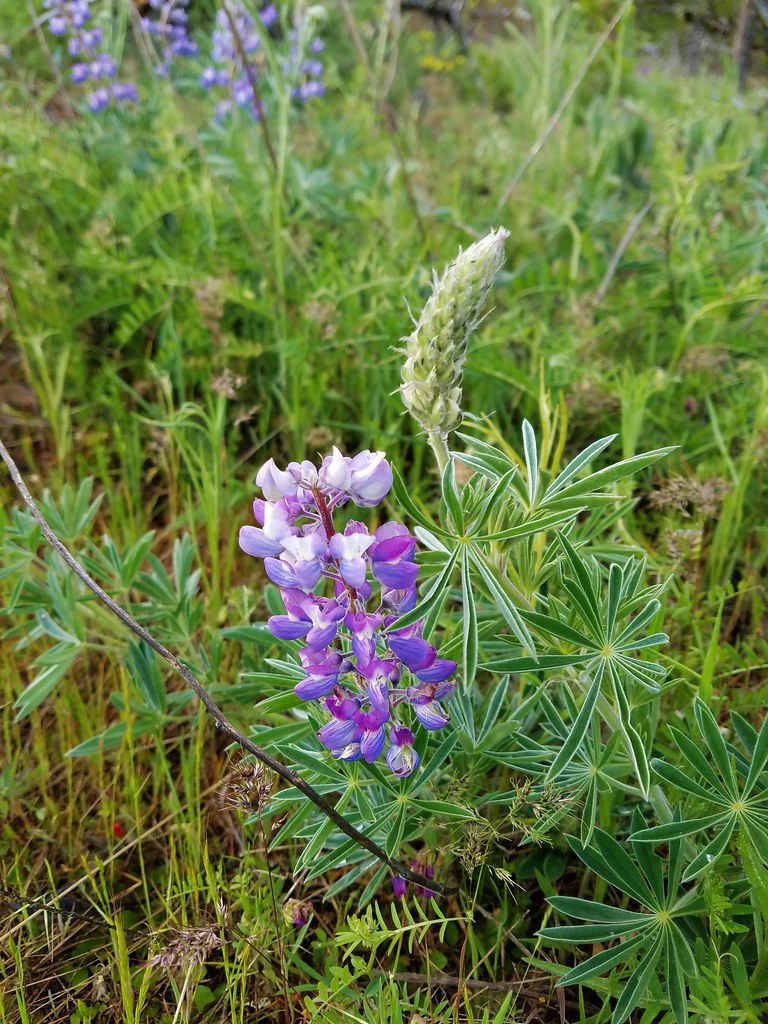
20180428_072416Lupine

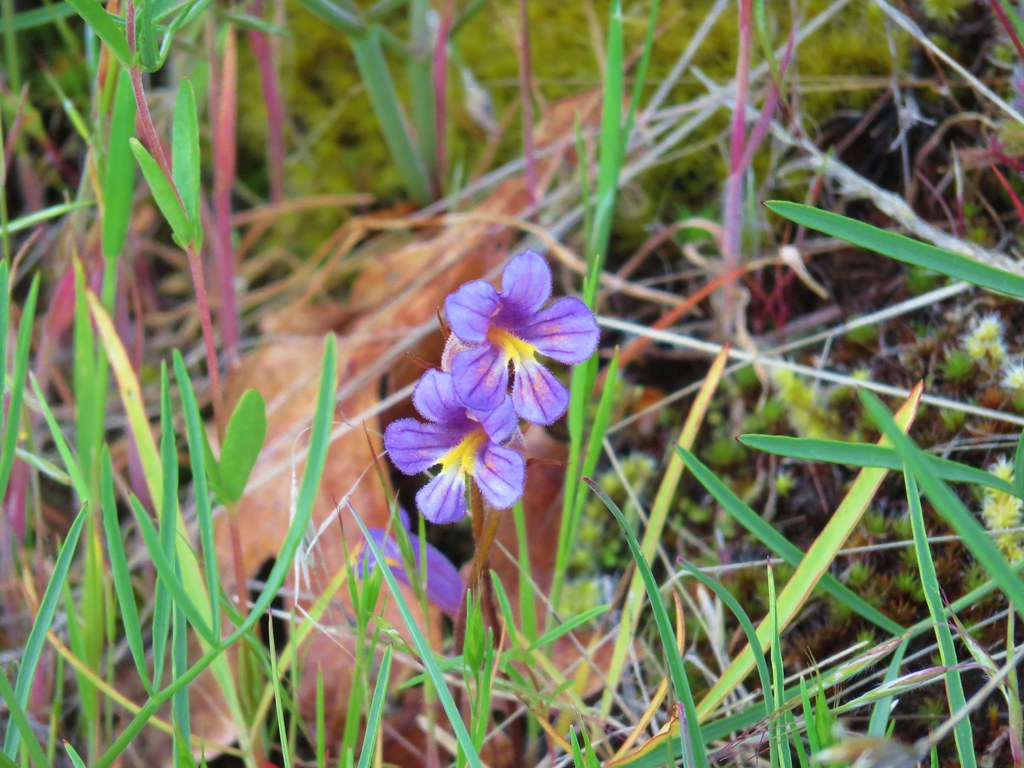
IMG_2502Broomrape

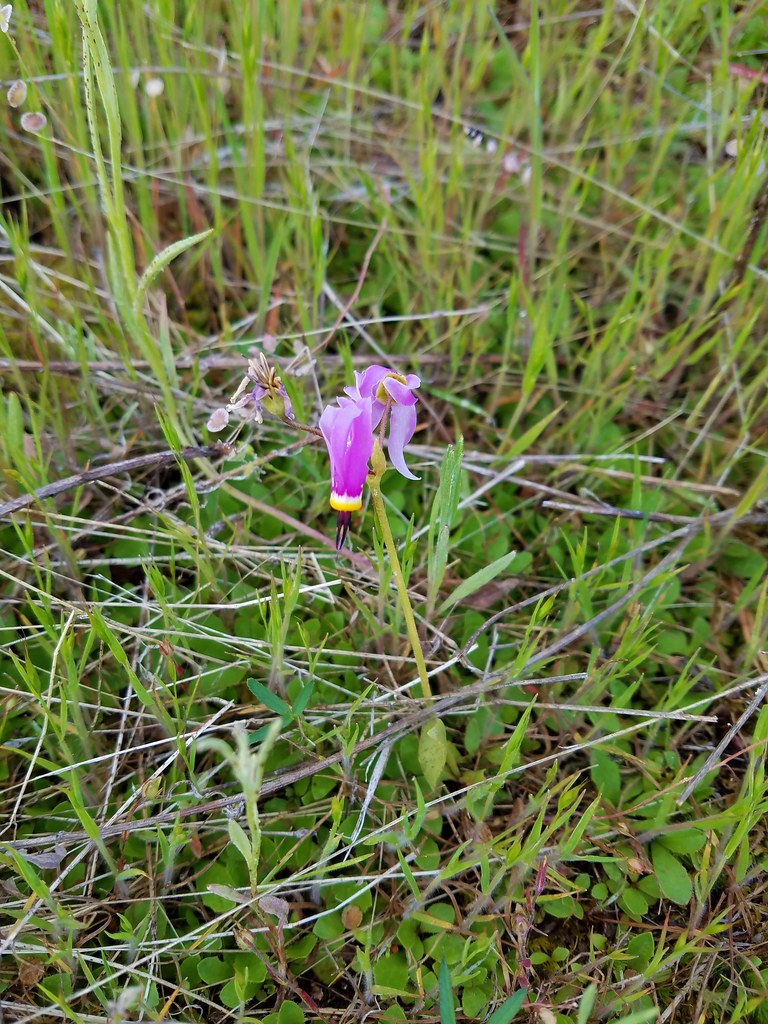
20180428_072846Shooting star

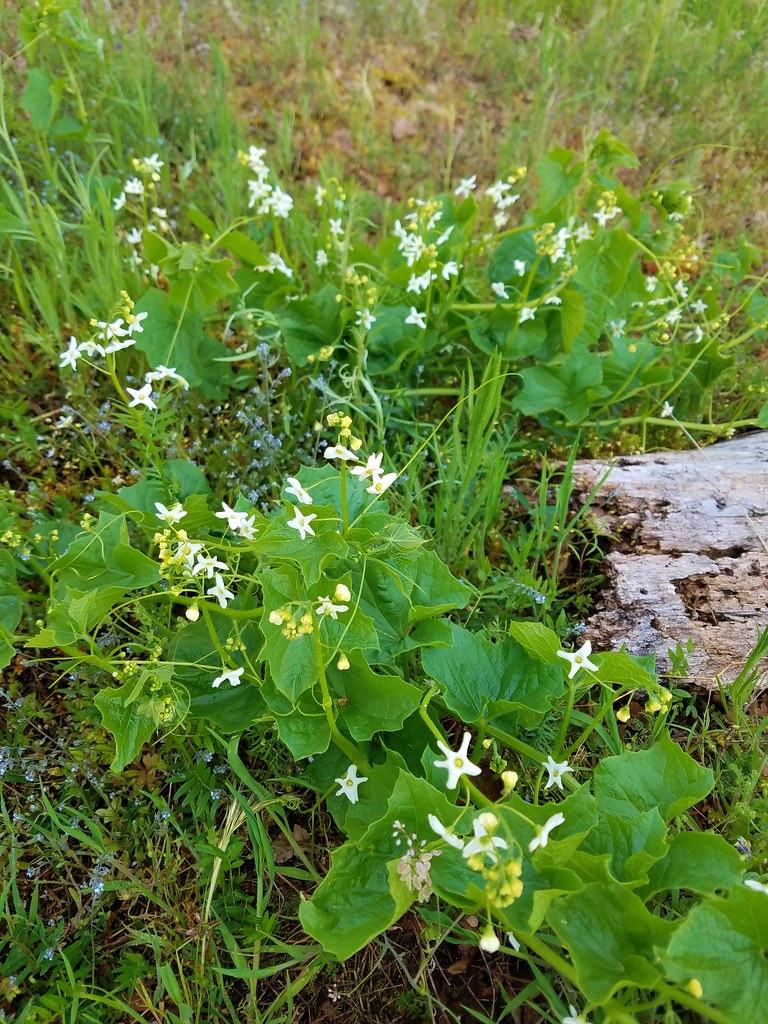
20180428_072906Manroot

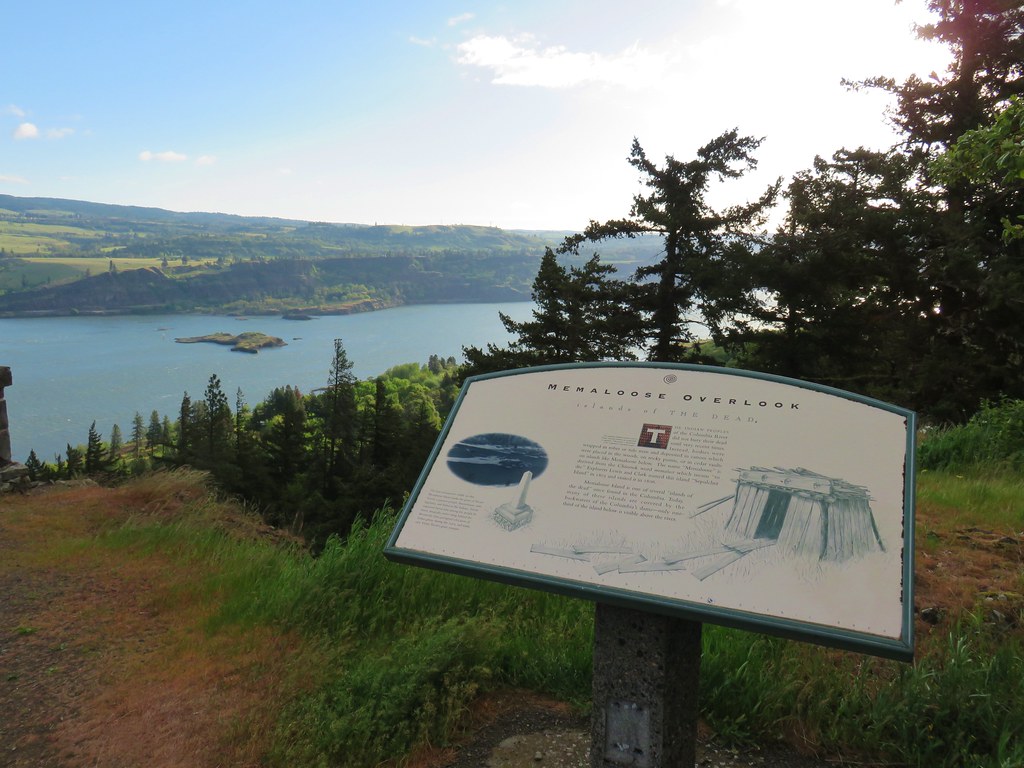
We arrived at the overlook a mere .8 miles from the rest area.
IMG_2508

IMG_2509

The overlook is along Highway 30 which makes it a possible alternate trailhead.

IMG_2515

IMG_2517

There was a large patch of fiddleneck near the overlook.
20180428_073421

20180428_073259

After admiring the view from the overlook we crossed the highway and continued uphill.
IMG_2527

The flower show not only continued but it picked up as we climbed.
IMG_2543Prairie star

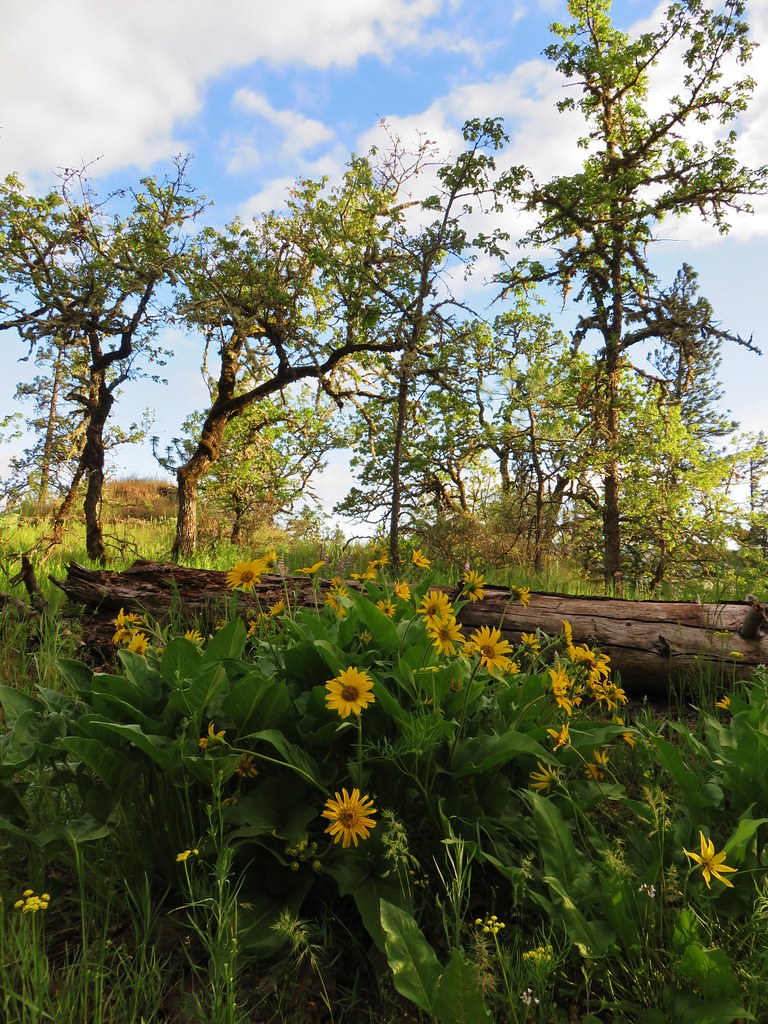
IMG_2548Balsamroot

Even some of the seed heads were photogenic.
20180428_073806

The forecast had called for a chance of showers but the showers weren’t materializing and instead we got some nice sun breaks.
IMG_2556

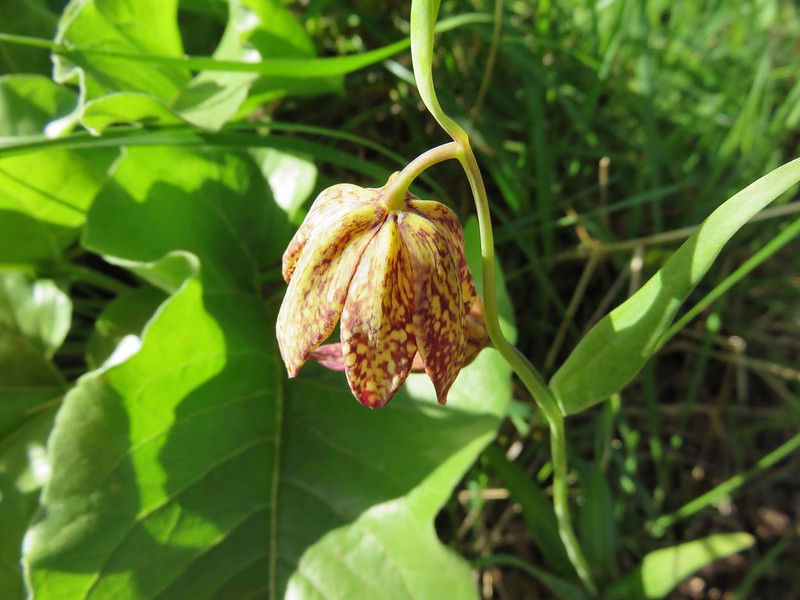
With all the flowers we had been discussing there were some we had yet to spot. One such flower was the chocolate lily which we suddenly began seeing with some frequency.
IMG_2569

IMG_2689

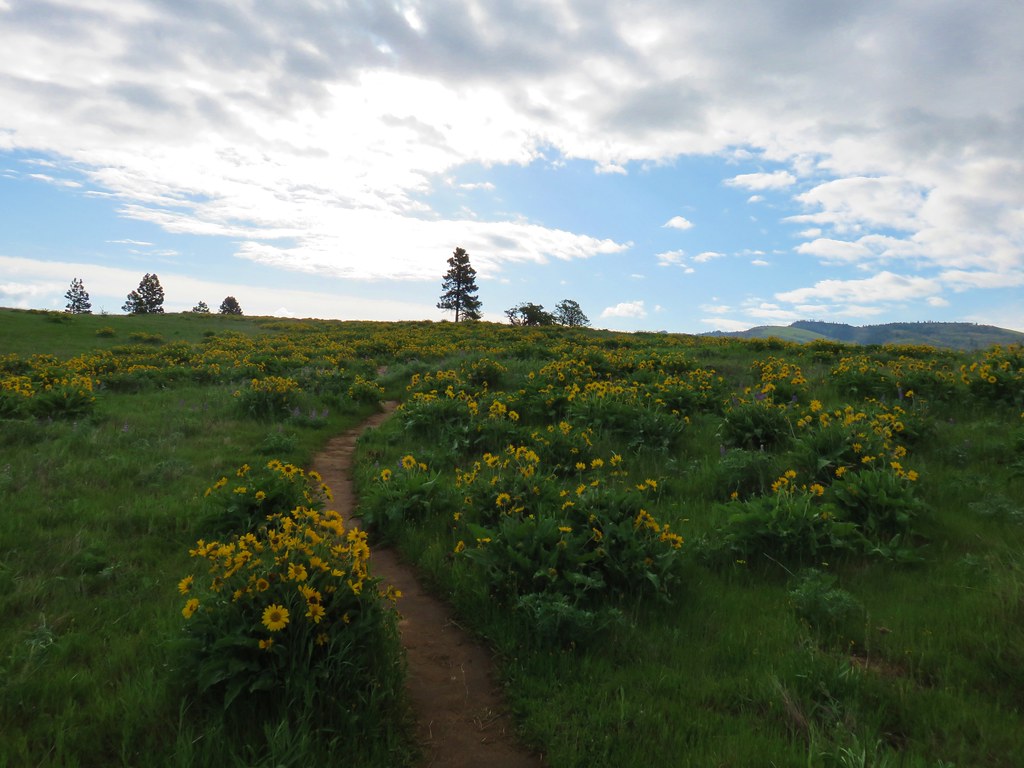
The star of the hike though was the balsamroot which was thick in areas.
IMG_2577

IMG_2579

IMG_2587

The trail crossed a small stream which we hopped across.
IMG_2596

IMG_2600

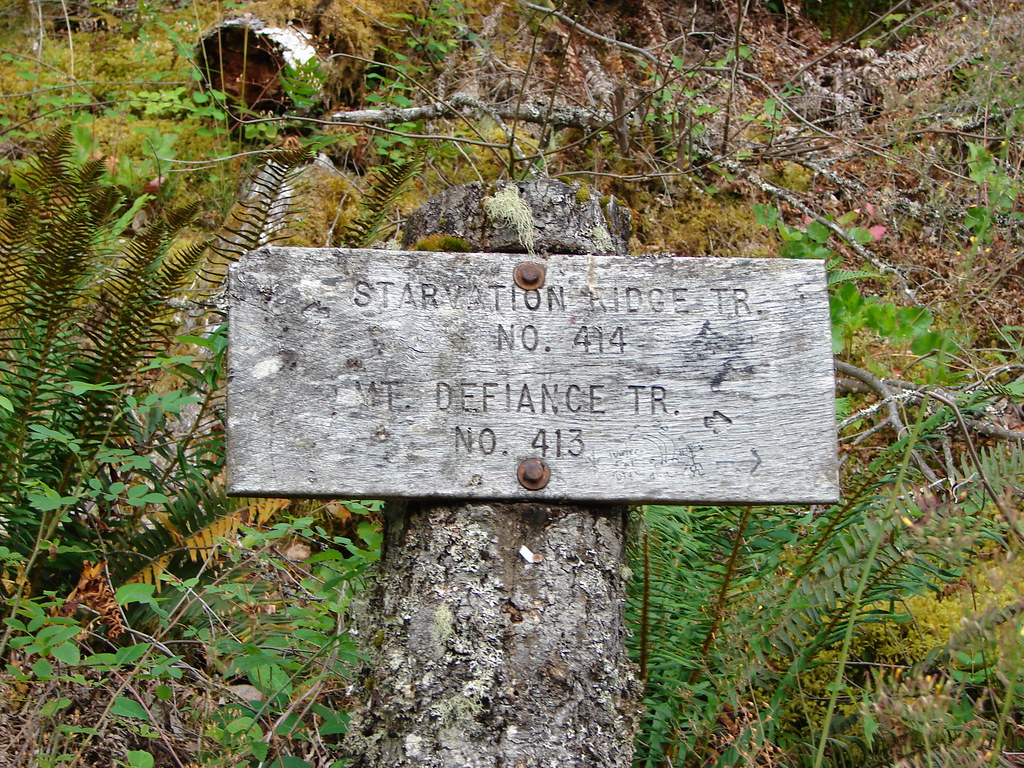
Not far from the stream crossing was a four-way junction. The right hand path would have eventually led to the top of 957′ Chatfield Hill which on a clearer day would have offered views of Mt. Adams and Mt. Hood along with wildflower meadows. The left hand path would have led to nowhere in particular. We went straight and headed up 822′ Marsh Hill.
IMG_2610

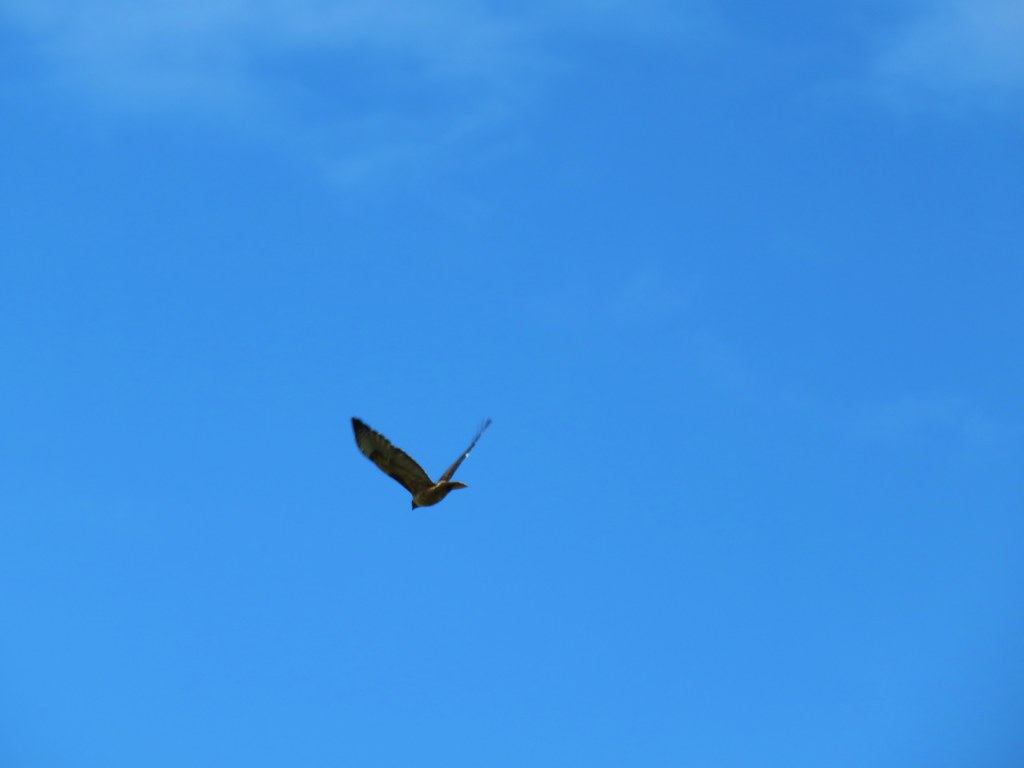
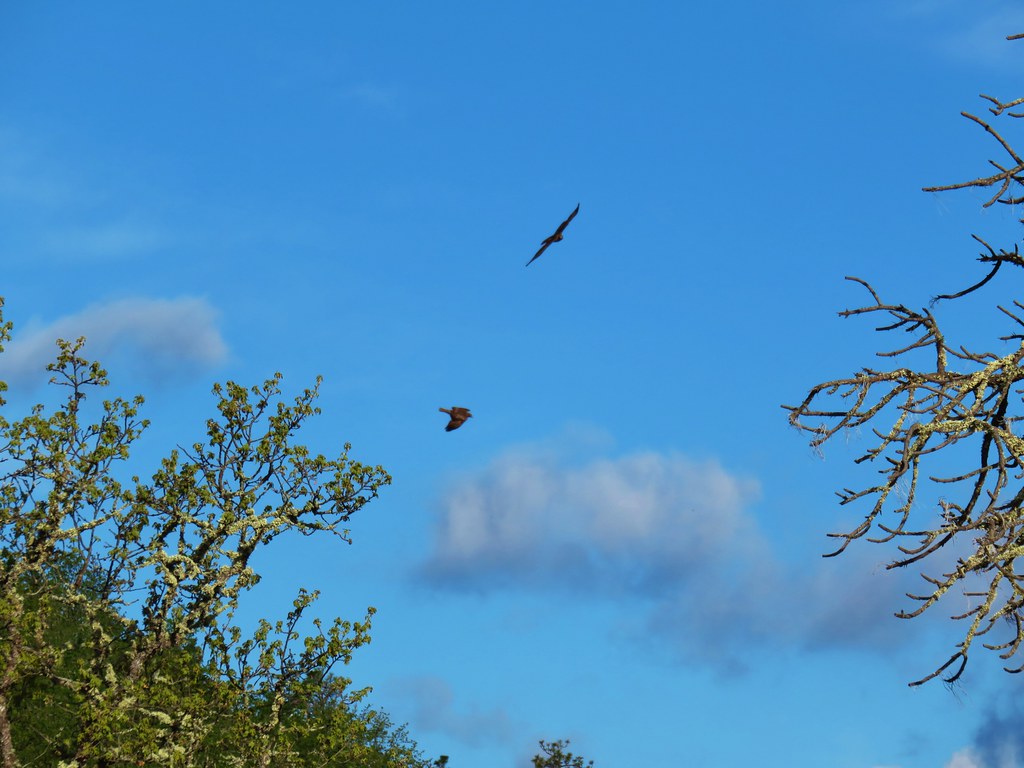
As we began our climb a pair of hawks flew overhead engaged in an aerial duel. I did my best to capture some of it but it’s not easy with a point and shoot camera.
IMG_2611

IMG_2615

IMG_2617

IMG_2620

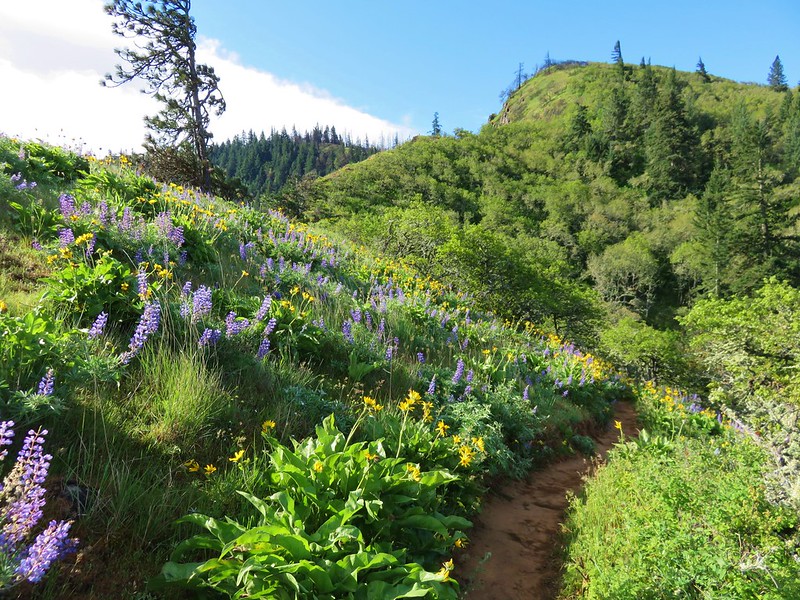
Much of Marsh Hill was covered in yellow balsamroot with purple lupine and white large-flowerd triteleia scattered about.
IMG_2635

IMG_2684

IMG_2632

IMG_2640

From the hill we could make out part of Mt. Hood to the south through the clouds.
IMG_2637

IMG_2642

To the east the grassy southern slope of Tom McCall Point (2015 trip report) was easy to identify.
IMG_2643

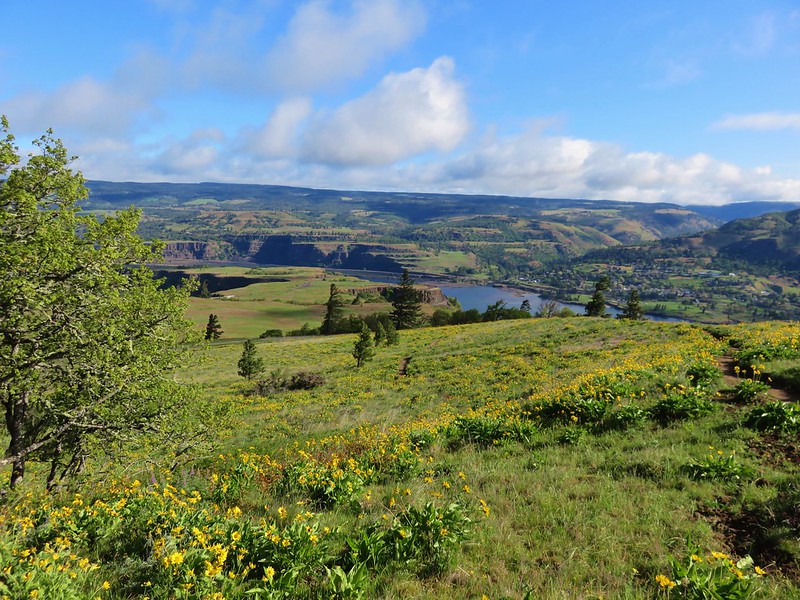
The green hillsides of the Washington side of the gorge rose above the blue waters of the Columbia River to the north.
IMG_2658

To the west was nearby Chatfield Hill.
IMG_2675

We stuck around on the summit for awhile hoping that there would be enough of a break in the clouds for Mt. Hood to pop out but it soon became clear that wasn’t going to happen. We decided to save Chatfield Hill for another year given the clouds weren’t going to let the mountains come out and play. We returned the way we’d come. We only saw a few other hikers, no rattlesnakes (they are prevalent here), didn’t notice any ticks, and stayed out of the poison oak.In addition to the dueling hawks we did see countless smaller birds.
IMG_2591

IMG_2692

This first hike came in just under 4 miles which is why we’d had a second stop planned. That next stop was at the Mitchell Point Trailhead. The order in which we chose to do these hikes proved inconvenient from a driving perspective as both trailheads are only accessible by eastbound traffic on I84. In addition neither trailhead provides access to westbound I84 so in order to reach the Mitchell Point Trailhead from the rest area we headed east on the interstate to the Rowena exit (76) where we could get back onto the interstate headed west. We then had to drive by Mitchell Point to the Viento State Park exit (56) where we again exited the interstate only to immediately return heading in the other direction. After driving up and down I84 we arrived at the trailhead right around 10am.
IMG_2708

There are a couple of trails that start from the Mitchell Point Trailhead. The Mitchell Point Trail climbs to the top of Mitchell Point in just over a mile and the Wygant Trail which leads to the top of Wygant Peak. Our trail for this visit was the Wygant Trail although our goal was not the view-less peak itself which is 4.2 miles from the trailhead. We were headed for the last good viewpoint along the trail which was only approximately 3 miles up the trail.

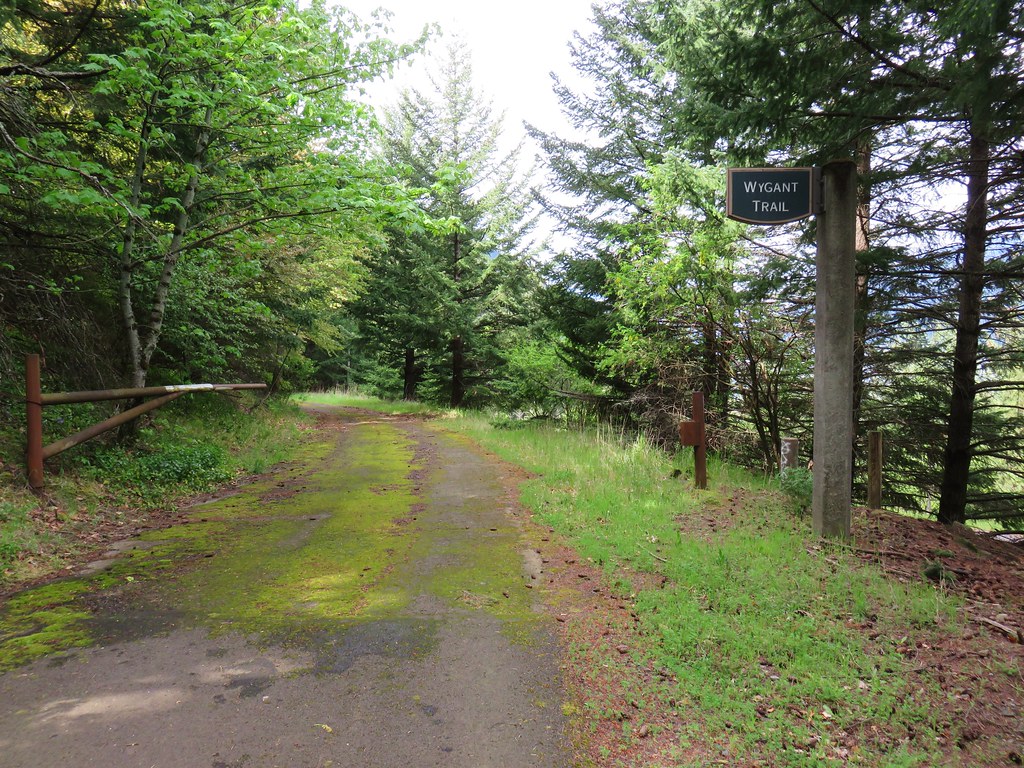
The Wygant Trail is located to the west of the parking area and begins along an abandoned section of the Historic Columbia River Highway.
IMG_2710

IMG_2714

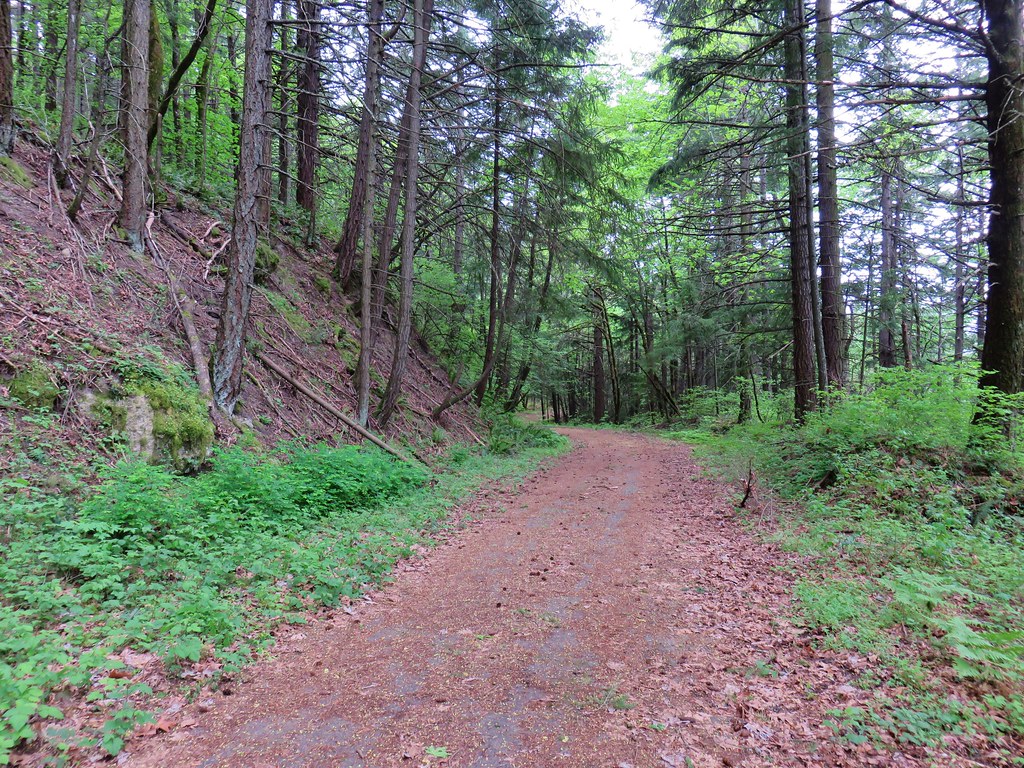
We followed an old road bed for a quarter mile then followed a trail sign when the road veered left.
IMG_2716

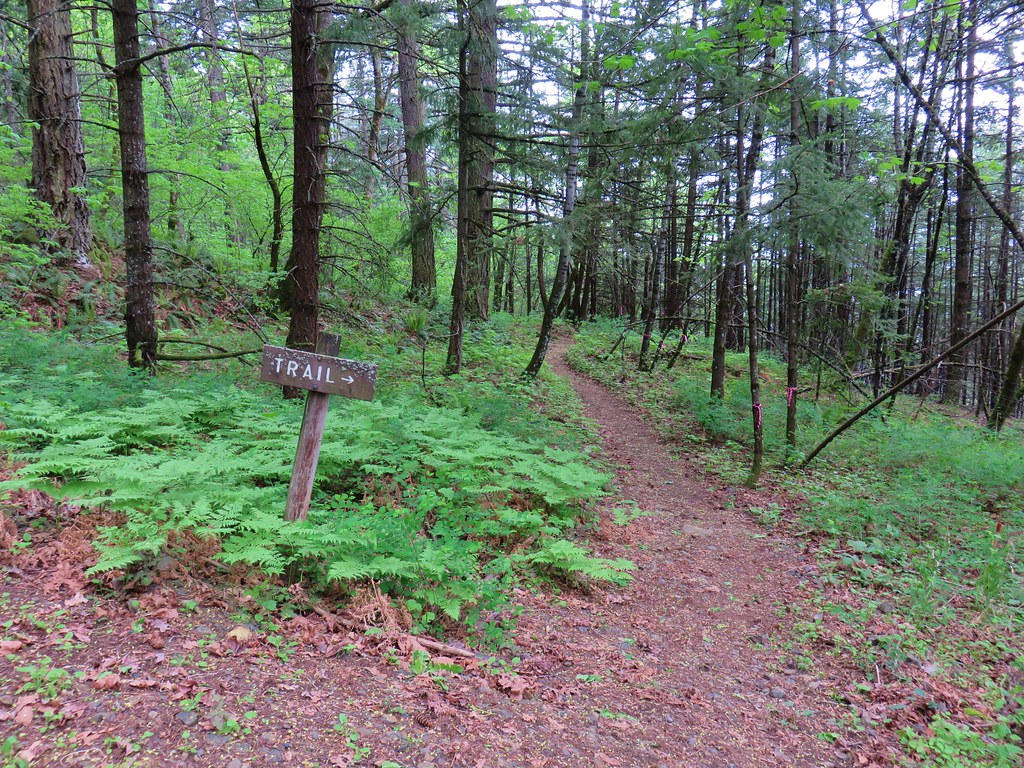
We soon rejoined the road for another half mile before turning left at another sign.
IMG_2732

The Trailkeepers of Oregon have been working on this trail which was one of the earlier trails to reopen after the 2017 Eagle Creek Fire. The fire didn’t reach this particular trail but it had been closed none the less. A work party from TKO had been out the day before working on the trail and their efforts did not go unnoticed.
IMG_2733

There is a lot of poison oak along the majority of the trial so a big thank you to the volunteers that have been clearing the brush. The difference between the sections that they had worked and those that had not was huge.

After a mile we spotted a sign for the abandoned Chetwoot Loop to the left of the trail.
IMG_2742

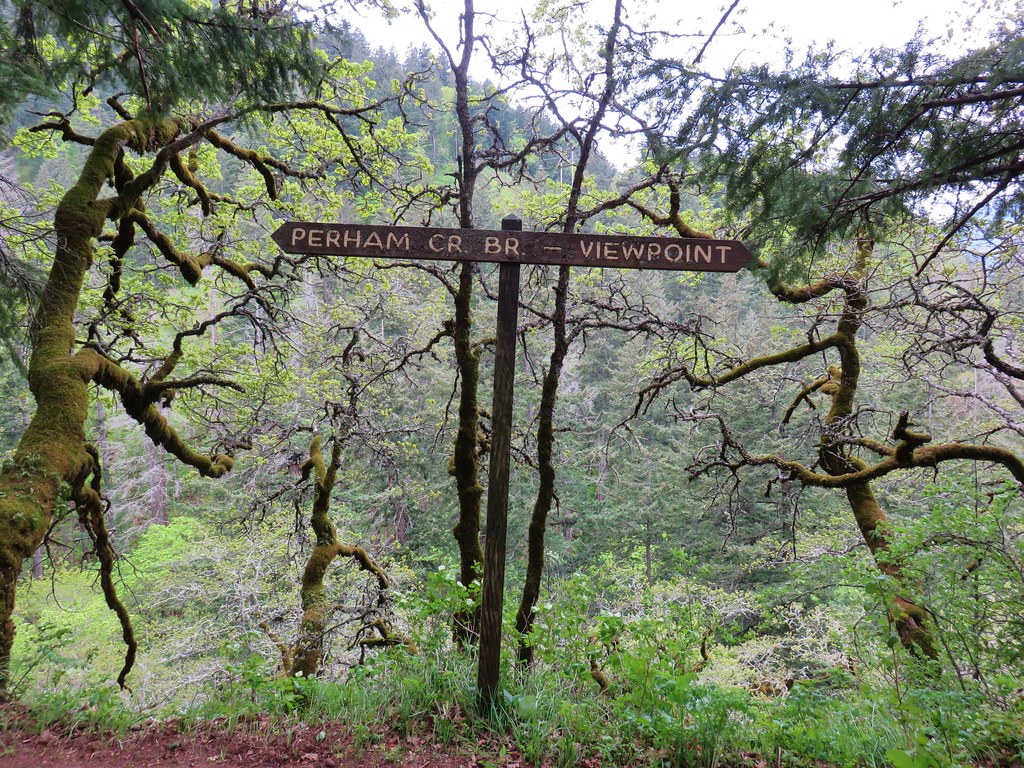
Soon after the sign for the Chetwoot Loop we arrived a ridge above Perham Creek.
IMG_2744

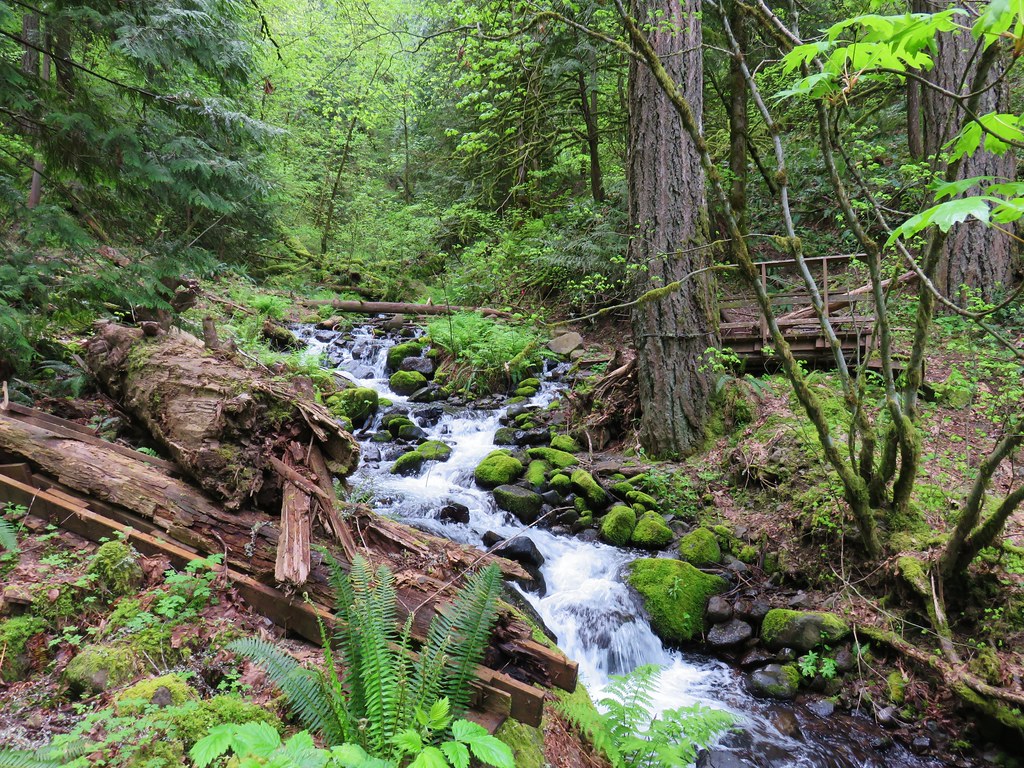
We chose not to follow the viewpoint sign here due to the amount of poison oak seemingly lining the trail in that direction so we turned left and headed down to Perham Creek. A footbridge had spanned the creek up until 2016 when a slide washed it out.
IMG_2753

Interestingly it didn’t appear that it was the creek that did the bridge in but rather a slide down a small gully on the east side of the creek.
IMG_2757

A decent sized log served as an adequate replacement for the bridge allowing us to cross dry footed.
IMG_2756

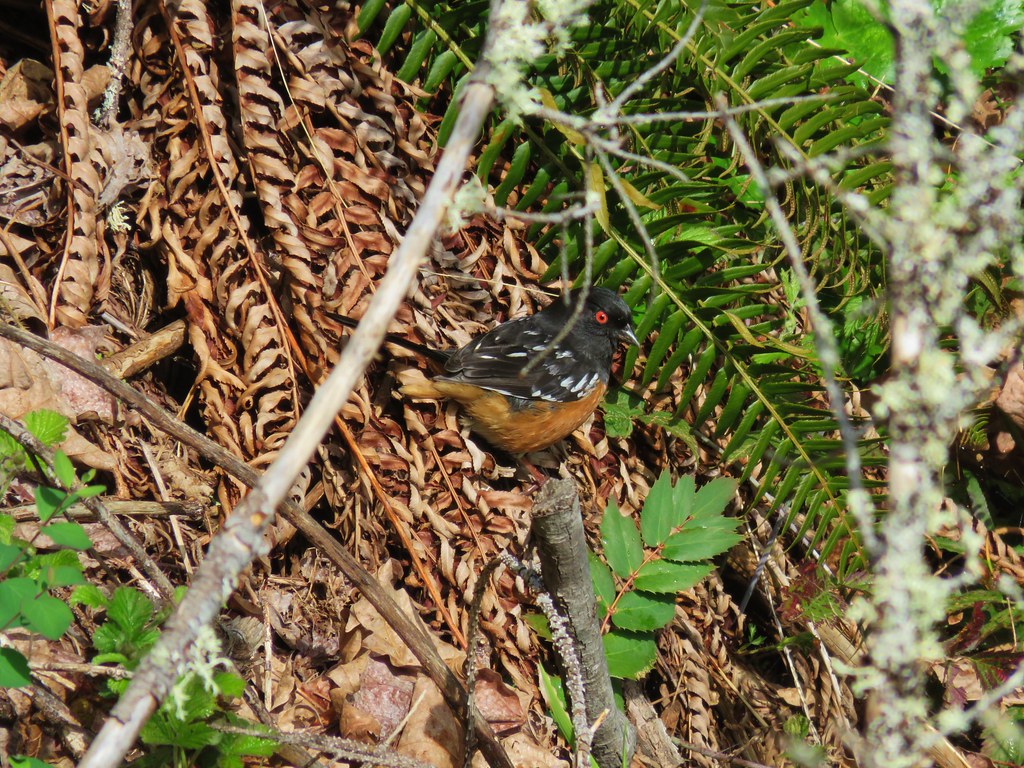
The trail then climbed away from the creek, at times fairly steeply. As we passed through a brushy clearing we spotted a spotted towhee.
IMG_2768

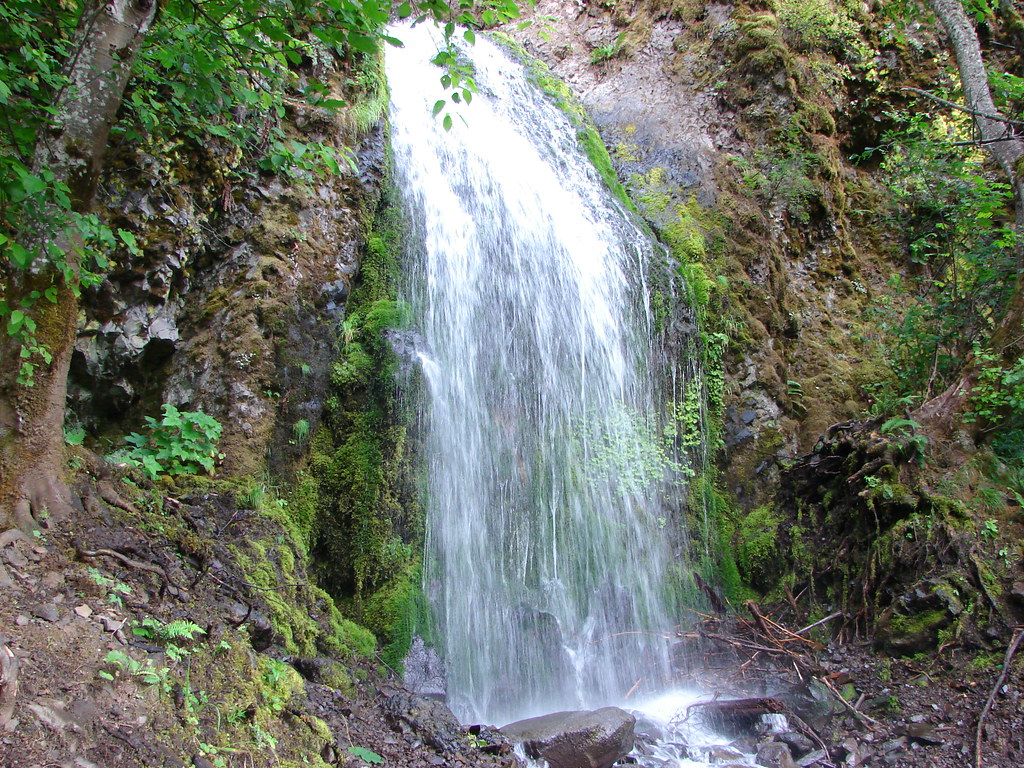
We continued on watching closely for the ever present poison oak arriving at a lower viewpoint after a little over a mile and a half. Here we had a nice view of Mitchell Point to the east.
IMG_2773

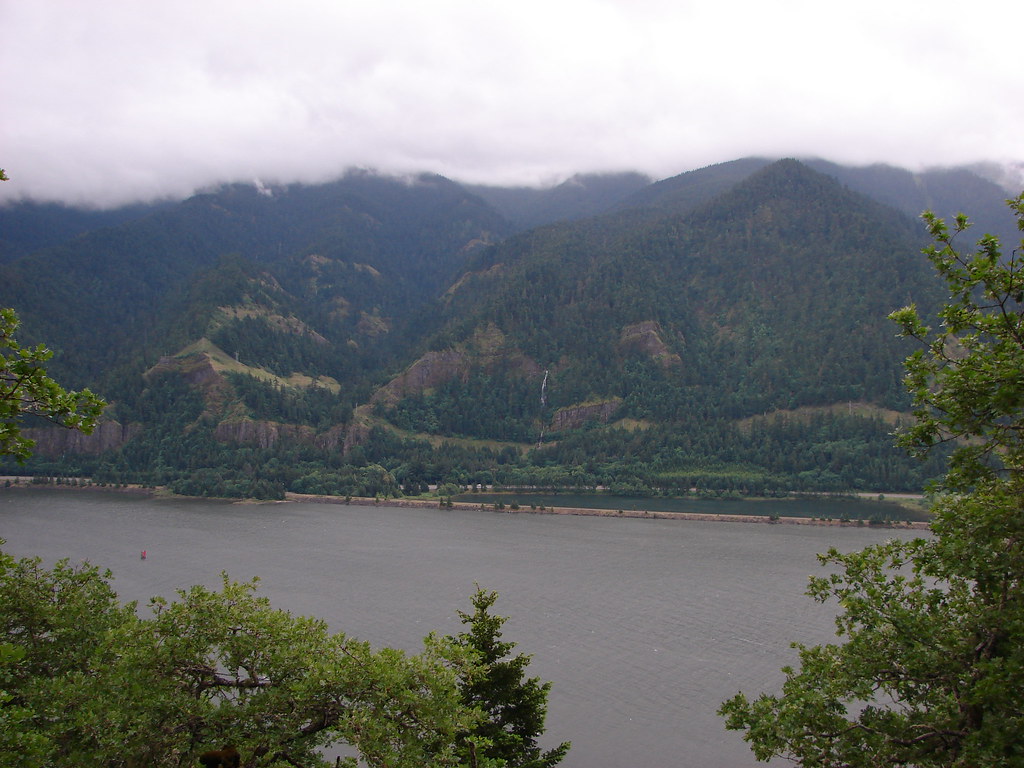
Despite this not being a wildflower hike like our previous stop there were some flowers present, including varieties we hadn’t see in the Memaloose Hills.
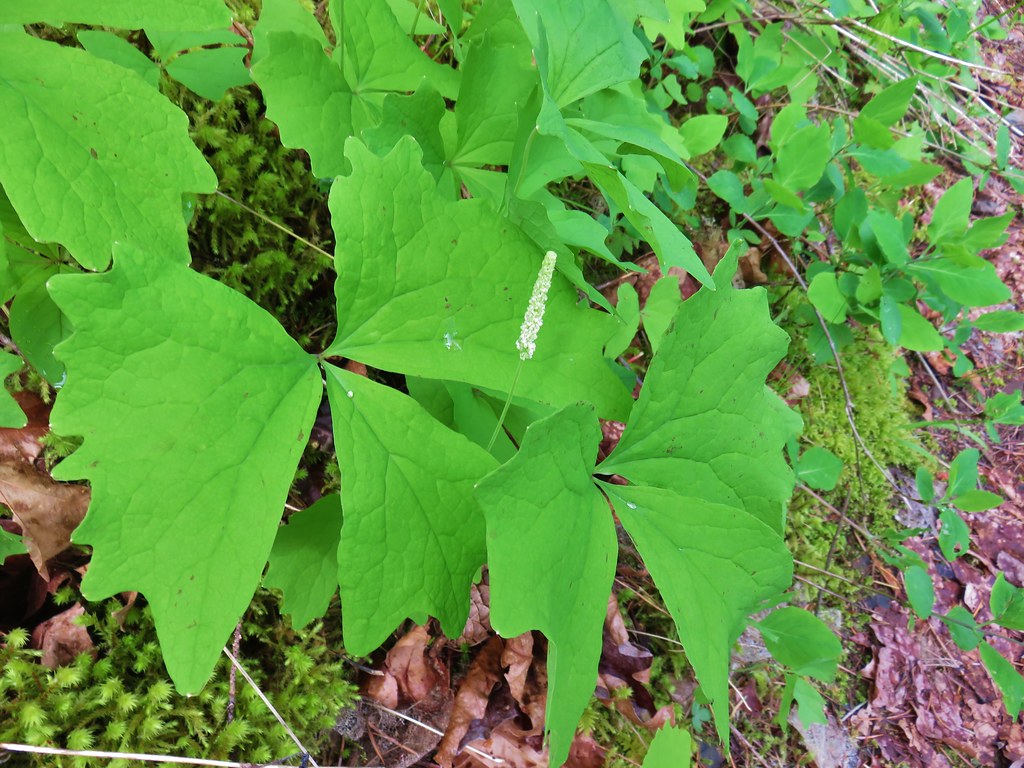
IMG_2783Vanilla Leaf

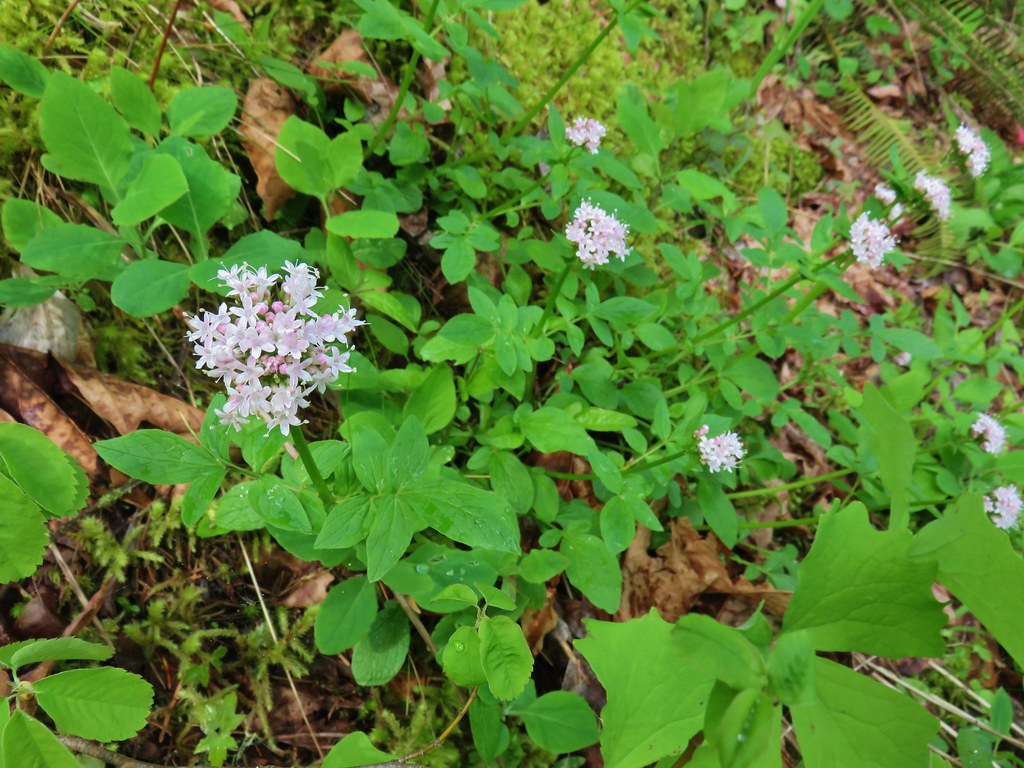
IMG_2784Valerian

IMG_2787Ballhead waterleaf

IMG_2807Trillium

At the 2.5 mile mark a side trail led to a middle viewpoint.
IMG_2794

IMG_2802

IMG_2803Dog Mountain

This viewpoint was covered in pink plectritis.
IMG_2798

Just uphill from this viewpoint we passed the upper junction with the Chetwoot Loop Trail.
IMG_2814

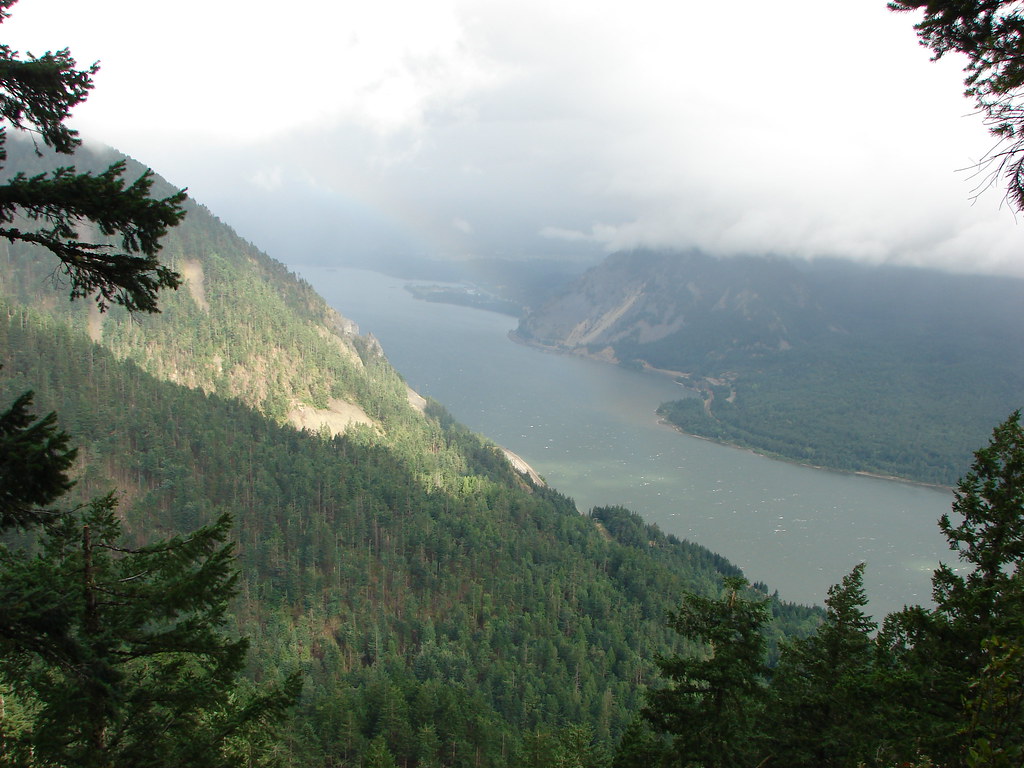
From the junction it was just another .6 miles to our goal at the upper viewpoint. It was pretty good climb during which we passed the only other hiker we’d see on this trail. This section of trail had not been cleared yet and was somewhat crowded by the poison oak. I also had picked up a couple ticks which were flicked off. The good news was another TKO work party was planned for the following Friday.
IMG_2822

The upper viewpoint had a nice view west down the Columbia River and of Wind and Dog Mountain (2016 trip report) on the Washington side of the gorge.
IMG_2829

We were a bit surprised to see what appeared to be a grass widow blooming at the viewpoint.
IMG_2827

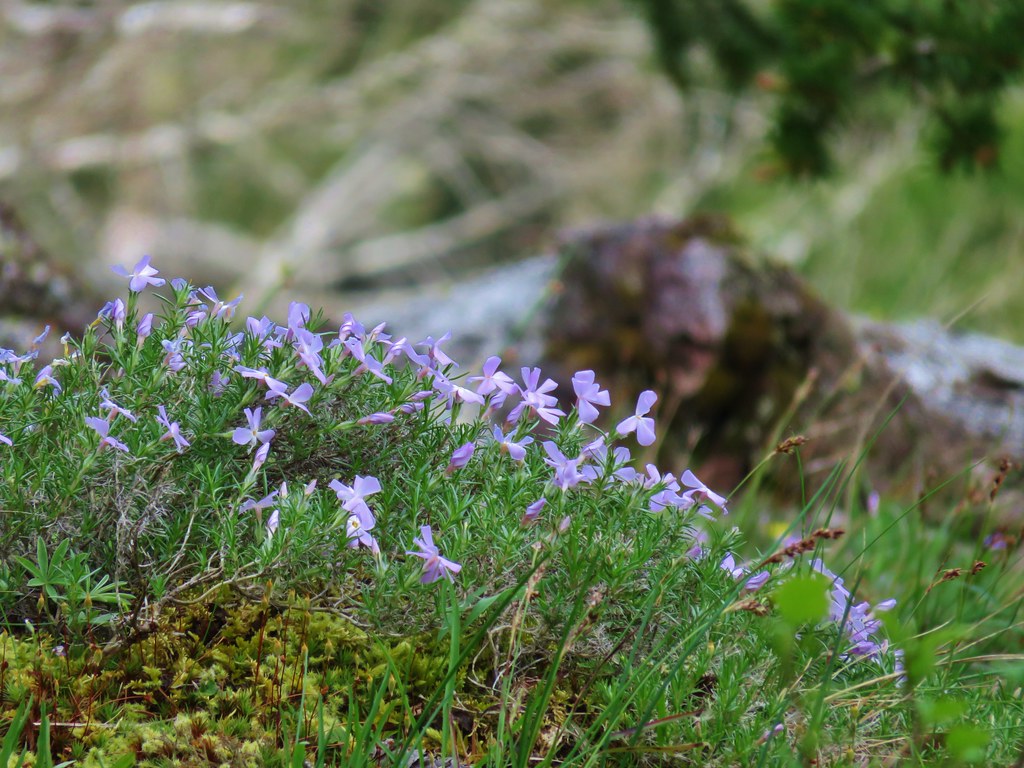
There was also a couple of clumps of phlox present.
IMG_2828

We headed back down to the trailhead dodging the poison oak and keeping an eye out for any more ticks (one did manage to make it all they back home with us before being apprehended). We had briefly considered doing the Mitchell Point Trail before we’d started on the Wygant Trail but that idea had completely left the building by the time we arrived back at the trailhead.
IMG_2834

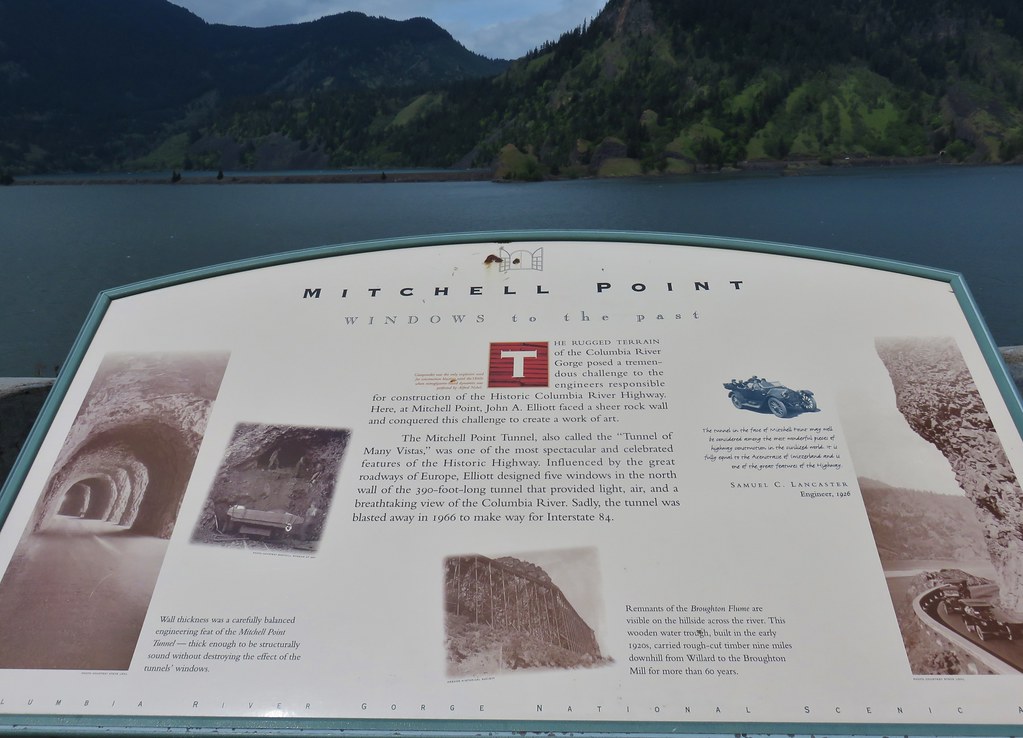
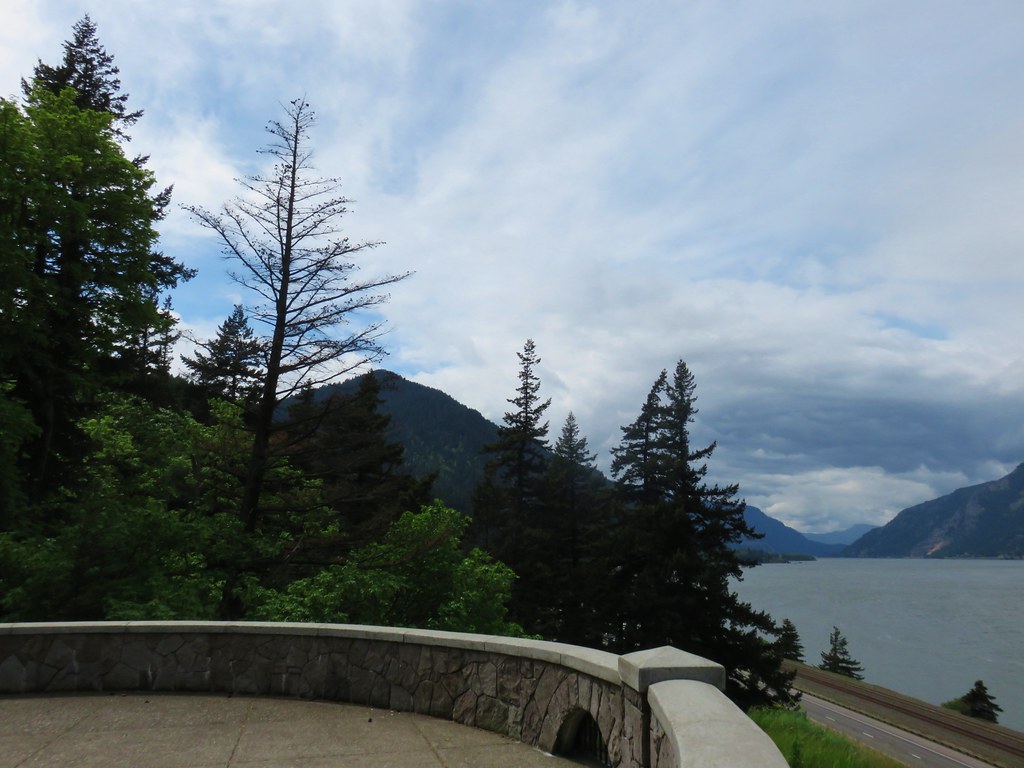
We have plans for that trail at a future date. We did however walk over to the Mitchell Point Overlook before heading home where the forested top of Wygant Peak could be seen to the west.
IMG_2836

IMG_2838

It was a nice way to start our season. A total of 10.2 miles hiked with a decent, but not insane, amount of climbing to get us started. The views and the wildflowers had been good and aside from a couple of sprinkles while on the Wygant Trail the weather had exceeded our expectations. The difference in the terrain and vegetation between these two hikes was also enjoyable given that they are less than miles apart as the crow flies. Happy Trails!

Flickr: Memaloose Hills & Wygant Viewpoint

Categories
Columbia River Gorge South Hiking Oregon Throwback Thursday Trip report

Throwback Thursday – Oneonta Falls

**Note the 2017 Eagle Creek Fire burned over much of this hike.**

This weeks Throwback Thursday hike took place on 7/2/2012 and holds the distinction of being our first in the Columbia Gorge as well as the first for which we used our “100 Hikes in Northwest Oregon & Southwest Washington” guidebook by William L. Sullivan.

One of the many reasons that we appreciate his guidebooks so much is the number of options he provides. In addition to the 100 featured hikes each book lists several barrier free options and contain up to 108 additional hikes with much briefer descriptions in the back of the book. To top it off he often provides information on multiple options within a featured hike which is what we followed on this trip.

The hike to Oneonta and Horsetail Falls is listed as a 2.7 mile loop in our 2011 3rd edition of the NW guidebook which would have been too short a loop to warrant our drive to the trailhead but another option was listed at the end of the hike description, a 12.2 mile loop passing more waterfalls including Multnomah Falls, Oregon’s tallest waterfall.

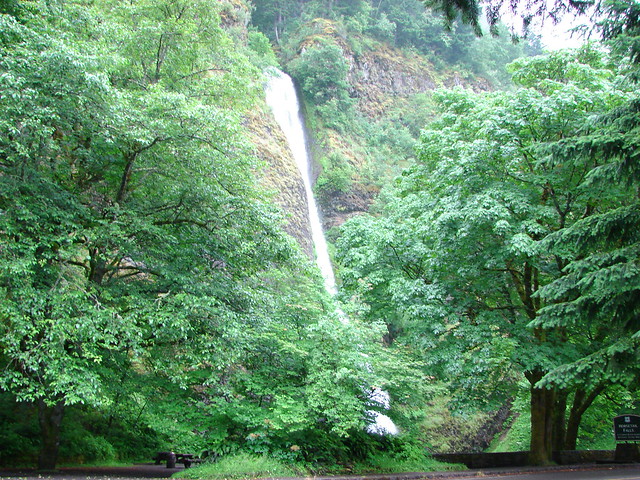
Our hike started at the Horestail Falls Trailhead along the Historic Columbia River Highway. Horestail Falls is literally right there and the trail starts beside it.

Horsetail Falls

Horsetail Falls

The trail climbed for .2 miles to a junction with the Gorge Trail where we turned right promptly arriving at Ponytail Falls.

Horsetail Falls Trail

Ponytail Falls

We followed the Gorge Trail behind the falls, which is always a fun thing to do, and continued to a viewpoint overlooking the cloud covered Columbia River.

Ponytail Falls

Ponytail Falls

Columbia River and Beacon Rock

The trail then followed the Oneonta Gorge to a footbridge over the creek near Oneonta Falls.

Oneonta Gorge

Footbridge over Oneonta Creek

Oneonta Falls

On the far side of the bridge the trail climbed to a junction with the Oneonta Trail. The short 2.7 mile loop described in the guide book turned right here and descended .9 miles to the old highway for a half mile road walk back to the trailhead. The other option had us turn left on the Oneonta Trail and climb up along Oneonta Creek where in just under a mile we came to the aptly named Triple Falls.

Triple Falls

We followed the Oneonta Trail along the creek for nearly 3 more miles passing a junction with the Horestail Creek Trail just over a mile from Triple Falls. The forest was wonderfully green surrounding the creek with smaller side creeks all around.

Oneonta Creek

Small fall along the Oneonta Trail

Oneonta Creek

Creek along the Oneonta Trail

Junction with the Horsetail Creek Trail

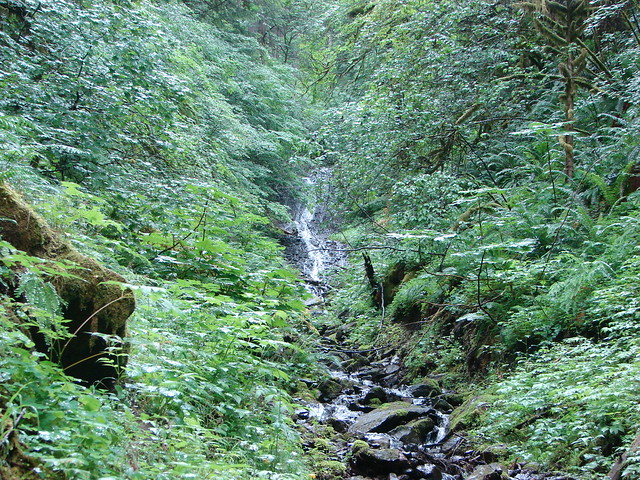
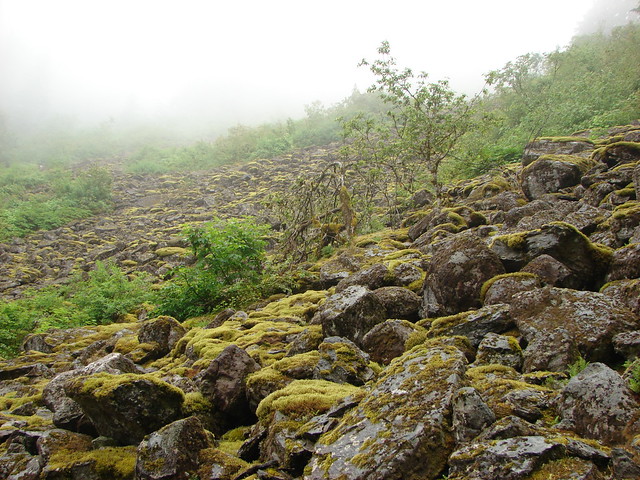
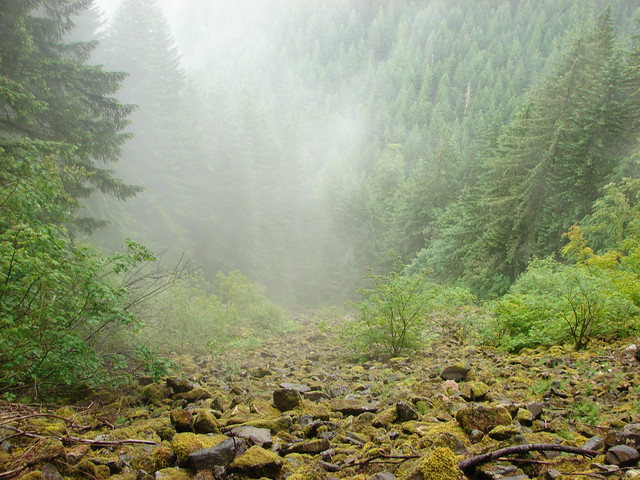
Beyond the junction with the Horestail Creek Trail the Oneonta Trail veered away from the creek and began to climb up to Franklin Ridge. We were headed into the clouds as we climbed past some talus slopes to the next trail junction.

Talus

Forest along the Oneonta Trail

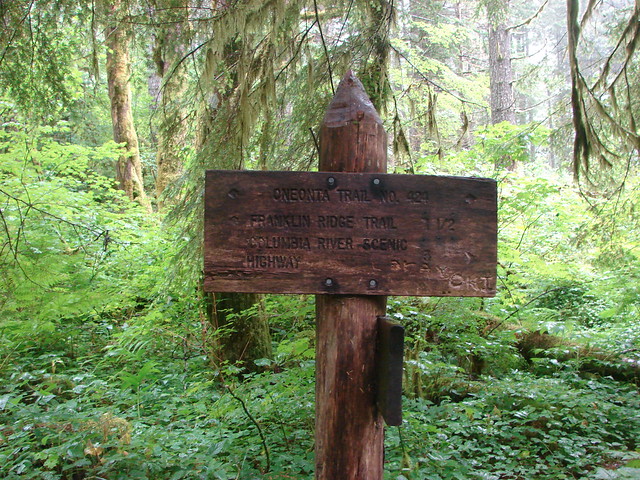
At the junction with the Franklin Ridge Trail we found ourselves in a forest wholly different than the lush green one we’d climbed from.

Forest along the Oneonta Trail

We turned right onto the Franklin Ridge Trail and began passing through the cold gray forest. It didn’t stay gray forever though and we soon found ourselves on an overgrown trail in a meadow full of purple larkspur.

Franklin Ridge Trail

Larkspur along the Franklin Ridge Trail

Near the end of Franklin Ridge the trail descended to a junction with the Larch Mountain Trail, just over two miles from where we had picked up the trail and 3 miles from the Multnomah Lodge.

Larch Mountain Trail sign

The hike down the Larch Mountain Trail along Multnomah Creek was gorgeous. Green forests and a series of waterfalls awaited as we made our way down to the top of Multnomah Falls.

Multnomah Creek

Multnomah Creek

Multnomah Creek

Multnomah Creek

Ecola Falls

Ecola Falls

Weisendanger Falls

Weisendanger Falls

Middle and Lower Dutchman Falls

Dutchman Falls

As we got closer to the upper viewpoint the number of other hikers grew exponentially. The upper viewpoint was closed off but as we made our way further down toward the lodge the falls came into view.

Multnomah Falls

To finish our loop we would need to take the Gorge Trail which split off from the Larch Mountain Trail .6 miles from the upper viewpoint. That split was before the Larch Mountain Trail reached the Benson Bridge below Multnomah Falls and since we were that close to the bridge and the lodge we decided to check them out before completing the loop.

Crossing the Benson Bridge was a nightmare. A mass of humanity was stopped on the bridge trying to get pictures while others were trying to get across it to go up the trail, we were salmon swimming against the current and by the time we’d made it down to the lodge I was done with people. I took a couple of photos, used the facilities inside the lodge, then we headed back up through the quagmire of bodies to the Gorge Trail.

Multnomah Falls

What the Gorge Trail lacked in scenic creeks and waterfalls it made up for in solitude. We followed it to a junction with the return route of the 2.7 mile loop option where we forked left and followed it down to the old highway. As we followed the highway the number of people began to increase, especially as we neared the Oneonta Gorge. Unfortunately this beautiful canyon was already becoming and now is too popular for it’s own good. It’s possible to wade upstream and so many people do so now that lines form as people wait to clamber over a resident log jam. We skipped the side trip that day and have yet to venture in.

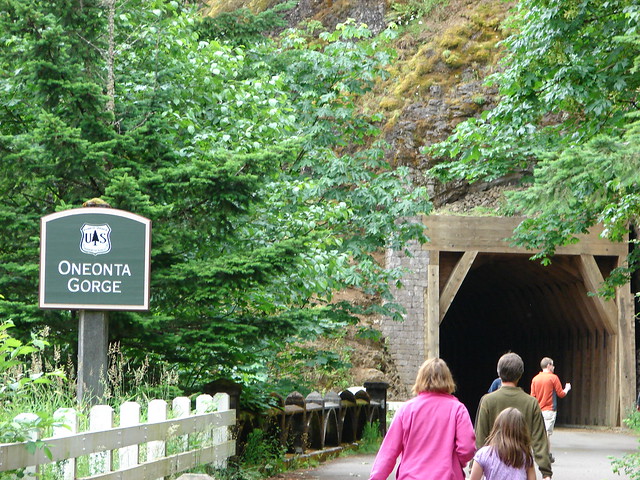
After passing the mouth of the gorge the path passed through a tunnel left over from the early days of the old highway. A bridge later replaced the tunnel but it was reopened for foot traffic.

Oneonta Gorge tunnel

Our first hike in the Columbia River Gorge had given us a taste of a little of everything the area has to offer. Amazing waterfalls, lush green forests, talus slopes, wildflower meadows, massive crowds at popular spots, and wonderful solitude further up trail. It’s an amazing area in an amazing state. Happy Trails!

Flickr: https://www.flickr.com/photos/9319235@N02/albums/72157632954287431

Categories
Columbia River Gorge South Hiking Oregon Trip report

Wyeth Trail To North, Rainy, and Black Lakes

**Note the 2017 Eagle Creek and 2024 Whiskey Creek fires burned portions of this hike.**

This past Veterans Day we celebrated our 21st wedding anniversary with a hike. Heather had spent the first part of the week in Las Vegas attending a convention for her work so we were looking to spend some quality time together and what better way than out on the trail away from distractions.

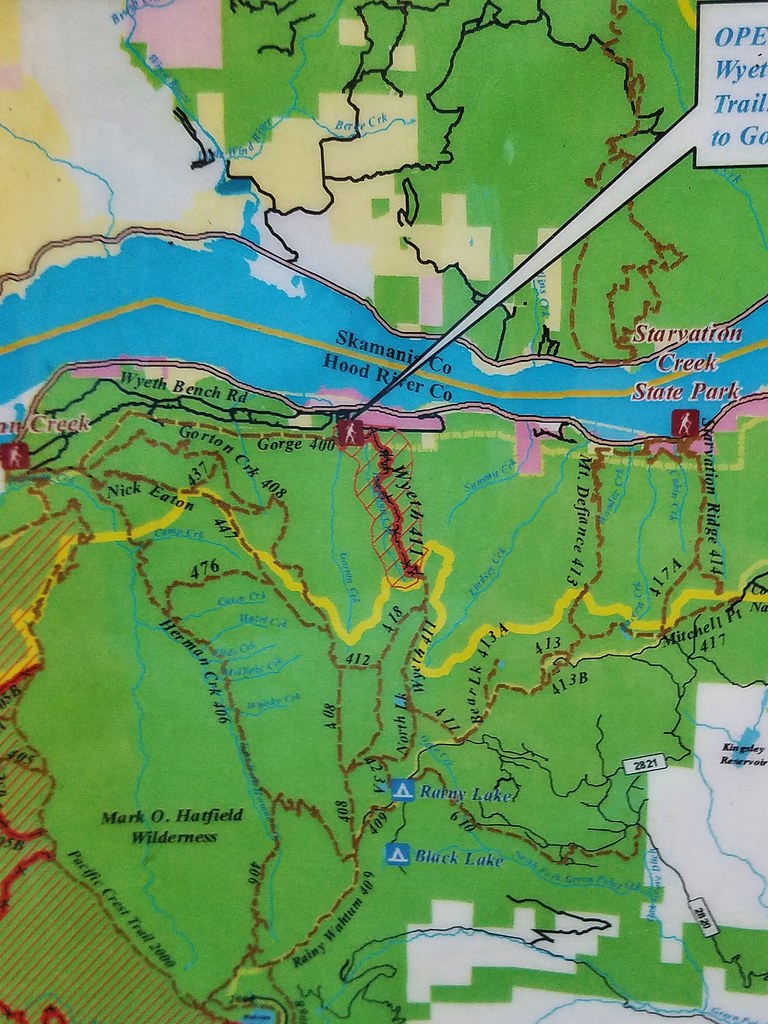
Our hike on the schedule for this month was to be a lollipop loop starting at Wyeth Campground in the Columbia Gorge and passing North, Rainy, and Black Lakes before returning via Green Point Ridge. I had originally estimated this hike to be a little over 16 miles with around 4000′ of elevation gain. Both of these figures turned out to be low. The total elevation gain was closer to 5000′ and the GPS read 21.5 miles when all was said and done.

The Wyeth Trail begins at Wyeth Campground which was gated closed for the season so we parked near the gate on the side of the Wyeth Road (Exit 51 off of I-84) and walked through the empty campground.
Sunrise from Wyeth Campground

Wyeth Campground

The campground is the eastern terminus for the Gorge Trail #400 which we followed briefly to a signed junction near a footbridge over Gorton Creek.
Footbridge over Gorton Creek

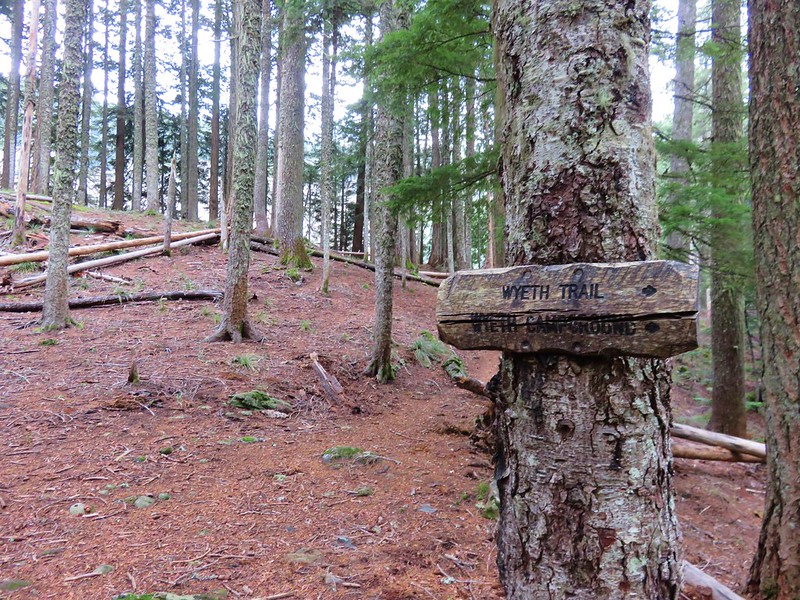
Wyeth Trail junction with the Gorge Trail

We turned left following the pointer for the Wyeth Trail passing under a set of power lines before the bridge-less crossing of Harphan Creek.
Creek crossing

Not long after crossing Harphan Creek the Wyeth Trail began its climb. The trail gained approximately 3500 over the next 4.8 miles. This mostly forested section used numerous switchbacks to keep from ever being too steep.
Wyeth Trail

Wyeth Trail

Wyeth Trail

Wyeth Trail

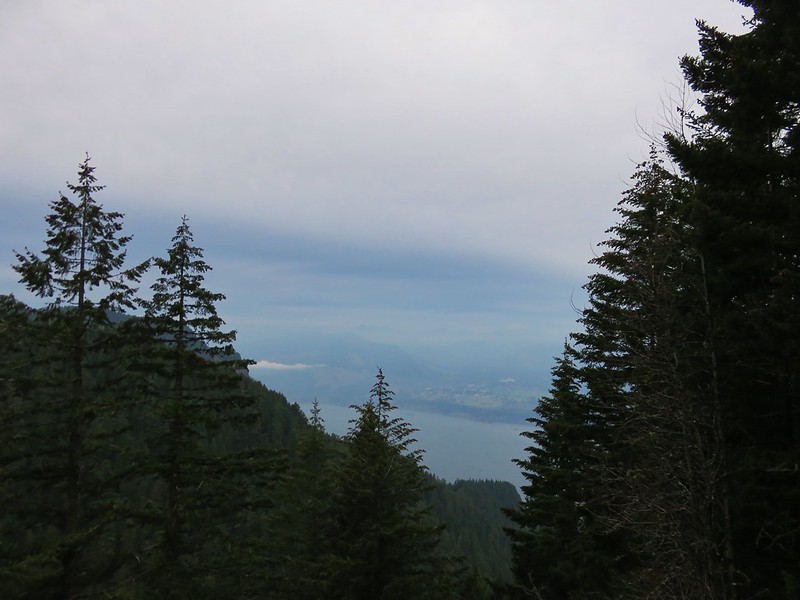
There were a couple of open areas which offered small views across the Columbia River toward Mt. St. Helens. Although the mountain was free of clouds the gray skies above and behind it provided a good camouflage from the camera.
Columbia River from the Wyeth Trail

The trail leveled off at a saddle where it began following the ridge south to the Green Point Ridge Trail junction.
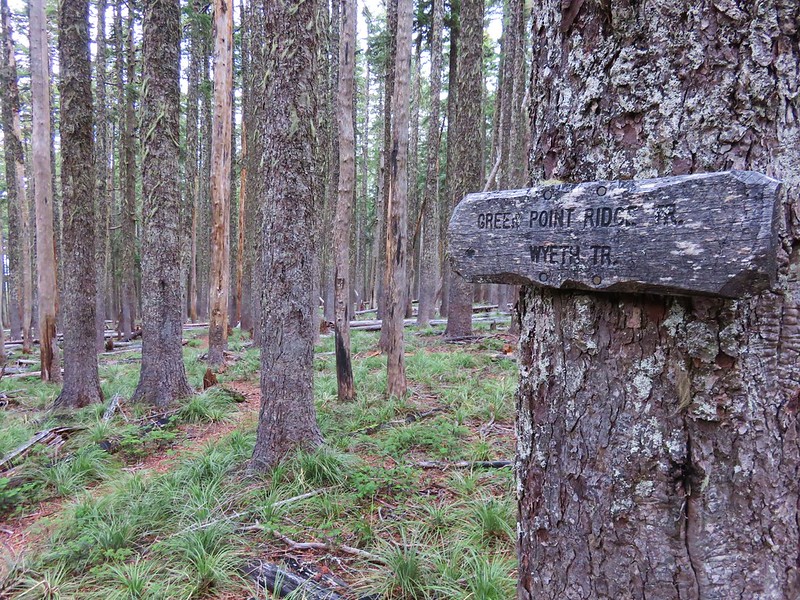
Wyeth Trail juntion with the Green Point Ridge Trail

Green Point Ridge Trail

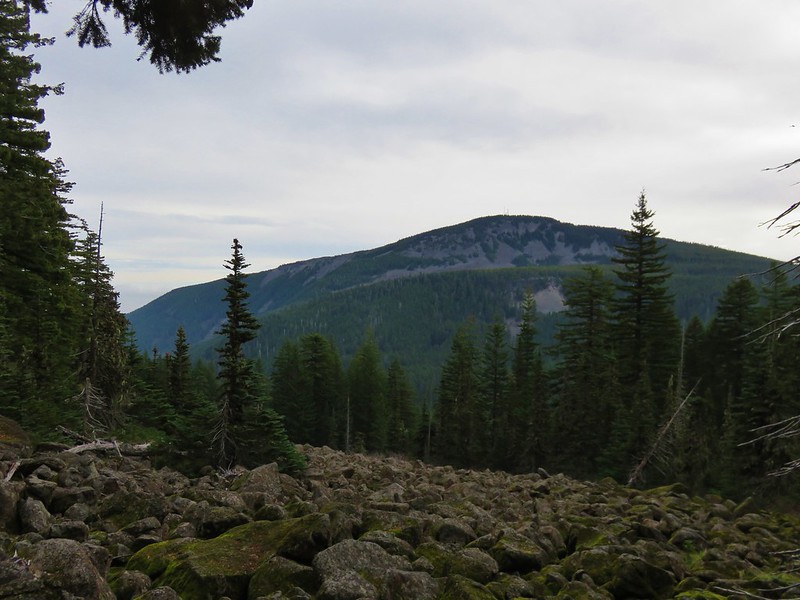
The Green Point Ridge Trail was our return route so we stayed left and continued 1.4 miles to North Lake. Along the way there was a nice view of Mt. Defiance from a rock field.
Mt. Defiance from the Wyeth Trail

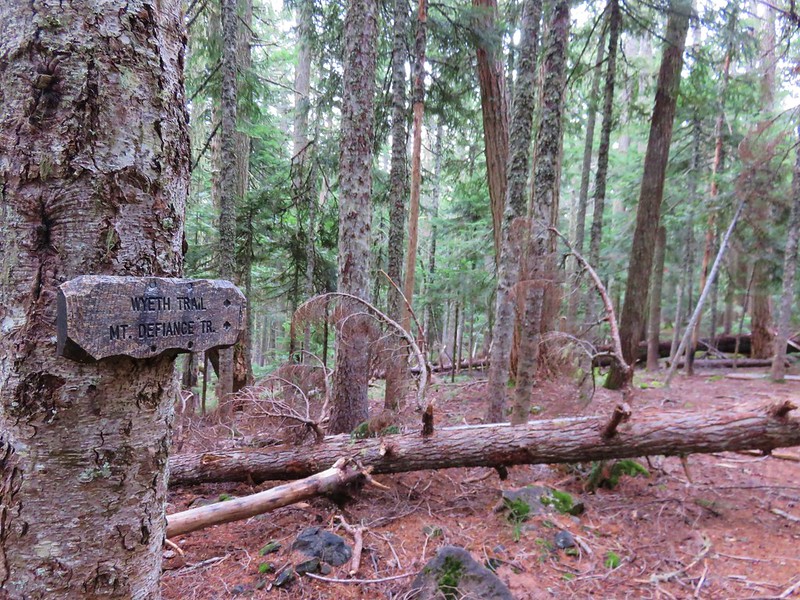
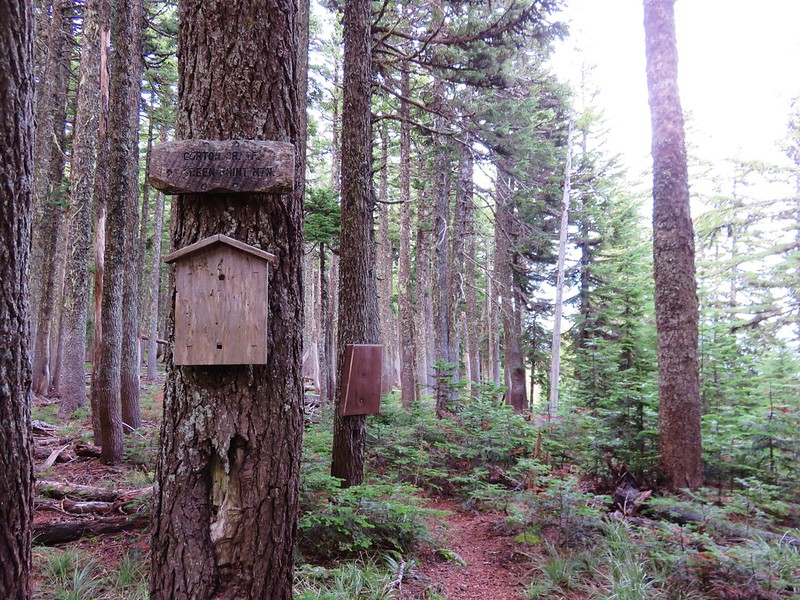
To see North Lake we followed an unsigned trail to the right at a junction where signs pointed back to the Wyeth Campground and ahead to the Mt. Defiance Trail.
Wyeth Trail

Wyeth Trail sign for the Mt. Defiance Trail

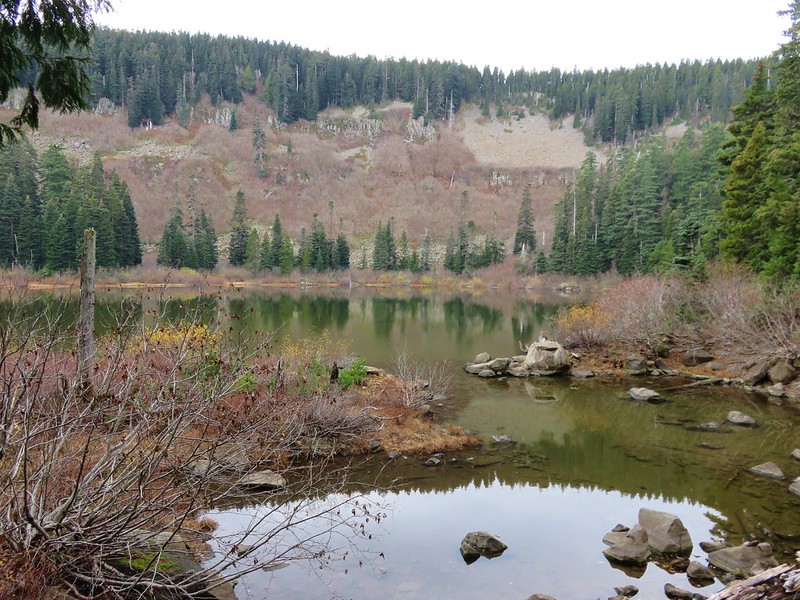
North Lake
North Lake

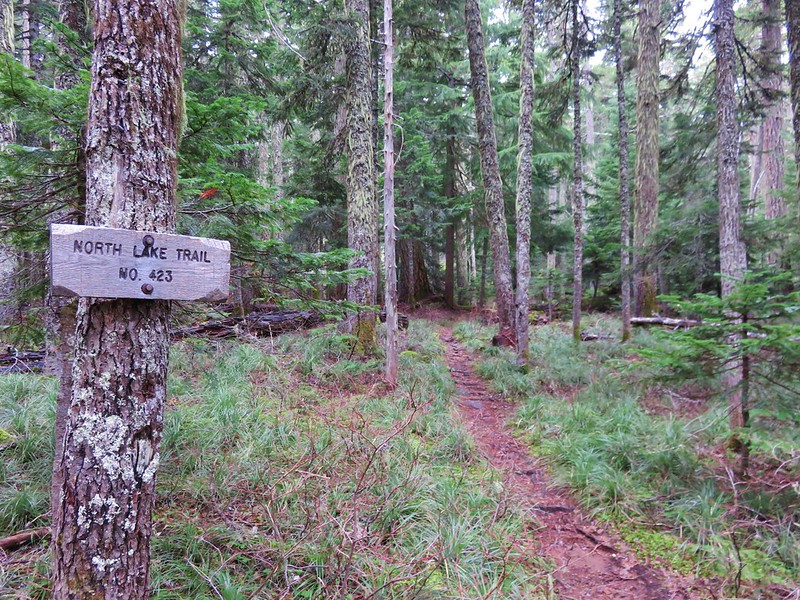
After sitting for a bit on some rocks along North Lake we continued along it’s shore back to the the Wyeth Trail at a junction with the North Lake Trail.
North Lake Trail

We took the North Lake Trail following it for a mile past a small pond to another trail junction.
Pond along the North Lake Trail

North Lake Trail junction with the Rainy Lake Trail

We headed to the left onto the Rainy Lake Trail.
Rainy Lake Trail

A quick .4 miles brought us to Rainy Lake with a view of Green Point Mountain on the far side.
Rainy Lake

Green Point Mountain from Rainy Lake

Green Point Mountain

A tenth of a mile beyond the lake the trail left the Mark O. Hatfield Wilderness and ended at the Rainy Lake Campground, which can be driven to. Directions

Mark O. Hatfiled Wilderness boundary near the Rainy Lake Campground

We walked through the campground passing the unique outhouse to the Rainy-Wahtum Trail.
Outhouse at the Rainy Lake Campground

Rainy Lake Trail

The Rainy-Wahtum Trail would lead us up to a junction with the Gorton Creek Trail where we would begin our return to the Wyeth Campground but before we did that we had wanted to visit nearby Black Lake. Both the North Lake Trail map available on the Mt. Hood Forest Service website and Google showed a trail descending to Black Lake from the Rainy-Wahtum Trail. We were keeping our eyes out for this trail and just when we began to think we had missed it we spotted a path near a small cairn.
We thought this was marking the trail to Black Lake

We turned left onto this faint path passing the remnants of an old sign that could no longer be read. All traces of the path soon disappeared and we looked around for old blazes or any other sign of the correct route. With nothing to be seen we pulled out the Forest Service map and compared it the map shown on the Garmin. The GPS didn’t show the trail but we could compare the topography of the two maps to get a good idea of where the trail should be. We bushwacked downhill using the topographic maps in an attempt to pick up some sort of trail but weren’t having any luck so we finally decided to follow a decommissioned logging road down to its junction with Dead Point Road which went by Black Lake after passing the Rainy Lake Campground.
Road to Black Lake

We found a few flowers along the road before arriving at the Black Lake Campground.
Thistle

Black Lake Campground

Black Lake

Black Lake

We took a break at one of the picnic tables which we shared with a caterpillar.
Caterpillar

We followed the road back to the Rainy Lake Campground and set off once again on the Rainy-Wahtum Trail. We watched again for any signs of a different trail to Black Lake both before and after the one we’d turned down but never saw anything.

The Rainy-Wahtum Trail followed what was once Wahtum Road up to a 4-way trail junction.
Rainy-Wahtum Trail

The junction is the meeting point of the Rainy-Wahtum, Gorton Creek, and Herman Creek Cutoff Trails.
Rainy-Wahtum Trail junction with the Gorton Creek, and Herman Creek Cutoff Trails

Gorton Creek Trail

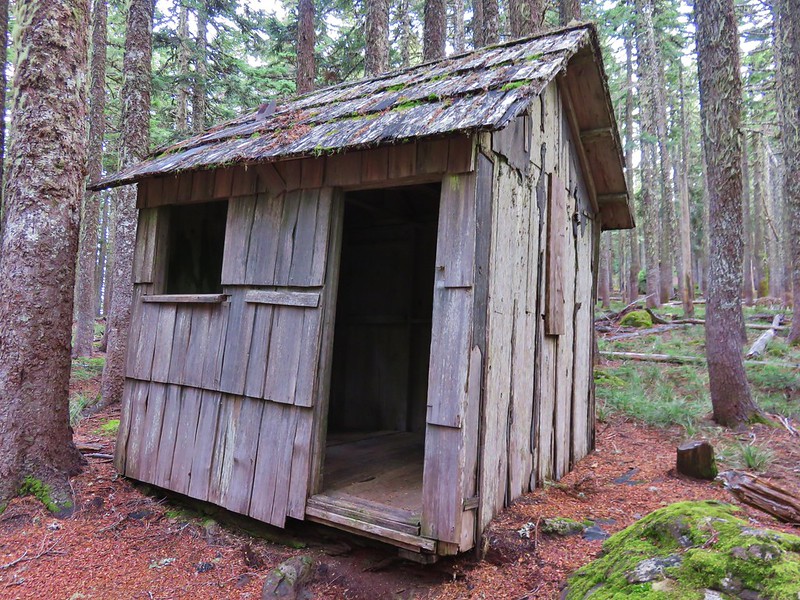
WWII signal Hut

Our route was to follow the Gorton Creek Trail but first we took a very short detour on the Herman Creek Cutoff Trail to check out a WWII signal hut which seemed fitting on Veterans Day.
WWII signal Hut

We started down the Gorton Creek Trail reentering the Mark O. Hatfield Wilderness and gradually climbing Green Point Ridge.
Wilderness sign along the Gorton Creek Trail

As we approached Green Point Mountain, which is really just the highest point on the ridge, the first view to open up was of Rainy Lake and Mt. Defiance beyond.
Mt. Defiance and Rainy Lake

Rainy Lake

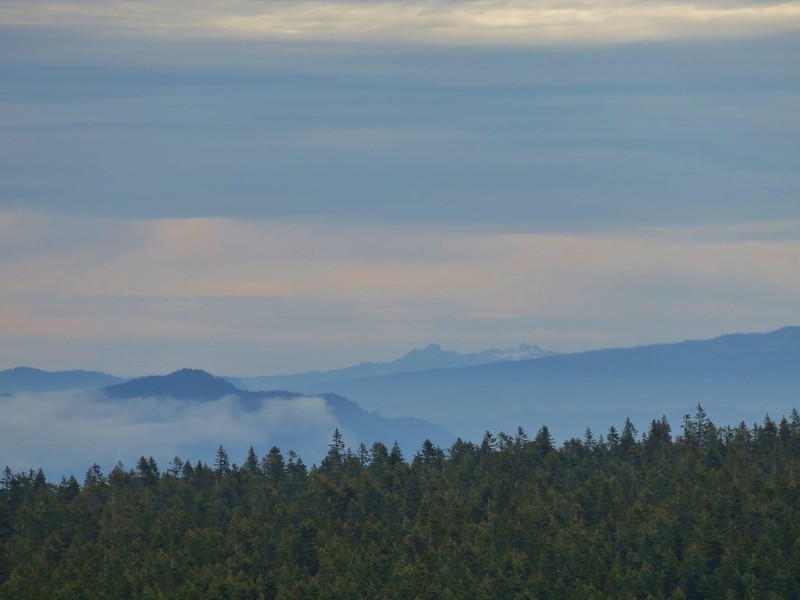
The Oregon Hikers Field Guide entry for  Green Point Mountain mentions views of Mt. Defiance, Rainy Lake, and Mt. Adams but we quickly found that there were more views than that. Before we were able to see Mt. Adams to the north a glance behind us to the south revealed Mt. Hood rising above the tress.
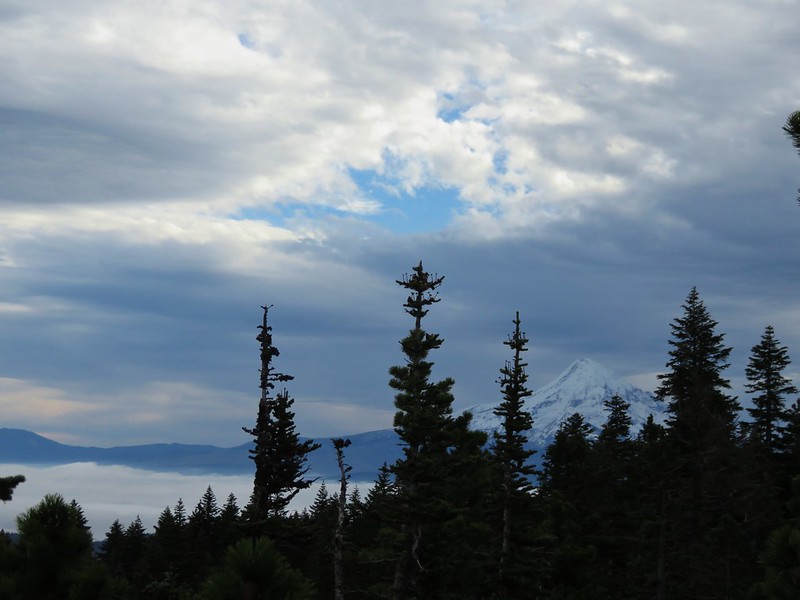
Mt. Hood

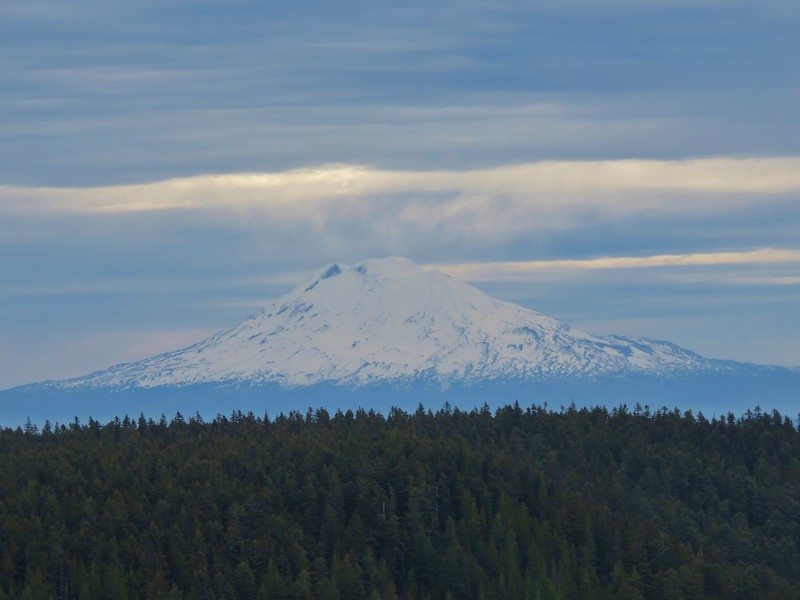
A viewpoint near the summit offered the Mt. Adams, Mt. Defiance, and Rainy Lake view.
Mt. Adams, Mt. Defiance and Rainy Lake

Mt. Adams
Mt. Adams

The view of Mt. Hood was especially nice with a layer of clouds in the valley below it and an opening of blue sky in the clouds above.
Mt. Hood from Green Point Mountain

When we reached the summit we were a bit surprised to see Mt. Rainier join the view to the north and Mt. Jefferson to the south.
Mt. Rainier from Green Point Mountain

Mt. Jefferson and Olallie Butte
Olallie Butte and Mt. Jefferson from Green Point Mountain

Mt. Hood & Mt. Jefferson
Mt. Hood and Mt. Jefferson from Green Point Mountain

In addition the Goat Rocks were also visible between Mt. Rainier and Mt. Adams.
Goat Rocks from Green Point Mountain

After enjoying the surprisingly good view we began our descent. It was nearly 2pm and we’d been hiking for almost 7 hours already. I was beginning to suspect that the hike was going to be longer than what I had estimated. We tend to average right around 2mph so a 16 mile hike should take us 8 hours. We hadn’t taken any extended breaks and it didn’t feel like we’d been going particularly slowly on the climb up so extra distance was the only explanation for the time. We picked up the pace on the way down not wanting to have to rely on using lights to finish the hike in the dark.

A quarter mile from the summit we left the Gorton Creek Trail at a three-way junction. The Gorton Creek Trail headed downhill to the left and on the right the North Lake Trail came up from the lake. We stayed straight on the Green Point Ridge Trail.
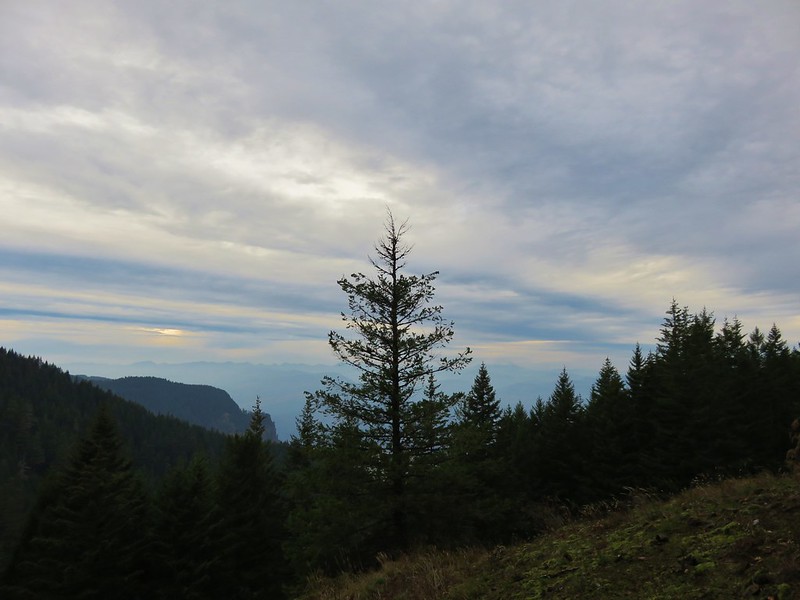
Green Point Ridge Trail

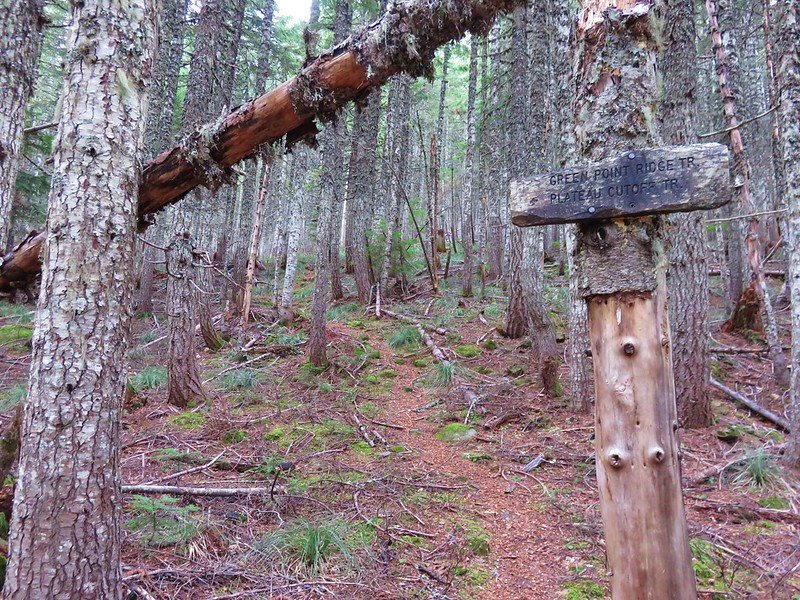
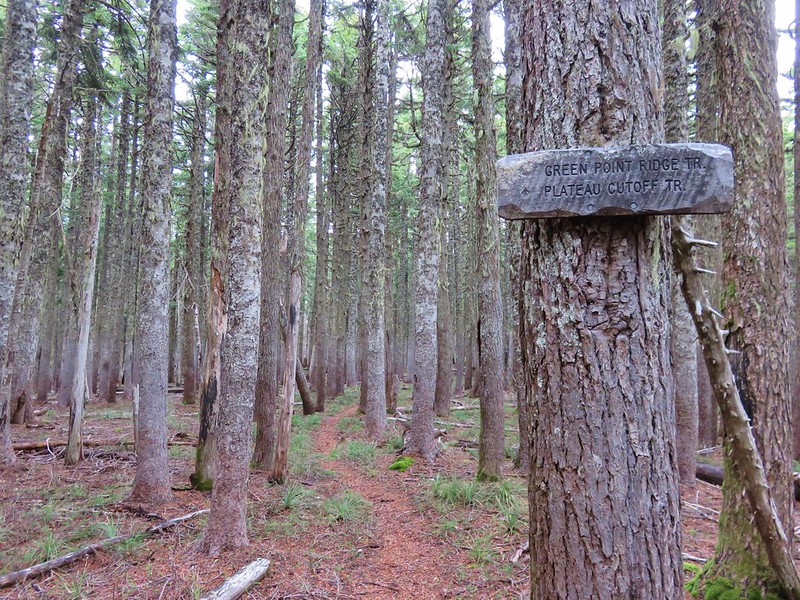
We followed the wooded ridge another 2.5 miles ignoring the Plateau Cutoff Trail to the left after 1.5 miles.
Green Point Ridge Trail

The steepest section of trail we’d been on all day was the final descent down to the Wyeth Trail.
Green Point Ridge Trail descending to the Wyeth Trail junction

Once we were back on the Wyeth Trail we retraced our steps down to the power lines. Mt. St. Helens was a little more visible on our way down in the afternoon light.
Mt. St. Helens in the distance

Mt. St. Helens from the Wyeth Trail

That morning we had noticed a trail coming up from the Wyeth Campground at the power lines which appeared to be a shorter route than what we had done so when we spotted it on the way down we followed it into the campground arriving back at our car ten minutes before 5pm.

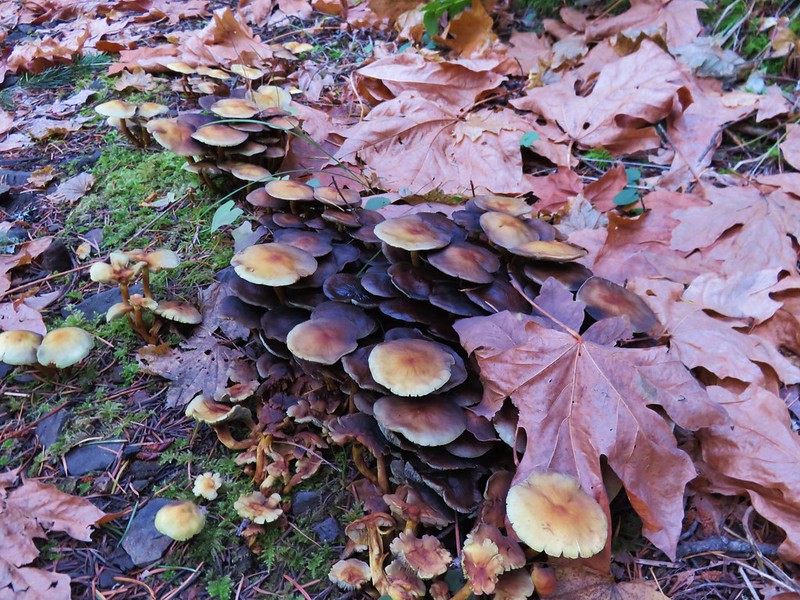
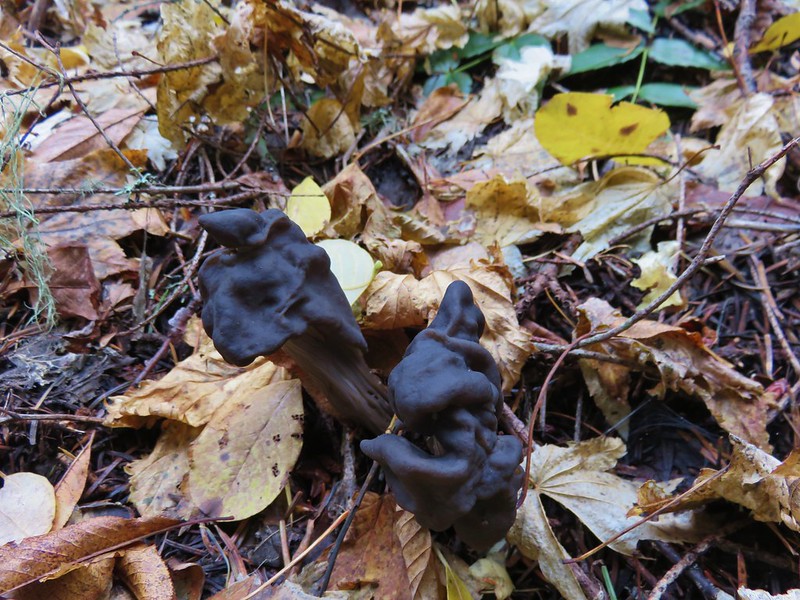
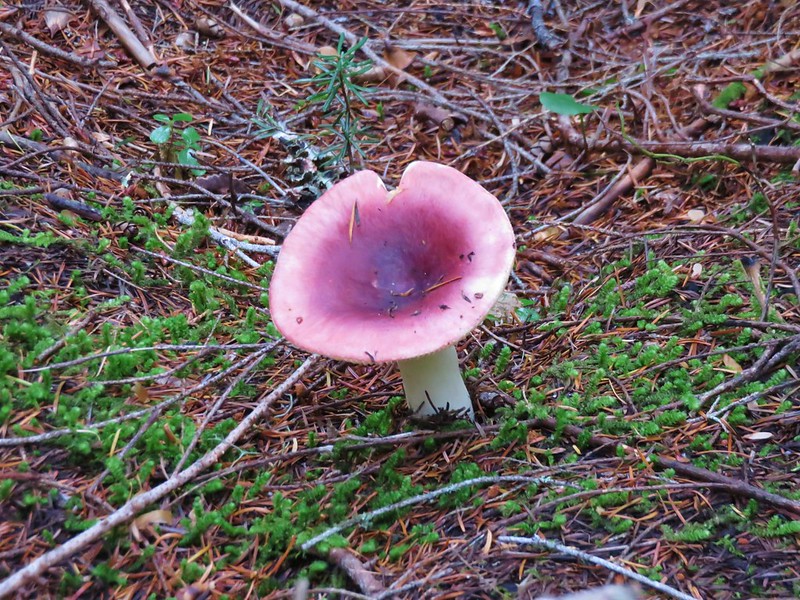
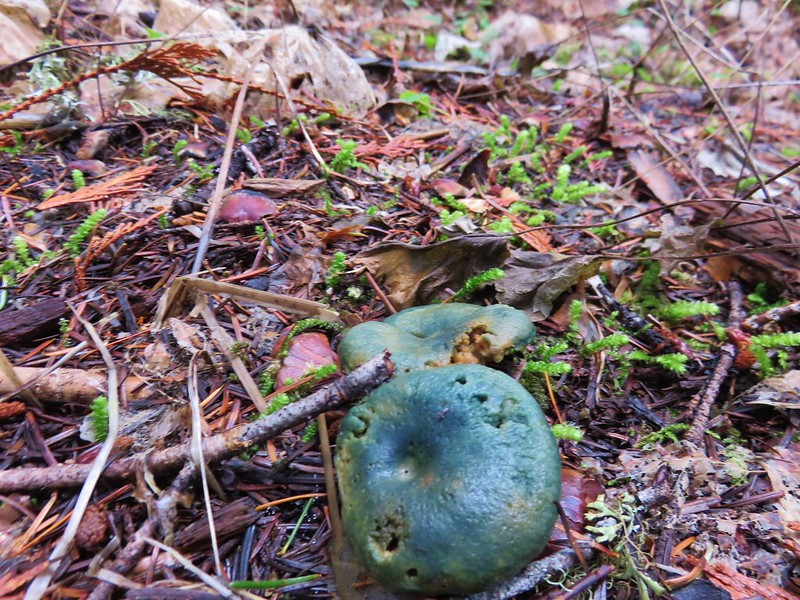
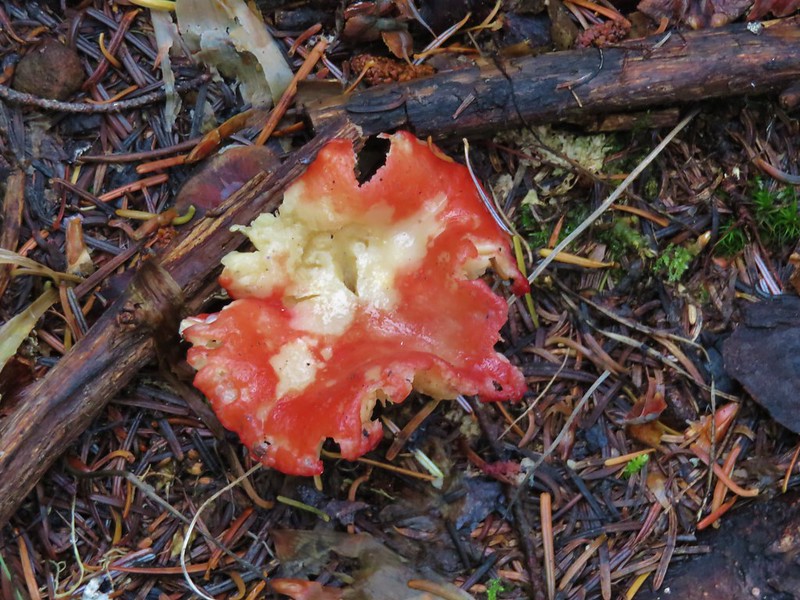
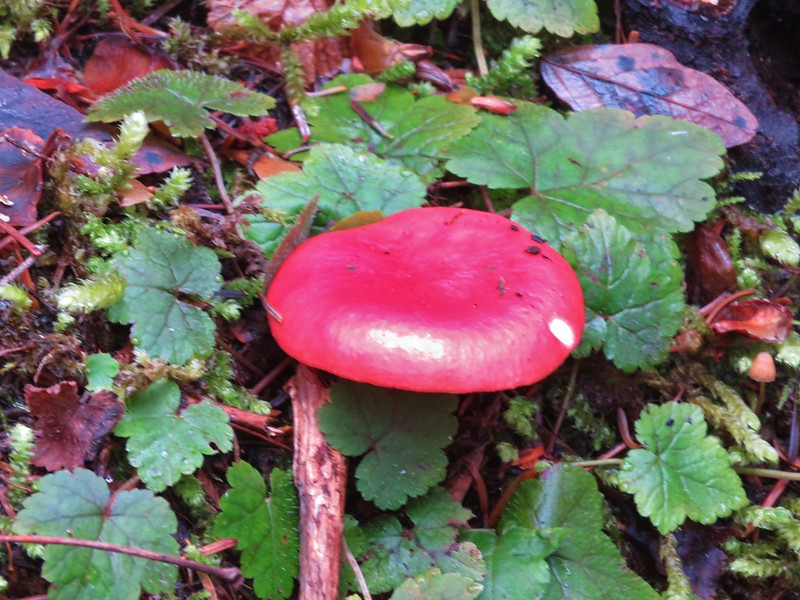
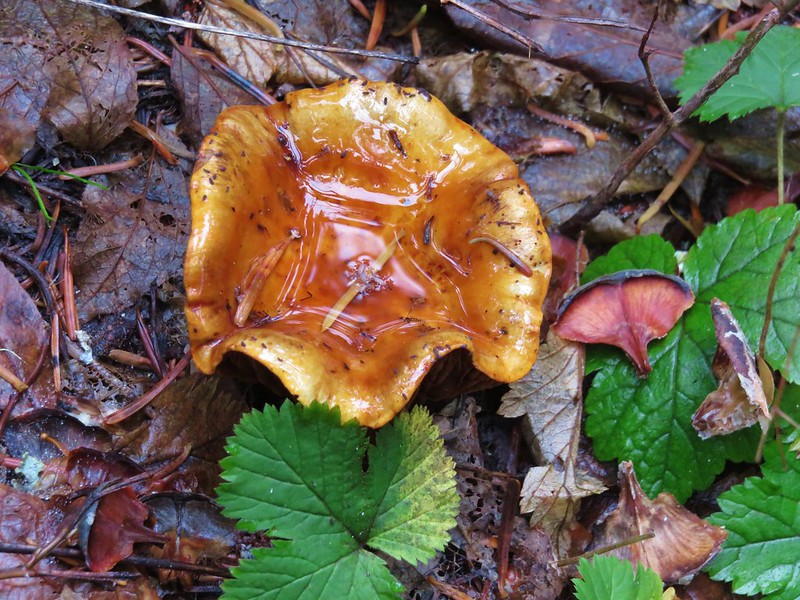
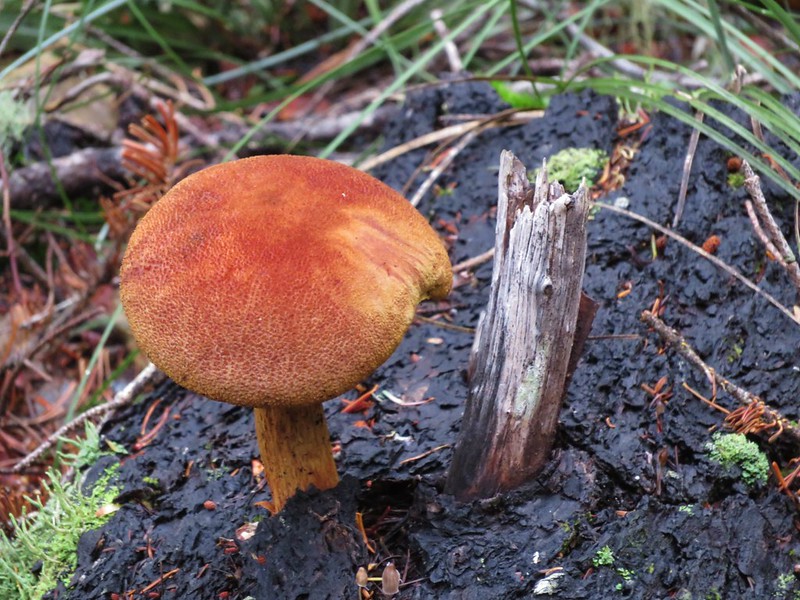
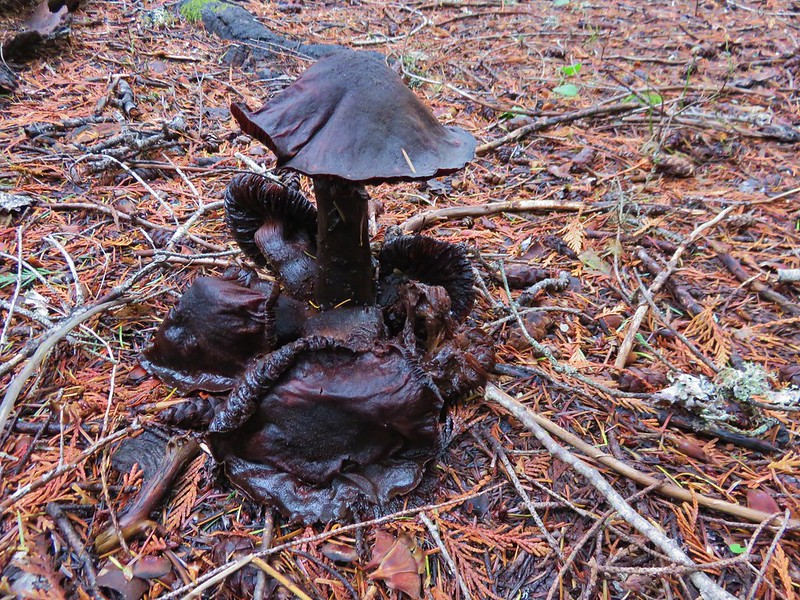
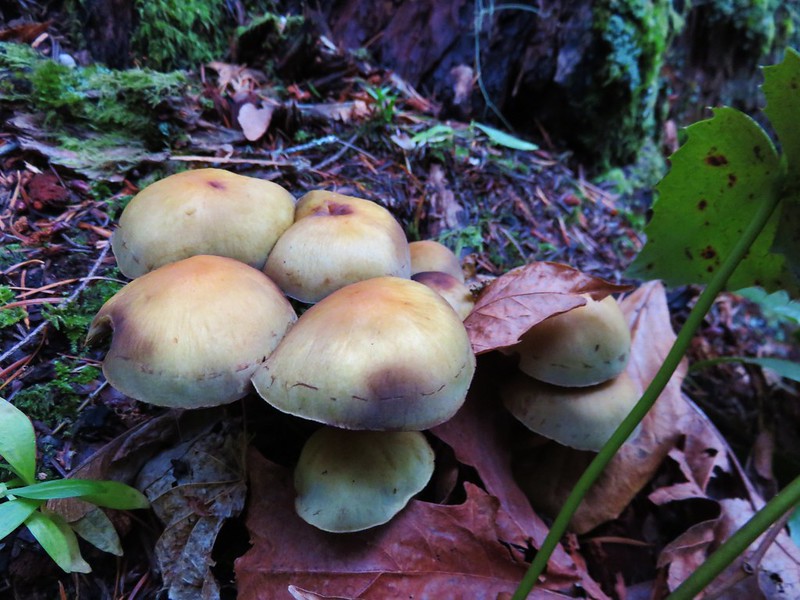
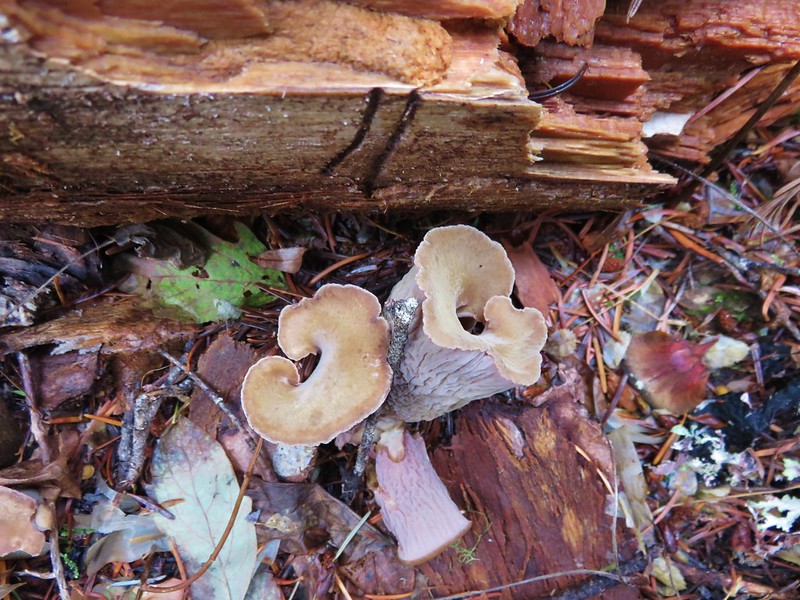
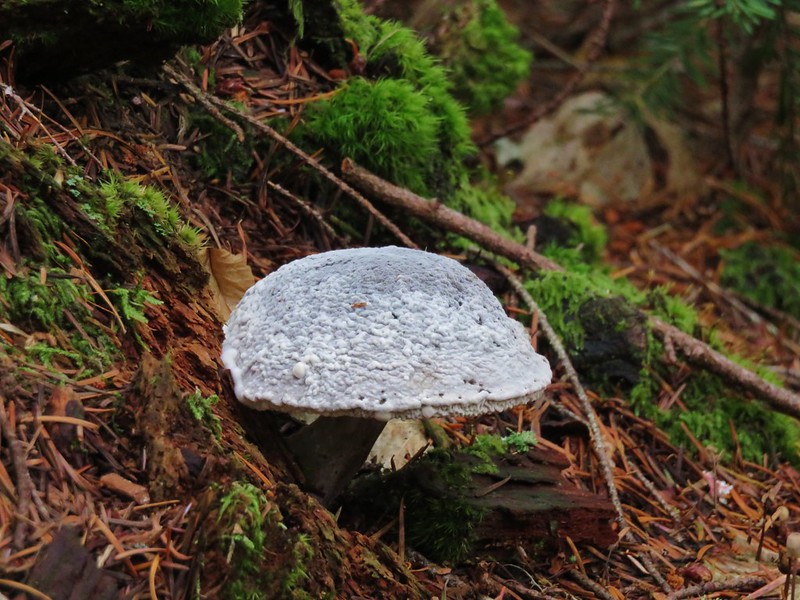
We had hiked from dawn to dusk (nearly 10 hours) without seeing anyone else on the trails. The views had been much better than expected and the lakes were all nice. One of the things that held our interest was the amazing variety of mushrooms along the way. The various colors, shapes, and sizes were impressive. Here is a small sample of that variety.
Mushrooms along the Wyeth Trail

Mushrooms

Mushroom

Mushrooms

Mushroom

Green mushrooms

Mushroom

Red mushroom

Another mushroom

Orange mushroom

Yellow mushrooms

Mushroom on a log

Mushroom groud near Black Lake

Mushrooms along the Wyeth Trail

Despite the hike turning out to be a lot longer than planned it was a great way to spend our anniversary. Happy Trails!

Categories
Columbia River Gorge South Hiking Oregon Trip report

Nesmith Point

**Note the 2017 Eagle Creek Fire burned a portion of this hike.**

With the remnants of Typhoon Songda sending a series of storms over the Pacific Northwest we were wondering what kind of conditions we’d be hiking in as we headed out to the Columbia Gorge for our 56th hike of 2016. The storms had not lived up to the dire predictions we had been hearing but there had been a good amount of rain and some stronger than normal winds over the previous couple of days.

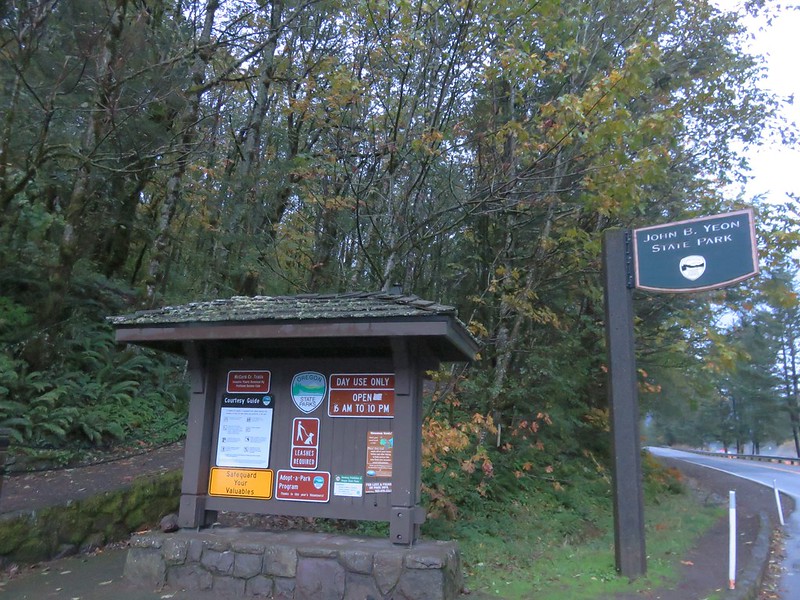
Our goal for this hike was Nesmith Point, a 3800′ climb from John B. Yeon State Park.
Nesmith Point Trailhead

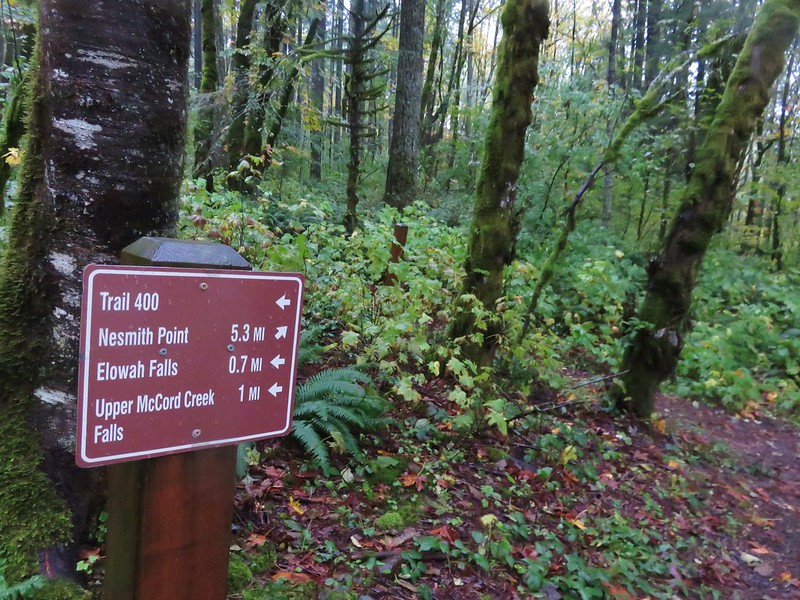
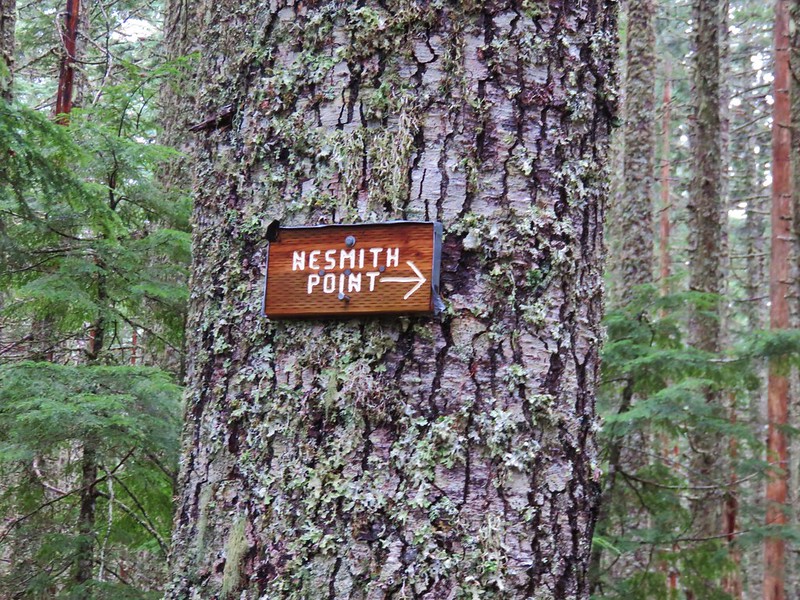
We had started at this same trailhead in March 2015 when we visited Elowah and Wahclella Falls. The trail set off uphill from the parking area where it promptly forks.
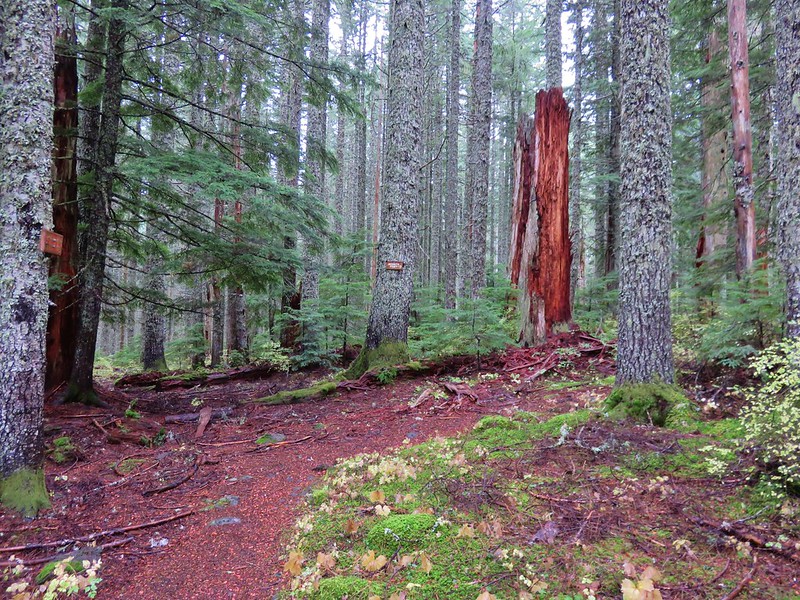
Trail sign for Nesmith Point

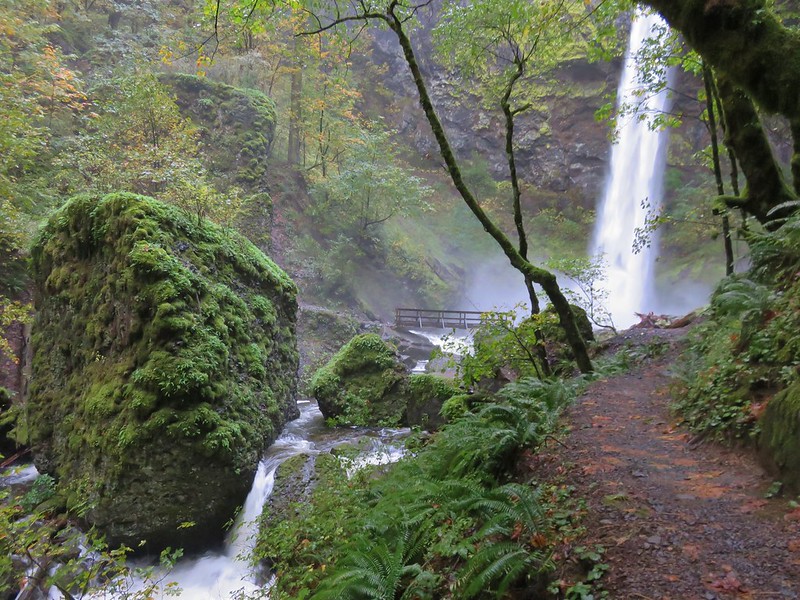
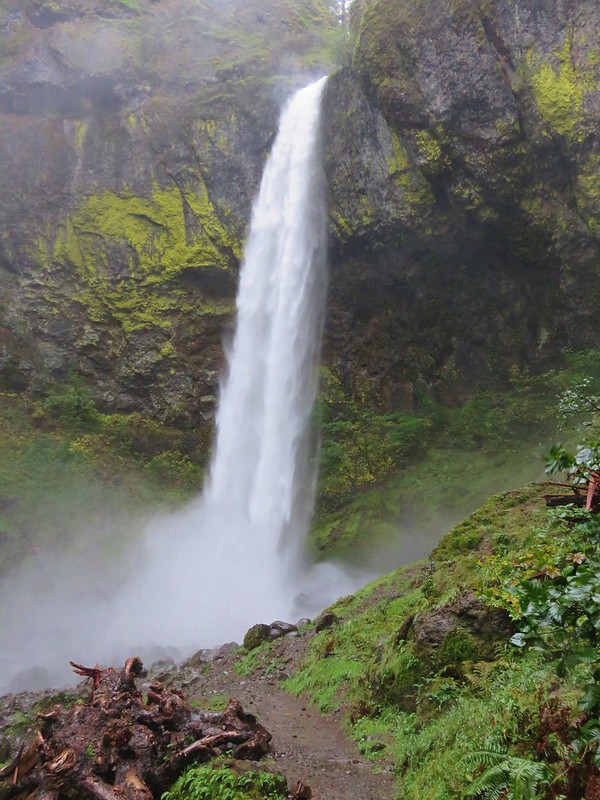
We hadn’t originally been planning on revisiting any of the waterfalls from our previous visit, but the recent rainfall piqued our interest enough that we decided to hike the .7 miles to Elowah Falls before heading up to Nesmith Point. There was definitely a lot more water pouring over the basalt now.
Elowah Falls

Elowah Falls

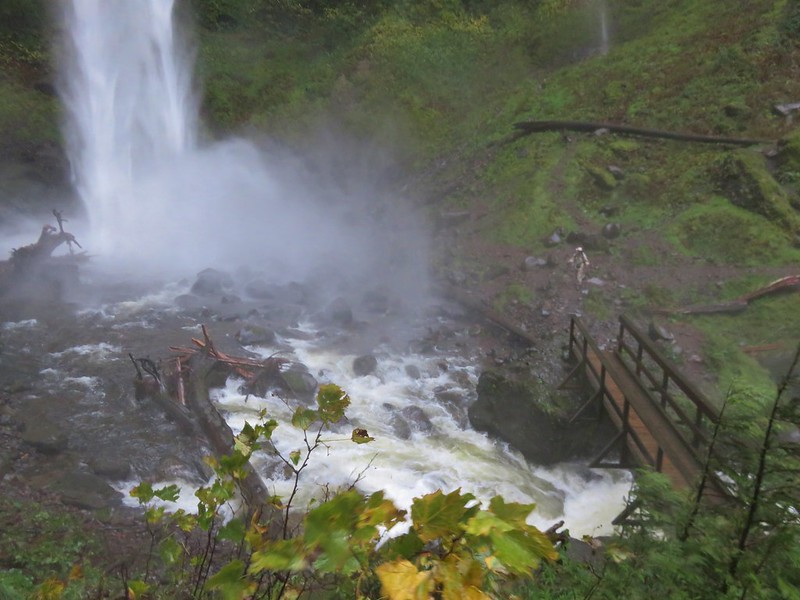
One of the great things about Elowah Falls is that the Gorge Trail crosses McCord Creek on a footbridge very close to the waterfall’s splash pool. Crossing it was literally a blast as wind and water sprayed out from the thundering waterfall.
Elowah Falls

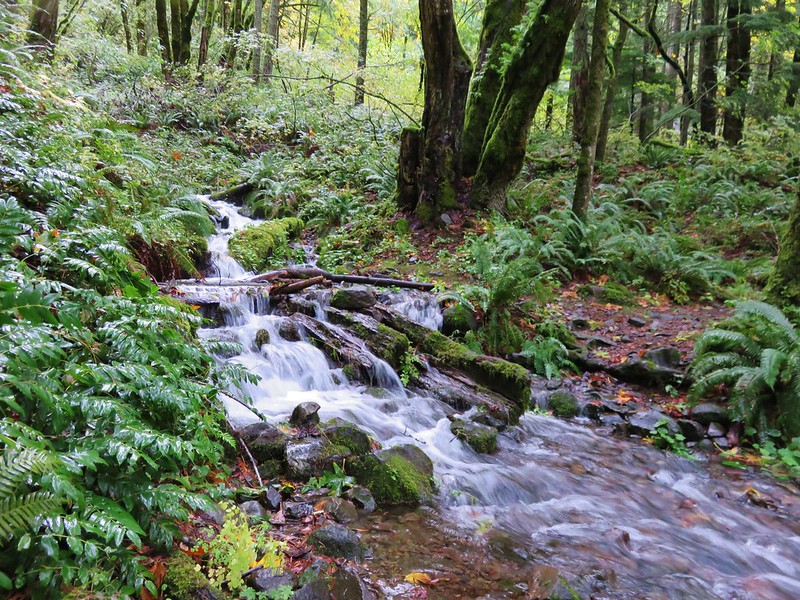
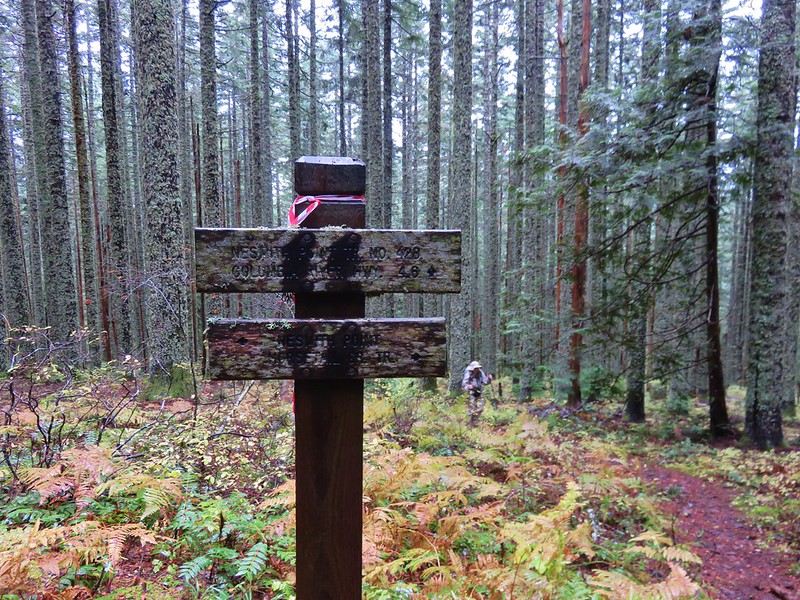
After crossing the bridge we turned right back around and headed back across. We were sufficiently wet at that point and ready to begin the day’s big climb. When we got back to the fork in the trail near the trailhead we stayed on the Gorge Trail following the pointer for Nesmith Point. The Gorge Trail led uphill at a reasonable grade crossing an unnamed creek that was also swollen with rain water.
Creek crossing

Our maps showed the Nesmith Trail splitting off from the Gorge Trail after approximately .9 miles at a swtichback along another creek. We passed the switchback without realizing it because there was no sign of the Gorge Trail continuing from it across the creek. It turns out a 2.4 mile section of that trail is missing from the creek to Ainsworth Campground. We were now climbing in earnest and wondering when the .9 mile section was going to end. I eventually took a peak at the Garmin which is when I discovered that we had already passed the switchback where we should have split from the Gorge Trail. Heather was quite relieved when I informed her that we were now well into the 2.4 mile climb from the phantom trail split to a ridge top saddle. This portion of the Nesmith Trail was forced to climb steeply due to the narrowness of the valley we were heading up. Several sets of switchbacks alternated sides of the valley allowing views from different angles.
Nesmith Point Trail

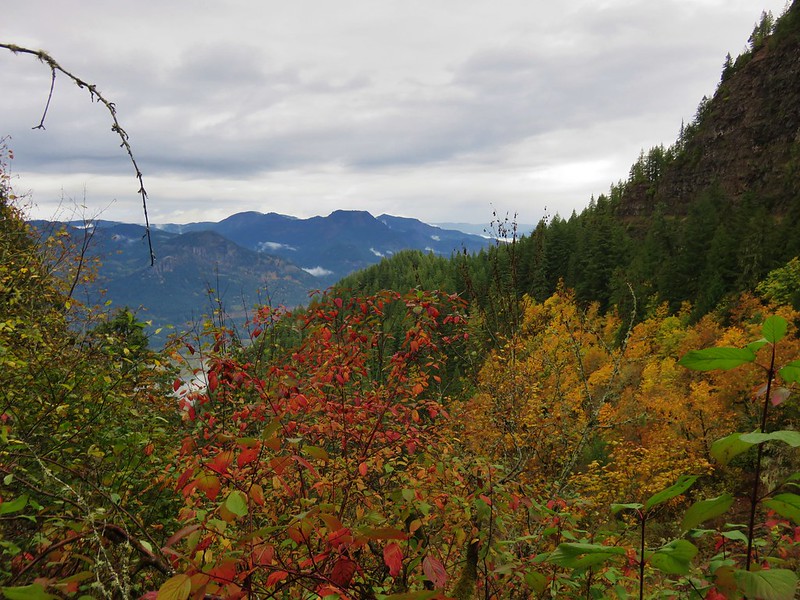
Fall colors and seasonal waterfalls along the Nesmith Point Trail

Fall colors along the Nesmith Point Trail

View from the Nesmith Point Trail

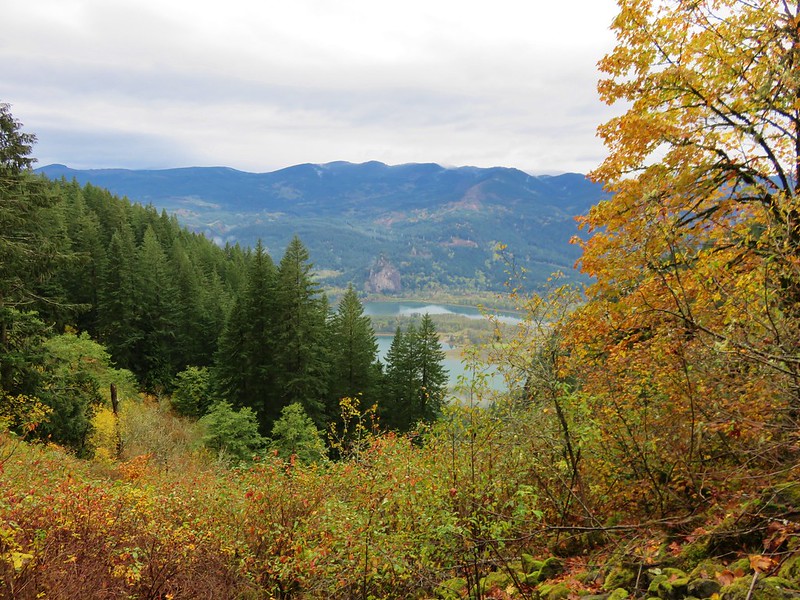
Occasional views across the Columbia River included Beacon Rock along with Hamilton and Table Mountains.
Beacon Rock from the Nesmith Point Trail

Hamilton and Table Mountains from the Nesmith Point Trail

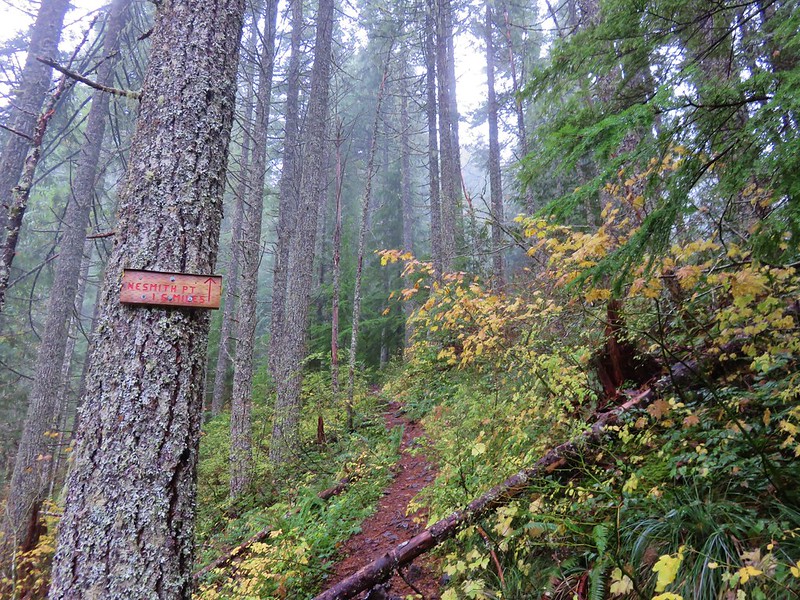
The trail showed little sign of damage from the storms as we slowly made our way up to the saddle where a trail sign awaiting announcing it was only 1.6 more miles to Nesmith Point.
Nesmith Point Trail

At the saddle we could see across the McCord Creek valley to the next ridge but not beyond.
View from the Nesmith Point Trail

From the saddle the trail wrapped around the SE side of a ridge extending to the NE from Nesmith Point. One of the rewards of climbing up out of the Gorge is getting to experience the change in the forests. At the lower elevations along the Gorge the forest typically looks something like this:
Forest along the Gorge Trail

Gorge Trail

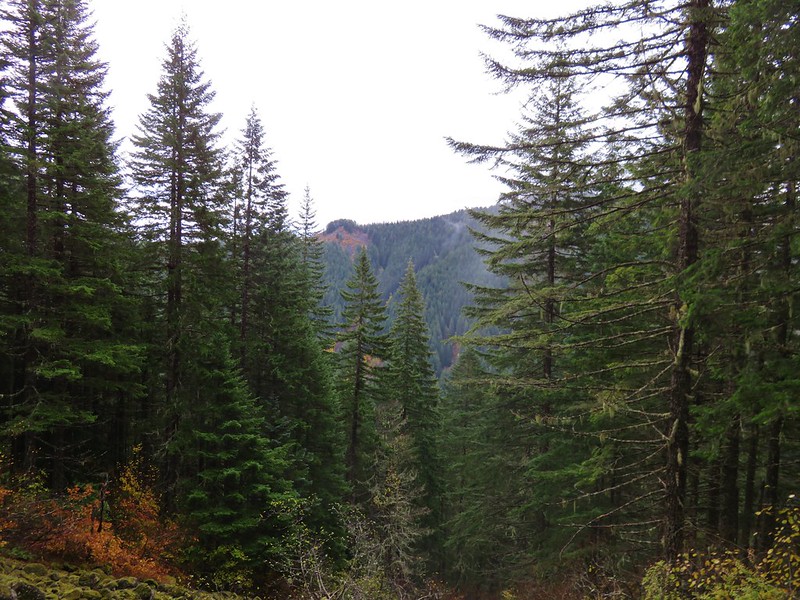
On top of the basalt plateau the forest is noticeably different.
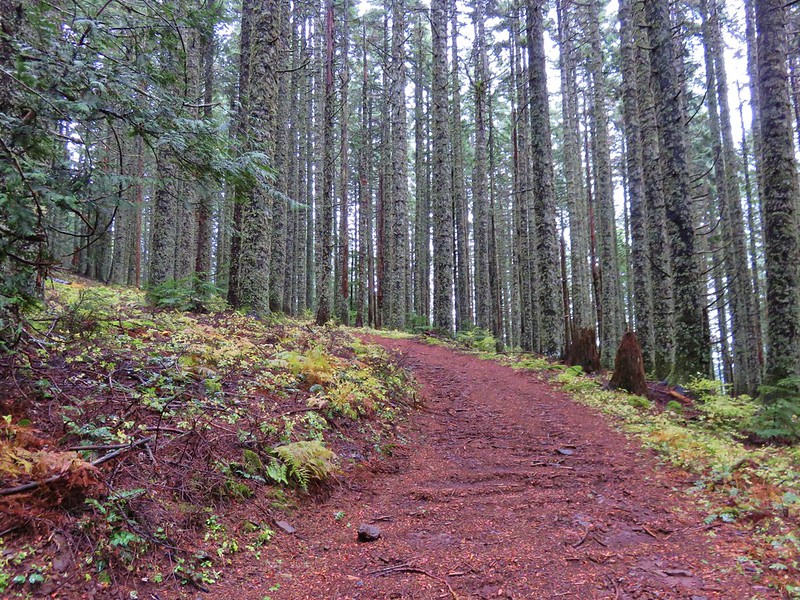
Nesmith Point Trail

Nesmith Point Trail

The stark contrast makes it hard to believe that these ecosystems are so close to one another as they feel like different worlds. We were now climbing at a much more reasonable grade. Approximately 1 1/4 mile from the saddle the trail curved sharply to the right at a pointer for Nesmith Point.
Nesmith Point Trail

Trail sign for Nesmith Point

Less than a quarter mile from the sharp turn we arrived at the now closed road that led to the former lookout tower on Nesmith Point.
Trail junction near Nesmith Point

Nesmith Point Trail

We followed the old road uphill .3 miles to the now overgrown site of the old fire lookout.
Anchor for the former lookout tower on the rocks

Just before reaching the lookout site there was a break in the trees that offered a bit of a view across the Columbia River Gorge.
View from Nesmith Point

Columbia River from Nesmith Point

Columbia River from Nesmith Point

To get a better view (and on a clear day a view of Mt. St. Helens and Mt. Adams) we continued on the trail past the old lookout site. This path led downhill before splitting. We took the right had fork to begin with which led us down to a cliff top viewpoint that was a little sketchy on such a damp day. The cloudy conditions weren’t allowing for any better view than what we’d seen at the viewpoint before the lookout site either, so we backtracked to the split and took the left hand fork. This fork led to a viewpoint across from where we had just been. Again the clouds effectively canceled the views but it was fun to watch them as they swirled below.
View from Nesmith Point

View form Nesmith Point

We decided to take a break there and eat some food. It was very peaceful being that far above the noise of the cars on I-84 and the trains chugging through the gorge. I found myself thinking I could spend quite a while just watching everything pass by below. Just a couple of minutes later our hands were becoming numb and we were ready to get moving again. Between the damp conditions and the breeze on the plateau our core temperatures had fallen and now we were cold. So much for the peaceful bliss 🙂 We retraced our steps making our way back downhill past several hikers and a number of beetles.
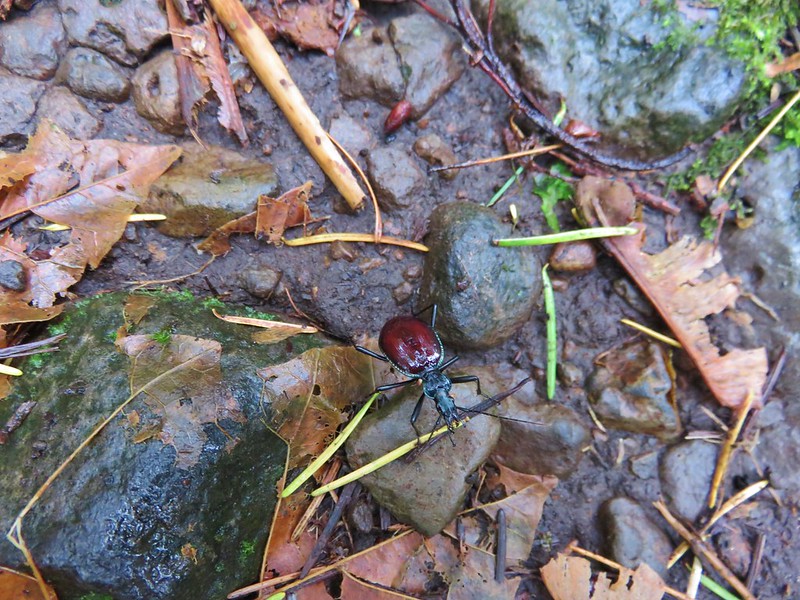
Beatle on the Gorge Trail

At the switchback where we had expected the Gorge Trail to split off we looked for any signs of the other trail. The only thing we could see was a wooden post surrounded by rocks at the switchback but there was nothing on the other side of the creek to even hint at where the Gorge Trail had been. We felt better about having missed that spot now that we knew there was really nothing there that we should have seen. We returned to the now full trailhead having finished our 56th hike of the year equaling our total from last year. Only 4 hikes remained on our 2016 schedule and we wondered what would be in store for us on those. Happy Trails!

Flickr: https://www.flickr.com/photos/9319235@N02/albums/72157675210106016

Categories
Columbia River Gorge South Hiking Oregon Trip report

Indian Point and Pacific Crest Falls

**Note the 2017 Eagle Creek Fire burned a portion of this hike.**

My Grandmother recently celebrated her 91st birthday and we wanted to take her out for a birthday dinner in Portland so we planned a trip up to the Columbia River Gorge to check another of the many area hikes off our to-do list. We chose a pair of hikes beginning at the same trailhead for the Herman Creek Trail.

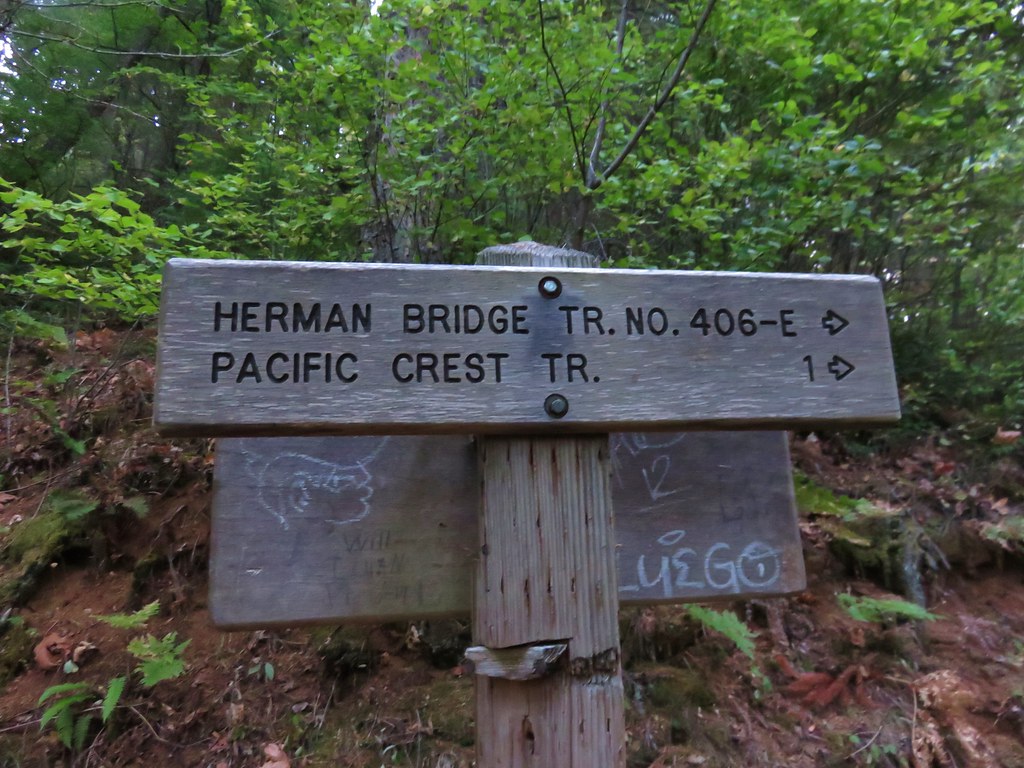
Our plan was to start at the Herman Creek Campground near Cascade Locks visiting Pacific Crest Falls and then hiking out to Indian Point. We set off on the Herman Creek Trail and followed it for .6 miles to a fork where we headed right on the Herman Bridge Trail toward the Pacific Crest Trail.
IMG_1064//embedr.flickr.com/assets/client-code.js

IMG_1072//embedr.flickr.com/assets/client-code.js

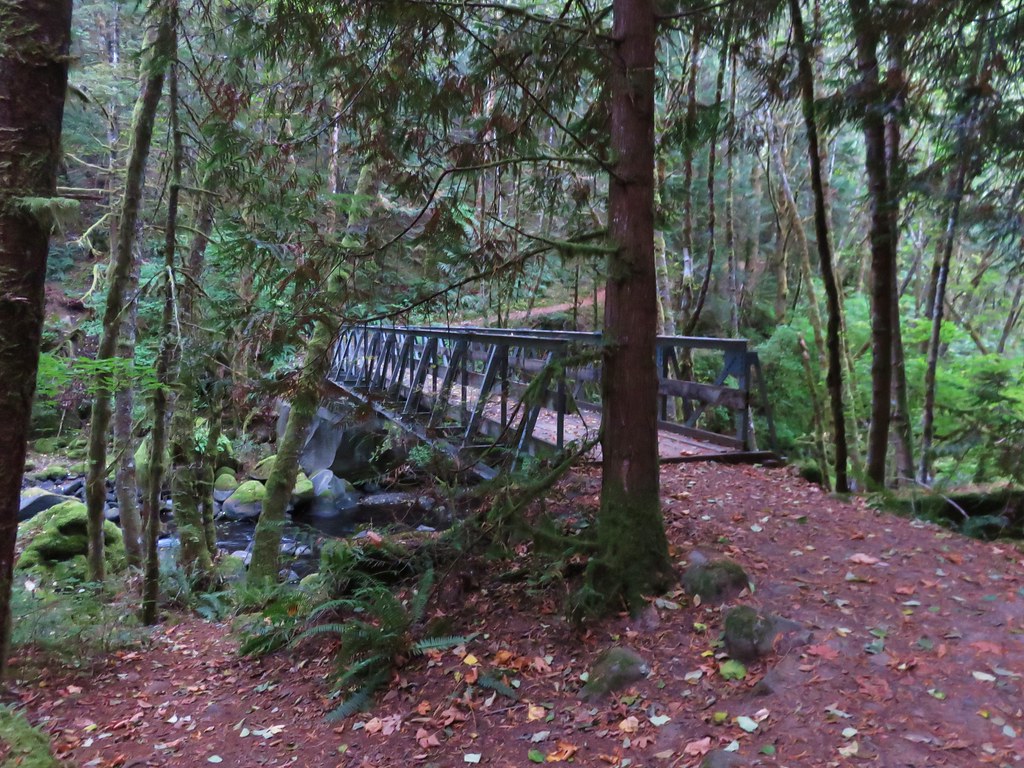
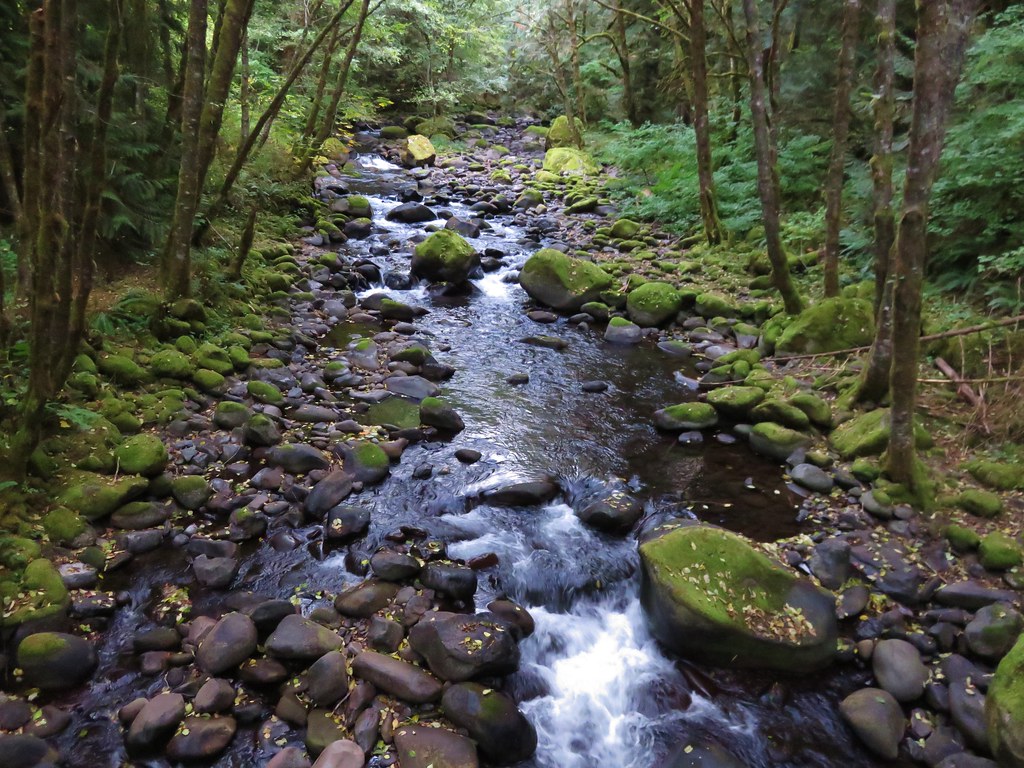
The Herman Bridge Trail descended .4 miles to a footbrdige over Herman Creek. This was the only place that we would encounter the creek on the trails.
IMG_1079//embedr.flickr.com/assets/client-code.js

IMG_1080//embedr.flickr.com/assets/client-code.js

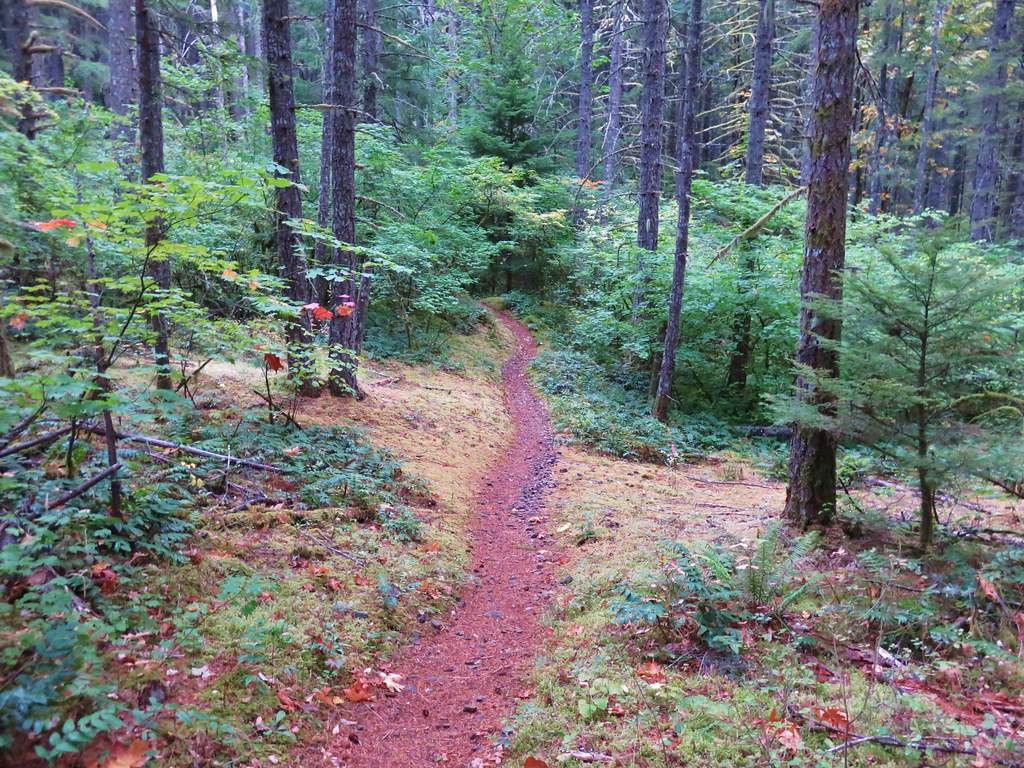
We reached the Pacific Crest trail in another .8 miles passing through some nice forest and getting some decent views.
IMG_1087//embedr.flickr.com/assets/client-code.js

IMG_1088//embedr.flickr.com/assets/client-code.js

The views improved after we turned right on the PCT with Table Mountain and Greanleaf Peak visible across the river.
IMG_1096//embedr.flickr.com/assets/client-code.js

Greenleaf Peak
IMG_1093//embedr.flickr.com/assets/client-code.js

Table Mountain
IMG_1097//embedr.flickr.com/assets/client-code.js

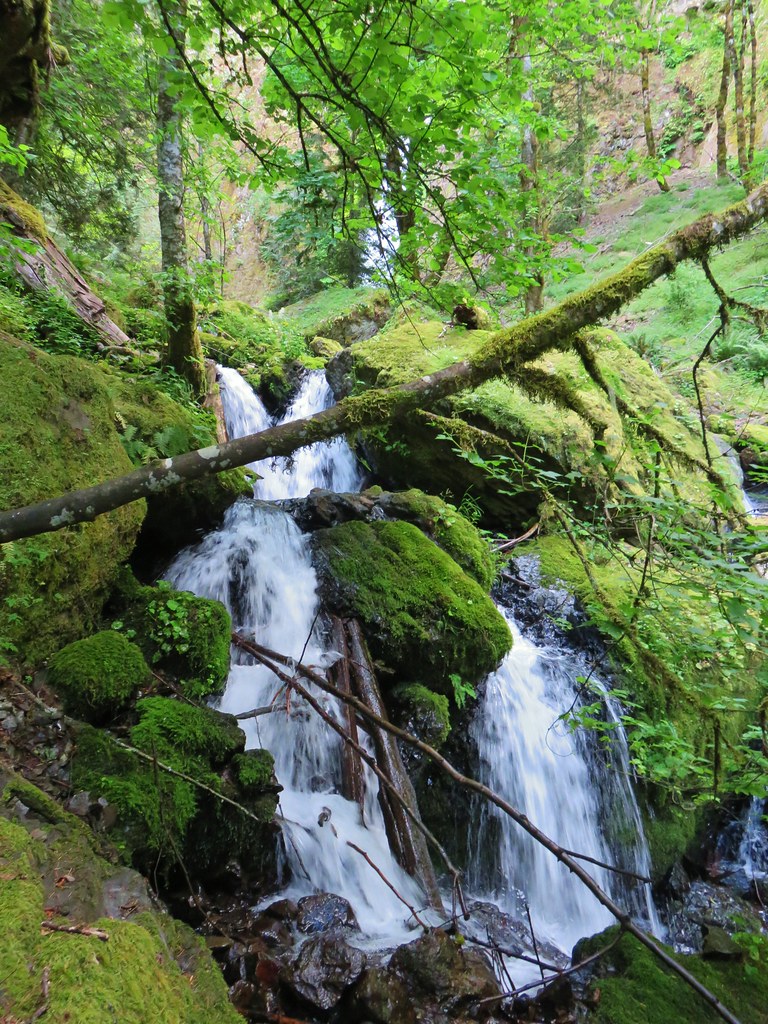
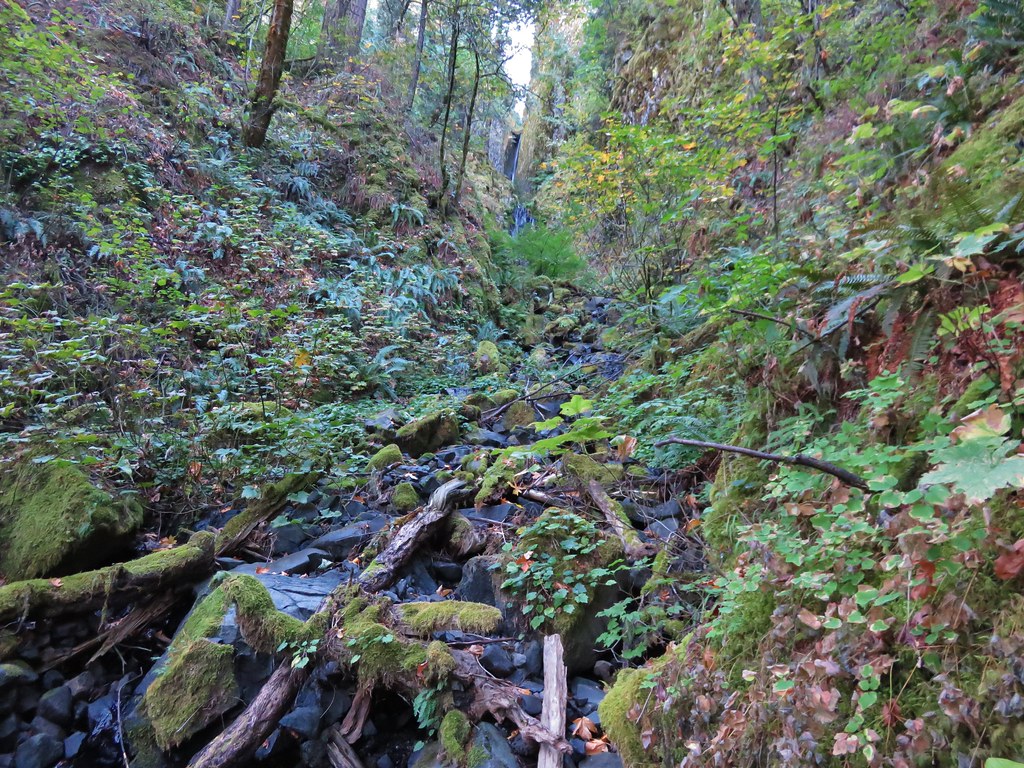
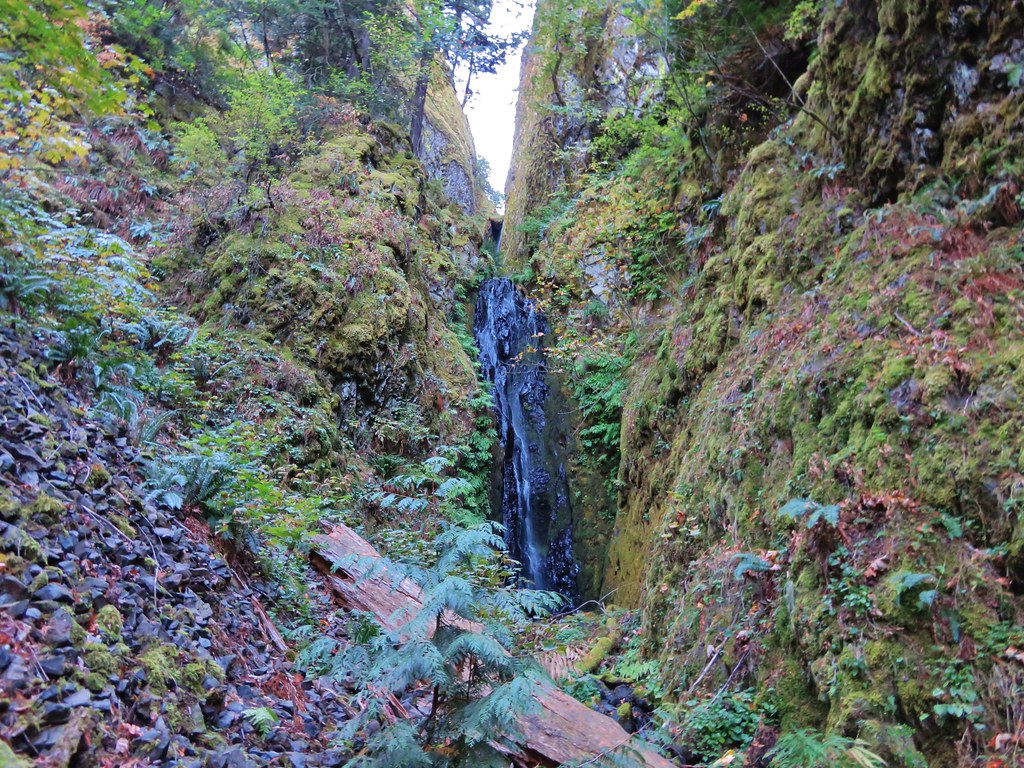
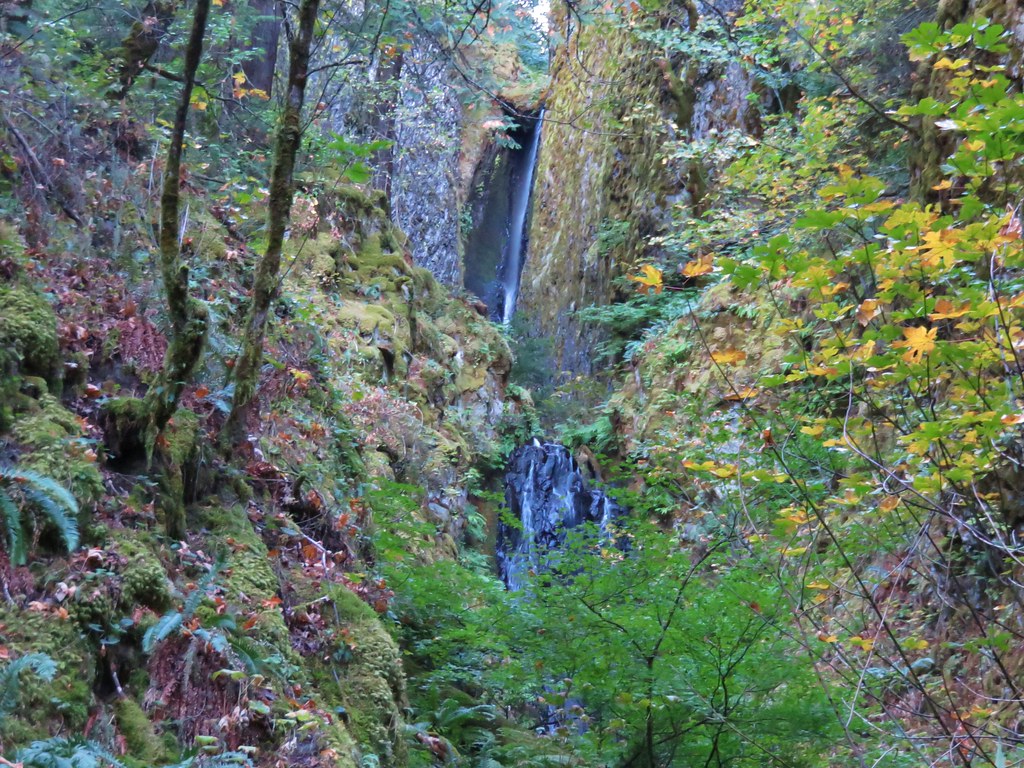
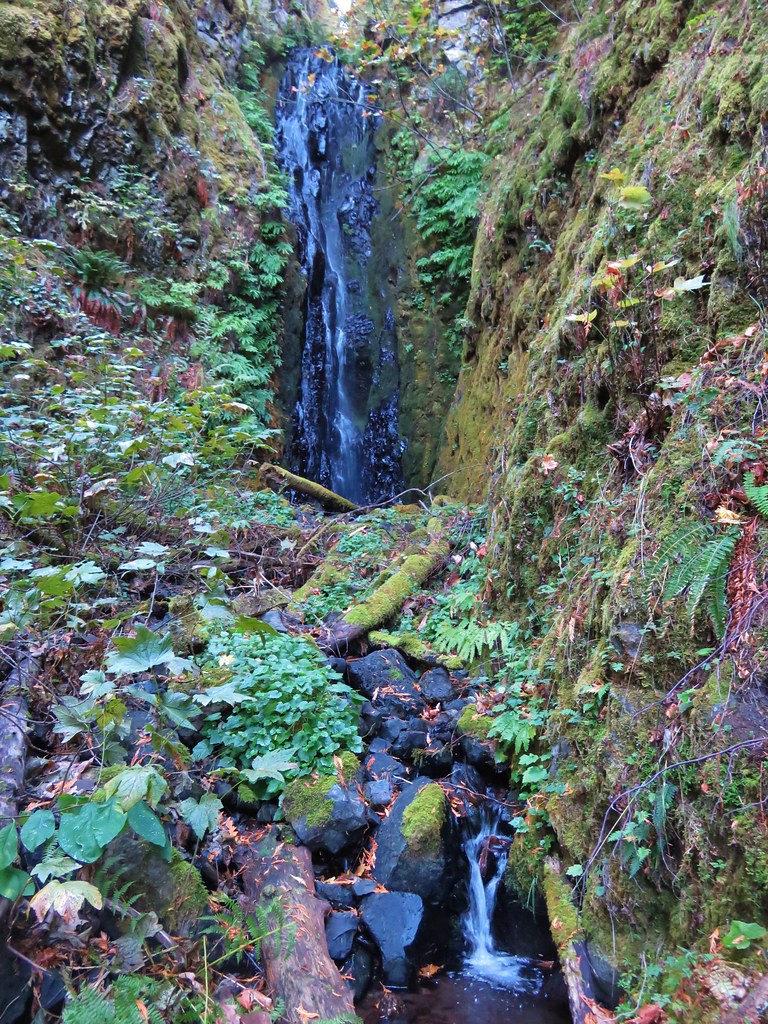
We weren’t sure what we would find when we arrived at Pacific Crest Falls just .4 miles up the PCT. It was October in an unusually dry year so we weren’t too surprised when we arrived at a nearly dry creek bed. We couldn’t see the falls as we approached but we could hear them up the narrow canyon. From the far side of the creek we could see the two tiered fall back in the canyon and we decided to scramble up the creek bed for a closer look.
IMG_1100//embedr.flickr.com/assets/client-code.js

IMG_1113//embedr.flickr.com/assets/client-code.js

IMG_1102//embedr.flickr.com/assets/client-code.js

IMG_1104//embedr.flickr.com/assets/client-code.js

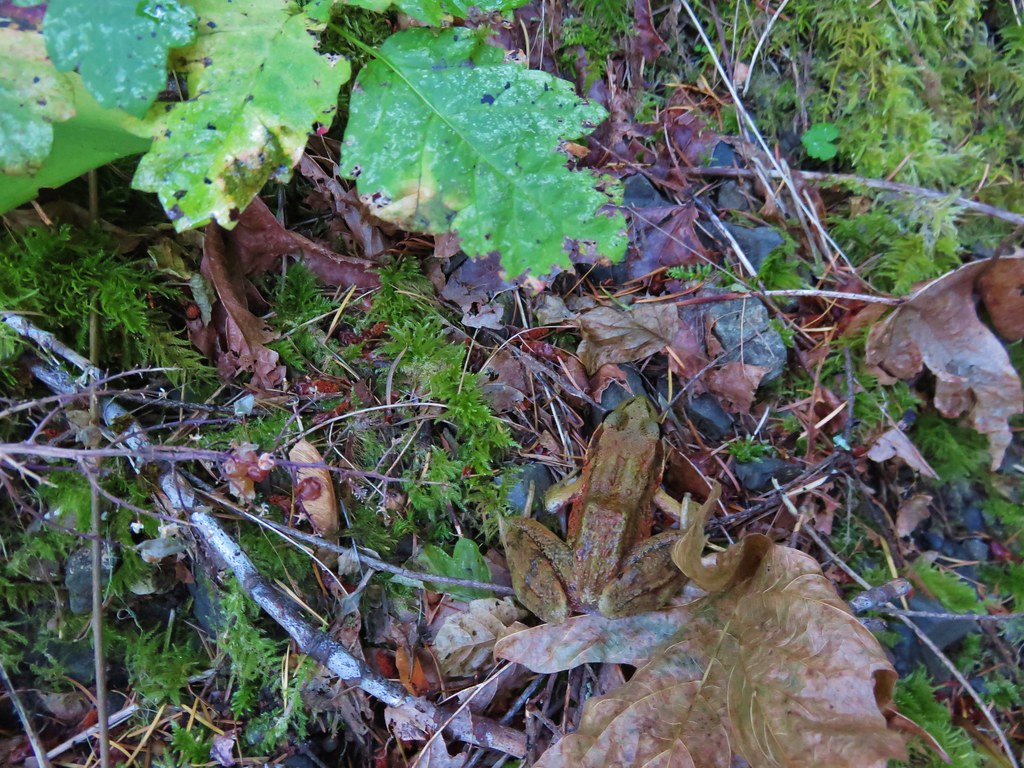
Despite there not being much water the musical sound of the cascade was relaxing. As we were making our way back from the falls we spotted a frog that really blended in with the fallen leaves.
IMG_1118//embedr.flickr.com/assets/client-code.js

IMG_1121//embedr.flickr.com/assets/client-code.js

IMG_1122//embedr.flickr.com/assets/client-code.js

We had gone a little under 4 miles when we arrived back at the fork with the Herman Creek Trail which is why we had made Indian Point our second goal for the day. We took the Herman Creek Trail uphill toward a large trail junction .7 miles away.
IMG_1126//embedr.flickr.com/assets/client-code.js

IMG_1127//embedr.flickr.com/assets/client-code.js

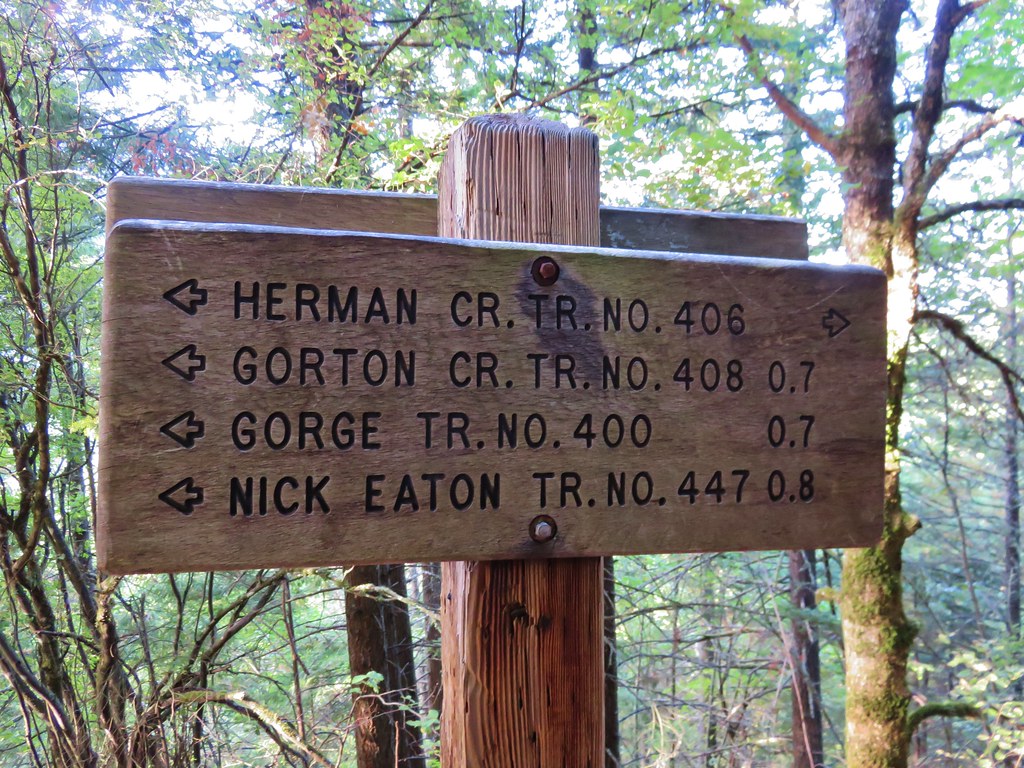
Several trails arrived at the trail junction near Herman Camp. The left hand trail was the Gorge Trail which led to Wyeth while the right hand trail was the continuation of the Herman Creek Trail. We took the Gorton Creek trail which was the middle trail .
IMG_1128//embedr.flickr.com/assets/client-code.js

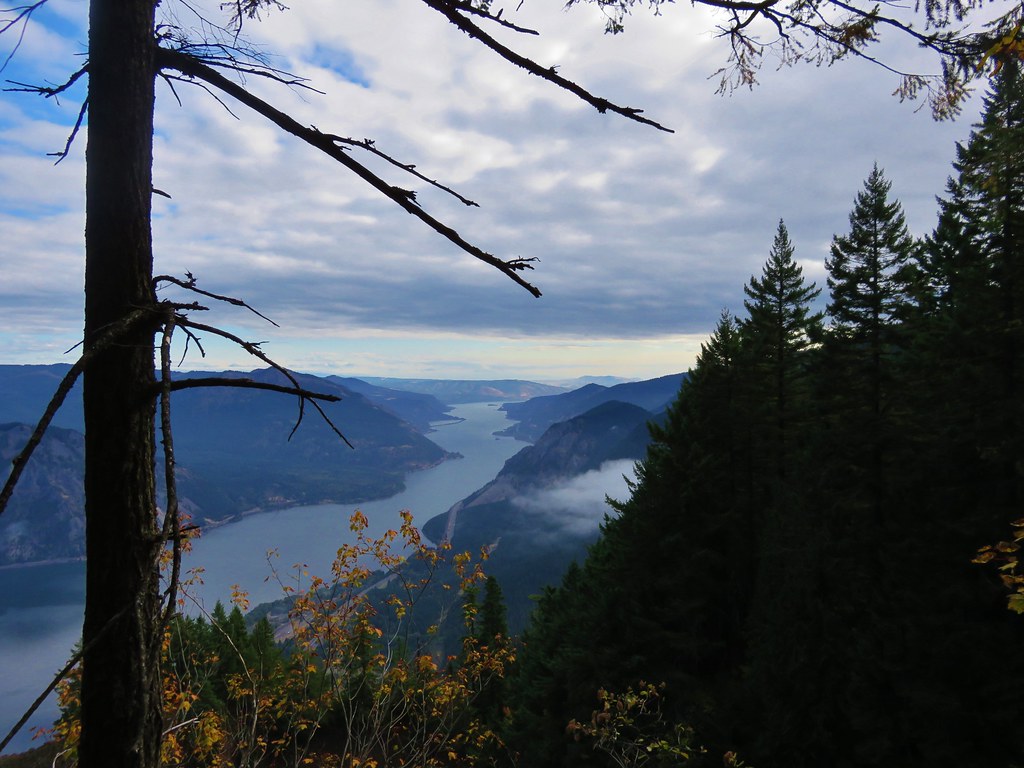
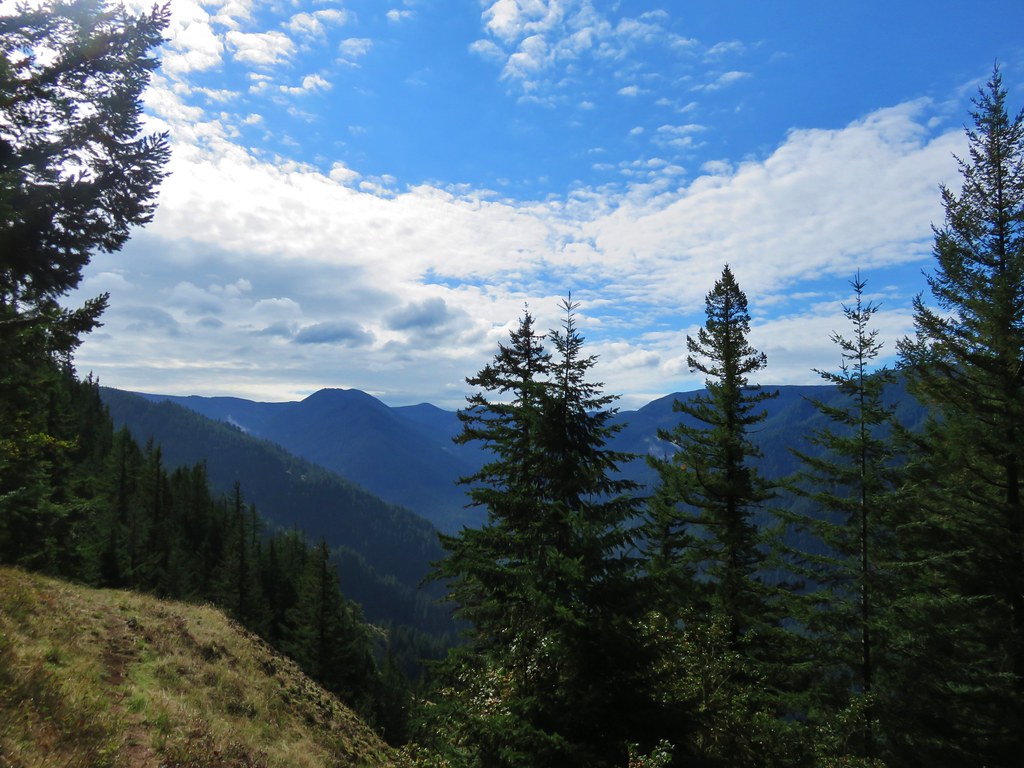
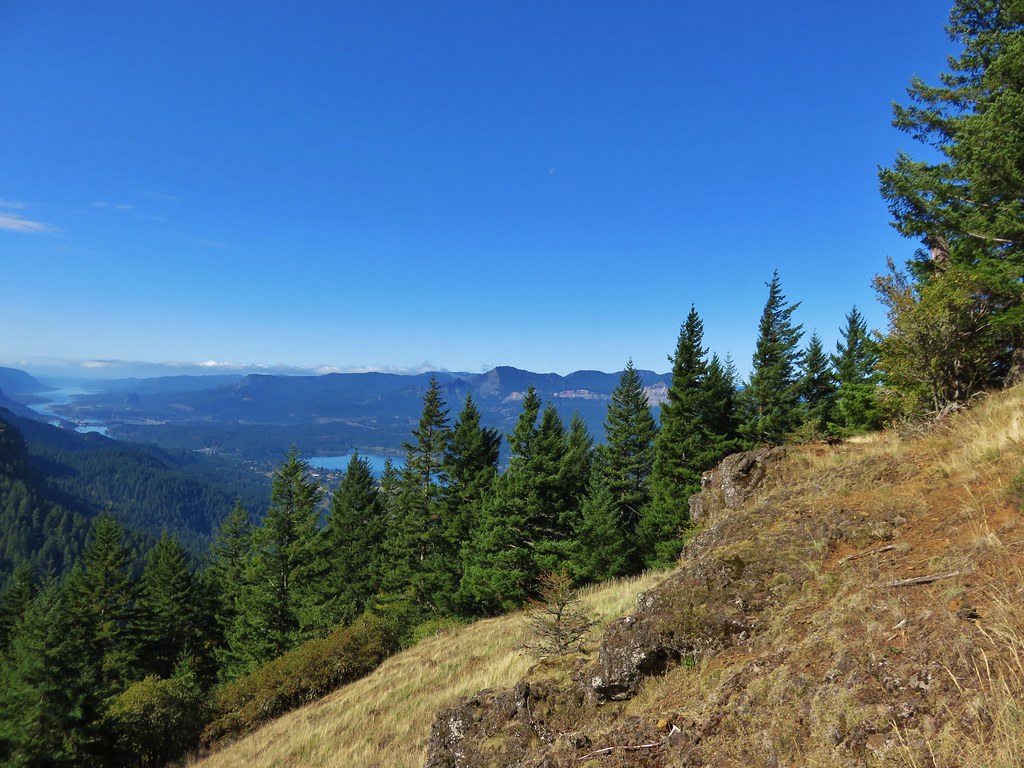
This trail climbed gradually offering occasional glimpses across the Columbia River to Washington.
IMG_1129//embedr.flickr.com/assets/client-code.js

IMG_1134//embedr.flickr.com/assets/client-code.js

IMG_1138//embedr.flickr.com/assets/client-code.js

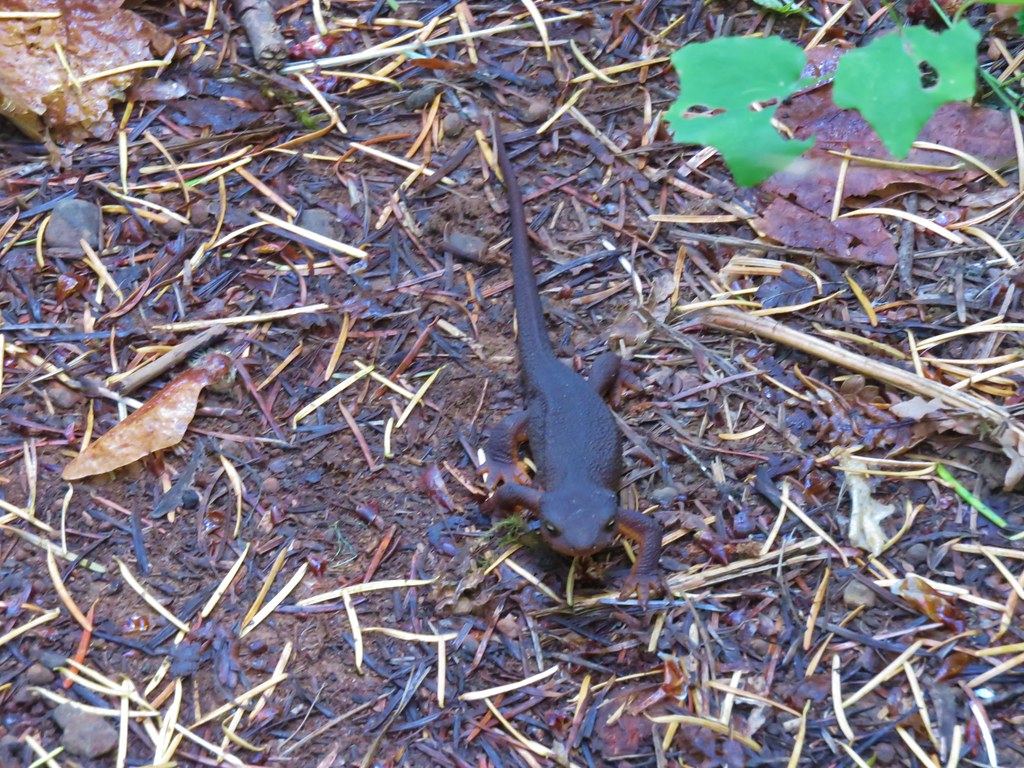
Along the way we had a momentary standoff on the trail with a rough skinned newt that wasn’t about to budge.
IMG_1131//embedr.flickr.com/assets/client-code.js

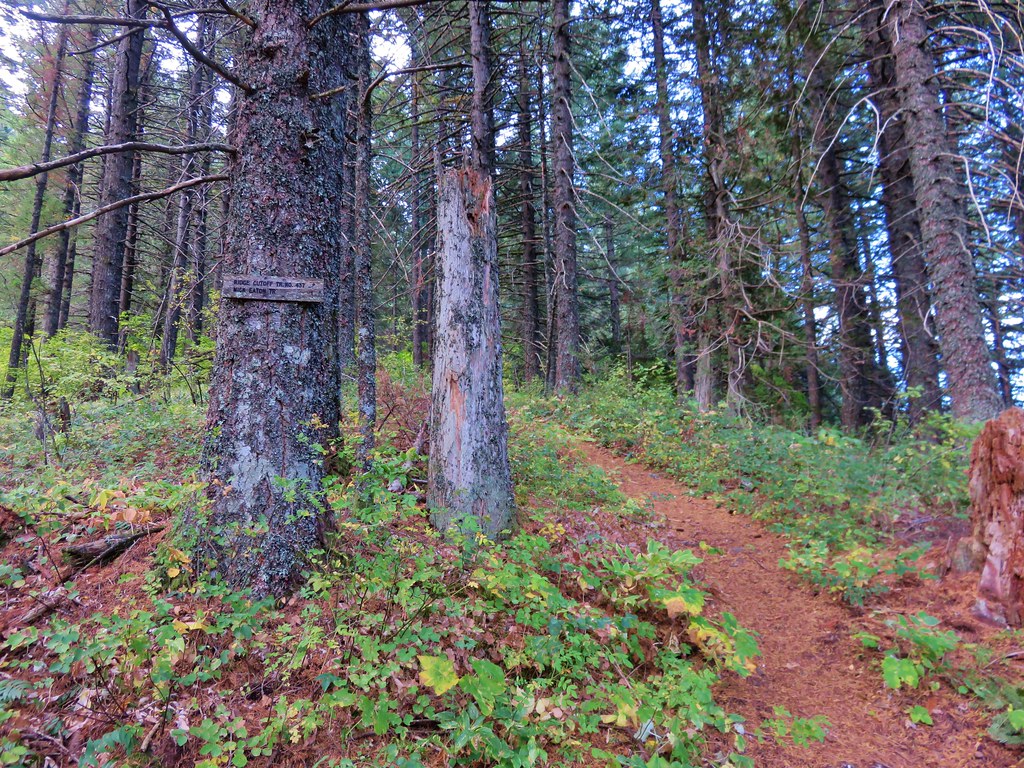
We arrived at the Ridge Cutoff Trail after 2.6 miles which we would take for a loop back to the junction near Herman Camp, but before heading uphill on that trail we continued a short distance on the Gorton Creek Trail to an unsigned path on the left.
IMG_1140//embedr.flickr.com/assets/client-code.js

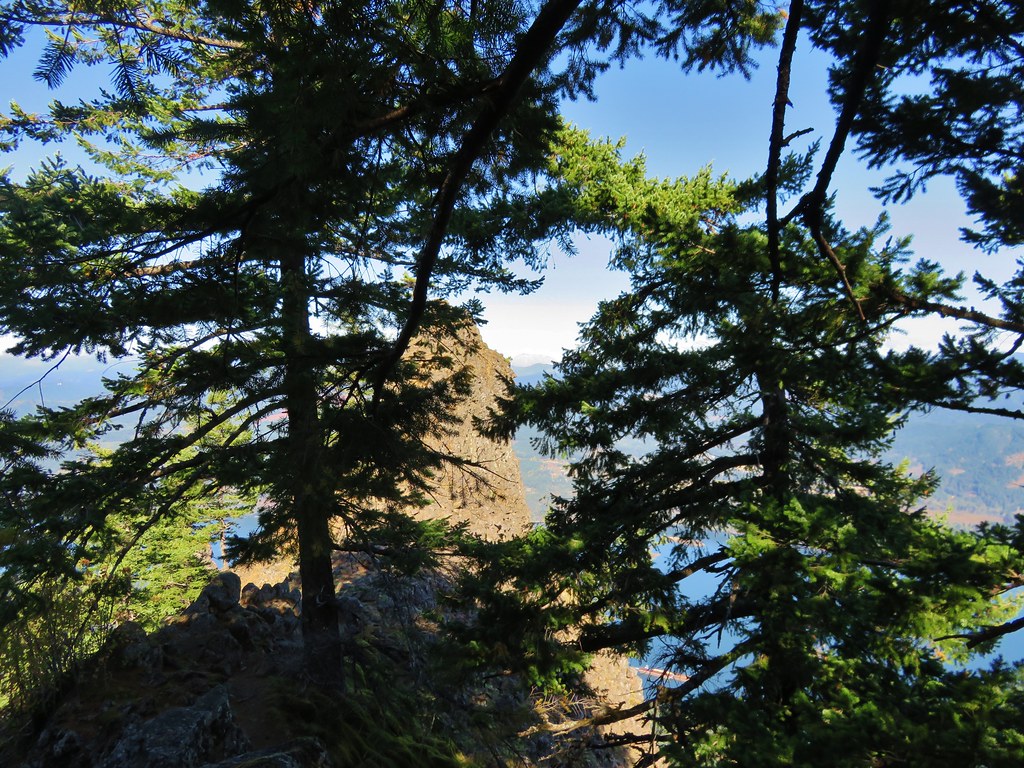
The side path led steeply downhill to a ridge which we followed out to a rocky saddle below Indian Point.
IMG_1157//embedr.flickr.com/assets/client-code.js

IMG_1149//embedr.flickr.com/assets/client-code.js

Several prominent landmarks were visible from the saddle.
Wind and Dog Mountians
IMG_1151//embedr.flickr.com/assets/client-code.js

Mt. Adams
IMG_1148//embedr.flickr.com/assets/client-code.js

Mt. St. Helens
IMG_1159//embedr.flickr.com/assets/client-code.js

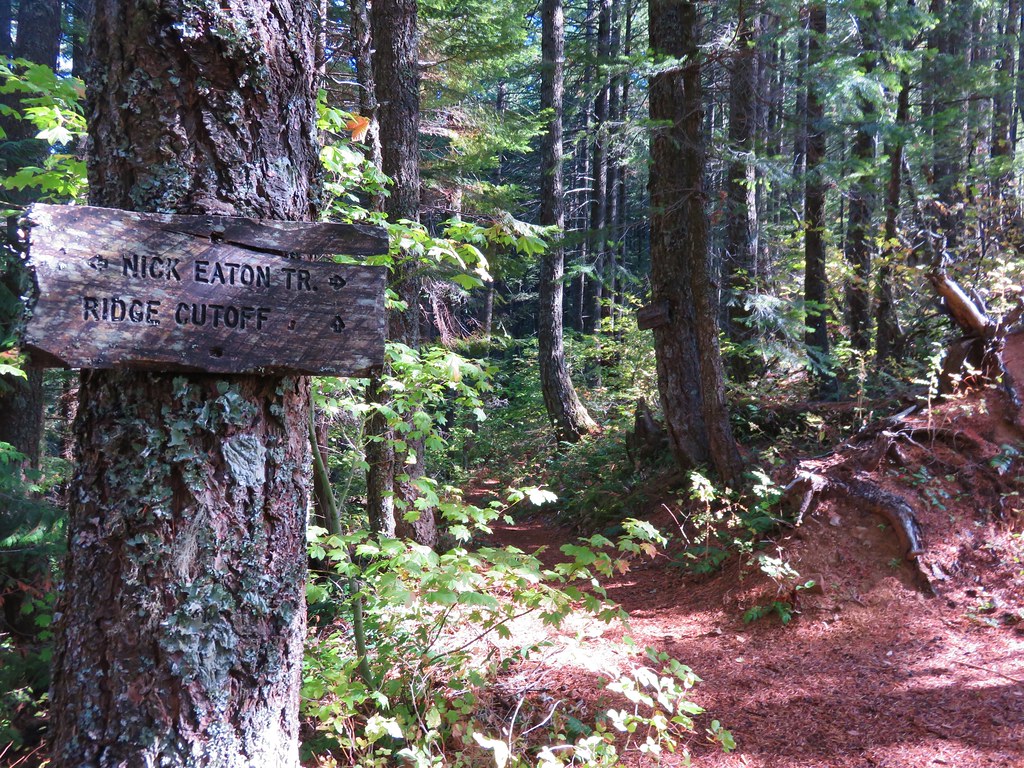
We declared victory at the end of the saddle directly below Indian Point and enjoyed a surprisingly wind free break before climbing back up to the Gorton Creek Trail. We then returned to the Ridge Cutoff Trail and headed uphill toward the Nick Eaton Ridge Trial. The cutoff trail climbed for a bit then leveled off before reaching the Nick Eaton Trail in a total of .6 miles.
IMG_1167//embedr.flickr.com/assets/client-code.js

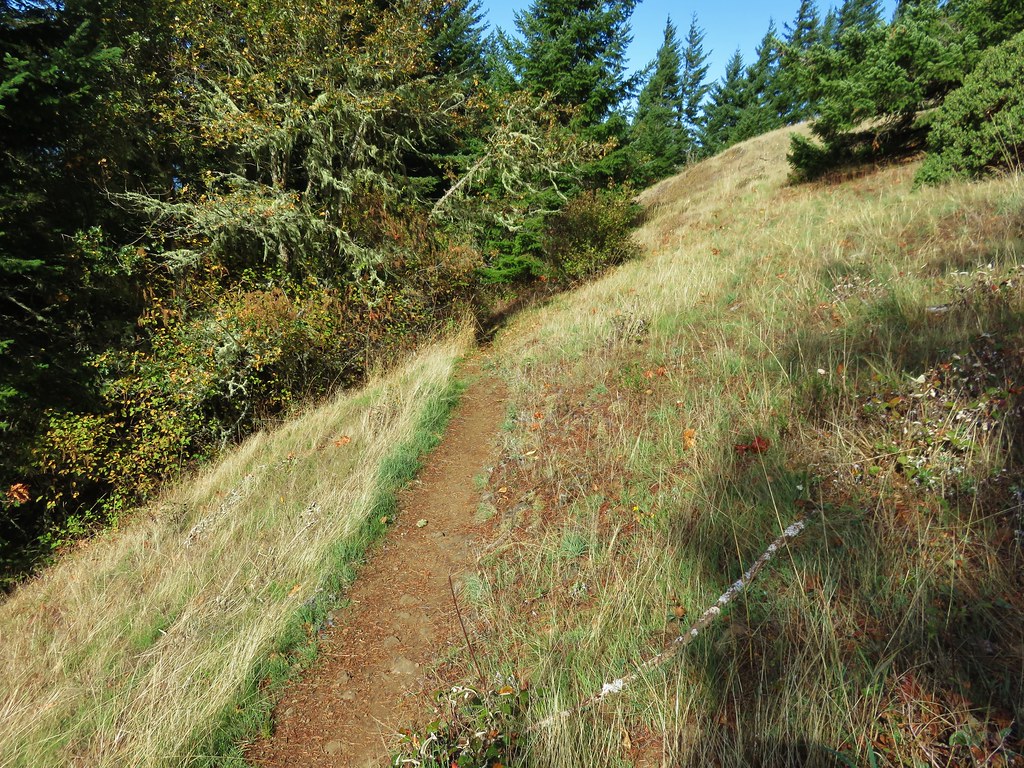
We turned right on the Nick Eaton Ridge Trail and continued our loop heading downhill at an impressive clip. The trail popped out into some grassy hillside meadows before beginning a series of unrelentingly steep switchbacks.
IMG_1170//embedr.flickr.com/assets/client-code.js

IMG_1171//embedr.flickr.com/assets/client-code.js

IMG_1178//embedr.flickr.com/assets/client-code.js

IMG_1175//embedr.flickr.com/assets/client-code.js

It quickly became obvious why our guidebook recommended doing the loop clockwise as we descended the seemingly never ending switchbacks. After two miles of downhill hiking we arrived back at the Herman Creek Trail just a few hundred yards from Herman Camp. After retracing our steps back to the trailhead we drove to Grandma’s house ending our day with a nice visit and dinner. Happy Trails!

Flickr: https://www.flickr.com/photos/9319235@N02/albums/72157659046209928

Categories
Columbia River Gorge South Hiking Oregon Trip report

Tom McCall Preserve and Mosier Twin Tunnels

**Note the 2020 Rowena Fire burned a portion of the Rowena Plateau and the 2024 Microwave Tower burned over the Mosier Twin Tunnels Trail.**

We do our best to plan and prepare for all of our hikes, but we were reminded that now matter how much pre-trip preparation we’ve done things can still happen. For our last hike that meant an extra 4 miles of hiking.

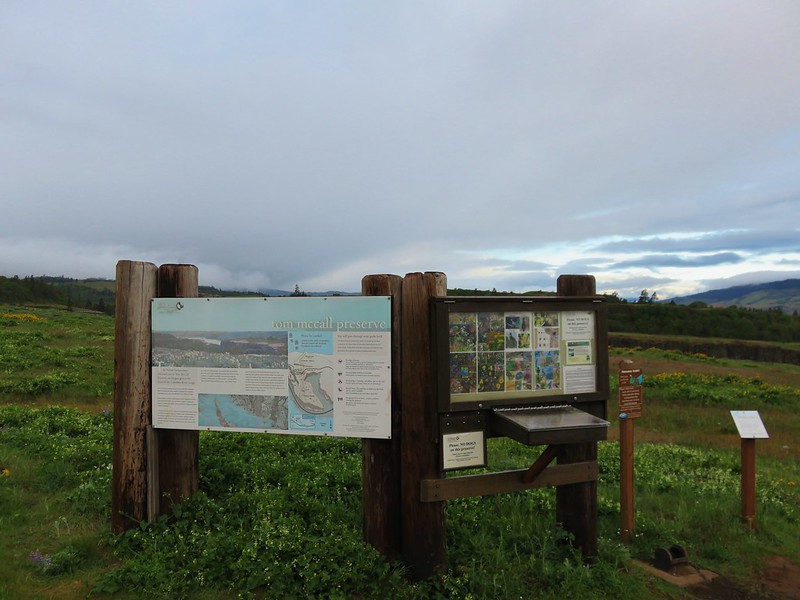
We had headed back to the eastern end of the Columbia Gorge for a combination of several hikes near Mosier, OR. First up was the plateau trail at the Tom McCall Preserve. The trail sets off from the Rowena Crest Viewpoint located along the Historic Columbia River Highway 6.6 miles east of Mosier.
Rowena Crest Trailhead

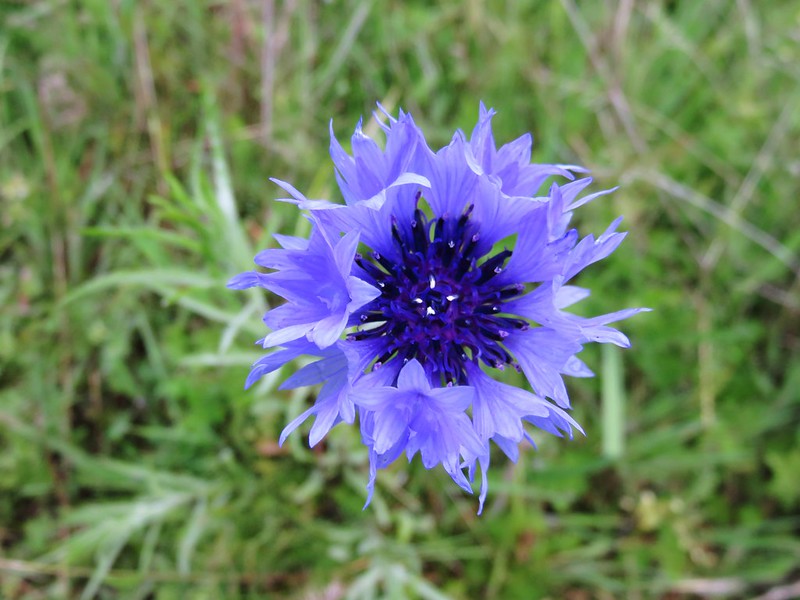
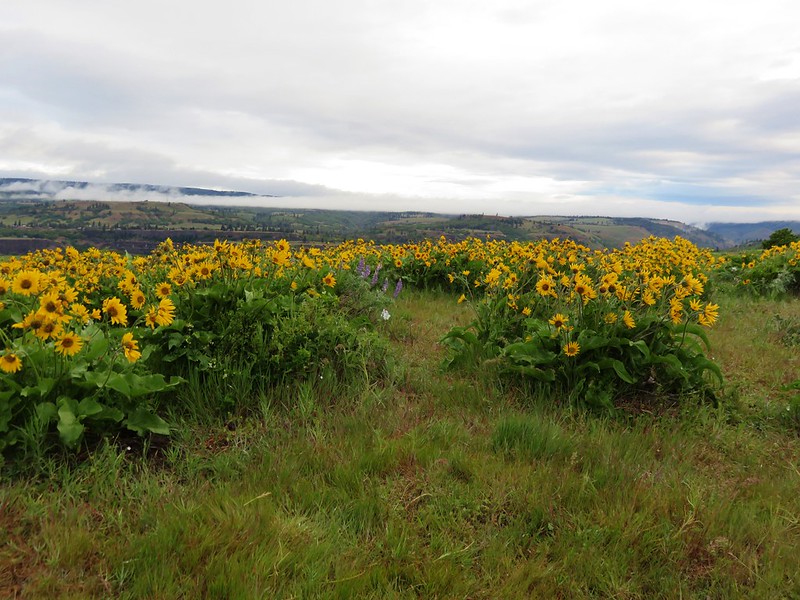
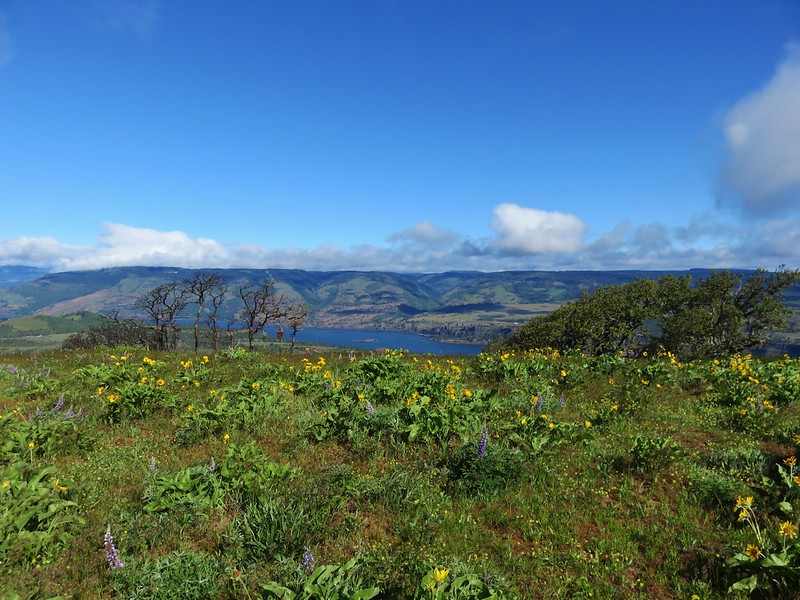
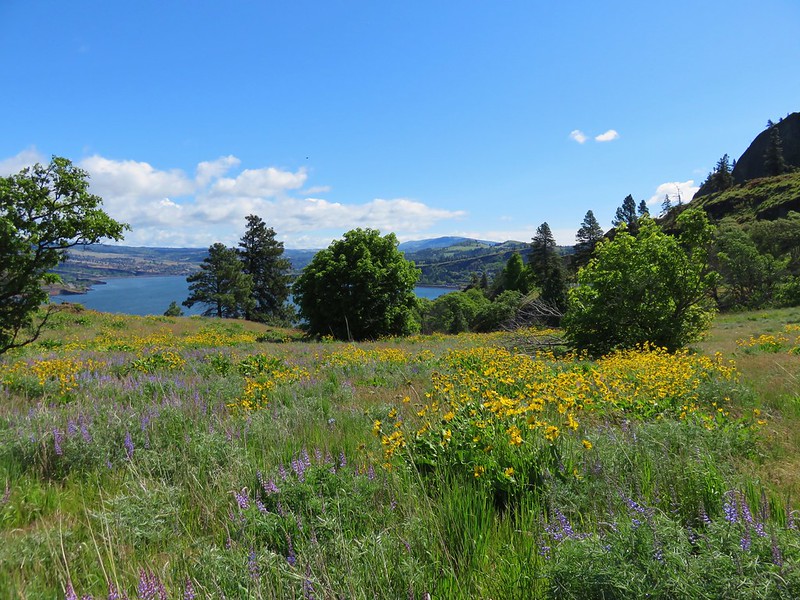
The trail heads out onto the plateau toward the Columbia River passing several viewpoints and lots of wildflowers including our first bachelor button sightings.

Bachelor Button

Balsamroot at Rowena Crest
IMG_1299

IMG_1306

Columbia River from Rowena Crest plateau

IMG_1335

The trail also passes a pair of ponds where we had to be on the watch for poison oak.
IMG_1378

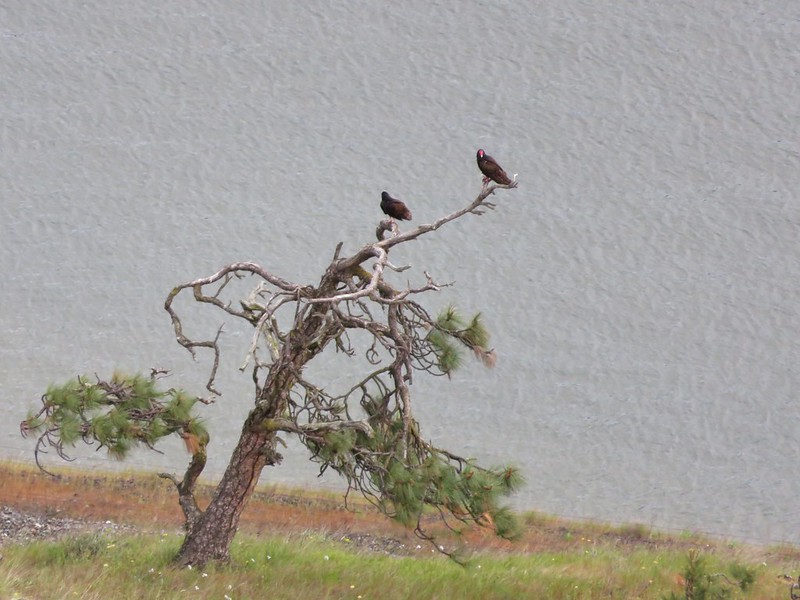
After approximately one and a quarter miles the trail ends at a viewpoint on the edge of the plateau. Across the river was a train while below on our right were a pair of turkey vultures and on our left a couple of deer down in Rowena Dell.
IMG_1348

IMG_1344

IMG_1347

Deer below Rowena Crest plateau

After returning to the parking area we headed up the second trail at Tom McCall Preserve to Tom McCall Point. The summit of the point had been shrouded in clouds while we were on the plateau trail.
IMG_1304

The clouds were breaking up as we began our climb though.
IMG_1407

IMG_1411

This path was wonderful. There were plenty of views as well as some wooded sections. We also saw several types of flowers that we had not seen along the plateau trail such as paintbrush, broomrape, larkspur, and chocolate lilies.
IMG_1412

IMG_1432

IMG_1416

IMG_1413

IMG_1421

IMG_1428

IMG_1434

IMG_1468

The clouds finally lifted from the summit by the time we were about halfway up the trail.
IMG_1470

We were also high enough to see the entire plateau behind us.
Rowena Crest from the Tom McCall Point trail.

The views from the summit were impressive, but alas the clouds had not broken up enough to reveal either Mt. Hood or Mt. Adams which on a clear day would have been visible.
IMG_1490

Summit of Tom McCall Point

We had planned one more hike for the day since the two trails at Tom McCall Preserve only totaled 6 miles. The Mosier Twin Tunnel trail set off on the west side of Mosier at the Senator Mark O. Hatfield Trailhead.
Trailhead for Mosier Twin Tunnels

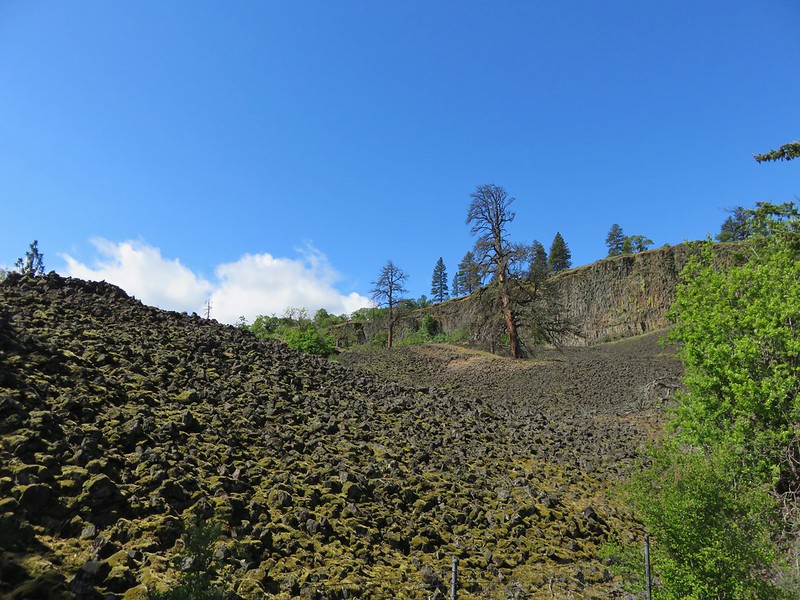
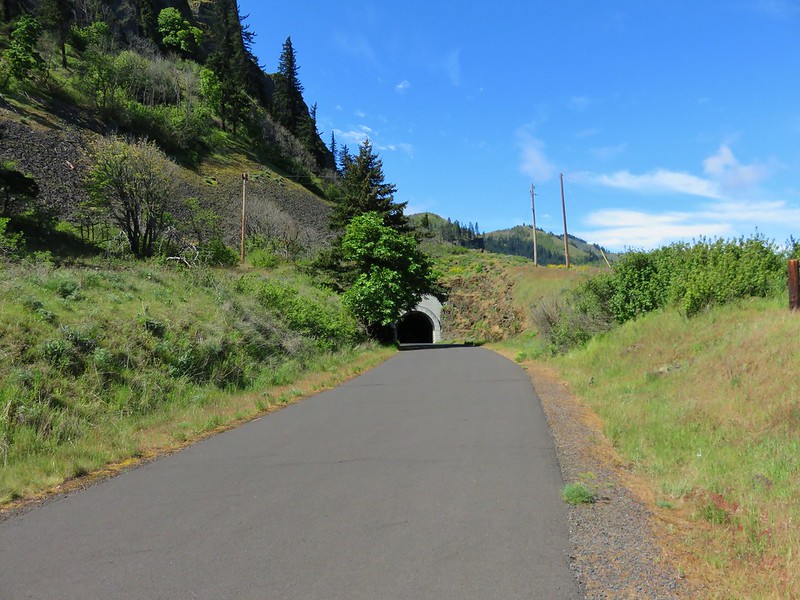
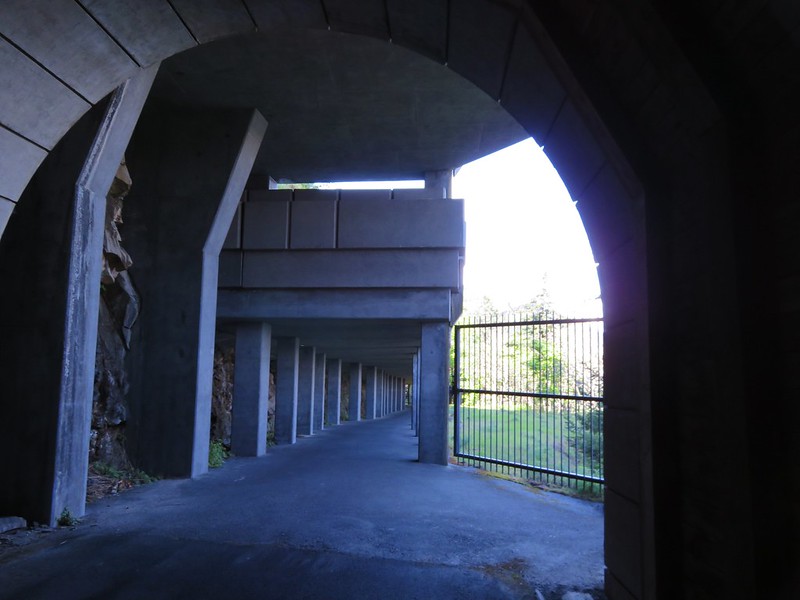
The trail is actually a portion of the Historic Columbia River Highway that has been converted to a hiking and biking path. Our plan was to hike out about 2.5 miles to an overlook of Koberg Beach State Wayside to add another 5 miles to the days totals. The path begins amid rock piles that reminded us of the lava flows in Central Oregon. Here the basalt cliffs that are typical of the gorge had broken up leaving the jumble of rocks. A fence separated the path from the rocks to protect pits made by Native Americans, possibly used as vision quest sites. One such pit is visible in the upper left hand side of the picture below.
IMG_1516

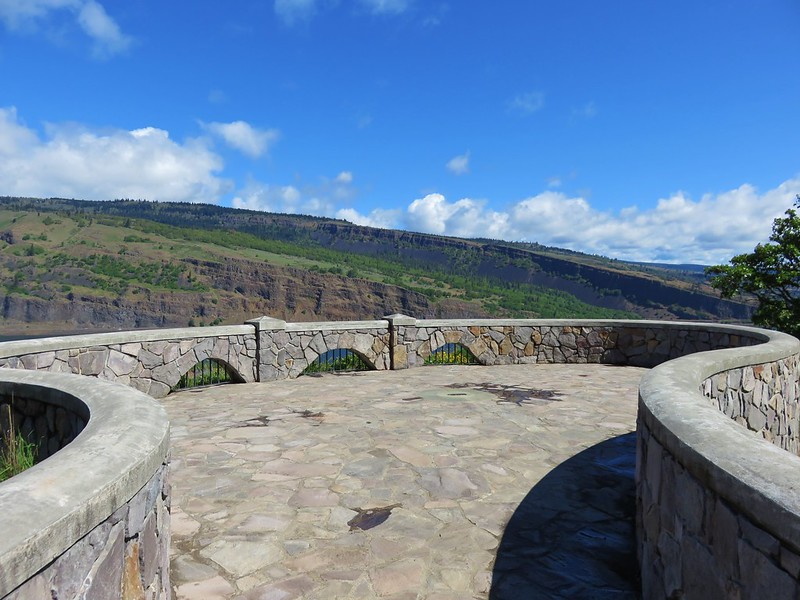
About a half mile from the start of the trail is the first viewpoint.
IMG_1522

IMG_1521

IMG_1523

IMG_1525

Not long after the first viewpoint the trail comes to the first of the twin tunnels.
First of the Mosier Twin Tunnels.

Inside Mosier Twin Tunnels.

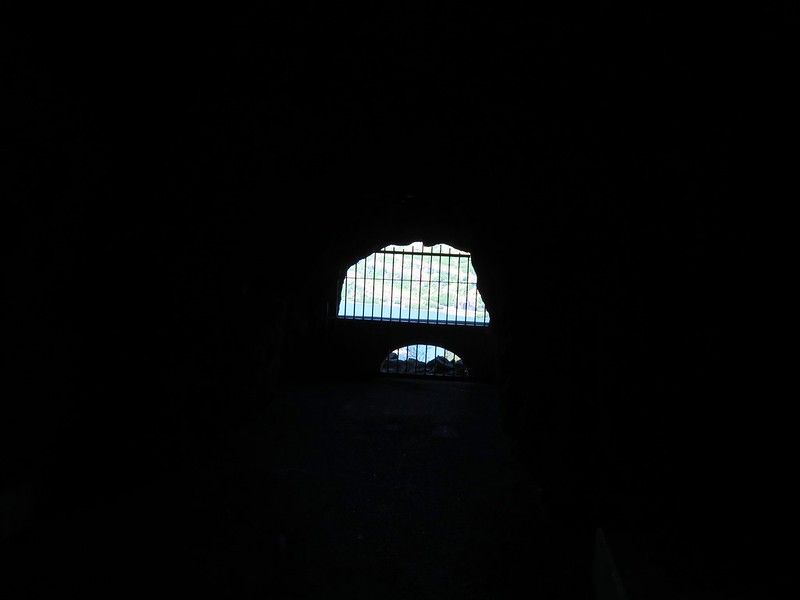
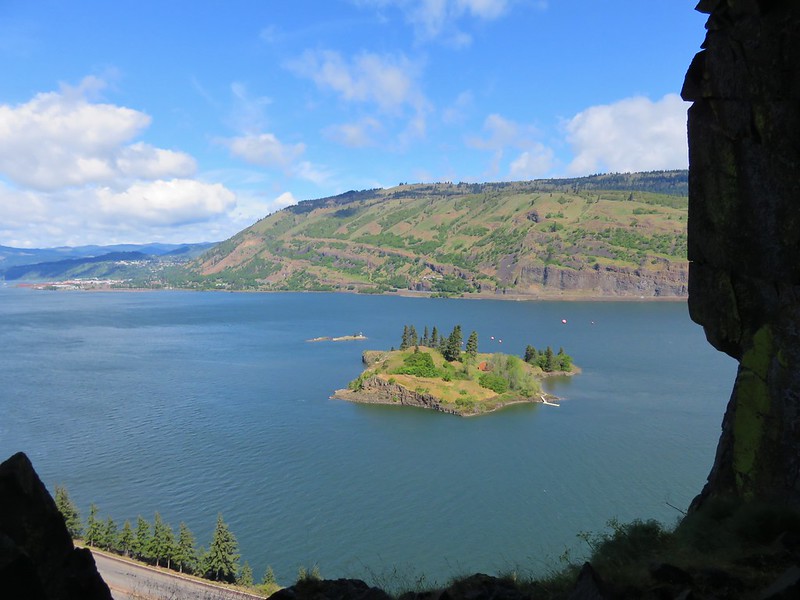
The first tunnel has a pair of windows carved into the rock wall offering views of the river.
IMG_1530

IMG_1531

Upon exiting the second tunnel the path continues under an odd concrete structure. Dominique thought it reminded him of being in a parking garage. The purpose of the structure is to act as a rockfall shield able to withstand a 5000lb. boulder falling from 200ft above.
IMG_1533

Just under a mile from the tunnels is a second overlook at the county line between Wasco and Hood River counties.
IMG_1536

IMG_1537

Our planned turnaround point was to be .8 miles from this second overlook at a .2 mile side path. We continued on toward the turnaround but Dominique wasn’t feeling all that well so he eventually took one of the car keys and headed back. It turns out he was only about 100 yards from our planned turnaround point. I was waiting for Heather by a gravel path that led off through a fenced meadow.
IMG_1540

IMG_1543

Viewpoint along the Mosier Twin Tunnel trail.

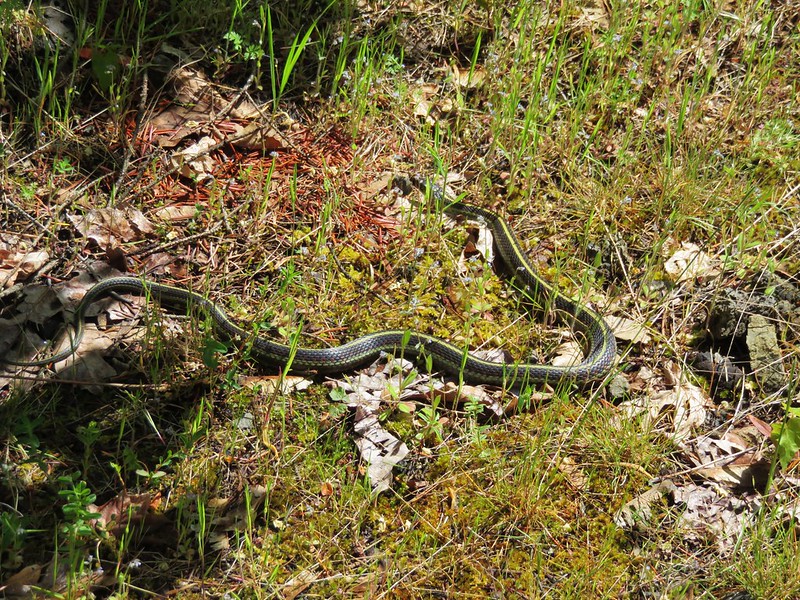
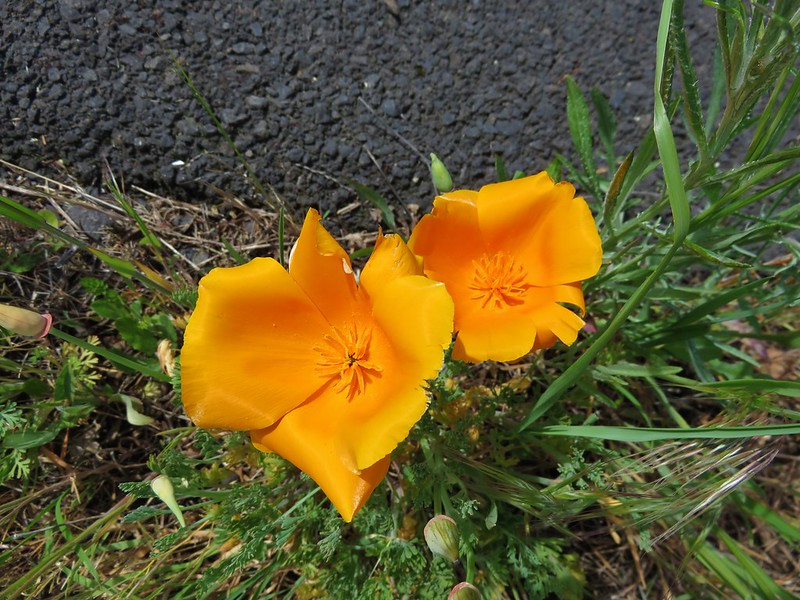
This was in fact the path we were looking for, but it ended at the fence where there was no view to speak of and certainly no sign of a beach wayside. On top of that I had viewed the hike on Google Maps and had expected the side path to drop down a bit and this path led up. We also felt like we hadn’t gone .8 miles since the second viewpoint so I checked the Garmin which showed that Koberg State Park was still ahead. We decided this wasn’t it and continued on. We kept walking and talking thinking the viewpoint was going to be just ahead. We began seeing more and more people but it was now after noon and that made sense, but when we passed a couple with a stroller we both began to wonder what was going on. They didn’t look like they had hiked over 2 miles already. Then Heather spotted some signs ahead. There were quite a few and they were big which didn’t make sense for a small side path, then we noticed an RV parked above the trail to the left. Now we knew something was wrong for sure because there were no roads open to vehicles anywhere near our planned turnaround point. Then we saw the parking area, restrooms, and information center at the western trailhead near Hood River. We’d gone nearly 2 extra miles! The good news was they were nice bathrooms and we had spotted a snake and our first California Poppies (while on a hike) in those extra miles.
IMG_1554

California Poppy

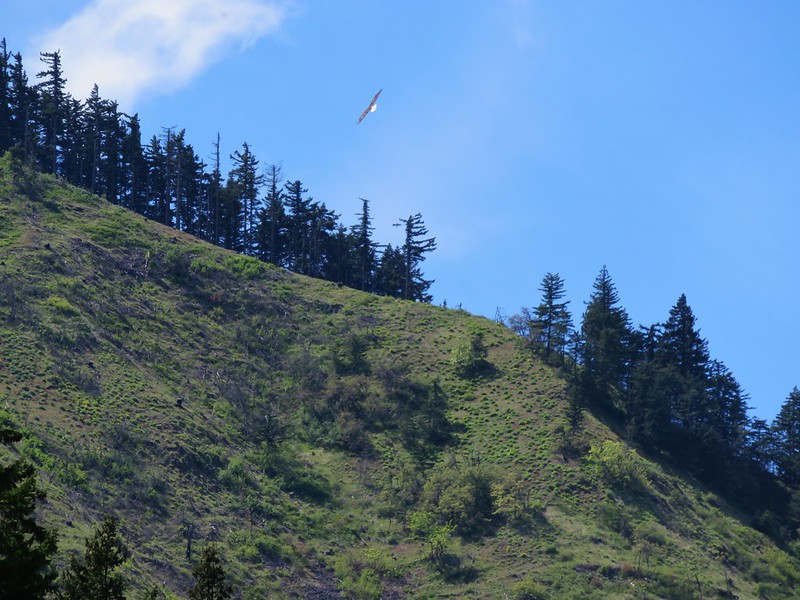
It turned out that the main portion of Koberg State Park is located across the Interstate from the western trailhead, but a portion of it is also located below the outcropping that the gravel path led onto. There just isn’t anything there to see. We hurried back as quickly as our sore feet would let us. On the way we spotted a bald eagle soaring above the trees and some wind surfers sailing above the Columbia.
IMG_1571

IMG_1577

At the car we found a napping kid who it turned out had stuck to our original plan better than we had. Happy Trails!

flickr: https://www.flickr.com/photos/9319235@N02/sets/72157652170987082/

Categories
Columbia River Gorge South Hiking Oregon Trip report

Elowah & Wahclella Falls

**Note the 2017 Eagle Creek Fire burned a portion of this hike.**

The Columbia Gorge is famous for its many waterfalls, three of which we visited on our most recent hike. The numerous trails and trailheads in the gorge offer plenty of options for hikers. Some of the waterfalls can be seen at the parking areas and others can be visited on hikes less than 5 miles total. Our plan was to combine two of these shorter waterfall hikes by connecting them using the Gorge Trail #400 which follows Interstate 84 for 35 miles from the Angles Rest Trailhead in the west to the Wyeth Trail #441 in the east. Starting at the Elowah Falls Trailhead we could hike a 3.1mi section of Trail 400 from the base of Elowah Falls to the Wahclella Falls Trailhead.
Elowah Falls Trailhead

We headed up the trail to a junction with the Gorge Trail and turned left toward Elowah Falls.
5

In another .3 miles we came to a second junction where a right hand fork heads up to Upper McCord Creek Falls.
6

We headed toward Upper McCord Falls climbing through a forest before views opened up across the Columbia River to Hamilton Mountain.
7

10

Hamilton Mountain

We got our first glimpse of Elowah Falls below us as we rounded a ridge end.
Elowah Falls

The path leads to McCord Creek just above Elowah Falls then follows the creek a short distance to Upper McCord Falls.
Upper McCord Falls

The creek turns at a right angle at the base of this twin fall then flows over the canyon lip forming Elowah Falls.
Upper McCord Falls

After visiting this fall we returned to the Gorge Trail and made our way to the base of Elowah Falls.
Elowah Falls

The bridge across McCord Creek is close enough to the base of the falls that the spray really soaked us as we passed by. Once across we continued on Trail 400 and headed toward our next waterfall trail. Because the Gorge Trail follows both I84 and the Historic Highway 30 traffic noise was constant on the trail, but it didn’t bother us much as we enjoyed the views and various spring flowers that we spotted.

Beacon Rock

Hamilton & Table Mountains

Bleeding Heart

Trillium

serviceberry

Sweet Coltsfoot
105

Fringecup

Midway through the 3.1 mile stretch the trail crossed Moffett Creek on a footbridge.
Moffett Creek

Moffett Creek

It rained off and on while we were on the Gorge Trail but the weather began to clear as we arrived at the Wahclella Falls Trailhead along Tanner Creek.
59

Tanner Creek

The Wahclella Falls trail follows Tanner Creek for a mile to Wahclella Falls, but before reaching that waterfall it first passes Munra Falls. The trail is actually so close to Munra Falls you can touch it from the footbridge as you pass by. What you can’t do is get the whole thing in a picture due to how close you are.
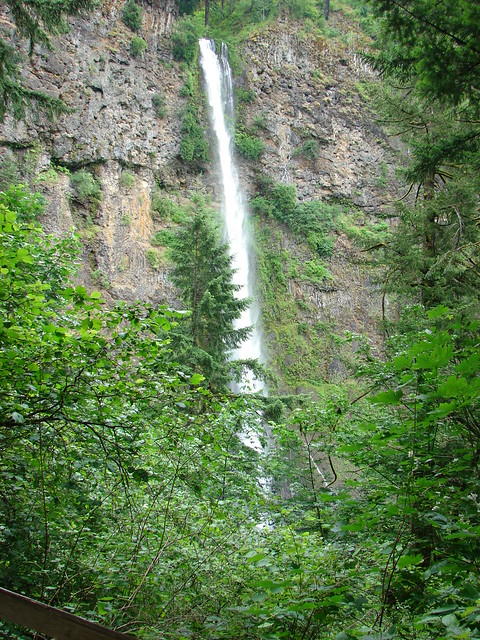
Munra Falls along the Wahclella Falls Trail

Munra Falls along the Wahclella Falls Trail

Near Wahclella Falls the trail splits creating a loop that passes near the base of the falls. We opted to do the loop counter-clockwise which would lead us first to a lower viewpoint of the falls then up to a higher view before completing the loop. From this direction the first glimpse of the falls revealed two sections to the falls. An upper section on the left-hand side of the canyon then a lower section falling into the splash pool.
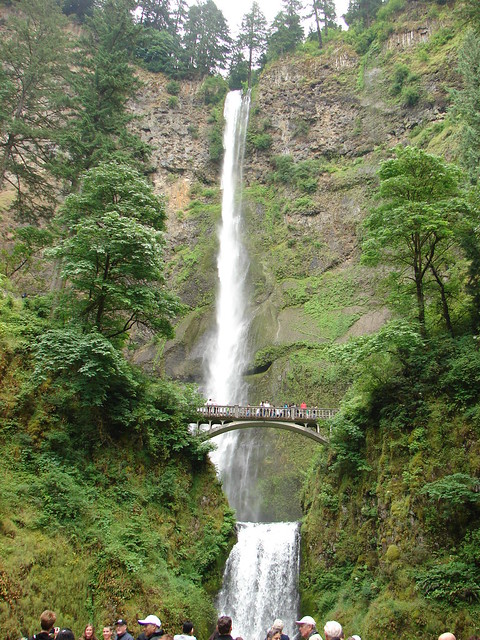
Wahclella Falls

Wahclella Falls

As we made our way across Tanner Creek and began to climb to the higher views we noticed a third section of falls located directly above the lower section.
Wahclella Falls

One of the perks of having set off early was we were able to spend time at each of the falls alone, but more people began arriving as we completed our loop and headed back. When we arrived back at Elowah Falls there were quite a few folks milling about. I detoured up an unmarked side trail to a former viewpoint above Elowah Falls to get a couple of final pictures.

Elowah Falls

Elowah Falls splash pool

One of the neat things about the gorge waterfalls is how different they are. All four of the waterfalls we saw on this hike were unique in their own way making each one that much more memorable. Happy Trails!
flickr:https://www.flickr.com/photos/9319235@N02/sets/72157651027769877/