
Juneteenth provided us an opportunity for a mid-week hike, and we used that opportunity to visit a pair of trails near Westfir, OR.
We began our day by stopping at the Buckhead Nature Trailhead for a short warmup hike.

A paved interpretive loop explores a riparian zone along the Middle Fork Willamette River.


 Signboard about a tenth of a mile from the trailhead.

 The loop began on the far side of the footbridge.
We hiked the loop clockwise and made our way back to the car. There were a few flowers and an obstructed view of the river. We didn’t see much in the way of wildlife save for a couple of birds and a snail.

 As far as we could remember we’d never seen a bench on the other side of a fence before.
 Middle Fork Willamette River through the vegetation.
 Tiger lily
 Self-heal

 Snail
Snail
 Mock orange
The hike here was a little over half a mile, a good warm-up for our next stop at the Deception Butte Trailhead which was only 3.5 miles away.

We had attempted this hike in October 2017 (post), but a 2014 wildfire had left the trail beyond the creek itself unpassable. The trail remained closed until 2022 when the Forest Service and volunteers were finally able to clear and make the necessary repairs to the fire damage.
The fire mostly spared the forest up to the footbridge crossing Deception Creek.

 Anemone
 There are a few junctions prior to reaching the footbridge. The first was the only one with any signage. We stayed on the correct trail by ignoring side trails to the left that headed uphill and on the right that led down to Deception Creek.
 We turned left at the signed junction following half a sign for the Deception Butte Trail.


 At the last unsigned junction there was a signboard, but with nothing on it. (We went straight.)
 Warning sign for the burned area ahead.
 The footbridge over Deception Creek.
 Deception Creek
On the far side of the footbridge the trail entered the fire scar and climbed steeply up a small ridge.

The trail then dropped steeply down on the other side of the ridge.

Due to the fire damage the tread here and for much of the remainder of the trail is rocky and somewhat slick so trekking poles came in very handy. There were also a few spots where some of the tread was missing requiring care. The trail was free of any significant debris, and we only had to step over one small tree. From the bridge it was approximately 3 miles to the summit with around 2300′ of elevation gain. The trail used a combination of switchbacks and longer traverses to gain the elevation. The grade varied widely with a few steep sections and some gentler climbs
 The amount of trail work needed to clear the trail was evident by the sheer number of cut trees along the length of the trail.
 This was from 2017 near the same stretch of trail.
 View up the canyon from the trail.
 Clodius parnassian
 There was a lot of vegetation along the trail, so we had to keep an eye out for poison oak which was present at times on the lower two-thirds of the trail. It was never much of a problem, but there were a couple of plants crowding the trail that we had to maneuver around.
 Moth
Moth
 Starflower
 Rhododendron

 Northern cloudywing
 Big deervetch
 Hummingbird
Kreuger Rock with Patterson Mountain (post) behind to the left.

 Groundsel
 One of the damaged sections of trail.
 There was some forest that survived the fire starting near the 3.5-mile mark where the fire burned less intensely.

 Townsend’s solitaire
 Canada jay
 There were a few views of the Three Sisters through the remaining trees. (Middle & South Sister here)

 Inside-out flower
 Looking up as the trail neared the summit.
 Woodpecker
 Common whipplea
 Anemone
 The Deception Butte Trail arriving at Deception Butte.
 Beargrass
From the actual summit the view is limited in every direction save the south.


A user trail heads SW and drops to an open saddle where you can get an unobstructed view of Diamond Peak to the SE.

 Looking down at the saddle and wondering if it was really worth having to climb back up.
I had arrived before Heather and decided I needed to see the view, so I headed down to the saddle where there were I found quite a bit of wildlife and a few flowers.
 Northern flicker
 Lizard
 Rock outcrop on the other side of the saddle.
 Tolmie’s mariposa lilies
 Bluehead gilia
 Squirrel
 Oakridge in the valley below with Diamond Peak (post) on the right. The smaller peak with snow to the left of Diamond is Mt. Yoran, the triangle shaped peak is Coyote Mountain, and the peak with a little snow to the left of that is Fuji Mountain (post).
 Diamond Peak
 Oakridge
 Leafy fleabane
 Oregon sunshine on the hillside looking up Deception Butte from the saddle.
 Wild onion
 One of the fritillary butterflies.
 Fly inside a Tolmie’s mariposa lily.
Hether had joined me at the summit, and we took a nice break in the shade on the mossy ground before heading back down.

 There is a very steep trail just below the summit that leads to an upper trailhead. The Forest Service does not recommend using these though as the trail is said to be slippery and steep. We can vouch for the steep just by having looked down from the Deception Butte Trail.
 Plectris and stonecrop
It was warming up fast as we descended, a stark contrast to the cold wet descent on MacDuff Mountain (post) just four days prior. We had to be careful not to slip on the loose rocks in the steeper sections and were again thankful for our trekking poles.

 Coralroot
 The best view of the Three Sisters that we got all day.
 Butterflies enjoying some vetch. There were at least a half dozen butterflies visiting this patch.
 Brown creeper
 Pink pyrola


 Pearly everlasting
 Turkey vulture
 Fireweed
 Entering the trees near the footbridge over Deception Creek.
 Columbine
 Tiger lilies
This was a challenging but nice hike. We only saw one other person all day, a trail runner, before reaching the footbridge in the morning. In addition to some poison oak along parts of the trail we did flick a total of three ticks off our clothing so that is something to be aware of. Our GPS track showed approximately 9.5 miles which is partially inflated by my wandering back and forth a bit at the summit.

While it’s not the most exciting hike you can find, there were enough views and variety of plants and wildlife to keep things interesting and the elevation gain made it a good training hike. Happy Trails!
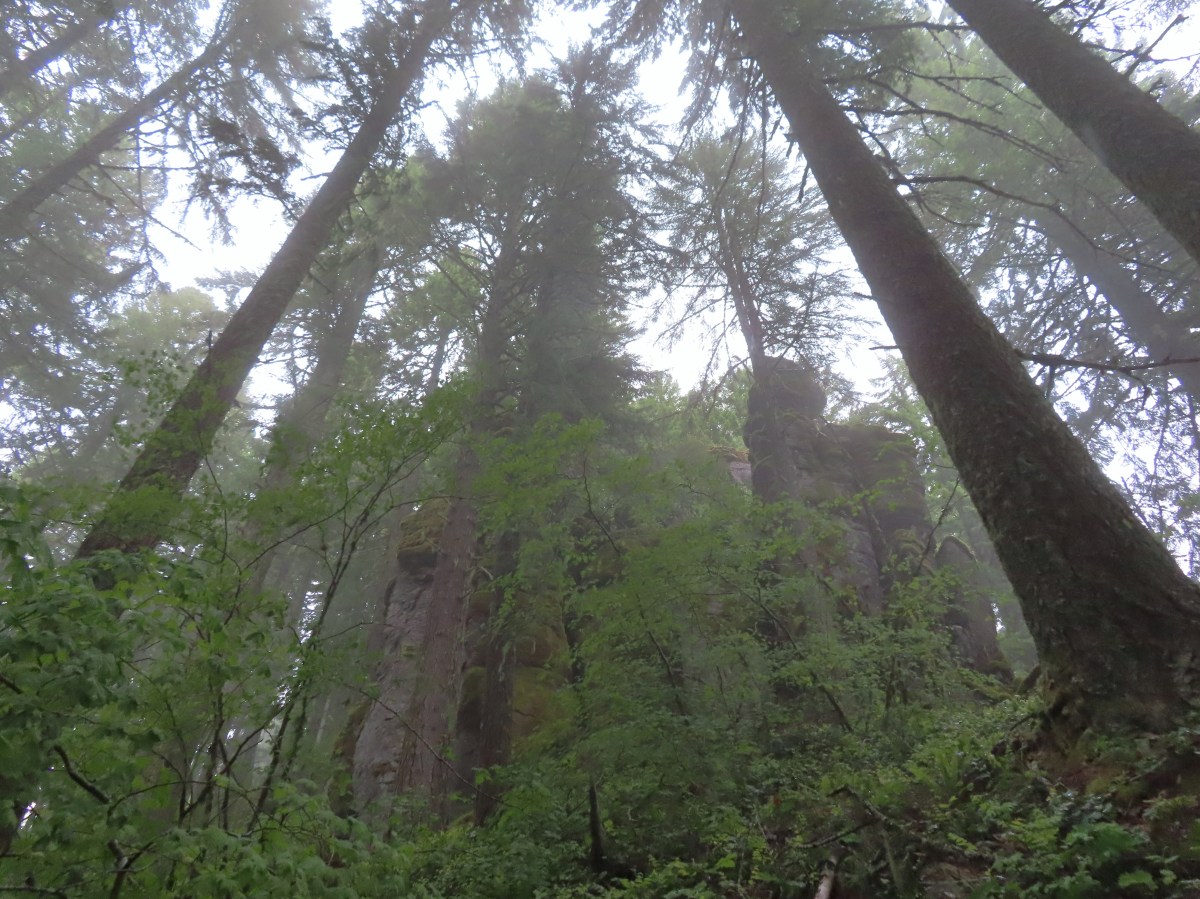


 There were some nice rhododendron blooms along the trail.
 Spotted coralroot
 The first of three crossings of FR 411, this is at the 0.4-mile mark.
 Inside-out flower
 Starflower
 Yellowleaf iris
 The trail is narrow at times but well maintiained.
 Forest filled with rhododendron.
 A closer look at the rhodies.
 There were several madrones in the forest.
 Little prince’s pine
 Sugar sticks
 There were a few places where we might have had a view if not for the clouds.
 Stonecrop
 Passing below some of the rock formations.


 Anemones
 Bleeding heart

 The first small meadow that the trail passed through was full of blue-eyed Mary.

 Northern phlox
 Coming up on another small meadow.
 Subalpine mariposa lily
 Beargrass
 The fog didn’t help with our trying to find the trail. There was enough room along this section of road that parking and starting the hike from here would be possible.
 Back on trail.
 Honeysuckle
 More northern phlox
 This meadow was full of bluehead gilia.


 The trail dropped steeply as it rejoined FR 411.
 There was no parking room that we could see near this area.
 Vanilla leaf along the trail.

 Bunchberry
 Trillium
 We stopped when we spotted something in the trail ahead that looked like it might be an animal. Using the camera to zoom we realized it was a grouse hen with her little chicks.
 The hen got up and then the chicks headed into the underbrush. We felt bad having disturbed them, but once they’d moved, we calmly passed by while momma came back to gather her little ones.
 This was all beargrass, but none of the plants in this area appeared to be planning on blooming this year.
 Hermit thrush
 The rocky summit of MacDuff Mountain.
 A lot of larkspur.
 Subalpine mariposa lilies
 Paintbrush and buckwheat
 Cinquefoil
 A penstemon


 The view from the top.
 No blue sky that way.
 No sign of clearing this way either.
 Cliff beardtongue
 Woodland-stars
 Paintbrush
 Hey look, there is another ridge over there.
 Ookow just starting to open up.
 Steep climb or road walk? We chose the trail again on the way back.
 A wetter road now thanks to the rain shower.
 Blue sky, it does exist.
 The clouds got a late start but eventually started lifting.
 From this angle it looks like a statue.
 Looking down from some of the switchbacks.
 Cougar Reservoir
 Pyrola
 Sunlight!
 I’ve never seen a track this far off.
 The track after manually editing it.
 From the saddle South Triangulation Point, the highpoint of the loop, is to the right.
 Bleeding heart
 Fairy lanterns
 Solomonseal
 Inside-out flower
 Paintbrush
 Lupine
 Starflower
 Salmonberry
 Cardwell’s penstemon
 Beargrass
 Wallflower
 Little-leaf montia
 Fringecup
 Salal
Salal Rosy bird’s-foot trefoil
 Band-tailed pigeons
 Looking back at the saddle before heading into the trees.
 Vetch
Vetch Leaving the clearcut.
 Rock cliffs marking the location of Kilchis Falls.
 Located on a tributary of the North Fork Kilchis River the falls reportedly seldom have much flow, but there was enough water today to make for a pretty sight.
 The small pool below the falls.
 Avens
Avens Spider hiding on a columbine.
 Scouler’s corydalis
 Youth-on-age
 Valerian

 Hedgenettle
 Waterfall on an unnamed creek. It was quite a way back in thick vegetation.
 The above waterfall sans zoom.
 Buttercup
 Fick Creek joining the river.
 Potholes on the North Fork Kilchis River.
 Triangulation Creek flowing into the river.


 Snail shadow on a iris.
 Middle Road coming downhill on the right. This is the

 A very blurry picture of a doe that was way down the hillside in the forest.
 Large rock and log in the middle of Middle Road.
 Monkeyflower surrounded by candyflower
 Paintbrush on some cliffs above Middle Road.
 Thistle
 The road at the 1.3-mile mark along Middle Road.
 The saddle at the 1.6-mile mark.
 Memorial at the saddle.
 Middle Road continuing on from the saddle.
 Beargrass
 The road on the left at the 2.1-mile mark.
 Iris
Iris Stream flowing down the road.
 Coming up to the 4-way junction.
 Middle Road from the 4-way junction.
 The two lefthand forks at the 4-way junction.
 FB3
FB3


 Monkeyflower
 Beargrass, paintbrush and penstemon
 More flowers on a rocky outcrop along FB3.
 A bunch of monkeyflowers.
 Springs along the road.
 Snake cooling off in the mud.
 The snake didn’t budge as we passed around it.
 This fork is approximately 4.2 miles from the Middle Road Trailhead.
 Snake number two on the day.
 This one didn’t budge either.
 Switchback below the saddle.
 Approaching the saddle.
 Gated road up Triangulation Point.
 South Triangulation Point
 Serviceberry, paintbrush, yarrow, and iris.
 Paintbrush and Cardwell’s penstemon
 Iris
Iris Broadleaf arnica, paintbrush and penstemon
 Columbine among others.
 Broadleaf arnica
 Final pitch to the summit.
 We could see our car parked at the saddle below Cedar Butte from South Triangulation Point.
 Motorcycle track heading down from the summit with Triangulation Point on the other side of the saddle.
 Looking to the NW you can see out to the Pacific Ocean. The line of peaks furtherst back staring from left to right consists of Neahkahnie Mountain (
 Closer look at Surgarloaf Mountain and Kidder Butte.
 Wildflowers on South Triangulation Point.

 Another nice clump of wild iris.
 Lupine
 Flowers lining the road.
 More motorcycles at the 5-way junction.

 Variable-leaf collomia
 The road briefly followed a narrow ridge.
 Anemones
 Moth
Moth
 Heather spotted this little one. Not sure if it’s a vole, pocket gopher, or something else.
 Silverleaf phacelia and chickweed
 A lomatium

 Larkspur and monkeyflower
 This pink larkspur really stood out on the cliffs.
 Littleleaf miner’s-lettuce
 Several types of yellow wildflowers.
 Still dropping a little after the cliffs.
 Bleeding heart and candyflower
 Climbing the road at the edge of the clearcut.
 The saddle where our car was parked across the clearcut.
 South Triangulation Point from Cedar Butte Road.
 South Triangulation Point
 Looking down the North Fork Kilchis River valley from the saddle.
 The trail information lists the hike as “difficult” due to the amount of elevation gained over just three quarters of a mile to the summit.
 The start of the Cedar Butte Trail.
 Star-flowered false solomonseal
 Black-headed grosbeak
 False lily of the valley
 The trail was in good shape with just one small tree down over it.
 Blue-eyed Mary
 Small saddle below the summit.
 Beargrass
 Phlox
Phlox Final pitch to the summit.
 Wild onion
 Benches at the former lookout site.
 View from the summit.
 Wildflowers at the summit.
 Kings Mountain is the high point to the right along the ridge.
 Fairy bells and vanilla leaf
 Almost back

 The trailhead is just a large gravel pullout along Cook-Underhill Road.
 There is no parking for the trail anywhere along Jackson Rd.


 Ookow surrounded by poison oak.
 Mt. Defiance (
 Large-flower triteleia
 Monkeyflower along the road.
 Ookow
Ookow
 Small waterfall through the vegetation.
 The first of two crossings of this unnamed creek.
 There was a lot of spotted coralroot along the road.
 Most of the trees had been cleared from the road, those that remained were easily stepped over.
 Anemones
 The second creek crossing.
 Lupine
 White groundsel
 Small spring near the junction with the start of the loop.
 Reeder mentioned a rock cairn at the start of the loop which was still present, but now there were signs too.
 Going counterclockwise seemed to be preferred direction based on trip reports. This was also the shorter distance to the summit at 1.6-miles.
 The clockwise sign listed the summit as 2.8-miles away in that direction.
 Arriving at the lower meadow.
 Balsamroot
 Groundsel and balsamroot
 Lupine
 Death camas
 The rocks up ahead made for some nice seats to take in the view from.
 Mt. Hood peaking over the ridge to the left with Mt. Defiance to the right.
 Mt. Hood
 Vanilla leaf
 Starflower
 Fairybells
 The start of the long upper meadow.
 Larkspur
 Violets
 Slender phlox and blue-eyed Mary
 Phlox
Phlox Balsamroot surrounded by larkspur and coastal manroot.
 Coastal manroot
 Groundsel
 Dog Mountain from the meadow.
 Chocolate lily
 This was the closest lupine to blooming in the upper meadow.
 Chickweed
 Oregon sunshine yet to boom.
 Mt. Hood from the meadow.
 Woodland stars, larkspur, and lomatium.
 Yellow buttercups lining the trail.
 Mt. Hood and Mt. Defiance
 Mt. Hood
 Mt. Defiance
 Alpine pennycress
 Larkspur and lomatium

 Chocolate lily eating a buttercup.
 Largeleaf sandwort
 The final stretch of the upper meadow.
 Violets
 Phlox
Phlox Dog Mountain
 Mt. Hood and Mt. Defiance from the upper meadow.
 Table Mountain (
 Phlox, paintbrush, and lomatium


 Mt. Adams from between trees.
 Arnica
 The final stretch of the steep descent was through this forest with no understory.
 Vine maple overhanging the trail.
 It’s hard to tell from the photo but these were huge paintbrushes.
 Another view of Mt. Hood and Mt. Defiance.
 Dogwood
 Trillium
 The first tower.

 Looking toward Mt. Adams from beneath the powerlines.
 Mt. Adams
 Wind Mountain (
 The faint roadbed heading left back toward the forest.

 Wild ginger
 Candyflower
 The trail passed under a talus slope where a fair number of flowers were present.
 Lupine and yarrow
 Stonecrop
 Bee visiting penstemon.
 The talus slope.
 Descending to the junction.
 Ookow and bachelor buttons along the trail.
 Bachelor button
 Heather spotted this arctic skipper on some vetch.
 Clarkia. It wasn’t open yet when we’d passed by in the morning.
 There were a lot of phantom orchids starting along the lower portion of the hike, but this was the only one with any flowers opened.
 Cook-Underhill Road from Jackson Road.


 The best of the color was while I was still at the trailhead.
 Checkerbloom
 Common madia
 Meadow checker-mallow and vetch
 The platform
 Too late for any color.
 There always seems to a western meadowlark or two on Mt. Baldy.
 Spotted towhee
 I went left to hike the loop clockwise.
 Moffitti Marsh in the distance.
 Geese flying over.
 Snake in the grass.
 Pied-billed grebes
 Common yellowthroats
 Gadwalls
 Moffitti Marsh
 Dove
Dove


 House finch
 Swallow
 Sparrow

 Crow
Crow Goose family
 Common yellow-throat (female)
 Roses
Roses
 Columbine
 White-crowned sparrow
 Ookow
Ookow Tolmie’s mariposa lily
 Waxwing


 Cottonwood Pond is in the lower left corner.


 The yellow-headed blackbirds were particularly noisy.
 A cinnamon teal in front of two mallards?
 This loop was 3.4-miles.
 Grizzly Mountain from Pond 4.
 Killdeer
 One of the interpretive signboards ahead.
 Goose family
 There were plenty of benches to enjoy the views from.
 Mallards
 Cinnamon teal
 Must be a green-winged teal but the angle of light made the patch on his head look blue.
 We’d never seen so many killdeer in one area.
 Spotted sandpipers
 Brewer’s blackbird
 Swallow
 Pollinator garden
 Ring-necked ducks
 Wilson’s phalarope
 Yellow-headed blackbirds
 American coot
 Adolescent geese
 Dove
Dove Gadwalls
 Female yellow-headed blackbird
 Pair of bucks.
 Ruddy ducks
 Red-winged blackbird harassing an osprey.
 Gray Butte
 A pair of hawks.
 Not birds.
 Marsh wren
 Great blue heron
 Observation deck at Pond 10.
 Another marsh wren.

 Heading back to the parking area.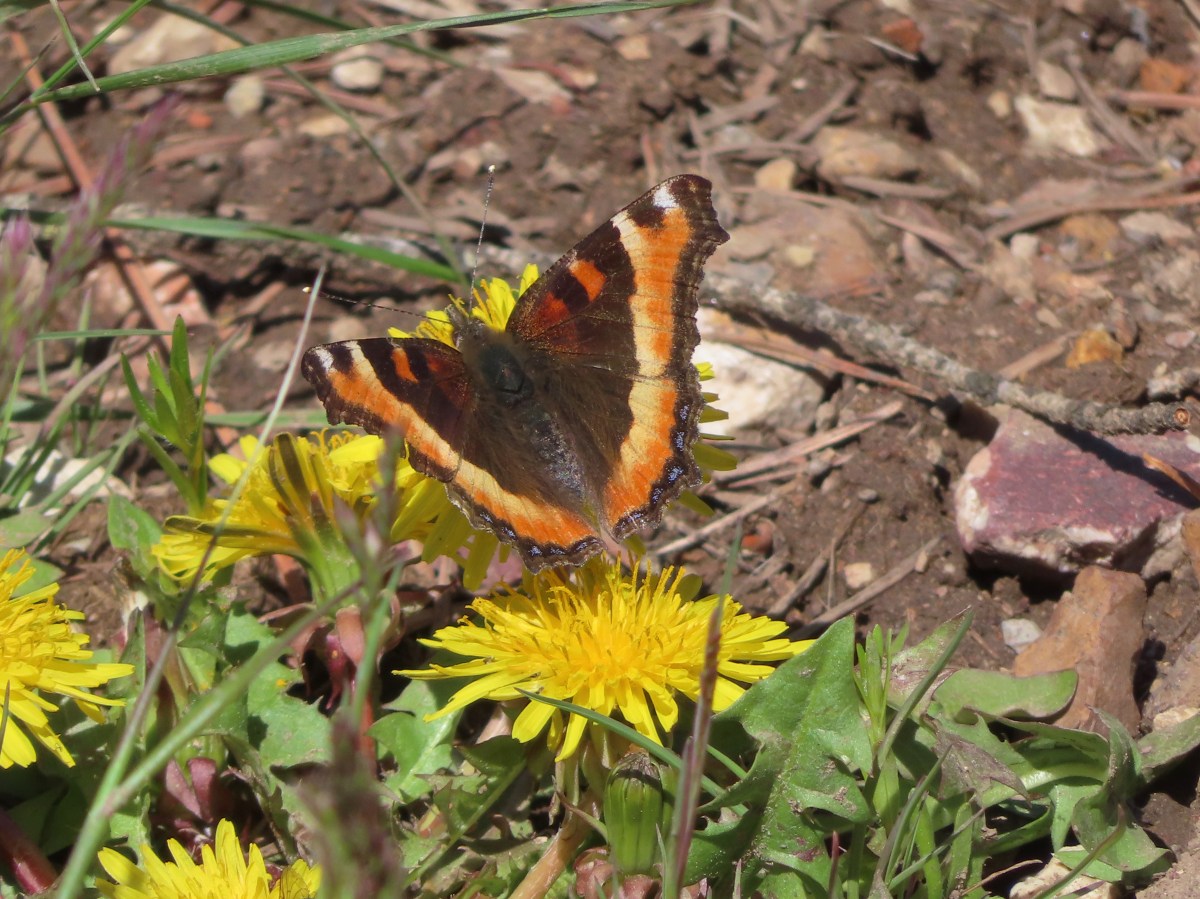
 Sign for the trailhead along FS21.
 This mud and torn up area was why we chose the shoulder instead.
 Arnica near the trailhead.

 Broomrape
 Larkspur
 Death camas
 Lomatium and few-flowered pea-vine
 Lupine
 Woodland star
 Oregon sunshine
 Violet
 McClellan Mountain, Moon Mountain and Fields Peak (
 Balsamroot
 The clearer track to the left leads to Tupper Butte in approximately 0.3-miles. We continued straight on the Madison Butte Trail.
 The Strawberry Mountains with Strawberry Mountain (
 Glacier lily
 The fence in the distance.
 Huckleberry
 Mt. Hood
 Old man’s whiskers
 Ball-head waterleaf
 Small bluebells
 Paintbrush
 Trail marker on the tree.
 One of two fresh piles of scat along the trail.
 The markers were helpful because the trail was quite faint at times.
 Slender phlox
 Shooting stars
 Rock outcrop along the trail at the 2.1-mile mark.
 View from the rock outcrop.
 Larches

 Chocolate lily
 Lance-leaf spring beauty
 Violets
 Madison Butte from the trail.
 Bottle Spring
 Pond below the spring.
 Glacier lilies
 Trail sign at Madison Butte Road.
 Blue-eyed Mary
 The
The  Mt. Jefferson poking up in the distance.

 Wild onions


 The Strawberry and Aldrich Mountains to the south.
 The Elkhorns (
 The Elkhorns with Mt. Ireland (
 Looking SW we could see Mt. Jefferson and also make out the Three Sisters further to the south. Mt. Hood and Mt. Adams were also visible although partially obscured by clouds.
 A rockcress
 Swallowtail
 Milbert’s tortoiseshell
 Skipper
 Mushroom
 Fairy slipper
 A particularly large paintbrush.
 Orange tip
 Larkspur


 Violets
 Ring-necked ducks and an American coot
 Arnica
 Ducklings
 Ring-necked duck
 Fleabane?
 Camas
Camas A coot and a sandpiper
 Red-winged blackbird
 Our first eared grebe.


 M Hill from the trail.
 The crosswalk on SW Canyon Road.
 Kiosk at the bottom of the hill.
 The “M” on the side of the hill.

 Gray Butte (
 Broken Top and the Three Sisters to the left with Mt. Jefferson to the right.
 Broken Top and the Three Sisters
 Mt. Jefferson
 Ash-throated flycatcher


 Passing under a trestle and a siphon pipe.
 Lupin
Lupin A lomatium
 Ringlet
 Ground squirrel
 Marmot
 Crossing the dry bed of Willow Creek.
 Fiddleneck
 Hawk
Hawk Desert yellow fleabane
 Small cascade flowing into Willow Creek.


 cut-leaf thelypody
 Carey’s balsamroot
 Rocky Mountain iris
 Lazuli bunting
 Taper-tip onion
 Bullock’s oriole near the top of the photo.
 Silverleaf phacelia
 Paintbrush


 Our turnaround spot. The deer were watching us from just right of the largest rock outcrop.
 Yarrow and silverleaf phacelia above Willow Creek.
 Rock wren
 Raven nest
 This appears to be hound’s tongue.


 Grizzly Mountain from the wrong path.
 Barnes Butte from the Calumet Trail.

 Threadleaf phacelia
 Barnes Butte from the 4-way junction.


 Penstemon
 Milkvetch
 Phlox
Phlox Mt. Jefferson beyond Gray Butte.
 Rock outcrop below Barnes Butte.
 Cinnabar Mine
 A skipper and flies on a groundsel.
 A sulphur
 The trail to the summit.


 Bench at the summit.
 L to R: Black Butte (
 Round Mountain to the east (
 Powell Buttes to the SW with Mt. Bachelor, Broken Top and the Three Sisters beyond.
 Mt. Bachelor (
 Broken Top and the Three Sisters
 Of course by heading down it meant we started with a slight climb on The Meadow.

 Viewpoint along The Meadow.
 Orange globe-mallow
 Buckwheat


 A hairstreak
 The Canal Trail running parallel to the Pave Trail.
 Mountain identifier
 Coming up on the end of the Canal Trail.
 Lizard
 Arriving back at the trailhead.

 The first signboard near the small parking area.
 Elk Creek Road from the small parking area.


 Bleeding heart
 Salmonberry
 Fairy lanterns
 Largeleaf avens
 Scouler’s corydalis
 Coastal monkeyflower


 Trillium
 Star flower
 The well graded trail uses a combination of switchbacks and long traverses to climb over 1000′.
 Looking down at the trail below.


 Anemone
 Western buttercup


 Paintbrush, parsley, and blue-eyed Mary


 Fairy lanterns and paintbrush
 Lupine was just beginning to bloom along the road.
 On the way back down.
 West Fork Elk Creek to the left and Elk Creek to the right from the bridge.
 The junction with the Elk Creek Trail.
 We missed a section of leafy mitrewort on our earlier pass.
 The small parking area from the trail.


 Thimbleberry
 Coming up on the start of the boardwalk.
 Scouler’s corydalis at the base of the boardwalk.
 The boardwalk junction.

 The base of Cathedral Tree.
 One of two benches near the 300+ year old stika spruce.
 Cathedral Tree

 Beyond the boardwalk the trail was a bit rougher.
 Trail markers were present at times to help identify the correct route.
 Pacific waterleaf
 The Astoria Columnn.
 Megler Bridge


 Young’s River on the left and the Lewis & Clark River on the right
 The early bird.


 The spiral staircase.

 Young’s River
 Traffic on the Columbia River.
 Looking out toward the Pacific beyond Astoria.
 Deer in the grass below the Astoria Column.
 Heather below the column.


 This was a spur trail 0.2-miles from the column (0.6-mile from the trailhead) that also leads down to Irving Street and could be used for a loop if you don’t mind some street walking. We opted to pass and did the hike as an out-and-back.
 False lily-of-the valley
 The last trillium?
 Fringecup
 The start of the short trail to the falls.
 Interpretive signs near the start of the trail.
 The falls were noted during Lewis and Clark’s stay at nearby Fort Clatsop (
 This was a tough one to photograph due to the amount of spray being blown straight at us by the force of the water.
 We pulled over onto the shoulder of Hwy 202 to snap a picture of these bulls.

 Bleeding heart
 Fairybells
 Scouler’s corydalis


 I was joined by a pair of ouzels at the falls.
 Looking back at Heather on the other side of Fishhawk Creek.
 Me through the trees below the falls.
 Please note that you need a permit to park at the refuge.
 wanderingyuncks