Categories
High Cascades Hiking Oregon Sky Lakes/Mountain Lakes Area Trip report

Fish Lake and Lake of the Woods

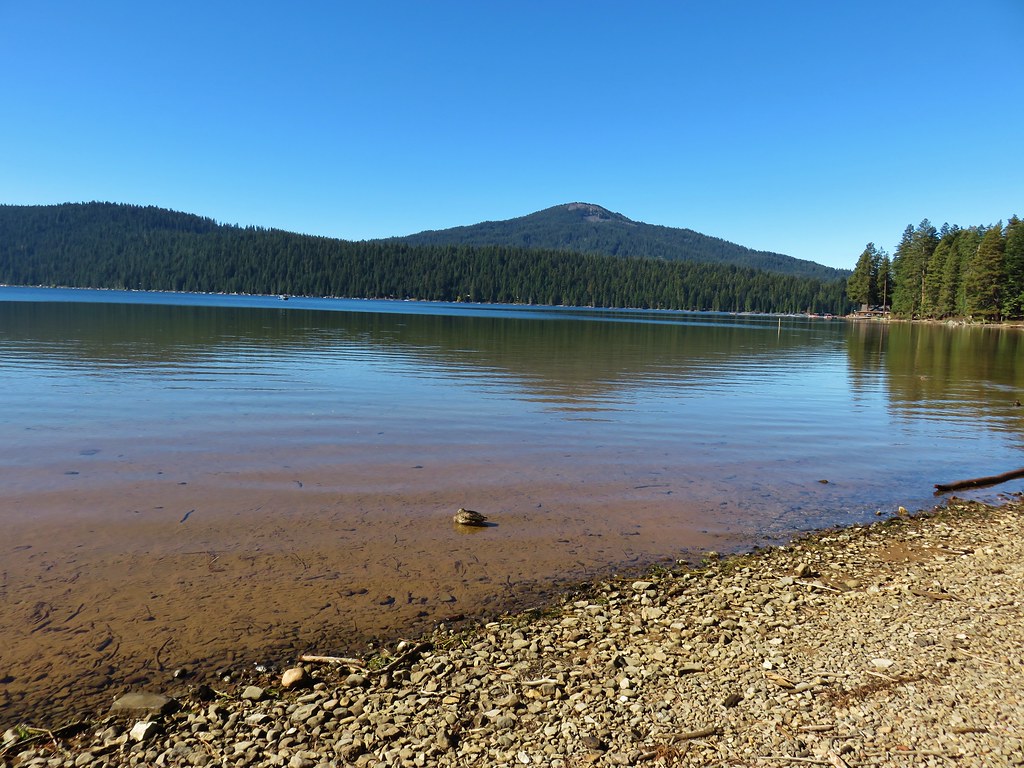
Sunday of Columbus Day Weekend was the only day of the four where the forecast in the Cascade Mountains looked promising so on that morning we headed west from Klamath Falls on Highway 140 to visit a pair of lakes near Mt. McLoughlin.

The skies over Klamtah were pretty much clear as was the case for most of the drive, but as we crossed over the Cascade Crest we found ourselves in a fog bank. We turned off the highway at sign for the North Fork Campground between mileposts 28 and 29. We parked at a small trailhead parking area a half mile down this road on the left.

It was a chilly morning in the fog as we set off on the Fish Lake Trail, but it wasn’t raining.
IMG_4025

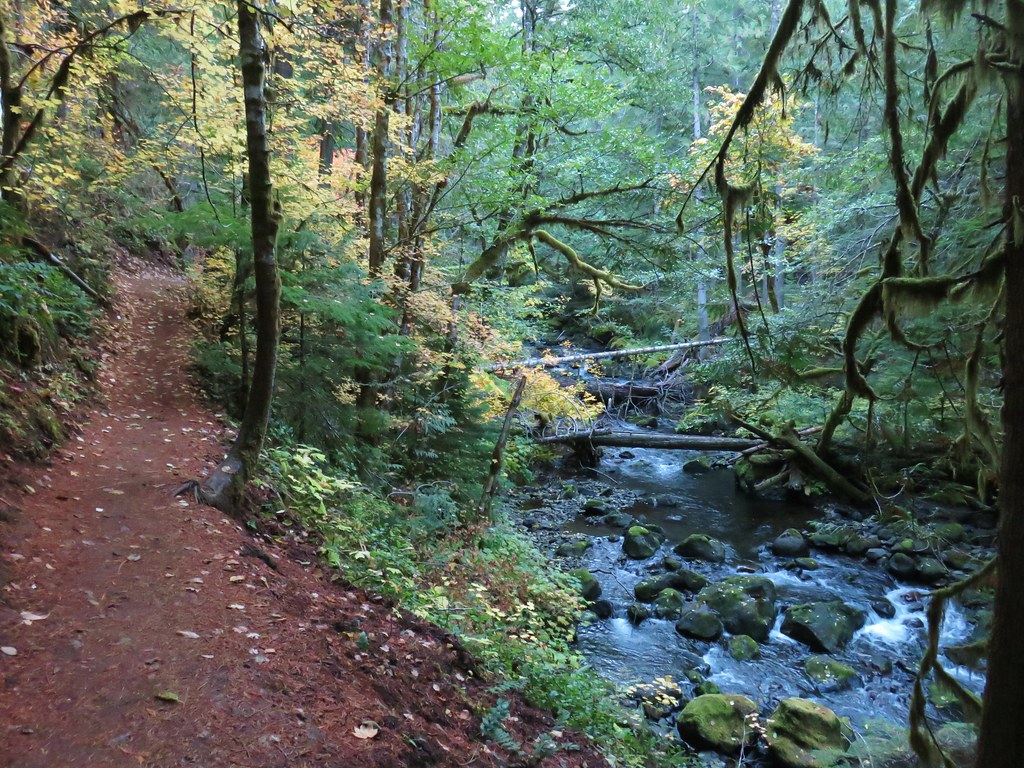
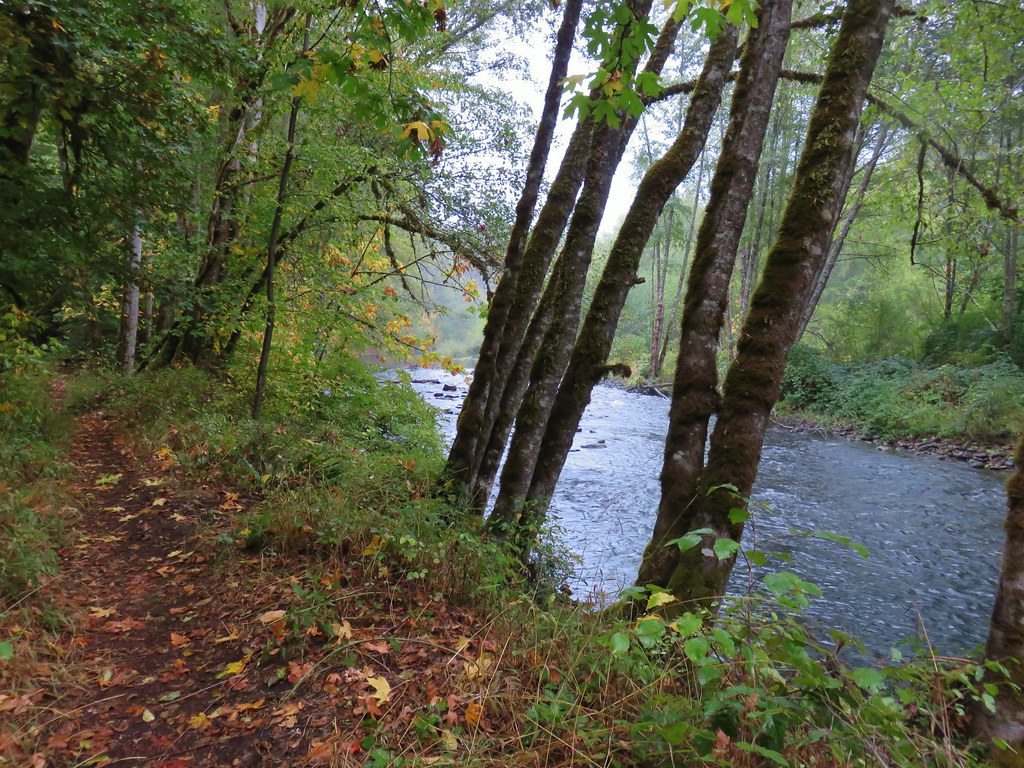
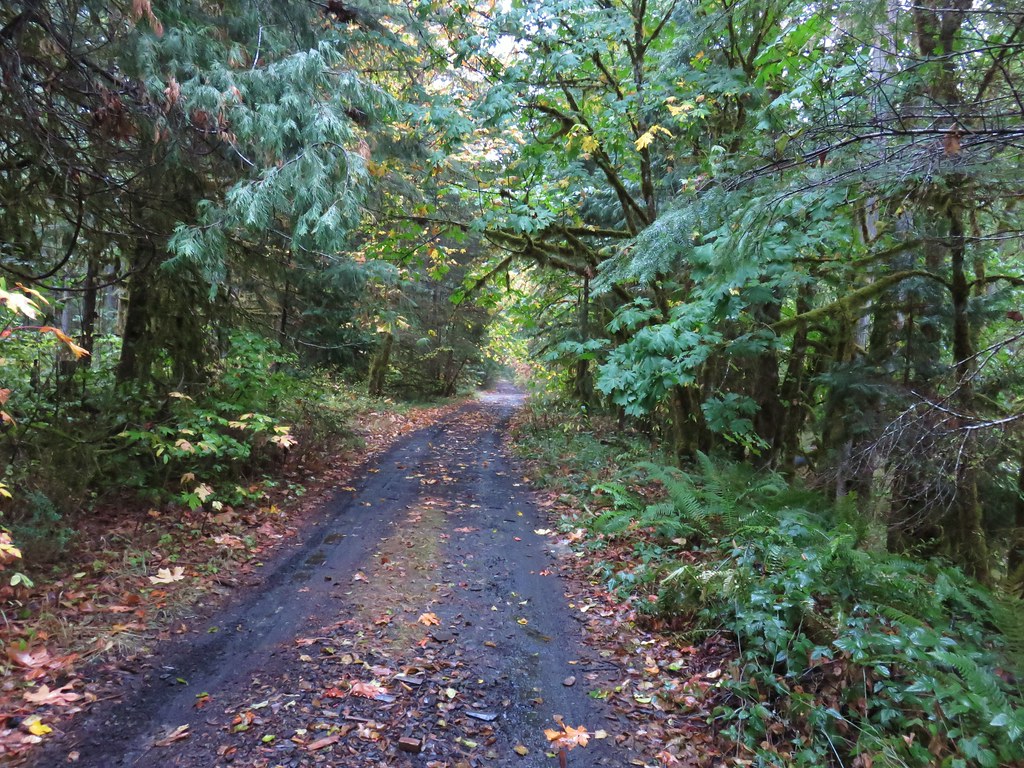
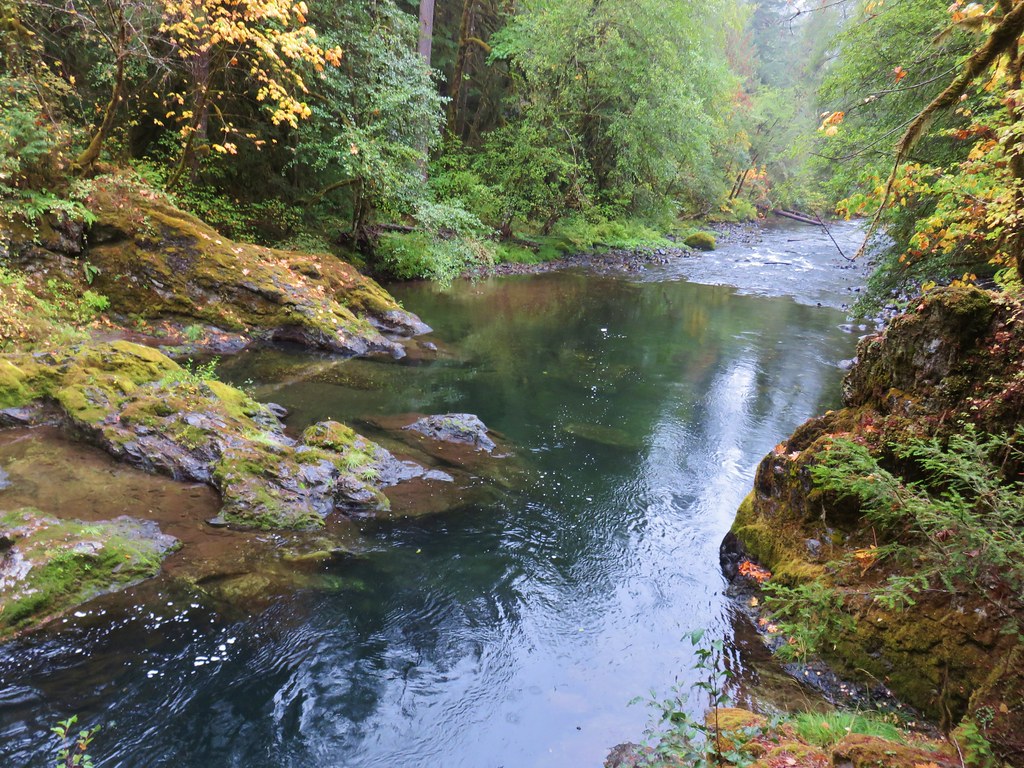
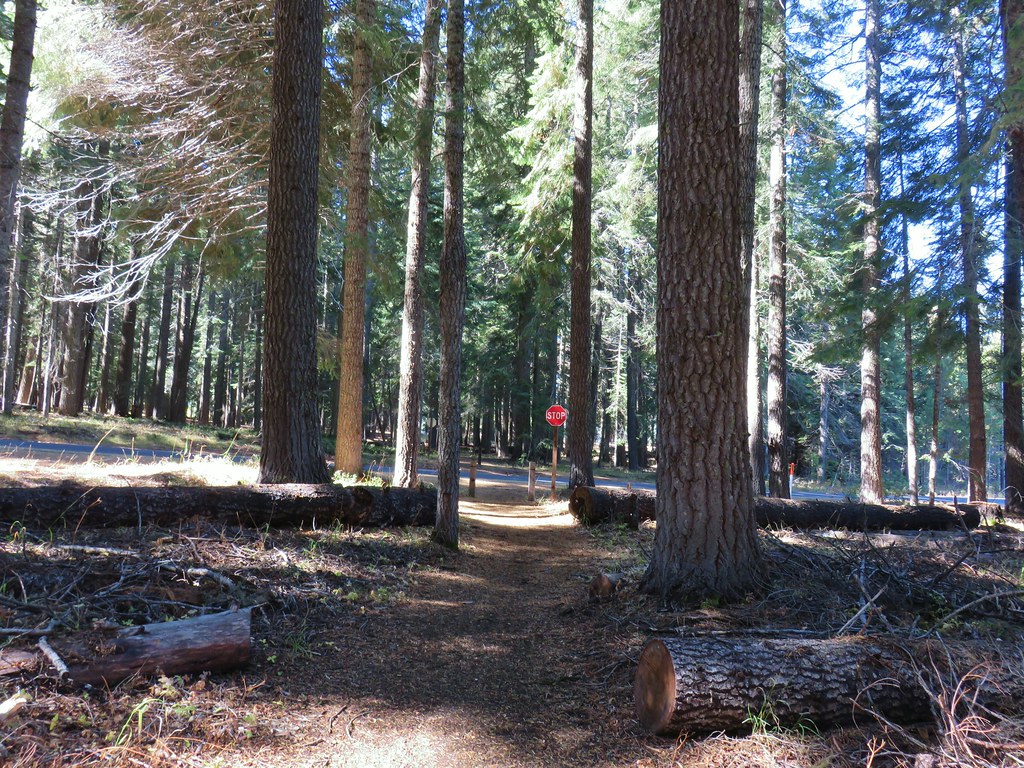
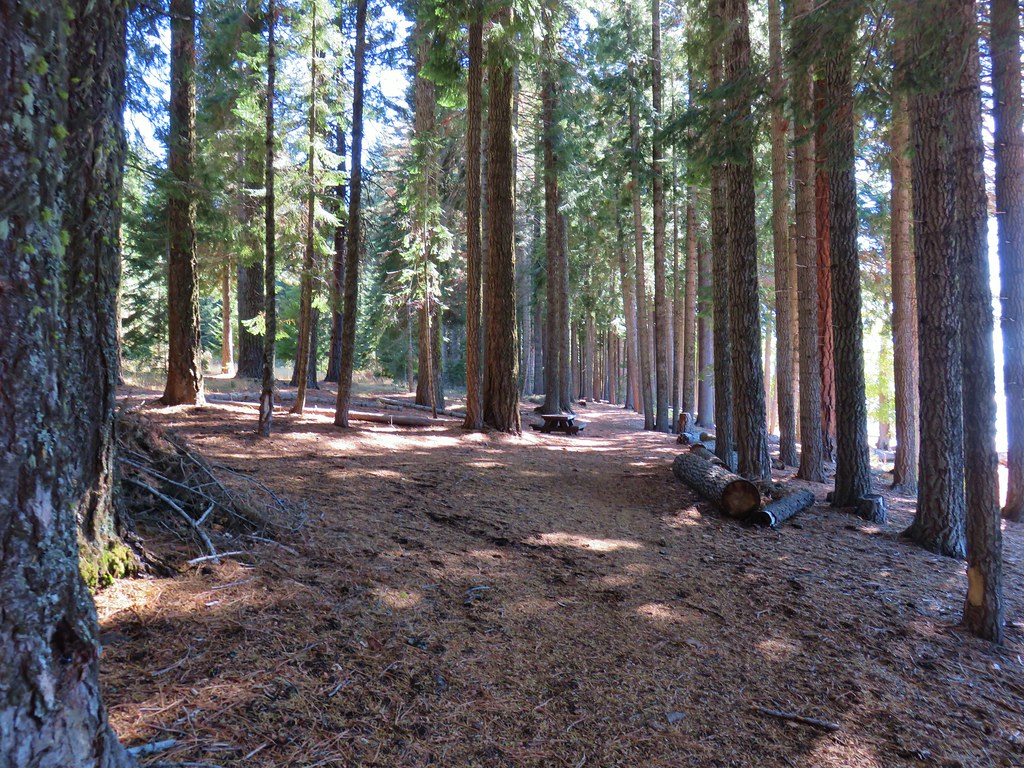
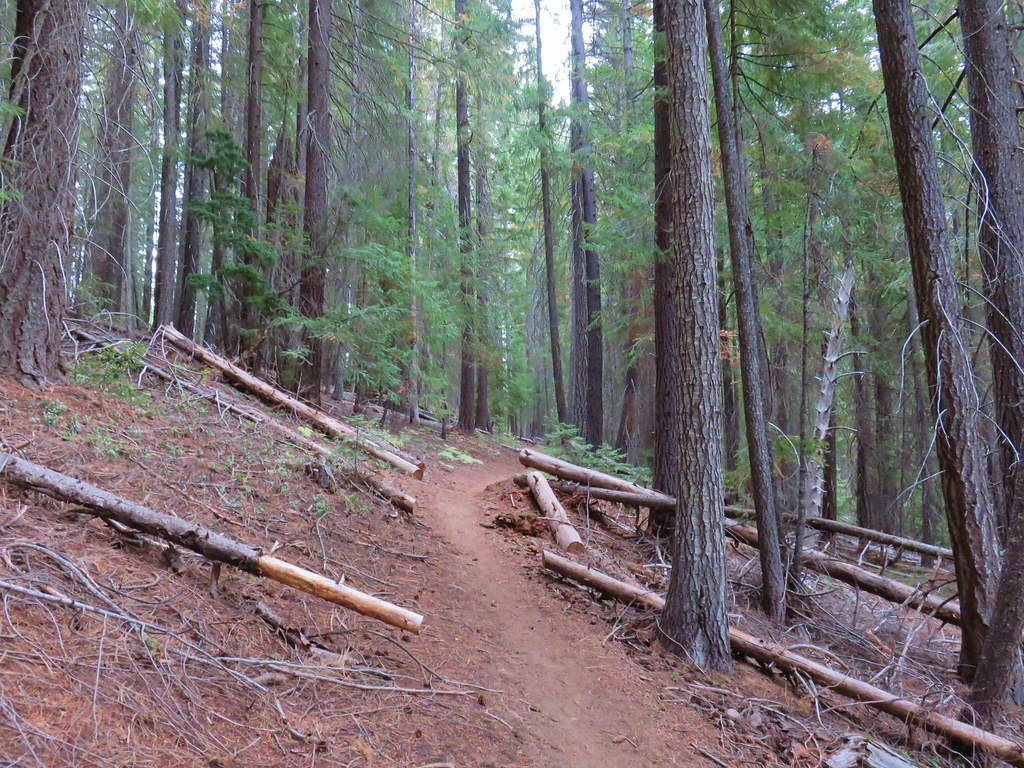
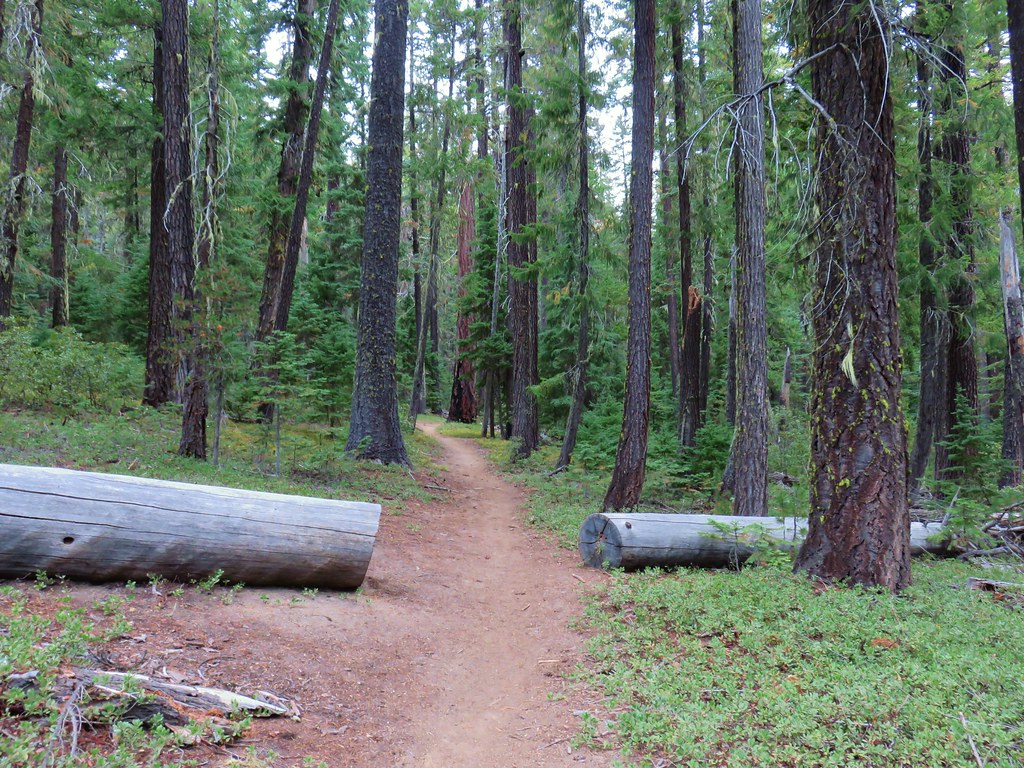
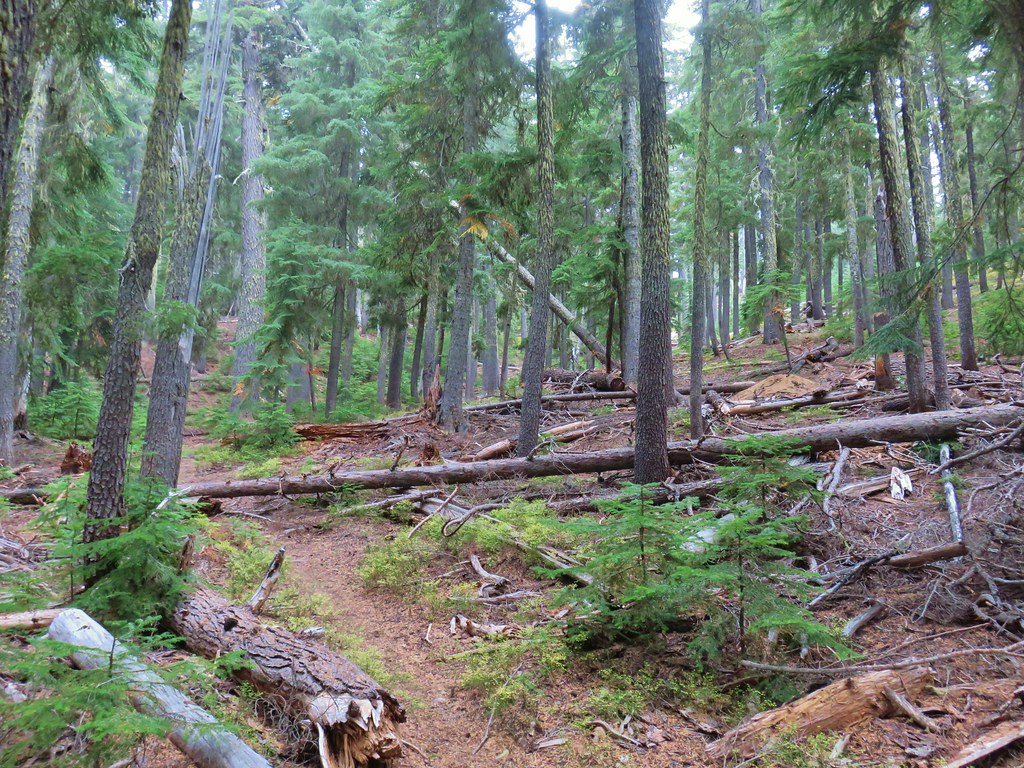
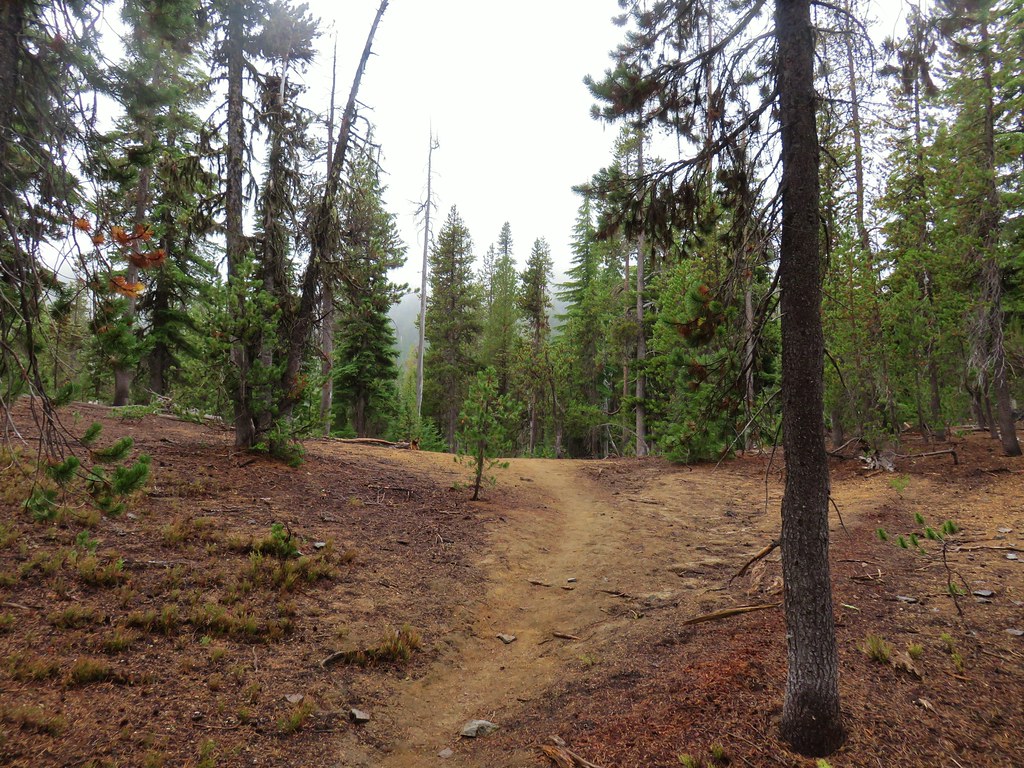
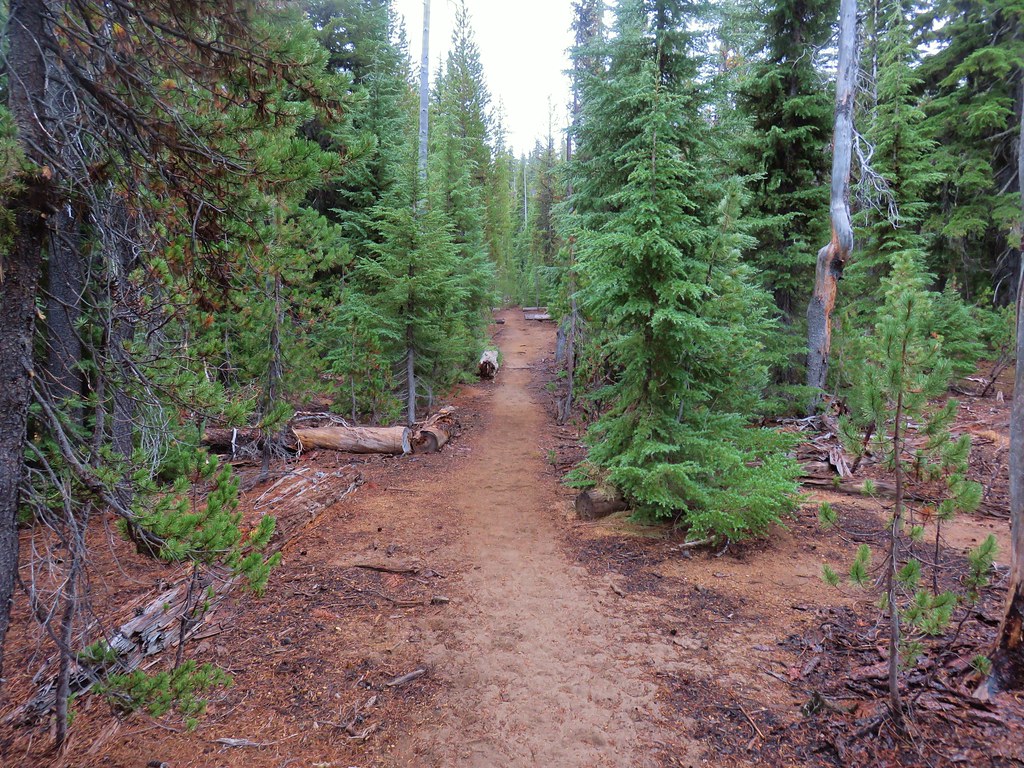
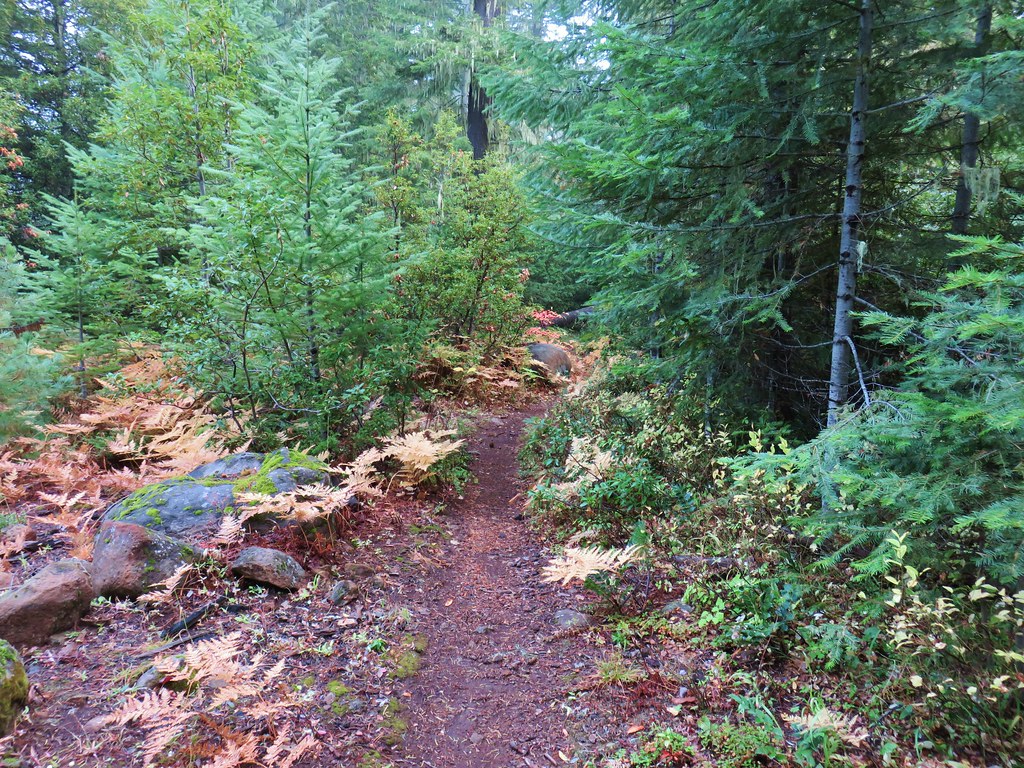
The trail began by passing through a nice fir forest with occasional views of North Fork Little Butte Creek.
IMG_4029

IMG_4031

IMG_4033

IMG_4041

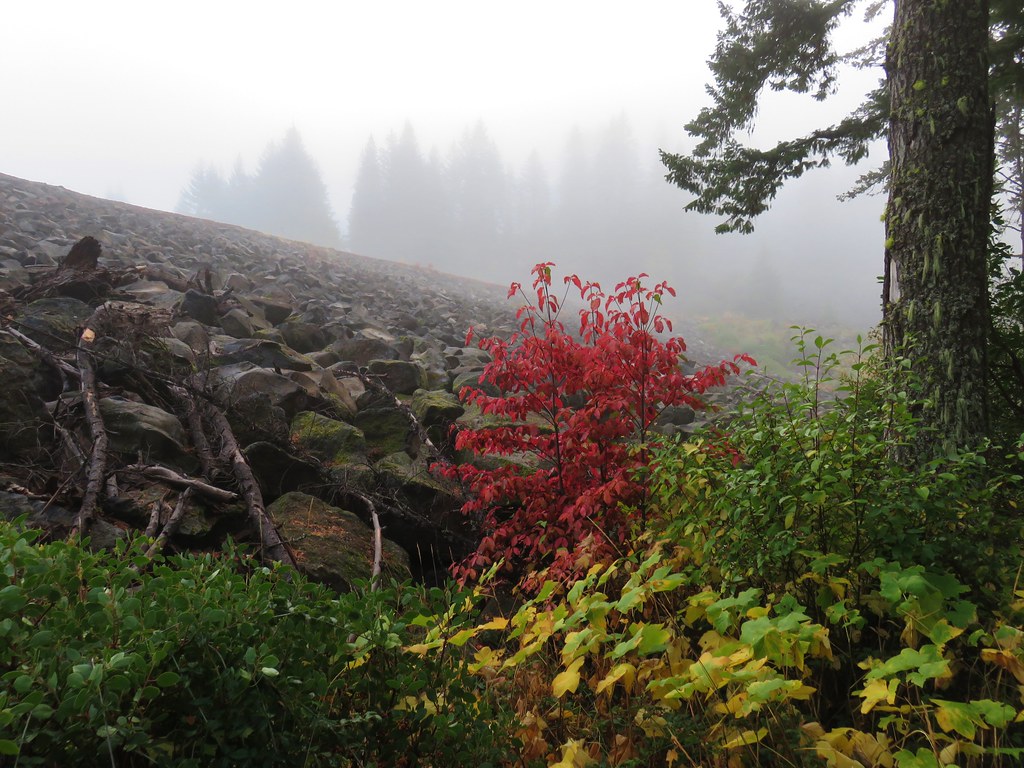
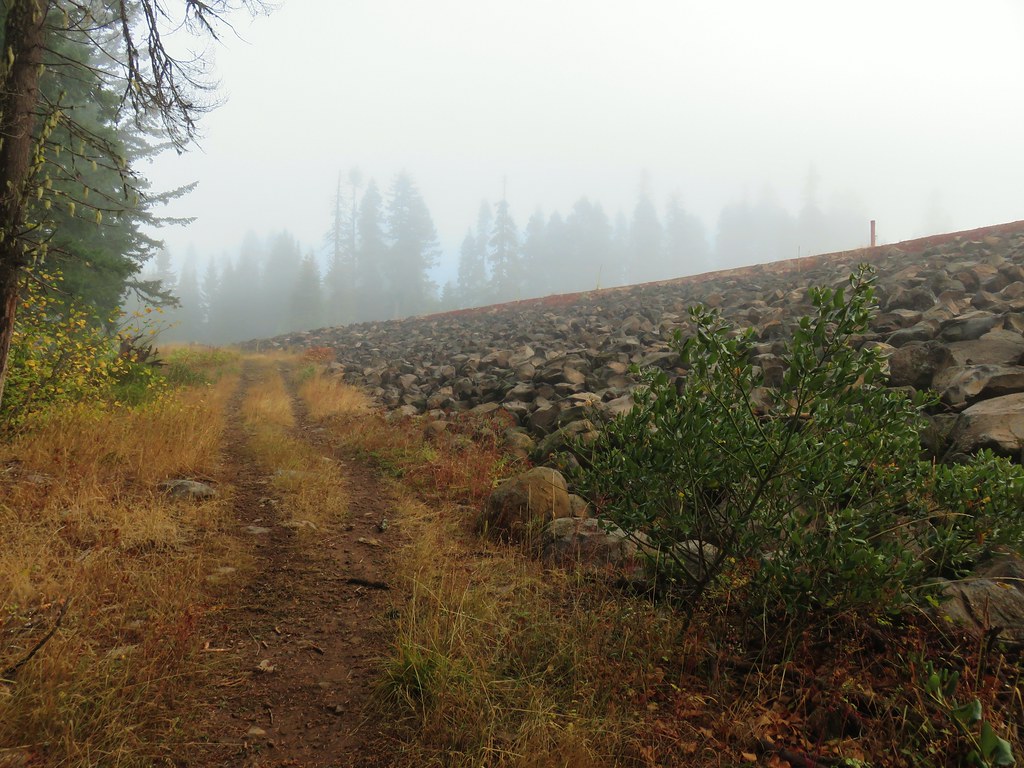
After .6 miles we came to a signed spur trail which we followed 100 yards to the Fish Lake Dam.
IMG_4042

IMG_4043

IMG_4044

For the better part of the next mile the Fish Lake Trail veered away from the water as it curved around some private summer homes.
IMG_4048

IMG_4049

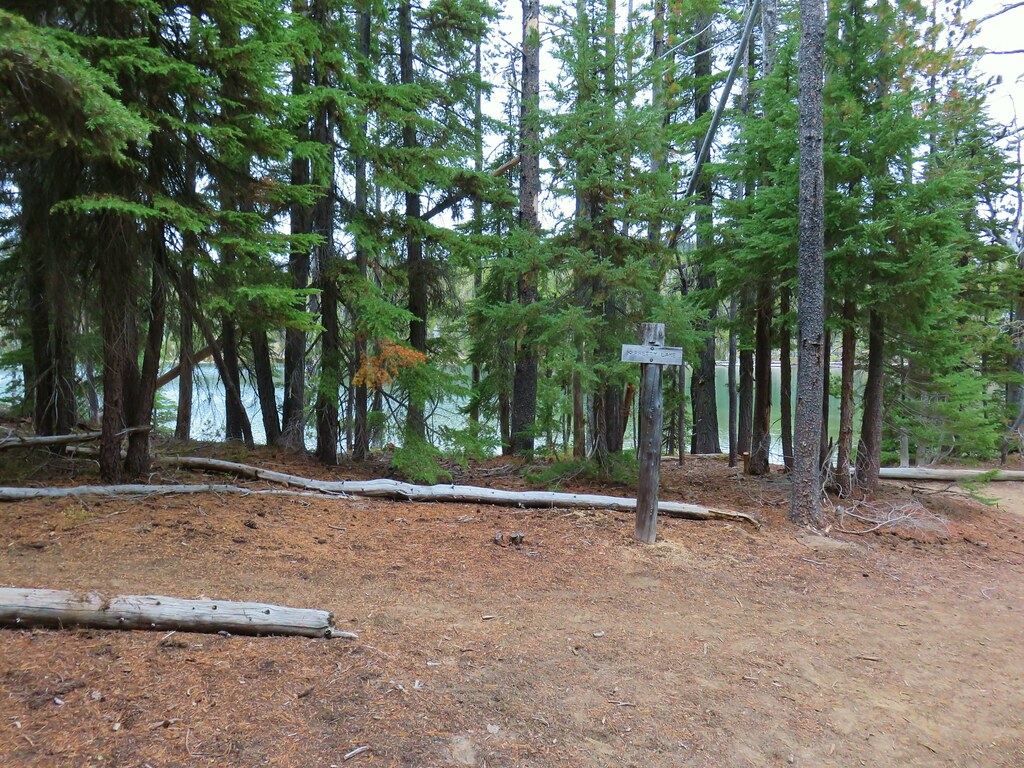
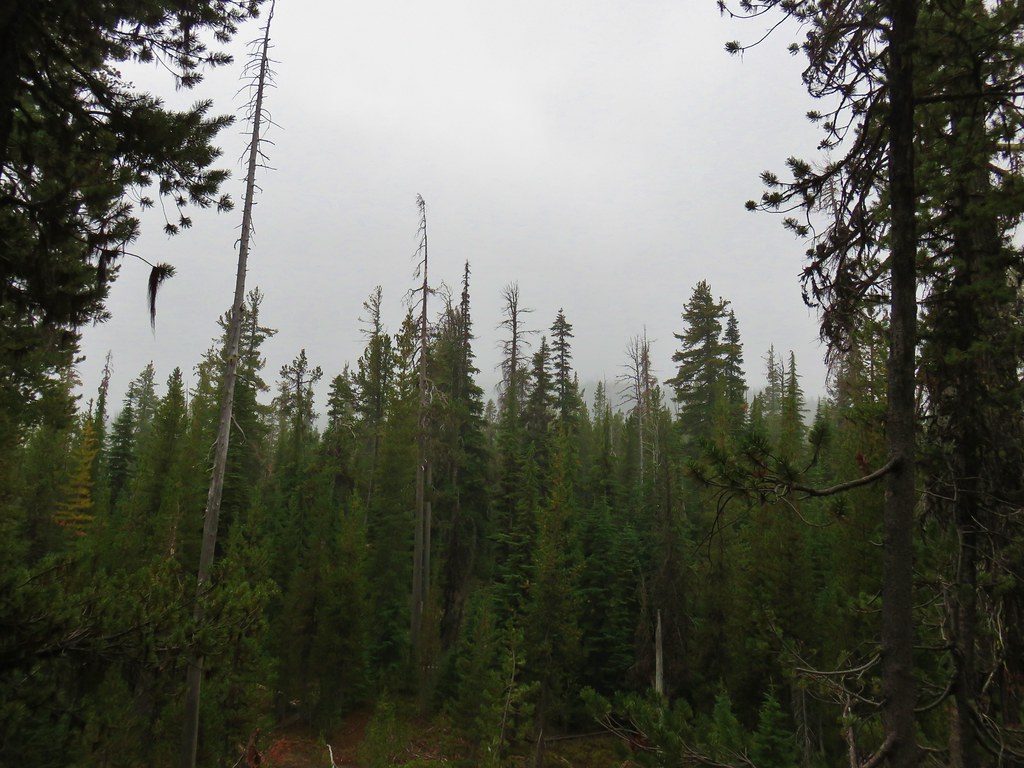
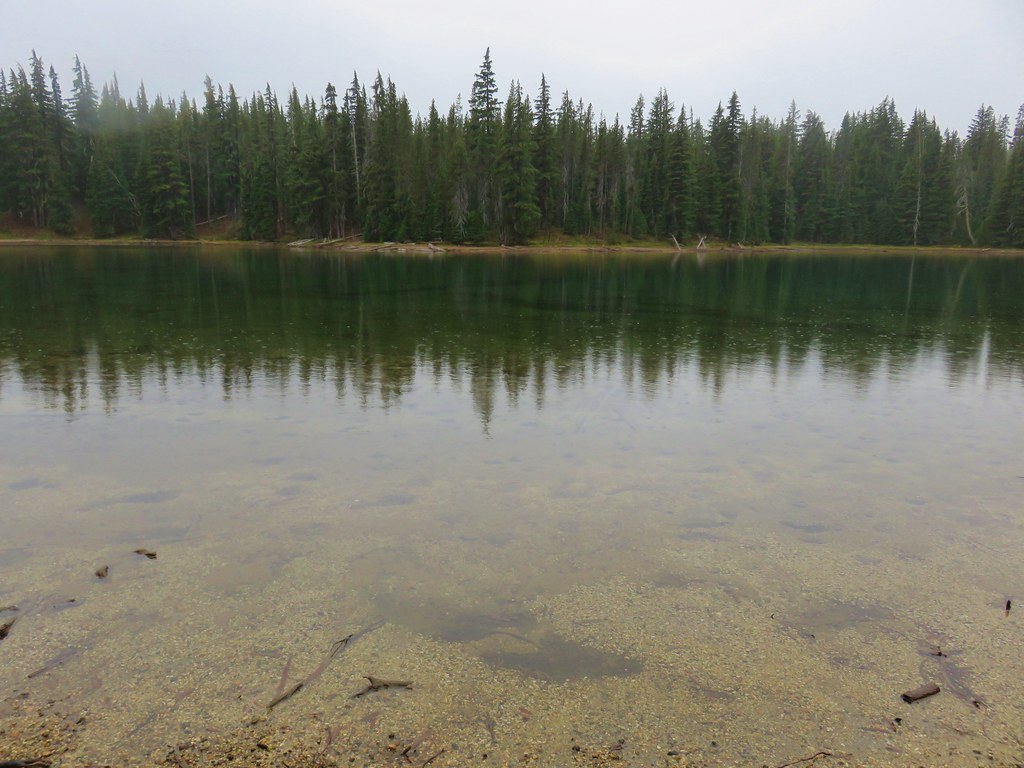
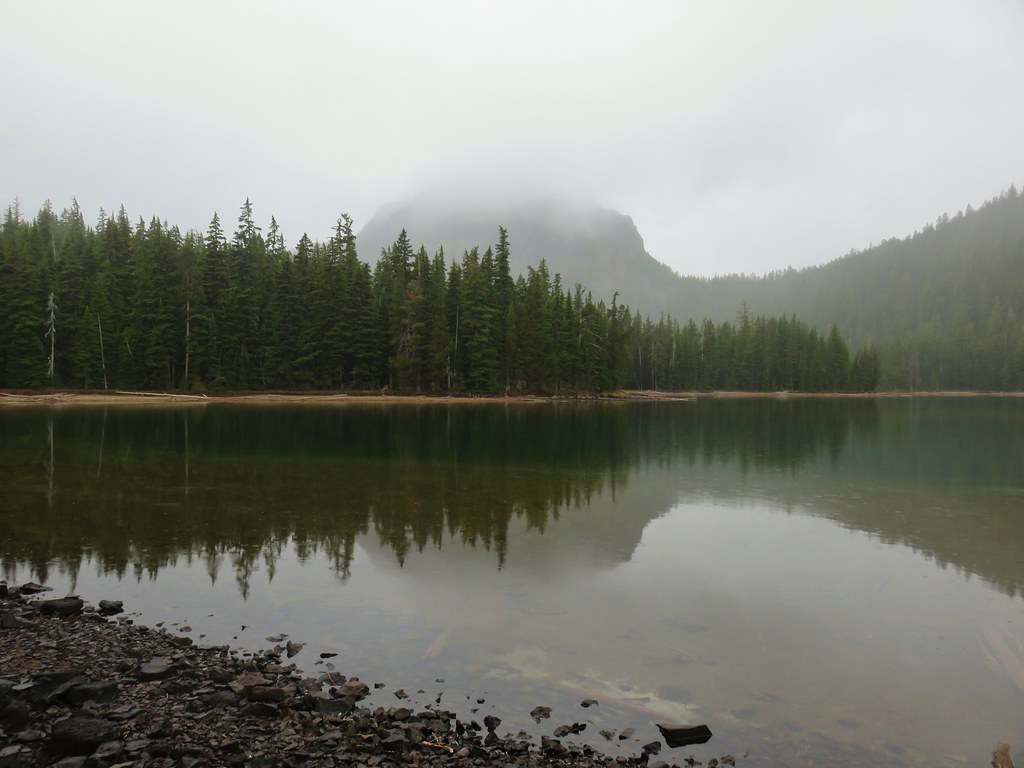
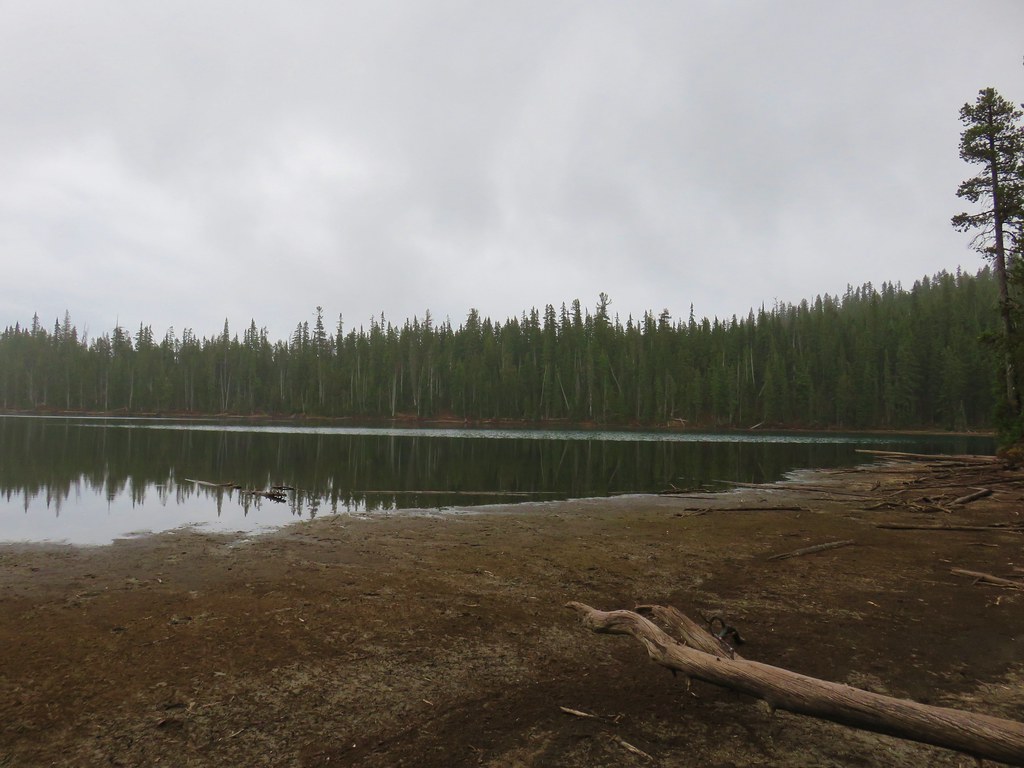
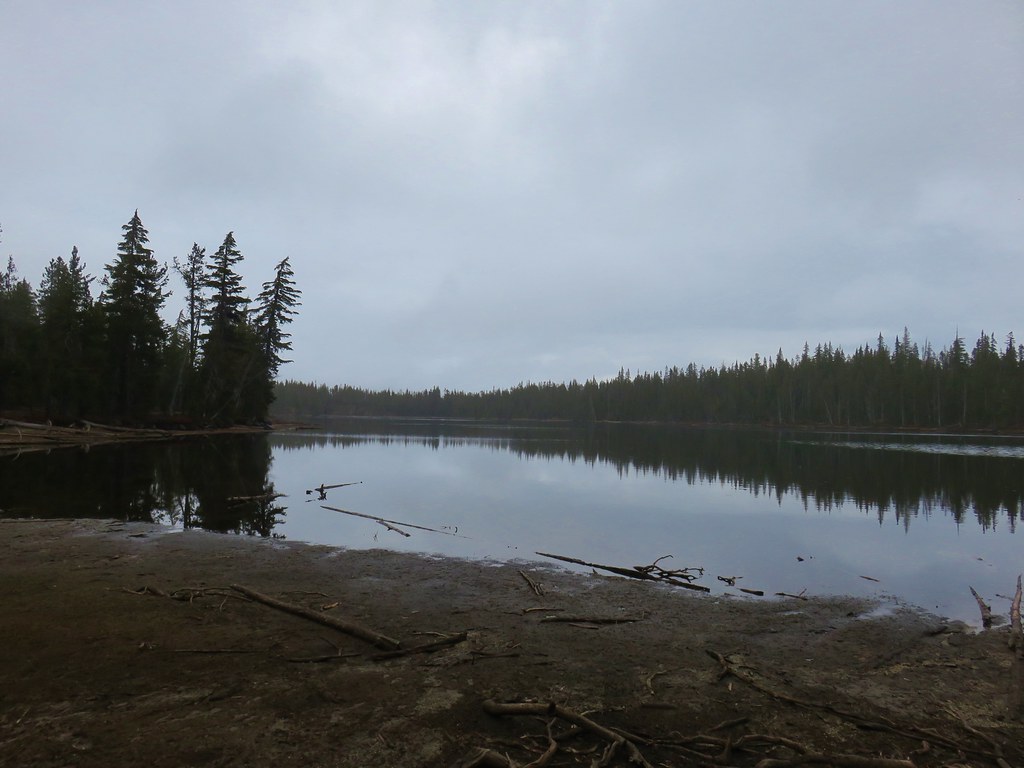
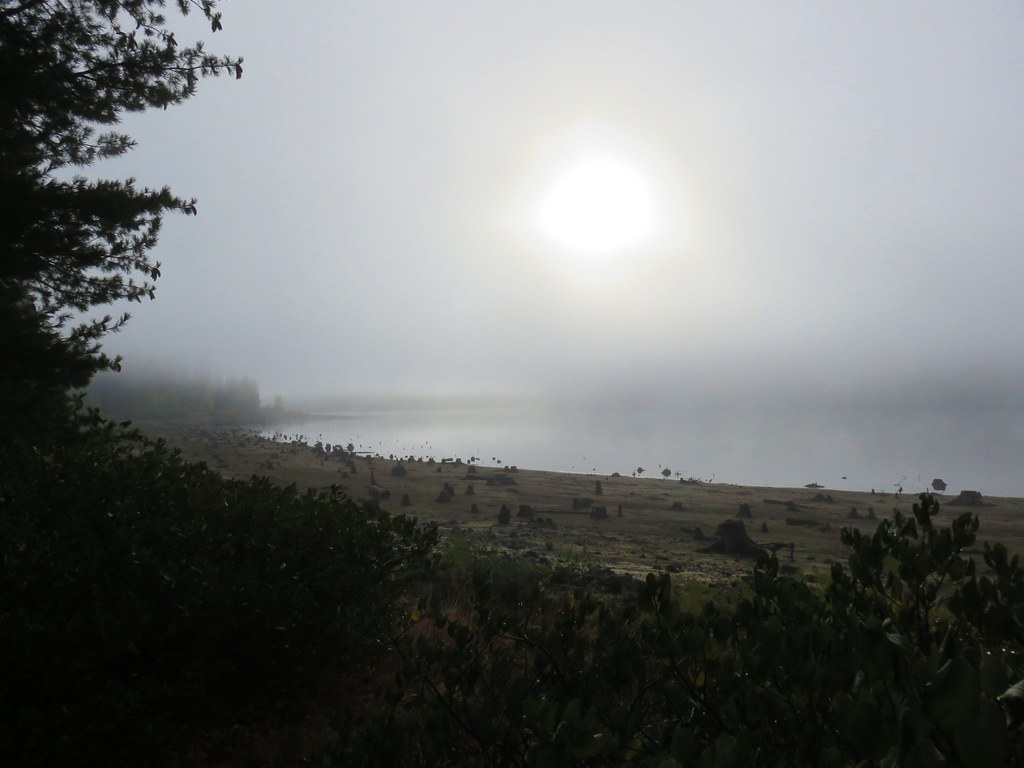
When the trail did make it to the lake there wasn’t much to see due to the fog.
IMG_4057

The trail stuck closer to the lake shore for the next .8 miles before arriving at Doe Point and the Doe Point Campground. As we made our way around Doe Point the fog began to lift revealing some of the blue sky we had seen on our morning drive.
IMG_4059

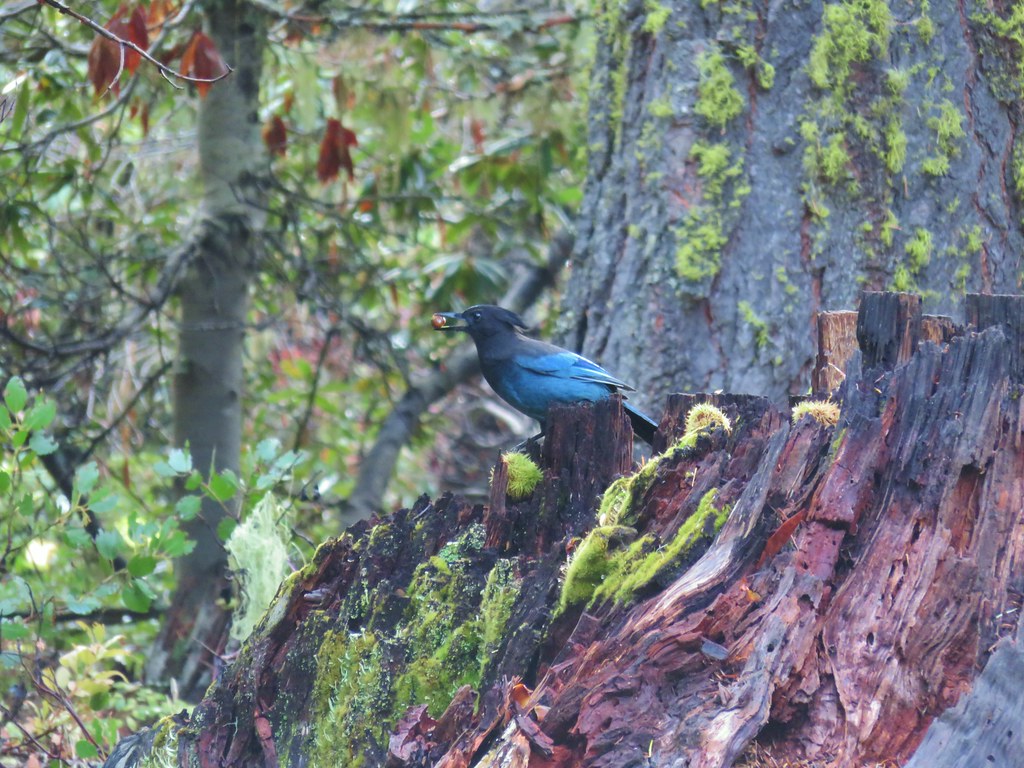
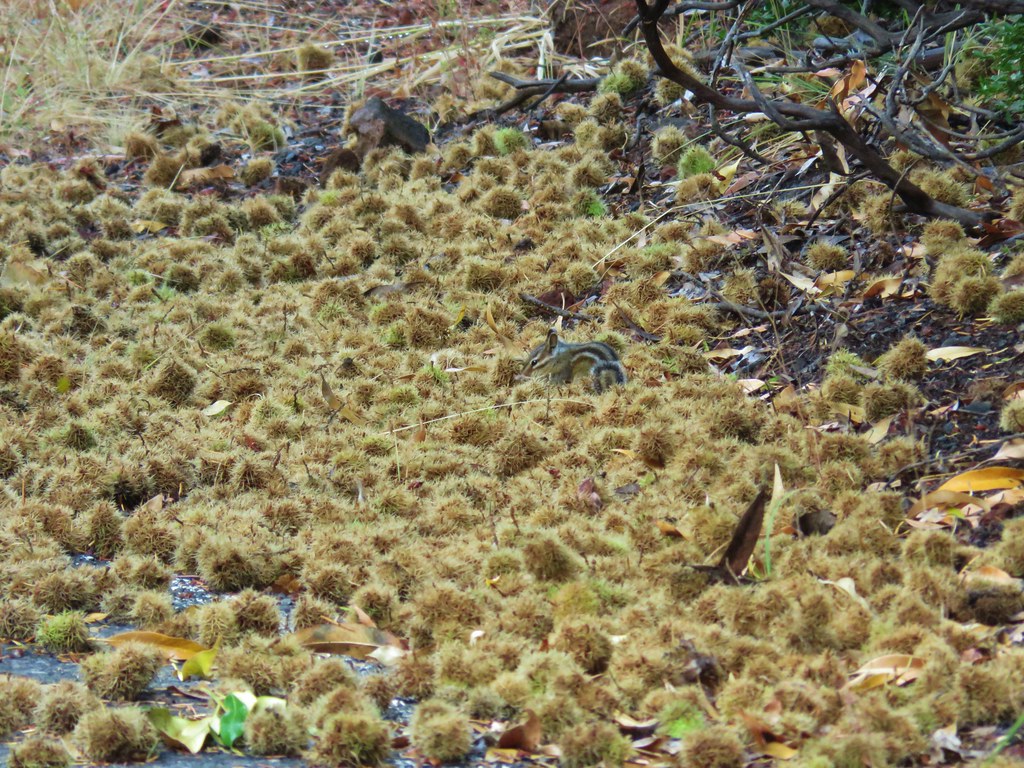
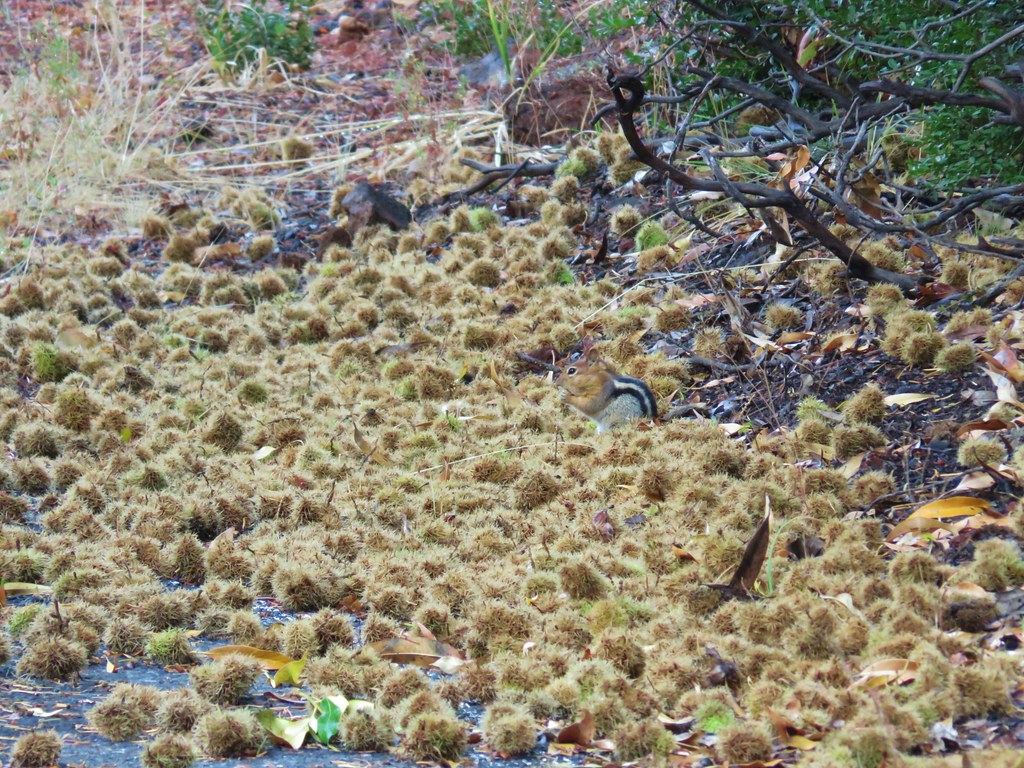
A quarter mile after rounding Doe Point we arrived at the Fish Lake Campground and boat ramp where a variety of woodland animals were busy harvesting chinkapin.
IMG_4068Stellar’s jay

IMG_4069Chipmunk

IMG_4072Golden-mantled ground squirrel

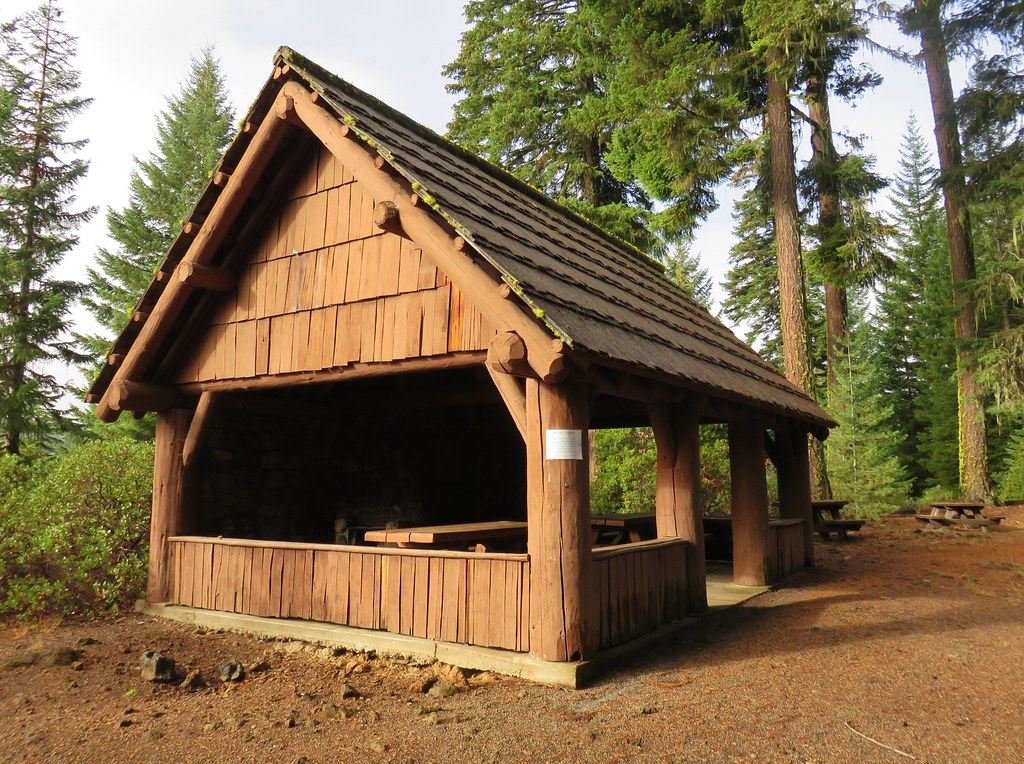
Our guidebook suggested turning around at the Fish Lake Resort, but we wound up losing the trail near the picnic shelter and decided not to try and walk through the campground to find the continuation of the trail and turned around.
IMG_4077

It was a different hike on the way back as the fog had entirely lifted from the lake and was breaking up overhead.
IMG_4081

By the time we were hiking back along the creek the sky was a beautiful blue.
IMG_4091

Typically having a hike only clear up near the end is a bit of a bummer, but we had another hike to go and with the clear skies we knew we should have a good view of Mt. McLoughlin from Lake of the Woods.

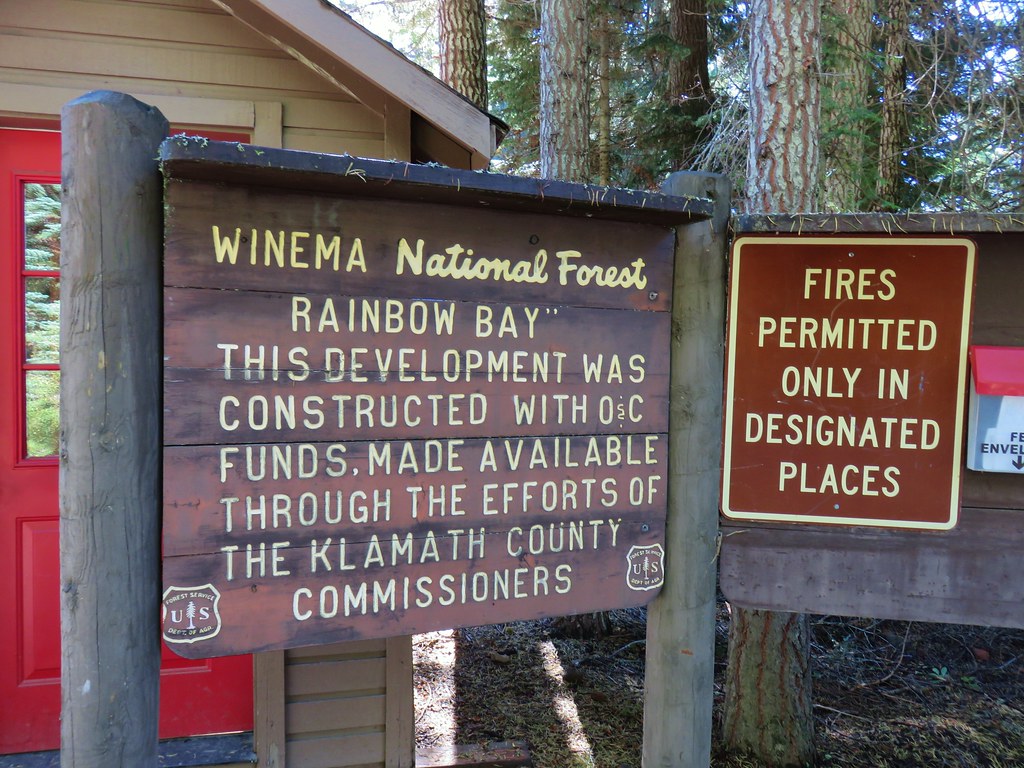
From the Fish Lake Trailhead we drove back east on Highway 140 to a sign for Fish Lake. We turned right at the sign and followed this road for a mile and a half to the Dead Indian Memorial Highway where we turned right again. The suggested starting point for this hike in our guidebook was at the Sunset Campground which was a mile down this highway. When we arrived at the entrance road we found it was gated so we turned around and wound up parking at the Rainbow Bay Picnic Area near the Lake of the Woods Resort after obtaining a $6 parking pass.
IMG_4097

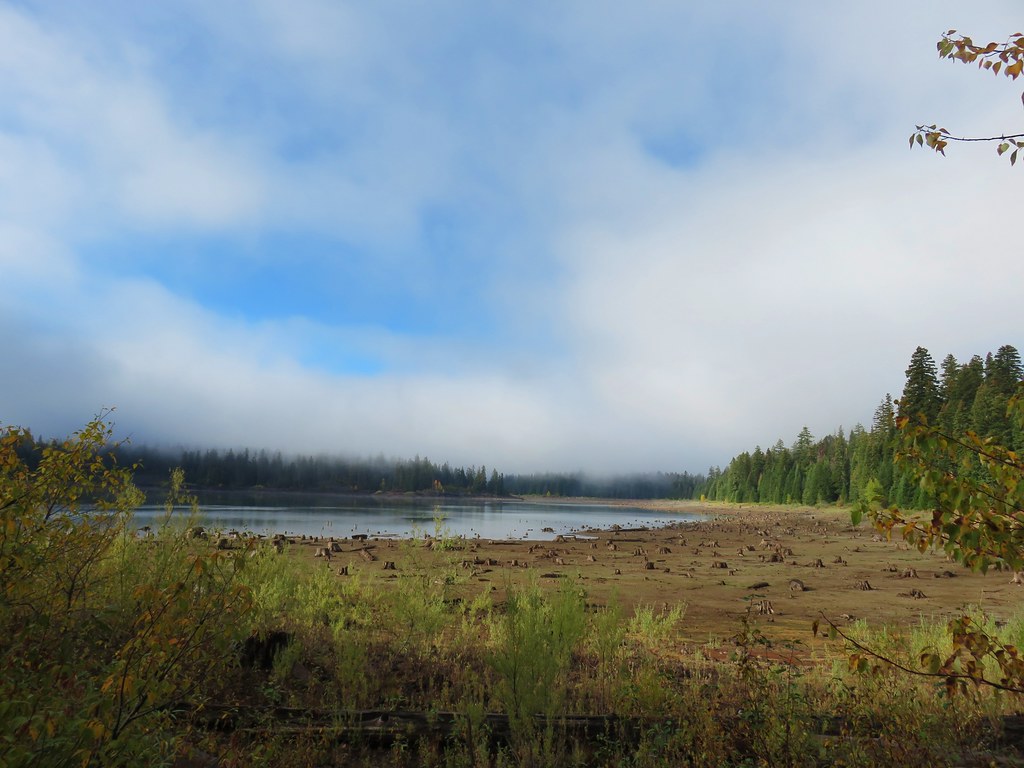
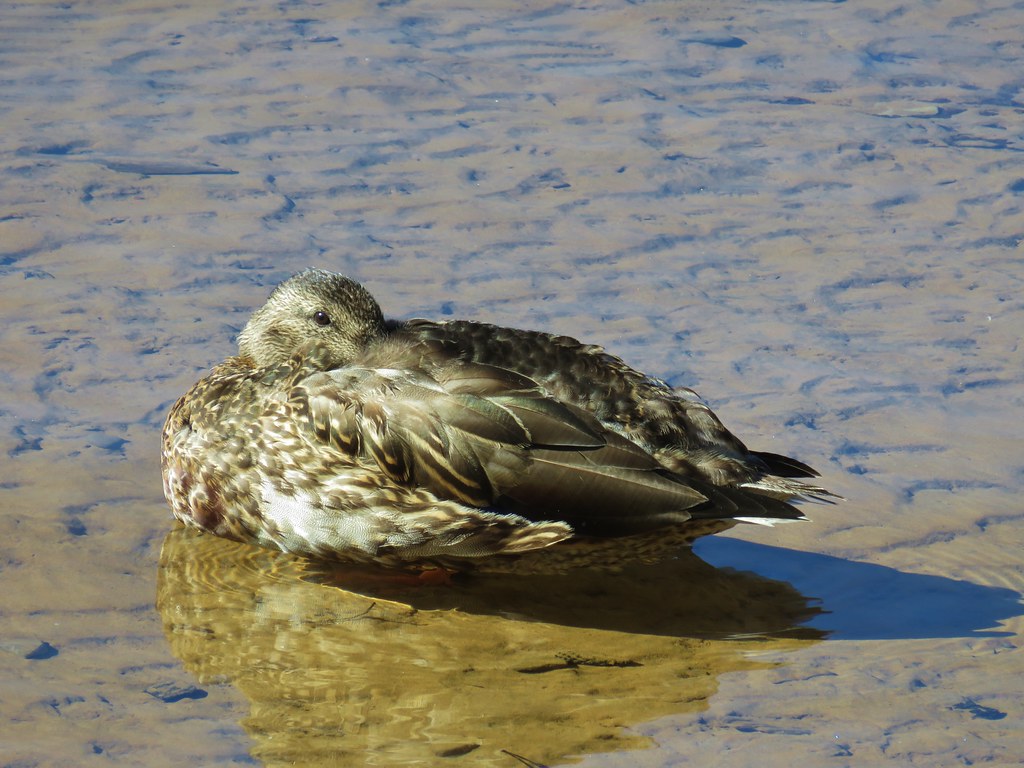
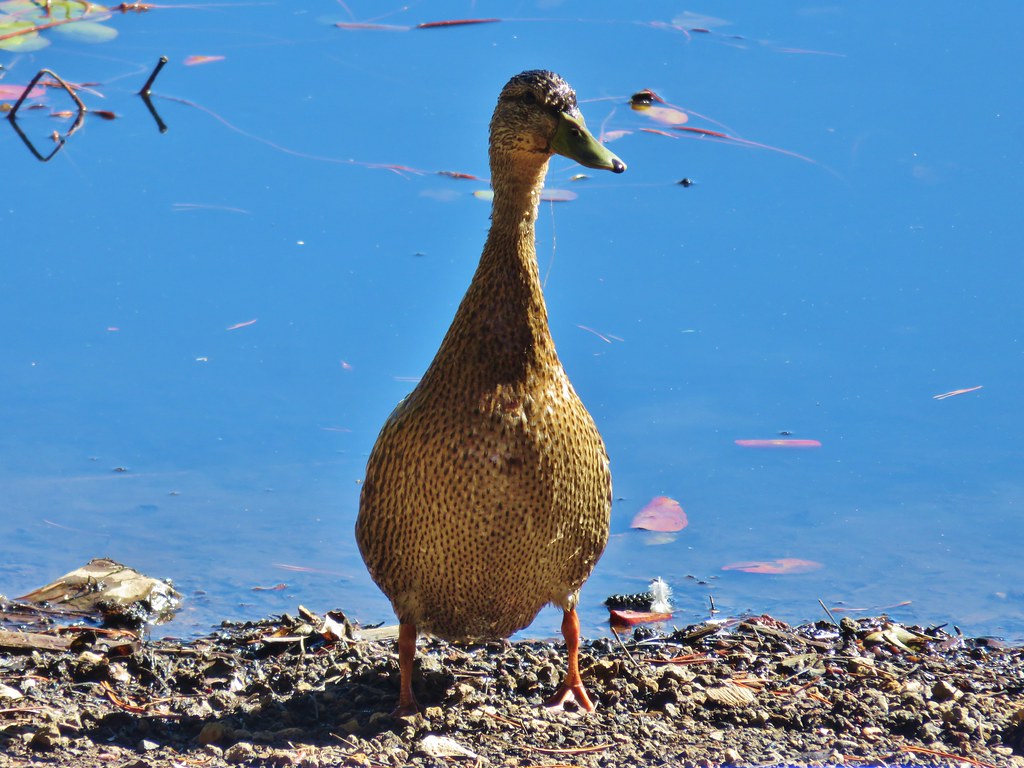
From the parking lot we headed SE along the lake shore around Rainbow Bay where some ducks were enjoying the wonderful weather.
IMG_4099

IMG_4102

IMG_4104

IMG_4107

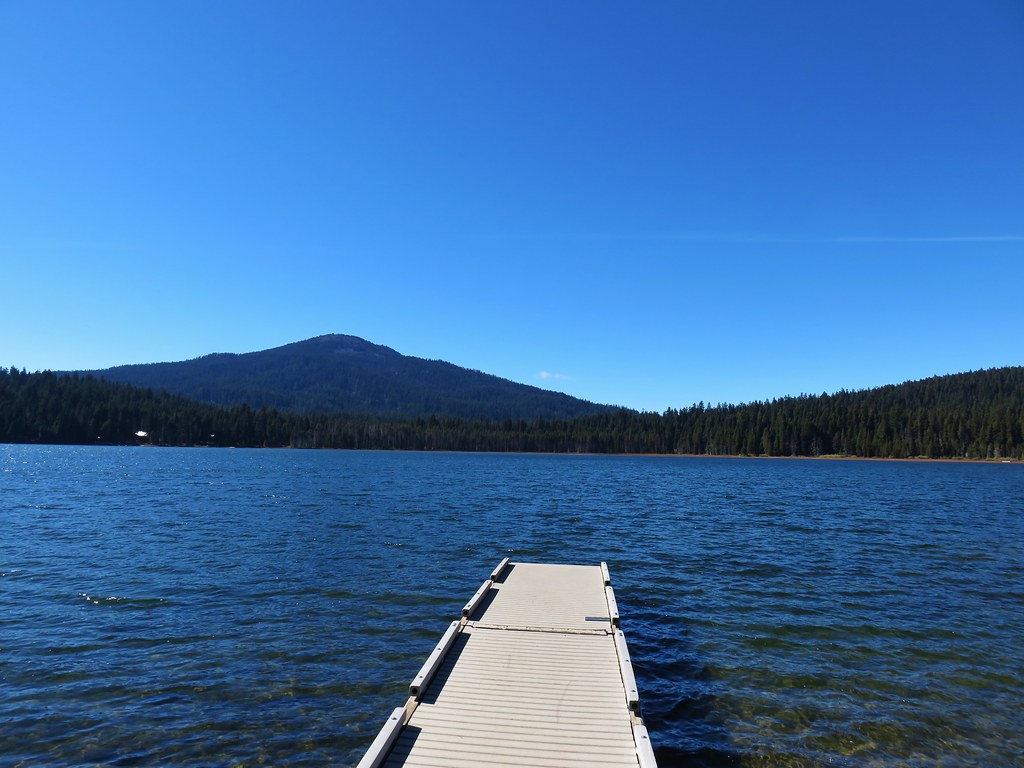
The first mountain to come into view was Brown Mountain across the lake.
IMG_4106

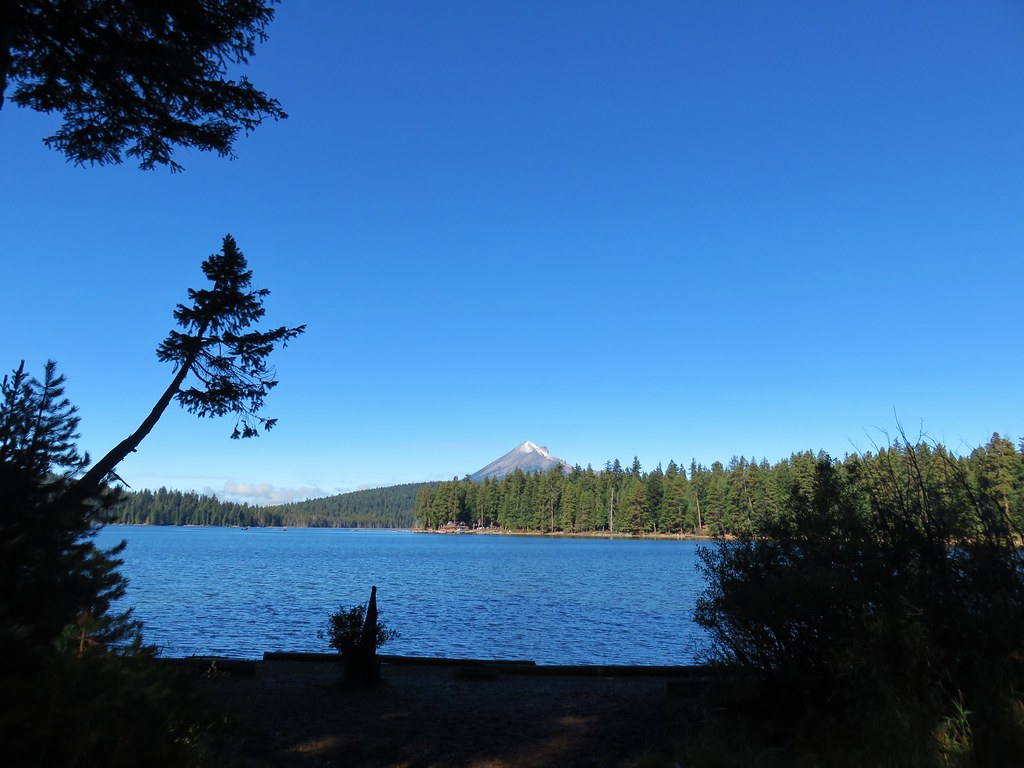
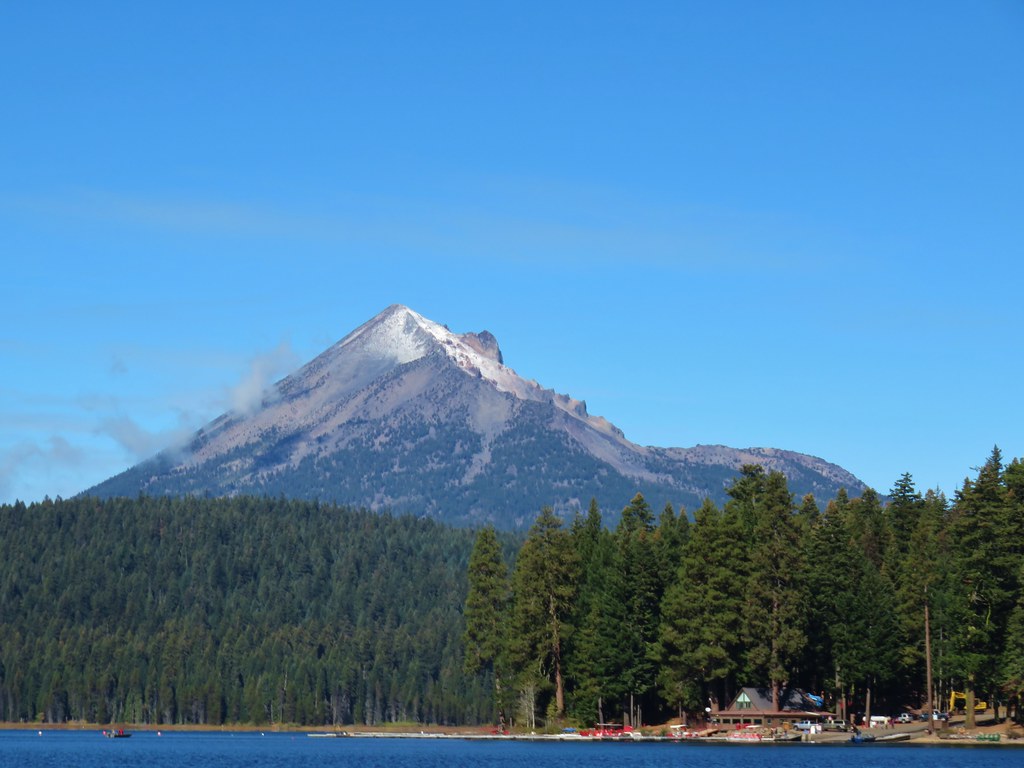
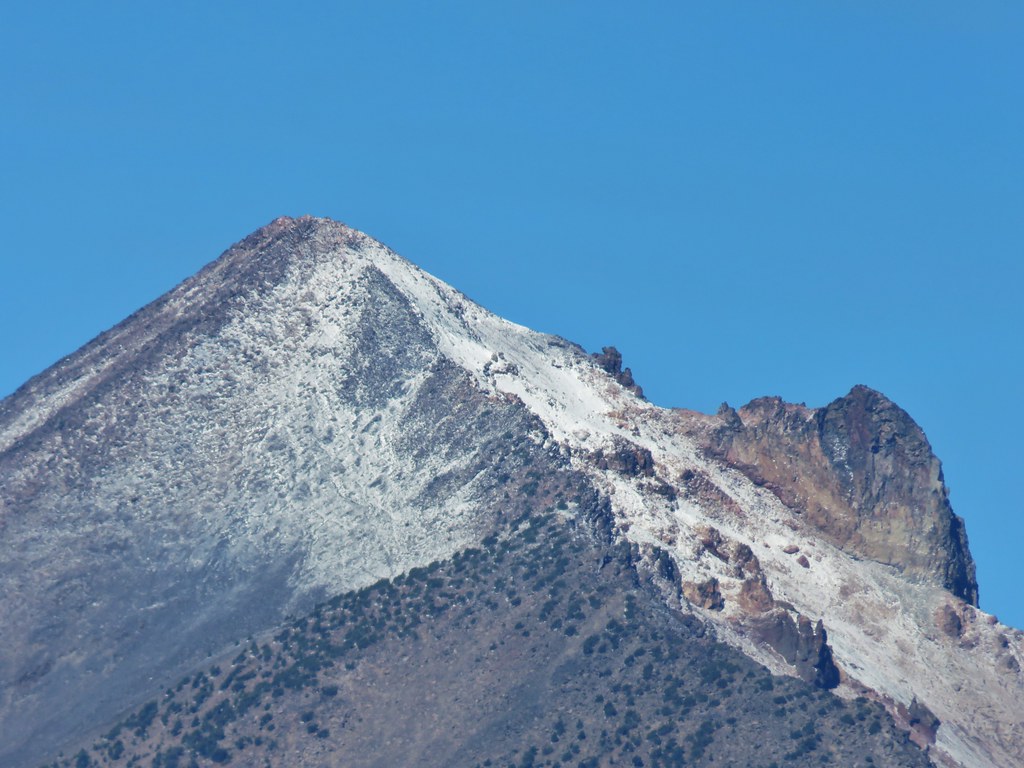
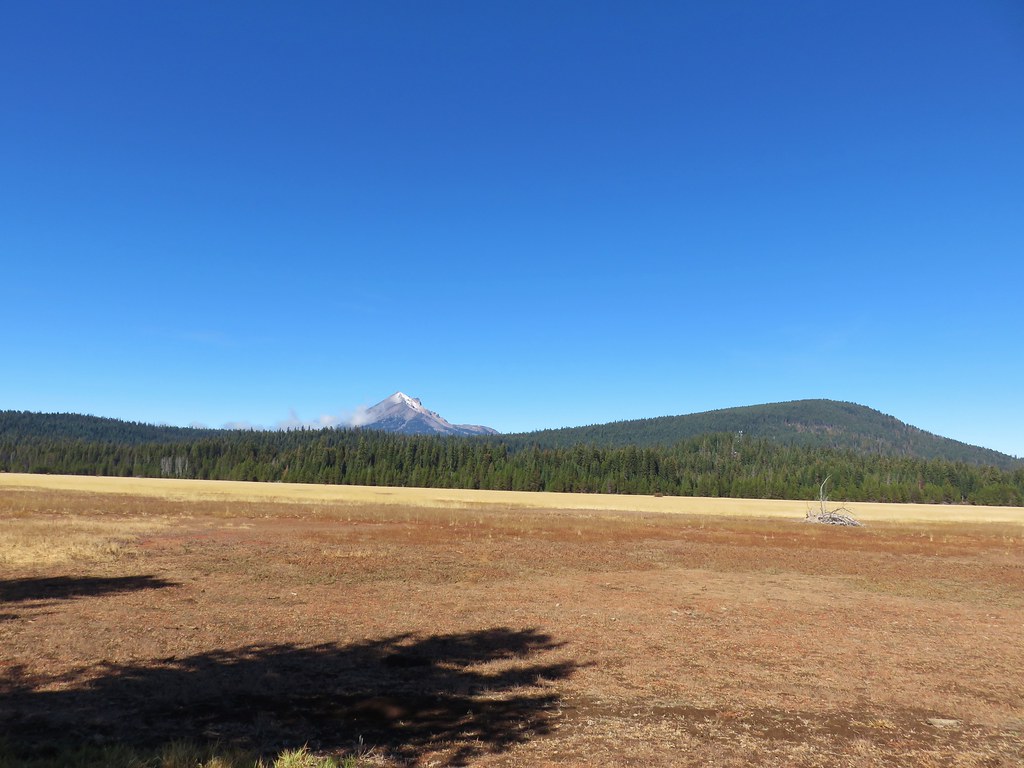
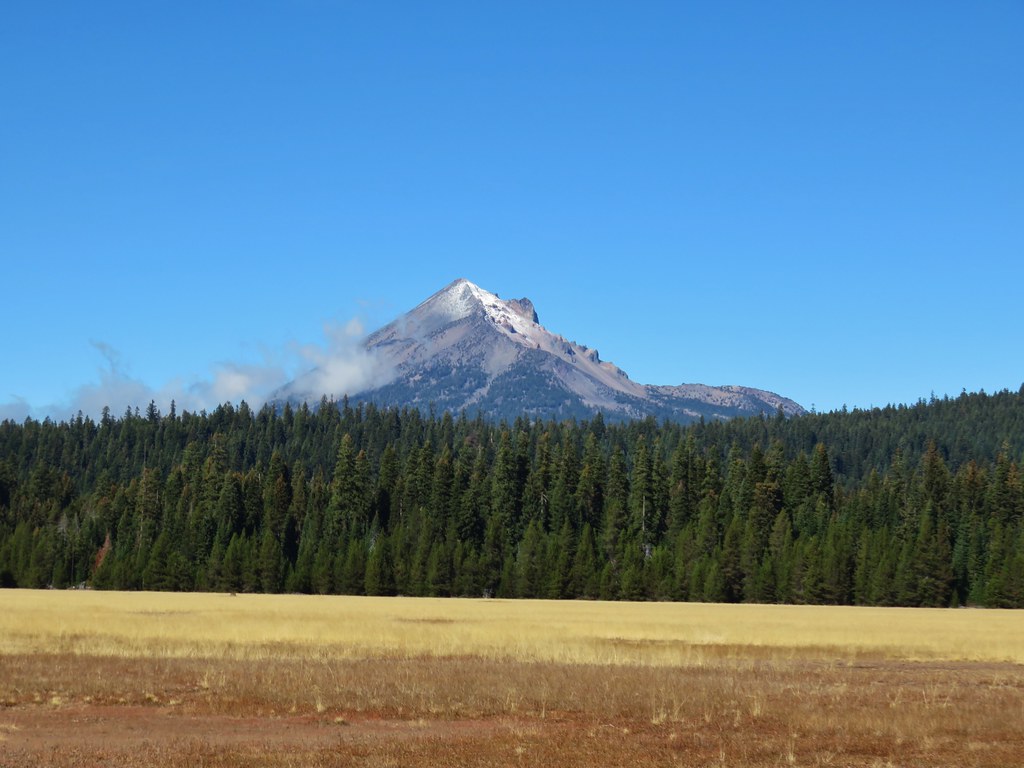
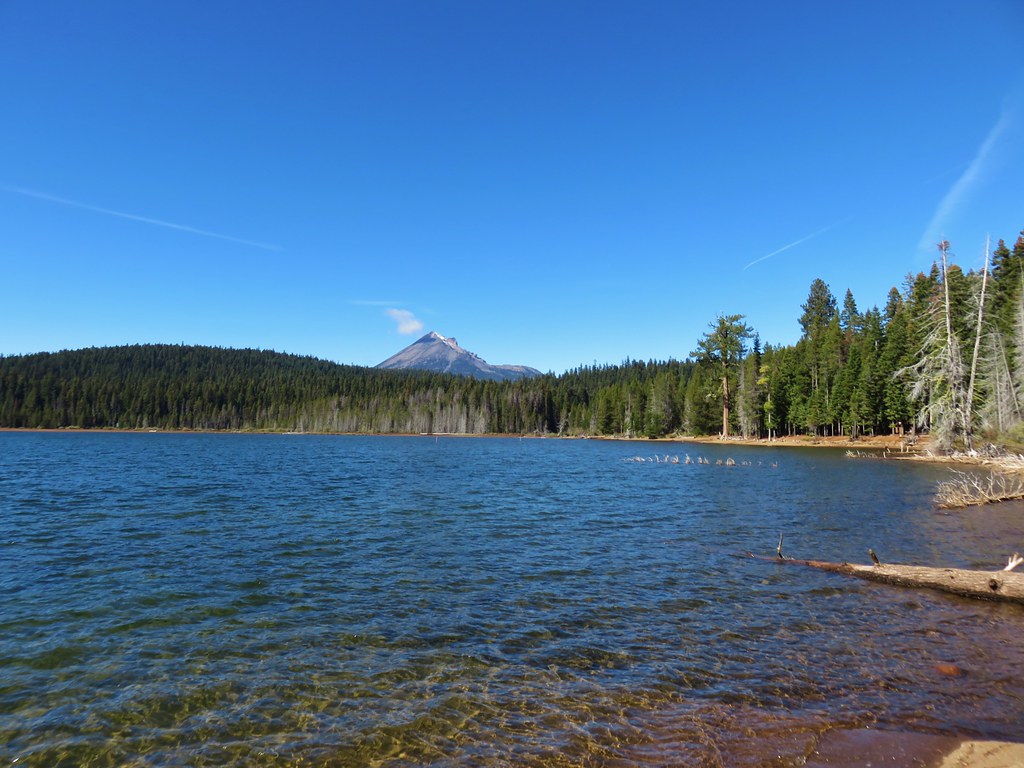
Shortly after rounding the bay we arrived at the Sunset Campground where we did indeed have a nice view of Mt. McLoughlin. The mountain was sporting a dusting of new snow at its summit.
IMG_4108

IMG_4109

IMG_4121

We could picture the route up to the summit that we’d taken a couple of years before (post).
IMG_4123

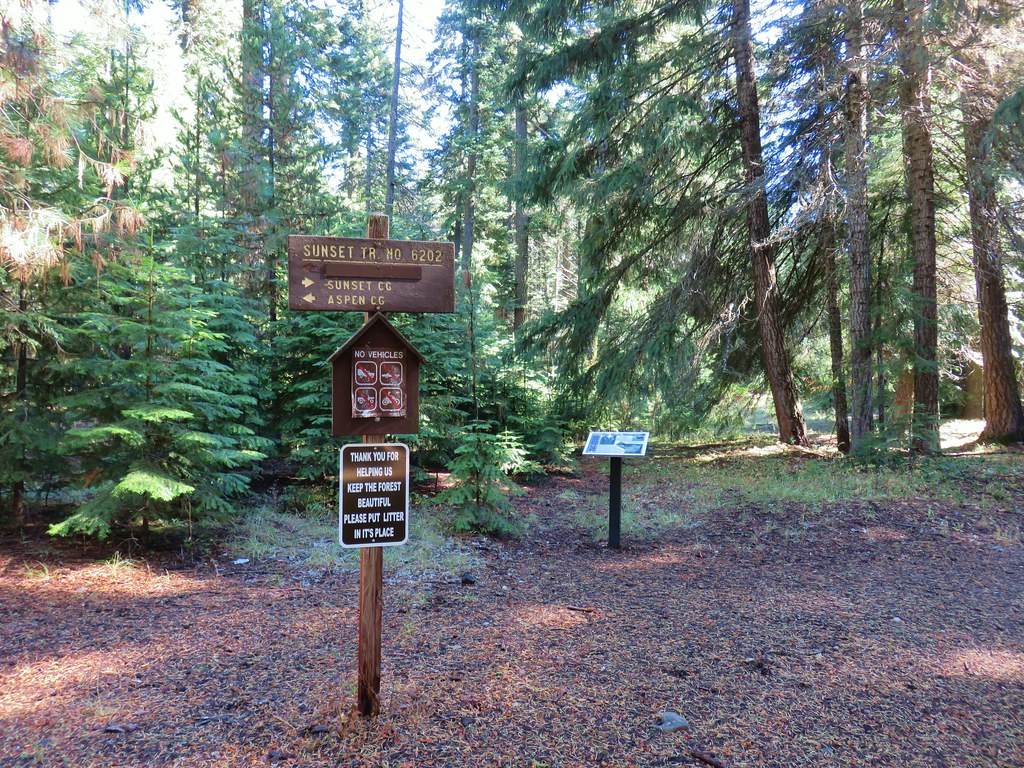
Satisfied with our view we turned around and headed back toward the Rainbow Bay parking area. We weren’t done hiking though and we veered behind the parking lot on the Sunset Trail toward the Aspen Point Campground.
IMG_4124

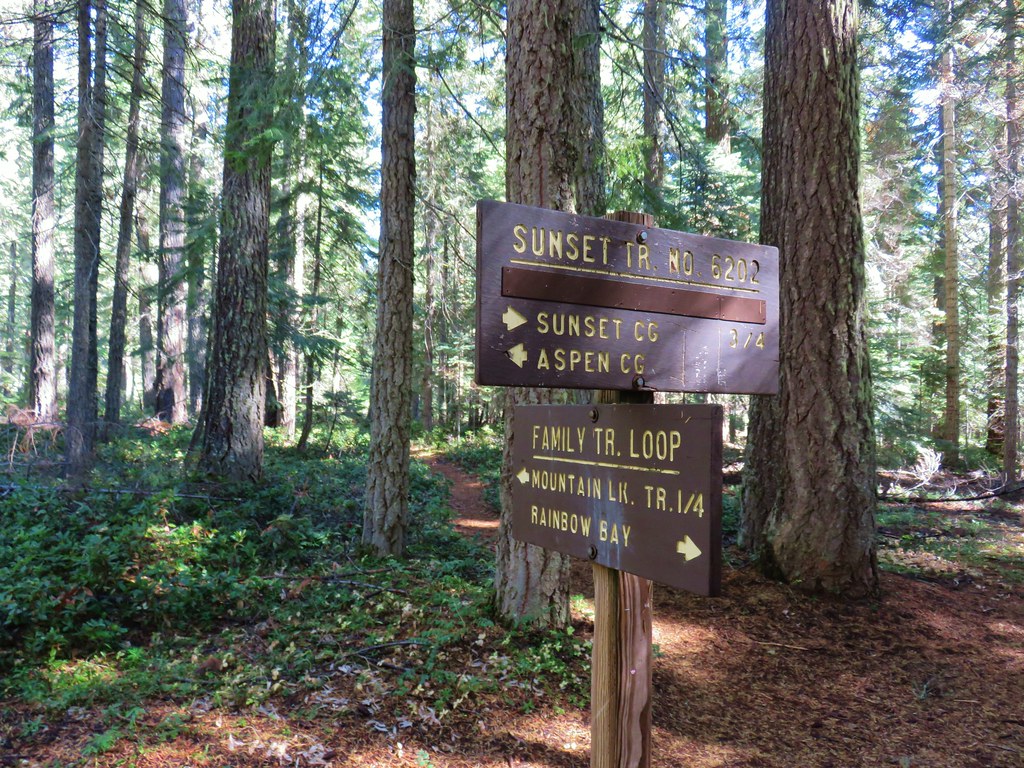
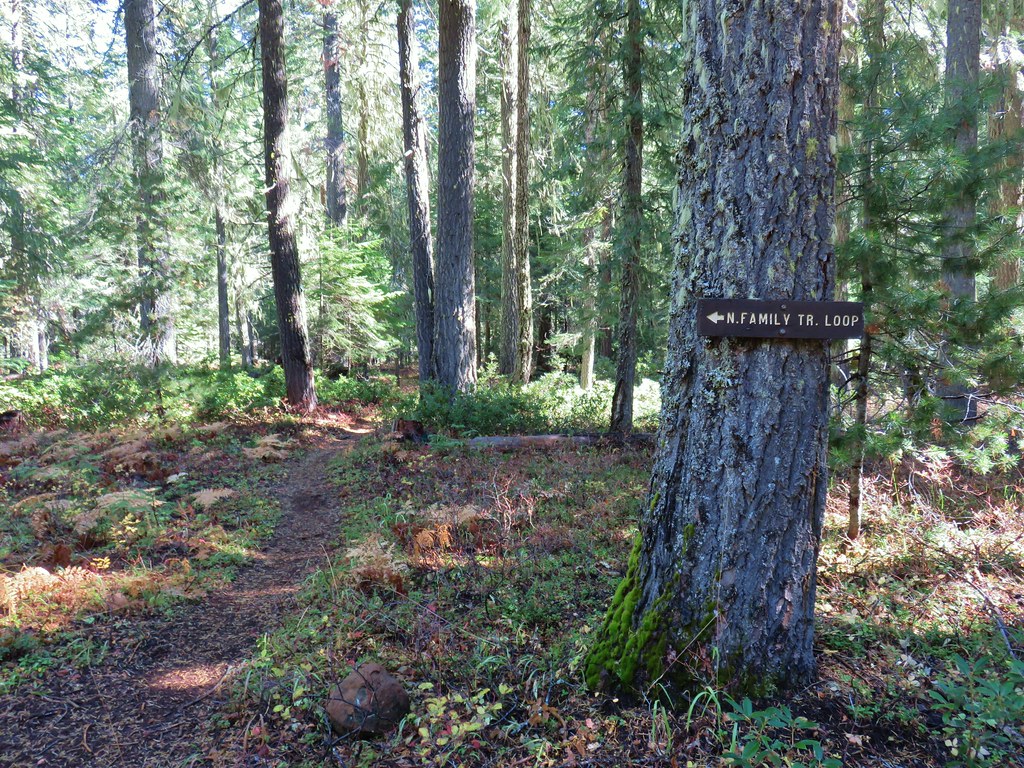
At a three way junction we turned right onto the Family Trail Loop.
IMG_4128

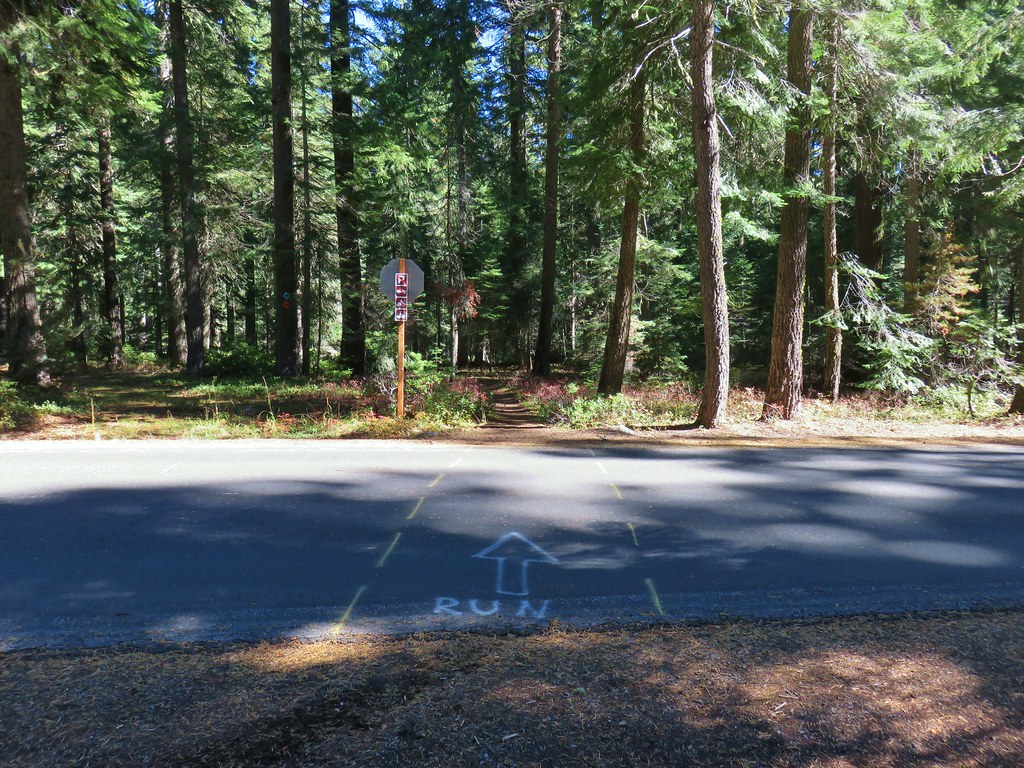
The Family Trail Loop crossed the paved road we’d been on earlier after a tenth of a mile.
IMG_4130

Just after crossing the road the Mountain Lakes Trail split off to the right while we stayed left.
IMG_4133

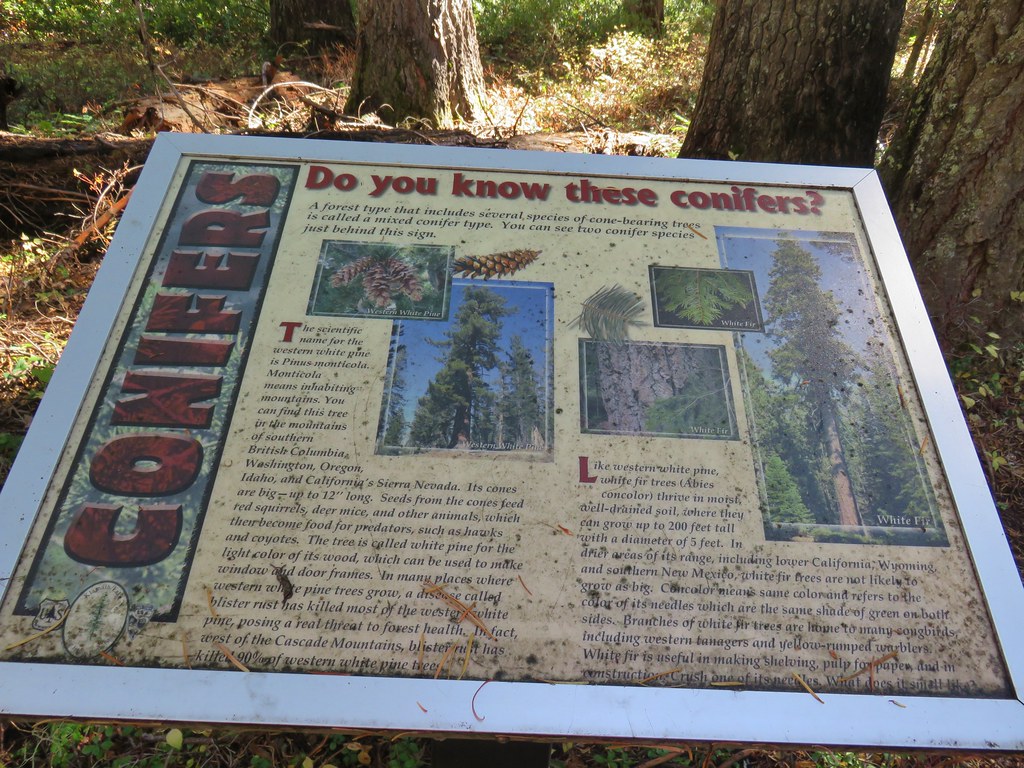
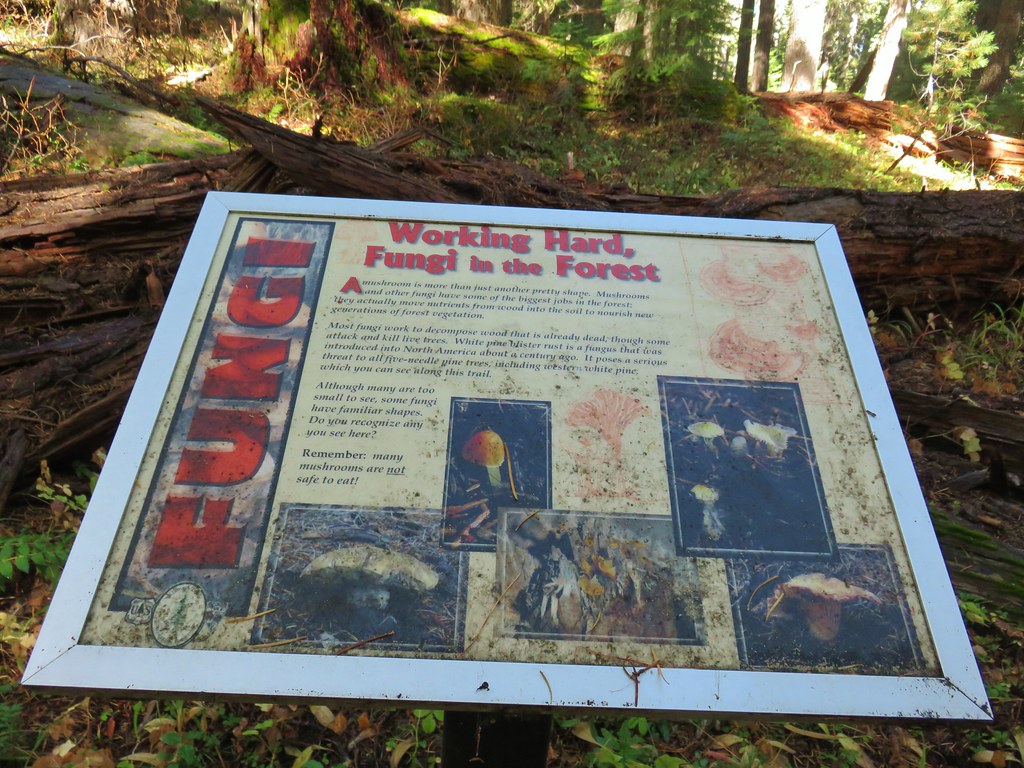
Several interpretive signs were set up along this trail.
<IMG_4135

IMG_4134

IMG_4138

IMG_4141

We stayed left ignoring a tie trail that would have looped us back to the Mountian Lakes Trail junction and arrived at the Great Meadow .6 miles from the road crossing.
IMG_4145

IMG_4149

IMG_4152

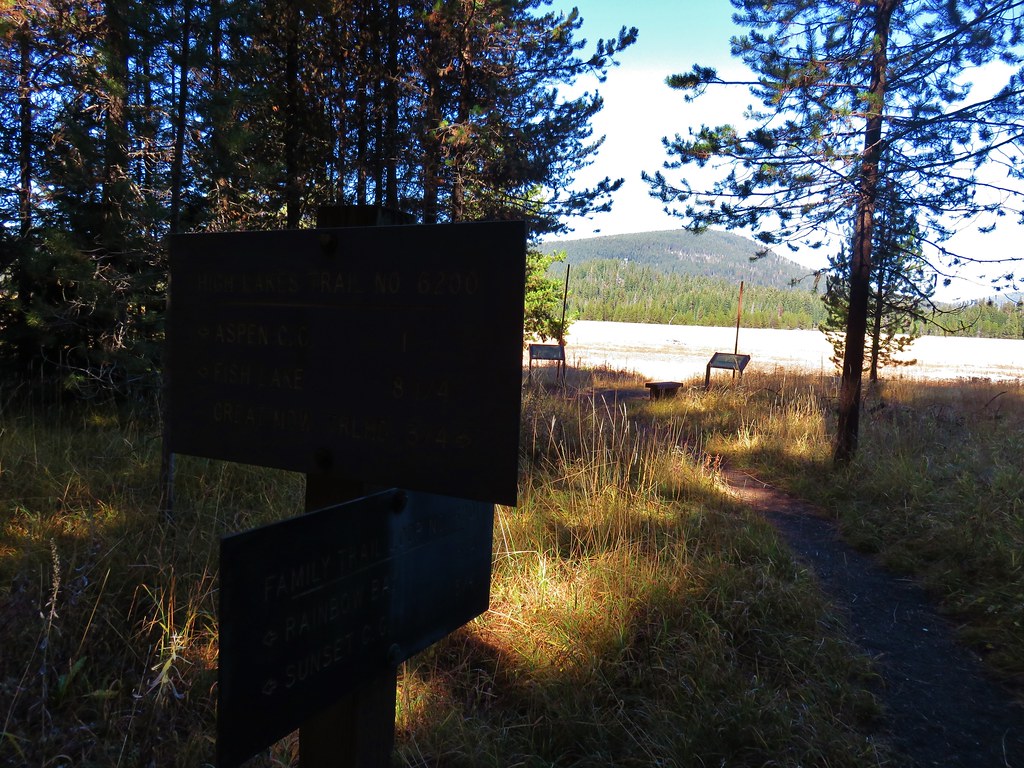
At a junction with the High Lakes Trail at the Great Meadow we turned left skirting the meadow in the forest for .7 miles to another road crossing across from the Aspen Point Campground.
IMG_4160

IMG_4162

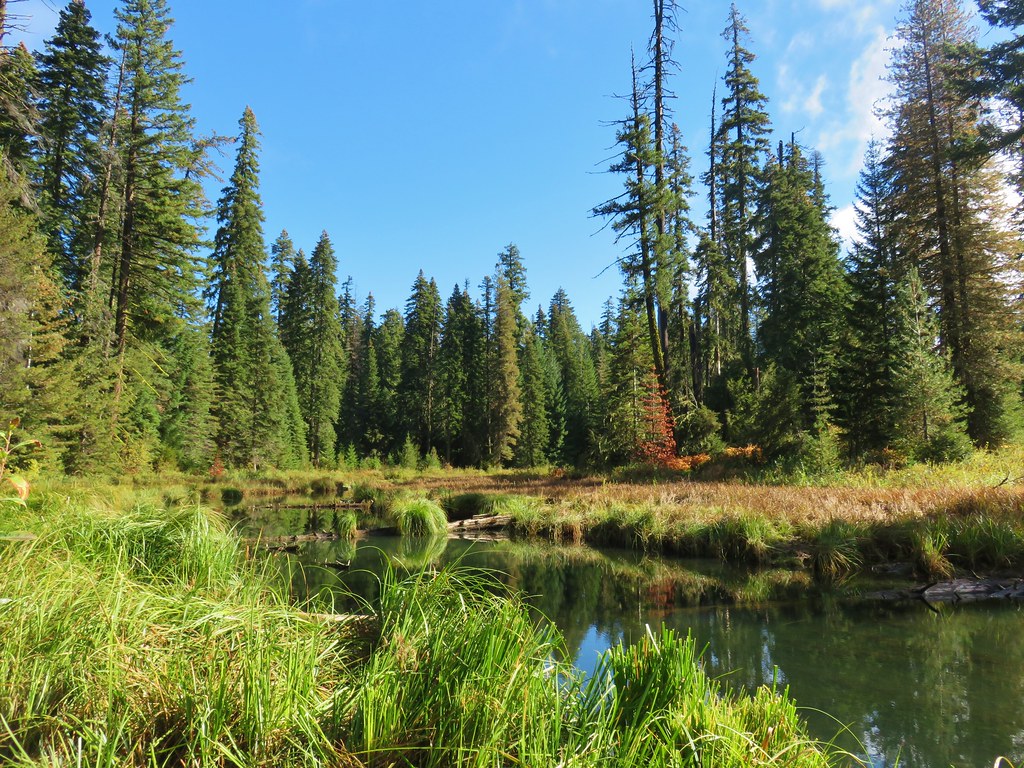
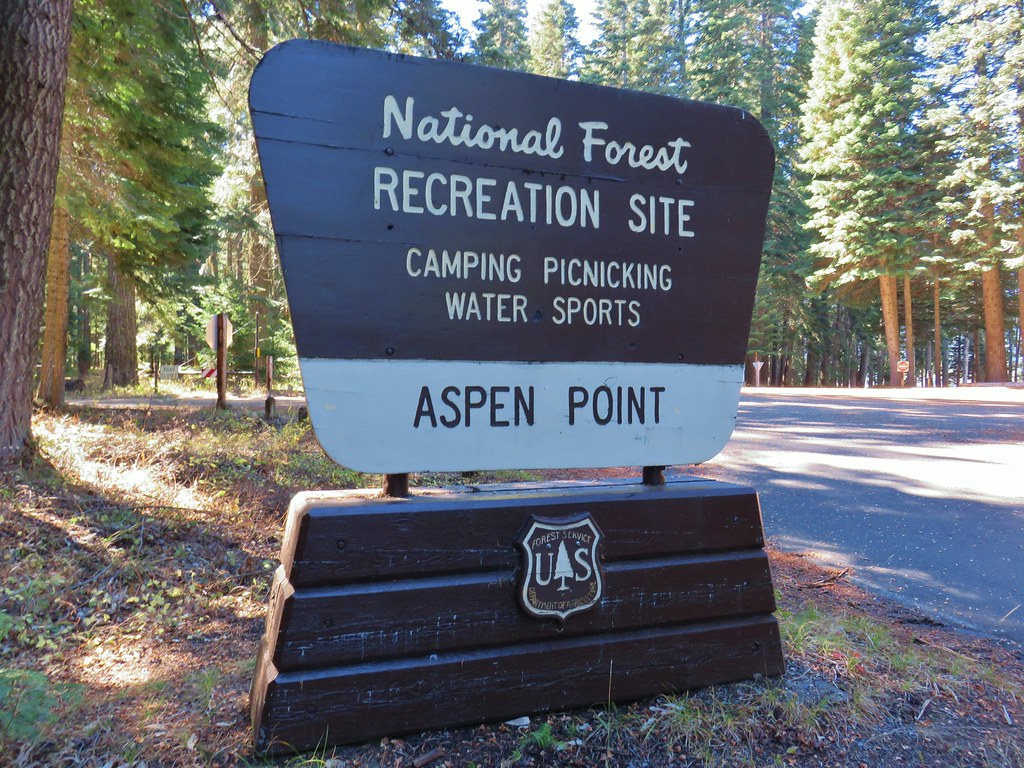
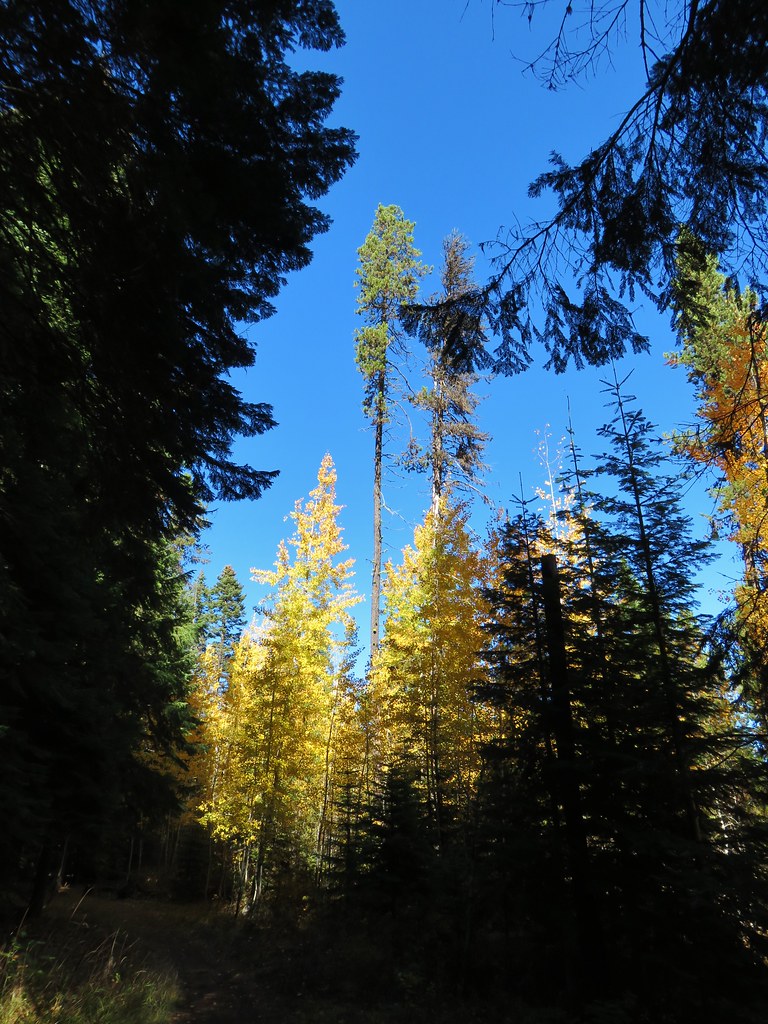
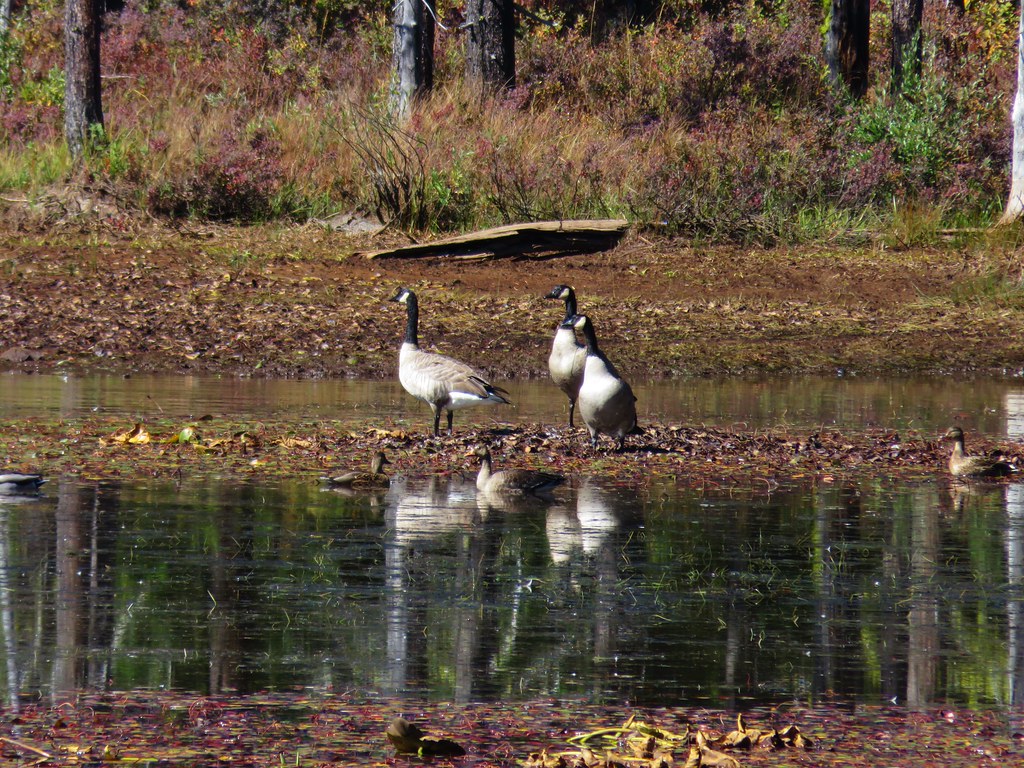
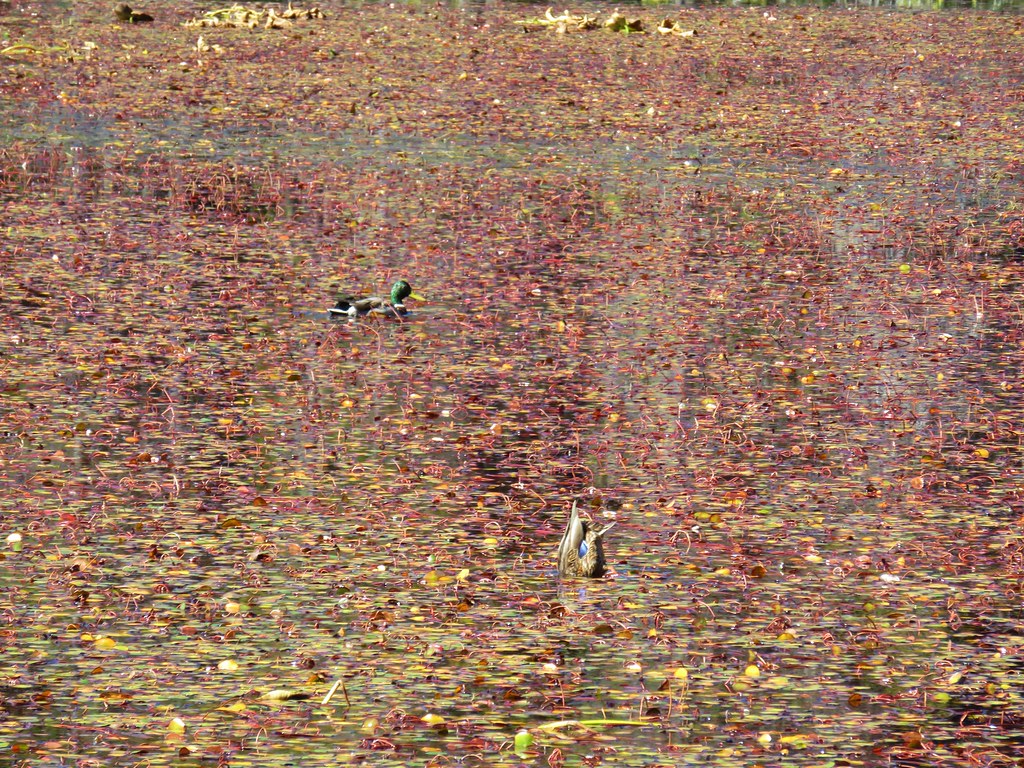
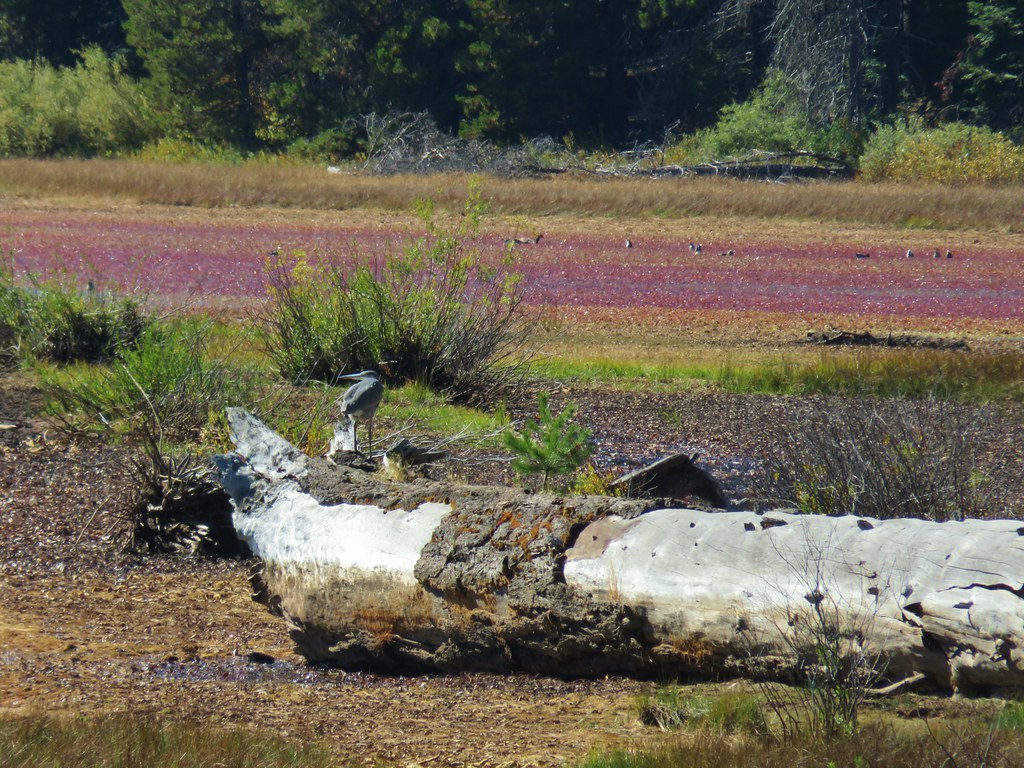
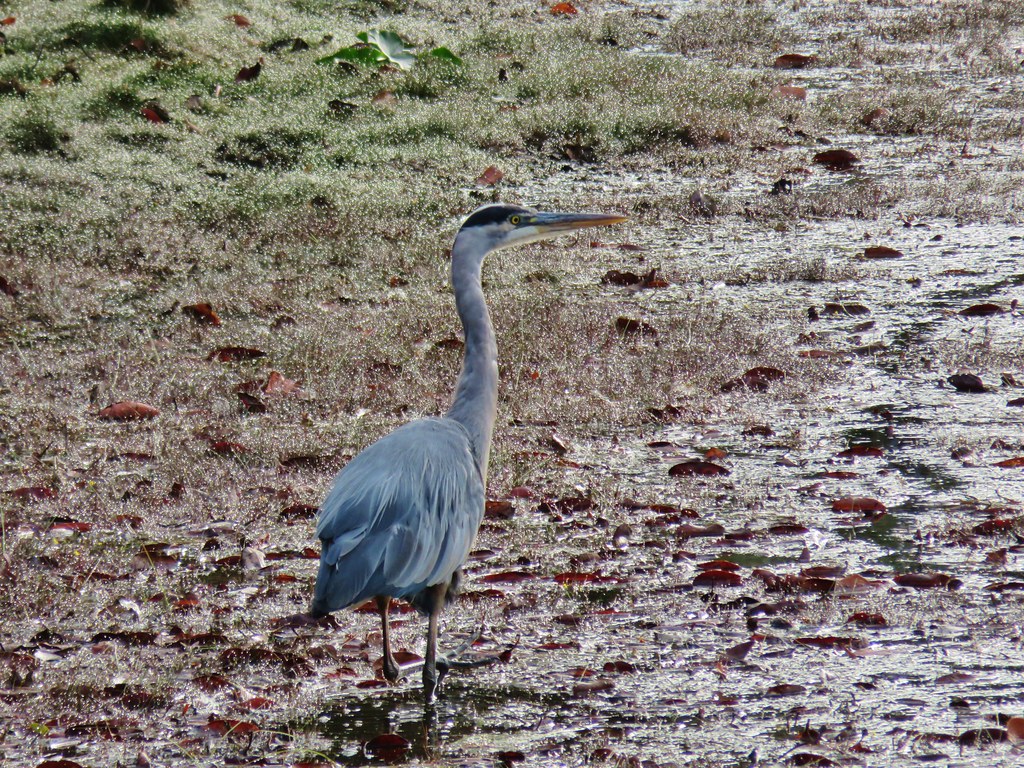
At a junction on the other side of the road we went right keeping on the High Lakes Trail which led around Lake of the Woods to the NW. This section of trail passed some golden aspen trees and a leaf covered slough where ducks, geese, and a heron were spending their Sunday.
IMG_4163

IMG_4182

IMG_4181

IMG_4183

IMG_4209

We followed this trail past an old Forest Service complex and planned on turning around at the guidebooks suggested location, a small canoe launch.
IMG_4188

IMG_4189

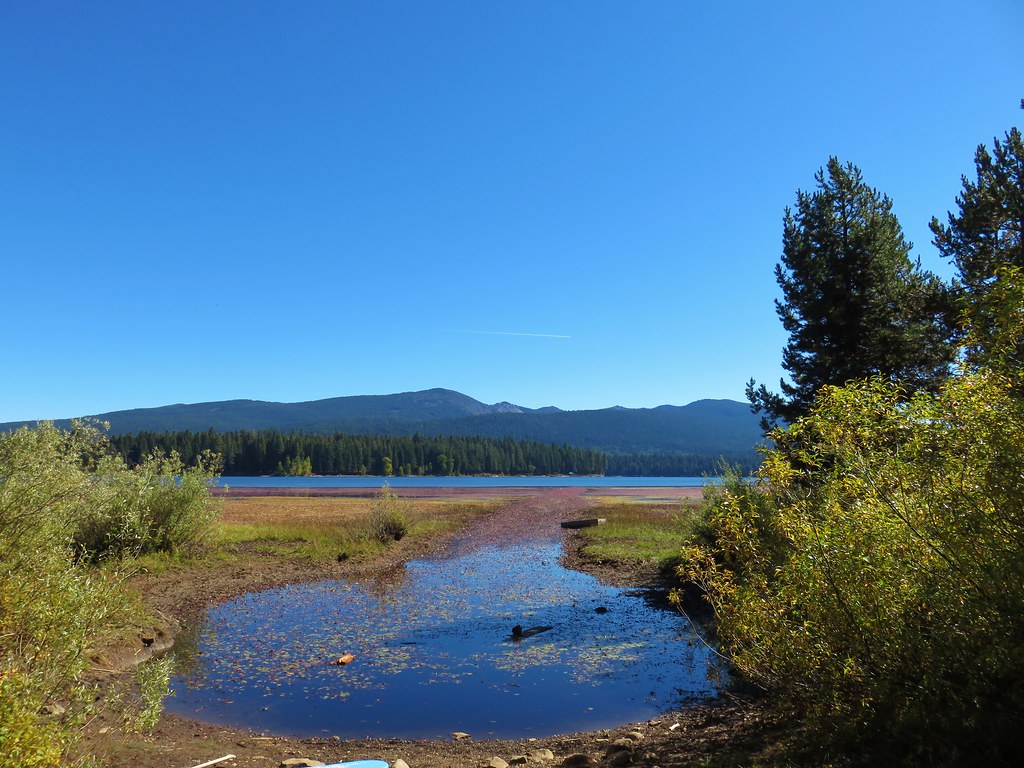
The canoe launch wasn’t much, but there was a nice view of some of the peaks in the Mountain Lakes Wilderness (post) across the water.
IMG_4189

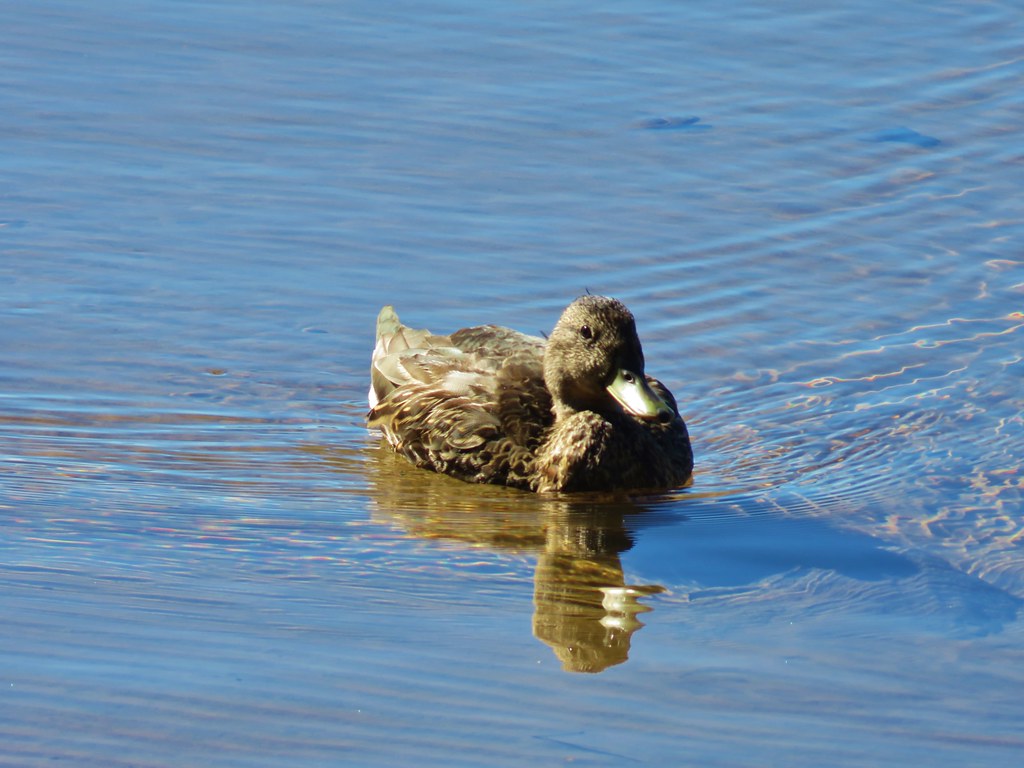
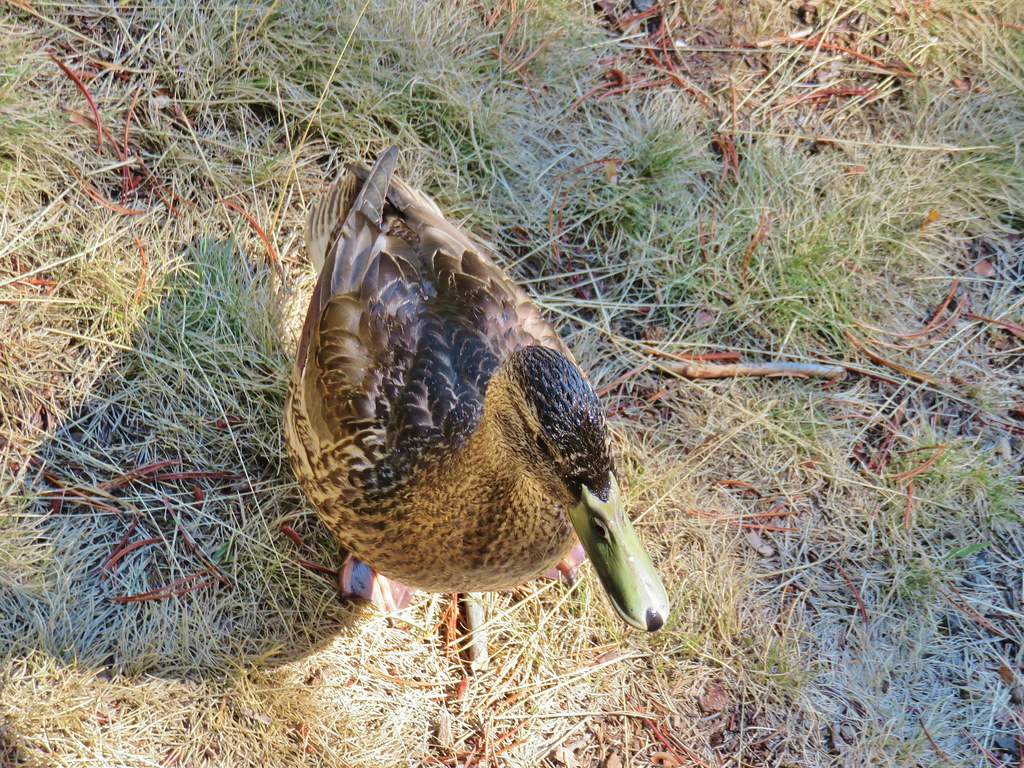
A solitary duck was swimming around in the launch and it apparently expected us to have some food because she came right up to us.
IMG_4194

IMG_4198

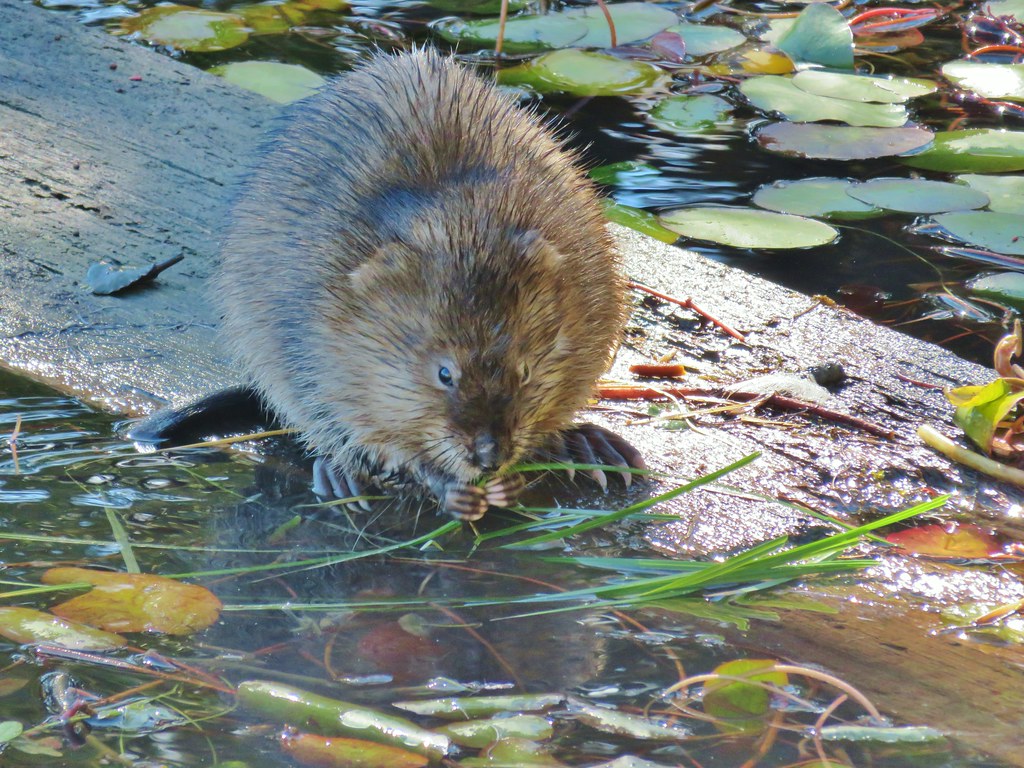
We did our best to explain that we don’t feed the wild animals and she waddled back to the water. At that point Heather asked about something on a plank in the water that I had originally thought was another duck but then decided it was just a rock set on the wood. She had taken it for something inanimate as well but then thought she saw it move. Upon closer inspection we discovered that it was a muskrat (initially we thought nutria but it was cuter than that invasive species).
IMG_4202

IMG_4205

It wasn’t particularly concerned by us but eventually it disappeared into the water. Then a dragon fly showed up and hovered over the water just below me.
IMG_4207

After our unique little interaction with nature it was time to start back. We returned to the Aspen Point Campground and followed paths near the lake shore back to the Lake of The Woods Resort.
IMG_4221

IMG_4215

IMG_4218

IMG_4228

IMG_4229

Our hike here was 6.3 miles long while the hike at Fish Lake had been 7 miles giving us a nice 13.3 mile day. After the cold, foggy start the day had turned out beautiful. We would be heading home the next morning (with a stop along the way of course) and this was a perfect way to end our time in the Klamath Falls area. Happy Trails!
Flickr: Fish Lake and Lake of the Woods

Categories
California Hiking Trip report

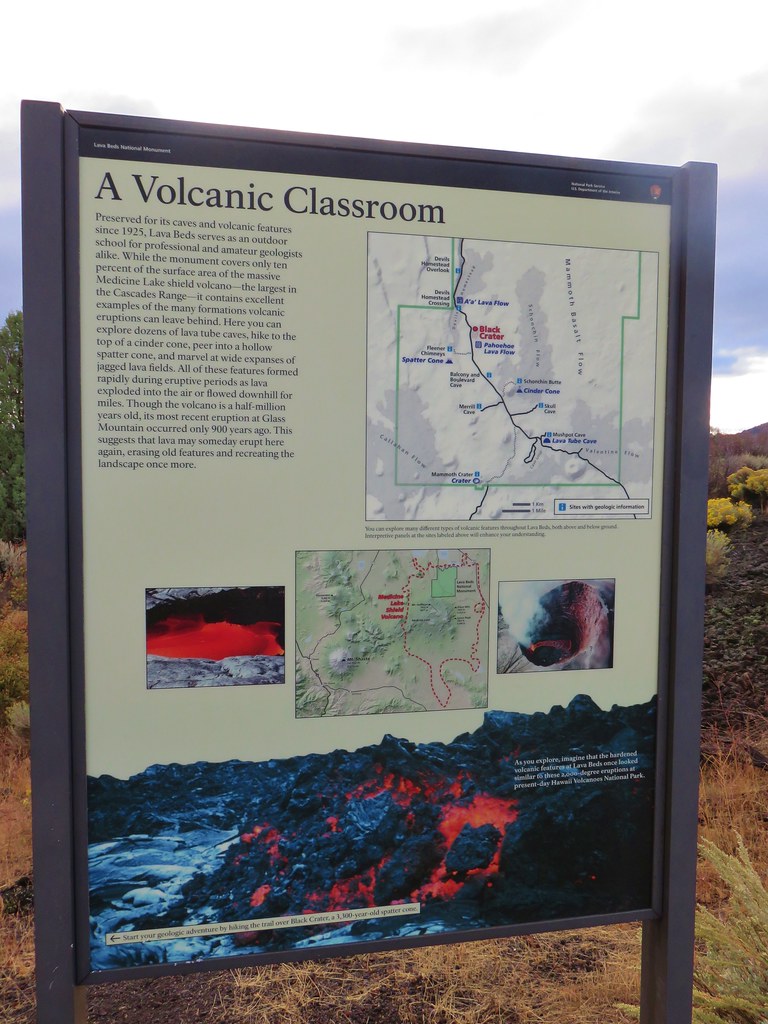
Lava Beds National Monument

**Note the 2020 Caldwell Fire burned a portion of the Schonchin Butte hike and the 2021 Antelope Fire burned the area around Whitney BUtte.**

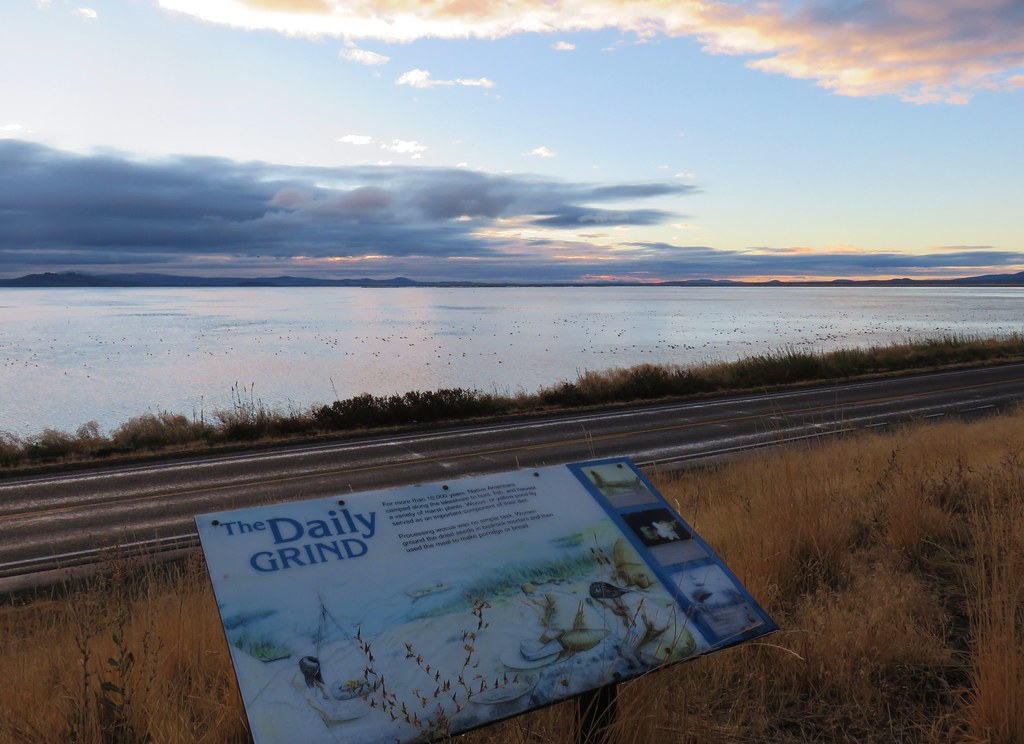
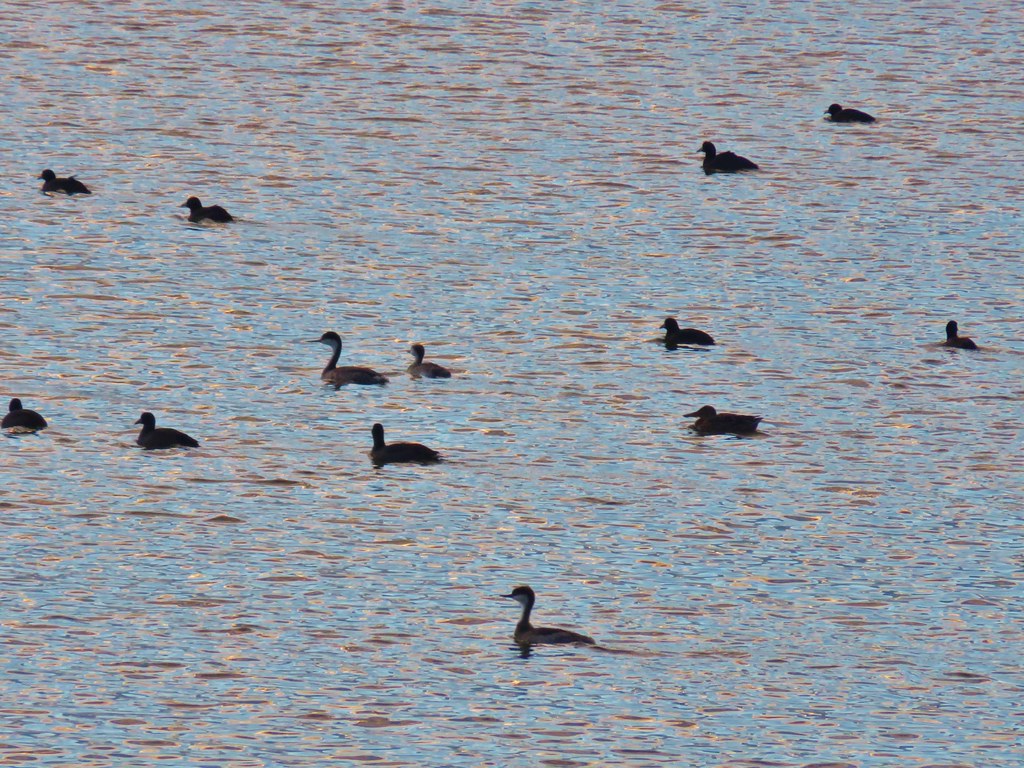
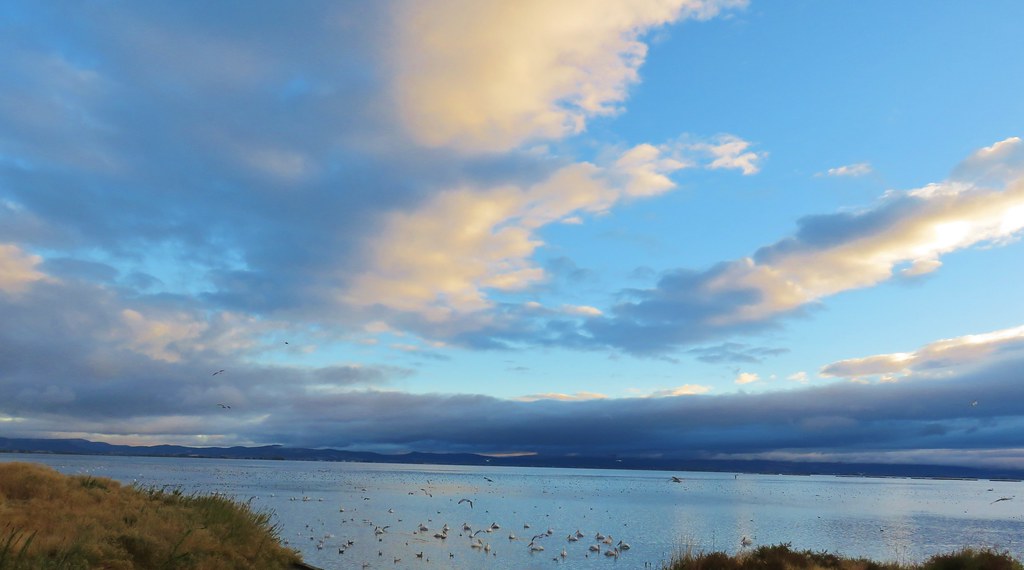
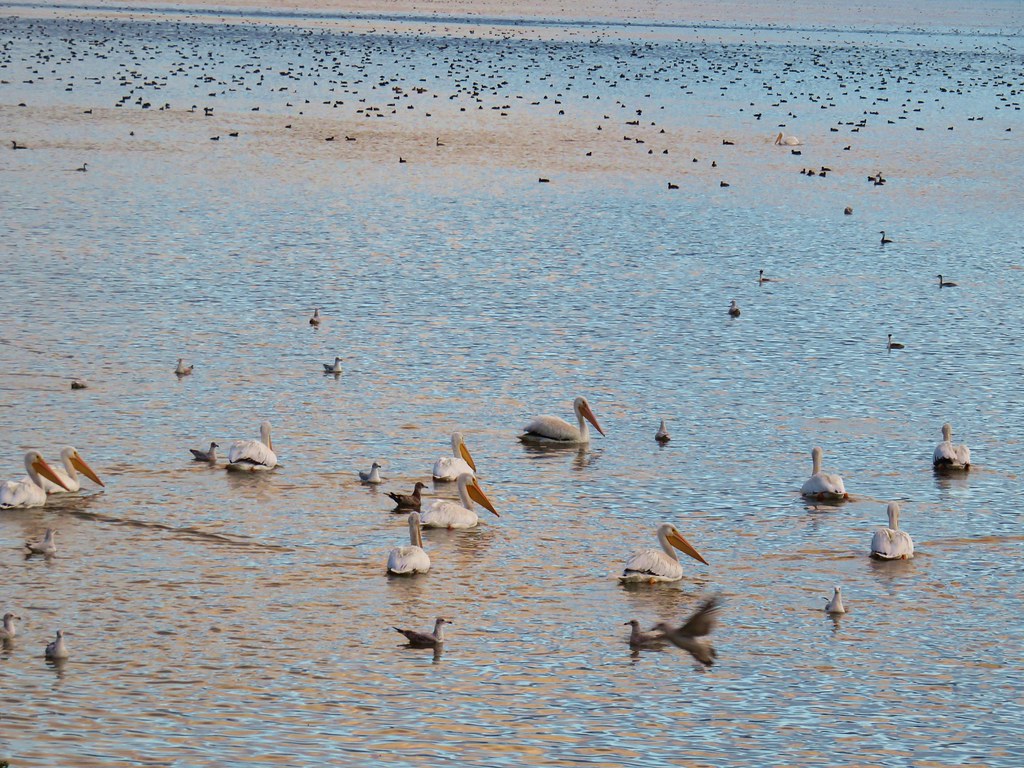
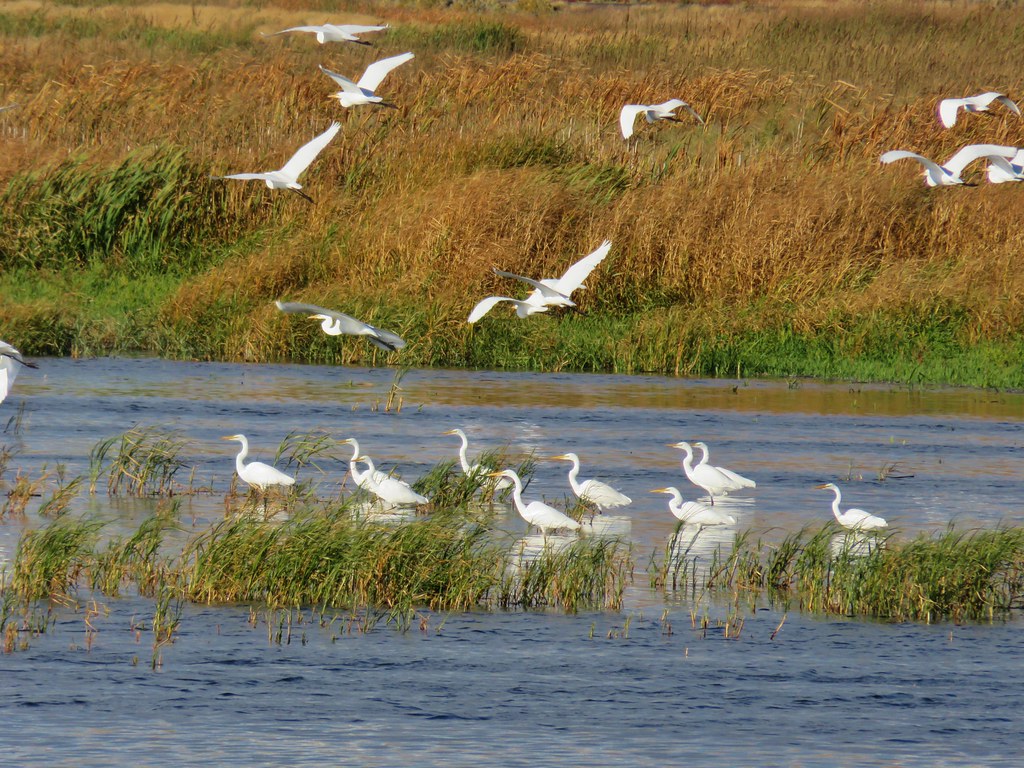
We spent the second day of our Klamath Falls trip in California visiting the Lava Beds National Monument. It had started raining Friday afternoon and continued overnight, but by morning the clouds were beginning to break up leaving scattered showers to make their way across the landscape. This made for some dramatic scenery on our drive from Klamath Falls to the National Monument, especially along Tule Lake. We took advantage of a couple of the numerous pullouts that are part of the Tule Lake National Wildlife Refuge to admire the colorful sky and numerous waterfowl on the lake.
IMG_3534

IMG_3539

IMG_3542

IMG_3547

IMG_3545

IMG_3550

The fee booth (currently $20/per car) was closed at the north entrance of the Monument so we had to drive to the Visitor Center to obtain a pass which was 9.7 miles away.
IMG_3553

IMG_3555

It was a little before 8am and the Visitor Center didn’t open until 9am but we were able to pay with a fee envelope. What we couldn’t do was obtain a cave permit though, which are required to visit any of the area caves. The threat of White Nose Syndrome has made screening by Park Rangers necessary. We’d need to come back for that but in the meantime we headed back north to the Black Crater Trailhead.
IMG_3559

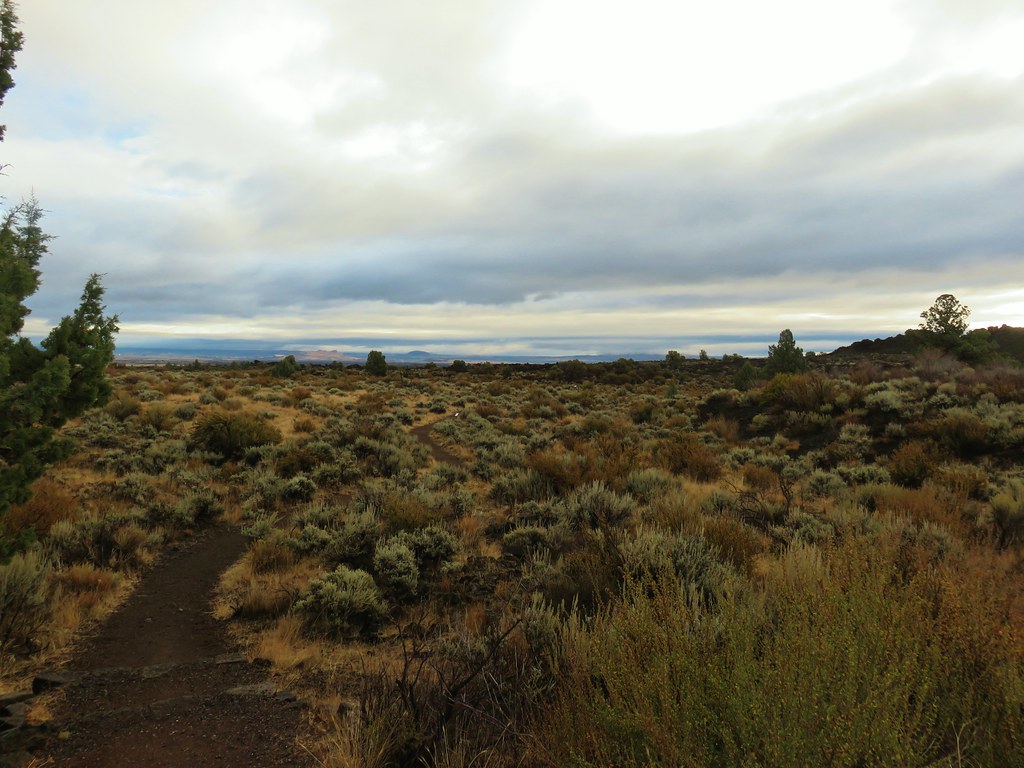
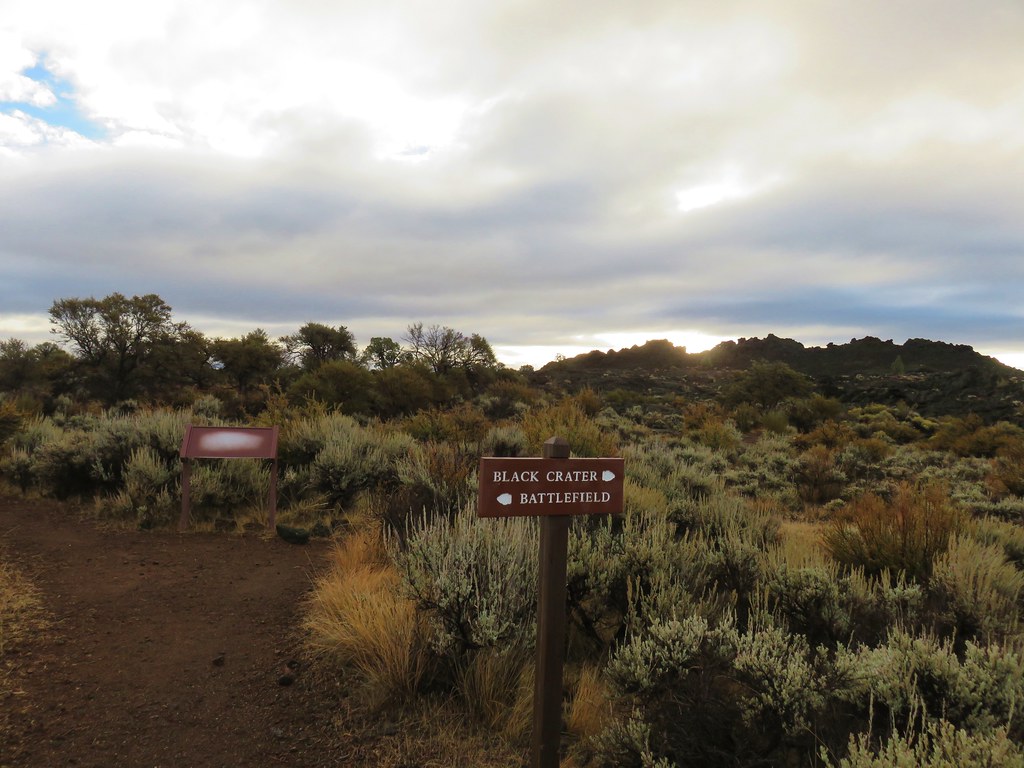
From this trailhead there were two destinations, Black Crater and an overlook of the Thomas-Wright battlefield.
IMG_3560

IMG_3563

Each destination shares the first tenth of a mile of trail. The overnight rain had brought out the sweet smell of sagebrush to which Heather pointed out that smell is one thing that you can’t capture in photos.
IMG_3564

We decided to visit Black Crater first and took the right hand fork when the trail split.
IMG_3567

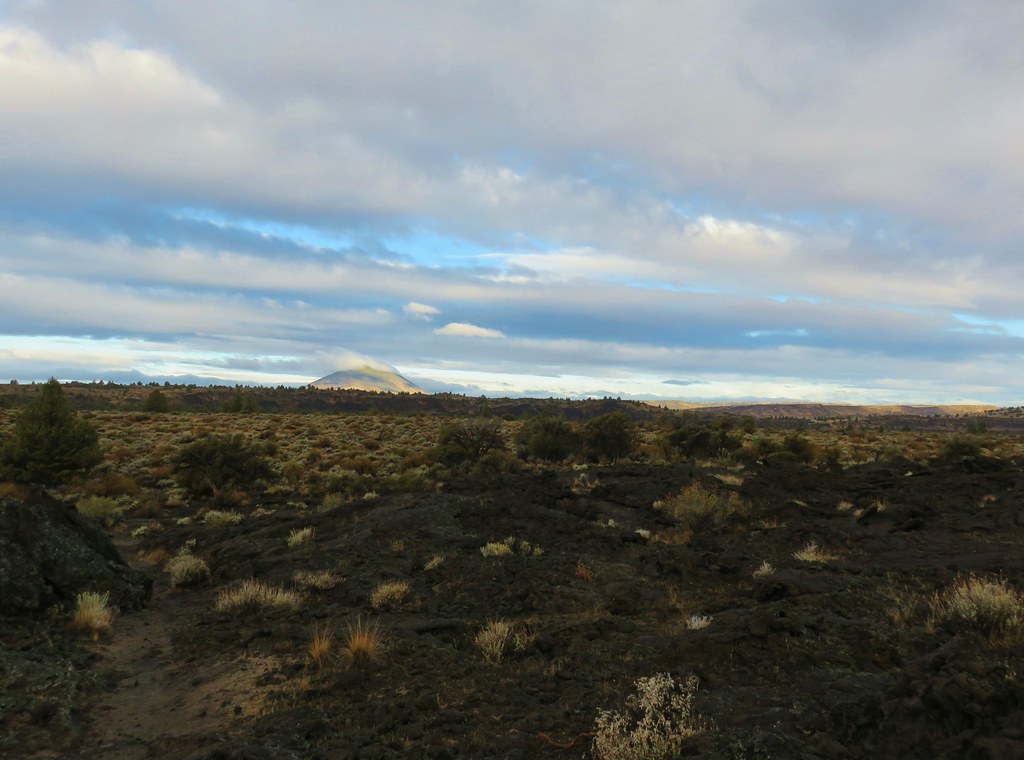
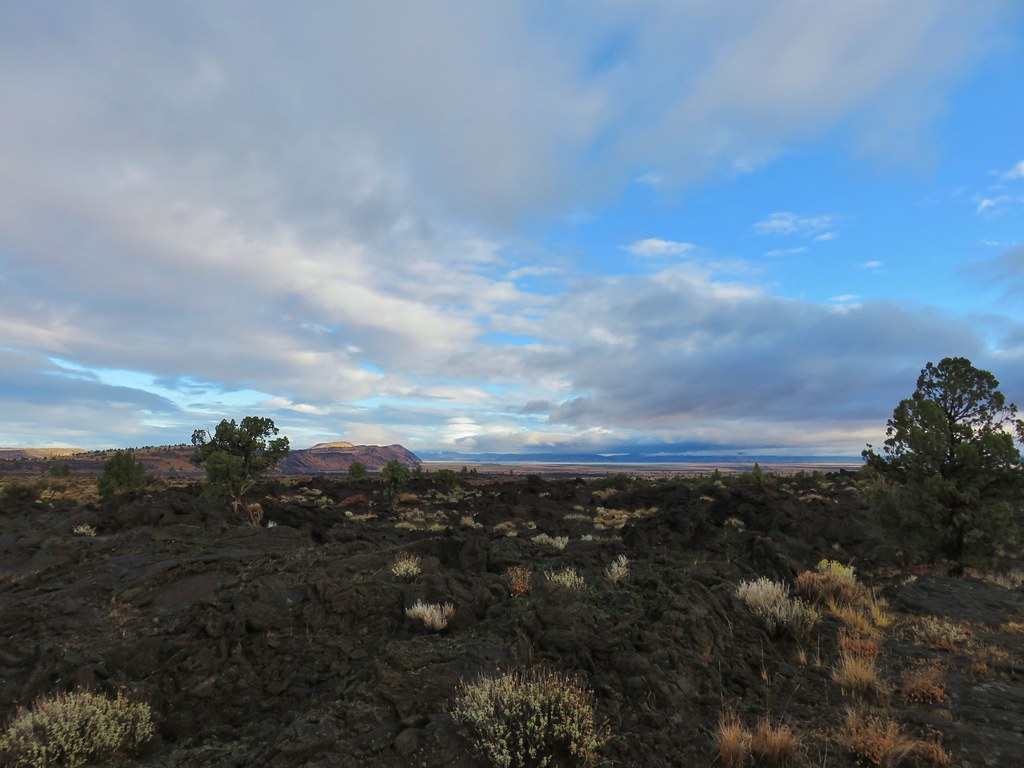
This trail passed over a lava flow arriving at the start of a short .3 mile loop that climbed up and around part of the splatter cone. We took notice of a peak to the NW that appeared to have a cloud stuck to its summit. It turned out to be Mount Dome, and for much of the rest of the day we kept watch on this peak to see if it would ever be cloud free.
IMG_3574

IMG_3575Tule Lake

IMG_3577

IMG_3583

Although not nearly as large, Black Crater did remind us a little of Coffee Pot Crater which we’d visited in June (post).

After completing the loop we headed for the battlefield. It was just over a mile from the fork to the viewpoint and the trail spent this time passing volcanic formations and a few lingering wildflowers.
IMG_3600

IMG_3601

IMG_3602

IMG_3599

IMG_3605

IMG_3608

IMG_3612

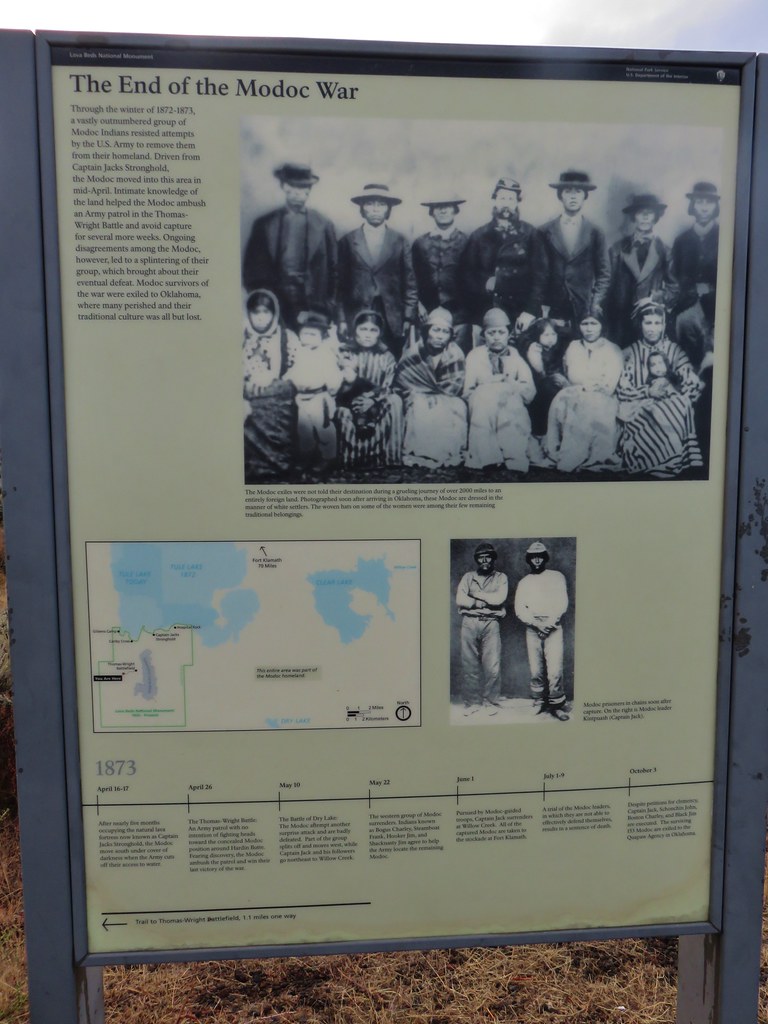
The Thomas-Wright battle took place on April 26, 1873 when an Army patrol was defeated by the Modocs.
IMG_3614

IMG_3615

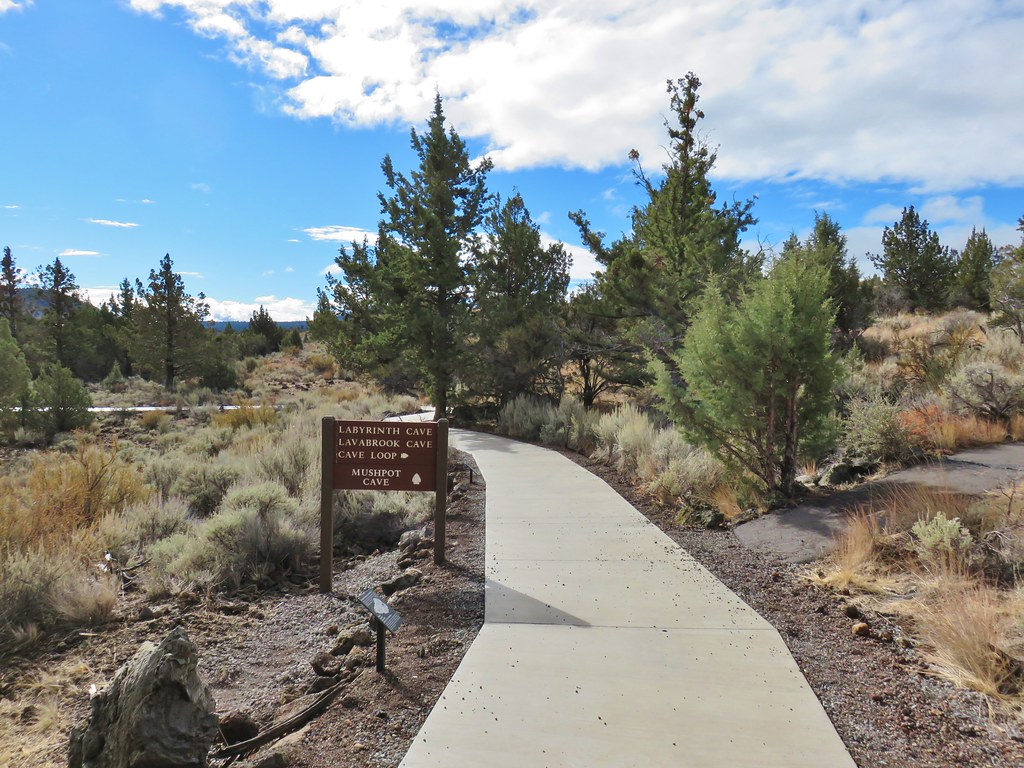
After reading up on the battle we headed back to the trailhead and drove back to the now open Visitor Center. We spent some time looking at the displays inside before obtaining our cave permit. We hung the permit in our car and headed for Mushpot Cave. After initially starting to drive Cave Loop Road we realized that Mushpot Cave was actually right next to the Visitor Center so we turned around and parked back once again at the center.

At the far end of the center we spotted the sign for the cave.
IMG_3619

A .2 mile paved path led to the entrance of the lava tube.
IMG_3620

IMG_3622

IMG_3624

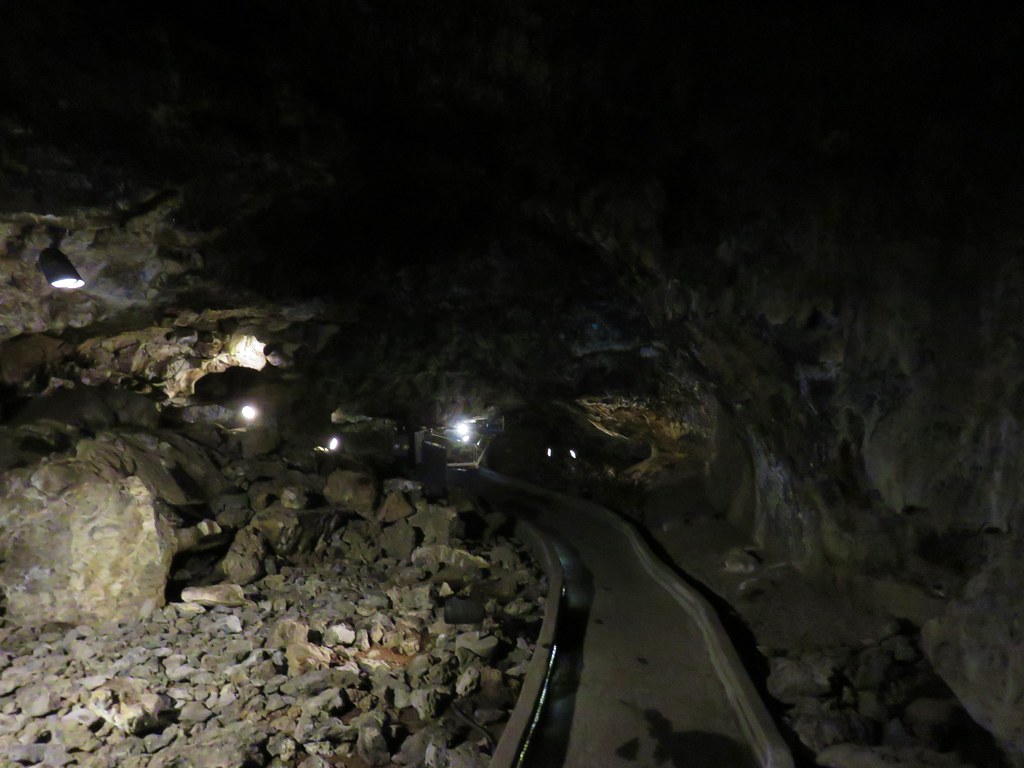
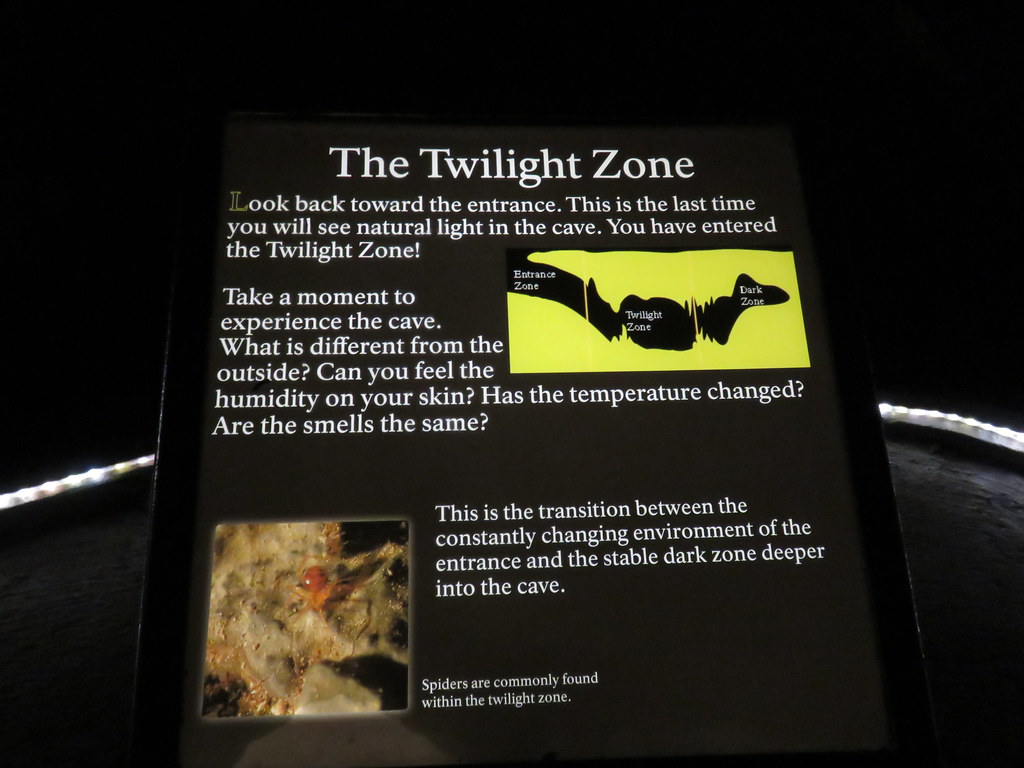
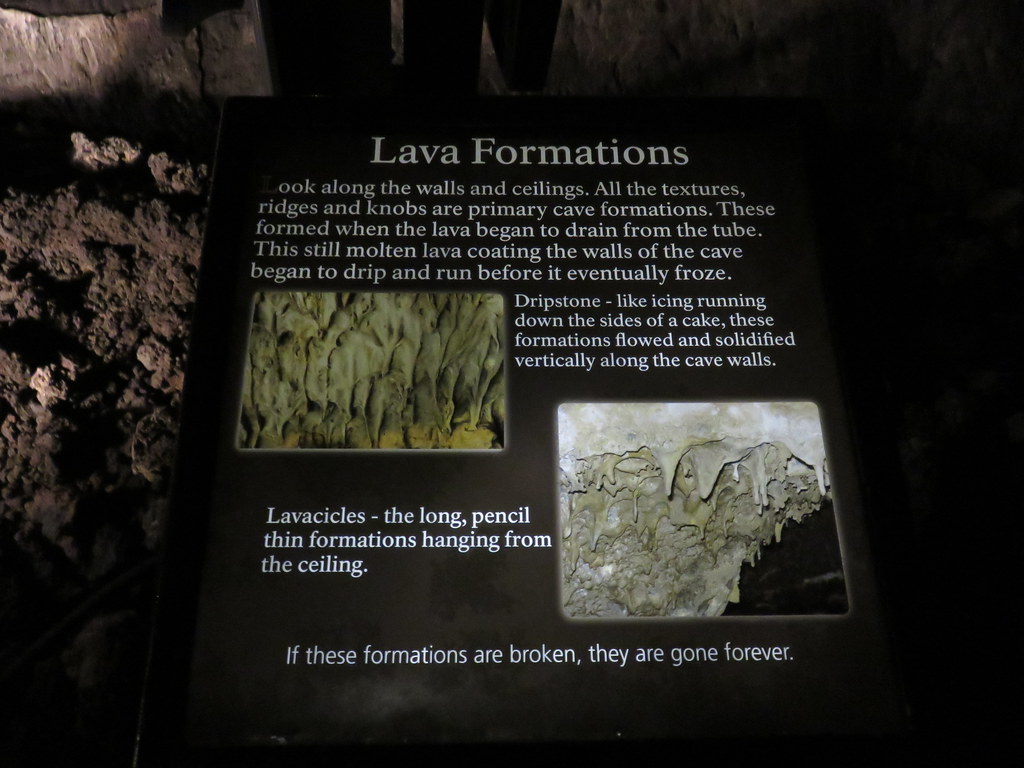
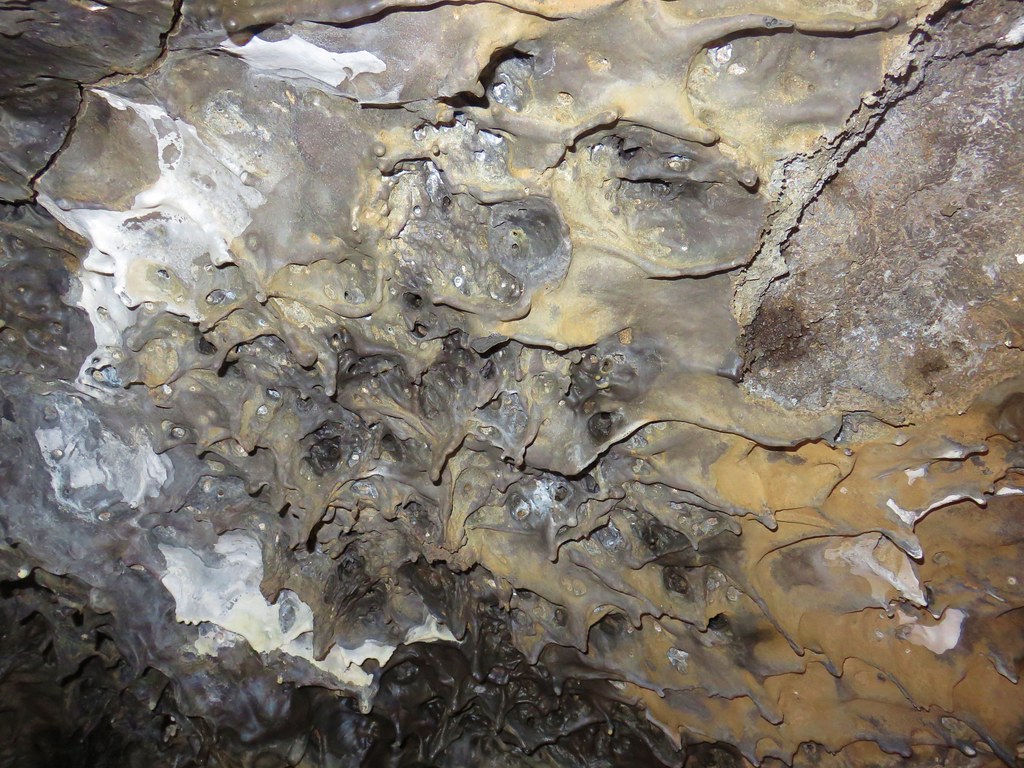
This is the only lighted cave in the Monument and also featured a paved path lined with interpretive signs.
IMG_3625

IMG_3634

IMG_3631

IMG_3648

IMG_3643

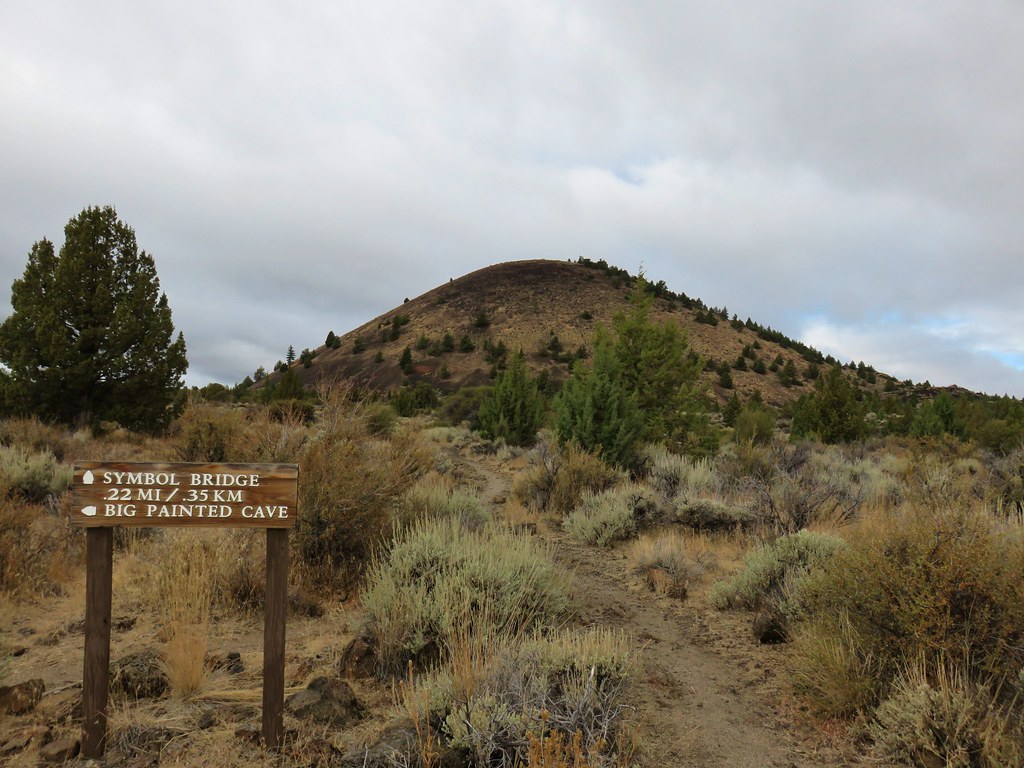
The lava tube is 770′ in length and does have a spot or two where we needed to duck under the low ceiling. We exited the cave and returned to our car. Since we were only there for the day we skipped the rest of the caves along the loop (a few were closed for bat mating season). Instead we drove north, once again, from the Visitor Center to a sign for Skull Cave where we turned right. After a mile we pulled into a small trailhead parking area for Symbol Bridge and Big Painted Cave.
IMG_3657

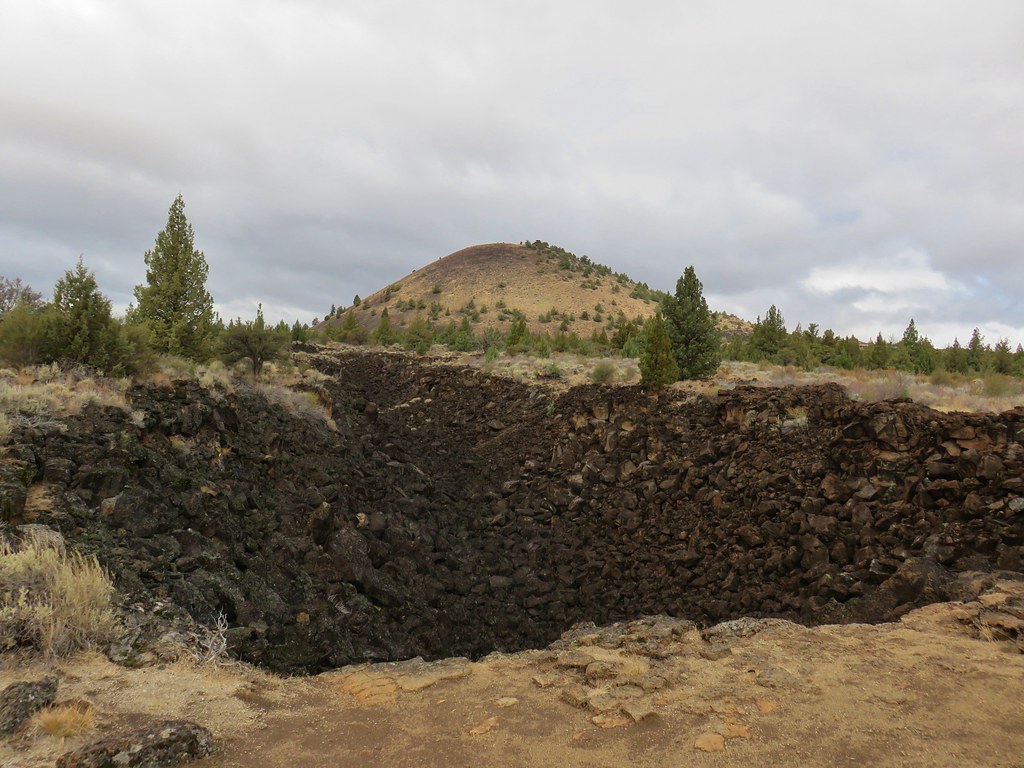
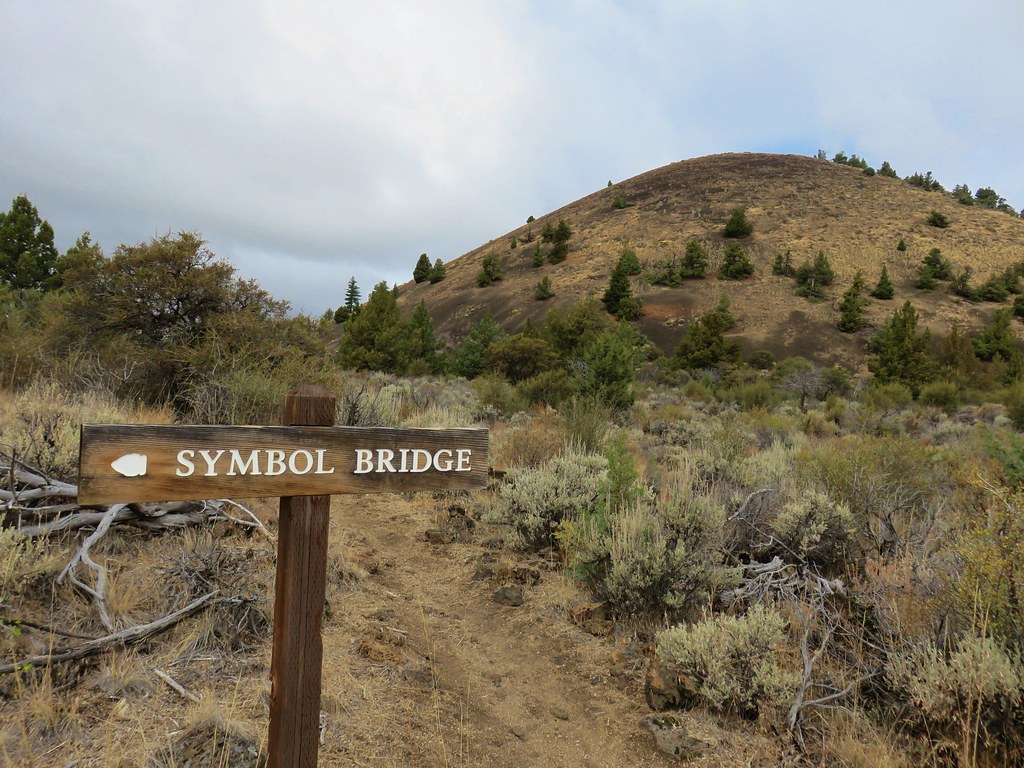
The short trail here passes several collapsed sections of a lava tube and offers a good view of Schonchin Butte.
IMG_3661

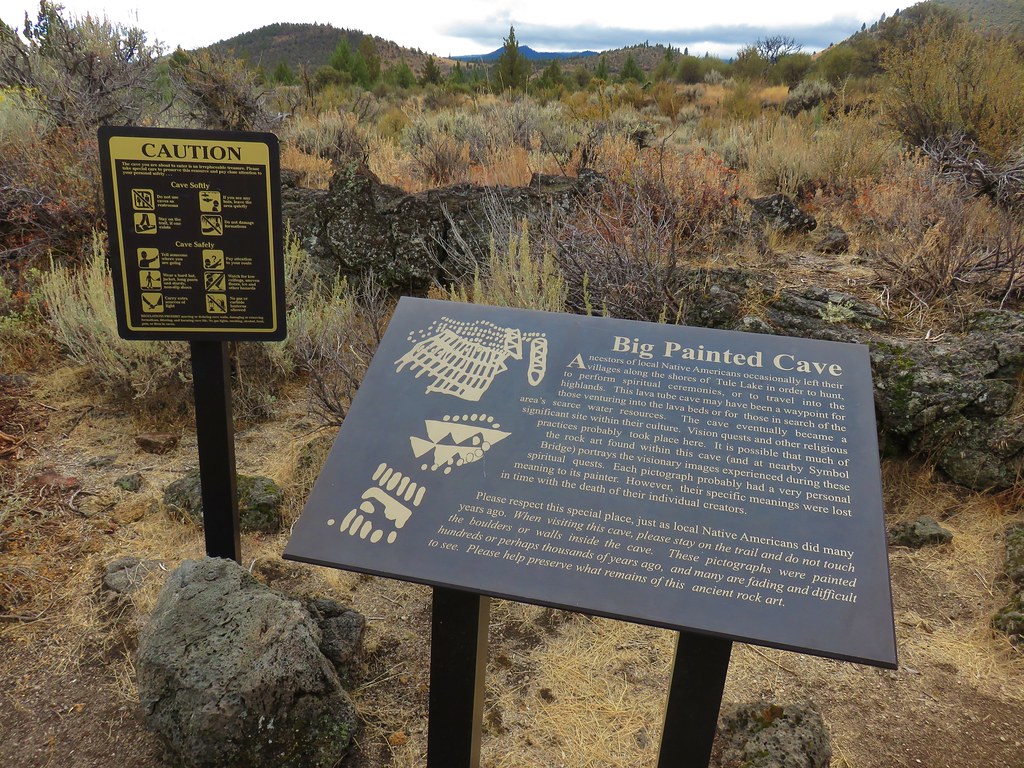
We turned left at a sign for Big Painted Cave.
IMG_3664

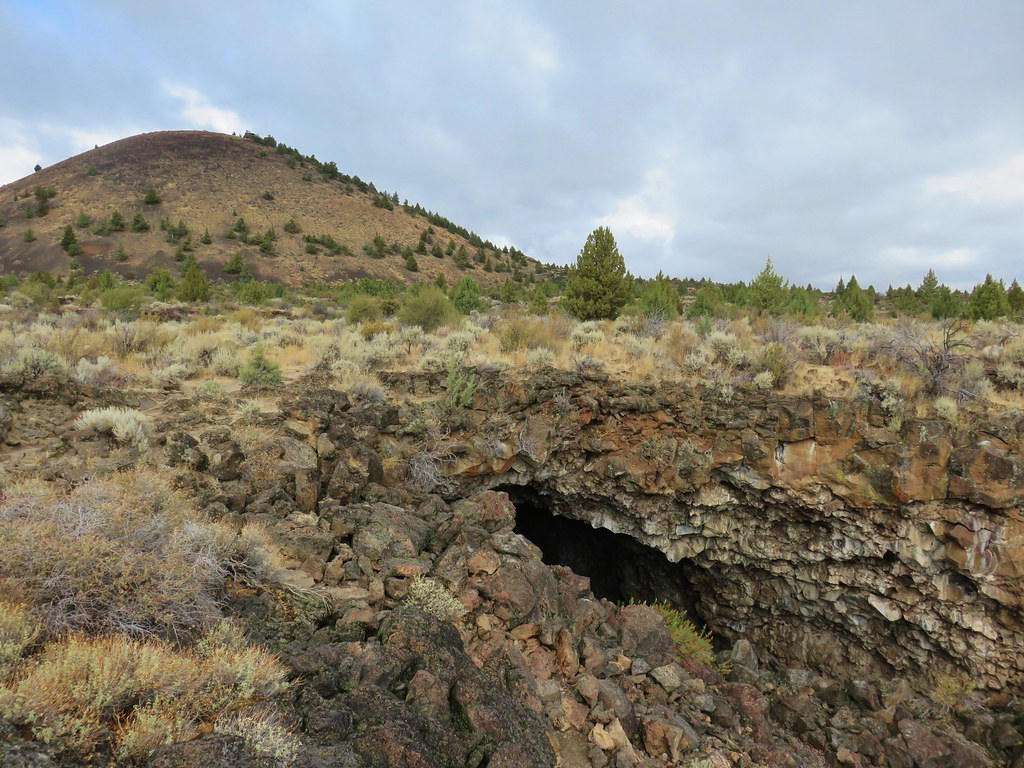
The signed cave entrance was only about 100′ along the spur trail.
IMG_3668

IMG_3669

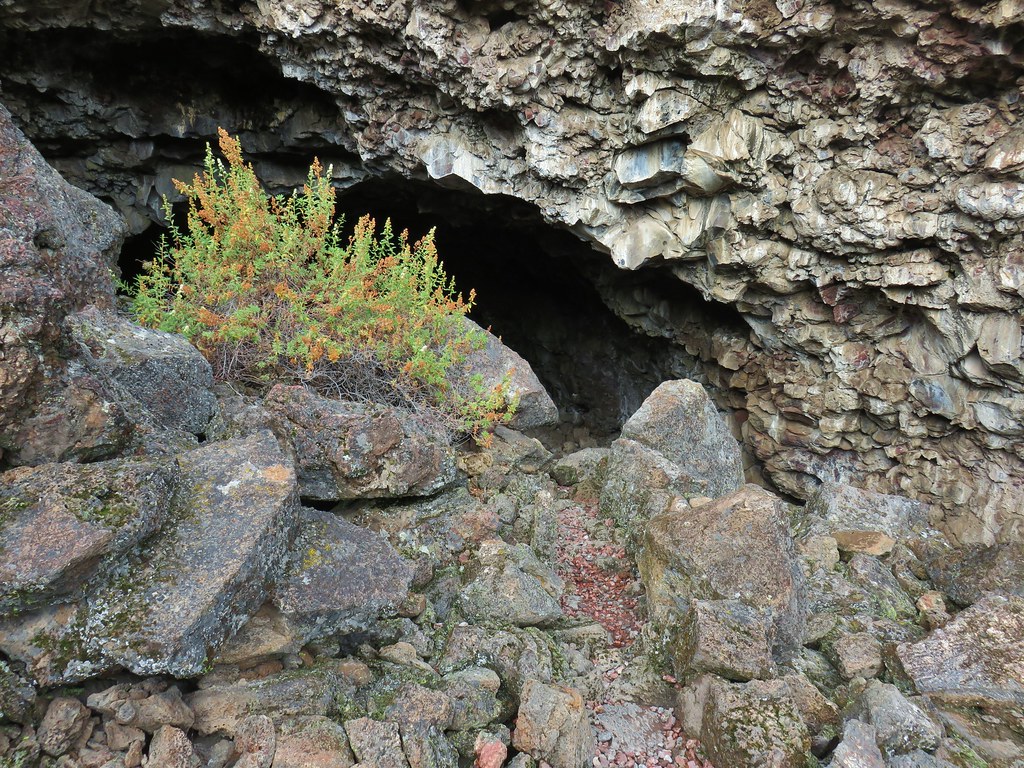
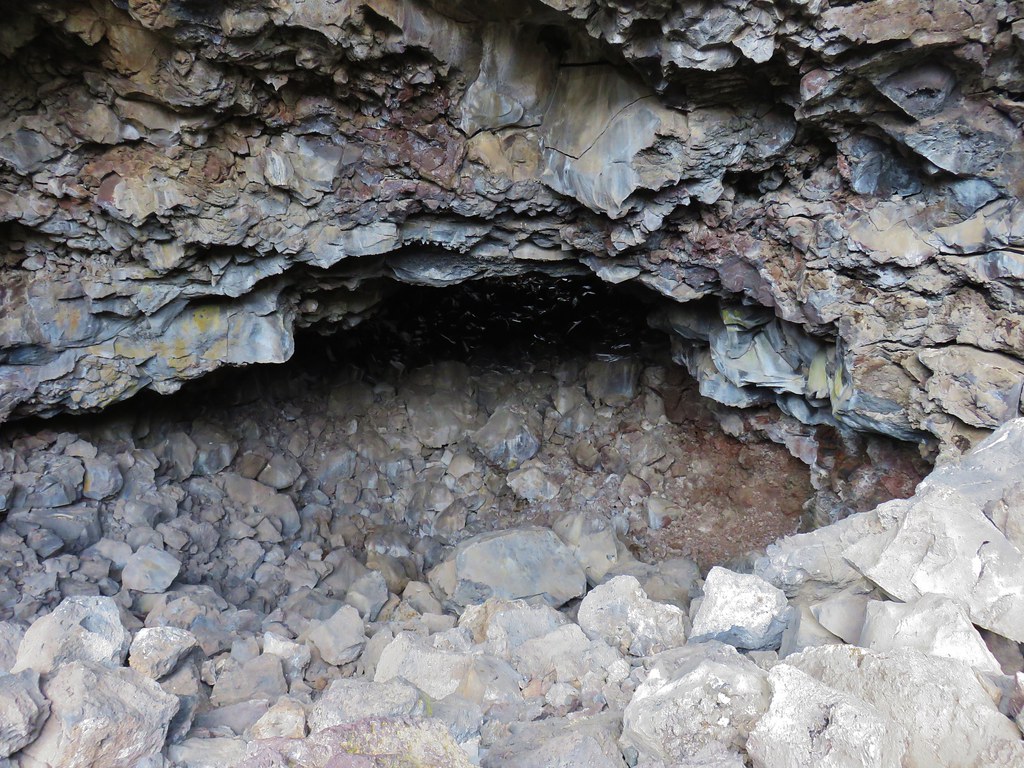
More of an overhang than a cave, a path led down to the entrance.
IMG_3670

IMG_3671

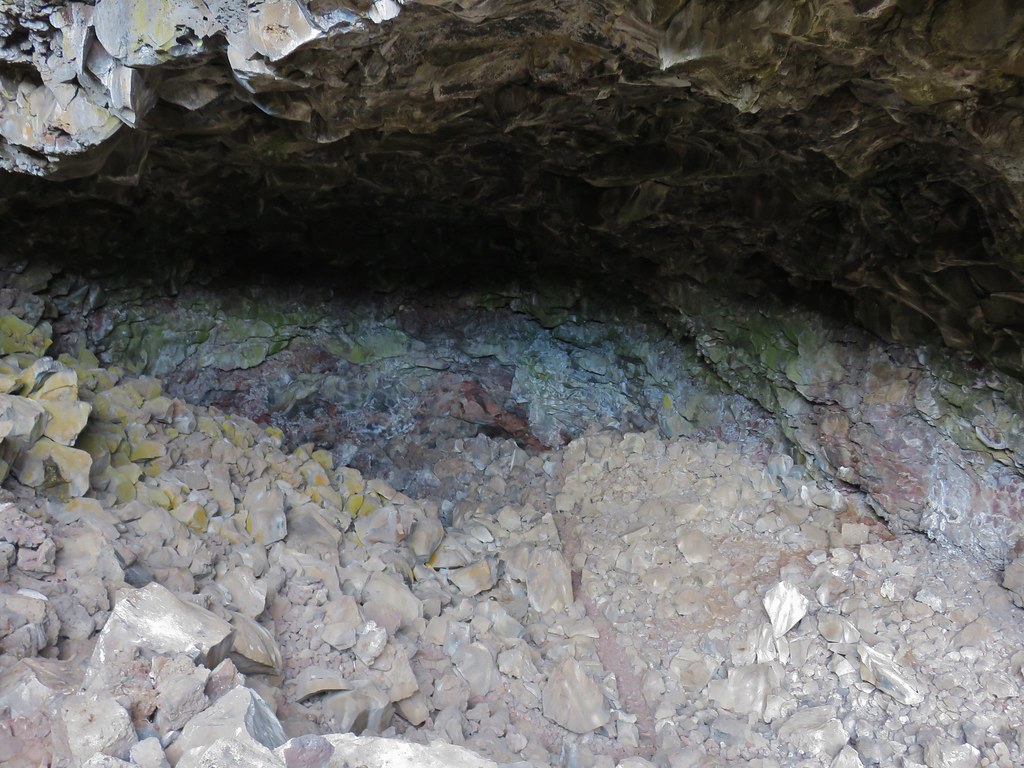
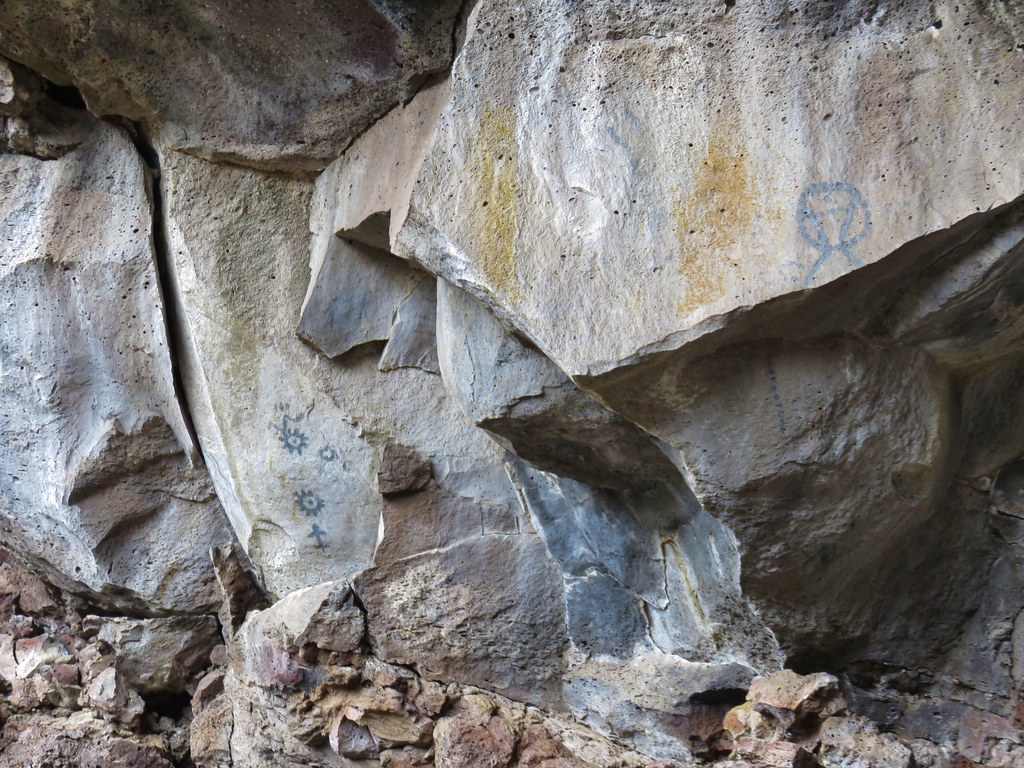
We honestly couldn’t make out any of the pictographs, the colored rocks made it difficult to tell what was natural and what wasn’t. It’s been a common theme for us when visiting pictograph sites.

We returned to the main trail and continued the short distance to Symbol Bridge.
IMG_3679

IMG_3680

IMG_3681

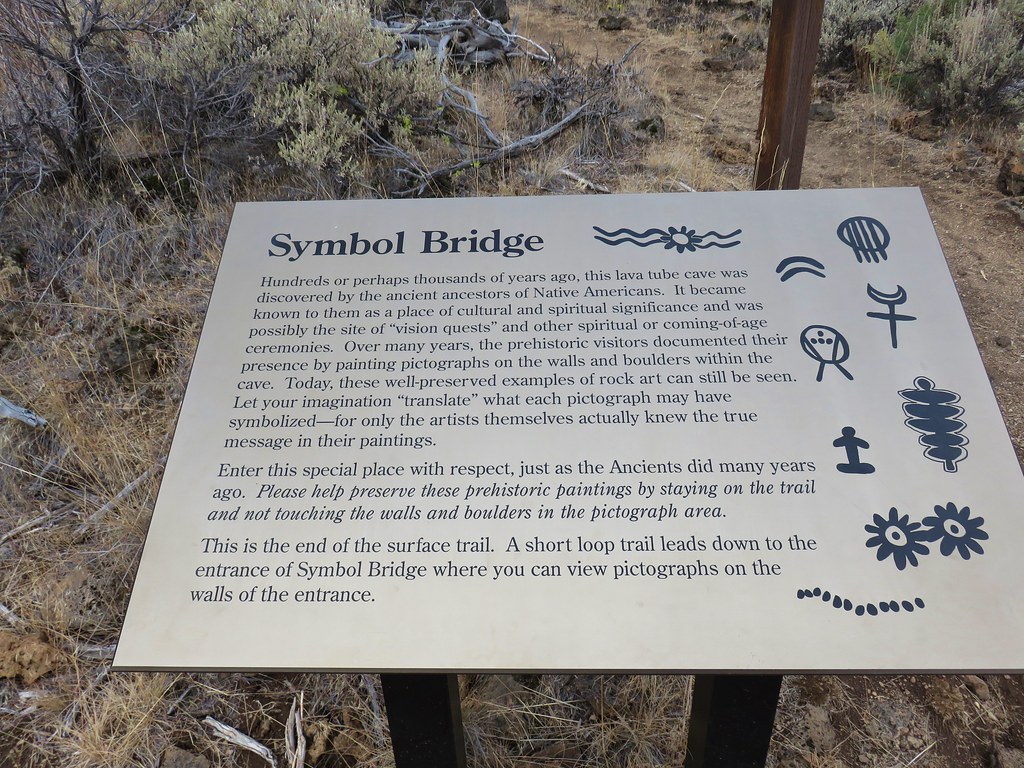
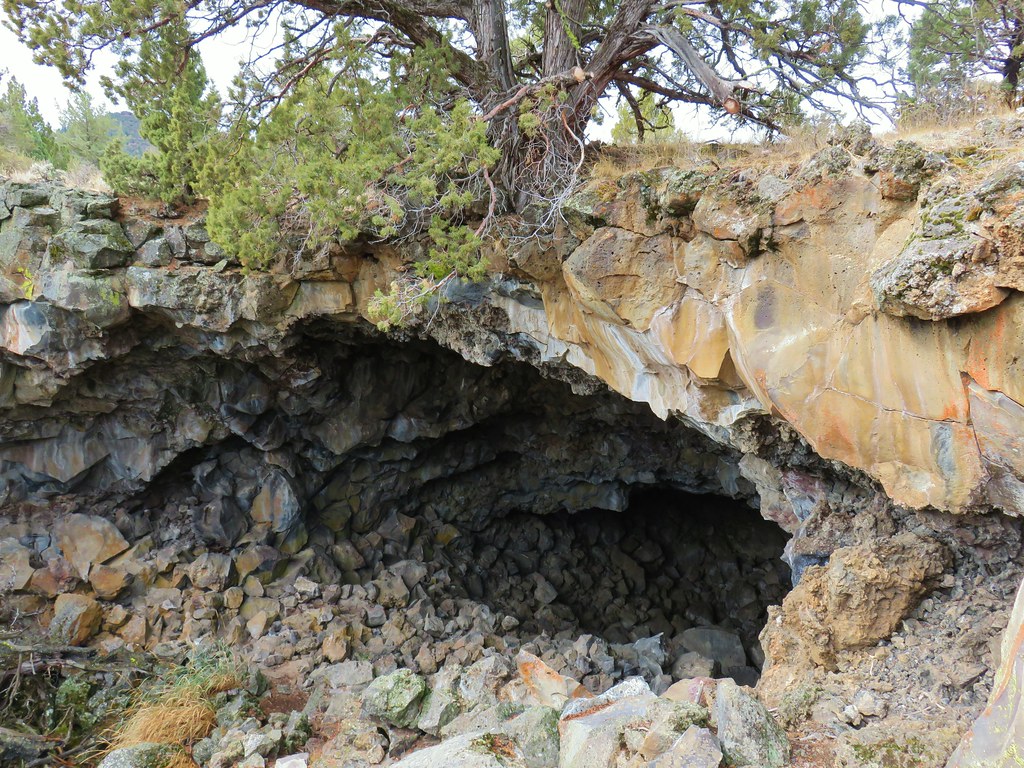
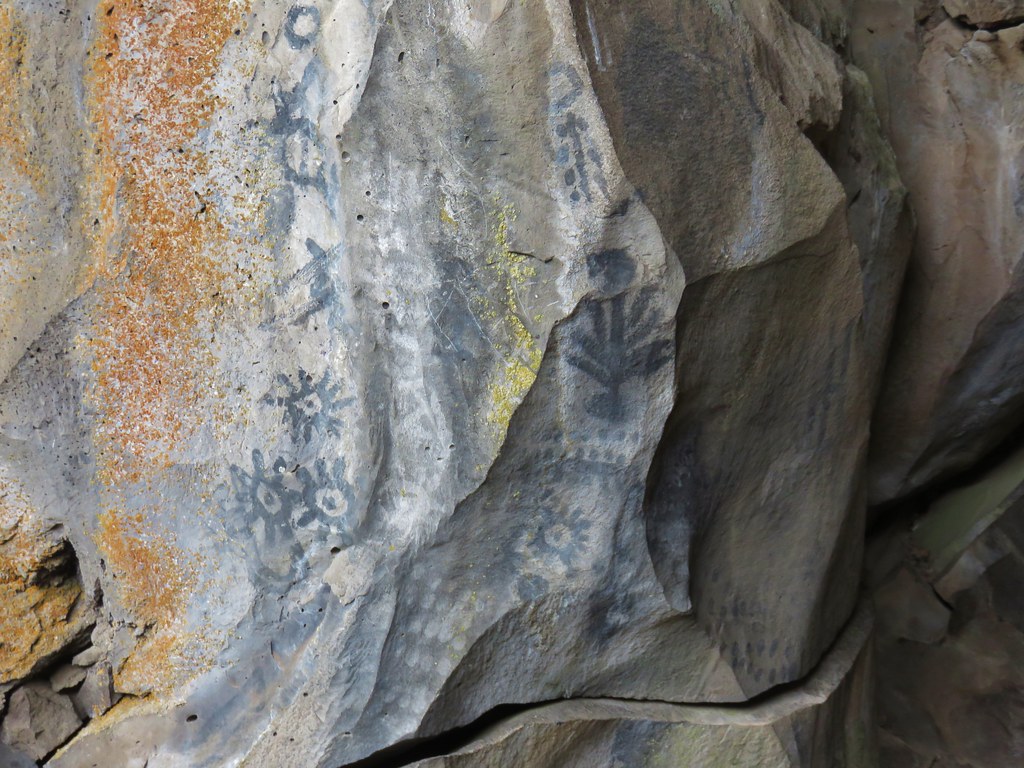
Again a short path led down to the cave entrance, but this time the pictographs were clearly evident.
IMG_3689

IMG_3691

IMG_3694

IMG_3705

IMG_3707

We headed back to the car happy to have finally been able to make out some drawings. After completing the two mile hike we continued driving north to a sign for Merrill Cave where we turned left for almost a mile to the shared Whitney Butte and Merrill Cave Trailhead.
IMG_3711

IMG_3712

Up until this point we had been following the recommended hikes in William L. Sullivan’s “100 Hikes/Travel Guide Eastern Oregon” 3rd edition, but these were from Bubba Suess’s “Hiking Northern California” book.
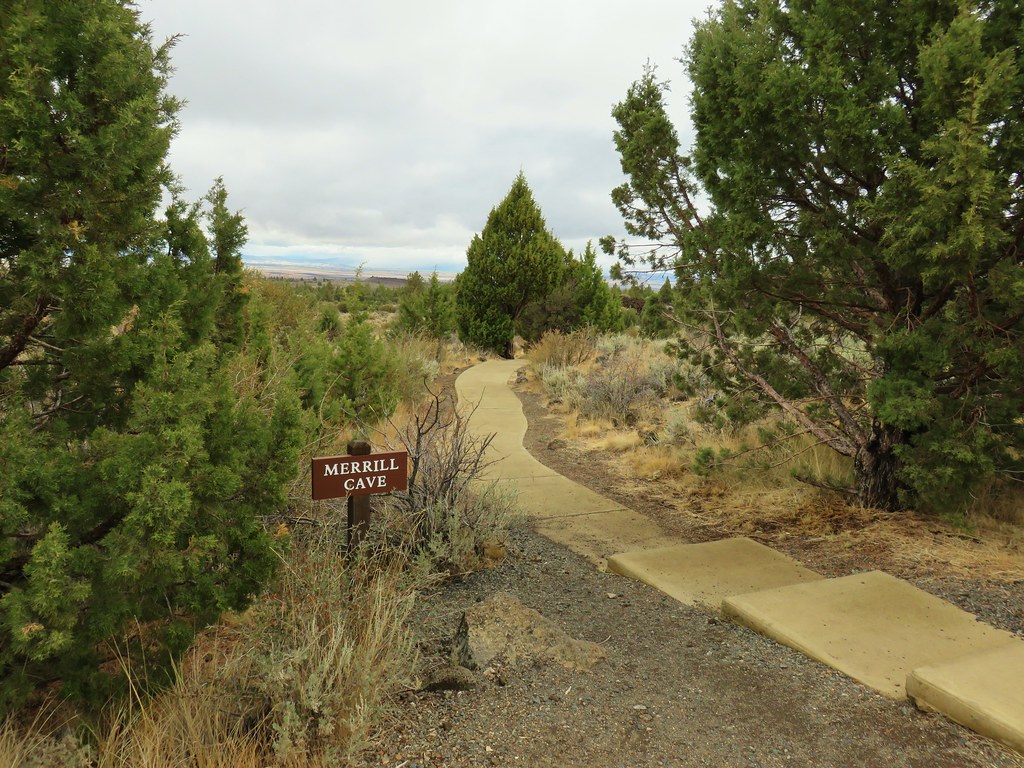
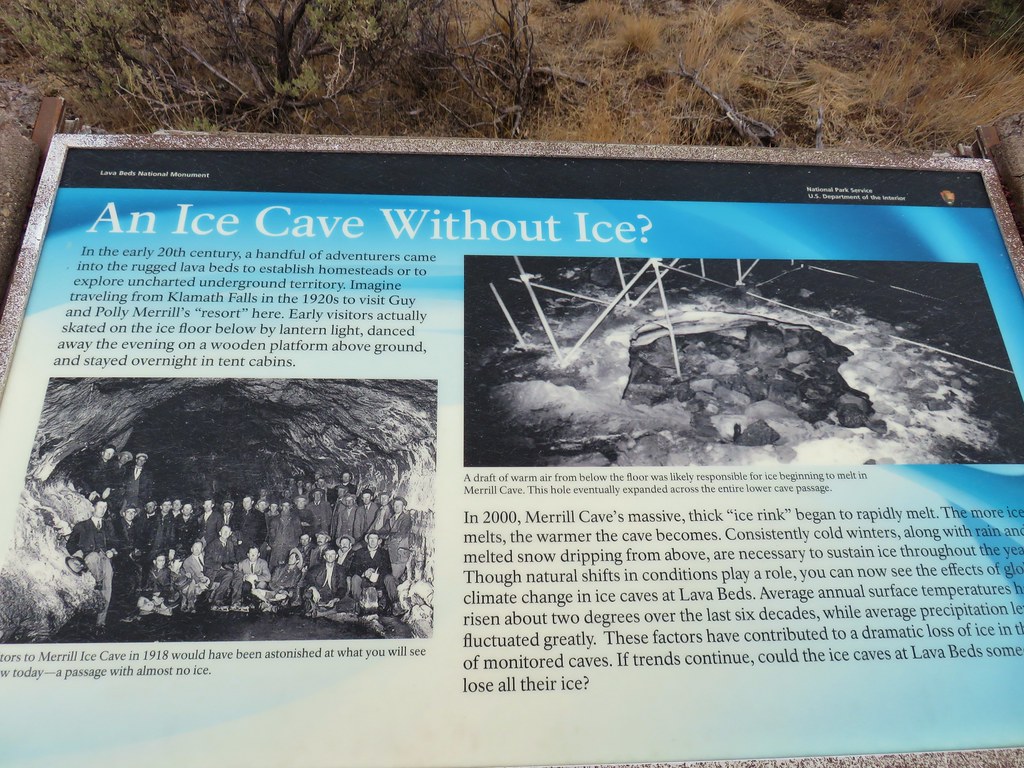
We started with the short path to Merrill Cave. An interpretive sign at the entrance told a familiar story, warming temperatures have led to the loss of ice in this cave like many others. 😦
IMG_3715

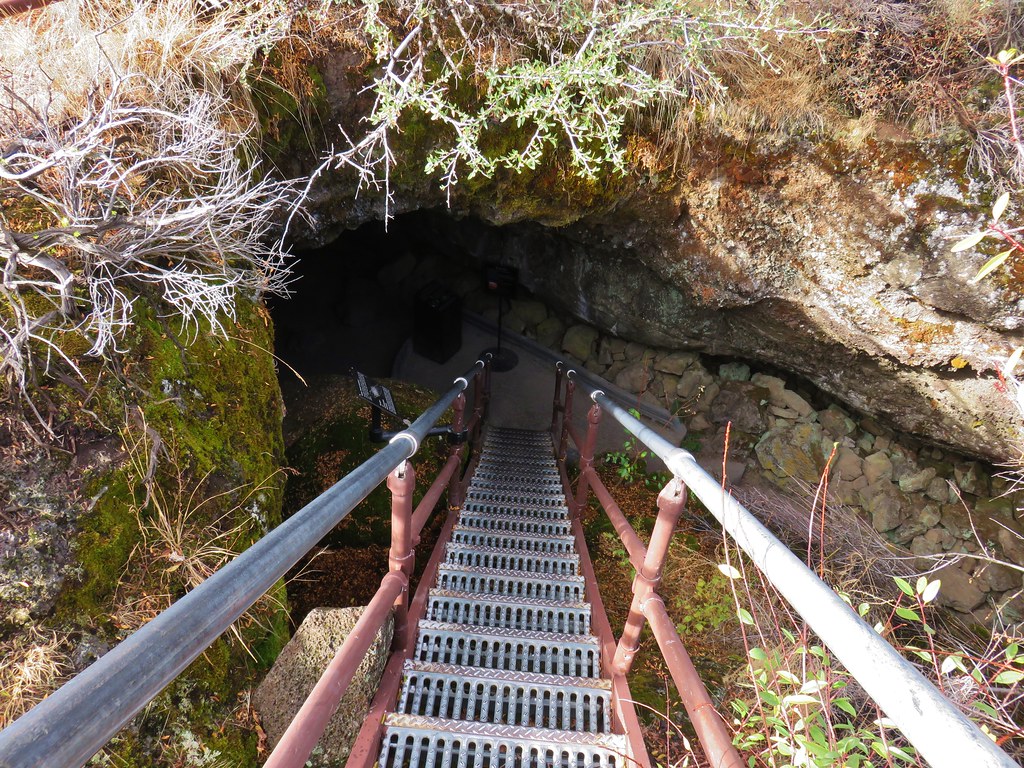
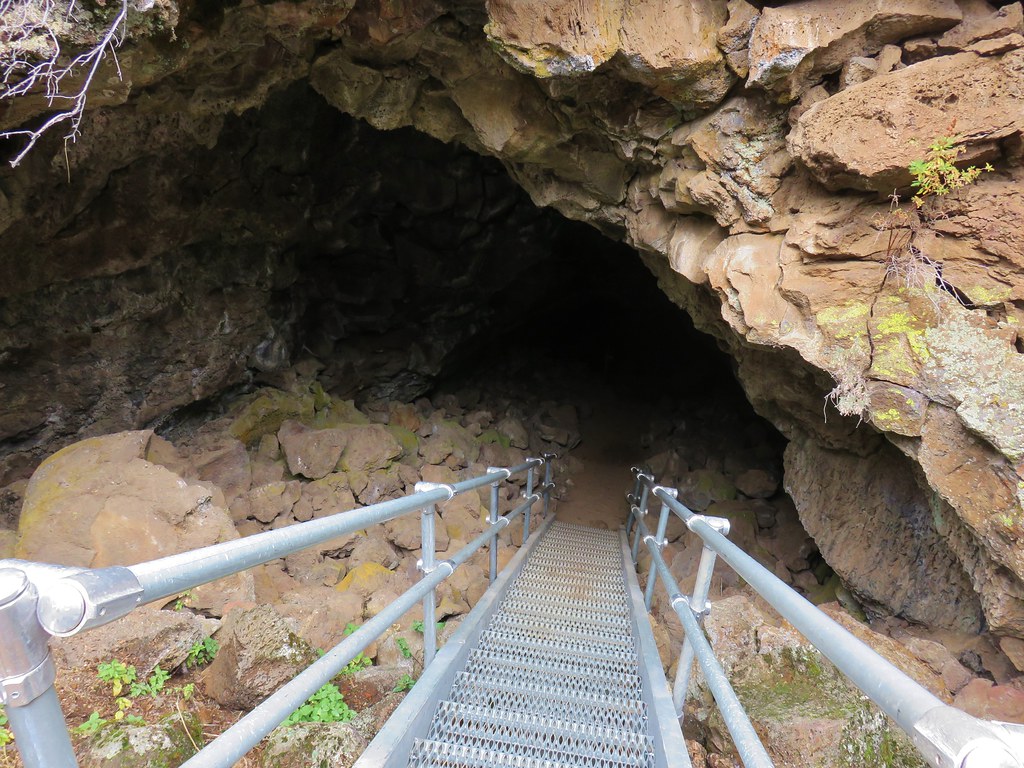
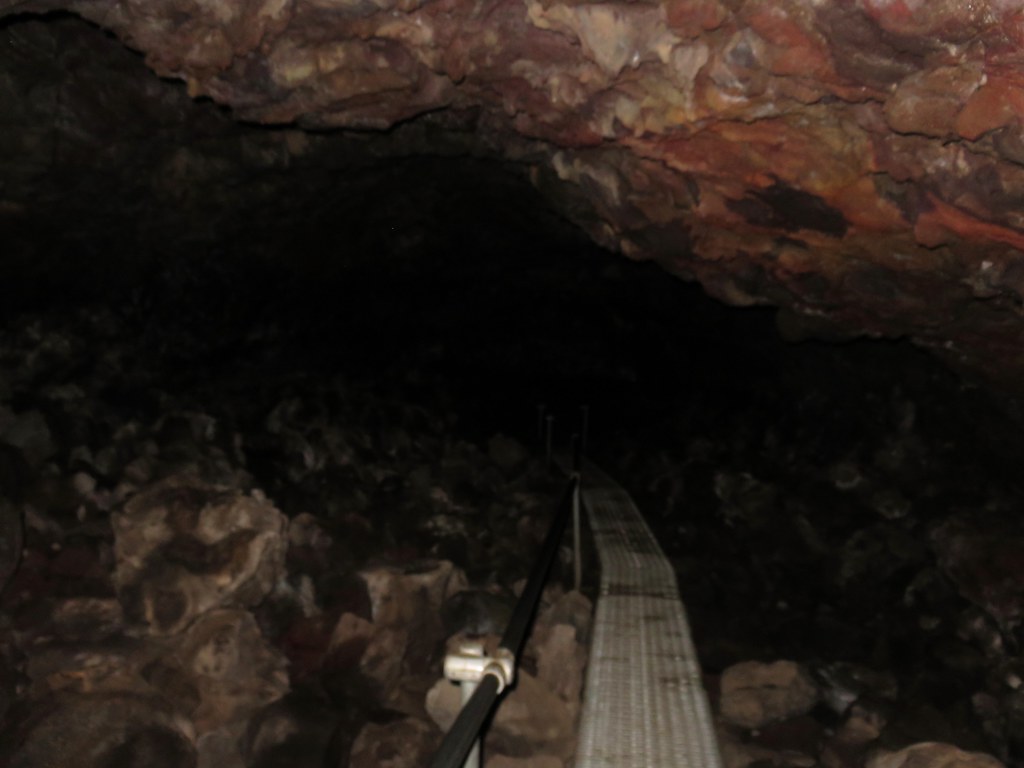
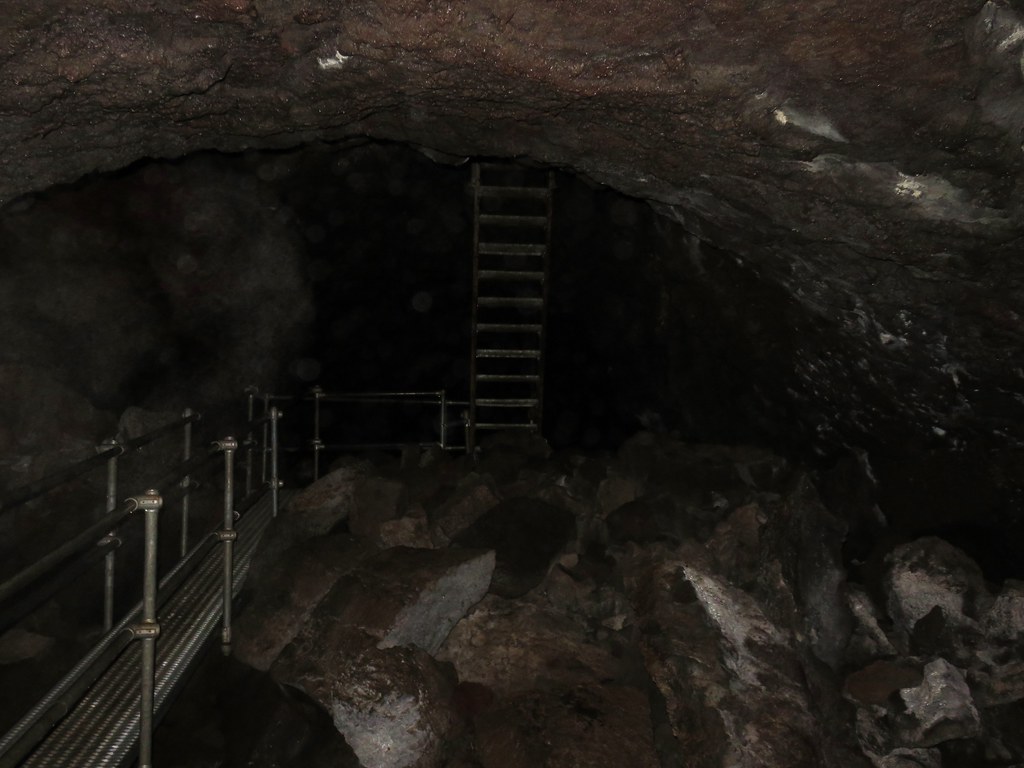
We descended the metal staircase and followed a metal walkway through the cave.
IMG_3717

IMG_3719

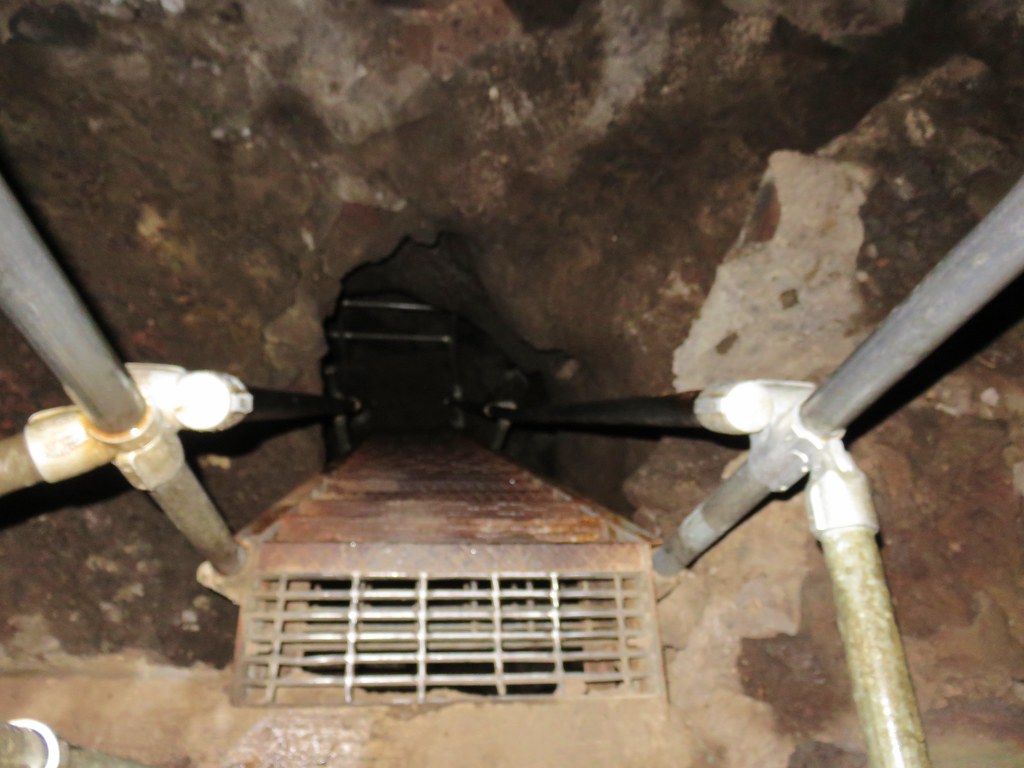
Near its end there was a metal ladder dropping down into an opening.
IMG_3720

The rails actually did have a little ice on them as we climbed down into the lower chamber where the path quickly ended.
IMG_3721

IMG_3725

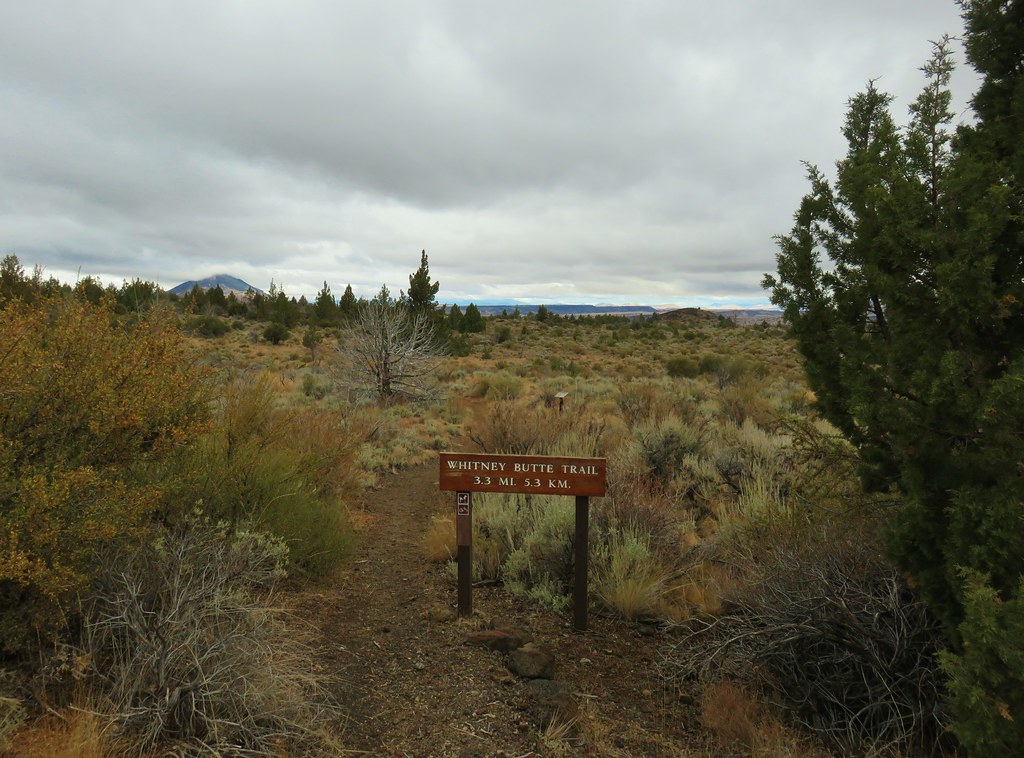
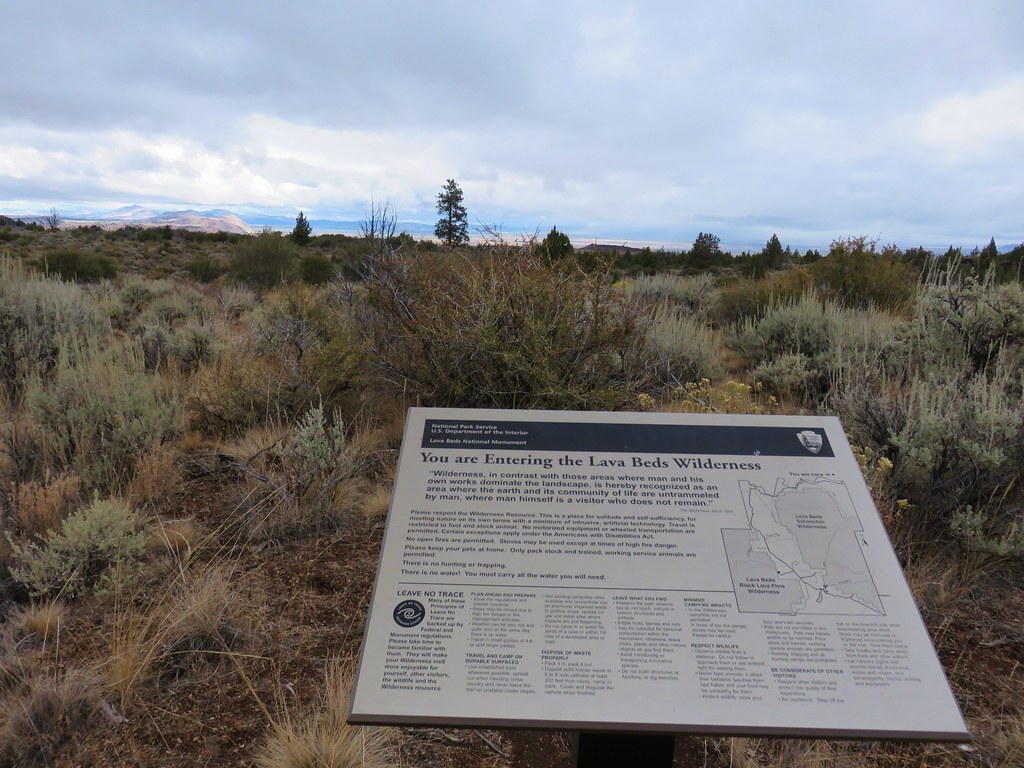
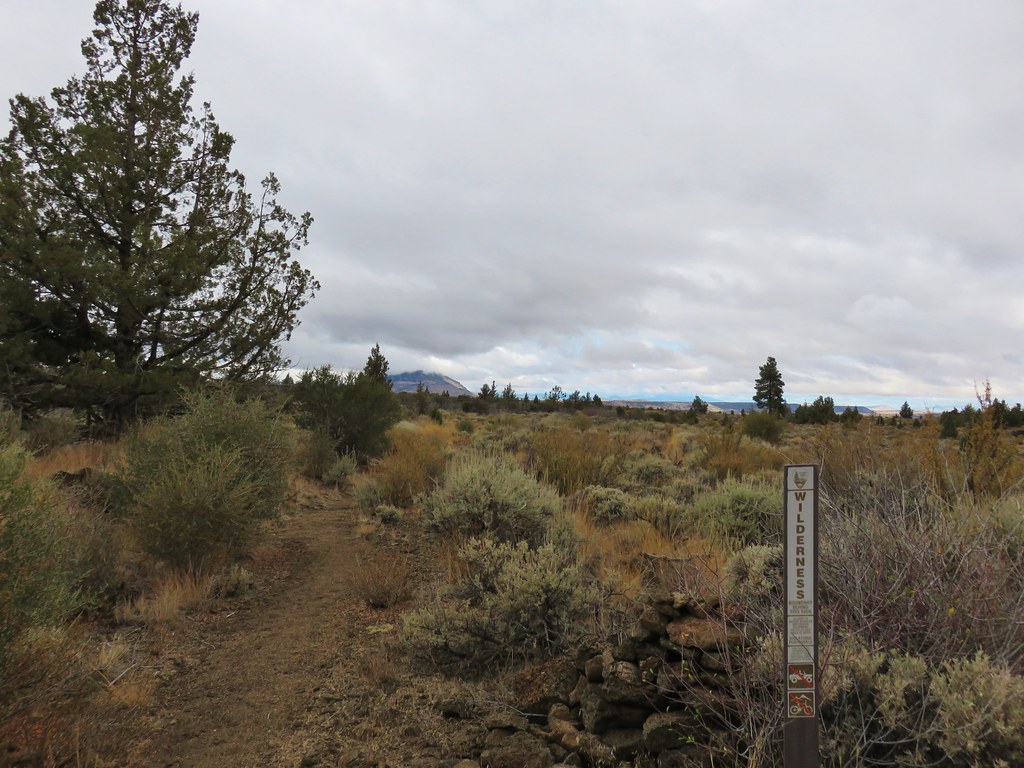
We climbed back out of the cave and then started down the Whitney Butte Trail. One exciting prospect of the Whitney Butte Trail was that it would take us into the Lava Beds Wilderness.
IMG_3729

IMG_3733

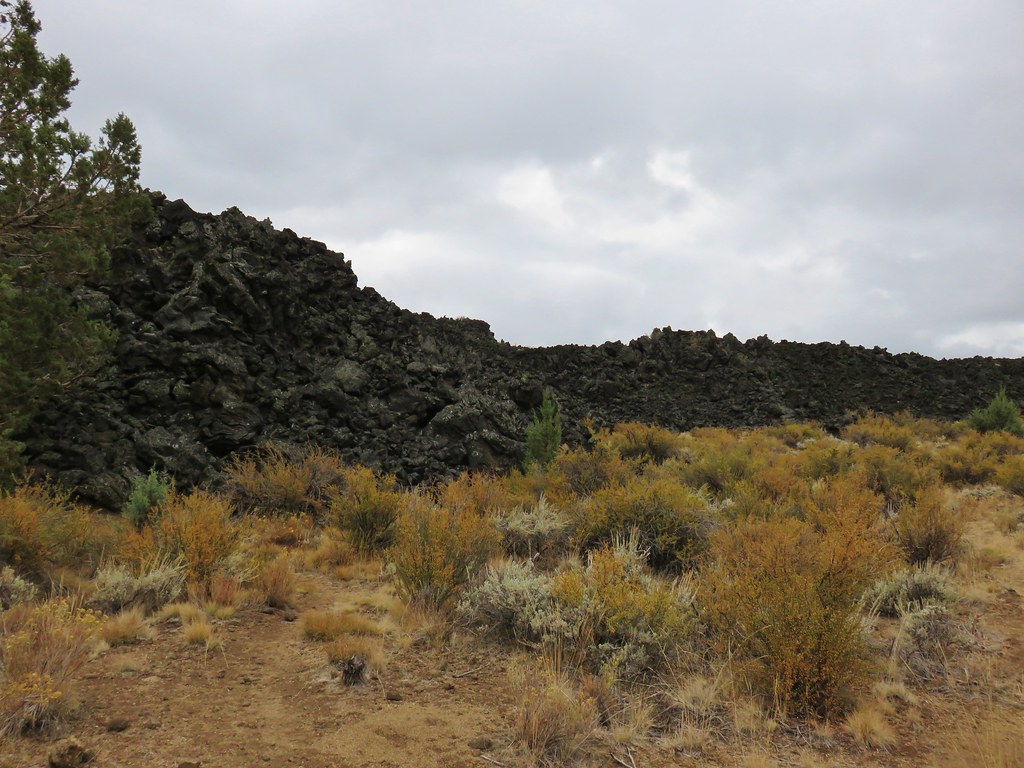
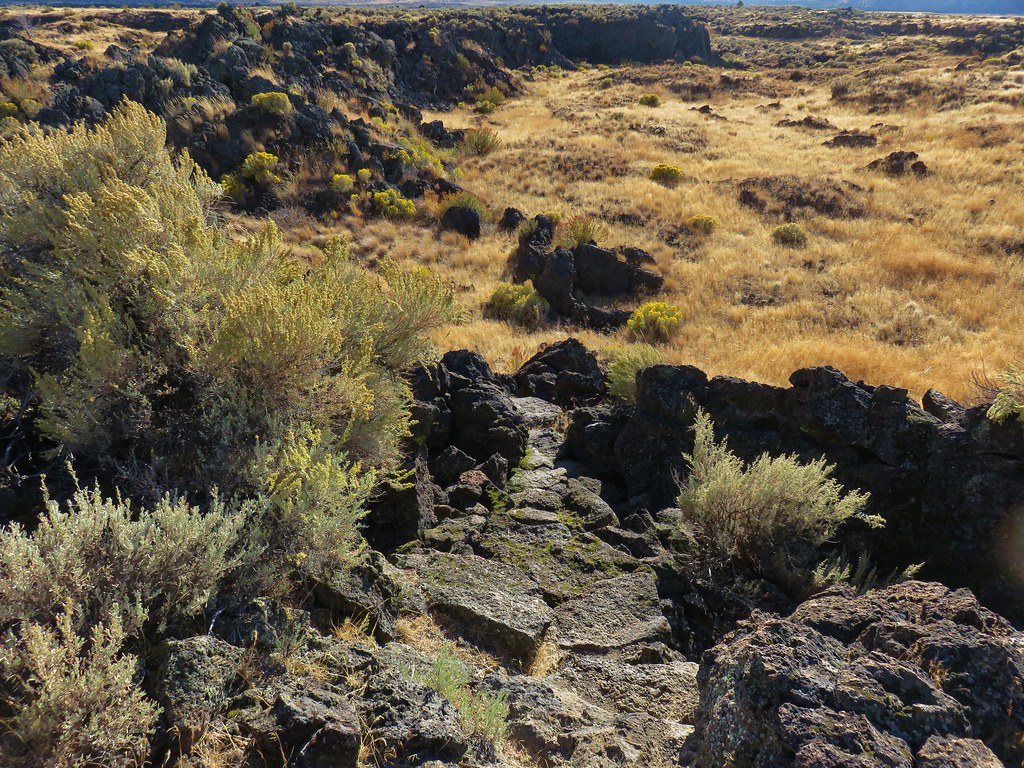
This was by far the longest hike we’d tackle on the day but was still just a little under 7 miles round trip. The Whitney Butte Trail began by passing through open sagebrush then skirted around an old lava flow.
IMG_3734

IMG_3737

IMG_3738

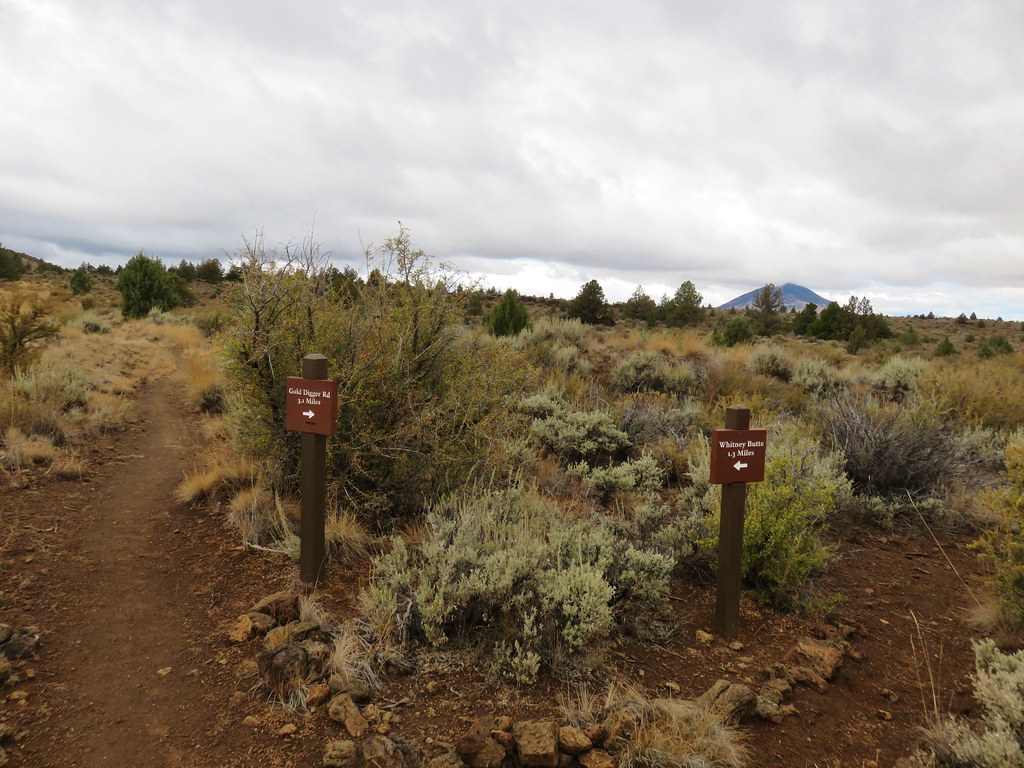
For much of the hike out, Mount Dome lay almost straight ahead and it was still holding onto its cloud cover. The trails namesake, Whitney Butte, stayed hidden for the first mile and a half before revealing itself to the left of the trail.
IMG_3740Whitney Butte to the left and Mount Dome to the right.

Approximately 2.2 miles into the hike we passed a trail signed for Gold Digger Road.
IMG_3744

The clouds had actually increased a bit during the day and we were feeling occasional rain drops which weren’t a big deal, but the cloud cover did put a hamper on the views. Many lower buttes were visible but the higher peaks were hidden.
IMG_3745

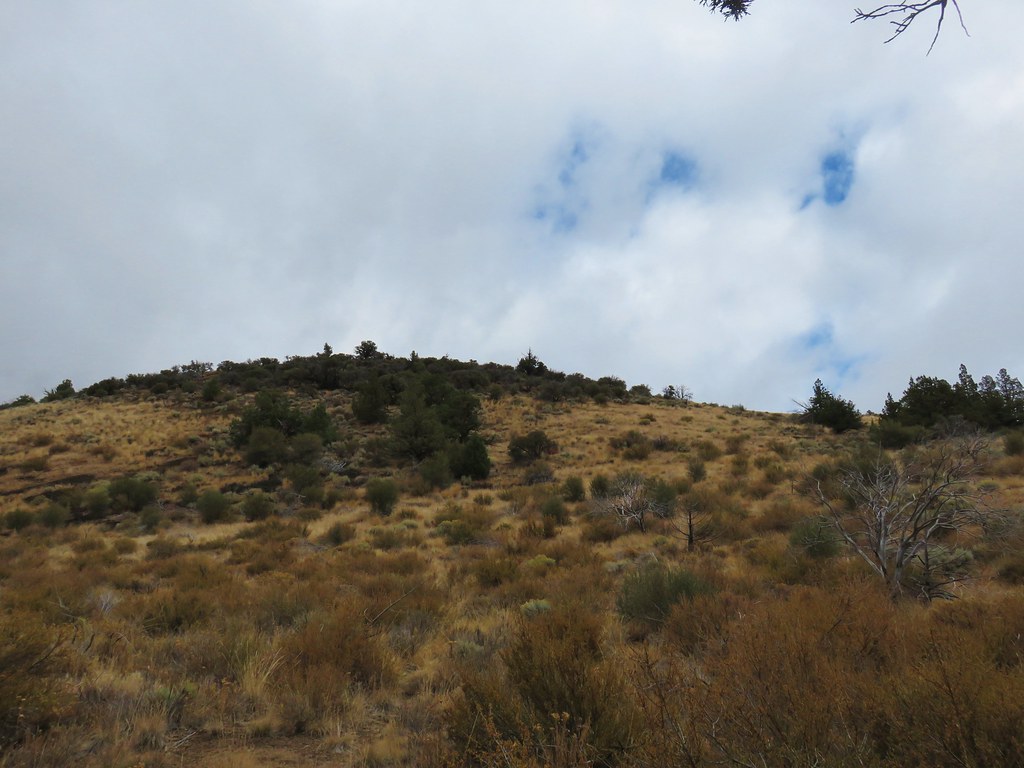
As we passed by Whitney Butte we began scouting out a route down. Our plan was to follow a suggested off trail visit to the top of the butte described in the guidebook. The most gently sloping ridge appeared to come down the eastern side of the butte.
IMG_3745

We stayed on the Whitney Butte Trail until it ended at the Callahan Lava Flow.
IMG_3753

IMG_3754

From the lava we turned left and headed up Whitney Butte.
IMG_3756

It was a relatively easy scramble which provided some nice views despite not being able to see Mt. Shasta or Mt. McLoughlin due to the cloud cover. On the other hand Mount Dome finally broke free of the last of its clouds.
IMG_3759

IMG_3774

IMG_3773

IMG_3767

In addition to the views we spotted some wildlife.
IMG_3761

IMG_3765

IMG_3784

IMG_3781

On top of the butte we stayed left around a pair of craters and attempted to descend on the ridge we’d picked out on the way by.
IMG_3792

We actually overshot it a bit but still had no problem coming down the old cinder cone and reconnecting with the Whitney Butte Trail. The clouds were now breaking up again as we headed back to the trailhead. Our next destination, Schonchin Butte, was visible for most of the hike back.
IMG_3793

IMG_3794

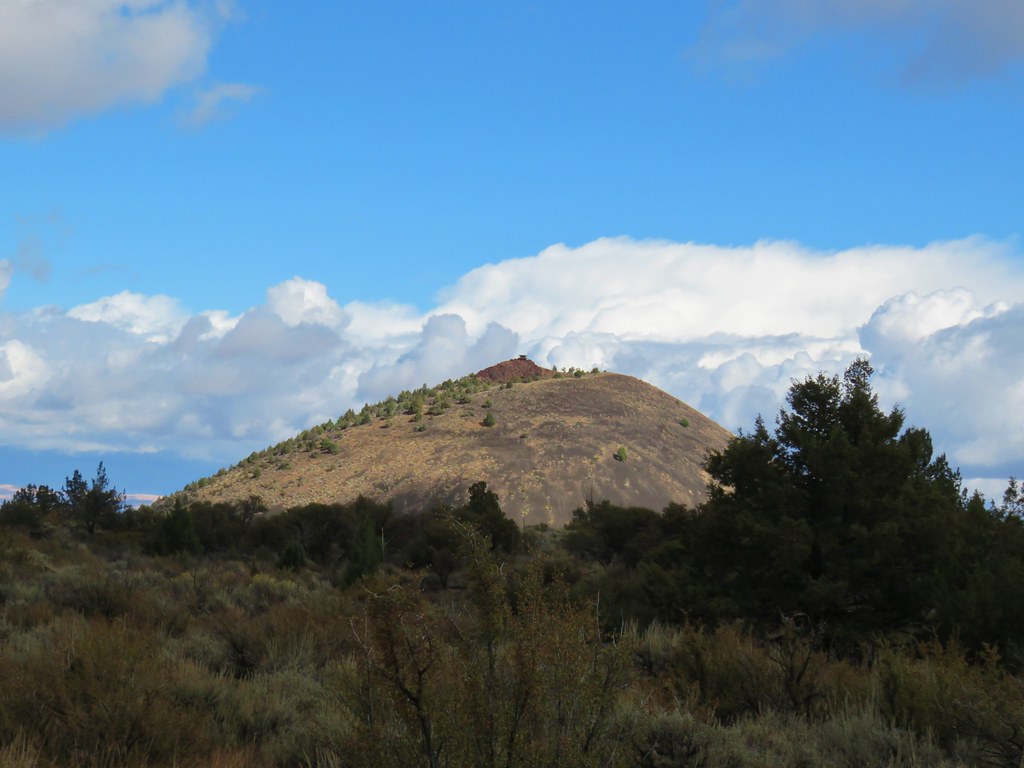
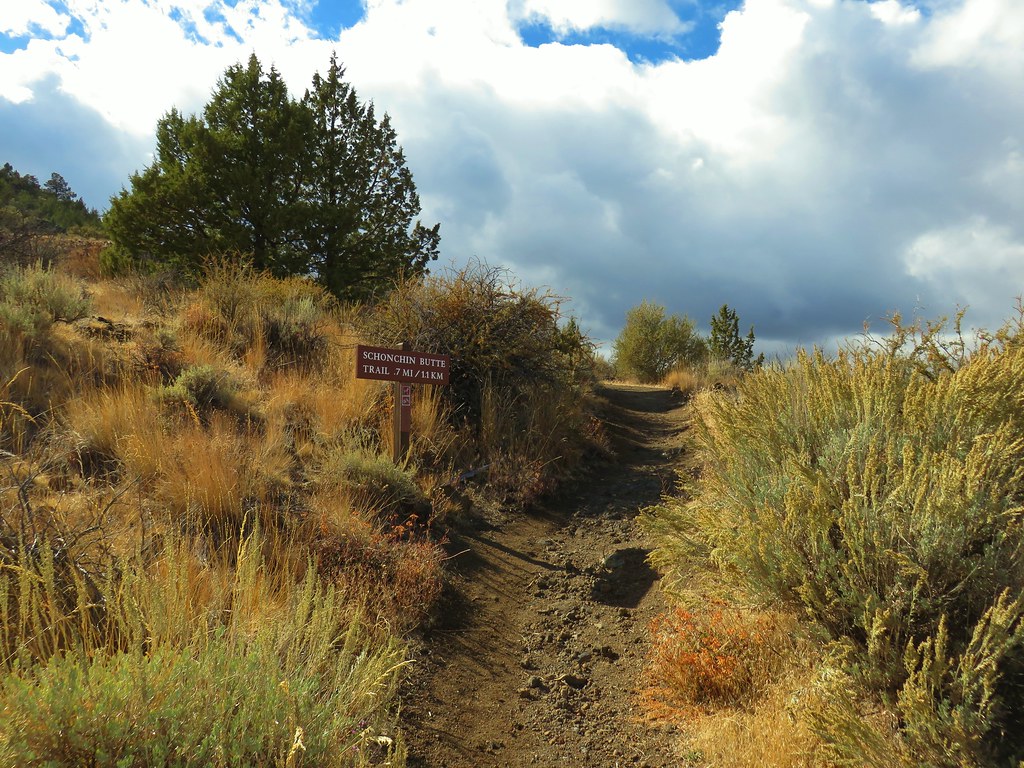
After finishing the hike we once again drove a short distance north to a signed gravel road for Schonchin Butte. After a mile of good gravel we parked at the trailhead and started up the Schonchin Butte Trail.
IMG_3797

The trail was well graded and the views were great making the climb feel fairly easy.
IMG_3802Tule Lake

IMG_3805Whitney Butte and Mount Dome

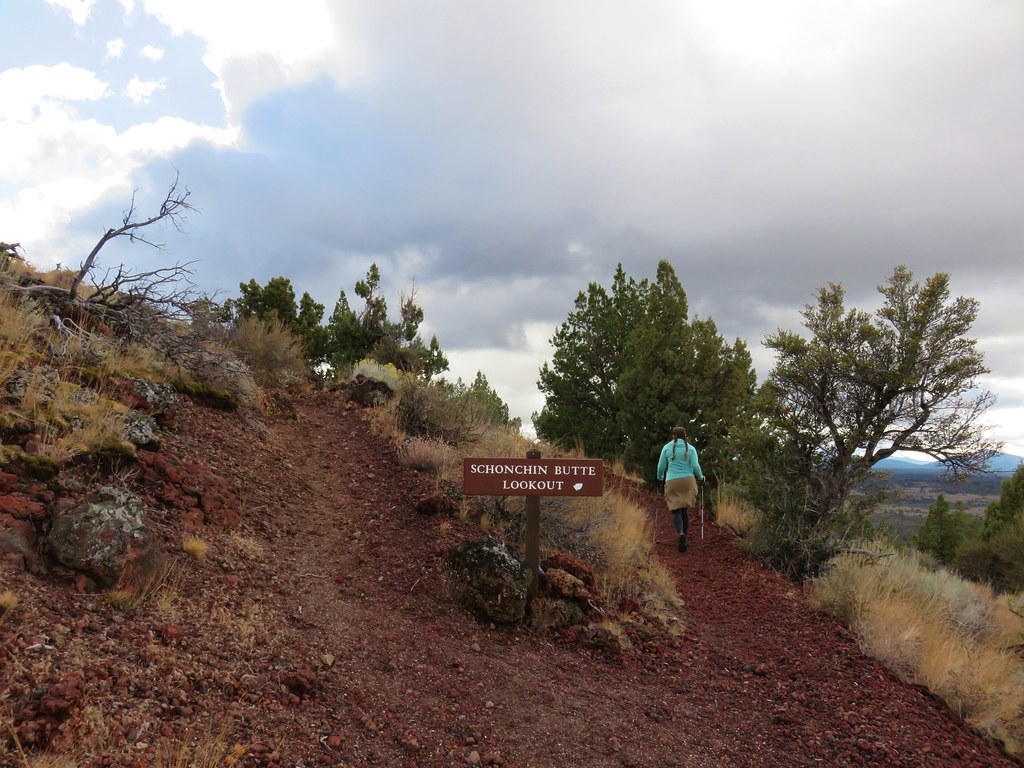
After .6 miles the trail split allowing for a loop around the crater and past the Schonchin Butte Lookout.
IMG_3808

IMG_3816

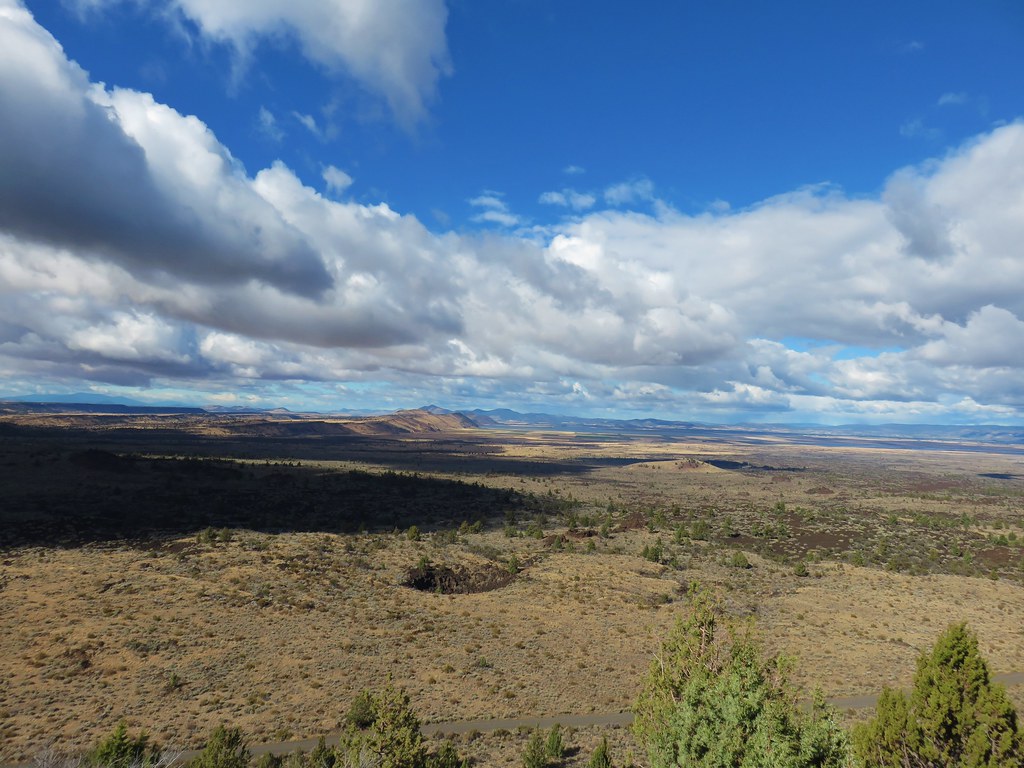
As we made our way around the loop we got a view down to the Symbol Bridge Trail.
IMG_3827

IMG_3828

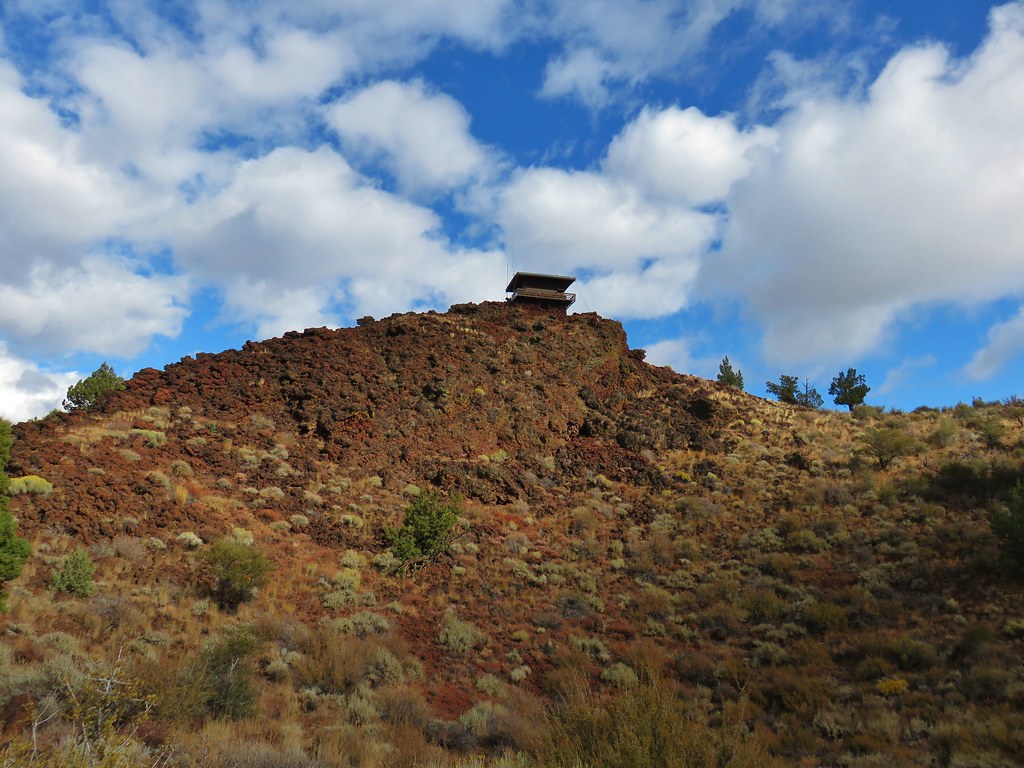
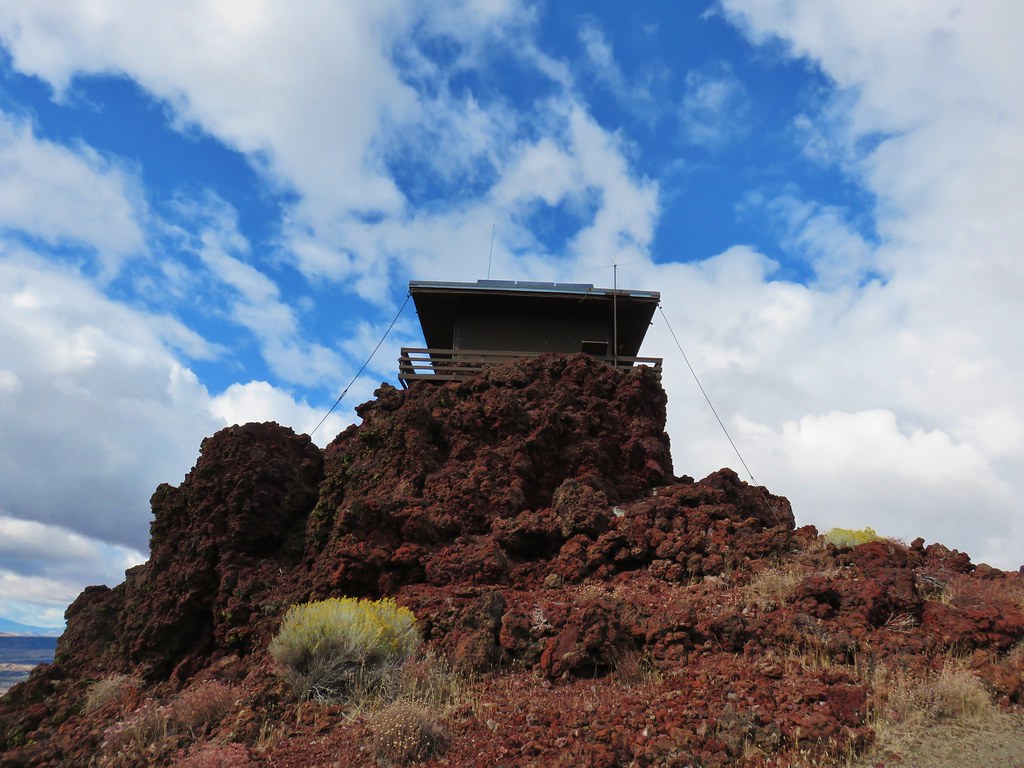
The lookout tower was perched on lava rocks that looked like bricks.
IMG_3830

IMG_3847

Along the deck were identifiers for the area landmarks, some visible and some not.
IMG_3840

IMG_3841

After identifying the landmarks that were visible we completed the loop and returned to our car. From Schonchin Butte we drove back to the fee booth at the northern park entrance and turned right onto Rim Road for 3.2 miles to a signed pullout for Captain Jack’s Stronghold.
IMG_3851

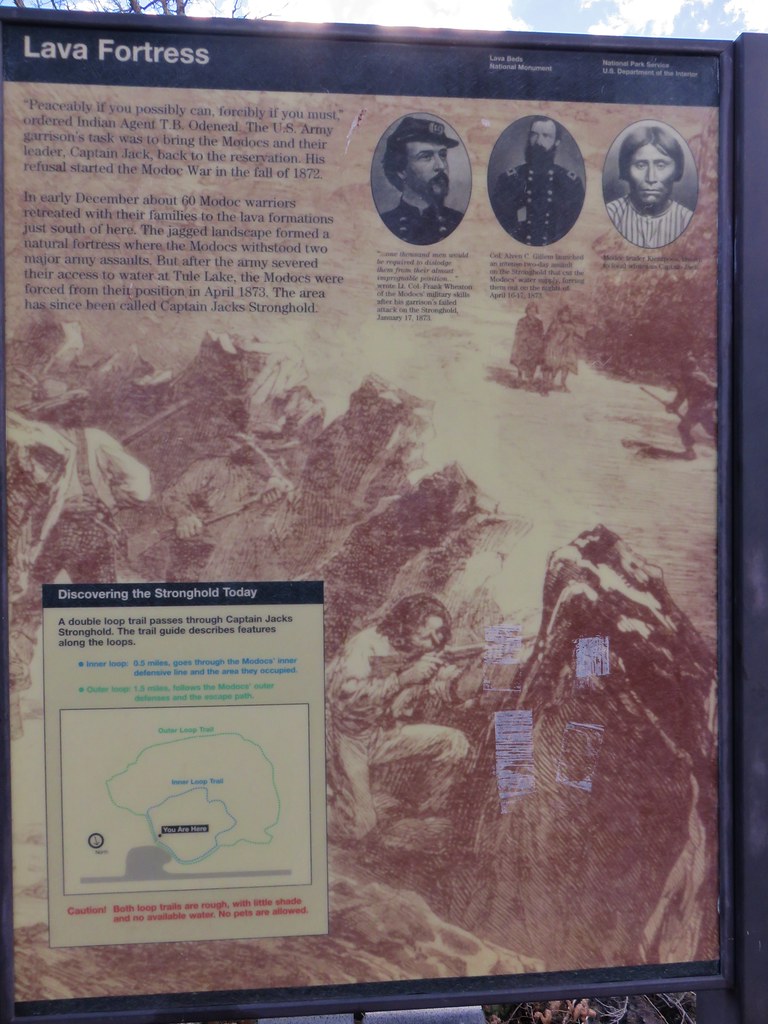
Here two loops (short and long) explore the area where a small force of Modoc held out against the U.S. Army in 1872-73.
IMG_3852

We unfortunately did not grab a trail guide for the interpretive trail which we greatly regretted. After climbing a small hill a trail sign pointed out the shared beginning of both loops.
IMG_3855

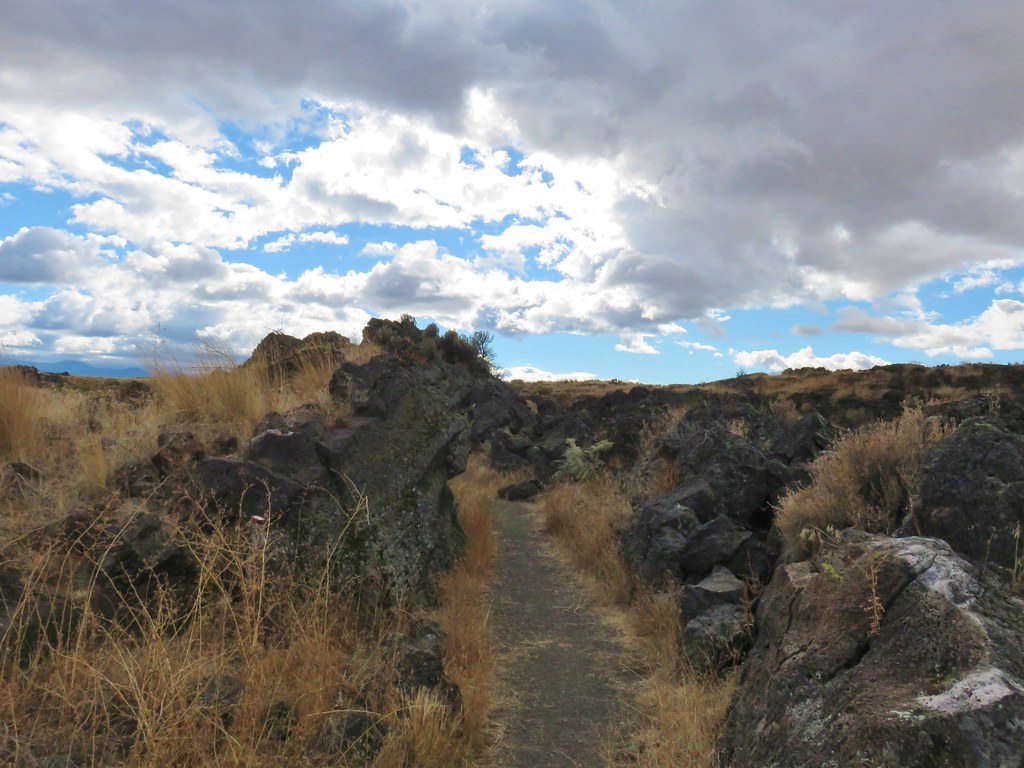
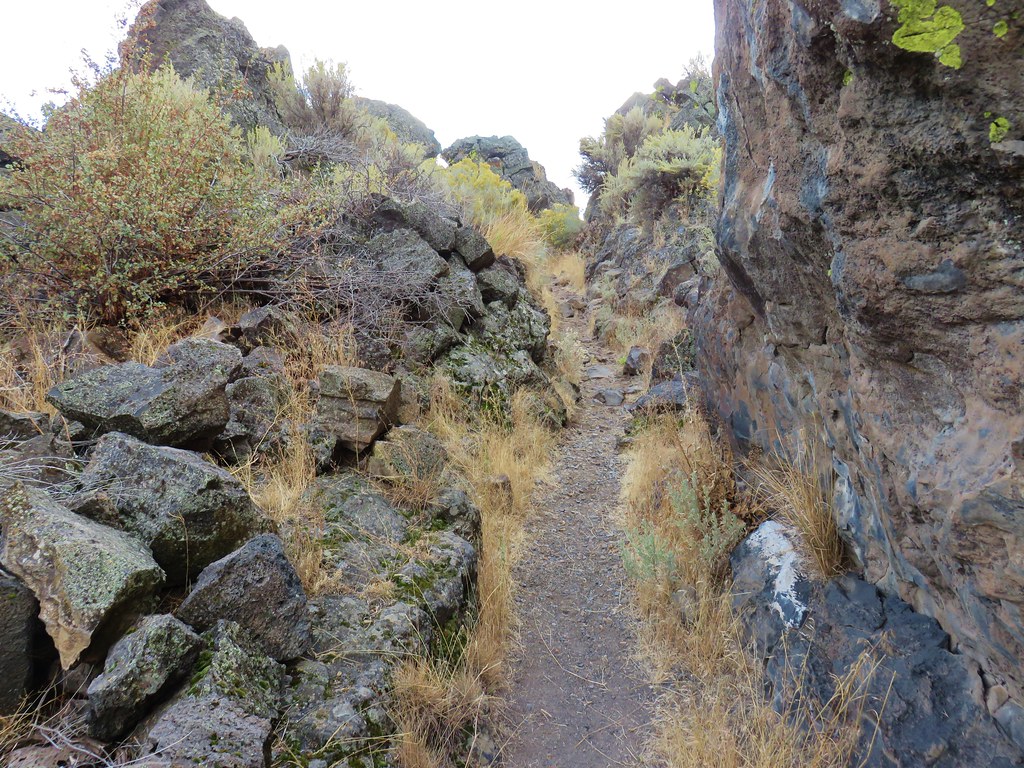
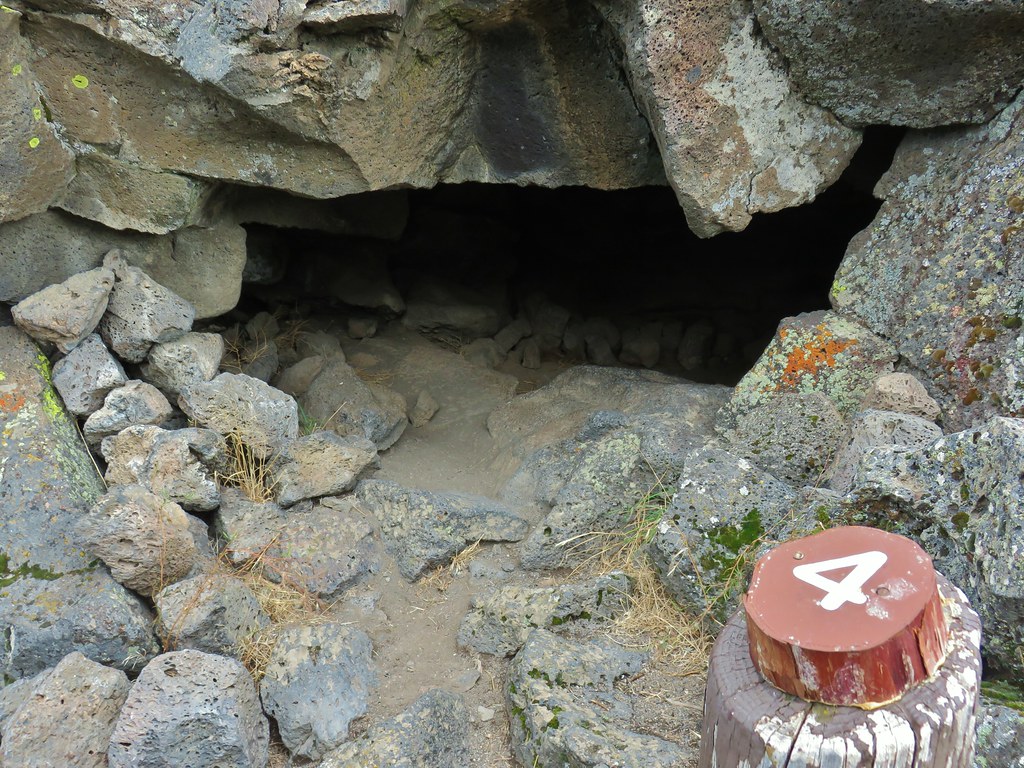
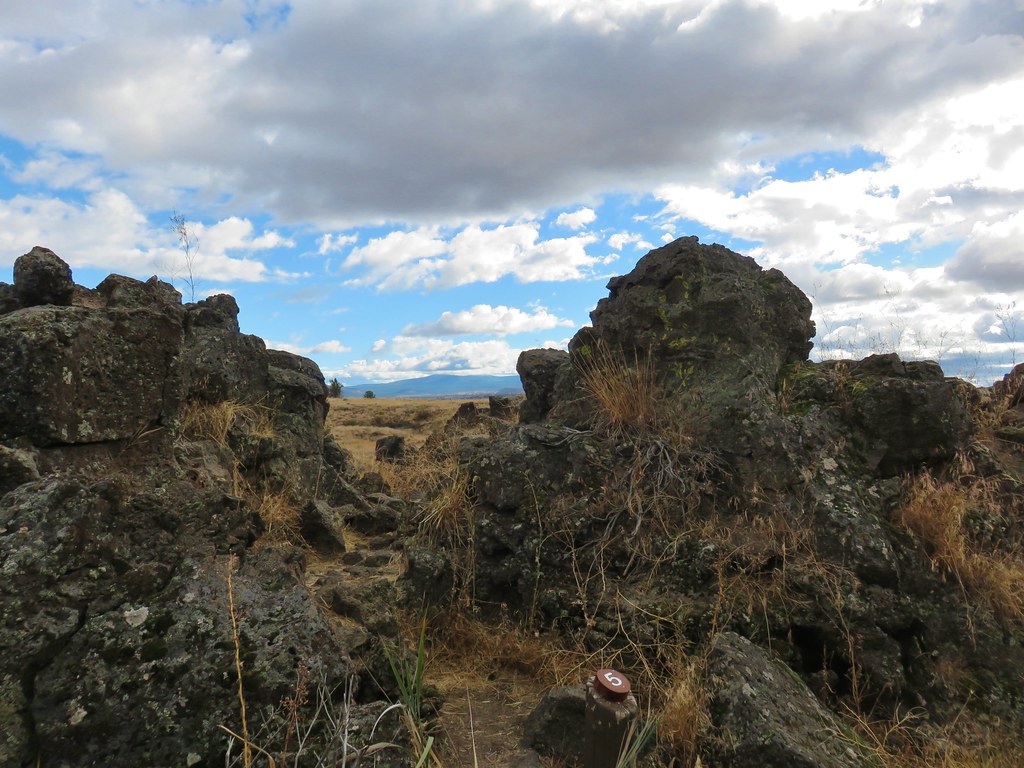
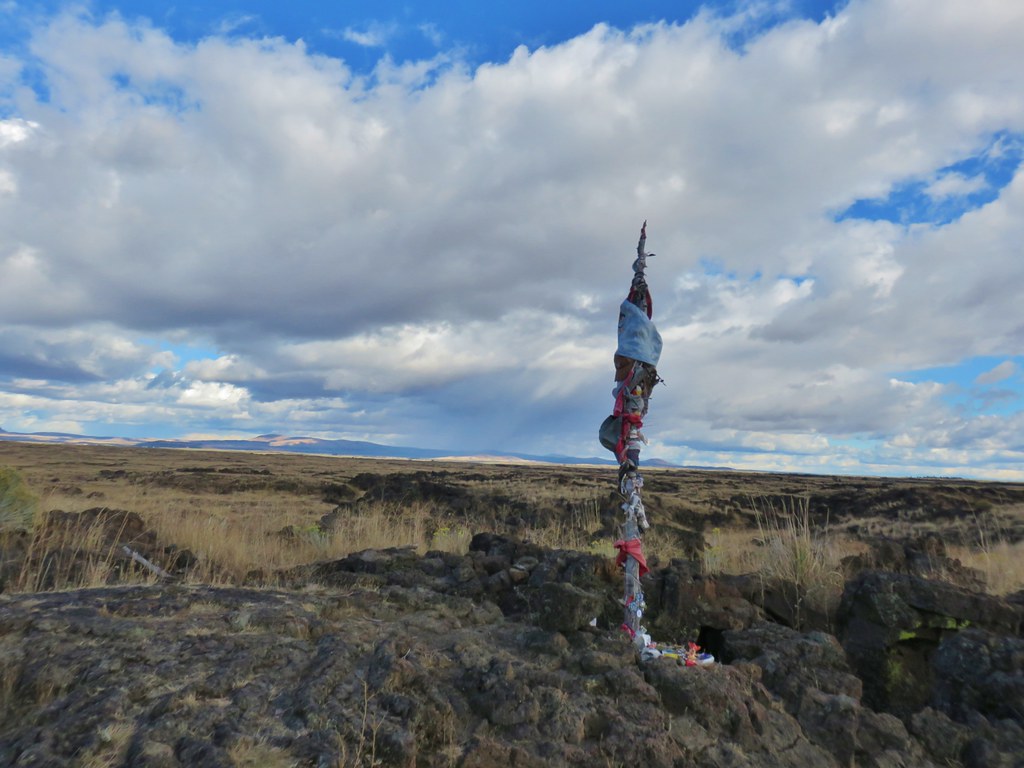
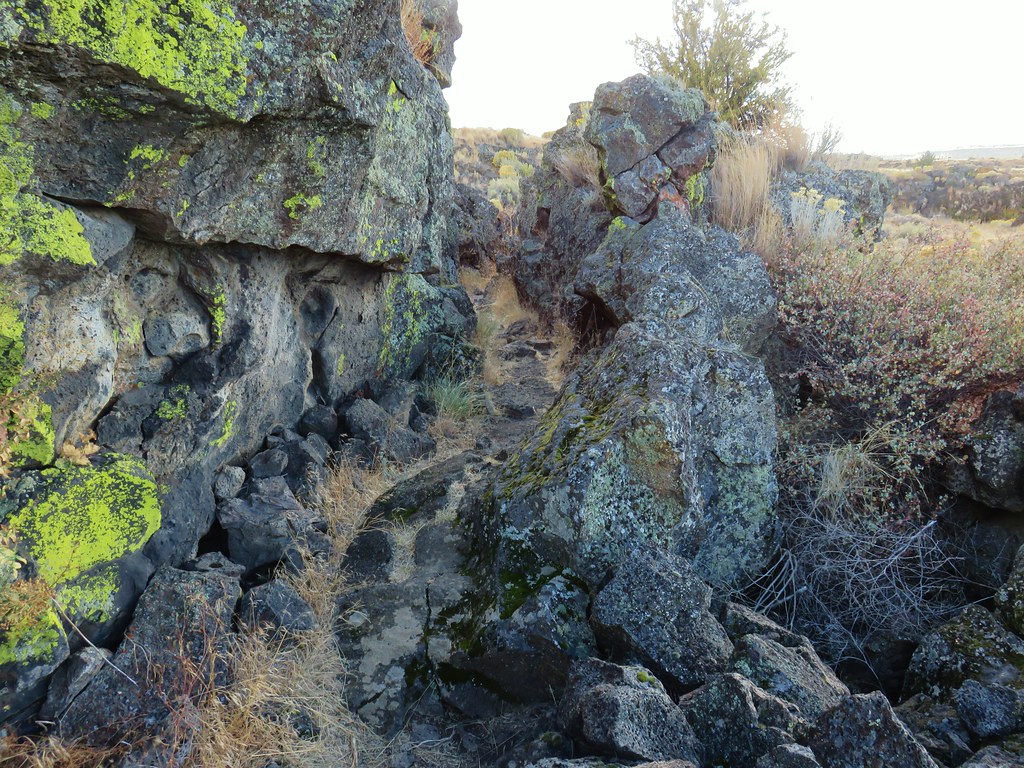
The trail led through lava formations with narrow passages and small caves. Numbered signs along the way marked items that we could have read about if we had grabbed a guide.
IMG_3859

IMG_3860

IMG_3864

IMG_3866

IMG_3871

IMG_3879

At the .3 mile mark the loops split with the shorter return route to the right and the longer loop to the left. We went left.
IMG_3881

IMG_3882

IMG_3883

IMG_3889

IMG_3907

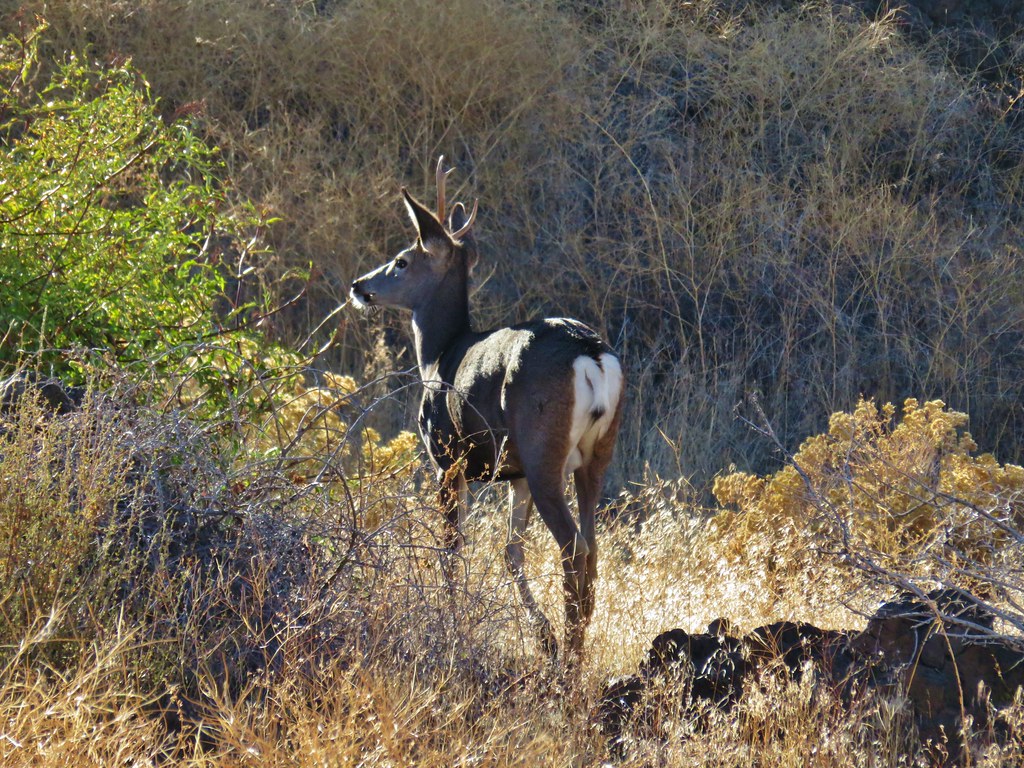
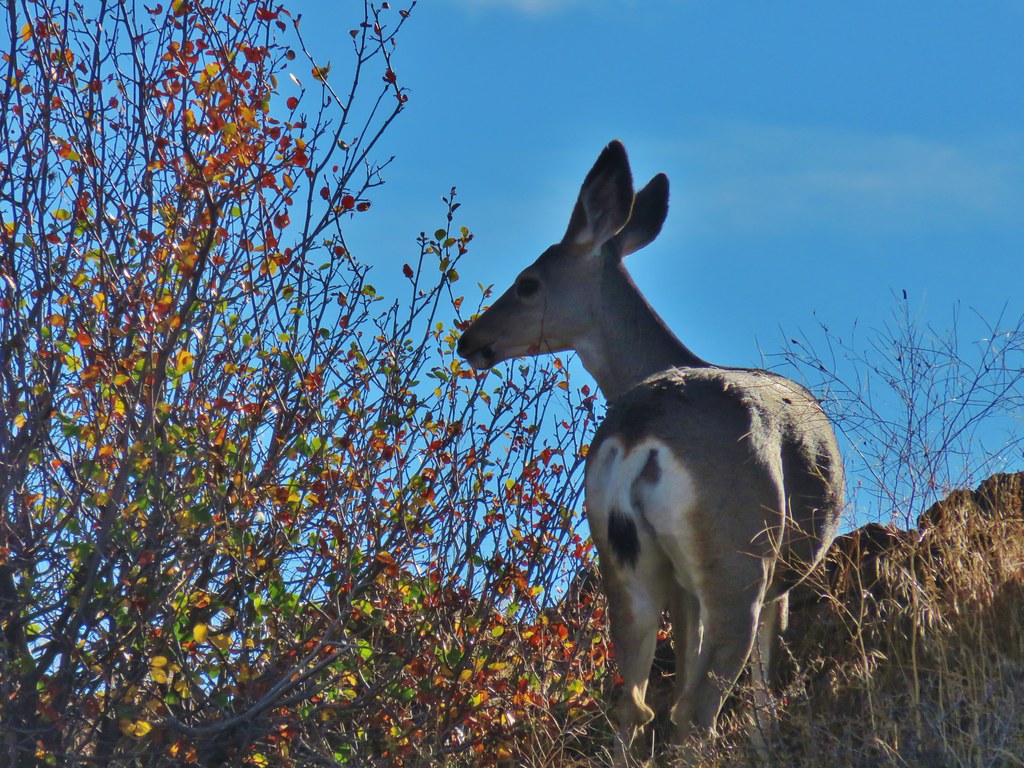
The long loop was a mile and a half versus a half mile for the short loop option. The extra mile was well worth it even without the companion trail guide. Near the end of the loop we spotted a pair of deer munching on some leaves.
IMG_3915

IMG_3925

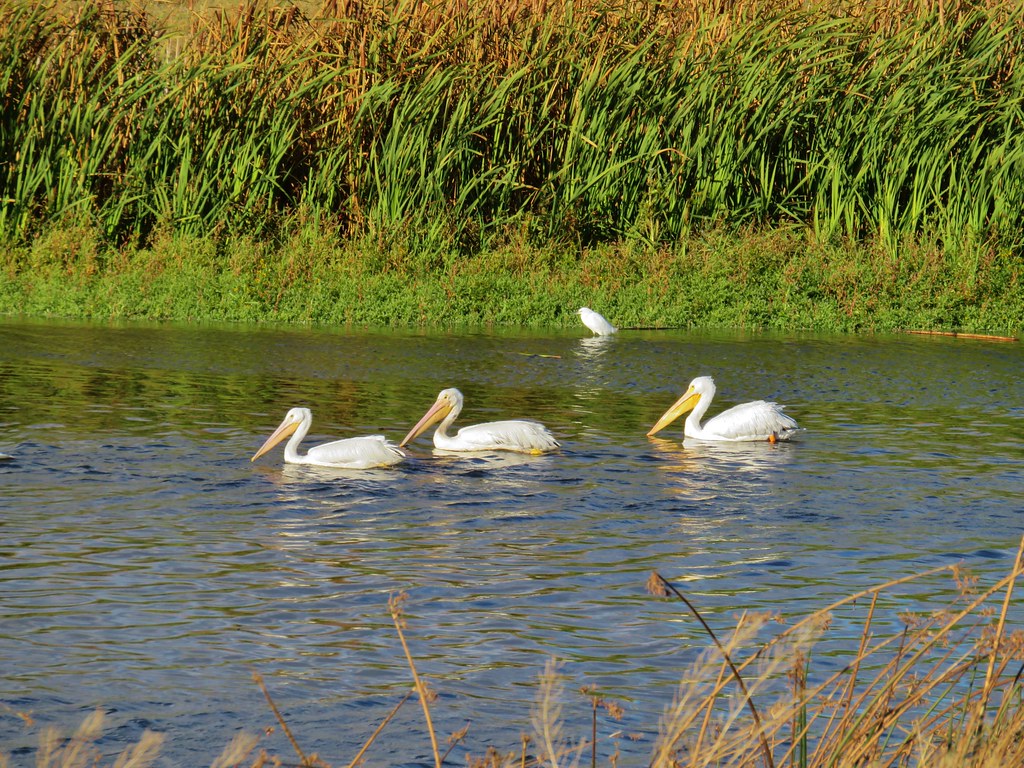
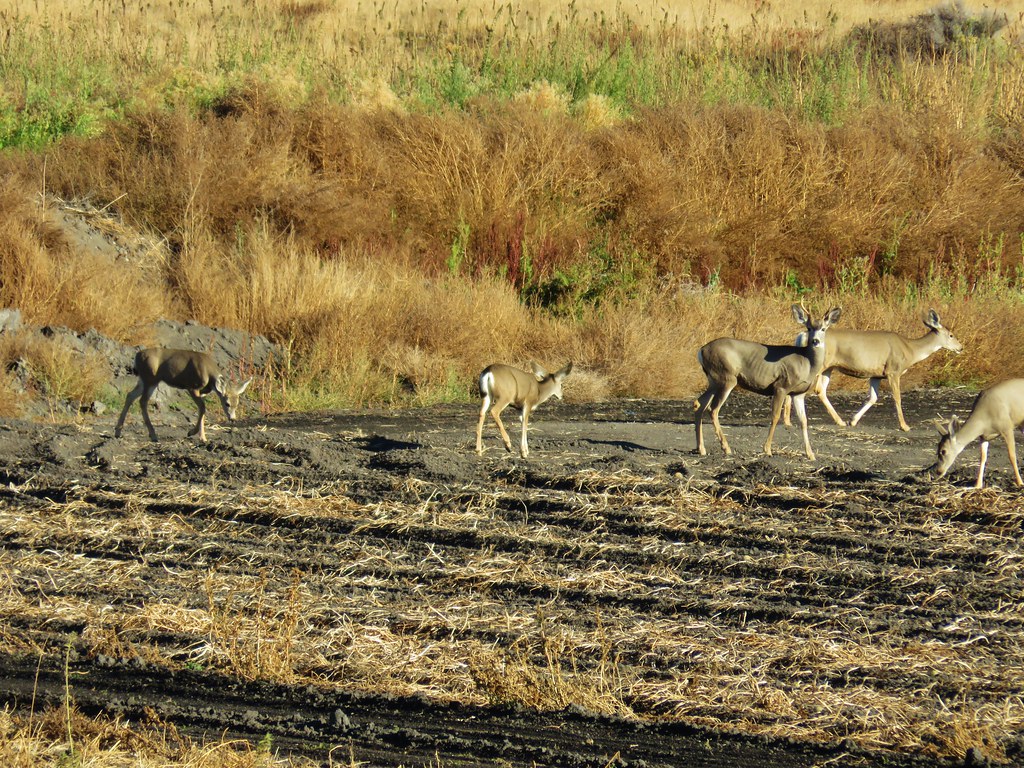
We had one final stop planned before leaving the Monument for good so when we got back to our car we continued east on what became County Road 120 following signs for Petroglyph Point. Along the way we briefly reentered the Tule Lake National Wildlife Refuge where we wound up stopping again to gawk at the wildlife.
IMG_3930

IMG_3928

IMG_3942

IMG_3936

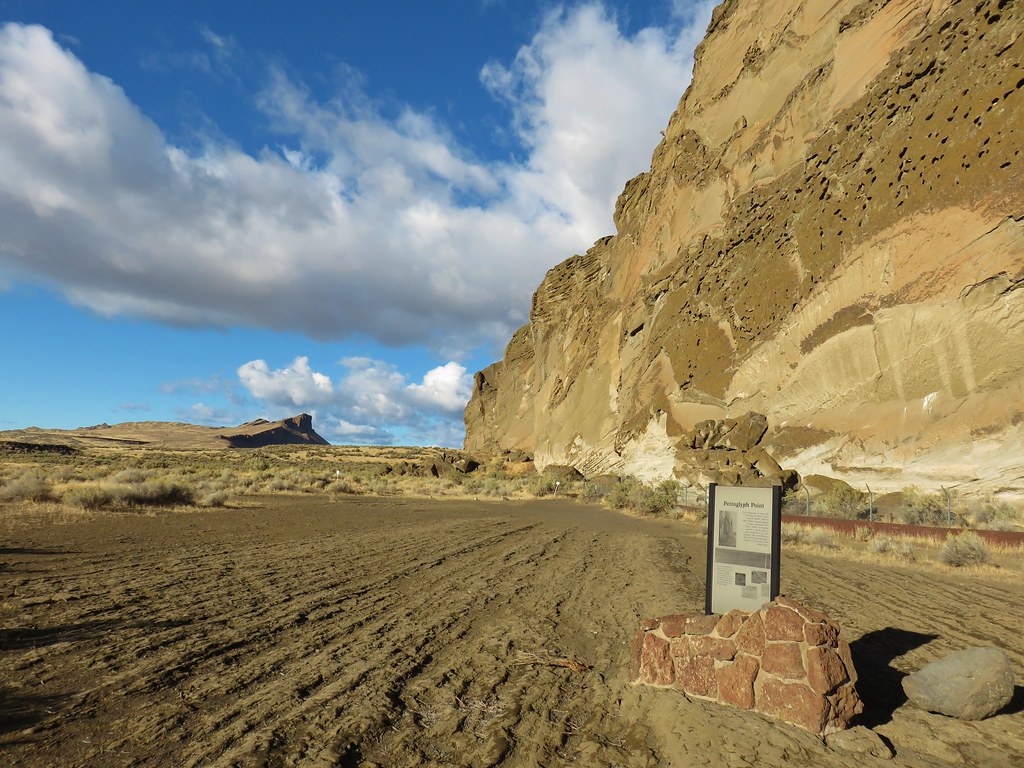
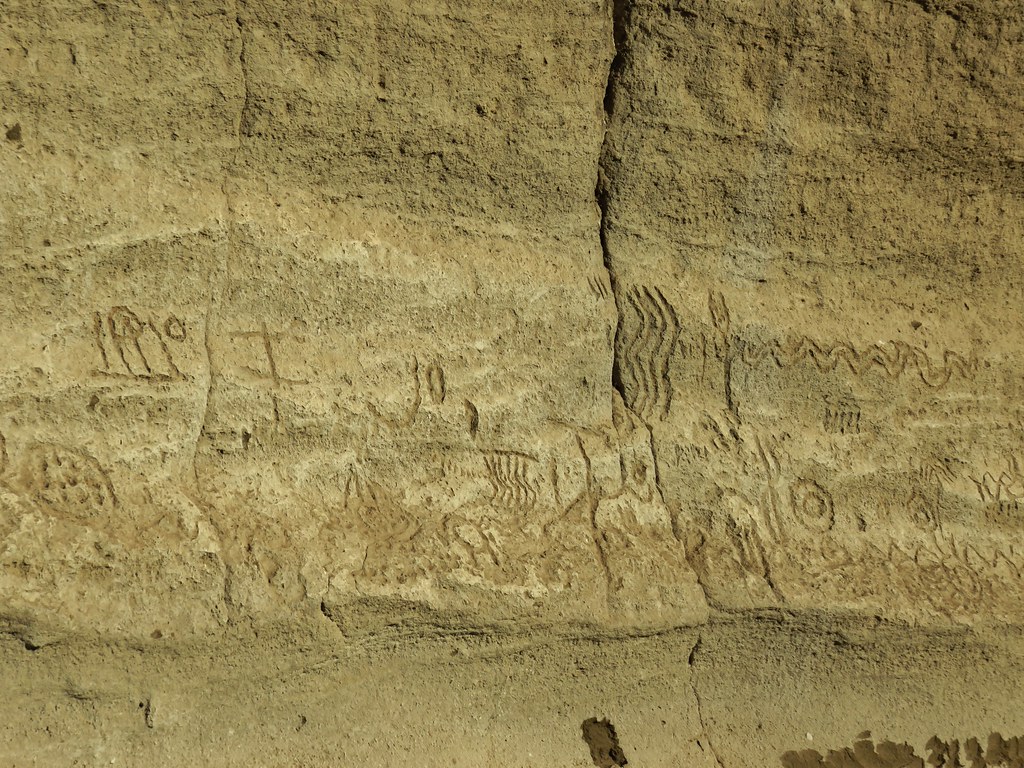
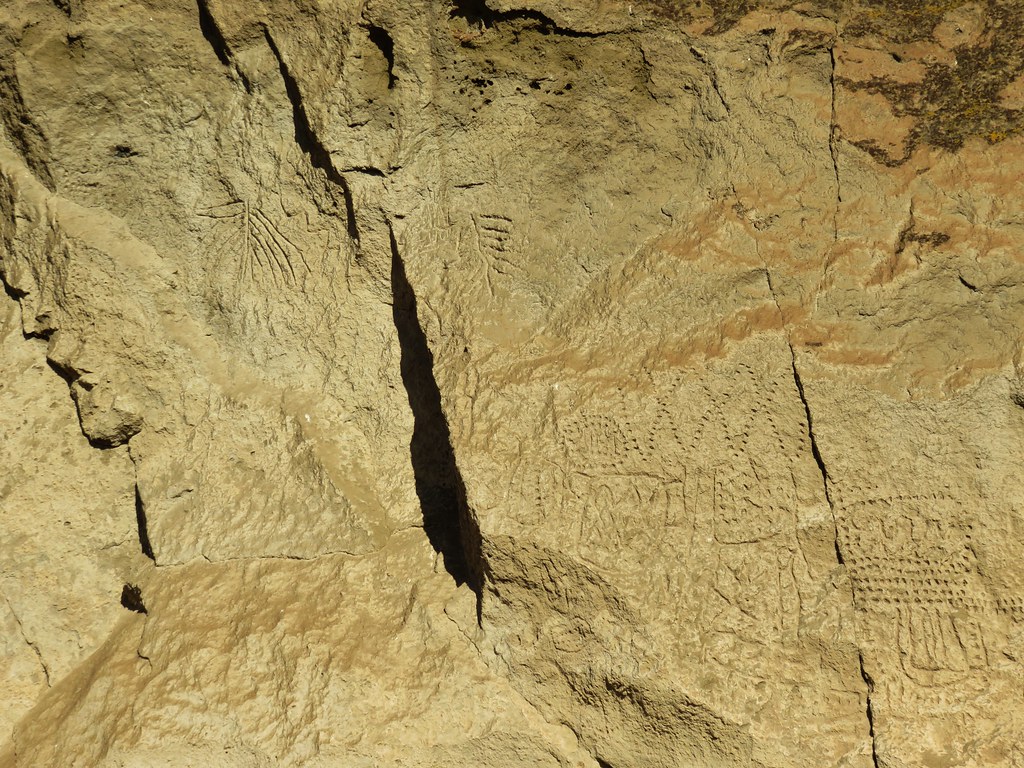
We left County Road 120 when prompted by the signage and soon found ourselves pulling into a large parking area near the base of Petroglyph Point.
IMG_3950

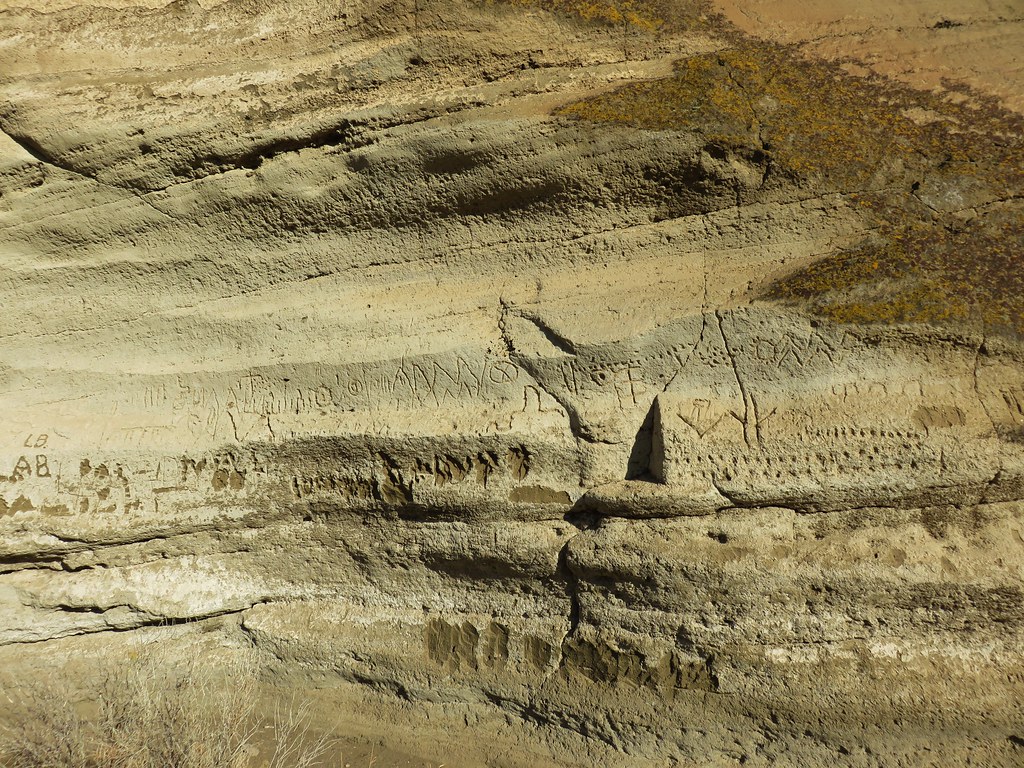
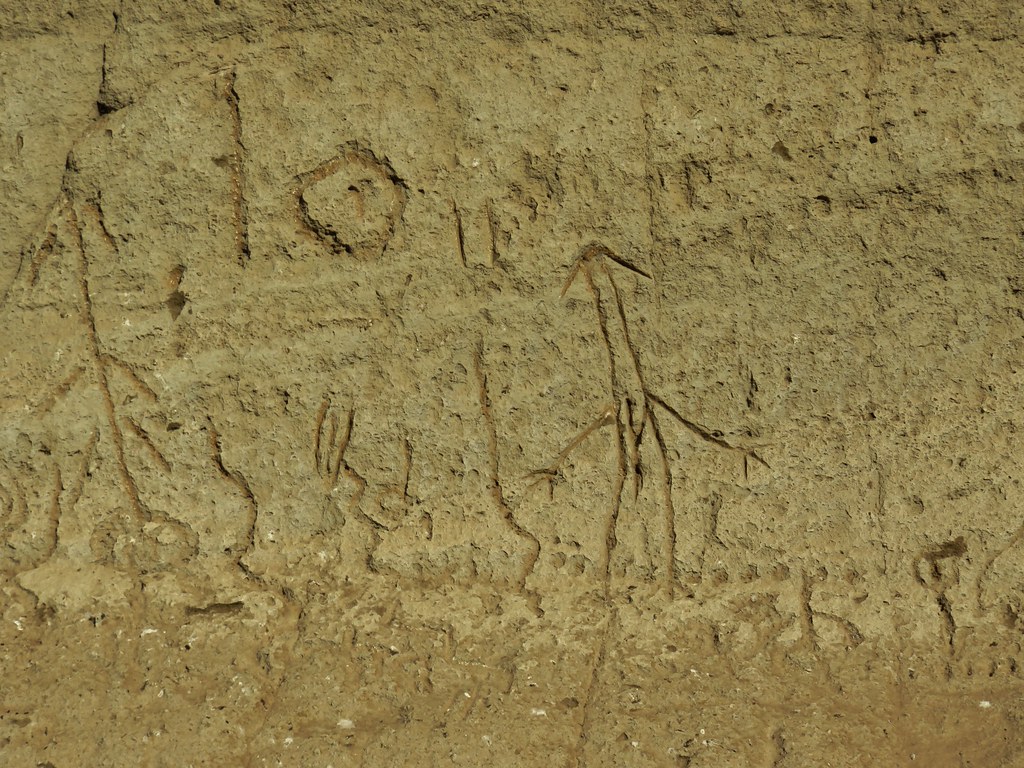
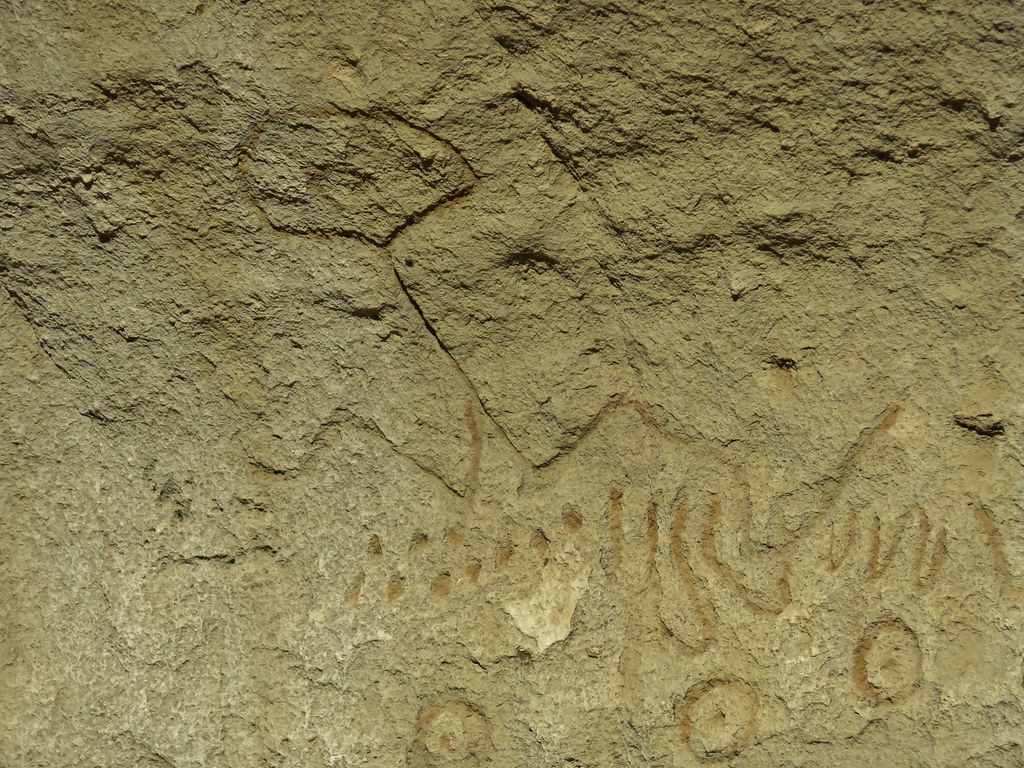
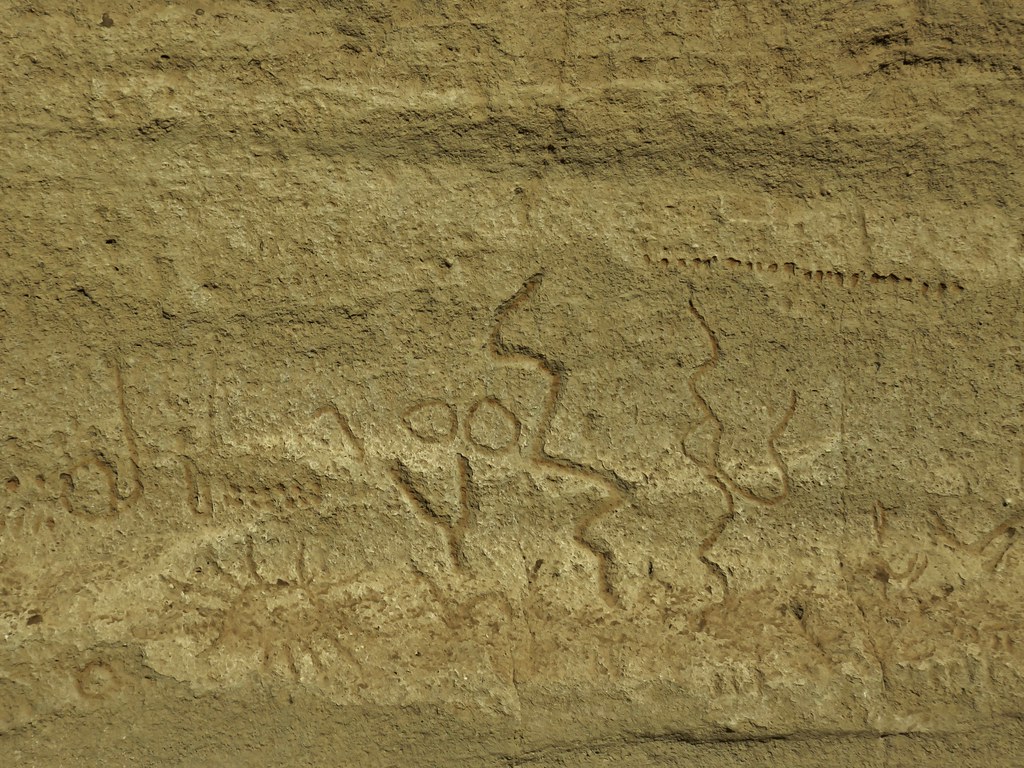
Here we walked along a fence (to protect the thousands of petroglyphs)for .3 miles marveling at all the designs.
IMG_3955

IMG_3954

IMG_3969

IMG_3979

IMG_3987

IMG_3990

IMG_4005

IMG_4011

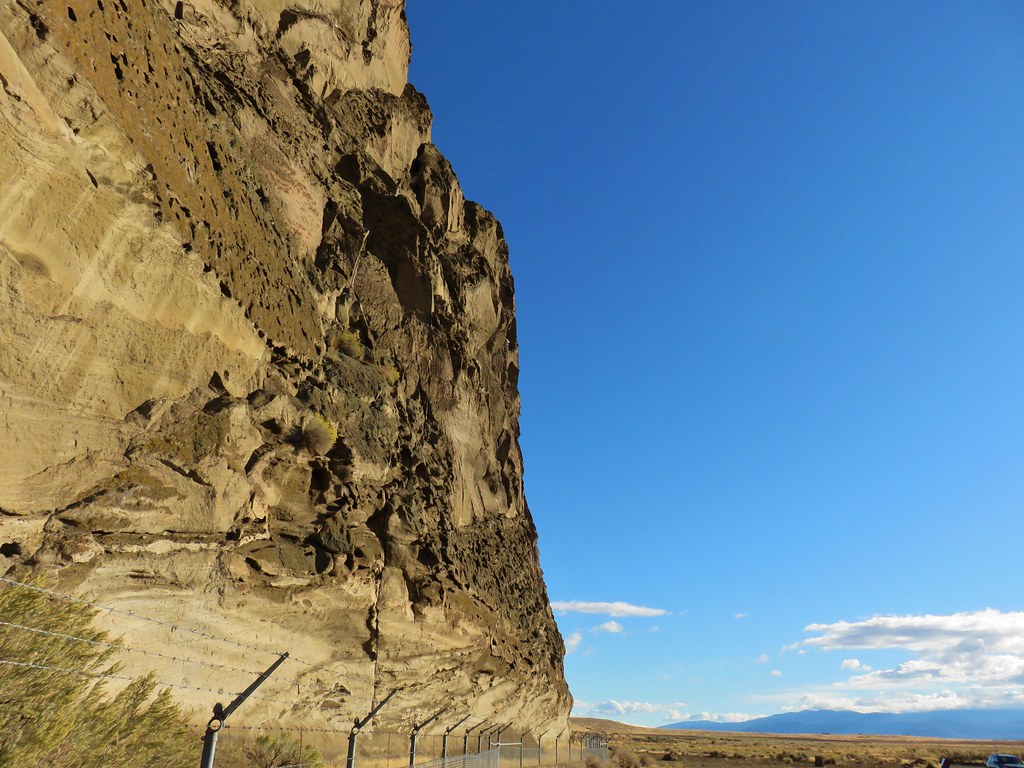
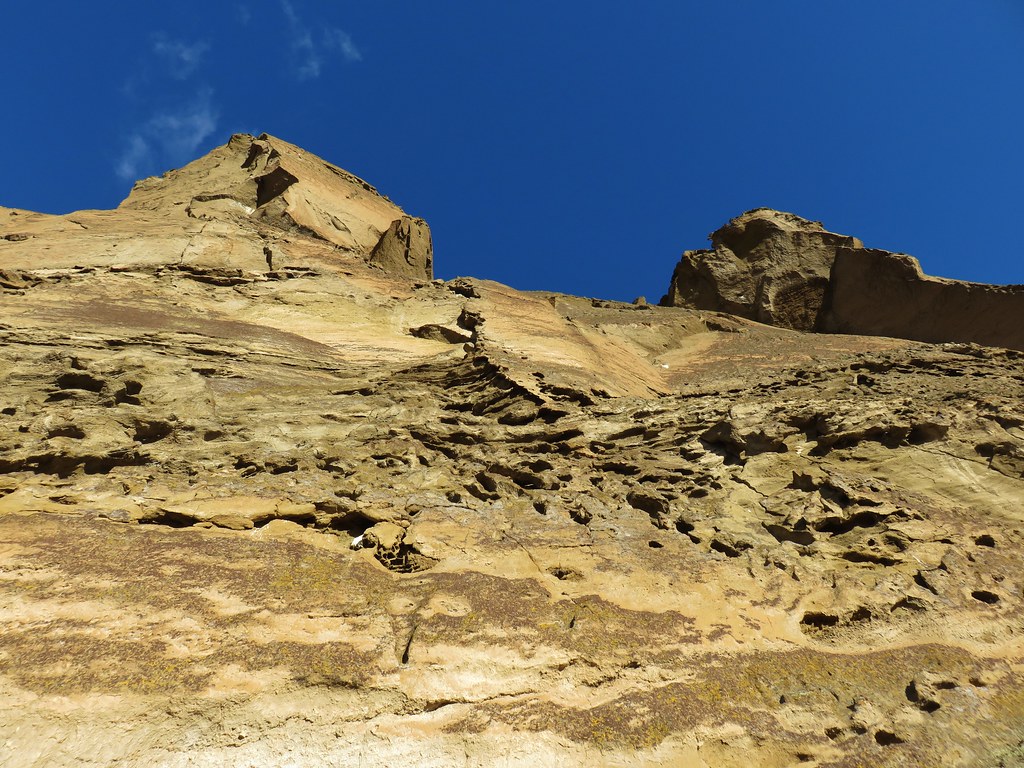
The cliffs above were fairly impressive on their own.
IMG_3959

IMG_3994

After spending quite a while contemplating the art we headed back to Klamath Falls. It was a full day for sure having spent over 10 hours in the Monument and logging around 16.5 miles but well worth the time and effort. Even with all of that there is still much left there to explore on our next visit. Happy Trails!

Flickr: Lava Beds National Monument

Categories
Hiking Klamath Falls Oregon Trip report

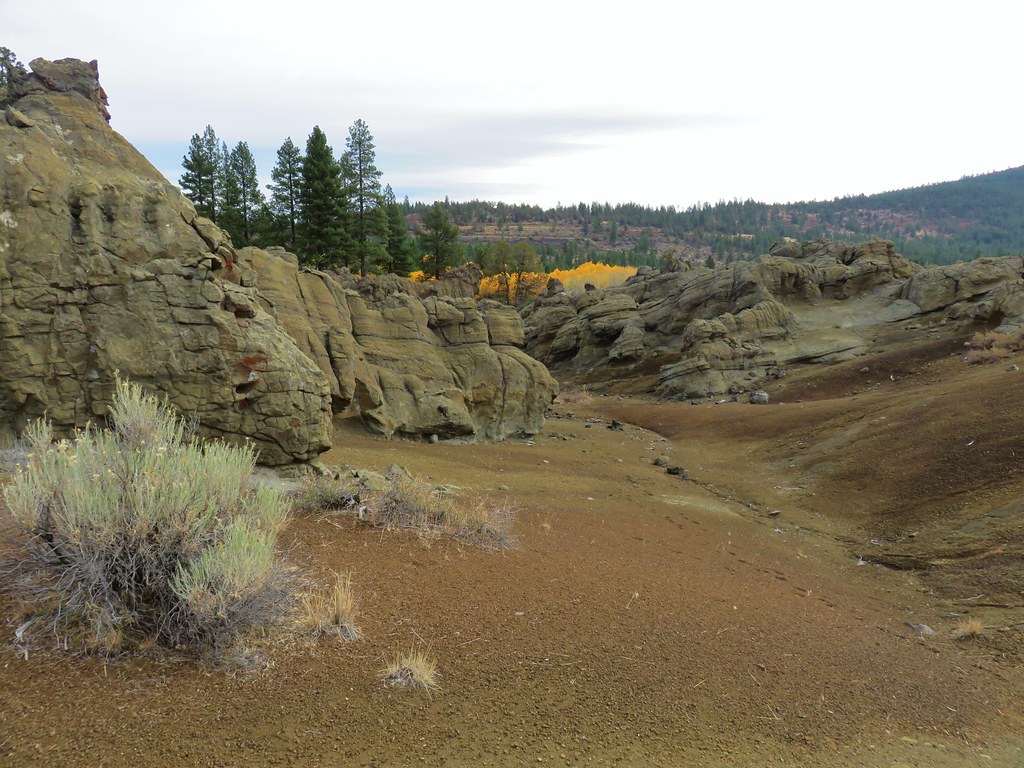
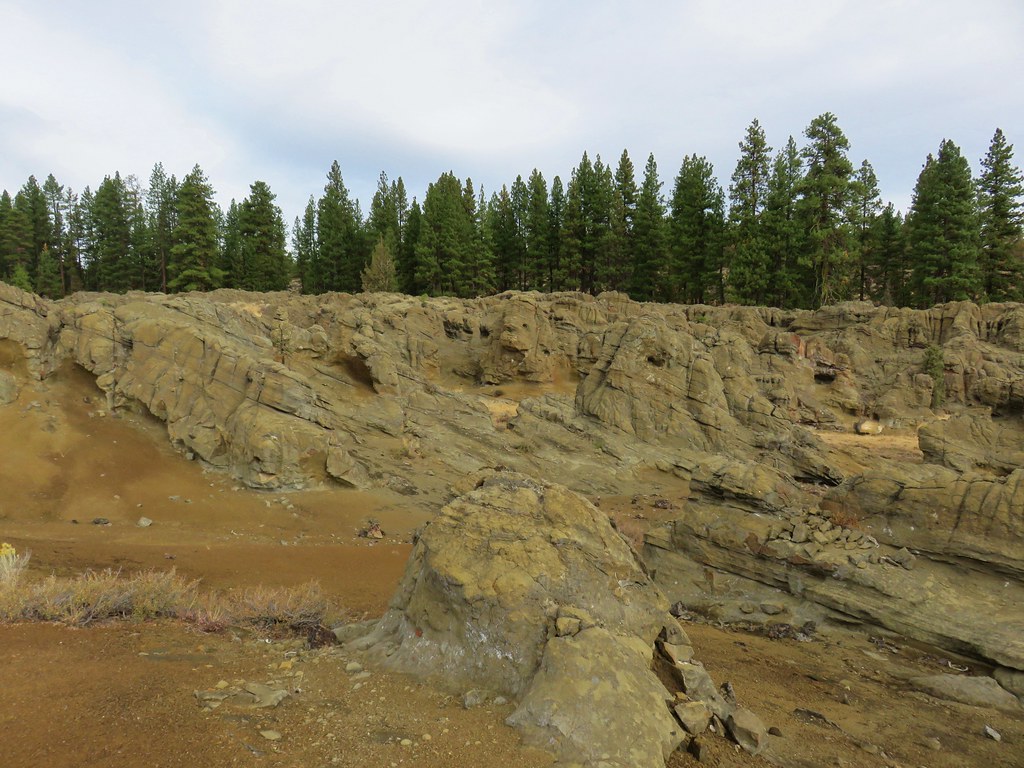
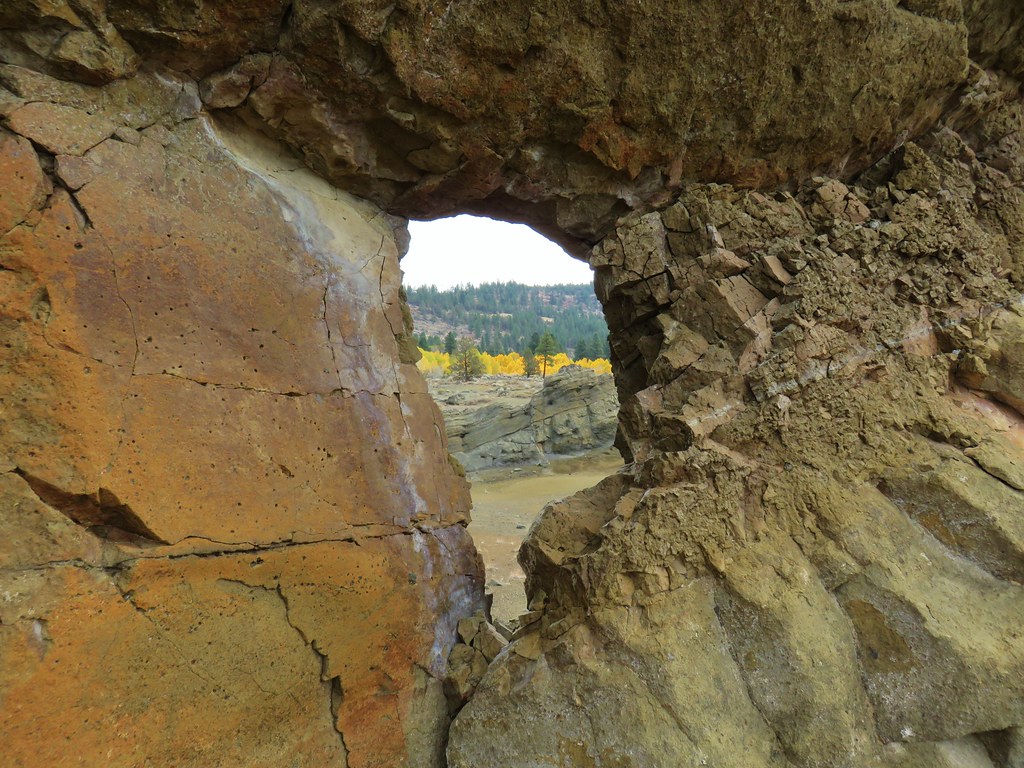
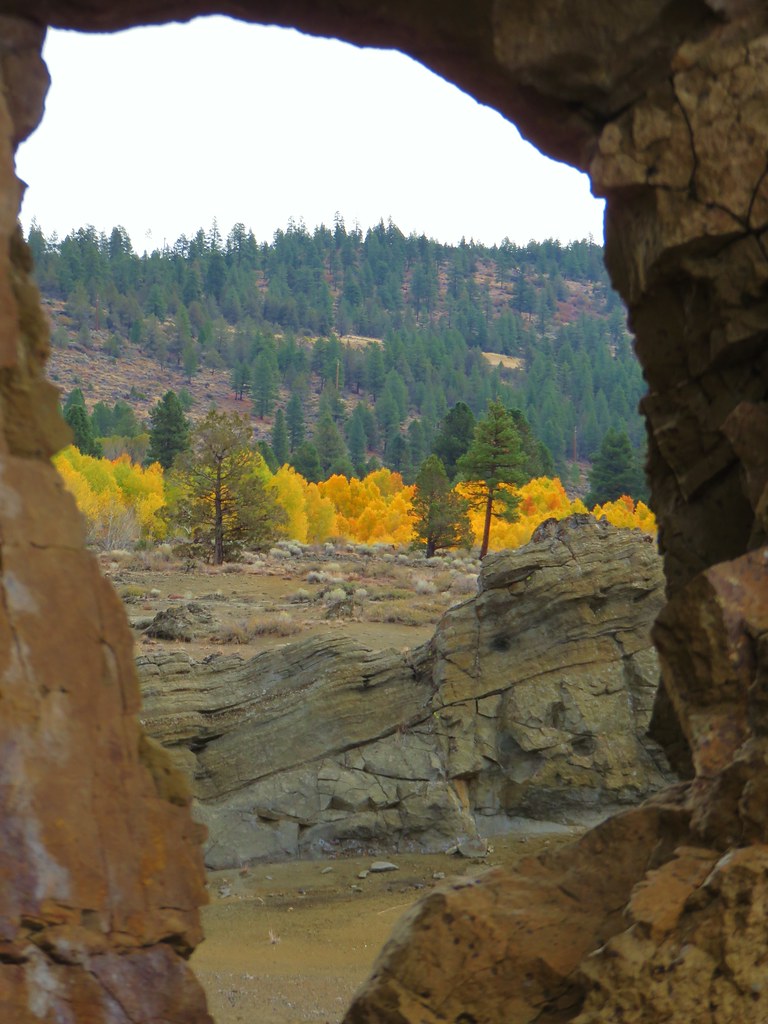
OC&E Woods Line State Trail

We had planned our final multi-day trip for the year over Columbus Day weekend. We were hoping to have it be the backpacking trip around and up Diamond Peak that we’d planned on doing in September but changed due to the weather. Much like that long weekend the forecast was for rain or snow showers off and on over the four days. Diamond Peak will have to wait until next year at the earliest, but in the meantime we needed to find a less damp alternative.

After looking over our list of future four day trips and checking the forecast for each area we landed on the Klamath Falls area. There were still chances of rain in the forecast but it didn’t look like it would be much more than some light scattered showers.

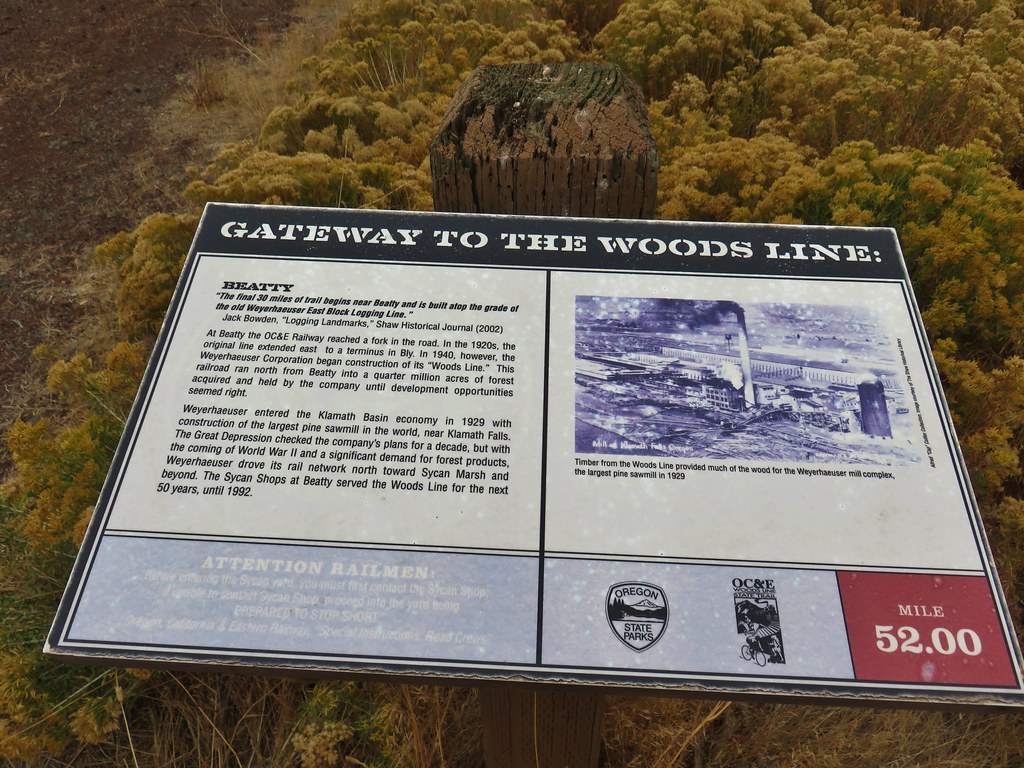
We started our trip off with a pair of hikes along the OC&E Woods Line State Trail.

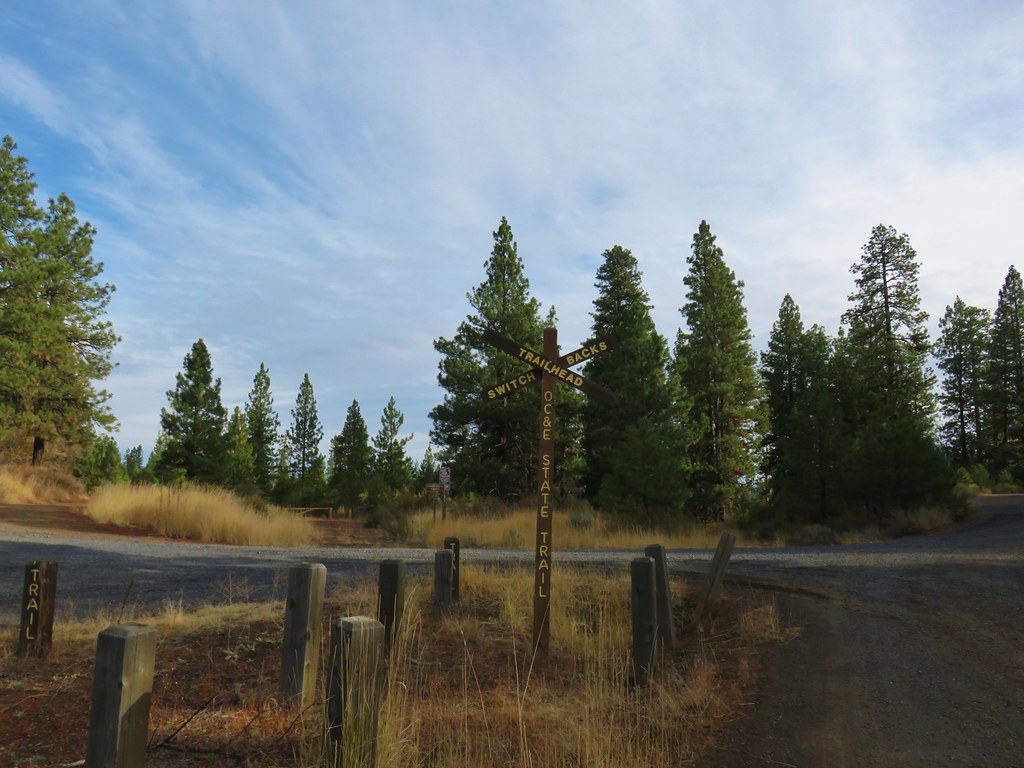
Our first stop was at the Switchback Trailhead located along Bliss Road 4 miles south of the community of Sprague River (the way we came) or 12 miles north of Highway 140 coming from Klamath Falls (drive Hwy 140 17 miles east from K-Falls to reach Bliss Rd.).

IMG_3386

The weather was good as we set off on the trail with some blue sky still to be seen.

IMG_3389

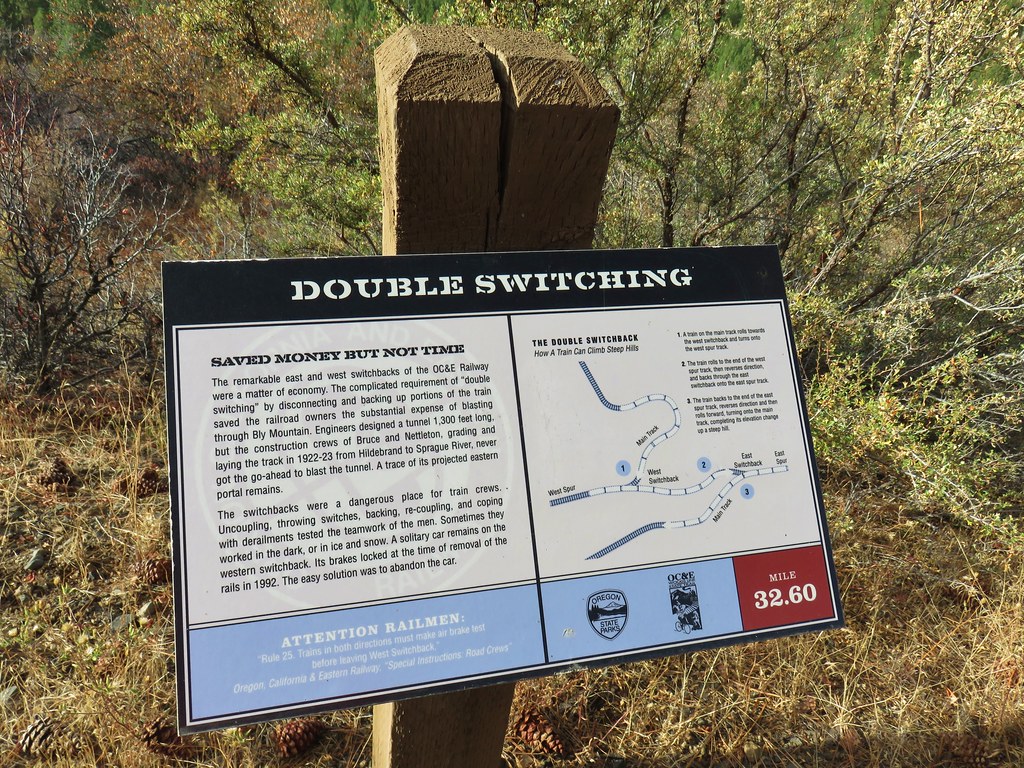
At this section of railroad the trains used to have to back up along the tracks in order to climb the mountain.

IMG_3391

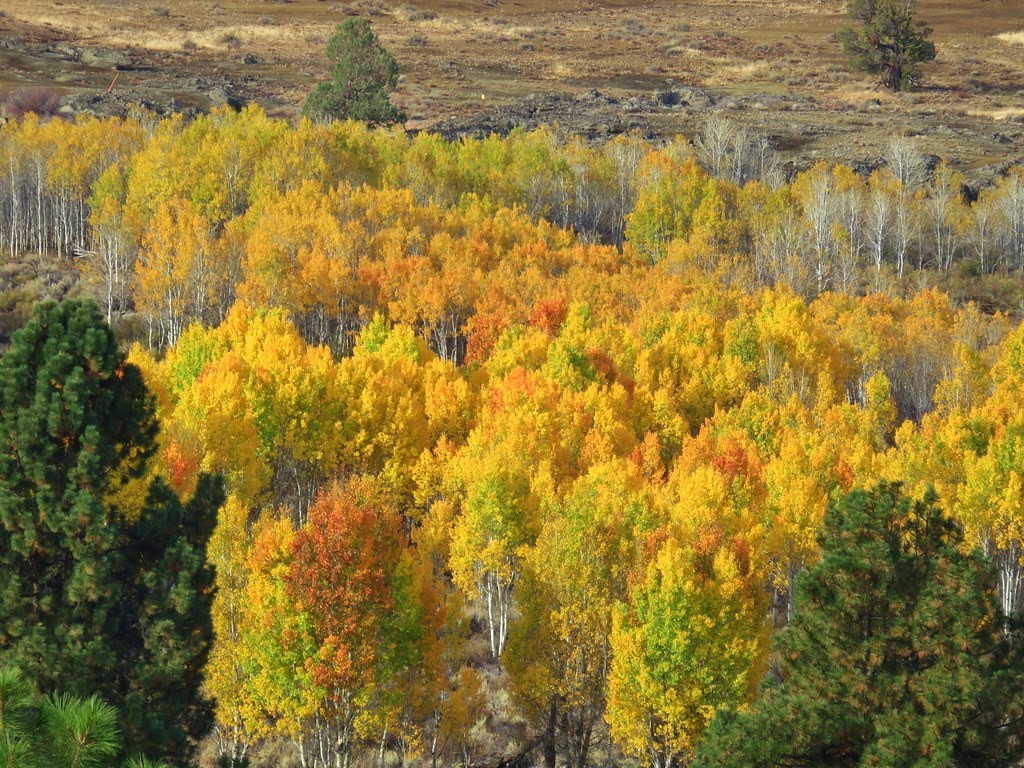
From the trailhead there was a good view down to the location of the old track below, but the scenery was dominated by a grove of aspen that were in full Fall color.

IMG_3392

IMG_3384

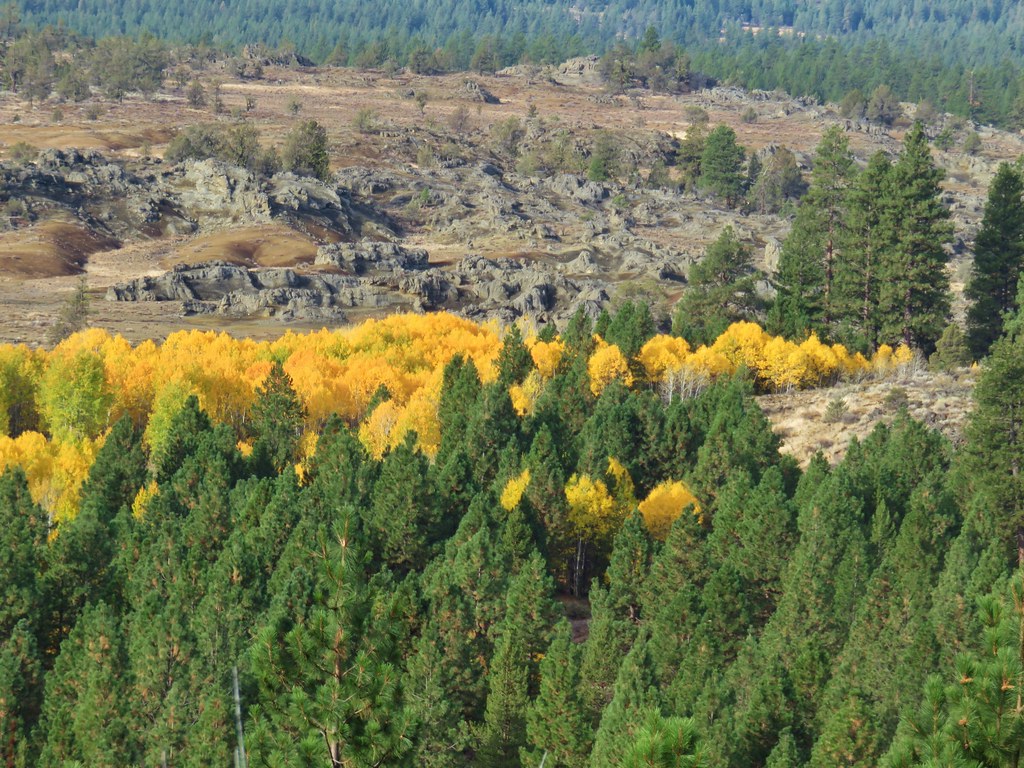
On the far side of the aspen was our goal for the day, Devil’s Garden, a volcanic landscape a bit off of the official trail.

IMG_3385

We followed the trail downhill to where it leveled out beside a bit of a meadow.

IMG_3394

IMG_3397

About three quarters of a mile from the trailhead we turned right off of the trail onto a dirt track.

IMG_3400

Using the GPS in conjunction with the map in our guidebook we made our way slightly SW onto a second, fainter track through an open ponderosa pine forest.

IMG_3402

As the dirt track curved to the west we left it and continued south crossing a small gully.

IMG_3404

On the other side of the gully we passed through a stand of pines and turned to the SE.

IMG_3405

Soon we were entering the volcanic landscape of the Devil’s Garden.

IMG_3412

IMG_3408

IMG_3416

<IMG_3419

IMG_3421

We were now heading east with the pine trees on our left and the golden leaves of the aspen grove beyond the rock formations ahead.

IMG_3426

It was an interesting cross country walk through the different formations.

IMG_3432

IMG_3438

IMG_3441

As interesting as the rocks were we were drawn to the aspen grove.

IMG_3446

IMG_3449

IMG_3454

We made our way to those trees and decided to pass through the stand and attempt to loop back to the OC&E Trail.

IMG_3456

IMG_3457

IMG_3459

We had to recross the gully which had deepened immensely but remained crossable.

IMG_3471

After navigating a second, shallower gully, we emerged from the aspen and turned left using the GPS to navigate back through the sagebrush and pondorosa to the trail.

IMG_3472

IMG_3477

IMG_3478

We turned right onto the trail thinking that it was a loop, we both had pictured it that way in our minds and there had been a dirt road coming uphill from the south near the trailhead which we took for the return route.

IMG_3479

After being back on the trail for almost three quarters of a mile though we noticed that we had passed below the trailhead and were now heading away from it. We took a quick look at the map on the GPS and noticed that it did not show any road or trail connecting up to make a loop. We then checked the map in the guidebook and sure enough it also did not show the hike as a loop, but rather an out-and-back. We were a bit confused because we were both certain it was a loop and I could even picture it on a map. In any case we backtracked to a point below the trailhead and headed cross country uphill.

IMG_3480

A .2 mile climb brought us to the road we’d seen when we set off earlier. It was later when looking at the area on Google Maps that we realized where the loop idea had come from. The dirt road and the OC&E Trail do meet but that junction was another 300+ yards away and not shown no the GPS map. With our exploring and the extra out and back at the end our distance for this hike was 3.6 miles.

For our second hike on the OC&E Trail we returned to the community of Sprague River and turned east onto Sprague River Road for 10 miles to Highway 140. We then turned left onto this highway and followed it into Beatty (5 miles) where we again turned left onto Godowa Springs Road. Just over a half mile down this road we parked near a green gate. (There are gates on both sides of the road marking the trail.)

IMG_3486

Here the plan was to hike east for 1.2 miles to a fork in the trail where we would complete a two mile loop, with a side trip to Brown Cemetery, before returning to Godowa Springs Road. This section of the OC&E Trail passed through pasture with the Sprague River just to the north.

IMG_3490

IMG_3492

At the .6 mile mark the Sprague River bent north and Spring Creek took over it’s position to the left of the trail.

IMG_3493

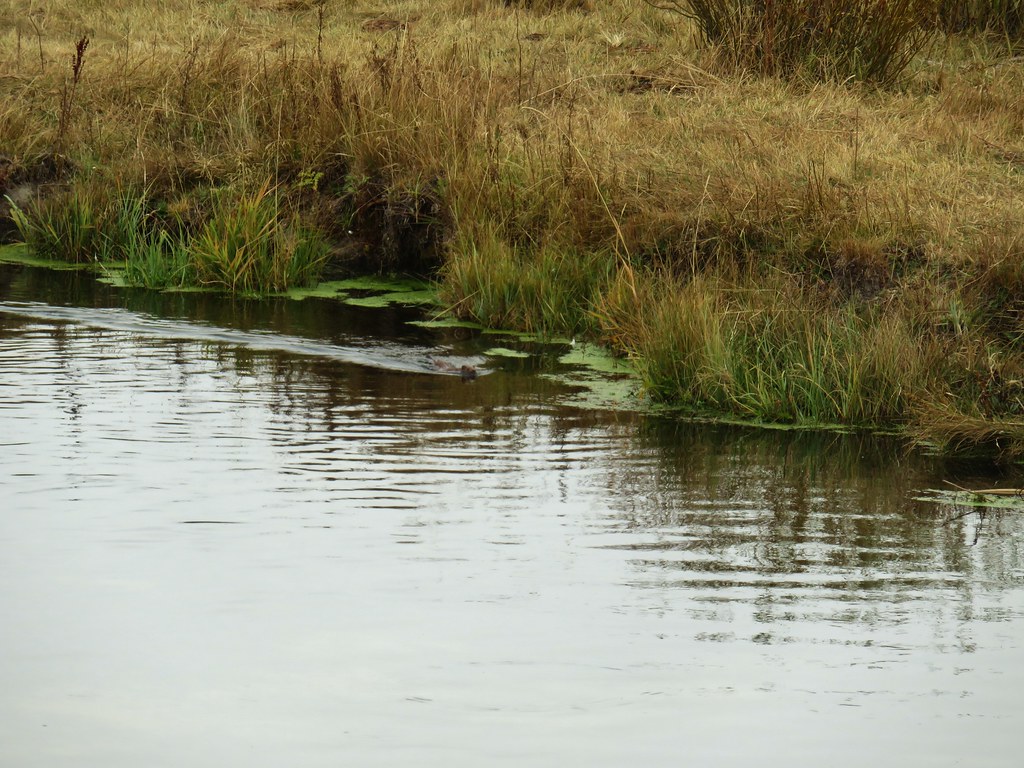
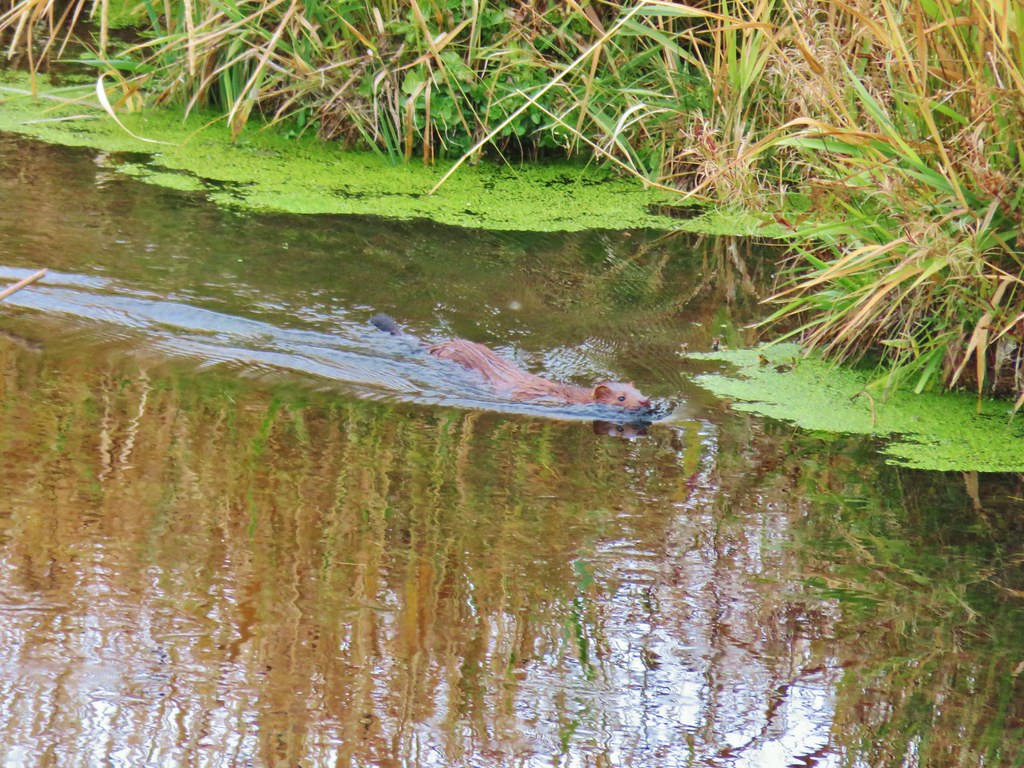
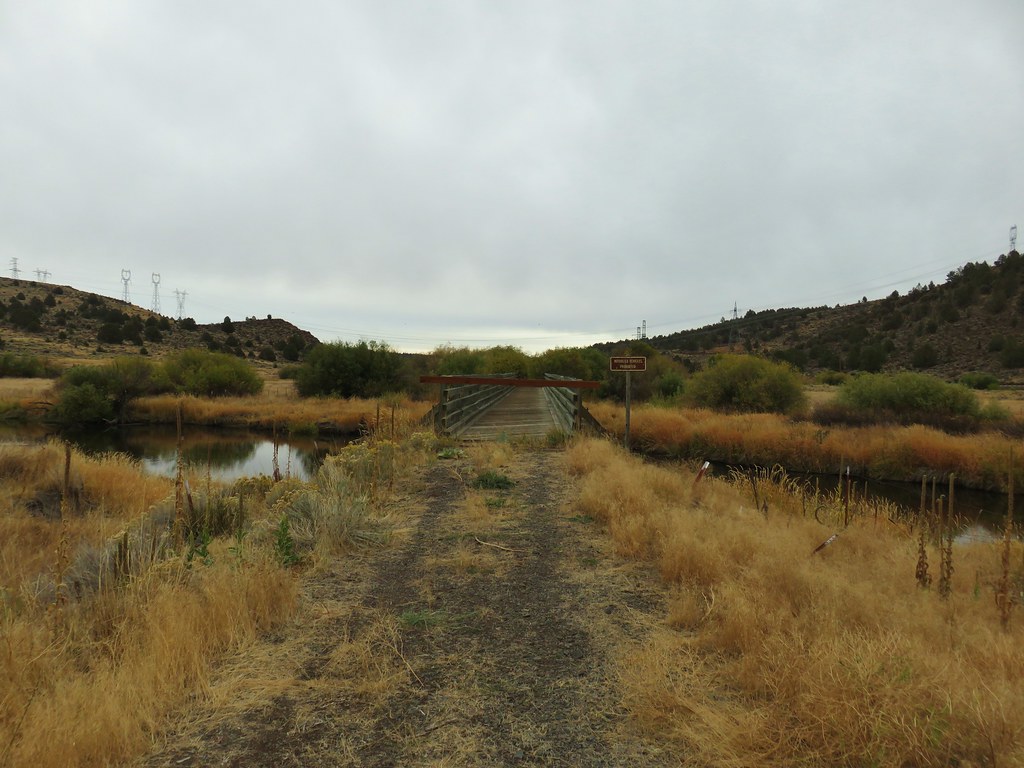
We crossed Spring Creek on a bridge where we spotted something in the water.

IMG_3495

IMG_3498

At first we thought it was a nutria given that we see them in fields near water quite often but after looking at the pictures later we discovered that it had actually been a mink.

IMG_3499

IMG_3503

After watching the mink disappear into the bank we continued on to the fork where we stayed right on a fainter track.

IMG_3505

IMG_3507

We crossed the Sprague River on another bridge and then three tenths of a mile later arrived at a junction of dirt roads.

IMG_3508

IMG_3509

At the junction we made a nearly 180 degree left turn and took a right fork uphill.

IMG_3513

As we followed this roadbed uphill we could see that the wet weather was finally on its way.

IMG_3514

After following this road for .3 miles we turned right onto another road which led us to the Brown Cemetery in an additional .2 miles.

IMG_3515

IMG_3517

IMG_3520

A couple of deer bounded away from the cemetery as we approached. We briefly explored the different grave sites then returned to the other road on continued on the loop under a light rain.

IMG_3521

Four tenths of a mile from the cemetery entrance road we arrived at an abandoned railyard where we turned left and passed through another green gate.

IMG_3524

In another .7 miles we had completed the loop and were on our way back to the trailhead.

IMG_3532

The rain had let up and we remained relatively dry which was a win for us. Seeing the mink was a nice surprise and the fall colors at Devil’s Garden had been unexpectedly beautiful. Not a bad way to kickoff a last minute trip. Happy Trails!

Flickr: OC&E Woods Line State Trail

Categories
Hiking Mt. Hood Area Oregon Trip report

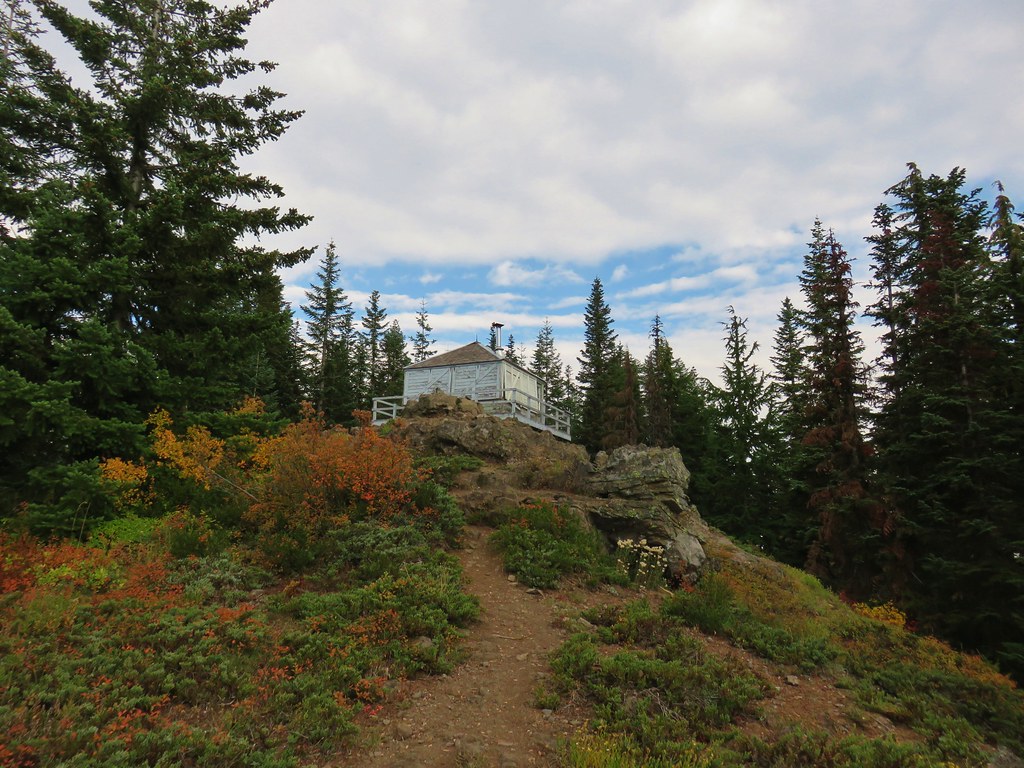
Devil’s Peak

The end of September/beginning of October brings us a pair of birthday celebrations, my Grandma on 9/30 and our Son on 10/1. We planned a joint celebration dinner in Portland but before the festivities we headed out on a hike to work up an appetite.

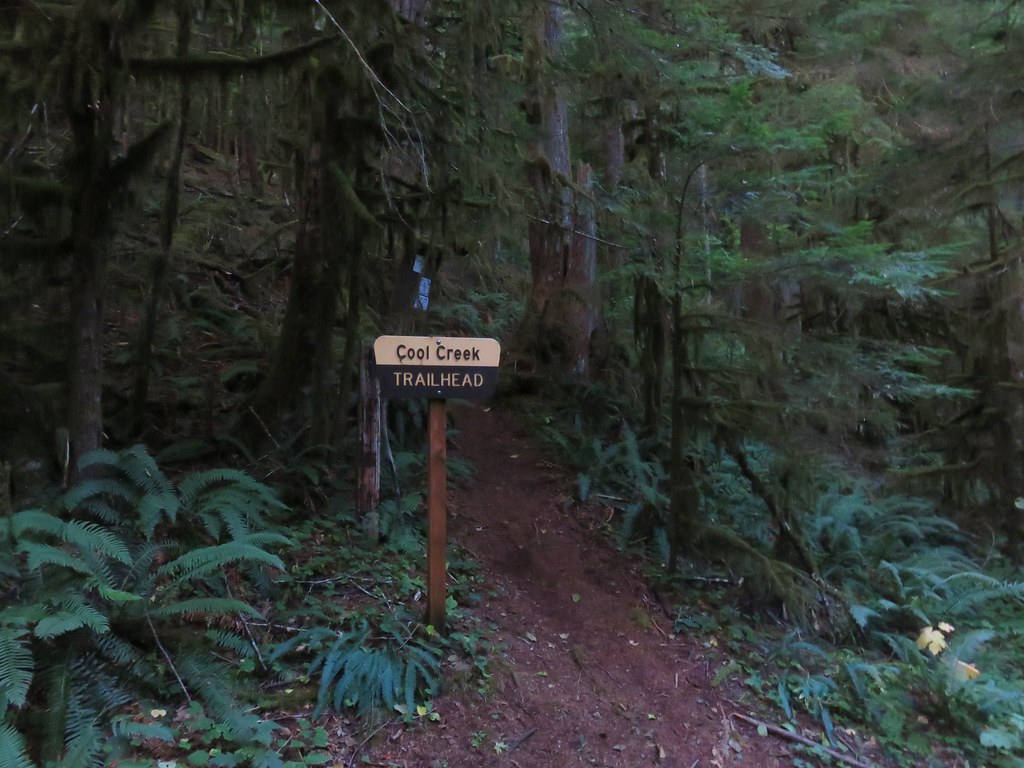
Due to the plans we needed a hike near Portland in the 8 to 10 mile range and hiking up the Cool Creek Trail to the Devil’s Peak Lookout fit the bill perfectly. We headed out early to the Cool Creek Trailhead. Oddly our guidebook had us turn on Road 20 at the east end of Rhododendron, OR instead of west of Rohododendron on Still Creek Road which is how the Forest Service directions have you go. We followed the guidebook directions only to be turned back by a closed bridge and had to go back to Still Creek Road. After finding the open route to the trailhead we parked along the shoulder of the road and set off on the Cool Creek Trail.
IMG_3124

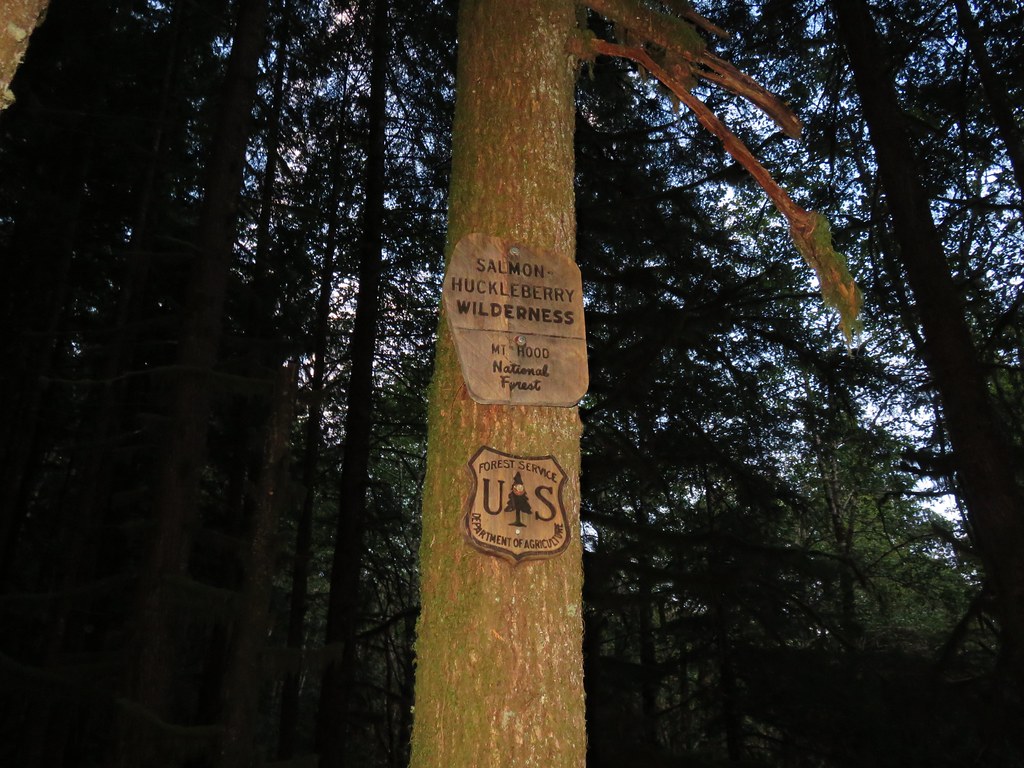
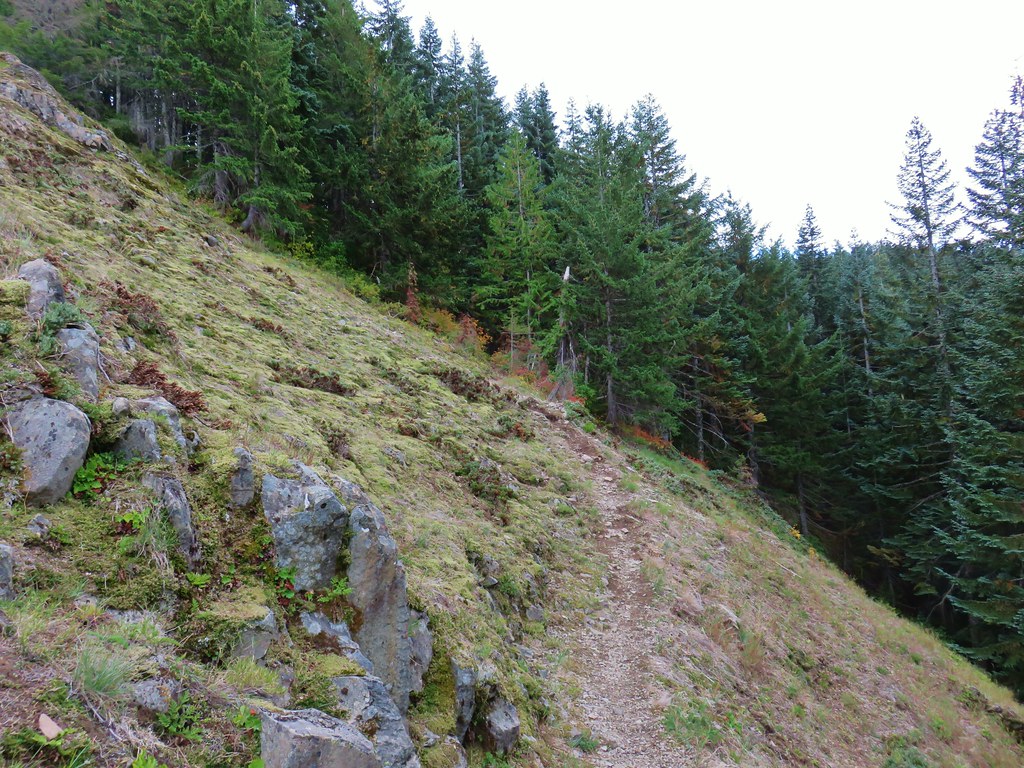
The trail started with a steep incline, a reminder that it needed to gain over 3000′ over the next 4 miles. Not far from the trailhead we entered the Salmon-Huckleberry Wilderness.
IMG_3133

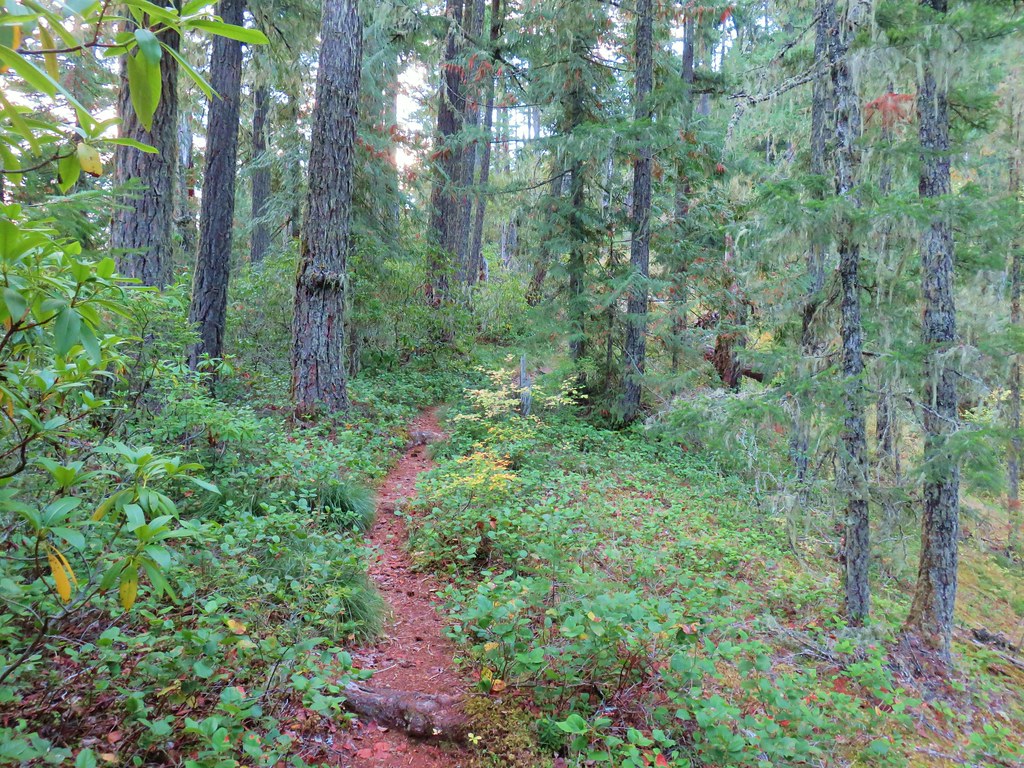
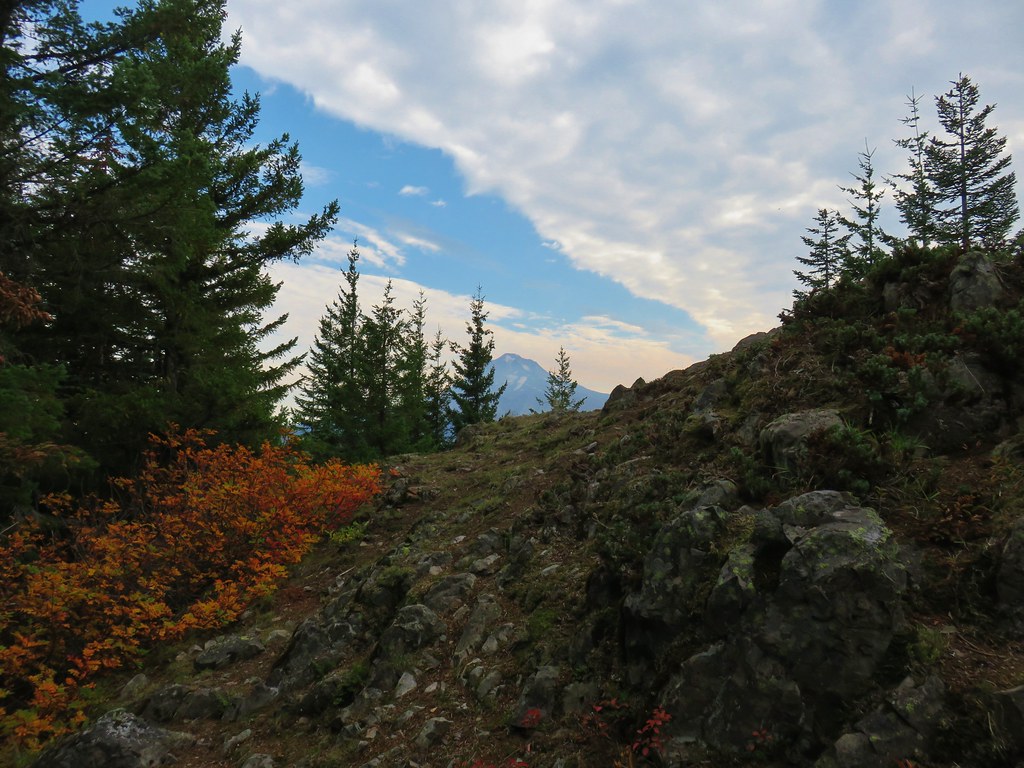
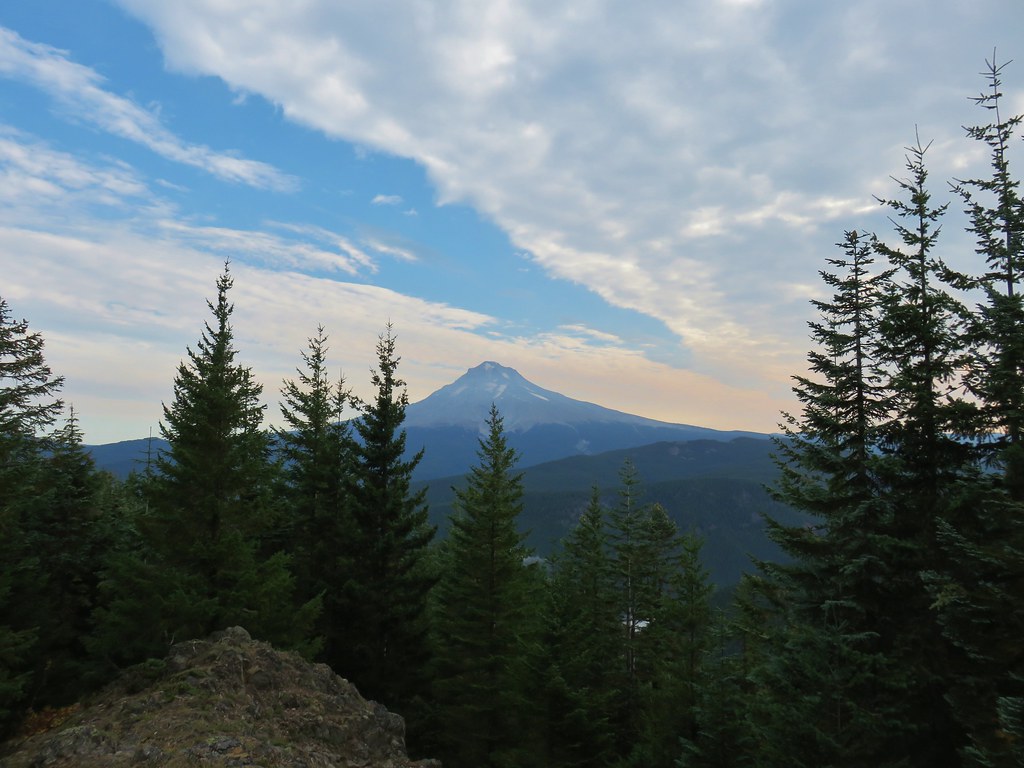
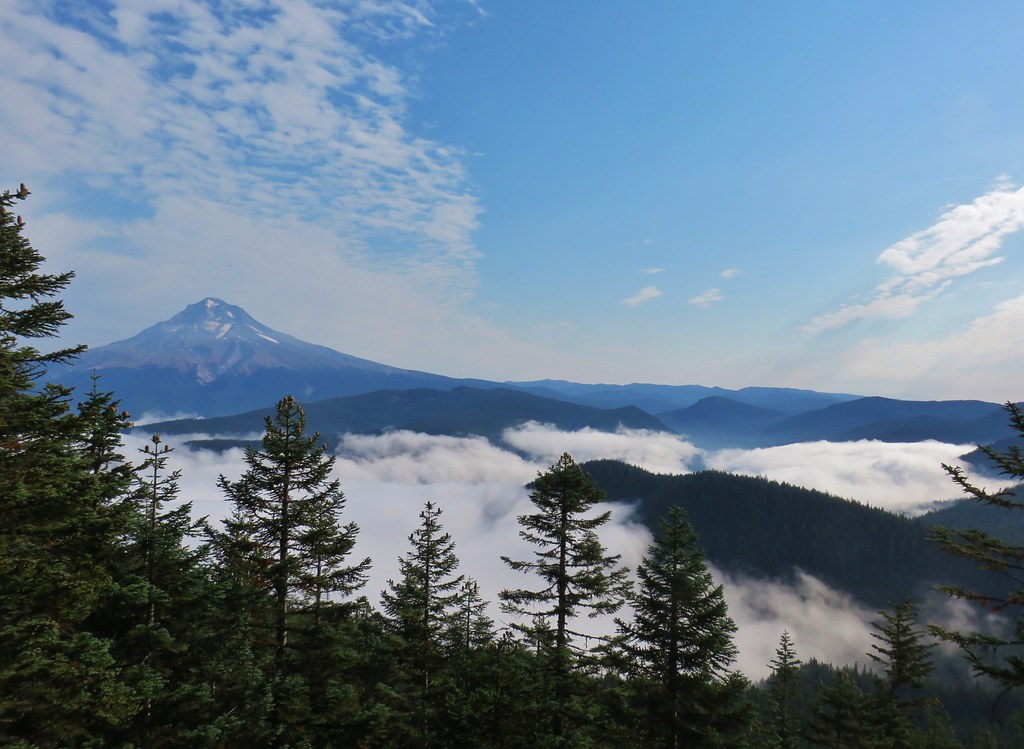
The trail is mostly forested with a few glimpses of Mt. Hood through the trees.
IMG_3144

IMG_3145

IMG_3148

IMG_3157

The best early view came just over a mile along the trail. For about two tenths of a mile the trail passed along an open hillside with a view across the valley to Mt. Hood.
IMG_3165

IMG_3166

The trail then passed around to the other side of a ridge where it pretty much remained for the next two miles. The forest here still housed a good number of red and blue huckleberries.
IMG_3176<

IMG_3177

IMG_3184

IMG_3187

IMG_3183

There were sections of more level trail in the forest which gave a nice break from the climbing, but also meant that the elevation would need to be made up on the sections of uphill.
IMG_3197

IMG_3198

Approximately 3.25 miles from the trailhead a spur to the left led to a rocky ridge top which provided what turned out to be the best viewpoint of the day.
IMG_3201

IMG_3232The rocky ridge

IMG_3203

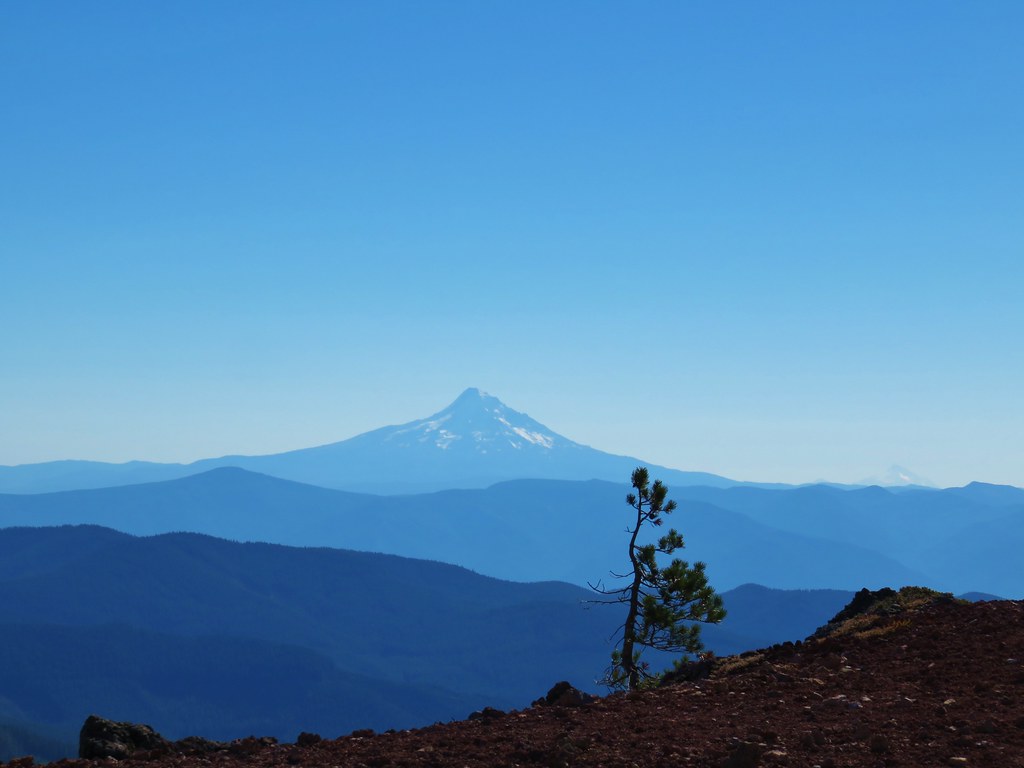
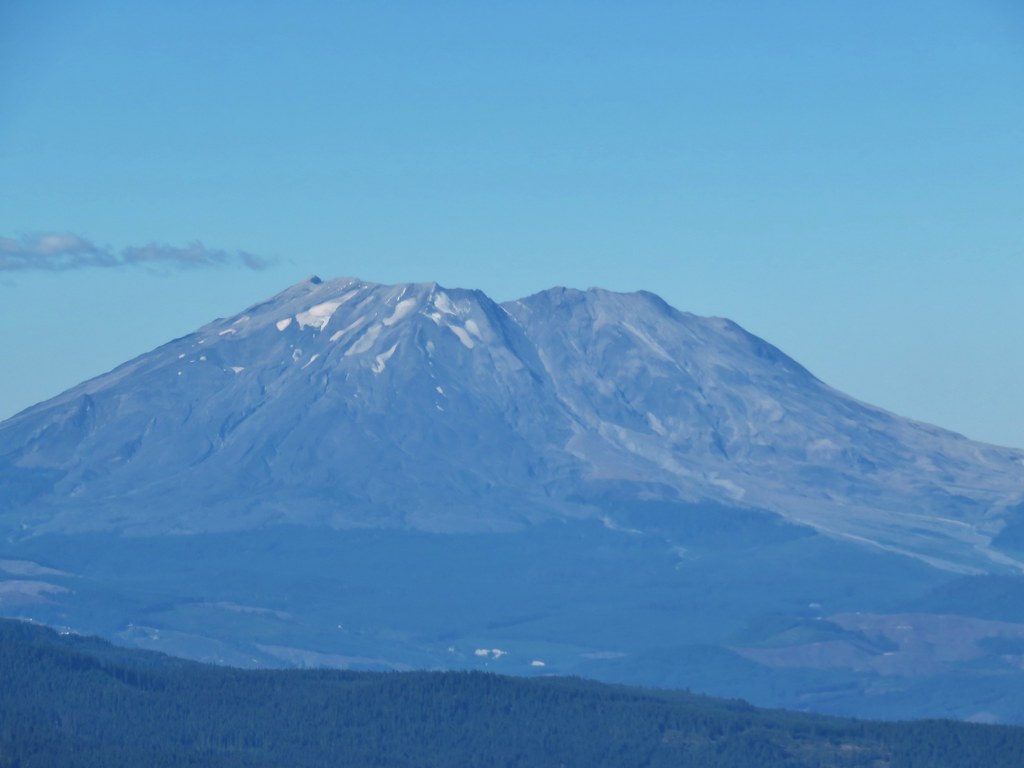
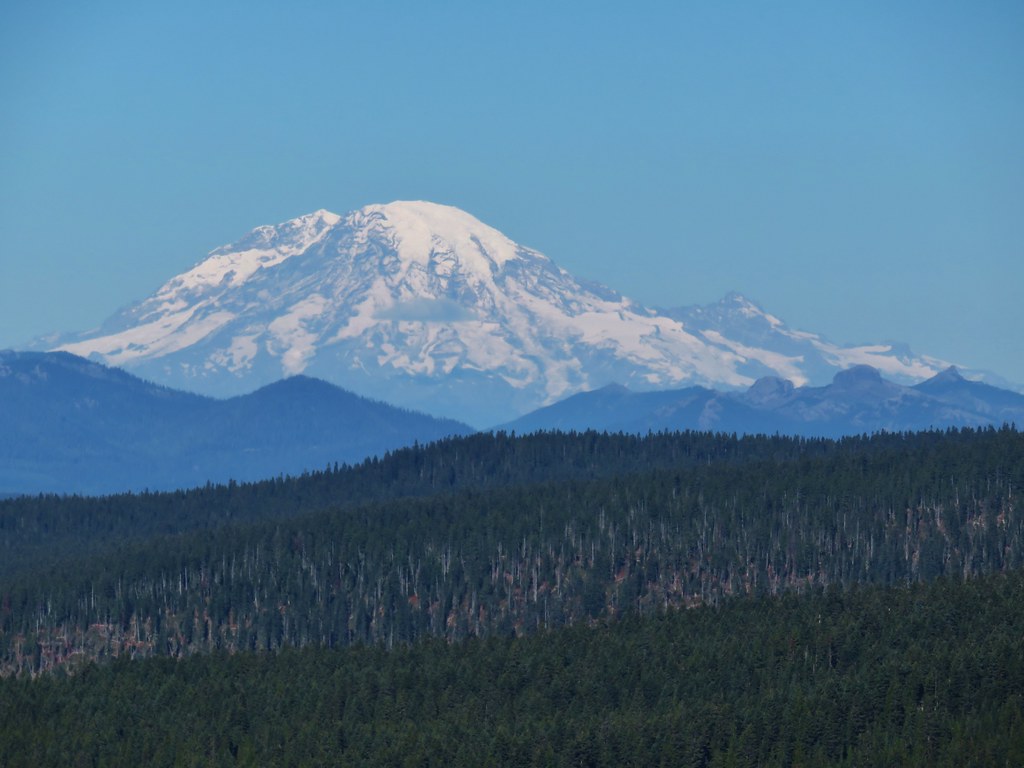
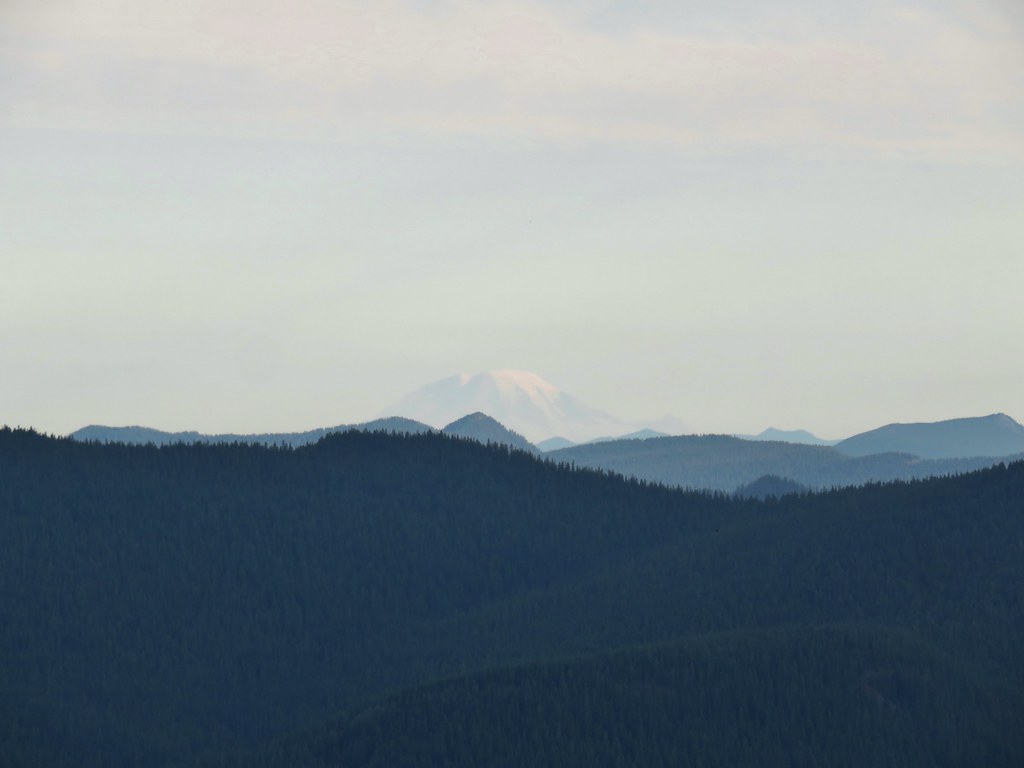
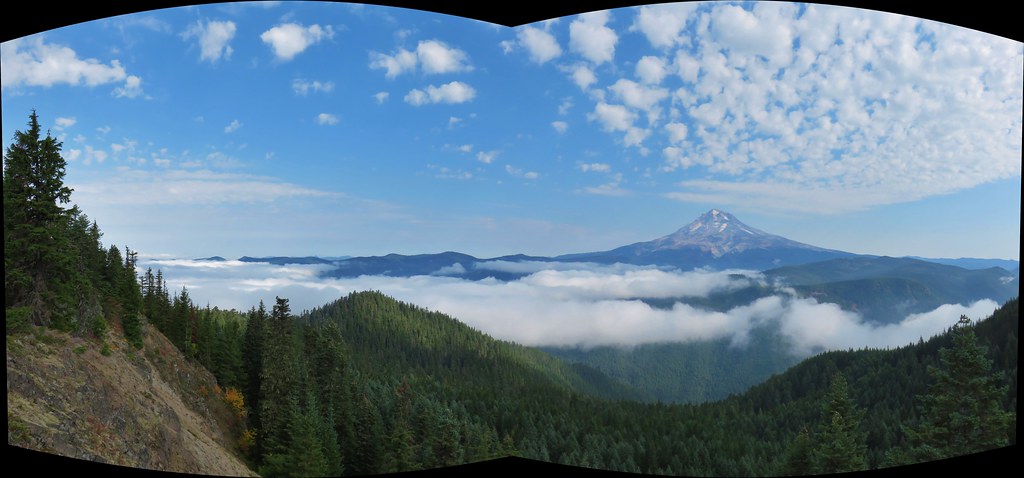
From this point four Cascades were visible, Mt. St. Helens, Mt. Rainier, Mt. Adams, and Mt. Hood.
IMG_3213_stitch

IMG_3207Mt. St. Helens

IMG_3209Mt. Rainier

IMG_3210Mt. Adams

Tom Dick and Harry Mountain (post) was also clearly visible to the NE.
IMG_3229

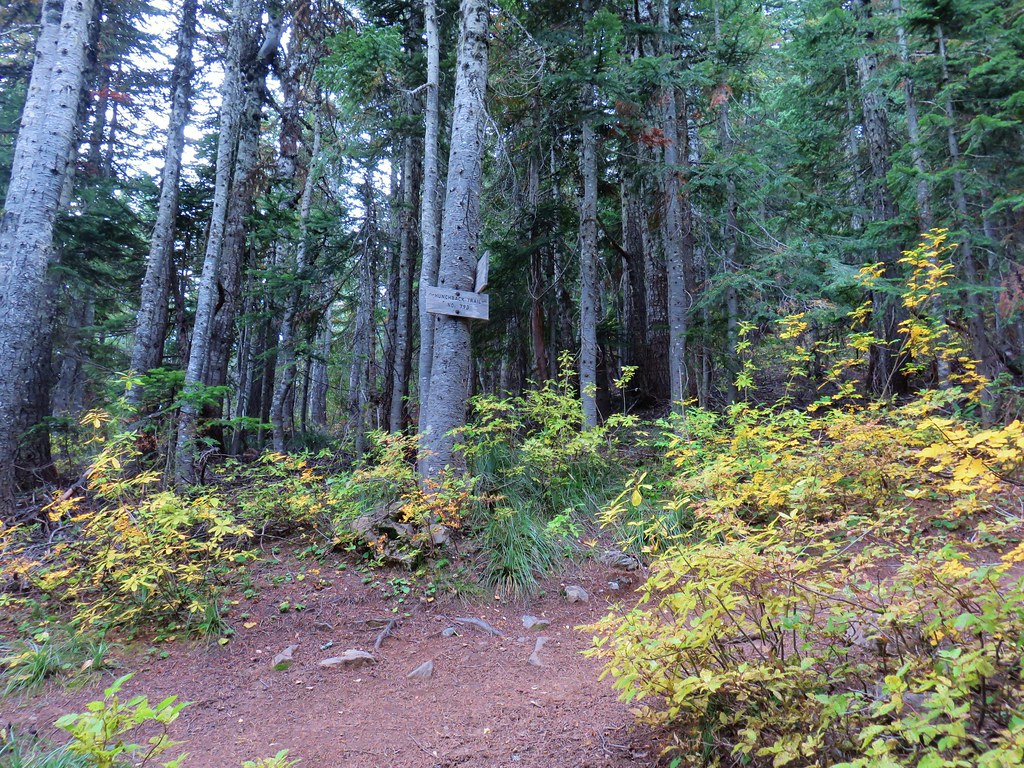
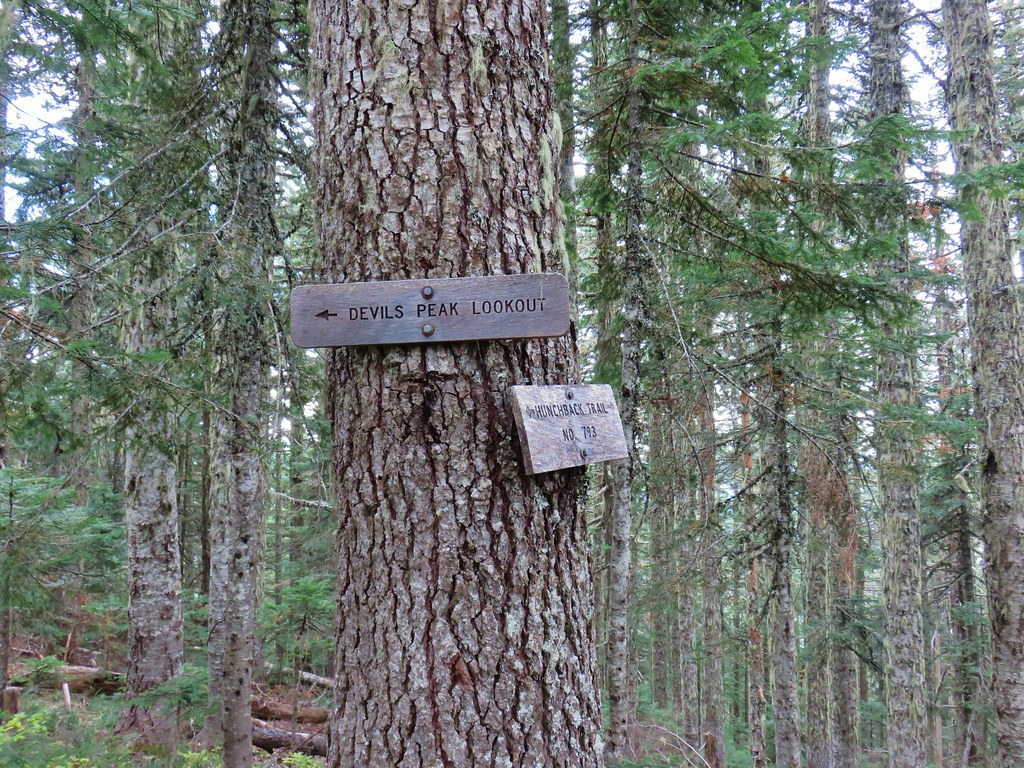
Beyond the ridge viewpoint the trail traversed the hillside on the west side of the ridge climbing for another quarter mile past one more viewpoint of Mt. Hood to its end at the Hunchback Trail.
IMG_3235

IMG_3238

IMG_3240

IMG_3244

A spur trail to the Devil’s Peak Lookout is just 500 feet after turning right onto the Hunchback Trail.
IMG_3247

IMG_3248

The lookout is a little over 200 feet up this spur.
IMG_3249

IMG_3250

The tower is available for use on a first come, first serve basis so there was a possibility that it was occupied but it turned out to be empty.
IMG_3257

IMG_3285

IMG_3288

IMG_3289

IMG_3290

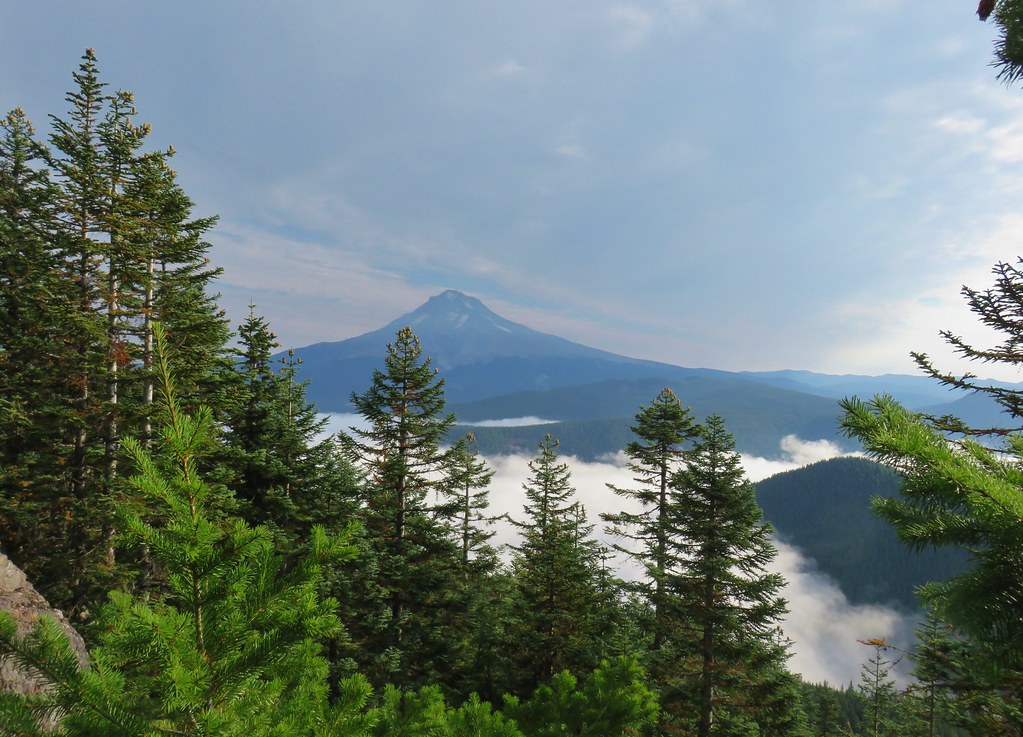
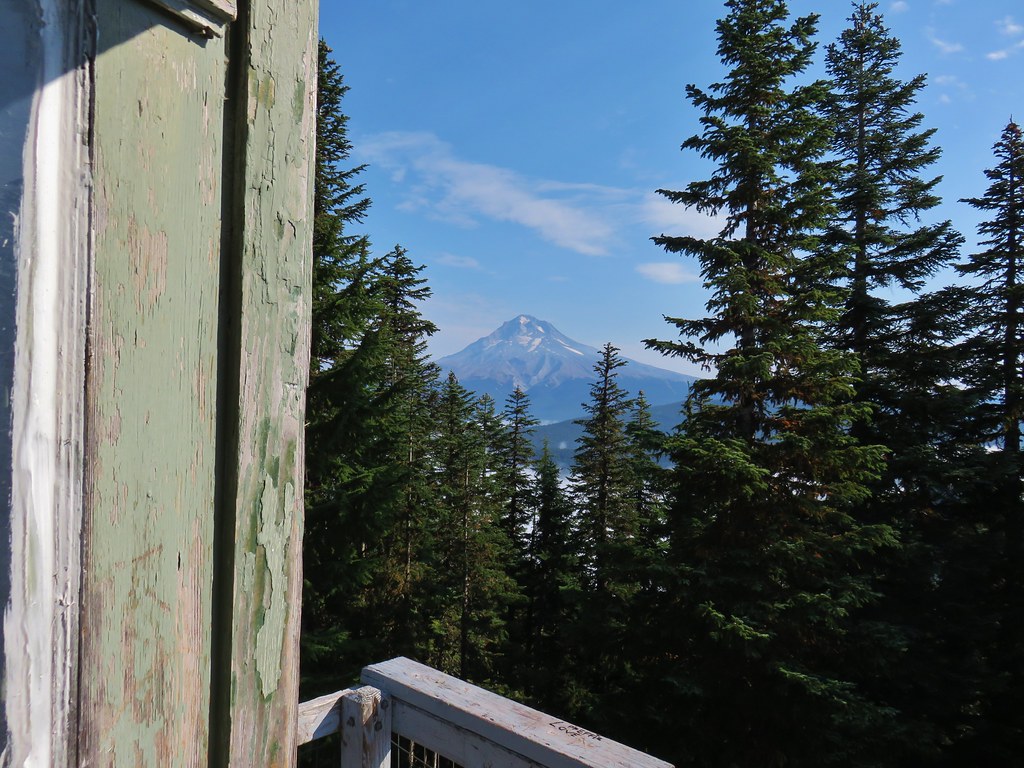
Mt. Hood was visible from the lookout.
IMG_3286

I had gone ahead of Heather and Dominique who had joined us for the hike so I explored Devil’s Peak while I waited for them to arrive.
IMG_3259

IMG_3263Mt. Jefferson in some haze to the south.

IMG_3268Mt. Hood

IMG_3272Salmon-Huckleberry Wilderness

IMG_3283

IMG_3300Clouds coming up the Salmon River Valley

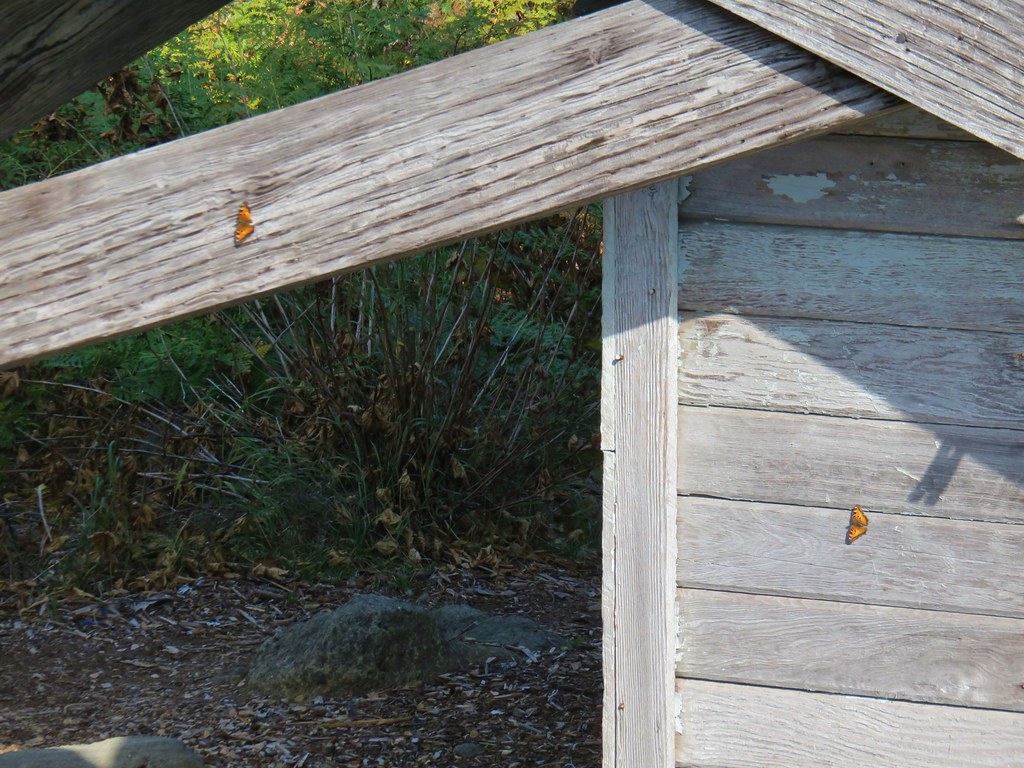
IMG_3339Butterflies on the lookout.

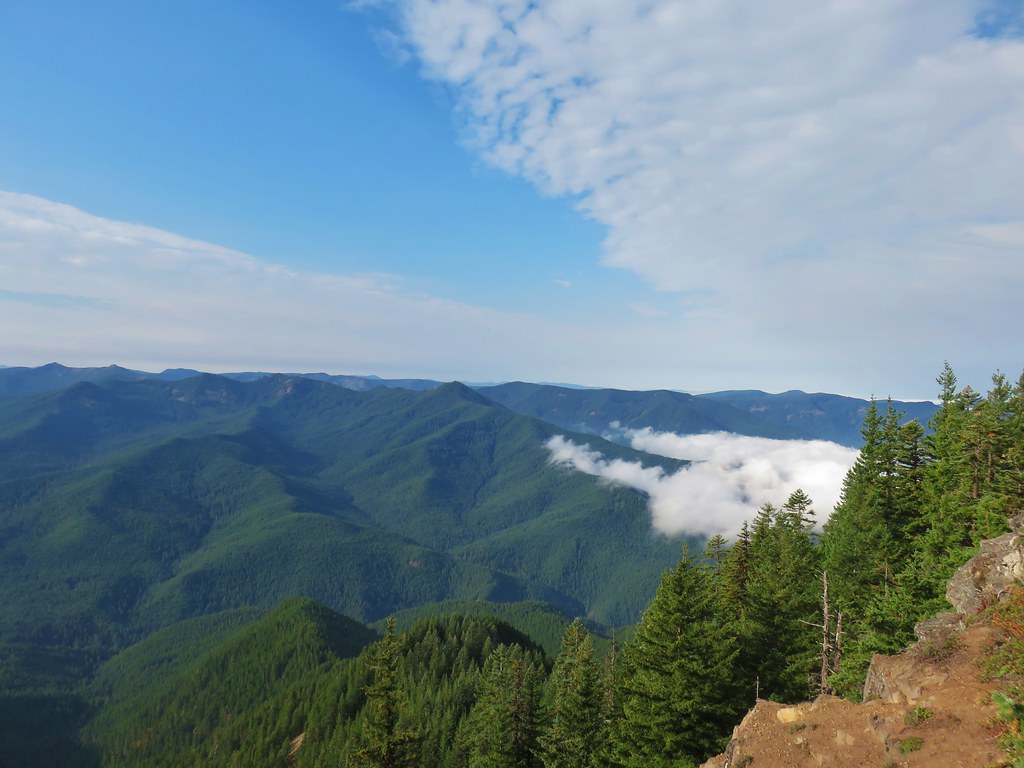
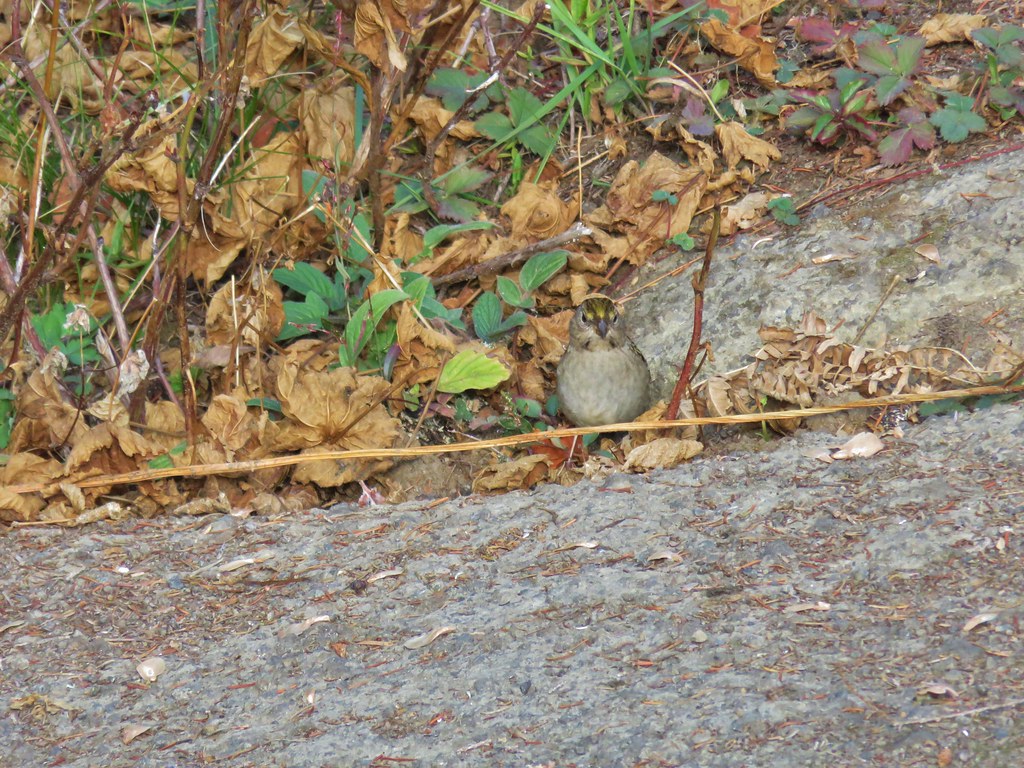
IMG_3346One of several birds foraging in the bushes near the lookout.

It turned out that I had gotten quite a bit ahead and wound up spending about an hour and a half at the tower watching the clouds break up above while they also moved in below.
IMG_3306

IMG_3332

IMG_3350

After they joined me at the lookout they took a break as well then we headed back down. At the ridge viewpoint the view of Mt. Hood was better than it had been earlier, but not for the other Cascades.
IMG_3355_stitch

We continued back down stopping to gather some huckleberries to take to my Grandmas house. We wound up passing beneath the clouds losing Mt. Hood for the last mile and a half.
IMG_3363

IMG_3366

IMG_3370

IMG_3369

It was a tough 8 mile hike given the elevation gain but the views were well worth the effort. That effort was also rewarded with a nice birthday dinner and a tasty piece of cake. Happy Trails!
Flickr: Devil’s Peak

Categories
Diamond Peak Area High Cascades Hiking Oregon

Fawn Lake – Diamond Peak Wilderness

A week after scrapping a planned four day backpacking trip in the Diamond Peak Wilderness due to weather we found ourselves heading to that same wilderness because of weather. Our one available day for hiking this week coincided with the one wet day in the forecast. When that happens we usually look at several different areas to find the one with the best chance to stay dry. This time that appeared to be Fawn Lake in the Diamond Peak Wilderness with just a 30% chance of showers. With our plans set we drove to the Fawn Lake Trailhead near Crescent Lake. To reach the trailhead we turned SW onto NF 60 at a sign for Crescent Lake between mileposts 69 and 70 along Highway 58 (in Crescent Junction). After 2.2 miles we continued on NF 60 where it made a right turn at a sno-park. After an additional .3 miles we turned left at a sign for the Crescent Lake Campground/Fawn Lake Trailhead.

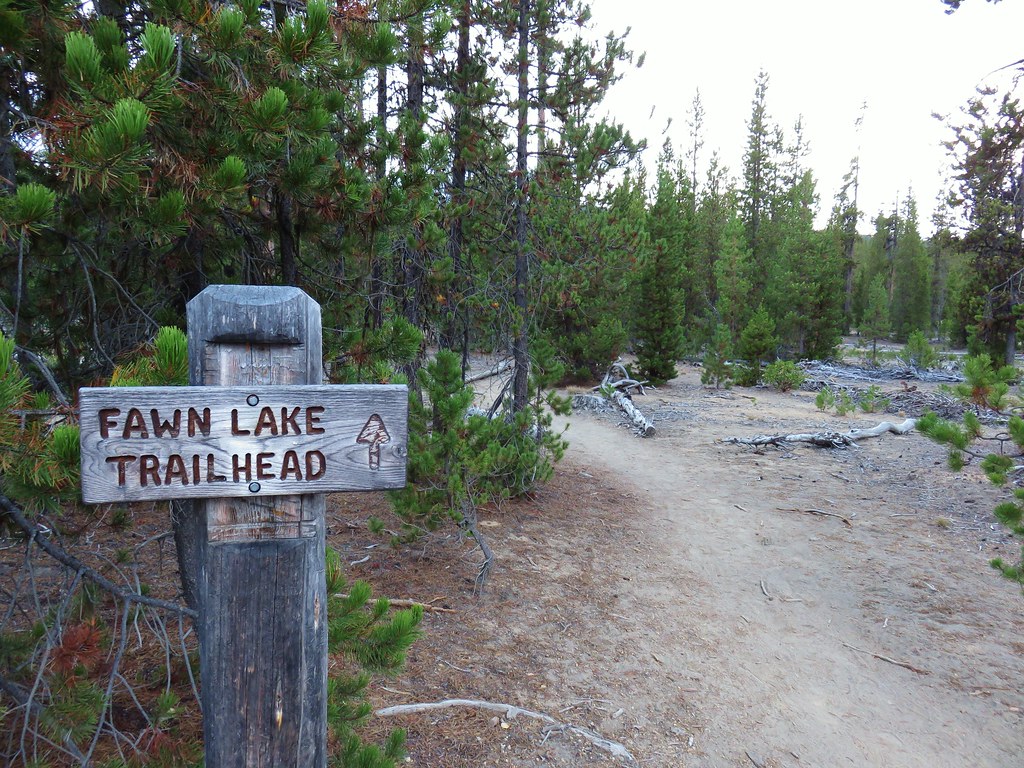
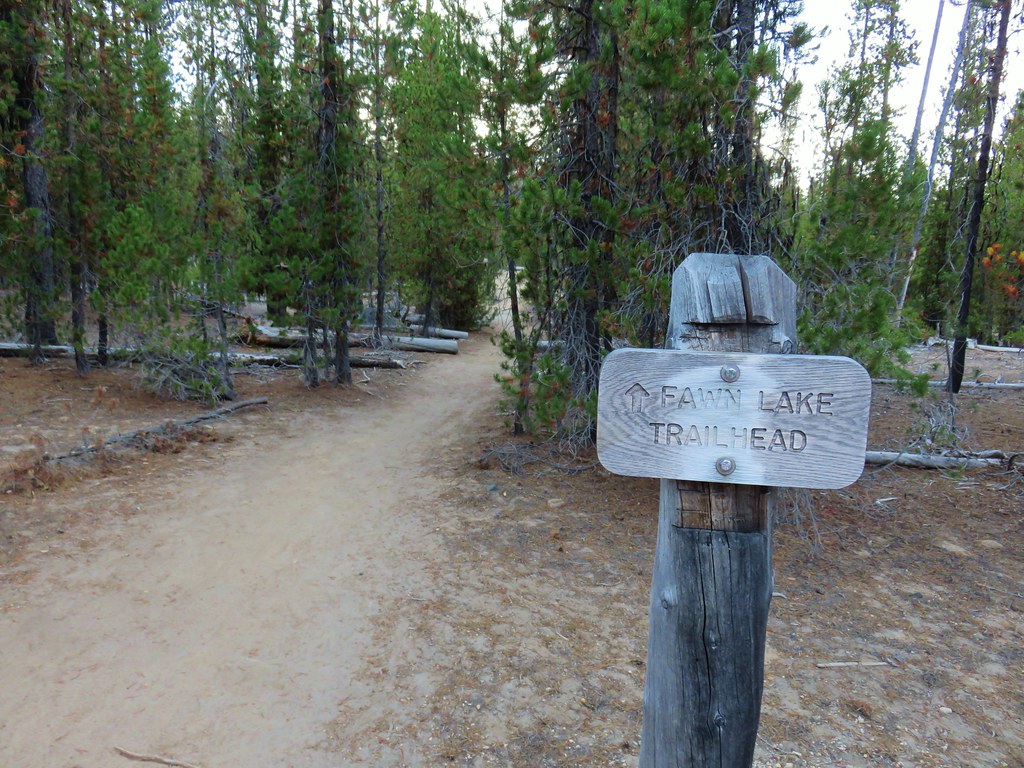
It is an interesting trailhead, the parking area is a day use lot located next to the Crescent Lake Campground. A trail sign at the far end of the parking lot pointed to the Fawn Lake Trailhead.
IMG_3023

IMG_3025

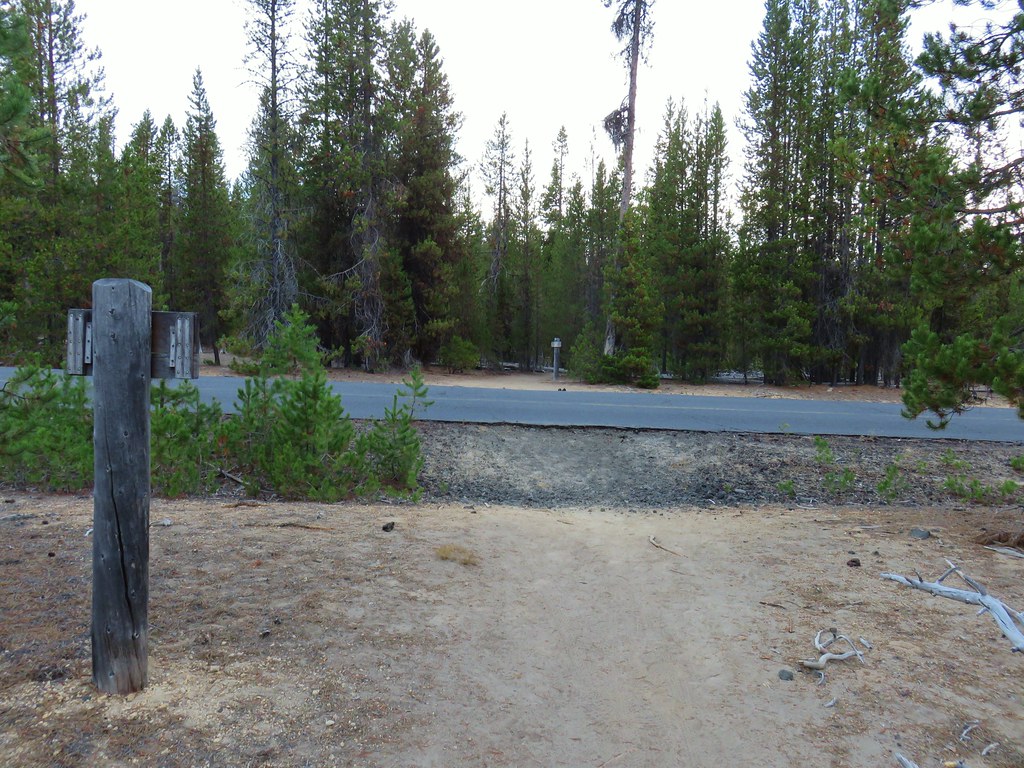
We followed this path and in a tenth of a mile came to a crossing of NF 60.
IMG_3027

Another pointer for the Fawn Lake Trailhead lay on the far side of the road.
IMG_3028

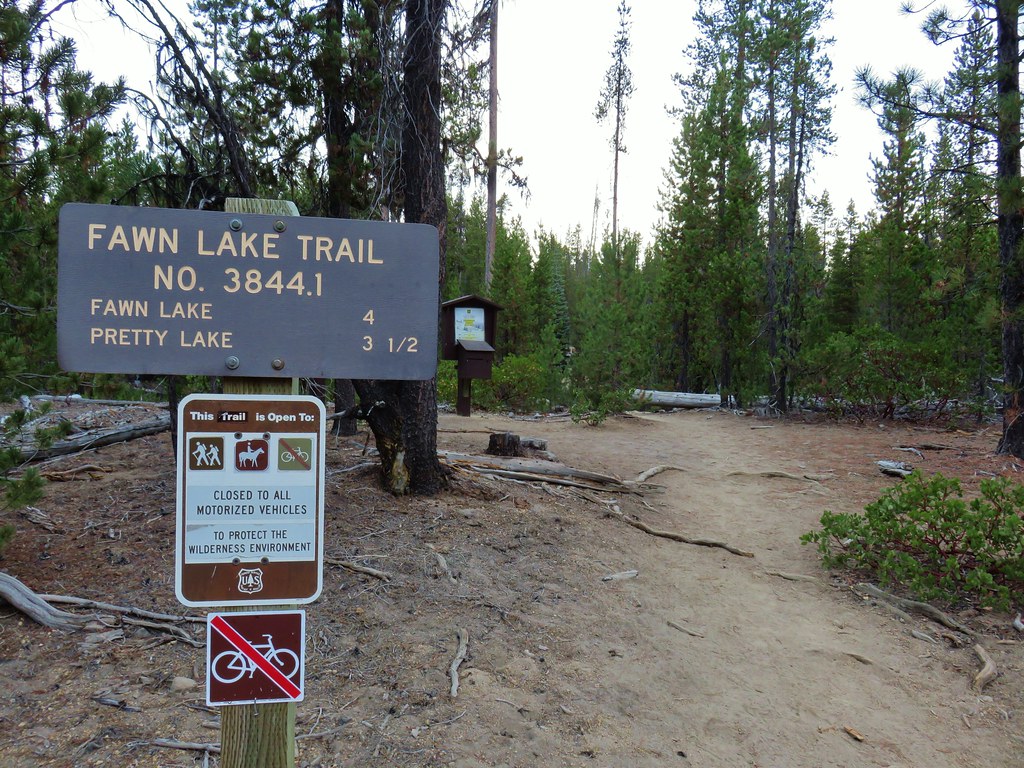
A short distance later we arrived at a sign for the actual Fawn Lake Trail and a signboard with self-issued wilderness permits.
IMG_3030

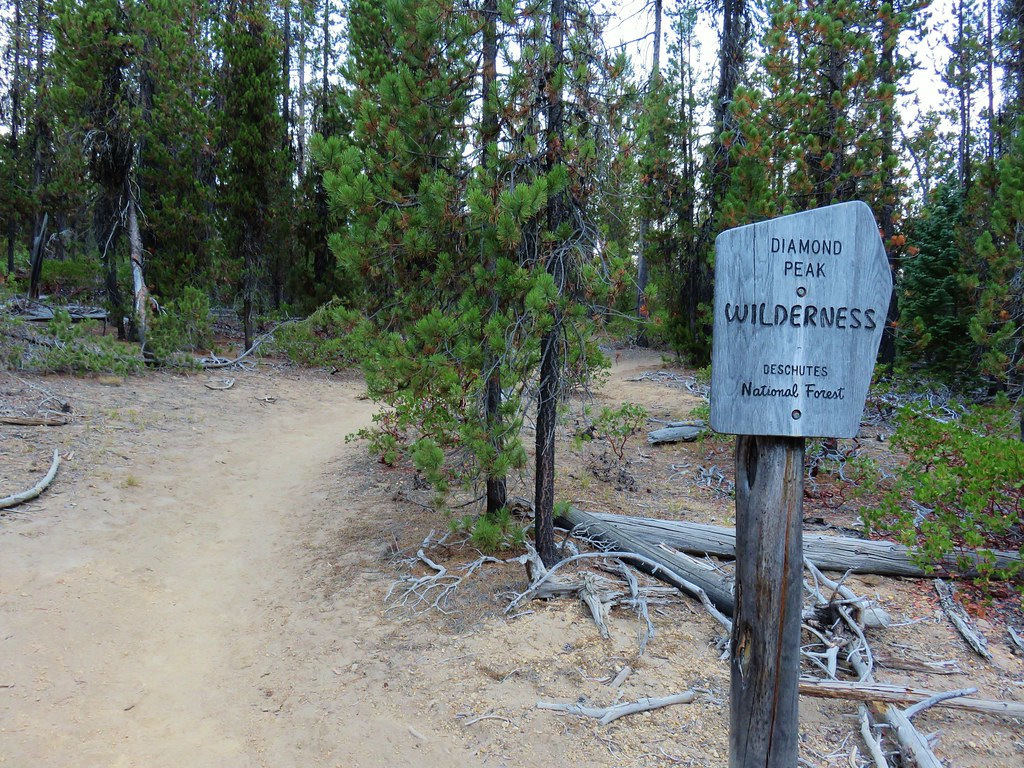
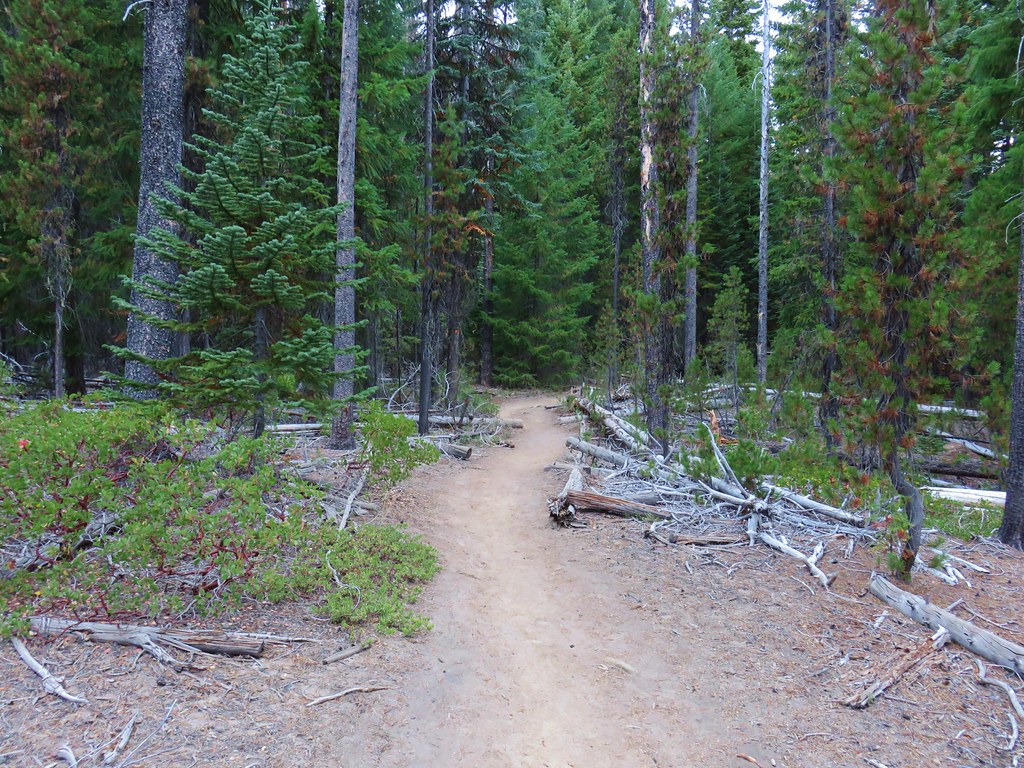
The Fawn Lake Trail set off in a mostly lodgepole pine forest and just after a 4-way junction with the Metolious-Windigo Trail entered the Diamond Peak Wilderness.
IMG_3032

IMG_3035

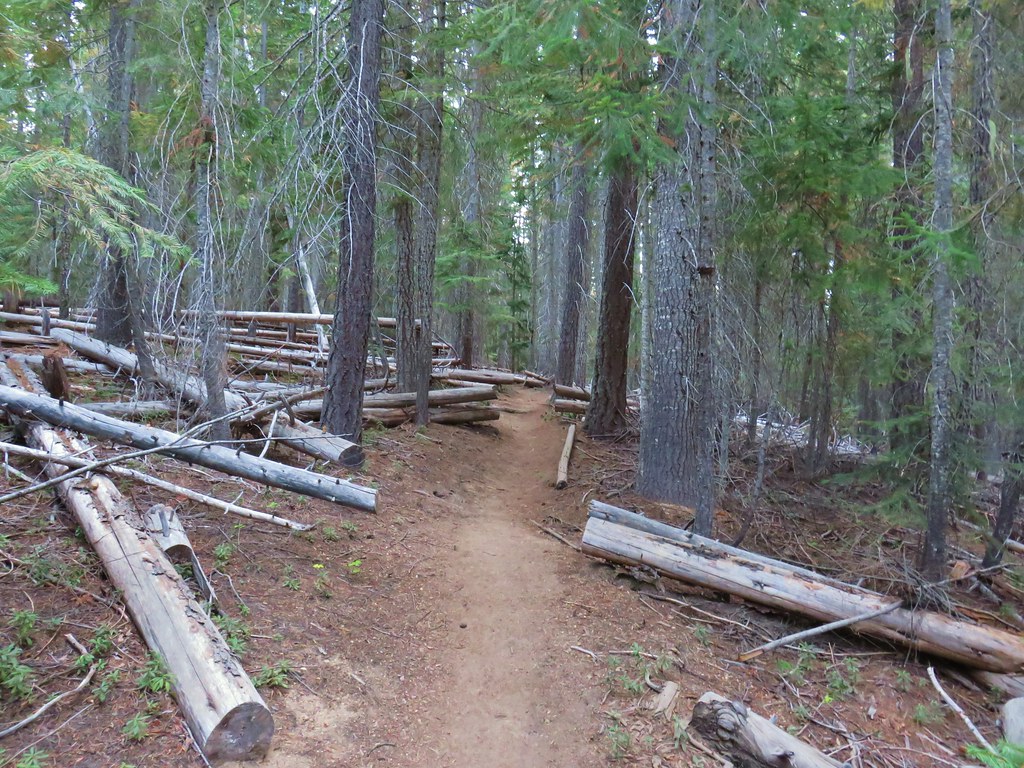
After entering the wilderness the trail climbed gradually for approximately three quarters of a mile through a mix of lodgepole and fir forest to a fork.
IMG_3036

IMG_3037

IMG_3038

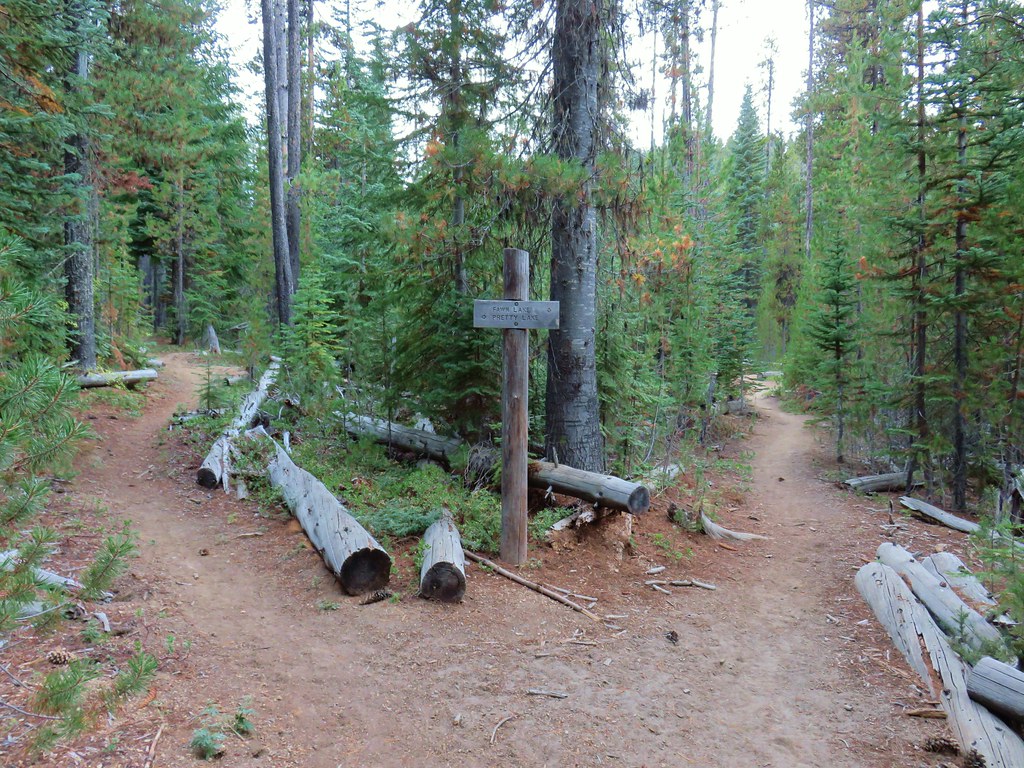
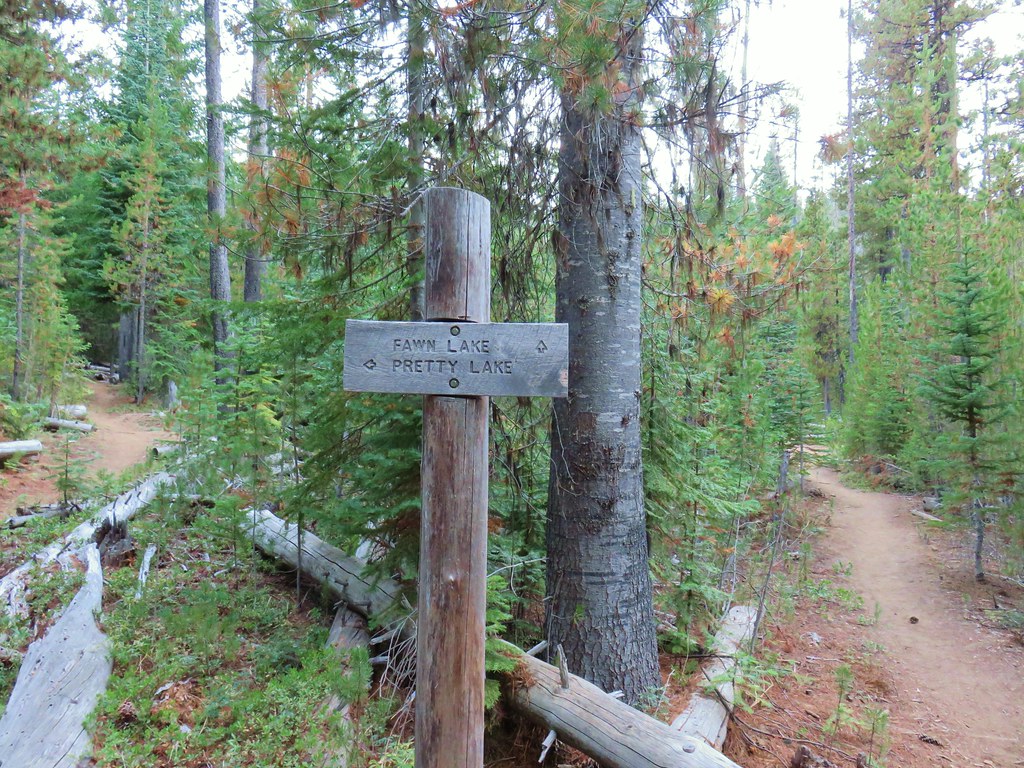
This was the start of a loop past Fawn and Pretty Lakes.
IMG_3039

We went right heading for Fawn Lake which was just over 2.5 miles away. The trail contoured around a ridge end climbing gradually through a nice forest.
IMG_3041

IMG_3042

IMG_3044

The trail split again at Fawn Lake.
IMG_3045

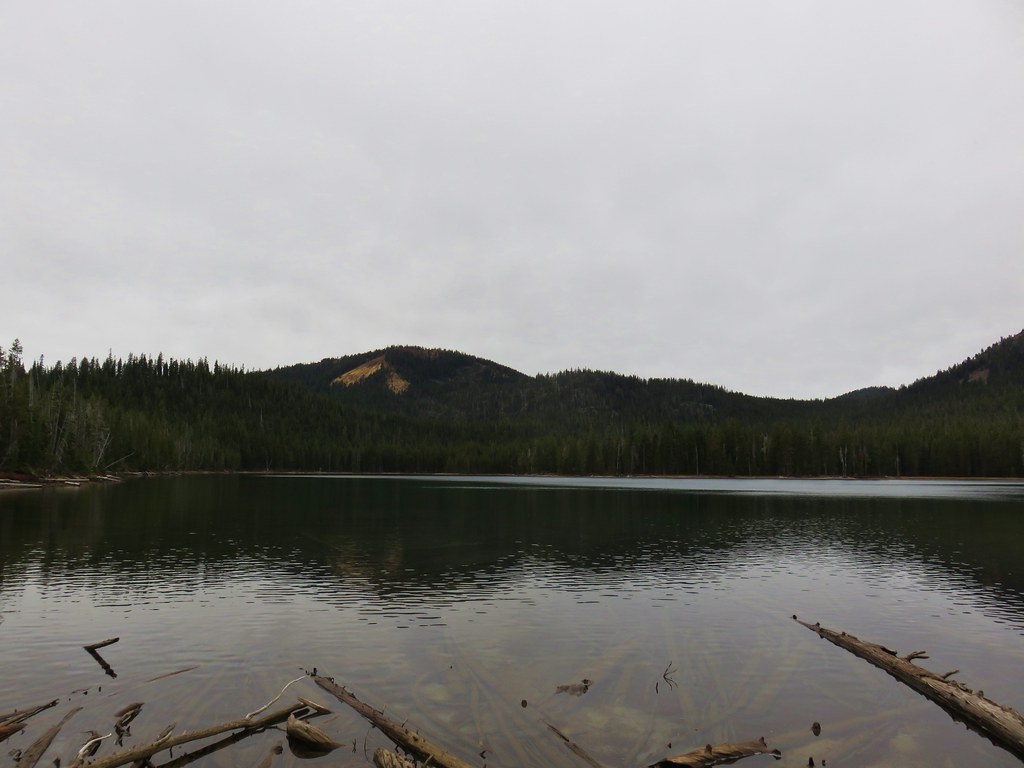
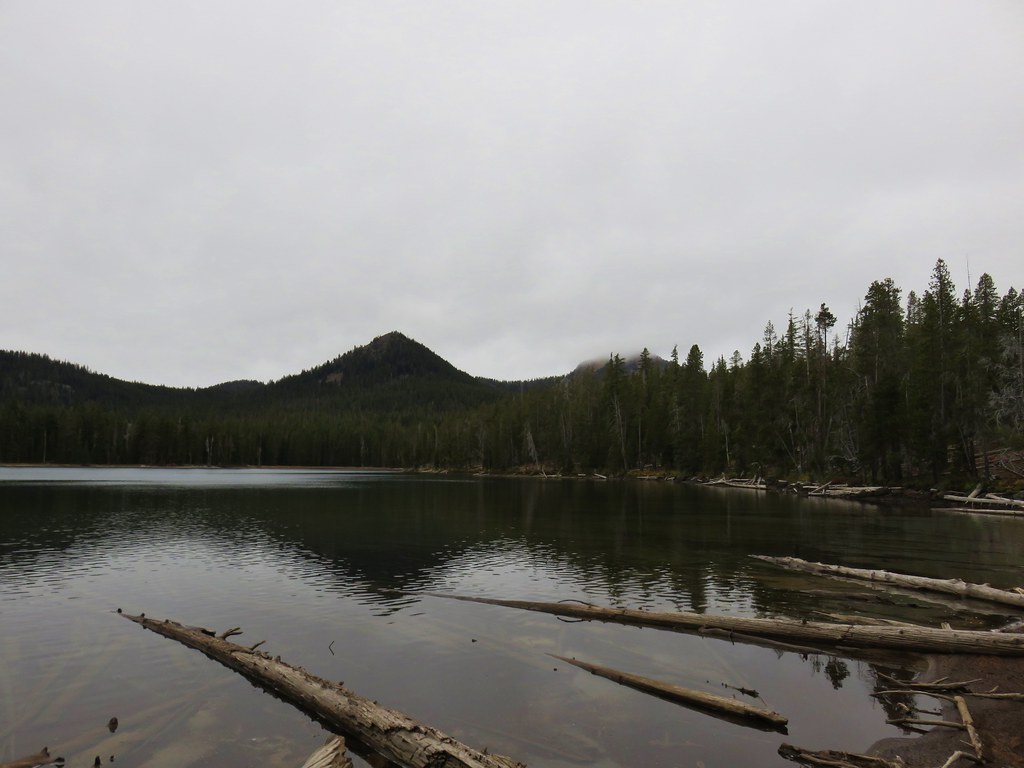
The left fork was the upper end of the loop, but before we started on the loop we had plans to visit a couple of other lakes in the wilderness so we went right stopping briefly to visit the shore of Fawn Lake. We had driven through a number of showers on the way to the trail but so far the hike had been dry. From the lake Redtop Mountain to the SE was cloud free while Lakeview Mountain to the SW was not.
IMG_3047Redtop Mountain

IMG_3048Lakeview Mountain (to the right behind clouds)

We continued on around the north end of the lake to the end of the Fawn Lake Trail at a junction with the Crater Butte Trail.
IMG_3053

Here we stayed left and climbed above Fawn Lake.
IMG_3055

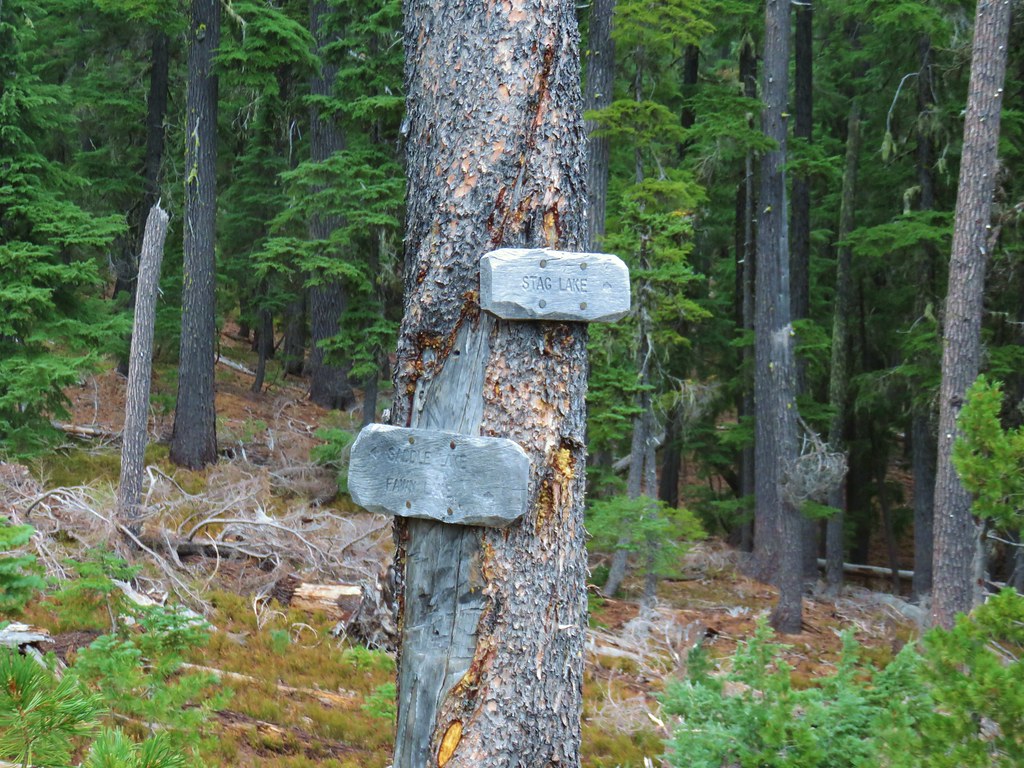
A mile from Fawn Lake we came to the Stag Lake Trail.
IMG_3059

It was clouding up at this point and a light mist was falling. We decided to wait on the side trip to Stag Lake which lay at the base of Lakeview Mountain hoping that it would be a little clearer on the way back.
IMG_3057

We followed the pointer for Saddle Lake and continued uphill through the forest.
IMG_3061

After .6 miles the trail steepened as it climbed out of a gully to a saddle.
IMG_3062

After .3 miles of switchbacks we arrived at the saddle where the trail leveled out for a tenth of a mile to Saddle Lake.
IMG_3063

IMG_3067

A steady light rain was now falling but not enough for us to need to break out the rain gear.
IMG_3072

The weather and the scenery really let us know that Fall had arrived.
IMG_3069_stitch

After a break at Saddle Lake we headed back to the junction with the Stag Lake Trail and turned left onto it.
IMG_3077

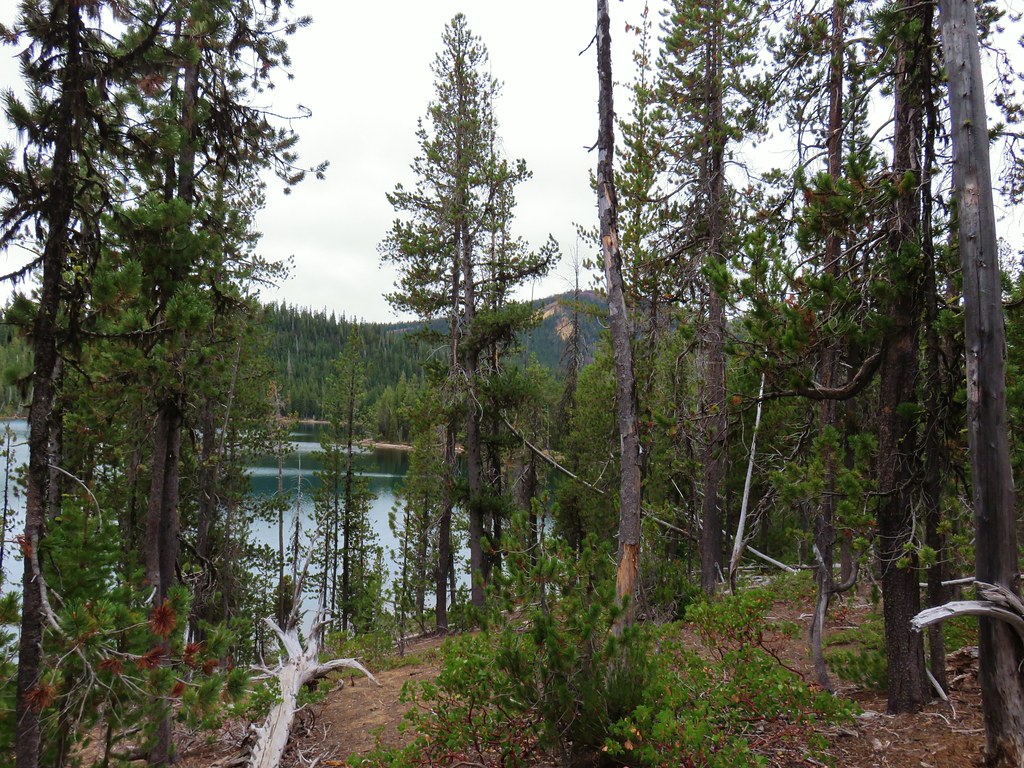
This fairly level .4 mile trail passed a small pond before arriving at Stag Lake.
IMG_3078

IMG_3089

The clouds had not lifted so our view of Lakeview Mountain was fairly obscured.
IMG_3084

We would get a much better look at the mountain from the car as we were trying to leave (more on that later).

After visiting Stag Lake we returned to the Crater Butte Trail and headed back toward Fawn Lake. Shortly before reaching the lake we turned right on a path we had noticed earlier hoping to pass around the west side of the lake and hooking up with the Pretty Lake Trail to the SW of the lake.
IMG_3091

The open forest made cross country travel relatively easy.
IMG_3092

IMG_3097

Using our GPS we made our way to the SW shore of Fawn Lake where the Pretty Lake Trail was just a few feet away in the forest.
IMG_3094

IMG_3098

IMG_3100

Once we were on the Pretty Lake Trail we turned right for a fairly level .4 miles to the start of a short .3 mile climb.
IMG_3104

IMG_3105

The trial then crested a low pass and descended slightly for another .3 miles to Pretty Lake.
IMG_3107

IMG_3108

IMG_3114

It was a little under 2 miles from Pretty Lake back to the Fawn Lake Trail junction. The trail descended a ridge with a bit of a view of Odell Butte to the north.
IMG_3120

IMG_3118

We completed the loop then followed the Fawn Lake Trail back .8 miles to our car. With the side trips to Saddle and Stag Lakes this was a 12.7 mile hike with approximately 1500′ of elevation gain. It would have been nice to have had better views of Lakeview Mountain, but it was still a nice hike and we have a good excuse to go back and redo this hike someday.

The only real negative to the day was as we were headed home. A train was stopped blocking NF 60 and we were informed that it could be a couple of hours before it was able to move. We didn’t have a sufficient road map to figure out which forest roads might bypass the train and after a failed attempt to find an alternate route we returned to the stopped train and waited. As we were driving around though we noticed that Lakeview Mountain was now entirely free of clouds. After sitting at the tracks for a little over an hour the train was finally on its way and so were we. Happy (train free) Trails!

Flickr: Fawn Lake

Categories
Hiking Oregon Oregon Coast Southern Coast

Tahkenitch Creek

After three nights in Bandon it was time to say goodbye and head home. We woke up early on Sunday to find that it had rained overnight. As we headed north on Highway 101 we passed through a number of showers and began to think that it was going to be a wet hike at Tahkenitch Creek. In fact the heaviest shower began in Reedsport just nine miles south of the trailhead.

When we arrived at the small parking area we were happy to find that it wasn’t raining there, at least yet.IMG_2960

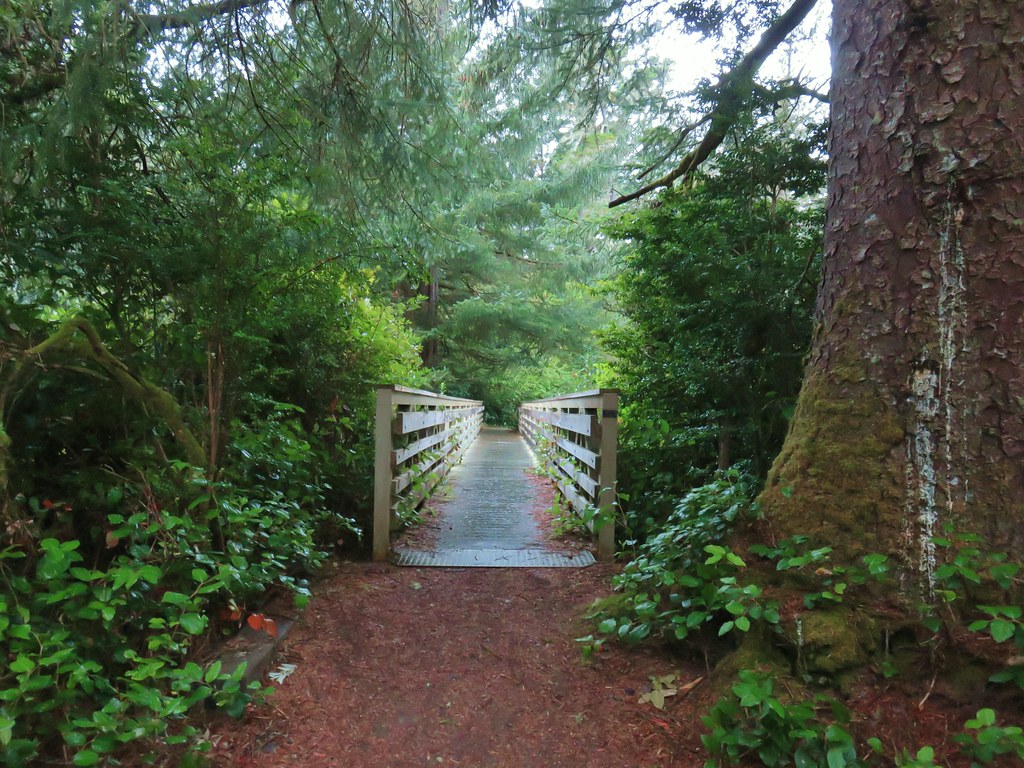
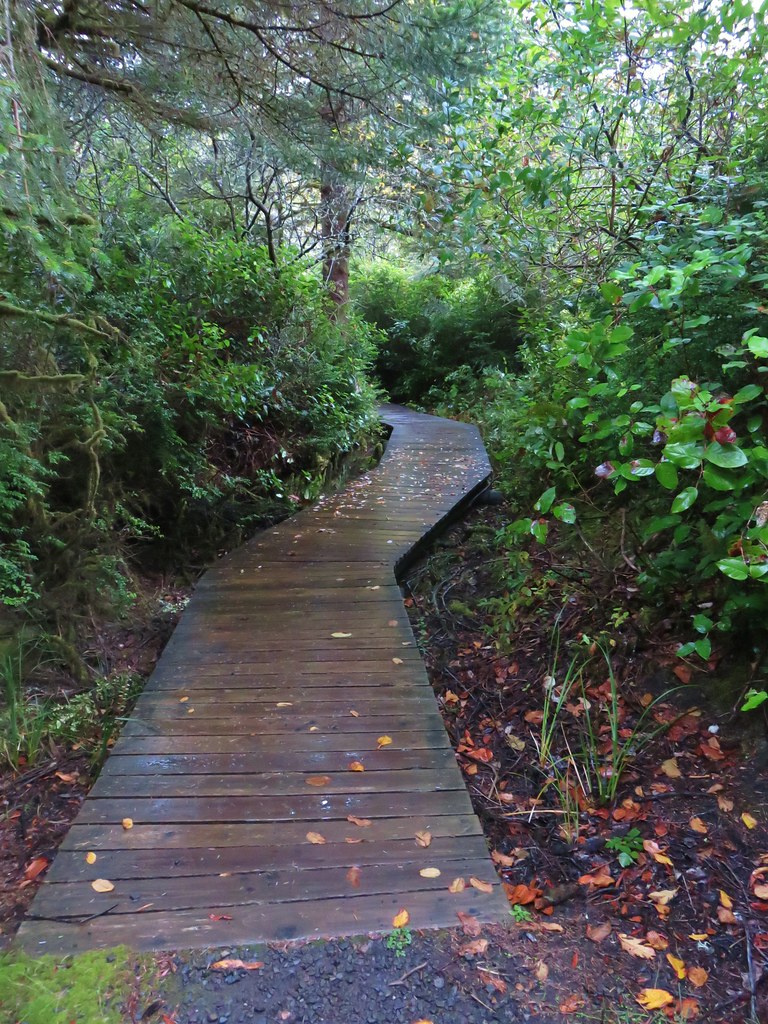
In 2015 (post) we visited the area on either side of this trail but had skipped over this particular trail. The Tahkenitch Creek Trail set off through the forest on the north side of Tahkenitch Creek which it quickly crossed on a footbridge.IMG_2961

IMG_2963

IMG_2964

IMG_2966

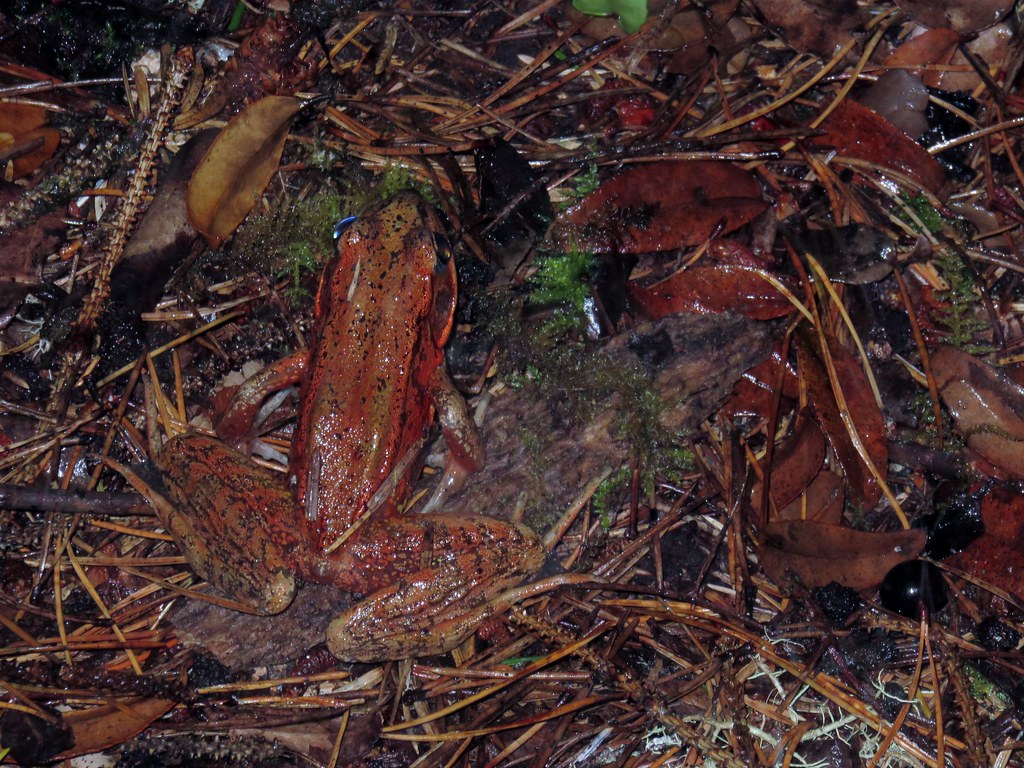
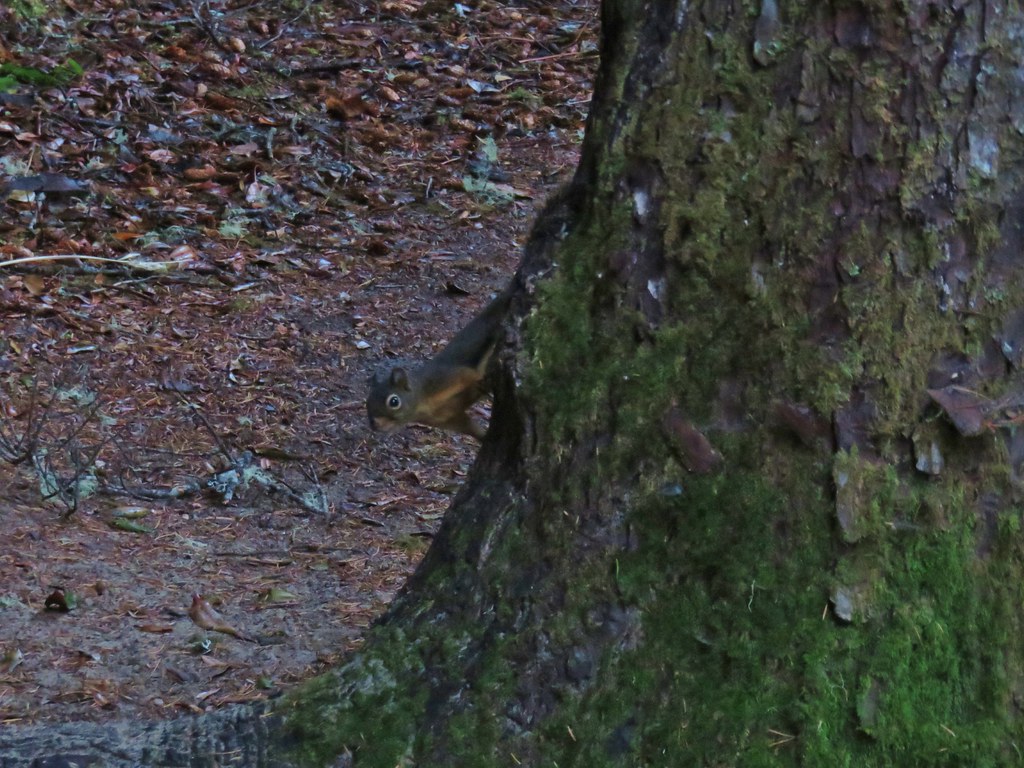
The wet morning hadn’t kept the wildlife from making appearances.IMG_2973

IMG_2978

Beyond the footbridge there was a short section of boardwalk then we came to a junction with a trail map.IMG_2967

IMG_2980

IMG_2984

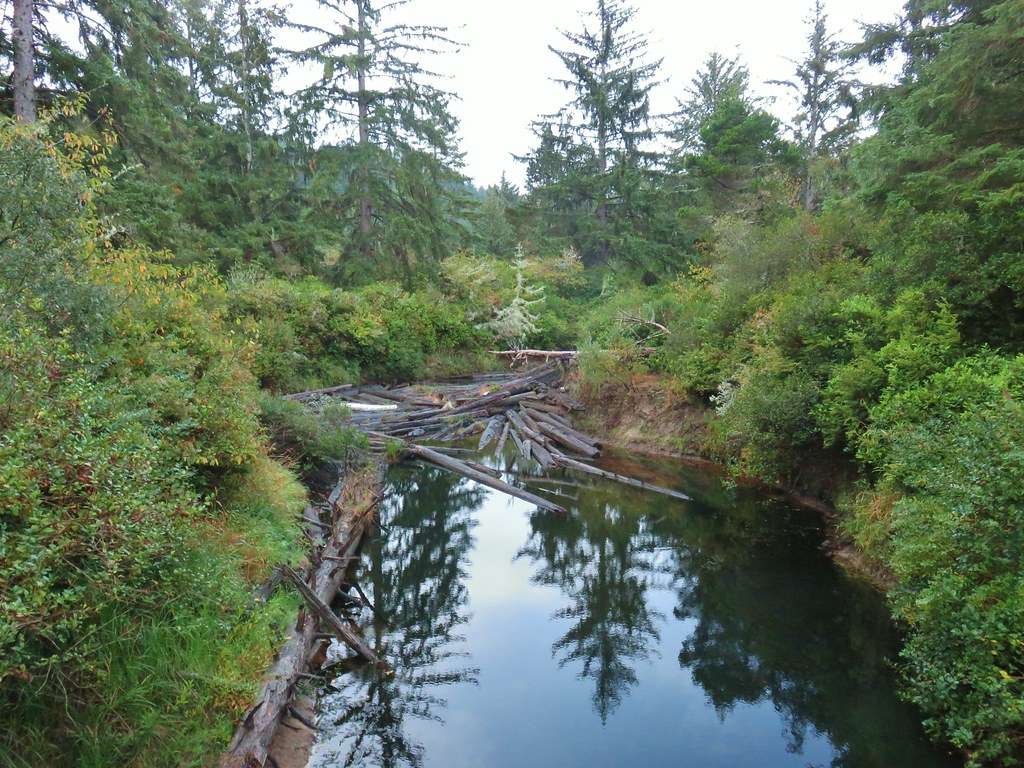
This junction was only three tenths of a mile from the trailhead and marked the beginning of a couple of loop options. We stayed to the right passing a couple of views of Tahkenitch Creek including the site of a possible ford. We had checked out the ford from the other side in 2015 and were no more interested in doing it this time around.IMG_2986

IMG_2990

Possible ford site

The trail spent quite a bit of time away from the creek before arriving at another junction a half mile from the start of the loops.IMG_2991

IMG_2994

IMG_2996

IMG_2997

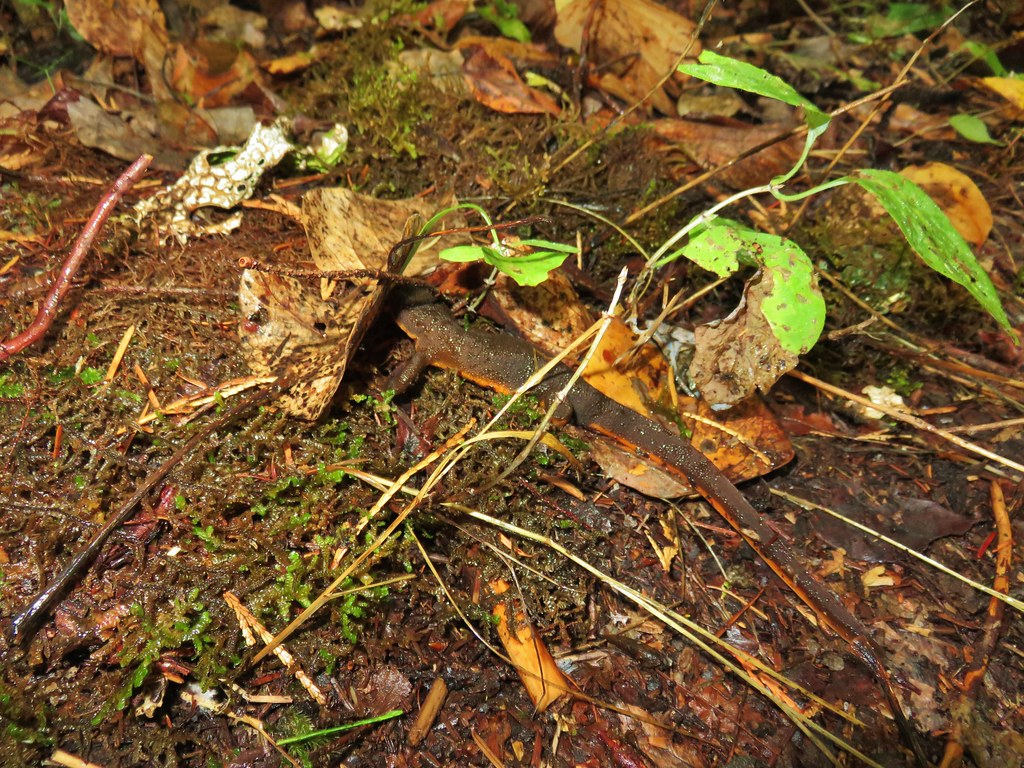
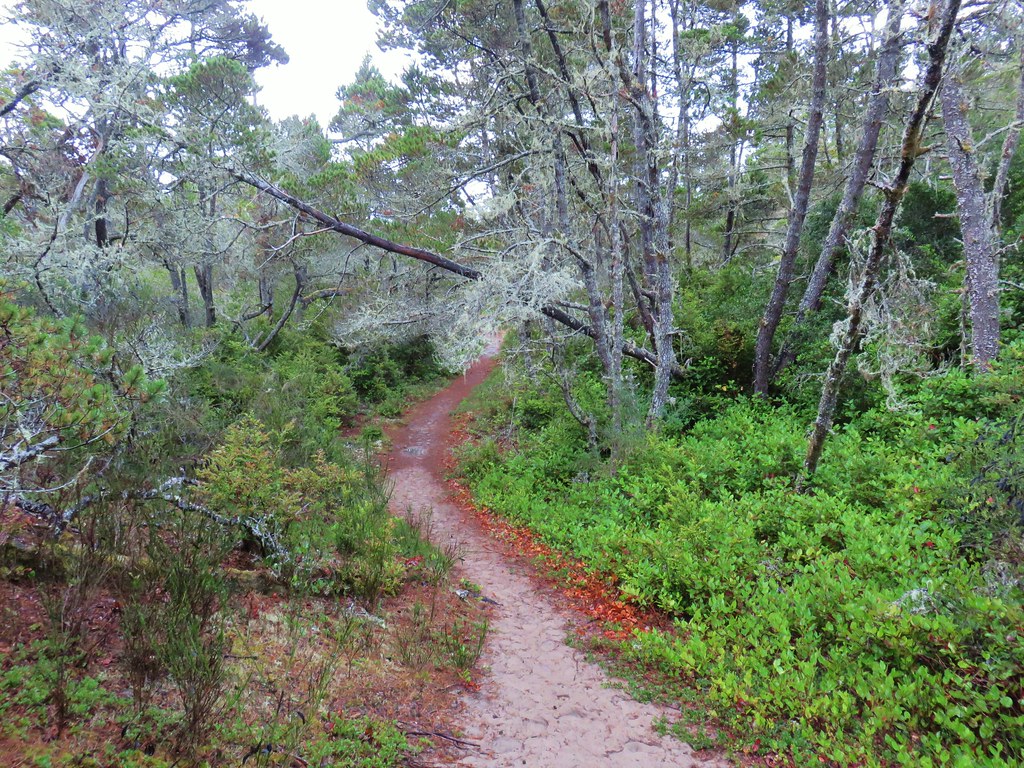
A left here would have created a 1 mile loop and a 1.6 mile hike overall, but we stayed right opting for a longer option. The trail continued through the forest for another .8 miles to the next junction. We had been having to watch where we stepped all morning due to the presence of numerous slugs but along this section we also saw a rough skinned newt in the trail.IMG_3000

IMG_3001

IMG_3002

IMG_2999

IMG_3004

We faced another choice at this junction. Simply turning left would create a two mile loop, but a right hand turn would lead us to the Tahkenitch Dunes Trail in just under a mile. We had hiked the dunes trail to the beach in 2015 so we decided to go to that junction to link up the two hikes.IMG_3005

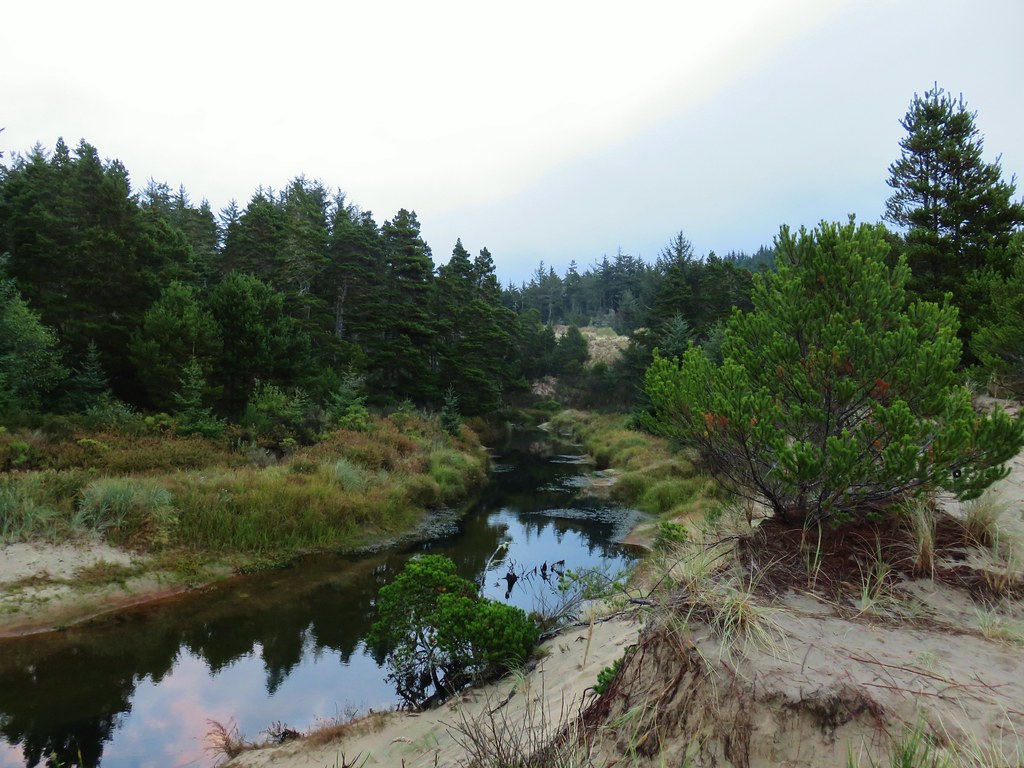
This stretch of trail remained in the forest until the junction. A brief right hand turn onto the Tahkenitch Dunes Trail provided a bit of a view of the creek and of the Pacific Ocean in the distance.IMG_3006

IMG_3007

IMG_3008

IMG_3009

It would have been another .8 miles to reach the beach on the dunes trail, and since we had hiked that stretch before we decided to turn back here and get home earlier.IMG_3012

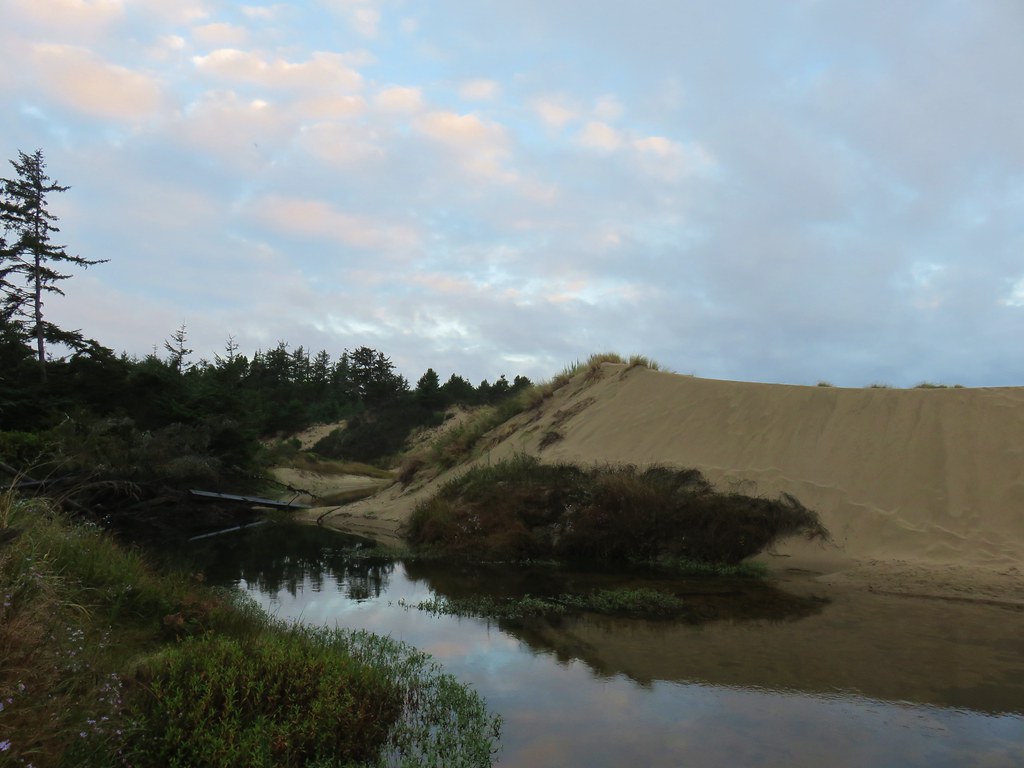
We kept right at junctions on the way back passing briefly though a sandy landscape.IMG_3015

IMG_3017

IMG_3019

As we exited the sandy area we met a gentleman who was looking for a good view of sand dunes to the south. He said he was working on a photography book of the Oregon Coast and had hoped to get some photos of the fog on some of the nearby lakes but due to the rain there was no fog over the water. We suggested he try the Oregon Dunes Overlook just north of where we were. We wished him luck and continued on.

The rain finally started to come down as we completed the loop so we hustled back to the trailhead and got into the car before we got too wet.IMG_3022

Even with the side trip to the Tahkenitch Dunes Trail this was only a 4.3 mile hike, and the shorter loop options make it a great leg stretch stop or hike for the younger kids. For us it was a nice way to end our mini-vacation and one more featured hike checked off from William L. Sullivan’s “100 Hikes/Travel Guide Oregon Coast & Coast Range” guidebook. Happy Trails!
Flickr: Tahkenitch Creek

Categories
Hiking Oregon Oregon Coast Southern Coast

Barklow Mountain and Bullards Beach

When we changed our plans from a backpacking trip in the Diamond Peak Wilderness to a long weekend in Bandon one of the more exciting prospects was being able to check off a visit to our 38th Oregon Wilderness Area – the Copper-Salmon Wilderness. We had attempted to visit that particular wilderness in 2017 but a washed out road denied us access to the Barklow Mountain Northeast Trailhead (post)

For this trip we would be using the Barklow Mountain West Trailhead. We used the Oregonhikers.com field guide entry here to reach the trailhead. The guide mentions that the road is prone to rockfall and slides and that it is best to wait for the dry months of Summer to attempt to reach the trailhead. Based on the conditions we encountered along the roads that is not an understatement.
IMG_2844

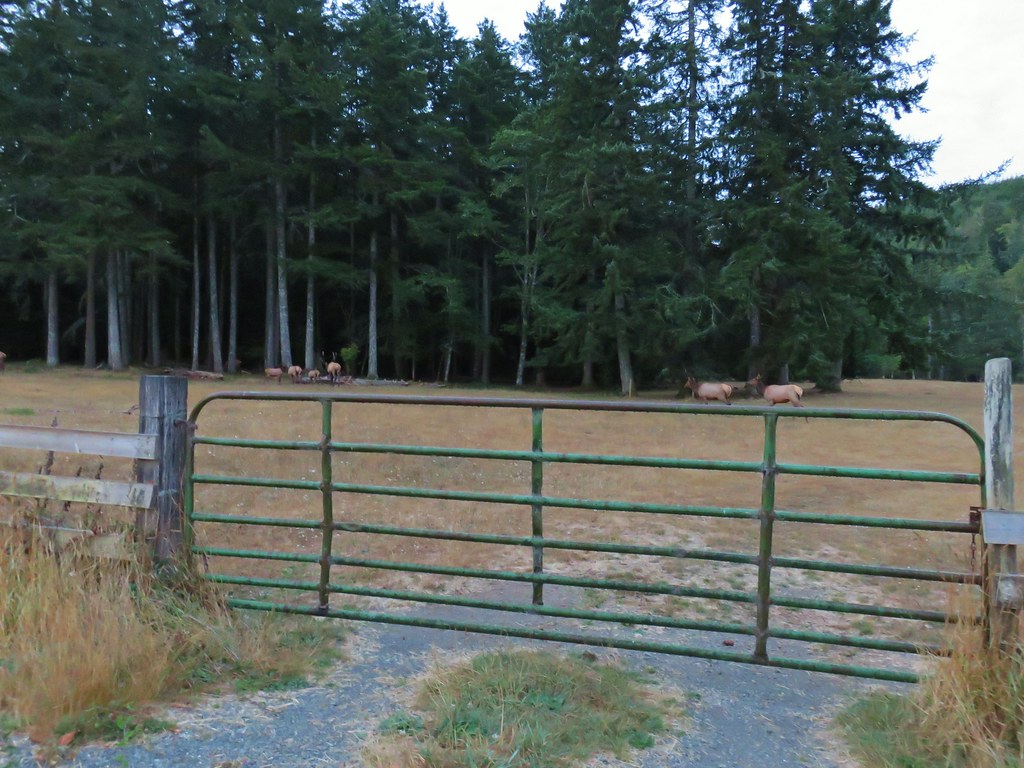
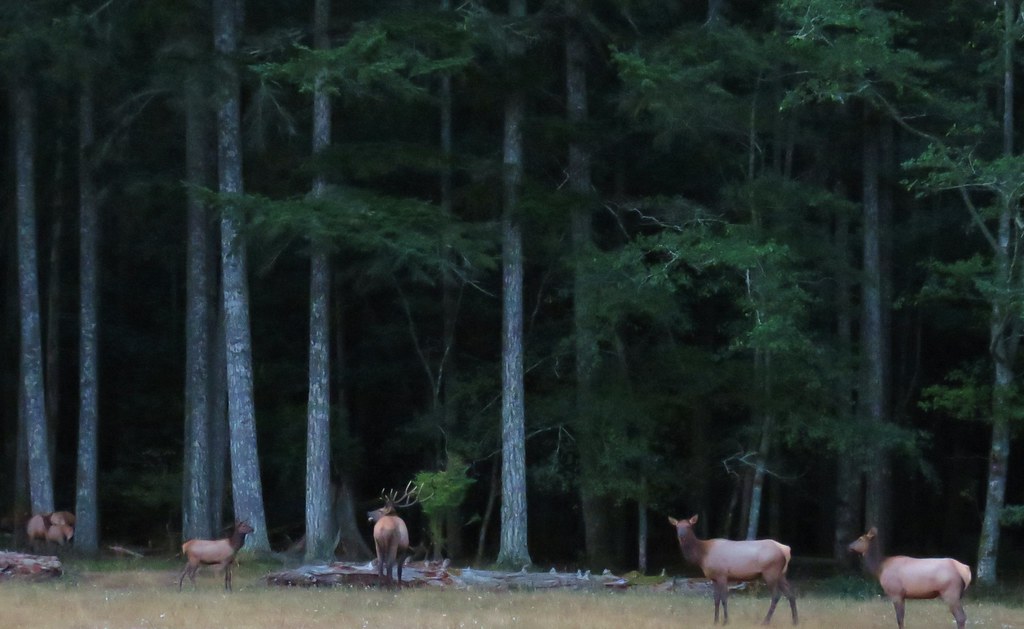
Prior to reaching the vehicular obstacle course that was the Forest Service Roads we spotted a small elk herd and a number of deer along Elk River Road. It was still a bit dark for pictures but we did our best from the idling car.
IMG_2773

IMG_2777

IMG_2780

We parked at the small pullout that is the trailhead after a long drive (time wise) that included stopping a couple of times to remove small trees from the road and also at the junction with FR 390 because the 390 post was in the center of a fork and we didn’t want to be on that road but we couldn’t tell which one the post was referring to. (Hint – The left fork was FR 390 so we went right.)
IMG_2791Barklow Mountain West Trailhead

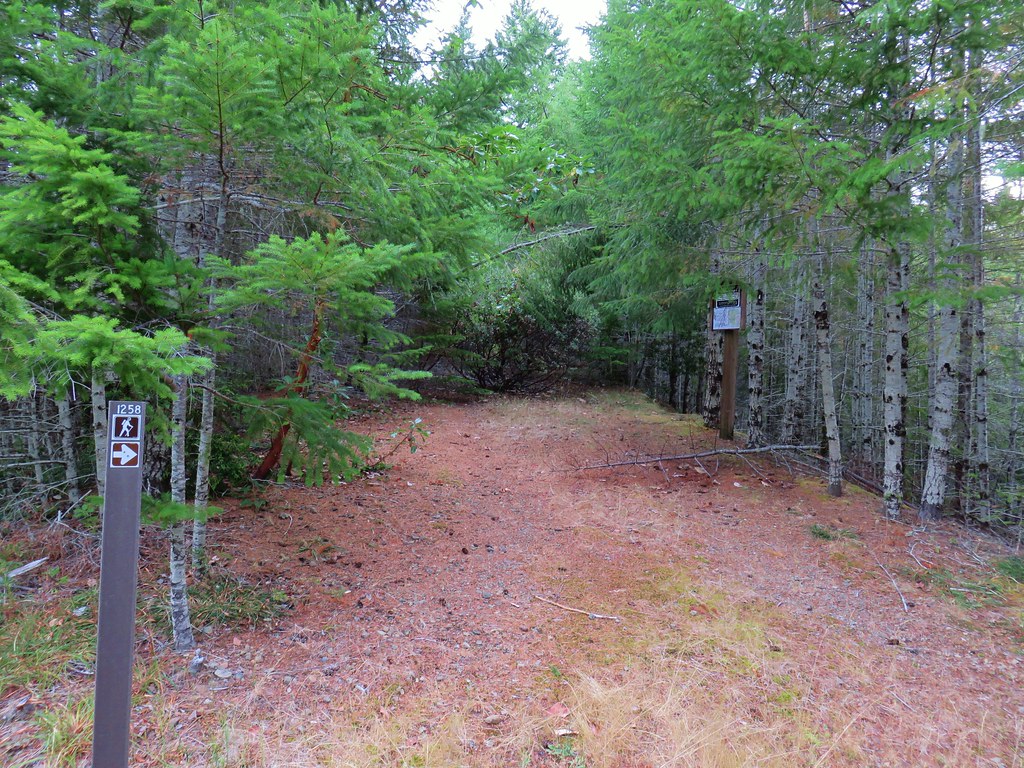
The Barklow Mountain Trail dropped slightly from a closed road bed and quickly entered the Copper-Salmon Wilderness.
IMG_2793

IMG_2794

The forest along the trail was a mix of tanoak and madrone and some sections with fir and pine.
IMG_2797

IMG_2800

IMG_2802

IMG_2803

IMG_2806

IMG_2811

Not unlike the roads to the trailhead there were a few obstacles to maneuver around.
IMG_2805

After a mile and a half of climbing, the trail arrived at a saddle junction.
IMG_2813

The trail to the left led to Johnson Creek Road.
IMG_2814

The trail to the right was the one we wanted. This trail would lead up up to the old lookout site atop Barklow Mountain.
IMG_2817

Approximately .3 miles beyond the junction we came to an unmarked side trail heading downhill to the right.
IMG_2820

This short spur trail led down to the site of a now collapsed shelter.
IMG_2821

Beyond the shelter the trail steepened a bit as it wound beneath Barklow Mountain.
IMG_2824

We passed through a patch of manzanita where we had a nice view south of nearby Copper Mountain.
IMG_2831

IMG_2832

A total of .4 miles from the old shelter we arrived at an unsigned junction on a ridge. Here we turned left to visit the lookout site.
IMG_2834

From the lookout site we could barely make out the Pacific to the SW along with Grassy Knob (post).
IMG_2836Grassy Knob is on the horizon just to the left of the near trees.

IMG_2838Copper Mountain from the lookout site.

After a break we headed back to the car and navigated the obstacle course again. Fortunately we did not encounter any other cars until we were clear of the mess. We then drove back to Bandon, passed through town, and continued north on Highway 101 for three miles to the signed turn for Bullards Beach State Park.

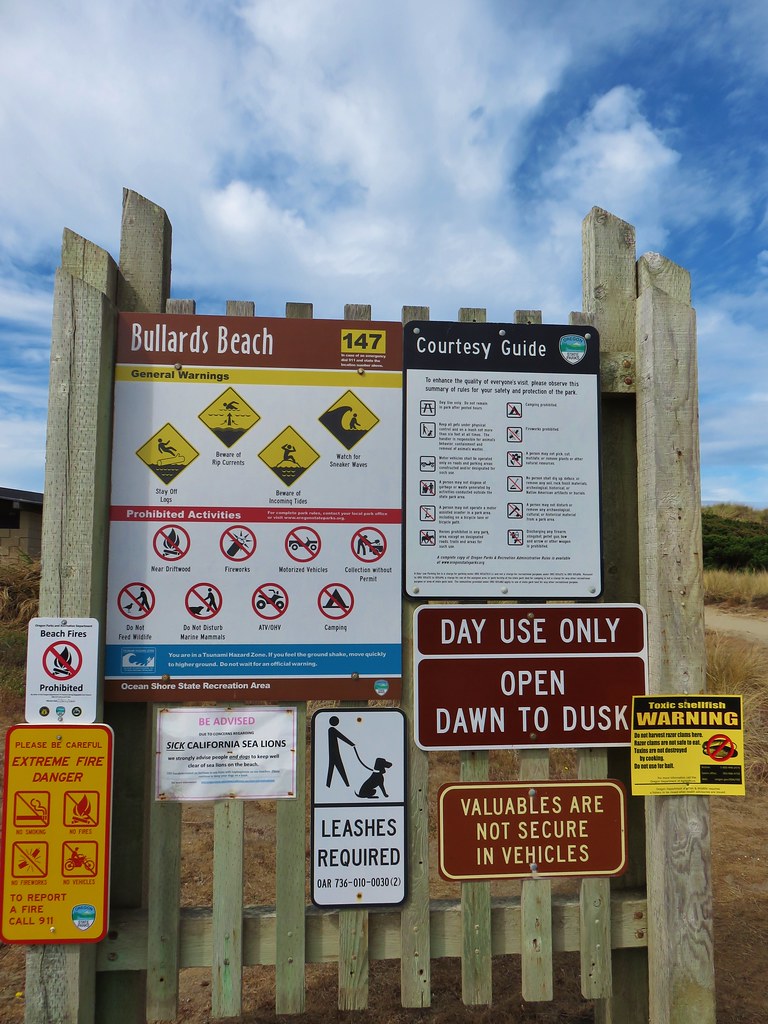
We parked at the beach access parking lot which is located 1.3 miles from the highway.
IMG_2845

Our plan was to hike a clockwise loop along the Coquille River, the north jetty, and the beach. From the parking lot we headed inland on a paved path signed for the campground.
IMG_2849

IMG_2850

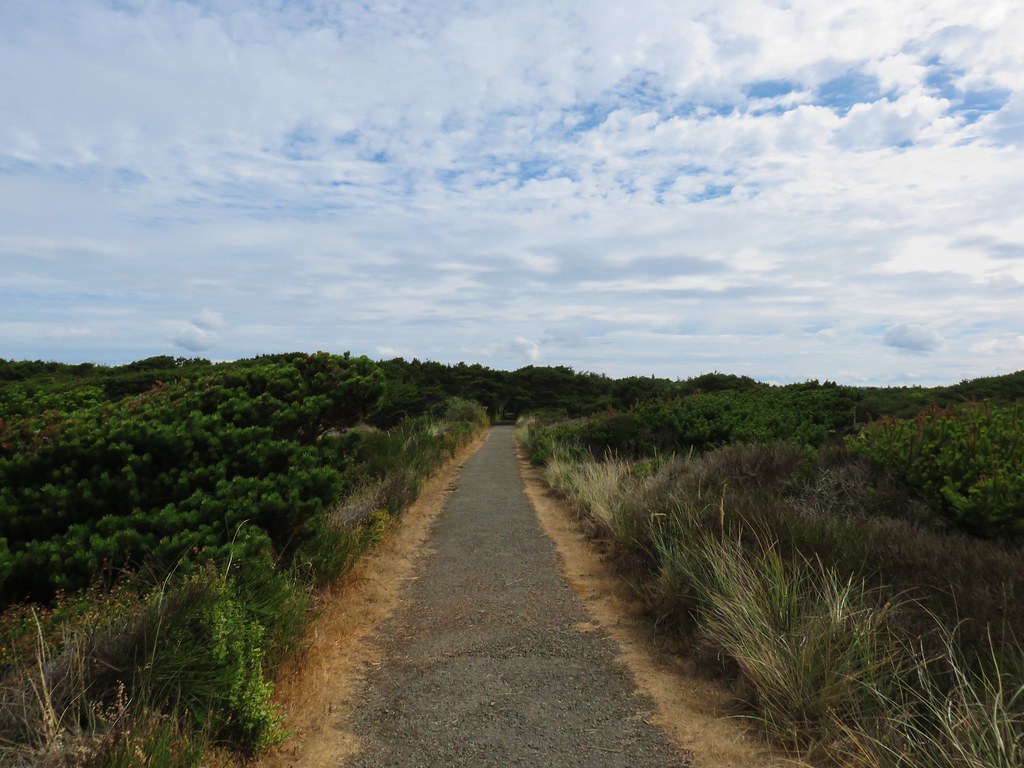
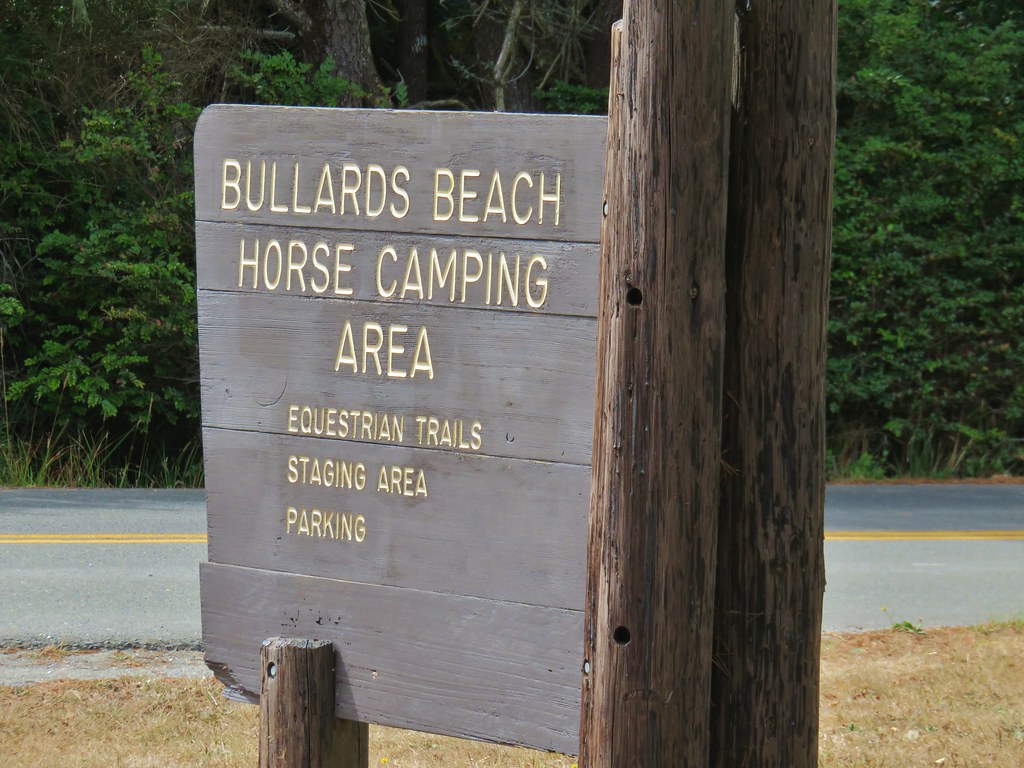
We followed this path until we had crossed the entrance to the Bullards Beach Horse Camping Area.
IMG_2852

IMG_2853

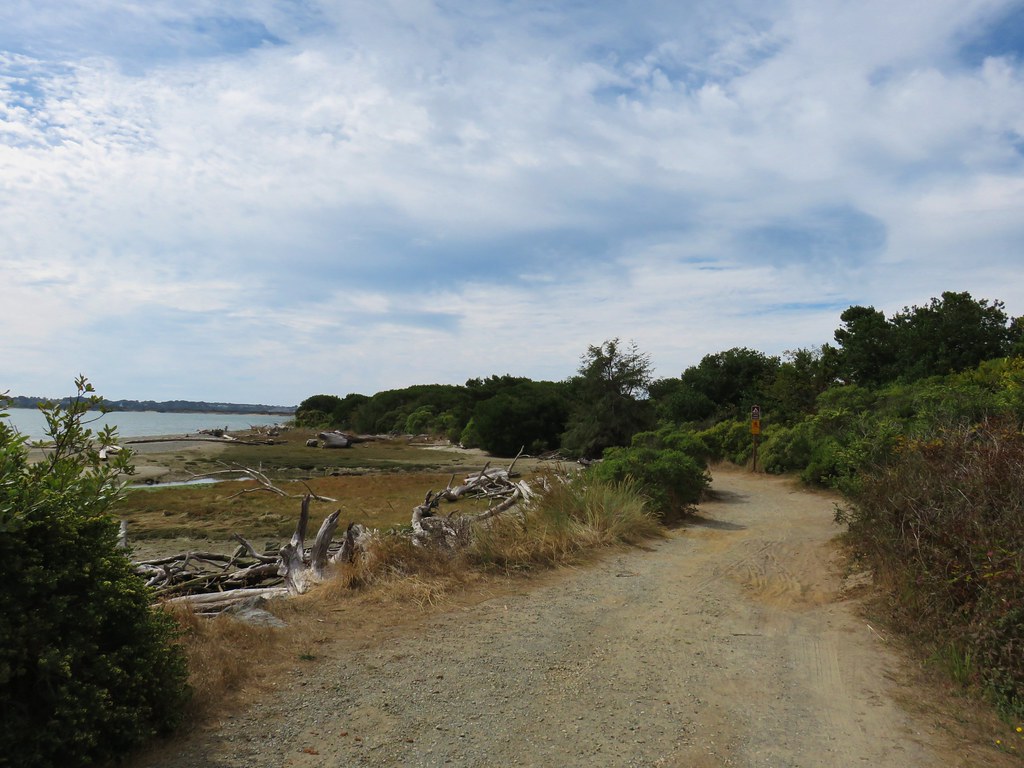
Just beyond that entrance (.4 miles from the beach parking area) we turned right off the paved path and crossed the paved park entrance road onto a dirt road which led us down to the Coquille River.
IMG_2854

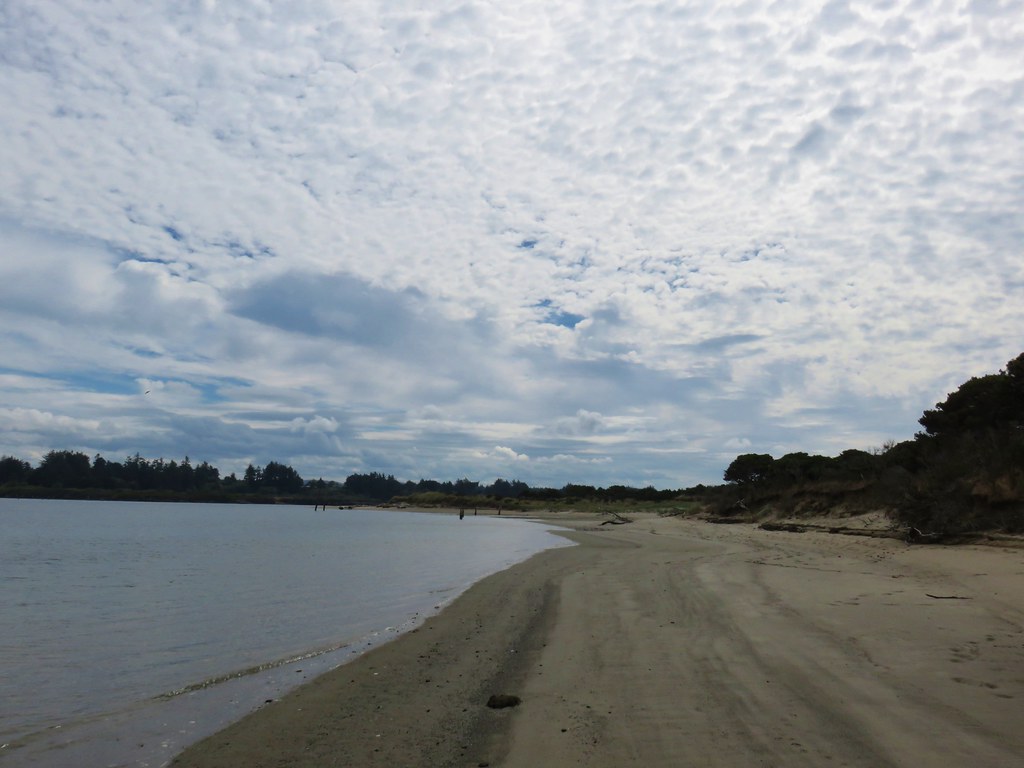
There was no actual trail along the river so we spent most of the next 2 miles walking along the sandy river bank. We were forced inland a couple of times in order to cross water on logs.
IMG_2873

IMG_2860

IMG_2856

IMG_2861

IMG_2872

There was a lot of activity on the river between boats and birds.
IMG_2867

IMG_2875

IMG_2878

IMG_2879

As we neared the north jetty across from Bandon’s Old Downtown we turned inland at a sandy gap which led to a gravel road.
IMG_2884

IMG_2885

IMG_2887

We followed this road for .4 miles staying left at a fork on a grassy track.
IMG_2890

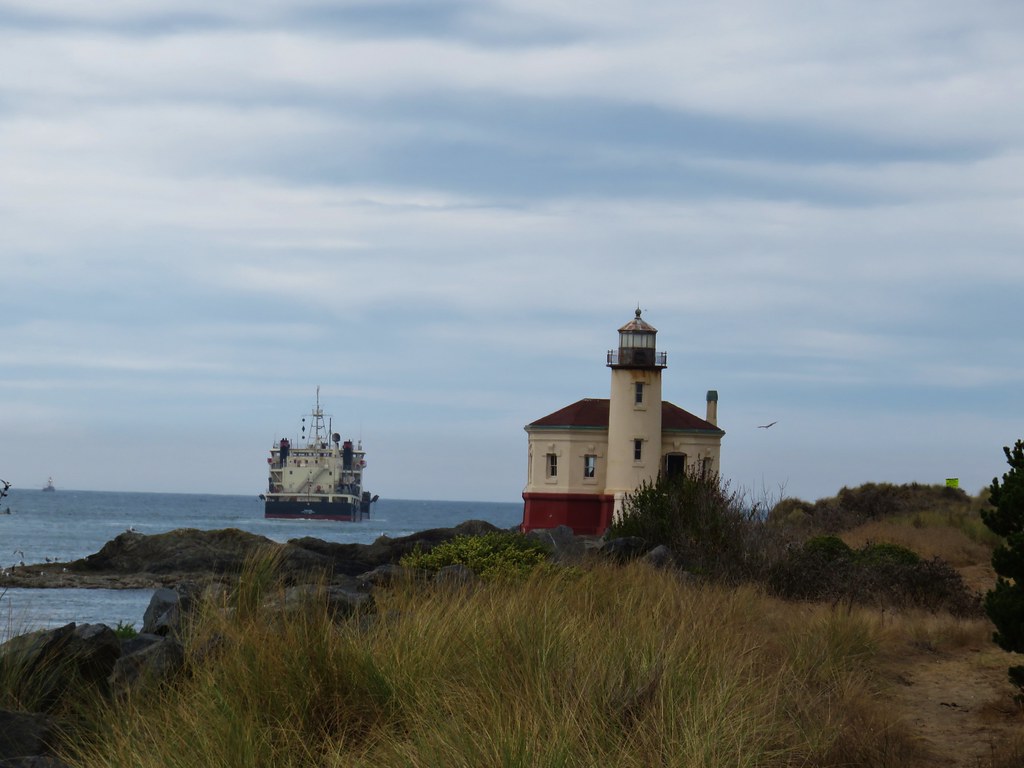
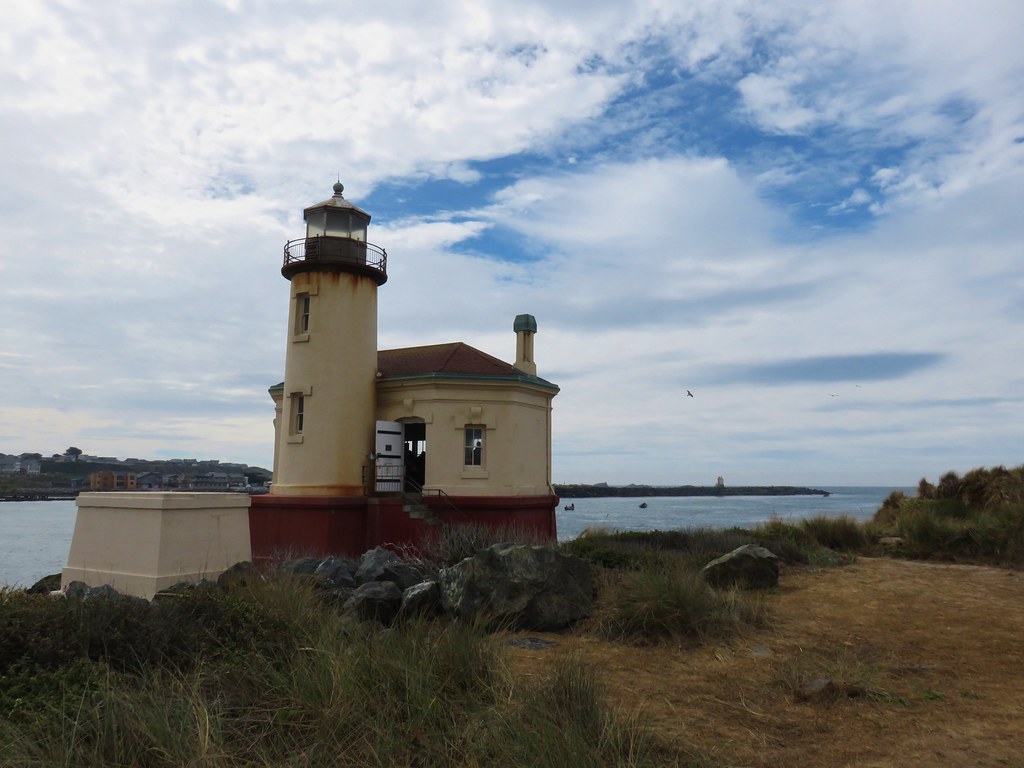
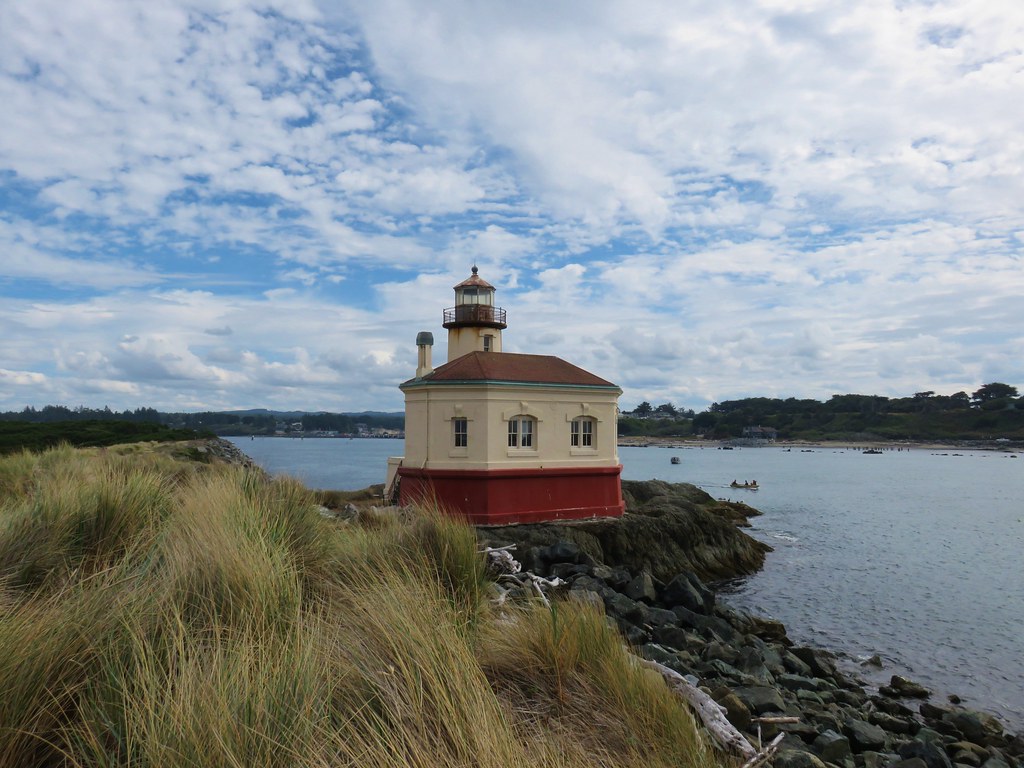
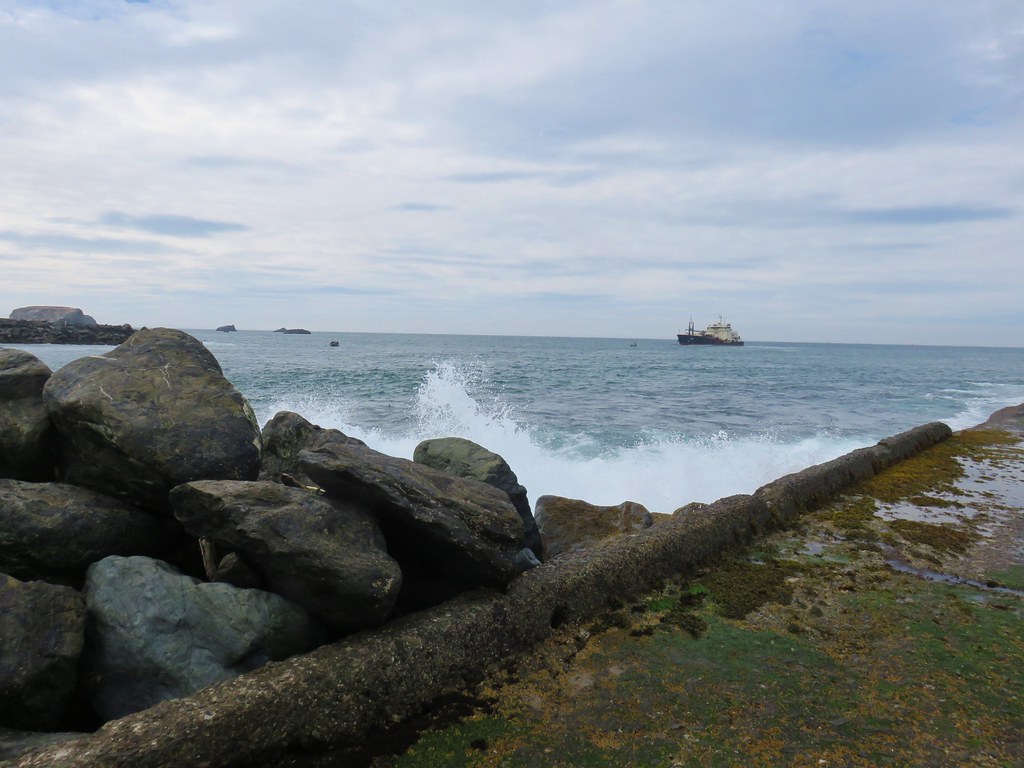
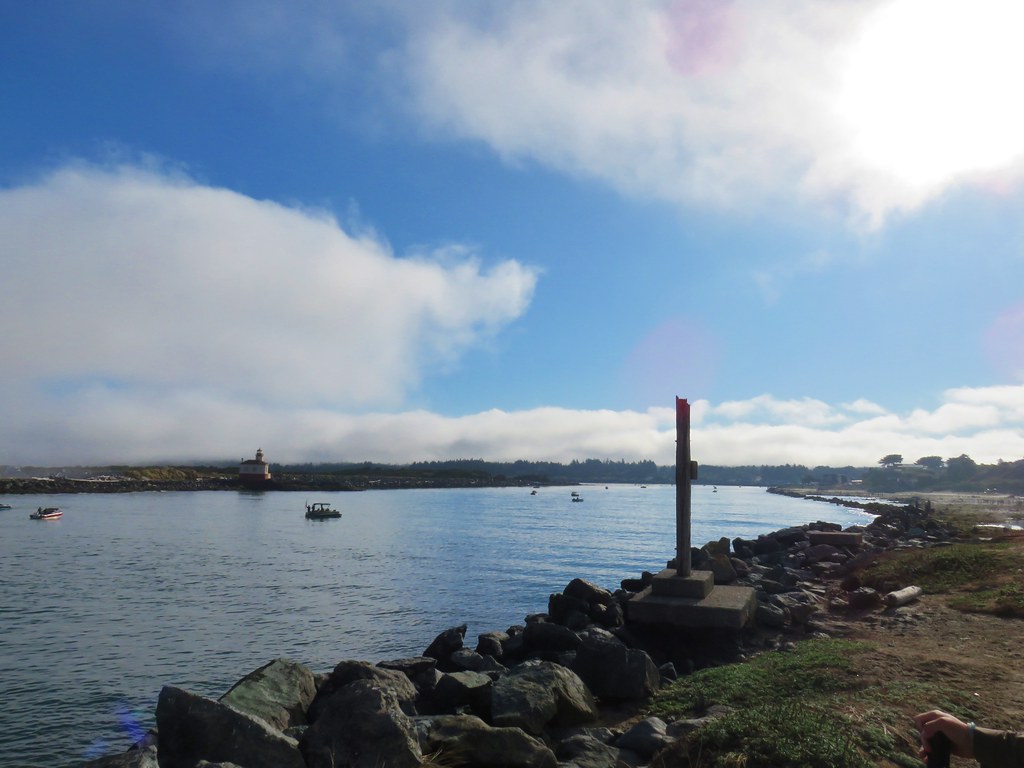
The road bed ended at the Coquille River Lighthouse. An Army Corps of Engineers ship was busily going back and forth near the mouth of the river.
IMG_2895

IMG_2892

IMG_2902

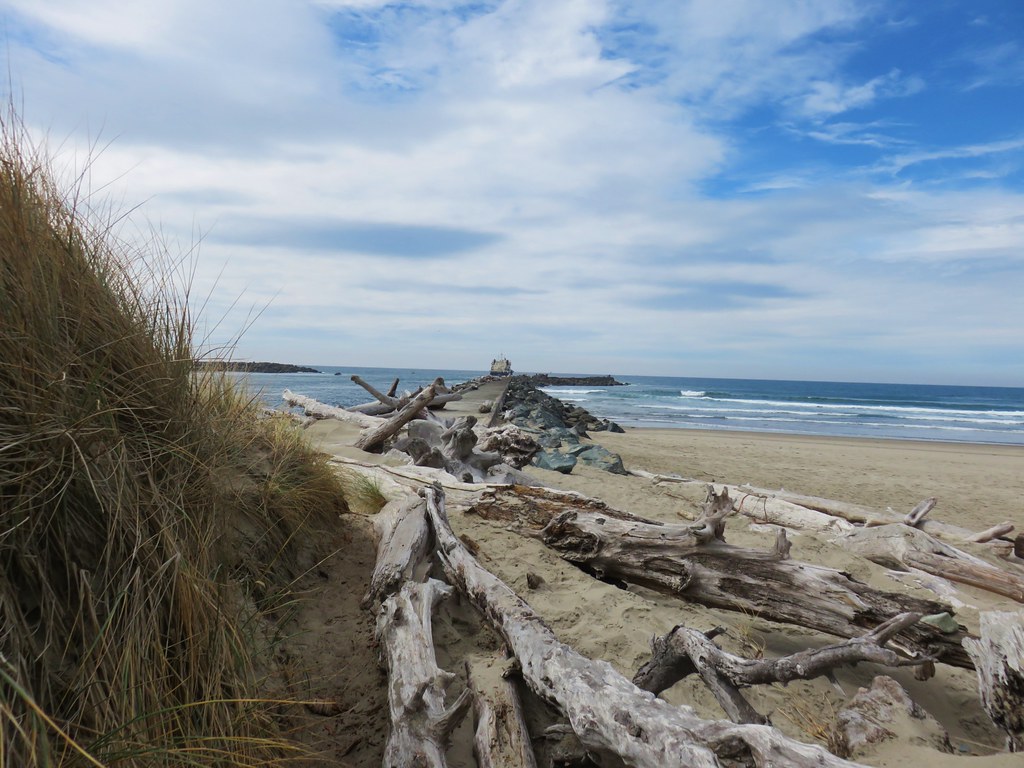
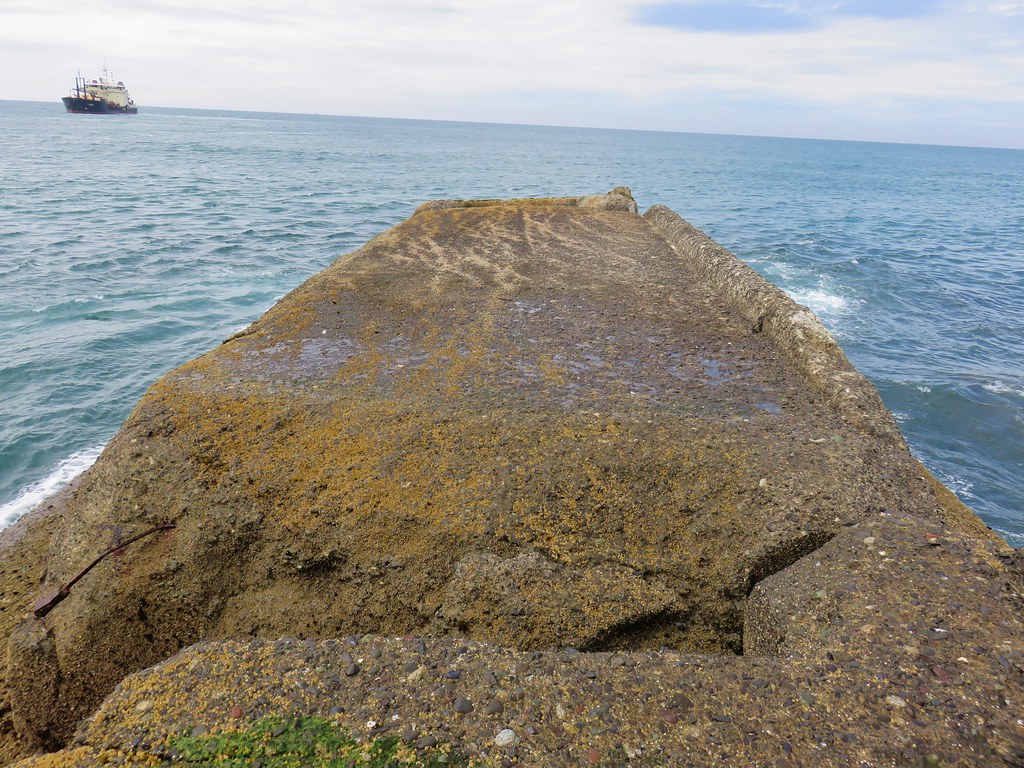
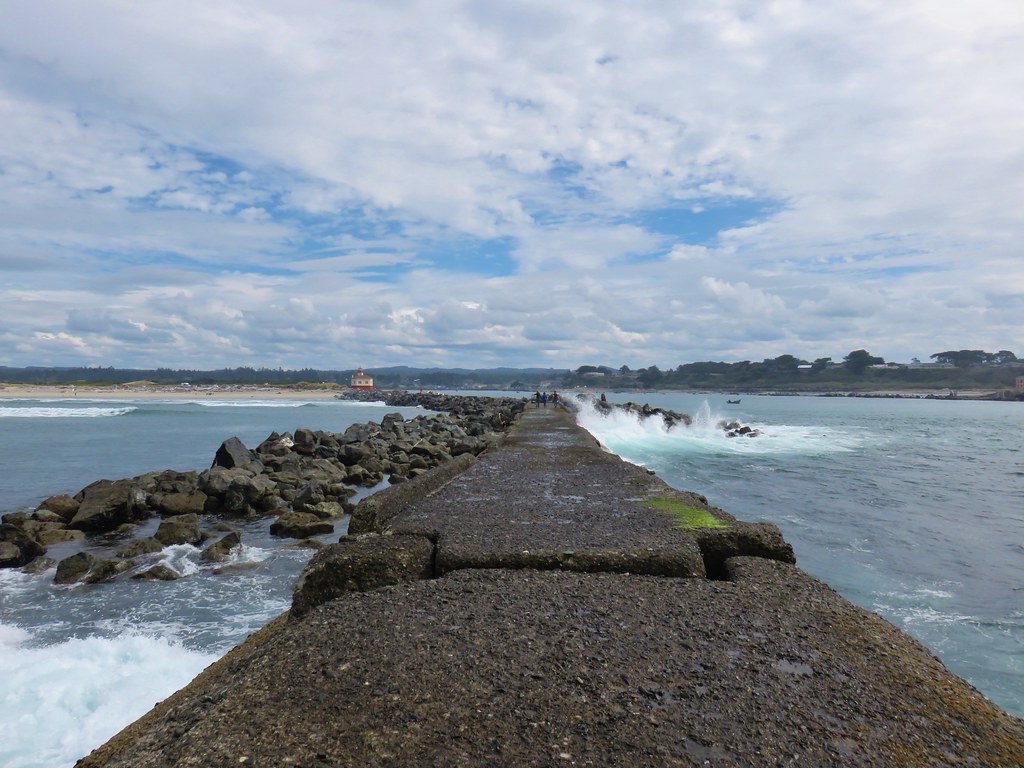
Once past the lighthouse we continued out along the north jetty for .2 miles.
IMG_2905

IMG_2906

IMG_2911

IMG_2914

IMG_2915

IMG_2928

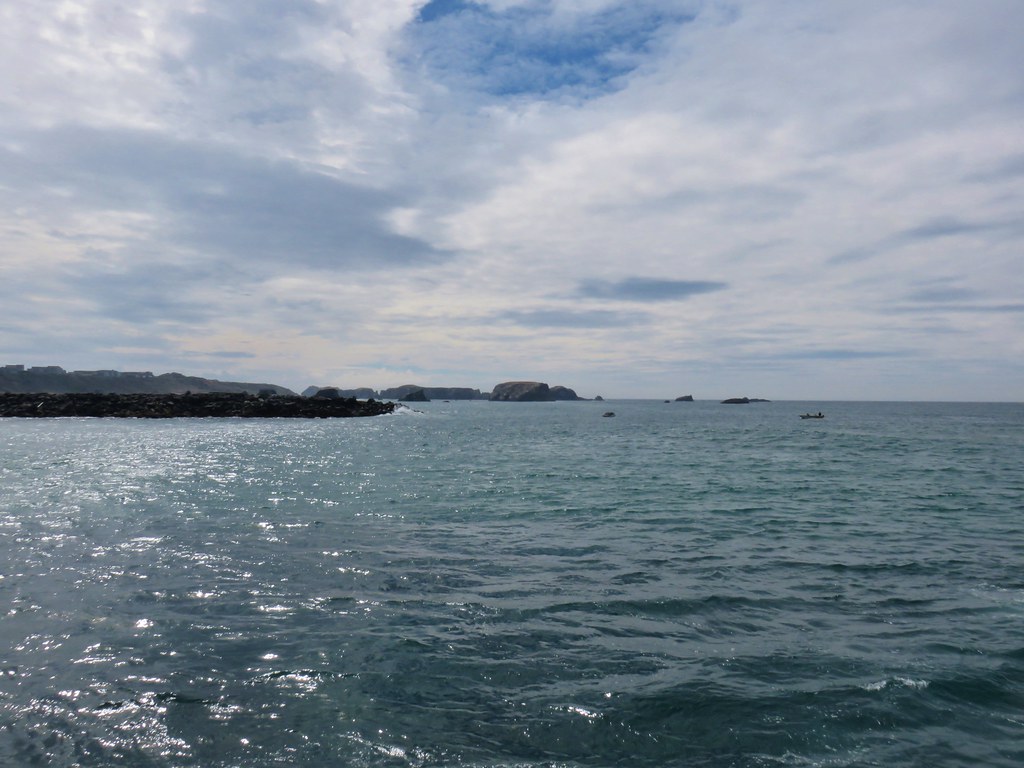
It was a much better day visibility wise than the previous one had been and from the jetty we got a decent look at some of the Bandon Islands on the other side of the river.
IMG_2924

IMG_2921

IMG_2922

IMG_2923

The view north was much less rocky.
IMG_2933

After partaking of the view we headed back, hopping off the jetty and onto Bullards Beach.
IMG_2940

After 1.5 miles along the beach we turned inland and climbed over the foredune to the beach access parking area.
IMG_2941

IMG_2943

IMG_2951

IMG_2957

IMG_2959

After a shower and change of clothes we found ourselves wandering through the old downtown again. When it was time for dinner we decided to go back to Foley’s Irish Pub. After another good meal there and desert from Pastries and Pizzas we turned in for the night. We had agreed that Bandon had quickly become one of our favorite coastal towns and were already looking forward to our next visit. Happy Trails!
Flirck: Barklow Mountain and Bullards Beach

Categories
Hiking Oregon Oregon Coast Southern Coast

New River and Bandon Islands

We had changed our mini-vacation plans from a four day backpacking loop around and up Diamond Peak to four days of hiking on the Oregon Coast due to the possibility of wet weather. Wet weather isn’t typically a big deal at the coast and drying off in a motel room is a lot more convenient than trying to keep your backpacking gear dry for multiple days. When we had looked at the forecast for Bandon the best looking day weather wise had been Friday with a forecast of mostly sunny and no chance of showers. We planned a pair of hikes for that day, first at the New River Recreation Area and then a walk along the beach starting at the Bandon South Jetty Park.

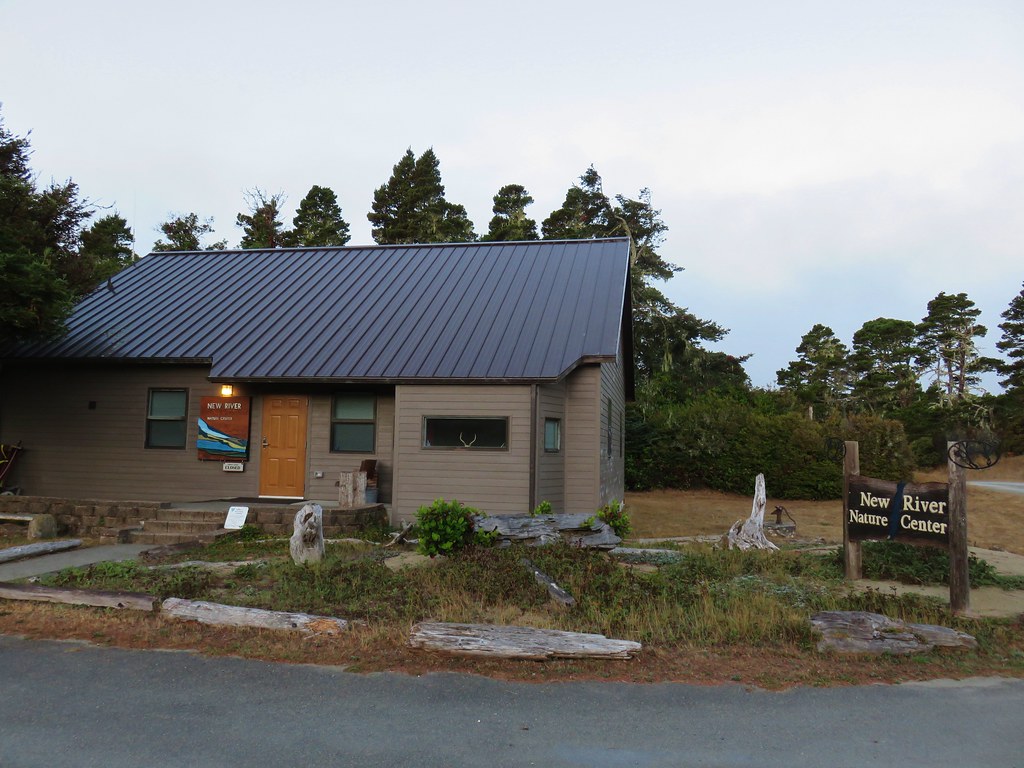
The BLM managed New River Recreation Area is located eight miles south of Bandon on Croft Lake Road. We parked near the New River Nature Center which hadn’t opened yet for the day.

IMG_2509

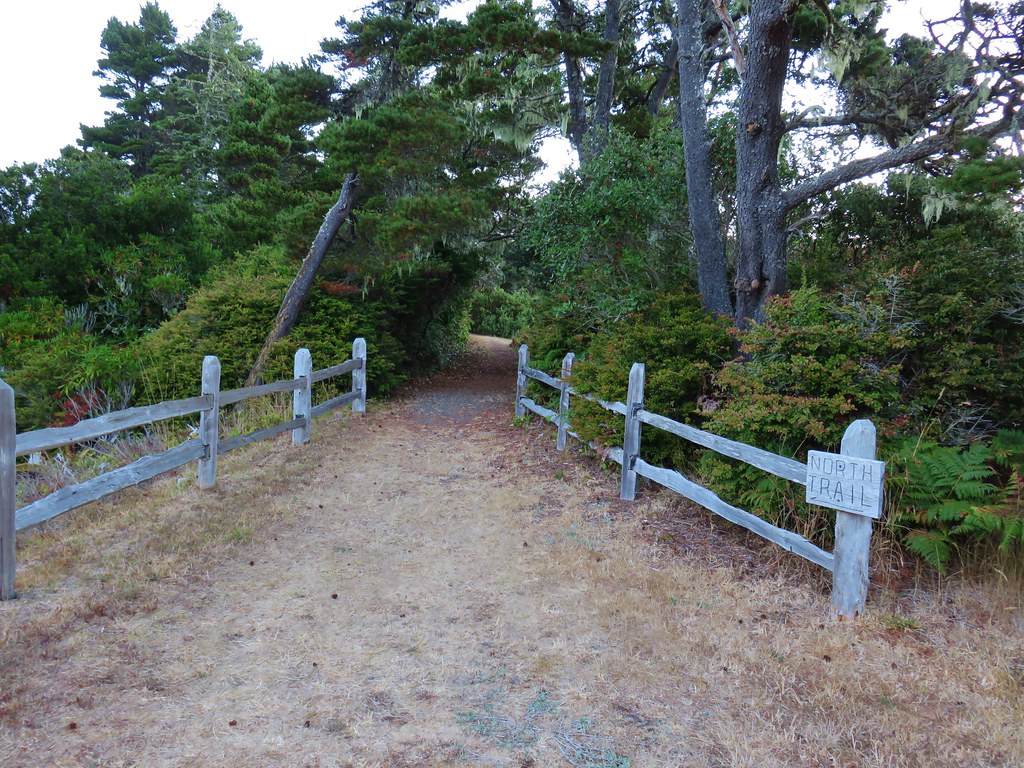
We headed north from the parking area onto the signed North Trail.

IMG_2512

A little over a quarter mile along this forested path we came to a junction with the Ridge Trail.

IMG_2515

IMG_2516

We turned right onto this trail which made a .4 mile horseshoe along the top of an old dune now covered in vegetation including some madrone trees.

IMG_2517

At a bench at the end of the Ridge Trail we turned right onto the Huckleberry Hill Trail (If we had gone straight at the North/Ridge Trail junction we would have wound up here in less than a tenth of a mile.)

IMG_2522

We followed the Huckleberry Hill trail .4 miles down an increasingly sandy track to the Ocean View Trail where we turned left (the only choice).

IMG_2523

IMG_2524

Huckleberries along the Huckleberry Hill Trail

IMG_2527

IMG_2528

IMG_2529

After just 430′ on the Ocean View Trail we took a signed spur trail to the right to a viewpoint.

IMG_2531

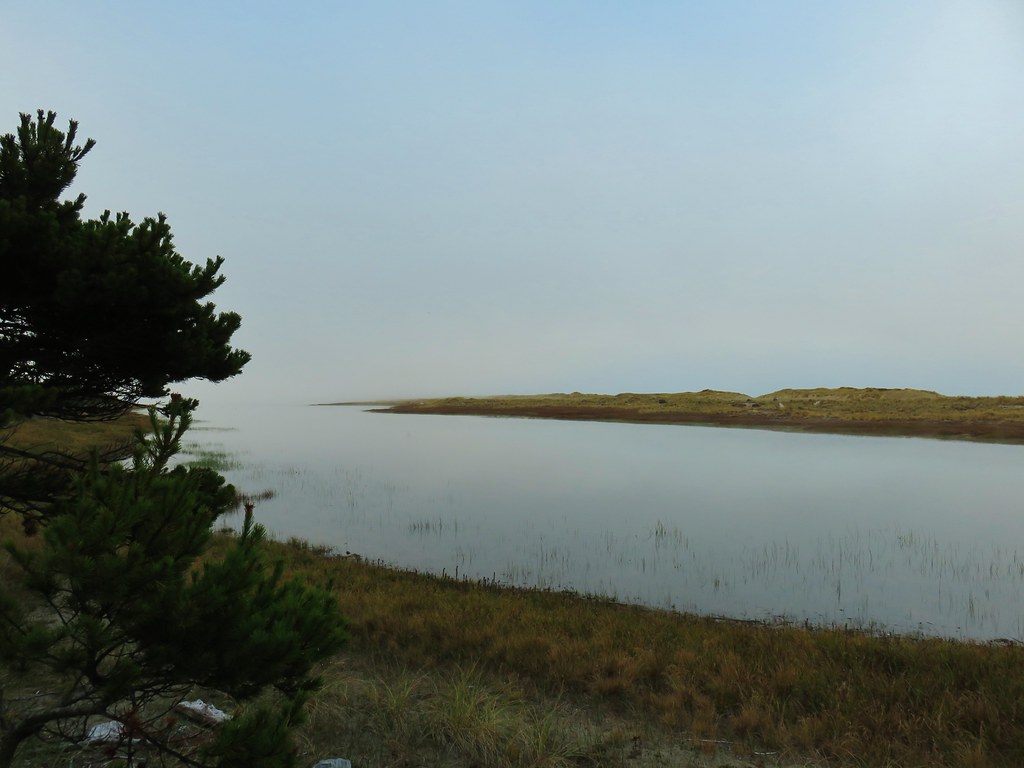
We arrived at the New River in less than 100 yards. The Ocean was barely visible on the other side of a low rise on the beach between the river and the Pacific.

IMG_2532

IMG_2536

IMG_2537

We returned to the main trail and continued an additional .2 miles before arriving at the New River Boat Ramp.

IMG_2541

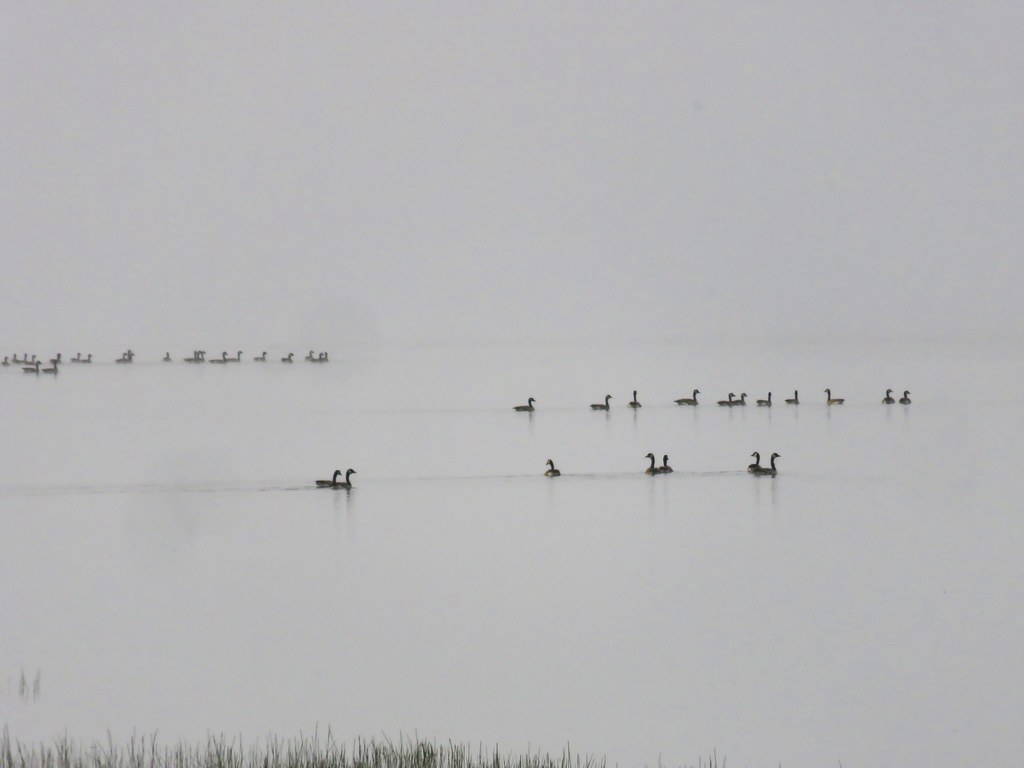
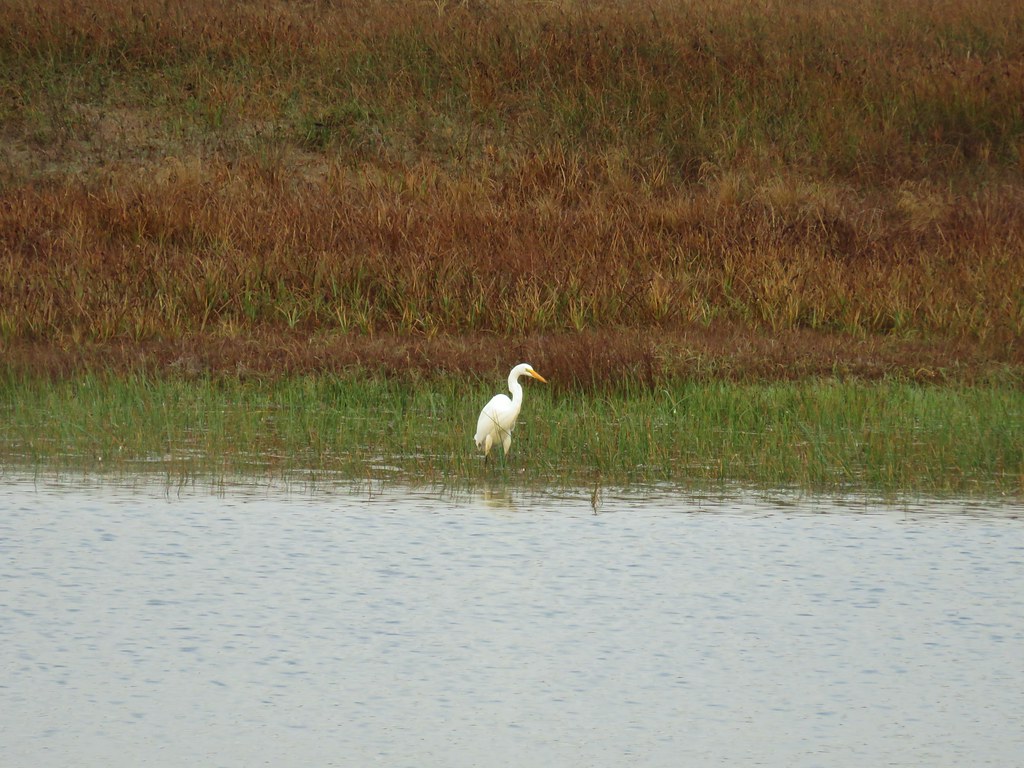
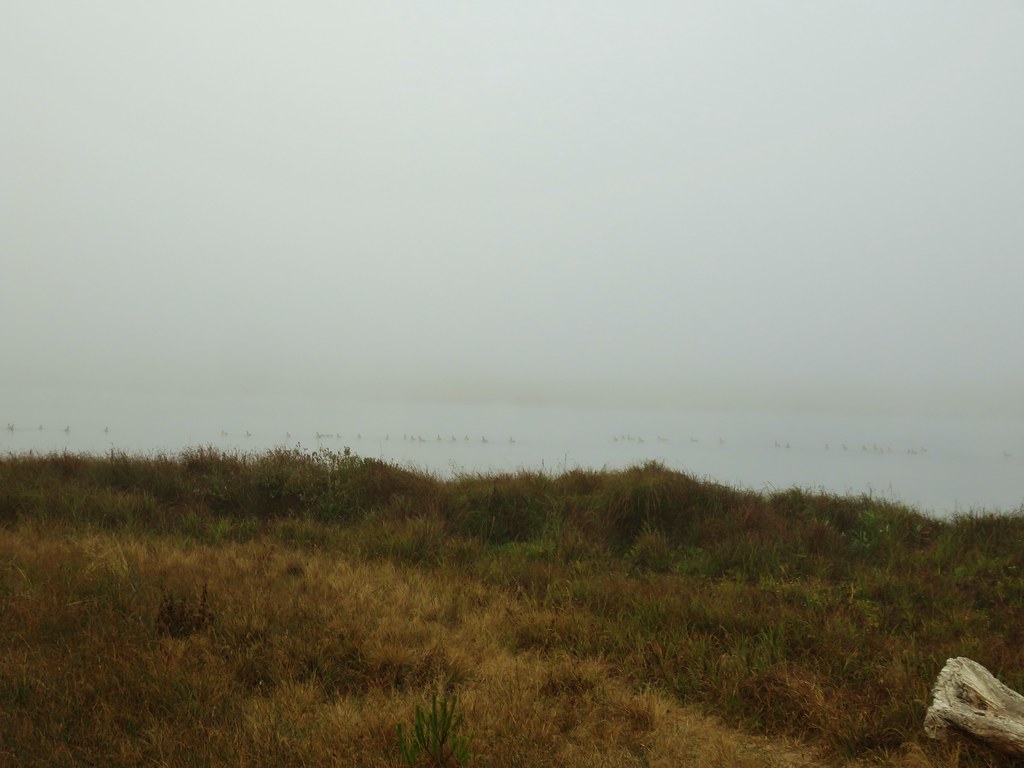
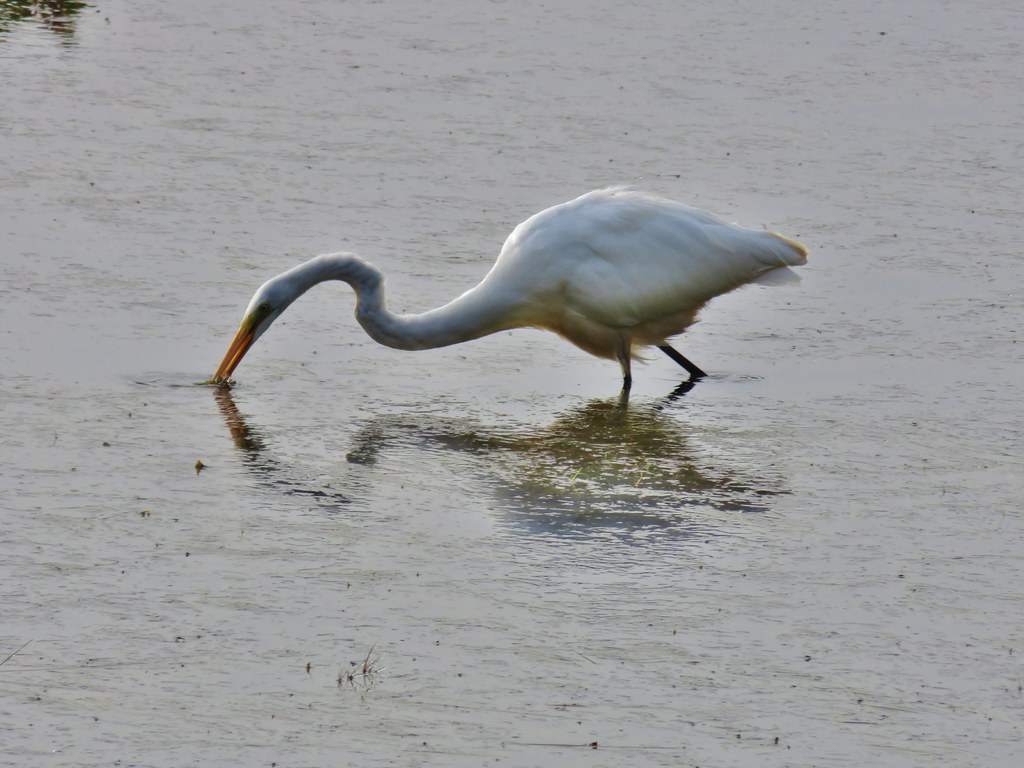
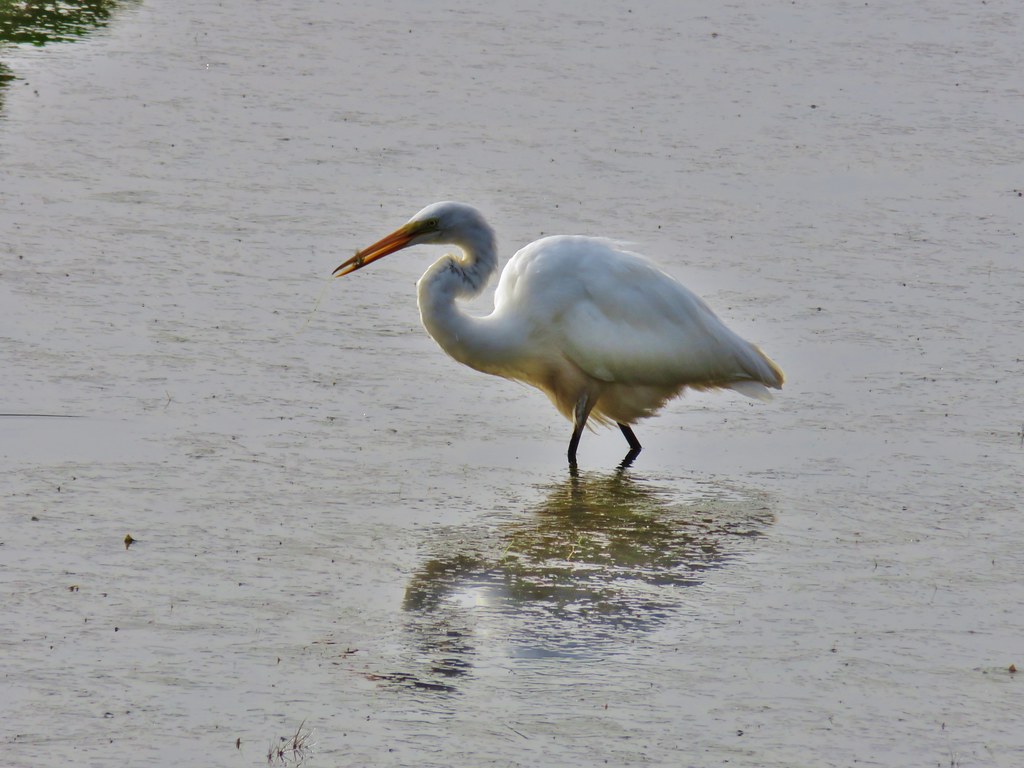
It was a little foggy but we could see quite a few Canada geese and an egret in the river.

IMG_2543

IMG_2548

IMG_2544

From the boat ramp we followed the road for .2 miles to the Muddy Lake Trail.

IMG_2555

IMG_2556

Two tenths of a mile from the road we turned right on the .1 mile New River Spur Trail.

IMG_2558

IMG_2559

Instead of burning off we noticed that the fog was getting thicker when we arrived back at the river.

IMG_2560

IMG_2564

Canada geese

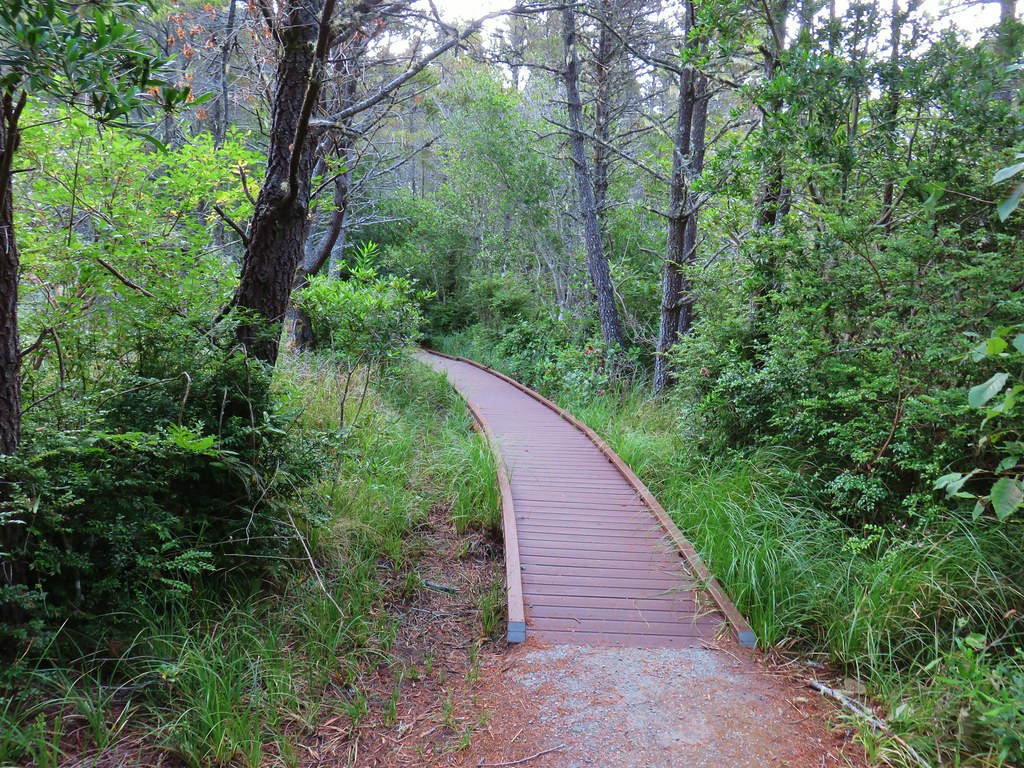
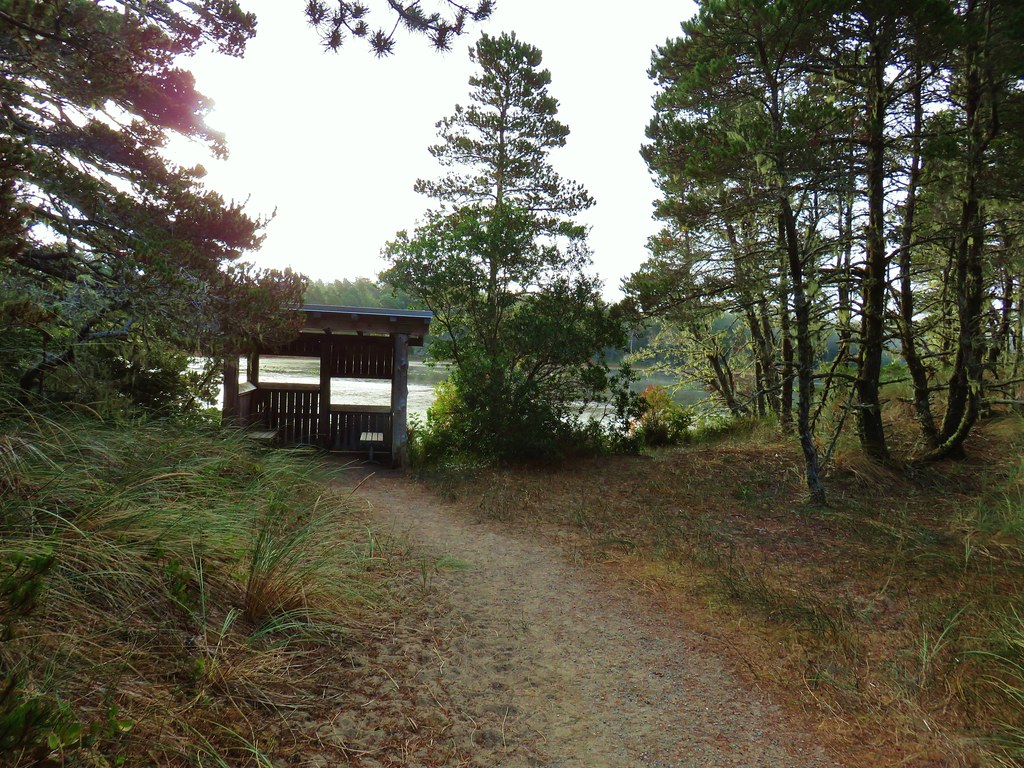
We headed back to the Muddy Lake Trail which we followed for about 110 yards, crossing over a boardwalk, to a very short spur trail leading to a bird blind at Muddy Lake.

IMG_2566

IMG_2569

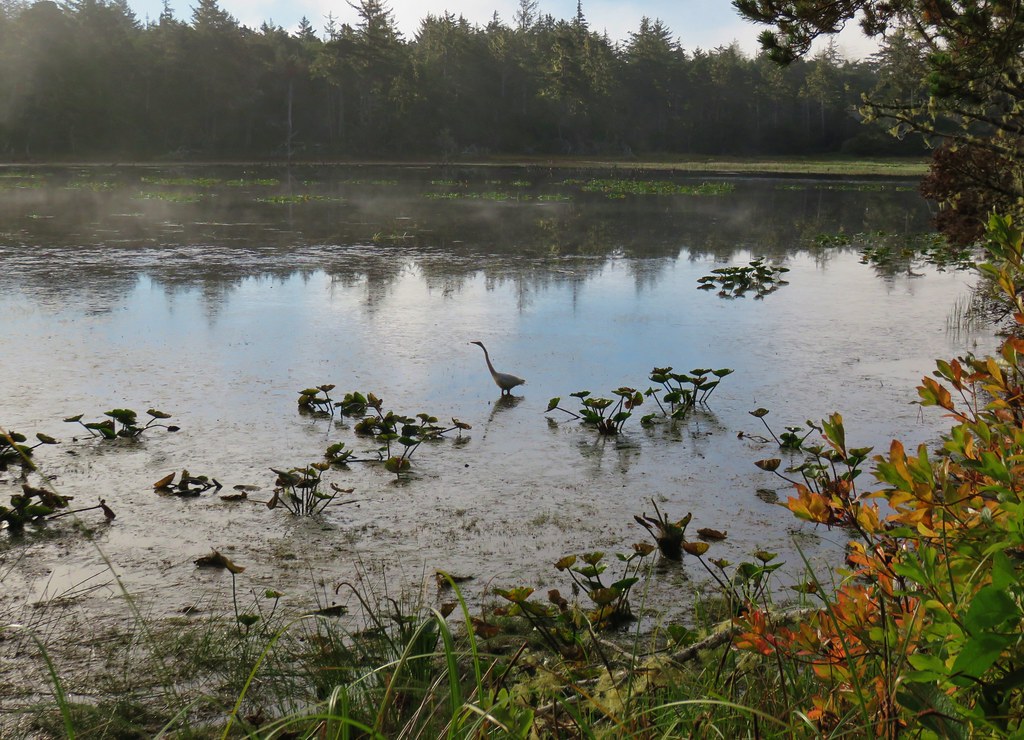
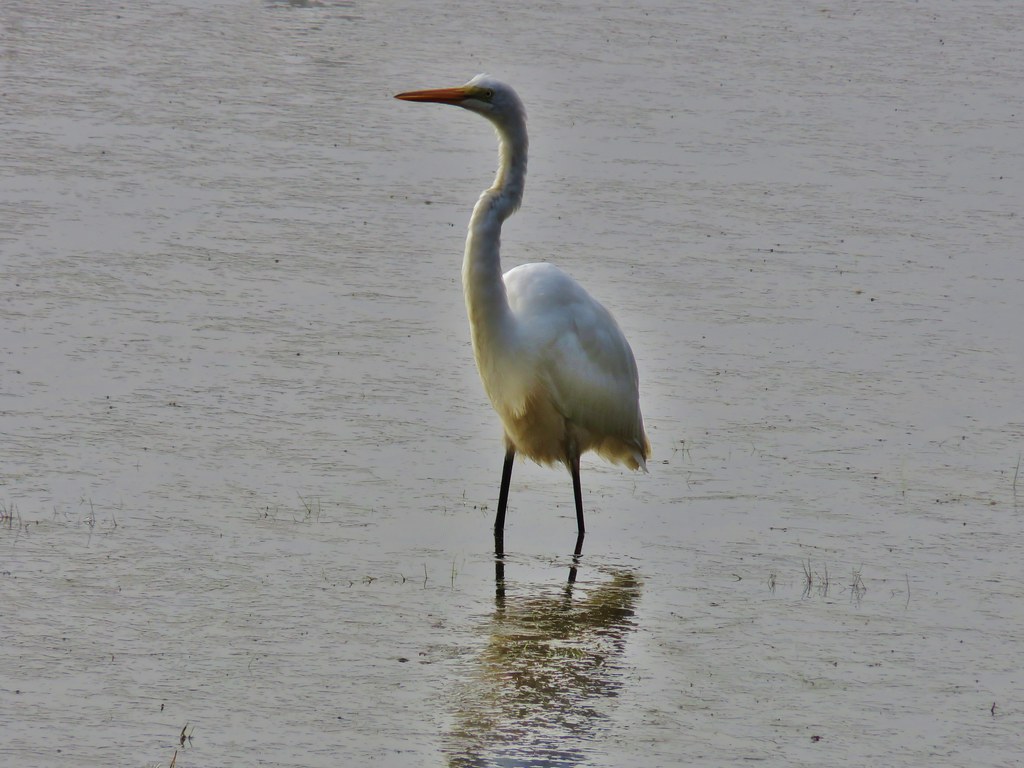
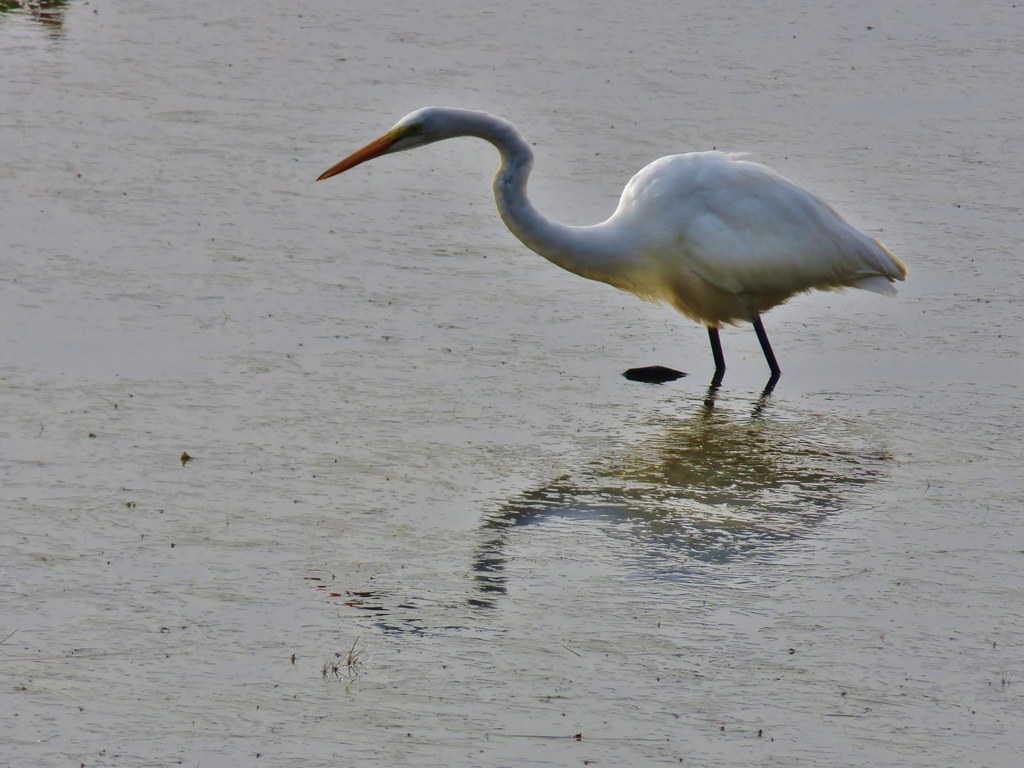
We were fortunate enough to have a couple of different birds hunting their morning meal near the blind.

IMG_2601

IMG_2573

IMG_2581

IMG_2595

The egret seemed to be having quite a bit of success.

IMG_2584

IMG_2585

IMG_2586

After watching the birds from the blind we continued on. A little over a quarter mile from the blind we came to another trail junction.

IMG_2604

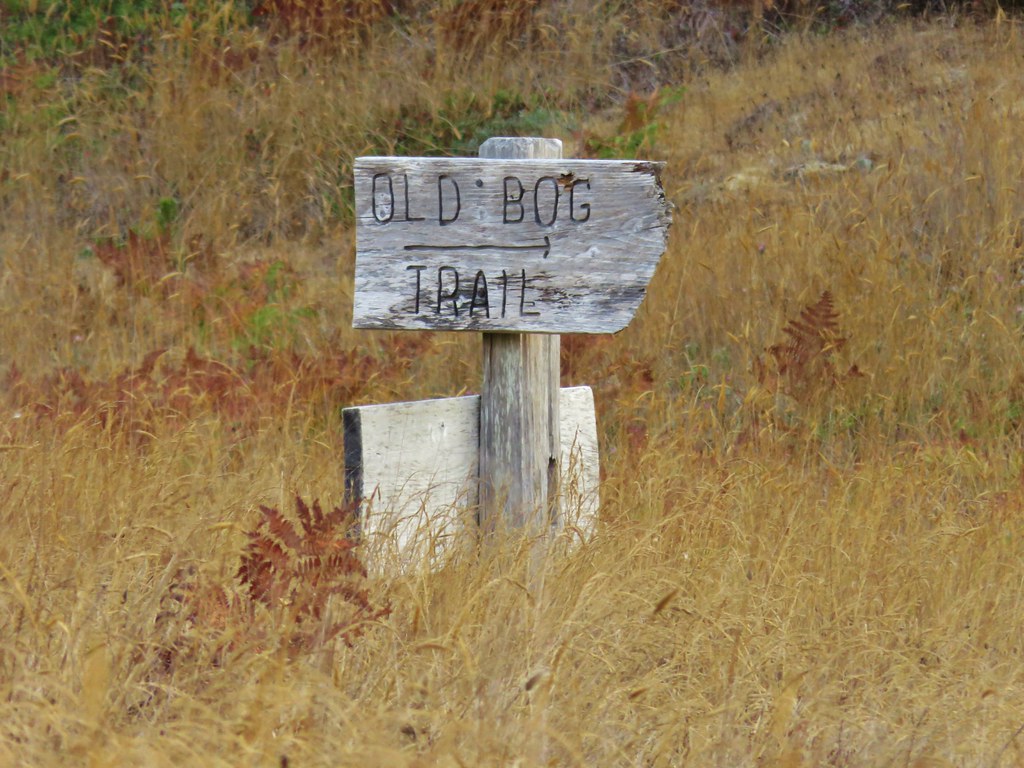
This first junction wasn’t signed but just over the small hill was a signed junction letting us know that this was the Old Bog Trail.

IMG_2605

IMG_2606

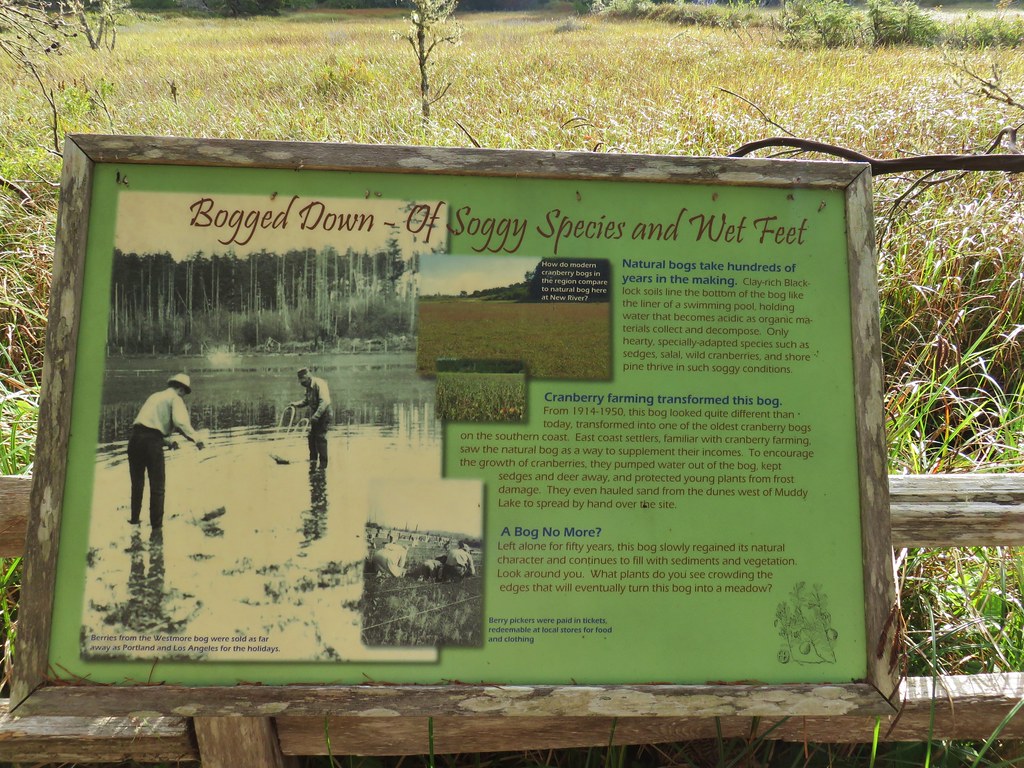
This .3 mile trail climbed up and over an old dune to the site of an old cranberry bog.

IMG_2607

IMG_2609

IMG_2610

After reading the history of the bog we returned to the Muddy Lake Trail and followed it another .2 miles back to the New River Nature Center. Even with all the side trips this was only a 3.6 mile hike making it a good option for the kiddos.

We drove back north to Bandon and used the GPS to guide us through town to the Bandon South Jetty Park located at the end of Lincoln Ave. SW across the Coquille River from the Coquille River Lighthouse.

IMG_2615

IMG_2616

We headed down to the beach just south of the jetty. There was a little bit of blue sky to the north and inland to the east.

IMG_2622

IMG_2621

That was not the case however to the south where we were headed.

IMG_2623

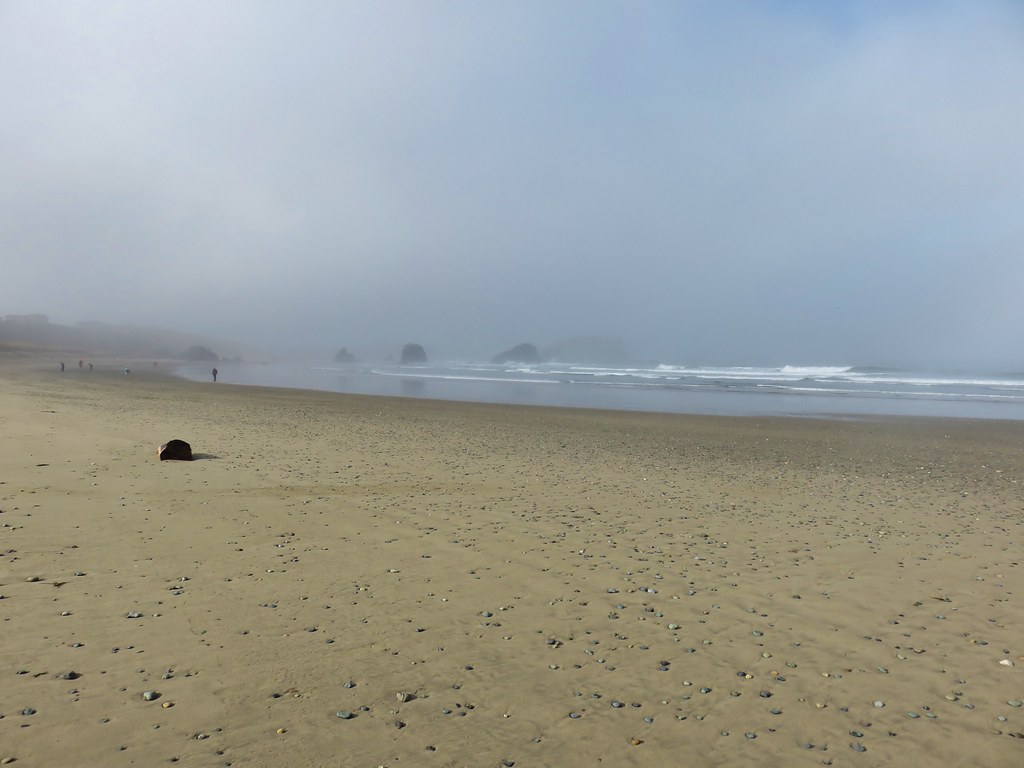
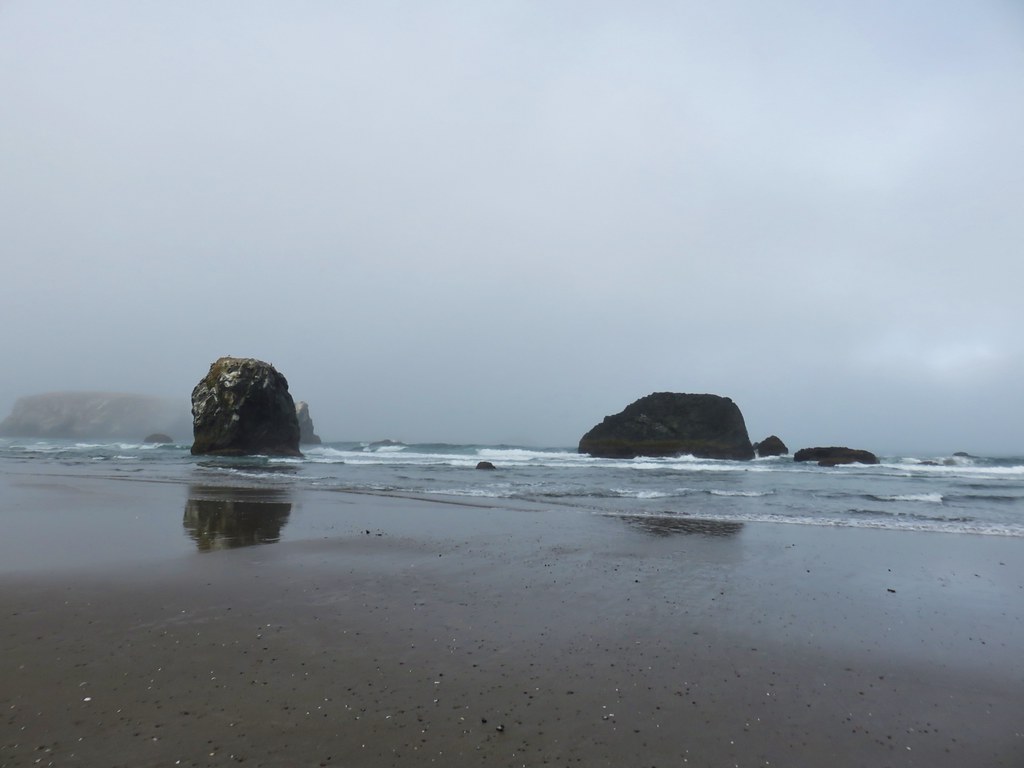
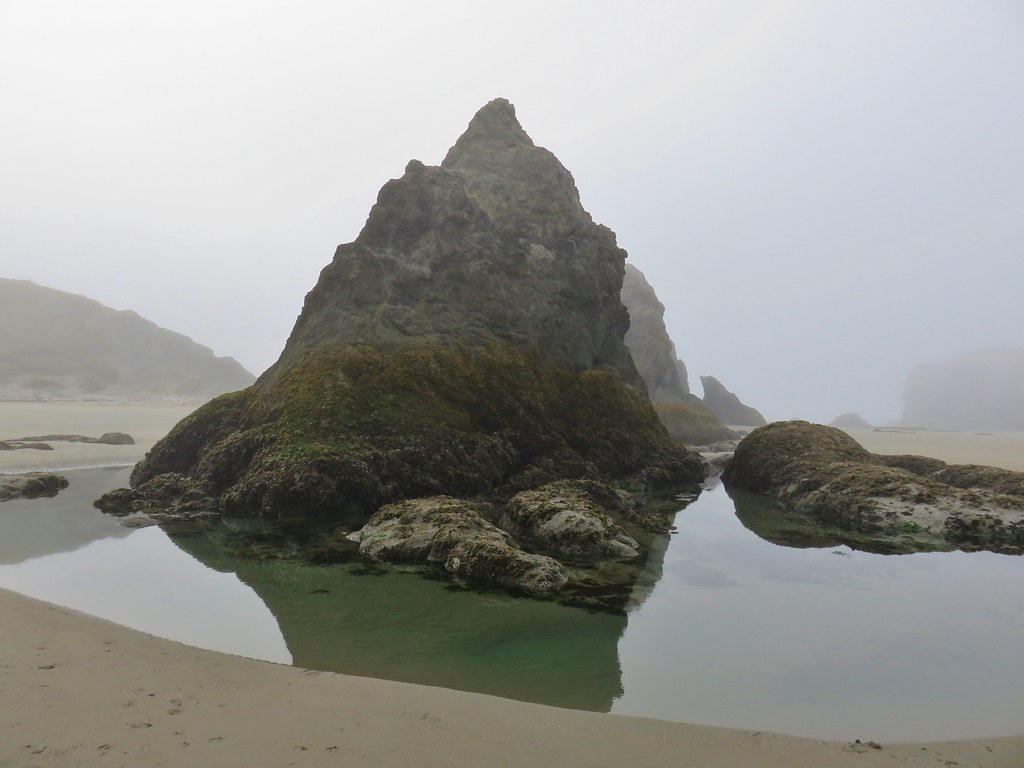
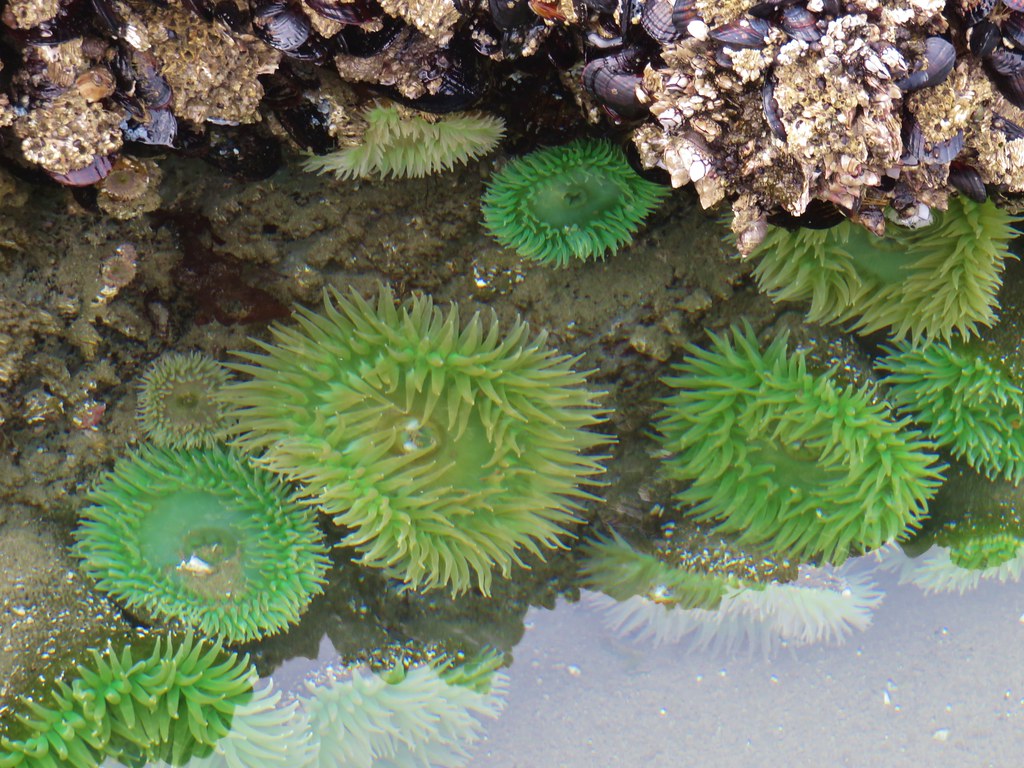
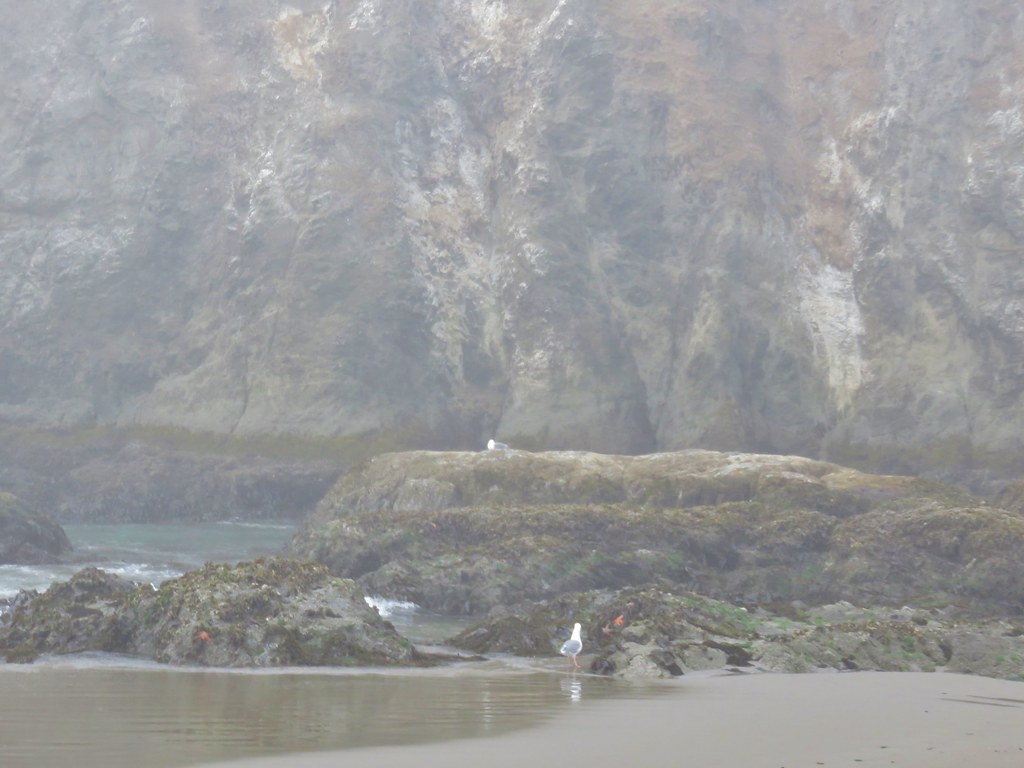
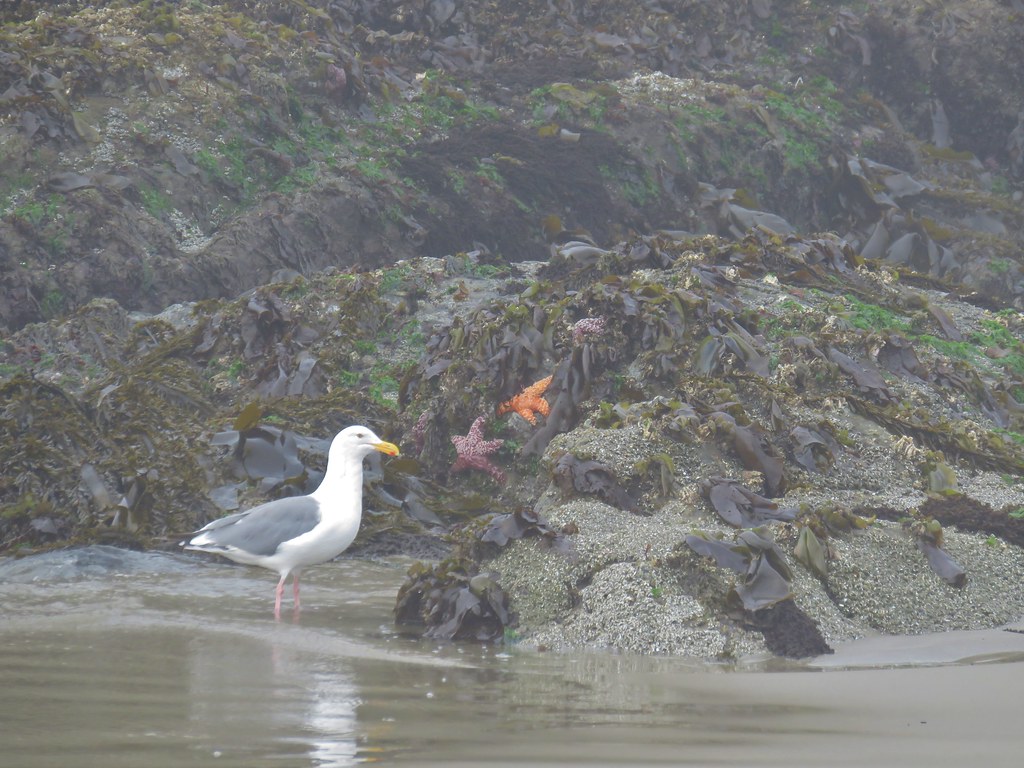
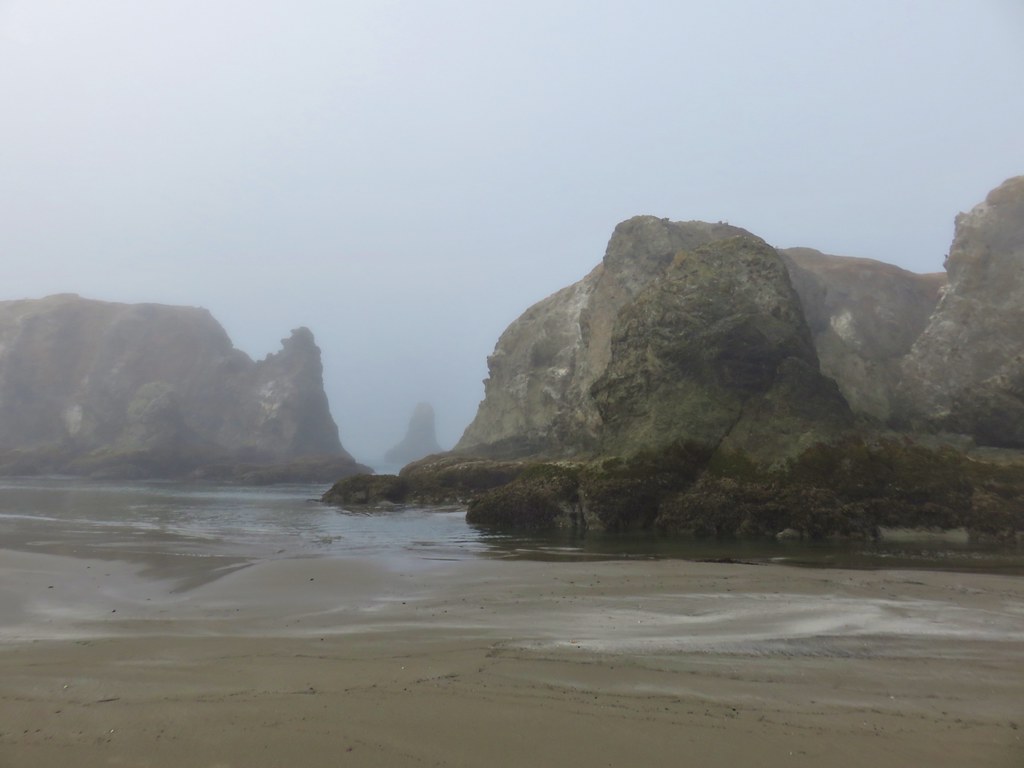
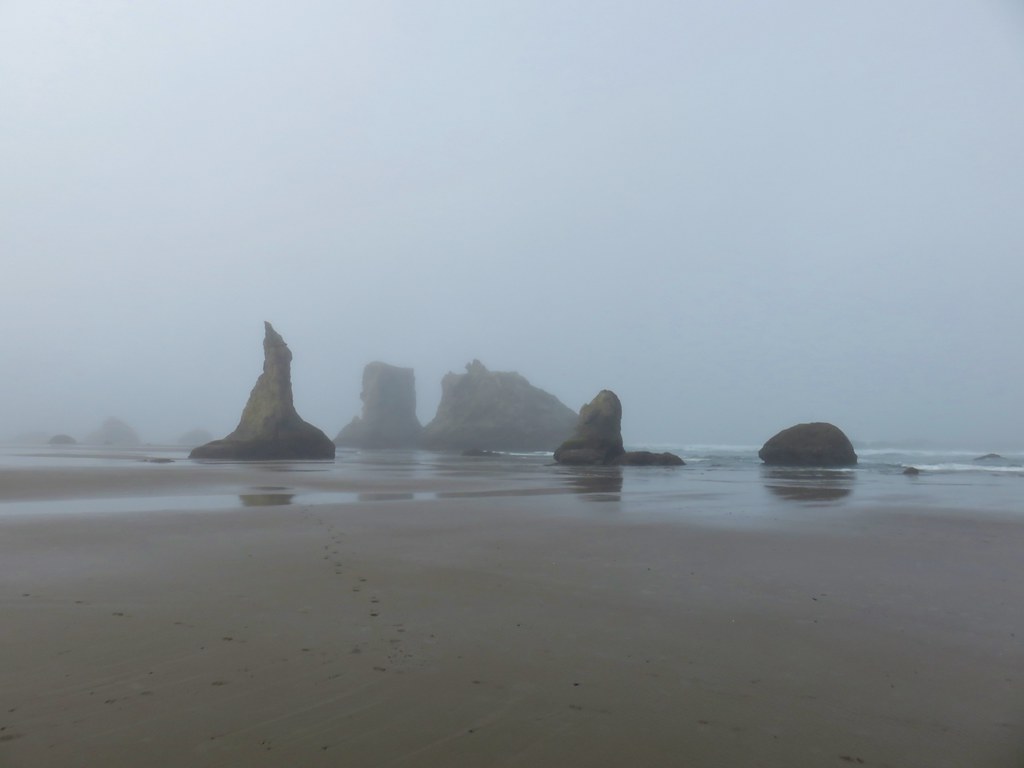
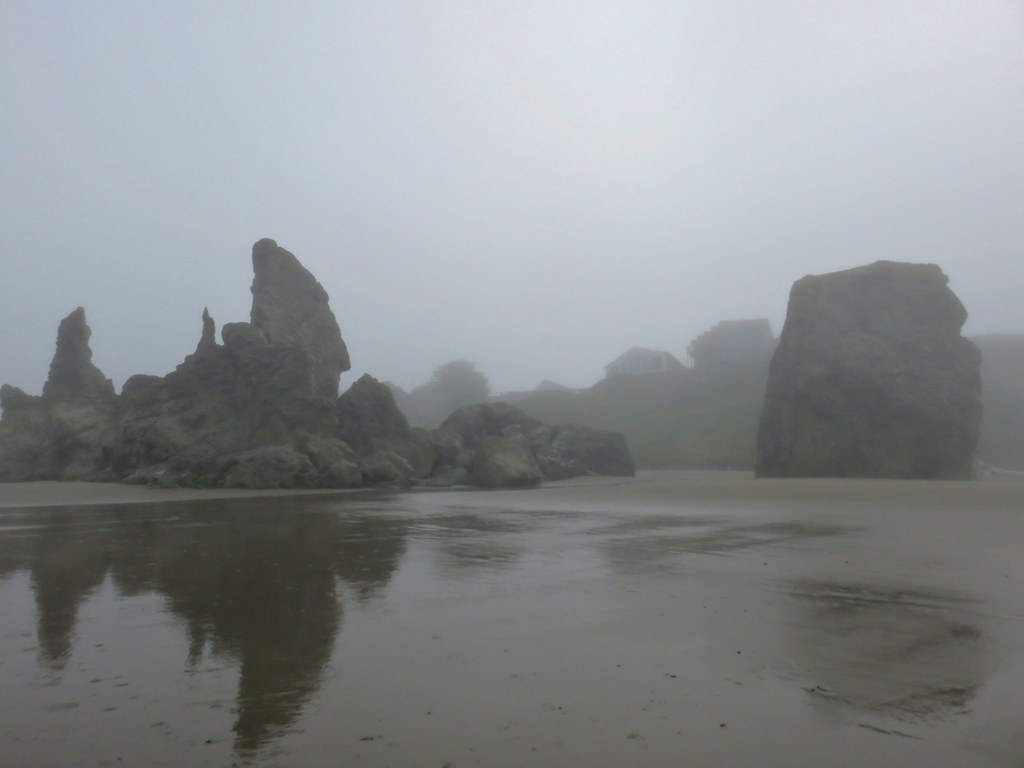
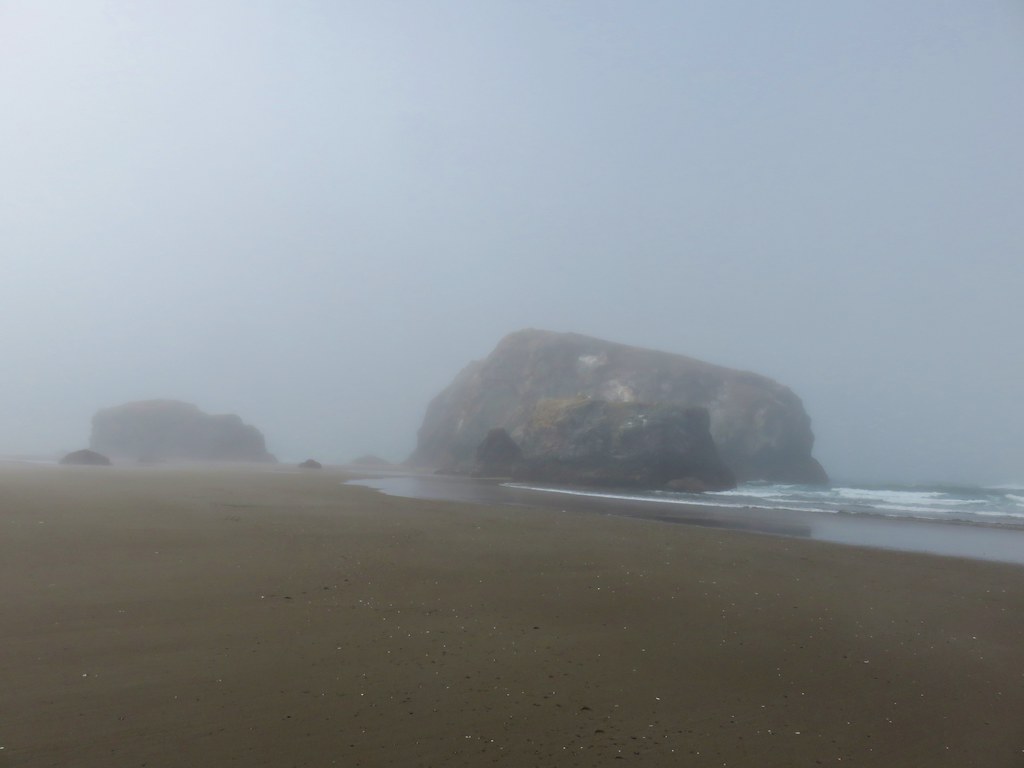
We would be passing by a series of ocean rocks and islands along a three and a half mile stretch of beach from the jetty to Devils Kitchen. We headed into the fog hoping that it would indeed burn off as the day progressed. In the meantime the tide was out allowing us to get a closer look at some of the rocks. Please note that climbing on any of the rocks and tidepooling is banned so keep your distance and use your binoculars or camera’s zoom.

IMG_2626

IMG_2628

IMG_2632

IMG_2633

IMG_2644

IMG_2642

IMG_2663

IMG_2662

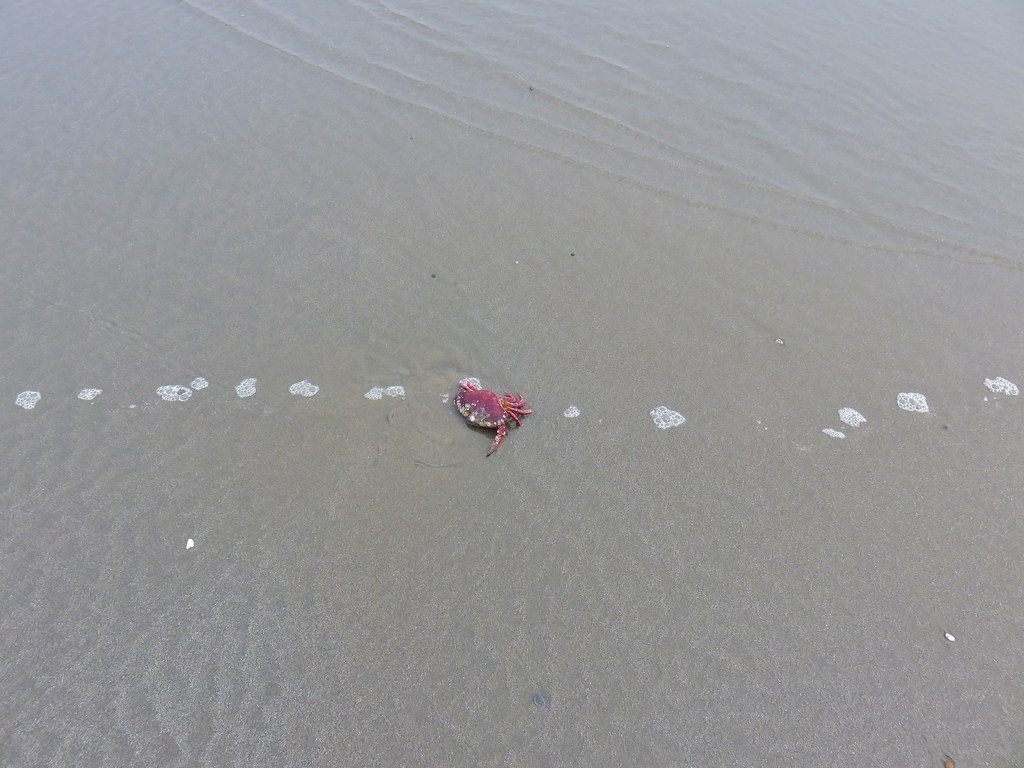
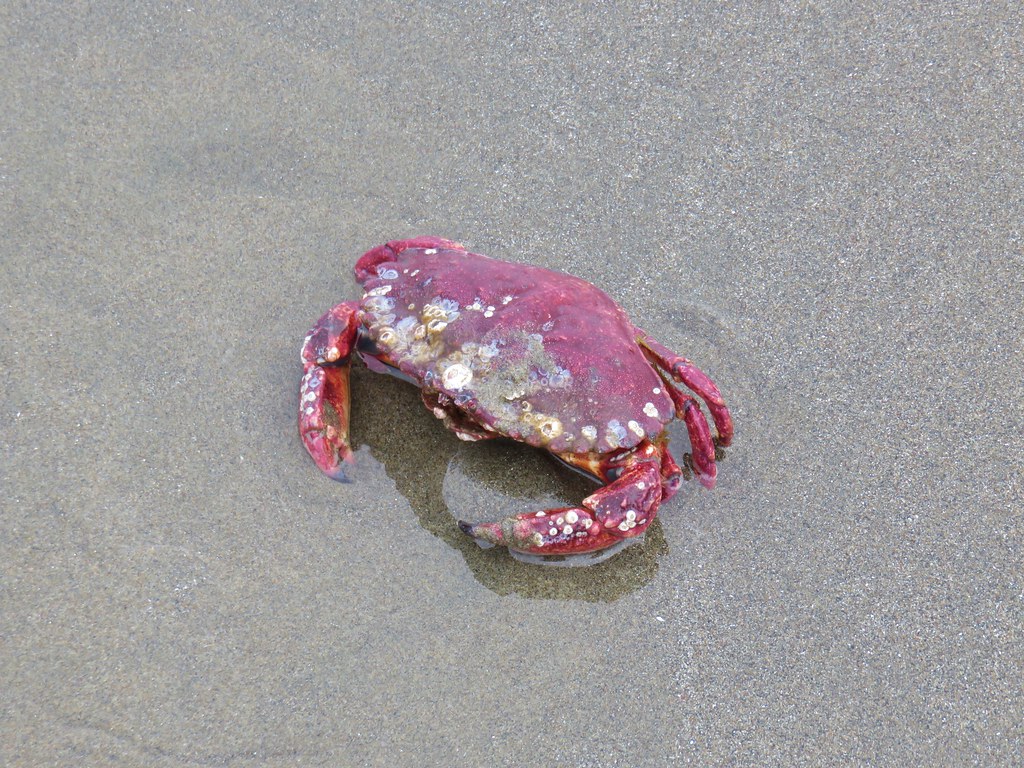
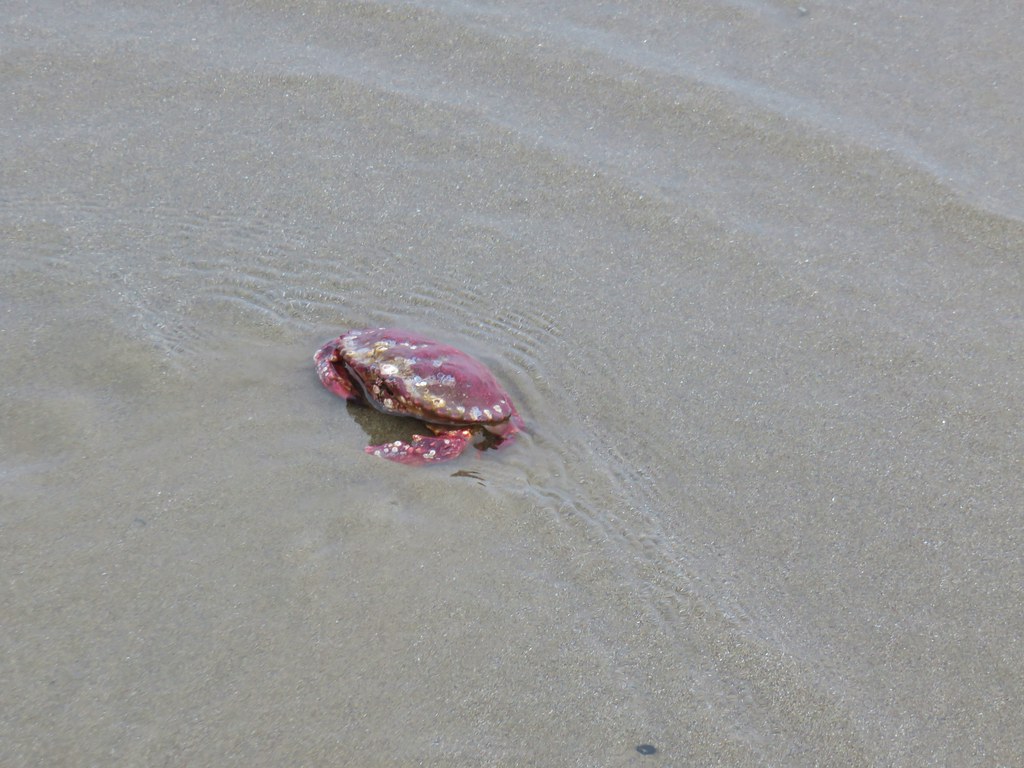
We got to see an actual live crab dig itself back into the sand.

IMG_2649

IMG_2652

IMG_2654

IMG_2672

IMG_2671

The rocky islands were neat but with the fog limiting visibility they weren’t as impressive as they should have been. For one thing we could only see the ones close by and couldn’t get a feel for just how many and how big they were.

IMG_2667

IMG_2682

IMG_2691

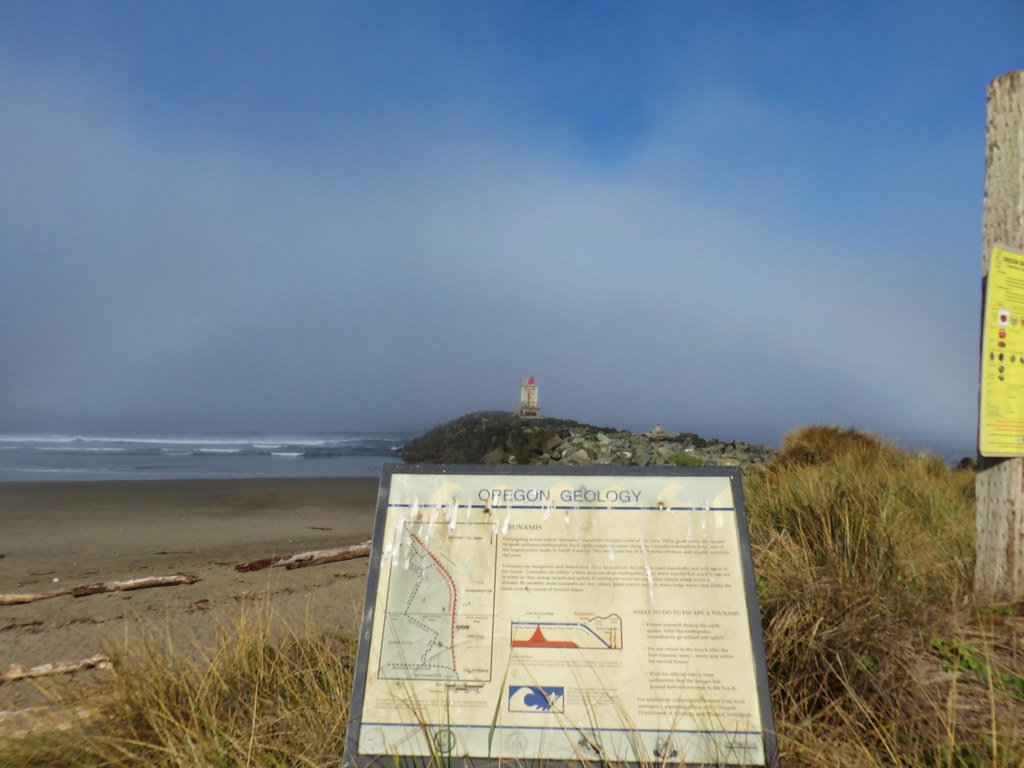
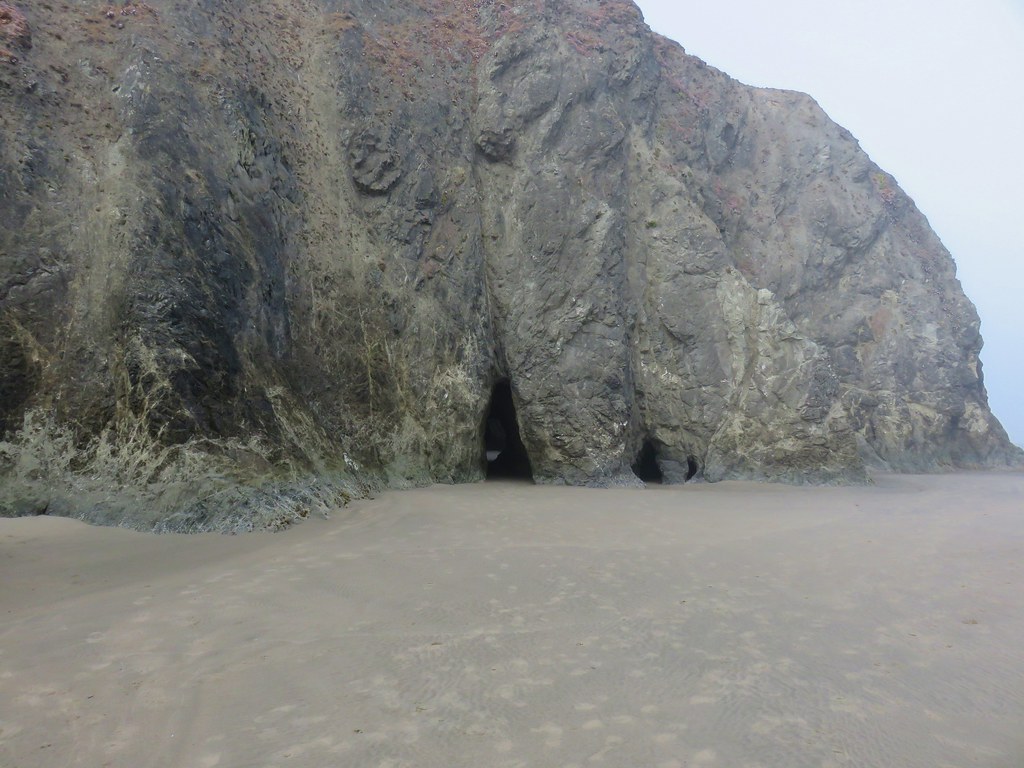
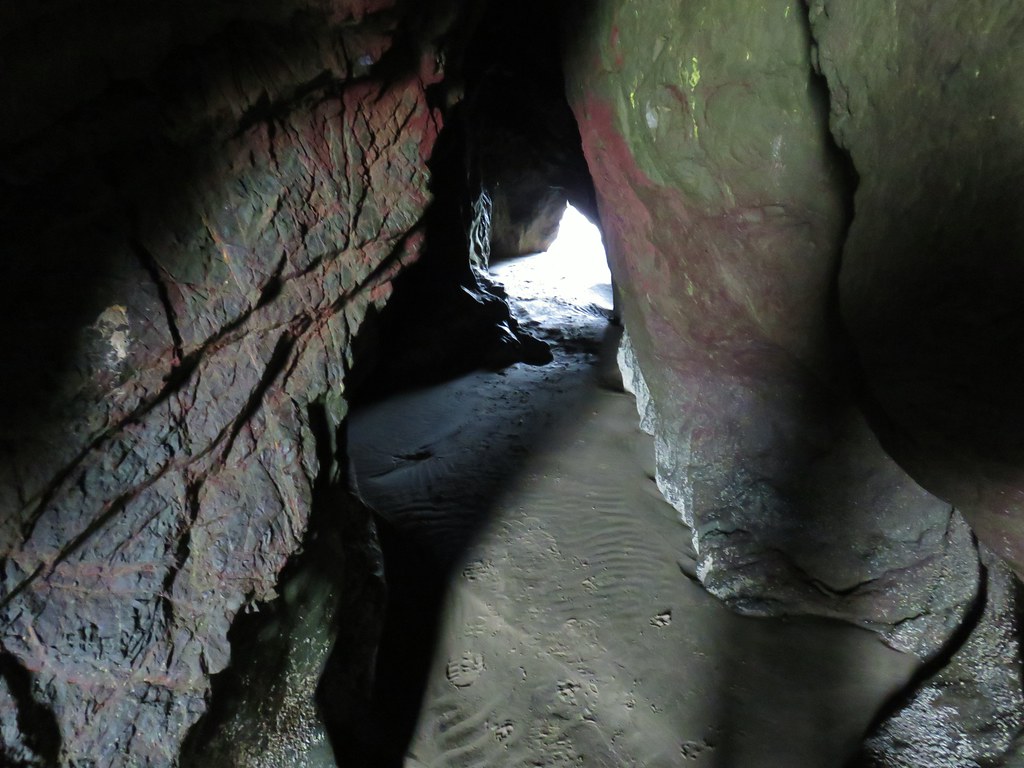
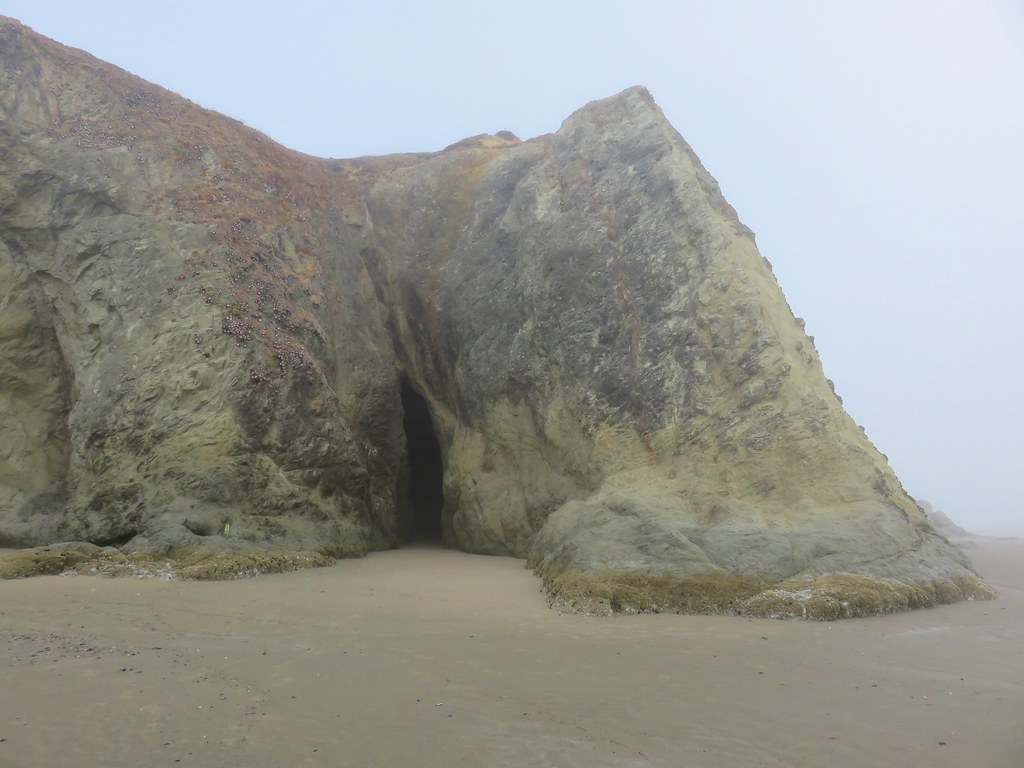
Near the two mile mark below the Face Rock State Scenic Viewpoint there were a few sea caves present at Grave Point.

IMG_2698

IMG_2700

IMG_2701

IMG_2705

IMG_2713

IMG_2759

Beyond Grave Point the number of sea stacks and islands dwindled as the beach flattened out. In the next 1.9 miles we crossed Johnson Creek and passed Fish Rock before arriving at Crooked Creek and Devils Kitchen.

IMG_2720

IMG_2725

IMG_2726

Fish Rock aka Haystack Rock

IMG_2734

Devils Kitchen

We climbed up to the Devils Kitchen parking lot.

IMG_2737

We made use of a bench at a viewpoint above Devils Kitchen where we had a snack and took a break.

IMG_2745

IMG_2743

IMG_2749

IMG_2750

We were still hoping that the fog would burn off as promised as we headed back along the beach but alas it was not to be.

IMG_2762

By the time we’d gotten back to the car we had decided that we would be trying this hike again the next time we were in the area. We have a few more hikes left to complete between Bandon and Coos Bay and the Bandon Islands will be a part of that trip.

After cleaning up in the motel we walked across Highway 101 into Bandon’s Old Town and did a little shopping. They were having a farmers market where we came away with a few goodies. After a hitting the farmers market and a few of the shops we stopped into Bandon Brewing for a beer and an appetizer, at least that had been the plan. We ordered the small Spinach Artichoke Stix from the bradsticks section of the menu. We had expected a few breadsticks with some dip, but it turned out to be more like a pizza and was quite a bit larger than we’d anticipated. That wasn’t a bad thing as they were delicious and we had no problem finishing them off. It ended up being our dinner which was fine because we had also picked up some pastries from Pastries and Pizzas which was located dangerously close to our motel.

The pastries hit the spot that night and we went to bed satisfied and ready for another day of hiking on Saturday. Happy Trails!

Flickr: New River and Bandon Islands

Categories
Hiking Oregon Oregon Coast Southern Coast

Taylor Dunes, Lake Marie, and Umpqua Dunes

We’d been fortunate this year having only been forced to change plans due to weather twice, in February due to snow in the coast range and at the end of our trip to the Elkhorns when thunderstorms forced us to cancel our plans to visit the lookout atop Mt. Ireland. For the third time in the last four years our September vacation coincided with a forecast for snow in the mountains. We had planned a four day trip around and up Diamond Peak, but with a chance of rain or snow showers all four days we decided to turn to our alternate plan which was a trip to Bandon, OR on the Oregon Coast.

We had three stops planned in the Oregon Dunes National Recreation Area on our way down to Bandon. Our first stop was at the Taylor Dunes Trailhead located seven and a half miles south of Florence.IMG_2286

From the small parking area the trail immediately crossed a paved road and passed by Taylor Lake.IMG_2287

IMG_2291

IMG_2294

IMG_2300

After .4 miles we arrived at a viewpoint above the dunes.IMG_2305

IMG_2308

From the viewpoint we followed the trail through the sand for half a mile to a signed junction.IMG_2311

IMG_2312

We turned right here on a half mile trail that passed through a forest behind a foredune before arriving at the Pacific Ocean.IMG_2313

IMG_2314

IMG_2318

IMG_2320

After reaching the ocean we returned to the junction and turned right to complete a loop through the Carter Lake Campground.IMG_2338

Carter Lake

The final .4 miles of the loop was along the paved campground road.IMG_2339

Our second stop was at Lake Marie, about 18 miles south of Taylor Dunes, in the Umpqua Lighthouse State Park. We parked at the Lake Marie Trailhead and set off on the 1 mile loop clockwise around the lake.IMG_2340

IMG_2344

IMG_2345

The fishermen around the lake had some competition from the local wildlife.IMG_2352

IMG_2365

Just under a mile around the lake a short spur trail led to a viewpoint overlooking more dunes.IMG_2372

IMG_2379

IMG_2378

We completed the loop and then decided to walk the tenth of a mile up Lighthouse Road to see the Umpqua River Lighthouse.IMG_2381

IMG_2385

A viewpoint at the lighthouse looked out to the mouth of the Umpqua River.IMG_2383

There was also a gray whale jawbone nearby.IMG_2387

After visiting the lighthouse we returned to our car and continued south on Highway 101 for another 5.5 miles to the signed John Dellenback Dune Trailhead.IMG_2390

The trail left the parking area and immediately crossed Eel Creek on a footbridge.IMG_2391

IMG_2392

The trail passed a marshy area where a great blue heron was looking for breakfast.IMG_2401

IMG_2400

At the quarter mile mark the trail crossed a paved road in Eel Creek Campground.IMG_2403

In just .2 more miles the trail left the trees and entered the dunes.IMG_2407

IMG_2408

Poles marked the route of the trail through the shifting sands of the dunes, but we began to doubt that we were really supposed to follow the poles when they began to veer to the north (right) of a tree island. The GPS appeared to show the trail passing to the south (left) of that island.IMG_2418

IMG_2419

There were footprints leading to both sides of the trees so we decided to trust the GPS and headed to the left.IMG_2428

IMG_2434

When we reached the vegetation of the deflation plain just under two miles from the trailhead we were unable to find any sign of a trail. We did however find a lupine still in bloom.IMG_2442

We attempted to locate some sign of a trail in the area shown on the GPS but each time we thought we might have found a way through the brush it got too dense to continue. We worked our way north along the edge of the vegetation for nearly half a mile where we finally spotted some signs.IMG_2443

IMG_2444

For the next three quarters of a mile the trail passed through a variety of scenery before reaching the ocean.IMG_2445

IMG_2447

IMG_2449

IMG_2451

IMG_2452

IMG_2454

IMG_2456

We followed the beach south for about a mile before turning back.IMG_2460

IMG_2458

IMG_2466

On the way back we followed the posts along the north side of the island.IMG_2476

IMG_2481

We took a side trip up the tallest of the dunes before reaching a junction at the edge of the trees.IMG_2490

IMG_2491

IMG_2493

IMG_2496

We went right at the junction for a half mile to complete a loop back to the trailhead.IMG_2498

IMG_2499

IMG_2501

IMG_2502

IMG_2505

With our wandering around this hike came in at 8 miles giving us a total of 12.7 on the day. We ended the day in Bandon where we explored the old downtown and had a wonderful dinner at Foley’s Irish Pub. A good start as far as backup plans go. Happy Trails!
Flickr: Taylor Dunes, Lake Marie, and Umpqua Dunes

Categories
High Cascades Hiking Mt. Jefferson Area Oregon

Pamelia Lake Overnighter

As I mentioned in our recent Table Lake Loop Trip Report (post)we had plans to visit Goat Peak, a 7159′ peak just south of Mt. Jefferson. We had obtained a Pamelia Limited Area Entry Permit in May when they became available for September 8th and 9th. It was a roll of the dice not knowing what the wildfire or weather situations would be four months down the road but it ensured that we would be able to go if conditions permitted it. Aside from a slight chance of showers the morning of the 8th the forecast looked good so that morning we drove to the Pamelia Lake Trailhead and set off.IMG_1945

IMG_1946

We had been here once before in 2013 on a long loop to Hunts Cove (post).

From the trailhead the Pamelia Lake Trail travels just under two and a quarter miles to the lake. Along the way the trail passes through some very nice forest scenery with several views of Pamelia Creek.IMG_1948

IMG_1950

IMG_1954

IMG_1955

Just prior to arriving at the Pamelia Lake the trail veers left at a junction with the Grizzly Peak Trail which heads to the right.

IMG_1963

Our original plan for this trip had been to take the Pamelia Lake Trail to the Pacific Crest Trail via the Hunts Creek Trail and follow the PCT up to Coyote (aka Mud) and Shale Lakes where we would set up camp before attempting to reach Goat Peak. After some additional consideration though we decided that setting up camp at Pamelia Lake might be a better option. Setting up camp there would eliminate the need to haul our heavy backpacks up the PCT while also leaving us with a hike out the next day of less than two and a half miles. It did mean we would be adding nearly 4.5 miles to Saturdays hike, but on paper it would still only be around 15 miles. The designated campsites at the lake were all along its left (north) side so we followed a use trail straight ahead from the junction and started looking for an open site.

We wound up choosing site #3 which kept us relatively close to the Grizzly Peak Trail junction as well as the Hunts Creek Trail junction.IMG_1966

IMG_1972

After setting up camp we briefly visited the shore of Pamelia Lake then we headed up to the Hunts Creek Trail.IMG_1967

IMG_1970

IMG_1974

We turned left onto the Hunts Creek Trail and followed it around a ridge for nearly three quarters of a mile to its end at a junction with the Pacific Crest Trail gaining a view of Mt. Jefferson along the way.IMG_1975

IMG_1977

IMG_1979

IMG_1981

On our loop to Hunts Cove I had taken the short side trip north on the PCT to see Milk Creek but Heather had not so we turned left at the junction and followed the PCT for a tenth of a mile through vine maple donning its fall colors to a viewpoint above the creek of Mt. Jefferson.IMG_1983

IMG_1989

IMG_1984

After checking off the viewpoint we turned around and headed south on the PCT which climbed gradually through a varied forest.IMG_1990

IMG_1991

IMG_1992

IMG_1997

IMG_2003

IMG_2007

Along the way some movement in a fir tree caught our attention. At first we thought it might be a medium sized mammal of some kind but it turned out to be a squirrel harvesting cones that were crashing down through the limbs after being detached.IMG_1995

Approximately four and a quarter miles from the junction we arrived at Mud Hole Lake. (On some maps it is identified as Coyote Lake but on the USGS Topographic Map the name Coyote Lake is assigned to another lake on the west side of the PCT.)IMG_2010

We turned off the PCT just before the lake on an unsigned but clear trail leading NE through a meadow.IMG_2014

We were using “75 Scrambles in Oregon: Best Non-Technical Ascents” by Barbara I. Bond as our reference for the hike. This was our first time using this particular guidebook but so far everything was going smoothly. The book did not mention that there was a clear trail to follow but we were headed straight for Goat Peak and we’d turned off the PCT at the right spot so we figured we were good to go.IMG_2016

Our intended route would lead us up above a talus slope to the north (left) of Goat Peak where we would then bend to the south at about 6800′.IMG_2020

IMG_2019

It was a lovely area with red huckleberry leaves and a few butterflies still flying about.IMG_2027

IMG_2025

The tread petered out for a bit in one meadow in particular but small cairns helped lead the way.IMG_2030

The unexpected presence of the well marked trail got us off our guard and we weren’t paying enough attention to the fact that our heading was drifting further north than we’d intended. In the meadow where the trail grew faint the cairns led to the left of a rocky ridge end. In order to reach Goat Peak we should have veered to the right here to find the correct gully uphill.IMG_2031

Instead we continued to follow the trail as we now were hearing other voices ahead. The trail began to climb away from the meadow passing more rock covered hillsides.IMG_2035

Three Fingered Jack

IMG_2038

It started seeming really odd that we seemed to be heading directly at Mt. Jefferson but kept thinking that maybe the trail would bend right around some geologic feature.IMG_2042

IMG_2043

I really started to question things when we caught up to the group of gentleman who were ahead of us. They asked how high we were planning on going which is when I became fairly certain we were on a climbers route and not the scramble route to Goat Peak. I replied “as high as our legs will take us”, knowing that if this wasn’t the right way to Goat Peak we’d gone to far to correct it by then. Shortly after we crested a rise and left the tress. We were now at the bottom of a boulder filled gully.IMG_2046

There wasn’t much we could do at that point other than go back or continue on so up we went.IMG_2048

IMG_2047

Cliffs on the right side of the gully.

As we gained elevation the views to the south opened up and the Three Sisters joined Three Fingered Jack on the horizon.IMG_2049

IMG_2051

IMG_2054

IMG_2056

We were well above the summit of Goat Peak by the time we reached the lip of the gully where stunted white bark pines clung to the steep slope.IMG_2057

Anxious to see what spectacular view awaited I charged up the final pitch only to find a second albeit smaller gully.IMG_2059

At least it had a view of Mt. Jefferson. There were a couple of bivouacs here and I waited for Heather to decide our next course of action. When she reached the second gully I decided to continue on and told her I would wave her up if I thought there was something that she just had to see. From where we were I could already see the top of Goat Peak below to the south as well as The Table and Cathedral Rocks.IMG_2060

IMG_2062

Goat Peak

IMG_2063

The Table

IMG_2064

Cathedral Rocks

Getting out of the second gully was much easier than the first and I soon found myself walking along a snowfield.IMG_2066

Later research would reveal that we were indeed following a climbers trail to the South Ridge Route up Mt. Jefferson. I ended my climb at the top of the snowfield but did a little exploring to the high points on either side of the gully.IMG_2069

Climbers trail continuing up Mt. Jefferson

IMG_2071

View south from the ridge to the north of the gully.

IMG_2074

Looking out along the ridge.

IMG_2076

IMG_2079

Where we had intended to be.

IMG_2084

View from below the snowfield.

IMG_2082

Paintbrush below the snow.

IMG_2086

Looking south from the opposite ridge top.

IMG_2094

Wildflower atop the ridge.

IMG_2091

Bear Butte along the nearest ridge.

IMG_2099

Looking back at Mt. Jefferson

The views were nice but I didn’t think they warranted waving Heather up so I headed back down to where she was waiting. After a short break and a snack we began the half mile decent down the lower gully.IMG_2114

We passed the other group, who were still on their way up the lower gully, just after starting our descent. When we’d finally gotten back to level ground in the meadow we decided to check out the other side of the ridge to see if we find any sign of a trail we’d missed.IMG_2128_stitch

There wasn’t anything we could see, but based on all the information in the book including the map and GPS coordinates we definitely had wanted to be on this side of the ridge. Once we had gotten into the area we noticed that there were several ponds/lakes showing on the map to the south. The terrain appeared to be level enough to make a cross country jaunt inviting.IMG_2137

We used the map and GPS to locate several of the ponds but they were all dry save one unnamed lake. We did get some really nice views of Goat Peak though.IMG_2139

IMG_2149_stitch

IMG_2157

IMG_2158

IMG_2159

We took another break at the lake.IMG_2162

IMG_2176

IMG_2180

There were some tents set up nearby in the trees so we thought that there might be a trail somewhere nearby and set off looking for it when we left the lake. It didn’t take us long to spot the clear tread.IMG_2182

This path led us west between Mud Hole and Shale Lakes and back to the PCT.IMG_2186

Mud Hole Lake

IMG_2187

Shale Lake

We turned right on the PCT and continued a short distance until we spotted another use trail heading further west. We followed this path past more dry (or nearly dry) ponds to Coyote Lake.IMG_2190

IMG_2191

IMG_2197

Our urge to explore was now satisfied and we returned to the PCT and headed back to Pamelia Lake, which looked like it was way, way down below us.IMG_2206

It was closing in on 6pm when we finally made it back to camp. We went down to the lake to get water then cooked dinner and relaxed in our camp chairs.IMG_2223

IMG_2230

Ouzel

IMG_2235

IMG_2236

IMG_2245

Marty, a wilderness ranger, stopped by to check our permit and make sure we were aware of the campfire ban. She seemed relieved that we had a permit and knew about the ban. We got the feeling that a fair number of folks aren’t as friendly as we were which is a shame.

Even though we hadn’t made it to Goat Peak and we’d hiked much further than originally intended (19.4 miles) it had been a great day. It helped knowing that we only need to hike 2.5 miles the next day to reach our car.

The next morning we were up before 5am and on the trail by 6:30.IMG_2265

IMG_2275

IMG_2277

We made it home just after 9am which gave us plenty of time to unpack, clean up, and do some laundry. Happy Trails!
Flickr: Pamelia Lake Overnighter