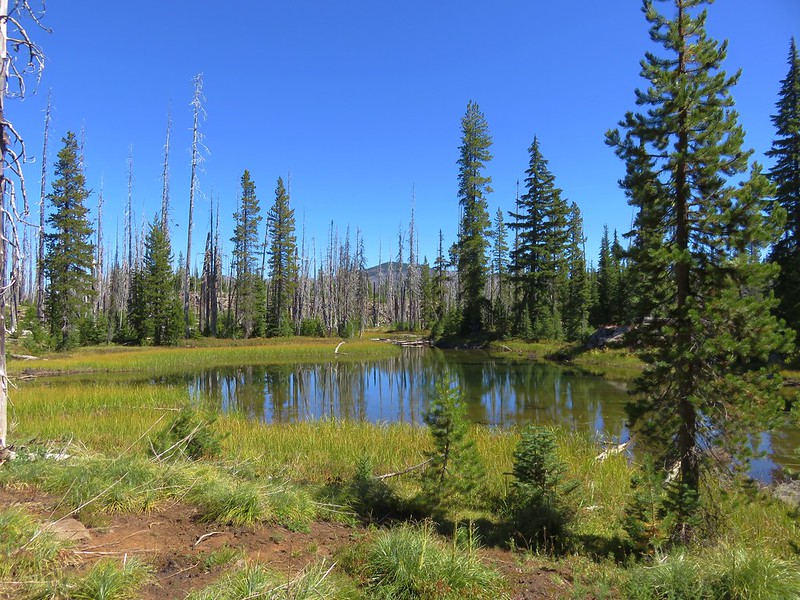
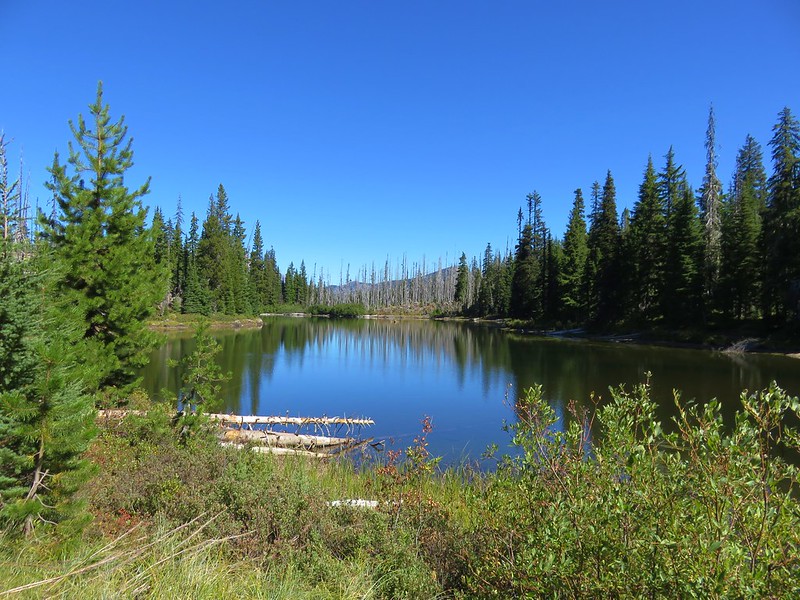
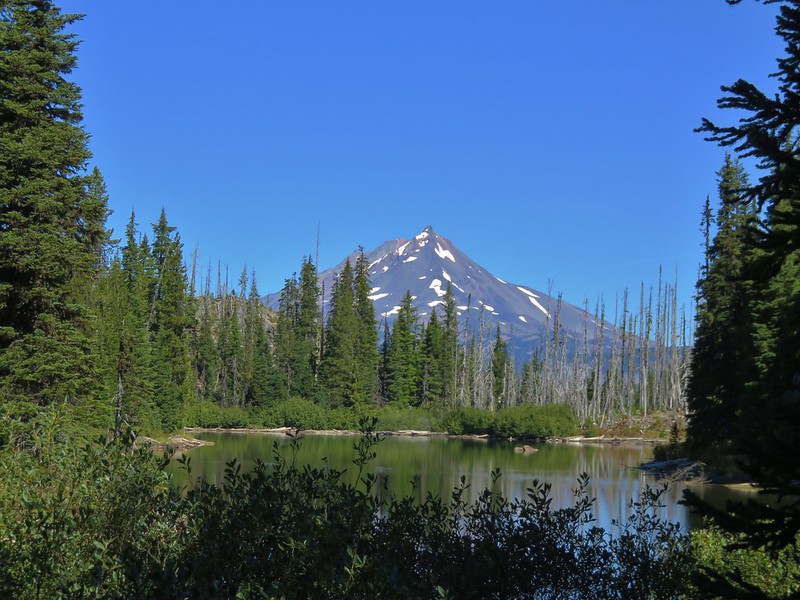
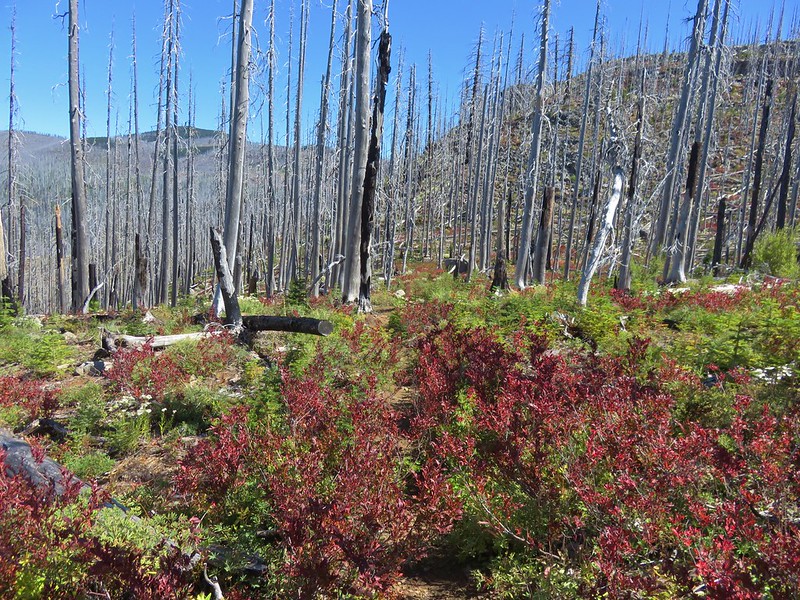
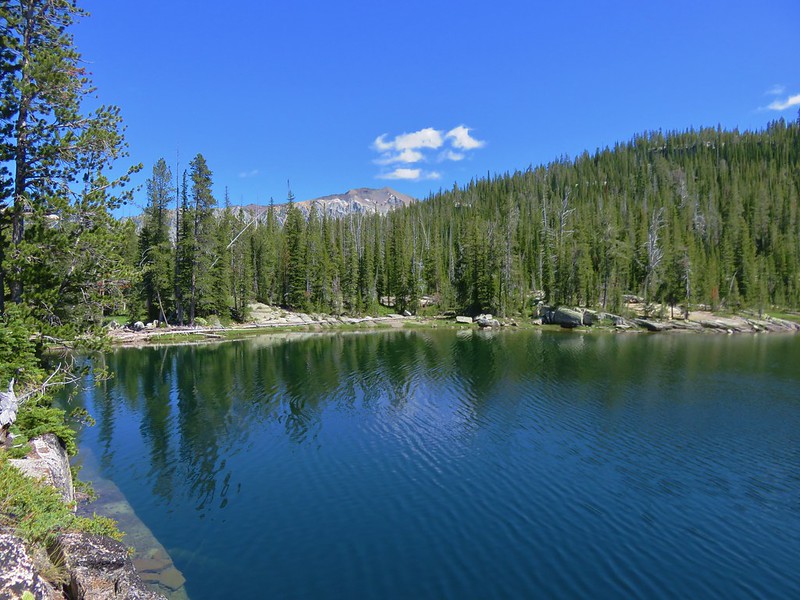
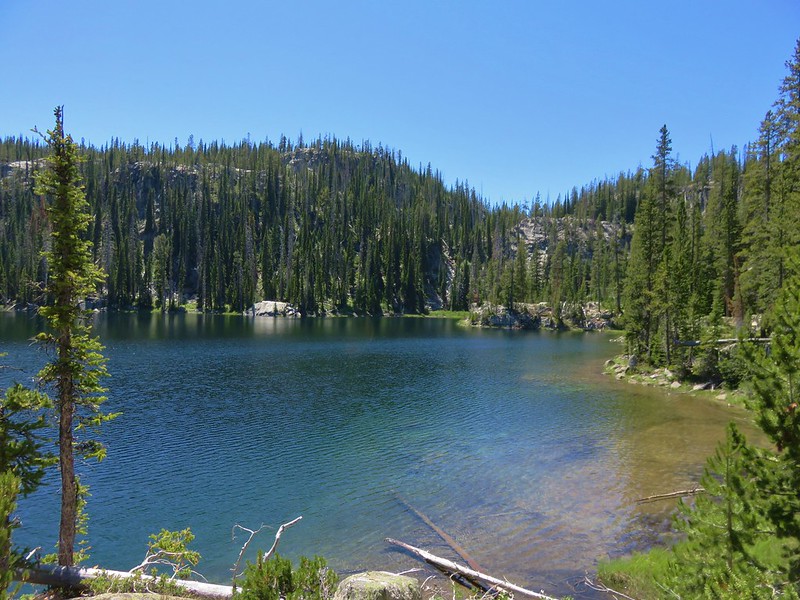
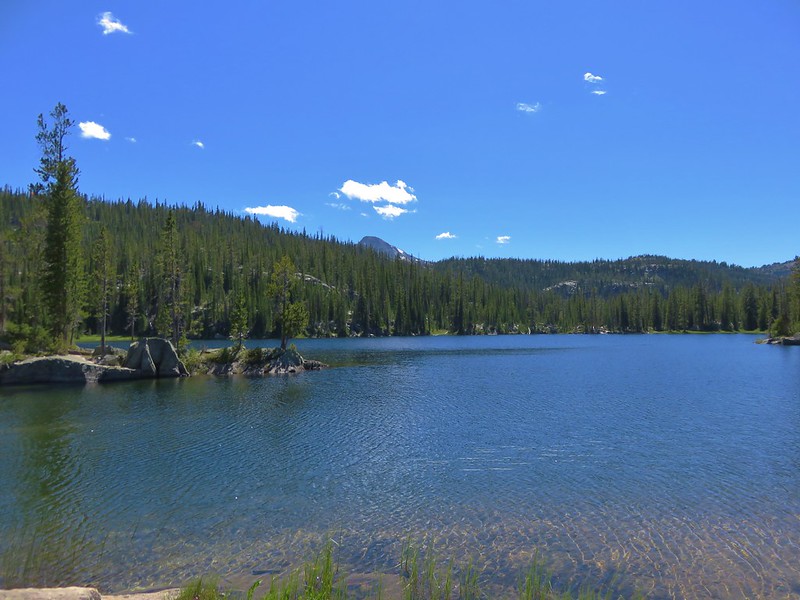
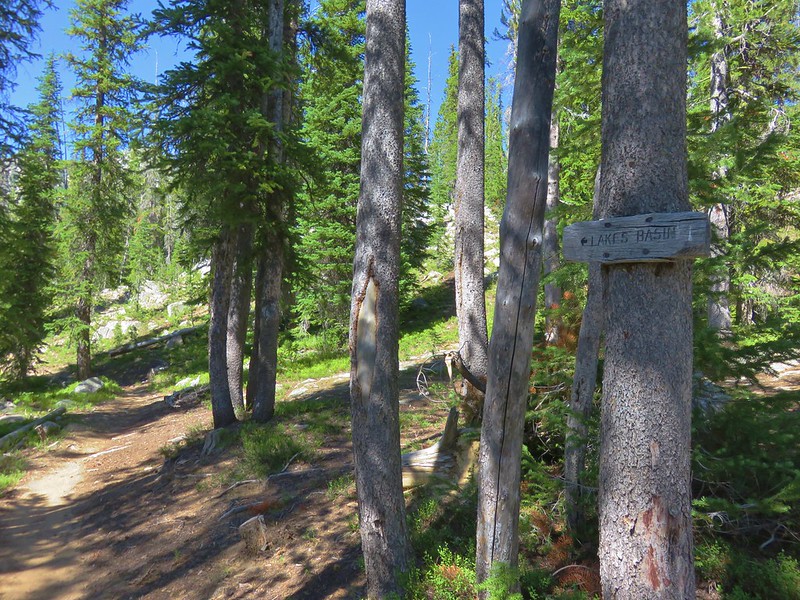
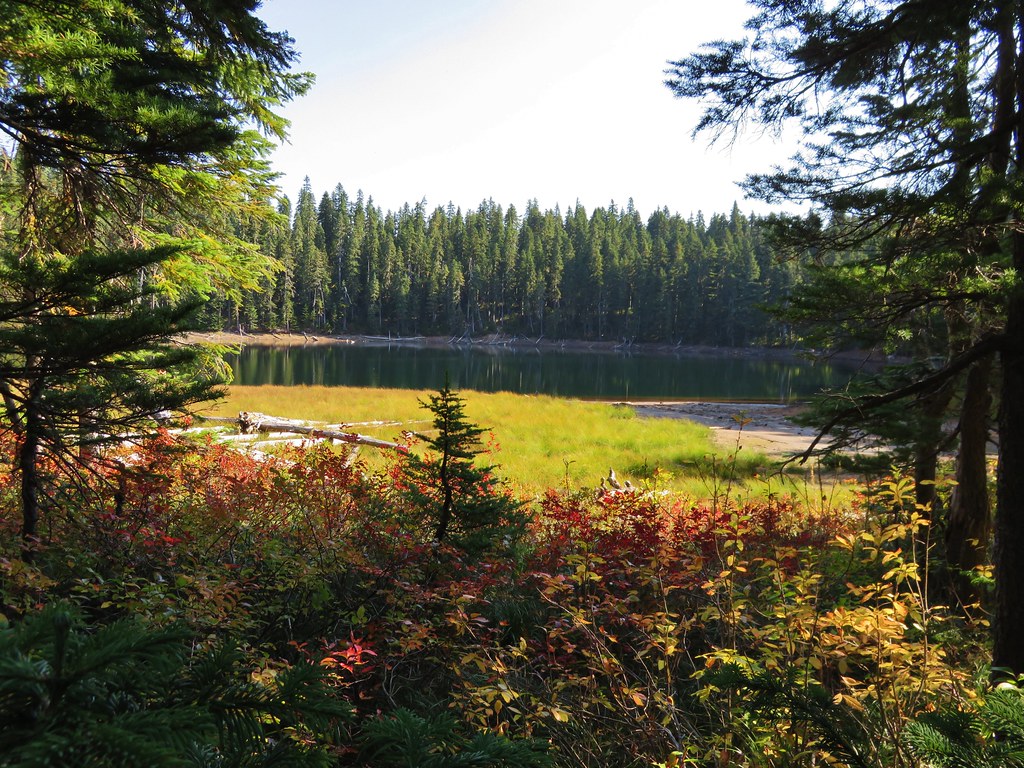
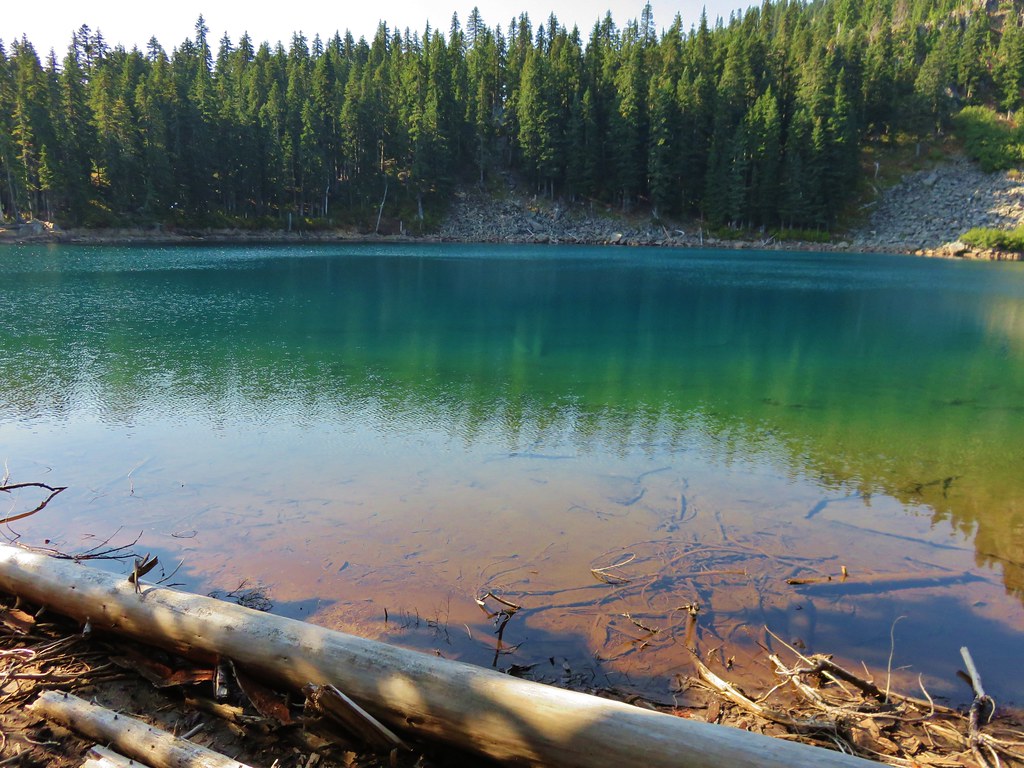
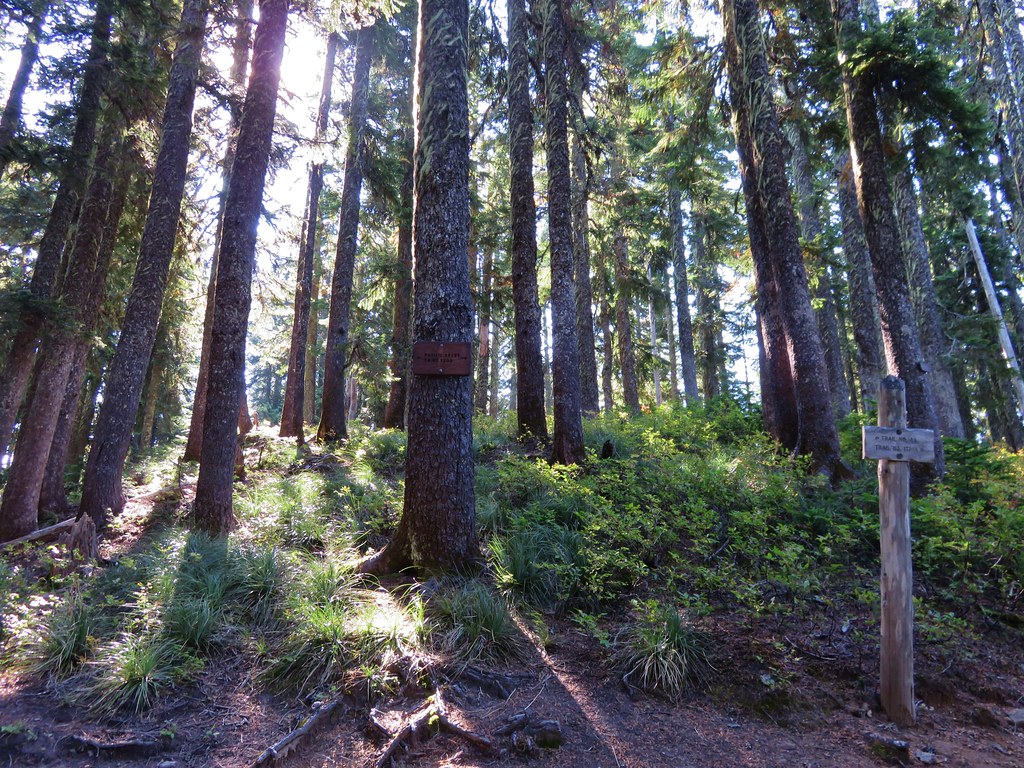
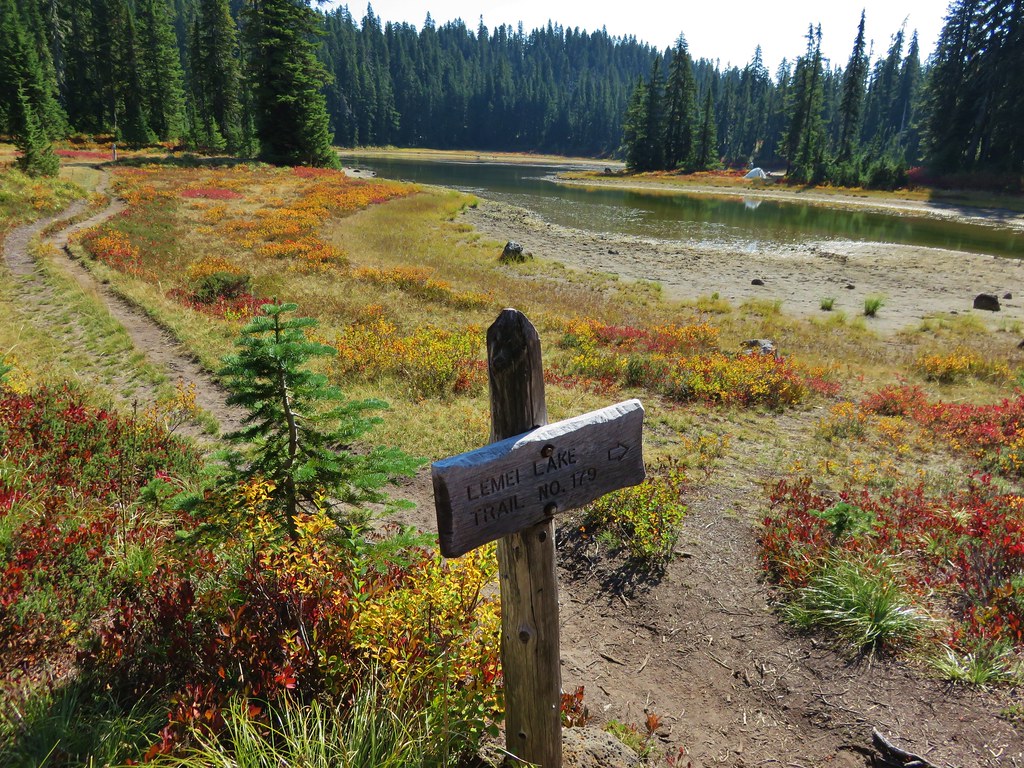
Categories
Coastal Range Hiking Oregon Trip report

Rogers Peak Loop – 06/07/2025

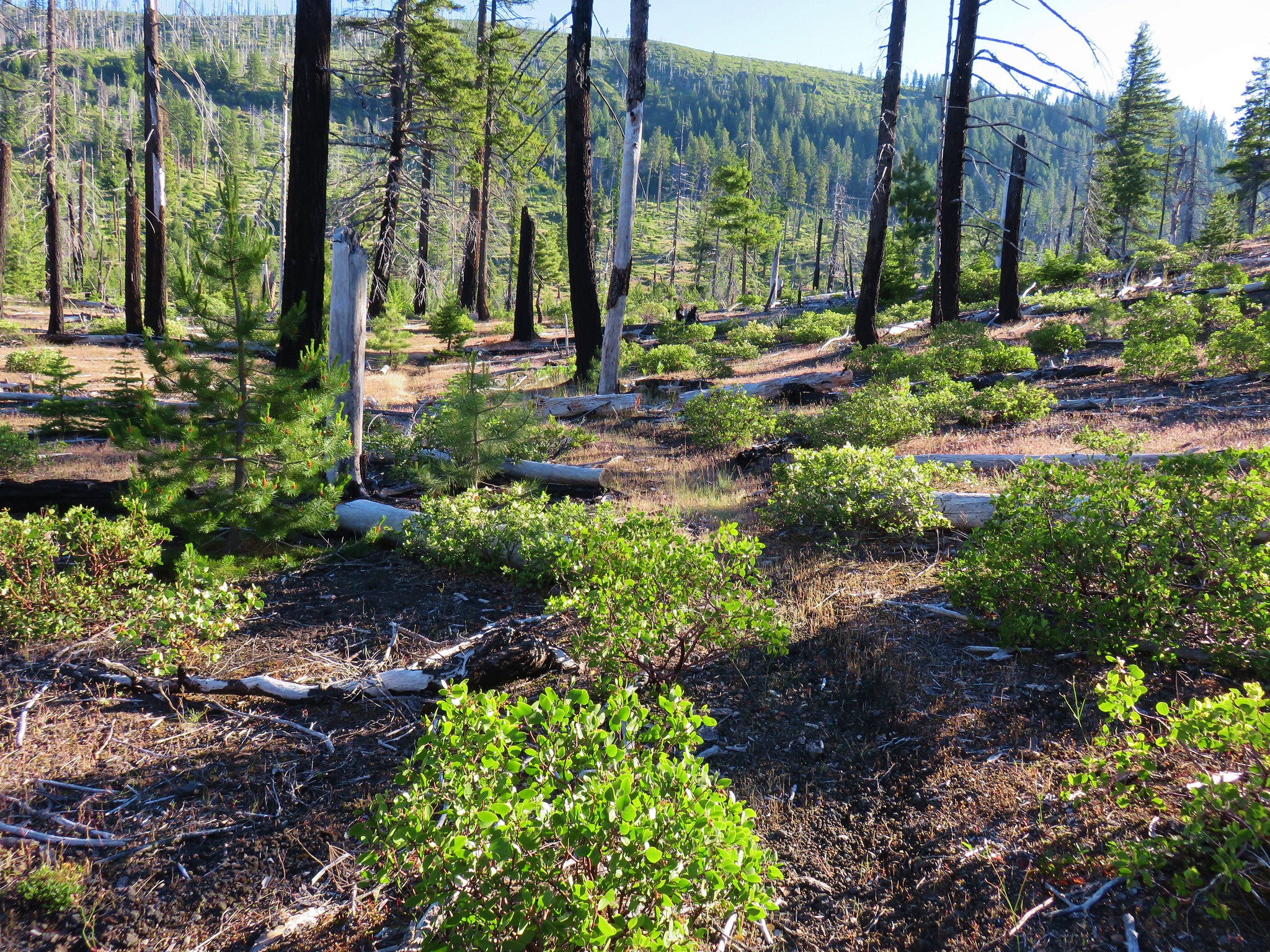
We had our first heat advisory of the year issued for the weekend which prompted us to think twice about the 12 plus mile loop with over 3400′ of elevation gain that we had on our schedule for this week. I went looking at some of the hikes I had on our schedule for future Junes hoping to find something a little less strenuous and landed on the Rogers Peak Loop. This was another Oregon Hikers Field Guide entry. That entry described a 7.1-mile loop with 1065′ of elevation gain and an optional visit to Blue Lake which would add about 1.25-miles and 450′ of extra elevation gain. At 3706′ in elevation Rogers Peak is the third highest peak in the Coast Range behind 4319′ Mt. Bolivar and 4097′ Marys Peak (post).

The hike is located on private timberland using logging roads for almost the entire route. A big thank you to Hampton Lumber for allowing walk-in recreation to the public. Because this is private land access can be restricted at any time so, please check with Hampton Lumber before heading out and be respectful when visiting. They have a web page devoted to recreation here. Also note that weekdays may not be the best time to visit to avoid logging operations and log trucks using the roads.

We followed the Oregon Hikers directions to the trailhead which is just a small pullout before a yellow gate on Gilmore Creek Road. The roads to the trailhead were in good shape, but sections of the final 3.5-miles are very steep and windy.
IMG_2856The pullout only has room for two cars, a third might be able to squeeze in but it would be tight. DO NOT drive past the gate if it happens to be open as motor vehicle use by the public is not allowed beyond the gate.

IMG_2857

IMG_2858
Again please respect the private landowner’s rights and property. They have no obligation to allow the public access.

Before we started hiking we got distracted by the various wildflowers blooming near the gate.
IMG_2860
Thimbleberry

IMG_2861
Paintbrush

IMG_2862
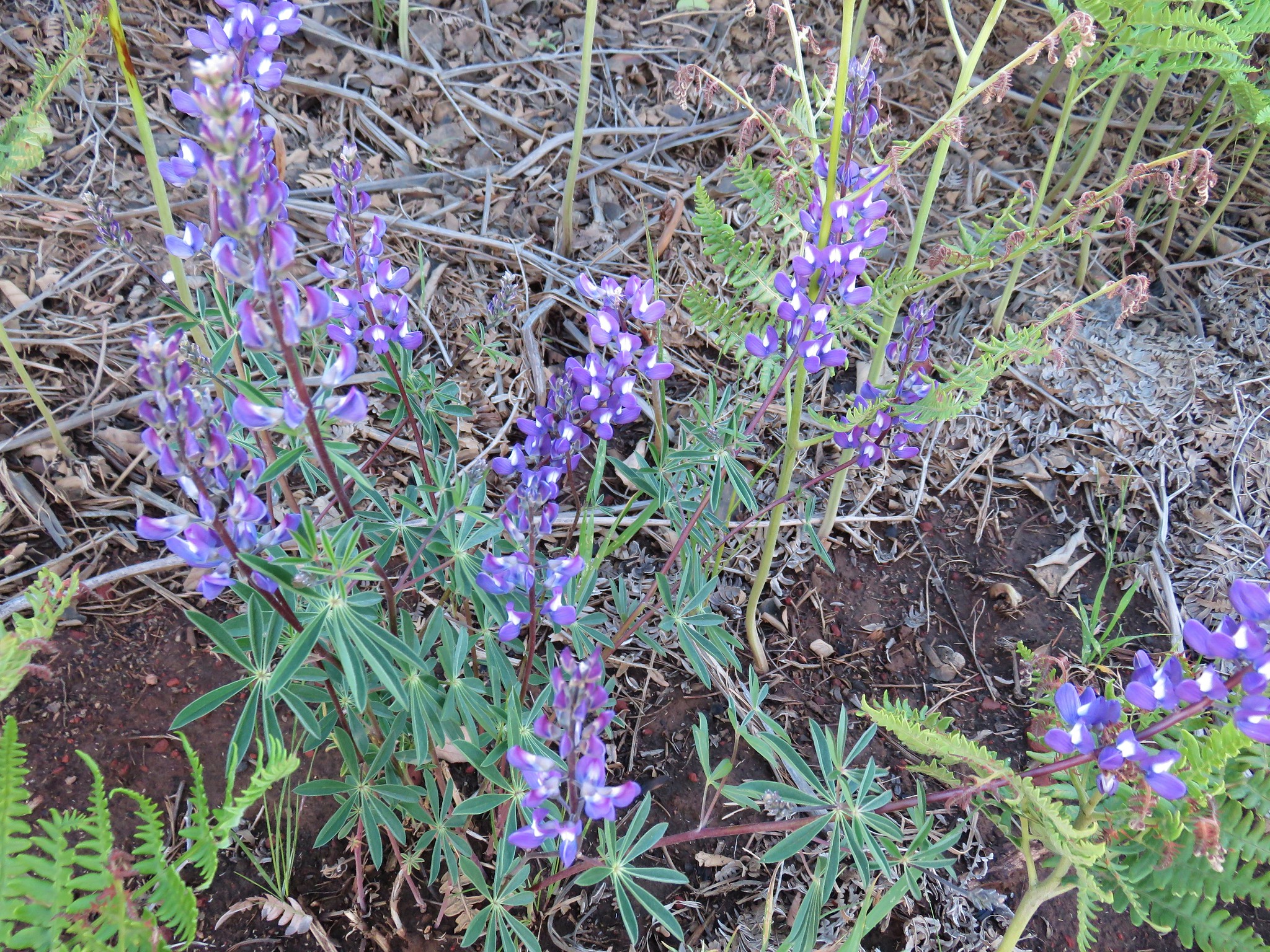
Lupine

IMG_2863
Vanilla leaf

IMG_2864
Inside-out flower

IMG_2865
Iris

IMG_2867
Starflower

IMG_2868
Bunchberry

IMG_2869
Trailing blackberry

Once we started hiking the road split shortly after the gate with the right-hand fork being the shortest route to Rogers Peak but being short also means steeper. We followed the field guide route and forked left.
IMG_2870

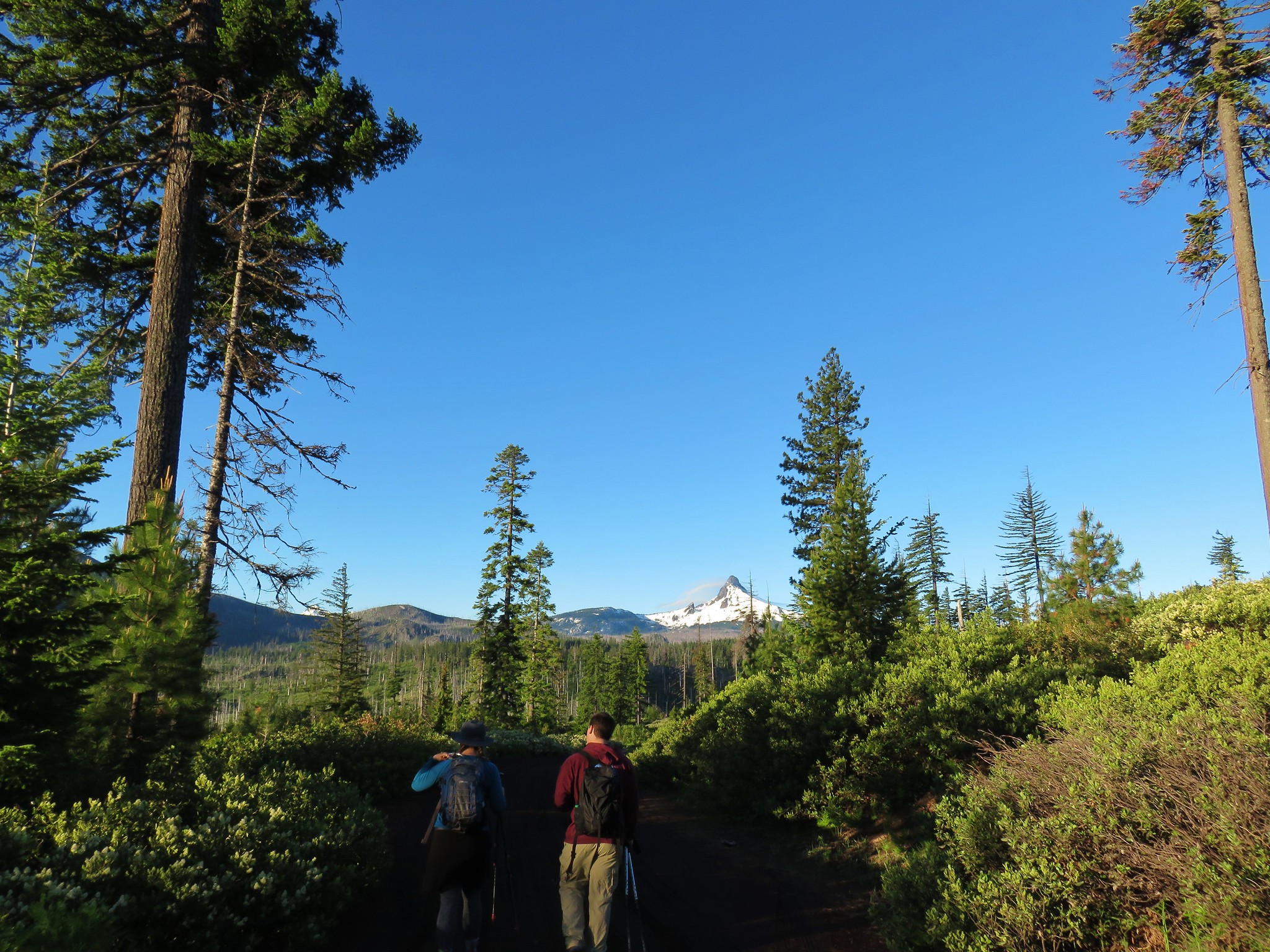
The roadbed was fairly level as it traversed along a logged hillside which provided views of the Coast Range.
IMG_2876
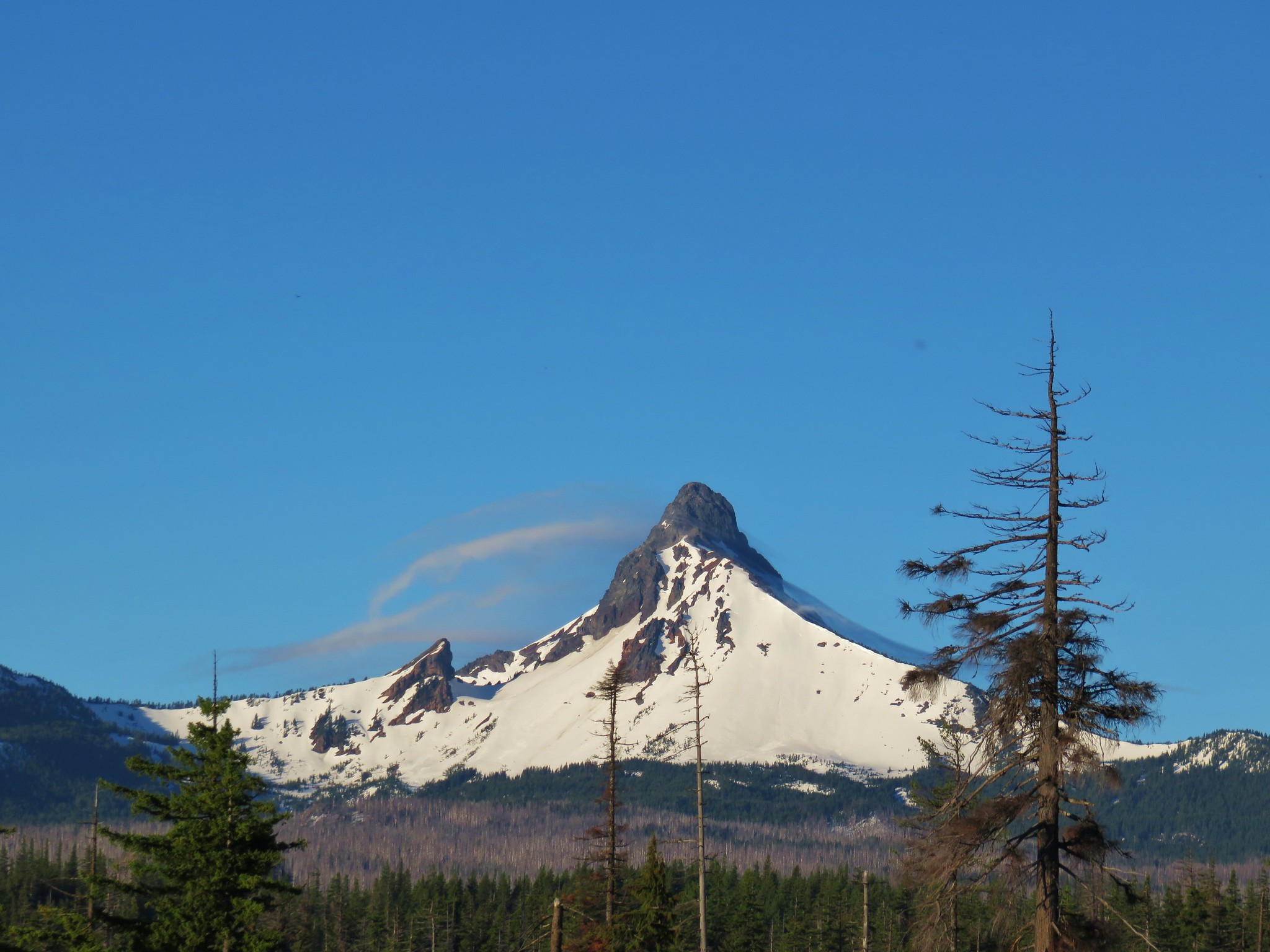
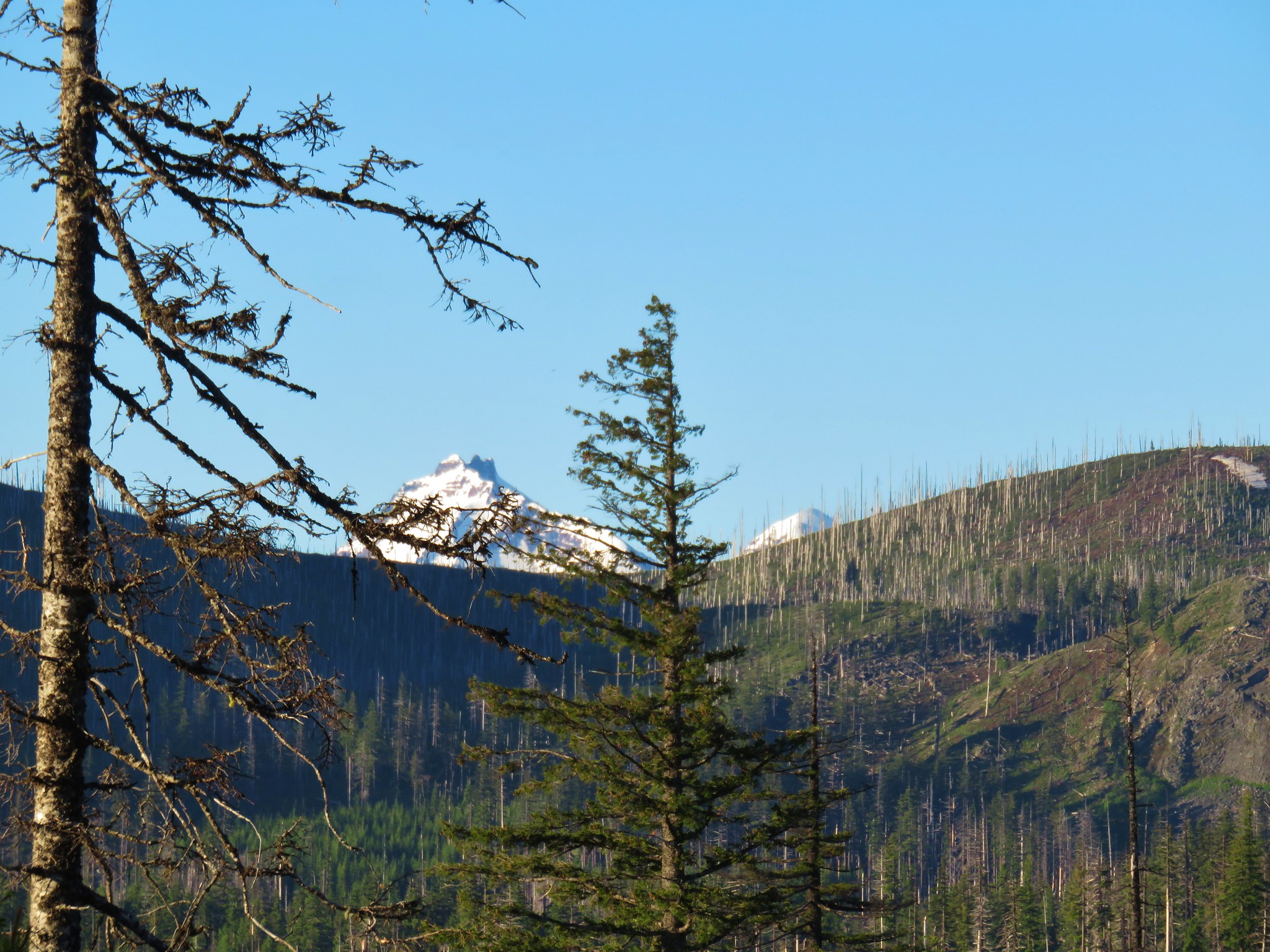
Cedar Butte and Triangulation Peak in the distance. (post)

IMG_2877
Closer look at Cedar Butte

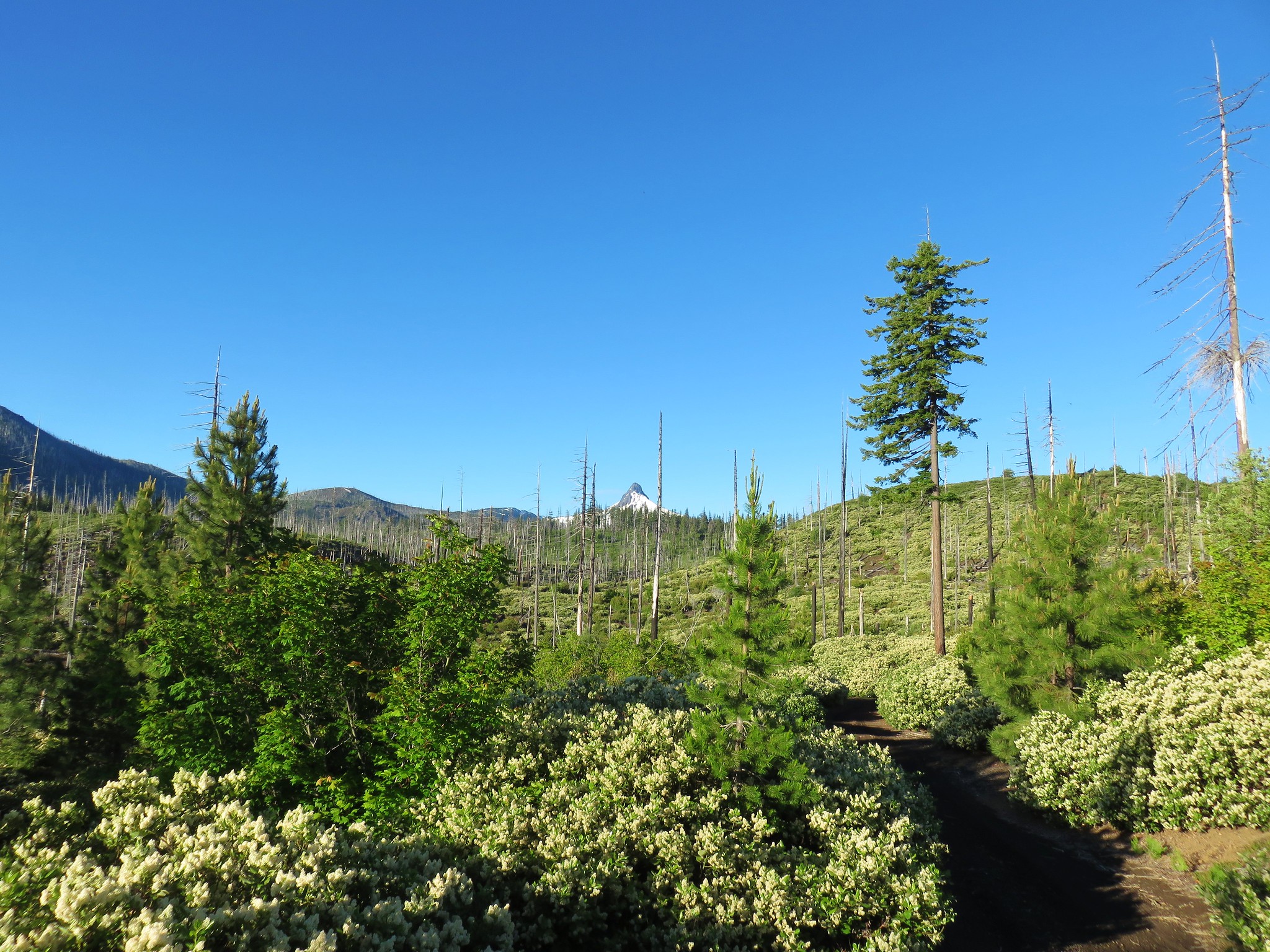
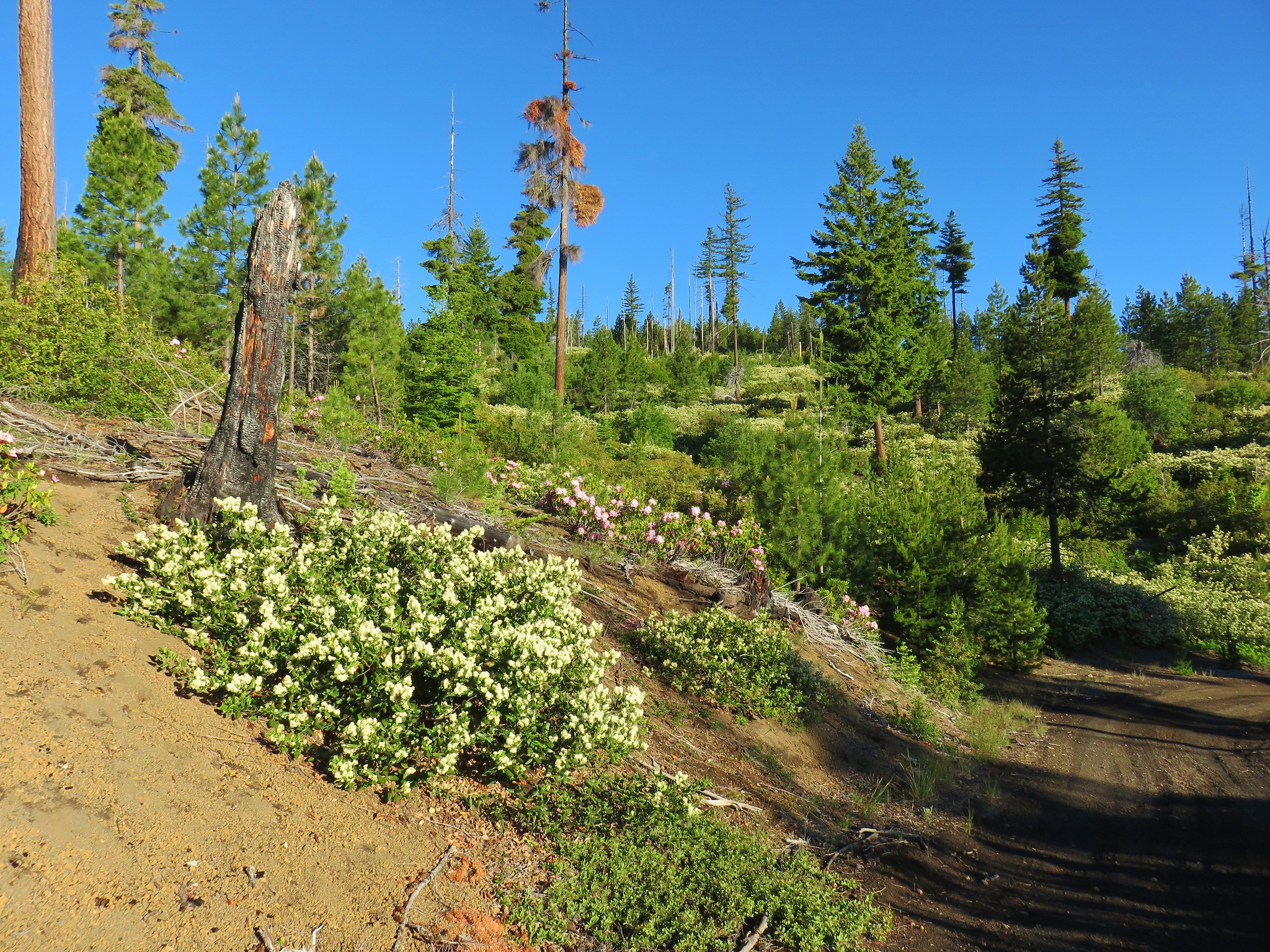
The roadbed also provided the open conditions that many wildflowers prefer.
IMG_2881

IMG_2883
Paintbrush and penstemon

IMG_2884
Beargrass

IMG_2886
Unsurprisingly the road passed a number of clearcuts but there was some intact forest along the route as well.

IMG_2889
Thimbleberry and blackberry blossoms along the road.

IMG_2894
Raspberry

IMG_2898
Thistle

IMG_2900
Lupine

IMG_2903
Rosy bird’s-foot trefoil

We arrived at a saddle 0.8-miles from the car where we stayed right along the hillside.
IMG_2904

IMG_2905A section of intact forest.

IMG_2906
Coastal monkeyflower

IMG_2910
Window to a clearcut.

IMG_2911
Window to green.

IMG_2913
View across the Rogers Creek drainage.

IMG_2914
Columbine and thimbleberry

IMG_2919False lily-of-the-valley

IMG_2920
Bunchberry bunch

IMG_2925
Valerian

IMG_2926
Another thistle

IMG_2927
Fairy lanterns

IMG_2928Chipmunk

IMG_2930
Anemone

IMG_2933
Paintbrush, lupine, and iris

IMG_2936
Junco

IMG_2937
Clover

IMG_2939Salmonberry

IMG_2942
Buttercups

IMG_2943
Iris between a thimbleberry (green) and vine maple (reddish).

IMG_2944

IMG_2946
Scouler’s corydalis

IMG_2950
Stink currant

California figwort
California figwort. This one was driving us crazy trying to ID it on the hike. There was quite a bit of it along the route.

IMG_2953
Another stretch of green forest.

IMG_2955
Candyflower

At the 1.9-mile mark we came to a second saddle where we again stayed right along the hillside.
IMG_2957

Views now were to the north where Saddle Mountain rose above a sea of clouds.
IMG_2960
Humbug Mountain and the aptly named Saddle Mountain (post) rising above the clouds.

IMG_2962
Saddle Mountain

IMG_2964
Paintbrush

IMG_2965
Self-heal

IMG_2969
The view ahead. The route thus far had been mostly shaded due to the hillsides shadow which was helping to keep the temperatures down.

IMG_2972
Youth-on-age

IMG_2973
Bleeding heart

IMG_2975
Plumed solomonseal

At the 2.8-mile mark we passed a road leading off to the left past a large pile of gravel.
IMG_2976

Just 0.2-miles beyond that road (the 3-mile mark of the hike) another road forked off to the left, but downhill. The road to the left led down to Blue Lake, the optional detour. We decided that we should go down and visit the lake at least this one time to say we’d seen it.
IMG_2980

The road lost approximately 450′ of elevation in 0.6-miles to a saddle above the little lake where a user trail next to a pole led down to the shore.
IMG_2983

IMG_2984

IMG_2985
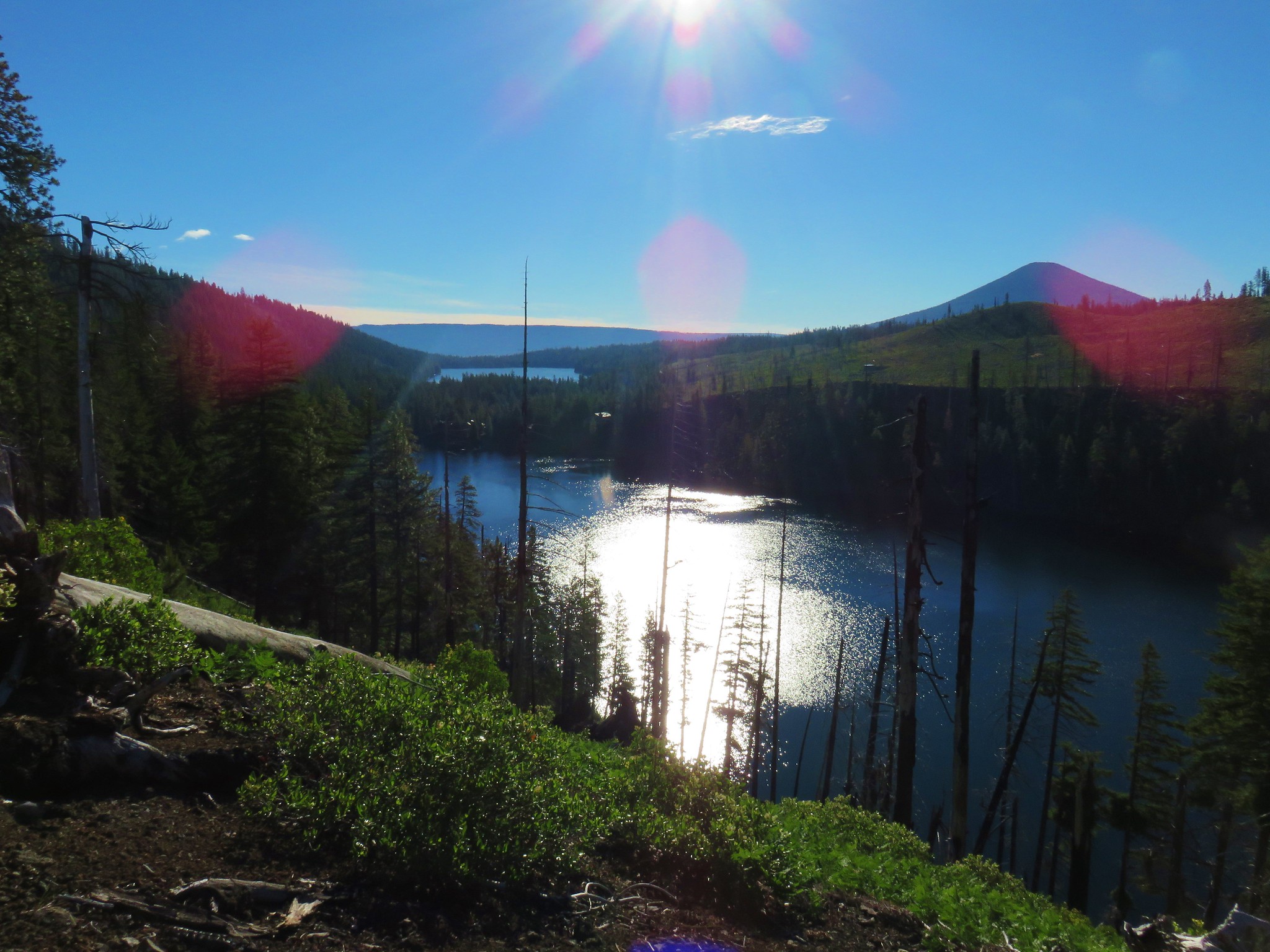
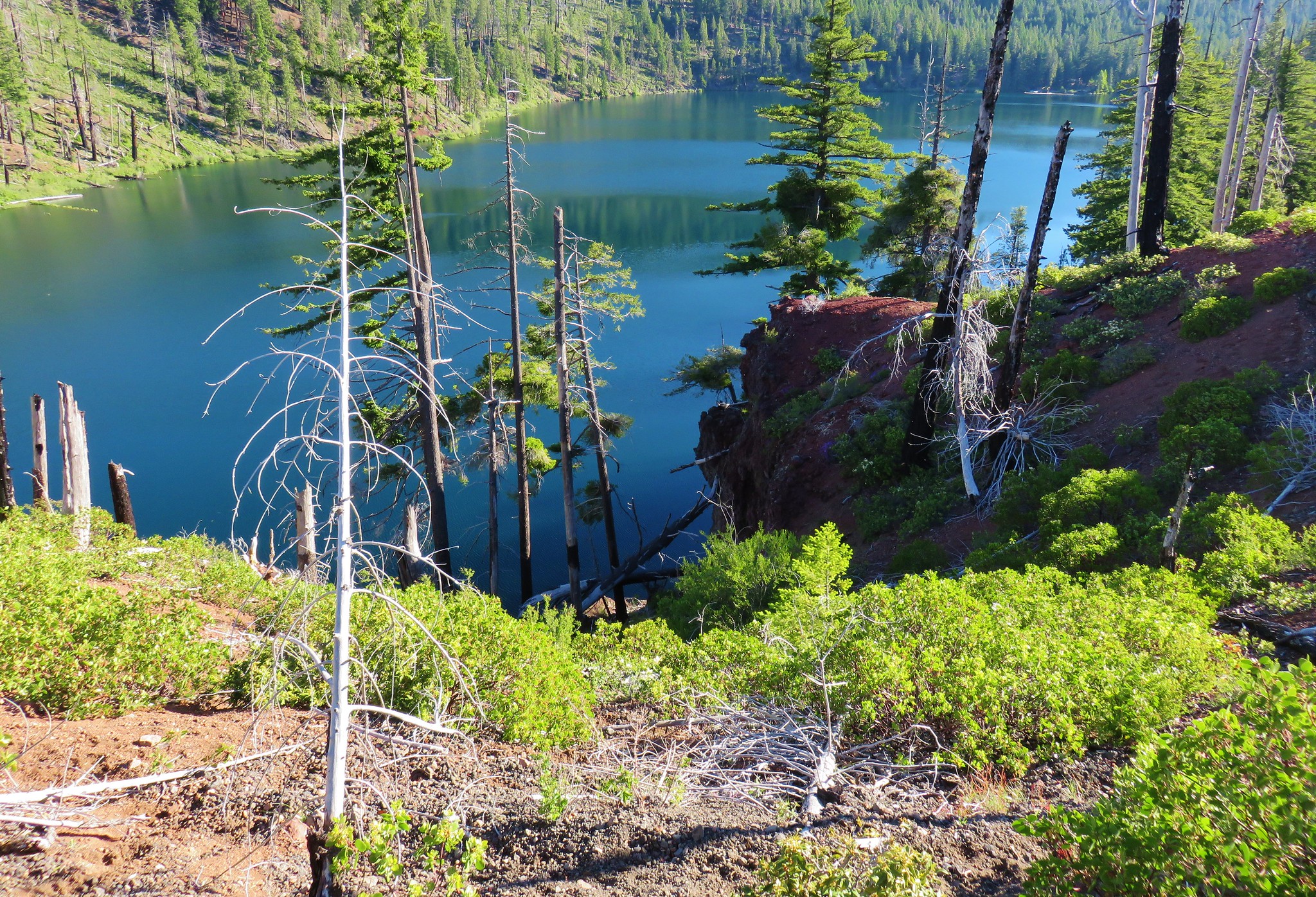
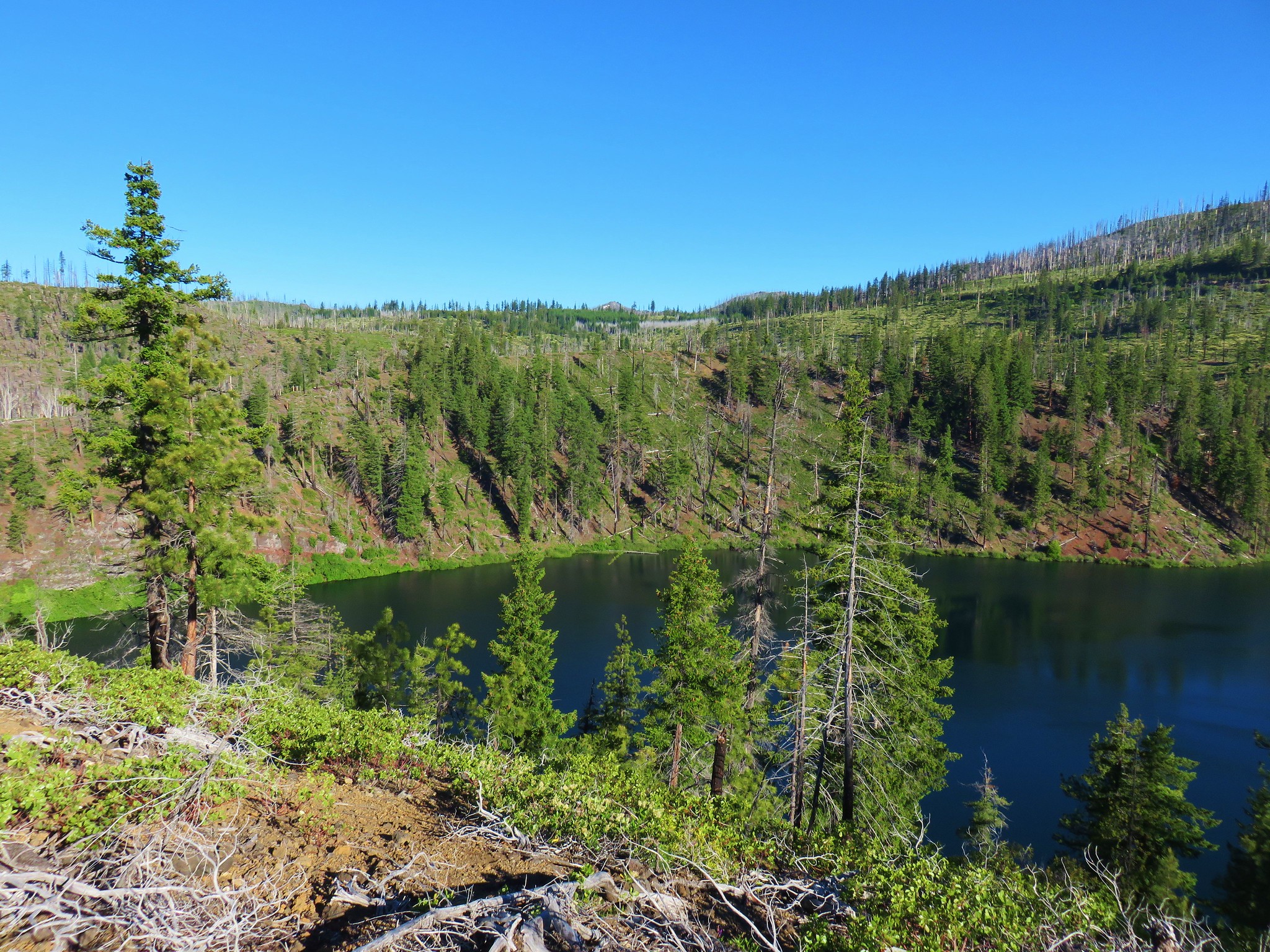
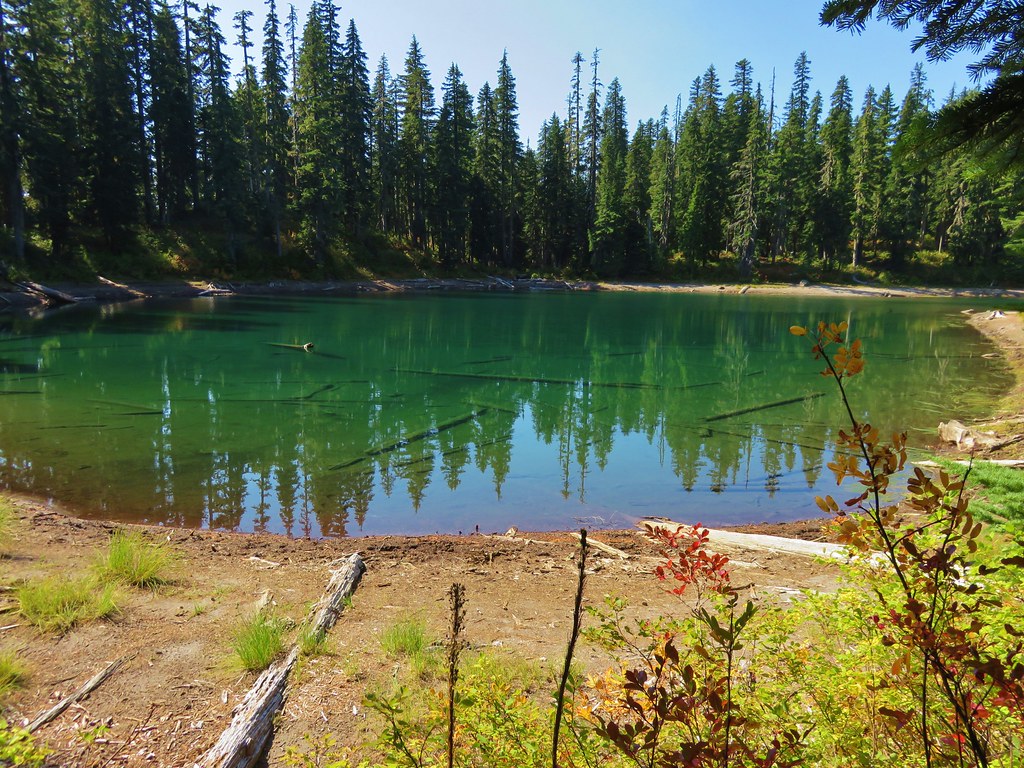
Blue Lake along the North Fork Wilson River. There were a few rough-skinned newts swimming in the lake.

After visiting the lake we made the relatively steep climb back up and continued on the loop.
IMG_2993
Heading up. The shade was becoming more sporadic as the morning progressed.

IMG_2979
A mustard

IMG_2996Another junco

IMG_3002
Best guess is slender phlox.

A tenth of mile from the junction, or the 3.1-mile mark of the loop, we came to another fork. Once again we stayed right, and now the road began to climb.
IMG_3006
Fork ahead.

IMG_3007
The shade was abandoning us, and it was getting warm fast.

IMG_3008
In person this was one of the best bunchberry displays we’d seen.

We’d been keeping an eye out for Mt. St. Helens on the horizon, but someone missed it the first time it should have been visible. We did however spot Mt. Rainier as we made our way up the road.
IMG_3013
It was just hazy enough that the snowy peaks blended in on the horizon.

IMG_3014Mt. Rainier

IMG_3025
We passed a gravel pit as the road rounded a ridge where we had a view toward Rogers Peak.

IMG_3028
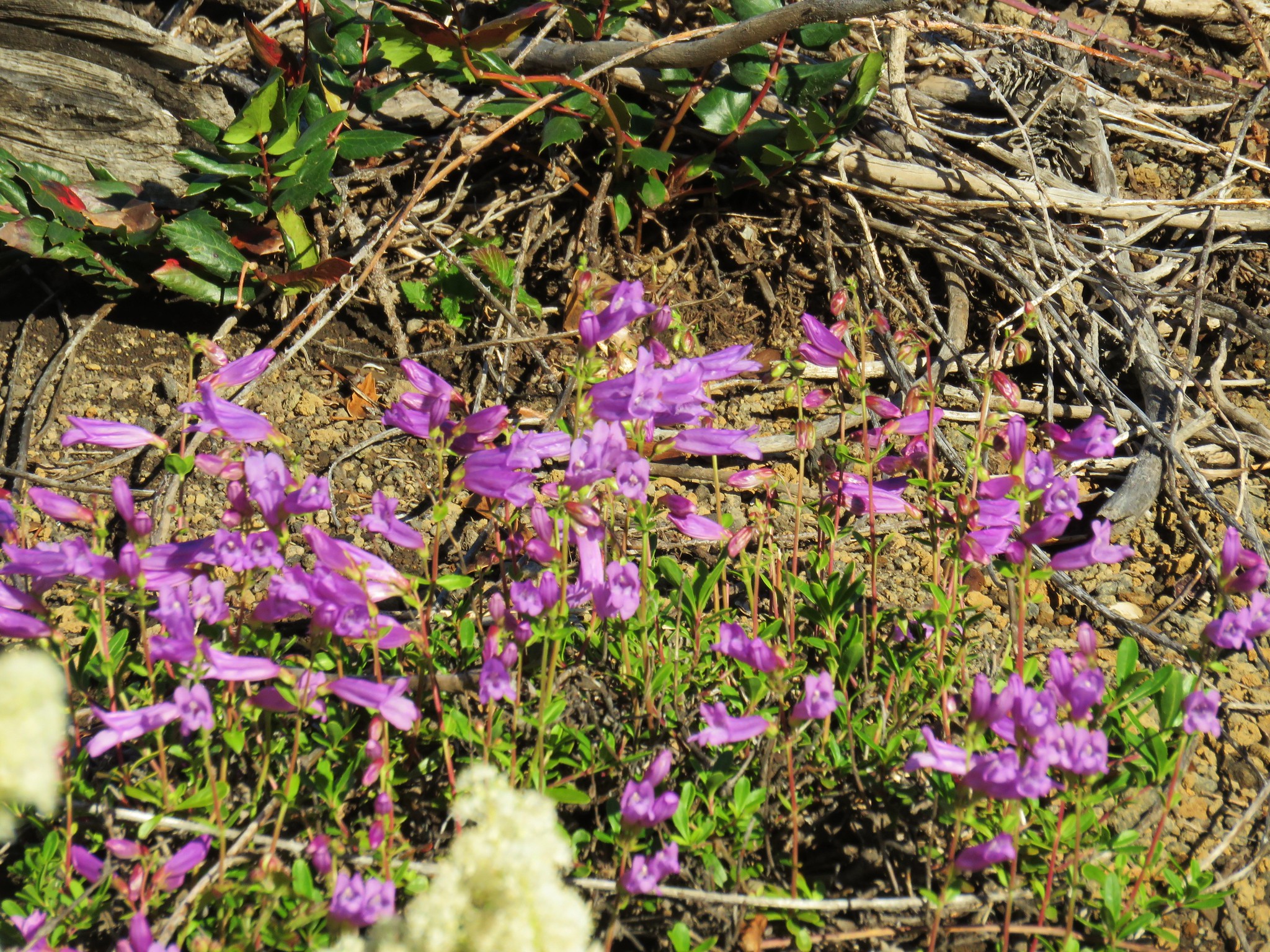
There were some wonderful clumps of penstemon at the gravel pit.

IMG_3027
Saddle Mountain from the gravel pit.

IMG_3032
The road continuing to climb past the gravel pit.

At the 3.9-mile mark of the loop we came to yet another fork where we again stayed right to continue up to the ridge below Rogers Peak.
IMG_3034
Taking a left at the fork would have put us onto the road seen below.

IMG_3038Dandelion (non-native) in the penstemon. There were surprisingly few non-native wildflowers which was nice.

IMG_3040
These little guys might be some sort of speedwell.

IMG_3046
Variable-leaf collomia (pink) and slender phlox (white)

IMG_3053Looking back after having made it onto the ridge. The loop route is the road seen on the right cutting along the hillside, not the roadbed straight ahead going up the knoll.

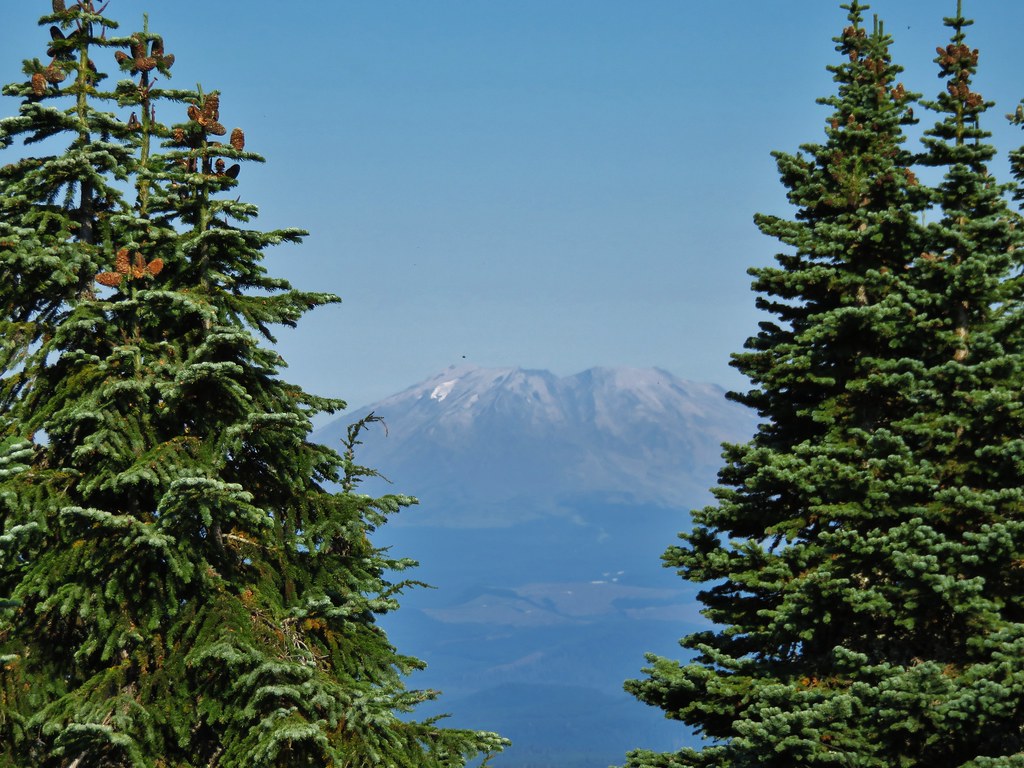
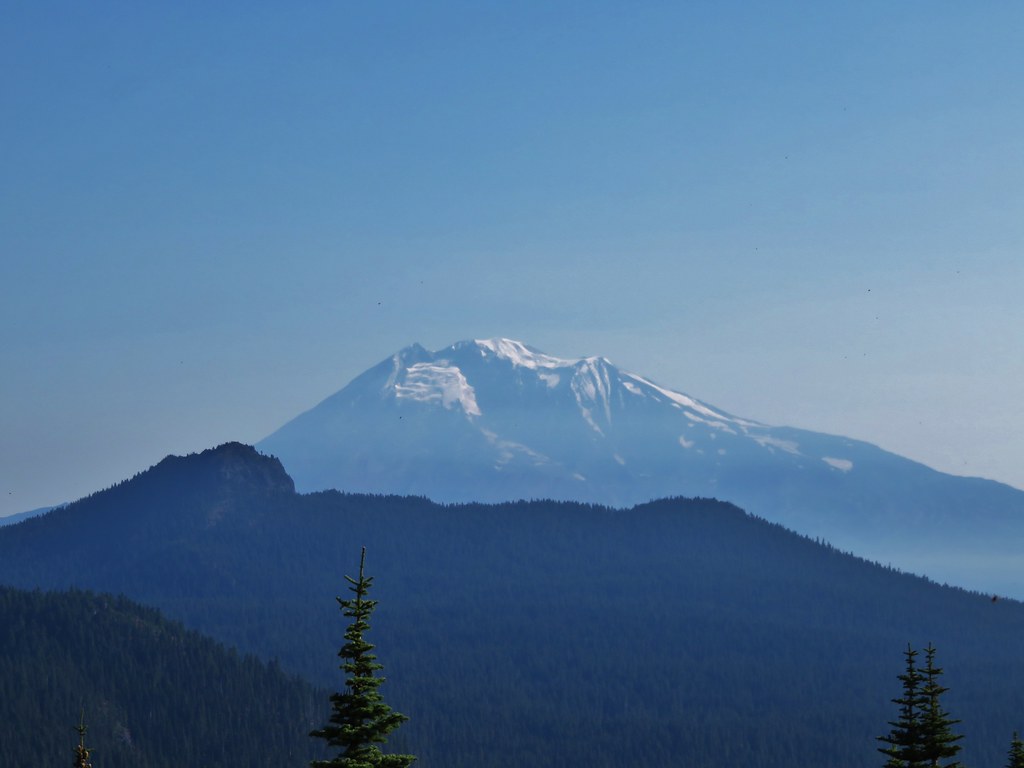
From the ridge we finally could see Mt. St. Helens (and Mt. Adams).
IMG_3054
Mt. St. Helens (post) to the left and Mt. Adams to the right of the hill.

IMG_3056
More zoomed in shot of Mt. St. Helens.

IMG_3057
Closer look at the recently more active Mt. Adams.

In addition to the two Washington volcanos Oregon’s Mt. Hood was visible to the east.
IMG_3058

IMG_3060
Again the sun angle and haze made it hard to make out the snow peaks.

We actually stayed left at a fork along the ridge and at the 4.5-mile mark of the loop came to the spur road up Rogers Peak.
IMG_3061
Don’t go right here, one of the few times we stayed left. This road would take you back down to the other side of the loop near the second saddle we passed through.

IMG_3066
Violets

IMG_3068
Oregon grape

IMG_3070
Black currant

IMG_3080
Spur road up Rogers Peak.

When the field guide entry was written this was an abandoned track but at some point recently the road was restored. Heather decided to skip the somewhat steep 0.2-mile climb up this road as the summit is relatively viewless due to trees. I however wanted to tag the summit and find the summit register so up I went.
IMG_3081Lomatium

IMG_3083

IMG_3084
Wide area at the end of the road below the actual summit.

IMG_3085
The summit was a short scramble up this hillside to the right (NE) of the road.

IMG_3090
The mossy rocks at the summit where the register is located.

IMG_3092
Sourgrass

IMG_3094
The summit register cans below the rocks.

I signed the register and left a Wanderingyuncks card in the can then had a quick snack and headed back to the loop to work on catching up to Heather.
IMG_3095

IMG_3096
While there wasn’t much of a view from the summit on the way down the road I had a pretty good view of Mt. St. Helens.

IMG_3099
Back on the loop. You can see the road to the summit on the right heading uphill.

IMG_3100
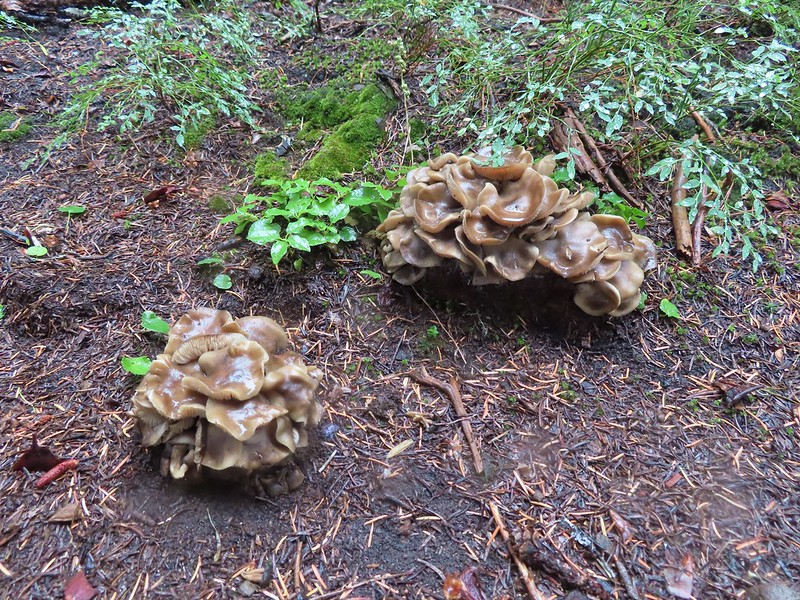
The only mushrooms I noticed all hike.

IMG_3102
An alumroot

IMG_3105
Penstemon and beargrass.

IMG_3109
A clodius parnassian on arnica.

IMG_3112
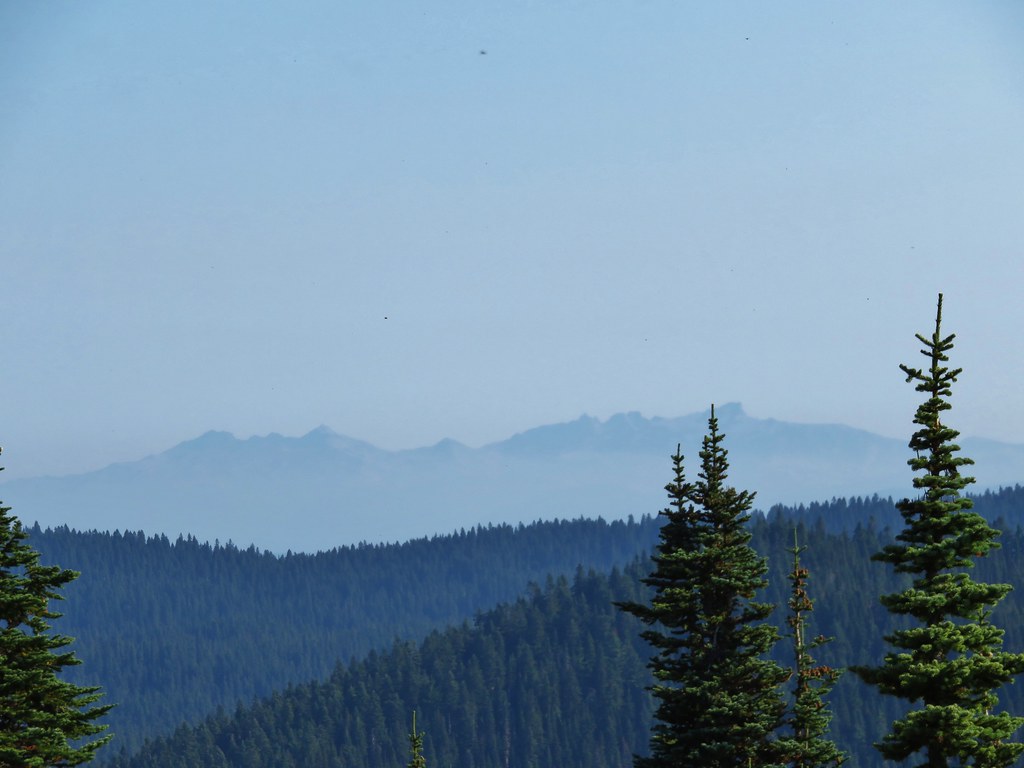
Looking out on the horizon I spotted another faint snowy peak on the horizon. The hump in the center foreground between the two trees is Kings Mountain (post).

IMG_3114
Low quality due to how much I had to zoom and the poor visibility, but this is Mt. Jefferson.

IMG_3115
Arnica

A half mile after rejoining the loop a short spur road on the right led to a nice viewpoint and where I found Heather.
IMG_3120
Rogers Peak to the right of the spur road.

IMG_3119
The two higher peaks to the right are Angora (post) and West Onion.

IMG_3122
Mt. Rainier

We returned to the loop and began to descend.
IMG_3134

IMG_3136
The wildflowers had been good all day, but the stretch of road after the spur up Rogers Peak was spectacular.

IMG_3139
Penstemon clumps with Saddle Mountain in the background.

IMG_3142

Four tenths of a mile beyond the summit road we passed to the left of a small knoll.
IMG_3143

The road steepened here as it dropped down to a saddle in another 0.4-miles.
IMG_3145

We made a sharp right turn at the saddle and got a brief respite from the steep descent as the road passed above Morris Creek.
IMG_3152

IMG_3149
Robin

IMG_3151
My guess is that this is a non-native species given it was growing in the roadbed, but it was pretty.

The road eventually steepened again as it dropped down to the fork near the gate where we’d gone left earlier in the morning.
IMG_3157
The road junction as we decsended.

IMG_3158
The gate from the junction.

My GPS showed 8.5-miles total including the side trip to Blue Lake, visit to the summit, and the viewpoint on the spur road. Total elevation gain was approximately 1525′.
Screenshot 2025-06-08 040730

This wound up being a very enjoyable hike. The wildflower displays and variety was impressive, we got to see five Cascade volcanoes along with several familiar peaks in the Coast Range, and we only saw one other person all morning. (Shortly after setting off we’d spoken with a Hampton Lumber employee who was driving out.) Again I wanted to acknowledge how much we appreciate when the lumber companies offer recreational access to their land. Happy Trails!

Flickr: Rogers Peak Loop
Categories
High Cascades Hiking Oregon Sky Lakes/Mountain Lakes Area Trip report

Blue Lake Basin – 09/18/2022

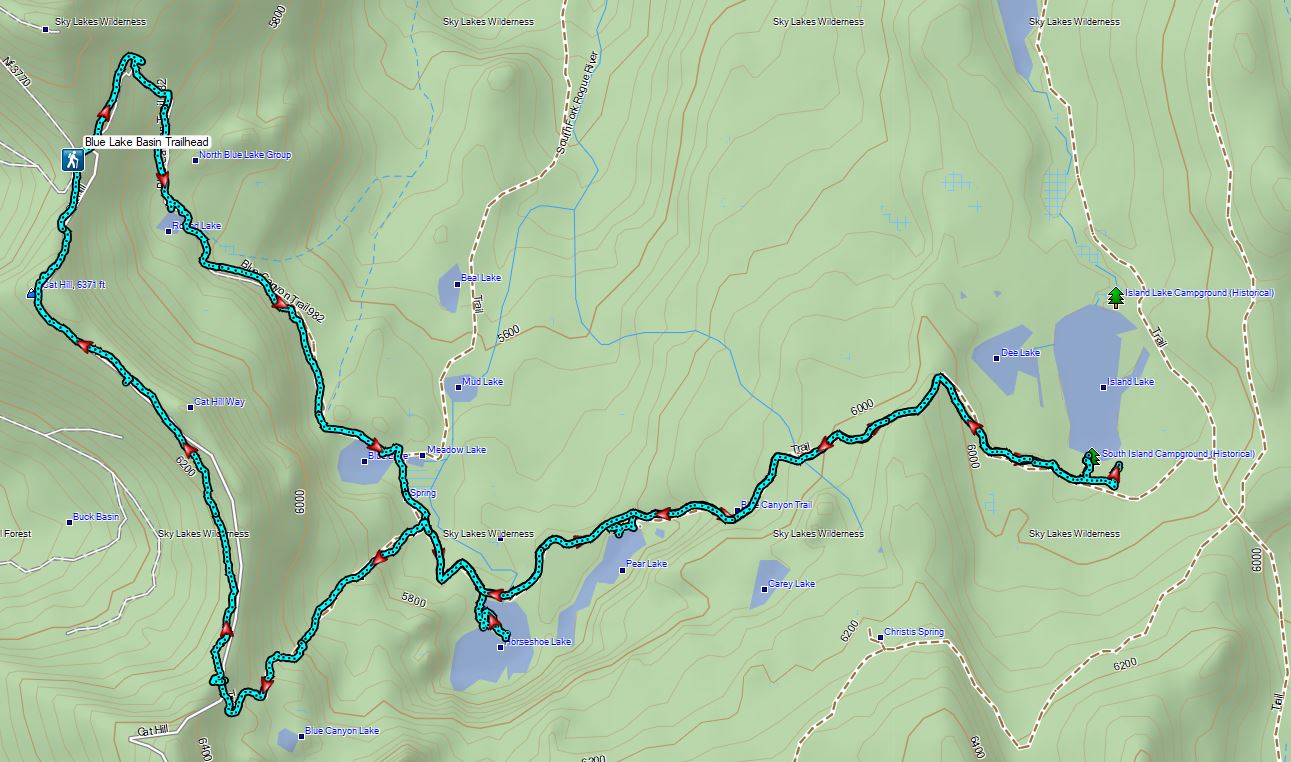
The second day of our Southern Oregon trip was forecast to be the wettest so we headed for the Sky Lakes Wilderness where the cloudy conditions wouldn’t hinder our views too much. Our goal for the day was to hike to Island Lake via Blue Lake Basin then possibly return via Cat Hill Way. The out-and-back to Island Lake is featured hike #40 in Sullivan’s “100 Hikes/Travel Guide Southern Oregon & Northern California” guidebook (edition 4.2). We had visited Island Lake in 2016 (post) but from the other direction. Since that visit only covered 0.1 miles of the featured hike and the hike is titled “Blue Lake Basin” not Island Lake we had not considered it done.

We began at the Blue Canyon Trailhead.
IMG_1710

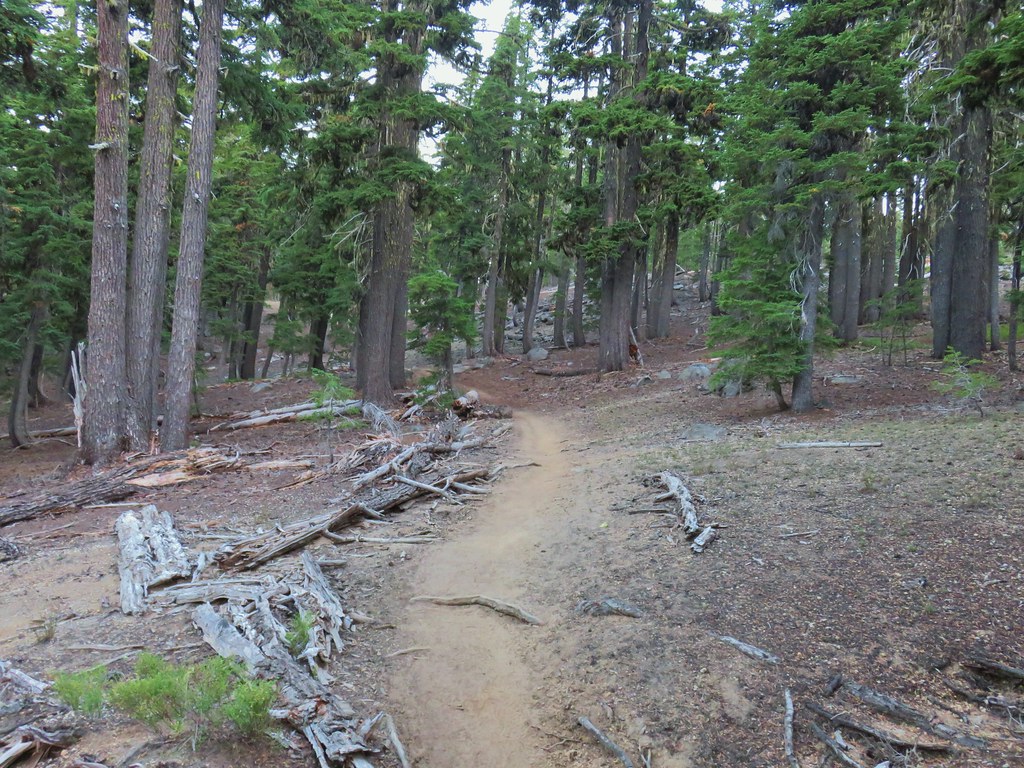
A crisp wind blew through the small meadow near the trailhead encouraging us to hustle downhill on the trail into the trees which provided some relief.
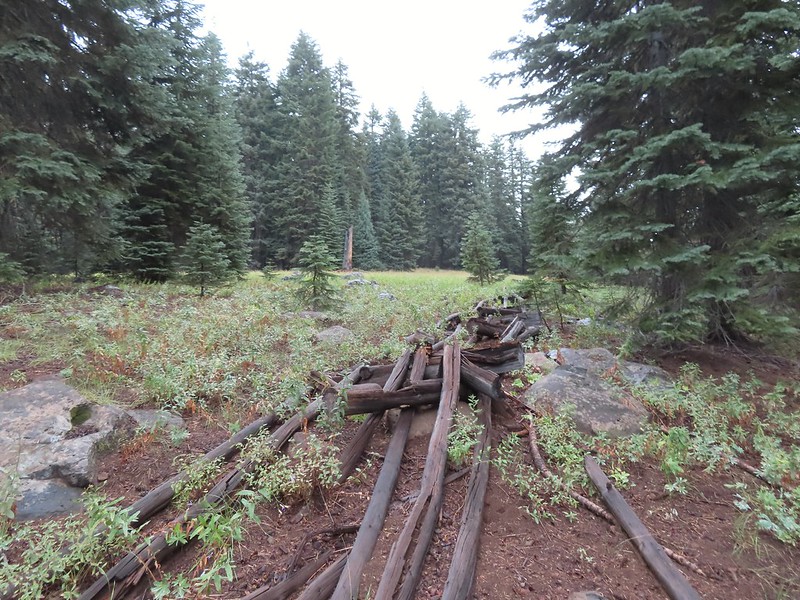
IMG_1712An old fence in the meadow.

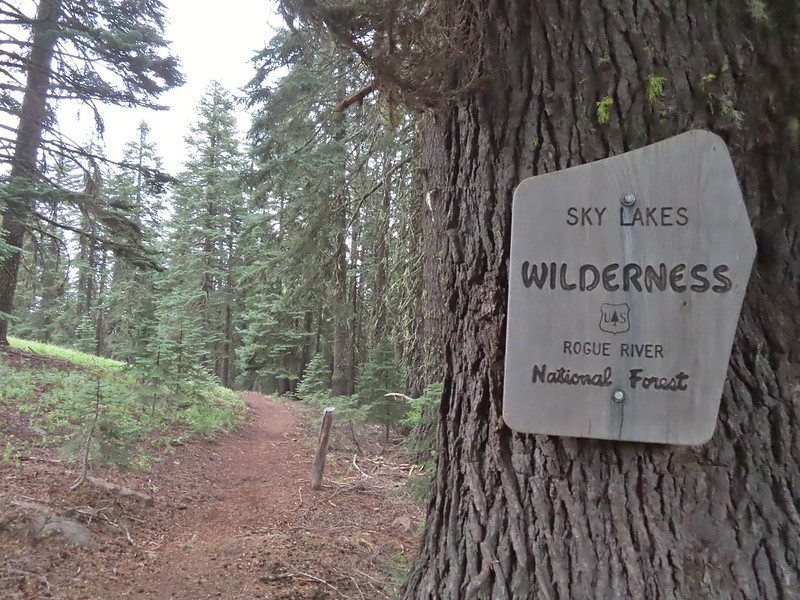
IMG_1714Entering the Sky Lakes Wilderness.

IMG_1715Into the trees we go.

It had been a while since we’d actually been cold starting out on a hike and it was kind of nice. We hoped that the wet weather was also present over the Cedar Creek Fire to the north near Waldo Lake. Here there was no sign of smoke as we hiked through the damp forest.
IMG_1716

Just over a mile from the trailhead we arrived at our first lake of the day, Round Lake.
IMG_1718

20220918_082800

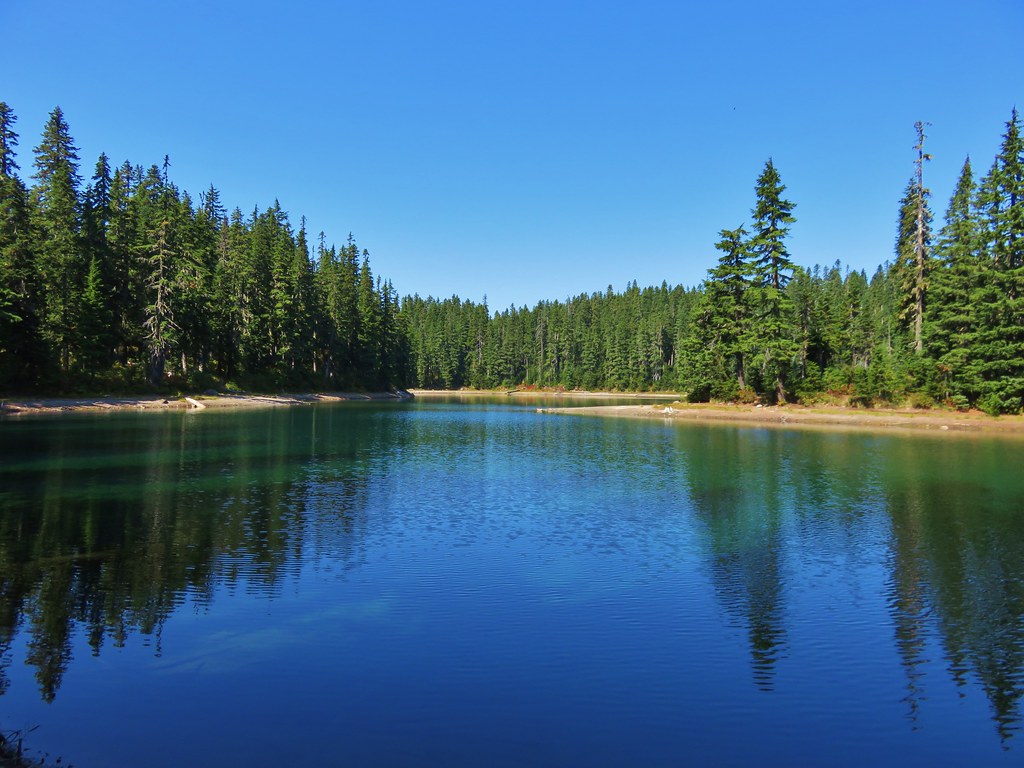
We continued on the Blue Canyon Trail another 1.2 miles to Blue Lake where a bald eagle startled me when it took off from a tree directly over my head.
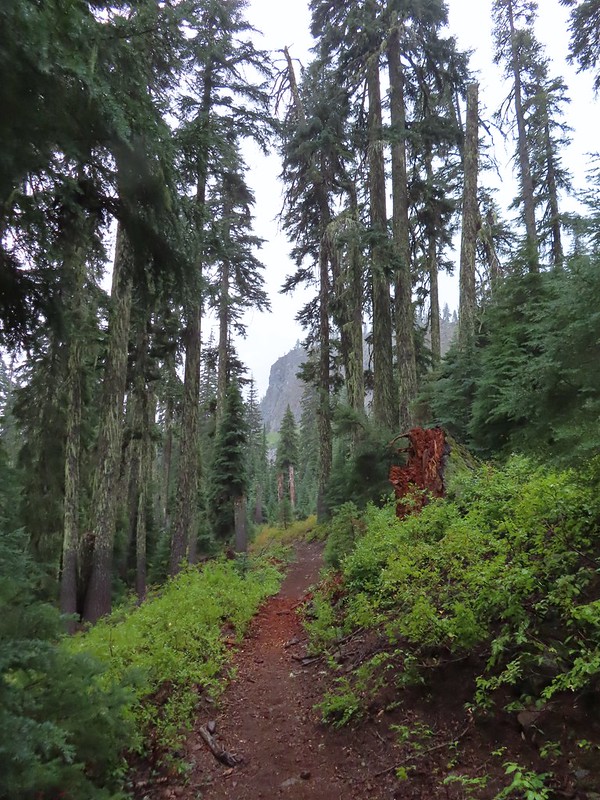
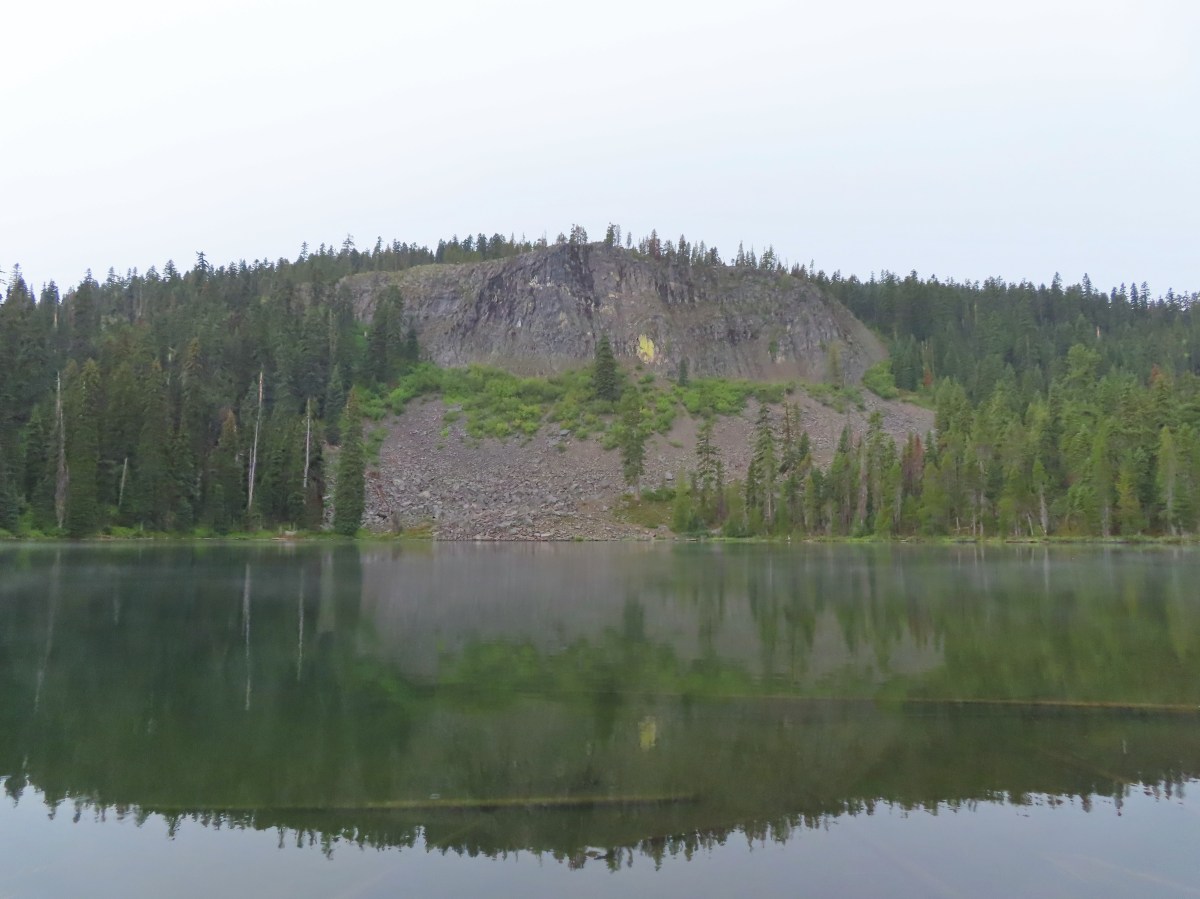
IMG_1727The cliff face above Blue Lake ahead from the trail.

IMG_1733Hiking along Blue Lake.

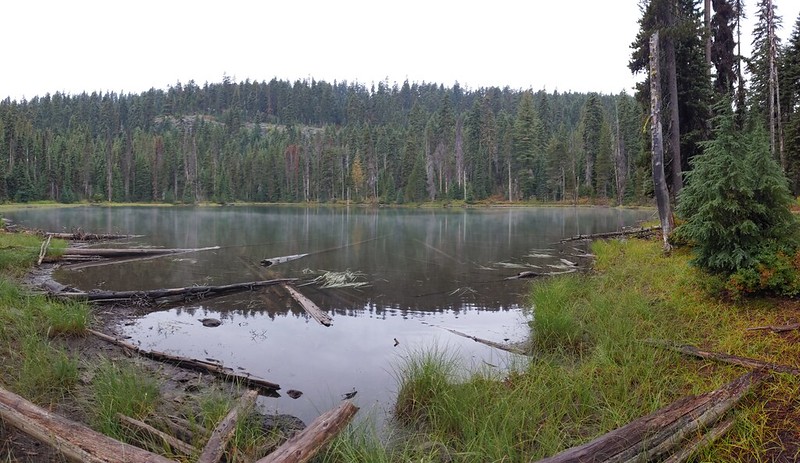
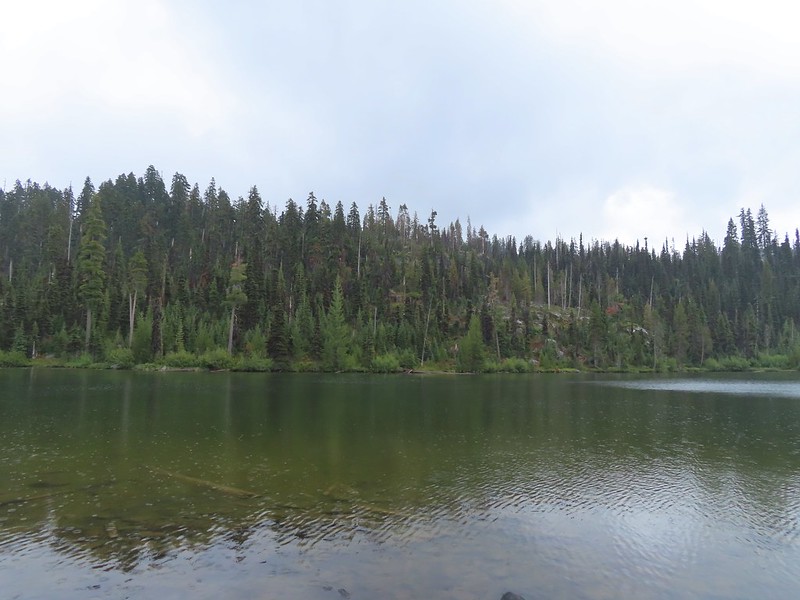
20220918_085604Blue Lake

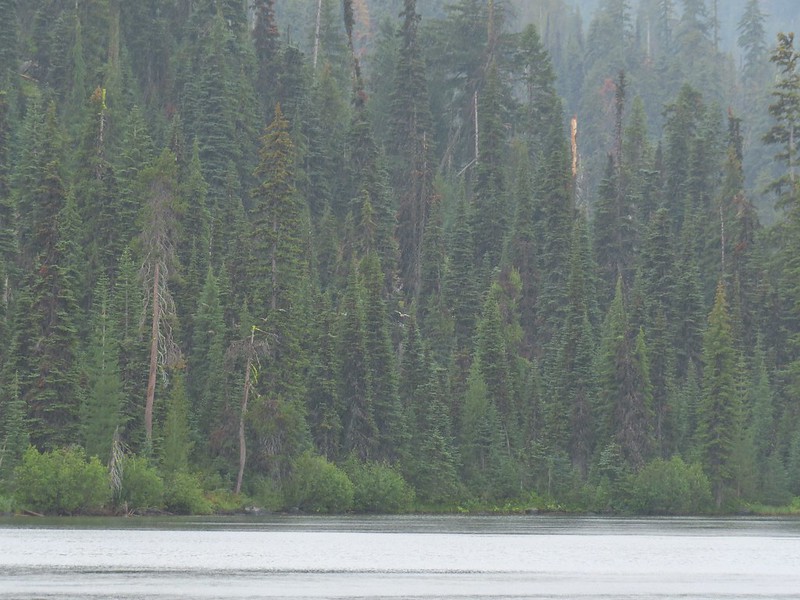
IMG_1739The bald eagle across the lake after startling me.

The combination of cool temperatures, wet ground and light rain kept us from lingering too long at the lake and we were soon on our way to the next one. Just beyond Blue Lake we veered right at a trail junction to stay on the Blue Canyon Trail.
IMG_1743The South Fork Trail went to the left past Meadow Lake and the Mud Lake before following the South Fork Rogue River to Road 720.
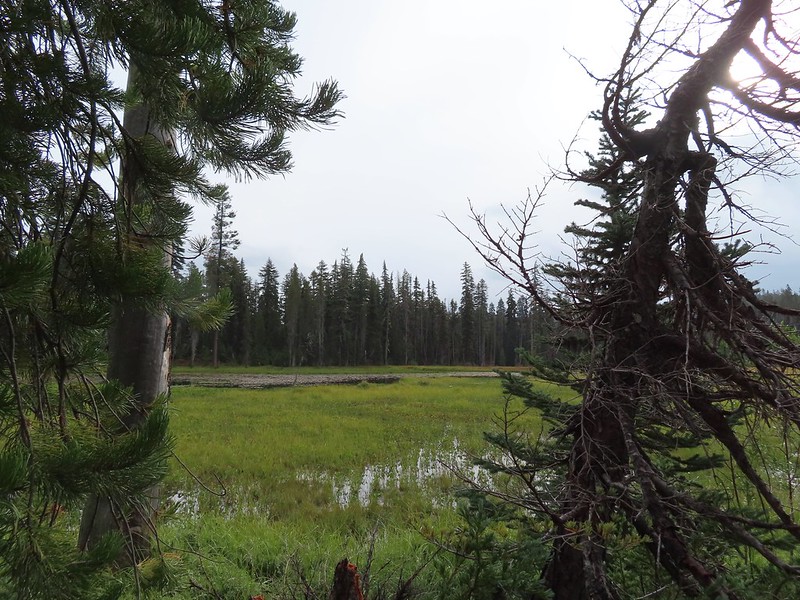
The Blue Canyon Trail passed to the right of Meadow Lake before arriving at a junction with the Meadow Lake Trail in a quarter mile.
IMG_1747Meadow Lake

IMG_1748

IMG_1749

IMG_1751Meadow Lake Trail junction.

For now we stuck to the Blue Canyon Trail which brought us to Horseshoe Lake in another half mile.
IMG_1753

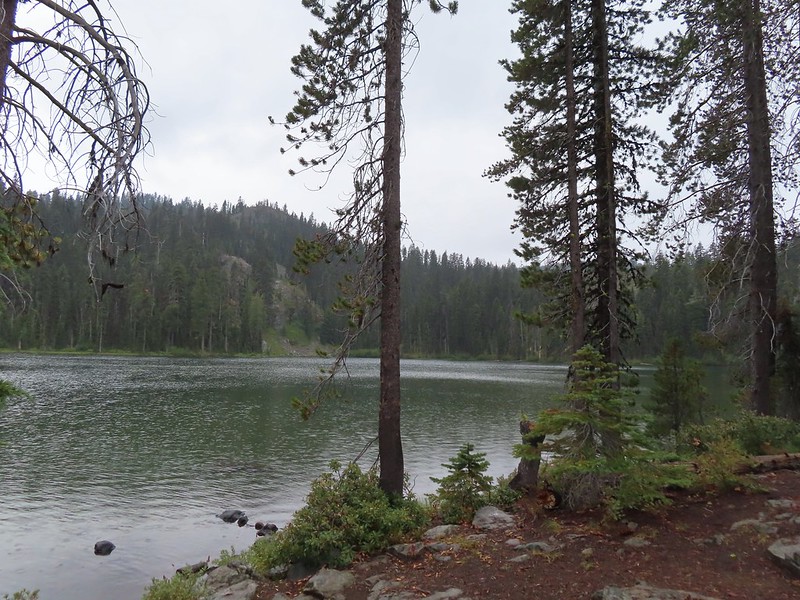
IMG_1754Just beyond this small pond south of the trail we turned right on a use trail which led out onto Horseshoe Lake’s peninsula.
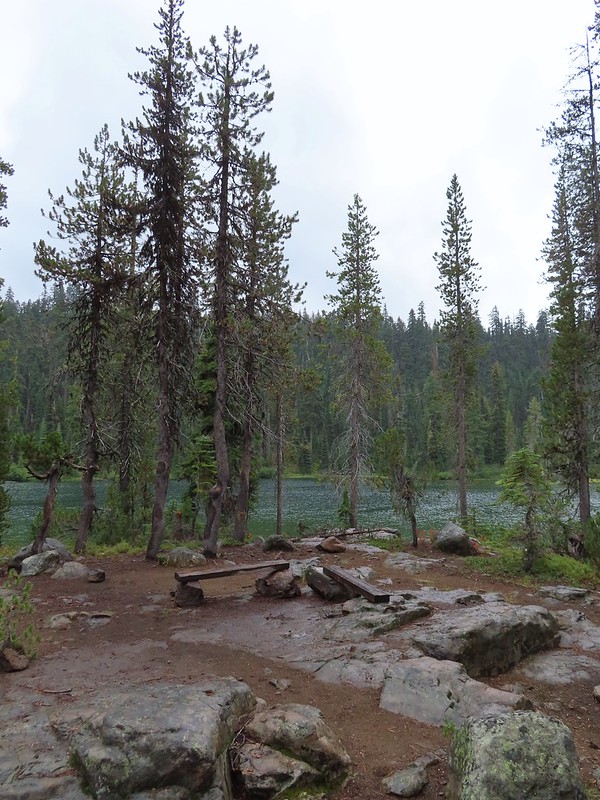
IMG_1759Camping is prohibited on the peninsula which is signed in multiple places.
IMG_1760

IMG_1761

After exploring the peninsula we returned to the Blue Canyon Trail and followed it to the next lake, Pear Lake, which was just over a half mile away. We took another use trail down to the shore of this lake which is not at all shaped like a pear. (Unless it’s named after the core then maybe but it would still be a stretch.)
IMG_1765

IMG_1766

IMG_1767

IMG_1773Ducks flying further down the lake.

From Pear Lake it was just over 1.75 miles to Island Lake. The trail climbed up and over a ridge passing above Dee Lake before dropping into Island Lake’s basin.
IMG_1776

IMG_1783Grouse

IMG_1784The only flowing water we’d encounter on this day after not crossing any streams the day before at Union Peak (post) either.

IMG_1815Dee Lake barely visible through the trees.

IMG_1790Bigelow’s sneezeweed

IMG_1794Meadow near Island Lake.

IMG_1795A Horse Camp sign.

IMG_1796Island Lake through the trees.

IMG_1798

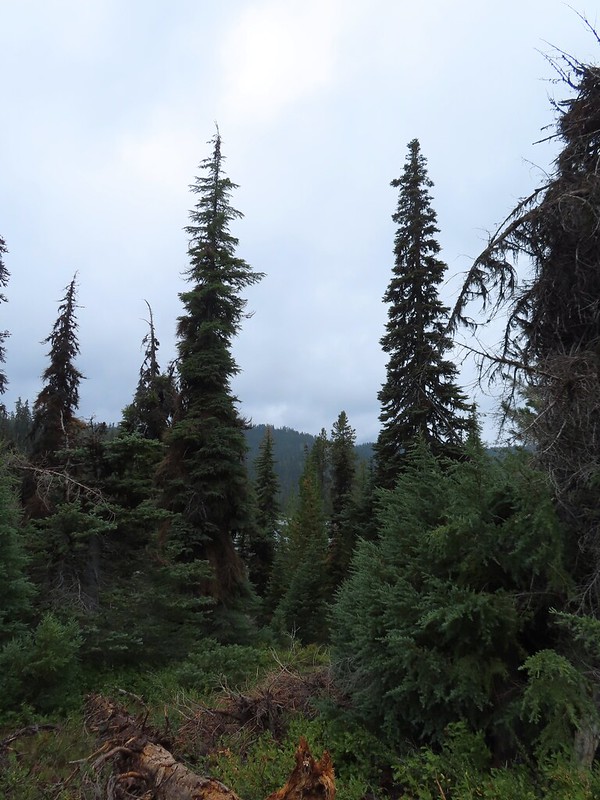
We couldn’t remember exactly where we’d gone down to the lake on our previous visit, just that it had been a short trail to the Judge Waldo Tree. We turned left on a clear use trail which brought us down to the lake but not to the tree we were looking for.
IMG_1799

IMG_1802_stitch

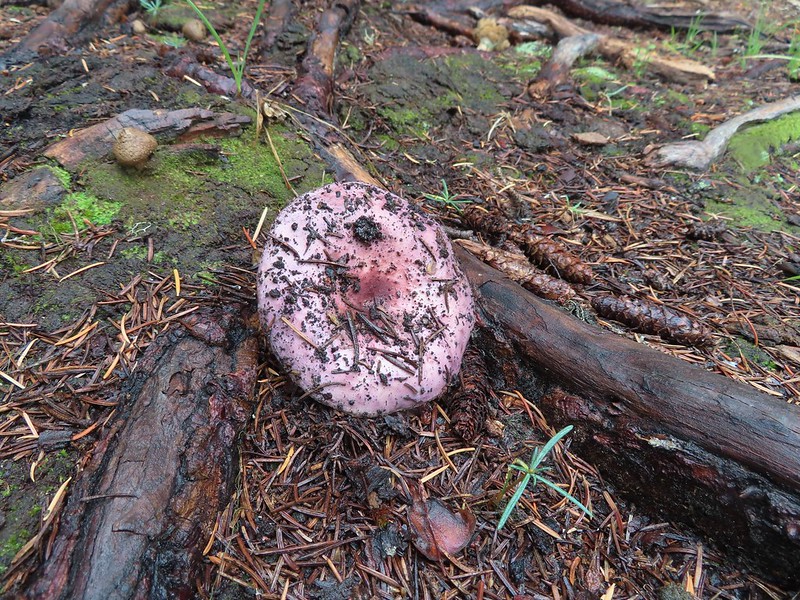
IMG_1806There were a lot of mushrooms down by the water though.
IMG_1807

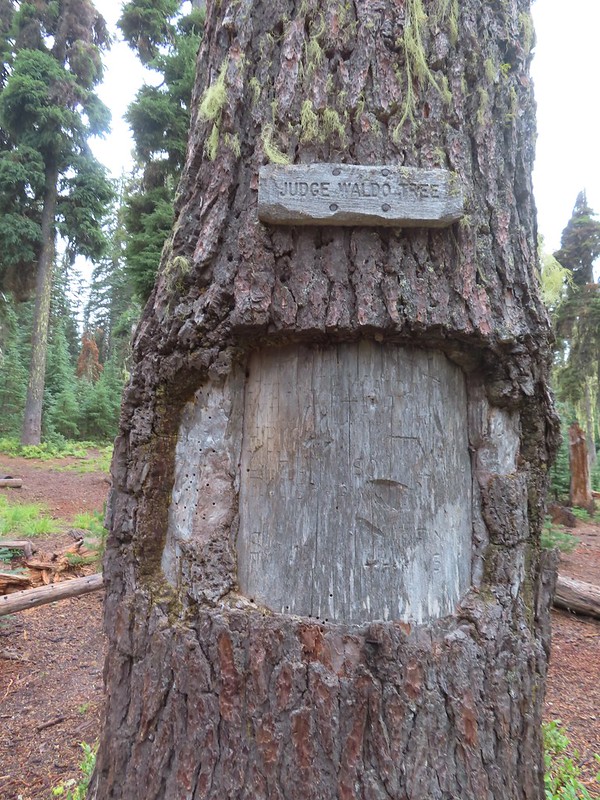
We returned to the Blue Canyon Trail and continued around the lake to another use trail and again turned left. This one looked familiar and indeed brought us to the Judge Waldo Tree.
IMG_1808

IMG_1809

IMG_1811

IMG_1812For those interested the 1888 inscription reads:
Judge J.B. Waldo
William Taylor
H.P. Minto
E. J. Humason
F. W. Isherwood
September 13, 1888

Judge Waldo was an early voice for conservation of the Cascade forests (today he most likely would not have carved his name into the tree like that).

Now that we’d linked the two hikes together we were content to head back. When we’d made it back to the Meadow Lake Trail junction we turned uphill onto that trail.
IMG_1817Pear Lake from the Blue Canyon Trail.

IMG_1820Back at the Meadow Lake junction.

IMG_1821Heading up the Meadow Lake Trail.

This trail was much steeper than the Blue Canyon Trail had been and if we were to do the hike again we most likely would opt to come down this way.
IMG_1827

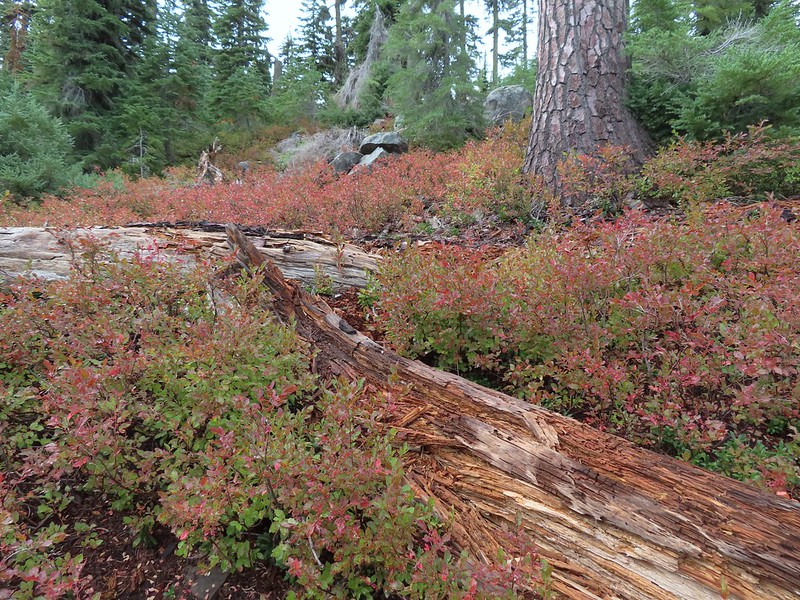
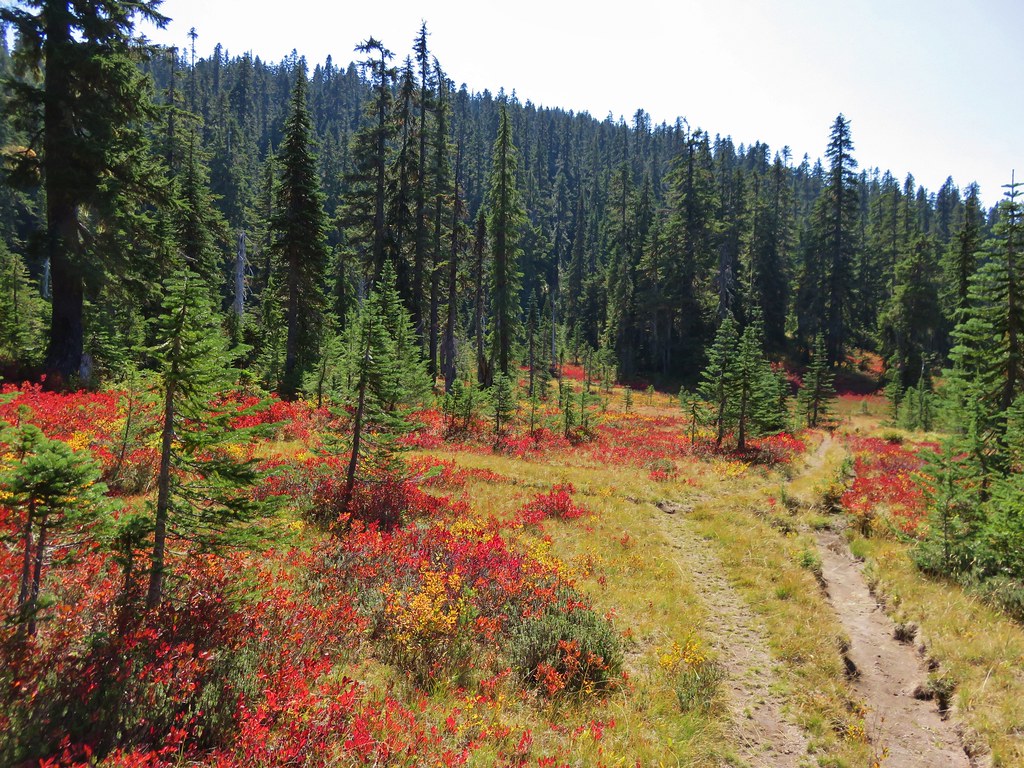
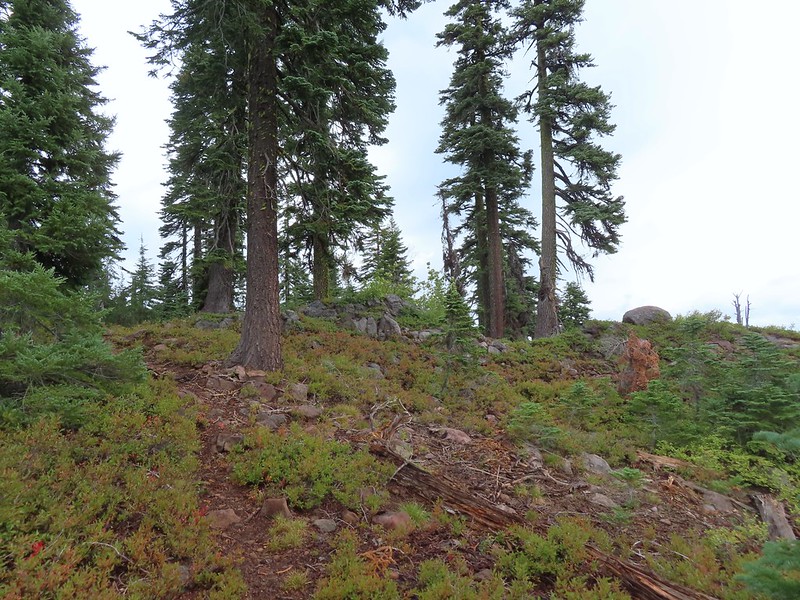
IMG_1832The huckleberries don’t lie, Autumn was right around the corner.
IMG_1833Approaching the ridge top.

IMG_1834Not sure what we missed here but imagine it was some of the peaks in the Sky Lakes Wilderness.

Just over a mile from the junction the Meadow Lake Trail ended at Cat Hill Way.
IMG_1835

This trail ran between the Pacific Crest Trail (1.5 miles to the left) and The Blue Canyon Trailhead (2.25 miles to the right). We turned right following a very old roadbed that climbed gradually just below the summit of Cat Hill before descending to the meadow at the trailhead. While the other trails had been well maintained this one had a number of downed trees that were fairly easily navigated. This trail did provide a view of Mt. McLoughlin (post) albeit limited on this day due to the cloud cover.
IMG_1836

IMG_1839

IMG_1843

IMG_1858Colorful fungus

IMG_1856Mt. McLoughlin

IMG_1861A little fresh snow, a welcome sight.

IMG_1863A nice little viewpoint just off the trail.

IMG_1870Passing below Cat Hill.

IMG_1873

IMG_1874Back to the trailhead.

IMG_1876

Our hike came in at 12.2 miles with approximately 1700′ of elevation gain.

We only saw a few other people which was surprising even with the wet weather given how popular this area is in the Summer. It had sprinkled off and on for most of the morning but we didn’t ever feel the need to put our rain gear on. We drove back to Shady Cove and after changing headed to 62’s Burgers and Brews for a late lunch/early dinner. The clouds were once again breaking up which was encouraging as we were heading back to Crater Lake the following day where we would be hoping for some good views. Happy Trails!

Flickr: Blue Lake Basin

Categories
Hiking

Diamond Peak Loop Day 2 – 08/23/2020

**Note the 2024 208 MF Fire burned over a portion of this hike from Marie Lake to Blue Lake.**

We woke up early on the second day of our loop around Diamond Peak and as the Sun was coming up we realized that it had gotten a little hazy overnight.
IMG_4401

IMG_4404Diamond Peak in the morning.

Our plan for the day was to leave camp and hike to the summit of Diamond Peak then come back, pack up, and continue on our loop. We hoped to make it as far as Blue Lake but were also ready to stop at Corrigan Lake if necessary. We took breakfast with us as we set off to the north on the Pacific Crest Trail.
IMG_4405

We followed the PCT for approximately 1.2 miles to a rocky viewpoint where we stopped to cook breakfast.
IMG_4410The viewpoint from below on the PCT.

We should have been able to see Summit Lake and Mt. Thielsen to the south from the viewpoint but after a smoke free hike the day before our luck ran out.
IMG_4412Summit Lake and a lot of smoke.

At least the sky above Diamond Peak was still fairly blue.
IMG_4420The north flank and route up Diamond Peak.
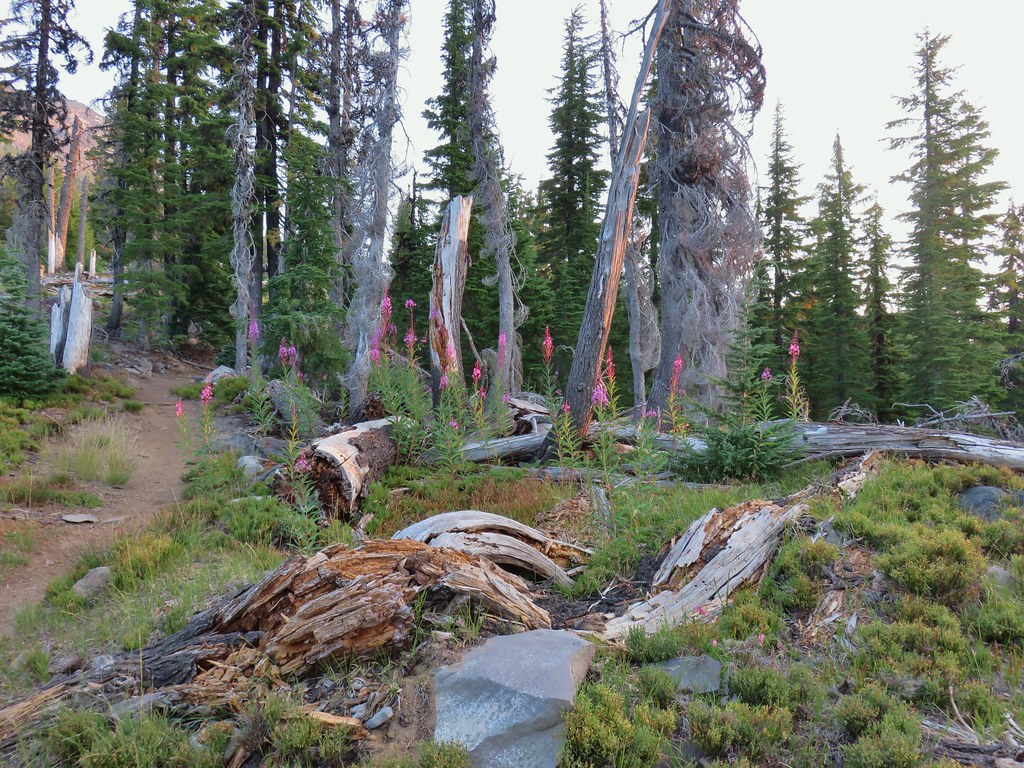
After eating we continued 50 feet up the trail to a bunch of cairns marking the summit path.
IMG_4417

IMG_4419Fireweed catching the morning sunlight.

IMG_4422Cairns on the left side of the trail marking the route.

IMG_4427Chipmunk inspecting some bleeding heart.
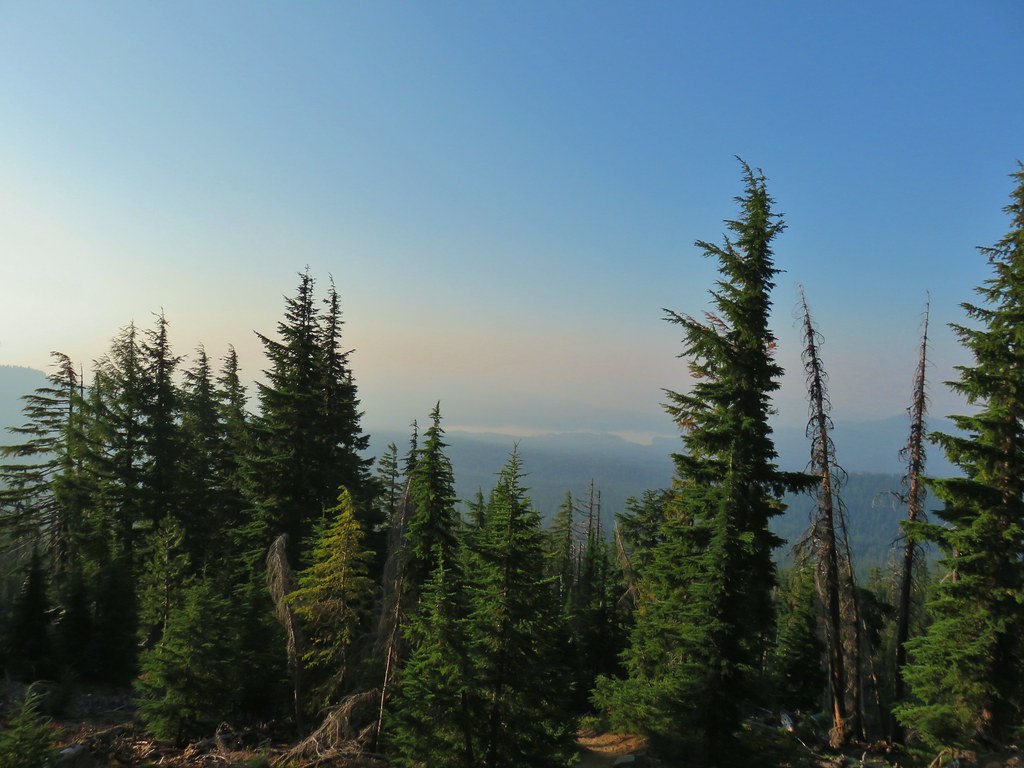
We turned up the well worn path and began to climb steeply through the trees and then onto rocks.
IMG_4431Summit Lake and the route up through the trees.
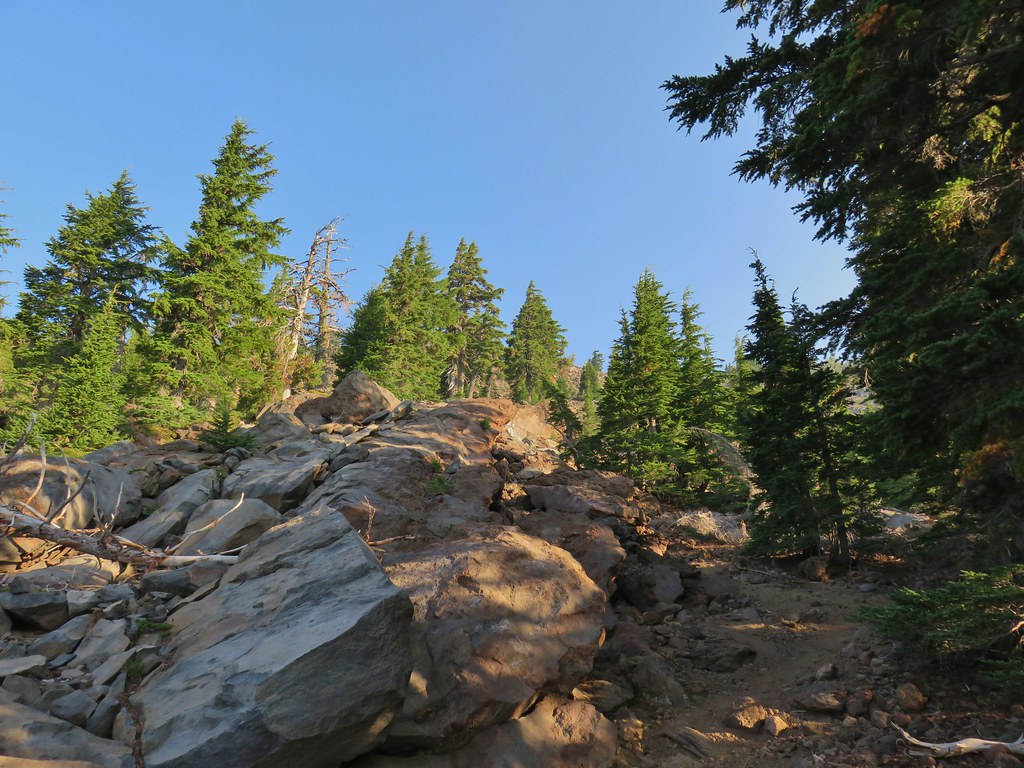
IMG_4433Here come the rocks.

IMG_4437

The path soon split into multiple user routes with cairns, flagging, and green paint marking the way.
IMG_4444Cairn on top of the big rock on the right.
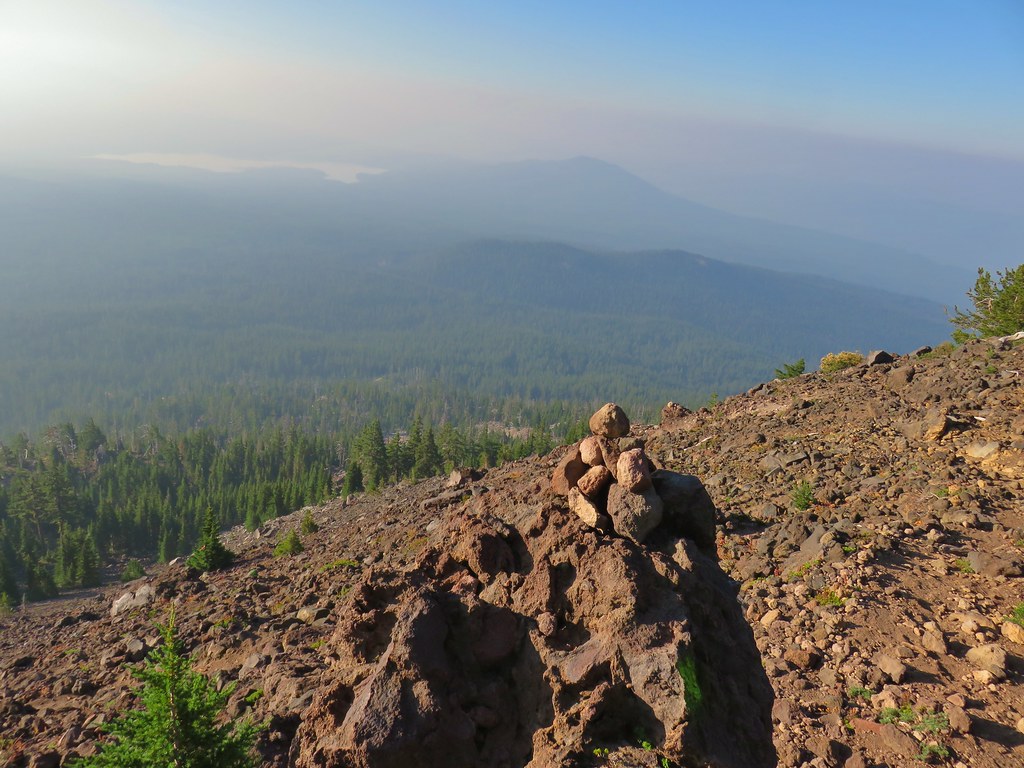
IMG_4446A carin and paint on a rock along the route and some pink flagging on the tree down to the left.

It was approximately a mile between the PCT and the false summit of Diamond Peak and over 1800′ of elevation gain. After leaving the trees the climb got even steeper. Through the loose rocks a few flowers could be found.
IMG_4452Looking up at the false summit.

IMG_4447Paintbrush

IMG_4449Buckwheat

IMG_4455Patches of penstemon.

IMG_4459Seed heads of Drummond’s anemone

As we climbed we passed a couple of small snow patches and gained more views which were all dominated by smoke.
IMG_4461Dark smoke to the SW

IMG_4462A snow patch below the false summit.

IMG_4467Final pitch to the false summit, still pretty blue.

At the false summit we were at 8421′ and could finally see Mt. Thielsen, at least the very top of it’s spire at least.
IMG_4469

IMG_4470

We had been backpacking there just two weeks prior (post) and were thankful that it hadn’t been this weekend. Looking around, it wasn’t just smoky to the south.
IMG_4487Looking west to a wall of smoke.

IMG_4477Smoke to the east.

IMG_4478Smoke to the NE too.

IMG_4479NW also equals smoke.

20200823_090207Smoke starting to drift in from the east.

We were still .4 miles and 350′ from the 8777′ true summit of the mountain and to reach it we would need to pass three gendarmes that block the ridge between the summit and false summit. Sullivan describes having to use your hands and “lots of caution” to work around them to the clear path on the other side. We started out and got to the first gendarme where I got up too high following a path. I had to back track and work my way down to Heather who had taken a different track but we still seemed too high. By this point the uncertainty of the best line to take had given us time to really think about where we were and the nerves kicked in. We wound up listening to them and headed back to the false summit deciding that it wasn’t worth the risk on such a smoky day where we wouldn’t get much in the way of views. We expected the view north that we would have had from the summit to be just as smoky given the fact that from the false summit we could see the top of the South Sister which was also appeared to be surrounded by wildfire smoke.
IMG_4485

After making the decision to turn back we were able to relax and enjoy the jaunt back down to the PCT focusing on flowers and critters along the way.
IMG_4492One of several Clark’s nutcrackers.

IMG_4496Buckwheat

IMG_4499Paintbrush

IMG_4500Penstemon

IMG_4502Basin with a number of flowers.

IMG_4503Mountain heather

IMG_4510Partridge foot

IMG_4509Another paintbrush

It was slow going but we made it back to the PCT where we noticed the smoke a little more than we had earlier that morning.
IMG_4511A little smoke in the trees.

When we got back to camp we packed up and realized that we’d consumed quite a bit of our water already so we decided to stop by Rockpile Lake again to refill our reservoirs before continuing on our loop.
IMG_4521Slightly smokier Rockpile Lake.

After refilling our water supply we continued to the junction with the spur trail to Marie Lake (.5 miles from the PCT) where we turned left to stay on the Rockpile Trail (at a pointer for the Diamond Peak Trail) and climbed steeply up the side of Diamond Rockpile.
IMG_4522

IMG_4524

It wasn’t as much of a rockpile as the named implied as it was mostly forested with a single viewpoint near the high point along this portion of trail.
IMG_4525

IMG_4526Summit Lake out there in the smoke.

The trail then dropped a bit on the west side of Diamond Rockpile to a 4-way junction with the Diamond Peak Trail 1.2 miles from the Marie Lake junction.
IMG_4534

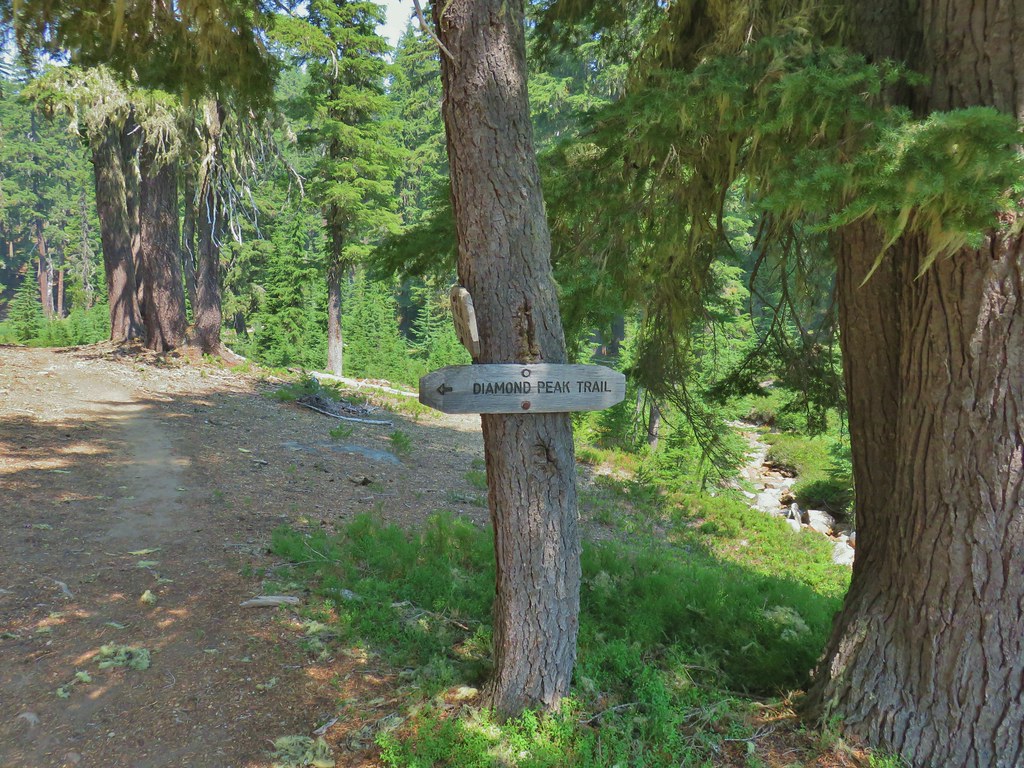
While there were plenty of signs along the trails they often didn’t identify the trail itself but rather pointed you in the direction of other trails or features. This junction was a good example as one sign identified the Rockpile Trail while another directed you to Rockpile Lake and Road 2160.
IMG_4535

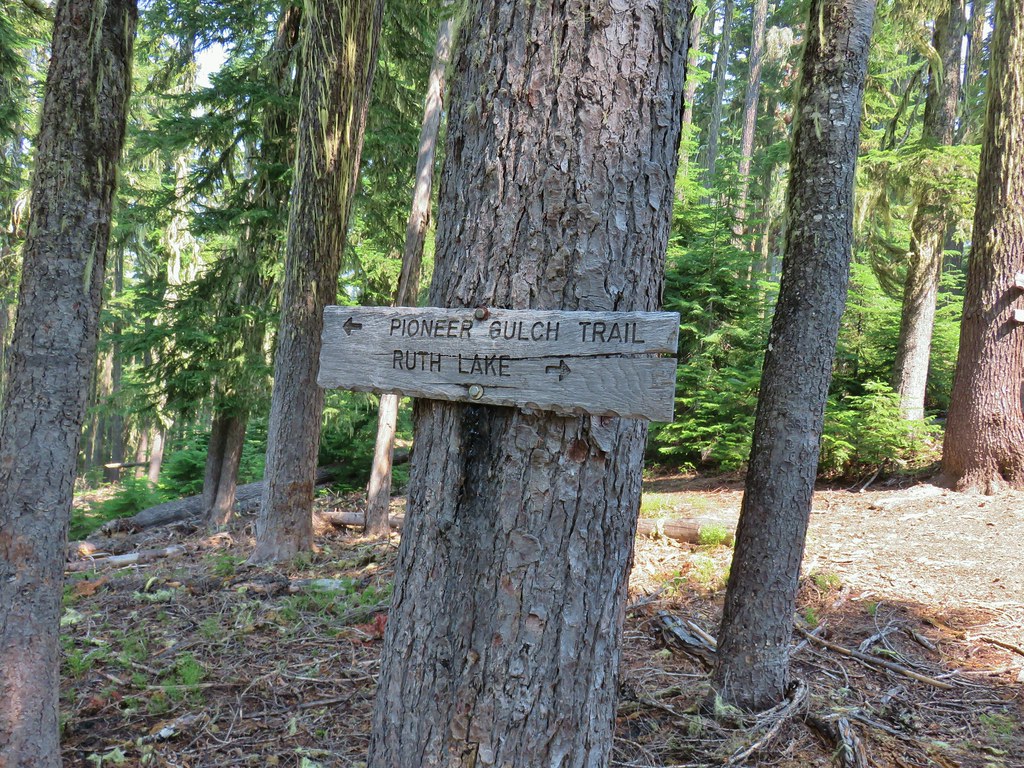
There were no signs naming the Diamond Peak Trail but there was a pointer to the south for Ruth Lake and a pointer to the north for the Pioneer Gulch Trail (which we thought was the name of this trail at first).
IMG_4536

We need to go north so we followed the pointer for the Pioneer Gulch Trail and headed north.
IMG_4537

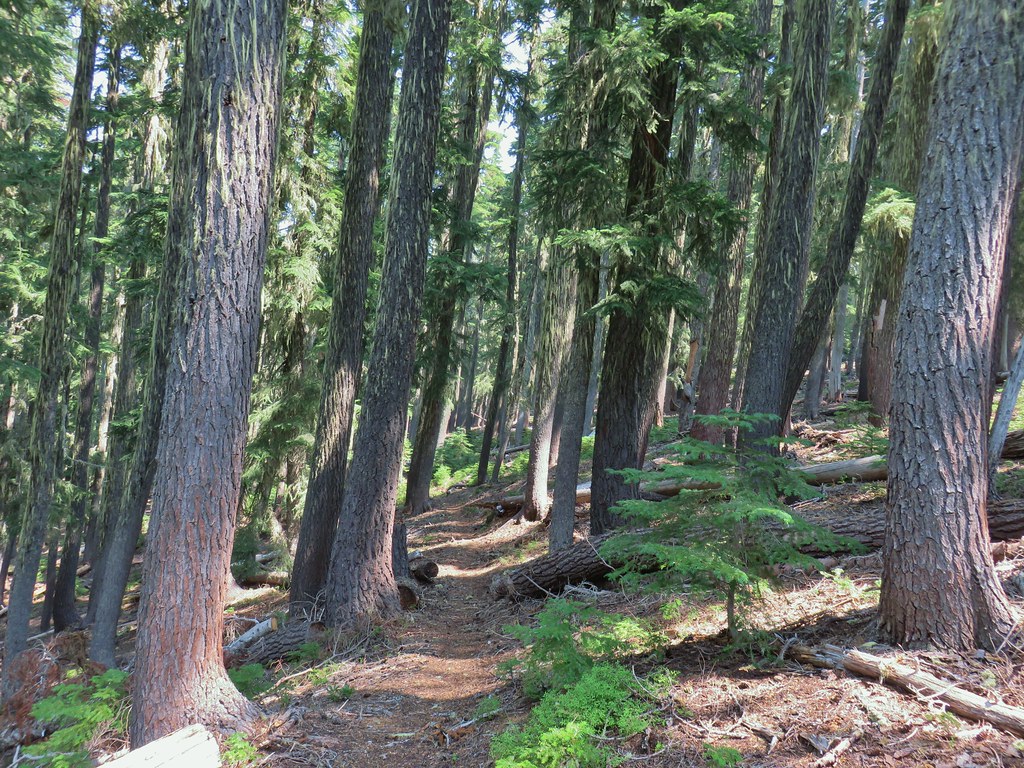
The Diamond Peak Trail rolled up an down for nearly 1.5 miles before arriving at a junction with the actual Pioneer Gulch Trail on the left.
IMG_4542One of the uphill sections.

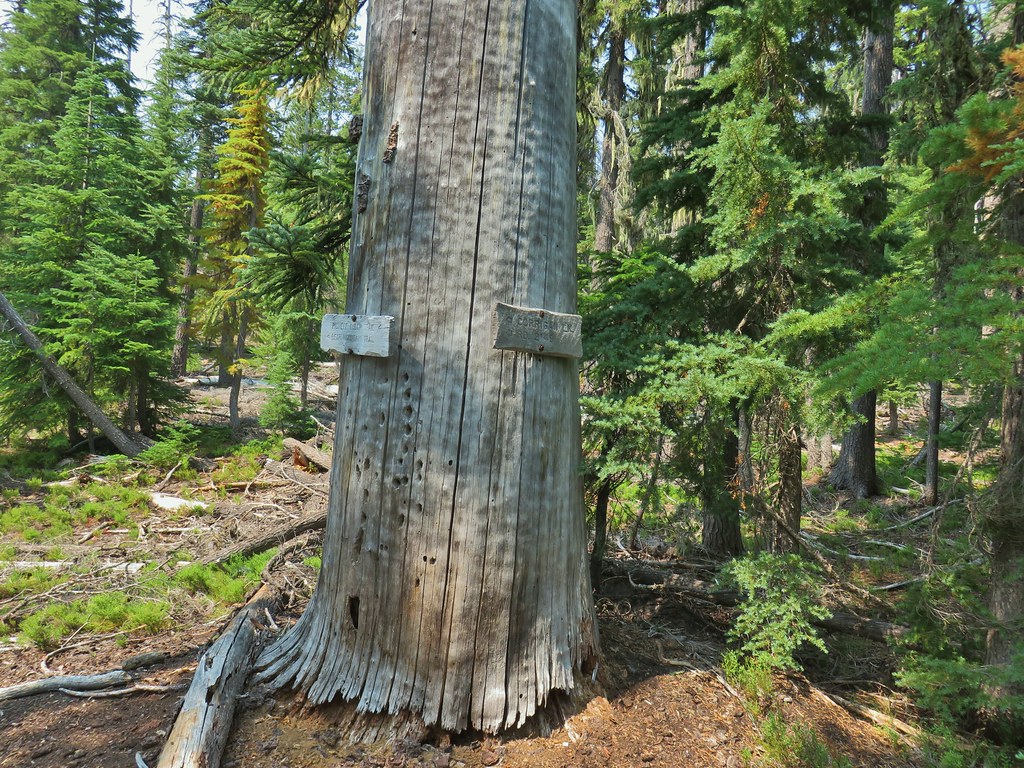
IMG_4546Note again that the sign is letting you know what is in the different directions but not identifying the trail name.
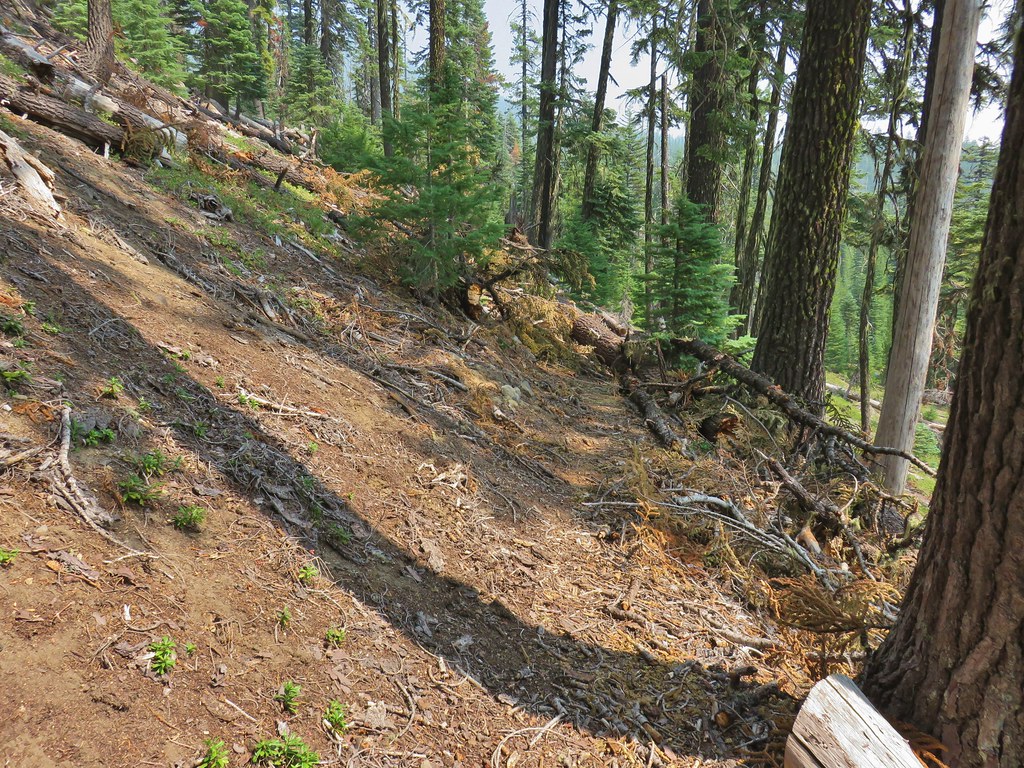
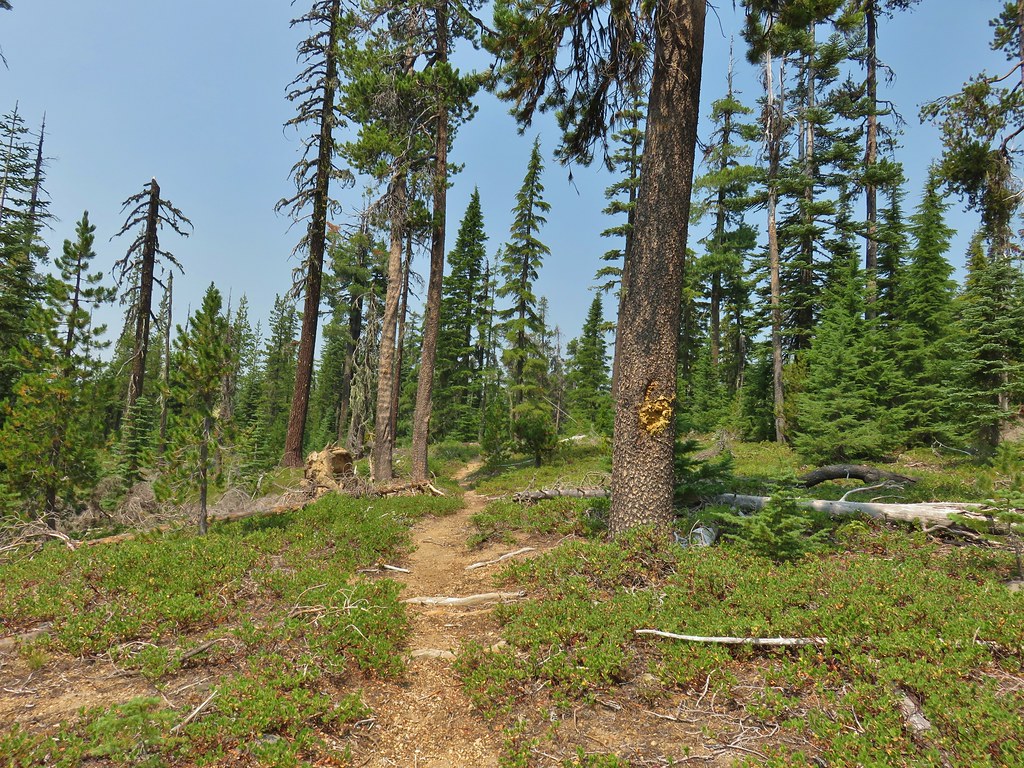
We stayed on the Diamond Peak Trail heading for the Corrigan Lake Trail which was just over 2 miles further along. These two miles had not been maintained so there were a few obstacles to get around but nothing too difficult. We also regained a view of Diamond Peak along this stretch which was now behind a thin layer of smoke.
IMG_4548Typical obstacle for this stretch.

IMG_4550

We turned left down the Corrigan Lake Trail when we arrived at the junction.
IMG_4557

It was a little over half a mile and 300′ down to the lake which had a nice view of Diamond Peak.
IMG_4558

IMG_4560

IMG_4564

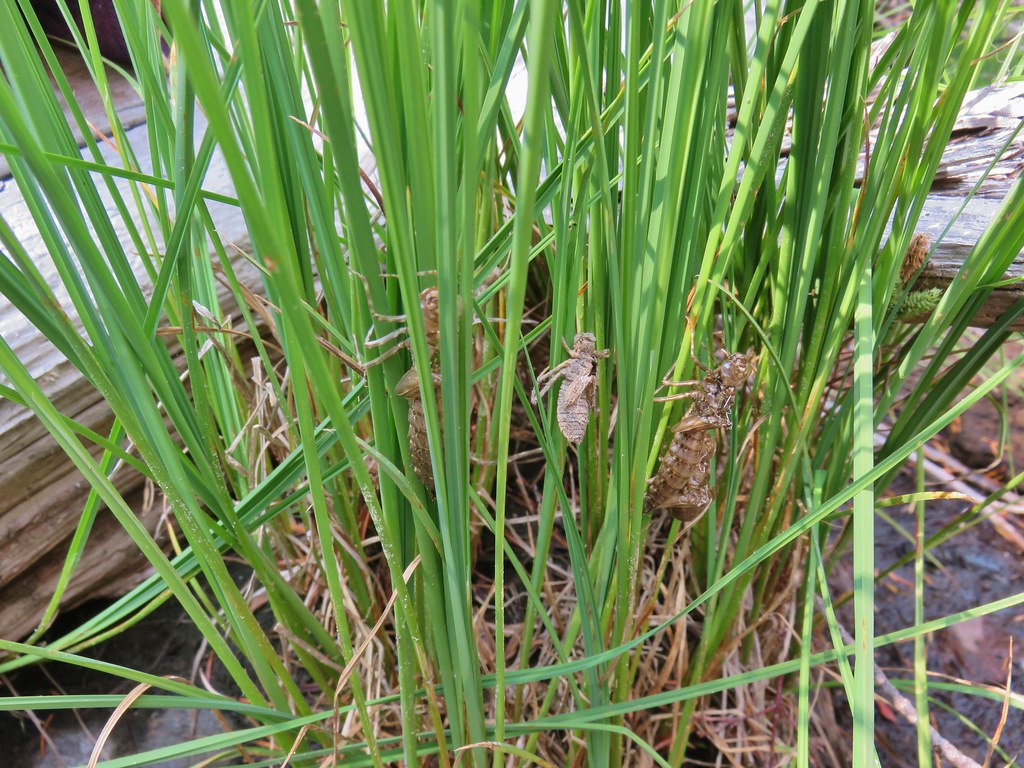
IMG_4565Lots of insect husks on the plants along the lake.
We took a nice long break at the lake where another couple of groups of backpackers appeared to be planning to spend the night. Our plan was to push on and try and find a spot for our tent near the Diamond Peak Trail junction with the Blue Lake Trail. We were hoping to get down to that lake in the evening but didn’t want to haul our full packs up and down the steep 400′ of elevation change.

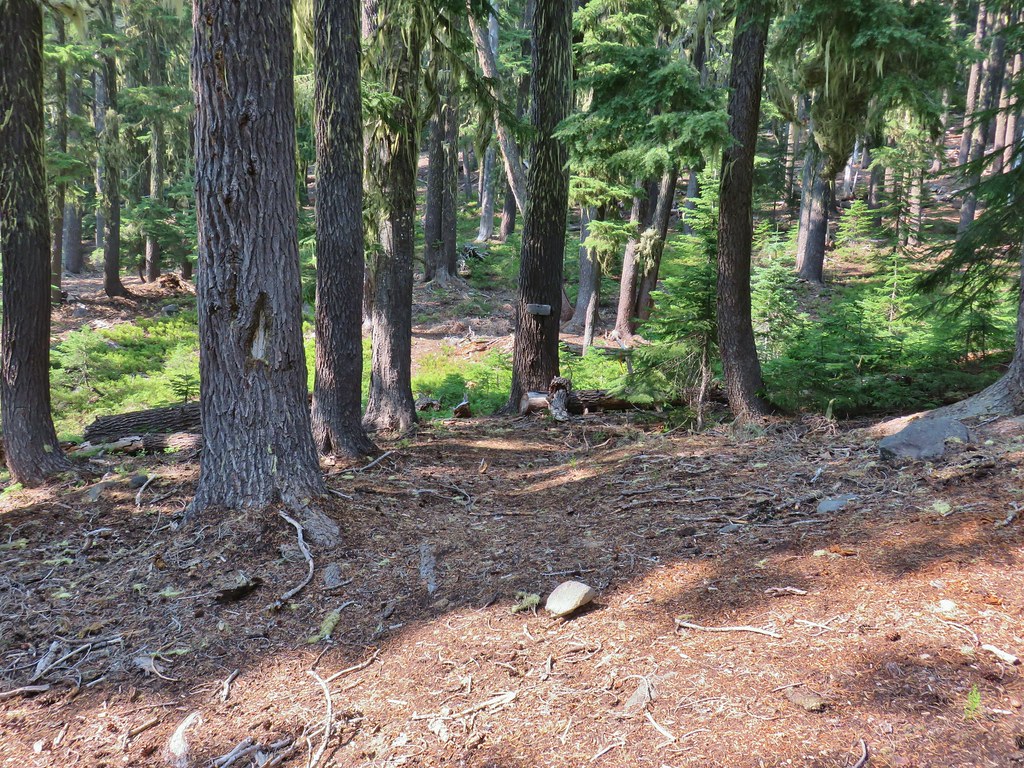
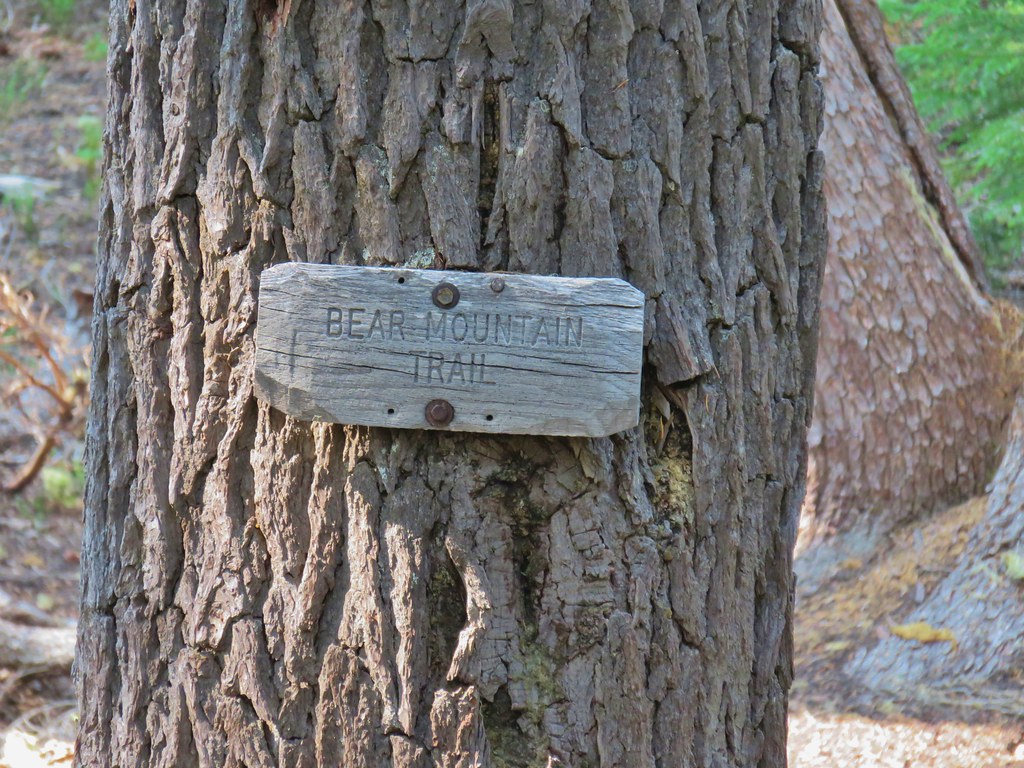
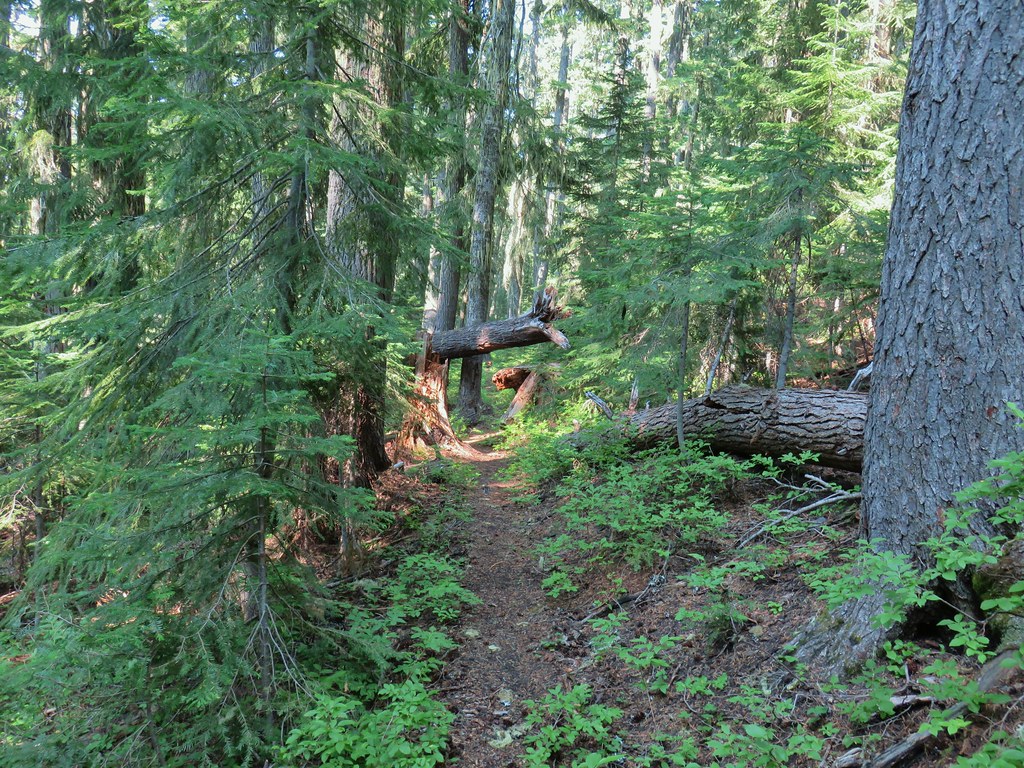
We left Corrigan Lake to the other backpackers and climbed back up to the Diamond Peak Trail and continued on our clockwise loop around the mountain. This next section of trail was clearer and in just under a mile we came to the Bear Mountain Trail junction.
IMG_4573

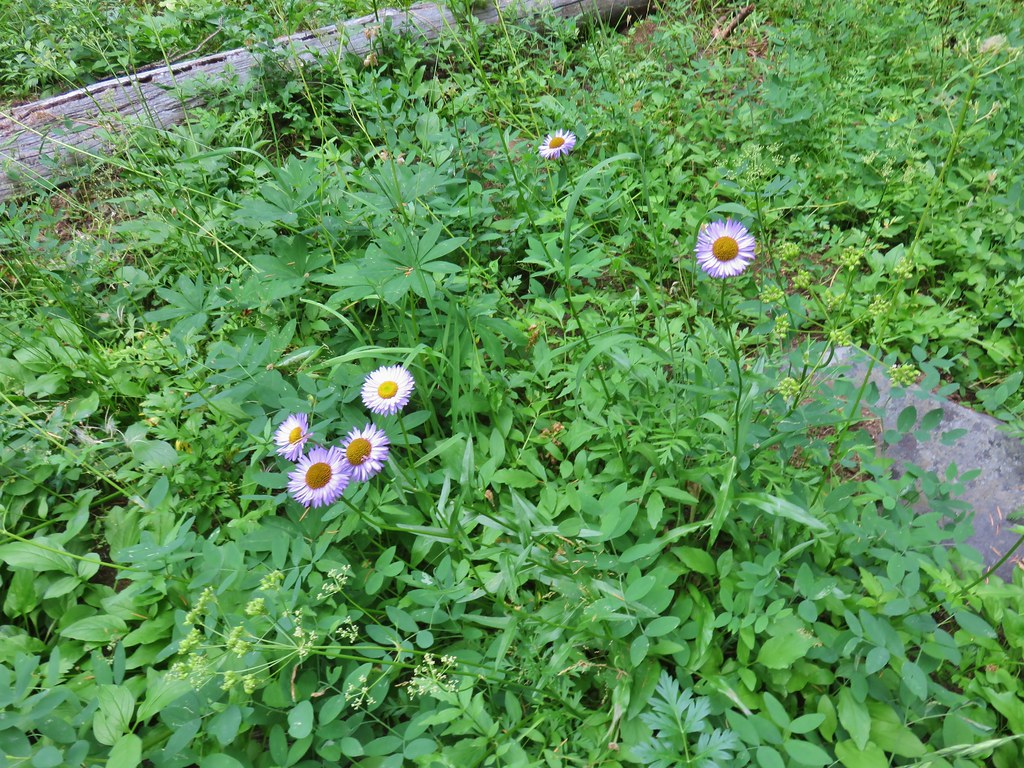
IMG_4574Fleabane

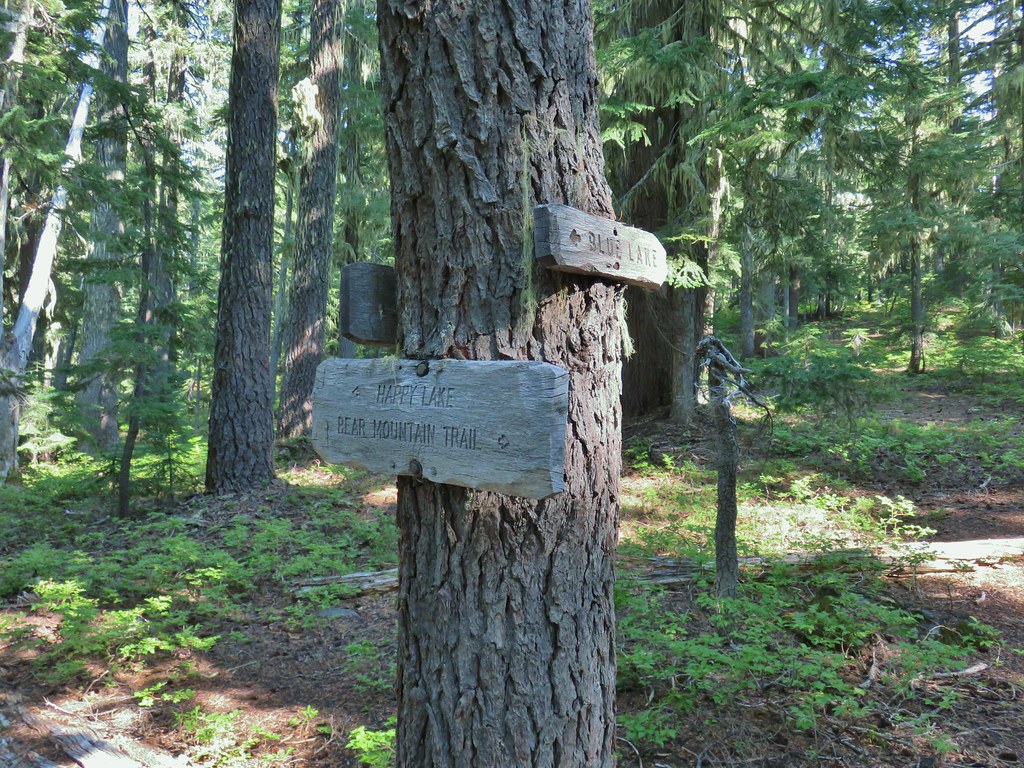
IMG_4575Bear Mountain Trail junction.

IMG_4576Look a named trail!

IMG_4578

From the junction the Diamond Peak Trail climbed a ridge before leveling off above Blue Lake which was hidden in the trees.
IMG_4583

The Blue Lake Trail was .8 miles from the Bear Mountain junction and just before reaching it we spotted what we had been hoping for, an open flat spot for our tent. We set up camp between the Diamond Peak and Blue Lake Trails and then headed down to the lake for dinner and to get more water.
IMG_4588

IMG_4586

There was a decent amount of blowdown along the upper portion of the .9 mile stretch to the lake which followed a ridge crest (with a view NW down to Happy Lake) before dropping steeply down the opposite side of the ridge via a series of switchbacks. The hillsides had quite a few wet areas and several flowers were still in bloom.
IMG_4590Starting to drop off the ridge.

IMG_4598Arnica

IMG_4600Fleabane

IMG_4602

IMG_4612Pearly everlasting and fringed grass of parnassus
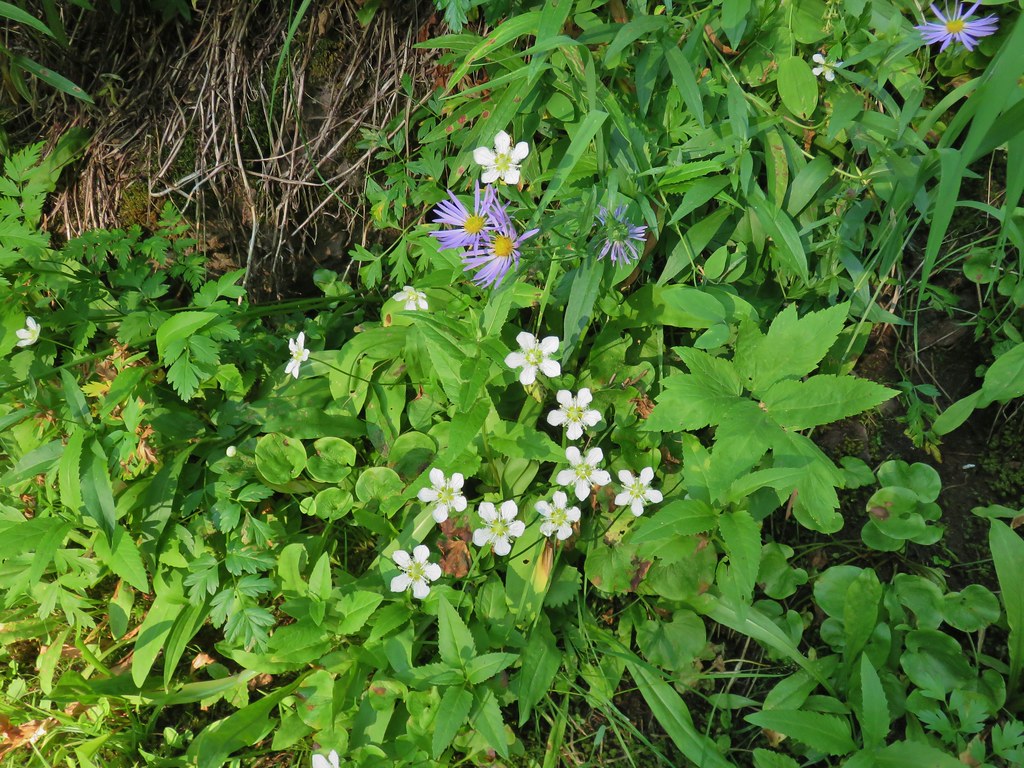
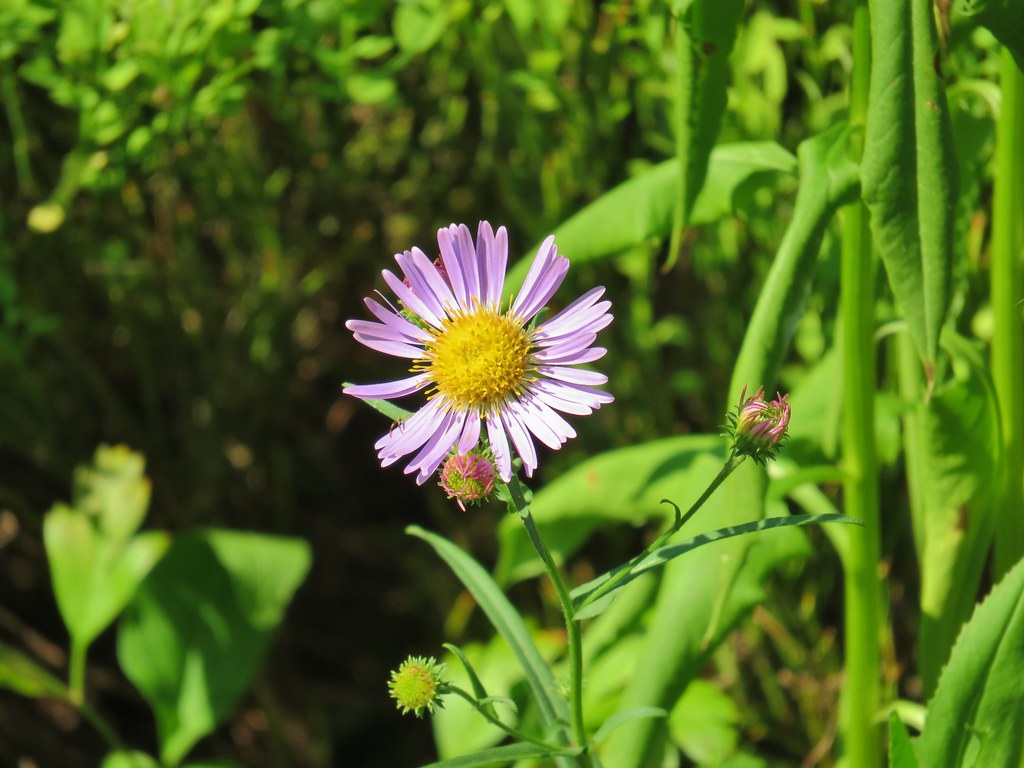
IMG_4613Aster and fringed grass of parnassus

IMG_4659Scouler’s bluebells

The trail brought us to an open hillside on the east side of Blue Lake where a landslide left a large meadow.
IMG_4615

IMG_4618

IMG_4620

IMG_4621Lots of coneflower

IMG_4625

IMG_4626Fireweed and coneflower

IMG_4622Owl’s clover

We appeared to be the only humans at this lake but we were greatly outnumbered by a legion of little frogs.
20200823_182113

IMG_4643

IMG_4648

IMG_4649Dragon fly and a bunch of frogs

IMG_4637Chatty squirrel
We spent most the evening at the lake before heading back to the tent when the Sun started dropping.
IMG_4634

IMG_4654

Despite not making it up to the summit of Diamond Peak, and it being too smoky to get any views even lower, it had been a good day. It had also been a long day. We had been planning on it being somewhere in the 14.5 to 15 mile range assuming that we made it all the way to the summit but our GPS units put us just over 16 miles for the day without the extra .8 out and back between the false summit and summit. We slept well apart from me waking up for a moment when I heard some coyotes followed by a couple of hoots from owls. They weren’t bothering me I just stayed up to listen to them for a bit until they stopped. Happy Trails!

Flickr: Diamond Peak Loop Day 2

Categories
High Cascades Hiking Mt. Washington Area Oregon Trip report

Blue Lake

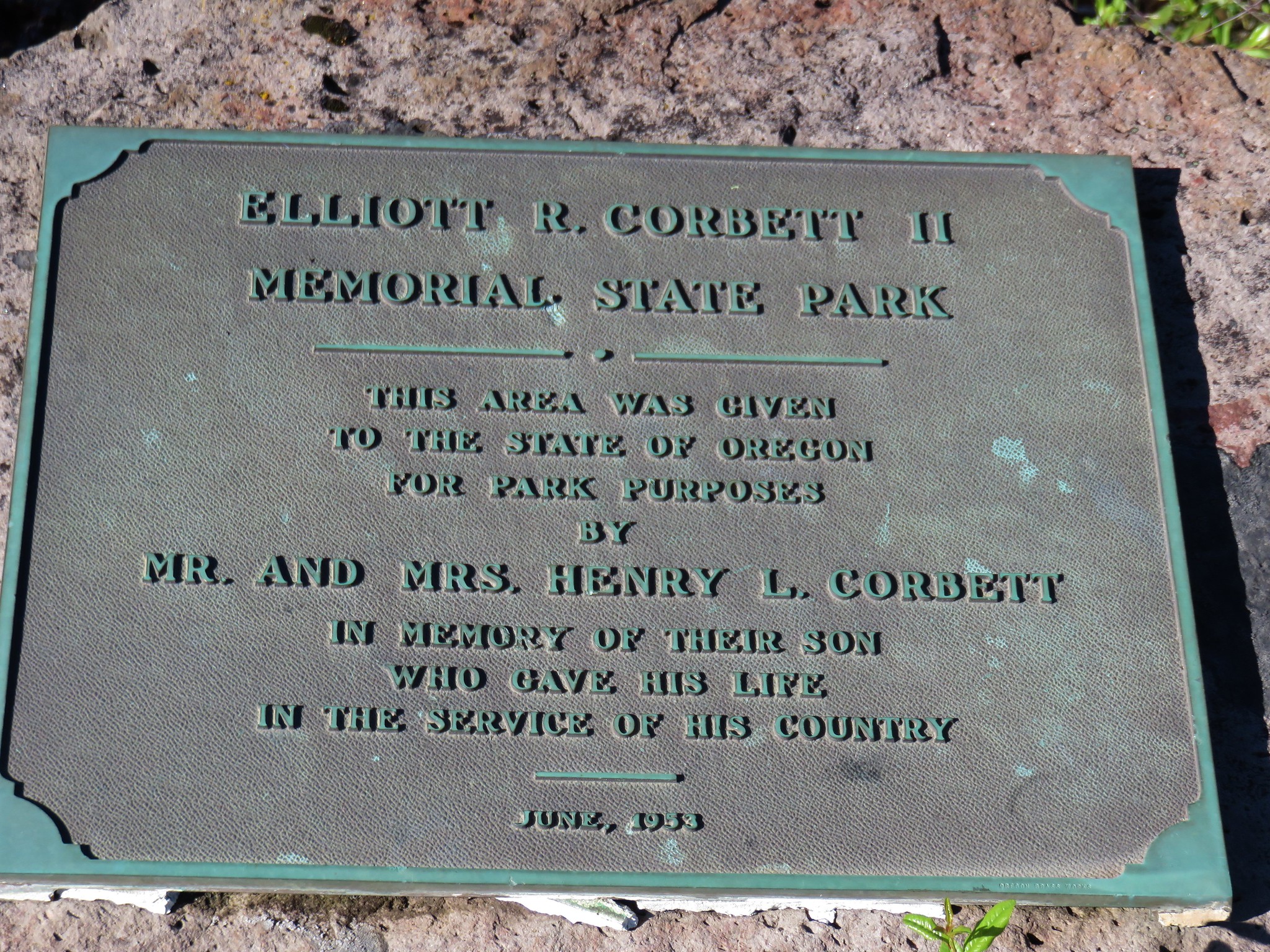
On Father’s Day we were joined by our Son, Dominique, on a jaunt to Blue Lake before heading home. Blue Lake is located south of Highway 20, just east of Santiam Pass. Much of the lake is privately owned but the Elliott Corbett Memorial State Park occupies the western end of the lake.

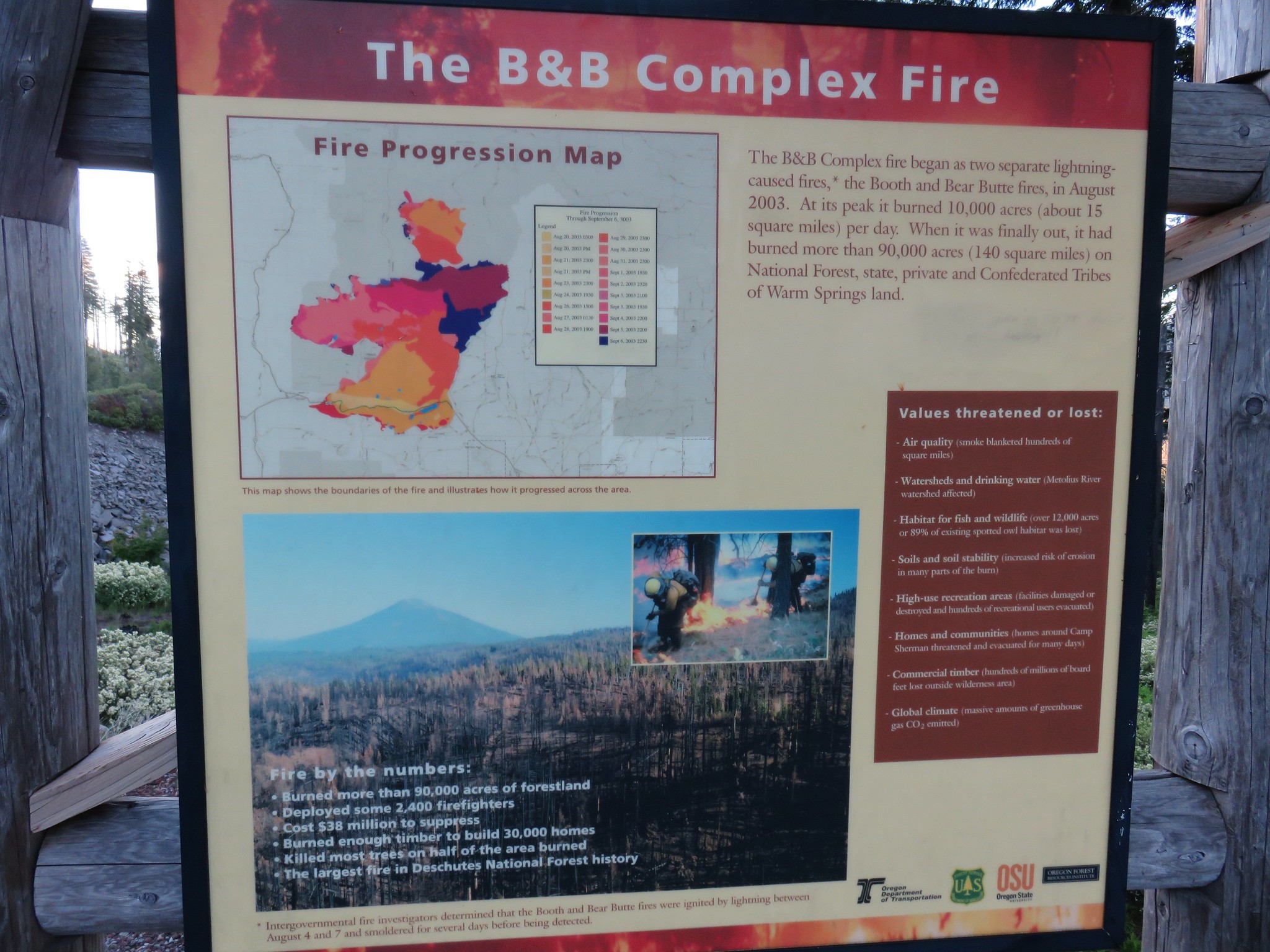
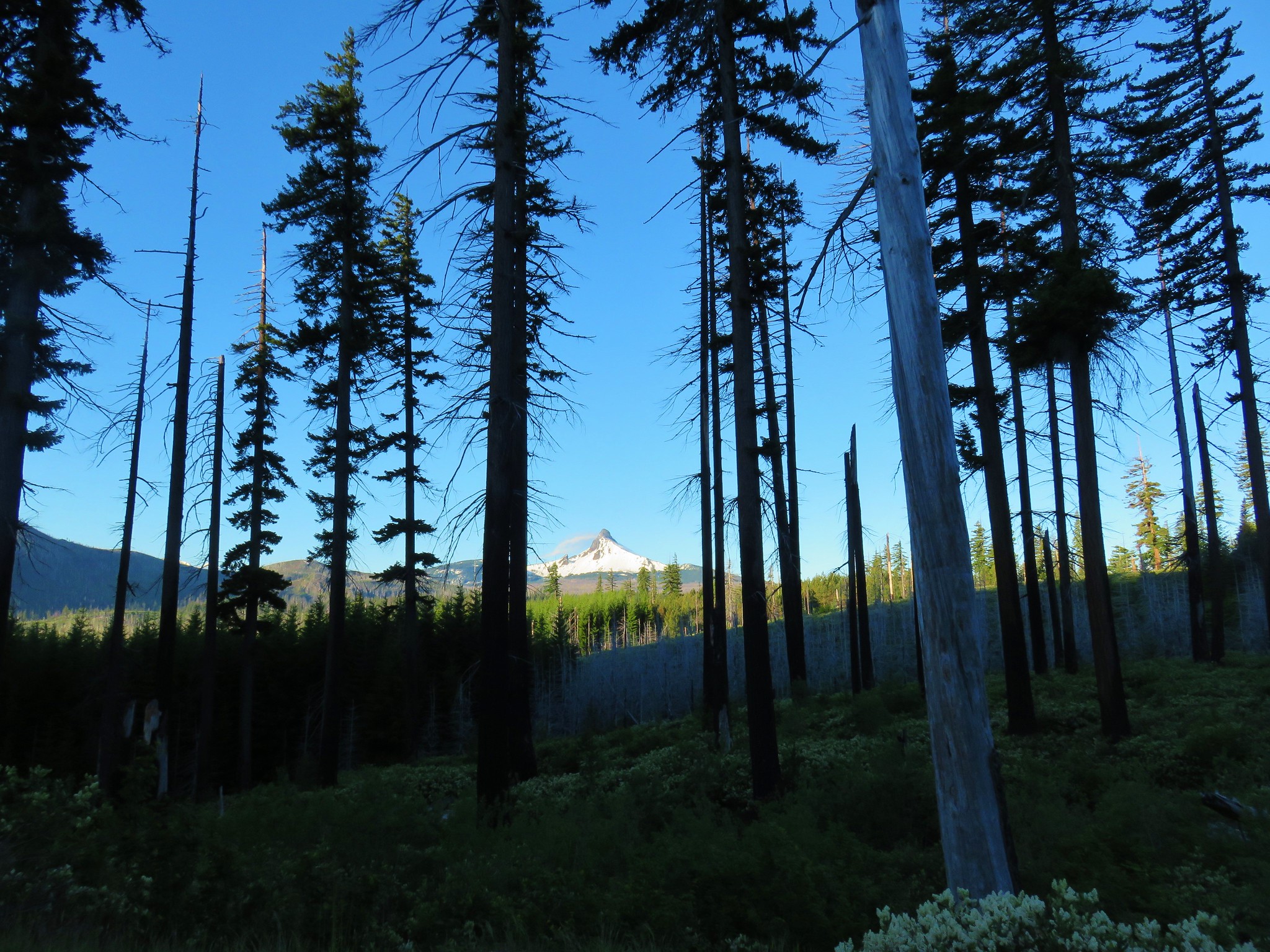
This area burned in the 2003 B & B Complex Fire and we began our hike at a fire interpretive kiosk in a large paved sno-park lot.
IMG_3194

IMG_3195

Starting here meant a road walk of 2.5 miles before reaching an actual trail but the description in Matt Reeder’s “101 Hikes in the Majestic Mount Jefferson Reagion” (we highly recommend this guidebook) called the final stretch of road “narrow, brushy, steep, rocky and subject to occasional washouts that turn the road into a series of deep gullies”. Given that the hike would still only be between 7 and 8 miles (and an extra 700′ of elevation gain) by starting here we felt it was worth avoiding any more ugly roads for the weekend.

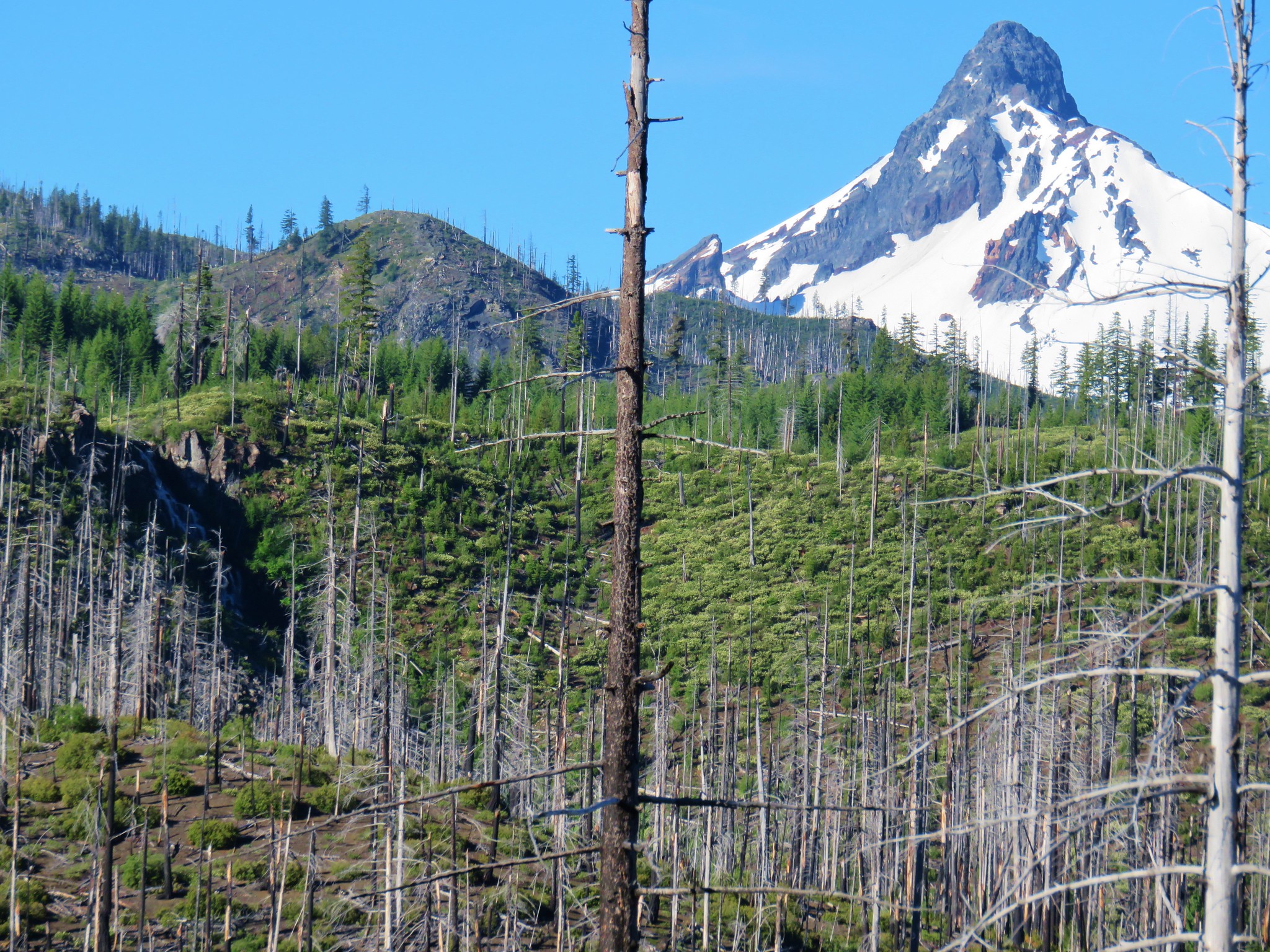
We walked through the parking area, which had a nice view of Mt. Washington, to FR 2076.
IMG_3198

We followed this road downhill. It was a beautiful morning and the view of Mt. Washington was spectacular.
IMG_3208

IMG_3209

The summits of the North and Middle Sister also made a brief appearance.
IMG_3206

After .7 miles we came to a junction with Road 200 which had a sign warning it wasn’t suitable for trailers. We got ourselves confused here due to not re-reading Matt’s description but instead looking at the topographic image in the entry that showed the lake and trail but not the entire road walk. We should have taken Road 200 here but where the map picked up in the book the track was no longer on Road 200 so we mistakenly thought we needed to stay on FR 2076.

FR 2076 was in fairly good shape and was certainly not steep. It was traversing a hillside south toward Mt. Washington.
IMG_3220

After almost a half mile we knew something was amiss. Looking at the GPS showed we were indeed heading for a lake but it was Island Lake dead ahead not Blue Lake. We pulled the book out and read the directions and realized our mistake. We backtracked to Road 200 and once again headed downhill.

Road 200 was not great, and maybe the previous days short but horrific section of Forest Road 2630 in the Ochocos unduly influenced us, but most high clearance vehicles would probably be fine. Although, meeting a vehicle going the other way would be tricky as there weren’t many wide spots.

Walking the road had its advantages though. In addition to the mountain views were wildflowers including a surprising group of rhododendron.
IMG_3216

IMG_3217

IMG_3219

IMG_3230

The rhododendron were upstaged by a nice buck with velvet antlers which Dominique spotted.
IMG_3231

We took our second wrong turn 1.5 miles down Road 200 when we forked right on Road 200 when we should have stayed straight at what appeared to be a pile of rocks. We’d only gone a tenth of a mile when we caught this one and headed back to the rocks to find a road continuing on the other side. Another .4 miles brought us to a parking turnaround. Here we ignored an obvious trail straight up a hill and took a faint path to the left.
IMG_3238

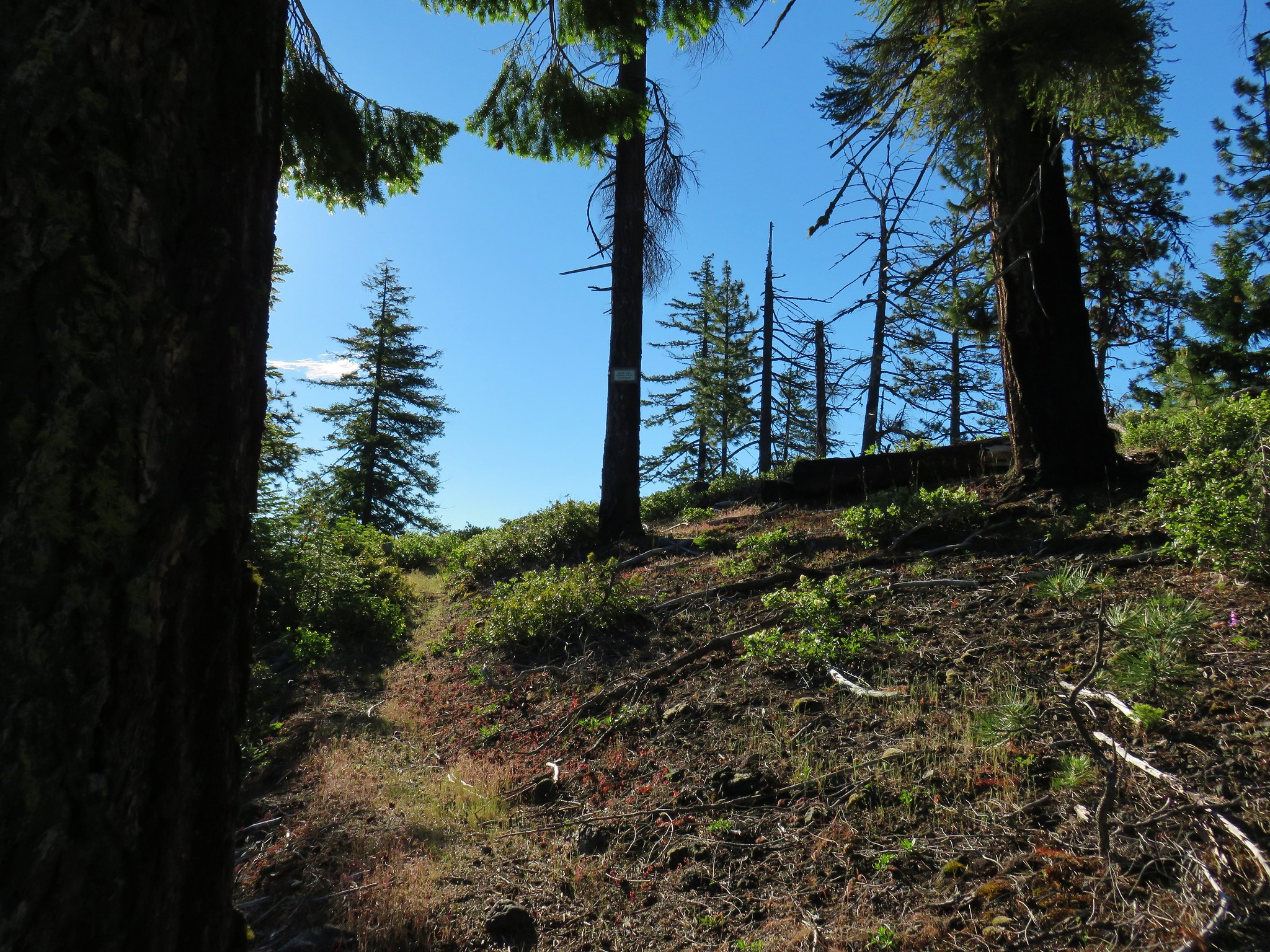
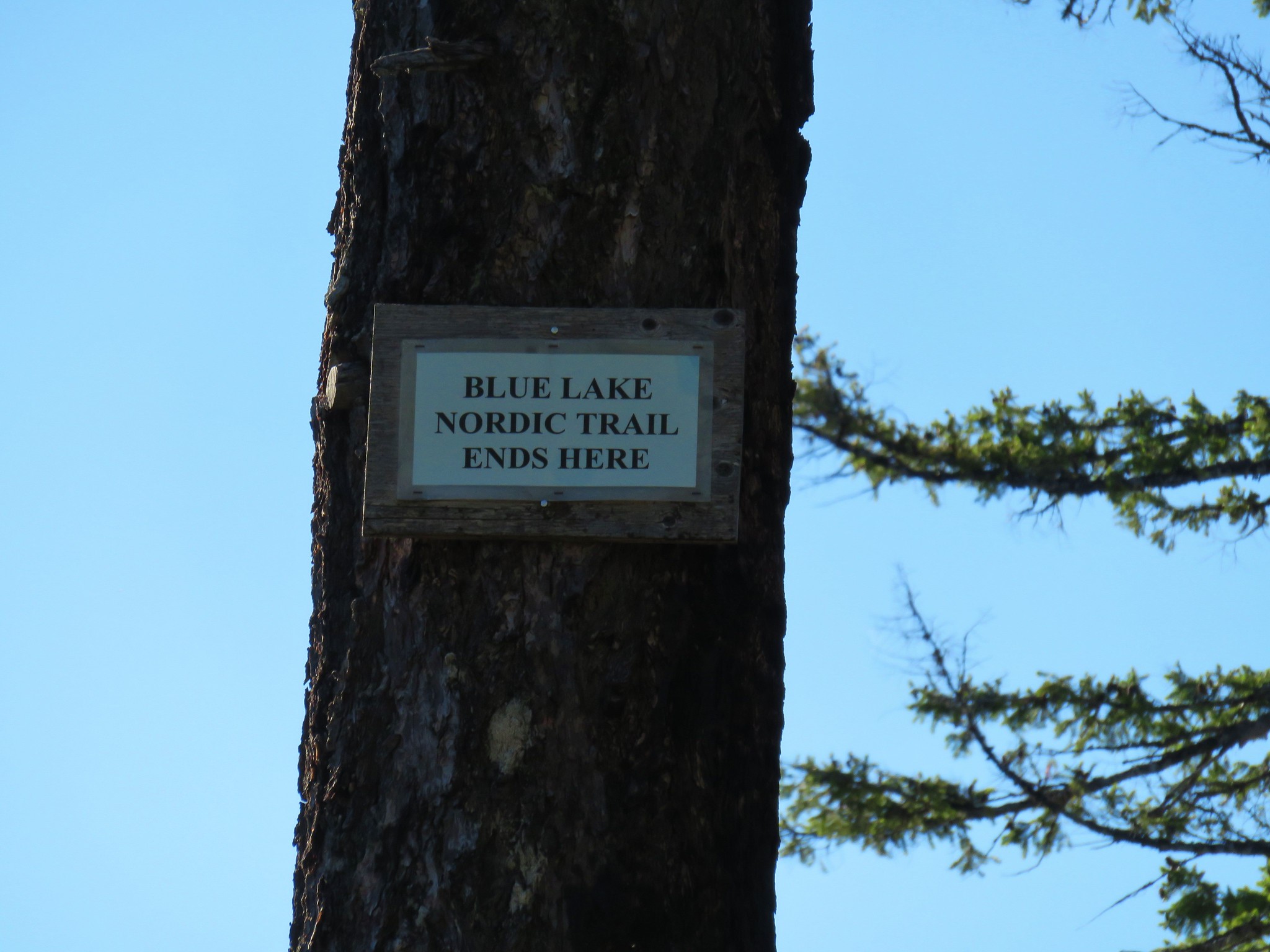
This path began to climb up a ridge to a sign announcing the end of the Blue Lake Nordic Trail.
IMG_3239

IMG_3240

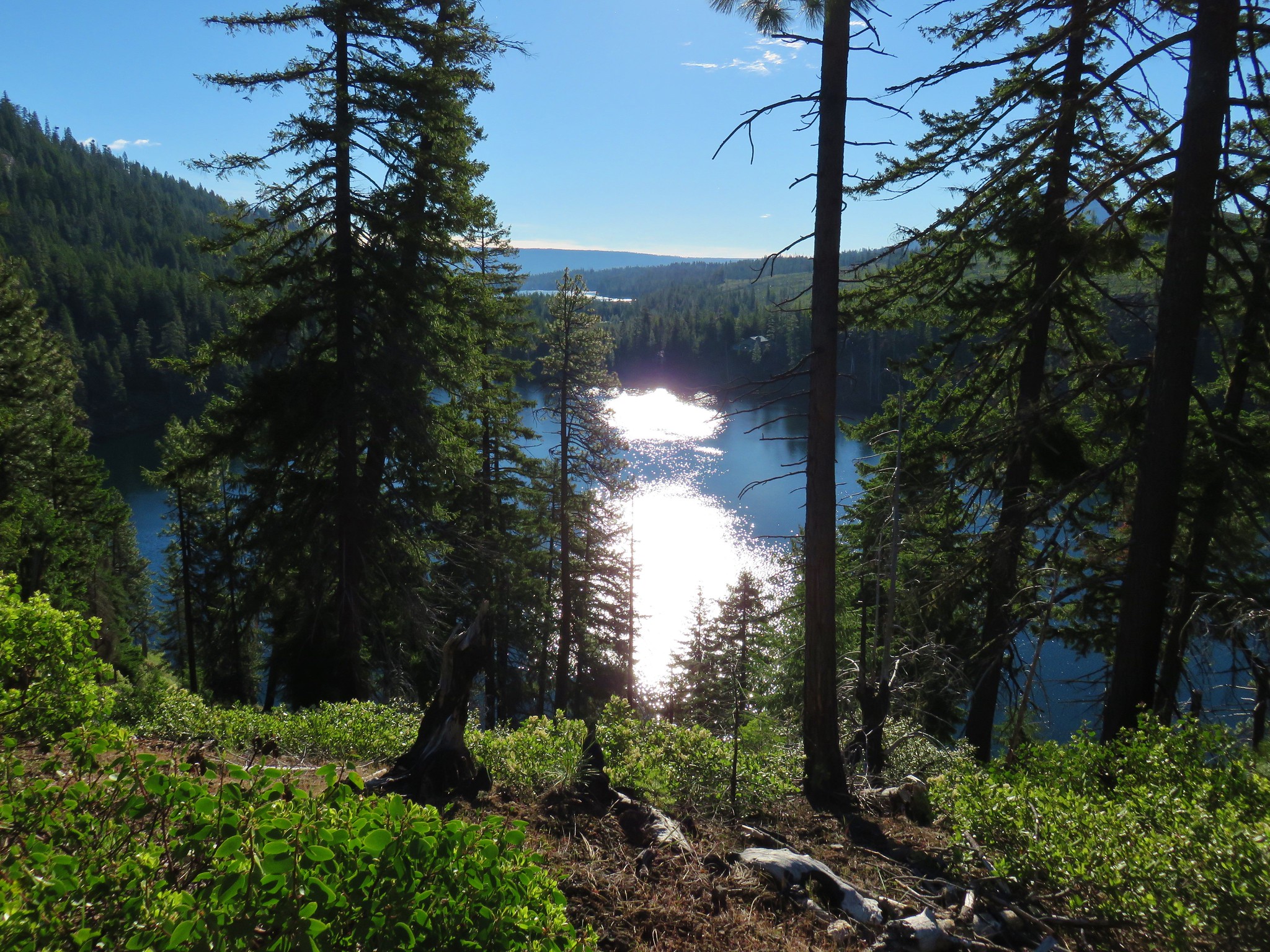
Once we gained the ridge we had a view of Blue Lake below and Suttle Lake a little further to the east.
IMG_3243

Blue Lake fills a collapsed cladera to a depth over 300 feet. The trail followed the ridge along the western end of the lake. We followed it around to a knoll described in the guidebook as the start of private land.
IMG_3258

IMG_3265

IMG_3269

Opposite the lake, on the other side of the ridge, lay a meadow with Mt. Washington looming behind.
IMG_3260

In addition, the seasonal Cache Falls could be seen flowing down the hillside below hidden Cache Lake.
IMG_3255

IMG_3257

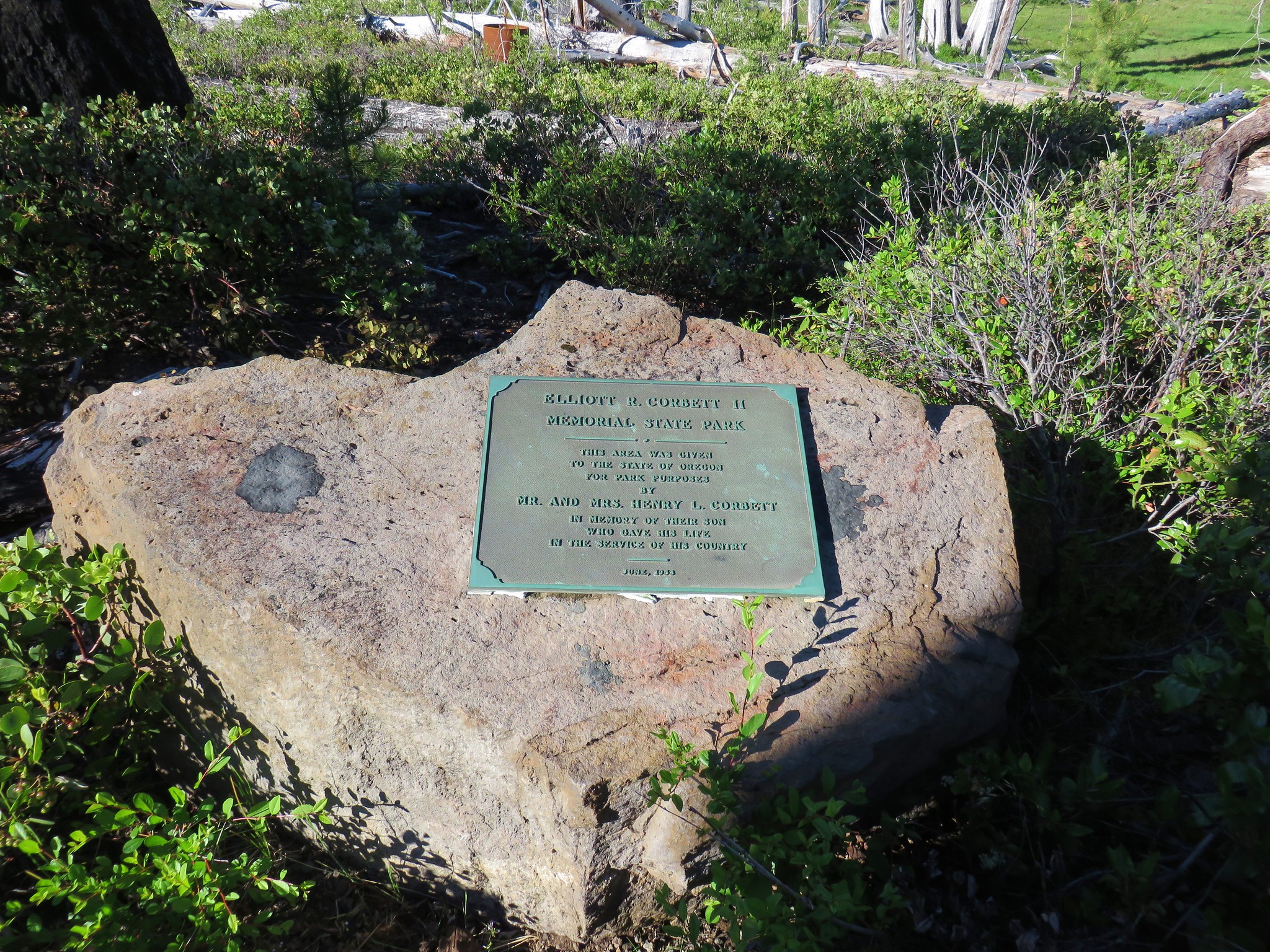
After visiting the knoll we backtracked a tenth of a mile along the ridge then headed downhill on a faint path heading toward what appeared to be an old road bed. There was a bit of maneuvering around blowdown to get to the road bed where we discovered a clearer path coming down from a point further along the ridge. Here was also the memorial plaque for the Elliott R. Corbett II Memorial State Park.
IMG_3270

IMG_3271

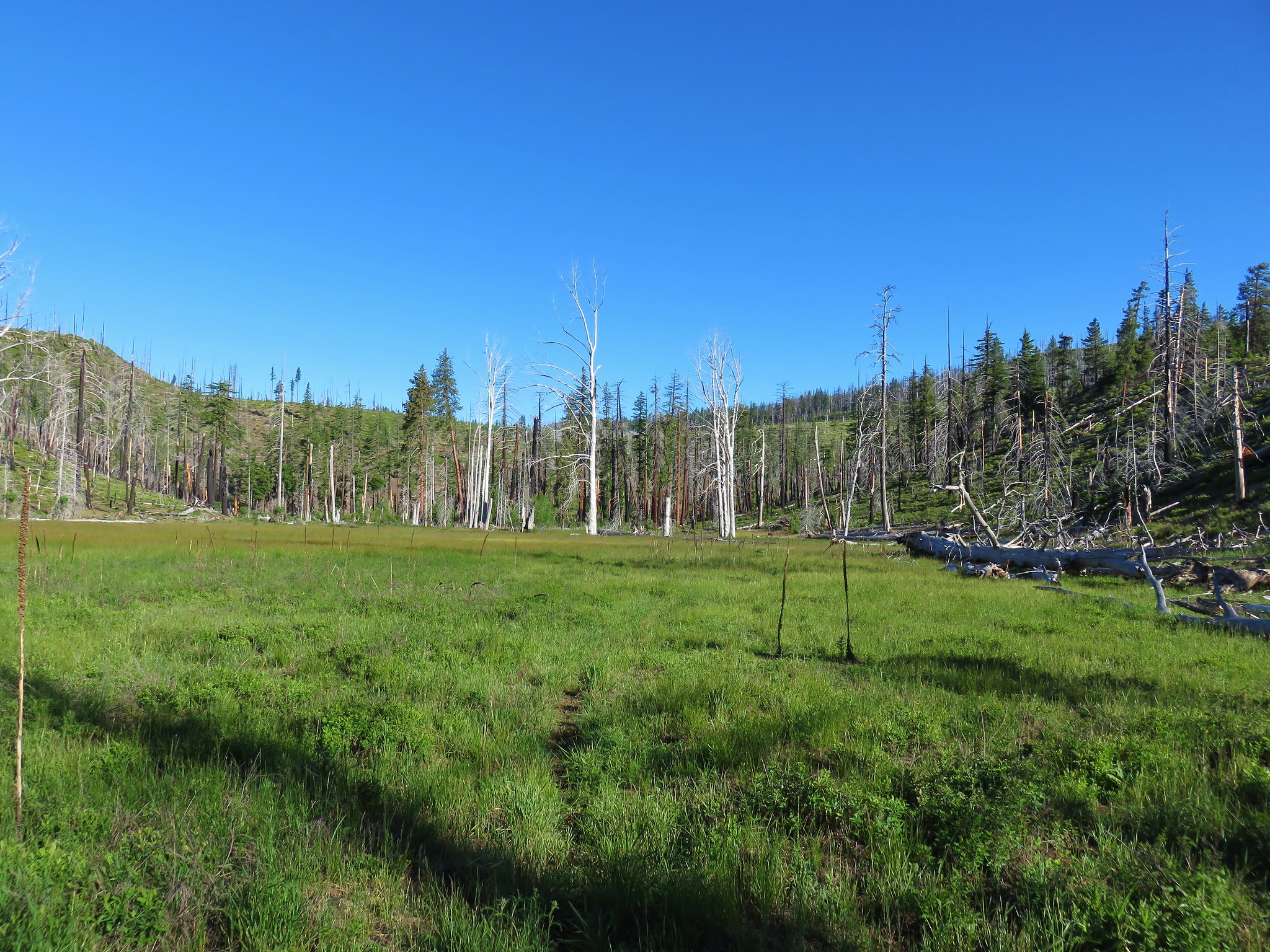
The trail led into and through the meadow before arriving back at the turnaround at the end of the road walk.
IMG_3272

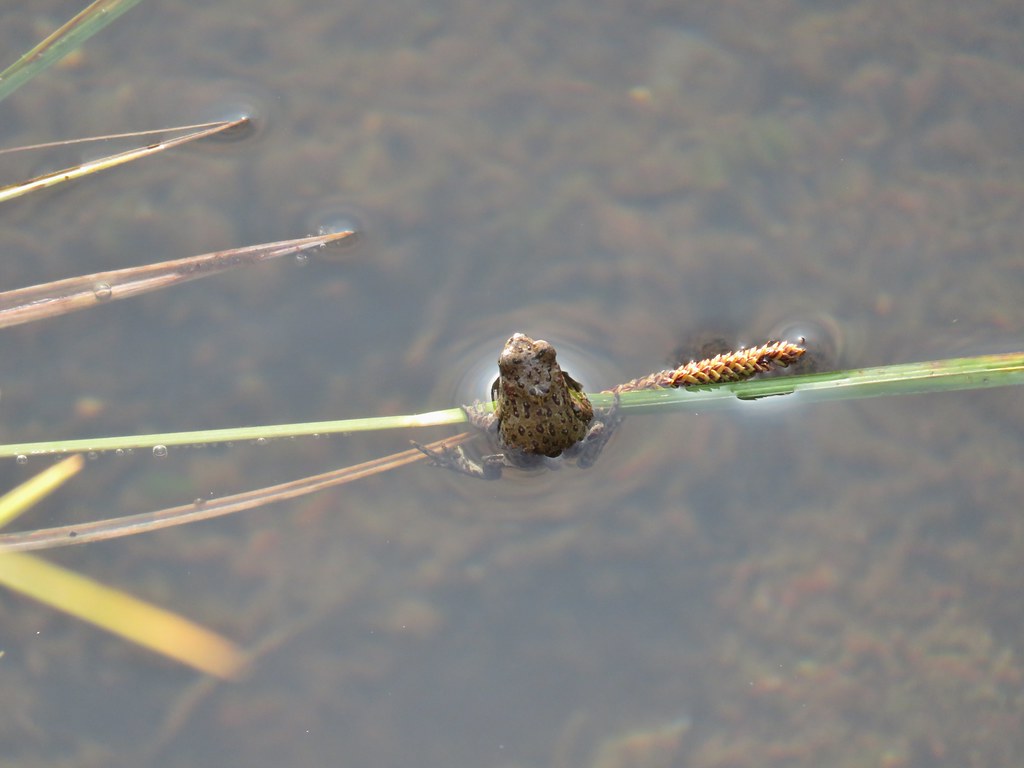
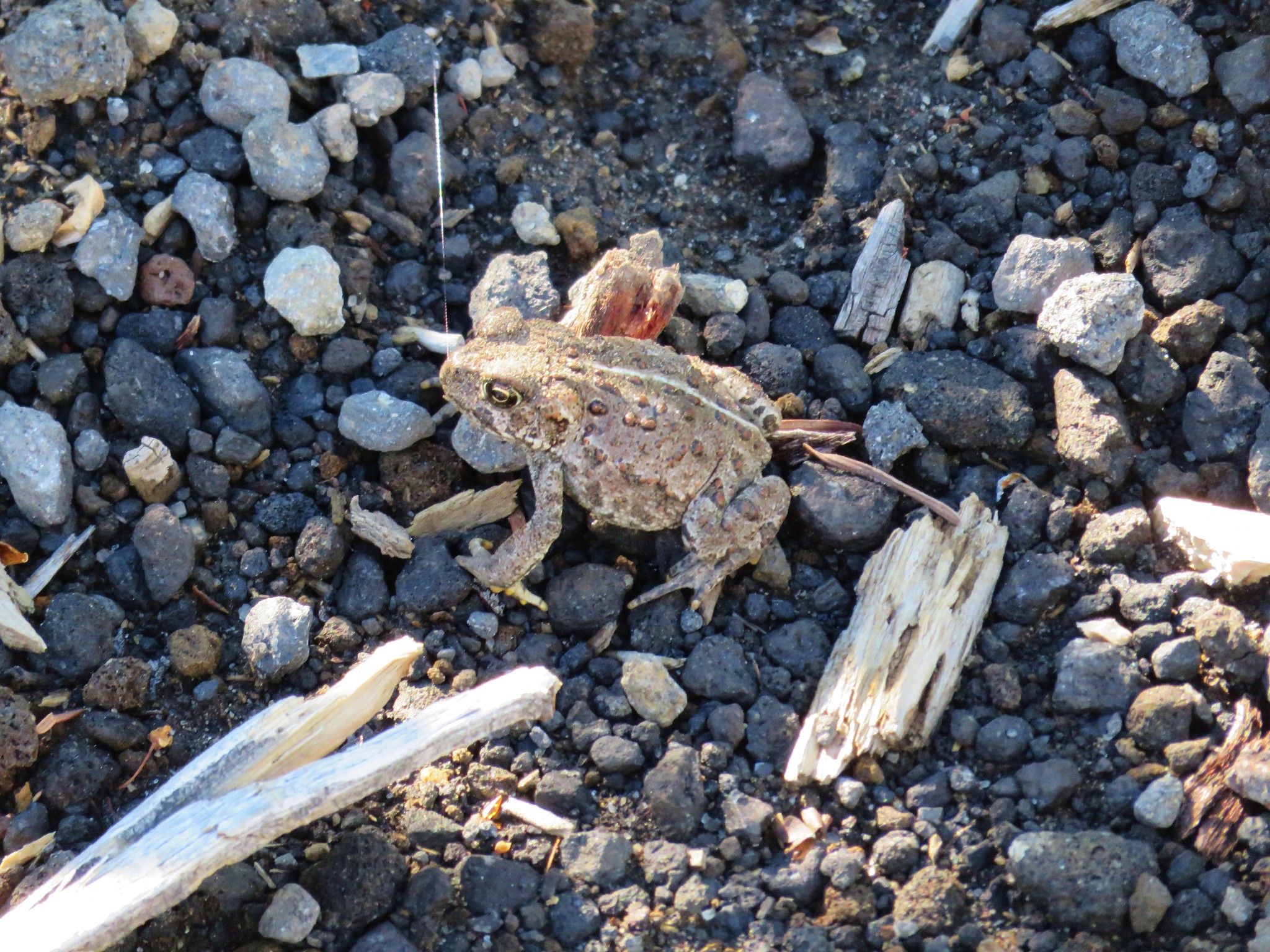
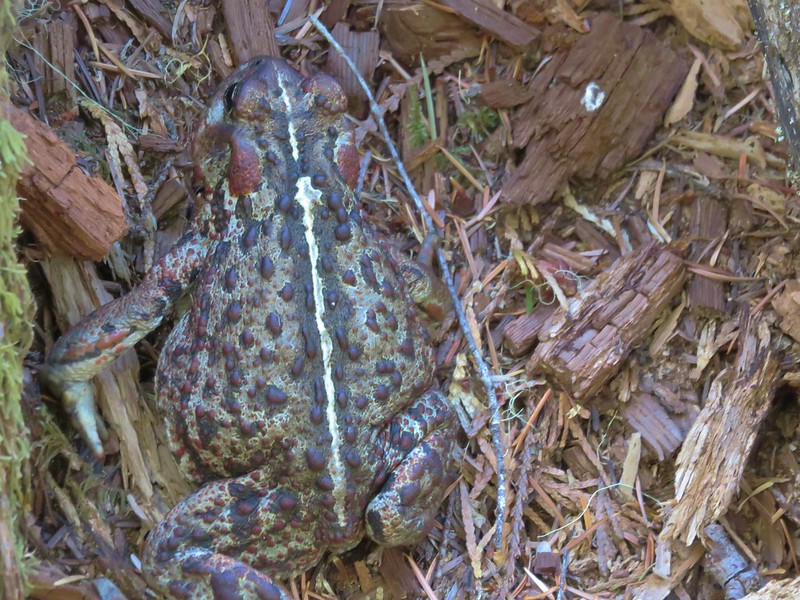
On the way back up we spotted a toad and a frog along the roads.
IMG_3280

IMG_3289

As we neared the sno-park Three Fingered Jack came into view through the trees.
IMG_3295

IMG_3296

Remember my comment earlier about avoiding any more ugly roads for the weekend? Well Google got us again. We had originally planned on visiting the nearby Skylight Cave after the hike. In June between the hours of 9 and 11 am sunbeams come through an opening in the roof a short lava tube. The driving directions in our “Bend, Overall” guidebook were from Highway 242 but a look at Google Maps had shown what appeared to be a pretty straight forward 5 mile(ish) drive from Highway 20. We had written directions for that route but about 4 miles into our attempt we came to a 4-way junction with no road signs. Our written directions indicated we should go straight but we were on a gravel road crossing a gravel road and the road ahead was a narrow dirt track. We tried using the Garmin to figure out where we were, but the Garmin showed far more roads than Google had and it seemed to agree that the dirt road was the one we were looking for. After some indecision Heather decided to give it a go. It was quickly obvious that that was a bad choice as the road was narrow, overgrown, and rocky in places. When we spotted a wide enough spot to turn around we did so retreating once again to the 4-way junction. It was after 10am and now we had no confidence that we were even where we had meant to be. So we threw up the white flag and decided to try again some other time when we can follow the guidebook directions.
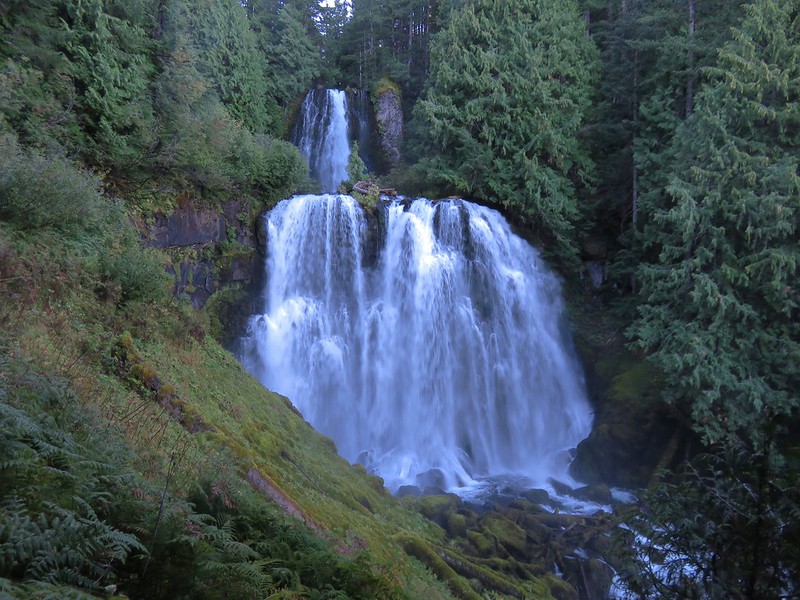
When we got home we looked again on Google and discovered that the dirt track had been the correct route and we’d only been about 3/4 of a mile from the cave. Happy Trails!

Flickr: Blue Lake

Categories
High Cascades Hiking Mt. Jefferson Area Oregon Trip report

Eight Lakes Basin

After three straight overnight trips it was time for a day hike. Our destination was the Eight Lakes Basin in the Mt. Jefferson Wilderness. The two most common routes to the area are from either the Duffy Lake Trailhead to the SW or the Marion Lake Trailhead to the north. The basin is a little closer to the Marion Lake Trailhead so this was where we decided to begin our hike.
IMG_5648

We were surprised at the number of cars already parked at the trailhead when we arrived at 6:15am. Later we realized much of it was due to it being the opening weekend of hunting season. We had visited Marion Lake once before in October of 2014 on our way home from Central Oregon, but this time we would be continuing past the lake 4 miles to reach the Eight Lakes Basin and returning on a wide loop.
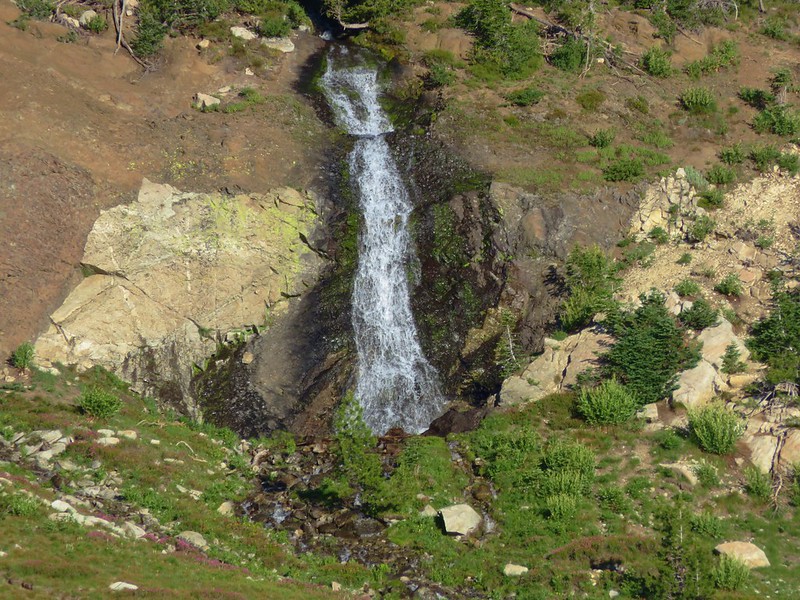
The first 1.8 miles of trail was familiar but some things had changed since our previous visit including the condition of the wilderness sign.
IMG_5651

About a half mile prior to reaching Marion Lake the trail passes smaller Lake Ann.
IMG_5652

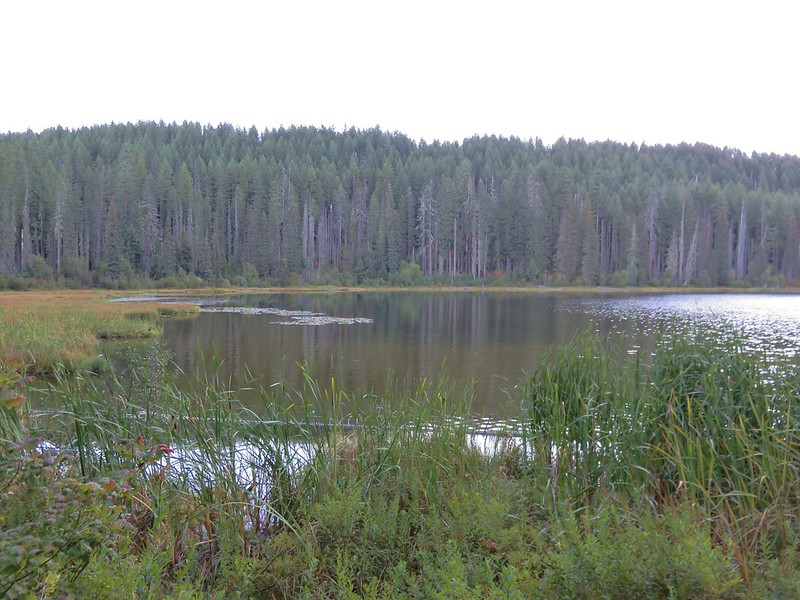
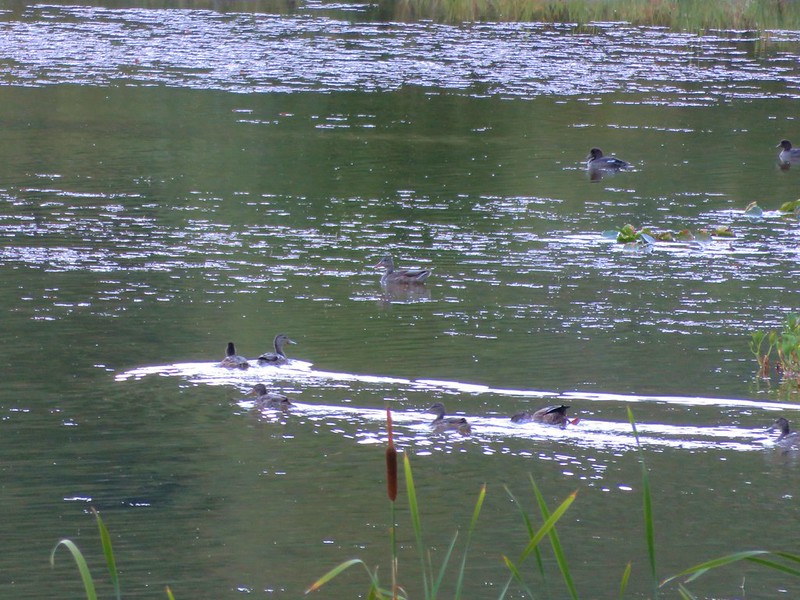
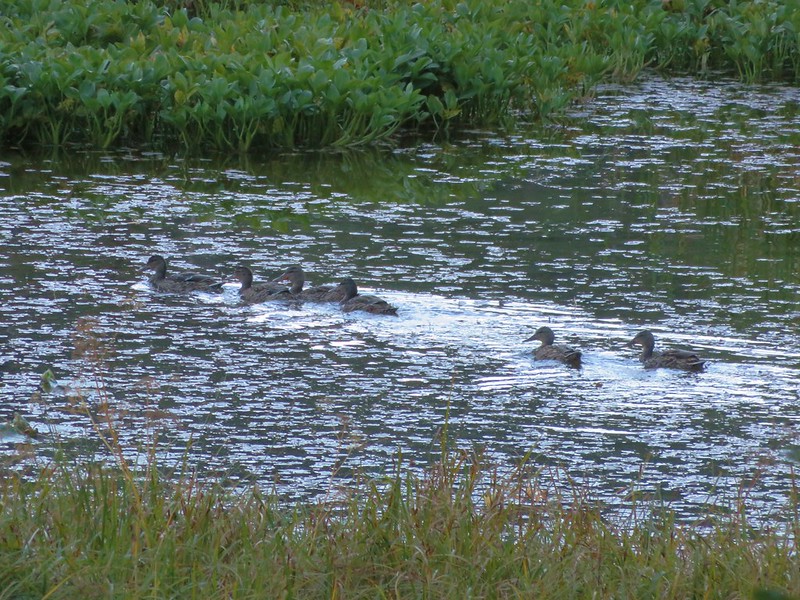
On the far side of a lake a Great Blue Heron landed on a log along with some ducks while numerous other ducks could be seen on the water.
IMG_5659

IMG_5666

IMG_5667

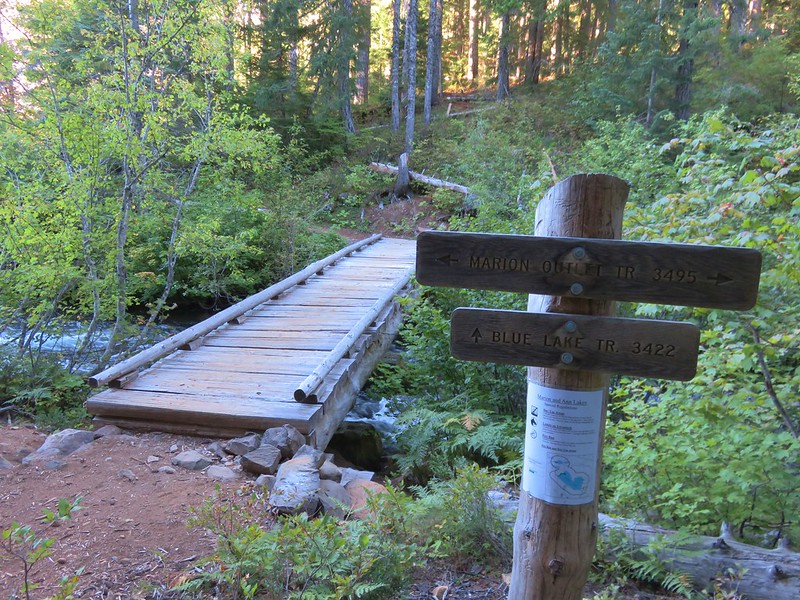
Shortly after Lake Ann we came to a split in the trail where the Marion Lake Trail headed left and the Marion Outlet Trail went right. Both trails lead to Marion Lake but the the Outlet Trail is .5 miles longer. They also lead to different portions of the lake, the Marion Lake Trail arrives at the northern end of the lake while the Marion Outlet Trail meets the Blue Lake Trail at the lake’s northwestern tip.
IMG_5690

The main reason to take the Marion Outlet Trail though is to take a short unsigned side trail and visit Marion and Gatch Falls.
IMG_5674

IMG_5680

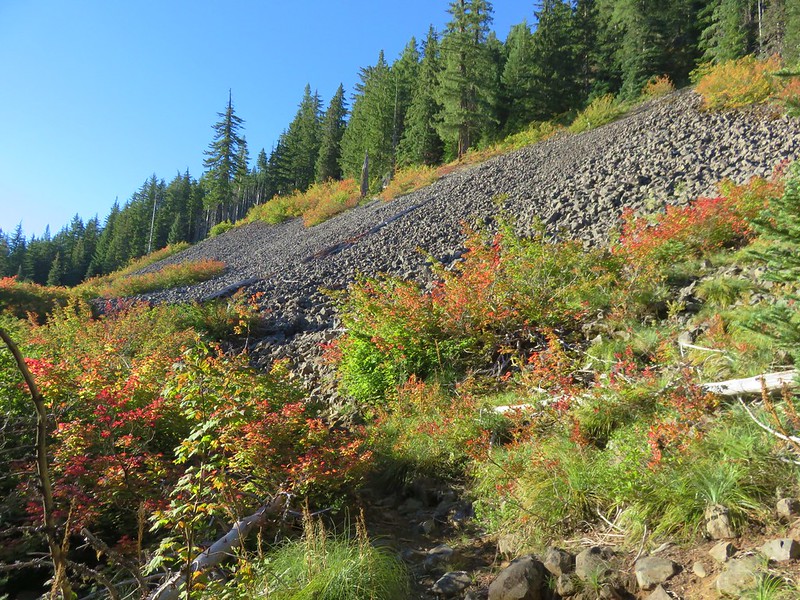
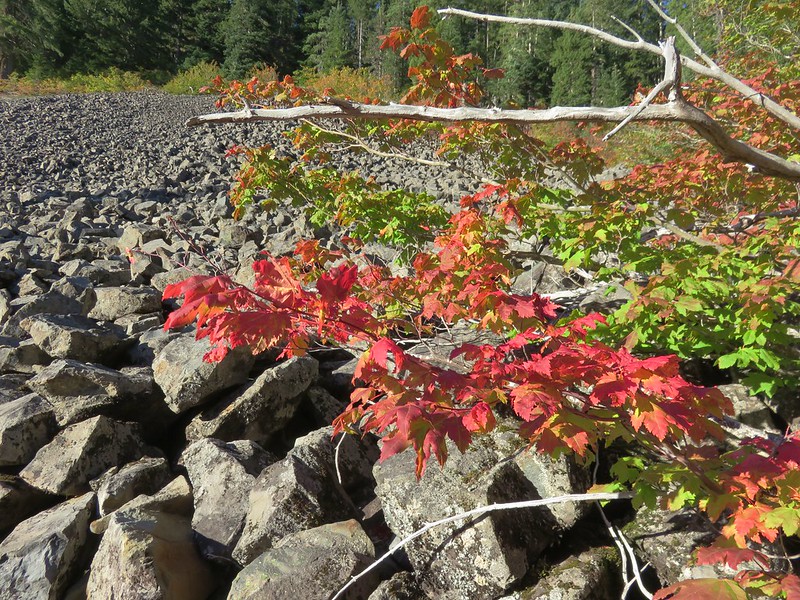
The trail down to the falls is somewhat steep in places but the views are wonderful. After visiting the falls we hiked to the Blue Lake Trail junction and crossed Marion Creek on the footbridge. Just beyond the footbridge the trail crosses a rock slide where the vine maple was starting to show its Fall colors.
IMG_5693

IMG_5694

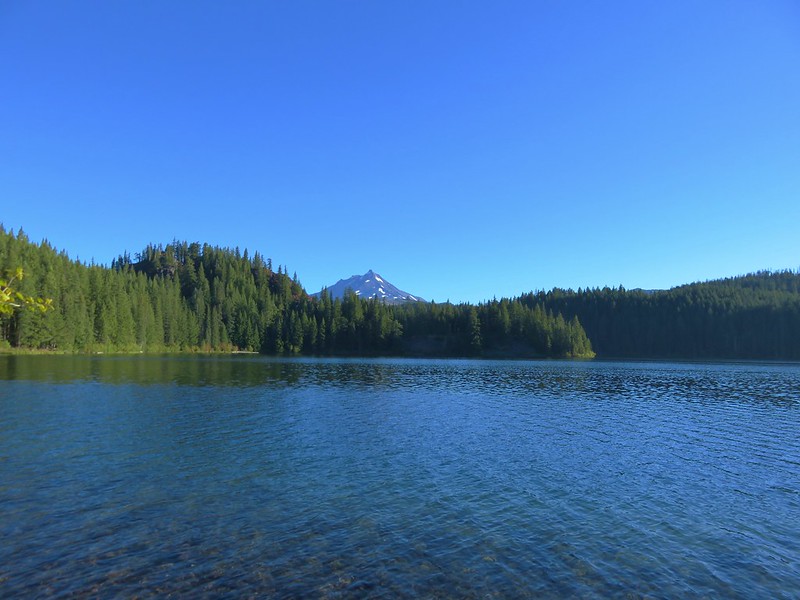
After entering the trees again we took a trail down to the lake to get a view of Mt. Jefferson across the water.
IMG_5697

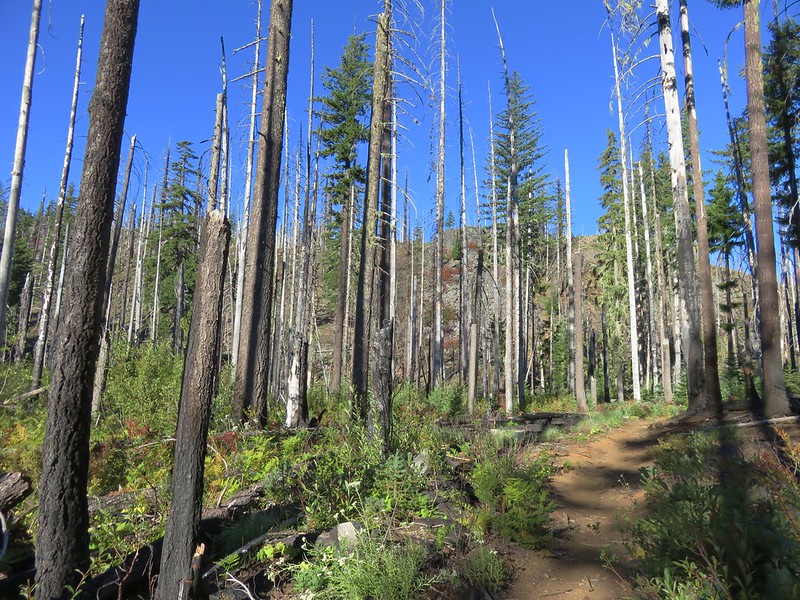
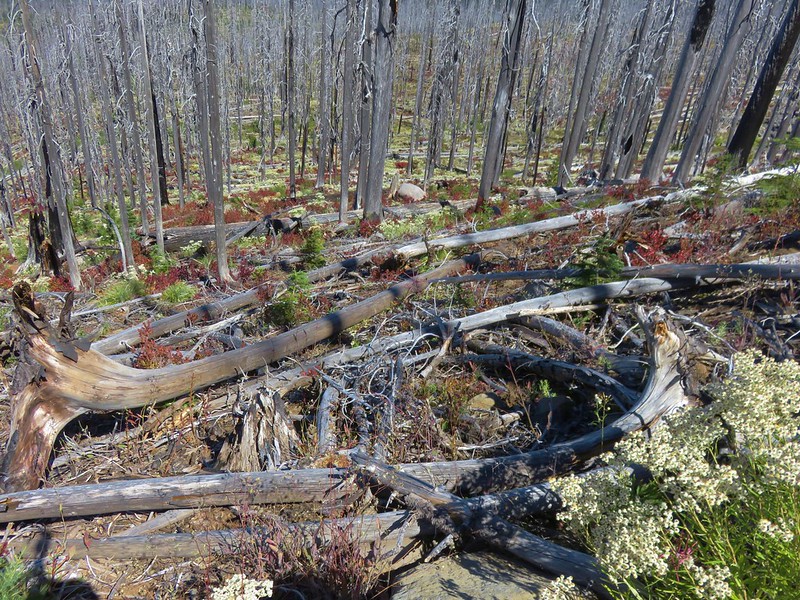
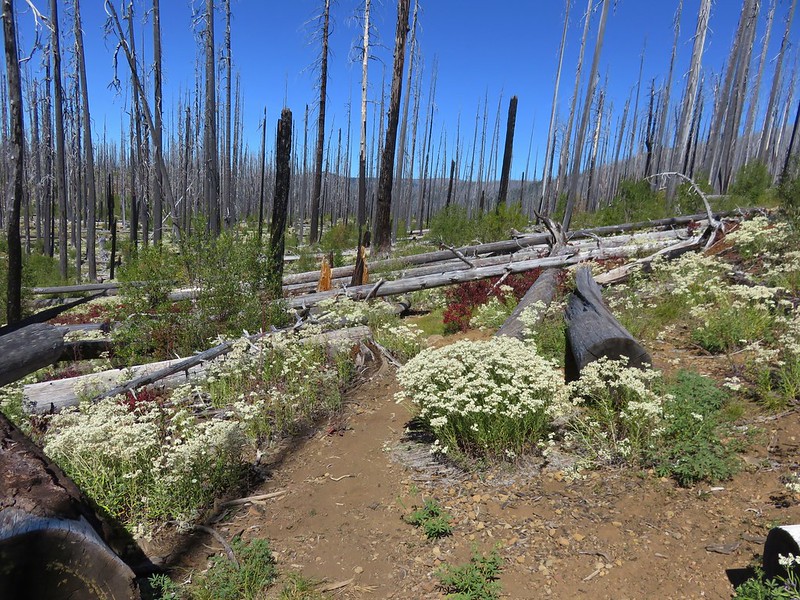
We continued on the Blue Lake Trail which soon entered the forest burned by the 2003 B & B Fire.
IMG_5705

The B & B Fire burned over 90,000 acres of forest and we would be spending a large portion of the day hiking through the burn. Some areas though were spared and one of those areas was a mile up the Blue Lake Trail at a junction with the Pine Ridge Trail.
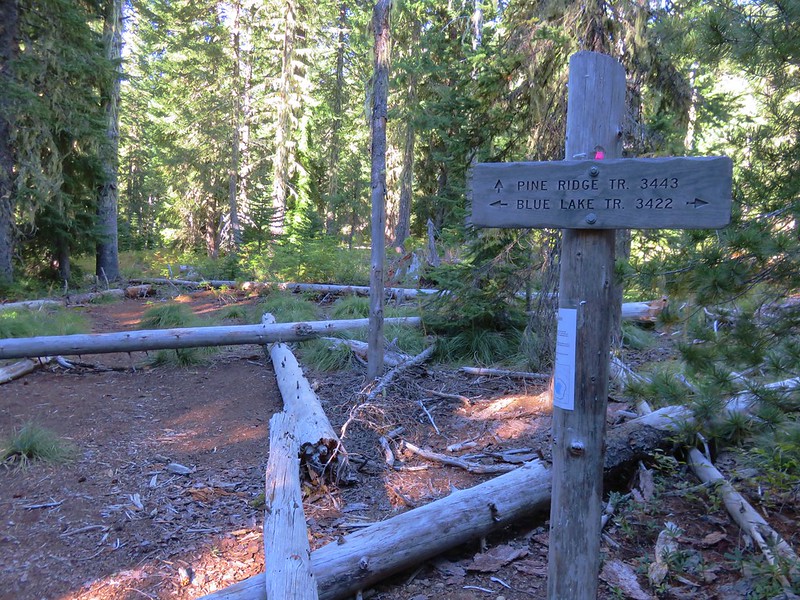
IMG_5709

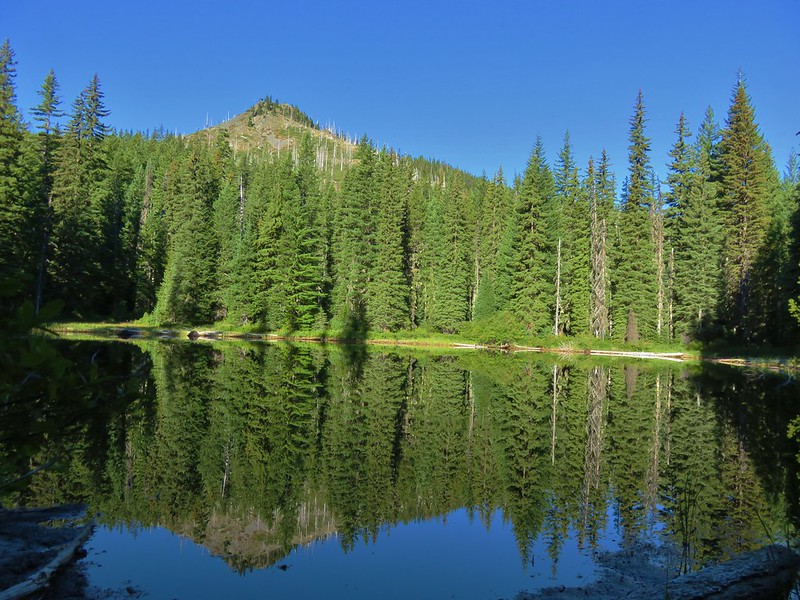
By taking the Pine Ridge Trail we could have climbed up Marion Mountain, but we were leaving that for another time. Just beyond the junction a small pond reflected the rocky summit of that peak.
IMG_5713

It was three miles from the Pine Ridge Trail junction to the next trail junction at Jorn Lake in the Eight Lakes Basin. A little over a mile from the pond was Jenny Lake.
IMG_5728

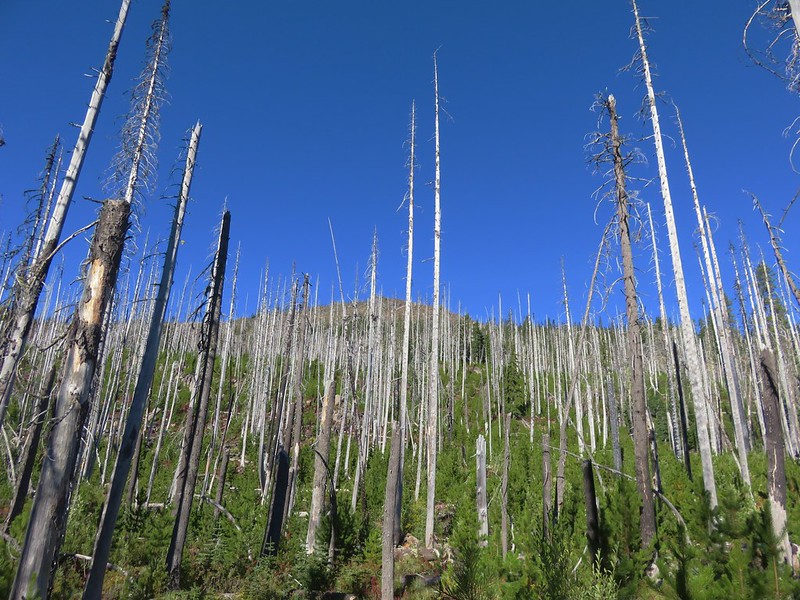
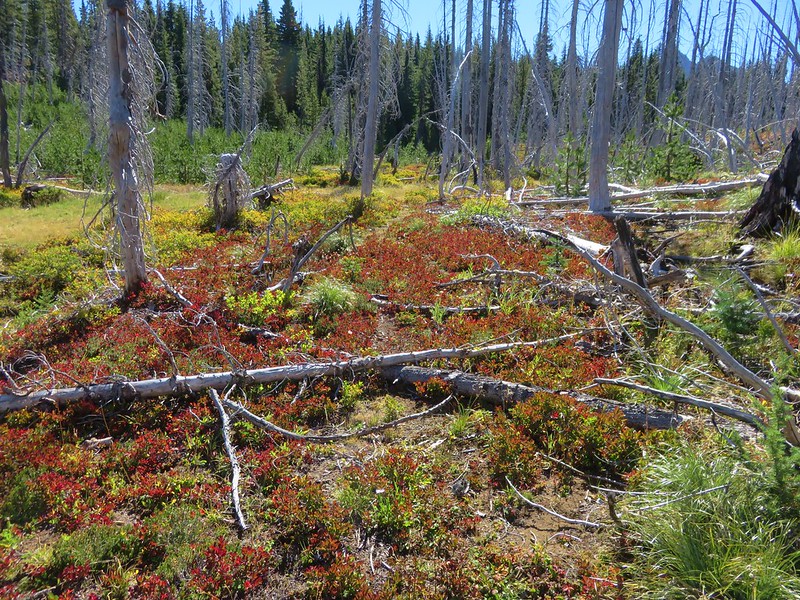
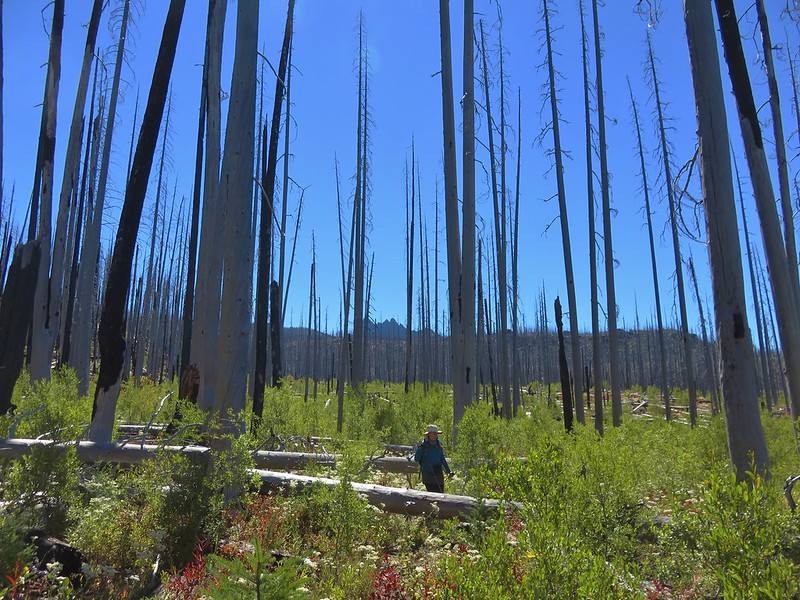
Beyond Jenny Lake the forest around the Blue Lake Trail had all been burnt by the 2003 fire. The lack of live trees allowed for some big views through the silver snags and it was interesting to see how the forest was at work recovering. Small trees were working on replacing those lost and white pearly everlasting flowers made a nice contrast to the red huckleberry leaves dotting the ground.
IMG_5731

IMG_5735

IMG_5737

IMG_5752

The lack of trees also caused the trail to be exposed to the Sun which had come back with a vengeance after the previous weekends cooler temperatures. A short way from Jenny Lake the trail began a series of switchbacks as it climbed up and over a ridge before dropping down into the Eight Lakes Basin. The full exposure made this a really warm climb, but when we reached a saddle on the ridge the view of Three Fingered Jack with the basin below was worth it.
IMG_5742

IMG_5748

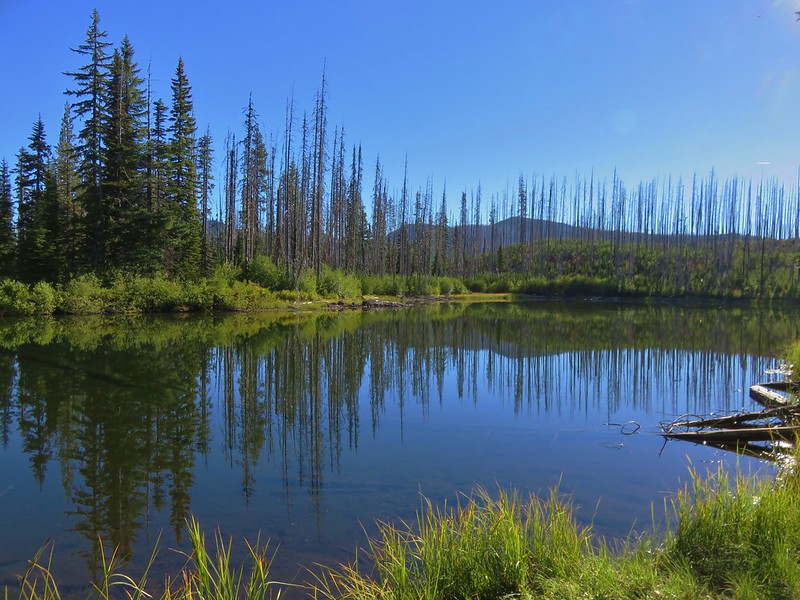
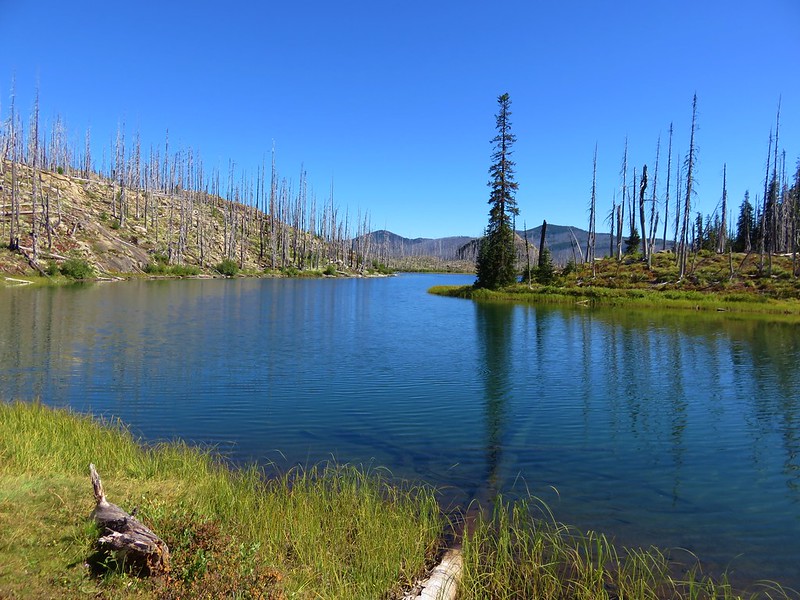
From this direction the first lake in the basin that we reached was Blue Lake.
IMG_5754

We headed down to the lake where we were able to find a little shade on a rock along the shore.
IMG_5756

IMG_5757

After having a snack and cooling down we continued on following the Blue Lake Trail further downhill toward Jorn Lake.
IMG_5764

IMG_5767

IMG_5776

Before checking out Jorn Lake more closely we wanted to continue past our planned loop a short distance to visit Red Butte Lake. We had scrambled up Red Butte in 2010 when we had taken a hike from the Duffy Lake Trailhead. We had turned around after climbing up the butte and not made it as far as Red Butte Lake so we figured this time we’d check it out. We wound up following a series of unofficial trails between Jorn and Red Butte Lakes which passed several nice looking campsites before finally bringing us to the shallow little lake.
IMG_5778

IMG_5779

IMG_5788

IMG_5792

We found a log to sit on and tried to watch some ducks enjoying the lake but it was just too hot to sit out in the sunlight so we decided to head back to Jorn Lake where some of the trees had been spared from the fire.
IMG_5801

IMG_5804

We took the official Blue Lake Trail back down to a junction with the Bowerman Lake Trail near Jorn Lake.
IMG_5804

Before we turned onto the Bowerman Lake Trail we went down to Jorn Lakes shore.
IMG_5811

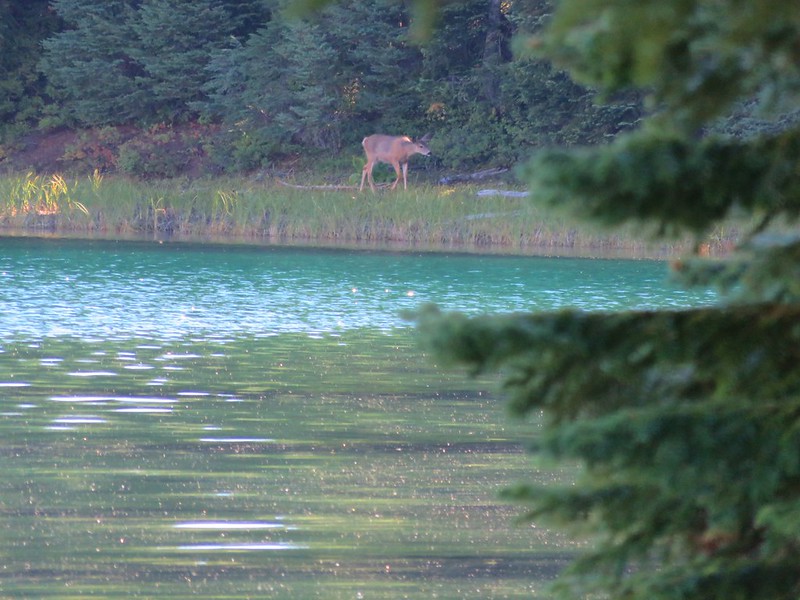
While we were sitting by the lake a doe came down to the eastern end of the lake.
IMG_5825

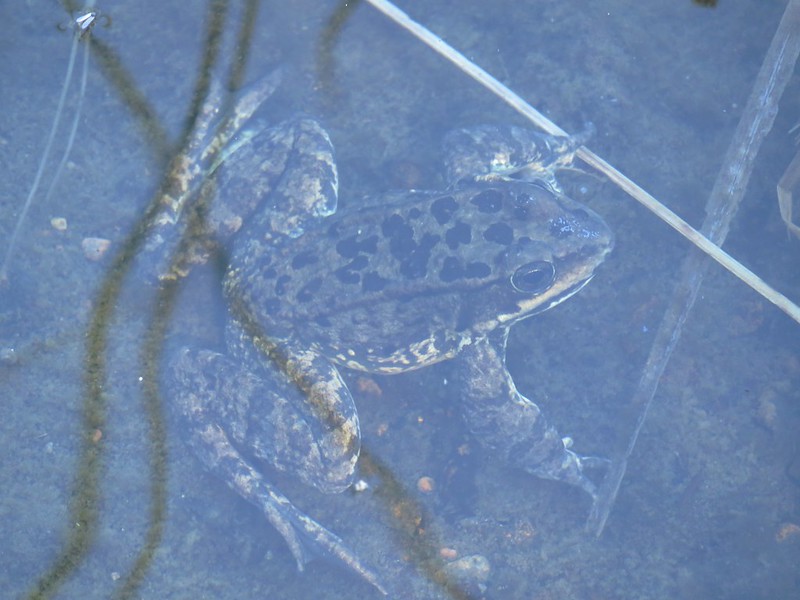
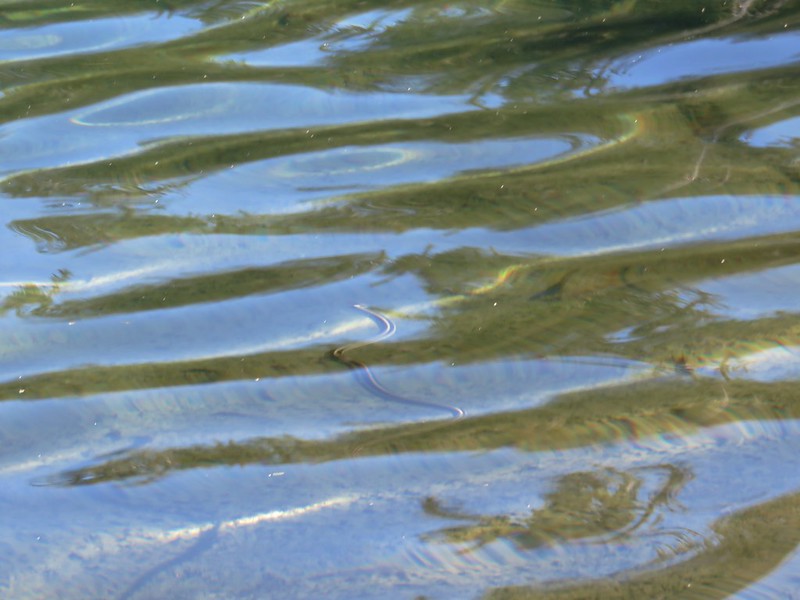
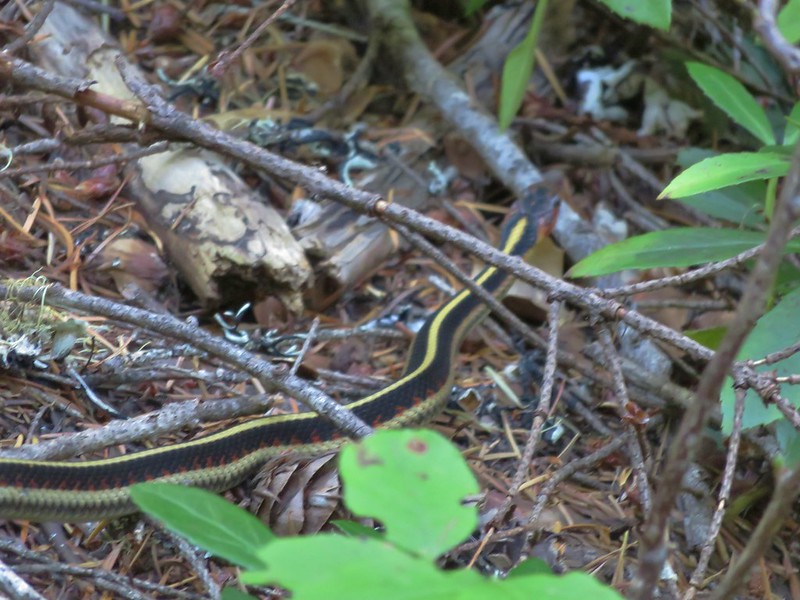
After she disappeared behind some trees we began to walk along the shore toward where she was since that was the direction we would be heading on the Bowerman Lake Trail. On the way a frog and a garter snake went from the shore into the water.
IMG_5831

IMG_5839

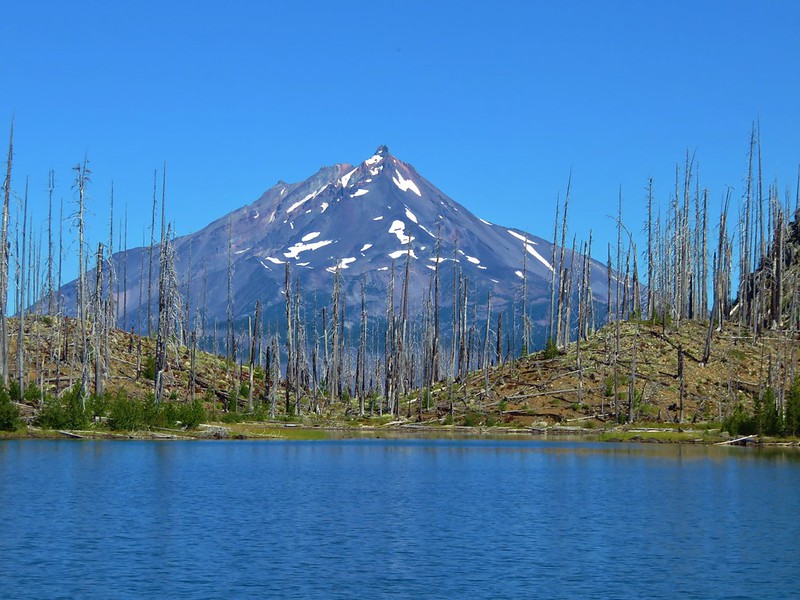
The best view of Mt. Jefferson came at the SE end of the lake.
IMG_5842

We left the lake and briefly returned to the Bowerman Lake Trail but then quickly left it to check out a series of ponds between Jorn Lake and Bowerman Lake.
IMG_5846

IMG_5847

It was at Bowerman Lake that we realized it was opening weekend of hunting season when we ran into a gentleman who was resting by the lake.
IMG_5850

IMG_5853

Bowerman Lake was the last lake in the Basin that the trail passed and we were soon back into the snags.
IMG_5863

IMG_5869

The trails up until this point had been well maintained but the next 2+ miles on the Bowerman Lake Trail became increasingly difficult as numerous snags covered the path.
IMG_5874

IMG_5876

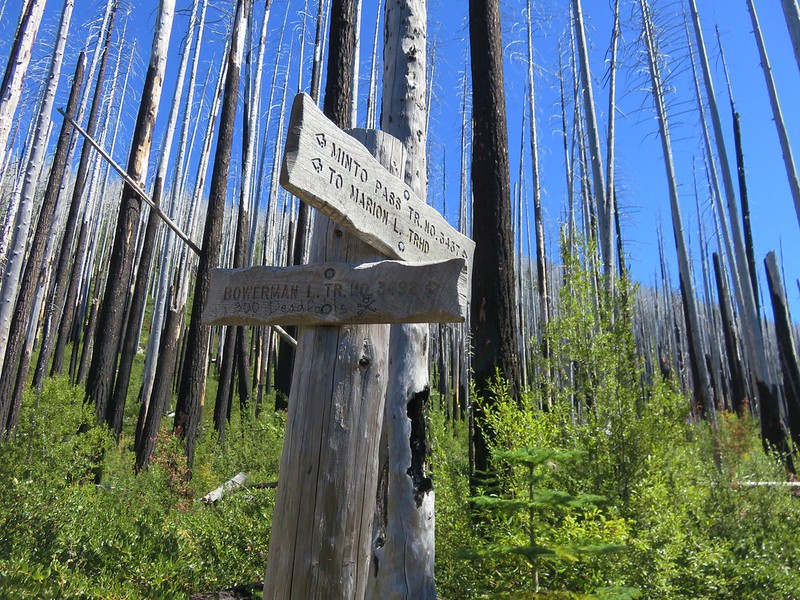
We spent quite a bit of time going over, under, around logs. Often times it was just easier to walk on top of them. Conditions improved after we reached the Minto Pass Trail where someone else had apparently encountered the obstacles over the Bowerman Lake Trail.
IMG_5889

We were now following the Minto Pass Trail two miles to Marion Lake. Many of the vine maples along this trail were in full Autumn mode.
IMG_5892

IMG_5895

IMG_5897

IMG_5904

The trail crossed several springs and creeks as it neared the lake including the very pretty Mist Creek.
IMG_5908

IMG_5910

IMG_5922

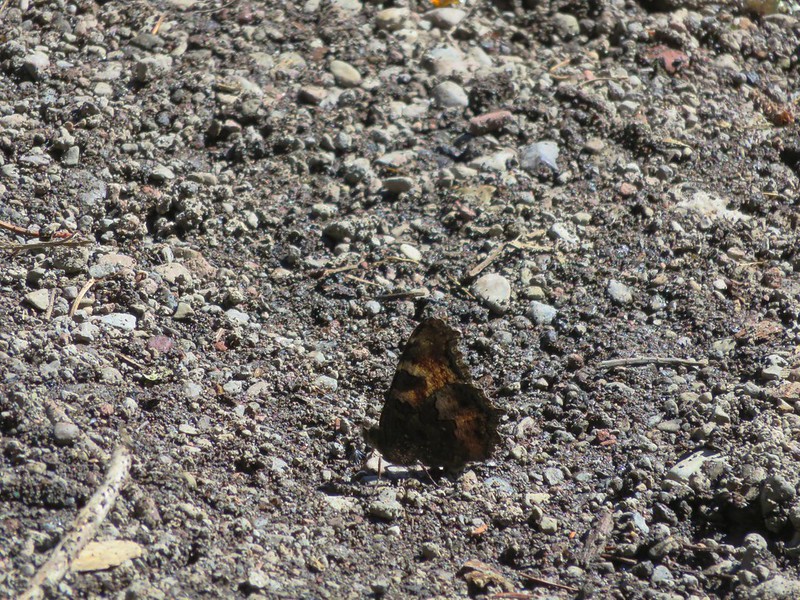
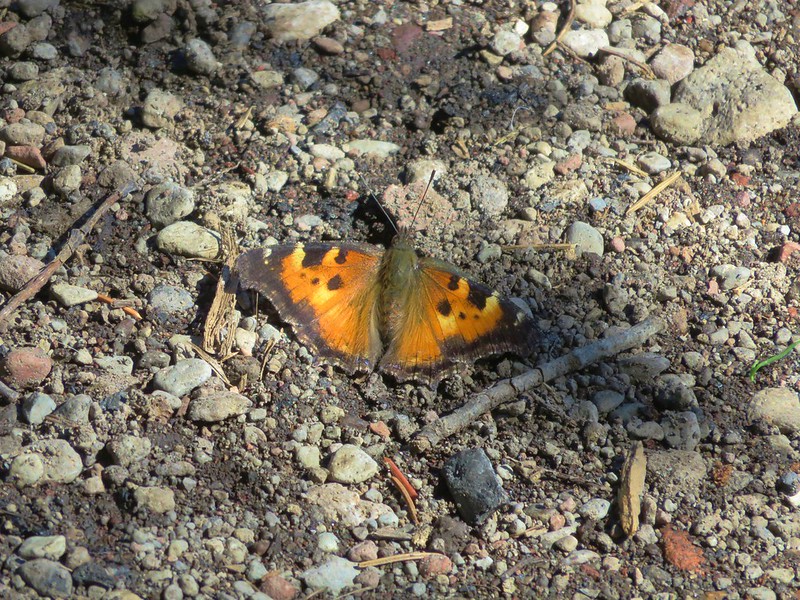
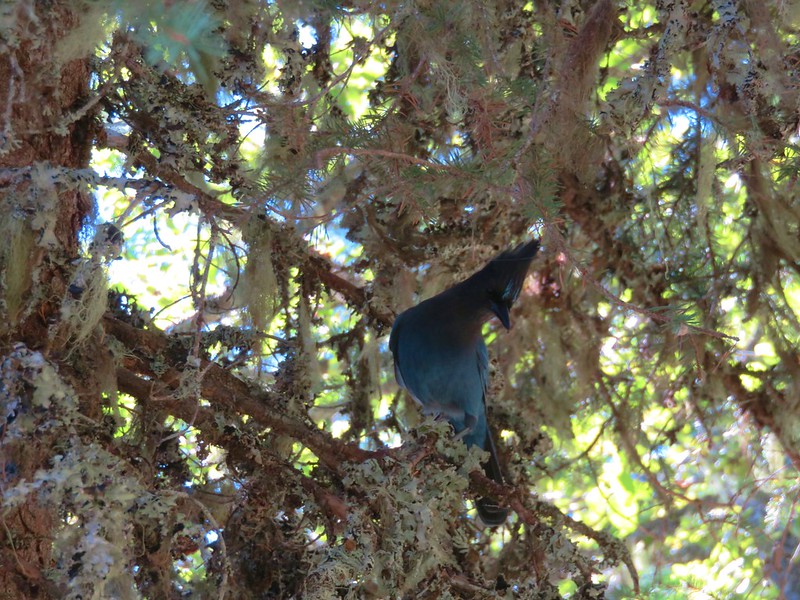
When the trail approached Marion Lake we walked down to the lake shore for one final rest stop. Three Fingered Jack rose above the lake on the horizon and we were joined by a number of tortoiseshell butterflies and a friendly Stellar’s blue jay.
IMG_5926

IMG_5930

IMG_5928

IMG_5946

IMG_5936

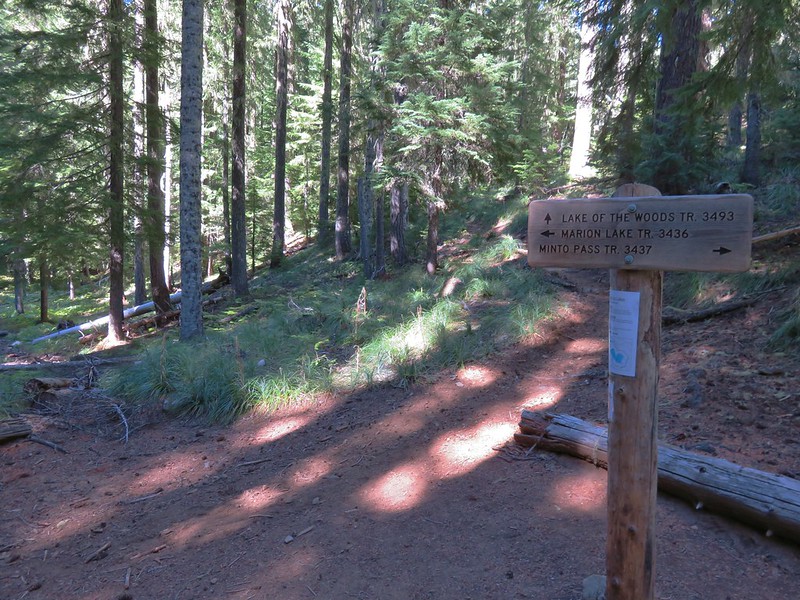
The Minto Pass Trail had been recently rerouted, adding a couple of switchbacks, just before arriving at a three-way junction with the Lake of the Woods and Marion Lake Trails.
IMG_5947

Back on the Marion Lake Trail we followed it for a half mile passing a trail to the lake’s day use area and continuing another .3 miles to the Marion Outlet Trail junction where we had begun our loop. We retraced our path from the morning spotting a garter snake and a large western toad along the way.
IMG_5954

IMG_5965

Unfortunately not all of the wildlife encounters were so nice. Between spotting the snake and the toad we had paused at Lake Ann for a moment and Heather was almost immediately stung by a yellow jacket. Several more were buzzing around and we ran to the end of the lake to avoid any additional stings.

What was supposed to be a sort of “easier” hike than what we’d been doing lately turned out to be a little more taxing than planned. Between the warm temperatures and exposure in the burn area and the stretch of trail covered in downed snags we were feeling pretty tired by the time we made it back to the trailhead. We had also managed to turn the 15.2 miles we had planned on into 17.9 miles by visiting the falls, Red Butte Lake, and doing some other off-trail exploring. It had been worth it though. The colors were amazing, we’d seen a lot of wildlife, and despite the full parking lot hadn’t seen very many other people along the way. Happy Trails!

Flickr: https://www.flickr.com/photos/9319235@N02/albums/72157673717910585

Categories
Hiking Oregon Trip report Wallowas

Eagle Cap Wilderness Day 4 – Eagle Cap

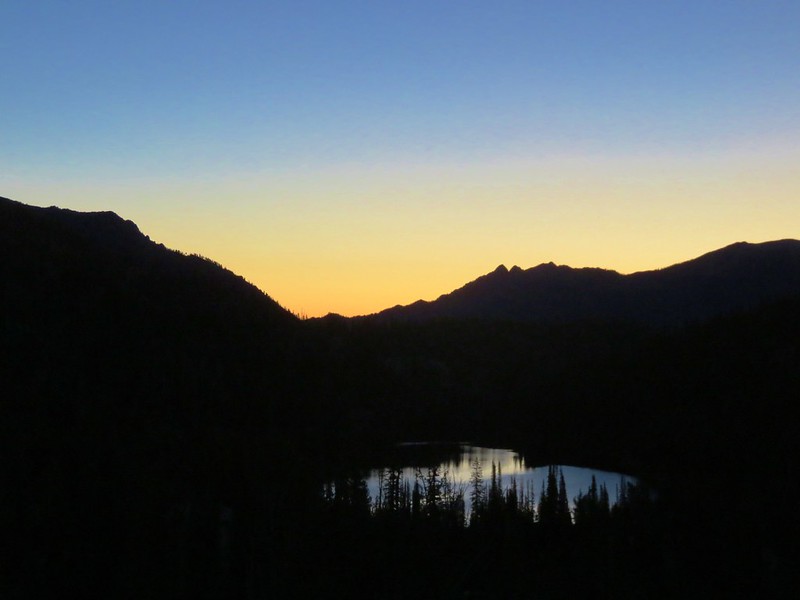
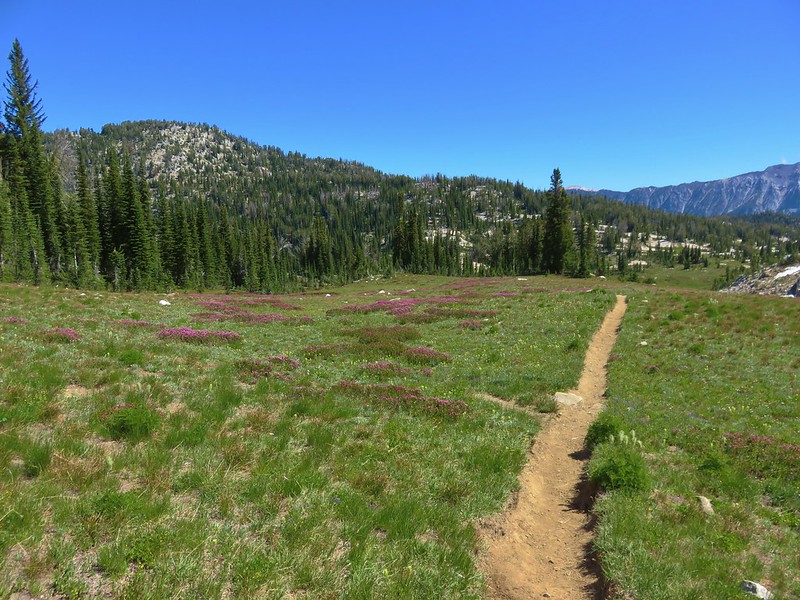
The fourth day of our backpacking trip began with a nice sunrise over Moccasin Lake.
IMG_3623

Our plan for the day was to take our day packs and hike to the summit of Eagle Cap, then pack up camp and move to Horseshoe Lake for the final night of our trip.

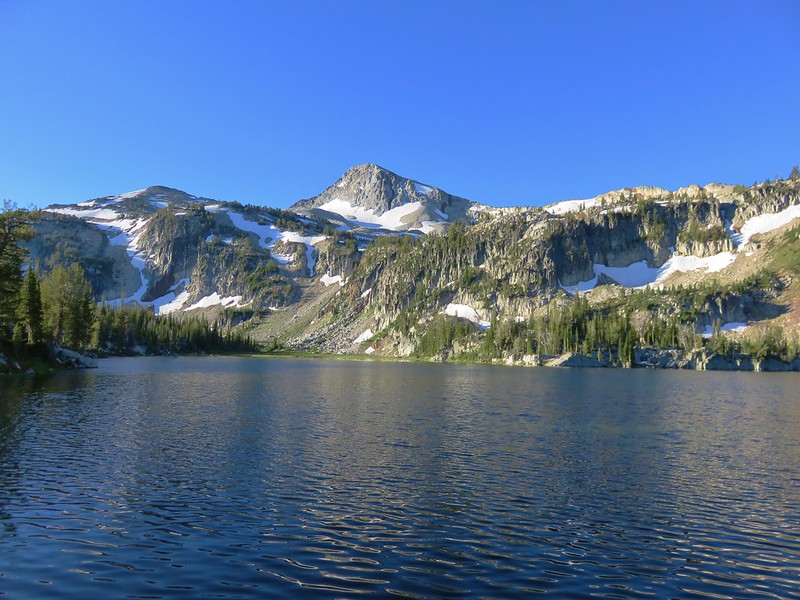
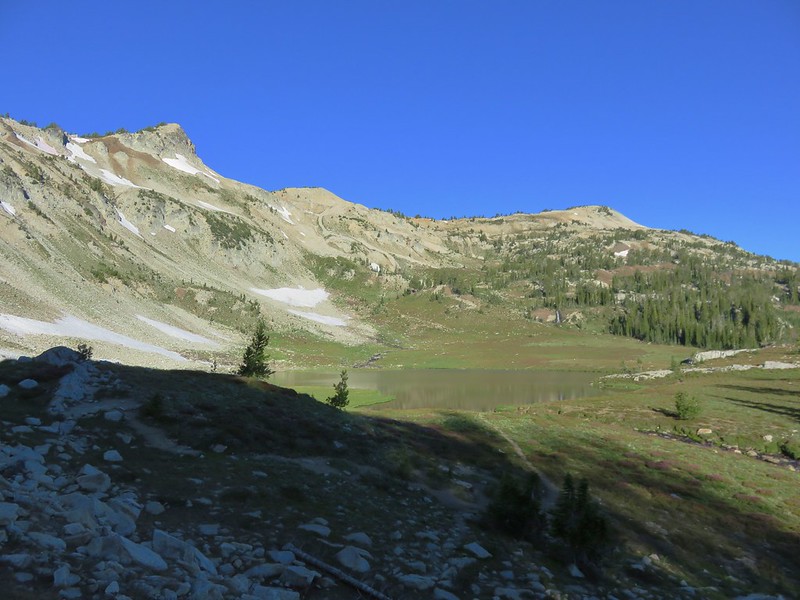
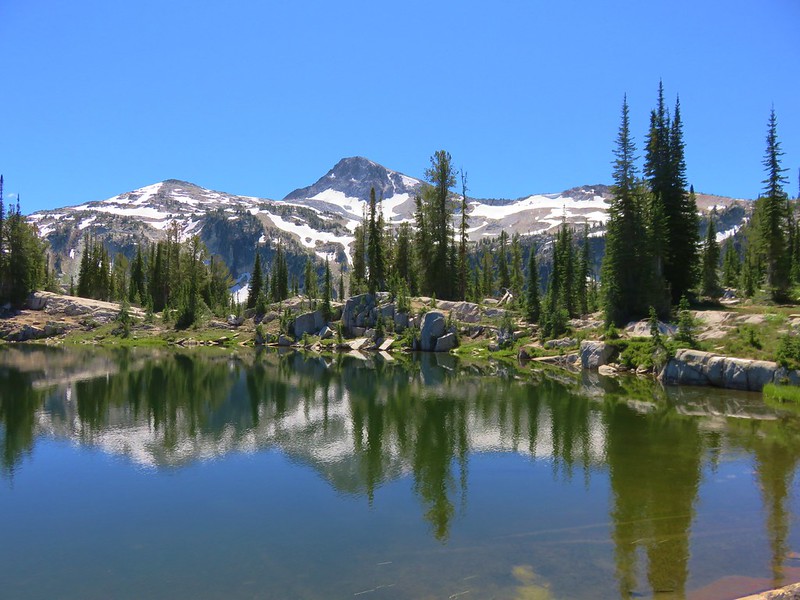
It had been rather breezy the day before and we were hoping that wouldn’t be the case today so that we could get catch some reflections of Eagle Cap in the lakes. A gentle breeze kept that from happening.
IMG_3628

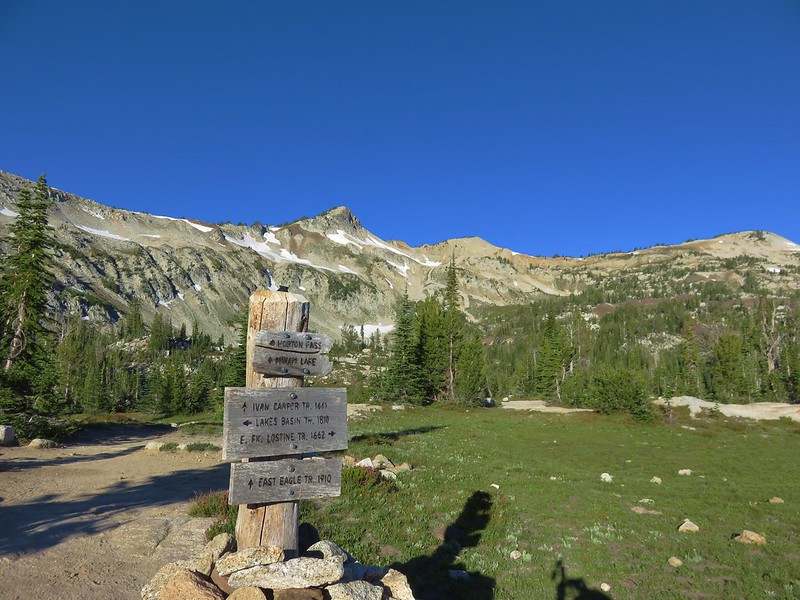
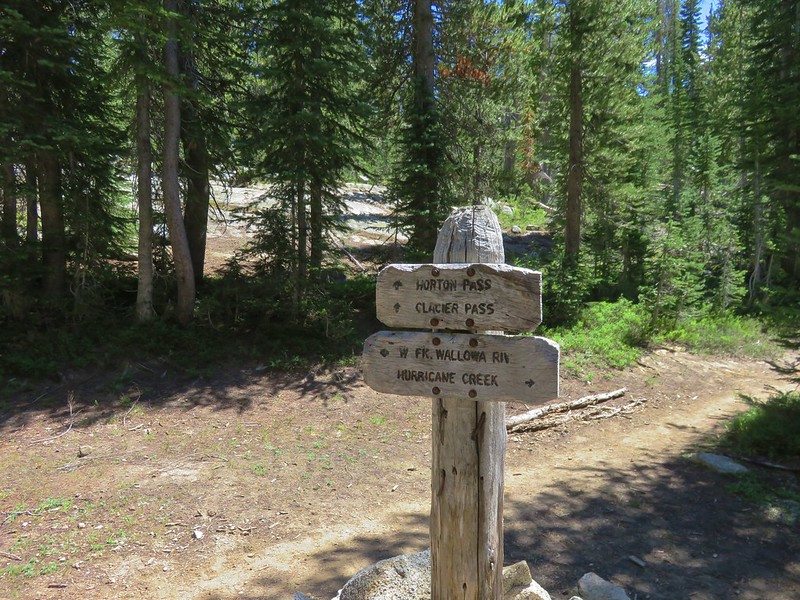
We hiked to the west end of Mirror Lake and followed signs toward Horton Pass at a 4-way trail junction.
IMG_3642

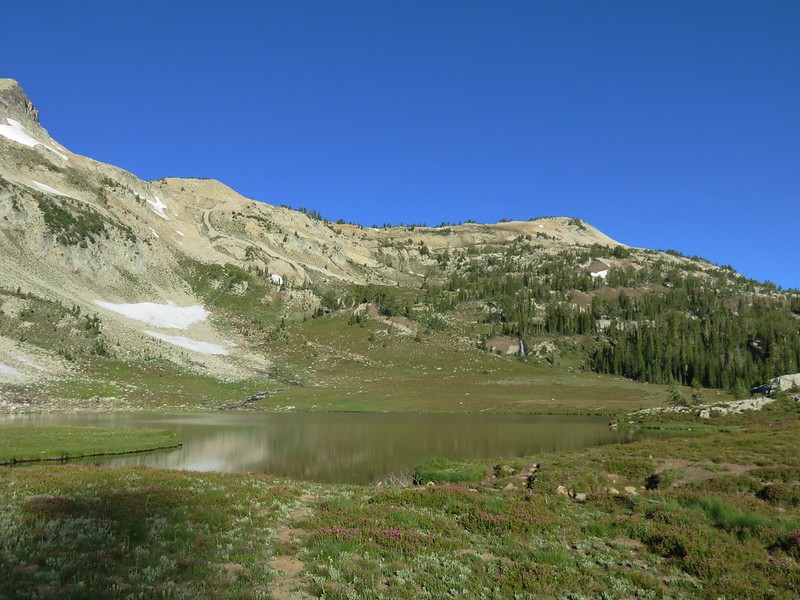
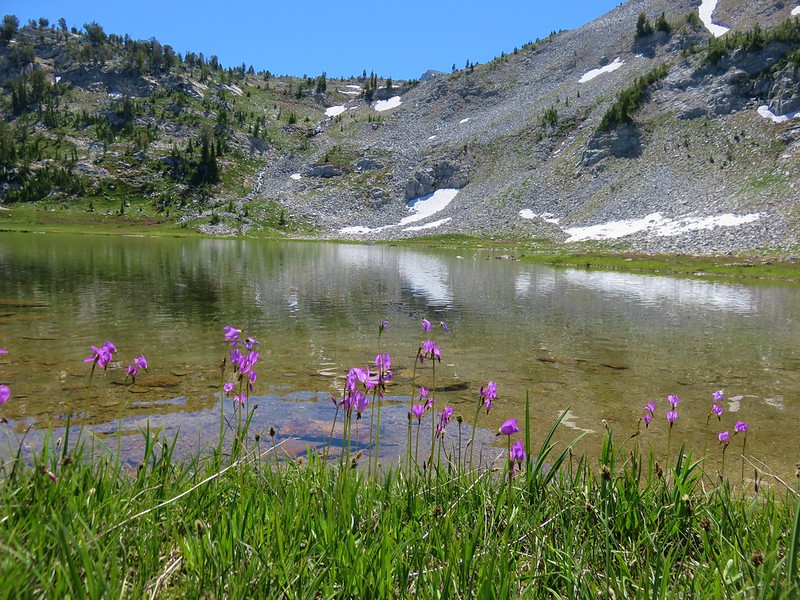
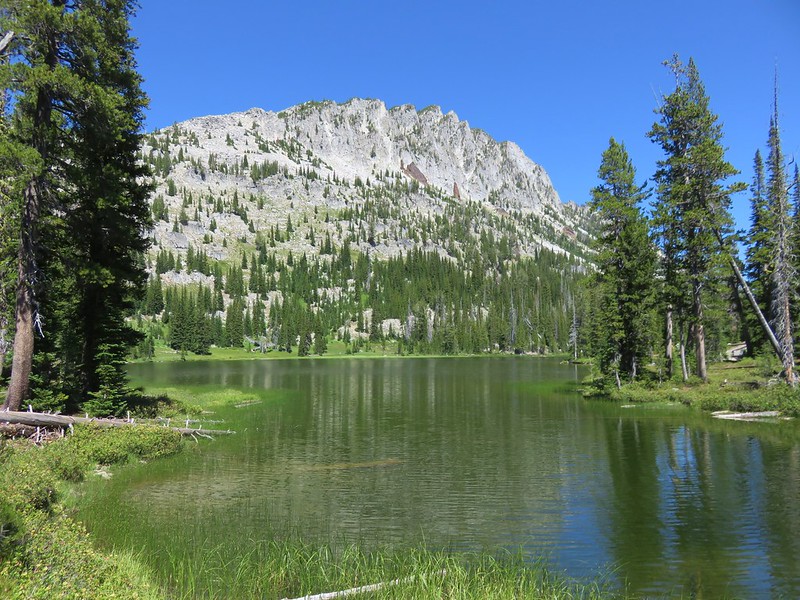
The trail took us past Upper Lake set in an alpine bowl surrounded by wildflowers and backed by a scenic waterfall on the far side of the valley.
IMG_3646

IMG_3647

IMG_3649

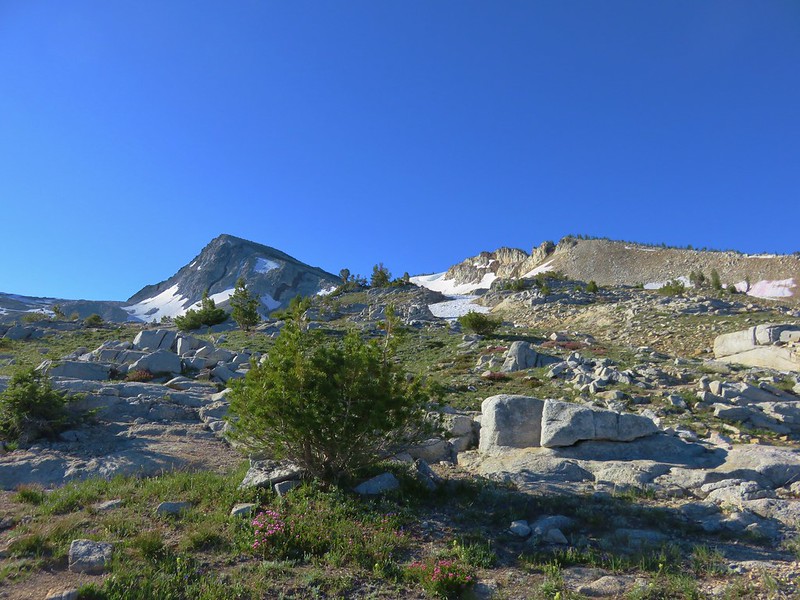
The trail climbed up from Upper Lake toward Eagle Cap.
IMG_3668

IMG_3669

We knew we would be encountering some patches of snow based on recent trip reports from Van Marmot and Born2BBrad over on Oregonhikers.org. We also knew that it would be fairly easy to avoid the snow which was good given our early start because the snow was still iced from the night before.
IMG_3671

IMG_3673

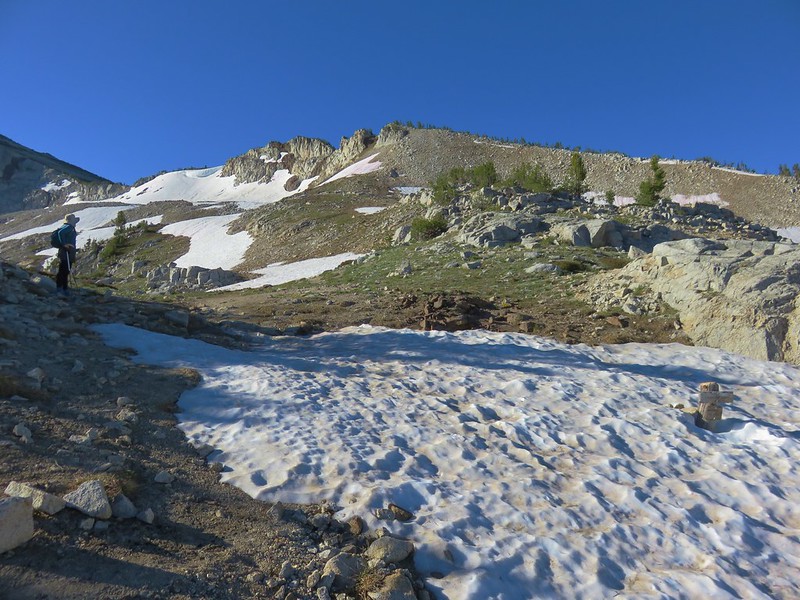
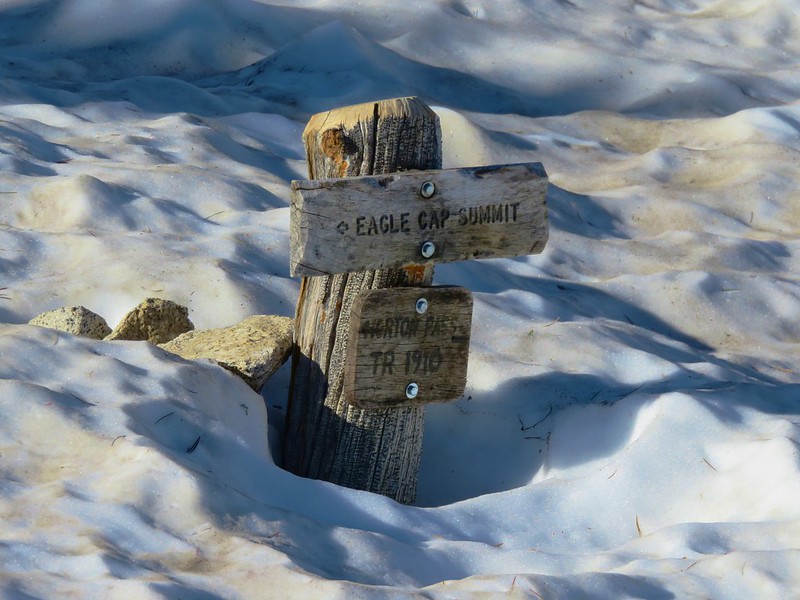
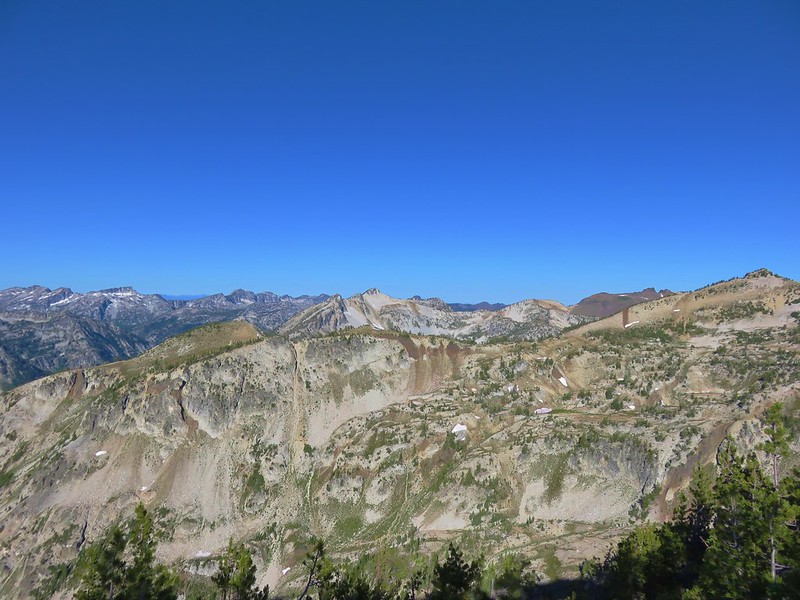
From the sign in the snow we had the choice of going right to Horton Pass and following the ridge from there or going left and making a steeper climb to a higher point on the same ridge. Looking at the trail up to Horton Pass it seemed to have not only more snow but it was on a steeper slope than staying left so we chose that route and climbed to the ridge where views opened up to the west.
IMG_3684

IMG_3689

IMG_3698

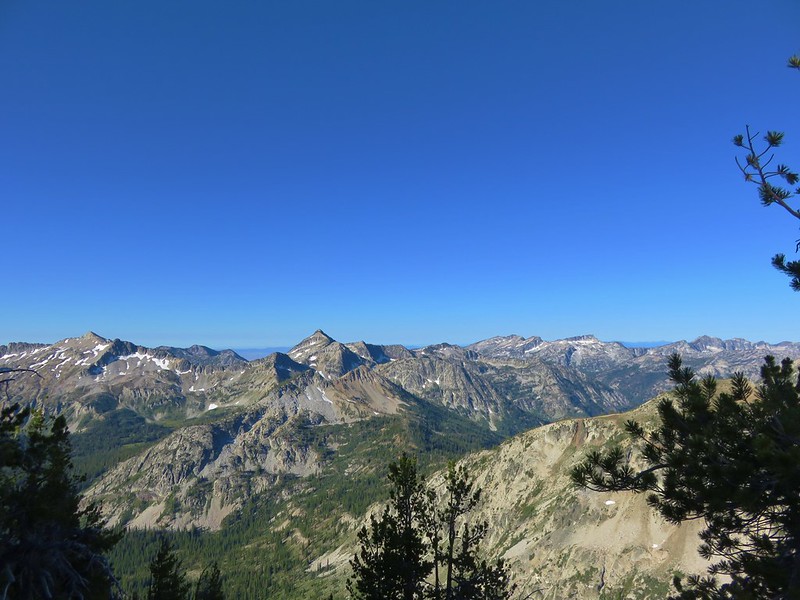
To the NE lay the Lakes Basin and the Matterhorn.
IMG_3690

The west side of the ridge was covered in short trees and we passed through this forest of miniature trees to a saddle below Eagle Cap.
IMG_3687

IMG_3703

From the saddle we had a nice view down the East Lostine River valley to the east and across to Blue Lake to the west.
IMG_3711

IMG_3725

IMG_3726

Beyond the saddle the trail climbed Eagle Cap in a series of long switchbacks. A few alpine flowers dotted the landscape.
IMG_3723

IMG_3730

IMG_3731

IMG_3714

IMG_3695

After passing through some whitebark pines we arrived at the broad summit of Eagle Cap.
IMG_3733

IMG_3734

Although Eagle Cap is a few hundred feet shorter than the Matterhorn the sky was clearer than it had been two days earlier when we had been atop the other peak. The view was so huge it was hard to take everything in.
East Lostine River, the Matterhorn, and the Lakes Basin
IMG_3749

Glacier Lake
IMG_3736

Looking SW
IMG_3742

Seven Devils in Idaho
IMG_3751

The Elkhorns
IMG_3748

After having second breakfast on Eagle Cap we headed back down. On the way we ran into a couple from Portland who had camped near Upper Lake. They had seen a mountain goat run by their camp the day before and spotted a pair of wolves crossing a snowfield on the ridge above the lake as well. We passed several other hikers making their way up toward Eagle Cap making us glad we had started so early.

We stopped at Upper Lake to refill our water supply and decided to follow the trail around the lake thinking it would take us over to another trail that ran between Minam Pass and the 4-way junction at Mirror Lake.
IMG_3809

IMG_3812

The trail petered out at the far end of the lake near it’s inlet stream. Instead of backtracking we decided to rock hop up the creek to the other trail.
IMG_3815

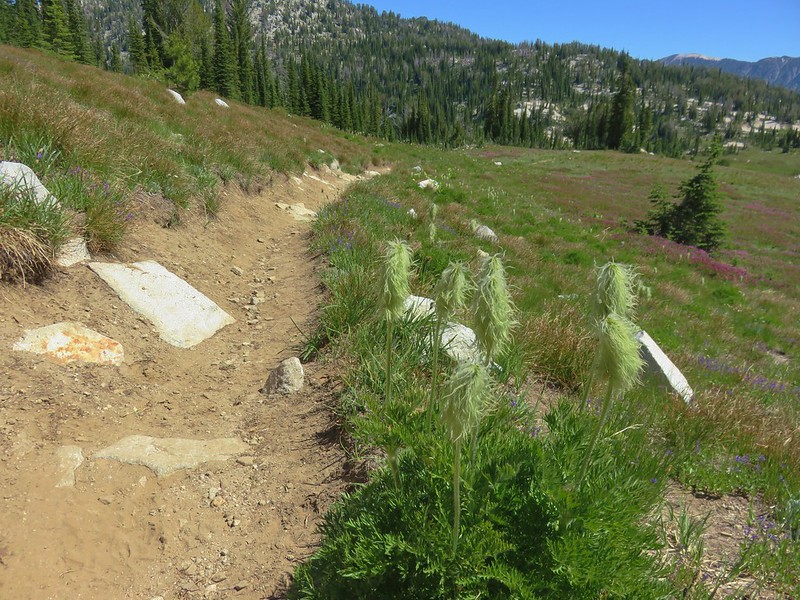
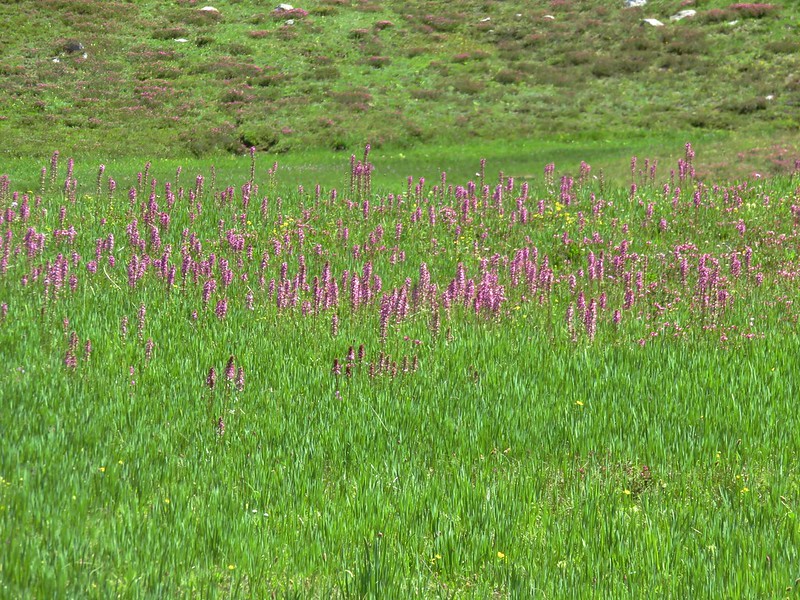
When we arrived at the other trail we found our first western pasque flower seed-heads.
IMG_3821

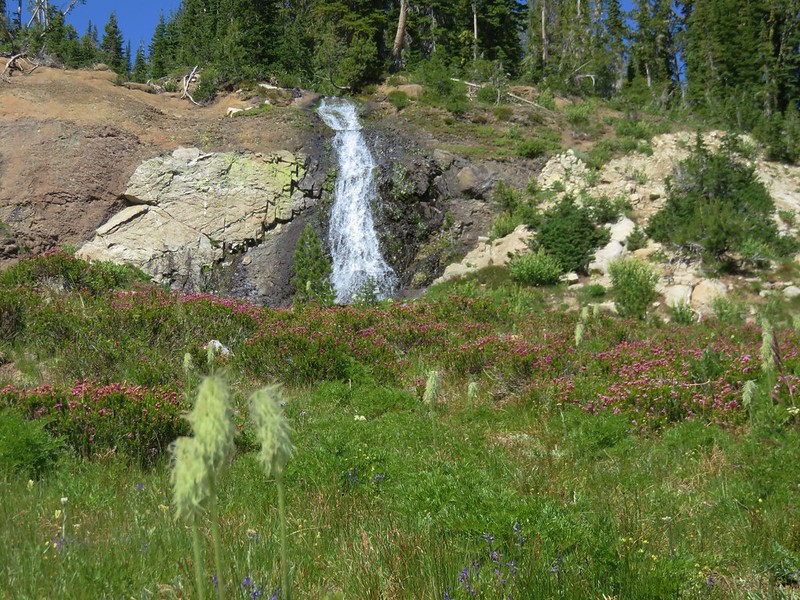
We were also near the waterfall we had seen from across Upper Lake.
IMG_3824

We followed the trail back down through some lovely wildflower meadows to the 4-way junction and then returned to our campsite to pack up.
IMG_3826

IMG_3834

IMG_3839

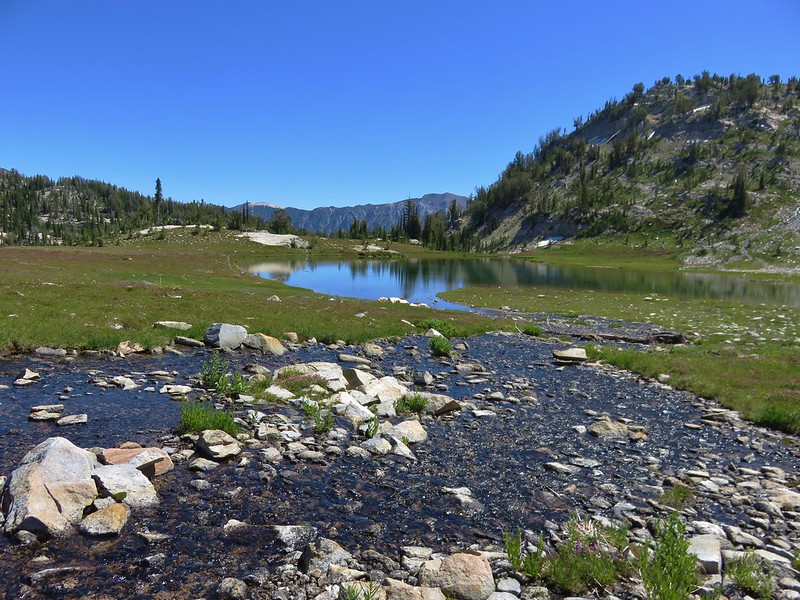
From Mirror Lake we had the choice of going back past Moccasin Lake or taking a different trail past little Sunshine and Crescent Lake. The two routes rejoined at the NE end of Douglas Lake. Since we had already seen Moccasin Lake we decided to go by Sunshine Lake where we wound up getting our best reflection of Eagle Cap.
IMG_3856

We passed a junction with the Hurricane Creek Trail after 1.1 miles and arrived at Crescent Lake after approximately another three quarter miles.
IMG_3865

IMG_3869

Douglas Lake was just on the other side of the trail from Crescent Lake.
IMG_3871

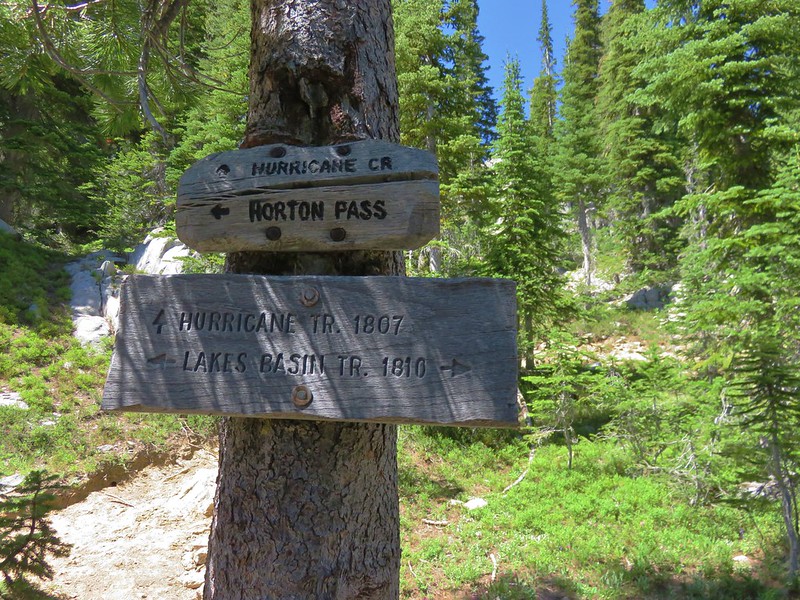
We followed a pointer for the West Fork Wallowa River when we reached the trail junction at the end of Douglas Lake.
IMG_3877

Shortly thereafter we came to another trail junction.
IMG_3879

Here we faced another choice. Both forks would bring us to Horseshoe Lake, the left in 1.3 miles and the right in 1.5 miles passing Lee and Lily Lakes. We chose the longer route past the other two lakes and began descending toward Lee Lake.
IMG_3881

IMG_3882

After a brief stop at Lee Lake we continued past the aptly named Lily Lake.
IMG_3891

The trail passed by large Horseshoe Lake along the northern shore.
IMG_3892

IMG_3896

IMG_3902

We were hoping to find a campsite at east end of Horseshoe Lake which would would leave us with a shorter hike on our final day but we were unable to find a suitable site at that end of the lake. After reaching the junction with the other fork of the Lakes Basin Trail and failing to have found a good campsite we decided to head back up the other fork to see if there were any decent sites along that trail.
IMG_3903

We had been planning on visiting nearby Unit Lake after setting up camp and knew there was a campsite there, but the trail to that lake was no longer maintained and camping there would require hauling our packs down to the lake over a lot of blowdown which we preferred not to do. As luck would have it we found a suitable spot for our tent below the trail just opposite of the unmaintained trail to Unit Lake.
IMG_3905

IMG_3908

After getting settled we decided to take our chairs, dinner, and water filter with us to Unit Lake and spend our evening there. The trail had definitely not been maintained from quite some time and we were glad we had chosen not to try and do the trail with our full packs.
IMG_3946

That being said we were glad we made the side trip down to the lake.
IMG_3914

IMG_3937

IMG_3935

We were a little surprised when a Dad and four kids came crashing down the trail to fish for a little while but they soon departed and we had a little more solitude before returning to our tent and watching the sunset on Eagle Cap for the final time.
IMG_3952

Happy Trails!

Flickr: https://www.flickr.com/photos/9319235@N02/albums/72157671183919842

Categories
Hiking Indian Heaven Trip report Washington Washington Cascades

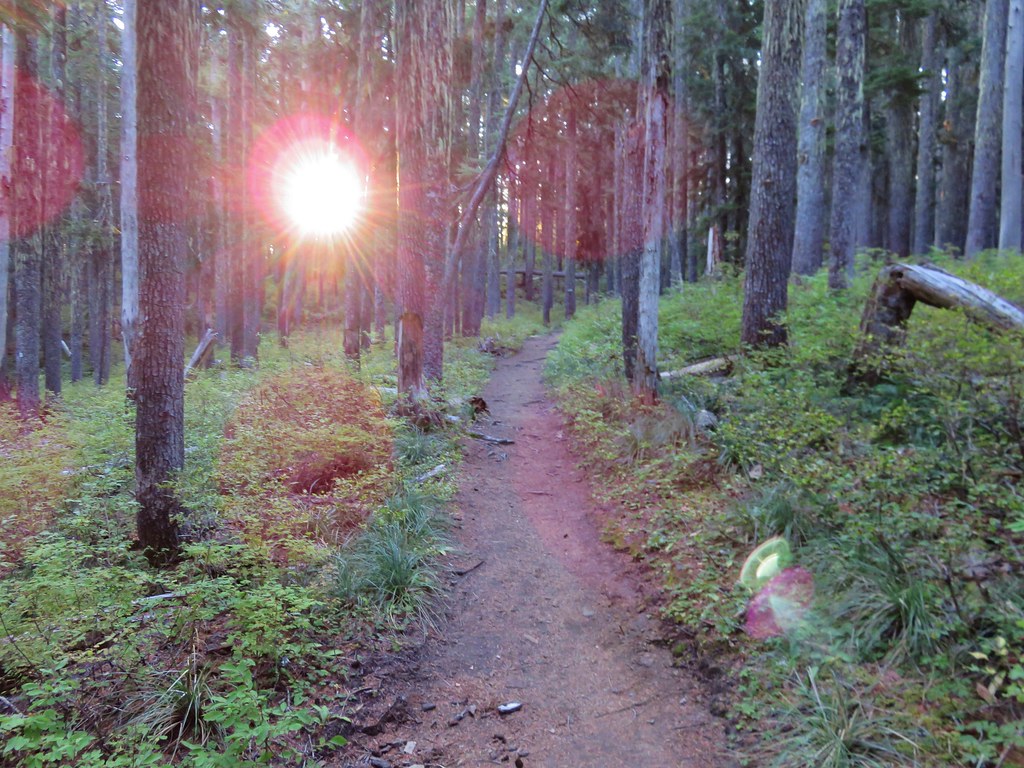
Panther Creek Falls and Indian Heaven Wilderness

**Note the 2017 East Crater Fire burned a portion of this hike.**

What a difference a week makes. On our previous hike to the Olallie Lake Scenic Area we spent our time in a chilly damp fog and then dealt with the occasional rain shower. Our most recent hike to the Indian Heaven Wilderness was the exact opposite with sunny skies and temperatures in the upper 70s. This was a hike that had been pushed back a couple of weeks first due to smoke and next the weather conditions of the previous week.

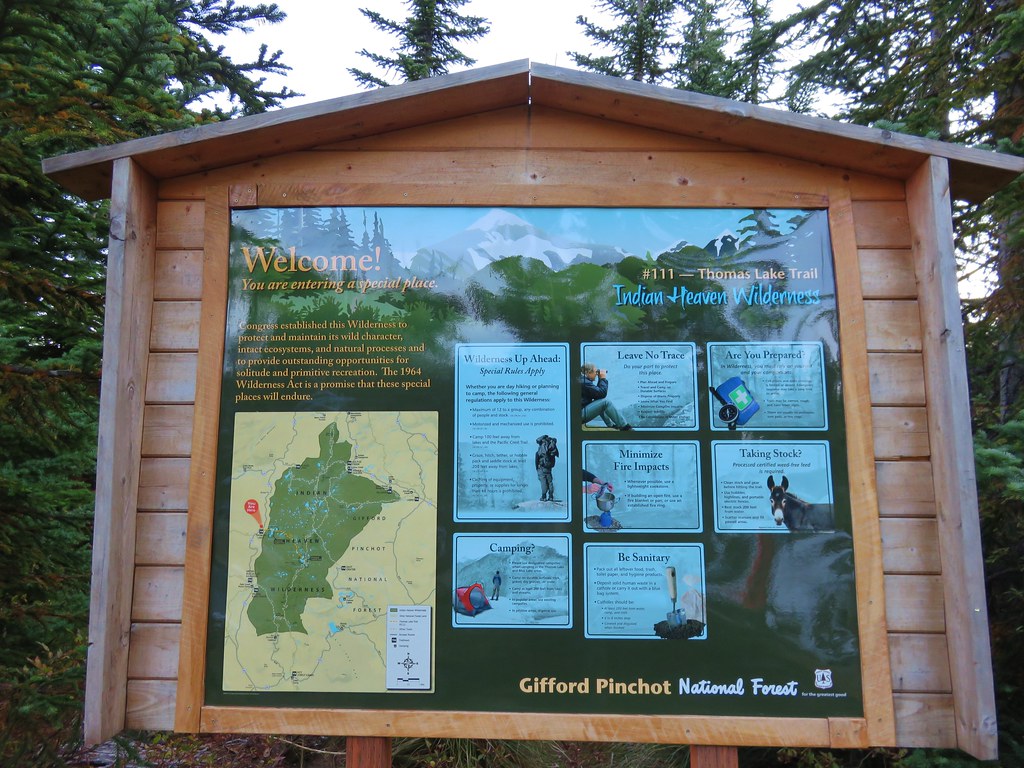
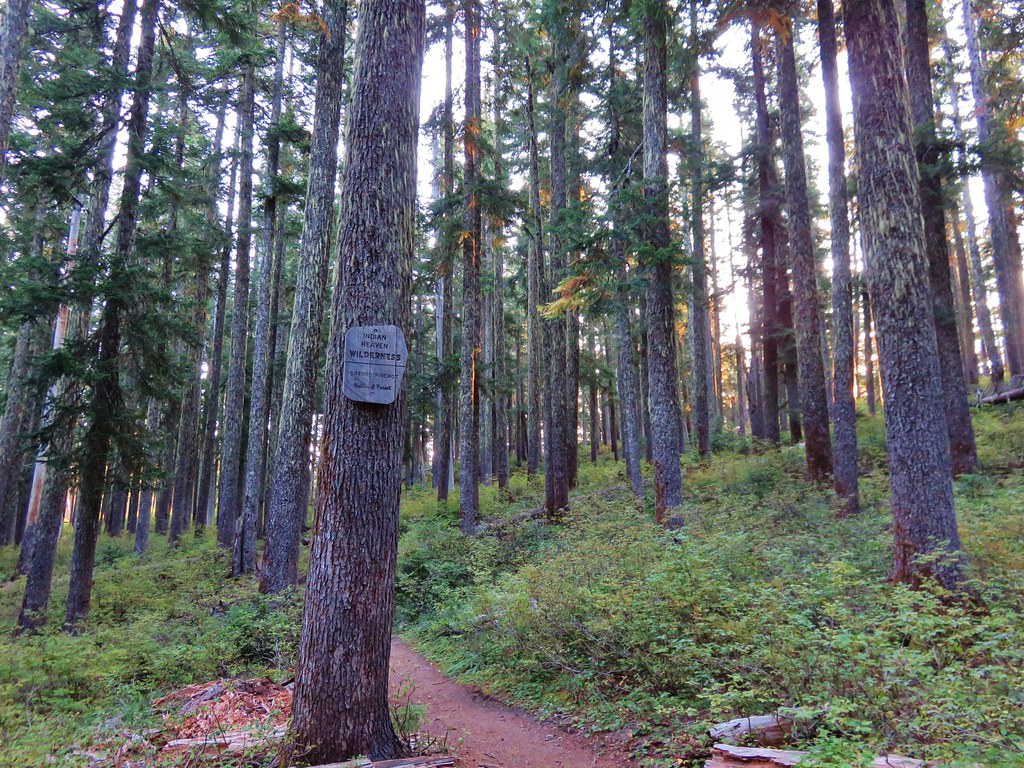
The Indian Heaven Wilderness is located in Washington State southeast of Mt. Adams. http://www.wilderness.net/NWPS/wildView?WID=258 This was our first visit to this particular wilderness and we had chosen the Thomas Lake Trailhead as our starting point. The trailhead is located along Road 65 (Panther Creek Road) approximately 21 miles from the city of Carson, Washington. We planned on taking the Thomas Lake Trail to the Pacific Crest Trail (which runs north-south through the entire wilderness) and then following the PCT north to Junction Lake where we could do a 4 mile loop past several lakes before returning to the car. We also had the option of going off-trail and hiking up Gifford Peak before reaching the PCT.

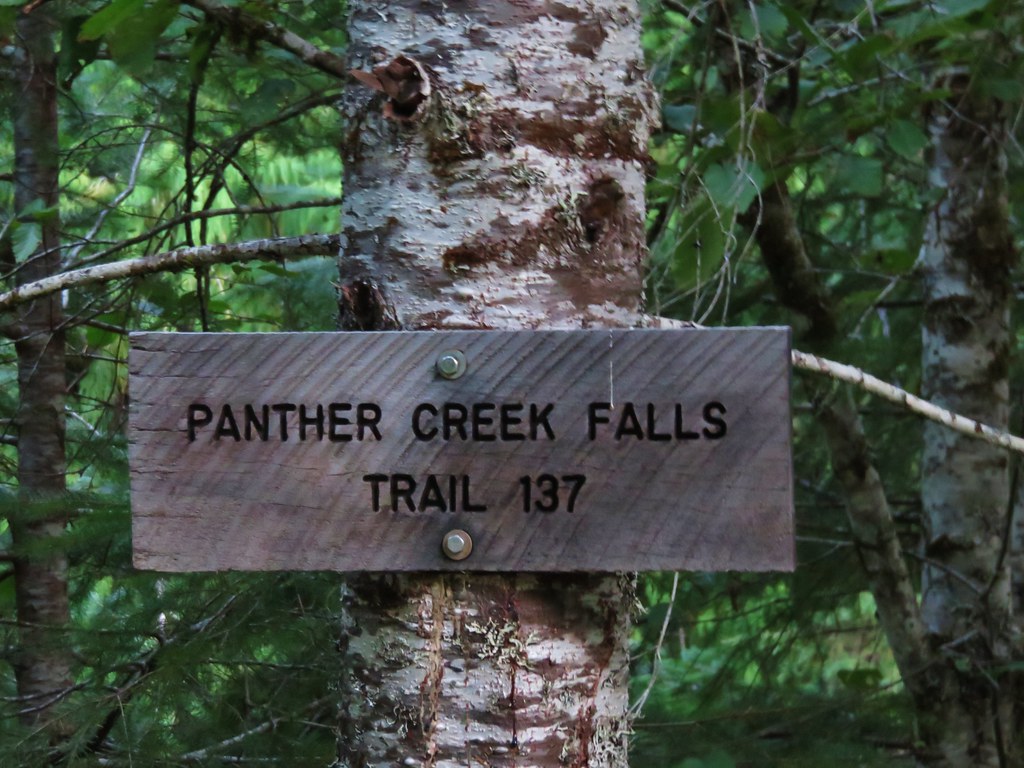
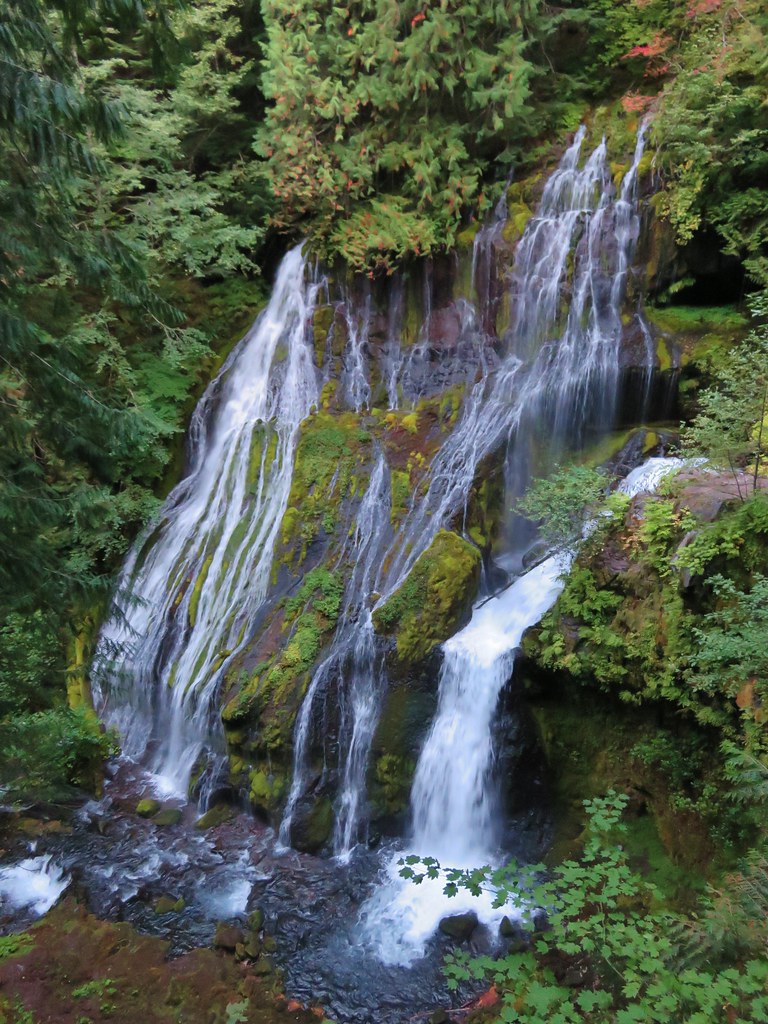
Before we got to any of that though we stopped along Road 65 at the Panther Creek Trailhead to take the short path down to see the falls.
IMG_9085//embedr.flickr.com/assets/client-code.js

IMG_9089//embedr.flickr.com/assets/client-code.js

IMG_9087//embedr.flickr.com/assets/client-code.js

After checking out the falls we continued on to the Thomas Lake Trailhead.
IMG_9091//embedr.flickr.com/assets/client-code.js

The parking area was nearly full at 7:30am which told us we’d be seeing plenty of other people on this hike as we set off on the trail.
IMG_9093//embedr.flickr.com/assets/client-code.js

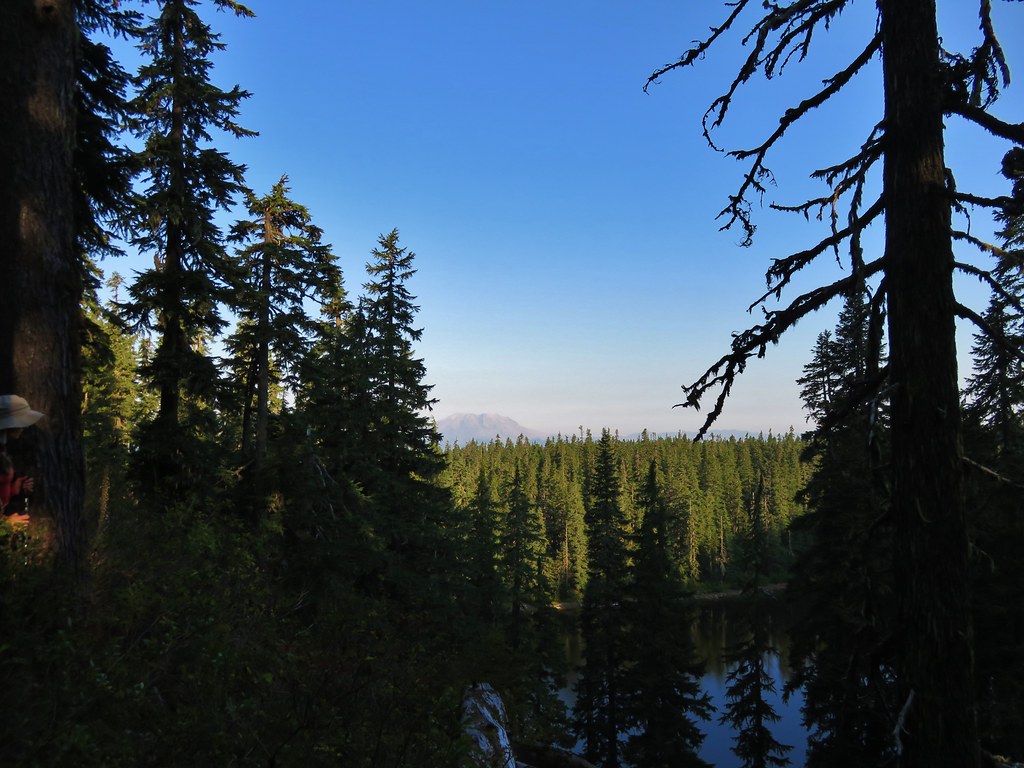
There were occasional views of Mt. St. Helens as we followed the trail up through the huckleberry filled forest toward Thomas Lake.
IMG_9095//embedr.flickr.com/assets/client-code.js

IMG_9098//embedr.flickr.com/assets/client-code.js

IMG_9099//embedr.flickr.com/assets/client-code.js

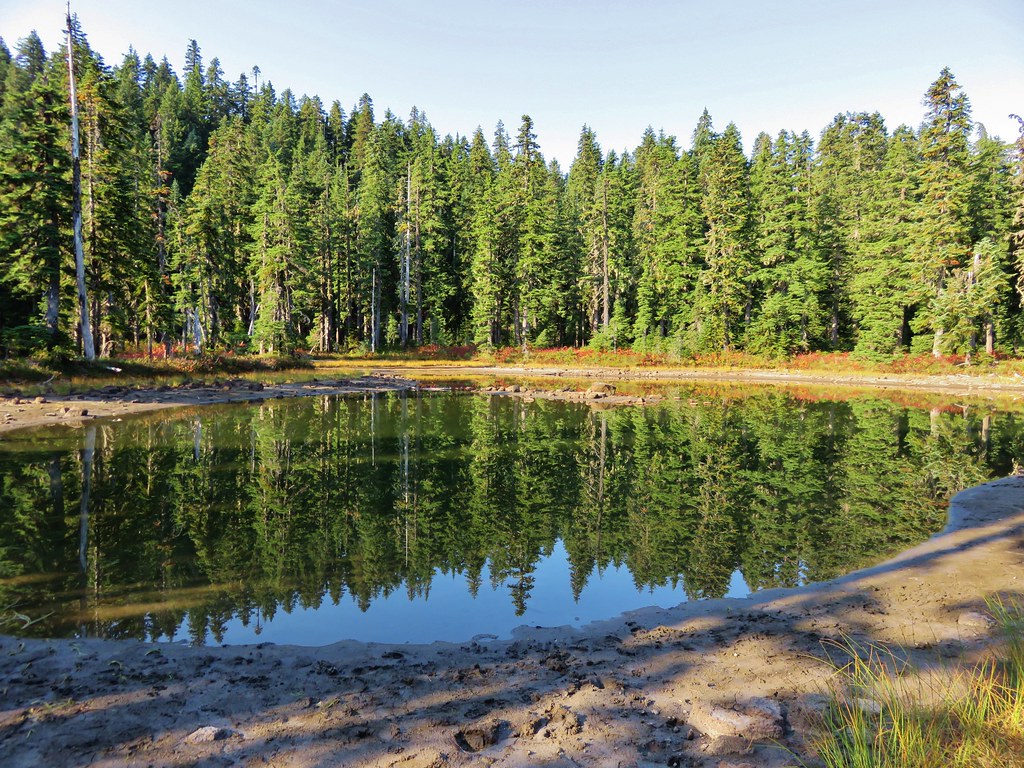
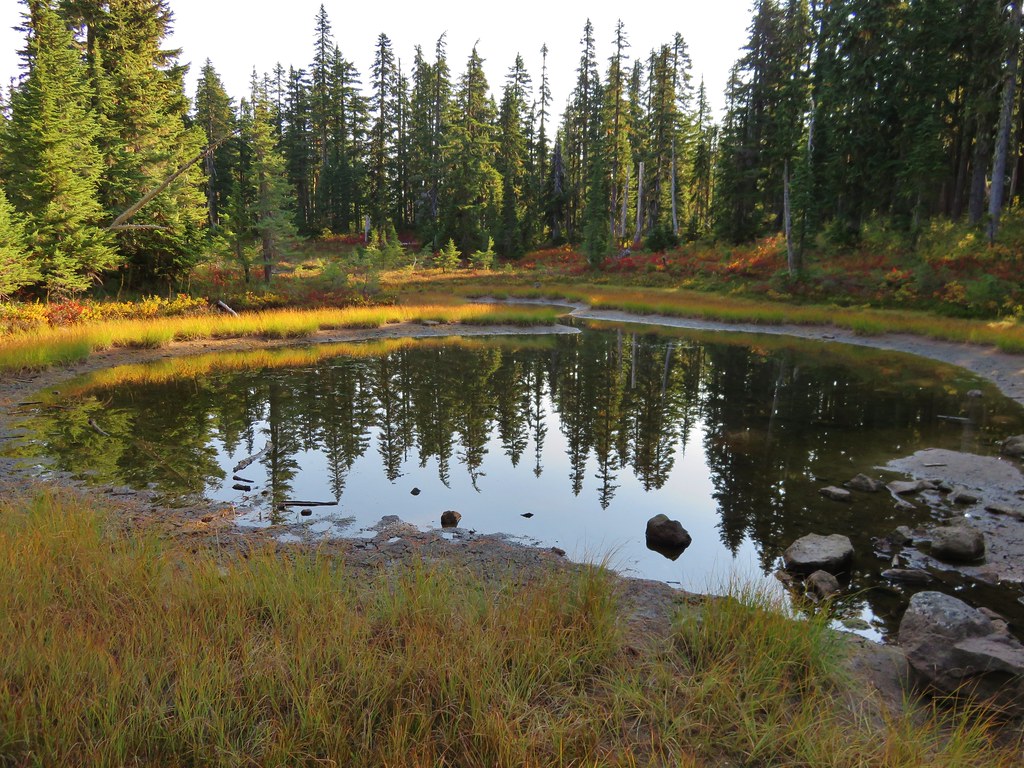
We reached the first set of lakes after a half mile.
Thomas Lake
IMG_9102//embedr.flickr.com/assets/client-code.js

Dee Lake
IMG_9104//embedr.flickr.com/assets/client-code.js

Heather Lake
IMG_9107//embedr.flickr.com/assets/client-code.js

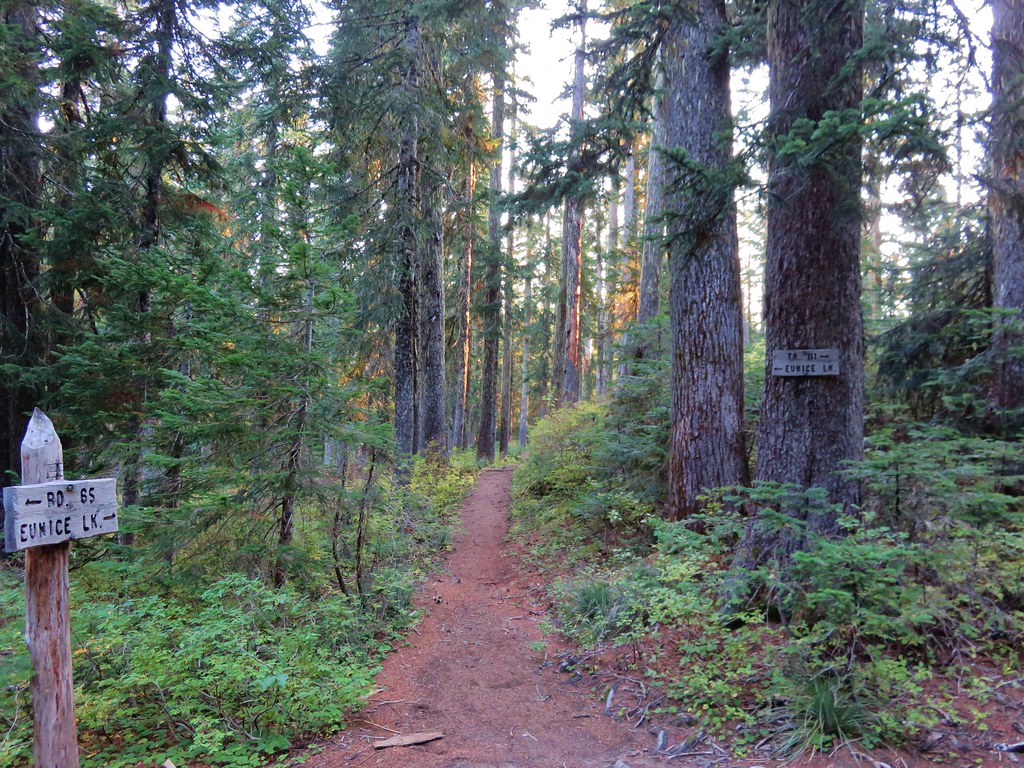
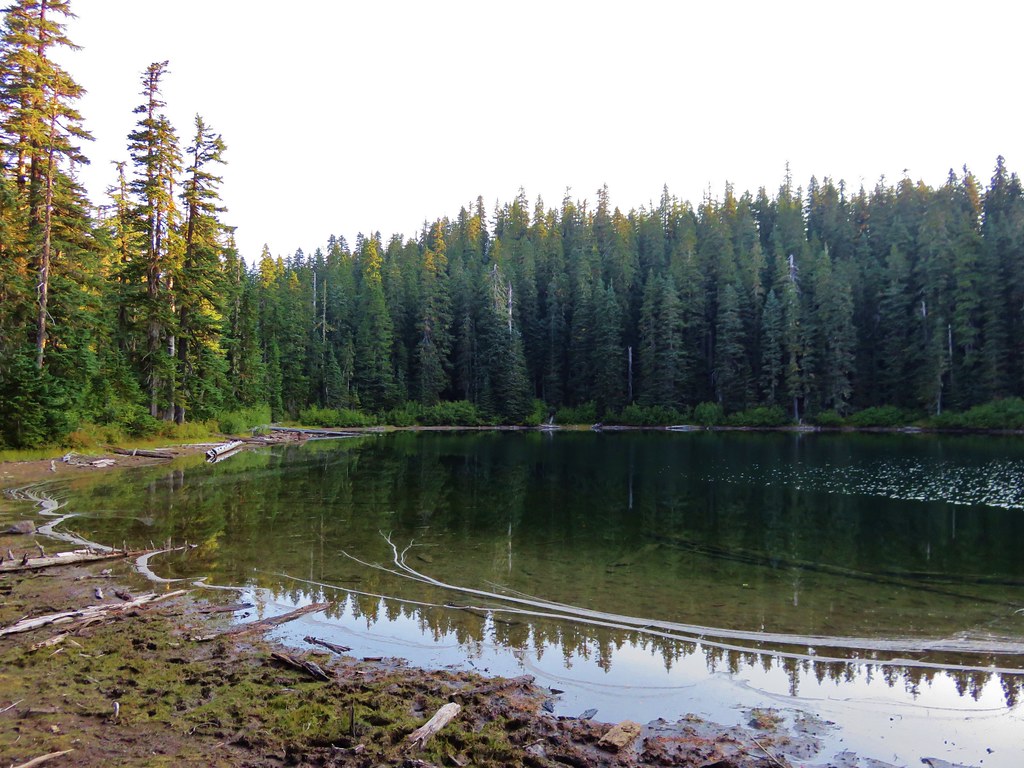
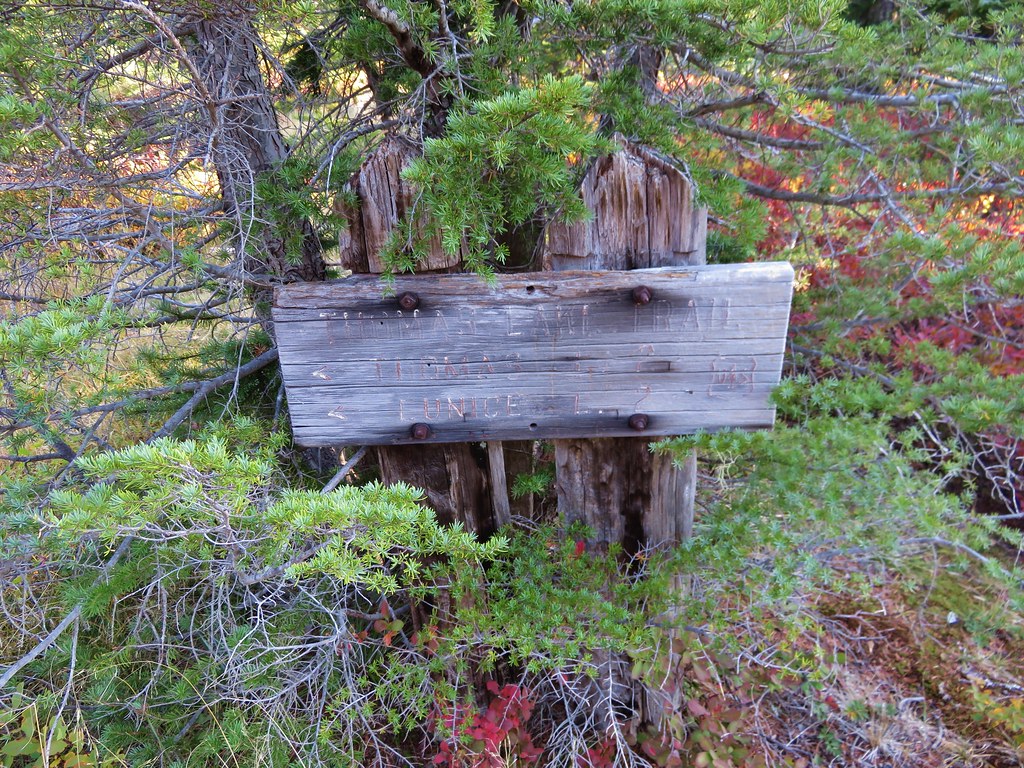
Just past the first three lakes was a trail junction with a short path to Eunice Lake.
IMG_9109//embedr.flickr.com/assets/client-code.js

IMG_9112//embedr.flickr.com/assets/client-code.js

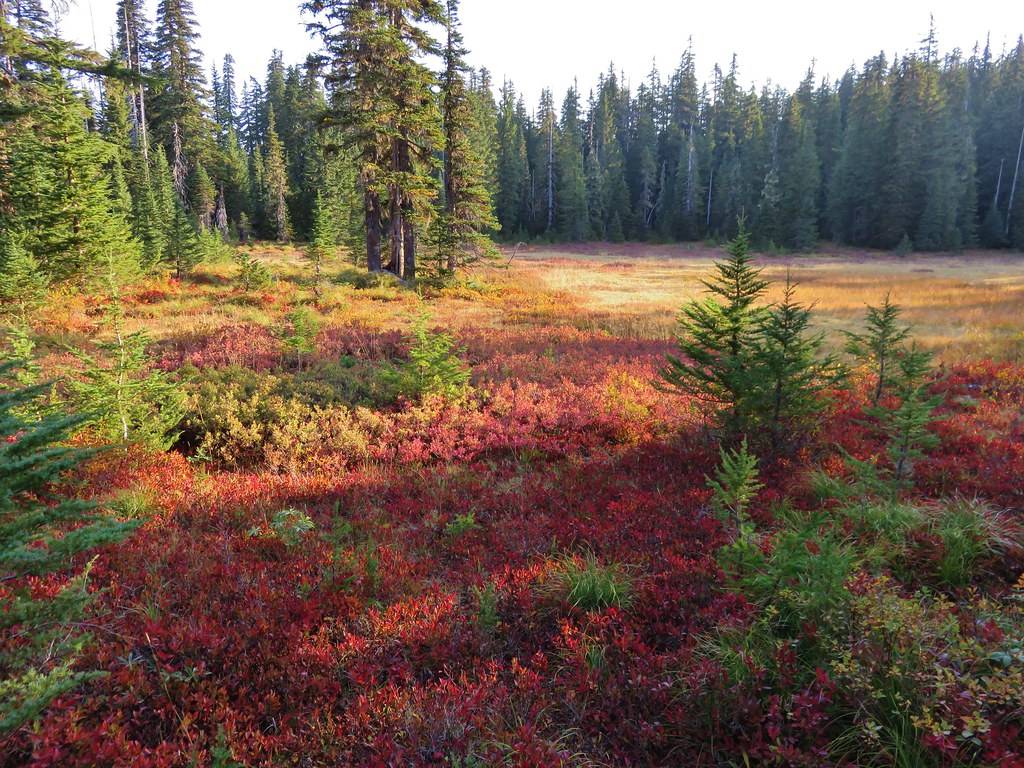
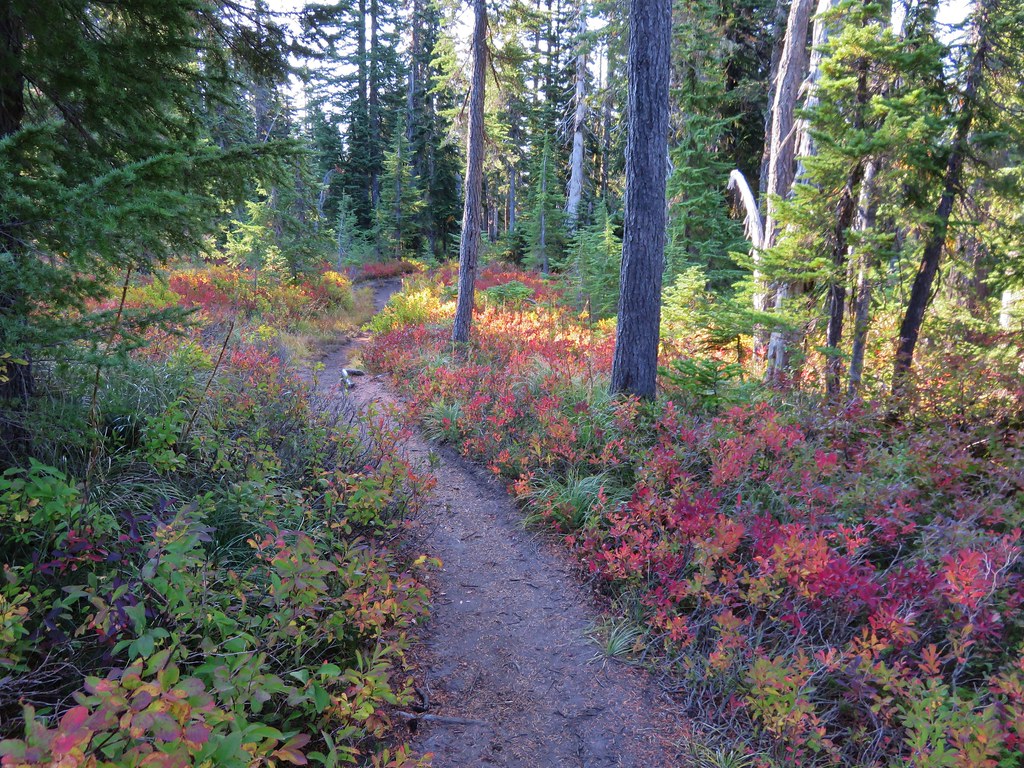
After visiting Eunice Lake we returned to the Thomas Lake Trail which climbed steeply up above those lakes before leveling out through meadows ablaze with red huckleberry leaves.
IMG_9117//embedr.flickr.com/assets/client-code.js

IMG_9124//embedr.flickr.com/assets/client-code.js

IMG_9126//embedr.flickr.com/assets/client-code.js

IMG_9139//embedr.flickr.com/assets/client-code.js

IMG_9140//embedr.flickr.com/assets/client-code.js

More lakes and ponds awaited along this stretch of trail.
Brader Lake
IMG_9129//embedr.flickr.com/assets/client-code.js

IMG_9132//embedr.flickr.com/assets/client-code.js

Unnamed lake/pond
IMG_9133//embedr.flickr.com/assets/client-code.js

Naha Lake
IMG_9136//embedr.flickr.com/assets/client-code.js

About two miles from the trailhead the trail took a sharp right at a trail sign.
IMG_9141//embedr.flickr.com/assets/client-code.js

There were a few more trees along this section of trail but also still plenty of berry bushes and lakes/ponds.
IMG_9143//embedr.flickr.com/assets/client-code.js

IMG_9148//embedr.flickr.com/assets/client-code.js

IMG_9153//embedr.flickr.com/assets/client-code.js

After about a mile when the trail crossed a small creek we needed to decide if we were going to try the 0.8 mile climb of Gifford Peak. We were below a rocky outcropping but it appeared that we could sidehill up steeply to a saddle where we hopped to pick up the ridge and follow it to the top.
IMG_9197//embedr.flickr.com/assets/client-code.js

With the help of the topographic map loaded on the GPS unit we gained the ridge and found a path that was fairly easy to follow.
IMG_9156//embedr.flickr.com/assets/client-code.js

The first section up to the saddle proved to be the steepest and the rest of the climb was more gradual. Openings near the summit offered views of Mt. Hood, Mt. St. Helens, and Mt. Rainier.
Mt. Hood
IMG_9160//embedr.flickr.com/assets/client-code.js

IMG_9162//embedr.flickr.com/assets/client-code.js

Mt. St. Helens
IMG_9163//embedr.flickr.com/assets/client-code.js

IMG_9164//embedr.flickr.com/assets/client-code.js

Mt. Rainier
IMG_9168//embedr.flickr.com/assets/client-code.js

IMG_9169//embedr.flickr.com/assets/client-code.js

It wasn’t exactly the clearest of skies as there seemed to be a haze in every direction. Whether it was smoke from fires or just due to the heat/humidity in the area we weren’t sure but it was still a nice view. We reached the summit to find a small summit register and a view of Mt. Adams and Goat Rocks.
Mt. Adams
IMG_9175//embedr.flickr.com/assets/client-code.js

IMG_9176//embedr.flickr.com/assets/client-code.js

Goat Rocks
IMG_9183//embedr.flickr.com/assets/client-code.js

After making our way back down to the trail we continued on passing Lake Sahalie Tyee before reaching the impressive Blue Lake below Gifford Peak.
Lake Sahalie Tyee
IMG_9201//embedr.flickr.com/assets/client-code.js

Blue Lake
IMG_9205//embedr.flickr.com/assets/client-code.js

IMG_9207//embedr.flickr.com/assets/client-code.js

We arrived at the PCT at the far end of Blue Lake.
IMG_9210//embedr.flickr.com/assets/client-code.js

We turned left and headed north toward Junction Lake which was 2 miles away. At Junction Lake we took the Lemi Lake Trail to start our loop.
IMG_9226//embedr.flickr.com/assets/client-code.js

Some of the best fall colors were in the meadows between Junction Lake and Lemi Lake.
IMG_9231//embedr.flickr.com/assets/client-code.js

IMG_9232//embedr.flickr.com/assets/client-code.js

IMG_9234//embedr.flickr.com/assets/client-code.js

IMG_9242//embedr.flickr.com/assets/client-code.js

IMG_9244//embedr.flickr.com/assets/client-code.js

As we reached Lemi Lake we were discussing the differences in the lakes on this hike verses in the Olallie Lake area and one of the things we’d noticed was that we hadn’t seen any ducks on this hike. Just as we were discussing that we noticed a lone duck floating on Lemi Lake.
IMG_9254//embedr.flickr.com/assets/client-code.js

IMG_9253//embedr.flickr.com/assets/client-code.js

The Lemi Lake Trail ended just over 2 miles from Junction Lake at the Indian Heaven Trail.
IMG_9261//embedr.flickr.com/assets/client-code.js

We turned left continuing on our loop and passing above the busy Clear Lake.
IMG_9263//embedr.flickr.com/assets/client-code.js

We arrived back at the PCT after just .3 miles and took another left passing Deer Lake and more ducks.
IMG_9265//embedr.flickr.com/assets/client-code.js

IMG_9269//embedr.flickr.com/assets/client-code.js

IMG_9268//embedr.flickr.com/assets/client-code.js

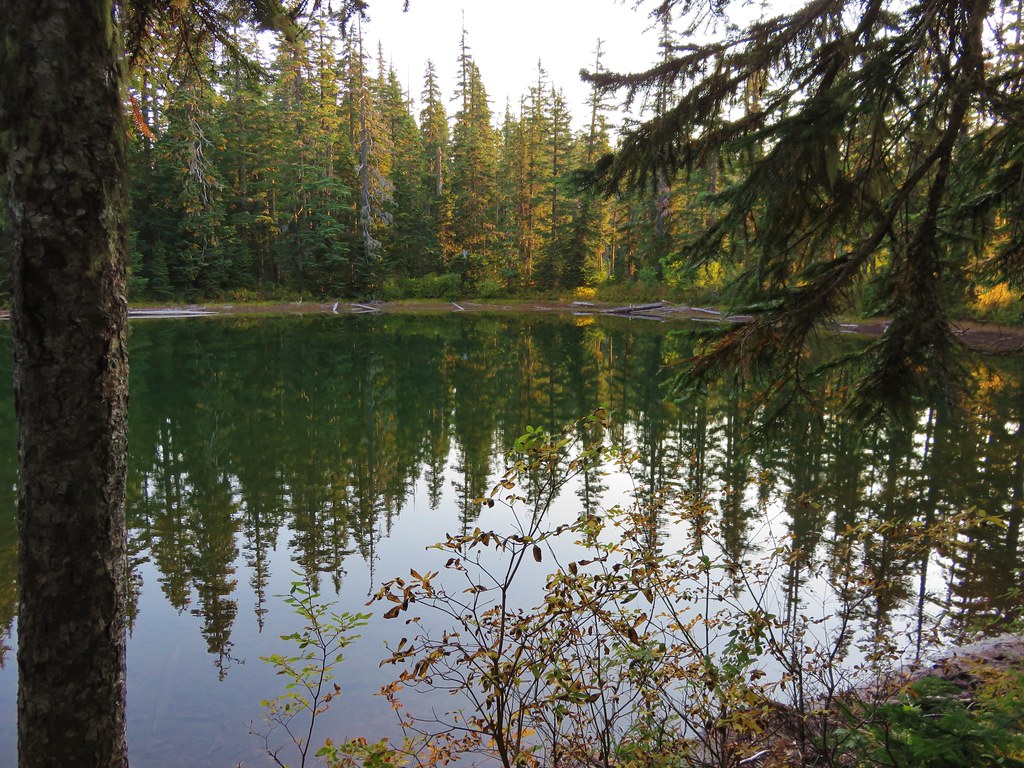
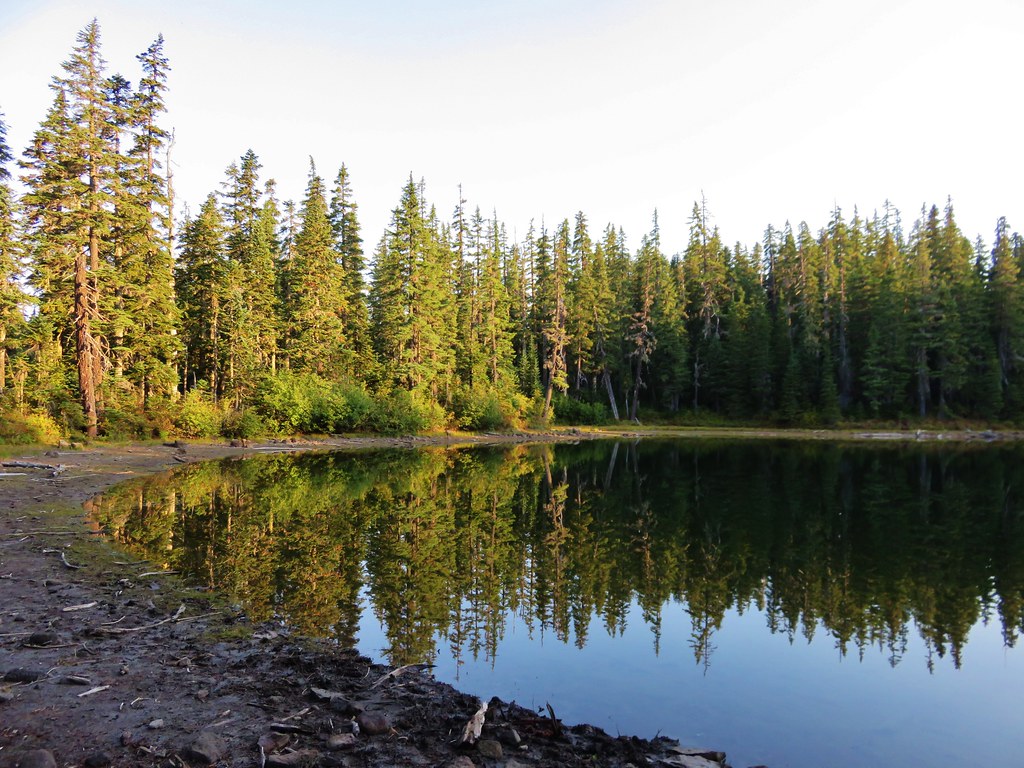
Not far from Deer Lake was Bear Lake where we decided to rest for a bit and have a snack. Bear Lake rivaled Blue Lake with it’s impressive colors.
IMG_9270//embedr.flickr.com/assets/client-code.js

IMG_9275//embedr.flickr.com/assets/client-code.js

When we had completed our loop and returned to Junction Lake we decided to take a shortcut back by following an old abandoned trail to the Thomas Lake Trail near Rock Lakes.
IMG_9277//embedr.flickr.com/assets/client-code.js

This abandoned trail was still easy to follow and passed through even more scenic meadows and past additional ponds.
IMG_9278//embedr.flickr.com/assets/client-code.js

IMG_9285//embedr.flickr.com/assets/client-code.js

IMG_9288//embedr.flickr.com/assets/client-code.js

IMG_9291//embedr.flickr.com/assets/client-code.js

After 1.7 miles we arrived at Rock Lakes.
IMG_9296//embedr.flickr.com/assets/client-code.js

IMG_9297//embedr.flickr.com/assets/client-code.js

IMG_9298//embedr.flickr.com/assets/client-code.js

We picked up the Thomas Lake Trail at the sign where we had taken the sharp right earlier that day. From there it was just over 2 miles back down to the trailhead.
IMG_9299//embedr.flickr.com/assets/client-code.js

The total distance of the hike was 14.9 miles in the wilderness plus .3 miles at Panther Creek Falls which made for a nice full day. It was a great first visit to the wilderness and we look forward to going back to check out some of the other trails in the area. Happy Trails!

Flickr: https://www.flickr.com/photos/9319235@N02/albums/72157658130857169