Categories
Bull of the Woods/Opal Creek Hiking Old Cascades Oregon Trip report

Dickey Creek Trail

**Note a portion of this hike burned in the 2021 Bull Complex.**

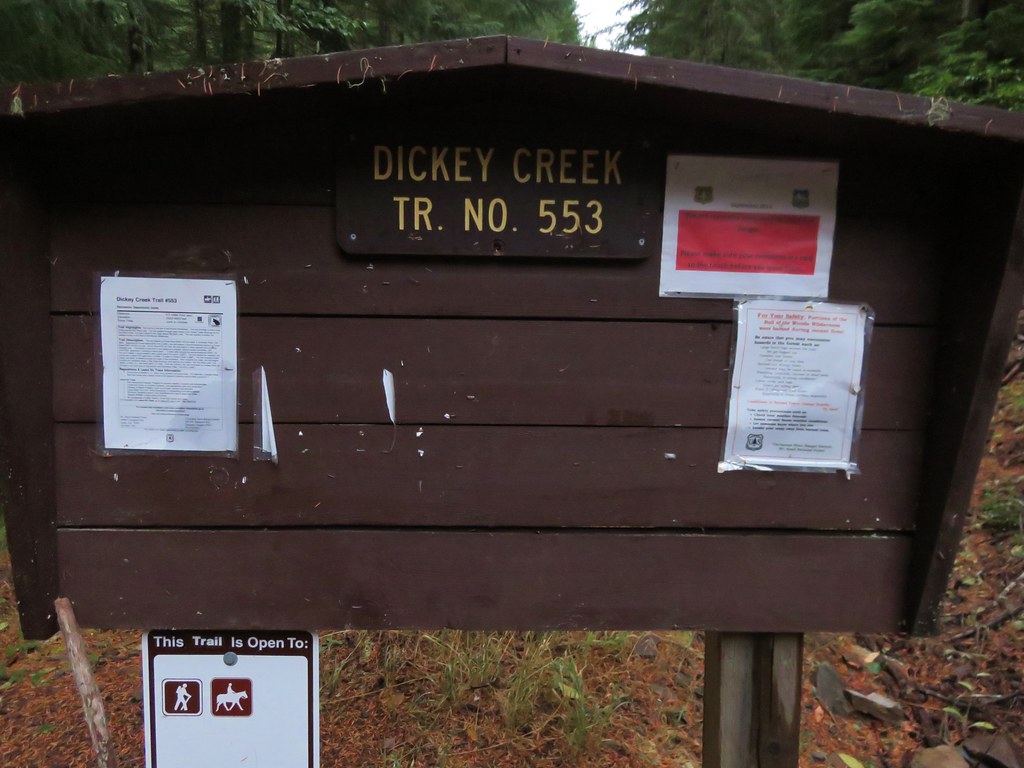
Once again the weather wasn’t cooperating with our overnight plans so we turned to plan B for our latest hike. Plan B wound up being the Dickey Creek Trail in the Bull of the Woods Wilderness on what turned out to be a great hike on a beautiful day. We began our hike at the Dickey Creek Trailhead located in forest service road 140 near Ripplebrook, OR.
IMG_1183//embedr.flickr.com/assets/client-code.js

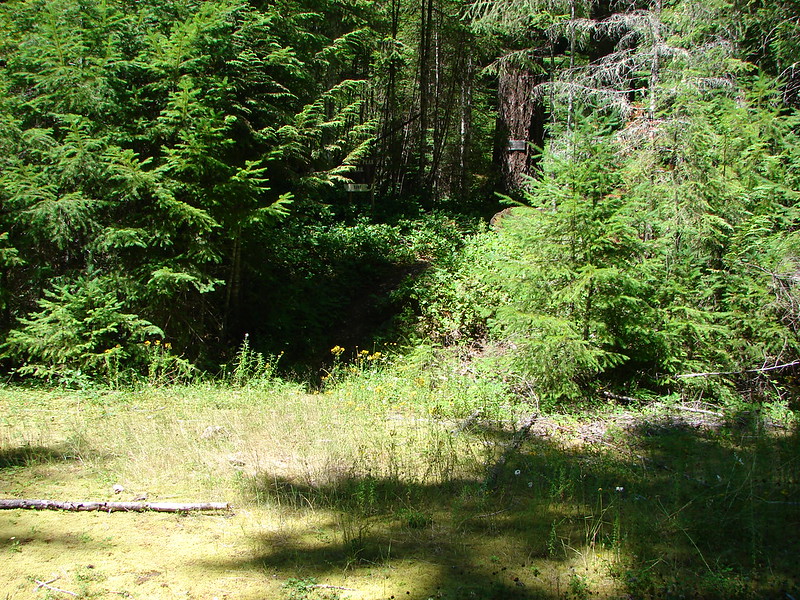
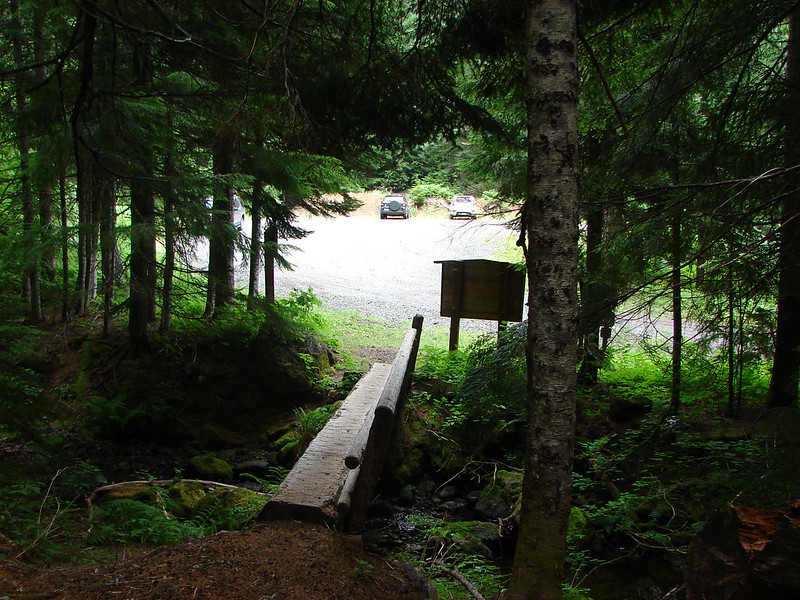
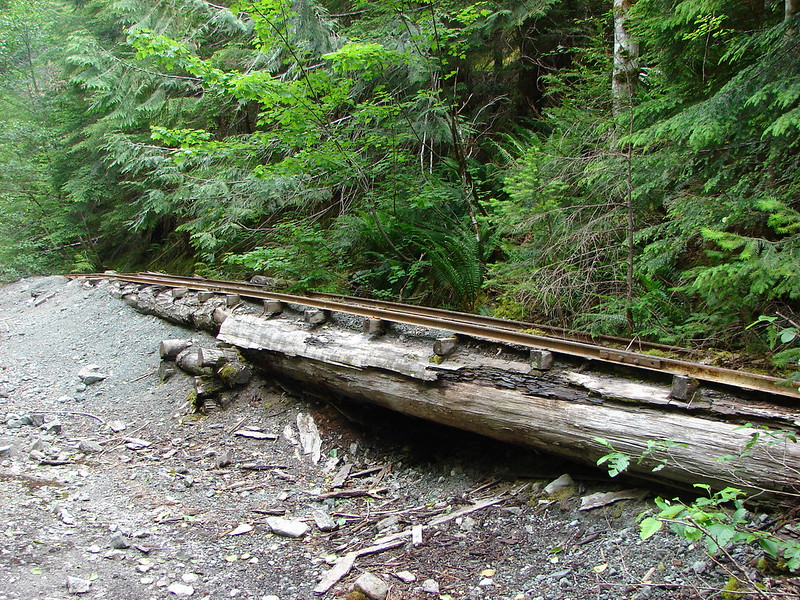
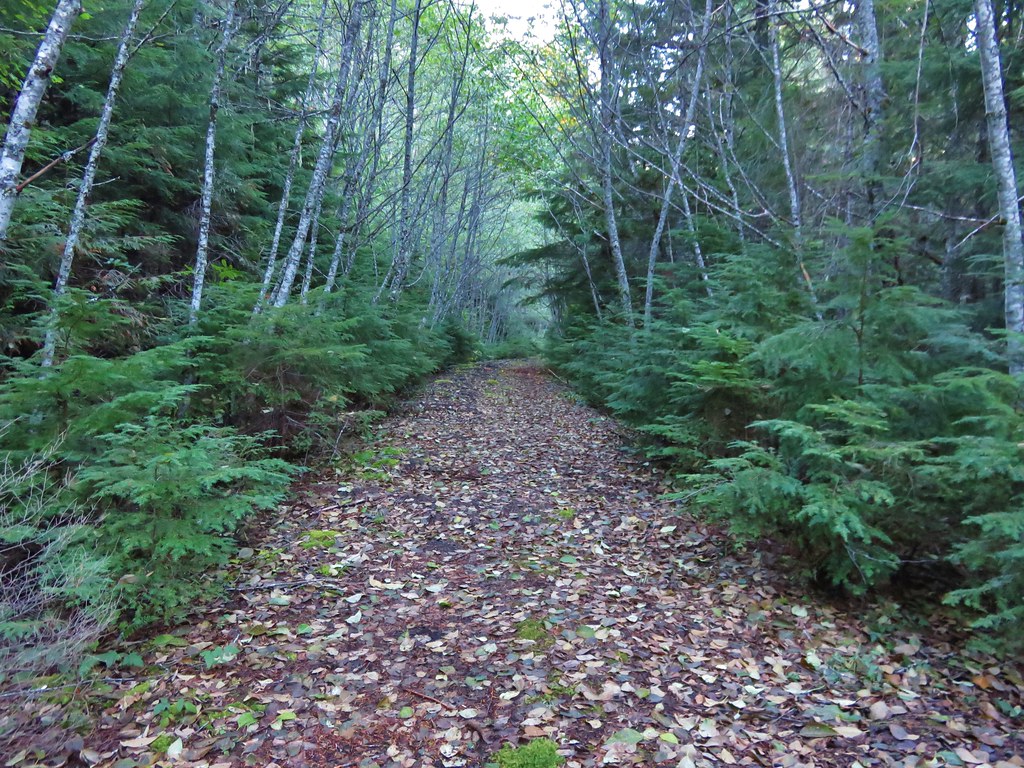
The Dickey Creek Trail followed a decommissioned road for about half a mile to the former trailhead parking area.
IMG_1434//embedr.flickr.com/assets/client-code.js
IMG_1188//embedr.flickr.com/assets/client-code.js

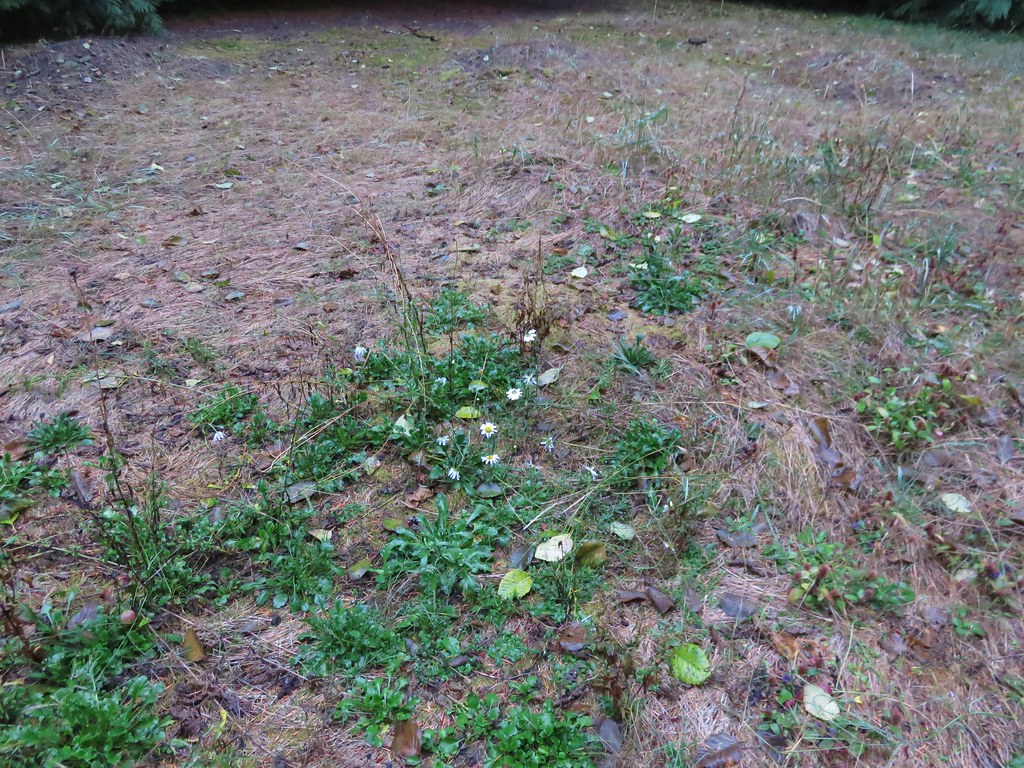
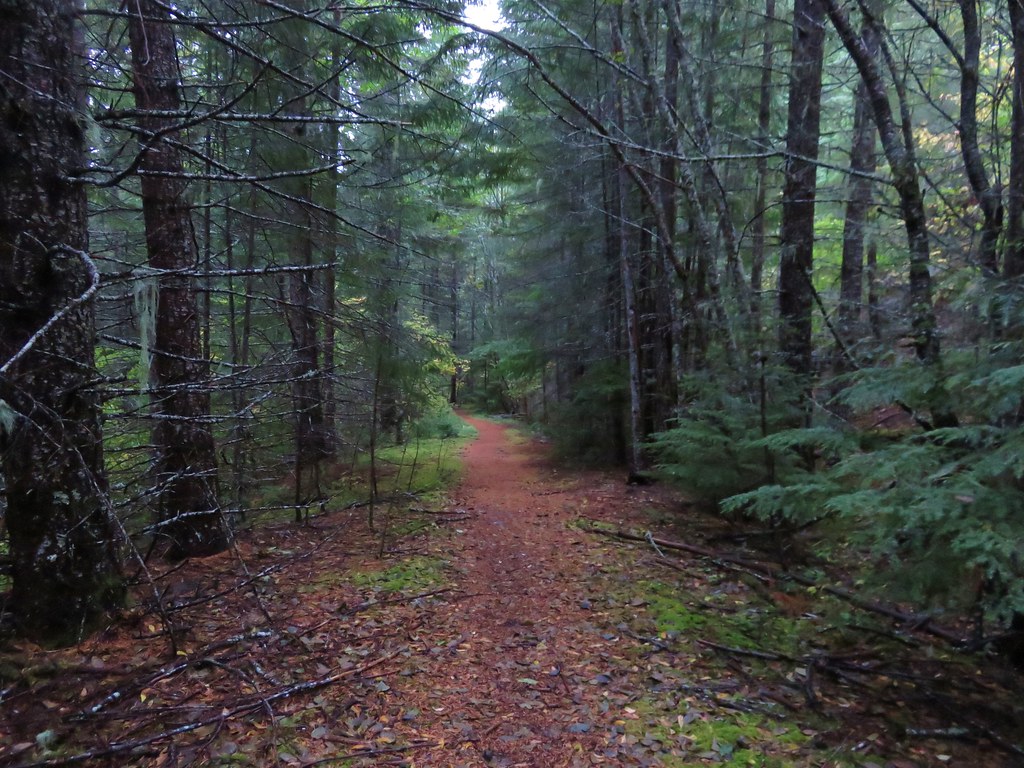
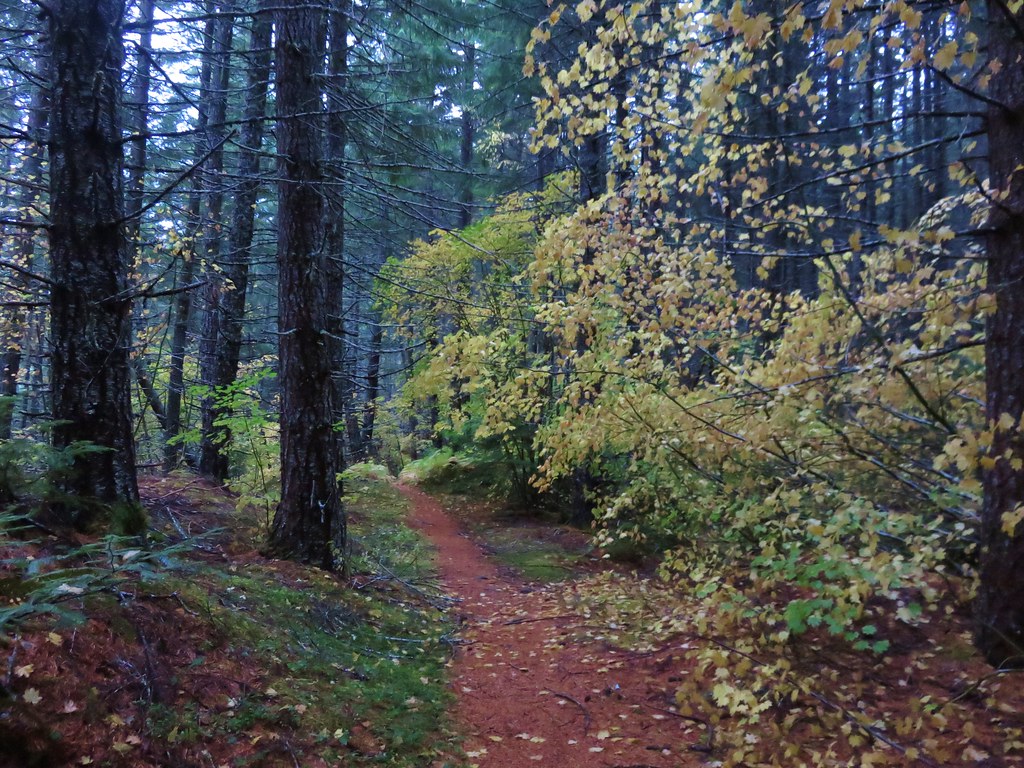
The trail continued to follow the old roadbed for .3 miles and then suddenly heads downhill.
IMG_1192//embedr.flickr.com/assets/client-code.js
IMG_1195//embedr.flickr.com/assets/client-code.js
IMG_1196//embedr.flickr.com/assets/client-code.js

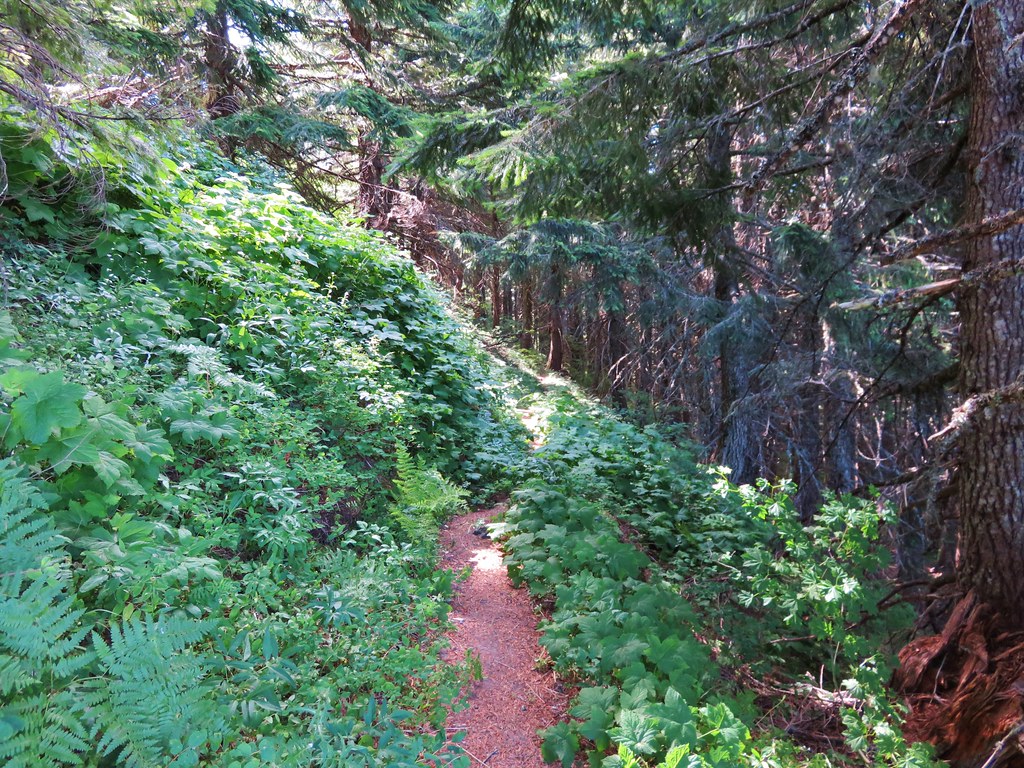
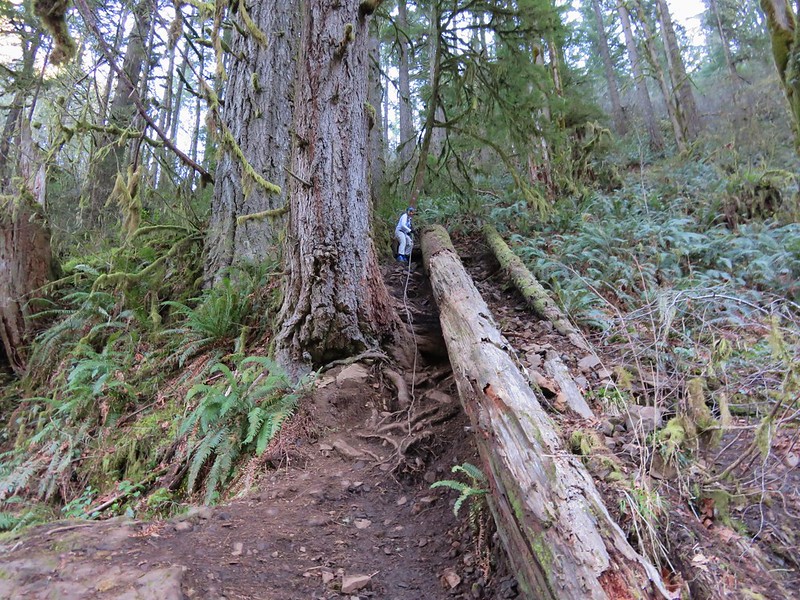
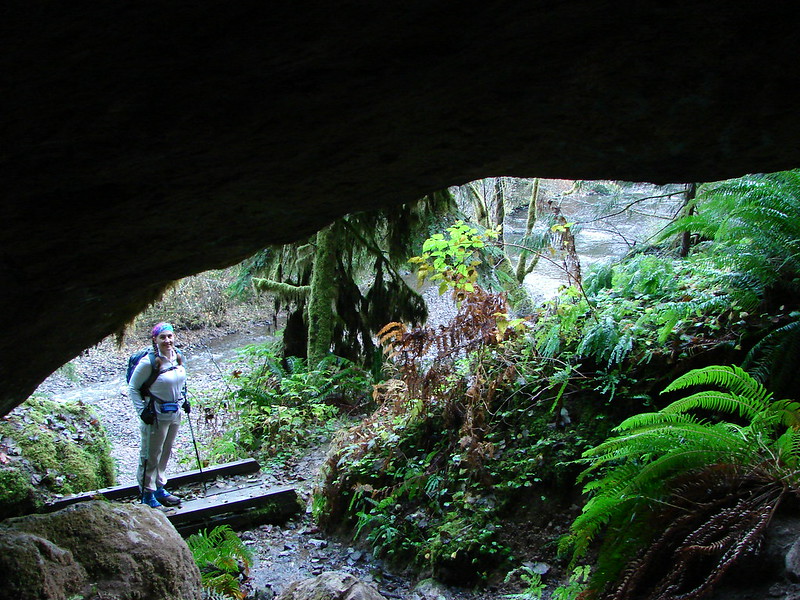
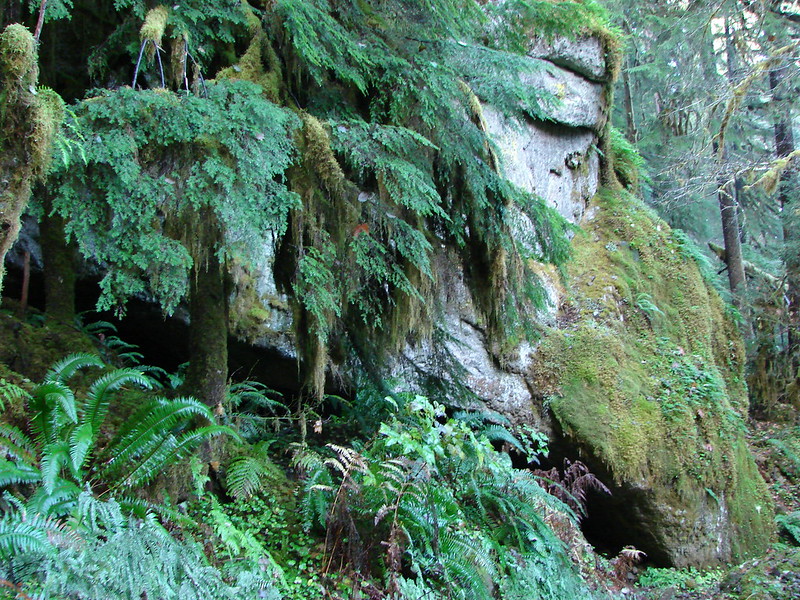
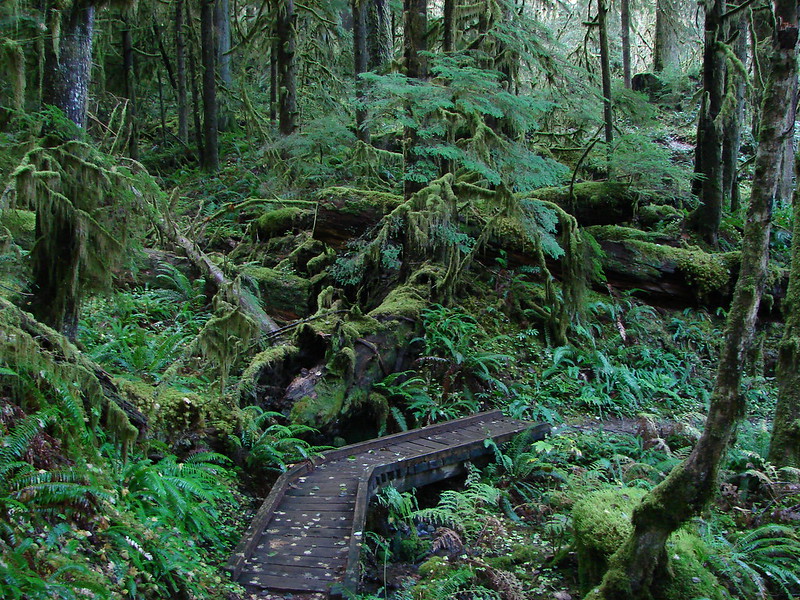
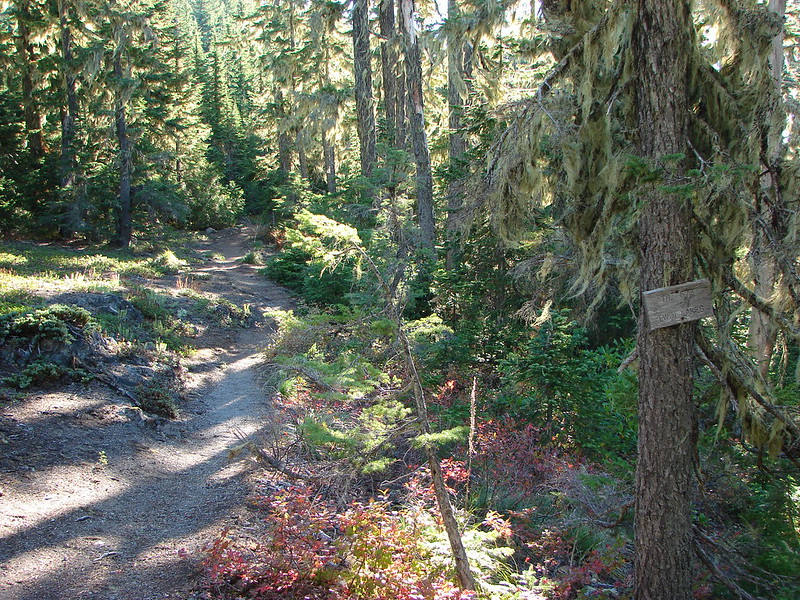
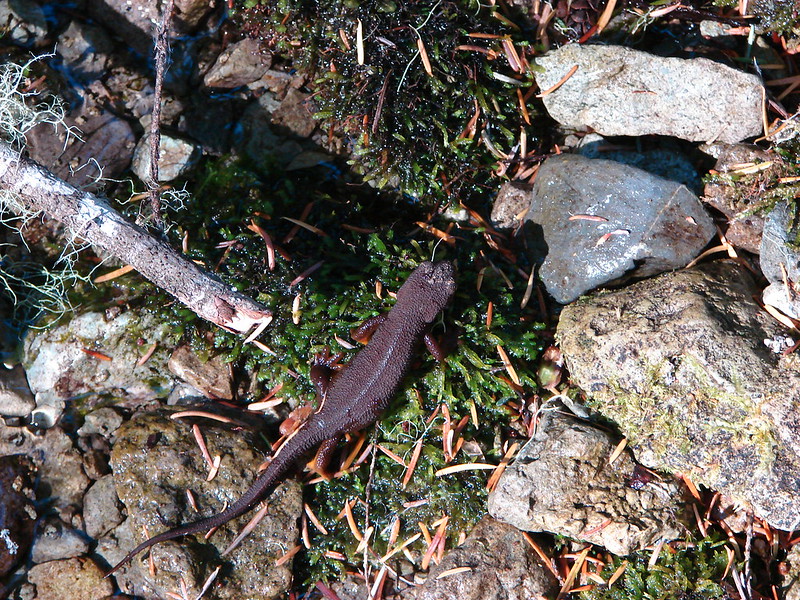
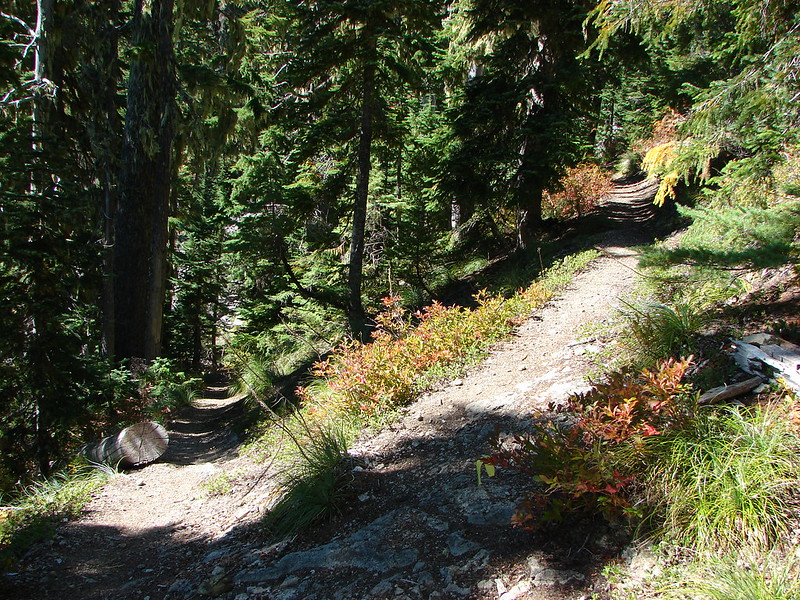
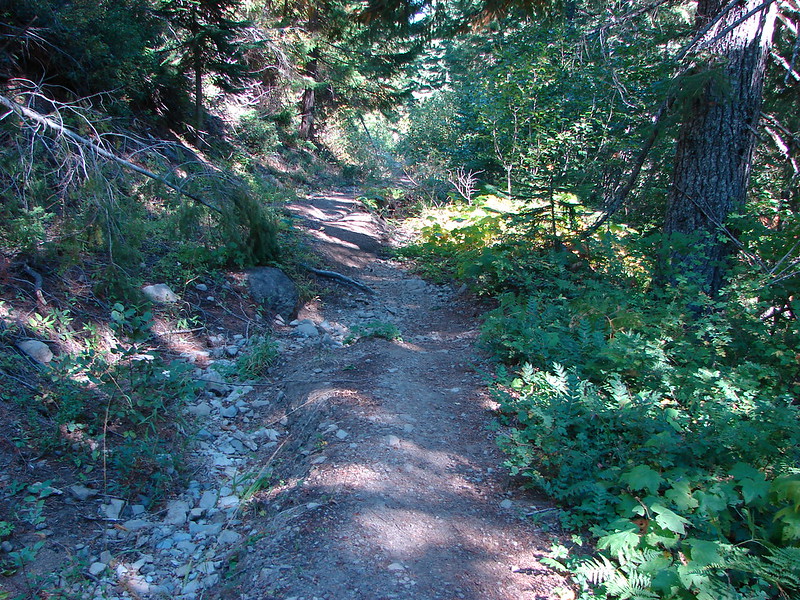
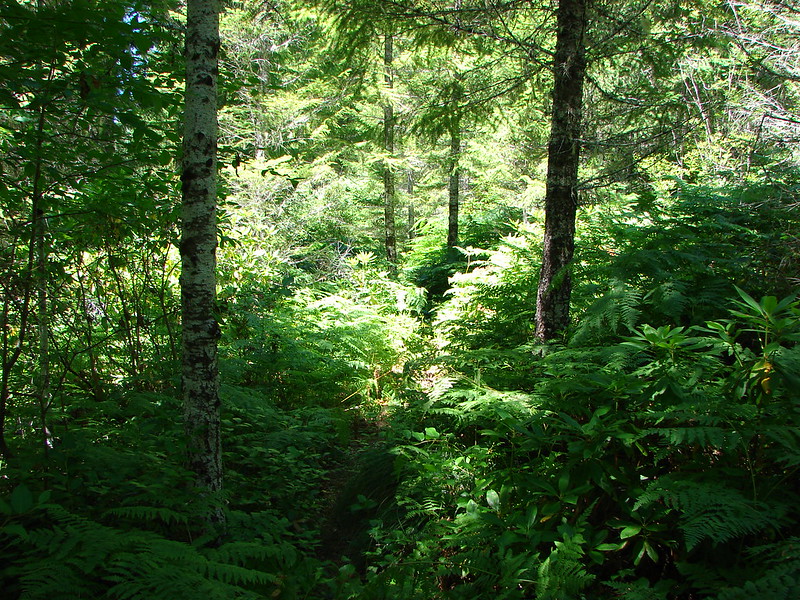
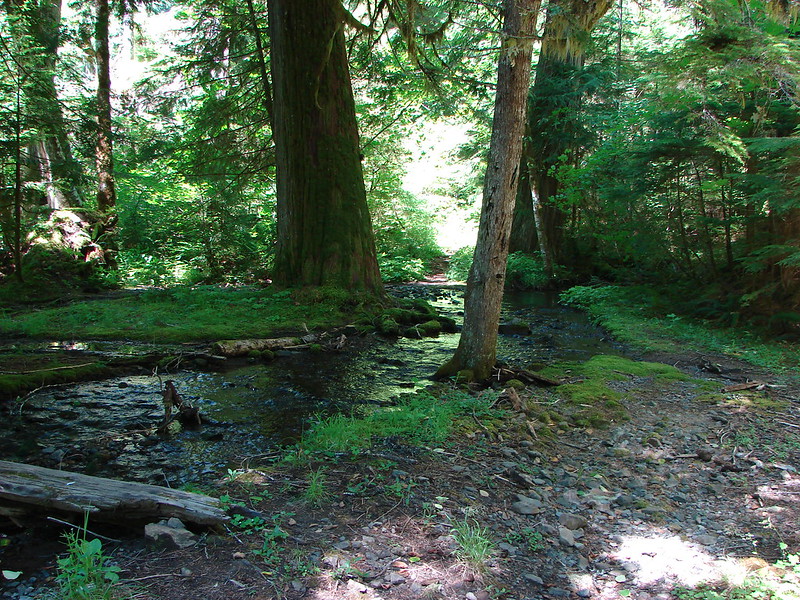
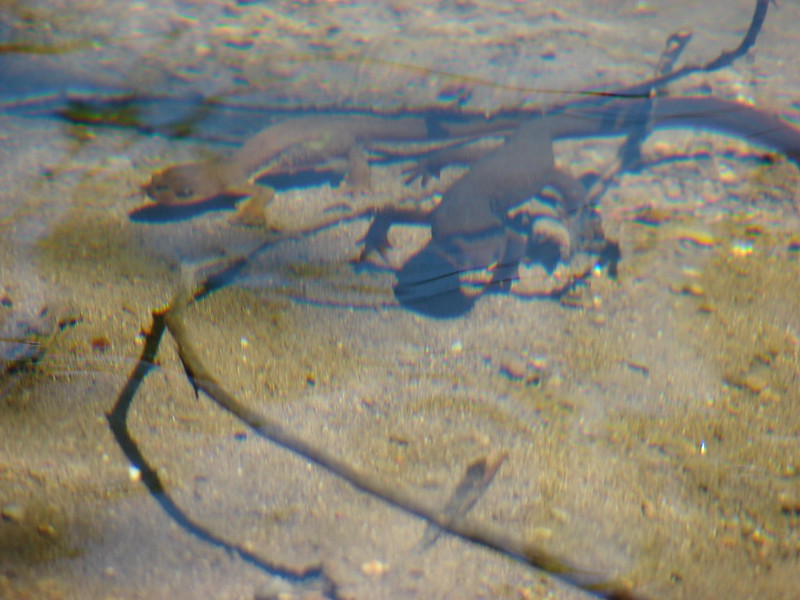
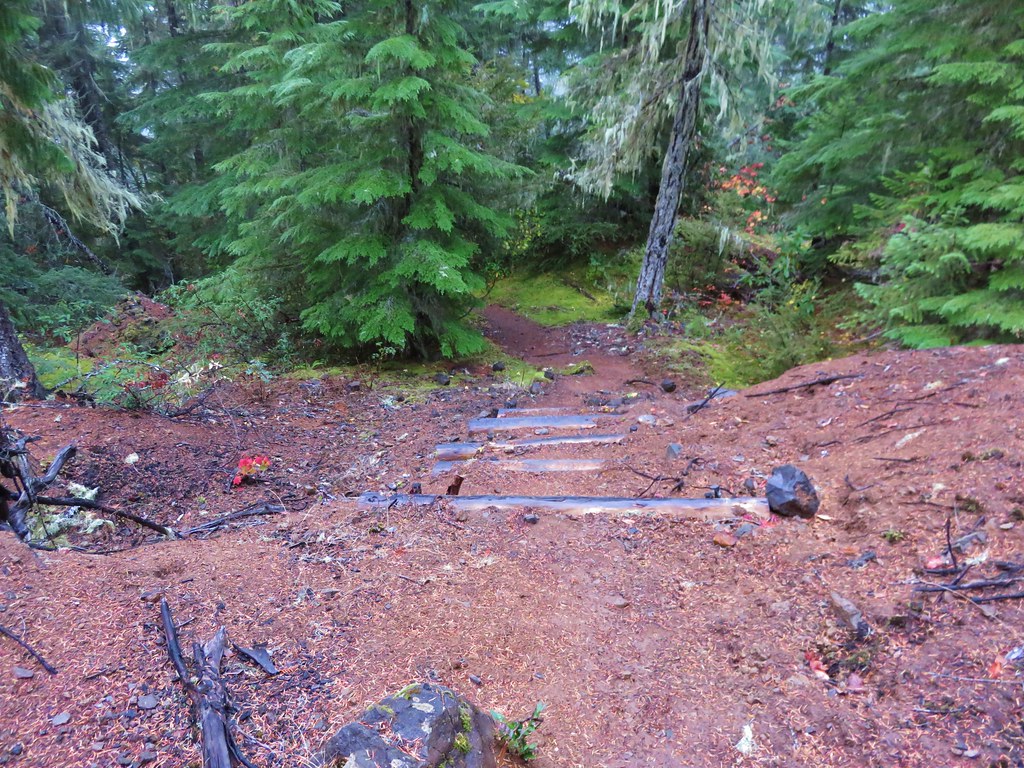
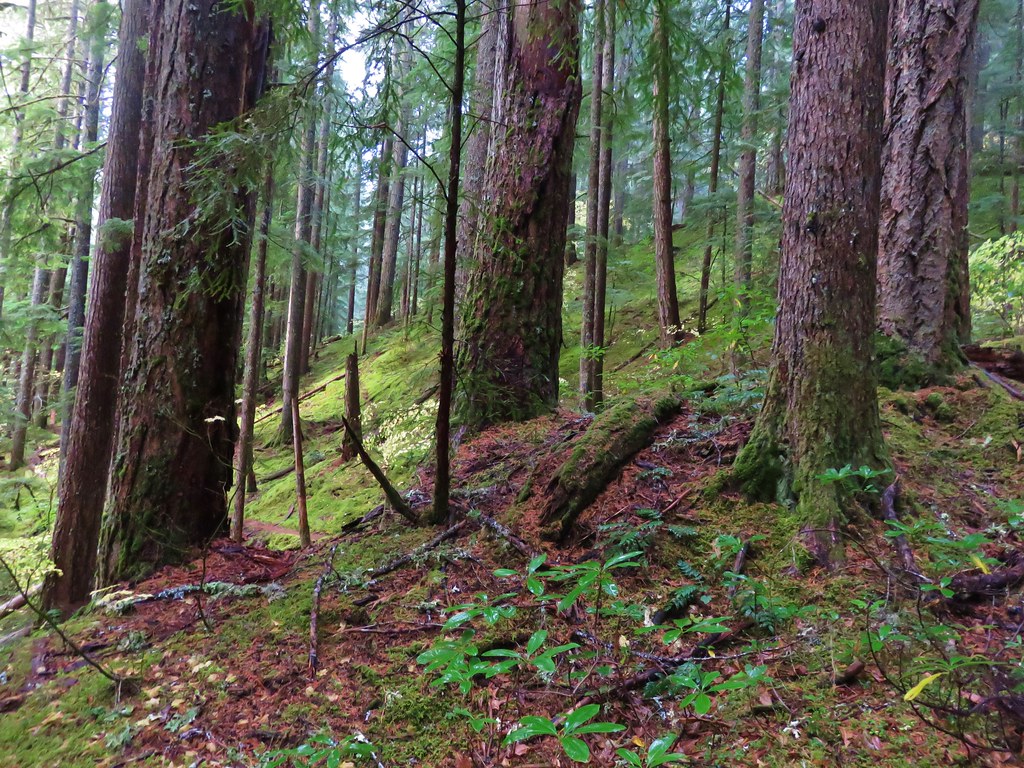
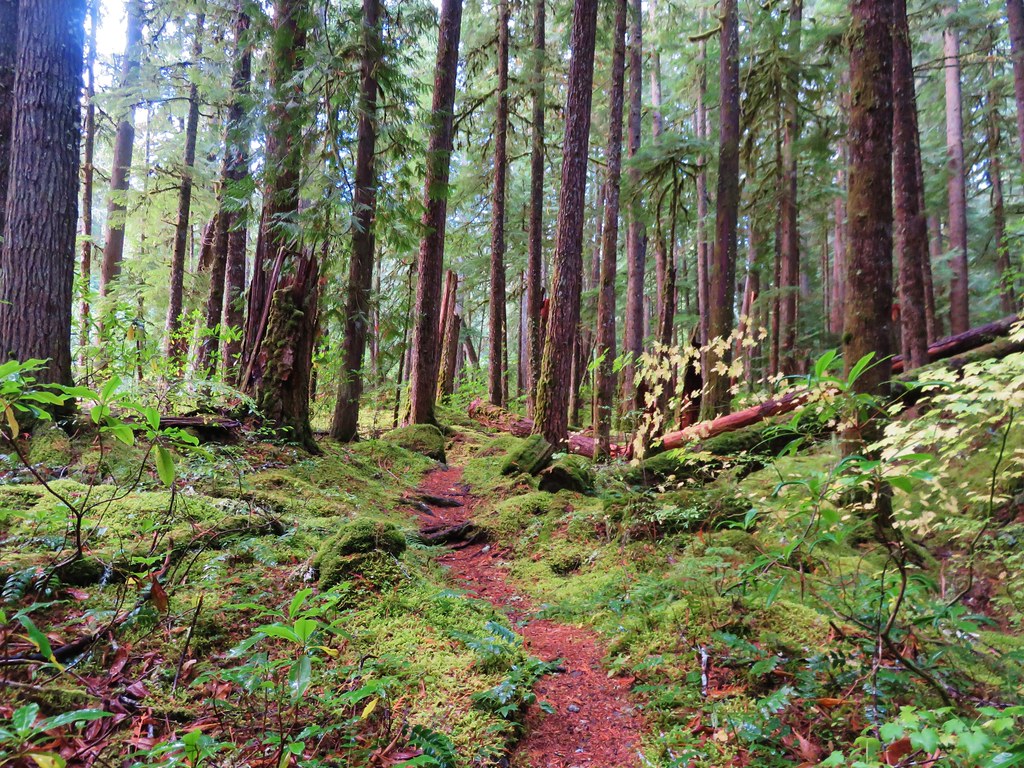
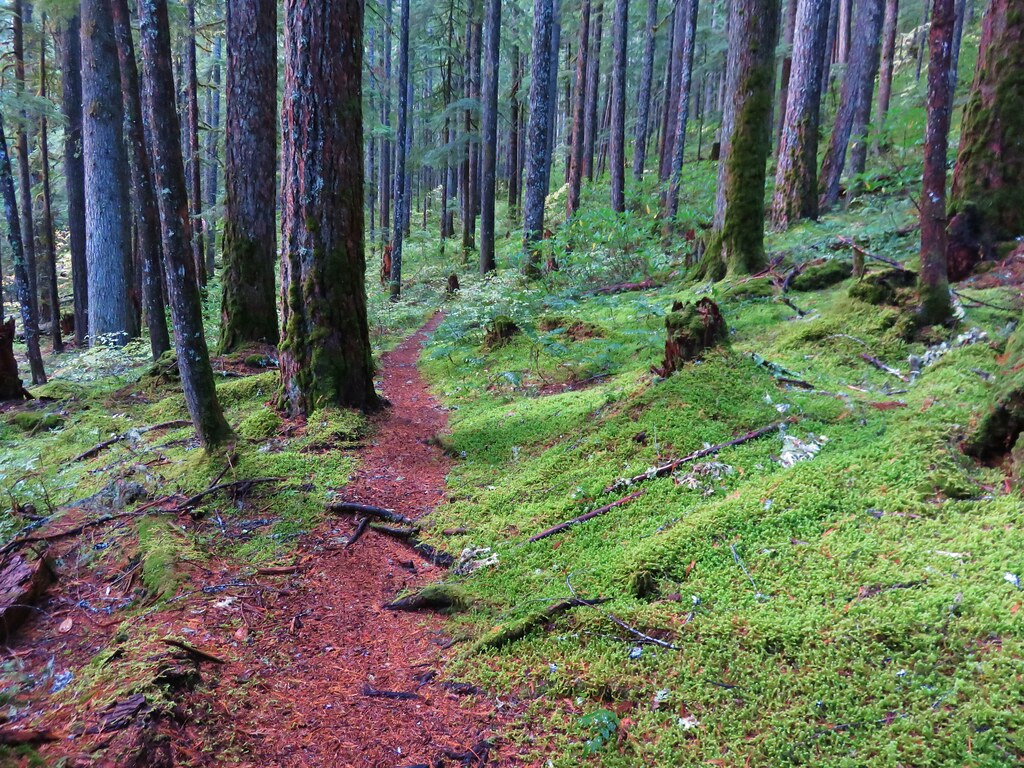
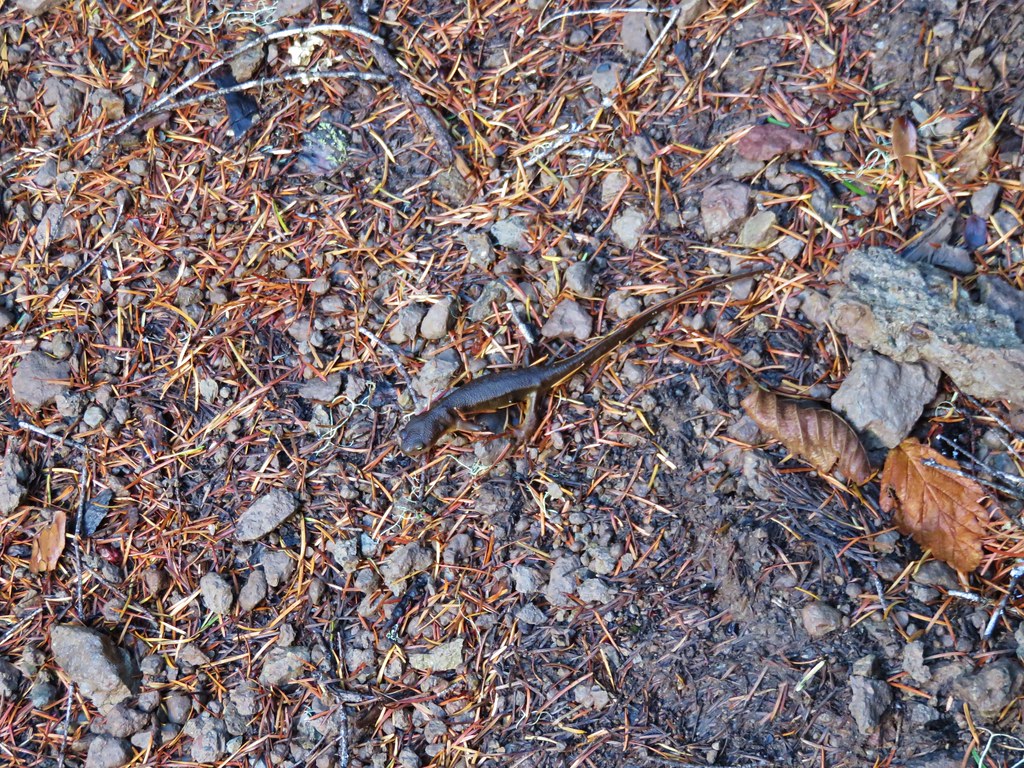
The descent was steep for the next half mile and included several sections of steps. It was one of the most fun sections of trail we’ve been on as it twisted and turned on it’s way down toward the creek. When the trail leveled out we were within earshot of the creek but the trail remained in the forest with the creek out of sight. The old growth forest in the valley was beautiful. Green moss carpeted the ground while large trees towered above. Rough skinned newts seemed to be everywhere and we had to step carefully to make sure we didn’t harm any.
IMG_1201//embedr.flickr.com/assets/client-code.js
IMG_1203//embedr.flickr.com/assets/client-code.js
IMG_1217//embedr.flickr.com/assets/client-code.js
IMG_1215//embedr.flickr.com/assets/client-code.js

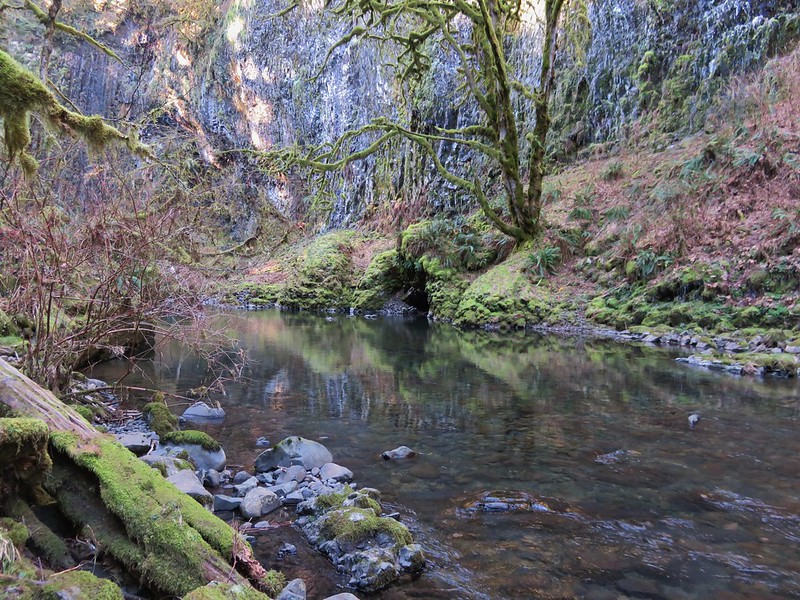
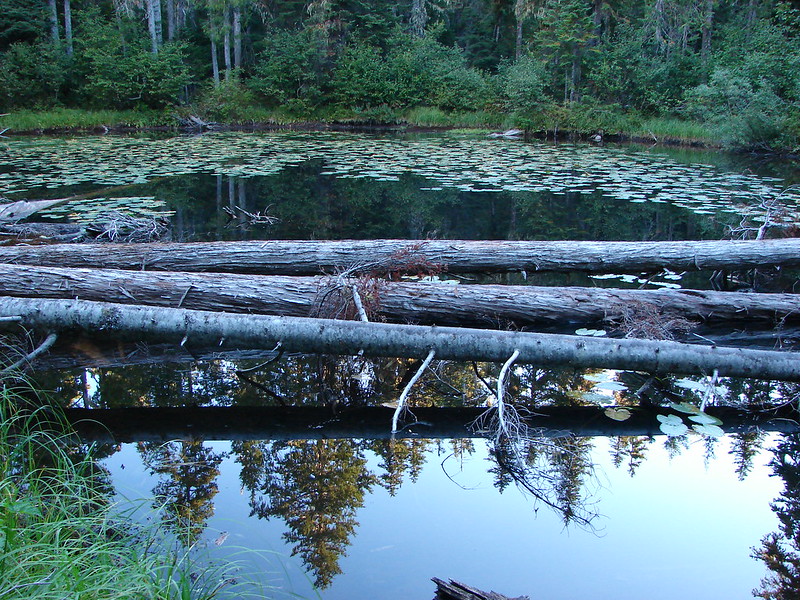
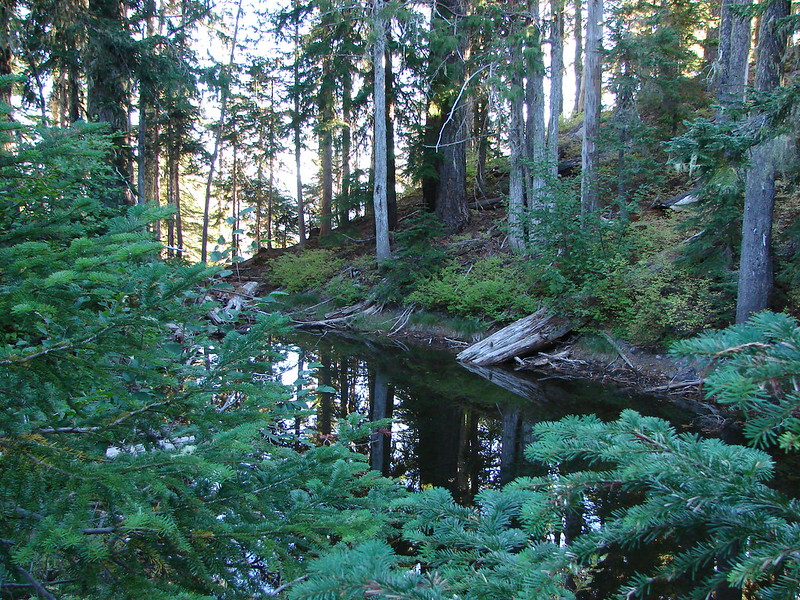
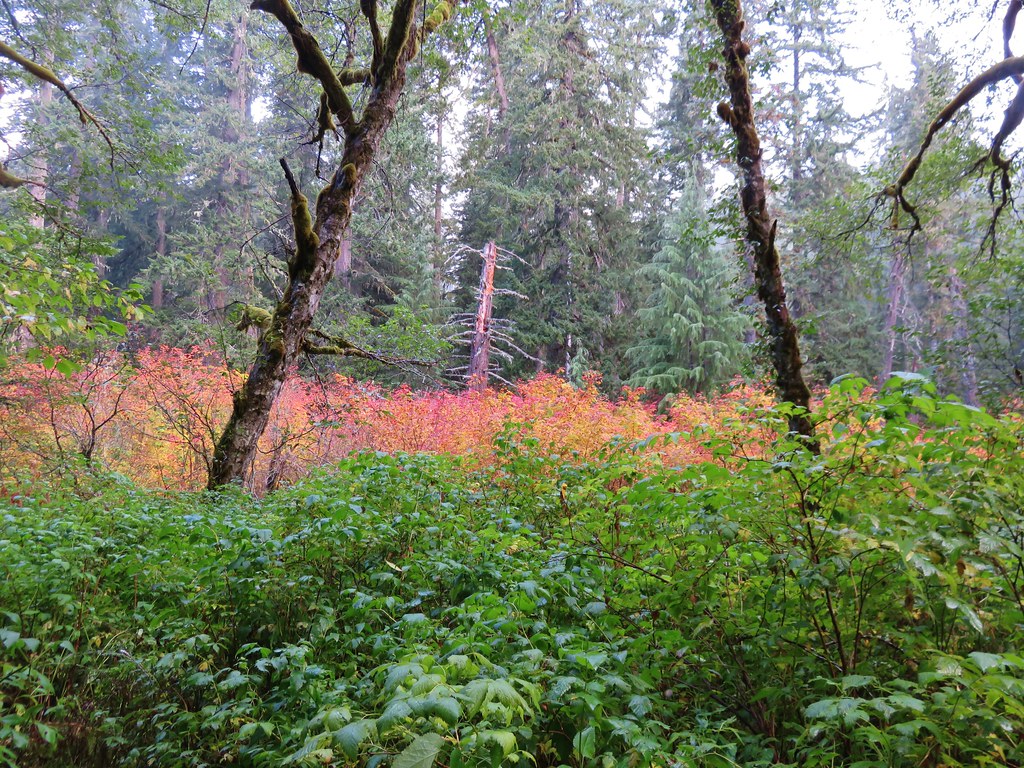
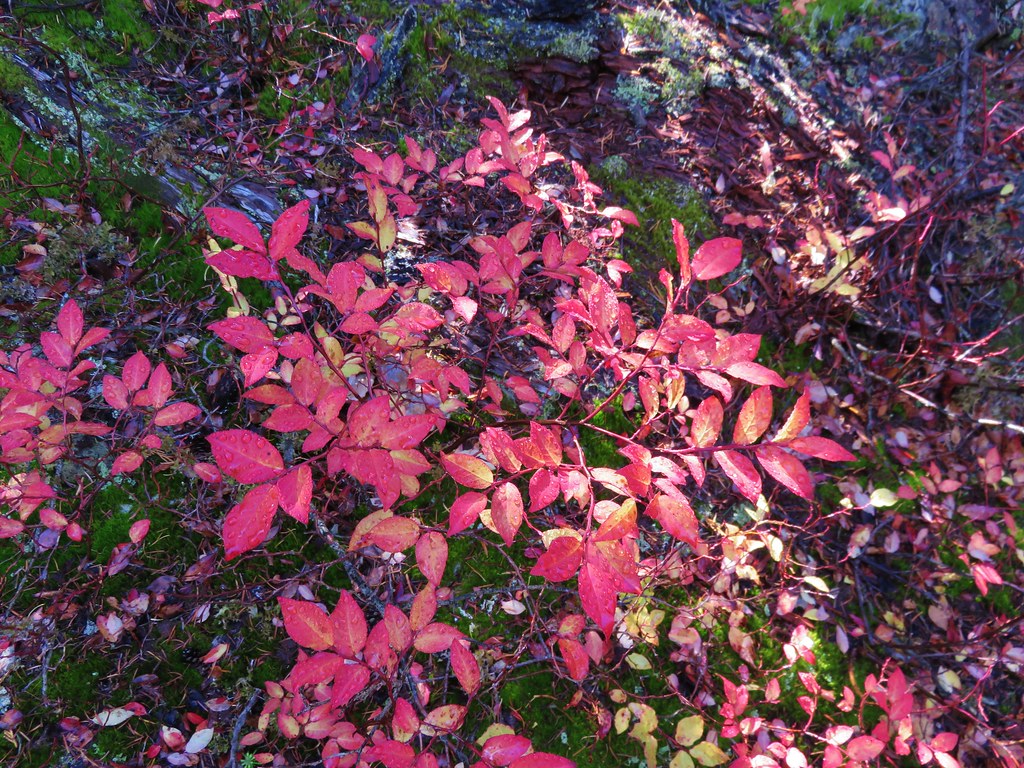
The old growth forest briefly opened up near a dry pond. The fall colors were on display around the pond and made a nice contrast to the green ground left over from where the pond water had been.
IMG_1206//embedr.flickr.com/assets/client-code.js
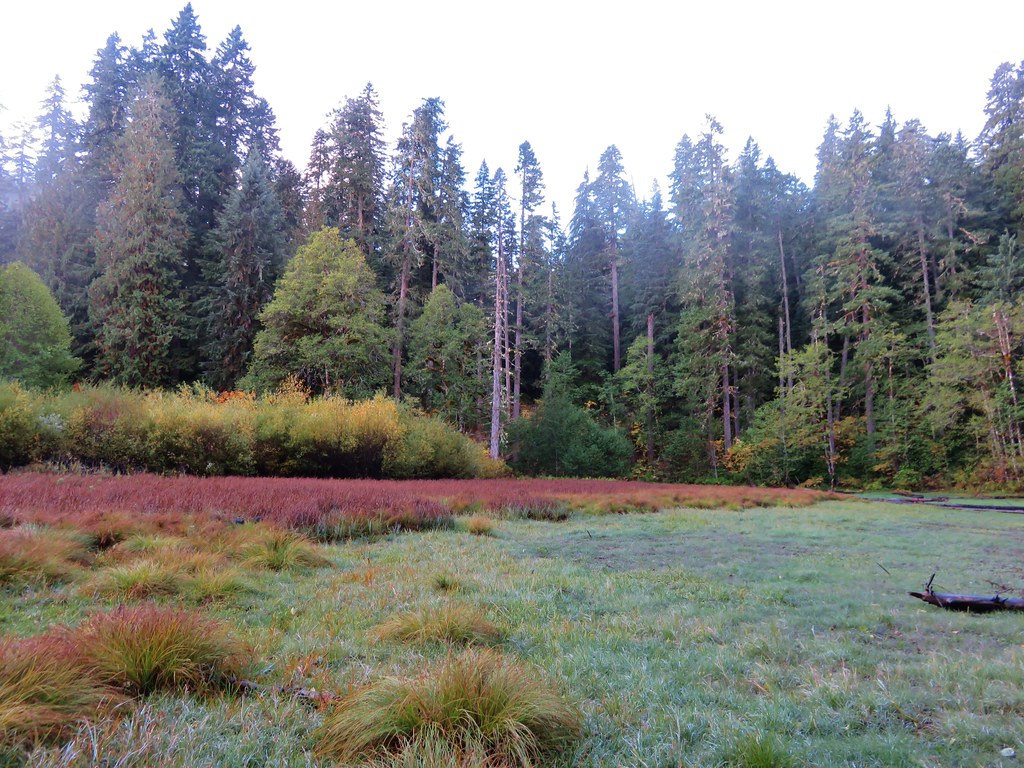
IMG_1209//embedr.flickr.com/assets/client-code.js
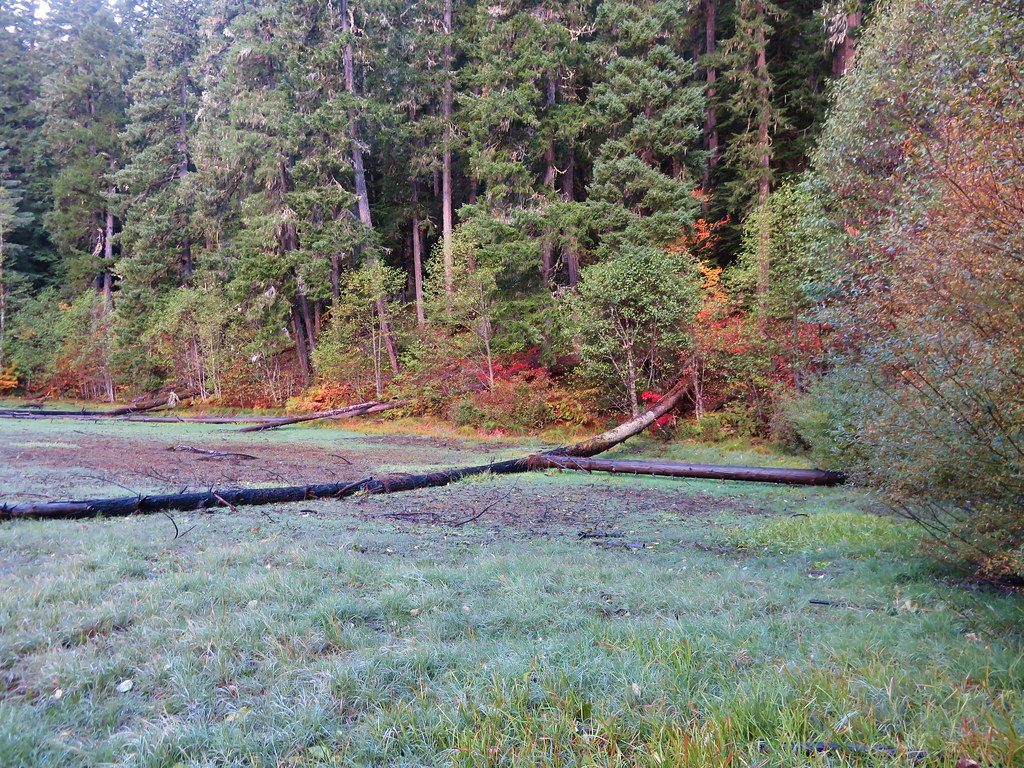
IMG_1210//embedr.flickr.com/assets/client-code.js
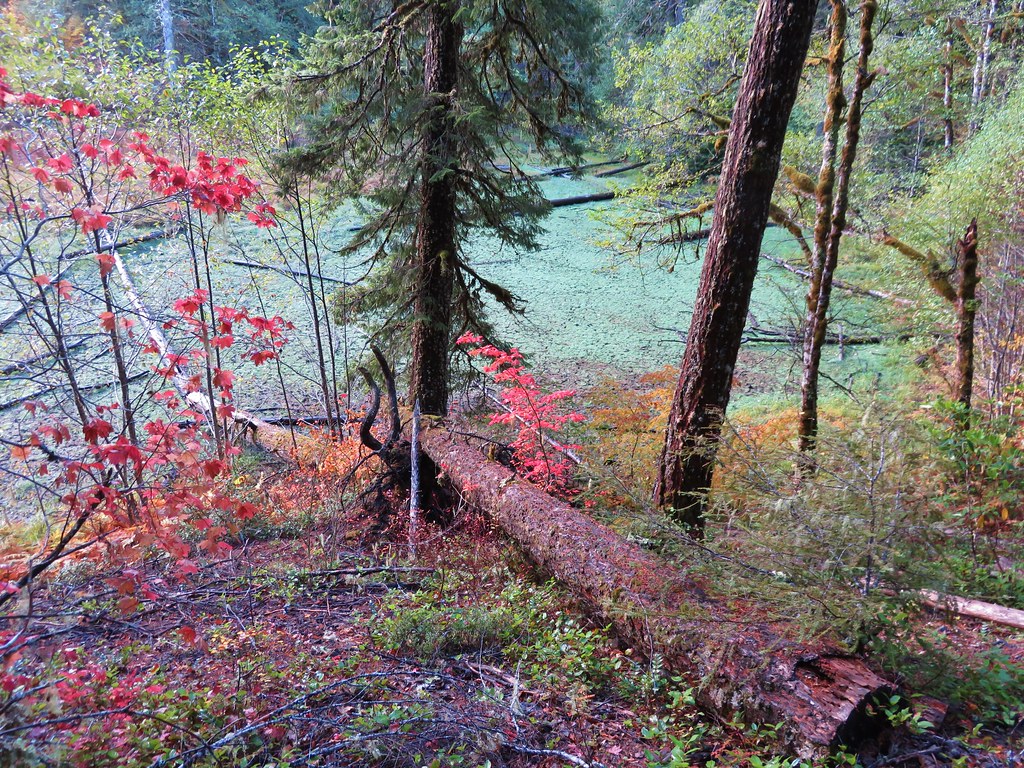
IMG_1212//embedr.flickr.com/assets/client-code.js

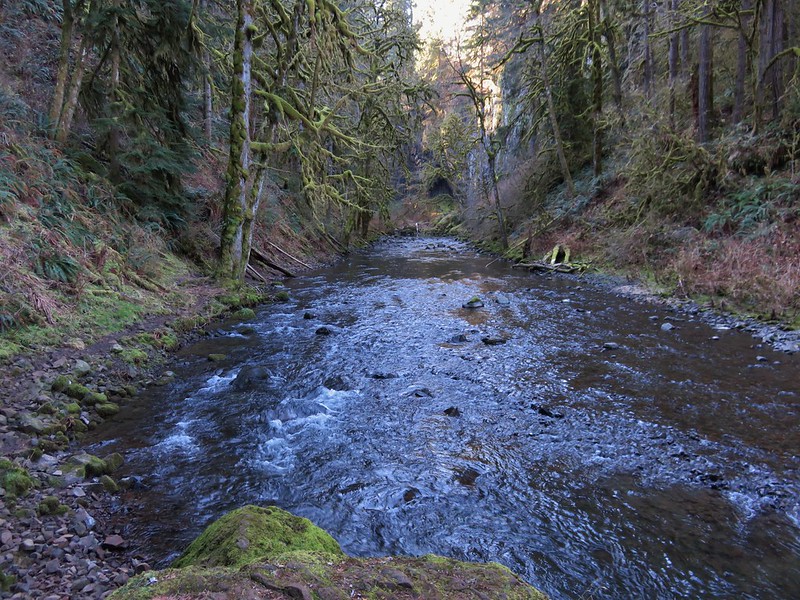
We arrived at the bridgeless crossing of Dickey Creek after almost 3.5 miles.
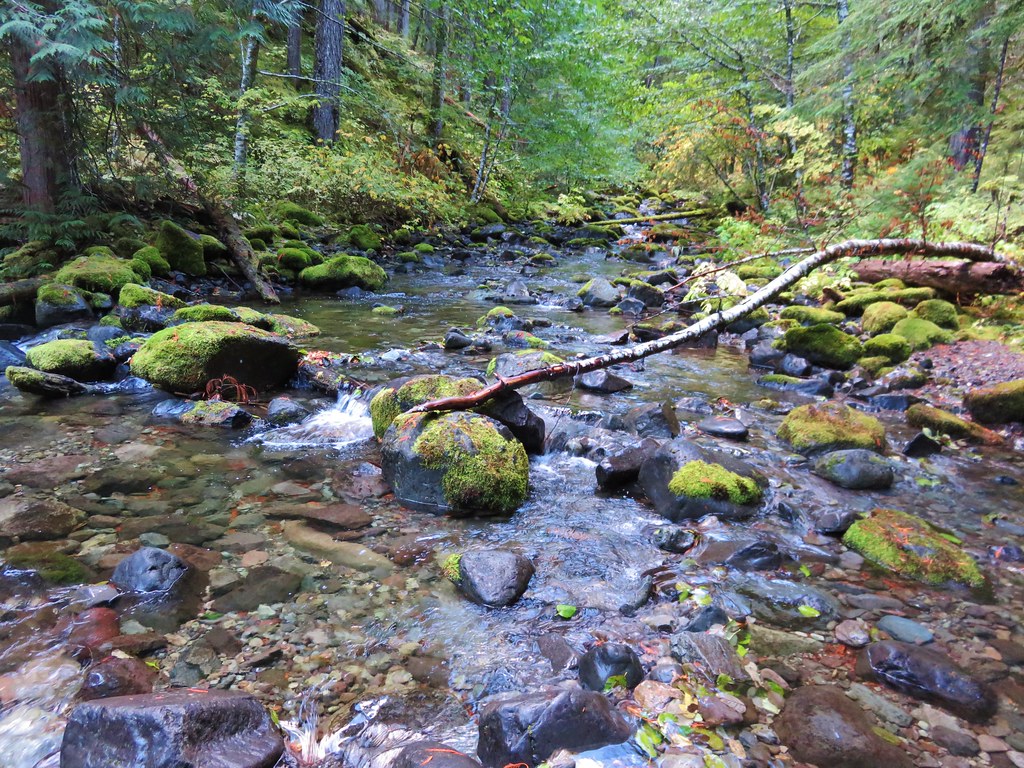
IMG_1218//embedr.flickr.com/assets/client-code.js

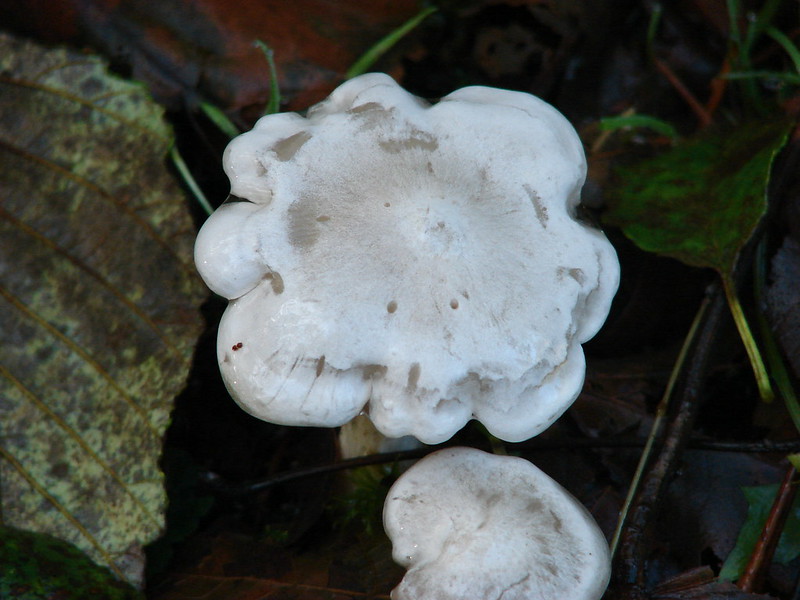
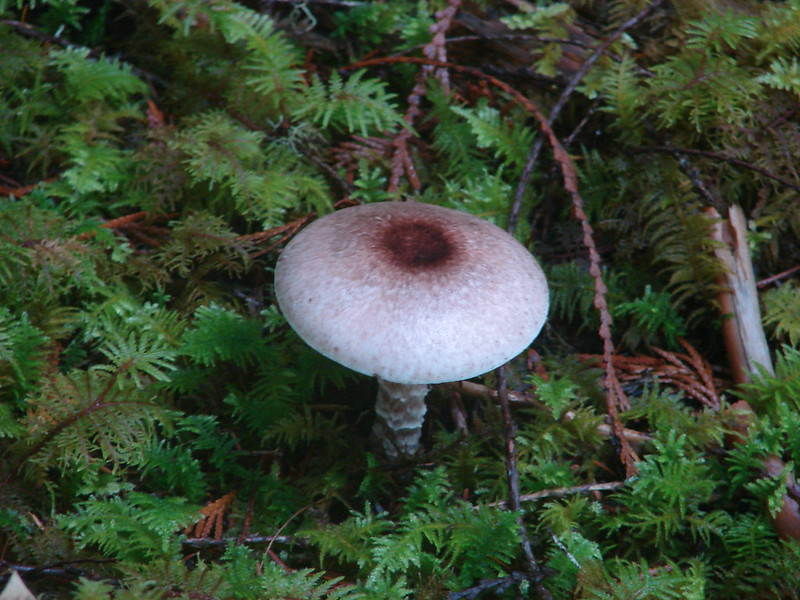
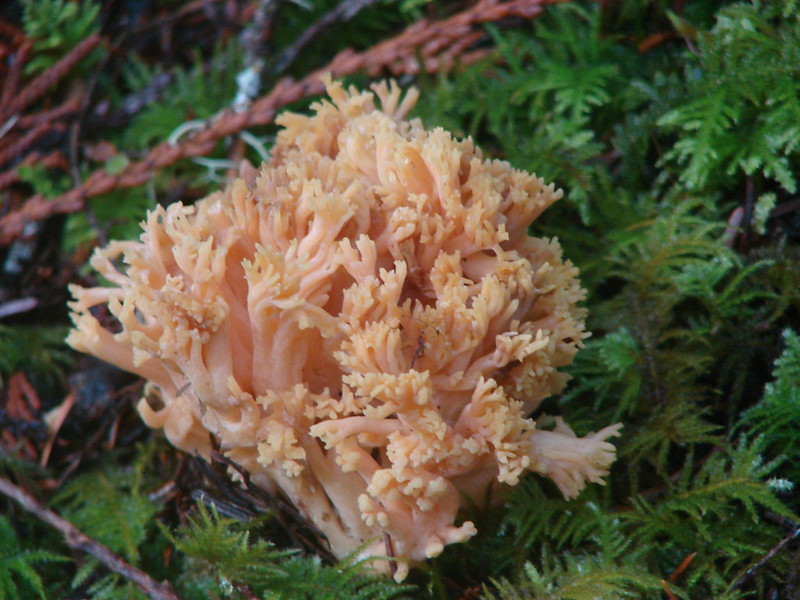
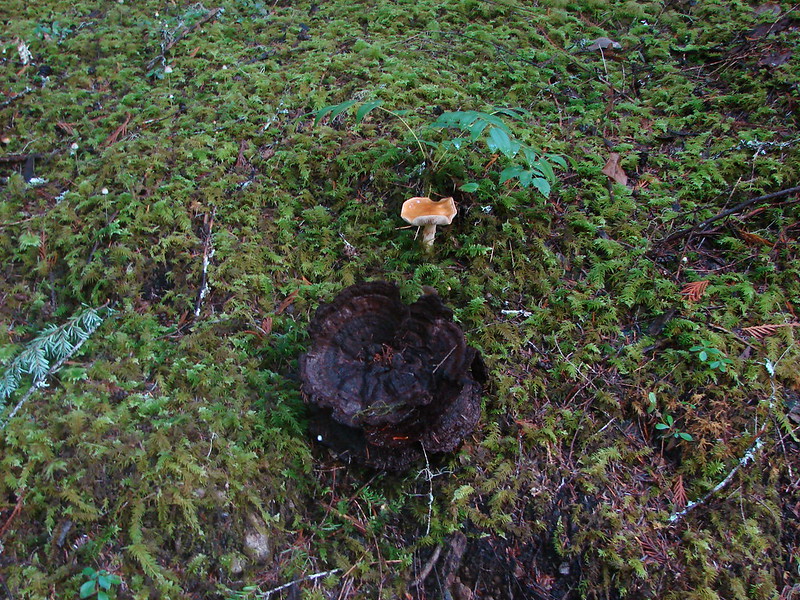
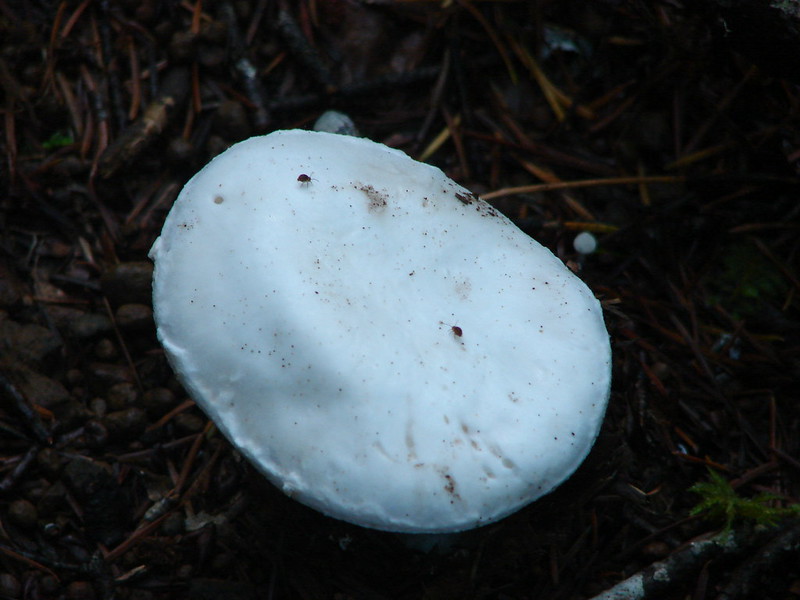
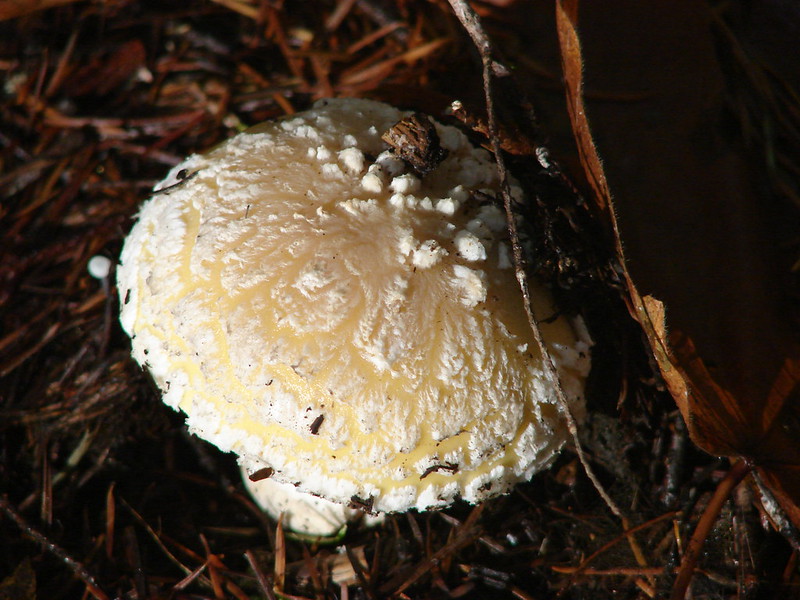
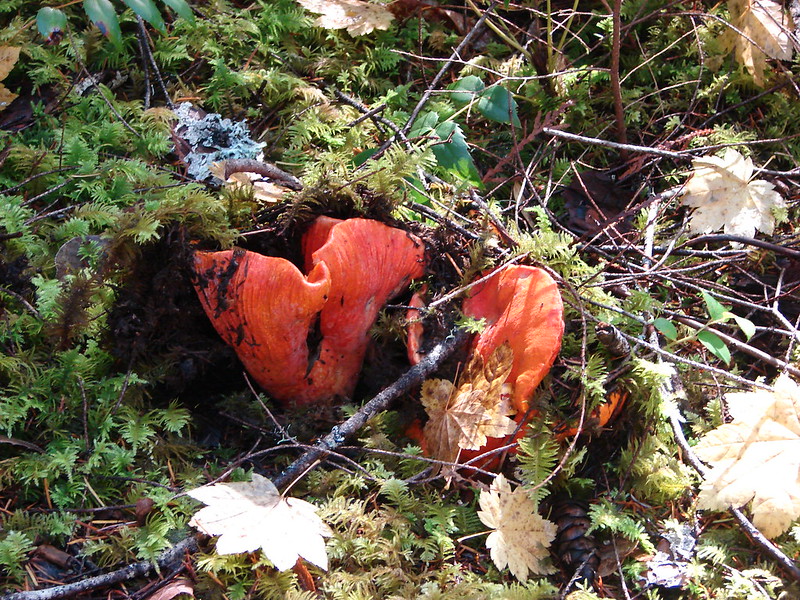
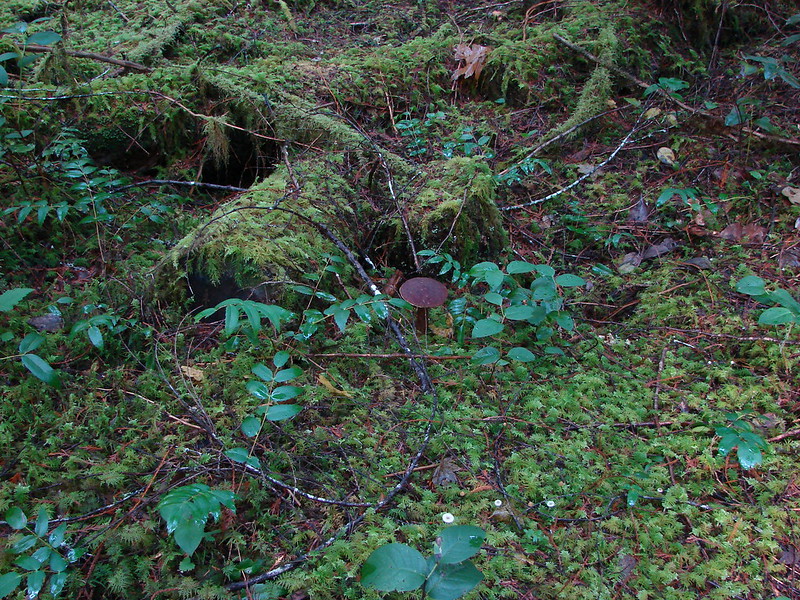
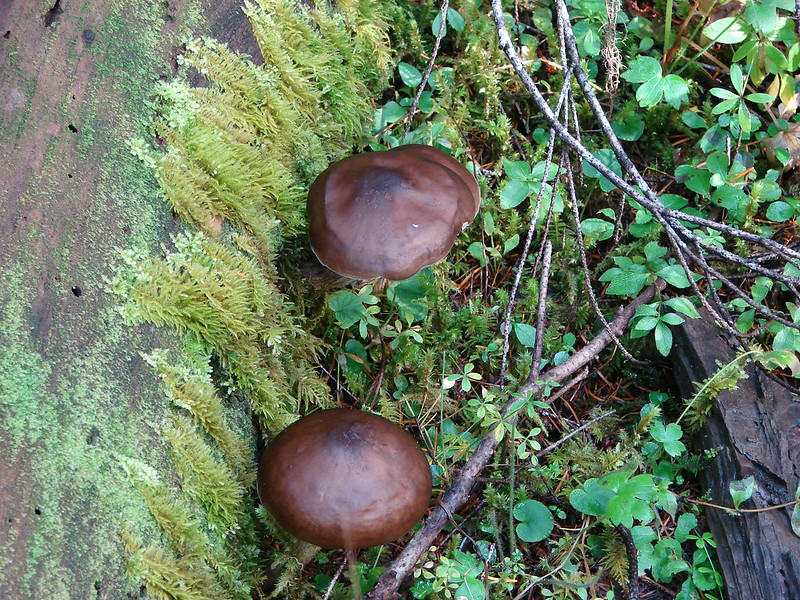
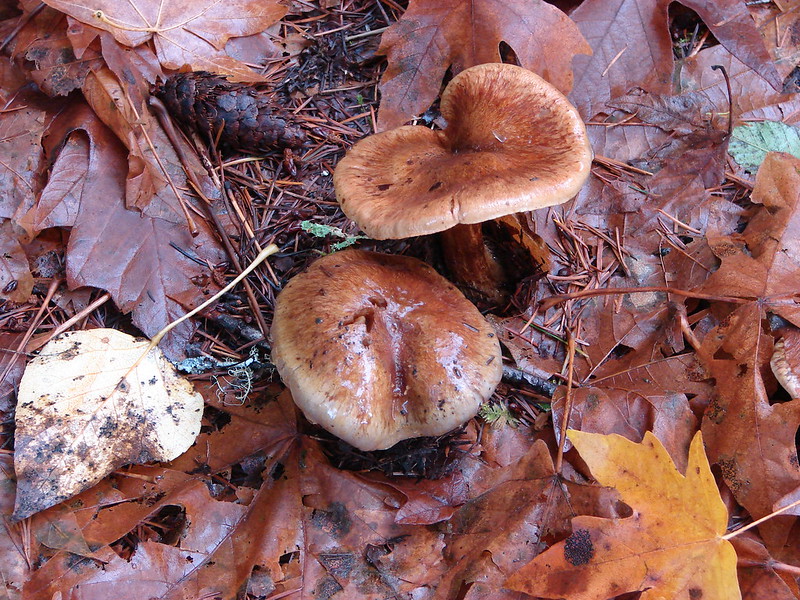
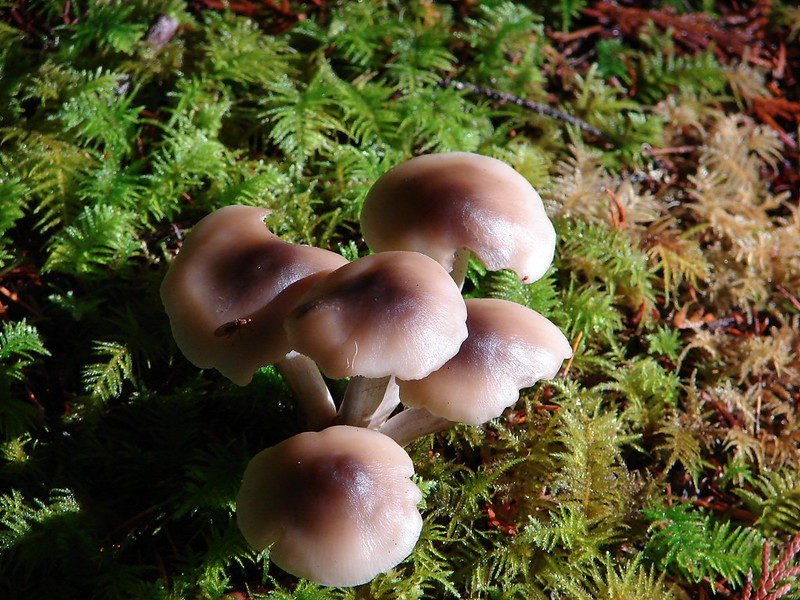
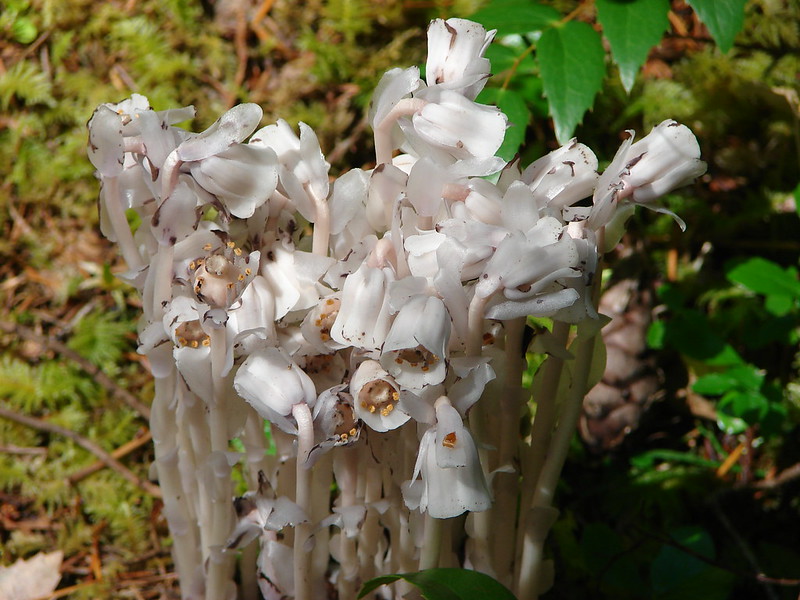
On the far side of the creek we spotted some interesting fungi.
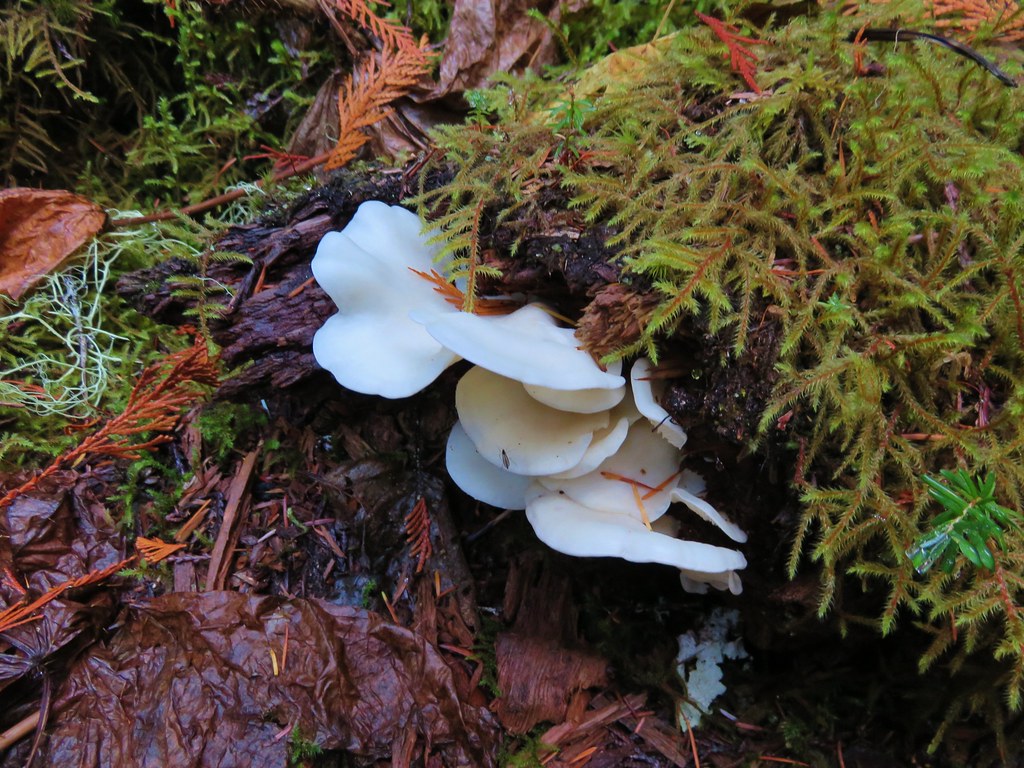
IMG_1220//embedr.flickr.com/assets/client-code.js
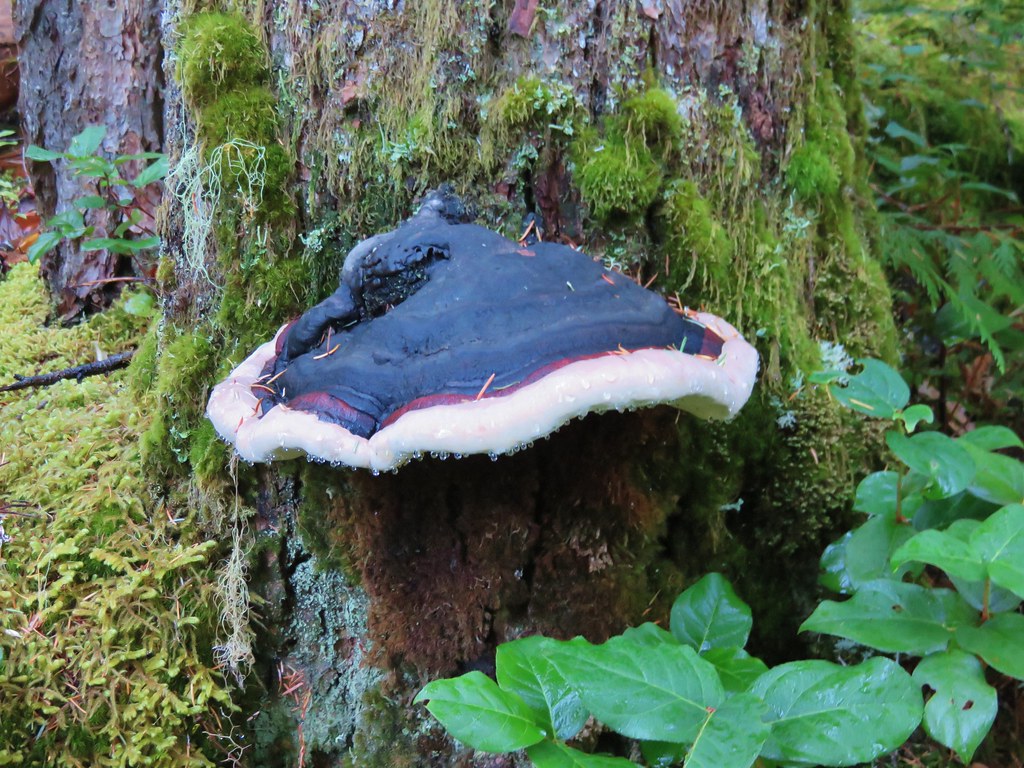
IMG_1223//embedr.flickr.com/assets/client-code.js

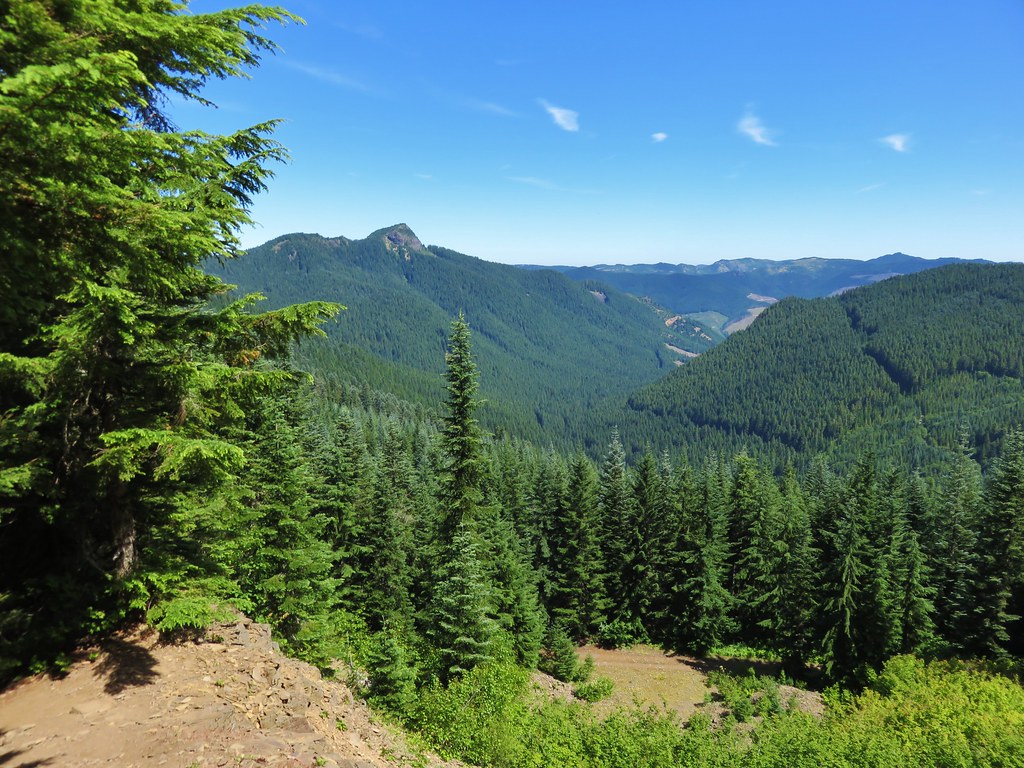
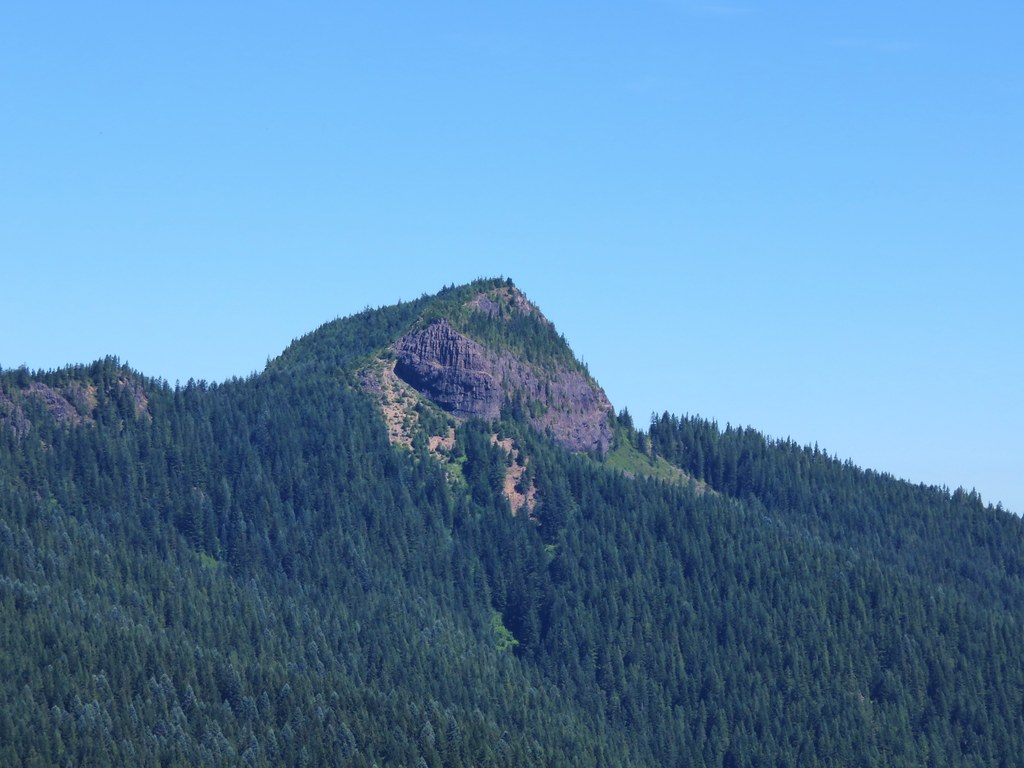
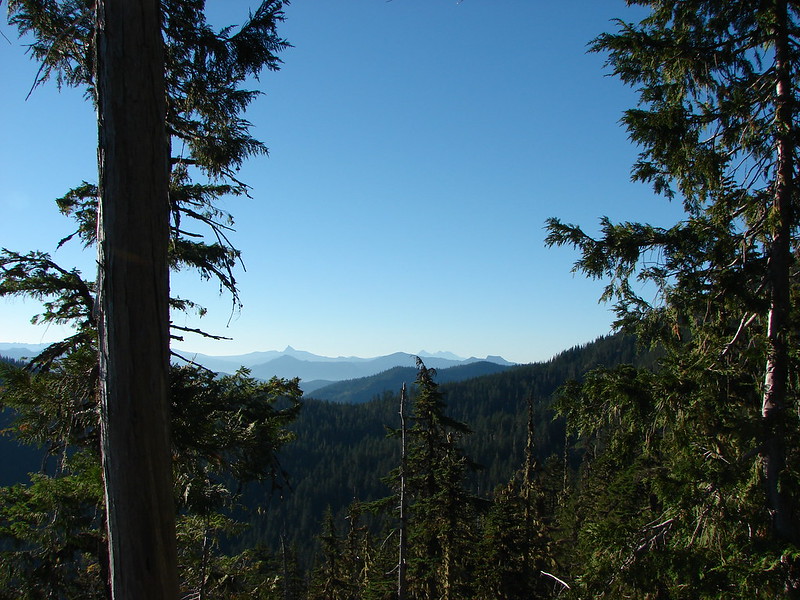
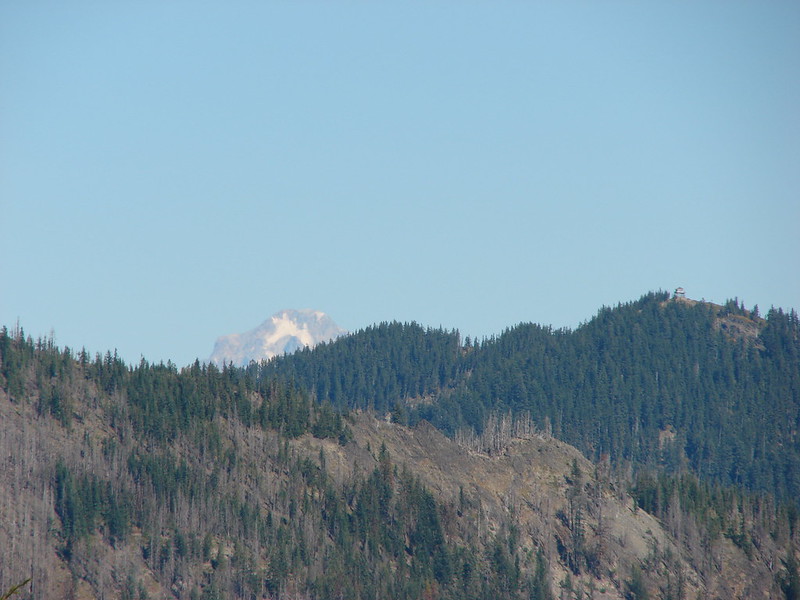
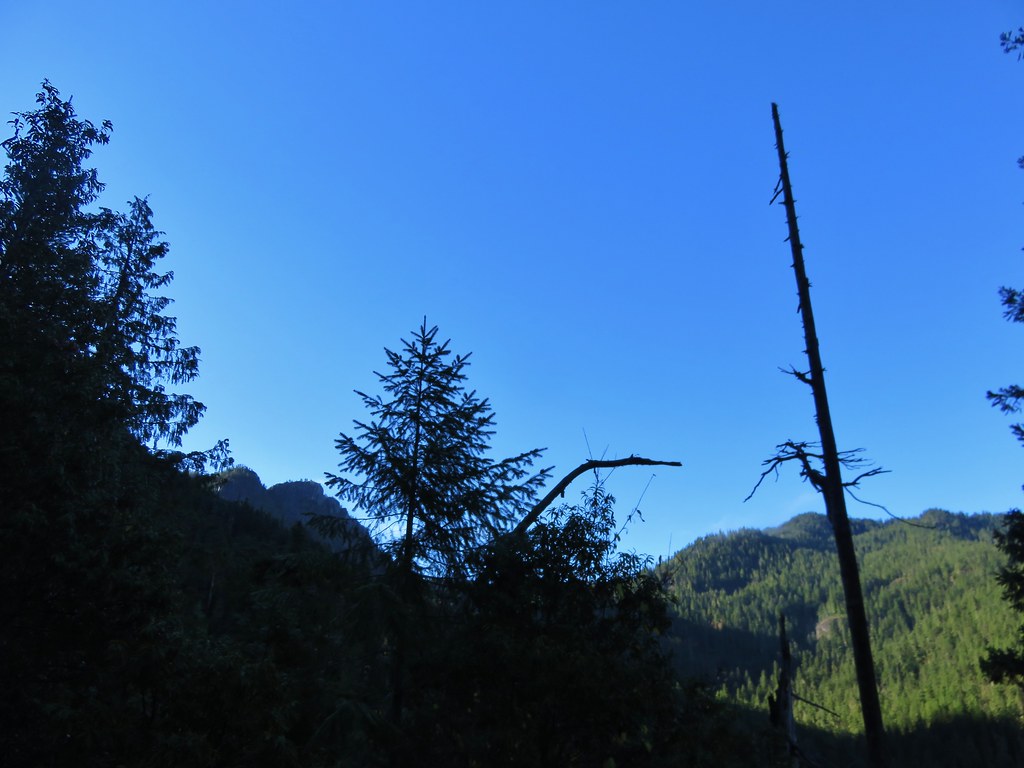
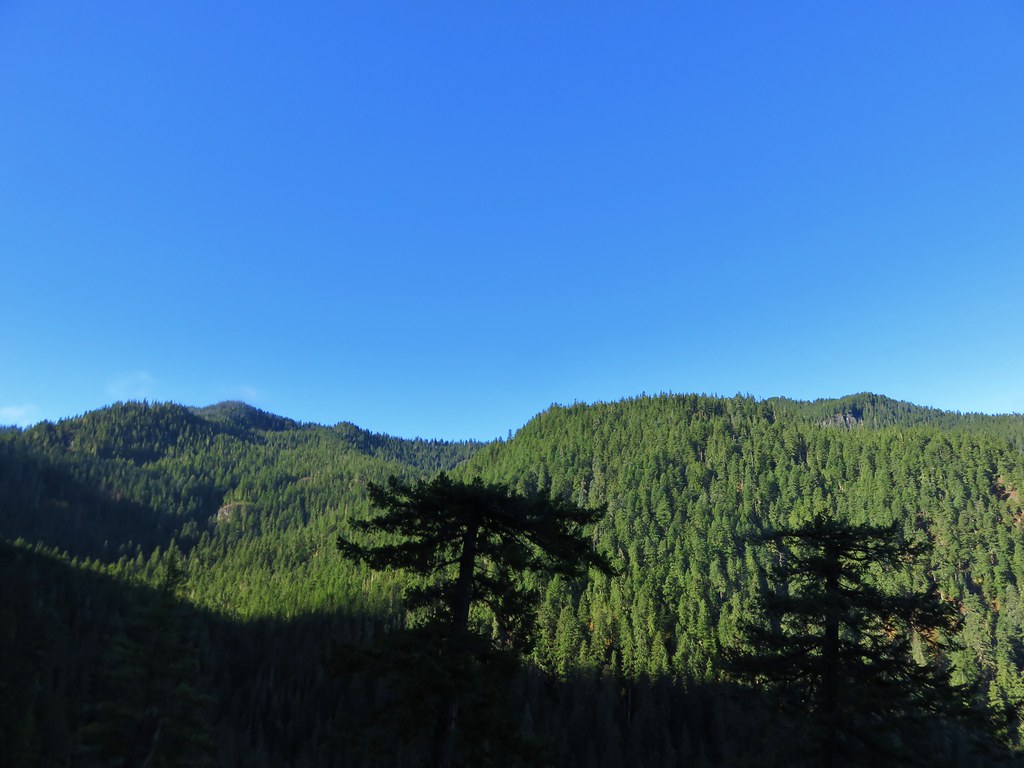
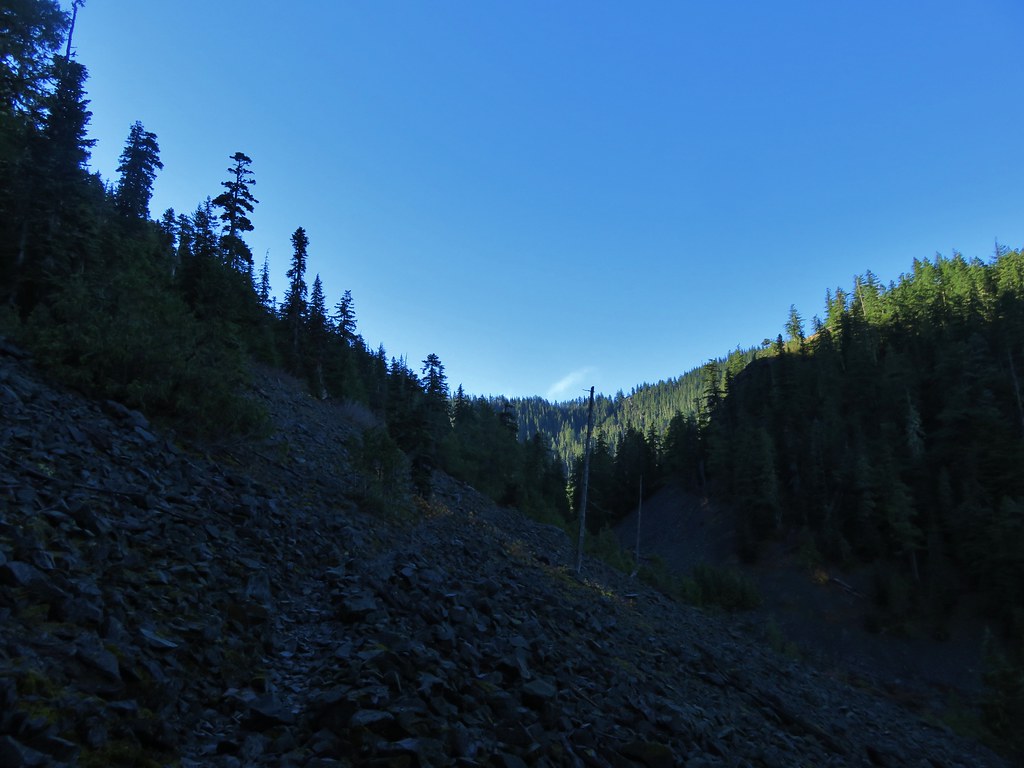
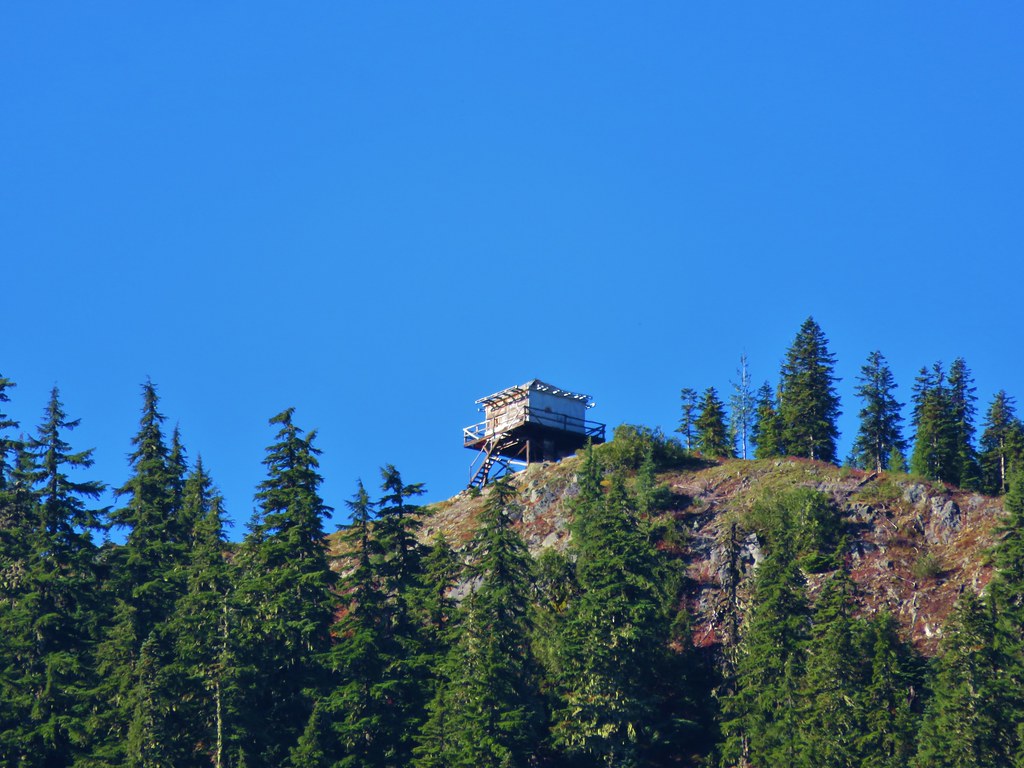
We were heading for Big Slide Lake which was a little over 2.5 miles from Dickey Creek. From there we would decide whether we would continue on to Big Slide Mountain or turnaround depending on how clear the skies were. After a few switchbacks the trail climbed gradually up the valley toward the lake. Views opened up across the valley to North and South Dickey Peak. Ahead were the cliffs of Big Slide Mountain and the lookout tower on Bull of the Woods, the wilderness’s namesake.
IMG_1224//embedr.flickr.com/assets/client-code.js
IMG_1228//embedr.flickr.com/assets/client-code.js
IMG_1231//embedr.flickr.com/assets/client-code.js
IMG_1237//embedr.flickr.com/assets/client-code.js

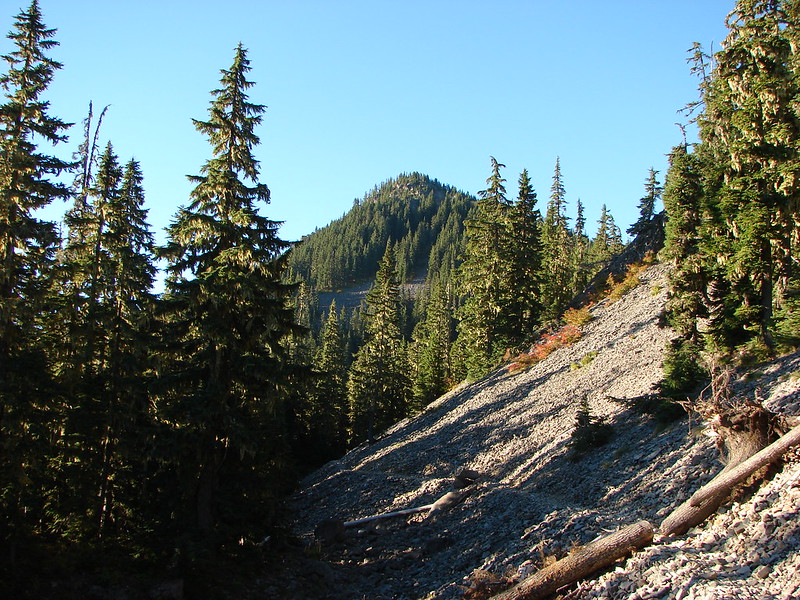
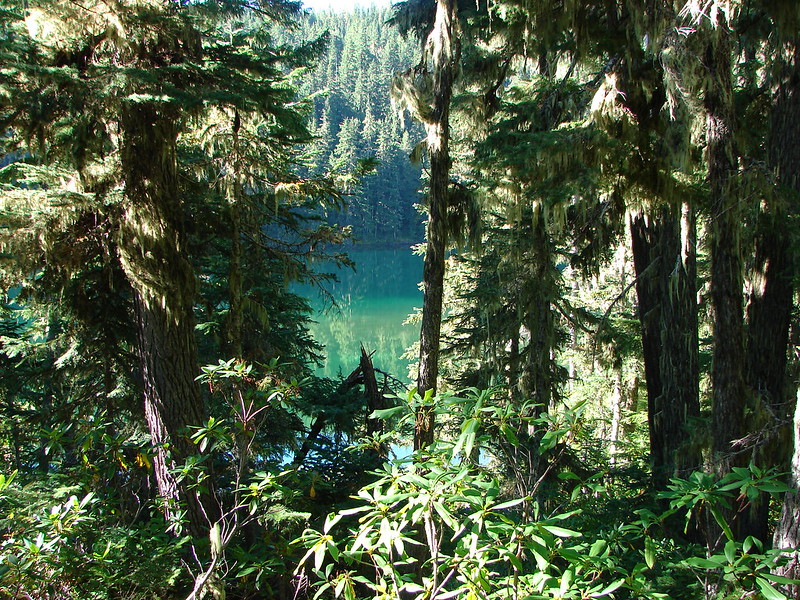
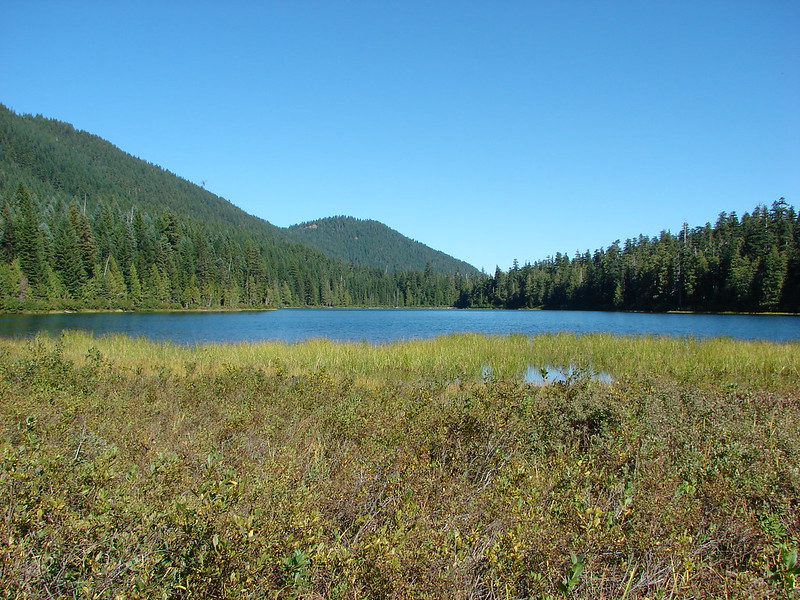
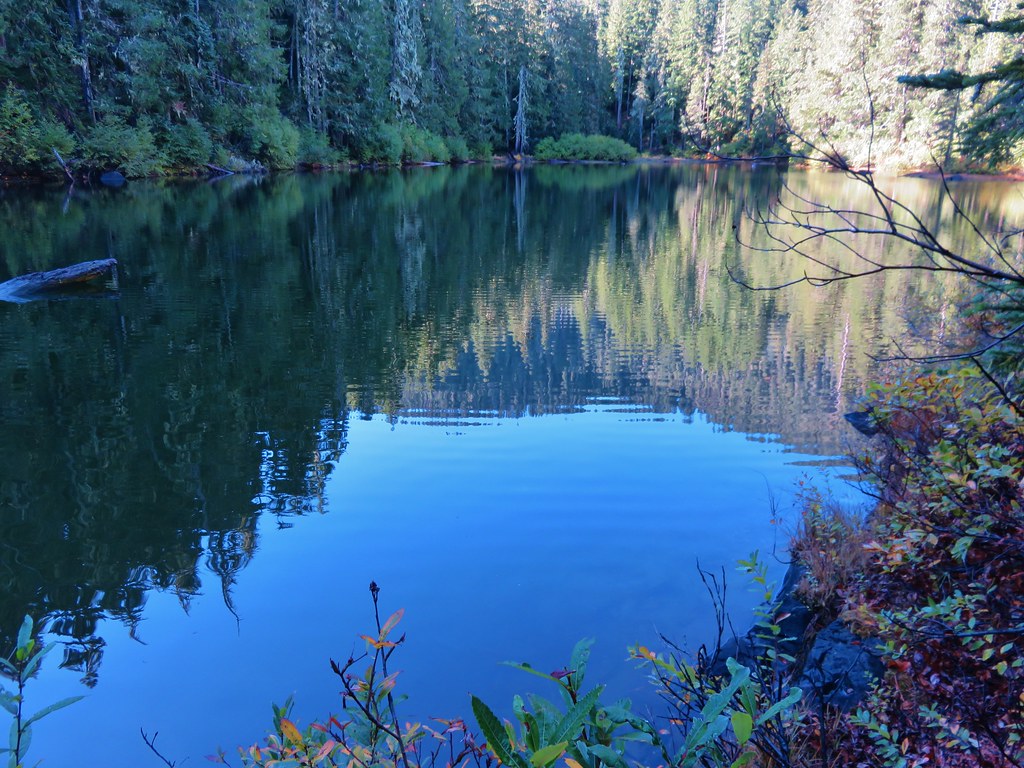
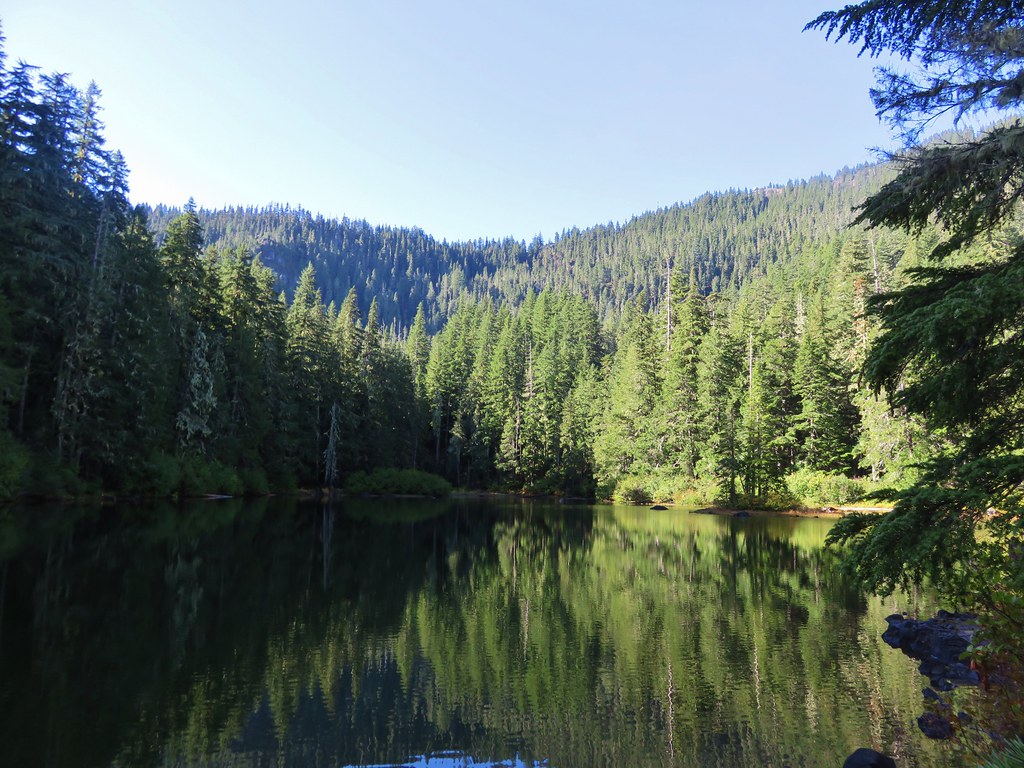
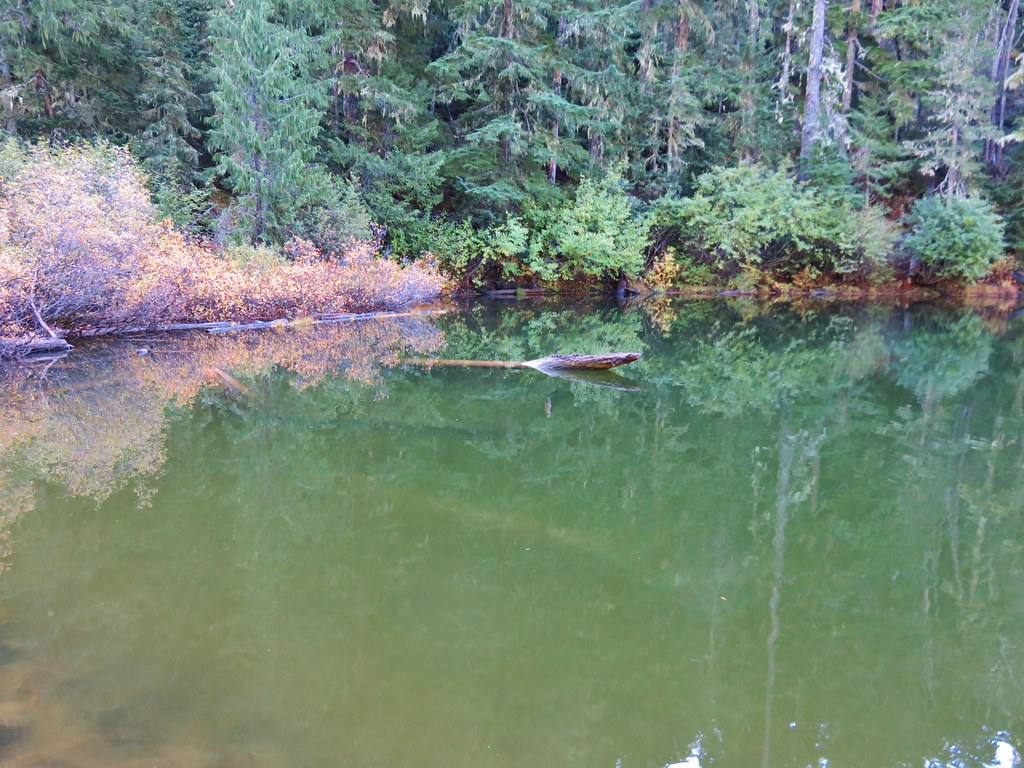
After crossing a large rock field the trail split. We headed downhill to the right to visit Big Slide Lake where we encountered the only other people we’d see the entire day.
IMG_1238//embedr.flickr.com/assets/client-code.js
IMG_1241//embedr.flickr.com/assets/client-code.js
IMG_1242//embedr.flickr.com/assets/client-code.js

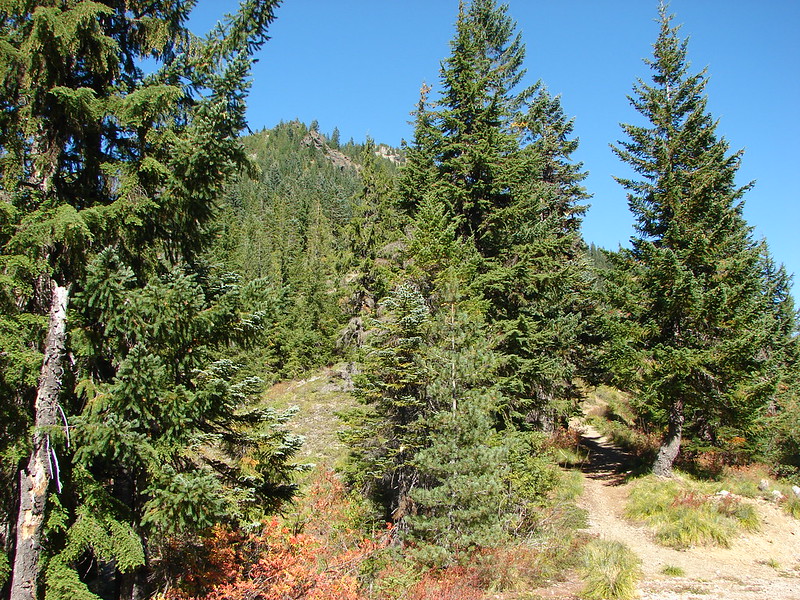
It was approximately 6 miles to Big Slide Lake from the trailhead so turning around here would have made for a decent enough hike, but the weather was great and there were only a few clouds in the sky so we decided to head up to Big Slide Mountain to see how the view was. We climbed back up to the Dickey Creek Trail from the lake and continued uphill toward a saddle on the ridge between Bull of the Woods and Big Slide Mountain. After about a half mile of good climbing we arrived at the saddle and a trail junction.
IMG_1243//embedr.flickr.com/assets/client-code.js

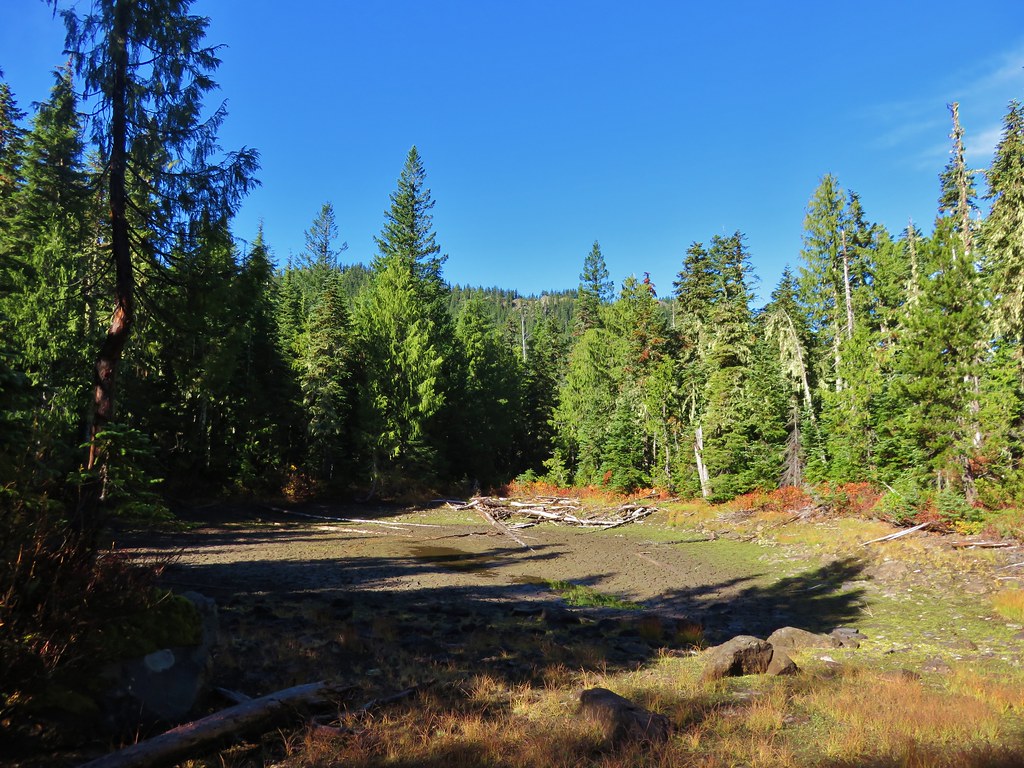
We turned left past a nearly dry pond.
IMG_1244//embedr.flickr.com/assets/client-code.js
IMG_1245//embedr.flickr.com/assets/client-code.js
IMG_1246//embedr.flickr.com/assets/client-code.js

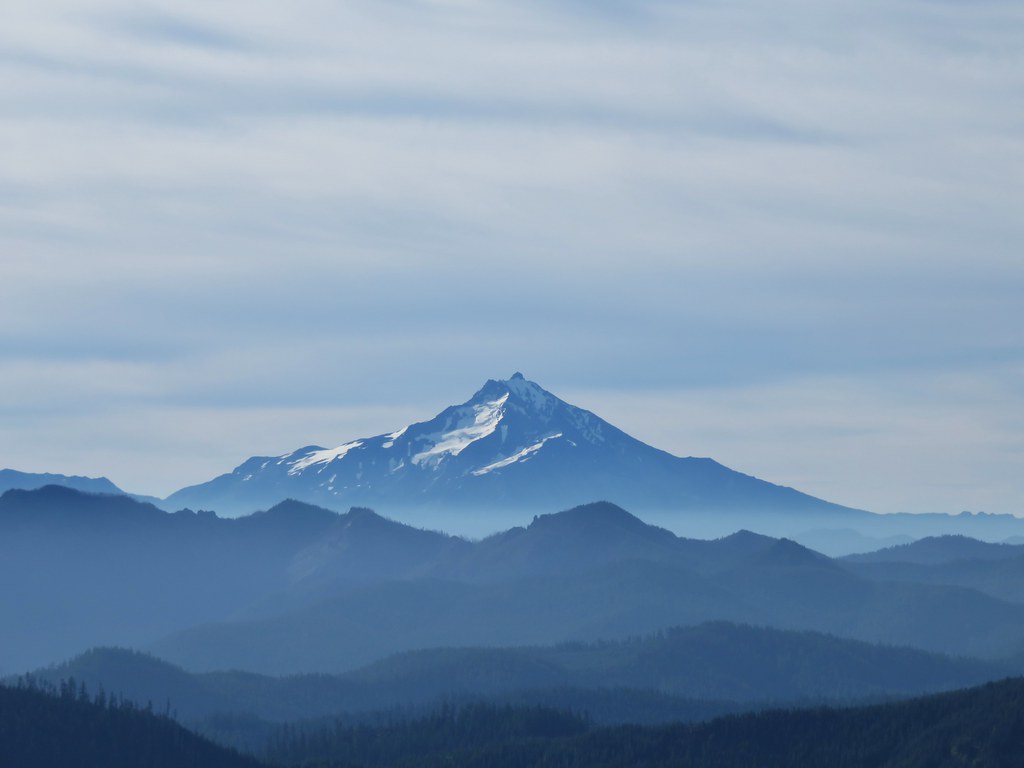
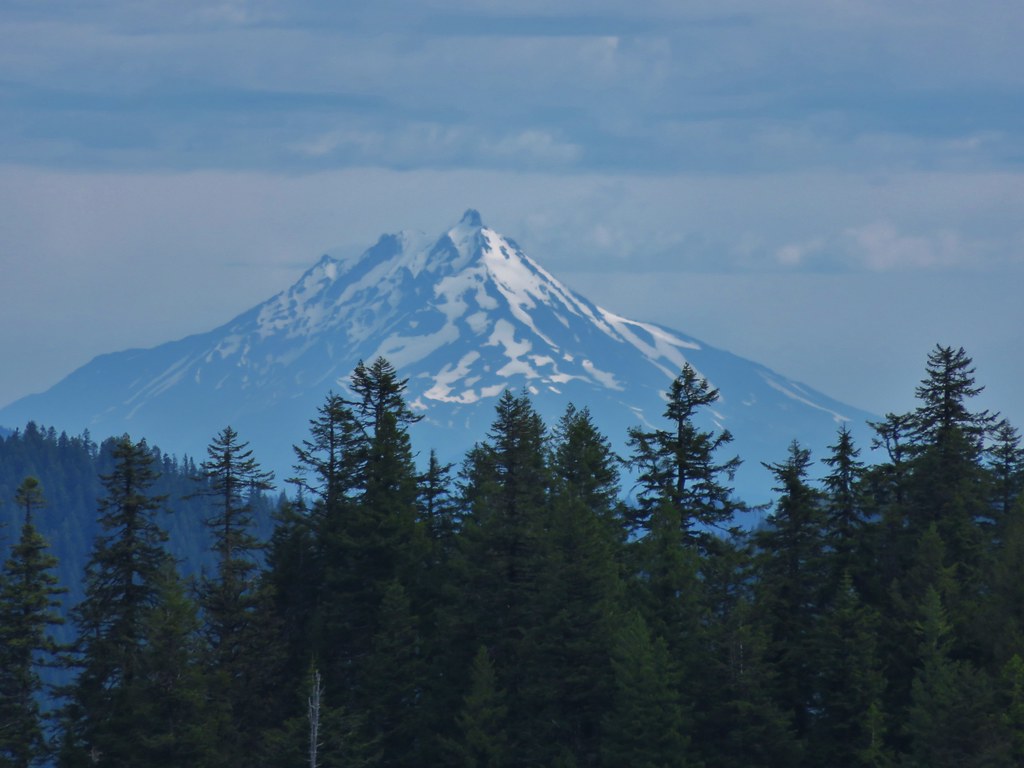
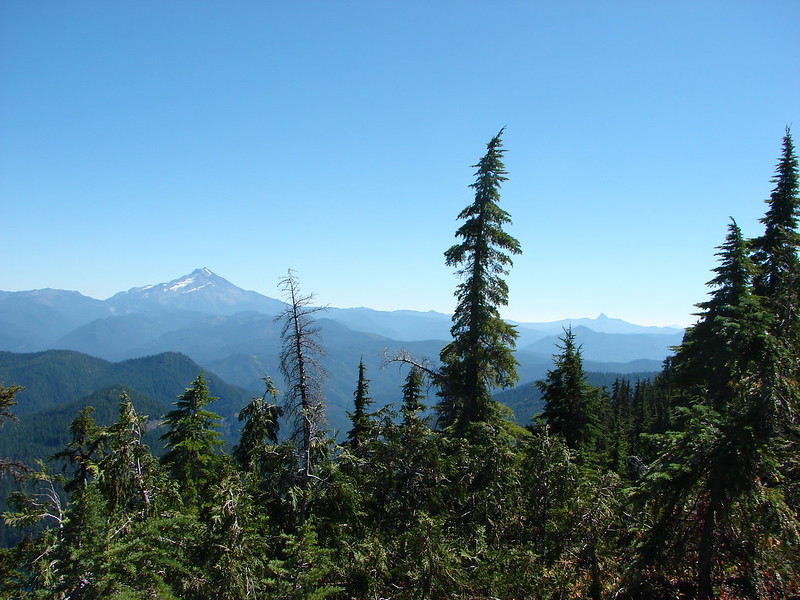
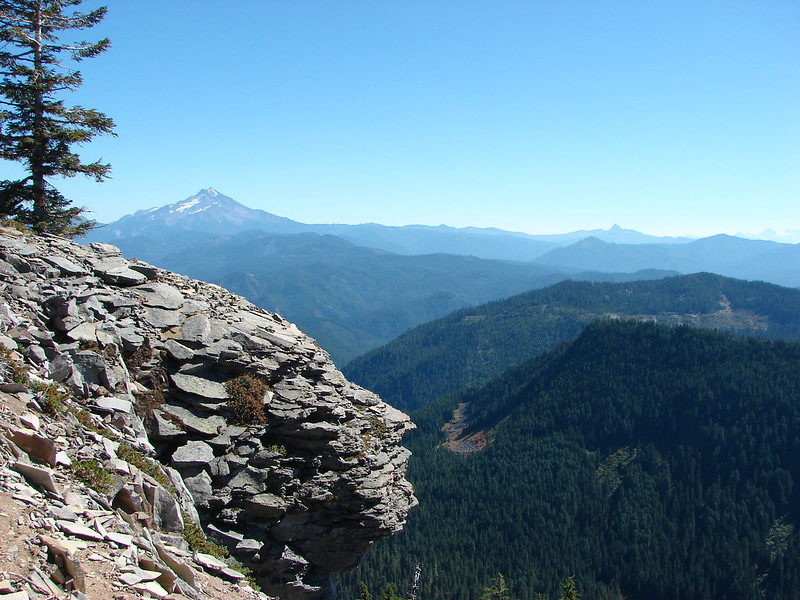
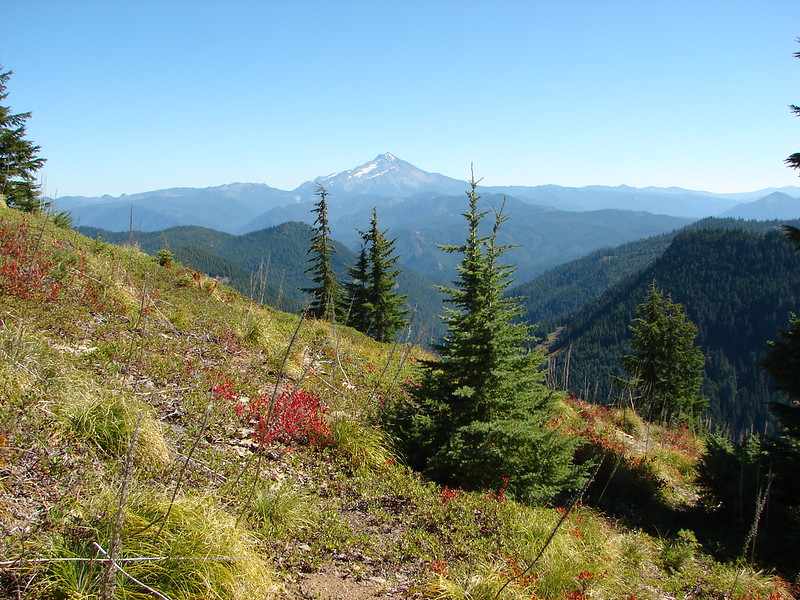
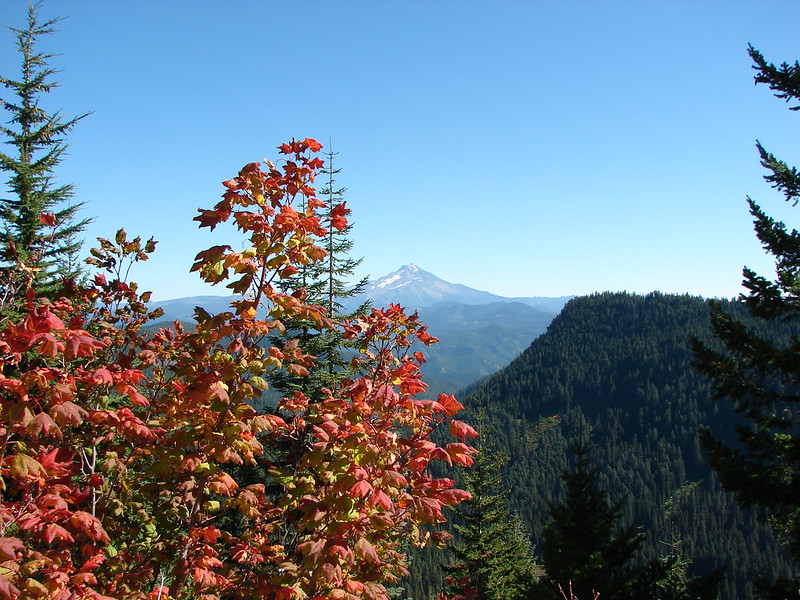
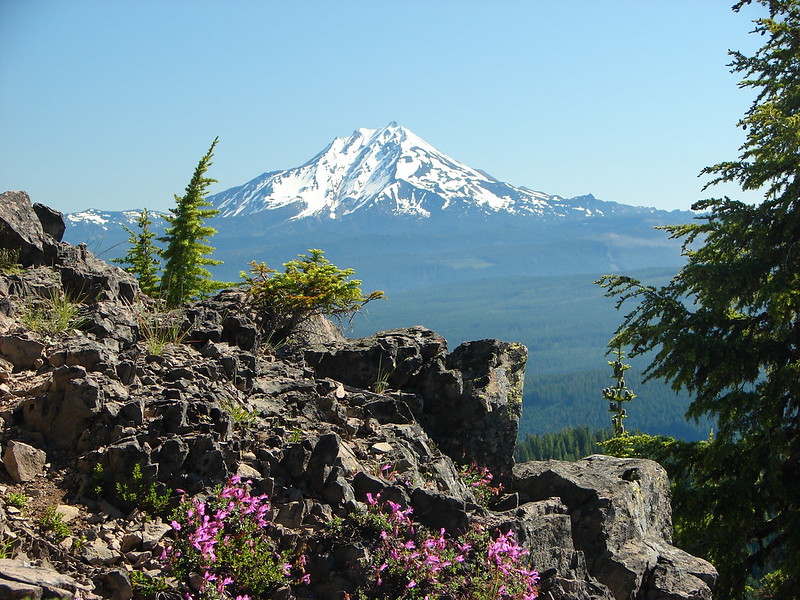
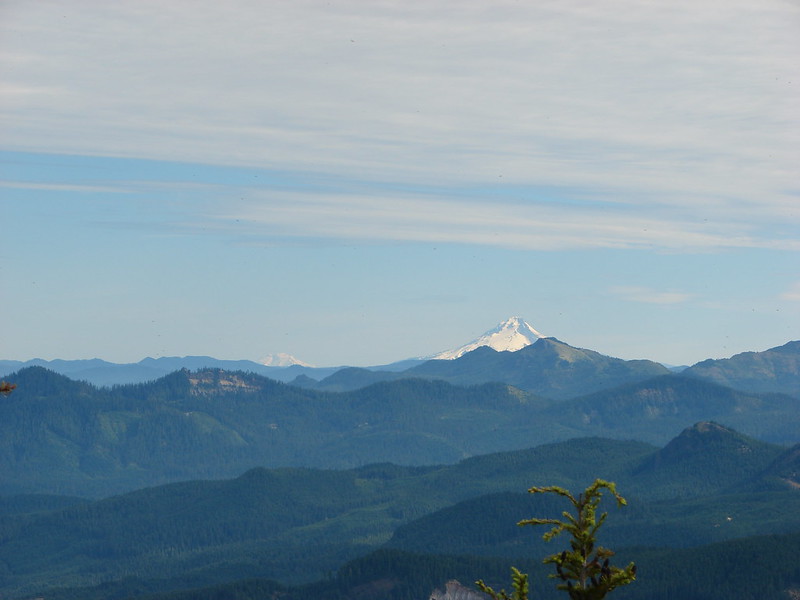
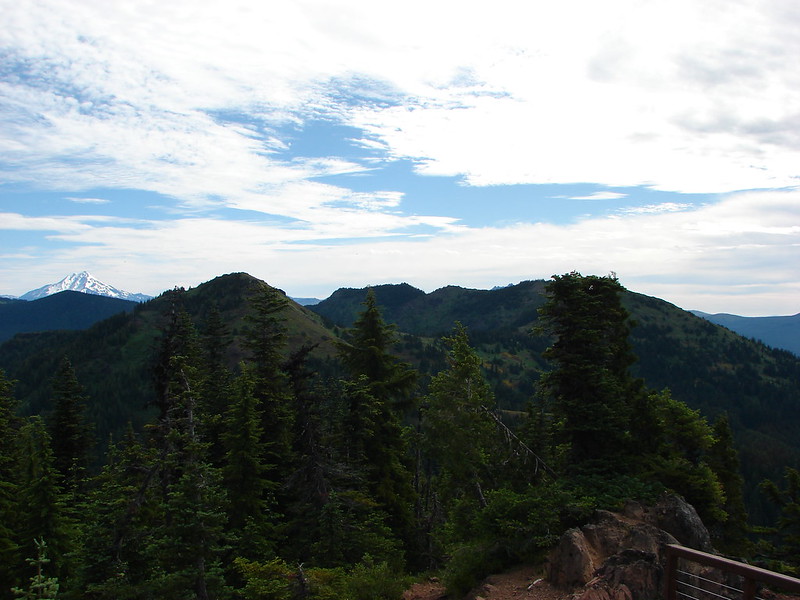
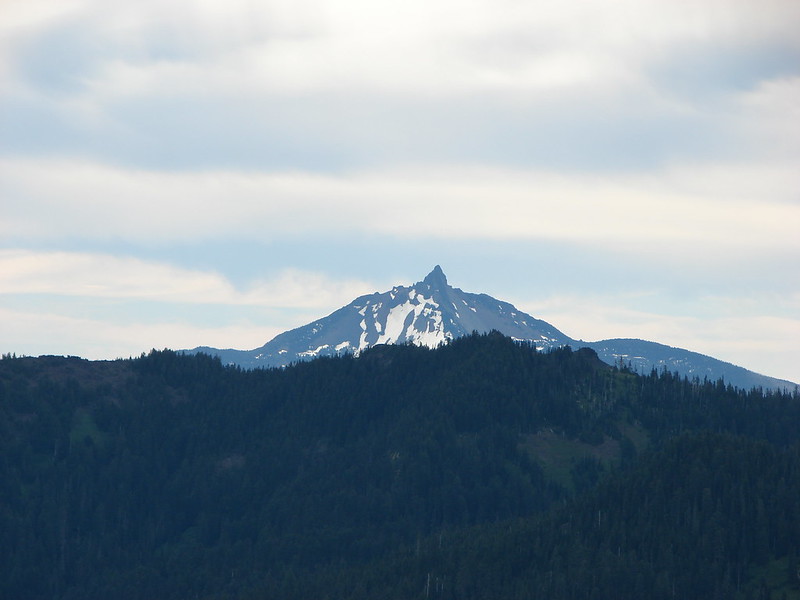
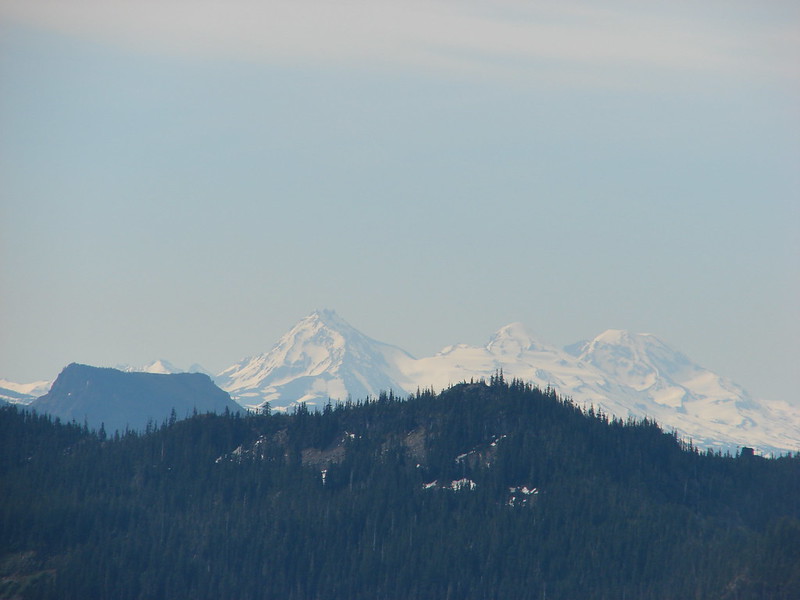
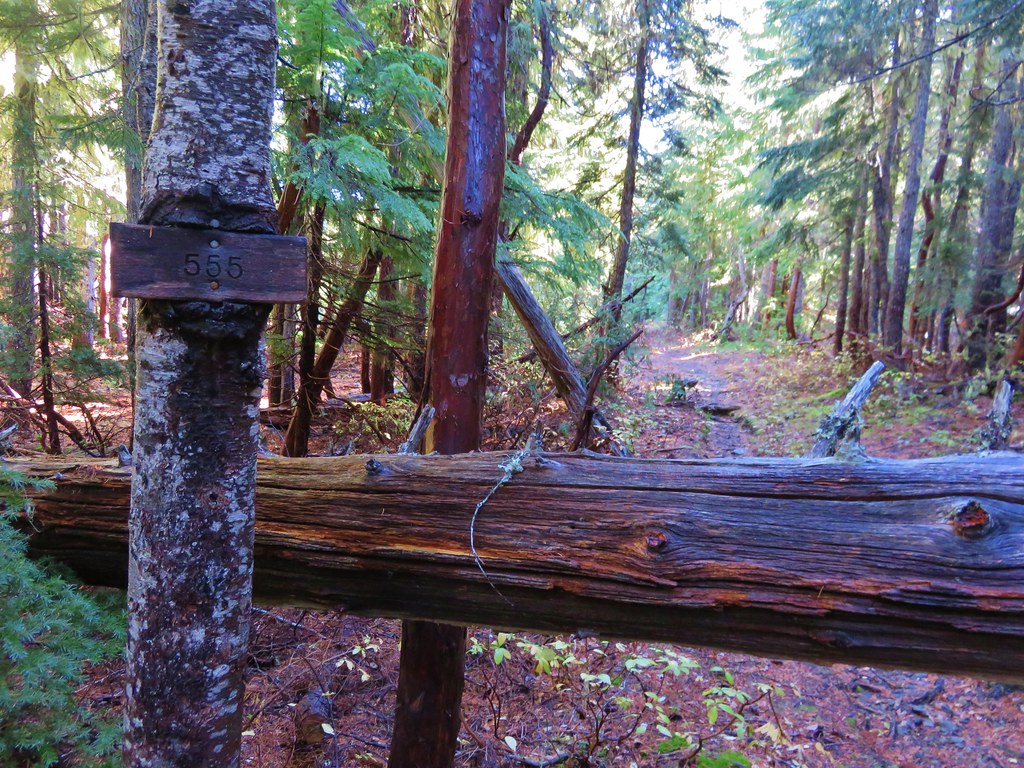
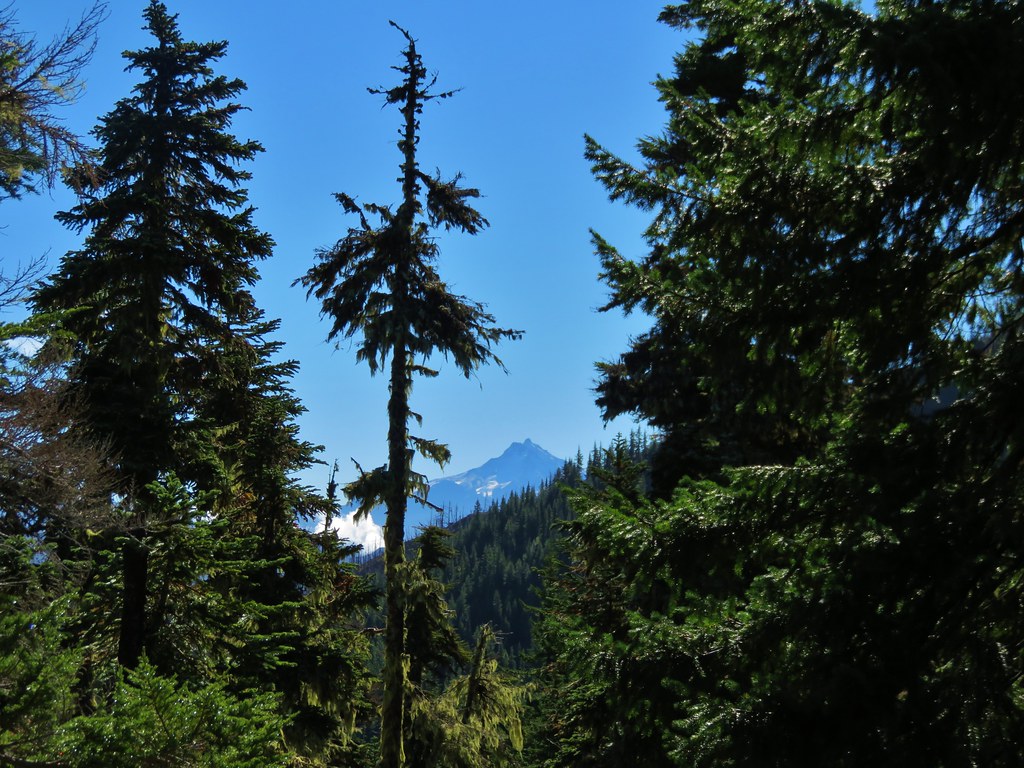
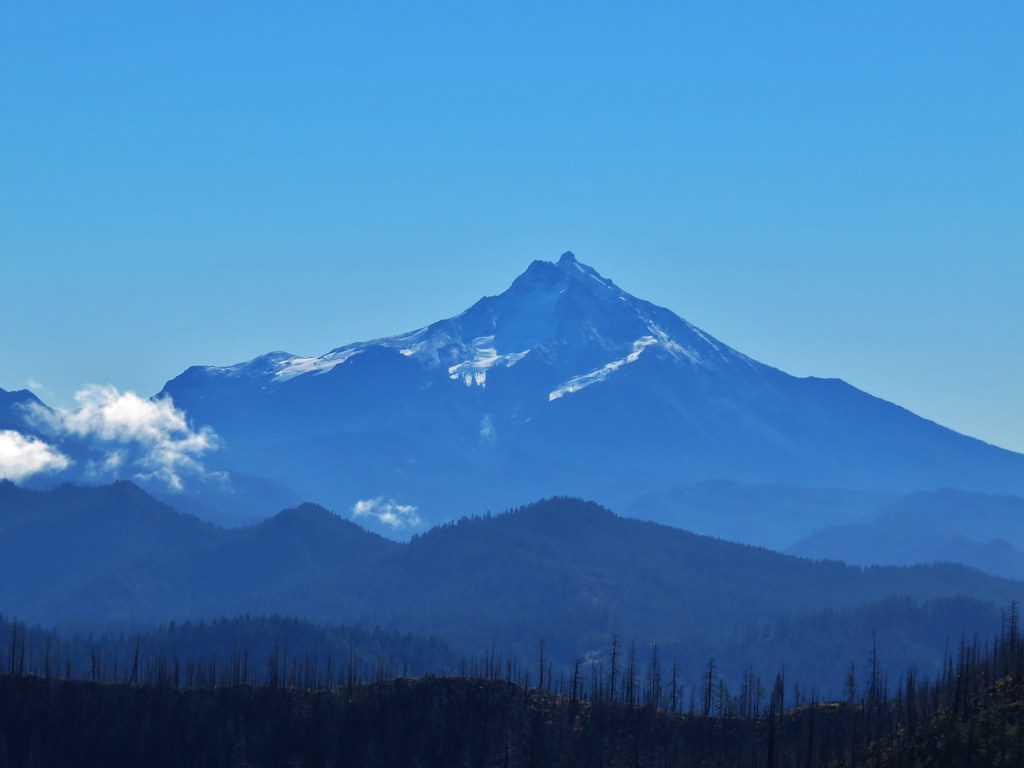
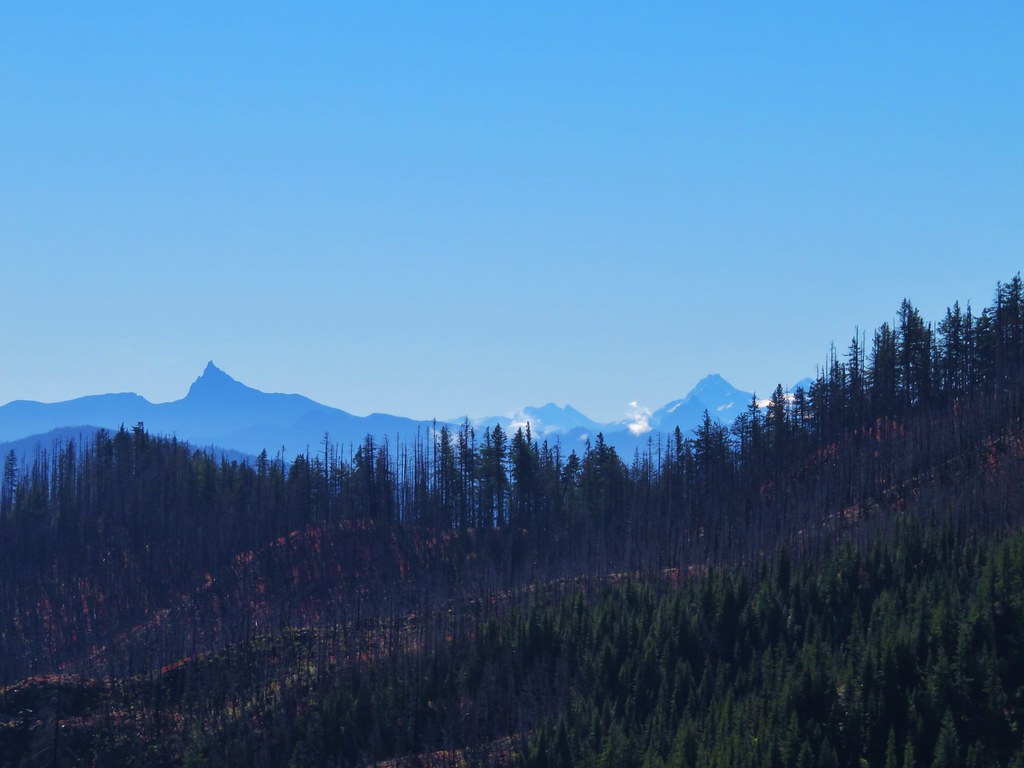
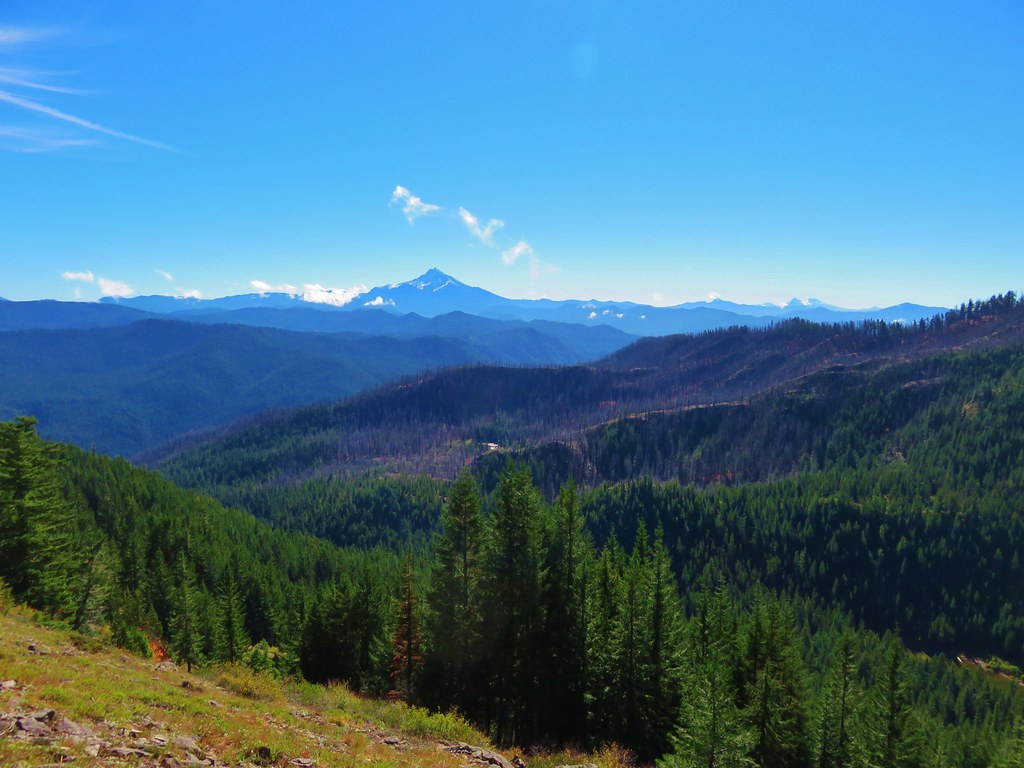
On the far side of the pond was a second trail junction. We stayed to the left on trail 555 and began to gradually climb Big Slide Mountain. Views opened up almost immediately on this section of trail. Mount Jefferson was the first of the Cascade peaks to come into view.
IMG_1248//embedr.flickr.com/assets/client-code.js
IMG_1255//embedr.flickr.com/assets/client-code.js

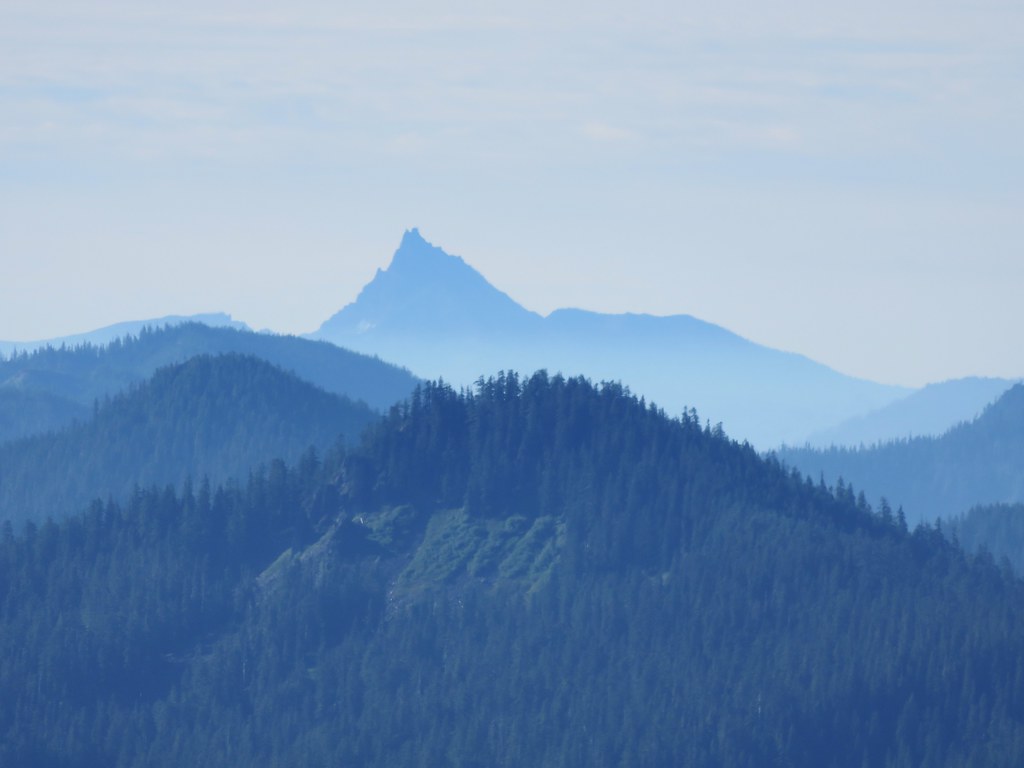
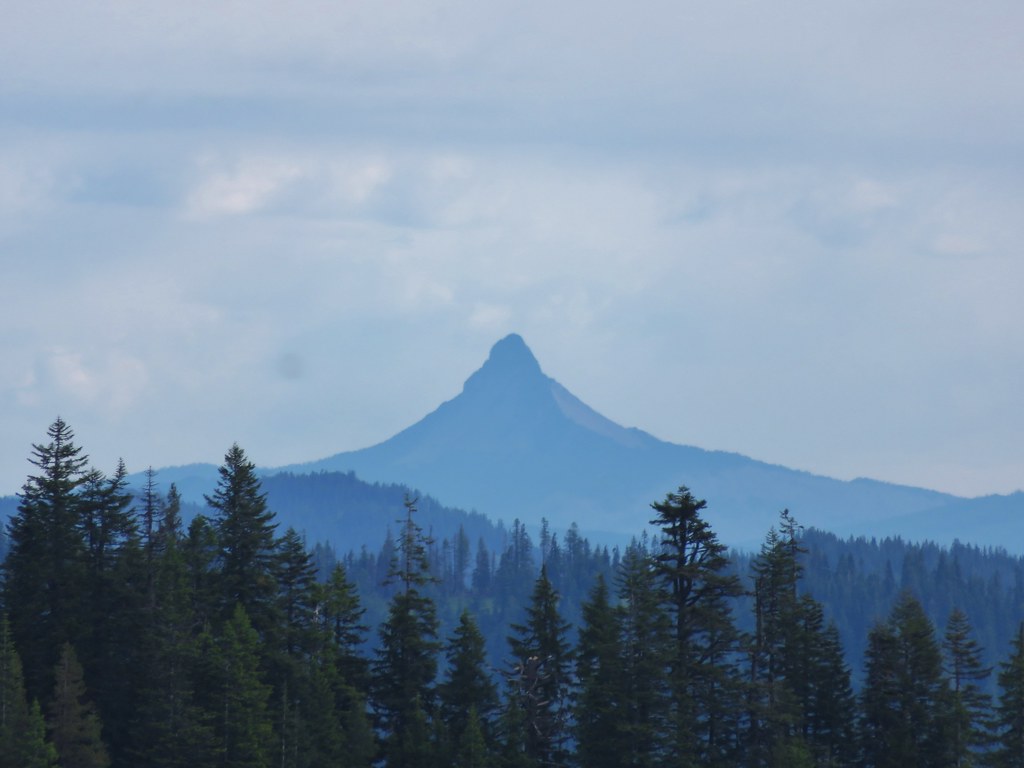
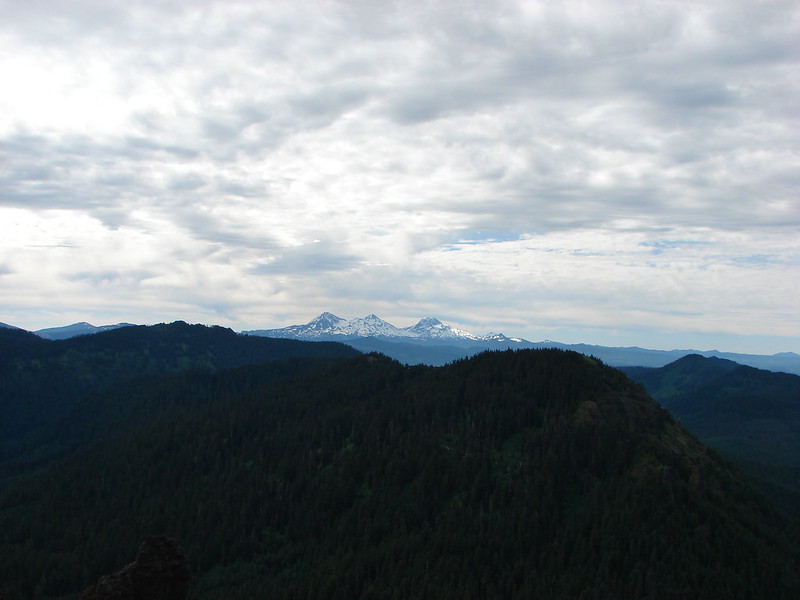
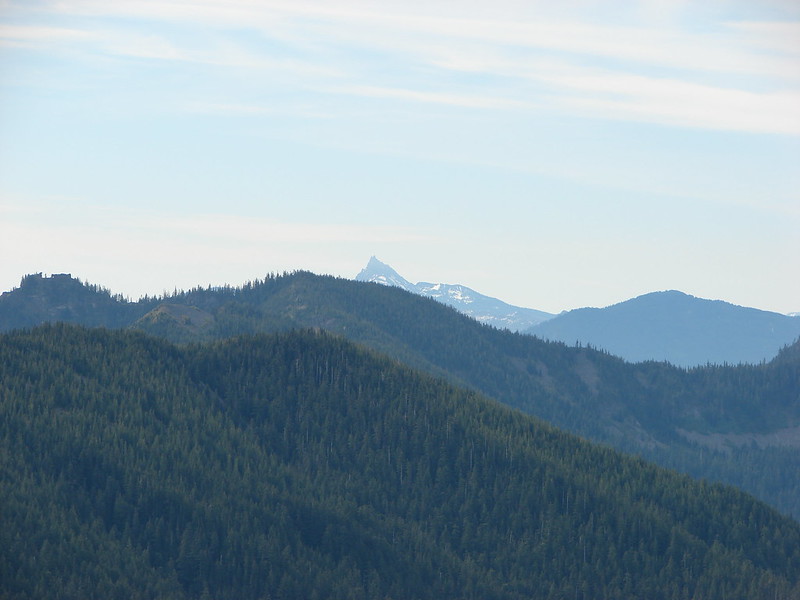
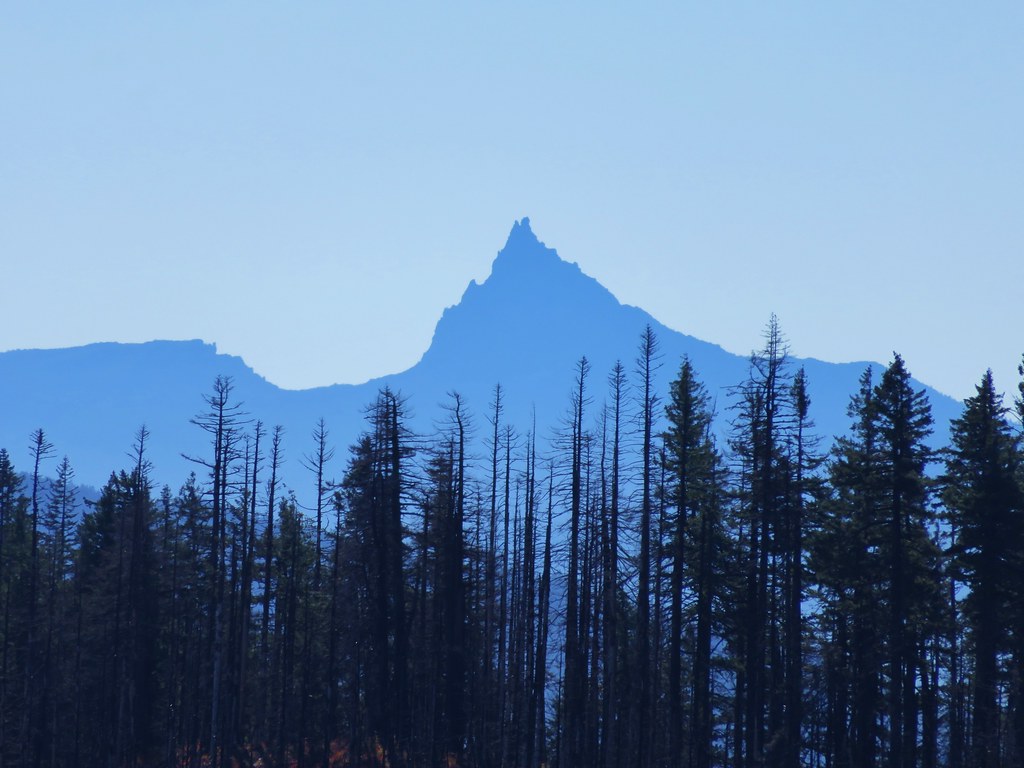
Followed by Three Fingered Jack.
IMG_1260//embedr.flickr.com/assets/client-code.js

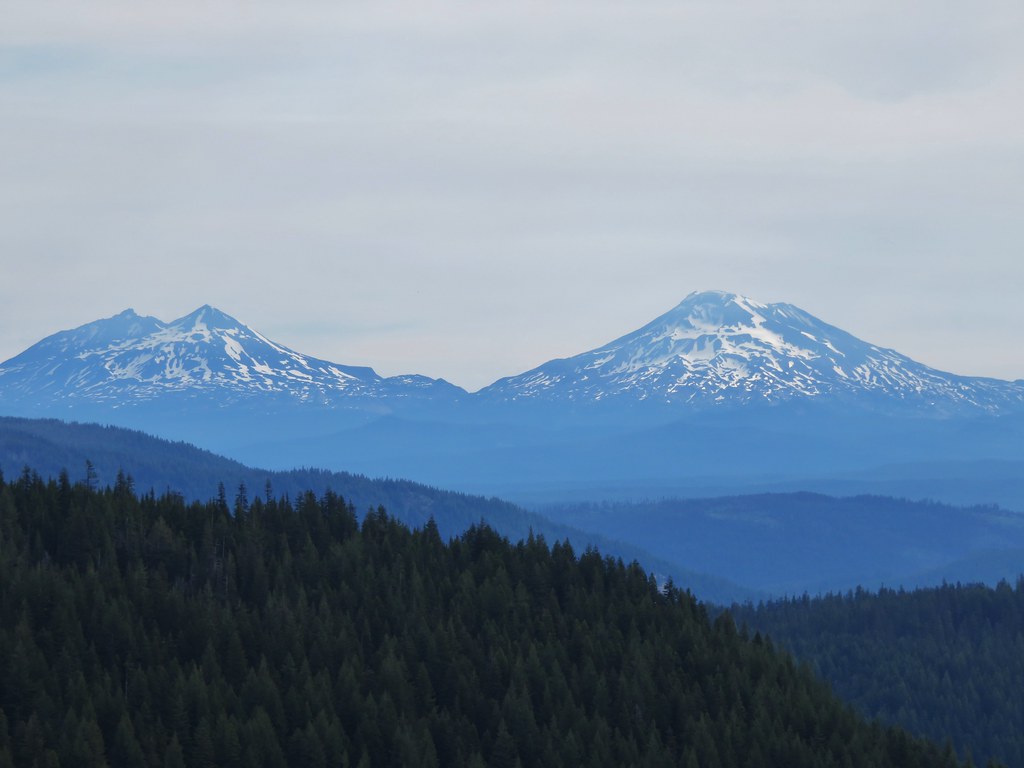
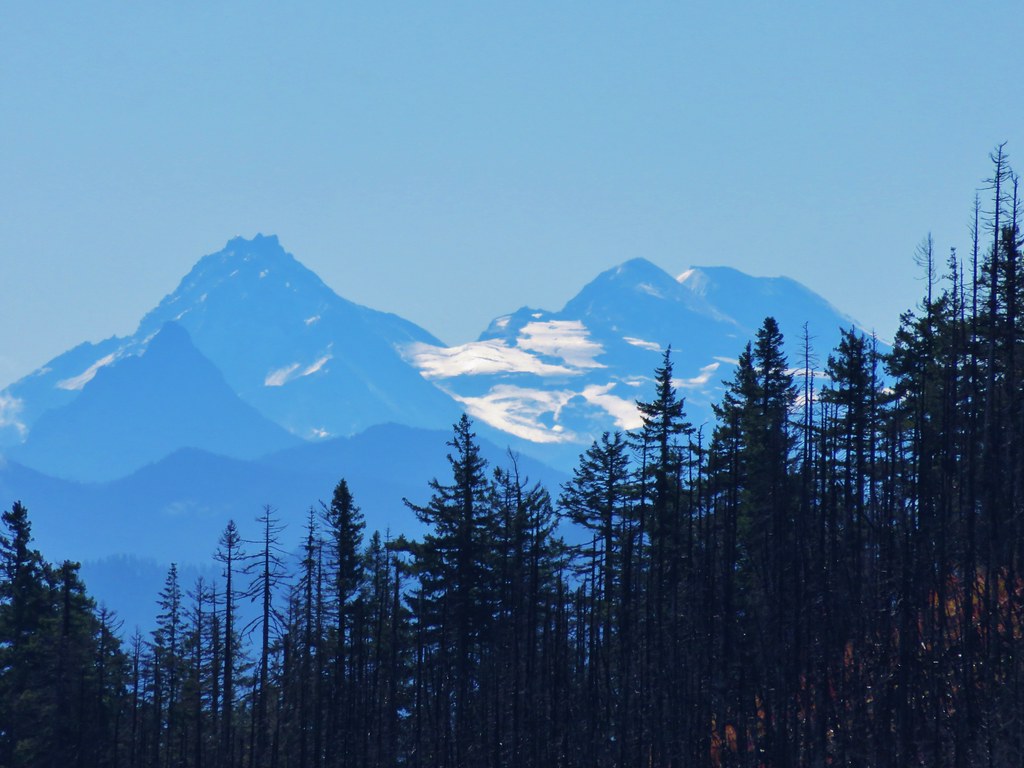
Then came Broken Top, Mt. Washington, and the North and Middle Sisters.
IMG_1266//embedr.flickr.com/assets/client-code.js

Finally the South Sister made an appearance.
IMG_1271//embedr.flickr.com/assets/client-code.js
IMG_1272//embedr.flickr.com/assets/client-code.js

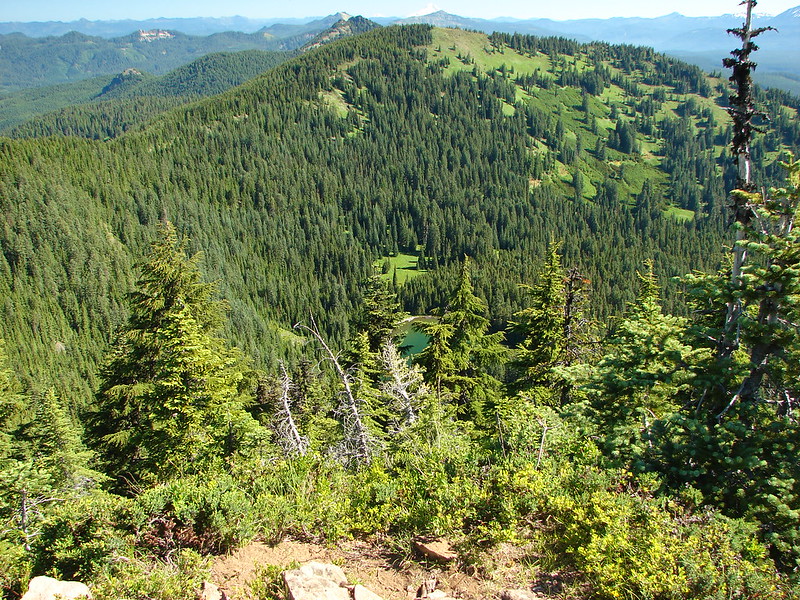
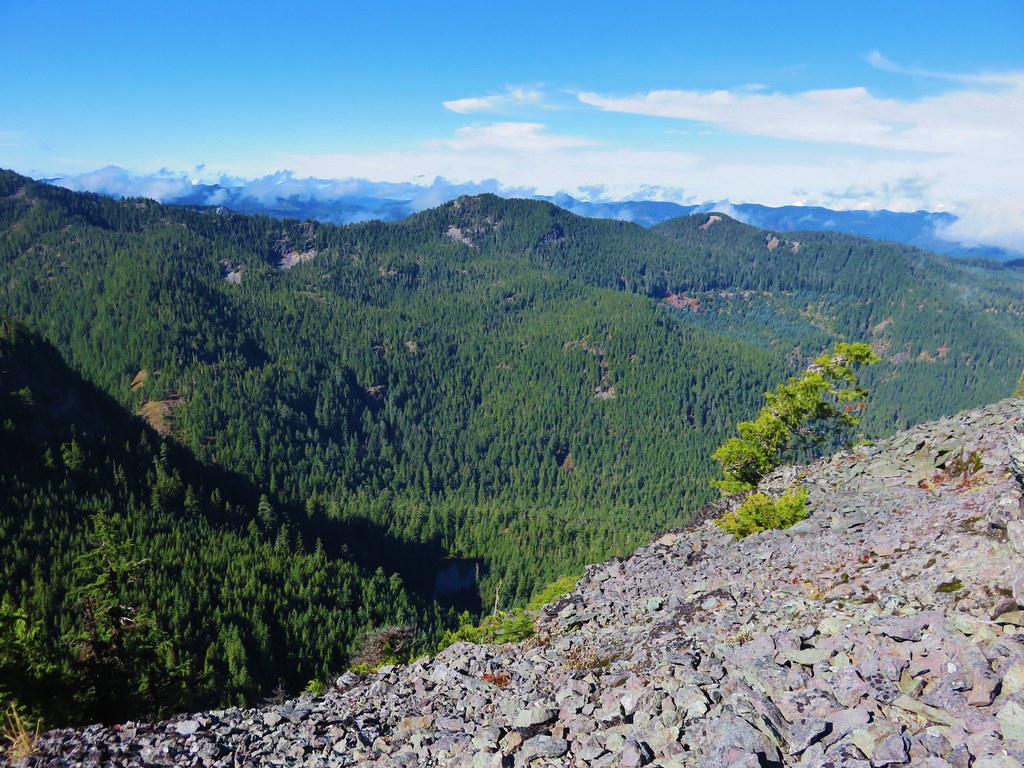
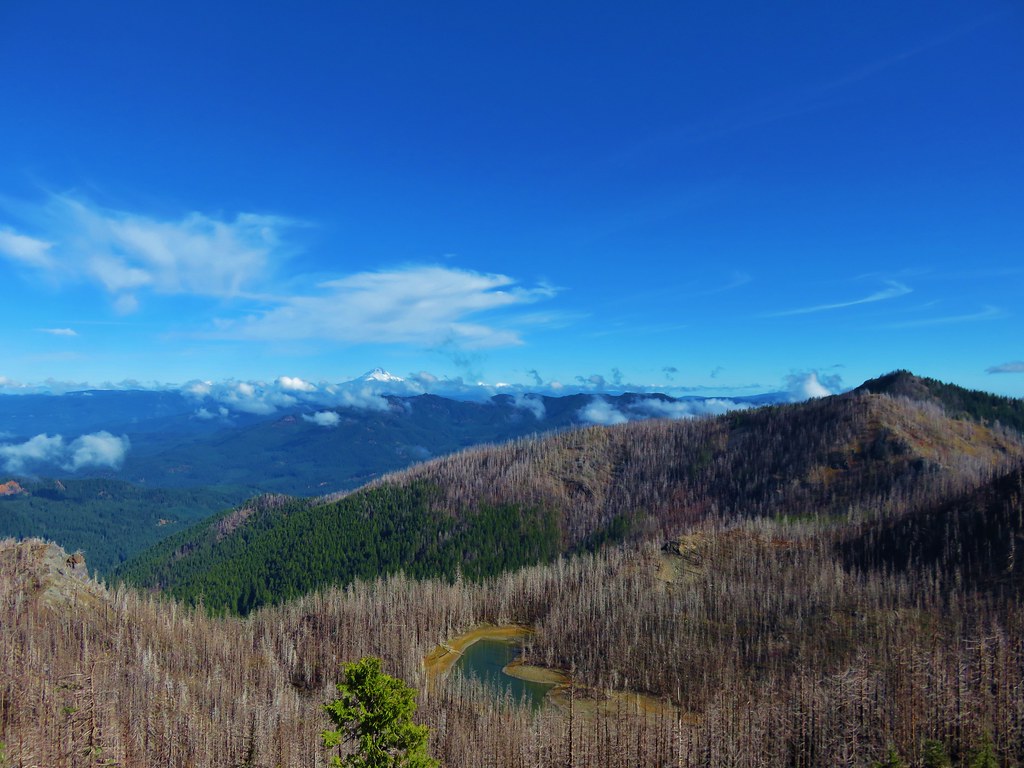
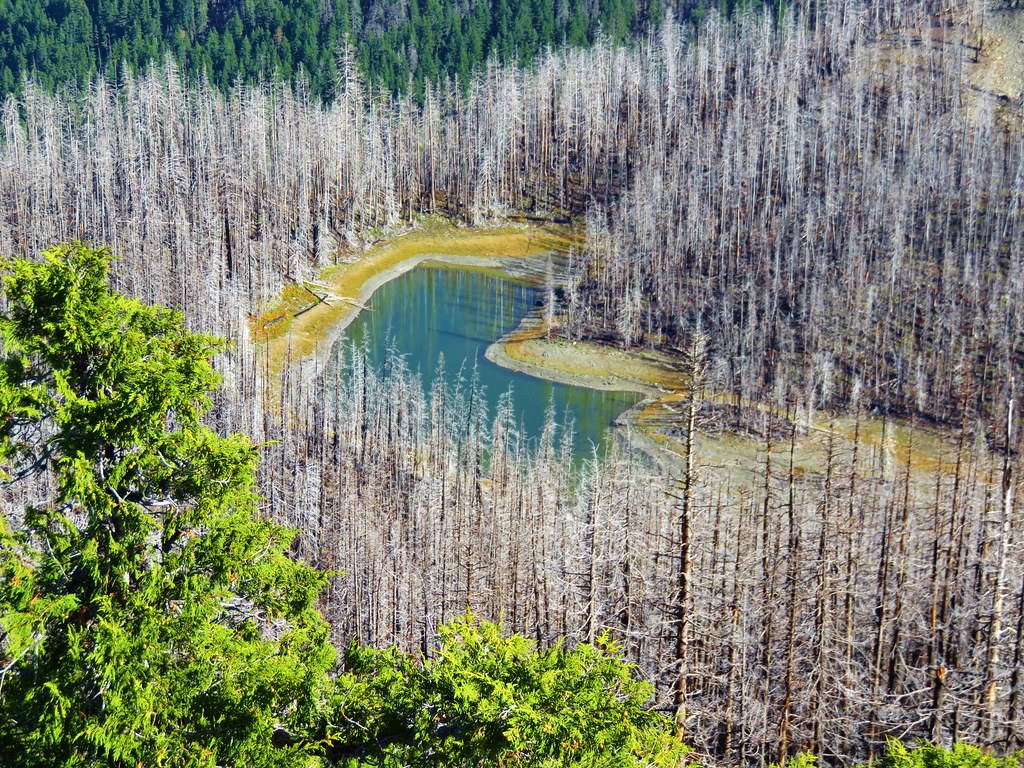
After almost a mile and a half of climbing the trail crested at a saddle between the summit of Big Slide Mountain and Knob Peak. The trail then headed over the saddle and downhill to its end at Lake Lenore a half mile away. In order to get to the summit of Big Slide Mountain we needed to do some cross country climbing. From the saddle we headed uphill along the ridge toward the summit making our way up as best we could. We managed to find sections of faint trail and pick our way up the rocky slope to the summit. The views from the summit were great. Big Slide Lake lay below us to the West.
IMG_1288//embedr.flickr.com/assets/client-code.js

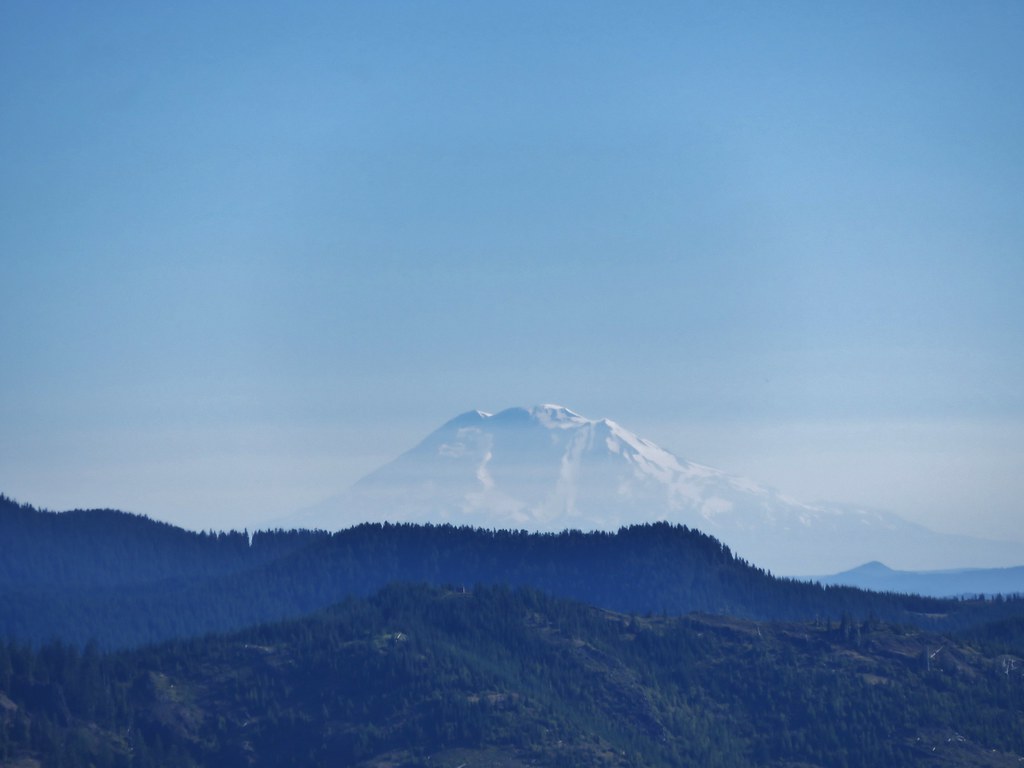
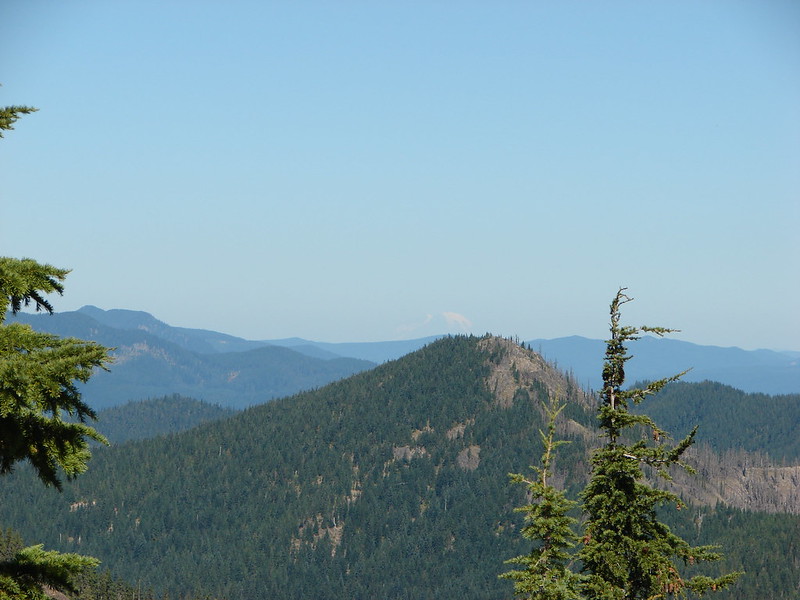
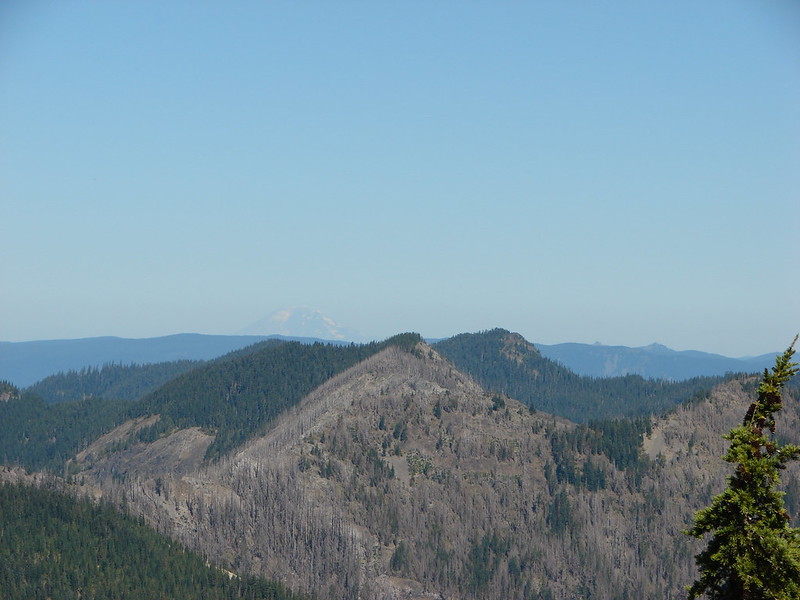
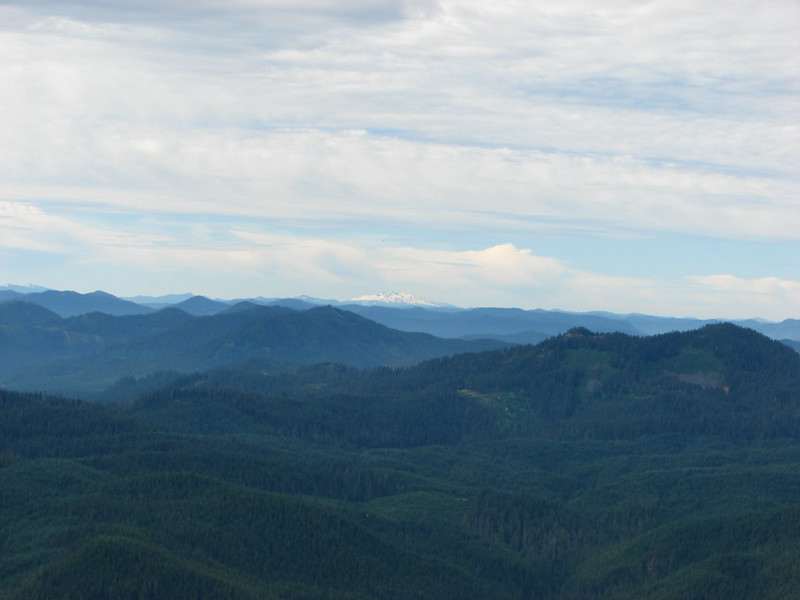
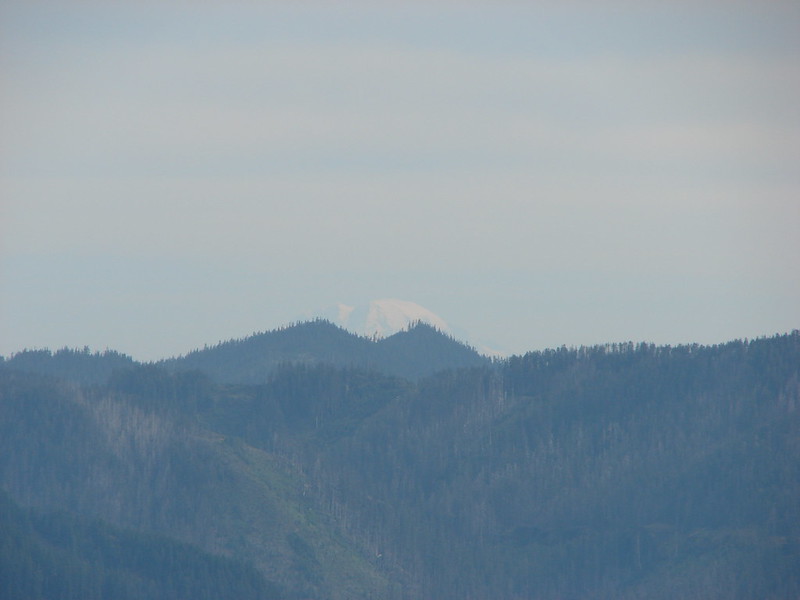
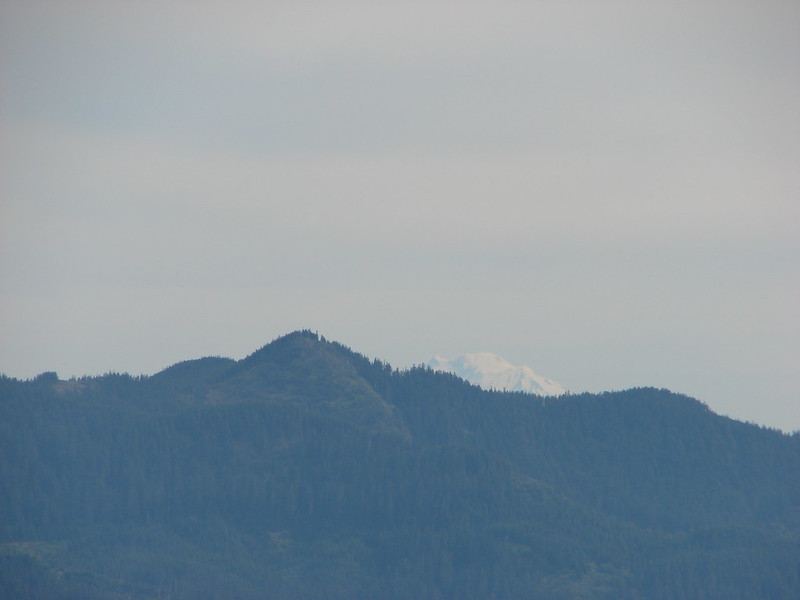
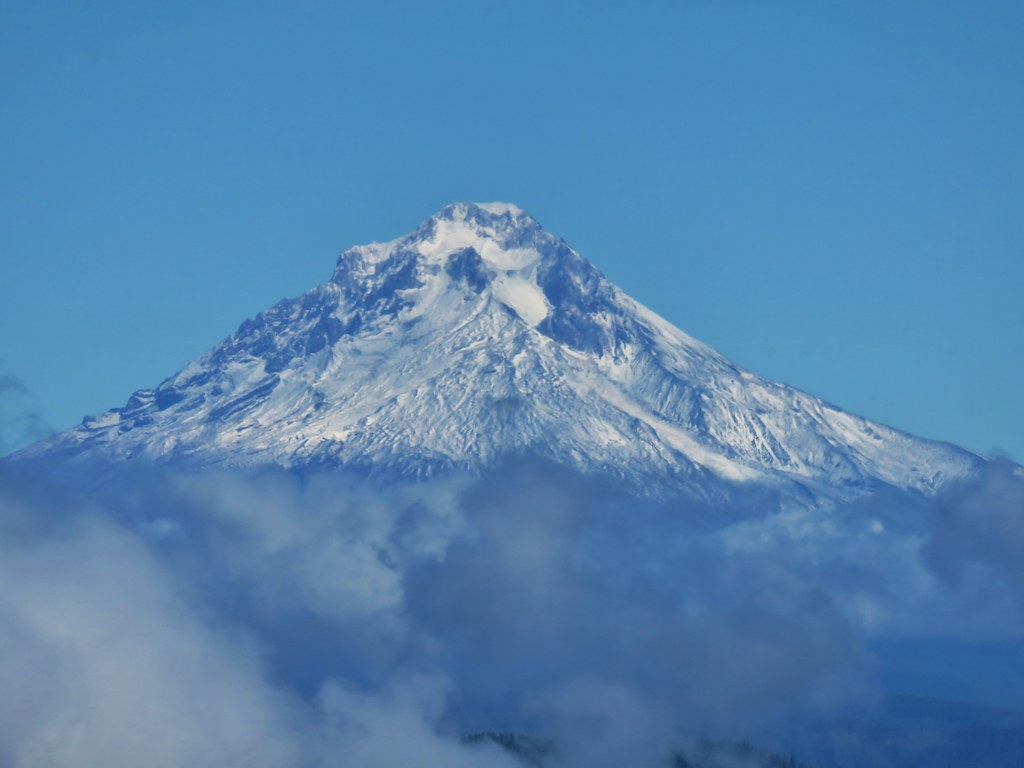
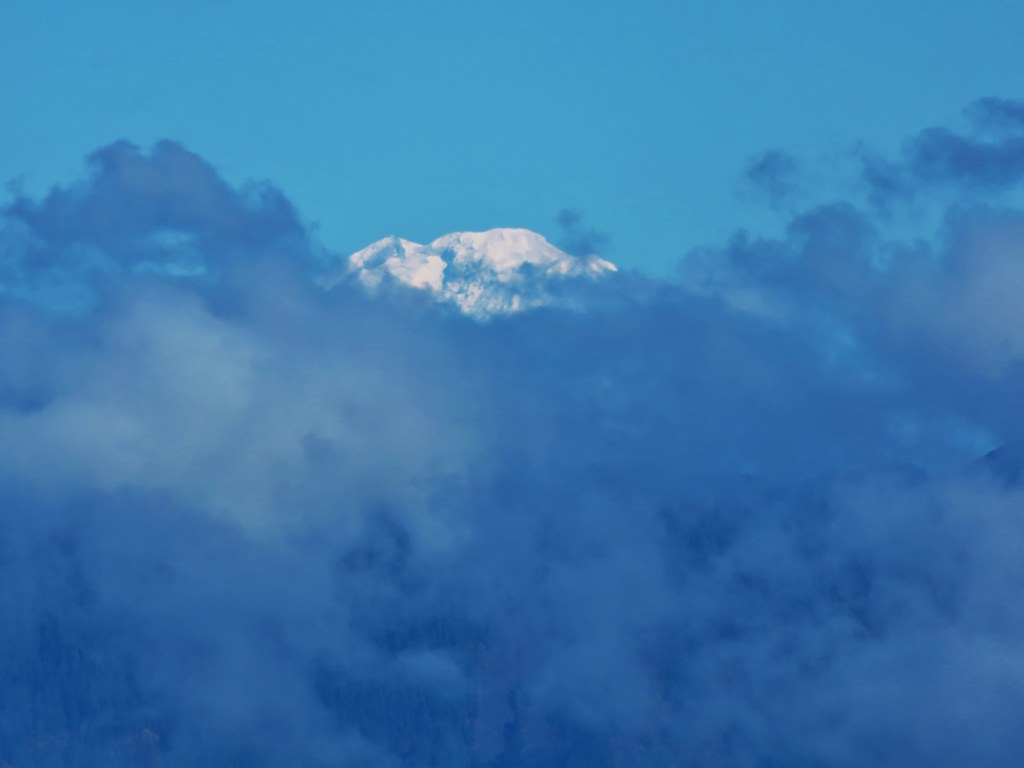
To the North was Lake Lenore, Schriner Peak, Mt. Hood, and the shy Mt. Adams.
IMG_1290//embedr.flickr.com/assets/client-code.js
IMG_1308//embedr.flickr.com/assets/client-code.js
IMG_1341//embedr.flickr.com/assets/client-code.js
IMG_1294//embedr.flickr.com/assets/client-code.js

To the southeast cascade peaks dotted the horizon while Welcome Lakes lay below in the wilderness.
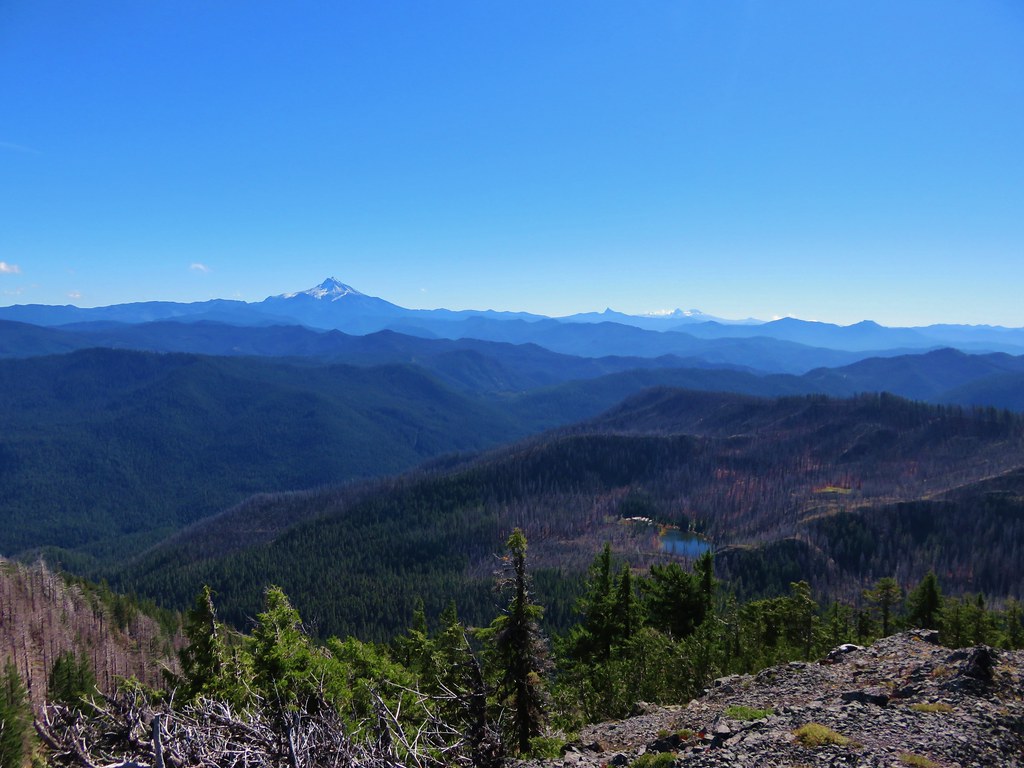
IMG_1356//embedr.flickr.com/assets/client-code.js

The peaks of the Bull of the Woods Wilderness rose to the south including Battle Ax and Bull of the Woods.
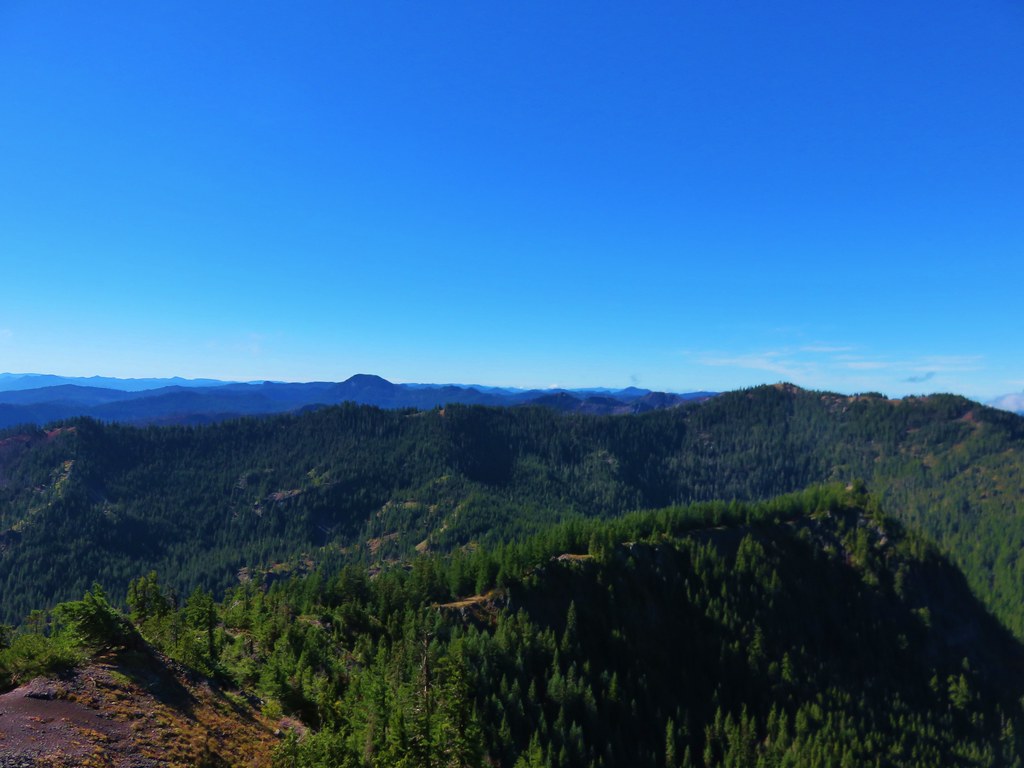
IMG_1314//embedr.flickr.com/assets/client-code.js

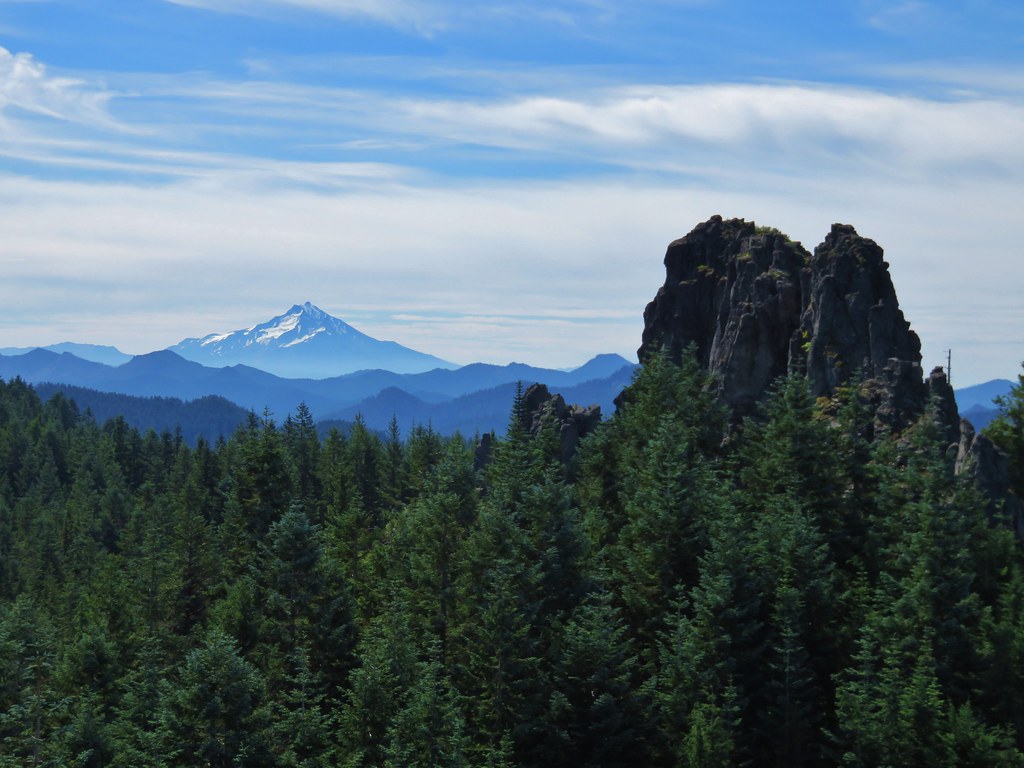
Table Rock rose above the Table Rock Wilderness to the southwest.
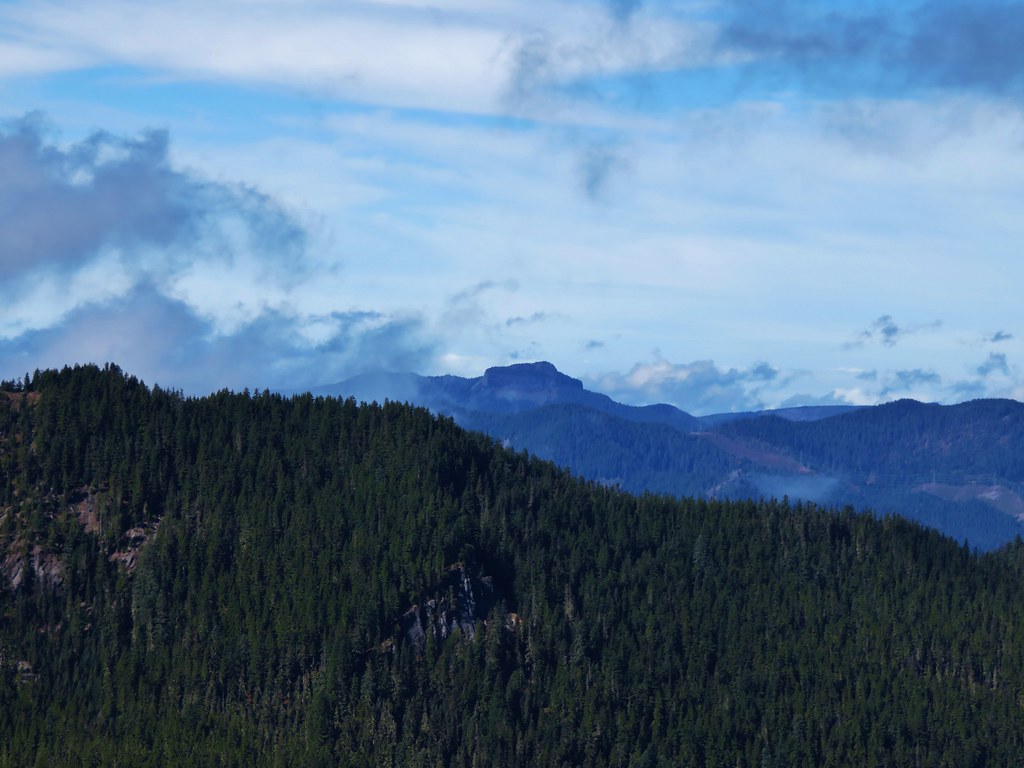
IMG_1330//embedr.flickr.com/assets/client-code.js

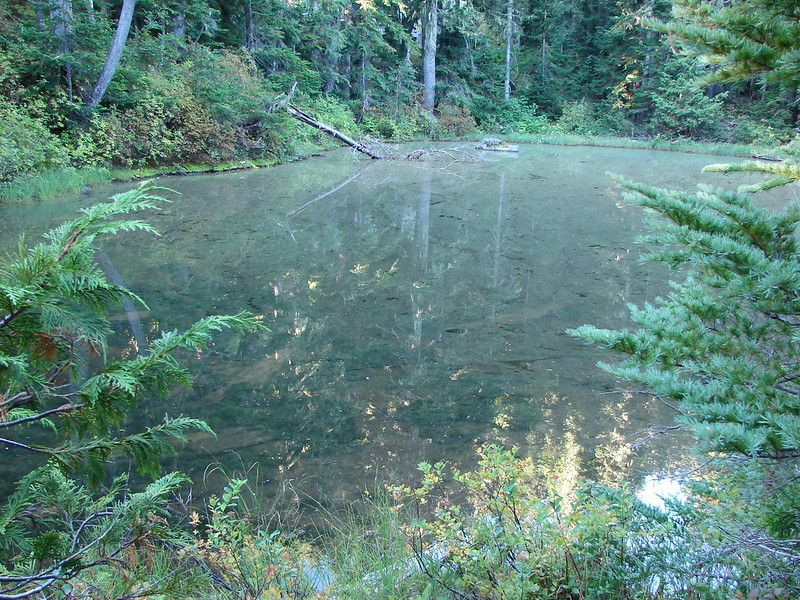
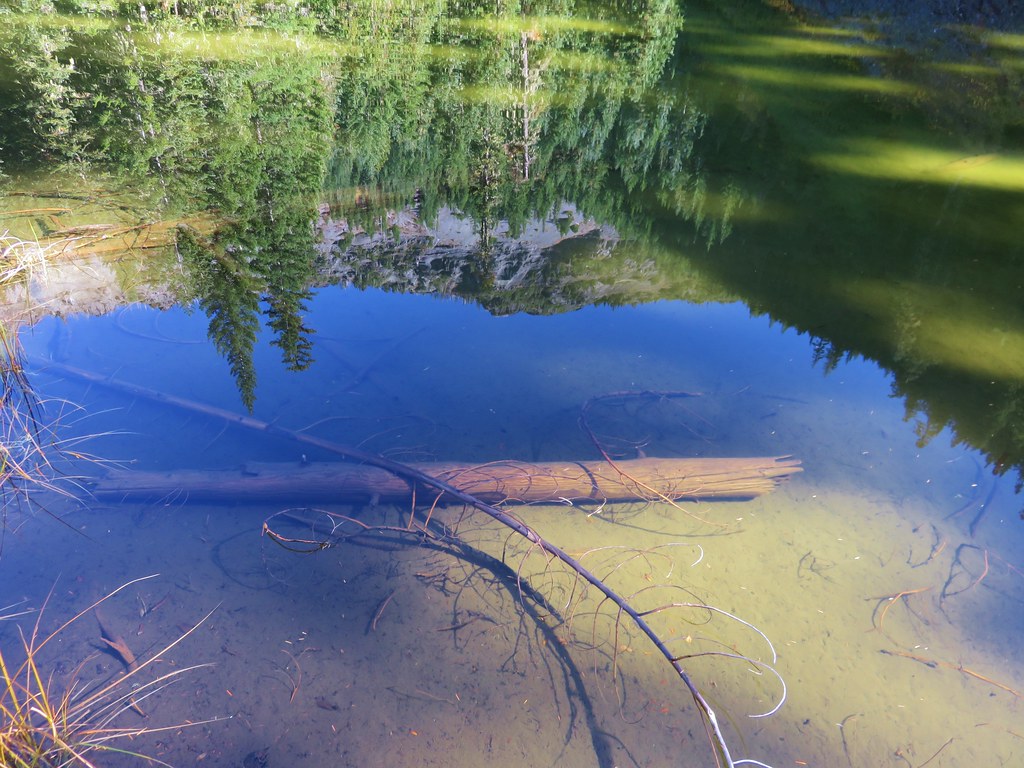
We took a long break on the summit watching the clouds in the sky and soaking in the sun before heading back downhill. On the way back we had one final stop to make. We wanted to check out an unnamed lake that lay off-trail below Big Slide Mountain. A short steep climb through some thick rhododendron bushes brought us to the edge of the small lake.
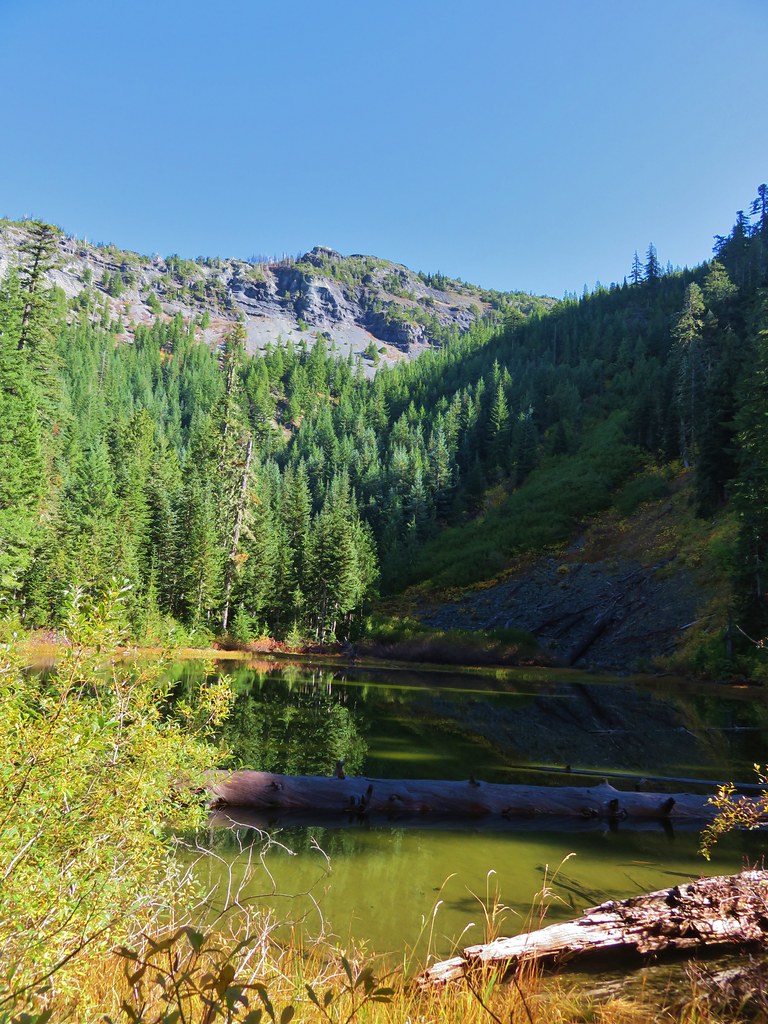
IMG_1381//embedr.flickr.com/assets/client-code.js

The water was crystal clear with some excellent reflections of Big Slide Mountain.
IMG_1389//embedr.flickr.com/assets/client-code.js

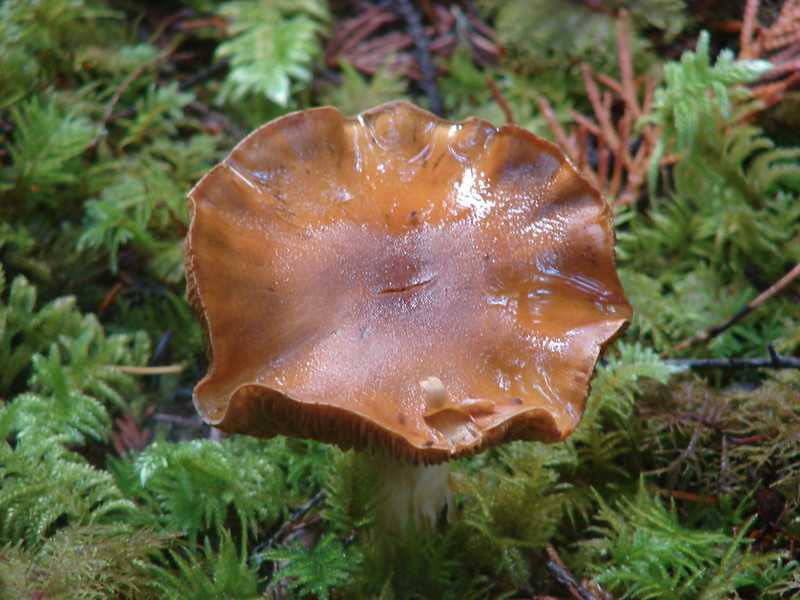
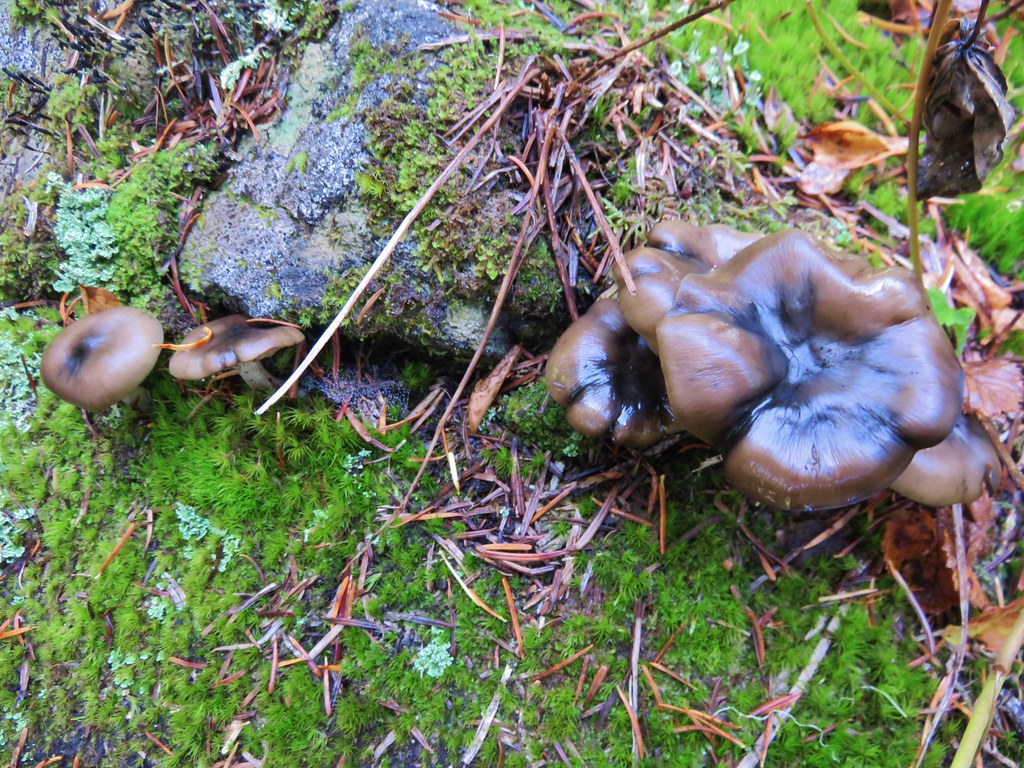
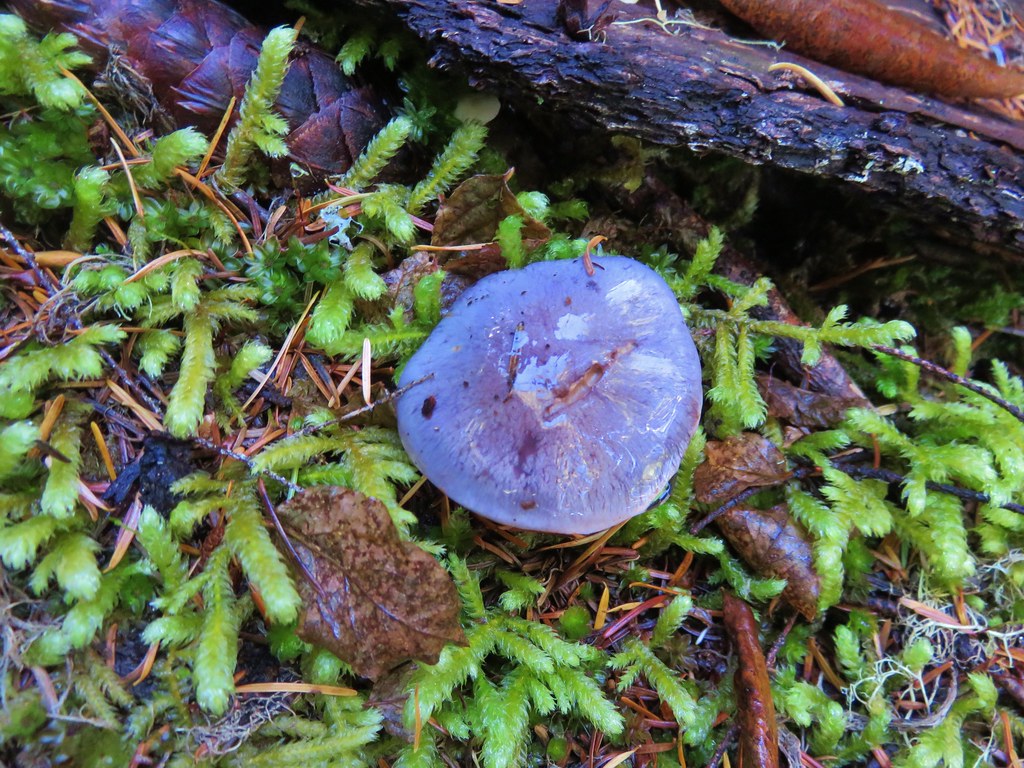
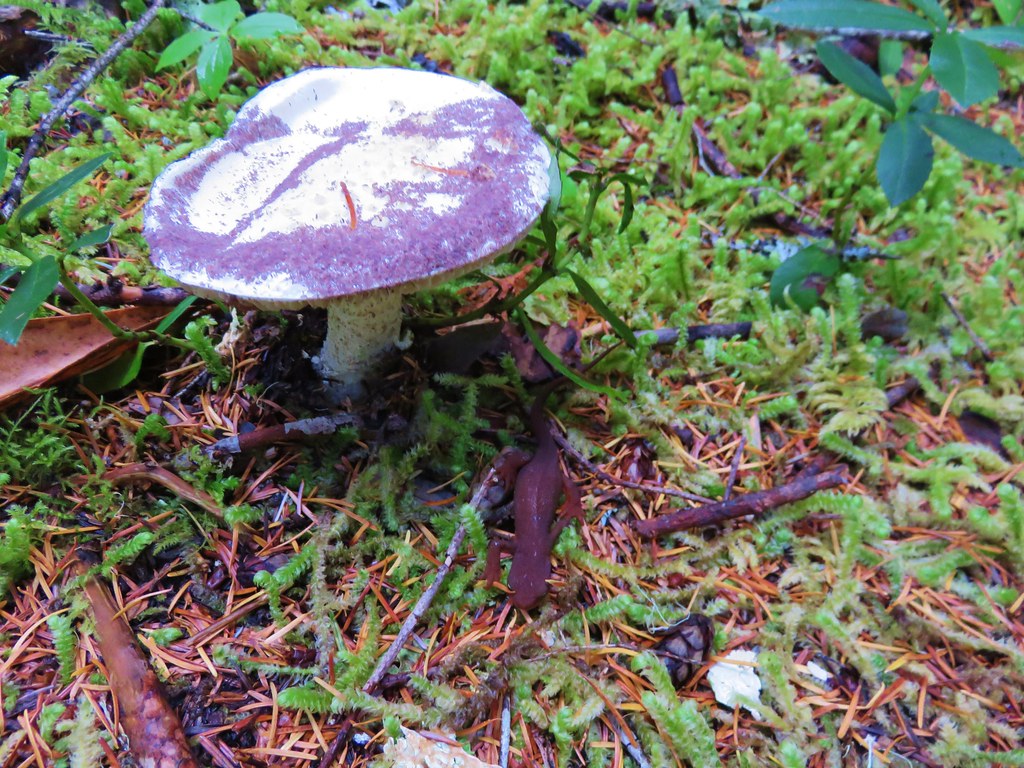
After fighting our way back through the rhododendrons we regained the trail. On our way back we stopped to check out a few interesting mushrooms, one complete with a newt.
IMG_1372//embedr.flickr.com/assets/client-code.js
IMG_1374//embedr.flickr.com/assets/client-code.js
IMG_1414//embedr.flickr.com/assets/client-code.js

When we arrived back at the dry pond the sunlight was lighting up the deciduous trees.
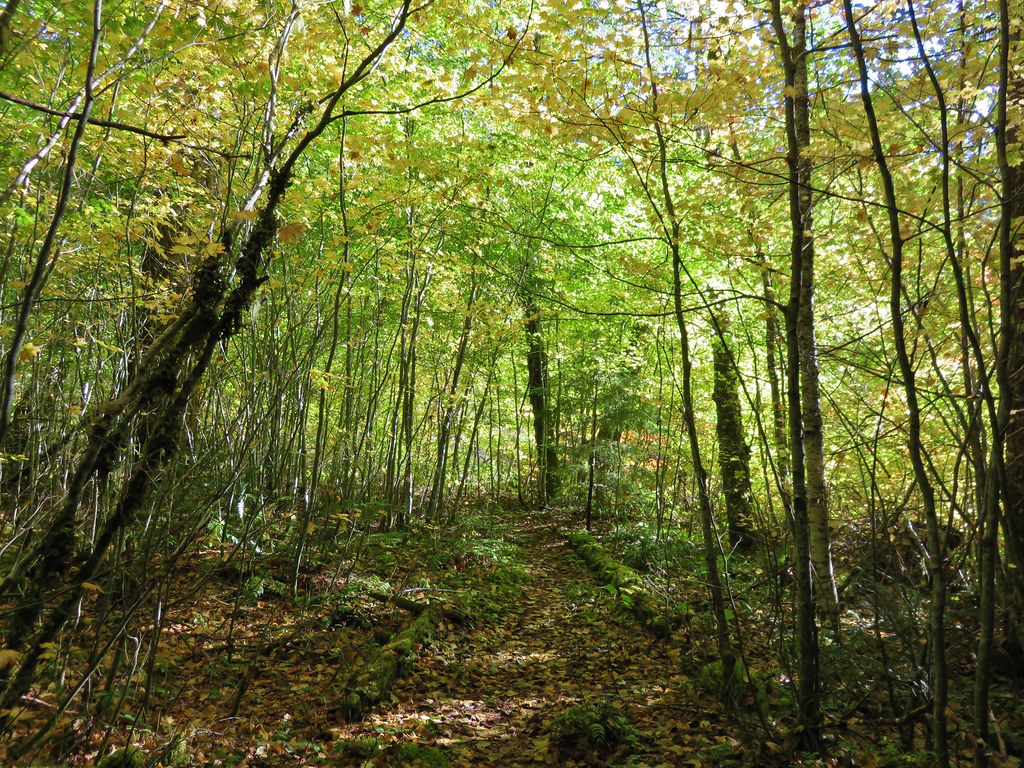
IMG_1418//embedr.flickr.com/assets/client-code.js
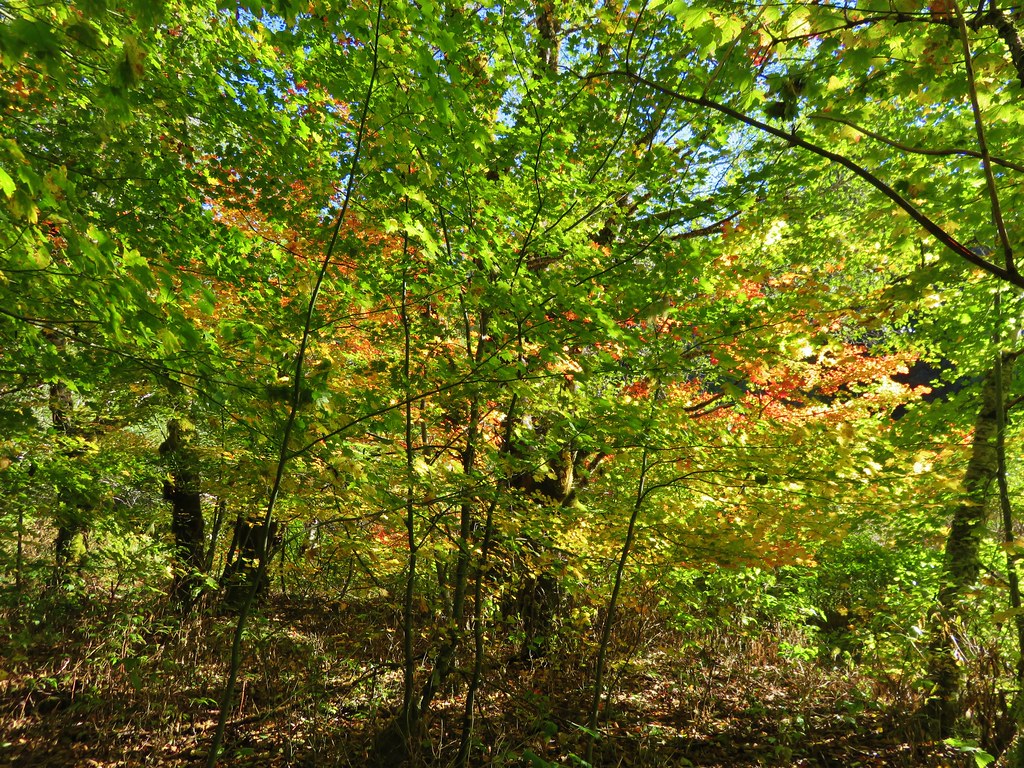
IMG_1419//embedr.flickr.com/assets/client-code.js
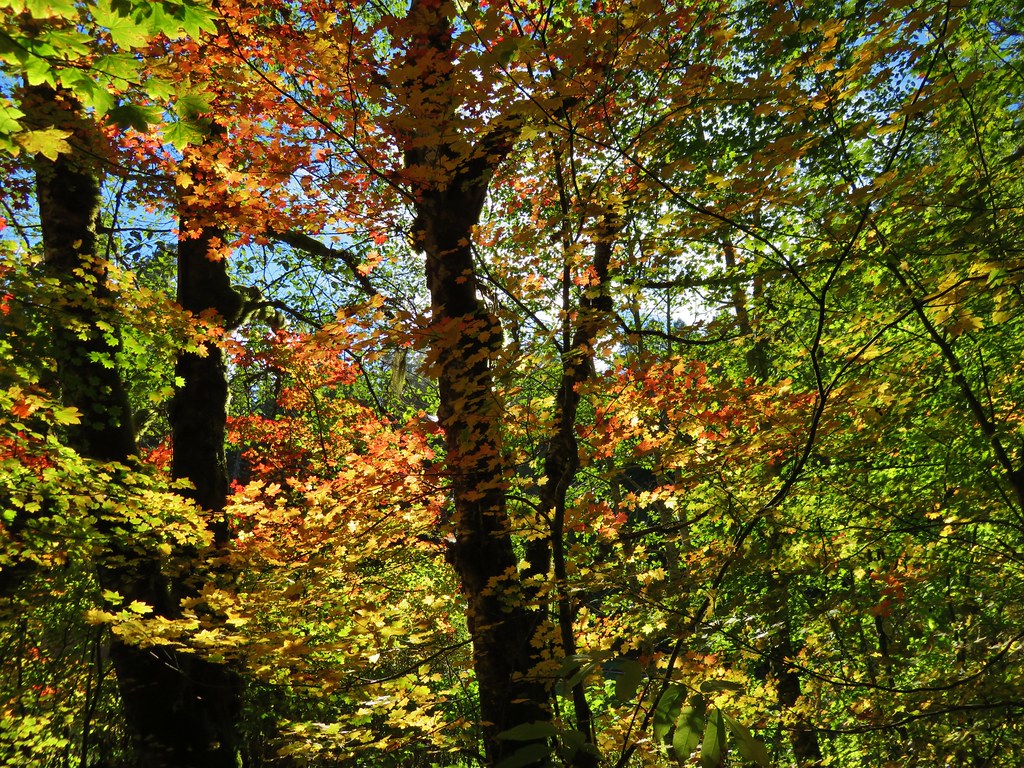
IMG_1420//embedr.flickr.com/assets/client-code.js
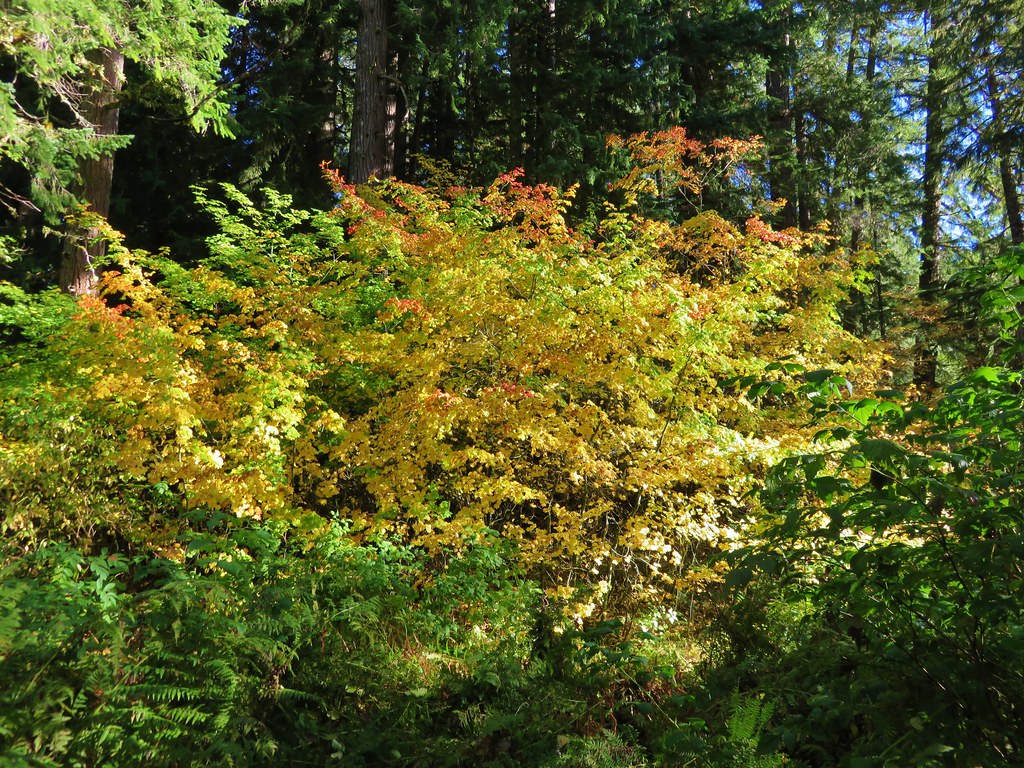
IMG_1422//embedr.flickr.com/assets/client-code.js

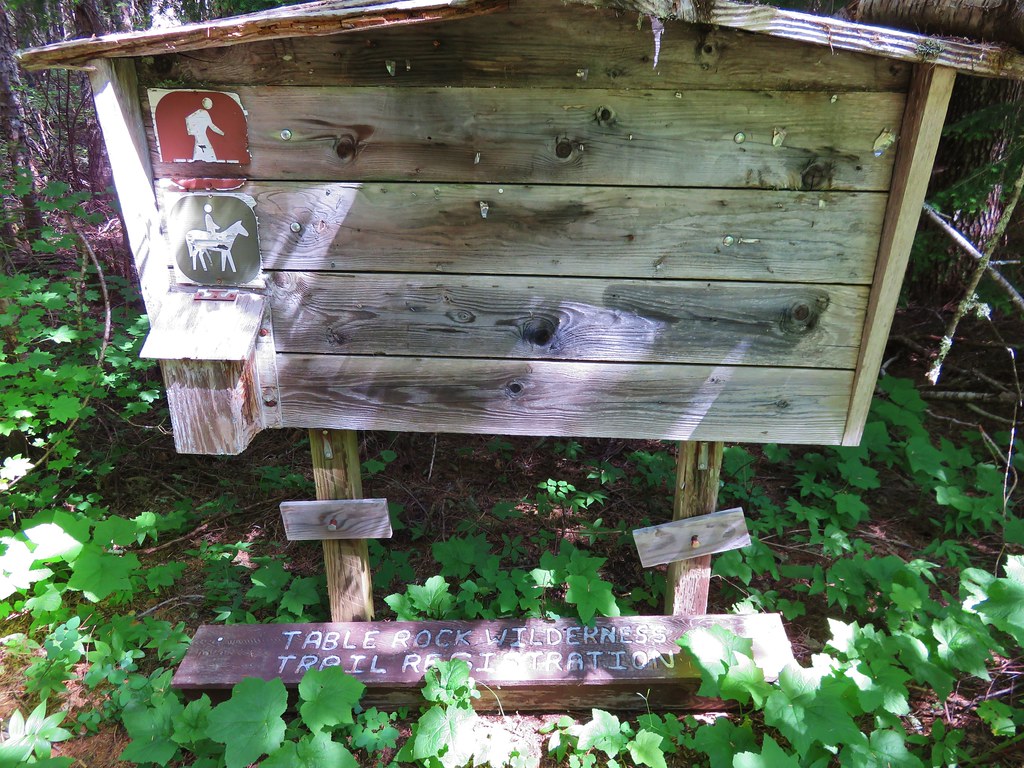
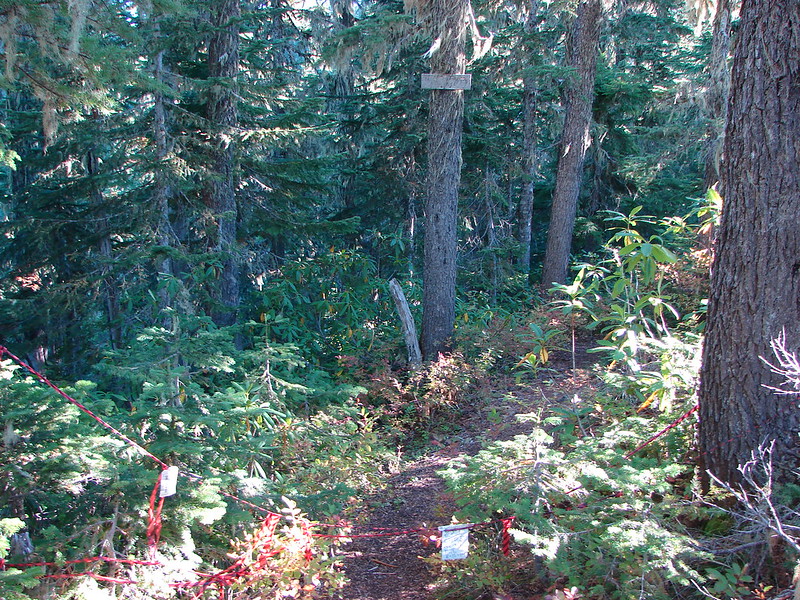
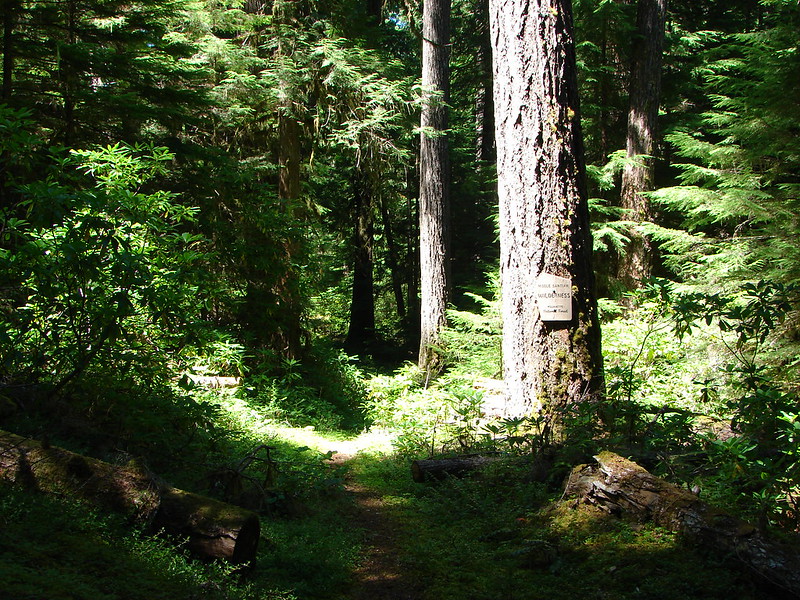
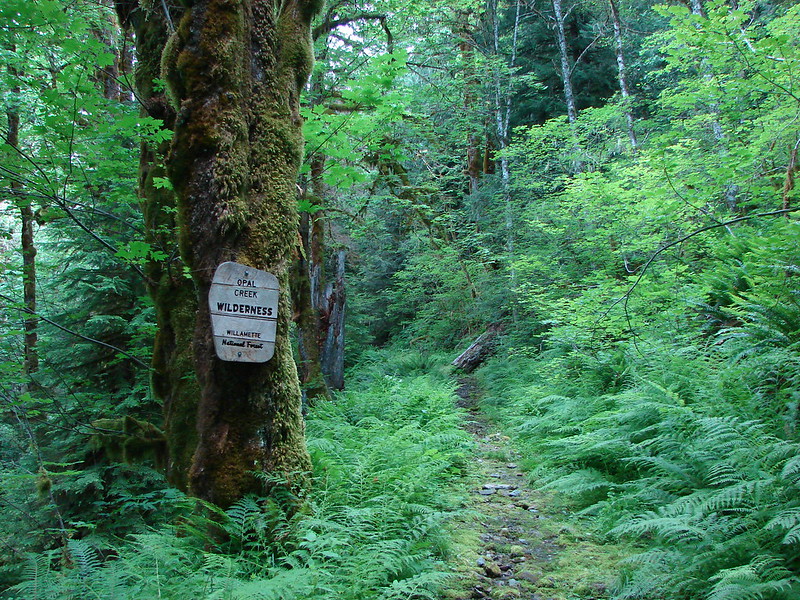
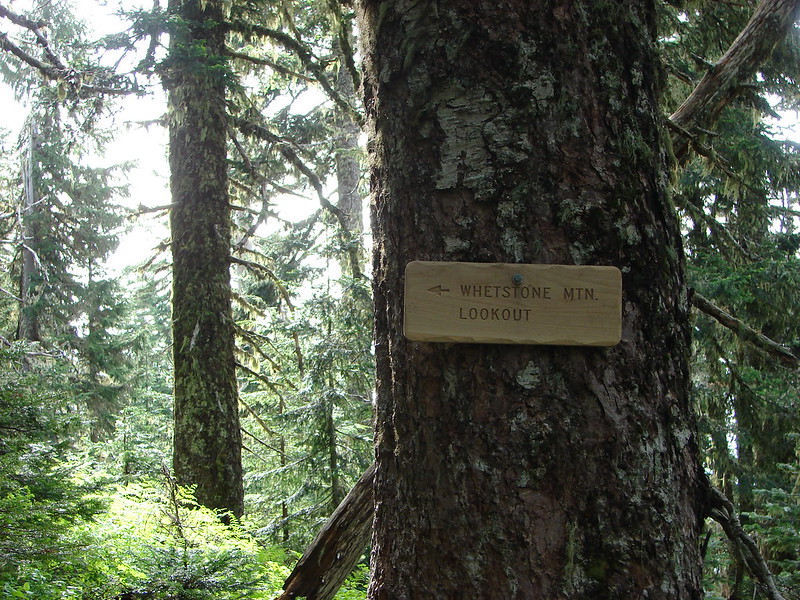
As we neared the end of our hike the only disappointment was having not seen a wilderness sign that morning. I try and get a picture of a wilderness sign for every wilderness we visit and I had been unsuccessful on our first two visits to the Bull of the Woods Wilderness. After making the steep climb away from the creek and back up to the old roadbed we began watching for signs that we may have missed on our way by earlier. Just before reaching the former trailhead we spotted the sign up on a tree.
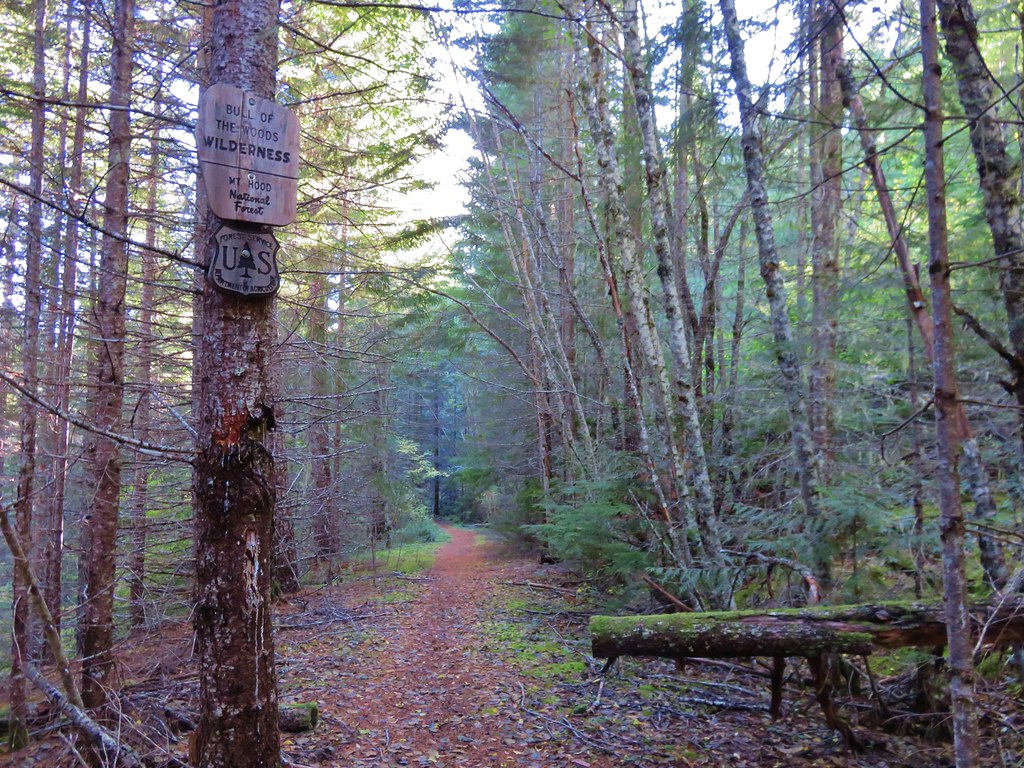
IMG_1429//embedr.flickr.com/assets/client-code.js
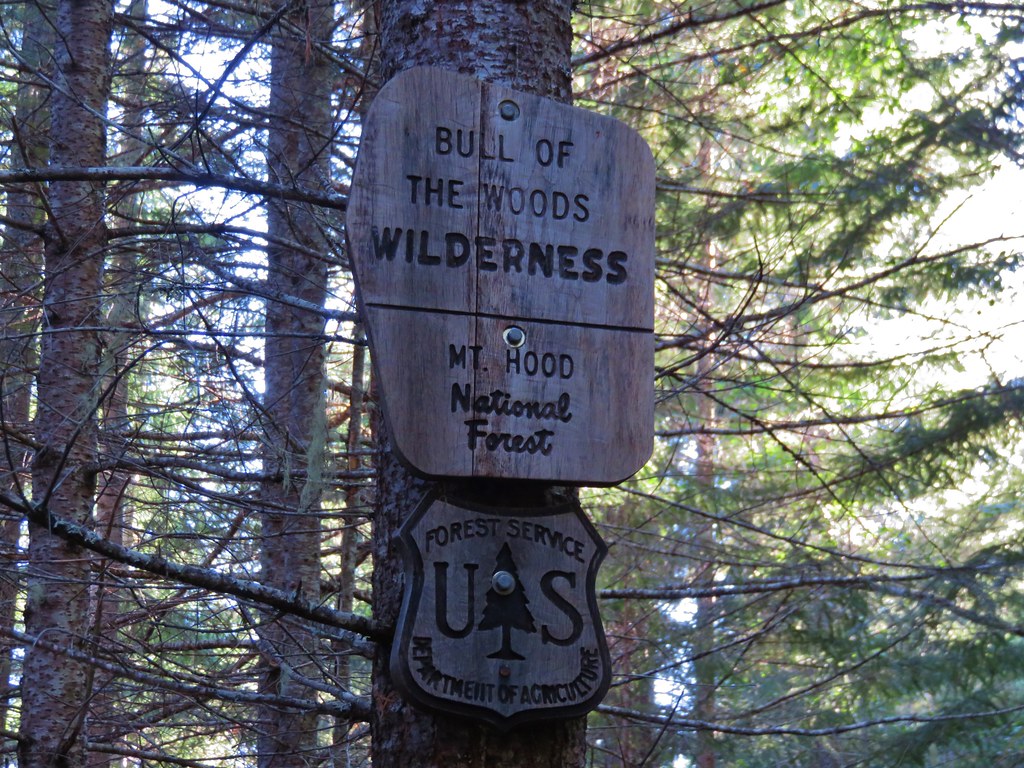
IMG_1432//embedr.flickr.com/assets/client-code.js

It was a great end to a great hike. Happy Trails!

Flickr: https://www.flickr.com/photos/9319235@N02/albums/72157659338785890
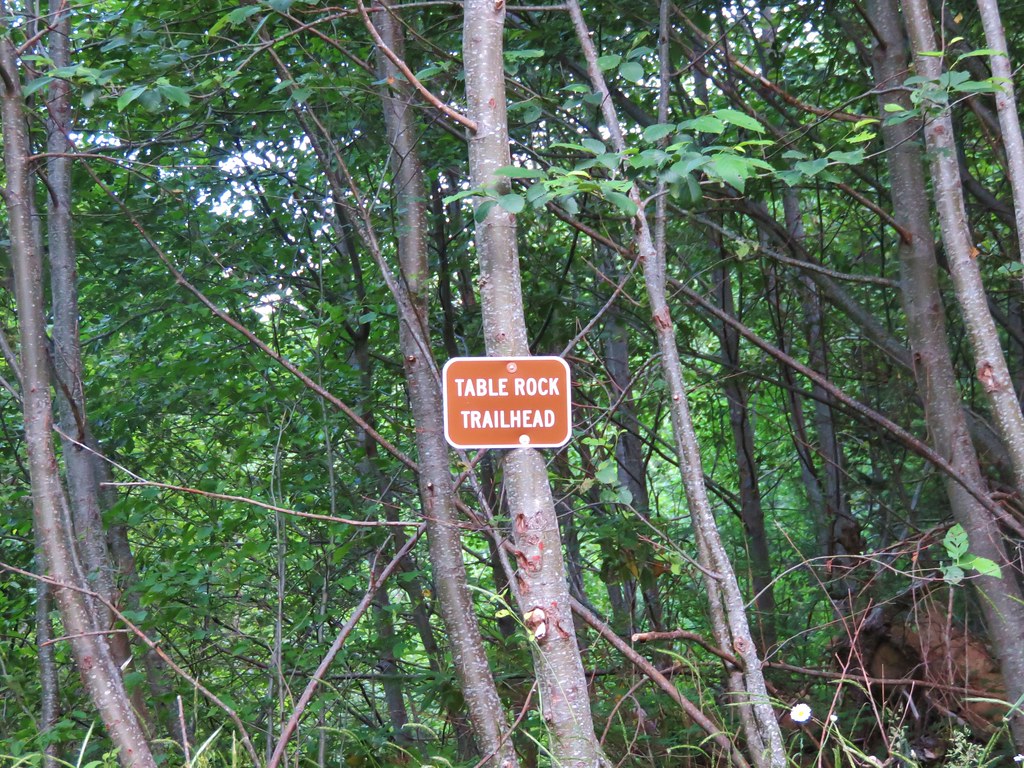
Categories
Hiking Mollala Old Cascades Oregon Trip report

Table Rock to Pechuck Lookout

**Note the 2020 Beachie Creek Fire burned a portion of this hike.**

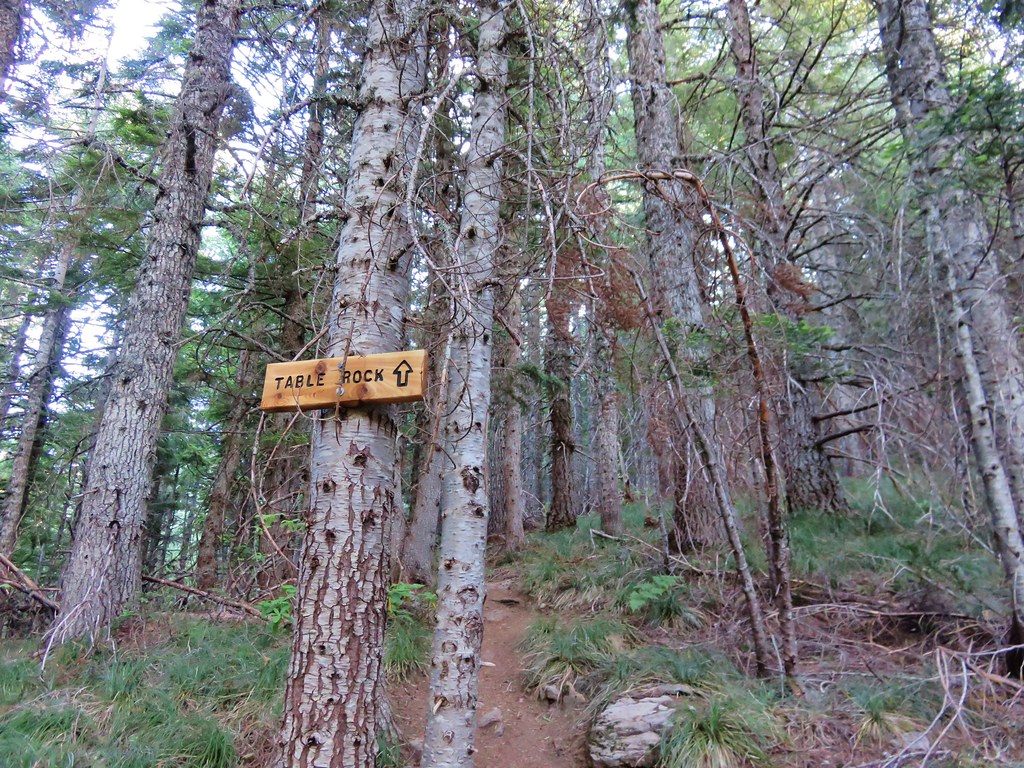
We have two lists of “To Do” day hikes within a reasonable driving distance. One list is the hikes we have yet to do, and the second list is hikes we want to try again for one reason or another. Table Rock was one of the hikes on the later list having first visited in October of 2012. During that hike smoke from the Pole Creek fire in the Three Sisters Wilderness had limited the views and being fall it was too late for many flowers. We had seen enough on that visit to think it would be worth a second visit in early summer to see if we could catch the views and see what flowers there might be. I put it down on our schedule as our annual 4th of July hike thinking the timing might be good for wildflowers plus the drive avoided much time on freeways or busy highways.

The Table Rock Wilderness consists of 6028 acres designated in 1984 as wilderness and is managed by the Bureau of Land Management. Several trailheads access the 16 miles of trails in the area. For our hike we started at the Table Rock Trailhead which happens to be the shortest route to the summit of Table Rock, the highest point in the wilderness.
IMG_5256

IMG_5257

When we redo a trail I try to find some way to differentiate the hike from the earlier visit. Only 13 of our 172 hikes so far had been “re-hikes” and only 3 of those had we done the same exact trails. Three other times we added other short hikes on different trails, and on the remaining 7 we extended the hike visiting new places further along the trail. The plan to make this visit unique was to continue on past Rooster Rock, where we had turned around on our first visit, and continue on to Pechuck Lookout.

We set off on an old roadbed that is now the Table Rock Trail after rocks slides closed the road, the first at the current trailhead. We reached the second slide after .3 miles where the trail briefly entered the forest to bypass the slide.
IMG_5262

IMG_5263

Beyond the second slide the old road again becomes the trail for nearly another mile. Small trees and flowers now line the gravel road making it a pleasant walk.
IMG_5267

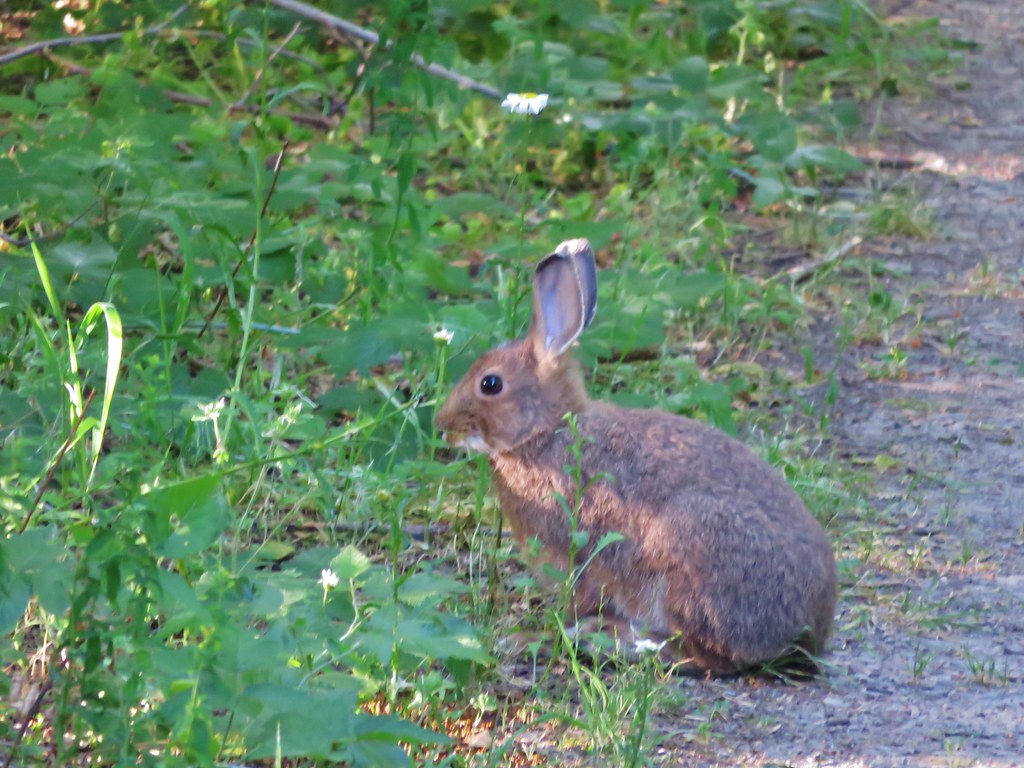
Rabbit along the road.
IMG_5269

At the 1.3 mile mark the trail leaves the road for good at the site of the former trailhead. Shortly after reentering the forest the Image Creek Trail joins from the right. A nice sign that had not been there in 2012 pointed to the Table Rock Trail.
IMG_5272

From this junction the trail passes below a large rock field that extends from the base of Table Rock then swings out and around a rocky ridge before turning back toward Table Rock and entering the rock field going the opposite direction of the earlier pass below.
IMG_5277

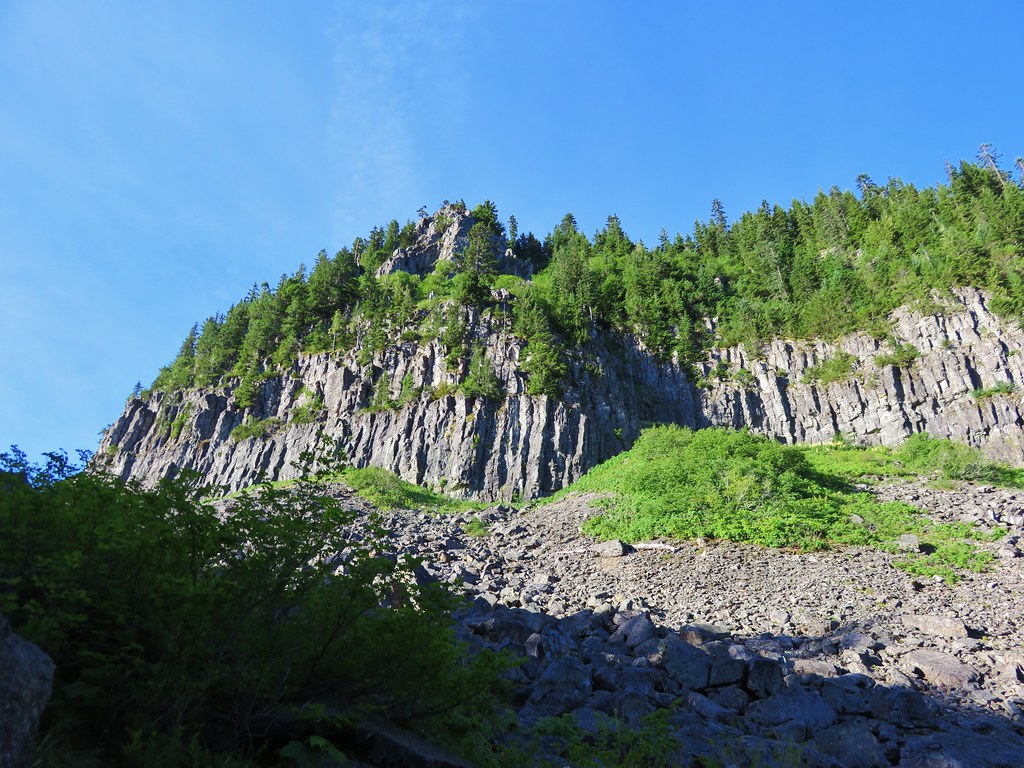
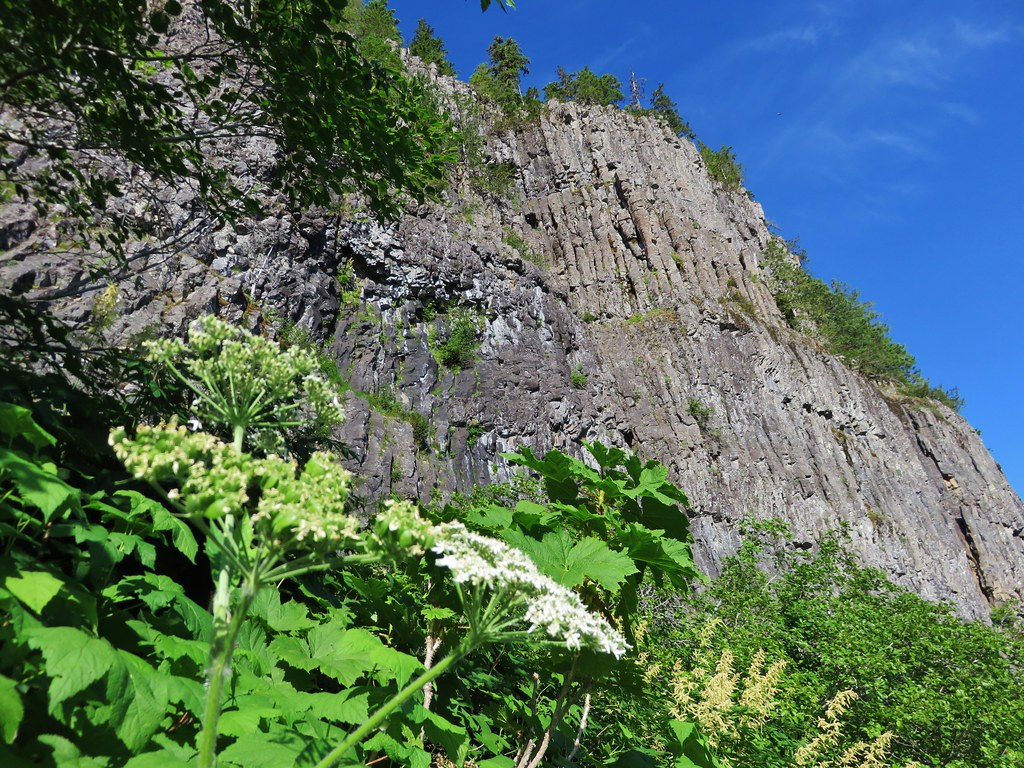
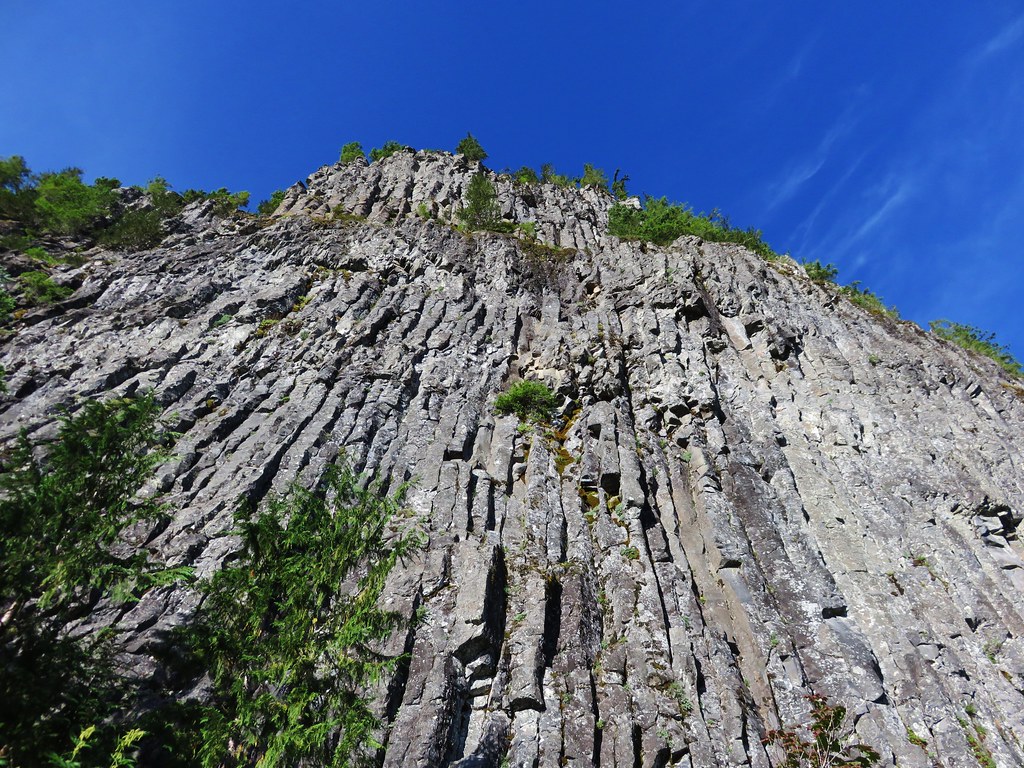
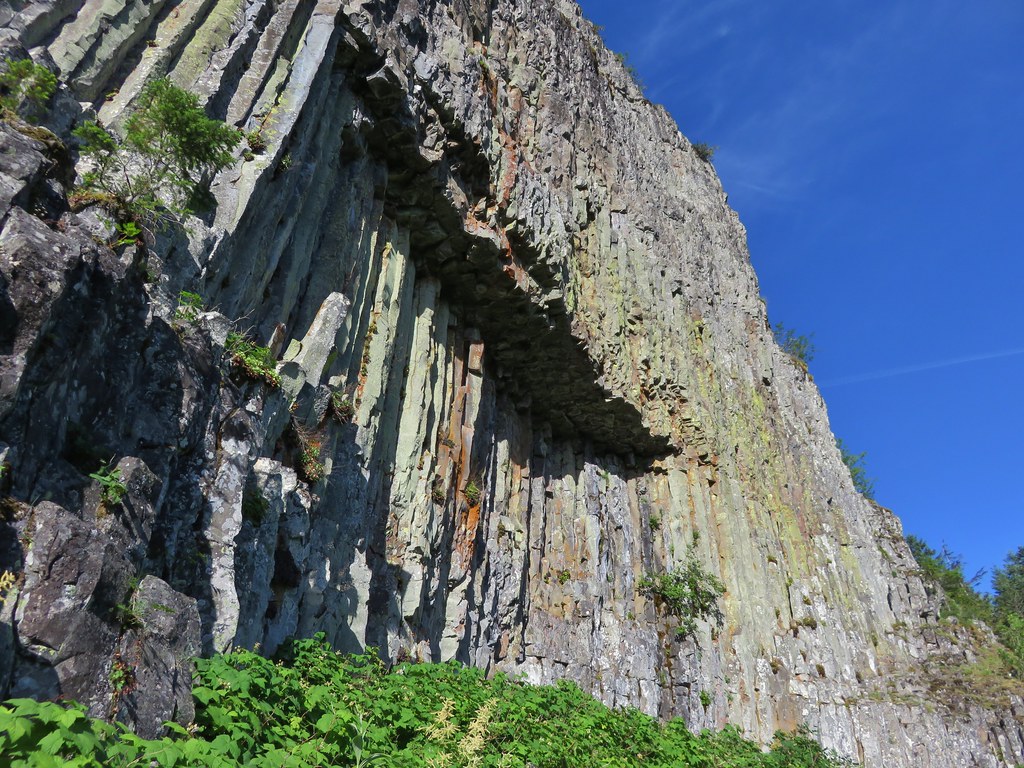
The rock field offers a close up look at Table Rocks columnar basalt cliffs. Numerous pikas were calling out from the rocks all around us but we weren’t able to spot any.
IMG_5292

IMG_5294

IMG_5300

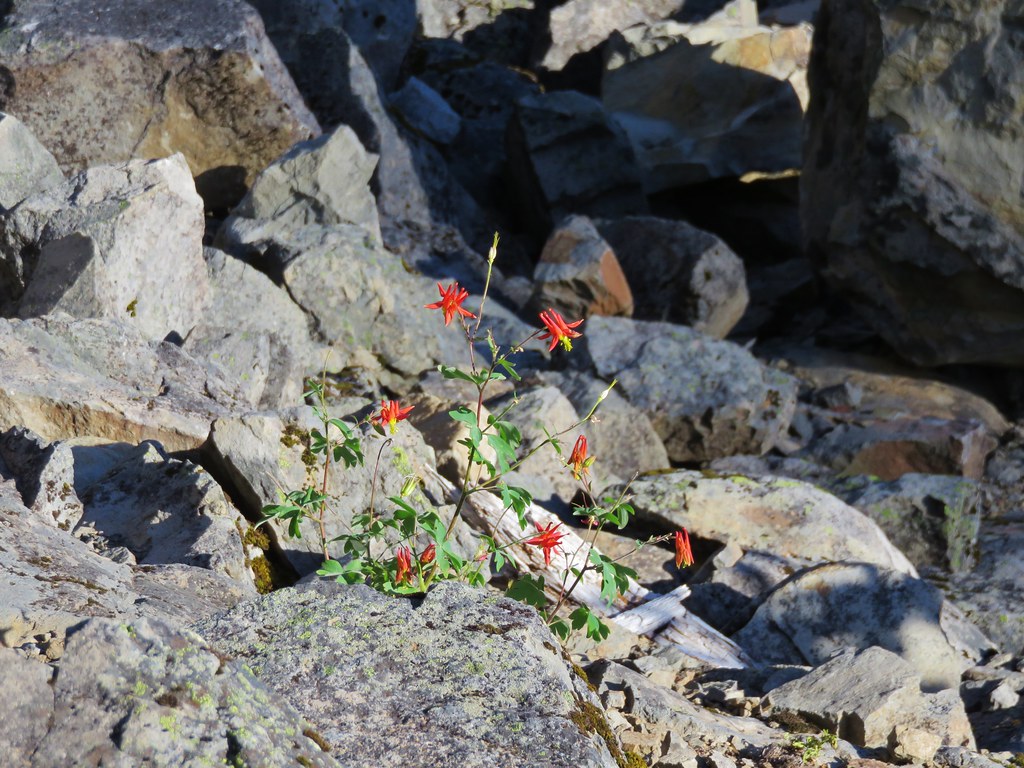
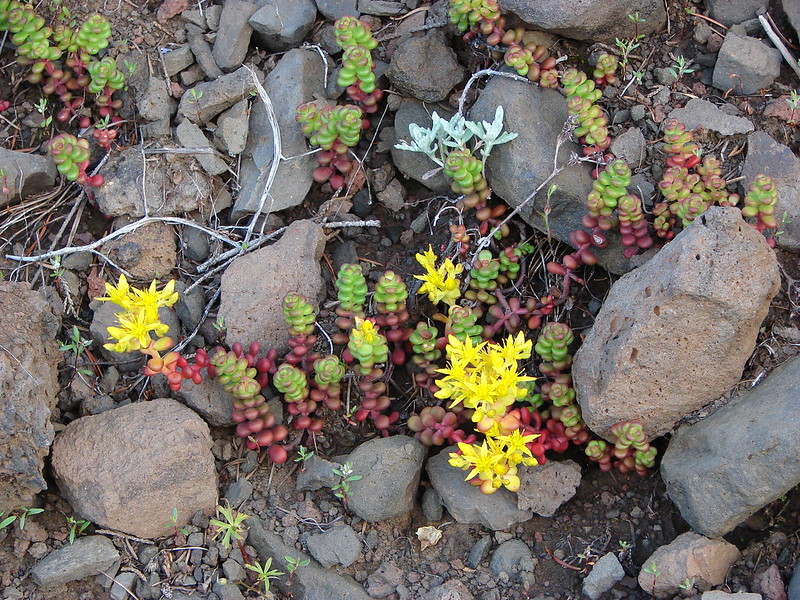
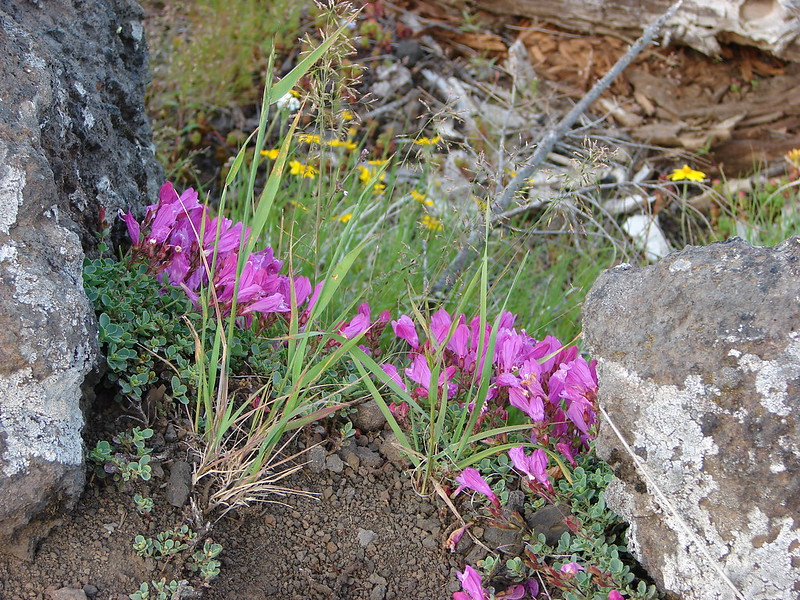
There were also a few flowers managing to bloom in the rocks.
IMG_5285

IMG_5293

IMG_5295

IMG_5310

IMG_5497

The trail then reenters the forest and climbs to a trail junction in a saddle. We turned left and followed the Table Rock Summit trail .4 miles to the tilted plateau of Table Rock.
IMG_5322

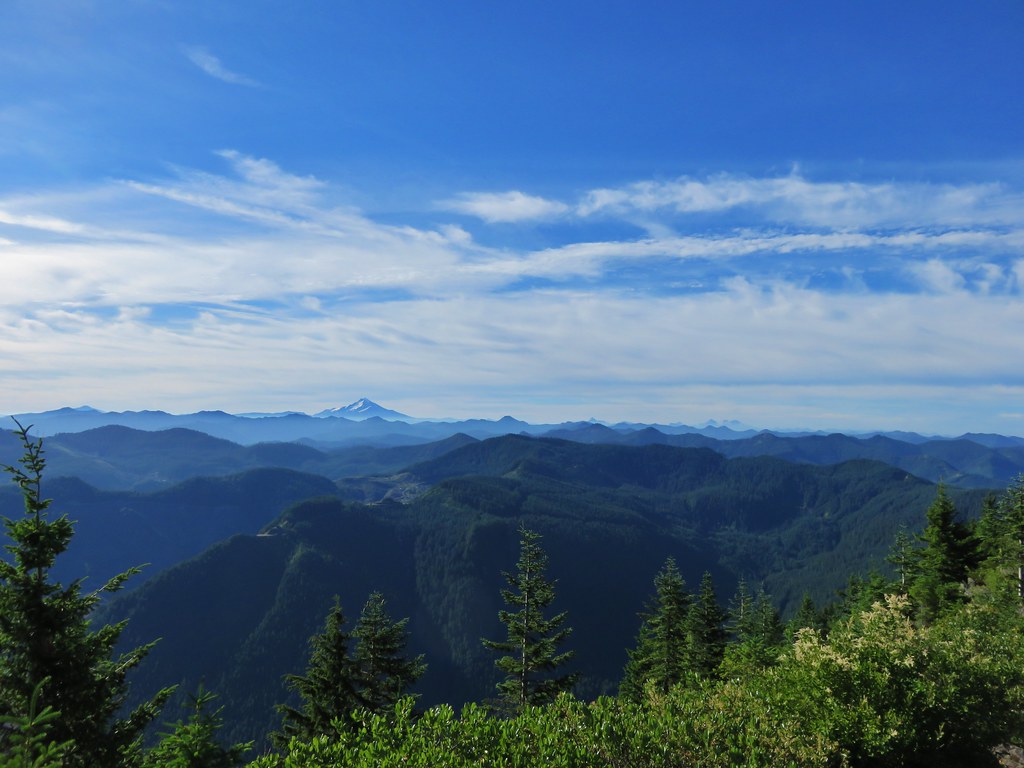
The view was indeed better than it had been on our previous visit despite a fire that had broken out on Mt. Adams the day before. We could just make out Mt. St. Helens and Mt. Rainier along with Mt. Adams in Washington and had good views of Mt. Hood, Mt. Jefferson, Three Fingered Jack, Mt. Washington, and the Three Sisters in Oregon.

Mt. Jefferson to the Three Sisters
IMG_5330

Mt. Hood
IMG_5331

Mt. Jefferson
IMG_5332

Three Fingered Jack
IMG_5334

Three Sisters
IMG_5335

Mt. Adams
IMG_5350

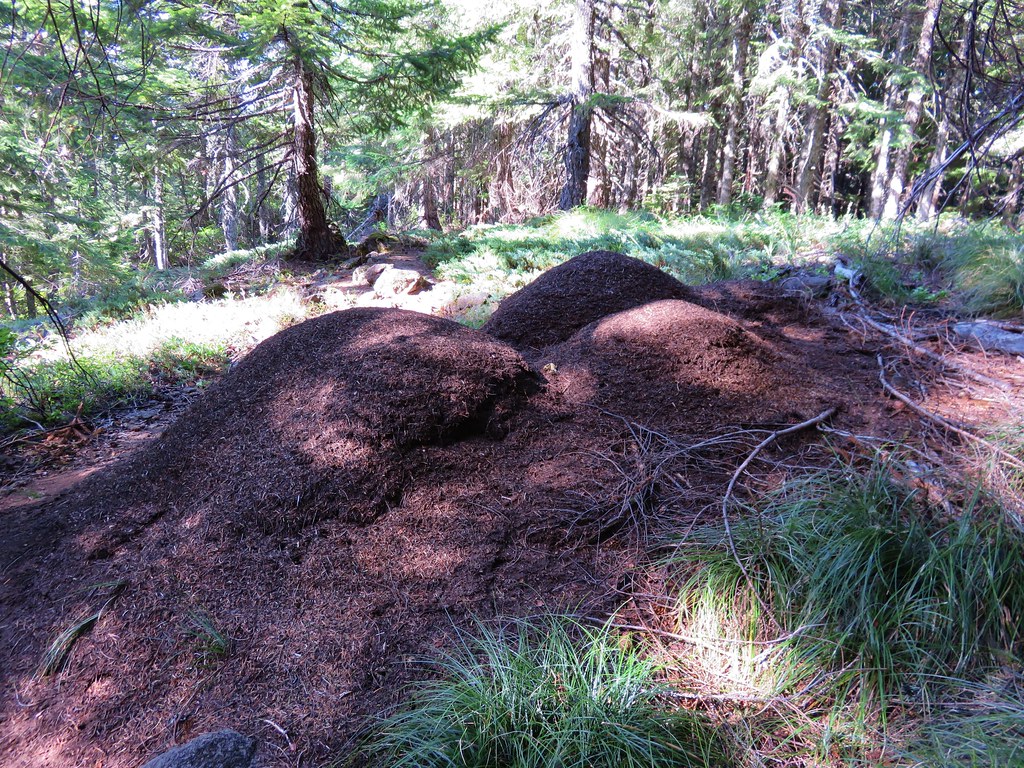
After exploring the plateau we returned to the junction and took the unsigned Saddle Trail toward Rooster Rock. Two things stand out about this trail. First is the ants which were everywhere. They were all over the trail and there were several large anthills right next to it.
IMG_5363

IMG_5364

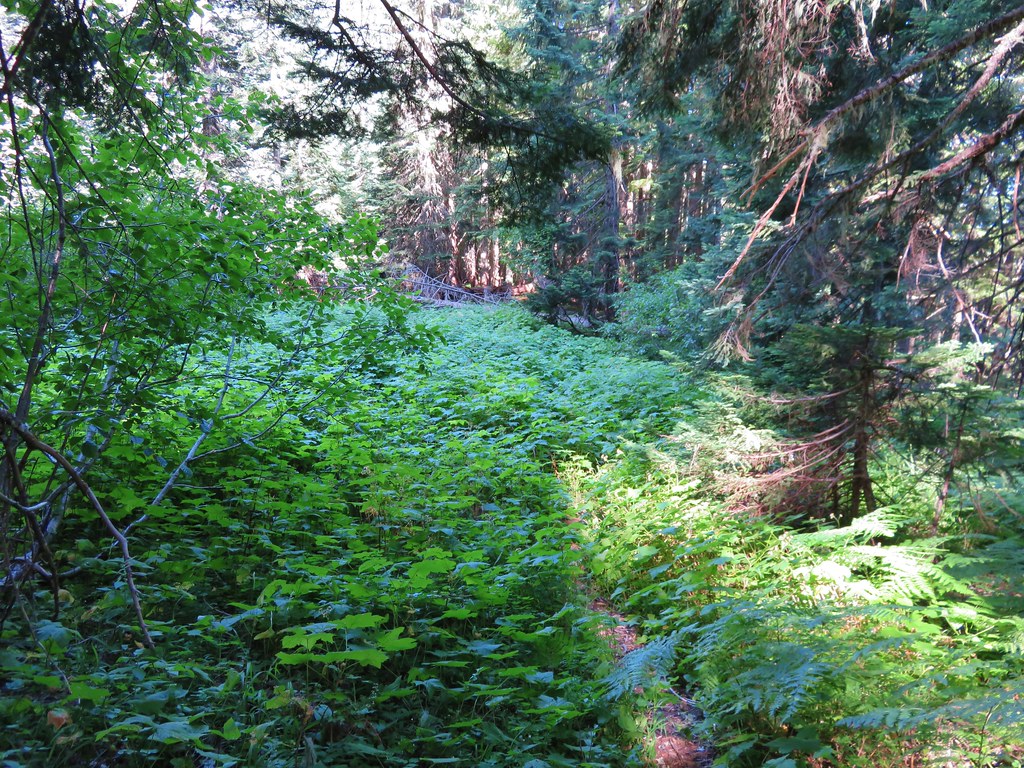
The second thing that made an impression is the steepness of this trail as it dips down and then back out of a thimbleberry meadow at the head of Image Creek. The trail all but disappeared in the thimbleberry bushes but it wasn’t too hard to follow. The nice thing about thimbleberry is that the plants do not have thorns so they are not bad to walk through. We did have to maneuver around a couple of devil’s club plants though.
IMG_5373

IMG_5374

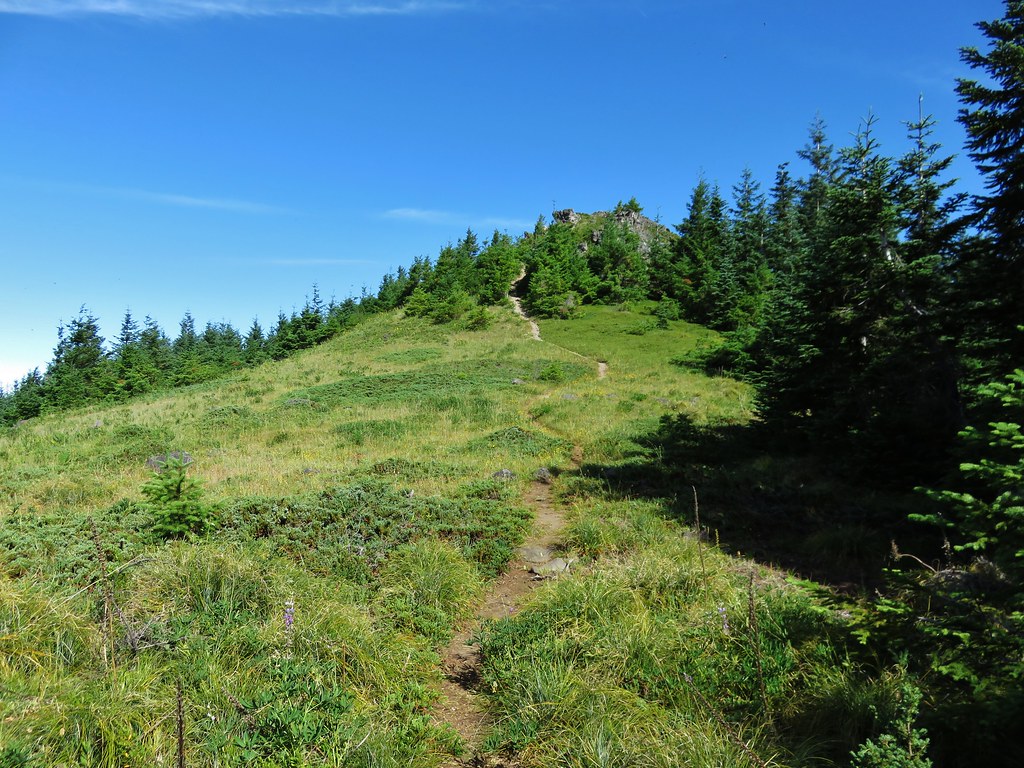
The steep climb up from Image Creek ends at a saddle below Rooster Rock. Trees here block the view of Rooster Rock but a short path to the right goes up through a small meadow to a rocky viewpoint.
IMG_5385

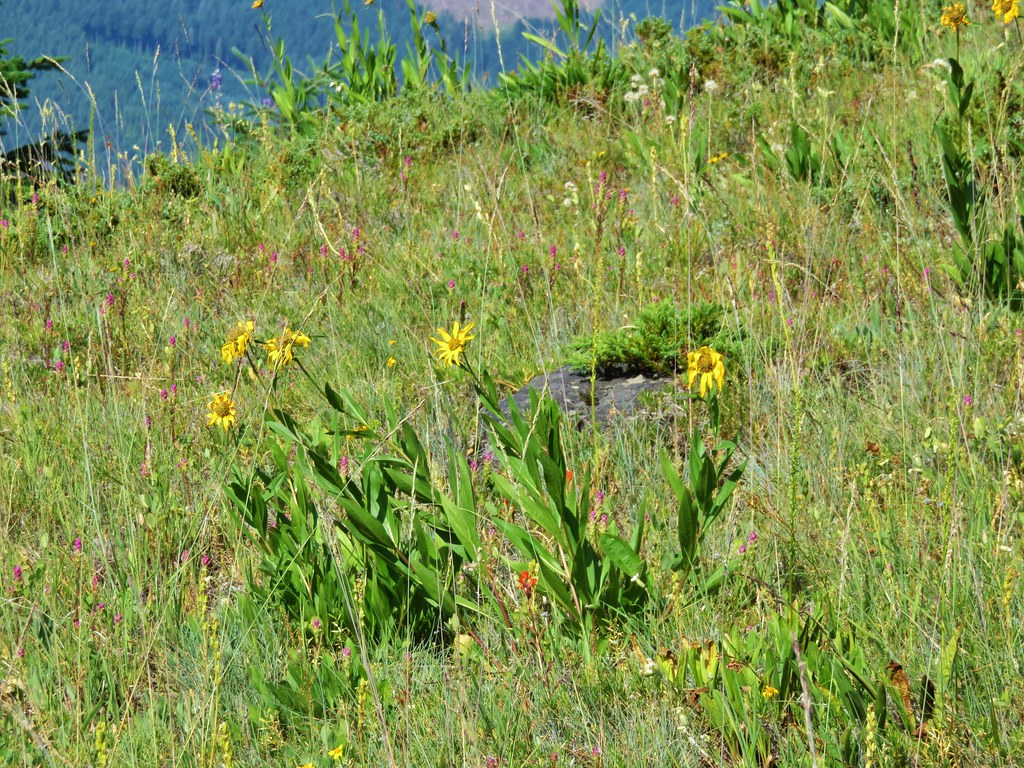
I had thought this small meadow might be a good wildflower spot, and there were some but not in any large amounts.
IMG_5378

IMG_5392

IMG_5409

IMG_5413

IMG_5414

IMG_5415

IMG_5418

The view toward Rooster Rock was better this time too.
IMG_5396

IMG_5398

IMG_5399

After a short rest we were ready to head for Pechuck Lookout. From the saddle we needed to drop down on the other side of the ridge to the High Ridge Trail. We were now starting the portion of the hike that we had not done before and we were in for a surprise. Just on the other side of the saddle was a meadow full of wildflowers.
IMG_5423

IMG_5422

IMG_5425

IMG_5426

IMG_5429

IMG_5433

IMG_5437

IMG_5439

Many of the flowers were past their prime succumbing to the heat, but there were still enough to make it an impressive sight. In most years our timing would likely have been spot on but the hot dry weather we’d been having has all the flowers at least two weeks ahead of schedule. On the far side of the meadow the trail again entered the trees.
IMG_5440

The High Ridge Trail was far more gentle with its ups and downs than the Saddle Trail had been. After .7 miles the Rooster Rock Trail joined from the right coming up from the trailhead on Rooster Rock Rd.
IMG_5442

We continued going up and down along the ridge leaving the wilderness and arriving at another former trailhead along the gated road near Pechuck Lookout.
IMG_5446

The trail continued on the far side of the road passing a nice view of Table Rock along the way.
IMG_5448

IMG_5449

This short section of trail was another steep one before ending at the lookout.
IMG_5450

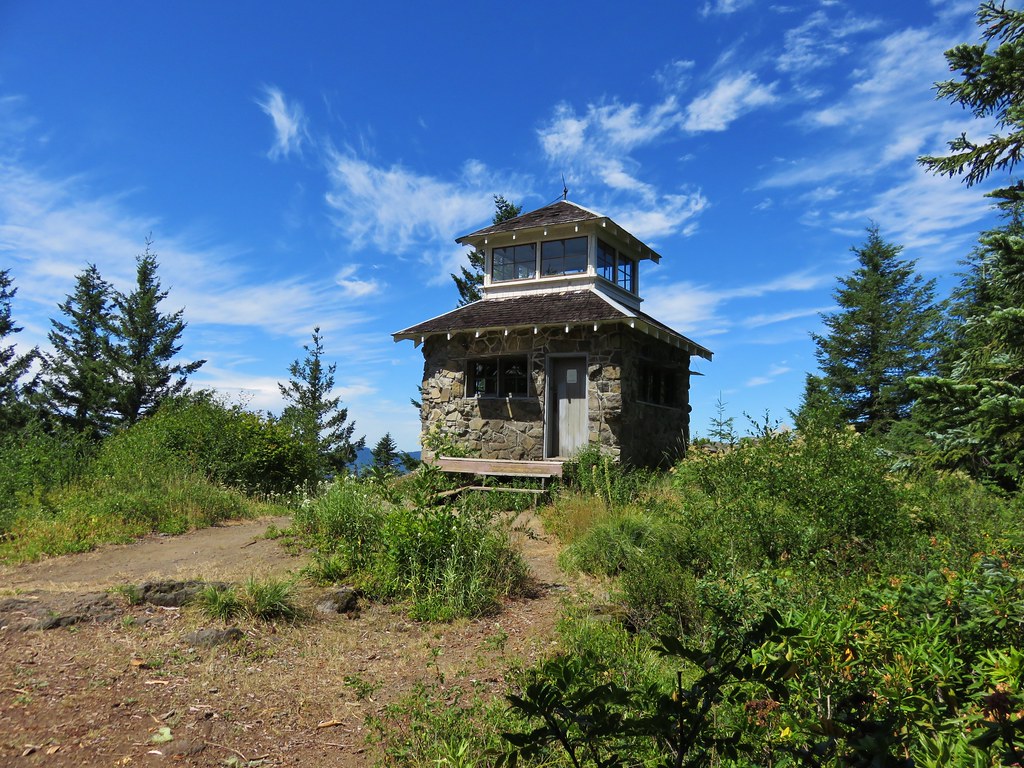
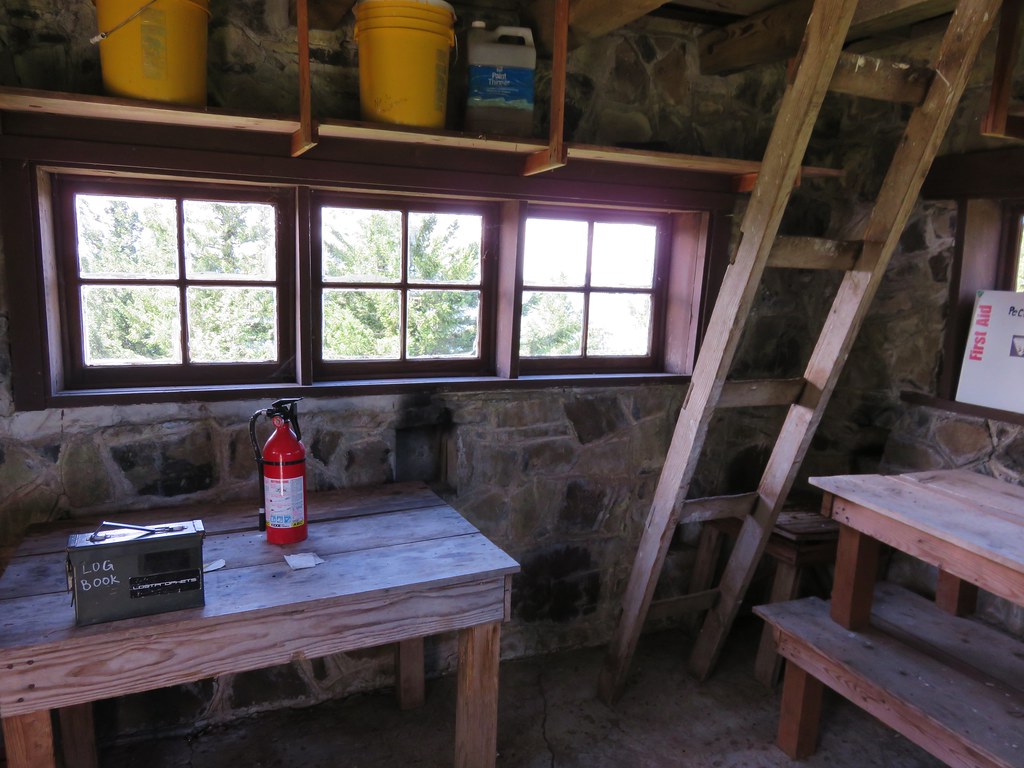
Pechuck Lookout was staffed from 1918/19 until 1964 with the current structure having been built in 1932. It is now available for overnight stays on a first come first serve basis. There was no one staying there so we went inside to take a look around and sign the log book.
IMG_5453

IMG_5454

IMG_5455

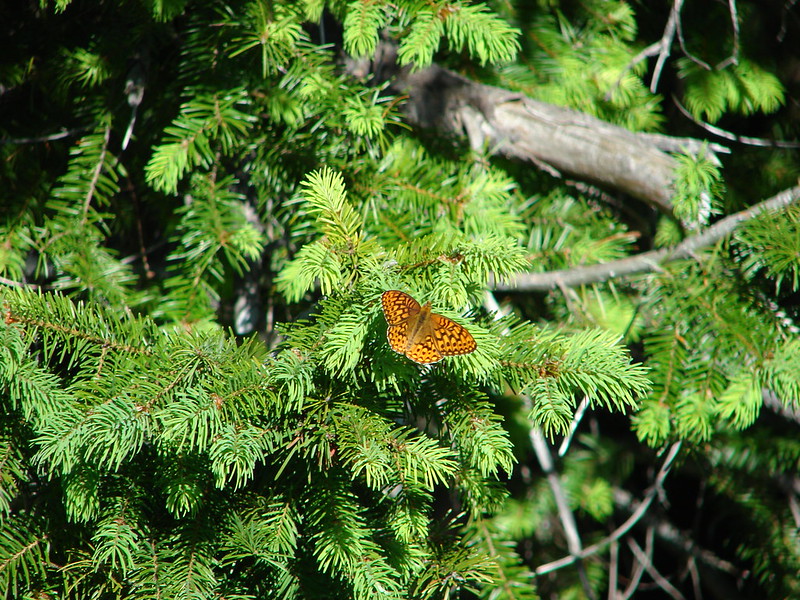
It was too warm to stay inside for long so we headed back out into the shade and had anther bite to eat while watching the many butterflies flitting about.
IMG_5459

IMG_5464

IMG_5466

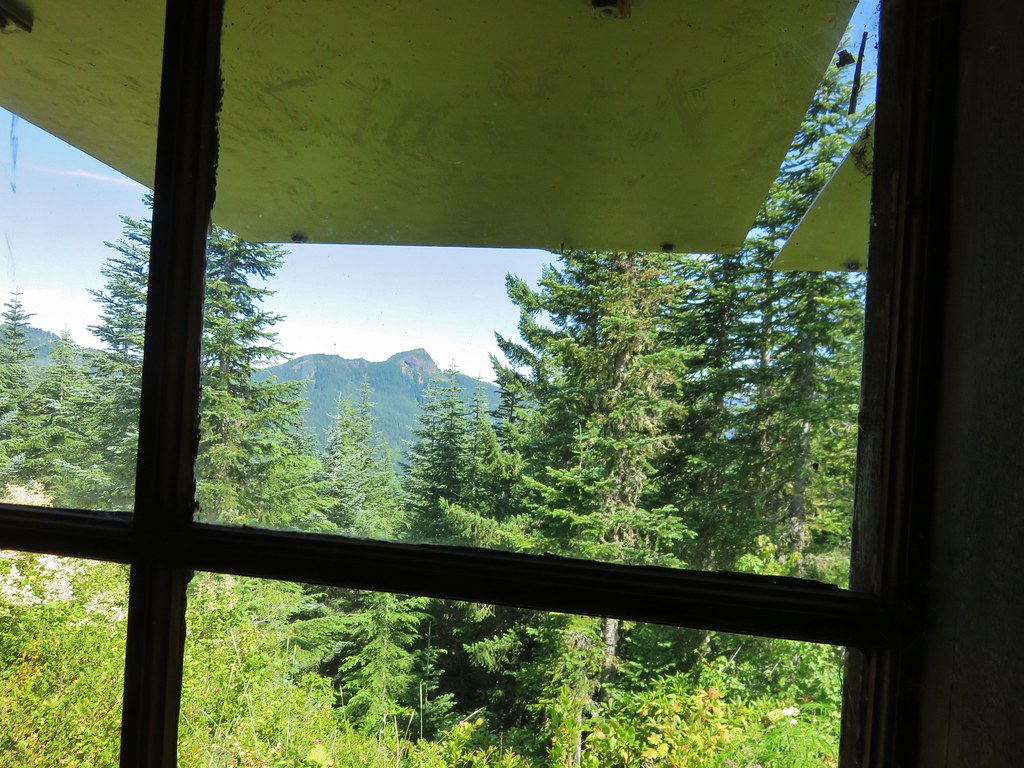
Aside from the view of Table Rock only Mt. Jefferson was visible and that mountain could only be seen in a couple of spots between some trees so it wouldn’t be a good place to stay if you’re hoping for mountain views.

We returned the way we’d come, skipping the side trips to the rocky viewpoint and the summit of Table Rock. The views to the south had become increasingly hazy, but Mt. Hood looked much clearer now that the sun had passed over.
IMG_5489

IMG_5491

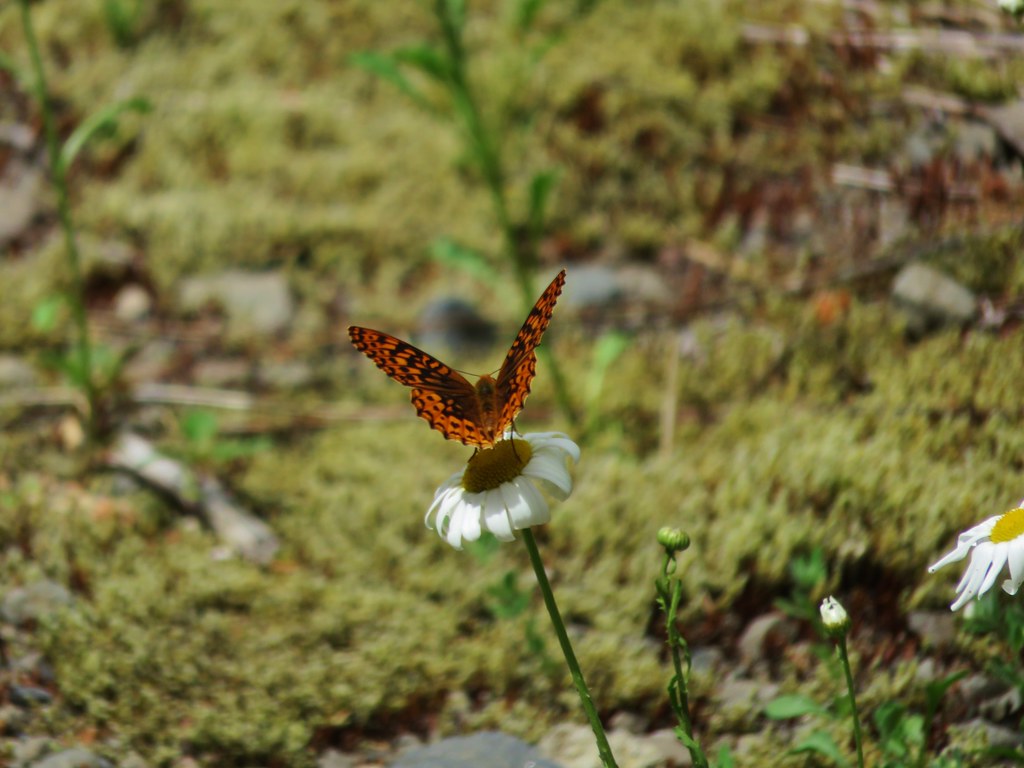
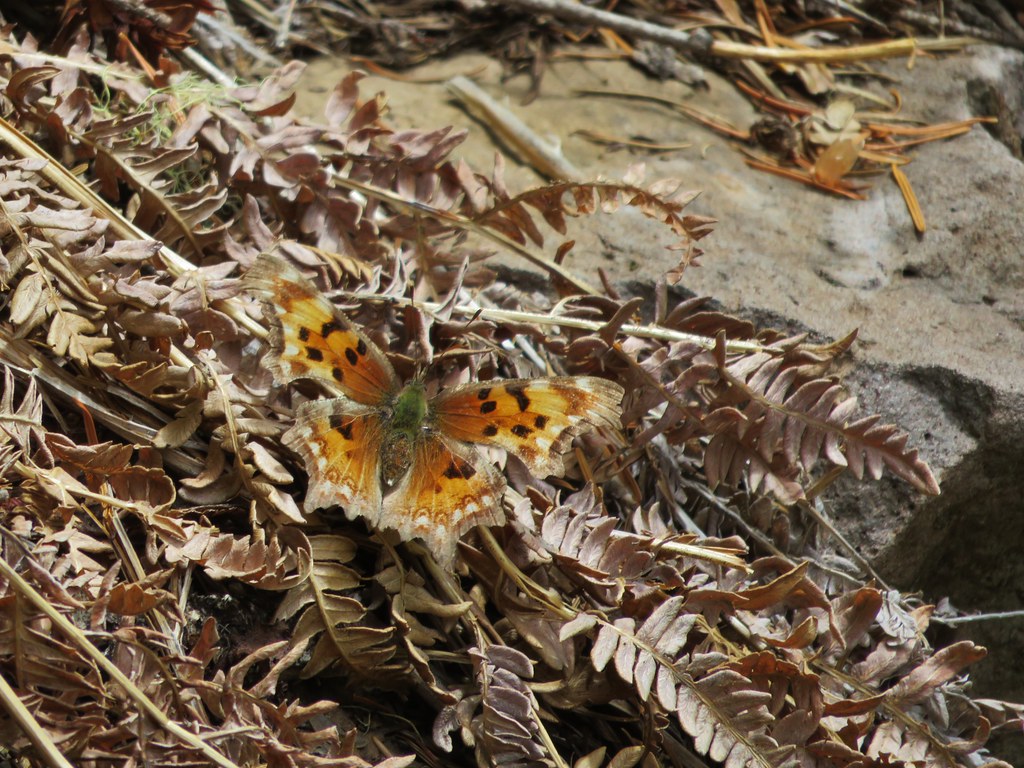
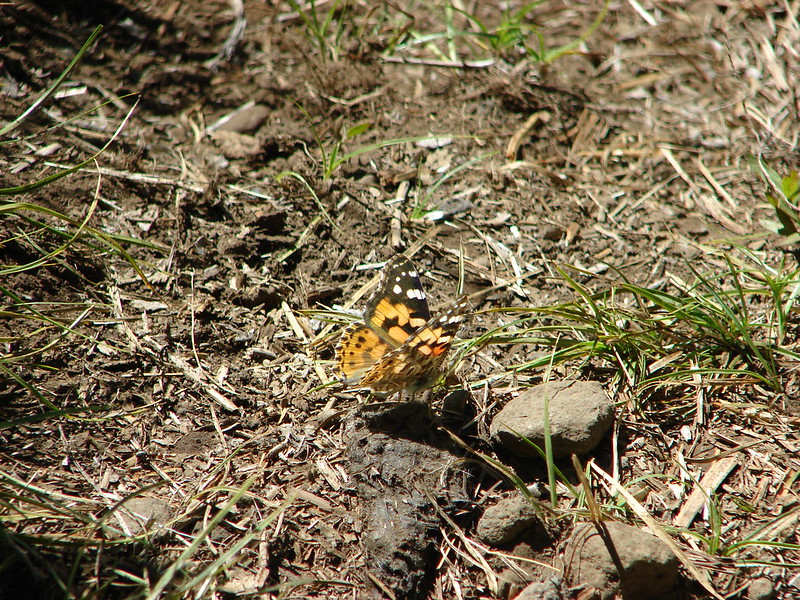
The only other hikers we saw all day were between the summit trail junction and the old road on the way back to our car and that was only two other couples. The final stretch along the old road felt really long after all the climbing we’d done. I spent part of the final 1.3 miles chasing an orange butterfly that wouldn’t sit still long enough for me to get a picture. It took awhile but Warren (as I named him) finally gave me some shots.
IMG_5507

IMG_5510

It wound up being a longer hike than we expected. Everything we looked at indicated we’d be doing 14.8 miles but the final GPS reading was 15.7. With the various trailheads available this could have easily been split up into several shorter hikes for more sensible hikers. The Table Rock Wilderness is certainly a place worth visiting, and there should be plenty of ripe thimbleberries come August. Happy Trails!

flickr: https://www.flickr.com/photos/9319235@N02/sets/72157655417439836

Categories
Hiking Oakridge Area Old Cascades Oregon Trip report

Blair Lake Trail

**Note a portion of this hike burned in the 2022 Cedar Creek Fire.**

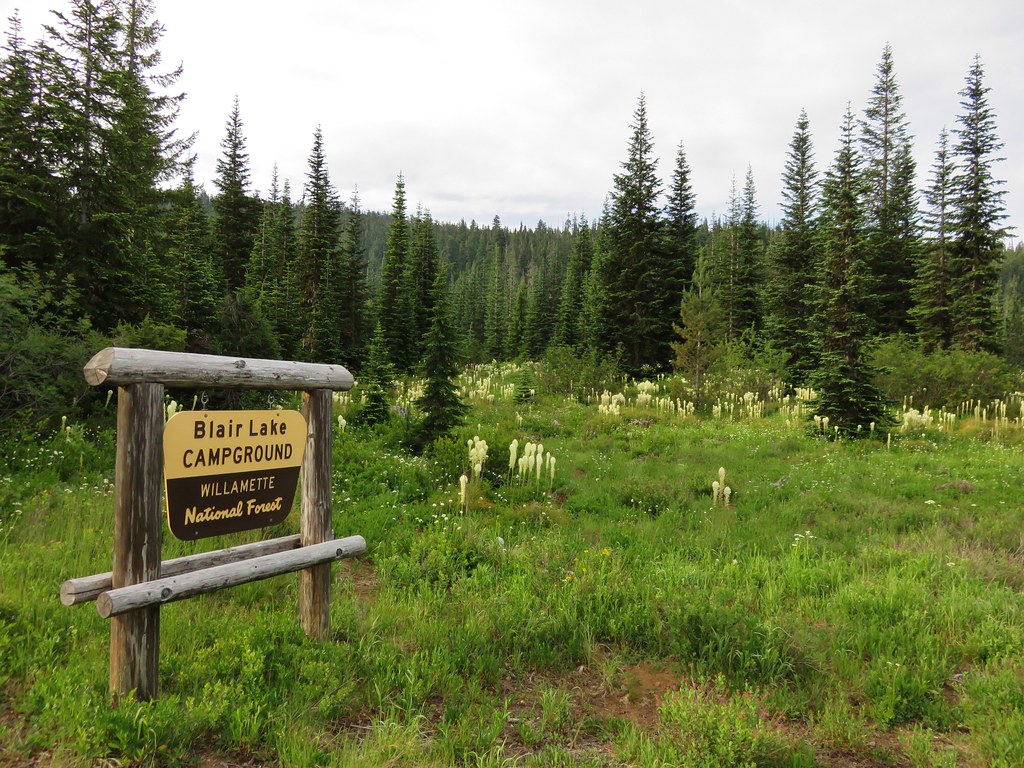
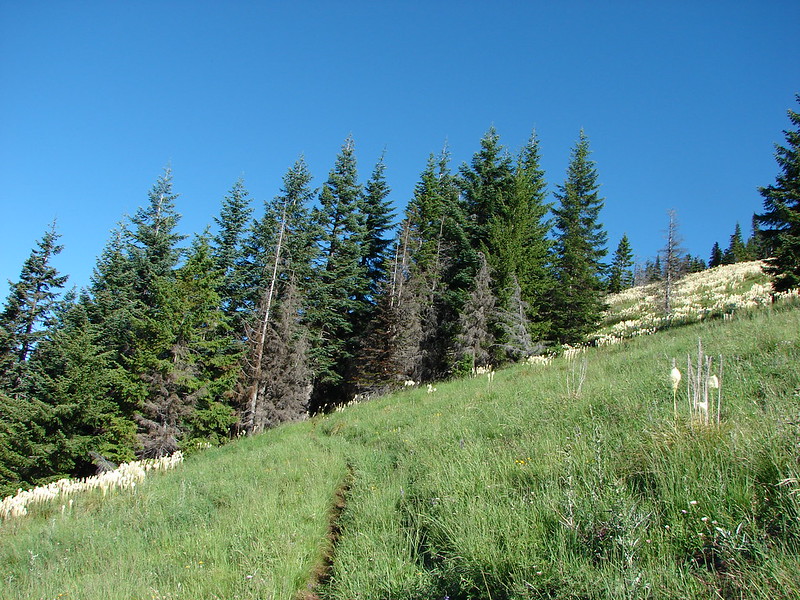
On Fathers day we headed to Blair Lake outside of Oakridge, OR hoping to see some wildflowers. My parents had done this hike two years before on June 11th. In 2013 there were still patches of snow in the area and the majority of flowers were still a few weeks away. With the low snow pack we had this year we were hoping that we weren’t going to be too late. As it turned out the beargrass was spectacular and there were quite a few other flowers along the way. We encountered a few mosquitoes (most of them found Heather), but they were not too bad. There were a few people camped at Blair Lake Campground and another group set near the meadow at Spring Prairie but we didn’t see any other hikers on the trail.

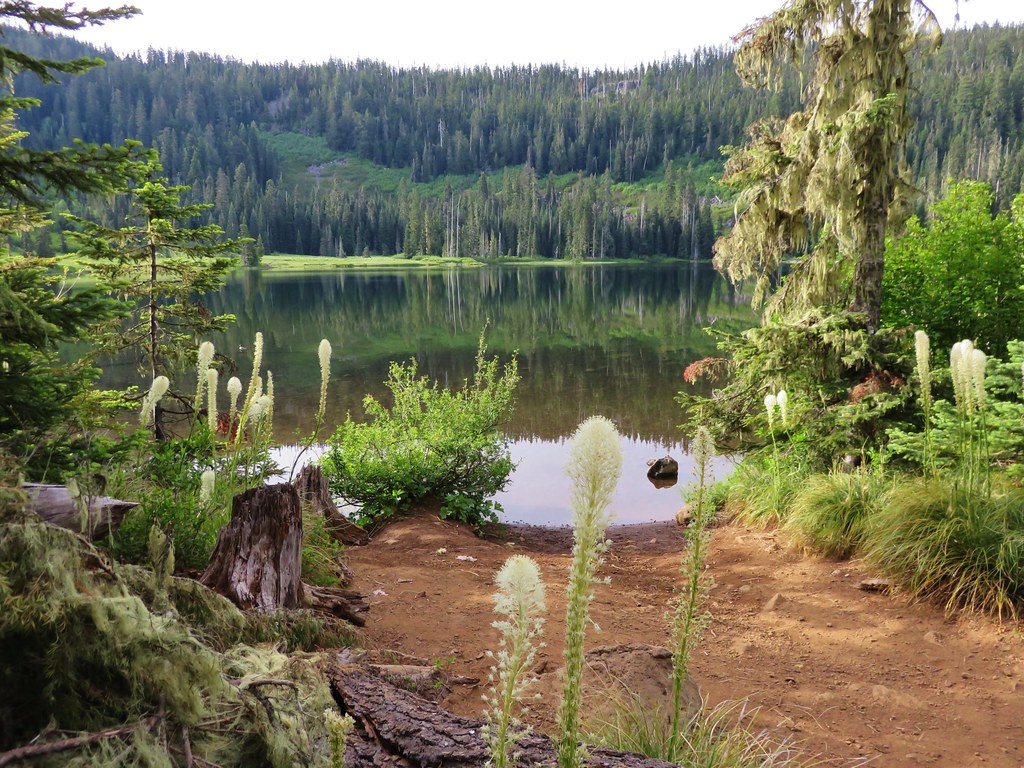
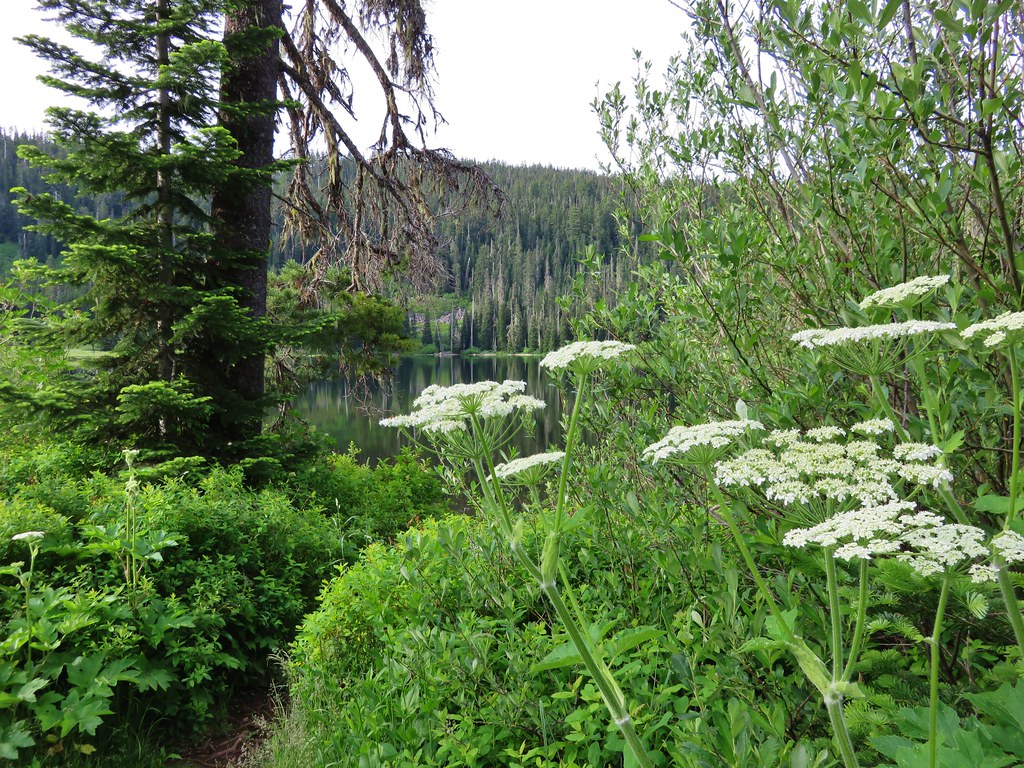
We parked at the campground and took the short trail to Blair Lake first then walked back .4 miles along roads to the start of the Blair Lake Trail.
IMG_4434

IMG_4418

IMG_4419

IMG_4427

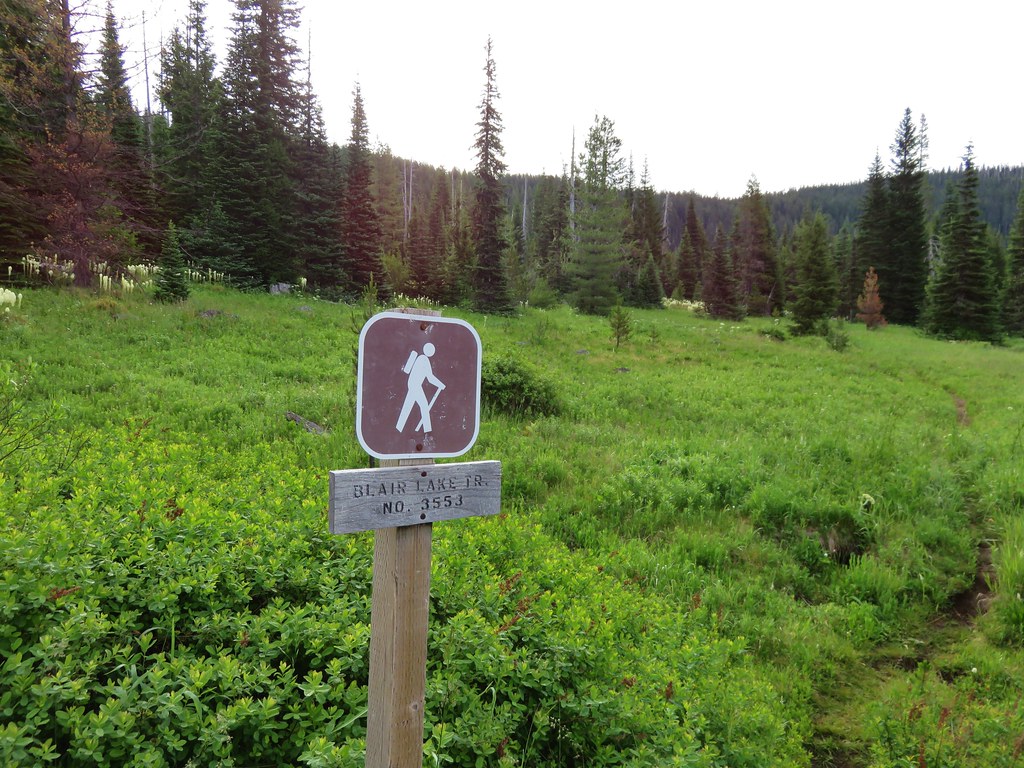
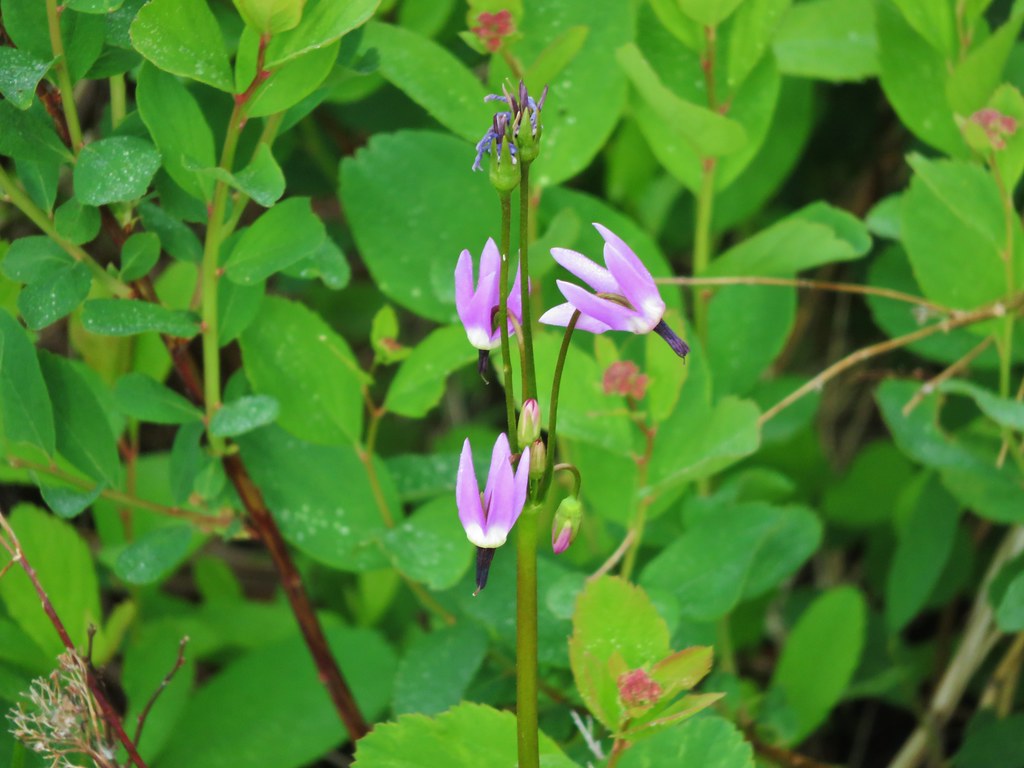
The trail starts in a damp meadow where we spotted a large variety of flowers.
IMG_4454

IMG_4451

IMG_4458

IMG_4459

IMG_4469

IMG_4479

IMG_4476

IMG_4487

IMG_4484

IMG_4494

IMG_4495

IMG_4497

IMG_4853

IMG_4856

IMG_4850

IMG_4833

IMG_4859

Additional flowers appeared as we left the meadow and entered the forest.
IMG_4500

IMG_4505

IMG_4510

IMG_4523

IMG_4826

After climbing for about a mile and a half we arrived at a rocky viewpoint and our first good look at Diamond Peak for the day.
IMG_4532

IMG_4533

IMG_4819

IMG_4529

IMG_4537

IMG_4820

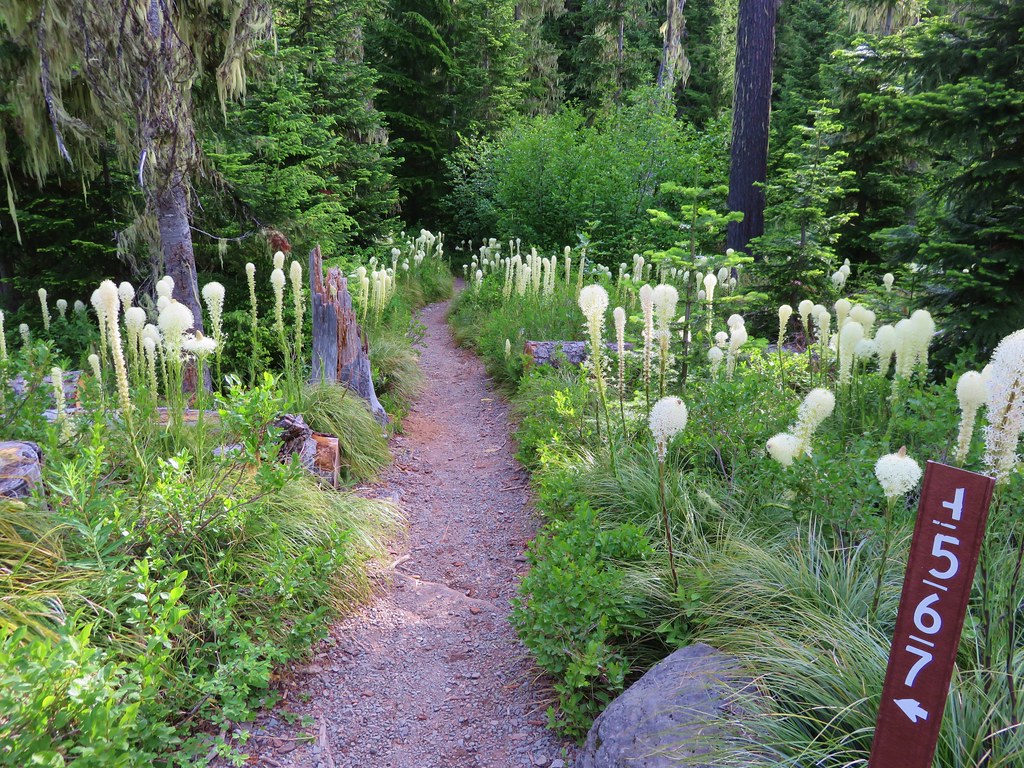
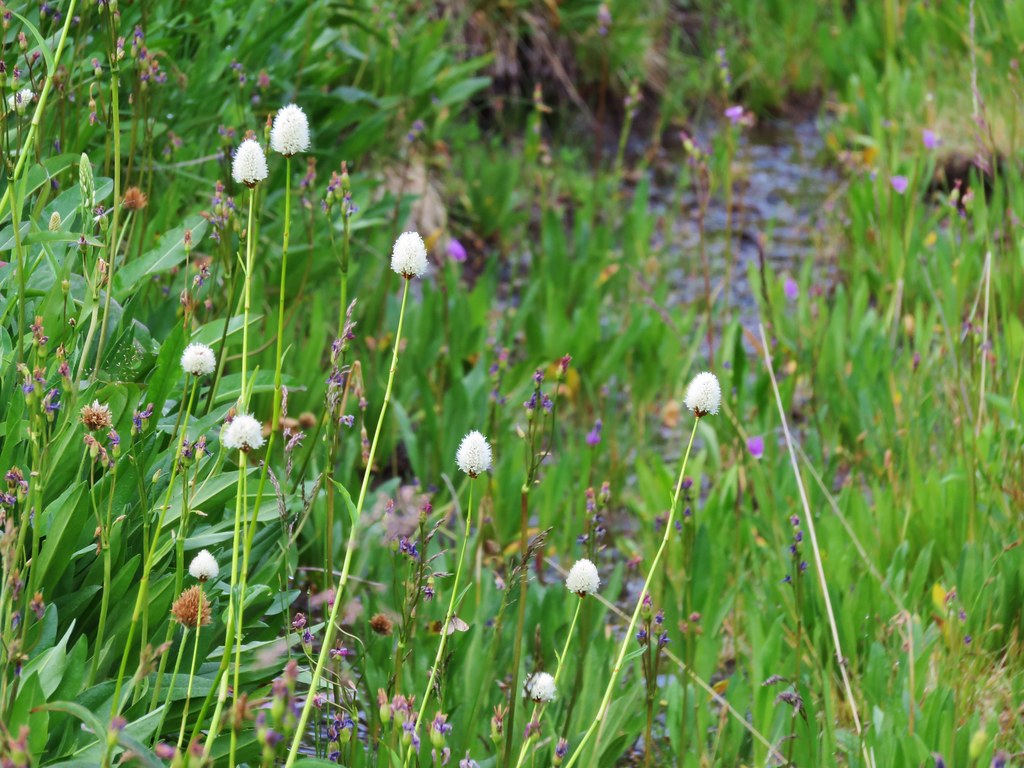
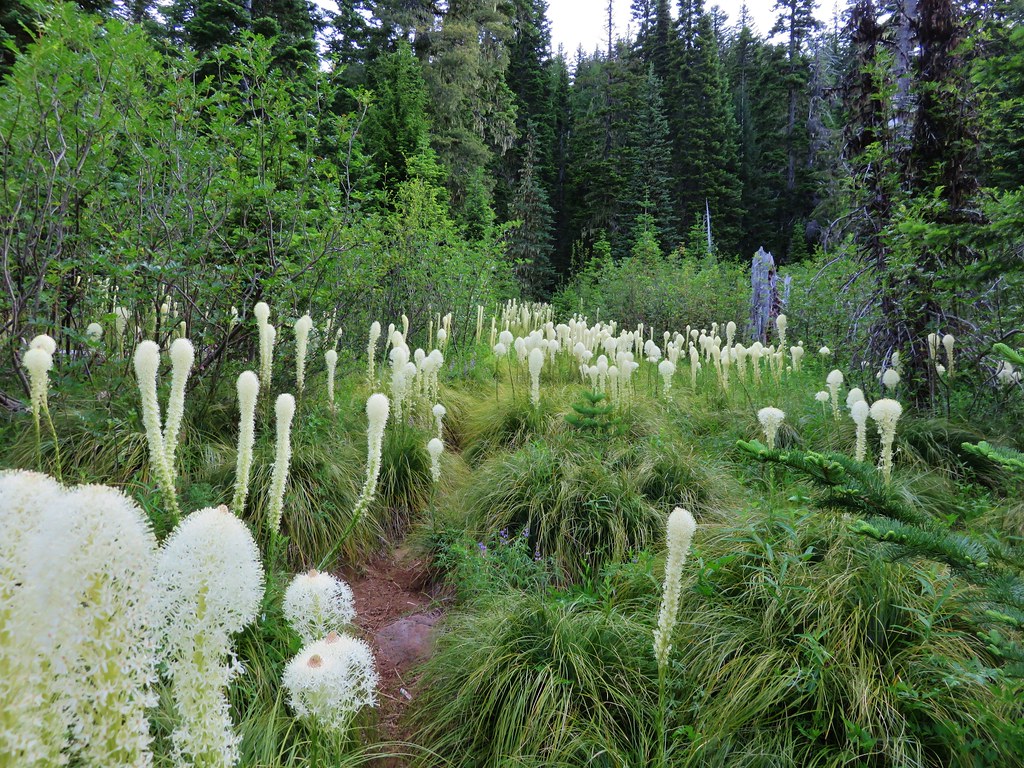
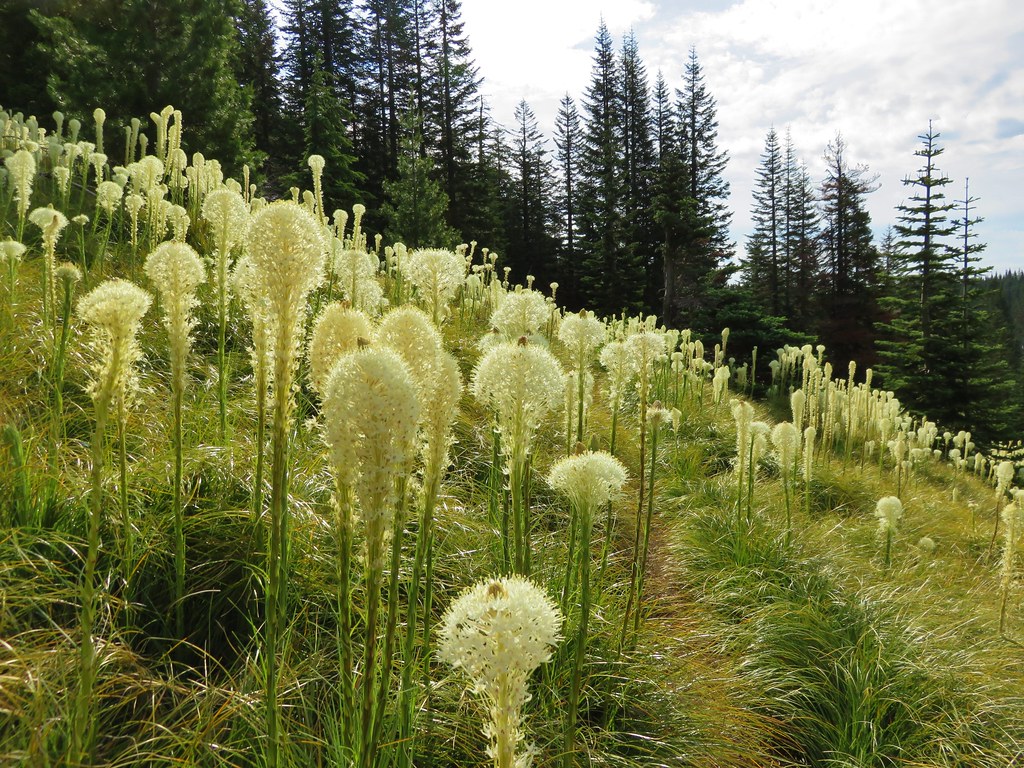
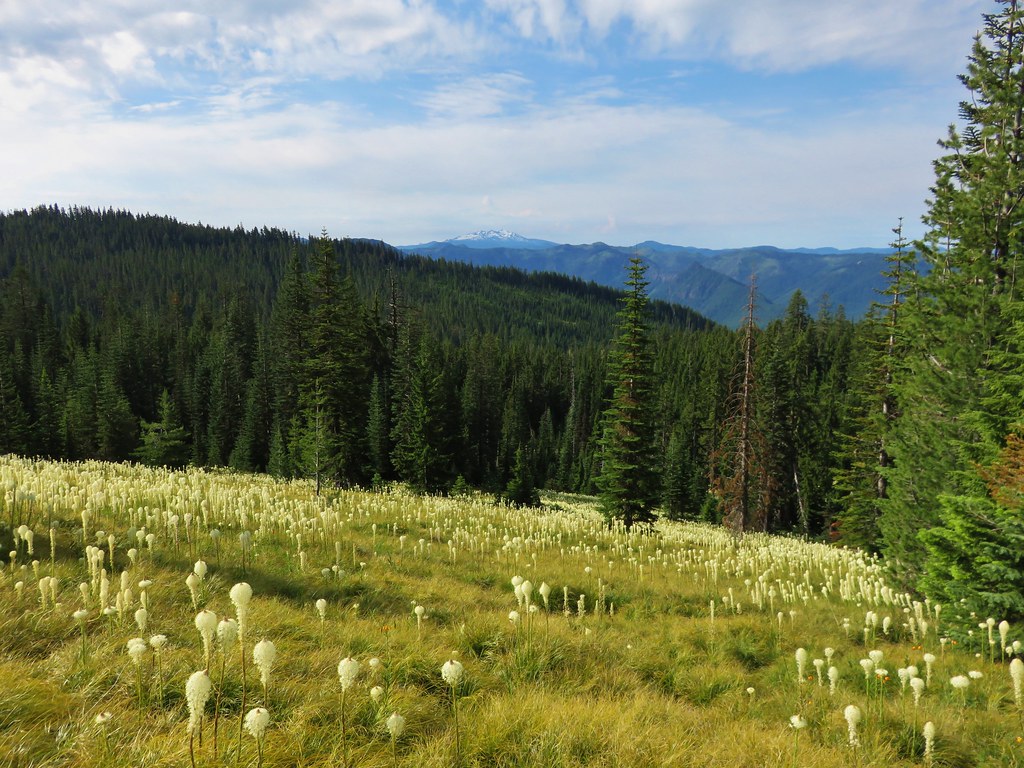
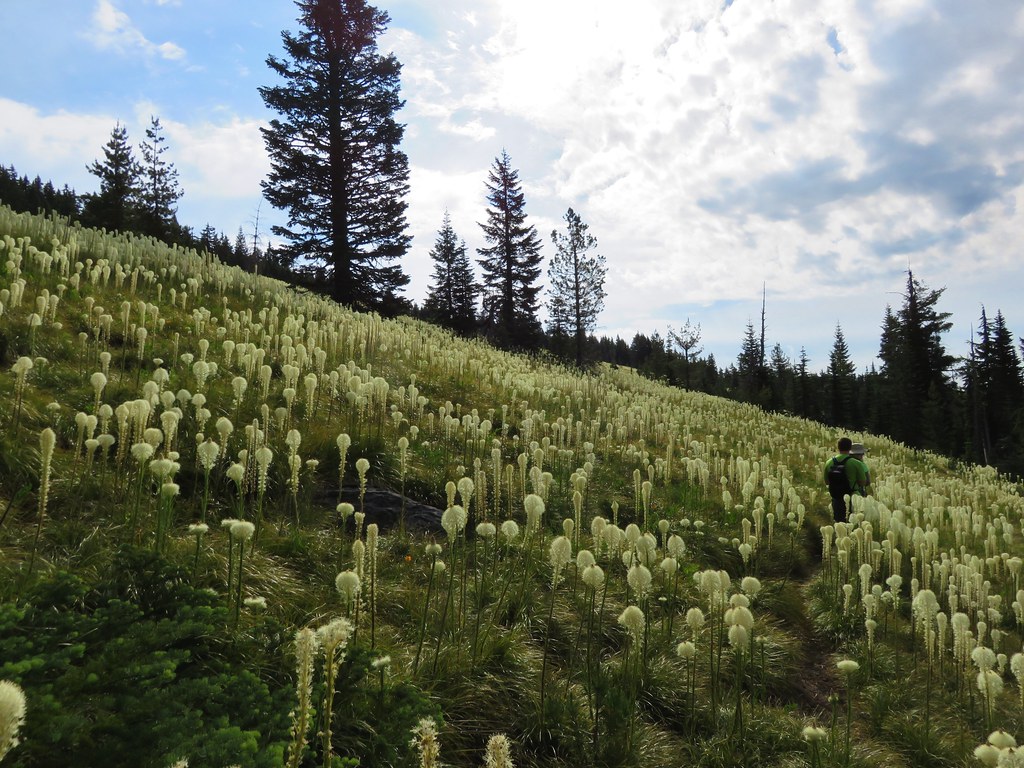
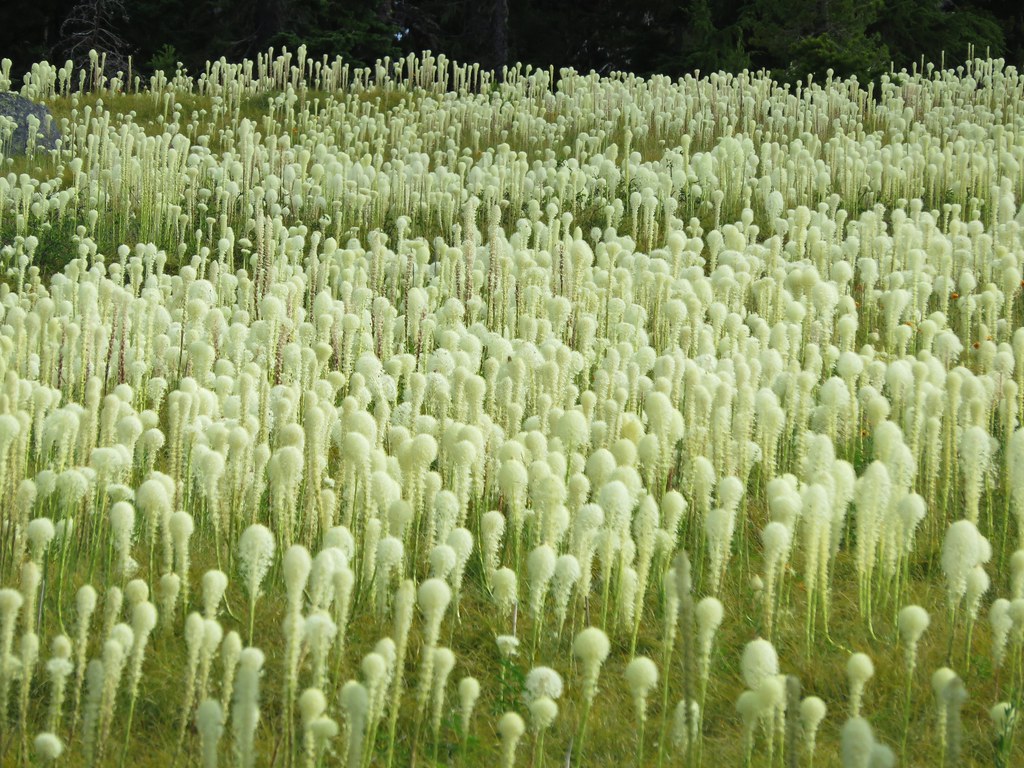
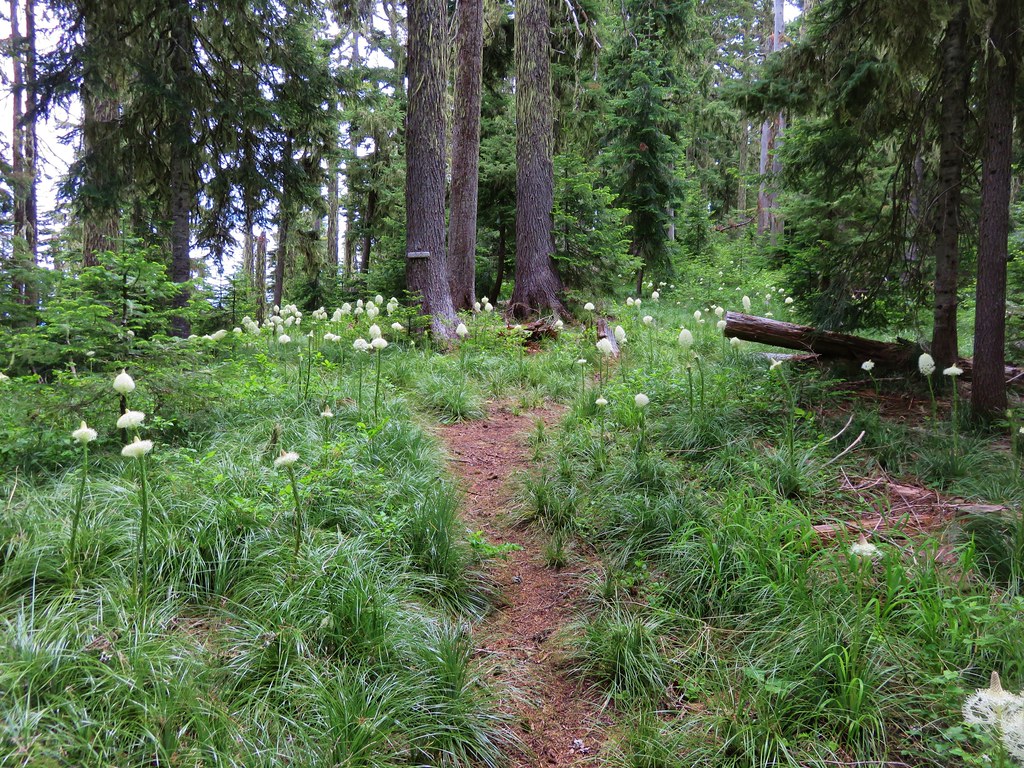
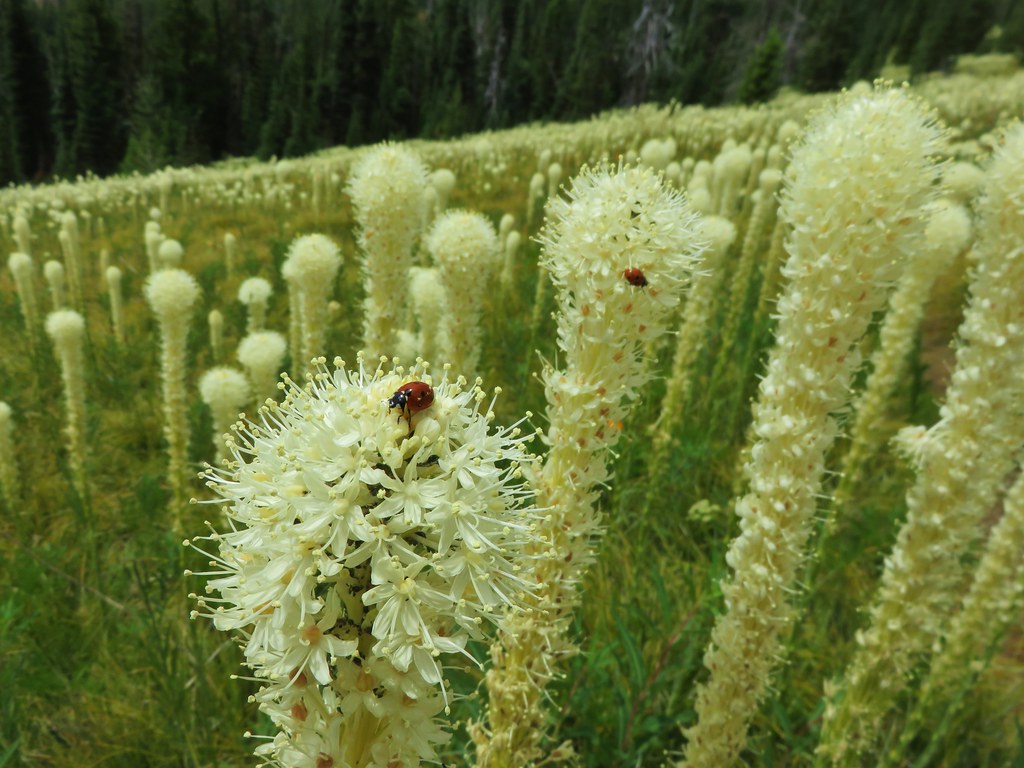
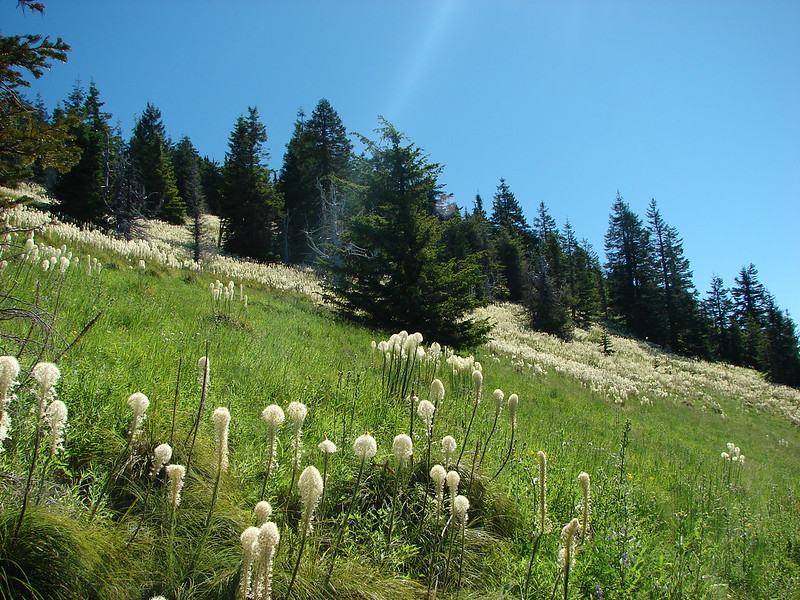
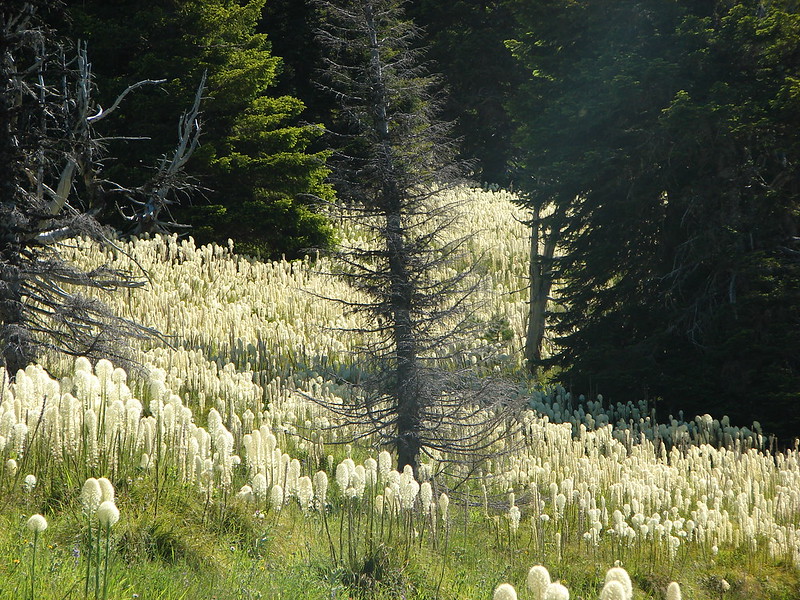
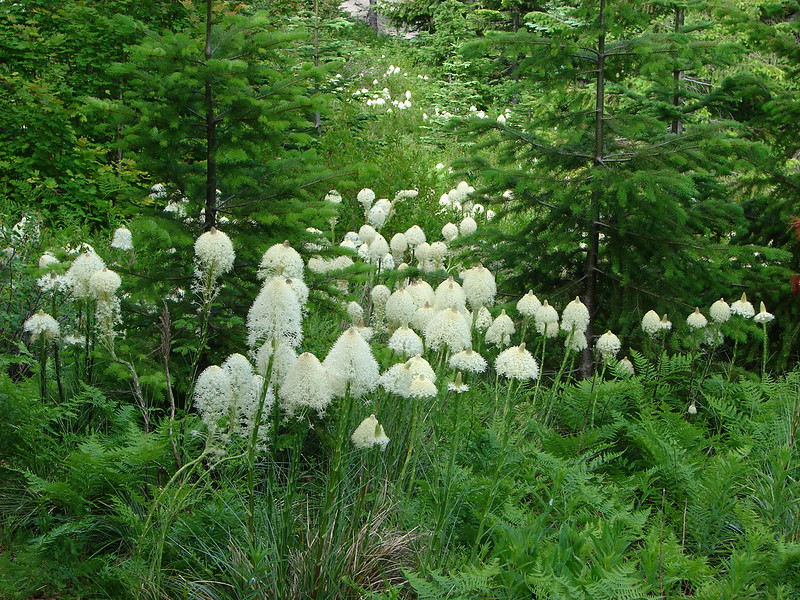
Just after the rocky viewpoint the trail entered one of the best beargrass meadows we’d seen. Beargrass blooms in cycles so it could be several years before the meadow looks like this again, but we seemed to have chosen the right year and right time as most of the stalks were either in full bloom or nearly there.
IMG_4545

IMG_4546

IMG_4559

IMG_4565

IMG_4567

IMG_4576

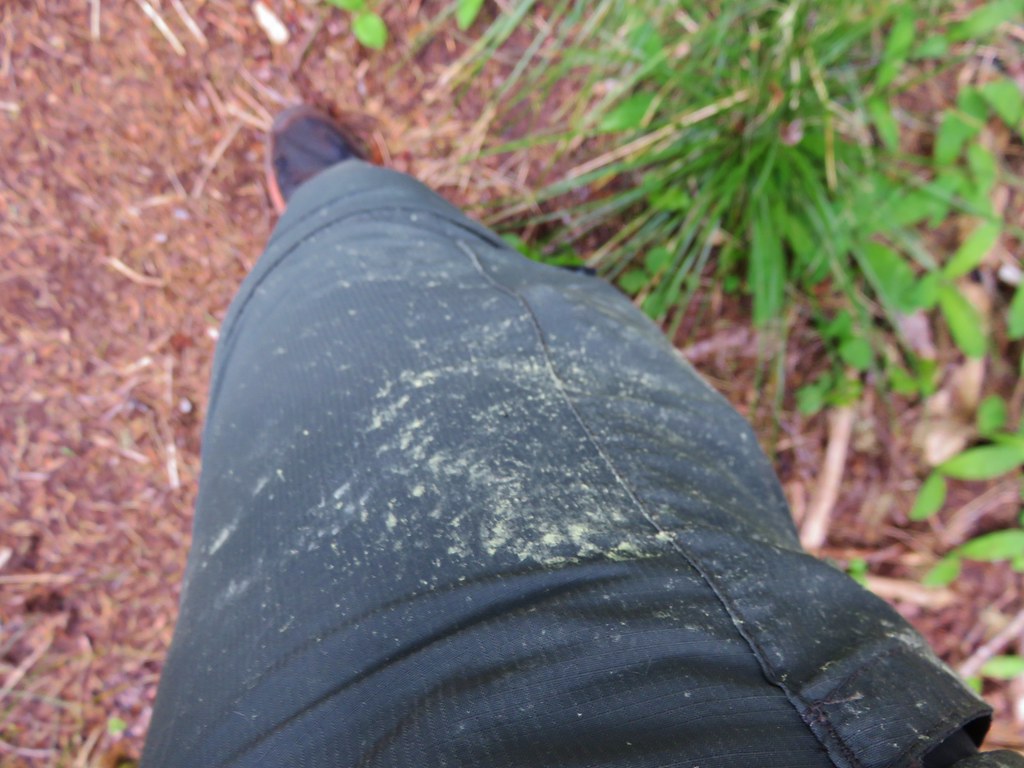
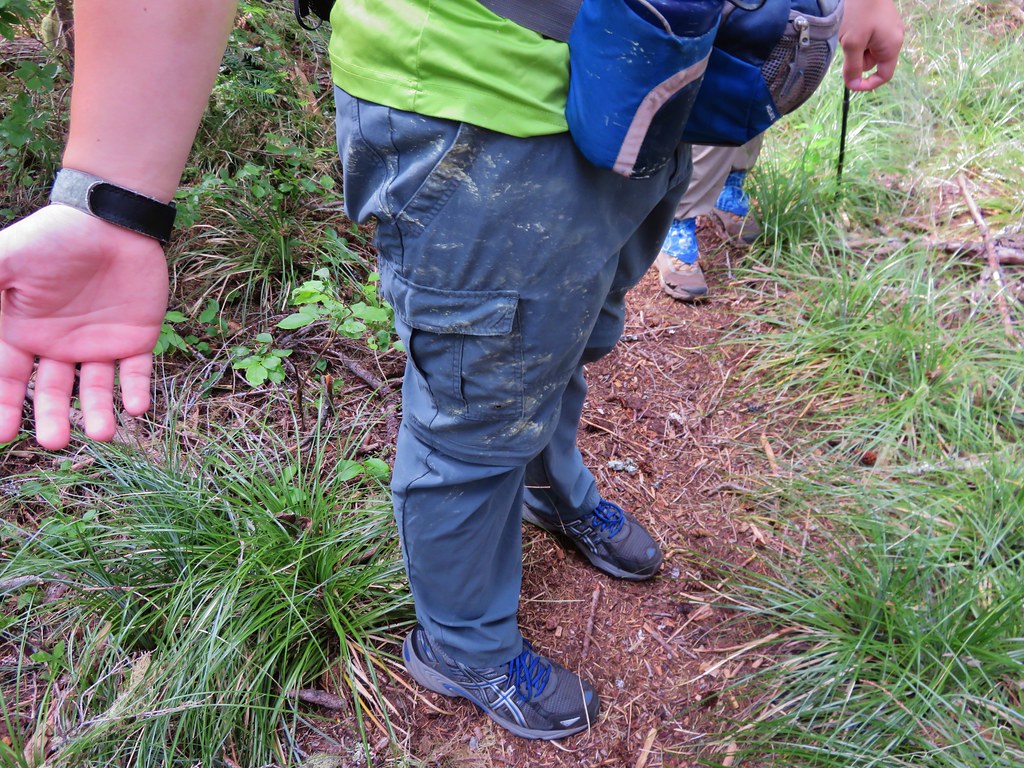
We came out of the meadow with a light coating of pollen.
IMG_4590

IMG_4591

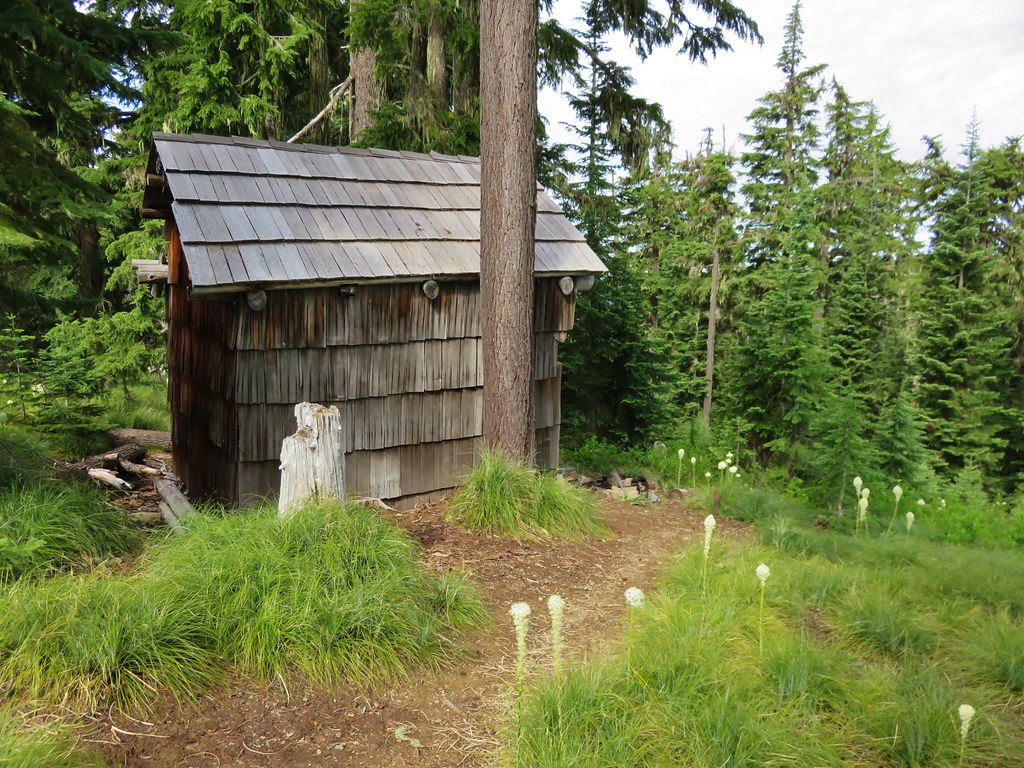
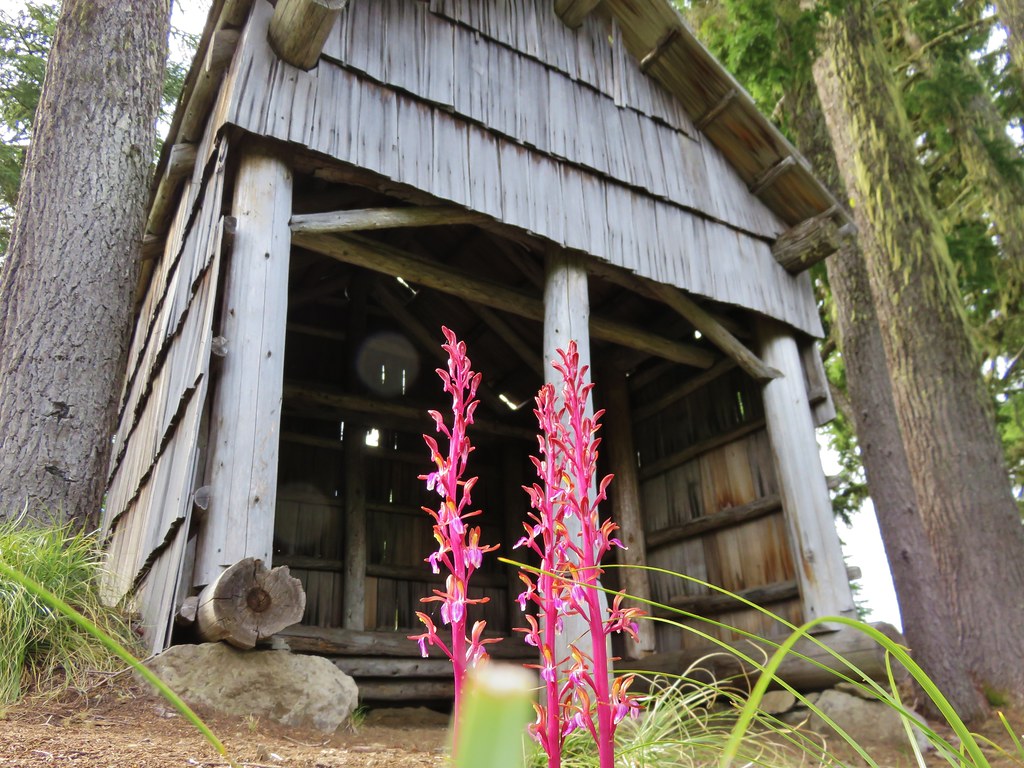
After the amazing beargrass display we climbed another mile to road 730 at Spring Prairie and the old Mule Mountain Shelter. We could have driven here just like the group camping had, but then we wouldn’t have passed through either wildflower meadow.
IMG_4600

IMG_4602

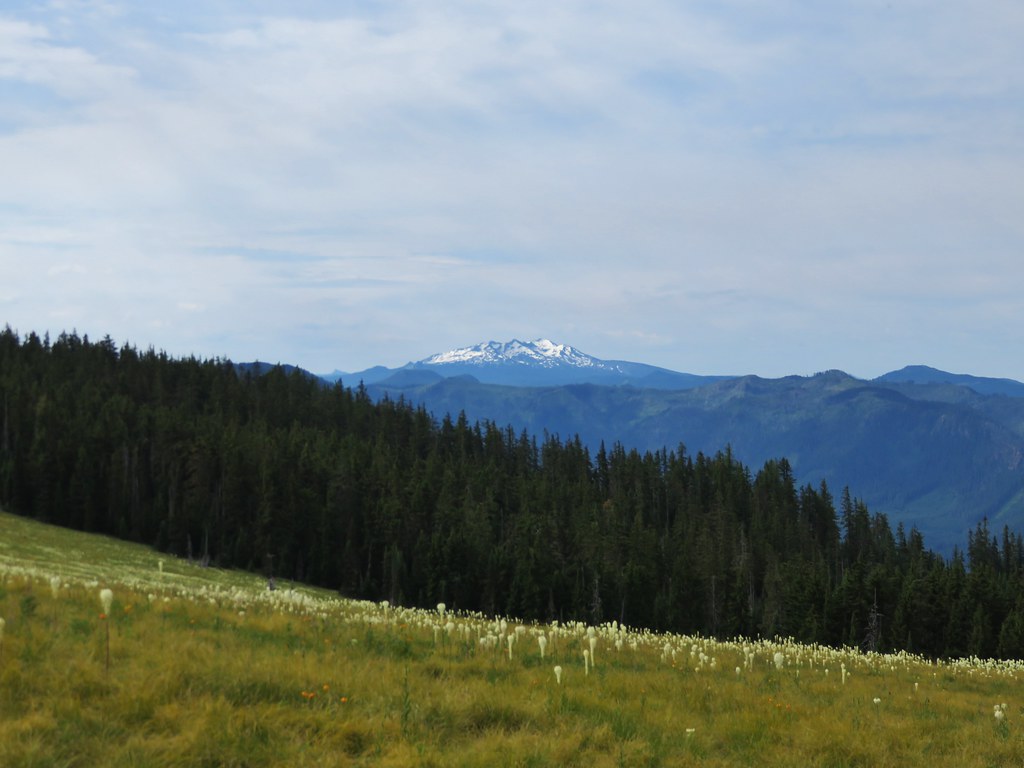
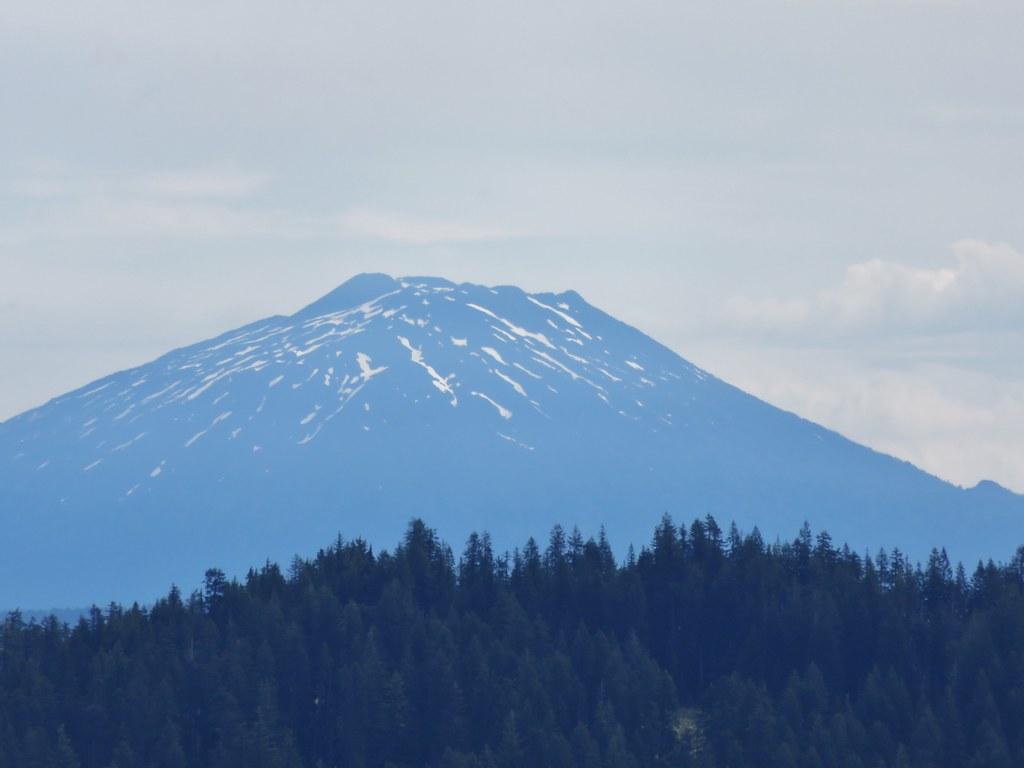
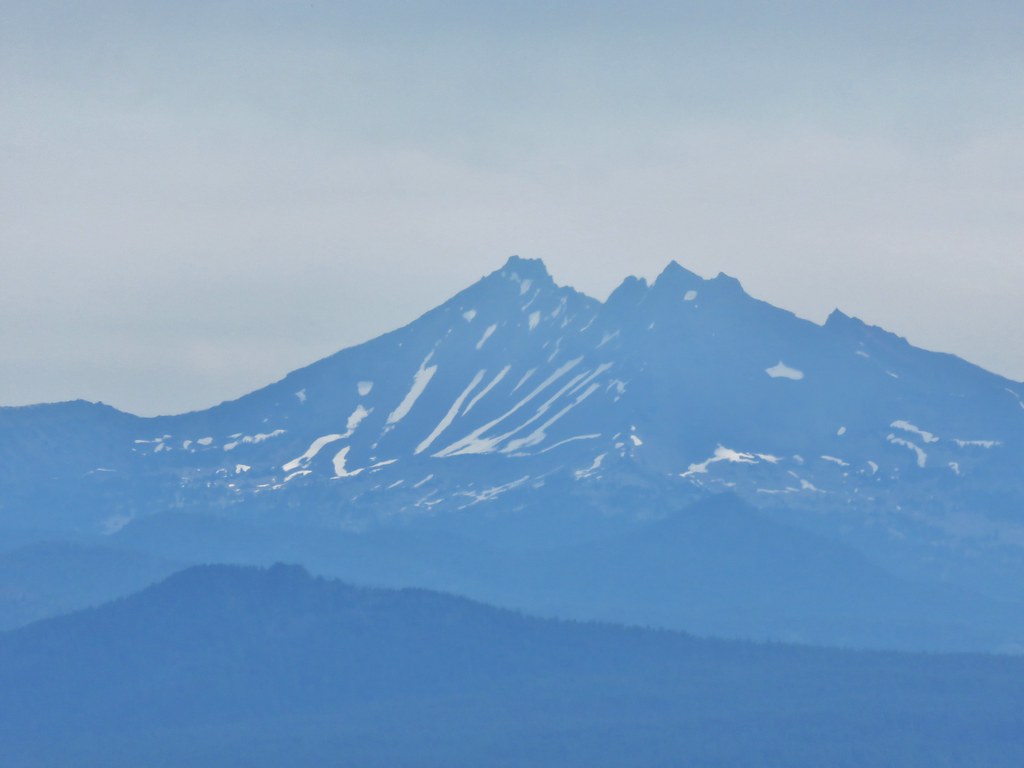
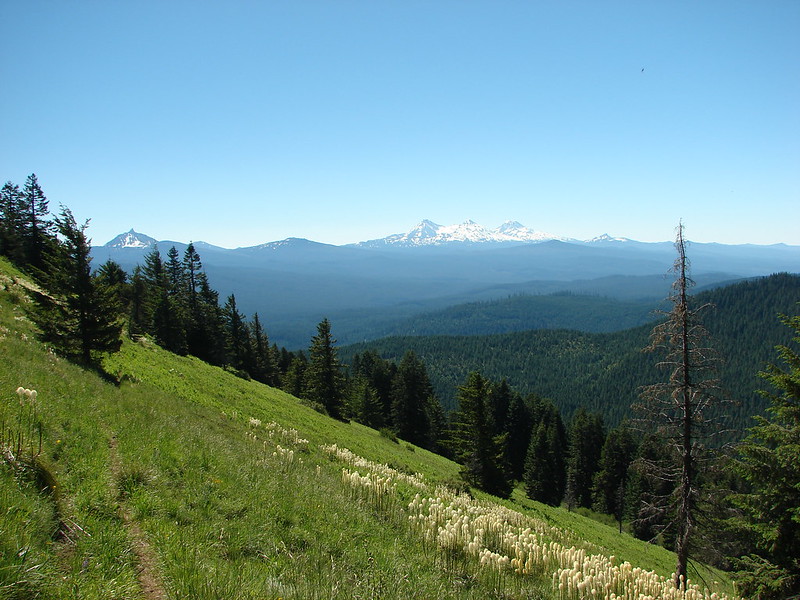
The views from Spring Prairie included a string of Cascade peaks from Diamond Peak to Mt. Jefferson and more beargrass.
IMG_4608

IMG_4612

IMG_4614

Mt. Bachelor
IMG_4615

Broken Top
IMG_4616

The Three Sisters
IMG_4617

Mt. Washington
IMG_4618

Three Fingered Jack
IMG_4619

Mt. Jefferson
IMG_4620

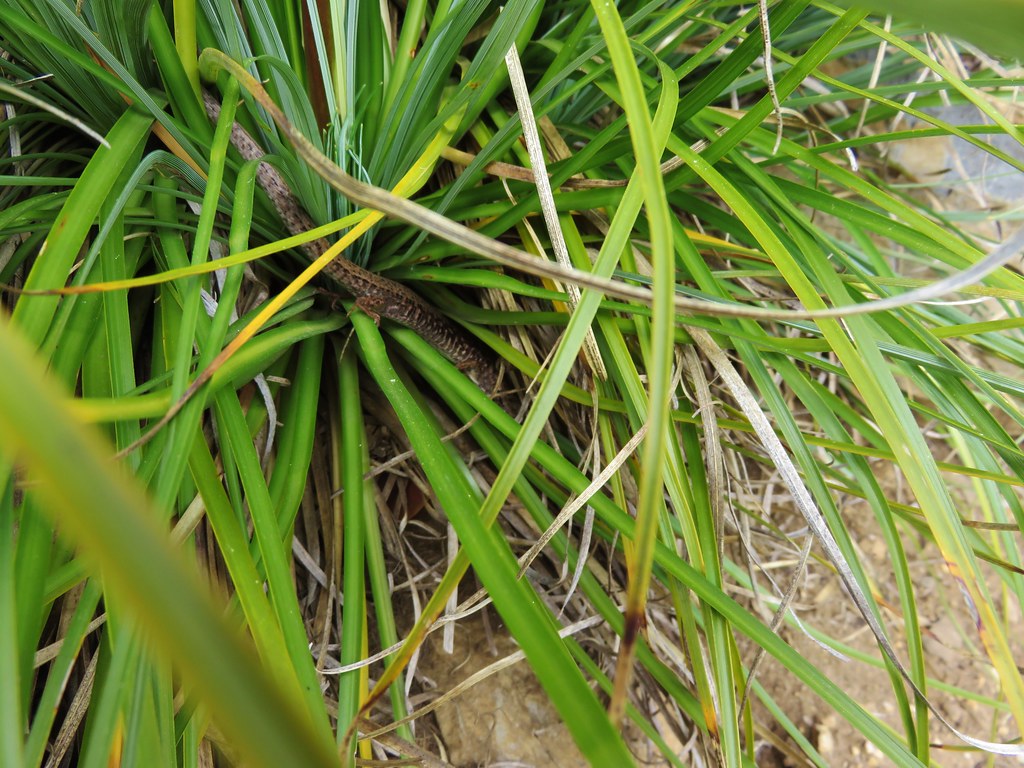
There were a few more flowers here and as we were looking around I spotted a lizard that scurried into a clump of beargrass. It was one we had not seen before, a northwestern alligator lizard. He was hiding in the grass which made it difficult to get a decent picture but still a neat find.
IMG_4636

IMG_4640

Northwestern Alligator Lizard

We continued past Spring Prairie on Road 730 to the continuation of the Blair Lake Trail then at a fork headed right to visit the site of the former lookout which was .6 miles away.
IMG_4754

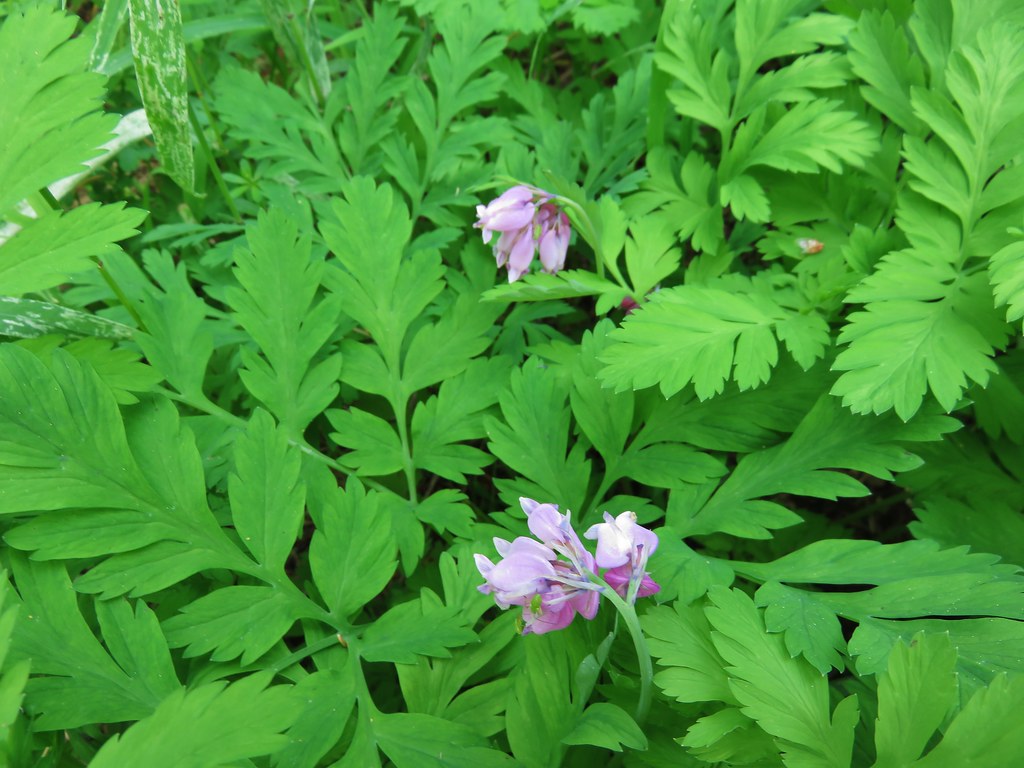
We found some different flowers along this path including bleeding heart and yellowleaf iris, but the views were inferior to those at Spring Prairie.
IMG_4648

IMG_4649

IMG_4650

IMG_4660

IMG_4652

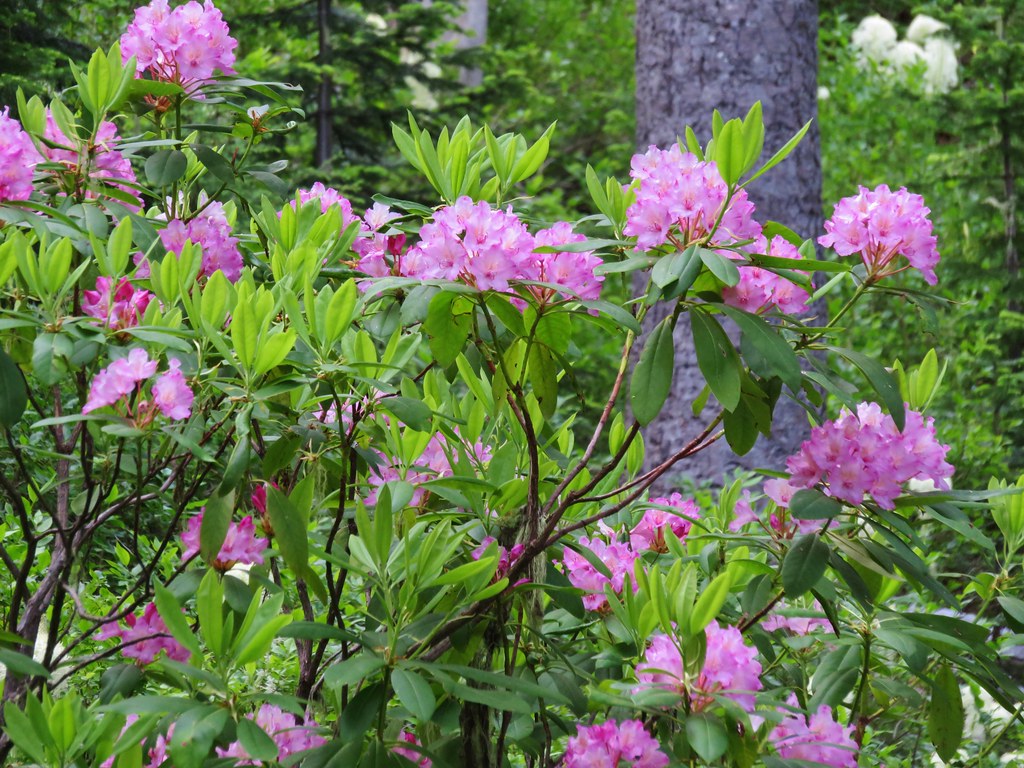
When we got back to the fork we decided to continue on the Blair Lake Trail for another couple of miles just to see what it was like. The trail itself continues all the way into the Waldo Lake Wilderness and connects with trails near the Eddeeleo Lakes. The trail lost quite a bit of elevation in the first 3/4mi before leveling out somewhat. We were now in a rhododendron filled forest.
IMG_4667

IMG_4669

IMG_4672

IMG_4674

IMG_4677

IMG_4676

IMG_4679

IMG_4685

We went about 2 miles along this portion of trail before deciding to turn around. The trail was beginning to descend a bit to another road crossing and we didn’t want to have anymore elevation to gain. The highlight of the 2 mile extension was another beargrass meadow. This one was much smaller but still very nice.
IMG_4692

IMG_4693

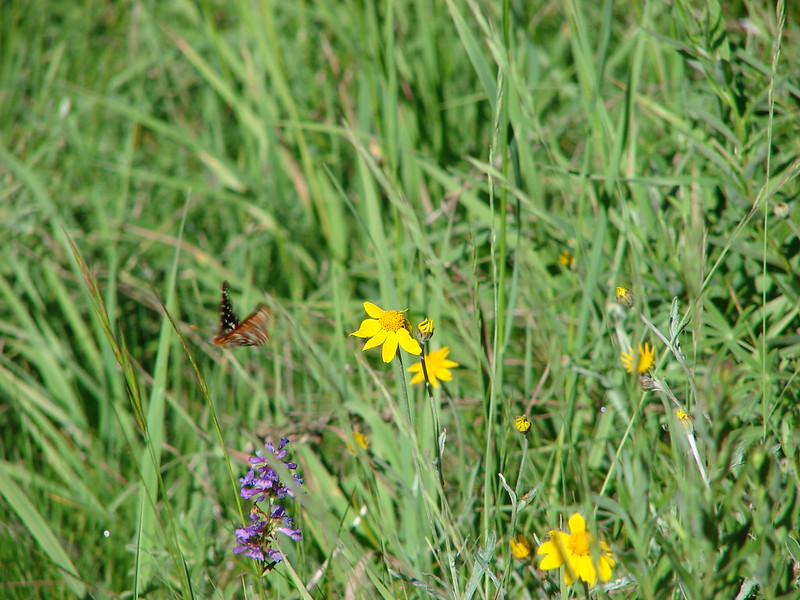
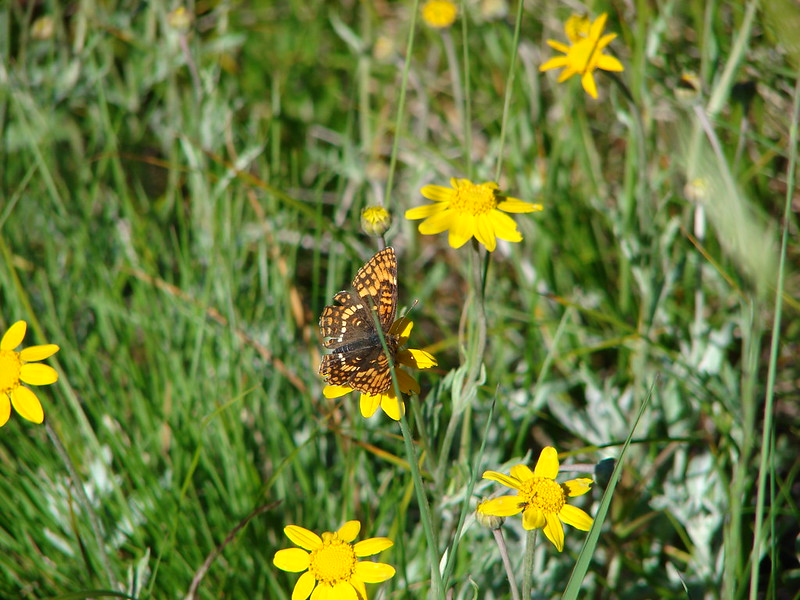
On our way back the butterflies and other insects were out giving us something new to look for as we returned to the trailhead.
IMG_4727

IMG_4736

IMG_4746

IMG_4750

IMG_4757

IMG_4758

IMG_4760

IMG_4784

IMG_4800

IMG_4804

IMG_4809

IMG_4858

IMG_4844

We wound up covering 12.6 miles but shorter hikes would still yield plenty of flowers and longer hikes could lead to backpacking trips into the Waldo Lake Wilderness. The variety of flowers in the first meadow make this a worthy wildflower hike and if you happen to hit a beargrass year as we did then it’s like hitting the jackpot. Happy Trails!

Categories
Hiking Mollala Old Cascades Oregon Trip report

Butte Creek & Abiqua Falls

While much of the country is dealing with a winter that just doesn’t seem to want to end the Pacific Northwests never really started. Another beautiful weekend was being forecast and we decided we just couldn’t miss another one so we headed out to check out a couple of short waterfall hikes. The trailheads for Butte Creek Falls and Abiqua Falls are less than 5 miles apart a short distance outside of Scotts Mills, Oregon. Both trailheads are located on roads accessed by taking Crooked Finger Road from Scotts Mills.

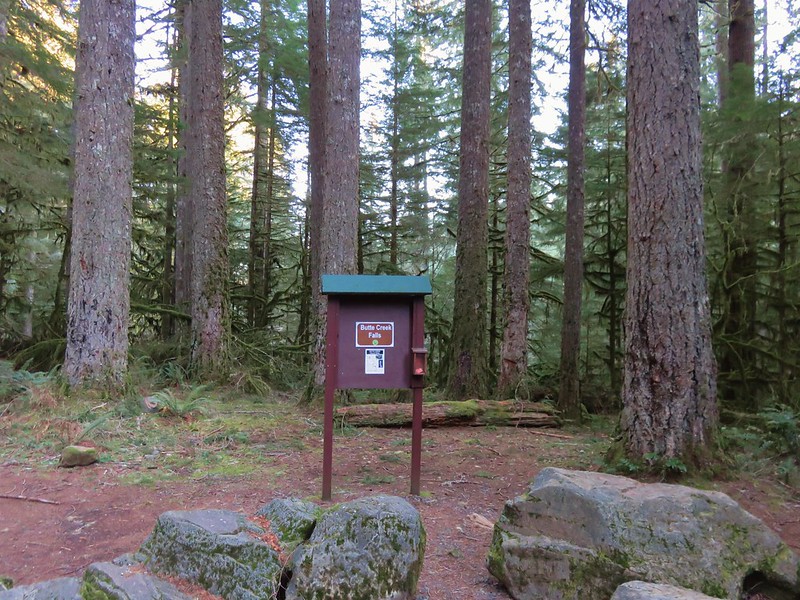
We started at the Butte Creek Falls Trailhead in the Santiam State Forest.
1.2

The trail set off from a small parking area (with an outhouse) passing to the left of the trail sign and descending .2 miles to a signed junction.
5.1

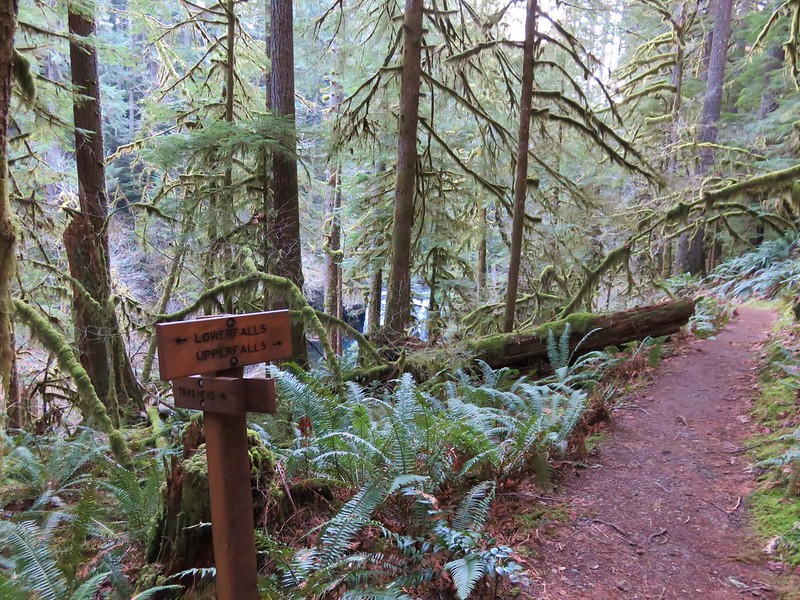
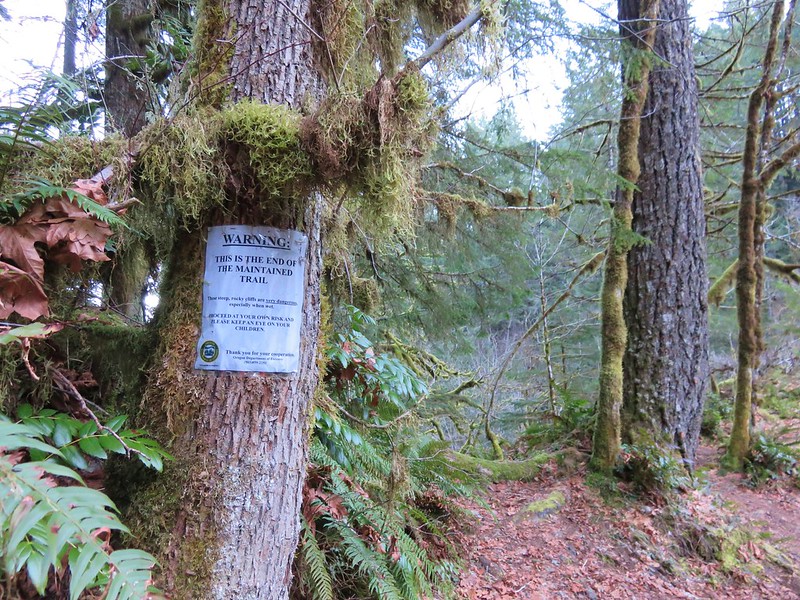
The right hand fork would lead us past Upper Butte Creek Falls on a loop back up to the parking area so we turned left first and headed toward Lower Butte Creek Falls. In just another .2 miles we arrived at a rocky ridge and the end of the maintained trail.
15.1

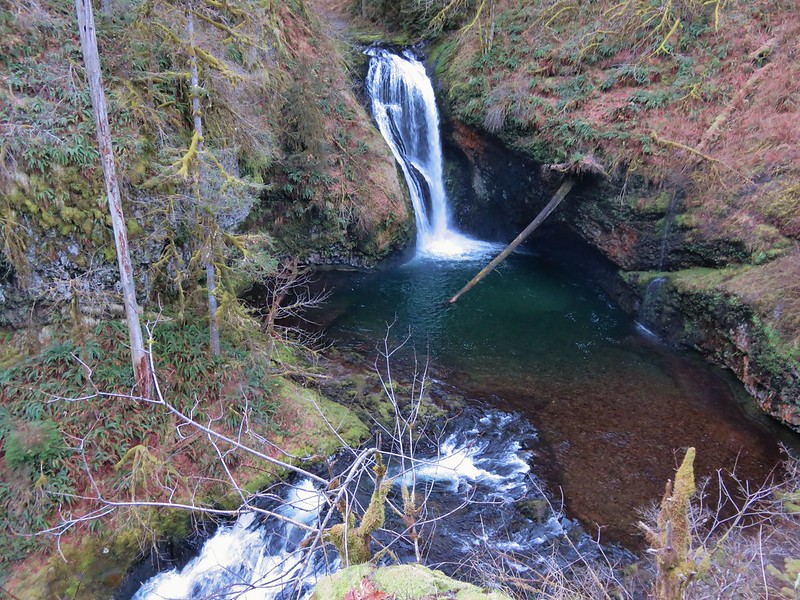
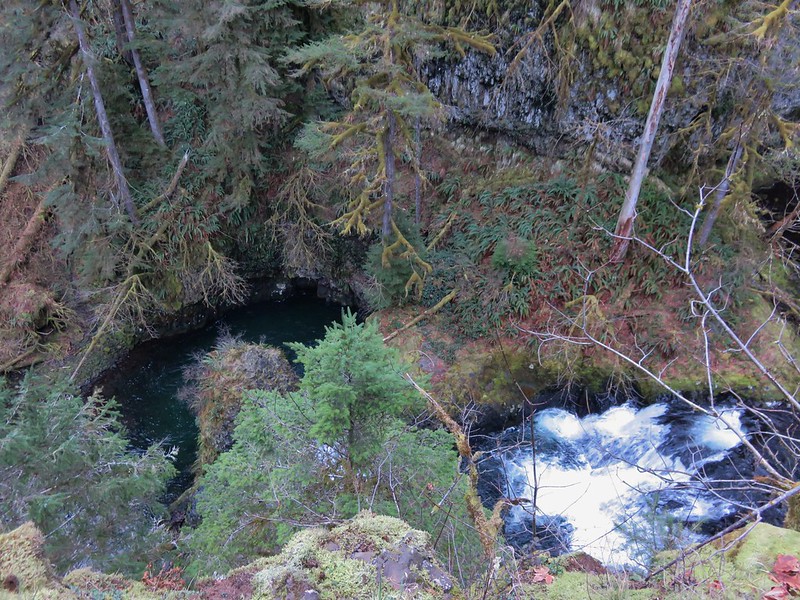
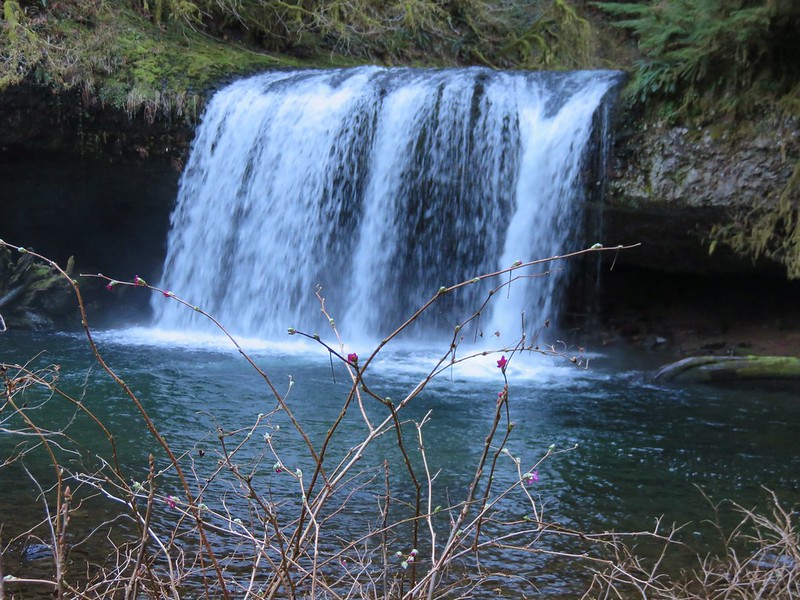
A well worn trail led out onto the ridge which provided a front row view of the falls high above Butte Creek.
19.6
19.5

After enjoying the lower fall we headed back to the junction and started the return loop. Upper Butte Creek Falls had been visible through the trees from the junction and we were quickly on our way down to its base.
21.2
27
33.2

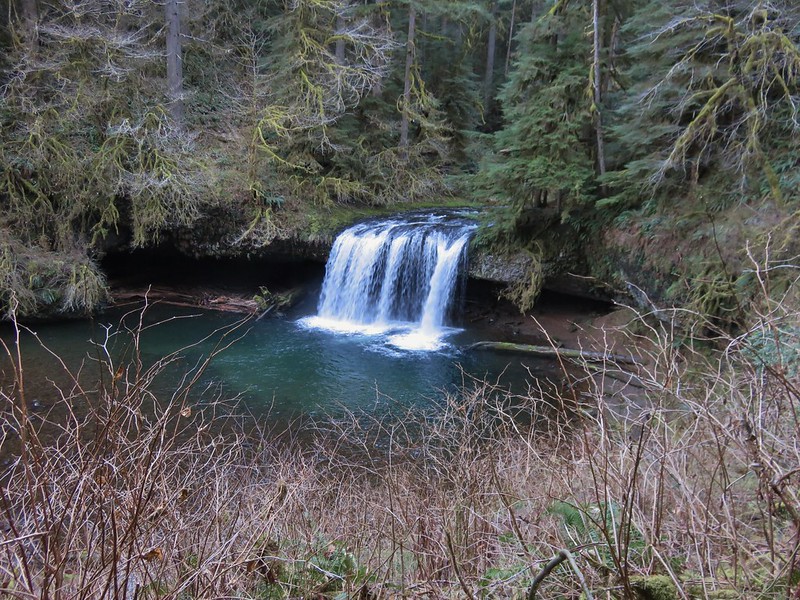
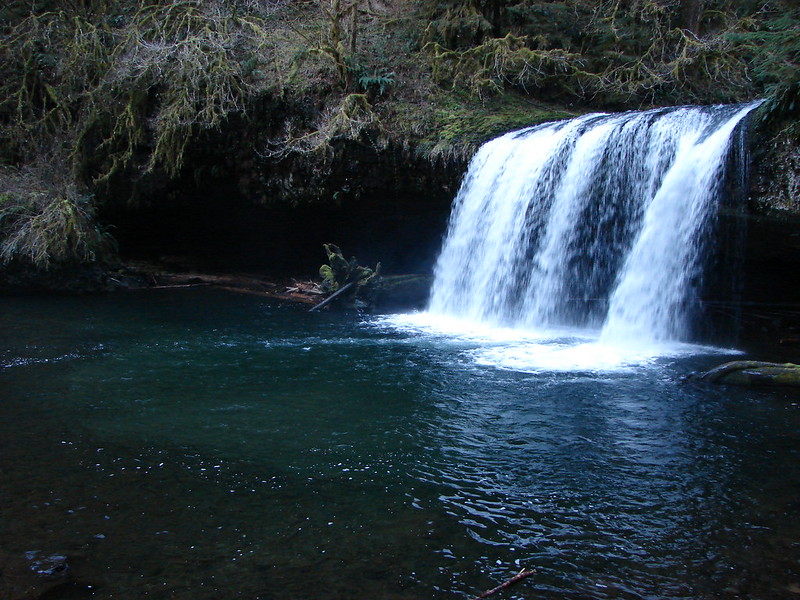
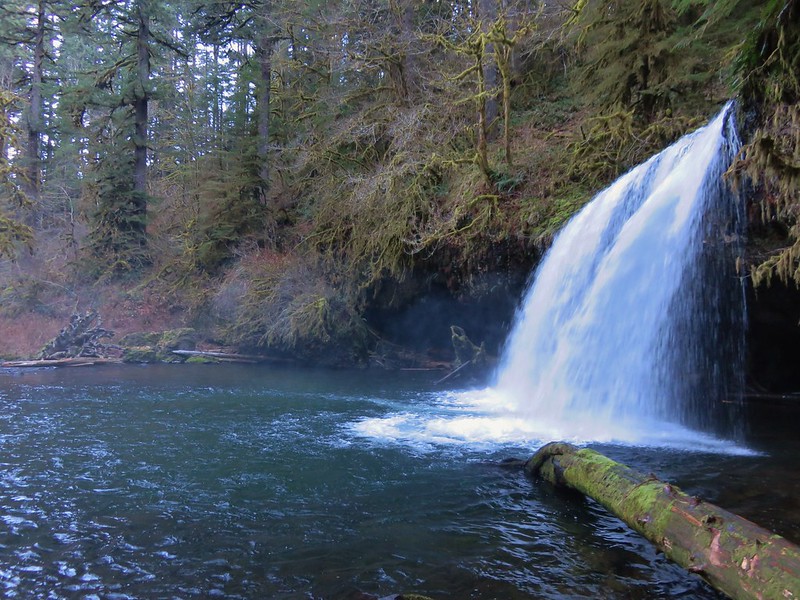
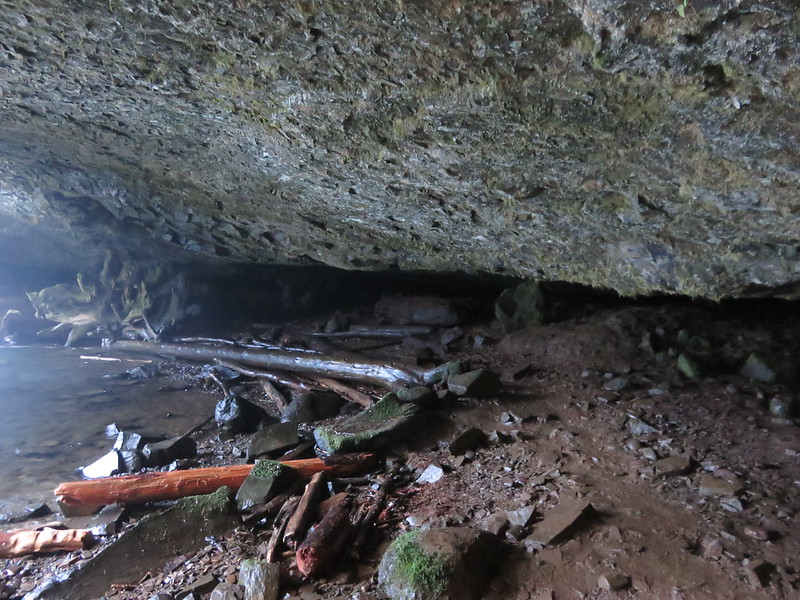
Shorter and wider than its counterpart Upper Butte Creek Falls offers close up views and a path behind the falls into a good sized cavern.
36.1
34.6

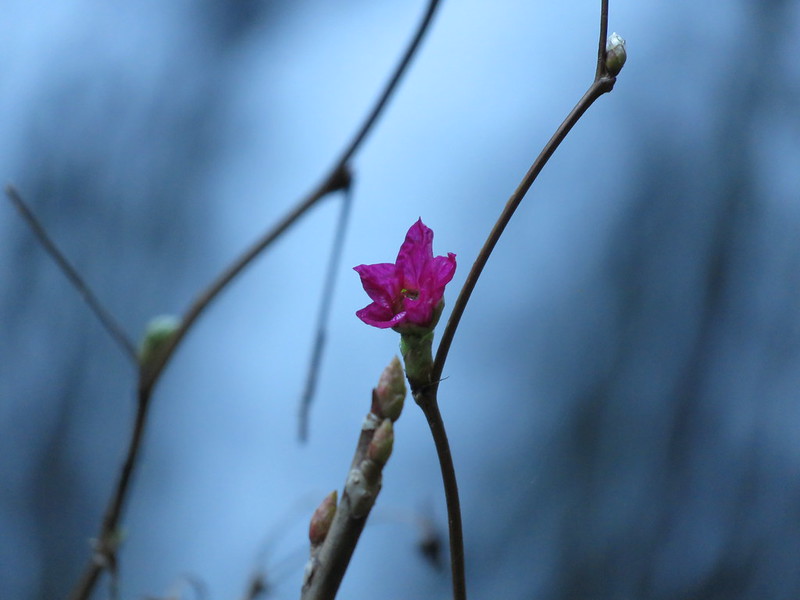
While we were exploring around the splash pool we noticed that the salmonberries were beginning to bloom.
36.6
41.1

From the upper falls it was a short .3 mile climb back up to the parking area. The hike to these two waterfalls had been less than 1.5 miles so why not visit another nearby waterfall – The .5mile trail to Abiqua Falls. To get to Butte Creek Falls we had traveled 11.4 miles on Crooked Finger Road to CF 400, took a left and followed signs to the trailhead. Now we returned to Crooked Finger Road and headed back toward Scotts Mills for .7 miles to CF 300 marked by signs for an ATV staging area on the left. Despite the trailheads only being about 5 miles apart the drive was not quick. The 2.5 miles on CF 300 were slow due to the presence of many good sized rocks and ruts. High clearance, good tires, and 4wd were all helpful.

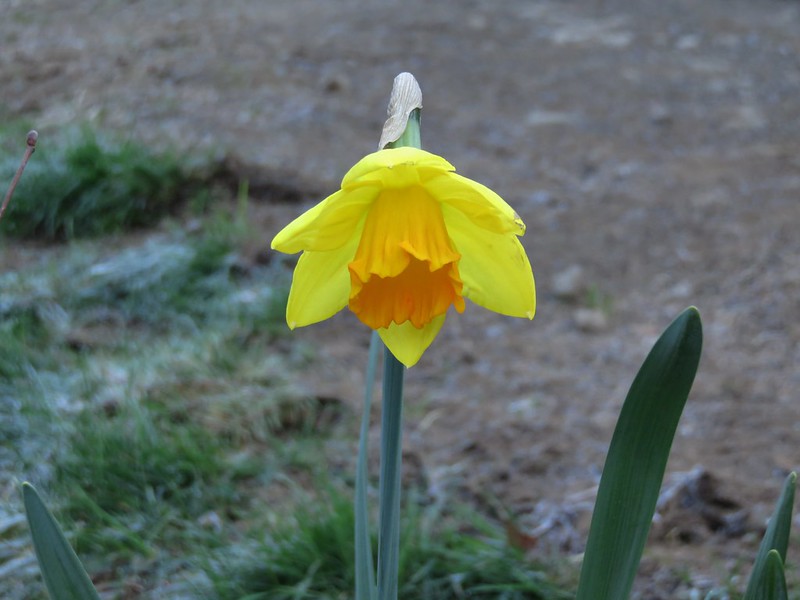
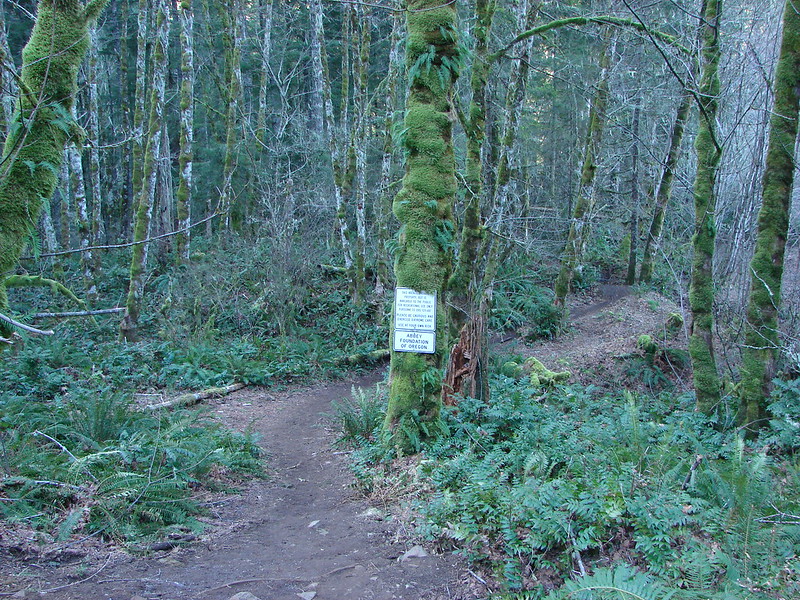
The Abby Foundation of Oregon owns the land where the trailhead, trail and, Abiqua Falls are, but allow the public to use it. A yellow gate marked the end of the tedious drive and the start of the short trail where we were greeted by a lone daffodil.
42.6

To find the correct path down to the falls we needed to walk back up the road a short way passing a first clear path that leads to a grassy clearing to a second worn trail marked by a white sign.
43

The trail down to Abiqua Creek was fairly steep in places but there were several sections of rope secured along the trail to assist with the climb.
47.1
47.2

The trail then heads up the creek in a narrow canyon toward the unseen falls.
49.2
56.2

Just as the trail began to curve out and around a rocky outcrop we got our first views of Abiqua Falls.
61
65.1

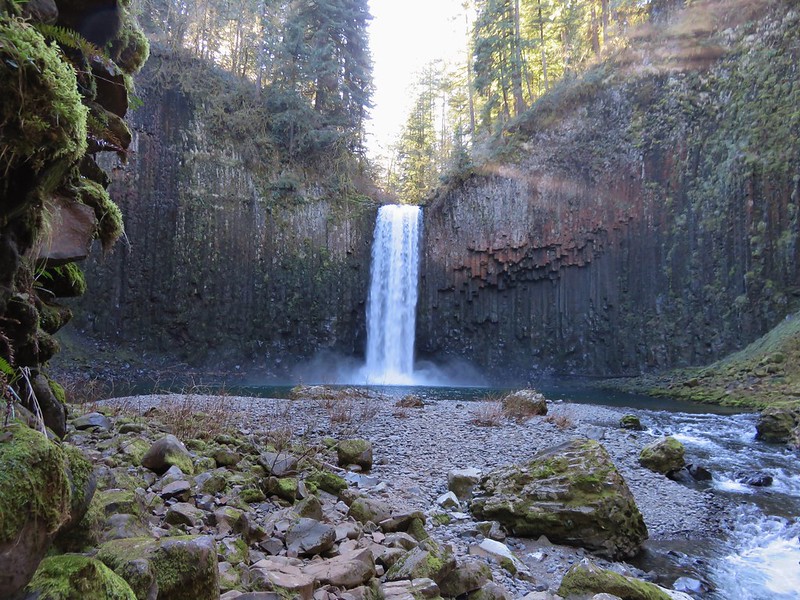
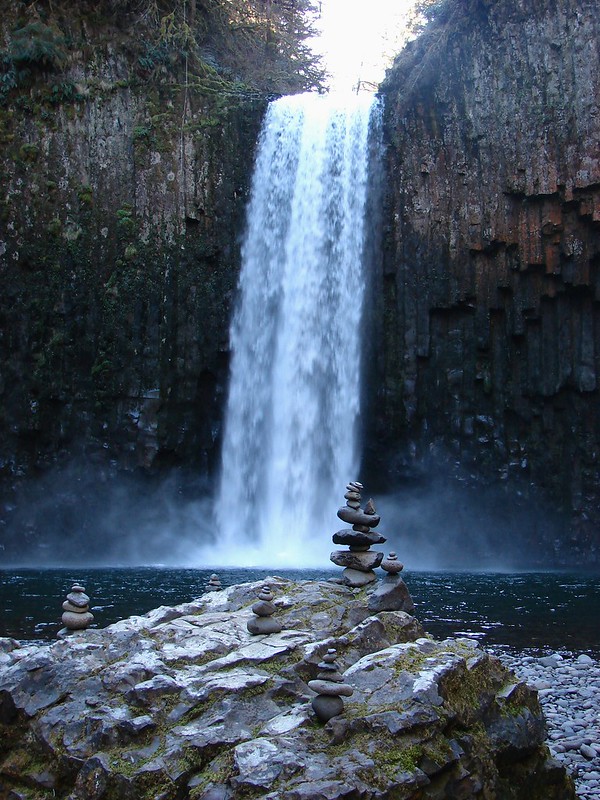
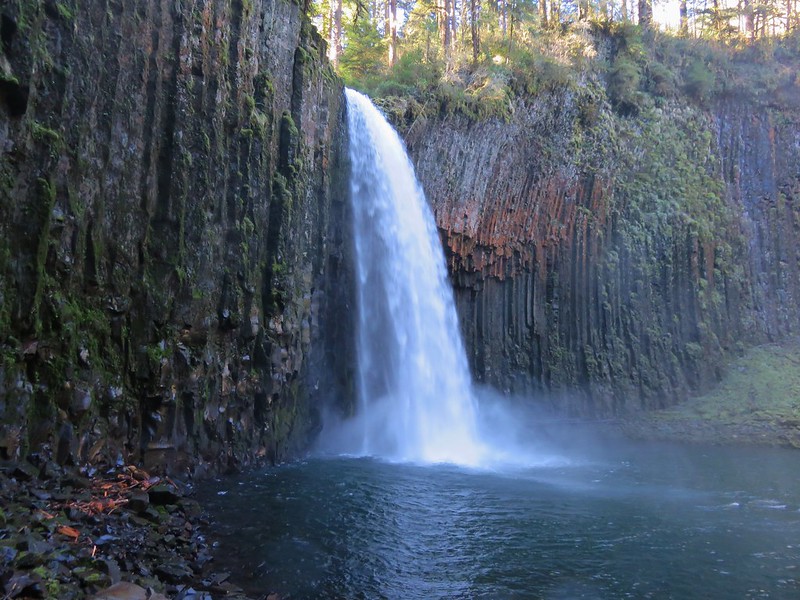
The canyon walls opened up to reveal a large circular bowl lined with columnar basalt colored with mosses and lichens with the falls as its centerpiece.
65.5

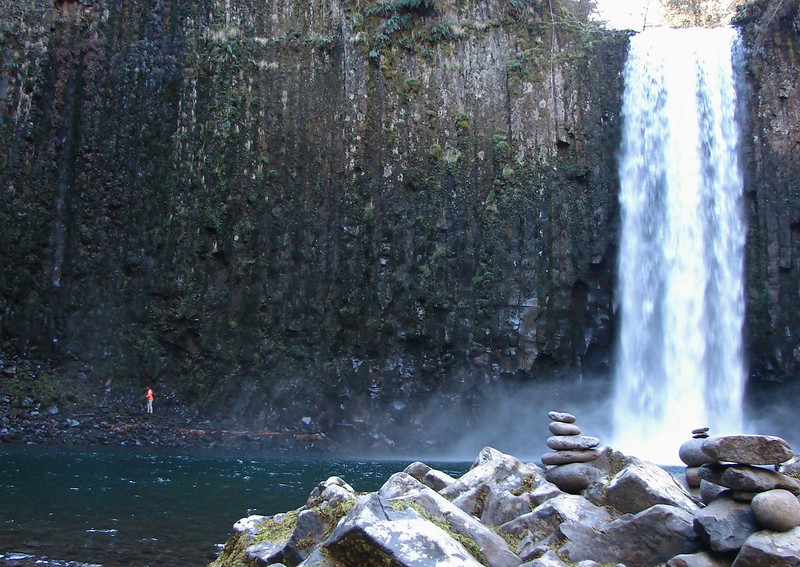
We spent some time exploring the rocky beach looking at the various rock cairns stacked about.
76
80

There was also a path around to the left side of the falls which I followed to see how far I could go.
81.3
84

We could have stayed there for hours if it had been warmer but it wasn’t so we headed out just as sunlight began to arrive inside the canyon walls.
88
94

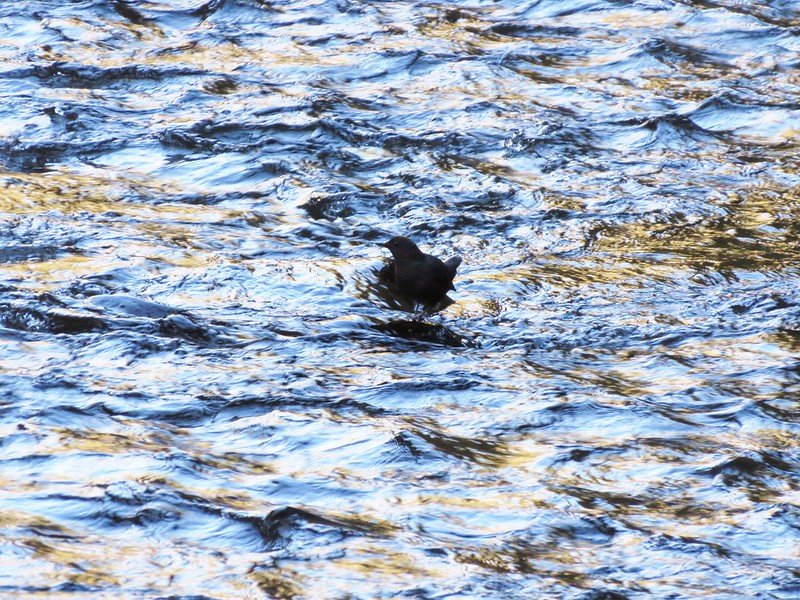
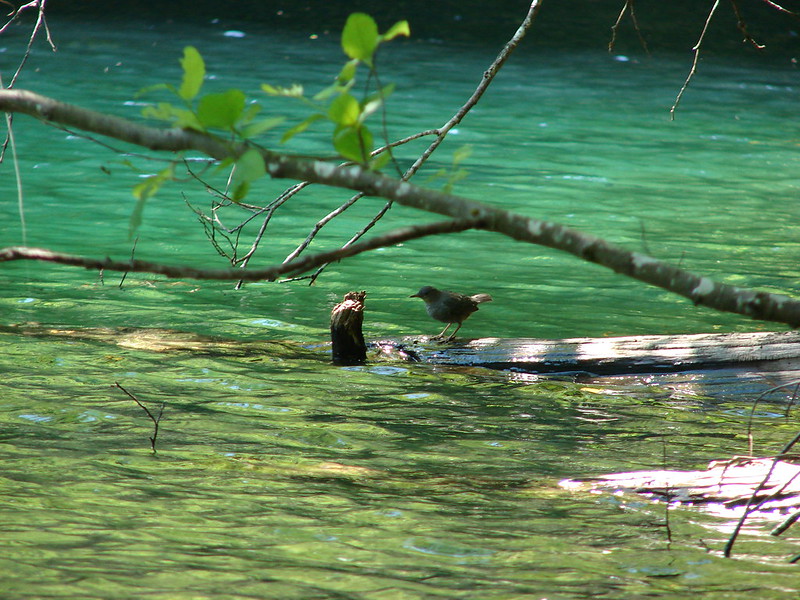
Other than the Ouzels and a few other birds we had had the area all to ourselves.
98
100

We made it back up to the car (with some assistance from the ropes) just as another group of hikers arrived having survived the drive down. It was their turn to visit this special place. Happy Trails!

flickr: https://www.flickr.com/photos/9319235@N02/sets/72157651119420415/

Categories
Hiking Middle Santiam Old Cascades Oregon Trip report

House Rock

We never know what kind of weather to expect in November when we are penciling out our hiking schedule so we typically play it fairly safe by picking a hike on the coast or along a lower elevation river or creek.   This year we selected House Rock along the Old Santiam Wagon Road which was established in 1865 as a main route from the Willamette Valley to Central and Eastern Oregon for many years.  As it turned out the weather was not a concern and it was a beautiful day for a hike.

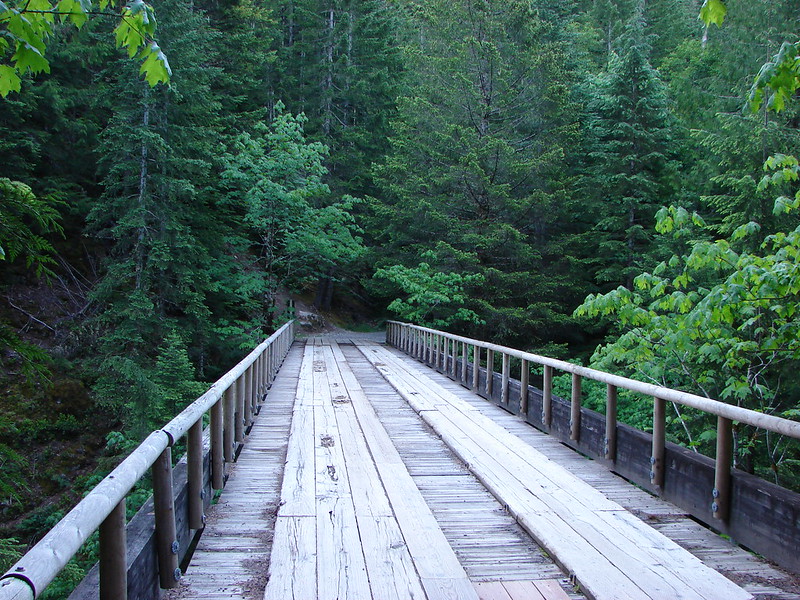
The wagon road originally extended from Lebanon, OR all the way to Ontario, OR on the Oregon – Idaho border.  For our hike we started at a trailhead just east of the former Mountain House Restaurant (a long time rest stop along the route) on Highway 20 between milepost 52 & 53.  From the small parking area a footbridge led across the South Santiam River to former road.
DSC08008

DSC08009

After crossing the river we turned left onto the wide path covered in a carpet of leaves and made our way through the mossy woods toward House Rock.
Old Santiam Wagon Road

Recent rains had left the creeks and runoff streams flowing nicely which added to the scenic beauty.
DSC08019

DSC08020

At the two-mile mark we arrived at the start of the House Rock loop.
DSC08032

We turned toward the river where another footbridge joined from the House Rock Campground.
DSC08033

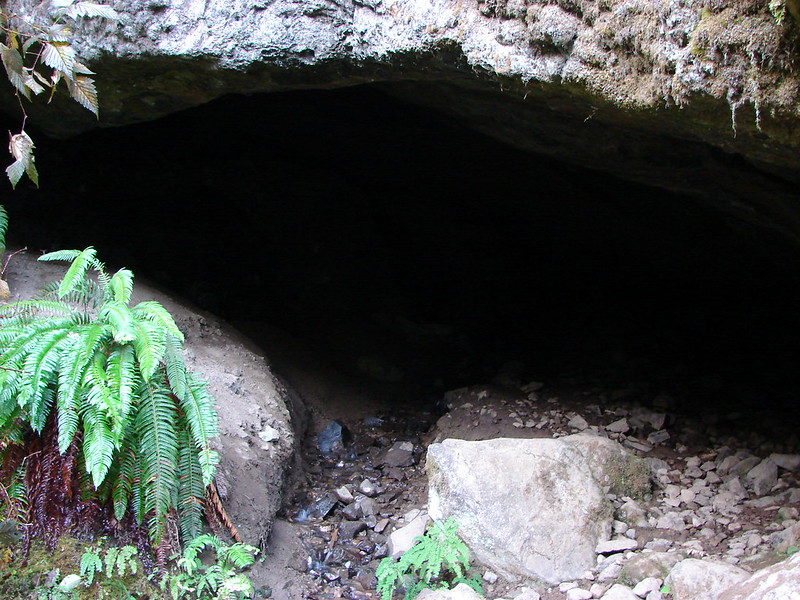
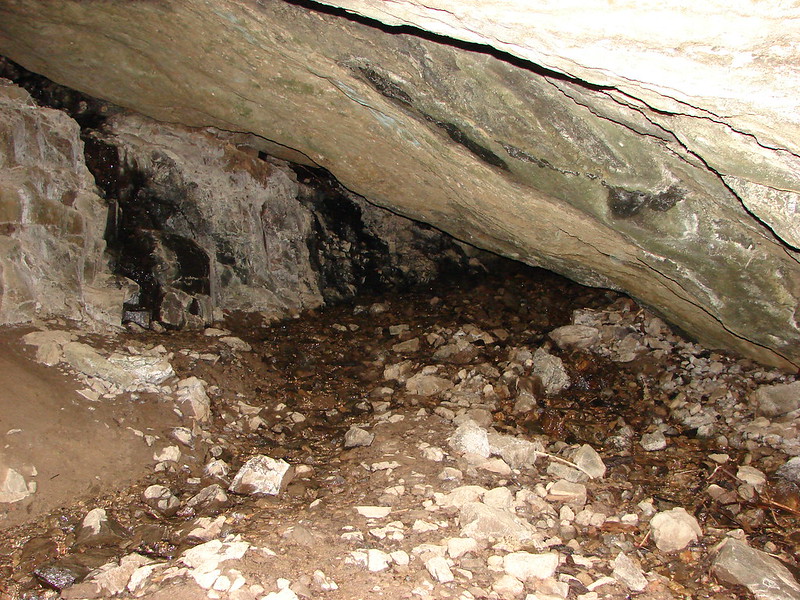
After checking out the bridge we made our way to House Rock.  There really wasn’t a good way to get a picture that adequately showed the size of House Rock and the opening beneath it.  A small stream flowed through the wide cavern where there was enough room for several people.
DSC08038

DSC08039

From beneath House Rock

House Rock

We left House Rock and continued on the loop heading toward House Rock Falls.  A tree had recently fallen creating a bit of an obstacle but we were able to make our way over it.

DSC08052

I emailed the Sweet Home Ranger District when we were home just in case they weren’t already aware of it.

A sign pointed the way to the falls along a .2 mile side trail.
DSC08054

DSC08055

House Rock Falls was just as difficult to get a good picture of.  Boulders and logs partly obscured the view from the trail and the wet rocks made scrambling down to the base an adventure.  Even then the curve of the river combined with the rocks made it impossible to get a clear view without wading out into the river.  It was just cold enough that I didn’t feel like trying that so I settled for the obstructed view and called it good.
House Rock Falls

We headed back to the loop and then continued up to the wagon road where we turned left once again.  Our goal was a viewpoint near the 5 mile marker. After another 1.1 miles we met FS Rd 2044 where we followed signs to the continuation of the wagon road.  In the next couple of miles the trail briefly left the old road and passed through an ever-changing forest where there was a seemingly endless variety of mushrooms on display.
DSC08082

DSC08098

DSC08101

DSC08104

DSC08105

DSC08119

DSC08121

Mushrooms along the Old Santiam Wagon Road

DSC08132

DSC08135

DSC08163

DSC08162

We arrived at the 5 mile marker and took a short trail on the right to  the viewpoint.

DSC08138

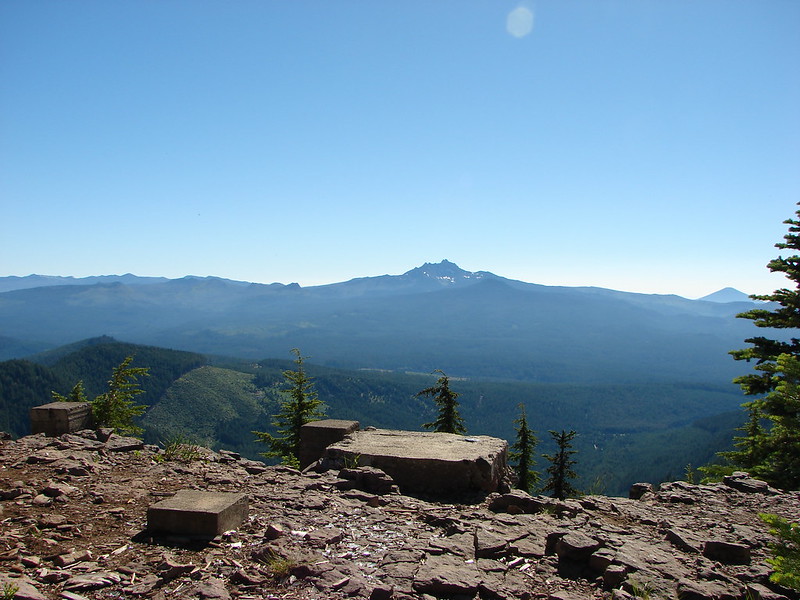
It was a nice place to take a short break and have a snack.  The view wasn’t anything spectacular but Jump Off Joe Mountain was across the a valley while Iron Mountain, which we had hiked on July 4th, rose up in the distance.

Jump Off Joe Mountain
DSC08144

Iron Mountain
Iron Mountain from the 5 mile viewpoint along the Old Santiam Wagon Road

DSC08148

We returned the way we had come following the wagon road back past the House Rock loop and ultimately to our waiting vehicle. It had been a wonderful November day for a hike.  Happy Trails!

Categories
Bull of the Woods/Opal Creek Hiking Old Cascades Oregon Trip report

Twin Lakes & Battle Ax Mountain – Bull of the Woods Wilderness

**Note a portion of this hike burned in the 2021 Bull Complex.**

As we transition into Fall our hiking destinations begin to shift away from alpine views and wildflowers in favor of lower elevation viewpoints and lakes. It is a great time for these hikes since the mosquitoes that plague many of the lakes have thinned out and the vine maple and huckleberry leaves have begun to change color. Our most recent hike combined both of these features.

We made our first trip to the Bull of the Woods Wilderness for a 15.4 mile hike visiting Twin Lakes and the summit of Battle Ax Mountain. Before we could set off on the hike though we had to make the drive to Elk Lake which meant enduring five and a half miles of awful gravel roads. We parked at the Elk Lake Campground and once I managed to pry my hands from the steering wheel we made a quick trip down to the lake to have a look.
DSC06598

From the campground we had to walk back up the entrance road .4 miles and then continue another .4 miles on road 4697 to the start of the Bagby Trail #544.
DSC06612

The Bagby Trail wound beneath Battle Ax Mountain passing several ponds and crossing a number of rock fields in the first two miles.
DSC06616
DSC06624
DSC06626
DSC06631
Battle Ax Mountain

At the two mile mark the Battle Ax Mountain Trail joined from the left (our return route). Views of Mt. Jefferson, Three Fingered Jack, and the Three Sisters began to materialize as we continued along the Bagby Trail.
DSC06641
DSC06644

We traveled on a ridge for another 1.5 miles to a junction with the Twin Lakes Trail 573. The Bagby Trail was closed here due to a small fire smoldering in the wilderness between Bagby Hot Springs and this junction. We were headed toward Twin Lakes though so we turned down trail 573 and began the 1.9 mile section to Upper Twin Lake.
DSC06649
DSC06650

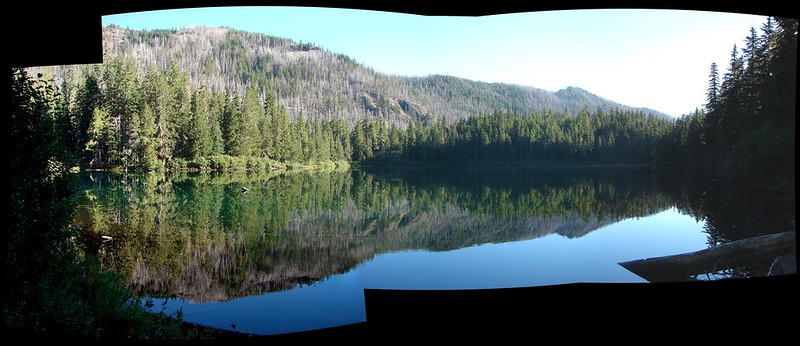
The colors and reflections of Upper Twin Lake were impressive.
DSC06667
Upper Twin Lake

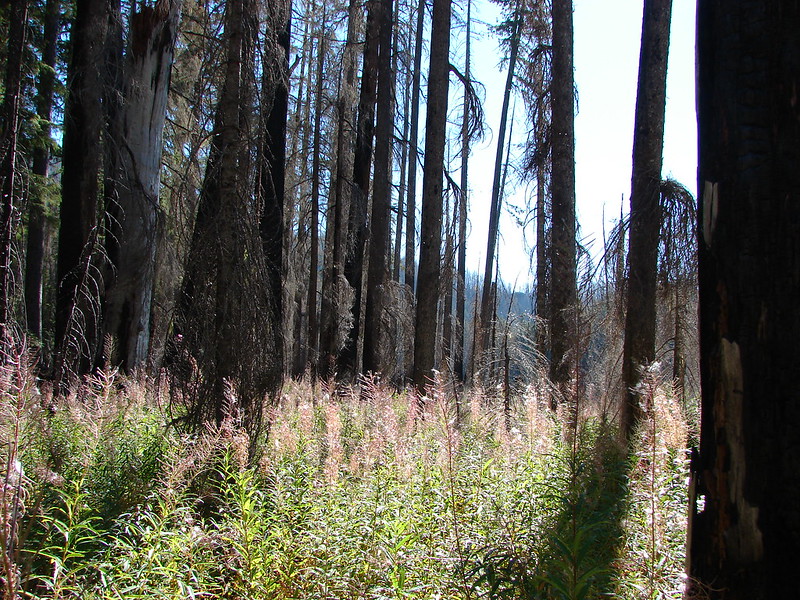
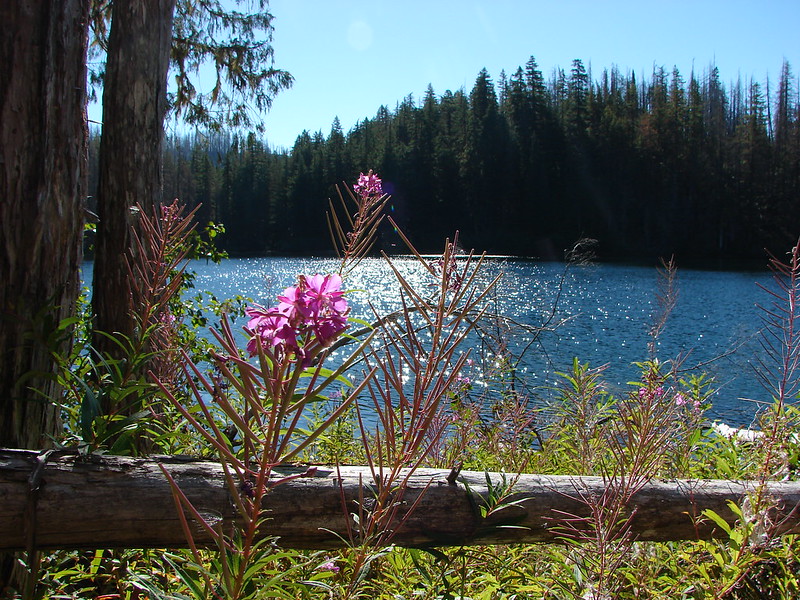
We passed around the lake and headed toward the former trail 573A that used to go to Lower Twin Lake. The trail was overrun by the Mother Lode Fire in 2011 and was subsequently left unmaintained by the Forest Service. We located the old trail and began following it the best we could. As we approached the lake the fireweed was profuse and although most of it was finished blooming it still made for an interesting sight.
DSC06670
DSC06671

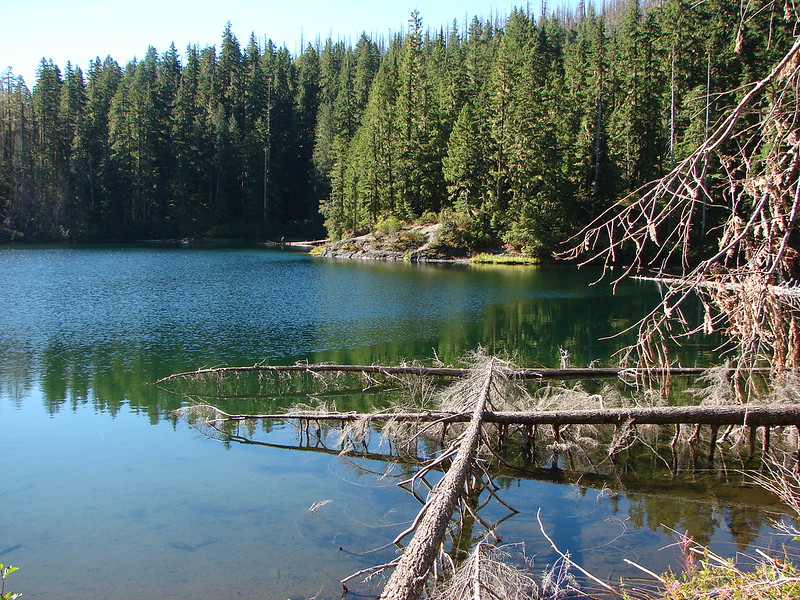
Although the side of the lake we were on had burned in the fire the far side had been spared.
DSC06675
Lower Twin Lake

We noticed some flagging tape when we were ready to leave and hoped it would lead us to a better path back to trail 573. Instead we found an old toilet.
DSC06678

We then came to a dry creek bed which the map showed leading back to almost the same point we left trail 573 so we decided to try following it back up to the trail.
DSC06679

As we made our way up the creek bed we began to encounter some water and some of the local residents.
DSC06682

The water increased just as the creek was squeezing between two hillsides which forced us to abandon that route and head cross country up the hill on our left. We managed to relocate the abandoned trail and follow it back to 573. We then headed back the way we’d come until we reached the Battle Ax Mountain Trail. At that point we forked up hill to the right and began the fairly steep climb to the former lookout site.
DSC06690
DSC06694

One of the reasons we saved Battle Ax for the return trip was to allow the Sun to move overhead which would hopefully give us better views of the mountains to our east. That plan paid off and as we climbed we added more and more mountains to the view.
Mt. Jefferson:
DSC06696

Mt. Hood behind the lookout tower on Bull of the Woods:
DSC06700

Mt. Rainier behind Silver King Mountain:
DSC06708

Mt. Adams behind Pansy Mountain and South Dicky Peak:
DSC06714

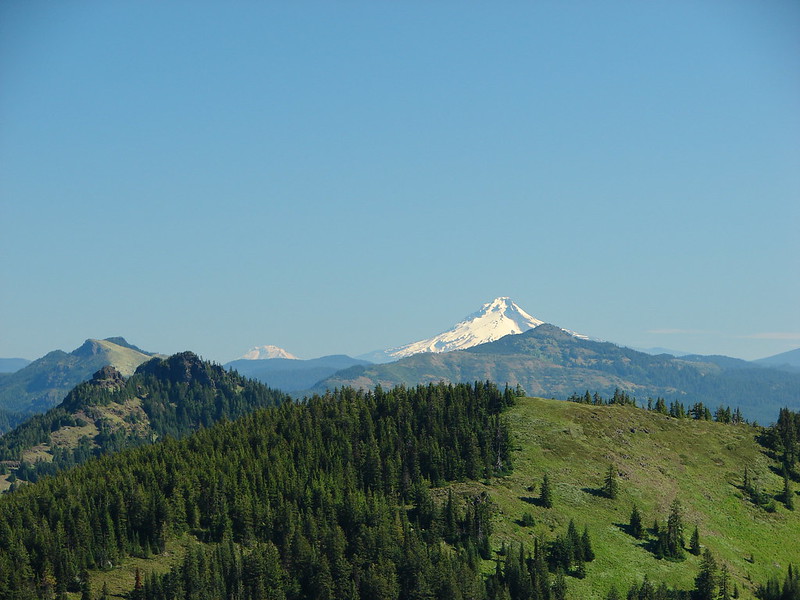
Eventually we had an unobstructed view of Mt. Hood with the Washington Cascades in the background.
Mt. Hood, Mt. Adams and Mt. Rainier from Battle Ax Mountain

To the SE was Mt. Jefferson and Three Fingered Jack.
DSC06718

The ridge began to flatten out as we neared the summit with views all around. From below it hadn’t looked as long and flat on top.
DSC06719

Working our way south along the ridge Elk Lake became visible far below.
View from Battle Ax Mountain

Finally Mt. Washington, Broken Top and the Three Sisters joined Three Fingered Jack in the view to the South.
DSC06730

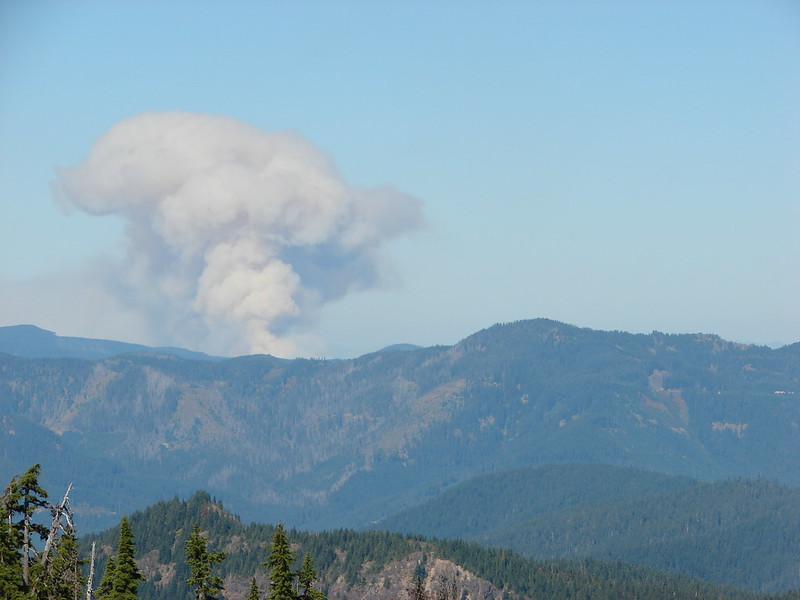
We could also see smoke from the 36 Pit fire near Estacada, OR but the wind was blowing it to the East and there hadn’t been much of a plume until a little after 1:00 when it suddenly picked up.

Smoke from the 36 Pit fire prior to 1pm:
DSC06703

Plume around 1:30:
DSC06761
Smoke plume from the 36 Pit fire and Mt. Hood

We learned later that the fire had jumped across the South Fork Clackamas River due to the strong winds.

After a nice rest at the old lookout site we began our descent down the South side of the mountain.
DSC06771

The trail switchbacked down through open, rocky terrain, with plenty of views of Mt.Jefferson.
DSC06774
DSC06787
DSC06777
Mt. Jefferson

After a mile and a half descent we arrived at Beachie Saddle.
DSC06790

From the saddle trails lead to Jawbone Flats in the Opal Creek Wilderness, Mt. Beachie and French Creek Ridge in that same wilderness, and back to Elk Lake on an abandoned road which is the path we took.
DSC06791
DSC06793

Back at the campground it was hard to imagine the long summit ridge looking back up at Battle Ax Mountain.
DSC06794

It was a good early start to our Fall hiking season and it put us over 500 miles for the year. Now we just had to make it back out over the horrible gravel roads. Happy Trails!

Flickr: https://www.flickr.com/photos/9319235@N02/sets/72157647848590435/
Facebook: https://www.facebook.com/media/set/?set=a.10205055412852172.1073741909.1448521051&type=1

Categories
Hiking Middle Santiam Old Cascades Oregon Trip report

Donaca Lake – Middle Santiam Wilderness

**Note the 2024 Pyramid Fire burned a portion of this hike.**

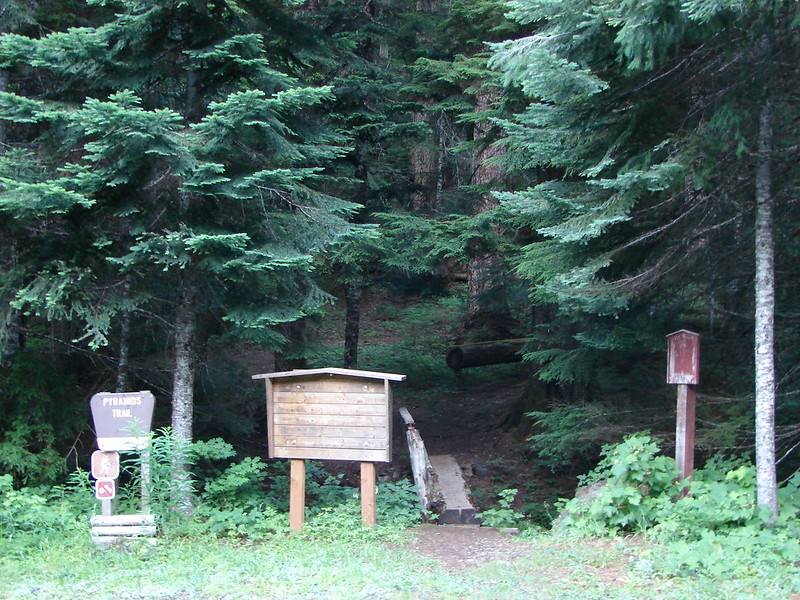
We recently returned from our final overnight backpacking “test run”. Our destination for this round was Donaca Lake in the Middle Santiam Wilderness. The wilderness, established in 1984, consists of 8900 acres in the Willamette National Forest. There were several potential trailheads that we could have started at and we chose to park at the Pyramids Trail. http://www.fs.usda.gov/recarea/willamette/null/recarea/?recid=4334&actid=64

DSC01797

This trailhead left us with the least amount of driving time, but it was by no means the shortest hike to Donaca Lake. That was okay with us since we were wanting the extra distance to get used to hiking with our packs over 12 miles at a time, and coming from this trail we would be able to do the majority of the Middle Santiam River hike described in William L. Sullivan’s 100 Hikes in the Central Oregon Cascades. After crossing a little footbridge we turned left on the South Pyramid Creek Trail which traversed the SE flank of the South Pyramid for 1.5 miles where it briefly joined road 572 at a trail junction. On the opposite side of the road was the Crescent Mountain Trail. This was the opposite end of the trail we had taken up to the top of Crescent Mountain earlier in the month. The South Pyramid Creek Trail picked up about 10 yards down the road reentering the trees on the same side that we had just exited.

DSC01822

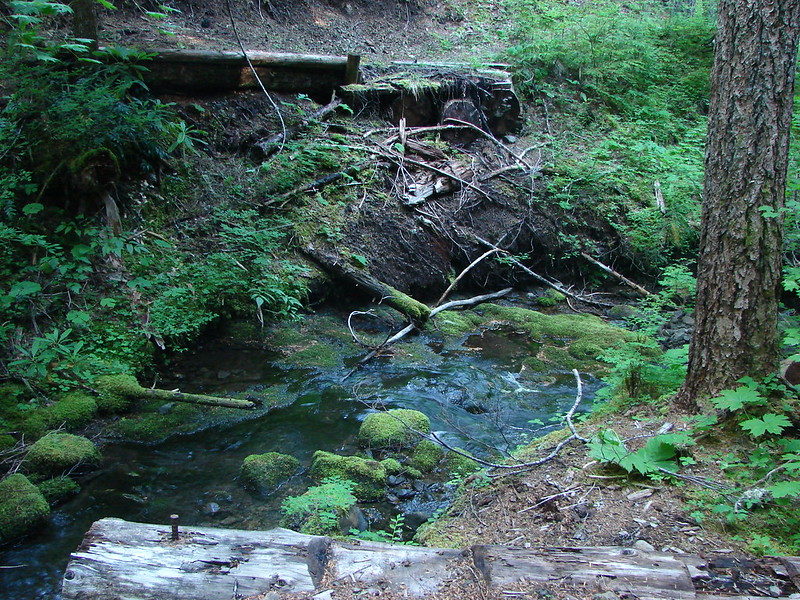
The trail soon began following an unnamed stream downhill toward South Pyramid Creek. We crossed over this stream a couple of times, sometimes on a bridge and other times not.
DSC01828
DSC01833

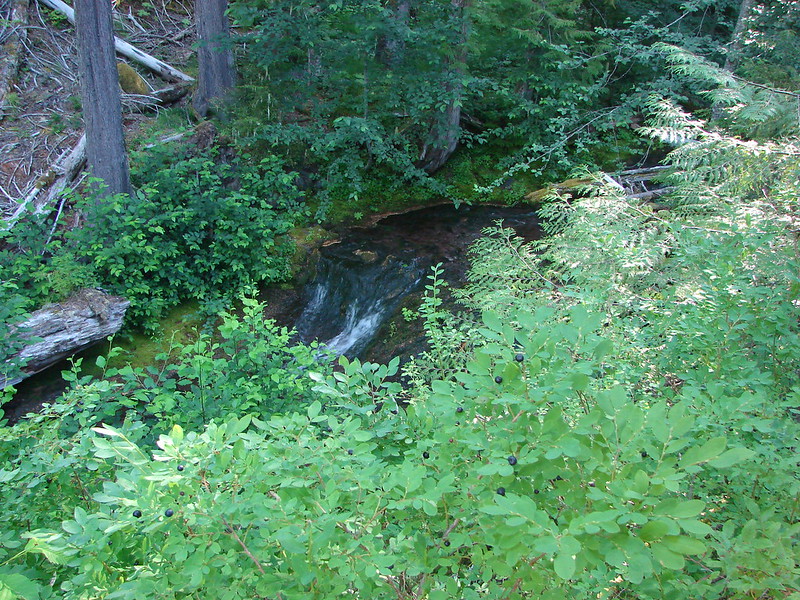
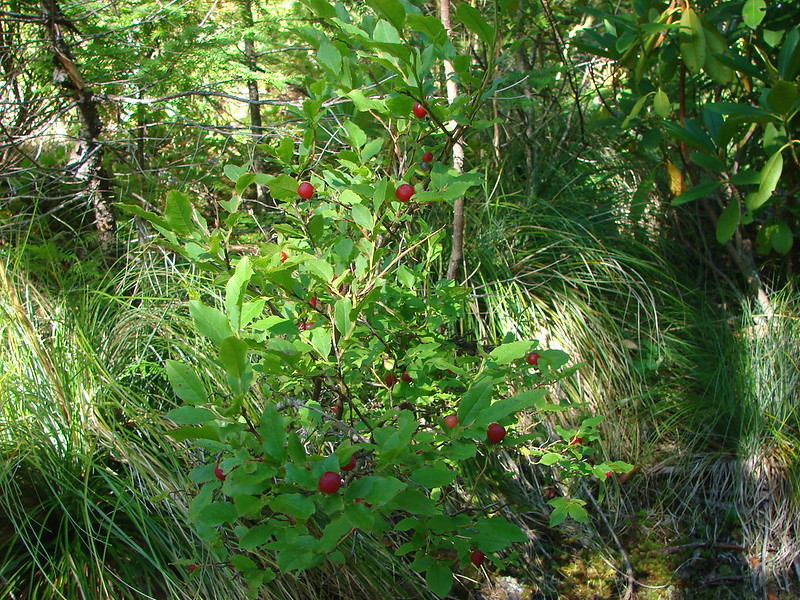
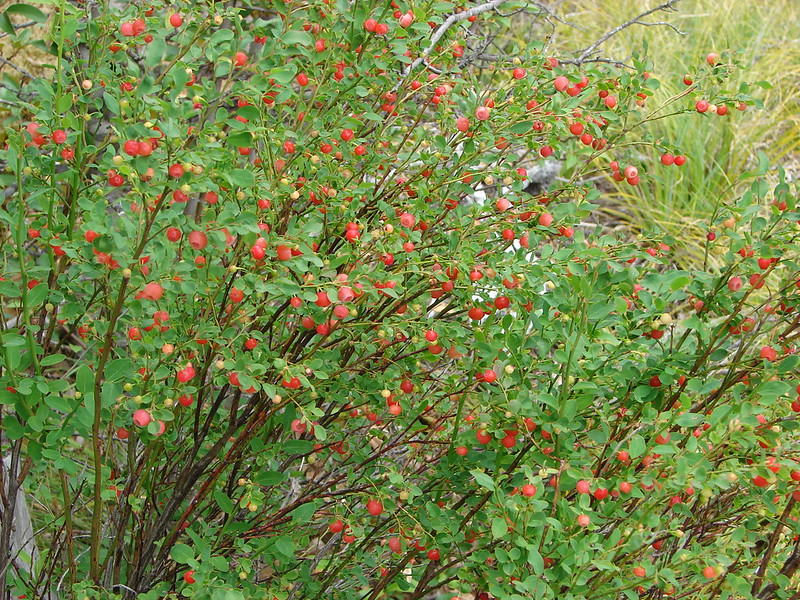
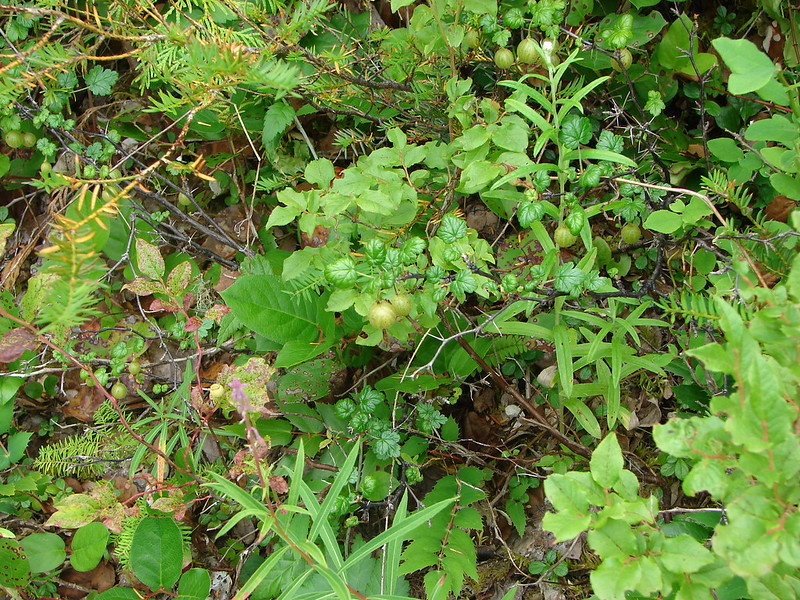
As we neared South Pyramid Creek the forest showed signs of logging activity on our left. This meant a lack of trees and shade, but it also meant there were tons of berries that had taken advantage of the sunlight and disturbed soil. We noticed several different varieties of huckleberries/blueberries, trailing blackberries, and what turned out to be Gooseberries.
DSC01834
DSC01844
DSC02030
DSC01847
Gooseberry

Since we didn’t know what they were for sure we didn’t sample the gooseberries, but the rest of the berries were thoroughly tested. 🙂

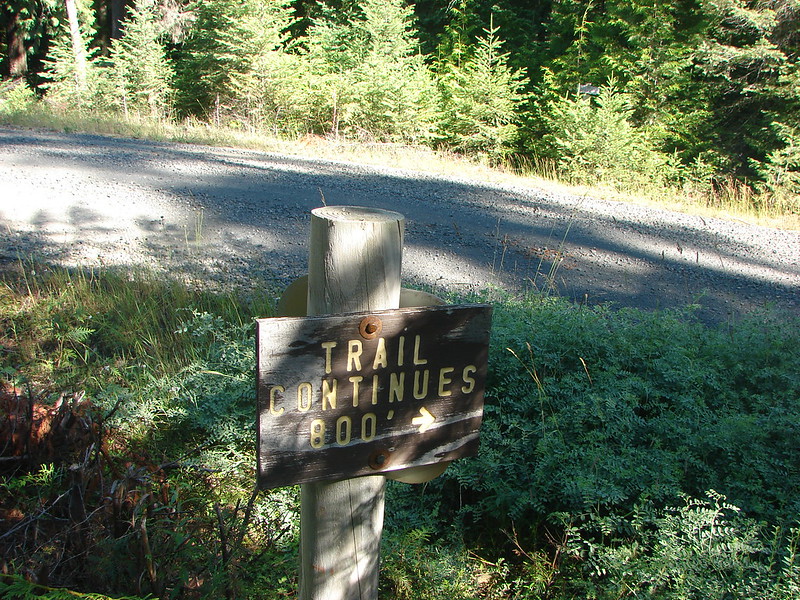
The trail crossed road 2047 where a sign indicated it’s continuation 800′ to the right.
DSC01846
We turned up the road, passed over the creek and started looking for the continuation. We hadn’t really thought out just how far 800′ was and at first we thought we’d passed by the trail since we felt like we’d gone plenty far. We backtracked looking for an sign of the trail and tried pushing through some trees thinking that we might have seen it. Once we stopped for a minute and really considered that 800′ is nearly three full football fields we realized we hadn’t gone far enough so we headed back up the road. I spotted a sign ahead just around a bend and announced that I’d found it, then looked to my left to see I was standing next to a trail and hiker sign. What I had seen was actually a sign for the South Pyramid Horse Camp and I had completely missed the trail.
DSC01848
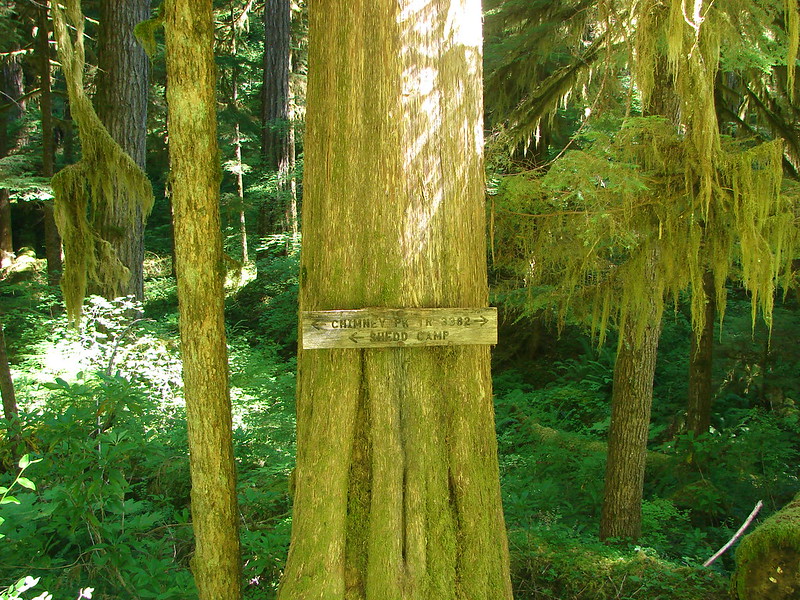
The trail was much fainter and overgrown in this section. It appeared that the trail had been rerouted at some point which would explain why my maps and Garmin did not show the 800′ road walk and instead showed the trail continuing directly across the road. It would also explain the trail junction that we came to not far from the road. It wasn’t on the Forest Service Topographical Maps I had nor was it shown on the Garmin (in fact both showed that the South Pyramid Creek Trail ceased to exist before reaching the Chimney Peak Trail which was the one we needed. Sullivan’s map showed the trail connecting and so did the Willamette National Forest trail description, but standing at this junction we became a bit confused. There was only one sign at the junction.
DSC01852
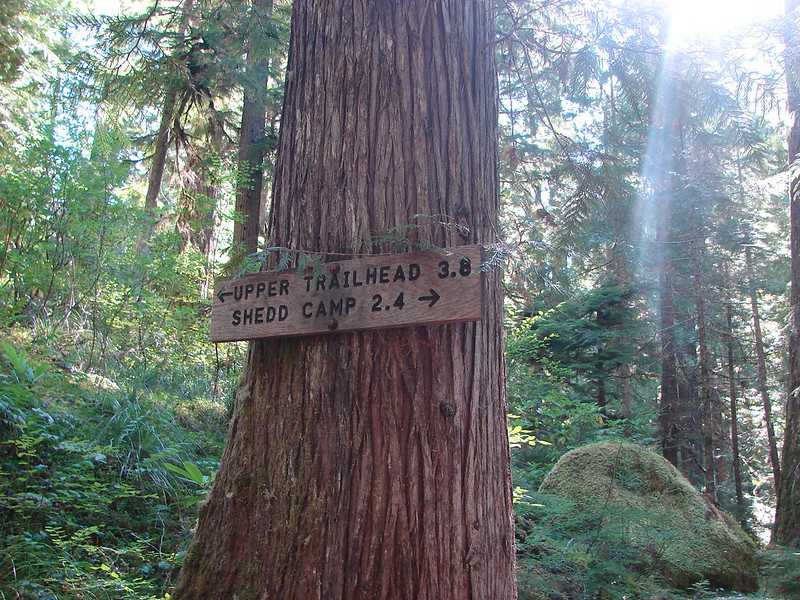
It was on a tree facing away from the direction we’d come. It was a “Y” junction so one trail went up and away to the right and the other headed down to our left. The distances didn’t match up with anything I had seen or read about but I knew we wanted to head toward Shedd Camp. The map in Sullivan’s book showed the South Pyramid Creek Trail intersecting the Chimney Peak Trail .3 miles from the Middle Santiam River and the Shedd Camp Shelter and we had planned to turn left at that point to visit a small waterfall on the river. The 2.4 mile distance listed on this sign just didn’t make any sense though. We headed left wondering if we would magically arrive at the river in .3 miles but after walking for awhile it became apparent that that would not be the case. After approximately 1.5 miles we spotted what I thought was a really random sign pointing back up the trail we’d just come down identifying the trail as the South Pyramid Creek Trail.
DSC02010
After a moment pondering why there would be a sign here we noticed another trail and sign. We had finally arrived at the Chimney Peak Trail.
DSC01867

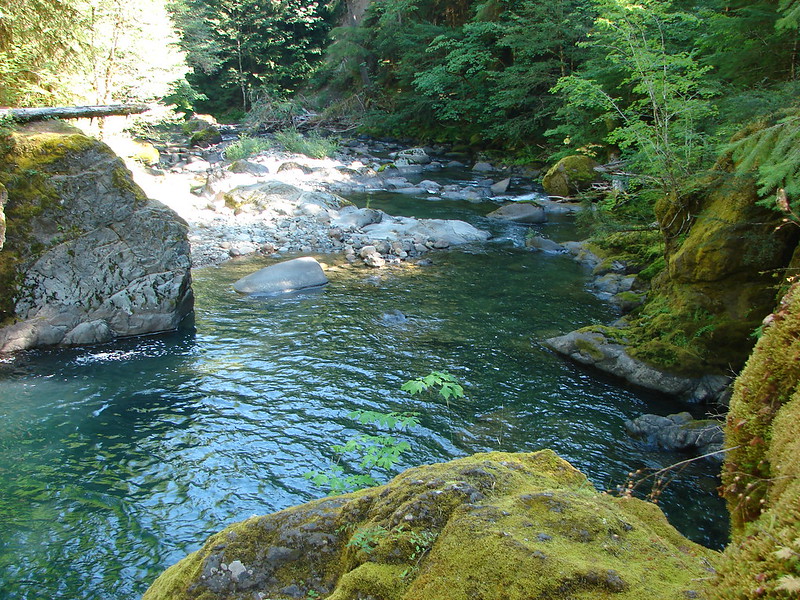
This time there really was only .3 miles to the Middle Santiam River. We took a break there to look at the falls and enjoy the river.
DSC01870
DSC01873

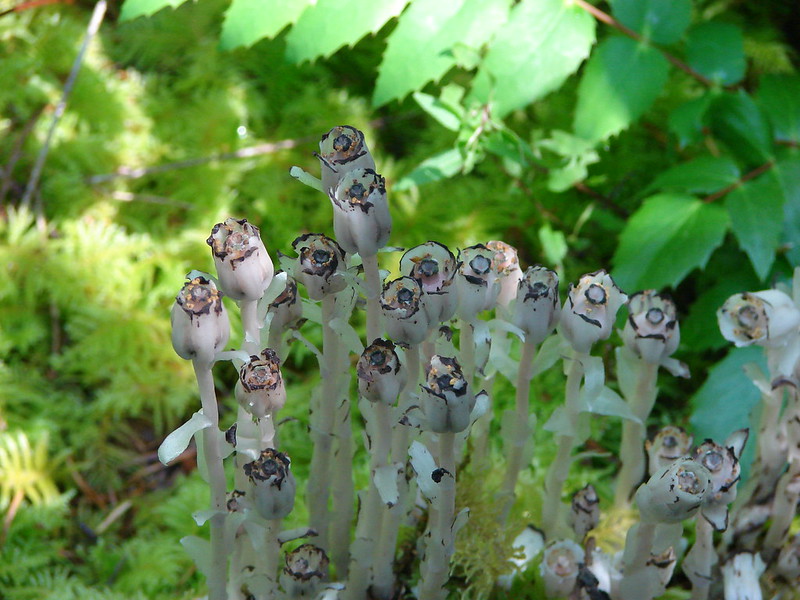
After the break we headed back up to the trail junction and took the Chimney Peak Trail. We were now following the route described in our 100 Hikes book which put an end to the trail surprises. It was 2 miles from the junction to our next marker, Pyramid Creek. Along the way we spotted a couple of very interesting patches of Indian Pipe.
DSC01881
DSC01882

There was a nice camp site at Pyramid Creek which was my backup plan just in case there were no sites available at the lake. The creek itself was fairly wide with no bridge, and there was no way we were going to get across dry.
DSC01890
After fording the creek we crossed road 2041 which was abandoned years ago due to numerous washouts and entered the Middle Santiam Wilderness.
Road 2041:
DSC01896

Edge of the wilderness:
DSC01899

It was obvious that the trail doesn’t get a lot of use as the vegetation was encroaching on most of it.
DSC01914

The trail was joined by the Gordon Peak Trail 2.3 miles from Pyramid Creek and shortly after we came to Swamp Creek. I had expected a swampy bog here given the name but found a nice little creek that required another fording.
DSC01916

After crossing Swamp Creek we were only about three quarters of a mile from Donaca Lake. I had read somewhere that there was only one camp site at the lake and we had just passed a couple who had been staying at the lake so we were anxious to get there to make sure we could get a tent site. They told us the lake was lovely and it did not disappoint. From the first view through the trees we could see it was a very pretty little lake.
DSC01919
DSC01920

As we were passing along the lake we spotted a trail up to a small camp site away from the lake so we headed up and claimed our spot. After dropping off our gear we headed back down to the trail to explore the rest of the lake. The trail came to an inlet creek where we found another bigger campsite and a nice little gravel beach.
DSC01921
DSC01922

Just a little further up the trail was a third campsite but we decided to stay where we had dropped our packs because we didn’t want to be in the path of the lake access. Before going back and setting up camp though we sat on the gravel beach and watched as Newts and fish swam around in the lake while birds and bugs zoomed over the water.
DSC01941
DSC01942
DSC01952

After watching the wildlife for awhile we headed back to our packs and set up camp.
DSC01968

While we were setting up another group arrived and settled down at the big site so when we were ready to go back down to the lake we took our dinner and headed to the third site we’d found and followed a little path to a different gravel beach. After dinner we hung out for awhile before turning in for the night.
DSC01973
DSC01980

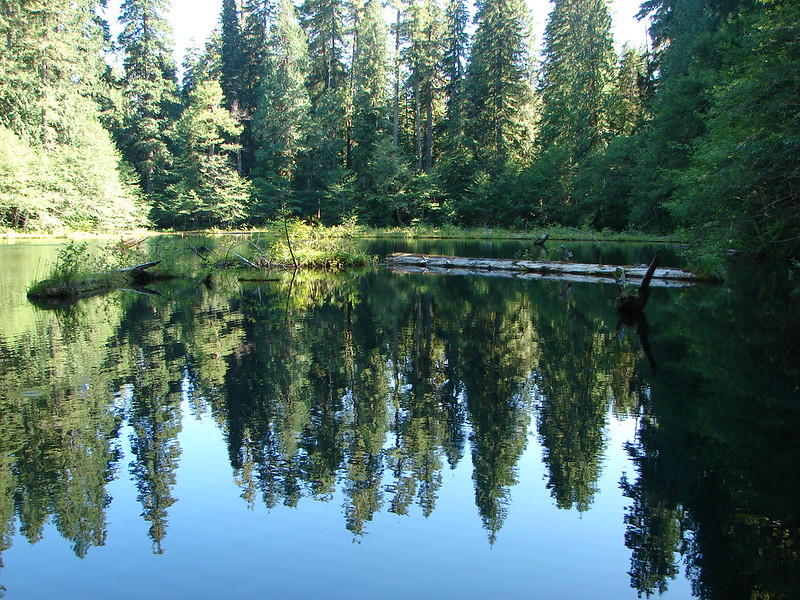
I woke up a little before 5AM and headed down to the lake to see if I could get any sunrise pictures. There wasn’t enough light for my camera to pick up much but there was a colorful stump that Heather had remarked on after dinner. It’s reflection in the water was eye catching.
DSC01994

After Heather woke up and we’d eaten breakfast we packed up and started our return trip. It was going well until we hit the 3.8 mile sign. It was the longest section of trail I can remember hiking. We kept thinking we were going to arrive at road 572 and the Crescent Mtn. Trail junction but instead we just kept climbing. Even when we finally spotted the road it seemed as though we paralleled it for miles. We had a mini celebration when we did finally pop out on the road before tackling the final mile and a half. The final stretch went much quicker as it was primarily downhill and we eventually arrived back at the Pyramids Trailhead.
DSC02053

In 27.7 miles of hiking we had seen only the two groups totaling five people over the two days. If you’re looking for a nice quite forest where you can have the trail to yourself the Middle Santiam Wilderness may just be the place for you. Happy Trails!

Flickr: https://www.flickr.com/photos/9319235@N02/sets/72157645981978735/
Facebook:https://www.facebook.com/media/set/?set=a.10204556986191817.1073741895.1448521051&type=1

Categories
Hiking Middle Santiam Old Cascades Oregon Trip report

Crescent Mountain

Our wildflower adventure in the Old Cascades continued on our way home from Bend on July 6th. The hike we’d chosen was Crescent Mountain which is less than five miles from Iron Mountain as the crow flies. A 4.5 mile trail climbs up the SE ridge of this crescent shaped mountain through a series of meadows to another former lookout site.

The first 2.5 miles climbed through a nice forest with a crossing of Maude Creek at the 1.3 mile mark.
DSC00434

The trail then entered the first meadow which was full of bracken fern and some wildflowers.
DSC00480
DSC00496
DSC00498
DSC00502
DSC00504

The ferns gave way to more wildflowers as the trail continued to climb. Then we spotted a field of beargrass ahead. It turned out to be the most densely packed we’d ever seen.
DSC00539
DSC00719
DSC00720

Butterflies and birds could be seen flying about in all directions. Behind us a view of Mt. Washington and The Three Sisters opened up across the open hillside.
DSC00551
DSC00555
DSC00557
DSC00560
DSC00718
DSC00724
DSC00564
DSC00721

There was a nice variety of flowers in bloom.
DSC00727
DSC00744
DSC00741
DSC00714
DSC00694
DSC00693
DSC00559
DSC00574
DSC00579

The meadows lasted for about a mile before the trail reentered the forest and climbed a ridge to a trail junction. Taking the uphill fork to the right we quickly popped out on the rocky summit where the former lookout had stood. The view here was better than Iron Mountain with Three Fingered Jack unobstructed and Crescent Lake below nestled in the curve of the mountain.
Mt. Jefferson
DSC00591
Mt. Washington and The Three Sisters
DSC00592
Three Fingered Jack and Black Butte
DSC00593
Diamond Peak
DSC00594
Mt. Hood & Mt. Adams
DSC00619
Crescent Lake
DSC00634

There were more flowers, butterflies and birds up at the summit and despite a brief encounter with mosquitoes when we left the meadows we were left alone to enjoy the scenery.
DSC00651
DSC00645
DSC00653
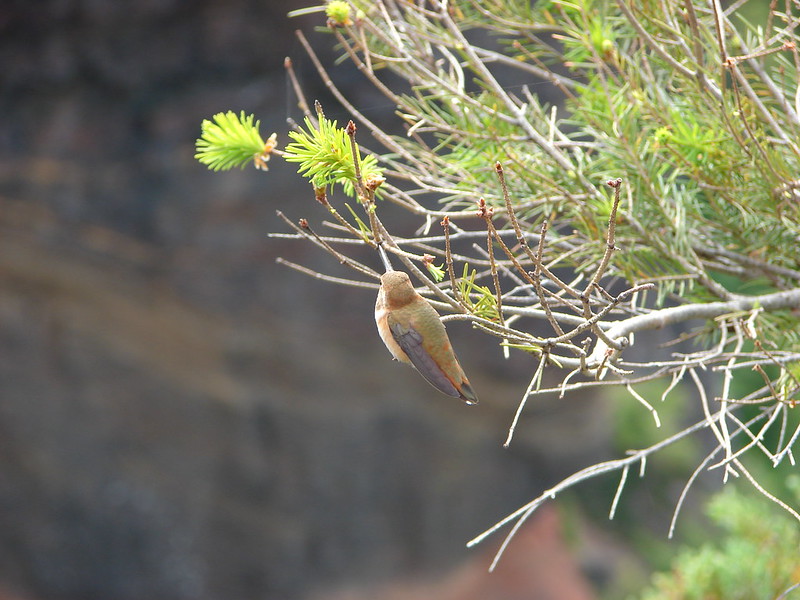
Hummingbird enjoying the paint
DSC00672
DSC00642
DSC00652
DSC00658

Coming down we ran into a pair of hikers passing through the meadow who were equally impressed with the flowers. We agreed that we’d probably timed it as well as could be hoped. It was a great way to end the holiday weekend. Happy Trails!

Flickr: https://www.flickr.com/photos/9319235@N02/sets/72157645550800815/
Facebook: https://www.facebook.com/media/set/?set=a.10204403365071385.1073741892.1448521051&type=1

Categories
Hiking Middle Santiam Old Cascades Oregon Trip report

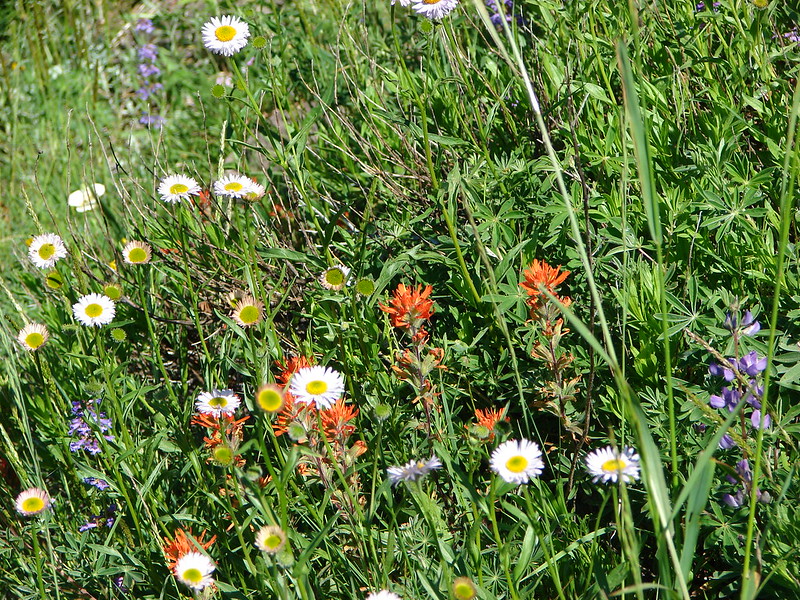
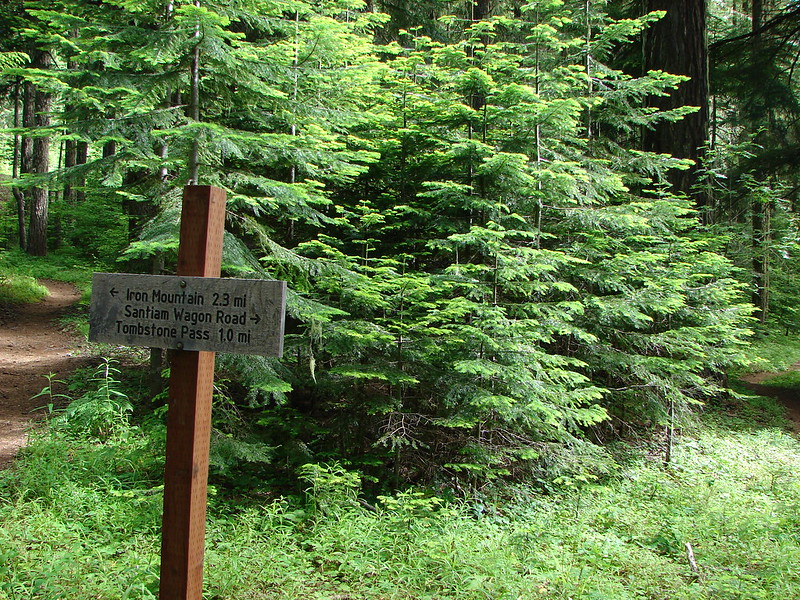
Iron Mountain and the Meadows of Cone Peak

July means wildflowers in the Old Cascades, the eroded peaks that are now the western foothills of the Cascade Mountains. We were headed over to Bend, OR for the 4th of July weekend so we seized the opportunity to check out a couple of the hikes on the way over and back. On the way over to Bend we decided to revisit Iron Mountain, a hike we had done in 2010 during the final week of July. We missed the wildflower peak that year by a couple of weeks so we hoped we would be hitting the area at a better time this visit.

On our previous visit we did the loop clockwise by starting at the trailhead located on road 15 and heading up Iron Mountain first then through the meadows on Cone Peak. This time around we parked at Tombstone Pass and headed counter-clockwise in order to hopefully have the meadows to ourselves before the trail got crowded.
DSC00001
We took a short detour on the Tombstone Nature Trail that circled around a meadow with flowers and a view of Iron Mountain.
DSC00010
DSC00013
DSC00017
DSC00034

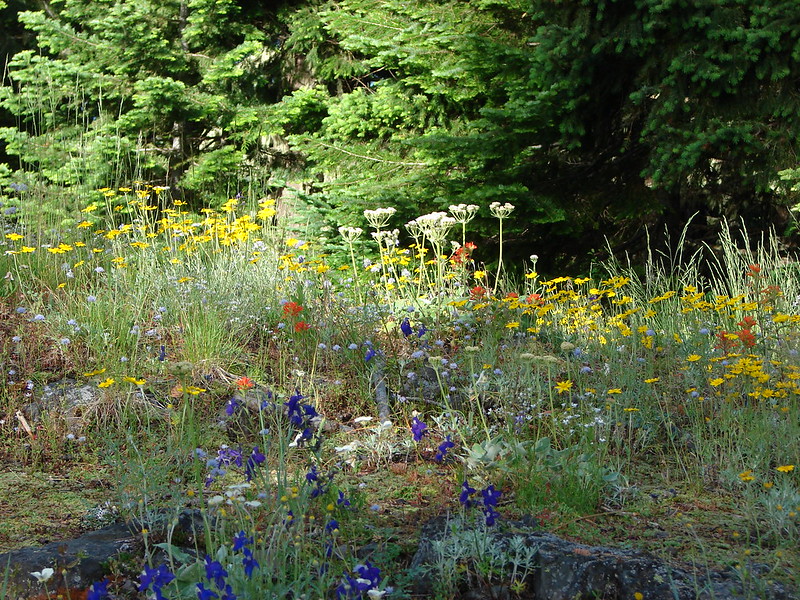
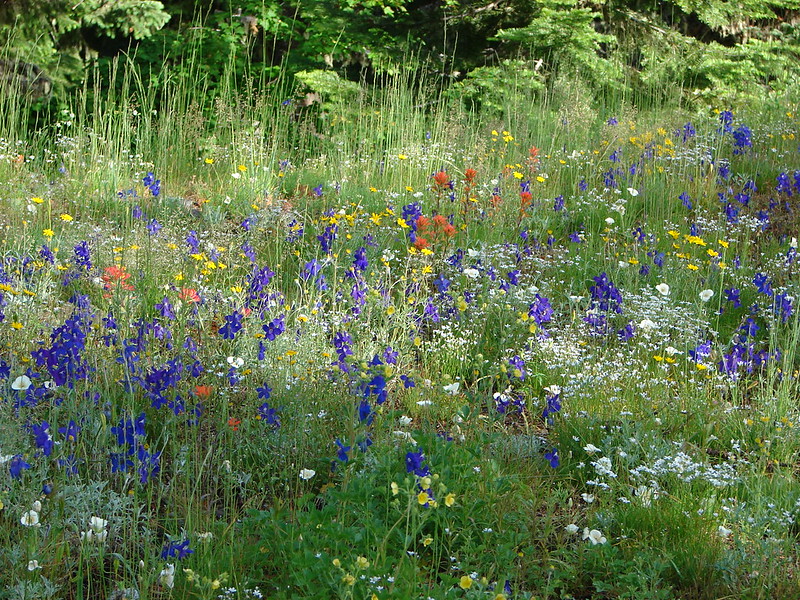
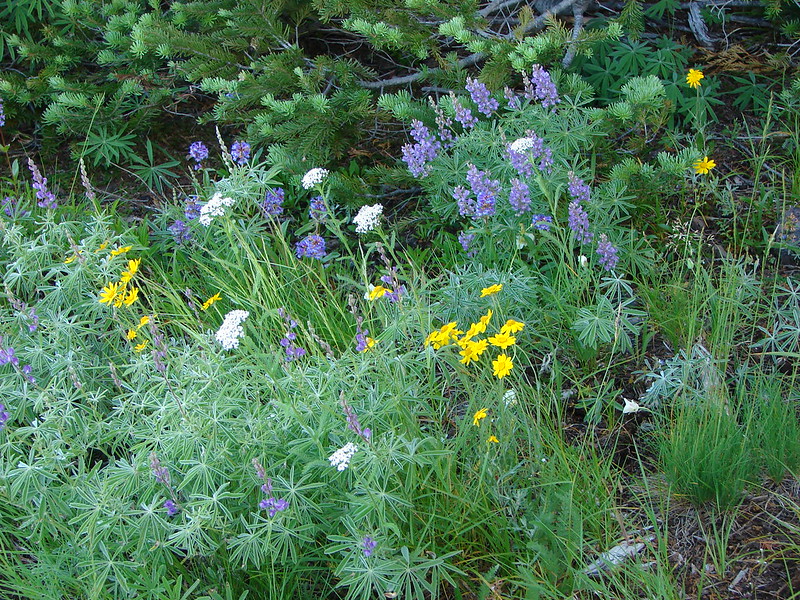
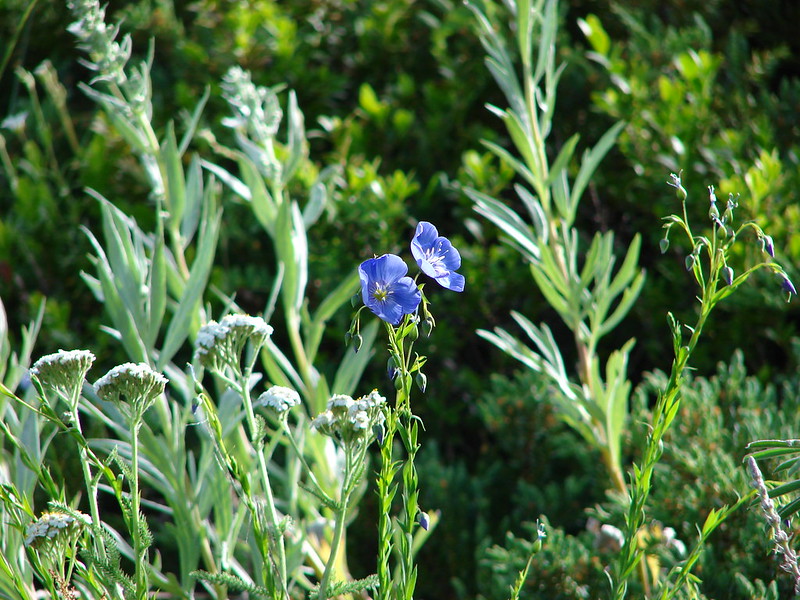
After finishing the nature trail we crossed Highway 20 and started climbing up the Cone Peak Trail. We started seeing flowers almost immediately. It seemed every open area had an assortment of different flowers.
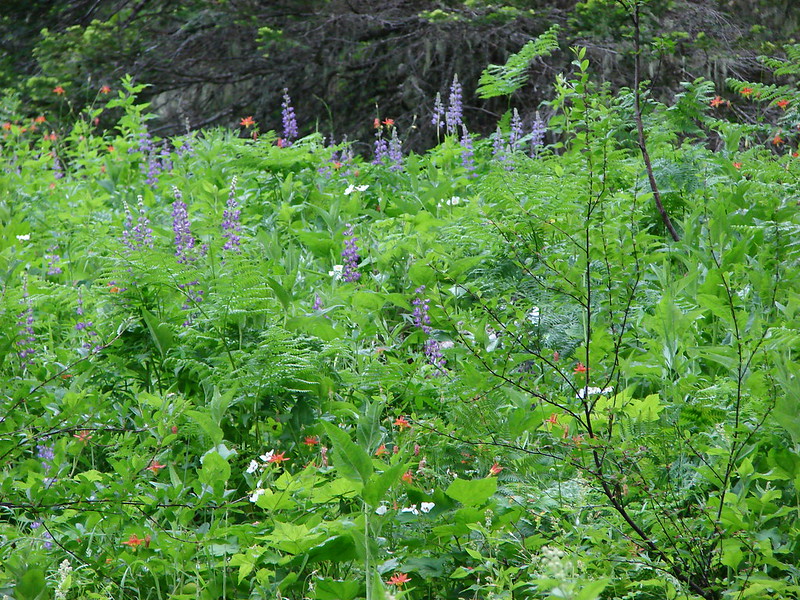
Lupine, Columbine & Thimbleberry
DSC00053
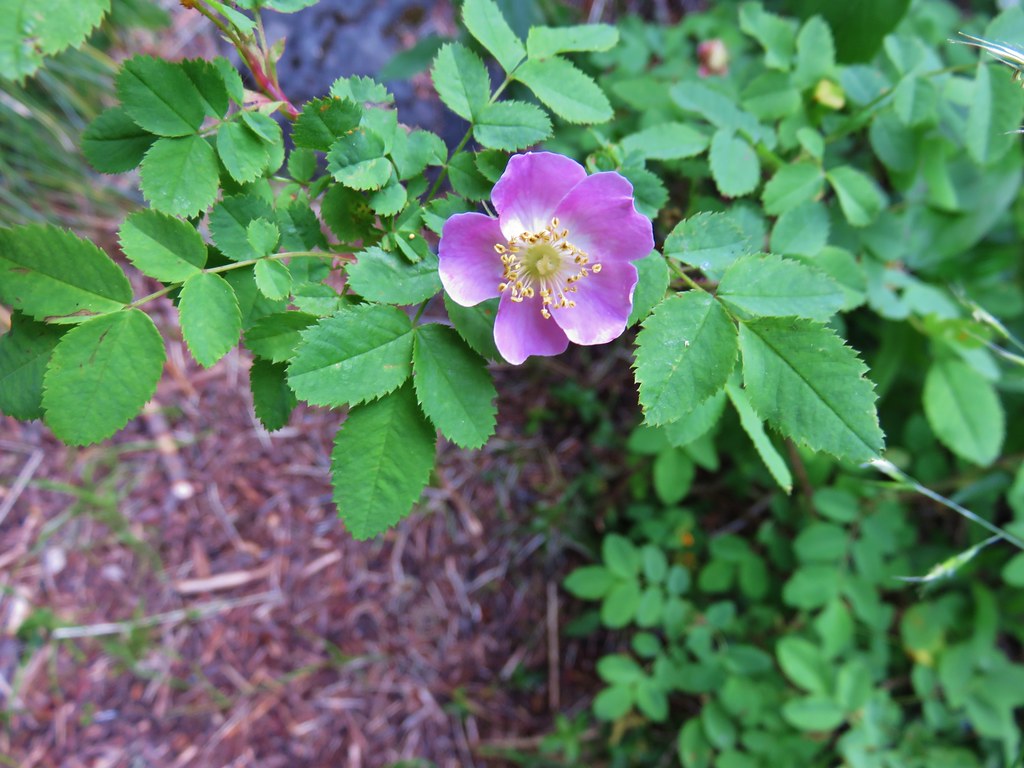
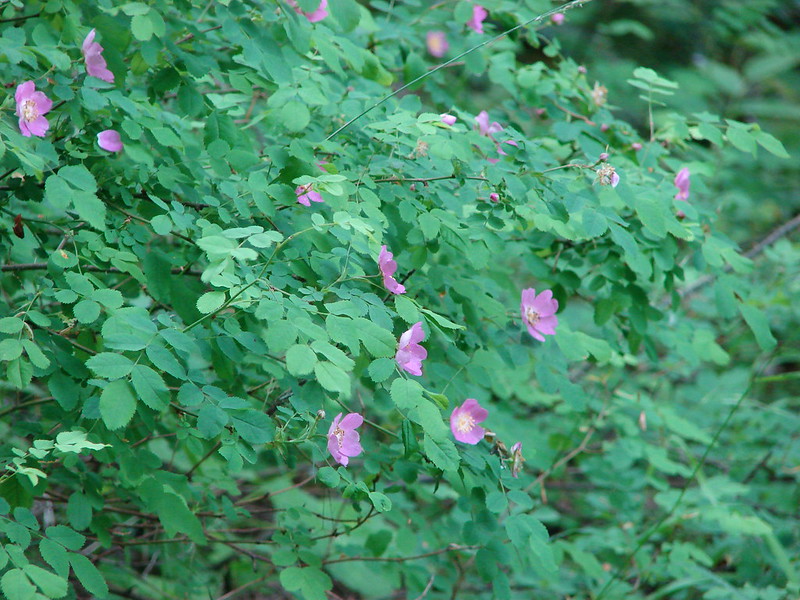
Wild Rose
DSC00055
Columbine
DSC00049
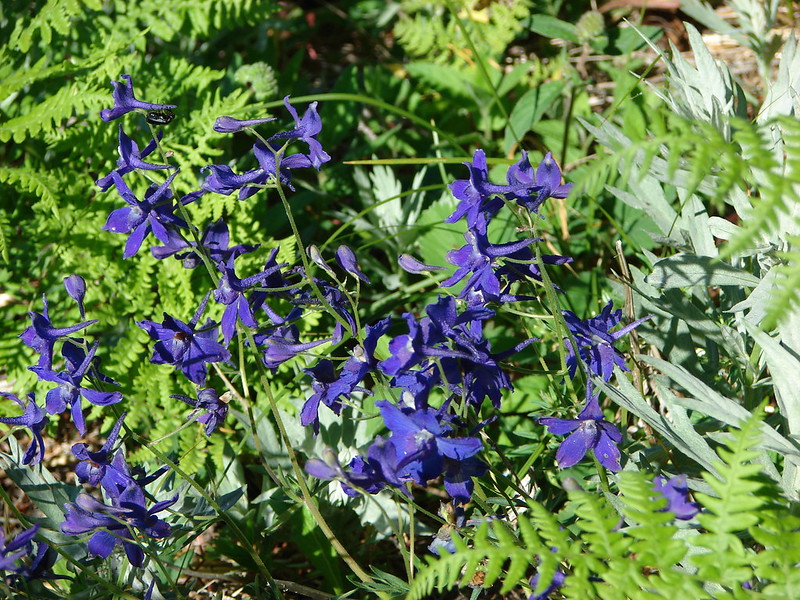
Larkspur
DSC00056
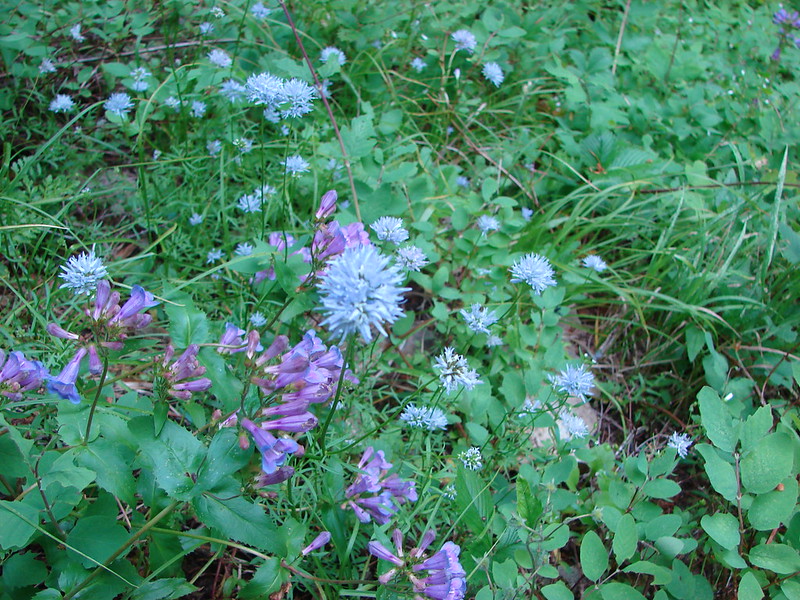
Penstemon & Blue Gilia
DSC00061
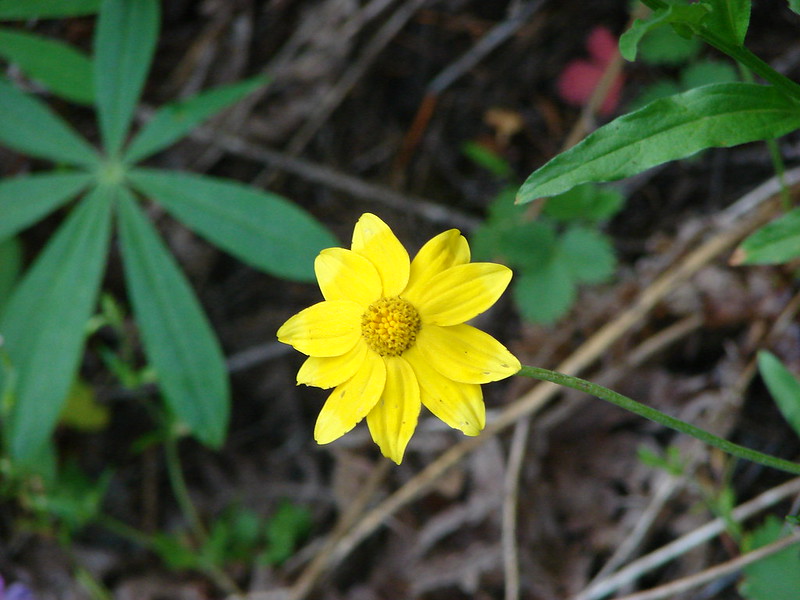
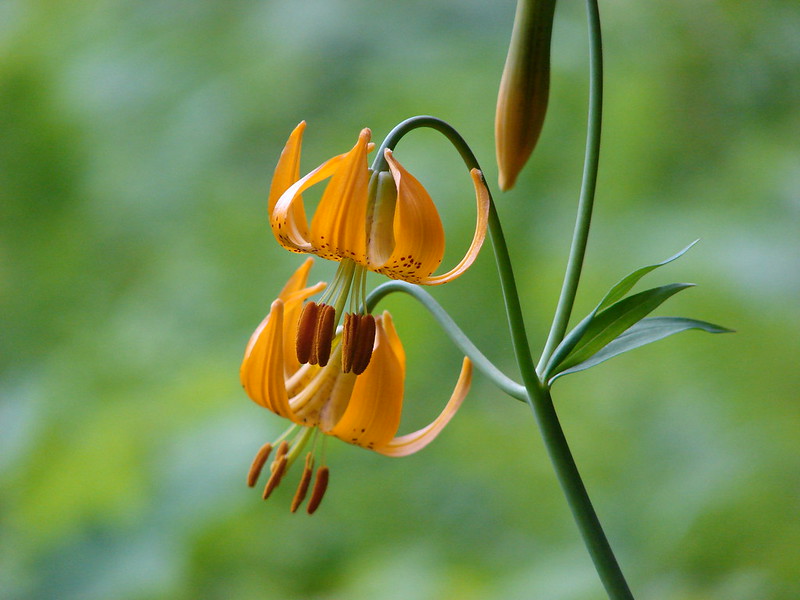
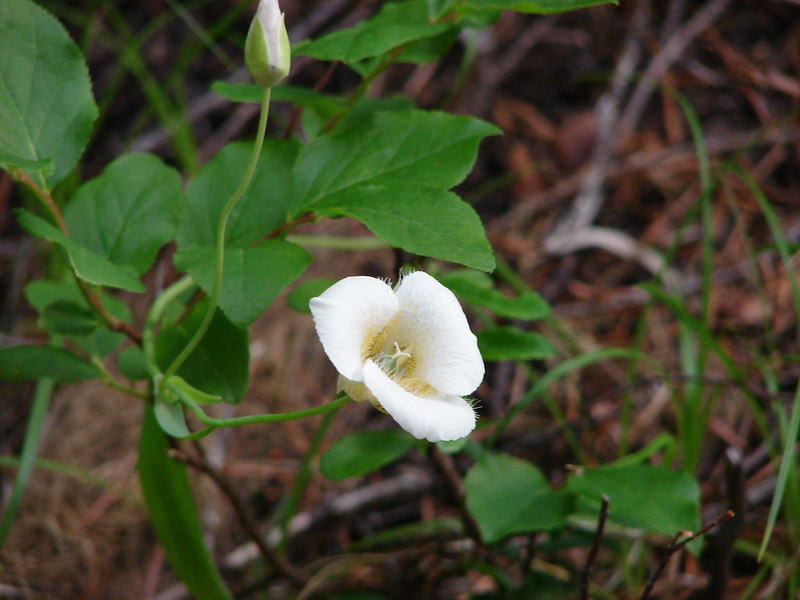
Cat’s Ear Lily
DSC00067
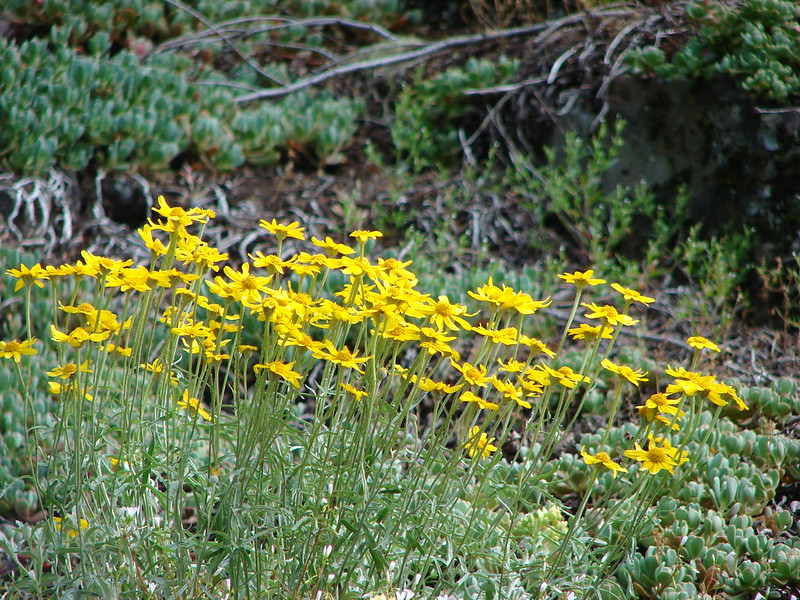
Woolly Sunflower
DSC00079
Flower variety
DSC00085
DSC00103
Columbia Windflower
DSC00046
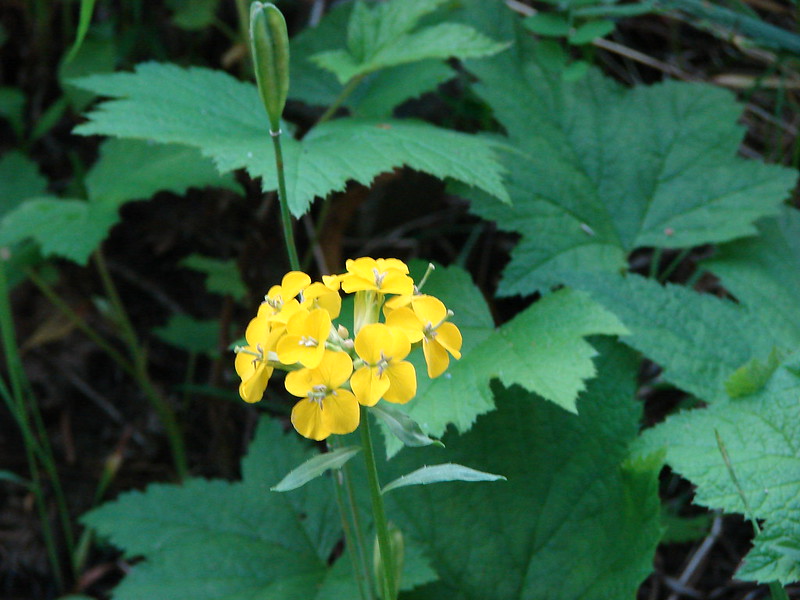
Wallflower
DSC00132
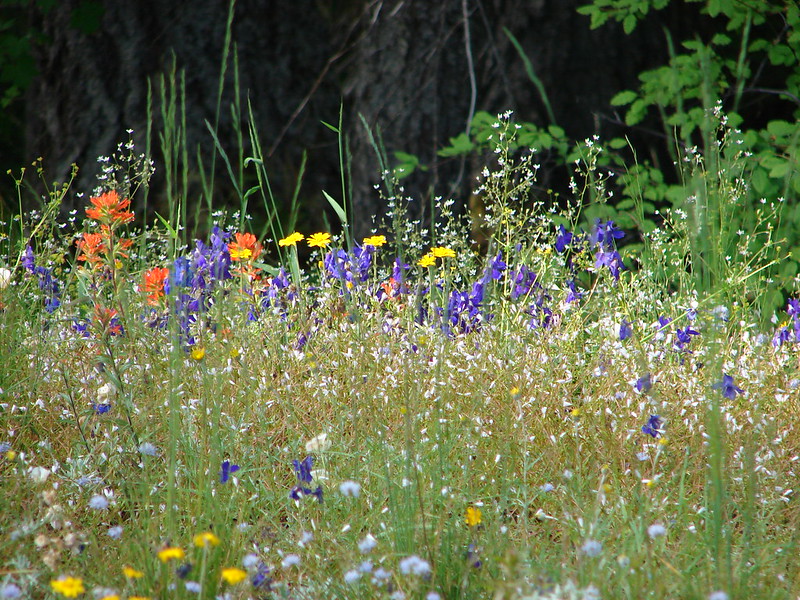
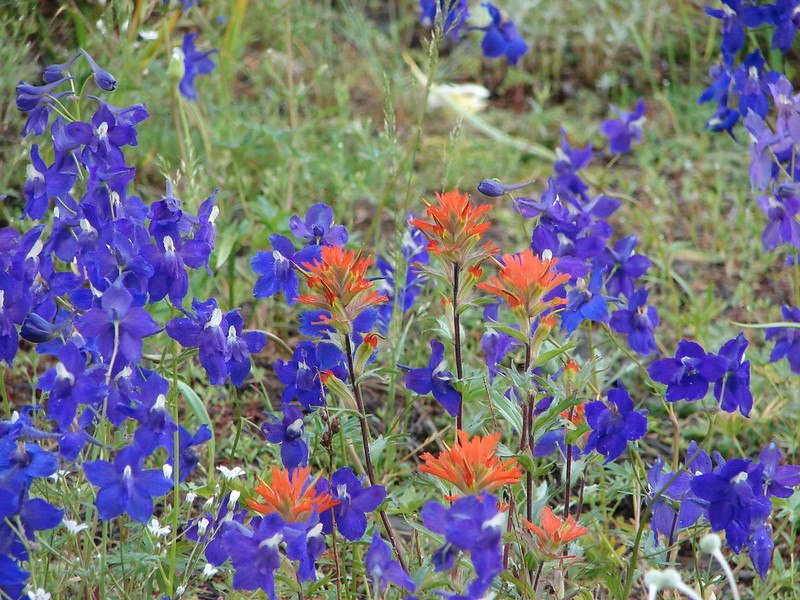
Paintbrush & Larkspur
DSC00136
More variety packs
DSC00137
DSC00138
DSC00195
DSC00214
DSC00234

We’d already lost count of the number of different flower types we’d seen by the time we got to the main meadow 1.2 miles from the highway crossing. In the meadow we found even more types of flowers as well as views of Cone Peak and Iron Mountain.
DSC00150
Cone Peak
DSC00151
DSC00156
DSC00172
DSC00173
DSC00175
DSC00180
Cone Flower
DSC00182
Giant Blue-eyed Mary
DSC00187
DSC00191
Iron Mountain
DSC00158
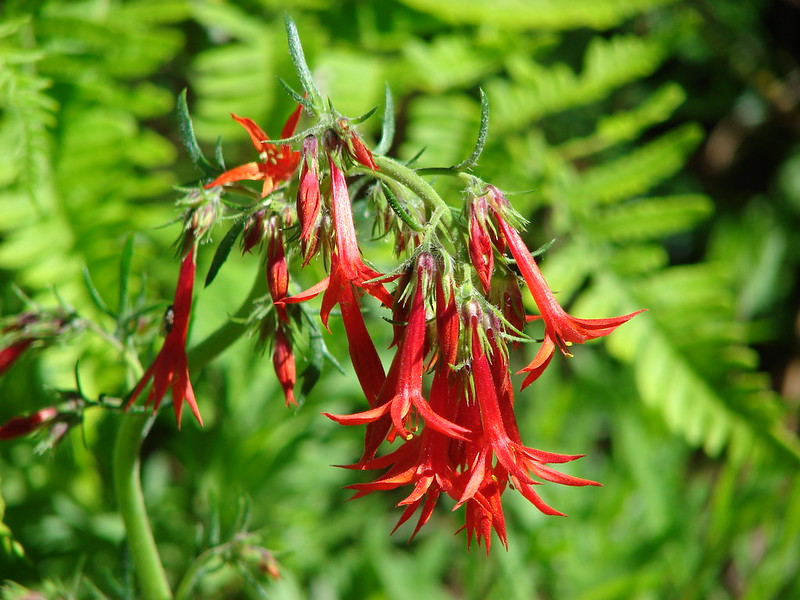
Scarlet Gilia
DSC00250

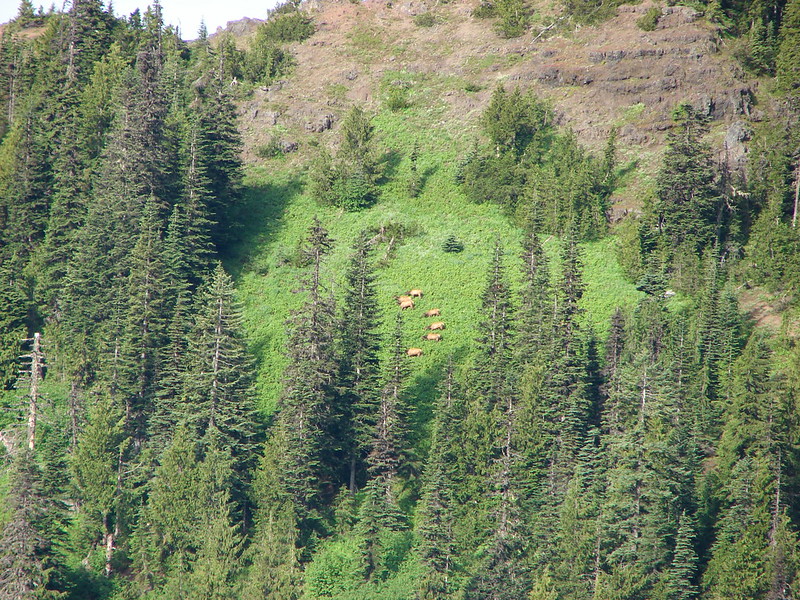
We’d been hearing some elk off and on while we were in the meadow and as we were exploring a rocky outcrop Dominique noticed some brown spots in a meadow up on Iron Mountain. There were 7 elk moving through the brush grazing on the vegetation as they went.
DSC00220
DSC00221

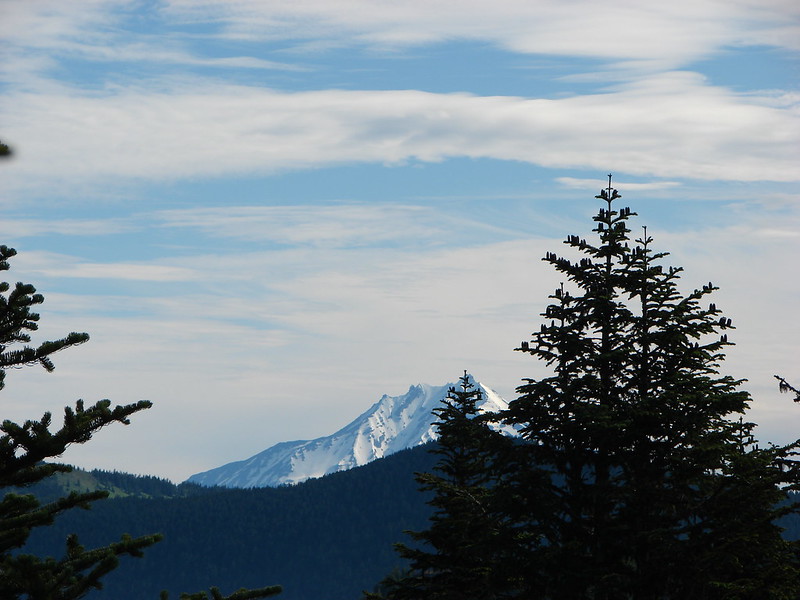
We left the meadow and reentered the forest as we wound our way around Iron Mountain to the junction with the Iron Mountain Lookout Trail. There were still flowers everywhere and now we were starting to get views of the snowy Cascade Mountains.
DSC00300
DSC00312
Mt. Hood
DSC00313
Mt. Jefferson
DSC00314
The Three Sisters
DSC00319
DSC00321
DSC00331

At the site of the former lookout is a railed observation deck and bench which allowed for a relaxing rest as we took in the 360 degree view which spanned from Mt. Adams to Diamond Peak.
Mt. Adams & Mt. Hood
DSC00379
Mt. Jefferson beyond Cone Peak and the top of Three Fingered Jack behind Crescent Mountain
DSC00388
Mt. Washington
DSC00377
The Three Sisters, Mt. Bachelor & The Husband
DSC00382
Diamond Peak
DSC00375

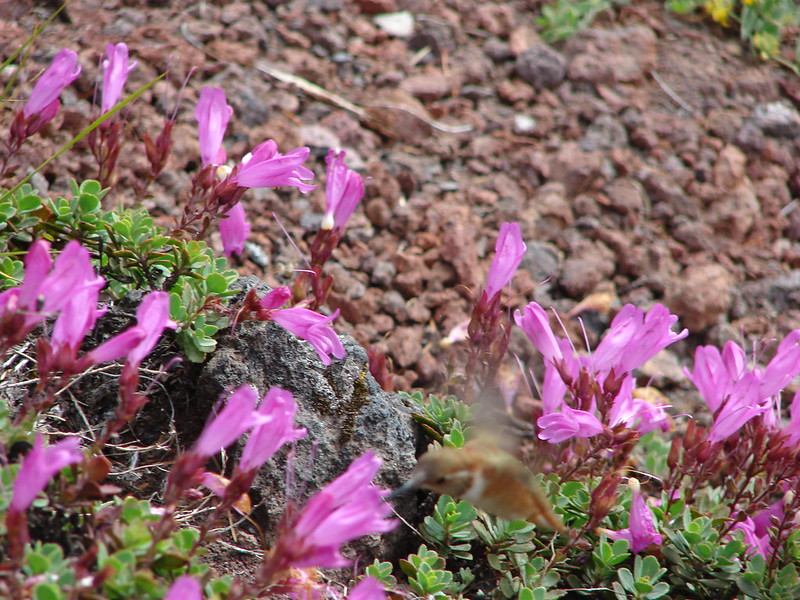
The view was so good even a hummingbird took a break from the penstemon to take it in.
DSC00361
DSC00367

We headed back down to the trail junction and continued on our loop passing more flowers, recrossing Highway 20, and returning to Tombstone Pass on the Old Santiam Wagon Road.
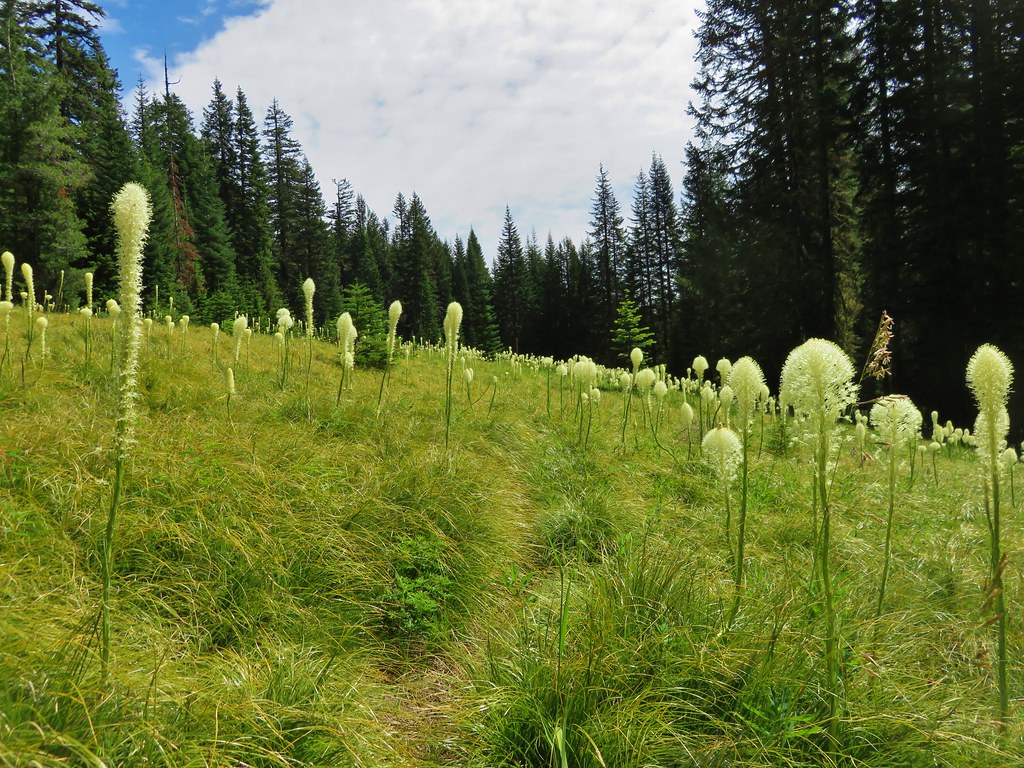
Beargrass
DSC00409
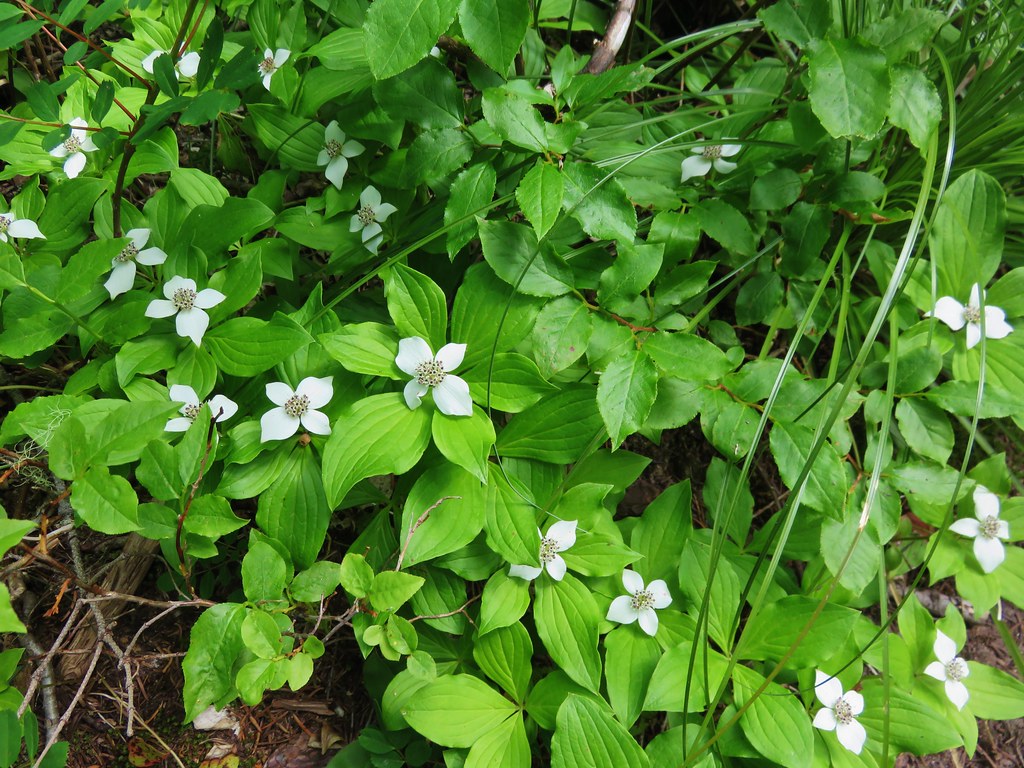
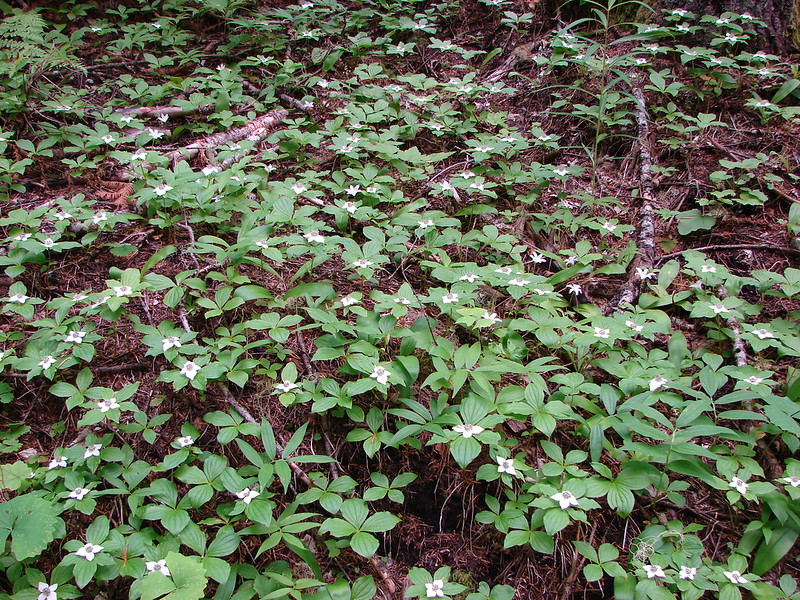
Bunchberry & Queens Cup
DSC00414
DSC00416
DSC00422

The flowers had certainly been better than on our previous visit and it looked like they would be pristine for another week or two. It was a great way to start a holiday weekend. Happy Trails!

flickr:https://www.flickr.com/photos/9319235@N02/sets/72157645515763015/
Facebook:https://www.facebook.com/deryl.yunck/media_set?set=a.10204403291949557.1073741891.1448521051&type=3

Categories
Bull of the Woods/Opal Creek Hiking Old Cascades Oregon Trip report

Whetstone Mountain

**Note the 2020 Beachie Creek Fire burned the area covered by this hike.**

One of the hikes we wanted to do this year was a repeat of a hike we’d done back in 2010 when we were just getting into hiking. The goal of that hike was Whetstone Mountain. When we were done with that hike we had no idea how far we’d gone, we just knew that it kicked our derrieres. We wanted to revisit this hike to find out just how far it was and to also see how we would fare now being more prepared and experienced.

The previous hike had ended with Heather and I jogging down the closed portion of forest service road 2209. We weren’t jogging for fun, we were jogging because we couldn’t walk any longer and we desperately wanted to be back at our car. We were heading back now armed with 4 years of experience and a Garmin to find out just how difficult this hike really was. The starting point for this loop was the Opal Creek trail head which was already full of cars when we pulled up at 6am. The trail head is the main gateway into the Opal Creek Wilderness and Jawbone Flats a former mining camp turned ancient forest center. A gate at the trail head blocks any unauthorized vehicles from reaching the center.

We set off down road 2209 and followed it across Gold Creek.
DSC09374
DSC09375

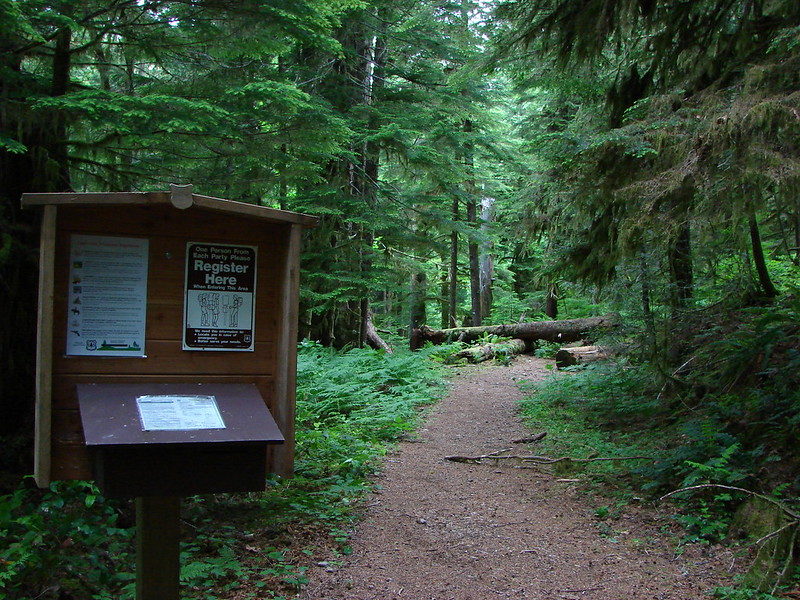
Shortly after the bridge a sign and wilderness registration box announced the Whetstone Mountain Trail heading up on our left. We turned up it and quickly entered the Opal Creek Wilderness.
DSC09377
DSC09385

The trail climbed steadily through rhododendrons and beargrass. Neither Heather nor I remembered much about this portion of the hike from our first visit. It may be that we suppressed the memory of this difficult climb :). It wasn’t until we reached a small saddle with an open view of Mt. Hood to the north that anything looked familiar.
DSC09401
DSC09407
DSC09434

Another notable item that we remembered was an anvil shaped rock outcrop that could be seen through the trees as well as view of Mt. Jefferson.
DSC09468
DSC09471

On our first visit we had been disappointed with the mountain views. We had been told to look for a trail that forked off to the left and led to a nice view, but we never found it that first trip. We had our eyes open again this time determined to find this trail to a view, but this time we didn’t need to look very hard. A nice new sign had been put up pointing directly at a well maintained trail. It’s hard to believe either was there on our previous visit. The sign was surely new and we couldn’t believe we would have missed such an obvious trail.
DSC09474

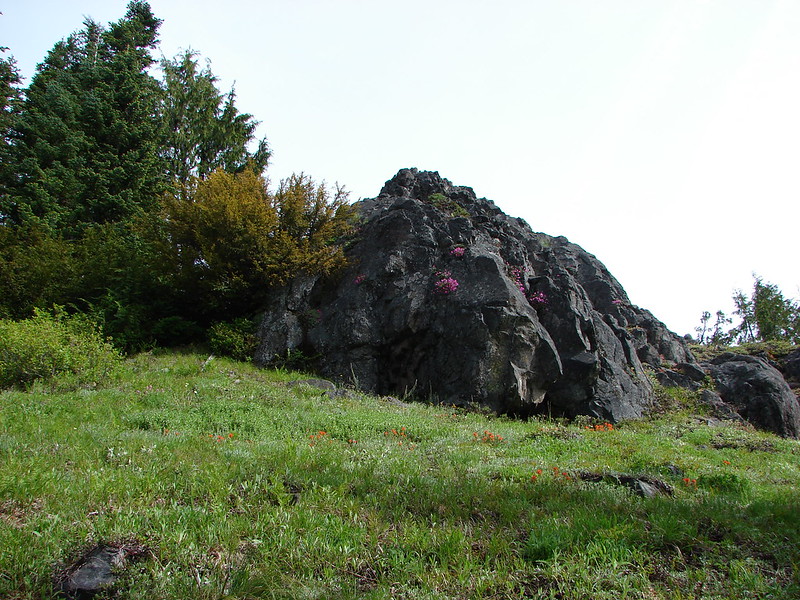
The views kept getting better as we climbed toward the former lookout site. The trail passed a nice meadow below the rocky summit before winding up on top where a 360 degree view awaited.
DSC09546

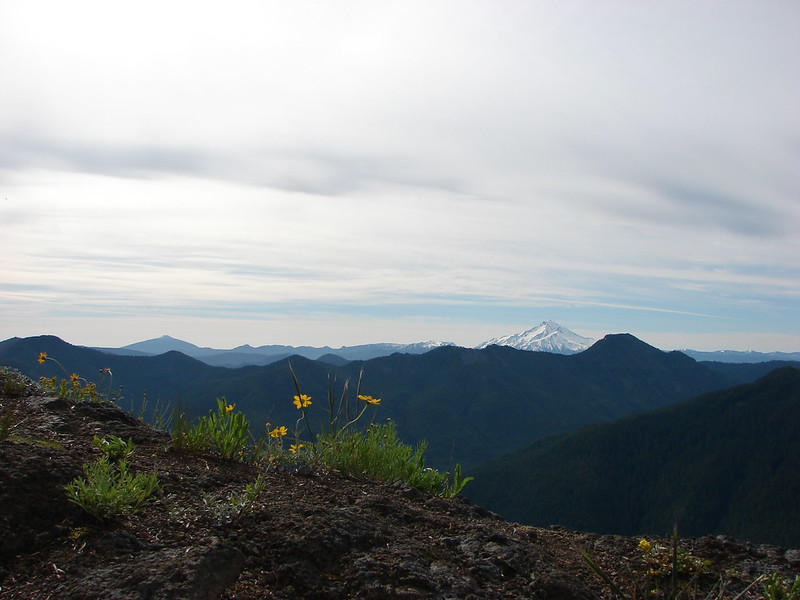
Olallie Butte, Mt. Jefferson and Battle Ax Mountain
DSC09497

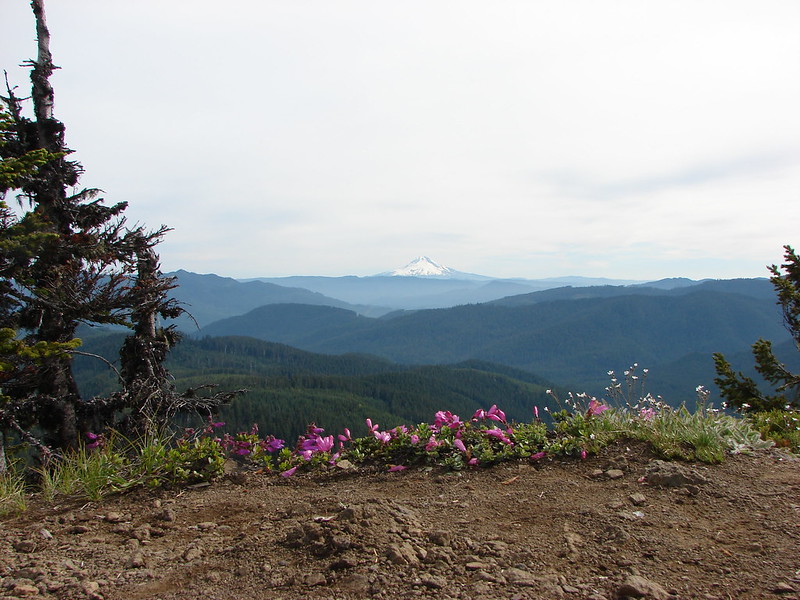
Mt. Hood
DSC09528

Broken Top, Coffin Mountain and the Three Sisters
DSC09522

Three Fingered Jack
DSC09515

Diamond Peak
DSC09520

Mt. Rainier
DSC09540

Mt. Adams
DSC09538

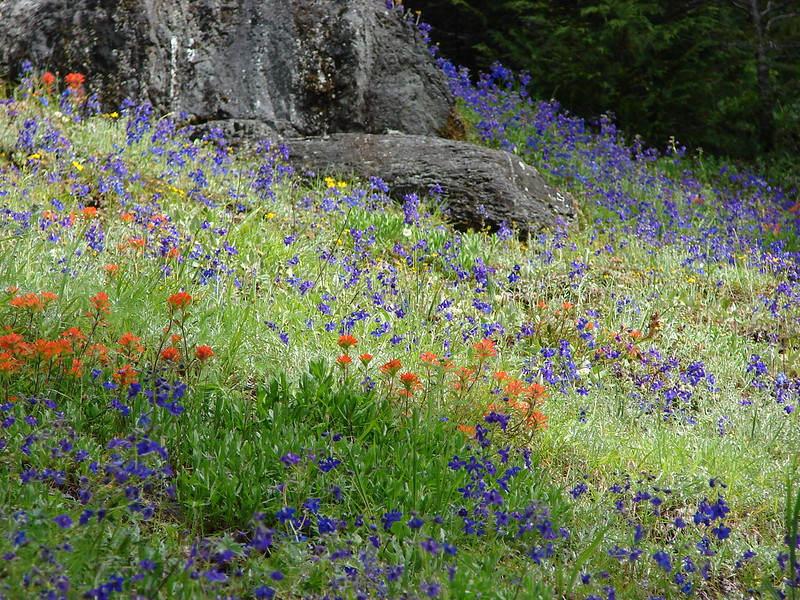
We would have liked to have stayed up on the summit for awhile but it was crowded up there. Mosquitoes were beginning to swarm us and there was no breeze to keep them at bay so we didn’t stick around very long and headed back down to the Whetstone Mountain trail to continue our loop. Not far from the summit we passed another lovely meadow filled with larkspur and paintbrush.
DSC09550
DSC09551

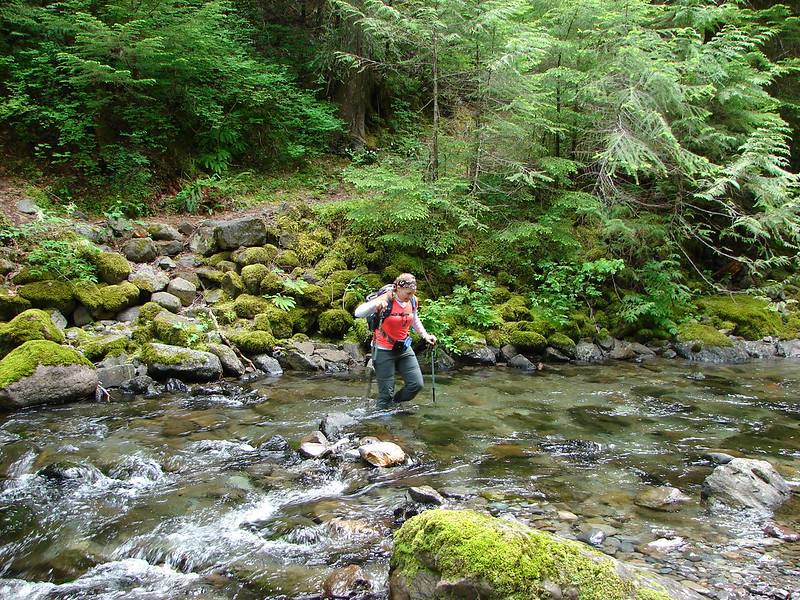
The trail down the east side of Whetstone Mountain had a gentler grade than the side we had come up. We didn’t remember this section either until we reached the bridge less crossing of Battle Ax Creek. On our last visit we removed our shoes and socks and made sure our pant legs would stay dry. Our attitudes about creek crossings have changed since then and this time we just plunged in.
DSC09594

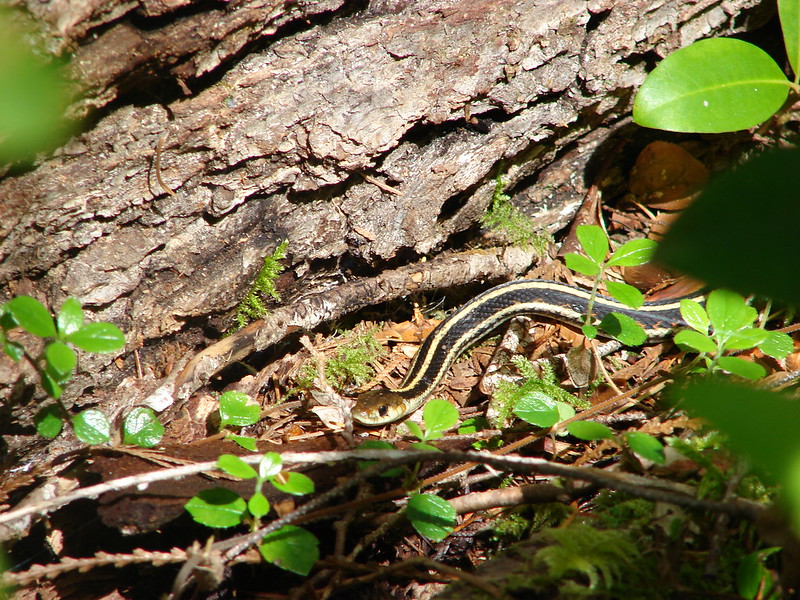
Shortly after crossing the creek we popped back up on the old road 2209 at a trail junction. We turned toward Jawbone Flats and headed down the abandoned mining road. As we were walking I spotted a snake trying to get out of the way. It didn’t seem too concerned with us and posed for several pictures. Nique and I moved on and soon realized we’d lost Heather. When she caught back up she told us that the snake had come over to check her out.
DSC09616

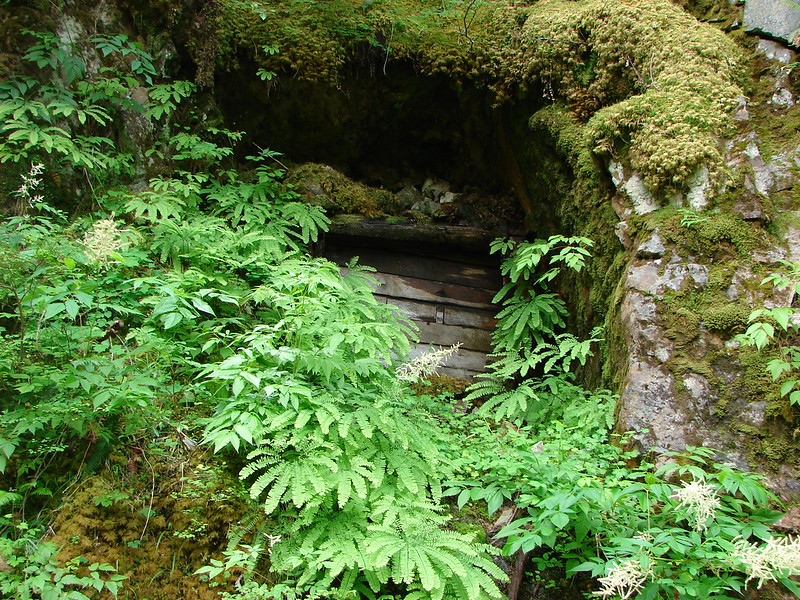
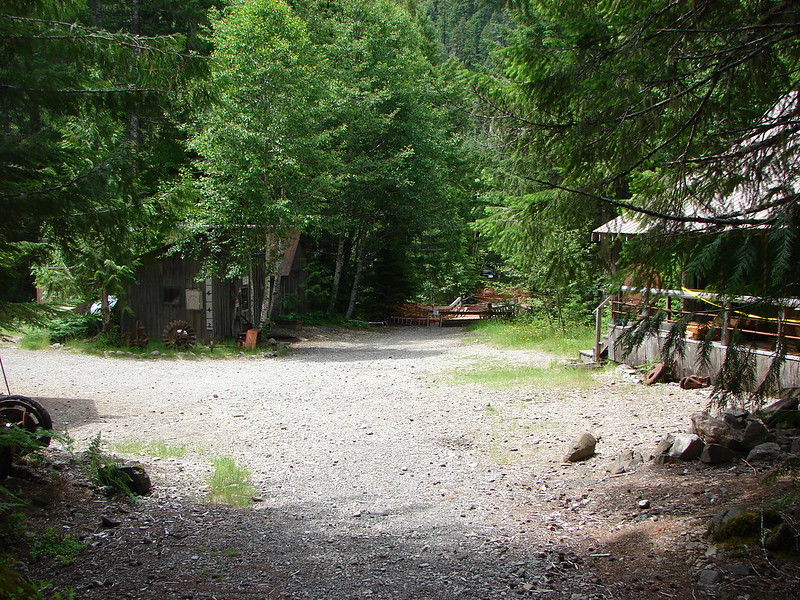
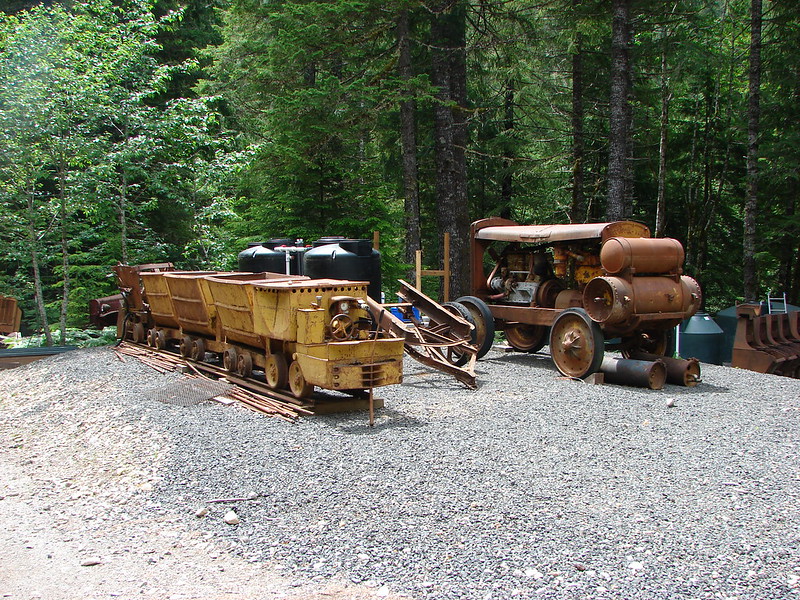
About a mile from Jawbone Flats are the remains of the Ruth Mine. We took a moment this time to check out the old equipment and shafts.
DSC09627
DSC09628
DSC09638

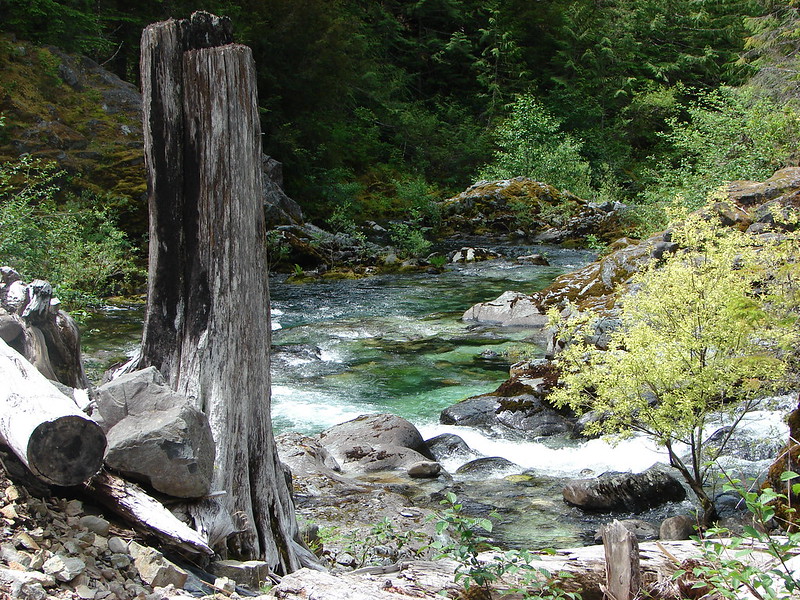
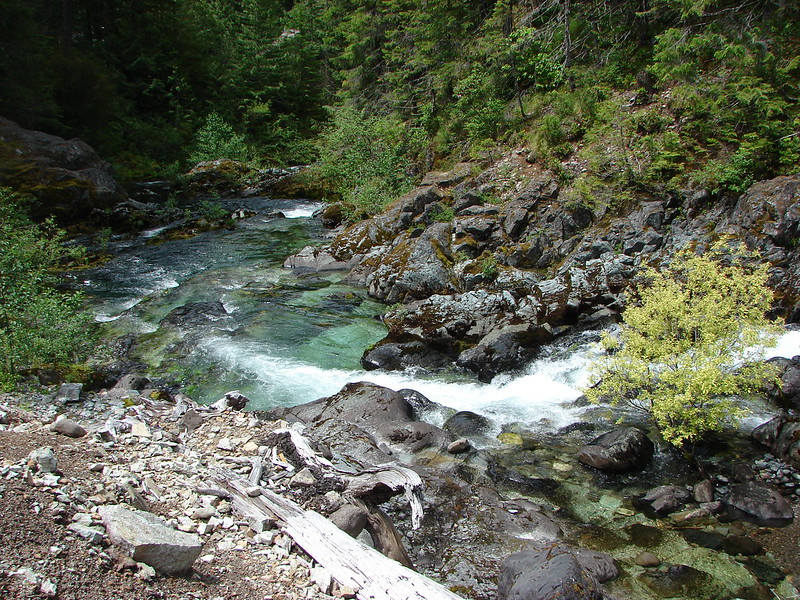
Just before Battle Ax Creek reaches Jawbone Flats there is a nice open rocky area where we could get an up close view of the clear water that the Opal Creek Wilderness is known for.
DSC09652
DSC09655
DSC09673
DSC09674

We had gone straight through Jawbone Flats crossing Battle Ax Creek on a footbridge on our previous visit but we had made other plans this time. The bridge had recently collapsed so there was no direct route through the old camp. Instead we would take the Kopetski Trail which would take us across the Little North Santiam River and by the Opal Pool.

Closed bridge:
DSC09681

Old mining equipment:
DSC09682

Little North Santiam River:
DSC09690
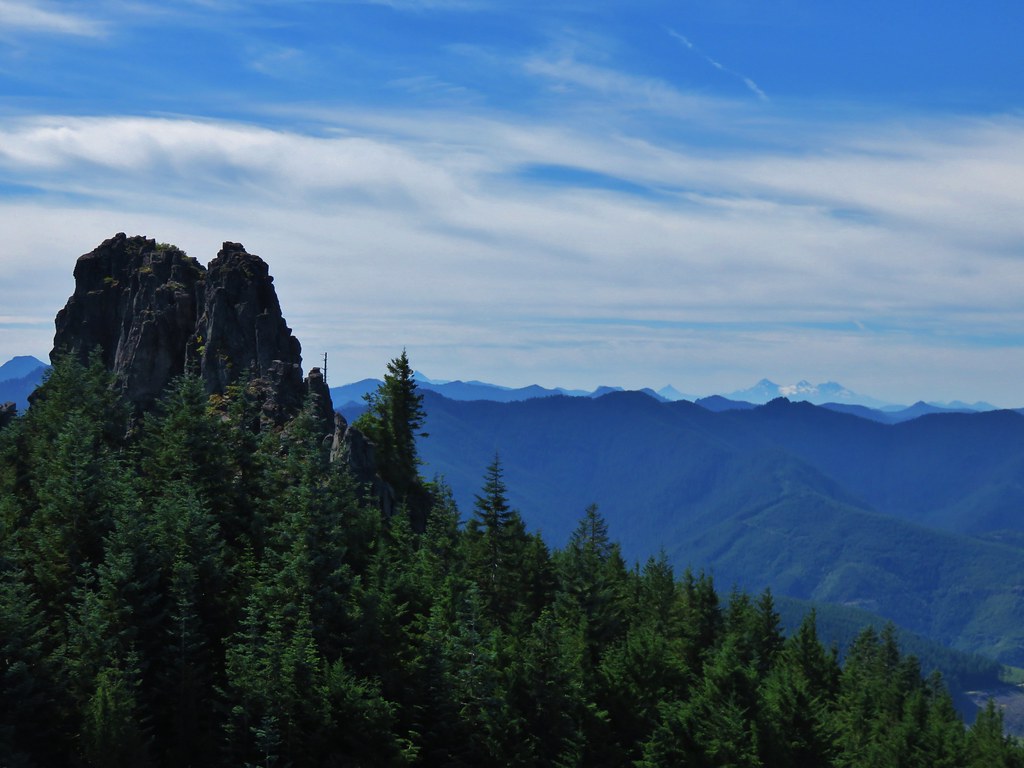
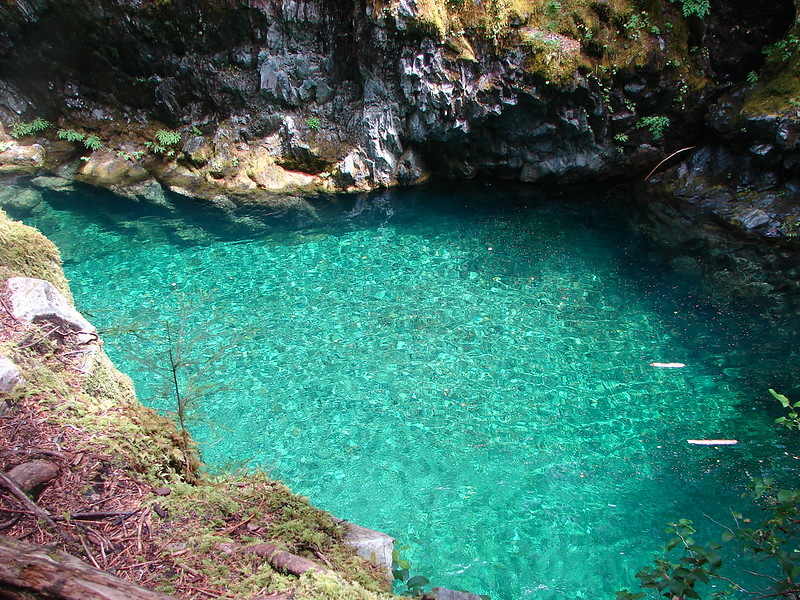
Opal Pool:
DSC09704

Despite the number of cars in the parking lot that morning we had only seen one group of people up until we reached the Opal Pool. From that point on we were passing another group every couple of minutes. Since we had hiked this trail in 2012 and we’d already been hiking for over 6 hours we didn’t bother with exploring all the possible access points to the river. After a mile and a half we recrossed the river on another bridge and were back on road 2209. We had one last stop to make. There was a waterfall that we had yet to find along the trail. We knew it was somewhere behind the old Merten Mill but we had yet to actually see it. Determined to finally see Sawmill Falls we turned off the road at the old mill and followed a path next to the building. This time we found the falls easily and it was worth the side trip.
DSC09715
DSC09717
DSC09722

After a brief rest we returned to the road and began the home stretch. Nique and I began snacking on the Salmonberries that were ripening along the trail (Heather finds them too sour) and we passed a good patch of flowers growing in an exposed rocky section.
DSC09730
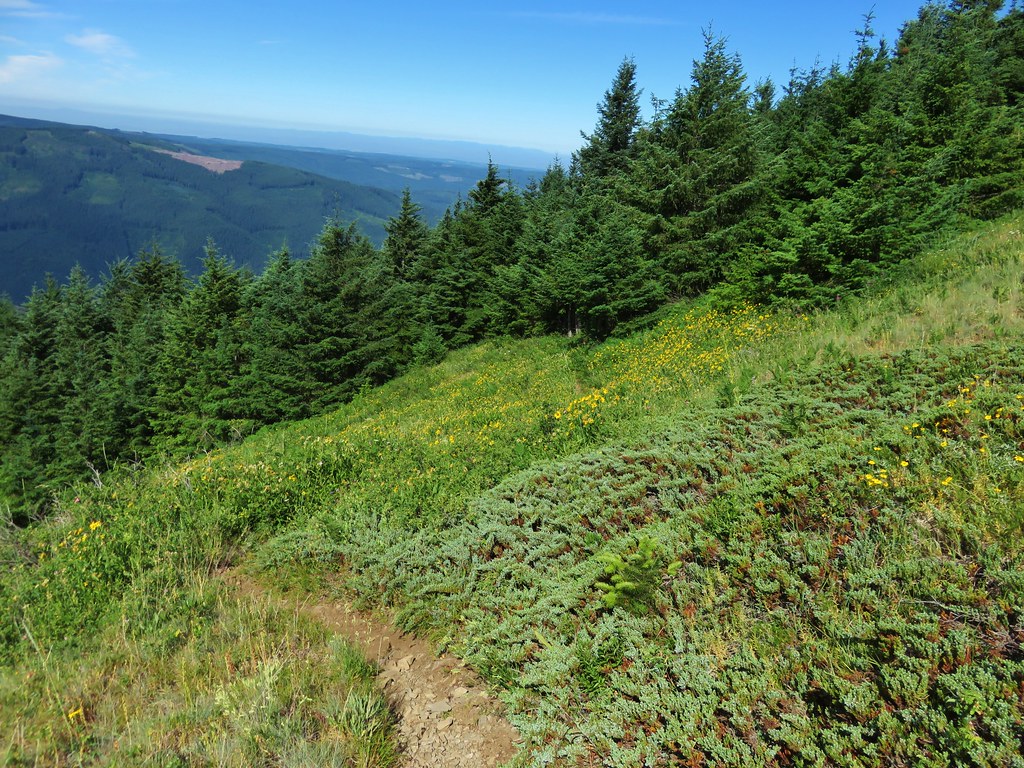
DSC09736

We ended up with the Garmin showing a 16.3 mile hike which would explain why it had seemed so hard 4 years ago, it was hard :). We’d probably gone closer to 15 that day since we hadn’t found the summit trail or taken time to explore the Ruth Mine, Opal Pool, or Sawmill Falls but up until then 7.1 had been our longest hike.

It is really a beautiful area with lots of options, but if you don’t like crowds avoid weekends, especially nice ones. When we got back to the parking area the number of cars had more than doubled. If we were to ever do this loop again I’d go the opposite direction to minimize crowds and to take advantage of a more gradual climb. Happy Trails!

flickr: https://www.flickr.com/photos/9319235@N02/sets/72157645240344216/
facebook: https://www.facebook.com/media/set/?set=a.10204293169716570.1073741888.1448521051&type=1