Categories
Coastal Range Hiking Oregon Trip report

Kentucky Falls

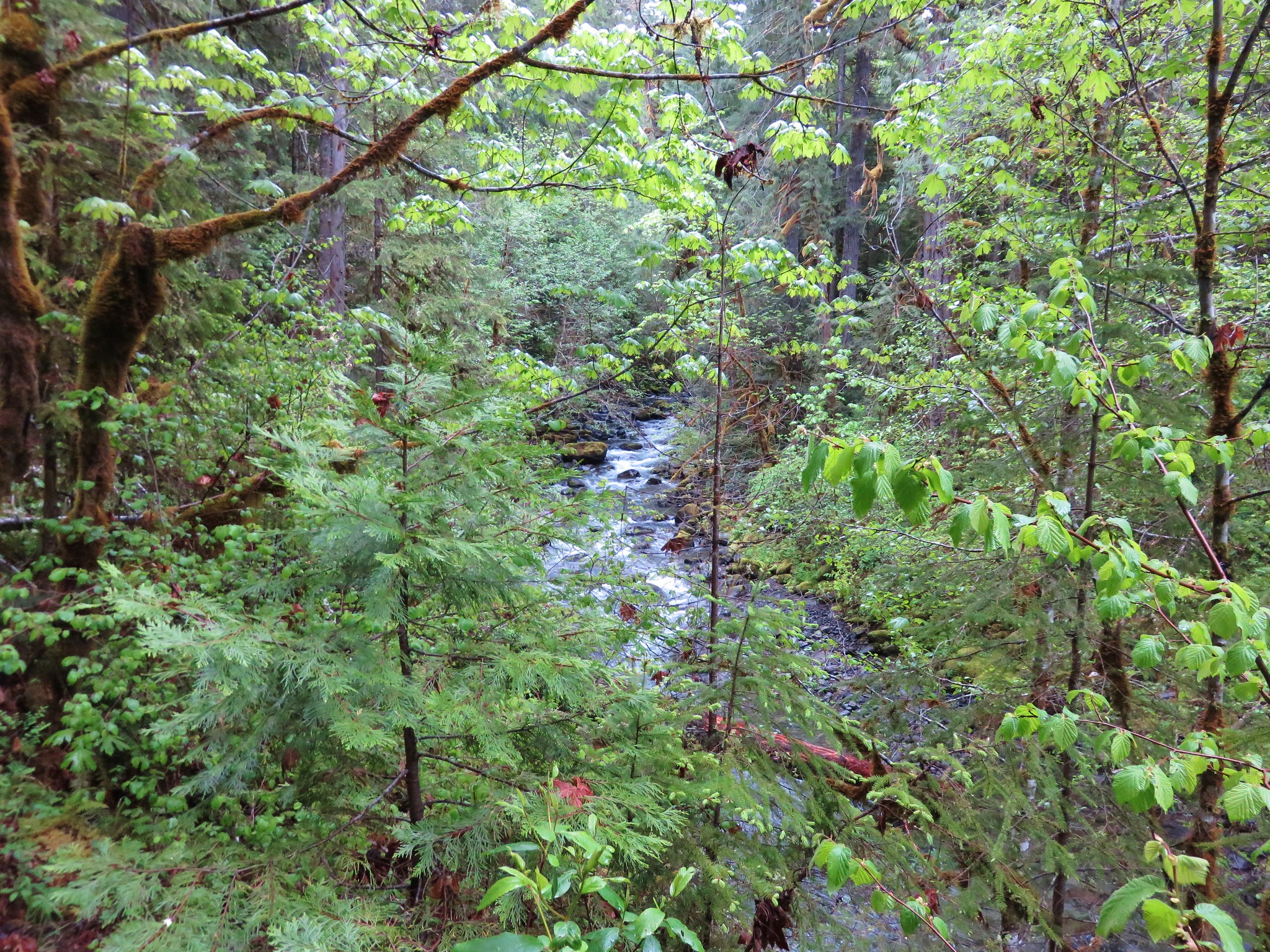
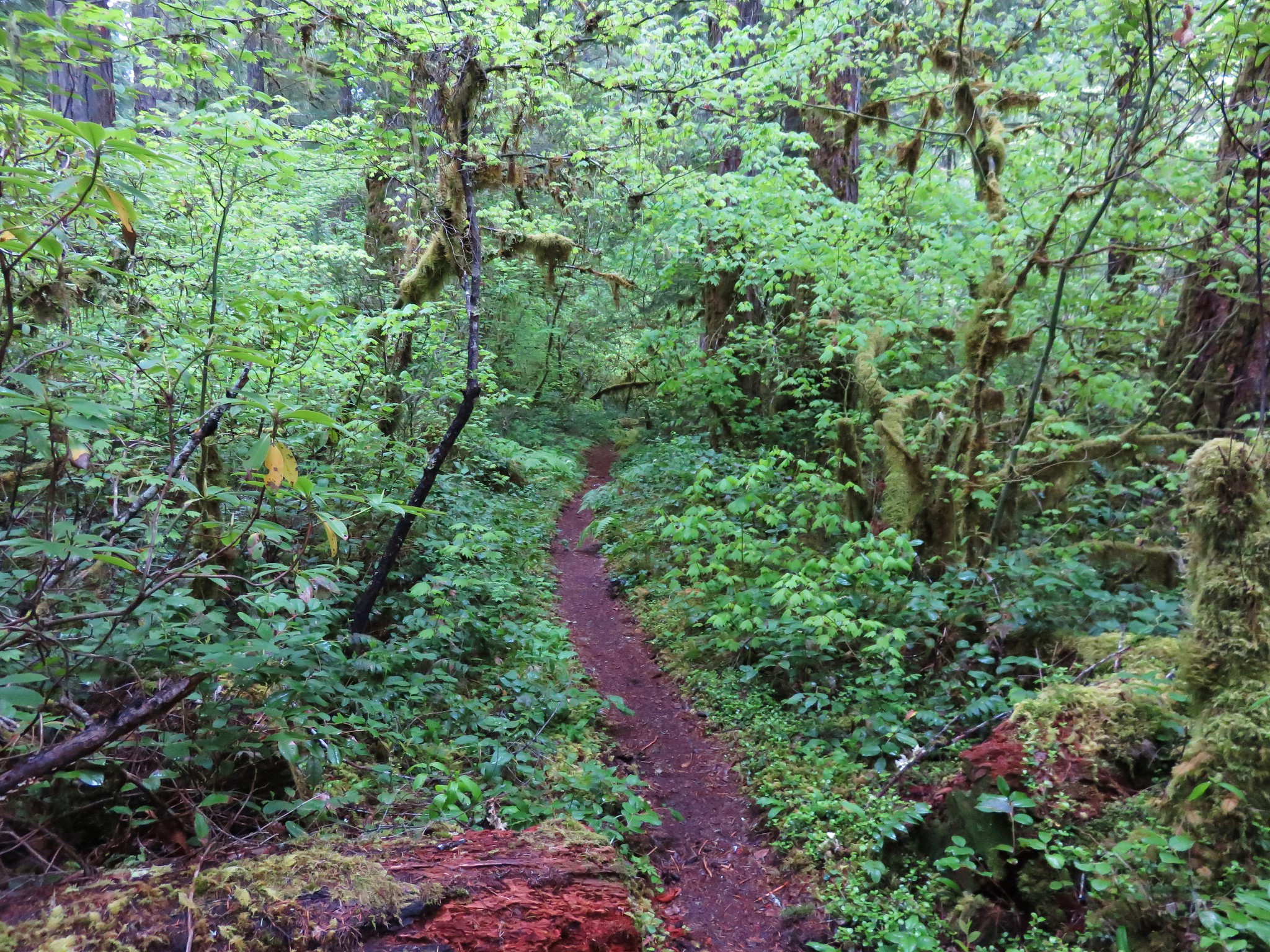
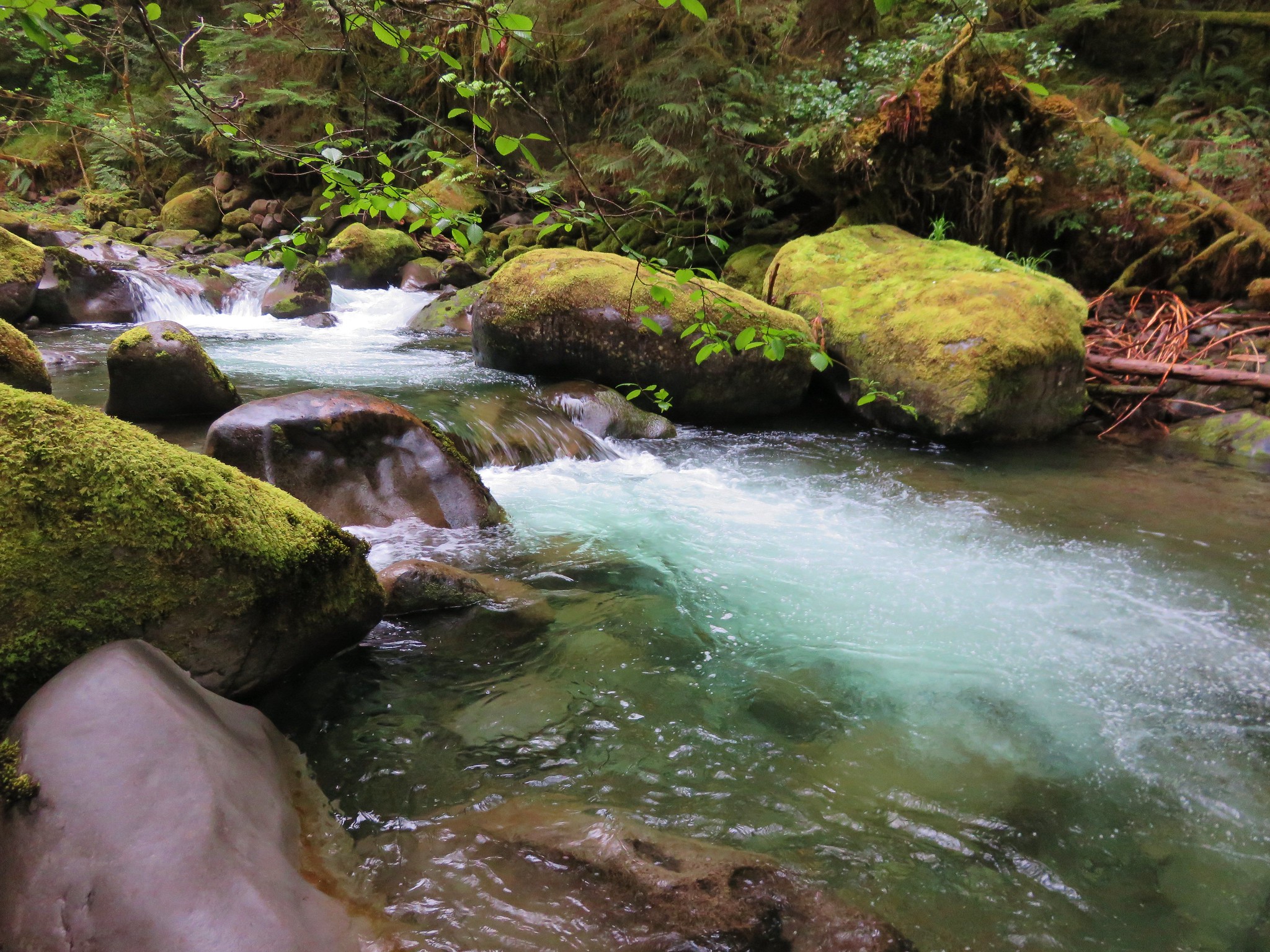
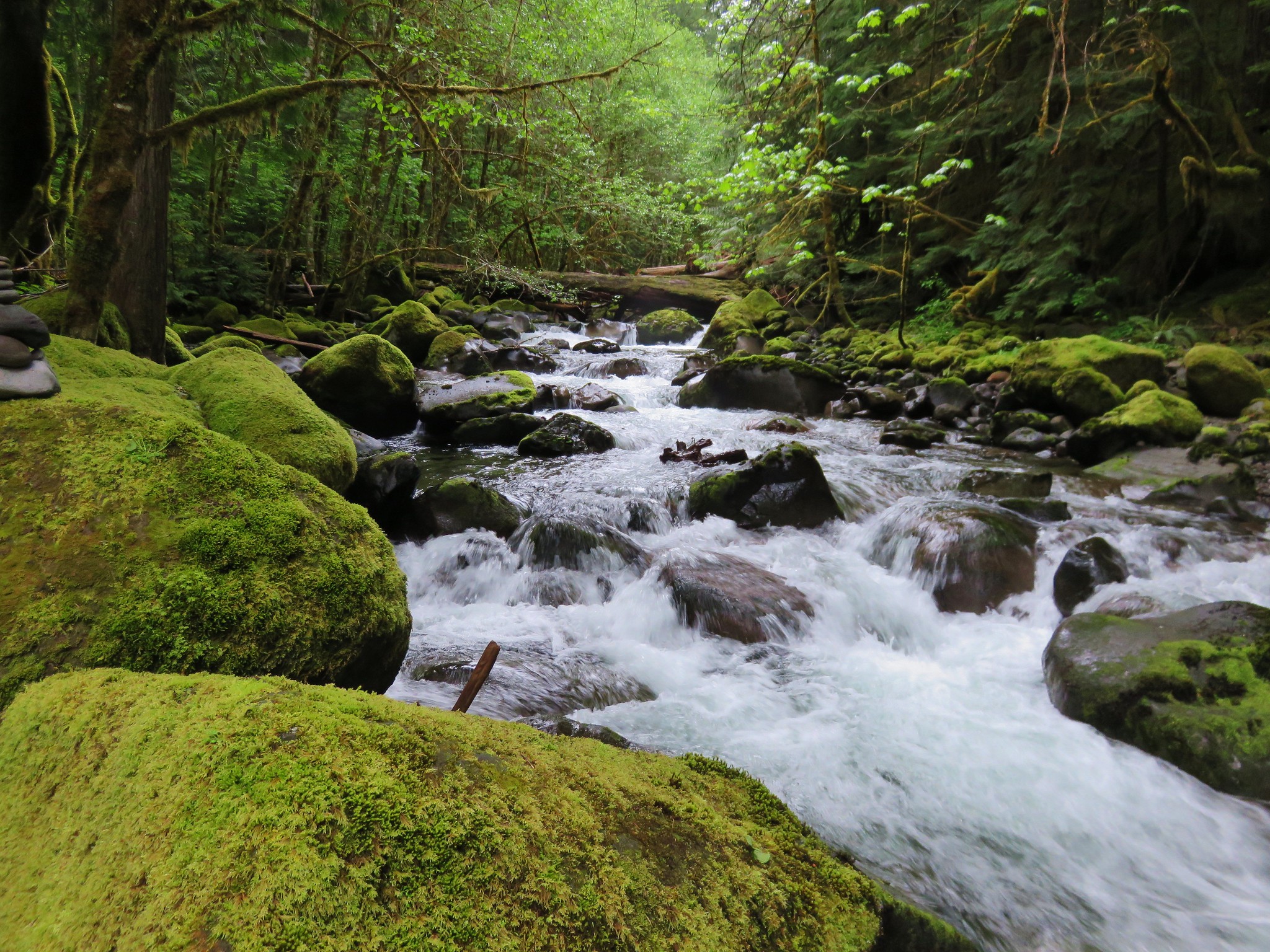
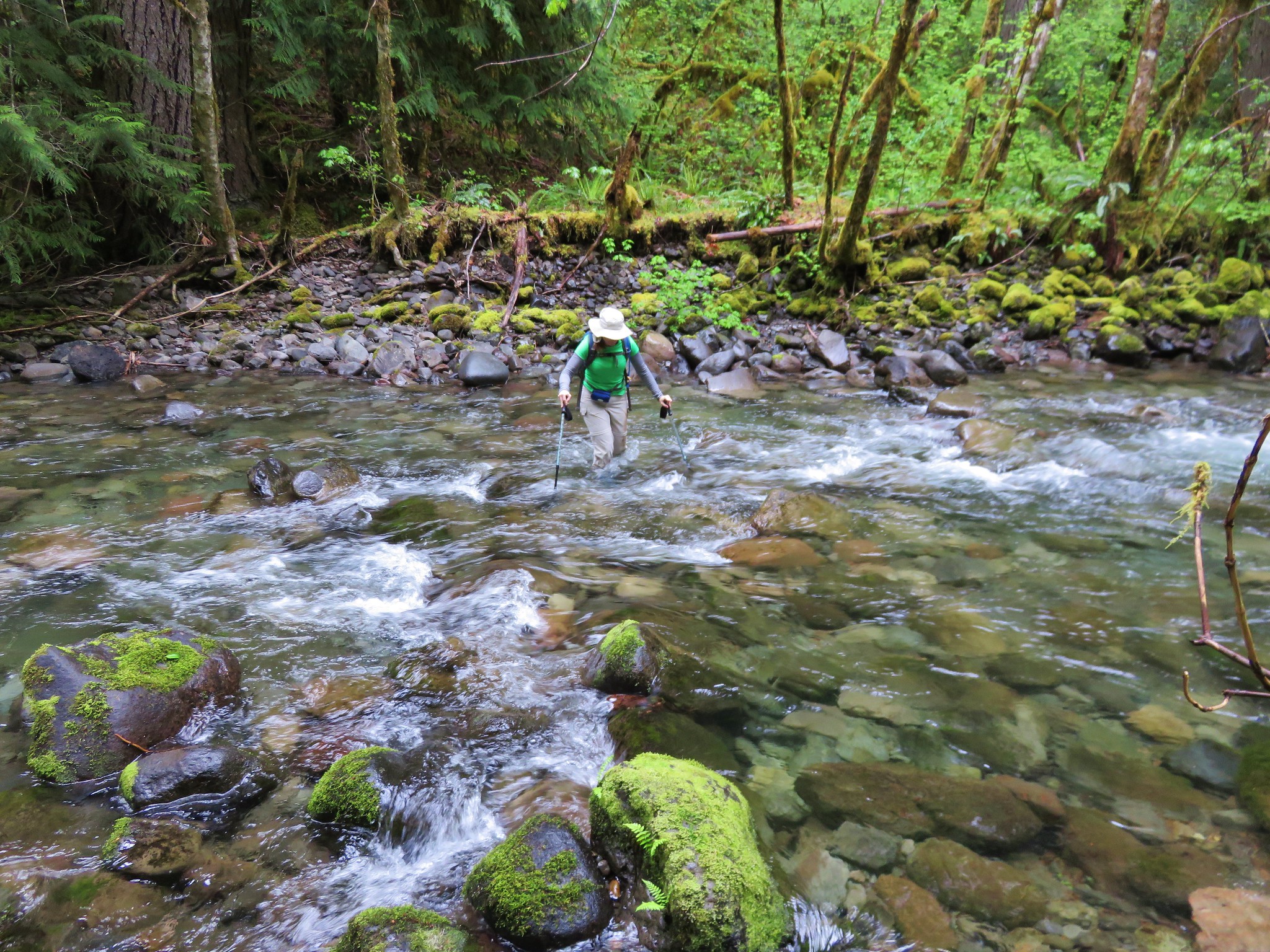
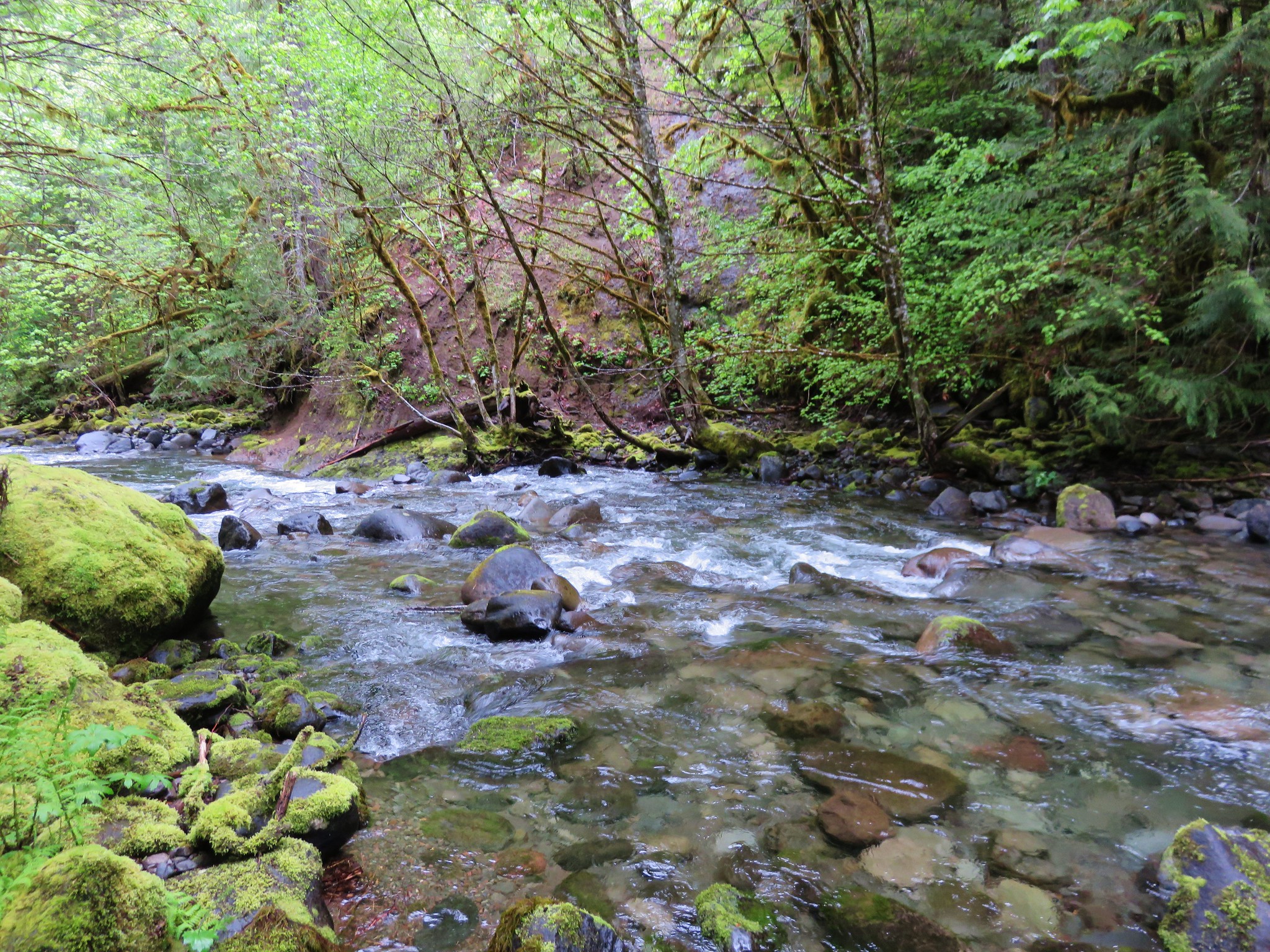
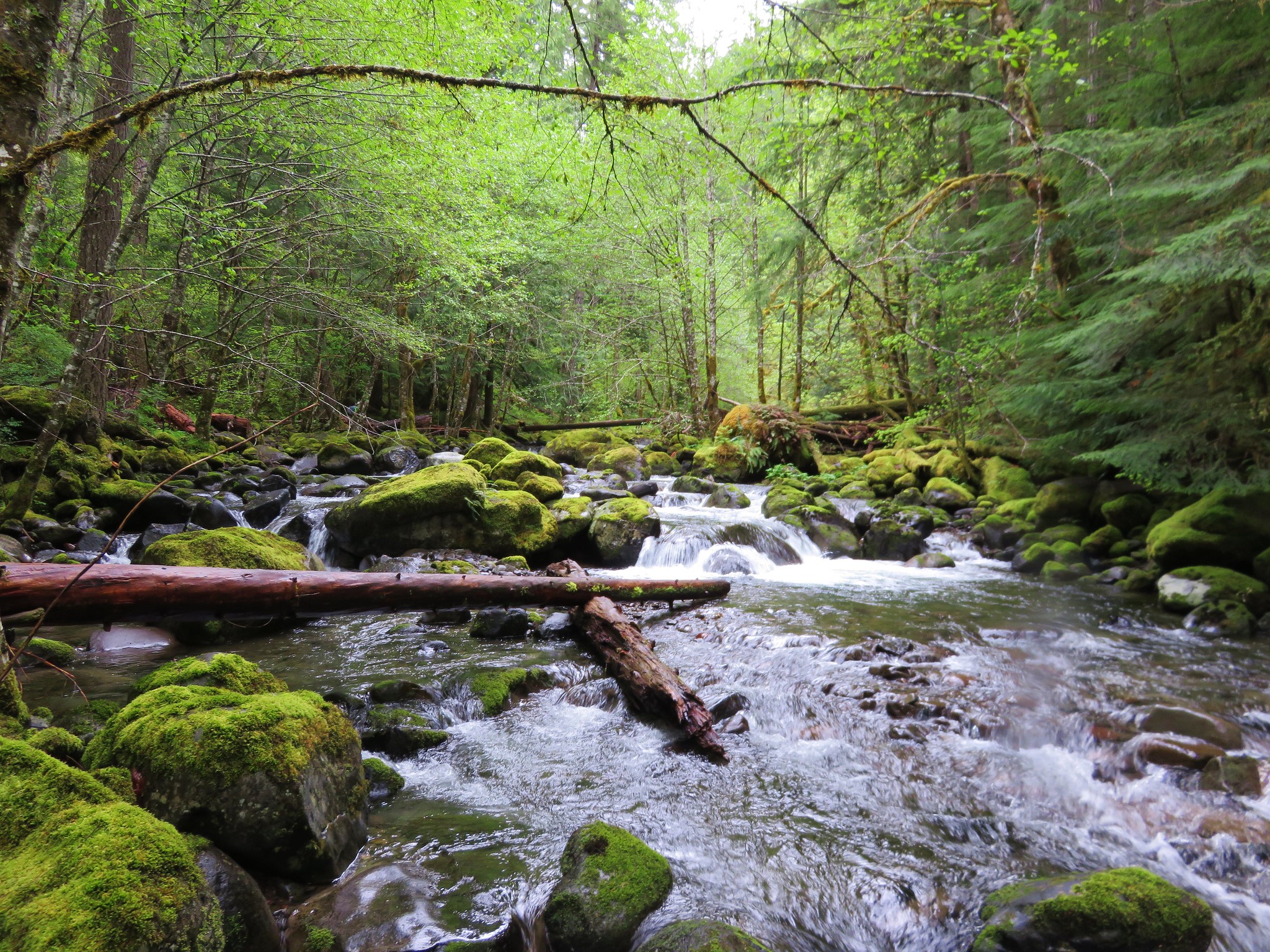
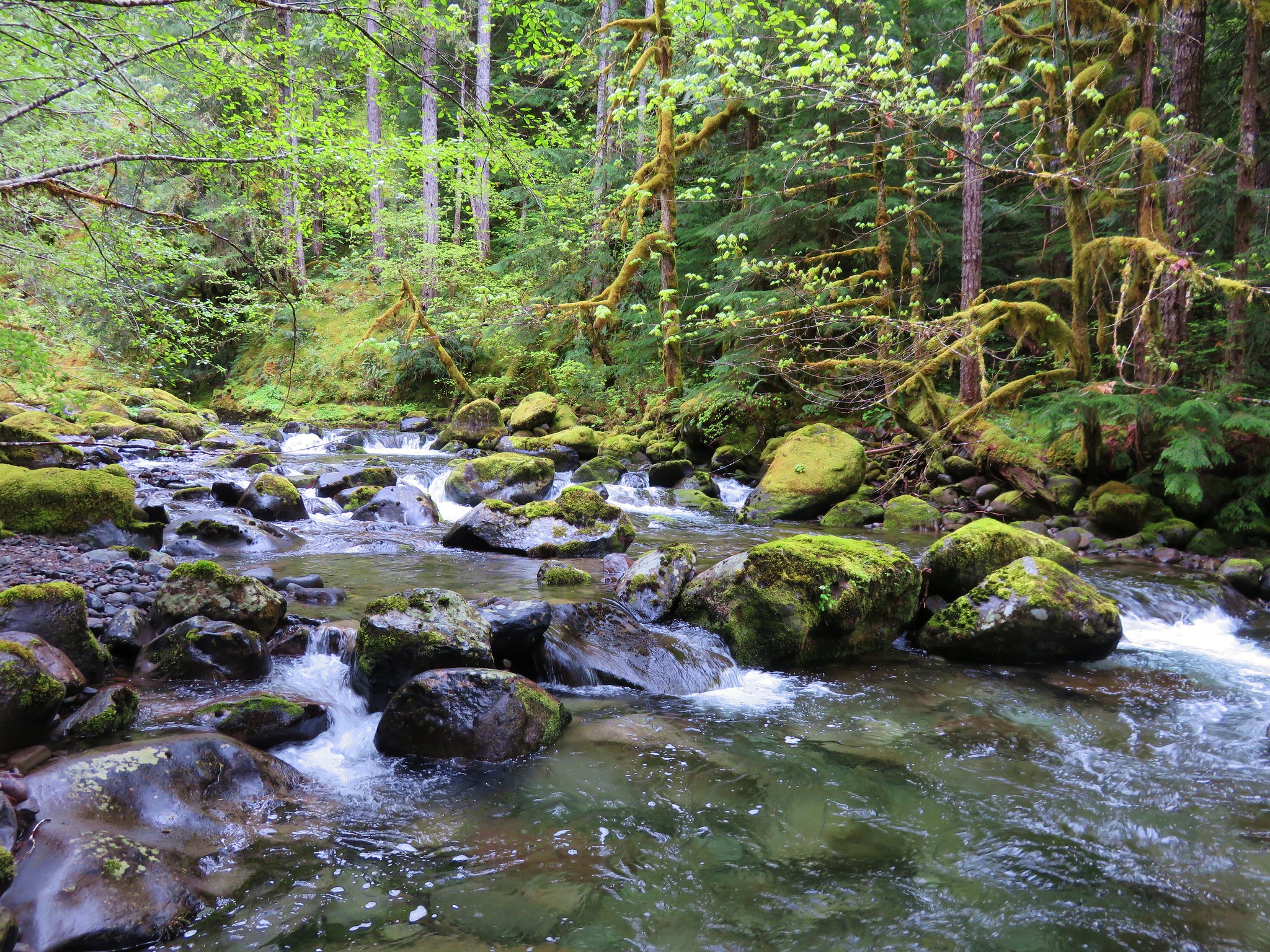
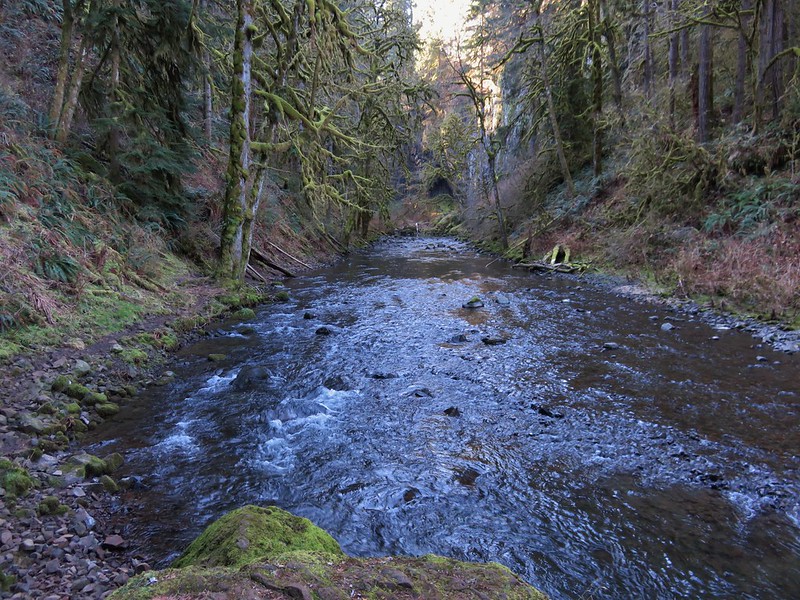
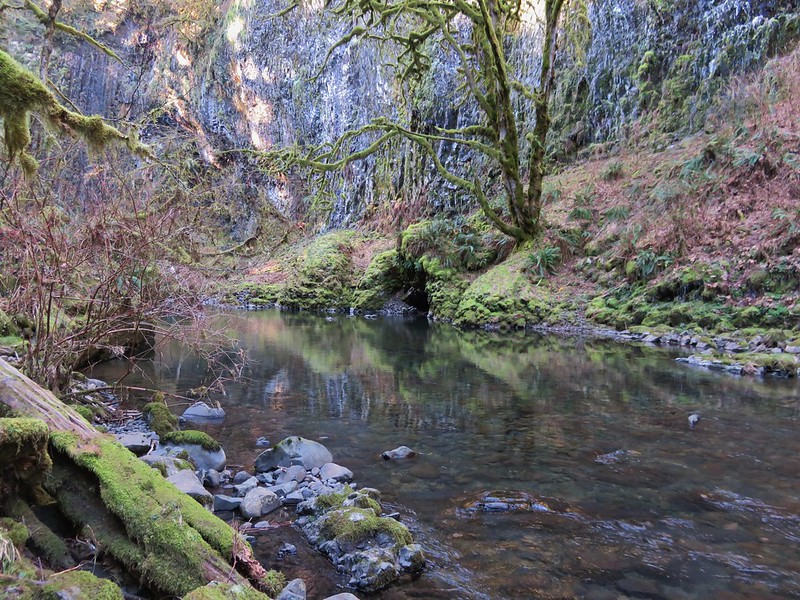
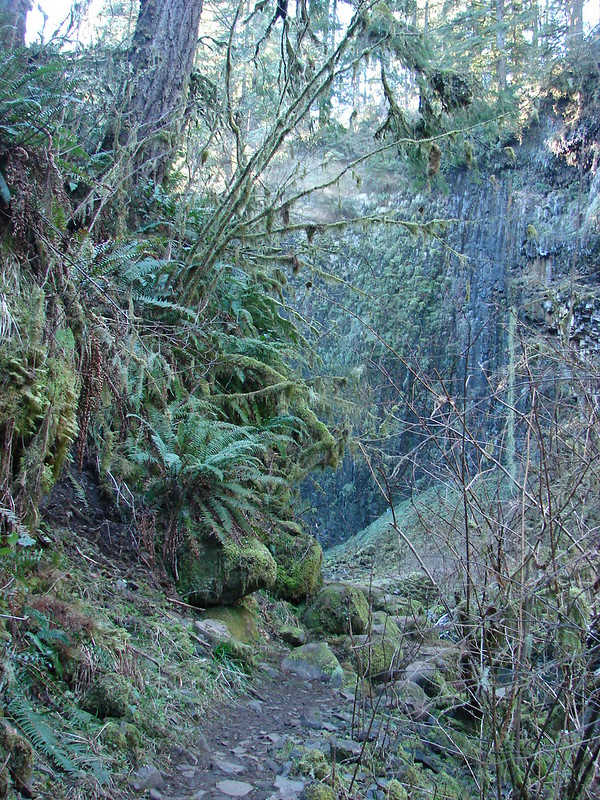
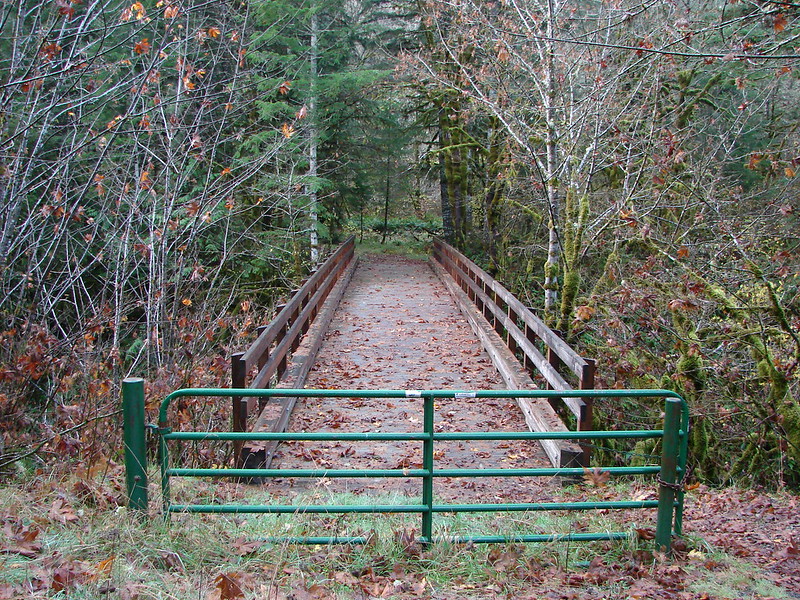
We had originally planned to visit Kentucky Falls a couple of years ago but winter storms damaged the North Fork Smith River Trail causing us to postpone the hike. Much of the trail has since been repaired and we decided that it was finally time for that trip. The North Fork Smith River Trail extends for over 8.5 miles between two trailheads in the Siuslaw National Forest west of Eugene, OR. We chose the Kentucky Falls Trailhead located on National Forest Road 919 as our starting point for a couple of reasons. First of all the three large waterfalls along the trail are closer to this trailhead and secondly the storms that damaged the trail had also damaged the 1 1/2 mile bridge (Named for its distance from the North Fork Smith Trailhead on forest road 23.) making it unsafe to cross and leaving a river ford as the only way to continue past on the trail.

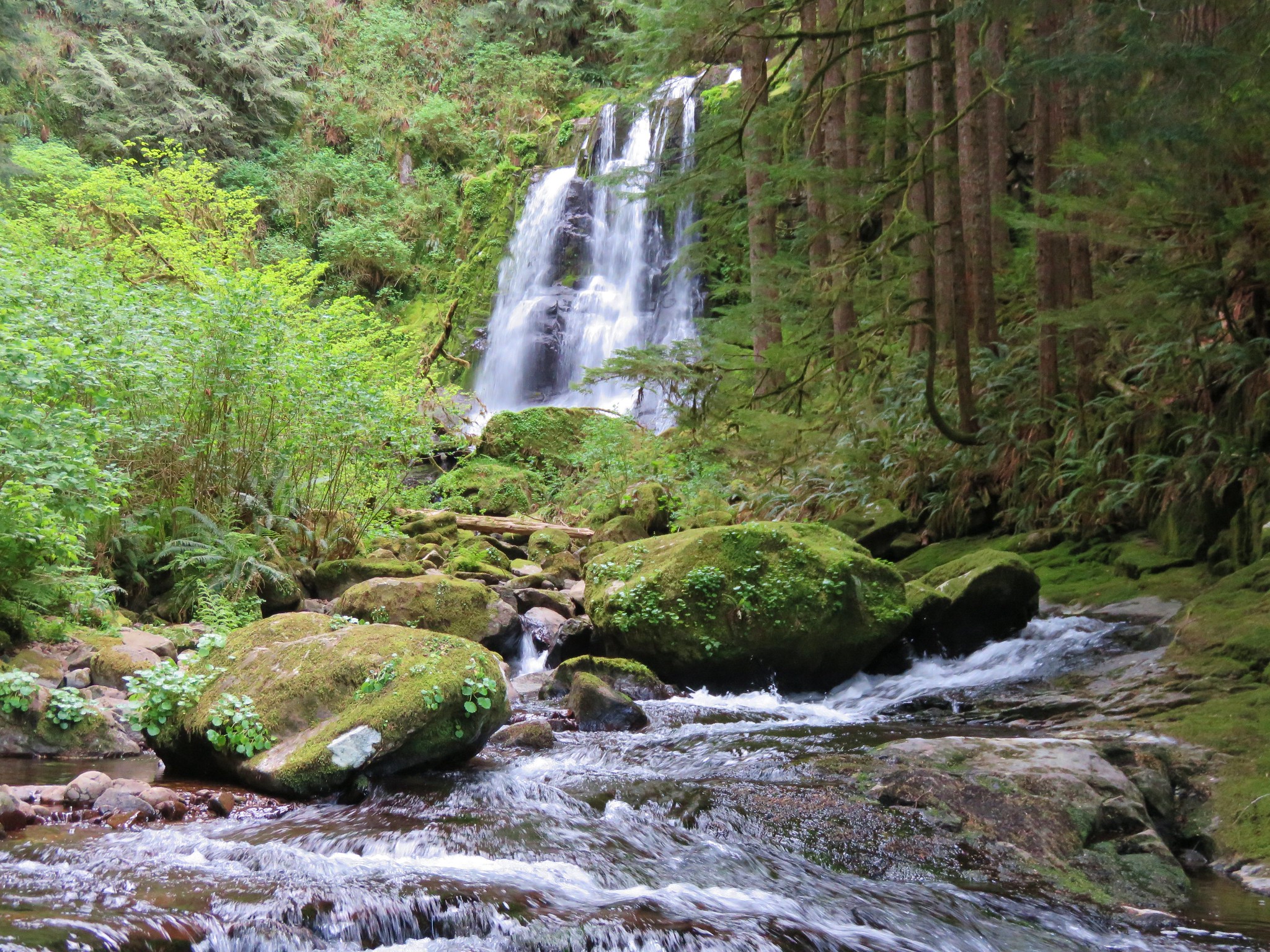
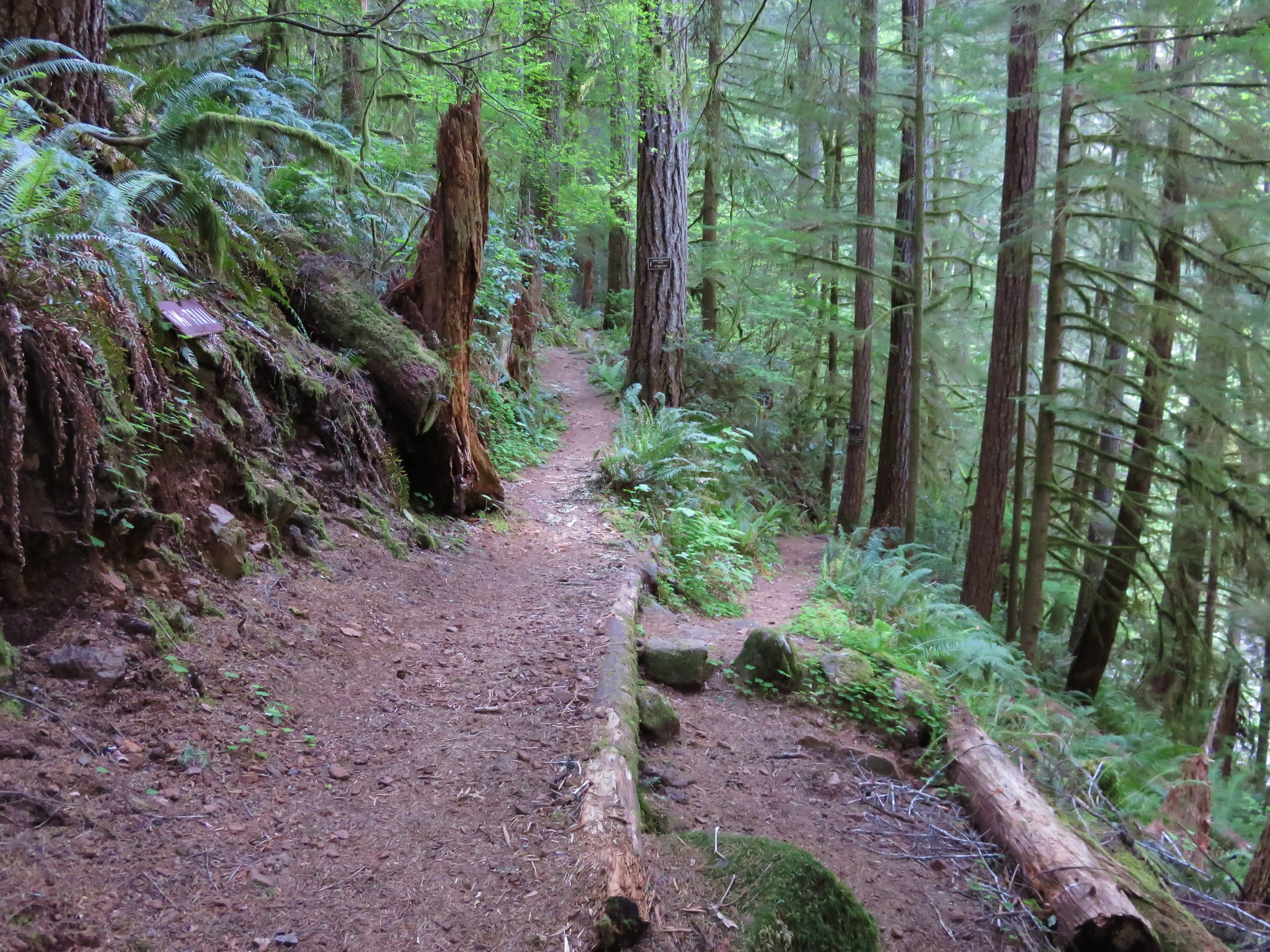
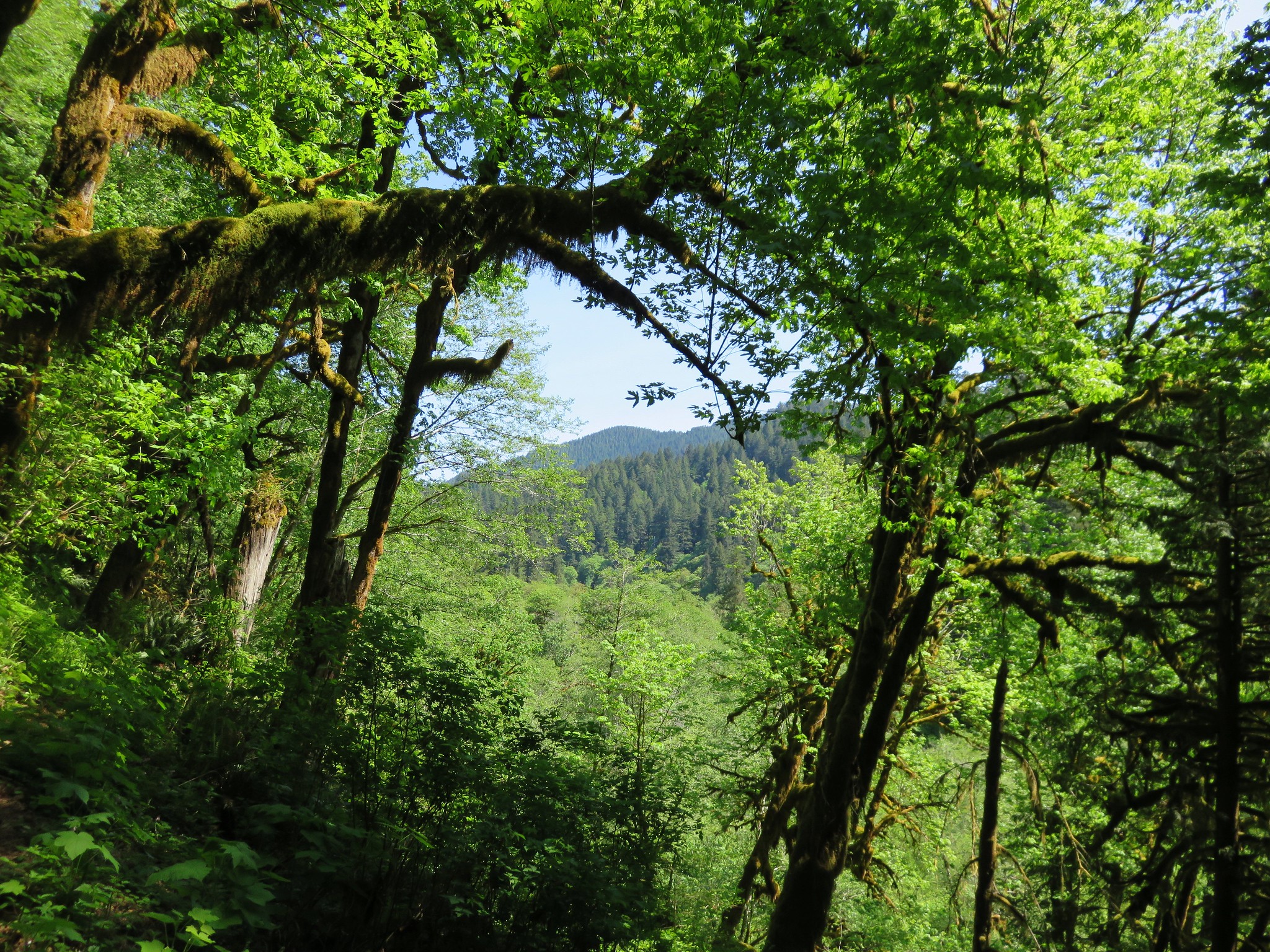
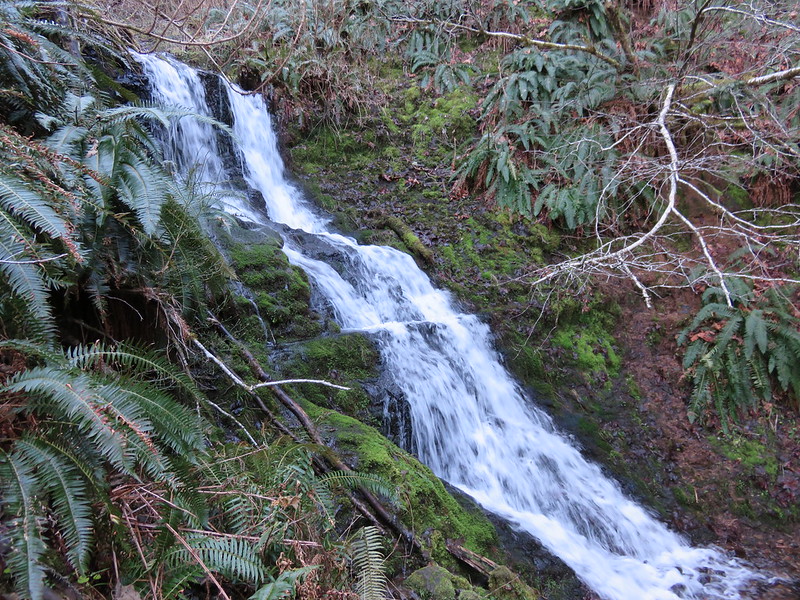
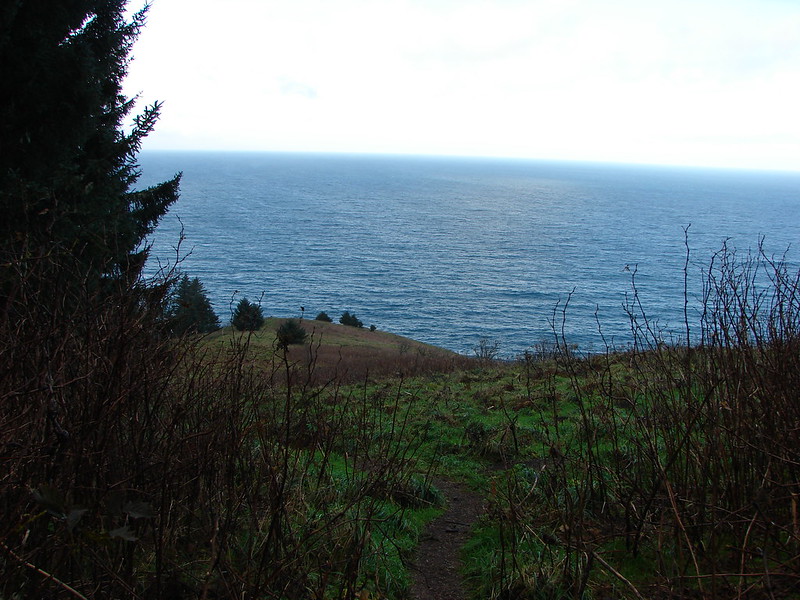
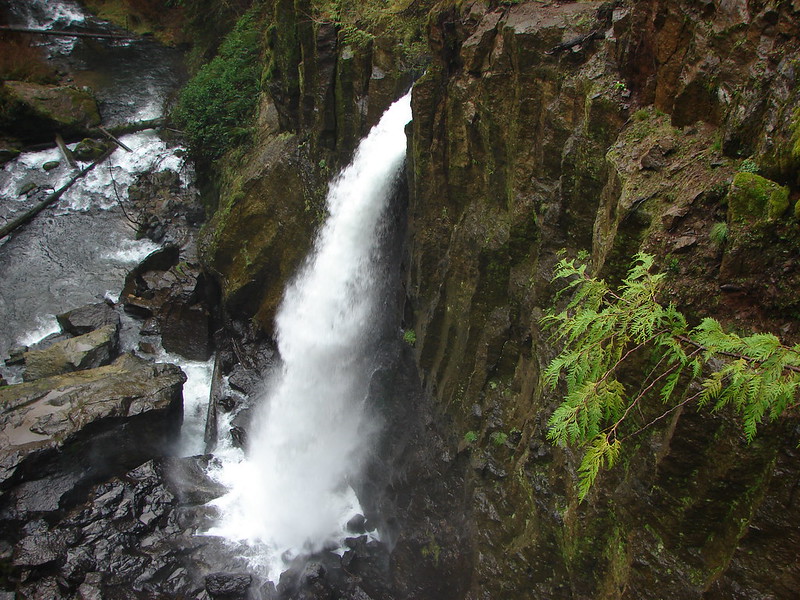
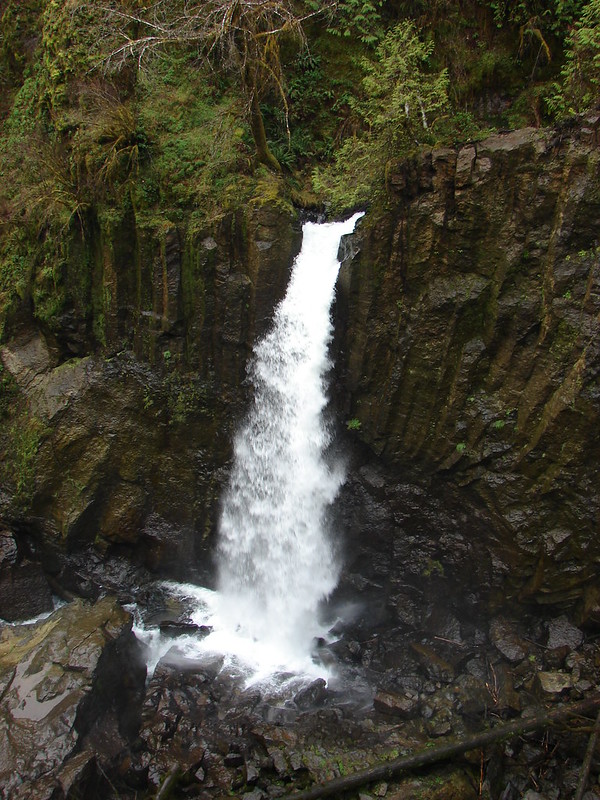
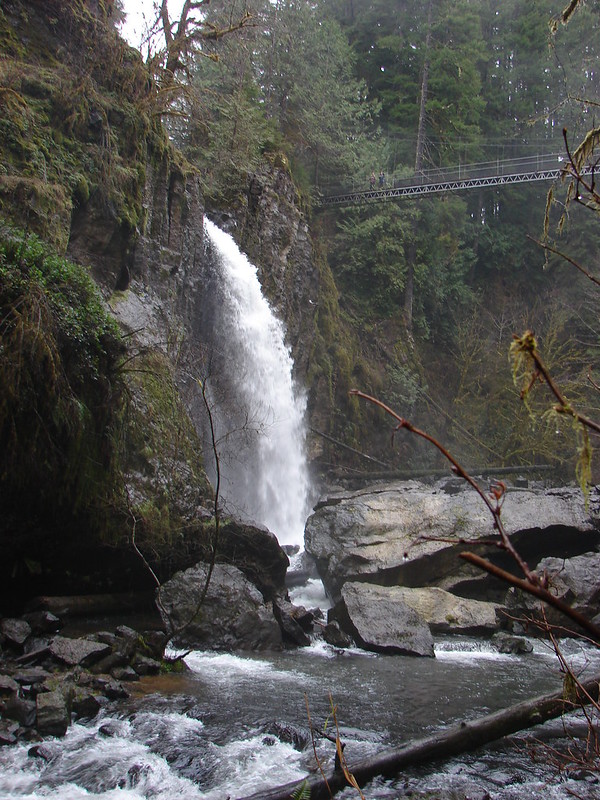
From the Kentucky Falls Trailhead the path gradually descends through the forest to a view above Upper Kentucky Falls.
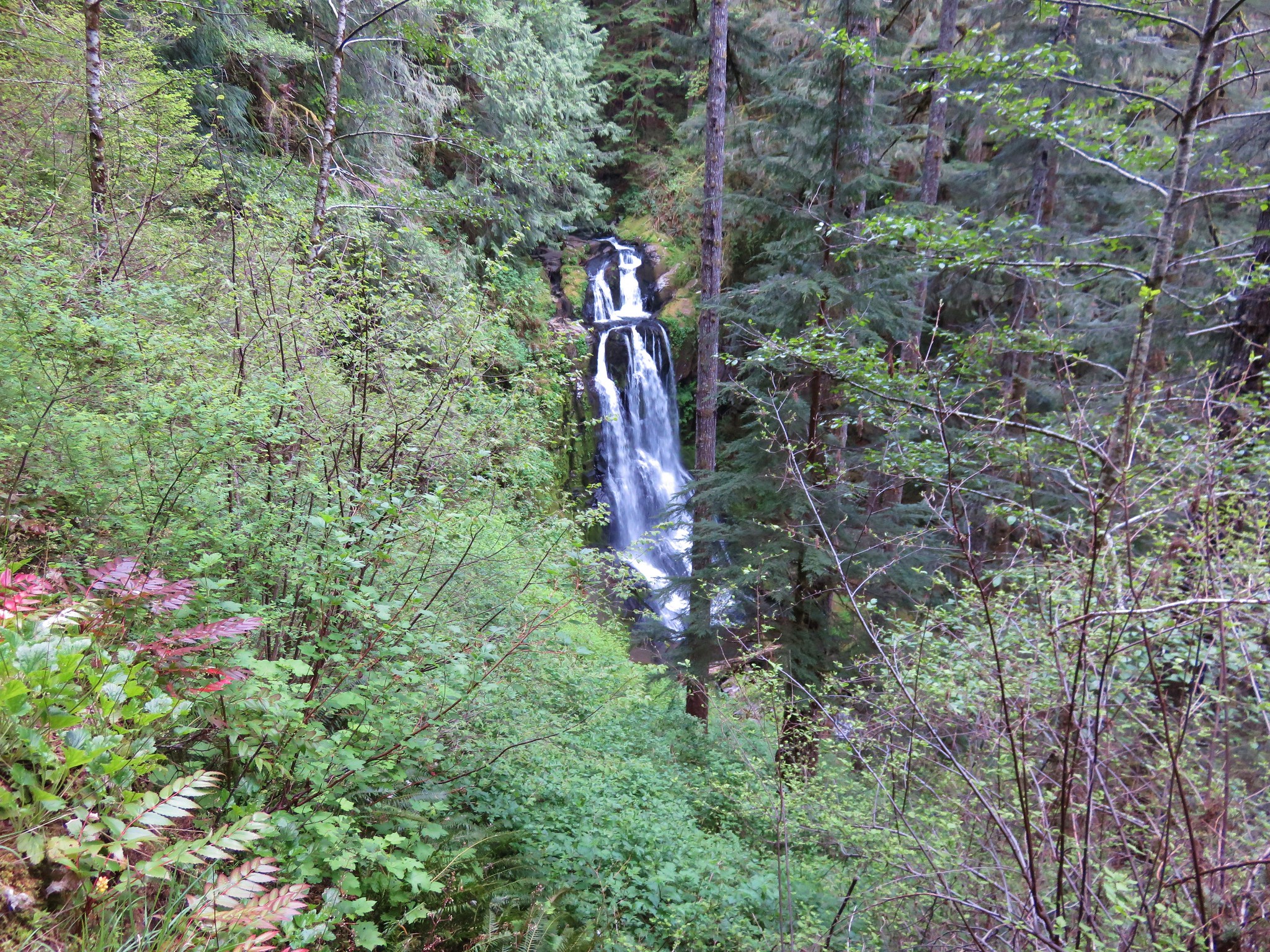
IMG_1835

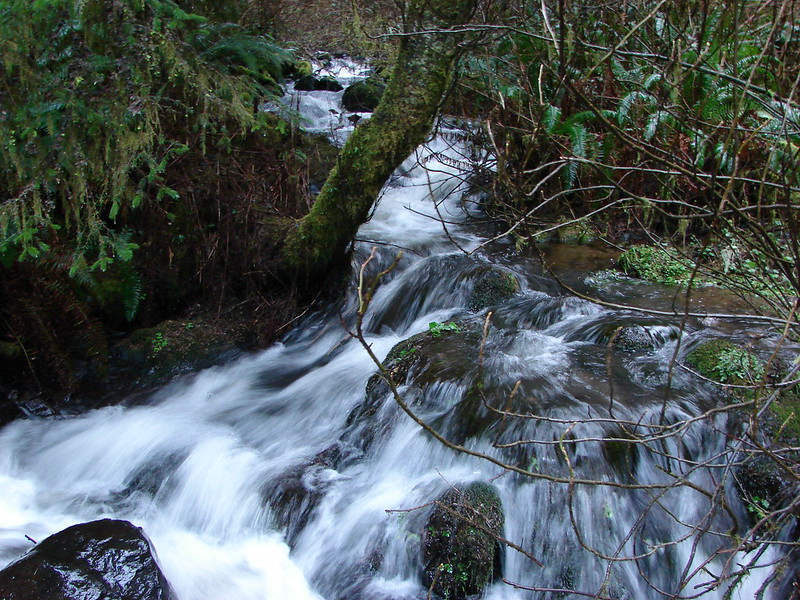
The trail then begins a steeper descent as it switchbacks down to Kentucky Creek below the falls.
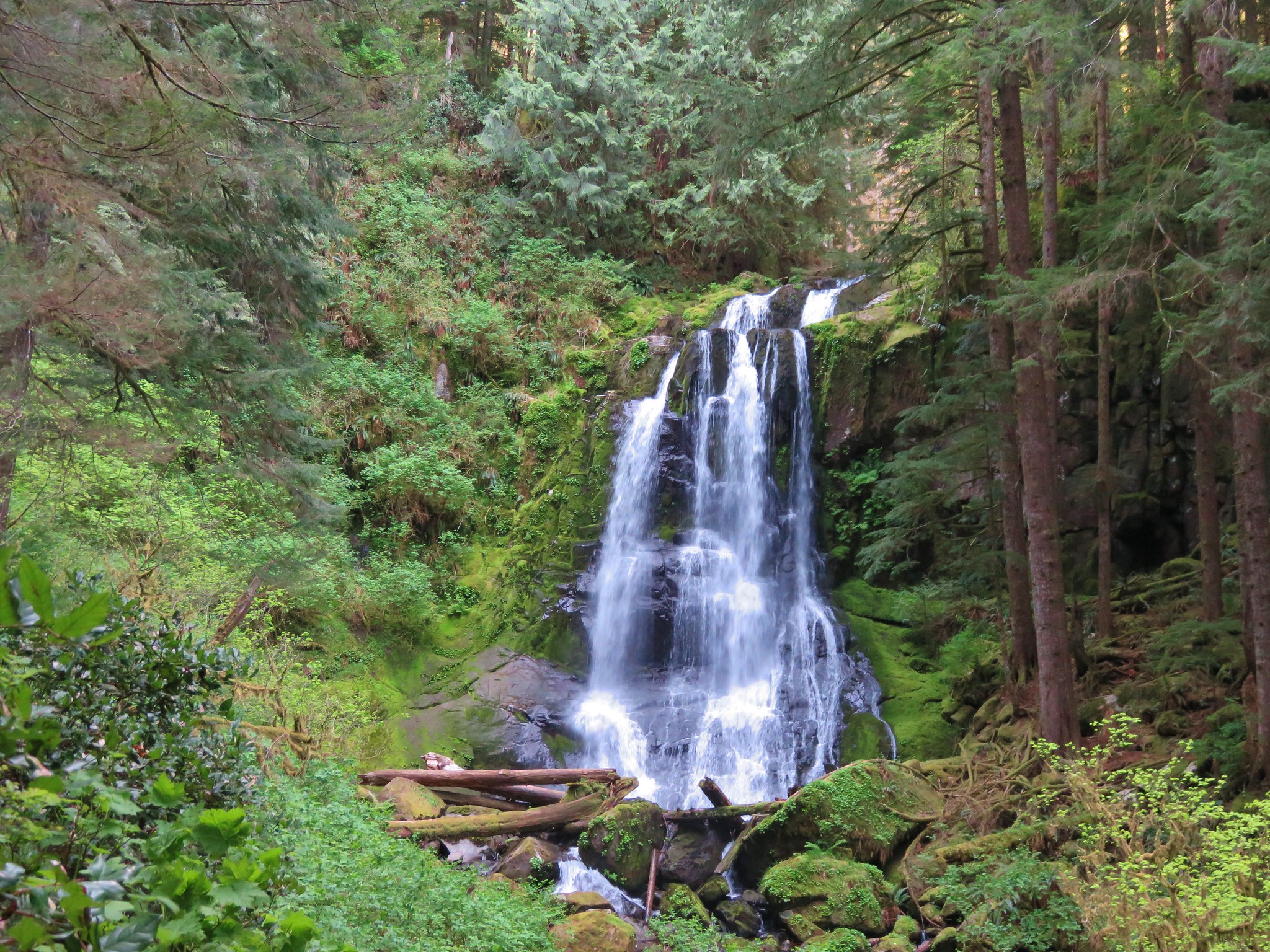
IMG_1842

IMG_1846

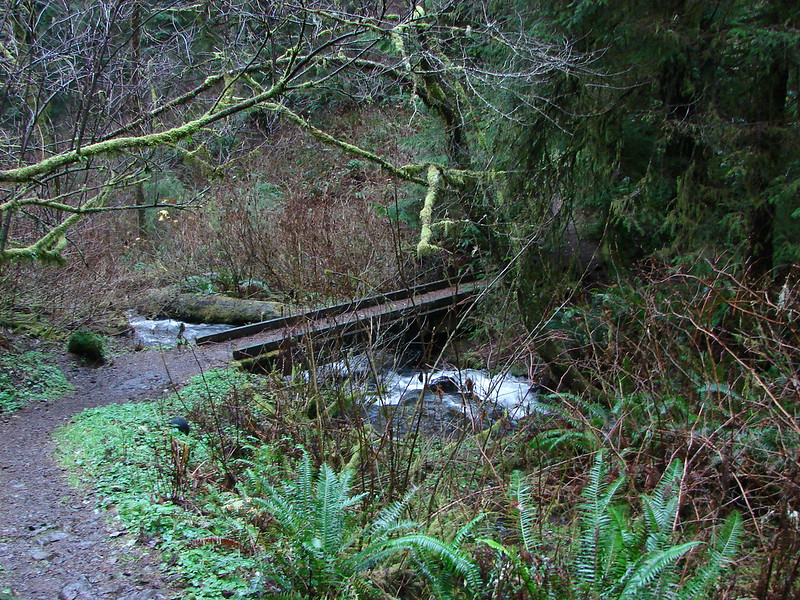
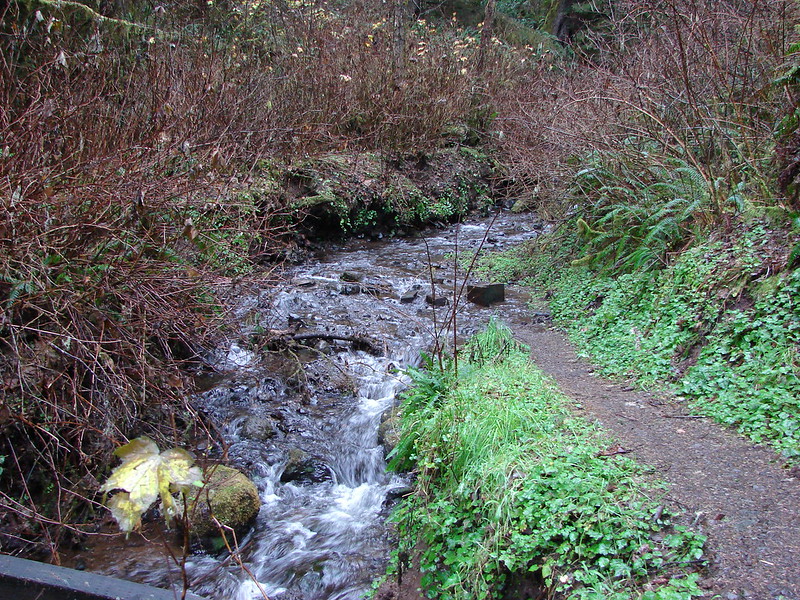
The trail again descends gradually crossing the creek on a footbridge before a second set of swtichbacks brings you to a trail junction at a sharp switchback.
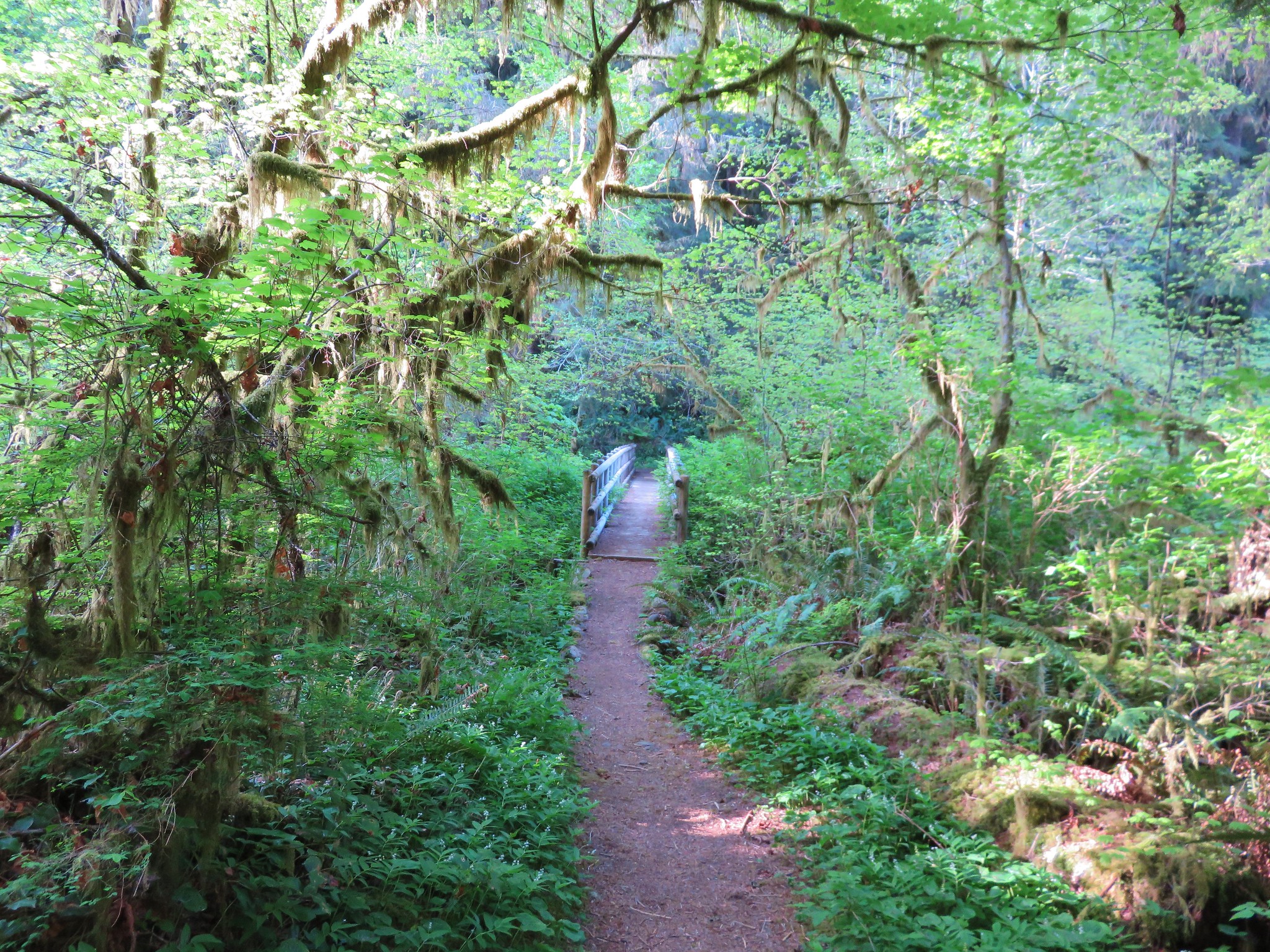
IMG_1856

Sharp switchback
IMG_1893

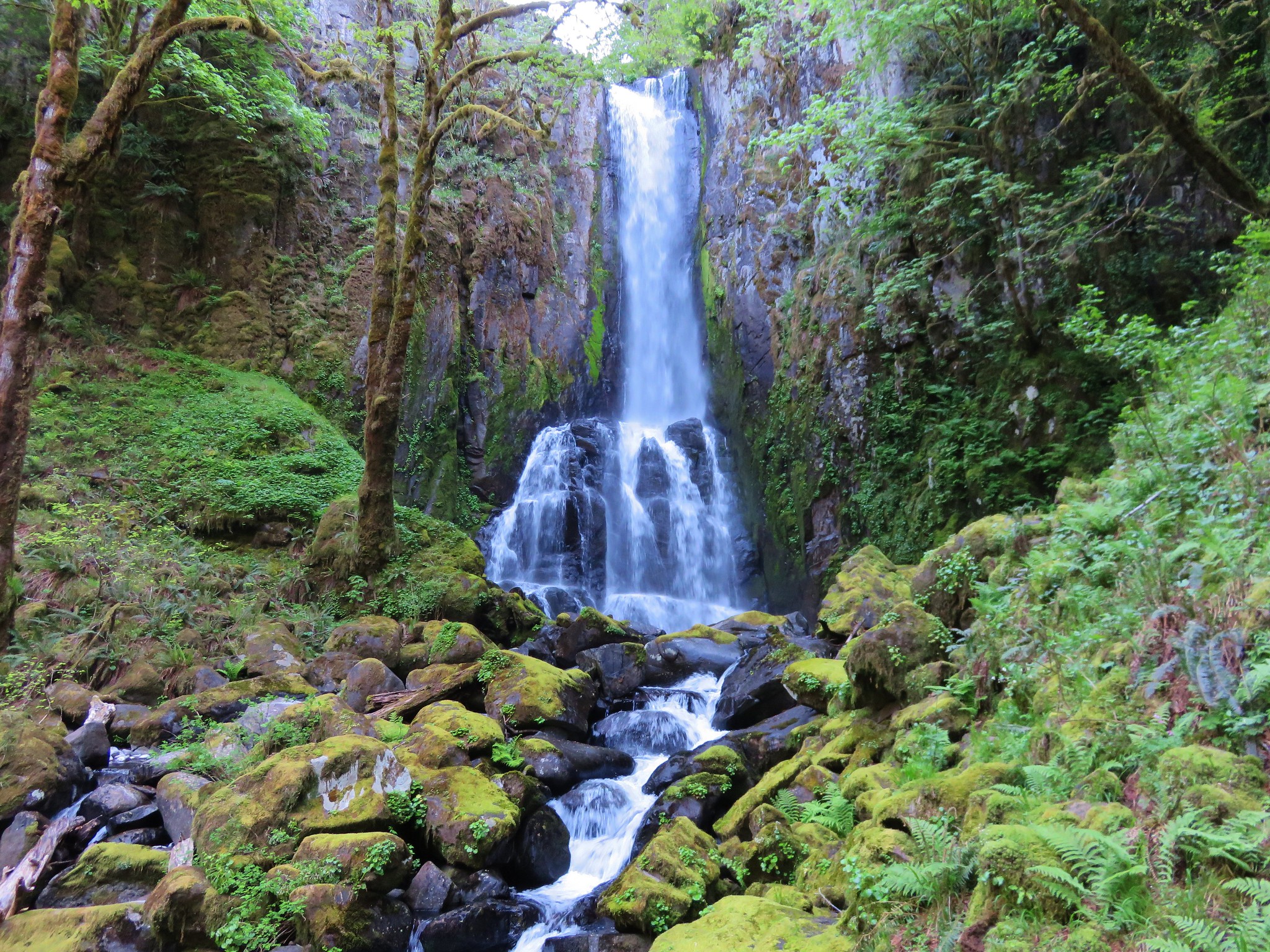
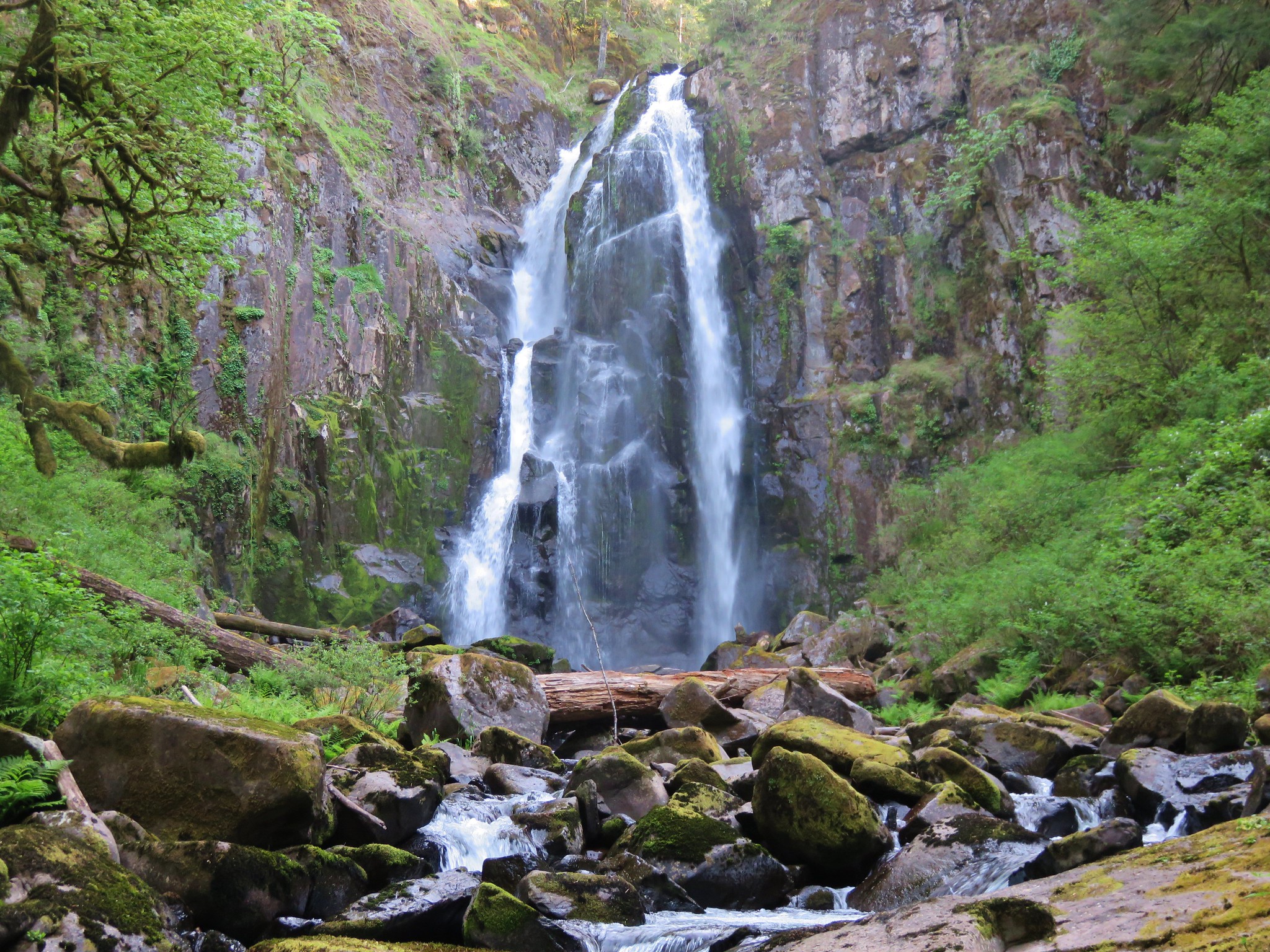
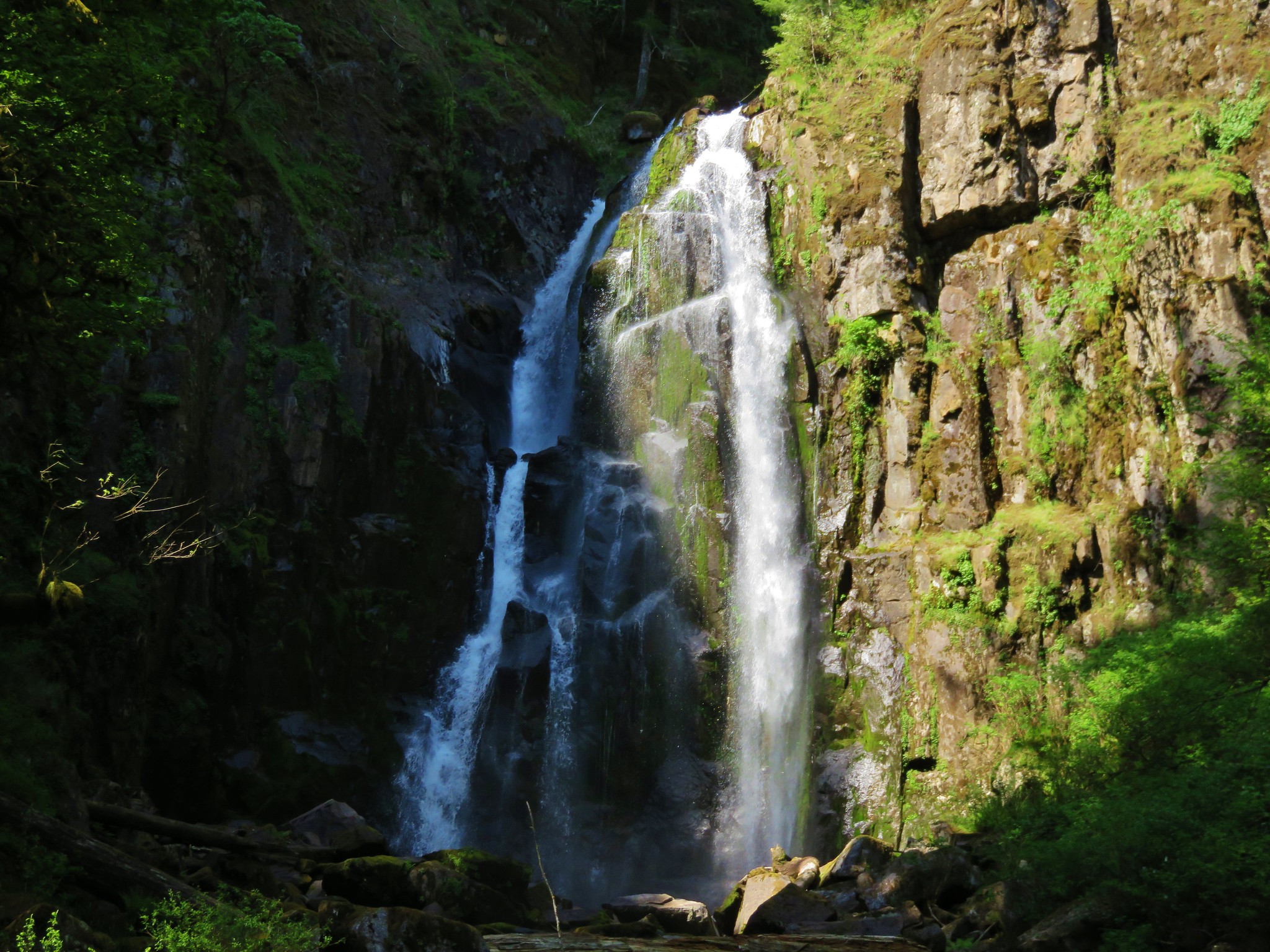
The switchback is the continuation of the North Fork Smith River Trail and the route for a longer hike. A short path leading straight from the switchback junction leads a short distance to two more large falls. Lower Kentucky Falls and North Fork Falls.
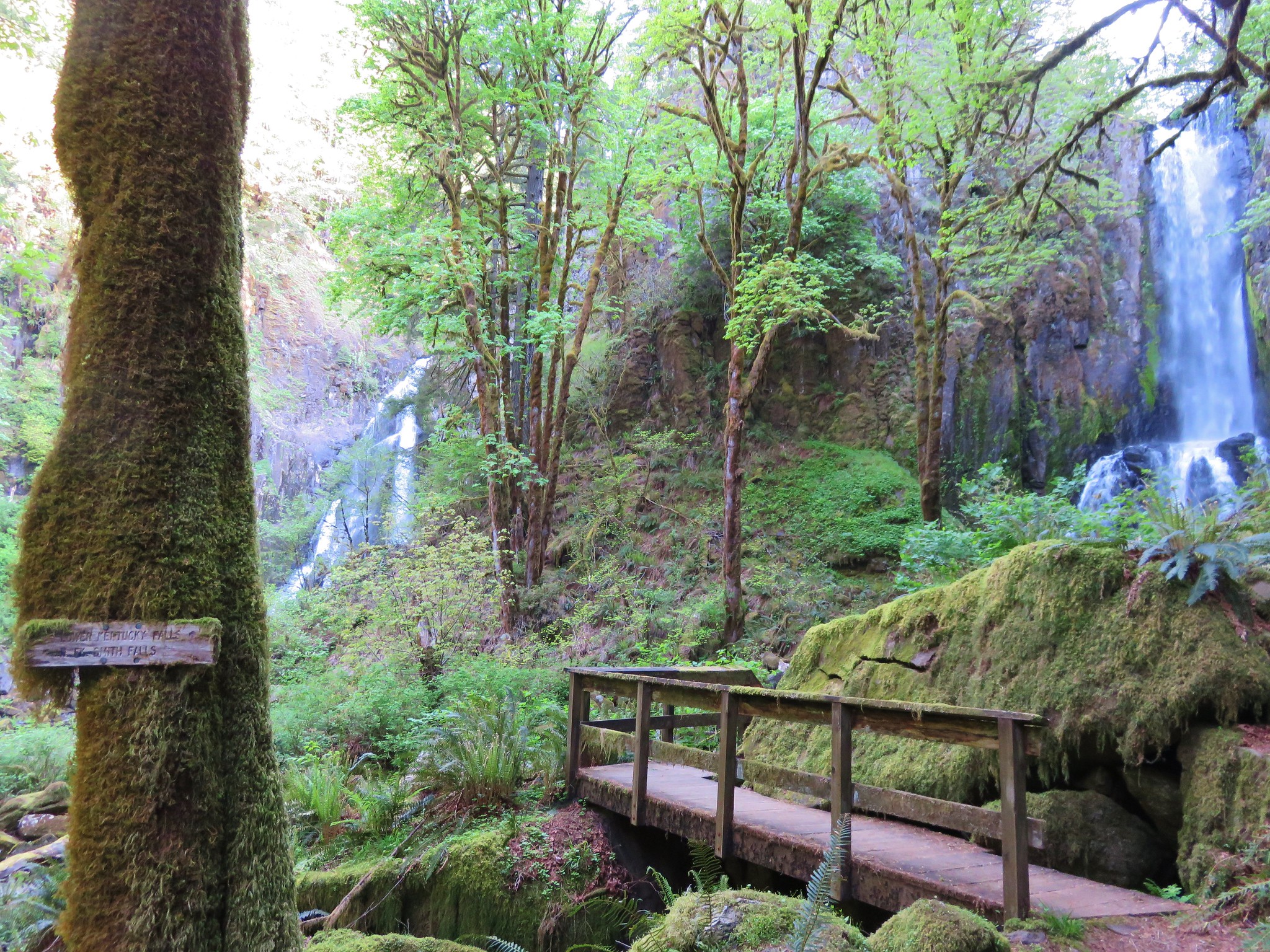
IMG_1867

Lower Kentucky Falls
IMG_1870

North Fork Falls
IMG_1882

Turning back here would have made the hike approximately 4.5 miles, but we were planning on a longer trek so when we returned to the switchback junction we continued along the North Fork Smith River Trail. Under a mile from the junction we came to Swimming Pool Falls. A much smaller waterfall than the three upstream but scenic none the less.
IMG_1896

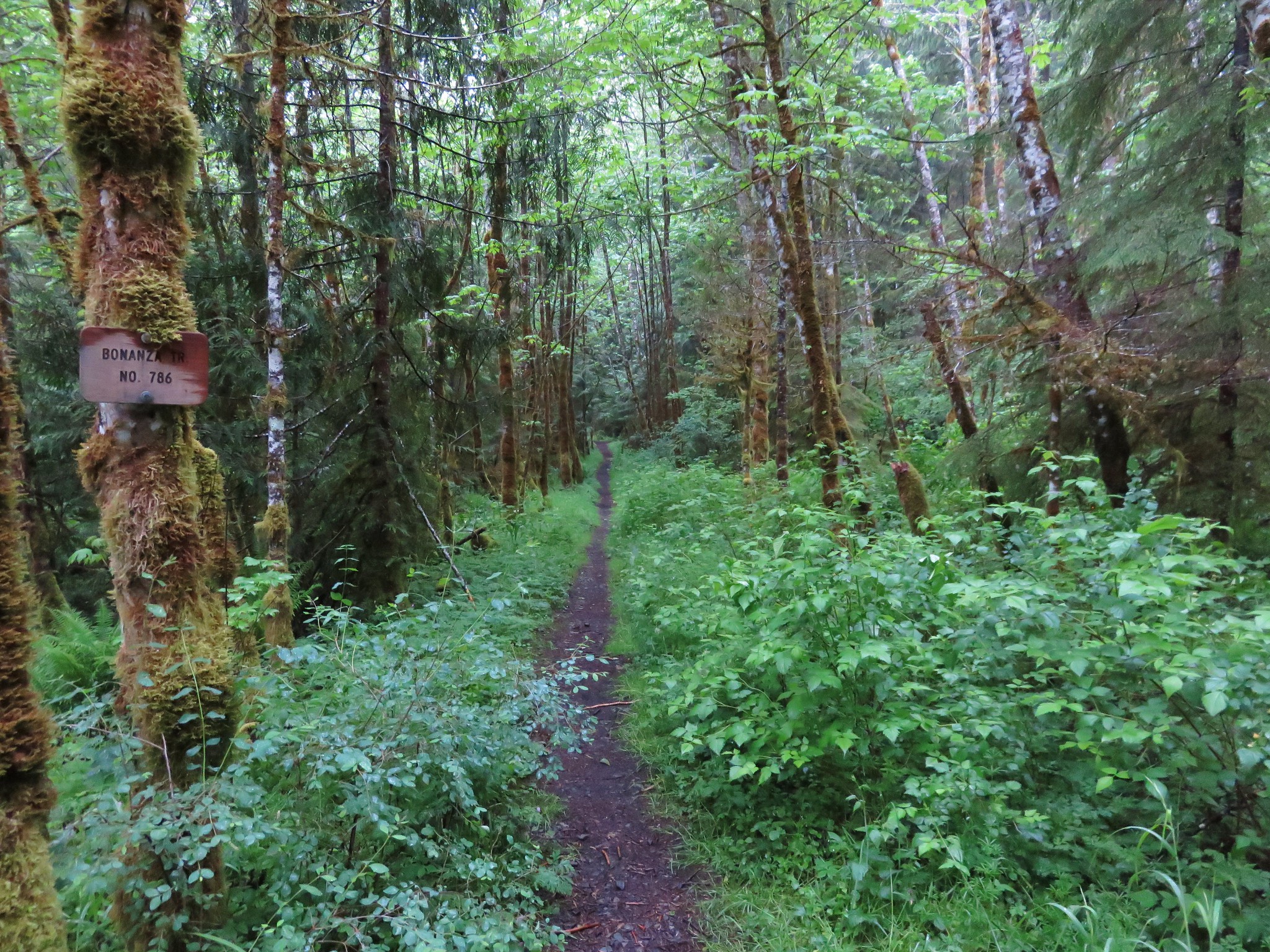
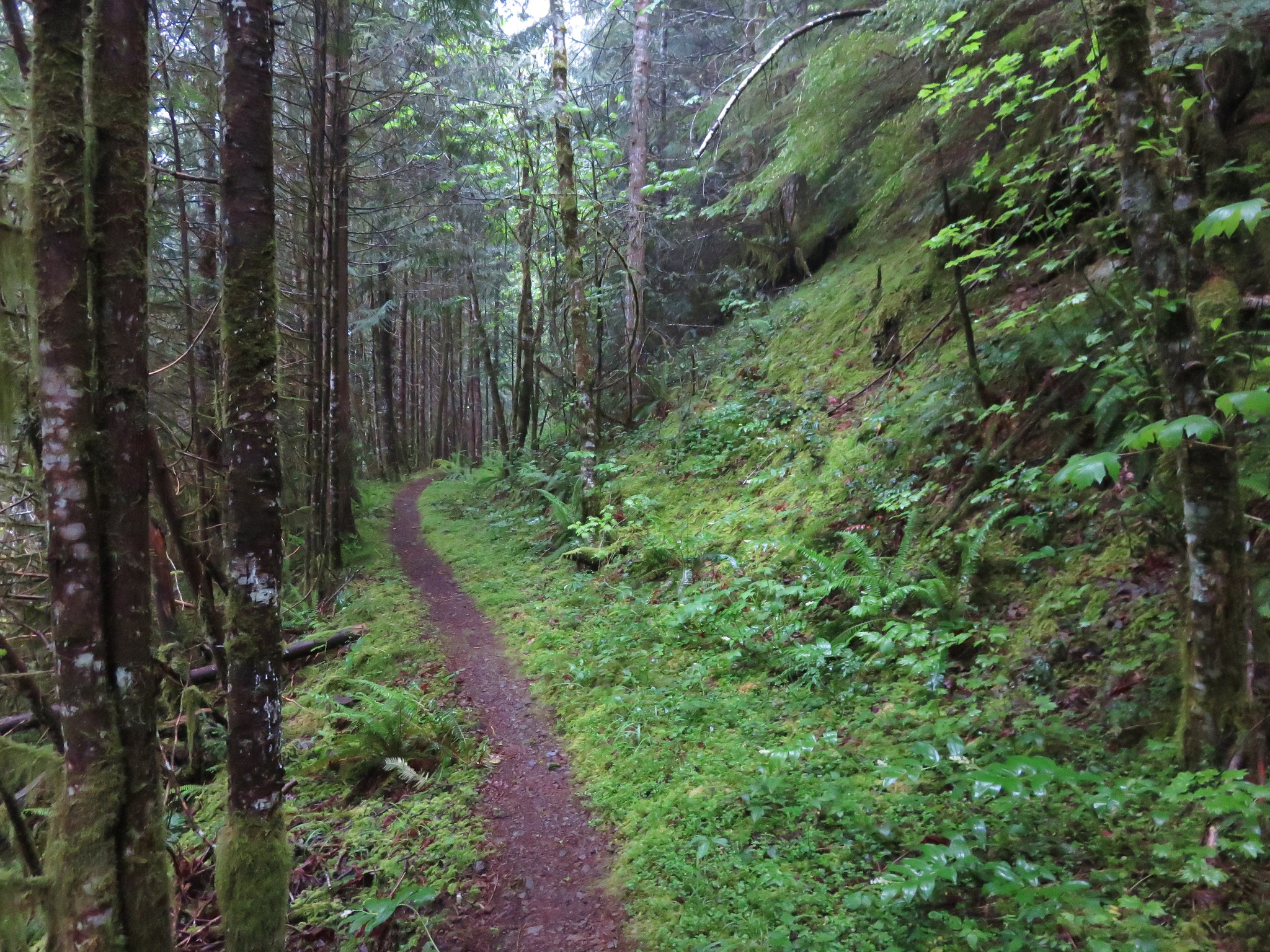
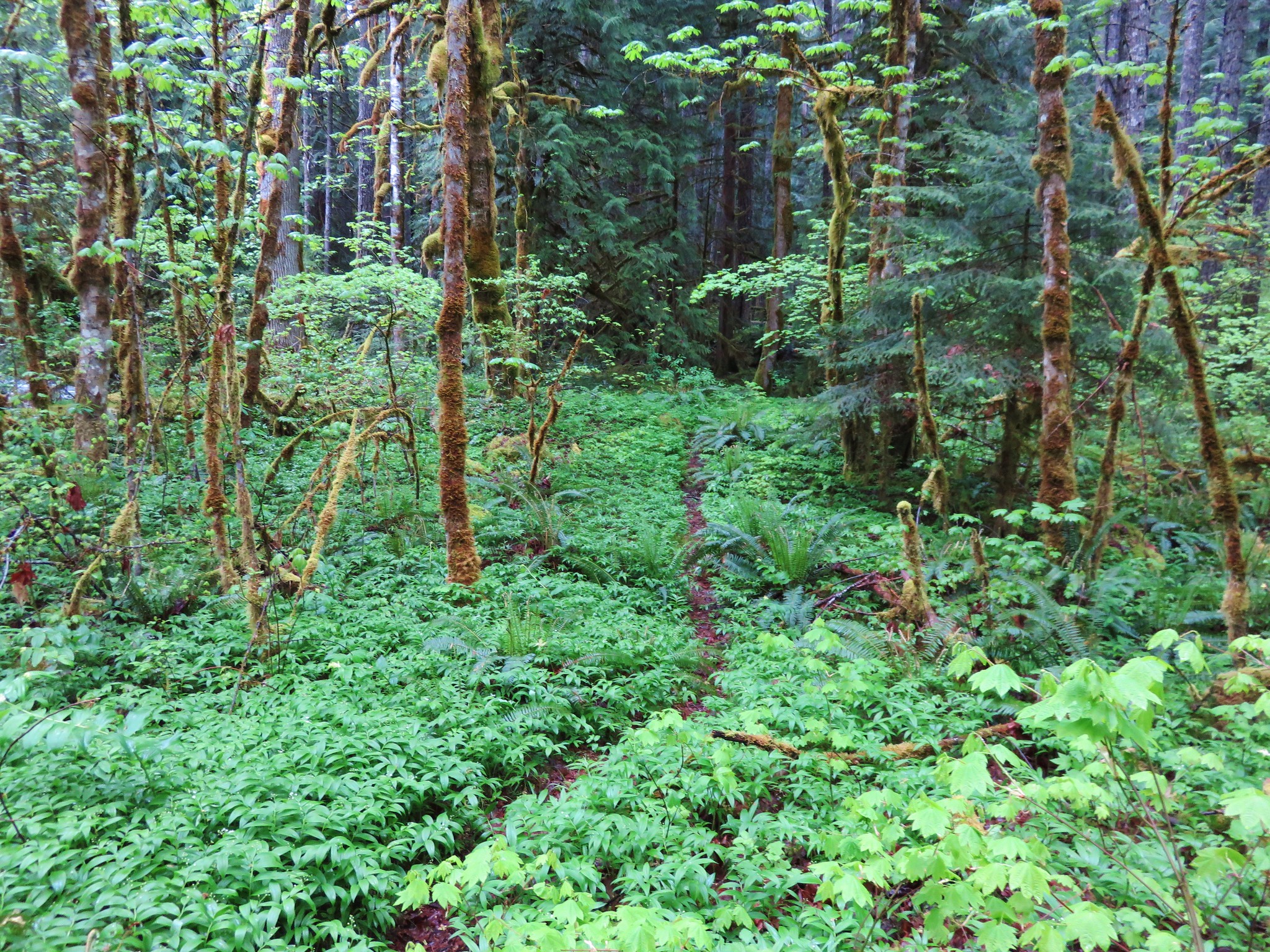
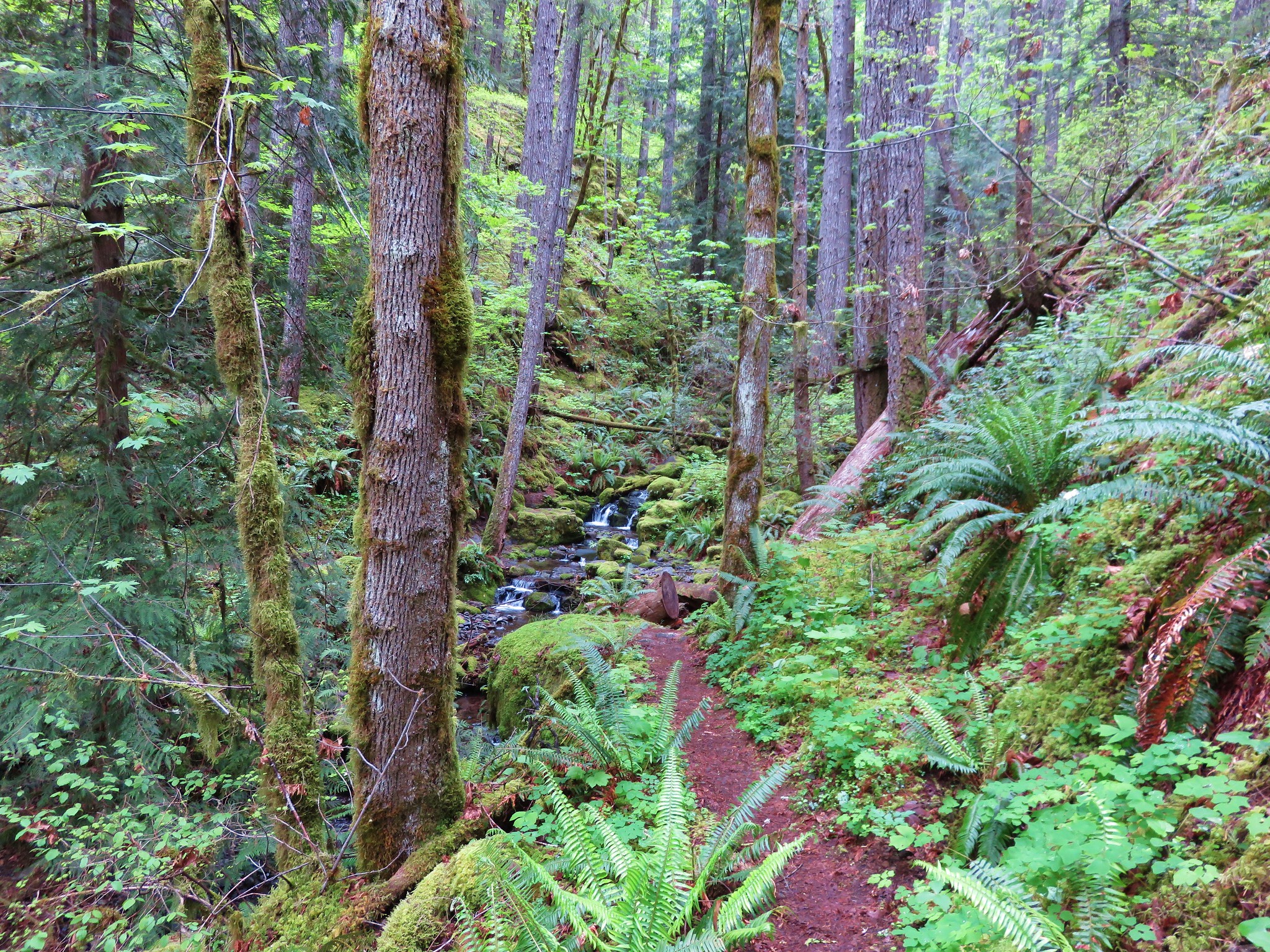
The trail after Swimming Pool Falls began to show signs of little use. The tread became narrower with some small plants and moss growing on the path.
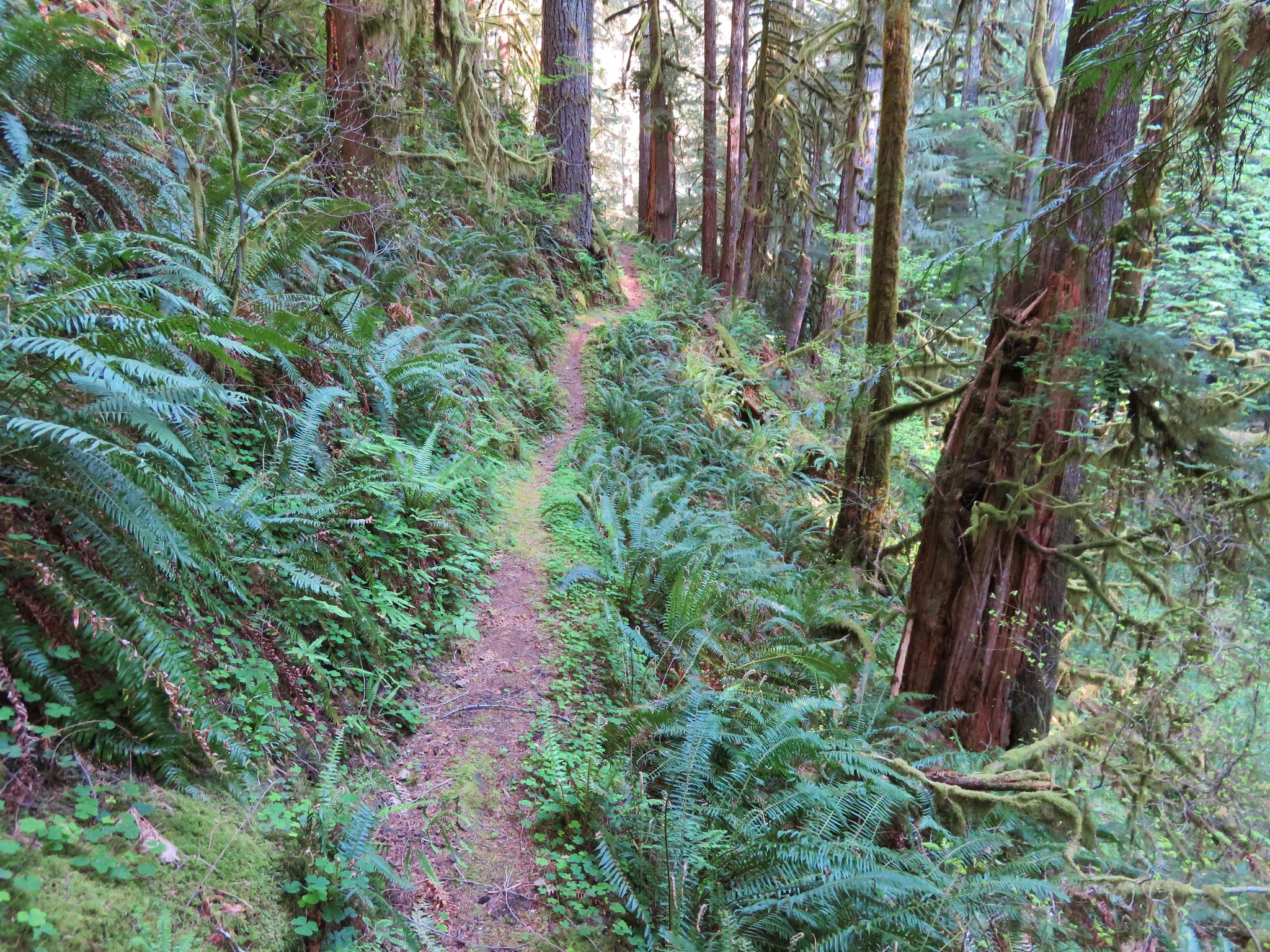
IMG_1910

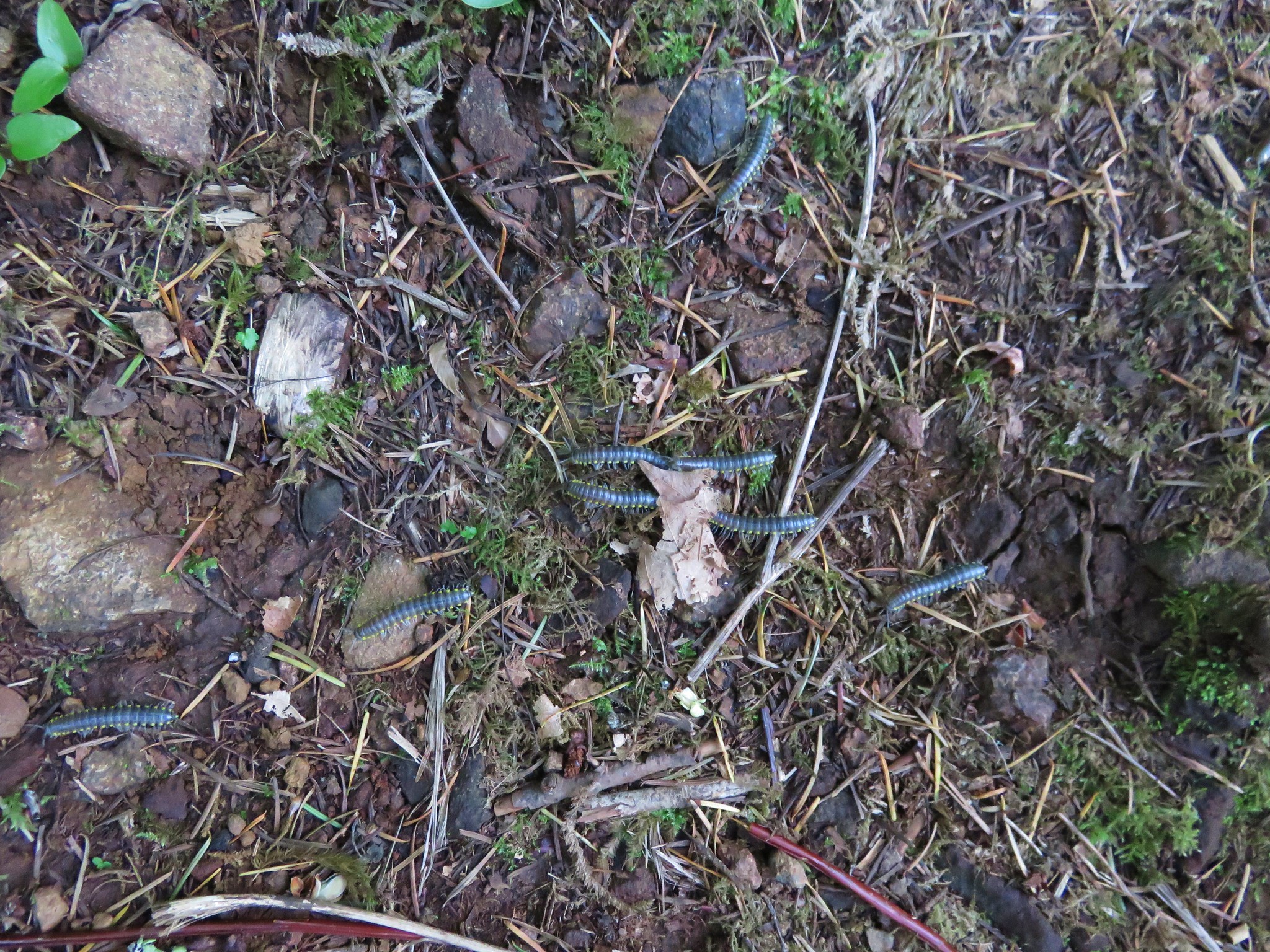
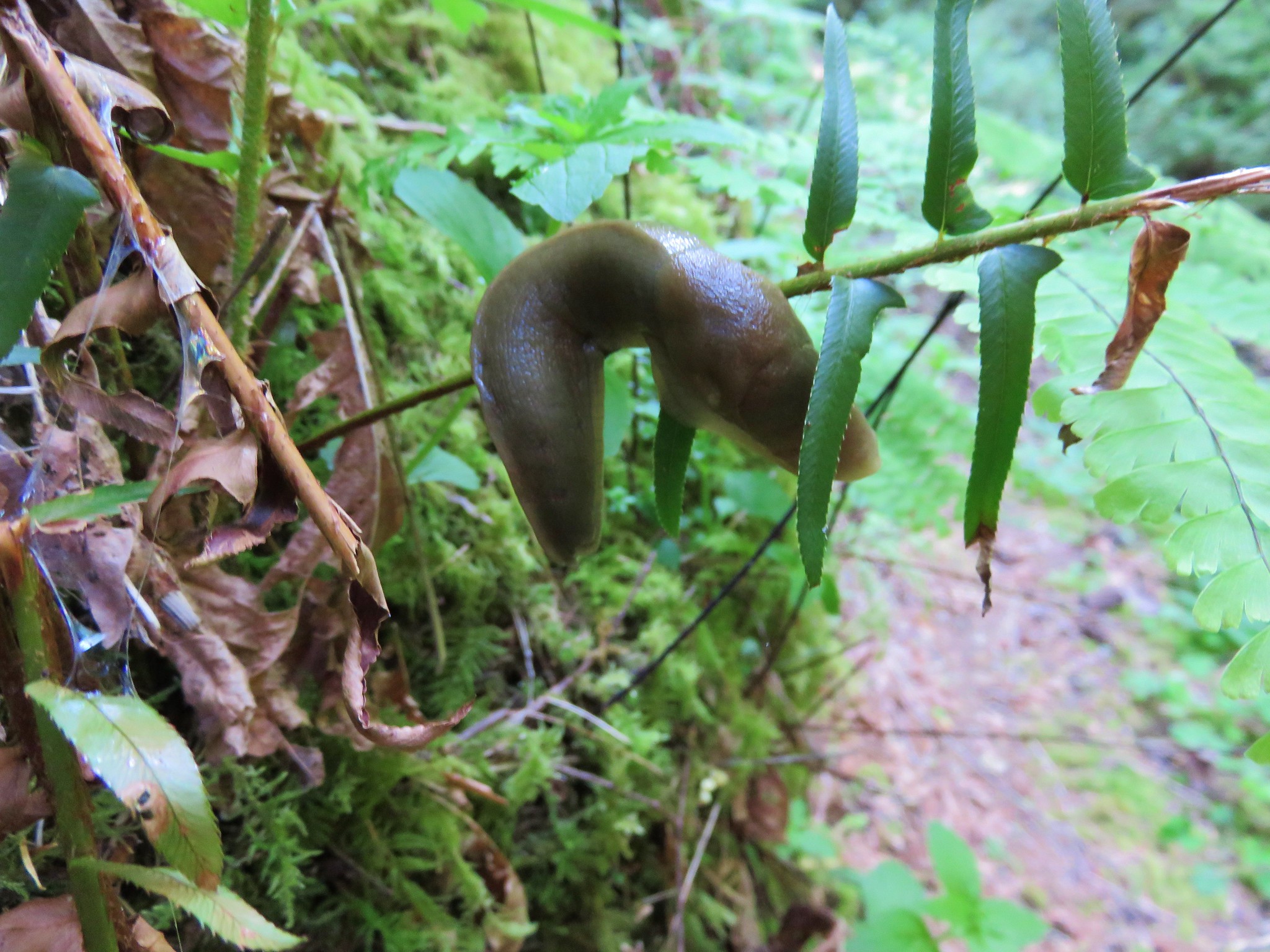
We had to watch our step but not because of the trail condition, we had to watch out for the numerous snails, slugs, millipedes, and other critters that we saw all along the trail.
IMG_1851

IMG_1861

IMG_1911

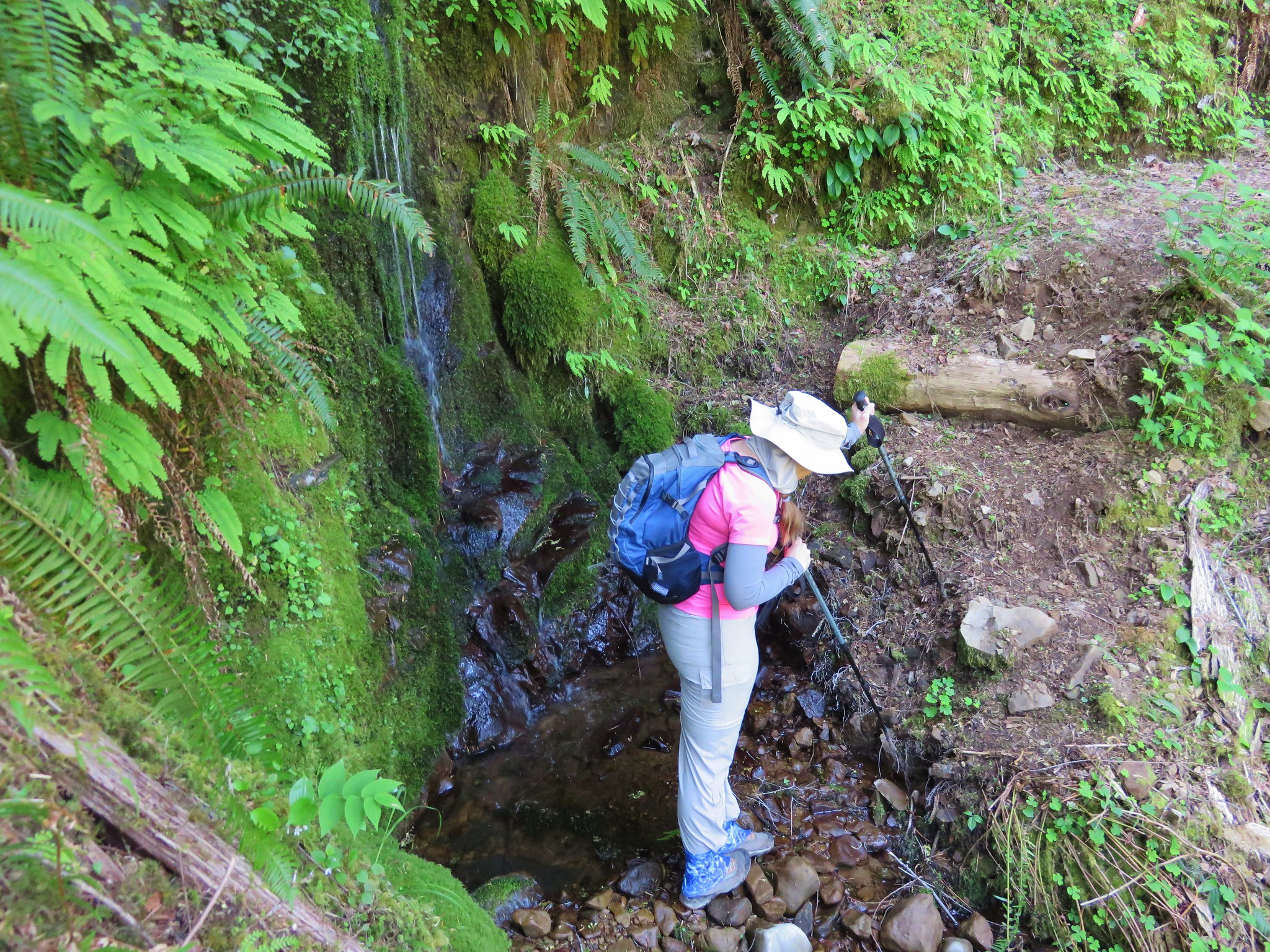
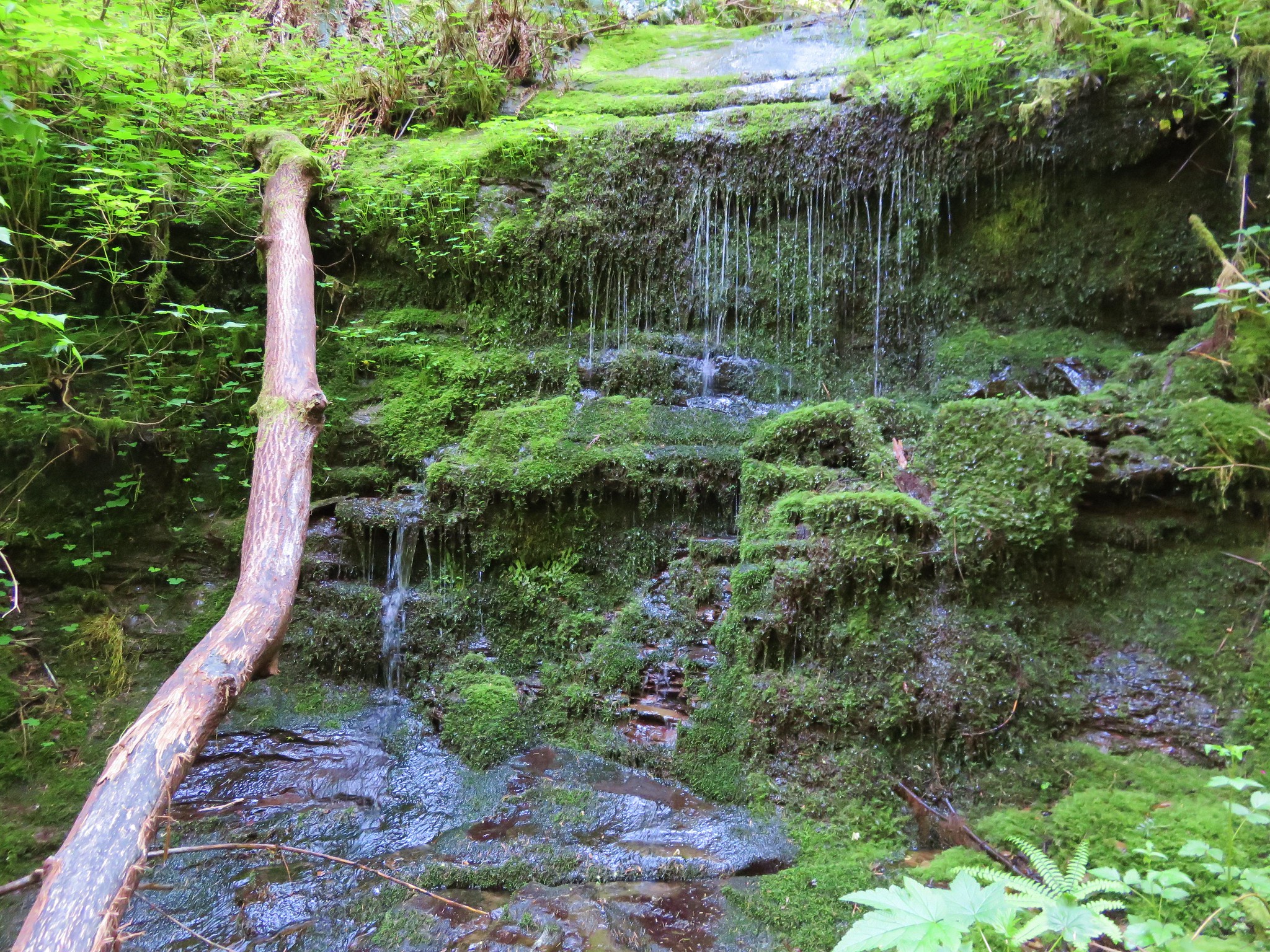
Our map showed that it was approximately 2.7miles from Swimming Pool Falls to the 3 mile bridge. This is the second bridge over the North Fork Smith River coming from the North Fork Smith Trailhead. We were on the lookout for a couple of markers along the way though, a small drippy waterfall and an 11′ Douglas fir. We spotted the drippy waterfall just fine which looked like it would have been very pretty with a higher volume of water.
IMG_1913

Not far after drippy falls there was a large tree trunk across the trail which made for a decent obstacle.
IMG_1986

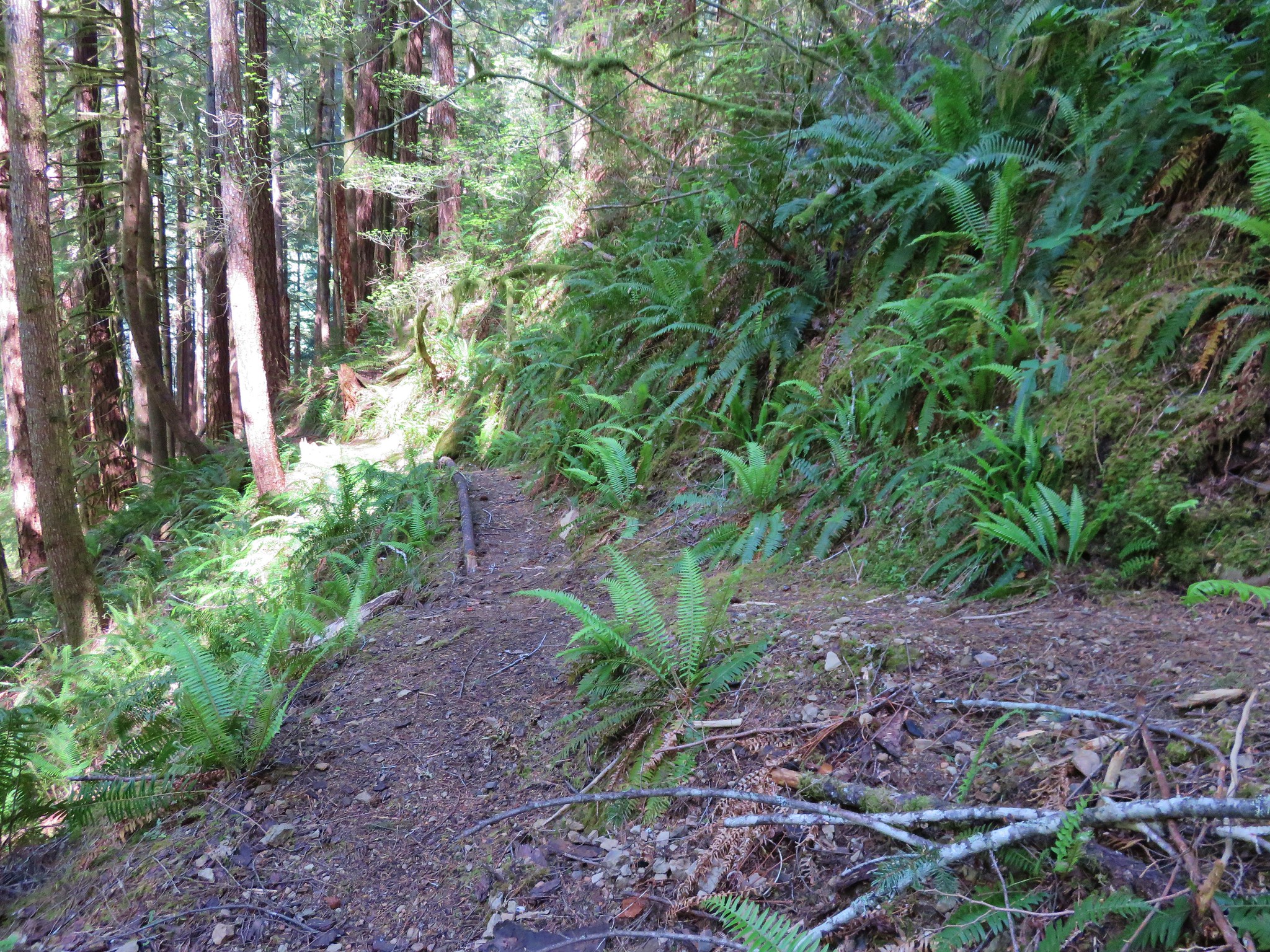
Then we came to an unsigned trail junction at a switchback. This junction was not on any forest service map of the area we had seen and it wasn’t marked on the map in our field guide. The right hand fork led down a ridge while the left fork switched back along the canyon wall.

This picture is taken from the left hand fork looking back up at the unsigned junction.
IMG_1922

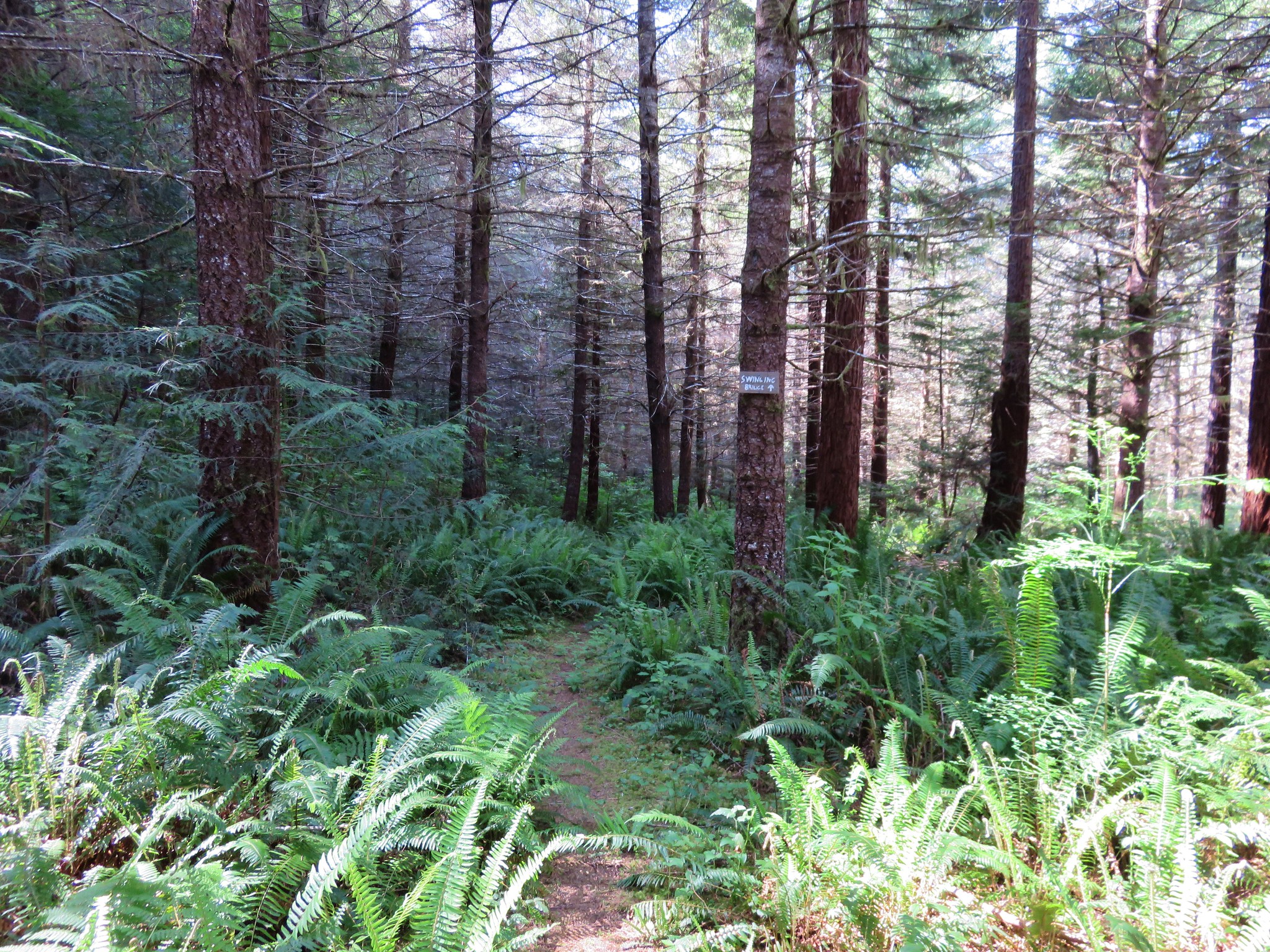
We decided to take the right hand fork to see if led down to the 11′ tree or possibly a campsite out on the ridge. We did pass an old campsite but the trail continued on down toward the river growing a little fainter as it went. We were following a side creek down the hillside which the maps showed the trail doing as it arrives at the 3 mile bridge so we kept going wondering if we had missed the 11′ tree and already arrived at the bridge. The trail crossed the little stream and arrived at another junction. This one had signs. A Kentucky Falls sign pointed right toward a very faint path while a North Fork Smith Trail sign pointed back up the way we’d come. The sign for the left hand fork said Swinging Bridge.
IMG_1914

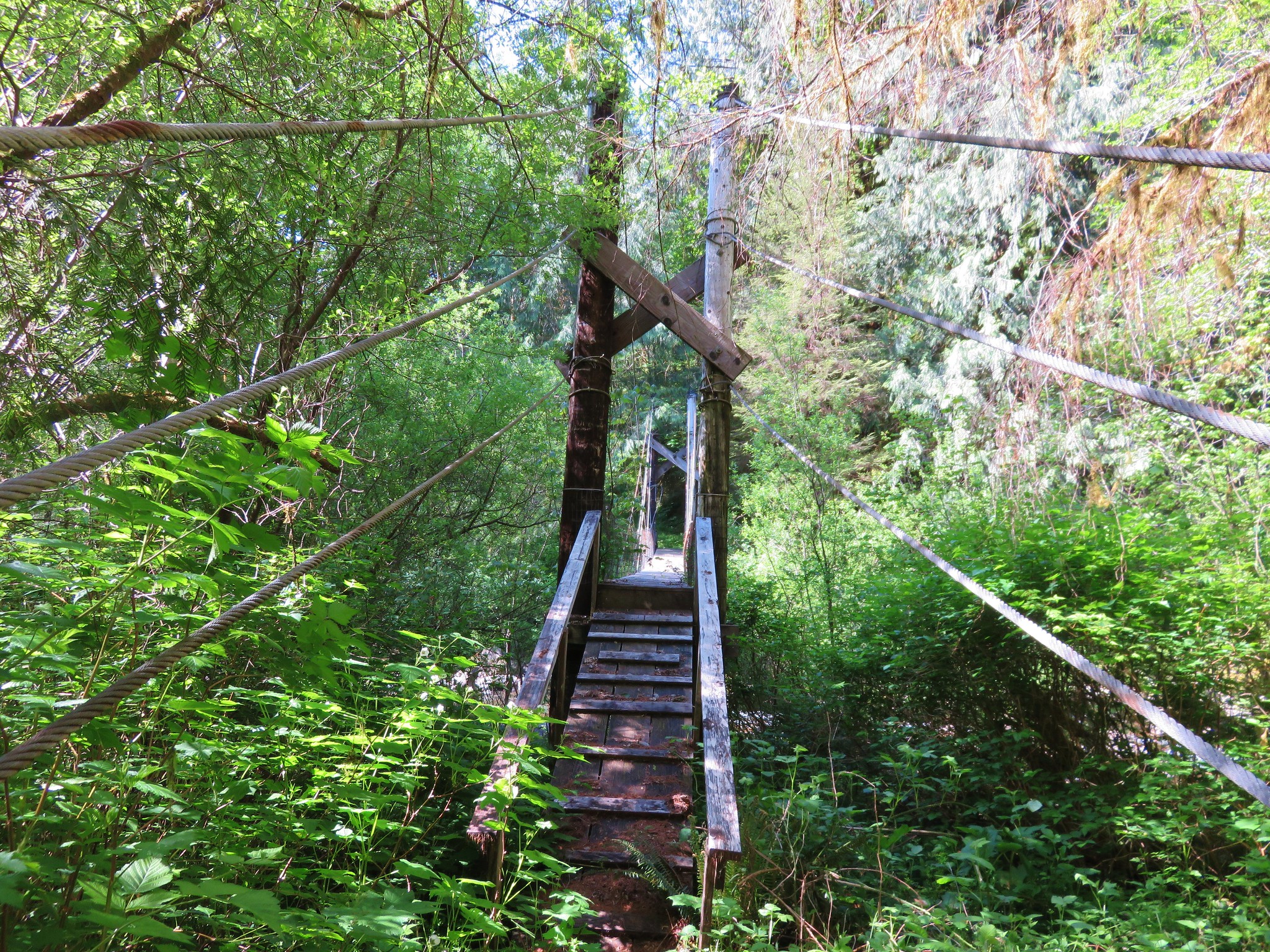
We were headed for a bridge but it was odd that Sullivan had not mentioned the “Swinging” aspect of the bridge in his book. That is the kind of detail that he does include in his descriptions. Not far from the junction we arrived at the bridge though.
IMG_1916

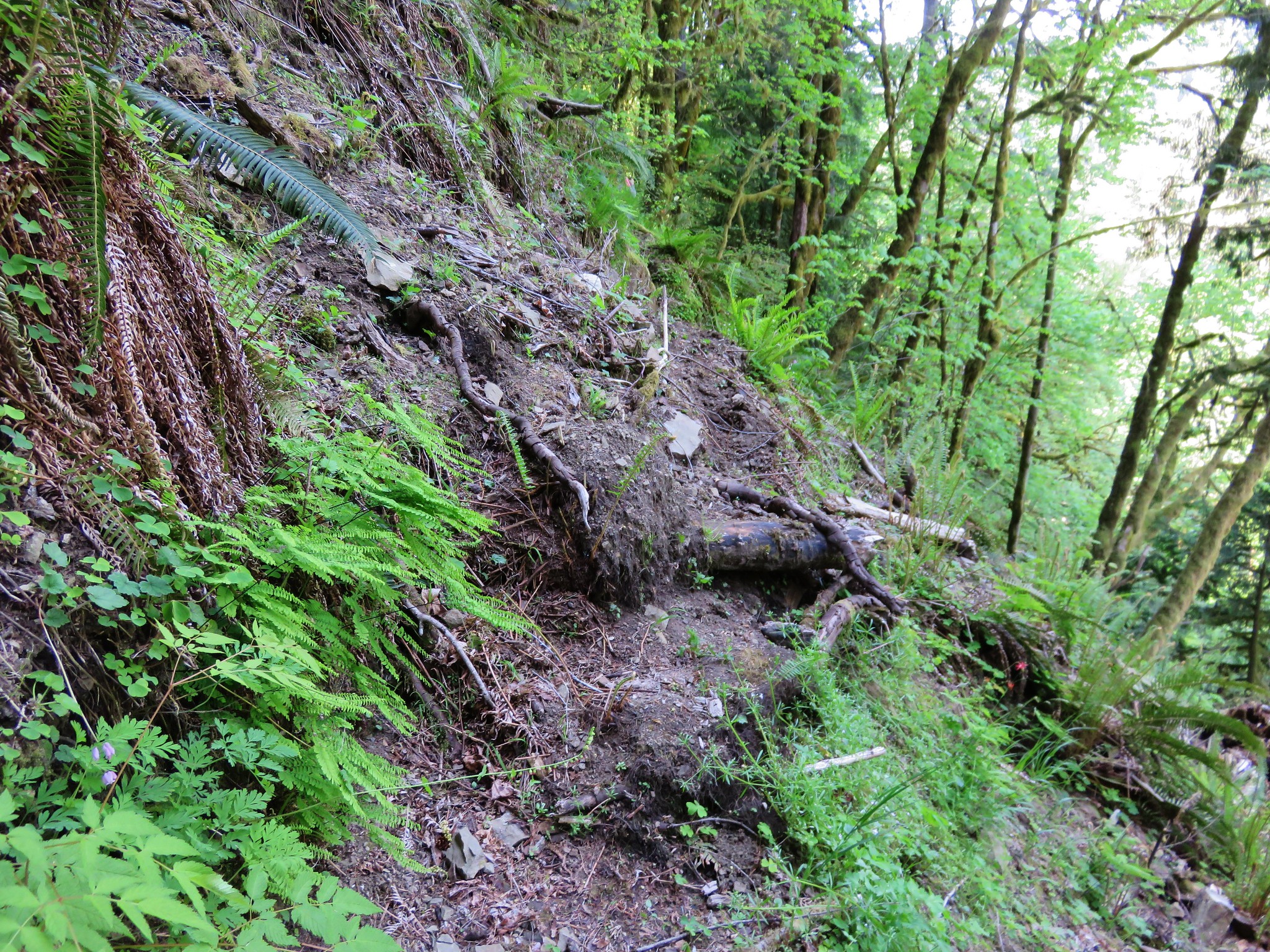
It was a nice suspension bridge which was something else that didn’t fit the field guide description. We ventured out on the bridge and at the far end was a small sign that simply said. “3.5 miles to gated road 4880”. The path leading away from the bridge was an old roadbed that was overgrown with grass. We were able to deduce that the bridge must connect the trail system to some private land on which was shown on the map in our field guide on the opposite side of the river. So back up the hill we went to the unsigned junction to the path we hadn’t taken. This portion of trail had not been maintained for some time, probably since the storms that damaged the bridges, leaving a couple of wash outs that had to be navigated.
IMG_1925

IMG_1930

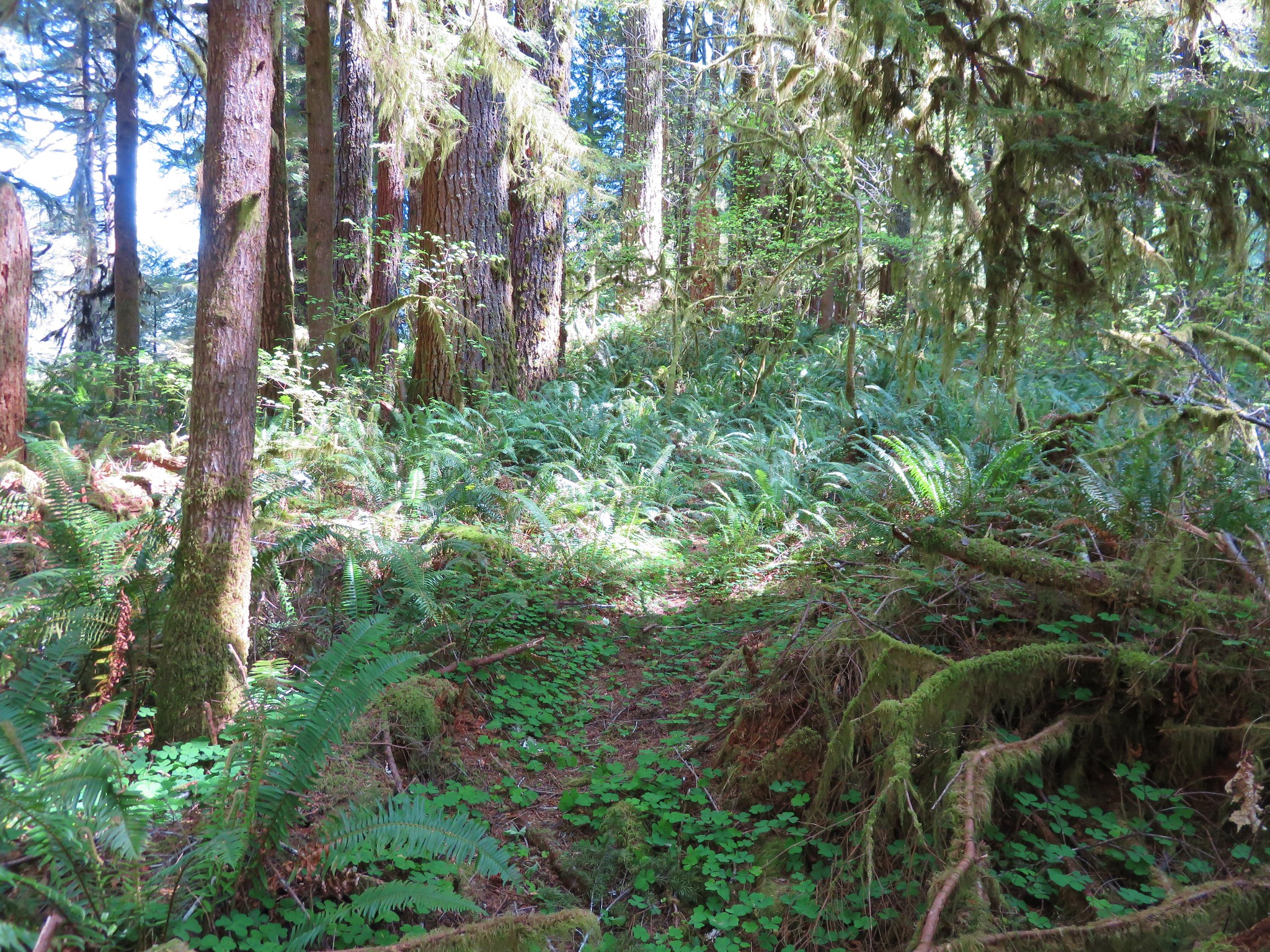
When the trail began to descend a ridge toward the river we realized that we must have missed the big tree and would have to look for it on our return trip. In the meantime we were busy trying not to miss the trail as it became increasingly overgrown the closer we got to the river.
IMG_1933

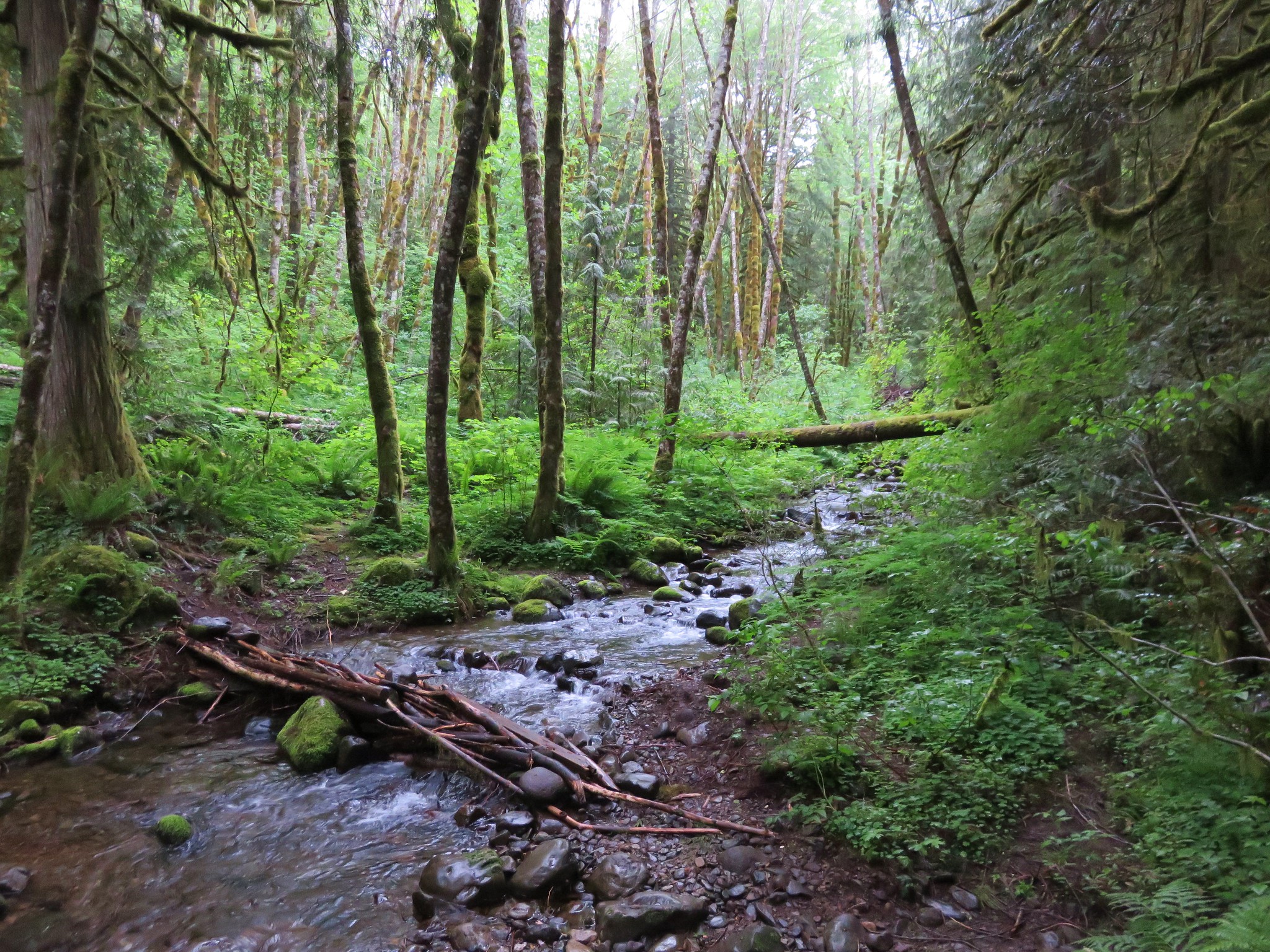
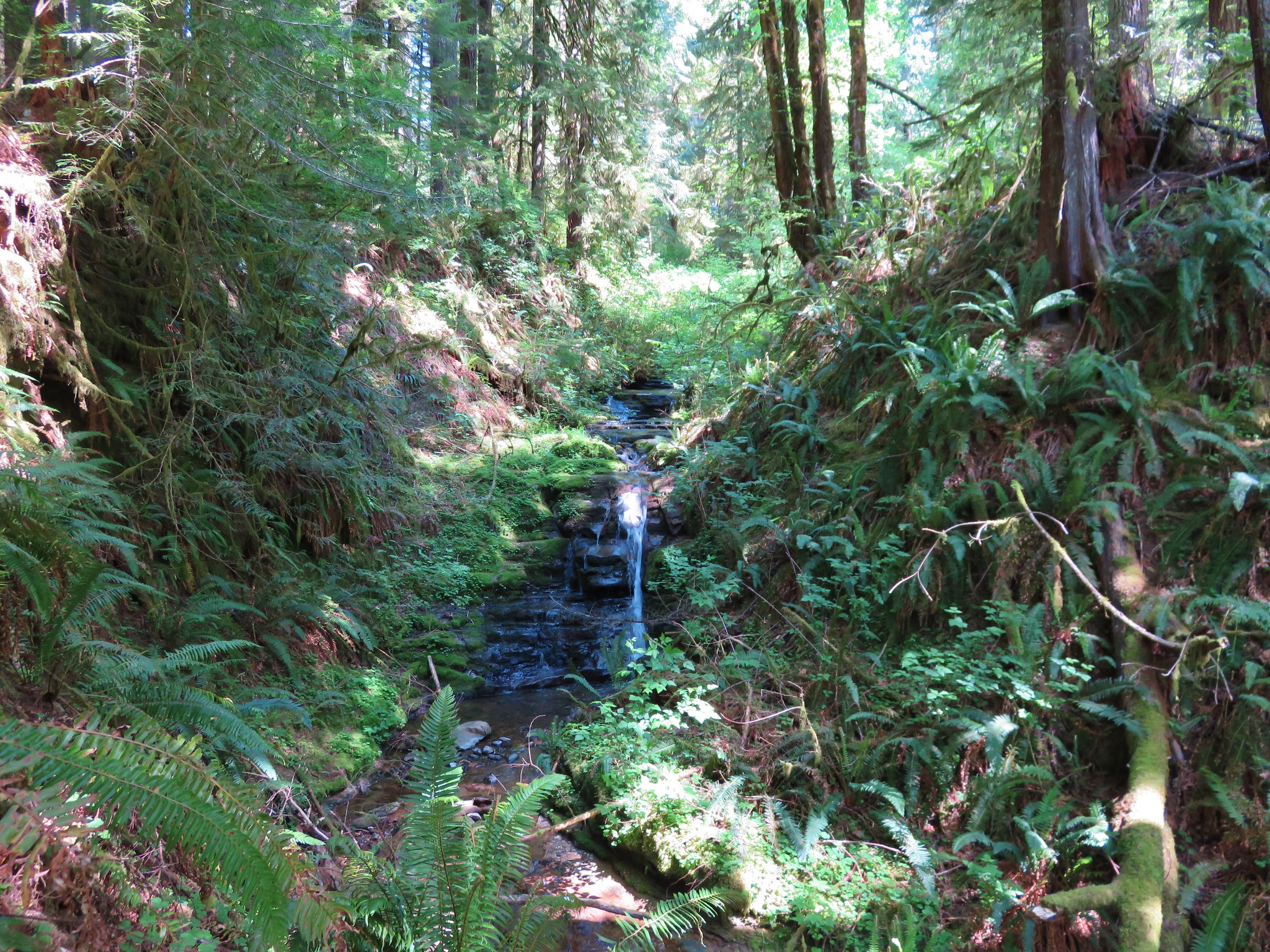
We passed as small former campsite near a small stream with a very small fall into a little pool.
IMG_1936

Then we arrived on the bank of the river. Here the trail was almost completely overgrown, but Heather did an excellent job following it through the undergrowth.
IMG_1941

IMG_1943

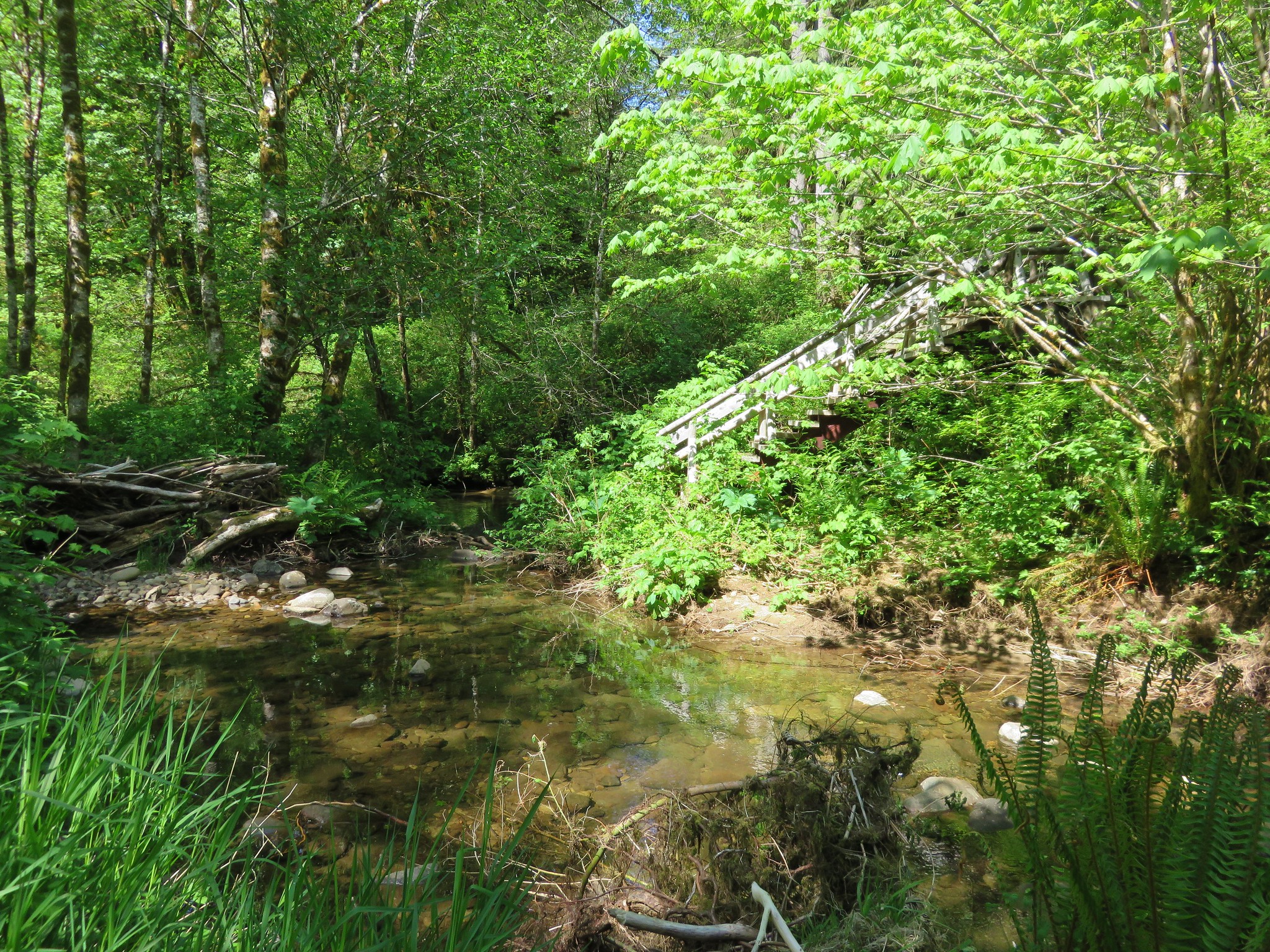
We struggled through the brush for a couple hundred yards at least before finally popping out at the river with a view of the 3 mile bridge.
IMG_1945

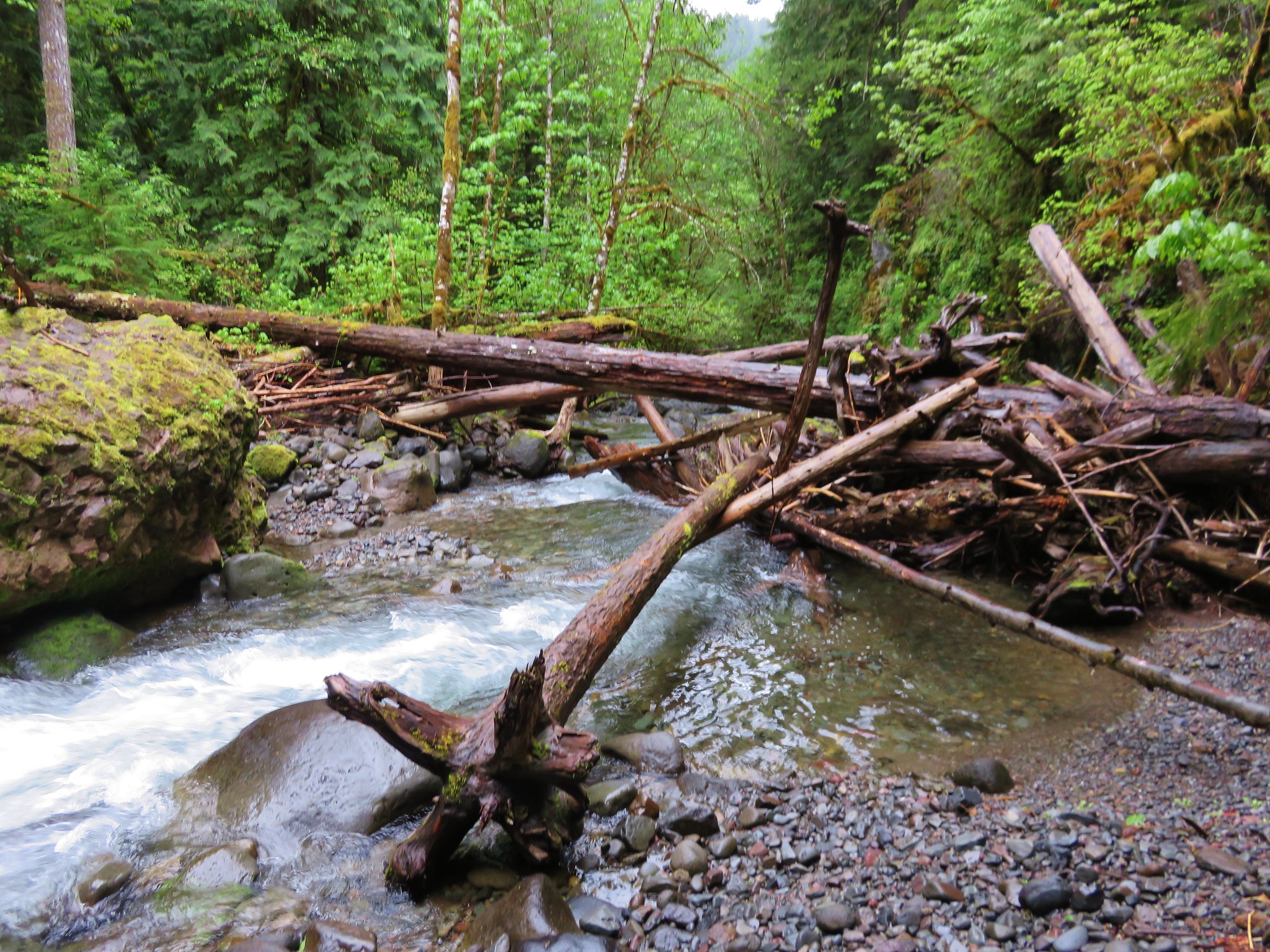
The next obstacle was figuring out the best way to reach the bridge which had been cut off by a new channel of the river after the storms. While we looked for the best route we noticed several little fish in the water.
IMG_1946

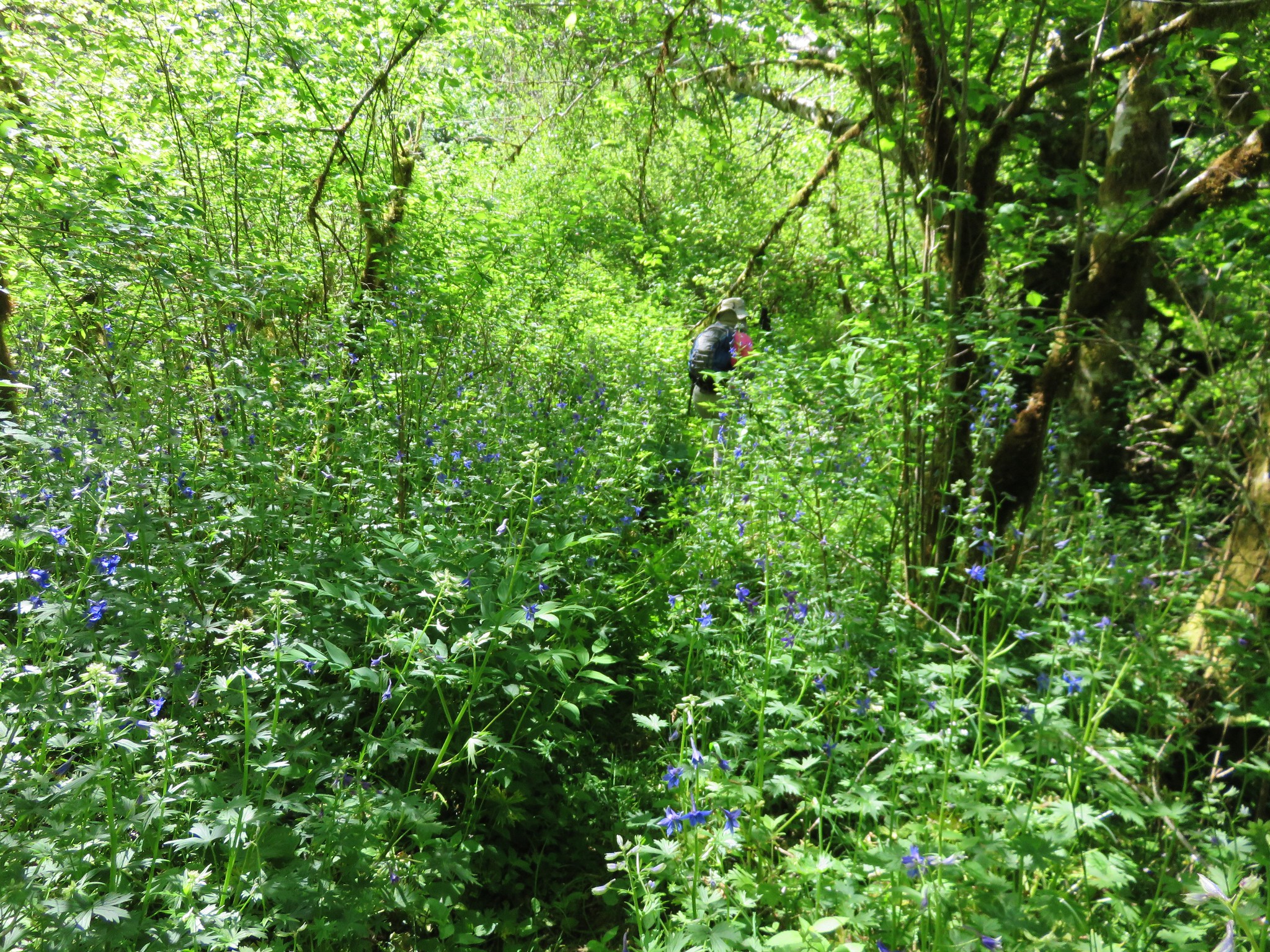
In the end we decided to go around to the right of the pool in front of us which worked out well and we were soon across the bridge. The trail then followed the river through a less overgrown wood. Here the sun was shinning and flowers lined the path.
IMG_1950

IMG_1957

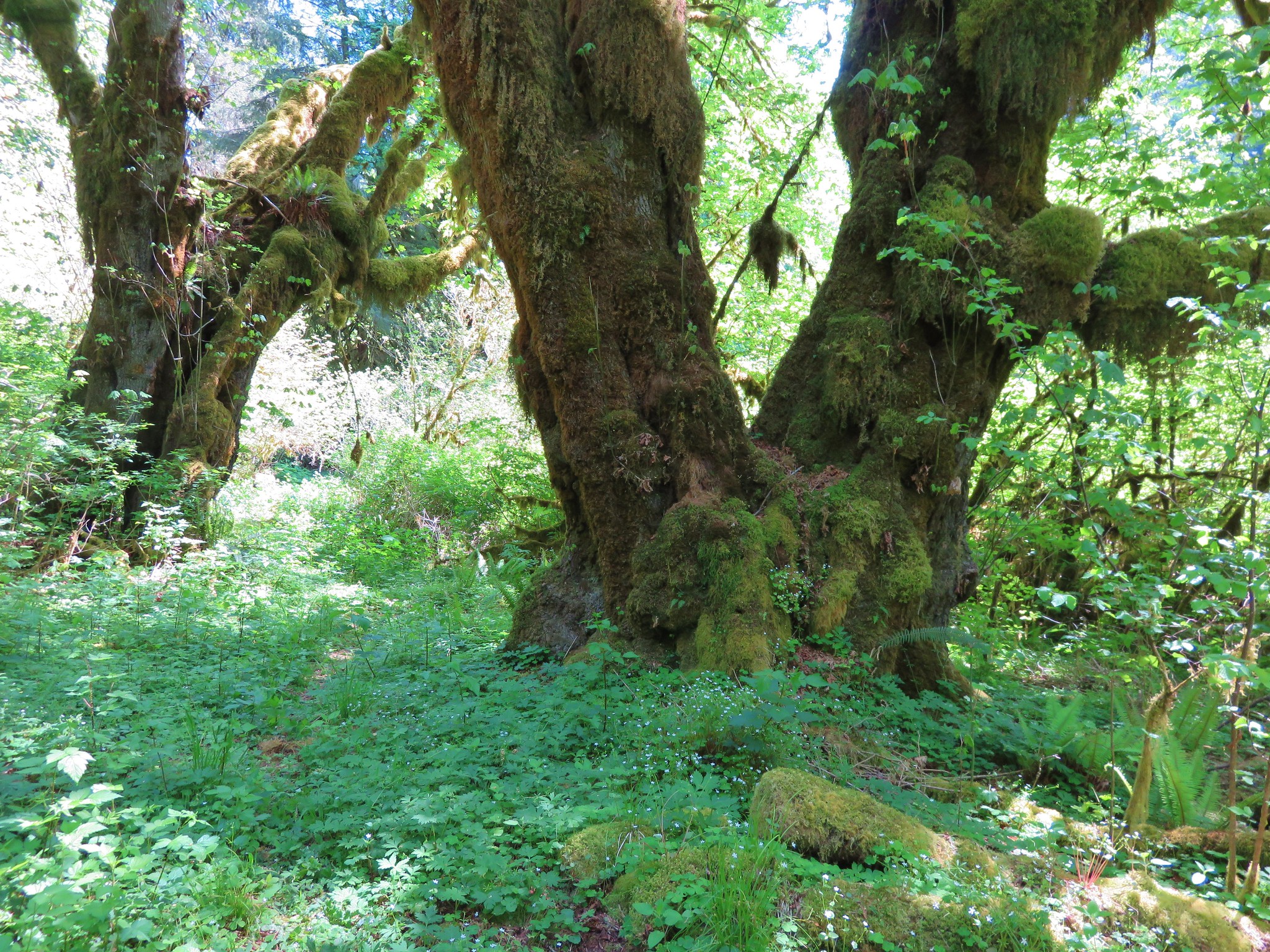
Several neat moss covered trees also added to the character of this section.
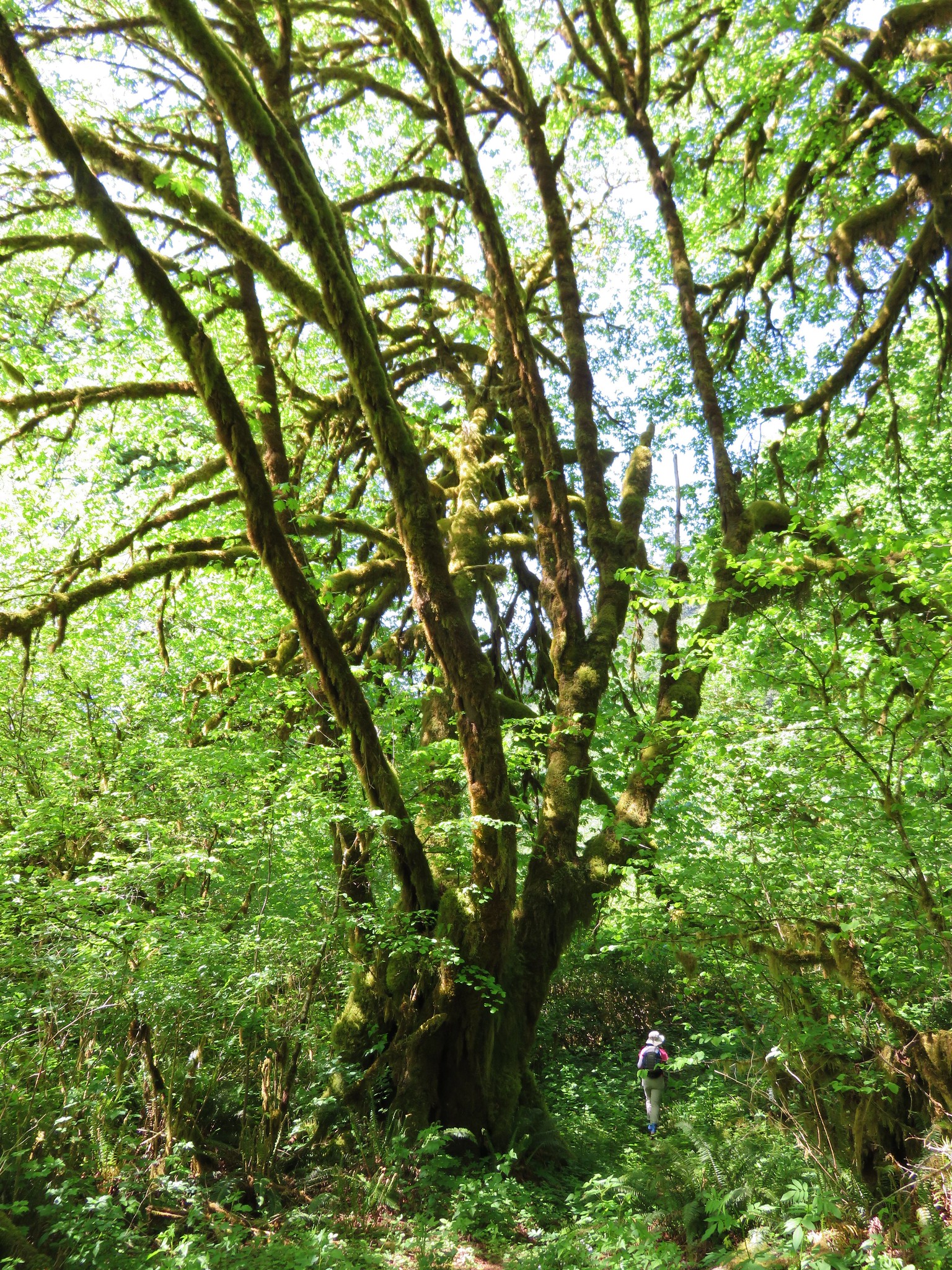
IMG_1952

IMG_1956

IMG_1961

The scenery changed again when the trail left the more woodsy forest behind and entered a different feeling area where there was very less undergrowth and giant stumps told of a past forest fire.
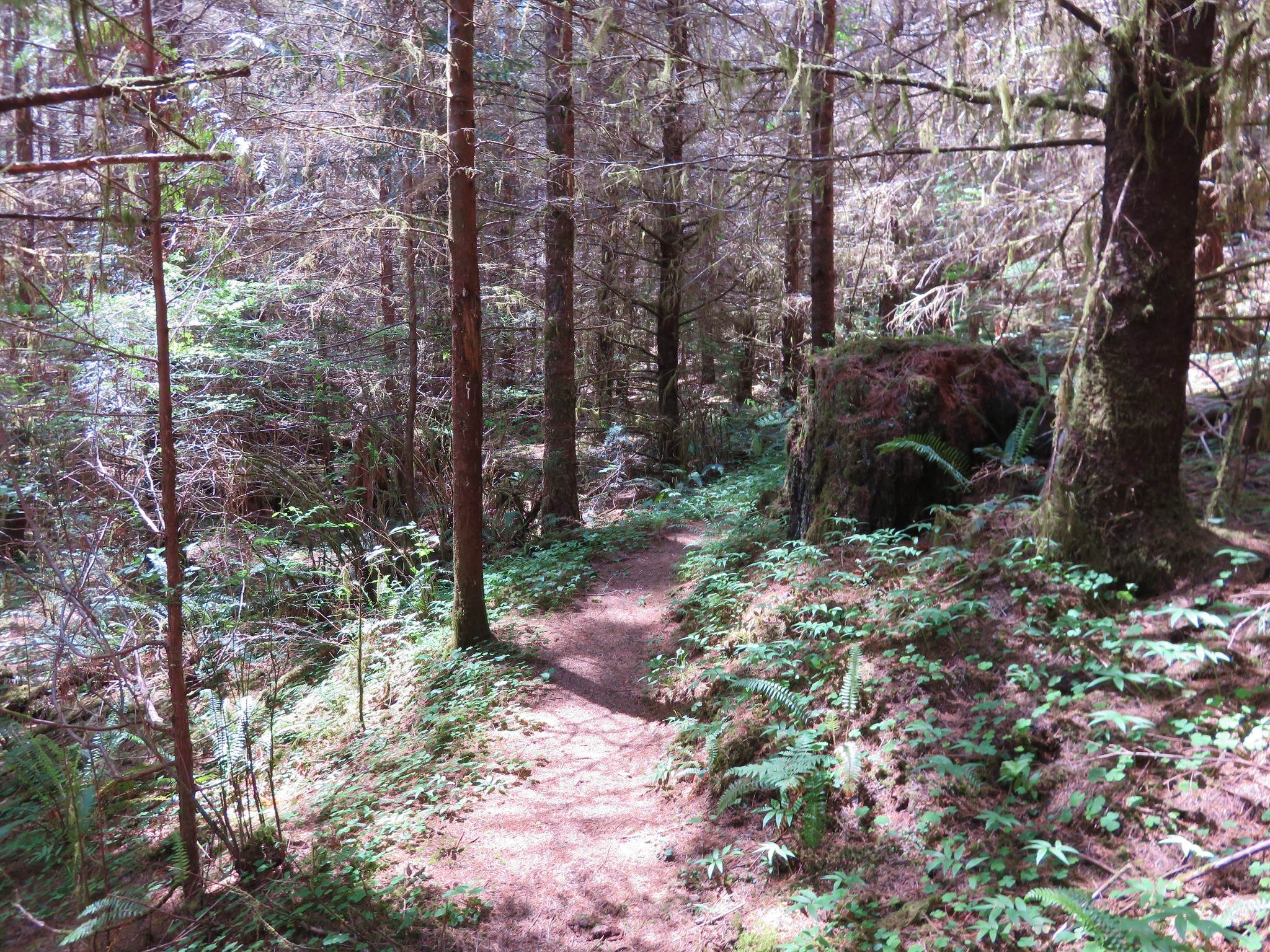
IMG_1964

We finally arrived at what remains of the 1 1/2 mile bridge.
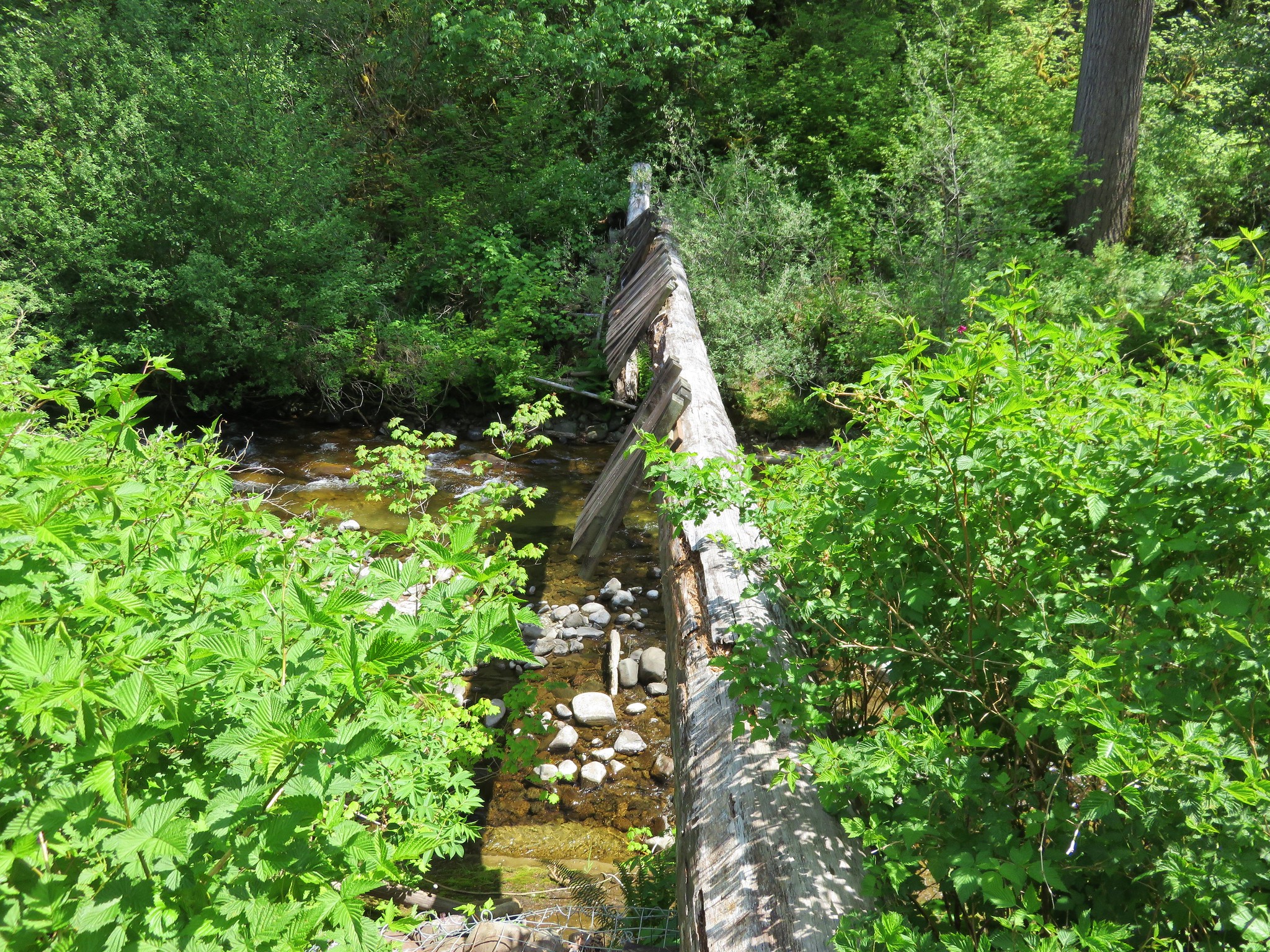
IMG_1965

There were visible cracks in the middle of the log and clearly not something anyone should attempt to cross. Determined hikers could look for a place to ford the river and there was a rope that was tied on a log near the bridge to assist in climbing up the embankment, but this may not be an option in high water.
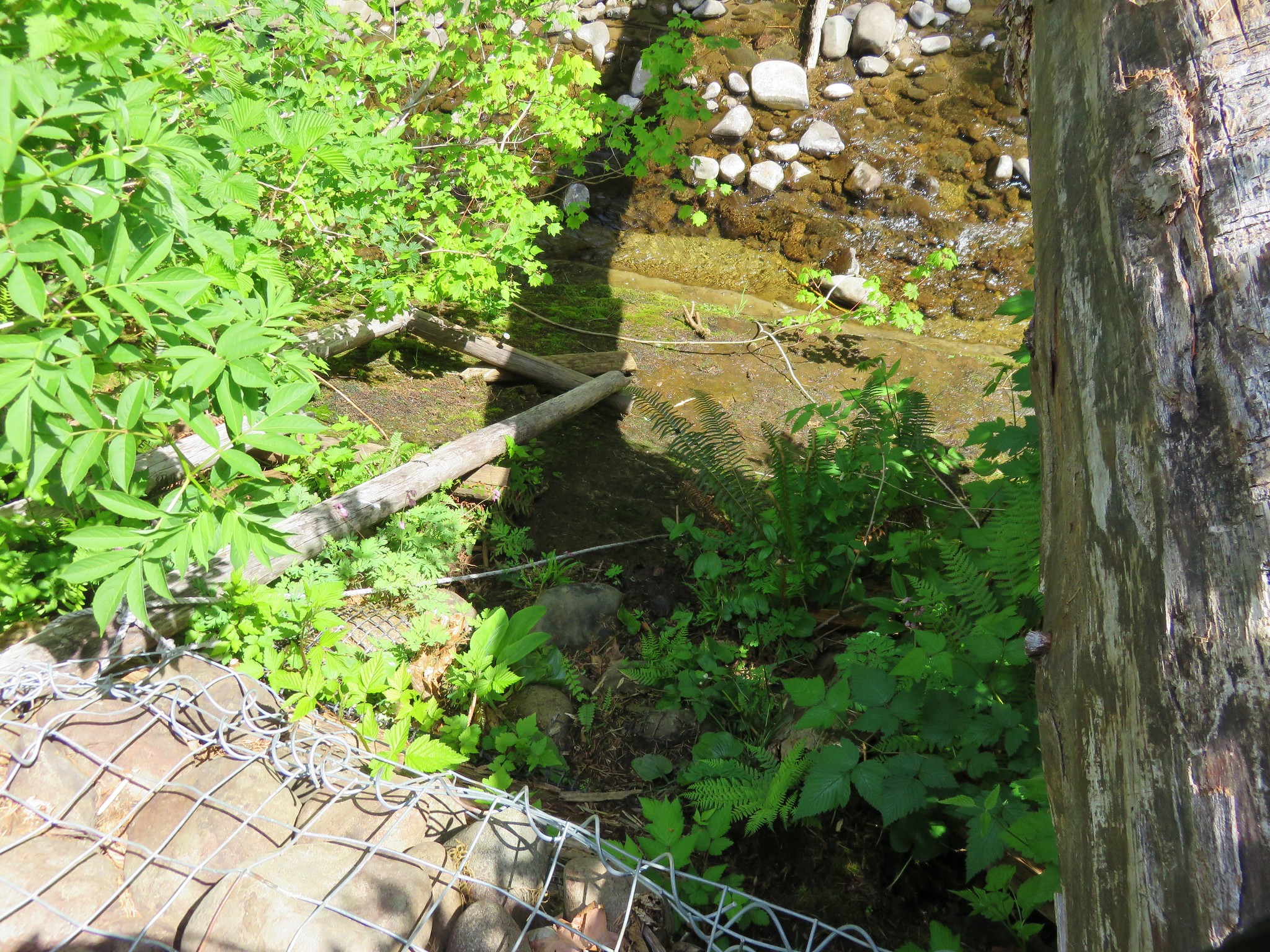
IMG_1967

We turned around and began our return trip having decided to stop at a sandy beach we had passed earlier near a 2 1/2 mile post.
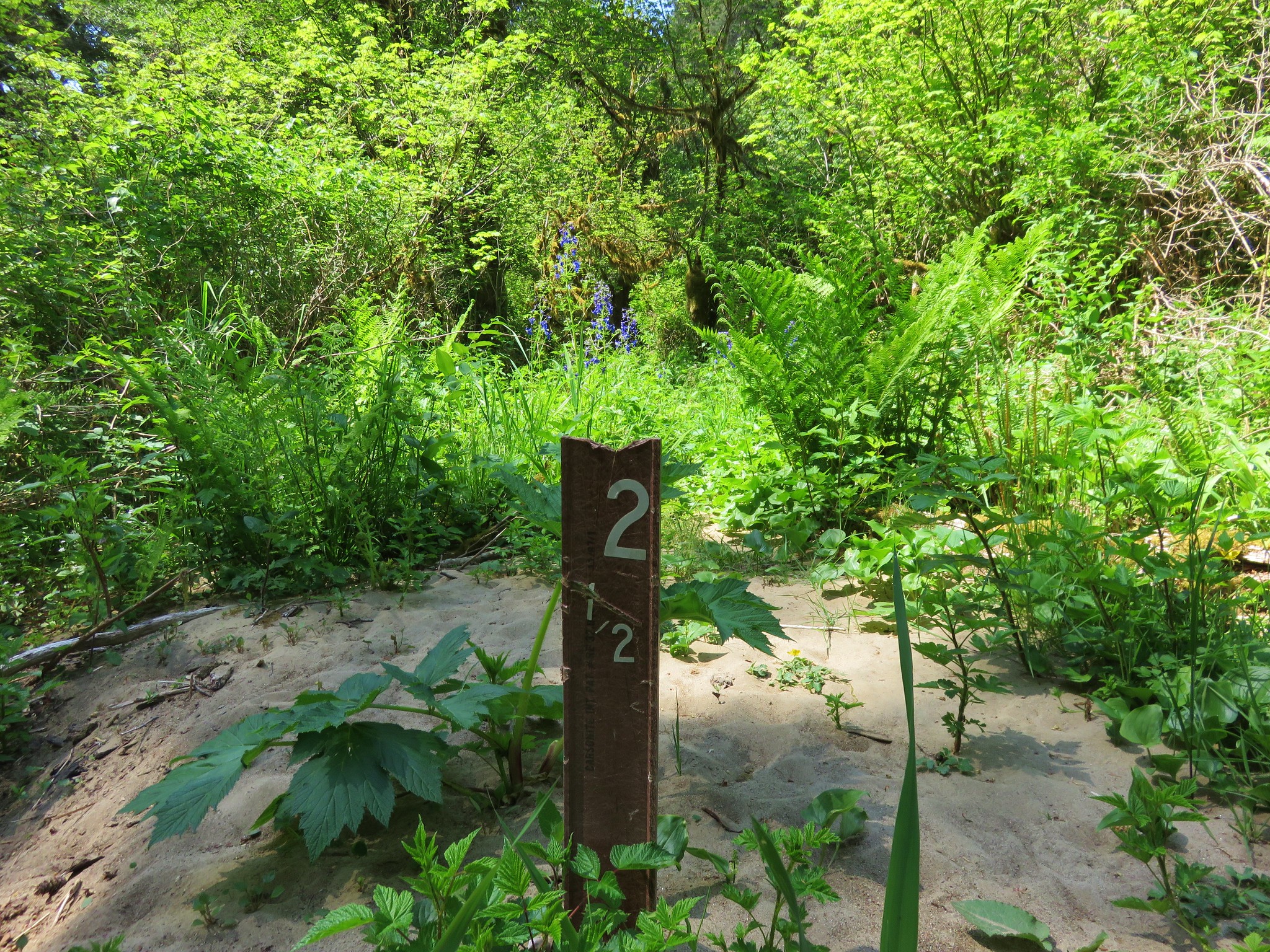
IMG_1962

We sat by the creek and cooled our feet off in the cold (really cold) water.
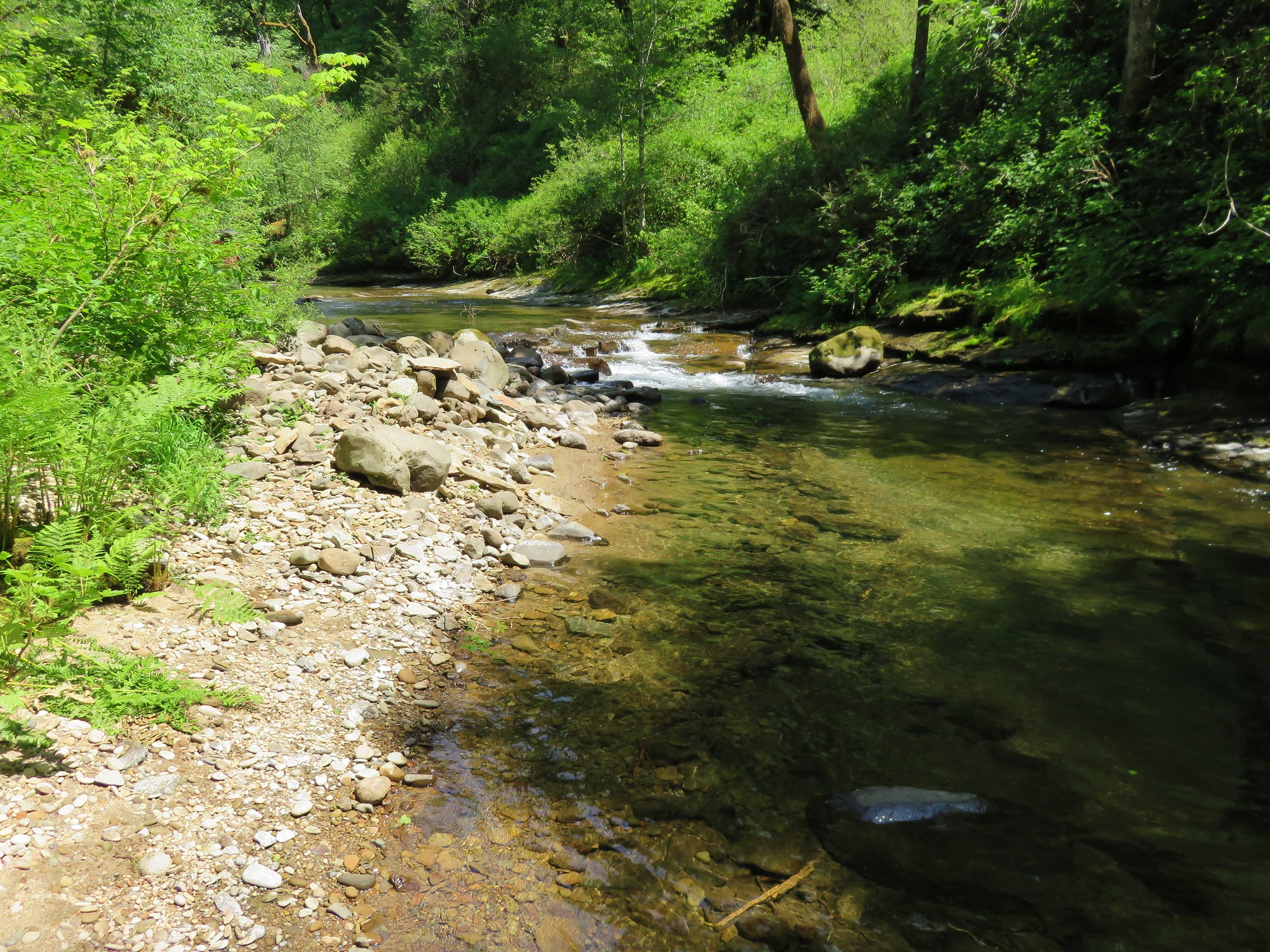
IMG_1969

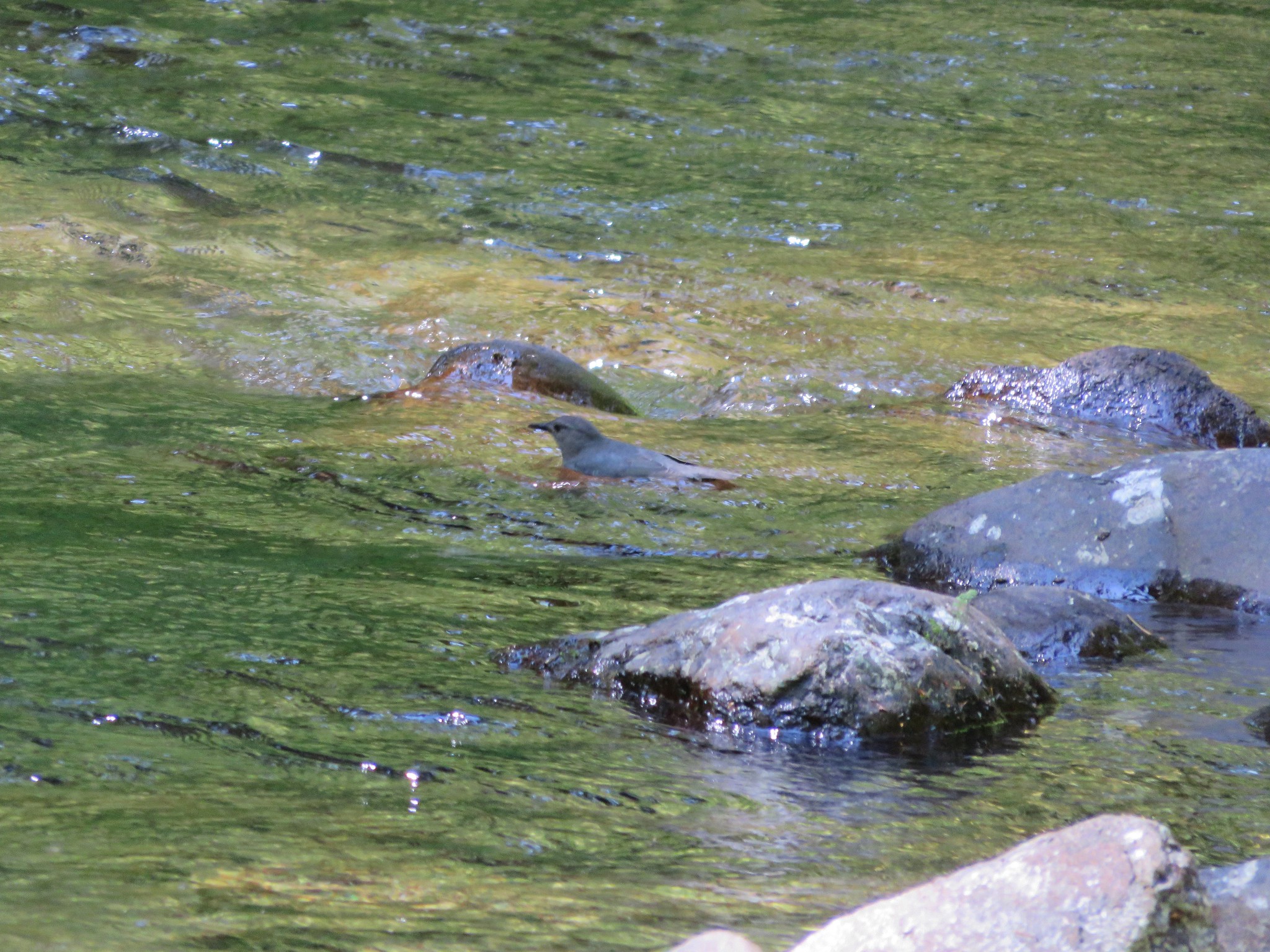
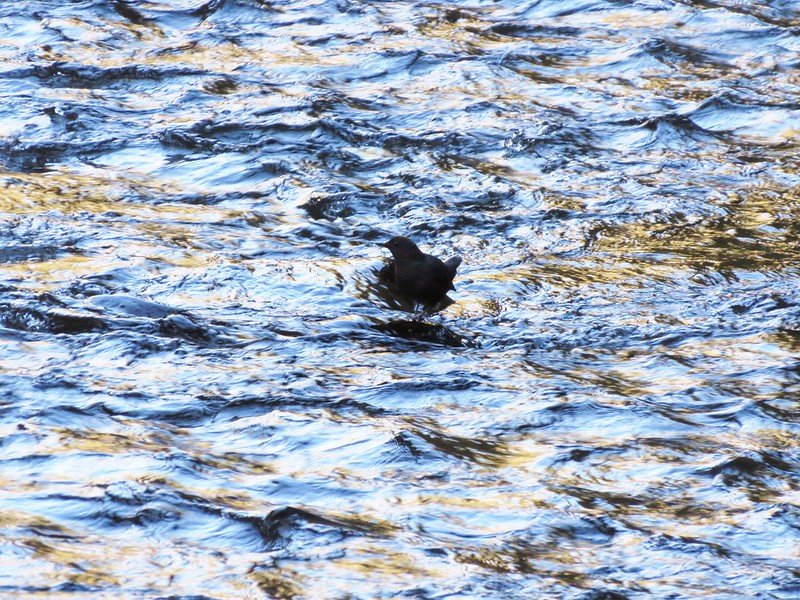
An ouzel was busy hunting for insects in the water just downstream.
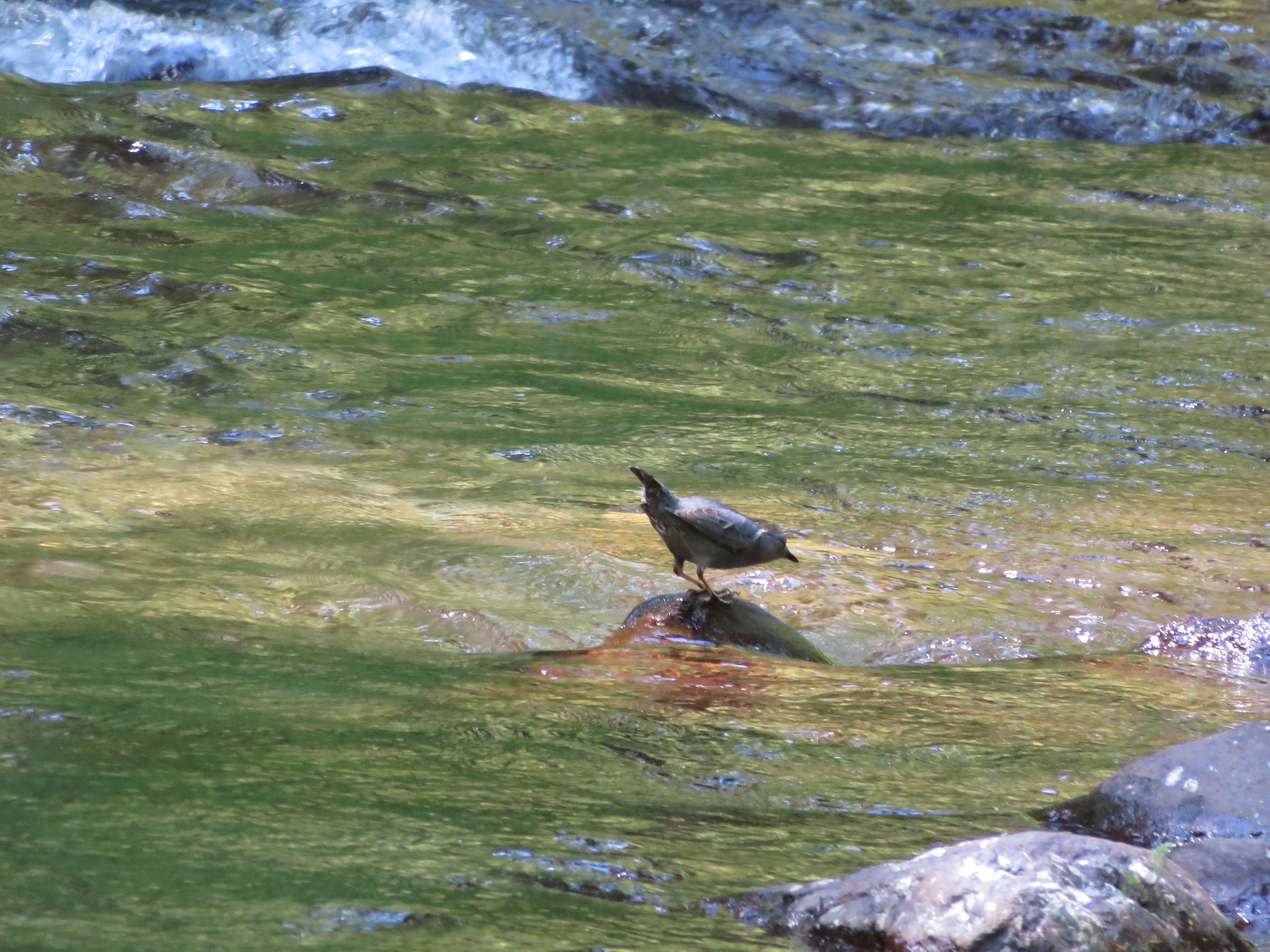
IMG_1978

IMG_1976

After resting for a bit we resumed our return hike focused on spotting the 11′ Douglas fir this time. We spotted it this time and also noticed a sign along the trail apparently identifying the tree. What the sign actually said we couldn’t tell but the tree was certainly larger than any of the other trees around.
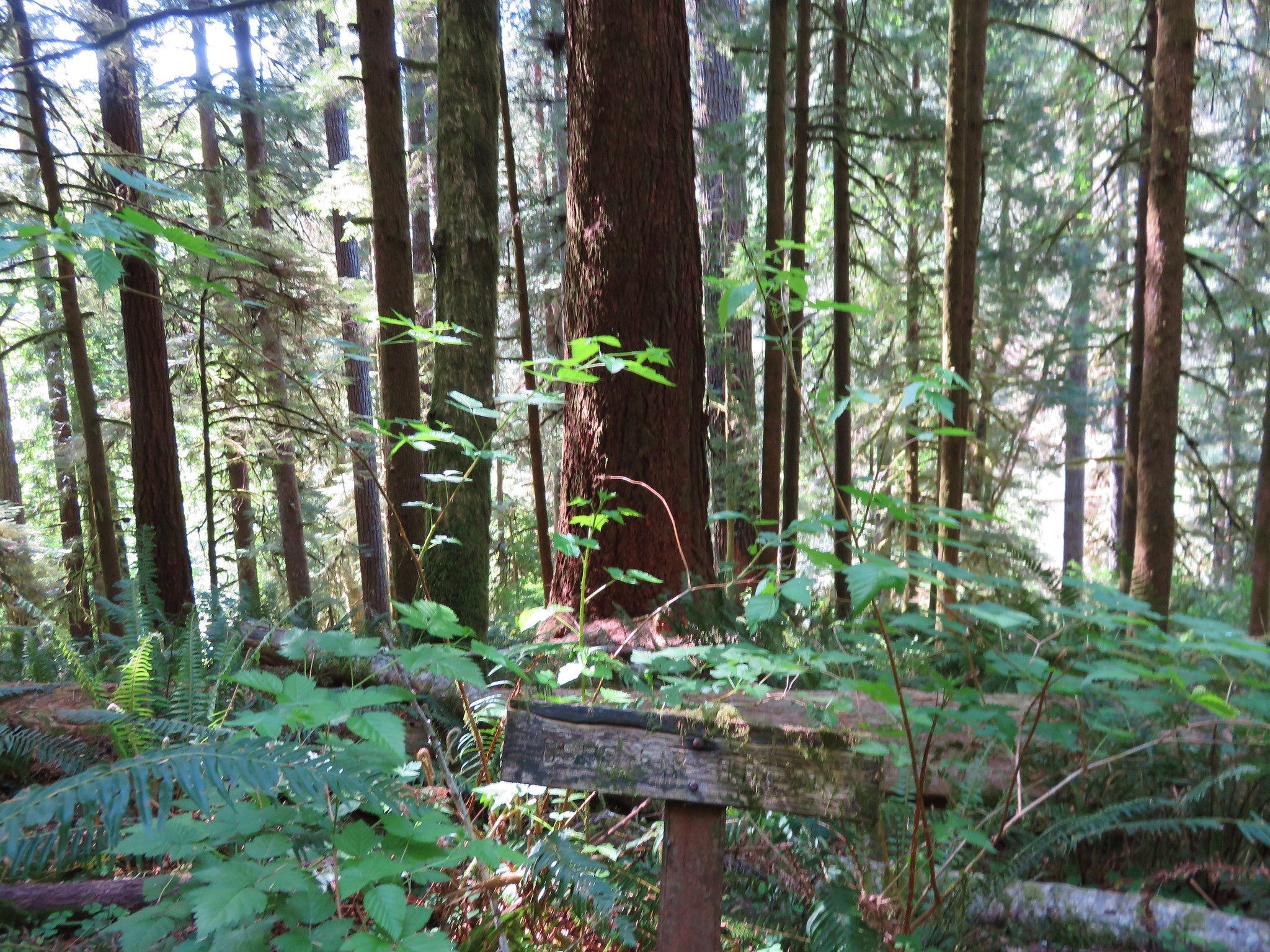
IMG_1985

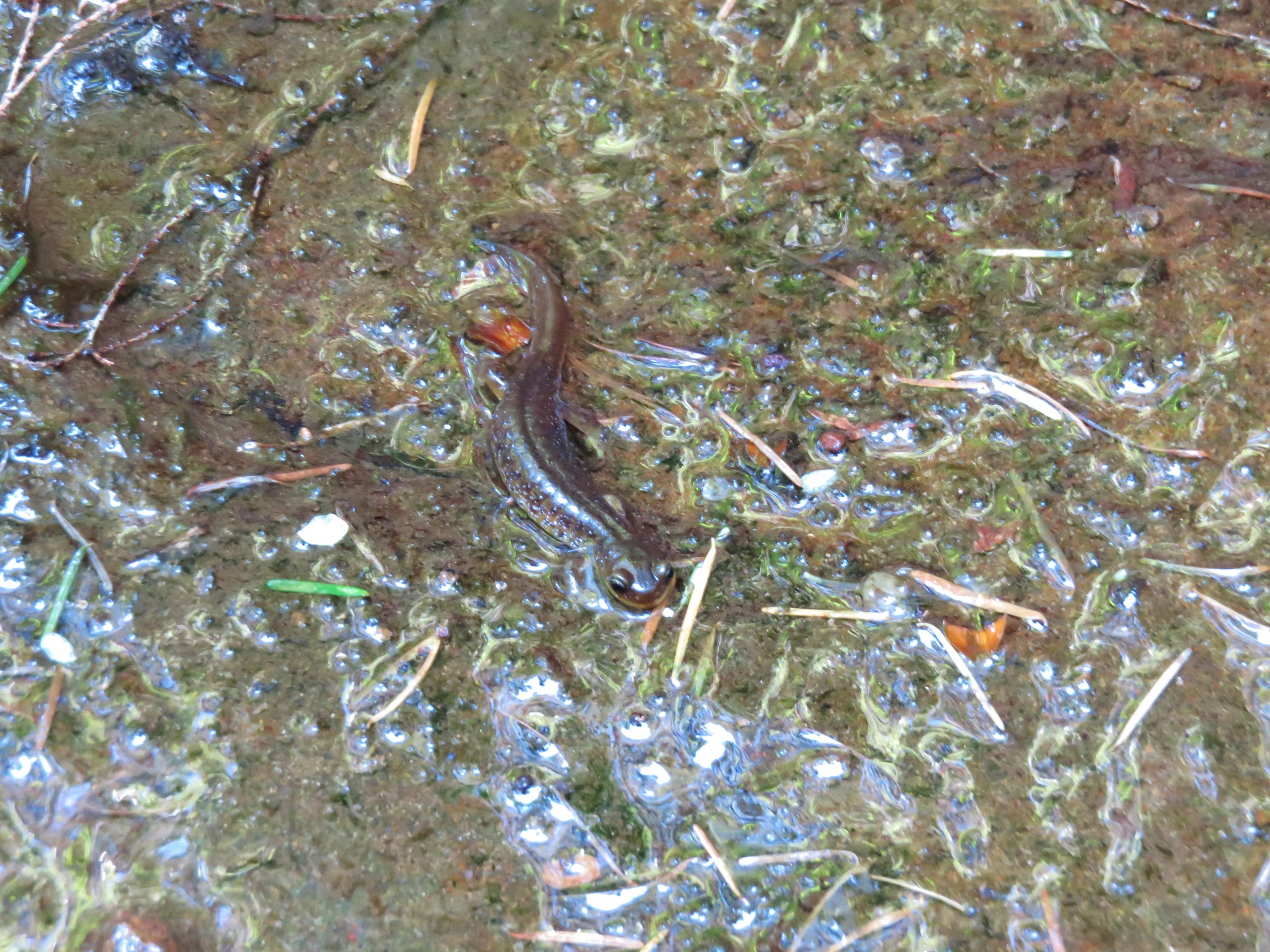
We also spotted a salamander in one of the little streams along the trail. I tried to identify the exact type of salamander this was, as it was the first we’d seen of this type, but all I was able to find out for sure is that it was indeed a salamander.
IMG_1987

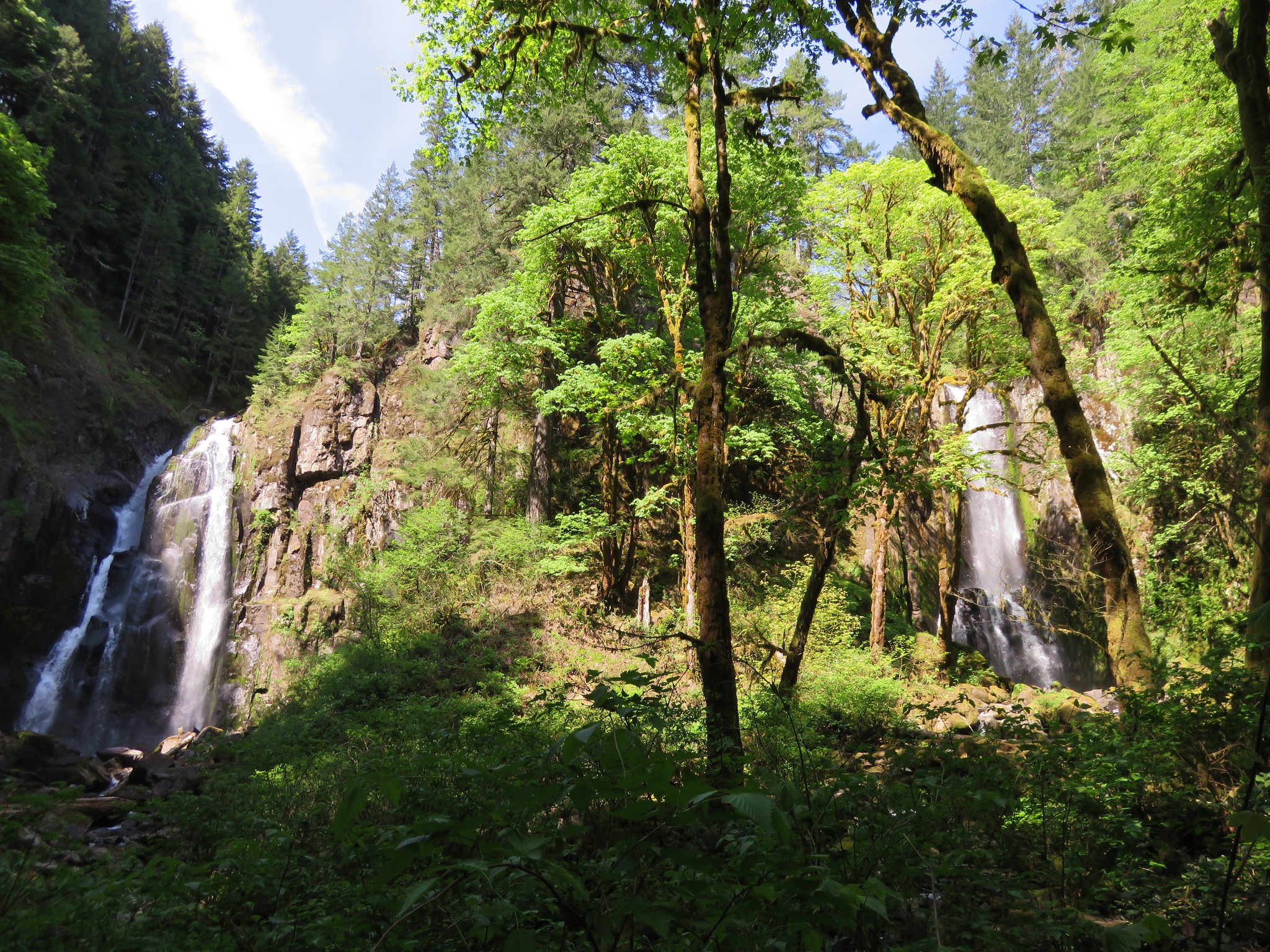
When we arrived at the spur trail to Lower Kentucky and North Fork Falls we took it again wanting to see how the change in the suns position affected the appearance of the falls. They had been impressive in the morning, but now the sun was shining on the cascades and they were even prettier.
IMG_2003

IMG_2008

IMG_2001

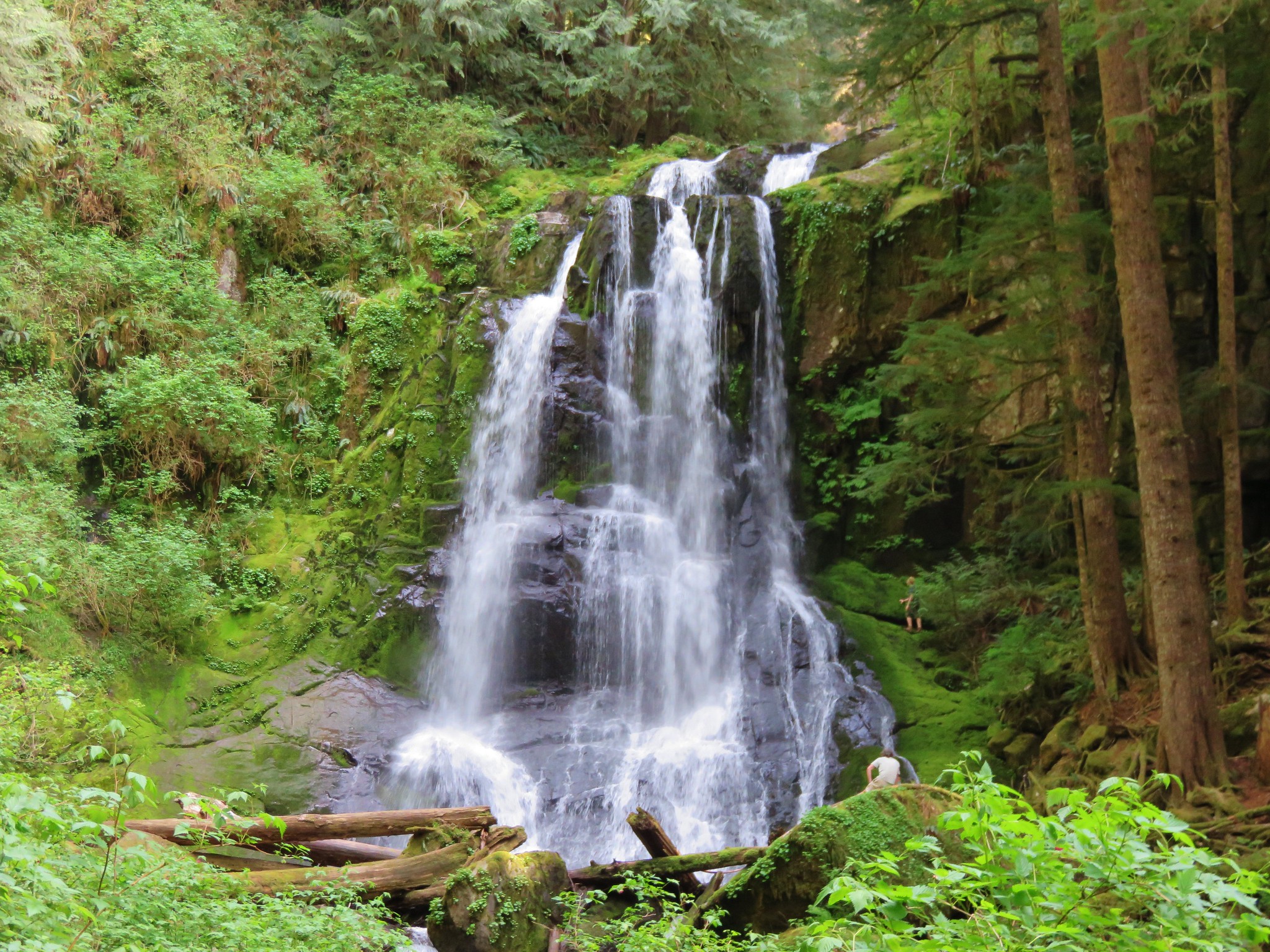
We found the same thing at Upper Kentucky Falls.
IMG_2023

We finally arrive back at our car around 5pm after over 9 hours of hiking. The GPS put us at 17.4 miles and our feet agreed, but it had been a great hike full of plenty of surprises and adventure. According to a sign at the trailhead the Forest Service plans to replace the bridges in 2016, but until then the North Fork Smith River Trail should remain a bit on the wilder side. Happy Trails!

Flickr: https://www.flickr.com/photos/9319235@N02/sets/72157650241947594/with/17493753445/
Categories
Columbia River Gorge South Hiking Oregon Trip report

Tom McCall Preserve and Mosier Twin Tunnels

**Note the 2020 Rowena Fire burned a portion of the Rowena Plateau and the 2024 Microwave Tower burned over the Mosier Twin Tunnels Trail.**

We do our best to plan and prepare for all of our hikes, but we were reminded that now matter how much pre-trip preparation we’ve done things can still happen. For our last hike that meant an extra 4 miles of hiking.

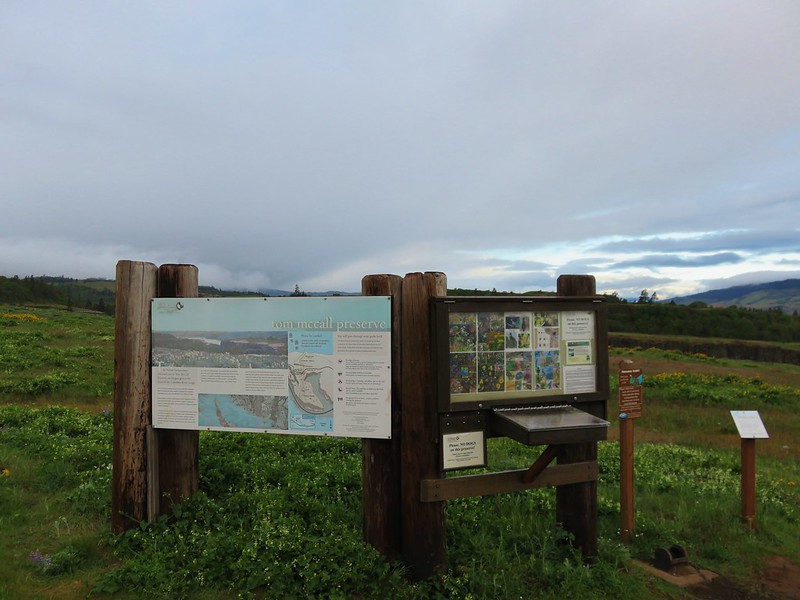
We had headed back to the eastern end of the Columbia Gorge for a combination of several hikes near Mosier, OR. First up was the plateau trail at the Tom McCall Preserve. The trail sets off from the Rowena Crest Viewpoint located along the Historic Columbia River Highway 6.6 miles east of Mosier.
Rowena Crest Trailhead

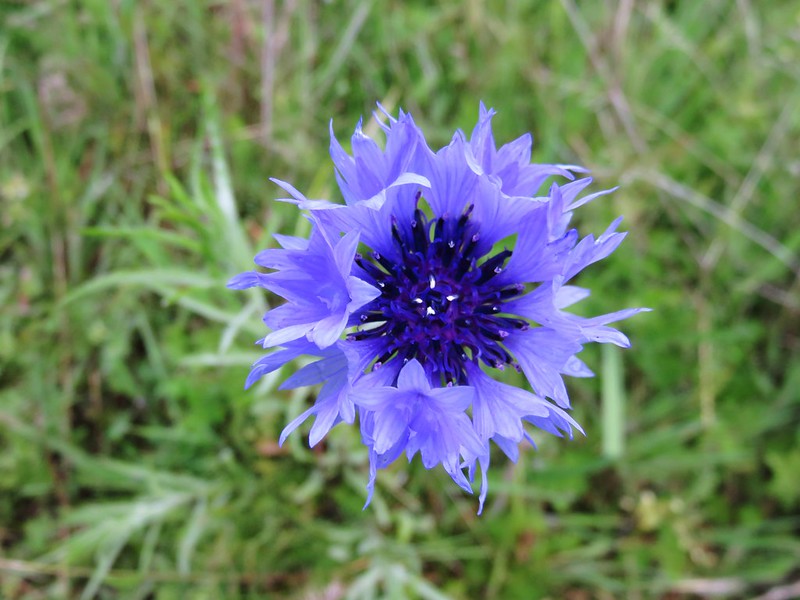
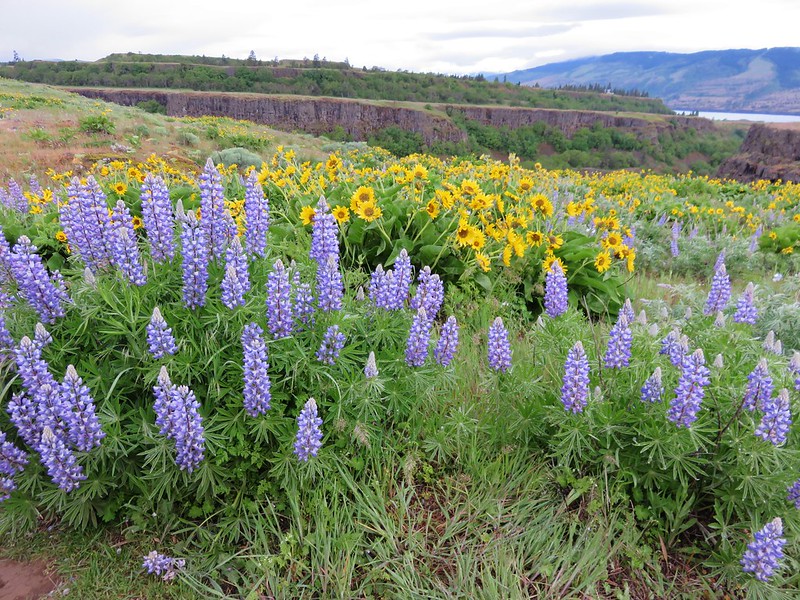
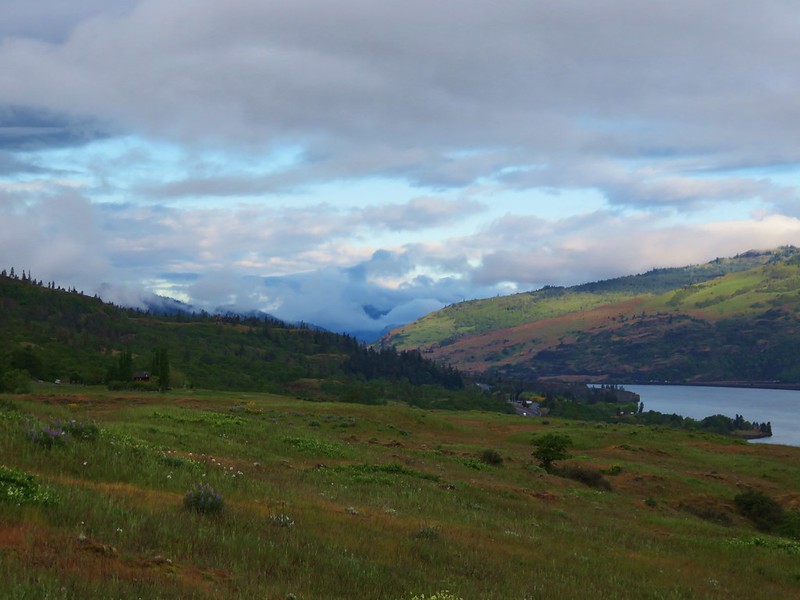
The trail heads out onto the plateau toward the Columbia River passing several viewpoints and lots of wildflowers including our first bachelor button sightings.

Bachelor Button

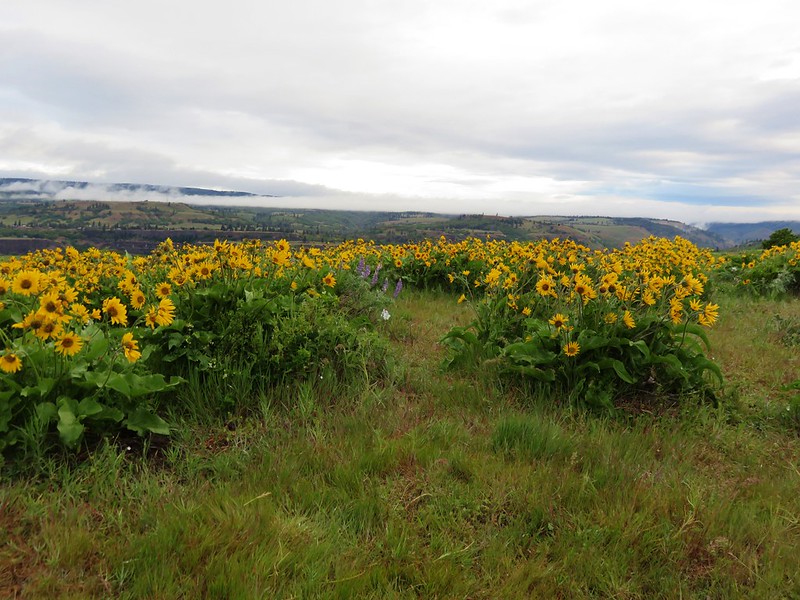
Balsamroot at Rowena Crest

IMG_1299

IMG_1306

Columbia River from Rowena Crest plateau

IMG_1335

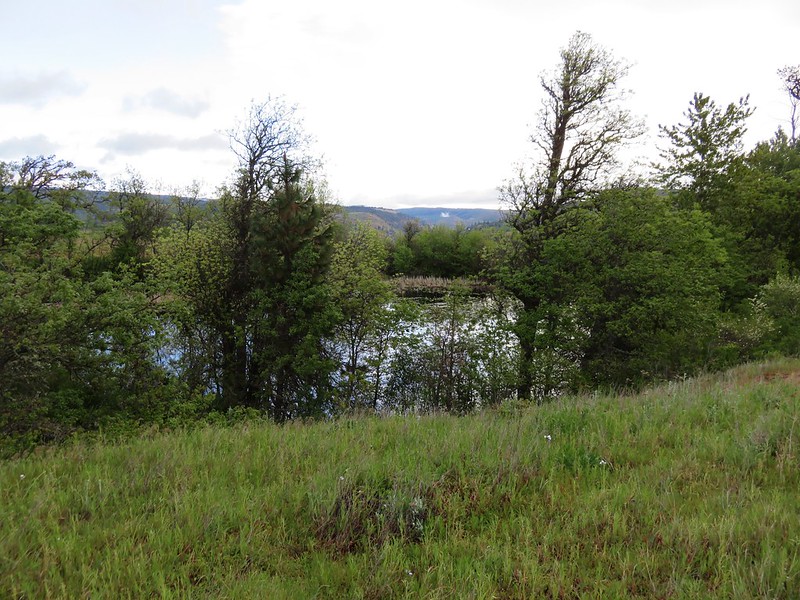
The trail also passes a pair of ponds where we had to be on the watch for poison oak.
IMG_1378

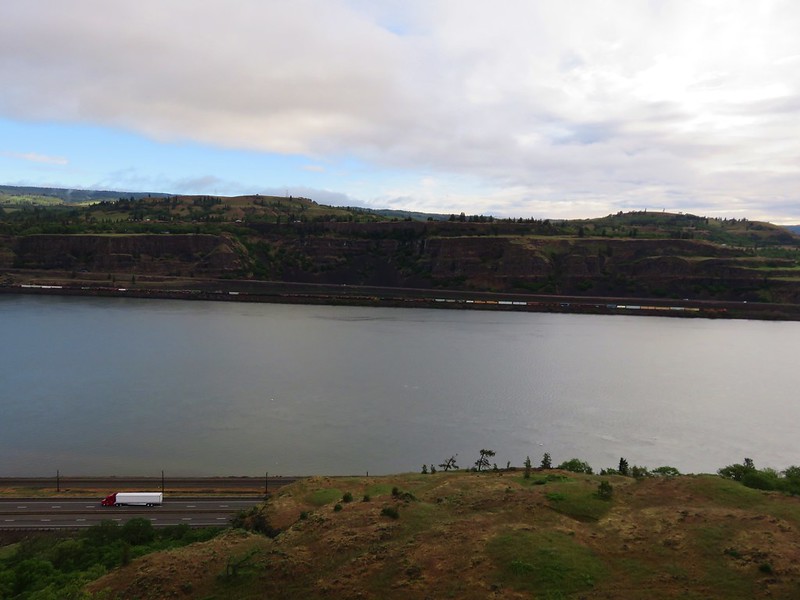
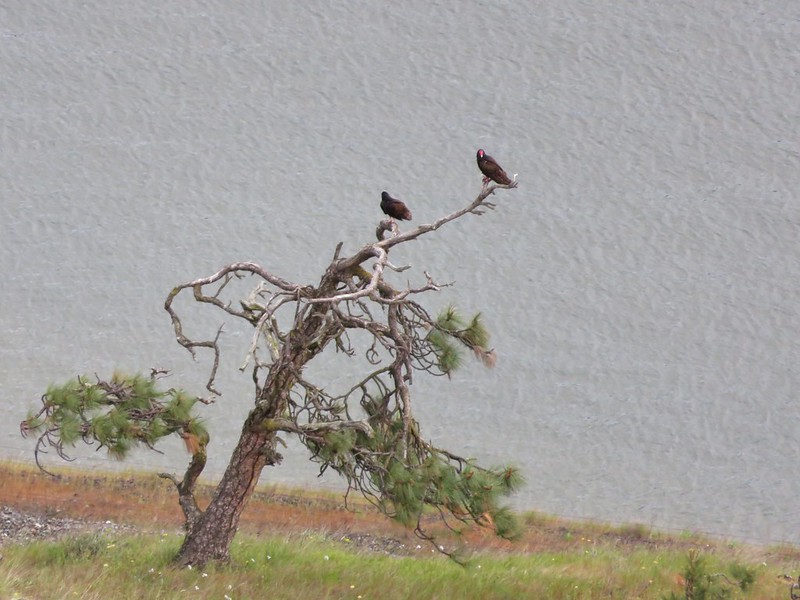
After approximately one and a quarter miles the trail ends at a viewpoint on the edge of the plateau. Across the river was a train while below on our right were a pair of turkey vultures and on our left a couple of deer down in Rowena Dell.
IMG_1348

IMG_1344

IMG_1347

Deer below Rowena Crest plateau

After returning to the parking area we headed up the second trail at Tom McCall Preserve to Tom McCall Point. The summit of the point had been shrouded in clouds while we were on the plateau trail.
IMG_1304

The clouds were breaking up as we began our climb though.
IMG_1407

IMG_1411

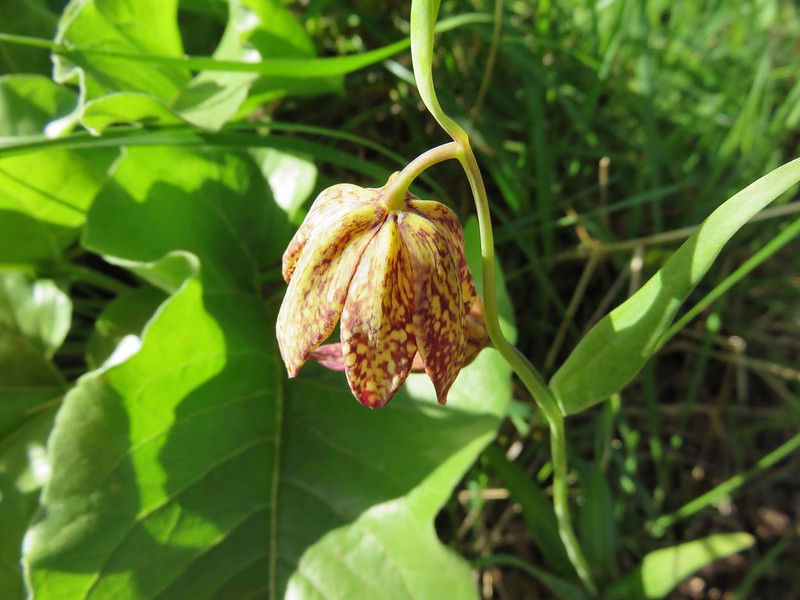
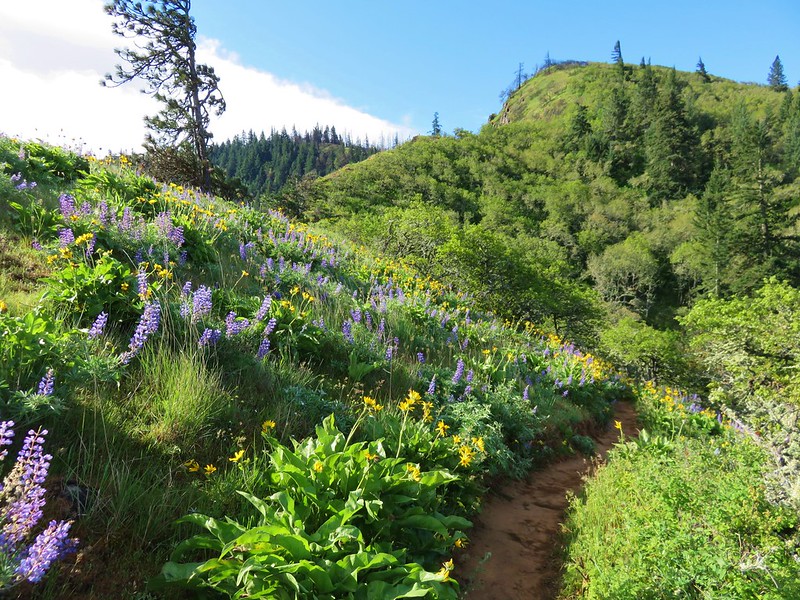
This path was wonderful. There were plenty of views as well as some wooded sections. We also saw several types of flowers that we had not seen along the plateau trail such as paintbrush, broomrape, larkspur, and chocolate lilies.
IMG_1412

IMG_1432

IMG_1416

IMG_1413

IMG_1421

IMG_1428

IMG_1434

IMG_1468

The clouds finally lifted from the summit by the time we were about halfway up the trail.
IMG_1470

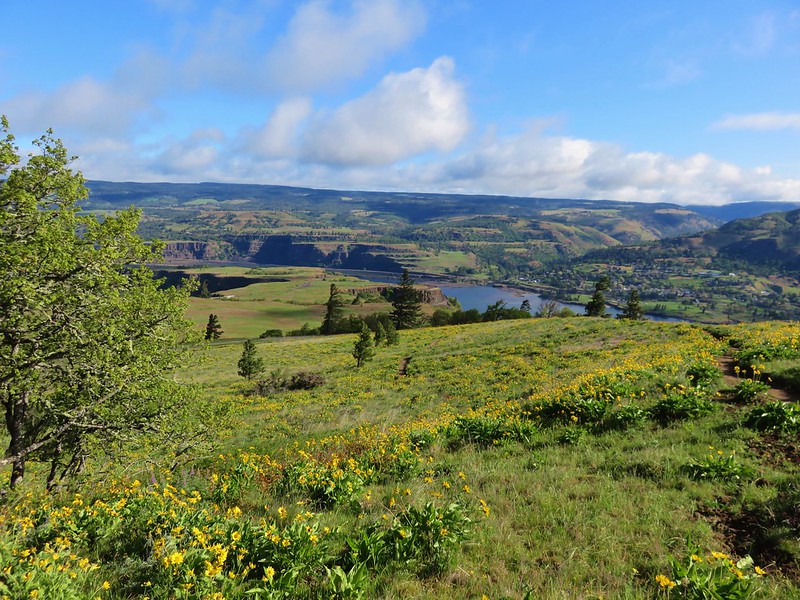
We were also high enough to see the entire plateau behind us.
Rowena Crest from the Tom McCall Point trail.

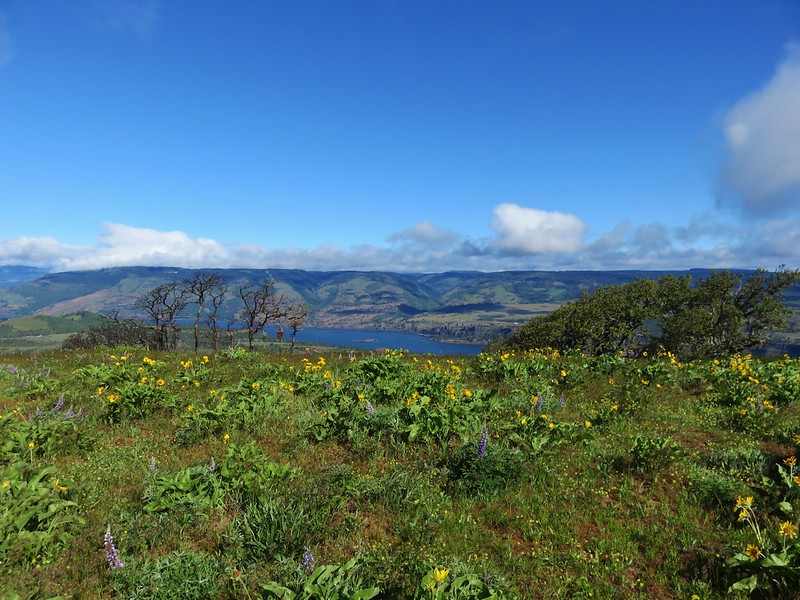
The views from the summit were impressive, but alas the clouds had not broken up enough to reveal either Mt. Hood or Mt. Adams which on a clear day would have been visible.
IMG_1490

Summit of Tom McCall Point

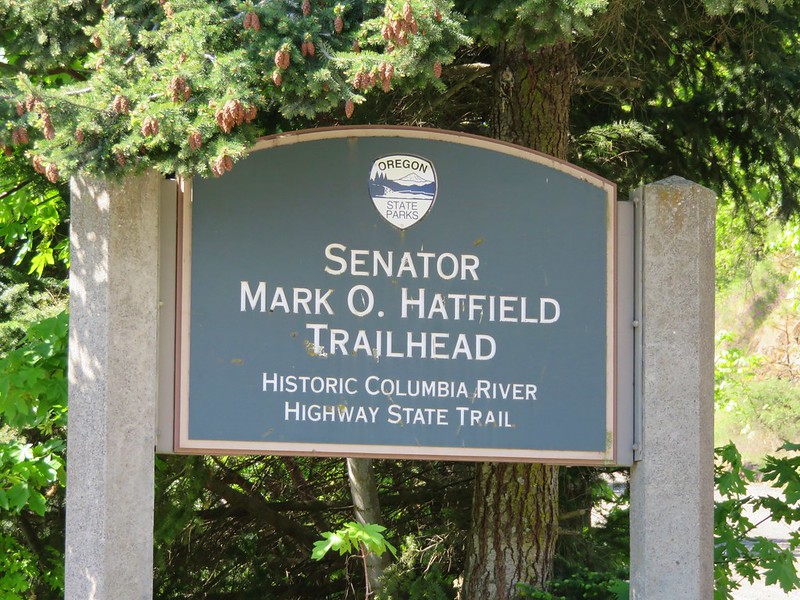
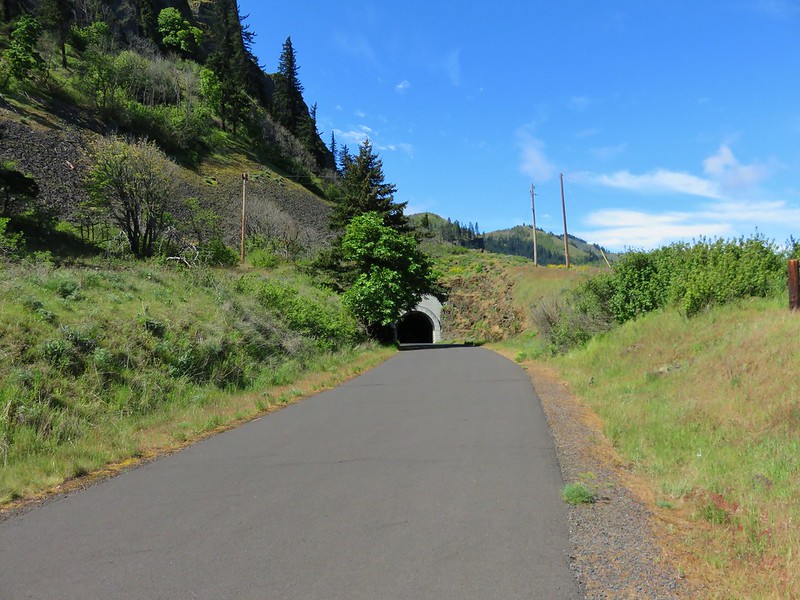
We had planned one more hike for the day since the two trails at Tom McCall Preserve only totaled 6 miles. The Mosier Twin Tunnel trail set off on the west side of Mosier at the Senator Mark O. Hatfield Trailhead.
Trailhead for Mosier Twin Tunnels

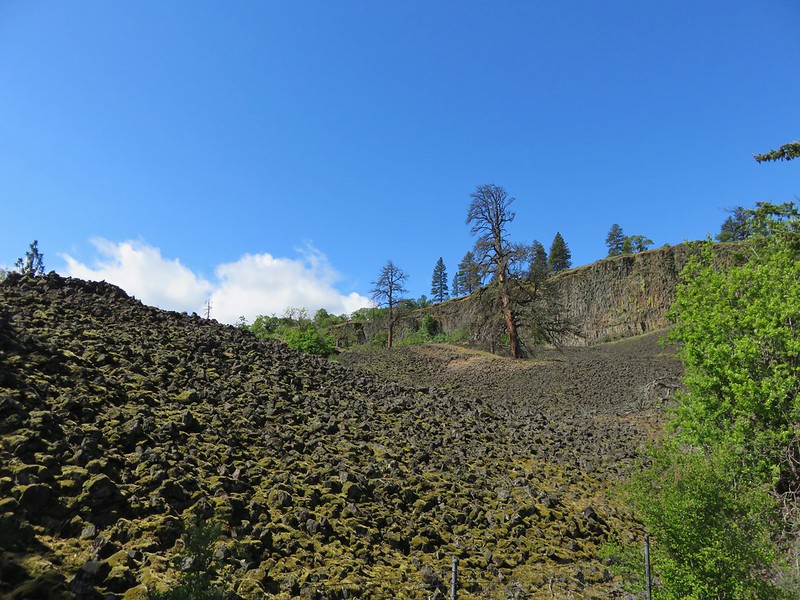
The trail is actually a portion of the Historic Columbia River Highway that has been converted to a hiking and biking path. Our plan was to hike out about 2.5 miles to an overlook of Koberg Beach State Wayside to add another 5 miles to the days totals. The path begins amid rock piles that reminded us of the lava flows in Central Oregon. Here the basalt cliffs that are typical of the gorge had broken up leaving the jumble of rocks. A fence separated the path from the rocks to protect pits made by Native Americans, possibly used as vision quest sites. One such pit is visible in the upper left hand side of the picture below.
IMG_1516

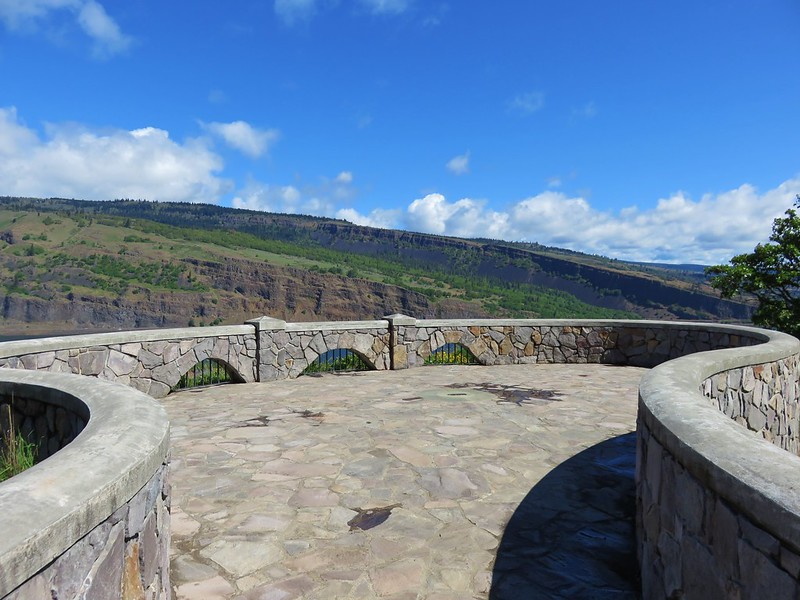
About a half mile from the start of the trail is the first viewpoint.
IMG_1522

IMG_1521

IMG_1523

IMG_1525

Not long after the first viewpoint the trail comes to the first of the twin tunnels.
First of the Mosier Twin Tunnels.

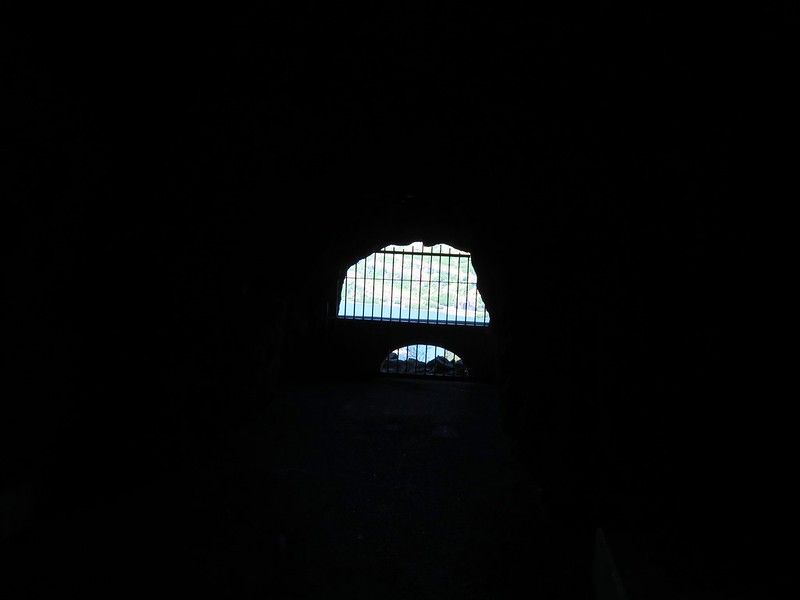
Inside Mosier Twin Tunnels.

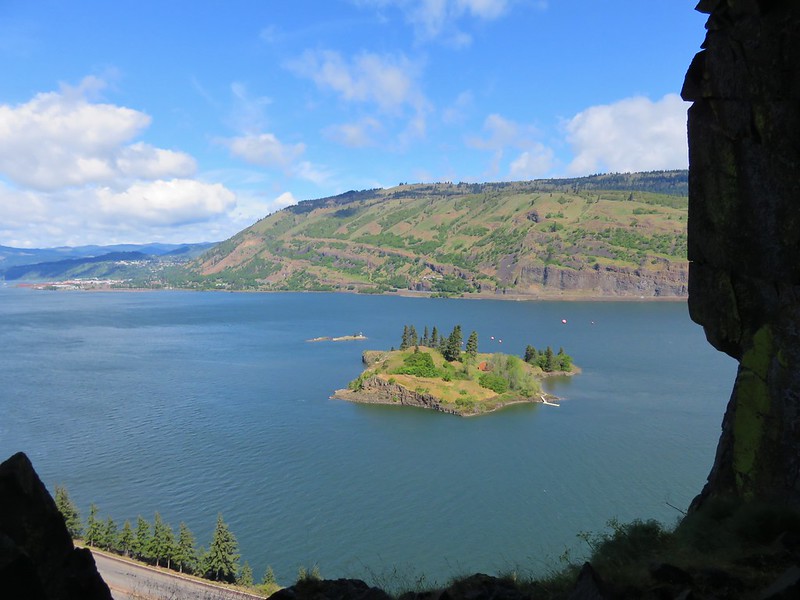
The first tunnel has a pair of windows carved into the rock wall offering views of the river.
IMG_1530

IMG_1531

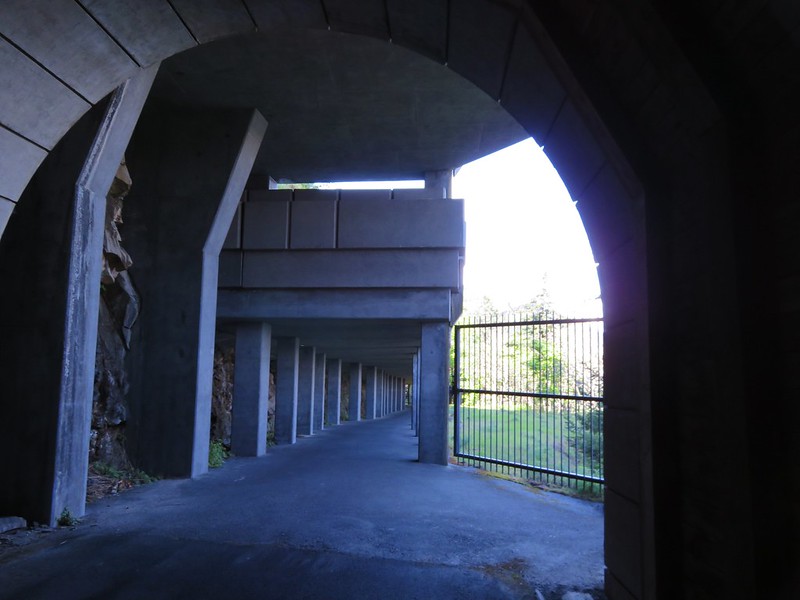
Upon exiting the second tunnel the path continues under an odd concrete structure. Dominique thought it reminded him of being in a parking garage. The purpose of the structure is to act as a rockfall shield able to withstand a 5000lb. boulder falling from 200ft above.
IMG_1533

Just under a mile from the tunnels is a second overlook at the county line between Wasco and Hood River counties.
IMG_1536

IMG_1537

Our planned turnaround point was to be .8 miles from this second overlook at a .2 mile side path. We continued on toward the turnaround but Dominique wasn’t feeling all that well so he eventually took one of the car keys and headed back. It turns out he was only about 100 yards from our planned turnaround point. I was waiting for Heather by a gravel path that led off through a fenced meadow.
IMG_1540

IMG_1543

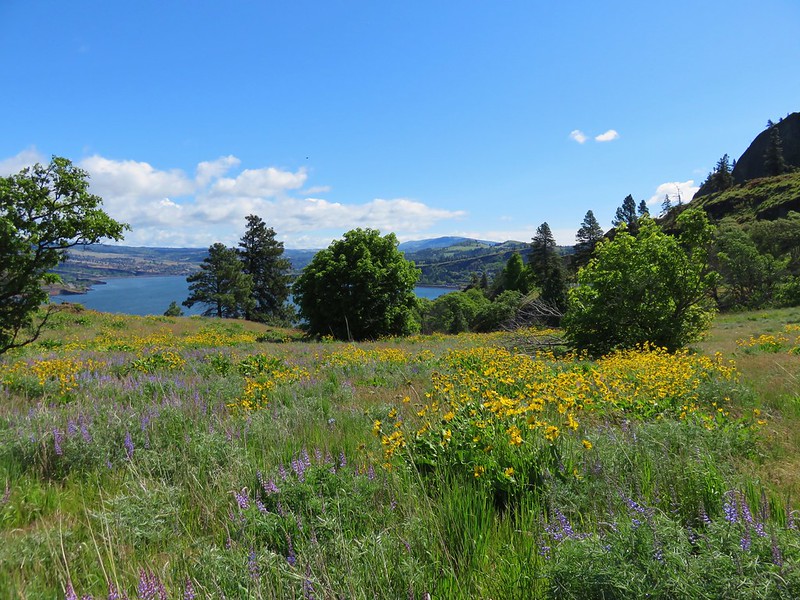
Viewpoint along the Mosier Twin Tunnel trail.

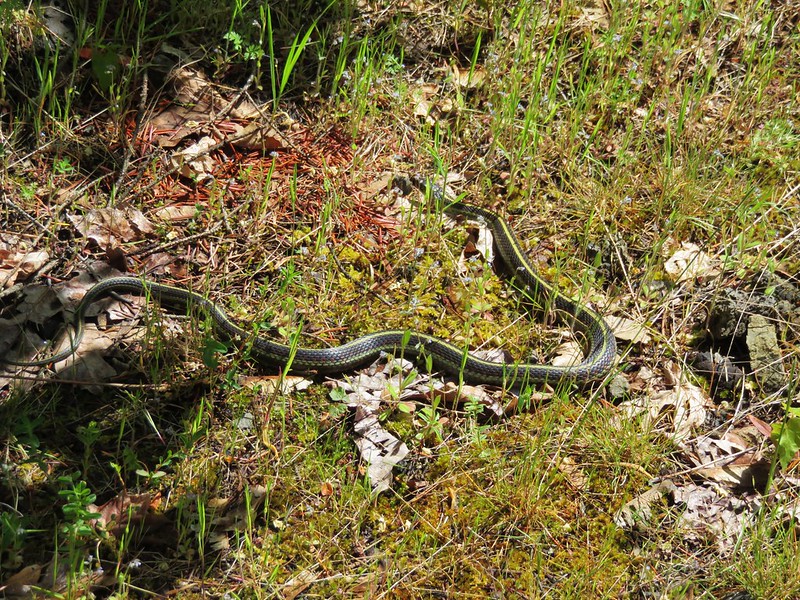
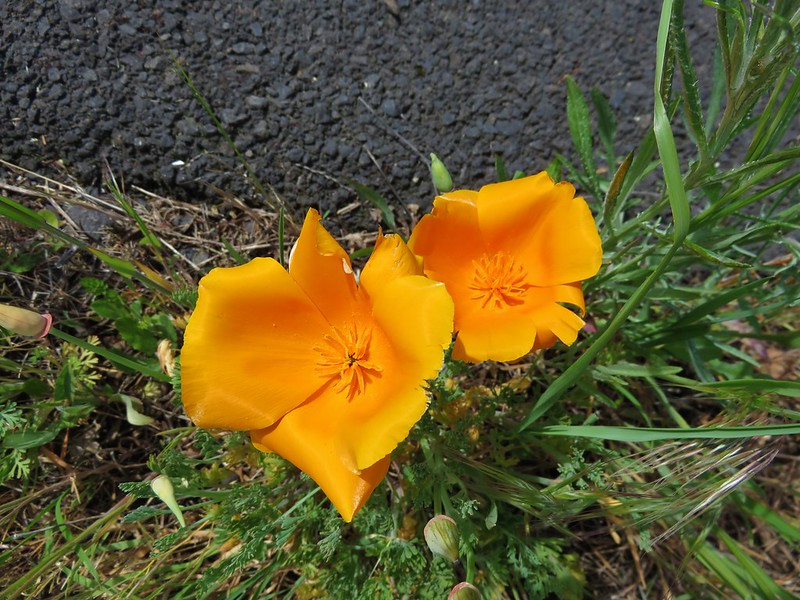
This was in fact the path we were looking for, but it ended at the fence where there was no view to speak of and certainly no sign of a beach wayside. On top of that I had viewed the hike on Google Maps and had expected the side path to drop down a bit and this path led up. We also felt like we hadn’t gone .8 miles since the second viewpoint so I checked the Garmin which showed that Koberg State Park was still ahead. We decided this wasn’t it and continued on. We kept walking and talking thinking the viewpoint was going to be just ahead. We began seeing more and more people but it was now after noon and that made sense, but when we passed a couple with a stroller we both began to wonder what was going on. They didn’t look like they had hiked over 2 miles already. Then Heather spotted some signs ahead. There were quite a few and they were big which didn’t make sense for a small side path, then we noticed an RV parked above the trail to the left. Now we knew something was wrong for sure because there were no roads open to vehicles anywhere near our planned turnaround point. Then we saw the parking area, restrooms, and information center at the western trailhead near Hood River. We’d gone nearly 2 extra miles! The good news was they were nice bathrooms and we had spotted a snake and our first California Poppies (while on a hike) in those extra miles.
IMG_1554

California Poppy

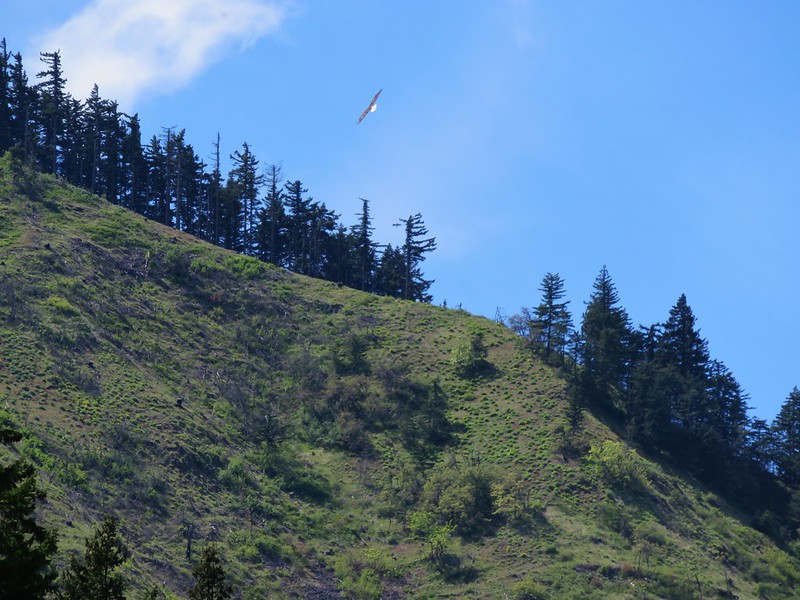
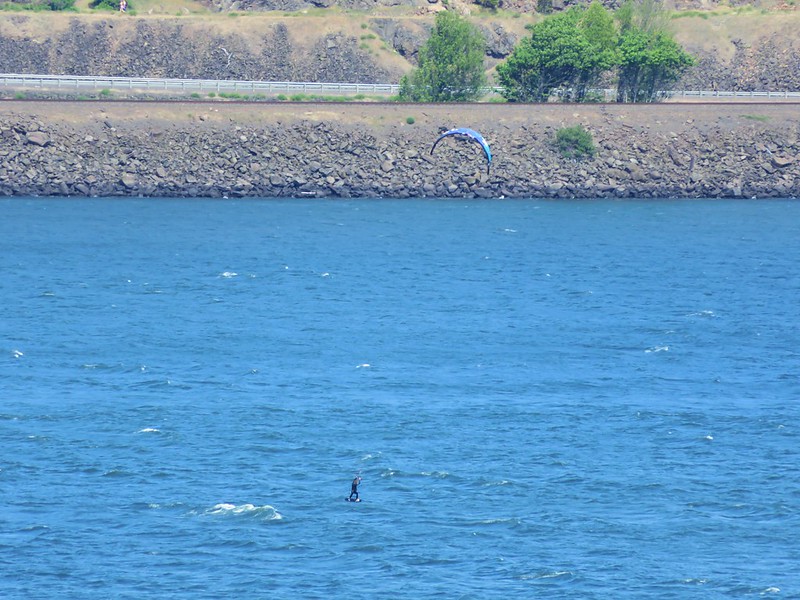
It turned out that the main portion of Koberg State Park is located across the Interstate from the western trailhead, but a portion of it is also located below the outcropping that the gravel path led onto. There just isn’t anything there to see. We hurried back as quickly as our sore feet would let us. On the way we spotted a bald eagle soaring above the trees and some wind surfers sailing above the Columbia.
IMG_1571

IMG_1577

At the car we found a napping kid who it turned out had stuck to our original plan better than we had. Happy Trails!

flickr: https://www.flickr.com/photos/9319235@N02/sets/72157652170987082/

Categories
Columbia River Gorge South Hiking Oregon Trip report

Elowah & Wahclella Falls

**Note the 2017 Eagle Creek Fire burned a portion of this hike.**

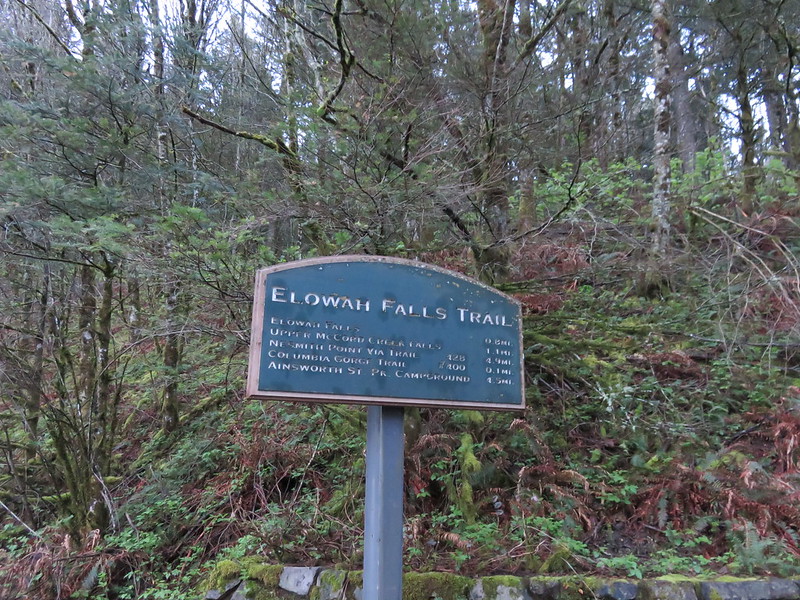
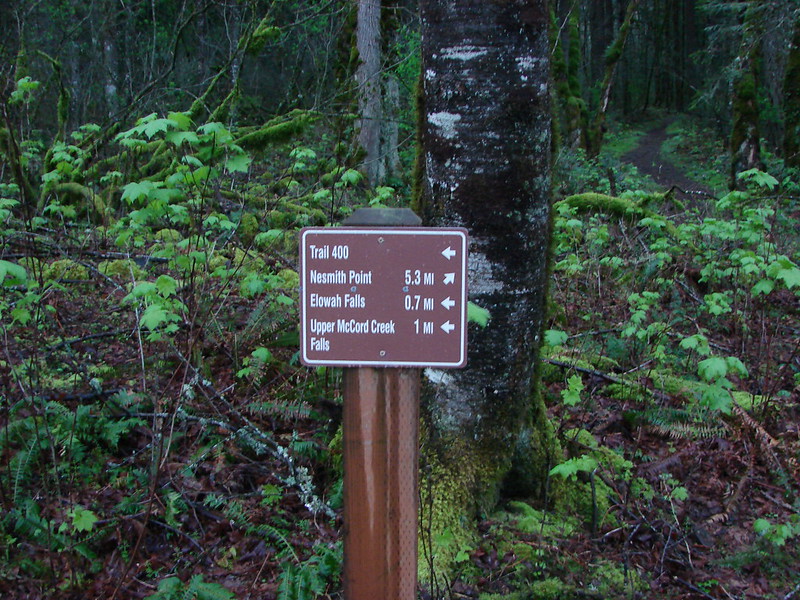
The Columbia Gorge is famous for its many waterfalls, three of which we visited on our most recent hike. The numerous trails and trailheads in the gorge offer plenty of options for hikers. Some of the waterfalls can be seen at the parking areas and others can be visited on hikes less than 5 miles total. Our plan was to combine two of these shorter waterfall hikes by connecting them using the Gorge Trail #400 which follows Interstate 84 for 35 miles from the Angles Rest Trailhead in the west to the Wyeth Trail #441 in the east. Starting at the Elowah Falls Trailhead we could hike a 3.1mi section of Trail 400 from the base of Elowah Falls to the Wahclella Falls Trailhead.
Elowah Falls Trailhead

We headed up the trail to a junction with the Gorge Trail and turned left toward Elowah Falls.
5

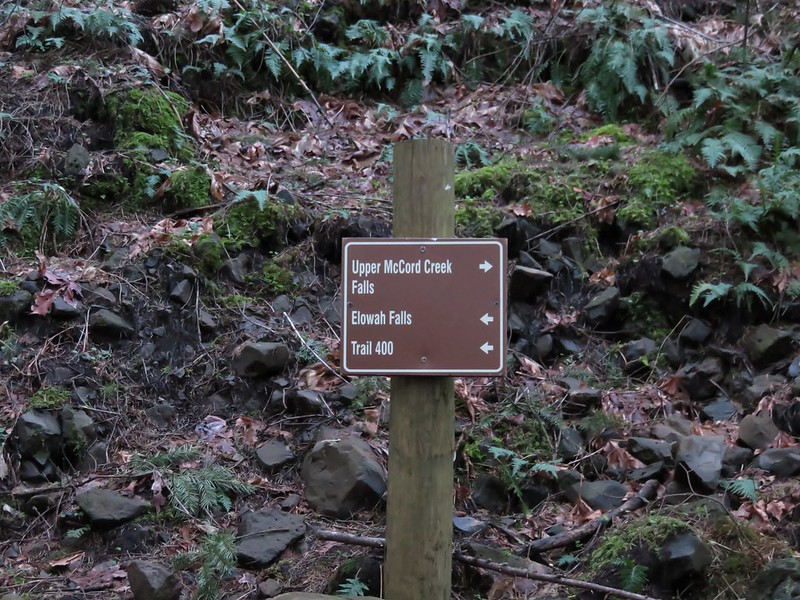
In another .3 miles we came to a second junction where a right hand fork heads up to Upper McCord Creek Falls.
6

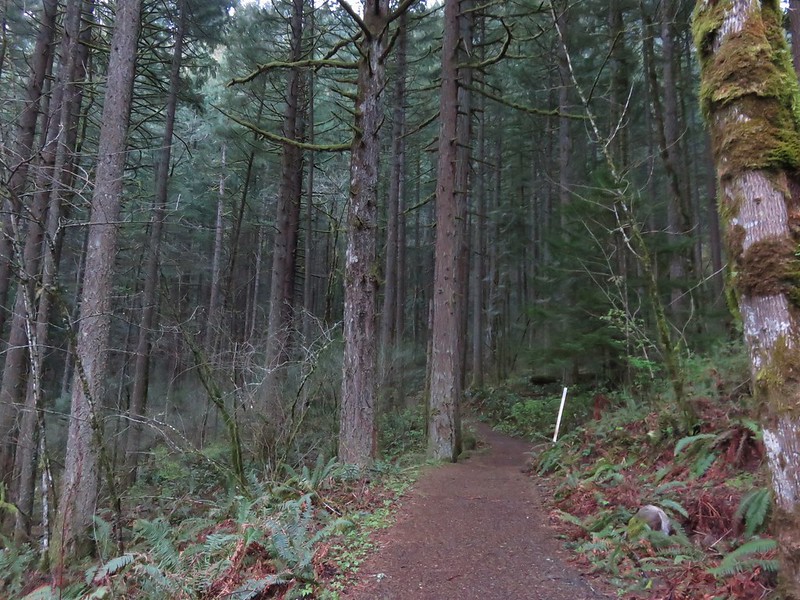
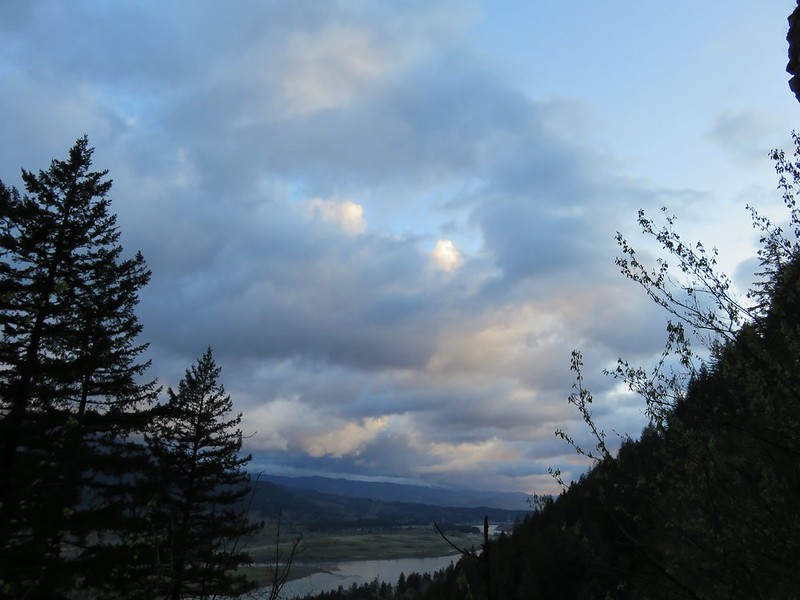
We headed toward Upper McCord Falls climbing through a forest before views opened up across the Columbia River to Hamilton Mountain.
7

10

Hamilton Mountain

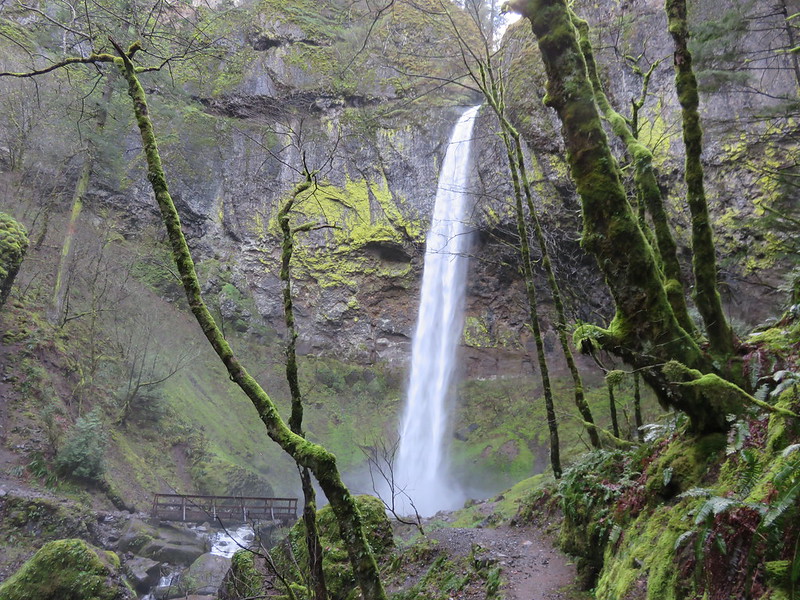
We got our first glimpse of Elowah Falls below us as we rounded a ridge end.
Elowah Falls

The path leads to McCord Creek just above Elowah Falls then follows the creek a short distance to Upper McCord Falls.
Upper McCord Falls

The creek turns at a right angle at the base of this twin fall then flows over the canyon lip forming Elowah Falls.
Upper McCord Falls

After visiting this fall we returned to the Gorge Trail and made our way to the base of Elowah Falls.
Elowah Falls

The bridge across McCord Creek is close enough to the base of the falls that the spray really soaked us as we passed by. Once across we continued on Trail 400 and headed toward our next waterfall trail. Because the Gorge Trail follows both I84 and the Historic Highway 30 traffic noise was constant on the trail, but it didn’t bother us much as we enjoyed the views and various spring flowers that we spotted.

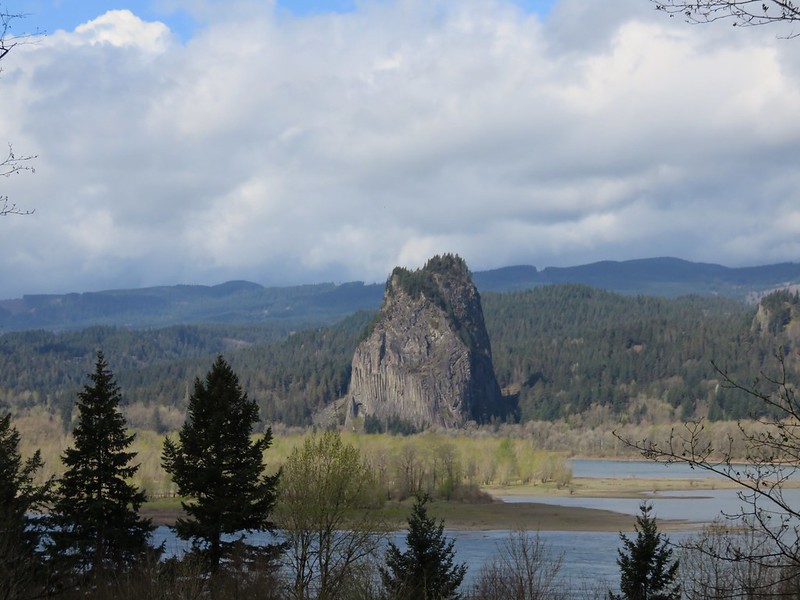
Beacon Rock

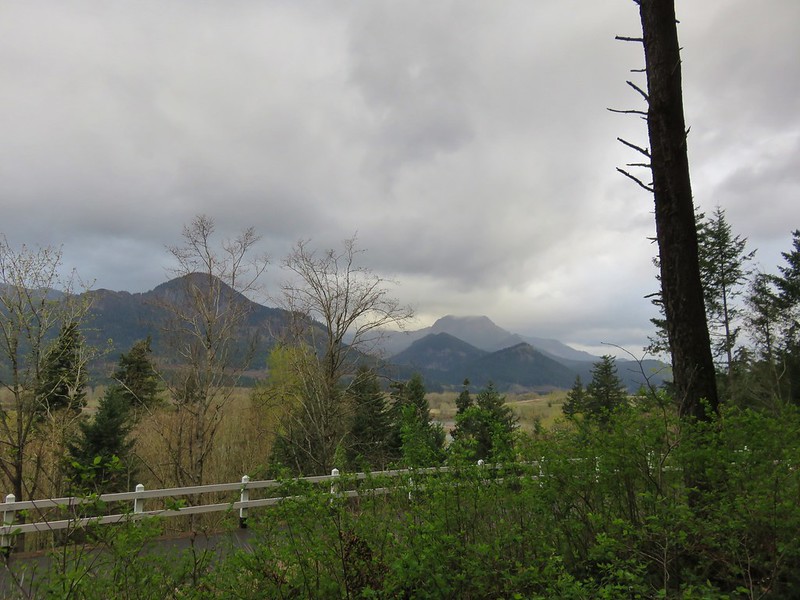
Hamilton & Table Mountains

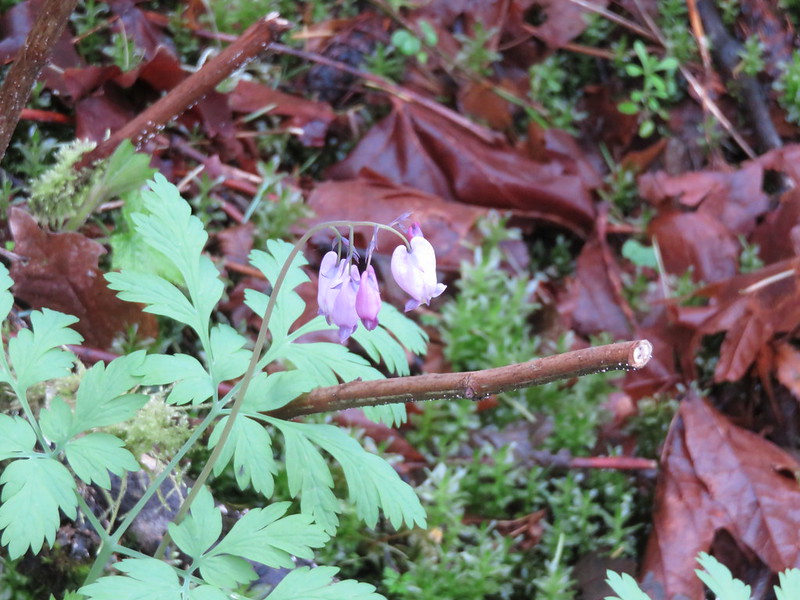
Bleeding Heart

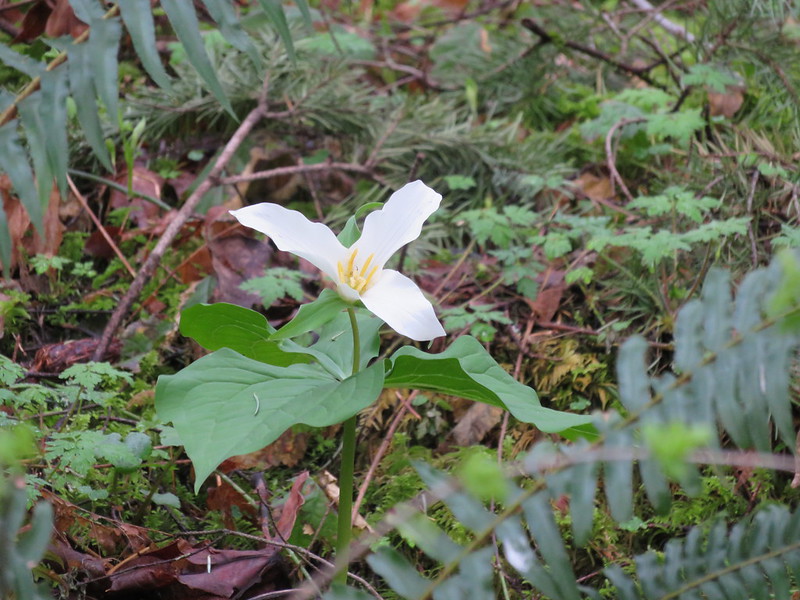
Trillium

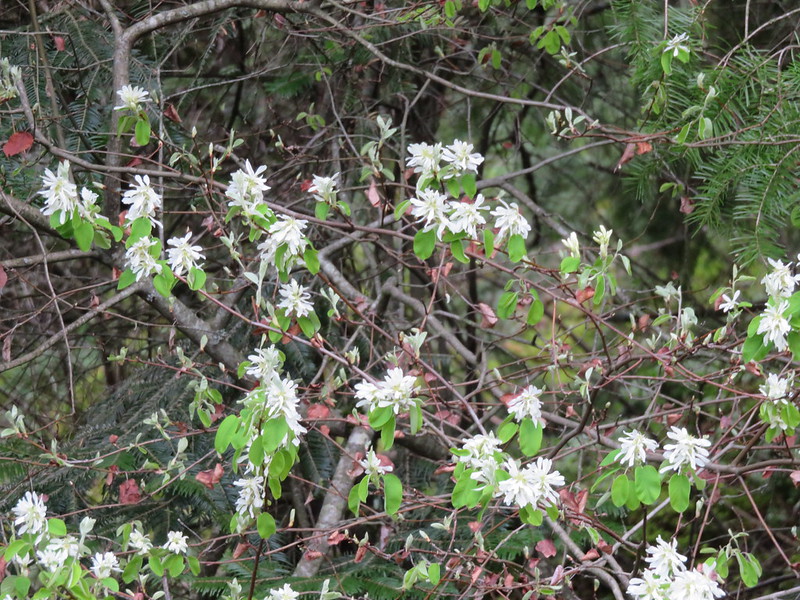
serviceberry

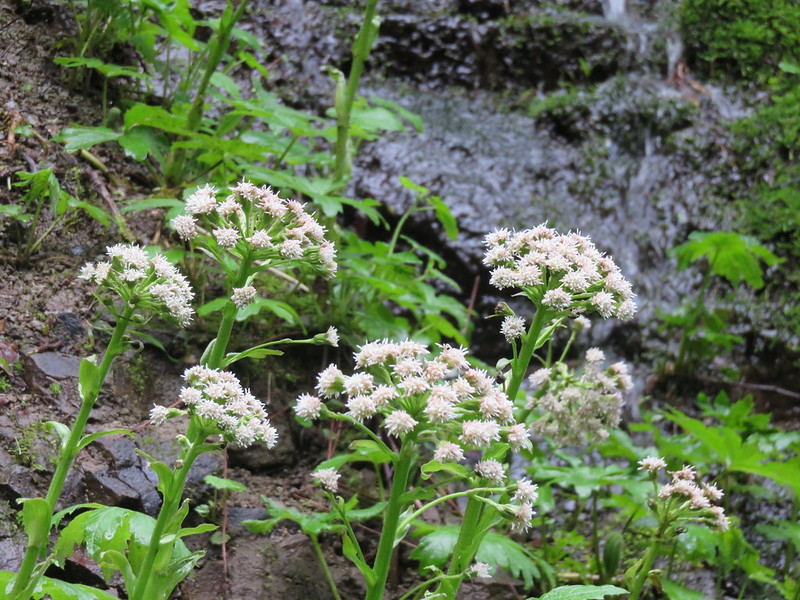
Sweet Coltsfoot

105

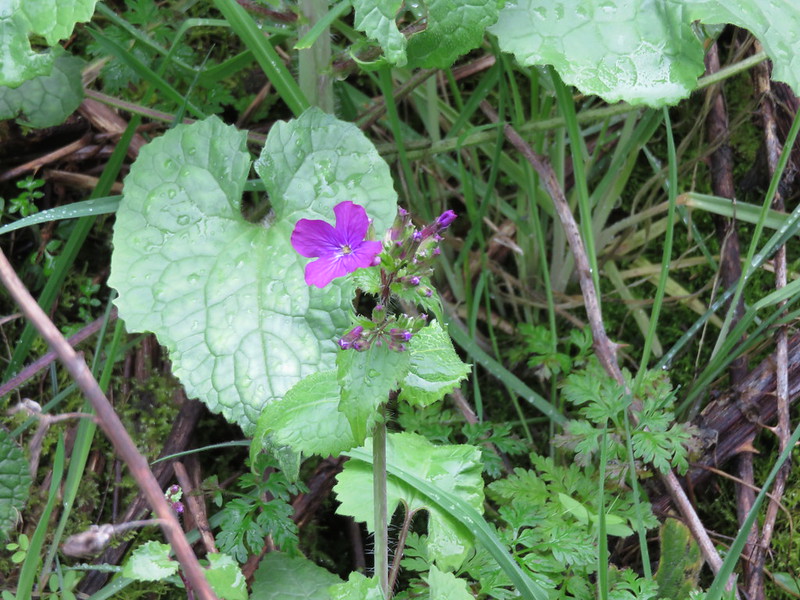
Fringecup

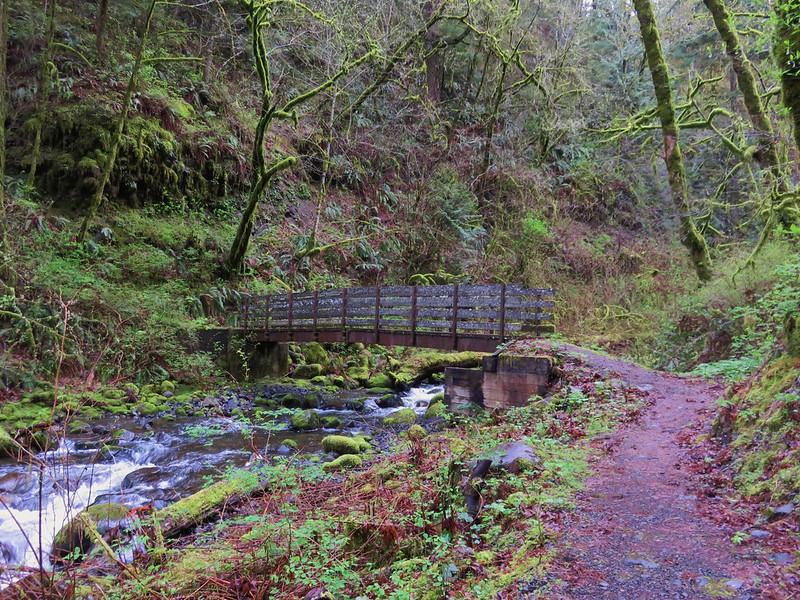
Midway through the 3.1 mile stretch the trail crossed Moffett Creek on a footbridge.
Moffett Creek

Moffett Creek

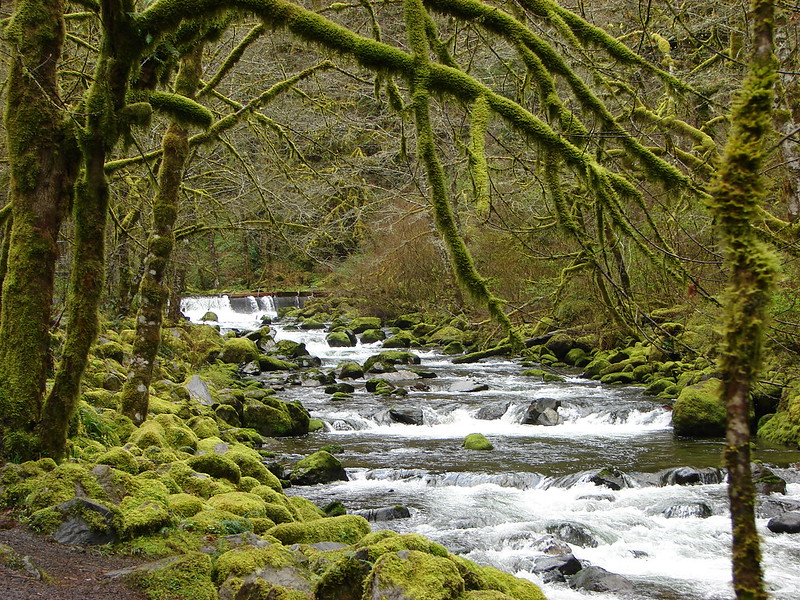
It rained off and on while we were on the Gorge Trail but the weather began to clear as we arrived at the Wahclella Falls Trailhead along Tanner Creek.
59

Tanner Creek

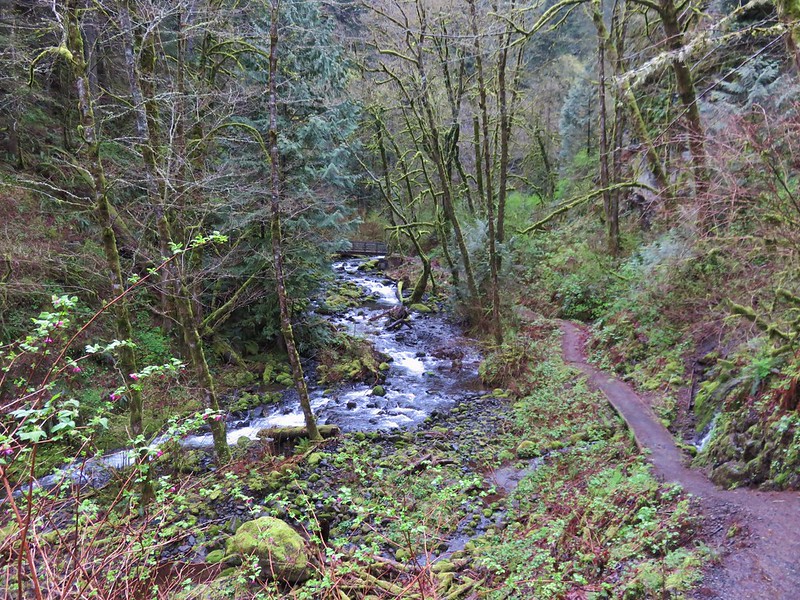
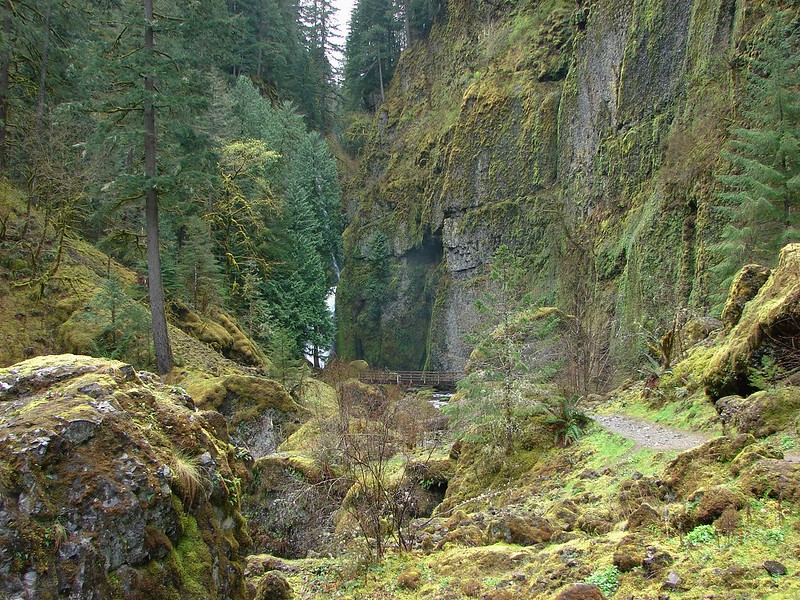
The Wahclella Falls trail follows Tanner Creek for a mile to Wahclella Falls, but before reaching that waterfall it first passes Munra Falls. The trail is actually so close to Munra Falls you can touch it from the footbridge as you pass by. What you can’t do is get the whole thing in a picture due to how close you are.
Munra Falls along the Wahclella Falls Trail

Munra Falls along the Wahclella Falls Trail

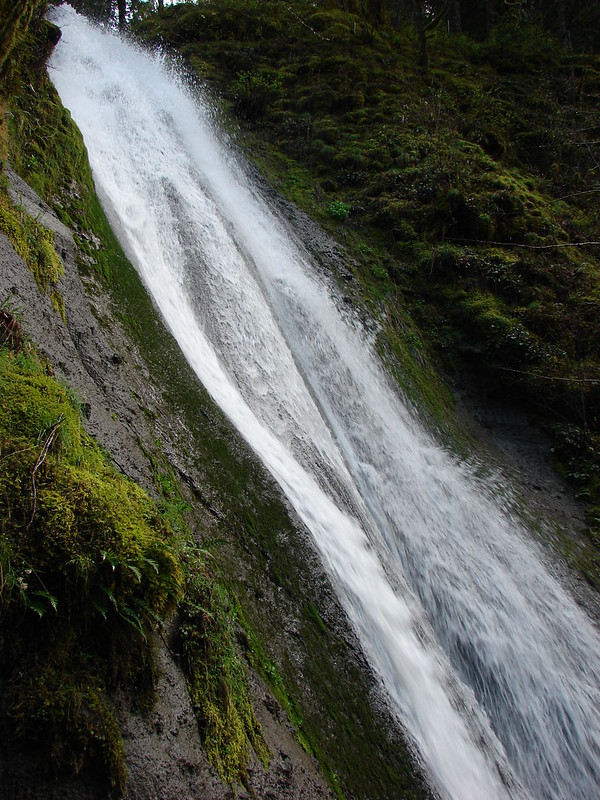
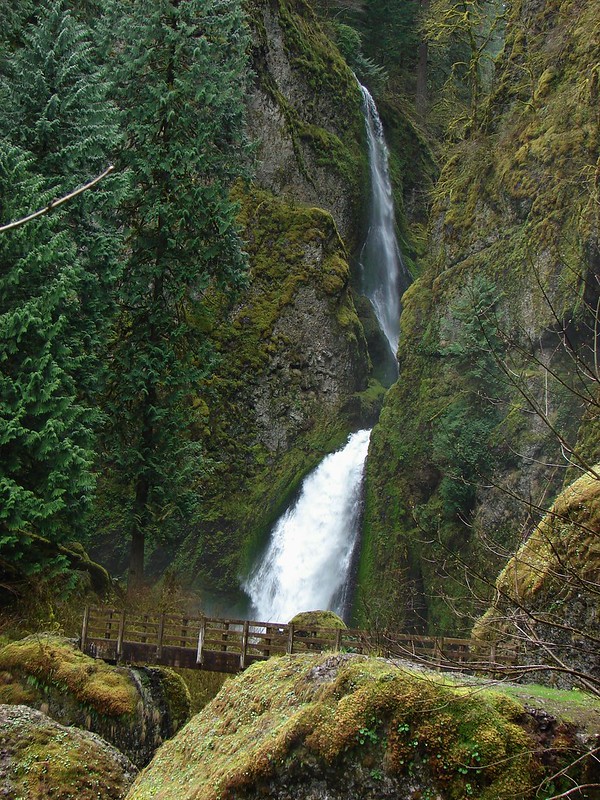
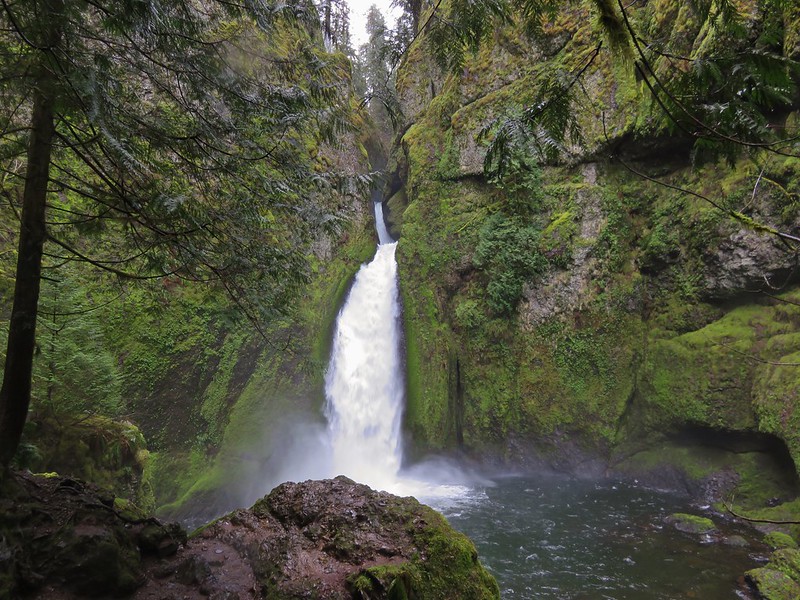
Near Wahclella Falls the trail splits creating a loop that passes near the base of the falls. We opted to do the loop counter-clockwise which would lead us first to a lower viewpoint of the falls then up to a higher view before completing the loop. From this direction the first glimpse of the falls revealed two sections to the falls. An upper section on the left-hand side of the canyon then a lower section falling into the splash pool.
Wahclella Falls

Wahclella Falls

As we made our way across Tanner Creek and began to climb to the higher views we noticed a third section of falls located directly above the lower section.
Wahclella Falls

One of the perks of having set off early was we were able to spend time at each of the falls alone, but more people began arriving as we completed our loop and headed back. When we arrived back at Elowah Falls there were quite a few folks milling about. I detoured up an unmarked side trail to a former viewpoint above Elowah Falls to get a couple of final pictures.

Elowah Falls

Elowah Falls splash pool

One of the neat things about the gorge waterfalls is how different they are. All four of the waterfalls we saw on this hike were unique in their own way making each one that much more memorable. Happy Trails!

flickr:https://www.flickr.com/photos/9319235@N02/sets/72157651027769877/

Categories
Hiking Mollala Old Cascades Oregon Trip report

Butte Creek & Abiqua Falls

While much of the country is dealing with a winter that just doesn’t seem to want to end the Pacific Northwests never really started. Another beautiful weekend was being forecast and we decided we just couldn’t miss another one so we headed out to check out a couple of short waterfall hikes. The trailheads for Butte Creek Falls and Abiqua Falls are less than 5 miles apart a short distance outside of Scotts Mills, Oregon. Both trailheads are located on roads accessed by taking Crooked Finger Road from Scotts Mills.

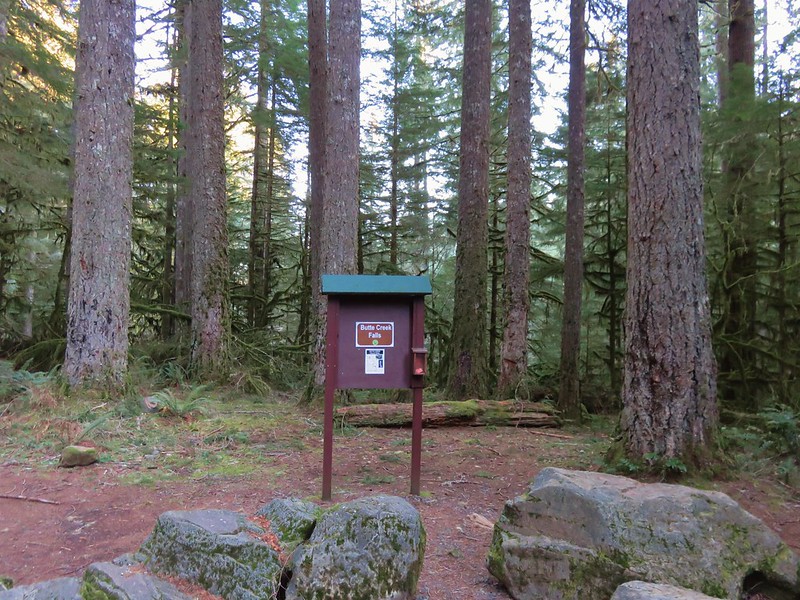
We started at the Butte Creek Falls Trailhead in the Santiam State Forest.
1.2

The trail set off from a small parking area (with an outhouse) passing to the left of the trail sign and descending .2 miles to a signed junction.
5.1

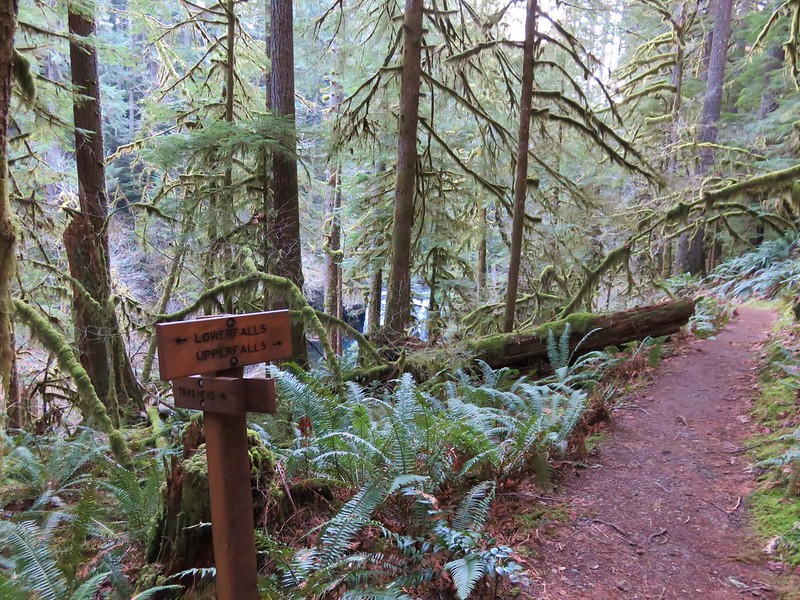
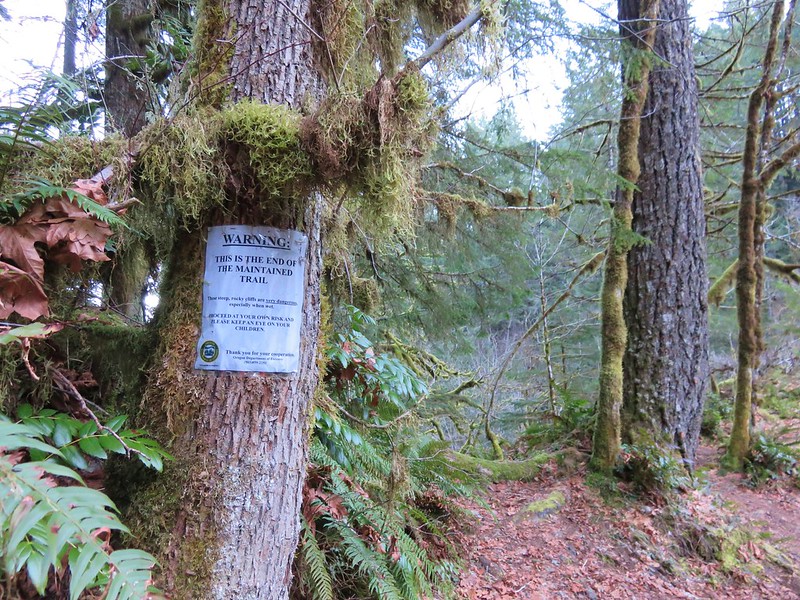
The right hand fork would lead us past Upper Butte Creek Falls on a loop back up to the parking area so we turned left first and headed toward Lower Butte Creek Falls. In just another .2 miles we arrived at a rocky ridge and the end of the maintained trail.
15.1

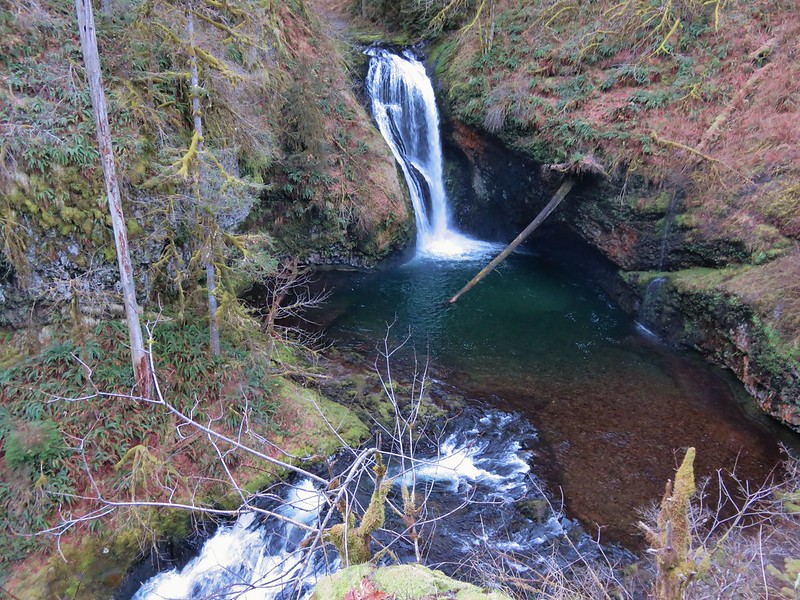
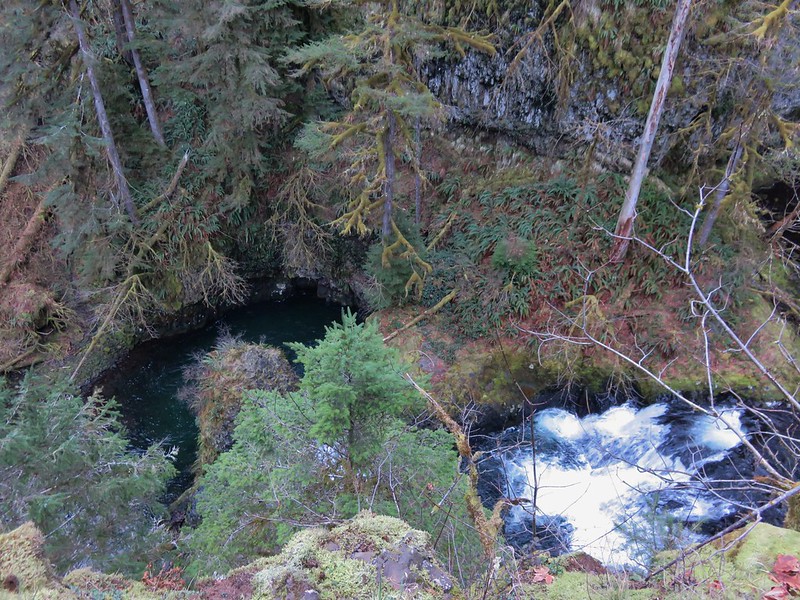
A well worn trail led out onto the ridge which provided a front row view of the falls high above Butte Creek.
19.6
19.5

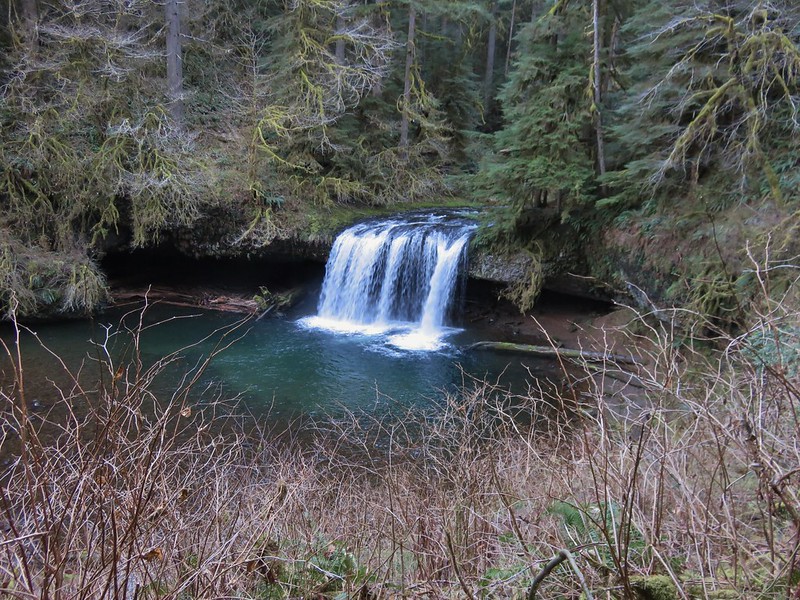
After enjoying the lower fall we headed back to the junction and started the return loop. Upper Butte Creek Falls had been visible through the trees from the junction and we were quickly on our way down to its base.
21.2
27
33.2

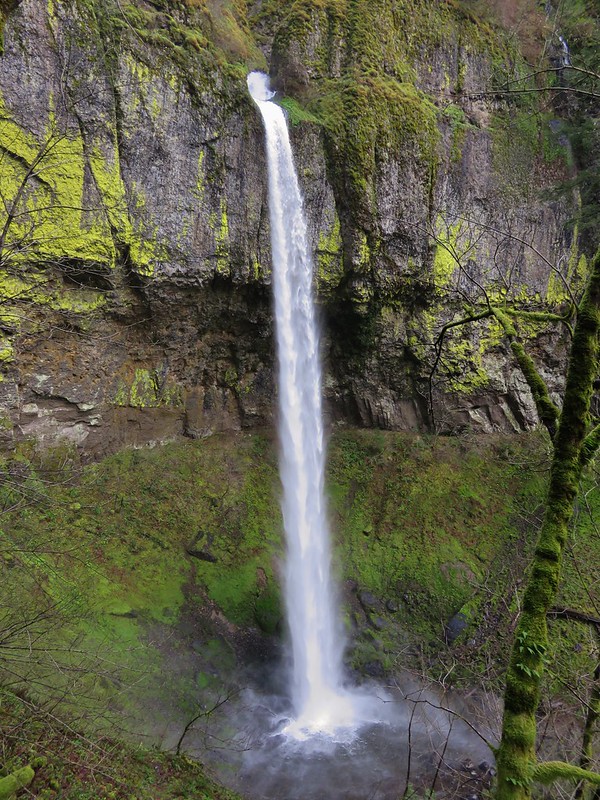
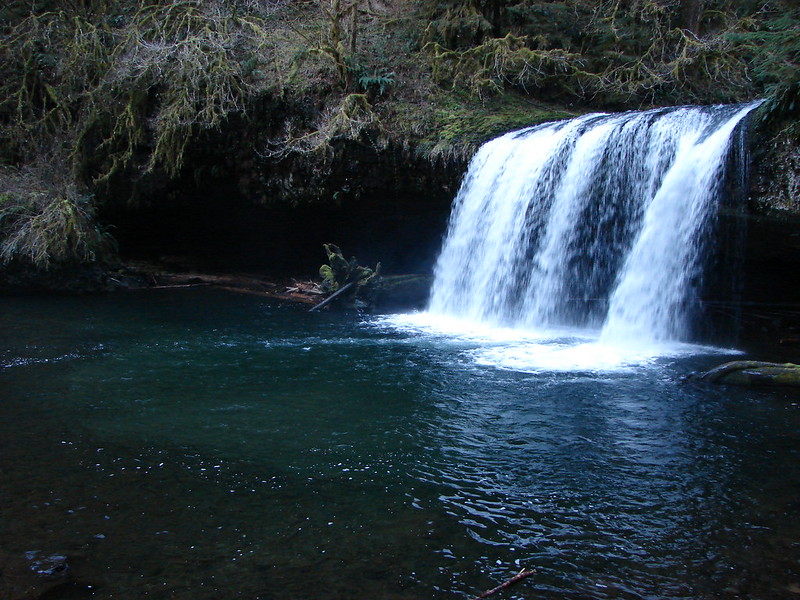
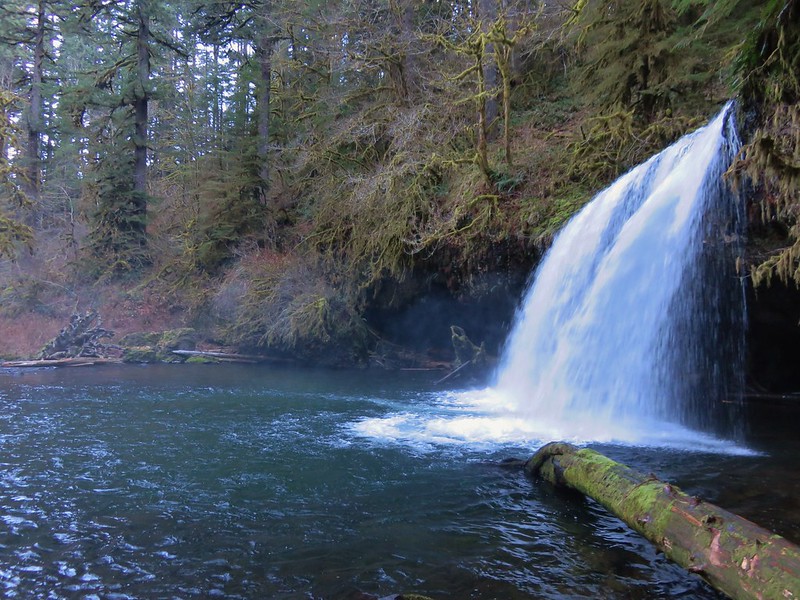
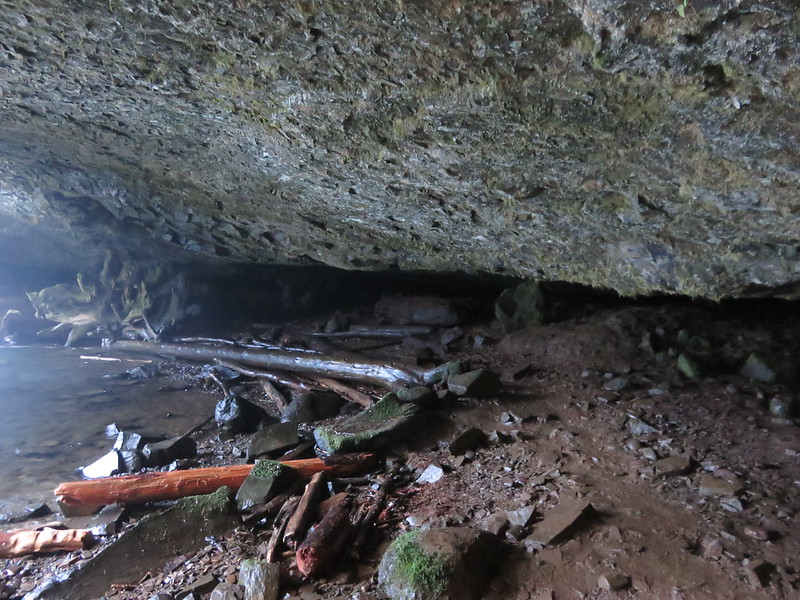
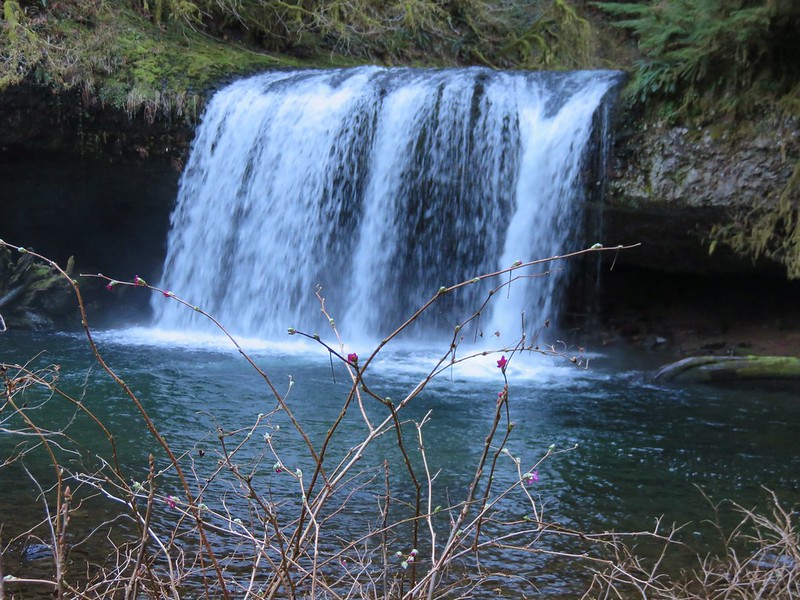
Shorter and wider than its counterpart Upper Butte Creek Falls offers close up views and a path behind the falls into a good sized cavern.
36.1
34.6

While we were exploring around the splash pool we noticed that the salmonberries were beginning to bloom.
36.6
41.1

From the upper falls it was a short .3 mile climb back up to the parking area. The hike to these two waterfalls had been less than 1.5 miles so why not visit another nearby waterfall – The .5mile trail to Abiqua Falls. To get to Butte Creek Falls we had traveled 11.4 miles on Crooked Finger Road to CF 400, took a left and followed signs to the trailhead. Now we returned to Crooked Finger Road and headed back toward Scotts Mills for .7 miles to CF 300 marked by signs for an ATV staging area on the left. Despite the trailheads only being about 5 miles apart the drive was not quick. The 2.5 miles on CF 300 were slow due to the presence of many good sized rocks and ruts. High clearance, good tires, and 4wd were all helpful.

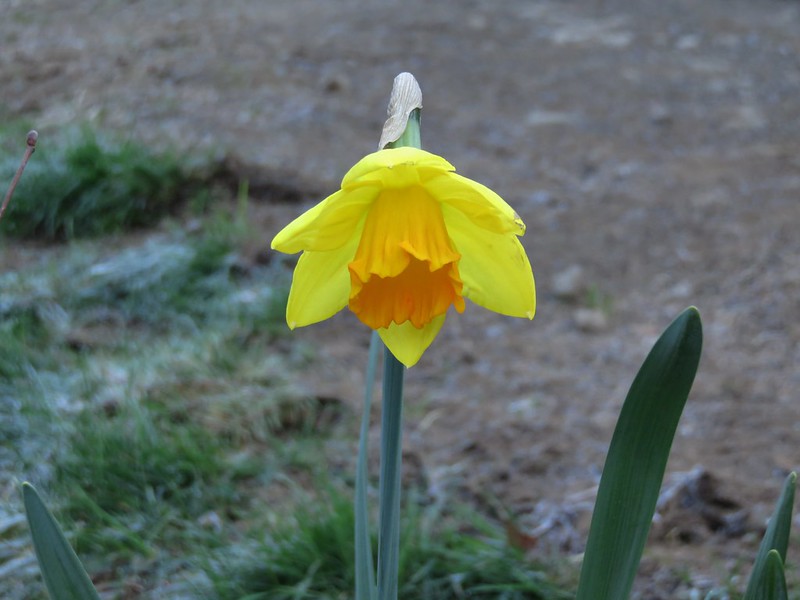
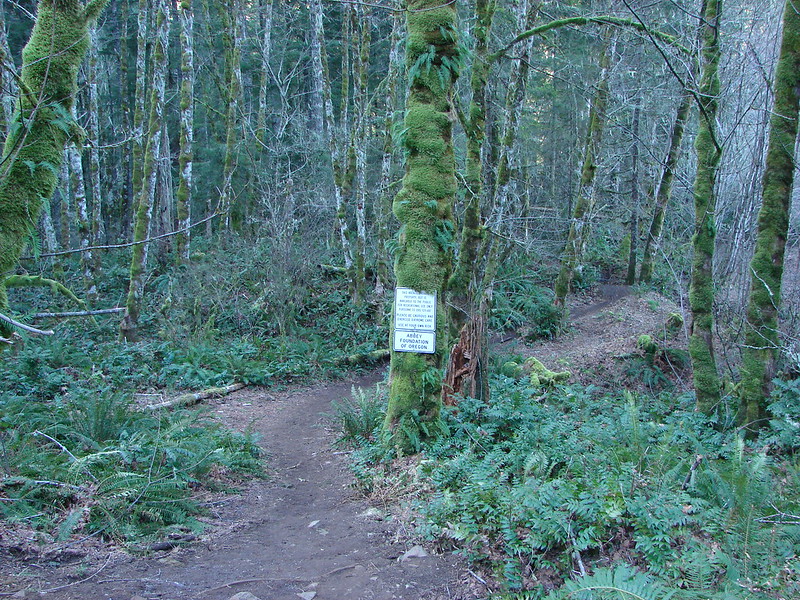
The Abby Foundation of Oregon owns the land where the trailhead, trail and, Abiqua Falls are, but allow the public to use it. A yellow gate marked the end of the tedious drive and the start of the short trail where we were greeted by a lone daffodil.
42.6

To find the correct path down to the falls we needed to walk back up the road a short way passing a first clear path that leads to a grassy clearing to a second worn trail marked by a white sign.
43

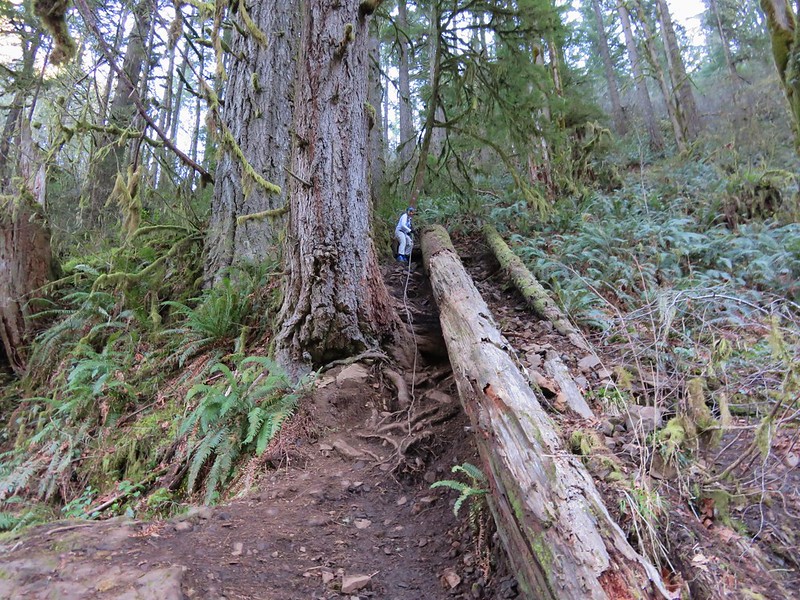
The trail down to Abiqua Creek was fairly steep in places but there were several sections of rope secured along the trail to assist with the climb.
47.1
47.2

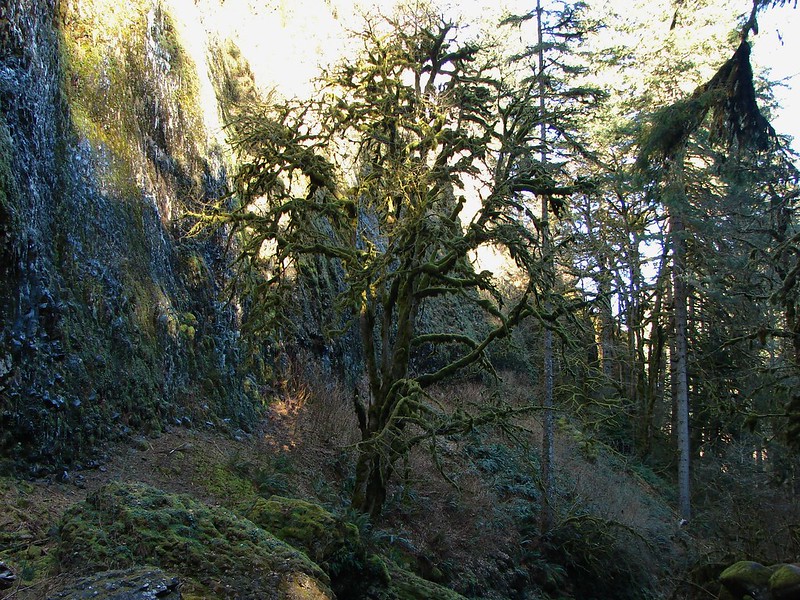
The trail then heads up the creek in a narrow canyon toward the unseen falls.
49.2
56.2

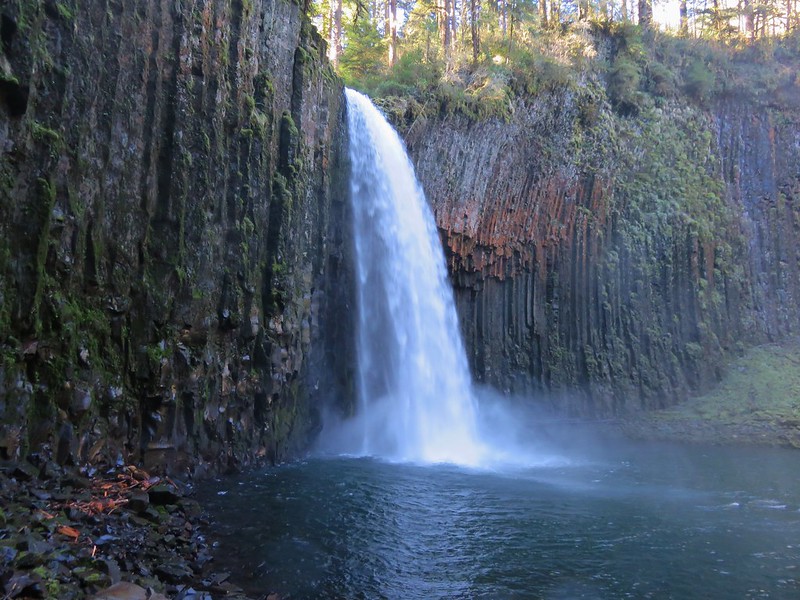
Just as the trail began to curve out and around a rocky outcrop we got our first views of Abiqua Falls.
61
65.1

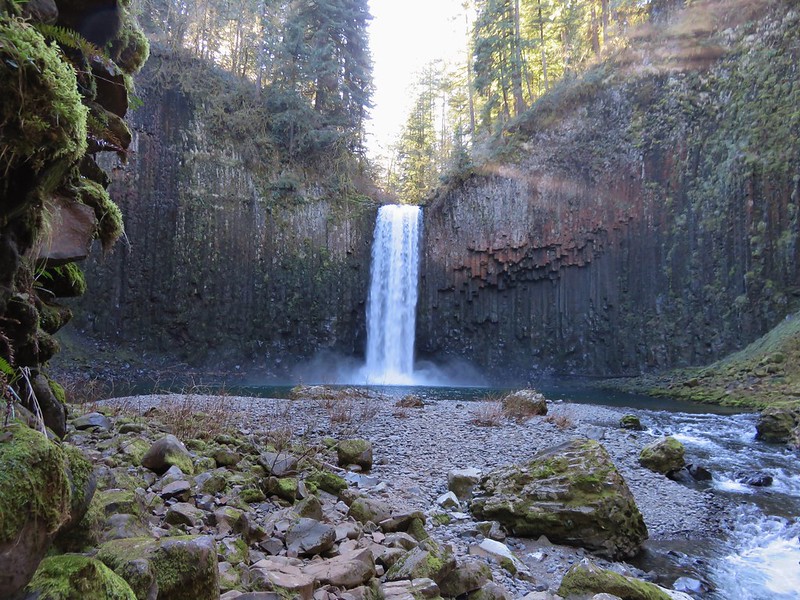
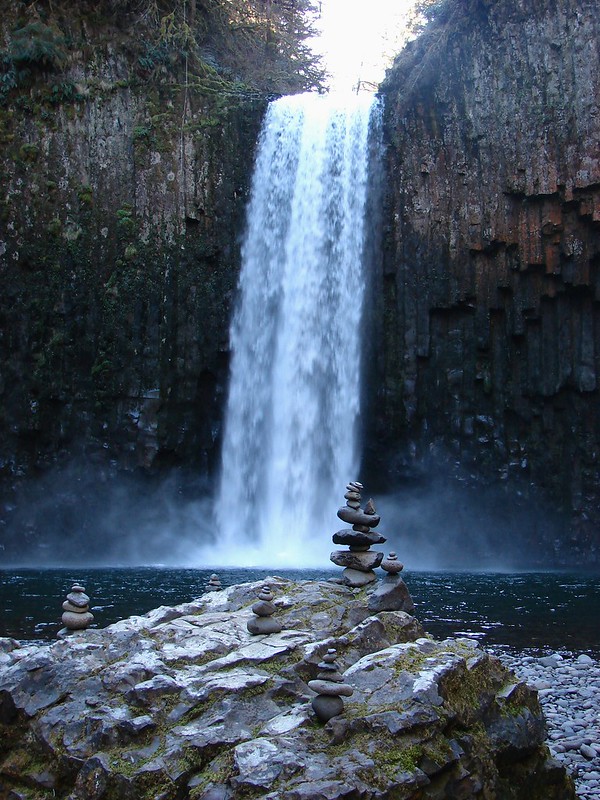
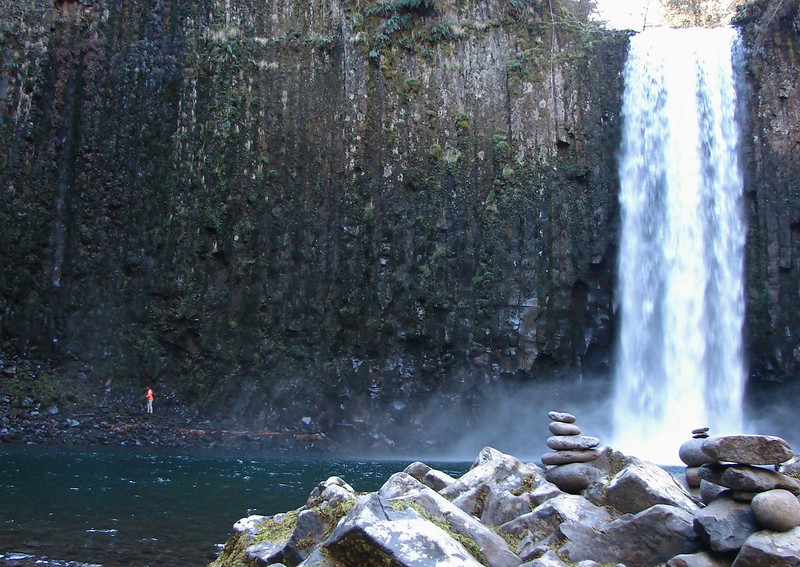
The canyon walls opened up to reveal a large circular bowl lined with columnar basalt colored with mosses and lichens with the falls as its centerpiece.
65.5

We spent some time exploring the rocky beach looking at the various rock cairns stacked about.
76
80

There was also a path around to the left side of the falls which I followed to see how far I could go.
81.3
84

We could have stayed there for hours if it had been warmer but it wasn’t so we headed out just as sunlight began to arrive inside the canyon walls.
88
94

Other than the Ouzels and a few other birds we had had the area all to ourselves.
98
100

We made it back up to the car (with some assistance from the ropes) just as another group of hikers arrived having survived the drive down. It was their turn to visit this special place. Happy Trails!

flickr: https://www.flickr.com/photos/9319235@N02/sets/72157651119420415/
Categories
Coastal Range Hiking Oregon Trip report

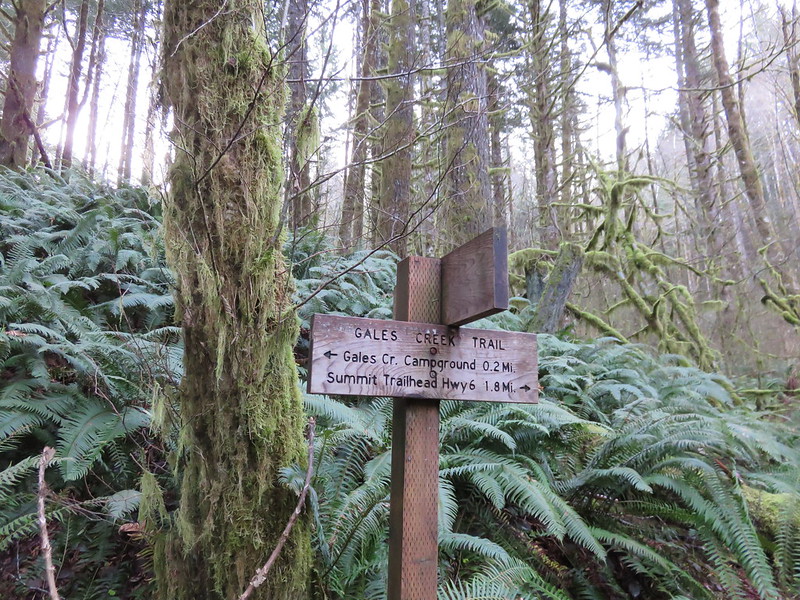
Gales Creek and University Falls

We were back on the trails after a long break following our New Years Day outing. This month we were looking for a hike involving waterfalls to take advantage of the higher water flows of late winter. We wound up heading to the Tillamook State Forest to check out University Falls and the Gales Creek area. There were several options as far as trails went, a half-mile trail beginning above University Falls, a longer loop passing the falls starting at Rogers Camp on the south side of Highway 6, or starting at one of the trailheads along the Gales Creek Loop on the north side of the highway. We chose to start at a small trailhead just before reaching Gales Creek Campground. A small post and footbridge were the only markers for this starting point.
Gales Creek Trailhead

A short distance from this trailhead the path joined the main Gales Creek Loop at a well marked junction.
IMG_0073

Our plan was to take the trail to the highway and then walk up the road a few hundred feet and cross into Rogers Camp, another possible trailhead and staging area for Off-Highway Vehicles which are allowed on the south side of the highway. At the entrance to Rogers Camp we headed for a trail sign positioned between the entrance road and a highway equipment yard. Here the Gravelle Brothers Trail began.
IMG_0081

Following signs for University Falls we stuck to this non-motorized path reaching a footbridge and little bench at the Devils Fork Wilson River.
IMG_0083

After crossing the river the trail turned south and began to climb through the forest toward University Falls.
IMG_0091

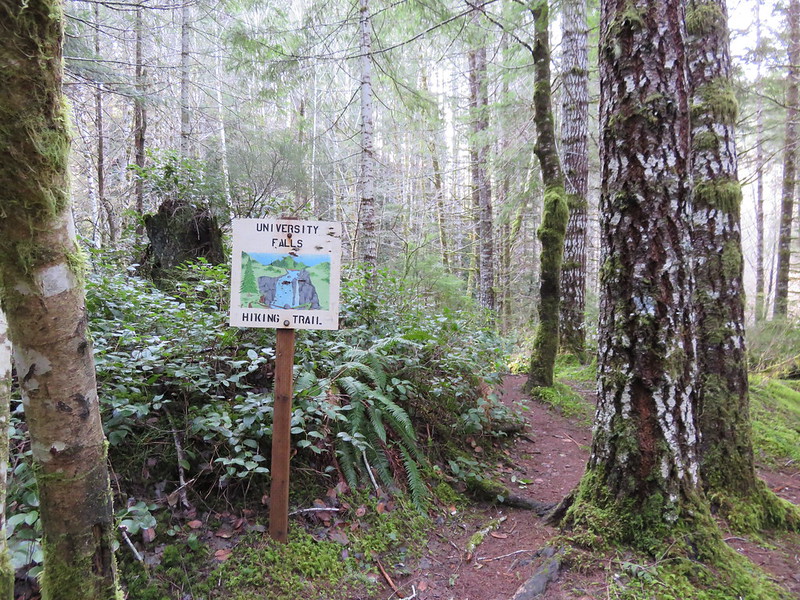
A colorful sign greeted us near University Falls.
IMG_0095

A short trail from the sign to the right led down to Elliot Creek but the falls were almost entirely obscured.
IMG_0098

IMG_0099

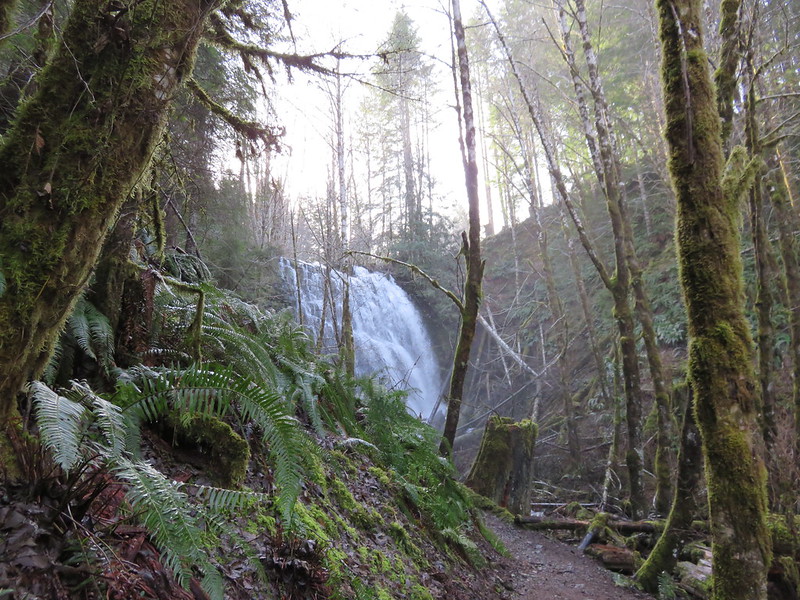
To get to the falls we returned to the sign and took the trail directly behind it a short distance to the falls. The falls were going strong making for an impressive show.
IMG_0100

University Falls

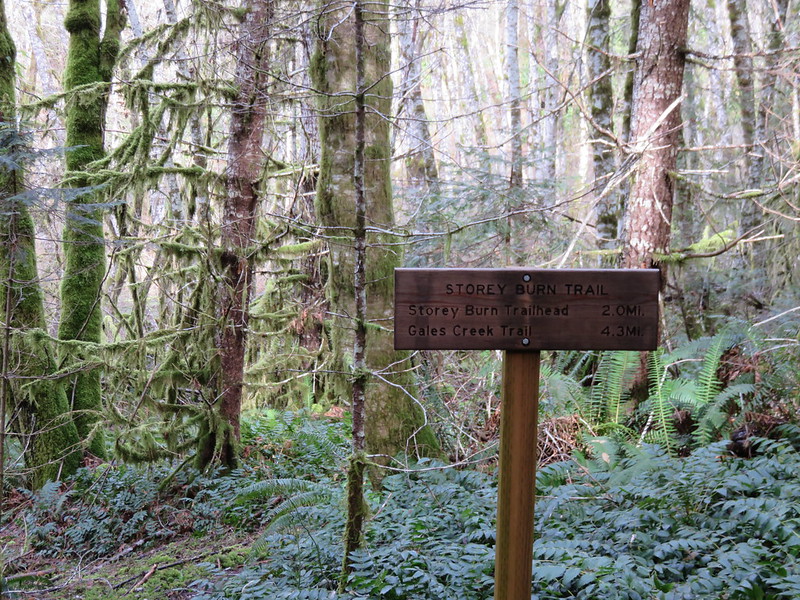
After visiting the falls we returned down the trail and recrossed the river. Not too far from the crossing we arrived at a trail junction we had passed earlier. Here we turned left on the Storey Burn Trail.
IMG_0121

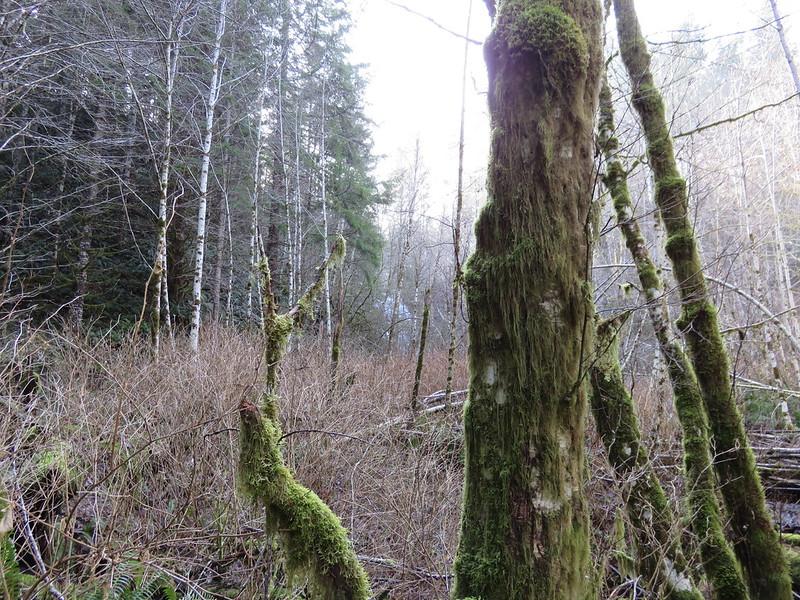
This trail lead us past a marshy area along the river where skunk cabbage was begging to bloom.
IMG_0122

We then climbed away from the river and passed beneath a highway bridge returning to the north side of Highway 6. The Storey Burn Trail climbed steadily along hillsides up to Storey Burn Road, another possible trailhead. We crossed the road and continued on toward Gales Creek Campground. We were mostly going downhill now in a much quieter forest. While on the south side of the highway the sounds of Off-Highway Vehicles and target shooters competed with the water and the birds. Even after returning to the north side of the highway where OHV are banned there was an almost constant barrage of gunfire. Here on the final stretch birdsong and running water became the only sounds making for a pleasant final stretch. The trail also passed by small but scenic Slide Falls.
IMG_0146

IMG_0149

A final trail junction awaited, just .8 miles from Gales Campground.
IMG_0155

The final portion of the trail paralleled Gales Creek before arriving at the trailhead.
Gales Creek

We could have walked 300 yards up the road to our car and the other smaller trailhead or take a connector trail through the forest. We chose the trail which wound around and gained some unnecessary elevation before dropping us back down to our car. We both agreed that we should have taken the road 🙂 Happy Trails!

flickr: https://www.flickr.com/photos/9319235@N02/sets/72157650431797248/
Categories
Hiking Oregon Oregon Coast Southern Coast Trip report

Oregon & Tahkenitch Dunes

Happy New Year. It didn’t take us long to get our first hike of 2015 in. We had planned on visiting the Oregon Dunes National Recreation Area later this month, but a day off from work and a forecast for clear skies on New Years Day was too tempting to pass up. The Oregon Dunes National Recreation Area is nearly 40 miles of dunes, creeks, lakes, and forest along the Oregon Coast between the cities of Florence and Coos Bay.

The area offers numerous hikes, most of which are fairly short. Our plan was to combine three of these shorter hikes into a longer trek. We started off from the Oregon Dunes Day Use Area 10 miles south of Florence.
DSC08330

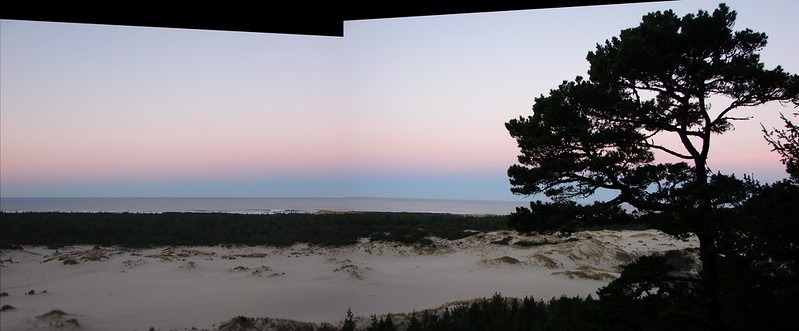
The sun had just risen in the east as we set off creating a colorful scene from the dunes overlook.
DSC08333_stitch

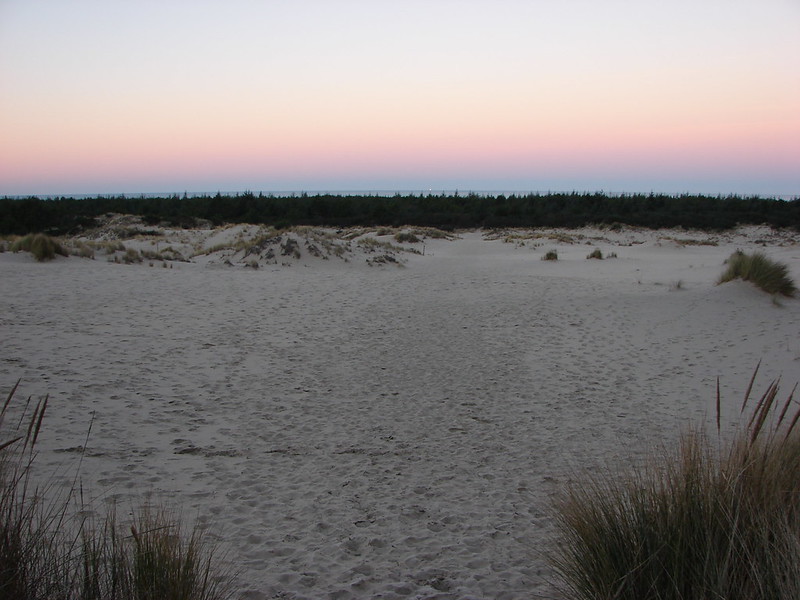
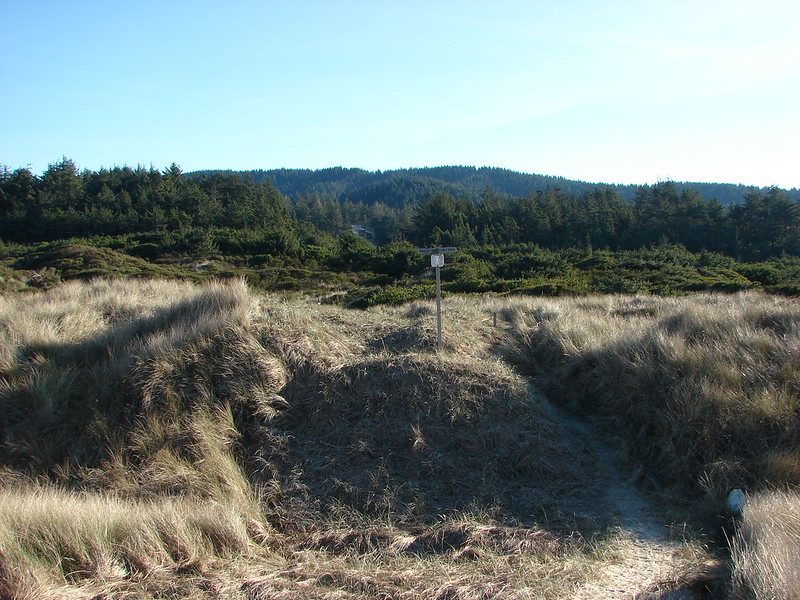
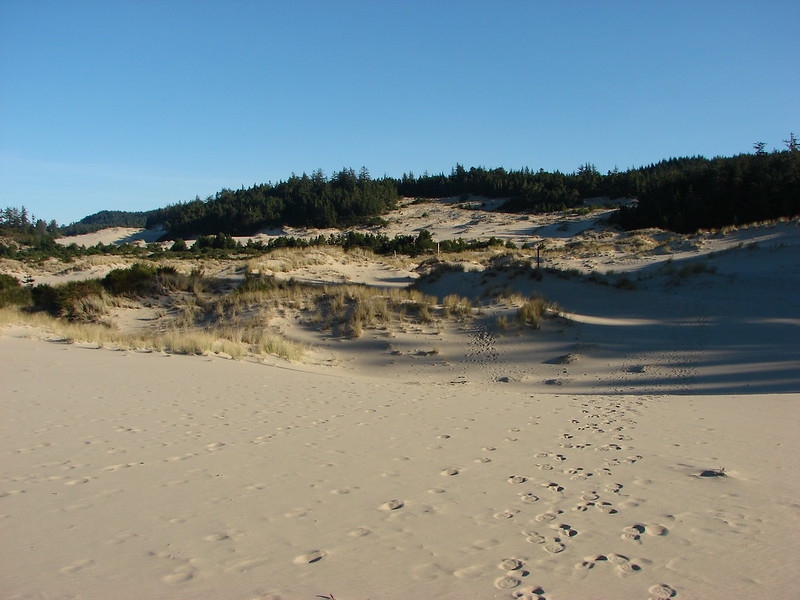
A .3 mile descent brought us to the dunes where we followed footprints and posts toward the ocean.
DSC08336

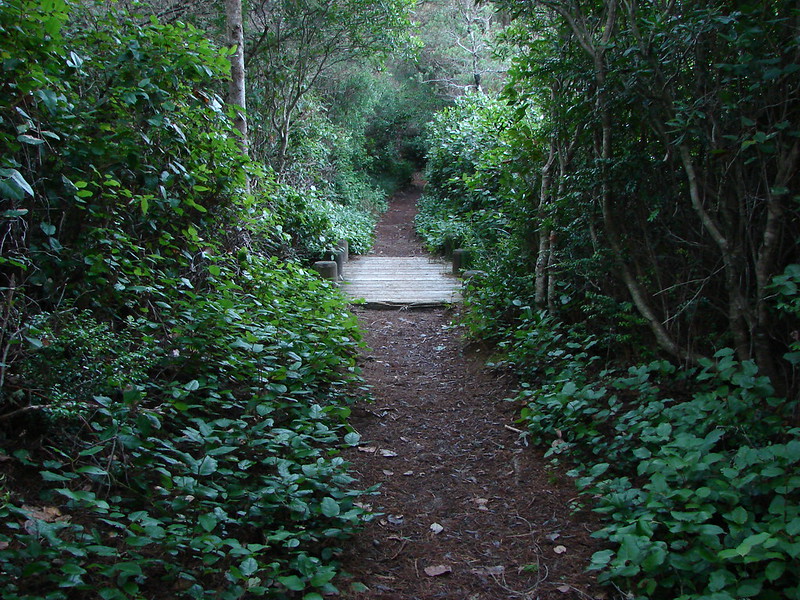
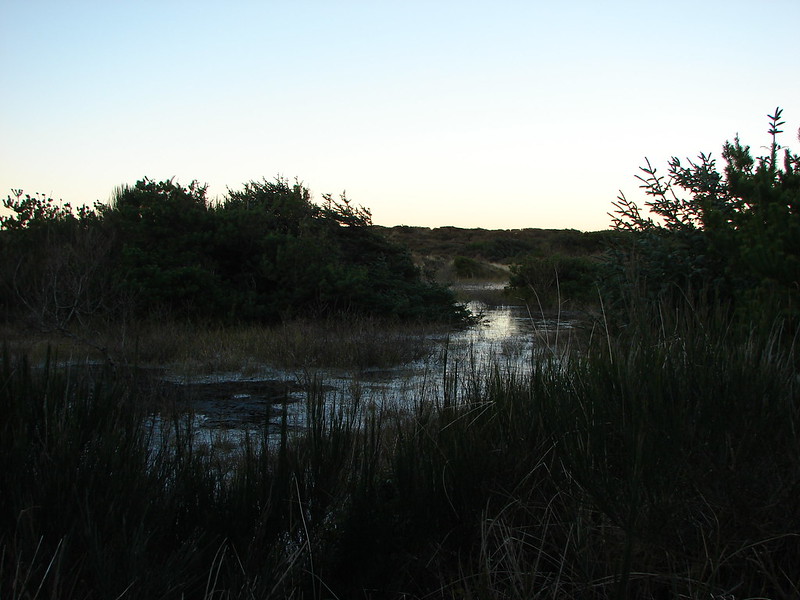
Between the dunes and the ocean the trail passed through the deflation plain, an area created by a non-native beachgrass introduced in the early 1900s which has cut off the supply of sand to the dunes. In the deflation plain marshes and a forest have formed.
DSC08343
DSC08344

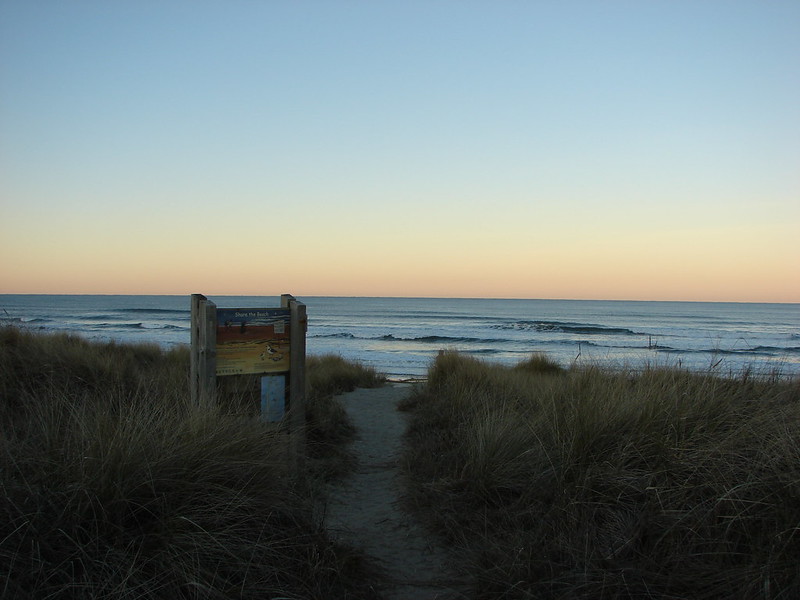
After crossing the plain we arrived at the foredune where the European beachgrass gives way to the beach.
DSC08348

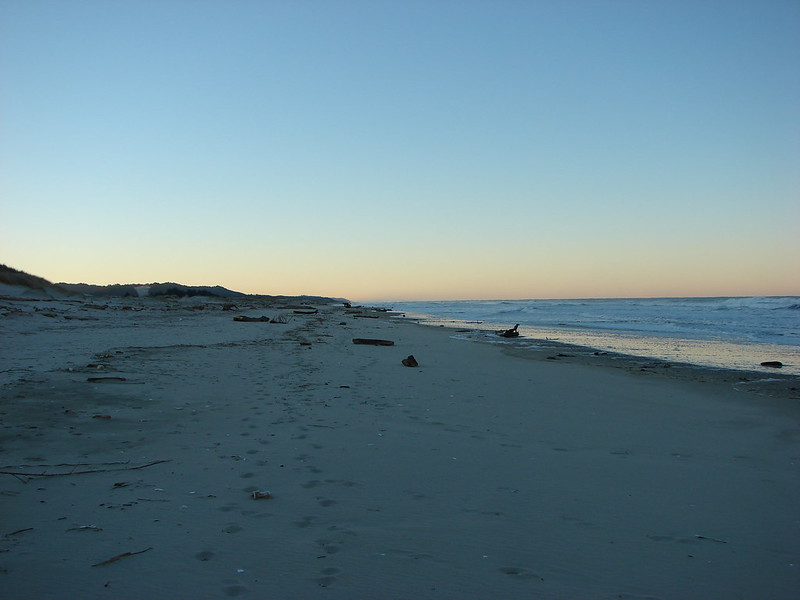
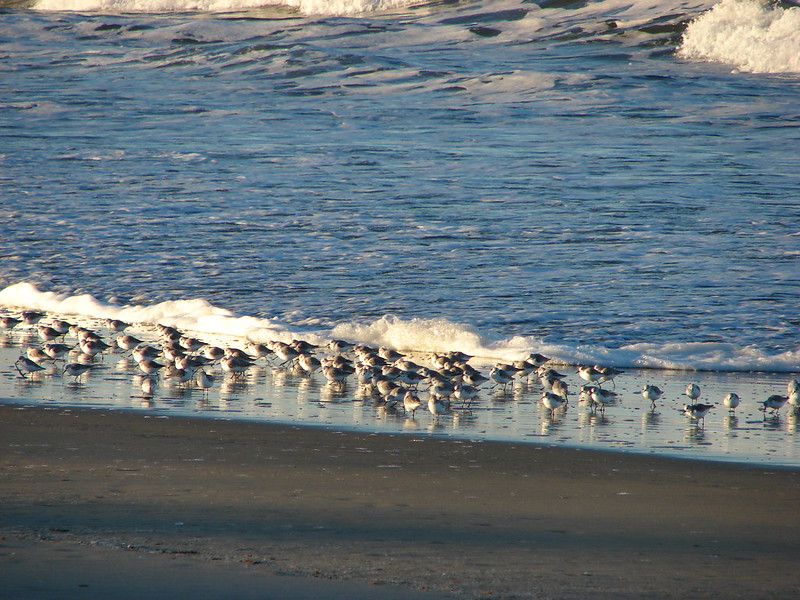
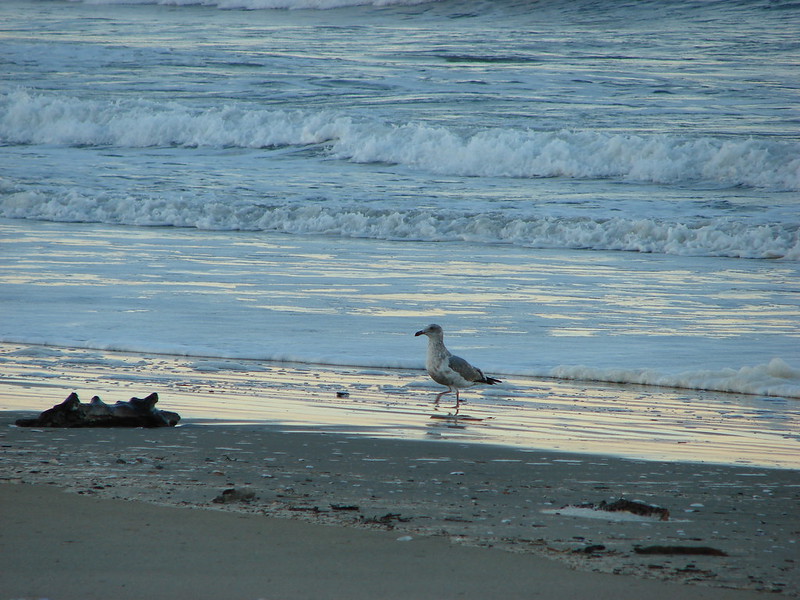
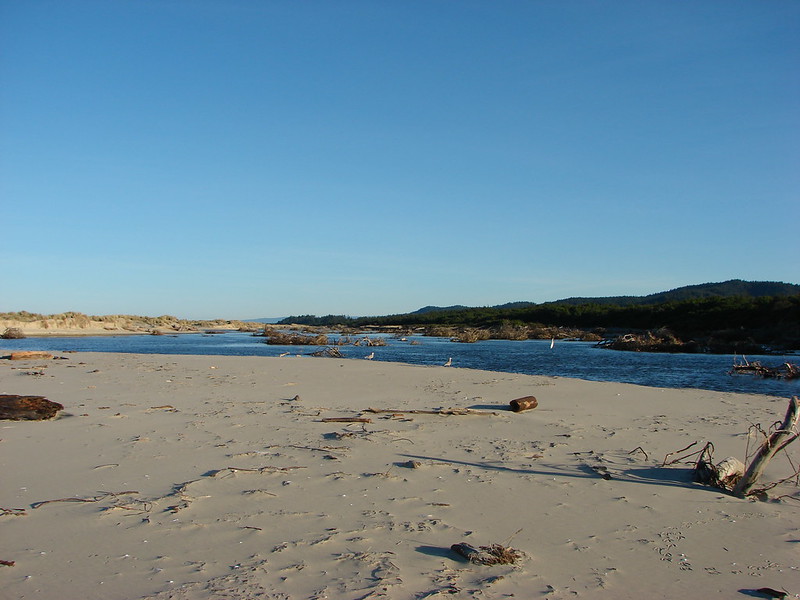
We turned south and headed down the beach. The beach was quite except for the sound of the ocean waves. We were the only people on the beach as far as we could see. Snowy Plovers and gulls were the only company we had.
DSC08354
DSC08367
DSC08361

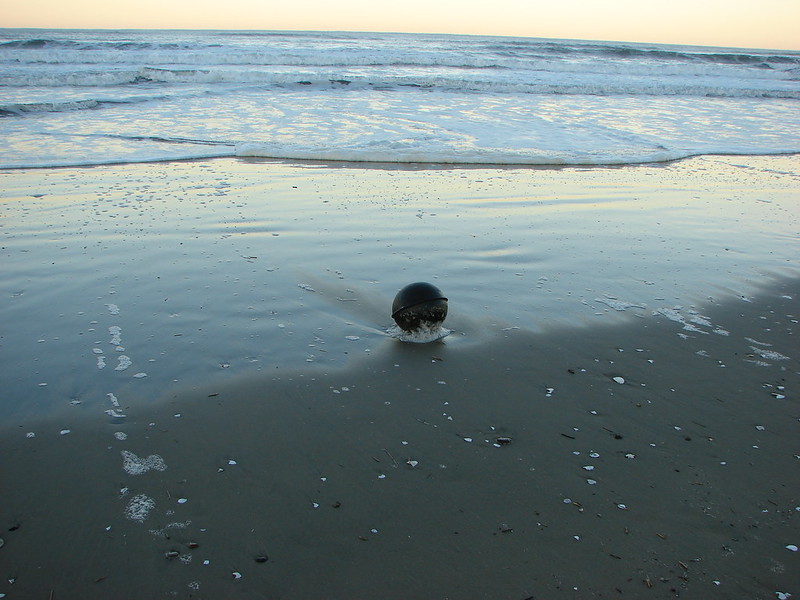
There was quite a bit of debris on this section of beach. There were plenty of the usual pieces of shell and sand dollars along with many items that may have been washed up from the 2011 tsunami that hit Japan.
DSC08357

Our original plan was to hike the beach to Tahkenitch Creek then cross the creek and pick up another network of trails on the other side. These other trails would take us on a loop past Threemile Lake, through the Tahkenitch Dunes and back across Tahkenitch Creek further inland where we would then finish the Oregon Dunes Loop. We abandoned that plan upon arriving at Tahkenitch Creek. It was wider and deeper than I had anticipated and neither of us were willing to wade across with the temperatures hovering around freezing.
DSC08369
DSC08370

We turned to Plan B which was to backtrack to the continuation of the Oregon Dunes Loop, return to the car and then drive to the Tahkenitch Dunes Trailhead. We turned around and made our way back up the beach to a hiker sign marking the loop.
DSC08375

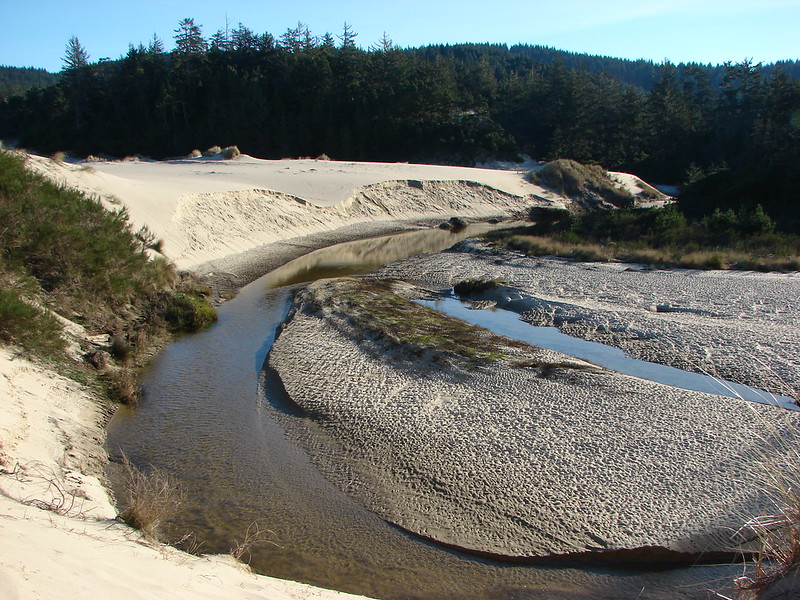
This section of trail passed by a bend in Tahkenitch Creek before returning to the dunes and completing the loop.
DSC08379
DSC08381

We had wound up hiking a little over 8 miles by the time we reached our car (We didn’t realize we had gone that far until later when I reviewed the GPS information.) and were glad for a short rest while we drove the 3 miles to the next trailhead.
DSC08385

The trail here started in a nice forest leading .2 miles to the start of our next loop.
DSC08387
DSC08388

We went right at the junction and headed for the dunes.
DSC08390

The trail passed over the dunes and then through a more substantial forest before reaching Tahkenitch Creek near the ocean.
DSC08392
DSC08398

The trail led down to the beach where we again turned south for a mile (the final few tenths of beach are open to vehicles) to another sign marking the loop. The sign was a bit hard to spot as it was back away from the foredune a bit. The beach on this side of the creek was much less cluttered.
DSC08400

After heading inland for half a mile we arrived at an overlook of Threemile Lake. The lake was 200 feet below us and we decided not to head down the sandy hill to visit it because neither of us felt like climbing back up that much sand. We opted to take a short snack break above the lake before continuing on our loop.
DSC08402

The loop continued for 2.7 miles passing through an impressive forest before arriving back at the junction .2 miles from the car.
DSC08407
DSC08408

It had been a beautiful day on the beach despite the cold temperatures so we were surprised to have only seen a total of three other people during the day. Two were just heading down on the Oregon Dunes Trail as we finished that loop and the other had driven his pickup down onto the beach south of Tahkenitch Creek. We couldn’t have asked for a better way to start our 2015 hikes. Happy Trails!

flickr: https://www.flickr.com/photos/9319235@N02/sets/72157650068860795/

Categories
Central Coast Hiking Oregon Oregon Coast Trip report

Harts Cove & Drift Creek Falls

It has become a tradition to finish off our hiking year either on the Oregon Coast or in the coast range. This year we targeted a pair of shorter hikes to keep the tradition alive. For the first of these two hikes we traveled to Cascade Head just north of Lincoln City in order to visit Harts Cove where a waterfall spills into the Pacific Ocean. We parked at the Cascade Head Upper Trailhead along road 1861 at a sign post for the Nature Conservancy Trail. A trail here led off for a mile to Cascade Head’s upper viewpoint which we had visited before. In order to find the Harts Cove Trailhead we walked another .9miles down road 1861 where a large parking area with plenty of signs marked the start of the trail. We could have driven here but were contemplating hiking to the upper viewpoint later if the sky cleared so we decided to park at the upper trailhead.
DSC08186

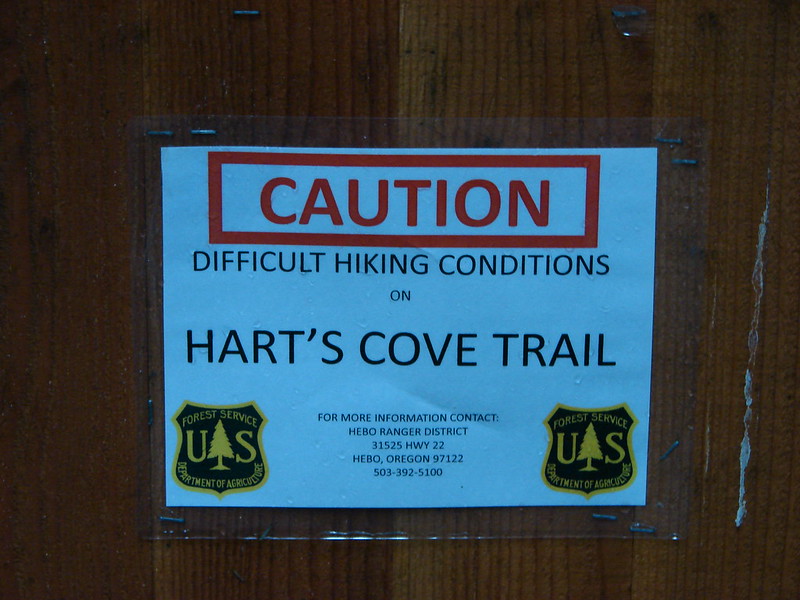
One of the signs warned of difficult hiking conditions on the trail which piqued our interest.
DSC08187

The trail started out by diving fairly steeply downhill through the forest for the first half mile then descended more gradually to a bridge across Cliff Creek.
DSC08192

DSC08193

Cliff Creek

After crossing the creek the trail turned back toward the ocean along a ridge. We could hear a number of sea lions on the rocks below but could only get small glimpses of them across the water through the trees.
DSC08200

As the trail wound around the ridge end there was a bench that offered an obstructed view across Harts Cove to a meadow which was where the trail would end. The trail then bent back leading us around the cove. We crossed Chitwood Creek which appeared to have once had a bridge but it was now in pieces further down the creek.
DSC08207

We had been in clouds and fog for most of the hike but as we came out of the forest into the meadow we could see clearer skies out over the ocean. The trail was steep here also and muddy making it a bit slick.
Looking down the trail:
DSC08210

Looking up from below:
DSC08269

North toward Cape Lookout:
Cape Lookout from the meadow near Harts Cove

South toward Cascade Head:
Cascade Head

The sea lions could still be heard across the way below Cascade Head, and now we could see them better.
Sea Lions and Seagulls

We followed the trail down and around to the left toward Harts Cove so that we could get a view of Chitwood Creek’s waterfall. We were surprised to find a handful of flowers in bloom including a number of Salal bushes.
DSC08234

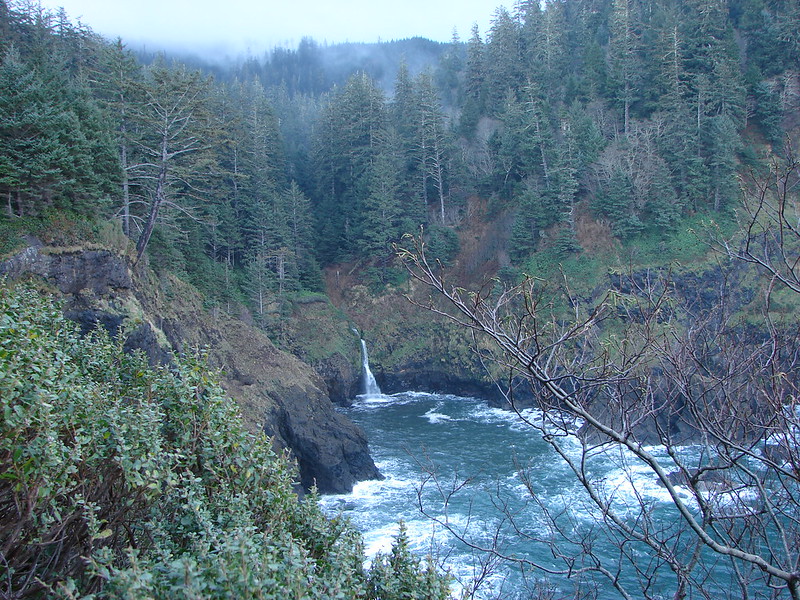
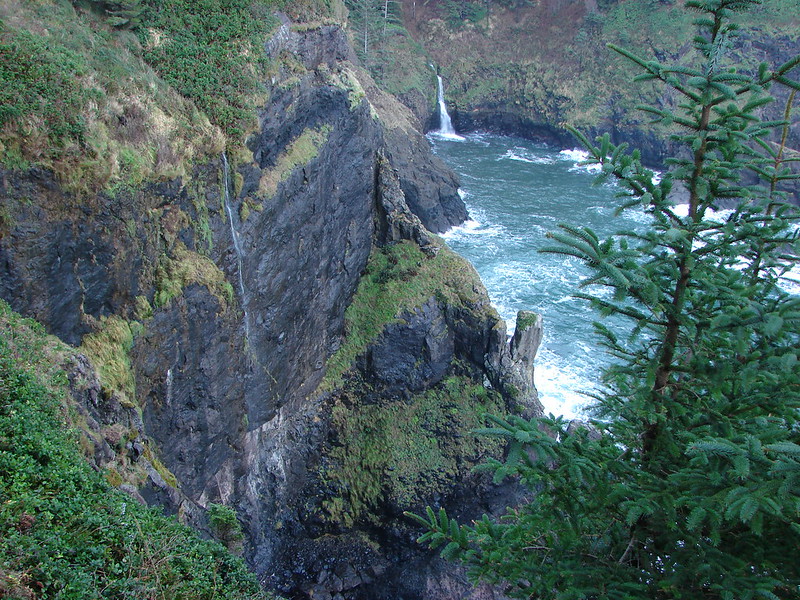
The waterfall turned out to be very picturesque as it fell down into the surging ocean.
Harts Cove and Chitwood Creeks waterfall

Chitwood Creek waterfall

DSC08268

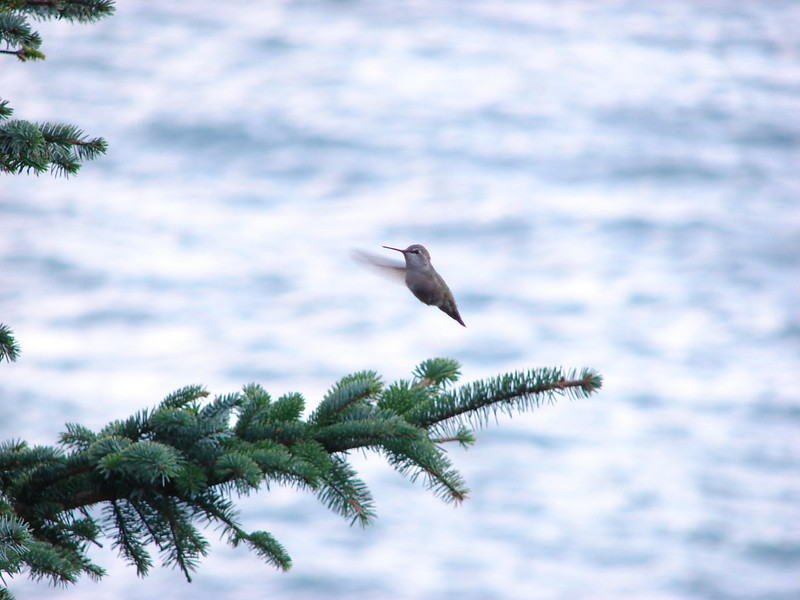
There was a nice open spot below a tree where we stopped for a snack and to remove some of the unnecessary layers of clothes we had on. While we were resting there Heather spotted a hummingbird that was interested in my orange jacket. It was zipping about, landing occasionally and then darting back into the air. I was snapping pictures frantically trying to get some sort of picture before the hummingbird disappeared. I wasn’t sure if I’d managed to get anything until we got home, but I wound up getting lucky with a single shot.
Hummingird in the meadow near Harts Cove

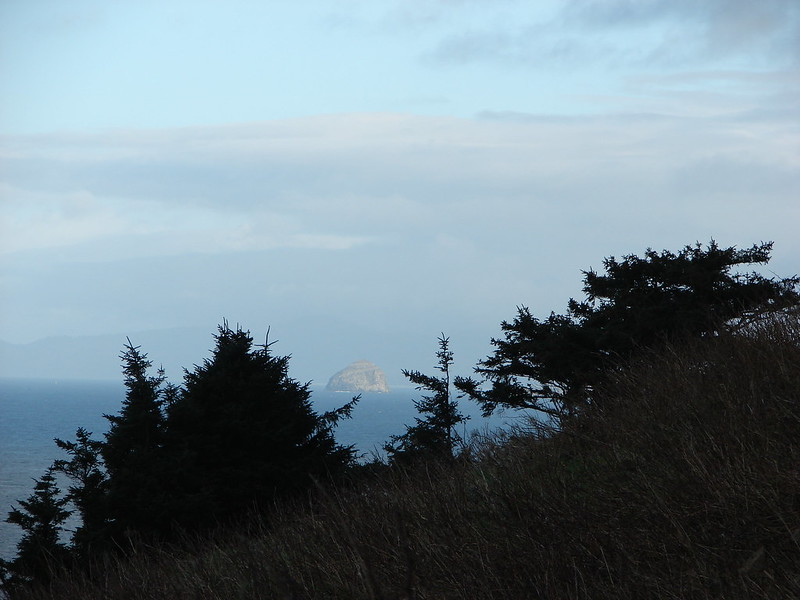
As we headed back up the steep trail we noticed that Haystack Rock near Pacific City was shinning in full sunlight.
DSC08270

We returned the way we’d come and decided to skip the upper viewpoint because it still appeared to be enveloped in the clouds. This hike had been 7.6 miles which included the unnecessary 1.8 miles due to parking at the upper trailhead.

Our next stop was Drift Creek Falls which is located in the Siuslaw National Forest between Hwy 18 & Hwy 101 along Drift Creek Camp Road (Road 17). There was a good sized parking area and restrooms at the trailhead.
Drift Creek Falls Trailhead

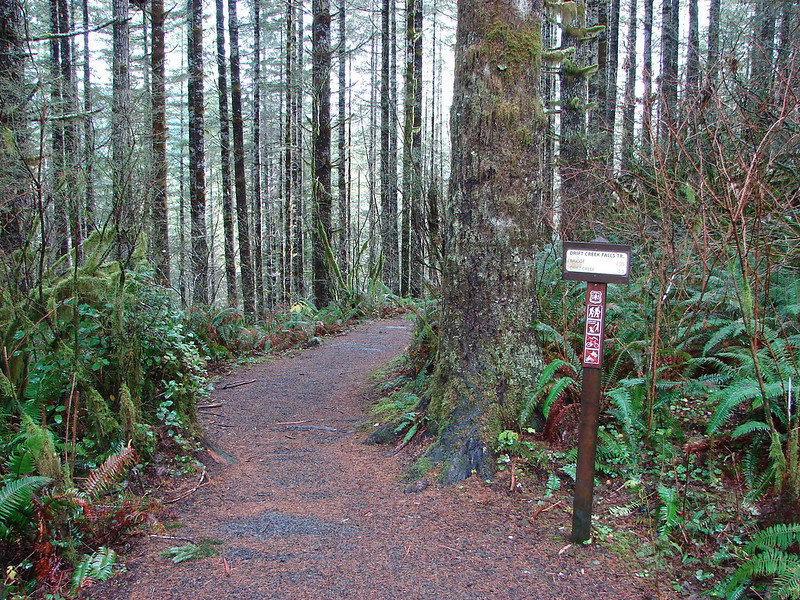
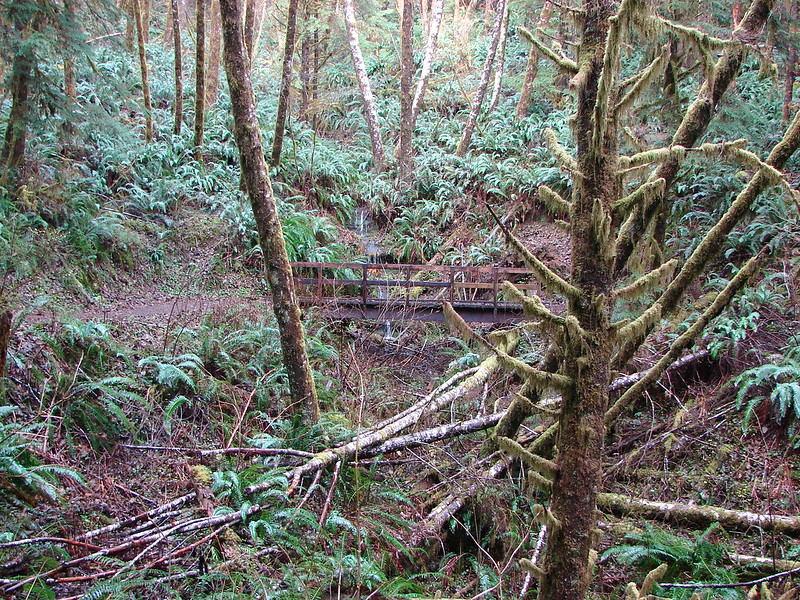
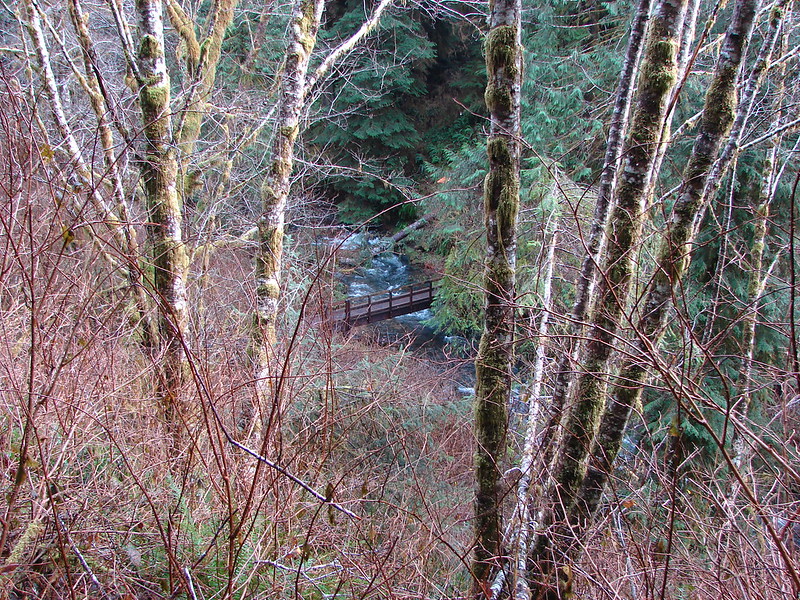
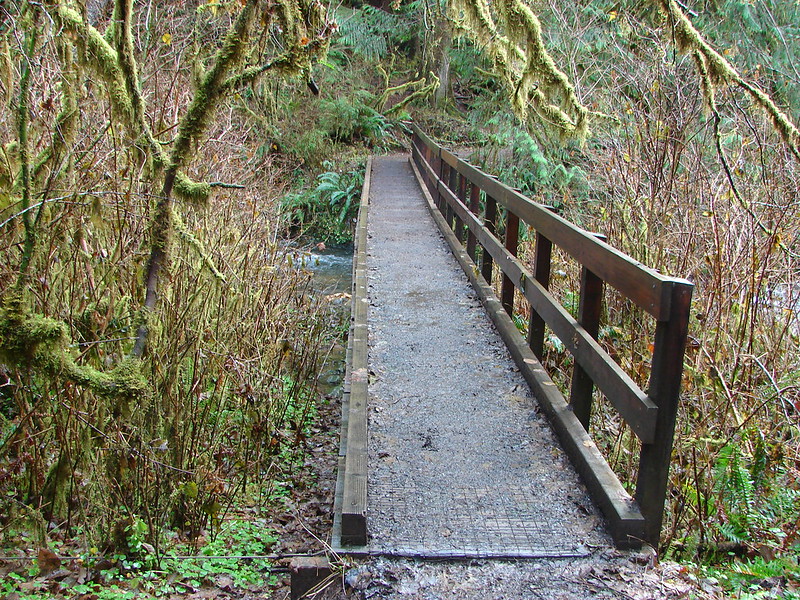
The trail leads down through the forest crossing two creeks on footbridges.
DSC08289

DSC08292

DSC08295

DSC08296

At the .7 mile mark the trail forks at a sign for the North Loop, a longer loop option which we planned to take on the way back from the falls. A third of a mile later we came to the other end of the North Loop.
DSC08322

Just a short distance later we arrived at the suspension bridge over Drift Creek.
Suspension Bridge over Drift Creek

The bridge passes over the creek very close to the falls allowing for some nice views.
Drift Creek Falls

DSC08304

The trail continues on the far side of the bridge down to Drift Creek where we could get a different perspective.
Drift Creek Falls

After enjoying the falls for a bit we headed back, this time taking the North Loop which would add about .7 miles to the return trip. This 1 mile section of trail climbed up and wound back through the forest. Aside from the trees and a few mushrooms there wasn’t much to see, but the trail was nice and good for a little extra exercise if wanted.
North Loop - Drift Creek Falls Trail

DSC08327

By taking the North Loop back we wound up with a total of 3.9 miles showing on the Garmin. These two trails were close enough (30 minute drive) and short enough to do in a day but they were also nice enough to stand on their own. As far as the cautions at the Harts Cove Trail we didn’t experience anything that we found too hard or scary but some of that is subjective and the trial was steep in places and the wet conditions caused a lot of mud which was slick at times. We will most likely be back to the coast sometime next month to kick off our 2015 hikes, but until then Happy Trails!

flickr:https://www.flickr.com/photos/9319235@N02/sets/72157649223220159/
facebook:https://www.facebook.com/media/set/?set=a.10205640025507123.1073741919.1448521051&type=1

Categories
Hiking Middle Santiam Old Cascades Oregon Trip report

House Rock

We never know what kind of weather to expect in November when we are penciling out our hiking schedule so we typically play it fairly safe by picking a hike on the coast or along a lower elevation river or creek.   This year we selected House Rock along the Old Santiam Wagon Road which was established in 1865 as a main route from the Willamette Valley to Central and Eastern Oregon for many years.  As it turned out the weather was not a concern and it was a beautiful day for a hike.

The wagon road originally extended from Lebanon, OR all the way to Ontario, OR on the Oregon – Idaho border.  For our hike we started at a trailhead just east of the former Mountain House Restaurant (a long time rest stop along the route) on Highway 20 between milepost 52 & 53.  From the small parking area a footbridge led across the South Santiam River to former road.
DSC08008

DSC08009

After crossing the river we turned left onto the wide path covered in a carpet of leaves and made our way through the mossy woods toward House Rock.
Old Santiam Wagon Road

Recent rains had left the creeks and runoff streams flowing nicely which added to the scenic beauty.
DSC08019

DSC08020

At the two-mile mark we arrived at the start of the House Rock loop.
DSC08032

We turned toward the river where another footbridge joined from the House Rock Campground.
DSC08033

After checking out the bridge we made our way to House Rock.  There really wasn’t a good way to get a picture that adequately showed the size of House Rock and the opening beneath it.  A small stream flowed through the wide cavern where there was enough room for several people.
DSC08038

DSC08039

From beneath House Rock

House Rock

We left House Rock and continued on the loop heading toward House Rock Falls.  A tree had recently fallen creating a bit of an obstacle but we were able to make our way over it.

DSC08052

I emailed the Sweet Home Ranger District when we were home just in case they weren’t already aware of it.

A sign pointed the way to the falls along a .2 mile side trail.
DSC08054

DSC08055

House Rock Falls was just as difficult to get a good picture of.  Boulders and logs partly obscured the view from the trail and the wet rocks made scrambling down to the base an adventure.  Even then the curve of the river combined with the rocks made it impossible to get a clear view without wading out into the river.  It was just cold enough that I didn’t feel like trying that so I settled for the obstructed view and called it good.
House Rock Falls

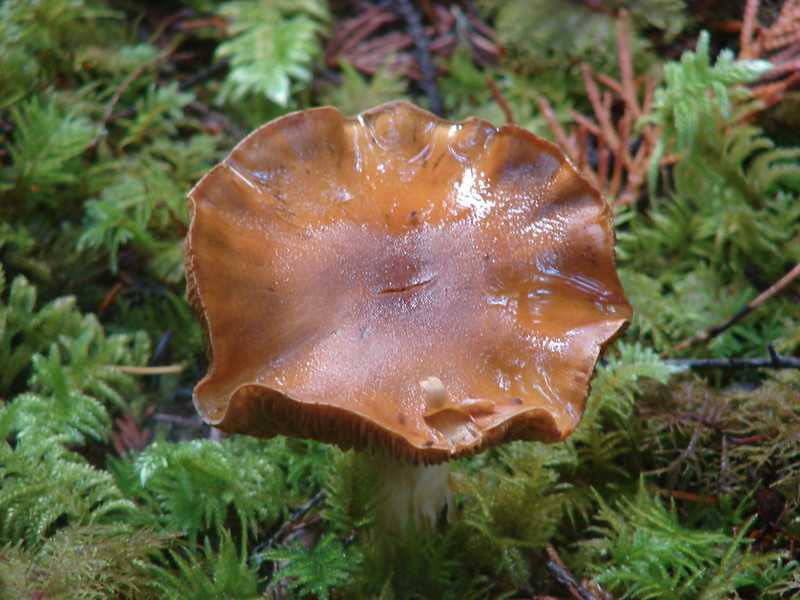
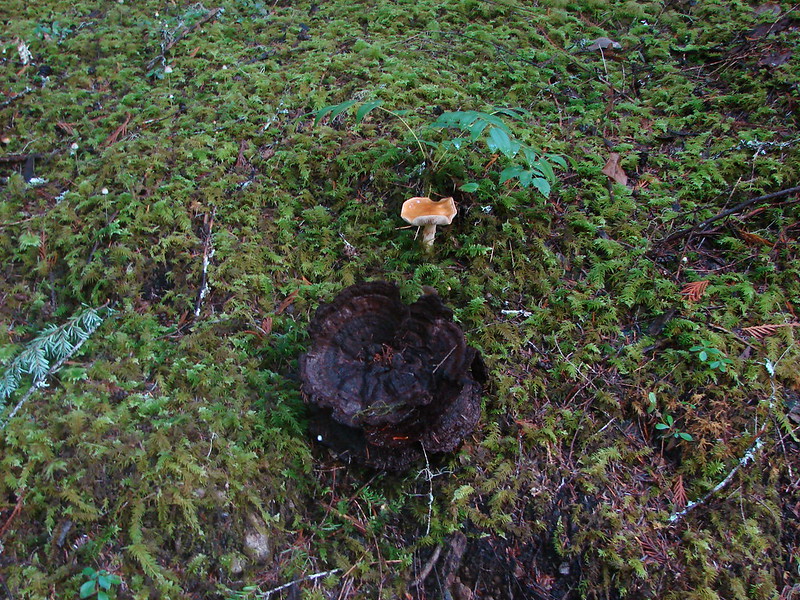
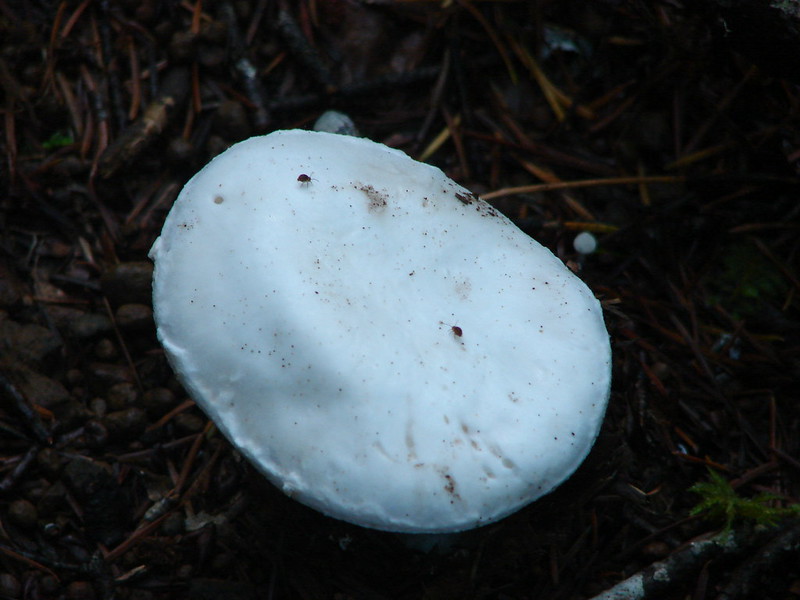
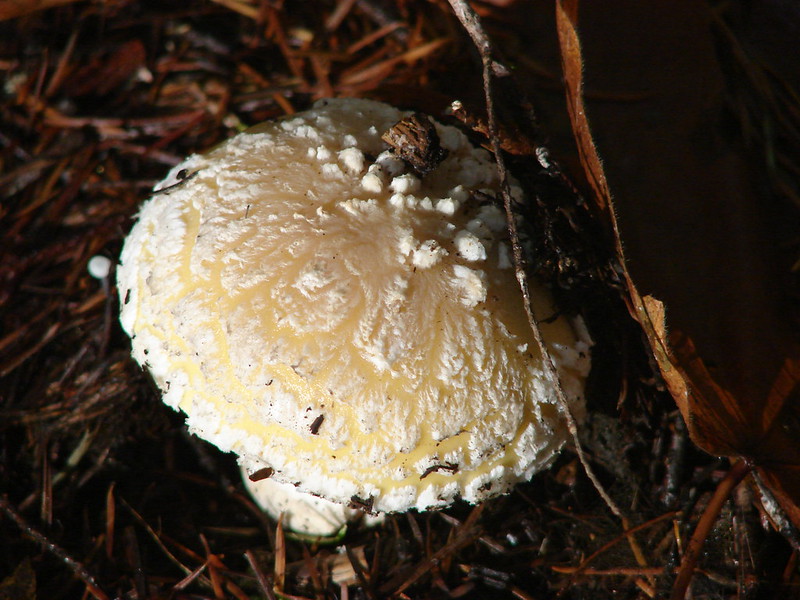
We headed back to the loop and then continued up to the wagon road where we turned left once again.  Our goal was a viewpoint near the 5 mile marker. After another 1.1 miles we met FS Rd 2044 where we followed signs to the continuation of the wagon road.  In the next couple of miles the trail briefly left the old road and passed through an ever-changing forest where there was a seemingly endless variety of mushrooms on display.
DSC08082

DSC08098

DSC08101

DSC08104

DSC08105

DSC08119

DSC08121

Mushrooms along the Old Santiam Wagon Road

DSC08132

DSC08135

DSC08163

DSC08162

We arrived at the 5 mile marker and took a short trail on the right to  the viewpoint.

DSC08138

It was a nice place to take a short break and have a snack.  The view wasn’t anything spectacular but Jump Off Joe Mountain was across the a valley while Iron Mountain, which we had hiked on July 4th, rose up in the distance.

Jump Off Joe Mountain
DSC08144

Iron Mountain
Iron Mountain from the 5 mile viewpoint along the Old Santiam Wagon Road

DSC08148

We returned the way we had come following the wagon road back past the House Rock loop and ultimately to our waiting vehicle. It had been a wonderful November day for a hike.  Happy Trails!

Categories
Diamond Peak Area High Cascades Hiking Oregon Trip report

Midnight & Yoran Lakes – Diamond Peak Wilderness

Our final October hike brought us to the Diamond Peak Wilderness for our second ever visit. This 52,611 acre wilderness is home to numerous lakes and 8,744′ Diamond Peak. Our plan for this visit was to start at the Trapper Creek Trailhead and take the Yoran Lake Trail to Yoran Lake then head cross-country to the Pacific Crest Trail returning on a loop past Midnight Lake. It was a rainy drive for most of the morning but we arrived at the West Odell lake Access off Highway 58 under clouds that were beginning to break up. Parking for the trail is located across from the Shelter Cove Resort next to some railroad tracks.
DSC07839

DSC07841

DSC07842

The actual trail started on the far side of the tacks and quickly entered the wilderness.
DSC07845

DSC07846

Just a short while after entering the wilderness the trail split. The left fork led to Diamond View Lake and the right to the Yoran Lake Trail.
DSC07847

We took the right hand fork which briefly followed Trapper Creek passing a small waterfall just before crossing the creek on a footbridge.
Small waterfall on Trapper Creek

DSC07853

The trail split again at the Yoran Lake Trail which headed uphill to the left while the path on the right led to Pengra Pass and the PCT. We began the steady climb up to Yoran Lake as a little fog rolled through the forest.
DSC07854

DSC07859

Yoran and Midnight Lakes were only two of several lakes we were going to be visiting on the hike as well as a number of smaller ponds. We came to the first small lake after 3 miles on the Yoran Lake Trail.
Unnamed Lake along the Yoran Lake Trail

DSC07870

In another mile we arrived at Karen Lake.
Karen Lake

On a clearer day we would have had a great view of Diamond Peak but we had to settle for some briefs peeks of the peak.
DSC07887

Just to the NW of Karen Lake we found Yoran Lake at the end of the Yoran Lake Trail. Diamond Peak was again hidden by the clouds, but we had a little better view of Mt. Yoran.
Yoran Lake

DSC07898

Yoran Lake

We made our way around the lake to the northern end where there was a pair of small islands.
DSC07929

DSC07926

We left the lake shore when we passed the second island, crossing a pretty little inlet creek, and headed true north toward the PCT.
DSC07930

At first we were following a faint path but we lost the tread as we passed by a pair of small ponds.
DSC07931

DSC07932

A couple of quick checks of the GPS showed we were on course to arrive at Liles Lake which lies next to the PCT. Our guidebook said to go around the left side of the lake but we arrived closer to the right side. We picked up a trail going around the lake and decided to just follow it around that side.
Lils Lake

DSC07941

It looked like the right side might be difficult to go around earlier in the year when the water level would have been higher but we had no problem following the path and hooking up with the PCT on the north side of the lake. We turned right and started downhill passing some small ponds and passing through some interesting forest.
DSC07950

DSC07953

The next lake we came to was Hidden Lake.
Hidden Lake

We passed several more pretty little ponds between Hidden Lake and the next named lake which was Arrowhead Lake. It was pretty clear why this forest is full of mosquitoes most of July and August with ponds and lakes seemingly everywhere.
DSC07961

DSC07963

DSC07965

We almost passed by Arrowhead Lake waiting for a clear path to it, but when we didn’t find one we made our own. We were glad we did because this lake had some of the prettiest water we had seen that day.
Arrowhead Lake

Continuing down the PCT from Arrowhead Lake we passed a rock that Heather dubbed Gorilla Rock due to it’s interesting shape. She thought it looked like a gorillas head and arm.
Gorrilla Rock - named by Heather

Shortly after passing the rock we spotted movement through the trees further down the trail. I thought we’d seen another person or dog coming up the trail and then we saw a second flash of color which we could tell was an elk. A total of four elk cows had crossed the trail and passed in virtual silence through the forest and over a small ridge. I was snapping pictures every time one appeared through the trees but I never got more than the back half of one.
DSC07978

The final named lake we visited was Midnight Lake.
Midnight Lake

We stopped at one final unnamed lake/pond before arriving at Pengra Pass.
Small lake/pond along the PCT in the Diamond Peak Wilderness

We left the PCT at Pengra Pass and followed an old road right .4 miles where a trail split off from the right hand shoulder.
DSC07997

It was only another .6 miles back to the Yoran Lake Trail and .7 more back to our car. On our way home we made a pit stop at Salt Creek Falls, the previous hike we’d taken in the Diamond Peak Wilderness. https://wanderingyuncks.wordpress.com/2013/07/07/salt-creek-falls/
Salt Creek Falls

All the lakes were very nice and we are hoping to do some backpacking in the area sometime. Diamond Peak is a non-technical climb and there are trails all the way around the mountain making for numerous possible destinations. More ideas for future trips 🙂 Happy Trails!

flickr: https://www.flickr.com/photos/9319235@N02/sets/72157648430549439/
facebook: https://www.facebook.com/media/set/?set=a.10205280662043261.1073741917.1448521051&type=1

Categories
High Cascades Hiking Mt. Jefferson Area Oregon Trip report

Jefferson Park – 2014

**Note the 2017 Whitewater Fire burned a portion of this hike.**

The only location we have visited in each of the last three years is Jefferson Park in the Mt. Jefferson Wilderness. For awhile it looked like that streak might be broken this year, but then Heather accidentally signed up for a 5k race on what was to be our final weekend of hiking in October. We rescheduled our final October hike and I decided to take advantage of the Columbus Day holiday and head to Jefferson Park to keep my streak alive.

We had rotated the trails we used to reach Jefferson Park between the three most popular approaches – The Whitewater Creek Trail, the Pacific Crest Trail from the north, and the South Breitenbush Trail. Since the Whitewater Creek Trail offered the shortest drive and hike I decided to revisit that trail.
DSC07602
It is also the most popular approach but the parking area was nearly empty when I arrived. It was a surprisingly warm morning despite the forecast of snow for the very next day and I was able to leave my hat and gloves in my pack as I set off. I’d dressed for a typically chilly Fall morning and I wound up having to remove my two lower layers before I’d gone a quarter mile, but once I got my clothing situation corrected I was able to set a nice pace as I climbed along the Sentinel Hills.

The trail started off in the trees offering only brief glimpse of the top of Mt. Jefferson. One and a half miles in an unmarked trail joined from the left coming from Triangulation Peak. Another mile from the junction is where the views started unfolding as the trail wound up and around the Sentinel Hills.

The Three Pyramids
DSC07609

Triangulation Peak
DSC07612

Mt. Jefferson
DSC07622

Fall was on display in the wilderness and the forest was full of color.
DSC07624

DSC07630

DSC07637

DSC07641

The trail joined the Pacific Crest Trail at the 4.2 mile mark which I continued North on for another .9 miles to Jefferson Park.
DSC07655

The view of Mt. Jefferson from the park is the main attraction.
DSC07653_stitch

There are many other attractions in the park though including five named lakes, the South Fork Breitenbush River, and wildflower meadows (If you time it right). We had visited all the lakes and the river and seen some of the wildflowers, but we had never headed toward the mountain itself. I decided that was what I was going to do on this visit so I took the first well worn trail leading off to the right from the PCT and headed for Mt. Jefferson.
DSC07661

I wasn’t sure where this trail was going to lead as it climbed through a series of meadows.
DSC07662

Eventually I came to the tree line where a series of rock cairns appeared to lead up a ridge of loose rocks.
DSC07669

I kept going following the cairns as best as I could. As I was climbing I noticed a fellow hiker higher up along the ridge. The view behind was getting better by the minute as the elevation gain was allowing for a great look down at Jefferson Park.
DSC07671_stitch

Soon I could see Mt. St. Helens with a fresh ring of snow on its upper reaches.
DSC07675

The final push to the crest of the ridge was steep and full of loose footing and the wind was whipping up dust devils.
DSC07681

The wind had been fairly strong but it was nothing compared to the gusts that met me as when I finally gained the ridge crest. It nearly knocked me off balance so I got low and found a nice big rock to sit down on. The other hiker was about 30 yards up the ridge doing the same thing. We were at the foot of the Jefferson Park Glacier staring up at the summit of Mt. Jefferson.
DSC07694
DSC07695

Unfortunately the Sun was also almost directly in front of us making pictures difficult in that direction but the view back toward Jefferson Park did not have that same problem. Mt. Hood and Mt. Rainier had joined Mt. St. Helens on the horizon and the entirety of Jefferson Park was spread out below.
DSC07688_stitch

Mt. Rainier & Mt. Hood beyond Park Butte
DSC07685

DSC07684

To the northwest I could see Triangulation Peak and Bocca Cave where we had been about a month earlier. https://wanderingyuncks.wordpress.com/2014/09/14/triangulation-peak-boca-cave-via-cheat-creek/
DSC07713

It appeared that it would have been possible to continue east up the ridge along the glacier but the wind was blowing too hard to attempt going any further so I began my descent back down into the park. Once I had made it back down into the meadows I turned right on the first good trail I came to thinking I had hit the PCT already. It was still early enough I had decided to head across the park and visit Russell Lake and hoped to return past the other four named lakes. I quickly realized that I wasn’t on the PCT and I had taken one of the use trails that crisscross through the park. I decided to continue along it as it was leading me in the correct direction for the lake through a series of meadows. I even found some aster still in bloom along the way.
DSC07730

DSC07735

DSC07734

DSC07737

DSC07739

DSC07740

I ended up at the SE end of Russell Lake which was perfect since we had not been to this side of the lake on our previous trips.
DSC07744

Again the Sun was in a position to wash out some of the picture but the the view from the lake was as amazing as ever.
DSC07746_stitch

DSC07752

I walked around the north end of the lake and located the PCT which I turned left on and started to head back. Near the South Fork Breitenbush River I was surprised to see a single paintbrush still blooming in the middle of a meadow.
DSC07754

When I reached the South Breitenbush Trail I left the PCT and headed west. As the trail began descending a small hillside toward the river I turned left at a switchback marked with a rock cairn. This trail led to Park Lake.
DSC07759_stitch

Staying to the left of Park Lake I followed the path up to Rock Lake.
DSC07764_stitch

DSC07768_stitch

And then continued on to Bays Lake.
DSC07772_stitch

I took a break at Bays Lake and soaked my feet for a bit before heading to the East and Scout Lake.
DSC07786_stitch

DSC07793

DSC07799_stitch

Just a short distance to the East of Scout Lake I was back on the PCT right where I had left it that morning. It was time to say goodbye to Jefferson Park for another year.
DSC07808_stitch

On the way back down to the trailhead I was finally able to get a few pictures of the mountain without interference from the Sun.
DSC07823

The ridge that I had been on earlier.
DSC07825

The only real bummer of the day was not having Heather there to hike with. This was my first solo hike and I have to say I really missed sharing the experience with her. I found it hard to just stop and enjoy the surroundings as much as we normally would. It was an interesting experience but hopefully not one that happens often. Happy Trails!

flickr: https://www.flickr.com/photos/9319235@N02/sets/72157648750622555/
facebook: https://www.facebook.com/media/set/?set=a.10205245182556296.1073741916.1448521051&type=1