Categories
Hiking Oregon Portland Trip report Willamette Valley

Mt. Tabor, Mt. Talbert, Scouters Mtn., & Hidden Falls Parks – 12/16/2023

For our final outing of 2023 we headed to Portland to visit some Boring volcanoes. Not to be confused with boring, the Boring Volcanic Field which consists of more than 80 small volcanic vents and associated lava flows dispersed throughout the greater Portland-Vancouver metropolitan area. Several of the resulting cinder cones are home to parks providing hiking opportunities and we planned on visiting three of these along with a city park with a 15′ waterfall.

We began our morning at Portland’s Mt. Tabor Park. We parked in in the lot next to the Mount Tabor Visitors Center and set off toward the playground.
IMG_2023The playground behind and to the right of the signboard at the Visitors Center.

We were attempting to follow, as closely as possible, the route described by Matt Reeder in “PDX Hiking 365”. (His hike has a different starting point but loops through the parking area where we were starting.) After a little confusion near the playground we located the red trail and followed it to the Mount Tabor Stairs where we turned right.
IMG_2027The red trail continuing on the far end of the playground.

IMG_2028Mt. St. Helens from the playground.

IMG_2031On the red trail.

IMG_2032The Mount Tabor stairs extend from the park border up to the summit.

IMG_2034Summit restrooms

IMG_2036The restrooms were reopened in 2017 after being renovated.

IMG_2041Mount Tabor summit

IMG_2040Mt. Hood from the summit.

IMG_2044Downtown Portland

At the southern end of the summit, near the former site of a statue of Harvey W. Scott (and later a bust of York), we headed downhill on a steeper trail.
IMG_2046

IMG_2048

At a wide junction we turned right onto the Red Trail and passed above Reservoir No. 1.
IMG_2049

IMG_2050

At Reservoir Loop Road we veered left staying on the Red Trail climbing up and over Poison Oak Hill. The trail then dropped back down to the loop road near Reservoir No. 5.
IMG_2058

IMG_2059

IMG_2060

IMG_2061Mallards

We walked along reservoir road to a small building then crossed the road and headed down a long flight of stairs.
IMG_2065

IMG_2064

IMG_2066

IMG_2067

At the bottom of the stairs we turned right on the Green Trail and followed it past some tennis courts before turning uphill. We stuck to the Green Trail as it neared the parking area and followed it back behind The Crater before arriving back at the Visitors Center.
IMG_2070

IMG_2073We forked right at this junction sticking to the green pointers.

IMG_2076Arriving at The Crater.

IMG_2077Coming around The Crater near the Visitors Center.

This was just over a two-mile loop with approximately 350′ of elevation gain.

From Mount Tabor we made the nine-mile drive to the Sunnyside Road Trailhead for the Mount Talbert Nature Park.
IMG_2078

We set off on a gravel path that descended to a metal bridge over Mount Scott Creek.
IMG_2079Mount Talbert from the path.

IMG_2081

IMG_2082Mount Scott Creek

Beyond the creek the forested trail began to climb Mount Talbert. We passed a junction with the Cedar Park Trail joining from the left and after 0.4-miles arrived at a T-junction with the Park Loop Trail.
IMG_2083

IMG_2086

IMG_2088The Park Loop Trail junction just uphill.

Mount Talbert is an Oregon Metro park which meant well marked junctions complete with small maps.
IMG_2089Note that the map at the Park Loop/Sunnyside Road Trail junction mis-identifies the location with the “You Are Here” star located at the Park Loop/Summit Ridge junction.

We turned left onto the Park Loop Trail and followed it further uphill to the actual Summit Ridge Trail junction.
IMG_2091

IMG_2093

We turned right onto the Summit Ridge Trail and followed it up and over the wooded summit to the West Ridge Trail.
IMG_2096

IMG_2098

IMG_2099Arriving at the West Ridge Trail junction.

We turned right again and followed the West Ridge Trail as it traversed the hillside brining us back to the Park Loop Trail.
IMG_2101

IMG_2103Rejoining the Park Loop Trail.

We completed the loop and turned down the Sunnyside Road Trail to return to our car to complete this 2.5-mile (and 700′ gain) hike.
IMG_2108Mt. Adams was visible through the web of small branches.

IMG_2110A snowy Mt. Adams.

IMG_2113Back at the Sunnyside Road Trail.

From the Sunnyside Road Trailhead it was just a 3.5-mile drive to the parking area at Scouters Mountain Nature Park.
IMG_2115

From the parking area we set off on the paved Shelter Trail toward the summit.
IMG_2114

After just 0.2-miles we arrived at the shelter and a great view of Mt. Hood.
IMG_2119

IMG_2122The benches throughout the park contained various nature sculptures, this one is “Moss Group”.

IMG_2126

IMG_2128

IMG_2127

After admiring the mountain we made a small loop on the summit then continued on our larger loop by taking the Boomer Trail at the southern end of the summit downhill and looping around the East side of the mountain to return to the parking area.
IMG_2148On the Boomer Trail.

IMG_2150The Boomer Trail turned left at the bottom of these stone steps.

IMG_2151Another Metro trail map and pointers.

IMG_2152The Boomer Trail, named for Mountain Beavers which are sometimes called boomers, crossed the entrance road before climbing back up to the parking area.

IMG_2156This was an impressive root system.

IMG_2160A less obstructed view of Mt. Adams. (Mt. St. Helens was also briefly visible from this section of trail.)

IMG_2161Slightly clearer shot of Mt. Adams.

IMG_2162Back at the trailhead.

This was just a 1.3-mile loop with 200′ of elevation gain, and it was still early enough that we could easily fit one more stop in. From Scouters Mountain we drove another 4.5-miles to Hood View Park

At the far end of the parking area we followed a service road down to SE 162nd Ave and followed it right to its end at a sign for the Hidden Falls Nature Park.
IMG_2163

IMG_2164Mt. St. Helens from the service road. Mt. Hood was also visible to the right through some fences around the ball fields.

IMG_2166

IMG_2167

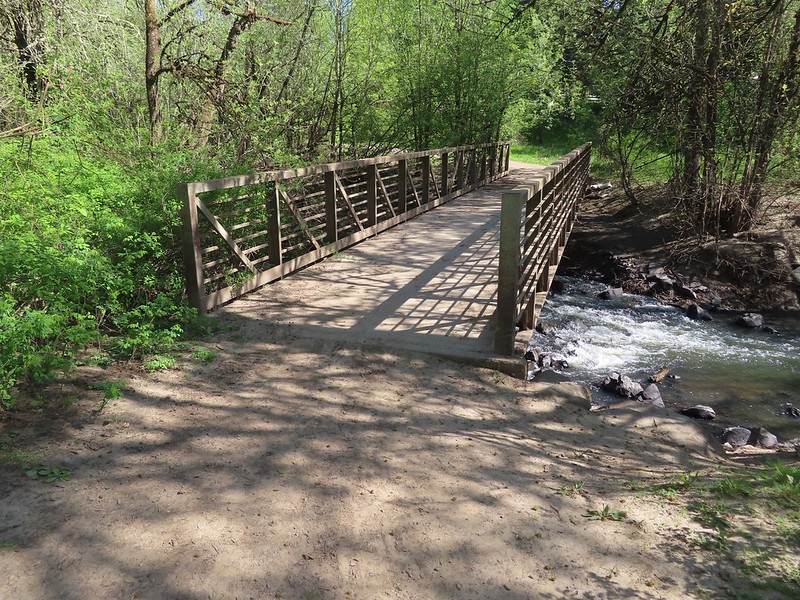
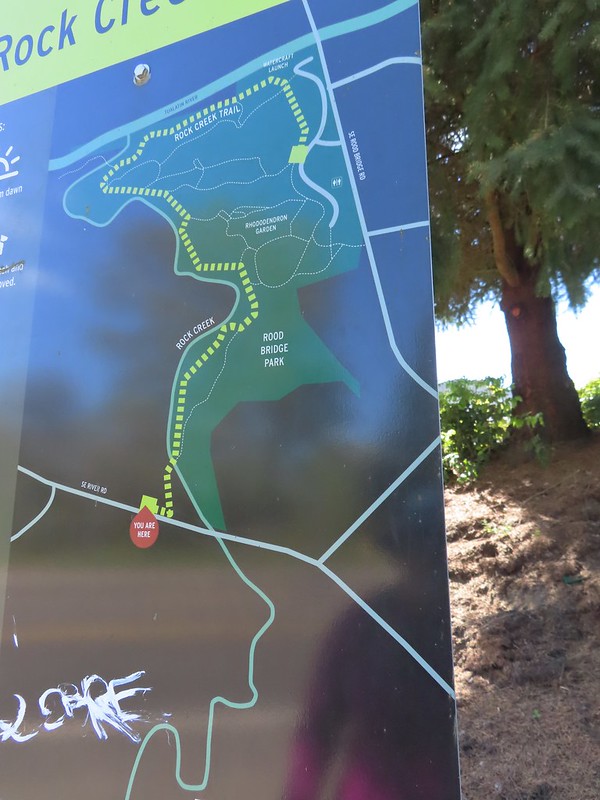
A wide path led somewhat steeply downhill a third of a mile to an impressive bridge over Rock Creek and a view of Hidden Falls.
IMG_2168

IMG_2170The large area to the right didn’t offer much of a view of the falls, but the view from the bridge was great.

IMG_2172

IMG_2176

IMG_2183

IMG_2179

We continued past the bridge a short distance along Rock Creek before turning around when the path veered away to climb up into another neighborhood.
IMG_2186

IMG_2187

The Oregon Hikers Field Guide describes a 4.1-mile loop that visits some other parks while also passing through several neighborhoods. We were content with seeing the falls and headed back making this just a 1.2-mile out-and-back with a couple hundred feet of elevation gain. For the day we logged 7.2-miles and 1475′ of cumulative elevation gain. It was a nice relaxing way to end our 2023 hiking season. Happy Trails and Merry Christmas!

Our final three hikes.
Categories
California Cascade-Siskiyou National Monument Crater Lake Area Grants Pass Area Hiking Klamath Mountains Klamath/Siskiyou Mountains Marble Mountains Medford/Ashland Area Mt. Shasta Area Mt. Theilsen/Mt. Bailey Area Oregon Red Buttes Wilderness Rogue-Umpqua Divide Roseburg Area Salmon Mountains Scott Mountains Siskiyou mountains Sky Lakes/Mountain Lakes Area Trinity Alps Trinity Divide

Southern Oregon & Northern California

Several years ago we set a goal for ourselves to hike all 500 featured hikes in William L. Sullivan’s “100 Hikes…” series of guidebooks (post). In 2020 we completed the first of these books covering the Central Oregon Cascades (post). We followed that up by completing a pair of books in 2021 starting with Sullivan’s “100 Hikes/Travel Guide Oregon Coast and Coast Range” 3rd edition (post) followed up by “100 HIkes/Travel Guide Northwest Oregon & Southwest Washington” 4th edition (post).

Generally speaking in order to check a hike off our list we need to have hiked a substantial portion of Sullivan’s described hike or visited the main attraction(s) he identifies for the hike. For 66 of the hikes we followed the books described route. For the other 34 hikes various factors contributed to us not completing all of each featured hike. For some we started at a different trailhead, others had portions of trail(s) closed when we visited, and several had longer options that would have required multiple days to complete. In some other cases we did slightly different routes, sometimes by accident.

The area covered by Sullivan in this book, as the title suggests includes parts of Southern Oregon and Northern California. It contains his southernmost featured hike, Caribou Lakes. In general the area covered in Oregon begins just North of Roseburg extending East to Highway 97 (with the exception being Klamath Falls which is included in his Eastern Oregon book), South to California, and West to Marial on the Rogue River. In California the area extends south to the Trinity Alps Wilderness, West to the Siskiyou Wilderness, and East to the Mount Shasta Wilderness.

The hikes inside the red lines represent the location of the featured hikes.
A closer look at the area covered.

In addition to the three wilderness areas in California mentioned above the featured hikes included visits to the Marble Mountain, Castle Crags, Russian, and Red Buttes Wilderness areas in California. Wilderness areas in Oregon included the Red Buttes (OR & CA share this wilderness), Kalmiopsis, Wild Rogue, Soda Mountain, Mountain Lakes, Sky Lakes, Rogue-Umpqua Divide, Boulder Creek, and Mt. Thielsen.

In addition to the 15 designated wilderness areas there were hikes in two National Monuments – Oregon Caves & Cascade-Siskiyou, and Crater Lake National Park.

#1 North Bank Ranch-Hiked 6/5/2015 6/25/2023
Middle Ridge Trail - North Bank Habitat
#2 Fall Creek Falls-Hiked 6/13/2022 8/7/2022 6/25/2023
Fall Creek FallsFall Creek Falls
#3 Little River Waterfalls-Hiked 8/7/2022
Yasko FallsYasko Falls
#4 Boulder Creek-Hiked 9/7/2020
Boulder Creek
#5 Twin Lakes-Hiked 6/14/2022
Twin Lakes from a viewpoint above Twin Lakes
#6 Fish Lake-Hiked 9/3/2022
Highrock Mountain from Fish Lake
#7 Buckey and Cliff Lakes-Hiked 9/3/2022
View from Grasshopper Mountain
#8 Umpqua Hot Springs-Hiked 6/13/2022
Surprise Falls
#9 Toketee and Watson Falls-Hiked 6/13/2022
Toketee Falls
#10 Lemolo Falls-Hiked 6/13/2022
Lemolo Falls
#11 Cowhorn Mountain-Hiked 9/15/2016
Sawtooth Mountain from Cowhorn Mountain
#12 Miller and Maidu Lakes-Hiked 8/1/2012
Tipsoo Peak from Maidu Lake
#13 Tipsoo Peak-Hiked 10/2/2014
Howlock Mountain and Mt. Thielsen
#14 Thielsen Creek-Hiked 8/8/2020
Pacific Crest Trail at Thielsen Creek
#15 Mount Thielsen-Hiked 9/23/2012
Mt. Thielsen
#16 Diamond Lake-Hiked 9/5/2020
Mt. Thielsen from the Dellenback Trail
#17 Mount Bailey-Hiked 8/12/2012
Mt. Bailey Trail
#18 Boundary Springs-Hiked 6/13/2014
Unnamed waterfall below Boundary Springs on the Rogue River
#19 Park Headquarters-Hiked 7/31/2023
Wildflowers along the Castle Crest Wildflower Trail
#20 Garfield Peak-Hiked 7/31/2023
View from the Garfield Peak Trail
#21 Discovery Point-Hiked 9/19/2022
Crater Lake
#22 The Watchman-Hiked 8/12/2012 7/31/2023
Rim Trail
#23 Wizard Island-Hiked 8/1/2023
Crater Lake
#24 Mount Scott-Hiked 10/2/2014
Crater Lake
#25 Plaikni Falls and The Pinnacles-Hiked 7/30/2023
Plaikni Falls
#26 Crater Peak-Hiked 7/30/2023
Garfield and Applegate Peak on the left and Mt. Scott on the right
#27 Annie Creek & Godfrey Glen-Hiked 7/30/2023 7/31/2023
View from the Godfrey Glen Trail
#28 Union Peak-Hiked 9/17/2022
Union Peak Trail
#29 Upper and Lower Table Rocks-Hiked 6/9/2017 (Lower) & 5/26/2022 (Upper)
Wildflowers on Lower Table RockLower Table Rock

Lower Table Rock from Upper Table RockView from Upper Table Rock
#30 Lost Creek Lake-Hiked 6/9/2017
Lost Creek Lake
#31 Takelma Gorge-Hiked 10/15/2020
Takelma Gorge
#32 Natural Bridge-Hiked 10/16/2020
Rogue River
#33 Union Creek-Hiked 10/17/2020 9/20/2022
Union Creek Falls
#34 Abbott Butte-Hiked 10/17/2020
Old lookout tower on Abbott Butte
#35 Hershberger Mountain-Hiked 10/16/2020
View south from Hershberger Mountain
#36 Muir Creek-Hiked 5/27/2018
Hummingbird Meadows
#37 Rattlesnake Mountain-Hiked 9/6/2020
Rattlesnake Mountain from the Rogue-Umpqua Divide Trail
#38 Seven Lakes West-Hiked 9/9/2023
Alta Lake
#39 Seven Lakes East-Hiked 9/9/2023
Seven Lakes Basin
#40 Blue Lake Basin-Hiked 9/18/2022
Pear Lake
#41 Mount McLoughlin-Hiked 8/27/2016
Mt. McLoughlin
#42 Fourmile Lake-Hiked 8/26/2016
Mt. McLoughlin from Fourmile Lake
#43 Sky Lakes via Cold Springs-Hiked 9/24/2022
Luther Mountain and Lee Peak from one of the Heavenly Twin Lakes
#44 Sky Lakes via Nannie Creek-Hiked 9/24/2022
Saddle Mountain, Cherry Peak, and Pelican Butte with Trapper and Marguerette Lakes from the Divide Trail
#45 Fish Lake-Hiked 10/7/2018
Fish Lake Trail
#46 Brown Mountain Lava Flow-Hiked 8/28/2016
Mt. McLoughlin from the Brown Mountain Lava Flow
#47 Lake of the Woods-Hiked 10/7/2018
Mt. McLoughlin from Lake of the Woods
#48 Mountain Lakes-Hiked 8/25/2016
Mt. McLoughlin, Whiteface Peak, Pelican Butte, and Mount Harriman from Aspen Butte
#49 Soda Mountain-Hiked 6/3/2015
Boccard Point and Mt. Shasta in the distance
#50 Pilot Rock-Hiked 7/29/2017
Columnar basalt of Pilot Rock
#51 Mount Ashland Meadows-Hiked 6/3/2015
A cloud covered Mt. Shasta from the Pacific Crest Trail on Mt. Ashland
#52 Lithia Park-Hiked 6/2/2015
Black Swan Lake in Lithia Park
#53 Bandersnatch Trail-Hiked 6/17/2022
Marty the Pacific Fisher from the Bandersnatch Trail
#54 White Rabbit Trail-Hiked 6/17/2022
Mike Uhtoff Trail
#55 Grizzly Peak-Hiked 6/5/2015
Veiw from Grizzly Peak
#56 Roxy Ann Peak-Hiked 5/30/2022
View from the Ponderosa Trail
#57 Wagner Butte-Hiked 6/4/2015
Mt. McLoughling from Wagner Butte
#58 Siskiyou Gap-Hiked 6/16/2022
Big Red Mountain
#59 Jack-Ash Trail-Hiked 5/27/2022
Jack-Ash Trail
#60 Sterling Ditch Tunnel-Hiked 6/10/2017 5/2/2023
Sterling Mine Ditch Trail
#61 Jacksonville-Hiked 6/8/2017
View from Panorama Point
#62 Enchanted Forest-Hiked 6/11/2017
Enchanted Forest Trail
#63 Observation Peak-Hiked 6/15/2022
View from Observation Peak
#64 Collings Mountain-Hiked 6/8/2017
Applegate Lake from the Collings Mountain Trail
#65 Applegate Lake-Hiked 6/8/2017 5/29/2022
Applegate Lake
#66 Red Buttes-Hiked 10/27/2015
Marble outcrop below Kangaroo Mountain
#67 Frog Pond-Hiked 6/18/2022
Cabin ruins at Frog Pond
#68 Azalea Lake-Hiked 10/26/2015
Azalea Lake and Figurehead Mountain
#69 Sturgis Fork-Hiked 10/7/2023
Boundary Trail passing through a meadow
#70 Grayback Mountain-Hiked 10/9/2023
Grayback Mountain snow shelter
#71 Oregon Caves-Hiked 10/30/2015
Looking up inside the Paradise Lost room of the Oregon Cave
#72 Mount Elijah-Hiked 10/7/2023
Lake Mountain Trail heading toward the taller Mount Elijah
#73 Sucker Creek-Hiked 10/26/2015
Sucker Creek Shelter
#74 Tanner Lakes-Hiked 10/8/2023
Tanner Lake
#75 Bolan Lake-Hiked 10/8/2023
Bolan Lake
#76 Polar Bear Gap-Hiked 7/1/2022
Polar Bear Mountain
#77 Raspberry Lake-Hiked 7/3/2022
Preston Peak and Bear Mountain from the Raspberry Lake Trail
#78 Devils Punchbowl-Hiked 7/2/2022
Devil's Punchbowl
#79 Rough and Ready Creeks-Hiked 5/12/2017
Rough and Ready Creek
#80 Babyfoot Lake-Hiked 10/9/2023
Babyfoot Lake
#81 Eight Dollar Mountain-Hiked 5/4/2023
Eight Dollar Mountain Boardwalk
#82 Illinois River Beaches-Hiked 5/4/2023
Illinois River from the Kerby Flat Trail
#83 Grants Pass Nature Trails 5/3/2023
Indian warrior along the Outback Loop
#84 Rouge River Trail East-Hiked 5/1/2023
Manzanita along the Rogue River Trail
#85 Rogue River Trail West-Hiked 6/24/2023
Rogue River Trail
#86 Paradise Lake-Hiked 6/28/2016
View from Kings Castle
#87 Sky High Lakes-Hiked 6/29/2016
Shooting star along Frying Pan Lake
#88 Campbell Lake-Hiked 6/27/2016
Cliff Lake
#89 Paynes Lake-Hiked 7/24/2017
Paynes Lake
#90 Russian Lake-Hiked 8/24/2022
Russian Lake
#91 Hidden & South Fork Lakes-Hiked 8/26/2022
Upper South Fork Lake
#92 Trail Gulch Lake-Hiked 8/25/2022
Trail Gulch Lake from the Trail Gulch Tie Trail
#93 East Boulder Lake-Hiked 8/23/2022
East Boulder Lake
#94 Kangaroo Lake-Hiked 7/23/2017
Kangaroo Lake
#95 Deadfall Lakes-Hiked 7/25/2017
Lower Deadfall Lake
#96 Caribou Lake-Hiked 7/27/2017
View from the Old Caribou Lake Trail
#97 Castle Lake-Hiked 7/26/2017
Castle Lake and Mt. Shasta
#98 Castle Crags-Hiked 7/26/2017
Castle Crags
#99 Black Butte-Hiked 7/28/2017
Mt. Eddy from the Black Butte Trail
#100 Mount Shasta Meadows-Hiked 8/22/2022
Mt. Shasta from South Gate Meadows

In our minds this was by far the most challenging area to finish even though we did so before completing Eastern Oregon. The difficulty with Eastern Oregon mostly revolves around distance from Salem and the size of the area covered. The Southern Oregon-Northern California area is smaller and the hikes not as far away, but it involved a lot of trails that frankly don’t see the level of maintenance that most of the other areas receive. While we’ve encountered rough trails, all over poison oak is much more prevalent down south which doesn’t invite pushing through overgrown tread or bushwacking around obstacles. This area has also been hit harder by fires over the last couple of decades leaving extra work to reopen them as well as remove additional blowdown as the dead trees fall over. When the conditions were good though the scenery and diverse plant and wildlife made for some spectacular hikes. There are many that we’d love to do again and several non-featured hikes that we have in our future plans, so we aren’t done with area yet. Happy Trails!

Categories
Hiking Oregon Roseburg Area Trip report Willamette Valley

Fern Falls and Comstock Day Use Area – 06/25/23

We spent the night in Roseburg after making the long drive from Salem to Marial for a day hike along the Rogue River (post) and on the way home we made a couple of stops. Our plan involved portions of two of Sullivan’s featured hikes. Because we’d done one of the options for each of the hikes we had checked them off our to-do list, but we didn’t want to pass up the chance to do the additional options.

Our first stop involved a short out-and-back to Fern Falls along the North Umpqua Trail. In his Fall Creek Falls hike Sullivan provides two options, the hike to Fall Creek Falls (post) or three stops including Fall Creek Falls, Susan Creek Falls (post), and Fern Falls.

It took a bit of research online to figure out if the section of the North Umpqua Trail to Fern Falls was actually open. The area burned in the 2020 Archie Creek Fire closing the lower sections of the trail. The first few miles are managed by the BLM before the Forest Service takes over at the Umpqua National Forest boundary. The Forest Service has not lifted their closure order but it wasn’t clear whether or not the BLM had reopened their portion. Since there was no information on the BLM site stating that the trail was closed and several people had posted recent trip reports on Alltrails we decided to give it a try and drove to the Swiftwater Trailhead along the North Umpqua River.
IMG_2246

There was no closure order posted at the trailhead and a couple of fishermen had beaten us to the parking area so we set off on the trail.
IMG_2250

IMG_2248Fireweed

At the quarter-mile mark we forked right on a spur trail to an interpretive sign overlooking Deadline Falls.
IMG_2257

IMG_2258

IMG_2259

IMG_2262Deadline Falls

After admiring the falls we returned to the North Umpqua Trail and continued on through the fire scar.
IMG_2268Signs of ongoing trail work.

IMG_2273Northern phlox

IMG_2278

IMG_2279Remains of a footbridge lost to the Archie Creek Fire.

IMG_2280The current creek crossing. We joked that this was a prime difference between the BLM and Forest Service. It feels like the Forest Service waits until everything has been repaired (plus a year or two) before reopening trails after a fire while the BLM reopens them once they are passable.

IMG_2282Self-heal

IMG_2295The trailing blackberries were ripening along the trail providing us with a nice second breakfast.

IMG_2296North Umpqua River from the trail.

IMG_2302We also spotted a few ripe blackcap raspberries.

IMG_2310Bleeding heart

IMG_2314Crab spider on a California harebell.

IMG_2317Heather was really excited to find ripe thimbleberries too.

IMG_2323Highway 138 on the far side of the river.

Approximately 1.7 miles from the trailhead we arrived at Fern Falls.
IMG_2330

A fallen log dissected the view of the falls, a result of the fire but it was a nice view and a good turn around point.
IMG_2331

IMG_2338Musk monkeyflower

IMG_2340I managed to pull a ripe salmonberry out of this bush below Fern Falls.

We returned the way we’d come under increasing sunlight. Birds had been singing all morning and with the increased light we were finally able to spot some of them.
IMG_2345

20230625_071045Moth

IMG_2350Lazuli bunting

IMG_2365Black-headed grosbeak

IMG_2368Unidentified small bird.

IMG_2376Wren, possibly a house wren.

IMG_2378This little one was way up atop a snag. Merlin suggests it’s a Macgillivray’s warbler.

IMG_2381Woodpecker

IMG_2386Backside of a Stellar’s jay.

IMG_2388Raven

Our hike here came to 3.4 miles with maybe 300′ of elevation gain.

We hopped into the car and drove to our next stop at the Comstock Day Use Area for the BLM managed North Bank Habitat Management Area.
IMG_2391

We had visited the area in 2015 starting a loop from the West Access Trailhead. We planned another loop from this trailhead which would share a 1.2-mile section of that earlier loop.
IMG_2394

We began by passing a green gate at the NW end (left) of the trailhead parking area and following an old roadbed for 0.1-miles to a fork.
IMG_2395

IMG_2396

We stayed right on the signed Soggy Bottom Trail.
IMG_2397

We followed the Soggy Bottom Trail for 0.7 miles to the Middle Barn.
IMG_2406

20230625_081411Checker-mallow

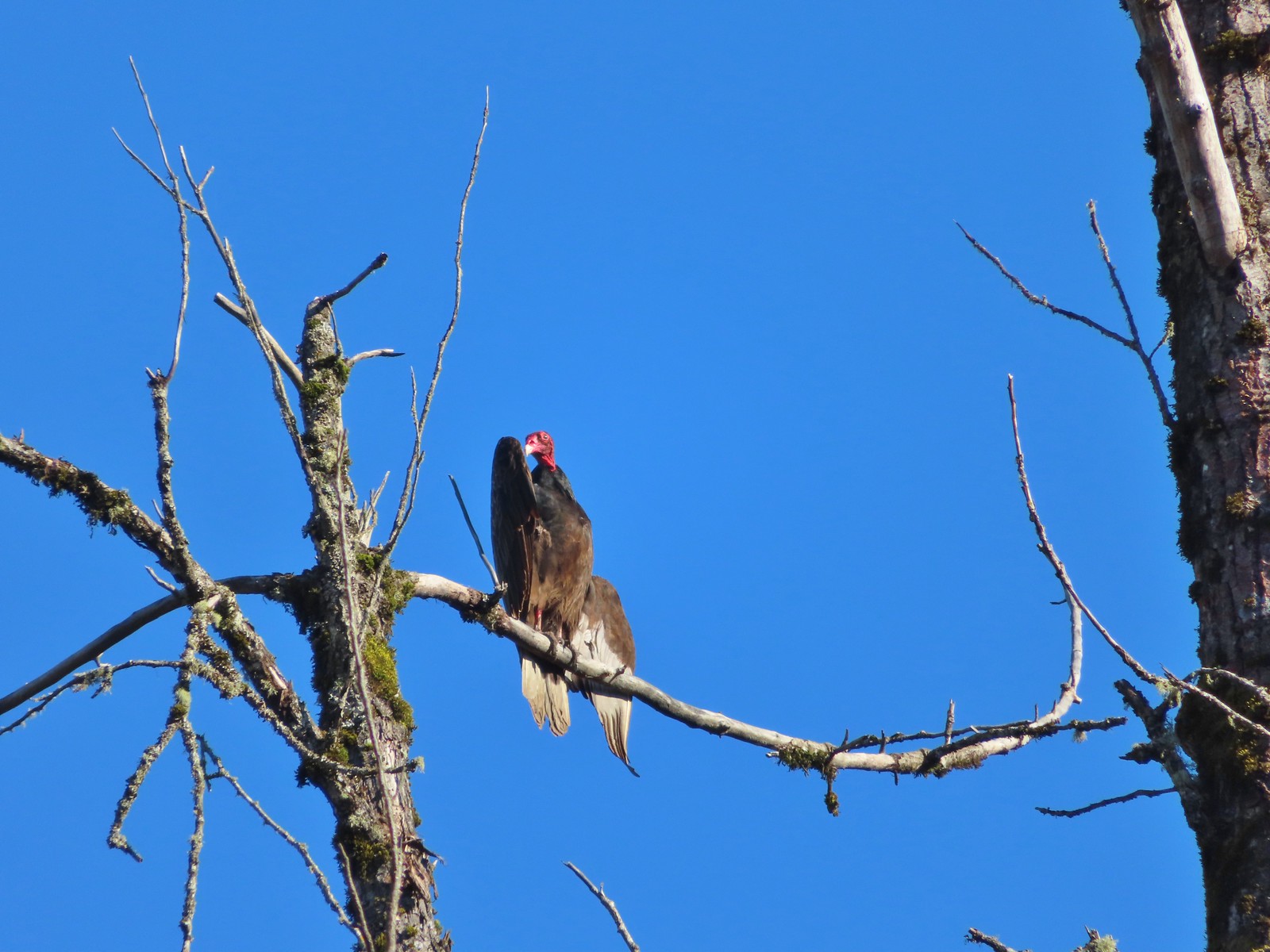
IMG_2412Turkey vulture

IMG_2419We spotted a deer way up on the hillside in the distance.

IMG_2420

IMG_2422Heading down to Soggy Bottom.

IMG_2425Middle Barn

We stayed right past a road to the barn and continued to the next fork and turned left on the North Gate Trail.
IMG_2428Soggy Bottom

IMG_2430Bindweed

IMG_2431The North Gate Trail ahead on the left.

IMG_2433North Gate Trail

20230625_082841Elegant brodiaea

IMG_2435Common wood nymph

The trail climbed steadily for the first three quarters of a mile passing a grove of cedars near the end of the stretch.
IMG_2436

IMG_2441

IMG_2445The cedar grove.

IMG_2448

IMG_2449A little past the cedar grove we passed an old structure on the opposite side of a barbed wire fence.

IMG_2451On the far side of the structure was a sign for the Wrong Way Trail which looked as though it saw little to no use. The map at the trailhead showed this trail dead-ending in the forest which might explain why.

Beyond the Wrong Way Trail junction the North Gate Trail began a much steeper climb up to a junction at a saddle with the Middle Ridge Trail.
IMG_2455

Much of this section was in full sunlight making it a bit of a trudge.
IMG_2463View from the North Gate Trail.

IMG_2464Steepest section of the trail but at least there was some shade here.

IMG_2467Gopher snake

IMG_2469

IMG_2472Trail sign at the saddle.

We turned left on the Middle Ridge Trail for 1.2 semi-familiar miles.
IMG_2473The Middle Ridge Trail.

IMG_2474View from the Middle Ridge Trail.

IMG_2476View from the saddle.

IMG_2484A dip along the ridge.

IMG_2490First view of the North Umpqua River.

IMG_2503Hawk on a tree.

IMG_2505A different hawk in flight.

IMG_2507Elegant brodiaea

IMG_2512Looking back along the Middle Ridge Trail.

IMG_2513We remembered this structure in the ground.

20230625_094800

IMG_2520

Approximately 1.2 miles from the saddle we arrived at a junction with the Thistle Ridge Trail.
IMG_2525Approaching the junction.

IMG_2526View back up along the trail.

IMG_2528Whistlers Bend Reservoir and the North Umpqua River. Despite a bit of haze the view was far better than it had been in 2015.

North Umpqua River from North Bank HabitatThe 2015 view on a cloudy June 5th.

We turned onto the Thistle Ridge Trail which led us past a few great madrone trees.
IMG_2534

IMG_2535

IMG_2538Ookow

IMG_2539View from the Thistle Ridge Trail. Below is the lower portion of the trail which seemed to be quite a way down.

We quickly realized why it seemed so far down when we came to what we believe may be the steepest section of trail we’ve hiked.
IMG_2542When you can’t see the bottom of the hill you know it’s steep.

IMG_2546The trail finally leveled out a bit through a stand of oak trees.

After just under a mile on the Thistle Ridge Trail we came to a junction with the West Barn Road.
IMG_2547The junction below from the Thistle Ridge Trail.

IMG_2550

We turned left again and followed this steepish trail down 0.2 miles to the West Barn.
IMG_2553European centaury (invasive but pretty)

IMG_2555West Barn

IMG_2558The West Barn Road was a little muddy in spots.

We followed this road a total of 0.7 miles back to the junction with the Soggy Bottom Trail where we turned right to return to the trailhead.
IMG_2562

IMG_2563Daisies were profuse in some areas.

IMG_2567We ignored the Deer Hollow Tie Trail that joined on the right.

IMG_2568The Comstock Day Use Area from the West Barn Road.

Our loop here came to 5 miles with a little over 1000′ of elevation gain, some of which was impressively steep.

The trails here were lined with poison oak at times but they were always wide enough for us to easily keep away from it.

These were a couple of pleasant hikes and made for a nice outing before driving back home to Salem. Happy Trails!

Flickr: Fern Falls and North Bank Habitat

Categories
Hiking Oregon Portland Trip report Willamette Valley

Tualatin River Wildlife Refuge, Cooper Mountain, and Graham Oaks – 05/13/2023

While Spring has largely been a no-show so far this year, Summer decided to make an early appearance with a weekend forecast for temperatures topping 90 degrees. We’ve been lucky to hit 60 so we’ve had no time to adjust to that kind of heat. In the past when temperatures have soared, we’ve opted to adjust our planned hike to minimize the impact. That wasn’t necessary this time though as our planned outing was to take three short hikes, each less than an hour North of Salem.

We started our morning by re-visiting the Tualatin River National Wildlife Refuge. We’d stopped here in March of 2019 (post) but could only hike the River Trail at that time of the year. The longer Wetland Trail loop is closed from October 1st through April 30th so we’d scheduled this May visit to check out the loop. We started from the Roy Rogers Trailhead where we found a nice patch of wildflowers to greet us.
IMG_7765The refuge is open from dawn to dusk. We arrived at a quarter to six to get an early start and avoid being out during the hottest parts of the day.

IMG_7768

IMG_7771The patch of wildflowers.

IMG_7773A checker-mallow surrounded by golden paintbrush.

DSCN3325Plectritis amid the golden paintbrush.

We decided to go counterclockwise and forked right across Chicken Creek on a bridge.
IMG_7776We had a pretty good view of Mt. Hood.

The Wetland Trail follows a service road around the refuge. We began seeing wildlife almost immediately with a family of geese and a pair of deer hanging out on some private property adjacent to the refuge.
DSCN3329

DSCN3343

DSCN3341

It was approximately 1.5-miles from the Roy Rogers Trailhead to the Refuge Headquarters and Wildlife Center. It was slow going as we kept stopping to watch the wildlife.
IMG_7784

DSCN3353Mallards

DSCN3369Greater yellowlegs

DSCN3372Mourning dove

DSCN3375Great blue heron

DSCN3380An egret and some ducks

DSCN3394More families of geese

IMG_7789Swallows flying above the Wetland Trail.

Northern shoveler, Scaups, and a buffleheadNorthern shoveler, scaups (leaning toward greater), and a bufflehead.

DSCN3401Mallards

DSCN3424Northern shoveler

Ruddy duckRuddy duck

DSCN3435Gadwalls

DSCN3434Spotted sandpiper

DSCN3439Purple martins

DSCN3441Killerdeer

DSCN3456Cinnamon teals

DSCN3446Nutria, one of several of these non-native rodents that we saw.

DSCN3415Nap time (or just a late sleeper).

DSCN3450Ducklings

DSCN3458Song sparrow

DSCN3468Common yellowthroat

IMG_7798Wildlife Center

We took in the view from the overlook next to the Wildlife Center before continuing on with the loop.
IMG_7803

DSCN3476Great blue heron watching from a little island.

IMG_7806

We followed the Wetland Trail until we came to the River Overlook where we cut over to the River Trail (the trails are less than a yard apart in this area) to check in on the Tualatin River.
IMG_7807

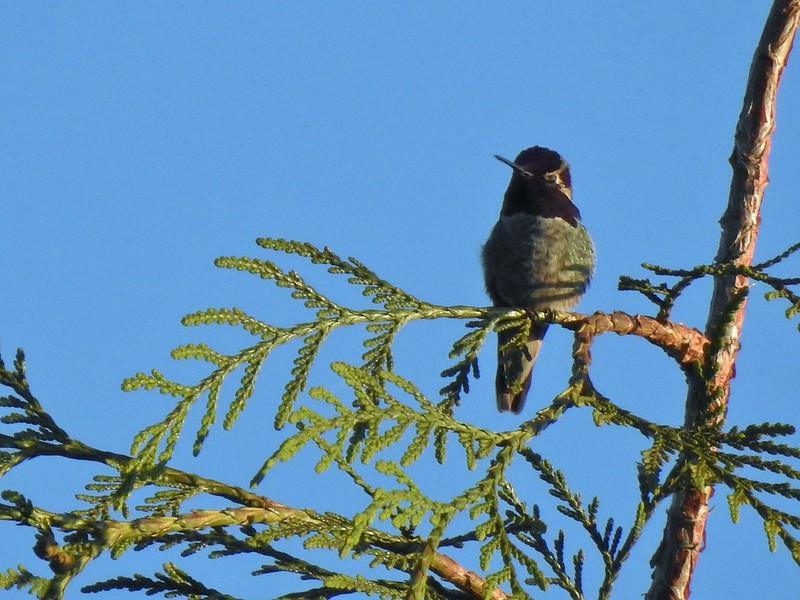
DSCN3483Anna’s hummingbird

DSCN3484The same Anna’s hummingbird. When catching light their head/throat is bright pink but appear black when not.

IMG_7810River Overlook

IMG_7812Tualatin River

DSCN3487Robin

From the overlook we stuck to the River Trail following it through a short section of forest before rejoining the Wetland Trail.
IMG_7813The Wetland and River Trails running parallel.

DSCN3489Spotted towhee

DSCN3496Rabbit

IMG_7817

IMG_7819Pacific waterleaf

IMG_7821Violets and fringecup along the River Trail.

IMG_7823Bleeding heart

IMG_7820We skipped the spur trail to the Ridgetop Overlook since we’d done that on our previous visit.

IMG_7828Chicken Creek

IMG_7829The River Trail meets the Wetland Trail across from the Weland Observation Platform.

We didn’t observe much from the platform on this visit. We continued on with our loop back on the Wetland Trail.
IMG_7834

DSCN3506Great white egrets

IMG_7838There were some impressively tall trees along this portion of the loop.

The trail made a 90-degree turn just before another branch of Chicken Creek and headed in a near straight line back toward the Roy Rogers Trailhead.
IMG_7841

DSCN3518Another egret

IMG_7842More egrets across Chicken Creek.

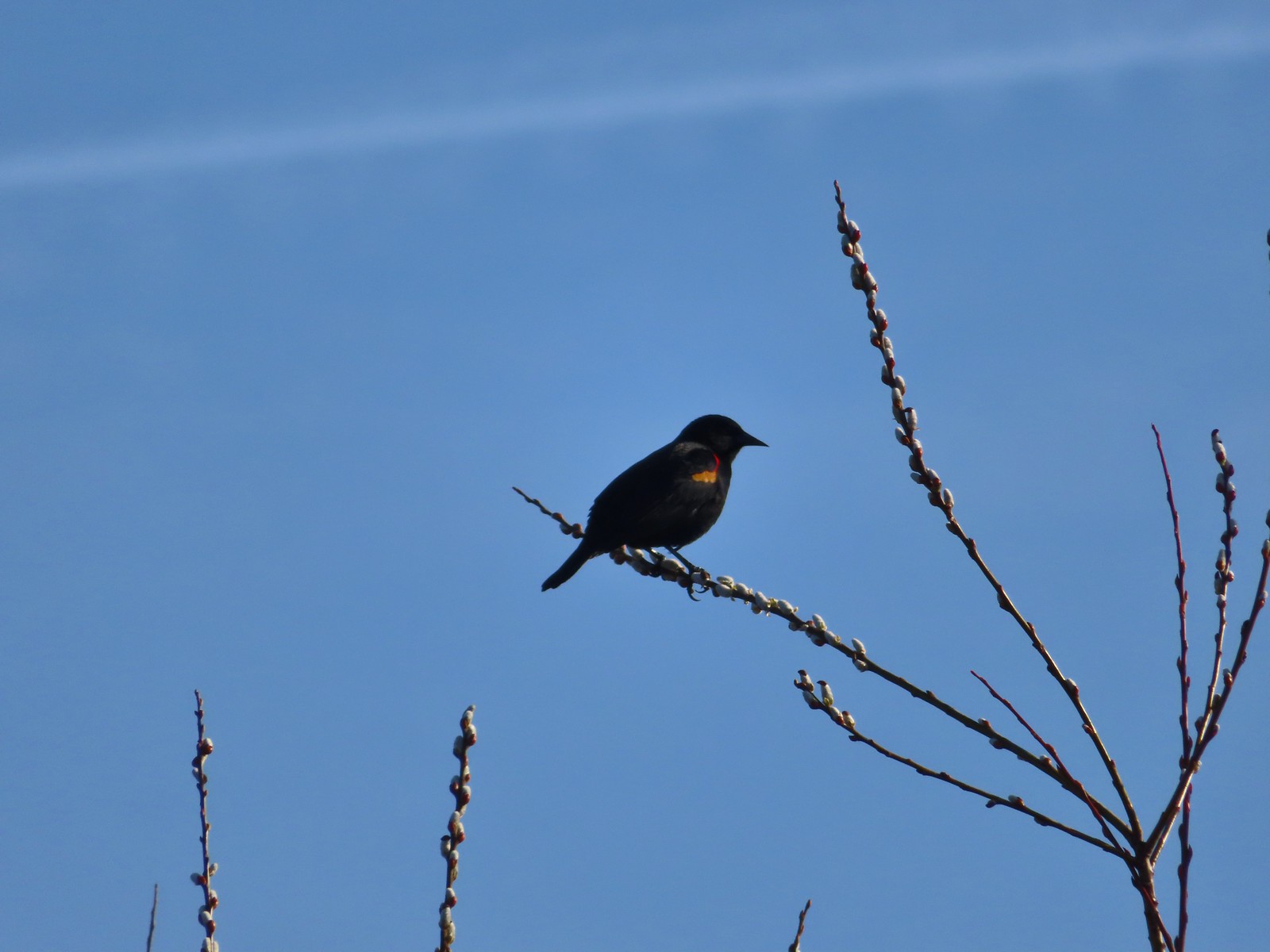
DSCN3527Red-winged blackbird

DSCN3530Savannah sparrow

DSCN3535Checker-mallow

DSCN3537A parsley

While our loop was only 3.6-miles it was packed full of sights, a great start to our morning. From the refuge we made the roughly 10-minute drive to our next stop at the Cooper Mountain Nature Park, yet another park managed by Oregon Metro. The park hosts a little over three miles of trails which start at a nice little playground.
IMG_7850

20230513_081204Our planned route was to go right on the Little Prairie Loop to the Cooper Mountain Loop and then stay right on that loop (with a detour to hike the Larkspur Loop) to Blacktail Way. We’d then take Blacktail Way back to the Little Prairie Loop and turn right again to finish that loop and return to the trailhead.

IMG_7856The view from Cooper Mountain Nature Park.

The trail system heads downhill from the trailhead so keep in mind that all hikes here end with on an uphill.
IMG_7860

IMG_7849Metro is currently running an odd little trial with very short “photo loops”. Mowed paths just off the main trails for photography. We took the first loop just to check it out and they were not kidding when they said the surface may be uneven.

IMG_7861One of two trial photo loops.

The idea is to limit the negative effects of off trail hiking. It’s an interesting idea but it would be easier if people could follow simple rules. We quickly found ourselves back on the Little Prairie Loop and forking right.
IMG_7862

IMG_7864The second trial loop. You can see how short this one is by the signboard just downhill marking its other end.

IMG_7865There were several interpretive signs and benches along the trails.

DSCN3543White-crowned sparrow

DSCN3544Anna’s hummingbird

IMG_7874Star flower

IMG_7878As usual Metro had the trail junctions well marked with little maps on top of the posts. This is the Cooper Mountain Loop junction with the lower end of the Outback Trail.

IMG_7876Camas

IMG_7881

20230513_083618Tough-leaved iris

IMG_7892Serviceberry

IMG_7894Honeysuckle

IMG_7896Looking back uphill to some wildflowers.

DSCN3554Monkeyflower

DSCN3555Tomcat clover

DSCN3559Spotted towhee

IMG_7904Bench along a pond filling an old quarry.

IMG_7905The pond. Red-legged frogs apparently breed here. We didn’t see any frogs but there was a mallard hanging out in the brush.

IMG_7907Iris on the hillside above the quarry.

IMG_7911The Larkspur Loop continuing straight from the Cooper Mountain Loop which turns uphill at the junction.

An endangered species of larkspur, pale larkspur (Delphinium leucophaeum), typically blooms in the park in late Spring into June. With everything running late this year we didn’t spot any yet this year as we completed the 0.7-mile lollipop loop.
IMG_7914Prior to the loop the Larkspur Loop dips to cross a creek in the trees.

IMG_7915The little creek.

IMG_7918View from the Larkspur Loop.

IMG_7919While watching for the larkspur I noticed these giant blue-eyed Mary.

We returned to the Cooper Mountain Loop which made a steep climb to its junction with Blacktail Way.
IMG_7920

IMG_7921Blacktail Way to the right.

IMG_7922Map at the junction.

Blacktail Way climbed more gradually on its way to the Little Prairie Loop.
IMG_7926The “earphone” next to the bench here was neat. There was also one at the trailhead and they really allowed you to isolate the sounds of the woods.

IMG_7927The Little Prairie Loop.

We turned right onto the loop and then quickly detoured to the Little Prairie Overlook.
IMG_7928

IMG_7931The pale larkspur also grows in this area but again we were too early.

IMG_7933These were the only woodland-stars we spotted.

After checking out Little Prairie we finished the loop and returned to our car. This stop came to 3.1 miles with 300′ of elevation gain.

From Cooper Mountain we drove 18 miles south to our final stop of the day at Graham Oaks Nature Park. Another one of Metro’s parks Graham Oaks also hosts approximately three miles of trails. Unlike many of the other Metro parks we’ve visited recently this one allows bikes and dogs (on leash) albeit limited to the Tonquin Trail.
DSCN3562

IMG_7945

Our planned route here was another counterclockwise loop starting on the Tonquin Trail. We would follow that trail to the hiker only Oak Woodland Walk and then turn onto Coyote Way then take the Legacy Creek Trail returning to Coyote Way just before its end at the Tonquin Trail. Then we would simply follow the Tonquin Trail back to the trailhead.

Despite this being our third stop, the early start had gotten us here shortly after 10am, it was already over 70 degrees when we set off on the Tonquin Trail. Luckily for us there was an occasional breeze that helped cool things off a bit.
IMG_7941Heading toward Acron Plaza on the Tonquin Trail.

IMG_7944Interpretive sign at Acorn Plaza.

There were large amounts of large camas blooming along the trail along with yellow buttercups and some patches of lupine.
IMG_7948Lupine and buttercups

DSCN3565Lupine

IMG_7953Meadow checker-mallow

We detoured to Elder Plaza at a trail marker.
IMG_7955

IMG_7956The “elder” oak is between 150-200 years old.

IMG_7958

IMG_7957

DSCN3570We watched this American Kestral hover on a near vertical line for what felt like quite a while. It eventually dove and attempted to catch something in the grass. We couldn’t tell if it had been successful.

We continued down the Tonquin Trail and made a second detour to visit the Wetland Overlook.
IMG_7961

IMG_7962

IMG_7964

IMG_7969Mylitta crescent

We made a third detour when we reached a 4-way junction with the Oak Woodland Walk and Arrowhead Creek Trails. We turned right onto the Arrowhead Creek Trail to see what the creek might look like since we could see a little footbridge from the junction.
IMG_7971

IMG_7972Footbridge over Arrowhead Creek.

There wasn’t really any water flowing in the creek bed and we turned around after crossing and returned to the 4-way junction where we crossed the Tonquin Trail onto the Oak Woodland Walk.
IMG_7974

IMG_7978

IMG_7977The Lycaenidae family of butterflies remains a mystery to me. This appears to be an Eastern Tailed Blue based on the ventral spots.

IMG_7981Snow in the Cascade foothills. If you look really closely behind the bigger snow patch to the far-right, you can just barely make out Mt. Jefferson.

We turned onto Coyote Way and quickly spotted several species of birds.
DSCN3574Starling

DSCN3572Northern flicker

DSCN3580This scrub jay would not come out from behind the oak leaves.

Coyote Way eventually entered some trees and crossed a boardwalk.
IMG_7985

IMG_7986There was a lot of candy flower beneath the trees.

IMG_7987

We turned onto the Legacy Creek Trail and found ourselves under a much denser canopy of trees. This extra shade made this feel like the coolest section of trail we’d been on all day which was welcome because it was now over 80 degrees in the Sun.
IMG_7988

IMG_7989

IMG_7990Mushrooms along the Legacy Creek Trail.

IMG_7992Violets, candy flower and the invasive herb robert (pink).

We left the trees and quickly arrived back at Coyote Way where we took a right followed by another right on the Tonquin Trail after 200′.
IMG_7996Coming up to Coyote Way.

IMG_7999Back on the Tonquin Trail and heading for the trailhead.

This was our shortest stop of the day coming in at just 2.7 miles. For the day we logged 9.4 miles with approximately 400′ of cumulative elevation gain, primarily from our stop at Cooper Mountain. These were all enjoyable stops and each provided a different experience. Happy Trails!

Tualatin River Refuge
Cooper Mountain
Graham Oaks
Categories
Hiking Oregon Portland Willamette Valley

Canemah Bluff and Newell Creek Canyon – 04/29/2023

A brief streak of 80+ degree temperatures arrived for the final weekend of April, and we celebrated with a pair of short hikes in Oregon City. We had our sights on two small parks managed by Metro, a regional council covering Clackamas, Multnomah, and Washington counties which includes two dozen cities. The largest of which is Portland.

Our first stop of the day wasn’t at either of the parks though, it was at the Willamette Falls Scenic Viewpoint along McLoughlin Boulevard. The viewpoint was on our way to Canemah Bluff and neither of us had ever actually seen this waterfall in person.
IMG_6197

IMG_6201

IMG_6200

IMG_6202

After reading up on some Oregon history we drove on to Canemah Children’s Park which doubles as the trailhead.
IMG_6207

IMG_6208

We reviewed the map and decided on the following route: From the children’s park we would take the Camas Springs Trail to Cemetery Road and turn right to the Spur Trail. We’d then take the Spur Trail to the Licorice Fern Trail and then turn right on the Old Slide Trail. The Old Slide Trail would bring us back to the Licorice Fern Trail which we would follow to the park boundary before turning around and hiking back to Cemetery Road via the Licorice Fern Trail. Then turning right on the road, we would follow it to the Frog Pond trail where a left would bring us back to the Childrens Park. This whole route was just barely over 2 miles with a little under 190′ of elevation gain.

The delayed Spring was showing here as the wildflower show was just getting underway.
IMG_6211Most of the camas was still working on blooming but a few were open.

IMG_6216

IMG_6217Buttercups

DSCN3180Dark eyed junco

DSCN3182Possibly a female yellow-rumped warbler.

IMG_6223

DSCN3189Plectritis

IMG_6225Willamette River

DSCN3193Robin

IMG_6231Giant blue-eyed Mary

IMG_6236Camas catching a little sunlight.

IMG_6239

This first part of the hike reminded us very much of another nearby hike we’d taken at Camassia Natural Area (post) which is located on the opposite side of the Willamette from Canemah Bluff.

The Camas Springs Trail eventually entered the trees before arriving at the Cemetery Road.
IMG_6240

IMG_6241Red flowering currant

IMG_6242

IMG_6245Metro’s signage has been top notch in the parks we’ve visited so far.

We followed the Cemetery Road to its end at the privately owned Canemah Pioneer Cemetery where we turned onto the Spur Trail.
IMG_6247Hooker’s fairy bells

DSCN3200Hummingbird

IMG_6257

IMG_6261Fawn lilies

IMG_6265The cemetery behind the fence.

IMG_6266The Spur Trail.

It was a trillium show along the Spur Trail.

IMG_6268

IMG_6271

DSCN3206

At the junction with the Licorice Fern Trail we spotted a couple of largeleaf sandworts in bloom.
IMG_6277

After just 100′ on the Licorice Fern Trail we turned onto the Old Slide Trail which climbed 150′ along a hillside before descending to rejoin the Licorice Fern Trail which we followed to the park boundary near a neighborhod.
IMG_6282

IMG_6289

IMG_6292

IMG_6295

IMG_6296The boundary marker. The trail continues a short distance to 5th Place.

We dropped a bit and now had to regain that elevation as we headed back along the Licorice Fern Trail.
IMG_6298

IMG_6297

We spotted a few more flowers at varying stages of blooming as we made our way back to Cemetery Road.
IMG_6300Youth-on-age

IMG_6304Salmonberry

IMG_6312Violets

IMG_6322Back on the road.

We turned onto the Frog Pond Trail which was only about 100 yards long. The trees around the pond were full of little birds that we watched flit about for quite a while before continuing to our car.
IMG_6325

IMG_6328The frog pond.

Bewick's wrenBewick’s wren

Nashville warblerNashville warbler?

DSCN3225House finches

DSCN3230Spotted towhee

DSCN3224Bleeding heart near the pond.

IMG_6333Arriving back at the trailhead.

From Canemah Bluff it was only a 2.6-mile drive to Newell Creek Canyon Nature Park. The park opened in December 2021, so it is a relatively new addition to the parks Metro manages. There were just a couple of other cars in the good-sized parking area when we arrived just after 8am.
IMG_6337View from the trailhead.

IMG_6334Trailhead signboard.

There are three types of trails at Newell Creek Canyon: Shared use (bicycle & hiker), hiker only, and bicycle only. Our plan here was to start with the shared use trails and finish with the hiker only Canyon Spring Loop. This way we would finish the shared use trails nice and early in hopes of avoid too much traffic. We made our way around the outside of the grassy picnic area to the start of the trails at a gate.
IMG_6339Please note that pets are not allowed at most Metro parks.

IMG_6341Don’t forget to brush off your shoes when brushes are available.

With the word canyon in the name, it’s not surprising that the Tumble Falls Trail begins by descending into Newell Creek Canyon.

We passed the biker only Shady Lane Trail on our right and further along a second biker only connector to the Shady Lane Trail.
IMG_6342The Shady Lane Trail.

IMG_6346Oregon grape, red flowering currant and Indian plum

IMG_6347One of several benches located throughout the park.

IMG_6349The connector trail.

IMG_6351Candy flower

IMG_6353Trillium with a tiny insect.

IMG_6355Carpet of green.

IMG_6356A rare bluebird day for us this year.

Near the 0.4-mile mark we passed the Canyon Springs Loop which forked off to the left.
IMG_6357

We continued on the Tumble Falls Trail which was now somewhat level.
IMG_6359

IMG_6362Salmonberry blossoms

IMG_6365Fringecup and pacific waterleaf that had yet to start blooming.

The Shady Lane Trail joined from the right just before reaching the Tumble Falls Bridge.
IMG_6368

IMG_6369The Tumble Falls Bridge.

IMG_6371Tumble Falls

On the far side of the bridge the trail became the shared use Cedar Grove Trail from which the biker only Red Soil Roller Trail quickly split off.
IMG_6373

IMG_6374The Red Soil Roller Trail to the right.

We followed the aptly named Cedar Grove Trail downhill to its end at a bench overlooking Newell Creek Canyon. While we couldn’t see the creek itself the sound of flowing water let us know that it was down there.
IMG_6376A small pond along the trail.

Song sparrowSong sparrow

IMG_6379Western red cedars

IMG_6381Nearing the end of the trail.

IMG_6383Map at the end of the Cedar Grove Trail.

IMG_6384Newell Creek is down there somewhere.

We headed back the way we’d come. It was warming up nicely and we spotted our first butterflies of the year as we climbed back toward Tumble Falls.
IMG_6385

IMG_6387Male margined white?

IMG_6390Female margined white?

When we reached the Canyon Spring Loop we turned onto it and followed it for 500′ to a junction on the ridge where the actual loop began. We chose to go right and followed the ridge east.
IMG_6401Slender toothwort

IMG_6402The Canyon Spring Trail below in the trees.

The trail lost approximately 100′ before completing a 180 degree turn and leveling out as we headed back West.
DSCN3243Spotted towhee

DSCN3248Chipmunk

IMG_6407Heading back beneath the ridge.

Shortly after starting back beneath the ridge, and not long after the subject of owls had come up, we spotted a great horned owl sitting in the undergrowth just off the trail near a tree.
IMG_6408

DSCN3254

We stopped a ways back to see if it would fly off but aside from some slight head movement and slight eye opening it didn’t move. We made note of where it was and slowly passed giving it as much space as possible. Our plan was to report it when we got back to the car in case it was injured or sick. We finished up the loop and had started up the Tumble Falls Trail when we passed two Metro parks staff. We let them know about the owl, showed them a photo, and pointed out on the map where we’d seen it and they were going to check on it and report it to the appropriate entity if necessary. We hope the owl turned out to be okay. As much fun as it is to see the wild animals it is sad when we come across an injured one.
IMG_6413

DSCN3256Trillium and mushrooms

DSCN3260Squirrel

DSCN3263Woodpecker

DSCN3267Stellar’s jay

IMG_6416Back at the Tumble Falls Trail.

We felt better knowing that we’d let someone know about the owl and made our way back to the picnic area which we passed through to return to the car.
IMG_6418

Our hike here came in at just under 3.5 miles with 570′ of elevation gain giving us approximately 5.5 miles and 760′ of elevation gain on the day. Both parks were nice and really well maintained, kudos again to Metro for the job they do with the public spaces. One thing that became clear as the morning heated up was that we are not at all prepared for warm weather hiking. It’s been so cool (cold) and overcast for so long our bodies aren’t ready for temps in the 70 or 80s. Hopefully there is still time for a reasonable transition to the heat of Summer but that window grows shorter every day and more cool, wet weather appears to be on the way for the coming week. Happy Trails!

Flickr: Canemah Bluff and Newell Creek Canyon

Categories
Corvallis Hiking Oregon Salem/Albany Trip report Willamette Valley

Albany Parks and Snag Boat Bend – 04/22/2023

The delayed arrival of Spring weather has begun affecting the timing of the hikes that I’d planned for us this year. We had originally planned a wildflower hike for this weekend, but they are running at least two weeks behind so we turned to a pair of wildlife hikes instead. Our first stop was at the Snag Boat Bend unit of the William L. Finley National Wildlife Refuge.
IMG_6046

This 341-acre unit is located a across the Willamette River to the East of the 5,325-acre refuge. The unit has several miles of trails although the amount accessible fluctuates due to flooding.
IMG_6048Not sure how “official” the writing is on the map, but it wasn’t wrong about the Turtle Loop being “closed” (high water).

The Snag Boat Bend Loop Trail begins as a boardwalk that passes over the North Beaver Pond. Oddly there wasn’t much, if any, water in this pond despite other areas later being flooded.
IMG_6050

After the short boardwalk section the trail became a combination of grass/mud as it followed a swollen Lake Creek toward the Willamtte River.
IMG_6053

IMG_6054A swollen Lake Creek

IMG_6056A third of a mile from the trailhead is a picnic table overlooking a former channel of the Willamette River that is now an oxbow lake filled by Lake Creek.

IMG_6058The oxbow lake.

The trail makes a hard left at the picnic table passing along the water.
IMG_6061Lots of water in the lake.

DSCN2912Woodpecker hiding in the trees.

Just under 0.2 miles from the picnic table, during low water, is said to be a path that makes it possible to connect the Snag Boat Band and Turtle Loop Trails.
IMG_6062Note the sign on the far side vs the closer sign barely sticking up out of the water.

A quarter mile from the picnic table the Snag Boat Bend Loop turns left at a junction. We stayed straight and visited the Observation Blind before setting off on the Blue Heron Trail.
IMG_6100Oregon grape

20230422_071830Red flowering currant

IMG_6068Slug

IMG_6100Signs at the junction.

IMG_6071The observation blind.

There wasn’t a whole lot to observe from the blind since the morning fog limited visibility.
IMG_6074

DSCN2924Goose

DSCN2927Spotted towhee

DSCN2928Mallard drake

IMG_6075The Blue Heron Trail followed the boarder of the refuge and some private farmland.

It was approximately another quarter mile from the blind to a 4-way junction. Here the Blue Heron Trail began and finished a theoretical loop using the left most forks and the Turtle Trail split off to the right along a dike.
IMG_6077Blue Heron Trail to the left and Turtle Trail on the right.

We turned right onto the Turtle Trail and as we got onto the dike we could see that the area below, where a loop shown on the Oregonhikers page joined back up, was likely flooded. We followed the dike a quarter of a mile to another junction where the Turtle Trail made a hard right and descended from the dike into an open area where several rabbits were busy having their breakfast.
IMG_6078

IMG_6080

American widgeonAmerican widgeon

IMG_6081

DSCN2949

DSCN2944

We followed this grassy track for a third of a mile back to the swollen Lake Creek where, during low water, the Turtle Loop would turn right along the creek and loop back around.
IMG_6085

IMG_6086Another sign out in the middle of the water.

We turned back and returned to the junction with the Blue Heron Trail.
IMG_6088The start of a possible loop using the Blue Heron Trail. The fainter track on the right heading downhill was flooded just 100 feet or so away.

IMG_6089The flooded area where the loop would end.

I had gone down to the flooded section to see if there was possibly a way across without having to wade but there wasn’t. The good news was that my heading down to this spot had caused a great horned owl to move trees which allowed both Heather (on the other section of the Blue Heron Trail) and myself to spot it.
DSCN2974

Since we knew that we would be able to make the Blue Heron Trail into a loop we followed it a half mile from the junction, making a sharp right near the 0.4-mile mark and decided to turn around. The trail had gone from gravel to wet grass and our feet were getting pretty damp which helped make the decision to turn around.
IMG_6095Cottonwood with red flowering currant, Oregon grape, and Indian plum blooming in front.

IMG_6096We were able to keep our feet dry on the gravel surfaces.

20230422_082100Mushroom

DSCN2984Rufous Hummingbird

DSCN2985Hawk preparing for takeoff.

IMG_6097We had started to go past the turn for the Blue Heron Trail so this photo is as we headed back toward the turn. We came from the right-hand side so the path straight ahead would have been the “sharp right”.

DSCN2987Killdeer

IMG_6098Our turn around spot. The trail was beginning to bend back to the East here.

We headed back along the Blue Heron Trail following it to the Snag Boat Bend Loop where we turned right in order to finish that loop.
DSCN2992A chipping sparrow among the golden-crowned sparrows.

IMG_6101On the Snag Boat Bend Loop

IMG_6103The trail turned left to follow this gravel roadbed for the final third of a mile.

IMG_6106The gate in the distance is at the trailhead.

Our hike at Snag Boat Bend came in at 3.9 miles with maybe 50′ of elevation gain. Had some of the loops not been flooded it might have been a bit shorter.

It was a nice first visit though and we are now interested in returning in late Summer/early Fall when some of the flooded trails might be accessible. While the fog made it a bit hard to see we still managed to see a few ducks, a goose, several rabbits, the owl, a hawk, lots of smaller birds, and one bald eagle that flew overhead. From the trailhead we drove North to the city of Albany where we’d plan to visit a series of the city’s parks. The idea was to start at Monteith Riverpark and hike East along the Willamette River to Simpson Park and then continue along the river there past First and Second Lakes if the trail wasn’t flooded. If it was flooded, we could turn inland at Simpson Park and re-visit the Talking Water Gardens (post).

I had two reasons for putting this urban hike on our schedule. First it was close to home and secondly Monteith Riverfront Park sits at the confluence of the Calapooia and Willamette Rivers, and the Calapooia is one of Oregon’s rivers that we had yet to see on a hike. This 80-mile long tributary of the Willamette begins in the Willamette National Forest near Tidbits Mountain (post) and flows Northwest through Brownsville, OR before turning North to the East of Interstate 5. It was disappointing to arrive and find that the entire park was closed for a large waterfront project by the City of Albany. (Normally I would check the status of our destination prior to heading out, but I didn’t expect an entire city park to be closed, and after looking online when I got home, I’m not sure I would have found the information anyway.)
IMG_6107We wound up parking East of the Riverfront Community Center and hoping on the Dave Clark Trail there.

Less than 100 yards from where we’d parked we came to an observation platform that led out over the Willamette River. From this platform we could at least see the mouth of the Calapooia emptying into the Willamette.
IMG_6109

IMG_6111The confluence ahead to the left.

IMG_6112Highway 20 passing over the Willamette to the left. Fun fact about U.S. Highway 20 – It runs from Newport, OR to Boston, MA and is the longest road in the USA according to the Federal Highway Administration. Click here for more information and an interesting write up of the drive from Boston to Newport by Boots on the Trail.

We followed the Dave Clark Trail East passing under both bridges of the highway and then later under the Union Pacific Railroad.
IMG_6115

IMG_6119Orange crowned warbler. One of many small birds we saw along this trail.

DSCN3009We thought it was a little odd to see two occupied nests atop the railroad so close together until we realized that the occupants weren’t both birds of prey.

DSCN3006Canada geese were using one of the nests.

DSCN3013Might be the mate looking acting as lookout from the bridge.

DSCN3012Osprey occupied the other and appeared to be in the process of renovations.

We also encountered a beautiful male Anna’s hummingbird but for the life of me I couldn’t get either one of the cameras I was carrying to focus on the little guy so the only picture we wound up with was a cropped shot from Heather’s phone.
20230422_095150His bright pink head was more impressive in person.

After ducking under the railroad and passing some apartments the trail passed the Willamette Community Garden and climbed to NE Oak Street.
IMG_6123The community garden (not pictured) was on our right.

IMG_6124

IMG_6128Pretty tulips at the sign.

Here the trail follows several blocks of sidewalk before reaching its end at Bowman Park. The official route of the trail turned right on Oak St for a block then left for 5 blocks NE Water Ave to Geary St where it turned left and descended 3 blocks to Bowman Park. We stayed straight on Front Ave NE though and followed it 3 blocks to Harrison St. NE where we turned right for a block to NE Water Ave to rejoin the Dave Clark Trail.
IMG_6129Not a lot to see in the residential neighborhoods but we did cross Pettyjohn Creek along the way.

IMG_6130Sign for Bowman Park at Geary St.

IMG_6133Bowman Park on the left and the paved path we took on the right.

A paved path led East from Bowman Park behind a new apartment complex where it turned to a wood chip surface.
IMG_6135

IMG_6136

DSCN3018Cormant in the middle of the Willamette.

At the far end of the apartment complex the trail suddenly turned into a slick, muddy single track.
IMG_6137

DSCN3020Squirrel

Things got started getting interesting here, and not in the good way. We quickly started passing vacant and/or abandoned homeless camps and the trail surface was just a mess. At this point we were only about a half mile from the Simpson Park Trailhead though so we pressed on.
IMG_6139Seen near a homeless camp which sort of captures the situation. A combination of unaffordable house, drug abuse, and mental illness has created a crisis up and down the West Coast with no simple (or quick) answer.

IMG_6140We initially mistook all the footprints and bike tracks as a sign that the trail saw good recreational use.

According to the Oregonhikers.org Field Guide entry for the Albany Riverfront Hike there is a concrete bridge over Cox Creek near Simpson Park. We never made it that far though as after a quarter mile we came to small pond over the trail. There was no foreseeable way around and we didn’t want to do to much searching for an alternate route for fear of stumbling upon an occupied camp so we turned around.
IMG_6143

Prior to reaching the impassible puddle we had already decided to forgo trying to hike further along the Willamtte from Simpson Park and had planned instead of visit Talking Water Gardens and return via roads instead of the muddy trail. Now that we’d been stymied though we trudged back through the mud and past the homeless camps to the apartments where we turned left on a path that led a short distance uphill into Eads Park.
IMG_6144

IMG_6145

We turned left and passed through this small park then turned right onto Burkhart St NE and began our second stint of neighborhood hiking. After a block on Burkhart we made a left on Willamette Ave NE and followed it 0.2-miles to its end at the Albany/Millersburg Water Reclamation Facility where we turned right onto Davidson St. NE. A block on Davidson brought us back to Front AVE NE and a sign for the Talking Water Gardens.
IMG_6147

Front Ave became Waverly Dr NE and we followed it until we finally crossed Cox Creek three tenths of a mile later.
IMG_6148

We made our way to the gated entrance to the Talking Water Gardens happy to see that the man-made waterfall in the Beaver Marsh was flowing this time.
IMG_6149

IMG_6150

DSCN3025

DSCN3026Buffleheads

We turned right and headed for the main sign board to get a picture of the map and decide on our route.
20230422_105035We decided to loop around the West Beaver Marsh and Central Oak areas before heading back.

There was obviously a lot more water present now then there had been in November and while there were less ducks present there was a larger variety of birds and best of all a bunch of western pond turtles.
DSCN3030

IMG_6159View from above the waterfall.

IMG_6160The first set of turtles we spotted.

IMG_6162Western pond turtles.

DSCN3041Female red-winged blackbird

DSCN3055Green-winged teal

DSCN3057Yellow-rumped warbler (Audubon’s)

DSCN3060More turtles

DSCN3063Mallard drake

DSCN3064Turkey vulture

IMG_6164

DSCN3070Another bale of turtles. (I had to look up “bale” because I had no idea what a group of turtles was called.)

IMG_6165Another man-made waterfall.

IMG_6168This had been full of ducks on our previous visit.

DSCN3076Yet another turtle.

DSCN3081Black phoebe

DSCN3084Acorn woodpecker

DSCN3091Sparrow

Northern shovelerNorthern shoveler

DSCN3096Hummingbird

20230422_111554Red-winged blackbird

IMG_6180Bench along the Central Oak area.

DSCN3103The first goslings we’ve spotted this year.

DSCN3108Very zoomed in shot of a hawk seen in the distance.

DSCN3123Bullfrog

DSCN3126Marsh wren

DSCN3129Final set of turtles.

DSCN3141Mallard pair

DSCN3149Chickadee

DSCN3152Yellow-rumped warbler (Myrtle)

We took about an hour to hike a little over 1.25-miles through the gardens. There was a lot of stopping to watch the wildlife and attempt to get photos. After exiting the gardens we made our way back to Front Ave via Waverly Drive and this time followed signs for the Dave Clark Trail back to it.
IMG_6192

IMG_6193

We followed the Dave Clark Trail back to our car, but not before spotting a bit more wildlife.
DSCN3157A couple ahead of us on the trail spotted this guy for us.

DSCN3166Squirrel

Our Albany Parks hike wound up being just 6.3 miles with under 100′ of elevation gain bringing our total for the day to 10.2 miles and maybe 100 total feet of elevation gain. All the hiking on paved surfaces in Albany combined with having wet shoes and socks made it feel like more though.

At the end of the day we were glad that we wound up in Talking Water Gardens given how much fun wildlife we spotted there but I probably would not do the rest of this hike over. The Dave Clark Trail along the Willamette was nice enough and if I was in Albany for another reason and had some time it would be a fine place for a stroll but necessary neighborhood walk to reach Simpson Park/Talking Water is not nearly as nice as either simply starting at the Simpson Park Trailhead or hiking along Cox Creek from Waverly Lake as we had done in November. Happy Trails!

Flickr: Snag Boat Bend and Albany Parks

Categories
Hiking Oregon Salem/Albany Willamette Valley

Minto-Brown Island Park Outings Spring 2023

For several years Heather has volunteered with our local running store, Gallagher Fitness Resources, Princess Steps, a Women’s Beginning Walking Running Clinic. They meet on Tuesday nights but have “homework” walks throughout the week which she and I have been doing together. The longer walks are set for Saturdays and for three of the last four weeks we’ve taken those walks at Minto-Brown Island Park. The park has also been part of a couple of urban hikes that we’ve taken in previous years (2017 & 2020).

Despite the numerous visits there were still sections of trails that I hadn’t been on. I decided to use my second day off of work to check a few of those off my to-visit list. Minto-Brown is even closer to our house than Baskett Slough Wildlife Refuge which I’d visited the day before (post). In fact, it’s less than a mile away as the crow flies, but it is on the other side of the Willamette River so I had to drive a little over 3.5-miles to Riverfront Park where we’d been starting all of our walks.
DSCN2605

Heather’s plan from the walking group had us increasing distance each week starting with 5.3 miles on 3/19 then 6.6 on 3/25 and 9 miles on 4/8. (Heather wanted more hill practice before the hiking season and since Minto-Brown is mostly flat we did a 7.5 mile “hilly” hike through the West Salem neighborhoods on 4/1.) For this visit I was planning on going a little further again by visiting Eola Bend County Park which borders Minto-Brown to the NW along the Willamette River. I wasn’t sure what my actual route would be though. Minto-Brown is full of both pave and dirt trails, some of which parallel one another just feet apart. Numerous loop options are possible, but closure due to flooding or nesting birds can block access to certain trails at times. All of the visits this year started the same as we first passed the Gerry Frank Salem Rotary Amphitheater in Riverfront Park and took the Peter Courtney Minto Island Bridge over the Willamette Slough and into Minto-Brown Island Park on the Minto-Island Conservation Trail.
Peter Courtney Bridge behind the Gerry Frank AmphitheaterThe amphitheater and bridge on 3/19 23.

DSCN2607The amphitheater and bridge on 4/14/23.

On the first three visits we took the first paved right (one mile from Riverfront Park) and stayed right at the next junction to walk along the Willamette River and eventually arrive at the Lot 3 Trailhead. On this final visit I was unable to access the path along the river due to high water from recent rains so I forked left on a gravel that is often closed during bald eagle nesting season.
Minto-Brown Island ParkWetland near the bridge on 4/8.

DSCN2613The wetland on 4/14.

Entering Bald Eagle Nesting AreaSigns at the 2nd junction – 3/19.

Minto-Brown Island ParkThe path to the Willamette River on 3/19.

DSCN2640The path on 4/14.

Willamette RiverApril 8th along the Willamette.

DSCN2641April 14th on the inland gravel path.

Beyond Lot 3 is where our visits began to differ. On our first (shortest) visit we continued South from the lot and took the second left (Brown Squirrel & Yellow Duck Loop) looped around the South and East ends of the Dog Park to Lot 2 where we crossed the entrance road and followed the 10k path back to the junction where we had taken our first right that morning. From there we retraced our steps back to Riverfront Park.

For the second hike we continued South from Lot 3 then forked right and crossed Oxbow Slough on a footbridge before turning back after another 0.75-miles at a “T” junction with the Blue Heron, Purple Rabbit, and 10k Trails. We retraced our steps, passing the shared Squirrel & Duck Loop section that we’d taken the previous week turning instead at the next right (We were coming from the opposite direction as the previous week. This was also part of the Yellow Duck Loop and took led us along the North side of the dog park to Lot 2 where we turned left and again followed the 10k path back as we had the week before.

On our third outing we followed our route from the week before to the “T” junction but turned left and continued on the shared Purple Rabbit/10k Loop to return to the junction near the bridge over the slough. This time we returned through Lot 3 taking the right fork of the Red Osprey Loop at the North end of the lot. This loop brought us through an open field with an old cherry orchard to the 10k Loop where we took a left and followed the familiar route back to Riverfront.

My route was most similar to our third outing. It varied in that I had to stay inland instead of hiking along the river and I turned onto the dirt Blue Heron Loop path shortly after crossing the bridge over the slough.
DSCN2629The Minto-Island Conservation Trail (Used during all four hikes.)

Oxbow Slough is accessible near Lot 3.
Slough near the gazeboOxbow slough 3/19.

DSCN2676April 14th

DSCN2678Just South of Lot 3 the paved path is shared by the 10k, Purple Rabbit, Blue Heron, Green Deer, Yellow Duck and Brown Squirrel Loops.

DSCN2682The footbridge over Oxbow Slough is part of the 10k, Blue Heron, and Purple Rabbit Loops.

The Blue Heron Loop ran parallel to the paved path and at times nearly touched.
DSCN2691Blue Heron Loop running parallel to the 10k/Purple Rabbit Loops.

DSCN2701Field along the Blue Heron Loop

The biggest difference, and most of the extra mileage came when I continued straight toward the Brown’s Island Demolition Landfill when the Blue Heron Loop turned left. At the landfill I turned right and followed a gravel roadbed around it to the Orange Turtle Loop onto which I turned right following counterclockwise into Eola Bend County Park.
DSCN2704The “T” junction where the 10k/Purple Rabbit Loops turn left from the Blue Heron Loop.

DSCN2711Most of the junctions are well signed with maps which helped keep me on track.

DSCN2719Willamette River from the Orange Turtle Loop.

IMG_5826Orange Turtle Loop

DSCN2729The boarder between Minto-Brown Island Park and Eola Bend County Park.

DSCN2738A bit of the history of Eola Bend County Park.

DSCN2741Nice map of the Willamette River watershed.

IMG_5827Eola Bend County Park

DSCN2757I took advantage of this picnic table to take a short break.

After completing the Orange Turtle Loop I went back along the landfill (Admittedly one of the least exciting things to experience on a hike.) passing the path I’d arrived at the landfill on and continued just over a tenth of a mile on the gravel road which brought me to the end of a paved road at the landfill.
DSCN2764The landfill behind the map.

DSCN2787Arriving at the road.

I turned left here and in less than a tenth of a mile was back on the Purple Rabbit/10k Loop which uses a 0.3-mile section of the road.
DSCN2790The 10k/Purple Rabbit Loop on the left.

I was now back on the route of our third visit and followed the Purple Rabbit/10k Loop just over a half mile to a junction with the Green Deer Loop, with a short detour to a bench along Oxbow Slough.
DSCN2793

DSCN2799

DSCN2806The Green Deer Loop junction.

I made my one mistake of the day here thinking that I could turn right (we’d gone left the week before) and do this loop. Just over 0.4-miles in though I came upon a small pond in the middle of the trail.
DSCN2821

I backtracked to the Purple Rabbit/10k Loop and again followed our third visit route until coming to the Brown Squirrel/Yellow Duck/10k Loop where I turned right. This was the path we’d taken on our first visit to loop around the dog park. I followed the paved path around the South side of the park but then instead of staying on the trail the loops follow I hoped onto a rougher dirt path that paralleled it and followed that to Lot 2 where I hopped back onto the 10k Loop.
DSCN2830The paved 10k/Yellow Duck/Brown Squirrel Loop.

DSCN2834The rougher dirt path.

DSCN2835The dog park (possibly the happiest place in Salem, at least for dogs).

DSCN2836The 10k Loop on the opposite side of the entrance road from Lot 2.

I deviated once more from our earlier visits when I left the 10k Loop just before it joins the Red Osprey Loop. I crossed that paved path and onto a faint dirt path that led past the Old Cherry Orchard. I followed this dirt path just under a half mile to the paved 5k/10k/Red Osprey/Brown Squirrel Loop where I turned right and climbed a small hill to the Minto Island Conservation Trail.
Minto-Brown Island ParkFrom our 3/19 hike on the 10k Loop. The path running from left to right is the Red Osprey Loop. On this last trip I took the path on the left down to the sign below at the junction and continued straight.

DSCN2842At the sign heading toward the old cherry orchard.

DSCN2843The old cherry orchard.

DSCN2849Sign in the distance along the paved path where I turned right.

I turned left onto the Conservation Trail and returned to Riverfront Park to complete my hike.
DSCN2858

IMG_5829Cherry blossoms.

One constant throughout all of the hikes was the abundant wildlife.
Deer at Minto-Brown Island ParkDeer – 3/19

Bald eagleBald eagle – 3/19

CormorantCormorant on the Willamette – 3/25

SparrowSparrow – 3/25

Lesser goldfinchLesser goldfinch – 4/8

MallardMallard – 4/8

Several wood ducksWood ducks up in a tree – 4/8

Osprey it their nestOsprey – 4/8

DSCN2623Green-winged teal – 4/14

DSCN2624Mallard – 4/14

DSCN2634Golden-crowned sparrow – 4/14

DSCN2635Robin – 4/14

DSCN2636White-crowned sparrow – 4/14

DSCN2648Squirrel – 4/14

DSCN2653Rabbit – 4/14 (This was one of several dozen bunnies that I encountered on this day.)

DSCN2658Woodpecker – 4/14

Lot 3 also had its share of wildlife.
Scrub jayScrub jay – 3/19

Mourning doveDove – 4/8

DSCN2663Killdeer – 4/14

DSCN2671Red breasted sapsuckers – 4/14 (Males peck the sign to make noise to either attract mates or establish territory.)

Pied billed grebePied billed grebe in Oxbow Slough – 3/19

Ring-necked ducksRing-necked ducks from the bridge over Oxbow Slough – 3/25

BuffleheadsBuffleheads from the bridge over Oxbow Slough – 3/25

DSCN2683Geese from the bridge over Oxbow Slough – 3/25

DSCN2699Hummingbird along the Blue Heron Trail – 4/14

DSCN2707Orange-crowned warbler along the Blue Heron Trail – 4/14

DSCN2744Dark-eyed junco at Eola Bend County Park – 4/14

DSCN2748Northern flicker at Eola Bend County Park – 4/14

DSCN2760Swallows at Eola Bend County Park – 4/14

DSCN2777Red-tailed hawk near the landfill – 4/14

DSCN2795Great blue heron at Oxbow Slough across from the bench viewpoint near Lot 4 (Homestead Road) – 4/14

Wood duck maleWood duck drake in Oxbow Slough – 4/8

Ruby-crowned kingletRuby-crowned kinglet – 4/8

RabbitRabbit – 4/8

EgretEgret between the Red Osprey and 10k Loops – 4/8

DSCN2850Turkey vulture near the old cherry orchard – 4/14

We’re lucky to have this park nearby and it seems crazy that we still haven’t checked out all of the trails yet. It at least gives us a reason, besides the abundant wildlife, to keep going back. That being said we are really looking forward to some more remote hiking in quieter forests. Happy Trails!

Yellow-3/19
Black-3/25
Red-4/8
Cyan-4/14

Flickr: Minto Brown Walks / Minto Brown and Eola Bend County Park

Categories
Hiking Oregon Salem/Albany Trip report Willamette Valley

Baskett Slough Wildlife Refuge – 04/13/2023

We have eagerly been awaiting the arrival of Spring but instead we are seemingly stuck in Winter. I had scheduled a couple of days off in mid-April with dreams of sunny hikes filled with wildflowers and great views. Those dreams were put on hold and my hopes turned to dry hikes with decent views and maybe some wildlife.

I turned to an old reliable source for wildlife for my first hike of my extended weekend and made the 15 minute drive to the Baskett Slough National Wildlife Refuge. Despite its proximity to our house this was only my fourth time hiking at the refuge, in large part due to the fact that the vast majority of the trails and refuge is closed from October 1st through March 31st. With our official hiking season running from the start of May through the end of October our window for visiting is basically just the month of April unless it shows up on our actual schedule. (My previous visits were in April, May and July.)

The forecast was for a dry, partly cloudy morning with a chance of showers starting after 11am. There was however a frost advisory, so I was expecting a chilly outing. As I pulled out of our garage I was encouraged to see the start of what looked to be a beautiful sunrise. As the crow flies the refuge is a mere 8 miles from home, but it lies in a valley while we are on a hill. As I drove down the hill toward the highway I quickly realized that low lying clouds were camped out in the valley and a solid bank of fog greeted me at the Baskett Butte Trailhead.
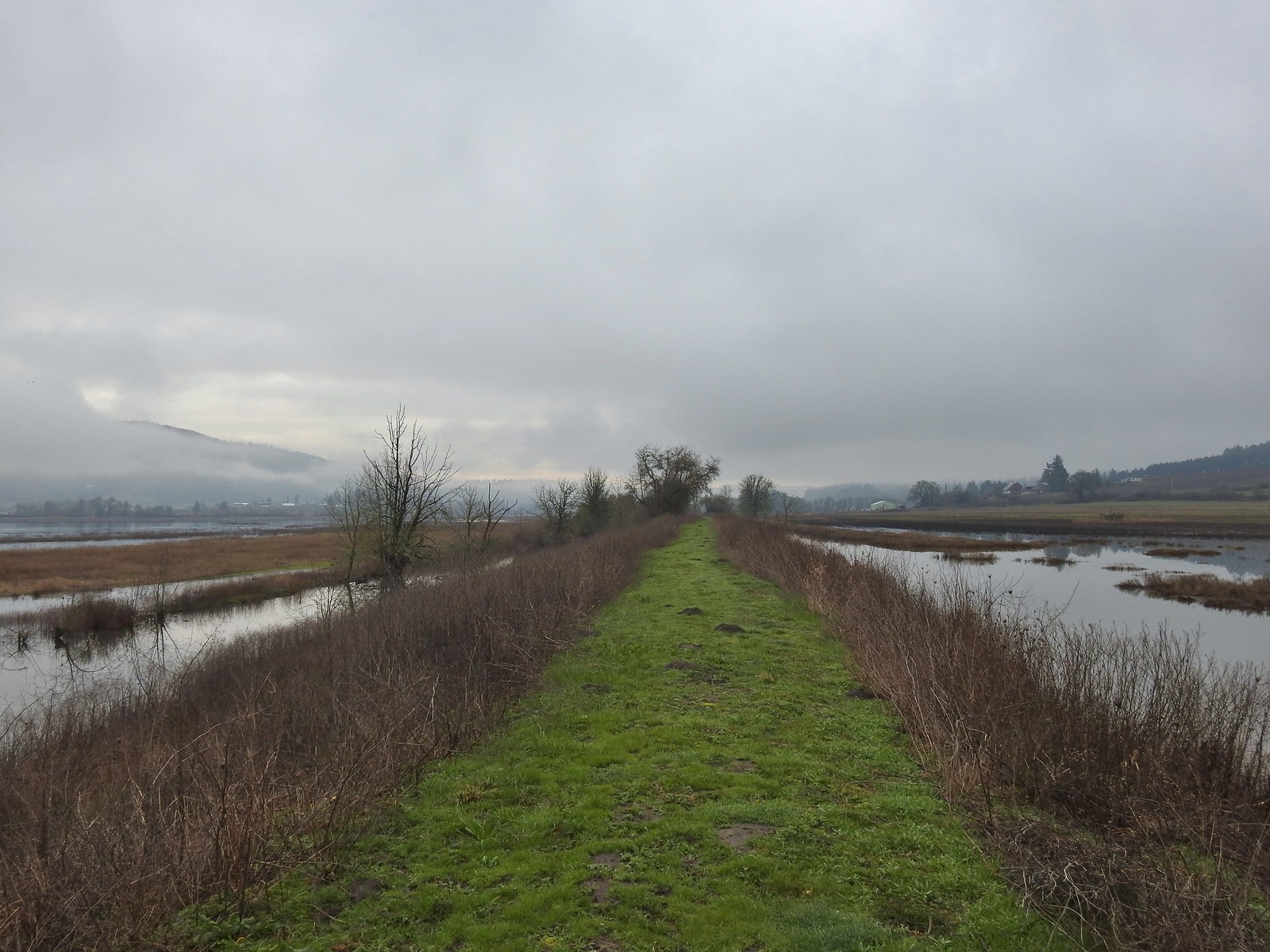
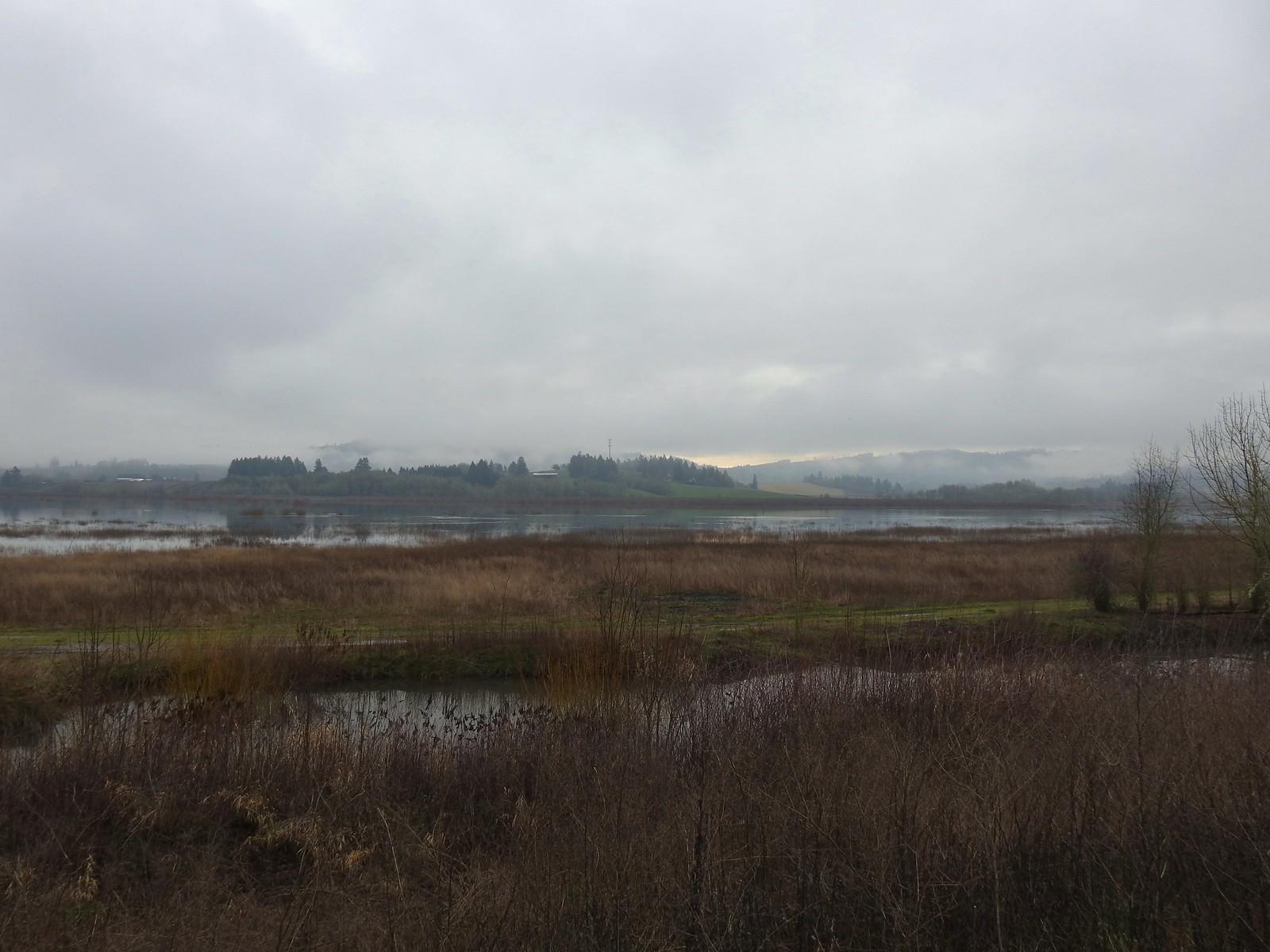
Baskett Butte Trailhead

The fog made my choice of whether to visit the viewing platform atop Baskett Butte now or on the way back easy, so when I came to the Rich Guadagno Memorial Loop I veered right.
Foggy morning along the Rich Guadagno Trail

I had a rough idea of where all I was hoping to go on this visit and now that I knew I was saving the viewpoint for later the plan came more into focus. I would follow the Memorial Loop to the Inter-Tie Trail and take that trail to the Moffitti Morgan Loop Trail. I planned on hiking that loop clockwise to visit Moffitti Marsh and then Morgan Lake before taking the Inter-Tie Trail back to the Memorial Loop.
ButtercupsThere were a few buttercups blooming in the grass and not much else along this side of the Memorial Trail.

Strawberry blossomA lone strawberry blossom.

Baskett Slough Wildlife RefugeThe Inter-Tie Trail was a wet and muddy affair. I could hear a lot of birds in the surrounding trees but couldn’t make any of them out unless they flew right in front of me.

Start of the Moffitti Morgan Loop TrailI went left here which got me out of the slick mud but onto even wetter grass.

There hadn’t been a lot to get excited about as I made my way along the loop until I got close to Moffitti Marsh which was full of water from our wet Spring.
Moffitti Morgan Loop TrailComing up on the marsh which is just on the other side of the dip in the road.

RabbitsTwo rabbits trying to decide if they were going to keep eating grass or race off into the blackberry bushes.

Rabbit

While there were a decent number of ducks in the water at the marsh getting pictures or even making out what types they were was difficult due to the fog.
Moffitti Marsh

Ring-necked ducksRing-necked ducks

Marsh wrenI think this is a marsh wren.

Beyond the marsh the trail follows a fence line along some farmland, and it was along this stretch that the I got the first sign that the fog might be starting to lift.
Farm along the Moffitti Morgan Loop Trail

By the time I’d reached Smithfield Road, where the trail turns right, I was in a fairly clear pocket which was fortunate because there were several different types of birds in the area.
Farm across from the Moffitti Morgan Loop Trail

A cackling goose in with Canada geeseI think the 2nd goose in from the right is a cackling goose while the others are Canada geese. It’s a bit smaller and the white patch is shaped differently.

SwallowsSwallows

California quailCalifornia quail

Just before reaching the Smithfield Road Trailhead I passed a bustling wetland with northern shovelers and cinnamon teals.
Wetland along the Moffitti Morgan Loop Trail

Cinnamon tealCinnamon teals

Northern shovelerNorthern shoveler drake

Northern shoverlersNorthern shoveler females

Moffitti Morgan Loop Trail at the Morgan Lake TrailheadSigns at the Smithfield Road Trailhead.

My break from the fog was short lived and I found it again at Morgan Lake.
Morgan Lake

There were a lot of ducks out on the lake but again they were not easy to make out.
BuffleheadsBuffleheads

Ring-necked duckRing-necked duck

Lesser scaupPossibly a lesser scaup.

MallardsMallards

The trail along the swollen lake was basically flooded which made for a cold trudge through the grass and mud. It turned out to be worth it though as shortly after passing the lake I spotted a herd of elk on a hillside that we’d seen elk on before.
Baskett Slough Wildlife Refuge

Elk

Elk

Bull elk with antler startsThe only bull I could pick out.

When the loop trail made a 180 degree turn to begin climbing back toward the Inter-Tie Trail I refocused on looking for wildflowers. I quickly spotted a few fawn lilies.
Moffitti Morgan Loop Trail

Fawn lily

My focus bounced between the numerous birds that were singing and flitting about in the trees and looking for more flowers as I continued uphill.
RobinRobin

Moffitti Morgan Loop TrailBench overlooking Morgan Lake

Morgan Lake from the Moffitti Morgan Loop TrailMorgan Lake from the bench.

Spotted towheesSpotted towhees

Lots of geeseA lot of geese way below the trail.

I took the Inter-Tie Trail back to the Rich Guadagno Memorial Loop where I veered right to finish it and visit the viewing platform.
Rich Guadagno Trail

ToothwortI started seeing a lot of toothwort on this side of the loop.

Fawn liliesMore fawn lilies too.

Rich Guadagno TrailThe viewing platform on Baskett Butte to the right.

Western meadowlarkOne of several western meadowlarks (Oregon’s state bird) on the butte.

American kestralAmerican kestral

Western meadowlarkA better look at the yellow on the meadowlarks.

View from the Rich Guadagno Memorial platformView from the platform.

I called an audible at the viewpoint and decided to finally follow the small but obvious path down the SE side of Baskett Butte. I wasn’t sure exactly where it came out but I suspected that it came out somewhere along Coville Road. If my suspicion was correct then I planned on following Coville Road south to the Cackler Marsh Trail, one that I hadn’t hiked before.
Baskett Slough Wildlife RefugeSign along the path.

Fawn liliesMore fawn lilies.

Baskett Slough Wildlife RefugeThe path leading down toward Coville Road. The outhouse at the Baskett Butte Trailhead is on the left below.

Baskett ButteBaskett Butte from below.

Sure enough the path ended at Coville Road a very short distance from the outhouse. I turned south (right) on the road and followed it 0.2-miles to a gate at the start of the Cackler Trail.
Baskett Slough Wildlife Refuge

Baskett Slough Wildlife RefugeThe trail is simply a dike road that leads to the refuge HQs.

Baskett Slough Wildlife RefugeThe headquarters is to the left of the road on the far side of South Slough.

I followed this trail to the end of the water before turning around. There were a lot of ducks, geese, and blackbirds around.
Baskett Slough Wildlife Refuge

American coots and some ducksAlso a bunch of American coots.

Northern shovelersNorthern shovelers

BuffleheadsBuffleheads

Red-winged blackbirdRed-winged blackbird

YellowlegsYellowlegs (probably lesser)

Baskette Butte to the leftBaskett Butte (left) from my turn around point.

On the way back to the trailhead I did spot a lone ruddy duck dozing along the shore.
Ruddy duck

Ruddy duckThe ruddy duck woke up after all the American coots headed off.

Savannah sparrowSavannah sparrow

American kestralOne more American kestral

My outing came in at 6.6 miles with a little over 300′ of elevation gain. It turned out to be a nice morning after the early fog and by the end I had some views of the snow in the Coast Range.

Hopefully actual Spring weather is just around the corner because our hiking season sure is. The snow pack is currently well above average which is great, but we are ready for some sunshine. Happy Trails!

Flickr: Baskett Slough 2023

Categories
Corvallis Hiking Oregon Trip report Willamette Valley

Fitton Green Natural Area – 03/11/2023

Since mid-February we’ve had several rounds of snow, lots of rain, and a stretch of cool (cold) temperatures. We are more than ready for Spring to arrive. A well-timed break in the weather pattern gave us an opportunity to get back to hiking with a trip to Benton County’s Fitton Green Natural Area. While the Fitton Green Natural Area is managed by Benton County a network of trails also allows access to land managed by the Crestmont Land Trust, Greenbelt Land Trust, and the City of Corvallis (Bald Hill Natural Area).

We had visited Bald Hill in 2016 (post) so for this visit we chose to start at the Wren Trailhead (Cardwell Hill West TH) and visit the Crestmont Land Trust and Fitton Green trails.
Wren Trailhead

The signboard at the trailhead had a good map which revealed two trails that were not present on the map I’d downloaded from the County’s website, the North and Bridge Trails.
Fitton Green Map

Of the two the North Trail most interested us as it would allow us to avoid repeating a section of the Cardwell Hill Trail. The Bridge Trail would have been an option had we been looking for a shorter loop. After settling on our route we set off on the Cardwell Hill Trail.
Cardwell Hill Trail

From the trail we had a brief view of Marys River.
Marys River

We followed the gravel roadbed turned trail for half a mile, crossing into the Crestmont Land Trust area, to the well signed junction with the North Trail.
Fog on a hillside from the Cardwell Hill TrailThe forecast was for patchy morning fog with a chance of light showers between Noon and 3pm and partly sunny skies. They got the patchy morning fog part right.

Abandoned car in a fieldThe first of three abandoned cars we’d pass on the day. This one was in a field on a hillside before entering the Crestmont Land Trust.

Cardwell Hill Trail

Signs along the Cardwell Hill Trail in the Crestmont Land TrustInterpretive signs greeted us as we entered the Crestmont Land Trust.

North Trail (left) junction with the Cardwell Hill Trail
The North Trail junction.

We turned uphill on the North Trail at the junction where we encountered the first of several “Shovel Stations”.
Shovel station along the North Trail

The shovels can be used to remove cow pies from the trails during periods of cattle grazing in the land trust. Thankfully there was no grazing happening currently so there was no need to carry the shovel to the next station, but we thought it was a neat idea. The North Trail gained approximately 200′ in the first third of a mile where we came to a viewpoint with a fairly new looking gazebo and a unique set of table and chairs that had been carved from stumps.
North Trail

North Trail

Gazebo with benches and a table along the North TrailThe gazebo housed a small table with benches. A particularly nice touch was the lack of back on the bench that wasn’t facing the view which allows you to sit facing the view.

Cloudy view from the gazeboThe view from the gazebo.

Chairs and a table along the North Trail
The stump table and chairs.

Makeshift table along the North TrailNot sure what the most recent gathering was but there was an interesting variety of items around the table.

After admiring the gazebo and odd table setting we continued on the North Trail which began a half mile descent back to the Cardwell Hill Trail.
Bench along the North TrailAnother bench along the trail.

North Trail

Turkey tailsTurkey tails

North TrailThe Cardwell Hill Trail in the valley below the North Trail.

North Trail approaching the Cardwell Hill TrailDropping down to the Cardwell Hill Trail.

We turned back onto the Cardwell Hill Trail which quickly entered the Fitton Green Natural Area. We ignored two spurs of the Fitton Green North-South Trail on the right and followed this trail up and over its high point a total of 1.5 miles to the Cardwell Hill East Trailhead.
Cardwell Hill Trail junction with the Fitton Green North-South TrailThe first spur didn’t have any signage

Cardwell Hill Trail with the Fitton Green North-South Trail on the rightThe second spur had a marker naming it the Fitton Green North-South Trail.

Fitton Green North-South TrailTrail marker

Memorial plaque at Fitton Green

Cardwell Hill Trail

Dimple Hill to the left from the Cardwell Hill TrailDimple Hill in the McDonald Forest (post).

Abandoned cars along the Cardwell Hill TrailThe other two abandoned cars, these were outside of the natural area.

Cardwell Hill Trail arriving at the Cardwell Hill East TrailheadArriving at the east trailhead.

Cardwell Hill East Trailhead

We turned around at the trailhead and regained the 250+ feet that we’d dropped from the trail’s highpoint. The out and back to east trailhead wasn’t necessary but it was some good hill training for the hiking season to come. We then descended 300′ to the Fitton Green North-South Trail where we veered left.
Big tree above the Cardwell Hill TrailOne of the more impressive trees along this section of the Cardwell Hill Trail

Fitton Green North-South TrailThe Fitton Green North-South Trail.

Tragedy nearly struck on this trail when a slow-moving slug barely avoided a foot.
Slug on the Fitton Green North-South TrailWatch your step.

We followed this trail a total of 1.1 miles where we turned right onto the Allen Throop Loop Trail. Along the way we passed Amy’s Trail at the 0.4-mile mark, a private road at the 0.9-mile mark, and the western end of the Allen Throop Loop at the 1-mile mark.
Amy's TrailAmy’s Trail

Fitton Green North-South TrailThe clouds were beginning to break up as we climbed up this trail.

Allen Throop Loop from the Fitton Green North-South TrailThe western end of the Throop Loop.

Fitton Green North-South Trail junction with the eastern end of the Allen Throop LoopThe eastern end of the Allen Throop Loop. Continuing on the Fitton Green North-South Trail would have brought us to the Panorama Drive Trailhead.

We turned onto the Allen Throop Loop Trail which brought us to an oak savannah hillside.
Marker for the Allen Throop Loop TrailThere seems to have been a spelling error (Alan vs Allen) on the trail marker.

Allen Throop Loop Trail

Plaque along the Allen Throop Loop TrailPlaque at a viewpoint along the Allen Throop Loop. Note that it is Allen not Alan on the plaque.

Marys Peak hiding behind some clouds.Despite the clouds breaking up we didn’t have a view of Marys Peak, the highest peak in the Oregon Coast Range (post).

View from the Allen Throop Loop TrailThe trail overlooks the cities of Corvallis (to the left/east) and Philomath (straight/south).

Bald Hill from the Allen Throop Loop TrailBald Hill with Corvallis beyond from the Throop Loop.

Allen Throop Loop TrailEast toward the Coast Range.

We were too early for any wildflowers, especially this year with the lingering cold weather but we did spot some lupine leaves along the trail before we came to a bench at a junction with the Mulkey Ridge Trail.
Allen Throop Loop Trail

Bench along the Allen Throop Loop Trail

Mulkey Ridge Trail junction with the Allen Throop Loop TrailThis is the trail that connects Bald Hill with Fitton Green.

The trail made a slight climb from the bench arriving back at the Fitton Green North-South Trail less than a quarter mile later.
Allen Throop Loop TrailThe junction from the Throop Loop Trail.

We turned left and retraced our steps on the Fitton Green North-South Trail to its junction with Amy’s Trail where we turned left (West) dropping into a denser forest.
Map at Amy's Trail junction with the Fitton Green North-South TrailMap at the start of Amy’s Trail.

Amy's Trail

IMG_5492Gate at the Fitton Green-Crestmont Land Trust border.

Creek along Amy's TrailCreek along Amy’s Trail. With all the wet weather there was a fair amount of water in all the streams/creeks in the area.

After a third of a mile on Amy’s Trail we came to a junction with Creek Road.
Amy's Trail junction with Creek Road (straight)

We turned left crossing over the little unnamed creek to a T-junction near a picnic table. To the right was the Creek Trail while the Upper Forest Trail went left.
Creek in the Crestmont Land Trust

Picnic Table near the creekOn the hillside above the picnic table is the Creek Trail.

Our plan was to make as wide a loop as possible through this area so we went left following the Upper Forest Trail uphill.
Upper Forest Trail

Upper Forest TrailSwitchbacks along the Upper Forest Trail.

After a fairly stiff climb the Upper Forest Trail descended more gradually arriving at High Road 0.4-miles from the Picnic Table.
Upper Forest Trail

Upper Forest Trail junction with High RoadArriving at High Road.

According to the maps High Road continued to the left a short distance then became the Lookout Extension before dead ending in the forest. Something to check out on another trip. Today we turned right following this roadbed 100 yards before once again turning left, this time onto the Mid Forest Trail at a 4-way junction.
The Creek Trail arriving on the right along High Road and the Mid Forest Trail heading left behind the treeThe Mid Forest Trail is hidden behind the tree on the left. To the right is the Creek Trail while High Road continues straight ahead.

Another 0.4-mile descent brought us to a junction in an oak savannah with the Lower Forest Trail and Middle Road.
Mid Forest Trail

Moss covered tree holeLots of green moss along this trail.

Mid Forest TrailA little snow on the ridge in the distance.

Rabbit along the Mid Forest TrailRabbit that Heather spotted.

Mid Forest TrailThe junction was at the far end of this open space.

Stayed left at the junction on what was now the Lower Forest Trail which descended another quarter mile to Lower Meadow Road.
Lower Forest Trail arriving at Lower Meadow RoadThis was by far the most confusing junction we’d encountered all day. It was one of only a couple that was unsigned and none of the maps that we’d seen or had brought with us showed the road continuing to the left. Since we’d planned on staying left at all junctions except for at High Road we initially turned left here thinking it was the River Trail, but it just didn’t feel right so we turned to the Garmin which did show the road continuation. It didn’t look anything like the River Trail route so we promptly turned around and returned to the 4-way junction and took a left downhill through the meadow.
Lower Meadow at Crestmont Land TrustLower Meadow

The River Trail brought us to Marys River then turned north along the river for a 0.2-miles.
River TrailGate along the River Trail just before Marys River.

Marys RiverMarys River

Male common merganser floating Marys RiverMale common merganser floating Marys River. I only had a brief second to try and get a picture as he floated by thus the poor focus.

Marys RiverA short spur trail led down to the river bank.

We had spent all morning watching for wildflowers knowing that everything was running late this year but holding out hope that we’d spot an early bloomer. One of the first to bloom each year in the forests around the valley is snow queen and finally along the river here we spotted a few of the small purple flowers.
Snow queen

Snow queen

Snow queen

The River Trail veered away from Marys River and back into the meadow before ending at Lower Meadow Road. We turned right on the road which crossed an unnamed creek before meeting the Cardwell Hill Trail.
River Trail

MushroomsNot flowers but mushrooms are always fun to spot.

River Trail

Lower Meadow Road junction with the Cardwell Hill TrailLower Meadow Road crossing the creek and ending at the Cardwell Hill Trail.

We turned left onto the Cardwell Hill Trail. We had missed this 0.4-mile section which followed Marys River earlier when we’d turned up the North Trail.
Marys River along the Cardwell Hill Trail

Willamette and Pacific Railroad Trestle over Marys RiverThe short Trestle Extension led to a view of a railroad trestle over Marys River.

Cardwell Hill TrailThe signboards at the North Trail junction from the Cardwell Hill Trail.

RobinRobin near the North Trail junction.

We retraced our steps from the North Trail junction under the partly sunny skies that had been promised.
Cardwell Hill TrailNo more fog.

Today’s hike came in as 9.3 miles on the Garmin with approximately 1200′ of cumulative elevation gain.

While it hadn’t felt at all like Spring when we’d set off that morning by the end of the hike, and after seeing the snow queen blossoms, we could convince ourselves that it might not be too far off. The forecast had been spot on with the patchy fog giving way to partly sunny skies, and we did have two very light showers pass over while we were looping through the Crestmont Land Trust.

This was a nice hike and an area that we will definitely be back to. There are trails that we didn’t take this time to come back and explore and the possibility of longer or shorter loops make it an attractive option when we were looking for something open year-round and not too far home. Happy Trails!

Categories
Hiking Oregon Portland Trip report Willamette Valley

Marquam Park – 02/11/2023

A favorable forecast prompted us to head out for our February hike on Super Bowl weekend. We chose Marquam Nature Park in Portland as our destination due to it being less than an hour from Salem and allowing for a reasonable distance with some good elevation gain for an off-season hike on trails that we had not explored yet.

While there are several trailheads located around the park most have a 2-hour parking limit so we opted to begin our hike at Council Crest Park. (Note that the gate opens daily at 8:00am.) We were hoping that the forecasted “mostly sunny skies” would translate into mountain views from Council Crest after having been greeted by fog in 2018, but despite some blue sky on our drive north we were again greeted by clouds.
IMG_5226

We held out hope that skies might clear up by the time we returned and set off on the Marquam Trail on the eastern side of the park following a pointer for the Marquam Shelter
IMG_5228

The trail led downhill for just over a mile to a junction with the Sunnyside Trail. There were several road crossings along this stretch.
IMG_5230

IMG_5233Coming up to the SW Greenway Ave crossing at the 0.3-mile mark.

IMG_5237Mossy bench

IMG_5238Small trailhead at SW Fairmount Blvd at the 0.5 mile mark.

IMG_5246At the 1-mile mark the trail crosses NW Sherwood Dr.

IMG_5247Maybe the steepest section of the hike was the tenth of a mile between NW Sherwood and the Sunnyside Trail.

IMG_5250The Sunnyside Trail junction.

At the junction we forked left onto the Sunnyside Trail and followed it another 0.7-miles downhill to the Marquam Shelter.
IMG_5251

IMG_5255

IMG_5256Every (official) trail junction was well marked by pointers which helped us stay on course.

IMG_5257The Shadyside Trail on the far hillside.

Hairy woodpeckerOne of two hairy woodpeckers that were busy foraging for breakfast.

IMG_5268Coming up on the Marquam Shelter.

IMG_5270We saw little fungi, but these turkey tails added some color to the forest.

IMG_5273The Marquam Shelter.

The Marquam Shelter is one of two separate destinations that Sullivan gives options for in his “Aerial Tram & Council Crest” featured hike entry in “100 Hikers/Travel Guide Northwest Oregon & Southwest Washington”. We used our visit to Council Crest in 2018 to check this featured hike off our list but now we could officially cross off the other. We didn’t detour into the shelter to check out the historical photos due to a homeless person who seemed to be just waking up. That being said the park and trails were all well maintained and we saw almost no garbage. There did seem to be a lot of clothing items (glove, hats, and even a night splint) placed on or near a number of the trail markers.

We ignored the Shadyside Trail which headed uphill away from the shelter and continued another 20′ and turned uphill onto the Basalt Trail which was an old roadbed.
IMG_5274

IMG_5276A tenth of a mile from the shelter we passed the Connor Trail on the left. This trail would have taken us to OHSU and the Portland Areal Tram. Sullivan’s described routes have you taking the Tram both ways for the Marquam Shelter option or downhill for the Washington Park to Council Crest option. (The latter route also includes a Portland Streetcar and Max Light Rail rides.) We were committed to hiking only though, so we continued up the Basalt Trail another 0.2 miles to the Marquam Trail.

IMG_5278

IMG_5280

We forked left onto the Marquam Trail (right would have allowed for a much shorter loop) and climbed a series of switchbacks 0.3-miles to SW Gibbs Street.
IMG_5282The Marquam Trail to the left and right with the Basalt Trail in the center from the first switchback.

IMG_5285Trail marker near SW Gibbs.

The trail briefly followed the road past a large water tower then crossed over and dropped 0.2-miles to a junction with the Flicker Trail.
IMG_5287

IMG_5288

IMG_5292The Flicker Trail from the Marquam Trail.

We stayed on the Marquam Trail at the junction for another 0.7-miles where we met the other end of the Flicker Trail.
IMG_5293

IMG_5295

IMG_5296

IMG_5298

IMG_5303

This time we turned onto the Flicker Trail following it uphill for 0.3-miles to the Warbler Trail.
IMG_5304

IMG_5307Note it is still not “mostly sunny” even though it was now almost 10am.

IMG_5310

We decided to detour up the Warbler Trail which climbed 0.4-miles to another small pullout along SW Fairmount Blvd.
IMG_5316

Spotted towheeWhile not a warbler this spotted towhee graced us with a song.

Spotted towheeChecking out a budding leaf.

IMG_5317The end of the Warbler Trail.

We dropped back down to the Flicker Trail and turned left continuing North 0.3-miles to the Towhee Trail (where we did not see any towhees).
IMG_5321

IMG_5322

IMG_5325

We turned left on the Towhee Trail which climbed a half mile to yet another small trailhead, this time on SW Marquam Hill Road.
IMG_5327

IMG_5330

We crossed the road and continued on the Towhee Trail another 0.6-miles to its end at the Marquam Trail.
IMG_5331Pointer for the Marquam Shelter at the trailhead.

IMG_5335

IMG_5336Bench along the switchbacks down to the Marquam Trail.

IMG_5338The Towhee Trail junction with Marquam Trail was nearly all the way back down to the Basalt Trail (the lower trail in the photo).

We turned left onto the Marquam Trail and followed it another 0.6-miles to the junction with the Sunnyside Trail.
IMG_5340Not sure what the story is behind this post but it was the only one we spotted with this type of number.

IMG_5343We passed the Shdayside Trail after half a mile.

IMG_5344

IMG_5345There was a short section with some railing before dropping down to the Sunnyside Trail.

After completing our loop we turned left had hiked the 1.1-miles back uphill to Council Crest where the clouds were finally starting to break up.
IMG_5353

IMG_5354

Unfortunately it wasn’t enough to provide a view of any Cascade volcanoes but it was at something at least.
IMG_5357Mt. St. Helens, Mt. Rainier, and Mt. Adams are out there beyond the clouds.

IMG_5358Freemont Bridge spanning the Willamette River with the Columbia River in the distance.

IMG_5364Hummingbird

Hermit thrushHermit thrush looking for snacks at Council Crest Park.

Our hike came to 7.8-miles with at least 1700′ of elevation gain.

This was a nice hike and a good one for this time of year since it doesn’t really have any big sights along the way. A mountain view would have been great and of course by the time we on the freeway driving home Hood, St. Helens, and Adams were all clearly visible. Oh well, there will be plenty more opportunities over the next months.

After our hike we were able to meet up with some of Heather’s family for a great lunch at Salvador Molly’s. It was a great way to cap of the day. Happy Trails!

Flickr: Marquam Park