Categories
Hiking Old Cascades Oregon Trip report

Boulder Creek Wilderness – 09/07/2020

**Note the 2024 Pine Bench Fire burned over a portion of this hike.**

We woke up at Wiley Camp on Labor Day and got ready to head back to the Hummingbird Meadows Trailhead. Our plan for the day was to drive back to Salem via Highway 138 and stop at the Boulder Creek Wilderness, one of the five remaining Oregon wilderness areas we had yet to visit (post) and one of Sullivan’s featured hikes.

It was the least smokey morning of the weekend which made for a pleasant 2 mile hike back to our car.
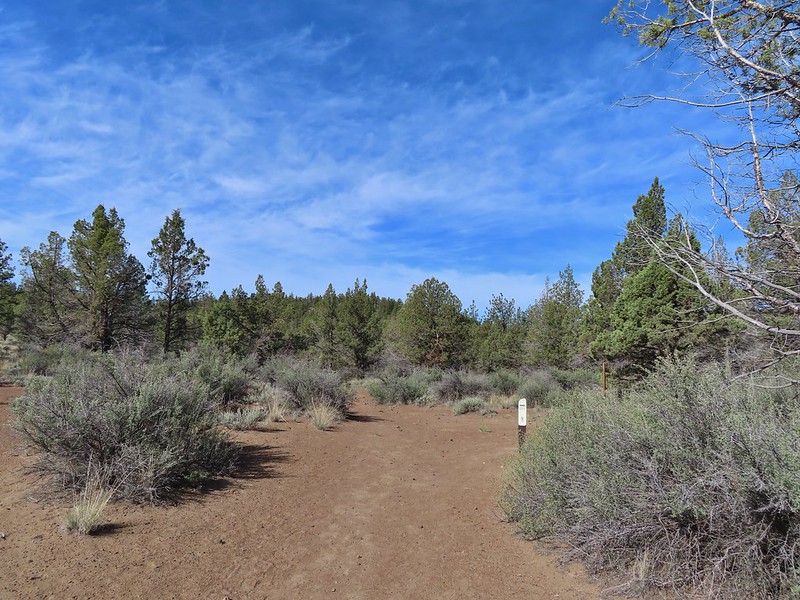
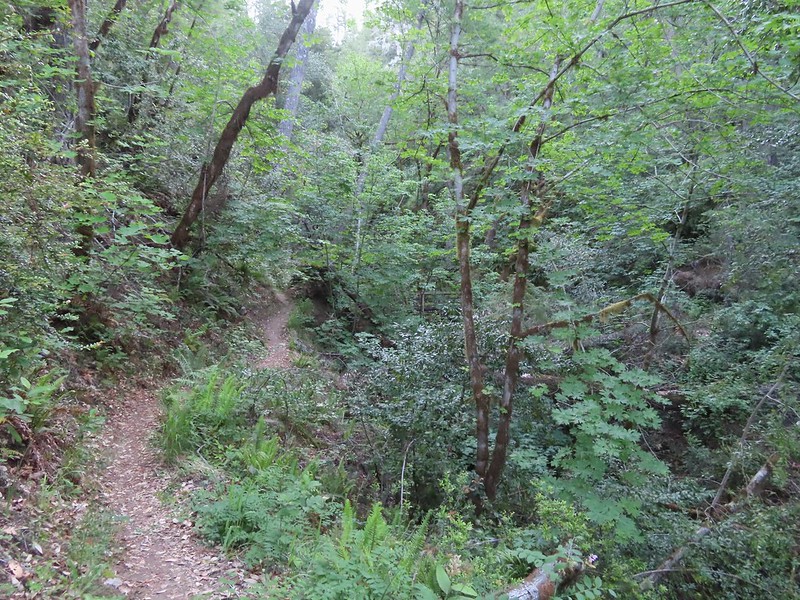
IMG_5942Buck Canyon Trail

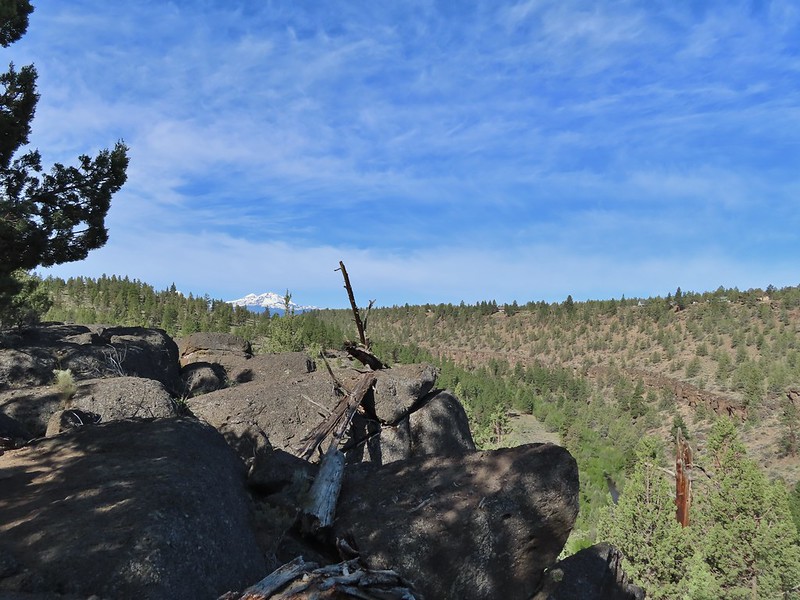
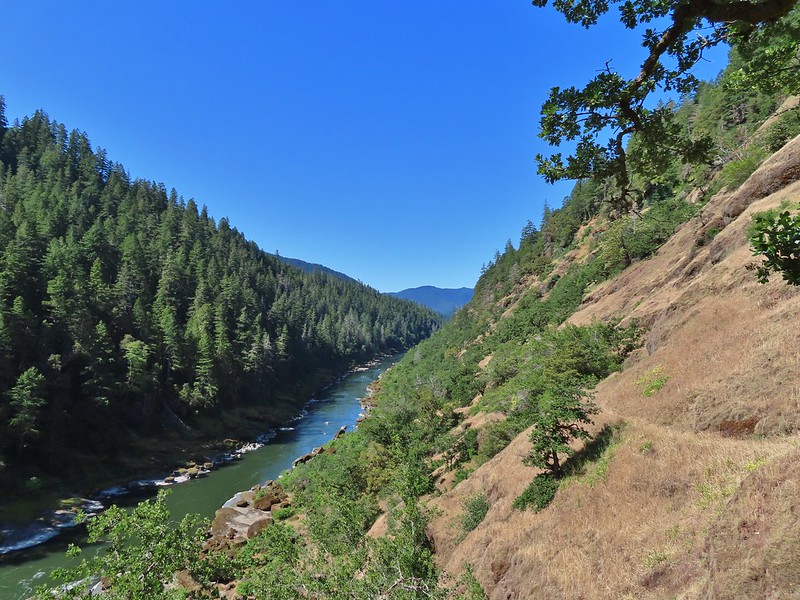
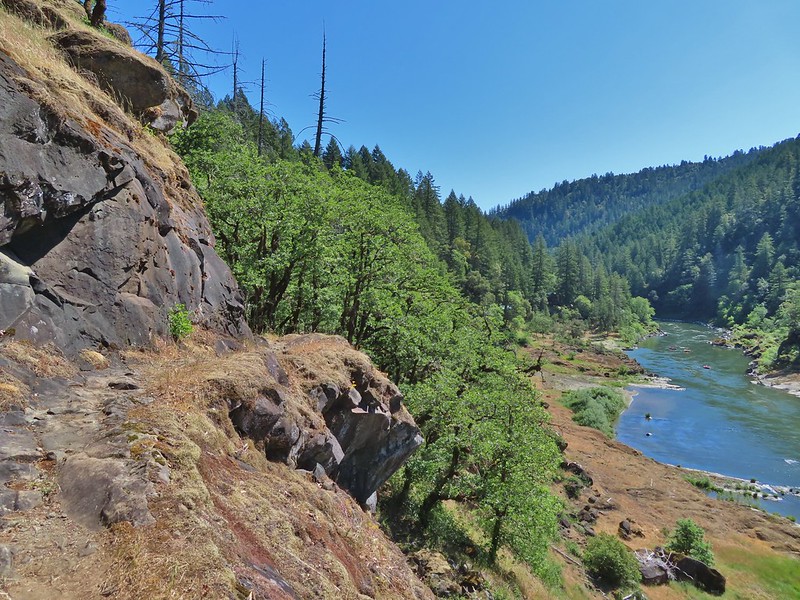
IMG_5957View from the Buck Canyon Trail

IMG_5960Hummingbird Meadows Trail

IMG_5960West Fork Muir Creek

We drove back to Diamond Lake (post) from the trailhead then took Highway 138 toward Roseburg to milepost 55. There we turned right onto Medicine Creek Road and made an immediate left onto Soda Springs Road following it for 1.3 miles to the Soda Springs Trailhead.
IMG_5970

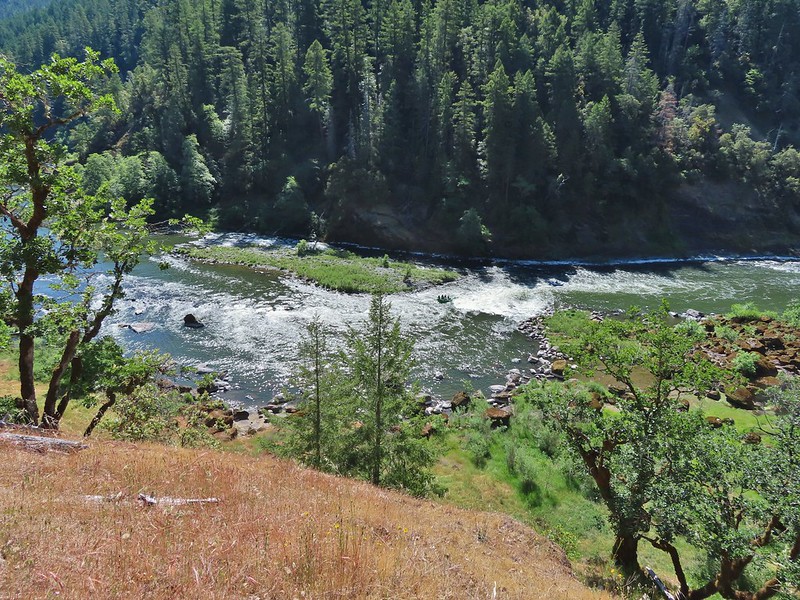
From the trailhead we took the Soda Springs Trail which ducked beneath a large steel pipe diverting water from the North Umpqua River to a nearby power station.
IMG_5980

The trail began climbing immediately after passing under the pipe and quickly arrived at a signed junction where the North Umpqua Trail forked to the right.
IMG_5984

The trail continued to climb through previously burned woods to another junction .4 miles from the trailhead.
IMG_5986

IMG_5987

IMG_5992

IMG_5993

This was the Bradley Trail onto which we turned left following pointers for Pine Bench.

IMG_5995

IMG_6003

This trail climbed over 650′ in the next mile before leveling out along the broad plateau of Pine Bench. There was an increasing presence of poison oak along the trail which we kept our eyes out for. It was especially bad along the hillside after we entered a more recent (2017) fire scar.
IMG_6004

IMG_6005Bradley Trail passing below some cliffs.

IMG_6006

IMG_6009A lot of the poison oak was turning color which made it easier to spot.

IMG_6013Entering the 2017 fire scar.

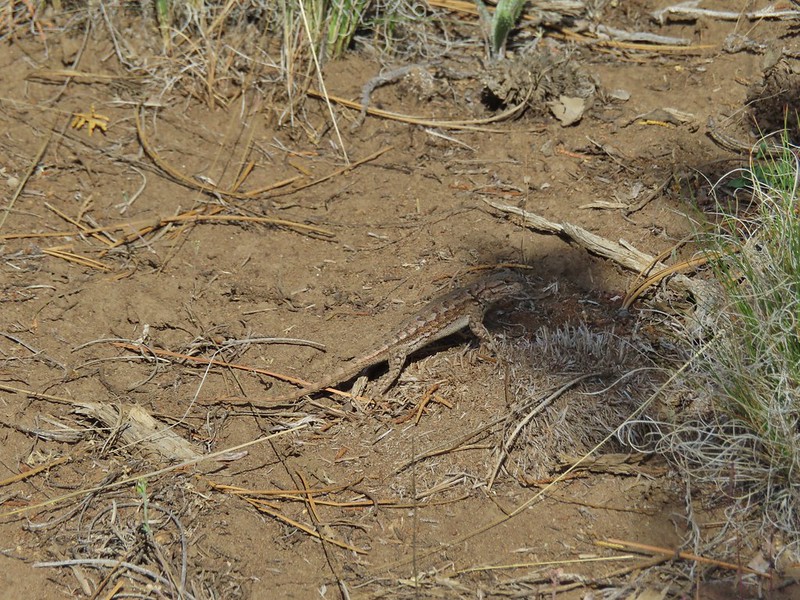
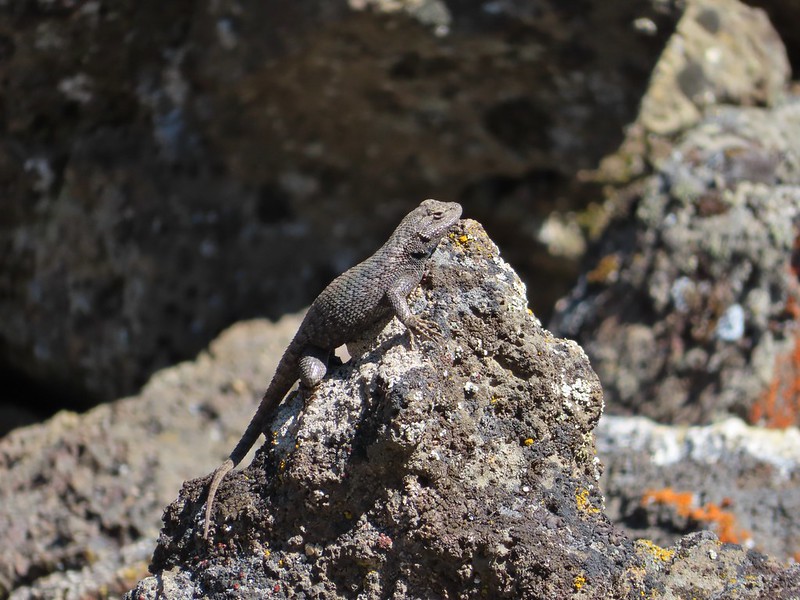
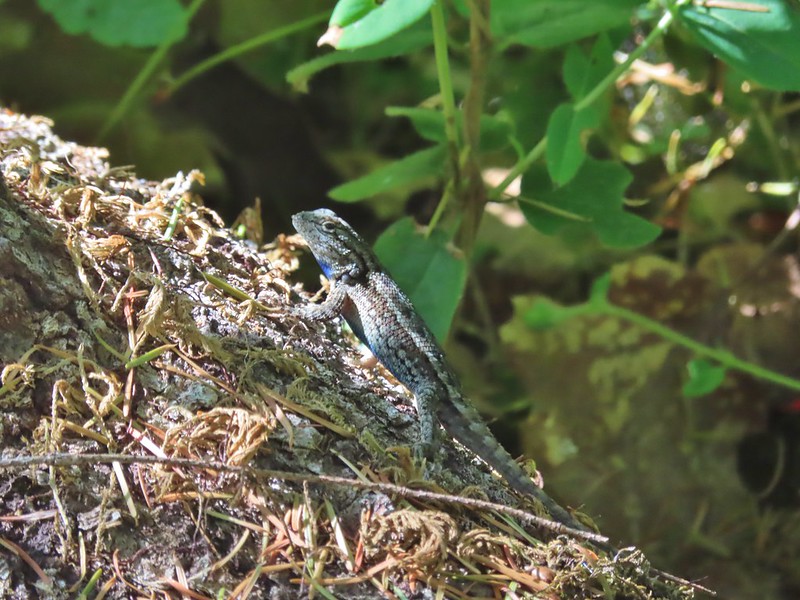
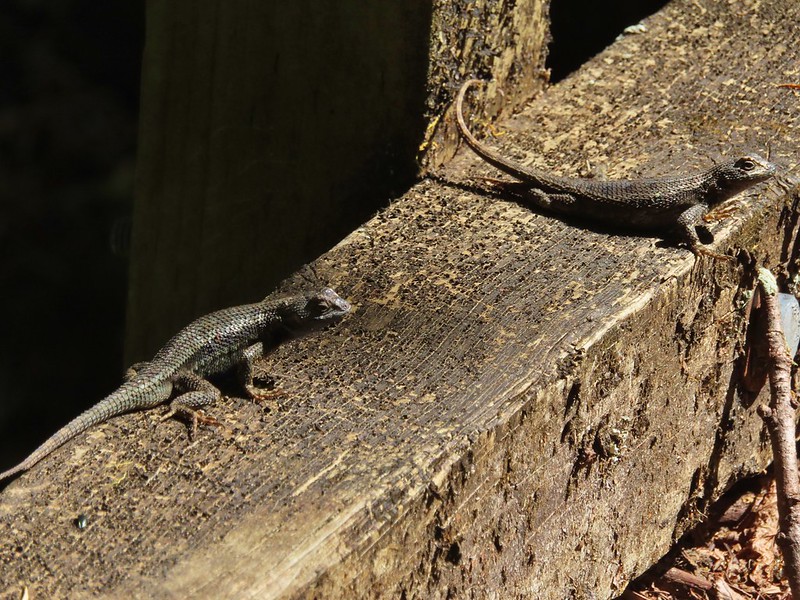
IMG_6018Lizard

IMG_6029Bradley Trail arriving at Pine Bench.

It was a hot climb in the exposed sun so reaching the forest atop Pine Bench was a nice reprise from both the heat and the vast majority of poison oak.
IMG_6030

IMG_6033Rock formation visible from the Bradley Trail.

A little over a mile and a half from the Soda Springs/Bradley Trail junction we arrived at the Boulder Creek Trail.
IMG_6035

IMG_6038

We turned right here looking for a side trail to a spring near a campsite.
IMG_6042

IMG_6040Common wood nymph

IMG_6043

IMG_6045Illahee Rock Lookout

IMG_6049

We passed the campsite after .4 miles but we didn’t take the unsigned spur trail down to the spring due to the GPS map showing the trail further off.
IMG_6052

IMG_6112Spur trail to the left.

We quickly realized that the trail we had seen must have been the one we wanted but decided to continue on for now. From the campsite the trail continued to Boulder Creek after 1.7 miles. We were seeing very little poison oak and it was a nice day on the bench so we opted to do Sullivan’s longer described hike to the creek. The trail made a few unexpectedly steep up and downs and it grew fainter with a few downed snags but it was passable and there were signs of recent brushing/trail maintenance.
IMG_6056

IMG_6058Just over half a mile from the campsite we passed the very faint Perry Butte Trail.

IMG_6060Trail maintenance and ripe blackberries.

IMG_6063Looking up the Boulder Creek Valley

IMG_6064Looking down at the trail across a side drainage.

IMG_6065Looking across the Boulder Creek valley.

IMG_6067Small fall on Boulder Creek

IMG_6069Final drop down to Boulder Creek.

IMG_6070Boulder Creek

We took a short break on the rocks along the creek before turning back.
IMG_6073

IMG_6076The continuation of the Boulder Creek Trail on the far side of Boulder Creek which reportedly becomes even fainter and more wild.

IMG_6079

IMG_6077

After cooling off a bit we started the process of climbing back up to the campsite and the spur trail to the spring.
IMG_6084

When we made it back to the spur trail we turned down it for 100 yards to a wide open area with madrone trees.
IMG_6091

IMG_6092

IMG_6102

IMG_6107

IMG_6109

The spring was just below some rocks on the left but there wasn’t much water flowing this time of year.
IMG_6101

After another short break we continued back to the Bradley Trail junction. We stayed straight here following the Boulder Creek Trail downhill through the 2017 fire scar. While there had been a good deal of poison oak along the Bradley Trail this trail put that one to shame. It was all avoidable but it was thick along the trail as it switchbacked downhill. There was also one switchback near the top where we were forced to walk down a large downed tree.
IMG_6115Fern tree along the Boulder Creek Trail.

IMG_6118This log was the trail.

IMG_6120Another switchback with poison oak on all sides of the trail.

The bright side of going down this way was there was a wilderness sign, or at least most of one (we hadn’t seen one on the other side).
IMG_6126

After a approximately 1.5 miles we arrived at a junction with the North Umpqua Trail where we turned left on an old roadbed.
IMG_6129

IMG_6132

We followed the road another tenth of a mile or so to a gate blocking the road at the Boulder Creek Trailhead.
IMG_6138

IMG_6139

Not too far from the gate we came to a pair of boulders blocking the road meaning the actual trailhead is inaccessible via car although there was room to park at the boulders. We continued down the road which brought us close to the North Umpqua River near the power station.
IMG_6140

IMG_6141

IMG_6146

IMG_6150

We stopped at the far end of the Soda Springs Day Use Area to read the interpretive signs before returning to our car.
IMG_6153

IMG_6159

IMG_6156

IMG_6158

We headed back to Salem and when we were back in cell range began receiving alerts about a hazardous wind event. By the time we made it back to Salem strong dry winds from the east had pushed the Lionshead and Beachie Creek Fires into the valley. Later that evening/night those fires would explode along with numerous other new fires up and down the West Coast. A slightly smokey but wonderful Labor Day Weekend turned into a nightmare for thousands. The fires continue to be a huge danger to many but the winds have shifted and rain is in the forecast so hopefully some relief is coming. Happy Trails and stay safe.

Flickr: Boulder Creek Wilderness

Categories
Hiking Old Cascades Oregon Rogue-Umpqua Divide Trip report

Rattlesnake Mountain – 09/06/2020

After spending the night at Wiley Camp (post) we grabbed our day packs and crossed the West Fork Muir Creek on the Wiley Camp Trail.
IMG_5660

IMG_5661Smokey skies turning the Sun red.

We followed the cairn and flagging that we had found the day before and picked up the trail on the far end of the meadow.
IMG_5663

IMG_5665

The Wiley Camp Trail entered the trees where we had to navigate around and over a number of downed trees.
IMG_5666

IMG_5667

IMG_5678

Despite the numerous obstacles the trail was easy enough to follow and it passed a number of huge trees.
IMG_5670

IMG_5671Little trees surrounding a giant.

IMG_5674A downed giant.

Three quarters of a mile from Wiley Camp the trail entered a large meadow where we finally lost the tread.
IMG_5680

IMG_5682

IMG_5684

IMG_5687Madia

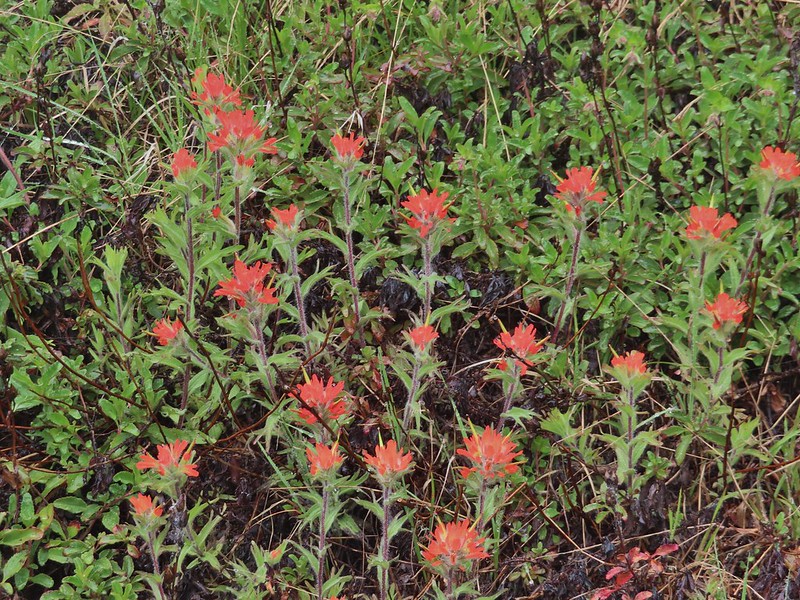
IMG_5689Paintbrush

We used the GPS to relocate the trail at the upper end of the meadow in a saddle.
IMG_5693

The trail then dropped a tenth of a mile to the Wiley Camp Trailhead on Fish Creek Valley Road 870.
IMG_5694

On the far side of the road was a pointer for the Whitehorse Meadows Trail.
IMG_5696

This trail reentered the Rogue-Umpqua Divide Wilderness and dropped into another meadow following a small stream.
IMG_5700

IMG_5704

IMG_5705

IMG_5708Goldenrod and other flowers.

IMG_5710Arnica?

IMG_5714Columbine

20200906_082143St. John’s wort

IMG_5721Fleabane (or aster) and coneflower

Three quarters of a mile from the road we arrived at Fish Creek where the trail briefly disappeared.
IMG_5723

IMG_5724

Heather found the trail on the far side of the creek where we turned left along the edge of the meadow before turning right at a tree with another trail sign.
IMG_5728

IMG_5729

Just beyond the trees we came to the unsigned Rogue-Umpqua Divide Trail.
IMG_5730

Here we turned left following this trail a quarter of a mile where the Whitehorse Meadows Trail split off uphill to the right.
IMG_5731

IMG_5732The trail sign on the left wasn’t particularly descriptive.

The Whitehorse Meadows Trail climbed steadily through meadows and forest for 1.2 miles to a four-way junction at Windy Gap. The highlight of this section was an owl that flew by and landed in a nearby tree.
IMG_5736

IMG_5738

IMG_5739The owl is in the center of the picture behind the branch with green needles.

IMG_5742Small stream crossing

IMG_5744Chipmunk

IMG_5746

IMG_5749

IMG_5753

IMG_5754Windy Gap

We took a break on some logs at the gap before heading up the Rattlesnake Mountain Trail (which was on the right as we arrived).
IMG_5755

The sometimes faint Rattlesnake Mountain Trail gained over 800′ in the next 1.2 miles as it climbed via a series of switchbacks, steeply at times to a large rock cairn. It had been a little smokier than the previous day but as we climbed we managed to get above the smoke.
IMG_5759

IMG_5758

IMG_5761

IMG_5765

IMG_5766

IMG_5768

Along the way we passed an impressive rock outcropping.
IMG_5770

IMG_5771

IMG_5775Near the upper end of the 1.2 mile section we entered a burn scar with views of Mt. Bailey, Mt. Thielsen and Crater Lake.

IMG_5777Mt. Thielsen

IMG_5779High points along the rim of Crater Lake above the smoke.

IMG_5781A bee photobomb with Mt. Bailey and Mt. Thielsen to it’s right.

IMG_5786Flagging in the burn scar.

IMG_5783Nuttall’s linanthus

20200906_100351Owls clover

IMG_5791

IMG_5792Golden-mantled ground squirrel.

IMG_5794The rock cairn.

The Rattlesnake Mountain Trail continued NE at a much smaller cairn at a switchback below the larger cairn. We missed this on the way up, it appears that it had not been maintained since the 2017 Rattlesnake Fire.
IMG_5821

From the large cairn we simply headed uphill through the meadow to a viewpoint on the west side of the mountain.
IMG_5798Nearing the summit.

The air was okay where we were, but the smoke was impacting the views. We were able to make out the top of Mt. McLoughlin beyond Fish Mountain.
IMG_5803

IMG_5802Mt. McLoughlin

IMG_5804Hillman Peak and The Watchman at Crater Lake

We tried taking a break amid the trees near the summit but we wound up attracting a number of yellow jackets (and I don’t do yellow jackets) so we decided to instead stroll around the fairly level top of Rattlesnake Mountain where we located the old lookout site.
IMG_5808

IMG_5811Butterfly and bees.

We did a small loop around the forested top and dropped back down through the meadow to the cairn and returned to Windy Gap.
IMG_5824For some reason this cracked us up.

20200906_114812Heather spotted this cricket on my shoulder (I always have some sort of insect on me for some reason).

At the 4-way junction at Windy Gap we went straight following a sign for the “Tie Trail to Castle Creek Trail No. 1576”. (Not a trail name that just flows off the tongue.)
IMG_5828

Approximately .2 miles from Windy Gap we passed a sign for a faint unnamed trail leading uphill to the right.
IMG_5832

The next .2 miles were interesting as the trail grew faint and then disappeared in a meadow.
IMG_5833

IMG_5834

This section of trail was not shown on the GPS so we couldn’t use that to stick to where the trail was supposed to be so we wound up crossing the meadow and then heading uphill to the Castle Creek Trail which was shown on the GPS.
IMG_5835We’d lost the trail here and were just heading for the Castle Creek Trail.

IMG_5836We came across this faint tread in the trees before reaching the Castle Creek Trail and started following it.

IMG_5839Apparently it was the actual trail as it popped us out at a trail sign along the Castle Creek Trail.

We turned left on the Castle Creek Trail, which followed an old roadbed downhill for 1.1 miles to the end of Fish Creek Valley Road 877 at the Happy Camp Trailhead
IMG_5841

IMG_5845

IMG_5850Rattlesnake Mountain

IMG_5855Happy Camp Trailhead

We followed the road to the left 100 yards to the Rogue-Umpqua Divide Trail.
IMG_5863Rattlesnake Mountain

IMG_5864Rogue-Umpqua Divide Trail

The trail dropped into a meadow and crossed Fish Creek. We followed this trail three quarters of a mile to the junction with the Whitehorse Meadows Trail where we had turned uphill earlier in the day.
IMG_5872

IMG_5876Snake in Fish Creek

IMG_5882

IMG_5885Scarlet gilia

We then retraced our steps to the Wiley Camp Trail and the Fish Creek Crossing where we refilled our water supply.
IMG_5887Fish Creek

IMG_5889Fish in Fish Creek

IMG_5891Frog in Fish Creek

As we climbed past the meadow beyond Fish Creek we spotted several hawks and one deer who crashed off before we knew what had happened.
IMG_5898

IMG_5894

We recrossed Fish Creek Valley Road 870 and returned to camp on the Wiley Camp Trail.
IMG_5905

No sooner had I sat down at camp when a bat flew by and landed on a nearby tree.
IMG_5925

I’m not sure why it was out during the day but it stayed on the tree for a minute or two then flew off across the creek. We spent the rest of the day relaxing at the creek (which was really cold).
IMG_5928Monkshood

IMG_5936This frog decided that under Heather’s pack was a nice spot to chill.

We didn’t see another person the entire day which was nice but in a way also a shame. The area is beautiful but it clearly sees little maintenance and appears to see most of it’s visitors during hunting season. The lack of visitors likely contributes to the lack of maintenance which in turn discourages visitors. It’s really a shame. We enjoyed the privacy though and had another nice evening alone with the critters. Happy Trails!

Flickr: Rattlesnake Mountain

Categories
High Cascades Hiking Mt. Theilsen/Mt. Bailey Area Old Cascades Oregon Rogue-Umpqua Divide Trip report

Diamond Lake and Wiley Camp – 09/05/2020

As I write up this trip report the Diamond Lake Resort, like many other areas in Oregon, has been evacuated due to a wildfire. The tragic loss of homes and lives happening right now is truly heartbreaking. Right now the Thielsen Fire is moving away from the lake but a shift in the winds could change that in an instant.

We visited Diamond Lake to kick off our Labor Day Weekend hiking the full loop around the 3,015 acre lake. There are numerous possible starting points for the loop and we chose to park at Horse Lake where we could follow the Horse N Teal Trail to the Dellenback Trail which is the paved trail around Diamond Lake. There was quite a bit of smoke from wildfires in California in the air which limited visibility as we set off from Horse Lake on the trail.
IMG_5372

IMG_5373Horse Lake

IMG_5375Lesser yellowlegs

We opted not to make the short loop around Horse Lake and turned right at a junction toward Forest Road 4795 and Teal Lake.
IMG_5376

The trail crossed the road and then descended a short distance to Teal Lake.
IMG_5379

IMG_5383

IMG_5386

There is also a loop around Teal Lake so we had the choice of going left or right. We had planned on hiking counter-clockwise around Diamond Lake so we went right here and passed around the east side of Teal Lake where there was a hazy view of Mt. Bailey (post).
IMG_5387

At the north end of the lake a very short connector trail led to the paved Dellenback Trail where we again turned right.
IMG_5394

IMG_5395

IMG_5398Northern flicker

A large meadow separates the trail from the lake here.
IMG_5401

We followed the path through the forest ignoring side trails for a mile where we arrived at the South Shore Picnic Area.
IMG_5402

IMG_5403

IMG_5406Mt. Bailey beyond the meadow.

IMG_5410

IMG_5420Mt. Thielsen from the South Shore Picnic Area

IMG_5412Diamond Lake underneath the smoke.

IMG_5414Mt. Bailey

IMG_5425Mt. Thielsen from the boat dock.

We had expected the lake to be busy given it was Labor Day weekend and Diamond Lake is a very popular spot and we were right. We utilized our masks as we passed through the picnic area and continued past an RV park and into the Diamond Lake Campground which stretches along most of the eastern side of the lake.
IMG_5427Picnic tables in the picnic area.

IMG_5431

IMG_5432Short Creek (it really is short)

IMG_5433Resort buildings between the RV park and campground.

IMG_5434Sign instructing users to follow painted bike symbols through the campground.

Despite passing through the busy campground there were a number of good views of Mt. Bailey across the lake. There were also quite a few ducks in the area.
IMG_5441

IMG_5443Common merganser

IMG_5447

IMG_5458Goldeneyes

IMG_5457

IMG_5460

The trail left the campground and then in a quarter mile arrived at the Diamond Lake Lodge area.
IMG_5467

IMG_5469Mt. Bailey again.

IMG_5471Arriving at the lodge area.

IMG_5472Seagulls

IMG_5473

IMG_5474

We passed by the lodge along the grassy lake shore and then returned to the trail on the far side. We were now far enough around the lake that we could once again see Mt. Thielsen.
IMG_5479

This section of trail was lined with larger and more diverse trees and is also the side closest to the Thielsen Fire as of this writing.
IMG_5481

IMG_5485

There were fewer people along this stretch but a steady stream of bicycle riders did pass by. More entertaining though were the birds.
IMG_5492Bald eagle

IMG_5498I’ve been spotted

IMG_5503Chickadee with a seed or nut.

IMG_5510Junco in some fireweed.

IMG_5513The junco with Mt. Bailey in the background.

IMG_5521Looking back at Mt. Thielsen

IMG_5523More goldeneyes

IMG_5526Mergansers

The trail joined FR 4795 again 1.7 miles from the lodge to avoid what appeared to be an old guard station or possibly just a private cabin near Lake Creek.
IMG_5527

IMG_5530

IMG_5529

After crossing the creek the trail continued with the Rodley Butte Trail on the opposite side of the road.
IMG_5531

The trail then passed a nice little sandy beach with a view of Mt. Thielsen.
IMG_5539

IMG_5536Osprey

We were now heading south along the western side of the lake which provided good views of Mt. Thielsen and Howlock Mountain despite the smoke.
IMG_5544

IMG_5542

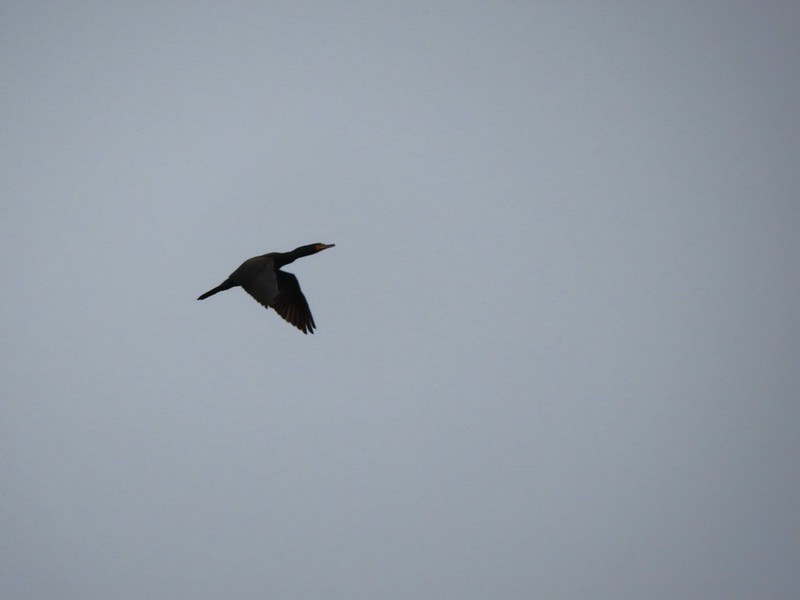
IMG_5546Cormorant

IMG_5548Howlock Mountain to the left and Mt. Thielsen

The mountain views would be interrupted just over a mile from Lake Creek when the Dellenback Trail veered away from the lake to avoid the Thielsen View Campground.
IMG_5551

We again crossed FR 4795 and continued through the trees for nearly three miles before recrossing the road.
IMG_5552

IMG_5553

IMG_5554Back on the lake side of FR 4795.

We were now passing by the large meadow at the south end of the lake, only this time it was Mt. Thielsen not Mt. Bailey beyond the meadow.
IMG_5555

IMG_5561

Just under a mile after recrossing FR 4795 we arrived at a scenic footbridge over Silent Creek.
IMG_5569

IMG_5562

IMG_5568

A quarter mile beyond Silent Creek we arrived back at the Horse N Teal Trail junction near Teal Lake.
IMG_5573

We turned up this trail and passed by Teal Lake on the opposite side from that morning thus completing that loop.
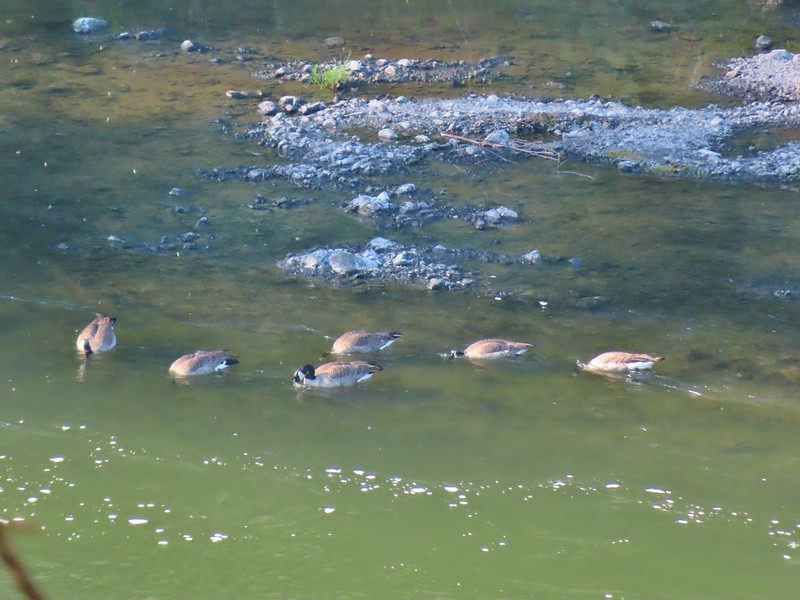
IMG_5576Canada geese at Teal Lake.

IMG_5578

We arrived back at Horse Lake after 11.6 miles of hiking. This managed to be a somewhat easy yet hard hike at the same time. The lack of elevation change and obstacles along the trail made for easy, quick hiking, but the paved surface is a lot harder on the feet than dirt. We hadn’t stopped much at all along the way either due to the number of other trail users and our attempting to do our best to stay properly socially distanced.

Our day wasn’t done after the lake loop though. We were planning on spending the weekend in the area with Sunday’s hike being to Rattlesnake Mountain in the Rogue-Umpqua Divide Wilderness. We left Diamond Lake and took Highway 230 toward Medford to the Hummingbird Meadows Trailhead which was devoid of other vehicles.
IMG_5582

We had brought our backpacking gear with thoughts of setting up camp somewhere between the trailhead and Wiley Camp.
IMG_5583

We had been to Hummingbrid Meadows before (post) but on that hike we had come in on the Buck Canyon Trail. On that trip we had also not visited Wiley Camp. For this trip we were planning on spending the night in our tent then using the Wiley Camp Trail to hike up to the Rogue-Umpqua Divide Trail and complete the Rattlesnake Mountain hike described in Sullivan’s “100 Hikes/Travel Guide Southern Oregon & Northern California” guidebook. The status of Wiley Camp and the Wiley Camp Trail was a little confusing. The Forest Service websites mention the trail but in almost every instance “area not available” followed the reference. A 2018 trip report from vanmarmot.org though showed that just two years before the trail was still there and passable.

We followed the Hummingbird Meadows Trail into the wilderness where we were quickly met with some downed trees.
IMG_5584

IMG_5590

The trail then passed through a meadow and dropped to a crossing of the West Fork Muir Creek where we thought we might find a campsite but there really wasn’t anything that caught our eye.
IMG_5591

IMG_5595

IMG_5596hedgenettle and aster.

IMG_5597Monkeyflower

The trail climbed away from the creek and in 100 yards arrived at the Buck Canyon Trail junction (approx .4 miles from the trailhead).
IMG_5599

IMG_5600

We turned right onto the Buck Canyon Trail which passed through Hummingbird Meadows before arriving at the Wiley Camp Trail junction in 1.6 miles. There were quite a few downed logs as trail maintenance in the area appears to be way down the Forest Service’s list of priorities but nothing was unmanageable. We had been watching for any campsites but nothing stood out so we decided to just go to Wiley Camp since it was only a little over 2 miles from the Hummingbird Meadows Trailhead.
IMG_5602

IMG_5603

IMG_5605Wiley Camp Trail on the right.

We turned down the Wiley Camp Trail which was in no worse/better shape than the Buck Canyon Trail arriving at Wiley Camp after a quarter of a mile.
IMG_5608

IMG_5609

IMG_5611Wiley Camp sign

Unlike the busy Diamond Lake area there was no one else to be seen in this area. We picked a tent site and set up camp on the hillside above the West Fork Muir Creek.
IMG_5618

We spent the rest of the afternoon/evening down at the creek and doing a quick survey of the Wiley Camp Trail for the next day. Clear tread led up from the creek into the meadow on the far side where it quickly vanished. After heading too far left (west) into some trees we located a small cairn and some pink flagging leading the way out of the meadow.
IMG_5614

IMG_5615Grass of parnassus

IMG_5623Frog

IMG_5616Trail leading up from the creek into the meadow.

IMG_5630Big cedar at the edge of the meadow.

IMG_5635Cairn and pink flagging (small tree to the right) marking the Wiley Camp Trail.

IMG_5644Elder berry

IMG_5648Twisted stalk

No one else ever showed up to Wiley Camp, at least no people. A bright Moon helped light the area where we could see many bats darting about.
IMG_5657

IMG_5659

Hopefully the forest and features in this trip report will look similar for years to come and this isn’t a memorial of what once was. Happy Trails!

Flickr: Diamond Lake Loop

Categories
Hiking Oregon Three Sisters Area Trip report Waldo Lake Area

Erma Bell Lakes and the Shale Ridge Trail – 08/29/2020

With our recent backpacking trip around Diamond Peak (post) leaving us with just one more featured hike yet to do from William L. Sullivan’s “100 Hikes/Travel Guide Central Oregon Cascades” (4th edition) the only logical thing to do the following weekend was that last remaining hike. That hike was to the Erma Bell Lakes and as luck would have it late August was a pretty good time to visit, the berries were ripening and the mosquitoes weren’t too much of a nuisance. With a drive time of almost three hours the loop around the 8.5-9 mile loop around the lakes wouldn’t take long enough for us not to break our self imposed rule of the driving time being longer than our time spent hiking so we added a second stop to the day at the Shale Ridge Trail.

We started the morning by driving to the Skookum Creek Campground where the Erma Bell Trail begins.
IMG_5089

IMG_5091

The trail crosses Skookum Creek on a footbridge.
IMG_5092

IMG_5093

Soon after crossing the creek the trail enters the Three Sisters Wilderness.
IMG_5097

The trail traverses a forested hillside where we found a few ripe thimbleberries to snack on.
IMG_5099

A little over half a mile from the trailhead the Irish Mountain Trail splits off to the left toward Otter Lake allowing for a loop past that and several other lakes.
IMG_5104

We stayed right choosing to follow Sullivan’s suggestion to complete the loop counter-clockwise. The trail continued along the forested hillside for another mile before crossing a small stream on a bridge near Lower Erma Bell Lake.
IMG_5105

IMG_5108

IMG_5113

Just beyond the bridge we took a short spur trail to the left to visit the lake.
IMG_5115

IMG_5116

IMG_5117

The lake was a pretty blue color and quite deep.
IMG_5133

IMG_5135

Despite the beauty of the lake our attention had been diverted by the familiar “meep” of pikas, our favorite trail critters. We quickly spotted one of the little fur balls collecting greens along the rocky lake shore.
IMG_5119

IMG_5121

IMG_5127

IMG_5130

We watched the pika go back and forth with its greens several times before resuming our hike. We continued on the trail around the lake taking another detour after crossing the lake’s main outlet creek to check out a small cascade.
IMG_5136

20200829_083744

Beyond the outlet the trail began a .4 mile climb up toward the Middle Erma Bell Lake.
IMG_5142Lower Erma Bell Lake from the climb.

A short but steep trail to the left just before the high point of the trail led to a viewpoint of a waterfall between the lower and middle lakes.
IMG_5144

IMG_5162Above the falls.

IMG_5156

After checking out the waterfall we continued up to Middle Erma Bell Lake.
IMG_5176

IMG_5170

IMG_5175Ouzel

IMG_5178Ducks

We continued beyond Middle Erma Bell Lake passing a small pond on the right before arriving at Upper Erma Bell Lake .7 miles from the waterfall, also on the right.
IMG_5186Pond along the trail.

IMG_5189Spur trail on the right to Upper Erma Bell Lakes.

IMG_5192Paintbrush and aster along the lake shore.

IMG_5193Upper Erma Bell Lake

IMG_5197Lupine and paintrbush

In addition to a few flowers there were lots of ripe berries near the lake which we sampled before continuing. The trail climbed gradually for half a mile to a junction with the Judy Lake Trail which passes Mud and Edna Lakes (but no Judy Lake) before ending at the Taylor Burn Guard Station.
IMG_5202Judy Lake Trail on the right.

We stayed left passing above Mud Lake which was barely visible through the trees below.
IMG_5203

Just under a mile from the Judy Lake Trail junction we arrived at another junction, this time with the Williams Lake Trail.
IMG_5207Williams Lake Trail joining from the right.

Again we stayed left continuing for another .4 miles to Williams Lake. Before reaching the lake we encountered a grouse that was less than pleased with our presence.
IMG_5217Grouse giving us the what for from a tree.

IMG_5212

IMG_5220Williams Lake

IMG_5227Dry creek bed near Williams Lake.

The trail began to descend beyond Williams Lake passing through some damper meadows where berries were plentiful and some flowers remained (and so did some mosquitoes).
IMG_5229

IMG_5232

IMG_5234Pearly everlasting

IMG_5237Fleabane

IMG_5243Prince’s pine

IMG_5244Mushroom

IMG_5250

IMG_5254Aster

IMG_5257

IMG_5258Coneflower

IMG_5265

IMG_5272Paintbrush

IMG_5275

IMG_5277Paintbrush

A little over two and a quarter miles beyond Williams Lake we arrived at a junction with the Irish Mountain Trail which headed uphill to the right.
IMG_5281

A short distance from the junction we came to Otter Lake.
IMG_5287

IMG_5294Curious dragonfly

The trail descended for another half mile to the Erma Bell Lakes Trail completing the loop.
IMG_5298

We turned right and returned the .6 miles to the now busy trailhead. Sullivan lists the hike at 8.4 miles but we both came up with a little over 9 miles, most likely due to the various side trips tp the waterfalls and along the lake shores. We left the trailhead and headed back toward Oakridge on Forest Road 19 stopping at the Shale Ridge Trailhead on the left (south) near milepost 30.

This trailhead serves as the start of the Shale Ridge Trail and the upper terminus of the North Fork Trail (segment 5). We had spent time on the North Fork Trail earlier in the year hiking segment 1 out of Westfir and another short section to Buffalo Rock in May (post).
IMG_5305

We weren’t here for that trail today and instead headed south on the Shale Ridge Trail, which according to a note written on the signboard had been partially logged out in June.
IMG_5303

<img src="https://live.staticflickr.com/65535/50286349281_6b323abbee_b.jpg&quot; width="768" height="1024" alt="IMG_5304">

IMG_5306

The trail quickly entered the Waldo Lake Wilderness.
IMG_5312

We followed the trail through old growth forest. The North Fork Middle Fork Willamette River could be heard at time off to our right but not seen.
IMG_5316

IMG_5317Ghost Pipe aka Indian Pipe

We were below the ridge that we had been on during the Erma Bell Lakes hike and at the 1.8 mile mark we came to Skookum Creek which was flowing through multiple channels through the forest. This area was the highlight of the hike along the Shale Ridge Trail.
20200829_125709_HDR

IMG_5334

IMG_5332

IMG_5338

We continued beyond Skookum Creek just over a mile to the North Fork Middle Fork River at Cedar Bog. This was as far as we had planned on going and as far as the trail had been cleared to. In theory the trail continues up to the Blair Lake Trail (post) on the far side of the river but the condition beyond Cedar Bog is mostly likely very rough.
IMG_5349Arriving at Cedar Bog.

IMG_5350One of a couple dry channels.

IMG_5353North Fork Middle Fork

IMG_5358Flagging on a downed tree marking the continuation of the Shale Ridge Trail.

IMG_5360North Fork Middle Fork at Cedar Bog

IMG_5363Orange flagging on the far side of the river.

20200829_132354Monkeyflower at Cedar Bog

IMG_5366Candy flower

We turned back here and returned to our car completing a 5.8 mile out and back. While this hike was short on views there were some impressively large trees along the way and it was fairly level with only a 400′ cumulative elevation gain. The two hikes combined for nearly 15 miles of hiking which ensured that our hiking time was indeed longer than our driving time. More importantly we’d seen some nice lakes, all of which had their own distinct differences and had been gotten to watch a pika doing its thing. On top of it all we could finally say that we had done at least part of all 100 featured hikes in one of Sullivan’s guidebooks. Happy Trails!

Flickr: Erma Bell Lakes and the Shale Ridge Trail

Categories
Diamond Peak Area Hiking Trip report

Diamond Peak Loop Day 1 – 08/22/2020

Four of the five remaining featured hikes from William L. Sullivan’s “100 Hikes/Travel Guide Central Cascades” (4th edition) were scattered around Diamond Peak in the Diamond Peak Wilderness. To check these off our to-do list we decided to hike a four day loop around the mountain visiting most of the highlights of those four hikes. We started our trip at the Trapper Creek Trailhead, a trailhead that we were familiar with having started our Yoran Lake hike there in 2014 (post). After crossing some railroad tracks we arrived at the actual trail and set off into the Diamond Peak Wilderness.
IMG_4152

IMG_4155The writing on the sign made us chuckle, it says “If you need a map you should stay home”. All kidding aside you should always carry a map and refer to it as often as necessary.

IMG_4157

20200822_073035

IMG_4159

Two tenths of a mile from the railroad tracks we arrived at the Yoran Lake/Whitefish Trail junction where we had turned right in 2014. Posted on this sign (as well as before the railroad tracks and on the signboards at the start of the trail) was a notice that the Trapper Creek Bridge was closed due to damage. That was our return route for the final day but we knew there was an established ford so we weren’t too concerned about it.
IMG_4160

We stayed left on the Whitefish Creek Trail which climbed gradually following Trapper Creek.
IMG_4164

IMG_4179

IMG_4190Breakfast time.

IMG_4192

While several lakes including Yoran, Karen, and Diamond View drain into Trapper Creek they are seasonal flows yet Trapper Creek was flowing nicely. The main source of water for the creek is a spring between those lakes. As we continued up the Whitefish Trail the sound of running water faded and the forest shifted to dustier lodgepole pine.
IMG_4195

IMG_4198

IMG_4199

IMG_4203Unnamed lake along the Whitefish Trail

Just under 5 miles from the trailhead we arrived at Diamond View Lake. It had been overcast when we began our hike but the clouds were burning off fast and as we sat at the lake taking a break the clouds lifted and gave us a full view of the east side of Diamond Peak.
IMG_4209Arriving at Diamond View Lake

IMG_4214

IMG_4221Diamond Peak with Mt. Yoran to the right.

IMG_4234

IMG_4240Sharing our break spot with a butterfly

IMG_4252Crossbill near Diamond View Lake

We continued past Diamond View Lake passing a couple small lakes and ponds before arriving at a 4-way junction with the Crater Butte Trail a total of 5.7 miles from the trailhead.
IMG_4254

IMG_4256

IMG_4257

IMG_4260

From the junction the Whitefish Trail continues for 3.9 miles to Crescent Lake. The 13.7 mile Crater Butte Trail starts at the Crater Butte Trailhead on the east side of Odell Lake and passes Fawn and Saddle Lake (post) prior to the junction and then continues on to the Pacific Crest Trail. That was where we were headed so we turned right on the Crater Butte Trail which promptly crossed a mostly dry bed of Whitefish Creek.
IMG_4265

There were some markers along the trail, possibly mile markers and after two miles on this trail we passed the signed junction for the Snell Lake Trail.
IMG_4273Mile marker?

IMG_4277A lone lupine

IMG_4284Nice looking sign for the Snell Lake Trail.

IMG_4285It didn’t look like the Snell Lake Trail sees much use, at least at this end.

Beyond the Snell Lake Trail junction the scenery became a little greener with heather filled alpine meadows and Mountain View Lake with a great view of Diamond Peak.
IMG_4287

IMG_4294The heather was all done blooming but there was a lot of dried blossoms.

IMG_4301

IMG_4305

IMG_4307The summit of Diamond Peak.

IMG_4313

One and a quarter miles from the Snell Lake junction we crossed the small but pretty Mountain Creek before a short steep climb.
IMG_4317

After the climb the trail returned to its gradual grade with a few ups and downs.
IMG_4327

IMG_4330

Just over 5 miles after turning onto the Crater Butte Trail we arrived at the PCT.
IMG_4340

Our plan was to set up camp near the junction as we hoped to summit Diamond Peak the next morning from the PCT before continuing on our loop. With COVID-19 significantly lowering the number of thru hikers we weren’t too concerned about taking spots from them so we picked one a bit off the trail and set up our tent.
IMG_4345

As it wasn’t quite 1:00 yet we could do some exploring after getting camp situated. We briefly contemplated attempting to summit that afternoon but decided against it due to heat and needing water so instead we headed for Rockpile and Marie Lakes by taking the Rockpile Trail which continued across the PCT from the Crater Butte Trail.
IMG_4344

We would be going this way when we continued on our loop but both of the lakes are a bit off the trail and visiting them now gave us the opportunity to relax by the water before turning in for the night. A half mile down the Rockpile Trail on the left we found the signed .1 mile spur trail to Rockpile Lake.
IMG_4350Diamond Peak from the Rockpile Trail

IMG_4352

IMG_4353

IMG_4355Rockpile Lake

There were a few camps set up along the south side of the little lake. We decided not to stay long here as kids throwing rocks into the lake might be fun but it isn’t exactly relaxing so after checking it out we returned to the Rockpile Trail and turned left toward Marie Lake. After 110 yards we came to a junction with the Rockpile Trail continuing to the left while a spur trail continued .2 miles to Marie Lake.
IMG_4359

IMG_4361

We followed a trail along the south side of the lake to a view of Diamond Peak. While there were people camped here too the lake was bigger and we found a spot along the lake shore to sit and relax.
IMG_4366

IMG_4378

From our spot we could see the false summit of Diamond Peak and the route that we would be taking the next morning.
IMG_4372

IMG_4383Hikers on the trail to the right coming down from the false summit.

As the afternoon turned to evening more people showed up including some bathers, some floaters and a couple of skinny dippers. We kept the photos to the non-humans at the lake though.
IMG_4387

IMG_4391Dragon fly

IMG_4394

We had dinner by the lake then pumped water before heading back to our tent. We spent a little time exploring the area around camp and picked some huckleberries before turning in for the night. We had planned on hiking somewhere in the area of 12 miles but we wound up showing 14.3 on our GPS units (they actually agreed this time). It had been a beautiful day, not too warm and pleasantly smokeless given the number of wildfires in California and Oregon. We were hoping that the rest of the trip would be equally nice and turned in looking forward to the next days adventures. Happy trails!

Flickr: Diamond Peak Loop Day 1

Categories
Hiking Mt. Adams Trip report Washington Washington Cascades

Foggy Flat Backpack Day 2 – 08/02/2020

Normally when we are just hiking back to a trailhead the same way we got to a campsite it wouldn’t warrant a separate trip report, but our hike from Foggy Flat back to the Killen Creek Trailhead did. After spending the night at Foggy Flat(post) we woke just after 5am to find clear skies and a nice sunrise.
IMG_3076Goat Rocks in the morning

Even before the Sun was up it was light enough to get a good look at Mt. Adams.
IMG_3081Mt. Adams

IMG_3087

IMG_3083

Morning had brought out the mosquitoes so we decided to pack up and stop for breakfast somewhere along the return hike hoping for a less buggy spot. After a mile we stopped at the Muddy Meadows Trail junction where a log made for a prefect bench to have breakfast on.
IMG_3100Looking down the Muddy Meadows Trail from the log.

After breakfast we continued on the Highline Trail which offered good views of Mt. Rainier and Goat Rocks in this direction. When we weren’t looking at the mountains or the flowers various birds caught our attention.
IMG_3091Small hawk

IMG_3120Gray jay

Going in this direction gave us some good looks ahead toward Mt. Rainier.
IMG_3110Mt. Rainier and some of the Goat Rocks.

IMG_3116

IMG_3128Northern flicker

The unnamed lake near the Pacific Crest Trail had an excellent reflection of the forest and Mt. Adams.
IMG_3137

IMG_3141

IMG_3145Little bird near the PCT junction.

When we reached Killen Creek (.2 miles beyond the PCT junction) we crossed on the footbridge then removed our packs to take the steep use trail down below the waterfall as we’d planned the day before.
IMG_3154

IMG_3158Killen Creek below the waterfall.

IMG_3167

IMG_3171Mt. Adams from the waterfall.

After exploring the area below the falls we climbed back up and continued through Killen Creek Meadows, stopping to check on the pollywogs along the way.
IMG_3174_stitch

IMG_3181

The blue sky made for a different look than we’d had the day before and we kept pausing along the way to marvel at the scenery.
IMG_3195Mt. Rainier and Goat Rocks from the PCT.

IMG_3204

IMG_3207

IMG_3209Breakfast time (possibly second breakfast)

IMG_3210

IMG_3214Zooming in on Mt. Rainier

IMG_3215

IMG_3221

We were almost surprised when we arrived at the junction with the Killen Creek Trail. The miles go by pretty quick when you’re distracted. We turned down that trail putting Mt. Adams to our backs.
IMG_3225

IMG_3231Killen Creek Trail heading away from Mt. Adams.

We turned to look back several times seeing less and less of the mountain before we lost sight of it for good.
IMG_3233

IMG_3236

It had been wonderful trip. The Mt. Adams Wilderness has yet to let us down and we’re already looking forward to our next visit down the road. Happy Trails!

Flickr: Foggy Flat Backpack Day 2


Categories
Hiking Mt. Adams Trip report Washington Washington Cascades

Sleeping Beauty & Foggy Flat Backpack Day One- 08/01/2020

Our first backpacking trip of the year was over Memorial Day weekend (post) but since then we hadn’t had an opportunity to break out our tent. Sleeping Beauty, a 3 mile featured hike in Sullivan’s “100 Hikes/Travel Guide Northwest Oregon & Southwest Washington” (4th edition), gave us a reason to put the tent to use again.

It wasn’t because the hike to the top of Sleeping Beauty was backpackable, but rather the 2:45 drive time to the trailhead was too long for this to be a stand alone hike for us. To make the trip worth the drive we decided to continued to nearby Mt. Adams and do a hike to Foggy Flat from Matt Reeder’s “PDX Hiking 365” guidebook.

We began our trip by driving to Trout Lake, WA then continued on to the Sleeping Beauty Trailhead.
IMG_2359

The trail climbed steeply up through a green forest for a mile to a forested saddle. Most of the flowers had passed but a few lingered and the pearly everlasting was getting started. Thimbleberries weren’t quite ripe but we did find a few strawberries to snack on.
IMG_2374

IMG_2376Beardstongue

IMG_2377Pearly everlasting next to thimbleberry bushes.

IMG_2371Not quite ready yet.

IMG_2381

Near the saddle we got our first look at the rock feature that is Sleeping Beauty from the trail (it is visible on the drive).
IMG_2392

The trail bends to the right (ignore a fainter trail heading left) at the saddle continuing through the trees.
IMG_2394

Another bit of climbing brought us beneath the rocks.
IMG_2411

The trail switchbacked its way up amid the rocks up stonework ramps gaining views of the surrounding Cascade mountains along the way.
IMG_2414Mt. Adams

IMG_2415Goat Rocks (post) to the left beyond Mt. Adams

IMG_2417Looking down at some of the switchbacks.

IMG_2419Mt. St. Helens in the distance.

IMG_2424The top of Mt. Rainier.

IMG_2426Mt. Hood to the South.

IMG_2431_stitchMt. St. Helens, Mt. Rainier, Goat Rocks and Mt. Adams.

IMG_2448Indian Heaven Wilderness

It was fairly windy up on the rocks, just windy enough to make us a little nervous when we got to the saddle near the top as we had to push back a bit against it. Luckily the top is fairly wide and there was a least one place behind a rock where the wind was non-existent.
IMG_2430Looking east over the top of Sleeping Beauty.

20200801_084405_HDRLooking west to the true summit where a lookout once stood.

We were hoping to see a mountain goat as they do live here but alas we only saw some fur on a rock and a couple of bushes. The views would have to do and they did just fine. I scrambled over to the former lookout site after deciding it looked safe enough while Heather waited at the saddle.
IMG_2443

IMG_2455Mt. Hood from the foundation of the former lookout.

After a good long time exploring the area and enjoying the views we headed back down. We passed several groups of hikers heading up (just about everyone had a mask) so we were once again glad we’d gotten the early start to have the top to ourselves.

From the trailhead we drove back to Trout Lake and turned left onto Mount Adams Road aka Forest Road 23. (Google would have had us continue on the forest road we had been on to reach the Killen Creek Trailhead, but Google doesn’t always know the condition of the Forest Roads and I don’t either so we played it safe.)

We then followed Reeder’s direction to the Killen Creek Trailhead stopping along the way when Heather spotted a nice waterfall on Big Spring Creek.
IMG_2469Sign at a pullout along FR 23.

IMG_2471These were huge yellow monkeyflowers.

IMG_2476Big Spring Creek

After the brief stop we drove on. The final 9 miles on FR 23 was gravel but wide and not too bad. We turned off of the gravel onto the narrow, paved FR 2329 which was a nice break, but beyond the turn for Takhalakh Lake Campground this road also turned to gravel. It was not in the best condition and was fairly narrow and busy which made for a bit of a tedious final 6 miles to the Killen Creek Trailhead.
IMG_2479

IMG_2478

After attempting some gear repair (a hole in some clothing) we set off and quickly entered the Mt. Adams Wilderness.
IMG_2485

This was only our third visit to the wilderness with our first having been a hike from the South Climb Trailhead to Iceberg Lake in 2014 (post) and the second an overnight stay at Horseshoe Meadows in 2017 (post). (Apparently this is an every three year thing.)

The Killen Creek Trail climbed through the forest where we were pleased to find quite a few flowers were blooming. Little did we know what was coming.
IMG_2493Lupine along the trail.

IMG_2500

IMG_2501Arnica

IMG_2504Lousewort

IMG_2505More lupine along the trail.

IMG_2506Partridge foot and lupine.

IMG_2514Lupine, paintbrush and valerian.

IMG_2523Lupine along the trail which sees a good amount of equestrian use.

IMG_2526Mountain heather.

IMG_2529

As we continued to climb the number and types of flowers we were seeing kept increasing.
IMG_2536Yellow buttercups mixed in with the lupine, paintbrush and valerian.

IMG_2542Beardstongue, arnica and lupine.

IMG_2544Beargrass

Approximately 2.5 miles up the trail the flowers really started to explode as the trail began to level out a bit.
IMG_2553

IMG_2555

Over the next mile we gained views of Mt. Adams and crossed a small alpine stream all while being mesmerized by the flowers.
IMG_2563

IMG_2571

IMG_2582Lousewort

IMG_2586

IMG_2591

IMG_2595Elephants head near the stream.

IMG_2604Elephants head and a shooting star.

IMG_2601

IMG_2608

IMG_2612

20200801_125034Mountain heather

IMG_2620Phlox

As we gained elevation we also began to get glimpses of Mt. Rainier to the NW.
IMG_2626

IMG_2631

The views and flowers just kept getting better as we went.
IMG_2646

IMG_2652False hellebore amid the lupine.

20200801_130422

IMG_2665Paintbrush framed by trees.

IMG_2675Woolly pussytoes

After a little over 3.25 miles the Killen Creek Trail ended at the Pacific Crest Trail.
IMG_2685

We had been to this junction in 2017 when we had hiked the PCT north from Horseshoe Meadows. We had continued a few hundred feet before realizing that Killen Creek was still almost a mile away. This time we would be hiking beyond Killen Creek and so we turned left on the PCT and continued on.
IMG_2689

Where the Killen Creek Trail was heading for Mt. Adams the PCT was bending around the mountain. This made for more up and down hiking as opposed to steady climbing. Mt. Adams occasionally made an appearance over our right shoulders and the flowers continued to be amazing.
IMG_2692

IMG_2696

20200801_131817Cinquefoil

IMG_2702White and pink mountain heather, paintbrush and lupine above the PCT.

IMG_2706Shooting star

IMG_2733Violets

IMG_2737Coming in for a landing on groundsel.

IMG_2731

IMG_2739Aster

The Goat Rocks was soon fully visible between us and Mt. Rainier.
IMG_2744

IMG_2746_stitchGoat Rocks

A little under a mile from the Killen Creek Trail junction the PCT began a descent to Killen Creek Meadows.
IMG_2756

IMG_2761Aster and white seed heads

There were a couple of small ponds still holding water in the meadows and we noticed a lot of ripples in the water as we approached.
IMG_2764

It turned out to be pollywogs, and a lot of them.
IMG_2768

IMG_2772

IMG_2775Spirea

The PCT crossed Killen Creek on a footbridge just above a waterfall.
IMG_2781

IMG_2782Killen Creek and Mt. Adams.

There was a steep path down on this side of the falls but it looked like the PCT might have a good view of it on the other side of the creek so we opted not to head down. We figured the worst case scenario was that there wouldn’t be a view and we could just go down on the way back out.
IMG_2780

As we started to cross the bridge we noticed something in the creek nearby, it was an ouzel.
IMG_2785

There wasn’t a great view of the waterfall on the other side.
IMG_2791The waterfall from the PCT.

The PCT descended to a lower meadow where a trail led out to a campsite and another possible vantage point for the waterfall but the view was obscured so we put it on the to do list for the next day.
IMG_2792

From Killen Creek it was .2 flower filled miles to a junction with the Highline Trail.
IMG_2800Highline Trail ahead.

IMG_2801

Here we left the PCT as it continued on its way to Goat Rocks and beyond and turned up the Highline Trail. Not far from the junction we arrived at an unnamed lake with a reflection of Mt. Adams.
IMG_2804

IMG_2805

The wildflowers had been impressive thus far but the Highline Trail took it up a notch.
IMG_2809

IMG_2812Yellow arnica along the trail.

IMG_2813Beargrass in full bloom.

IMG_2818

IMG_2830

IMG_2836Subalpine mariposa lily

After a total of 1.7 miles on this trail we arrived at another junction. This time it was the Muddy Meadows Trail.
IMG_2838

IMG_2840Look more lupine that way.

We continued on the Highline Trail another mile before reaching Foggy Flat, a wet meadow near an unnamed creek.
IMG_2844Still tons of flowers.

IMG_2856Frog near Foggy Flat

IMG_2862Mt. Adams from Foggy Flat

IMG_2869Frog in a little stream at Foggy Flat.

IMG_2868Zoomed in

We walked along the meadow to the far end where the creek was located looking for tent sites. There was one occuppied site along the trail across from the meadow but that was about all we saw at first.
IMG_2874

The Highline Trail crossed the creek on a footbridge but then launched steeply uphill so we turned around and decided to check around the meadow more thoroughly for a suitable site.
IMG_2875

IMG_2881

IMG_2878Gentian

IMG_2884Elephants Head

We are fairly picky about our campsites. We do not like to camp on any vegetation, especially in meadows and we do our best to maintain a proper distance from water and trails. Unfortunately we are in the minority and it was obvious from the fire rings and smashed grasses that many others aren’t as selective (not to mention the TP – come on people). We finally managed to find an acceptable spot tucked into some trees.
IMG_2889

With camp established we took our daypacks out put our essentials plus dinner and the stove into them and set off across the creek on the Highline Trail. Reeder described the trail beyond Foggy Flat as having “incredible views” but also “difficult creek crossings”. Our plan was to go as far as the Muddy Fork crossing and unless it looked really easy turn back there.
IMG_2897Monkeyflower and willowherb along the creek.

The climb up from the creek was indeed steep and we were happy to just have our daypacks on.
IMG_2902Mt. Rainier behind us.

20200801_161001_HDR

IMG_2911The trail dropping steeply behind us on one of the steeper sections.

We passed several nice campsites as the terrain became more level at the edge of a lava flow. A couple of the sites were occupied. Despite the rockier conditions due to the lava flow the flower show continued.
IMG_2914Can you spot the yellow paintbrush?

Shortly after crossing another little creek we found ourselves in the lava field with an excellent view of Mt. Adams. We had been waiting for the clouds to break up all day and now they were starting to oblige.
IMG_2923

IMG_2926

IMG_2933

IMG_2934Buckwheat

We continued to follow the Highline Trail through the lava and past snow fields.
IMG_2942

IMG_2946

The lava also provided great views of Mt. Rainier and Goat Rocks.
IMG_2944

IMG_2949Goat Creek falling from Goat Lake.

IMG_2955_stitchRed Butte and Mt. Adams

IMG_2961Red Butte, a neat looking cinder cone.

IMG_2959Flower amid the rocks.

We did indeed stop at Muddy Fork. It was a little more of a crossing than we wanted to tackle at that point.
IMG_2969

IMG_2970

IMG_2978

We backed track a bit to rise where we had seen a great looking spot for dinner (or a tent). We cooked our dinner there and then explored a bit on the ridge above the spot where we found a few flowers amid the rocks and more amazing views.
IMG_2984Paintbrush

IMG_2993Cutleaf daisy

IMG_2999Dwarf alpinegold

IMG_2992?

IMG_3003_stitch

20200801_175828

We eventually headed back to Foggy Flat under the watchful eyes of the locals.
IMG_3024

We were momentarily distracted below one of the snow fields as we watched a stream forming in front of our eyes.
IMG_3028Water in the upper portions of the snowmelt stream.

IMG_3030The same stream 3 minutes later.

When the water reached a large hole that would take some time to fill we managed to pull ourselves away and continue back to our campsite. We stopped at the creek to get water for the next day and turned in fairly quickly. There were just enough mosquitoes about to be a nuisance making the confines of the tent that much more appealing.

Combining this hike with our previous two visits we’ve managed to cover quite a bit of the trails that wrap around the mountain. The east side of Mt. Adams is on part of the Yakima Indian Reservation and is largely trail less. Special permits are required to enter the Reservation with the exception of Bird Creek Meadows on the SE side of the mountain.
Mt. Adams Tracks

From every angle that we’ve seen it Mt. Adams continues to impress us. It’s truly a special place. Happy Trails!
20200801_191051_HDR

Categories
Central Oregon Hiking Lakeview Oregon Trip report

Lake Abert and Summer Lake – 07/24/2020

Our time in Lakeview had come to an end and we were ready to head home after a week of hot, challenging, but enjoyable hiking. Before we went home though we had planned two more stops on the way. The second stop was to do the final featured hike in William L. Sullivan’s “100 Hikes/Travel Guide Easter Oregon” 3rd edition in the Klamath Falls section. That hike was at the Summer Lake Wildlife Area but before that hike we had originally planned to hike to the top of Abert Rim.

The Abert Rim hike had been a featured hike in the 2nd edition of Sullivan’s book but was now relegated to an “additional” hike. The hike to Abert Rim entails a 1.6 mile, 2100′ elevation gain climb entirely off-trail. By this point of our trip we just weren’t up for another off-trail adventure let alone one that gained 2100′ in 1.6 miles. We decided that instead of climbing Abert Rim we would park at the wildlife viewing area where the hike would begin and walk down to Abert Lake. We parked at a signed pullout between mile posts 84 & 85 of Highway 395.
IMG_2061

After reading the interpretive signs at the pullout we headed down a steep trail (we missed the dirt road that led down at a much gentler grade).
IMG_2067

IMG_2068

IMG_2074

IMG_2078

Once we were down the steep little hill we found the dirt road and followed it right along the lake watching the birds and the sunrise.
IMG_2084

IMG_2085

IMG_2088

IMG_2096

IMG_2098

IMG_2113

IMG_2114Gulls and avocets

IMG_2117

IMG_2124

IMG_2140American avocets

We walked down the shore until we reached a brushy area which was likely Juniper Creek. From here we had a good look across the highway at Juniper Gulch which would have been where we bushwacked up to the rim.
IMG_2126

IMG_2127

To get back to our car we followed the dirt road up from the lakeshore.
IMG_2142

We wound up doing a short .7 mile loop which was perfect. From there we drove back south on Hwy 395 to Hwy 31 and turned right (NW). We turned into the wildlife area headquarters (near milepost 70) and followed a pointer fot a “Wildlife Viewing Loop”. After 1.6 miles at a junction we turned right and followed this road to its end at the Windbreak Campground (a $10 parking permit is required, we purchased ours online prior to our trip).
IMG_2155

When planning the trip we had been worried about mosquitoes but for the most part they had been a non-issue. They were a bit of a nuisance along South Fork Crooked Creek (post) and behind Barnhardi Cabin (post) but that had been it. I had received one bite (I think) while Heather had not been quite as lucky, her shoulders were pretty bumpy with just a few on the legs. Our luck ran out at Summer Lake with it’s marshes and ponds it was the prefect recipe for the little buggers. Deet was applied quickly but not before Heather had a 20+ new bites.

Despite that the hike here was nice, it was flat following dikes for 2.3 miles which meant no elevation gain. Birds were almost as plentiful as mosquitoes but boy are they skittish. Most of the ducks flew off before we really got a chance to focus on them. The white faced ibis were more photogenic and we got to see another sandhill crane. We also spotted a coyote and two pups crossing the dike.
IMG_2165

IMG_2157

IMG_2168

IMG_2172A white faced ibis and some ducks.

IMG_2182

IMG_2183

IMG_2187Swallow rave

IMG_2195

IMG_2209

IMG_2218Sandhill crane

IMG_2220Look more ducks!

IMG_2226White faced ibis coming in for a landing.

IMG_2252

IMG_2257

IMG_2272Looking out over Summer Lake

IMG_2294White faced ibis

IMG_2300

IMG_2312Black-neck stilt

IMG_2335Killdeer

IMG_2347

IMG_2319Great blue heron in flight.

IMG_2349

After 2 miles the dike made a hard right and .3 miles later (at a tractor) we reached private land and turned back.
IMG_2338

The dike also provided a good view of Winter Ridge where we had started our Lakeview area hikes (post).
IMG_2307

We double timed it back to the car in an attempt to keep the bugs at bay. We could have done without those pests but c’est la vie. It had been a fun week but our feet were done and by the time we had gotten back to the car we were even happier with our decision to save Abert Rim for another time. Happy Trails!

Flickr: Lake Abert and Summer Lake

Categories
Central Oregon Hiking Lakeview Oregon Trip report

Gearhart Mountain – 07/23/2020

**Note the 2021 Bootleg Fire burned the entire Gearhart Mountain Wilderness.**

Thursday marked our sixth straight day of hiking and promised to be one of the longer, if not longest hikes of our trip. The weather had cooperated and after a couple of afternoons with possible thunderstorms the forecast for Gearhart Mountain was for mostly sunny skies. We were hoping to reach the 8370′ summit of the mountain which is located in the Gearhart Mountain Wilderness, one of 6 Oregon wilderness areas we had yet to visit (we are trying to visit all 46 of the wilderness areas in Oregon open to people post).

This visit would also check off another of William L. Sullivan’s featured hikes (we are trying to hike all of those as well post). The hike begins at the Lookout Rock Trailhead. Sullivan’s entry for this hike described the final half mile of the road to the trailhead as rough and steep. The Forest Service website linked above shows the trailhead before that final half mile of road listing it as closed. I had learned my lesson regarding trailhead roads the day before (post) so we parked at a pullout after about a mile on FR 012.
IMG_1639

We set off up the road which aside from one short stretch with a pretty good runoff channel looked to be in pretty good shape and there was nothing to indicate that the road was actually closed (it continues beyond a gate at the trailhead to the Lookout Rock fire tower).
IMG_1640

IMG_1642The gate on the right through the trees.

In hindsight the drive to this trailhead would have been much easier than the .5 miles to the DeGarmo Canyon Trailhead. Regardless we reached the start of the actual trail, filled out a wilderness questionnaire, and set off on the Gearhart Mountain Trail.
IMG_1643

I was momentarily disappointed when we passed a post that looked like it used to sport a wilderness sign (I like to get photos of signs for each wilderness we enter) but a little further up the trail my spirits were lifted when we spotted one of the signs.
IMG_1652

IMG_1654

After .7 miles we came to The Palisades, a group of andesite formations of different shapes and sizes.
IMG_1658

IMG_1664

IMG_1676

IMG_1677

IMG_1680

IMG_1683

IMG_1688

IMG_1701

It took us quite a while to get through this section of the trail. I’m not sure what we had expected but The Palisades really blew us away and we could have spent quite a bit more time exploring the area. Beyond The Palisades the trail lost a bit of elevation as it began a forested stretch.
IMG_1702

IMG_1704

IMG_1707

Approximately 2 miles in on the trail we came to a spring in a small meadow.
IMG_1715

IMG_1713

We began to see a few more flowers beyond the spring as the trail gradually climbed for .4 miles to a switchback that was not shown on our GPS maps.
IMG_1724Mountain coyote mint and paintbrush along the trail.

IMG_1734Starting the switchback.

IMG_1737

IMG_1744Scarlet gilia

The switchback brought us beneath another interesting rock formation.
IMG_1746

As we walked below the rocks we came to a small stream that was home to some other types of flowers and flowed past a good sized meadow.
IMG_1760Columbine

IMG_1763Monkshood and California corn lily

IMG_1766

20200723_074949Monkshood

20200723_075220Orange agoseris

IMG_1772More rocks above the trail.

The trail continued to climb beyond the meadow along more open hillsides where pink mountain coyote mint and white Nuttall’s linanthus were abundant. Other flowers included paintbrush and a few balsamroot blossoms.
IMG_1780

IMG_1785

IMG_1789

IMG_1793

IMG_1794

IMG_1797

After 4.5 miles we arrived at a saddle where we faced a choice.
IMG_1800Just about to the saddle.

To reach the summit of Gearhart Mountain we would need to strike out cross-country to the east for approximately 1.5 miles. The trail headed NE from the saddle dropping down to a series of meadow before climbing steeply to “The Notch” below the summit and continuing to Blue Lake in 4 miles and it’s end at FR 015 in 6.8. We were hoping to reach the summit and then would decide if we felt up to continuing to the meadows and The Notch. Sullivan’s description of the hike to the summit mentions a “scramble to the left 0.2 mile to the mountain’s long Ridgecrest”. He also says to “look for a break in the cliffs”. From the saddle it was easy to see the cliffs he was referring to.
IMG_1804

IMG_1806Gearhart Mountain from the saddle.

IMG_1807Gearhart Mountain, The Notch to the right, and meadows below.

IMG_1813Penstemon in the rocks at the saddle.

We took a brief break and studied the cliffs before setting off through the white bark pines to find a break in the cliffs.
IMG_1811

IMG_1815

We found a reasonable break where the manzanita was our biggest obstacle and climbed up through the rocks.
IMG_1818

Above the rocks the terrain leveled out a bit.
IMG_1819

We made a slight miscalculation here as we veered uphill thinking that we had gotten past the cliffs and were on the long Ridgecrest portion of the mountain.
IMG_1820

IMG_1821A fire pit also made us think we were on the right course.

We were following a ridge but the ridge kept getting narrower and rockier and after .4 miles (from where we had come up through the cliffs) we found ourselves on top of more cliffs. Luckily we only had to backtrack 150′ to find a spot where we were able to scramble down the east side of the rocks to a much easier walk through open forest.
IMG_1836

We began to notice a snowy mountain to the east which after some debate we determined to be Mt. McLoughlin (post).
IMG_1822You can’t make the mountain out in the picture but it was out there.

IMG_1824Now you can sort of see it.

IMG_1823A little blurry but there is Mt. McLoughlin

We startled a few grouse along the way (and they startled us right back) and our presence seemed to also be annoying a pair of raptors. They were noisily circling overhead and we assumed that they must have had a nest somewhere on the cliffs.
IMG_1842

IMG_1851

We did our best to stay as far away from the rocks as possible to lessen the disturbance.

The last couple hundred feet to the summit was very easy walking on a the fairly flat top of the mountain.
IMG_1843

IMG_1846The final little uphill on the left.

IMG_1850Summit of Gearhart Mountain

IMG_1853Survey marker

IMG_1869Summit register

It was a nice day with blue skies overhead but smoke from fires in California and some remaining clouds and haze along the skyline limited the views of the surrounding area. On a clearer day we would have had a good view of Mt. Shatsa and been able to see all the way to Mt. Jefferson to the NW. As it was with the help of binoculars we could just make out some snowy features on the horizon but other than Mt. McLoughlin we couldn’t be sure which of the Cascade peaks we were seeing.
IMG_1854The Notch is below to the right hidden by the cliffs.

IMG_1865West toward Mt. McLoughlin which is still hard to make out.

IMG_1876If you squint really hard you can make out a couple of snowy peaks on the horizon.

IMG_1879NNE view.

IMG_1882South back along the ridge.

IMG_1885East down to the meadows below and a second survey marker.

After our summit break we headed back. This time we stayed below the rocky Ridgecrest remaining in the easier to navigate trees.
IMG_1894

The key with this was not swinging out too wide and getting too far below where we had come up from the saddle. Numerous GPS checks kept us from getting to far astray and led us back to the spot where we had come up between the cliffs.
IMG_1895Getting ready to drop down toward the saddle.

IMG_1897Heading down

At the summit we had debated on whether or not to go to the meadows and on to The Notch. Heather was concerned about mosquitoes around the meadows and from the summit it didn’t appear that there was much in the way of flowers down there. Going all the way to the Notch would have added almost 2.5 miles to the days hike which was already going to be around 13 miles if we went straight back to the trailhead. By the time we reached the saddle though we decided to at least check out the meadows, Heather could stop and turn around if the bugs got bad and we didn’t know when we might find ourselves back here. It also helped that the trail shown on the GPS unit didn’t appear to lose much elevation remaining at the 7900′ elevation except for a slight dip to 7800′ near The Notch. We had talked ourselves into it and down the trail we went.
IMG_1900

We quickly discovered that this was one of those cases where the actual trail was not really anywhere near where it was shown on the map and we had fairly quickly lost almost 200′. It appeared that perhaps most people stop at the saddle as there was noticeably more blowdown along this portion of the trail and it was faint at some points even when it wasn’t passing through the edge of a meadow.
IMG_1913

The good news was that it wasn’t long before we encountered the first strip of lush green along the trail and there were in fact a good number of wildflowers (and not many mosquitoes).
IMG_1914

IMG_1915

IMG_1917

IMG_1920

IMG_1924Paintbrush, monkshood, lupine and California corn lily

20200723_113900Swamp onion

IMG_1930

20200723_113954The remnants of a shooting star.

20200723_114157Penstemon

IMG_1934Gearhart Mountain from the trail below.

We were pleased to find that even near the largest meadow where water was visible we didn’t have much of an issue with mosquitoes.
IMG_1943

IMG_1945Bistort

IMG_1947Mountain heather next to the stream.

IMG_1948The last of an elephant’s head.

IMG_1950Bog orchids

IMG_1956California corn lilies below Gearhart Mountain.

We followed the trail to the end of the big meadow which was near the start of the climb to The Notch and sat on some rock beneath Gearhart Mountain.
IMG_1963

20200723_121756

20200723_121437_stitch

We decided that this would be as far as we would go. We didn’t see the point in climbing 200′ in the next tenth or two miles for a view that was simply lower than the one that we’d had at the summit. We had a snack and located a small patch of lingering snow beneath the cliffs before heading back.
IMG_1984

The hike back up to the saddle wasn’t as bad as we’d feared and soon we were heading down the other side. Going in this direction we got a better look at The Dome, another rock feature roughly 1.75 miles from the saddle.
IMG_2025

The Dome from the trail.

IMG_2026

We spent more time admiring the Palisades on the way back and met a couple of sagebrush lizards in the process.
20200723_143216

IMG_2050

IMG_2055

Despite a couple of tents set up along the road to the trailhead we saw no one all day on the trail. My Garmin put the hike at 15.7 miles. (Heather had less on hers but she also didn’t wander around like a fool while off trail like someone else may have.) It was a good hike to cap off our stay in Lakeview although we were planning on a couple of stops on the way home the next day so it wasn’t the last hike of our vacation. Happy Trails!

Flickr: Gearhart Mountain

Categories
Central Oregon Hiking Lakeview Oregon Trip report

Petroglyph Lake, Warner Valley Overlook, and DeGarmo Canyon – 07/22/2020

**Note the 2024 Warner Peak Fire burned over the Warner Overlook.**

We took our second outing to the Hart Mountain National Antelope Refuge in three short hikes. The temperatures were still expected to be high and Wednesday also provided the best chance for afternoon thunderstorms so we wanted to be done early for the day.

Our first hike for the day was Petroglyph Lake. As I mentioned in our previous post the Petroglyph Lake Road was closed so we had to decide how we wanted to get there. The easiest choice would have been to walk the closed road for 1.6 miles to visit the lake but Sullivan described a 5 mile off trail loop that not only visited the lake but also a viewpoint along Poker Jim Ridge. We picked the loop and parked along Hart Mountain Road near the signed Hill Top Reservoir Road.
IMG_1257

Looking across Hart Mountain Road we could see the small juniper covered knoll along Poker Jim Ridge that we were going to be aiming for.
IMG_1258The knoll is the lower rise to the left.

There was a lone pronghorn grazing in the morning light.
IMG_1259

We set off across through the sagebrush angling for the rim.
IMG_1267

IMG_1268From left to right: Flagstaff Lake, Upper Campbell Lake, and Campbell Lake.

IMG_1271Hart Mountain Road climbing up to the plateau.

IMG_1272

IMG_1273Campbell Lake

We followed the rim north toward the knoll.
IMG_1276

IMG_1277

IMG_1282An Orobanche

IMG_1284

IMG_1285

IMG_1287

Petroglyph Lake was not visible at first but it lay to the east and we could make out the basin that it was in.
IMG_1291

As we gained elevation the further north that we got we finally could see the lake in the basin.
IMG_1294

We arrived at the knoll a little over 2 miles from where we’d parked.
20200722_073355

IMG_1301White pelicans and seagulls on Campbell Lake.

IMG_1305Looking south along Poker Jim Ridge

IMG_1307Looking north along Poker Jim Ridge

IMG_1308Junipers on the knoll

We made our way to the north end of the knoll to get a better view in that direction.
IMG_1312Bluejoint Lake below the ridge.

IMG_1313Stone Corral Lake

To reach Petroglyph Lake we had to backtrack to the south on the knoll to avoid a rocky descent.
IMG_1320

IMG_1321

When we found a suitable spot to descend we could see the lake clearly but we knew that we would lose sight of it again once we were down off the knoll so we picked out some other features to use as reference points. When we were able to see the lake again we aimed for the left side knowing that a rock ledge rimmed its right side.
IMG_1331

IMG_1338

IMG_1345Pronghorn above the lake.

As we neared the lake we got below the rim rock and turned right to explore along it as this is where the petroglyphs are.
IMG_1352

It was approximately a half mile to Petroglyph Lake Road at the far end of the lake and most of that distance was along the cliffs looking at the petroglyphs.
IMG_1363

IMG_1366

IMG_1368

IMG_1369

IMG_1376

IMG_1379

IMG_1390Dragon fly

IMG_1398Western fence lizard

IMG_1410Yellow bellied marmot

IMG_1412

IMG_1414

When the cliffs began to fade we followed a clear path along the lake to the road where we encountered the first other hikers since the previous Saturday (we’d been passed by a single mountain biker the day before).
IMG_1421

After a brief (6 foot) conversation with them we were ready to continue on but we faced a choice. Sullivan’s loop would have had us setting of cross country for 1.5 miles back to the hill top where our car was parked. We could also walk Petroglyph Lake Road to Hart Mountain Road and then walk up that road back to the car. This second option doubled the mileage but it also took us to within a mile of the refuge headquarters where we’d seen the bulk of the pronghorn the day before and it was road walking and not bushwhacking which we were both about done with for a while. The road it was.
IMG_1427

The road walk was fine, there were several flowers, a plethora of butterflies, and we did see a few more pronghorn, albeit at a distance.
IMG_1431

IMG_1433Some type of primrose I think.

IMG_1438

IMG_1441

IMG_1445Lupine

IMG_1460There were dozens of butterflies and other pollinators on this rabbitbrush.

20200722_093355

IMG_1451

IMG_1475

IMG_1483The gate at Petroglyph Lake Road

IMG_1485Hart Mountain Road

IMG_1489The juniper knoll along Poker Jim Ridge and yes there are a few pronghorn out there.

IMG_1498Pronghorn keeping their distance from us.

After making it back to our car we drove just under 2 miles back down Hart Mountain Road to a small pullout with a Warner Mountain Overlook sign and a short (.4 mile) loop trail. We weren’t aware of this little interpretive loop until we drove past it the day before but it looked interesting so we added it to this days itinerary.
IMG_1505Sign for the overlook.

IMG_1506View from the pullout back up toward Hart Mountain.

IMG_1509The start of the loop trail.

Since we had already been up to the juniper knoll which looked this same direction the views from the overlook were not much different from those, but the half dozen interpretive signs along the route were interesting and worth the quick stop.
IMG_1511We like interpretive signs like this where we can see with our own eyes what is being described.

IMG_1518This one helped with identifying the different lakes plus provided the history.

IMG_1524Another of our favorites are the ones that identify the various hills and peaks.

IMG_1527We worked really hard on spotting some big horn sheep on this trip to no avail. There was so much space that they could be in it was like looking for a needle in a haystack.

After completing the loop we continued our drive back toward Lakeview on Hart Mountain Road. We turned off once more at a small pointer for DeGarmo Canyon (4.5 miles after pavement resumed in this direction or 9.4 miles from Plush). Sullivan described the half mile dirt road as very rough and requiring a high clearance vehicle, otherwise he suggested parking along Hart Mountain Road and walking to the trailhead. Typically we heed these warning from him but for some reason I decided to test the road with our Outback. It wasn’t pretty but we did make it to the parking area and I vowed not to make that mistake again.
IMG_1531

Sullivan lists three possible hikes with with some additional optional side trips. He has a 1.4 mile out and back to a 35′ waterfall, a 2.6 mile loop, and a 9.4 mile hike to DeGarmo Notch. If you make it to DeGarmo Notch it’s only 2 more miles (4 round trip) to Warner Peak. When our vacation started my plan had been the 9.4 mile hike with the optional trek up Warner Peak. As the week progressed we wound up hiking to Warner Peak the day before from Barnhardi Basin (post) so we didn’t need to do that anymore. We had toyed with the idea of still hiking up to DeGarmo Notch but we had seen that feature the day before as well and we were hot, tired, and a little sick of bushwacking which the 9.4 mile hike had some more of. That left us with the 1.4 mile out and back or 2.6 mile loop, both of which visited the waterfall.

Before we decided which option we would be doing we needed to get across DeGarmo Creek. Sullivan had warned of a dangerous crossing just above a 10′ waterfall and recommended following a rock ledge 50′ upstream to an easier crossing. Given the time of year the creek wasn’t flowing very strongly and vegetation was crowding the rock ledge so we opted to cross above the 10′ waterfall despite the warning.
IMG_1533It’s not visible in this photo but there were dry rocks close enough on the far side to simply step over the water onto. The wet rock would have been very slippery and certainly dangerous.

We followed a path upstream and found the location of Sullivan’s recommended crossing.
IMG_1539

A steep trail led up around the vegetation along the creek into a wider canyon that had some very interesting rock formations. It was also extremely warm as it was directly in the sun and there was no breeze.
IMG_1557

IMG_1554

IMG_1559

IMG_1561

We had our eyes out for snakes but only saw a couple of lizards.
IMG_1566

The 35′ waterfall was just .7 miles up the canyon and it came into view well before we arrived at it.
IMG_1572

The temperature at the falls was much more pleasant and was a popular spot with the local butterflies.
IMG_1576

IMG_1579

IMG_1581

IMG_1597

IMG_1598

20200722_112717

We took a relaxing break at the falls surrounded by the butterflies. When it was time to continue our hike we both agreed that neither one of us was up for what it would take to do any of the options other than the 1.4 mile out and back. In order to do any of the longer hikes, even the 2.6 mile loop, we would have needed to follow a steep scramble route 200′ before the falls up around some cliffs. We had both spied the route on our way to the falls and both thought “not today”.
IMG_1619The scramble route is at the base of the cliff to the right.

IMG_1620Looking up from the trail at where the scramble route was heading.

We were happy with our choice and ready to get out of the heat so we retraced our steps back to the 10′ water fall.
IMG_1623

IMG_1627

The smaller waterfall had been invaded by butterflies too.
IMG_1629

IMG_1632

After carefully driving the wretched half mile to Hart Mountain Road we headed back to Lakeview to treat ourselves to burgers and milkshakes from the Burger Queen drive thru. It was our shortest day so far of the vaction at 8.7 miles (6.8 at Petroglyph Lake, 0.4 at the overlook, and 1.5 at DeGarmo Canyon) but that was plenty. Thursday’s hike had the potential of being the longest of our trip as we were set to visit one of the six remaining wilderness areas in Oregon that we had yet to hike in, the Gearhart Mountain Wilderness. Happy Trails!

Flickr: Petroglyph Lake, Warner Valley Overlook, and DeGarmo Canyon