
Traditionally we take a hike on July 4th somewhere in the Cascade foothills. Last year we broke that tendency by spending an extended weekend in California’s Siskiyou Wilderness (post). This year we set our sights back on the Cascade foothills with plans to hike three short trails featured in a couple of Matt Reeder’s guidebooks. All of the trails we were visiting today were impacted by the 2020 Beachie Creek Fire.
Our first stop of the morning was at the Natural Rock Arch Trailhead. Located in the Santiam State Forest Reeder combines the Natural Rock Arch Trail and the Rocky Top Trail as hike #15 in his “101 Hikes in the Majestic Mount Jefferson Region” 2nd edition.

 The forecast for Salem was for temps in the mid-90s so we got an early start.
The Natural Rock Arch Trail set off downhill from the small parking area through burned woods.

There were a number of wildflowers blooming along the trail including some impressive Cascade lilies.
 Bleeding heart and penstemon
 Iris
Iris
 Cascade lily
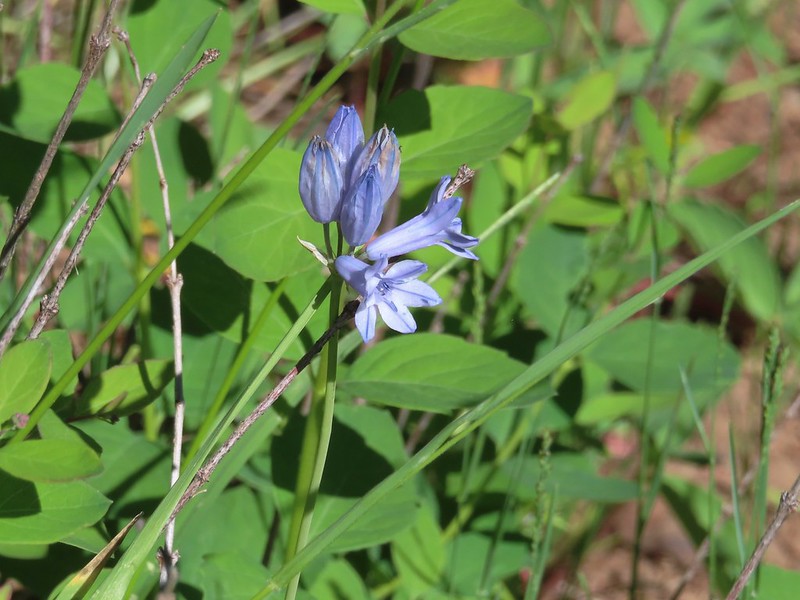
 Scouler’s bluebell
 Inside-out flower
 A few green trees remain.
 Another Cascade lily
 The trail was in pretty good shape overall and we could tell there was ongoing trail work. It looked like there were some rock steps that were going be placed in this section.
 Penstemon
 Oregon sunshine
It was a half mile descent to the Natural Rock Arch.

 View from the arch.

 Fin below the arch.
The trail continues through the arch and uphill a short distance on the other side to a small cave/overhang.


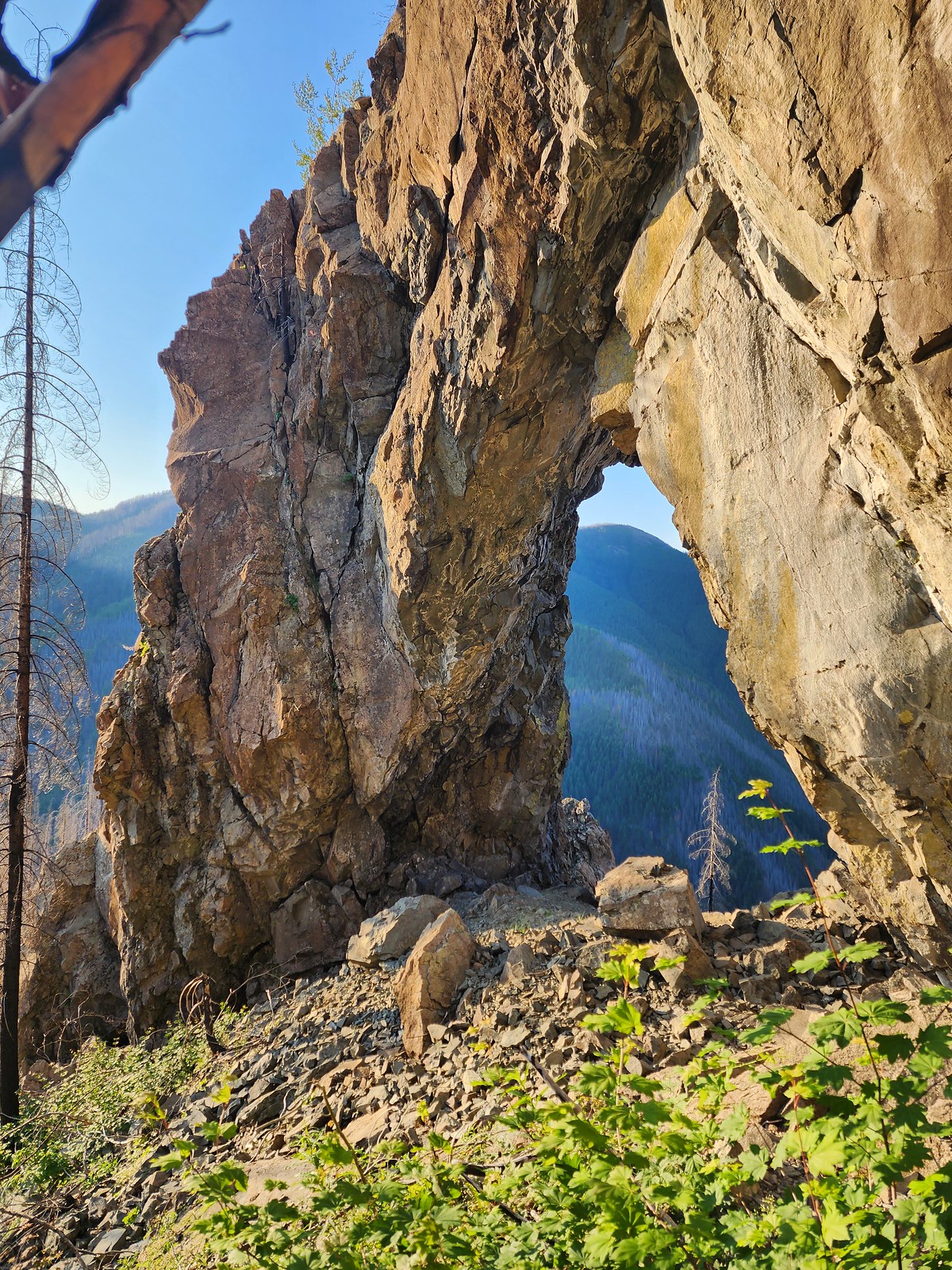
After visiting the arch we hiked back up to the trailhead regaining the 500′ in elevation we’d lost on the way down. The climb was the main reason we’d started with this trail preferring to make the climb before it got too warm.

In the guidebook Reeder has you drive to the Rocky Top Trailhead which is just under 2 miles away. The last mile or so of the drive to the Natural Rock Arch Trailhead had been a little rough and I didn’t feel like two more miles of the same so we decided to walk the road instead. While there was another 500′ of elevation difference between the two trailheads the gain looked to be very gradual on the topographic map.
This wound up being a great choice as the road was lined with wildflowers for nearly its entire length, and we also spotted a pika along the way.

 Snowberry checkerspot
 Rocky Top straight ahead.
 Penstemon and big deer vetch
 Cascade lily
 Oregon sunshine, penstemon, Oregon bedstraw, and a daisy or two.
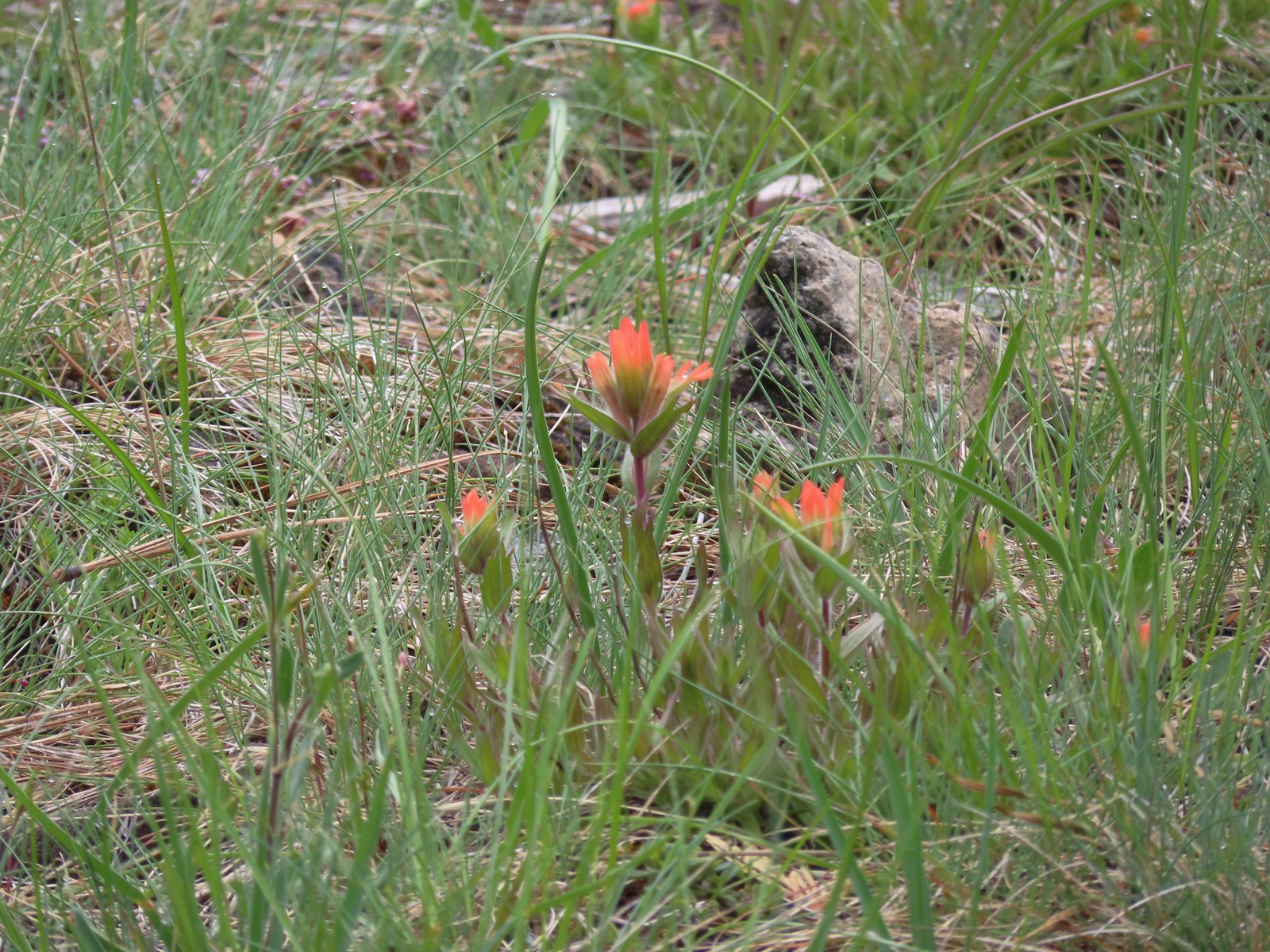
 Oregon sunshine and paintbrush
 There was a fair amount of shade while the Sun was still low.
 Paintbrush and penstemon
 Thimbleberry
 Bleeding heart. There was more bleeding heart on this hillside than we’d ever seen in one spot.

Eight-spotted Forester-Alypia octomaculata
 Pika below the road.
 Pika
Pika
 Rhododendron
 The Three Sisters on a hazy morning.
 Anemone
 Paintbrush and lupine
 Beargrass
 A few patches of green below Rocky Top.
 This was probably the worst spot in the road in between the two trailheads.
 Bunchberry
 Trillium with a few petals yet to fall off.
 Violets
 Spirea and valerian


 Large boykinia
 Lots of lupine.
 Larkspur and phacelia
 Arriving at the Rocky Top Trailhead.
A Marion County Sherrif drove up in his pickup as I arrived at the trailhead. We had a nice talk before he started back down the road. Heather arrived shortly afterward and we started up the Rocky Top Trail together.


 Clodius paranssian
More flowers awaited along the 0.7 climb to the former lookout site atop Rocky Top.
 Columbine
 Beardstongue
 Lupine
 The road from the trail. The taller, rounded, peak in the center is Sardine Mountain (post). Sardine Mountain Road has yet to reopen after the 2020 fire.
 Mt. Washington and the Three Sisters.
We decide the primary cause of the haze was smoke from the Tunnel 5 Fire on the Washington side of the Columbia River across from Hood River with the fires in Canada most likely adding their own smoke to the mix. The hazy view didn’t bother us though as the wildflowers and abundant pollinators held our attention.


 Mt. Jefferson, Three Fingered Jack, Mt. Washington and the Three Sisters.
 Mt. Jefferson through the haze.
 Elkhorn Ridge (post) with Mt. Hood in the distance to the right. Elkhorn Ridge and Opal Creek Wilderness beyond were severely impacted by the fire and remain closed for now.
 Mt. Hood above ridges of burned forest.
 The loss of the trees did result in better views of the various rock formations in the area.

 We’d never seen so many of these eight-spotted forester moths.
 Hummingbird taking a rest from visiting the penstemon and paintbrush.
 Another moth that had some excellent camo.
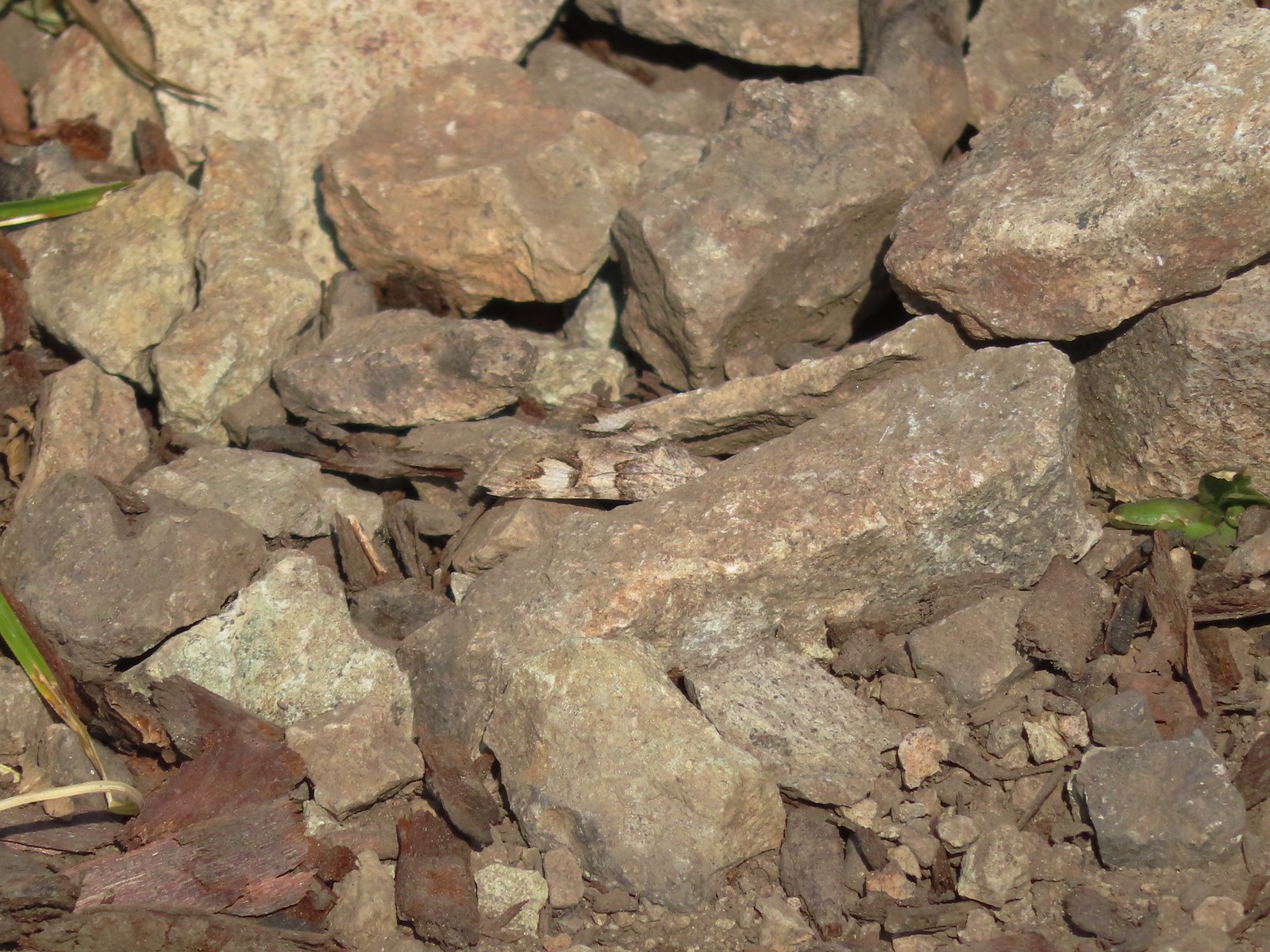 The moth putting its camouflage to use.

 Penstemon
 Rose
Rose

 Rocky Top from the trail.
 This was the only pink colored penstemon we spotted.
 Lupine and beargrass
 Not sure which of the Lycaenidae this is but it was pretty.
 The spirea was popular.
 Bumble bee
 At one point it looked like Three Fingered Jack was sitting on top of Coffin Mountain (post).
 Nice blue sky overhead.
 Looking North. Henline Mountain (post) is the high peak on the other side of Elkhorn Ridge.
 Bistort and penstemon
 Haven’t been able to identify this one yet.
 Beargrass
 A snowberry checkerspot and some fried avalanche lilies.
 The trail wound behind Rocky Top to come up the West ridge to the summit.
 Arnica
 Sub-alpine mariposa lily
 Tiger lily and beardstongue
 Catchfly
There was a 360-degree view from the summit which was of course impacted by the smoke. On a clear day we would have been able to see Mt. Adams and Mt. St. Helens in Washington but we settled for a string of Oregon Cascades and Mary’s Peak in the Coast Range.
 Not sure what the story is behind this chair, but we weren’t about to test its stability.
 Detroit Lake
 Mary’s Peak (post) is really hard to make out, but it is on the far left of the horizon.
 Looking North we could see Table Rock (post), the high point in the center, behind Henline Mountain closer and to the left and Elkhorn Ridge nearest.
 Closer look at Table Rock.
 Henline Mountain, Table Rock, Mt. Hood, in front and just to the right of Mt. Hood is Whetstone Mountain (post) and the two humps in the distance to the far right are North and South Dickey Peaks.
 Mountain bluebird checking us out.
 Mt. Jefferson
 Three Fingered Jack behind Coffin Mountain, Maxwell Butte (post), Mt. Washington, the Three Sisters, and The Husband.
While we were at the summit we spotted another car driving up the road to the trailhead so after a nice break we headed back to let the next visitor(s) have their turn.

 Zerene fritillary
 Beargrass
 Moth and a checkerspot
We passed the couple from the car about halfway down the trail. It would be the only other hikers we would pass on the trails this day. (We did see a few others but not on the trails.)
The road walk between trailheads was a butterfly bonanza. The road was now in full sunlight and that had brought out hundreds of butterflies and moths.

 A bee, a moth, and a butterfly land on some flowers…
 Painted lady
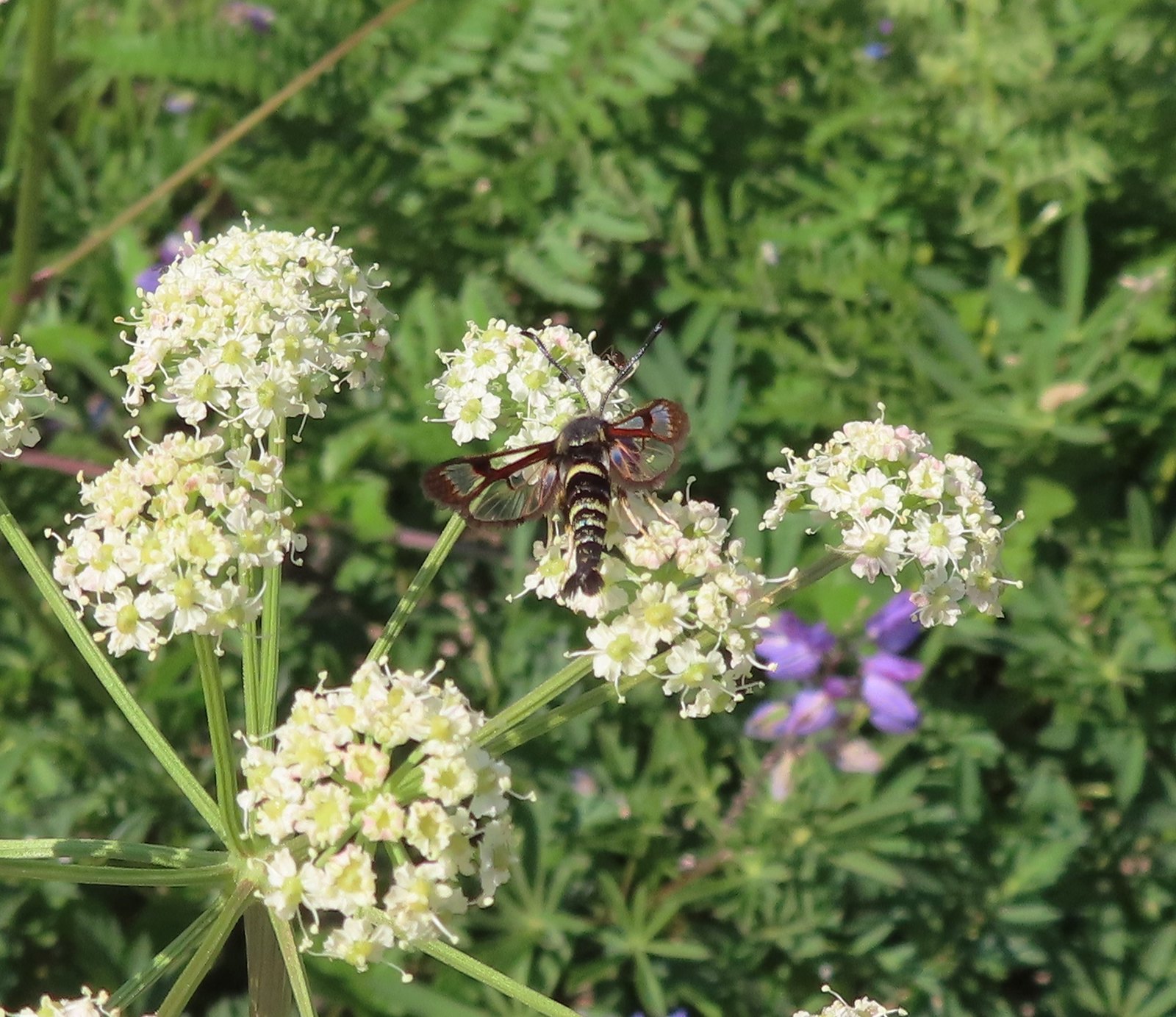 Fireweed Clearwing Moth (Albuna pyramidalis).
 A fritillary and a copper.
 Two coppers and a bee.
 Checkerspots, a bee, a copper and part of an eight-spotted forester moth.
 Eight-spotted forester moth.
 The previous four photos were all from this group of Oregon sunshine.
 Bleeding heart, no butterfly but a nice group of blossoms.
 More moths and butterflies.
 Swallowtail on penstemon
 One of the blues I think, but not sure which.
 Lorquin’s admiral
With the road walk included our hike here came in at 6.4 miles with a little over 1800′ of cumulative elevation gain.

We headed back toward Salem and turned into the North Santiam State Recreation Area (3.8 miles West of Mill City or 28.6 miles East of Salem along Highway 22.) While this is a State Recreation Area Marion County is managing the park through at least 2024 following the 2020 fire. Reeder described a 2.3-mile loop here but we weren’t sure what we’d find with limited information available online. We parked near the day-use picnic area and followed the sidewalk left past a large signboard for the campground to a small “Trail” sign.


We turned onto a wide mowed path and followed it into the fire scar which was hosting masses of very tall fireweed.


 Sparrow
 Stellar’s jay
We almost missed the spur trail to the larger loop which was unsigned and hidden by some brush.
 The spur trail is to the right just ahead.
We turned right onto the spur and quickly came to a “T” junction where we turned right following a “To River” sign.

 We watched a norther flicker fly into the snag ahead and it took a minute to figure out where he was.
 The flicker
At the river the trail curved right following it to the camping area.

 Trailing blackberries. We might have found a few ripe ones.
 Arriving at the camping area.
 North Santaim River
We continued on what was now a paved path to a road
 Oregon grape

 Mock orange
 The boat launch.

 North Santiam River

It was a lot cooler by the river than it was on the paths so we lingered for a bit before heading back to the loop. Prior to the fire the loop crossed the road to the boat launch and continued in the forest eventually crossing the park entrance road and completing the loop near the “To River” sign. We quickly discovered that the loop no longer existed on the north side of the roads. We up the boat launch road past the trail we arrived on then past the park host. We could have just turned right at the parking lot, but we decided to see if any of the loop remained. A short way up the entrance road we spotted paint for a crosswalk.
 The park host on the left and the parking lot on the right.
 Crosswalk for the pre-fire loop.
 Looking North from the crosswalk there was zero sign of the former trail.
 They had at least restored this short section of the loop so we were able to return to the spur trail and turn right then right again to complete the inner loop.
 The “To River” sign at the spur trail junction.
 Possibly a western wood pee-wee
 Spotted towhee
 Osprey
 The park host from the trail.
The loop as we did it is now only 1.7-miles with 50′ of elevation gain.

The park wasn’t as crowded as we thought it might be on a hot holiday and there was no one else hiking the trails here. It was a nice enough end to a good day hiking and we had finished just after Noon so we had avoided the hottest parts of the day. To be honest we hadn’t expected a whole lot from any of these hikes and had chosen them primarily for their proximity to Salem, but the Natural Rock Arch and Rocky Top far exceeded our expectations. We were home around 1pm and had the rest of the afternoon to relax with the cats. Happy Trails!
Flickr: Natural Rock Arch, Rocky Top, and North Santiam Park


 While the loop did come in at 2.5-miles it was a little over 3/4 of a mile to the Boundary Trail.
 Lupine
 One of several ponds along the trail.
 A “Student Stop” marker surrounded by dwarf lupine. We aren’t sure what the these meant or what program they are related to.
 An interpretive sign along the trail facing some of the hummocks.
 Penstemon
 Mt. St. Helens as we neared the Boundary Trail junction.
 Trail guide marker #3 and an interpretive sign at the junction.
 The lower left map shows the current closure area and open trails. In a nutshell, all the trails are open but everything off-trail to the side facing SR504 is currently closed.
 The views of Mt. St. Helens were great.
 The trail began to climb as it squeezed between a gap in the hillsides ahead.
 View back to the hummocks from the gap.
 Trees in the gap.
 After exiting the gap we got another good view of the mountain before the trail veered left turning away from the mountain.
 Heading away from Mt. St. Helens to start the climb.
 Dwarf lupine was profuse below the ridge.
 Scouler’s bluebell
 Thimbleberry blossoms
 Castle Peak above Castle Lake with Spud Mountain to the right and the North Fork Toutle River below.
 Horned lark
 Tiger lily
 Savannah sparrow
 Heading back toward Mt. St. Helens.
 The North Fork Toutle River flowing between Spud Mountain (left) and Elk Rock (right).
 Castle Peak and Castle Lake
 Elk Rock on the left and Coldwater Lake on the right.
 Coldwater Lake
 Mountain bluebird.
 At one point quite a bit of dust? kicked up from the South Fork Toutle River canyon.
 Cardwell’s penstemon

 Coldwater Peak with Mt. Adams to the far right of the photo. The hiker ahead to the left of Coldwater Peak was from Belgium. He was here on work but using the weekends to explore the area. We would see him two more times, once from the observatory as he continued on the Boundary Trail and then as we were exiting the trailhead. He had done a loop using the Coldwater Trail (
 Mt. Adams from the viewpoint on our way back. The angle of the Sun earlier caused the mountain to look pretty washed out.
 Mt. St. Helens from the viewpoint.
 Variable-leaf collomia
 The Loowit Viewpoint on the ridge ahead.
 Paintbrush covered hillside.
 Mt. St. Helens from the Loowit Viewpoint.
 Mt. St. Helens crater.
 Golden mantled-ground squirrel. These brazen con-artists often convince visitors they would starve without humans help. While this is definitely not the case and
  A single plant.
 A lot of paintbrush.

 Daisies and paintbrush
 Penstemon, yarrow, and Scouler’s woolyweed along with the paintbrush.
 Paintbrush and penstemon along the trail.

 Passing by the Johnston Ridge Observatory.
 Before and after photos of the 1980 eruption.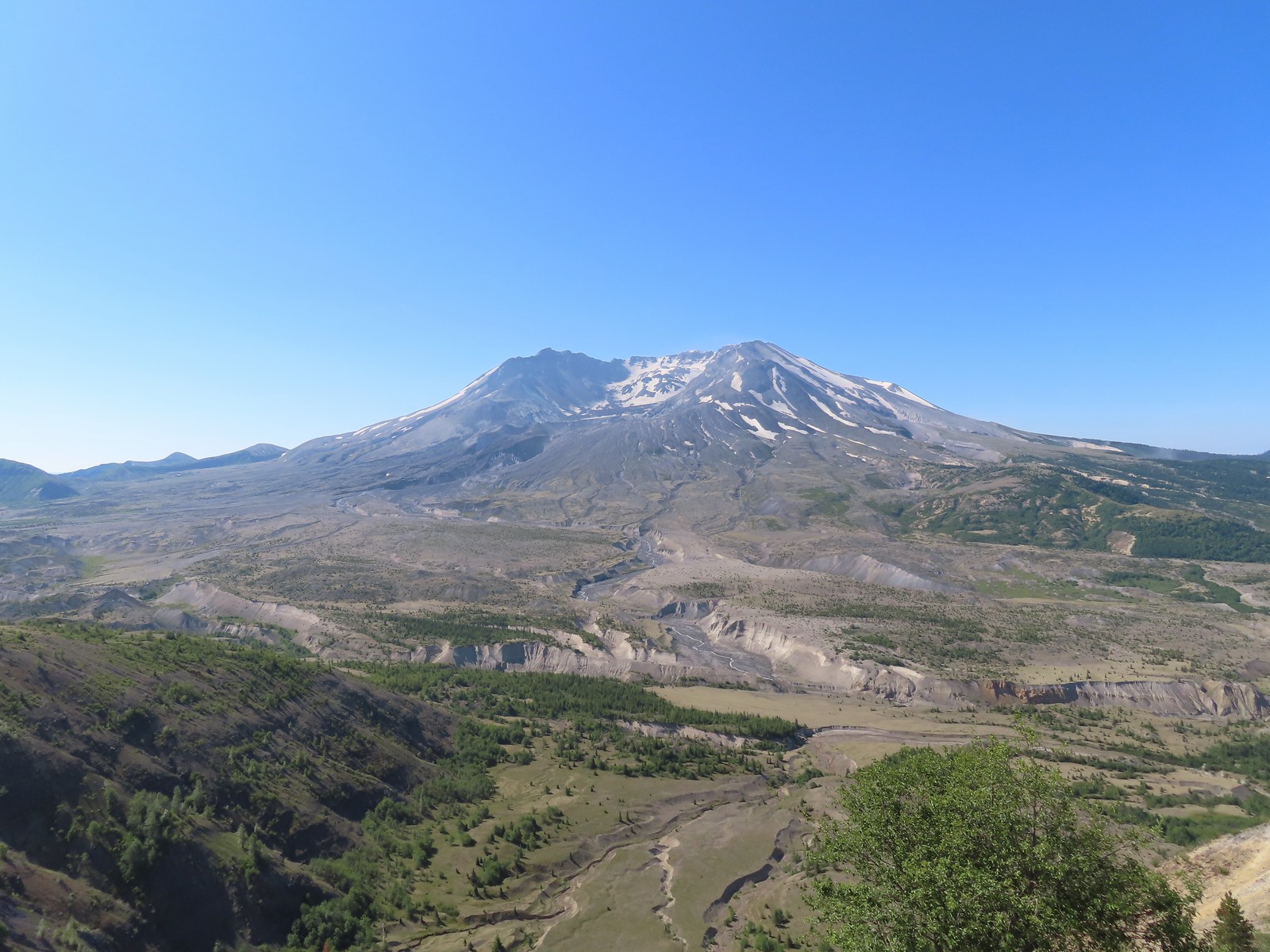

 Mt. Adams peaking over the ridges with Spirit Lake also visible (center).
 Spirit Lake
 The mountain identifier ahead on the left.
 We could see where the repair work was happening on SR504 from this trail.
 The rounded peak to the right is Goat Mountain (
 Goat Mountain with a few patches of snow still showing up.
 Rock Arch near Coldwater Peak.
 Memorial for the lives lost in the 1980 eruption.
 Junction with the Boundary Trail.
 Pussypaws


 Another view of the washout.

 Our turn around spot. You can see the trail on far side of the saddle veering left behind the ridge.
 Coldwater Peak from our turnaround spot.
 The Johnston Ridge Observatory from the trail. We hadn’t realized how much elevation we’d lost until we turned around.
 Castle Peak and Spud Mountain on the left and the observatory above some colorful cliffs.
 Penstemon
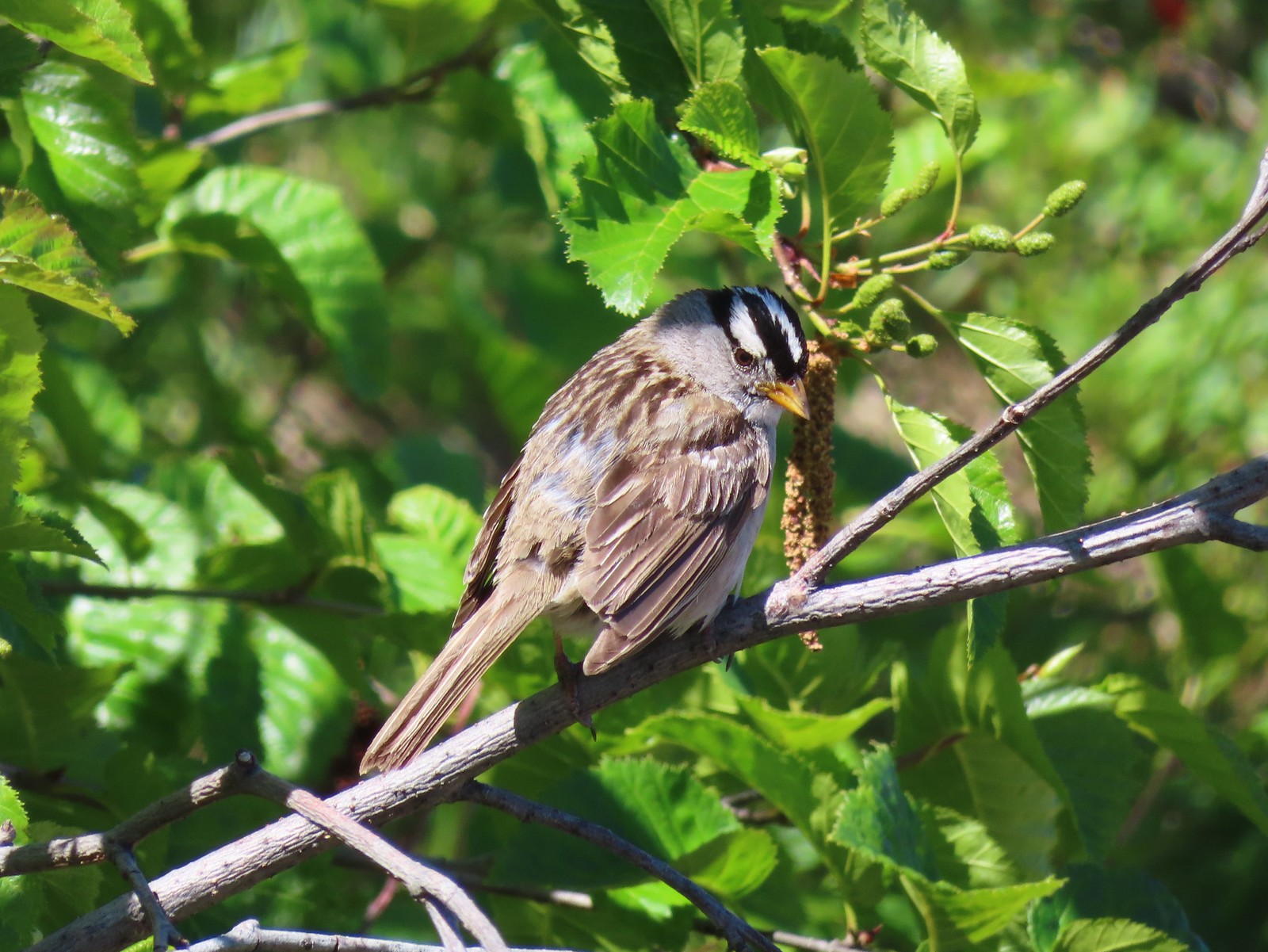 White crowned sparrow
 Boundary Trail leaving the Loowit Viewpoint.
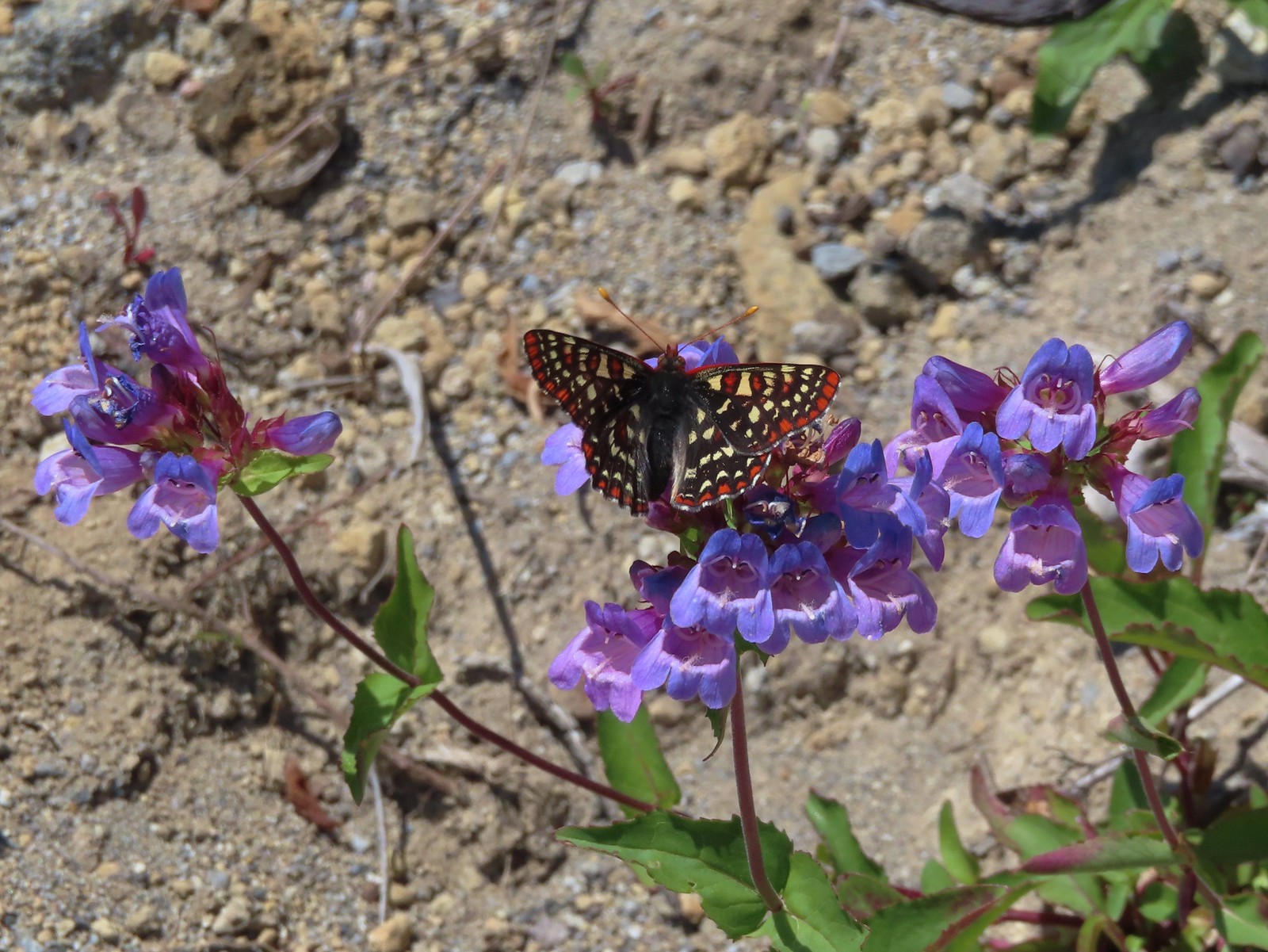 Snowberry checkerspot on penstemon.
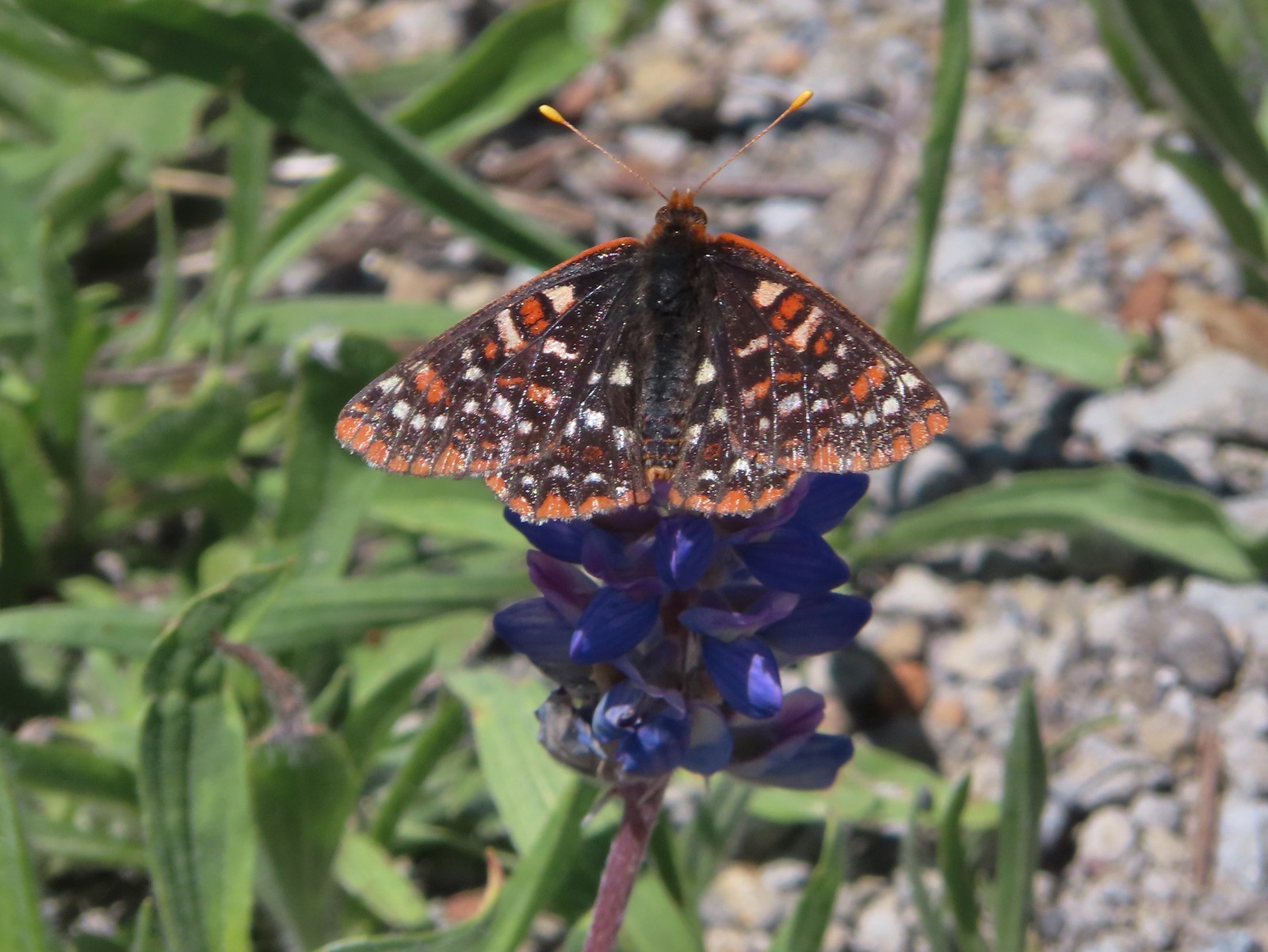 Another checkerspot, this time on lupine.
 Cedar waxwings


 Mt. St. Helens and the North Fork Toutle River.
 The same view in May 2014.
 Same spot, different angle 2014.
 Monkeyflower
 Maybe a yellow-rumped warbler.
 Caterpillar
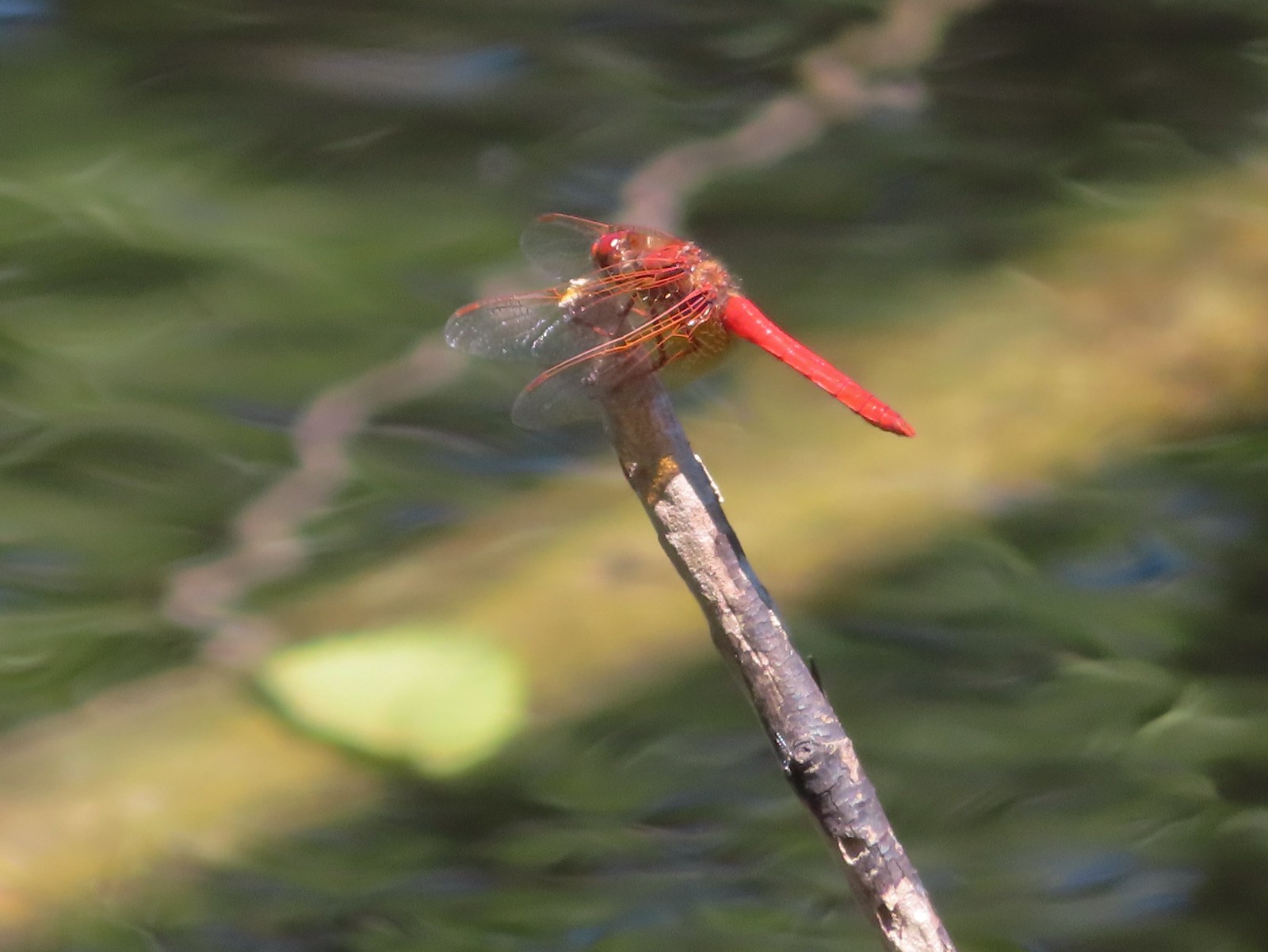 Dragonfly
 Pearly everlasting
 Arriving back at the Hummocks Trailhead.

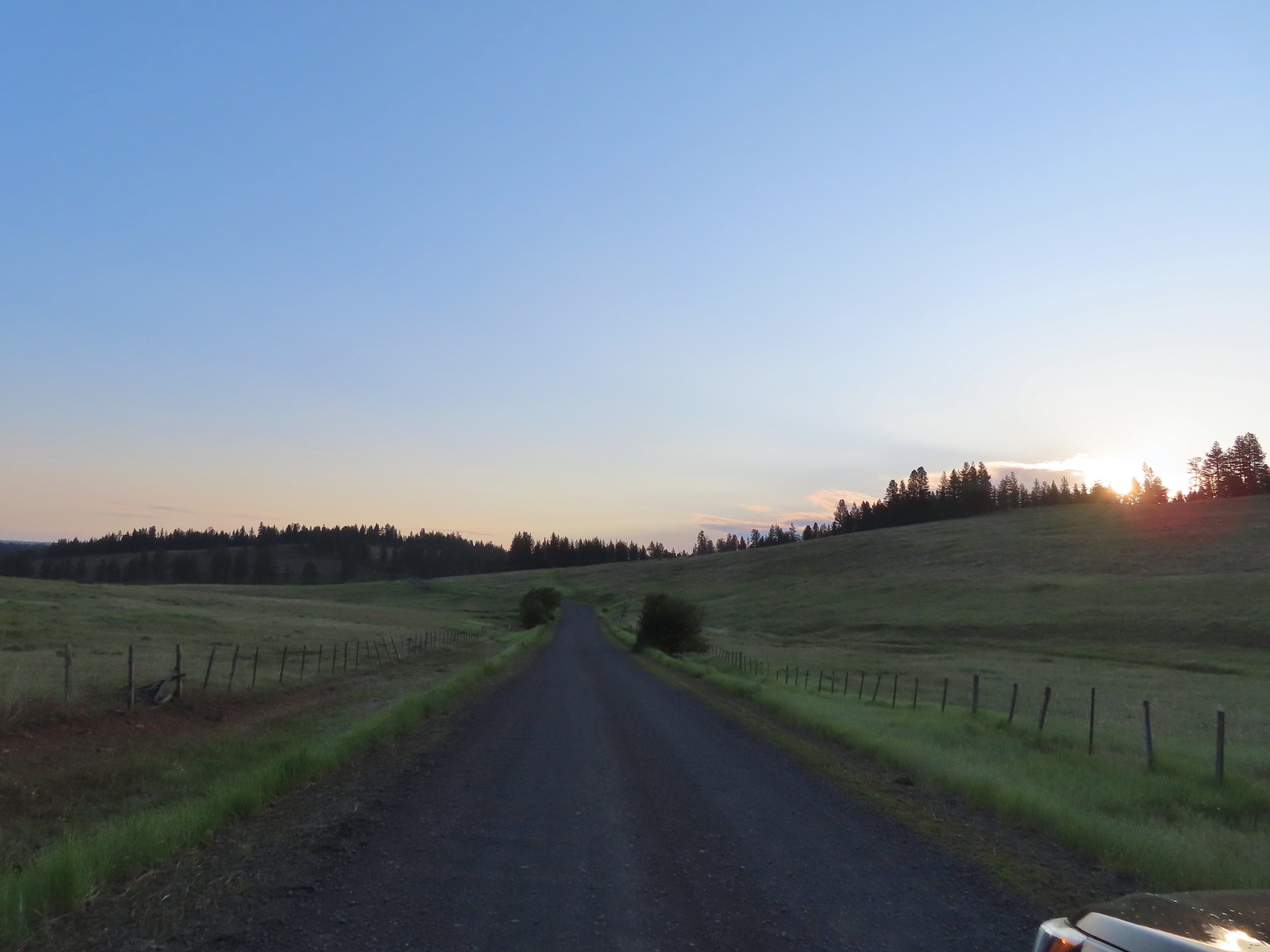
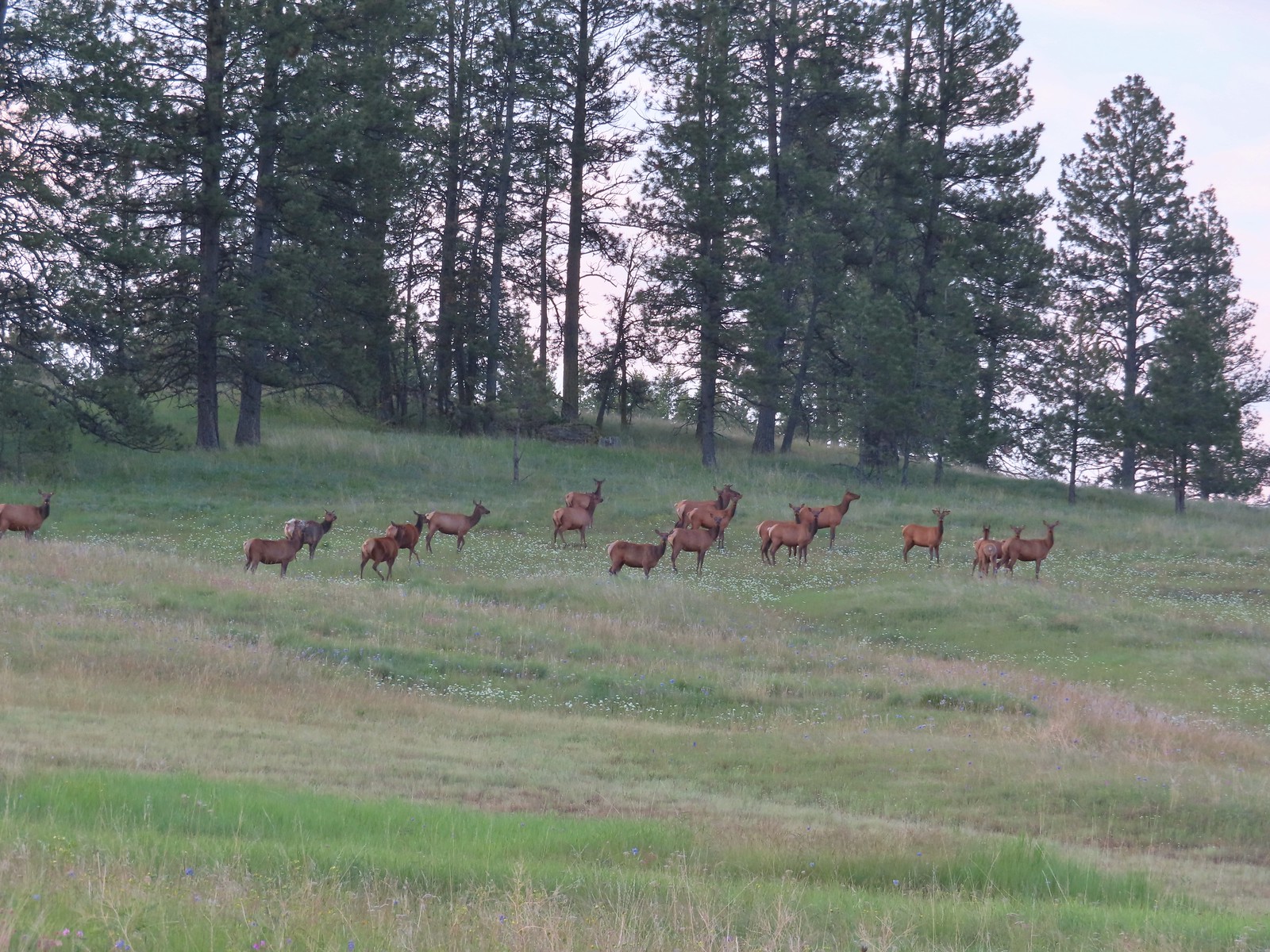
 At least one bull in the herd.
 Buckhorn Lookout

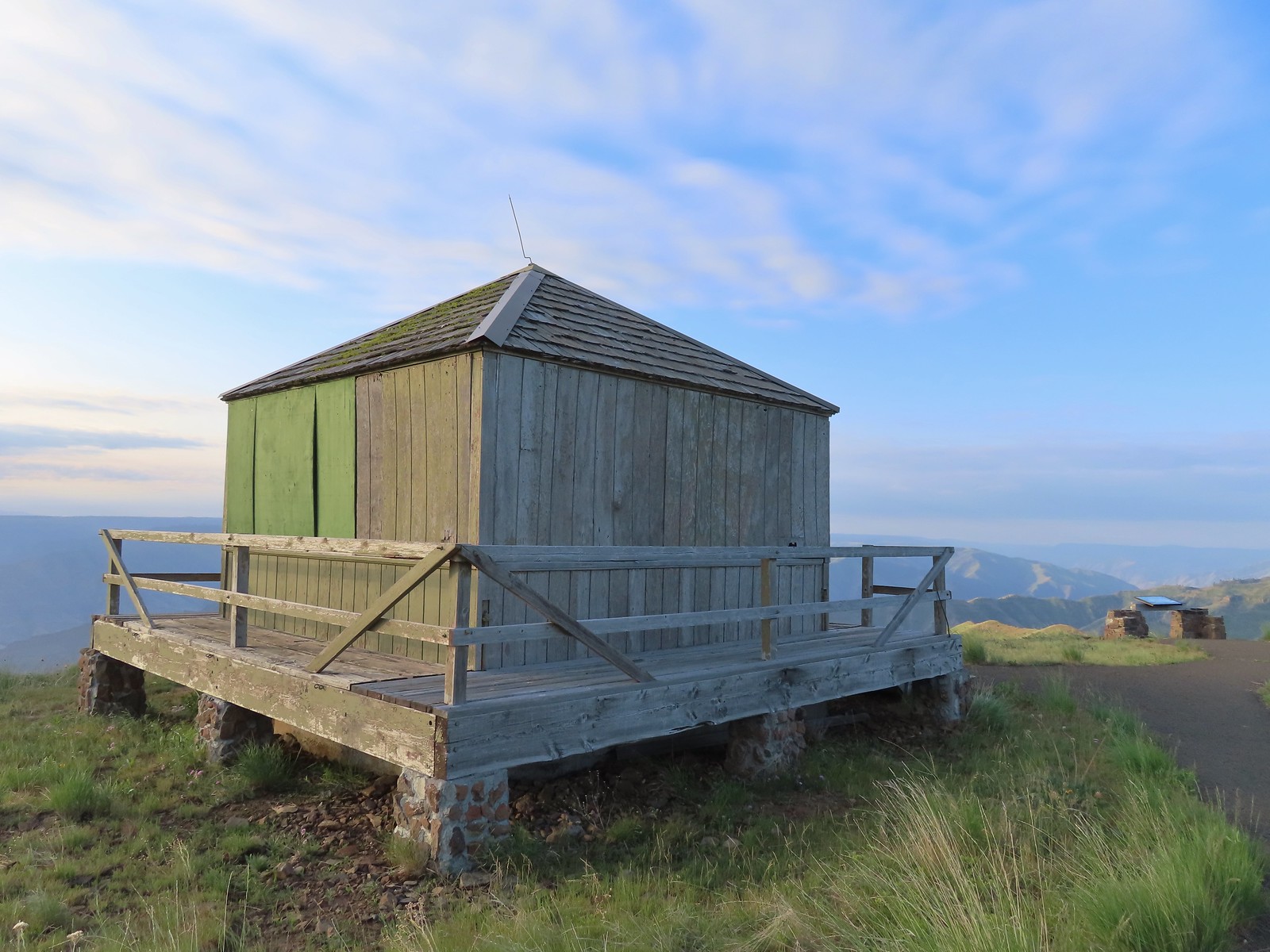
 Hells Canyon
 Tolmie’s onion
 Pale paintbrush
 Larkspur, lupine, and northern mules ears.
 Prairie smoke a.k.a. old man’s whiskers
 Purple sticky geranium
 Paintbrush
 Parsley, larkspur, large flower triteleia, and Tolmie’s onion
 Phlox
Phlox We could have driven the 1.2-miles on FR 780 to the gate but the road was not in good shape and after driving to Eureka Bar the day before we weren’t interested in another rough road.
 Mallow ninebark
 Arnica
 Large flower triteleia

 Gate at the end of the road.
 Marker for the Nez Perce – Nee-Mee-Poo National Historic Trail.

 Columbian lewisia
 Seven Devils in Idaho
 Lupine, yarrow, buckwheat, and scarlet gilia
 Scarlet gilia

 Elkhorn clarkia a.k.a. ragged robin
 Another impressive scarlet gilia.
 Paintbrush, lupine, phacelia, thistle, and scarlet gilia
 Penstemon
 A phlox
 Scabland penstemon
 Threadleaf phacelia
 Penstemon
 Paintbrush
 Lark sparrow
 Cedar waxwing
 Elkhorn clarkia
 Wallflower
 Skullcap
 Nettle-leaf giant hyssop
 Monkeyflower and some tiny white flowers near a seep.
 Buckwheat

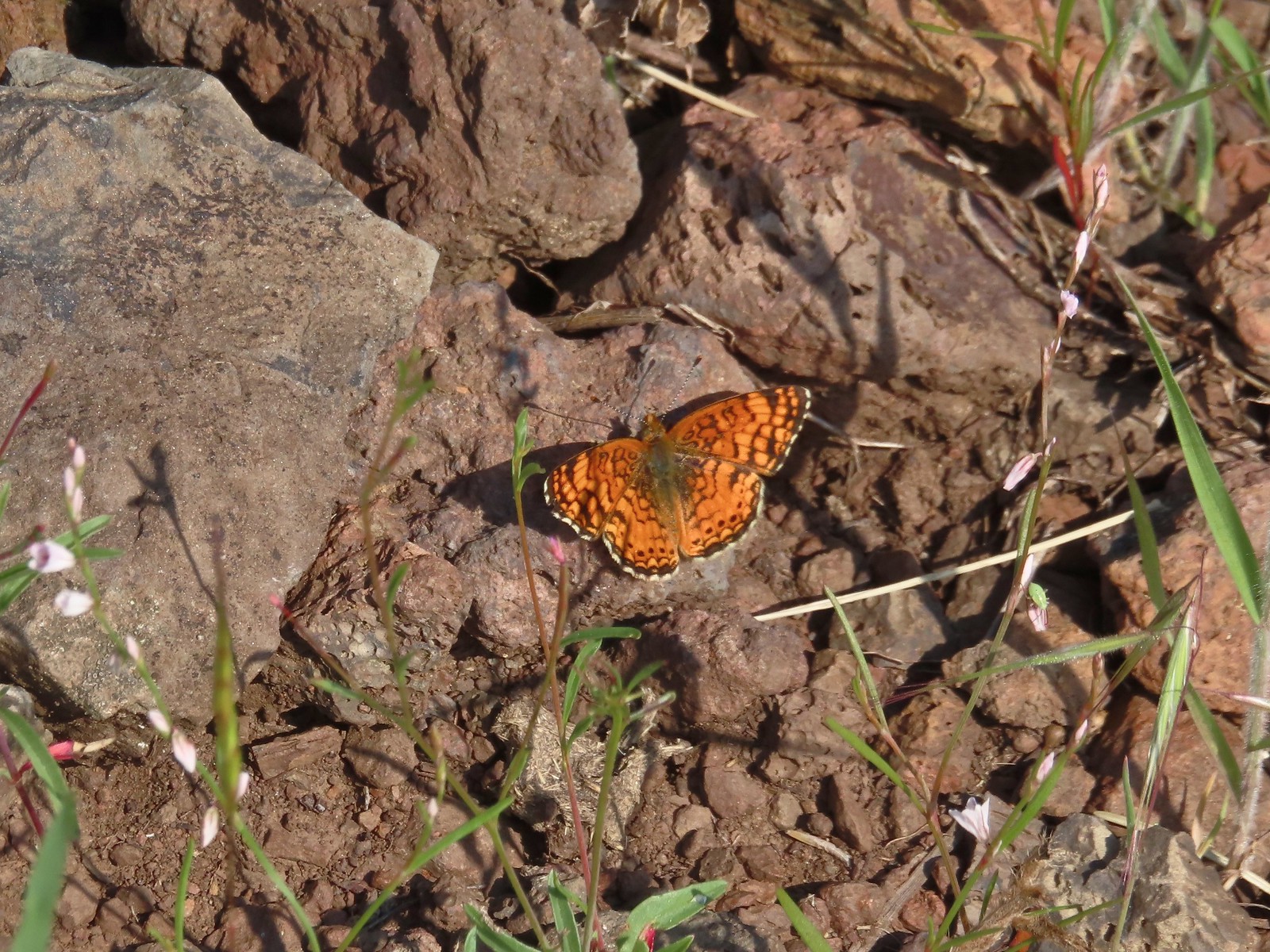 Mylitta crescent
 Rough eyelashweed
 Looking back up the trail.
 At Spain Saddle the road switched to the opposite side of the ridge.
 Bush penstemon
 Another type of penstemon
 White spiraea
 Manyflower tonella
 Owl’s clover
 The viewpoint on the far side of the fence.
 Boat on the Snake River.
 Salsify
 Bindweed
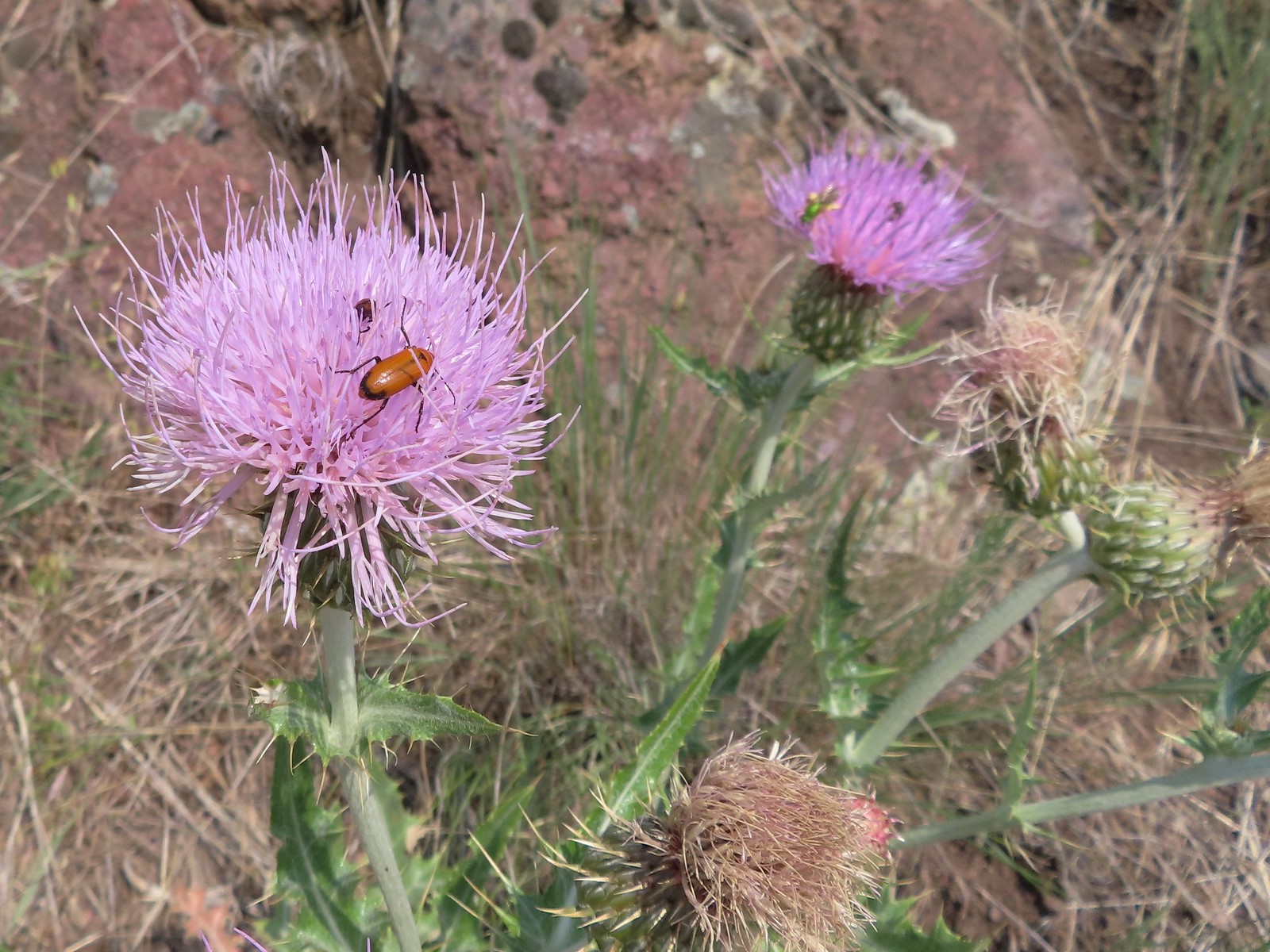 Thistle with bugs.
 Clouds moving in behind us.
 Prickly pear cactus
 The only poison ivy we saw all hike.
 Eureka Viewpoint ahead to the left.
 Hairy goldenaster
 Fleabane
 Eureka Viewpoint
 Looking back
 Looking down
 Clustered broomrape


 A very small part of the river is visible to the left and more to right.


 Here come the clouds.
 We spotted a rock arch on the way up that we’d missed earlier.
 A closer look at the arch.
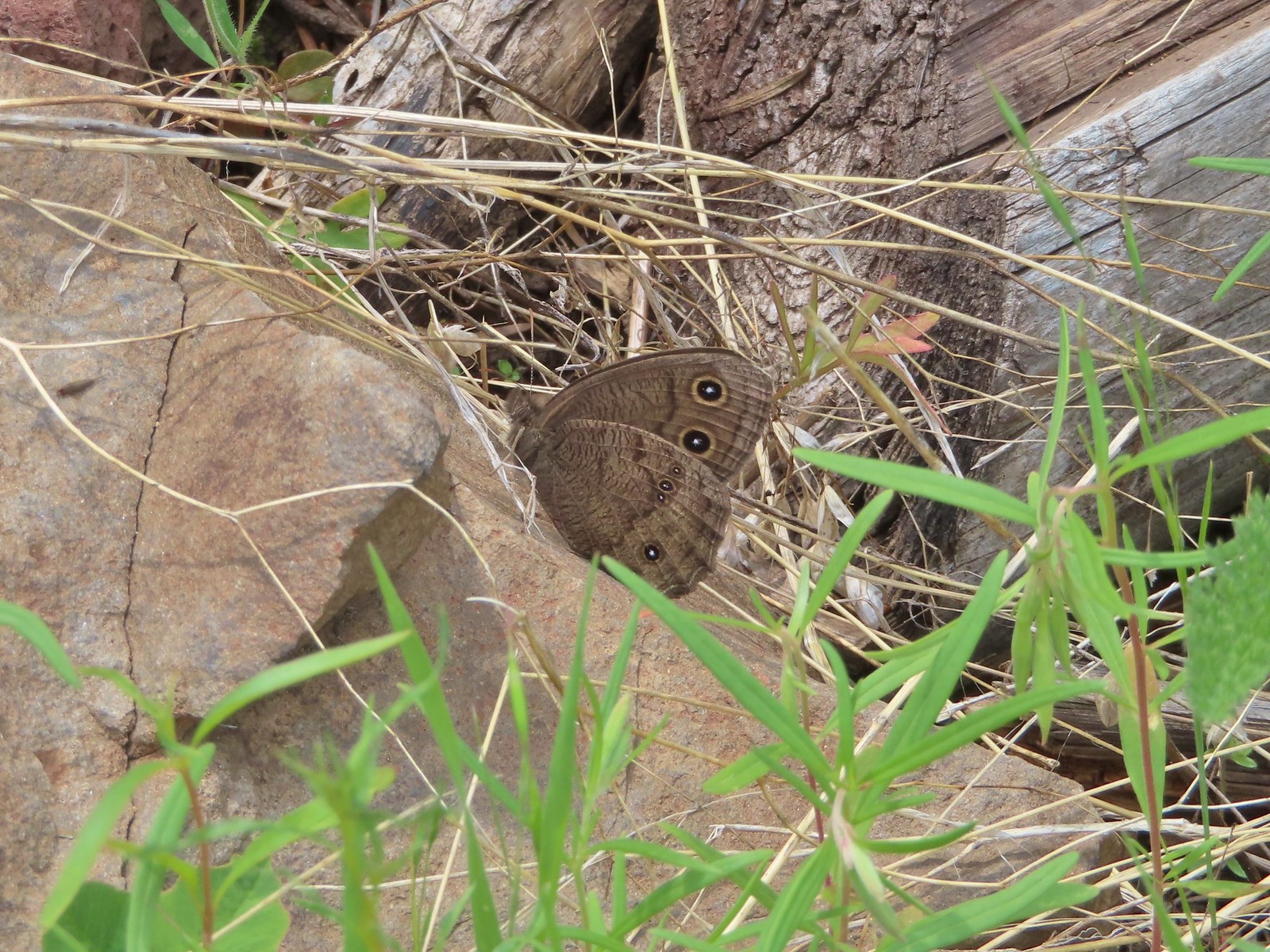 Common wood nymph
 Spotted towhee
 Northern flicker
 The only time we noticed the Imnaha River from the trail.
 Butterfly near the seep.
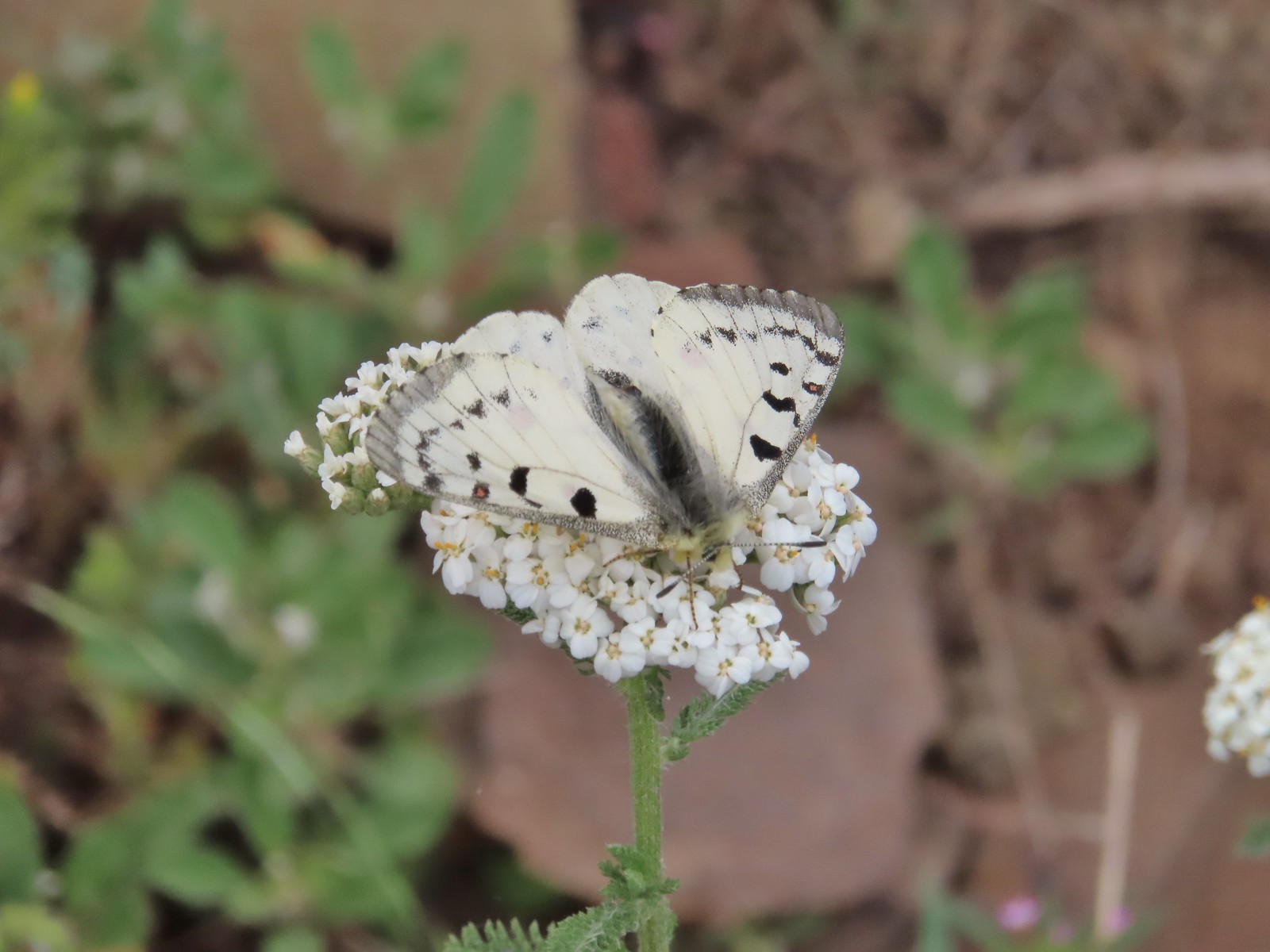 Mountain parnassian on yarrow.
 A painted lady butterfly.
 Chipping sparrow
 We could actually smell a little smoke at times on the way back.
 Tiny trumpet
 Hound’s tongue and roses
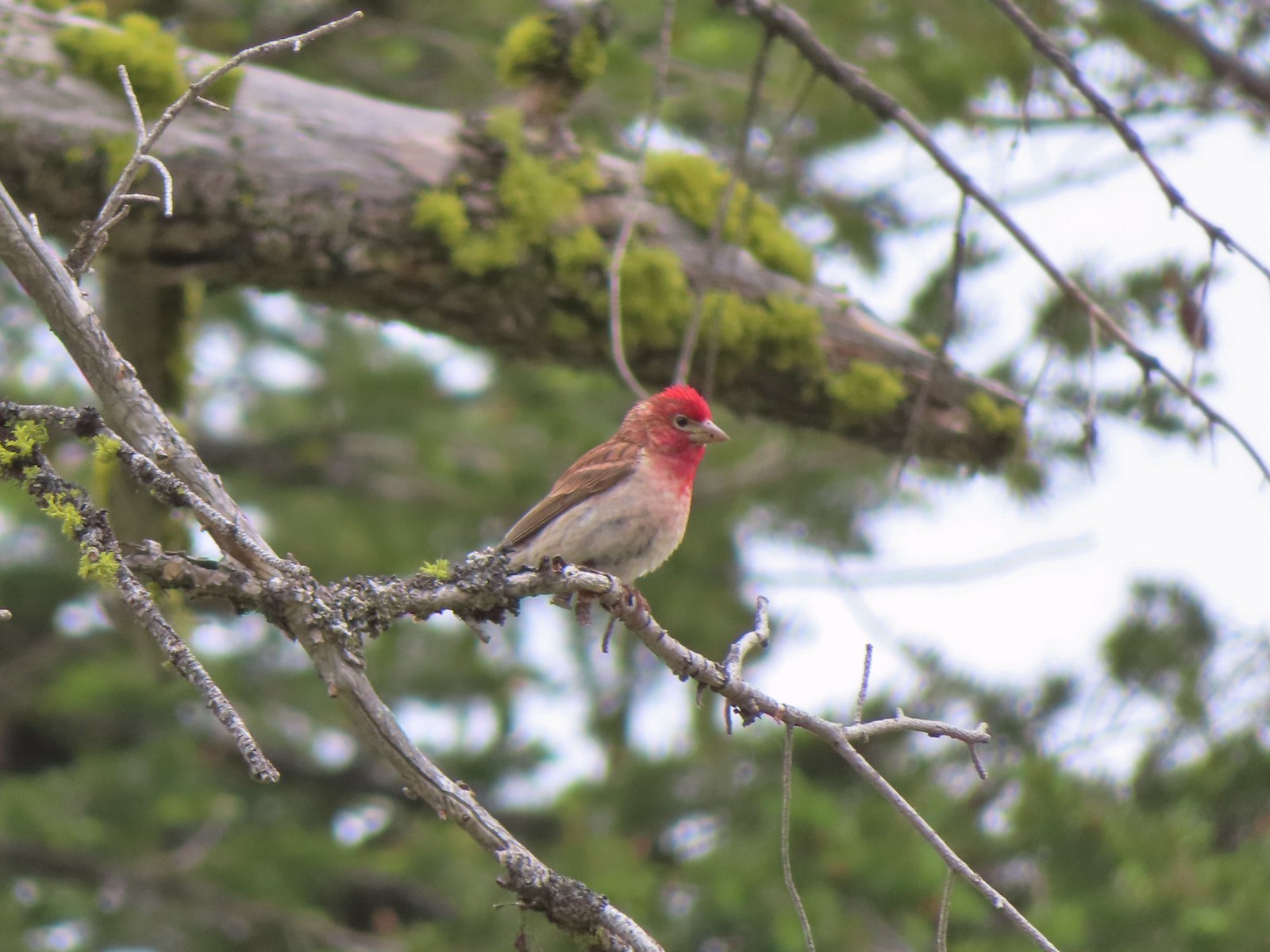 Cassin’s finch
 Western bluebird
 Western tanager
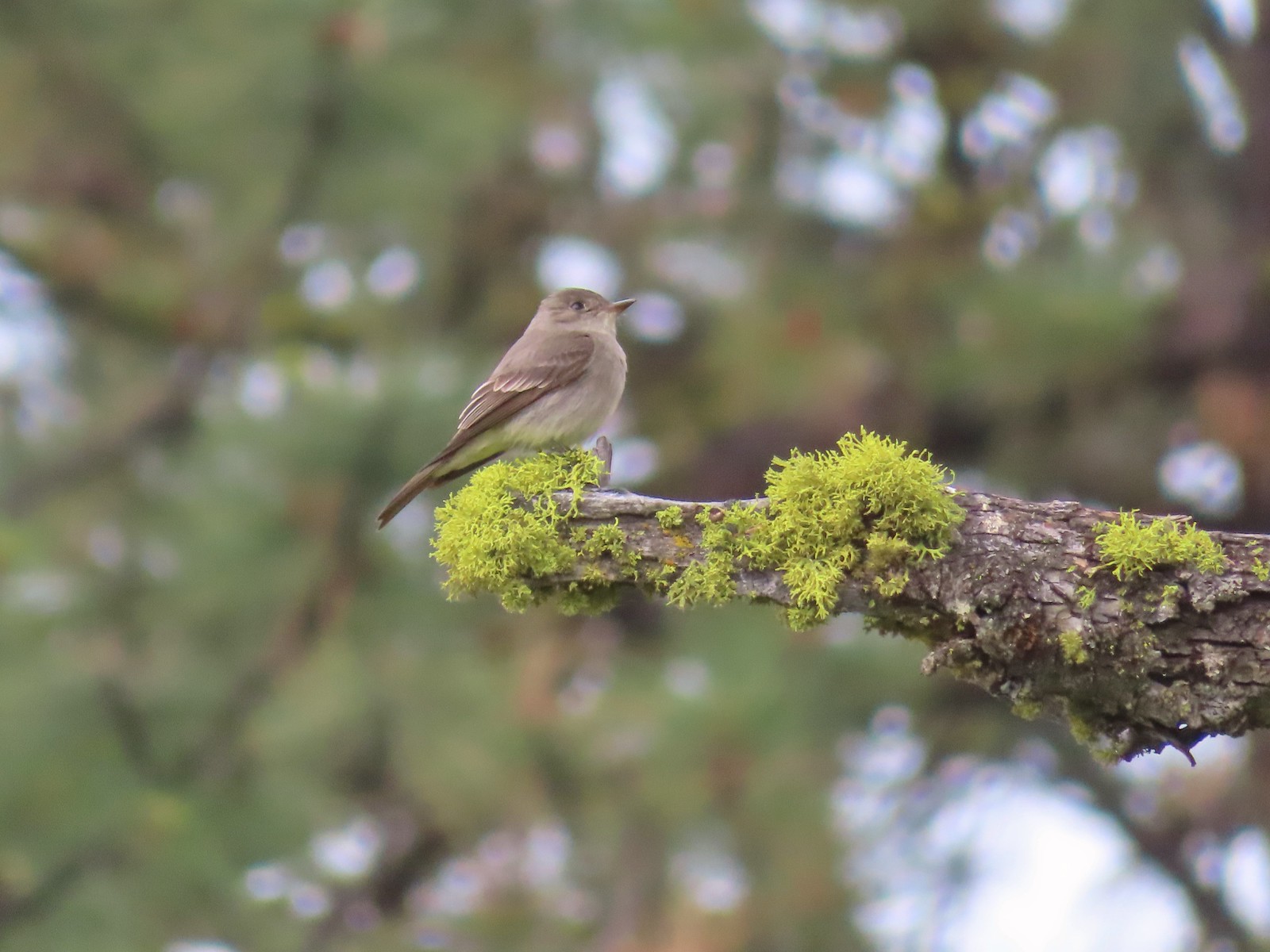 Western wood peewee
 Hairy Indian paintbrush
 Hoary balsamroot
 Mountain bluebird
 The view in the afternoon from the lookout.
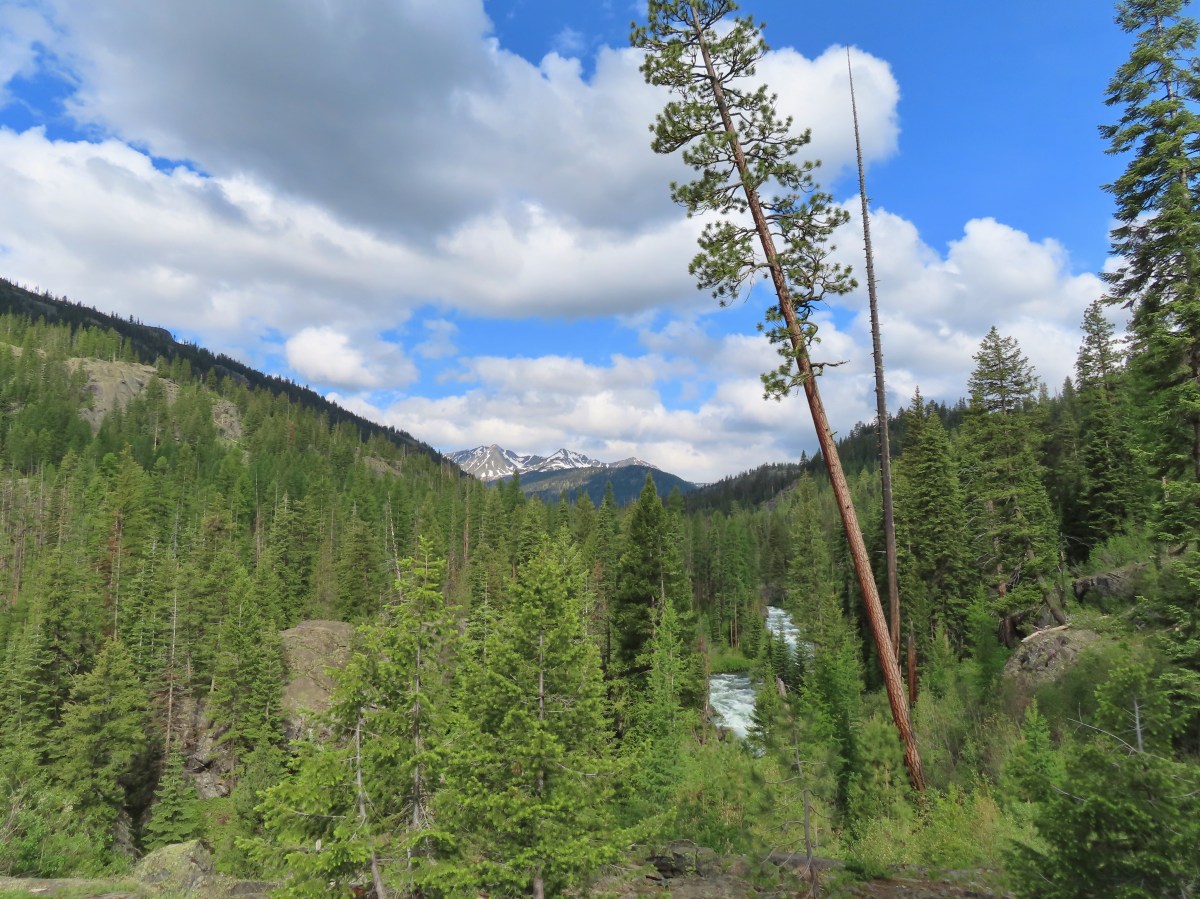
 Indian Crossing Trailhead
 Imnaha River at the trailhead.
 Jessica’s stickseed
 Hooked spur violet
 Woodland star
 Valerian
 Arnica

 Violets
 We passed a pack station in the forest on our right.
 Ballhead waterleaf
 Lupine along the trail
 Anemone
 Western meadowrue
 Paintbrush along the trail.
 Larkspur, lupine, and Jessica’s stickseed
 Chipmunk
 A nice patch of lupine.
 Snow patches high up on the ridge.
 The Imnaha River below the trail.
 One of many small unnamed stream crossings.
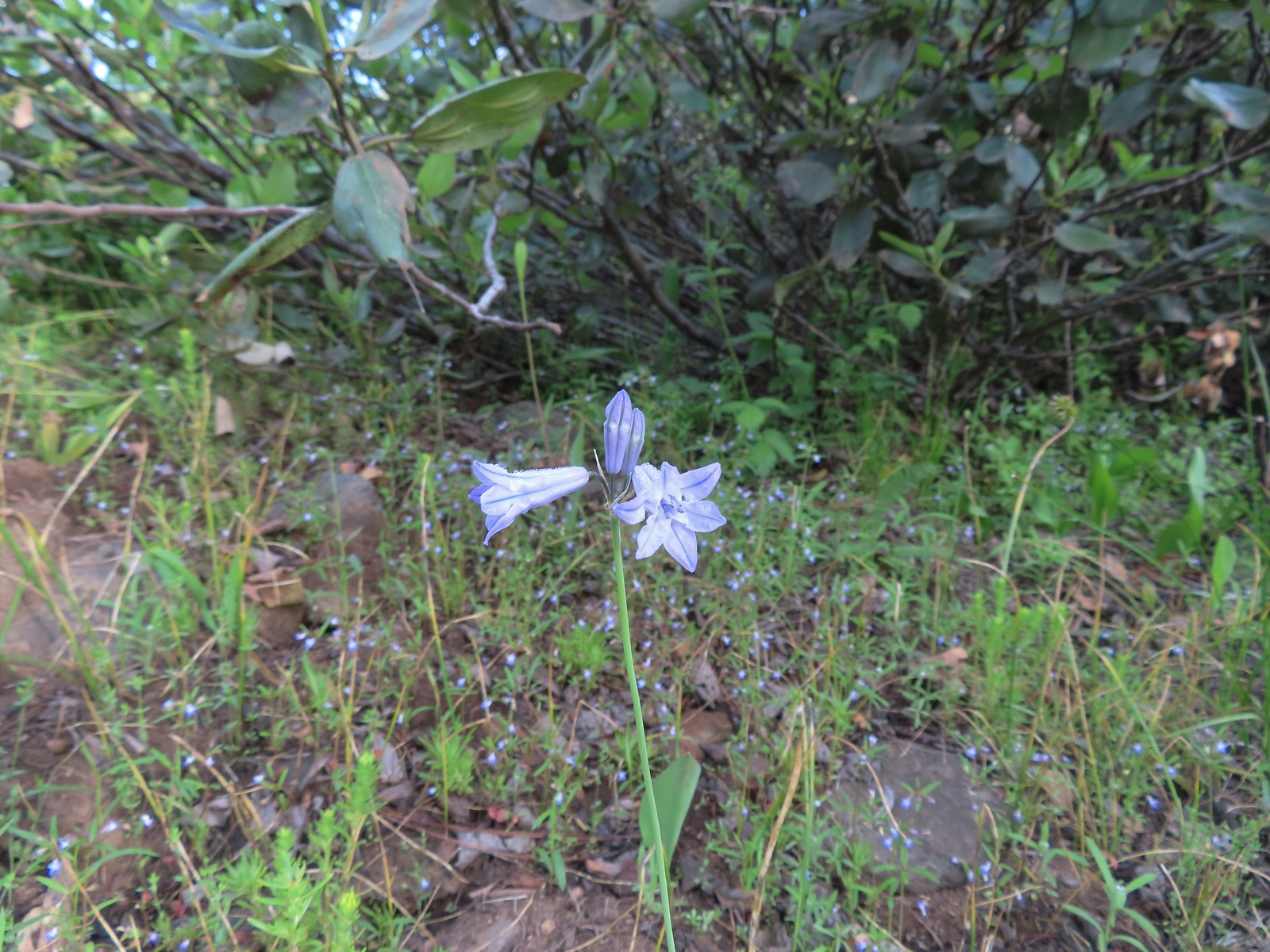 Large-flower triteleia
 A ponderosa pine that survived the fire.
 Robin
Robin One of several types of penstemon along the trail.
 We were just sure that there should be elk, deer, or a bear down along the river here.
 There were quite a few of these millipedes in the trail.
 In some cases the creeks had taken over the trail.
 Cinquefoil
 A brushy section of the trail.
 Tall bluebells
 Two-tailed tiger swallowtail


 Blue Hole, not exactly blue this time of year due to the amount of silty snowmelt water swelling the river.
 Wildflowers above the gorge.
 The Imnaha emerging from the gorge into Blue Hole.
 Arnica along the trail.
 Coming up on a small stand of aspen.
 A rockcress
 Juba skipper
 Roundleaf alumroot
 Painted lady on Oregon sunshine.
 Glacier carved rock outcrops provided some excellent views and good habitat for wildflowers.


 Scabland penstemon
 Paintbrush
 Not a flower but very colorful.
 Bush penstemon
 Western tanager
 Western blue clematis
 Brown creeper on a tree trunk.
 Left is Marble Mountain and to the right further back is Honeymoon Summit.
 Larkspur along the trail.
 Heartleaf springbeauty
 Another flooded section of a the trail.
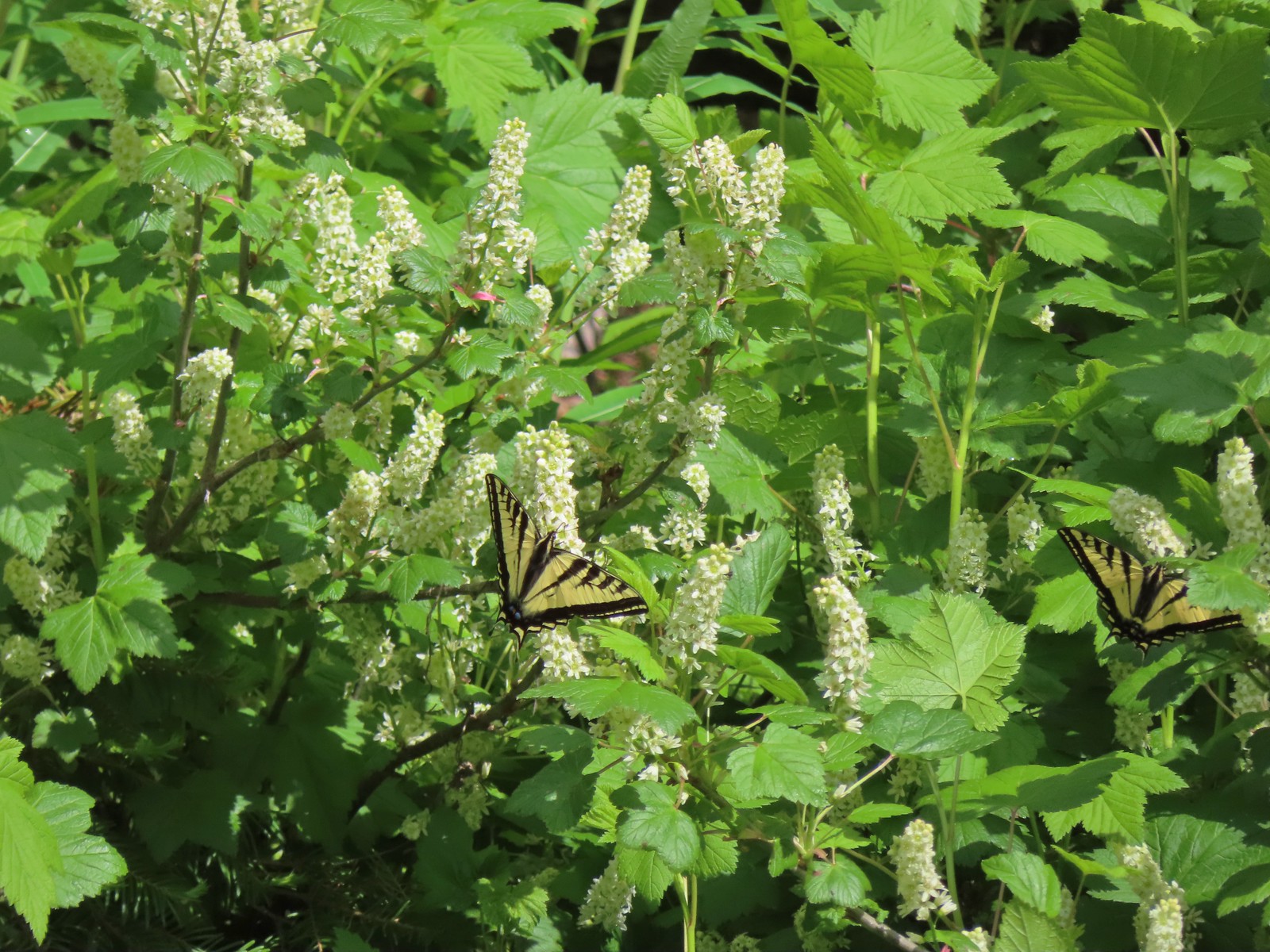 Western tiger swallowtails on chokecherry.
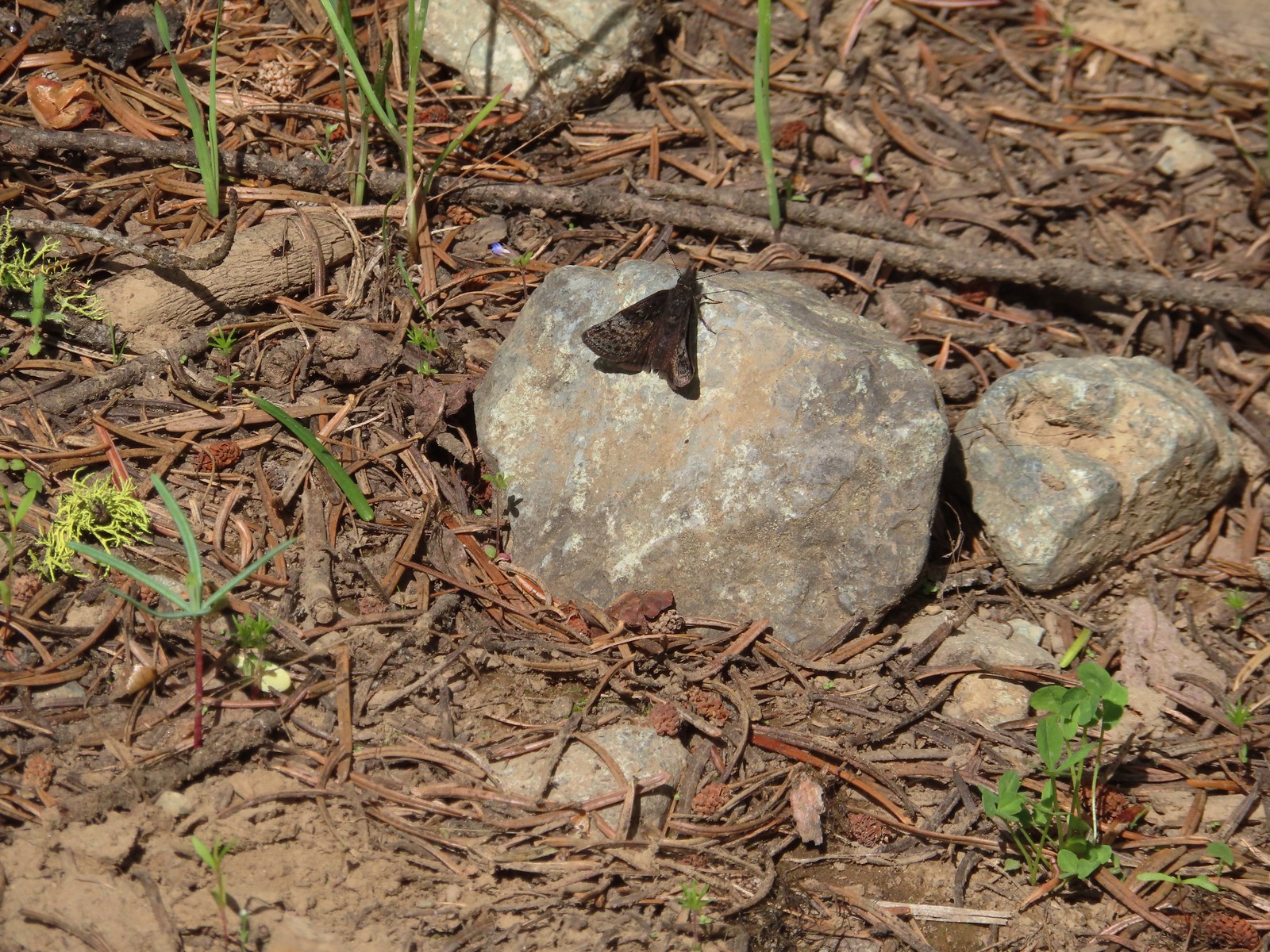 Dreamy duskywing
 Threeleaf lewisia
 We were too late for the Brown’s peony blooms.
 Balsamroot and paintbrush
 On the opposite side, with a series of drops, is Rock Creek flowing into the Imnaha.
 The Imnaha River leaving the gorge.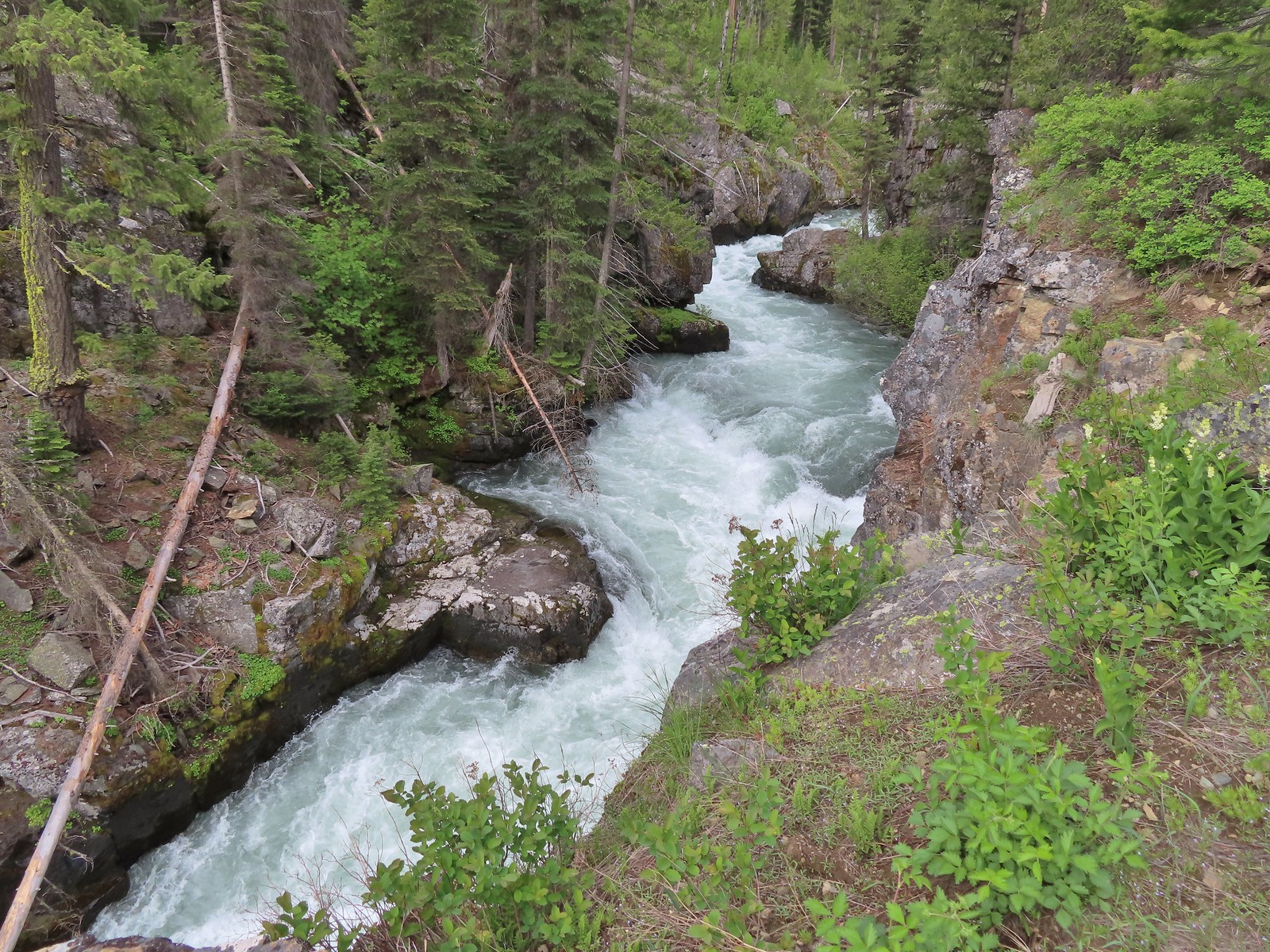
 Rock Creek cascading down through the forest.
 Another creek cascading down.
 Marble Mountain
 Twinberry honeysuckle
 Marsh violet
 Rock outcrop above Imnaha Falls
 I tried going down river first to see if I could get a view back up to the falls, but the water level was into the brush along the riverbank.
 The falls were just upriver from this bench with a couple of campsites.
 The gap in the outcrop.
 Imnaha Falls.
 Utah honeysuckle
 Bee on a dandelion
 Nettle-leaf giant hyssop
 Slender phlox
 Silverleaf phacelia
 Vetch
Vetch
 Osprey, the fishing here must have been good because we’d seen a bald eagle in this area in the morning.
 Fairy slipper
 Arriving back at the trailhead.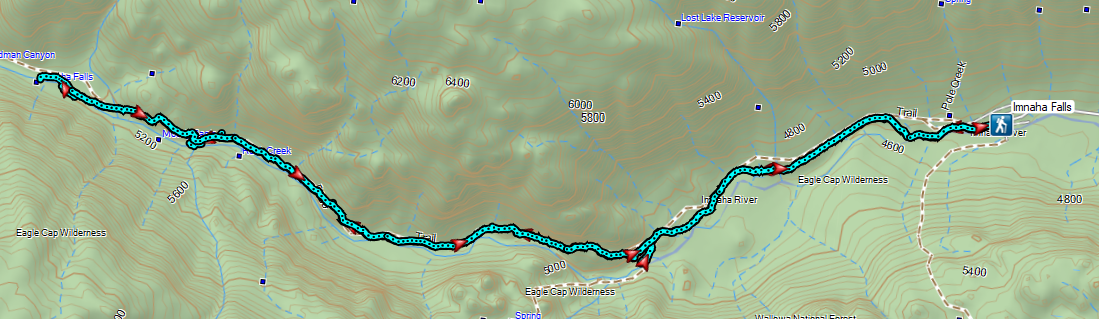

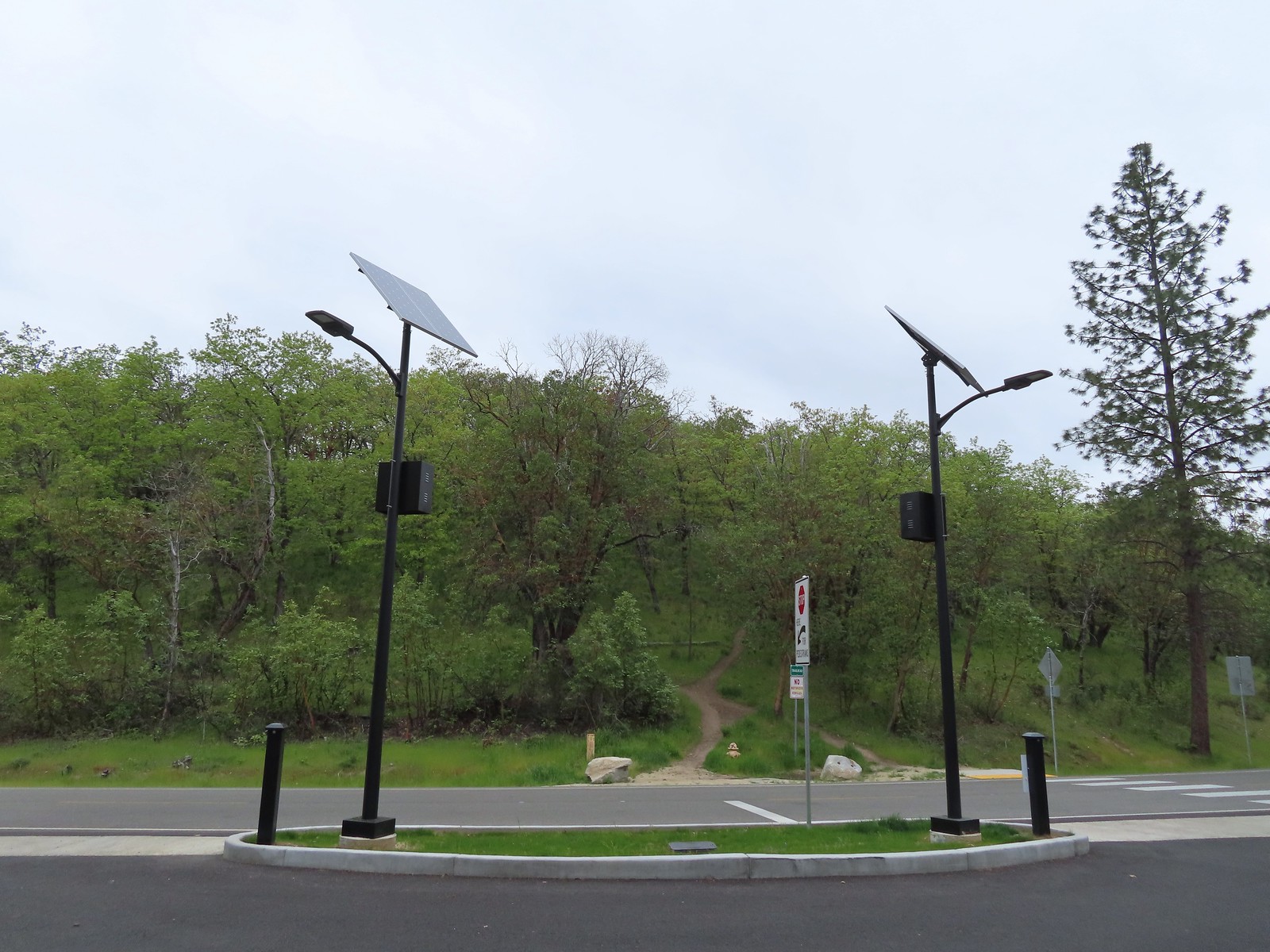
 Larkspur along the trail.
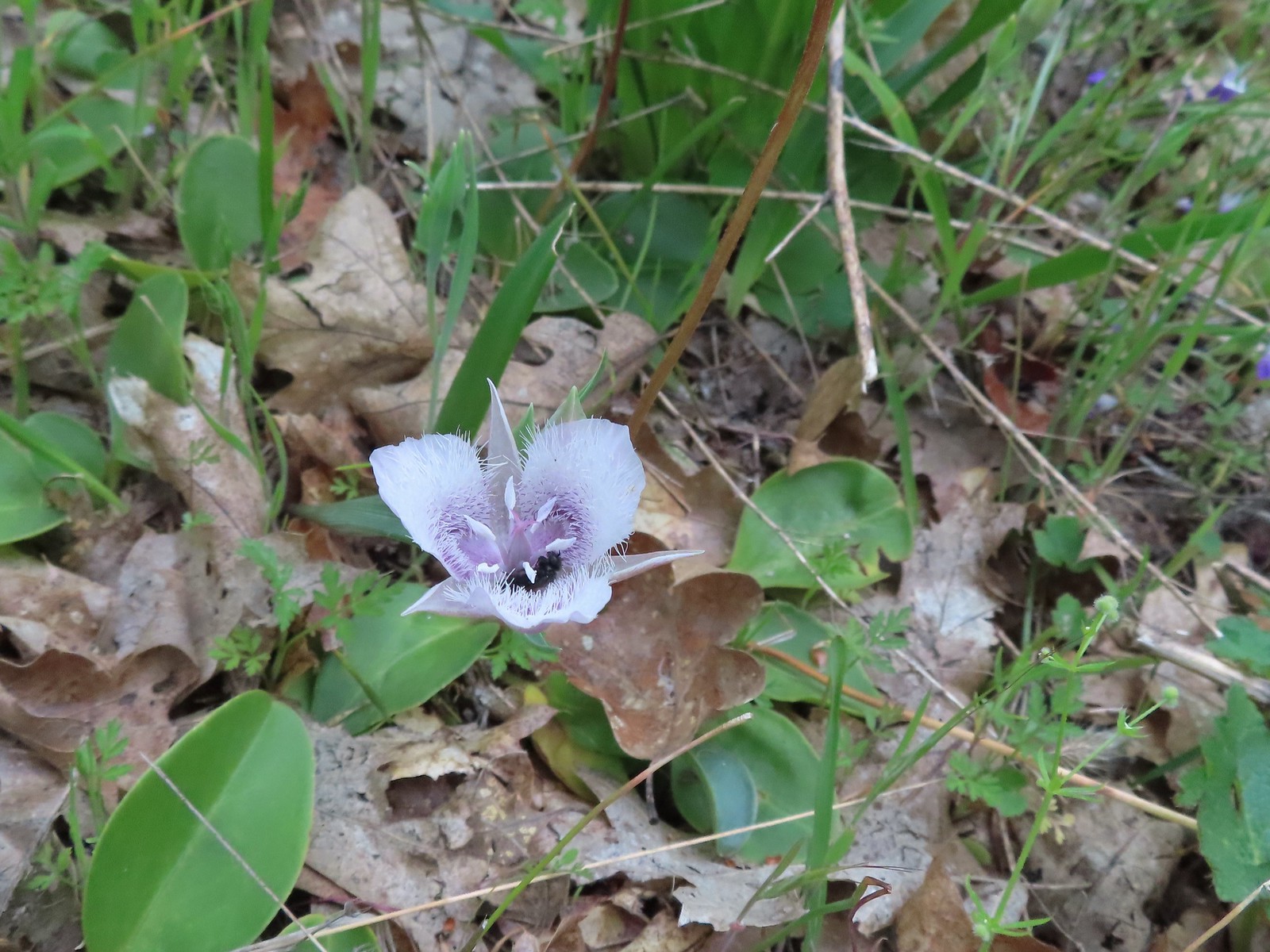 A pollinator in a Tolmie’s mariposa lily.
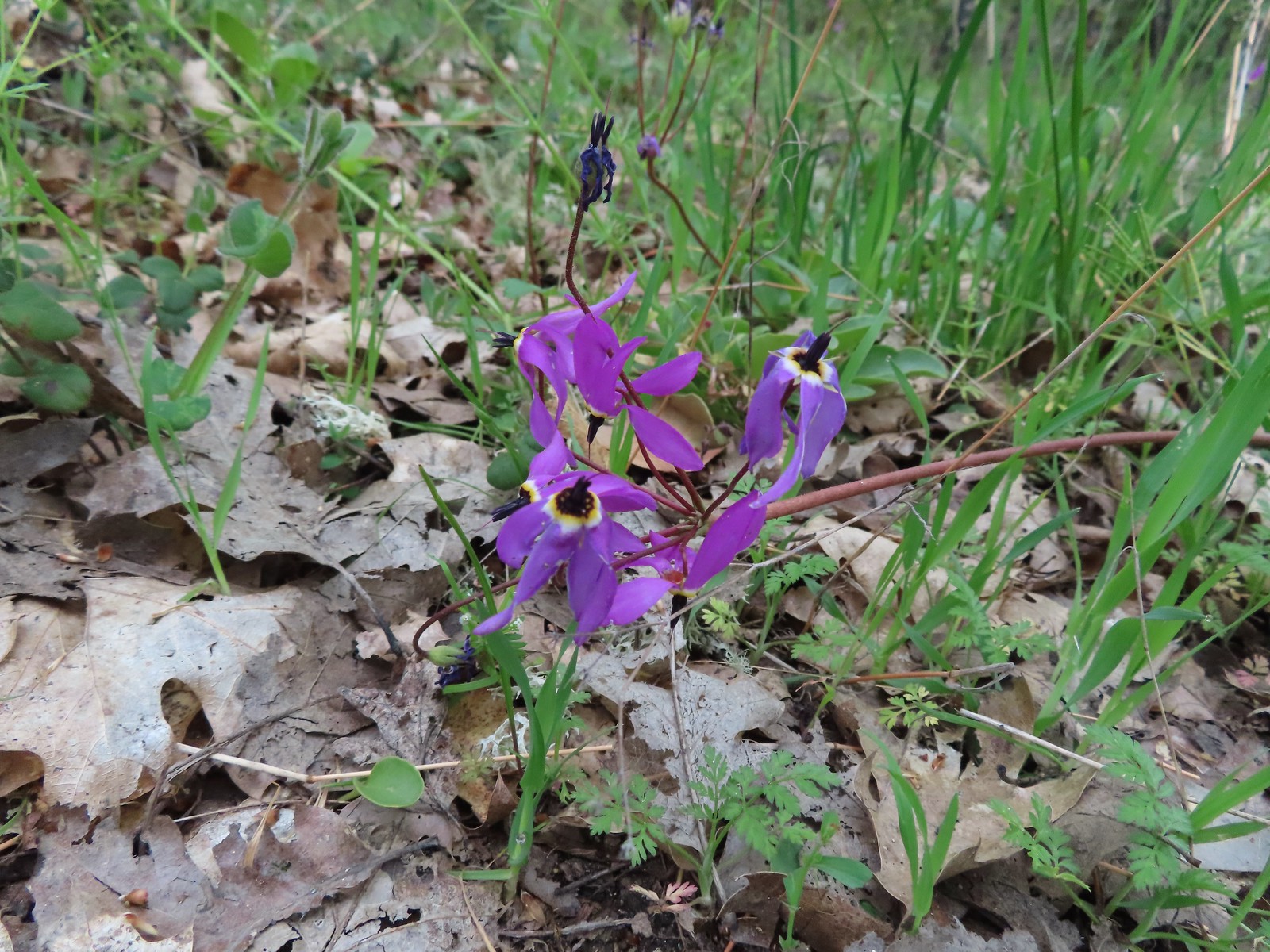 Shooting star
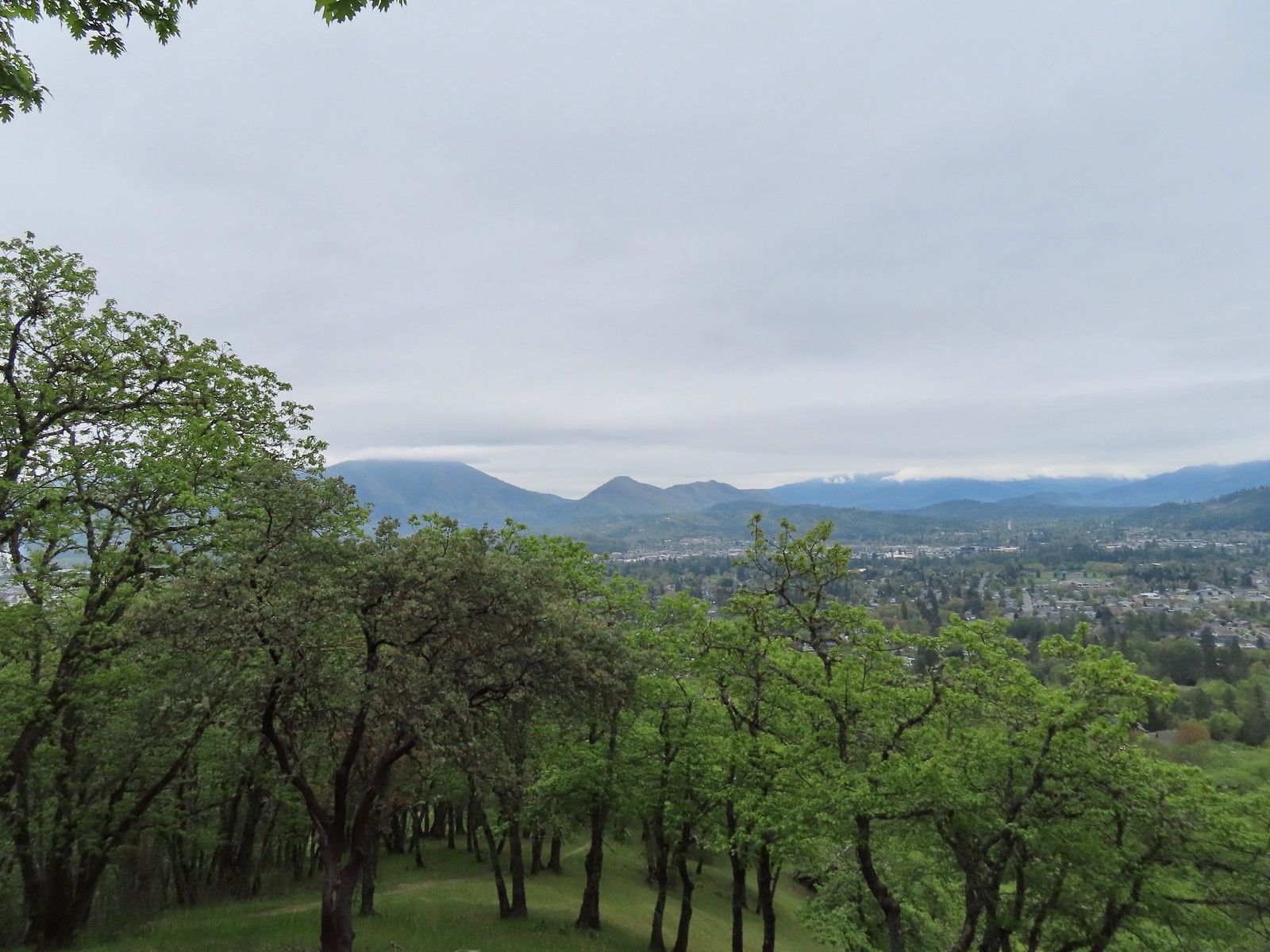 Grants Pass below Dollar Mountain.
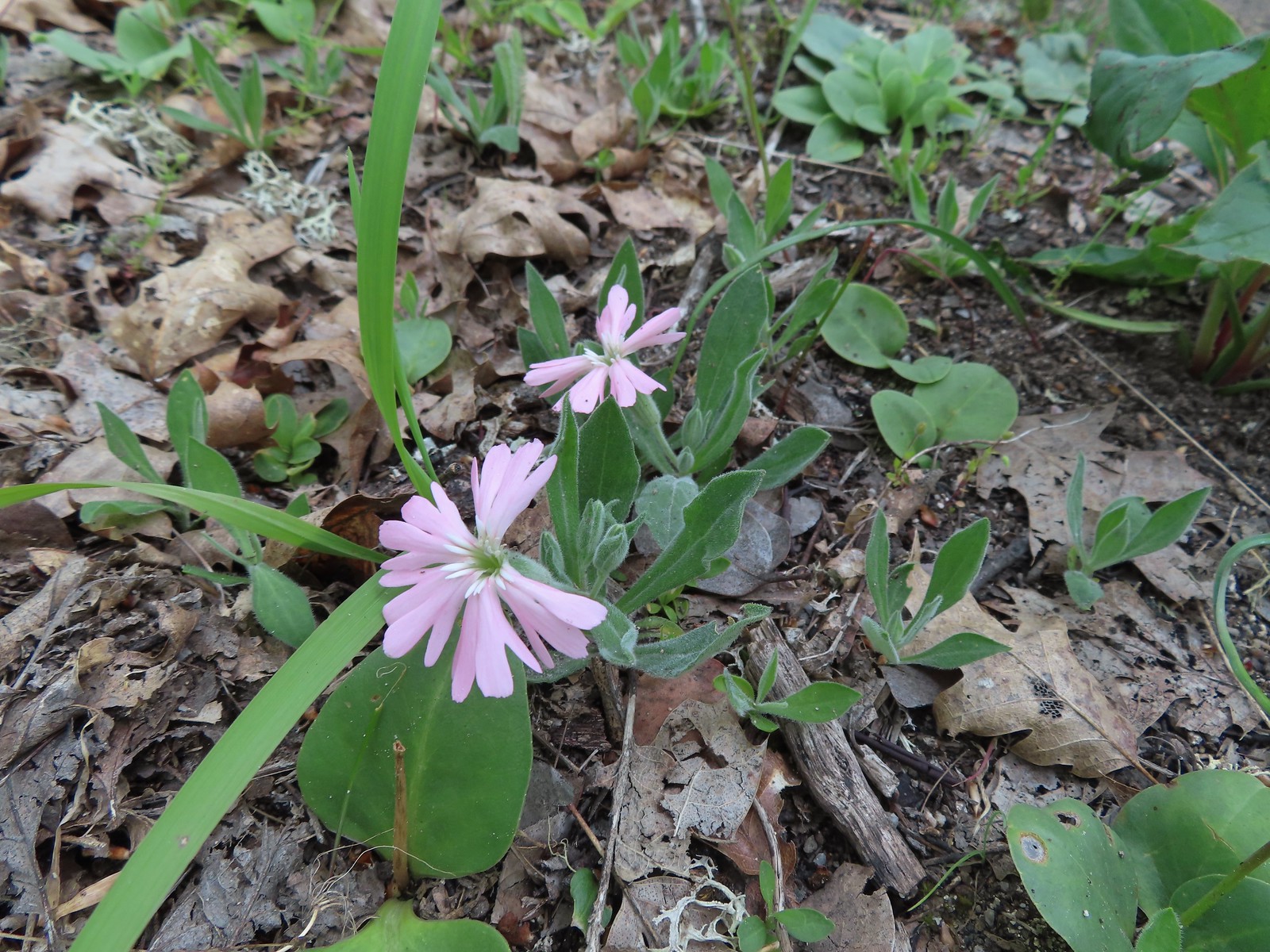 Hooker’s Indian pink
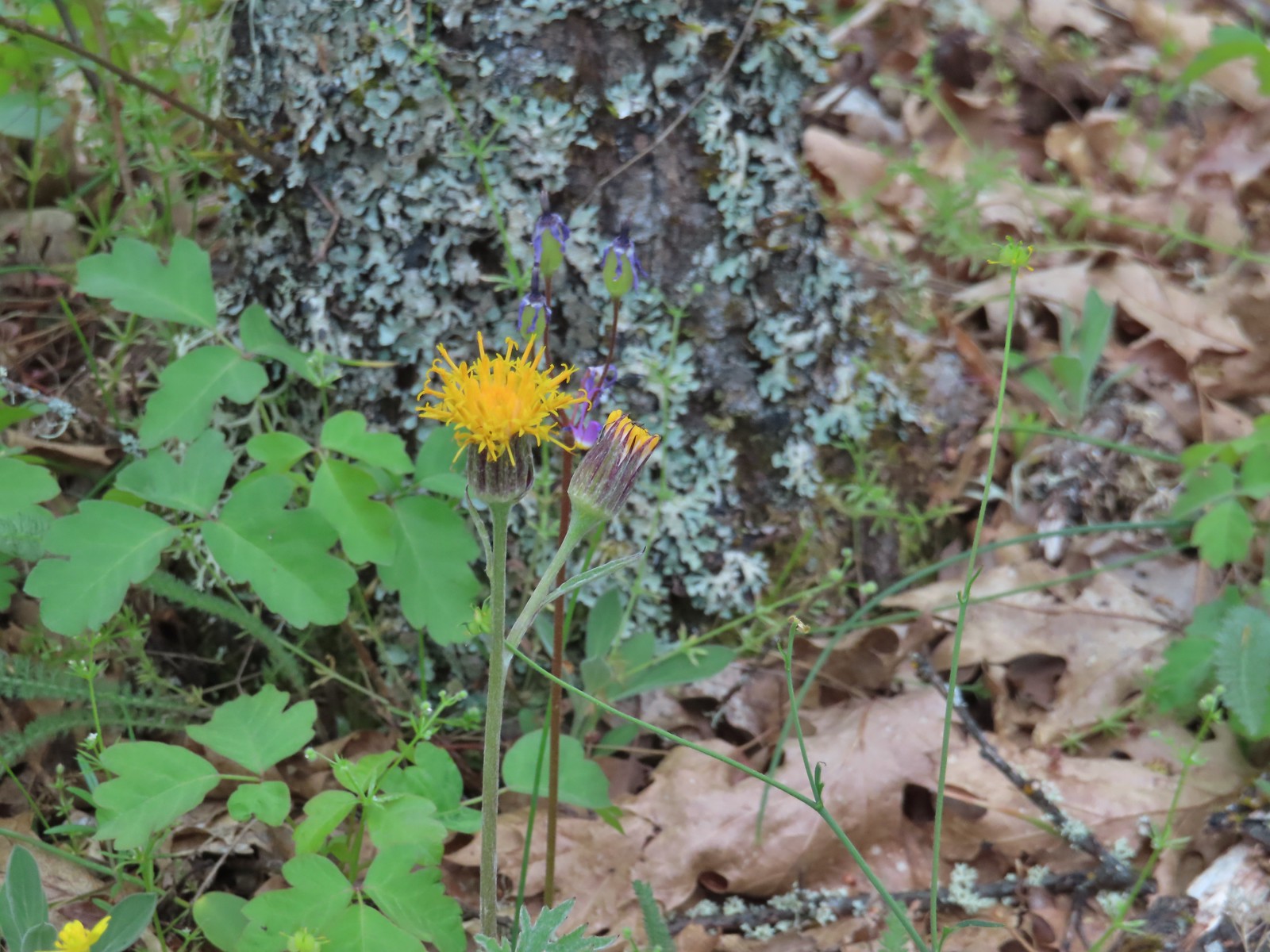 Silver crown
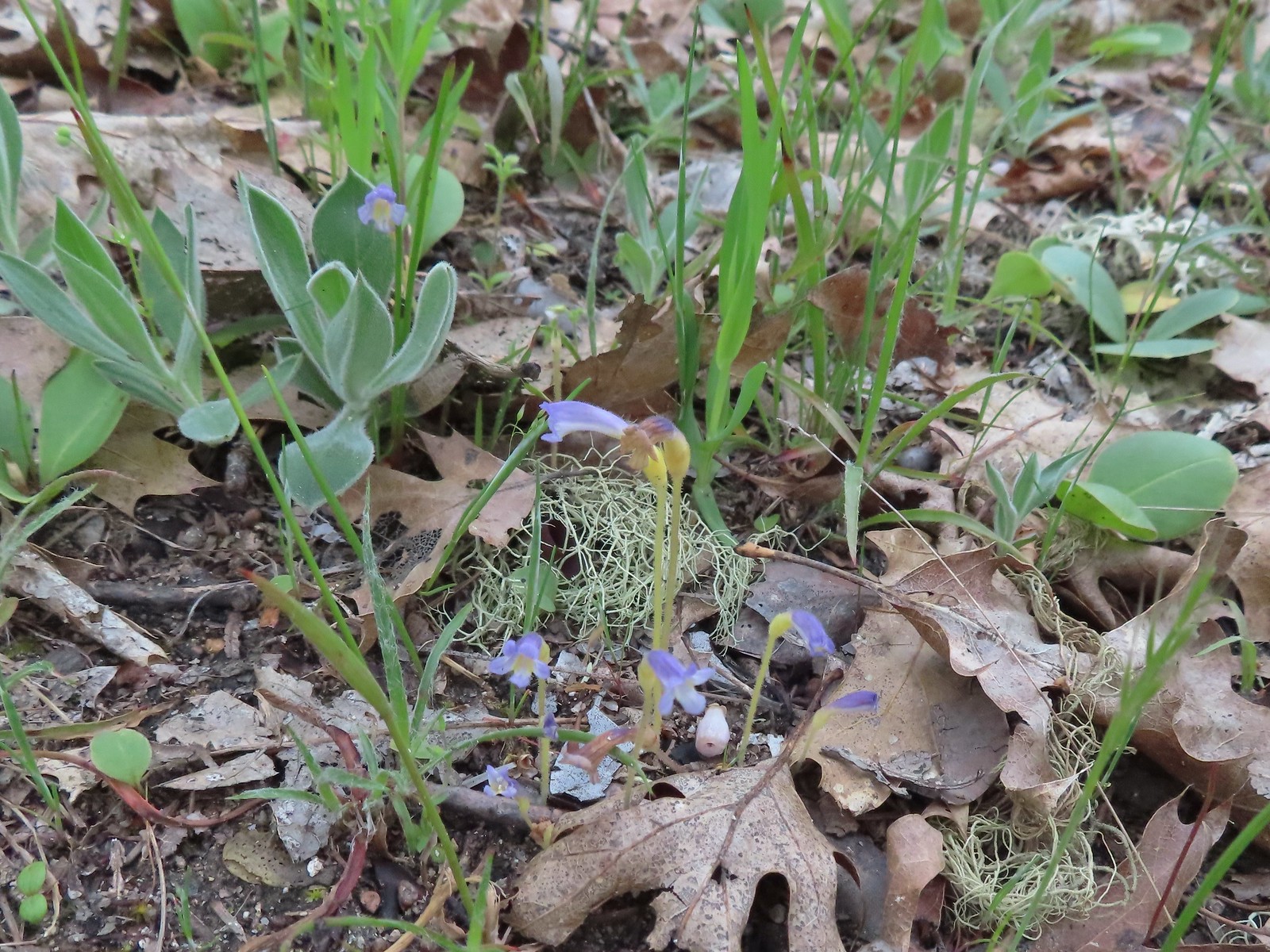 Naked broomrape
 Too cloudy for a good view.
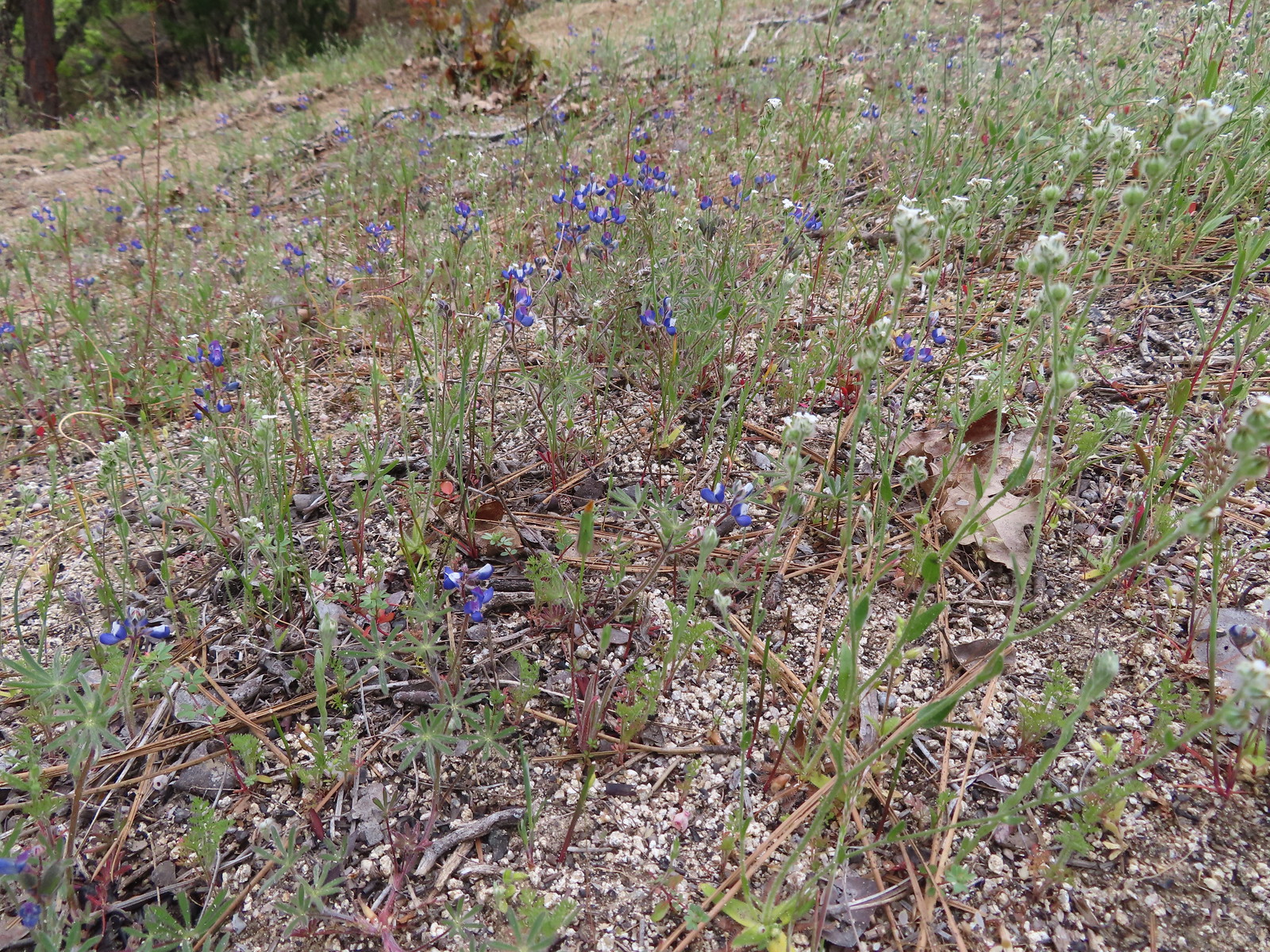 Lupine
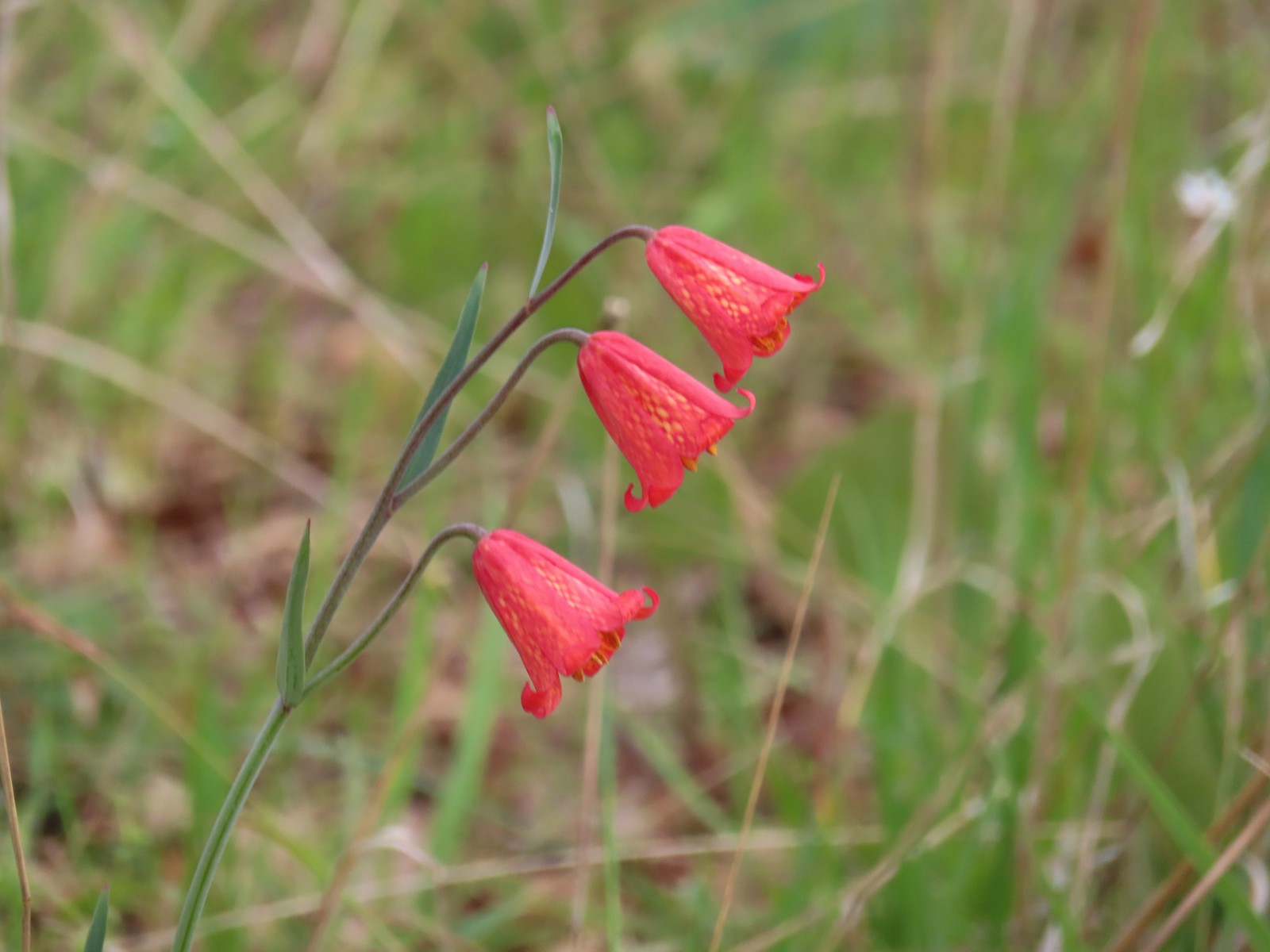 Scarlet fritillary
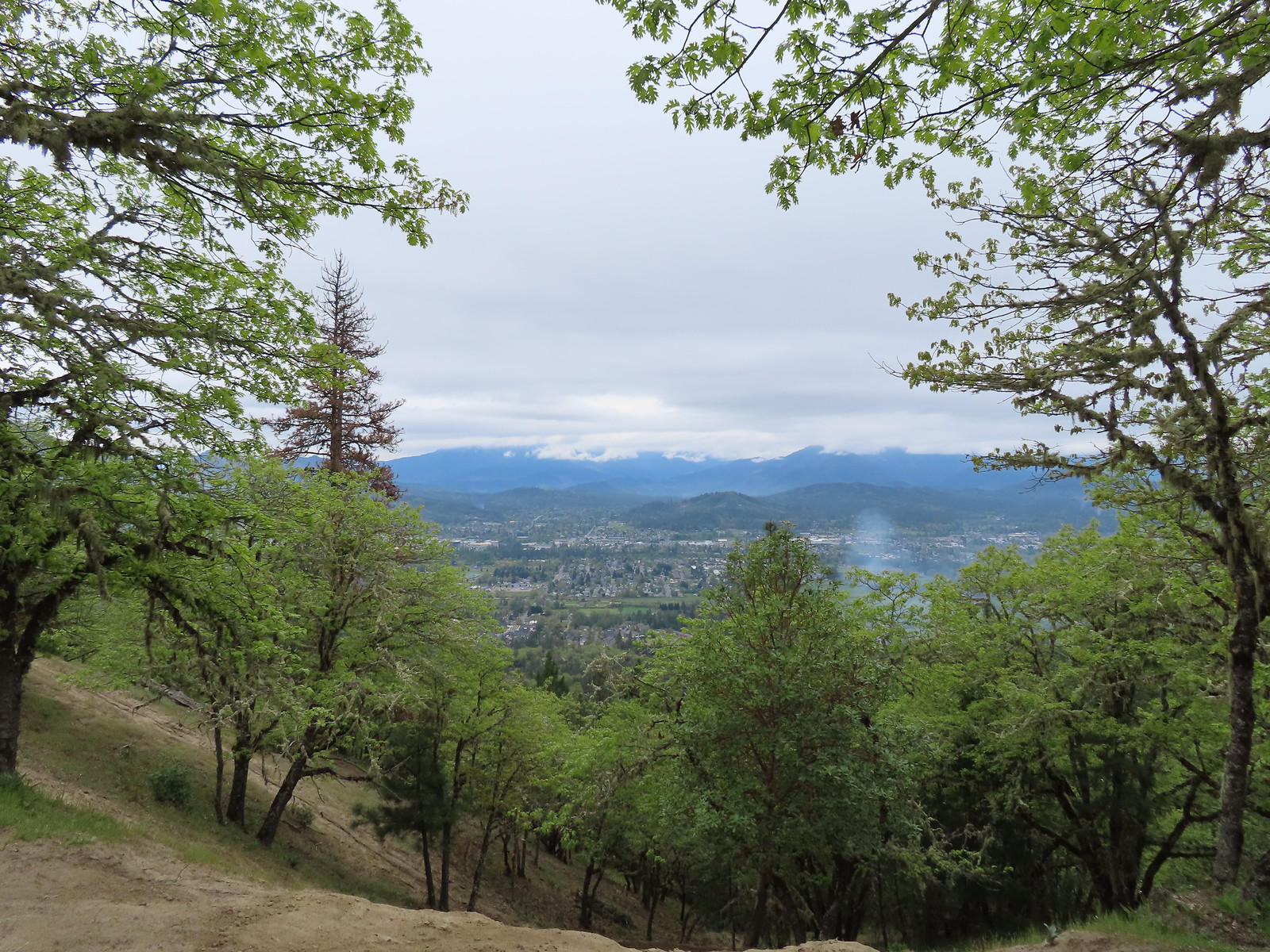 View from the summit.
 We stuck to the road ignoring any side paths like this one since we had no idea where they might lead.
 There were dozens of California groundcones along the roadbed.
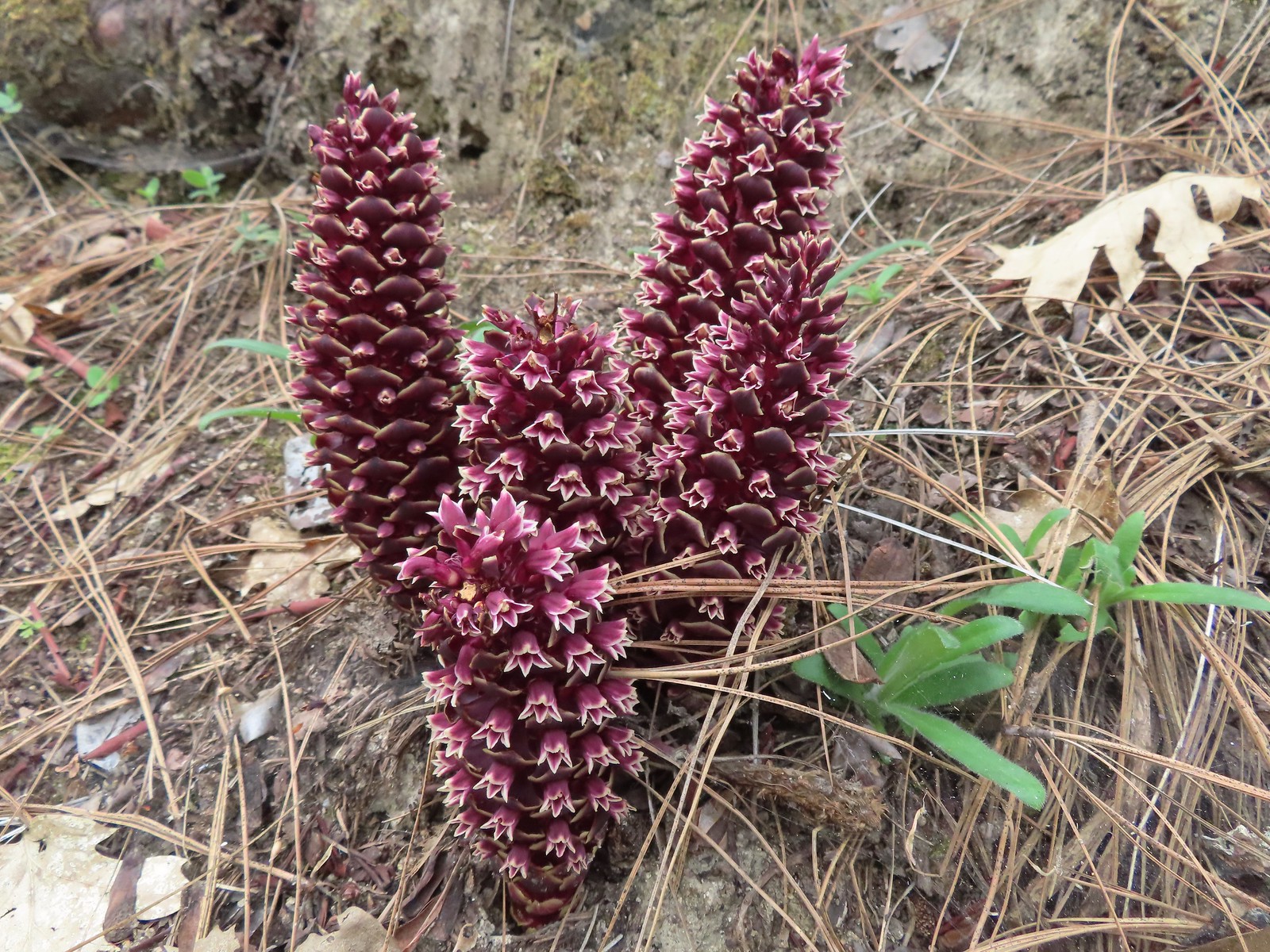 California groundcones
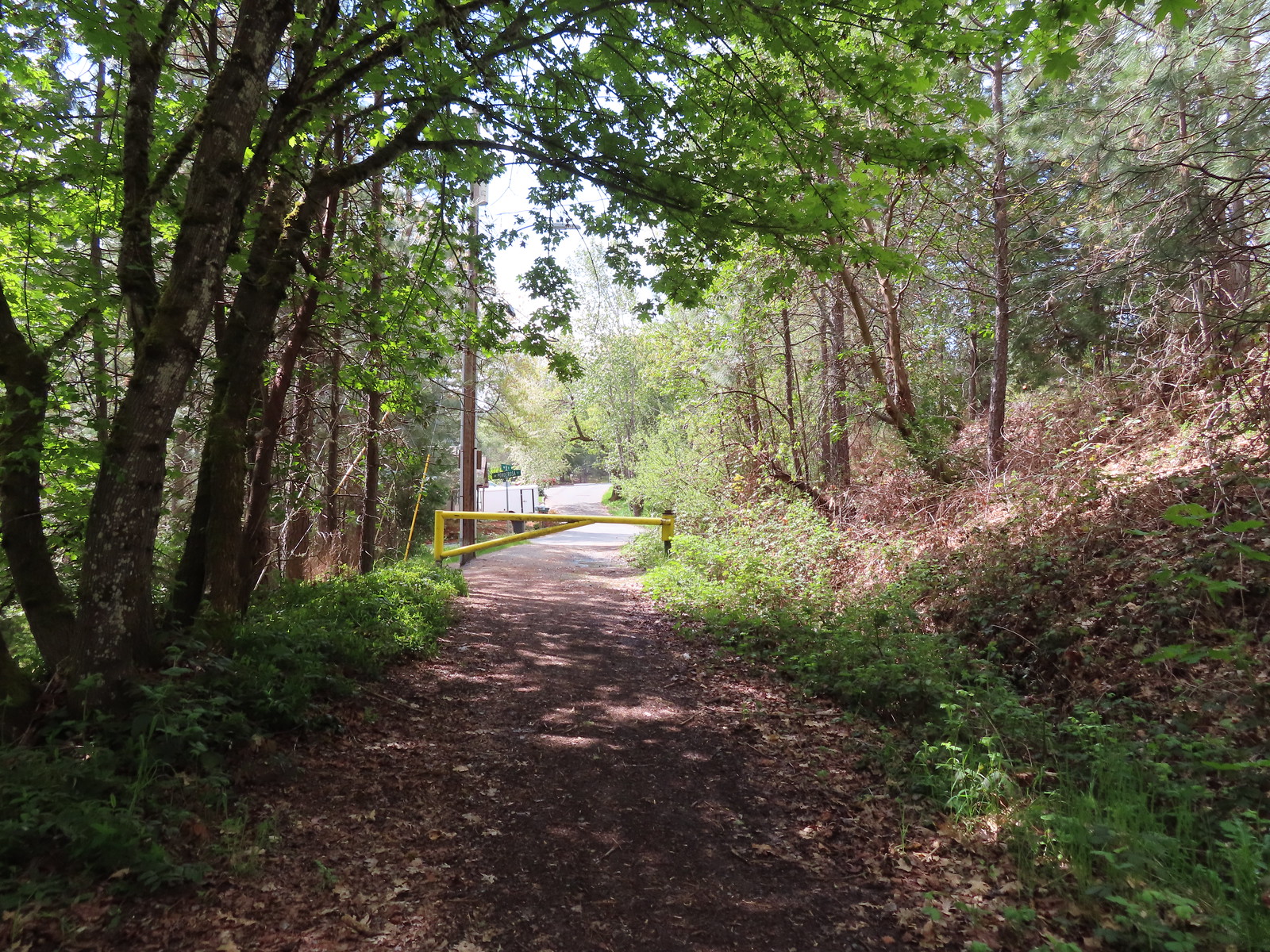 Approaching Crescent Street.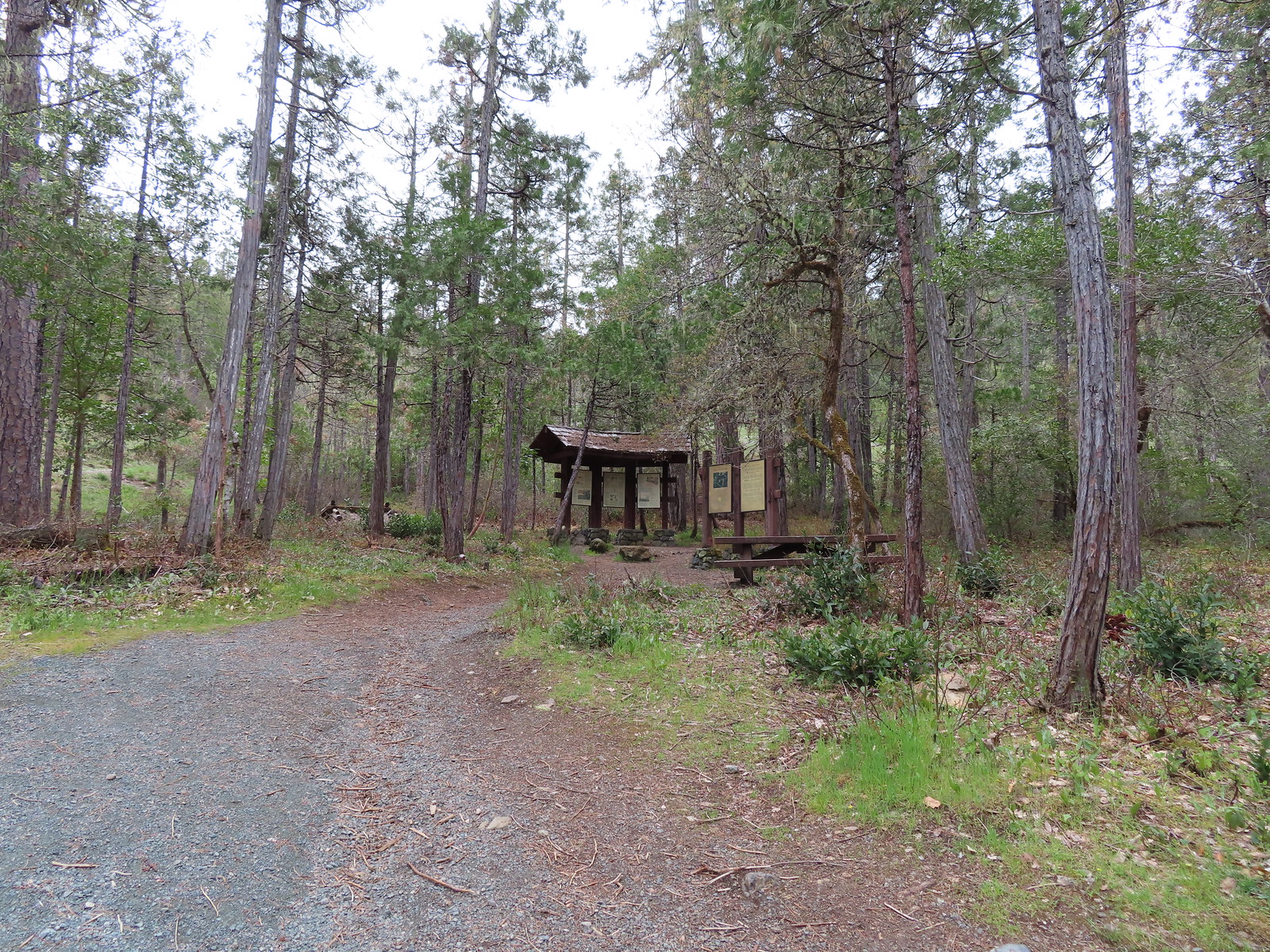
 Monkeyflower
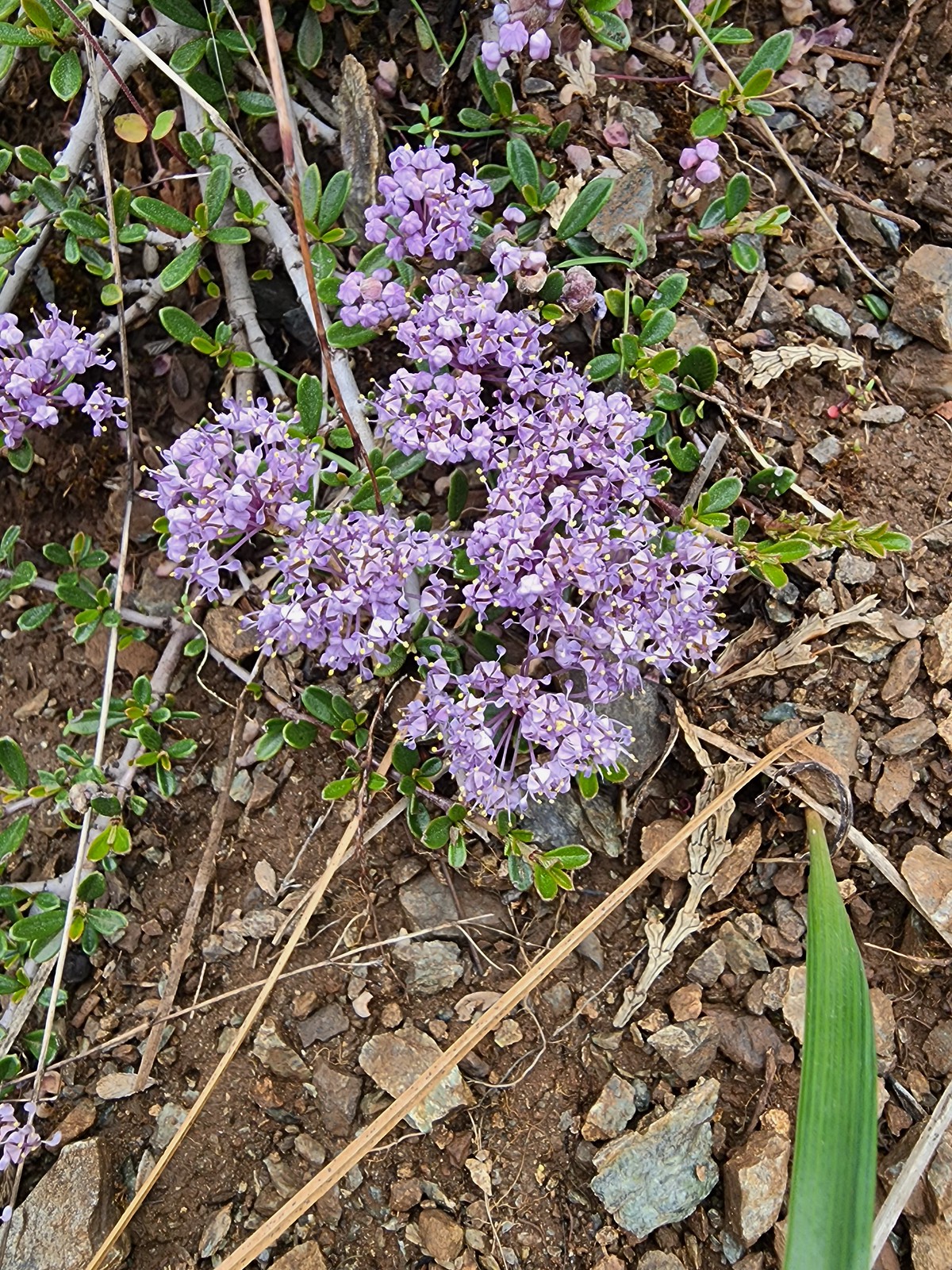 Dwarf ceanothus
 Paintbrush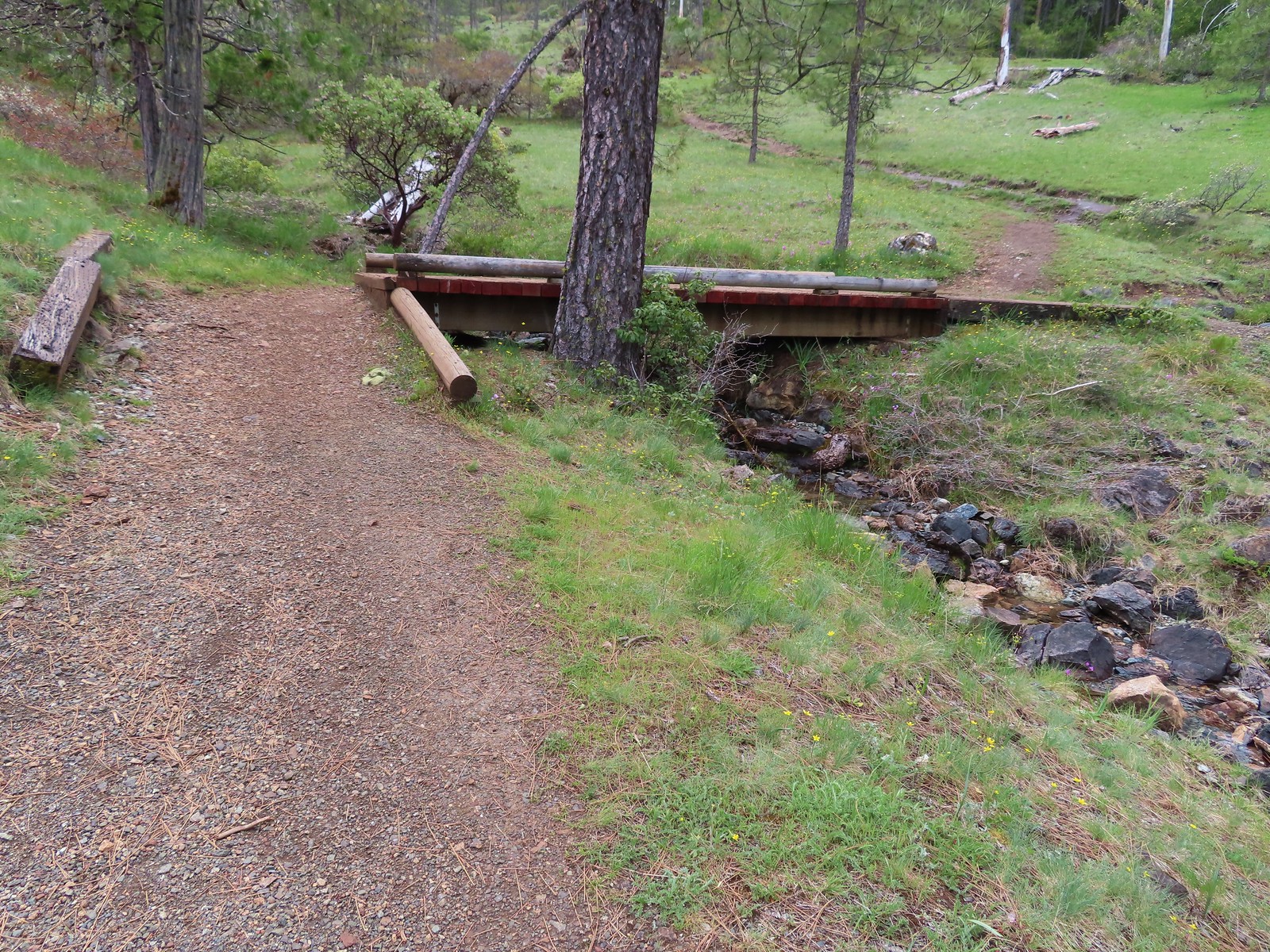
 Camas and shooting stars
 Siskiyou fritillary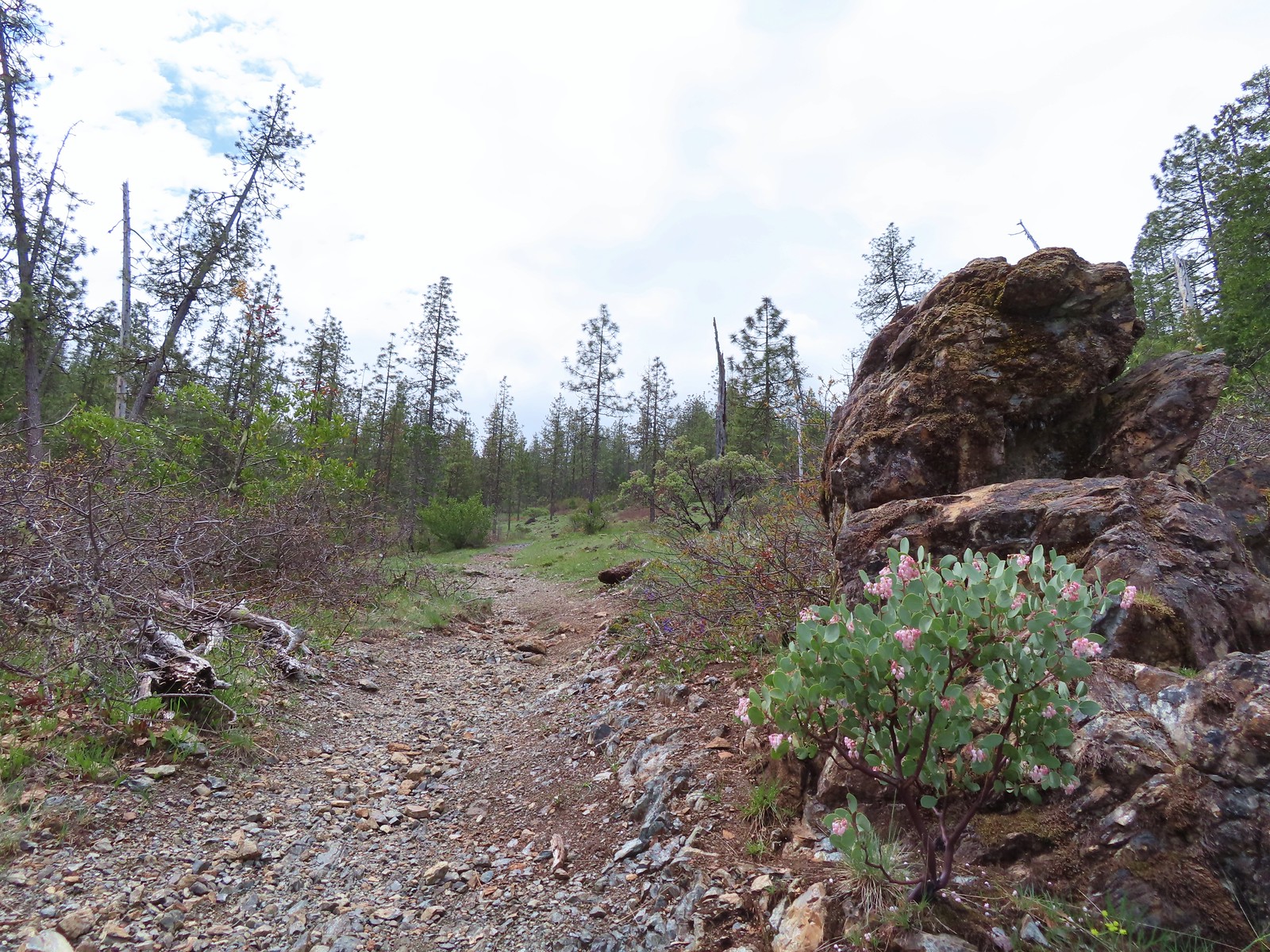
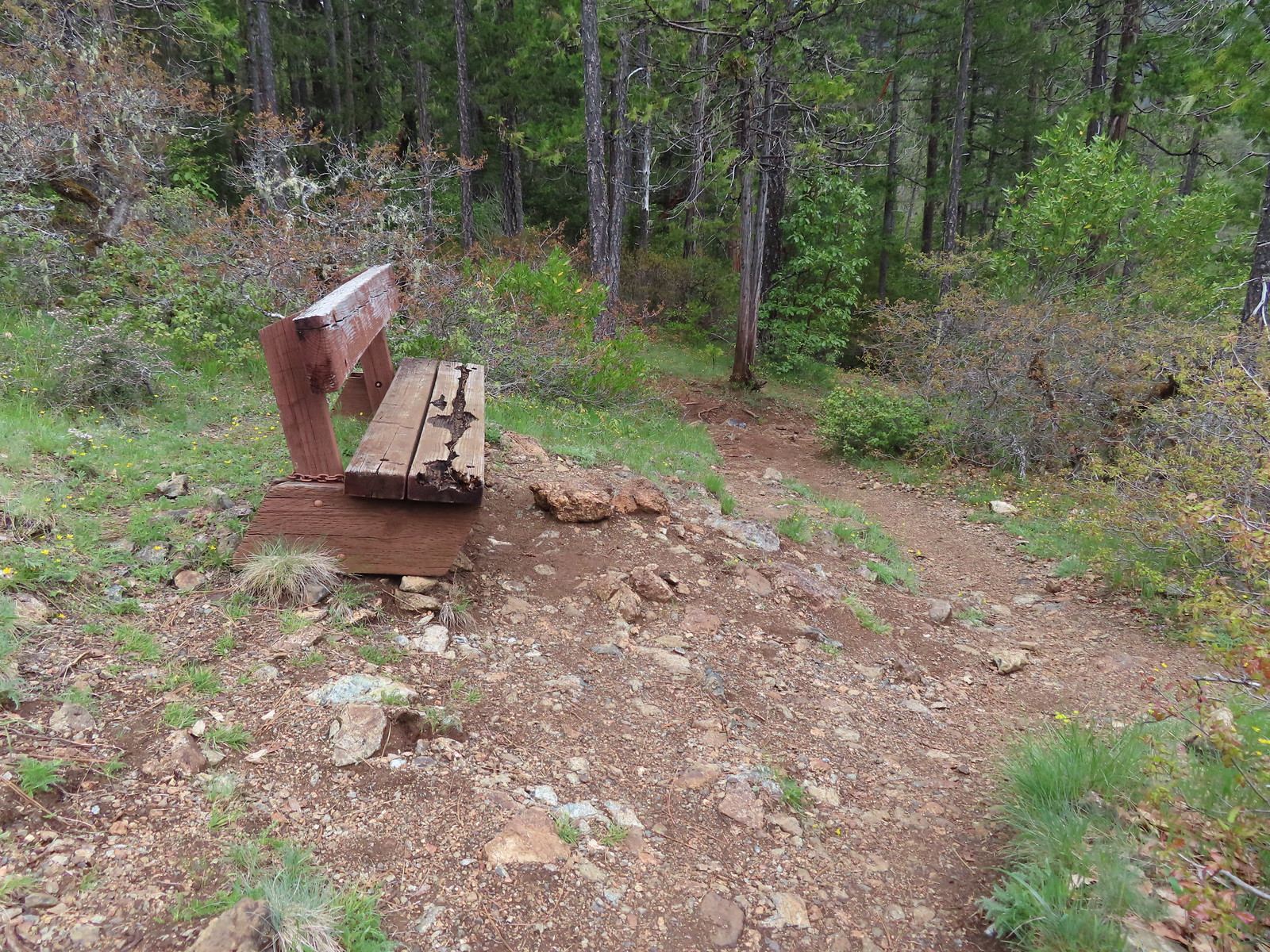 Passing the bench.
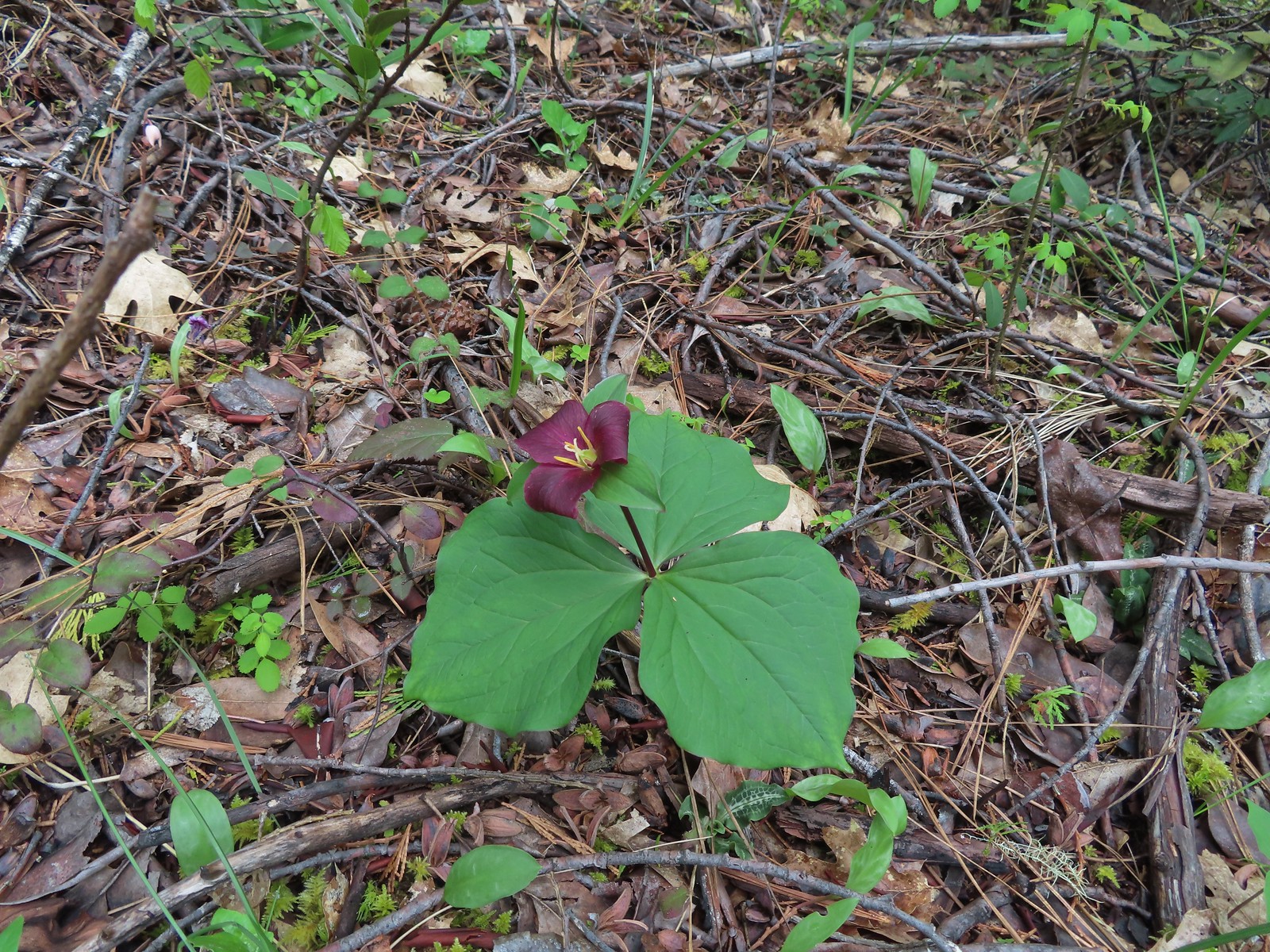 Trillium
 Fairy slippers
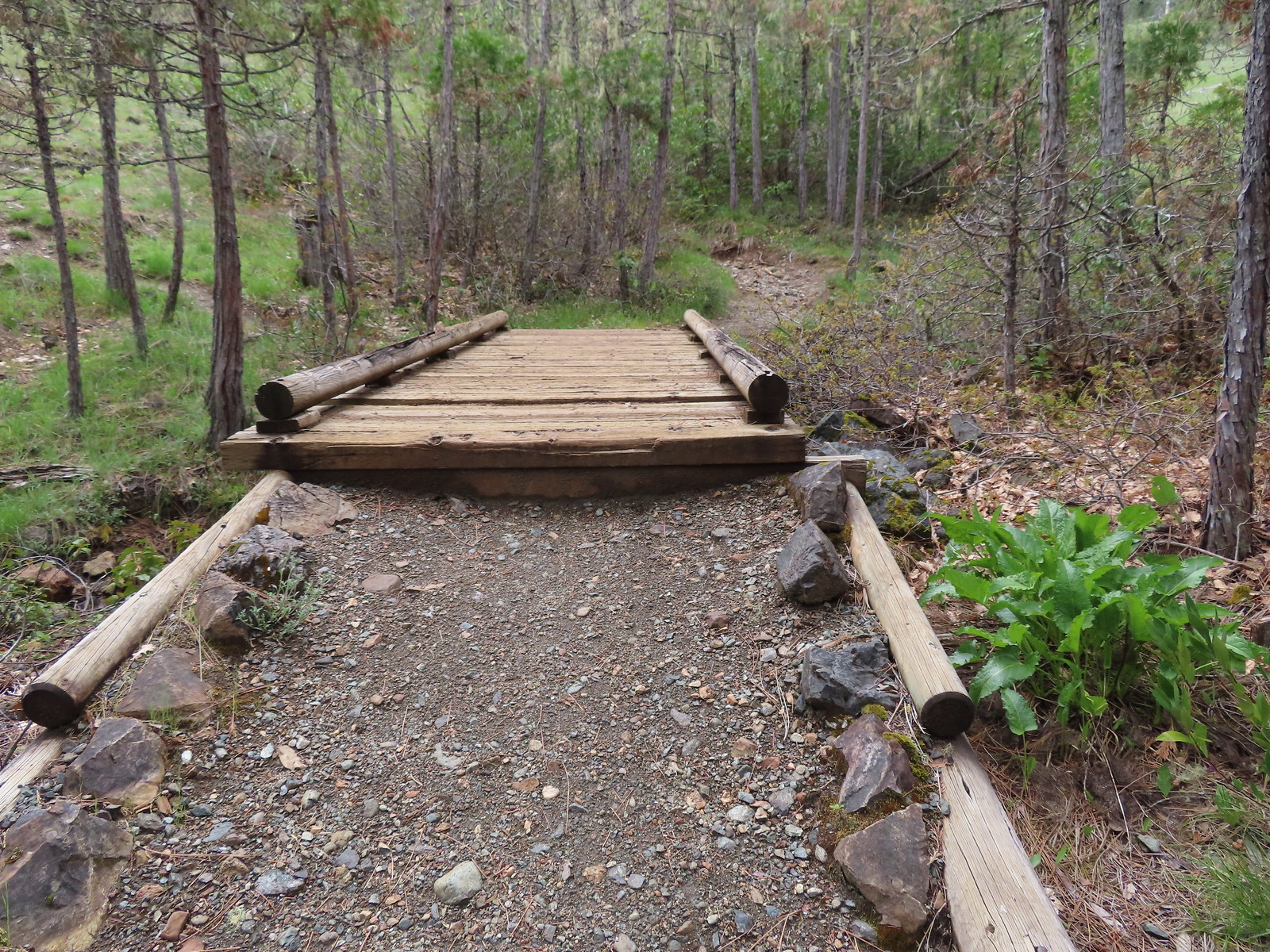
 Boardwalk #1
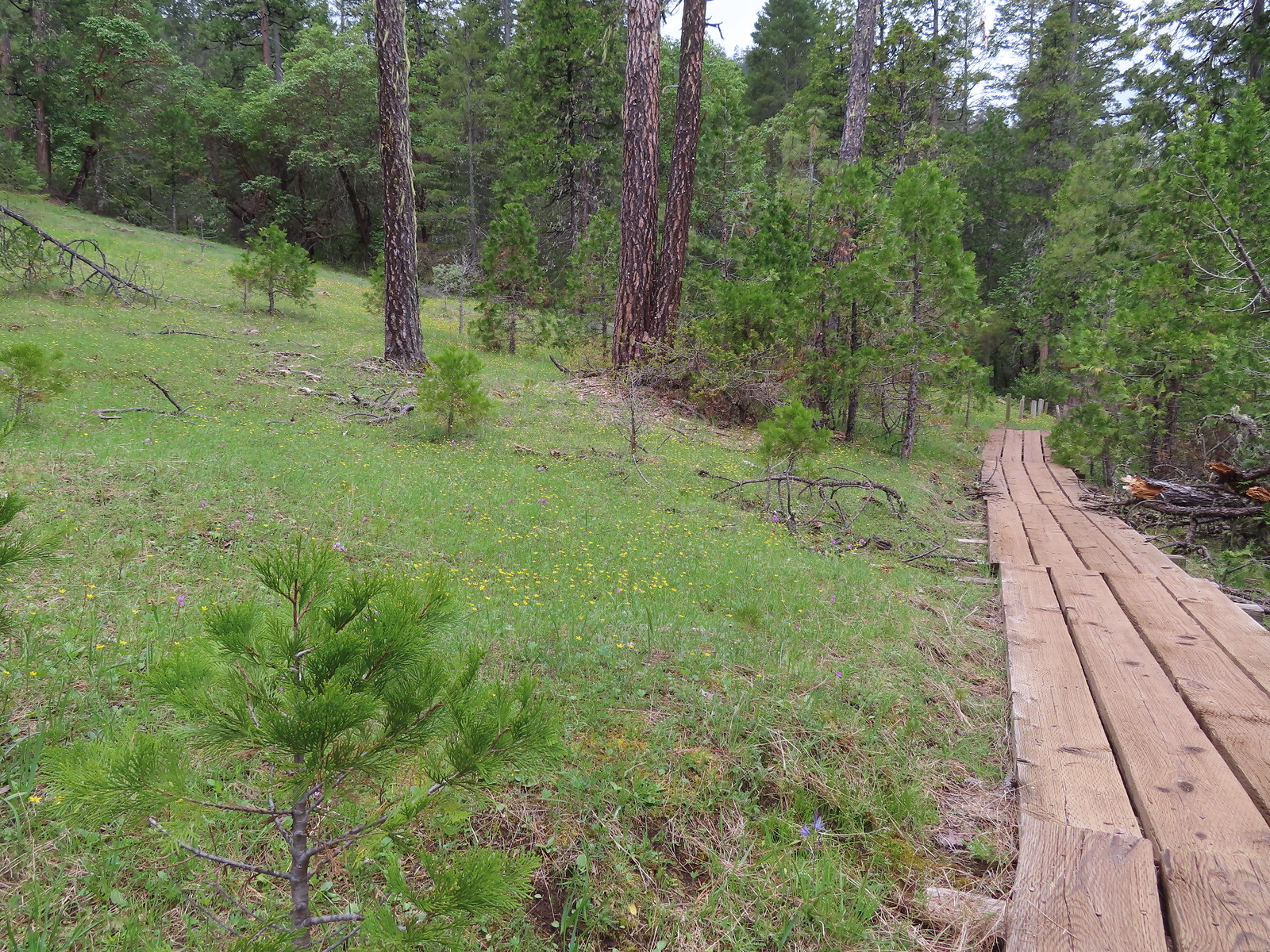 Second boardwalk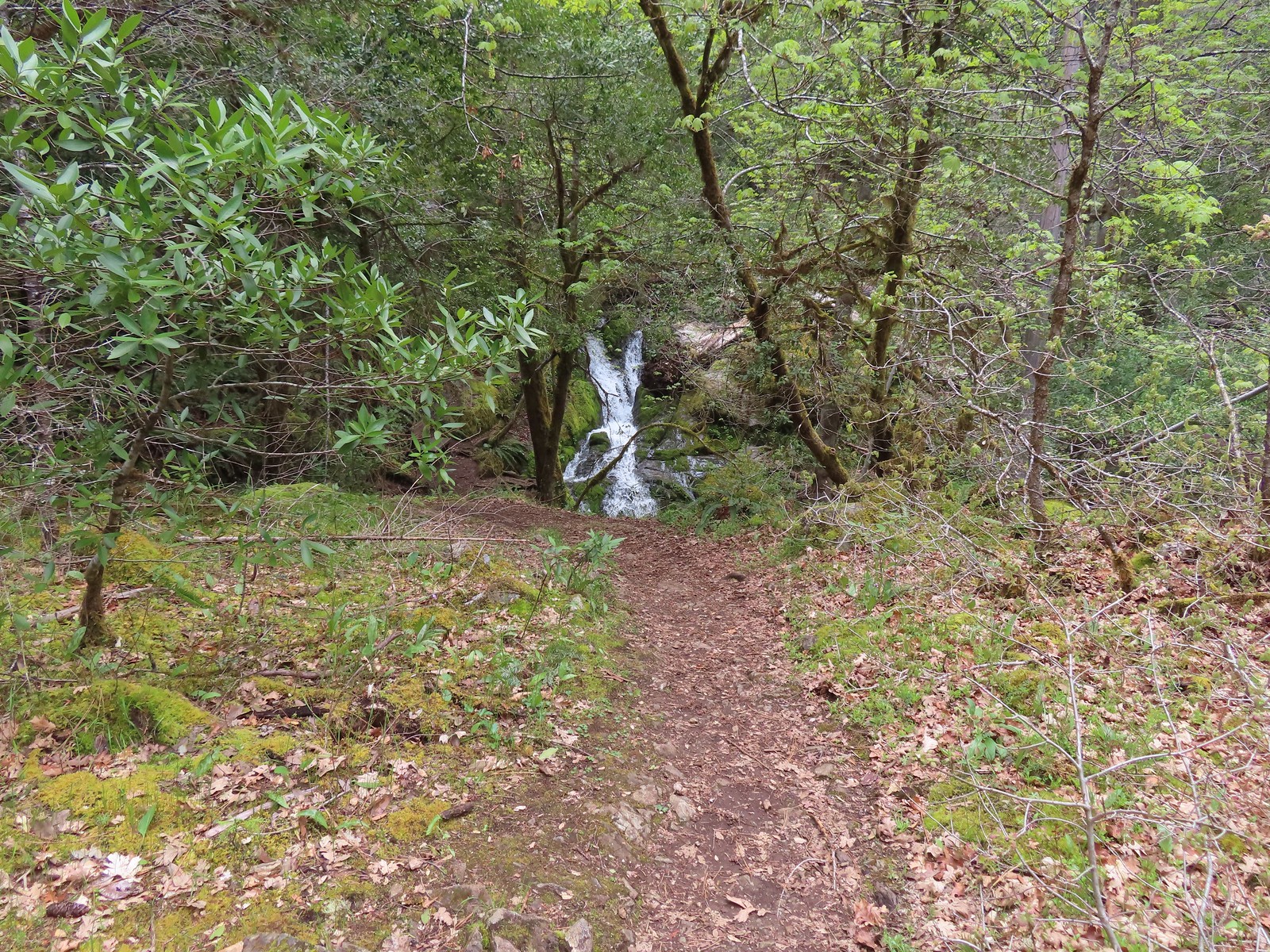
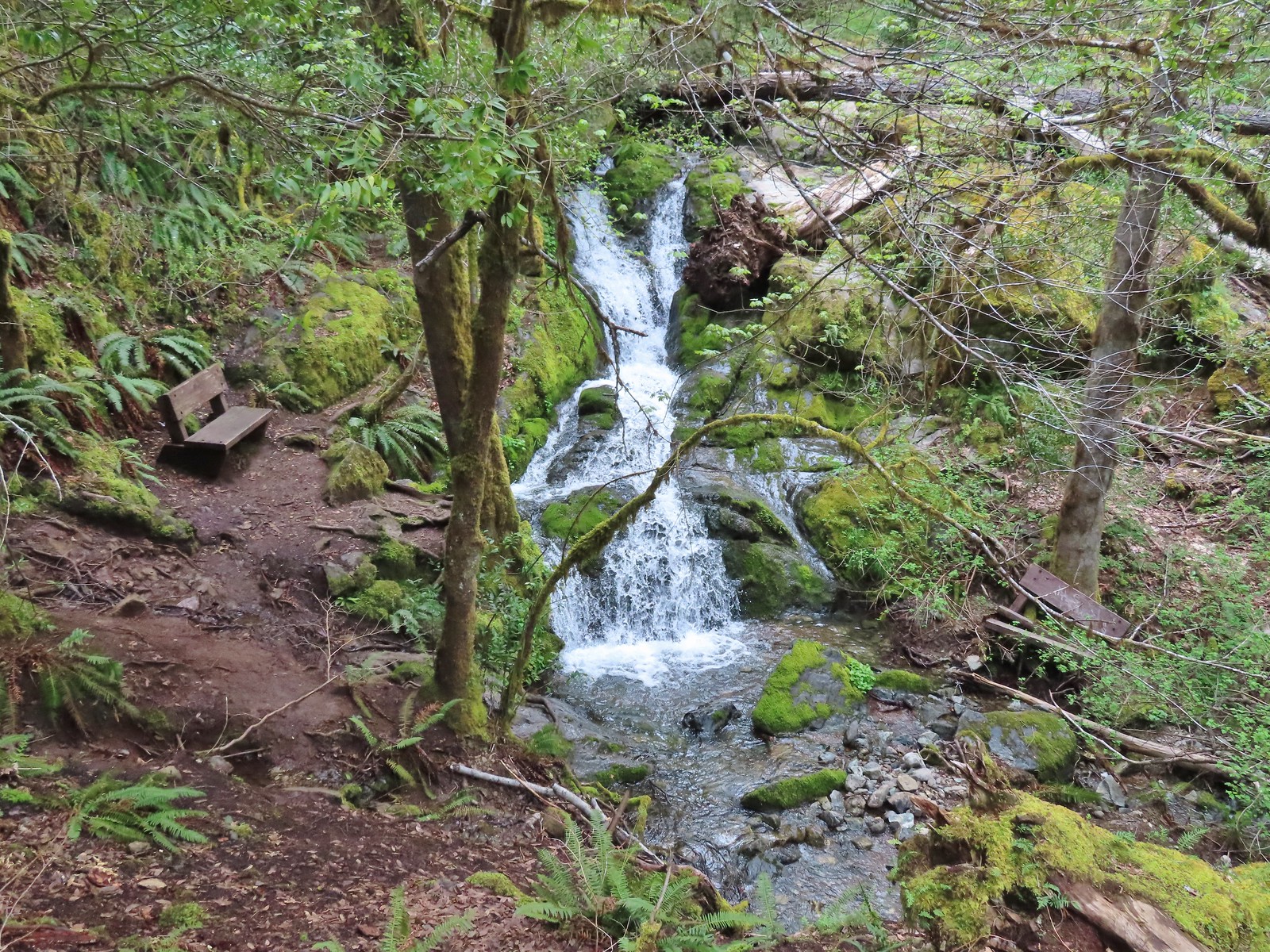 Waterfall on Limpy Creek.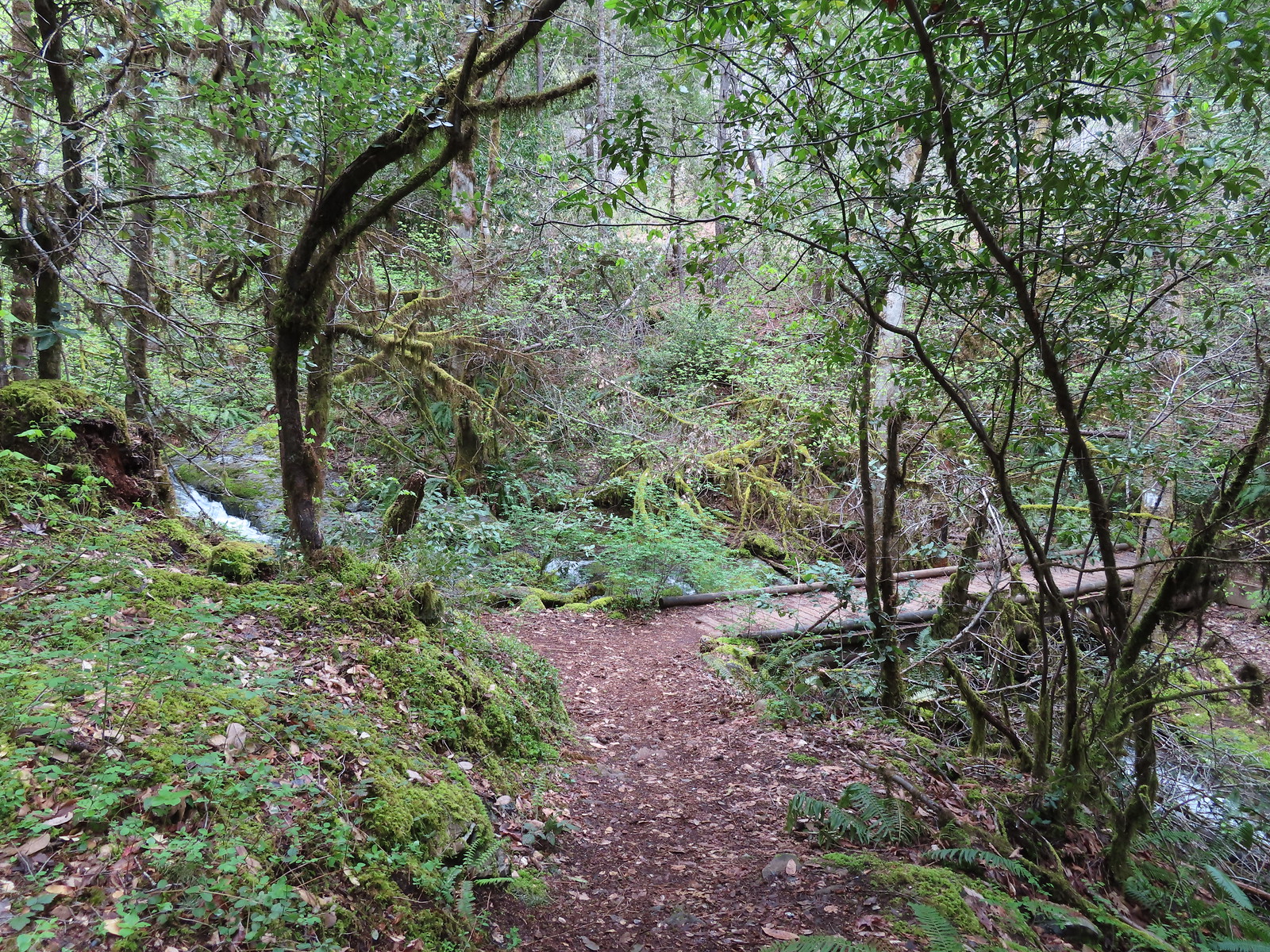
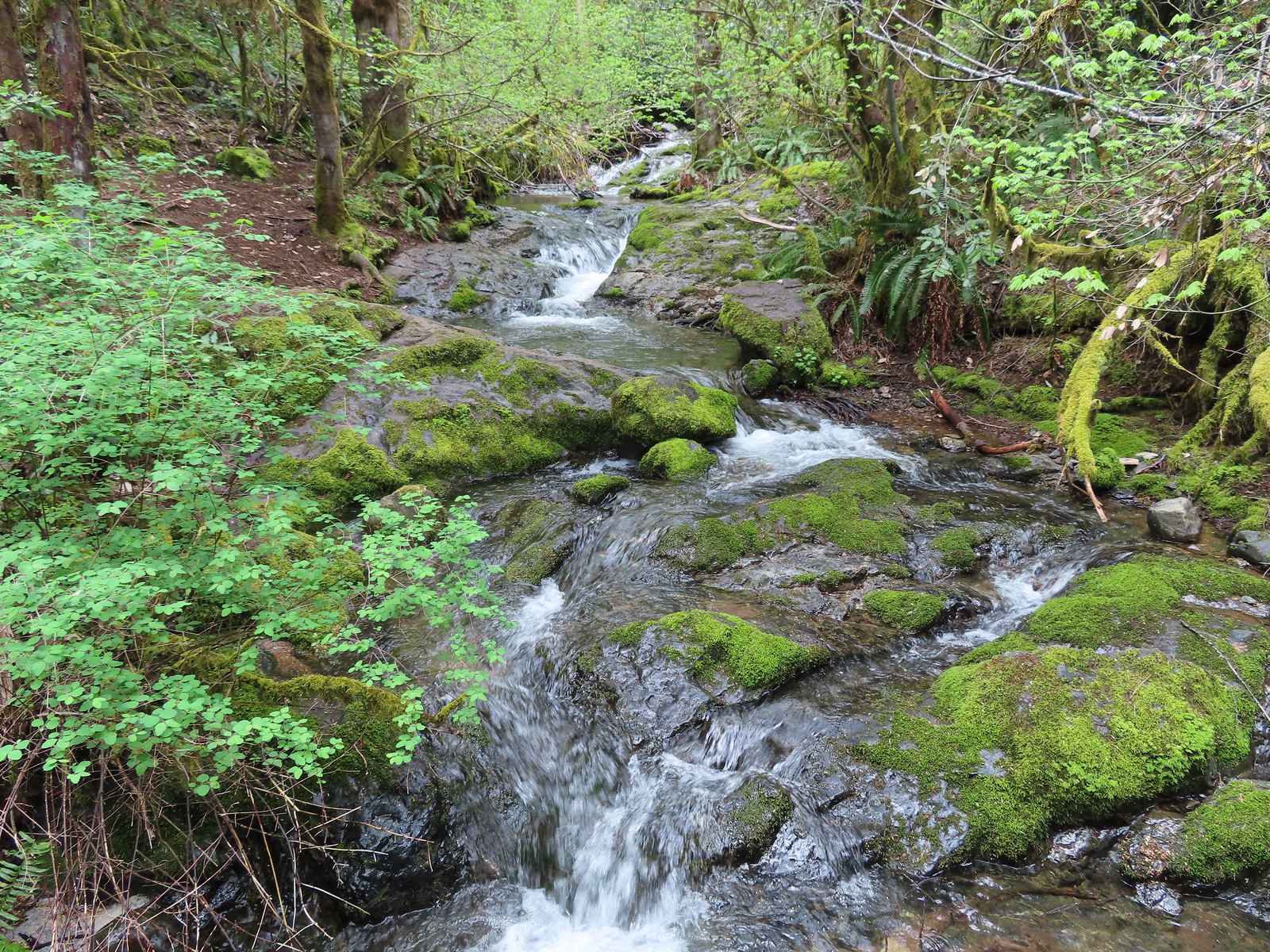 Limpy Creek
 Arriving at the second creek.
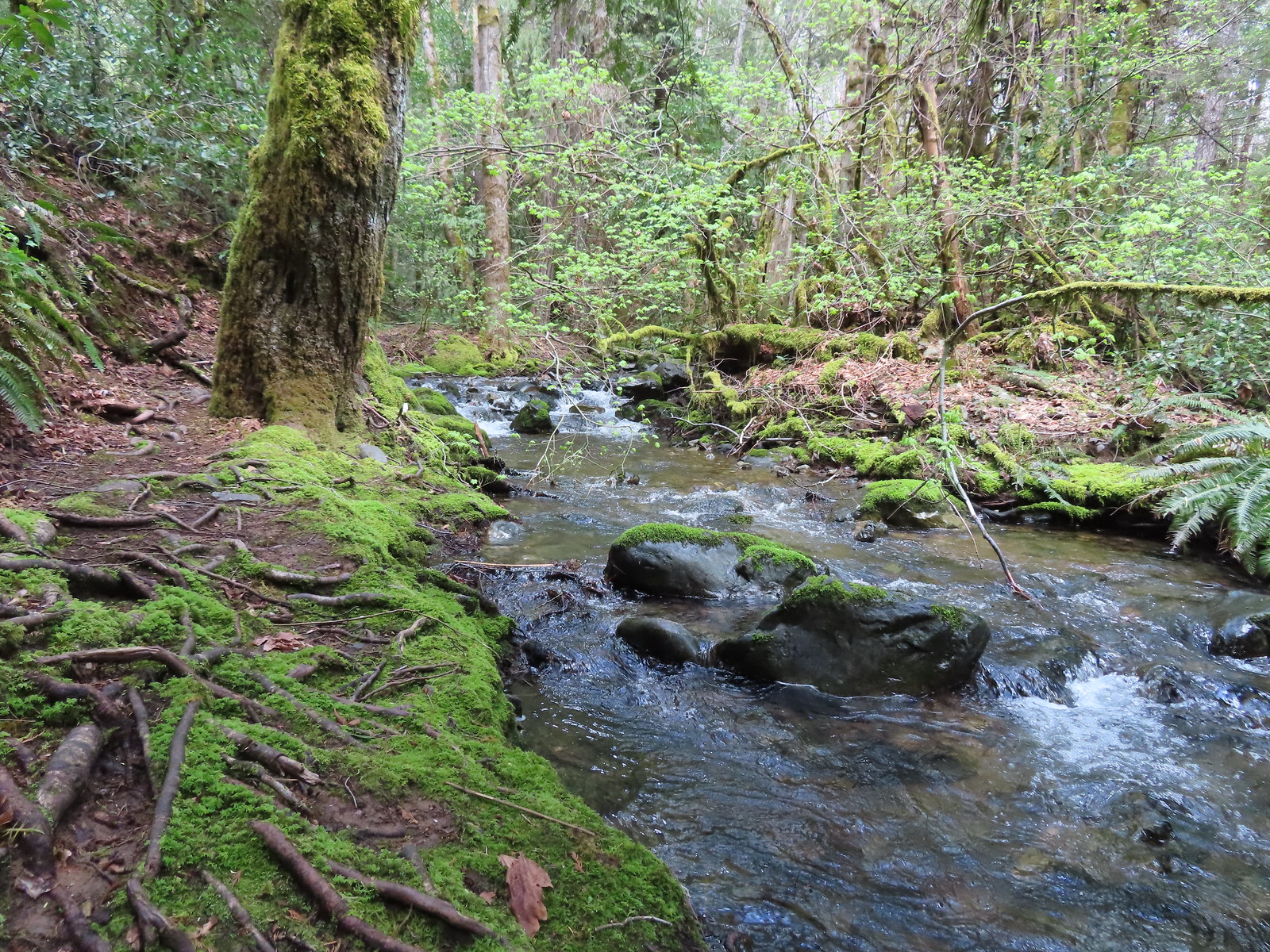 Unnamed creek
 Mushrooms
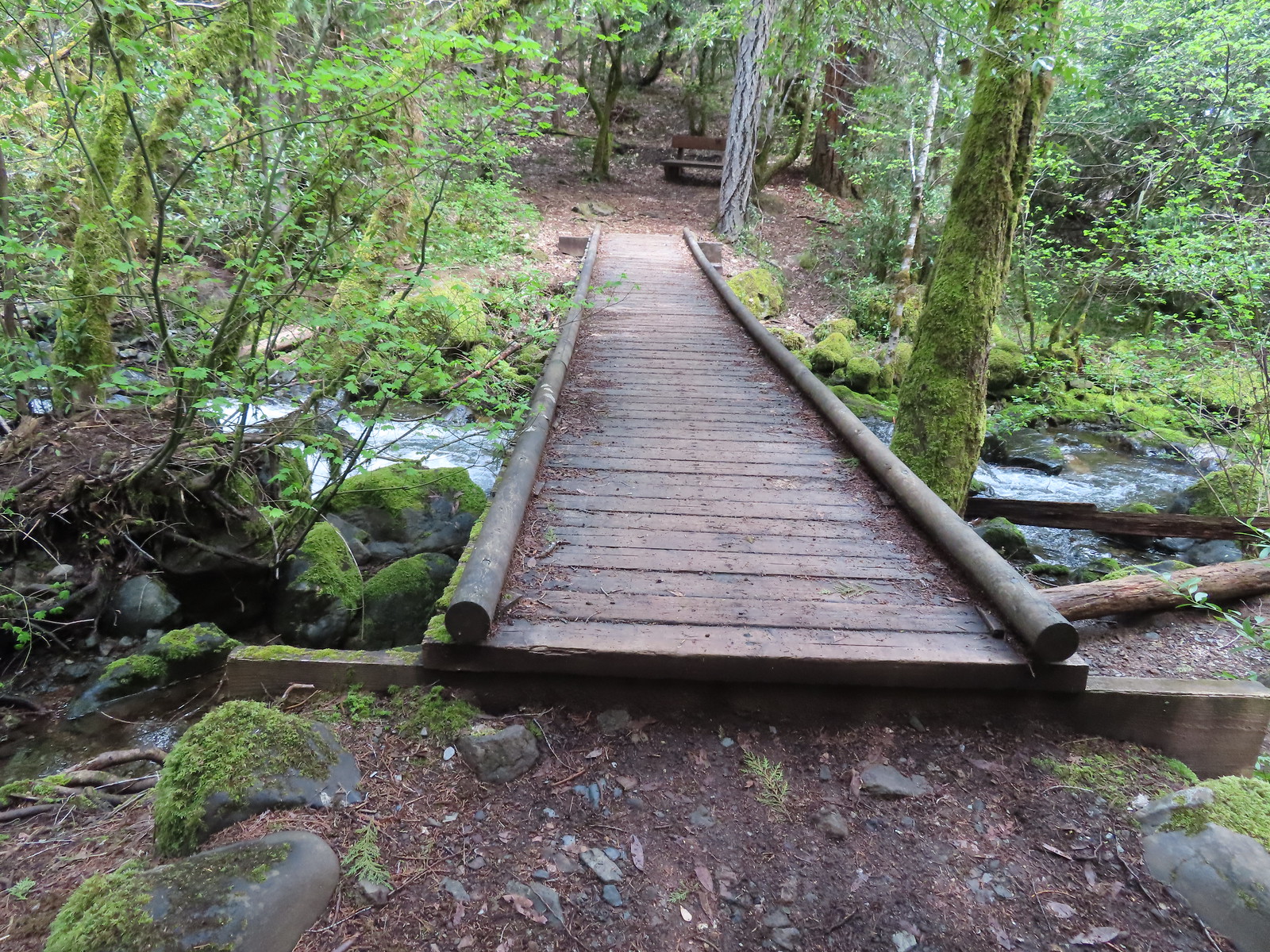 Final crossing of Limpy Creek.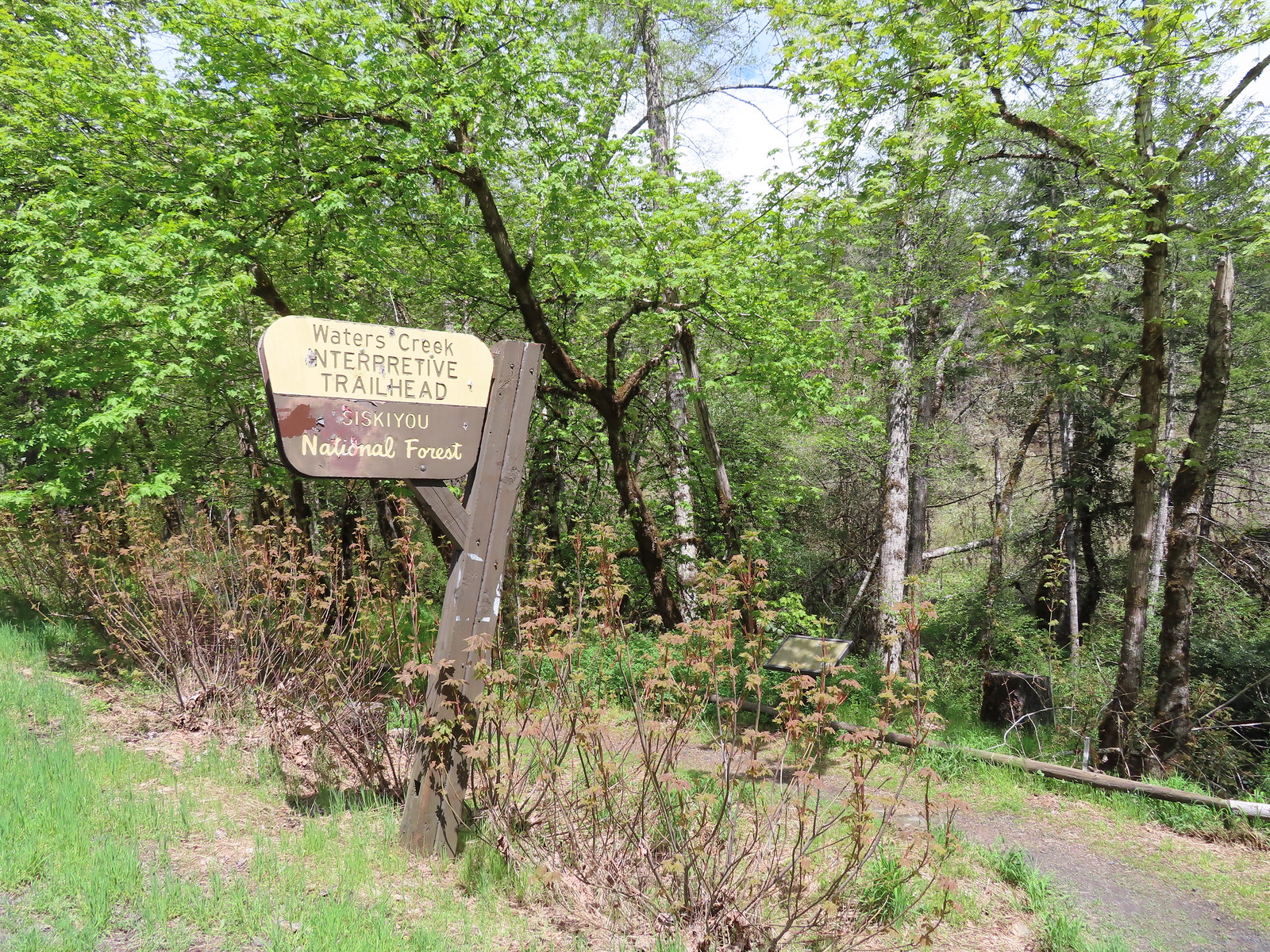

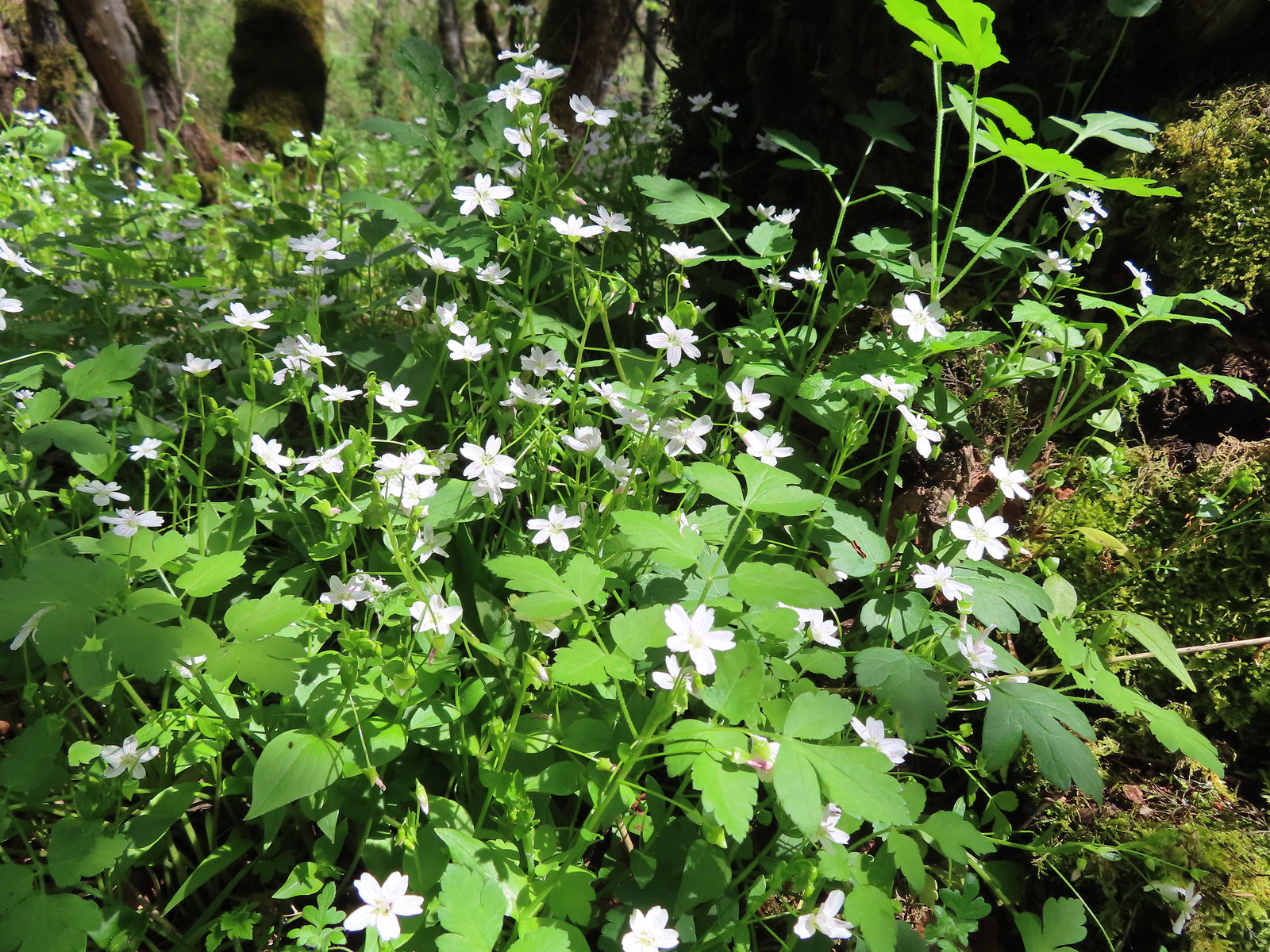 Candyflower
 Waters Creek
 A phacelia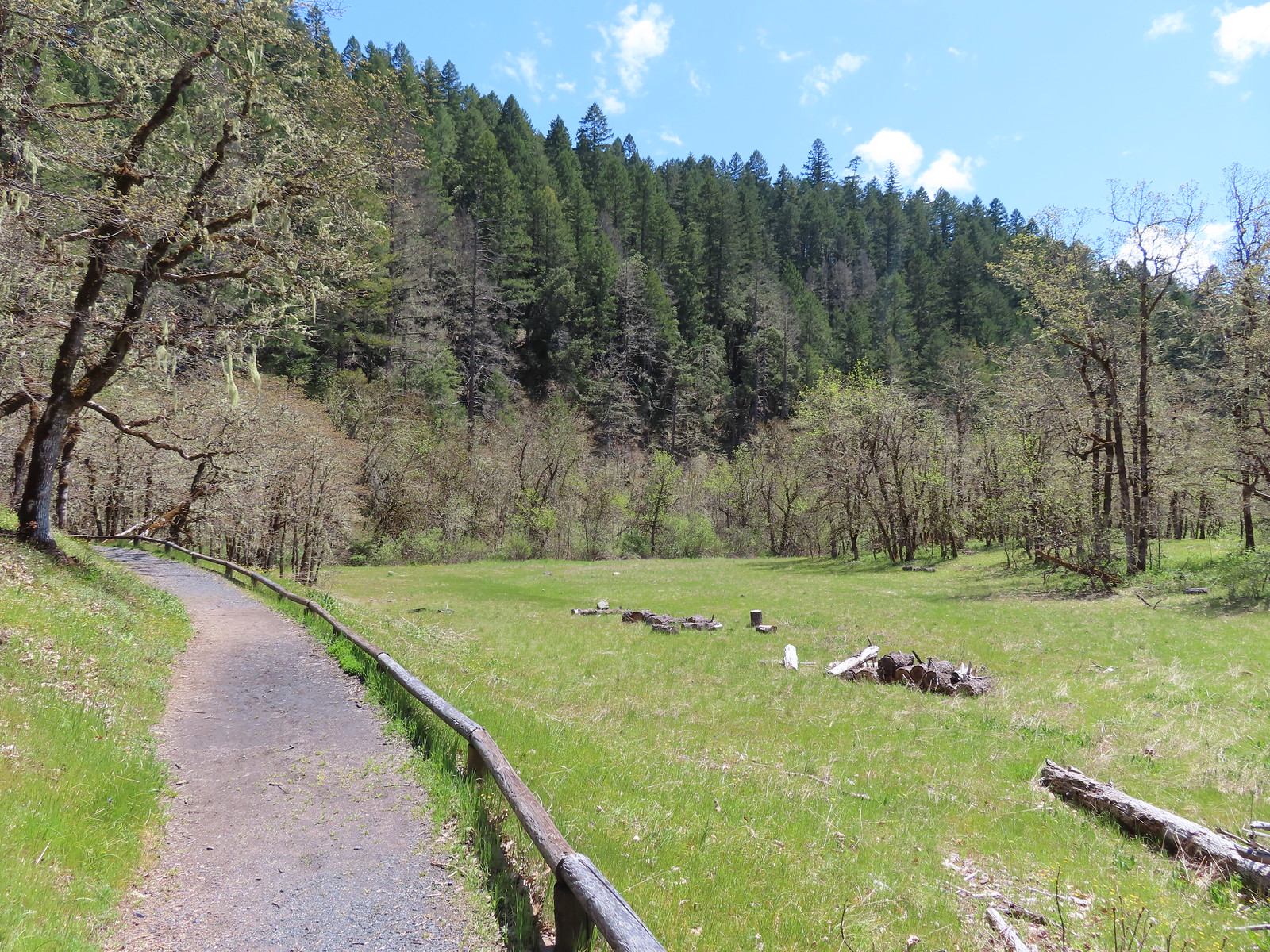
 The start/end of the loops with the bridge being our return route.
 Staying left.
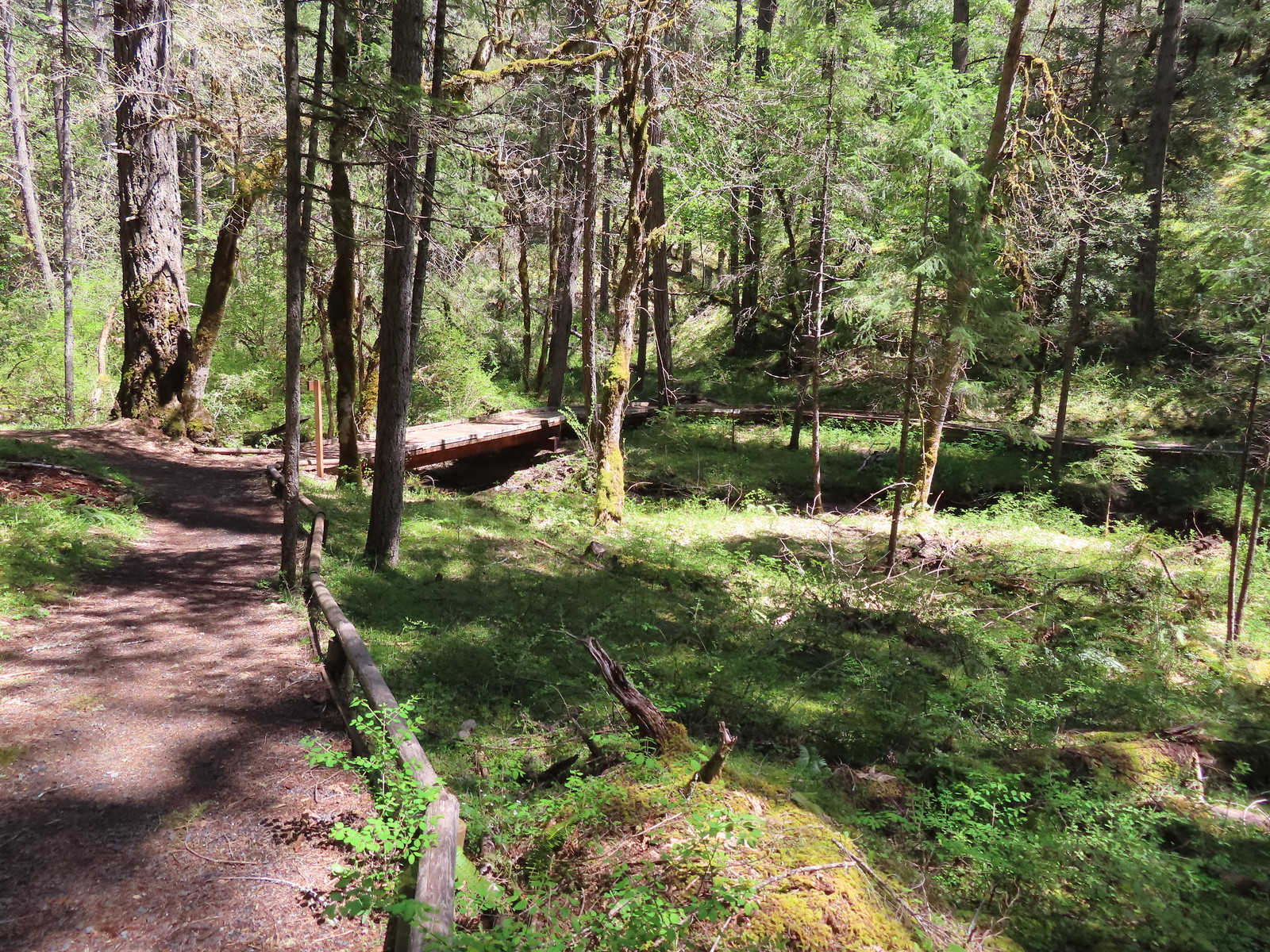 This was the barrier free loop splitting off and heading back across an unnamed creek.
 Sign announcing the hiker only extended loop.
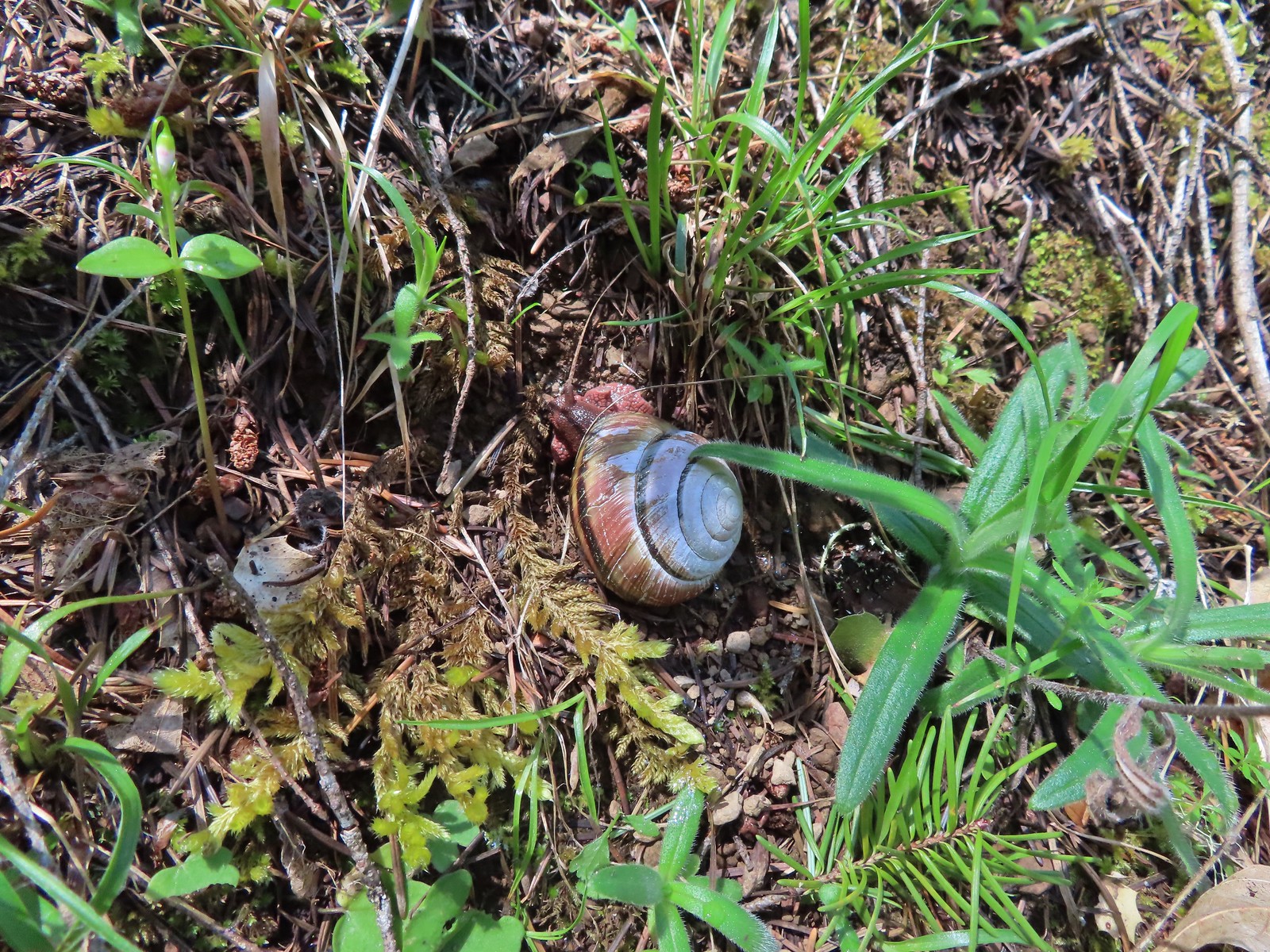 Snail
Snail The first vanilla leaf we’ve seen blooming this year.
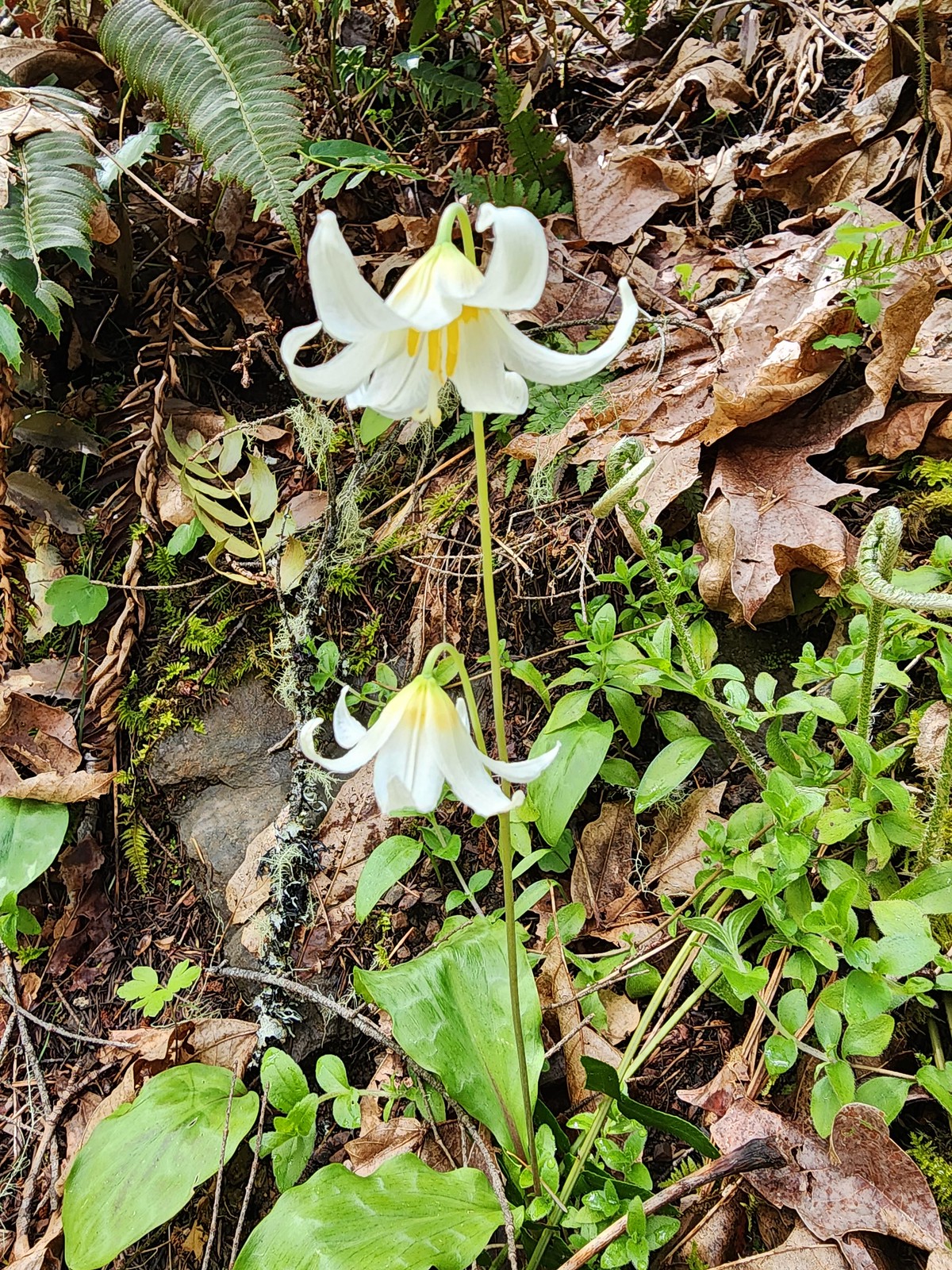 There were a bunch of fawn lilies blooming along this trail.
 One of several little footbridges across side streams.
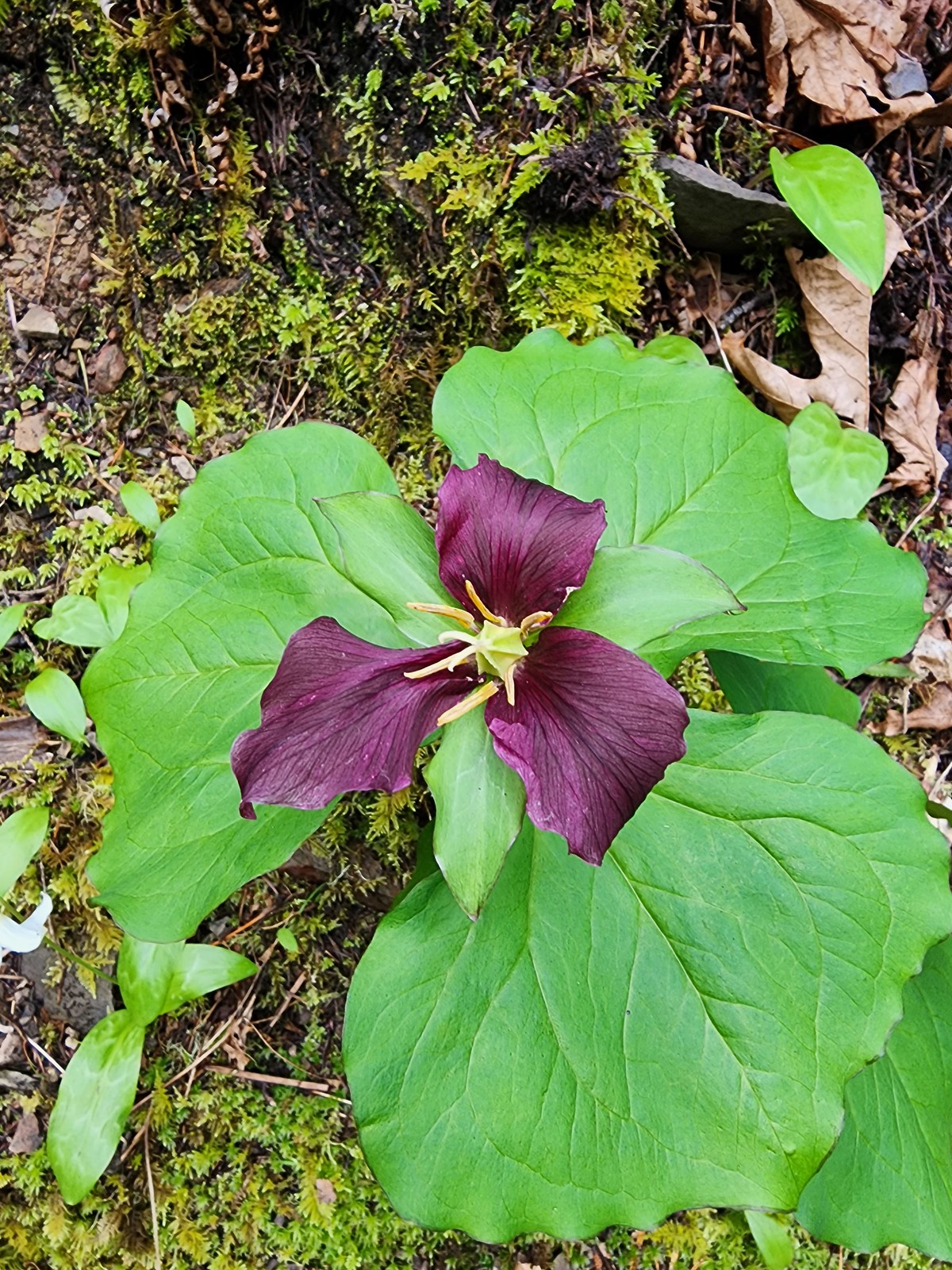 Trillium
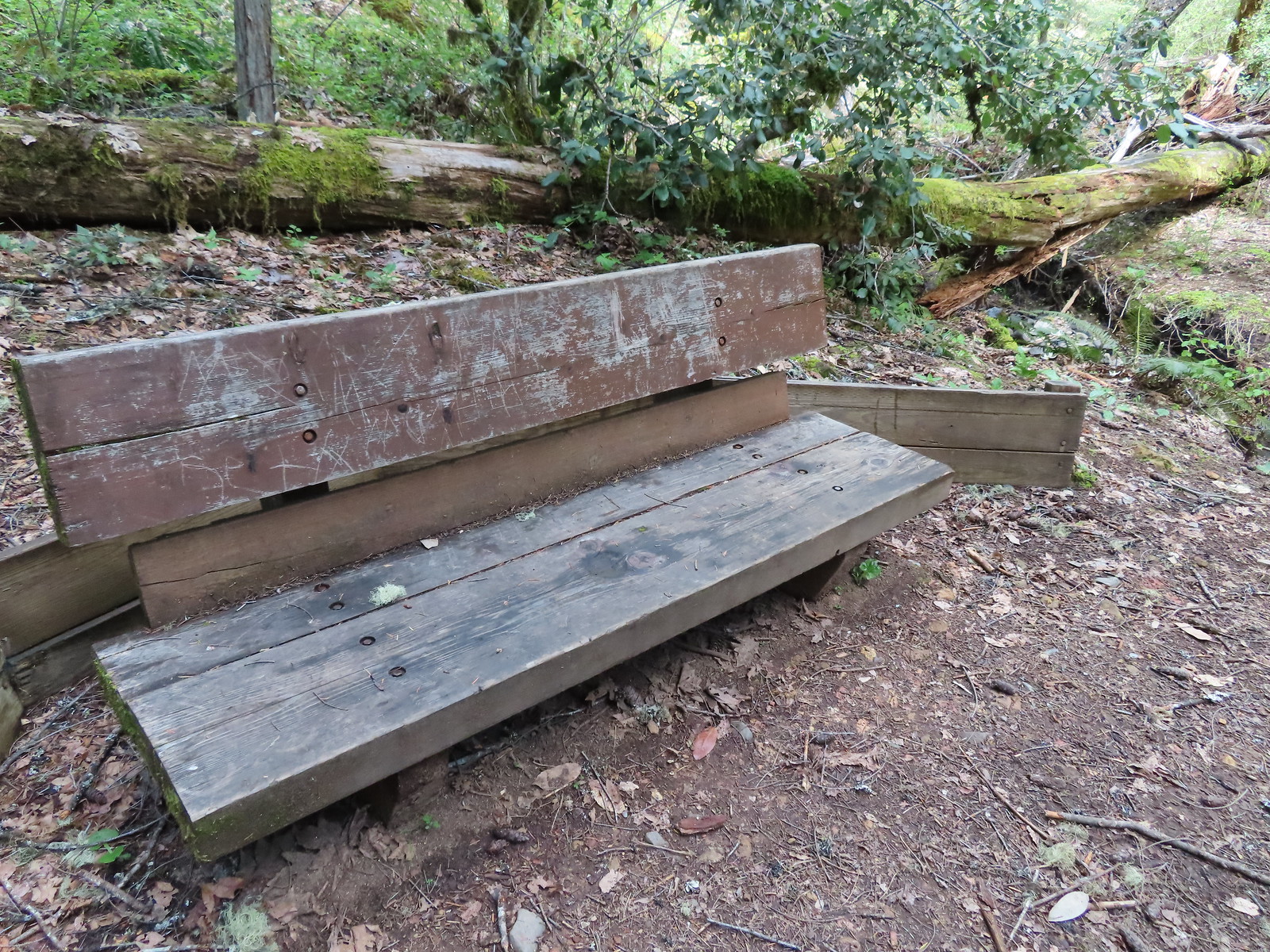 Bench where the trail turned to head back on the opposite side of the unnamed creek.
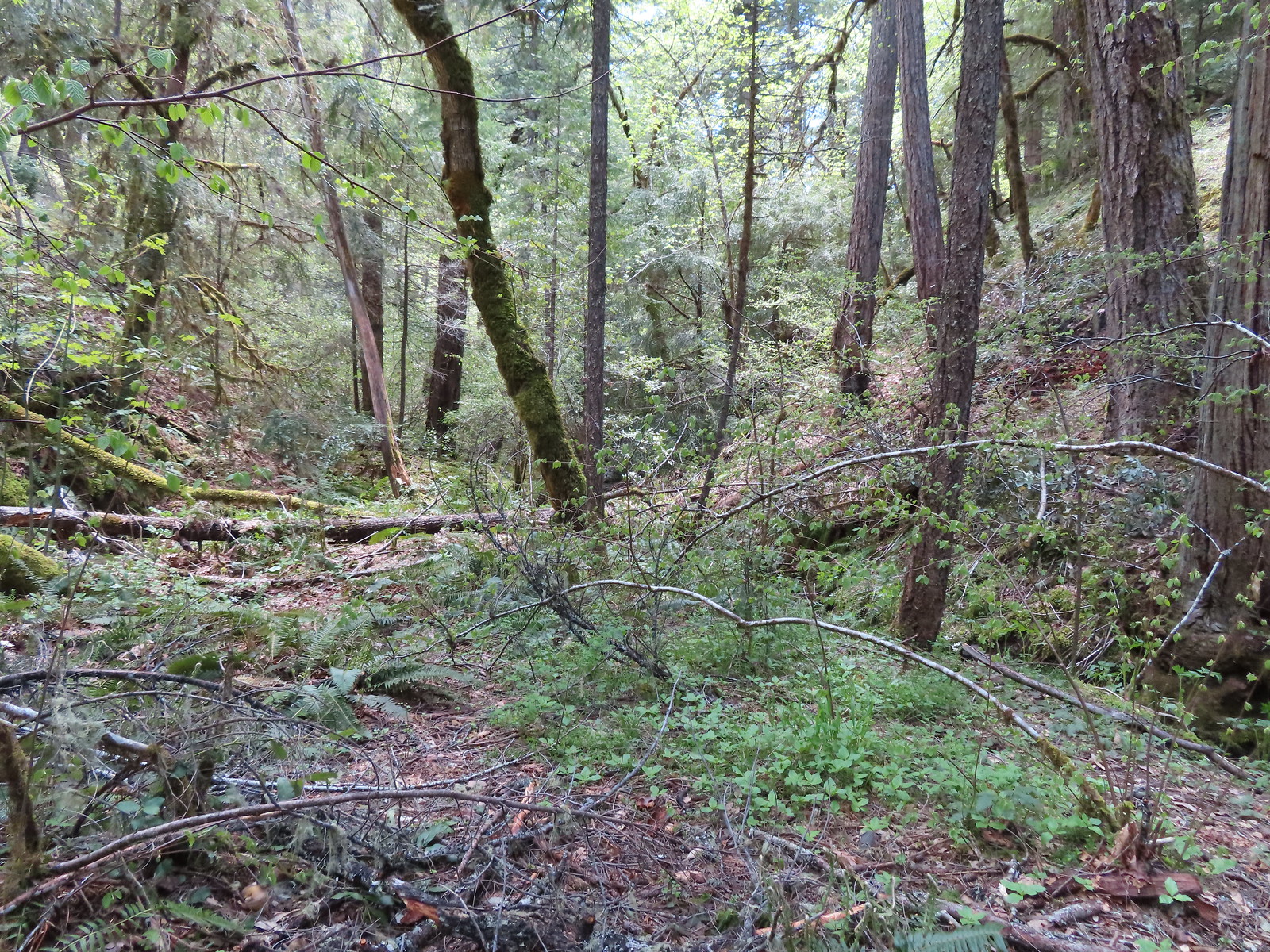 The view from the bench.
 Houndstongue
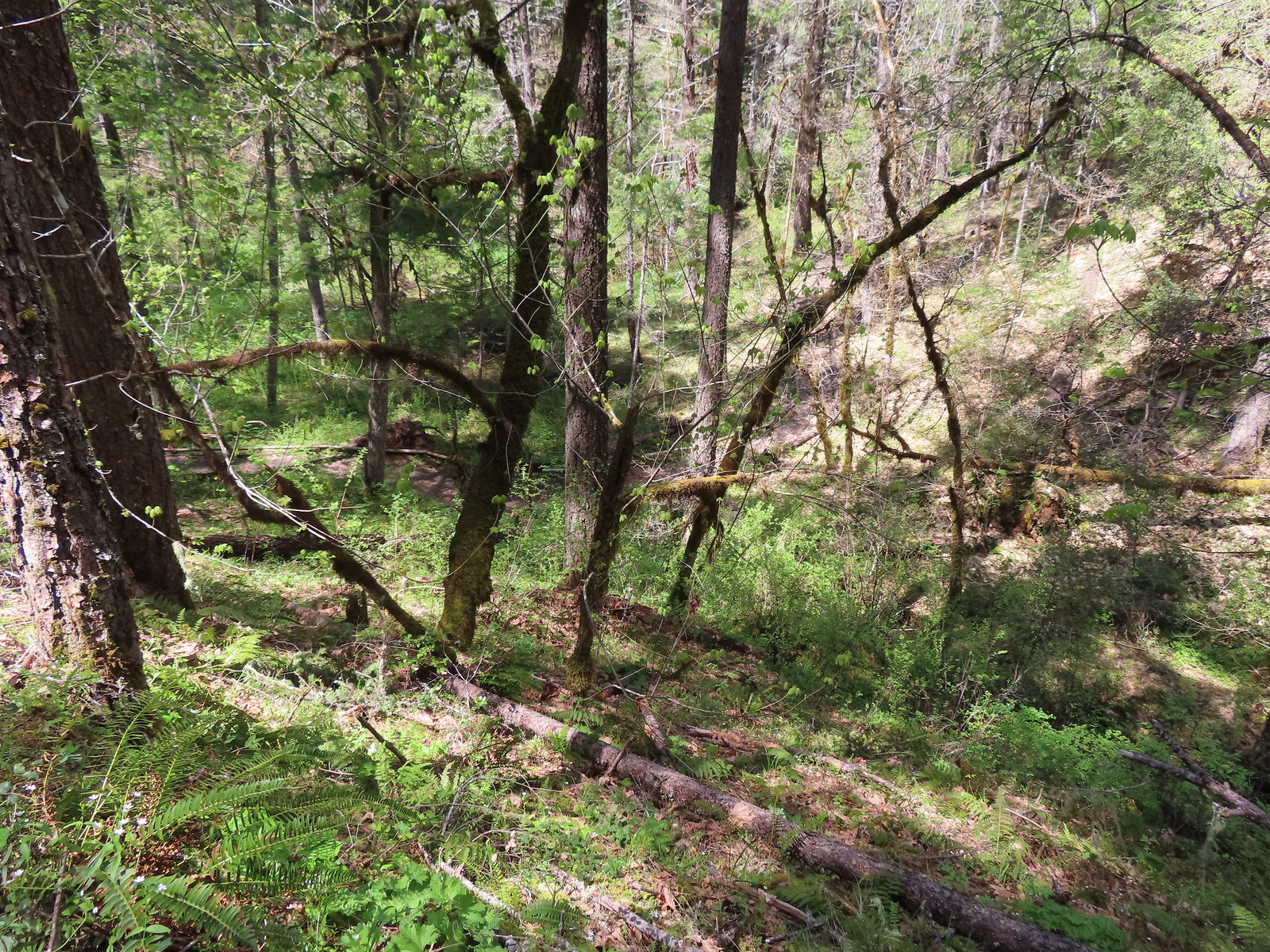 The barrier free trail below in the trees.
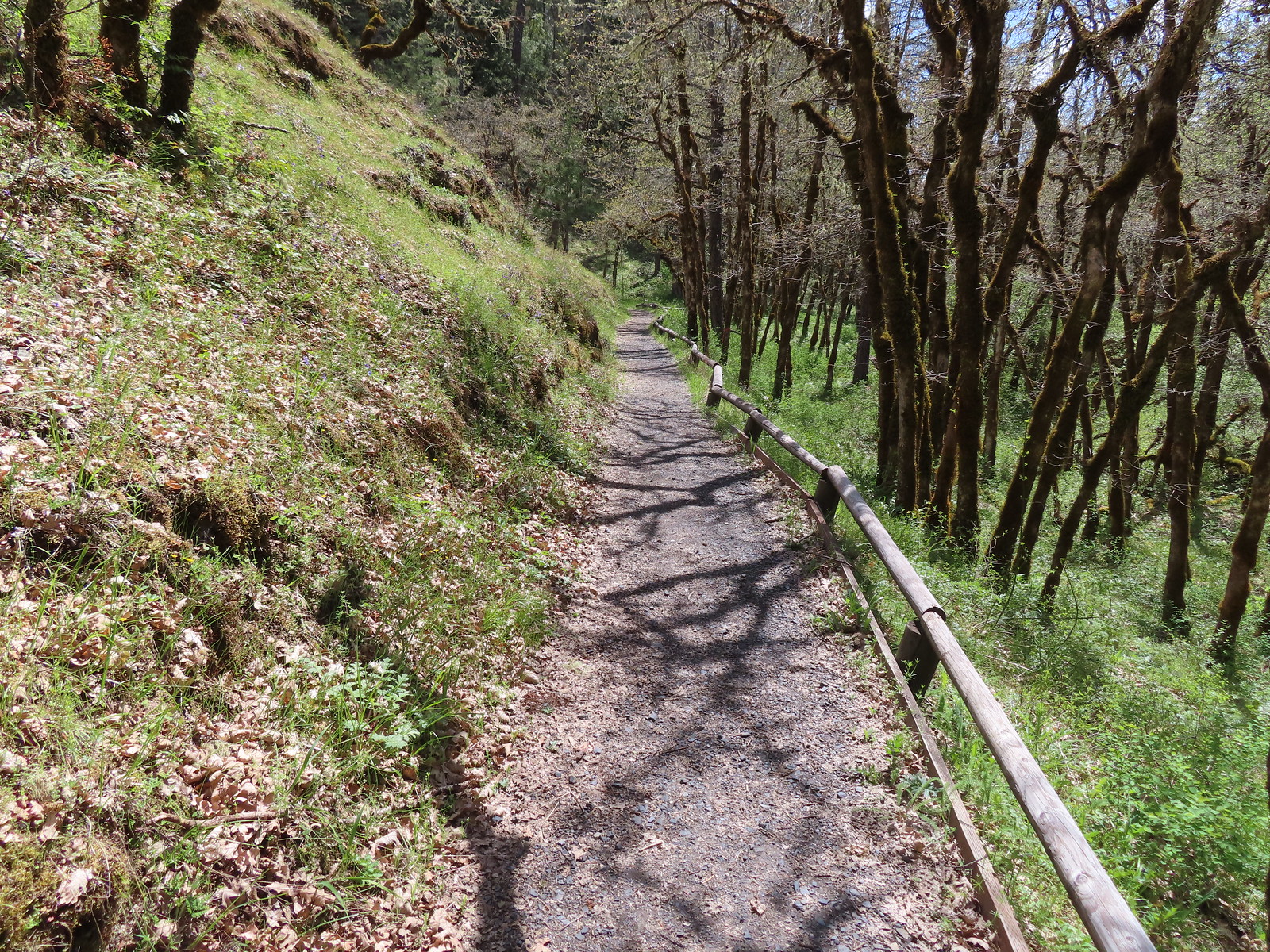 Back on the barrier free trail.
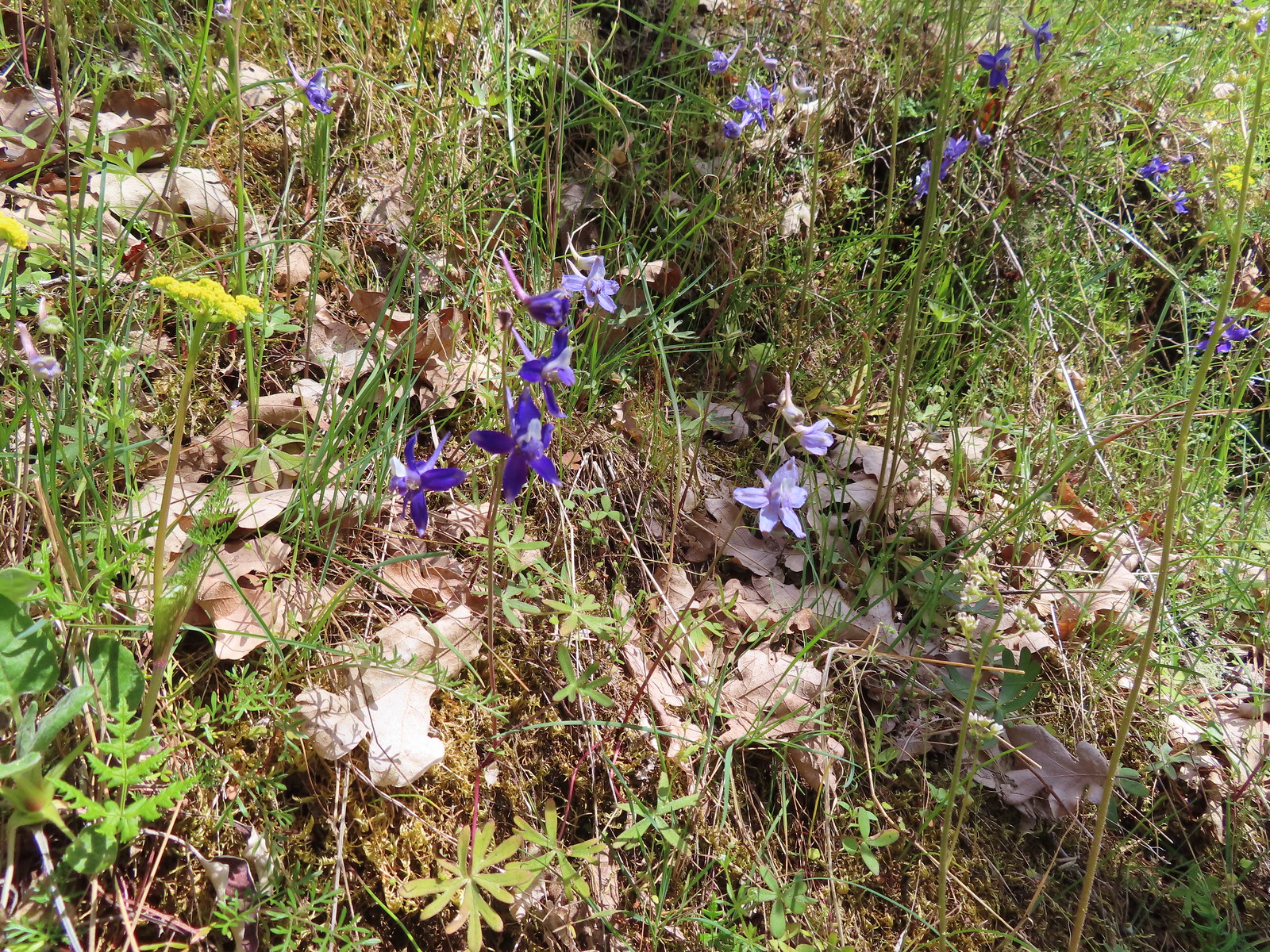 Biscuitroot and larkspur
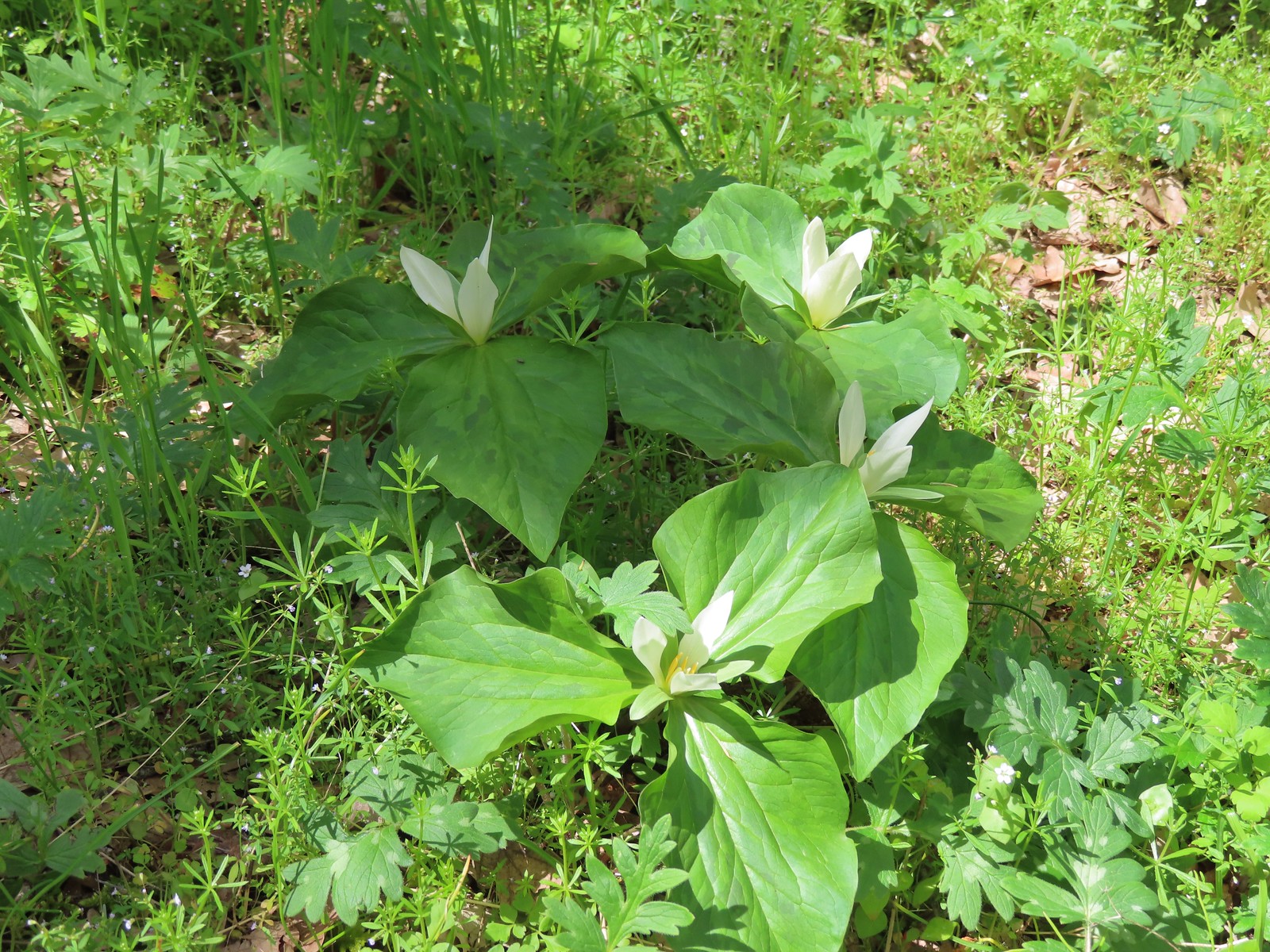 Giant white wakerobin
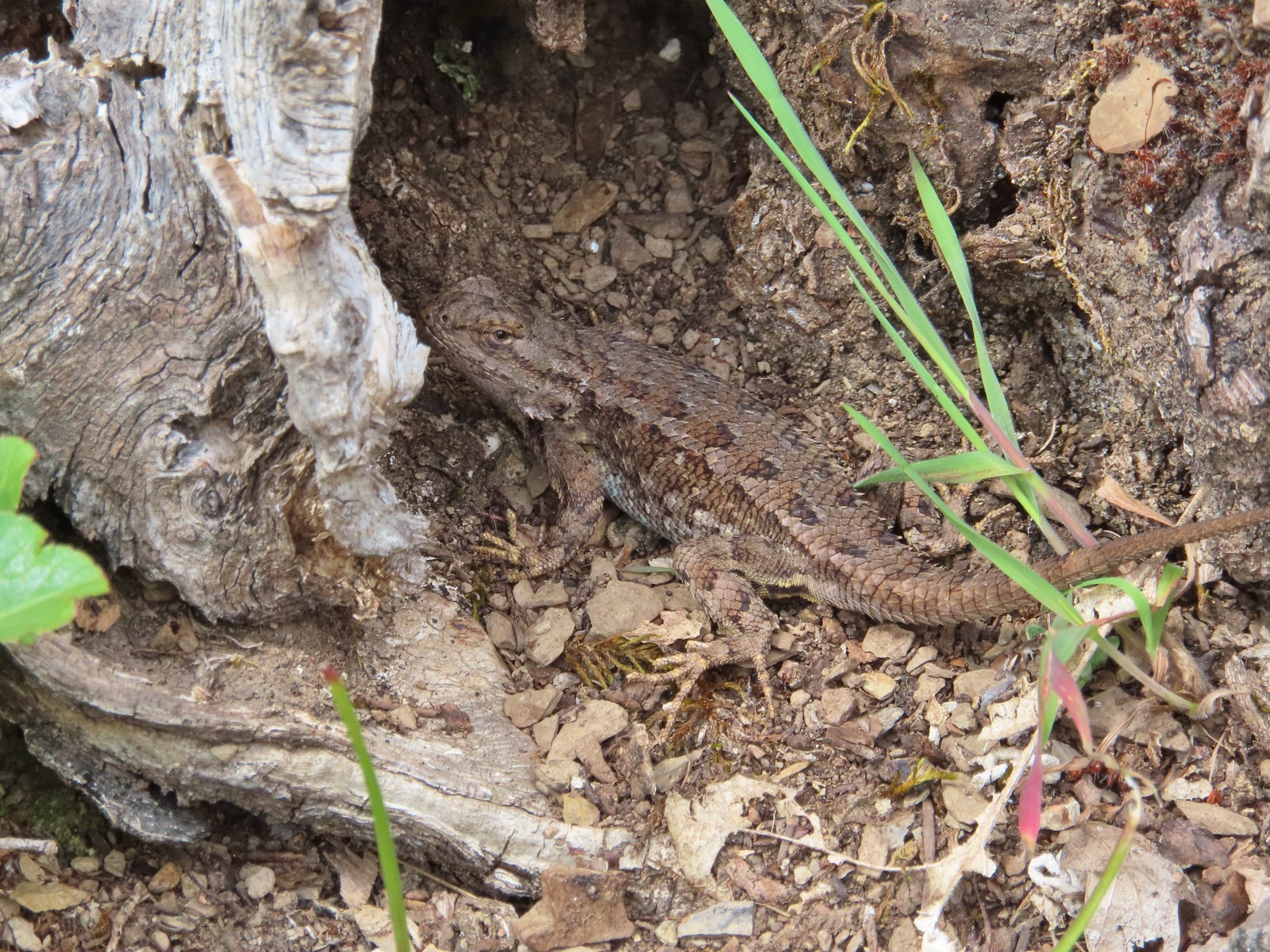
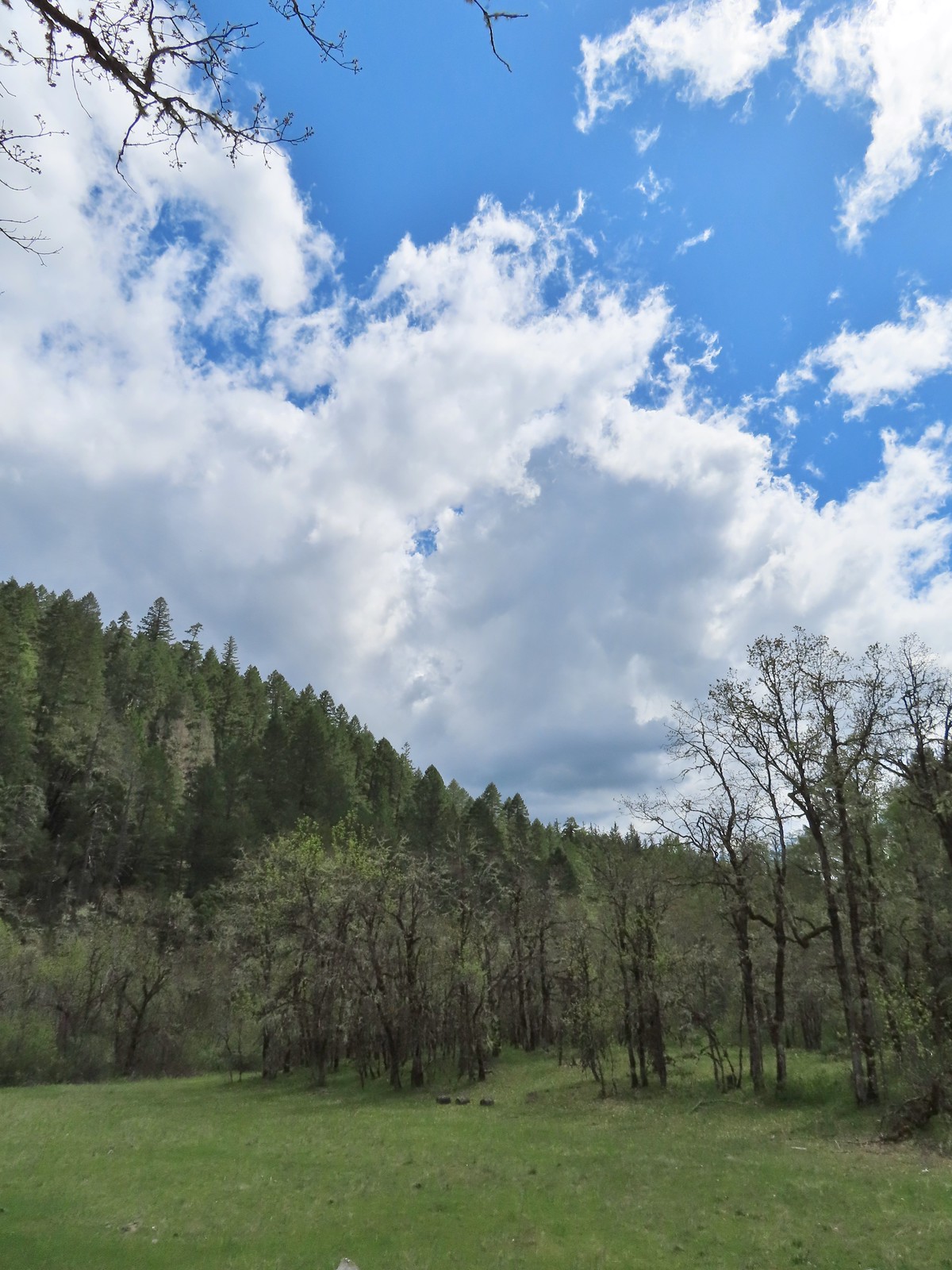 The Sun was starting to shine a bit as we passed back by the meadow which brought out some butterflies and lots of lizards.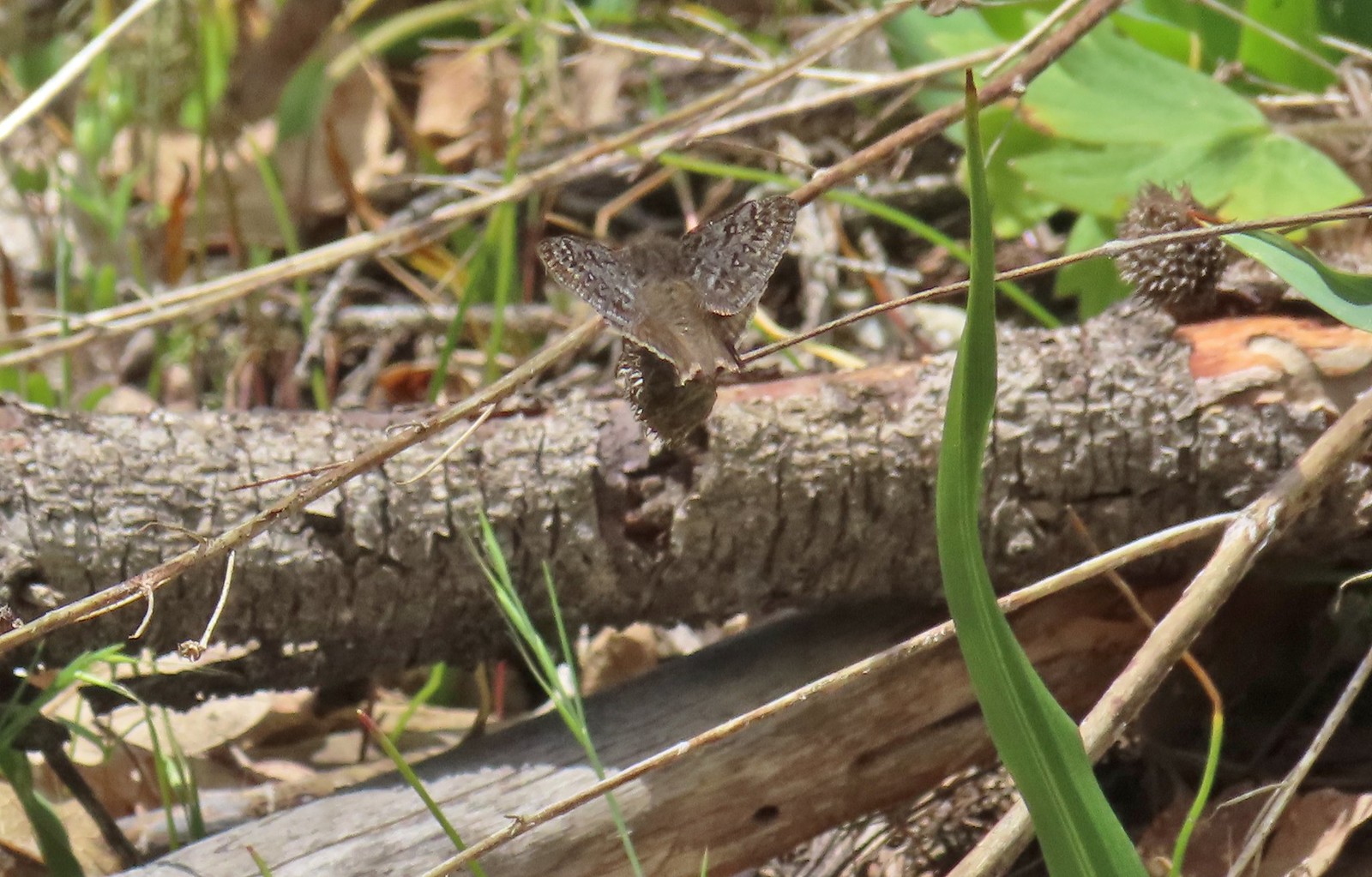


 Red larkspur with blue dicks in the background.
 Lupine
 Red larkspur, madia, blue dicks, and tomcat clover along the trail.
 Blue dicks
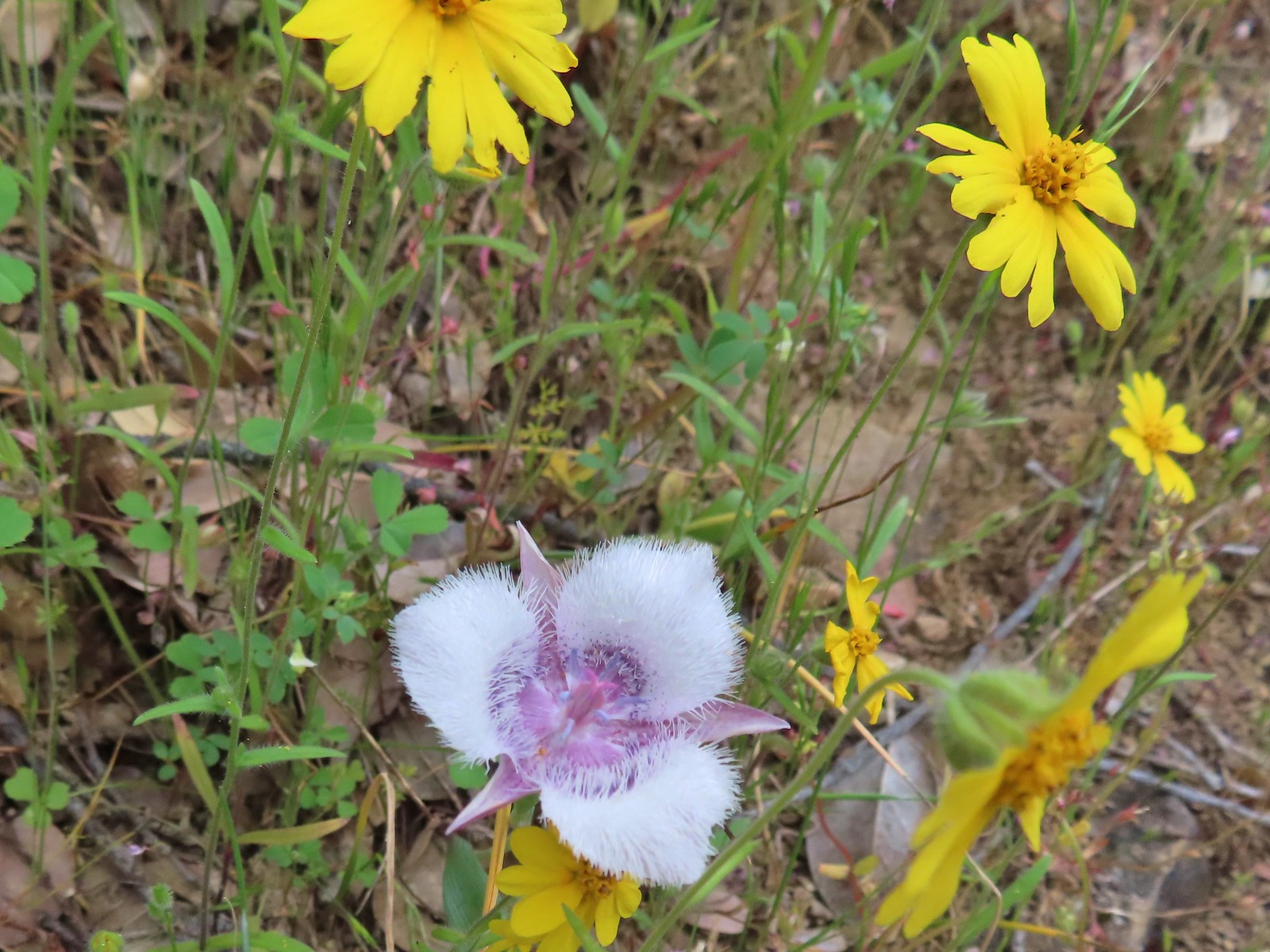 Tolmie’s mariposa lily and some madia.
 Larkspur and a red larkspur
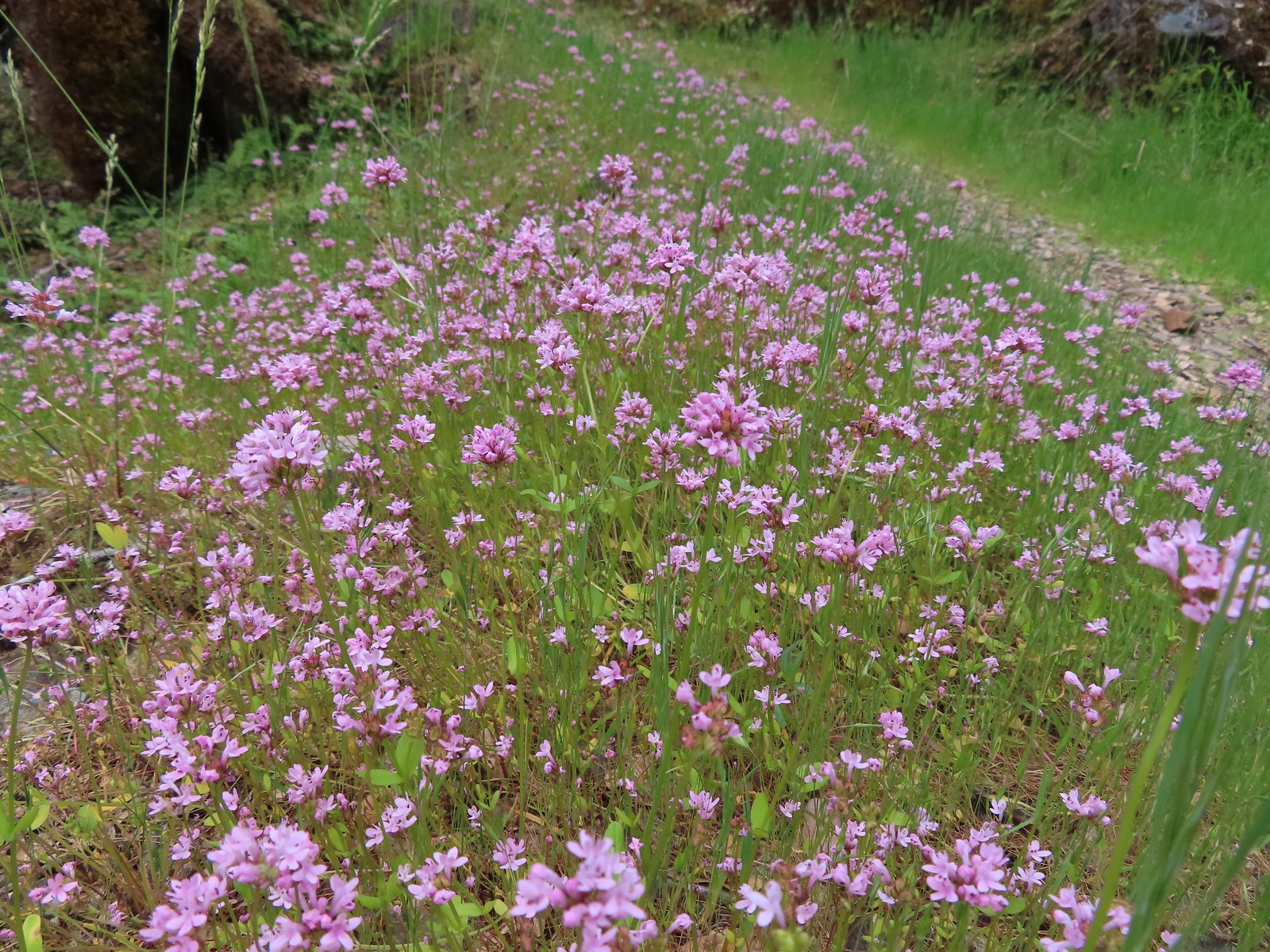 Plectritis
 Monkeyflower
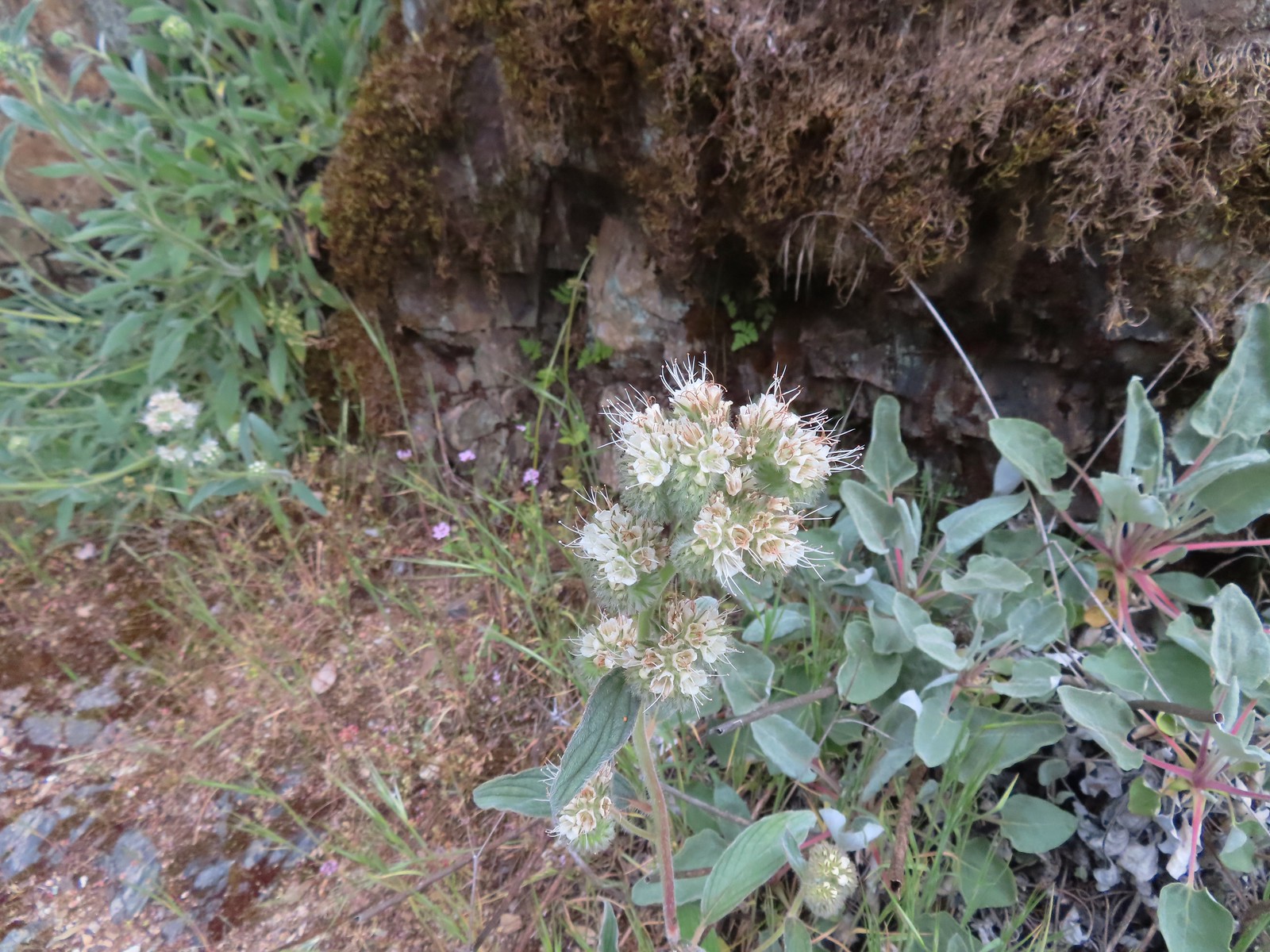 Serpentine phacelia
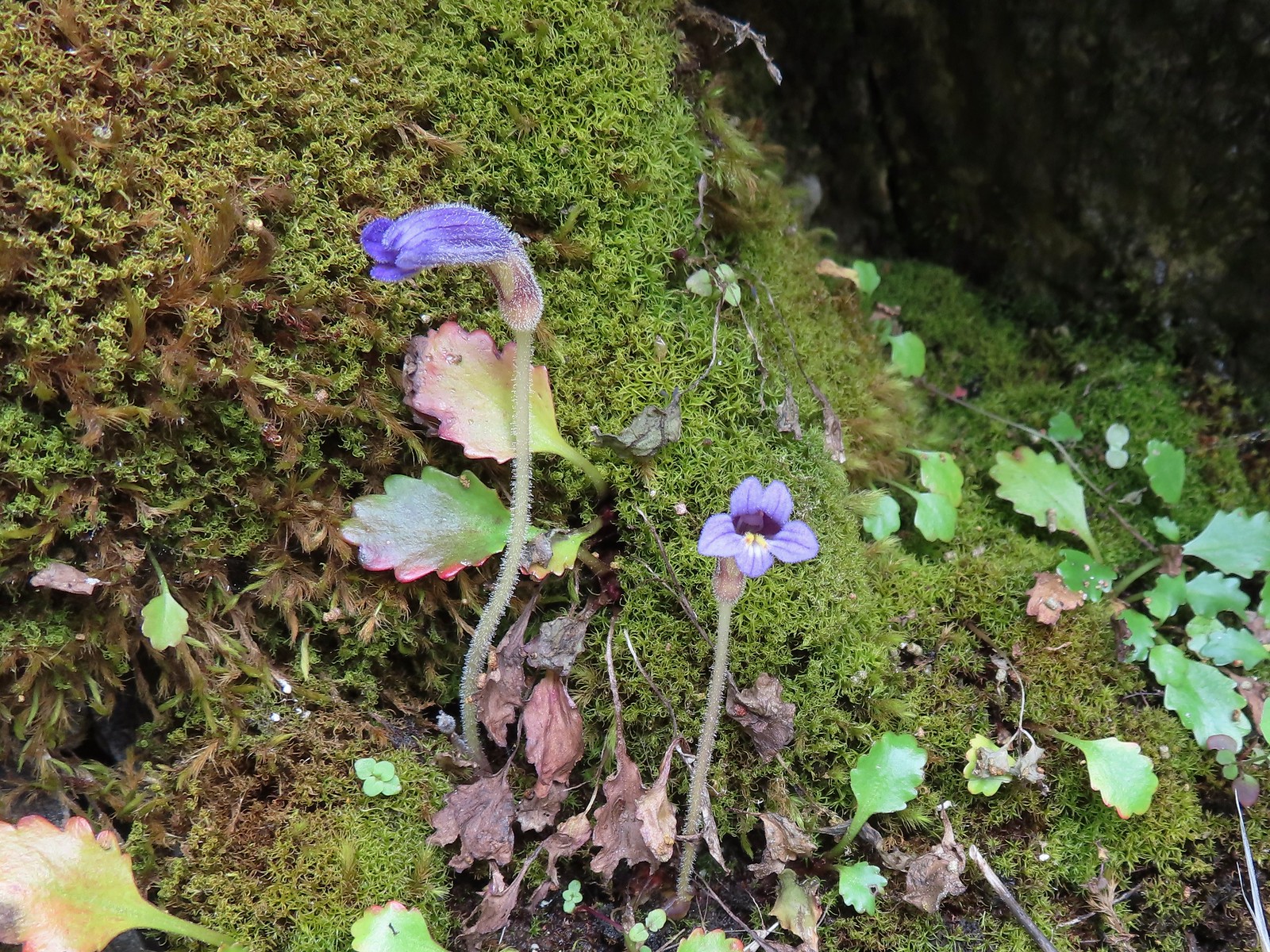 Naked broomrape
 Camas with monkeyflower and plectritis
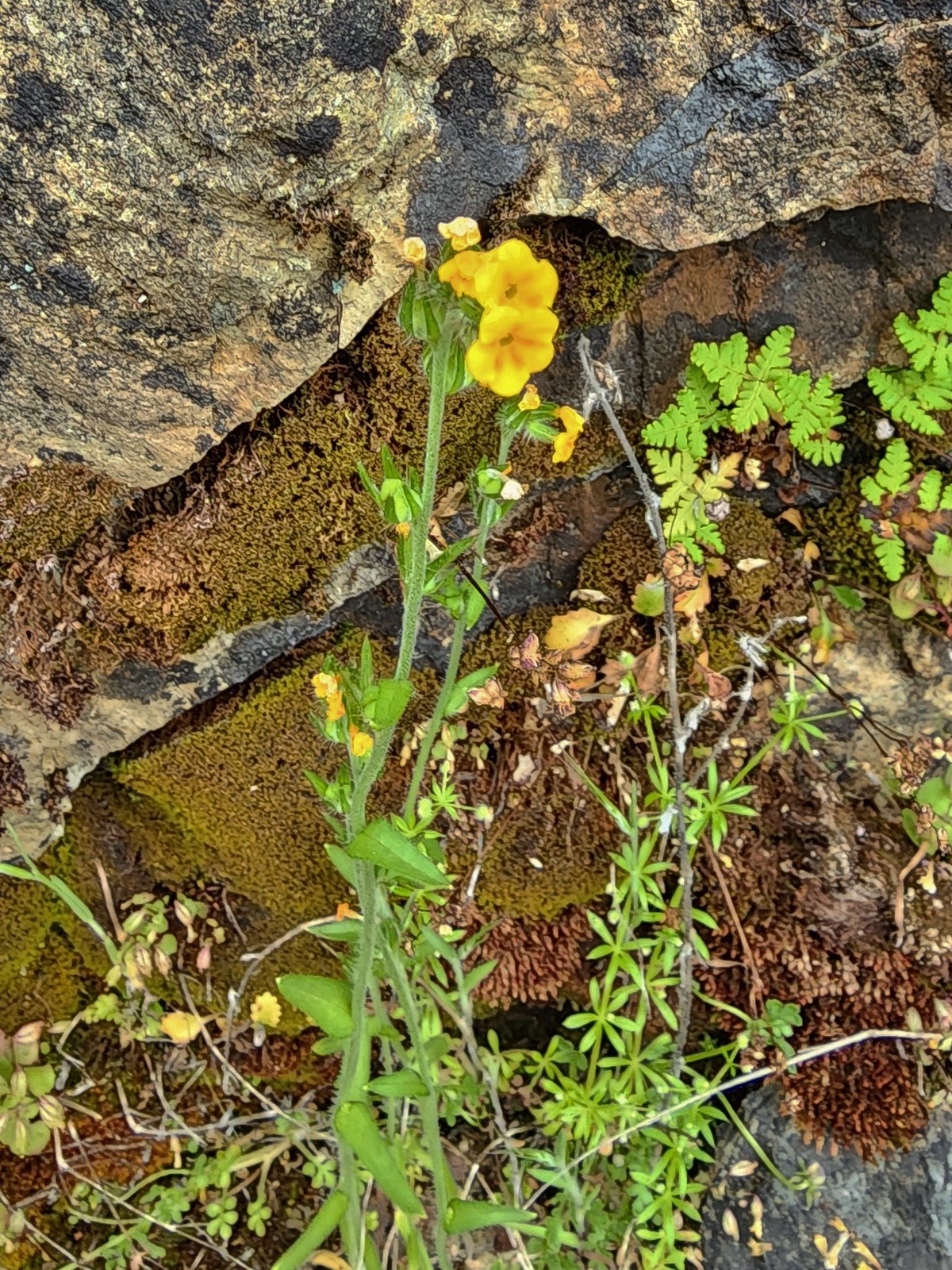 Fiddleneck
 Saxifrage
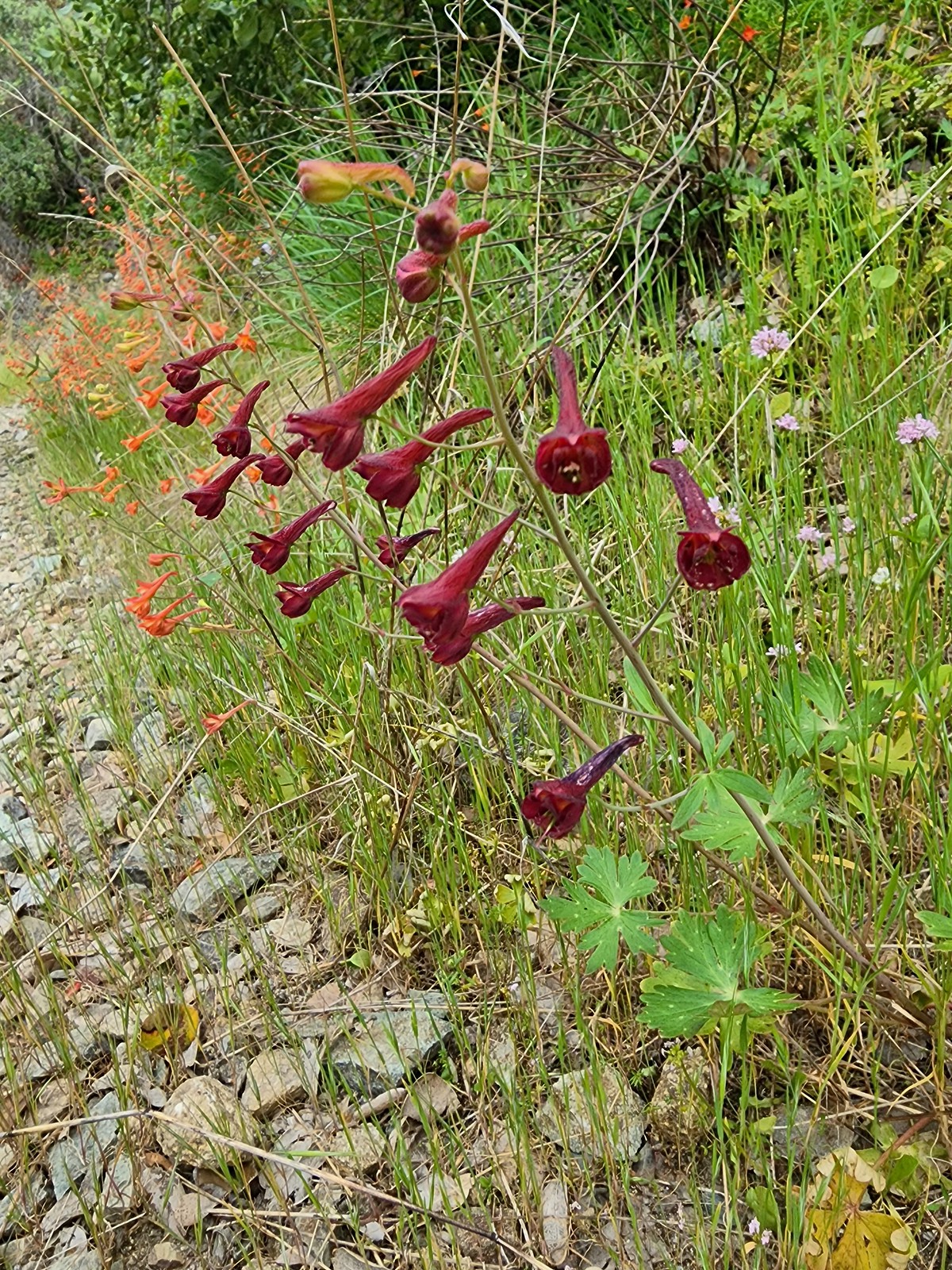 A darker red larkspur
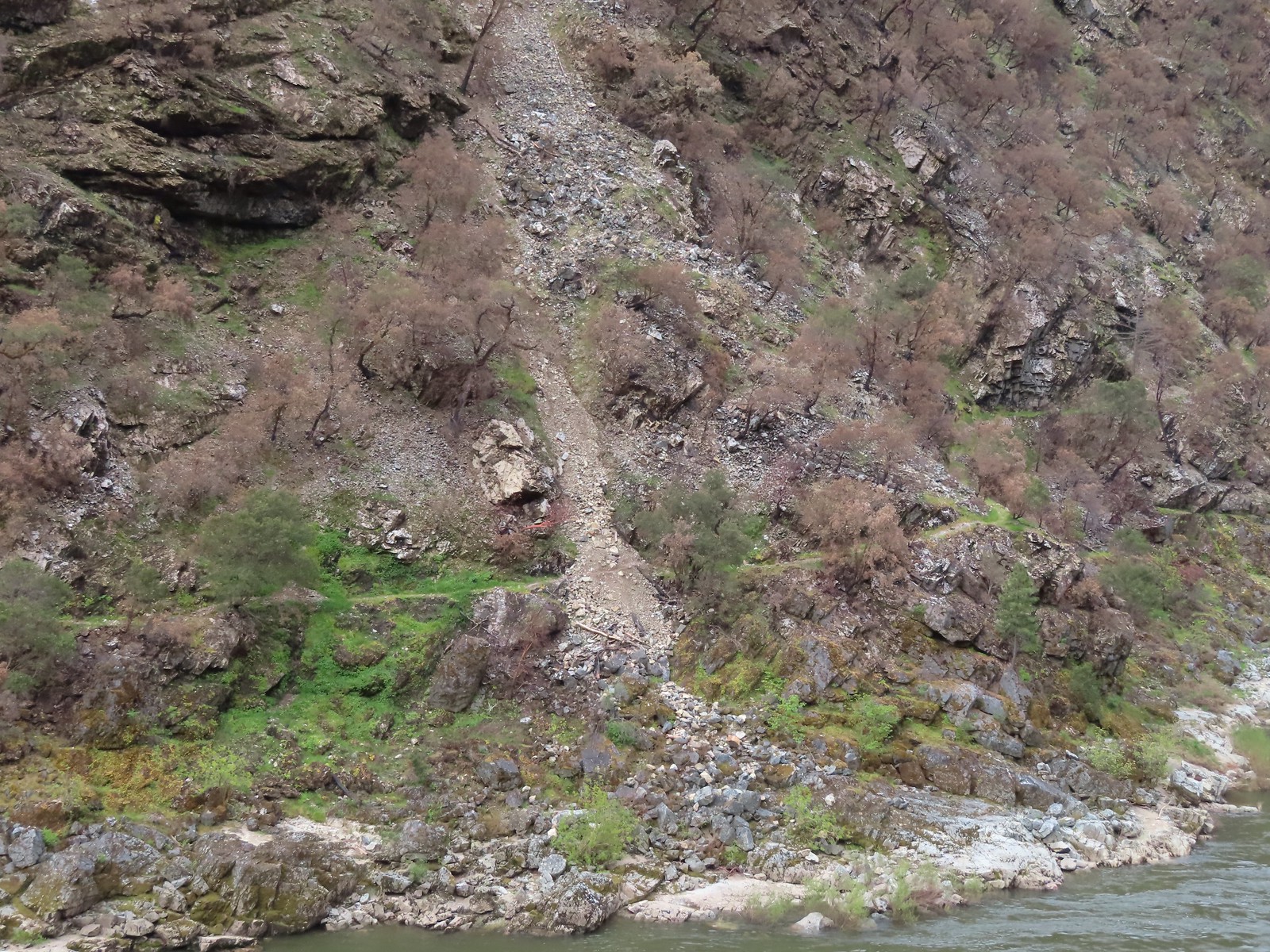 Some of the damage to the trail to Rainie Falls on the opposite side of the river.
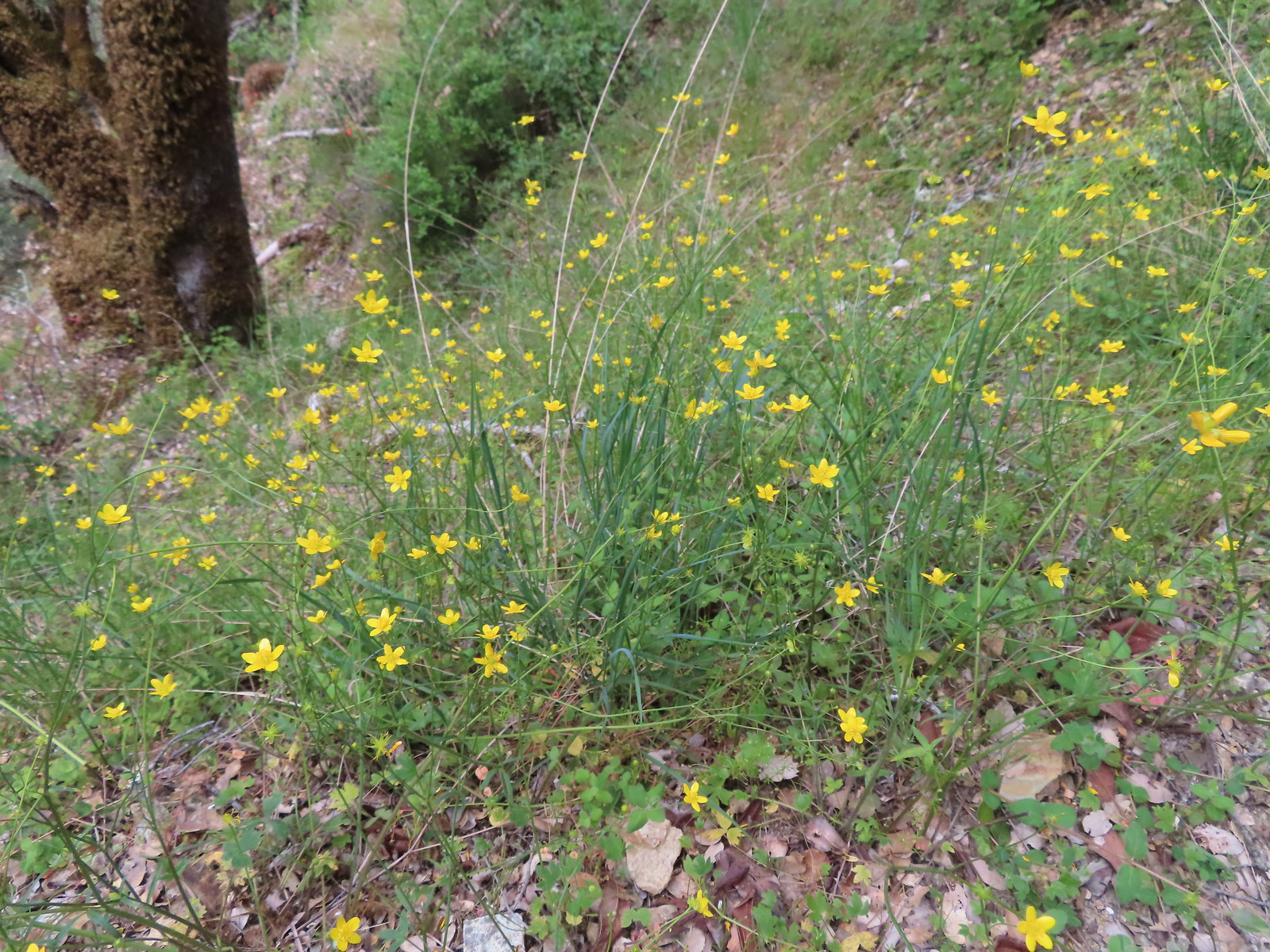 Buttercups
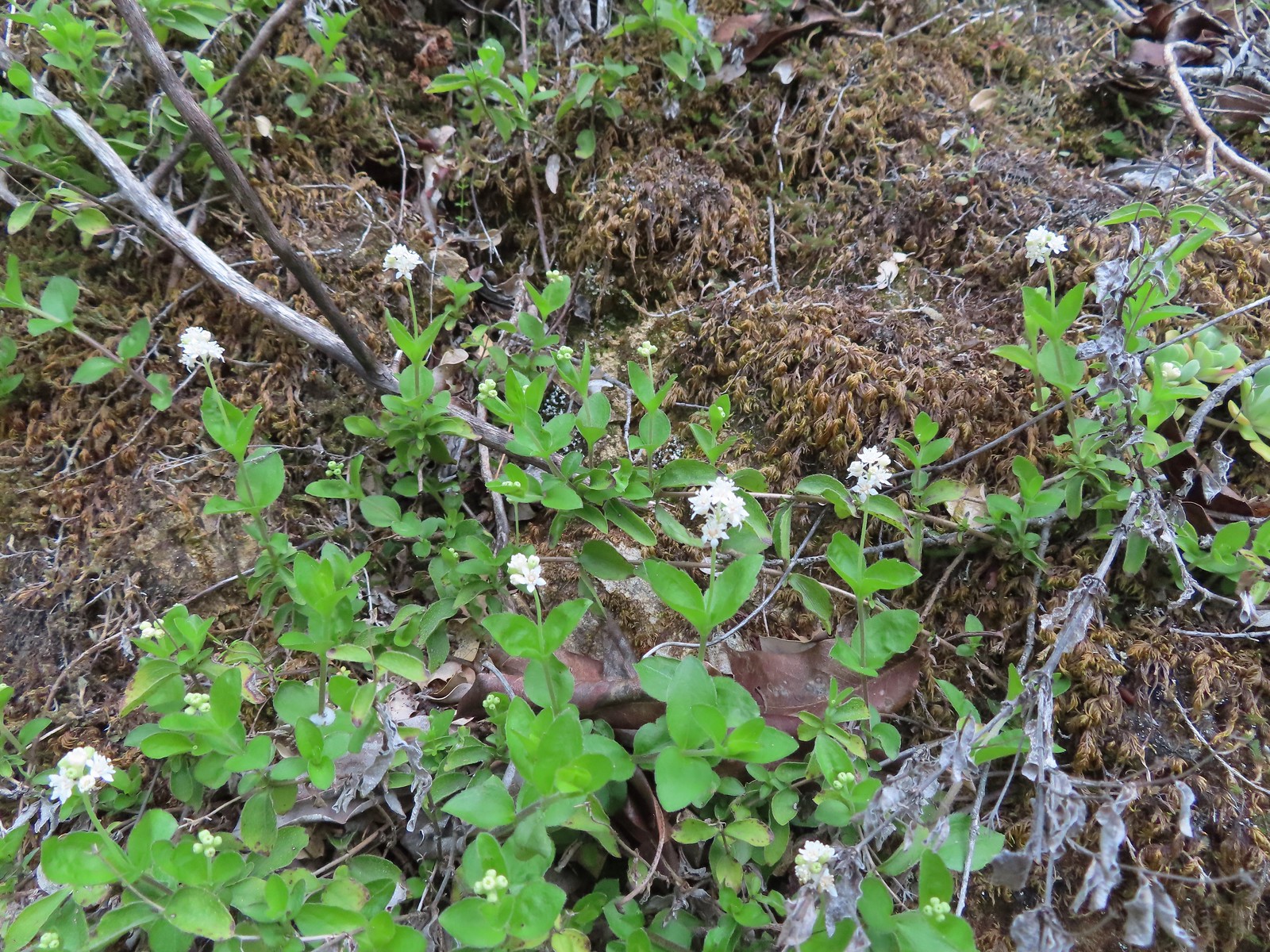 Common whipplea
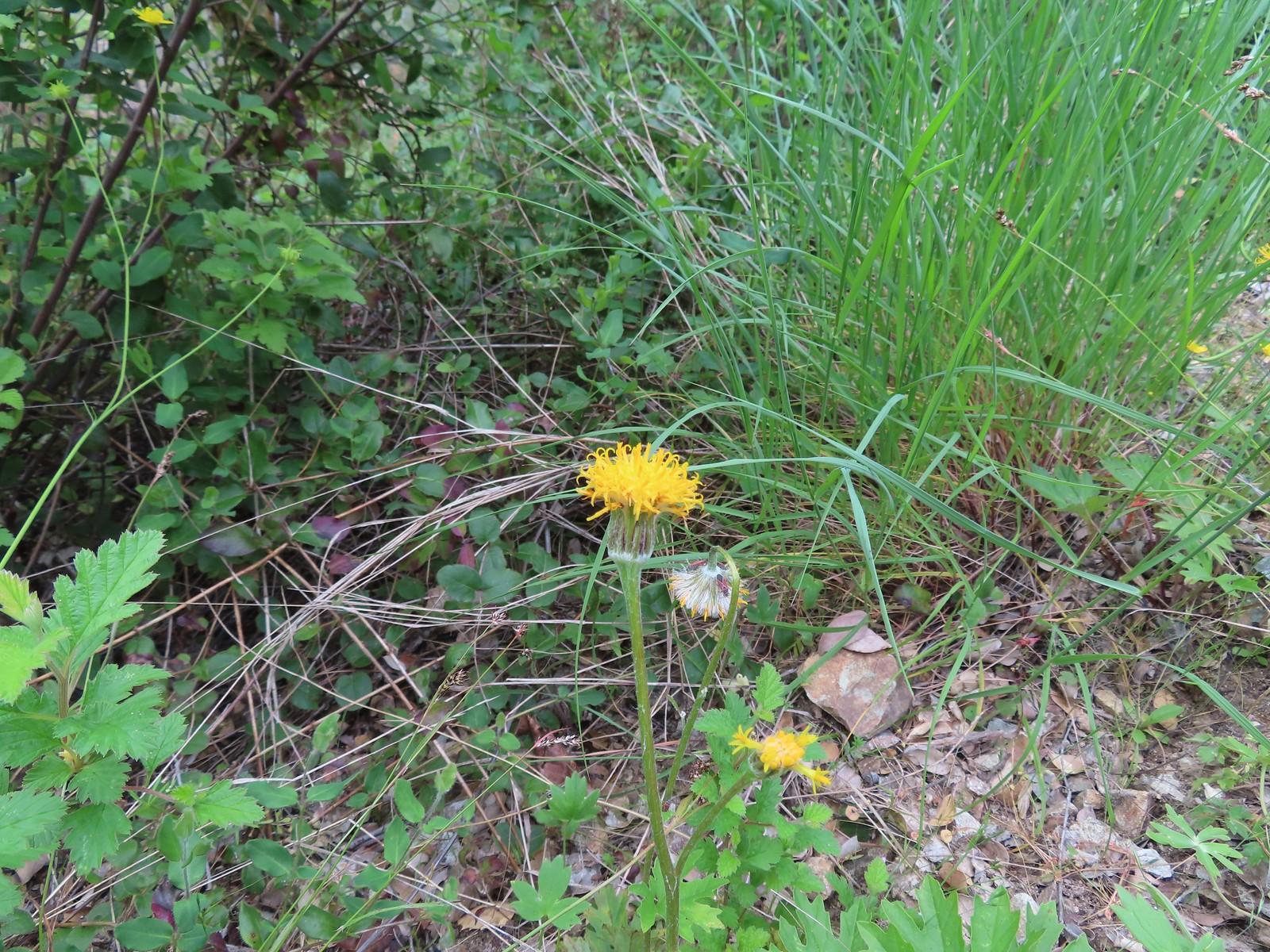 Silver crown
 The wet rock here was sneaky slick.
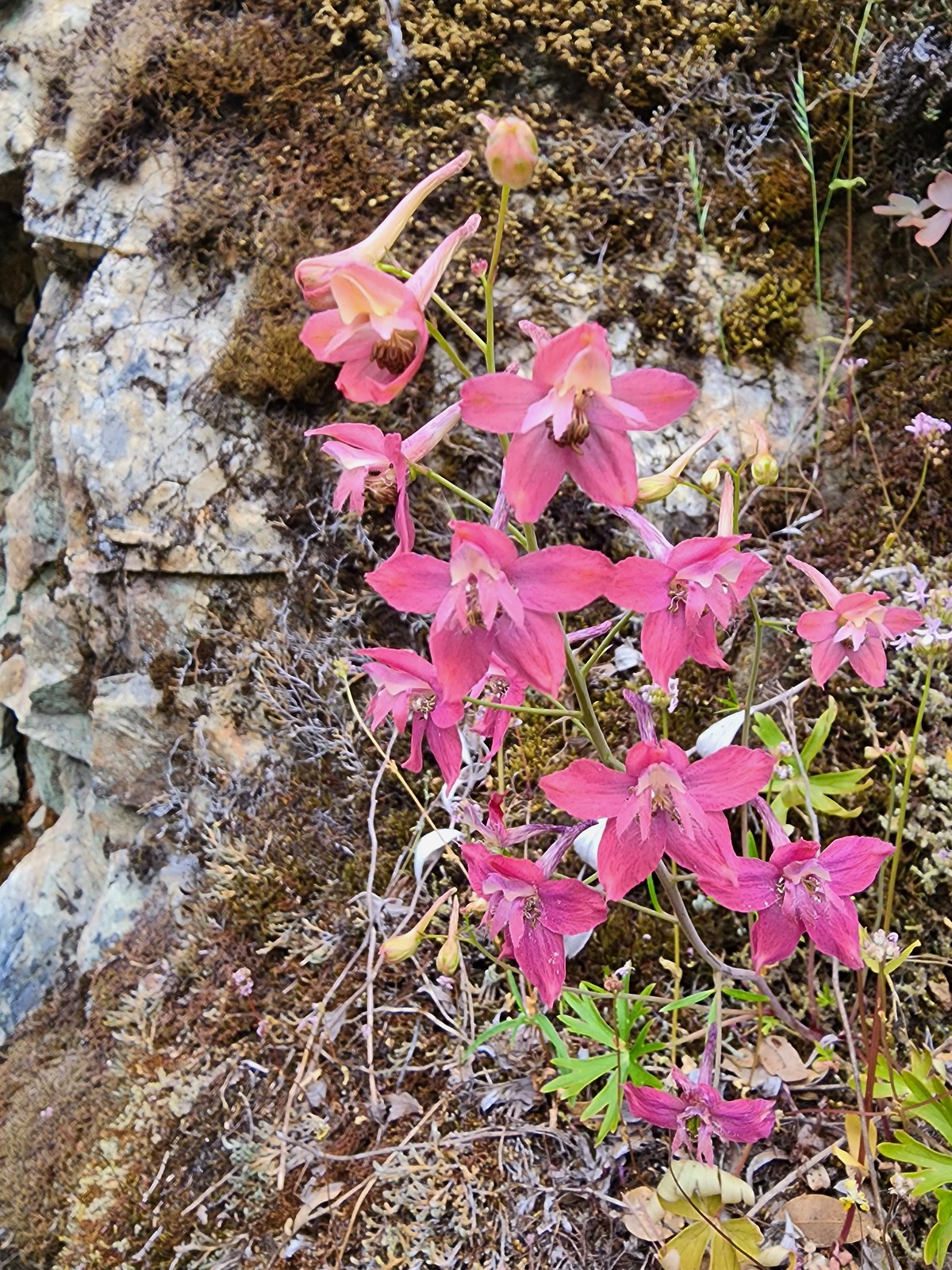 We spotted a couple of pink larkspur.
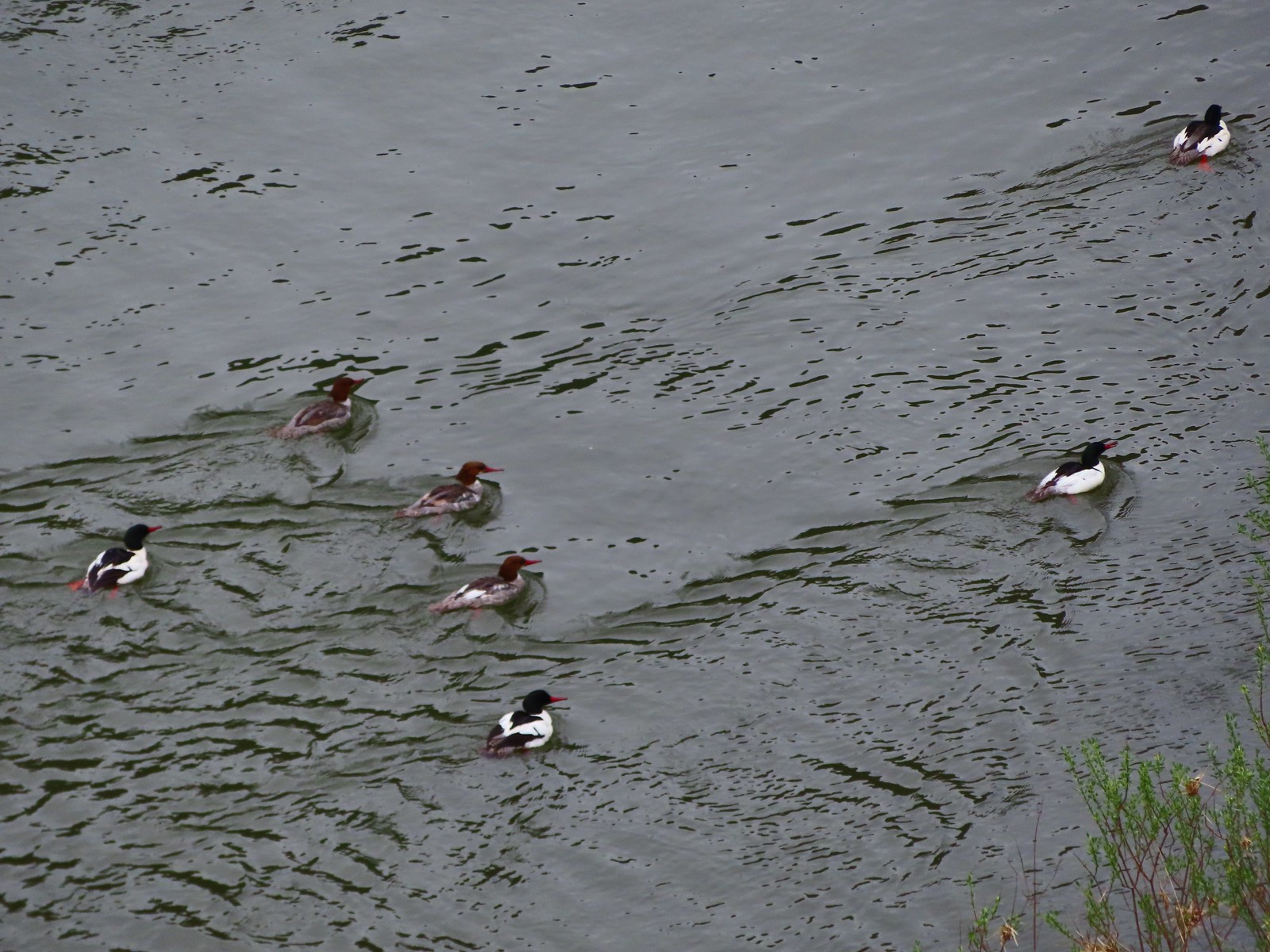 Common mergansers
 Common cryptantha
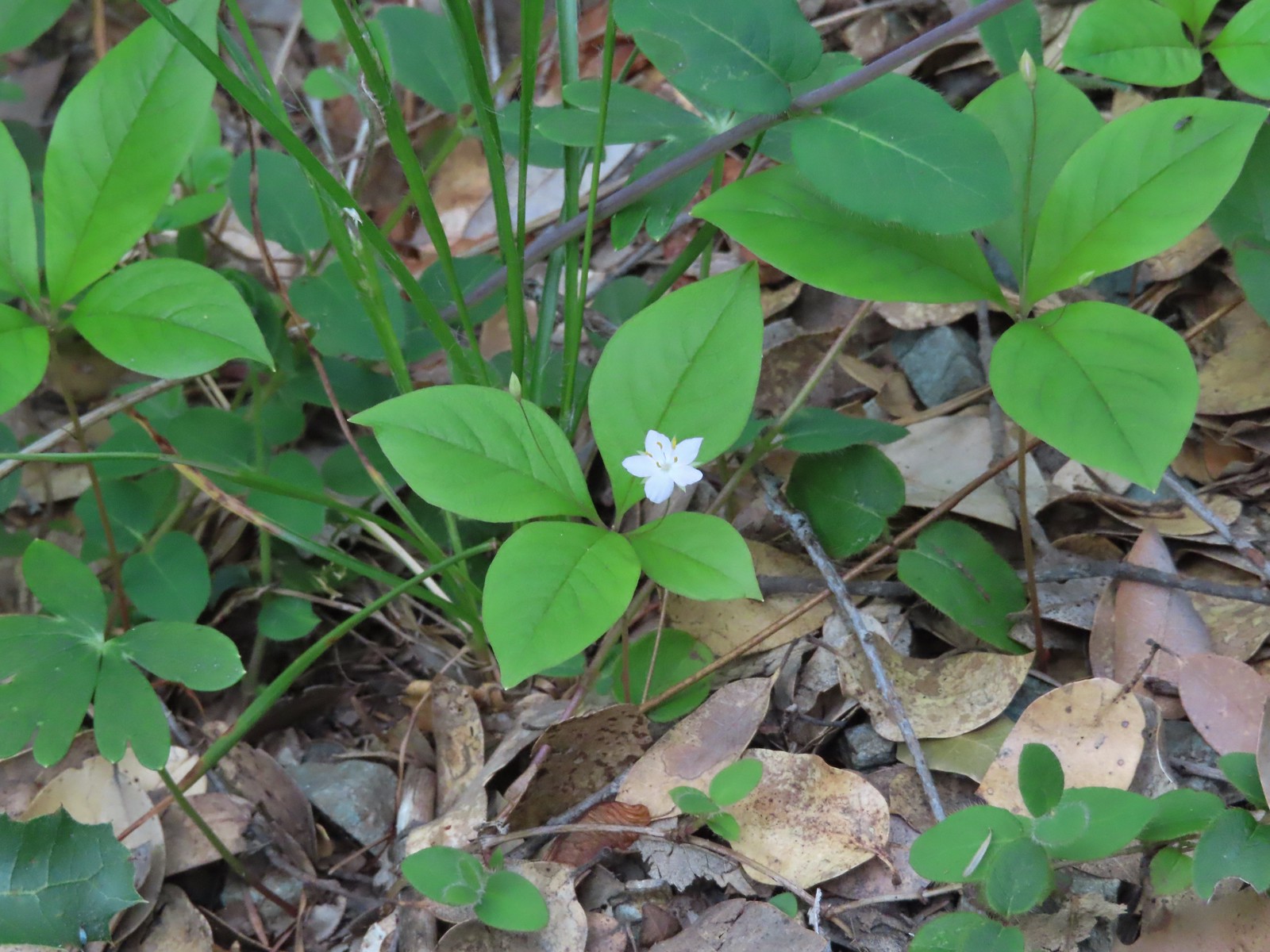 Starflower
 Paintbrush
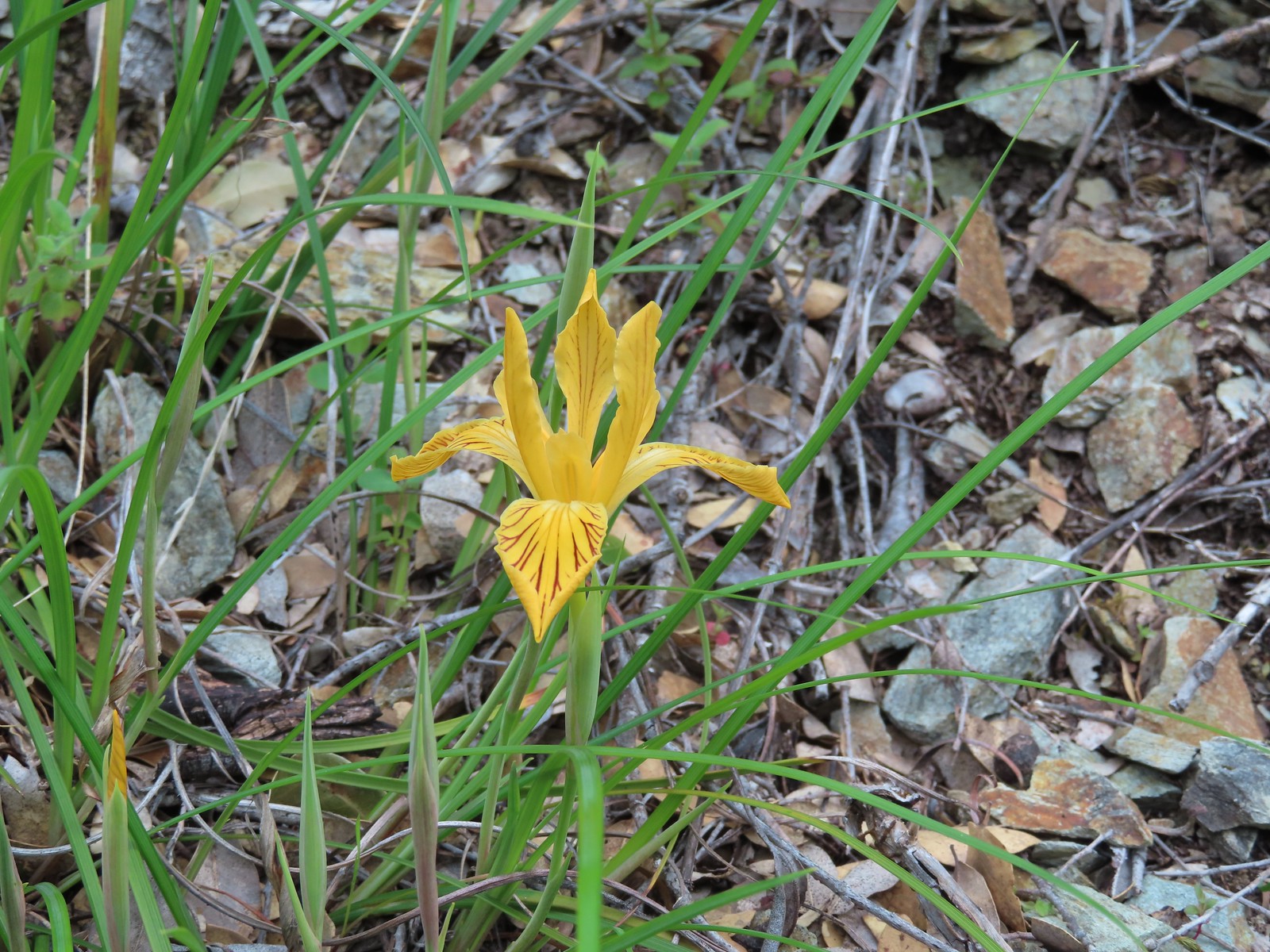 Del Norte iris
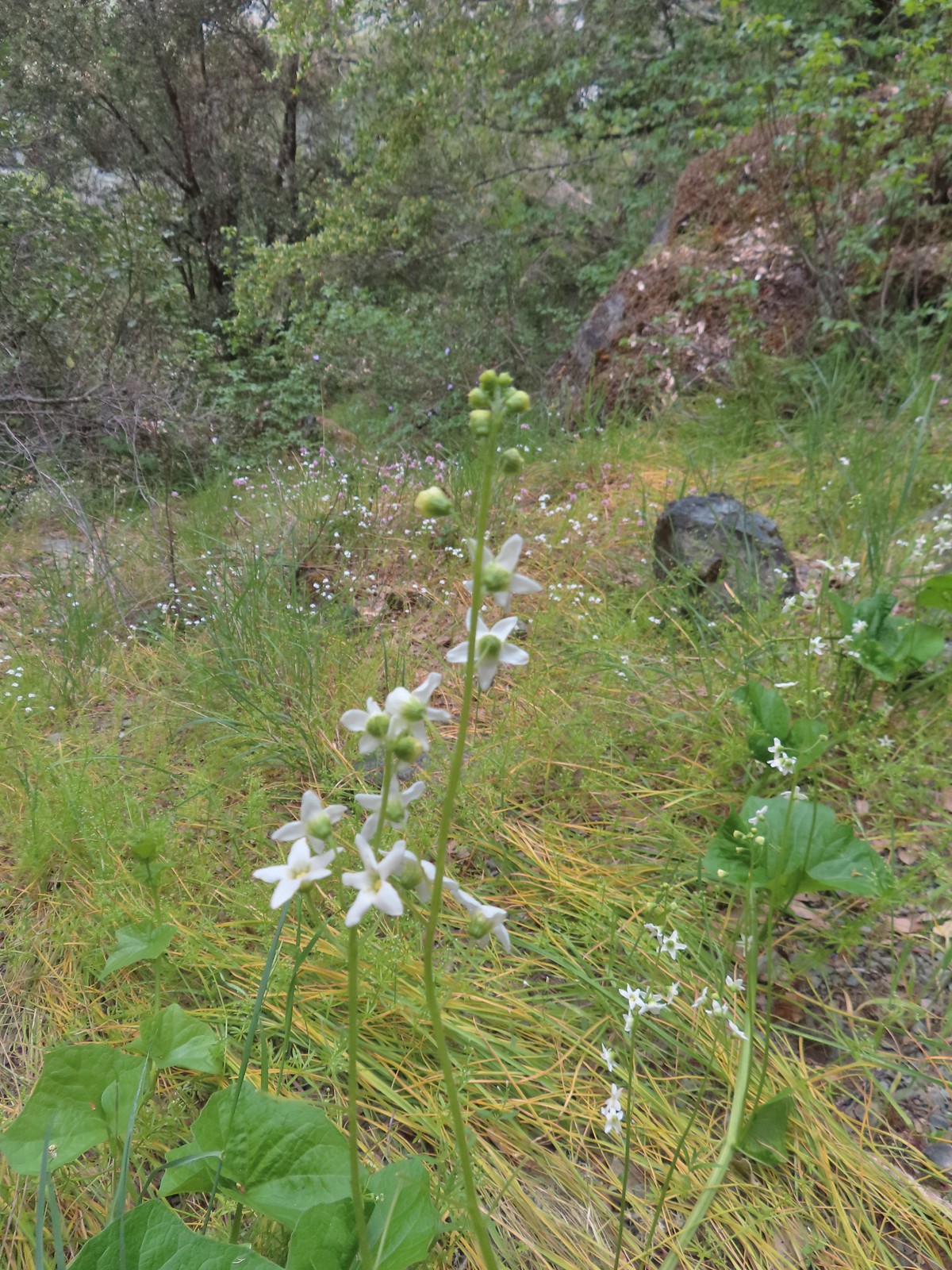 Coastal manroot
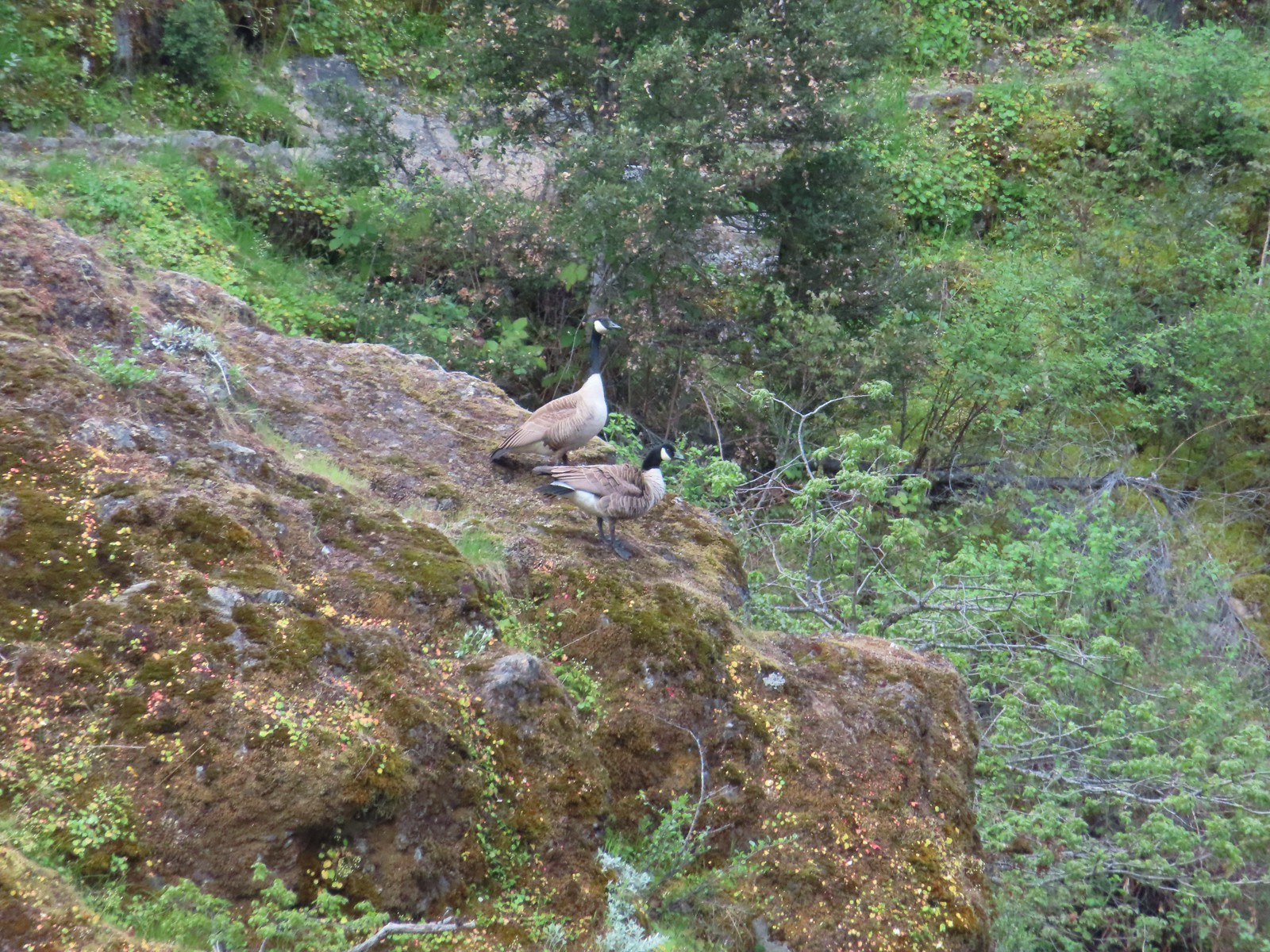 Canada geese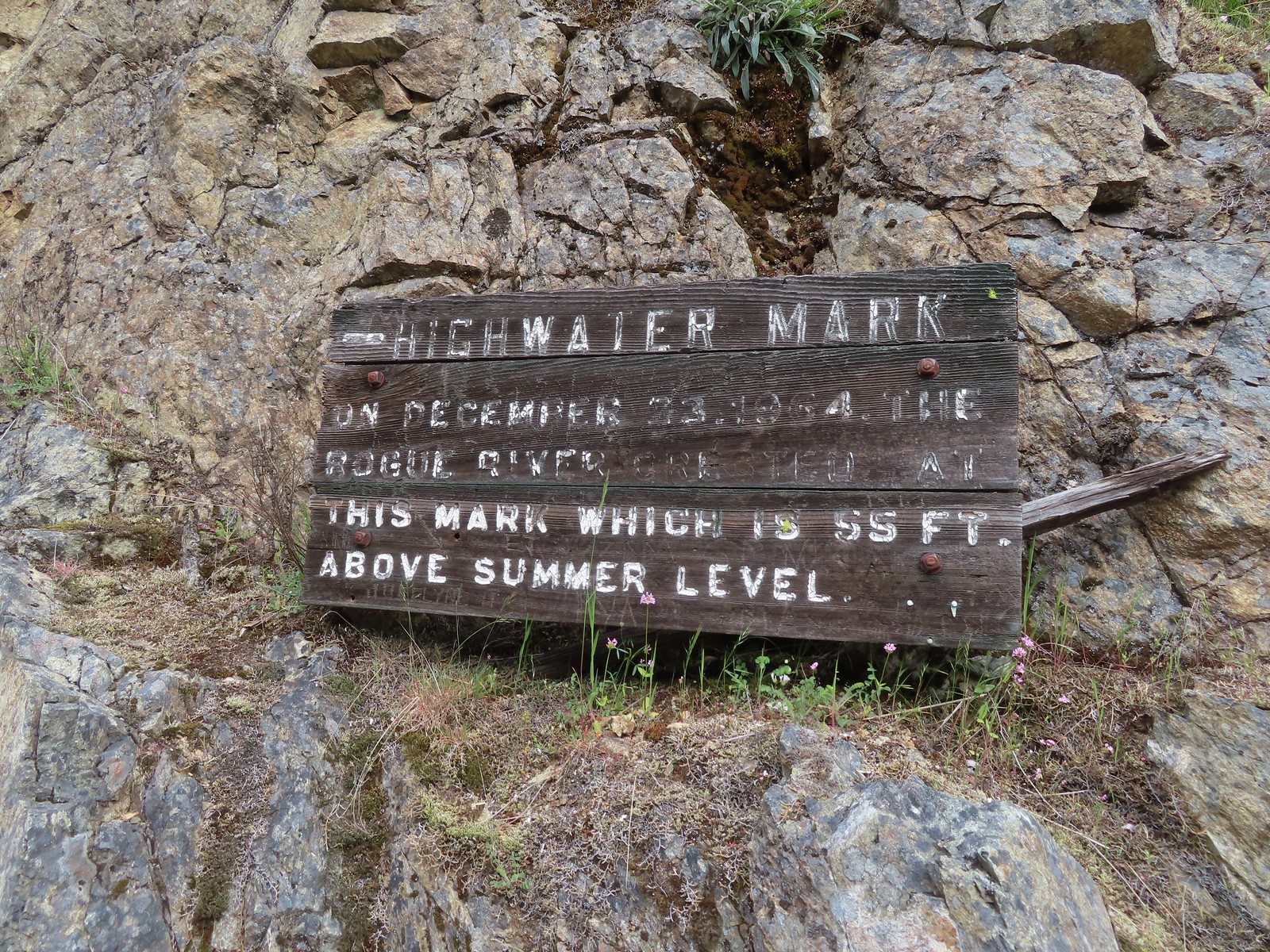
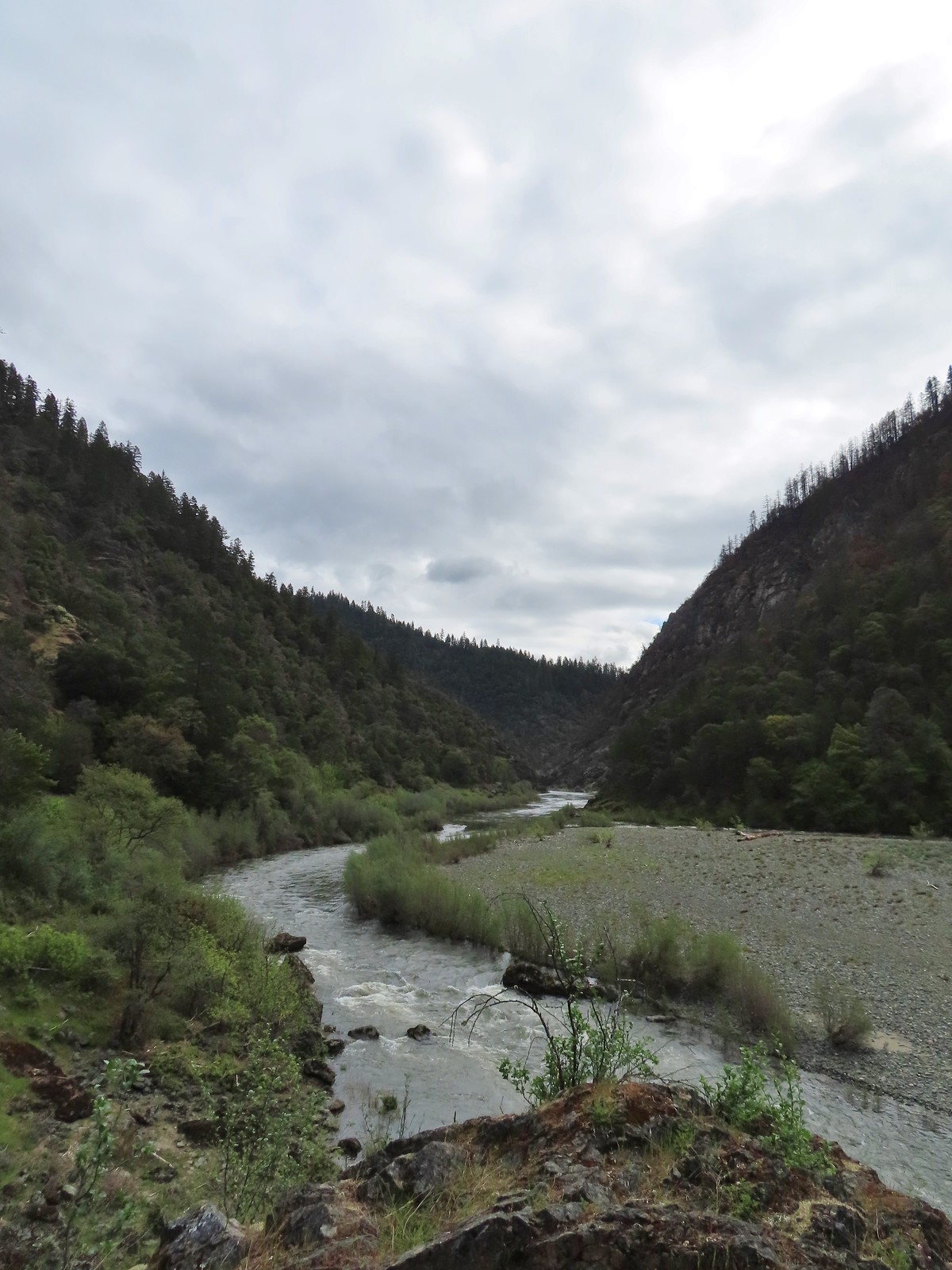 Looking back upriver from the high water sign.
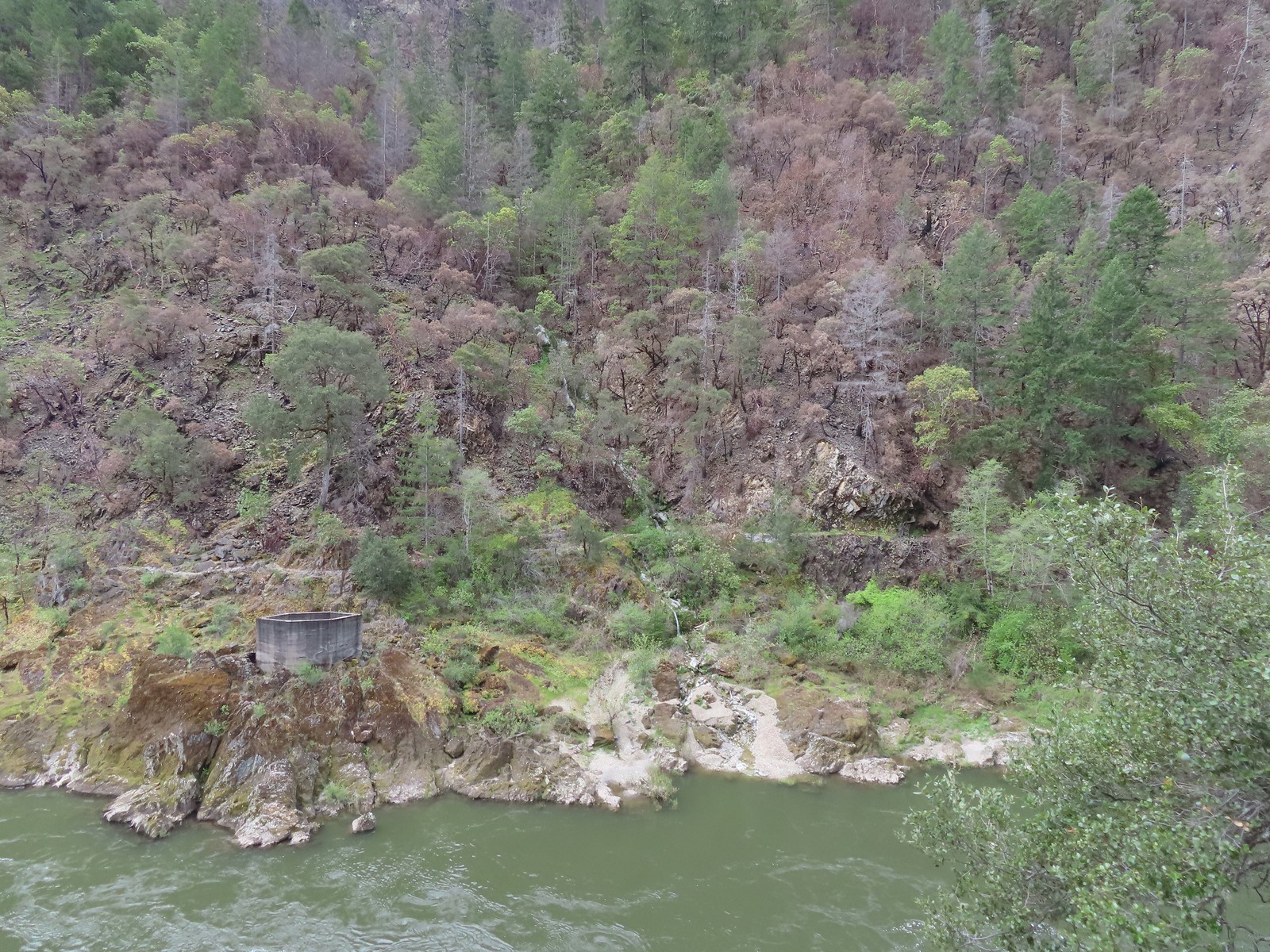 Sanderson Bridge site
 Golden-crowned sparrow
 Scarlet fritillary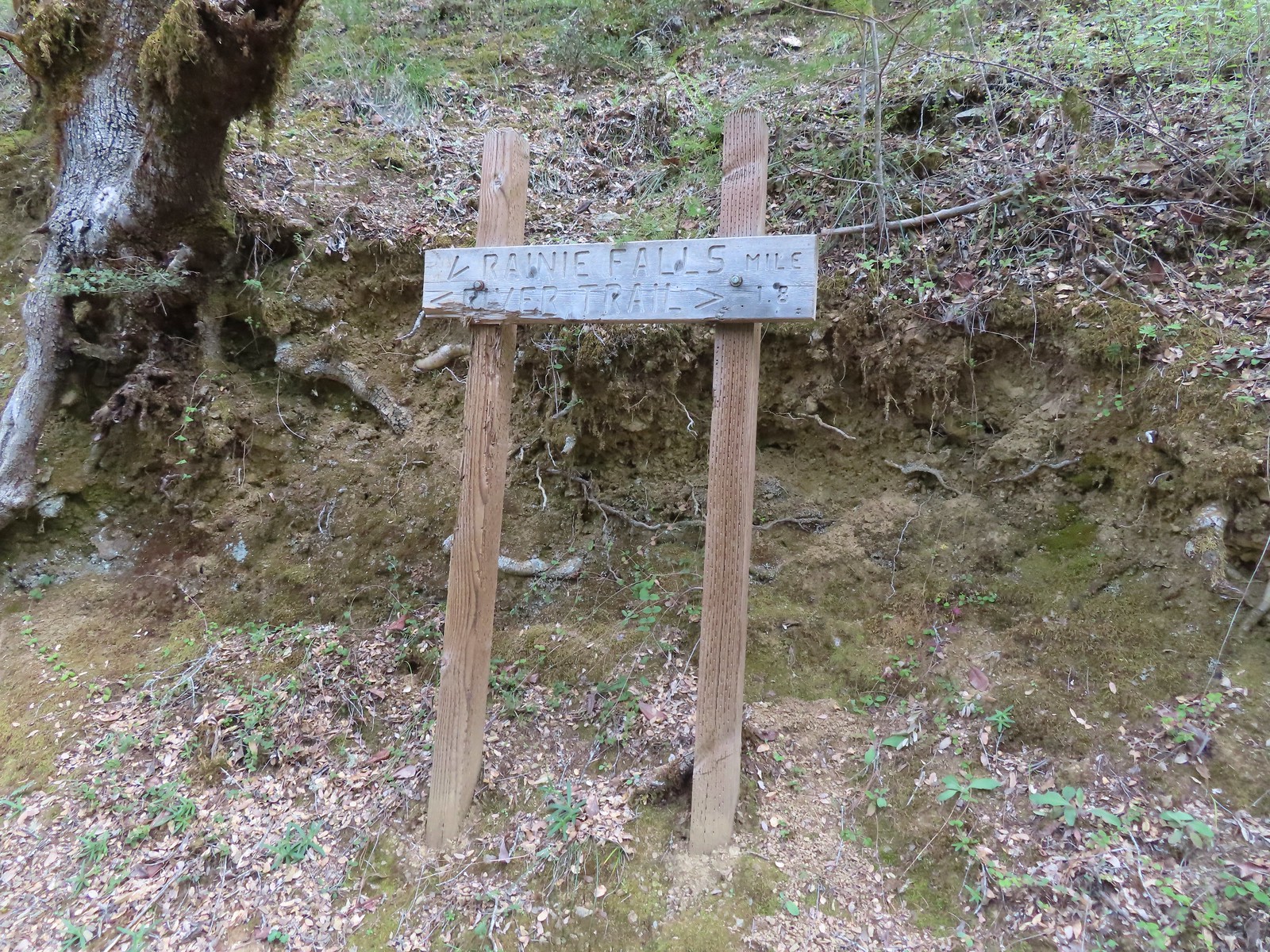
 White campion
 The only water we could make out on the far side of the river.
 Bullock’s oriole
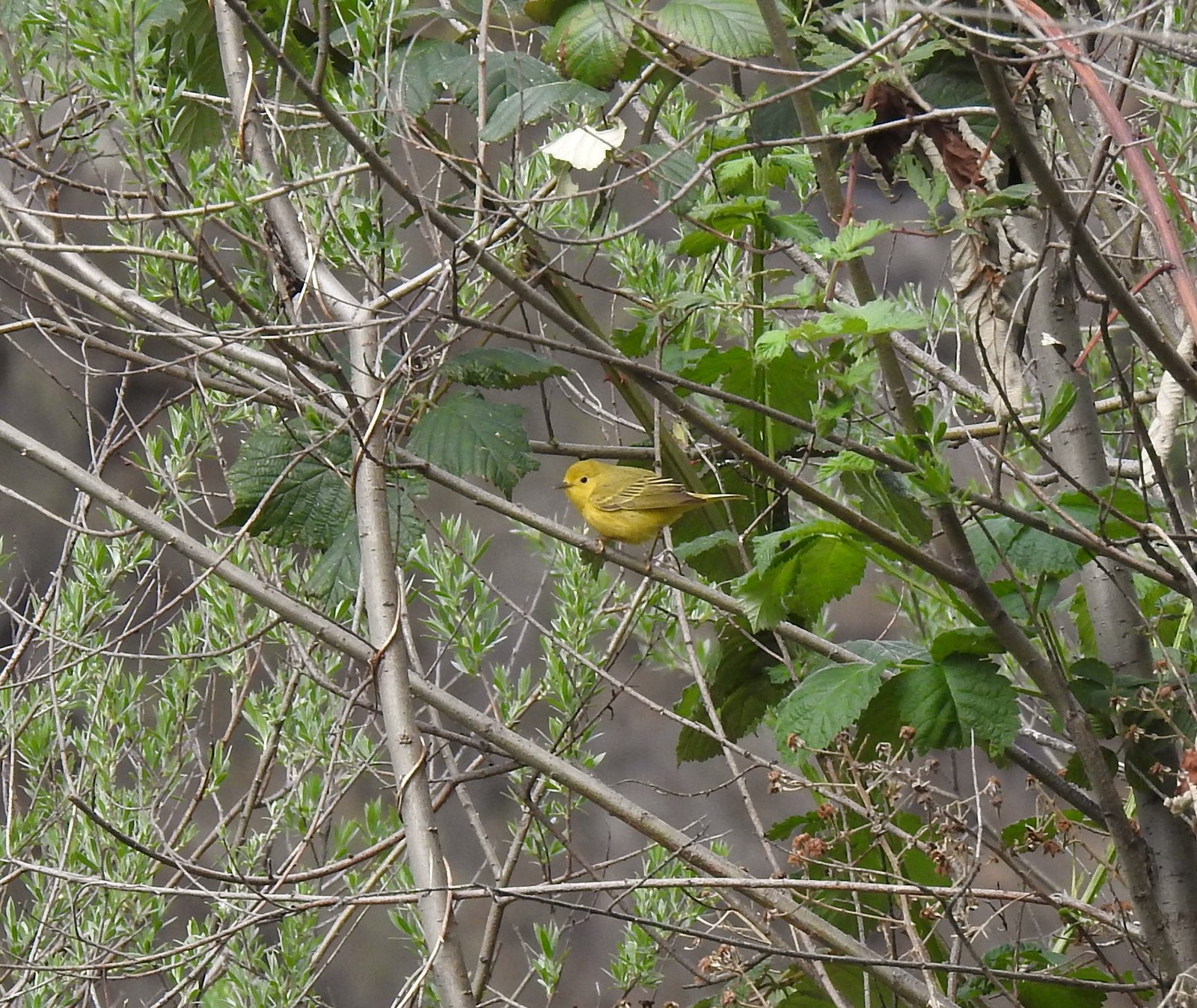 Yellow warbler
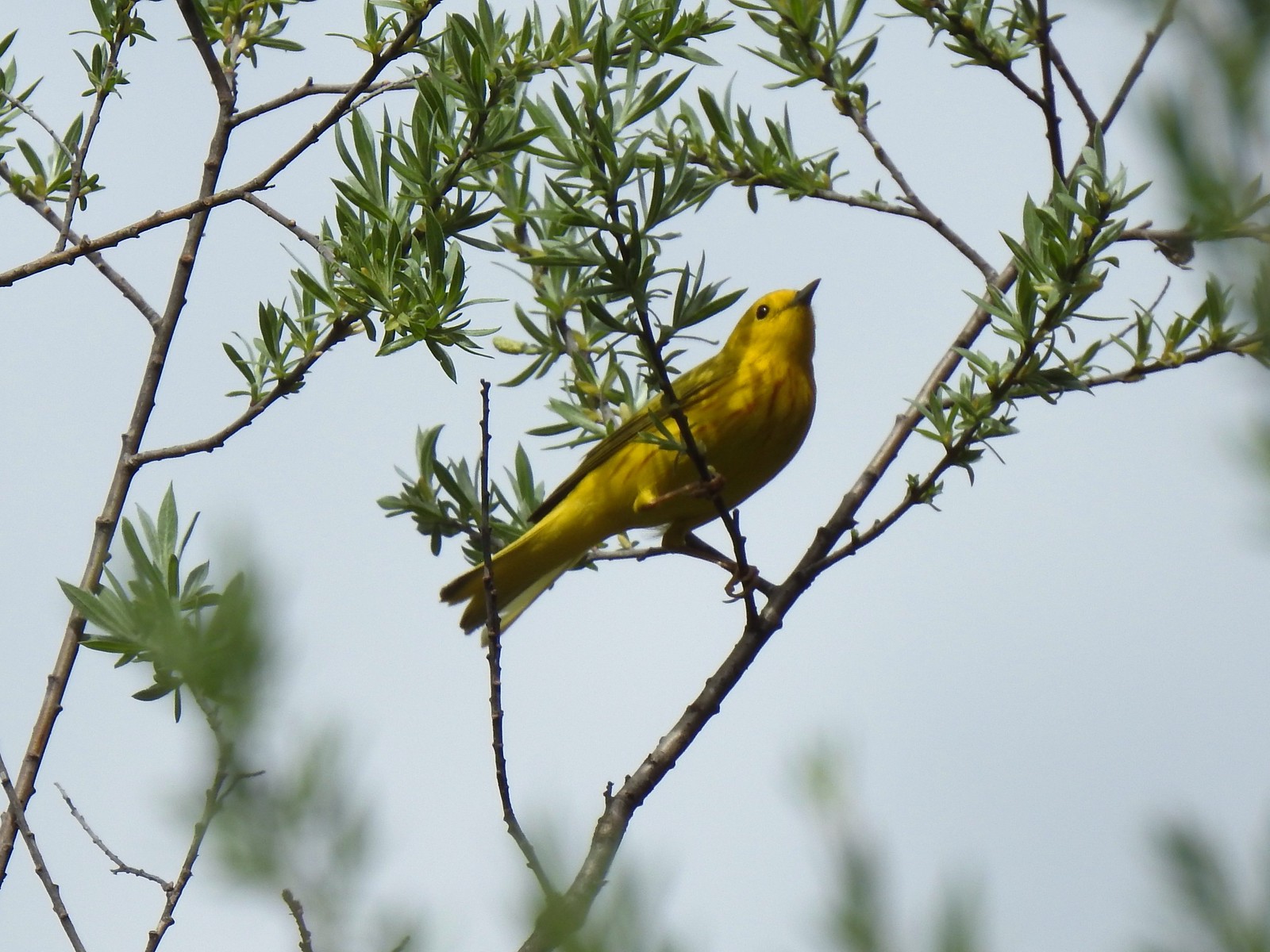 Yellow warbler
 Sandy beach along the Rogue River.
 Shooting star
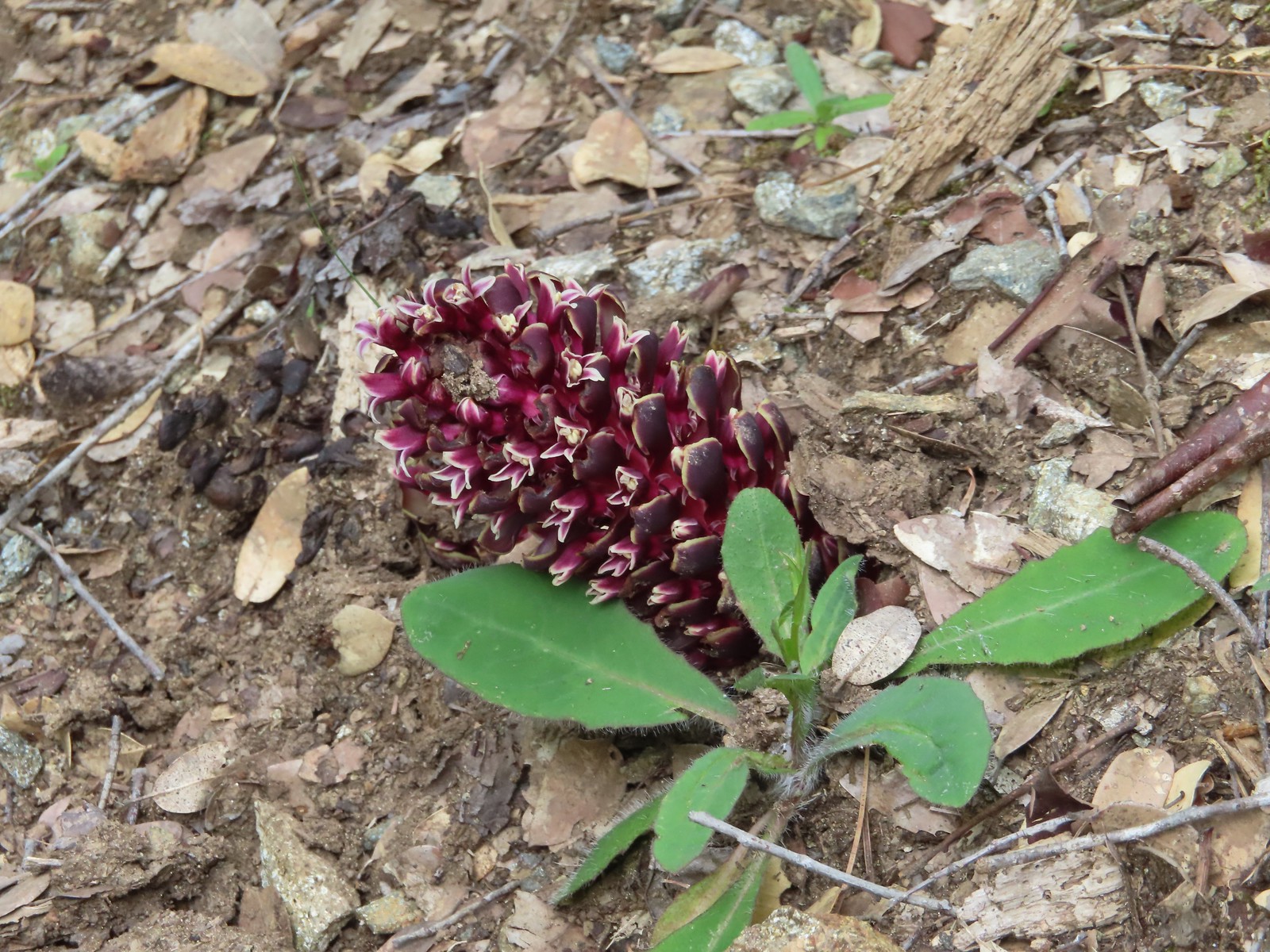 California groundcone
 Small-flowered woodland-star
 Approaching China Gulch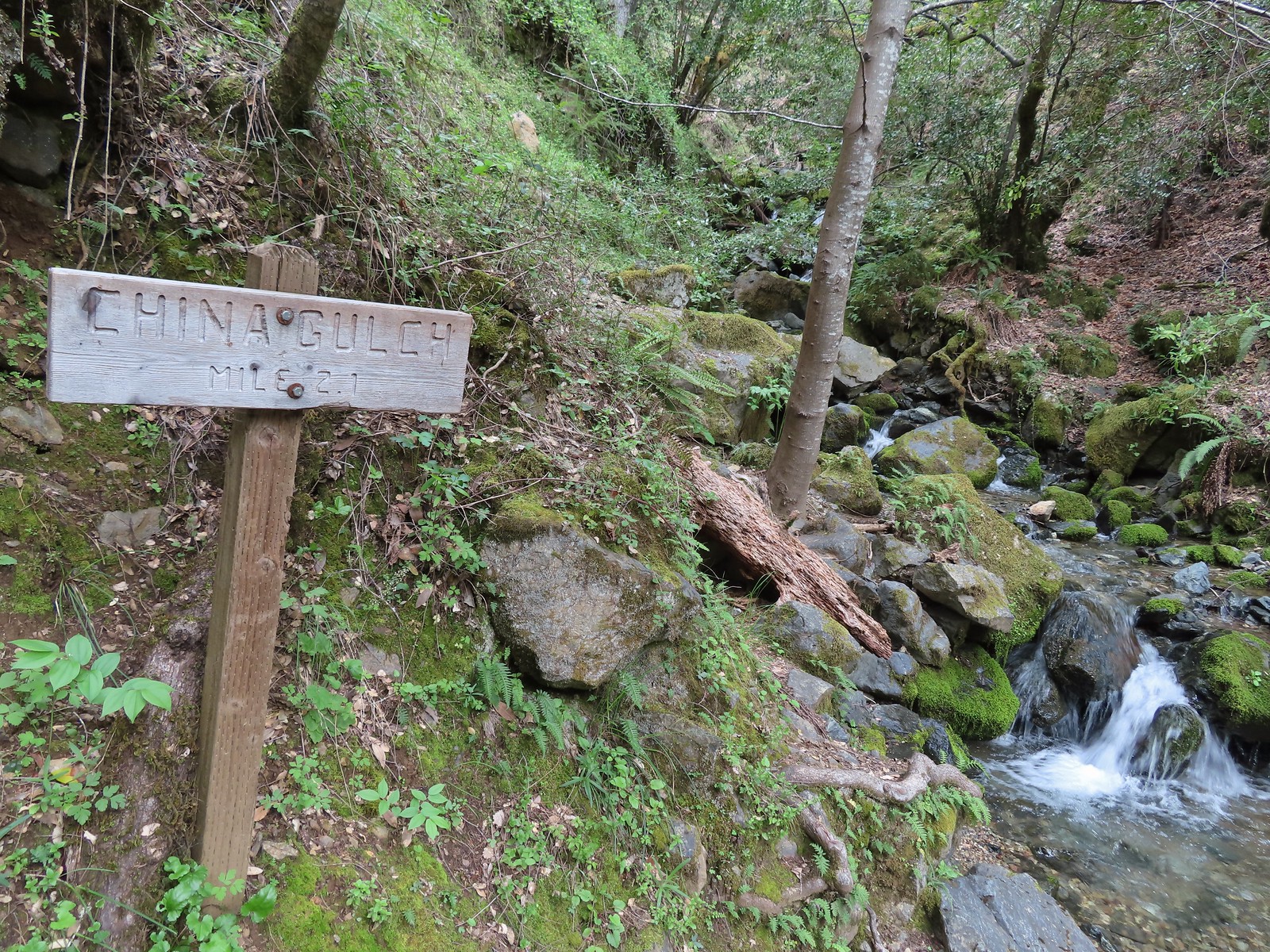
 Vetch
Vetch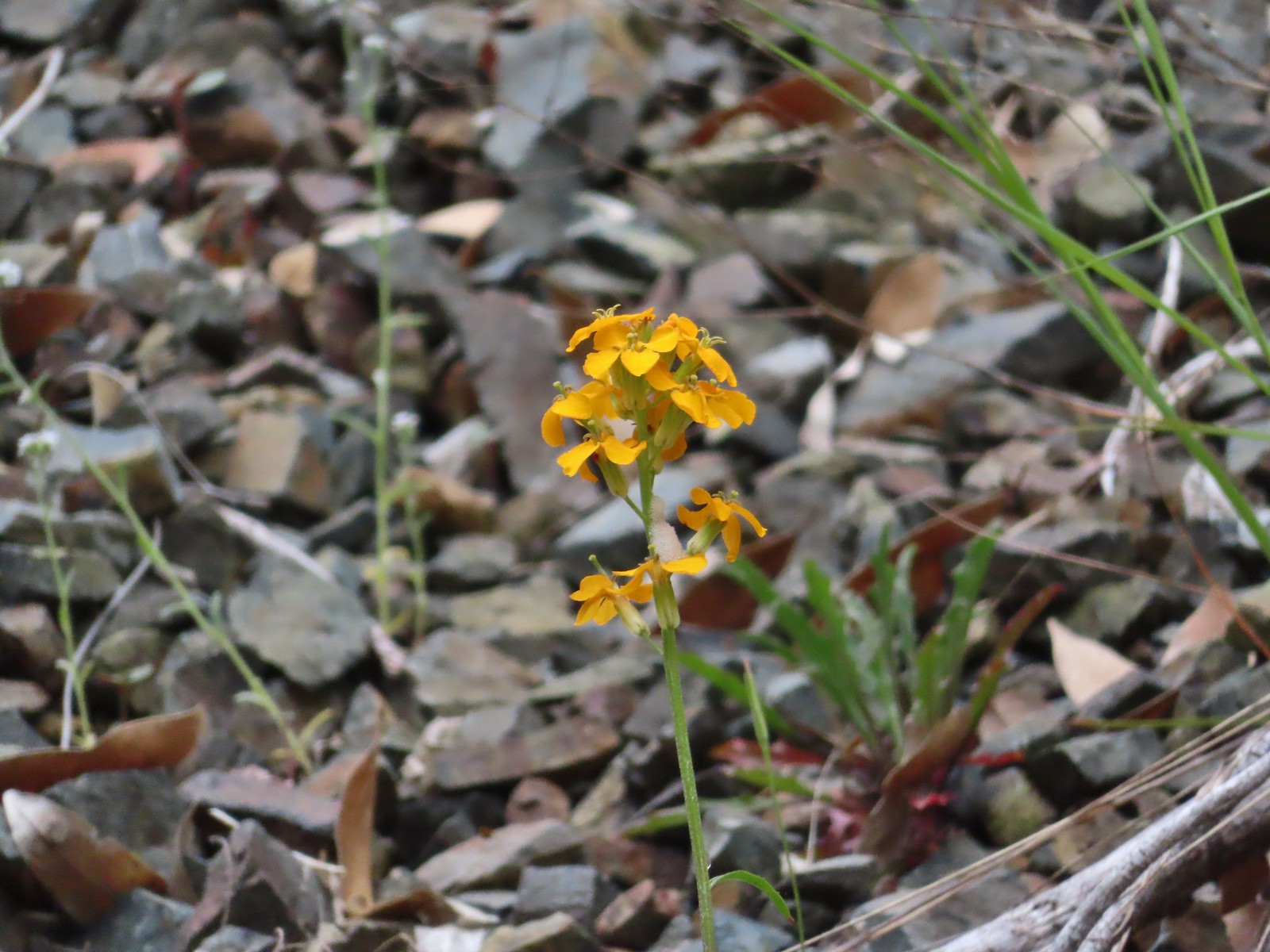 Wallflower
 Silverpuffs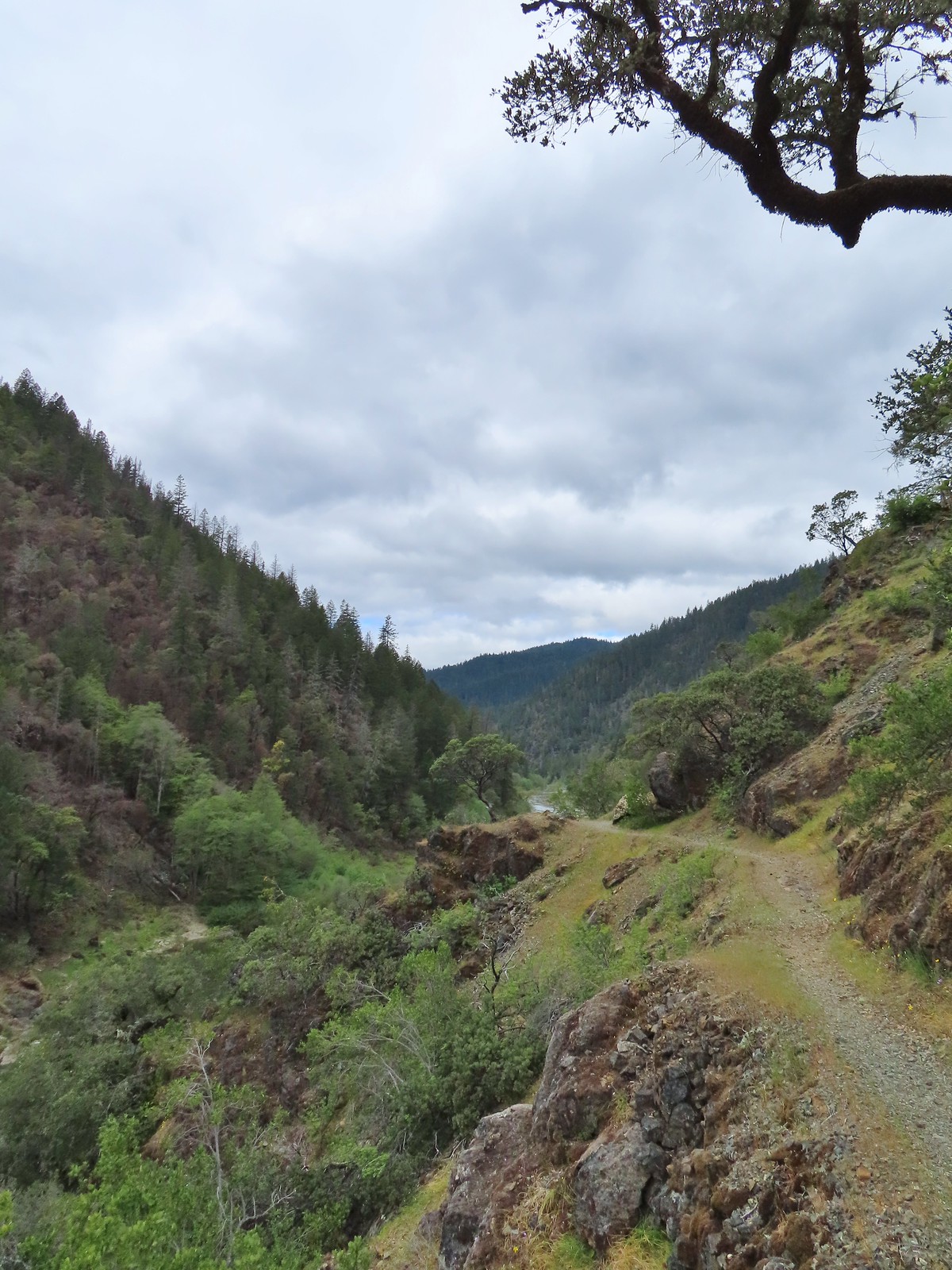
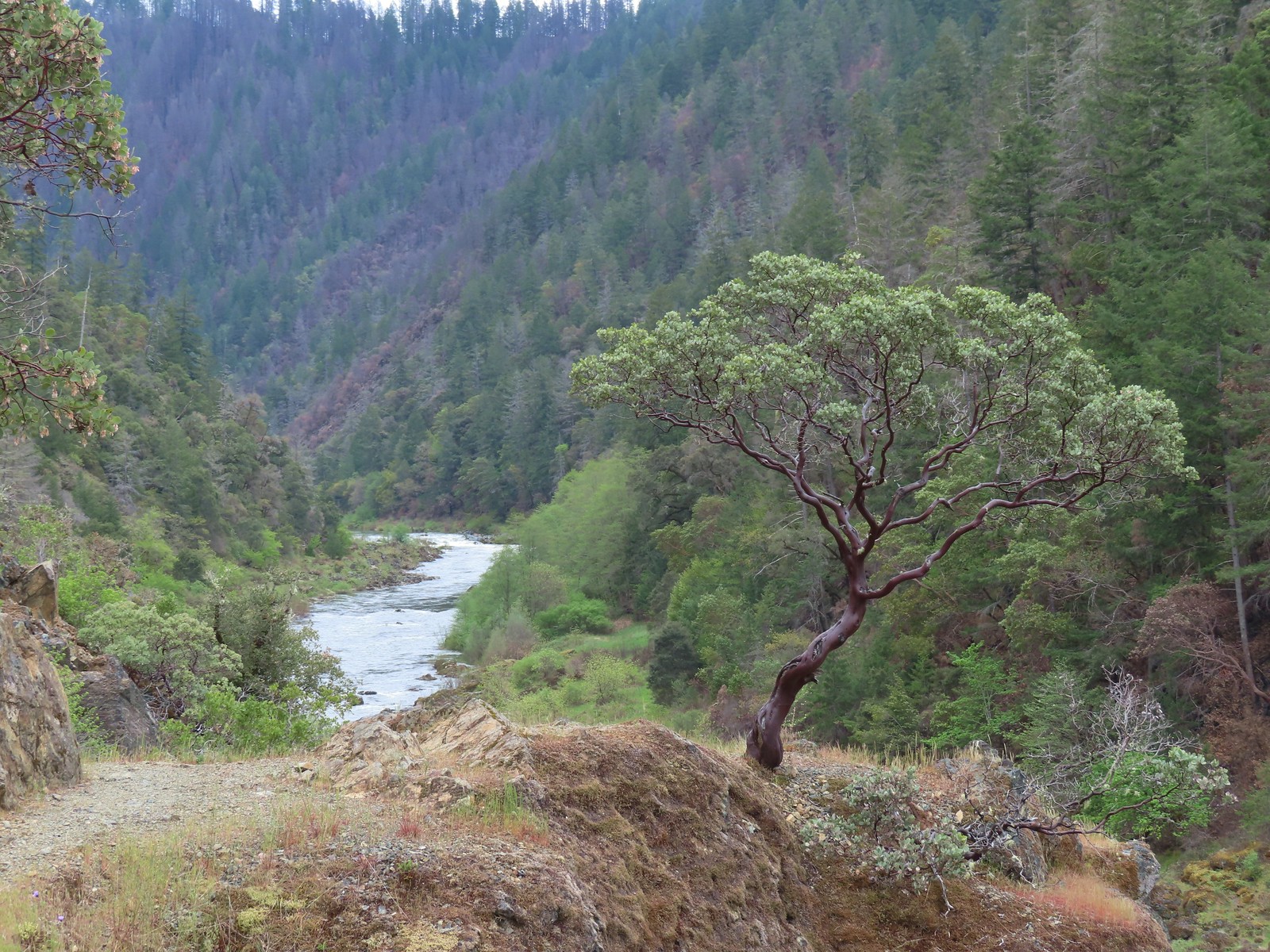 This manzanita was particularly striking in person.
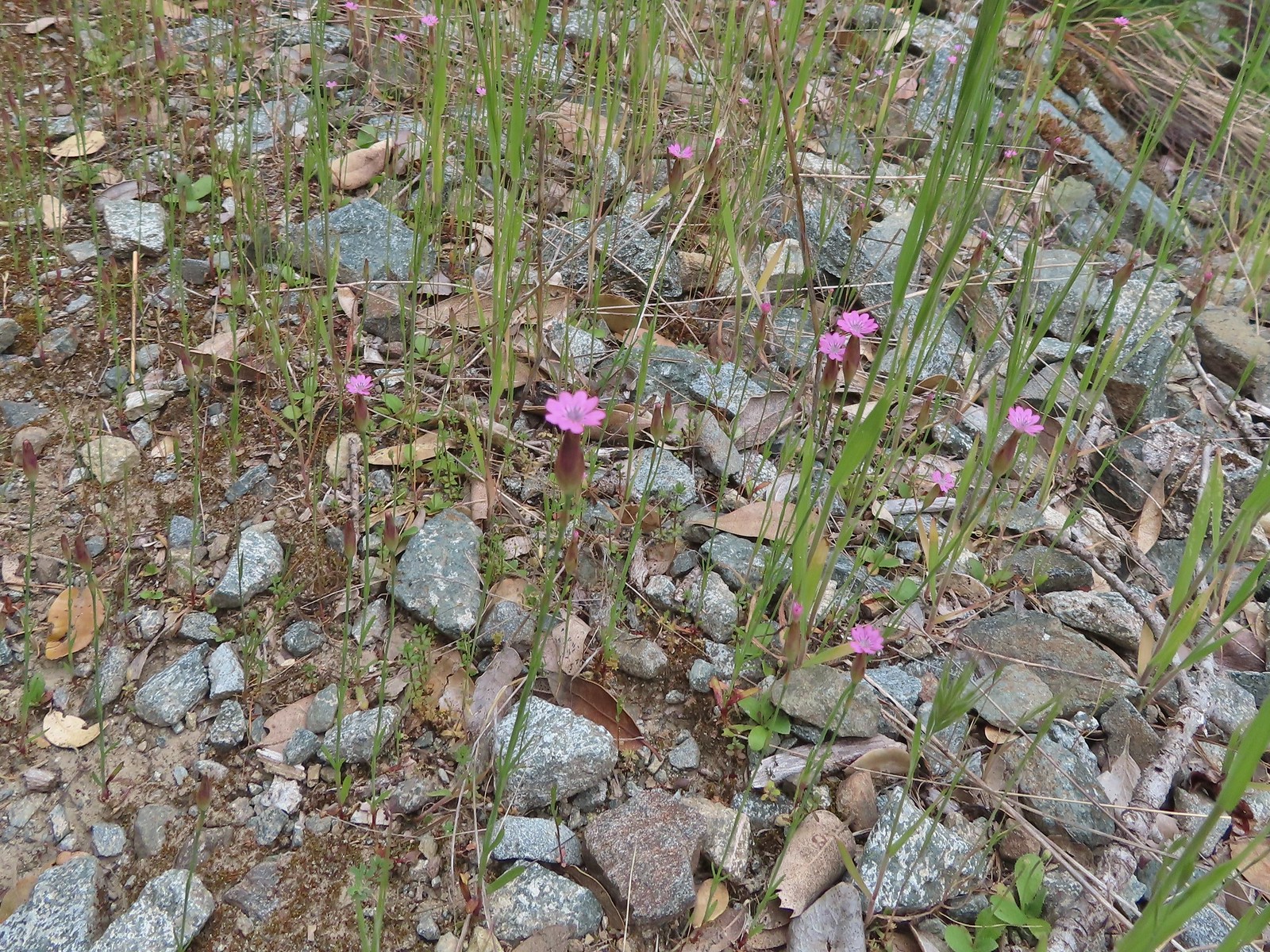 Hairy pink
 Robin
Robin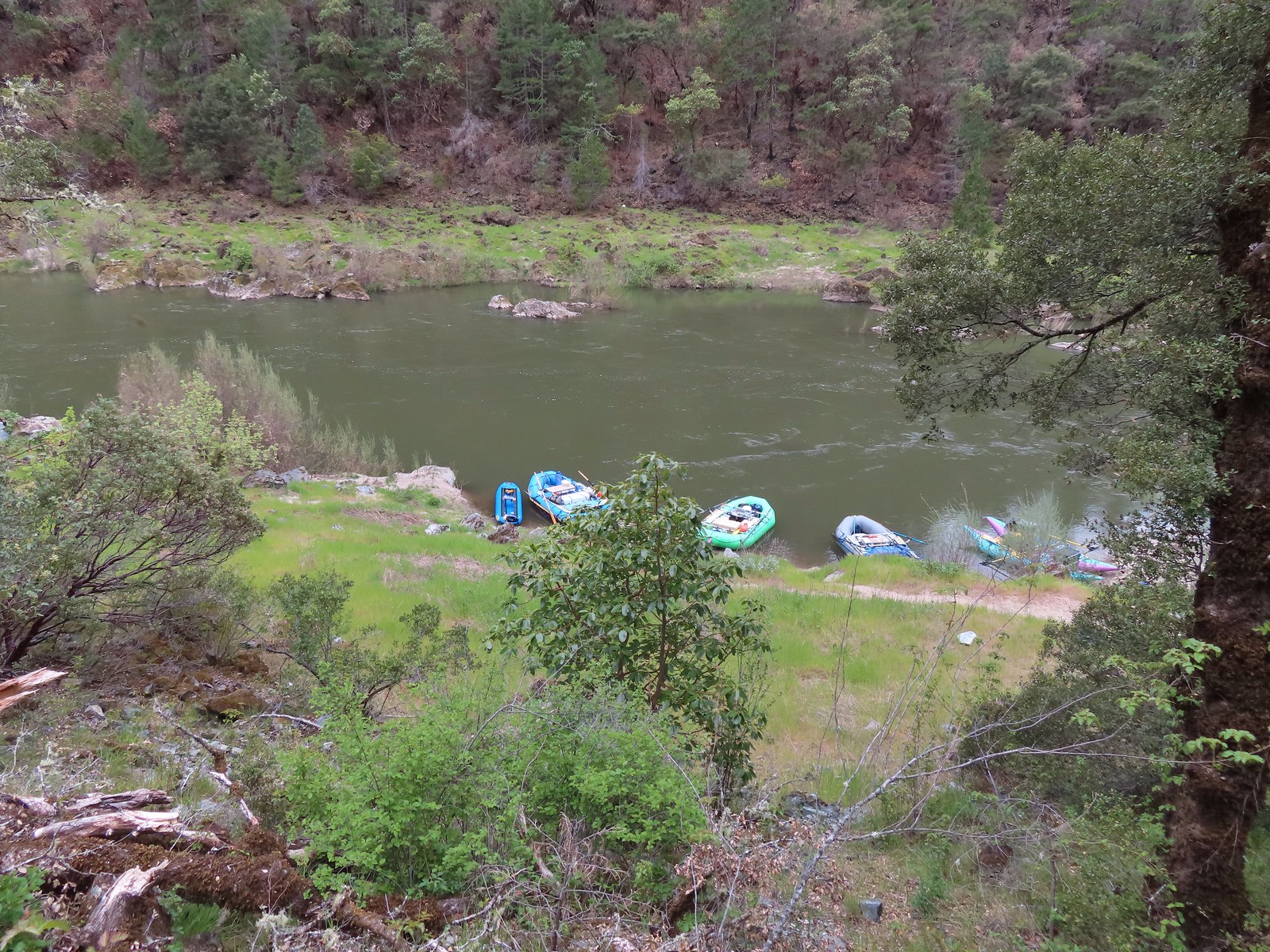 Rafts at Whiskey Camp.
 Whiskey Creek
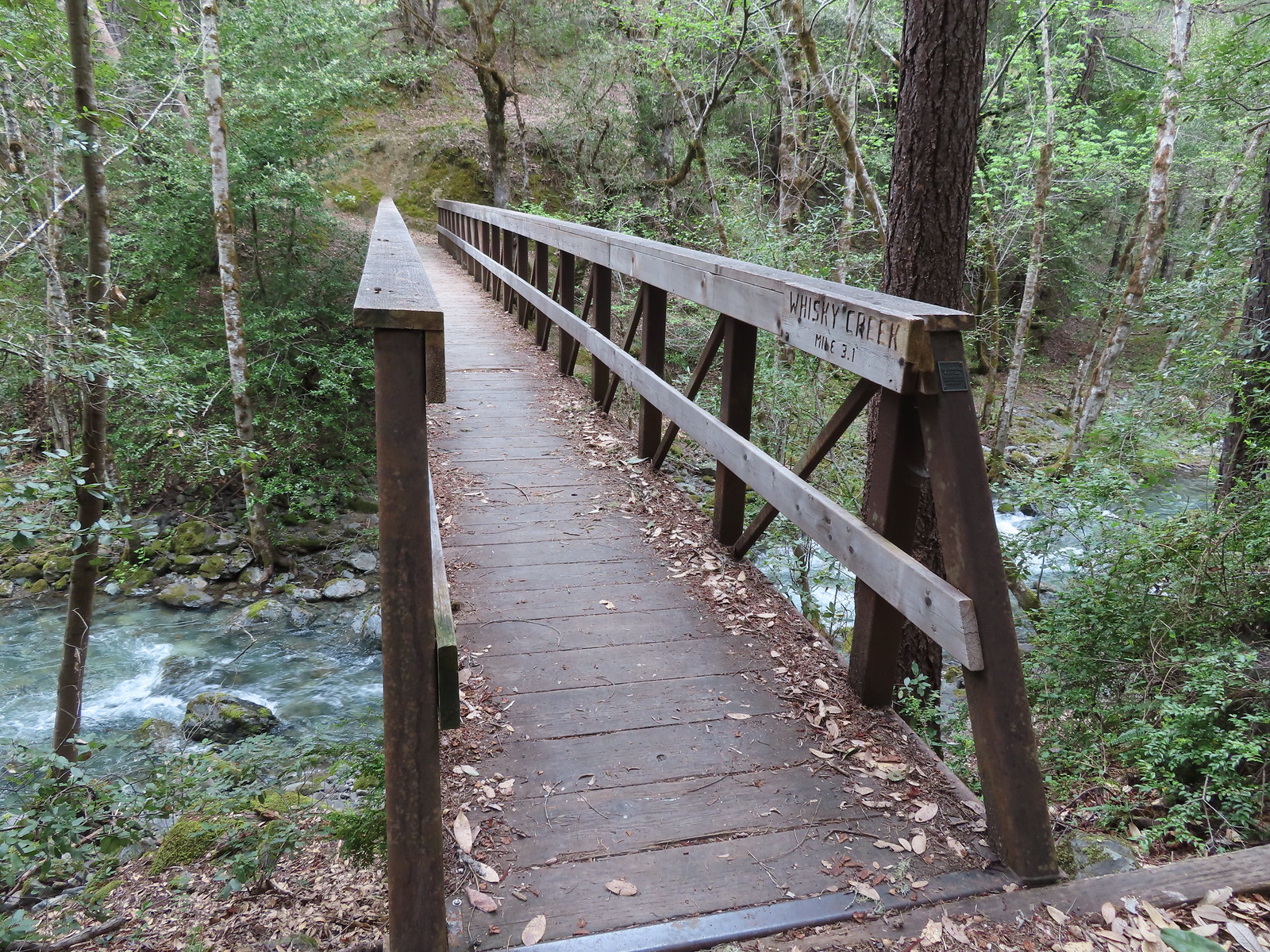 Footbridge over Whiskey Creek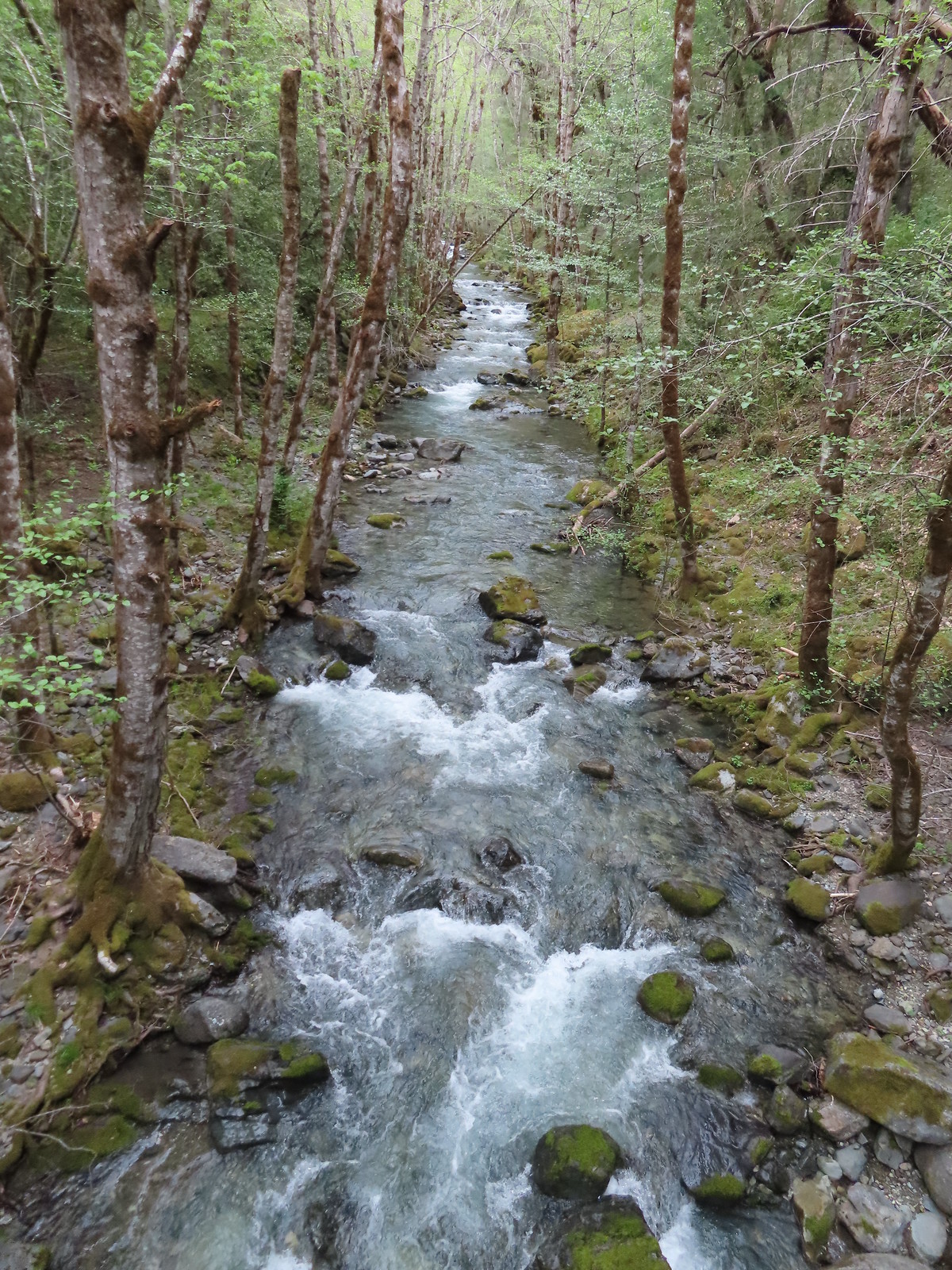
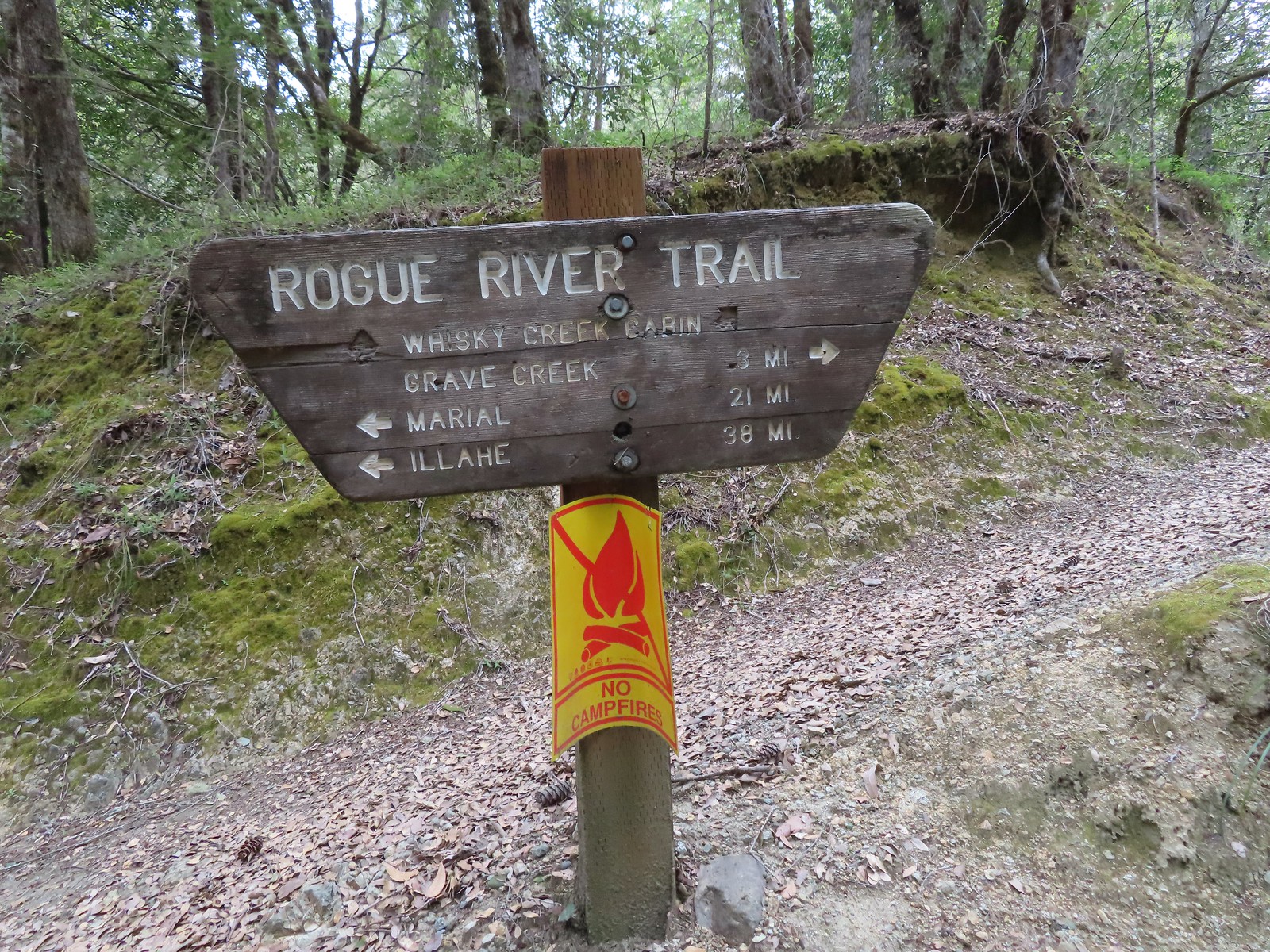 Sign at the spur trail to the cabin.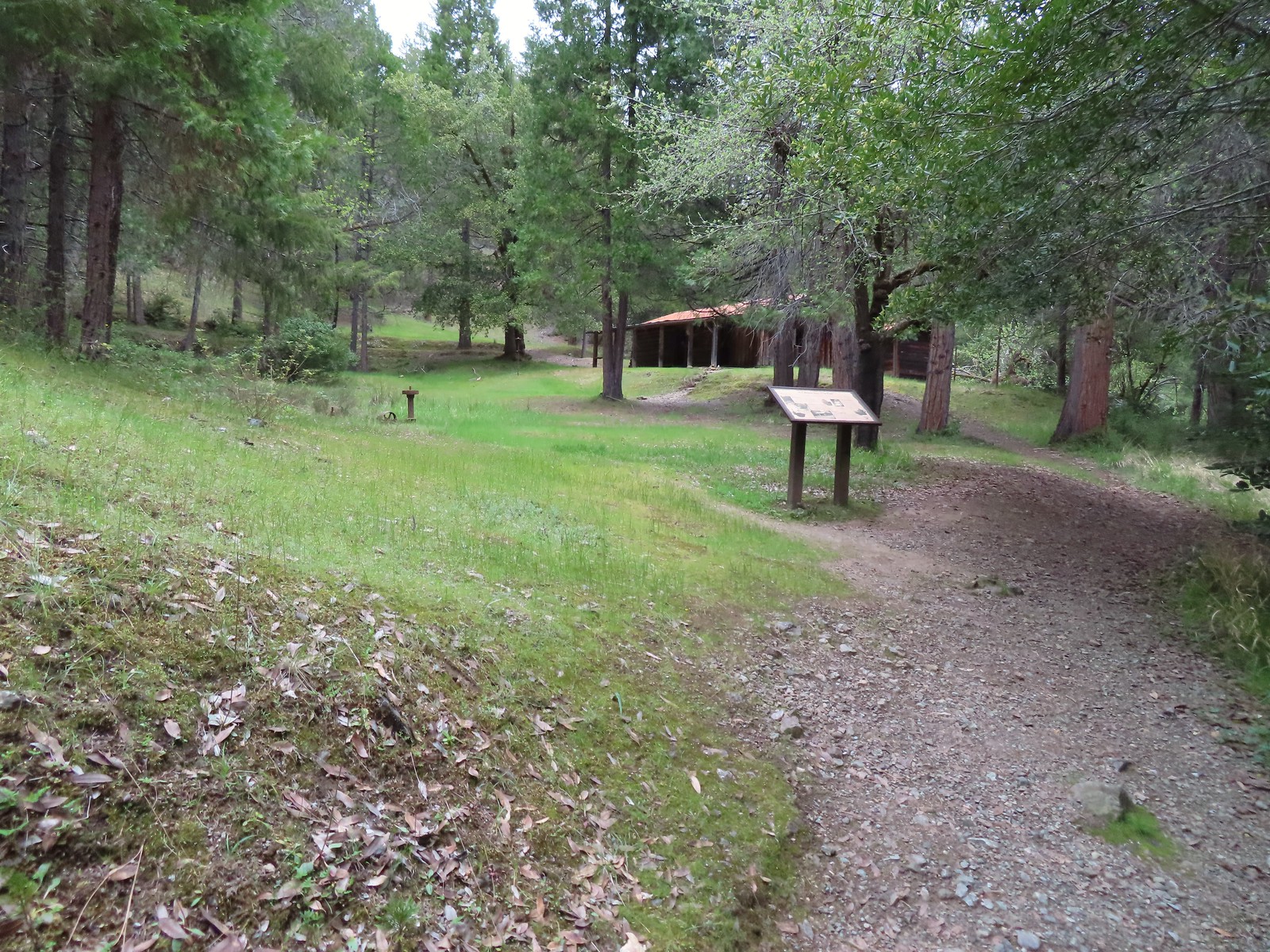
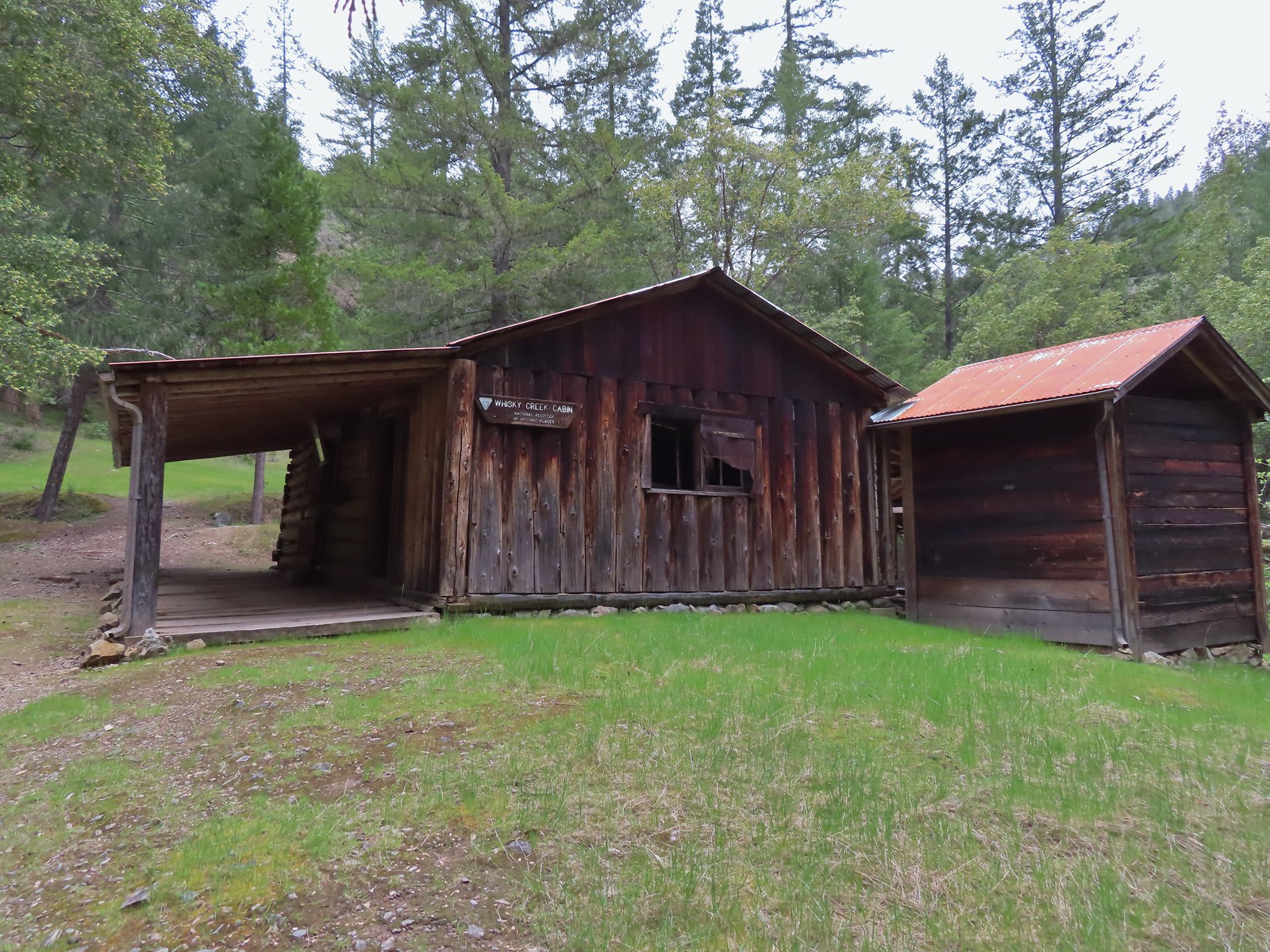
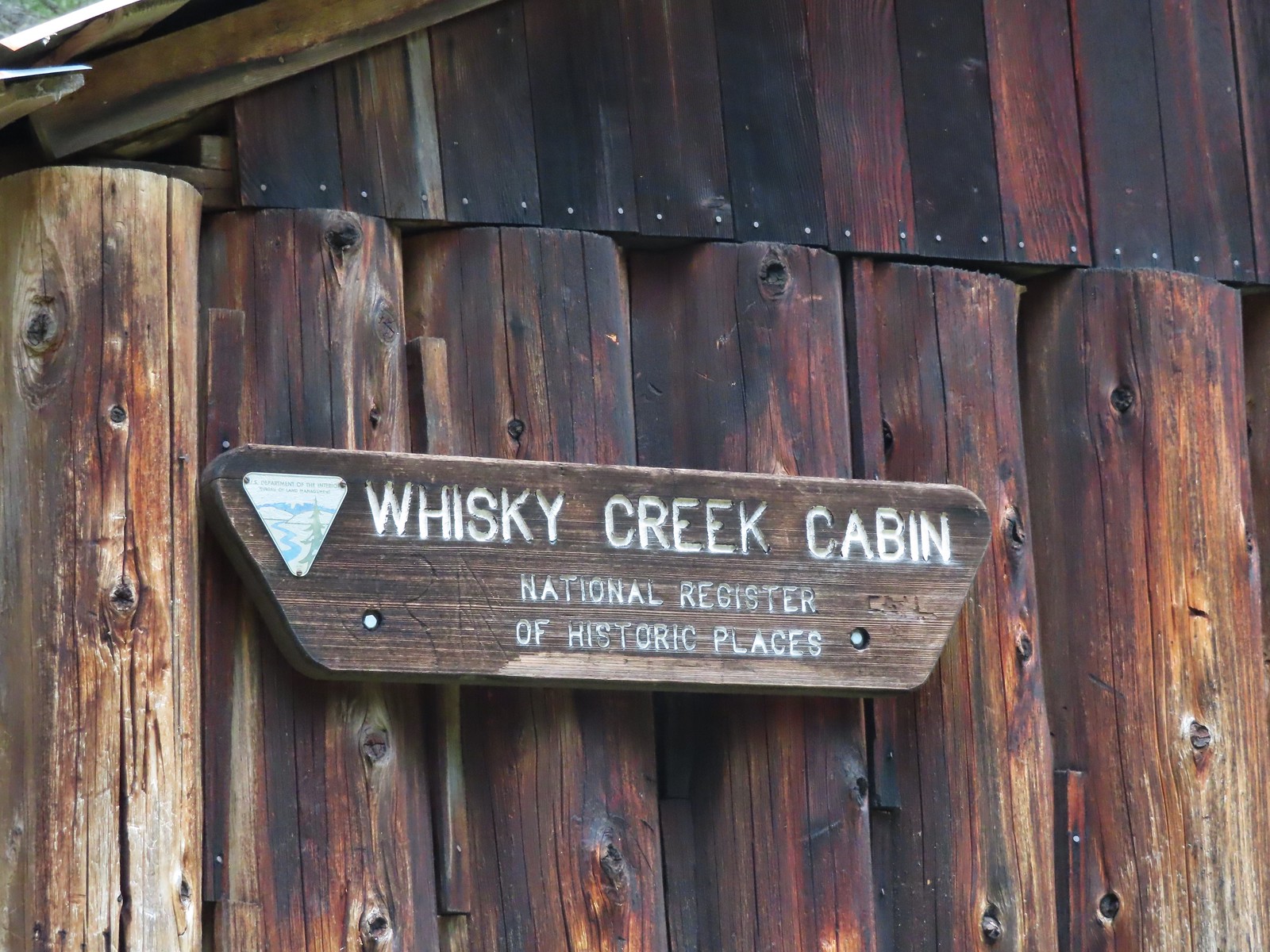


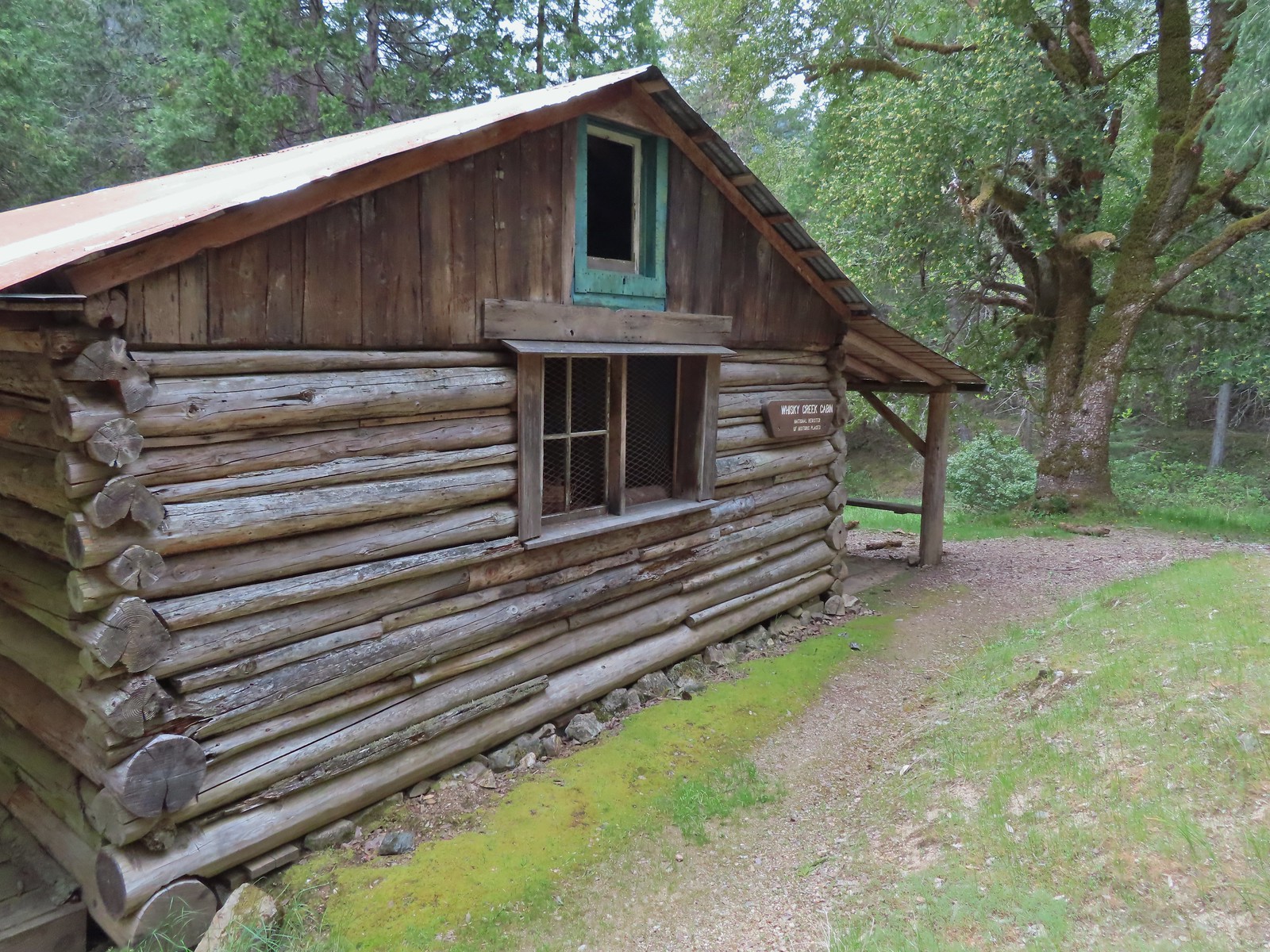
 Del Norte irises
 Big Slide Camp to the left.
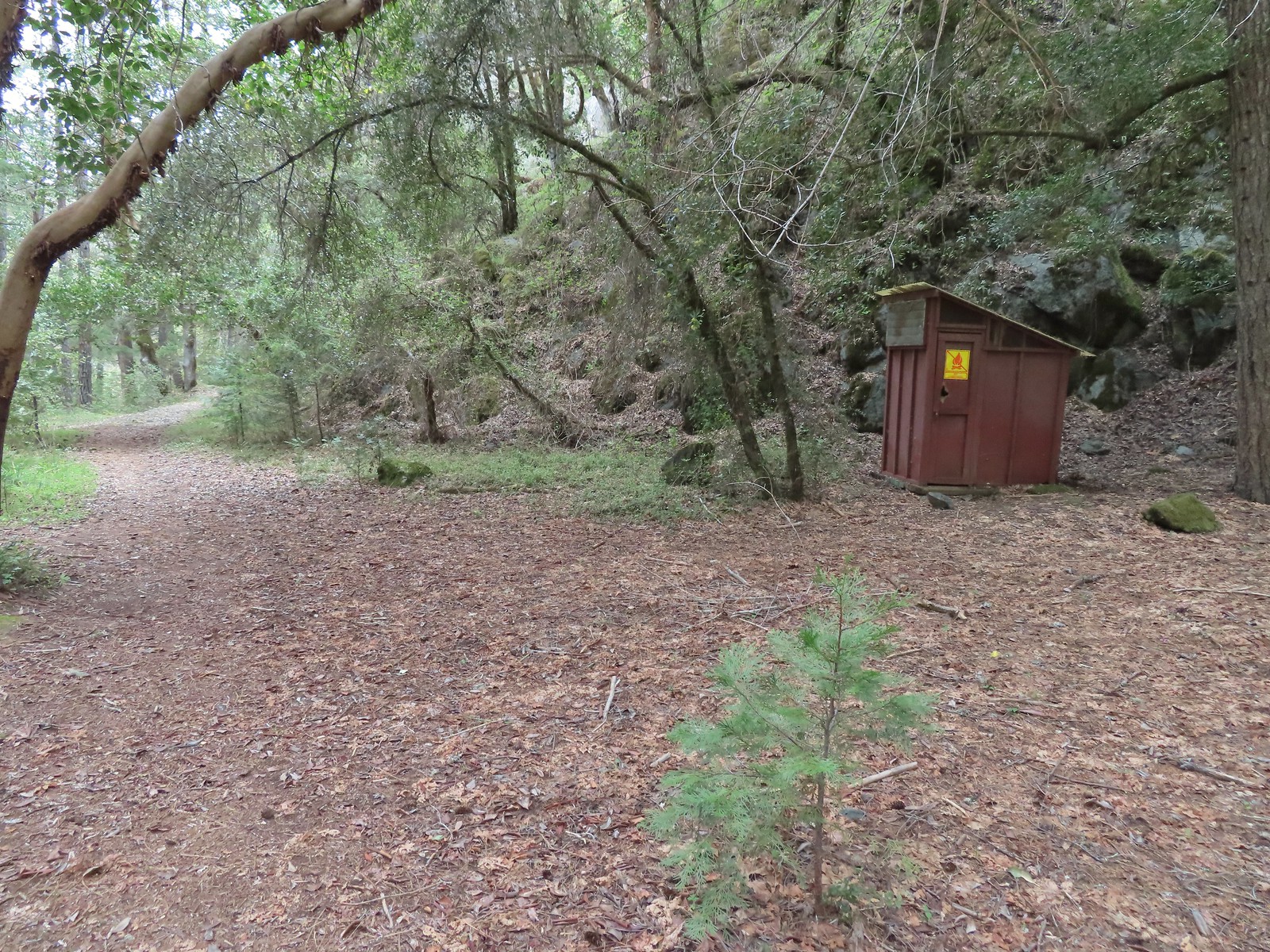 Outhouse at Big Slide Camp.
 Common mergansers
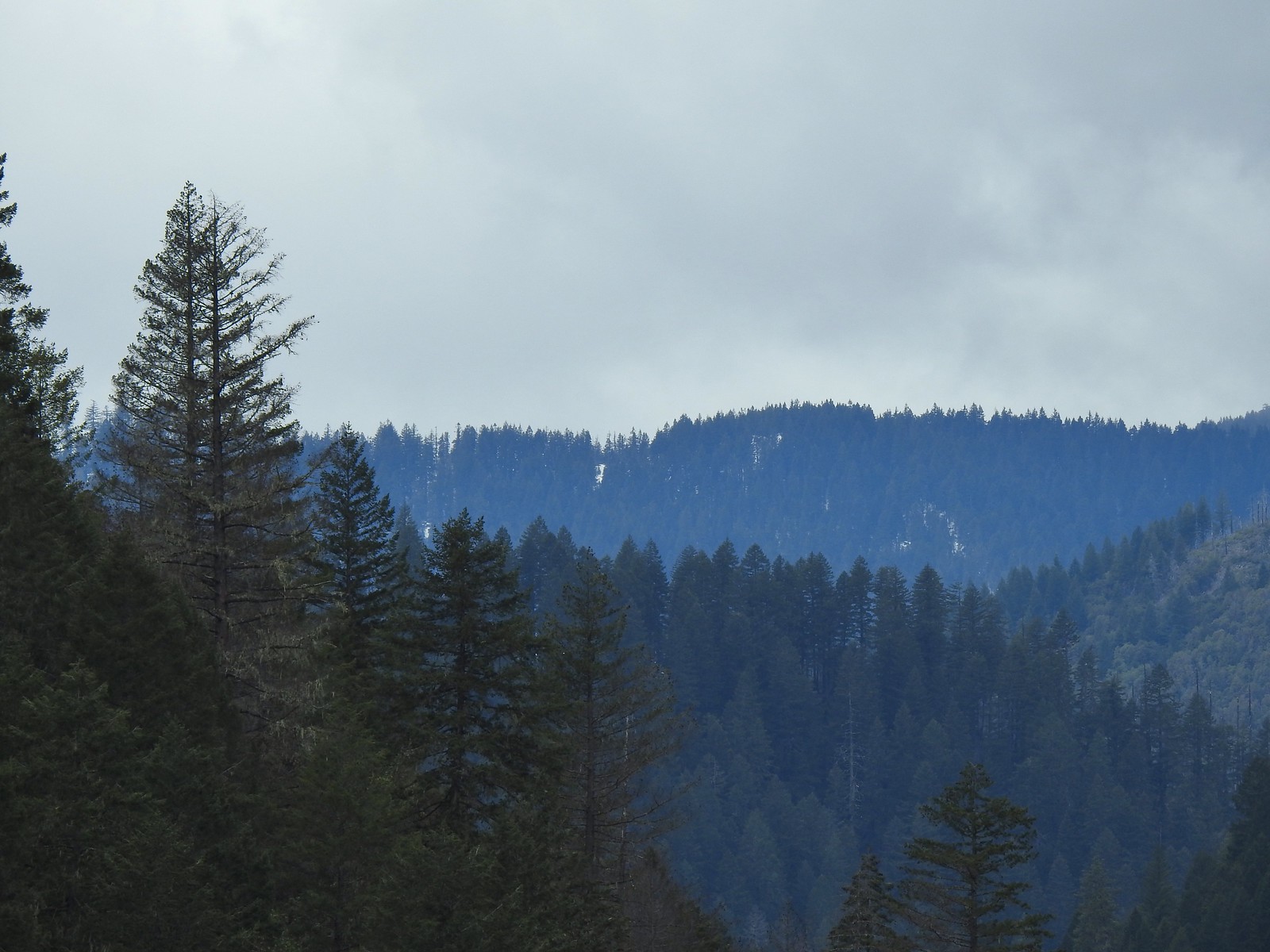 Snow on a ridge above the Rogue River Valley. (This was a sign of issues for us later in the week.)
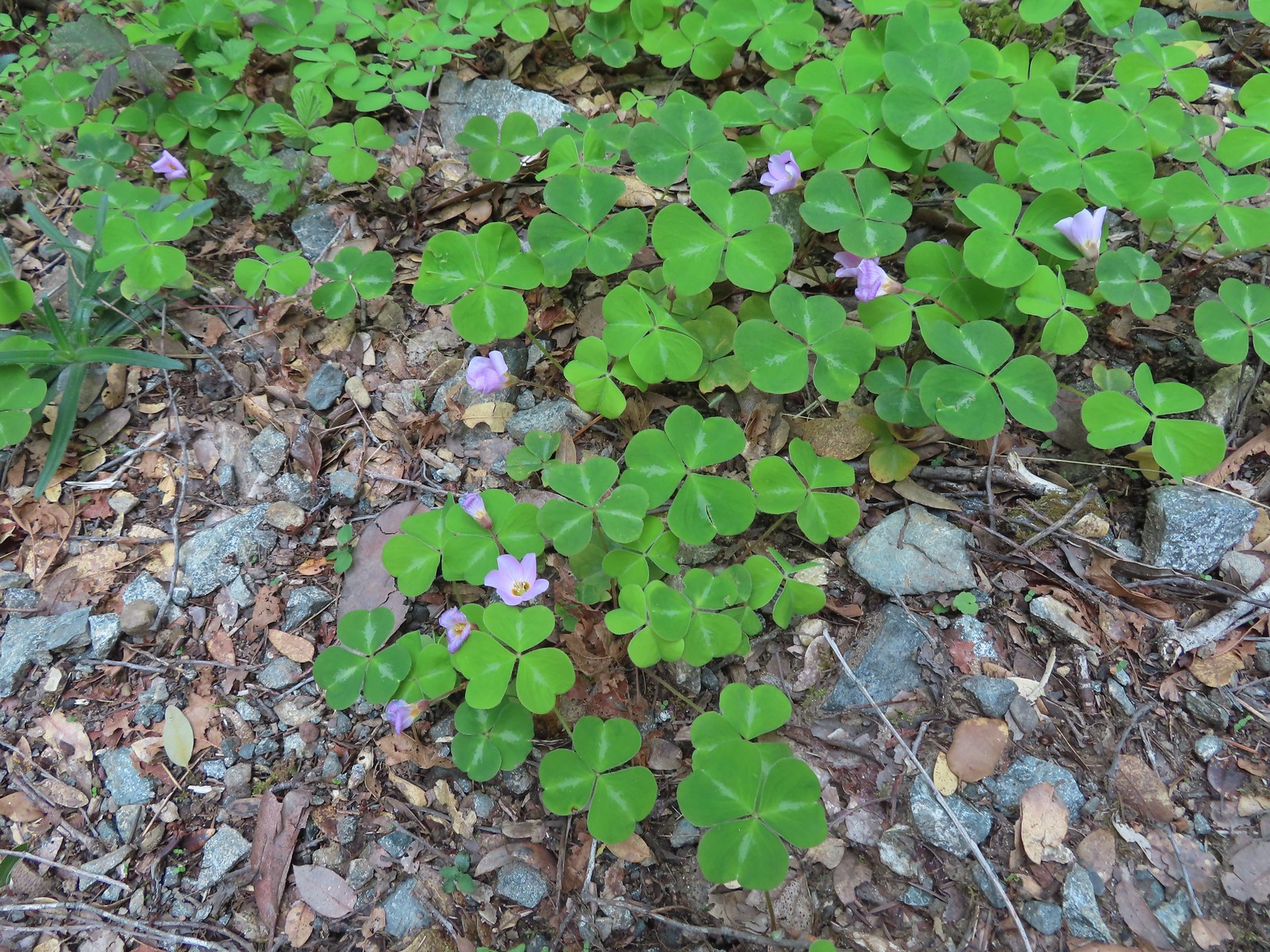 Redwood sorrel along Whiskey Creek.
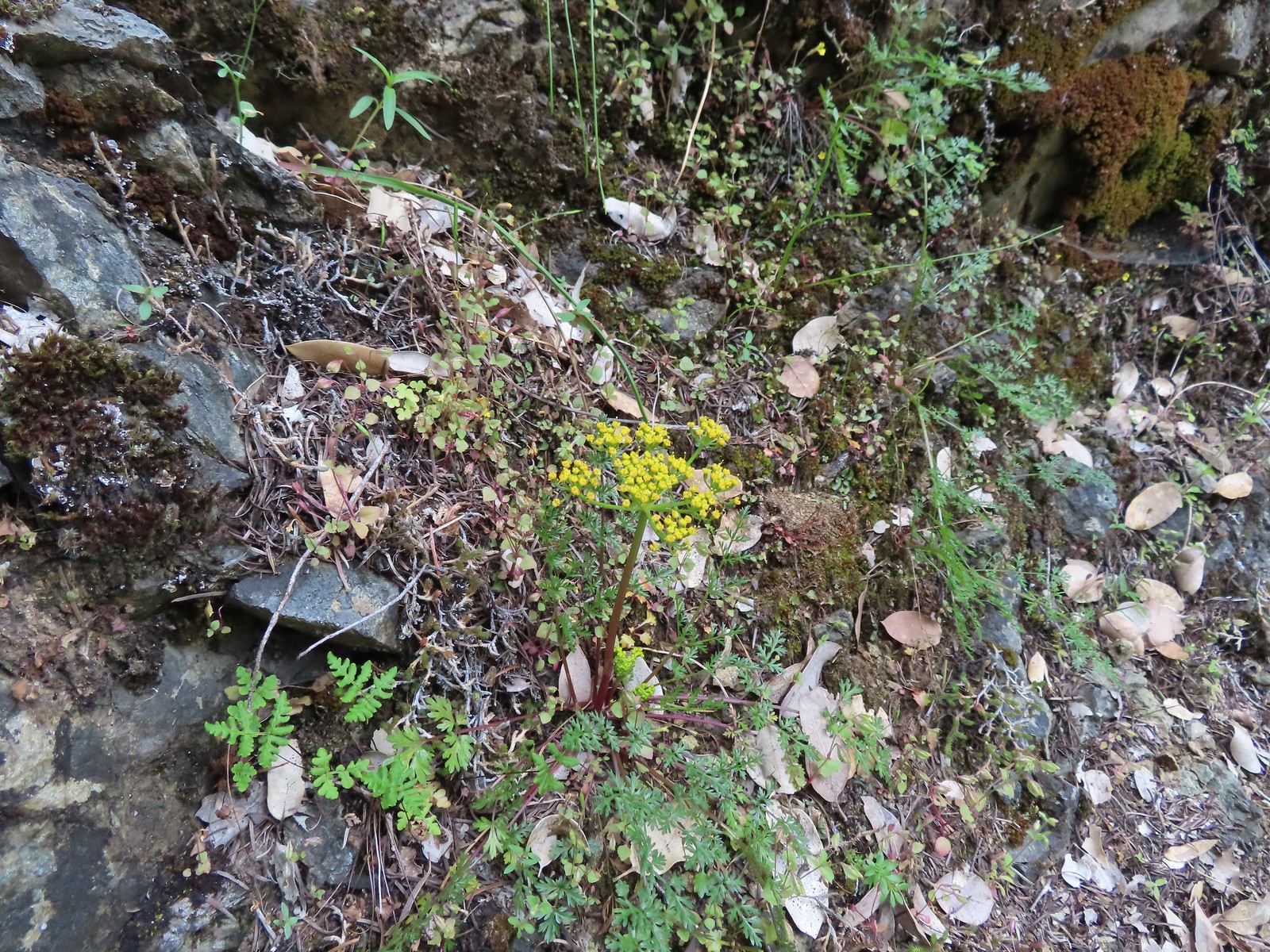 Buiscuitroot
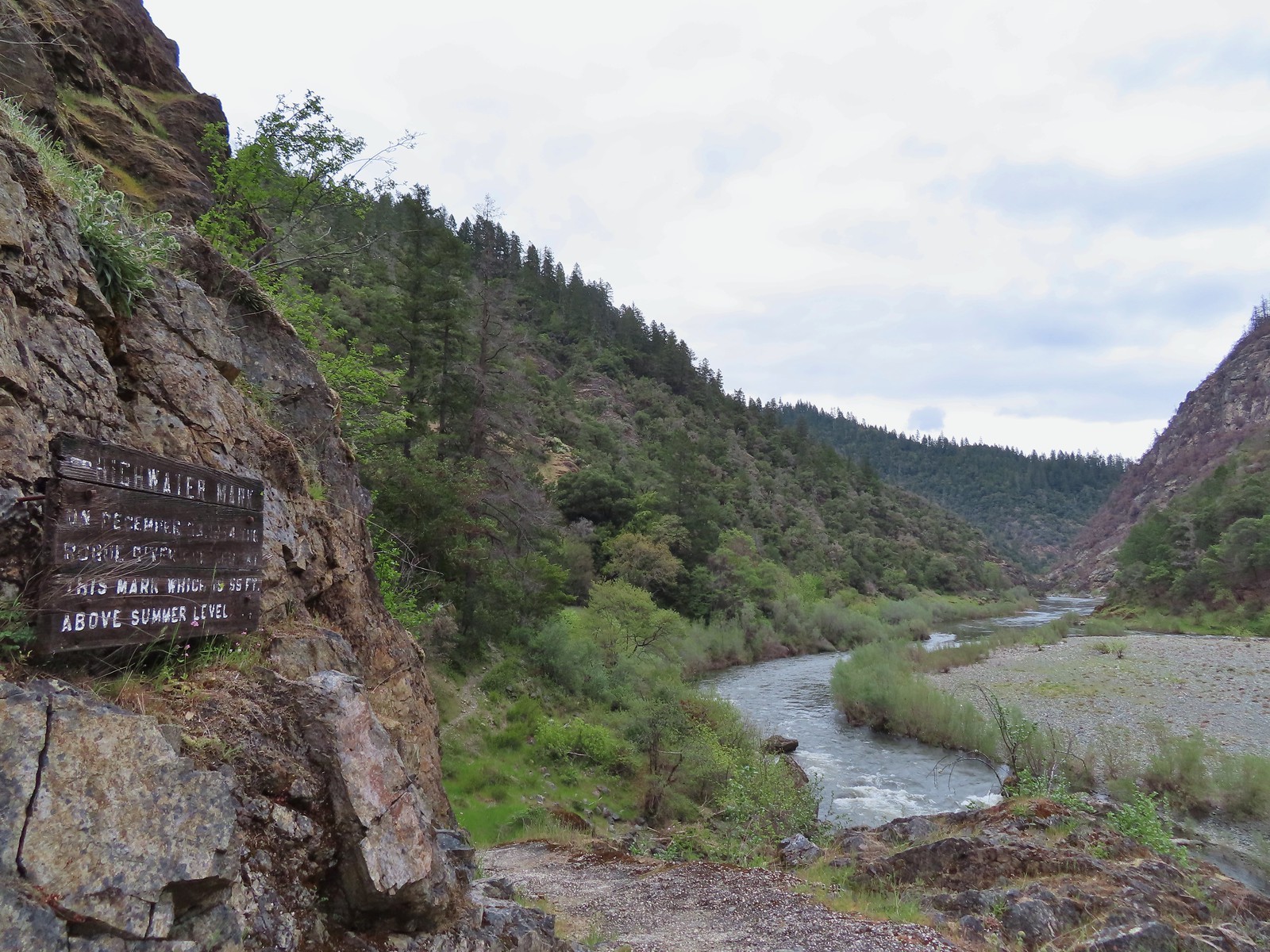 Passing the high water mark.
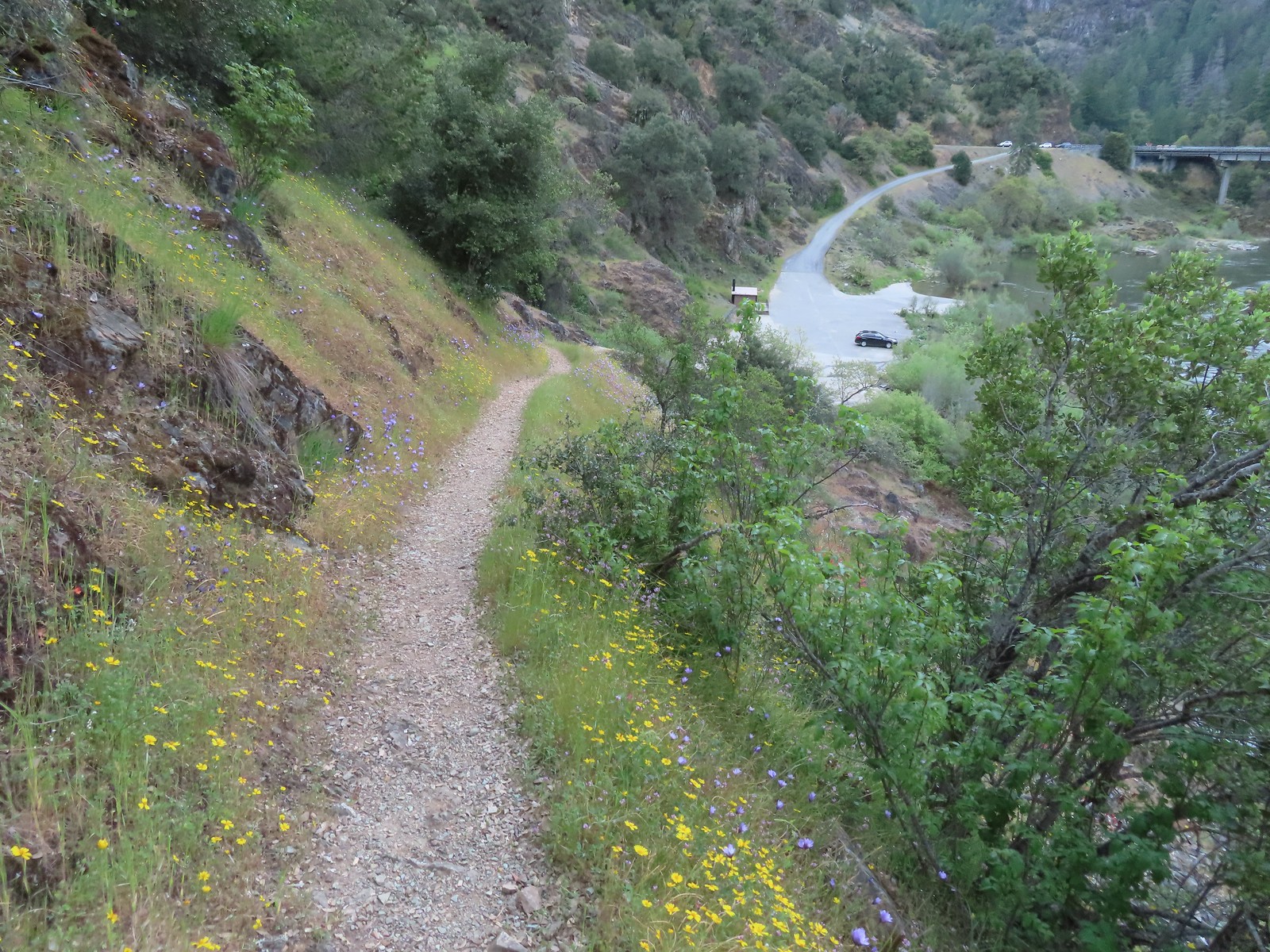 Arriving back at the trailhead.



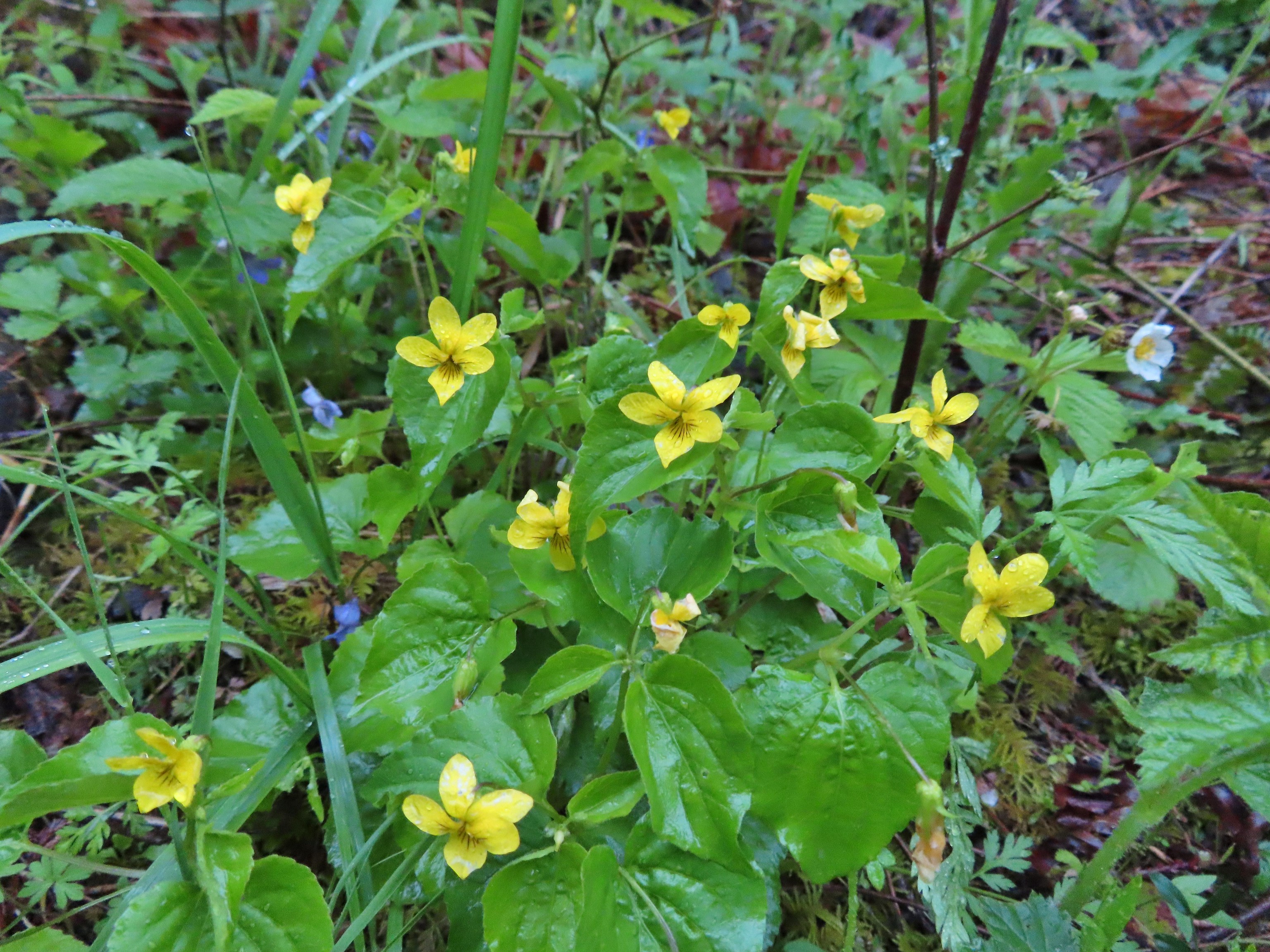 May 14th – Chehalem Ridge Nature Park
 June 15th – Donomore Meadows
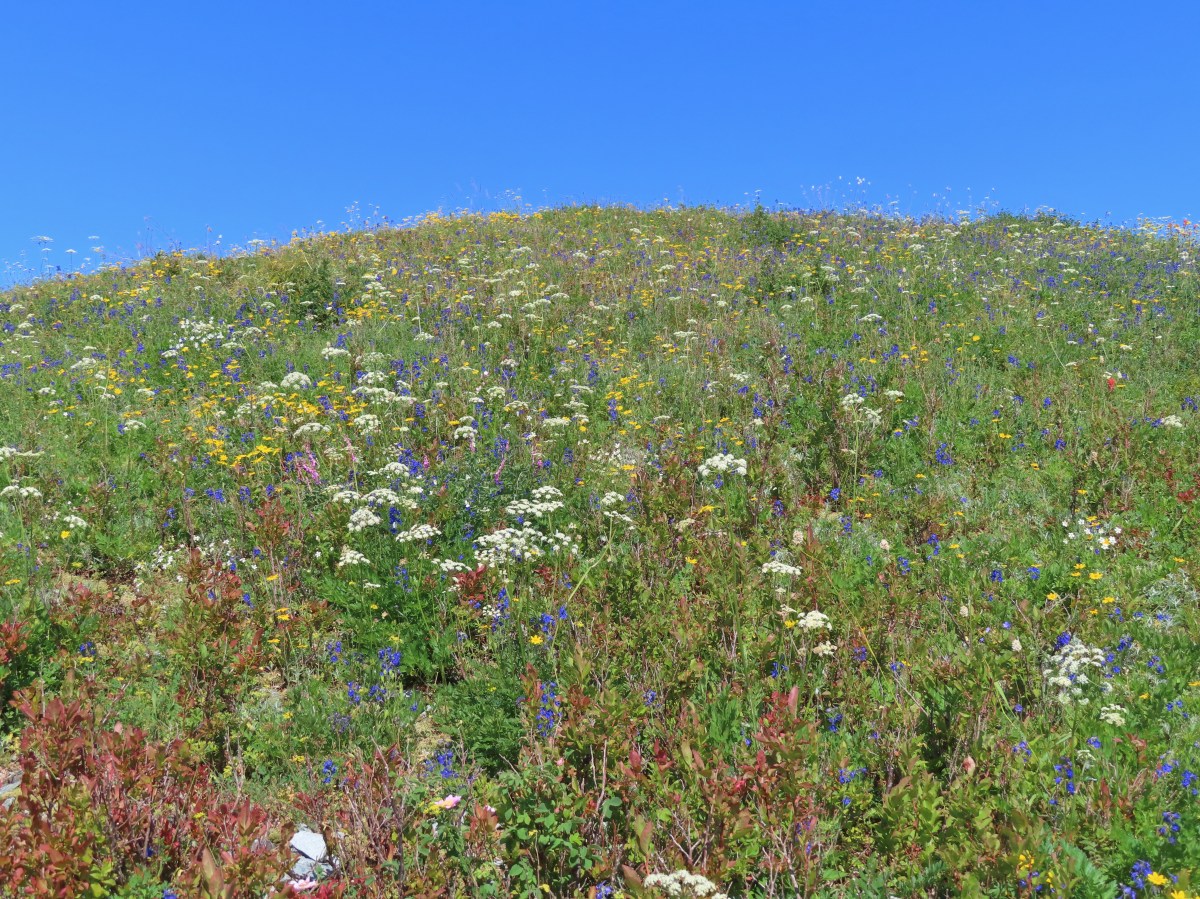
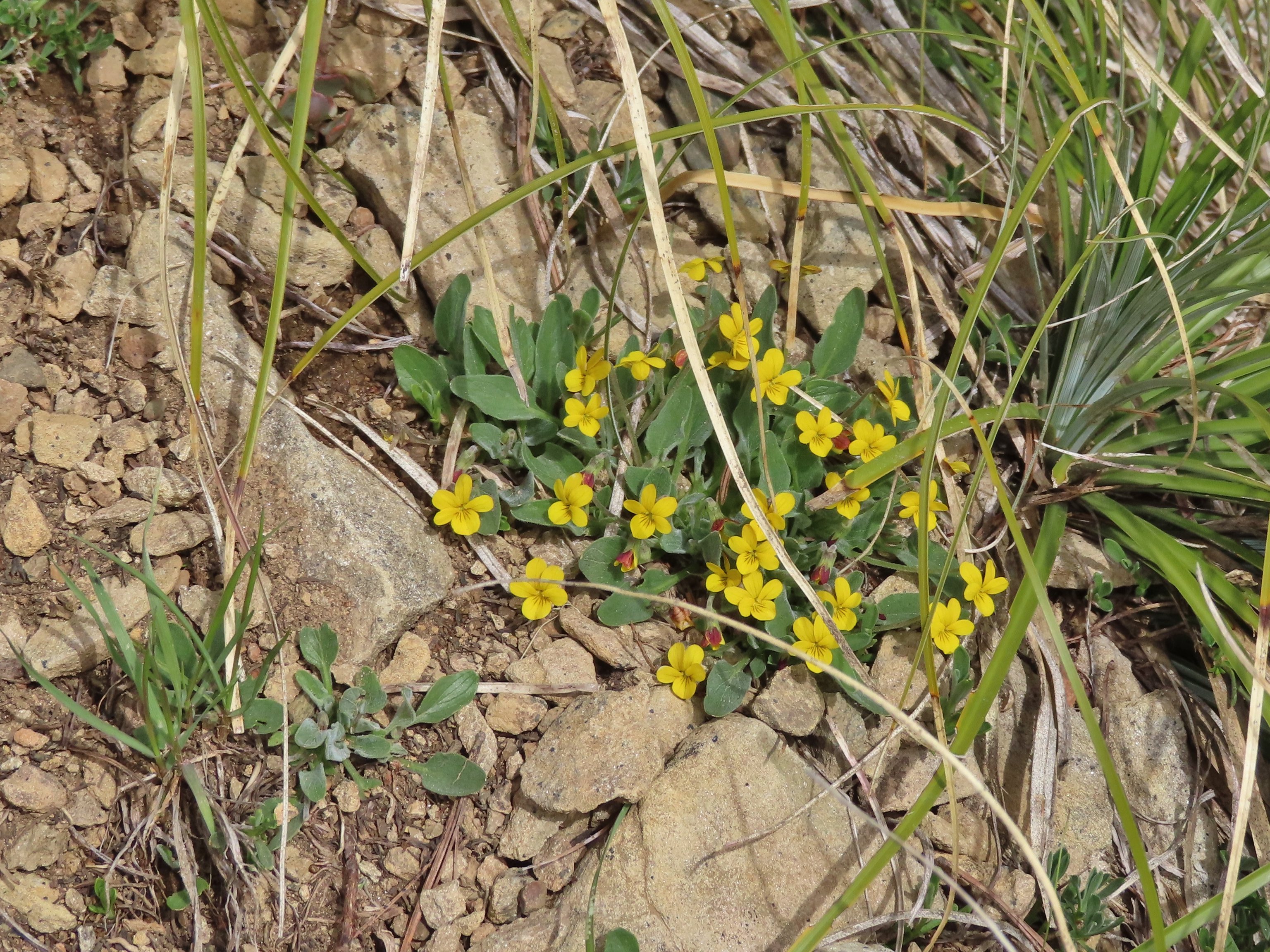 June 16th – Pacific Crest Trail near Siskiyou Gap
 Marsh violet, June 25th – Goat Marsh Lake
 July 1st – Siskiyou Wilderness
 Wedgeleaf? violet – July 1st – Youngs Valley, Siskiyou Wilderness
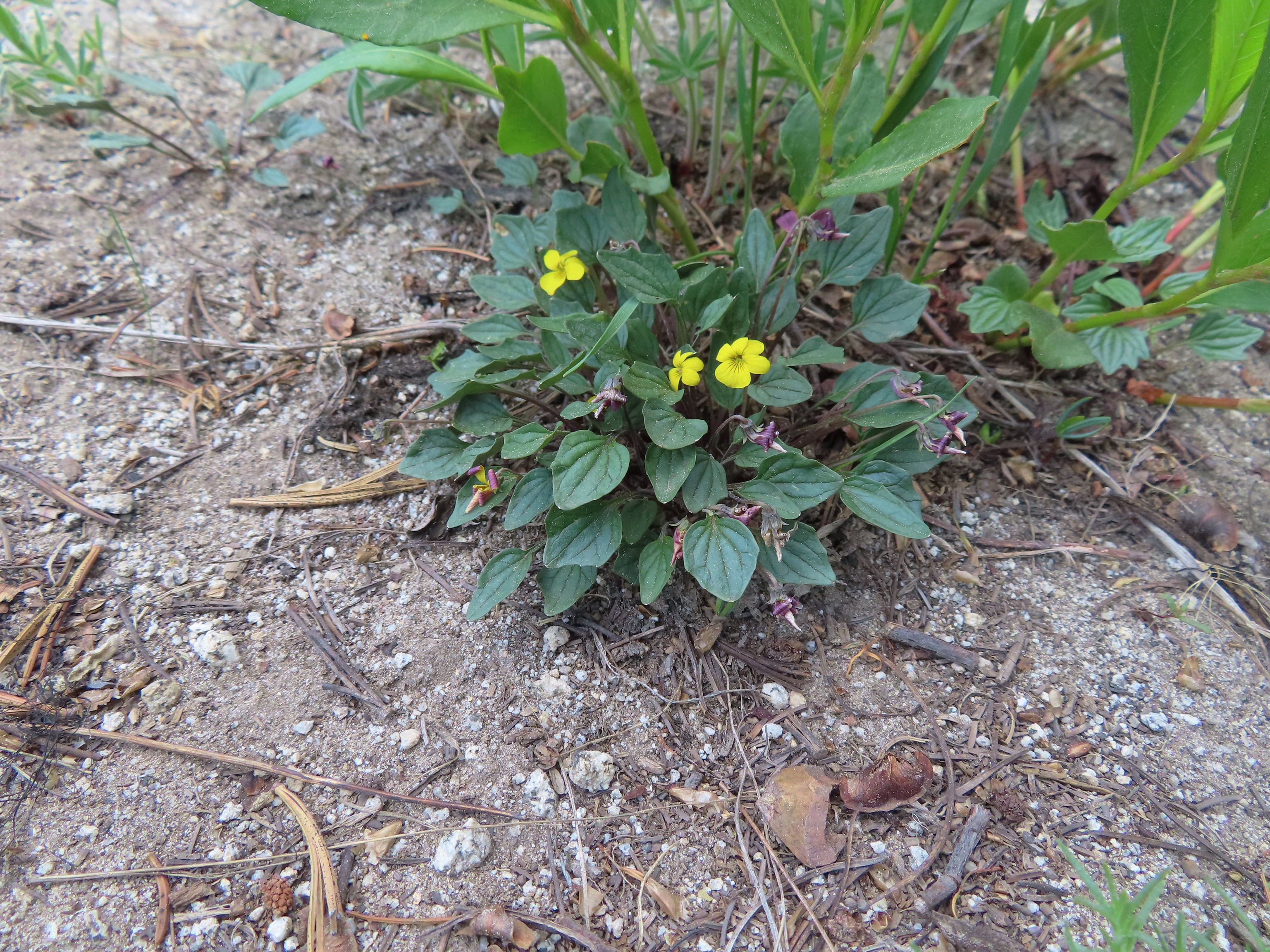 Goosefoot? violet, July 9th – Mt. Ireland
 July 9th – Mt. Ireland
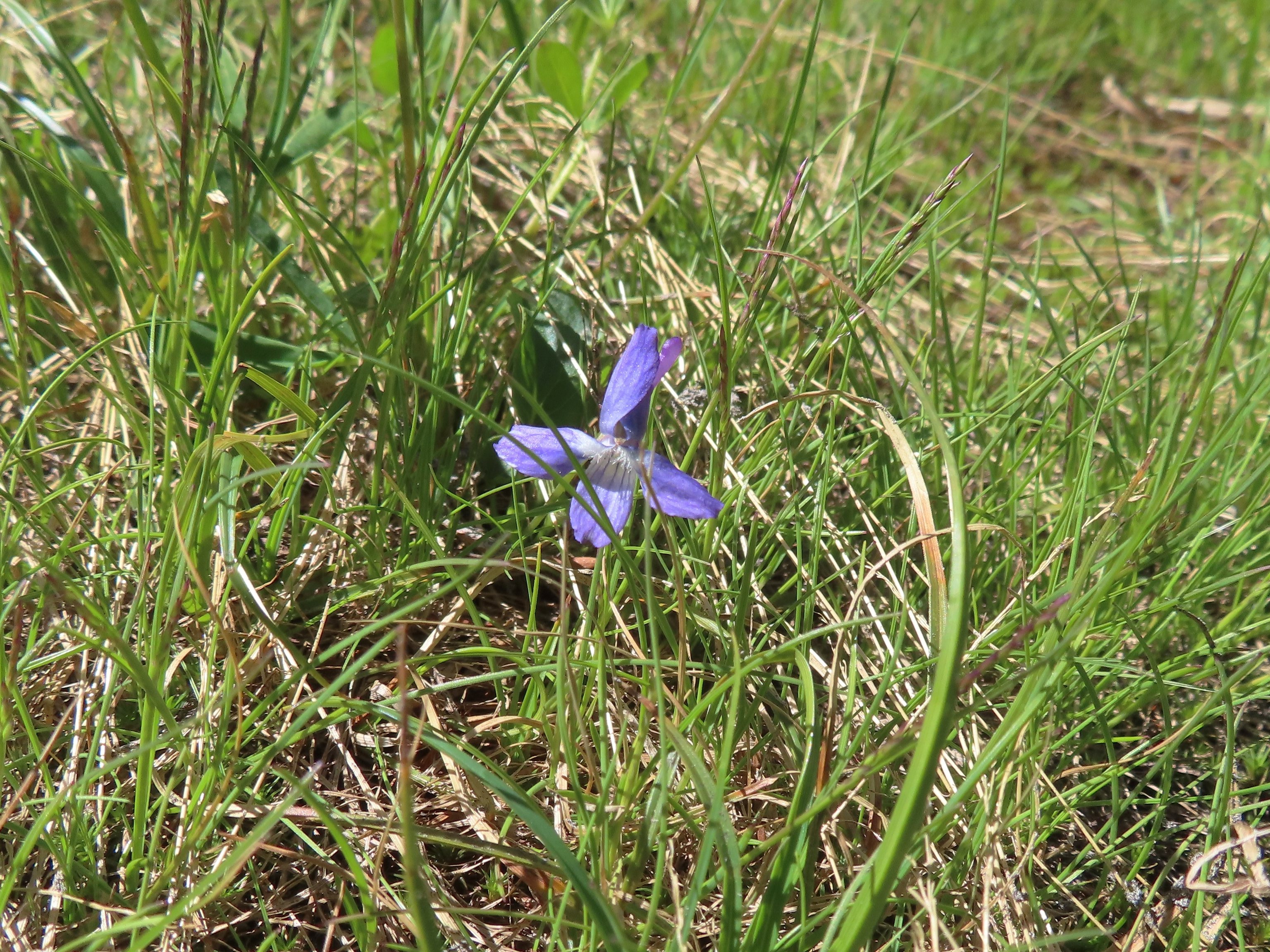 August 13th – Mt. Adams Wilderness.
 Here is a more photogenic bleeding heart from May 21st on the Kings Mountain Trail.
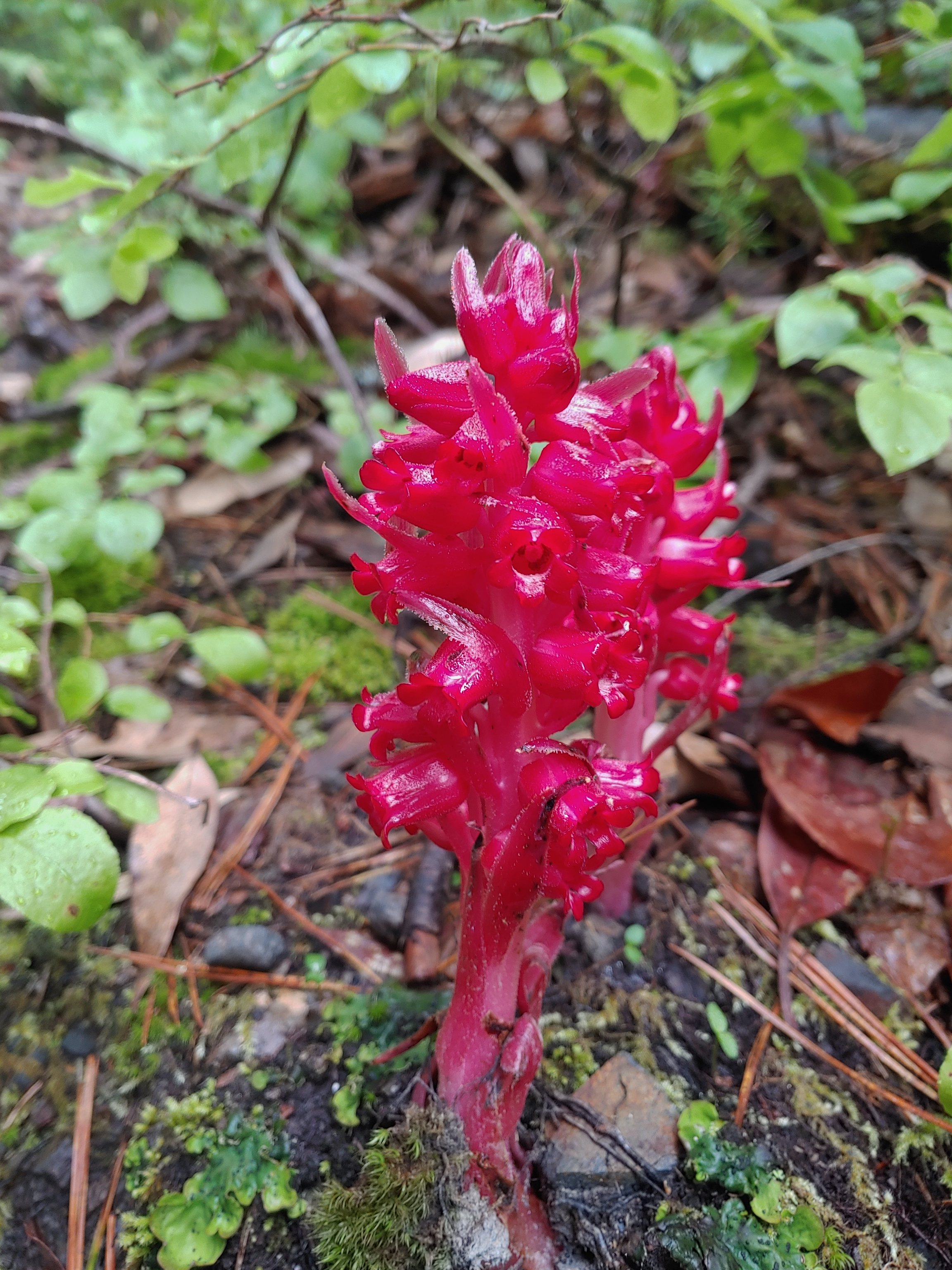 Snow plant, June 18th – Red Buttes Wilderness
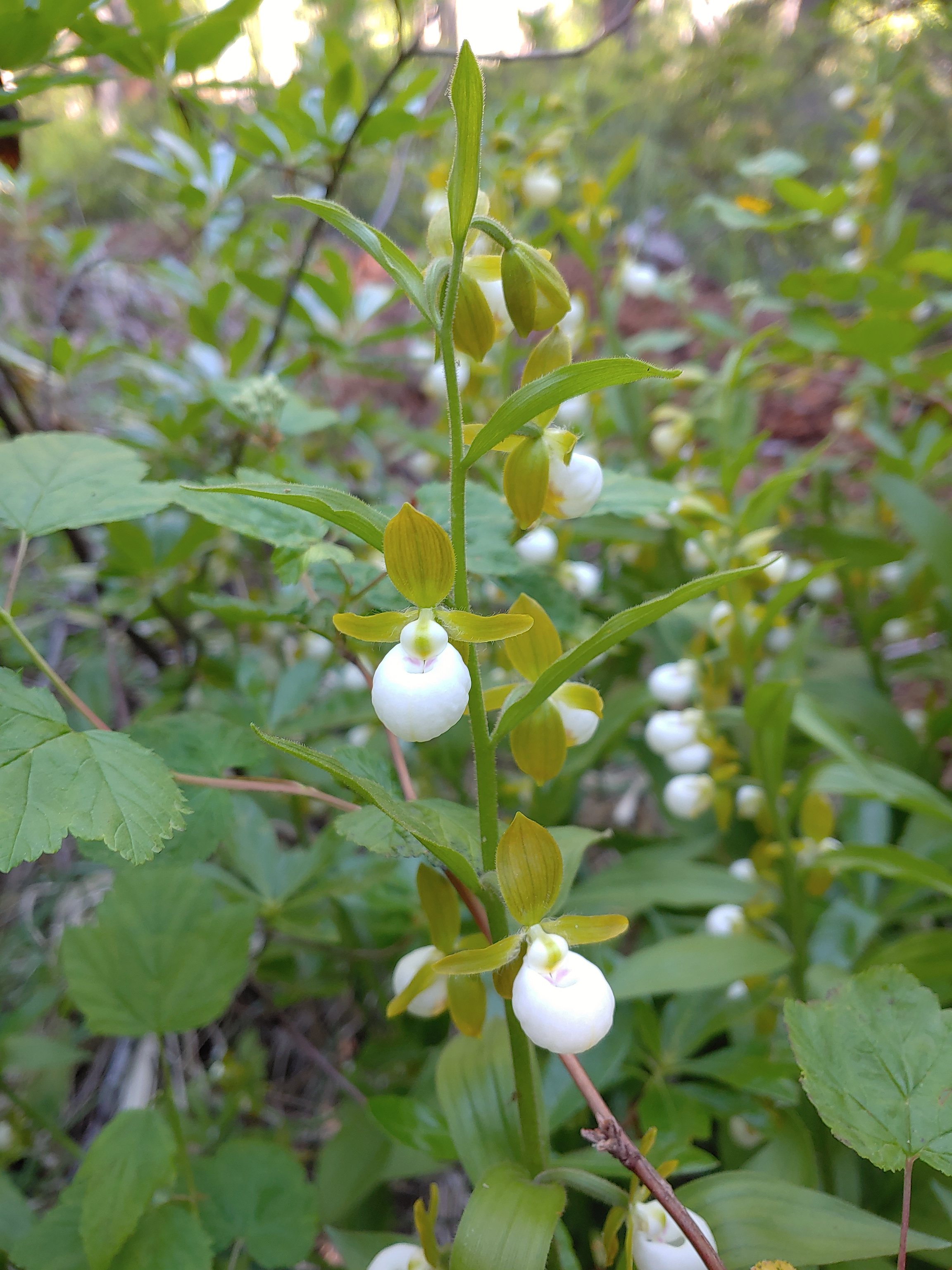 California lady slippers, July 2nd – Siskiyou Wilderness
 Bolander’s lily, July 2nd – Siskiyou Wilderness
 Scarlet fritillary, May 27th – Jack-Ash Trail
 Henderson’s fawn lily, May 27th – Jack-Ash Trail
 Pungent desert parsley, April 2nd -Balfour Trail
 Columbia desert parsley, April 2nd – Klickitat Trail
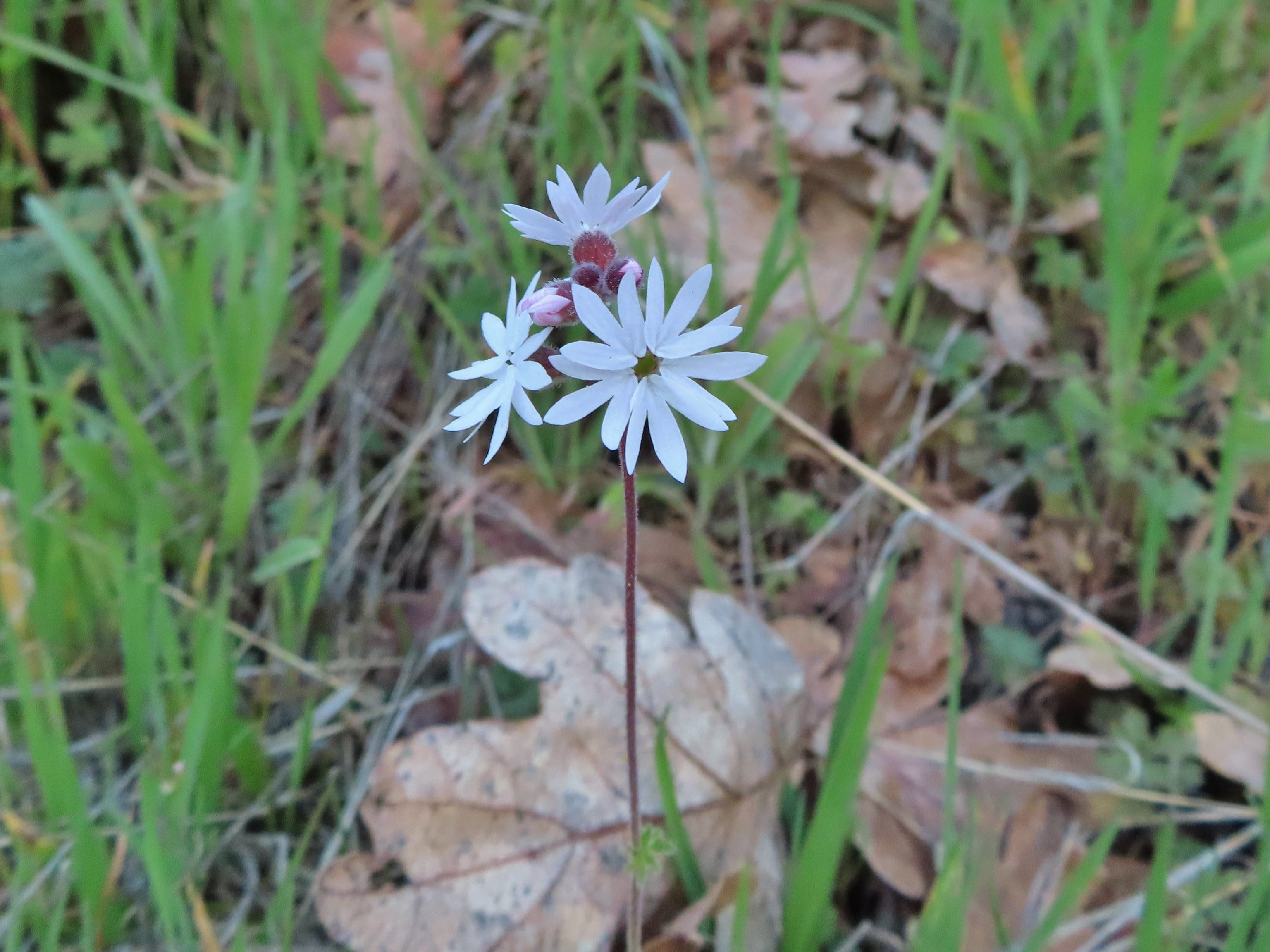 Woodland stars, April 2nd – Balfour Trail
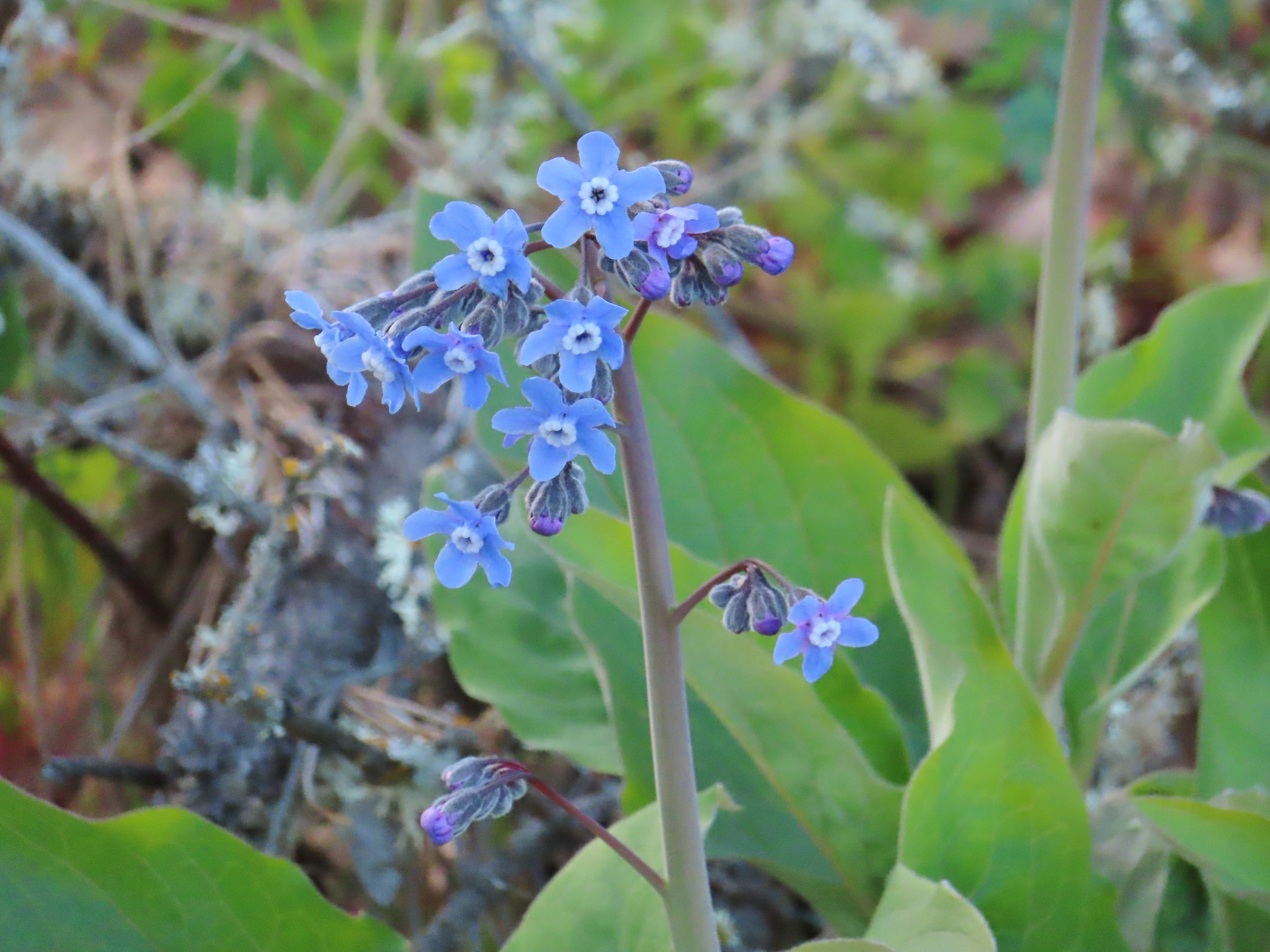 Pacific hound’s tongue, April 2nd – Balfour Trail
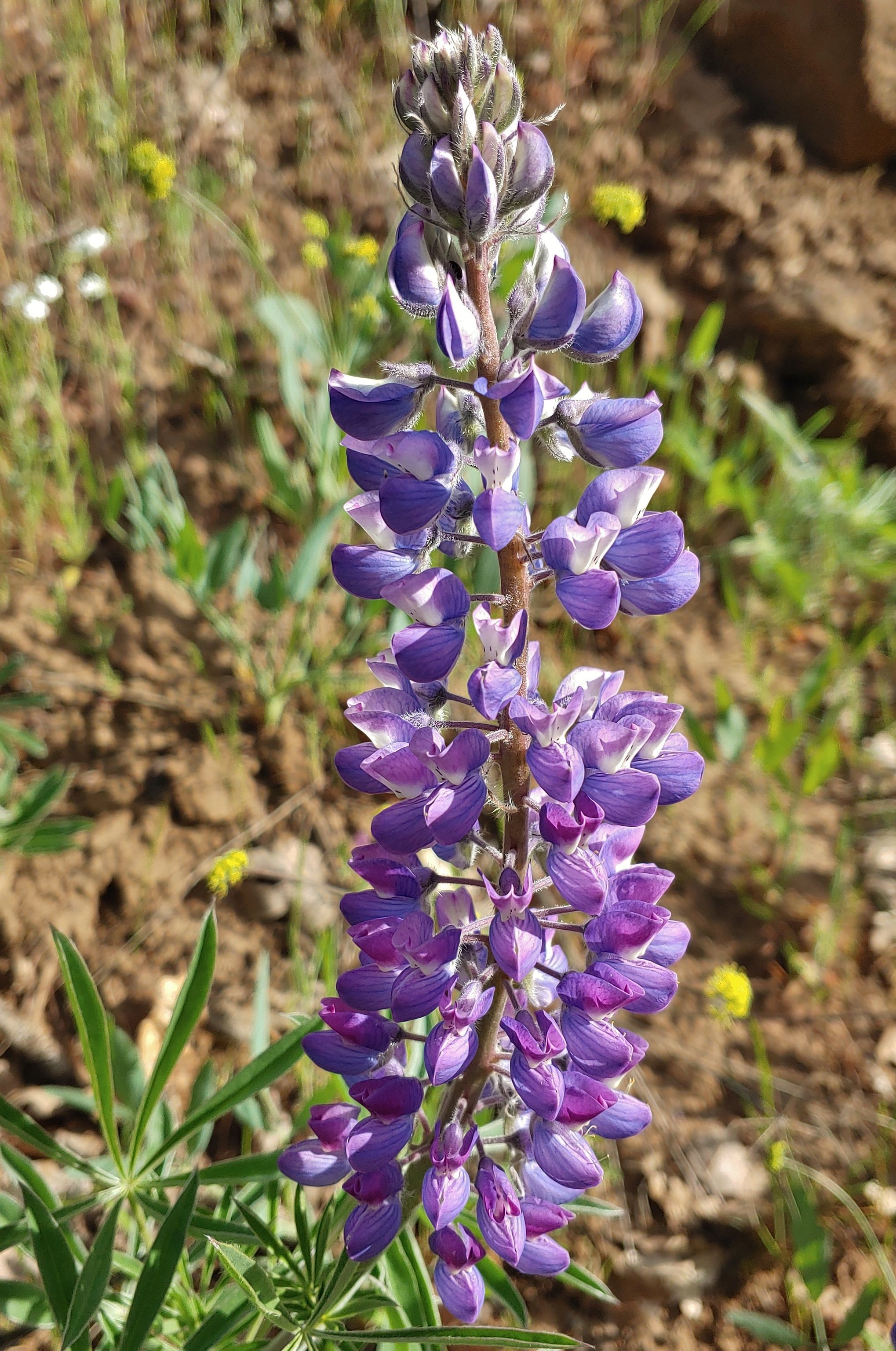 Lupine, April 2nd – Klickitat Trail
 Big leaf maple, April 2nd – Klickitat Trail
 Slender phlox, April 2nd – Klickitat Trail
 Fringecup, April 23rd – Ankeny Wildlife Refuge
 Buttercups, April 23rd – Ankeny Wildlife Refuge
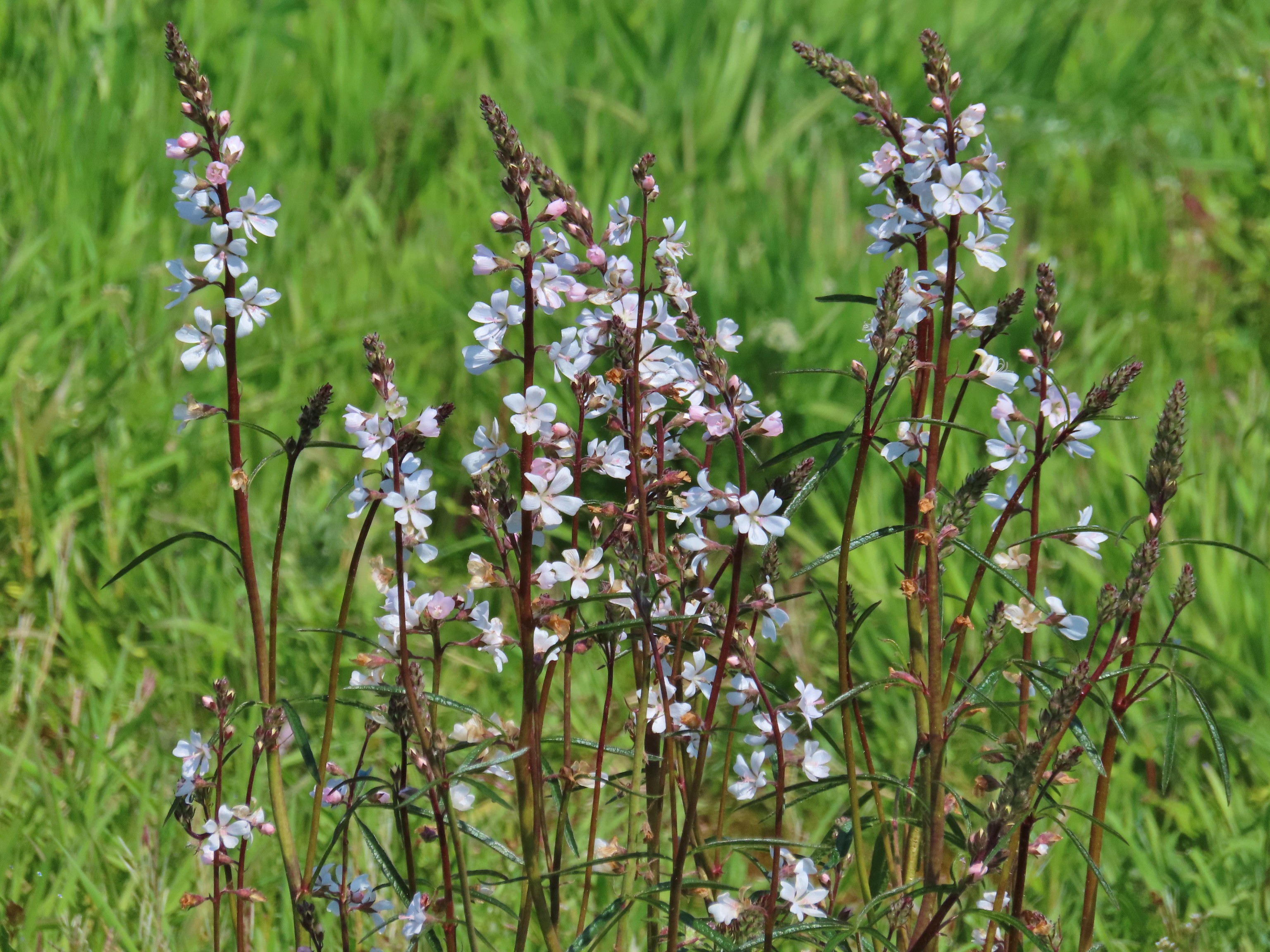 Checkermallow, April 23rd – Ankeny Wildlife Refuge
 Another checkermallow, April 23rd – Ankeny Wildlife Refuge
 Iris, April 23rd – Ankeny Wildlife Refuge
 A paintbrush, May 1st – Memaloose Hills
 Balsamroot, May 1st – Memaloose Hills
 Large-flower triteleia, May 1st – Memaloose Hills
 Naked broomrape, May 1st – Memaloose Hills
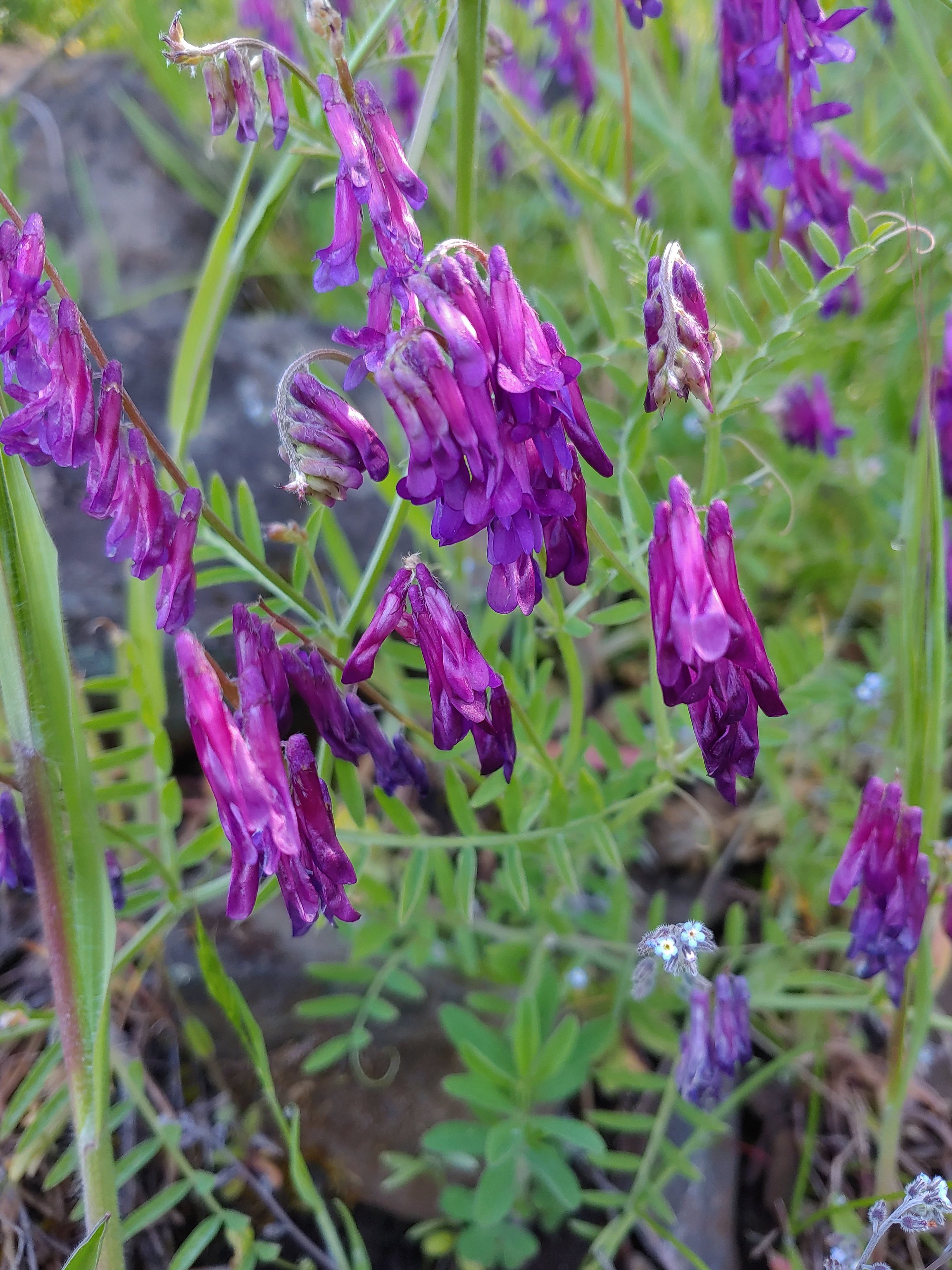 Vetch, May 1st – Moiser Plateau
 Large-head clover, May 1st – Moiser Plateau
 Fiddleneck, May 1st – Moiser Plateau
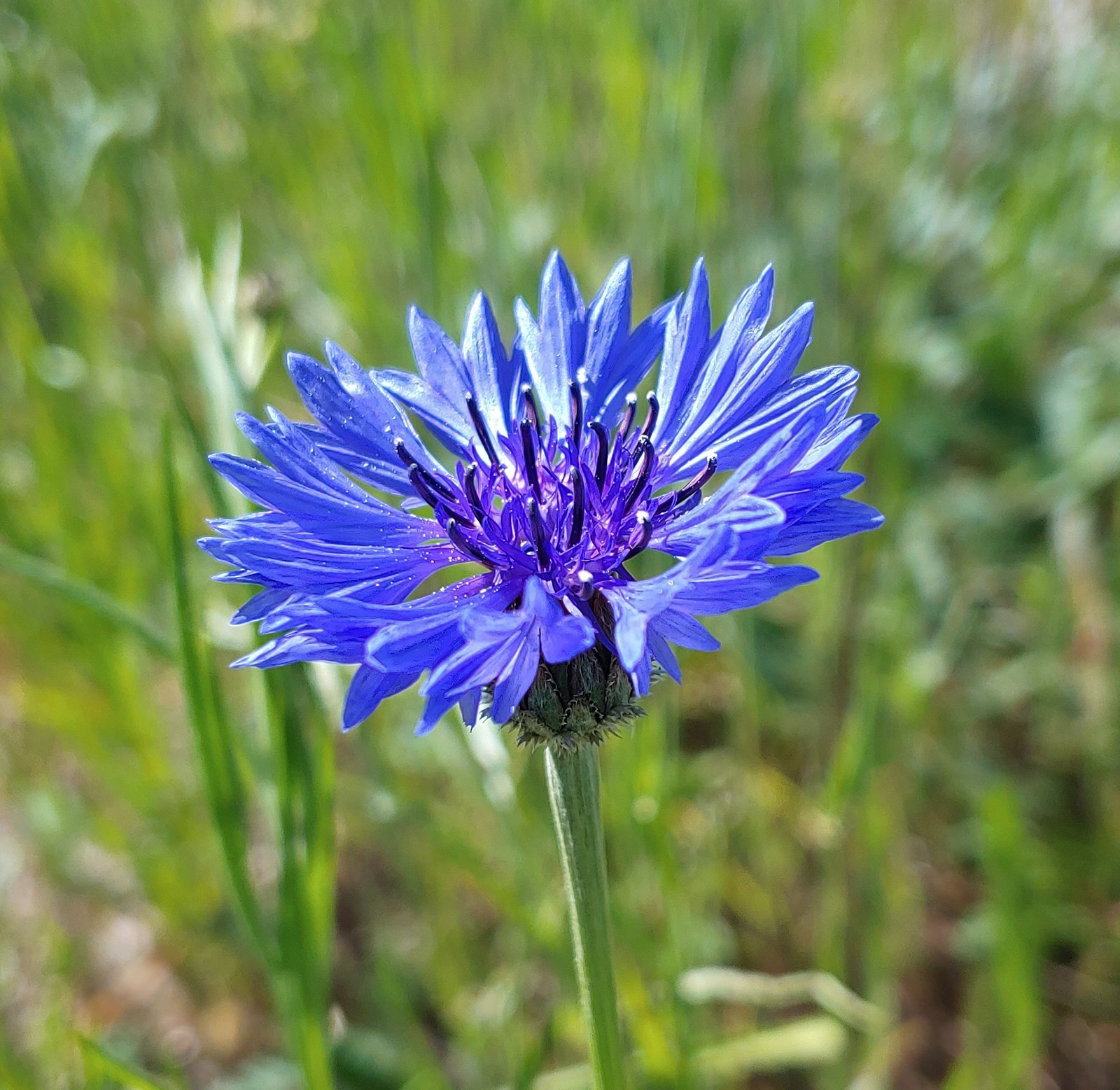 Bachelor button (non-native), May 1st – Moiser Plateau
 Service berry, May 7th – Orenco Woods
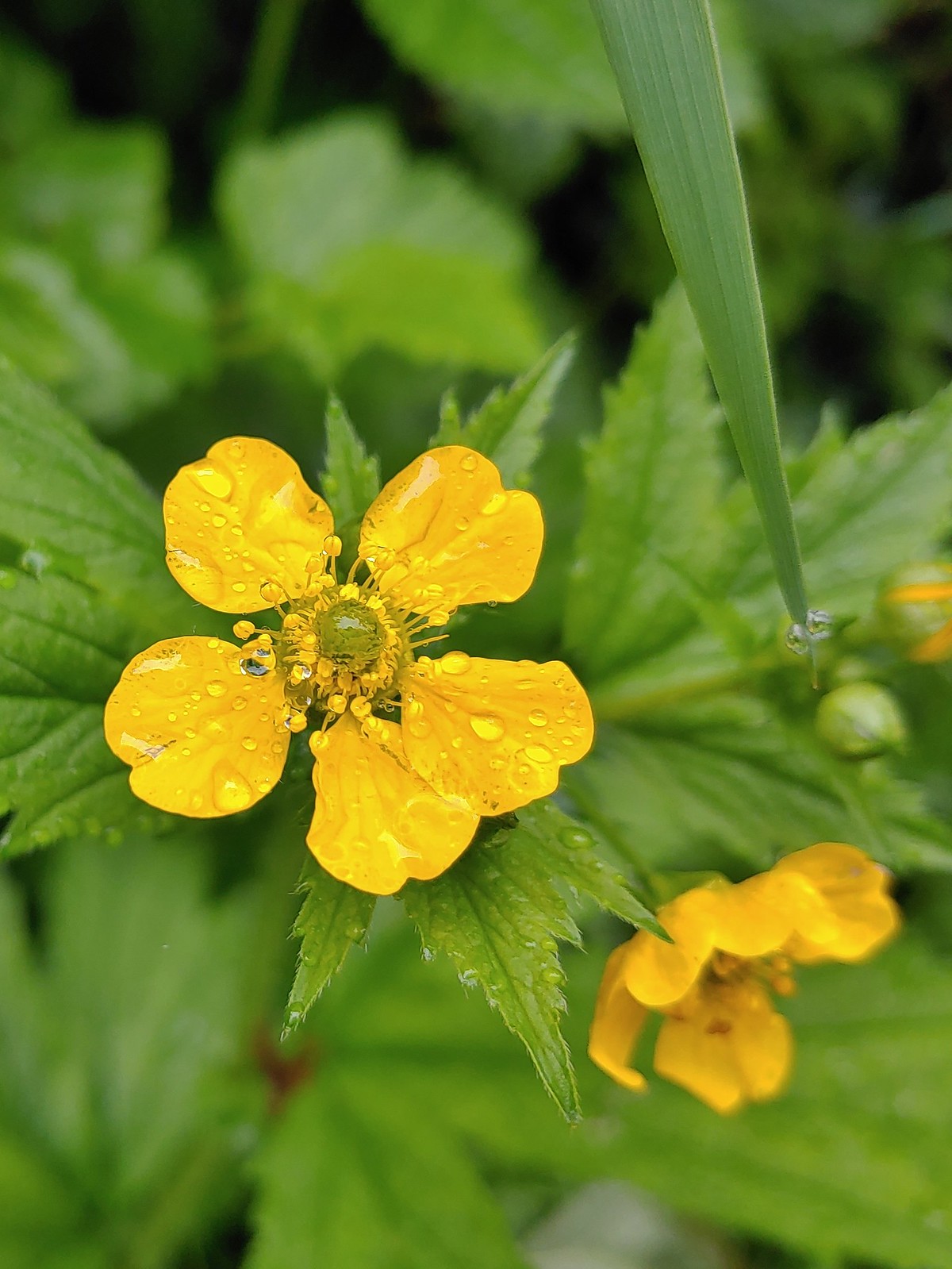 Aven, May 7th – Noble Woods
 Camas, May 7th – Miller Woods
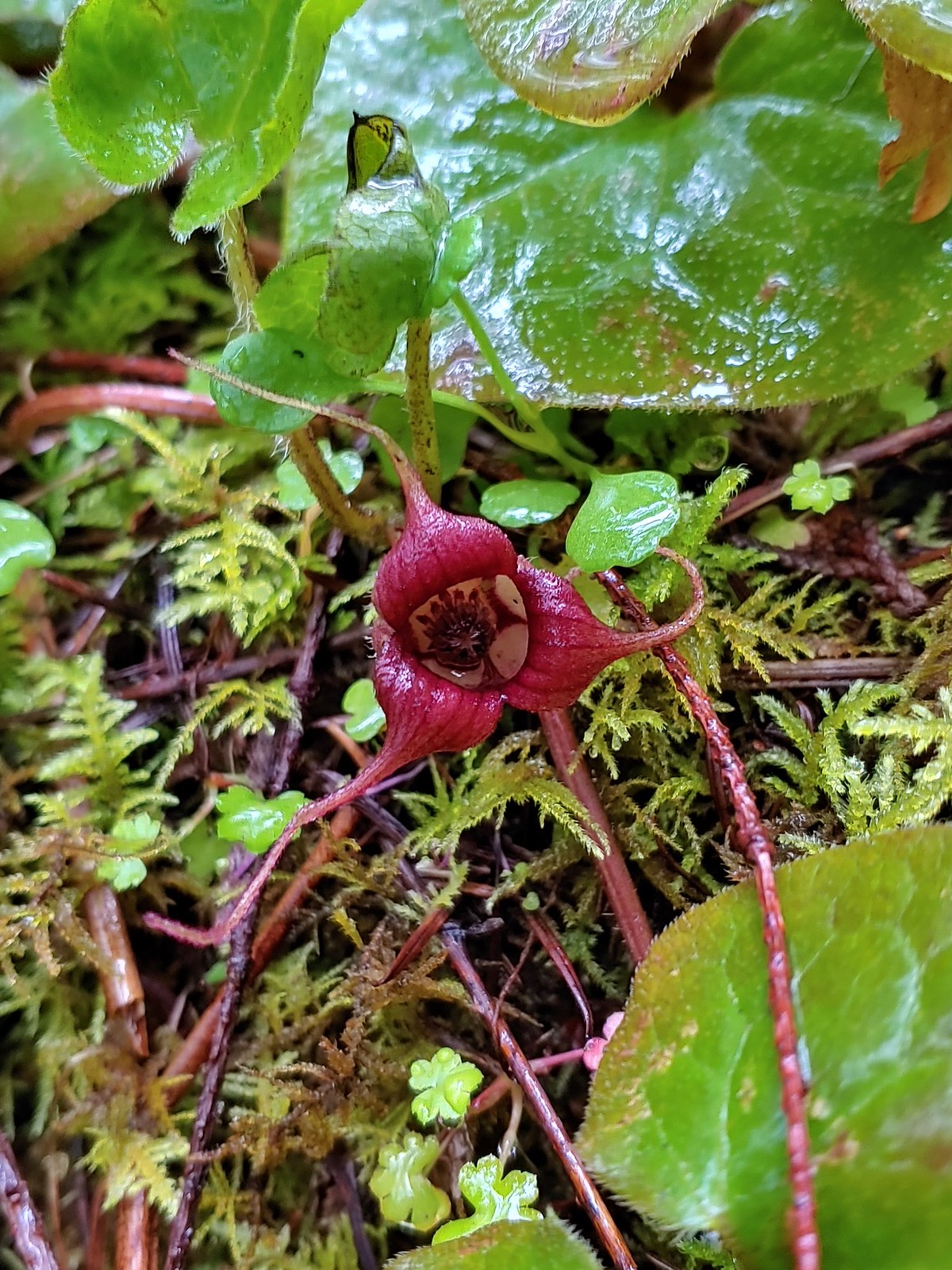 Wild ginger, May 7th – Miller Woods
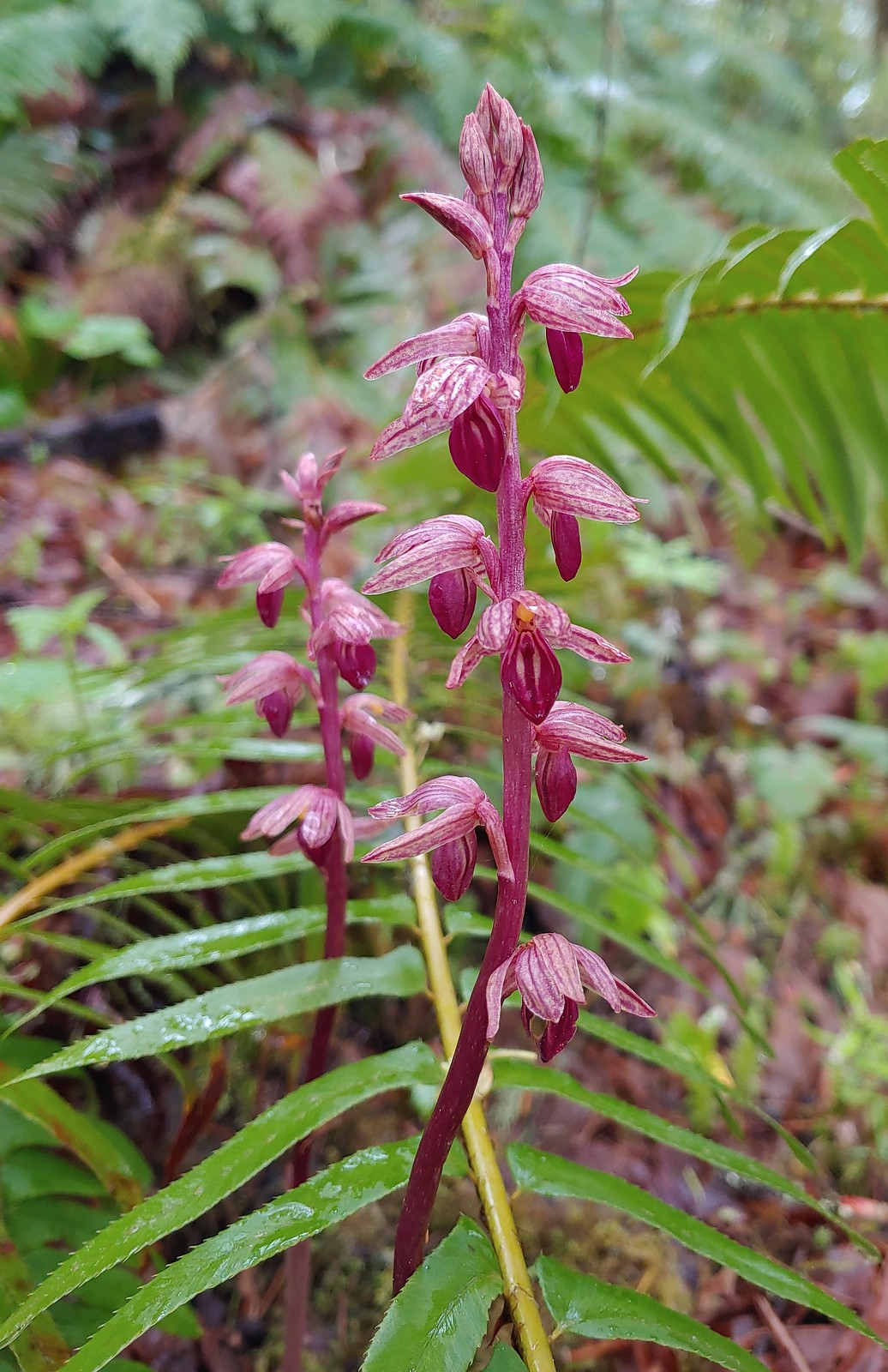 Striped coralroot, May 7th – Miller Woods
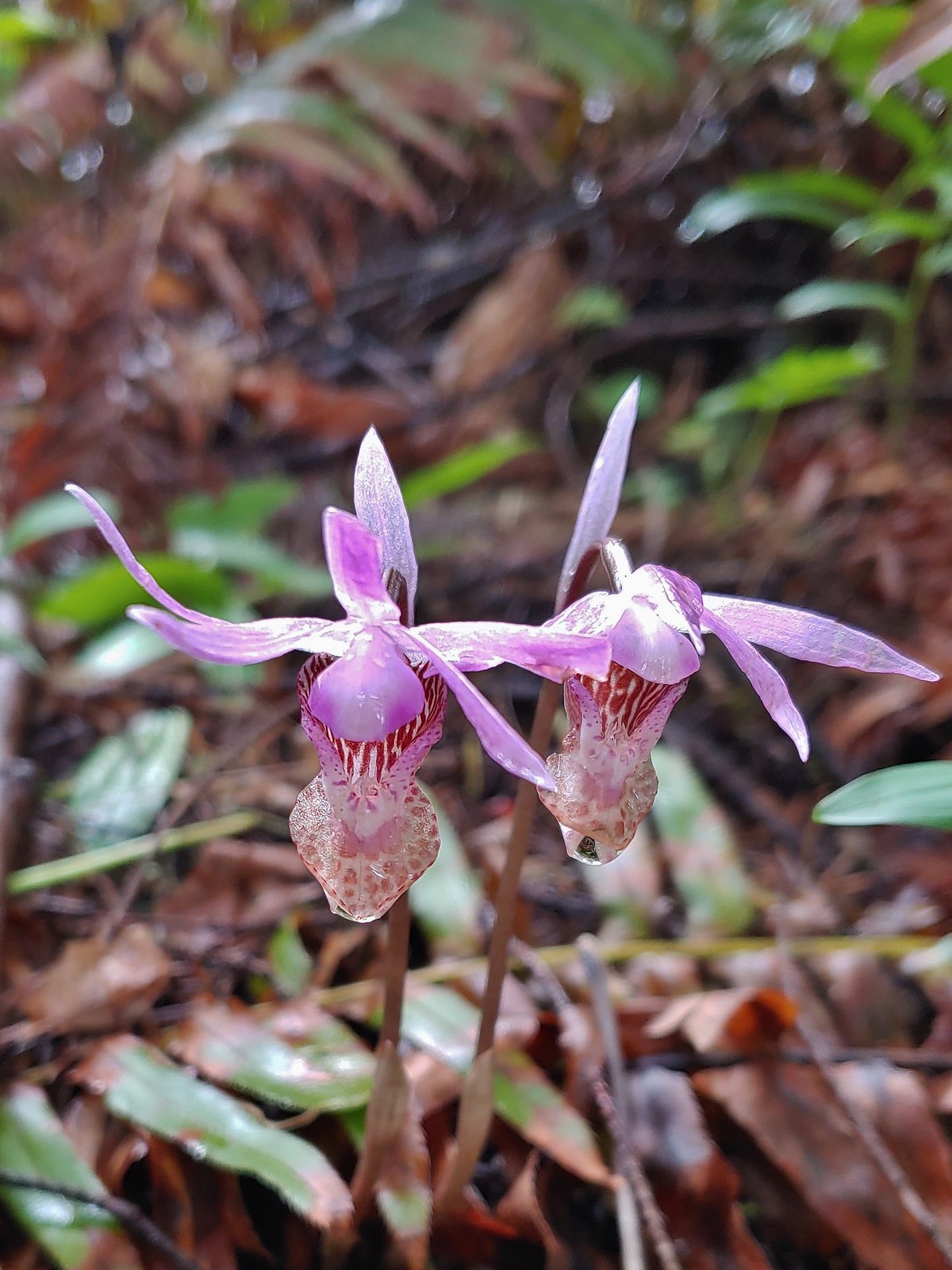 Fairy slippers, May 7th – Miller Woods
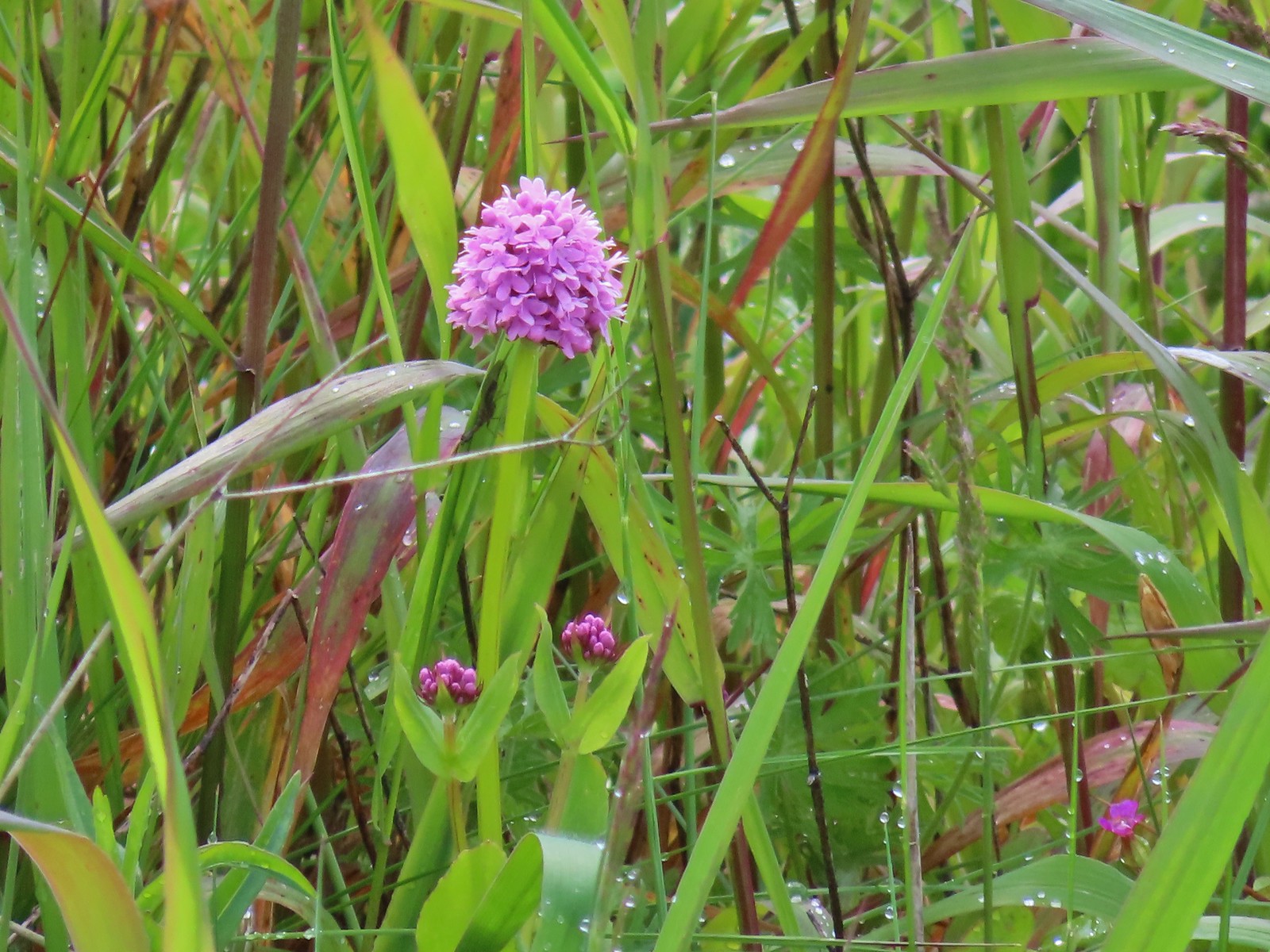 Plectritis, May 14th – Chehalem Ridge Nature Park
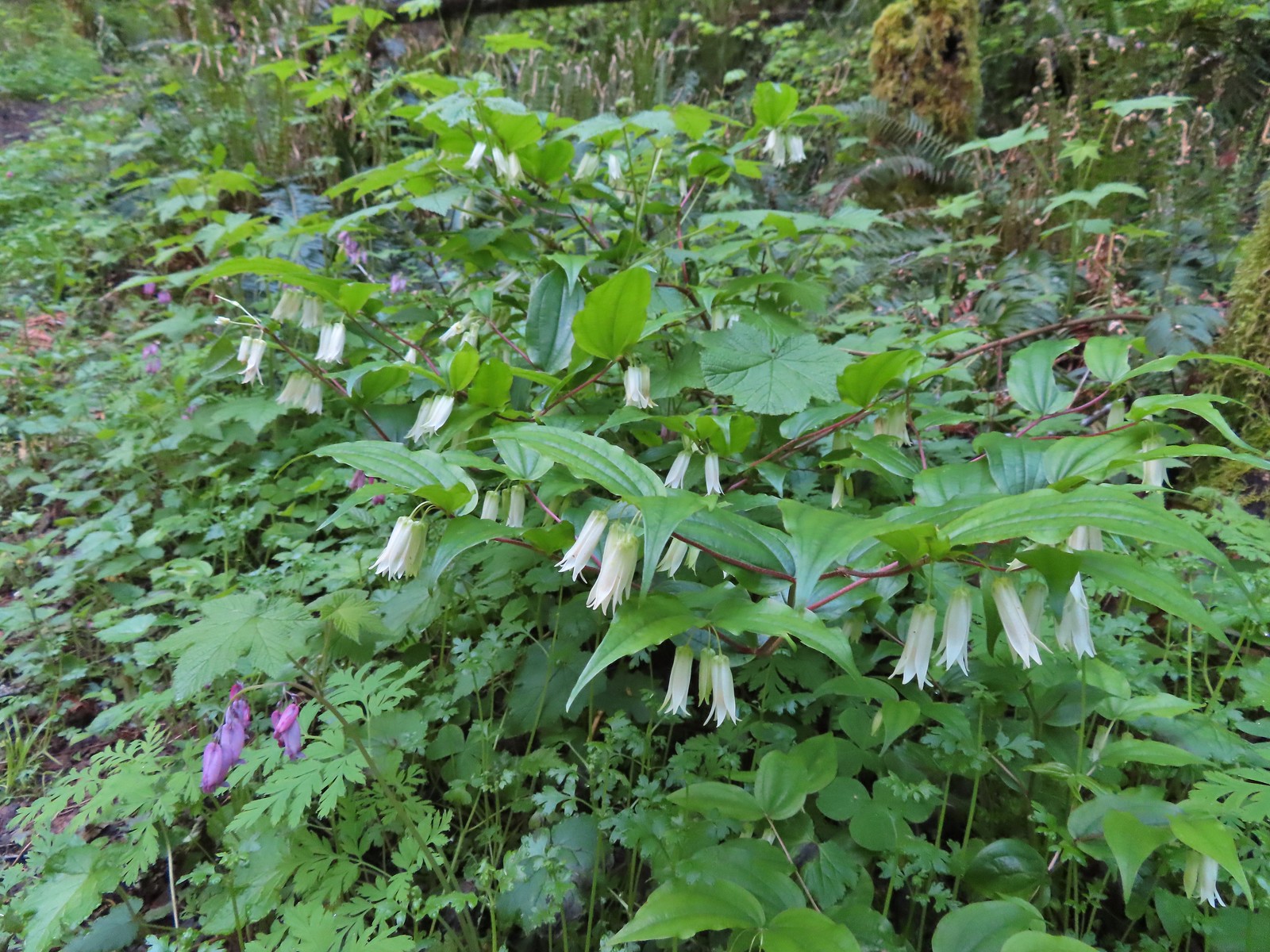 Fairy bells, May 21st – Elk/Kings Mountain Traverse
 Snow queen, May 21st – Elk/Kings Mountain Traverse
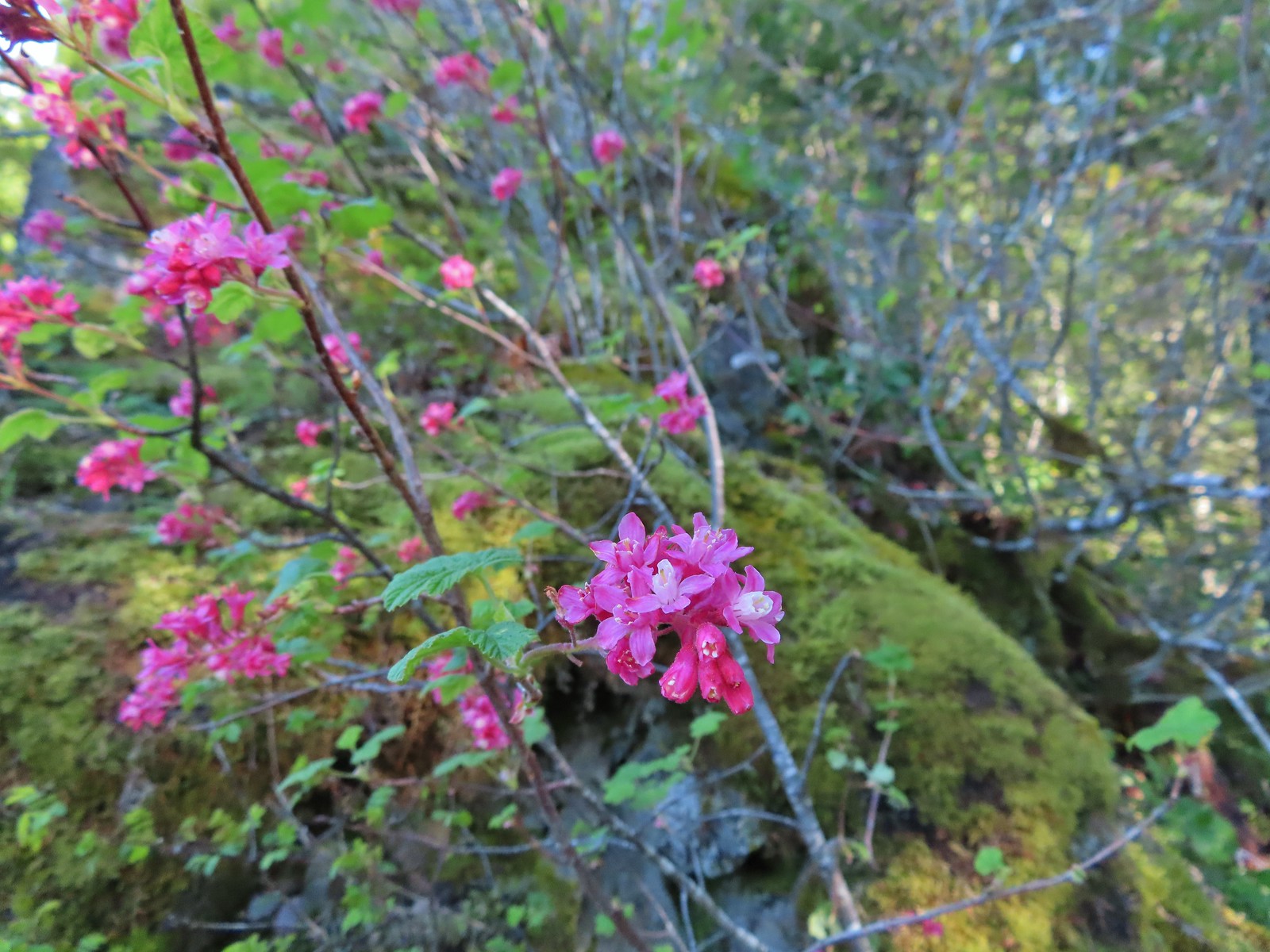 Red flowering currant, May 21st – Elk/Kings Mountain Traverse
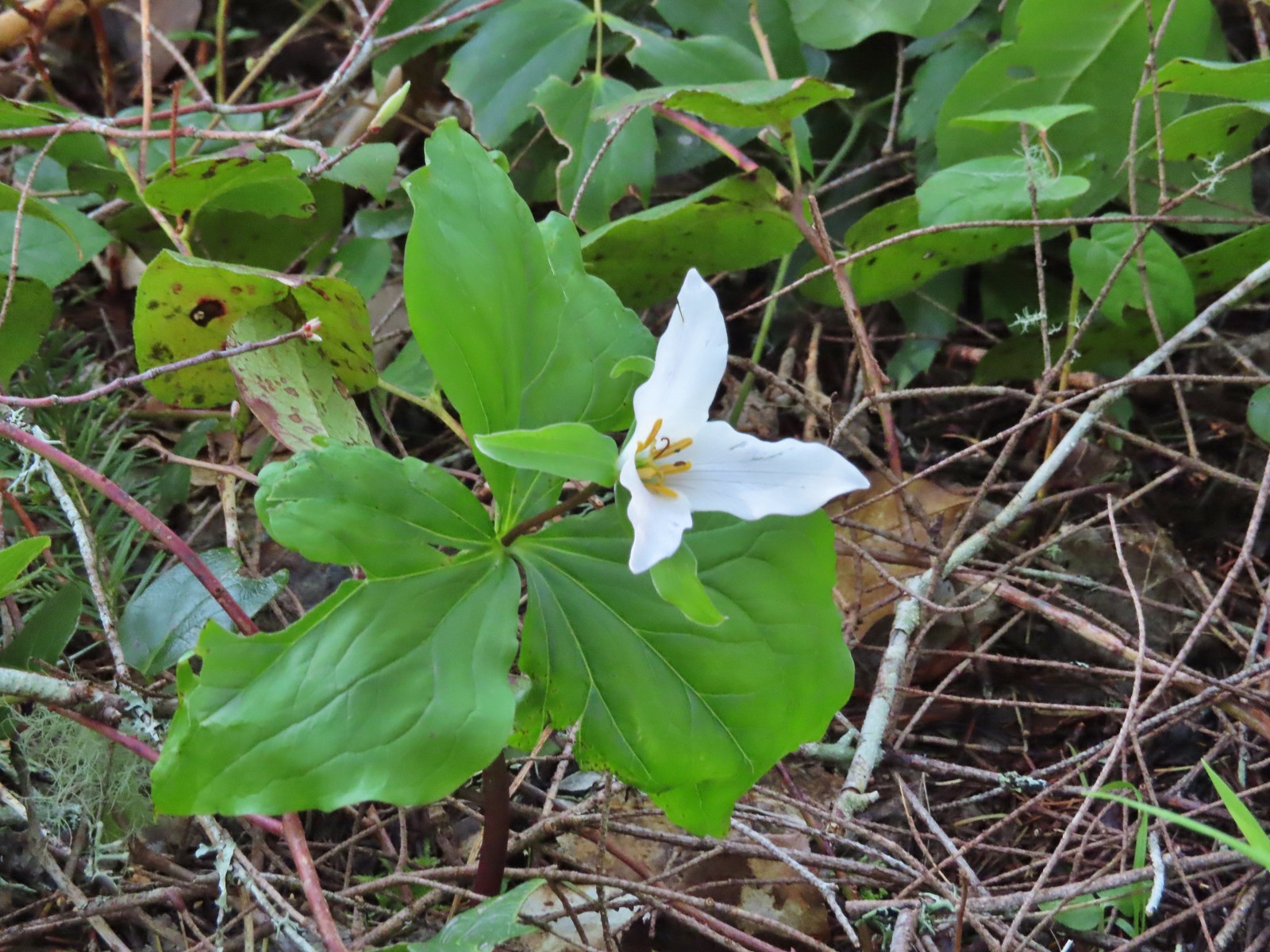 Trillium, May 21st – Elk/Kings Mountain Traverse
 A monkeyflower, May 21st – Elk/Kings Mountain Traverse
 Chocolate lily, May 21st – Elk/Kings Mountain Traverse
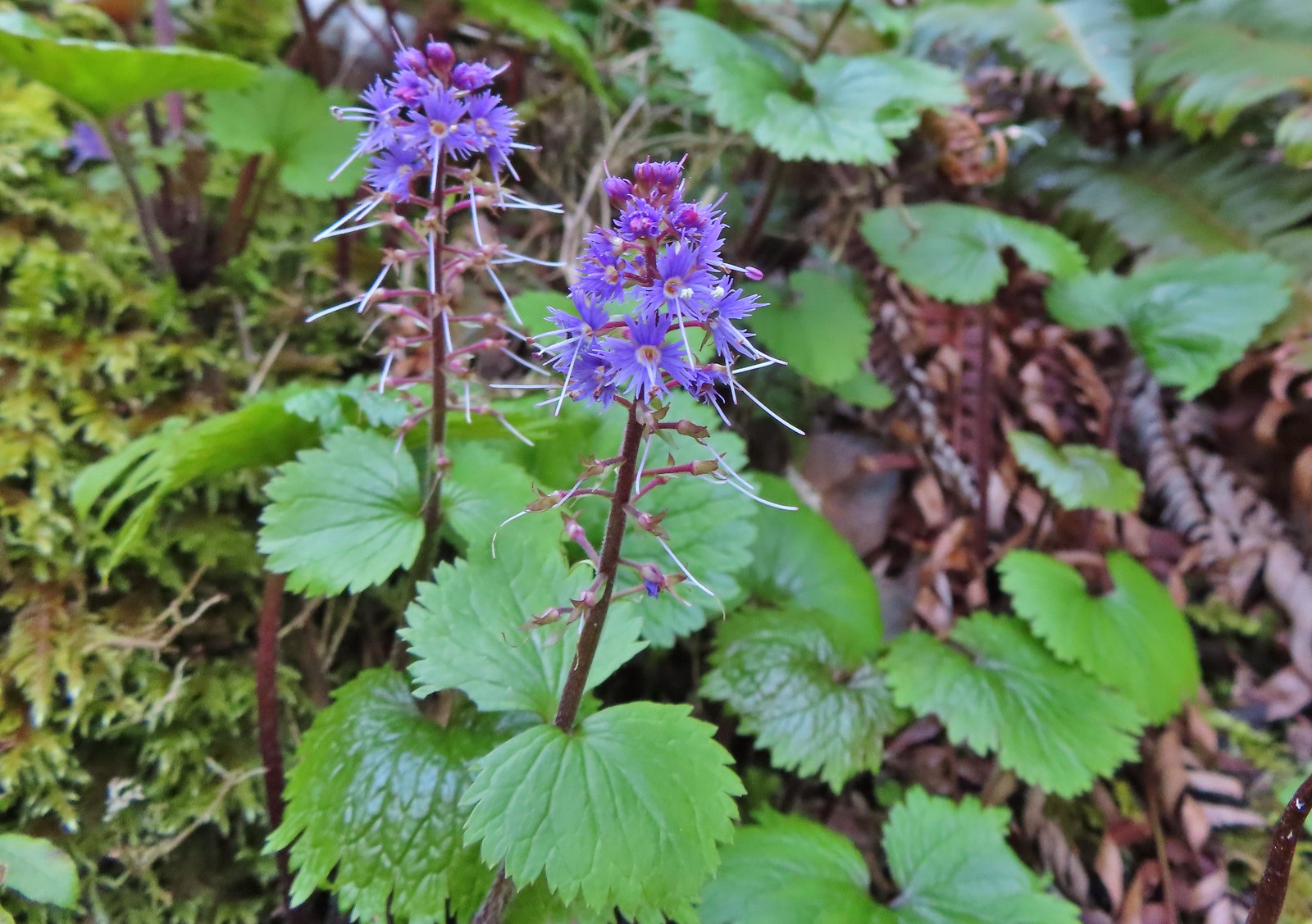 Kittentails, May 21st – Elk/Kings Mountain Traverse
 Glacier lily, May 21st – Elk/Kings Mountain Traverse
 Henderson’s stars, May 25th – Mule Mountain
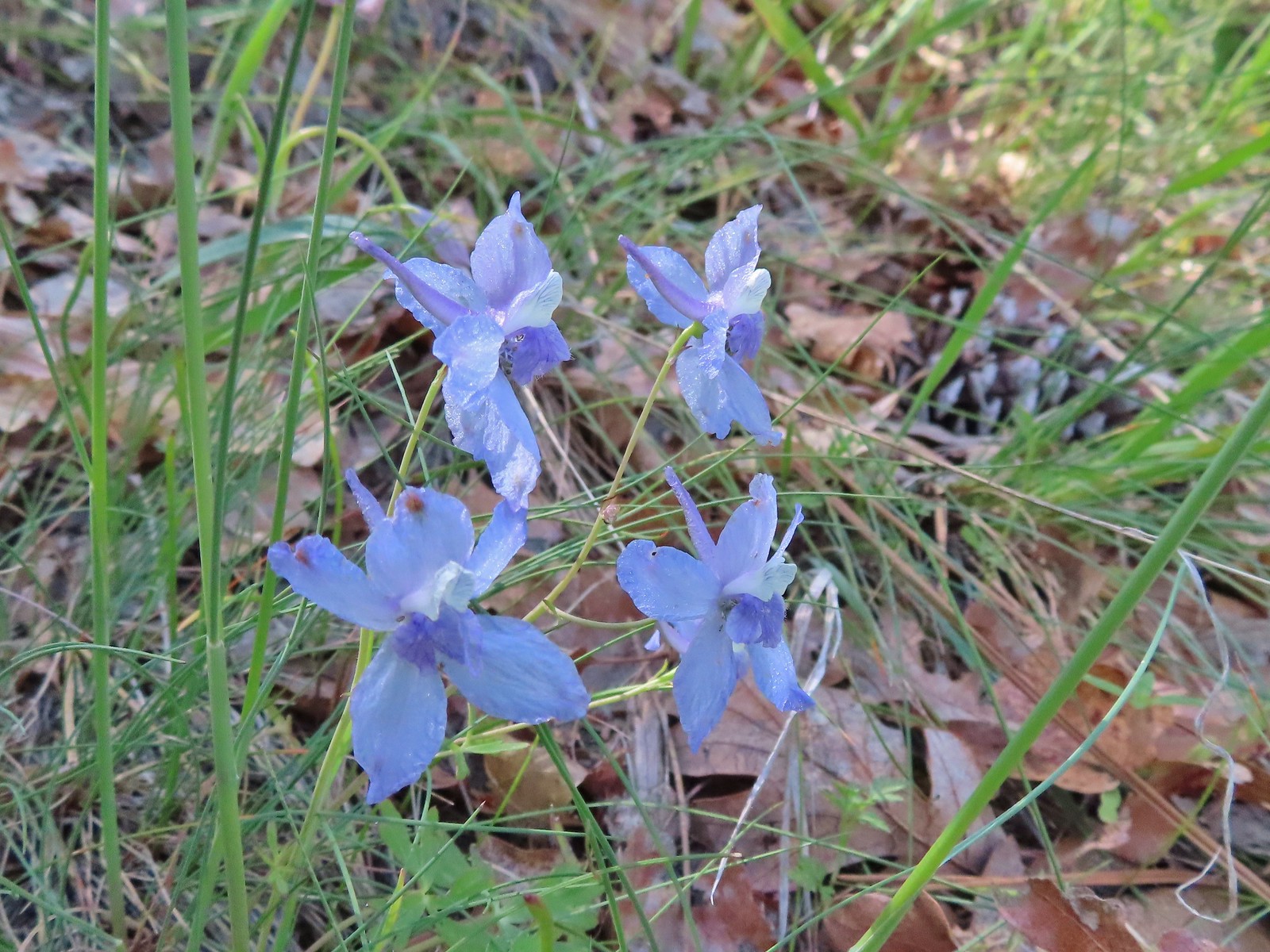 Larkspur, May 25th – Mule Mountain
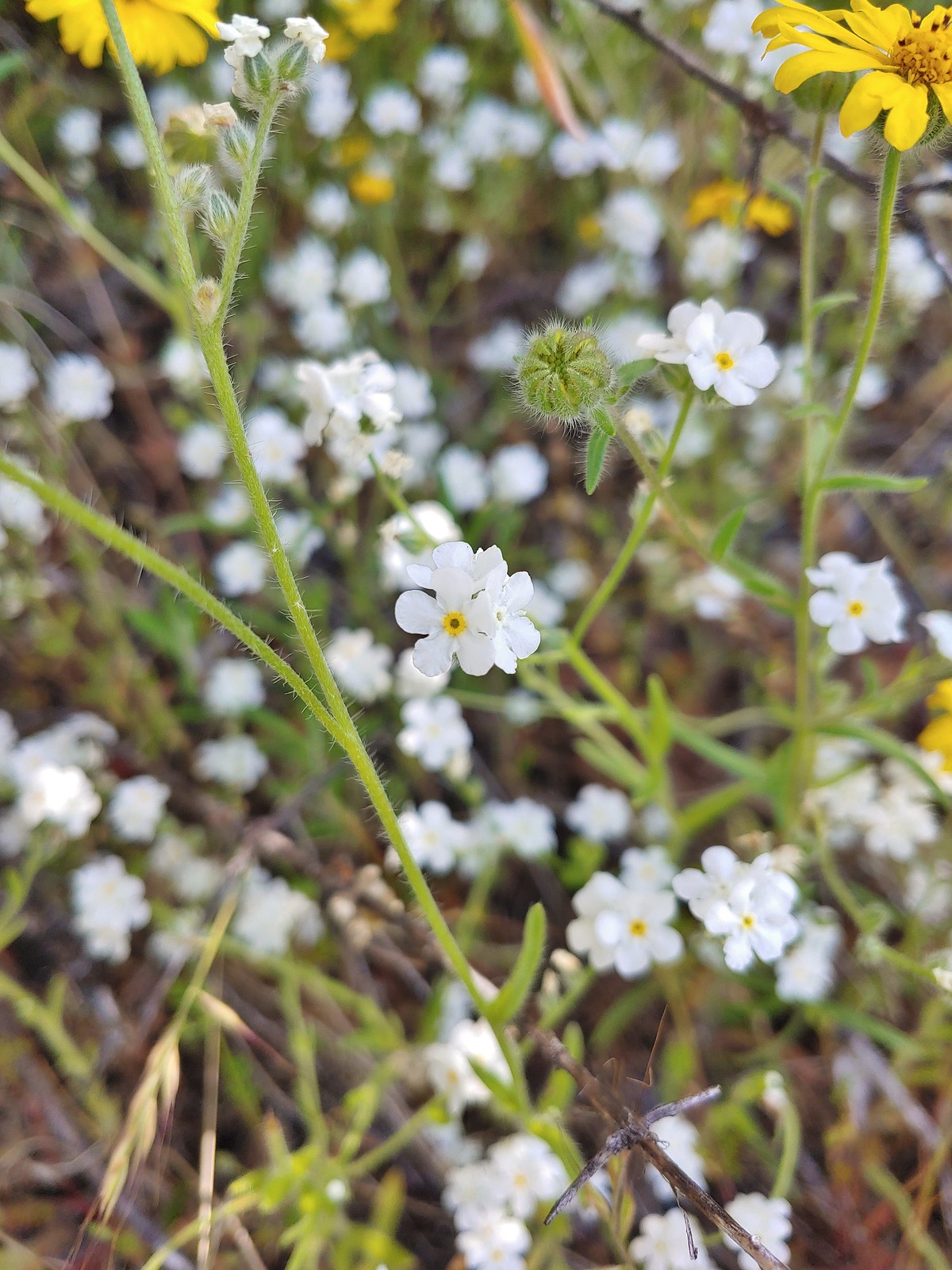 Not sure if this is a cryptantha or a popcorn flower, May 25th – Mule Mountain
 Douglas’ stichwort, May 25th – Mule Mountain
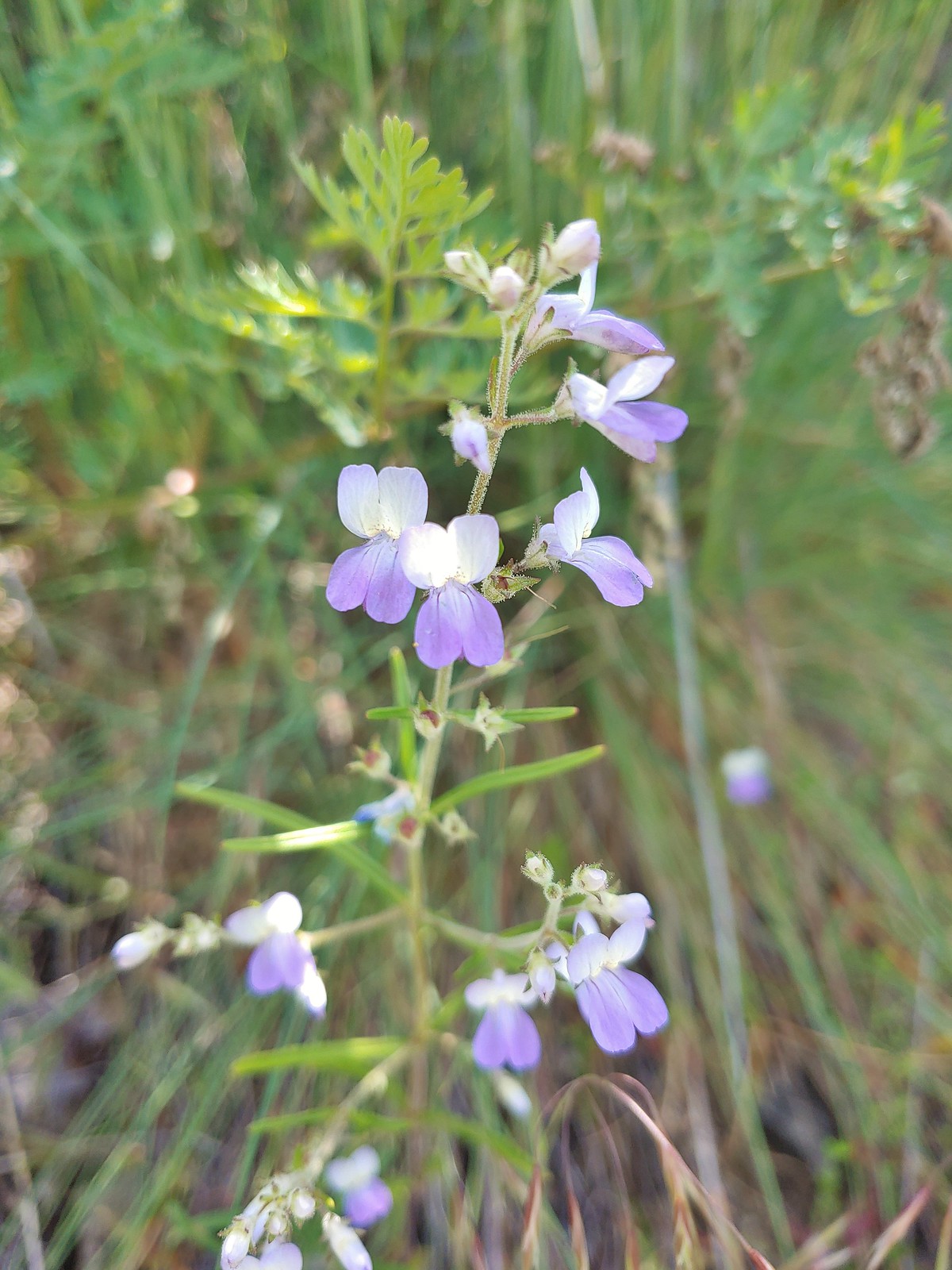 A blue-eyed Mary, May 25th – Mule Mountain
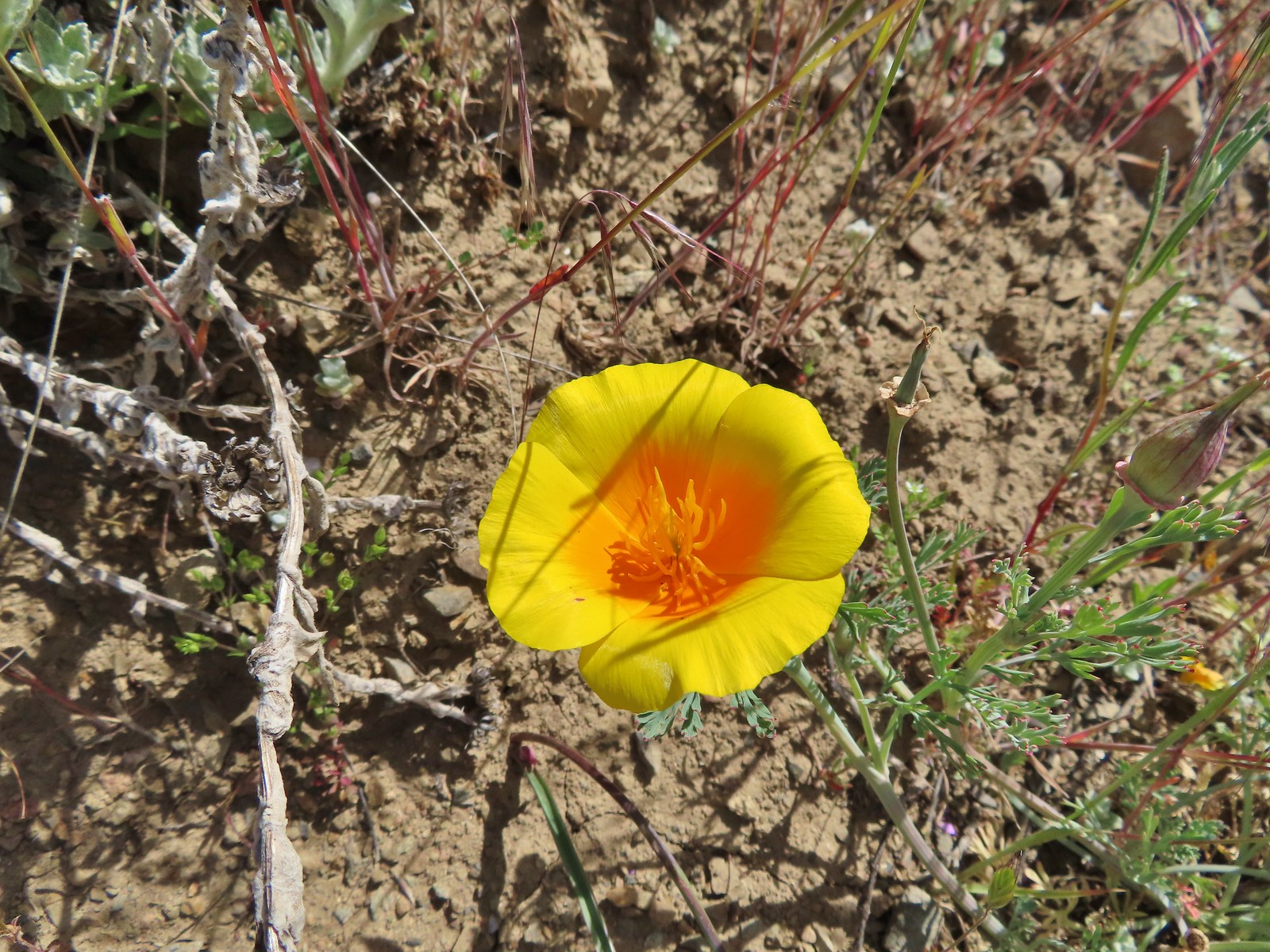 California poppy, May 25th – Mule Mountain
 A clarkia, May 25 – Mule Mountain
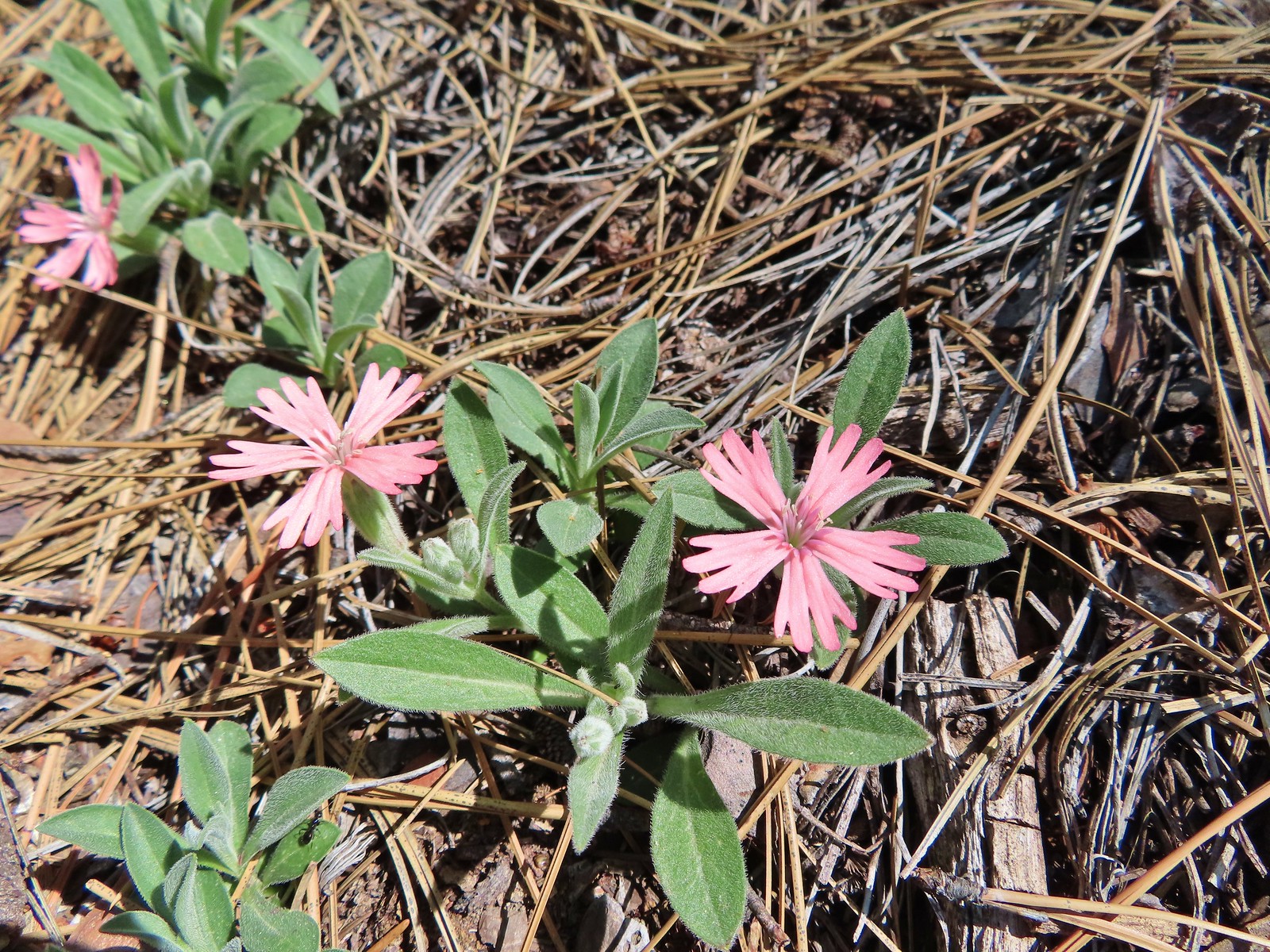 Hooker’s Indian pink, May 25th – Mule Mountain
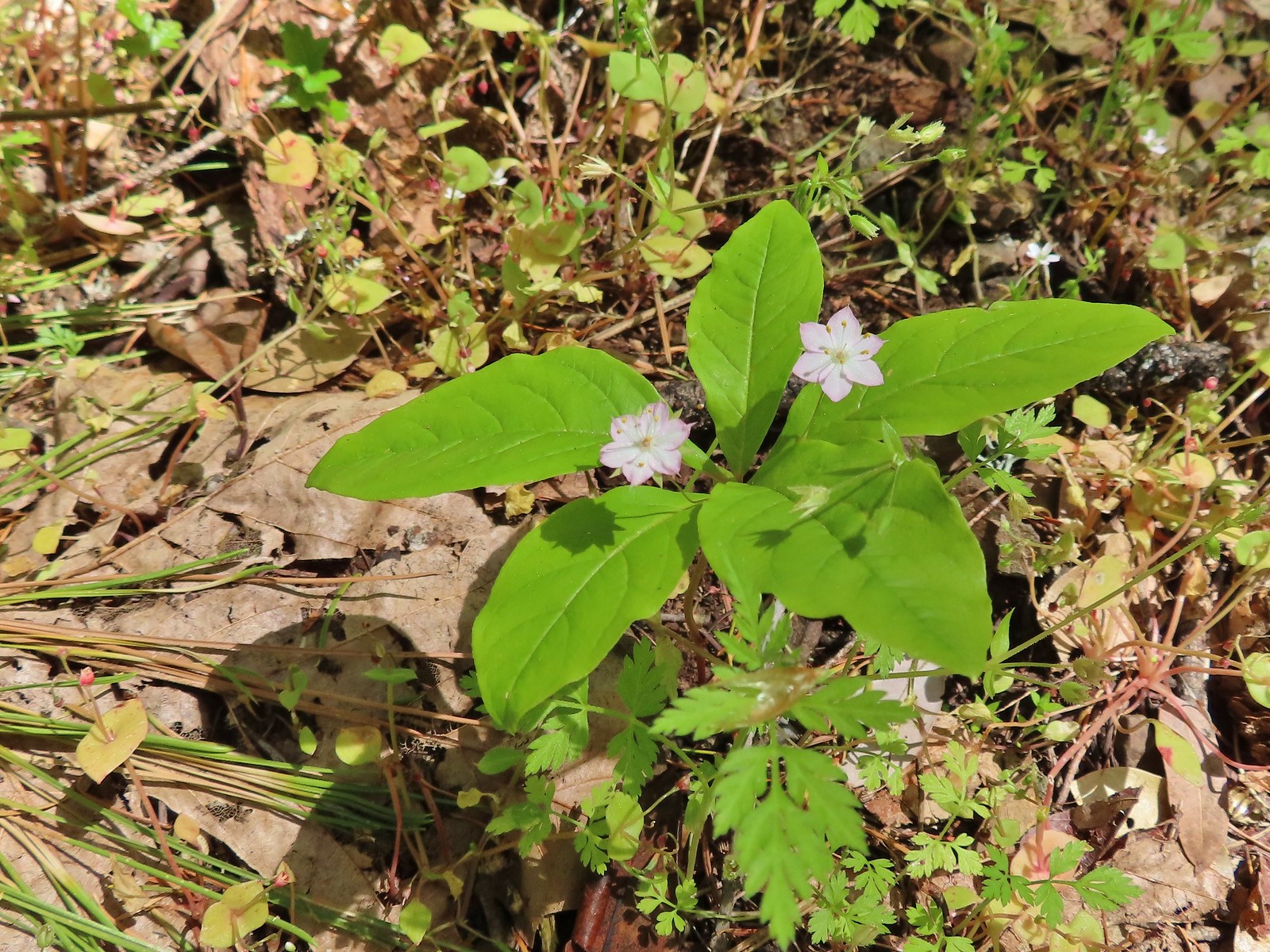 Star flower, May 25th – Mule Mountain
 California ground cone, May 25th – Mule Mountain
 Ookow, May 26th – Upper Table Rock
 Blow wives, May 26th – Upper Table Rock
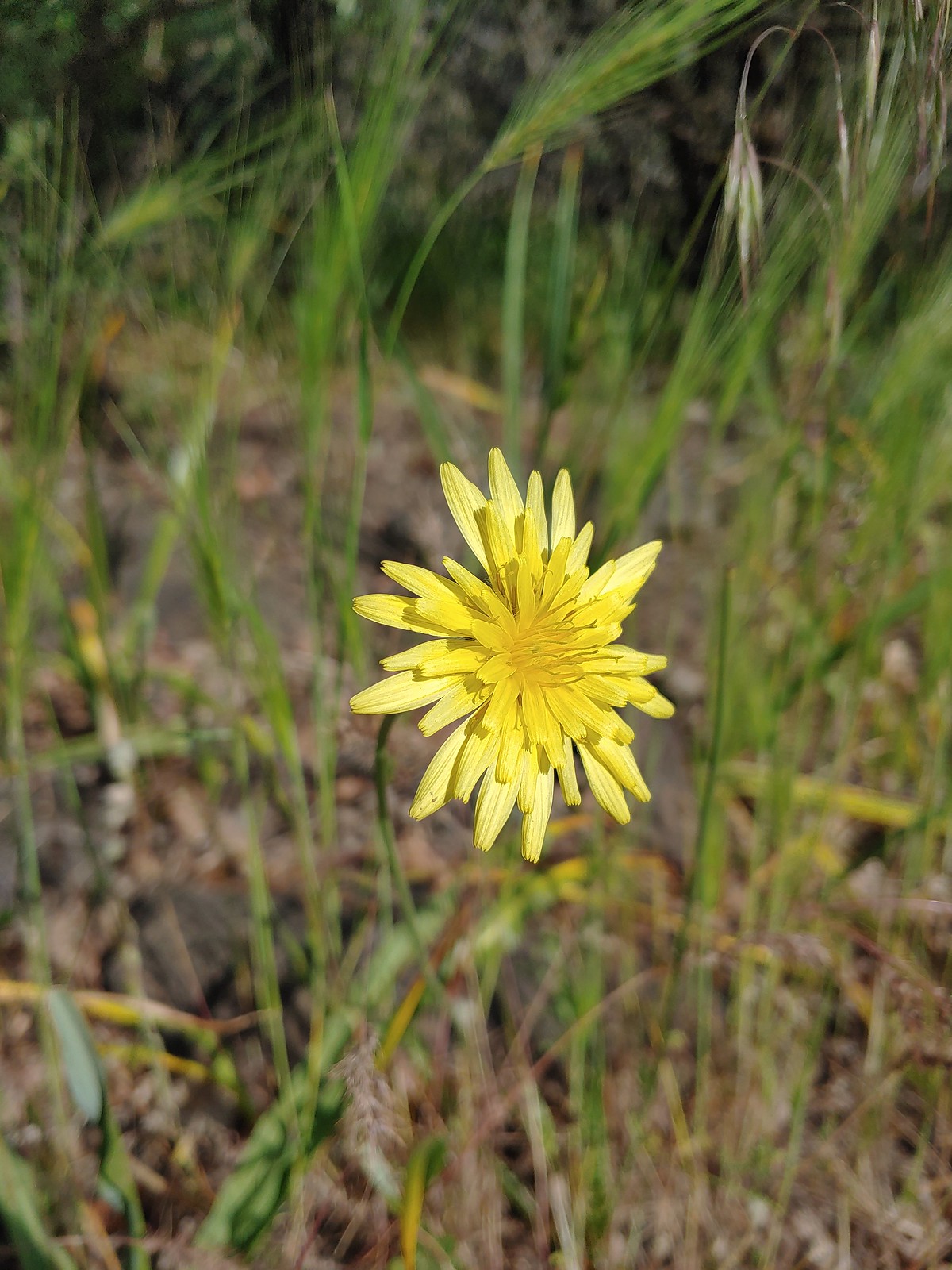 Best guess is Parry’s hawkweed, May 26th – Upper Table Rock
 Clustered broomrape, May 26th – Upper Table Rock
 Narrowleaf onion, May 26th – Upper Table Rock
 California goldfield, May 26th – Upper Table Rock
 Possibly Fitch’s tarweed, May 26th – Upper Table Rock
 Marigold pincushion plant, May 26th – Upper Table Rock
 Arrowleaf buckwheat, May 26th – Upper Table Rock
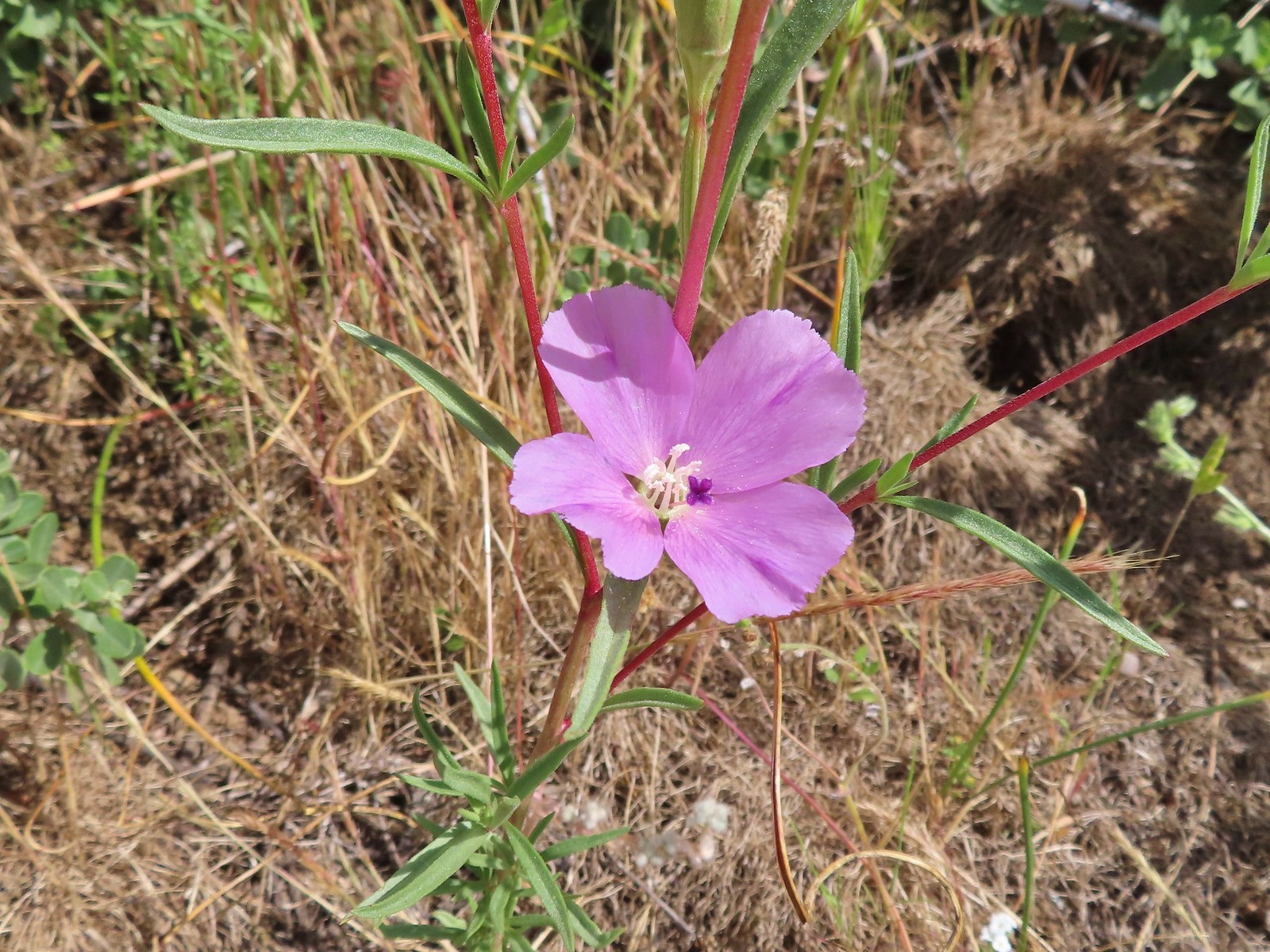 A clarkia, May 26th – Upper Table Rock
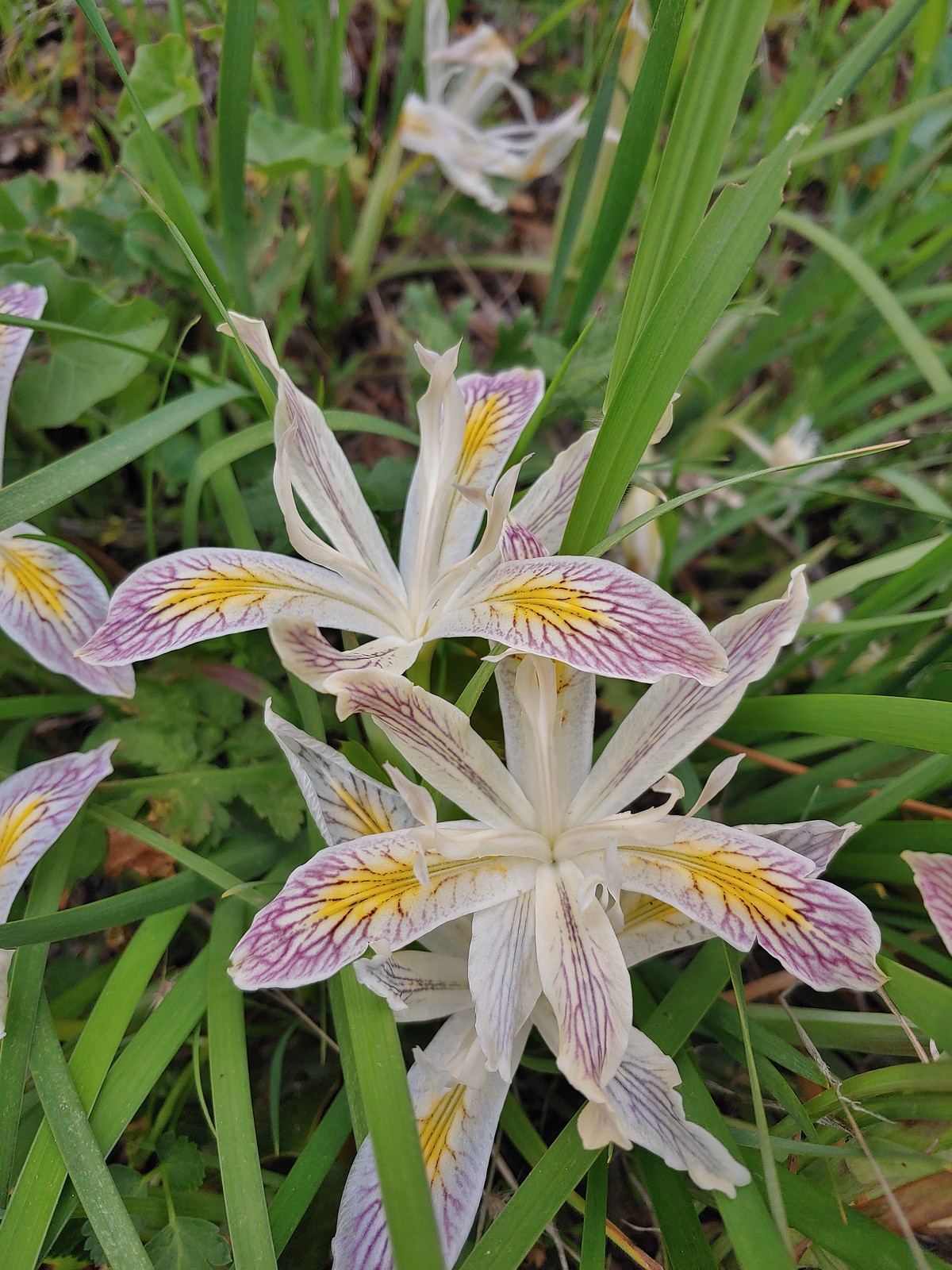 Iris, May 27th – Jack-Ash Trail
 Milkvetch, May 27th – Jack-Ash Trail
 Unknown on Anderson Butte, May 27th – Jack-Ash Trail
 Giant white wakerobbin, May 27th – Jack-Ash Trail
 A larkspur, May 27th – Jack-Ash Trail
 Rough eyelashweed, May 27th – Jack-Ash Trail
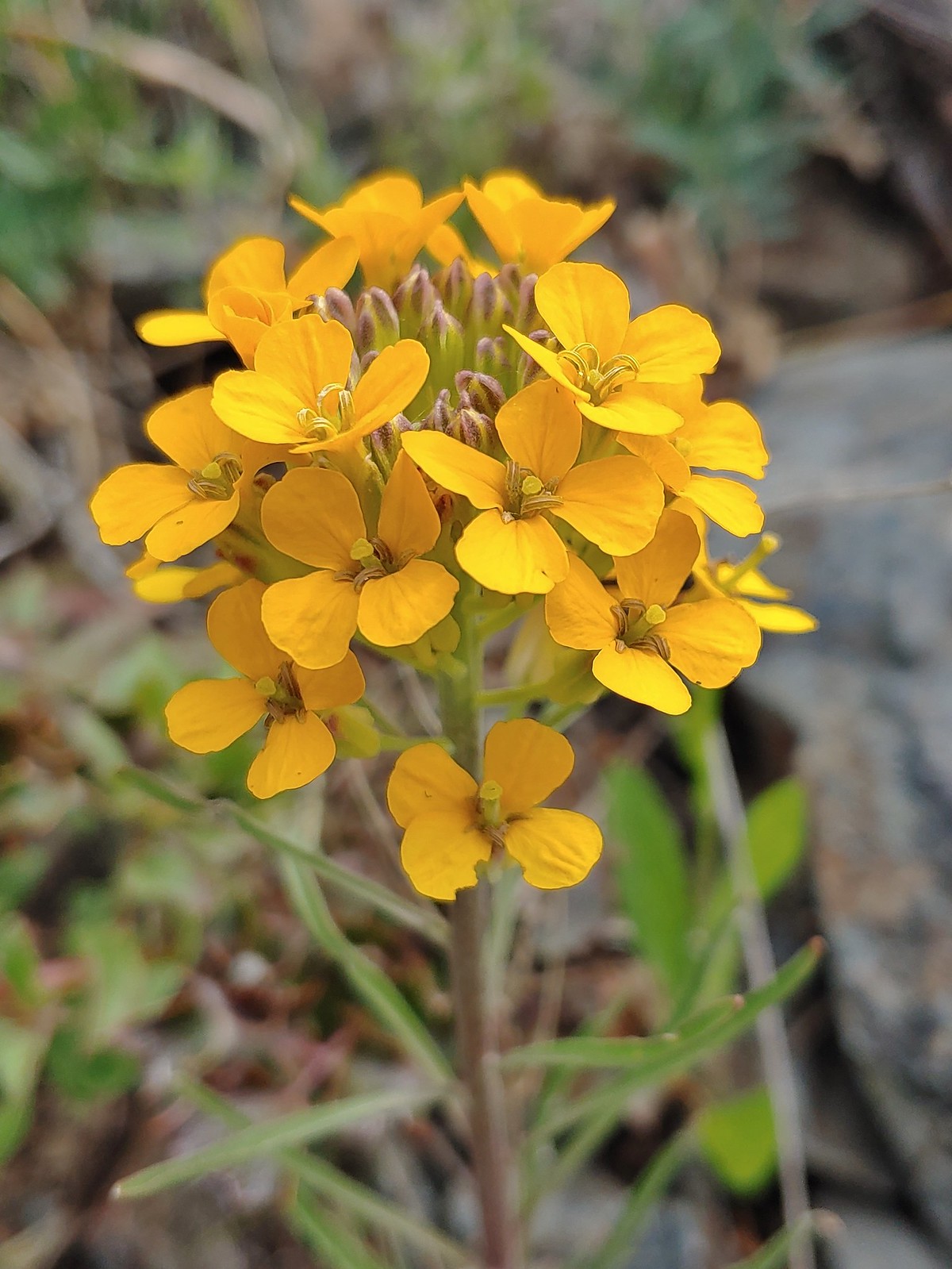 Wallflower, May 27th – Jack-Ash Trail
 A wild onion, May 27th – Jack-Ash Trail
 Jacob’s ladder, May 27th – Jack-Ash Trail
 Death camas, May 28th – Denman Wildlife Area
 Common madia, May 28th – Denman Wildlife Area
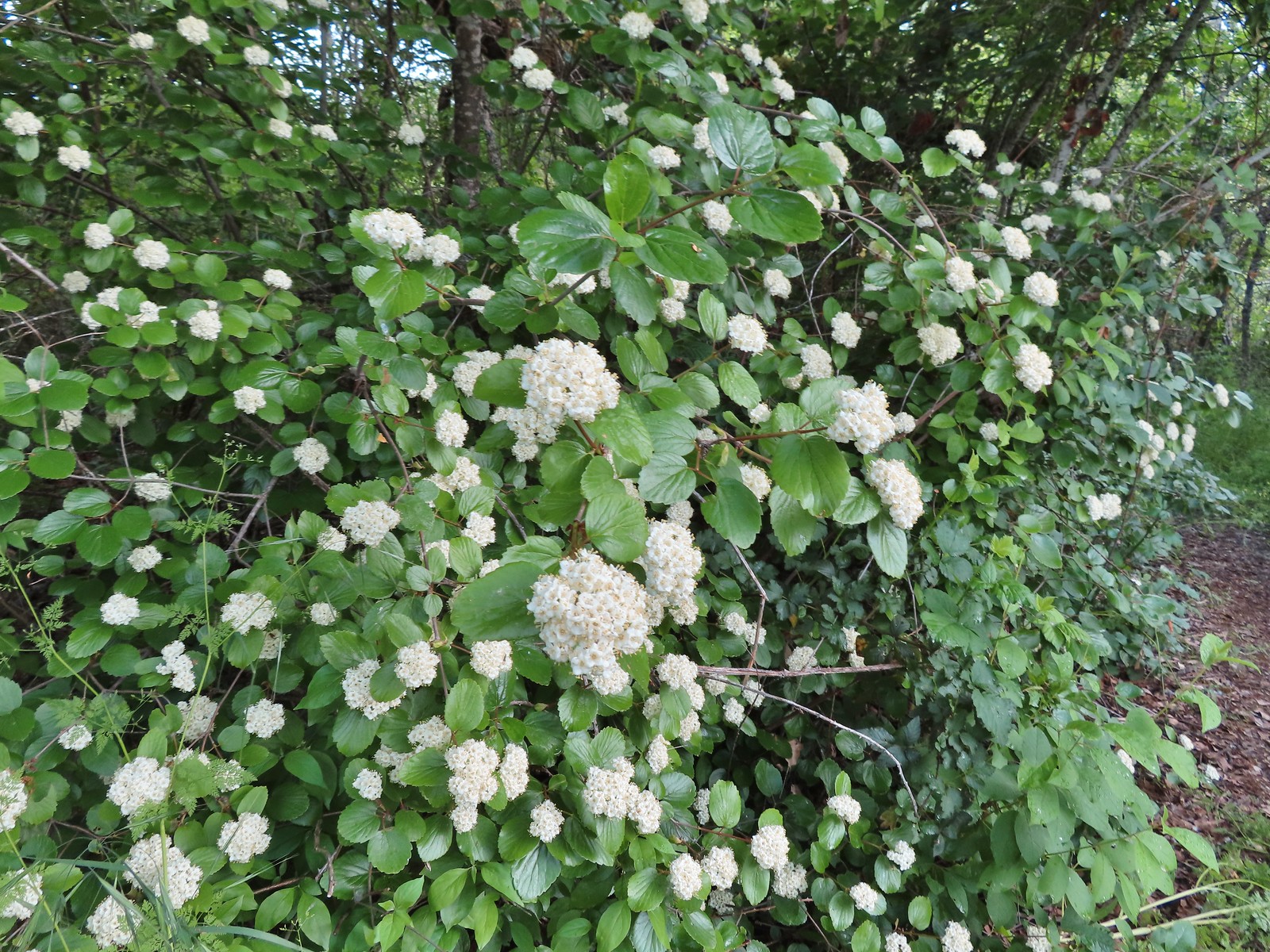 Common viburnum, May 28th – Denman Wildlife Area
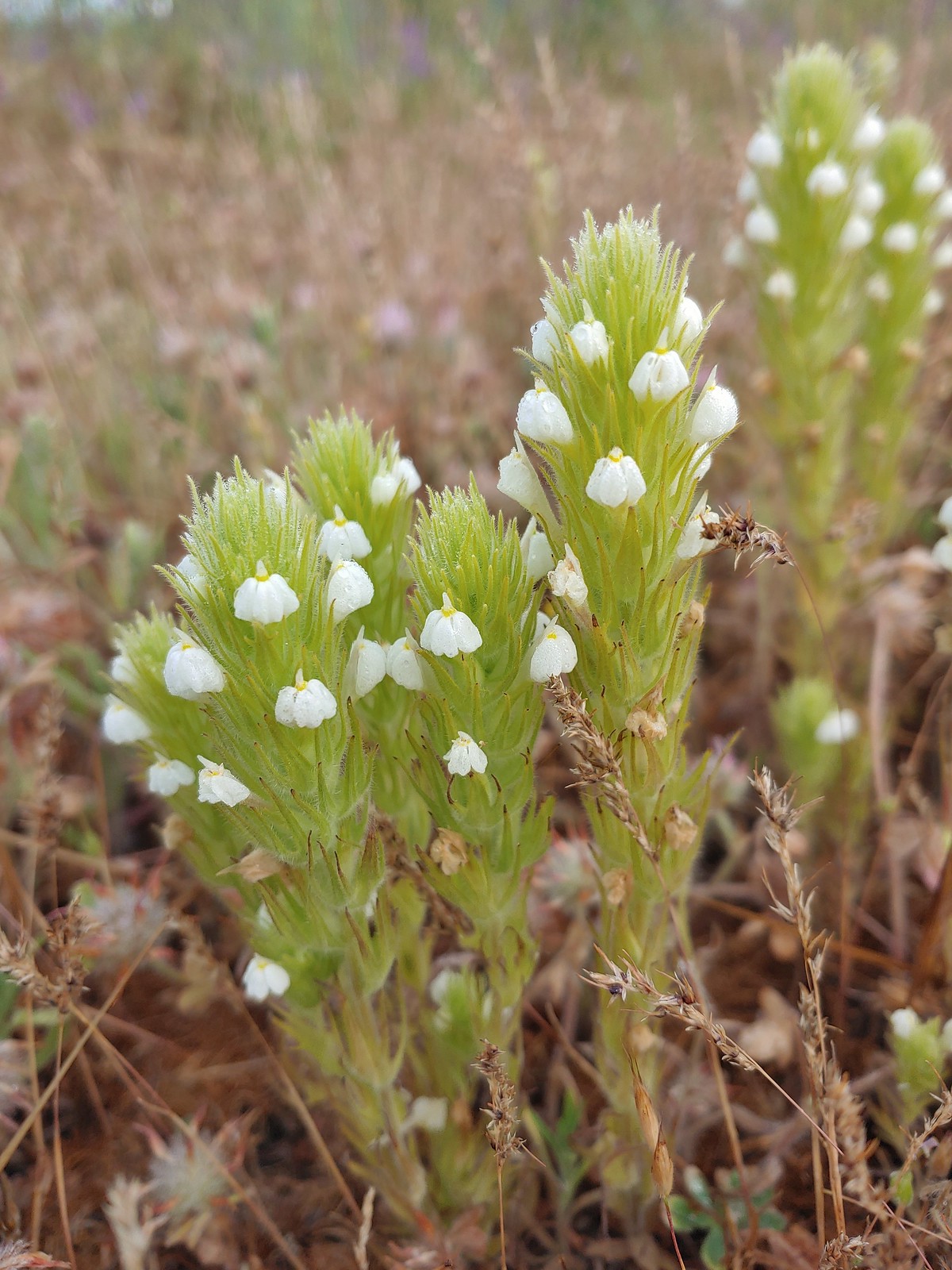 Hairy Indian paintbrush, May 28th – Denman Wildlife Area
 White campion, May 28th – Denman Wildlife Area
 Pale flax, May 28th – Denman Wildlife Area
 Purple oyster (non-native), May 28th – Denman Wildlife Area
 Rose, May 28th – Denman Wildlife Area
 Pea, May 28th – Denman Wildlife Area
 Kellog’s monkeyflower, May 29th – Applegate Lake
 Heart-leaf milkweed, May 29th – Applegate Lake
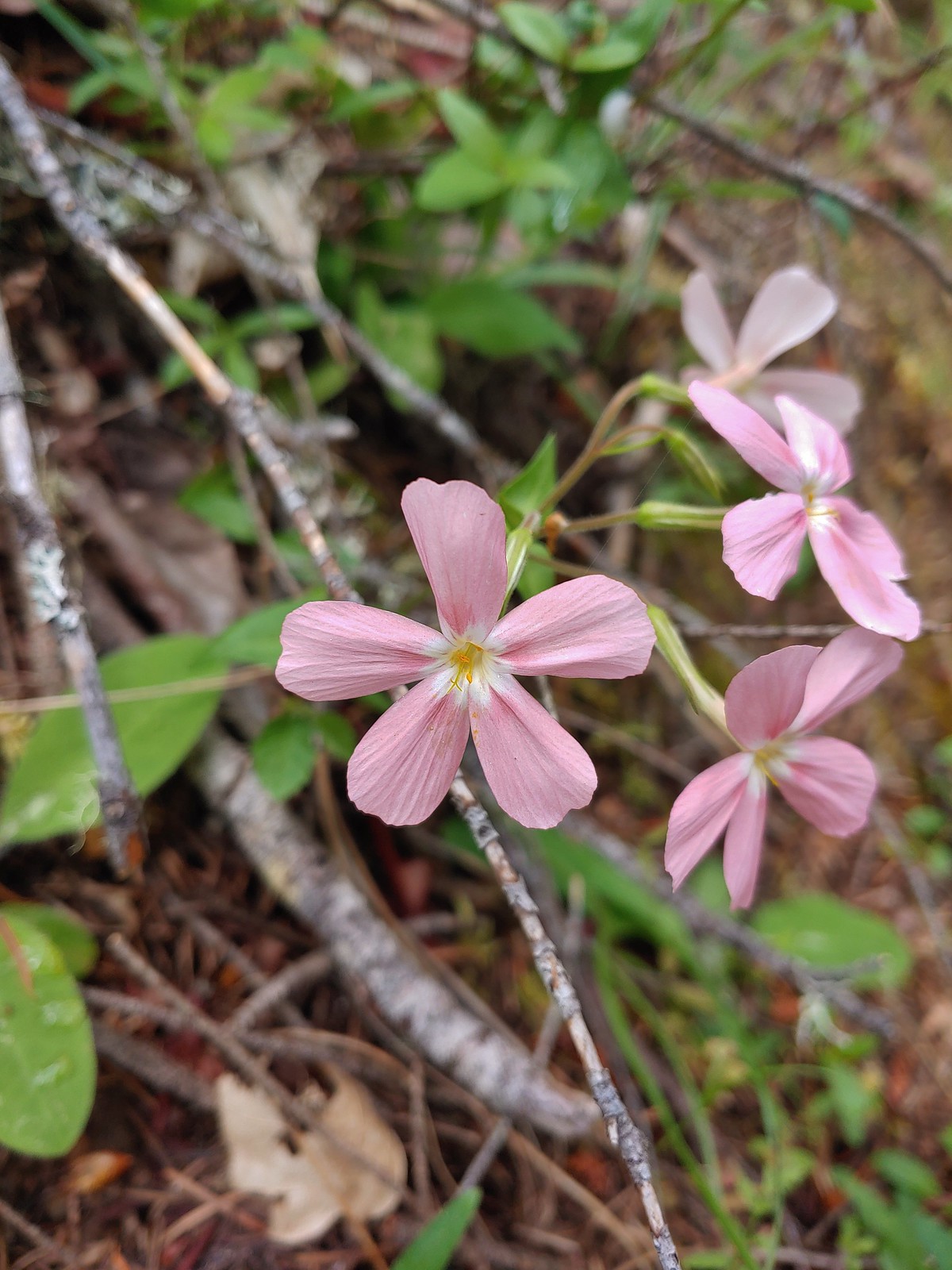 Northern phlox, May 29th – Applegate Lake
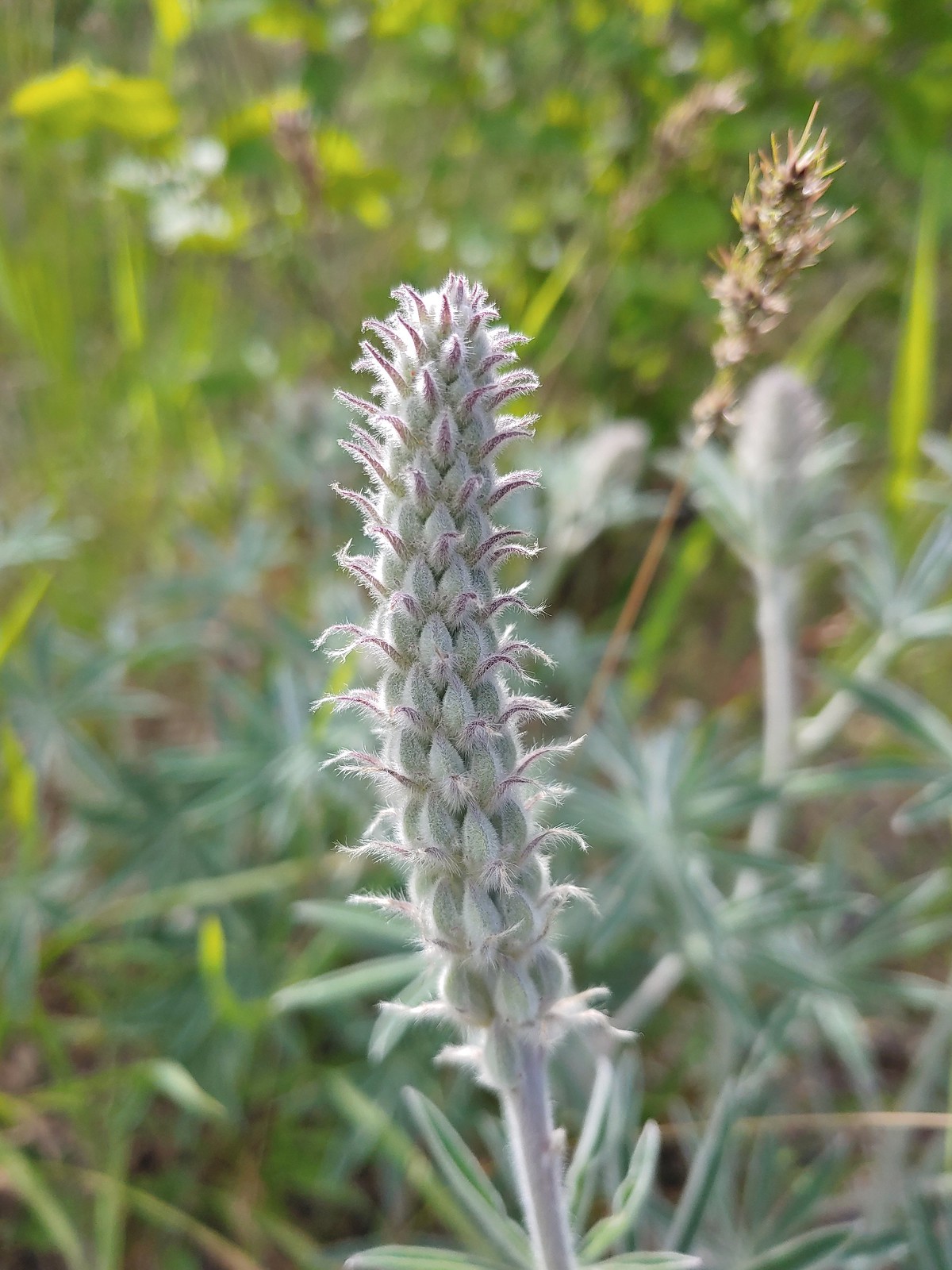 White lupine, May 29th – Applegate Lake
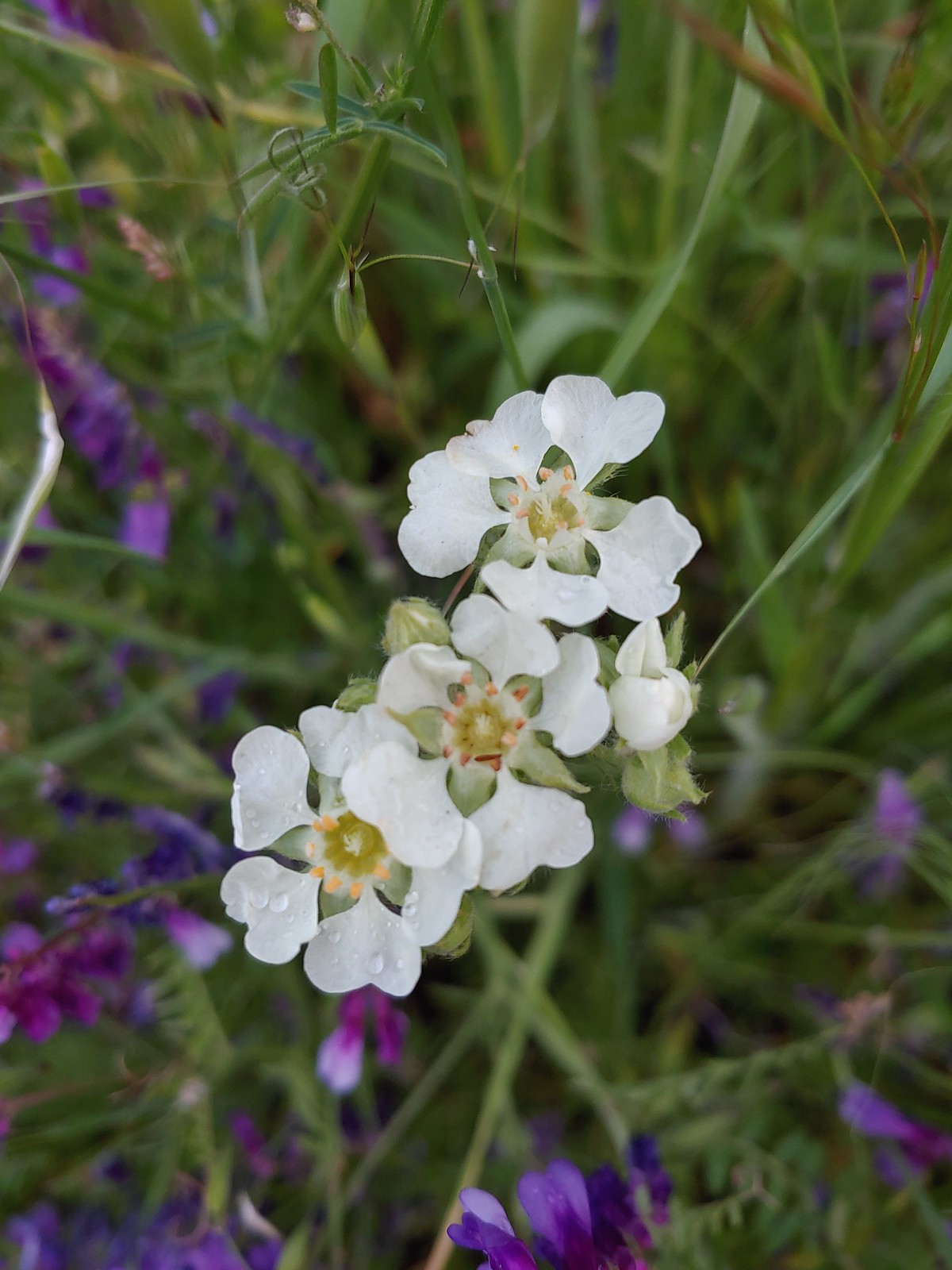 Carrotleaf horkelia, May 30th – Roxy Ann Peak
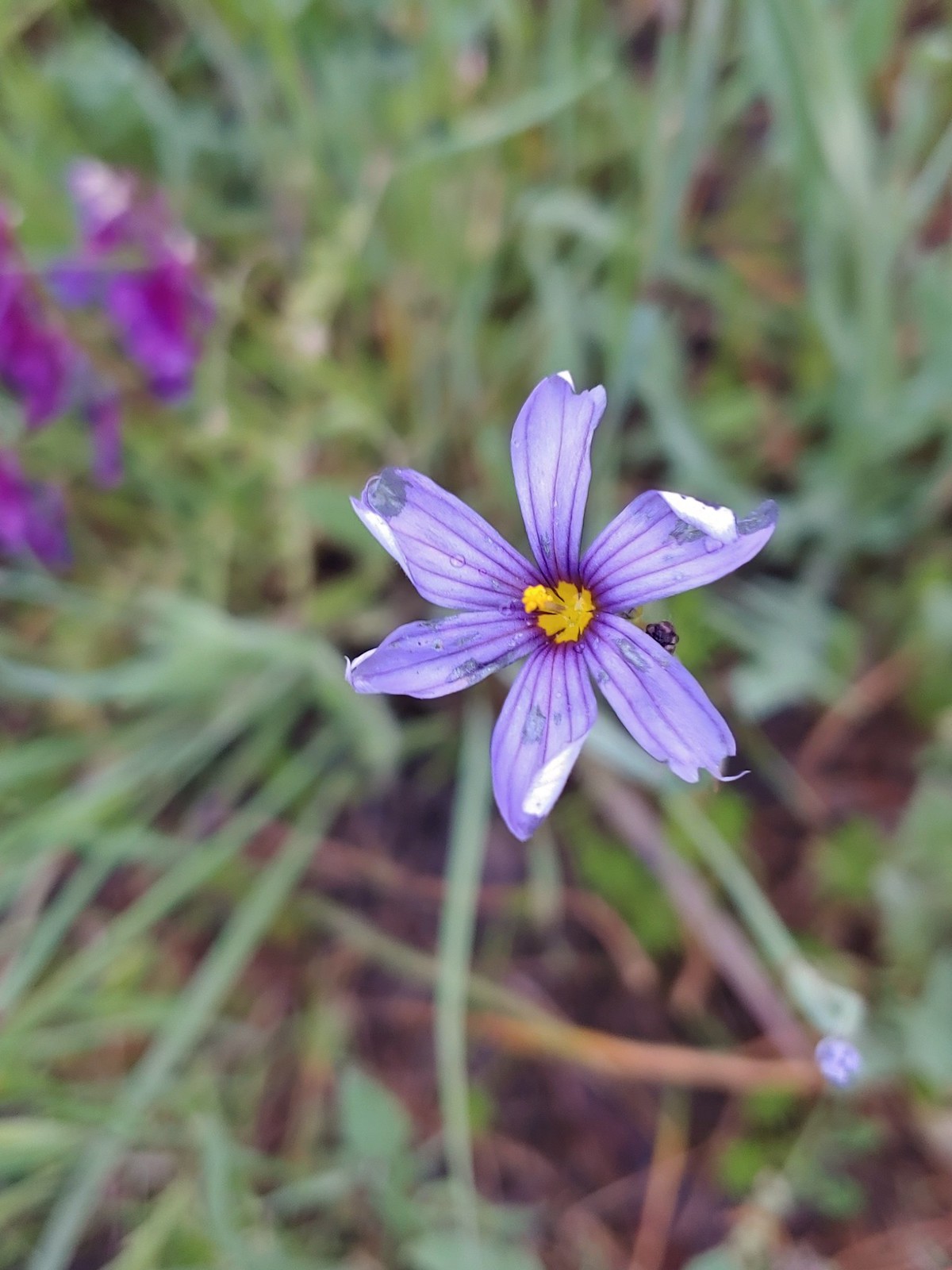 Blue-eyed grass, May 30th – Roxy Ann Peak
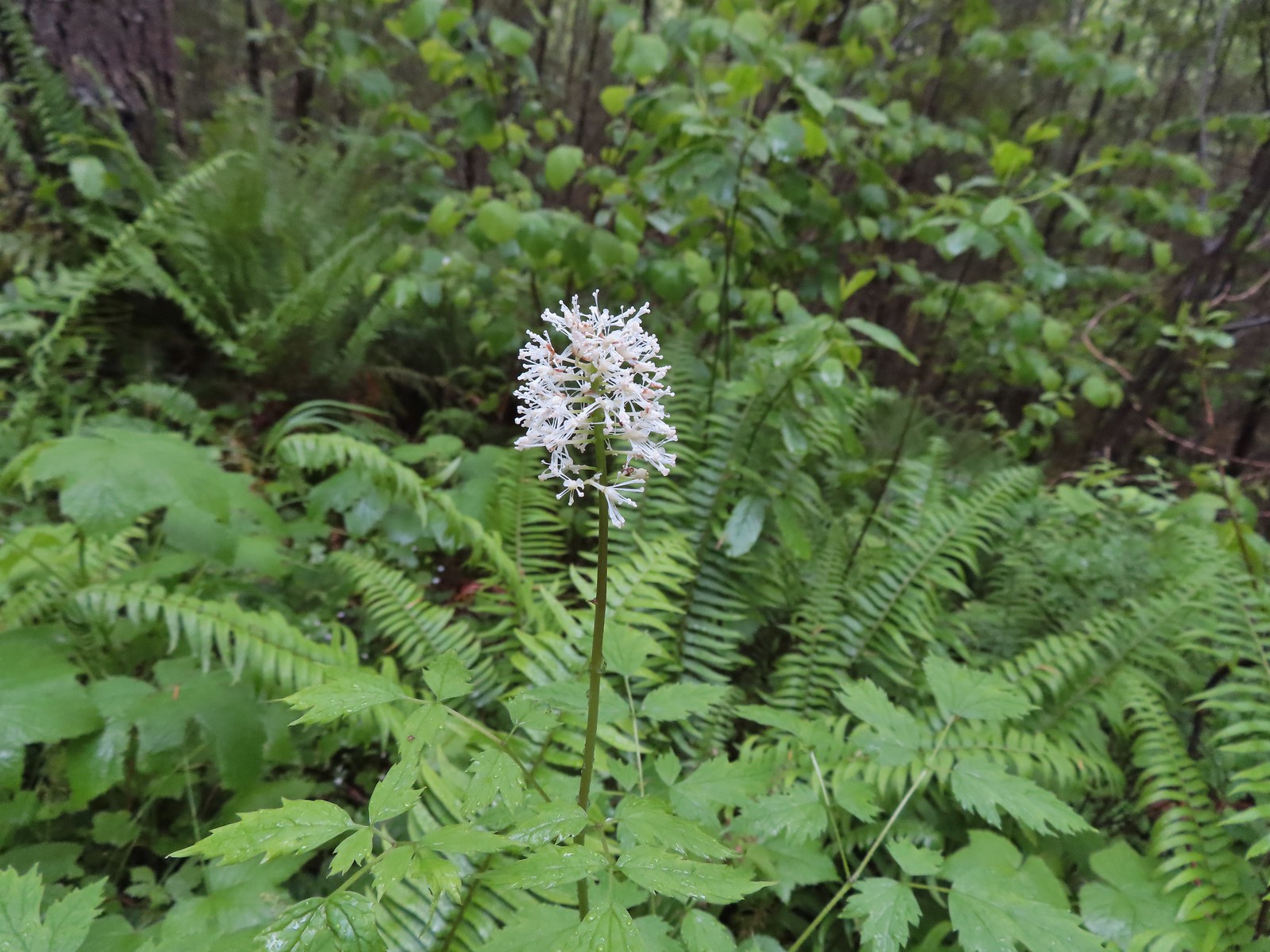 Baneberry, June 4th – North Siouxon Trail
 Star-flower solomonseal, June 4th – North Siouxon Trail
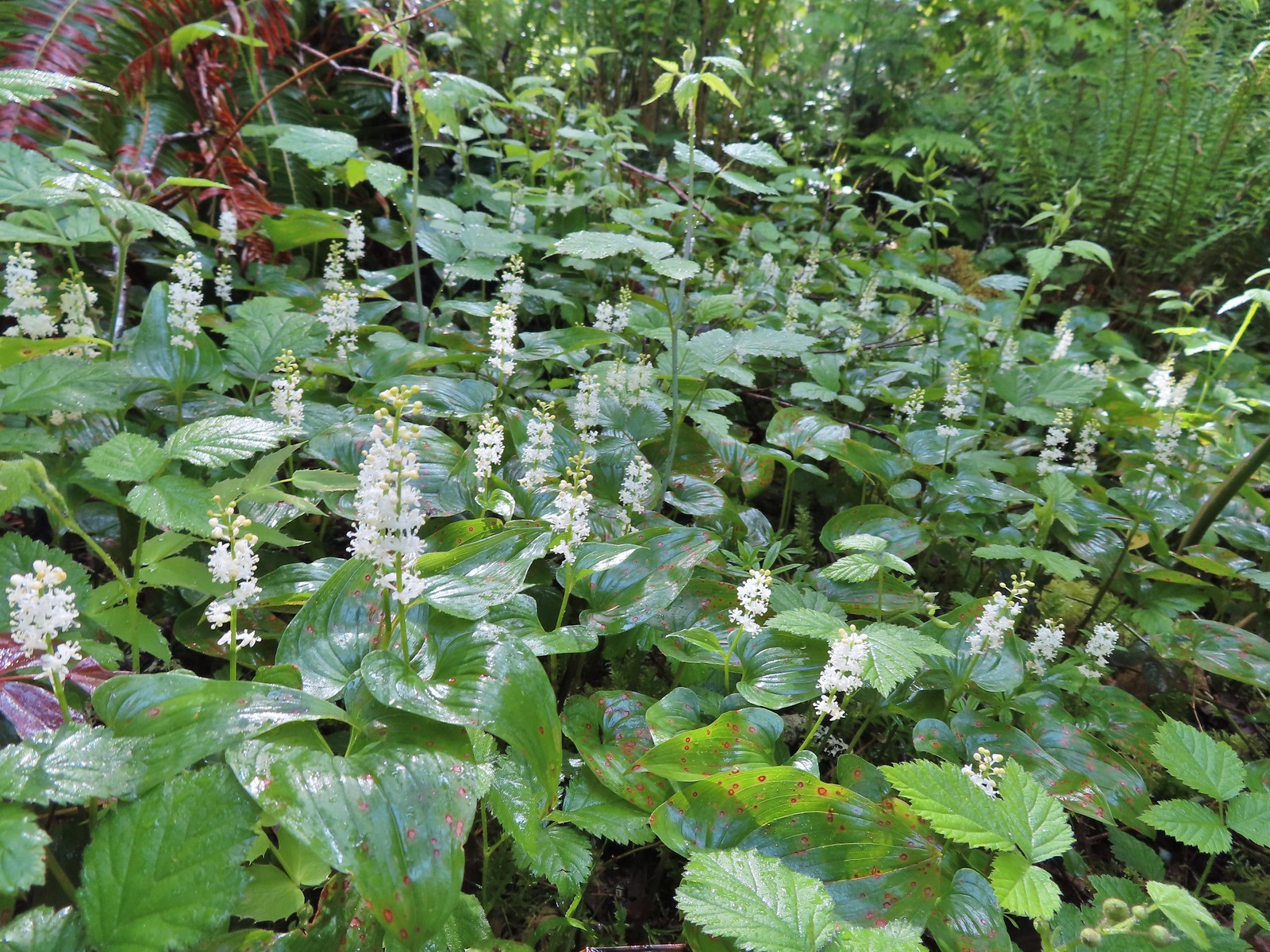 False lily-of-the valley, June 4th – North Siouxon Trail
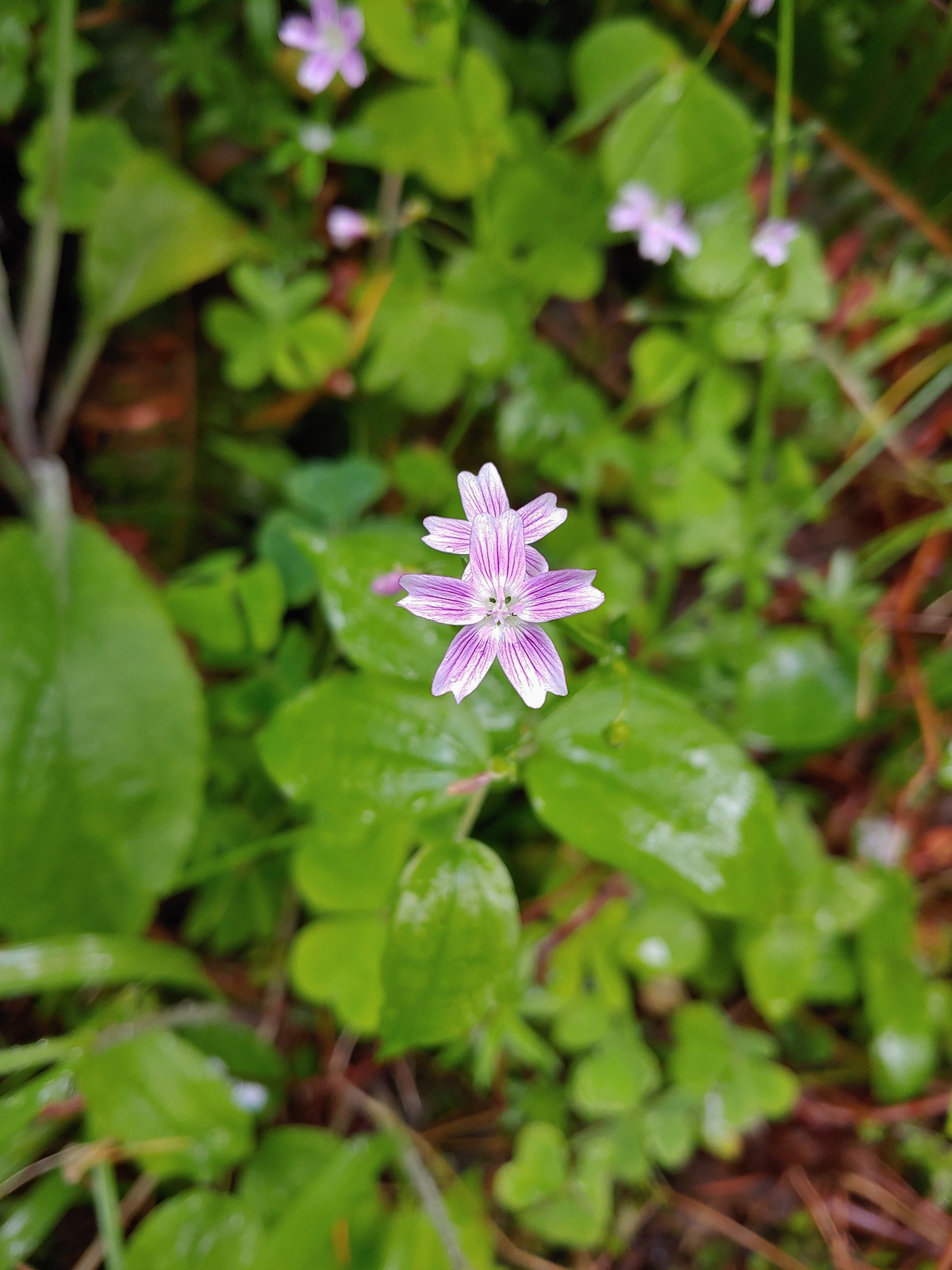 Candyflower, June 4th – North Siouxon Trail
 Scouler’s corydalis, June 4th – North Siouxon Trail
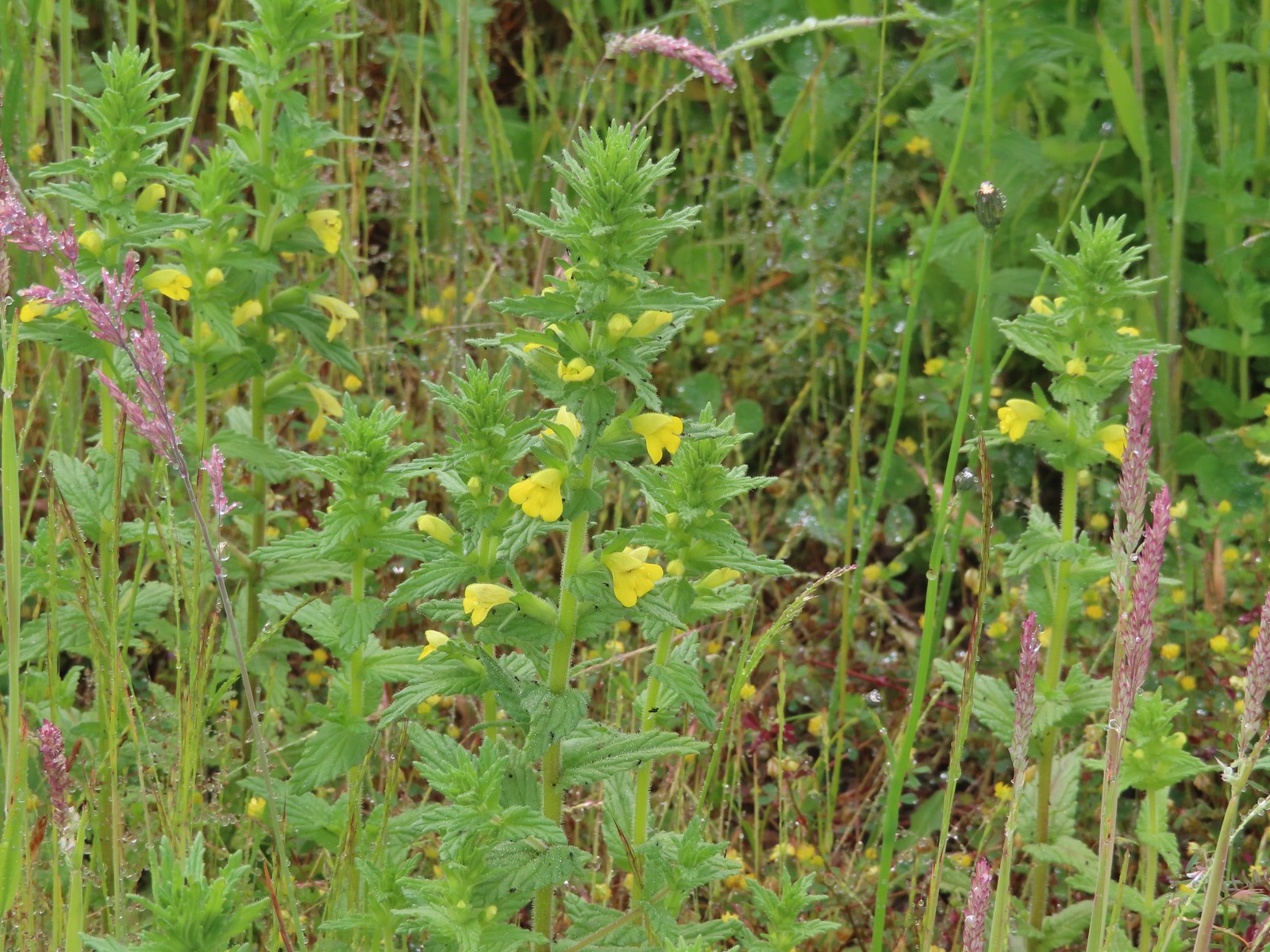 Yellow glandweed (non-native), June 11th – Julia Butler Hanson Wildlife Refuge
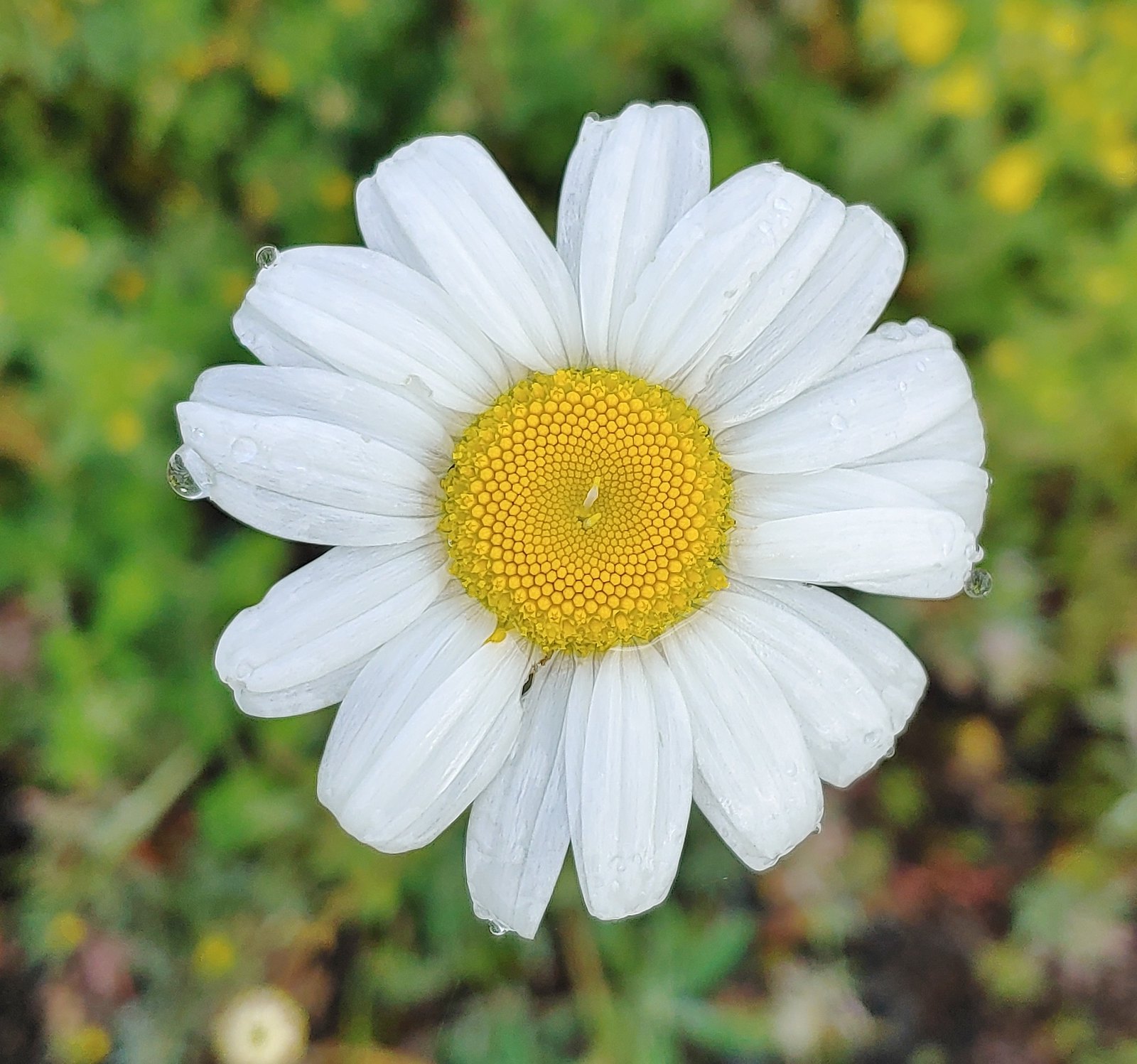 Daisy (non-native), June 11th – Julia Butler Hanson Wildlife Refuge
 Unknown shrub (non-native), June 11th – Julia Butler Hanson Wildlife Refuge
 A vetch or pea, June 13th – Susan Creek Falls Trail
 Columbine, June 13th – Susan Creek Falls Trail
 Solomonseal, June 13th – North Umpqua Trail
 Valerian, June 13th – Lemolo Falls Trail
 Gooseberry, June 14th – Illahee Rock
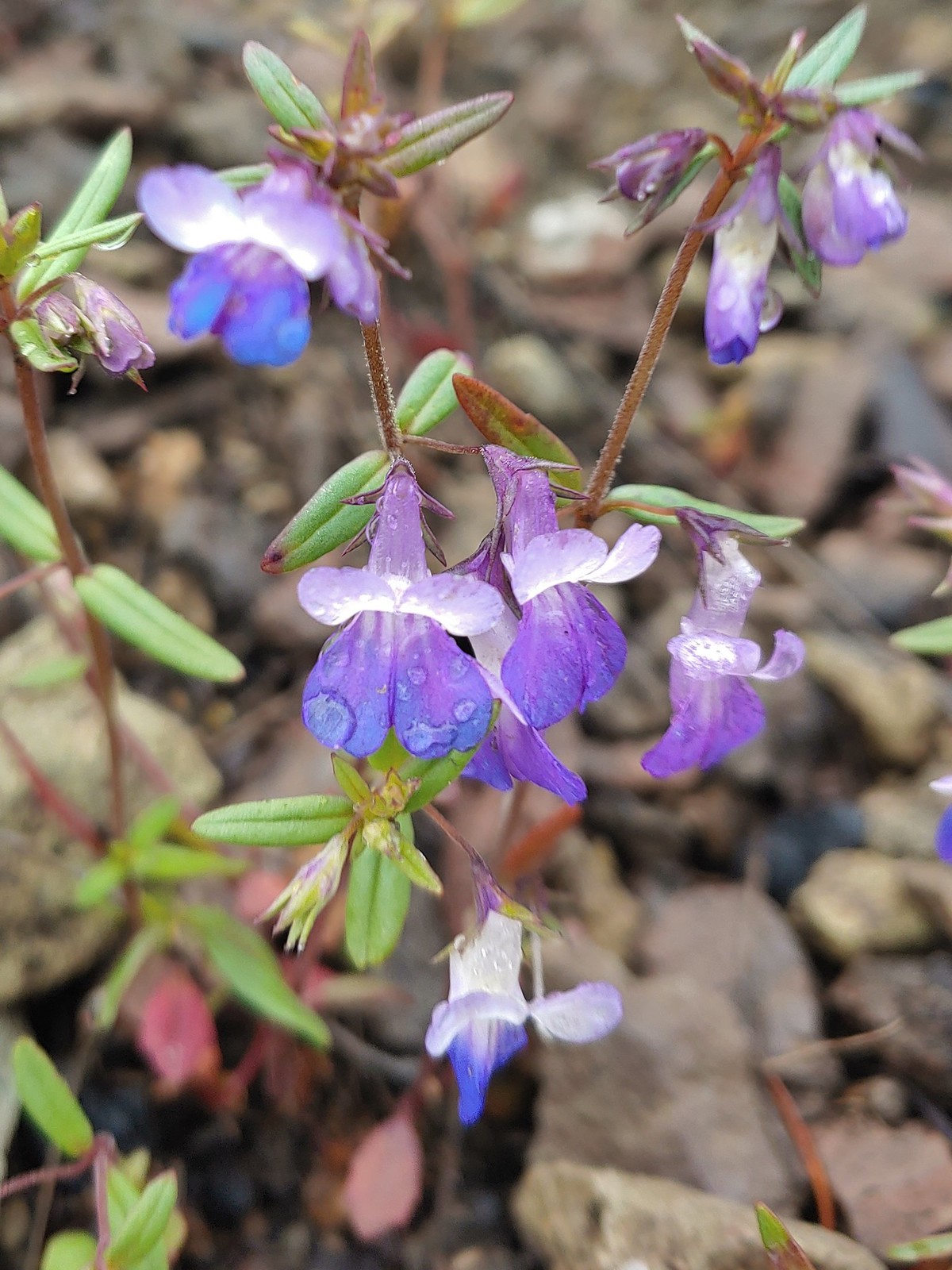 Blue-eyed Mary, June 14th – Illahee Rock
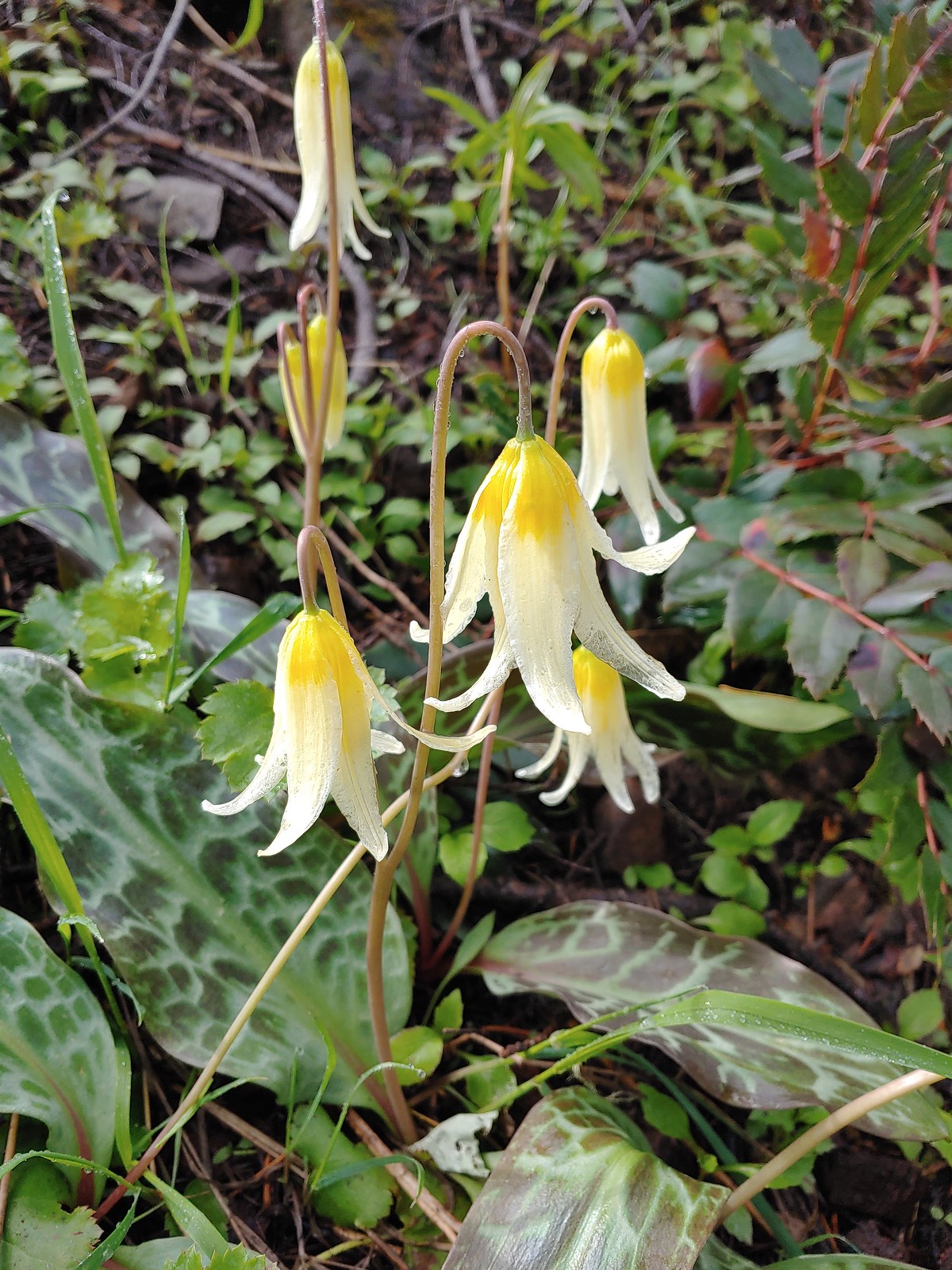 Fawn lilies, June 14th – Illahee Rock
 Pussytoes, June 15th – Pacific Crest Trail near the Stateline Trailhead
 Bistort, June 15th – Donomore Meadows
 Cutleaf daisy, June 15th – Observation Peak
 Lance-leaf spring beauty, June 15th – Observation Peak
 A rockcress, June 15th – Observation Peak
 Alpine pennycress, June 15th – Observation Peak
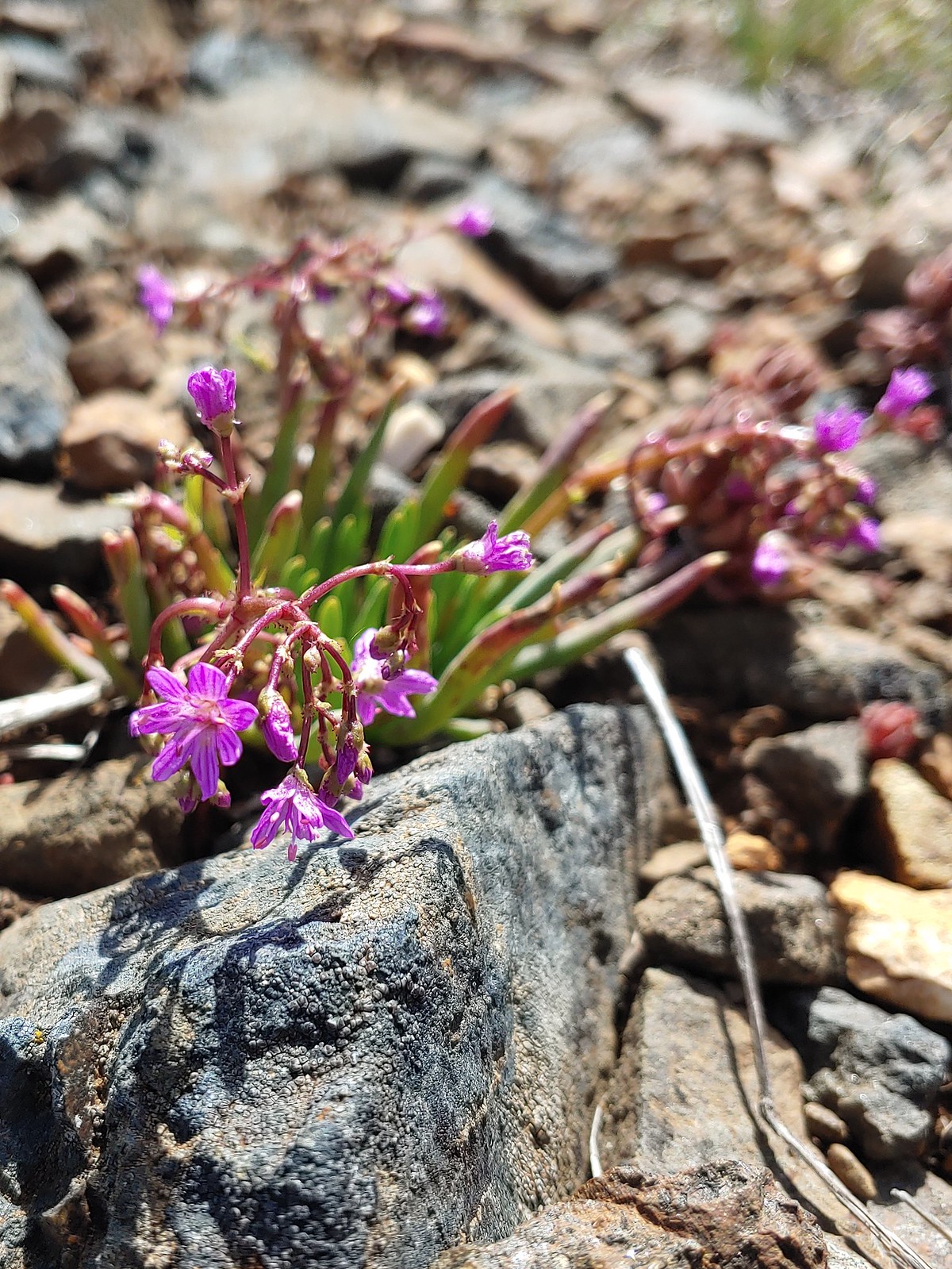 Quill-leaf lewisia, June 15th – Observation Peak
 Marsh marigold, June 15th – Pacific Crest Trail
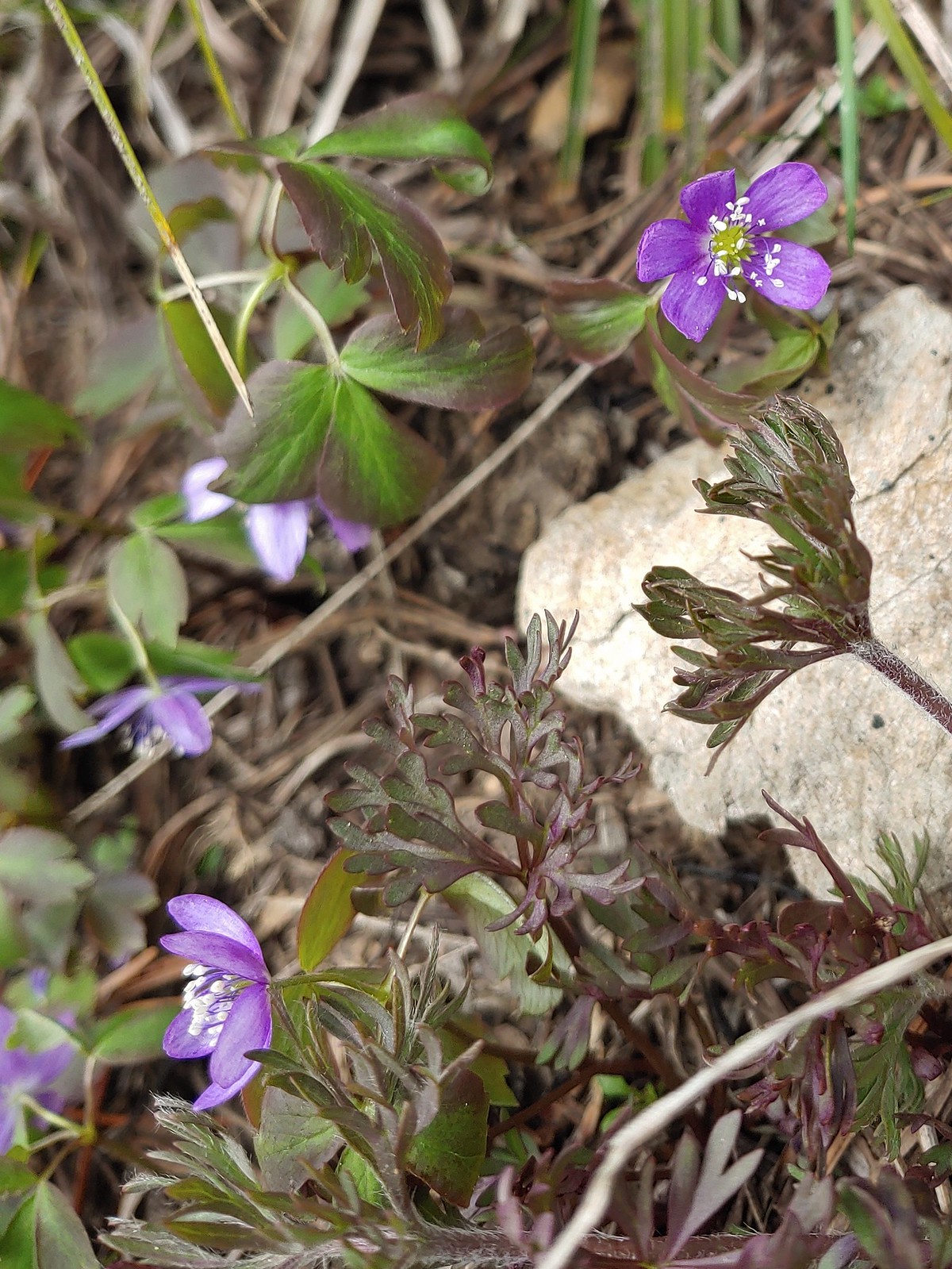 Anemone, June 16th – Pacific Crest Trail near Siskiyou Gap
 Jacob’s ladder, June 16th – Pacific Crest Trail
 Buds of an unknown flower, June 16th – Pacific Crest Trail near Big Red Mountain
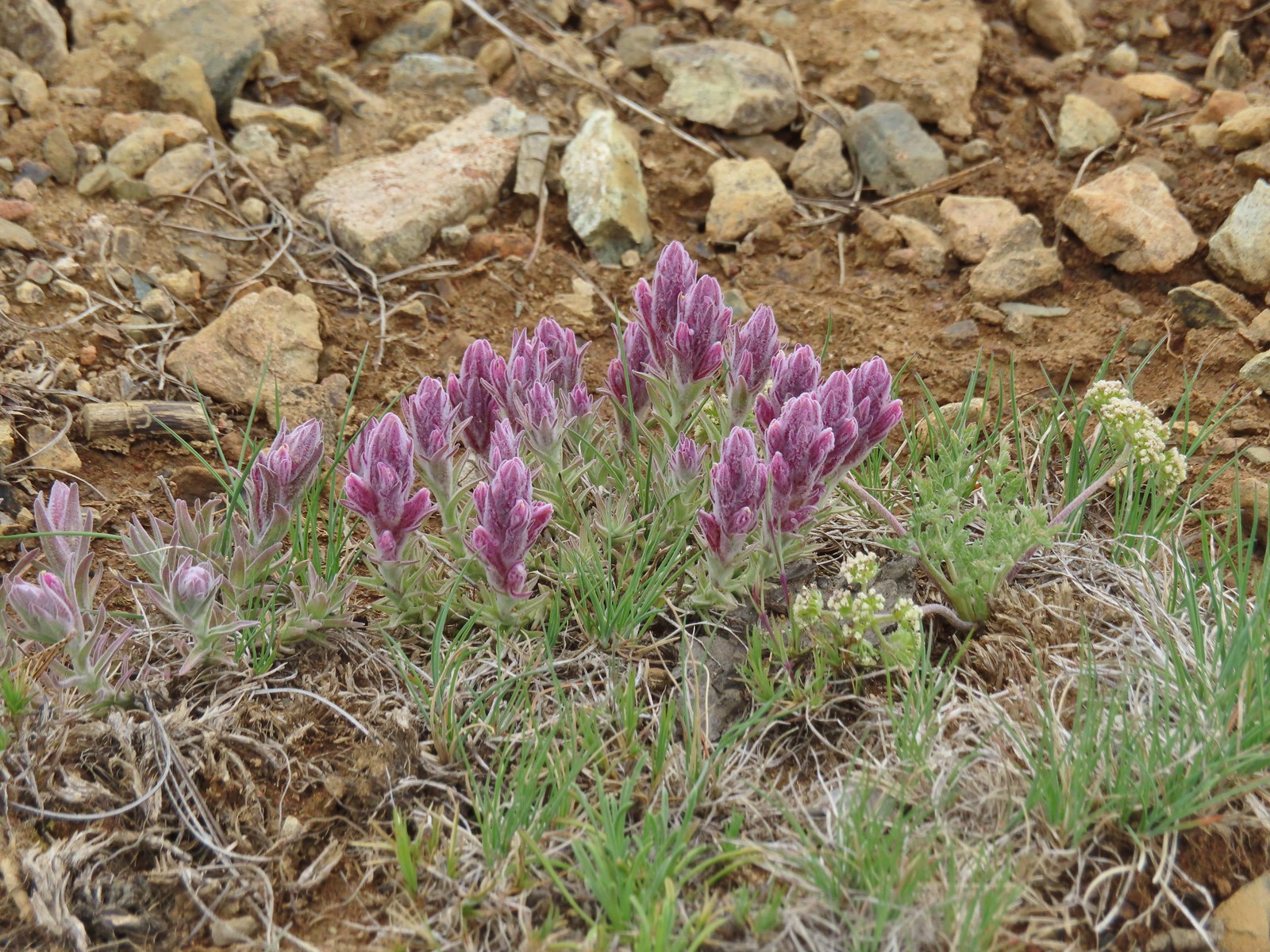 A paintbrush, June 16th – Pacific Crest Trail near Big Red Mountain
 Drummond’s anemone, June 16th – Pacific Crest Trail near Big Red Mountain
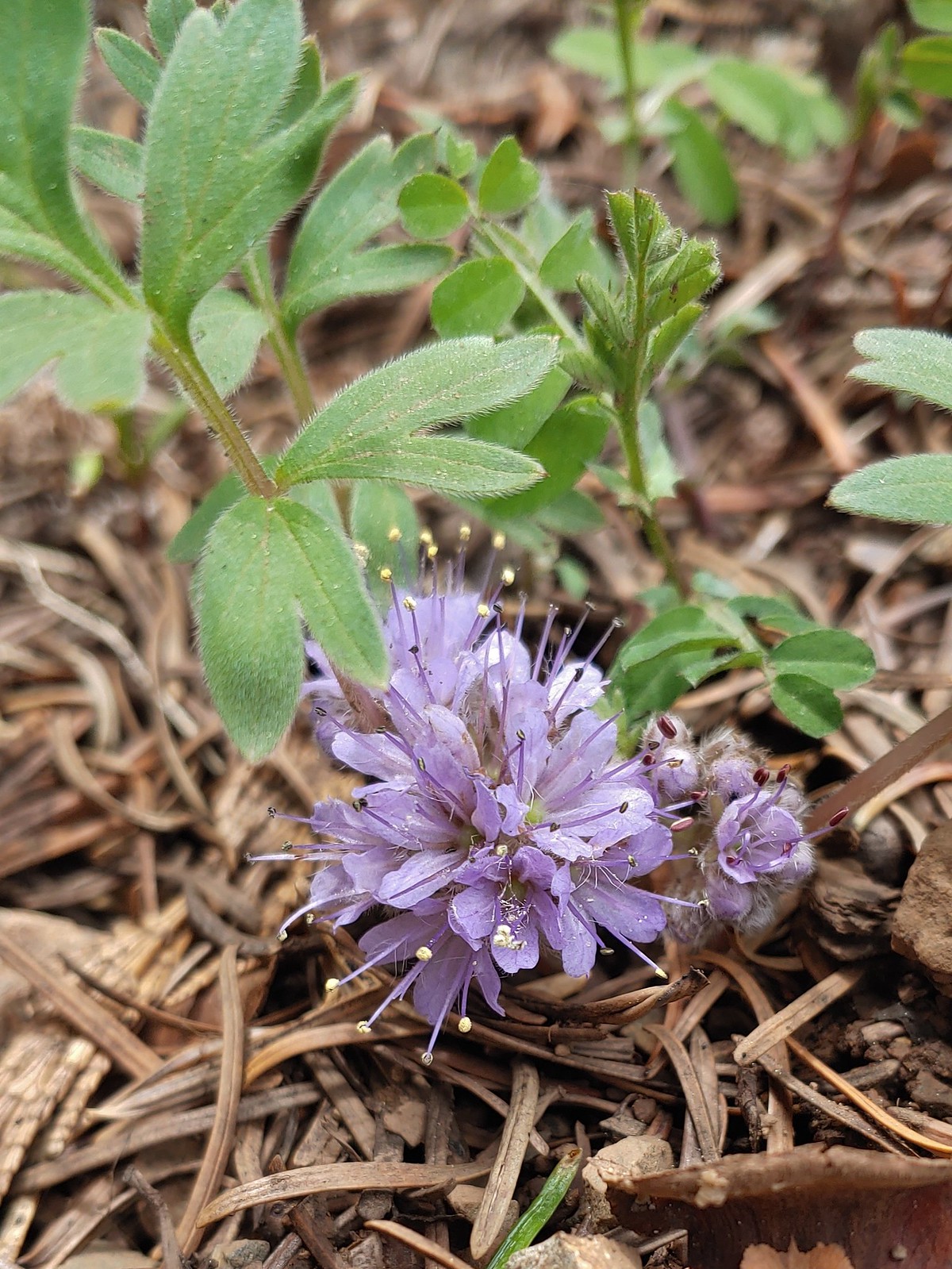 Ballhead waterleaf, June 16th – Pacific Crest Trail near Big Red Mountain
 A mariposa lily, June 16th – Pacific Crest Trail near Siskiyou Gap
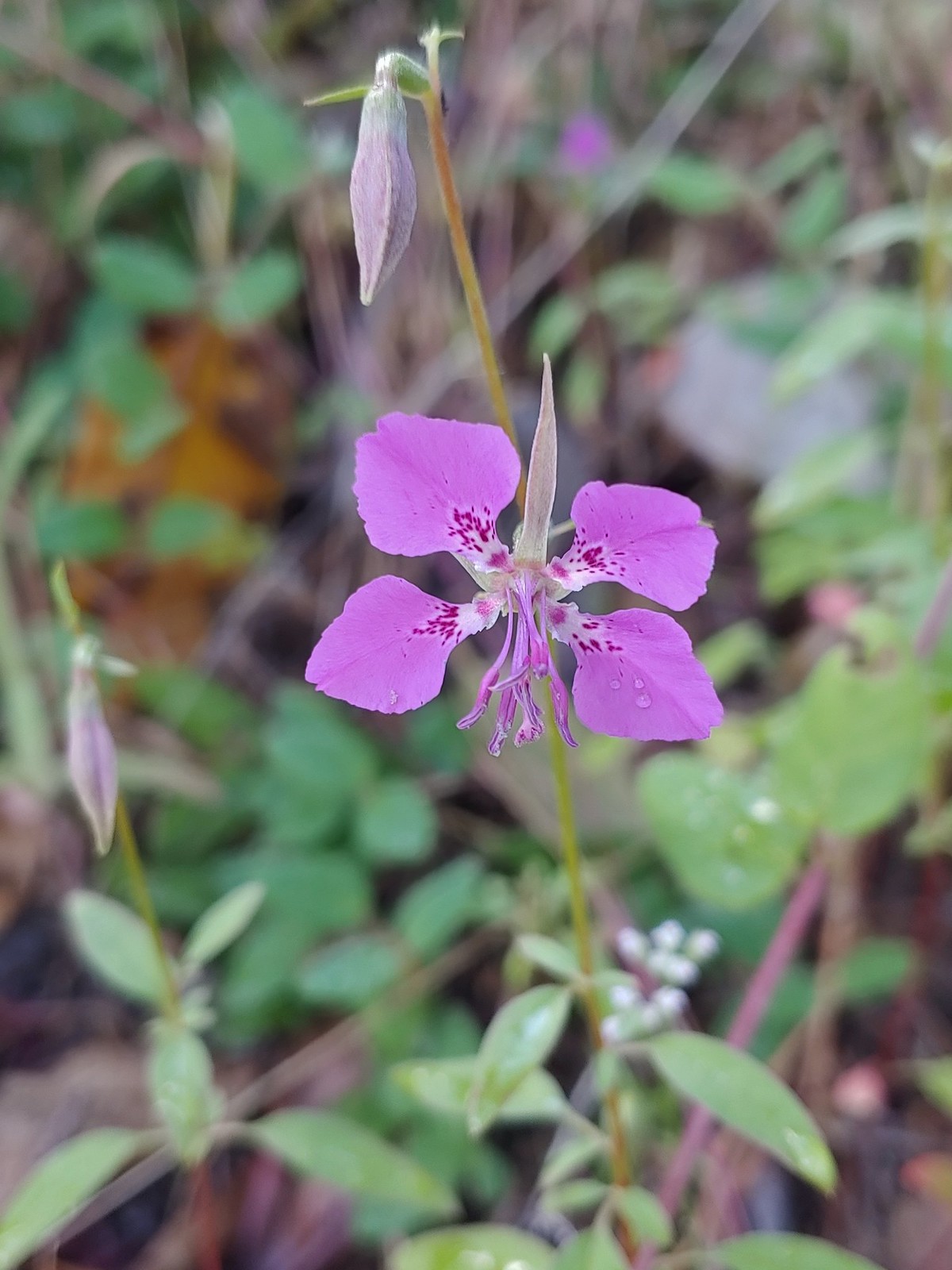 Diamond? clarkia, June 17th – Bandersnatch Trail
 A honeysuckle, June 17th – Bandersnatch Trail
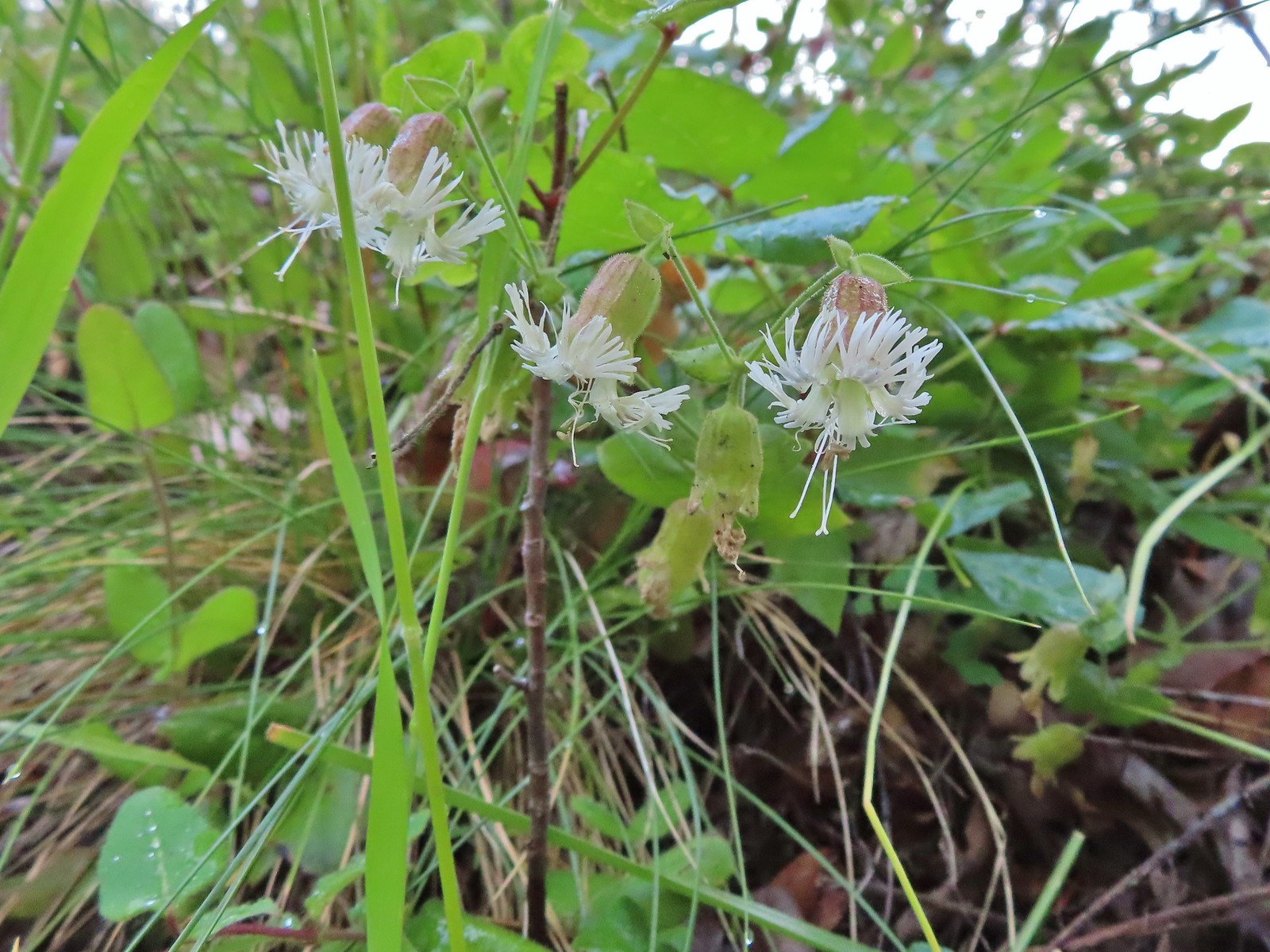 A catchfly, June 17th – Bandersnatch Trail
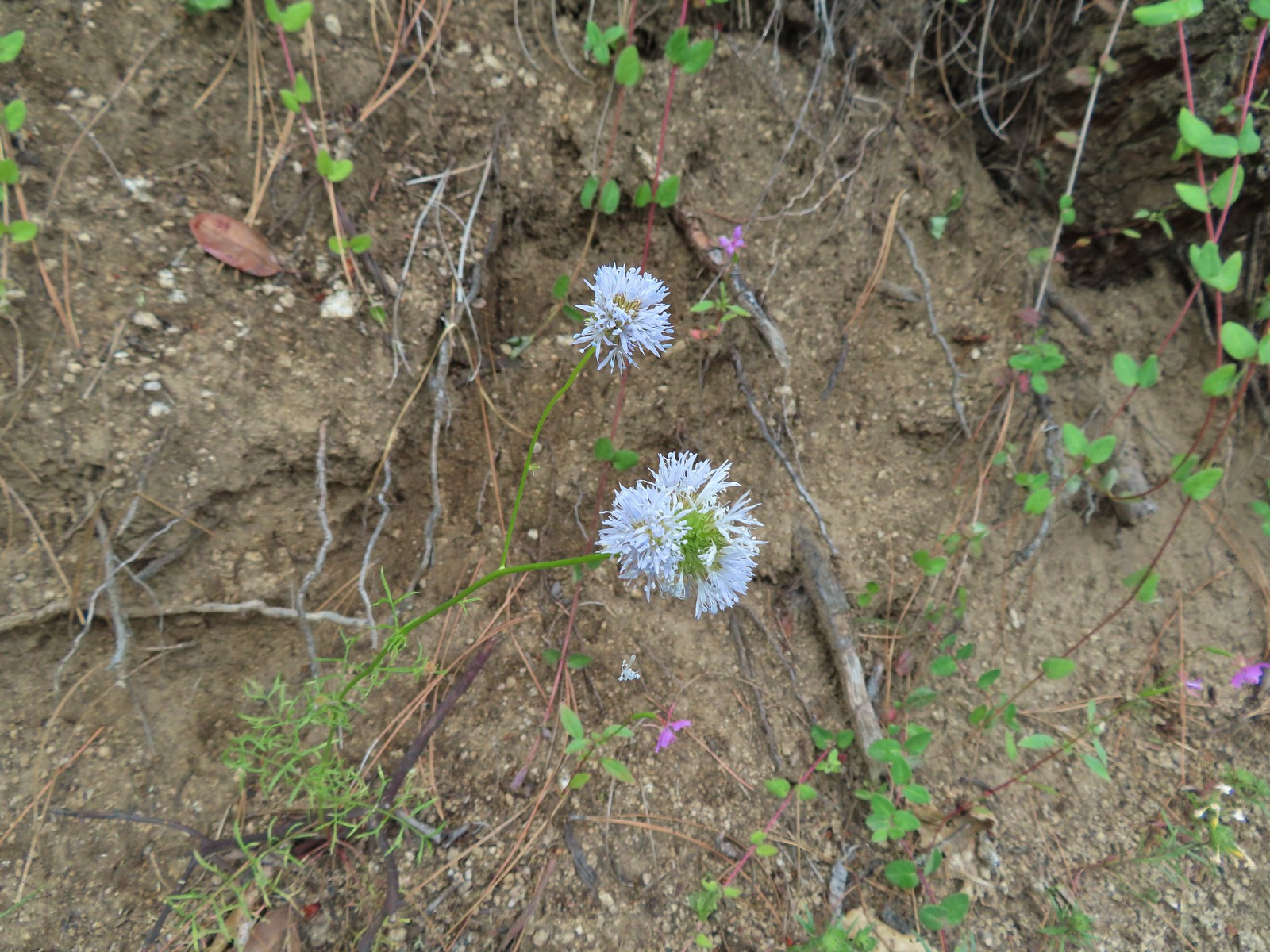 Blue-head gilia, June 17th – Red Queen Trail
 Deerbrush, June 17th – Mike Uthoff Trail
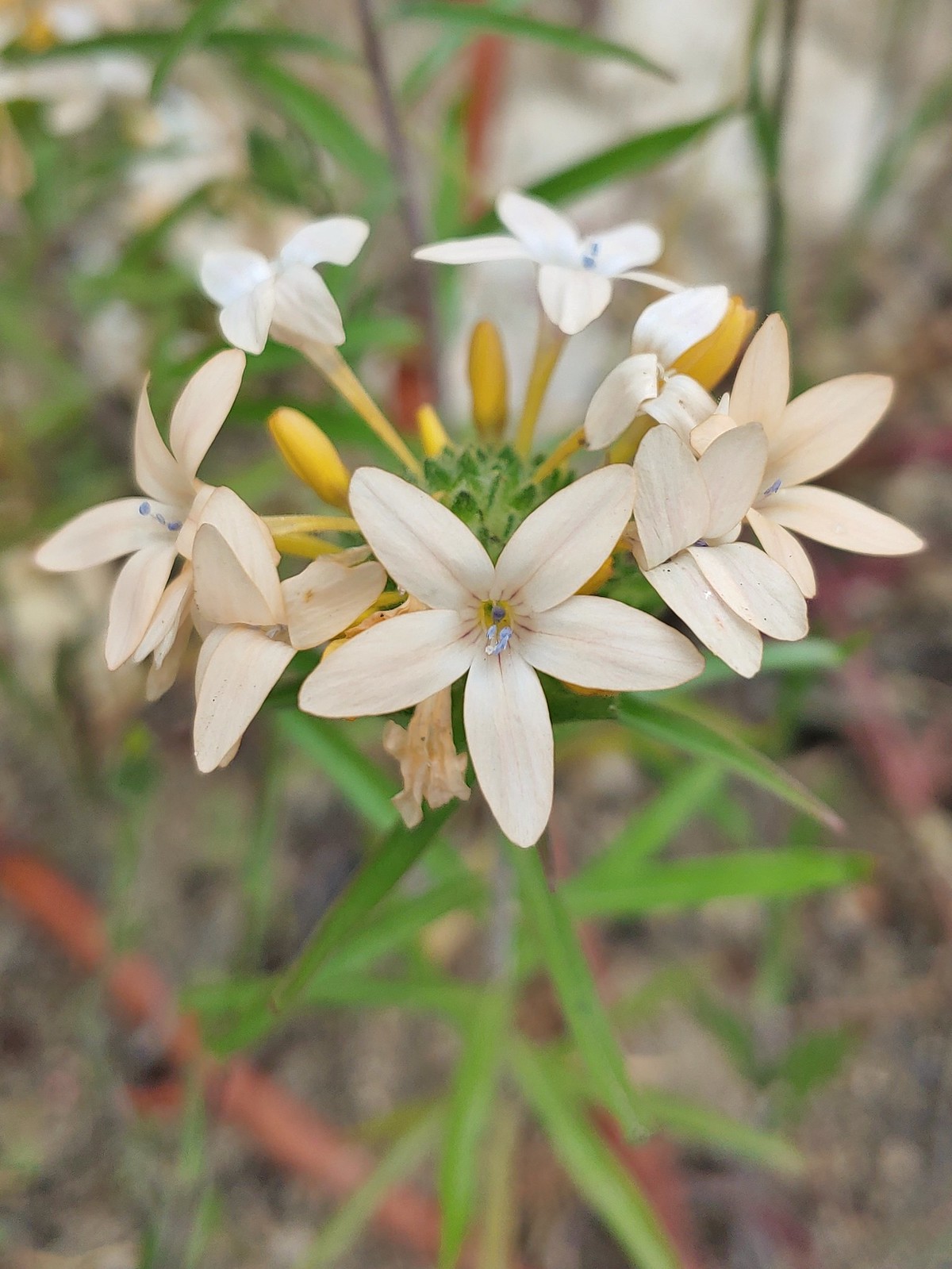 Grand collomia, June 17th – Mike Uthoff Trail
 A phaceli, June 17th – Mike Uthoff Trail
 Rhododendron, June 18th – Frog Pond Trail
 Pretty Face, June 18th – Frog Pond Trail
 Believe this is some sort of saxifrage, June 25th – Toutle Trail
 Avalanche lily, June 25th – Toutle Trail
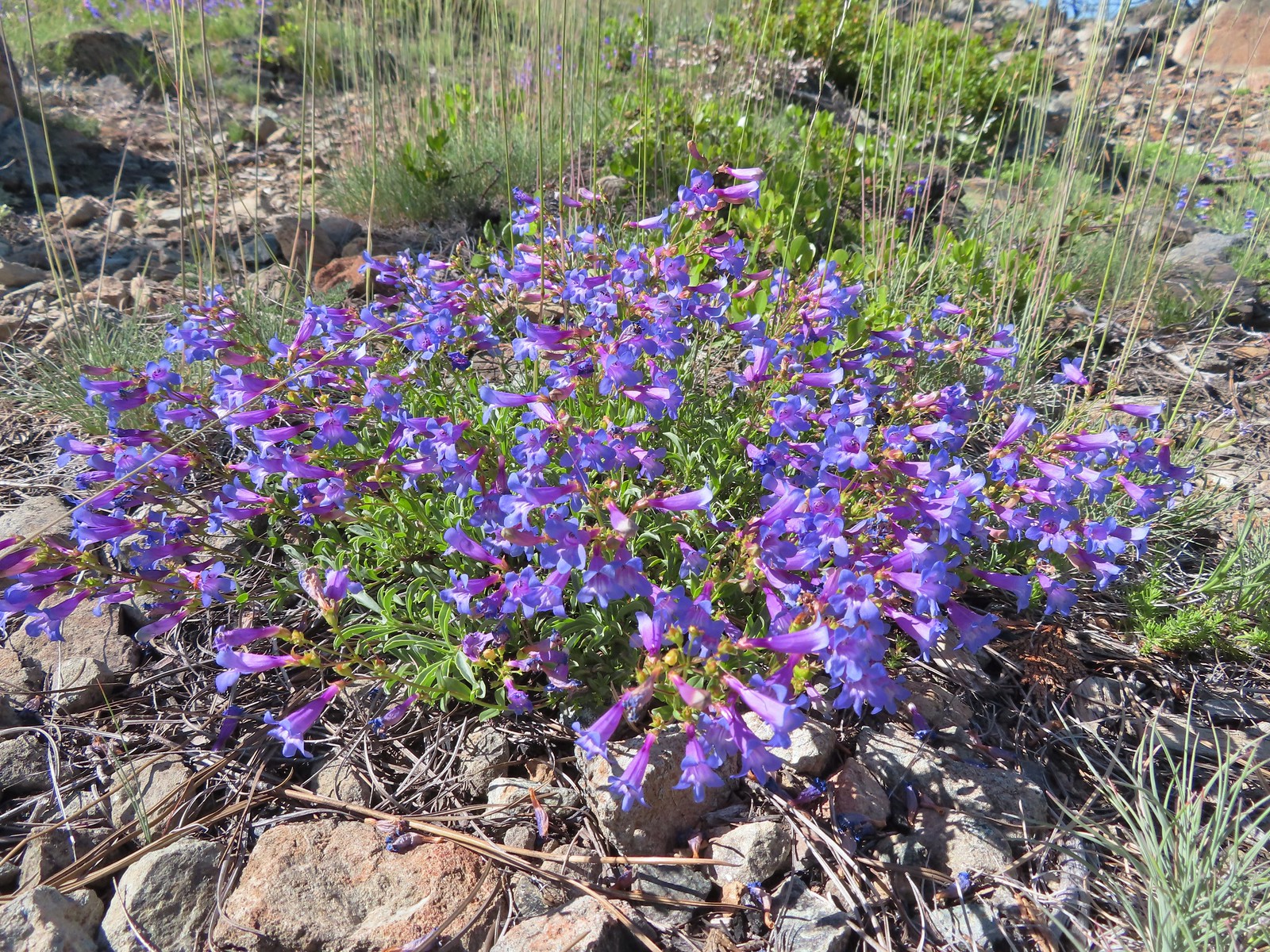 A penstemon, July 1st – Siskiyou Wilderness
 A phlox, July 1st – Siskiyou Wilderness
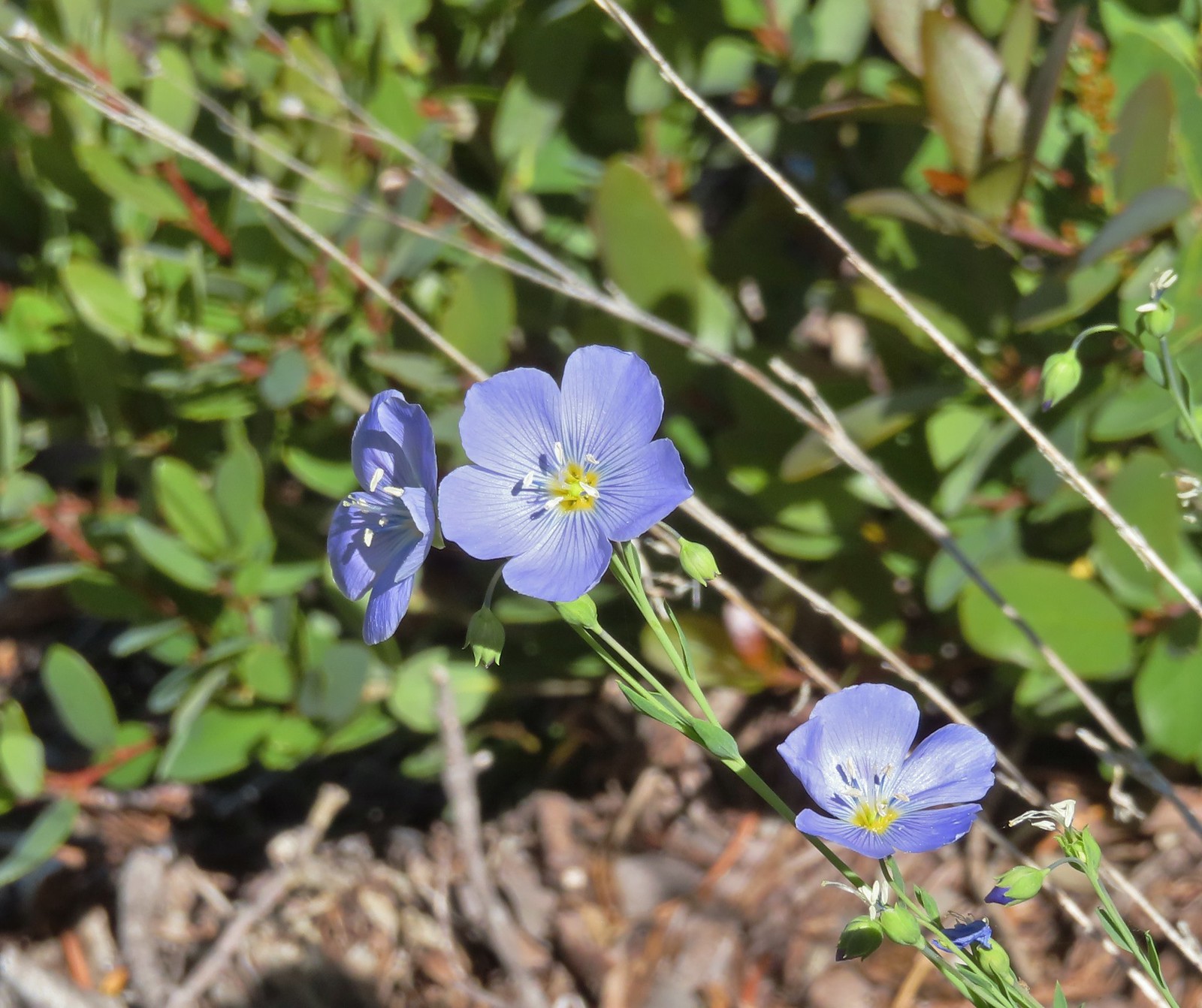 Lewis flax, July 1st – Siskiyou Wilderness
 A paintbrush, July 1st – Siskiyou Wilderness
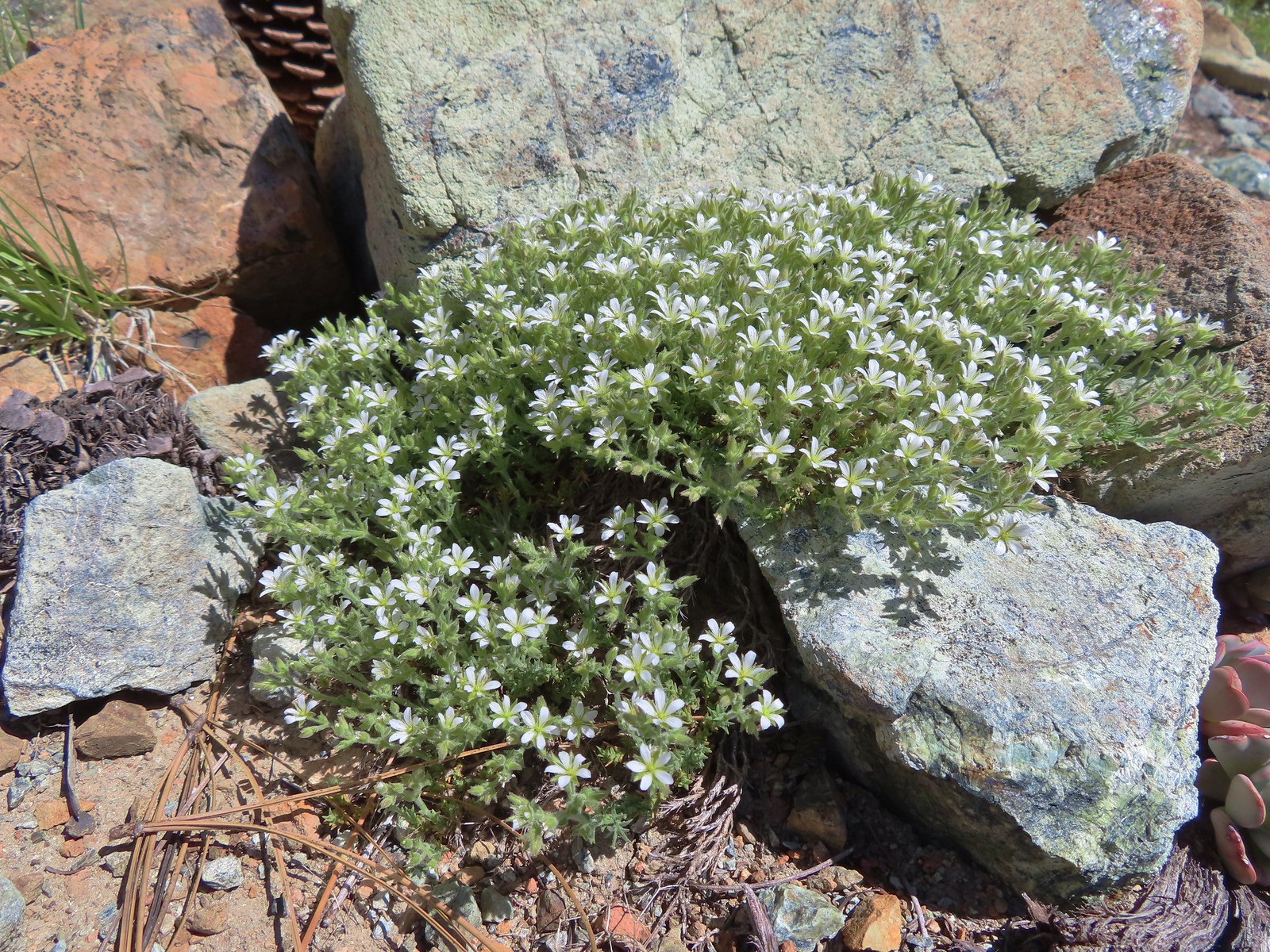 Nuttall’s sandwort?, July 1st -Siskiyou Wilderness
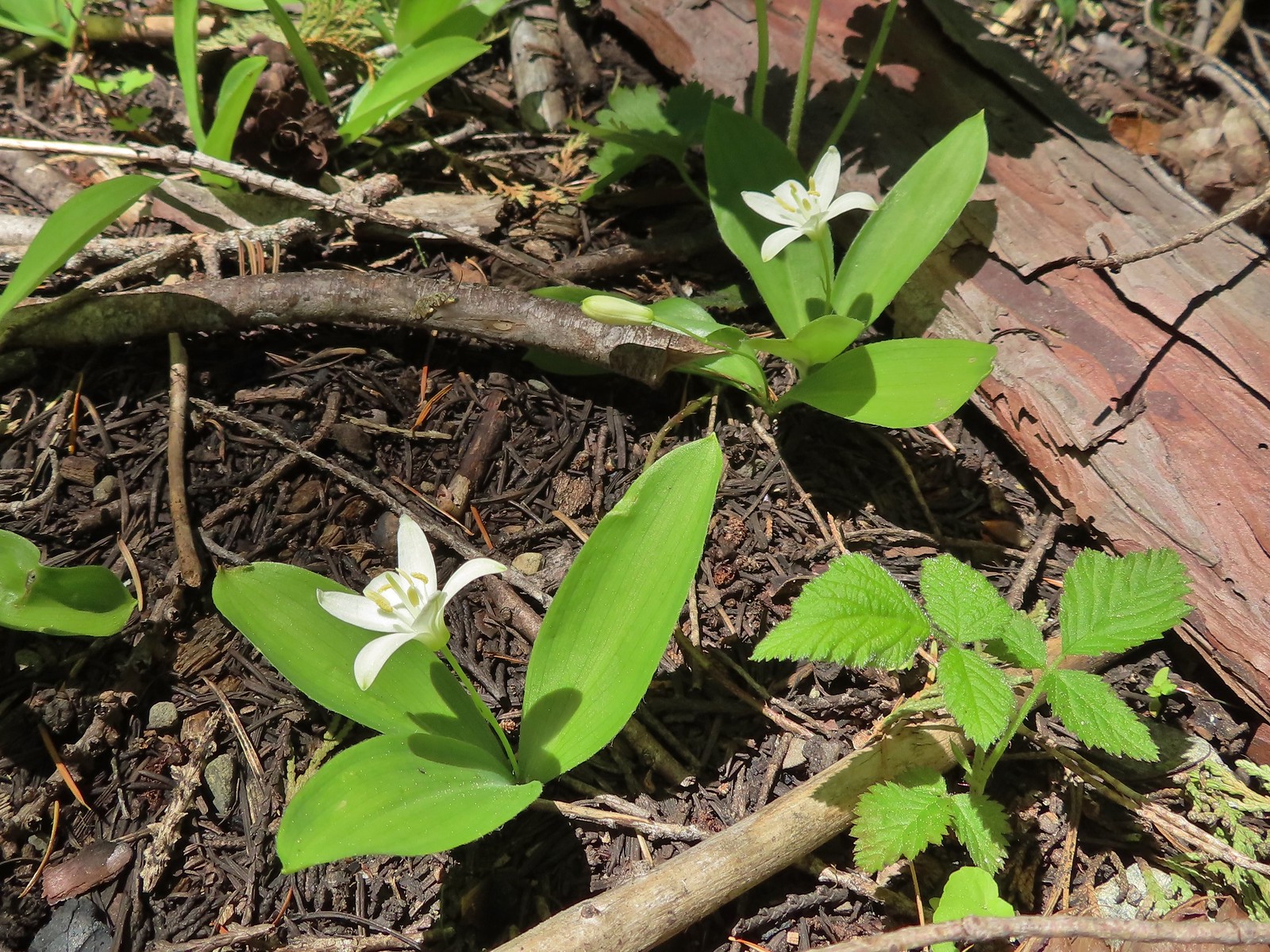 Queen’s cup, July 1st – Siskiyou Wilderness
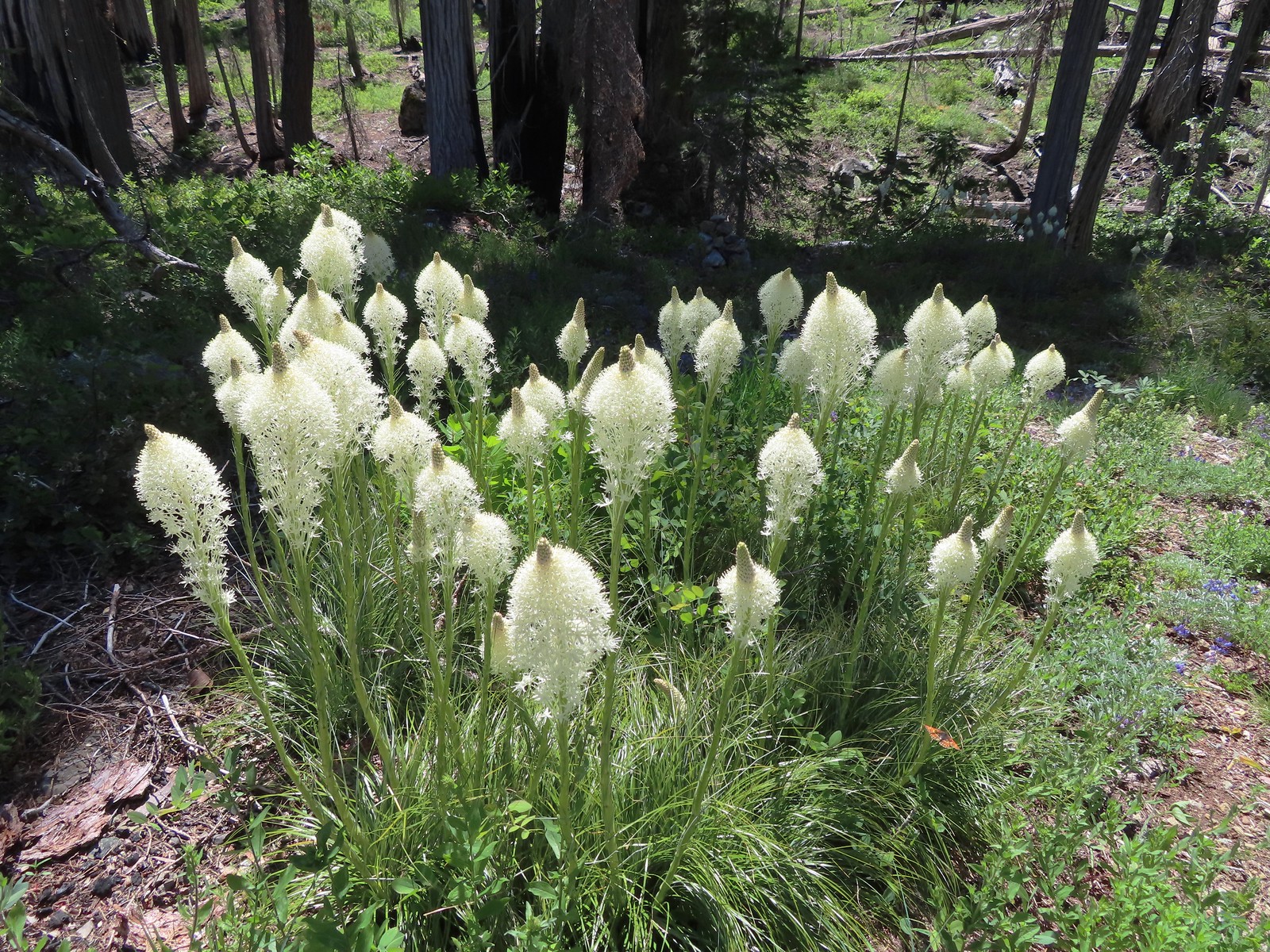 Beargrass, July 1st – Siskiyou Wilderness
 Shooting star, July 1st – Siskiyou Wilderness
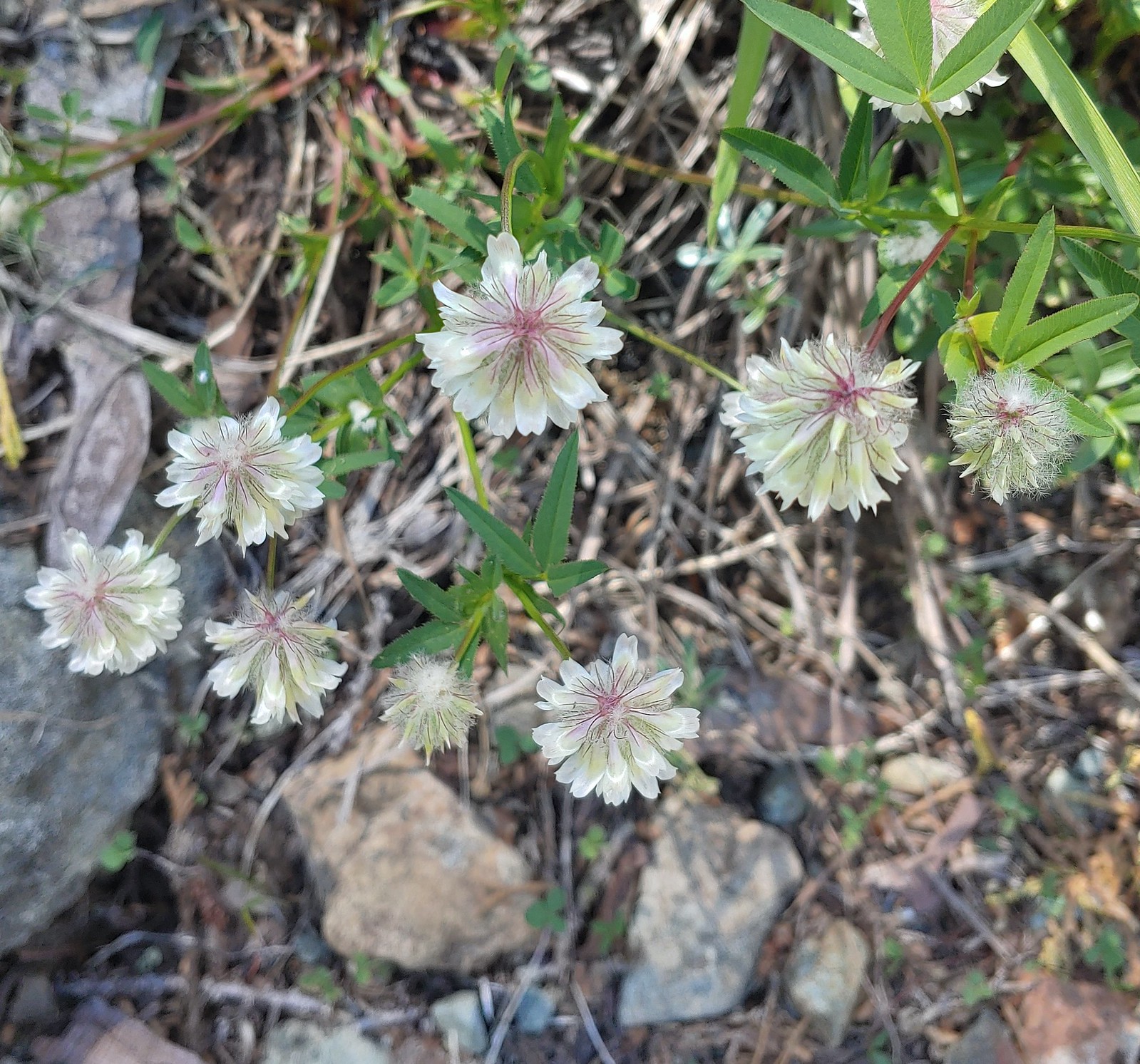 Wolley-head clover, July 1st – Siskiyou ikyWilderness
 A nightshade, July 1st – Siskiyou Wilderness
 Siskiyou lewisia, July 1st – Siskiyou Wilderness
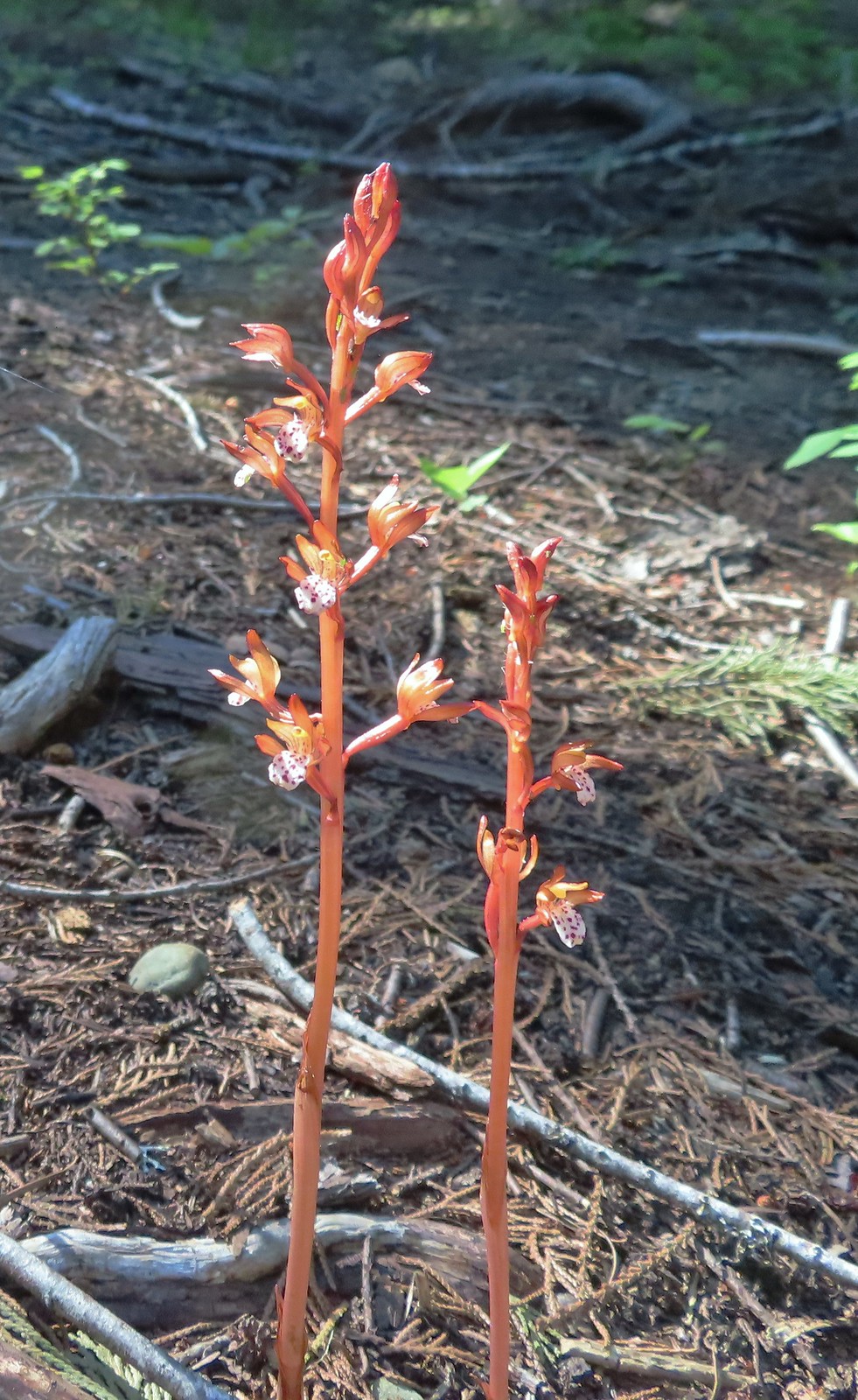 Spotted coralroot, July 1st – Siskiyou Wilderness
 This tiny flower was at the edge of the meadow in Young’s Valley, July 1st – Siskiyou Wilderness
 Azalea, July 2nd – Siskiyou Wilderness
 Honeysuckle, July 2nd – Siskiyou Wilderness
 Pacific ninebark, July 2nd – Siskiyou Wilderness
 Streambank bird’s-foot trefoil, July 2nd – Siskiyou Wilderness
 White-vein wintergreen, July 2nd – Siskiyou Wilderness
 California pitcher-plant, July 2nd – Siskiyou Wilderness
 Also California pitcher-plant, July 2nd – Siskiyou Wilderness
 White-stemmed frasera, July 2nd – Siskiyou Wilderness
 Washington lily, July 2nd – Siskiyou Wilderness
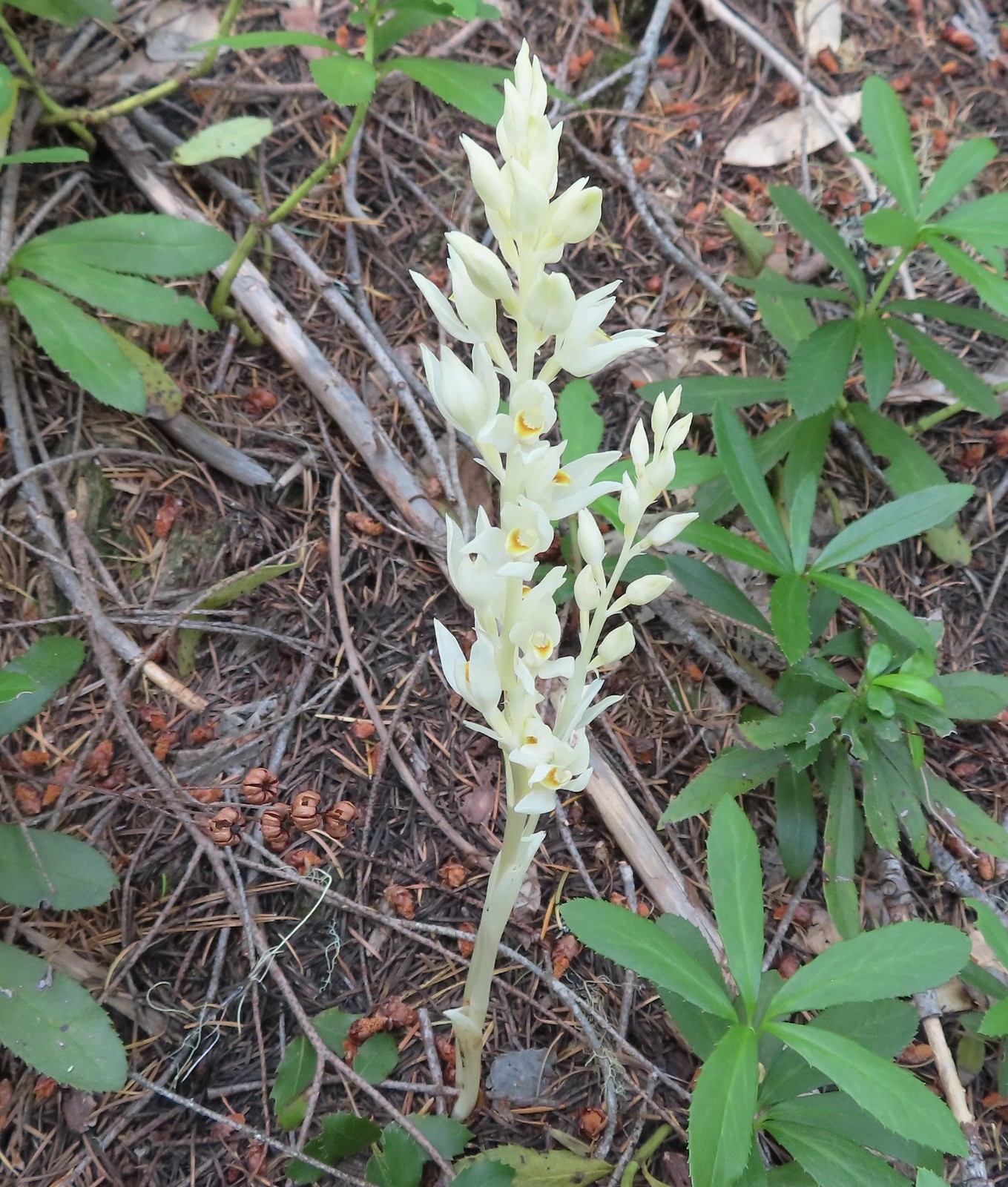 Phantom orchid, July 2nd – Siskiyou Wilderness
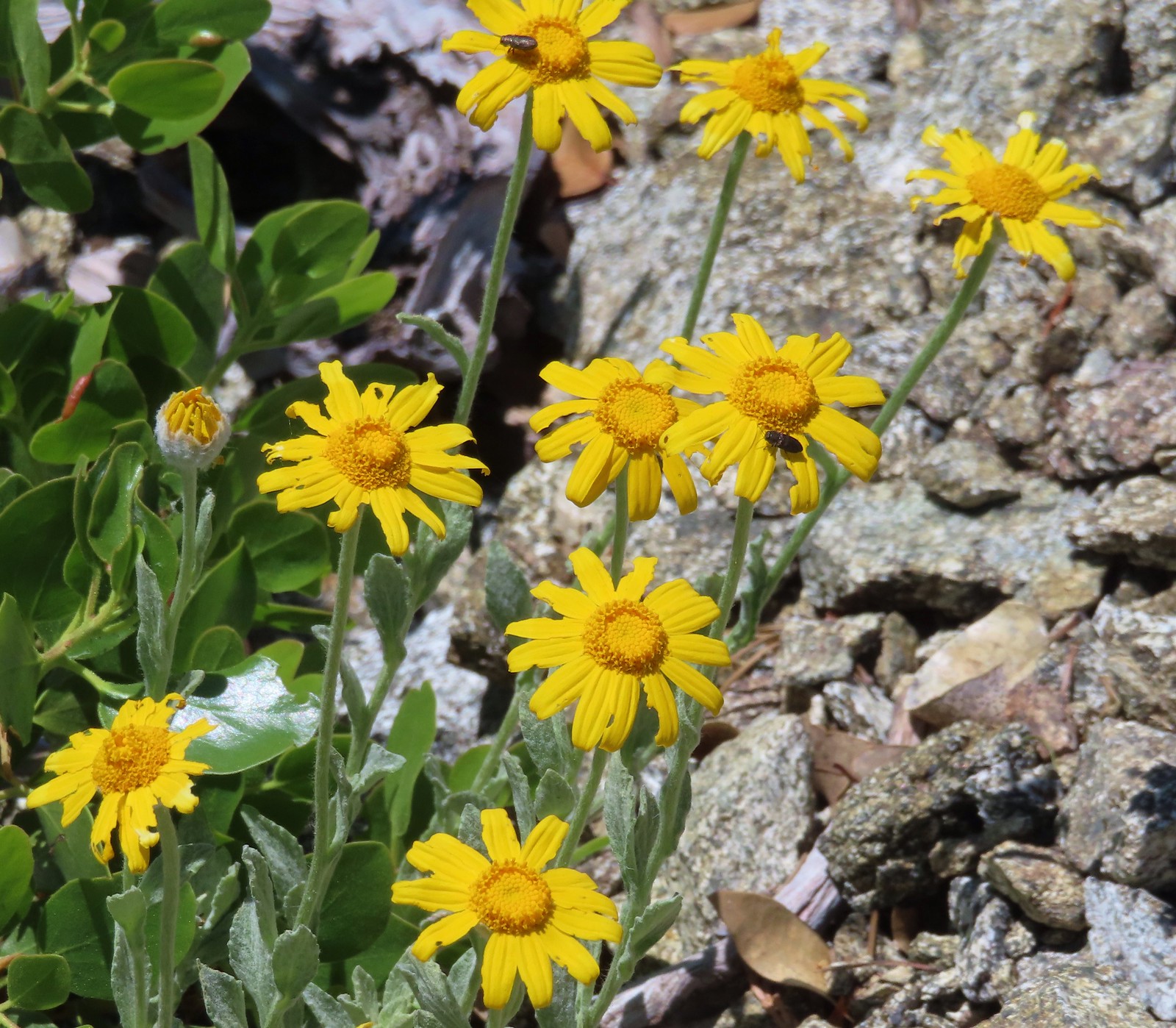 Oregon sunshine, July 2nd – Siskiyou Wilderness
 Pussypaws, July 2nd – Siskiyou Wilderness
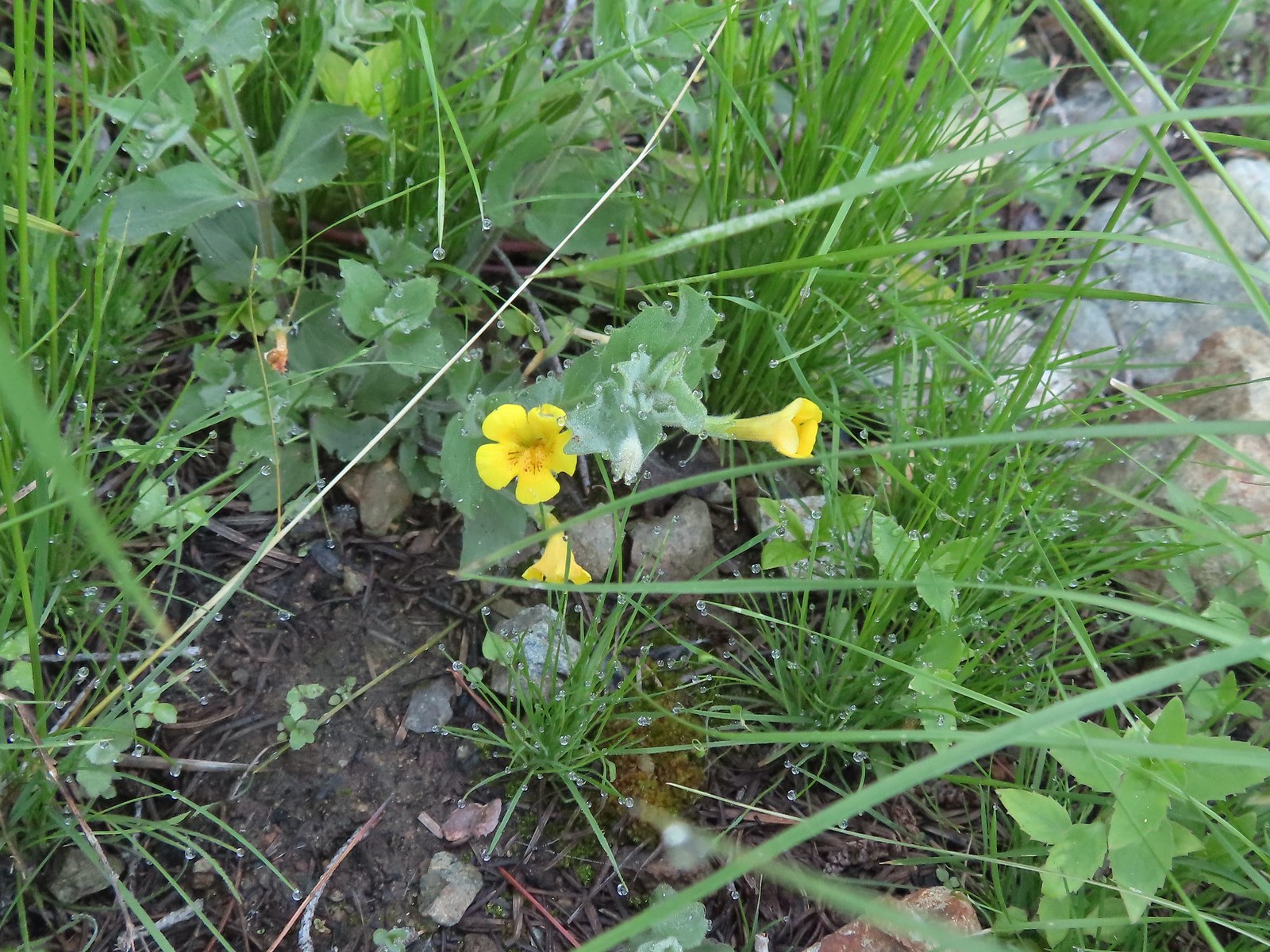 Musk monkeyflower, July 3rd – Siskiyou Wilderness
 Klamath arnica, July 3rd – Siskiyou Wilderness
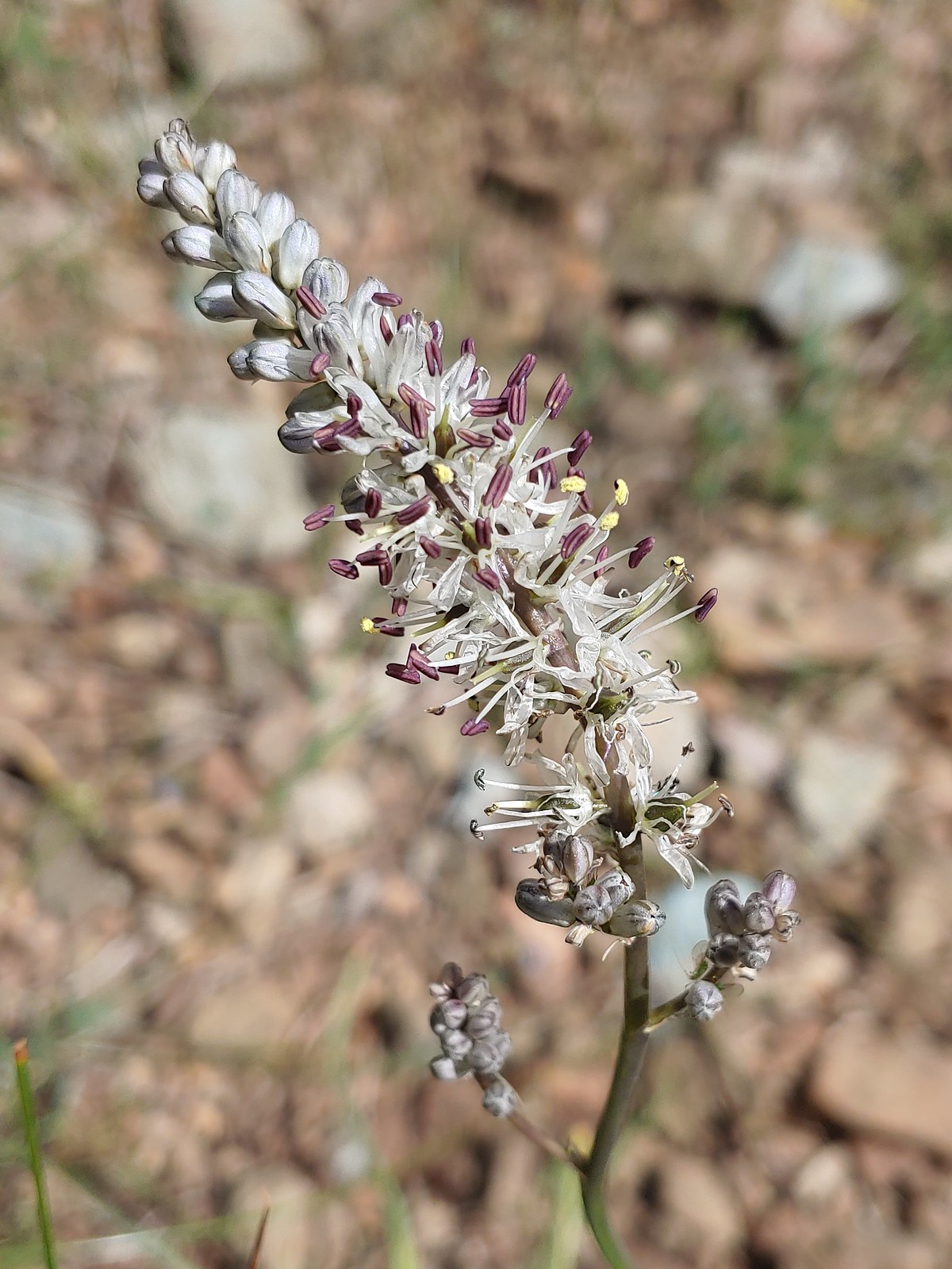 White rushlily, July 3rd – Siskiyou Wilderness
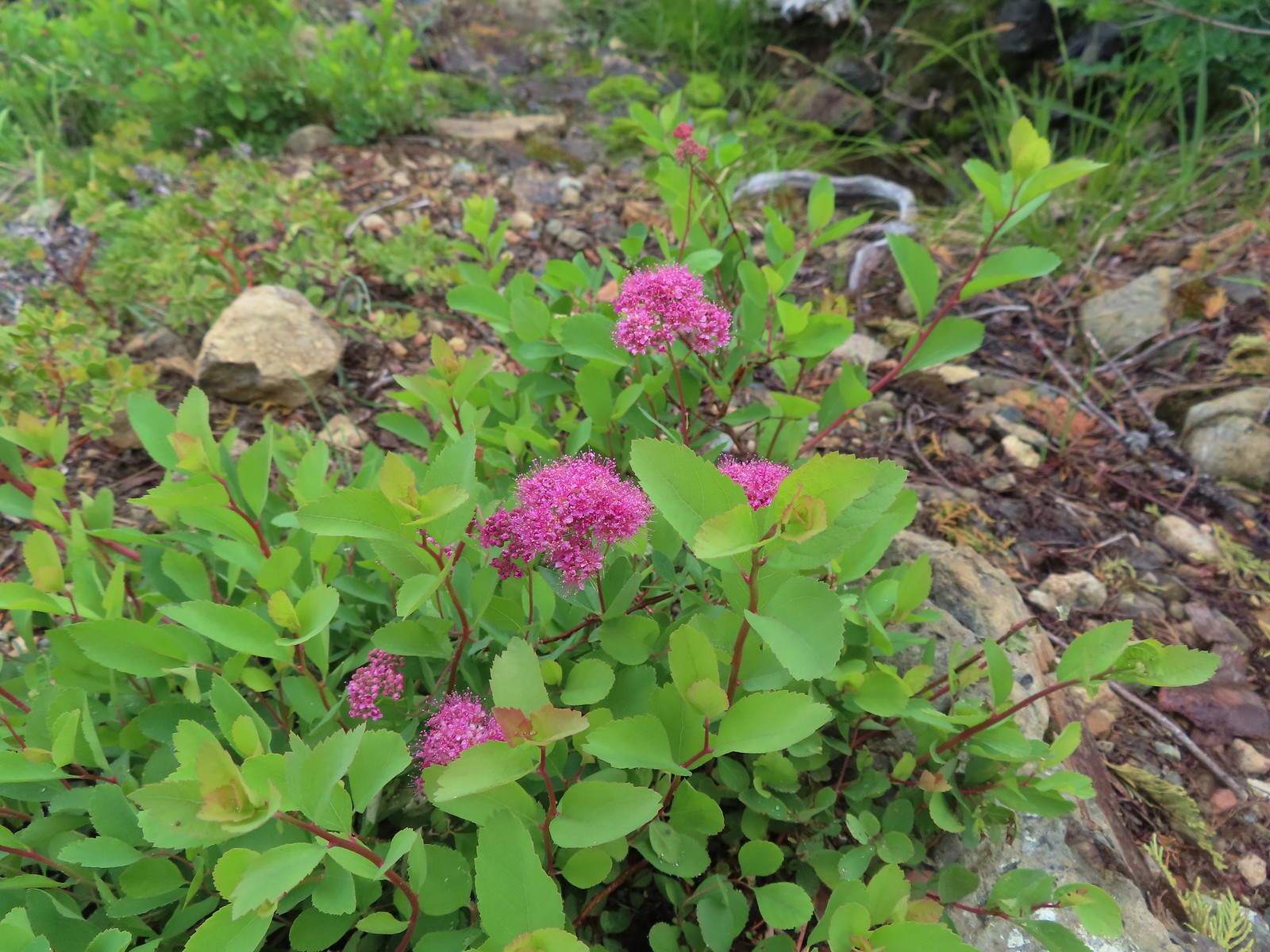 Spirea, July 4th – Siskiyou Wilderness
 Wild onion, July 4th – Siskiyou Wilderness
 A penstemon, July 4th – Siskiyou Wilderness
 Phlox, July 9th – Mt. Ireland
 Brown’s peony, July 9th – Mt. Ireland
 Yet another paintbrush, July 9th – Mt. Ireland
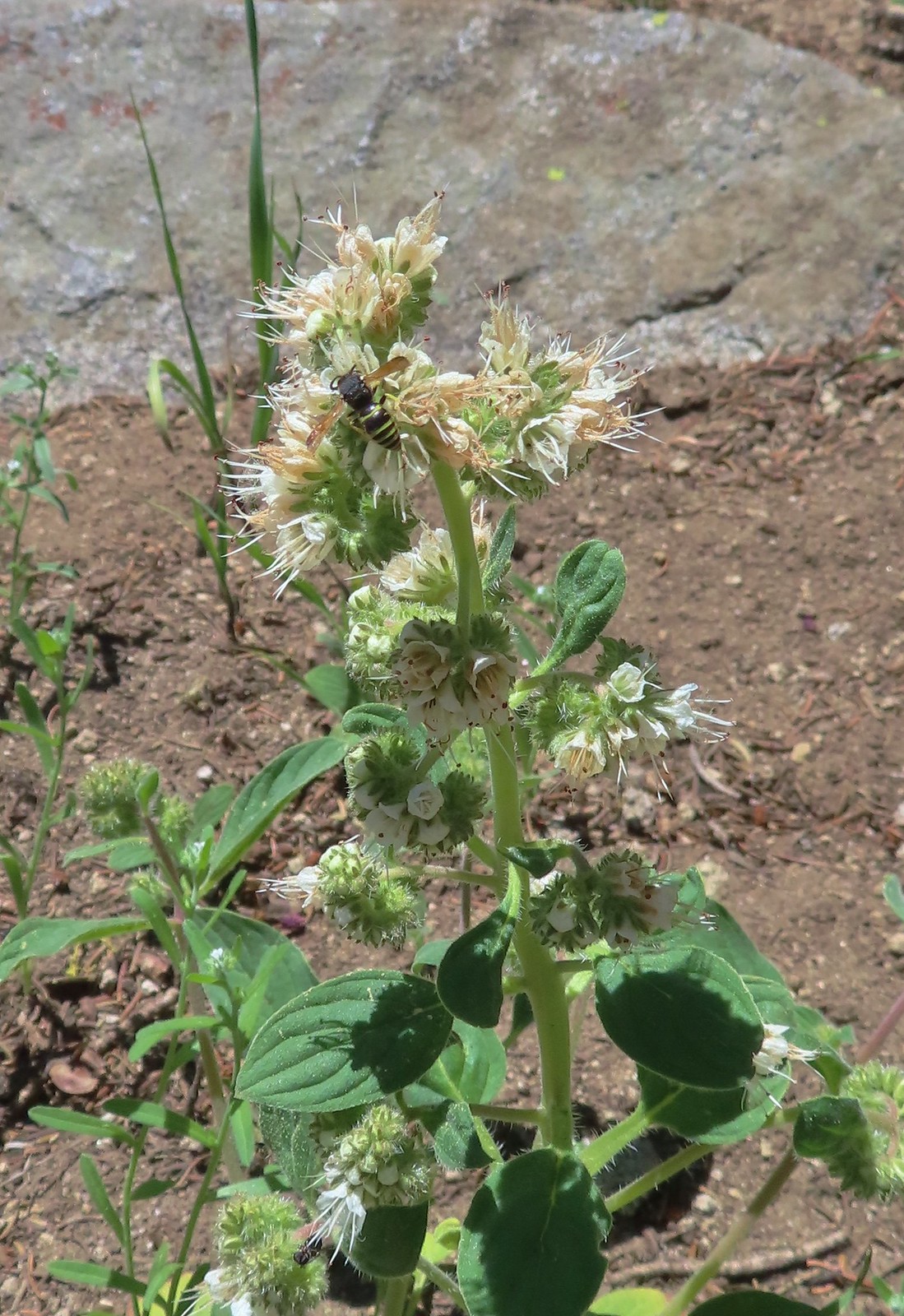 Silverleaf phacelia with visitor, July 9th – Mt. Ireland
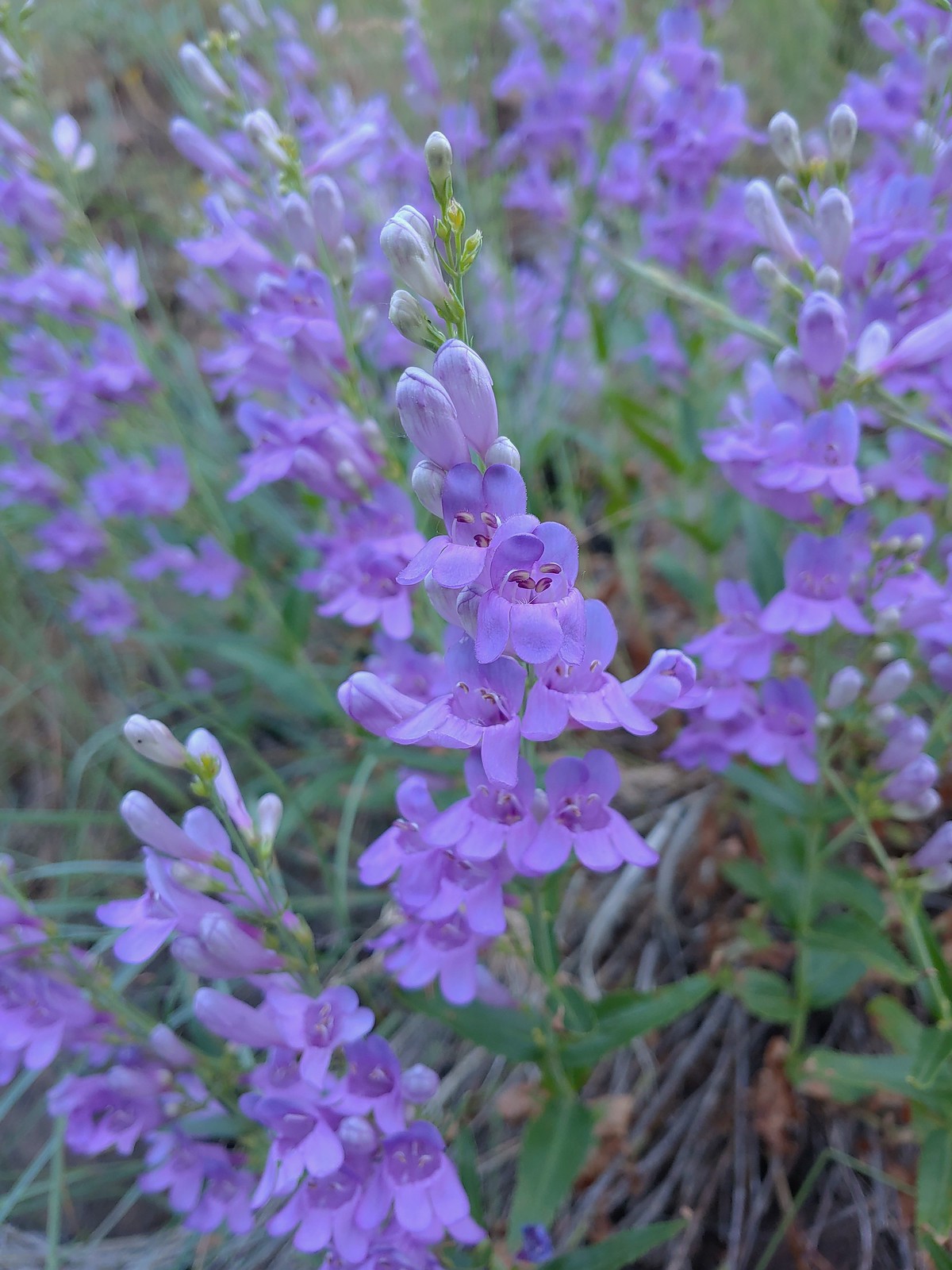 Venus penstemon, July 10th – Catherine Creek Trail
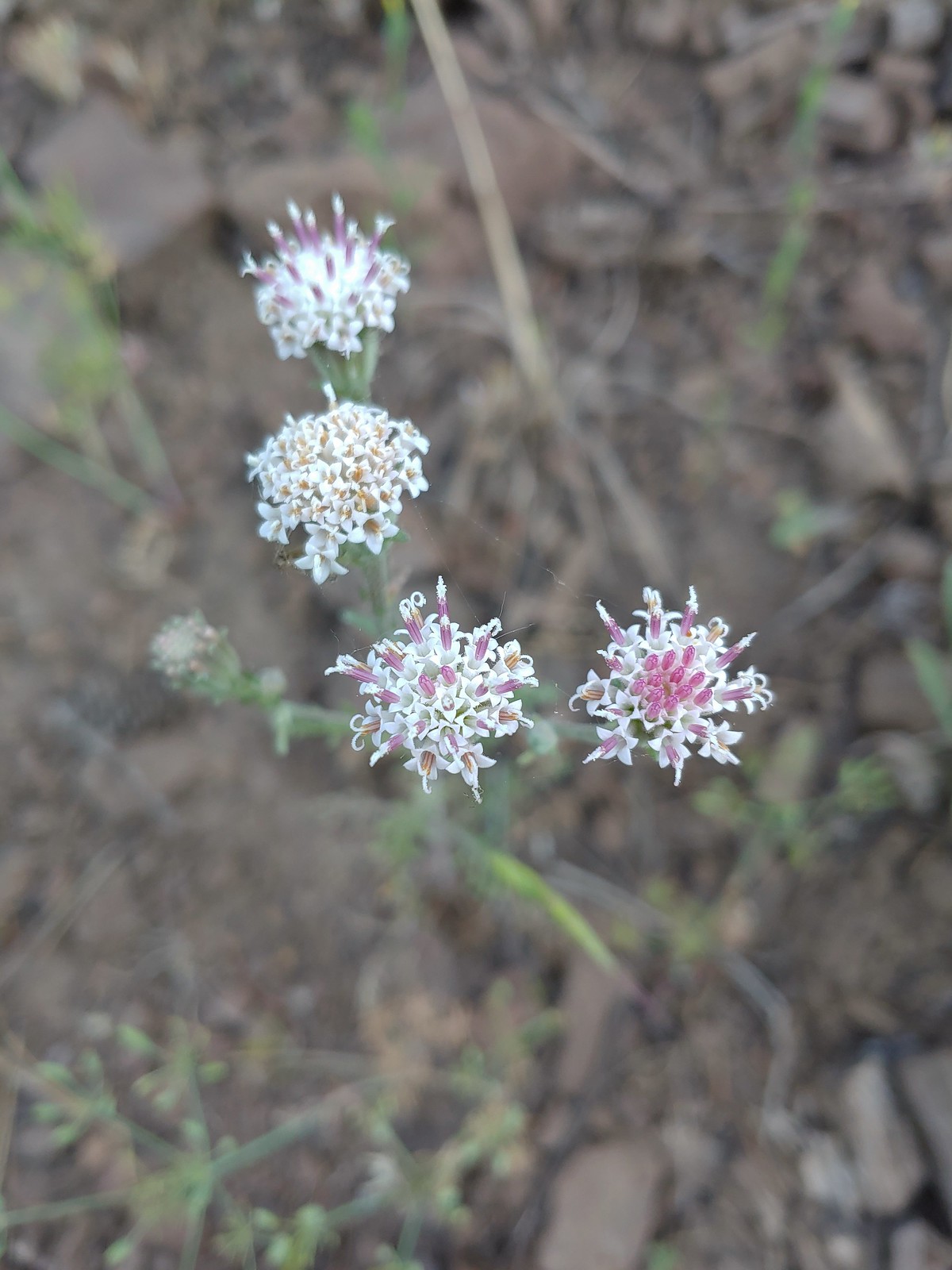 Douglas dustymaidens, July 10th – Catherine Creek Trail
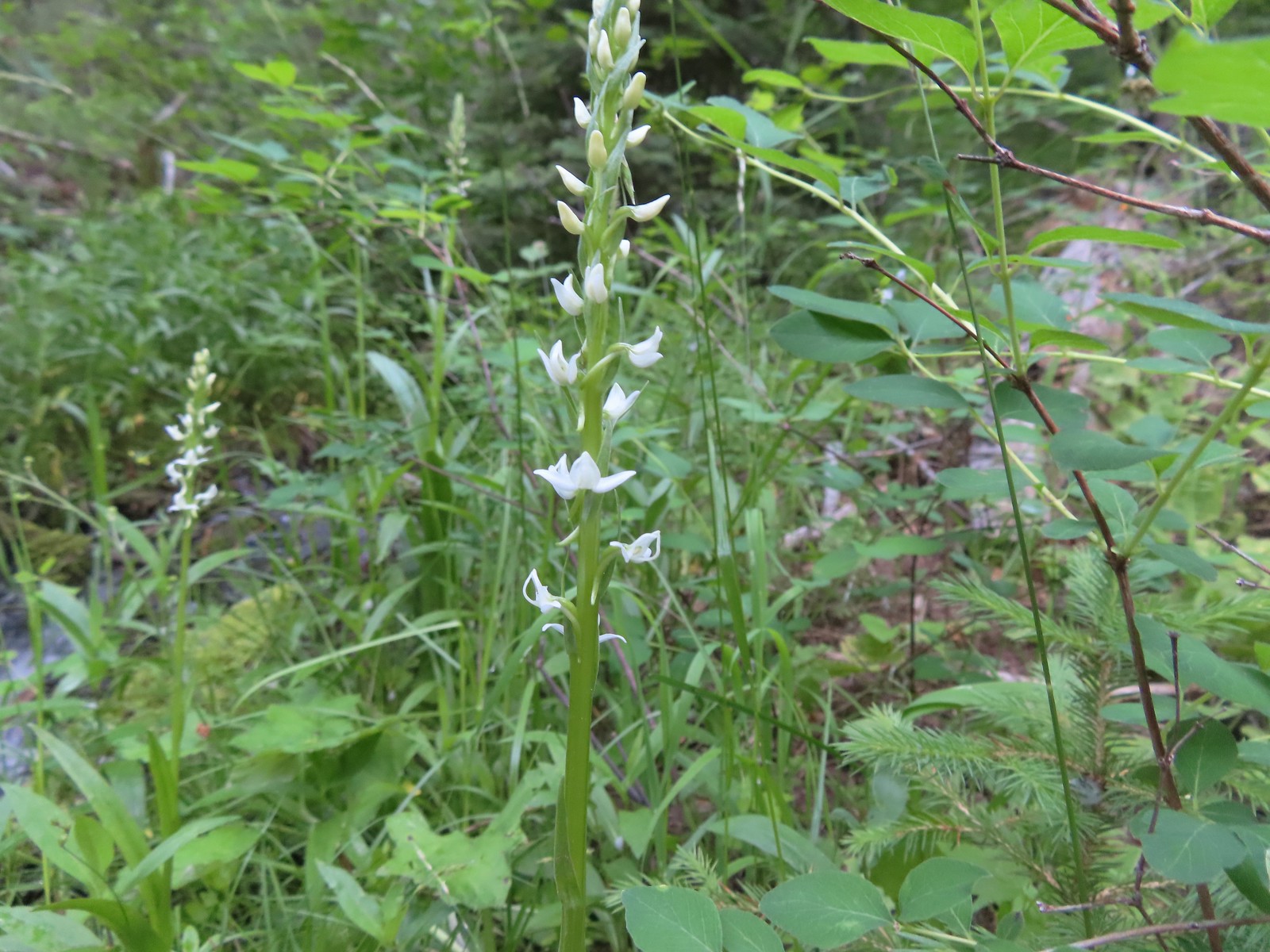 Bog orchid, July 10th – Catherine Creek Trail
 Mountain lady slippers, July 10th – Catherine Creek Trail
 Rosy pussytoes, July 10th – Catherine Creek Trail
 Yellow columbine, July 10th – Catherine Creek Trail
 Heart-leaved bittercress?, July 10th – Catherine Creek Trail
 Elephants head, July 10th – Catherine Creek Trail
 Cone flower, July 10th – Catherine Creek Trail
 Tall mountain bluebells, July 10th – Catherine Creek Trail
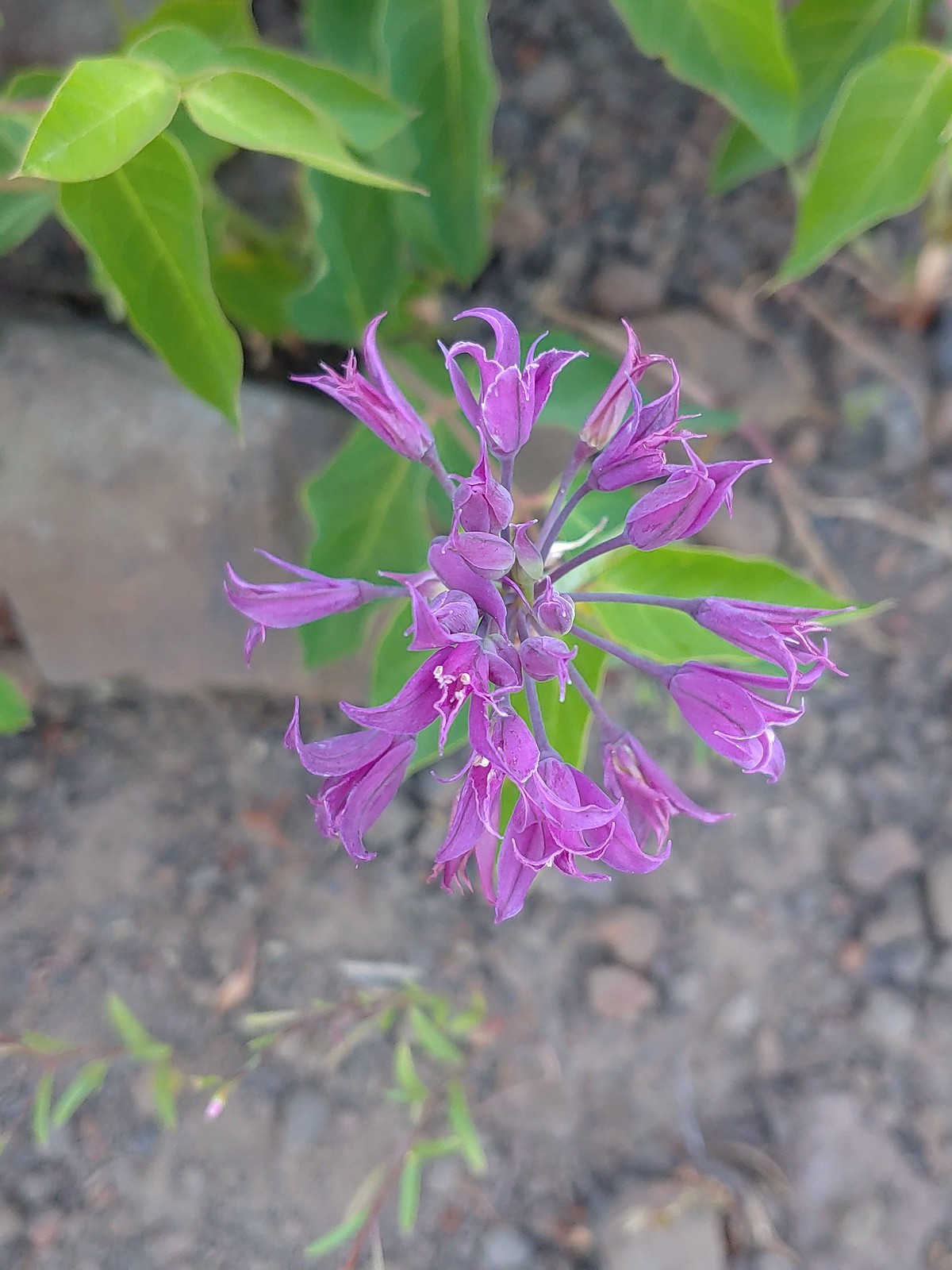 Another wild onion, July 11th – Horse Ranch Trail
 Scarlet gilia, July 11th – Horse Ranch Trail
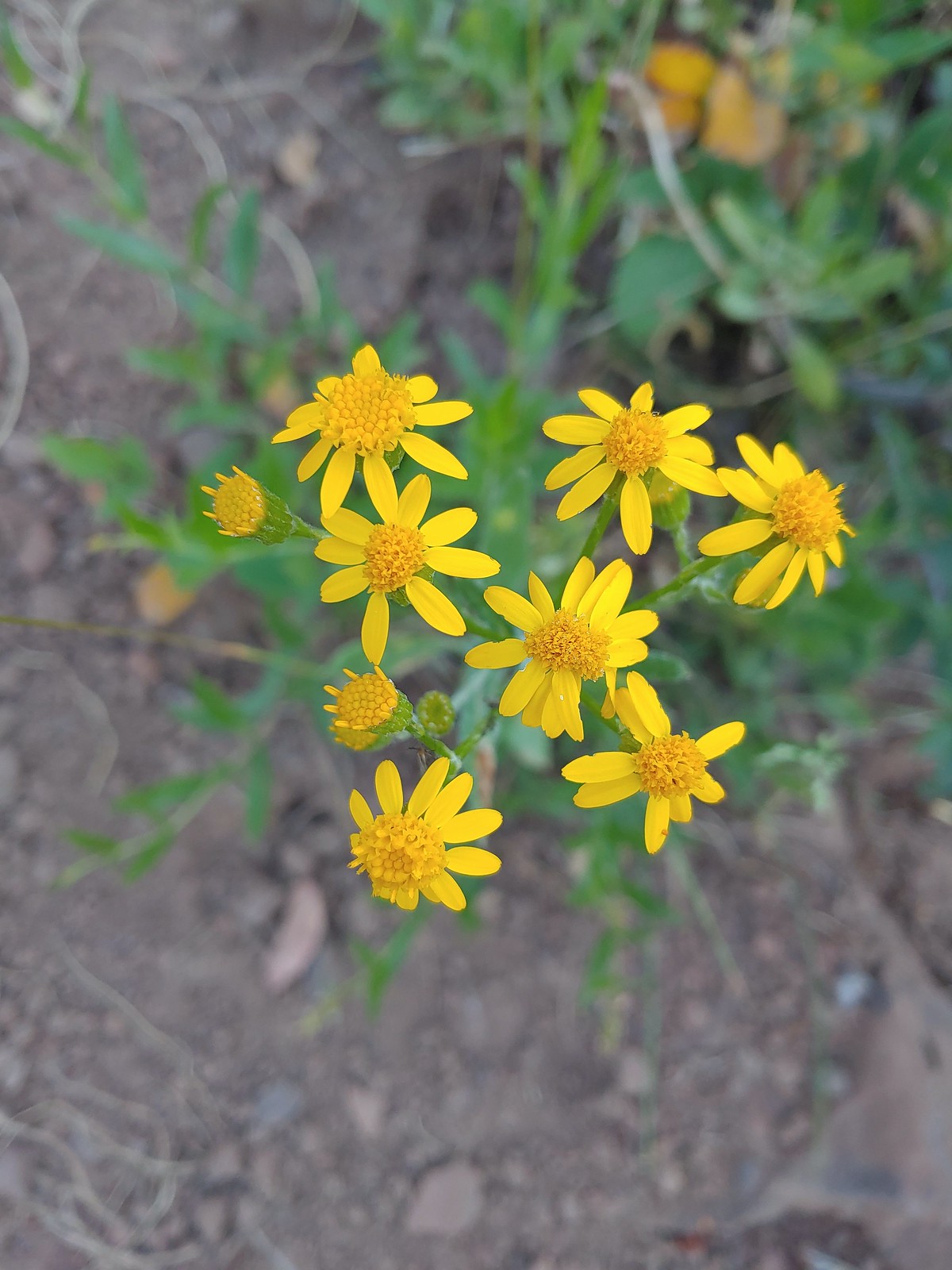 Arrowleaf groundsel, July 11th – Horse Ranch Trail
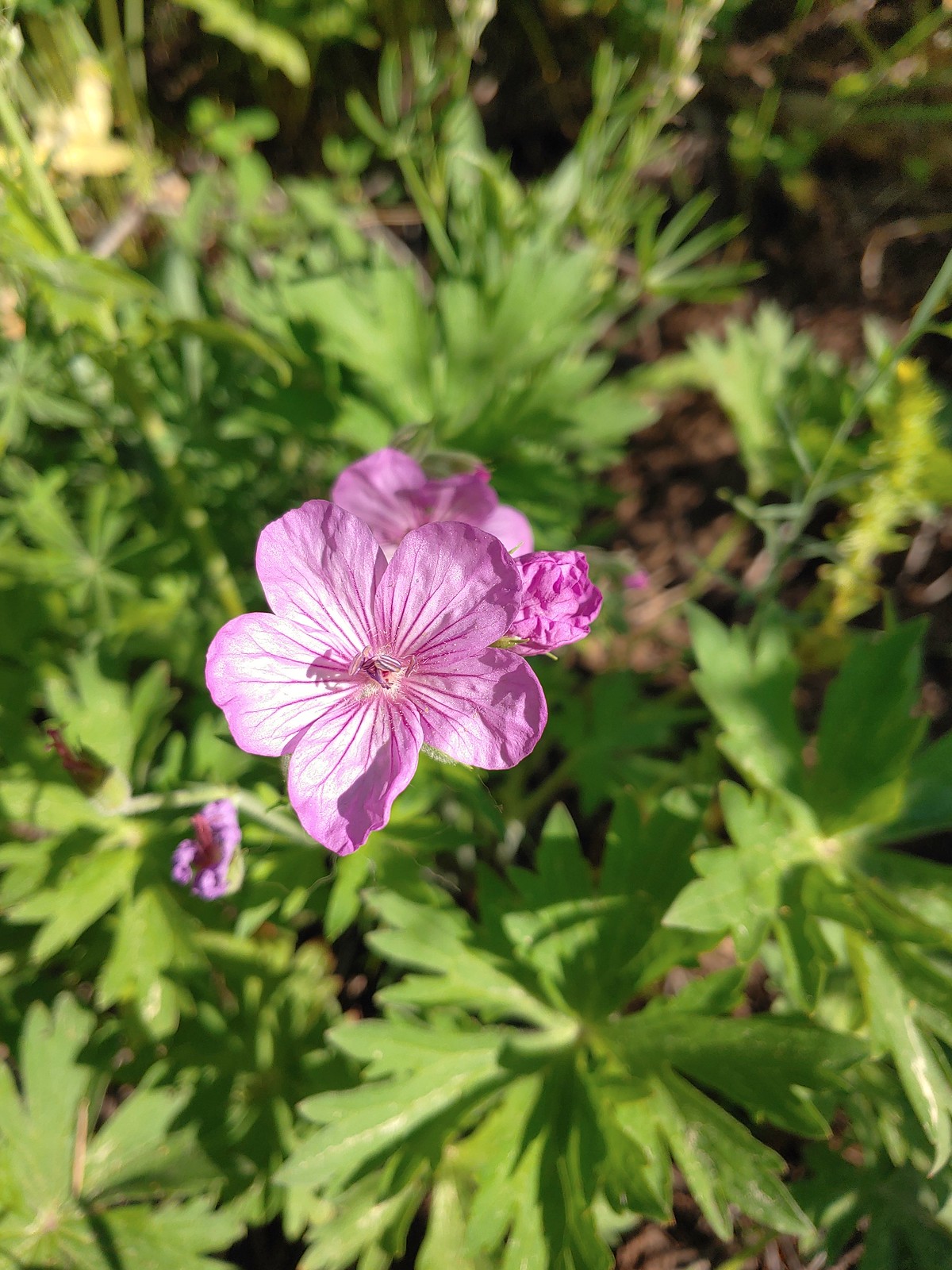 Purple sticky geranium, July 11th – Horse Ranch Trail
 Ragged robin, July 11th – Horse Ranch Trail
 False? sunflower, July 11th – Horse Ranch Trail
 White mariposa lily, July 11th – Horse Ranch Trail
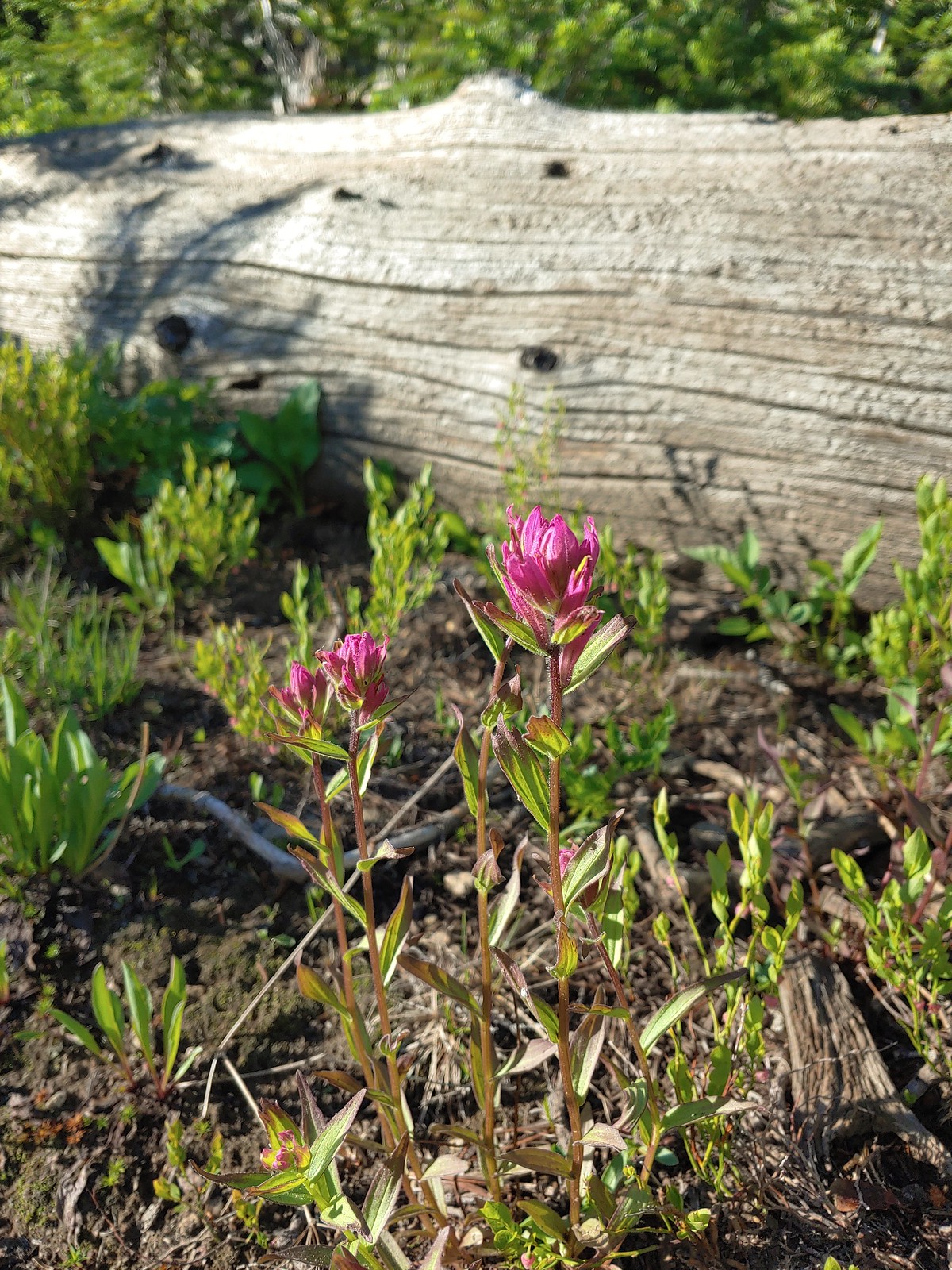 Rosy paintbrush, July 12th – Buck Creek Trail
 Lyall’s rockcress, July 12th – Buck Creek Trail
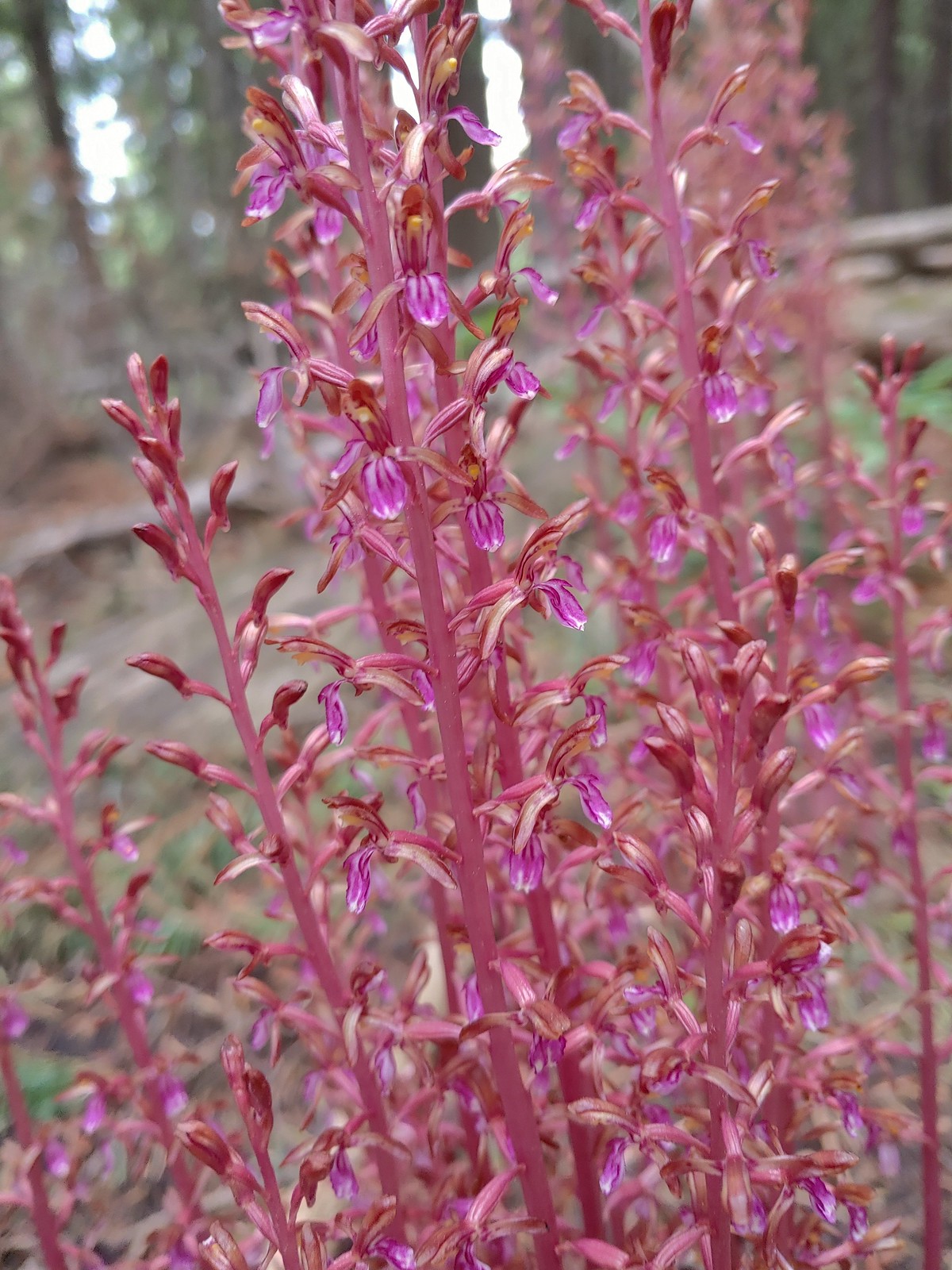 Pacific coralroot, July 13th – Rock Springs
 Hyssop, July 13th – Rock Springs
 Another penstemon, July 13th – Rock Springs
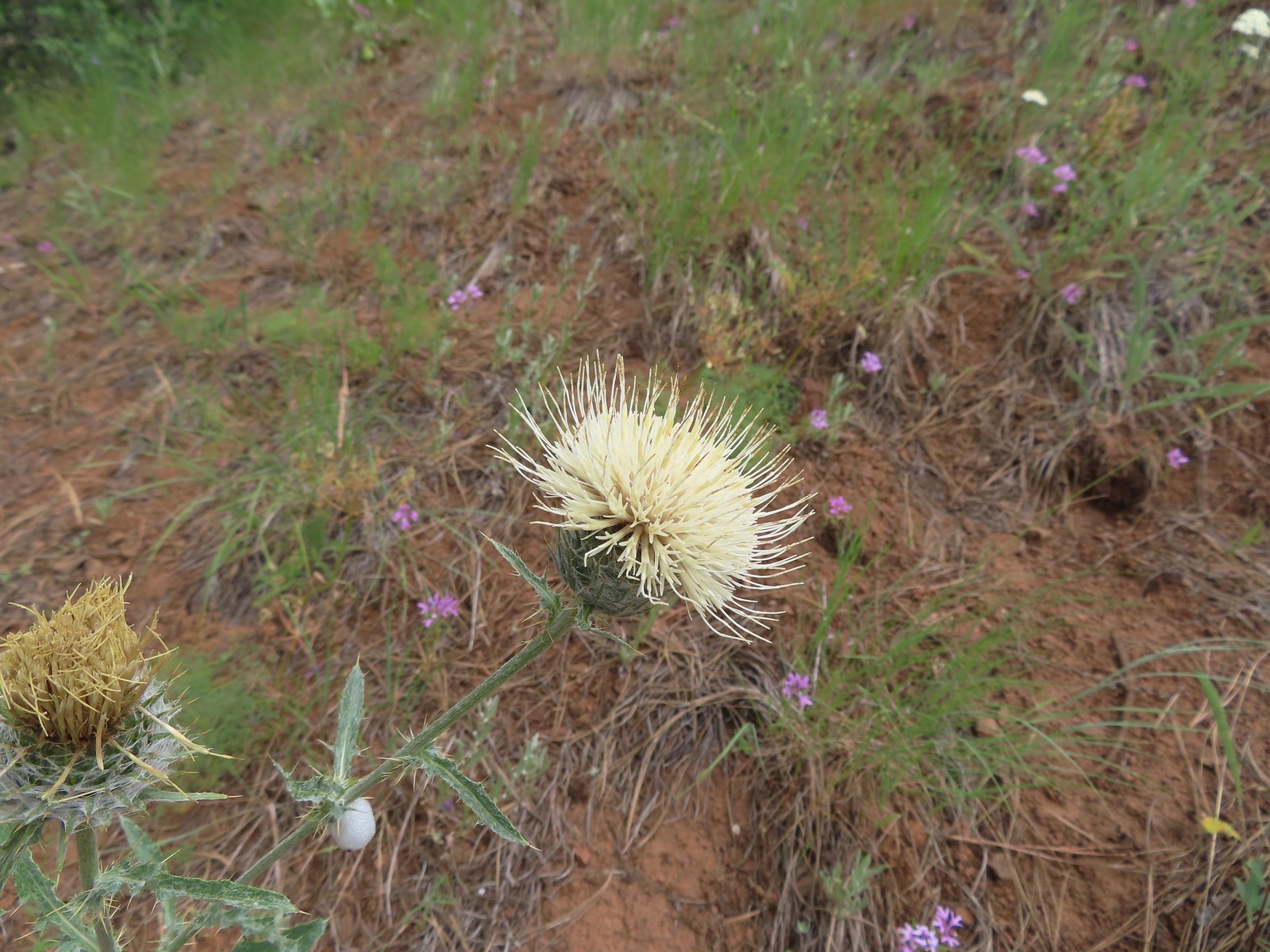 Thistle, July 13th – Rock Springs
 Oregon checker-mallow, July 13th – Rock Springs
 This was a new one for us one-flowered moneses, July 14th – Bear Creek Trail
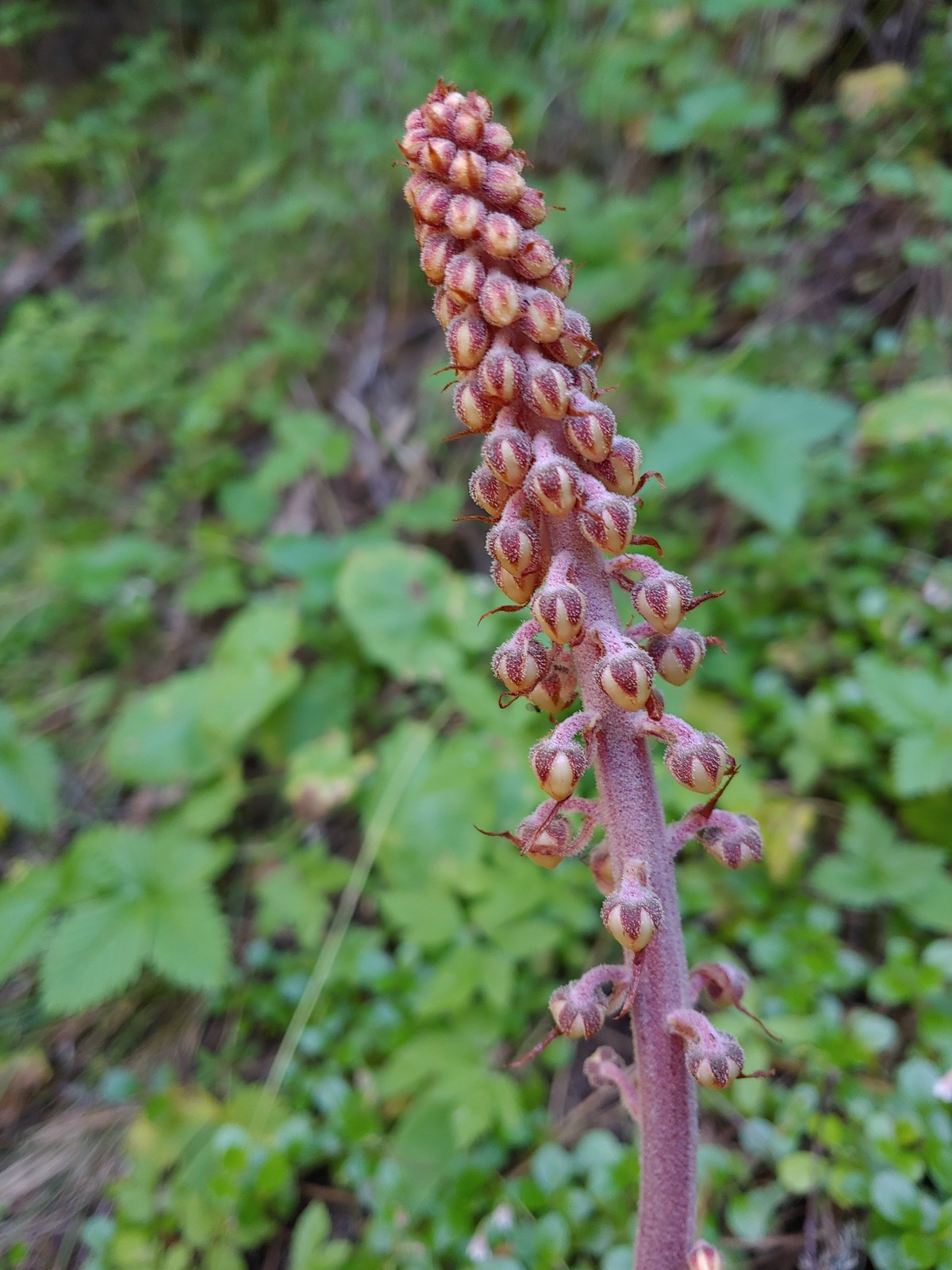 Pinedrop, July 14th – Bear Creek Trail
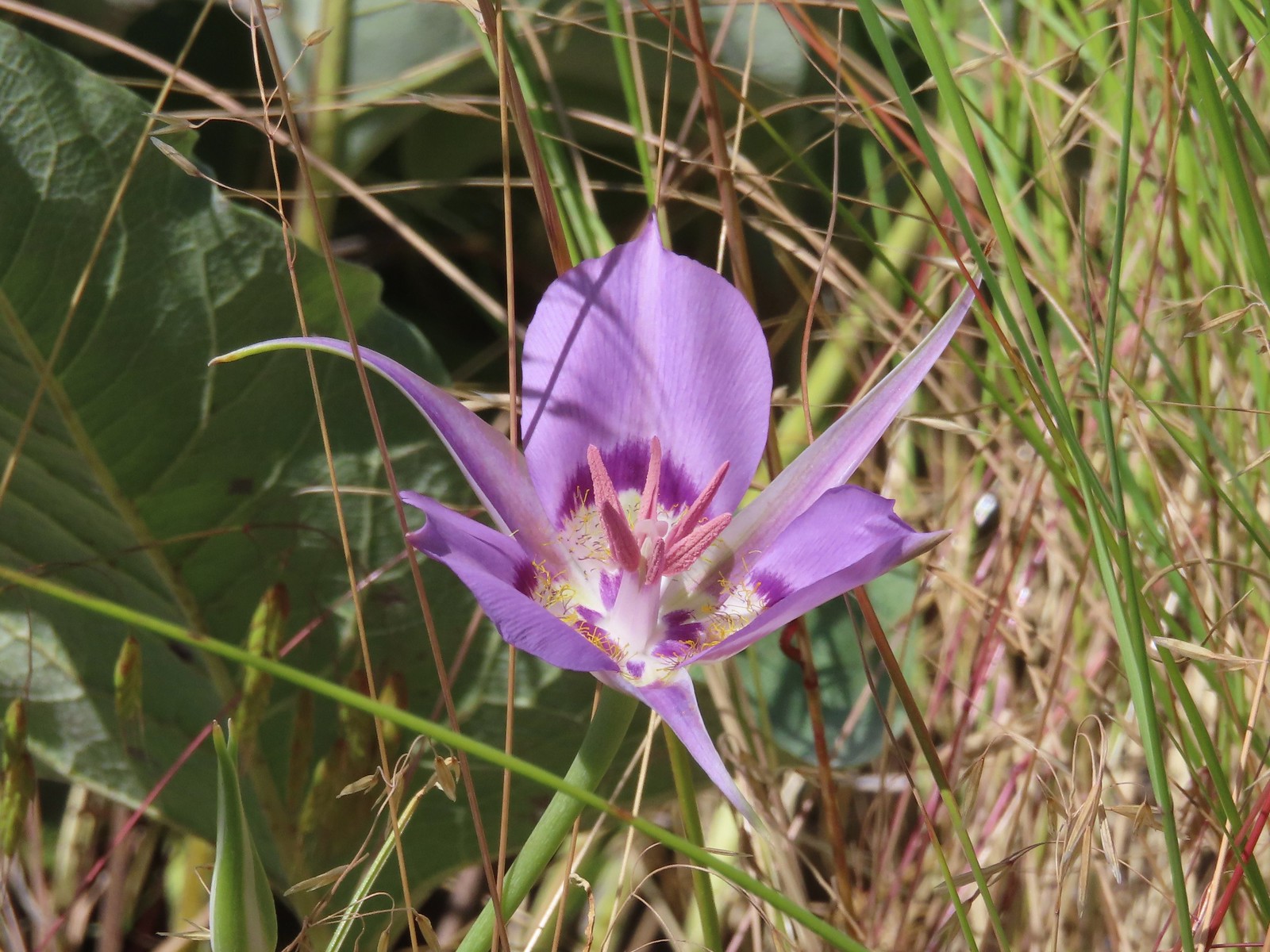 Sagebrush mariposa lily, July 14th – Wallowa Homeland
 Blanket flower, July 14th – Wallowa Homeland
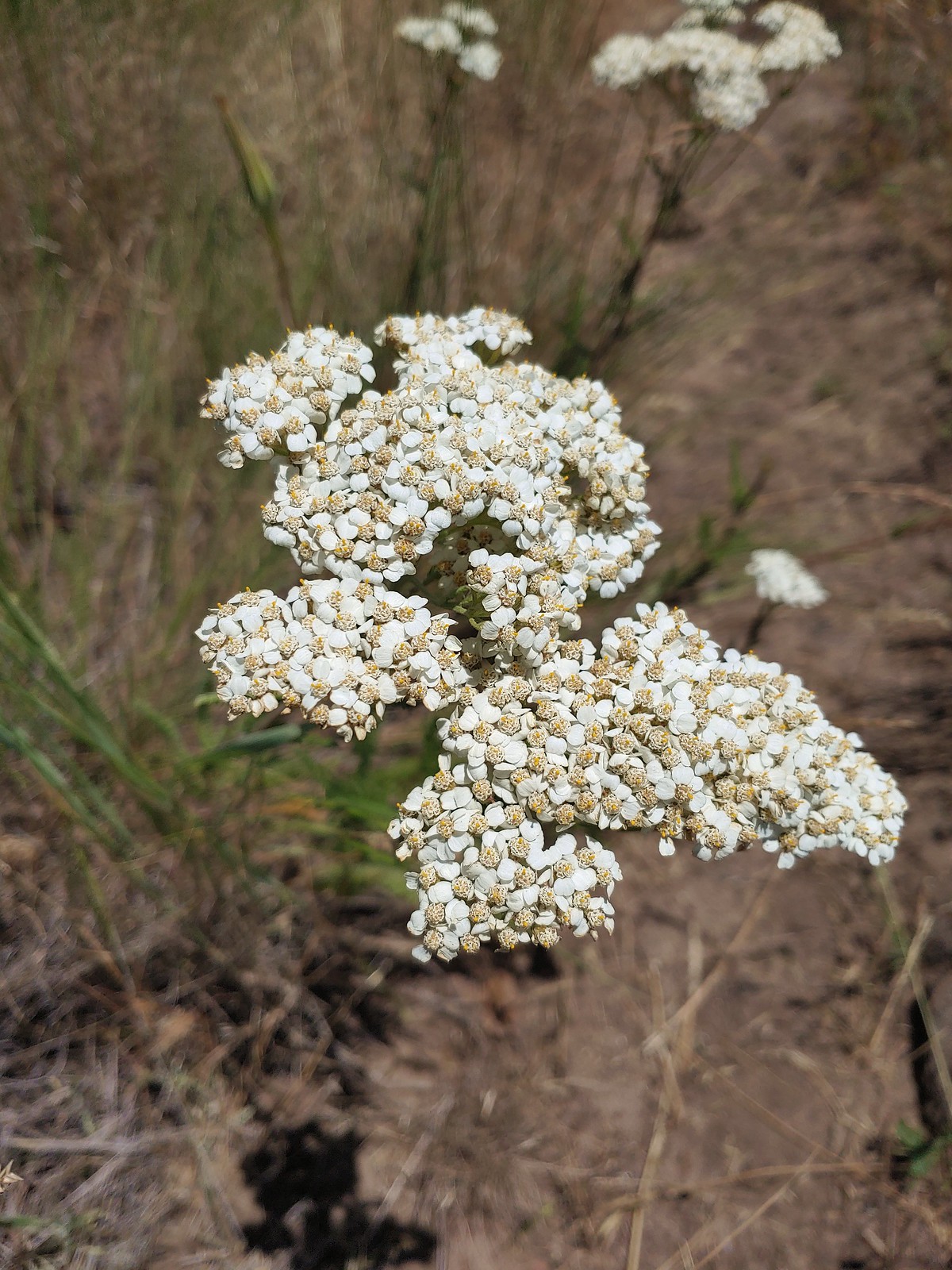 Yarrow, July 14th – Wallowa Homeland
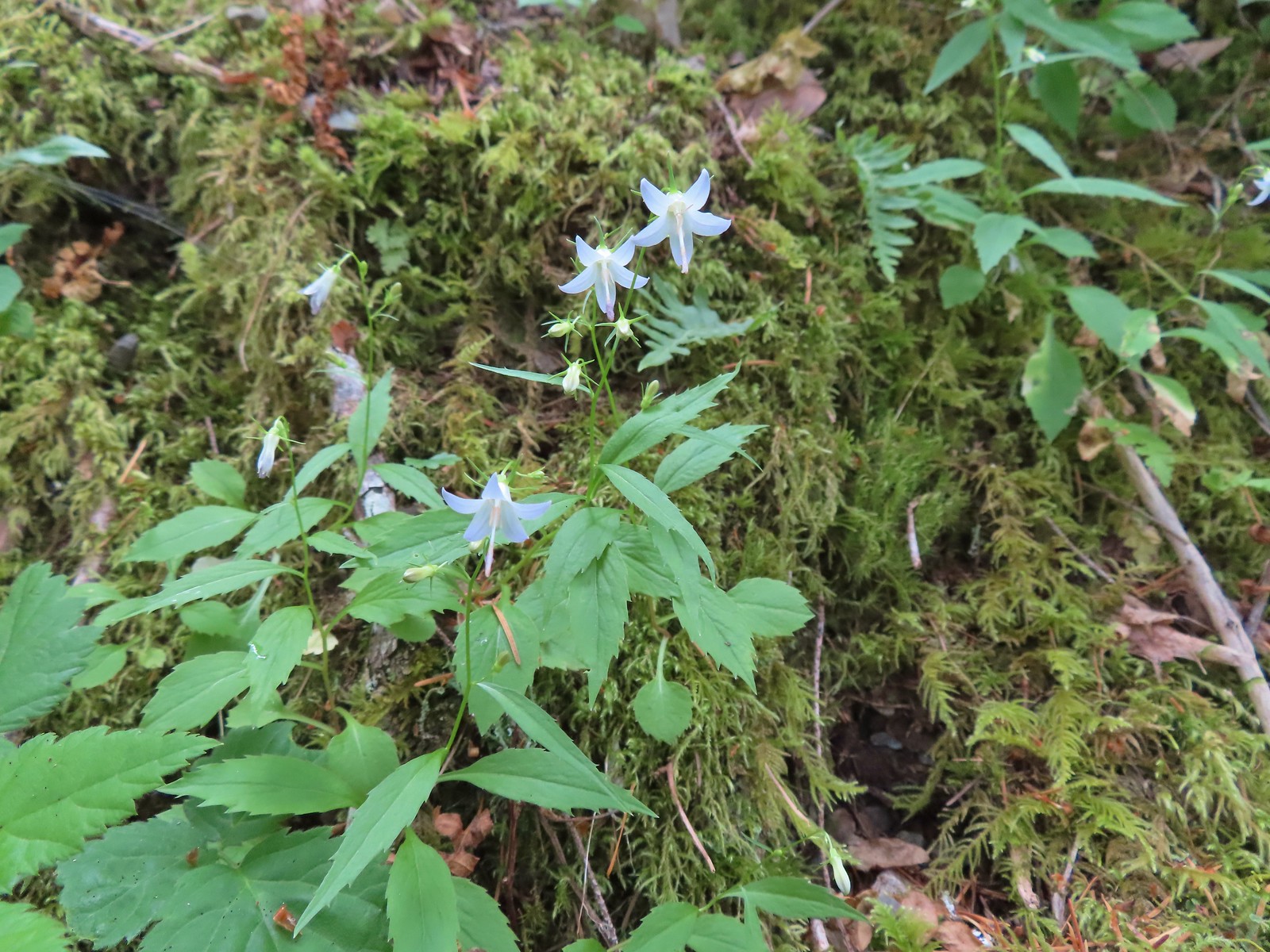 Scouler’s bluebells, July 23rd – Silverstar Mountain
 Inside-out flower, July 23rd – Silverstar Mountain
 Tiger lily, July 23rd – Silverstar Mountain
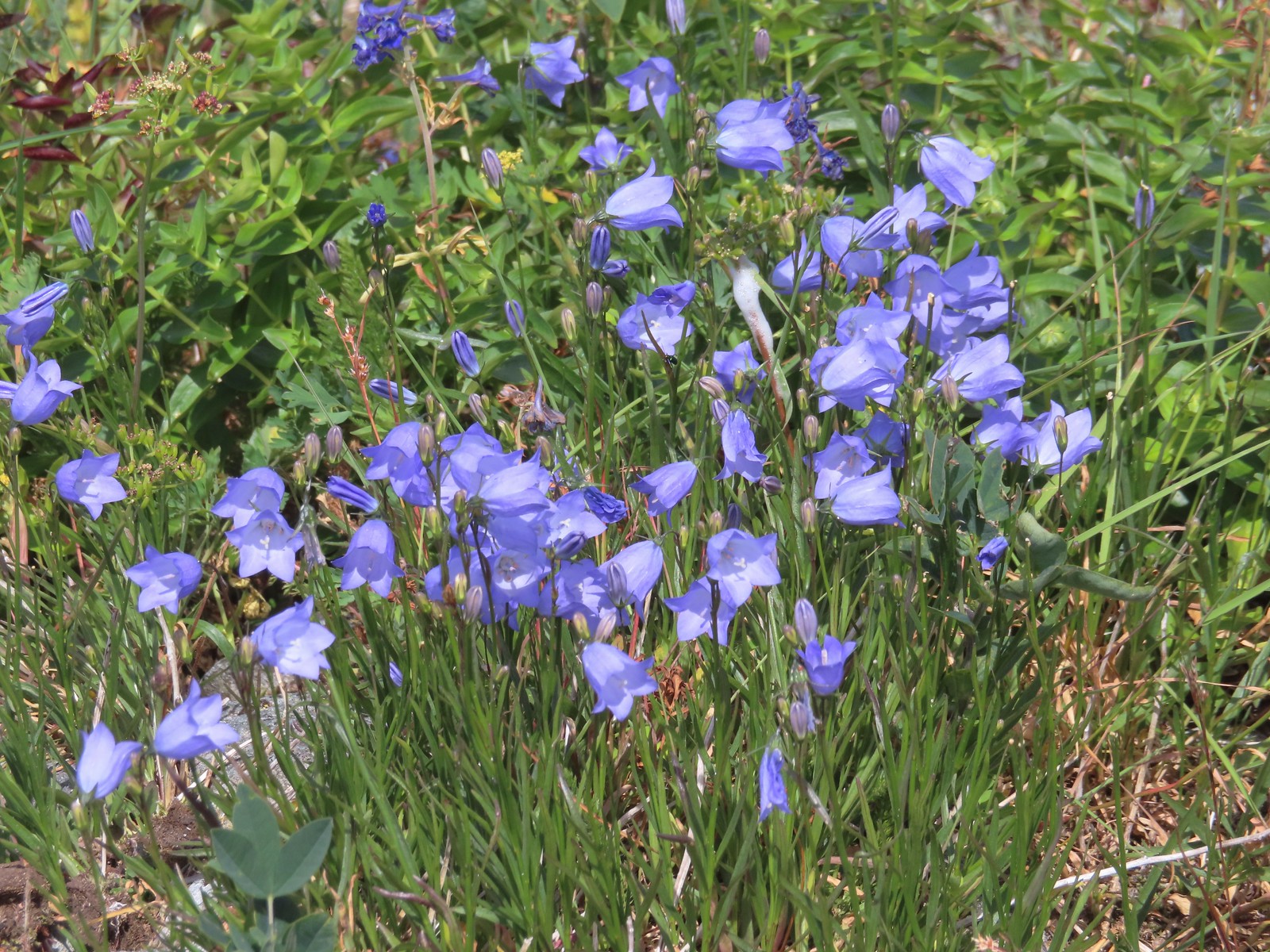 Bluebells of Scotland, July 23rd – Silverstar Mountain
 Subalpine mariposa lily, July 23rd – Silverstar Mountain
 Western sweetvetch, July 23rd – Silverstar Mountain
 Coiled lousewort, July 23rd – Silverstar Mountain
 Best guess is subapline fleabane, July 23rd – Silverstar Mountain
 Orange agoseris, July 23rd – Silverstar Mountain
 A larkspur, July 23rd – Silverstar Mountain
 Mock orange, July 23rd – Silverstar Mountain
 Chicory (non-native), July 30th – E.E. Wilson Wildlife Area
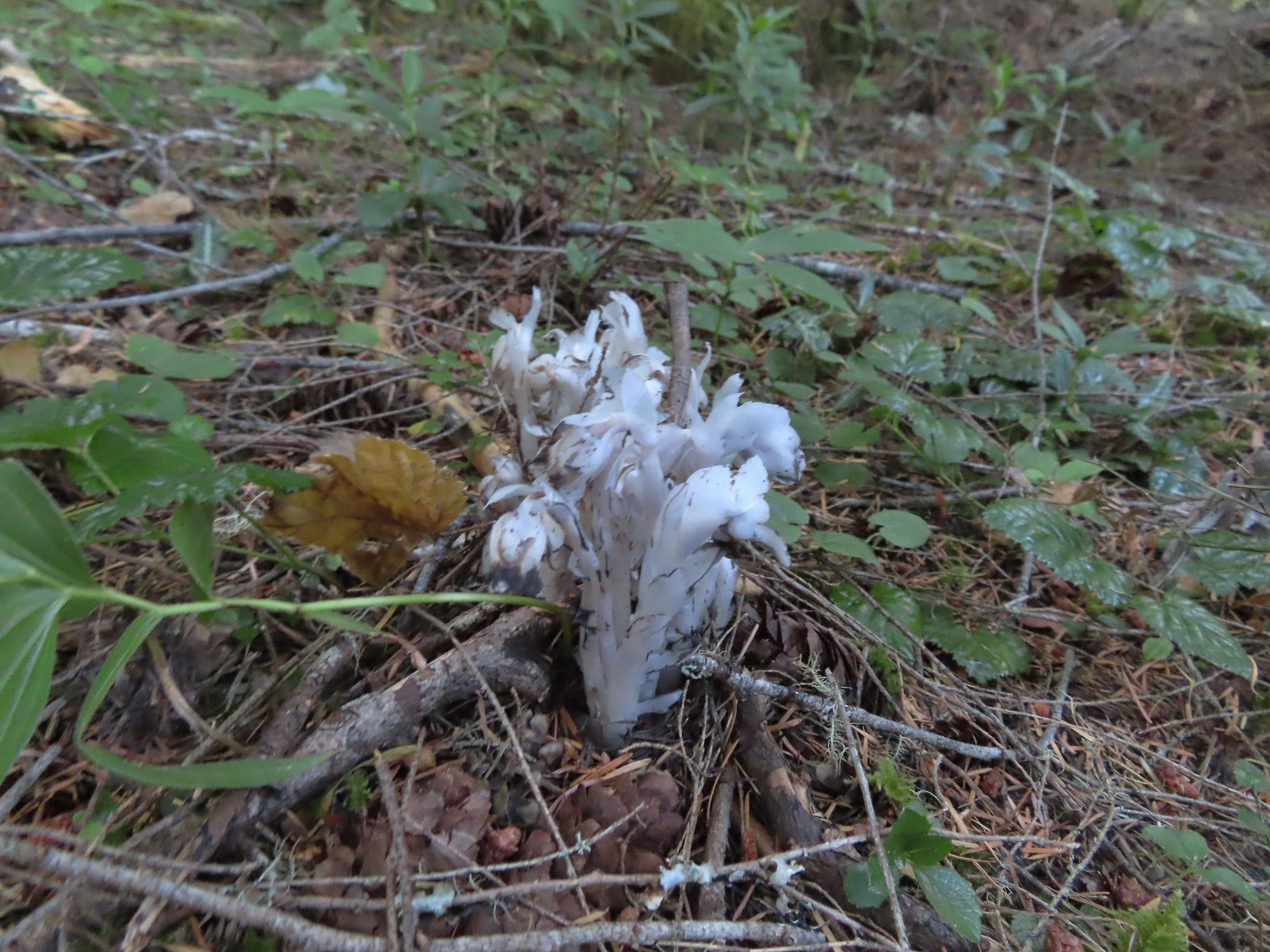 Indian pipe, August 6th – Yasko Falls Trail
 Leopard lily, August 6th – Hemlock Creek Trail
 Mountain owl’s clover, August 6th – Yellowjacket Loop Trail
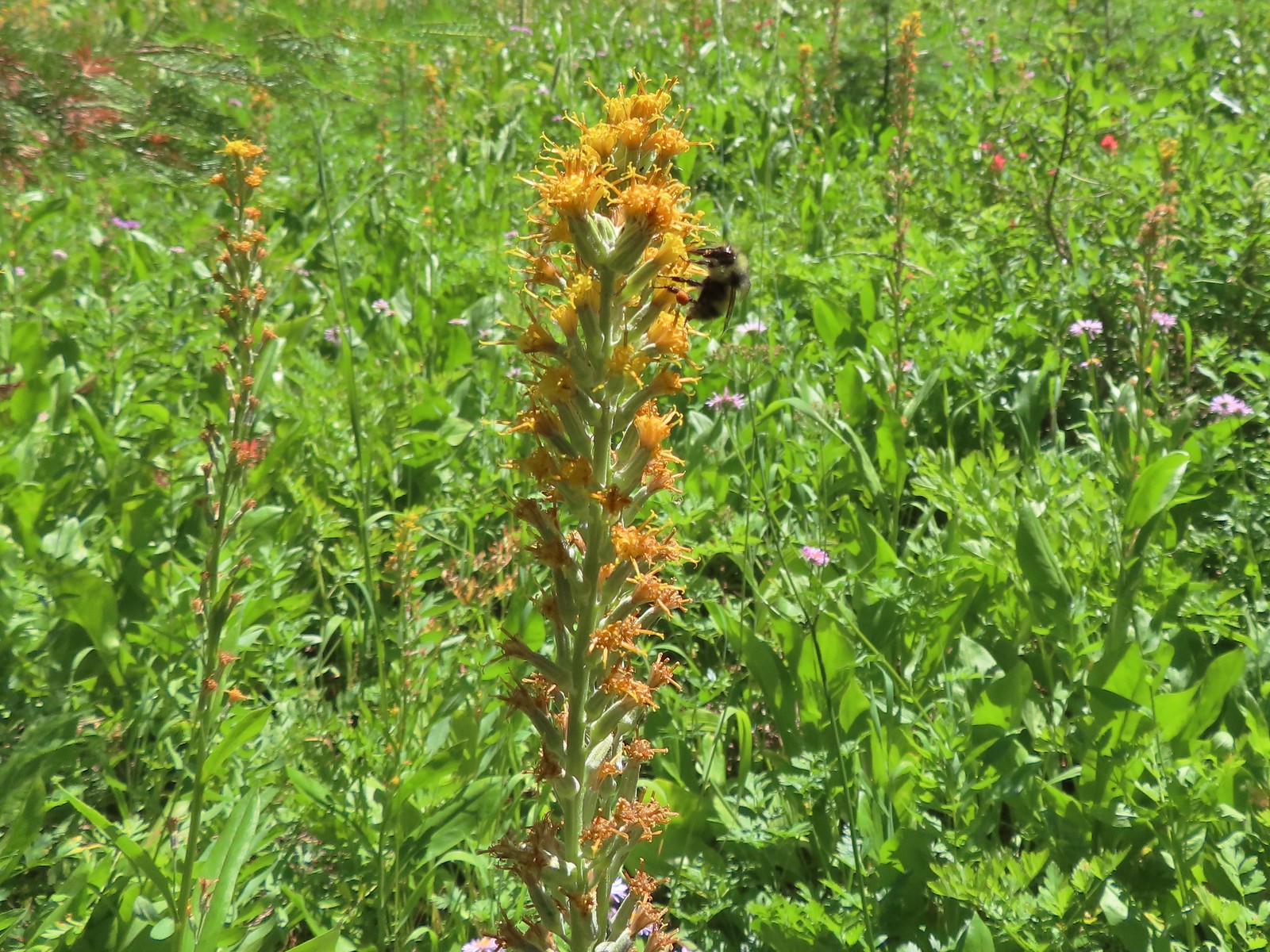 Rainiera, August 6th – Yellowjacket Loop Trail
 Hedgenettle, August 6th – Yellowjacket Loop Trail
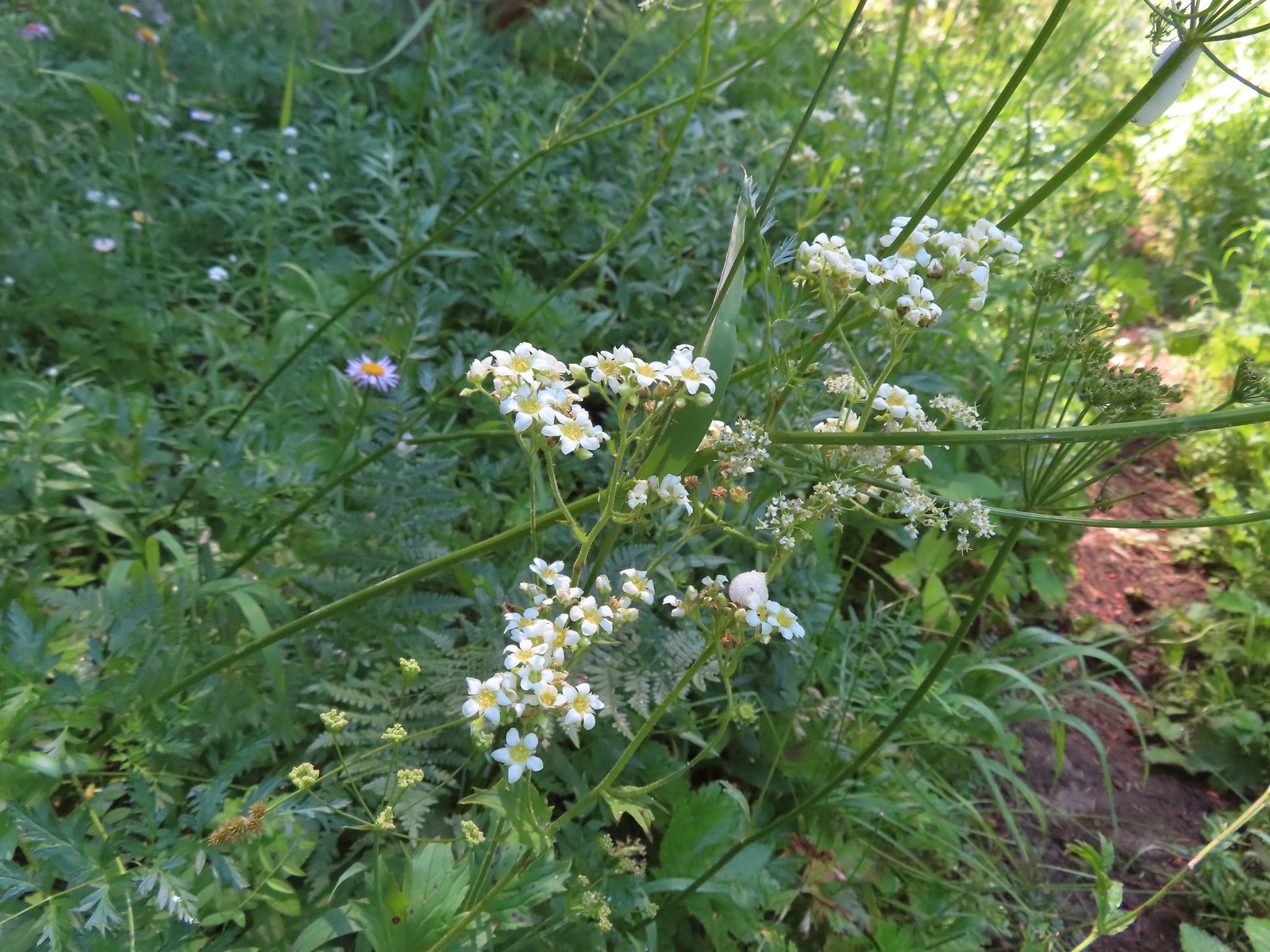 Large boykina, August 6th – Yellowjacket Loop Trail
 Candy sticks, August 6th – Yellowjacket Loop Trail
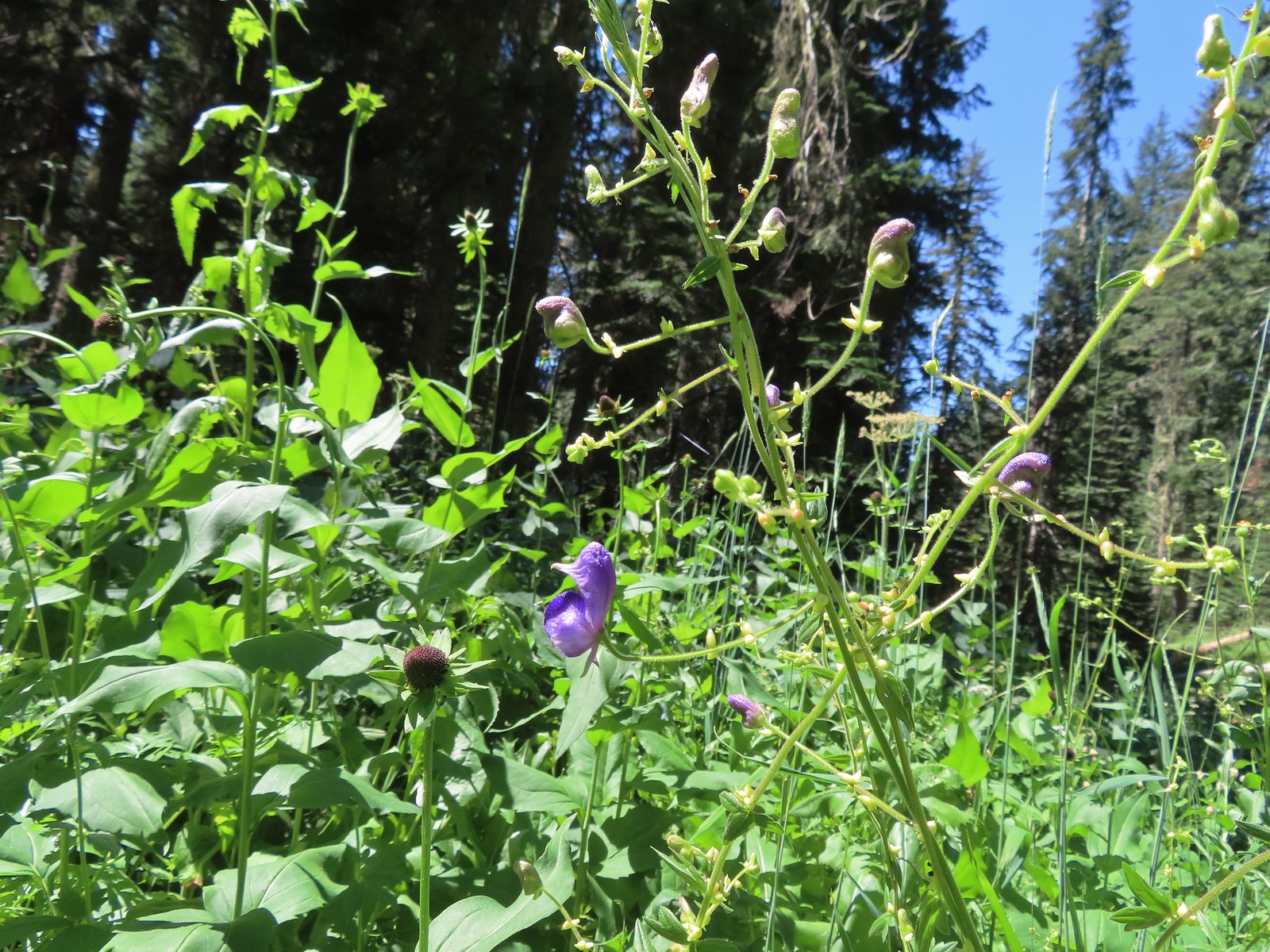 Monkshood, August 6th – Yellowjacket Loop Trail
 Scarlet monkeyflower, August 7th – Fall Creek Falls Trail
 White mountain heather, August 13th – Mt. Adams Wilderness
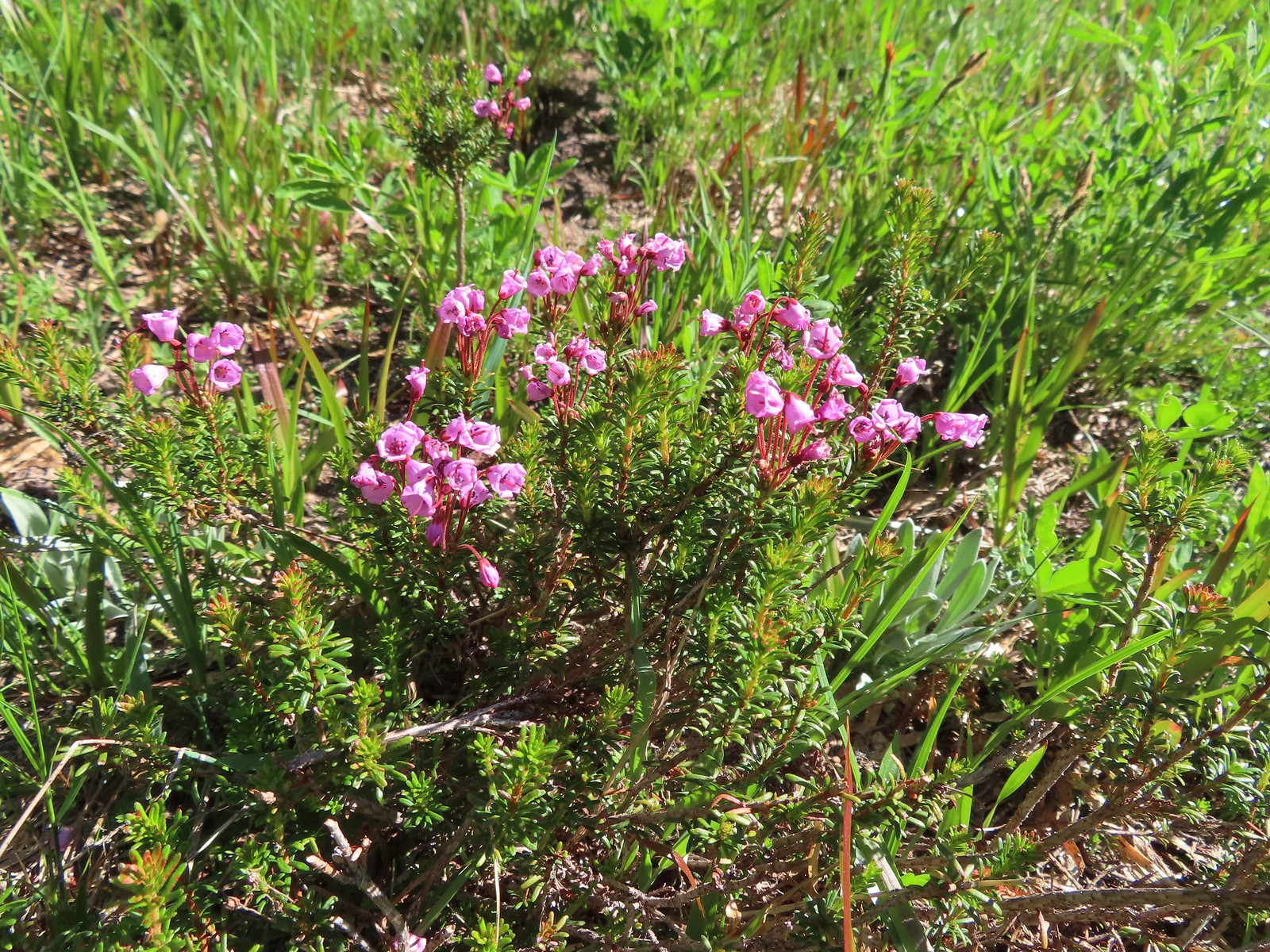 Mountain heather, August 13th – Mt. Adams Wilderness
 Gentian, August 13th – Mt. Adams Wilderness
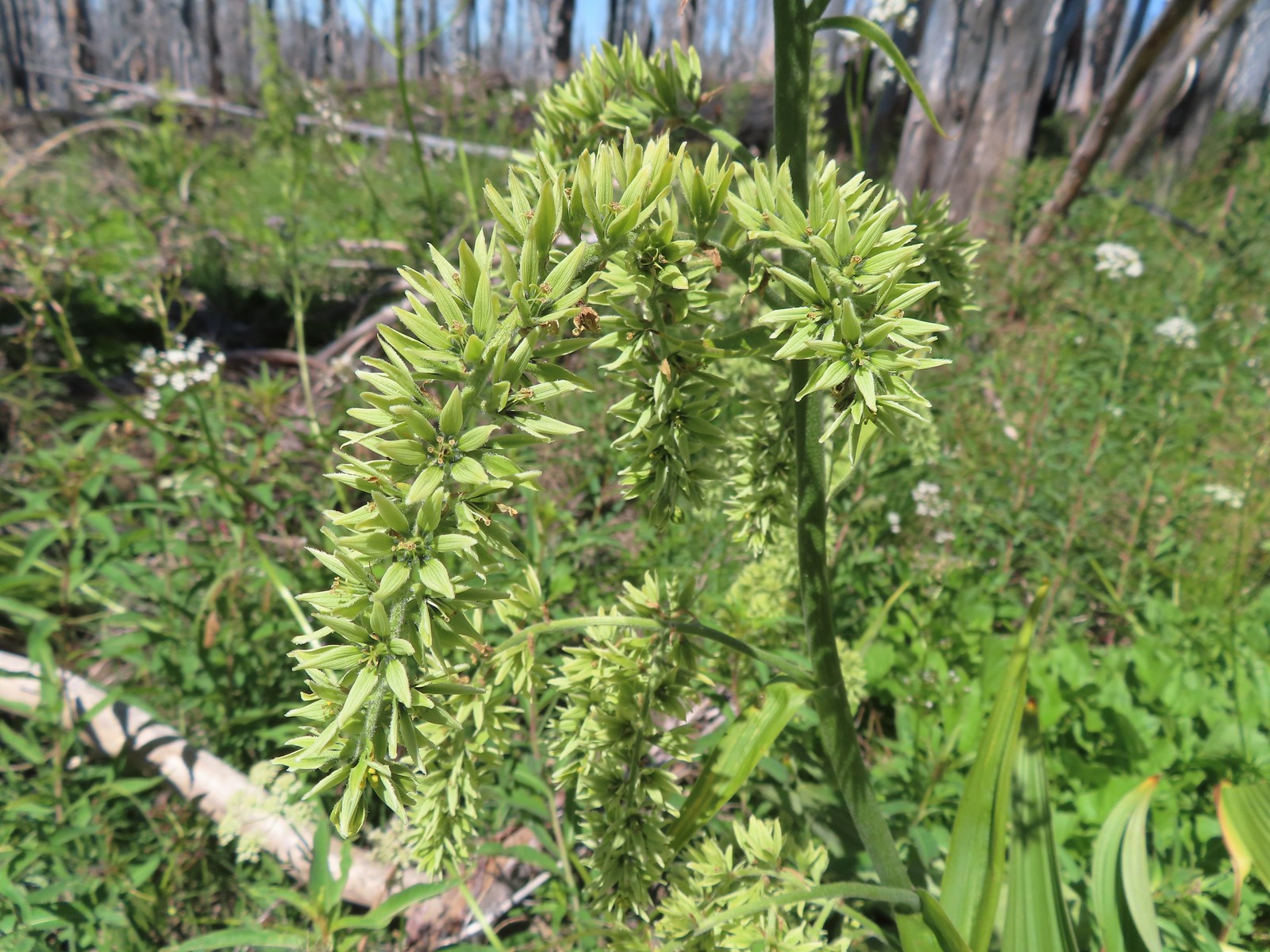 False hellebore, August 13th – Mt. Adams Wilderness
 A saxifrage, August 13th – Mt. Adams Wilderness
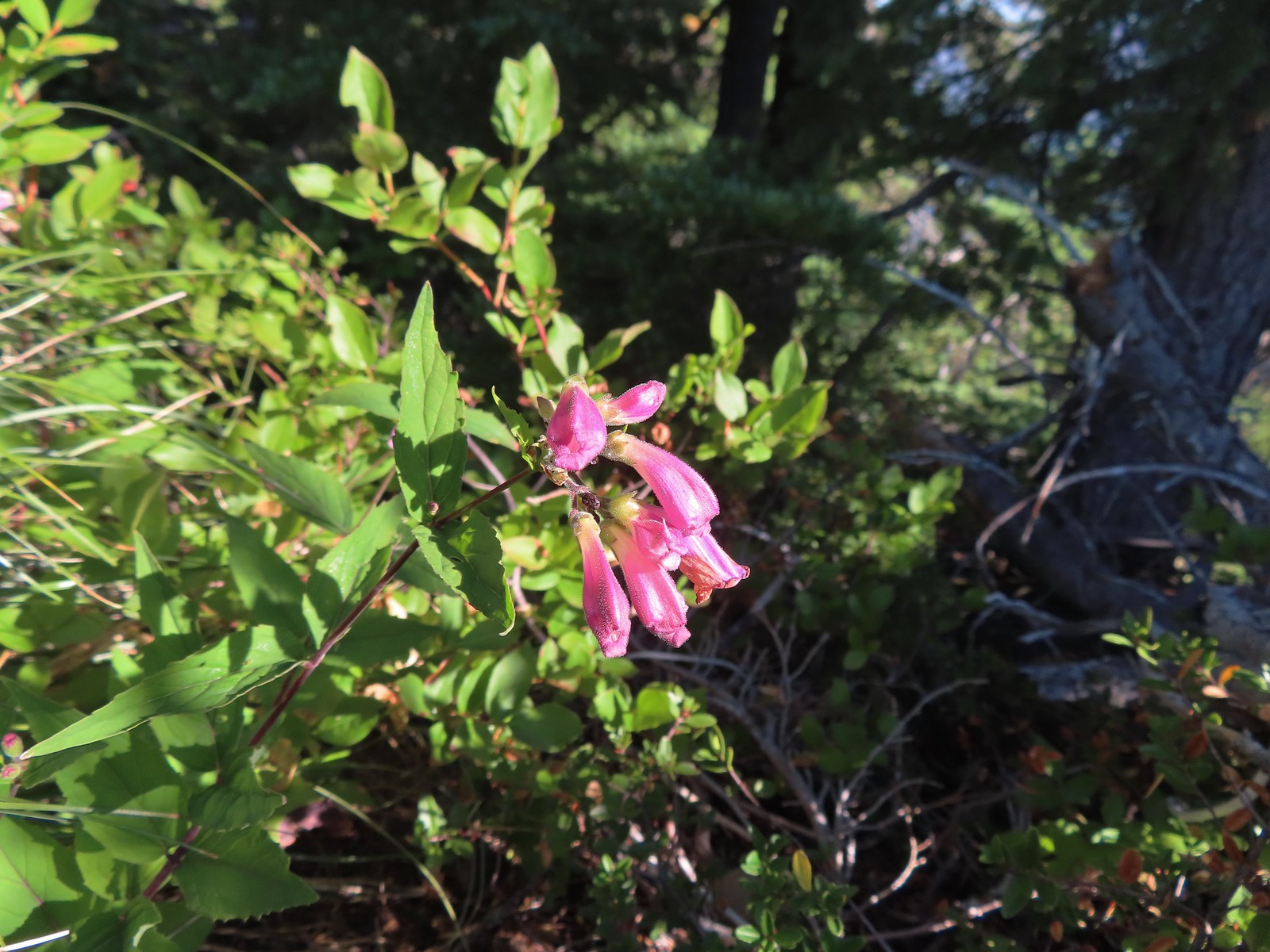 Beardstongue, August 20th – Grizzley Peak
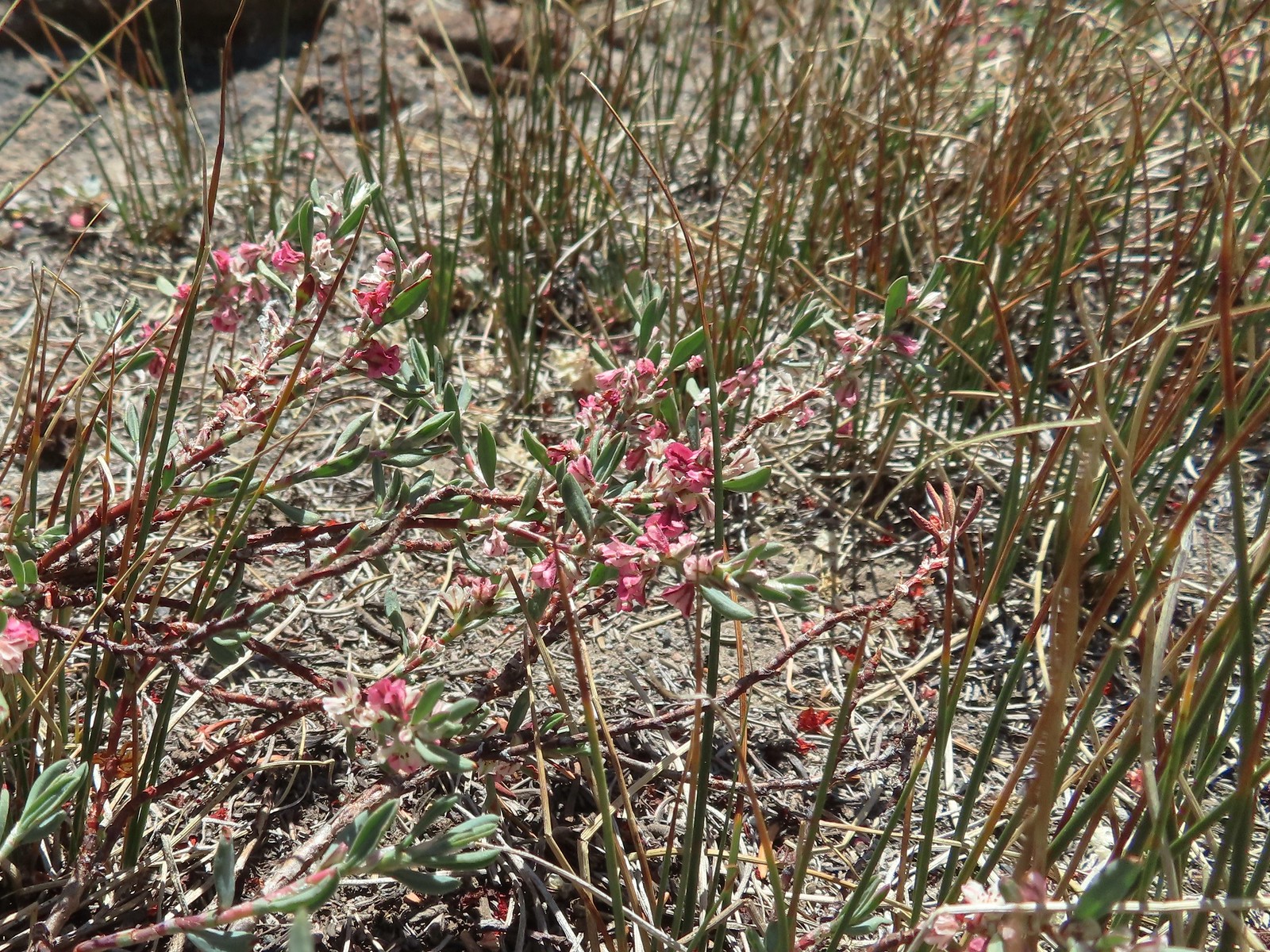 Shasta knotweed, August 22nd – Mt. Shasta Wilderness
 Marsh grass-of-Parnassus, August 22nd – Mt. Shasta Wilderness
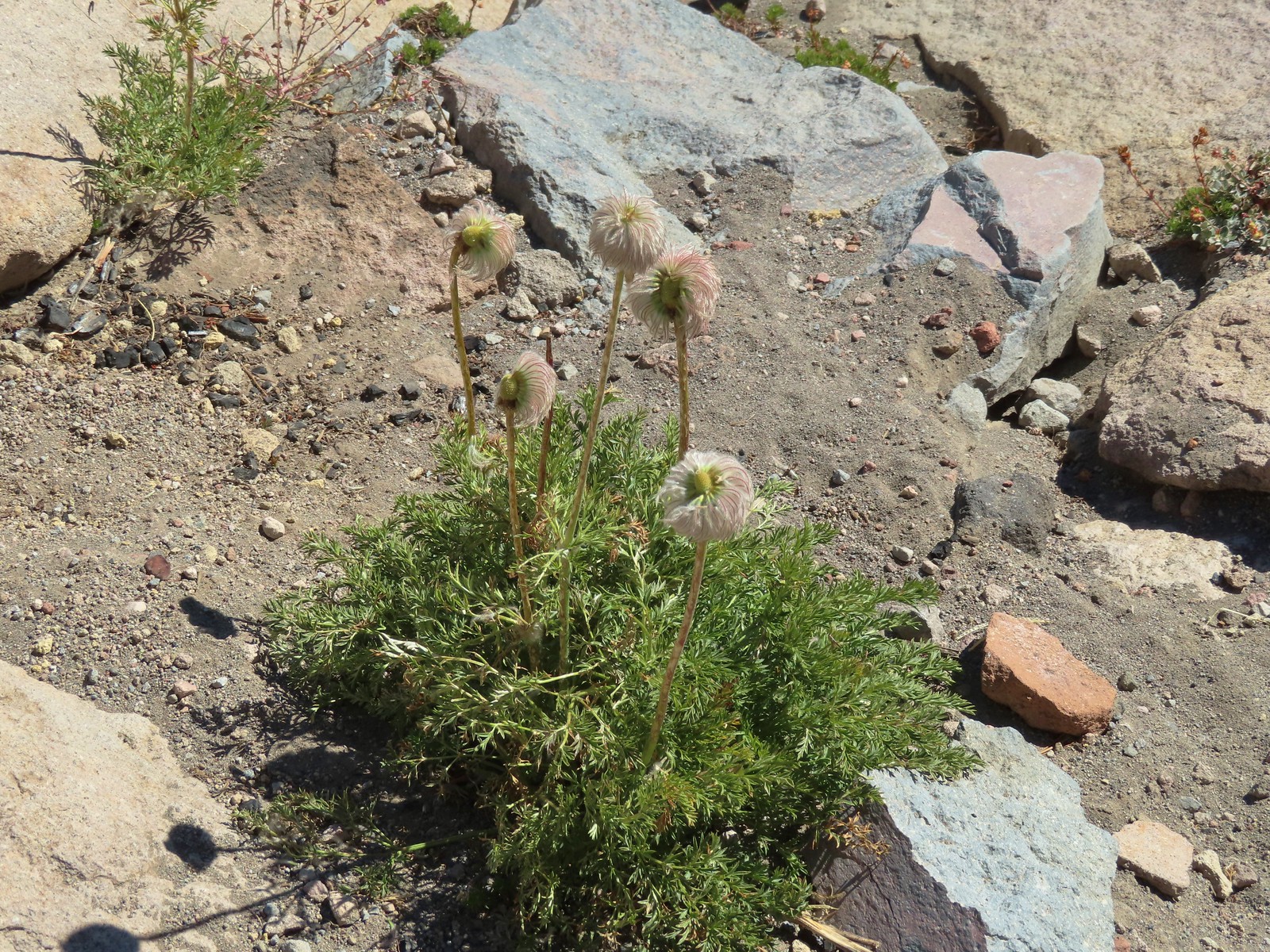 Western pasque flower, August 22nd – Mt. Shasta Wilderness
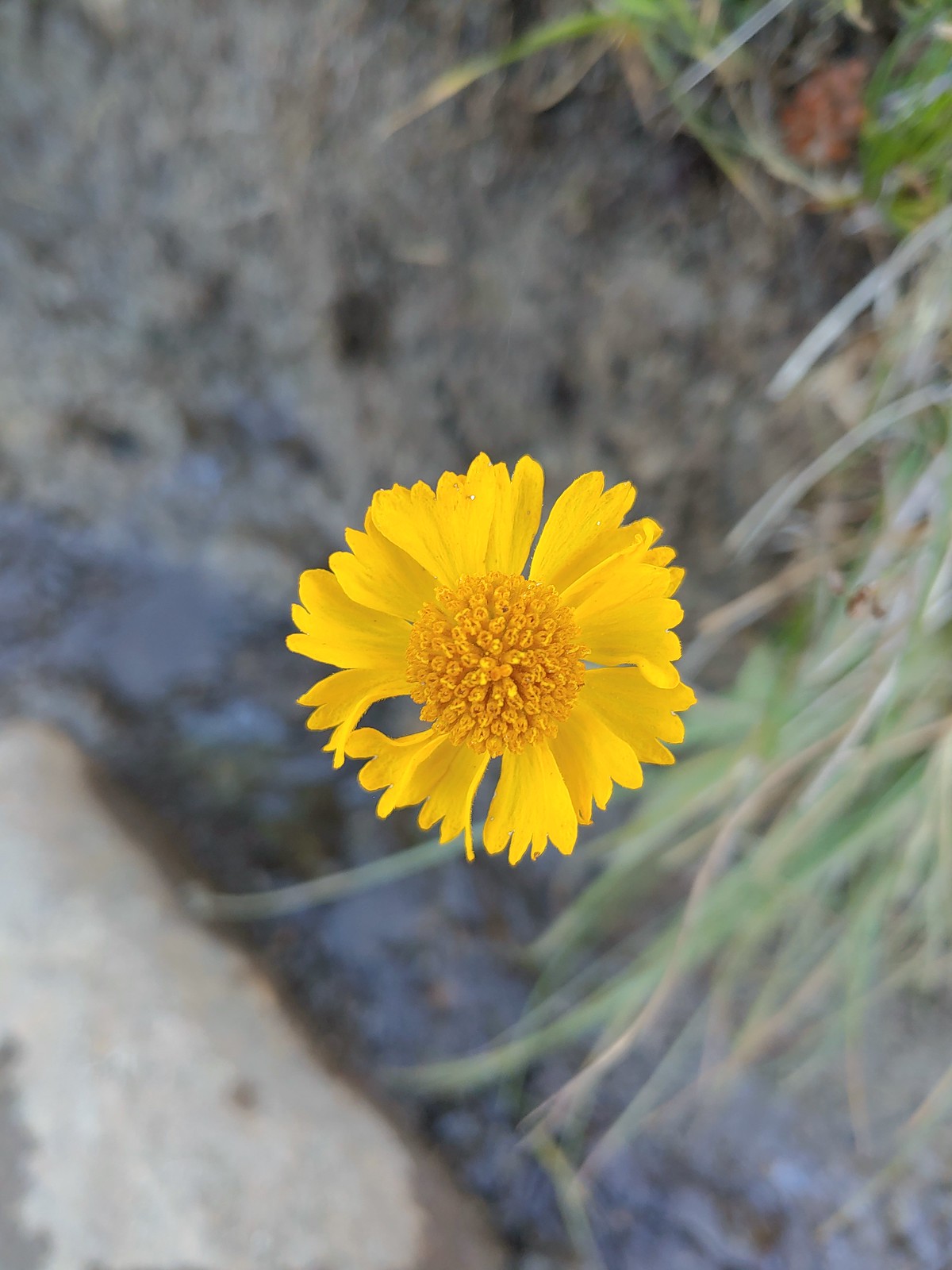 Bigelow’s sneezeweed, August 23rd – Trinity Alps Wilderness
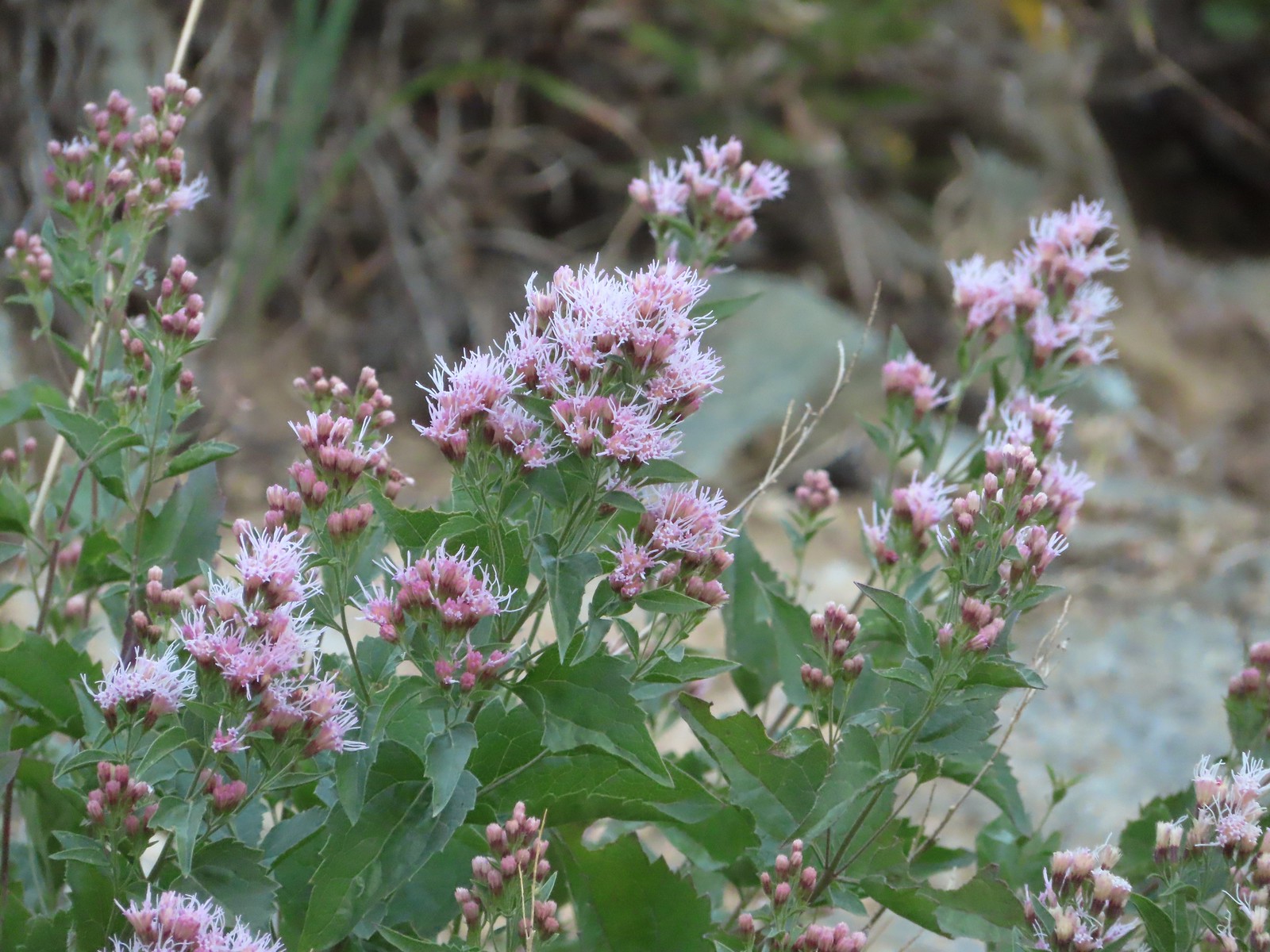 Western snakeroot, August 23rd – Trinity Alps Wilderness
 A buckwheat, August 23rd – Trinity Alps Wilderness
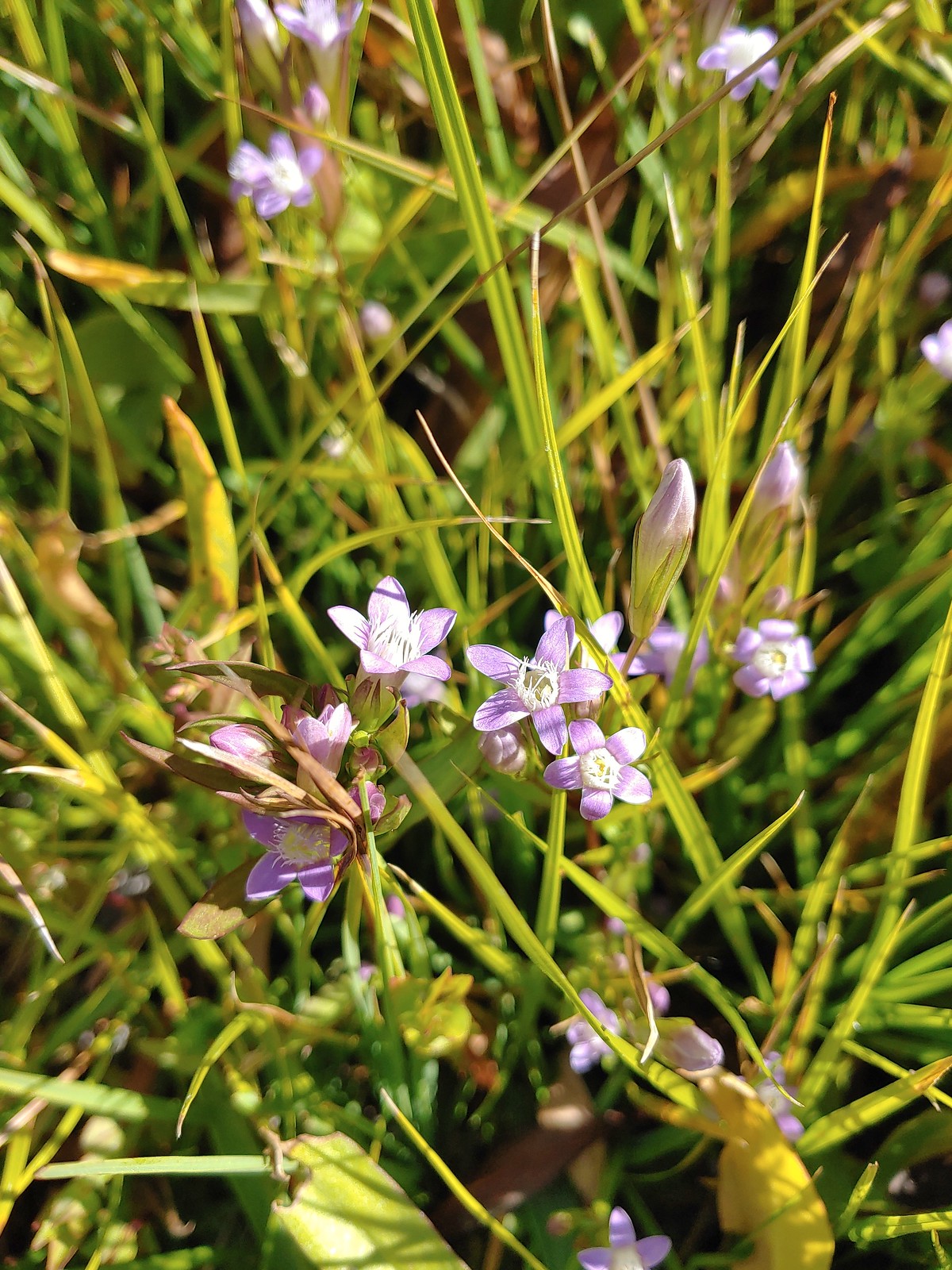 Autumn dwarf gentian, August 23rd – Trinity Alps Wilderness
 Saffron-flowered lupine, August 23rd – Trinity Alps Wilderness
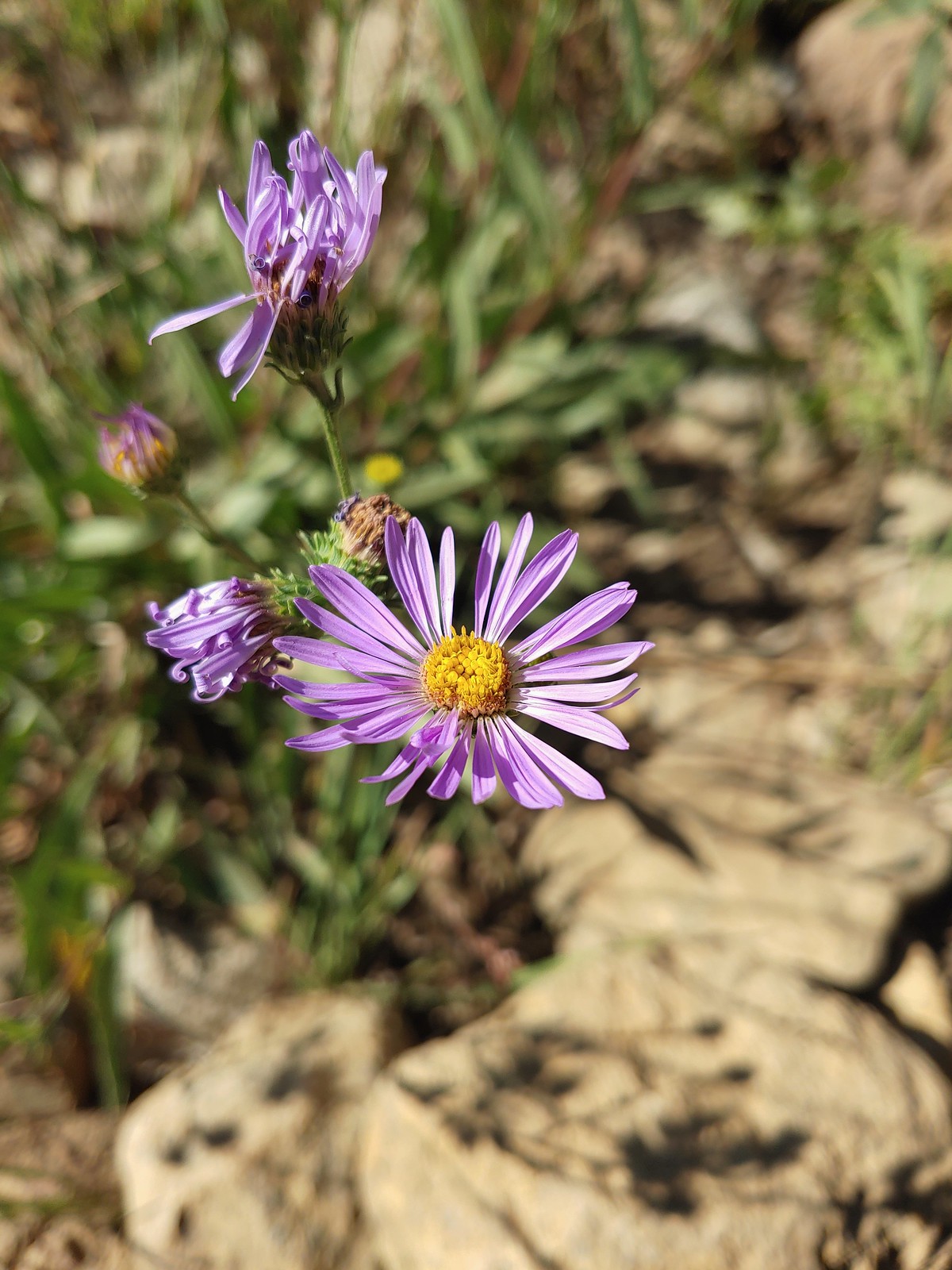 An aster or fleabane, August 23rd – Trinity Alps Wilderness
 Hooded ladies tresses, August 24th – Russian Wilderness
 Can’t seem to identify this flower on the shore of Russian Lake, August 24th – Russian Wilderness
 This one has me a bit stumped too, it looks like a wirelettuce or some sort of lewisa, August 24th – Russian Wilderness
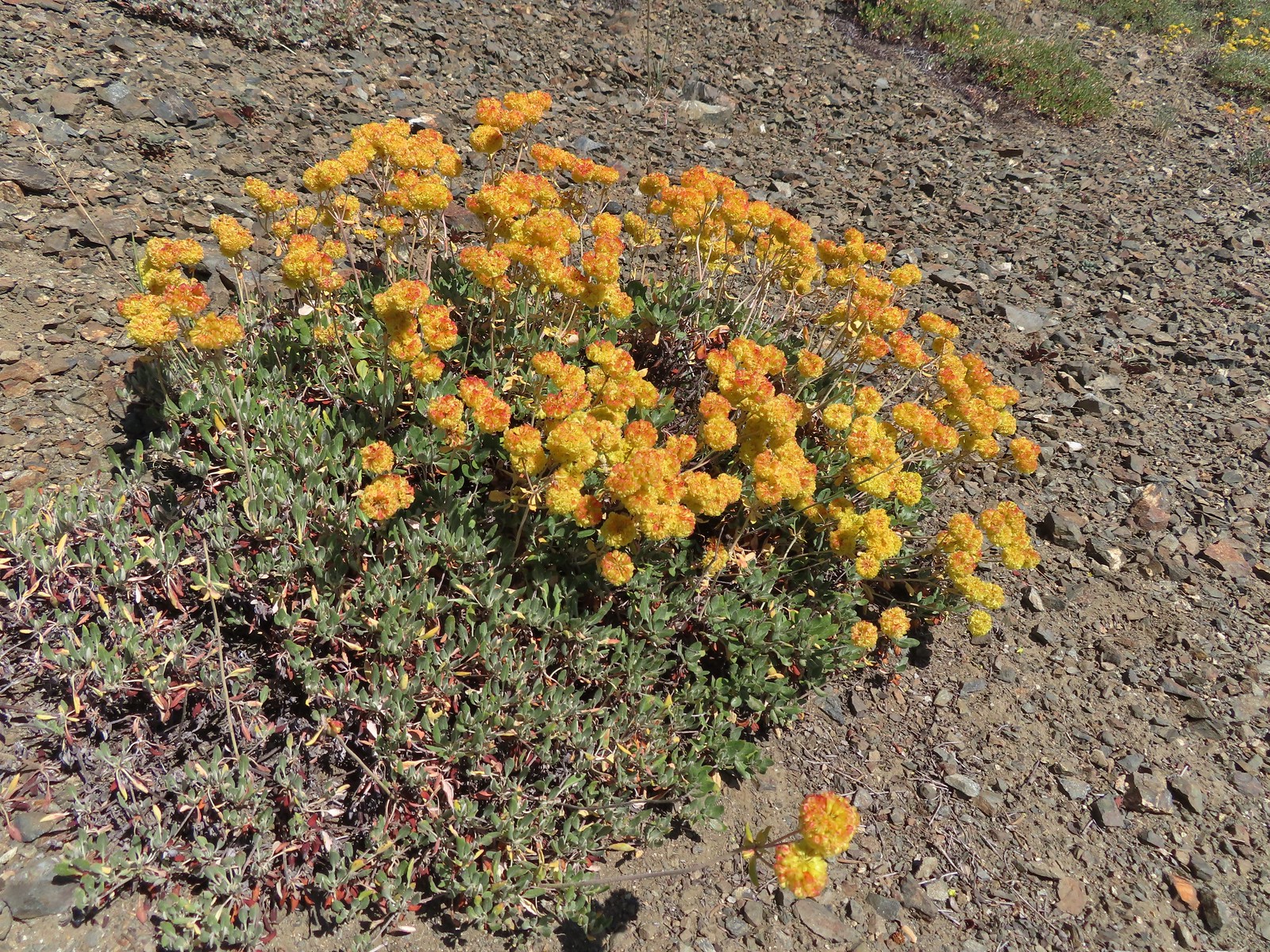 Buckwheat, August 24th – Russian Wilderness
 A monkeyflower (dwarf purple?), August 26th -Pacific Crest Trail near Carter Meadows Summit
 Mountain coyote mint, August 26th – Pacific Crest Trail near Carter Meadows Summit
 Sierra larkspur, August 26th – Pacific Crest Trail
 Tasselflower brickellbush, August 26th – South Fork Lakes Trail
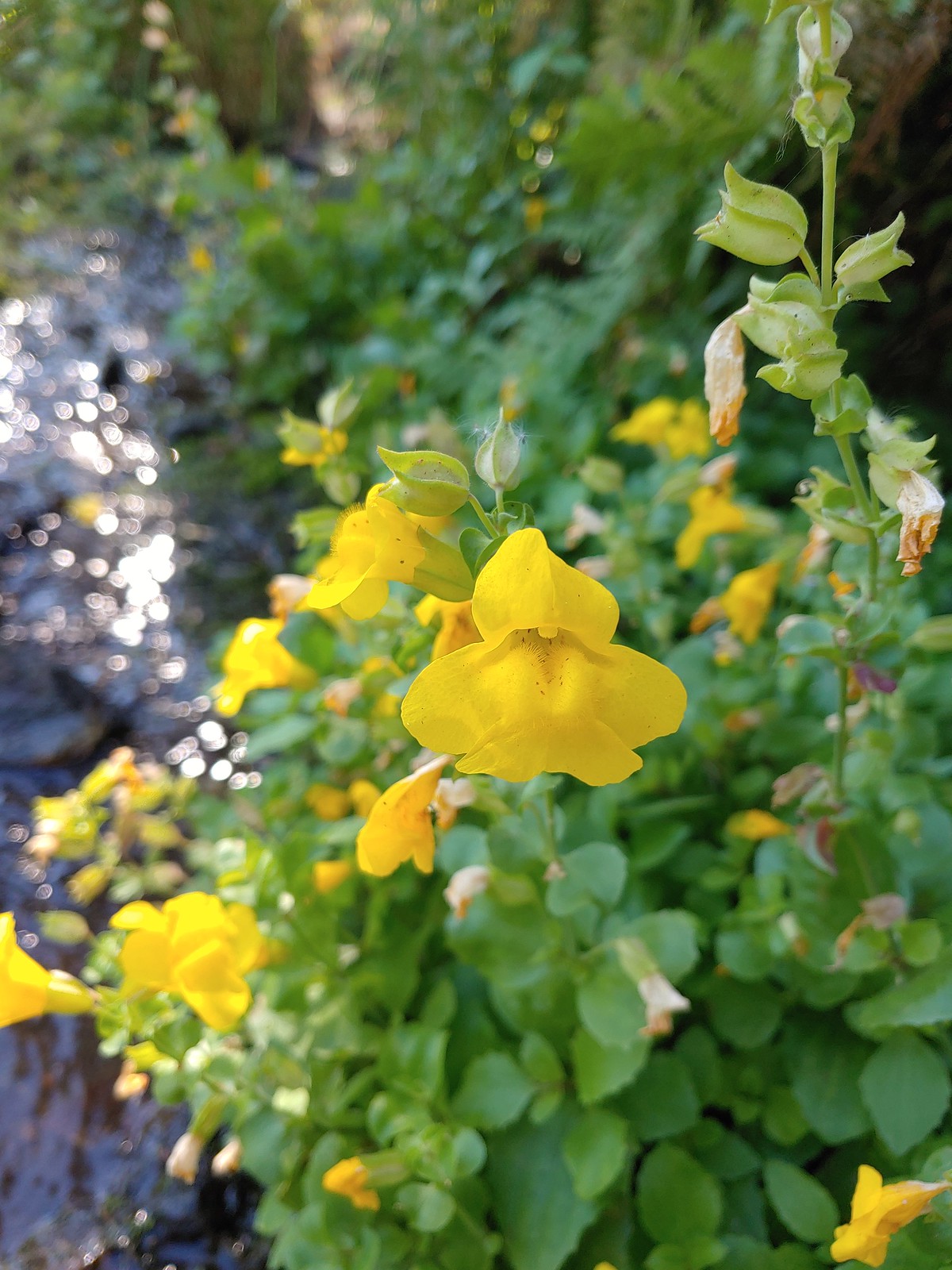 Monkeyflower, August 26th – South Fork Lakes Trail
 Thistle, August 26th – South Fork Lakes Trail
 California hairbells, August 26th – South Fork Lakes Trail
 Common toadflax (non-native), September 10th – Spring Valley Greenway
 Fireweed, September 17th – Union Peak Trail
 Douglas spirea, September 18th – Sky Lakes Wilderness
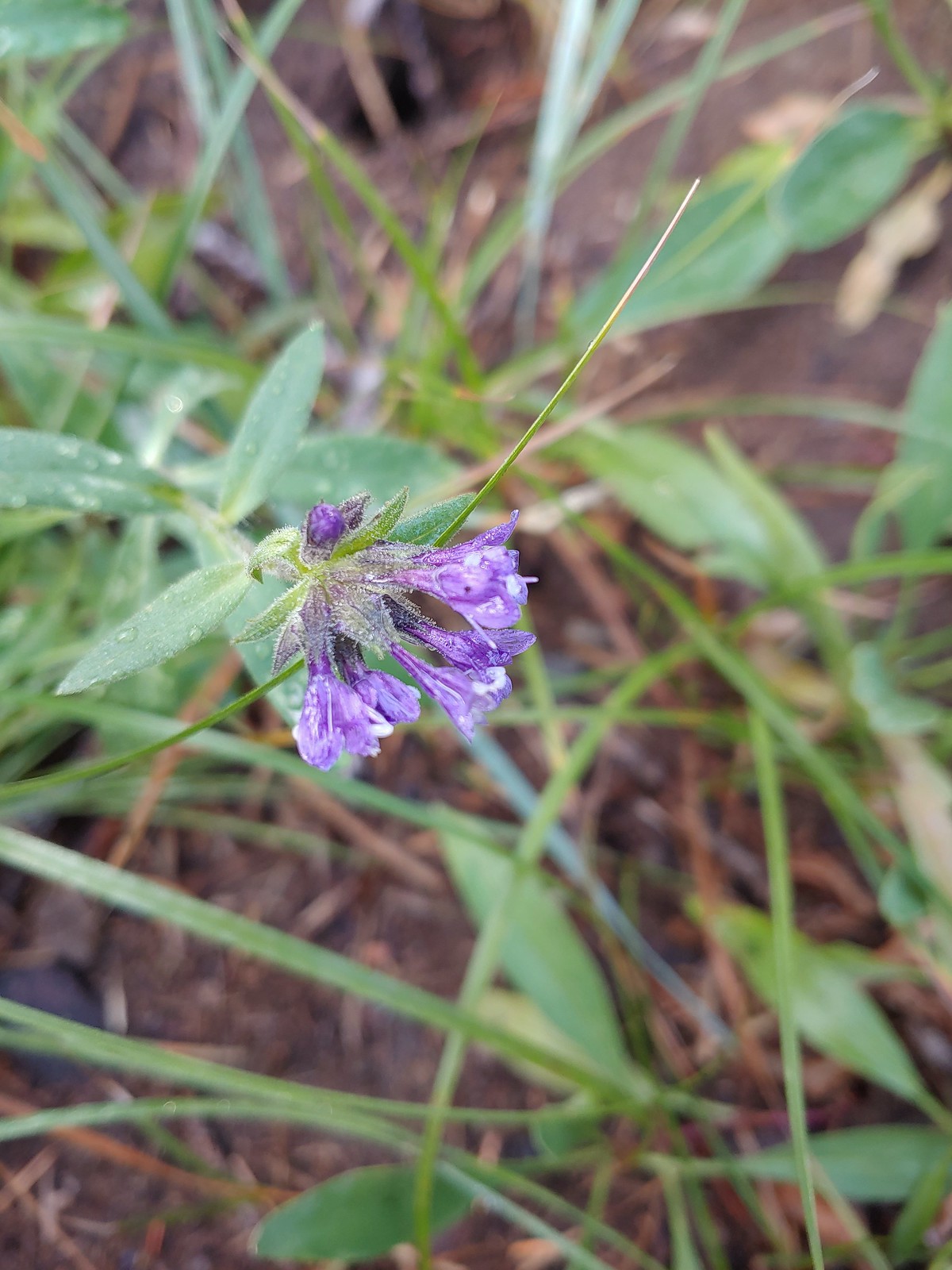 Best guess is Crater Lake collomia, September 19th – Dutton Creek Trail
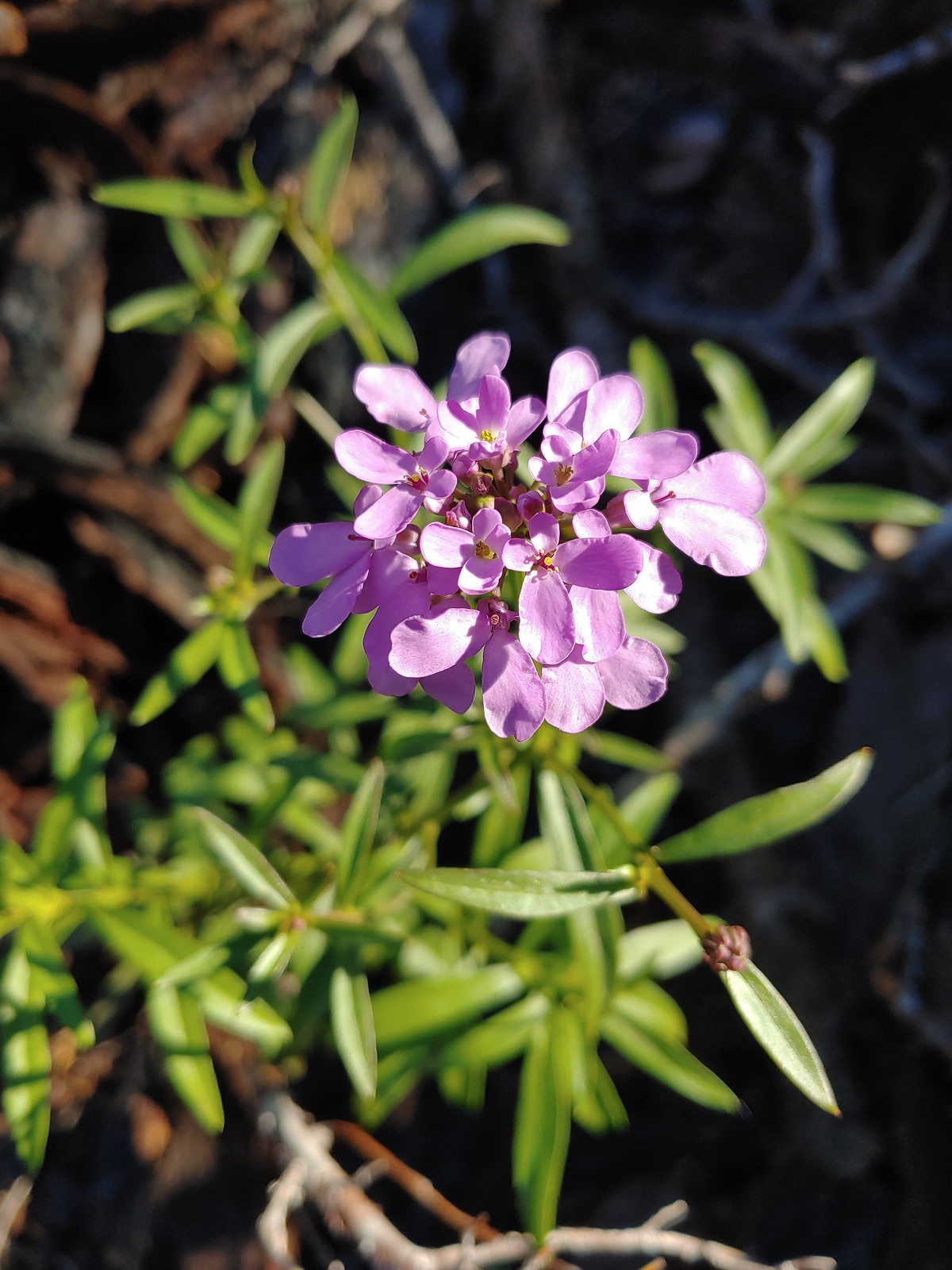 Another mystery seen near the Cold Springs Trailhead, September 25th – Sky Lakes Wilderness
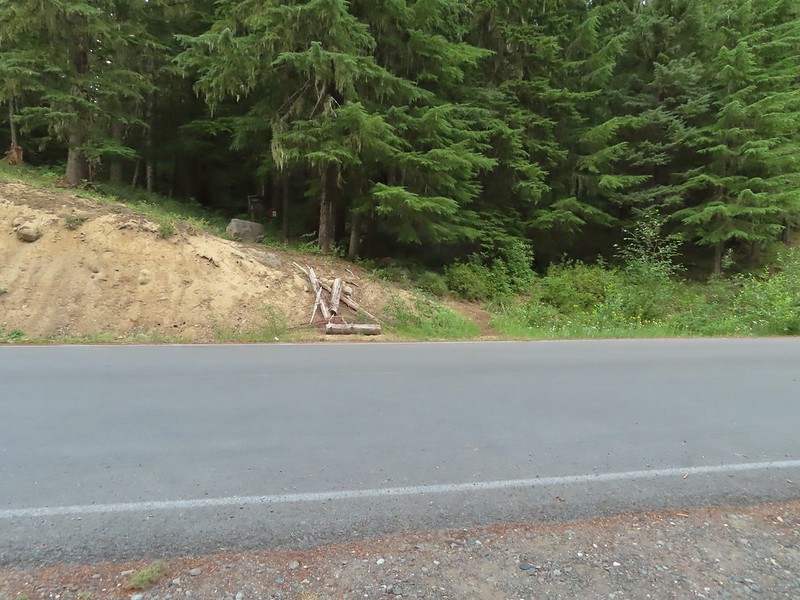 The Riley Camp Trail (Trail 64) on the opposite side of FR 23.

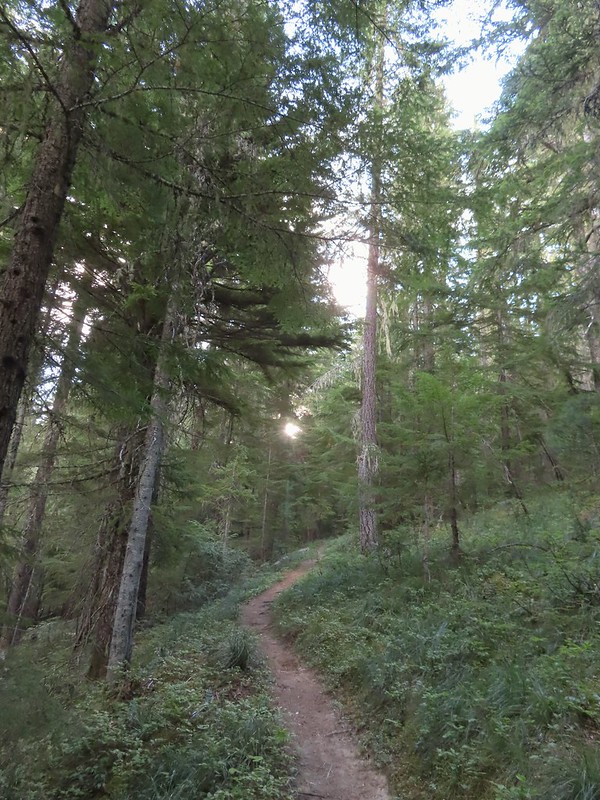


 We weren’t aware that the Forest Service was employing wilderness greeters.
 May I see your self-issued permit?
 The trail was in pretty good shape with just a few downed trees to step over/under.
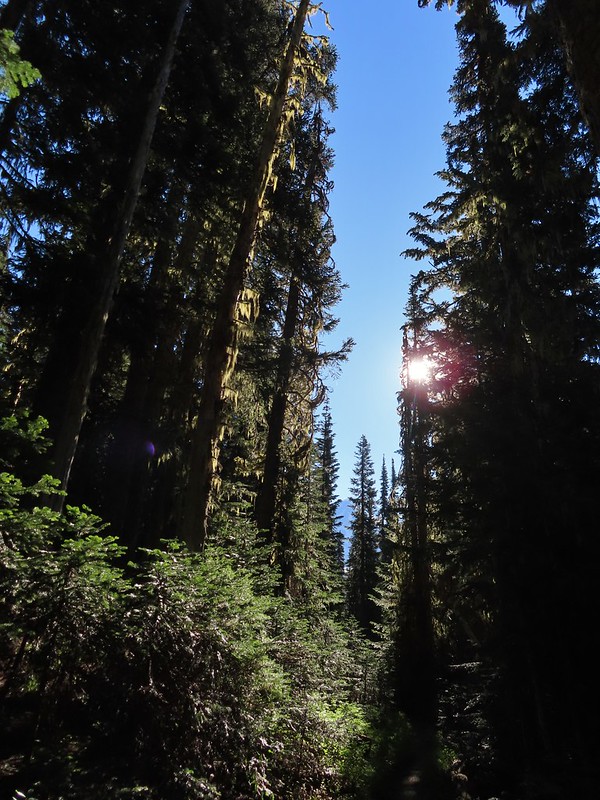 First look at Mt. Adams through the trees.


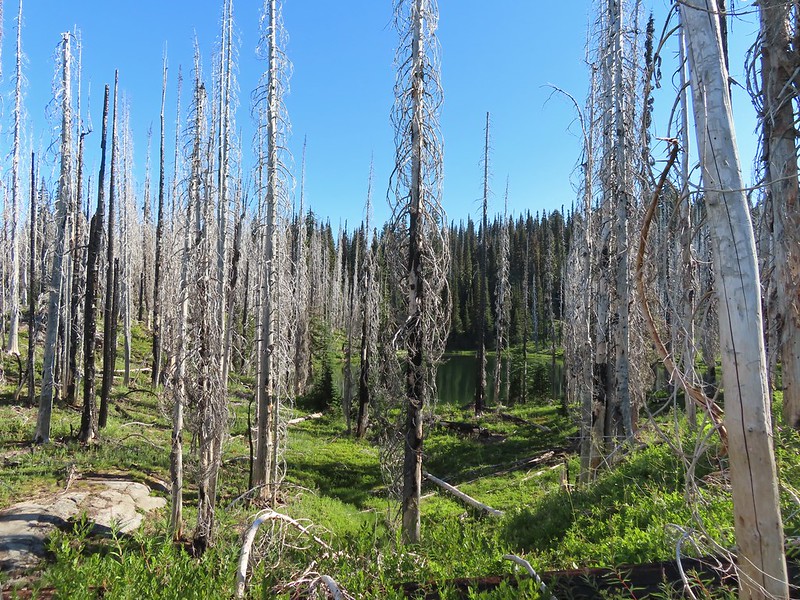 Luna Lake
 Aster
Aster

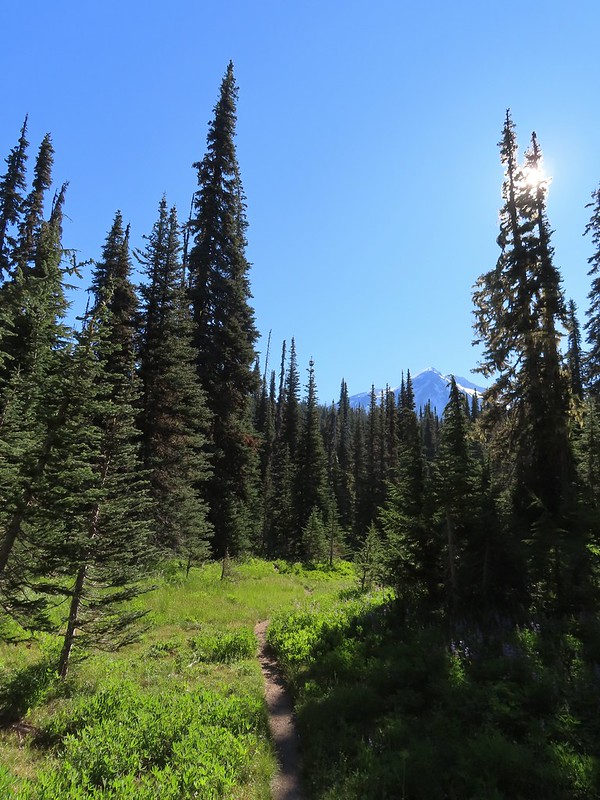 More Mt. Adams.
 Paintbrush and lupine

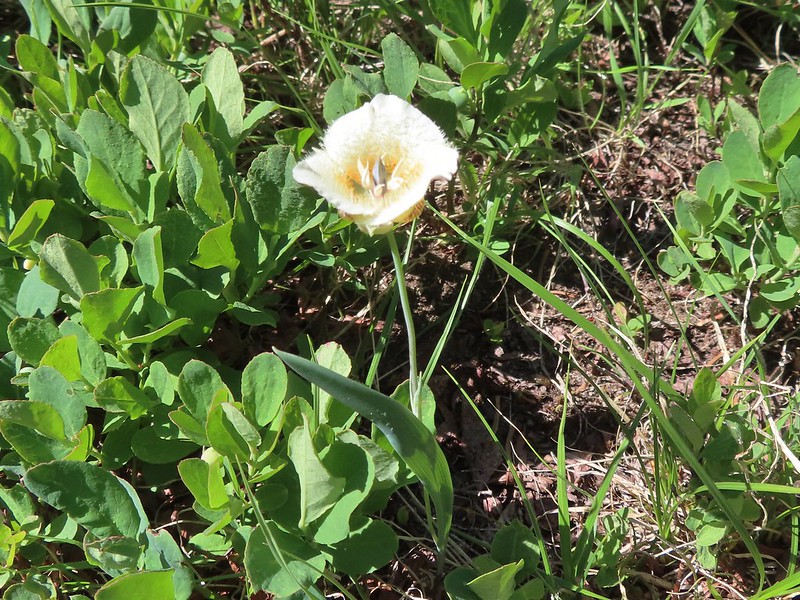 Sub-alpine mariposa lily
 Riley Creek along the trail.
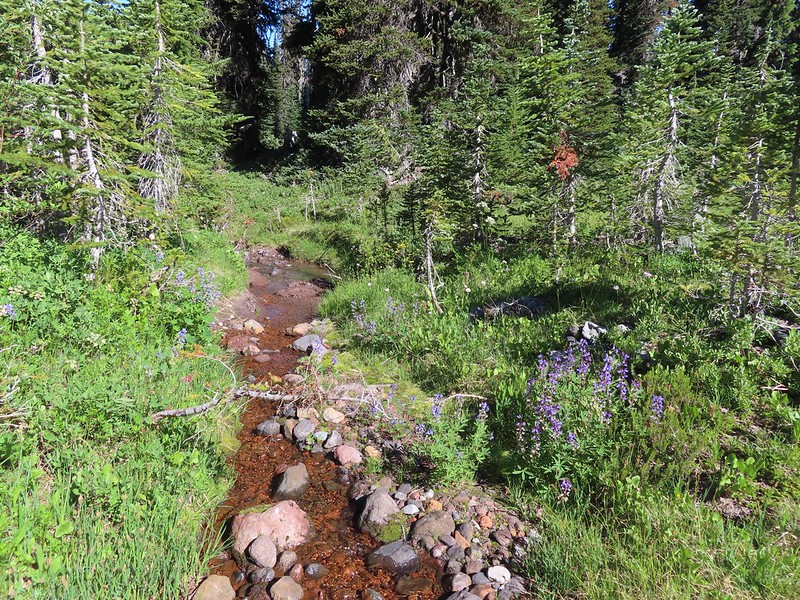 Riley Creek at the crossing.
 A trail sign up ahead at the junction.
 PCT marker on the tree.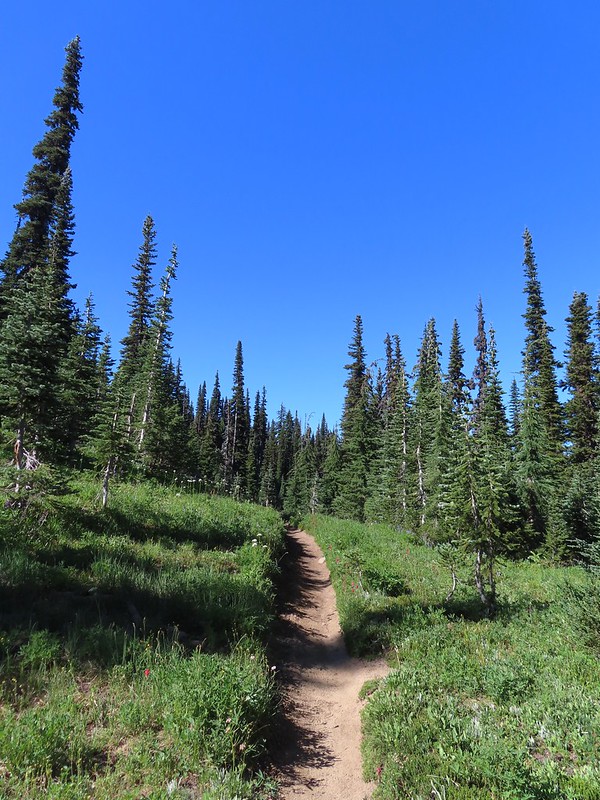
 Riley Creek below the PCT crossing.
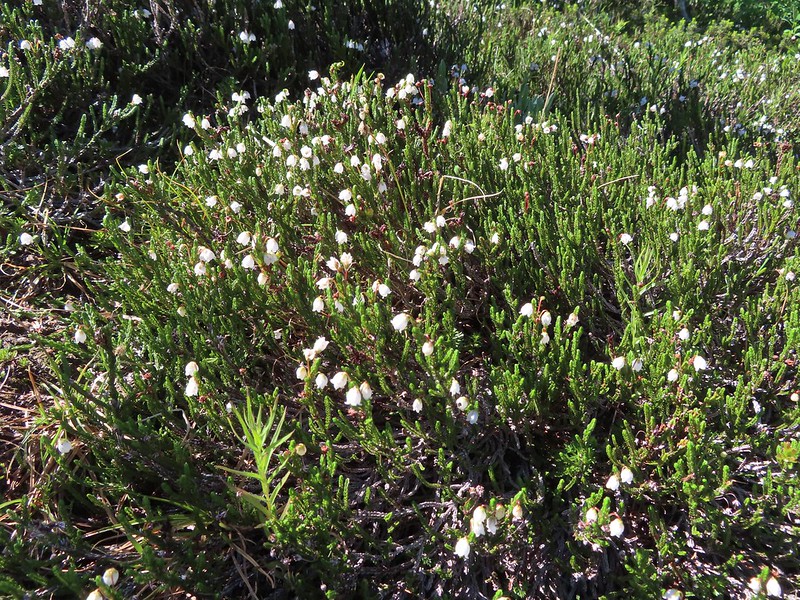 White mountain heather
 A nice paintbrush
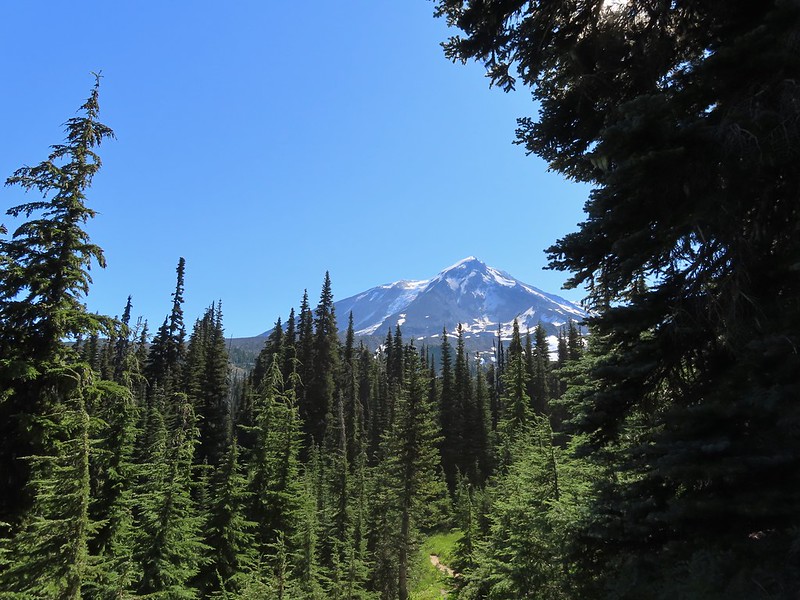 Mt. Adams behind us as we headed south.
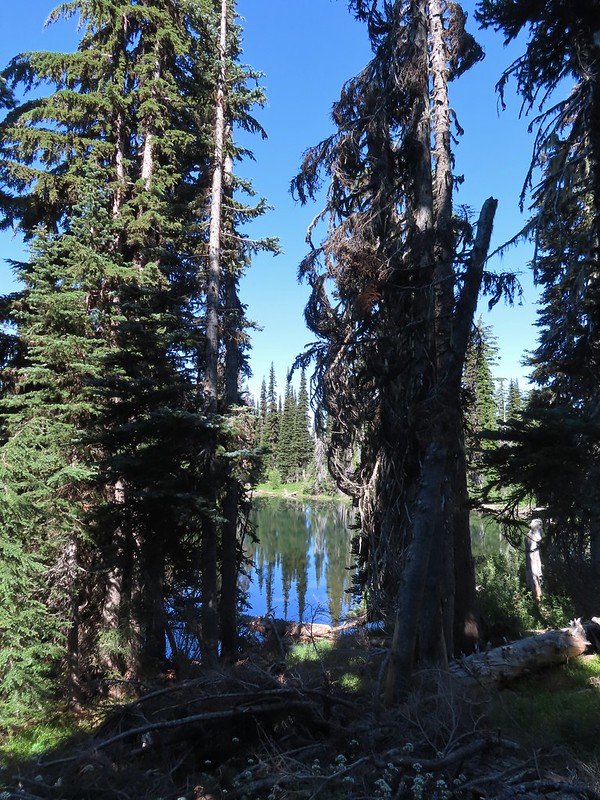 Sheep Lake
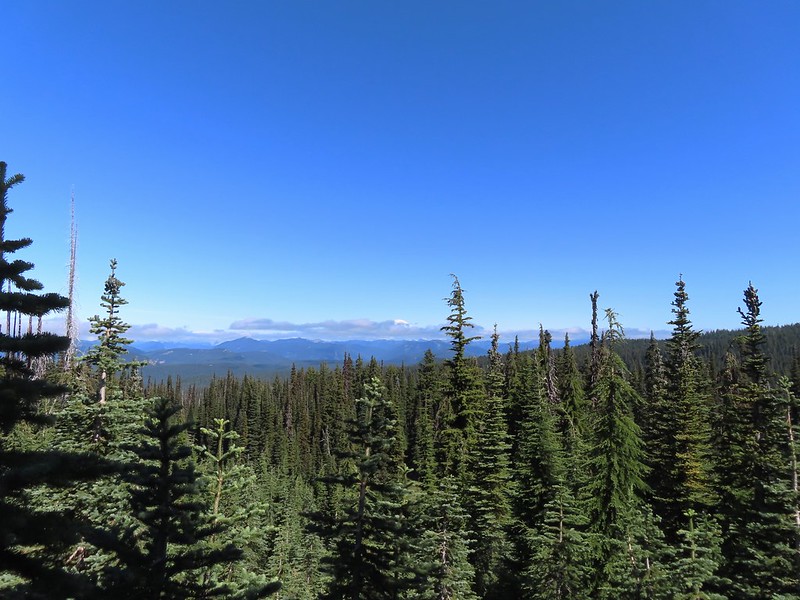 Mt. Rainier behind a line of clouds.
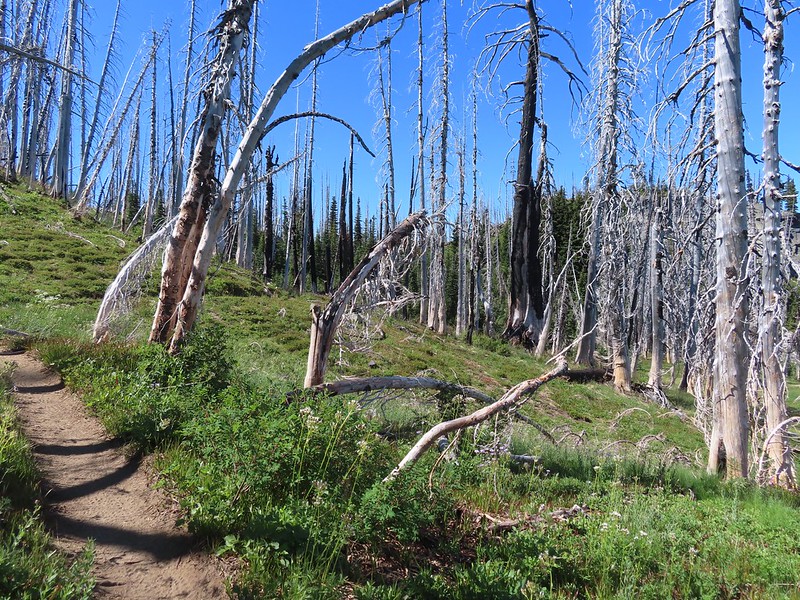 Burnt Rock behind the snags left over from the 2012 Cascade Creek Fire.
 Alpine false dandelion
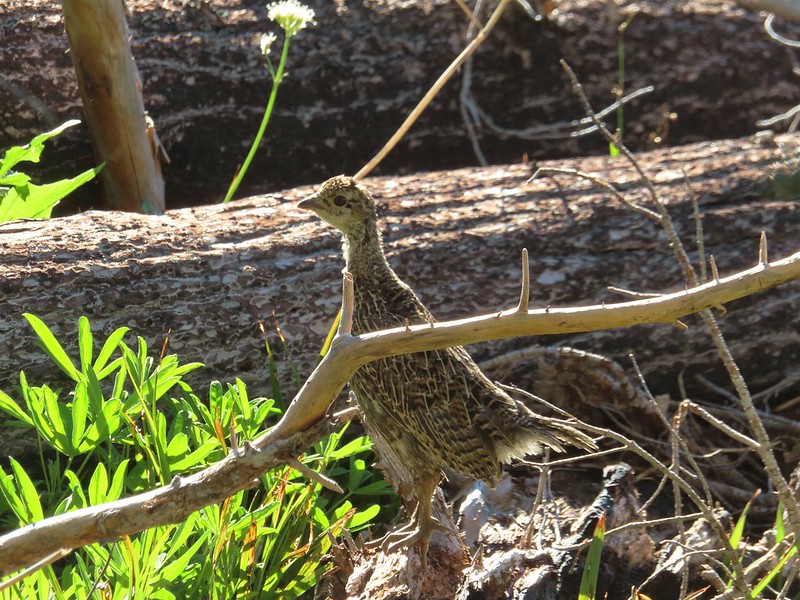 Grouse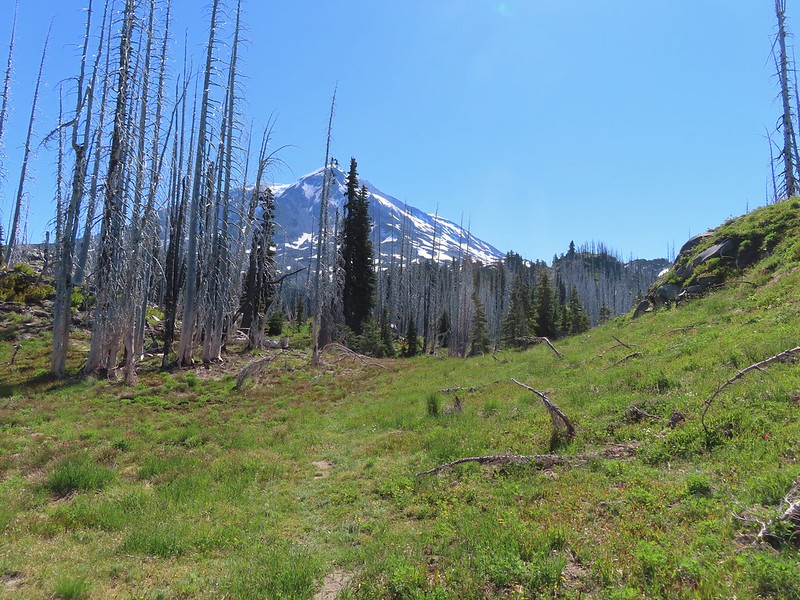

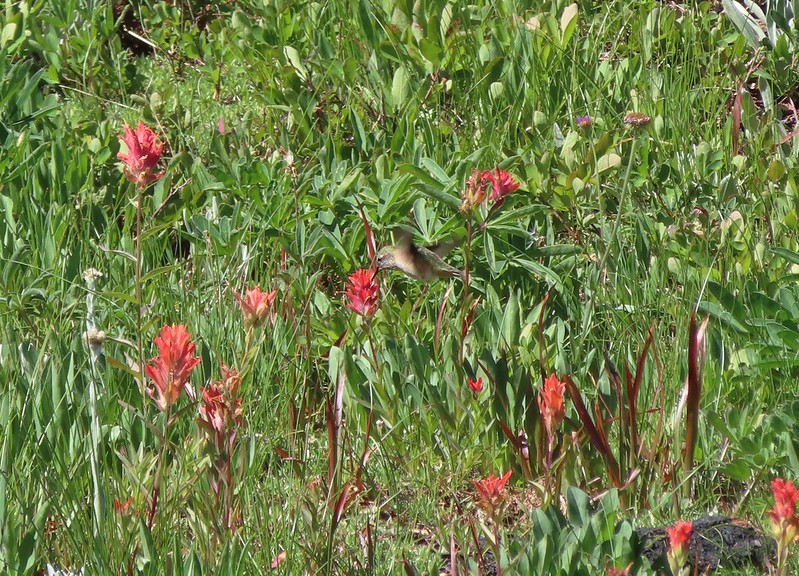 Hummingbird visiting paint.
 Mountain heather

 On the final pitch.
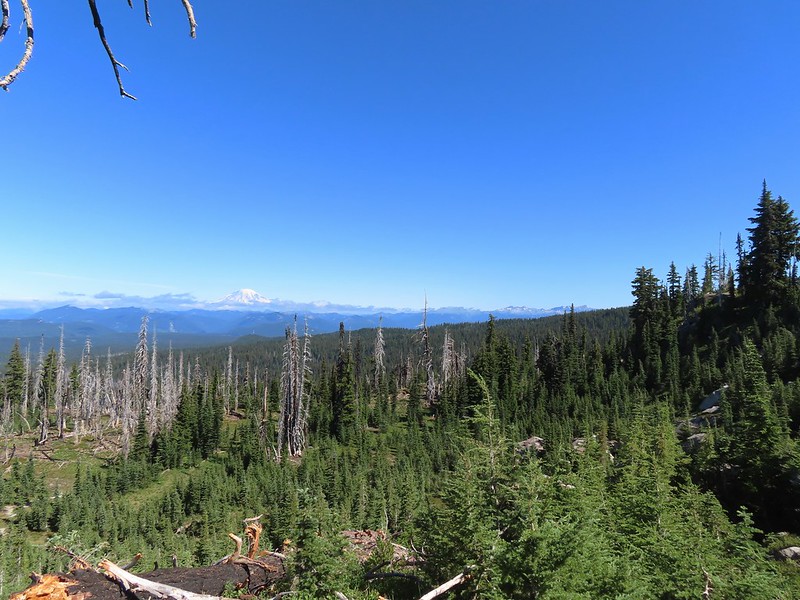 Mt. Rainier and Goat Rocks
 Phlox
Phlox Almost there.
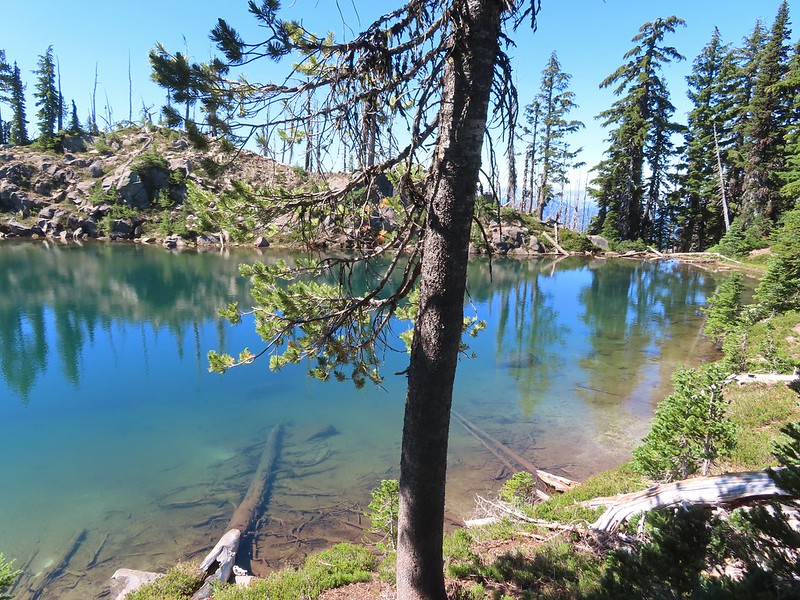
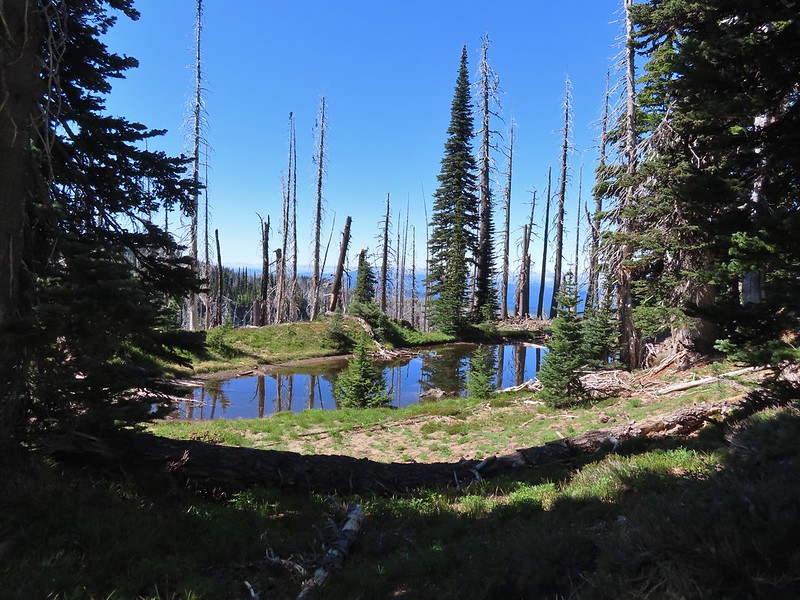 Not Crystal Lake, just a pretty little tarn nearby.
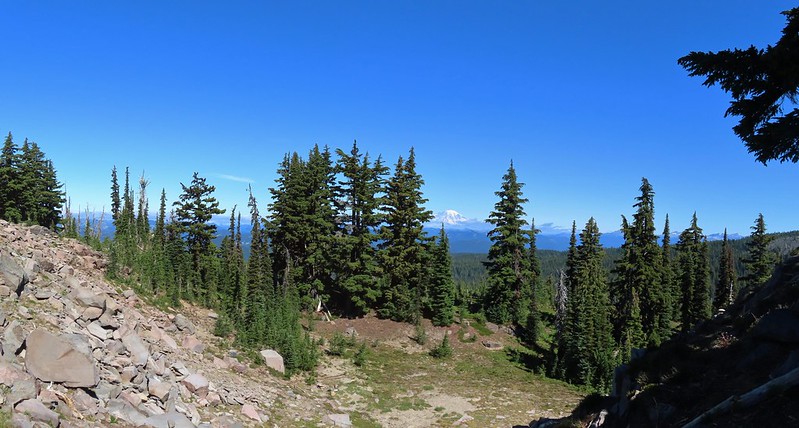 Mt. Rainier
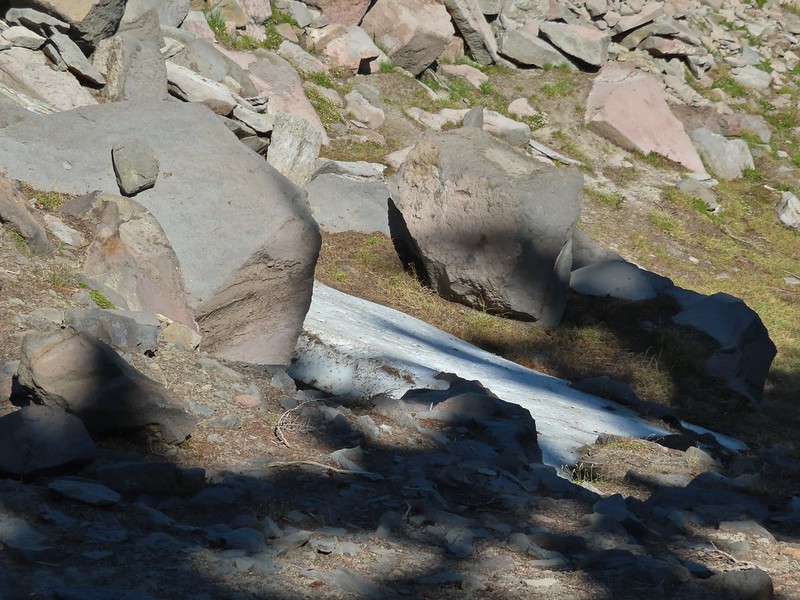 Just a bit of snow left around 6300′.
 The little tarn we’d passed.
 While not big Crystal Lake was deep.
 View down from the rocky ridge on the south side of the lake.
 The rocky ridge along the south side of the lake.
 We continued a tenth of a mile beyond the lake for a dramatic view of Mt. Adams.
 We could hear a waterfall below on Riley Creek.
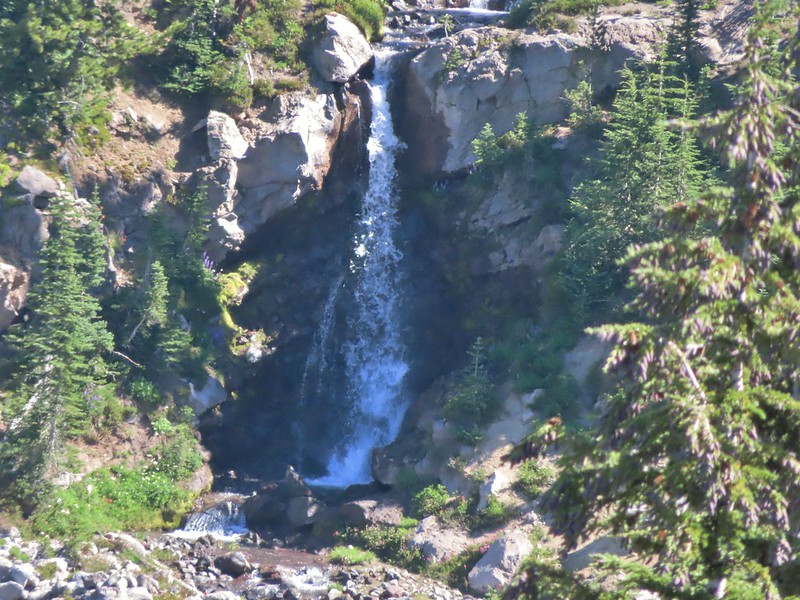 Zoomed in on the waterfall below.
 Crystal Lake from above.
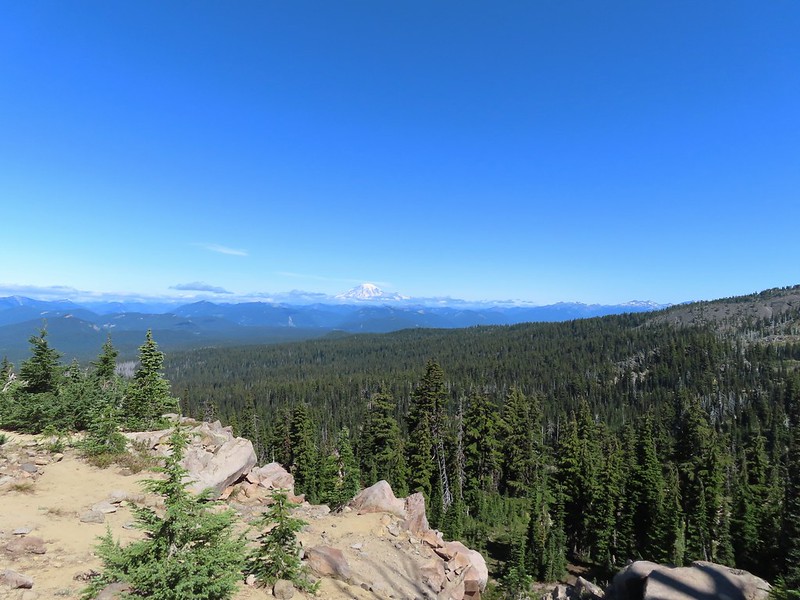 Mt. Rainier with Goat Rocks to the right.
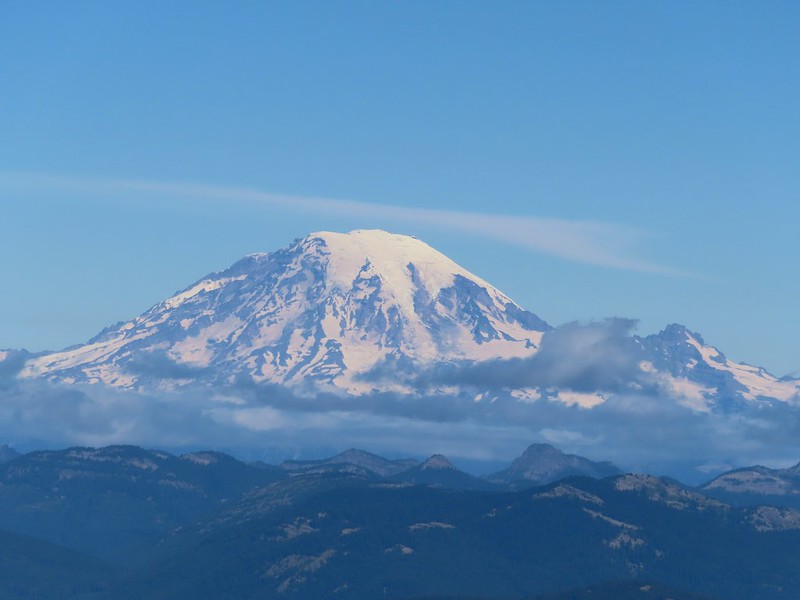 Mt. Rainier
 Some of Goat Rocks.
 Golden-mantled grounds squirrel


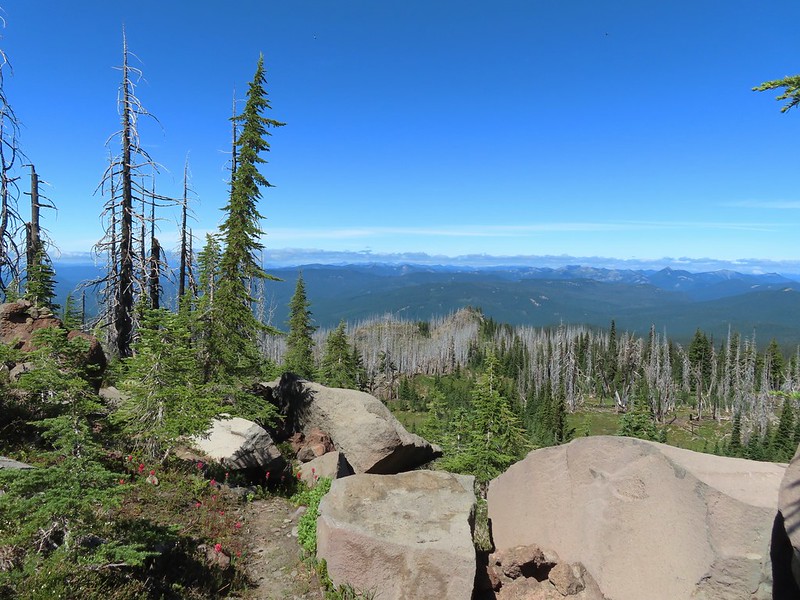 Getting ready to drop down.
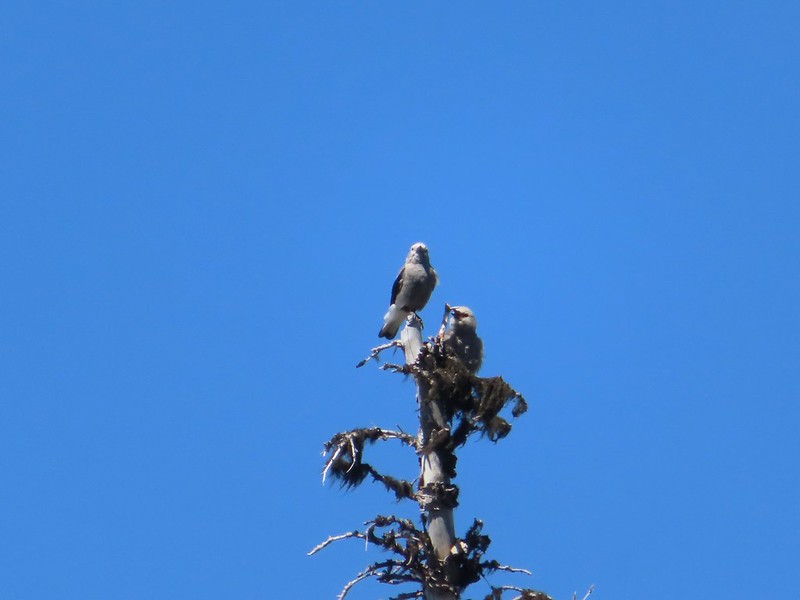 Clark’s nutcrackers
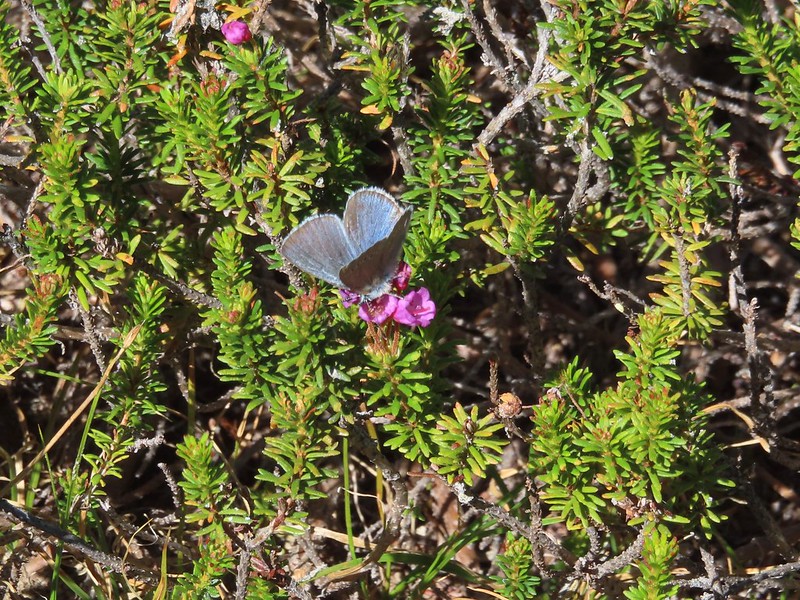 Butterfly on mountain heather.
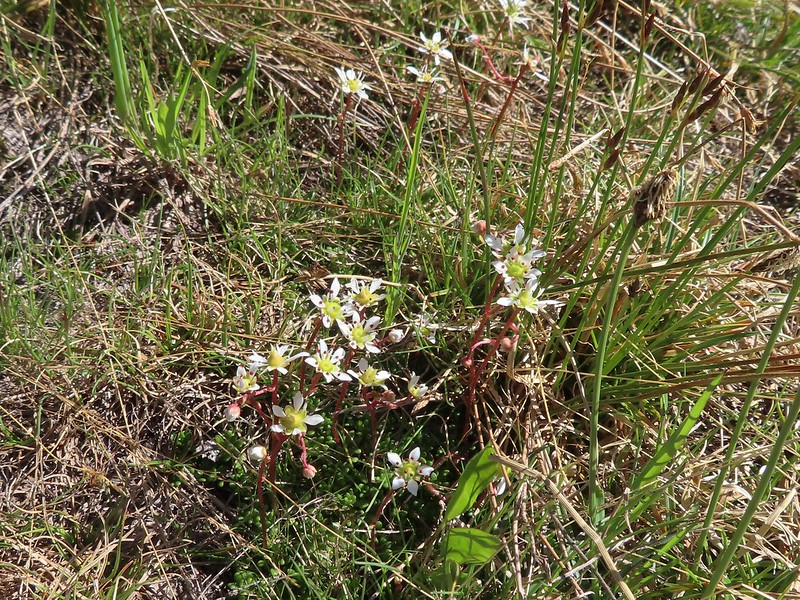 Saxifrage
 Violet
 Alpine speedwell
 A checkerspot
 A crescent
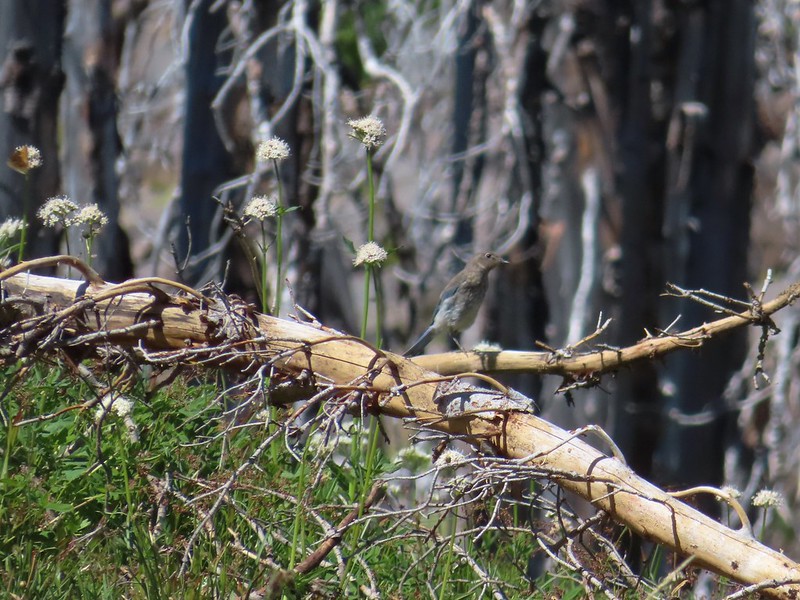 Mountain bluebird
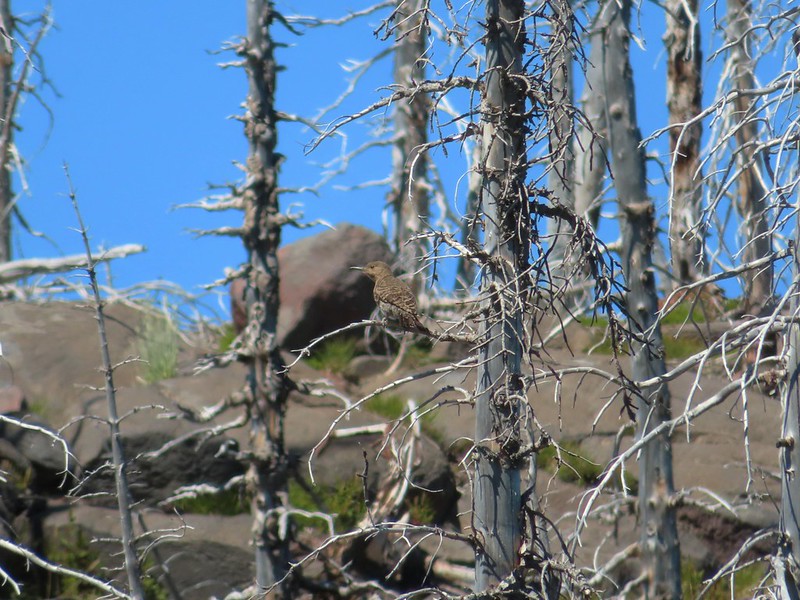 Northern flicker
 I’m guessing a warbler of some sort. We saw quite a few of these little yellow birds but had a hard time actually getting a photo.
 Mt. Adams from the PCT.
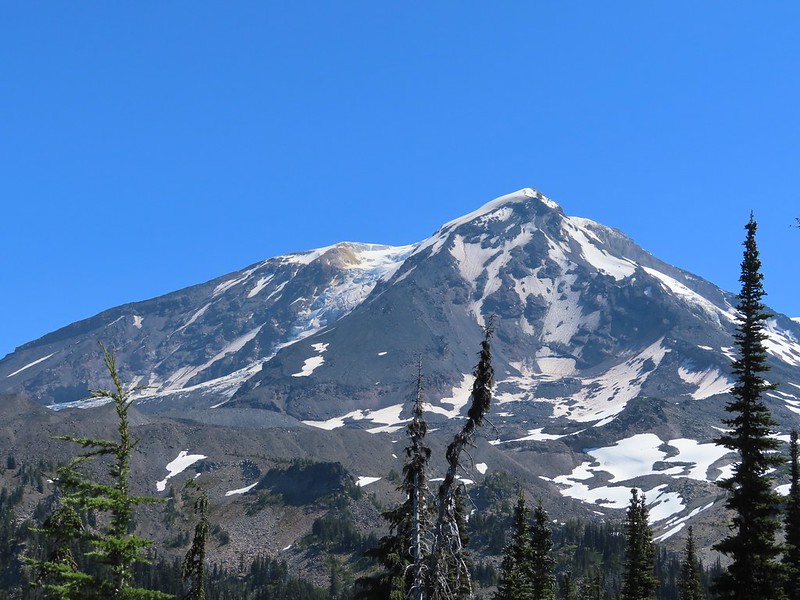
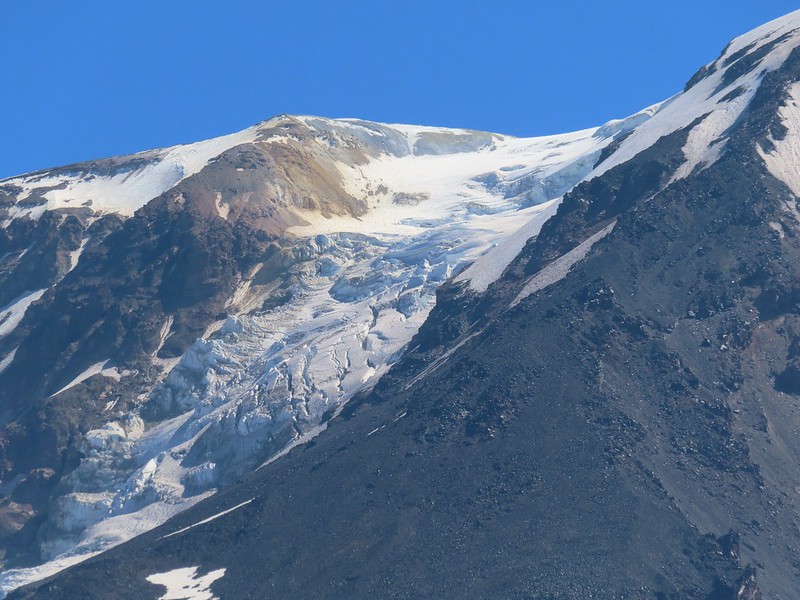 Adams Glacier
 Riley Creek at the PCT crossing.
 Wildflowers along the PCT.
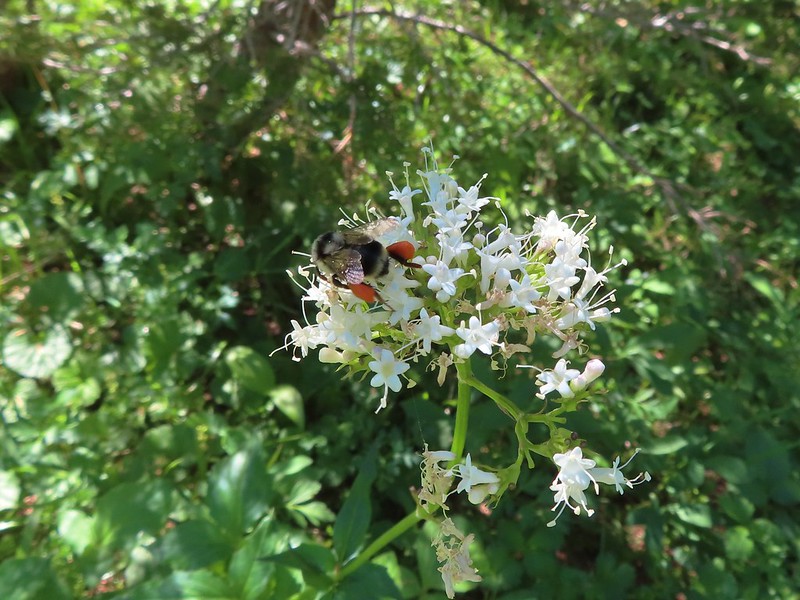 Bee on valerian
 Butterfly on valerian
 Another butterfly on valerian
 Looking back at Mt. Adams from the Riley Camp Trail.
 Passing through Riley Creek Meadows.
 Gentian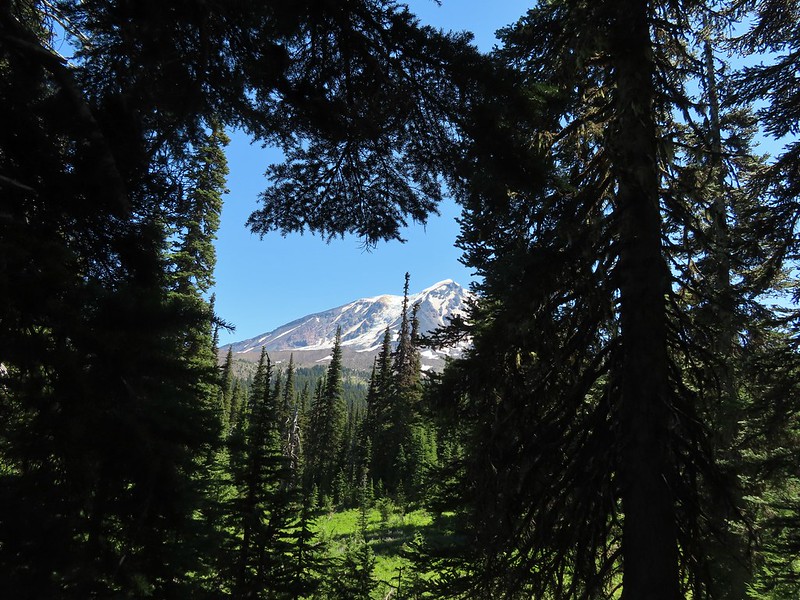
 We only saw a couple of beargrass blooms.
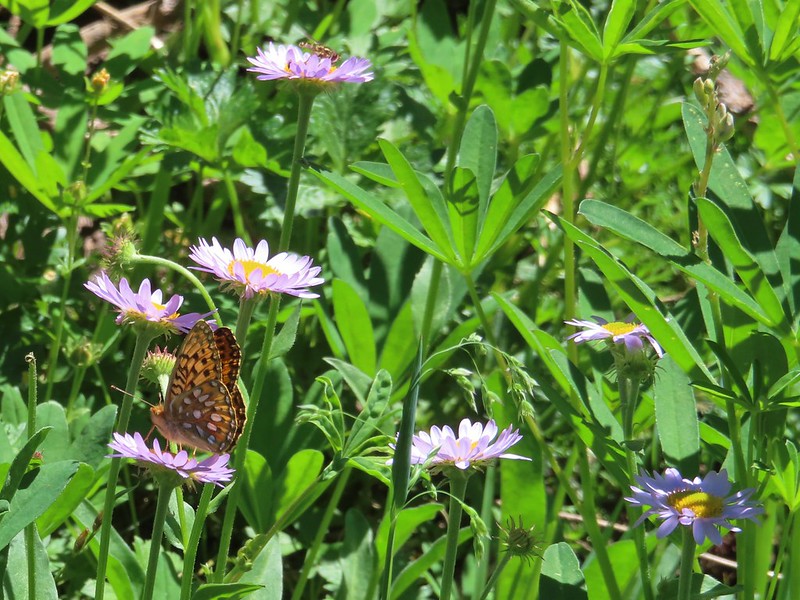 Pollinators on fleabane.
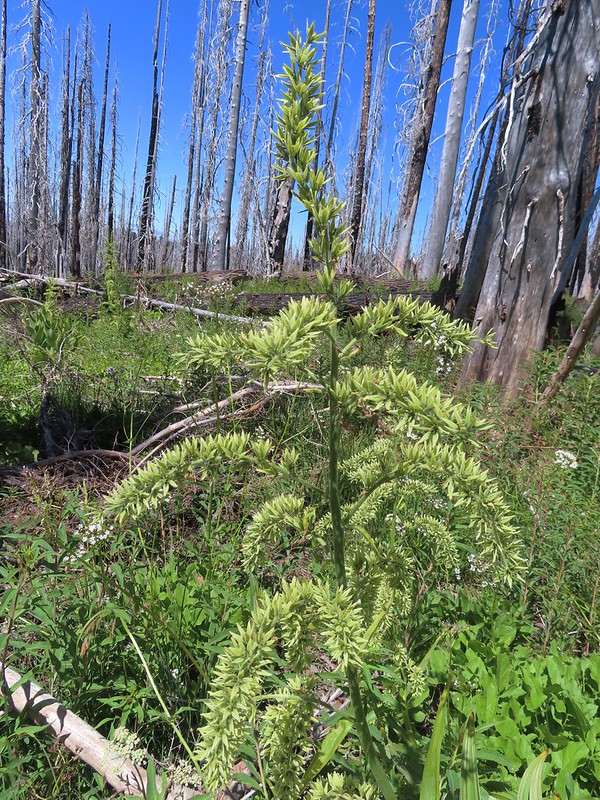 False hellebore
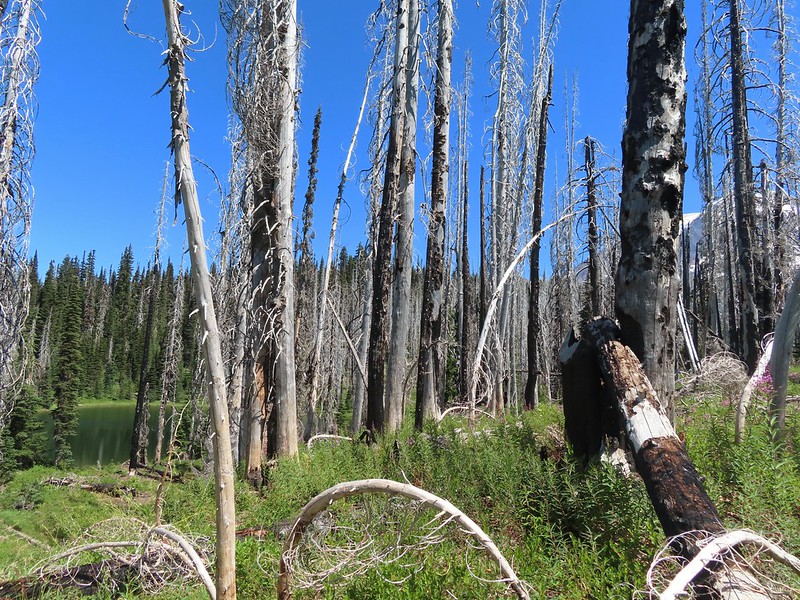 Luna Lake and Mt. Adams from the trail.

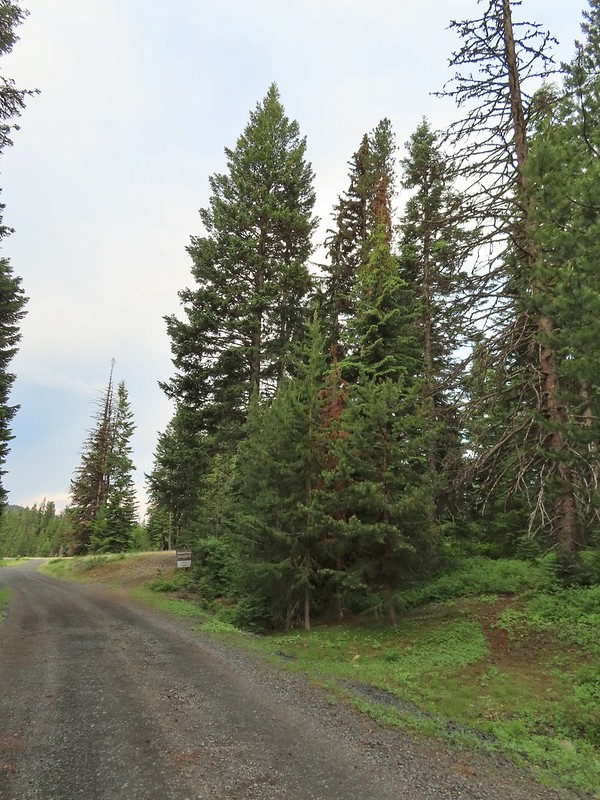 We parked about 200′ north of the actual trailhead per a suggestion by Sullivan in his guidebook.
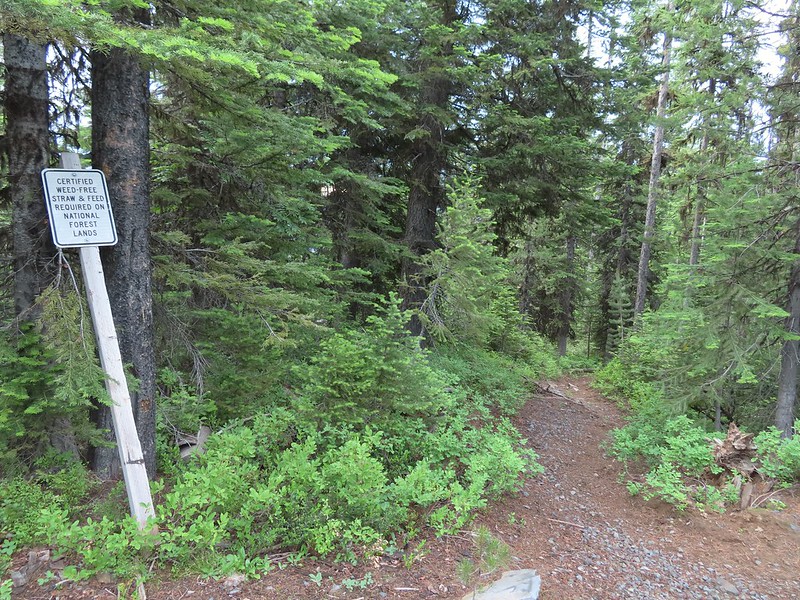 The Rock Springs Trail at FR 62.
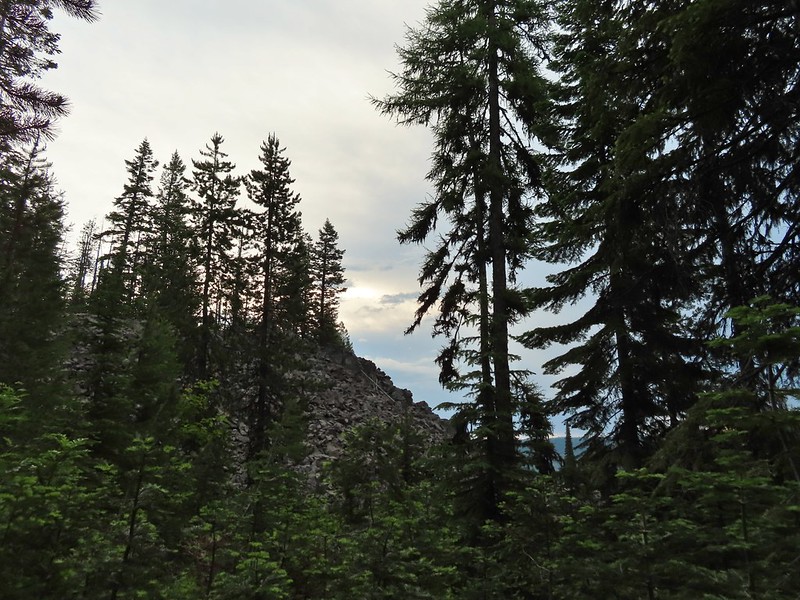 The trail passed a large rock field just below FR 62 and then entered the
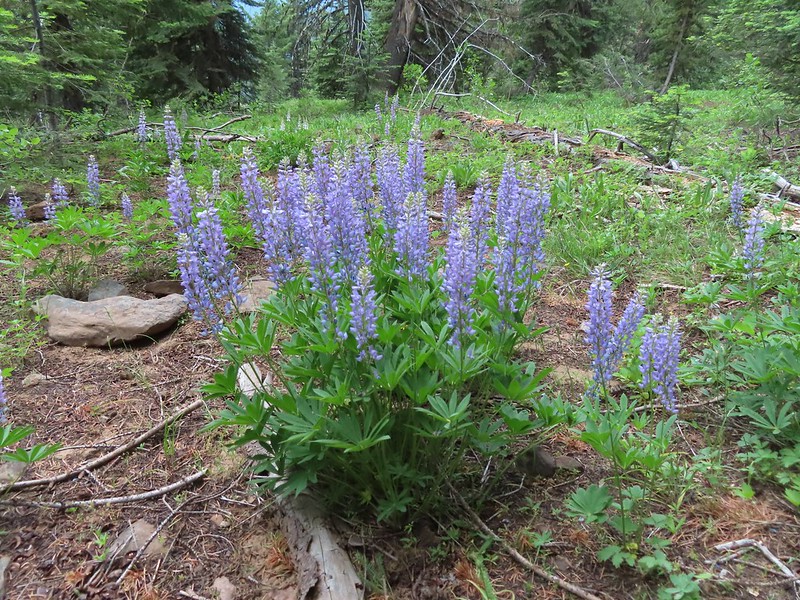 Lupine
 Coralroot

 The edge of the storm clouds.
 Scarlet gilia along the trail.
 Oregon sunshine and tapertip onion
 Nettle-leaf giant hyssop
 View from the trail before the first “viewpoint”.
 Oregon checker-mallow
 Assorted wildflowers
 Blue sky following the storm clouds.
 Scabland penstemon
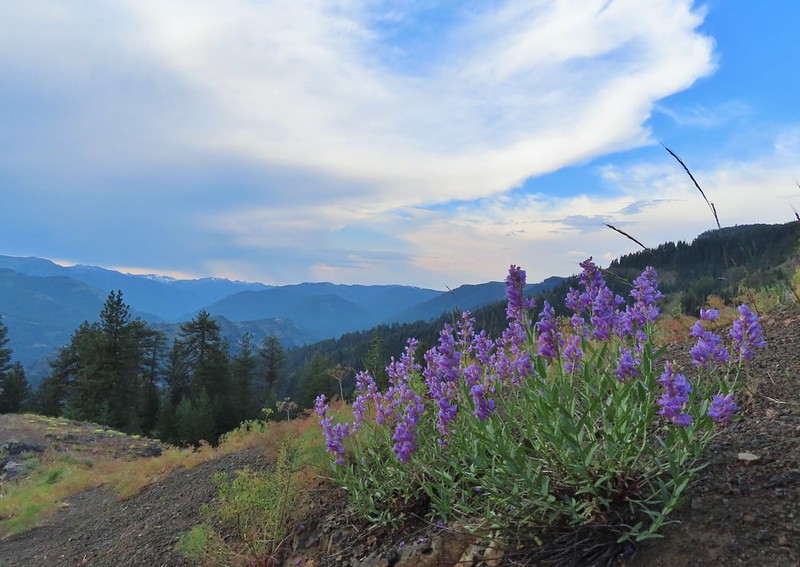 Penstemon near the first “viewpoint”.
 Yarrow
 Douglas dustymaiden
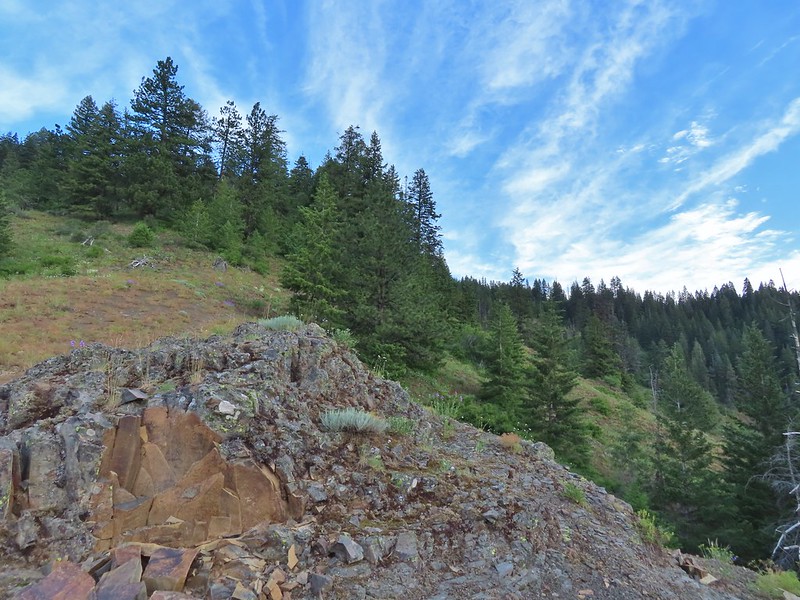 Looking back from the viewpoint.
 Buckwheat
 The Point Prominence Lookout atop the high point to the left.
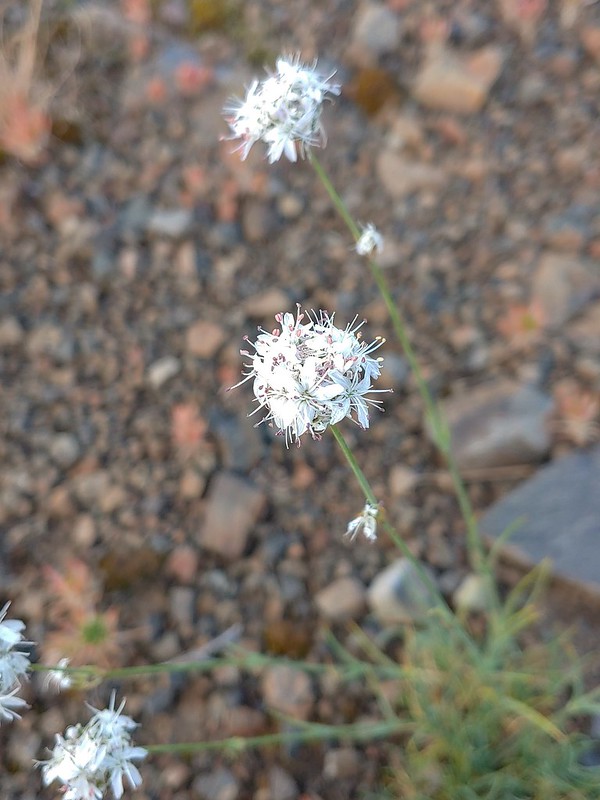 Ballhead sandwort
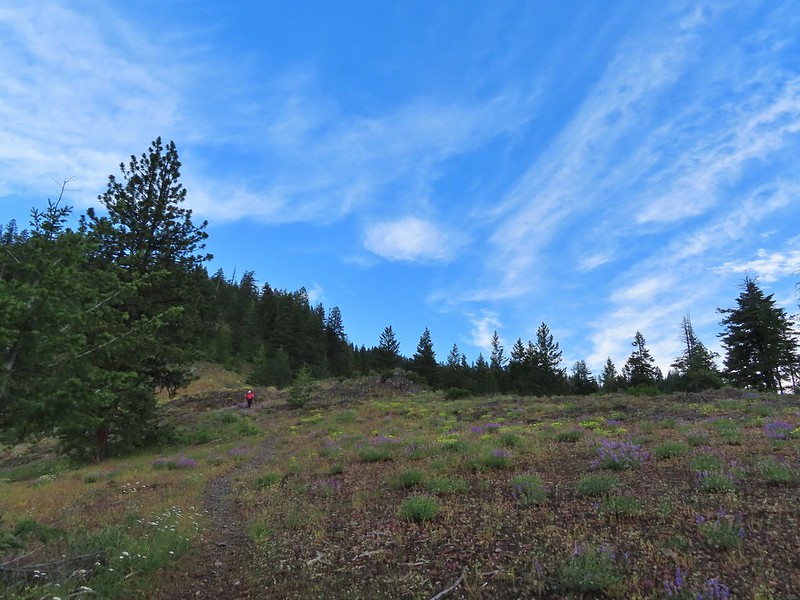 Heather coming down from the viewpoint.
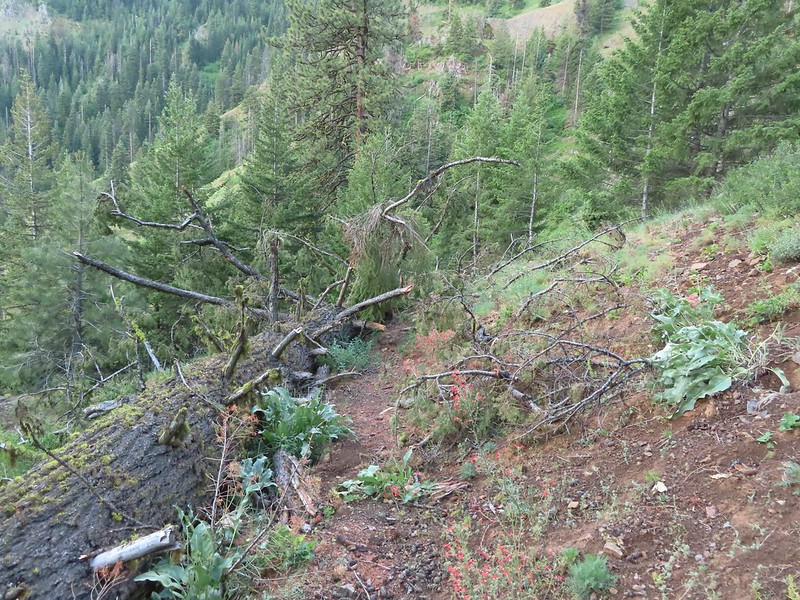 Blowdown over the trail.
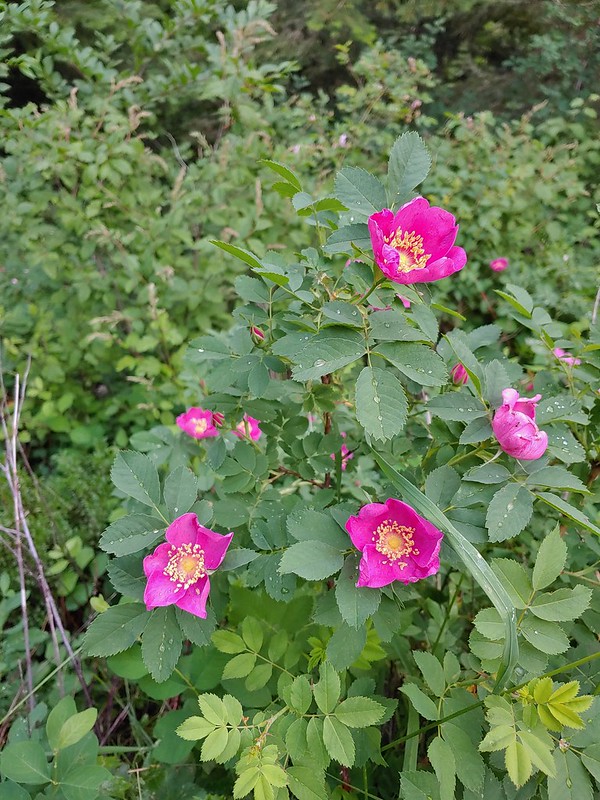 Nookta rose
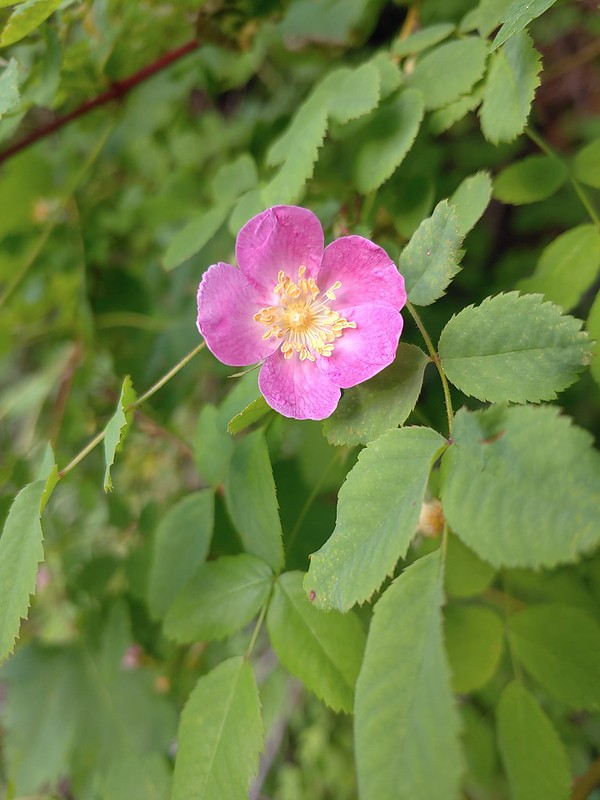 Wood rose
 View to the SE deeper into the Wallowas.
 Mountain parnassian?
 Back in the trees.
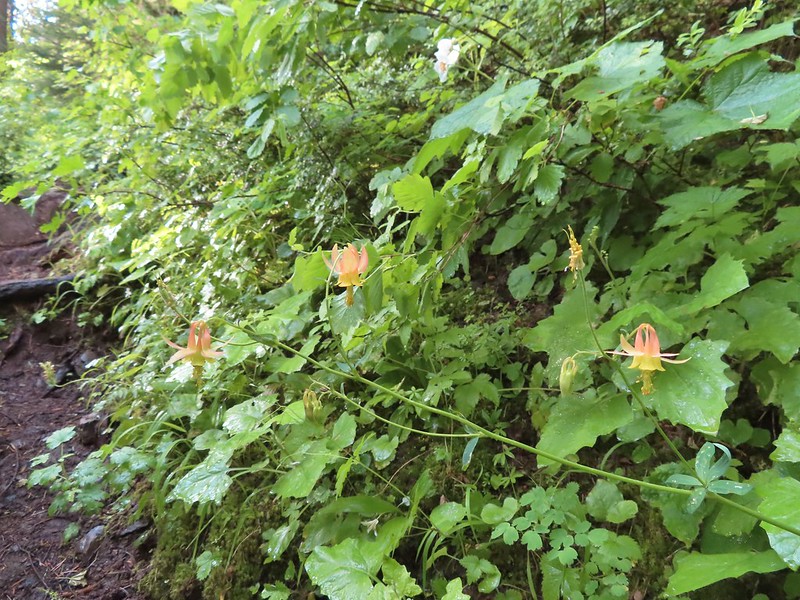 Some pale columbine. At first we thought it might be yellow columbine but it definitely had a red tint.
 Thimbleberry crowding the trail. The storm had left a lot of water on the vegetation which in turn wound up on our legs and shoes.
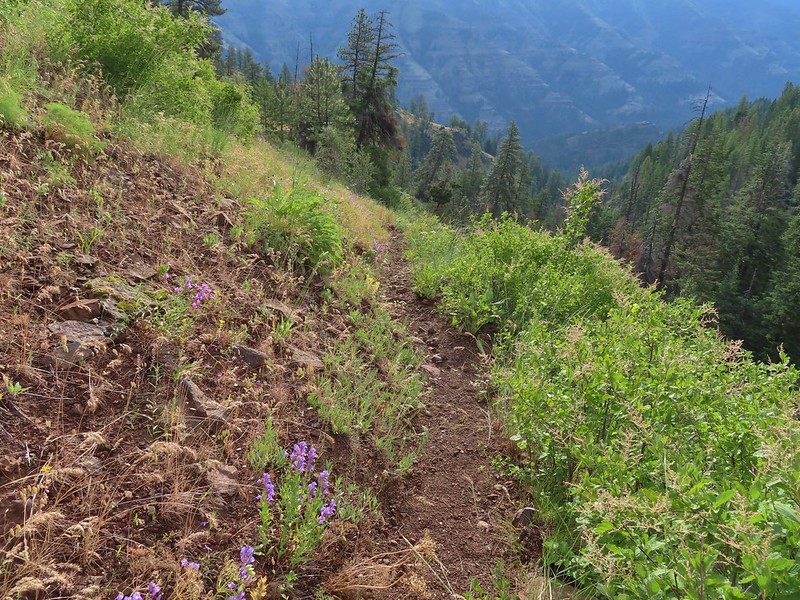 Heading down into the valley.
 Elkhorn clarkia
 Approaching the second viewpoint.
 Backbone Ridge which separates the Minam and Little Minam Rivers. We had crossed over that ridge further south on Tuesday when we took the Horse Ranch Trail from Moss Springs to the Minam River (post).
 Grand collomia
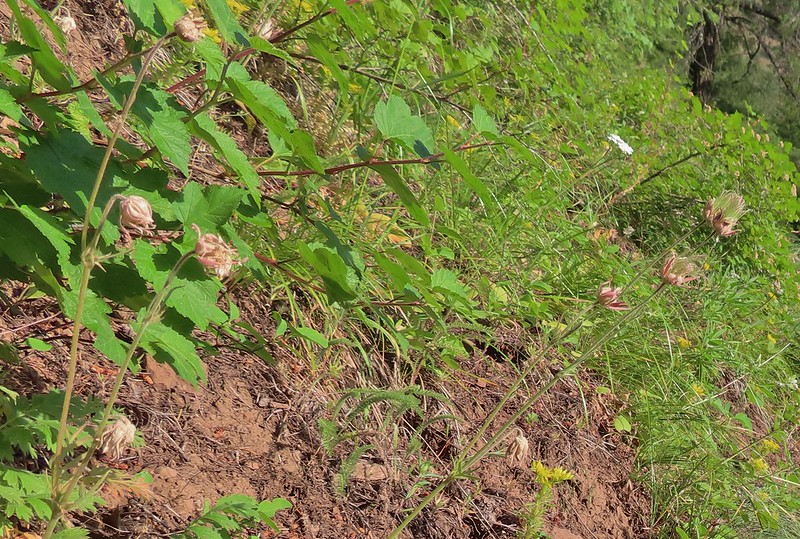 Prairie smoke
 Mock orange along the trail.
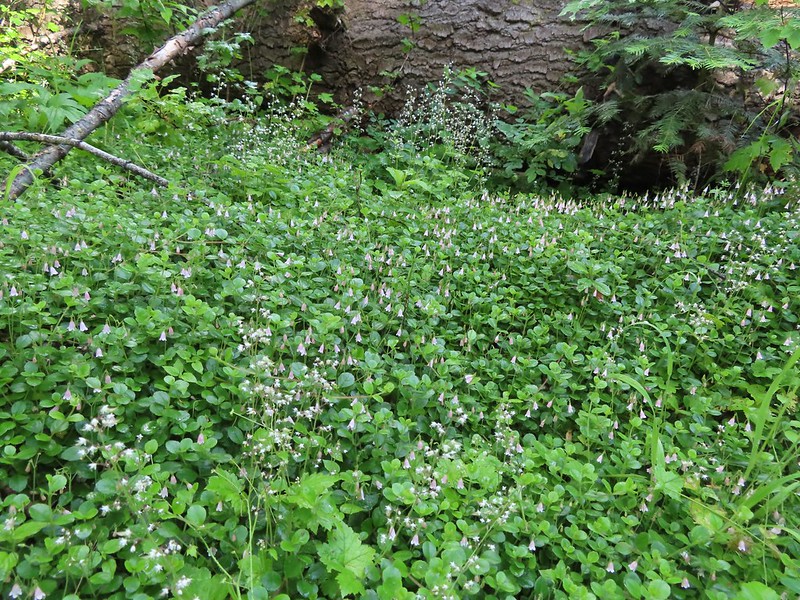 Twin flower and foam flower
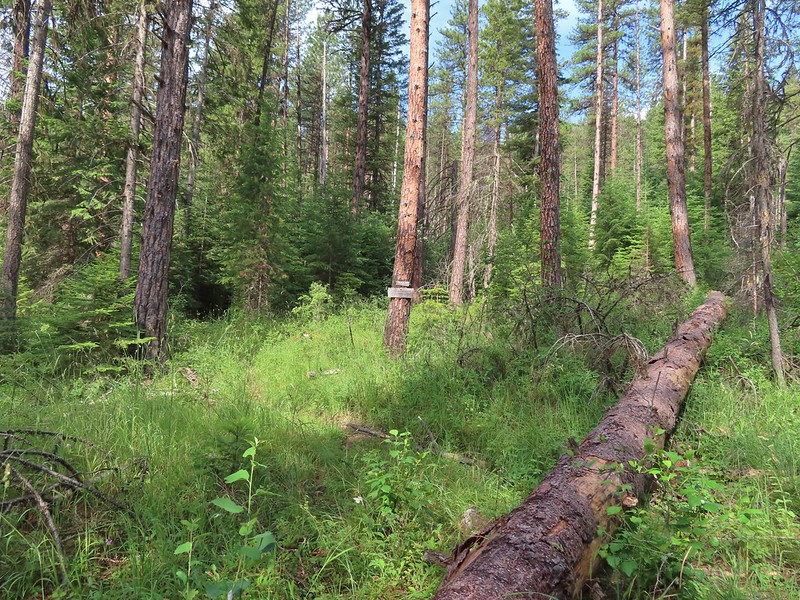 Sign marking the junction of the Rock Springs and Little Minam Trails.
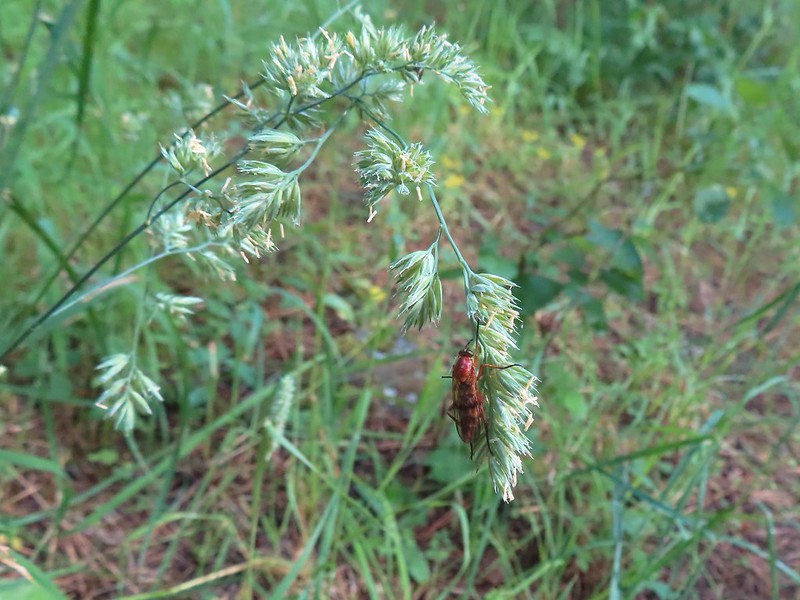 Possibly a wasp of some sort near the junction.
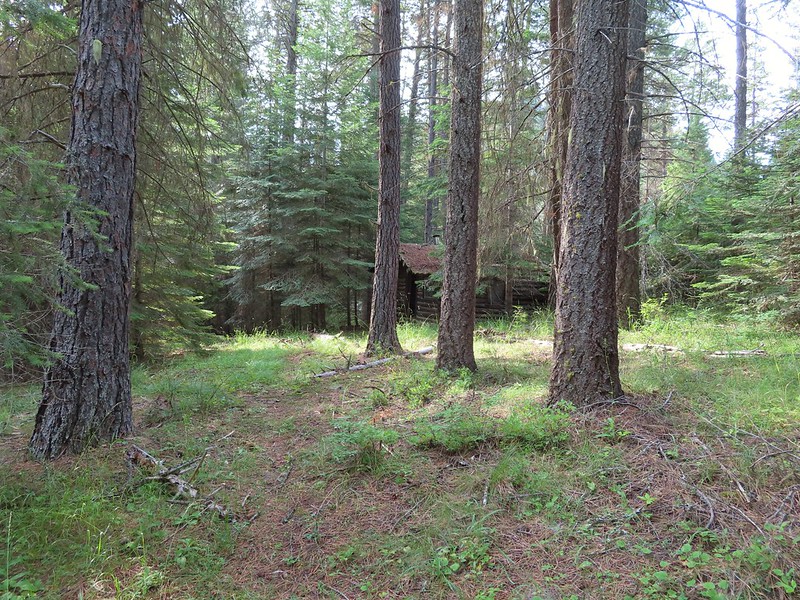 The first cabin ruin.
 Almost looks okay from this angle.
 Not so good from this angle.
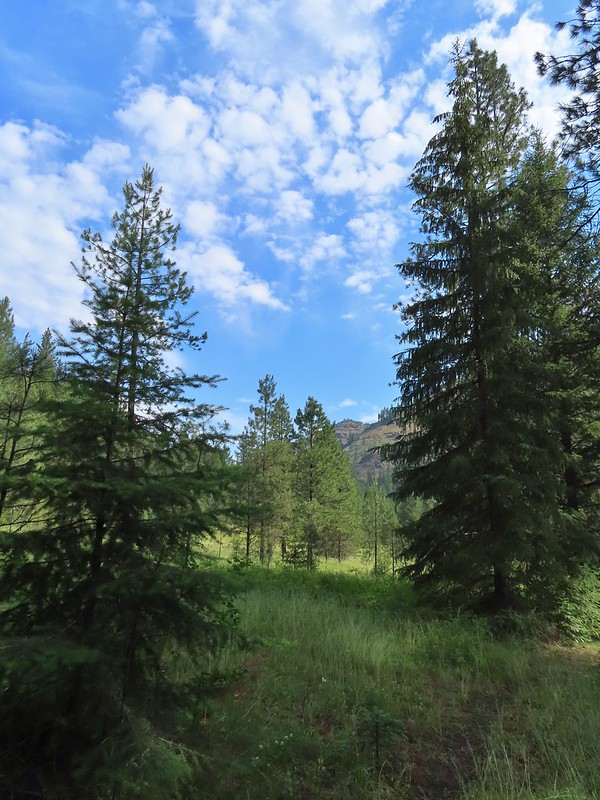 The lodge was at the edge of this meadow.
 The lodge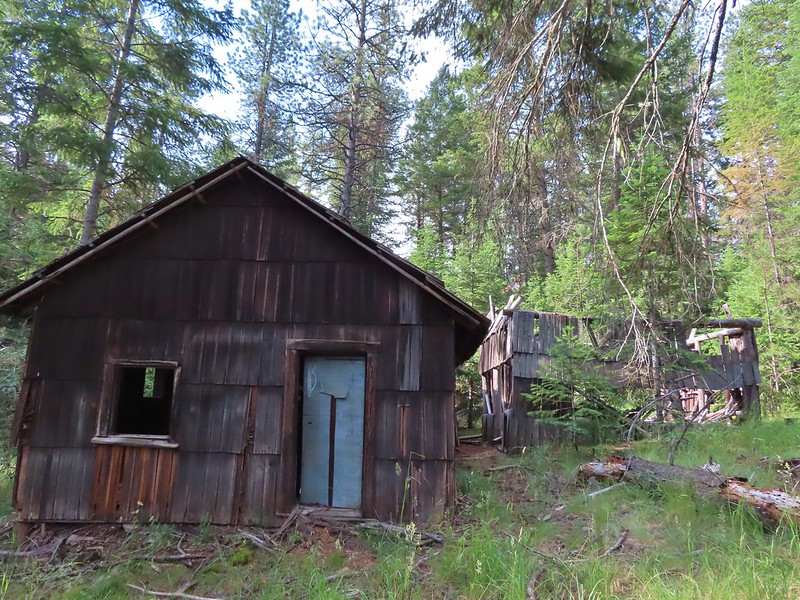
 The fireplace seems to have held up well.
 This cabin didn’t hold up.

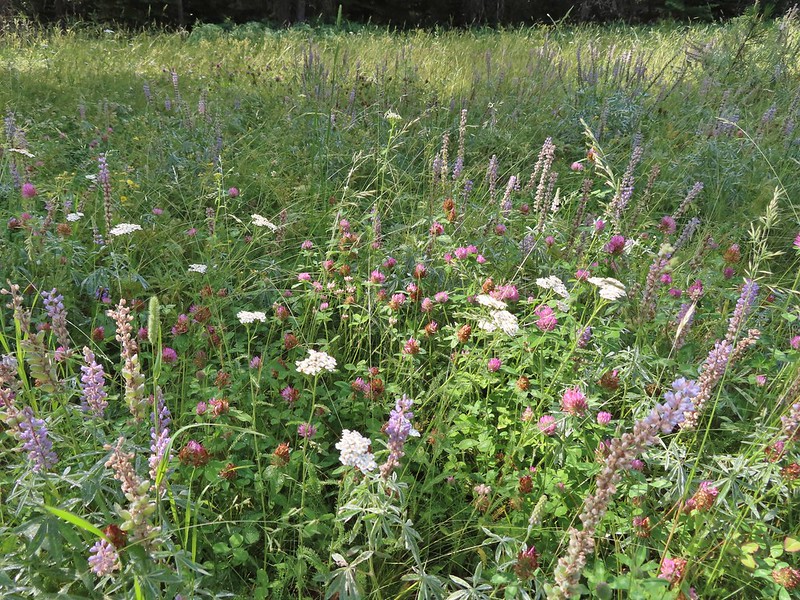 Wildflowers near the watering hole.
 The Little Minam River. We couldn’t quite see the confluence of the two rivers from here despite being very close.


 The dangerous ford.
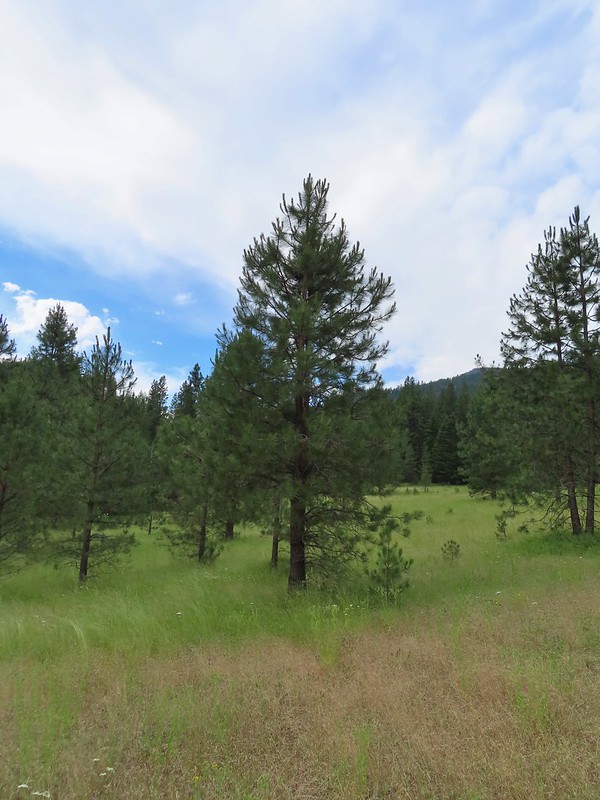 Here we tried looking for horse hoof prints to stick to the trail.
 Butterfly on yarrow.
 We think this was the trail.
 The campsites where we picked up the Rock Springs Trail again.
 Lorquin’s admiral
 Looking across the gully we could see the trail cut climbing up the far hillside.
 Pincushion plant
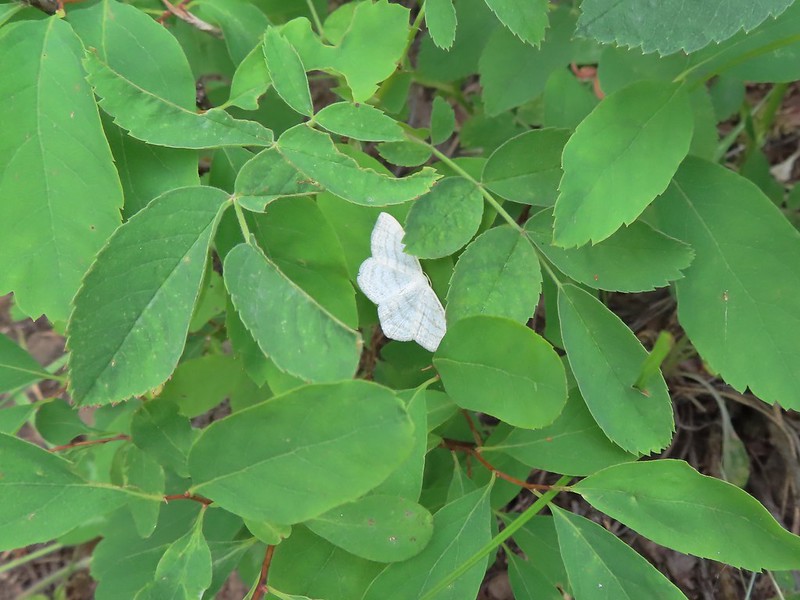 Resting moth
 A plane taking off from Minam Lodge.
 A popular thistle.
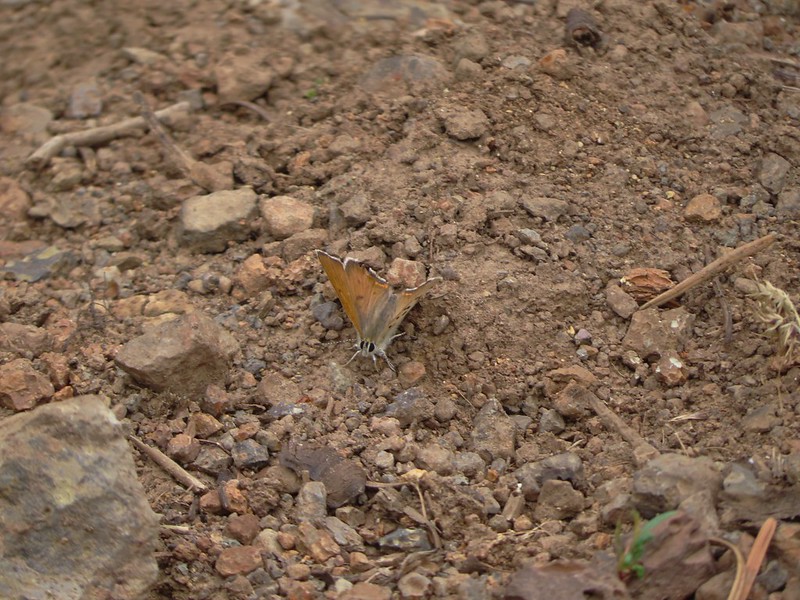 A skipper of some sort.
 We both missed this yellow columbine on the way down.
 View from the upper viewpoint on the way back up.
 A final view from the Rock Springs Trail.
 The cloud cover that moved in turned out to be a blessing as it kept the temperature reasonable as we made the long climb back up.

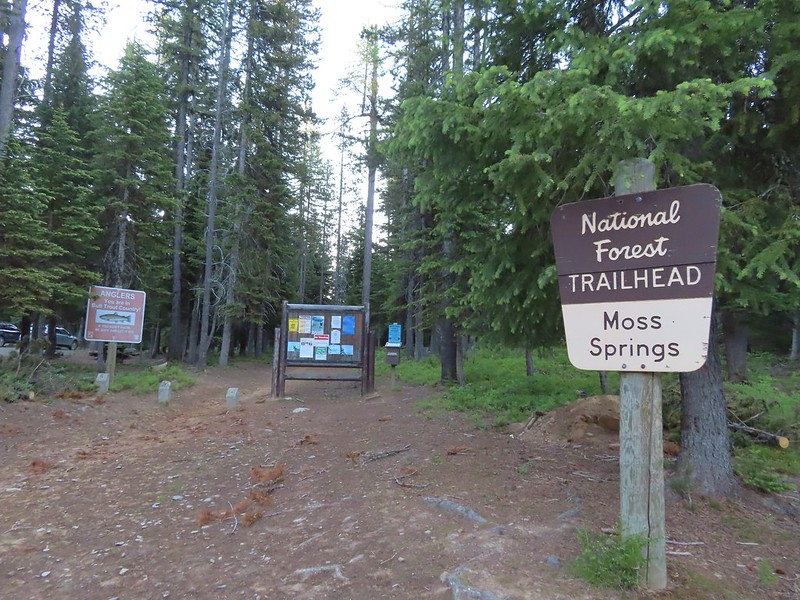
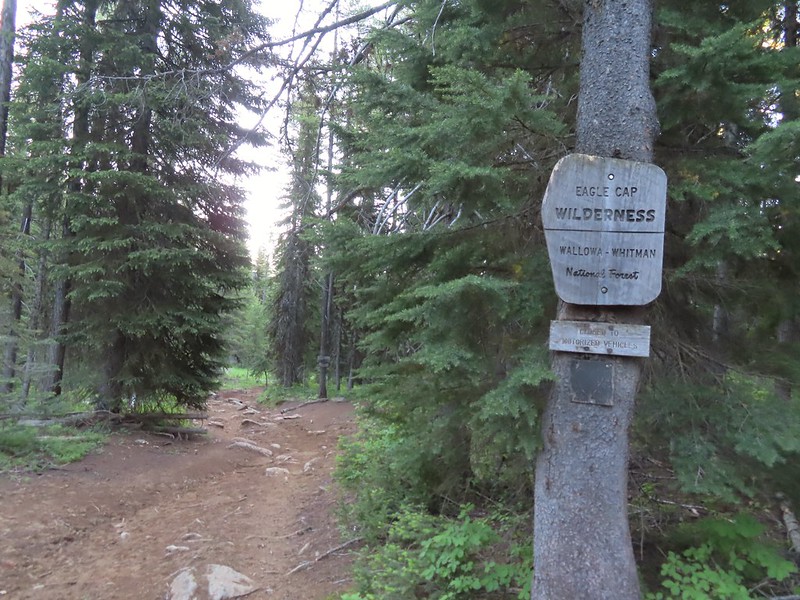 Entering the

 Scarlet gilia along the trail.
 Tapertip onion
 Scarlet gilia
 Lewis flax, we were hoping to see it opened up on the way back up to the car but somehow we both completely missed it.
 Arrowleaf groundsel
 Bog orchid
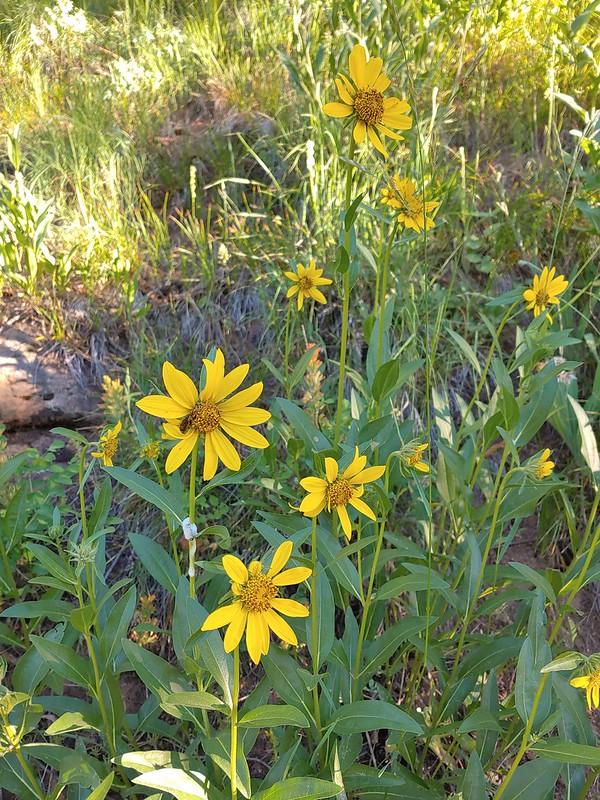 False sunflowers
 Paintbrush
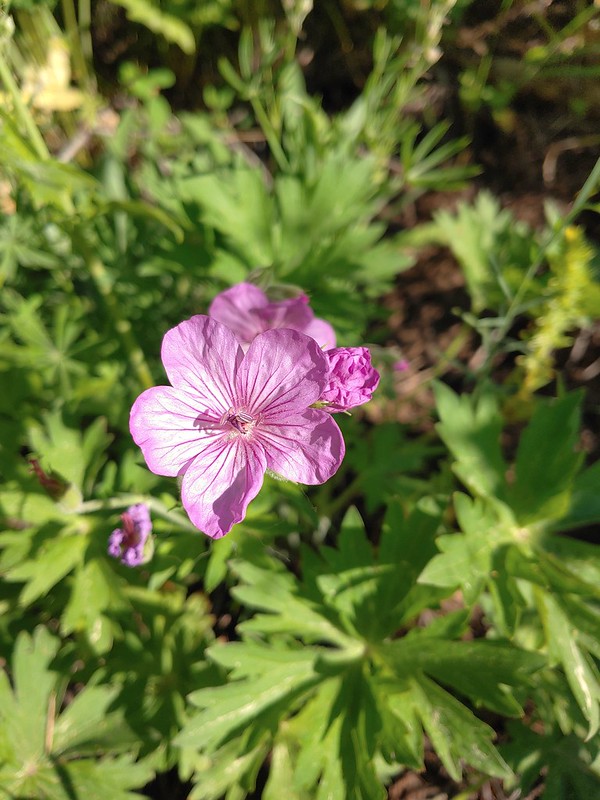 Sticky geranium
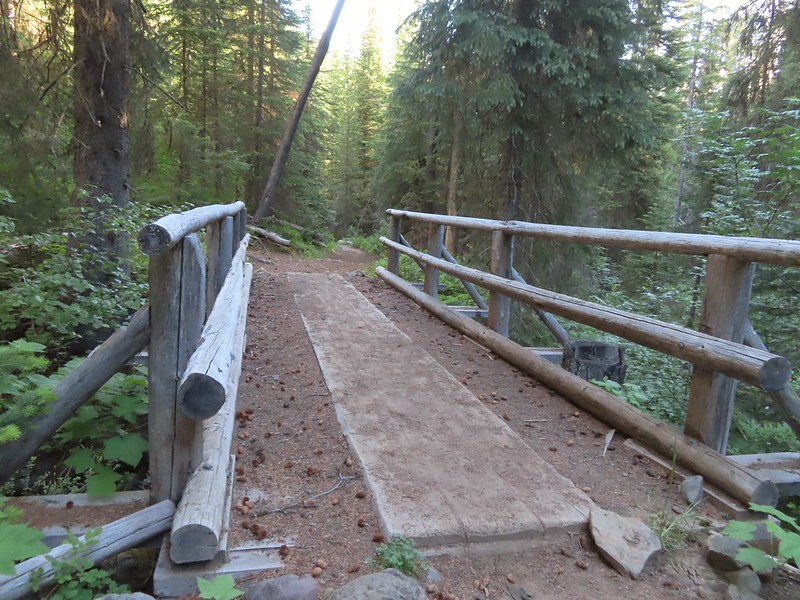 Footbridge over Horseshoe Creek.
 Horseshoe Creek

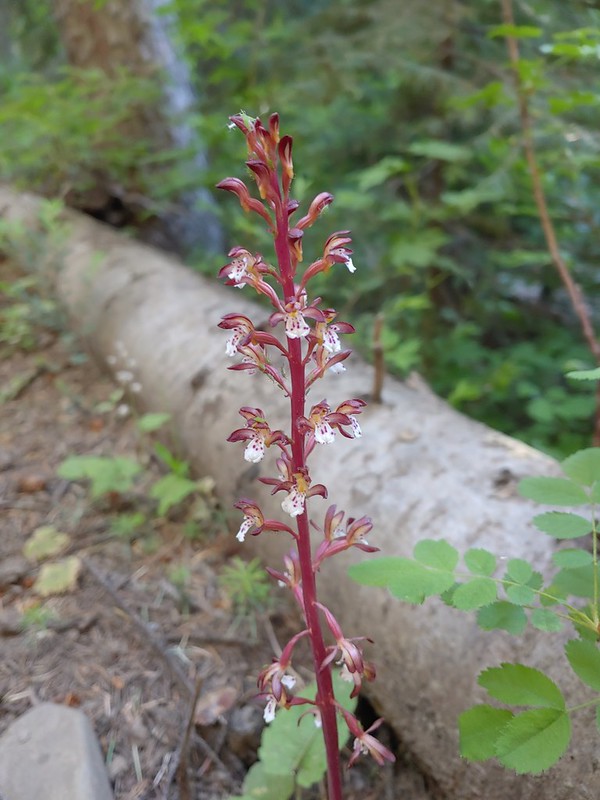 Spotted coralroot
 Mountain lady slipper
 Little Minam River
 Coral fungus
 Huckleberry Creek
 Bridge across the Little Minam River.
 Little Minam River

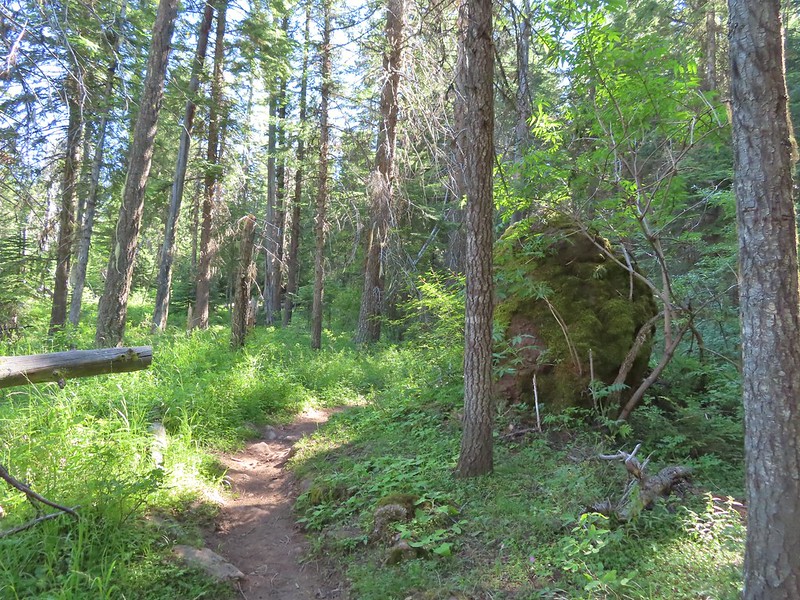 The only area that we encountered showing signs of having burned in the not too distant past.
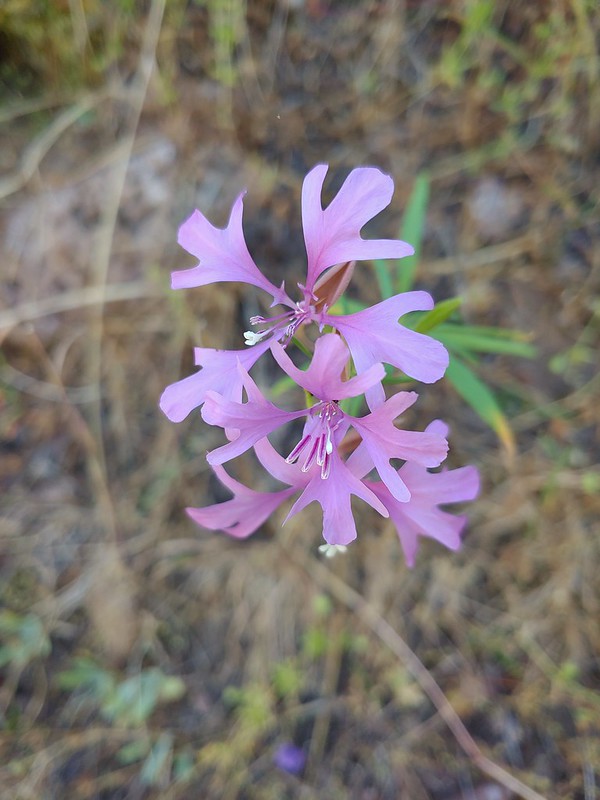 Elkhorn clarkia
 Junction with the Little Minam Trail (left) just below the pass.
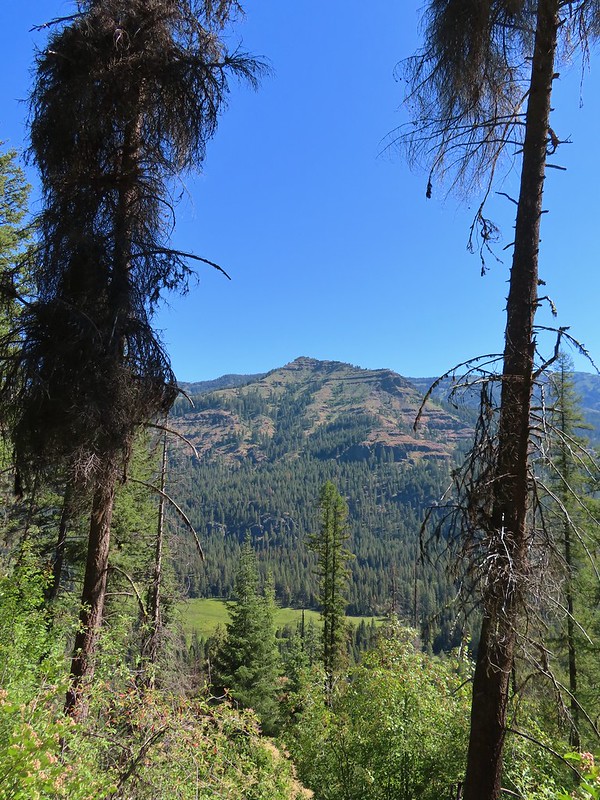 The meadow from the trail.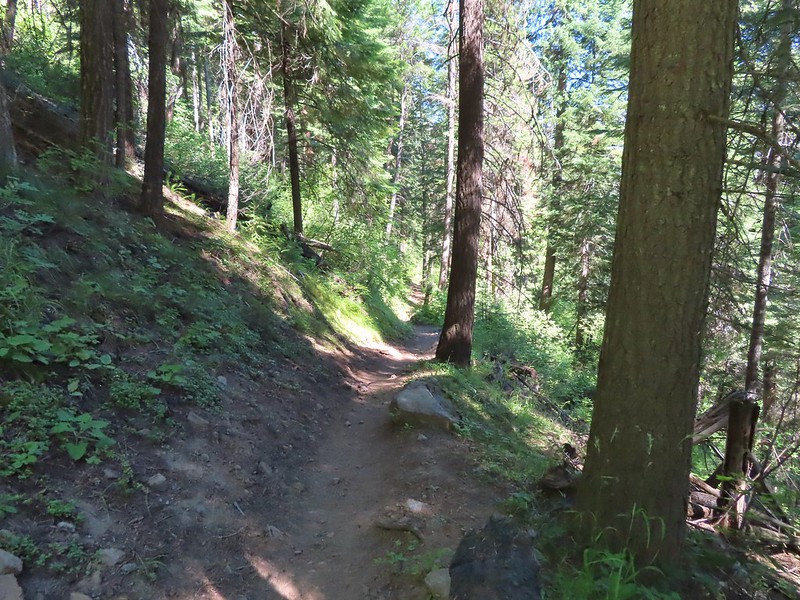
 Arriving at the meadow.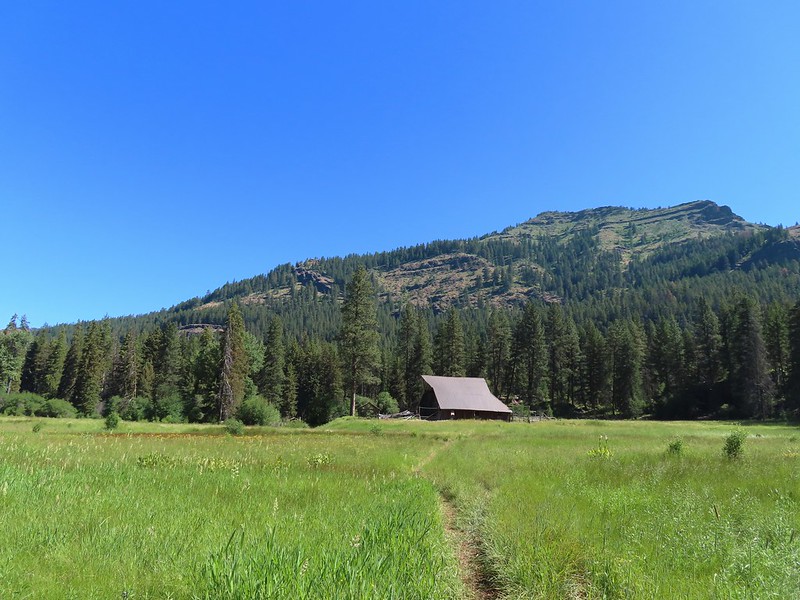

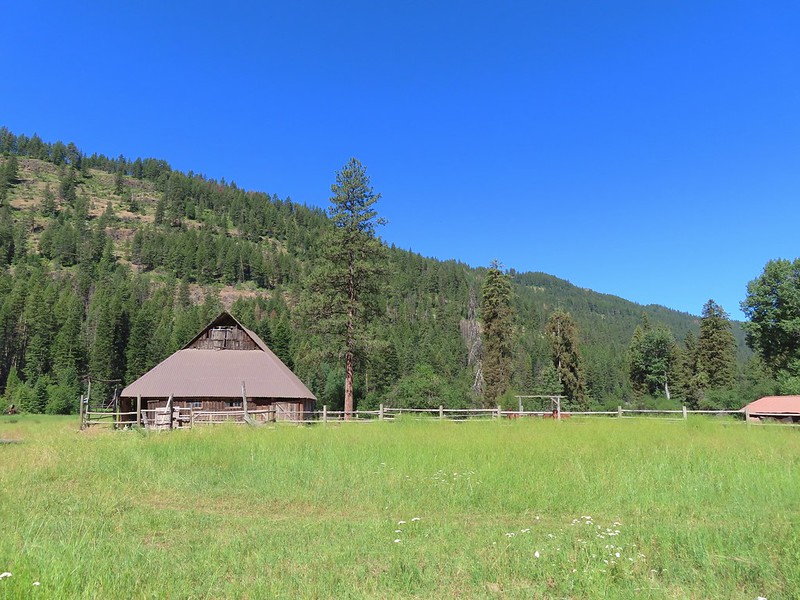 Horses at Red’s Horse Ranch.
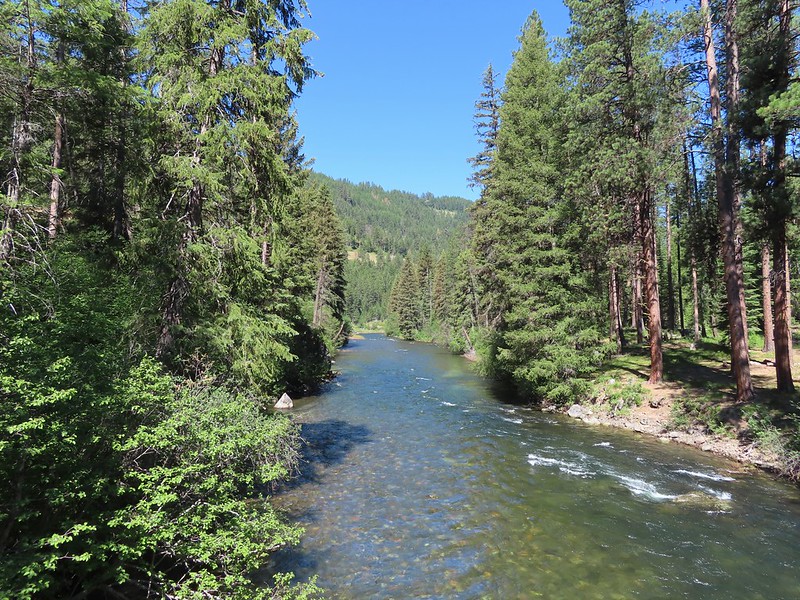 Minam River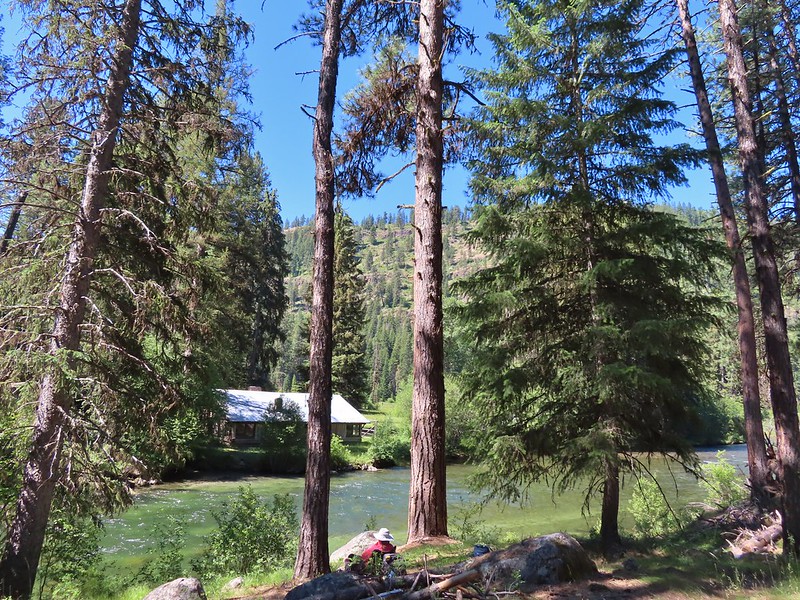
 Landing strip near Red’s Horse Ranch.
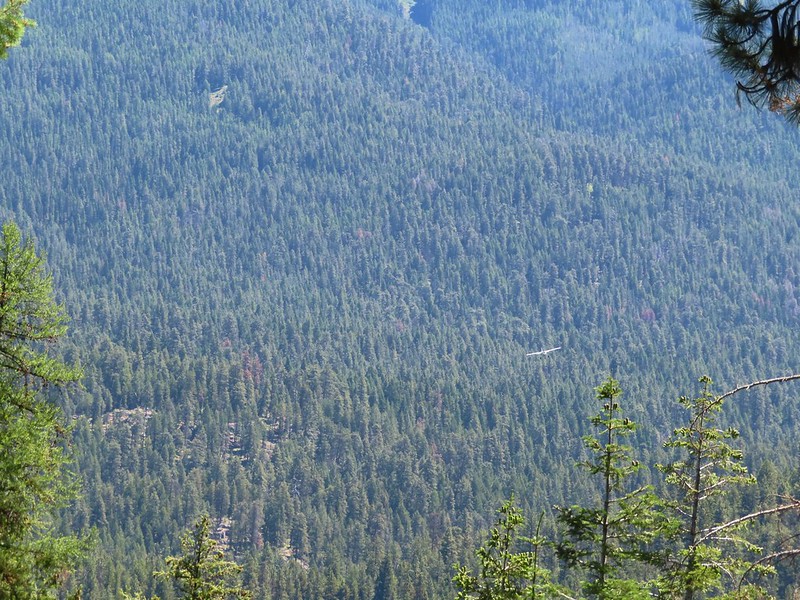 A plane coming in for a landing at the nearby
  Lousewort
 Diamond clarkia
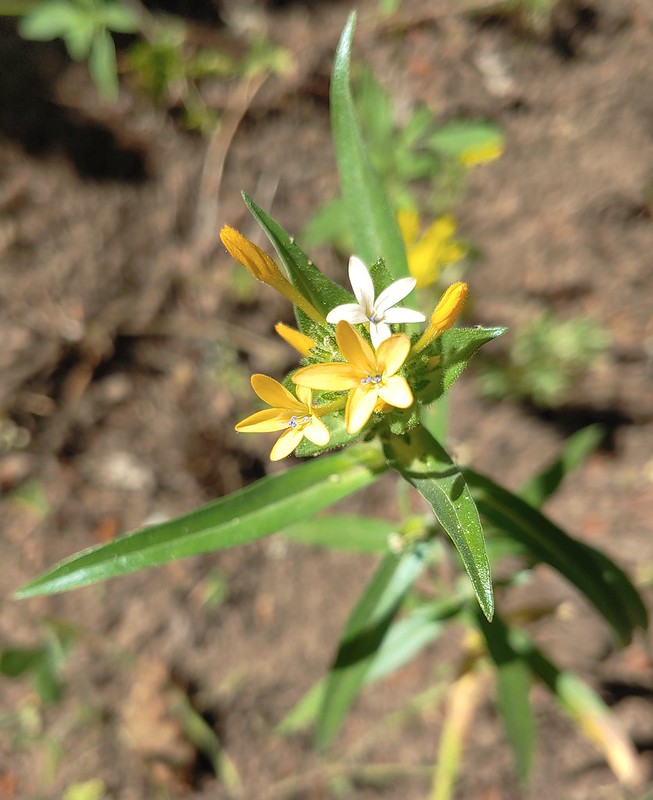 Grand collomia
 Millipede
 Pink pyrola
 Little Minam River
 Coral fungus
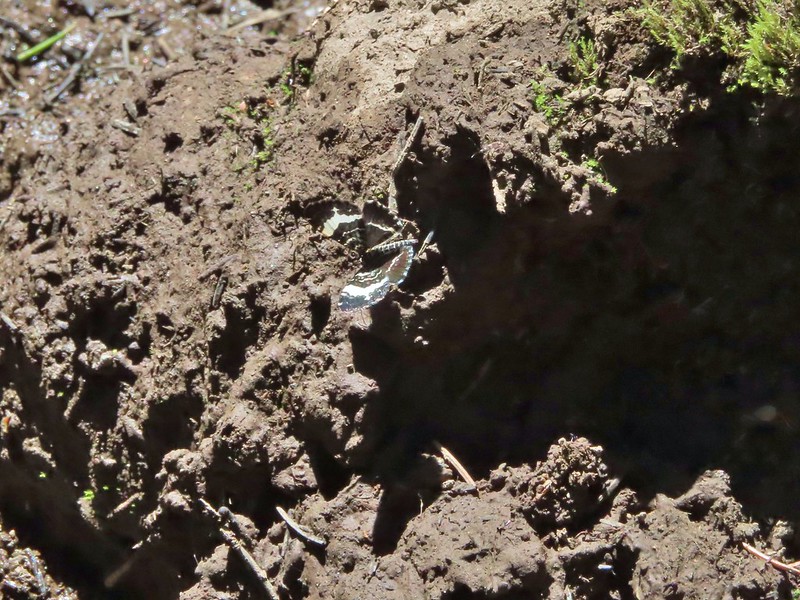 We saw a bunch of these black moths? but they seldom sat still long enough to get a photo.
 An Orobanche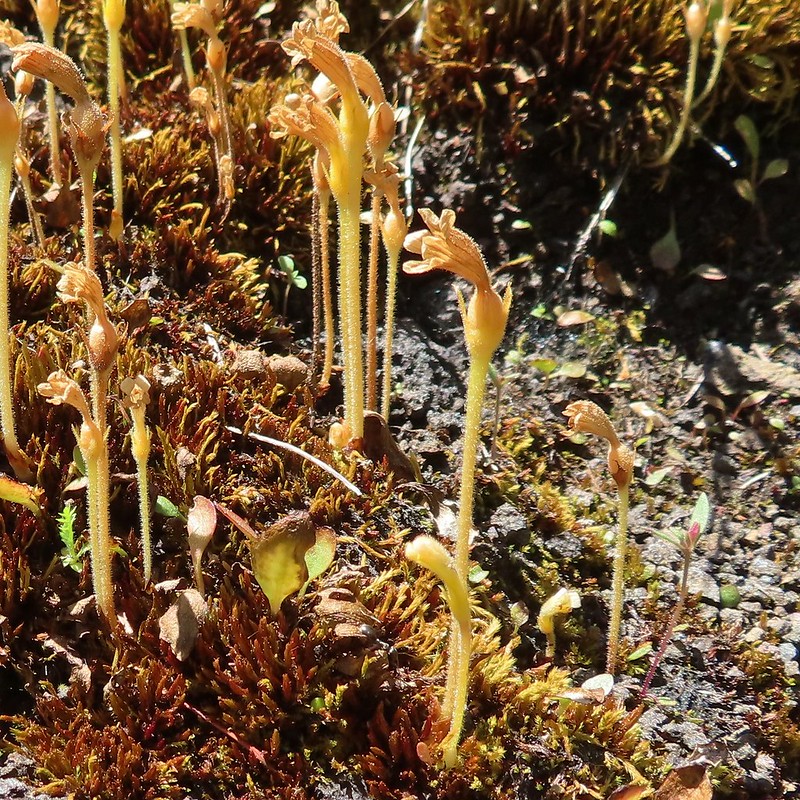
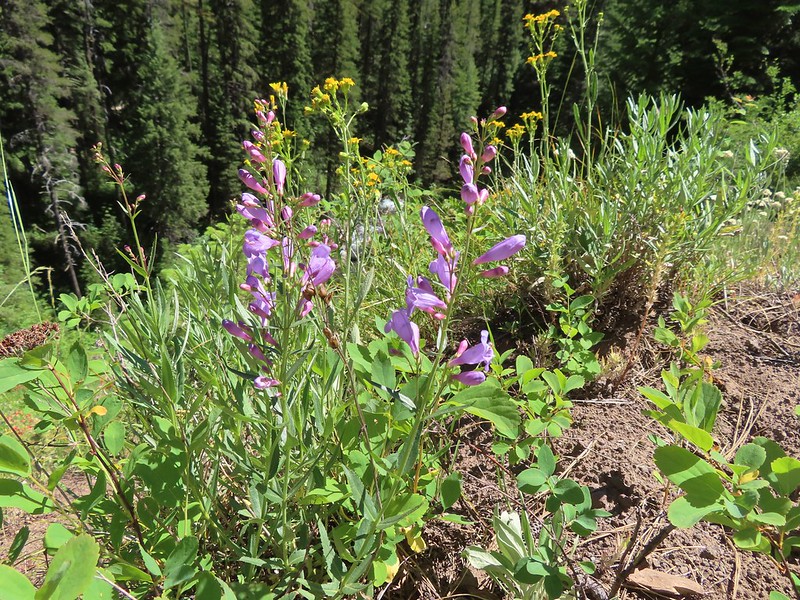 Penstemon
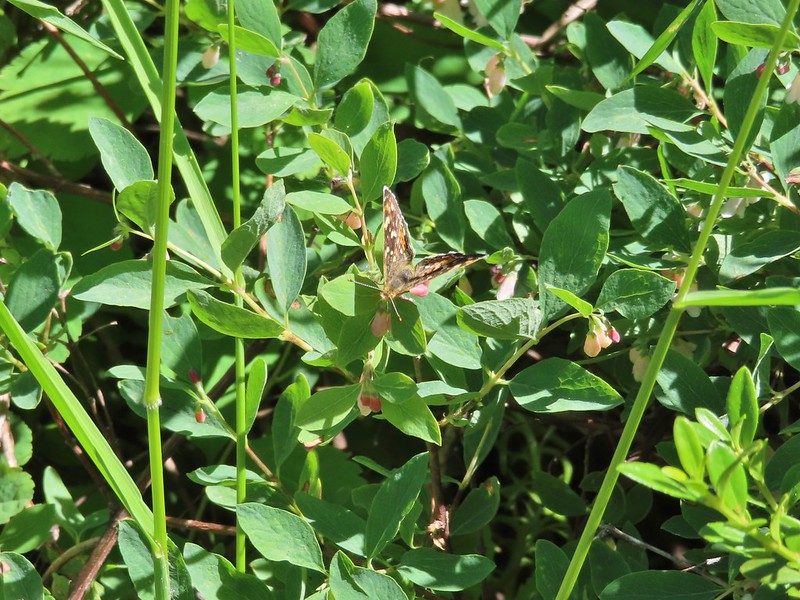 Butterfly
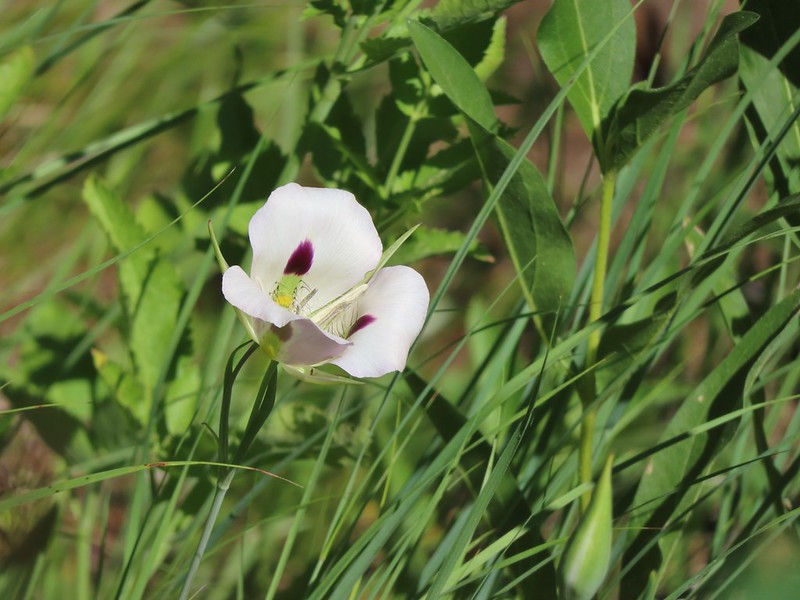 White mariposa lily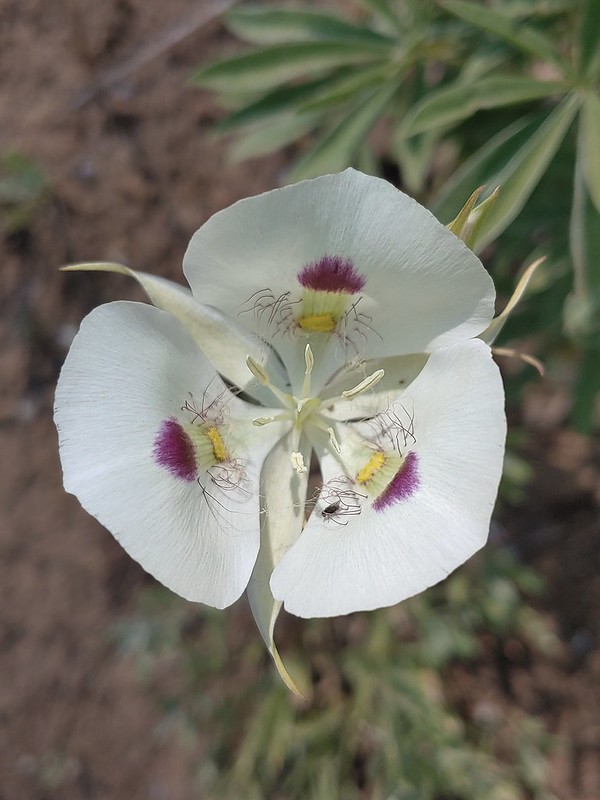
 Large-flower triteleia
 Arriving back at the trailhead.
 wanderingyuncks